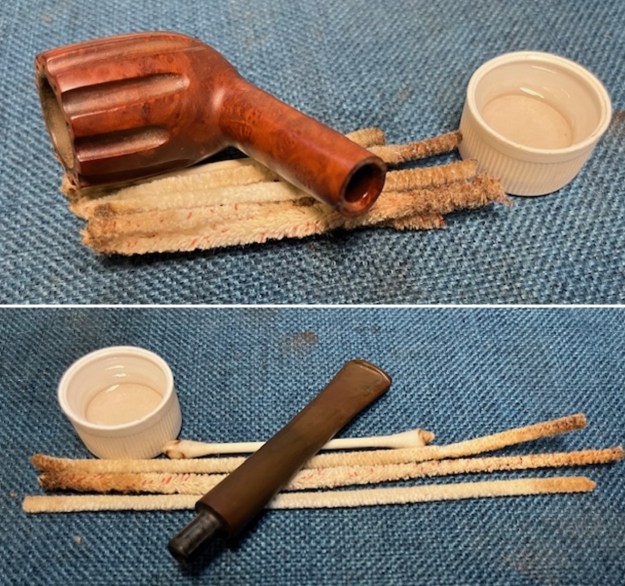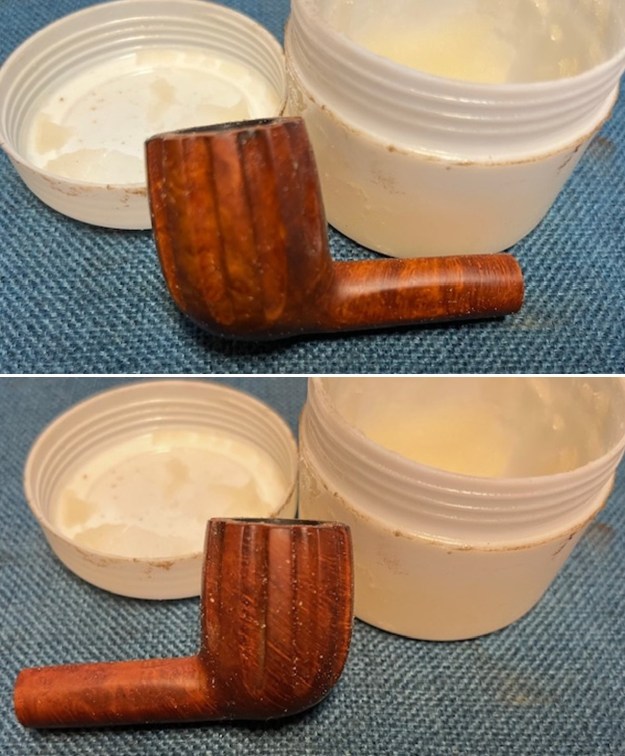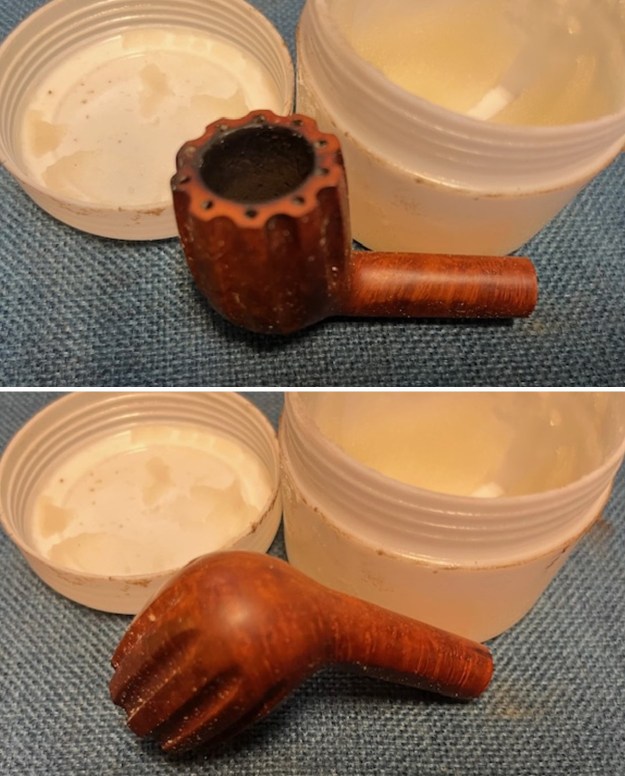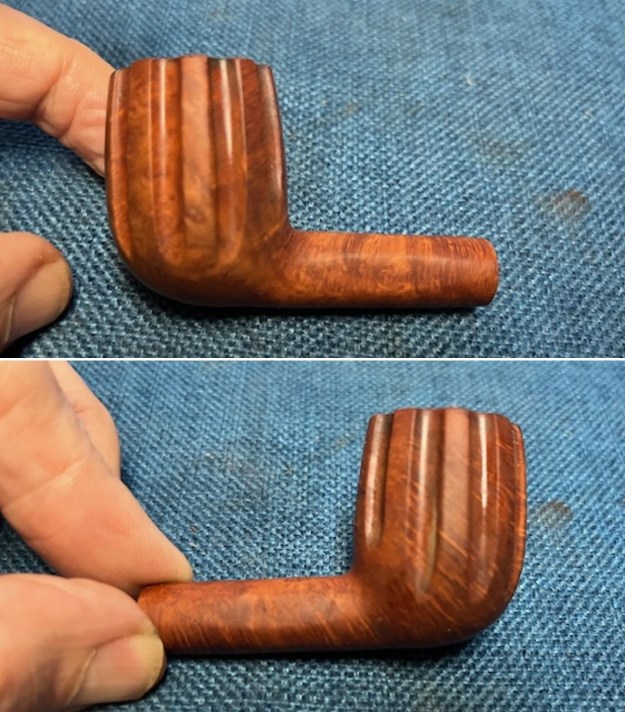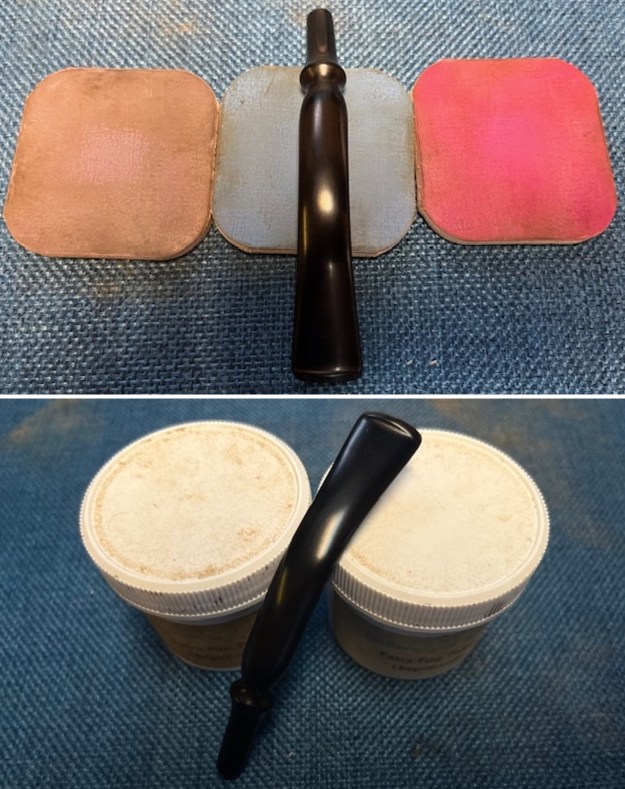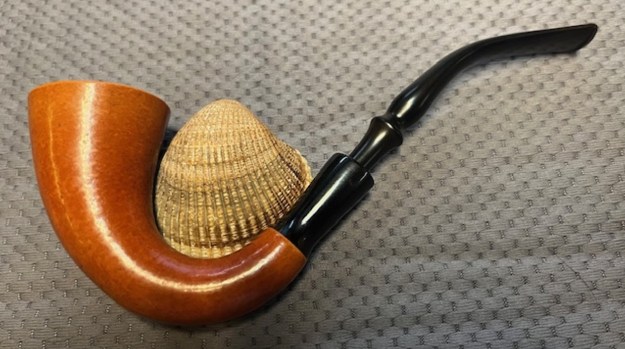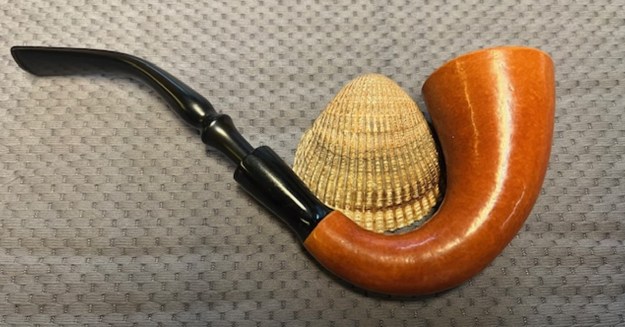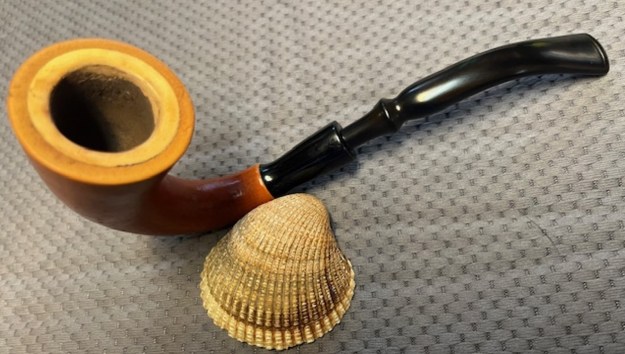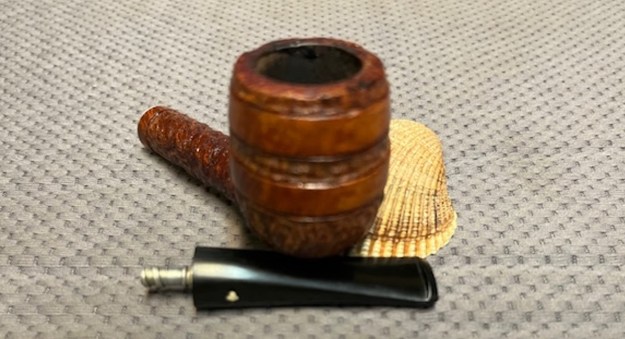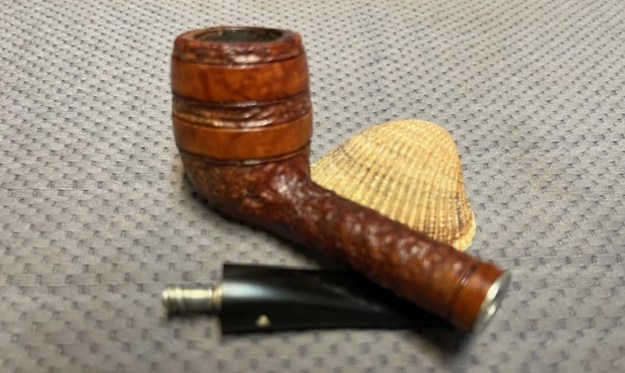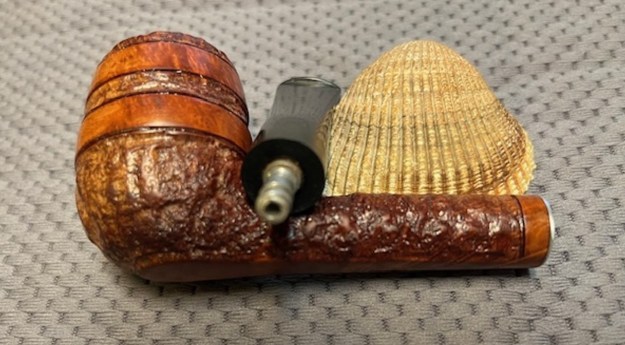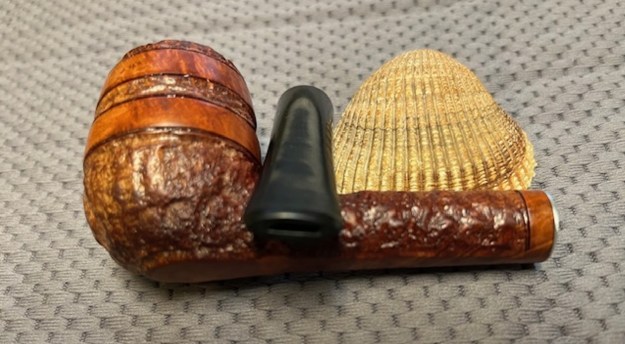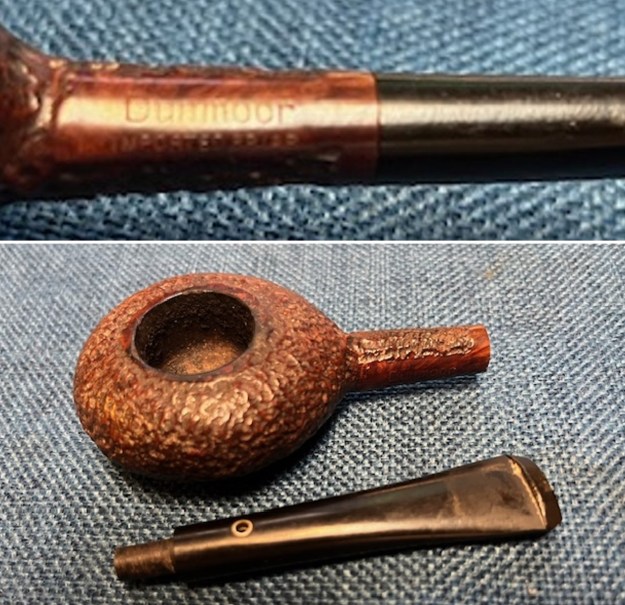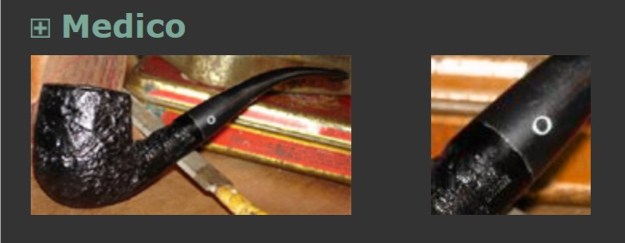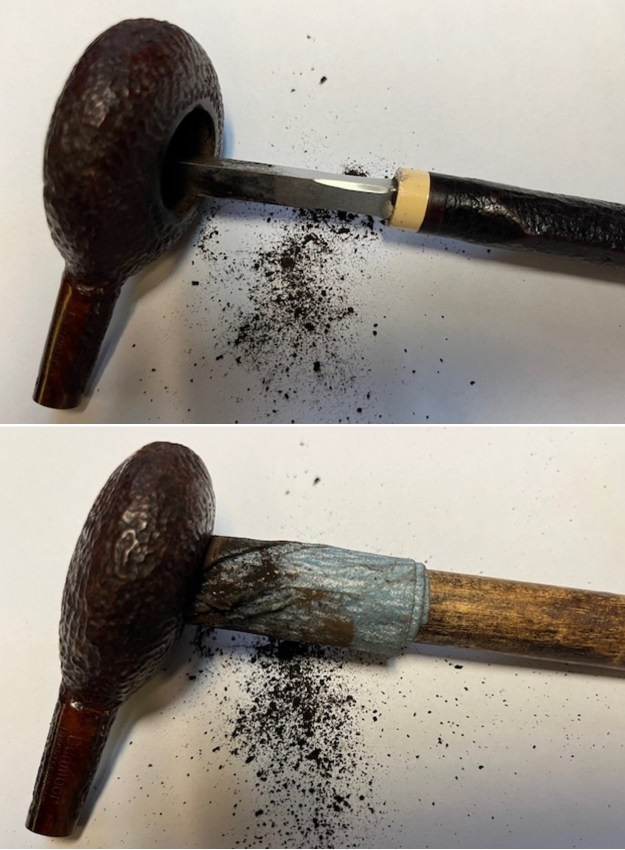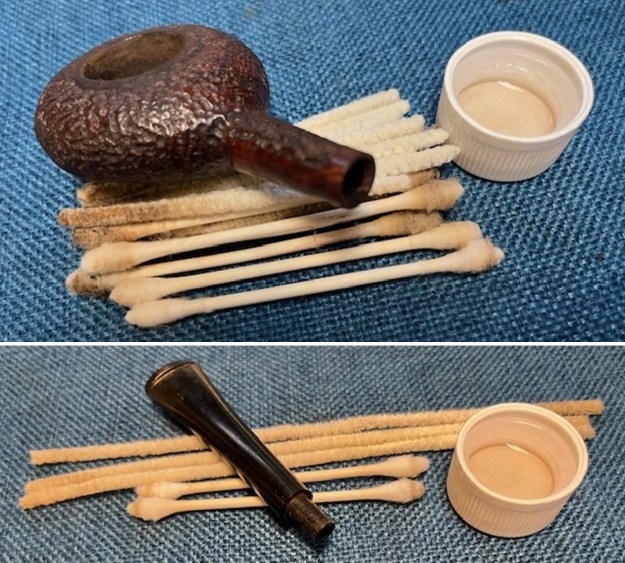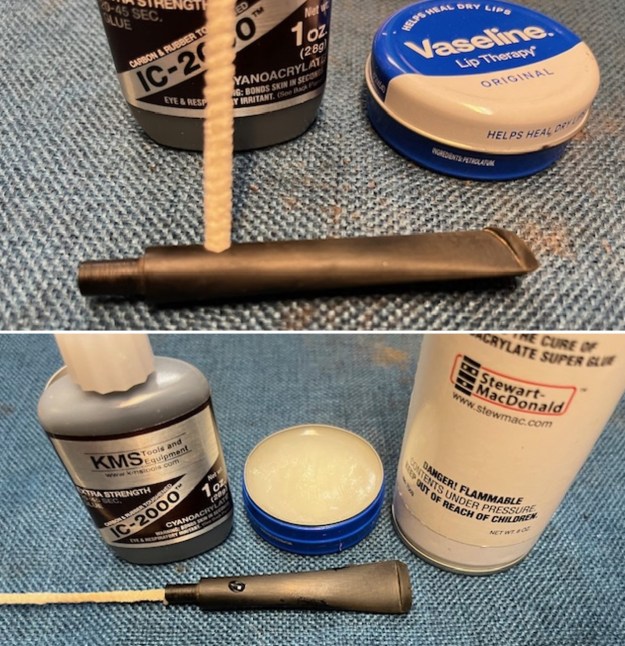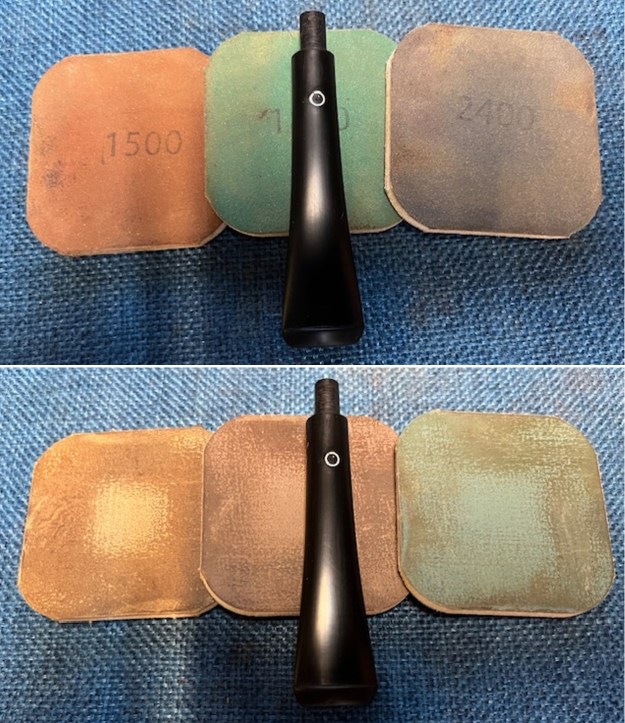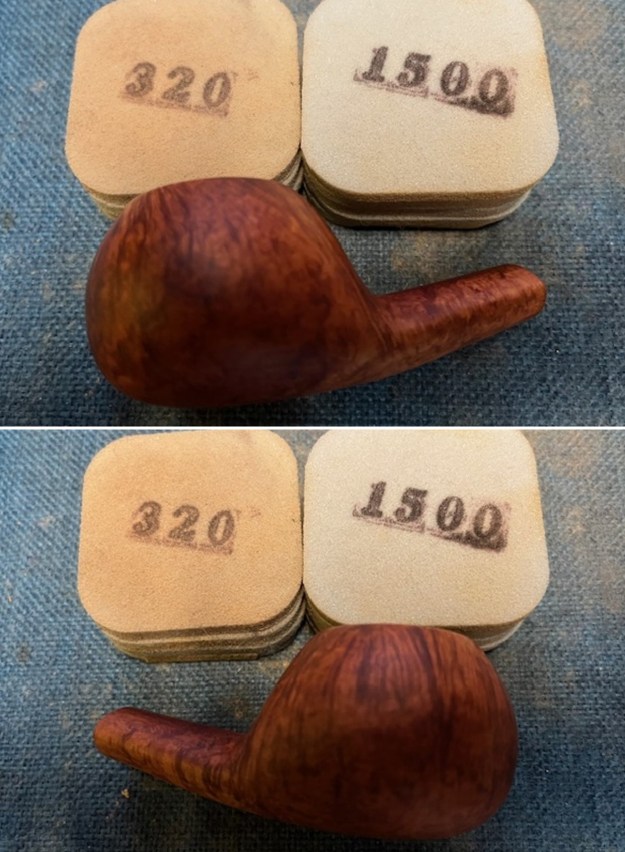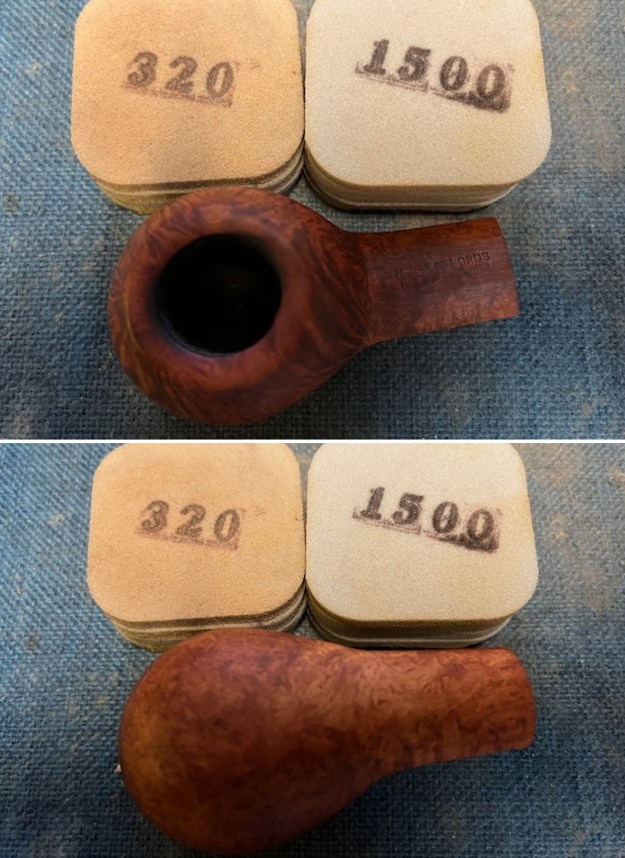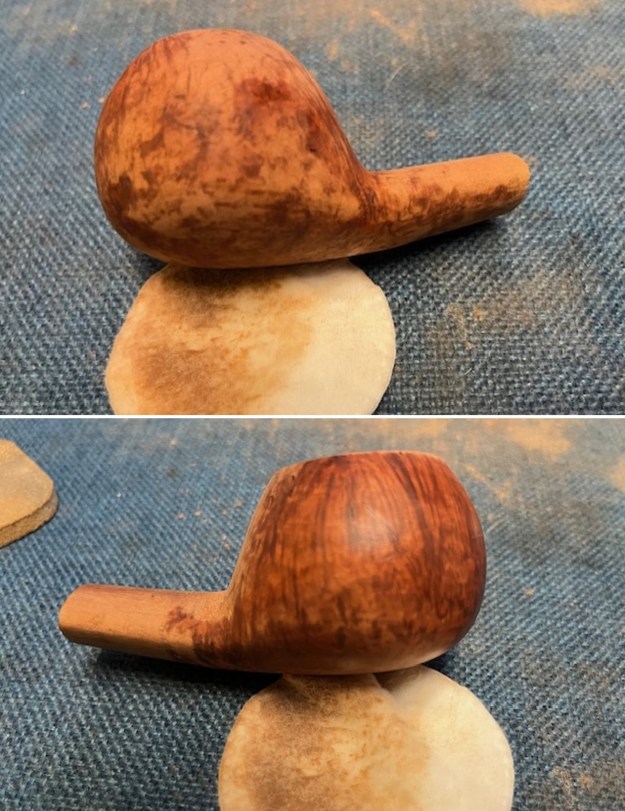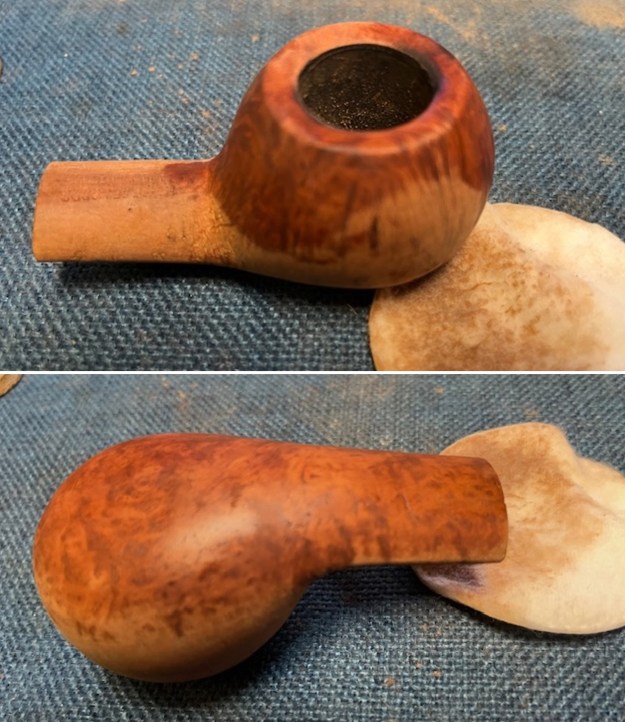
Tag Archives: polishing briar

Uncovering the Identity of a Classic Metal Pipe


by Kenneth Lieblich

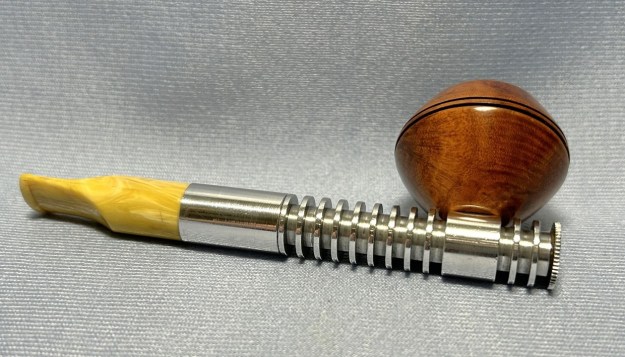
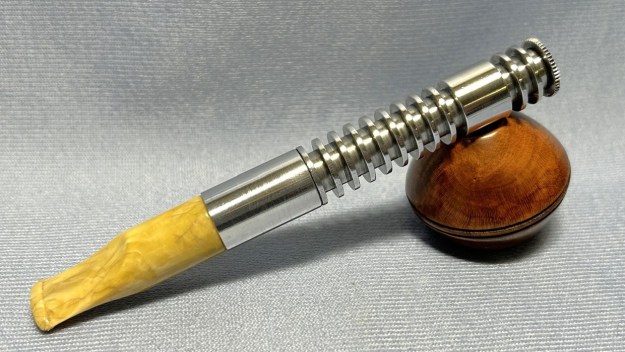
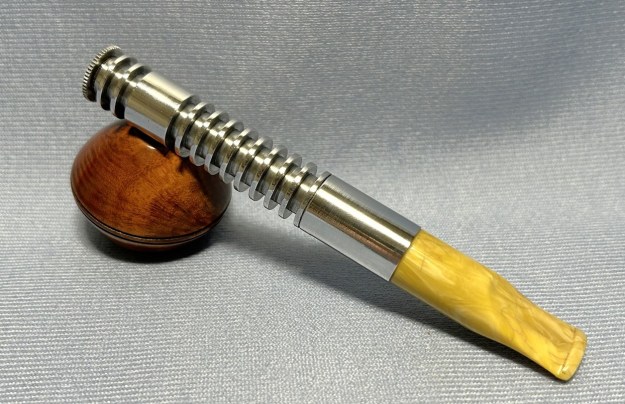
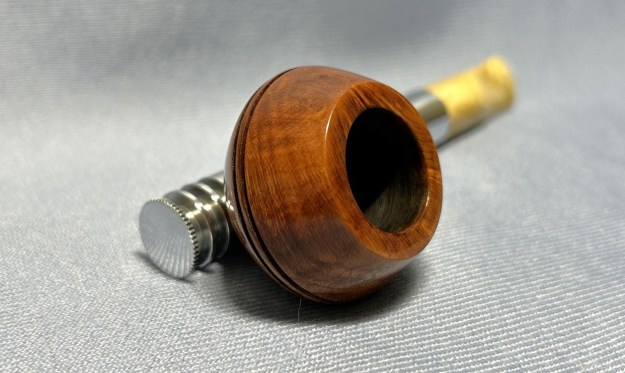
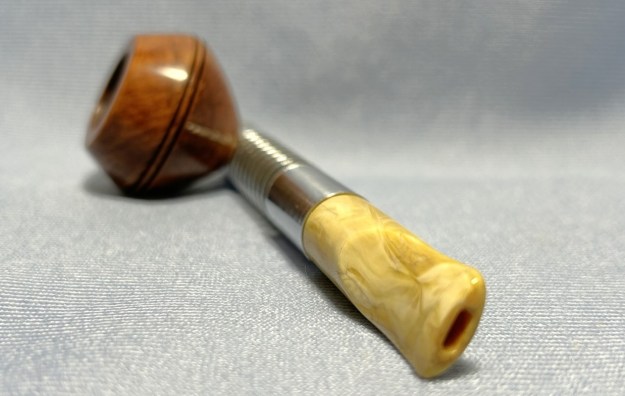
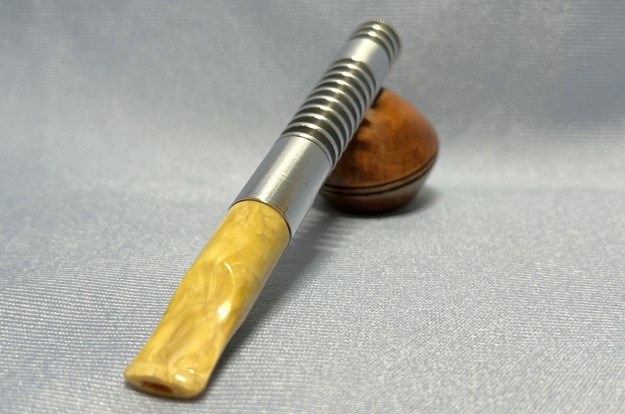
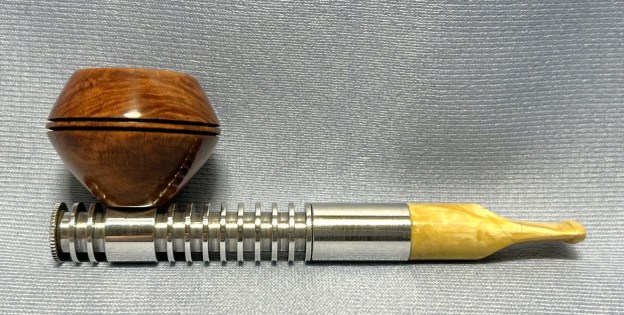
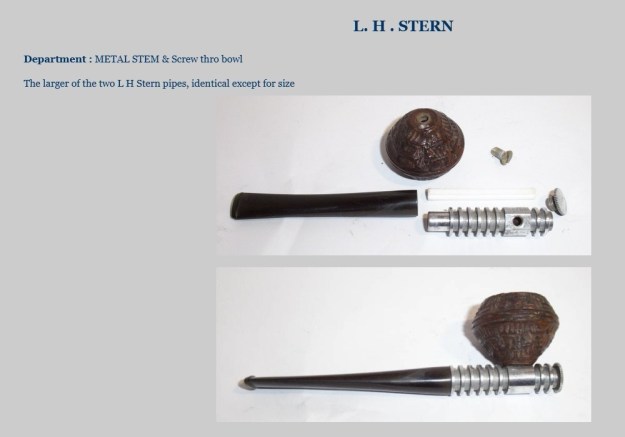
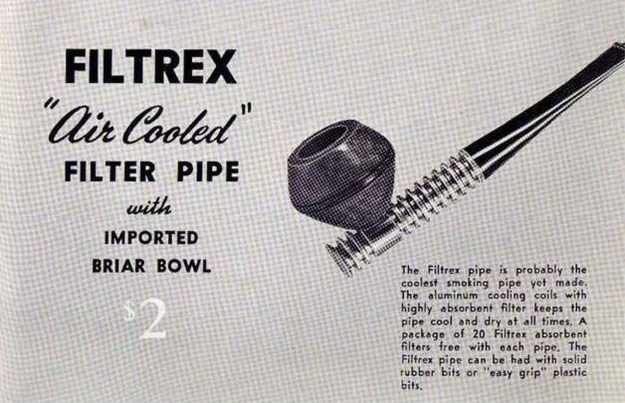
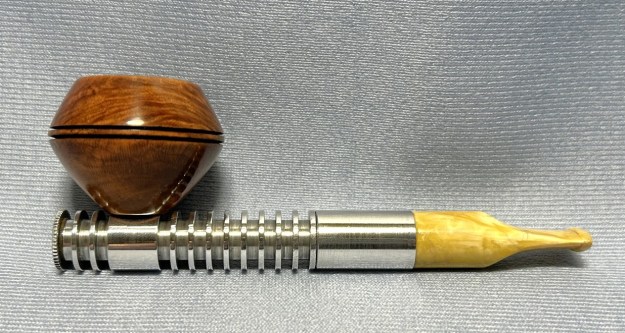
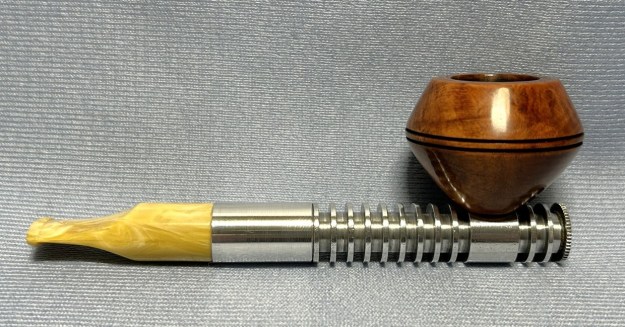
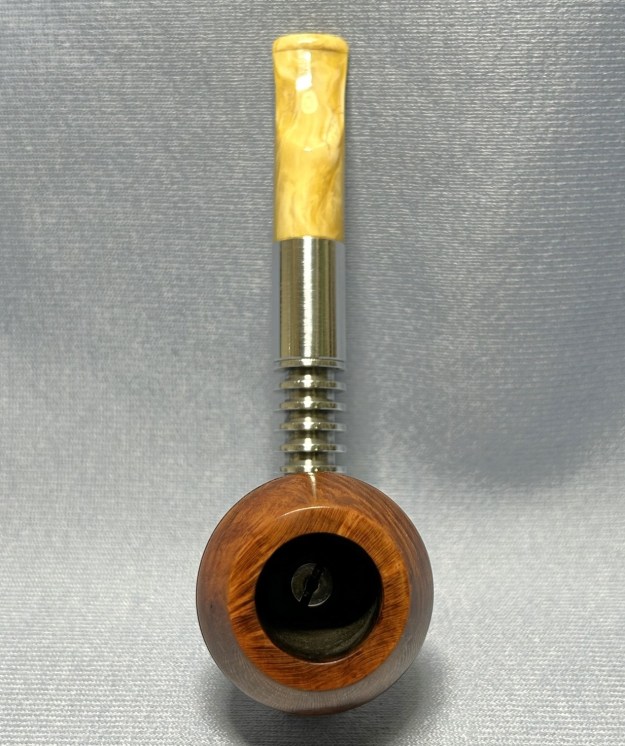
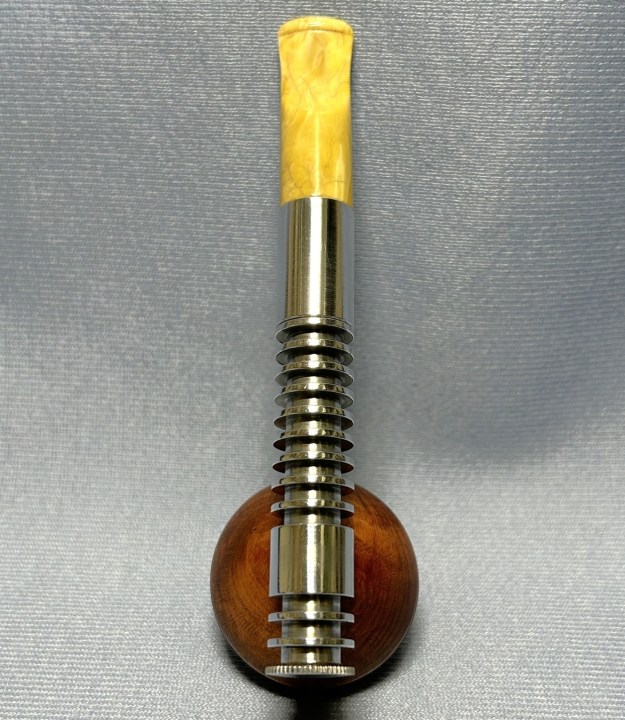
This pipe is one of those that makes you raise an eyebrow and wonder. I acquired it a while ago in a large lot of pipes and, although it was a mess, it always had appeal and intrigue. Initially, I didn’t know what the pipe was or who made it. Why? Alas, no markings of any kind! It turns out that Steve restored a pipe very much like it about four years ago, but because I had no way of searching for it (I had no brand name), I had to be creative – or, perhaps, I had to be the opposite… I went to a very fine resource on metal pipes, a website called www.smokingmetal.co.uk, in hope that I could learn more. I hunted around somewhat randomly for a while but came up empty. Then came the stultifying part. I started going through the entire list of pipes in order to find a match. There were a couple of times when I though I had found it, but it just wasn’t quite right. Eventually, after going through nearly 200 listings, I found it. This is an L&H Stern (aka LHS) pipe and – boy-oh-boy – was I ever relieved. When Steve last restored one of these, more than four years ago, he described it as follows:
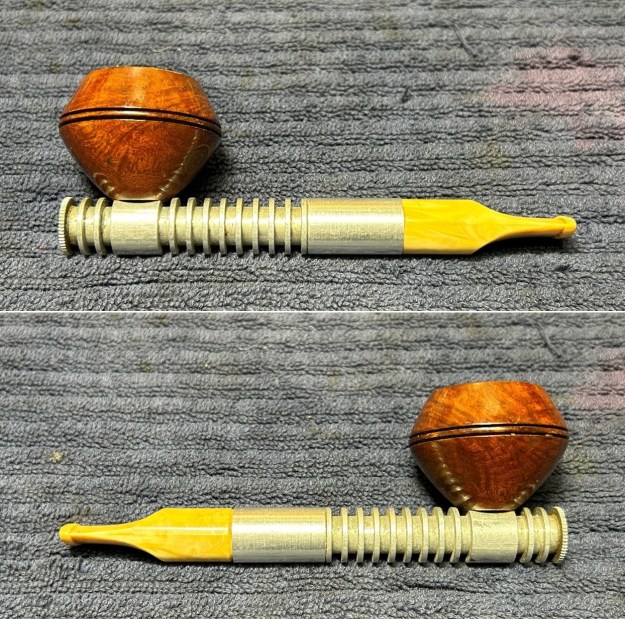
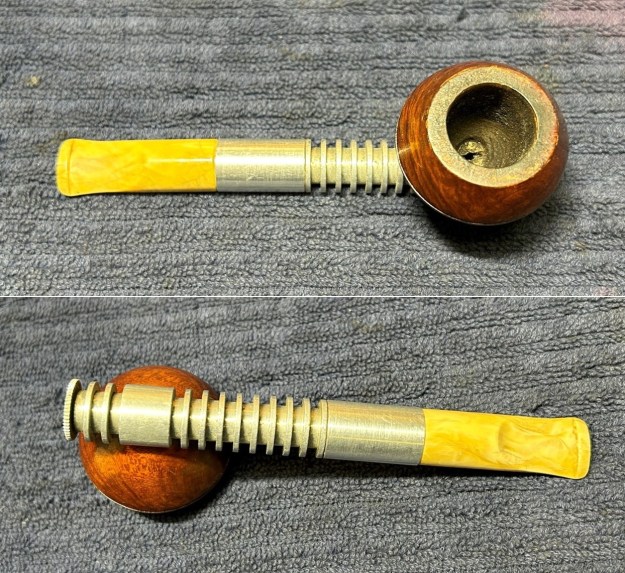
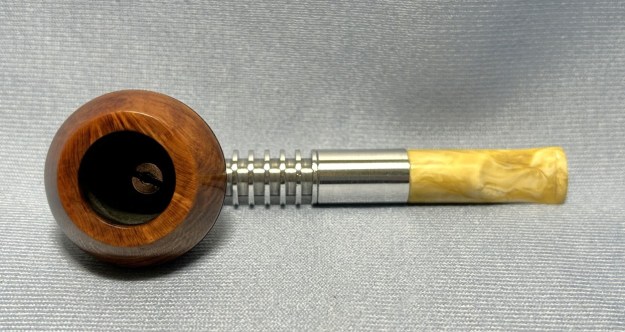
It has a briar bowl with the screw holding it to the top of the metal tube that forms the shank. The smooth finished bowl is either a buldog or Rhodesian bowl with the twin rings around the cap. The shank piece is oxidized aluminum with cooling fins and a threaded end cap that is removable for cleaning. The stem is plastic (perhaps nylon or an early acrylic).

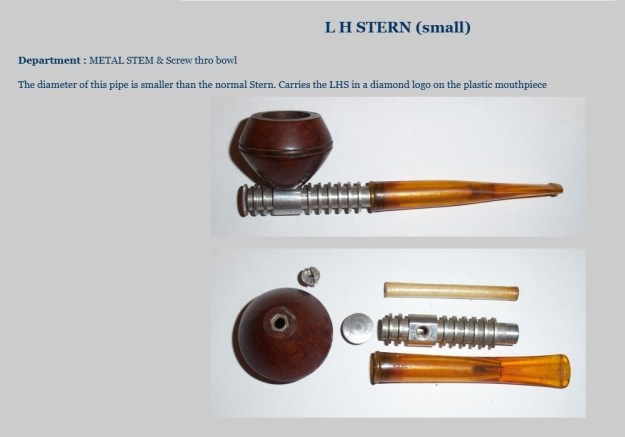
It certainly does have a futuristic look, very characteristic of mid-twentieth-century industrial design. Unfortunately, SmokingMetal didn’t have any information on LH Stern as a company, but they did have these two photos of similar pipes: Pipedia has an article on L&H Stern and I would encourage you to have a look: https://pipedia.org/wiki/LHS. Among other things, they write
Ludwig Stern, a successful pipe manufacturer since 1893 and closing around 1960, reorganized his company along with his brother Hugo Stern, opening a factory in 1911. They named the company L&H Stern Smoking Pipes & Holders. The newly formed company was moved into a six story building on the corner of Pearl and Waters street Brooklyn, NY.

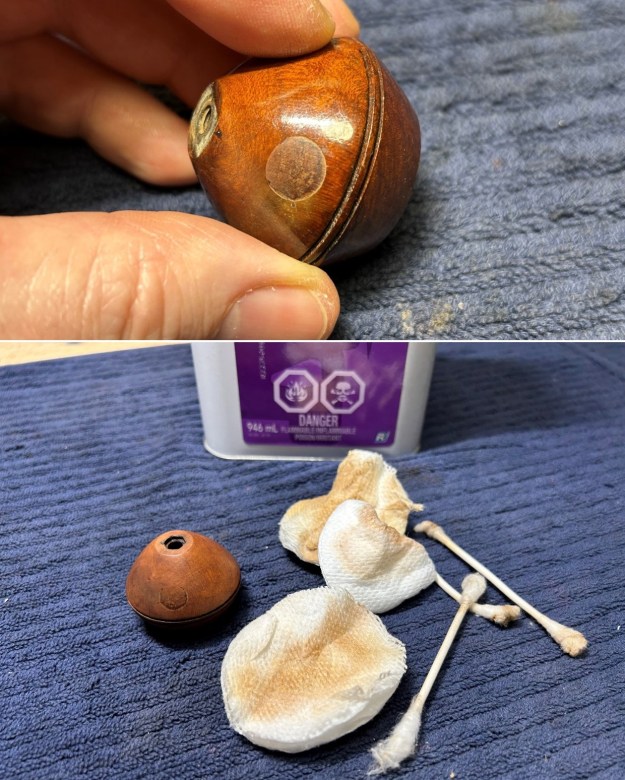
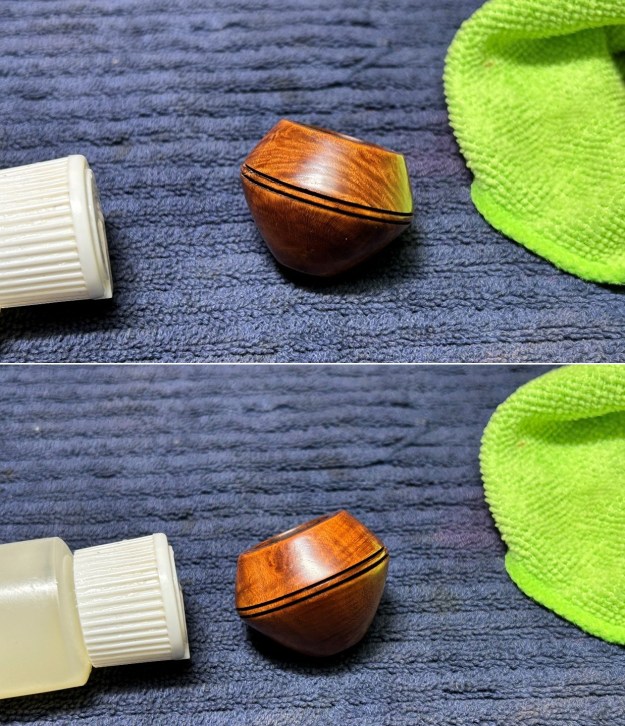
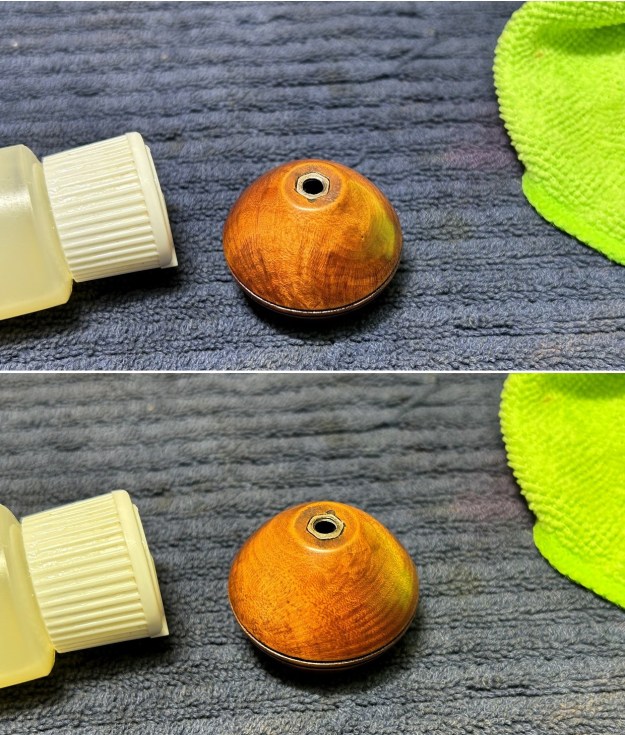
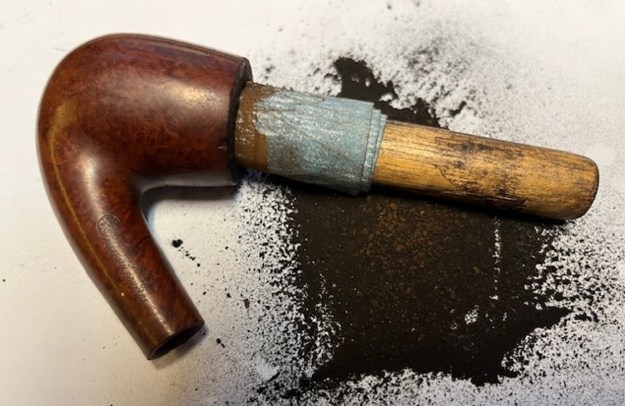
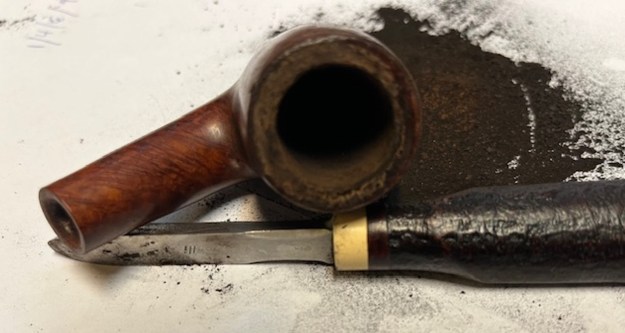
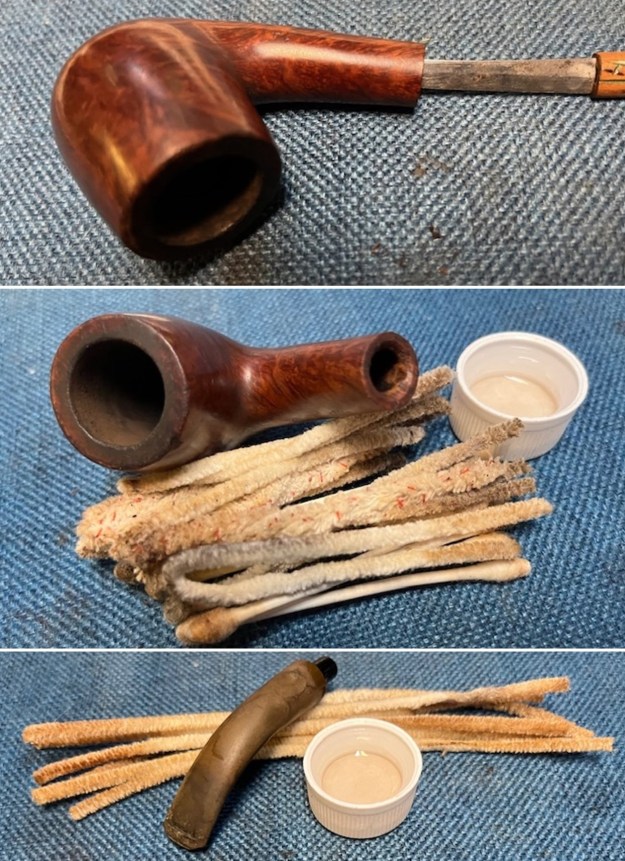
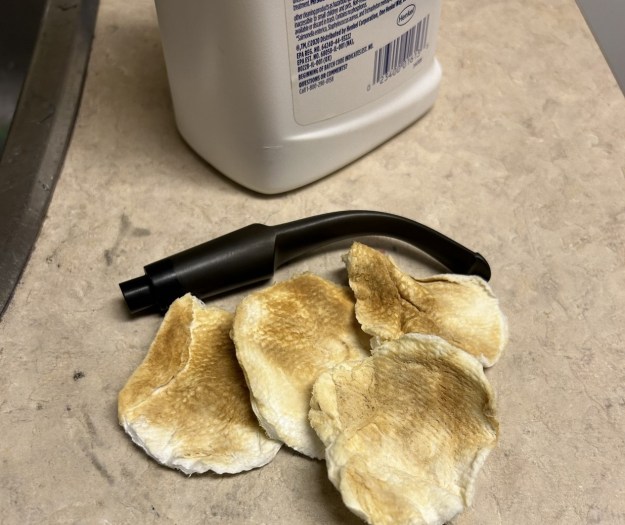
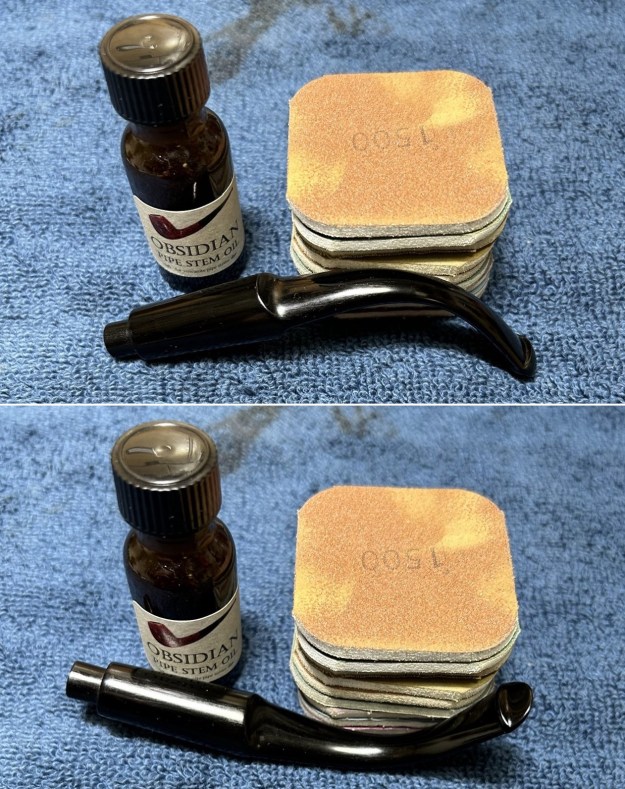
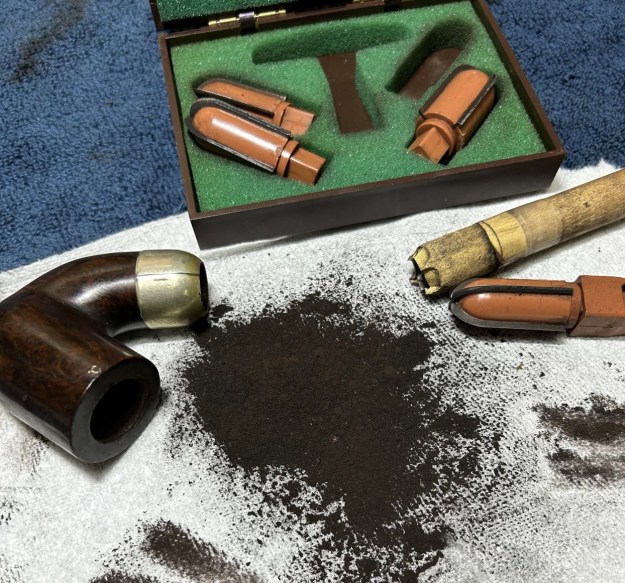
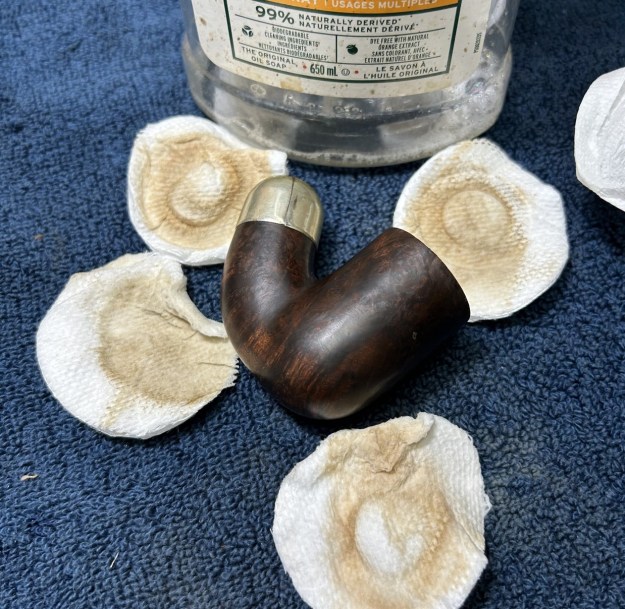
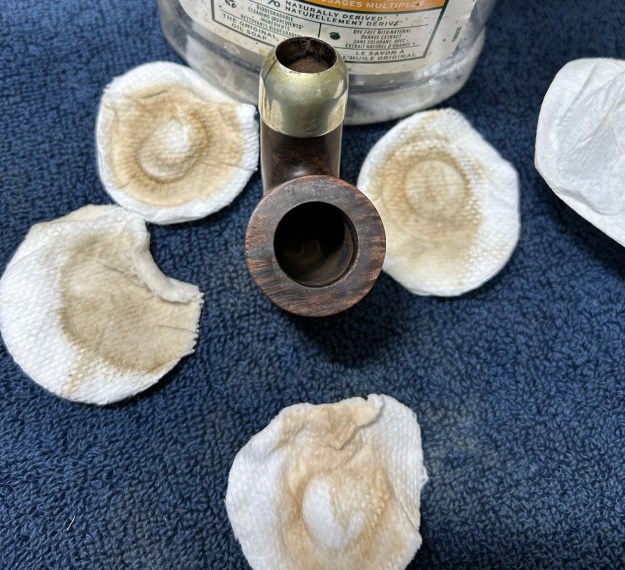
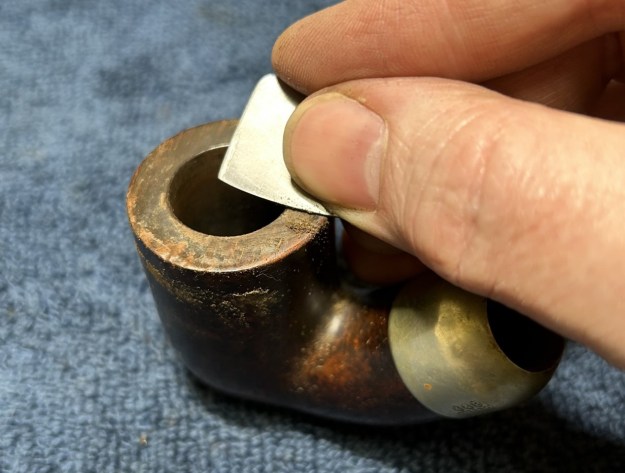
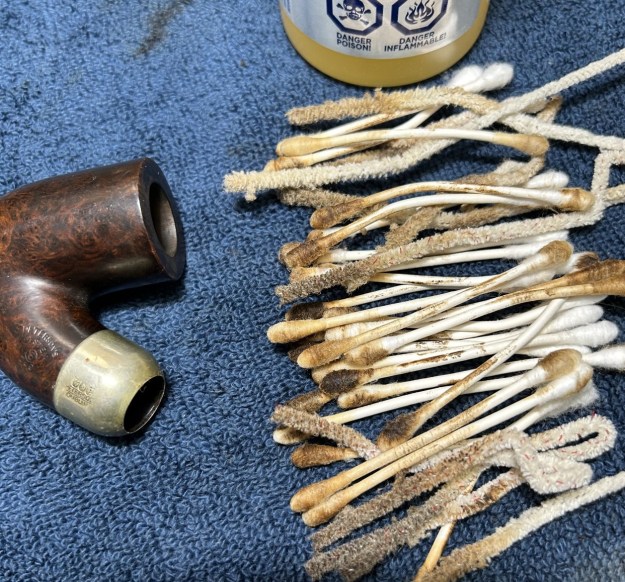
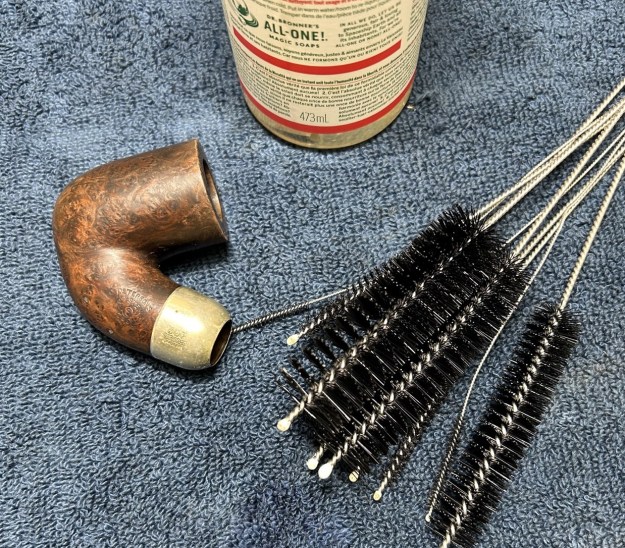
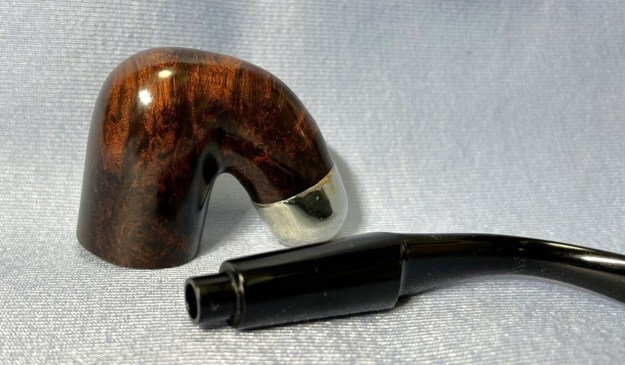
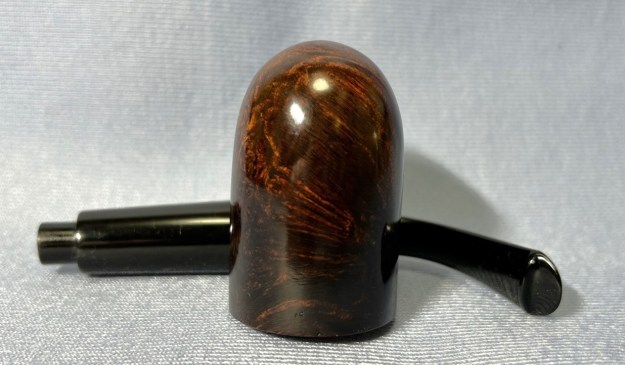
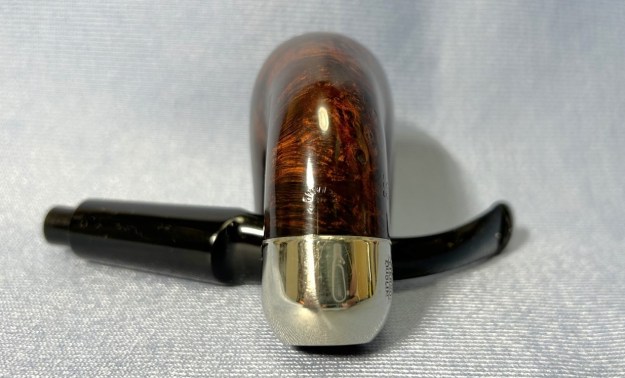
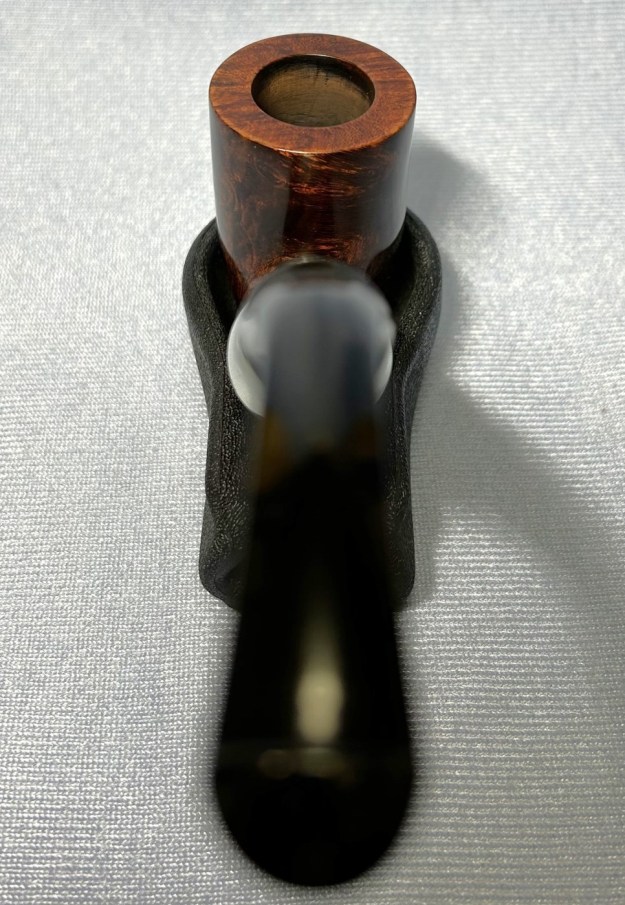
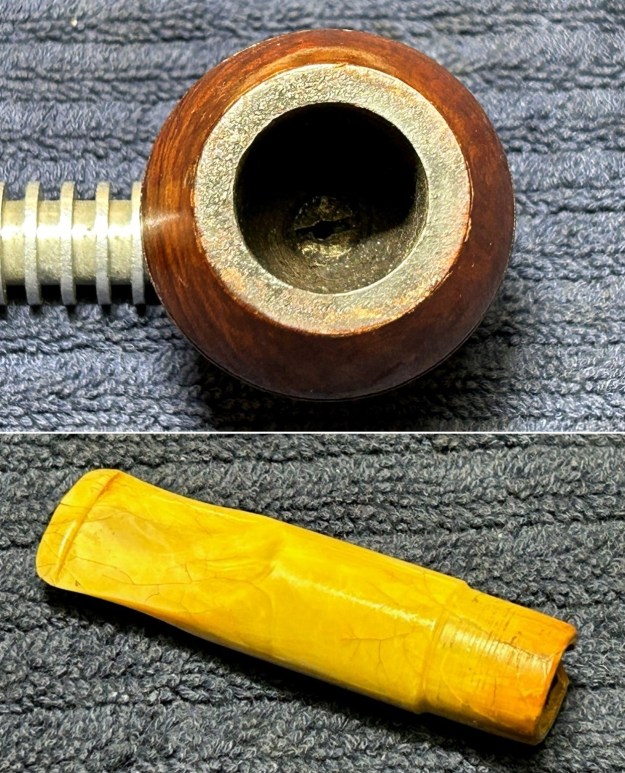
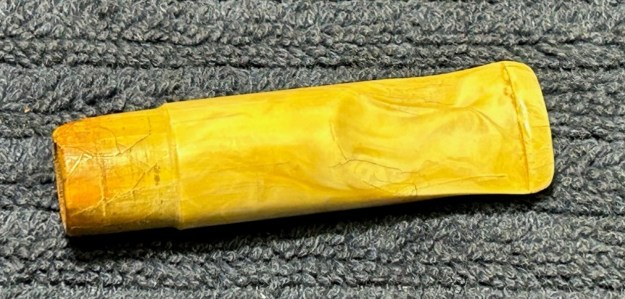
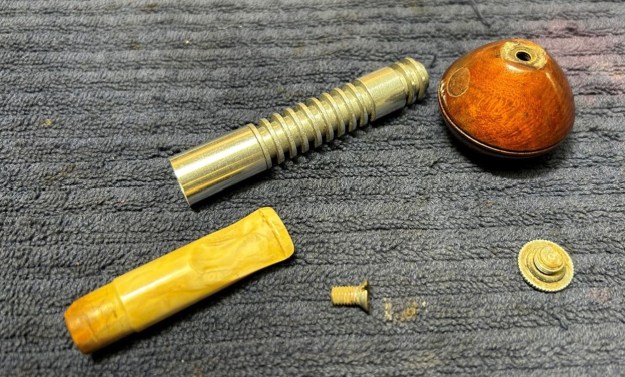
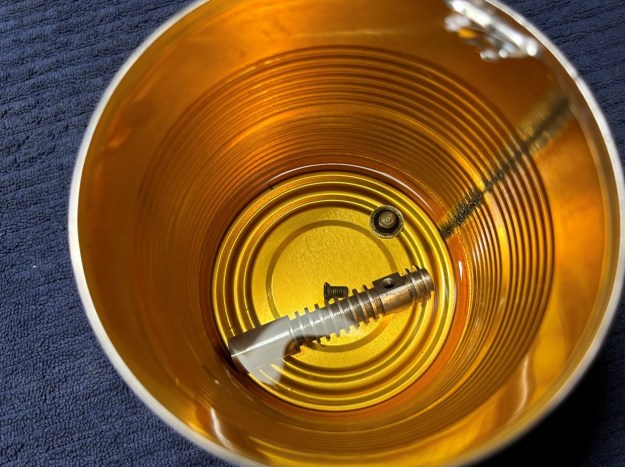
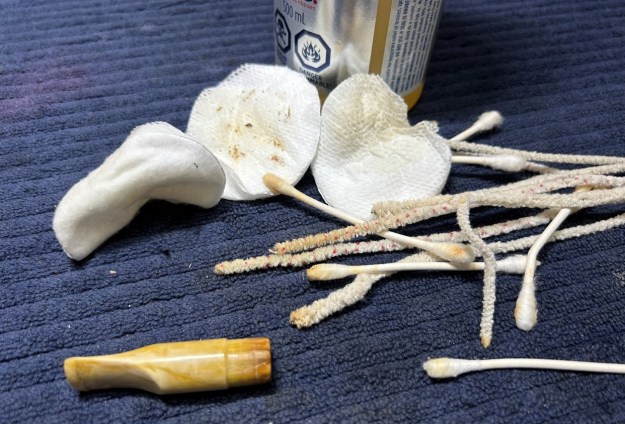
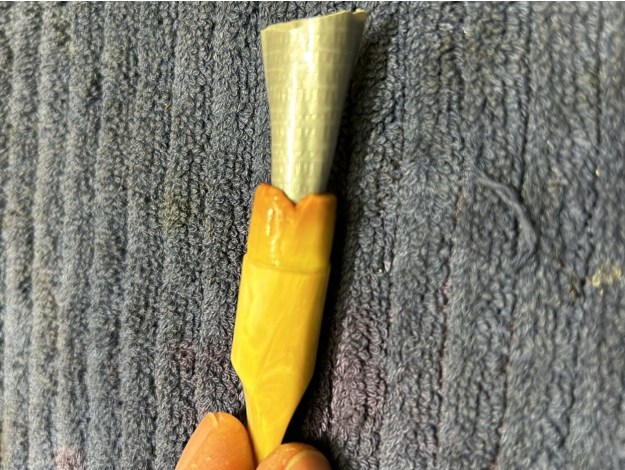
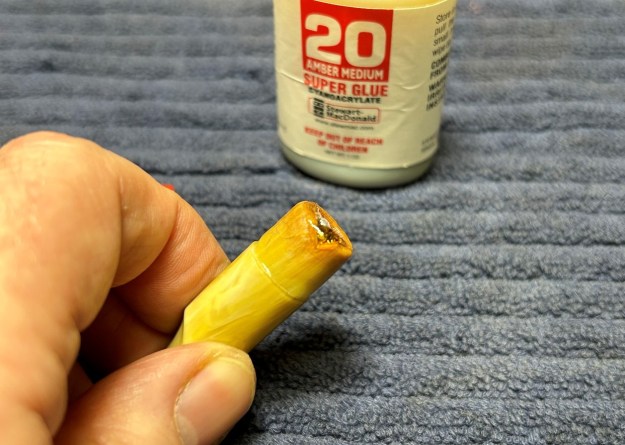
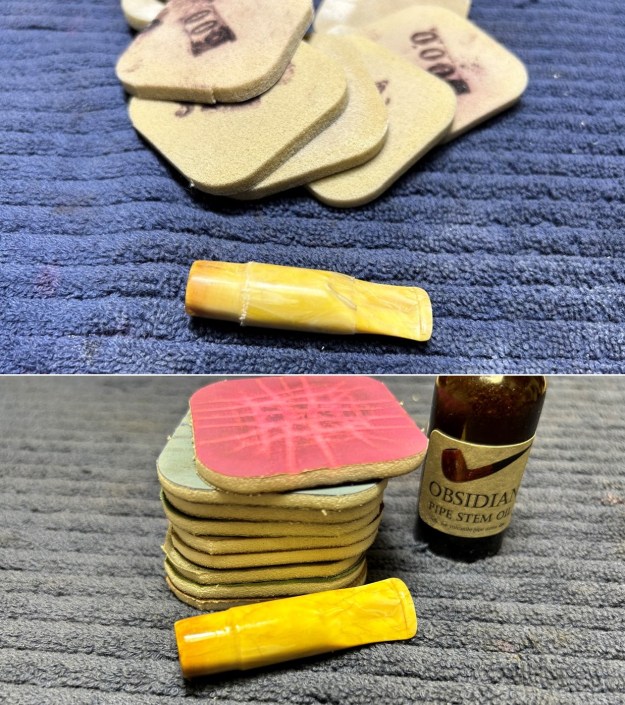
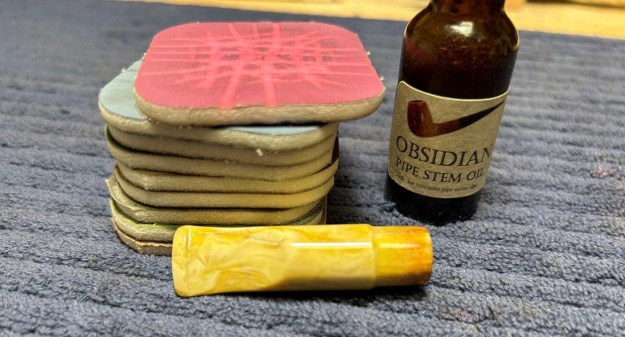
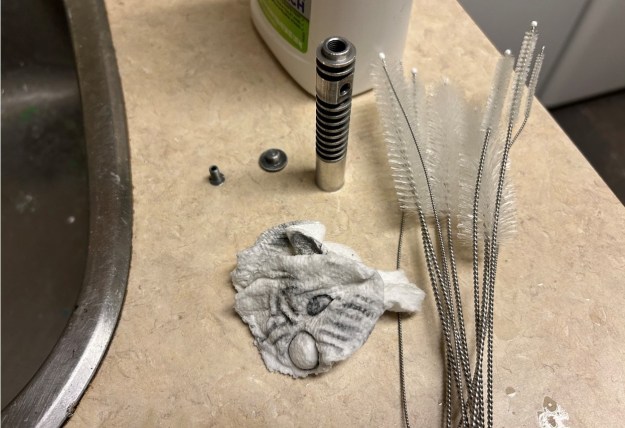
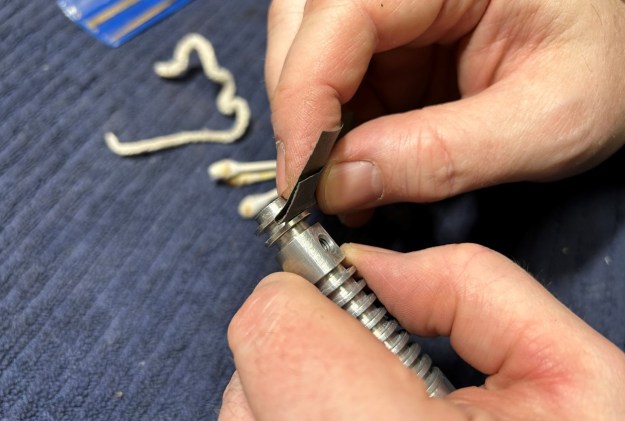
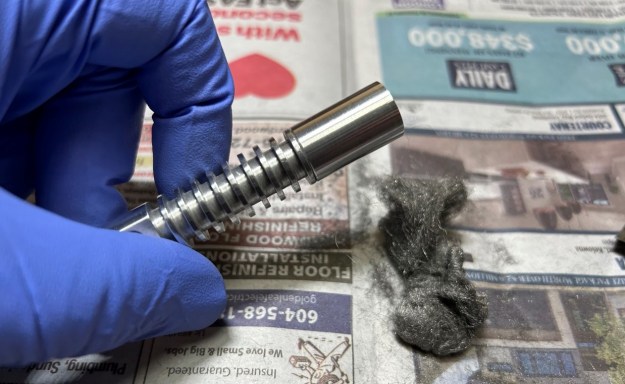
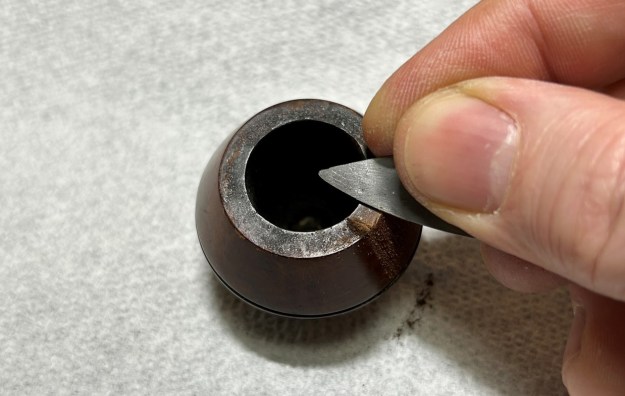
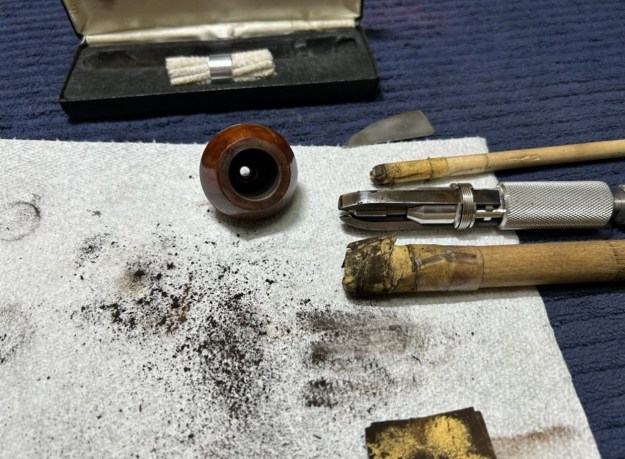
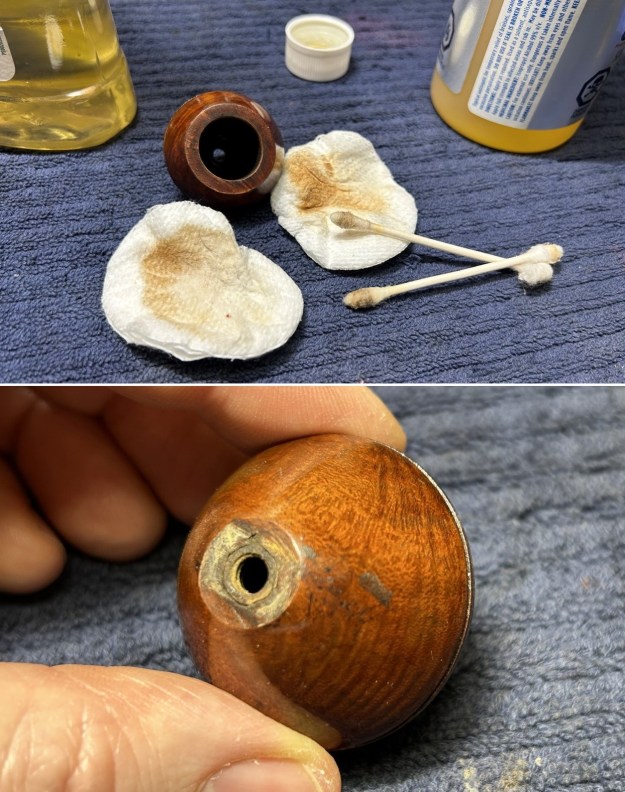
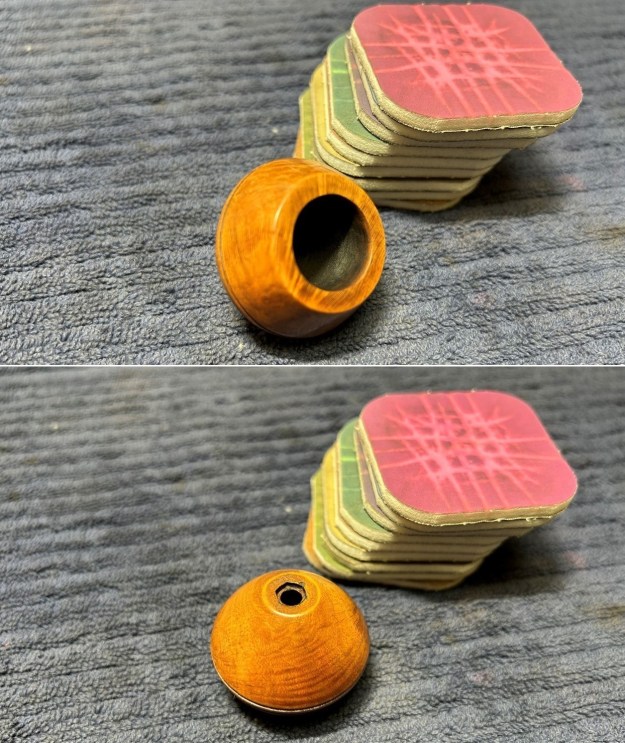
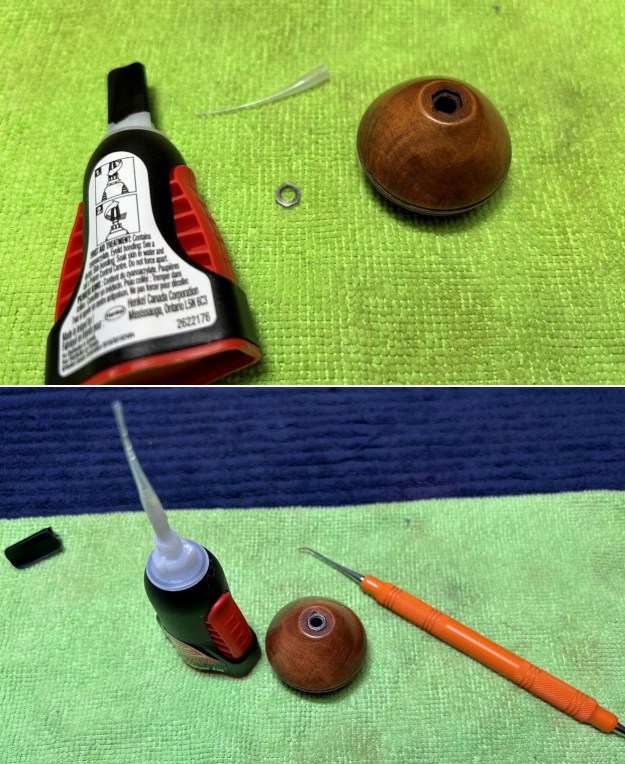
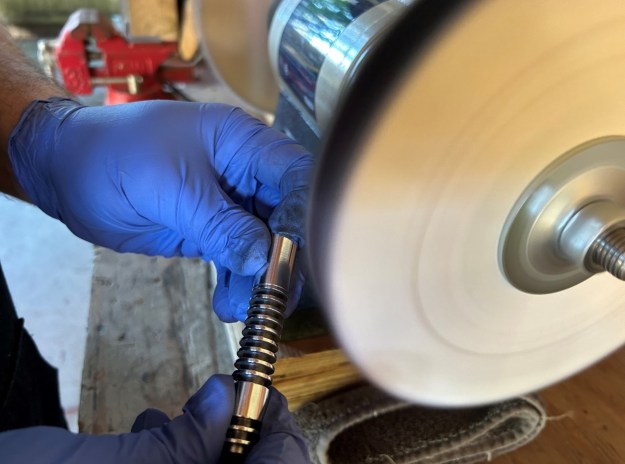
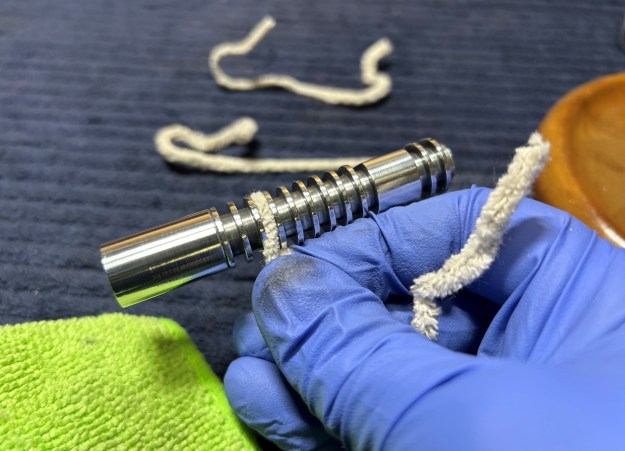
Pipedia also provided a photo of a pipe like mine from a 1946 catalog. It’s difficult to be accurate in dating the pipe, but the late 1940s seems to be a reasonable supposition.Time to get to work. This pipe was a bit of a mess. The metal was dirty and dull, and the insides were filthy. The stem was worn and had some micro-cracks in it. In the following picture, you can see the pipe as I disassembled it. There are seven pieces, even though the photo appears to show only five. Allow me to explain: there is a stem, a shank (or main section of the pipe), the briar bowl, a nut on the underside of the bowl, a screw that attaches the bowl to the shank, a valve screw at the far end, and a gasket to go along with it.First things first. Before I started working on the stem, I put the metal pieces in an acetone bath. Who knows what sort of horrors might be stuck to the metal and I wanted to get it as clean as possible. I left that to sit for a few hours.The stem was first on my list. As usual, I wiped the outside down with oil soap on some cotton pads. Then I cleaned out the inside with pipe cleaners and isopropyl alcohol. It was dirty, but not terrible. I’ve seen far worse.As the photos show, there was a small chunk missing from the end of the stem and, although it didn’t affect anything significant, I wanted to ensure that it was repaired. I rolled up a piece of duct tape and fitted it snugly inside, before making a repair with amber cyanoacrylate adhesive. I used duct tape because the outside does not stick to CA glue. I built up the adhesive on the stem and let it fully cure. At this point, I also added some extra, clear CA glue to the end because the fit was very loose. I then sanded the adhesive with some sandpaper to meld seamlessly into the stem. I then used all nine Micromesh pads (1,500 through 12,000 grit) to smooth the entire stem and highlight the variegated design on the stem. I also used Obsidian Pipe Stem Oil in between each pad scrubbing. I’m not convinced that this did anything, but it’s just what I do! I yanked the metal bits out of the acetone and wiped them down. Since most of the pipe was made of aluminum, the cleaning procedures were different than usual. The inside of the shank was much more cavernous than normal, too. I started with pipe cleaners and Q-tips for the inside, but that only worked so well. I ended up using some of my usual cleanser to clean the metal shank, including the interior – and I made extensive use of some tubes brushes to get it all really clean.Polishing up the metal was tricky because the cooling fins were relatively deep and would need to be addressed separately. I used some very fine sandpaper to work on those grooves. I then used some 0000 steel wool to give a beautiful polish to the shank. This worked spectacularly well, but it’s such a mess! I laid out some newspaper to catch the debris because it goes everywhere. I did all the same stuff on the two metal screws as well. Now for the briar bowl. This is more standard fare, since I’m working with wood again. I took a small wedge of machine metal and, holding it at a 45-degree angle, gently scraped the lava and carbon off the rim.I reamed it with the KleenReem, and 220-grit sandpaper taped to a dowel to eliminate as much build-up as possible. I took the chamber down to bare briar to ensure there were no hidden flaws in the wall. Fortunately, there were none. Then I used cotton rounds and some oil soap to scrub the outside. However, this wasn’t good enough. There were some odd blemishes to the wood and I had to fix that. I went back to the acetone and removed the blemishes thoroughly. I was amazed at how much better the bowl looked after that. I used the Micromesh pads on the bowl and made them beautiful. As I mentioned earlier, there was a small nut in the underside of the bowl. This popped out while I was working and I cleaned it as I had the other metal parts – then I glued it back in place. I then applied the Before & After Restoration Balm on the wood, as this always makes the briar sing. The buffing procedure was different because of the metal – although the briar bowl did receive the normal White Diamond and carnauba wax treatment. I used Red Tripoli first and White Diamond second to polish the metal nicely. It came out so well! When I went back to my workbench, I cleaned the grooves in the metal with some soft pipe cleaners – just to remove any slight, remaining polishing compound. I then took a microfiber cloth to wipe the metal parts of the pipe to make it shine! This L&H Stern looks fantastic again and is ready to be enjoyed by the next owner! I am pleased to announce that this pipe is for sale! If you are interested in acquiring it for your collection, please have a look in the ‘American’ Pipe Section of the store here on Steve’s website. You can also email me directly at kenneth@knightsofthepipe.com. The approximate dimensions of the pipe are as follows: length 4⅞ in. (125 mm); height 1⅔ in. (43 mm); bowl diameter 1½ in. (38 mm); chamber diameter ⅔ in. (17 mm). The weight of the pipe is 1¼ oz. (39 g). I hope you enjoyed reading the story of this pipe’s restoration as much as I did restoring it. If you are interested in more of my work, please follow me here on Steve’s website or send me an email. Thank you very much for reading, and, as always, I welcome and encourage your comments.
A Kennett No.1 Billiard Another Brilliant Attempt at a Cool Dry Smoke


By Steve Laug

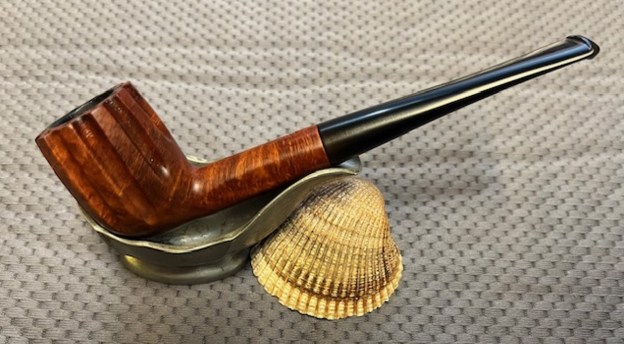
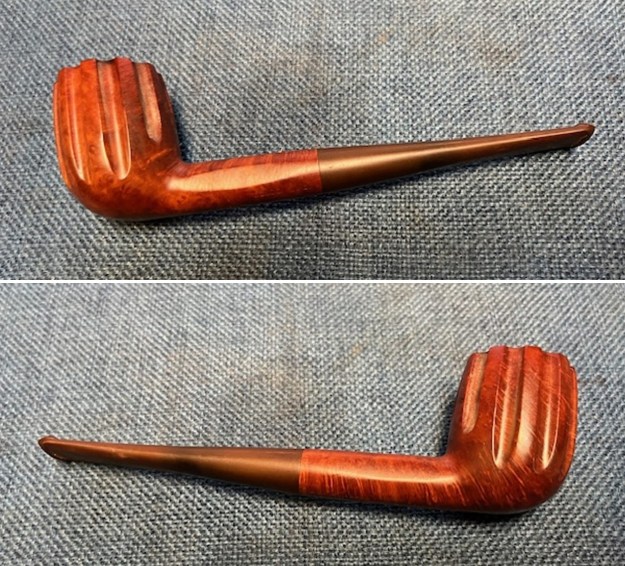
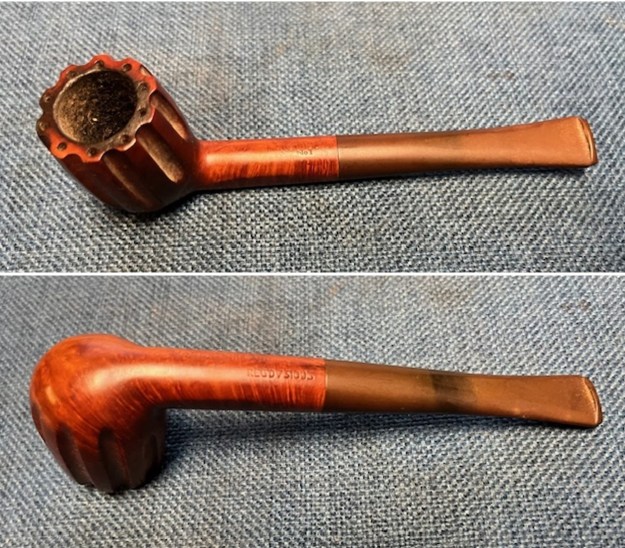
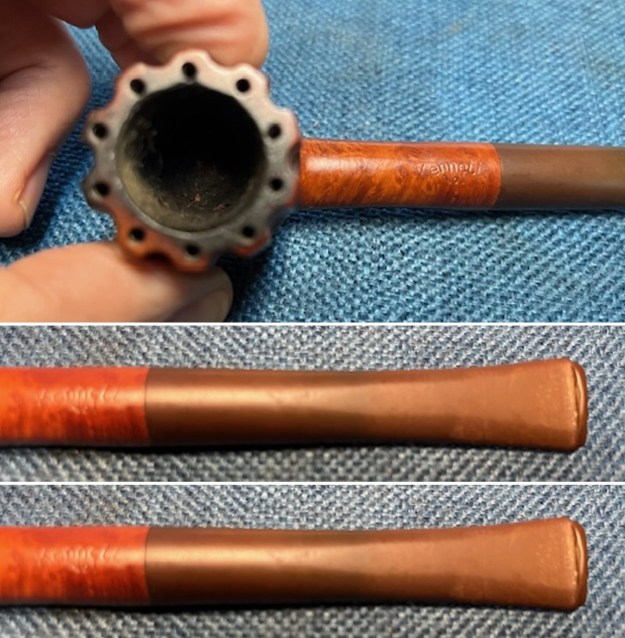
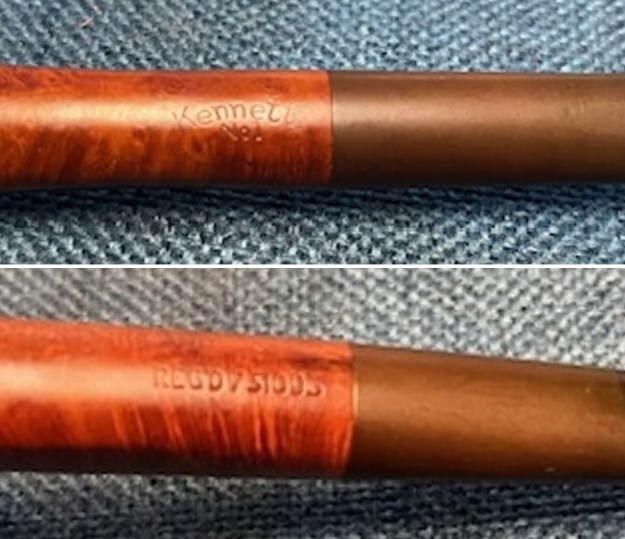
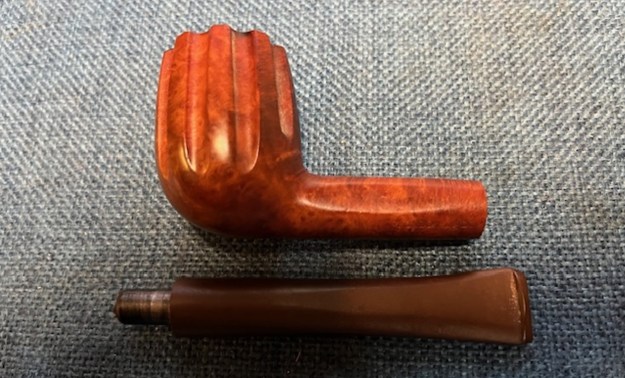
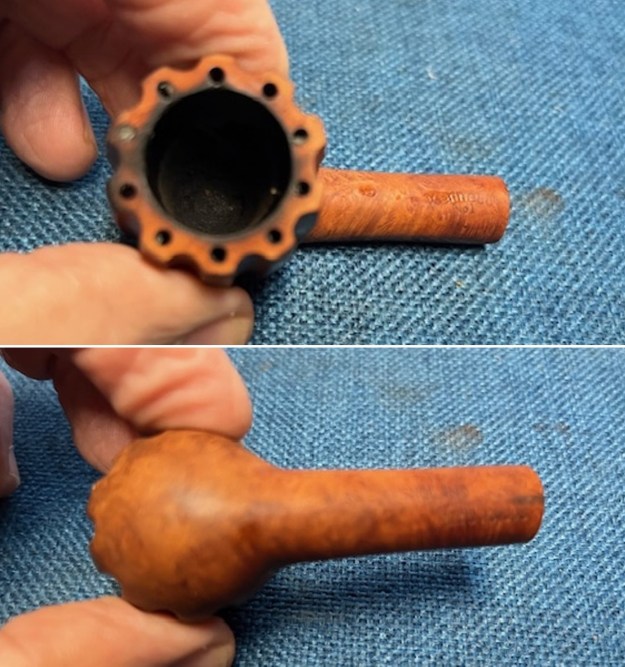
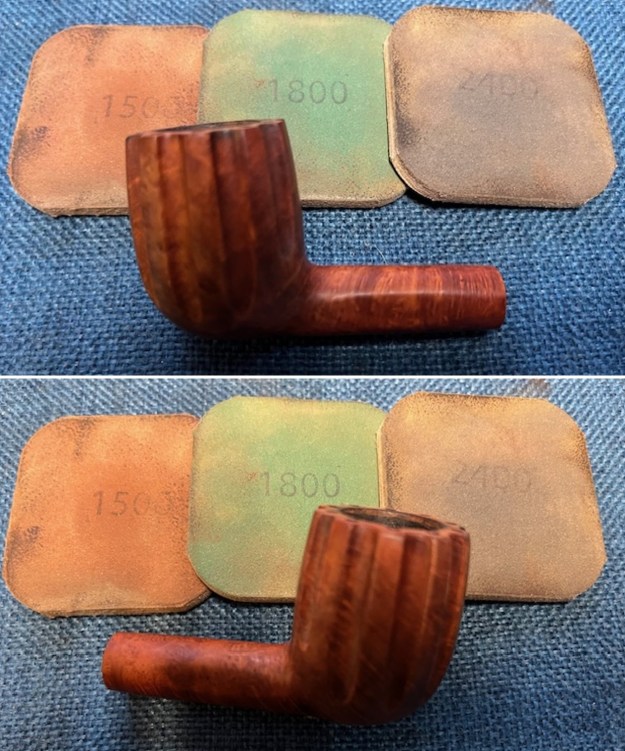
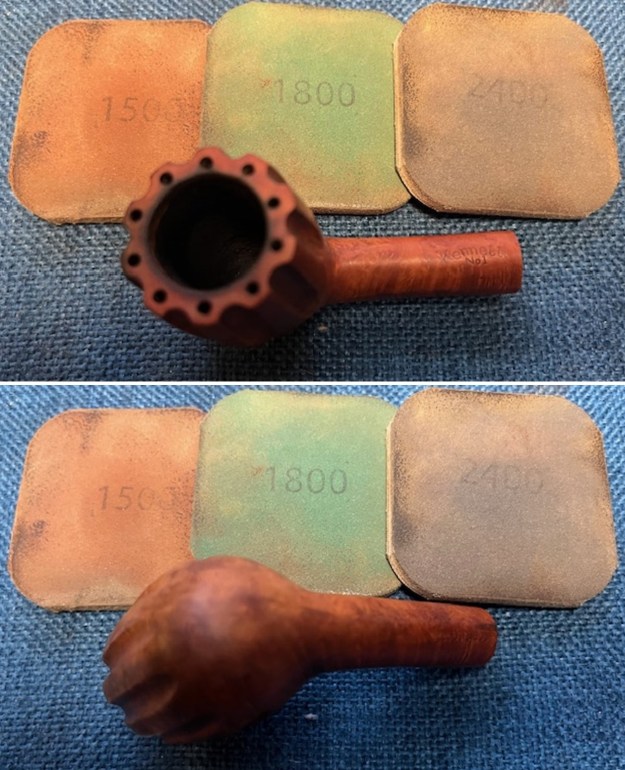
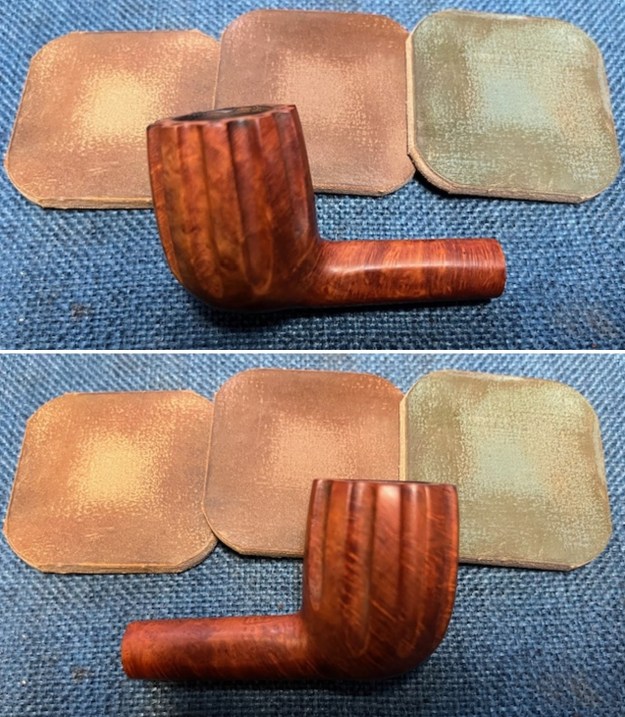
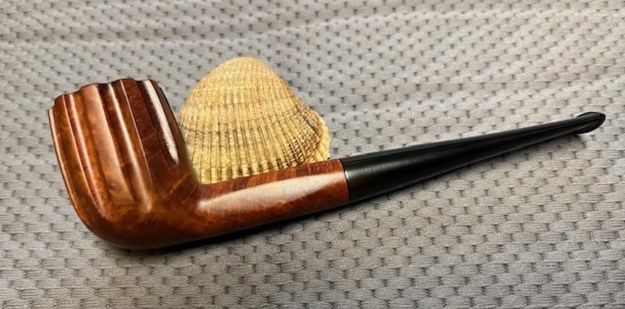
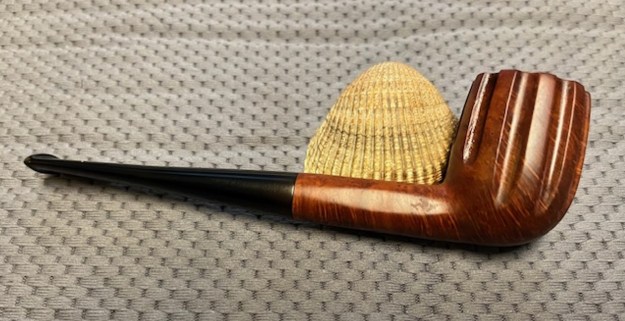
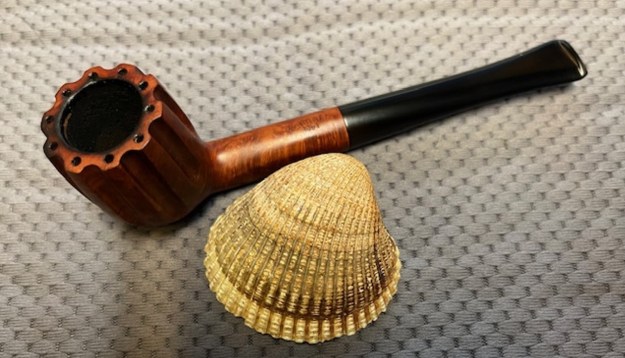
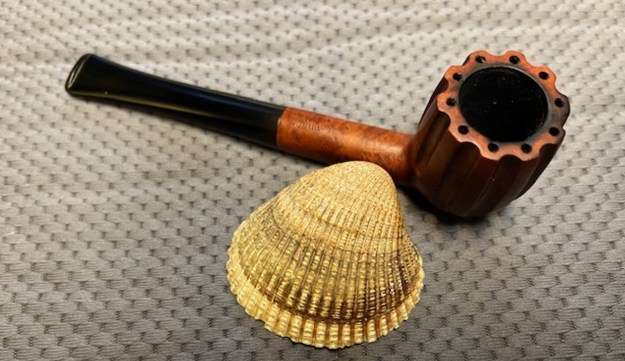
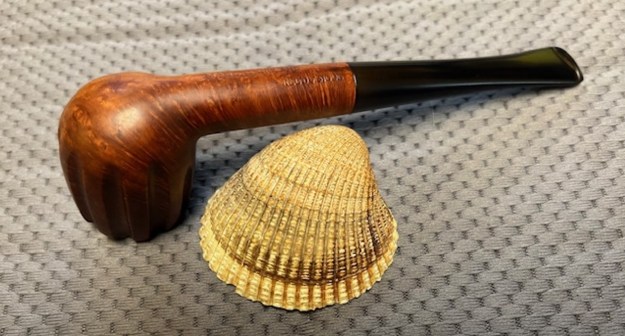
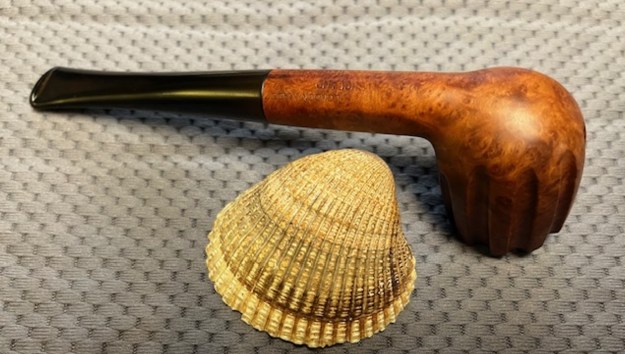
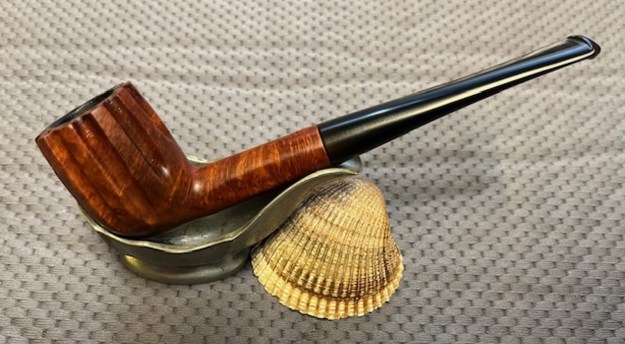
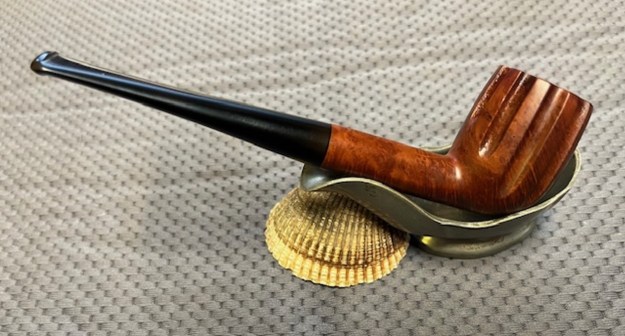
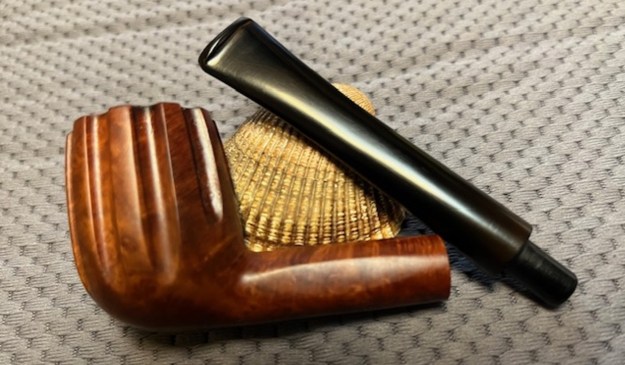
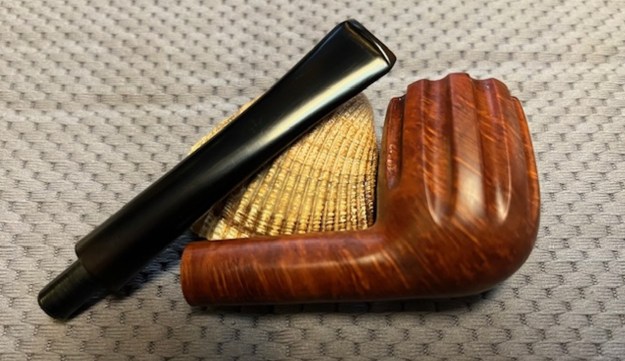
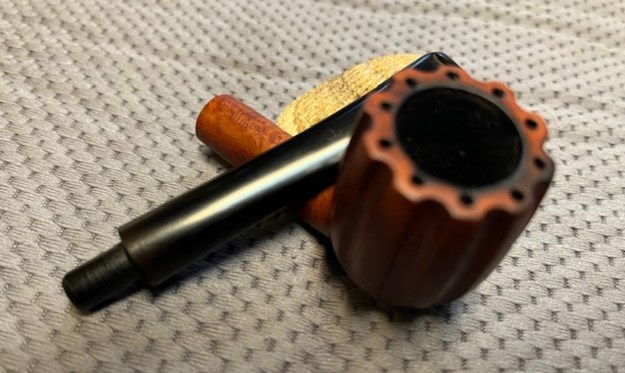
The next pipe on the work table is a pipe that we picked up from a seller in Cottage Grove, Minnesota, USA on 02/02/2022. This one was a unique fluted, pinched shank take on classic Billiard. It is stamped on the topside of the shank and reads Kennett [arched over] No 1. On the underside of the shank it is stamped London Made [over] Made in England [over] Reg’d 731096. The smooth, fluted finish around the bowl shows some nice grain patterns. There was grime and oil ground into the finish around the bowl. The fluted carving on the bowl sides and the holes around the rim go down the ridges to the bottom of the bowl. There was a moderate cake in the bowl and tobacco debris on the walls and heel. The rim top had lava overflowing from the bowl. It was thicker on left back of the rim top. The edges looked good but a clean up would tell the story. There was some thinning around the inner edge of the bowl affecting the holes in the rim top. The vulcanite taper stem was oxidized and had some tooth chatter and tooth marks on the top and underside ahead of the button. The interesting pipe showed a lot of promise but it was a mess. I took pictures of the pipe before I started my clean up work. I took photos of the rim top and bowl as well as the stem surfaces to show the condition of the well smoked pipe. You can see the thick cake in the bowl and the lava on the inner edge and rim top. There is also some roughening on the inner edge but the out edge looked good. There was a small nick in the outer edge on the left backside. The stem was oxidized, calcified and had scratches and light tooth chatter and marks on both sides ahead of the button.I took photos of the stamping on the sides of the shank and stem. The stamping is clear and readable as noted above. Before I started working on the pipe I wanted to do a bit of research and see what I could learn about it. First, I looked on Pipephil for The Kennett London Made No 1 and was unable to find any information there. There was no logo on the shank or the stem to help identify the brand.

I turned then to Pipedia (https://pipedia.org/wiki/Kennett) and found a very short entry there. I quote it below. There were photos of several pipes, a Kennett Box and a pamphlet that gave some information. I quote it below:

J.A. Kennett, LTD. in London were the makers of the Kennett pipe (photos thank to Doug Valitchka). I also Googled and was able to find a link to a Kennett for sale on smokingpipes.com (https://www.smokingpipes.com/pipes/estate/england/moreinfo.cfm?product_id=372529). There was also a photo that are worth look in at. I have included the description that was written about the pipe below.

This 1930s Billiard from Kennett is really unique, with its vertical, fluted channels opening up into tiny, hollow holes on the rim, resulting in an intriguing aesthetic. But wait: There’s more. Paired to the pert, tall bowl is a tapered, pinched, paneled shank that is unusual and is complemented by the bowl’s ridges. The jet-black vulcanite stem is also tapered. This smooth piece is dressed in a warm, chestnut stain that accentuates all of the above, and the fluting certainly provides entertainment for nimble fingers. -Angela Robertson

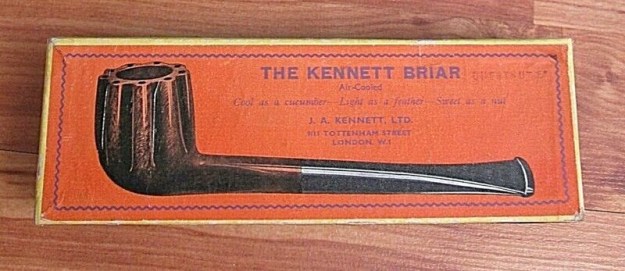
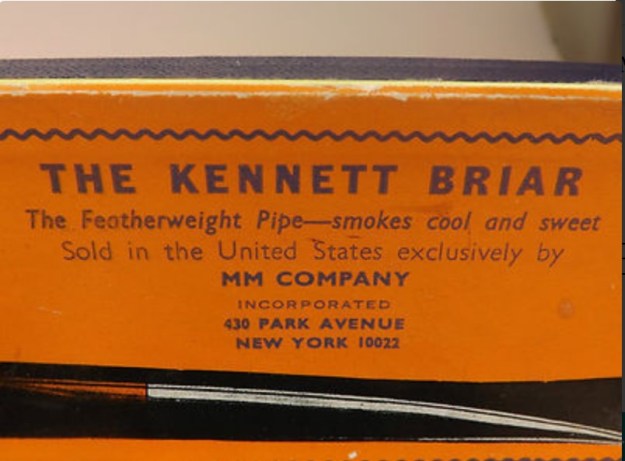
I also found a link on Google for an auction on Worthpoint for an unsmoked Kennett that was for sale there (https://www.worthpoint.com/worthopedia/kennett-briar-unsmoked-air-cooled-469502789 . I have included the description that seller included with the item.Here’s an auction for sale. A The Kennett Briar “Air Cooled” Briar Pipe made in London England in the 1950’s or earlier. The bowl has 10 holes drilled down thru the bowl wall on the ribs on the bowl. The pipe will be very cool to touch and to smoke because of the air cooled circulation in the holes and around the rib cuts. The Kennett Briar pipe is Air-Cooled, Cool as a Cucumber, Light as a Feather, Sweet as a Nut says J. A. Kennett, Ltd.9/11 Tottenham Street London, W. The Kennett Guarantee says every care has been used in selecting well seasoned Briar Root for making of this Pipe, and it is guaranteed with fair usage not to crack or burn. The stem is English Vulcanite.

Now I knew that the pipe was made between the 30s and 50s. The Reg’d number on it makes me think that is an older one – possibly from the 30s. I would not be able to further pin the date down on the pipe. Now it was time to work on it.

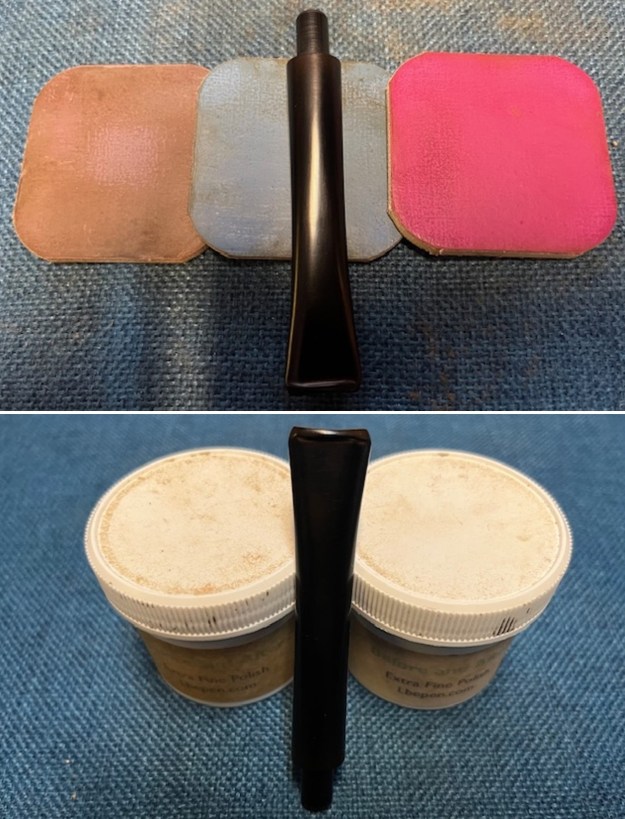
I started my work on the pipe by cleaning up the lava on the rim top. I used a folded piece of 220 grit sandpaper to clean it up. I carefully cleaned the darkening on the inner edge at the same time. I scraped the cake around the bowl sides with a Savinelli Fitsall Pipe knife and then sanded the walls with 220 grit sandpaper wrapped around a piece of dowel. The walls were smooth and showed no burn damage. I cleaned out the interior of the shank, mortise and airway in the stem with pipe cleaners, cotton swabs and alcohol. It was a dirty pipe.I scrubbed the externals of the pipe with Mark Hoover’s Briar Cleaner (extra strength). I cleaned the surface of the briar with my fingertips working product into the surface of the briar. I scrubbed it with a tooth brush working it over. I rinsed off the Mark’s Briar cleaner with warm water to remove the debris and grit that it had collected. I dried it off with a soft cotton cloth and took some photos of the pipe at this time. There was burn damage on the rim top that was going to remain. The holes down the sides of the bowl from the rim top were thin so I did not want to remove any of the briar. I chose to leave the burn marks as they are. I used a Maple stain pen to touch up the rim top. It matched the colour of the stain on the rest of the bowl. Once it was polished it would blend in very well. I polished the bowl with micromesh sanding pads – dry sanding with 1500-12000 grit pads. I wiped it down with a damp cotton pad after each sanding pad. The briar really took on a patina that began to look better with the polishing. I rubbed the bowl down with Before & After Restoration Balm. It is a paste/balm that works to deep clean the finish, enliven and protect the briar. I work it into the briar with my finger tips to make sure that it covers every square inch of the pipe. I set it aside for 10 minutes to let it do its work. I wiped it off with a soft cloth then buffed it with a cotton cloth. The briar really began to have a deep shine. The photos I took of the bowl at this point in the restoration. You see the shine that the briar has taken on and the way grain pops with the light buffing. I set the bowl aside and turned my attention to the stem. I worked on the oxidation on the stem with Soft Scrub and was able to remove it. Lots of elbow grease and working over the surface but it started to look much better.I sanded the stem with 320-3500 grit sanding pads to break up the remaining oxidation. I wiped it down after each sanding pad with an Obsidian Oil impregnated cloth. It was looking good.I polished the stem with micromesh sanding pads – dry sanding with 1500-12000 grit pads. I wiped the stem down after each sanding pad with Obsidian Oil. I polished it with Before & After Pipe Stem Polish – both Fine and Extra Fine. Once I had finished the polishing I gave it final coat of Obsidian Oil and set it aside to dry. I am glad to be on the homestretch on what was a mystery pipe when I started. I really am looking forward to the final look when I put a pipe back together, polished and waxed. I polished the bowl and stem with Blue Diamond to polish out the scratches in the briar and the vulcanite. I gave the bowl and the stem multiple coats of carnauba wax. I buffed the pipe with a clean buffing pad to raise the shine. I hand buffed it with a microfiber cloth to deepen the shine. The pipe polished up pretty nicely. The grain pops with the wax and polish. The shiny black vulcanite stem is a beautiful contrast to the browns of the bowl and shank. This The Kennett No1 Reg’d 731096 Billiard was interesting pipe to work on. The pipe is comfortable pipe to hold in the hand. The finished pipe is shown in the photos below. The dimensions of the pipe are Length: 5 inches, Height: 1 ¾ inches, Outside diameter of the bowl: 1 ¼ inches, Chamber diameter: ¾ of an inch. The weight of the pipe is 1.45 ounces/41 grams. This Kennett pipe is a great piece of history of the ongoing search for the cooler and drier smoke. I will be adding it to the British Pipe Making Companies Section on the rebornpipes store shortly. Thanks for reading this blog and my reflections on the pipe while I working on it.

As always, I encourage your questions and comments as you read the blog. Thanks to each of you who are reading this blog. Remember we are not pipe owners; we are pipemen and women who hold our pipes in trust until they pass on into the trust of those who follow us.

Restoring an Old NEBPC Bent Billiard with an old-style vulcanite stem


by Steve Laug

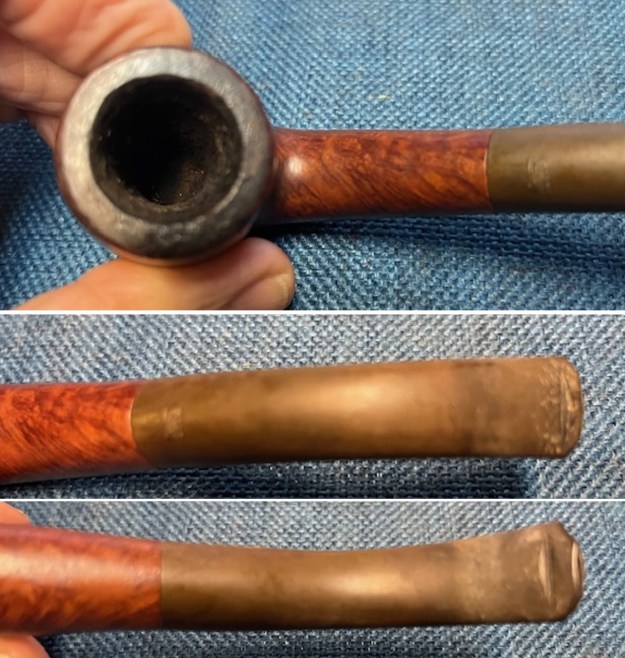
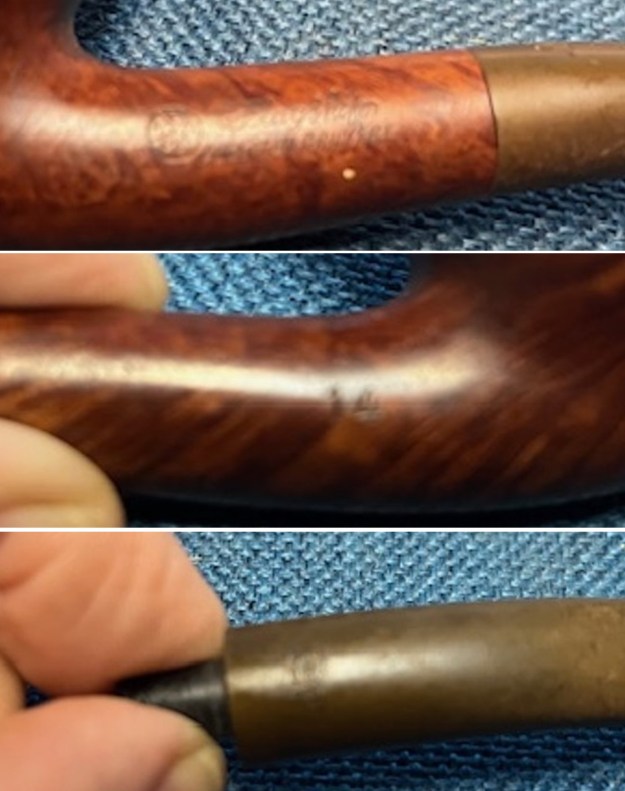
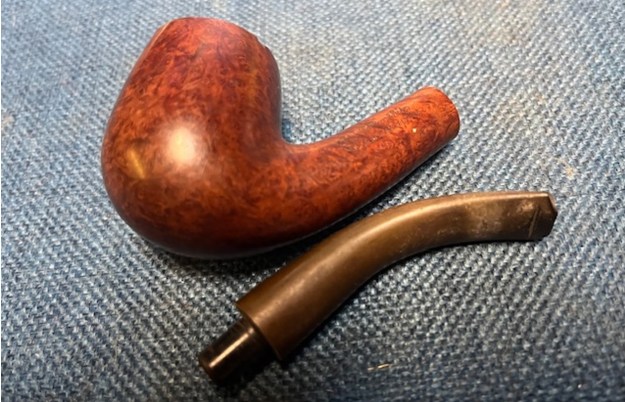
The next pipe I have chosen to work on is one that we picked up 04/16/2024 from a seller on Facebook Marketplace in Tacoma, Washington, USA. The pipe is an older style bent billiard with narrow vulcanite stem. The pipe is stamped on the left side of the shank with NEBPC in a pie shaped circle with a letter in each section. That is followed by Flagship in script [over] Algerian Bruyere. On the right side it is stamped with the shape number 14 at the bowl shank junction. The brand and stamping are the mystery to me. It is one I had not heard of before and had no idea of what the initials stand for. The smooth finish had some very nice grain but there was a lot of grime and oils ground into the finish around the bowl and the shank. The pipe was dirty but the rich stain highlighted the grain. There was a thick cake in the bowl overflowing in thick lava on the rim top. The inner edge looked quite good though the lava covered it. The outer edge was in good condition other than a nick on the left backside of the bowl. The stem is vulcanite and the shape and cut of the button leads me to think it is an older pipe. It has a stamp on the topside of the taper that is very hard to decipher with the oxidation and grime on the surface. It was oxidized and had tooth chatter and tooth marks on the top and underside ahead of the button. The marks on the stem next to the button lead me to wonder if the stem had been cut off and a new button cut. I am uncertain but probably will never know. The pipe showed a lot of promise but it was a mess. I took pictures of the pipe before I did my clean up work. I took photos of the rim top and bowl as well as the stem surfaces to show the condition of the well smoked pipe. You can see the thick cake in the bowl and the lava on the inner edge and rim top. There is also some roughening on the inner edge but the out edge looked good. There was a small nick in the outer edge on the left backside. The stem was oxidized, calcified and had scratches, tooth chatter and marks on both sides ahead of the button.I took photos of the stamping on the sides of the shank and stem. On the left side it reads as noted above. On the right side it is stamped with the shape number 14. There is also some mark on the top of the tapered stem that I cannot decipher. I removed the stem from the shank and took a photo of the pipe to show its flow. I looked on Pipephil for both the circular pie shaped logo and the NEBPC Flagship stamping and found nothing. I also looked on Pipedia and again came up emptyhanded. I just felt like I was missing something in the search. I tried various interpretations of the NEBPC letters – Nebraska Pipe Club, New England Briar Pipe Club for two attempts and came up empty. I wrote to John Young who also does restoration and asked if knew of a Nebraska Pipe Club and he knew of nothing like that in his state. That left me still mystified.

I decided to do a search for the NEBPC on Google to see if I could interpret the meaning of the letters. I wondered what they stood for so I searched and came up with a thread on the brand on the pipesmagazine forums (https://pipesmagazine.com/forums/threads/i-love-this-pipe-but-who-made-it.48662/). There was quite a long discussion that gave some good information. Like the quote below by samcoffeeman on Apr 6, 2015

I got a hit! Was thinking it was NEBPC because of the order and PC meant pipe club perhaps. It actually means New England Briar Pipe Company. Another example here with some great info: LINK (link is disconnected)  Kaywoodie also has a Canadian pipe shape #71 so there you go!

buroak replied the following:

The NEBPC made the Yello Bole line for KBB. That “Algerian Bruyere” stamp looks like the same one used on Yello Boles, too. What is strange is the two-digit code. Nice find!

misterlowercase added some more information regarding the brand. He included links to the old factory where that pipe was made in Penacook New Hampshire, is still in use today,

http://pipedia.org/wiki/Yello-Bole

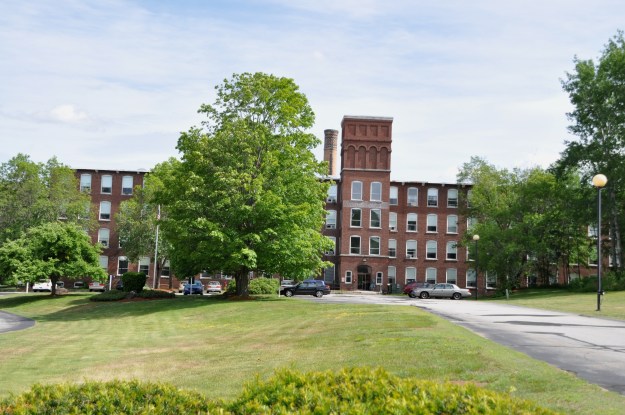
I turned to the second link first to have a look at the large photo first. It showed the large older building. Here is the link (https://debralavalley.files.wordpress.com/2009/11/dsc_0024sm.jpg).

I then turned to the pipedia article (http://pipedia.org/wiki/Yello-Bole) and found a great article on the history of the KBB/Yello-Bole pipe company.

History

In 1932 Kaufmann Bros. & Bondy (KB&B), est. 1851, expanded their program consisting of KB&B pipes, Reiss-Premier and Kaywoodie as the mainstay brand by introducing the Yello-Bole line. Yello-Bole was designed as an outlet for lower grade briar not used in Kaywoodie production.

At that time KB&B produced their brands in Union City and in West New York, both New Jersey. Deviating from that, Yello-Boles were manufactured by The New England Briar Pipe Company in Penacook, New Hampshire to use this KB&B subsidiary to capacity.

As briar was hardly had during World War II, the KB&B Company embarked on a project of domestically grown briar wood, called Mission Briar or manzanita early in 1941. The Pacific Briarwood Company, a subsidiary founded for this purpose, began harvesting the burls growing on the slopes of the Santa Cruz Mountains of California. Though this wood is botanically the same as briar form the Mediterranean countries, the smoking characteristics were not quite as good and the project was abandoned after the war.

Was it for that reason? Advertising from the 1940’s pictures the Yello-Bole “Honey Girl”, who gently urges the pipe smoker to smoke the pipe with “a little honey in every bowl.” In fact, honey was an ingredient of the material used to coat the inside of the bowl. It was said to provide a faster, sweeter break-in of the pipe.

In 1952, 101 years after the Kaufmann brothers had opened a small pipe shop in the Bowery section of New York City, Kaufmann Bros. & Bondy Company with all subsidiaries was purchased by an unknown company strange to pipe industry. (At least, the new owner was economical because the KB&B managers had to leave their luxurious bureaus on 630 Fifth Avenue, New York – the Rockefeller Center – for new rooms in the factory on 6400 Broadway, West New York.) This interlude ended after only 3 years in March of 1955, when S. M. Frank & Co. bought Kaufmann Bros. & Bondy, The Kaywoodie Company, Reiss-Premier Corp., The New England Briar Pipe Co. and – of course – Yello-Bole.

From the time of S.M. Frank’s purchase in 1955 until 1972 Yello-Bole was run as a separate company, as division of the parent. Through this period, Yello-Bole, same as Kaywoodie, had its own officers, sales force and maintained the production facilities in West New York. These 17 years were probably the most glorious years in Yello-Bole’s history.

I also found a listing in the business directory for the New England Briar Pipe Co. I have included that information below.I used the hints above to check on the shape number 14 in the Pipedia listing of Kaywoodie shape numbers (https://pipedia.org/wiki/Kaywoodie_Shape_Numbers). That gave me the information that the number 14 was a Full Bent Medium Billiard with a Taper Stem that was made between 1927-1972.

That information gave a range that the shape was made for Kaywoodie pipes. However, since the pipe made by the New England Briar Pipe Co., a company that ceased to exist in 1955, the pipe in hand was made prior to that time period. The pipe was made by the company in Penacook, New Hampshire. Now it was time to work on this old pipe that was no longer a mystery.

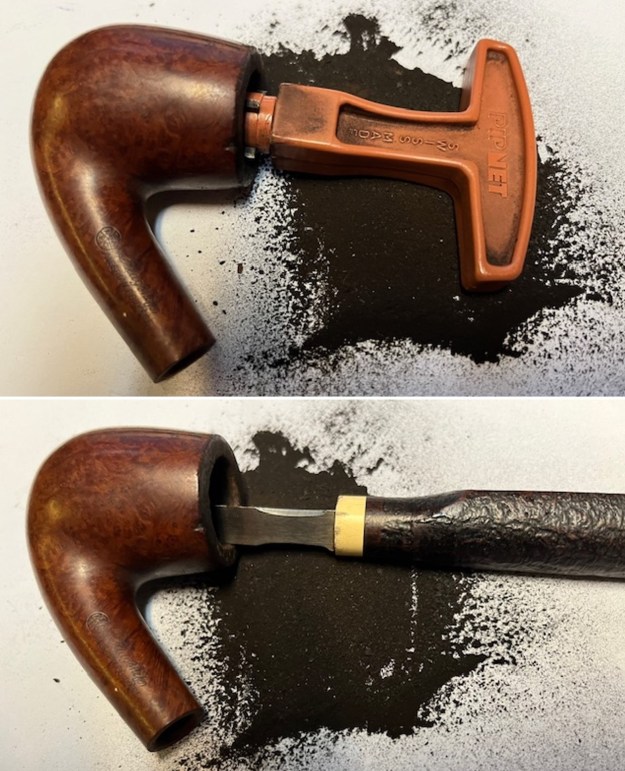
I started my work on the pipe reaming the bowl. I started by doing the work with a Pipnet Pipe Reamer and took the cake back to bare briar. I cleaned up the remnants around the bowl sides with a Savinelli Fitsall Pipe knife and then sanded the walls with 220 grit sandpaper wrapped around a piece of dowel. The walls were smooth and showed no burn damage.  I scraped the lava build up on the rim surface with the Savinelli Fitsall Pipe Knife. I was able to remove all of the thick lava. It still needed some thorough cleaning but it was looking better.I scraped out the mortise with a small pen knife to remove the thick tars and oils. I cleaned out the interior of the shank, mortise and airway in the stem with pipe cleaners, cotton swabs and alcohol. It was a dirty pipe.I scrubbed the externals of the pipe with undiluted Murphy’s Oil Soap and a tooth brush. I worked over the inside of the bowl at the same time. I rinsed it with warm water to remove the grime and debris. I dried it off with a soft cotton cloth and lightly buffed it with the cloth. It smelled very clean. I used a 320 grit sanding pad to remove the remaining tars and oils on the rim top. I worked it over to clean up the top and prepare it for polishing with micromesh sanding pads. I polished the bowl with micromesh sanding pads – dry sanding with 1500-12000 grit pads. I wiped it down with a damp cotton pad after each sanding pad. The briar really took on a patina that began to look better with the polishing. I paused the polishing and used a folded piece of 220 grit sandpaper to smooth out the damage on the inner edge of the rim. It looked much better. Then I stained the rim top with a Cherry Stain pen. It matched the rest of the briar very well. With polishing it would be unrecognizable. I went back to the polishing process with the remaining micromesh sanding pads from 3200-12000 grit pads. The briar began to take on a rich shine. I rubbed the bowl down with Before & After Restoration Balm. It is a paste/balm that works to deep clean the finish, enliven and protect the briar. I work it into the briar with my finger tips to make sure that it covers every square inch of the pipe. I set it aside for 10 minutes to let it do its work. I wiped it off with a soft cloth then buffed it with a cotton cloth. The briar really began to have a deep shine. The photos I took of the bowl at this point in the restoration. You see the shine that the briar has taken on and the way grain pops with the light buffing. I set the bowl aside and turned my attention to the stem. There was some damage on the stem top next to the button on both sides. I was not sure if it was tooth marks or file marks. The were deep cuts but the stem is quite thick at this point on both sides. I filled the spots in with black CA rubberized glue. I set the stem aside for the repairs to cure.While it cured I touched up the blurry stamp on the top of the stem with white acrylic fingernail polish. Then I scraped away the excess white acrylic with a 320 grit sanding pad. It was fascinating to see that underneath the white acrylic the stamp was a train engine. It was very well stamped but faint in spots.Once the repairs on the stem cured I used a file to flatten them and reshape the button on both sides. It was showing promise. I sanded the surface of the repair smooth with a folded piece of 220 grit sandpaper. I also sanded the oxidation on the stem surface at the same time. By the time I finished wit the reshaping and sanding the stem looked much better. I sanded the stem with 320-3500 grit sanding pads to break up the remaining oxidation. I wiped it down after each sanding pad with an Obsidian Oil impregnated cloth. It began to look good. I polished the stem with micromesh sanding pads – dry sanding with 1500-12000 grit pads. I wiped the stem down after each sanding pad with Obsidian Oil. I polished it with Before & After Pipe Stem Polish – both Fine and Extra Fine. Once I had finished the polishing I gave it final coat of Obsidian Oil and set it aside to dry.  I am glad to be on the homestretch on what was a mystery pipe when I started. I really am looking forward to the final look when I put a pipe back together, polished and waxed. I polished the bowl and stem with Blue Diamond to polish out the scratches in the briar and the vulcanite. I gave the bowl and the stem multiple coats of carnauba wax. I buffed the pipe with a clean buffing pad to raise the shine. I hand buffed it with a microfiber cloth to deepen the shine. The pipe polished up pretty nicely. The grain pops with the wax and polish. The shiny black vulcanite stem is a beautiful contrast to the browns of the bowl and shank. This NEBPC – New England Briar Pipe Company Flagship Algerian Bruyere Billiard was another fun pipe to work on. The pipe is comfortable pipe to hold in the hand. The finished pipe is shown in the photos below. The dimensions of the pipe are Length: 5 inches, Height: 1 ¾ inches, Outside diameter of the bowl: 1 ¼ inches, Chamber diameter: ¾ of an inch. The weight of the pipe is 1.45 ounces/41 grams. This NEBPC pipe was a fun one to work on with a great piece of history and connection with KB&B Yello-Bole. I will be adding it to the American (US) Pipe Making Companies Section on the rebornpipes store shortly. Thanks for reading this blog and my reflections on the pipe while I working on it.

As always, I encourage your questions and comments as you read the blog. Thanks to each of you who are reading this blog. Remember we are not pipe owners; we are pipemen and women who hold our pipes in trust until they pass on into the trust of those who follow us.

Cleaning up a Lightweight Gourd Calabash Pipe


by Steve Laug

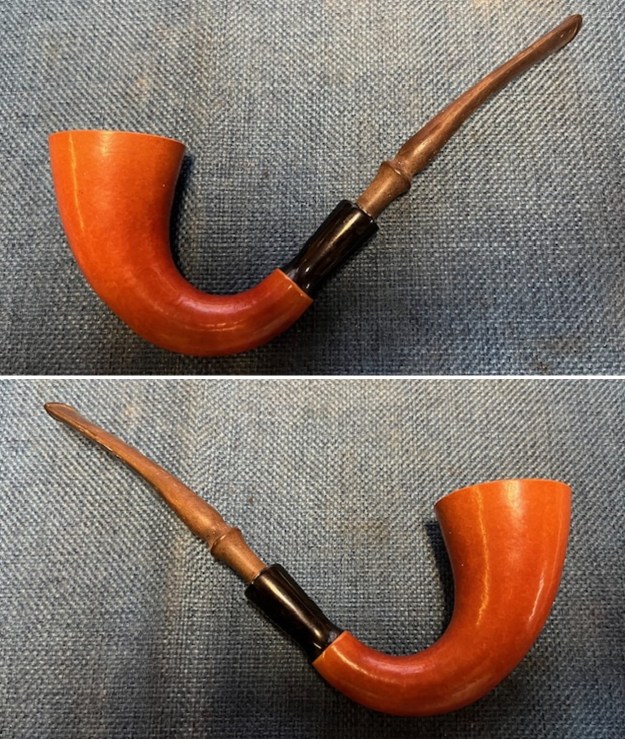
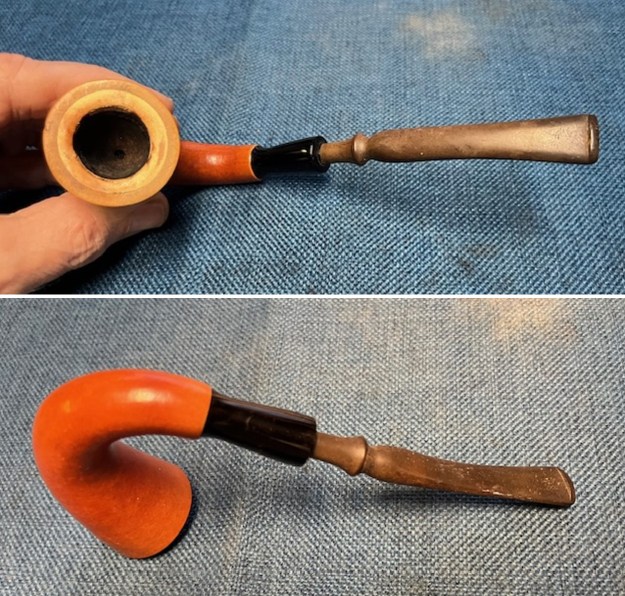
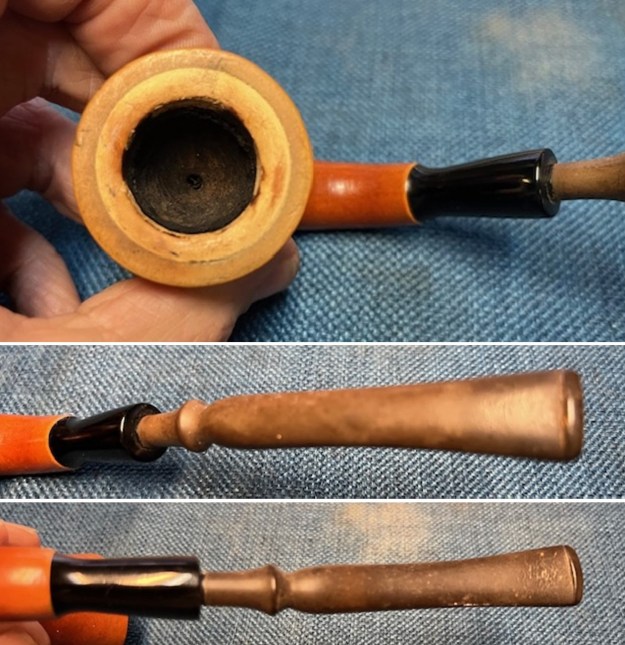
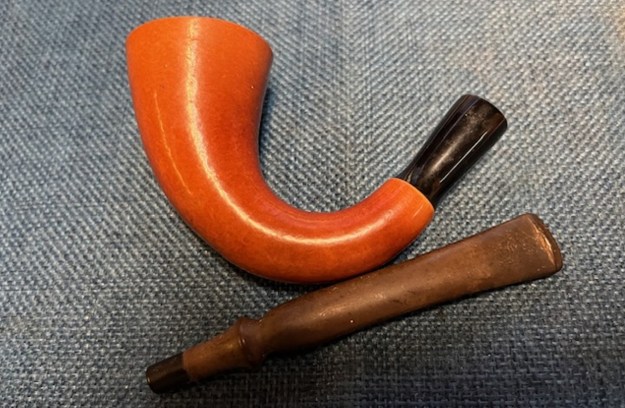
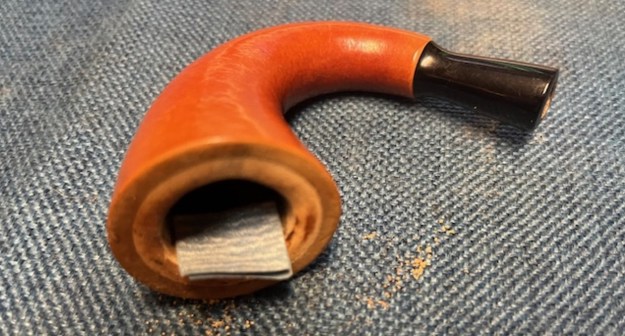
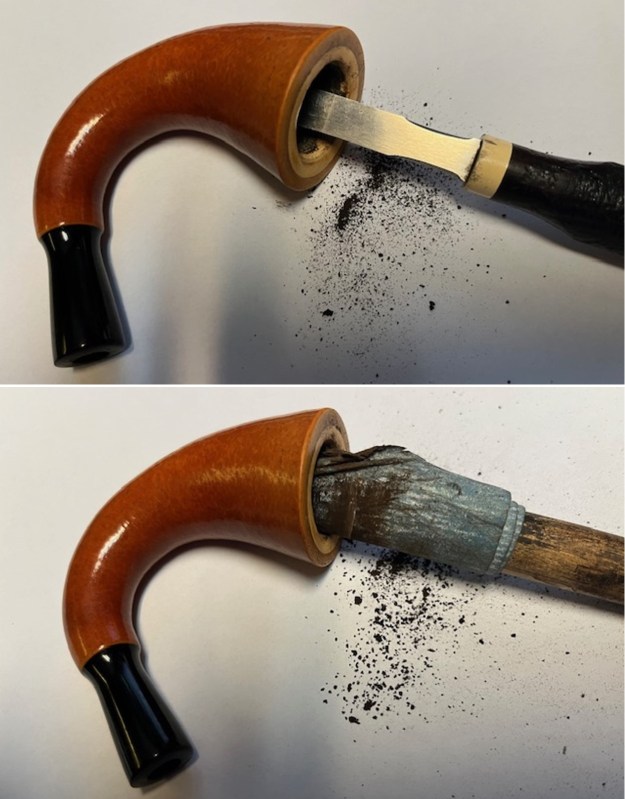
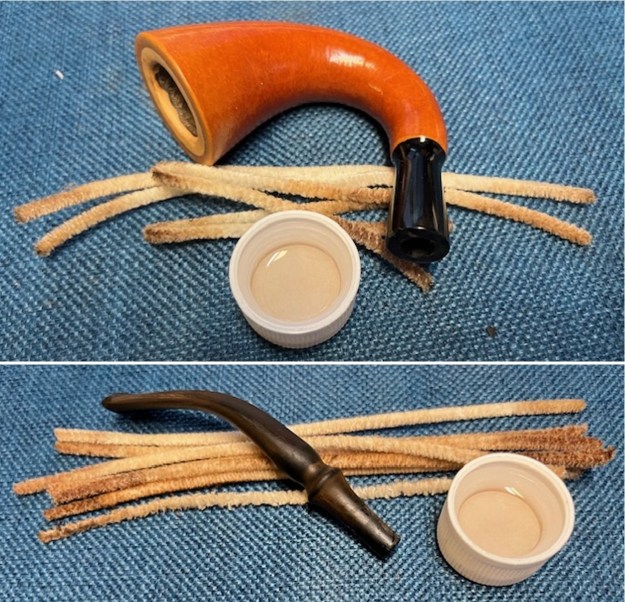
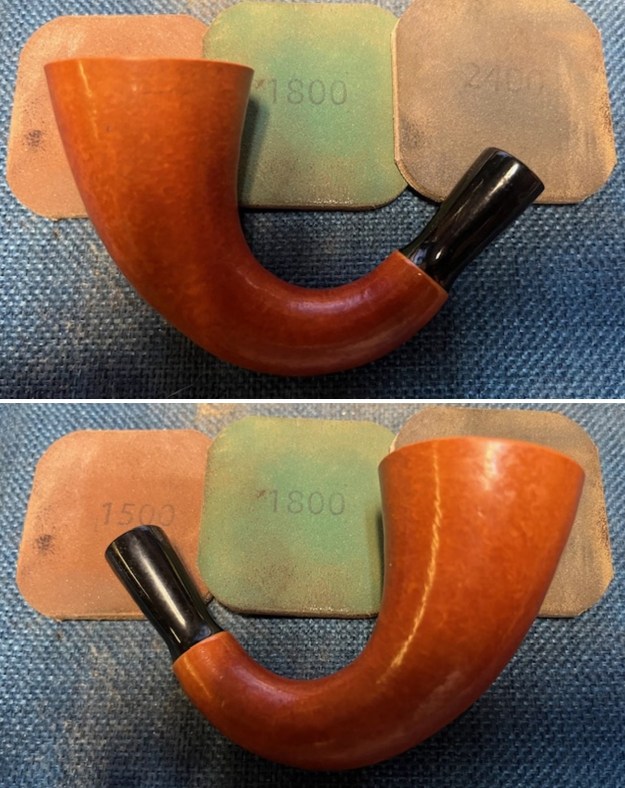
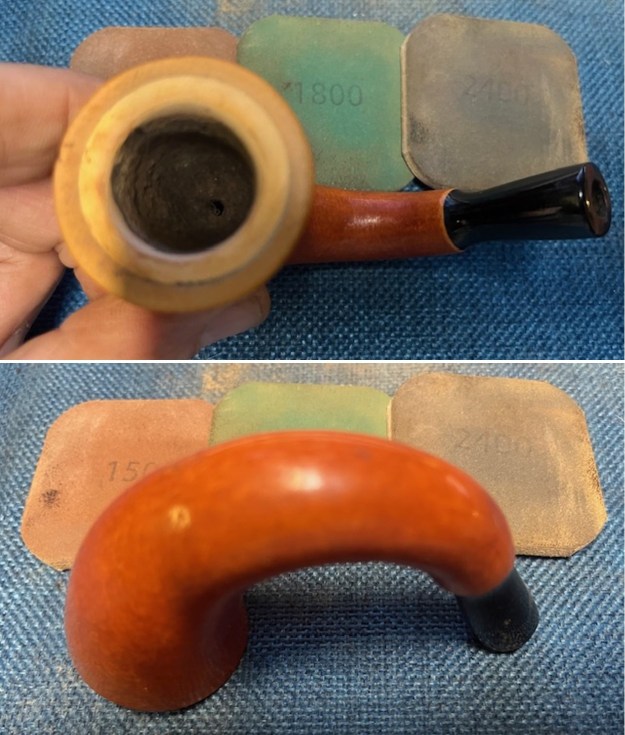
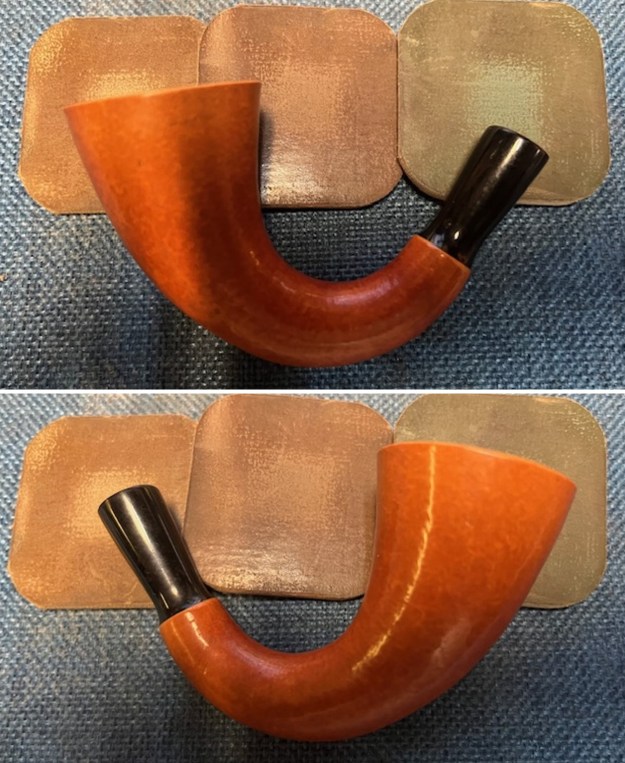
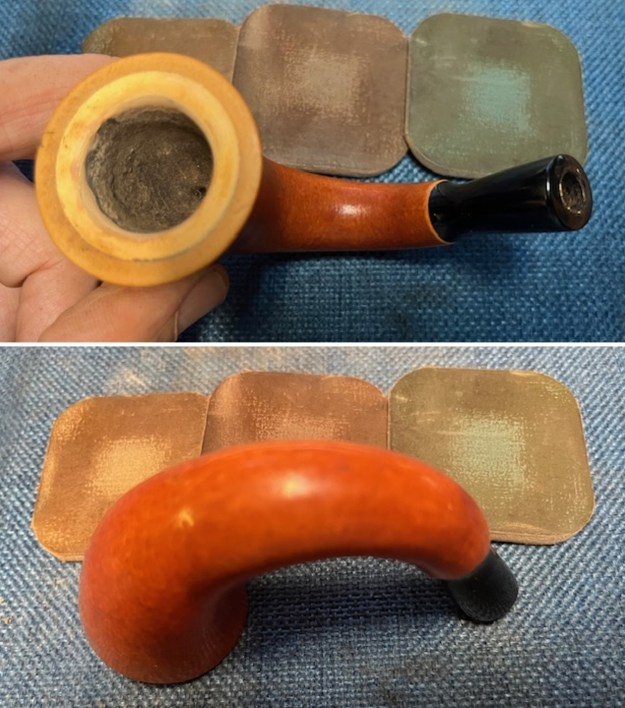
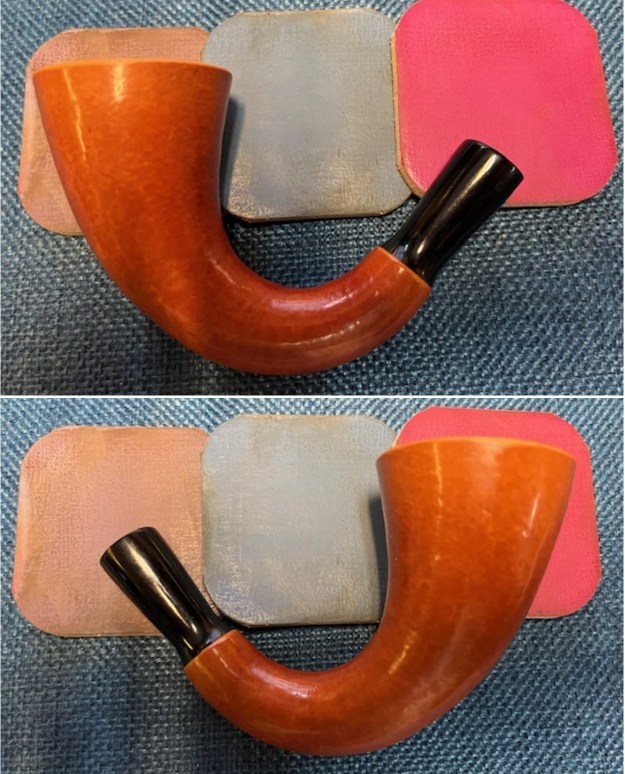
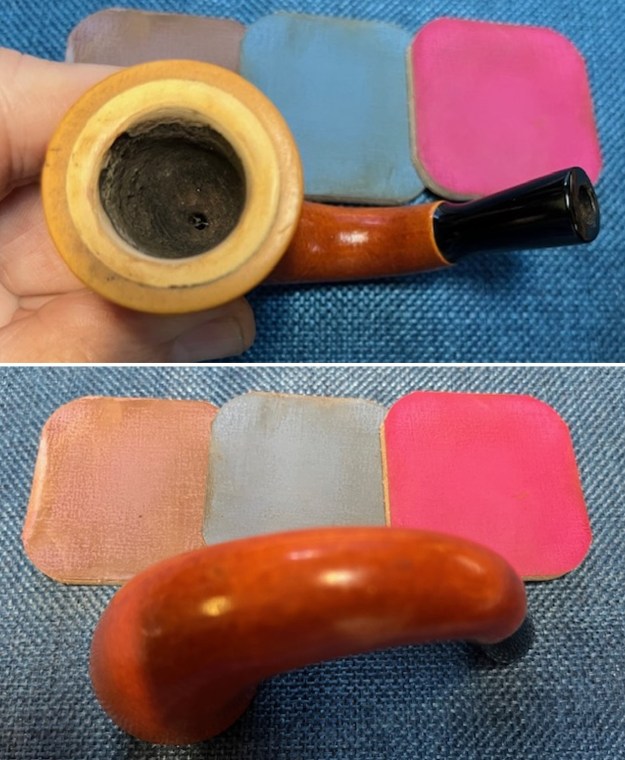
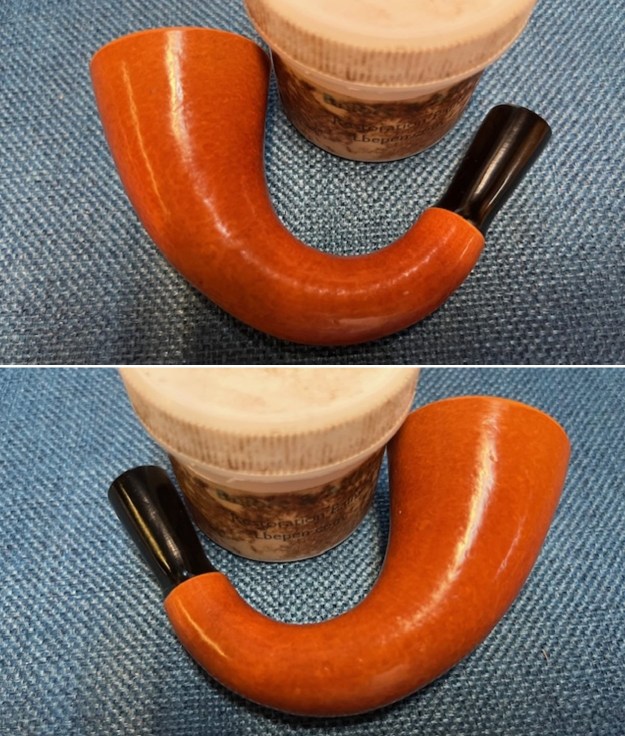
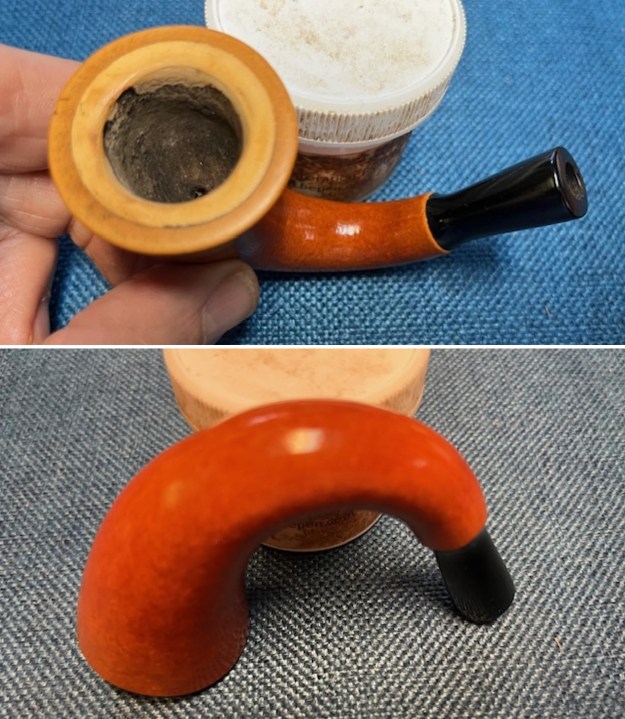
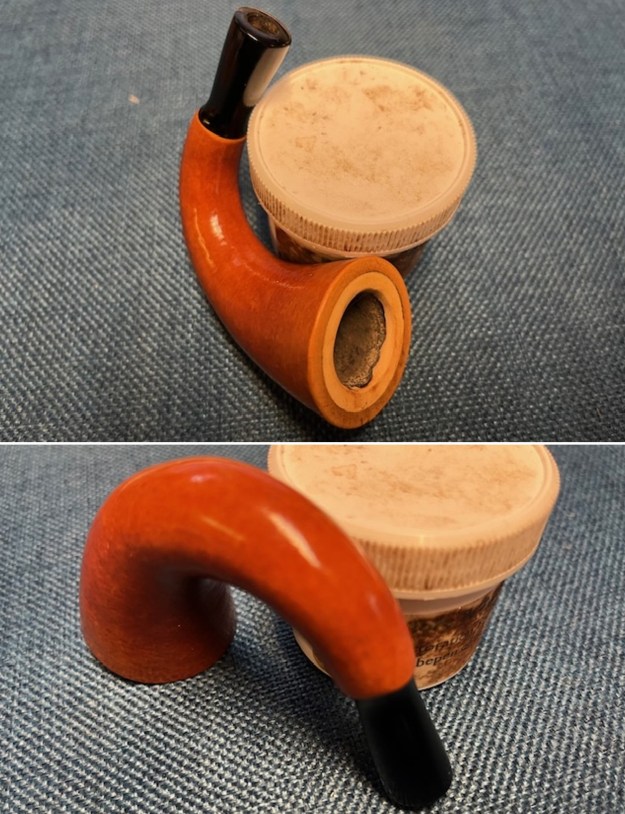
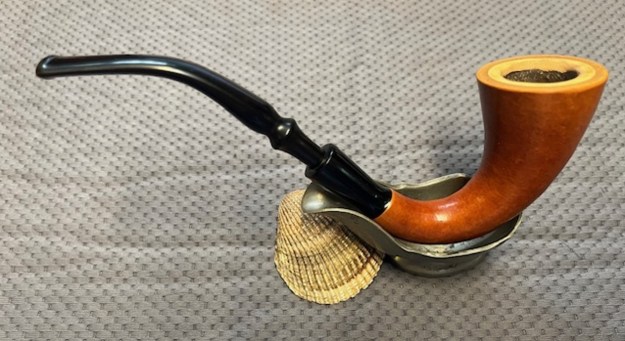
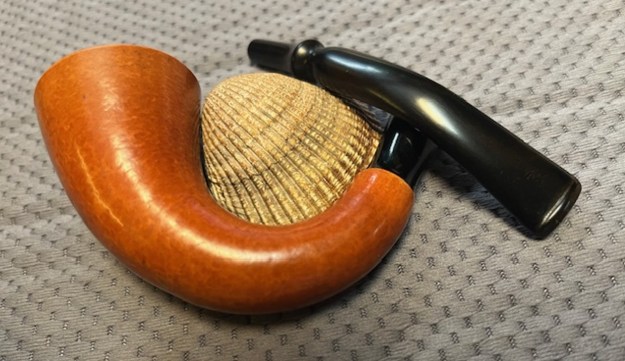
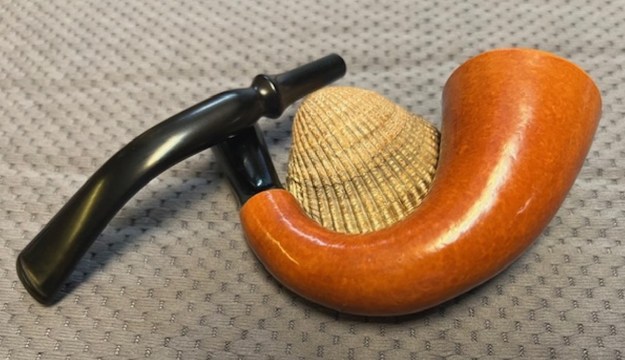
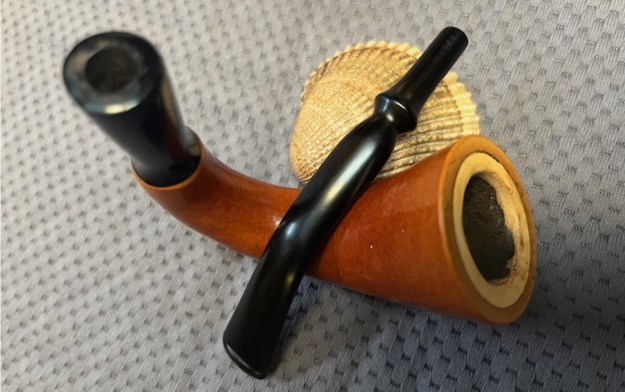
The next pipe on the table is a small older style meerschaum lined Gourd Calabash without the top. It is one we picked up from and estate in Oregon City, Oregon, USA on 03/21/2024. The surface of the gourd is smooth and unadorned. It has an acrylic shank extension. The gourd had obviously been waxed and the surface was smooth and shiny. The meerschaum was unique in that it was almost like a meerschaum lining in a briar pipe than the typical cup liner that I was familiar with in Calabash pipes. The meer bowl had a light cake in it but the rim top looked good and had taken on a nice patina. The inner edge had some slight damage on the right side and was a little rough to the touch. The acrylic shank extension was in excellent condition and fit with a slight waist at the gourd end. The fancy turned stem was quite heavily oxidized and there were light tooth marks on the top and underside ahead of the button. The stem had also straightened out over time and would need to be re-bent to fit the flow of the bowl. I took a few photos of the pipe in the car on the way home and have included them below. I took a photo of the rim top and bowl to show the condition of both of them. The bowl shows that is clear of caking on the walls. The rim top showed some darkening. The inner edge of the bowl has some damage that will need to be taken care of. The photos of the stem show the heavy oxidation and light tooth marks/chatter on both sides ahead of the button. I removed the stem from the shank and took a photo to show the proportions of the pipe. It is a nicely shaped gourd and the meerlining looks great. The stem length works very well with the pipe.I started my work by cleaning up the inner edge of the meerschaum lining. I gave the inner edge a slight bevel with a folded piece of 220 grit sandpaper.I cleaned up the cake in the meerschaum bowl with a Savinelli Fitsall Pipe knife and then sanded the walls with 220 grit sandpaper wrapped around a piece of dowel. The walls were smooth and showed no burn damage.I cleaned out the interior of the shank, mortise and airway in the gourd and in the stem with pipe cleaners, cotton swabs and alcohol. The pipe was surprisingly clean. I polished the rim top (meer and gourd) and the gourd body itself with micromesh sanding pads – dry sanding with 1500-12000 grit pads. At the same time I polished the acrylic shank extension. I wiped it down with a cotton pad and a cloth impregnated with Obsidian oil after each sanding pad. The briar really took on a patina that began to look better with the polishing. I rubbed the bowl down with Before & After Restoration Balm. It is a paste/balm that works to deep clean the finish, enliven and protect the gourd. I work it into the gourd with my finger tips to make sure that it covers every square inch of the pipe. I set it aside for 10 minutes to let it do its work. I wiped it off with a soft cloth then buffed it with a cotton cloth. The calabash really began to have a deep shine. The photos I took of the bowl at this point mark the progress in the restoration. You see the shine that the gourd has taken on and the way grain pops on the smooth portions and the rusticated parts have depth. I set the bowl aside and turned my attention to the stem. I decided to rebend the stem to fit the flow of the bowl. I heated it with a lighter flame and put it in the shank. I bent it so that when it was held in my mouth the bend of the stem was straight and even with the top of the bowl. I sanded the re-bent stem with 220 grit sandpaper to remove the tooth damage and chatter as well as the oxidation. It began to look much better.I worked on the oxidation on the stem with Soft Scrub. I worked it into the surface of the vulcanite with cotton pads and was able remove the majority of the oxidation on the stem surface. I sanded the stem with 320-3500 grit sanding pads to break up the remaining oxidation. I wiped it down after each sanding pad with an Obsidian Oil impregnated cloth. It began to look good.I polished the stem with micromesh sanding pads – dry sanding with 1500-12000 grit pads. I wiped the stem down after each sanding pad with Obsidian Oil. I polished it with Before & After Pipe Stem Polish – both Fine and Extra Fine. Once I had finished the polishing I gave it final coat of Obsidian Oil and set it aside to dry. More than usual at this point in the restoration process I am excited to be on the homestretch. I really am looking forward to the final look when I put a pipe back together, polished and waxed. I polished the bowl and stem with Blue Diamond to polish gourd bowl and the vulcanite. I gave the gourd and the stem multiple coats of carnauba wax. I buffed the pipe with a clean buffing pad to raise the shine. I hand buffed it with a microfiber cloth to deepen the shine. The pipe polished up pretty nicely. The shiny black acrylic shank extension and the vulcanite stem is a beautiful contrast to the browns of the bowl and shank. This Meerschaum Lined Gourd Calabash was another fun pipe to work on. The pipe is comfortable pipe to hold in the hand. The finished pipe is shown in the photos below. The dimensions of the pipe are Length: 6 ¾ inches, Height: 2 ¼ inches, Outside diameter of the bowl: 1 ½ inches, Chamber diameter: 7/8 of an inch. The weight of the pipe is 1.27 ounces/36 grams. I will be adding it the Ceramic and Meerschaum Pipes section of the rebornpipes store. Thanks for reading this blog and my reflections on the pipe while I working on it.

As always, I encourage your questions and comments as you read the blog. Thanks to each of you who are reading this blog. Remember we are not pipe owners; we are pipemen and women who hold our pipes in trust until they pass on into the trust of those who follow us.

Cleaning up another Pipe Hunt Find from Idaho, an interesting looking Kaywoodie Standard Called an Embassy Pipe


by Steve Laug

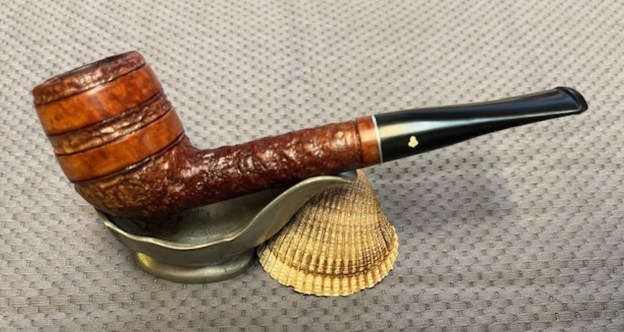
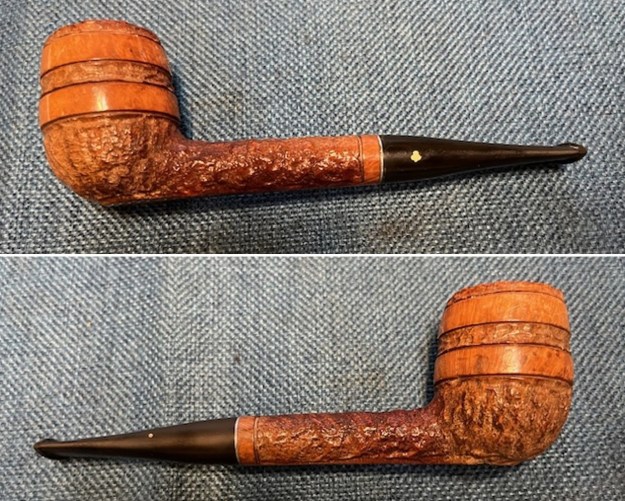
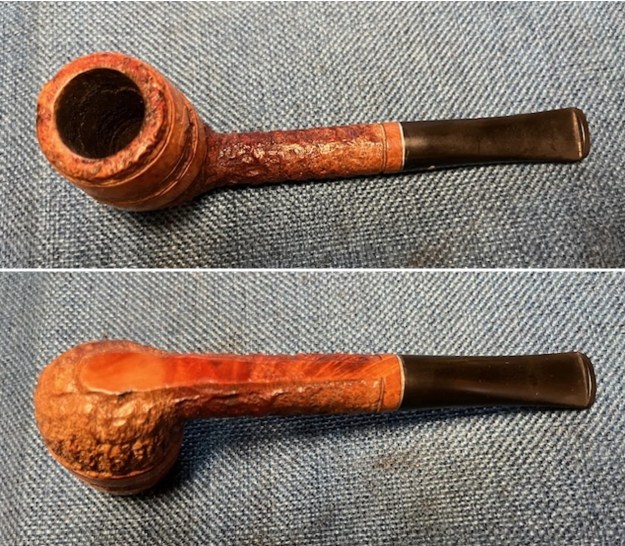
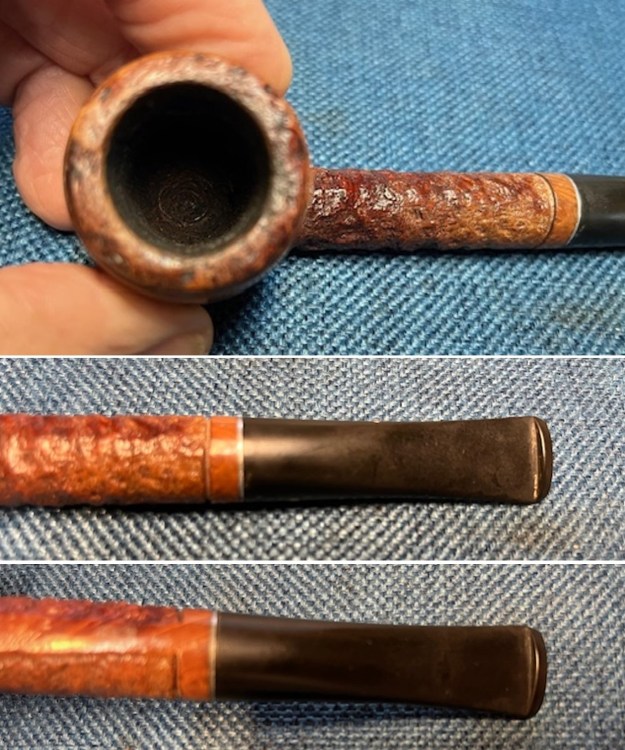
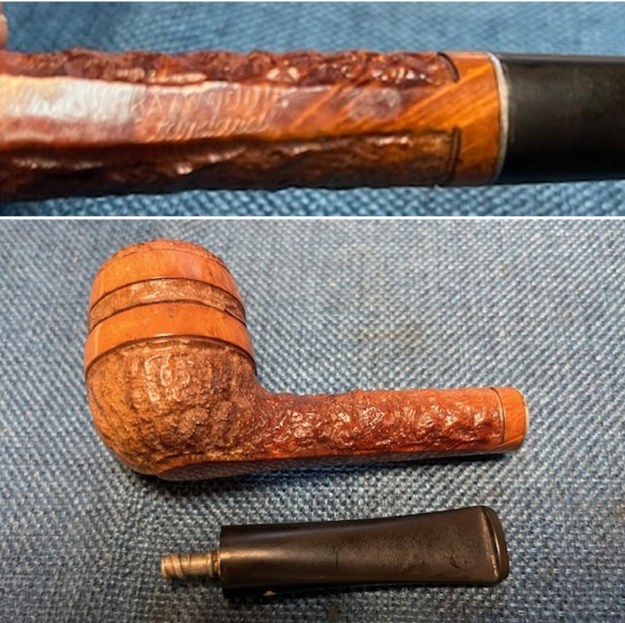
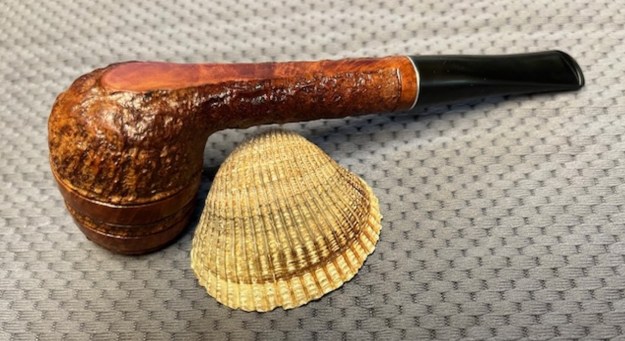
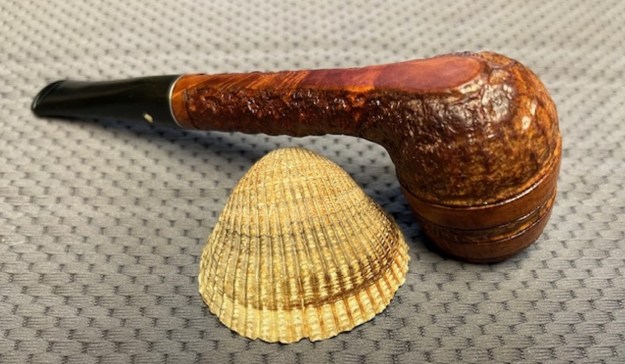
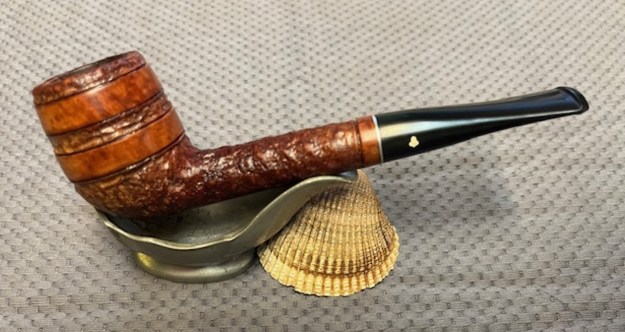
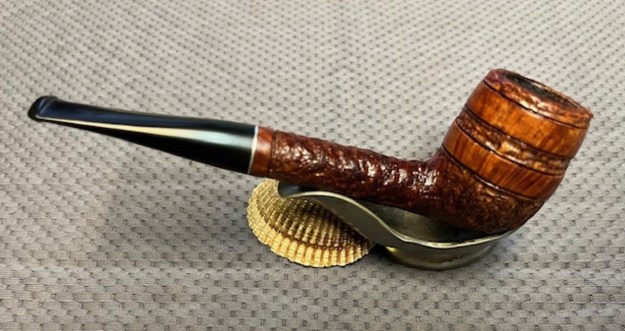
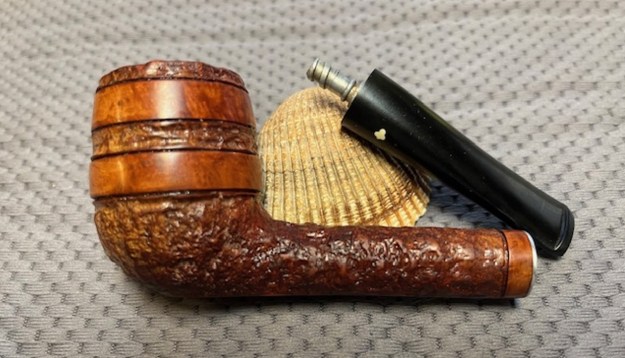
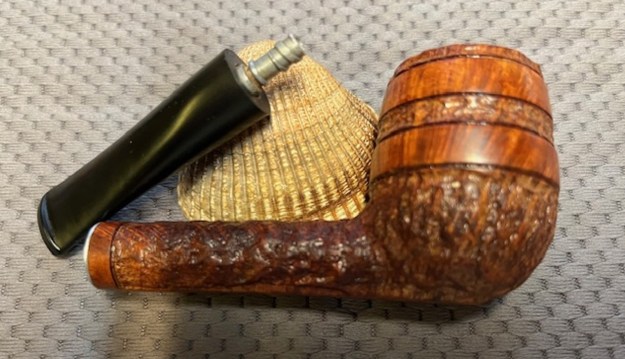
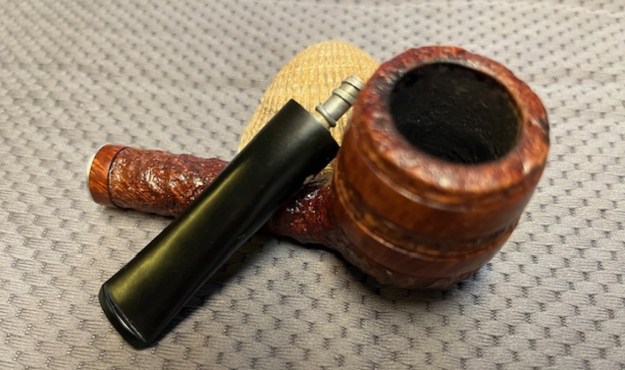
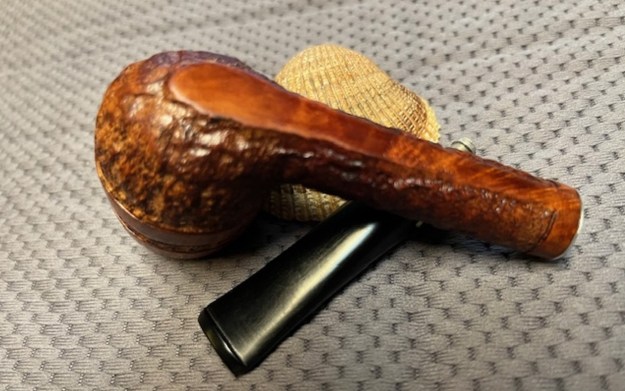
Recently when I visited my Dad and family in Idaho Falls, Idaho Jeff and I did a bit of pipe hunting. We did not find much but we picked up this Kaywoodie Standard Long shank Billiard – shape and finish that I had not seen before. The price was right ($30USD) so we brought it home to Jeff’s house. The surface of the briar was rusticated with a smooth band on the shank end, twin bands around the bowl on the top half and a smooth panel on the underside of the bowl and shank which allowed it to be a sitter. The exterior of the bowl had been coated with a very shiny coat of varnish and there was some dust underneath the shiny coat. The pipe was stamped on the underside on the smooth panel and read Kaywoodie [over] Standard. The bowl had a light cake in it but the rim top and edges looked good underneath the shiny coat. The stem had a white Kaywoodie Club/Shamrock logo on the left side that was in good shape. The stem was lightly oxidized and there were light tooth marks on the top and underside ahead of the button. The stem was also overclocked. When I removed the stem, I found that the stinger had been cut off but was well done. It was actually smooth and wide open. I took a few photos of the pipe in the car on the way home and have included them below. I took a photo of the rim top and bowl to show the condition of both of them. The bowl shows some light to moderate cake on the walls. The rim top showed some darkening and debris in the rustication under the shiny coat. The edges of the bowl looked good. The photos of the stem show the light oxidation and light tooth marks/chatter on both sides ahead of the button. I took a photo of the stamping on the underside of the shank. The stamping was clear and readable as noted above. I removed the stem from the shank and took a photo to show the proportions of the pipe.I turned to Pipephil’s site (http://www.pipephil.eu/logos/en/logo-kaywoodie.html). I went through all of the sections on the site through the various lines of Kaywoodie pipes and did not find one similar to the one I had in hand. There were Standards but none were finished like this one. They also said made in Italy and bore a different stem logo. This pipe was not made in Italy.

From there I turned to the Kaywoodie Collectors section on Pipedia to see what I could find about the Standard (https://pipedia.org/wiki/Collector%27s_Guide_to_Kaywoodie_Pipes). The article is full or rich information on the brand. Give it a read. Disappointingly it does not include anything on the Standard with the twin rings on the bowl sides.

I googled for the Line with the twin rings around the bowl and found examples in a lot of different shapes but no information that helps establish a timeline for the pipe. I abandoned my search (at least for now) and I turned to work on the pipe.

SEE THE ADDENDUM: from that additional information I have learned that the pipe is somewhat rare and was only made in 1975 and 1976. The style is called an Embassy Style or Finish.

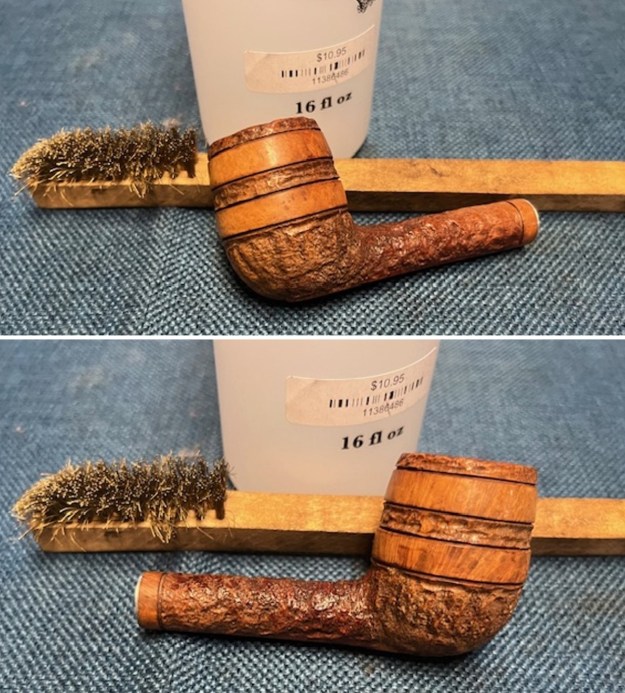
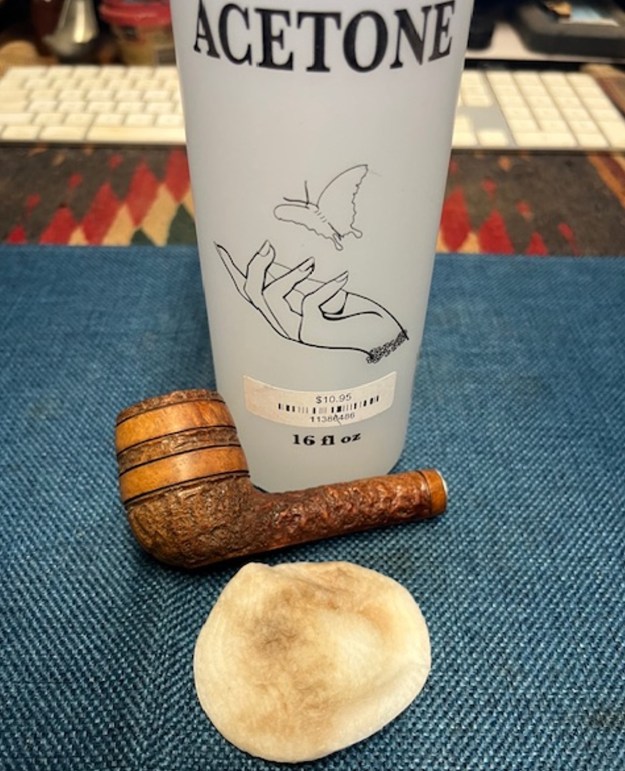
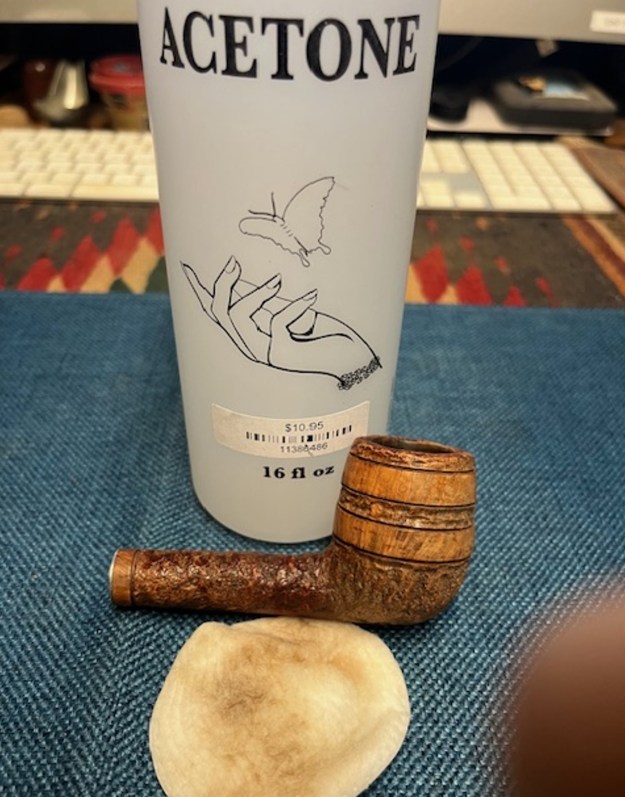
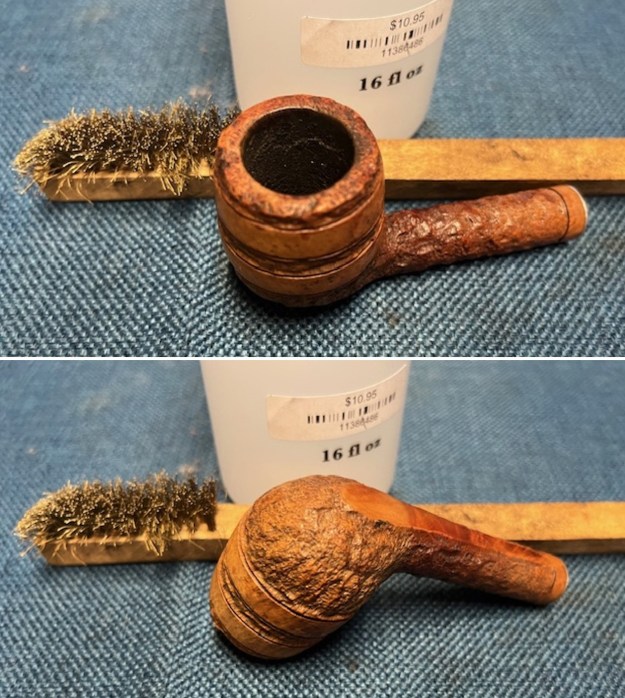
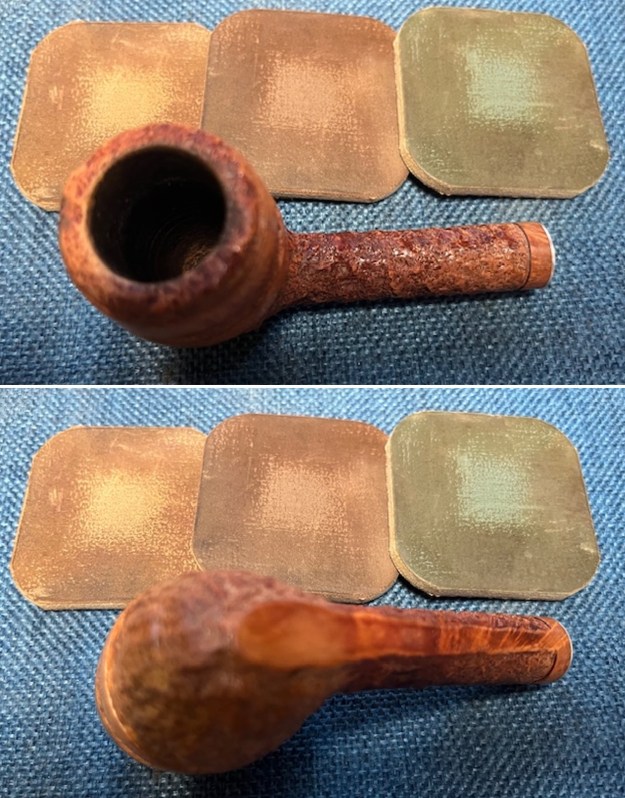
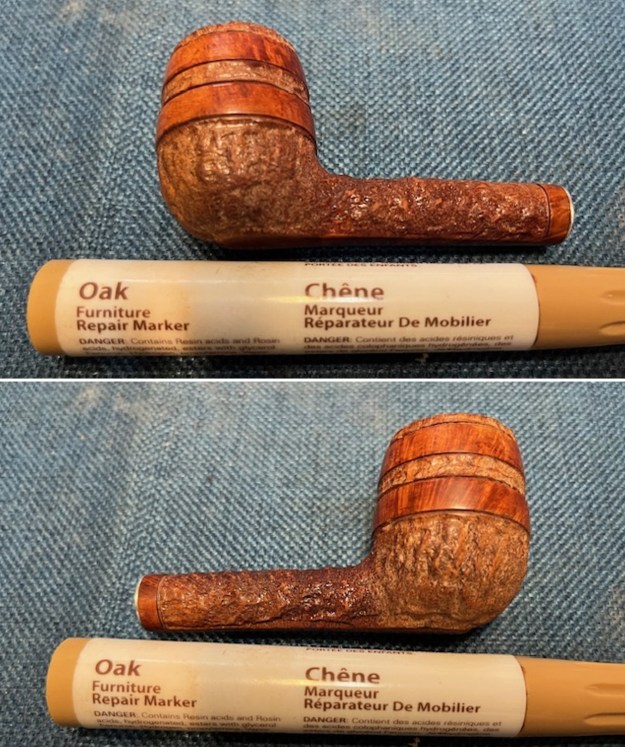
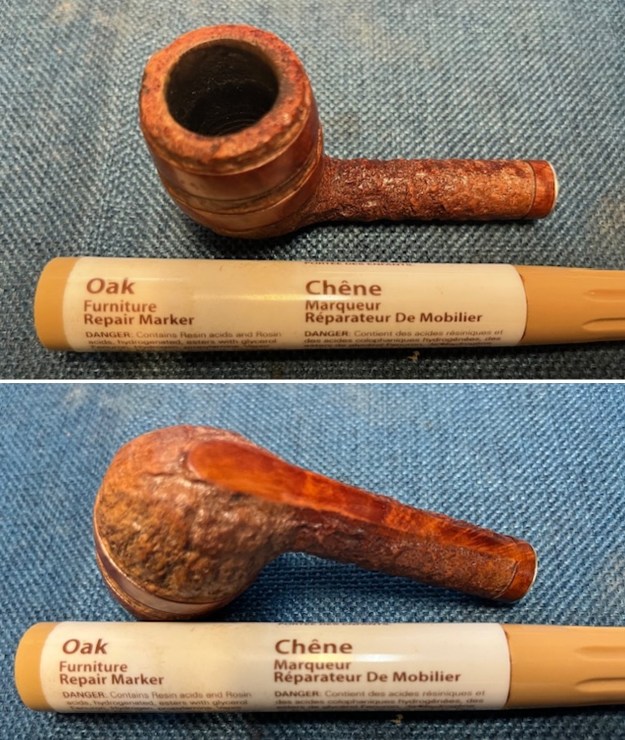
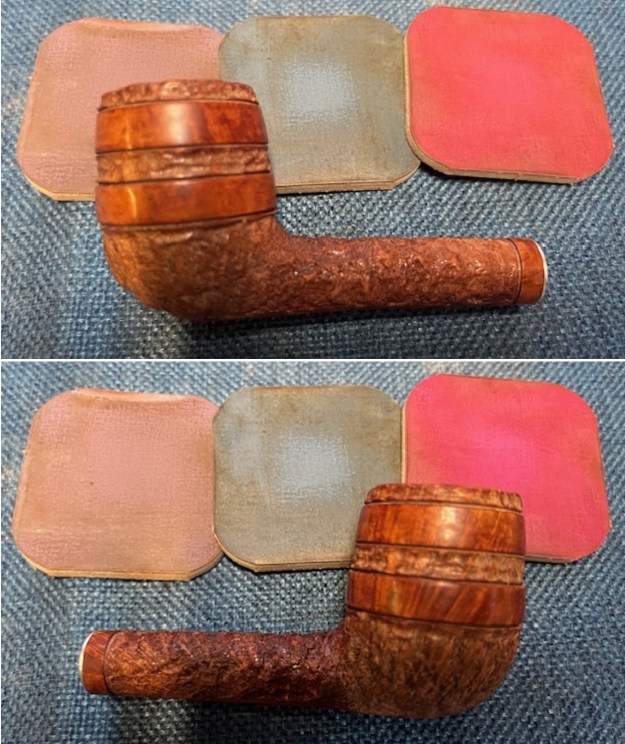
I started my work by trying to remove the shiny varnish coat on the bowl and shank. I went over the rusticated portions with a brass bristle wire brush to loosen the varnish coat. I went over the smooth portions with a 320 grit sanding pad to break up the shiny coat. I wiped the bowl down with acetone on cotton pads repeatedly until I was able to remove the shiny coat. It looked better. I reamed the pipe with a Pipnet Pipe Reamer and took the cake back to bare briar. I cleaned up the remnants around the bowl sides with a Savinelli Fitsall Pipe knife and then sanded the walls with 220 grit sandpaper wrapped around a piece of dowel. The walls were smooth and showed no burn damage. I cleaned out the interior of the shank, mortise and airway in the stem with pipe cleaners, cotton swabs and alcohol. The pipe was surprisingly clean.I scrubbed the externals of the pipe with undiluted Murphy’s Oil Soap and a tooth brush. I worked over the inside of the bowl at the same time. I rinsed it with warm water to remove the grime and debris. I dried it off with a soft cotton cloth and lightly buffed it with the cloth. It smelled very clean. I sanded the smooth portions of the bowl with 320-3500 grit sanding pads to smooth out the roughened finish. I wiped it down after each sanding pad to get a sense of the progress on the finish. It was looking better with each pad I used. I wiped the bowl and shank down with alcohol on a cotton pad to remove the sanding dust and get a sense of the grain around the bowl sides. I am very happy with how it is looking at this point. I polished the bowl with micromesh sanding pads – dry sanding with 1500-12000 grit pads. I wiped it down with a cotton pad and a cloth impregnated with Obsidian oil after each sanding pad. The briar really took on a patina that began to look better with the polishing. I paused the polishing of the smooth portions of the pipe to touch up the smooth portions of the pipe with an Oak Stain pen. It matched the rest of the stain around the bowl and once polished the match would be perfect. I went back to polishing the briar with the last three micromesh pads. The briar really began to take on a shine. It looked very good. I rubbed the bowl down with Before & After Restoration Balm. It is a paste/balm that works to deep clean the finish, enliven and protect the briar. I work it into the briar with my finger tips and a shoe brush to make sure that it covers every square inch of the pipe. I set it aside for 10 minutes to let it do its work. I wiped it off with a soft cloth then buffed it with a cotton cloth. The briar really began to have a deep shine. The photos I took of the bowl at this point mark the progress in the restoration. You see the shine that the briar has taken on and the way grain pops on the smooth portions and the rusticated parts have depth. I set the bowl aside and turned my attention to the stem. I decided to address the overclocked stem first. I heated the metal threaded tenon with the flame of a lighter to soften the glue. Once it was softened I turned the stem back into the shank and aligned the stem and shank sides. It looked much better.I sanded the stem with 320-3500 grit sanding pads to break up the remaining oxidation. I wiped it down after each sanding pad with an Obsidian Oil impregnated cloth. It began to look good. I polished the stem with micromesh sanding pads – dry sanding with 1500-12000 grit pads. I wiped the stem down after each sanding pad with Obsidian Oil. I polished it with Before & After Pipe Stem Polish – both Fine and Extra Fine. Once I had finished the polishing I gave it final coat of Obsidian Oil and set it aside to dry.   More than usual at this point in the restoration process I am excited to be on the homestretch. I really am looking forward to the final look when I put a pipe back together, polished and waxed. I polished the bowl and stem with Blue Diamond to polish out the scratches in the briar and the vulcanite. I gave the bowl and the stem multiple coats of carnauba wax. I buffed the pipe with a clean buffing pad to raise the shine. I hand buffed it with a microfiber cloth to deepen the shine. The pipe polished up pretty nicely. The grain pops on the smooth sections and in the rustication with the wax and polish. The shiny black vulcanite stem is a beautiful contrast to the browns of the bowl and shank. This Kaywoodie Standard was another fun pipe to work on. The pipe is comfortable pipe to hold in the hand. The finished pipe is shown in the photos below. The dimensions of the pipe are Length: 5 ½ inches, Height: 1 ¾ inches, Outside diameter of the bowl: 1 ¼ inches, Chamber diameter: ¾ of an inch. The weight of the pipe is 1.31 ounces/38 grams. It is the second of my Idaho Pipe Hunting finds. I will be adding it the American Pipemakers section of the rebornpipes store. Thanks for reading this blog and my reflections on the pipe while I working on it.

As always, I encourage your questions and comments as you read the blog. Thanks to each of you who are reading this blog. Remember we are not pipe owners; we are pipemen and women who hold our pipes in trust until they pass on into the trust of those who follow us.

ADDENDUM: I received an email from a reader, Mark Bialzik with information on the line that this pipe comes from. He sent me the information on a pipe that he purchased from a seller that was much the same as this one. Here is the information that the seller sent him and that Mark sent to me:

A very rare Dublin by Kaywoodie. The majority of people don’t even know what this special design is called. This is a Kaywoodie Embassy style or finish. As far as I know these were made only in 1975-76. As I said, many don’t know what these are called and you’ll see them called “ring grain” or other names. I’ve messaged a few sellers telling them the name, hoping it’ll help them sell faster. I try and buy every one that’s in very good condition I can. So far, I’ve owned 5 I think. Sold just one and the rest I’ve kept for myself. There are a couple I’ll list or when I get a duplicate.


Cleaning up a Vertically Challenged Dunmoor Imported Briar Squashed Tomato


by Steve Laug

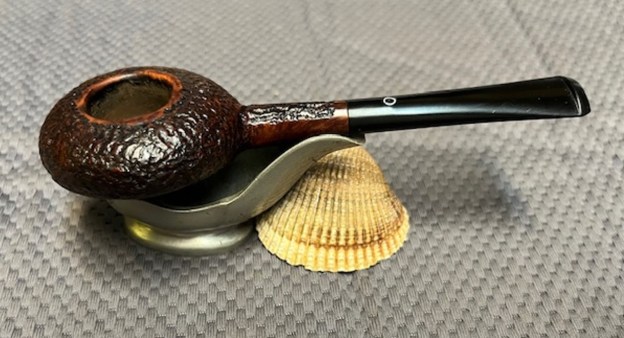
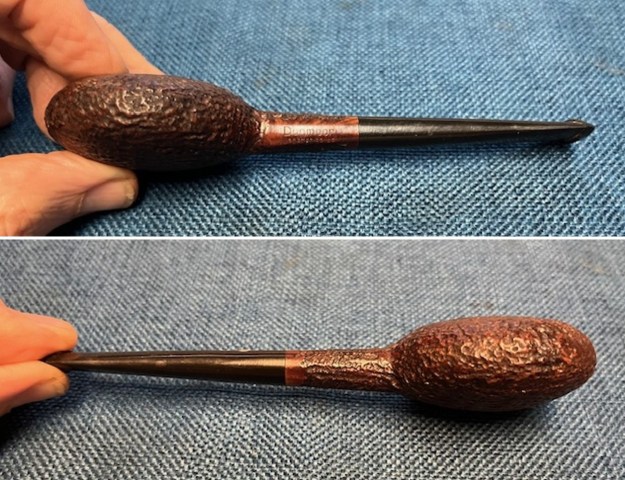
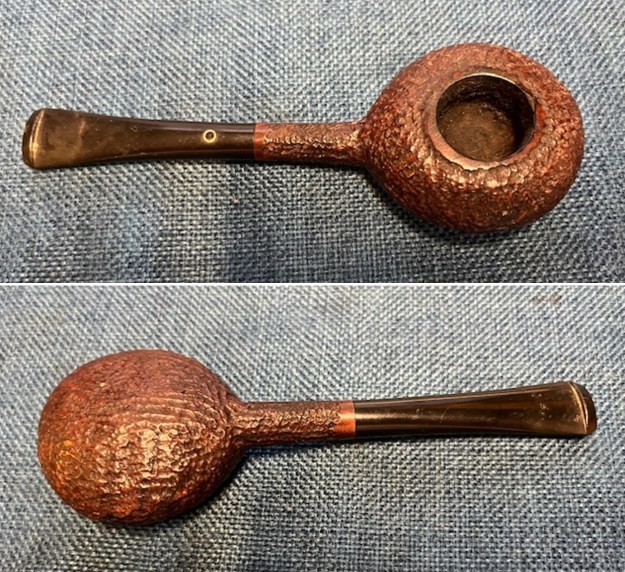
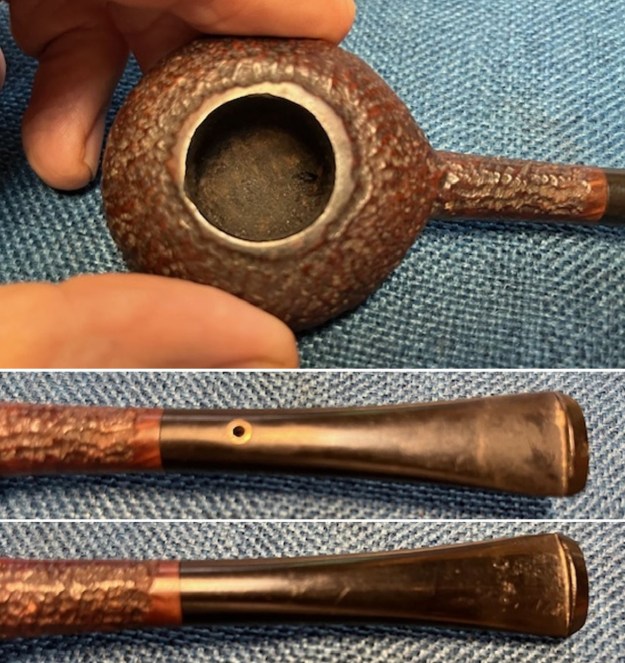
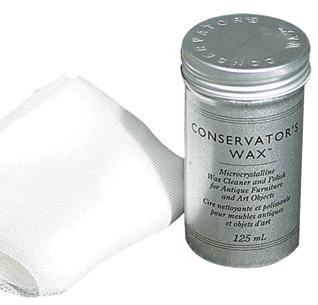
A few weeks ago, I visited my Dad and family in Idaho Falls, Idaho. My brother Jeff and I went through quite a few of our pipes and I pulled out some unique ones that I was interested in working on. I packed them and took them home with me. The next pipe is one we purchased on 05/09/2024 from an antique store in Vernonia, Oregon, USA. The pipe has a rusticated finish with a smooth panel on the left side of the shank and around the rim top. The stamping was on the left side of the shank in a panel. It read Dunmoor [over] Imported Briar. There was no shape number or other hints to the manufacture on the pipe. The bowl had a light cake in it and the rim top had some lava built up. The stem had an inserted silver O on the topside of the taper. The insert in the centre was missing. The stem was lightly oxidized and there were tooth marks on the top and underside ahead of the button. I took a few photos of the pipe in the car on the way home and have included them below. I took a photo of the rim top and bowl to show the condition of both of them. The bowl itself had a light cake on the walls and bowl bottom. The rim top showed some light lava and the inner edge was rough from being reamed with a knife and would need to be cleaned up. The photos of the stem show the light oxidation and tooth marks/chatter on both sides ahead of the button. You can also see the open hole in the centre of the stem logo.I took a photo of the stamping on the side of the shank. The stamping was clear and readable as noted above. I removed the stem from the shank and took a photo to show the proportions of the pipe.There was little information on the Dunmoor brand online. I checked all the standard sites and books of brands I have available to me. There were other Dunmoor pipes for sale all listed as US made pipes but no links to a maker. I did a final check on Pipephil’s site using the logo on the top of the stem to direct my search. There I found a US Made pipe with the same silver O on the stem surface. It appeared that the center was black. Here is the link to what is known as a Medico Cavalier (http://www.pipephil.eu/logos/en/motifs/mo-ring.html#medico). The logo seems identical. It is similar enough for me to link the two pipes. I checked my stem and found that the center of the O was missing and I could blow air through it. That would need to be fixed. I have included a screen capture of the information on the site below.Now it was time to work on the pipe. I used a Savinelli Fitsall Pipe Knife to clean up the cake in the shallow bowl and to scrape off the lava on the rim top. I used a dowel wrapped with 220 grit sandpaper to smooth out the walls of the bowl. I checked for damage on the bowl walls and it was in good condition.I scrubbed out the inside of the shank, mortise and the airway in both the stem and the shank. I used pipe cleaners, cotton swabs and isopropyl alcohol. It cleaned up very well.I used a folded piece of 220 grit sandpaper to clean up the damage around the bowl edge and the lava build up on the rim top. I polished it with 1500-3000 sanding pads. It is looking much better at this point in the process.I rubbed the bowl down with Before & After Restoration Balm. It is a paste/balm that works to deep clean the finish, enliven and protect the briar. I worked it into the briar with my finger tips and a shoe brush to make sure that it covers every square inch of the pipe. I set it aside for 10 minutes to let it do its work. I wiped it off with a soft cloth then buffed it with a cotton cloth. The briar really began to have a deep shine. The photos I took of the bowl at this point mark the progress in the restoration. You see the shine that the briar has taken on and the way rustication has depth. I set the bowl aside and turned my attention to the stem. I decided to start with the missing centre dot on the logo. The issue was that without the centre dot it was wide open and air was drawn through easily diverting the airflow from the button. I cleaned out the hole in the logo with a pipe cleaner. I greased a pipe cleaner with Vaseline and inserted it in the stem from the tenon end so that it was directly below the hole. I filled in the hole with black CA glue and used some accelerator on it to cure it quickly. I removed the pipe cleaner and sanded the repair smooth with the surface of the stem. I sanded the stem with 320-3500 grit sanding pads to break up the remaining oxidation. I wiped it down after each sanding pad with an Obsidian Oil impregnated cloth. It began to look good.I polished the stem with micromesh sanding pads – dry sanding with 1500-12000 grit pads. I wiped the stem down after each sanding pad with Obsidian Oil. I polished it with Before & After Pipe Stem Polish – both Fine and Extra Fine. Once I had finished the polishing I gave it final coat of Obsidian Oil and set it aside to dry. More than usual at this point in the restoration process I am excited to be on the homestretch. I really am looking forward to the final look when I put a pipe back together, polished and waxed. I polished the bowl and stem with Blue Diamond to polish out the scratches in the briar and the vulcanite. I gave the bowl multiple coats of Conservator’s Wax and the stem multiple coats of carnauba wax. I buffed the pipe with a clean buffing pad to raise the shine. I hand buffed it with a microfiber cloth to deepen the shine. The pipe polished up pretty nicely. The finish pops with the wax and polish. The shiny black vulcanite stem is a beautiful contrast to the browns of the bowl and shank. This Dunmoor Imported Briar Squashed Tomato was another fun pipe to work on. The pipe is comfortable pipe to hold in the hand. The finished pipe is shown in the photos below. The dimensions of the pipe are Length: 6 inches, Height: 1 inch, Outside diameter of the bowl: 2 inches, Chamber diameter: ¾ of an inch. The weight of the pipe is 1.13 ounces/32 grams. I will be adding it to the rebornpipes store in the American Pipemakers Section very soon. Thanks for reading this blog and my reflections on the pipe while I working on it. As always, I encourage your questions and comments as you read the blog. Thanks to each of you who are reading this blog. Remember we are not pipe owners; we are pipemen and women who hold our pipes in trust until they pass on into the trust of those who follow us.

Cleaning up a Pipe Hunt Find from Idaho


by Steve Laug

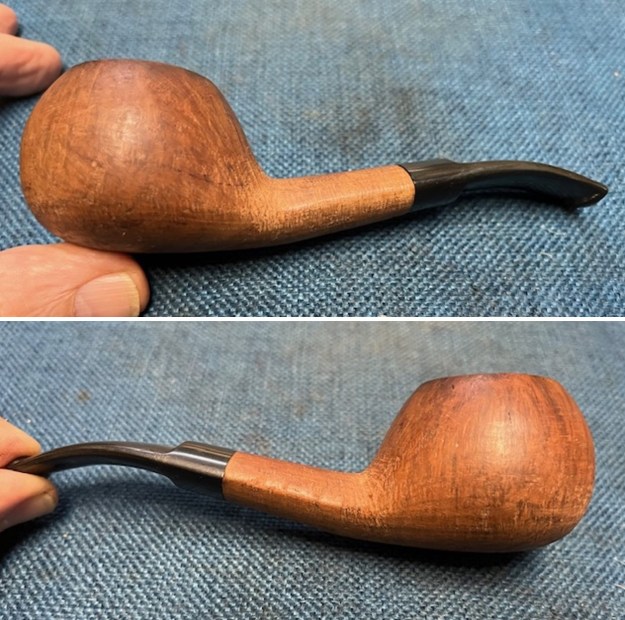
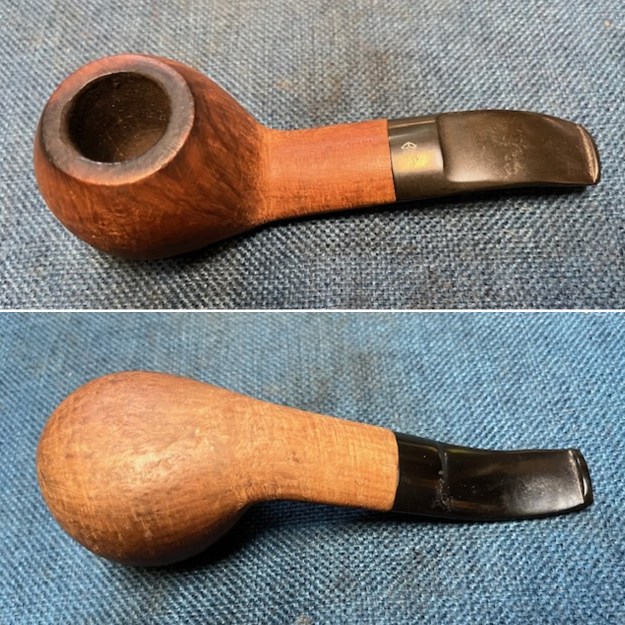
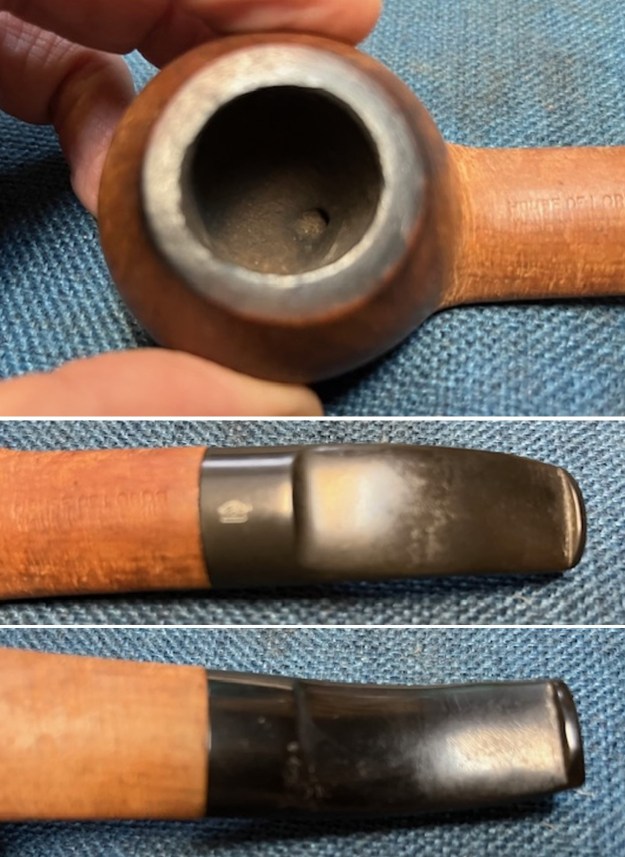
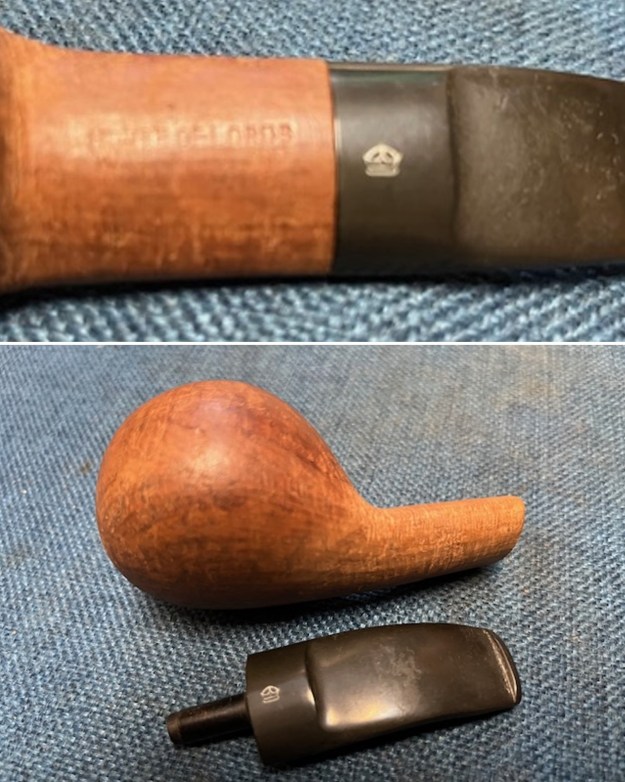
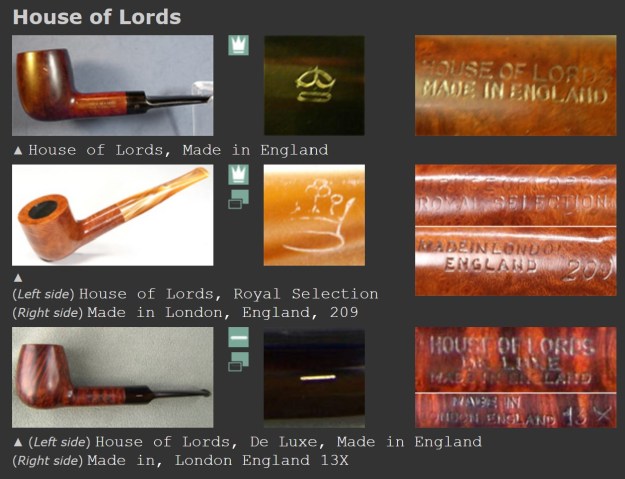
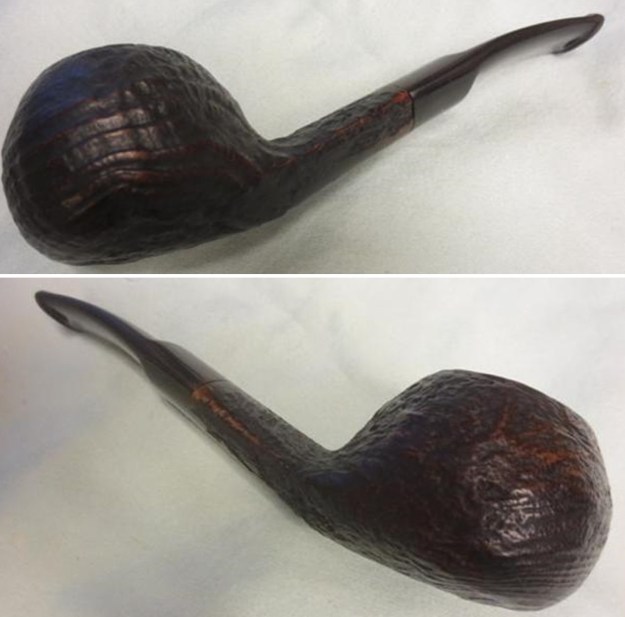
A few weeks ago, I visited my Dad and family in Idaho Falls, Idaho. While there my Brother Jeff and I did a bit of pipe hunting. We did not find much but we did find an interesting Banker shaped pipe in an Antique Mall. The price was right ($35USD) so we picked it up and brought it home to Jeff’s house. The surface of the briar has been roughened, perhaps by steel wool or a wire brush. The finish was rough to the touch but it looked like there might be some nice grain underneath. With the use of a lens I could read the stamping on the topside. It read House of Lords [over] Made in England. There was the remnant of the shape number on the right side of the shank next to the bowl. It could be a 52S shape. The bowl had a cake in it and the rim top had a thick coat of lava built up. The stem had a crown stamp on the topside of the saddle. The stem was lightly oxidized and there were tooth marks on the top and underside ahead of the button. I took a few photos of the pipe in the car on the way home and have included them below. I reamed the pipe while I was staying with Jeff. I forgot to take photos of the pipe before I reamed it. I brought it home to finish my work on it. I took photos of the pipe when I took it out of the box this afternoon. Jeff had scraped the lava off the rim top and we cleaned up the outside of the bowl. You can see the damage to the finish in the photos below. Whoever had done the work on it had made a mess of it. This was going to be a fun one to bring back to life. I took a photo of the rim top and bowl to show the condition of both of them. The bowl itself looked quite clean after our reaming. The rim top showed some darkening on the top and down the outside edges where it had run over the rim top. The inner edge was rough from being reamed with a knife and would need to be cleaned up. The photos of the stem show the light oxidation and tooth marks/chatter on both sides ahead of the button.I took a photo of the stamping on the side of the shank. The stamping was clear and readable as noted above. I removed the stem from the shank and took a photo to show the proportions of the pipe. I turned to Pipephil’s site (www.pipephil.eu/logos/en/logo-h3.html#houseoflords). I did a screen capture of the section on the site. It shows the stamping on the left side of the shank that matches the stamping on the topside of the pipe I am working on. The crown stamp shown on the stem I have is a lot like stamping on the stem I have. I am including the information from the side bar that says that House of Lords is a brand from Samuel Gordon and possibly a Sasieni second (J.M. Lopes, op. cit.). I further followed the link to “Gordon” and learned that Samuel Gordon had founded the brand “GORDON” in 1910-20 eras. This is the link for Gordon brand of pipes; www.pipephil.eu/logos/en/logo-g4.html#gordon

From there I turned to the Sasieni listing on Pipedia and scrolled down to the list of seconds that was given there (https://pipedia.org/wiki/Sasieni#Sasieni_Seconds). From that information I learned that the pipe was definitely linked to Sasieni. The fourth listing in the screen capture Now I knew I was dealing with a Sasieni made pipe which helps explain the stamping on the pipe including the Made in England on the topside of the shank. I did a quick search of rebornpipes and found an article on a pipe I had restored that was the same shape as this one. I have included the link (https://rebornpipes.com/2015/10/25/cleaning-up-a-london-made-charleston-banker/). Have a look at the blog and you will see the shape I am referring to. I am also including some photos of the pipe that show the parallels to the one that I am working on now. I turned to work on the pipe next. Since it had been reamed and cleaned a bit I could forgo that part of the process. I used a 320 grit sanding pad to remove the darkening from the rim top. There was some burn damage on the back inside edge and the front inside and outside edge. I Then used a piece of 220 grit sandpaper and a wooden ball to give the top an inward bevel that took care of the damage to the inner edge and cleaned up the rim top. The pipe was beginning to look much better. I still needed to sand the rough finish but I liked the rim top at this point. I sanded the bowl with 320-3500 grit sanding pads to smooth out the roughened finish. I wiped it down after each sanding pad to get a sense of the progress on the finish. It was looking better with each pad I used. I wiped the bowl and shank down with alcohol on a cotton pad to remove the sanding dust and get a sense of the grain around the bowl sides. I am very happy with how it is looking at this point. I polished the bowl with micromesh sanding pads – dry sanding with 1500-12000 grit pads. I wiped it down with a cotton pad and a drop of olive oil after each sanding pad. The briar really took on a patina that began to look better with the polishing. I rubbed the bowl down with Before & After Restoration Balm. It is a paste/balm that works to deep clean the finish, enliven and protect the briar. I work it into the briar with my finger tips to make sure that it covers every square inch of the pipe. I set it aside for 10 minutes to let it do its work. I wiped it off with a soft cloth then buffed it with a cotton cloth. The briar really began to have a deep shine. The photos I took of the bowl at this point mark the progress in the restoration. You see the shine that the briar has taken on and the way sandblast has depth. I set the bowl aside and turned my attention to the stem. I sanded the stem with 320-3500 grit sanding pads to break up the remaining oxidation. I wiped it down after each sanding pad with an Obsidian Oil impregnated cloth. It began to look good.I polished the stem with micromesh sanding pads – dry sanding with 1500-12000 grit pads. I wiped the stem down after each sanding pad with Obsidian Oil. I polished it with Before & After Pipe Stem Polish – both Fine and Extra Fine. Once I had finished the polishing I gave it final coat of Obsidian Oil and set it aside to dry. More than usual at this point in the restoration process I am excited to be on the homestretch. I really am looking forward to the final look when I put a pipe back together, polished and waxed. I polished the bowl and stem with Blue Diamond to polish out the scratches in the briar and the vulcanite. I gave the bowl and the stem multiple coats of carnauba wax. I buffed the pipe with a clean buffing pad to raise the shine. I hand buffed it with a microfiber cloth to deepen the shine. The pipe polished up pretty nicely. The grain pops with the wax and polish. The shiny black vulcanite stem is a beautiful contrast to the browns of the bowl and shank. This House of Lords Banker was another fun pipe to work on. The pipe is comfortable pipe to hold in the hand. The finished pipe is shown in the photos below. The dimensions of the pipe are Length: 5 ½ inches, Height: 1 ½ inches, Outside diameter of the bowl: 1 ¼ inches, Chamber diameter: ¾ of an inch. The weight of the pipe is 2.08 ounces/59 grams. The pipe will be on the rebornpipes store shortly in the British pipe makers section. If you are interested in adding it to your collection let me know. Thanks for reading this blog and my reflections on the pipe while I working on it. As always, I encourage your questions and comments as you read the blog. Thanks to each of you who are reading this blog. Remember we are not pipe owners; we are pipemen and women who hold our pipes in trust until they pass on into the trust of those who follow us.

Restoring a Classic Peterson System 359


Blog by Kenneth Lieblich

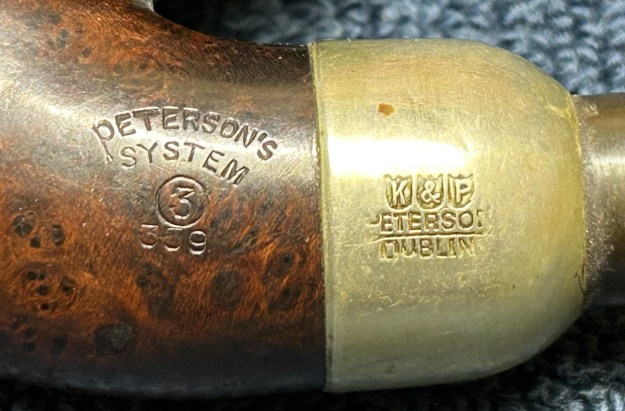
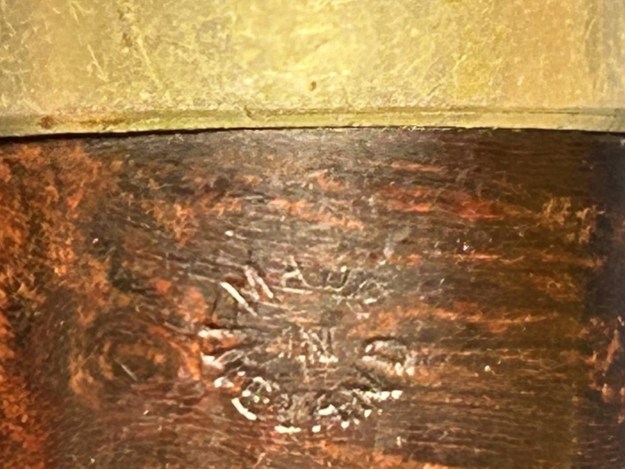
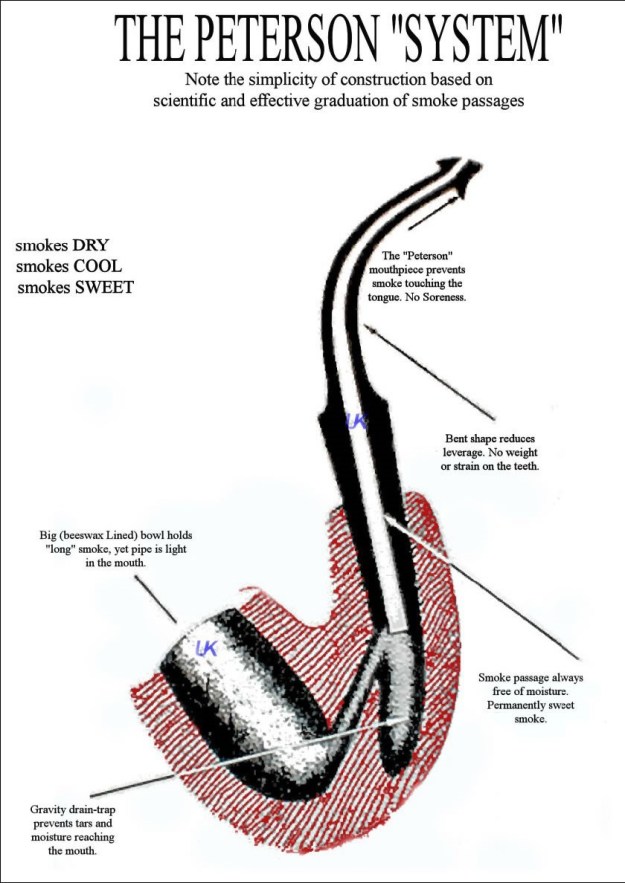
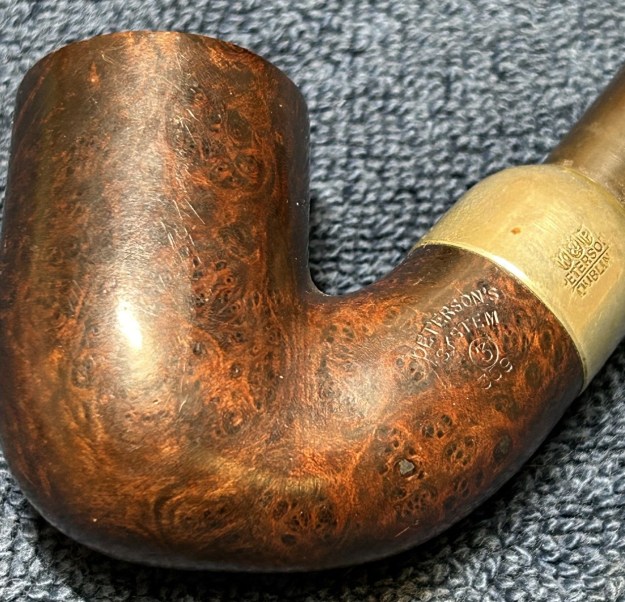
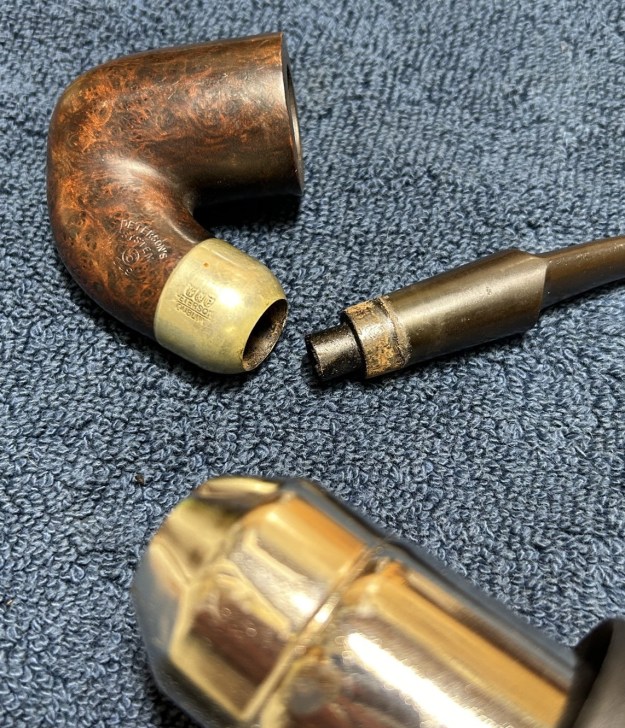
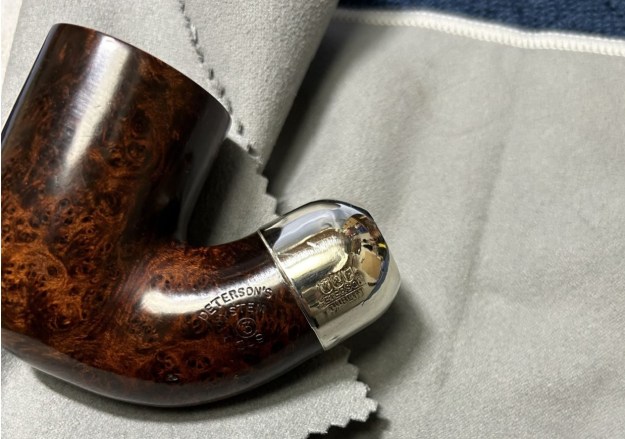
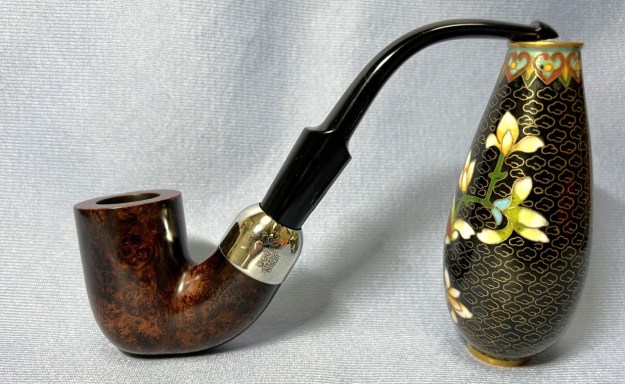
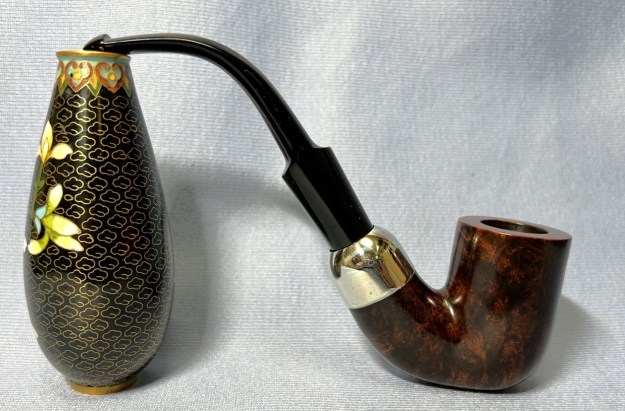
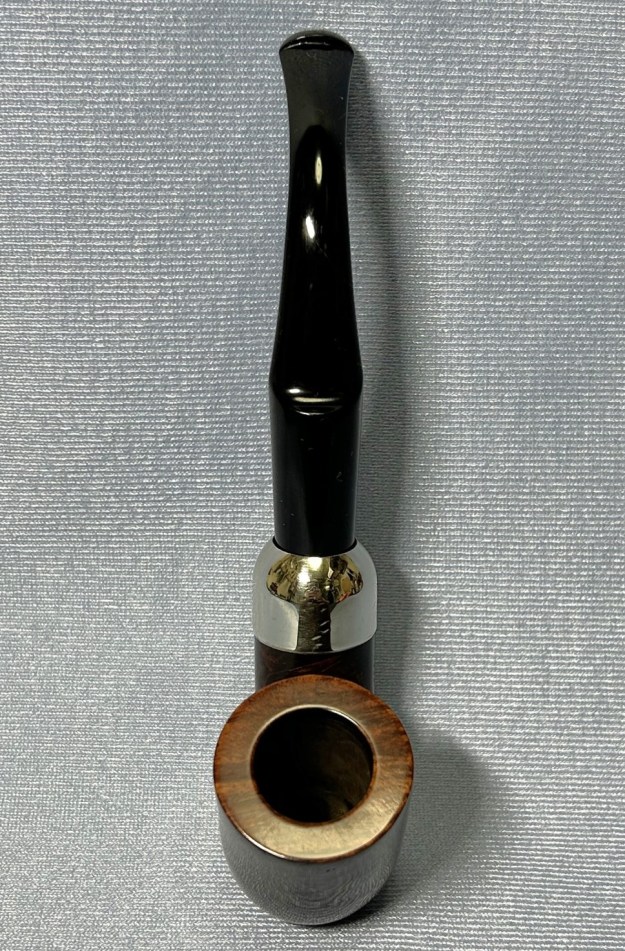
What a handsome pipe! I found this PRE-republic-period Peterson System 359 at a local antique shop and I was charmed by it right away. It’s a handsome devil and the look of it gives one a feeling of comfort. It is satisfying and comfortable in the hand – like a mug of tea. There was a lovely patina on this old timer and I really wanted to get this into the hands of Peterson lover. Let’s have a closer look. This Peterson 359 pipe has the classic “System” look: bent shape, nickel mount, and tapered, army-style stem. Of course, it also had the traditional Peterson P-lip stem. The markings on the left side of the shank are Peterson’s [over] System [over] ③ [over] 359. The underside of the shank showed Made in Ireland in a circle. The nickel mount on the shank had K&P (in shields) [over] Peterson [over] Dublin. There were no markings on the stem. The Peterson System pipes are well-storied among Peterson collectors/admirers. I took the opportunity to read the article on Pipedia, specifically about the System pipes, by Jim Lilley. There is lots of good information there and I encourage you to read it: https://pipedia.org/wiki/A_closer_look_at_the_famous_Peterson_Standard_System_Pipe.Having seen that the words “Made in Ireland” were in a circle, I knew that I was dealing with an older pipe. Precisely how old would require some elementary research. The main Pipedia article on Peterson included a few interesting lines:

“Charles Peterson applied for a patent for an improved tobacco pipe on the 8th of August 1890. He was awarded patent number 12393 on the 16th of June 1891 for Great Britain and Ireland. This came to be known as the famous ‘System Pipe’ patent.”

“Later they stamped their pipes with “Made in Ireland” in a circle format 1945-1947…”

This is awfully helpful in dating this pipe. I can comfortably say that this pipe dates from 1945 through 1947, that is to say, just short of 80 years (at the time of writing).

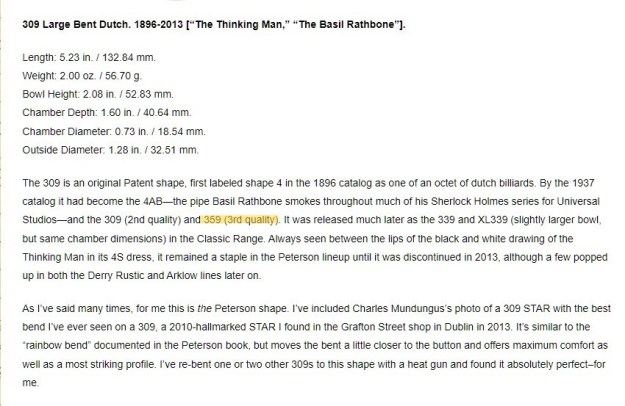
As usual, I also owe a debt of gratitude to Mark Irwin of Peterson Pipe Notes. He has a very interesting article on the various System shapes and I highly recommend having a look: https://petersonpipenotes.org/146-a-guide-to-system-shapes-1896-2019-part-1-the-300-shape-group/. Here is a screenshot of the relevant bit:In addition, Mark has an article on an older 359 that he picked up: https://petersonpipenotes.org/tag/peterson-359-system/.

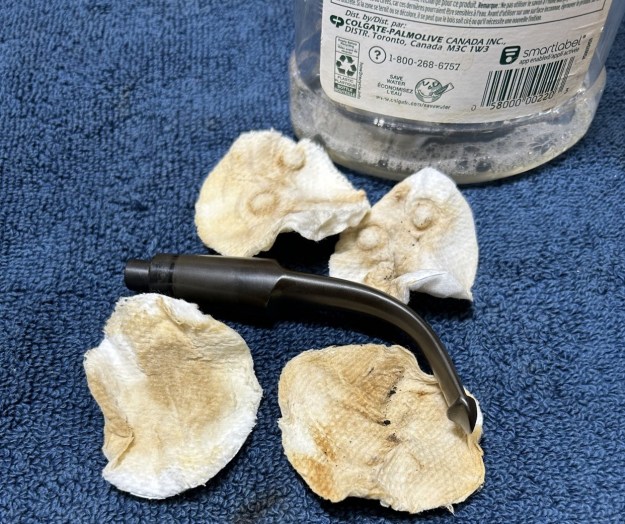
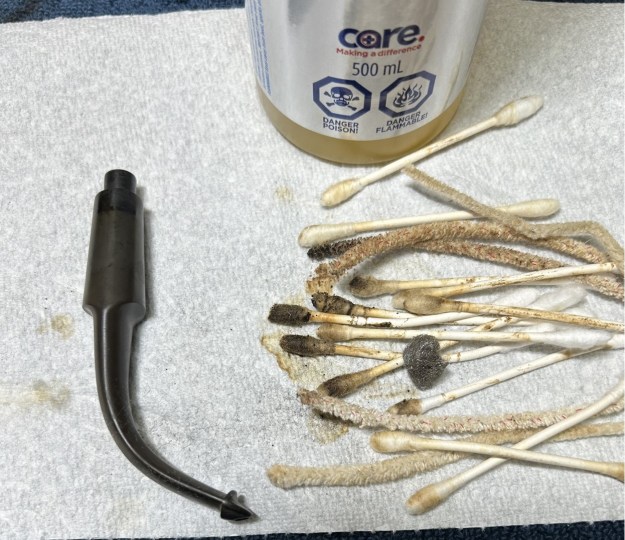
On to the pipe itself: the stem was in average condition – not especially dirty, but it had been well used. It had a few dents. The bowl was moderately dirty and had quite a bit of lava and plenty of cake. Aside from some small fills, the outside of the bowl was very nice. The nickel mount was in good shape – only some very slight dents. To work! The stem was first on my list – and I couldn’t get it out of the mortise! I grabbed the heat gun and gently warmed up the goo inside until it had softened enough to let go of the stem. I wiped the outside down with Murphy’s Oil Soap on some cotton pads. I also took a BIC lighter and ‘painted’ the stem with its flame to lift the few bite marks and dents. Sadly, however, this did not do much. Then I cleaned out the inside with pipe cleaners and isopropyl alcohol. I used some SoftScrub on the outside of the stem to remove some oxidation. Then, the stem went for an overnight soak in the Pipe Stem Oxidation Remover. The following day, I cleaned the de-oxidizing mess off with alcohol, pipe cleaners, et cetera. The oxidation had migrated to the surface and would be fairly straightforward to remove. I scrubbed again with SoftScrub on some cotton pads to remove the leftover oxidation. I built up the dents on the stem with black cyanoacrylate adhesive and let them cure. I then sanded the adhesive down with some sandpaper to level out with the stem. I then used all nine Micromesh pads (1,500 through 12,000 grit) to polish it and highlight the black lustre. I also used Obsidian Pipe Stem Oil in between each pad scrubbing. Moving on to the stummel, I first decided to ream out the bowl. I used the PipNet Reamer to remove the built-up cake and followed that with 220-grit sandpaper taped to a dowel to eliminate as much as possible. I took the chamber down to bare briar to ensure there were no hidden flaws in the wall. Fortunately, there were none.I used cotton rounds and some Murphy’s Oil Soap to scrub the outside of the stummel and a toothbrush with Murphy’s for the lava on the pipe’s rim. I took a close look at the rim. In order to save as much of the rim as possible, I used a piece of machine metal to very delicately scrape away as much lava as I could. I do this before automatically jumping to my topping board. This worked well.I then proceeded to clean out the insides of the shank with Q-tips, pipe cleaners, and lemon-infused isopropyl alcohol. There was quite a bit of filth inside this stummel, and it took a fair amount of cotton to get it clean. I followed that up by cleaning the insides with some dish soap and tube brushes. I decided to de-ghost the pipe in order to remove any lingering smells of the past. I thrust cotton balls into the bowl and the shank and saturated them with 99% isopropyl alcohol. I let the stummel sit overnight. This caused any remaining oils, tars and smells to leach out into the cotton. The bowl was nice and clean after this.There were a couple small fills and nicks around the bowl. I opted to leave them as they are – they are minor and are part of the history of this pipe. I felt that I had interfered enough and didn’t want to interfere anymore. Then, I used most (but not all) of my Micromesh pads on the stummel to finish it off. This included buffing up the nickel mount to a beautiful shine with my jewelry cloth. I also applied some Before & After Restoration Balm and let it sit for 20 minutes to do its magic. It adds that certain je ne sais quoi to the wood. Then it was off to the bench polisher! A dose of White Diamond and a few coats of carnauba wax were just what this pipe needed. Boy-oh-boy, this is one good-looking pipe! I’m pleased with the results. This Peterson Standard System 359 looks fantastic again and is ready to be enjoyed by its next owner. I am pleased to announce that this pipe is for sale! If you are interested in acquiring it for your collection, please have a look in the Ireland pipe section of the store here on Steve’s website. You can also email me directly at kenneth@knightsofthepipe.com. The approximate dimensions of the pipe are as follows: length 5⅞ in. (149 mm); height 4⅛ in. (105 mm); bowl diameter 1⅓ in. (33 mm); chamber diameter ¾ in. (19 mm). The weight of the pipe is 1⅞ oz. (55 g). I hope you enjoyed reading the story of this pipe’s restoration as much as I did restoring it. If you are interested in more of my work, please follow me here on Steve’s website or send me an email. Thank you very much for reading and, as always, I welcome and encourage your comments.
A Striking Savinelli Fiammata 2 Briar Calabash for a Clam Man Pipe Man


Blog by Dal Stanton

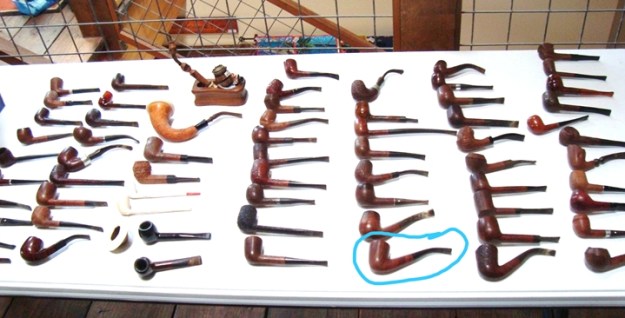
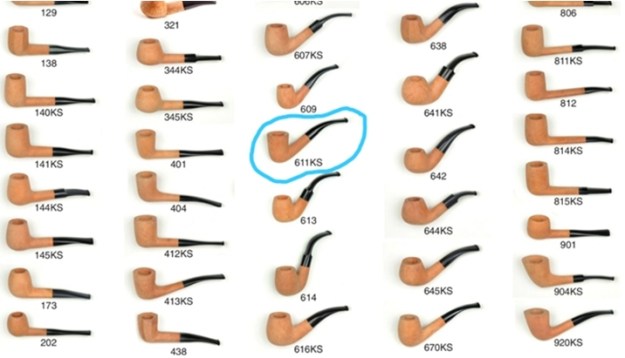
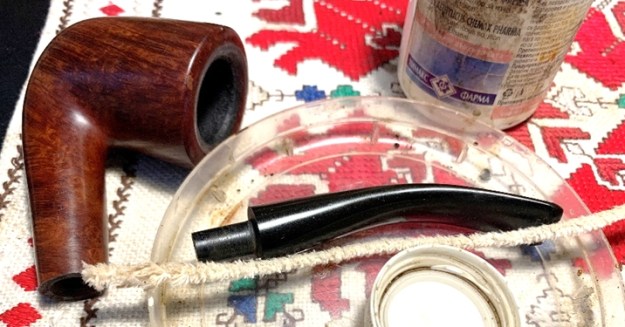
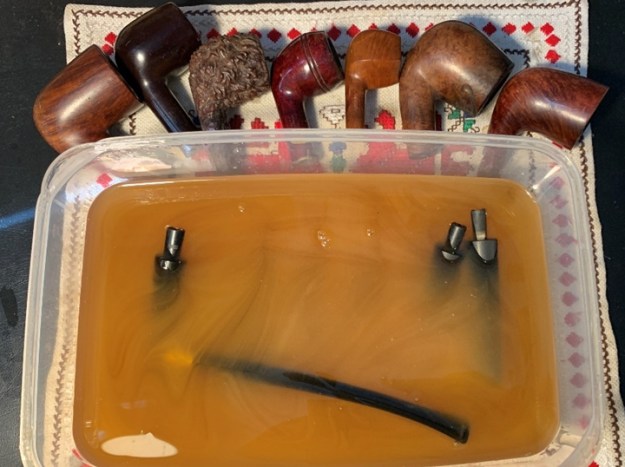
The Lot of 66 is a gift that simply put, keeps on giving.  It was the first time I stuck my neck out to buy a lot of pipes on eBay’s auction block.  I’m thankful that I did – it has produced many treasures that are now in the possession of new stewards from a good cause called the “Caring Place” in Georgetown, Texas.  The description of the Lot of 66 was “Huge Lot Of 66 Smoking Pipes Pre-Owned Pre-Smoked and Deeply Loved” followed by information that this was one person’s collection that had been donated to benefit the Caring Place helping the community in Georgetown.  This Lot of 66 benefiting the community there has also continued to benefit the work of the Daughters of Bulgaria – women and girls who have been trafficked and sexually exploited.  Here is the picture I saw and the Savinelli Fiammata Briar Calabash now on my table is circled.Most people commission pipes from my online ‘Help Me!’ baskets in the For “Pipe Dreamers” Only collection where pipes in need of adoption may be commissioned by pipe men and women benefiting the Daughters of Bulgaria.  Jon commissioned two pipes but as a visitor to Bulgaria he was able to peruse the actual boxes and buckets and chose a pipe.  Jon was part of a church team from South Florida exploring the work we do in Bulgaria.  Of course, if guests are in my home, they find out about The Pipe Steward and receive a tour of the work room and the Man Cave on my 10th floor balcony!  Jon brought along his daughter as well, but what was unique to me was that Jon is a farmer – of sorts.  His farm is under water as he grows and commercially sells clams as well as other various sea foods which I absolutely love!  His farm is called Southern Cross Sea Farms.  Next time I’m in South Florida I hope to visit Jon, share a bowl with him and hopefully a few clams!

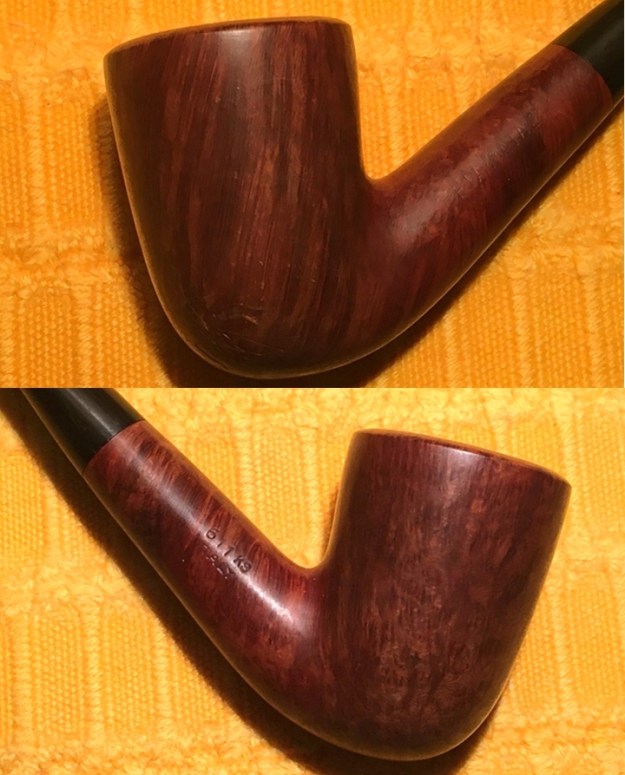
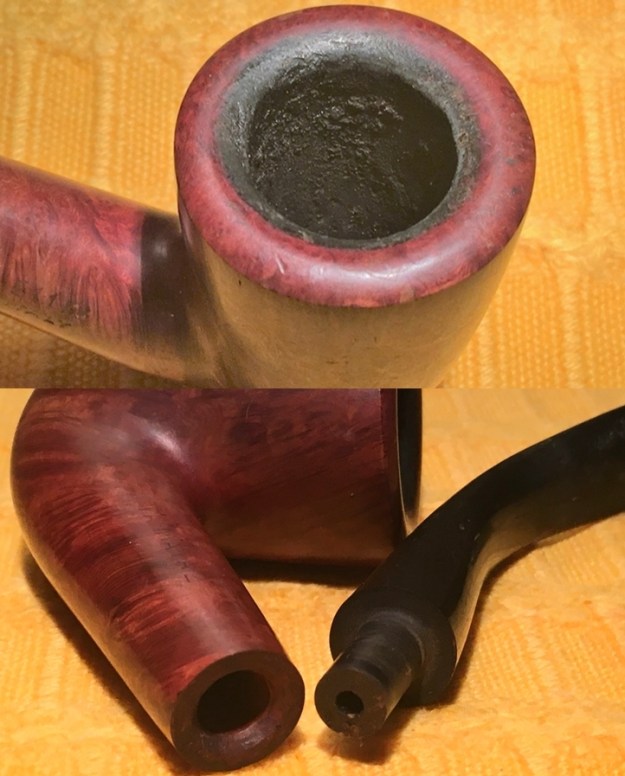
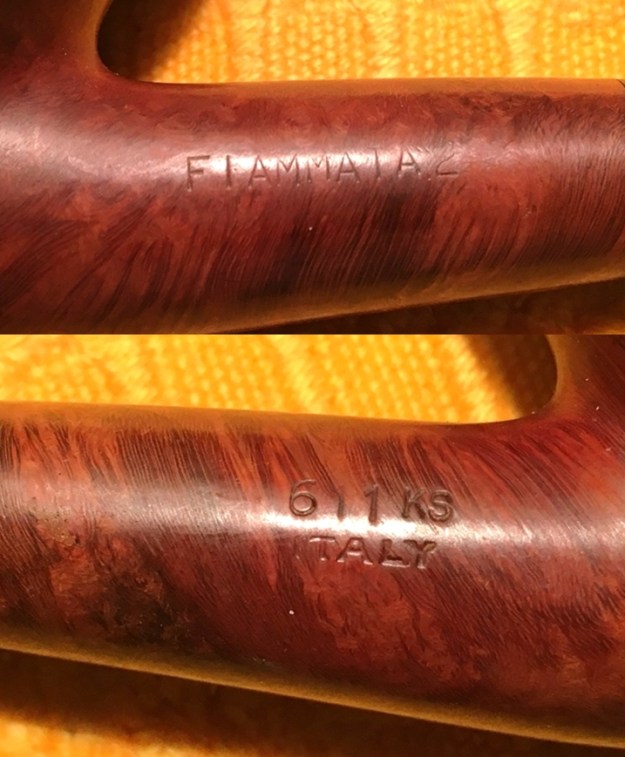
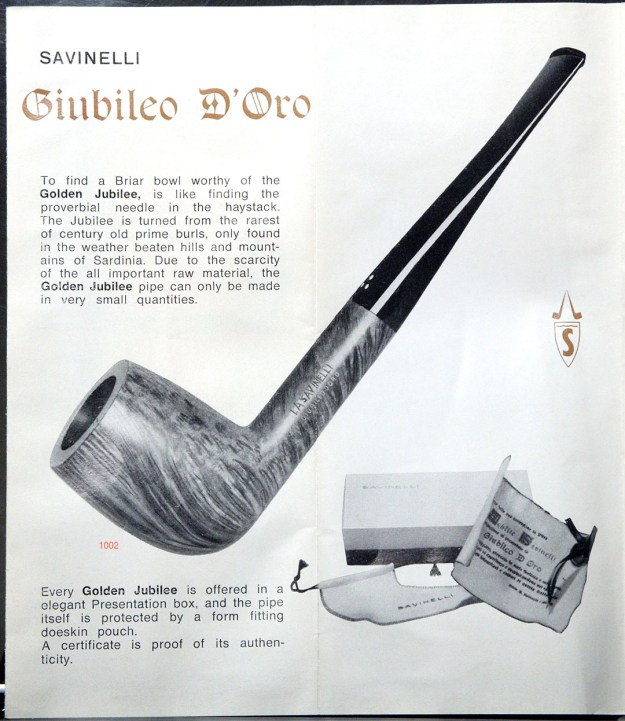
Not only did Jon commission the Savinelli Fiammata 2, but he also drooled over my collection of Churchwardens and when I would not relent in allowing mine to find a new home in South Florida’s clam country, he commissioned a Churchwarden project along with the Fiammata.  To benefit the Daughters of Bulgaria, I also fashion CWs with re-purposed bowls that most likely, would have never again be put into service – castaways to be used a forgotten.  Again, so many analogies to the work we do here with the Daughters!  Here are pictures of the Briar Calabash that got Jon’s attention. The nomenclature that is stamped on the left flank of the shank is ‘FIAMMATA 2’.  On the right flank is stamped 611KS – the Savinelli shape number [over] ITALY, the COM.  There are no stampings on the stem that I can detect.I’m calling the Fiammata 2 a ‘Briar Calabash’.  The 611KS is a Savinelli shape number and it is depicted in the familiar shapes chart provided on the PipePedia discussion of Savinelli.  In the same article, Fiammata is listed as a second of the well-known Italian name, Savinelli. The interesting factoid related by Pipedia is that this second, ‘Fiammata’ was a special line of pipes that did not make the prized Savinelli line, “Giubileo D’Oro” (“Gold Jubilee”) – a Straight Grain line.  What this means is that a Fiammata marked pipe was of an initial assessed quality that destined it as a ‘Top Shelf’ Savinelli pipe offering, but because it didn’t meet that standard along the way, it was put in the ‘first runner up’ Fiammata line.  So, in no way would this line be considered a sub-quality line, but an upper shelf to be sure.  Fiammata means ‘Flame’ in Italian.  Pictures of the Gold Jubilee offerings in Pipedia’s Savinelli article bare this out. The Fiammata I’m looking at looks strikingly similar.

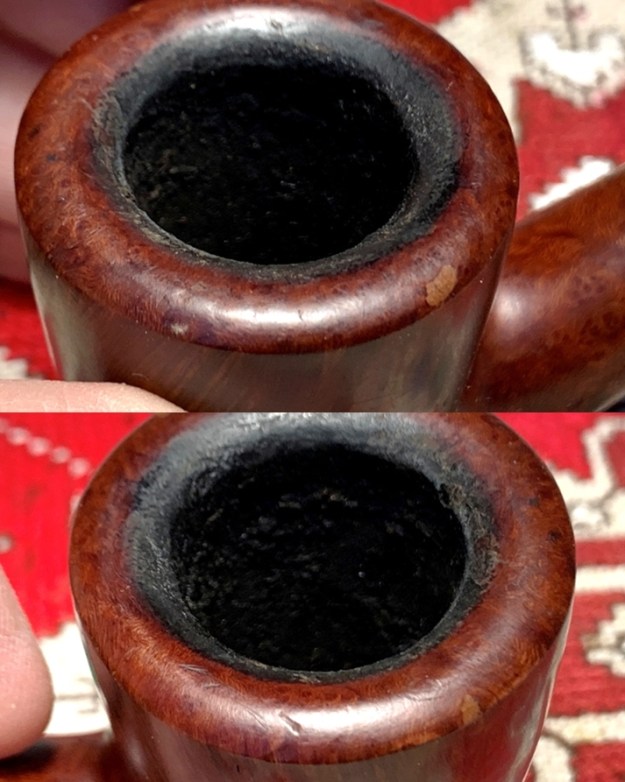
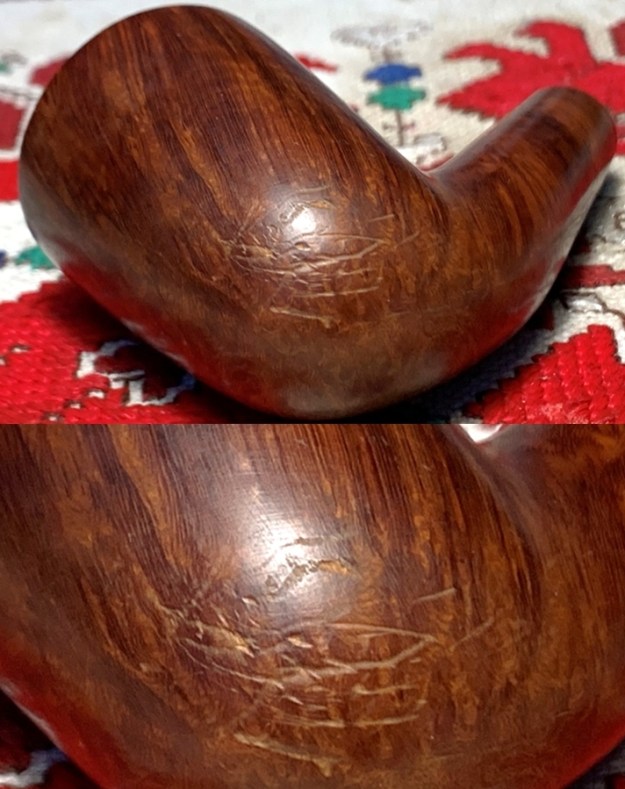
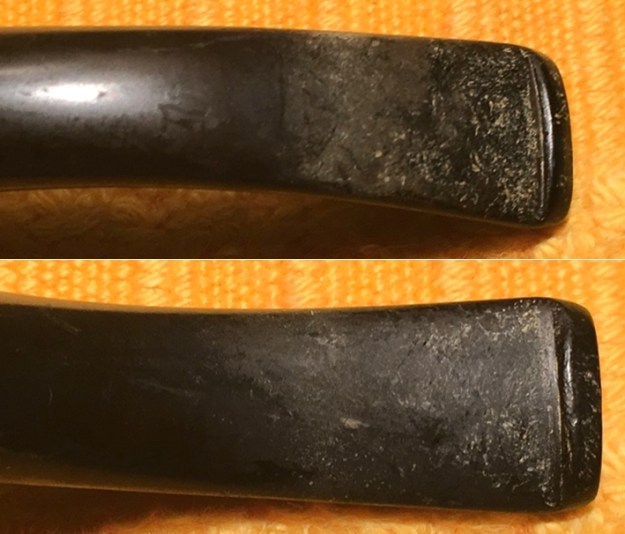
The Savinelli Pipedia article also included some catalog page examples (courtesy Doug Vliatchka) of this top shelf line, “Giubileo D’Oro” which describe the line of pipes that the Fiammata seems to have fallen short in achieving!.  I find the page clipping below interesting because of the information it provides, but also the similarity of the grains depicted like the Fiammata on my worktable – long straight grain, fire grain.So, the Savinelli Fiammata 2 on my worktable started with great aspirations, and the grain it has is very appealing.  The condition of the Briar Calabash is generally good, but with some issues.  The chamber has a light cake on the walls.  The rim has a dark ring around the inner rim edge which should clean up.  It also has what appears to be a large fill on the rear, left hand side.  The right side of the rim also has some dings. There is a major scratching event on the lower left heel – ugh!  It appears that it was in a bucket of nails or something – the scratching is deep and will need to be sanded out. The stem has minor oxidation but there is tooth chatter on the upper and lower bit in need of sanding out.To begin the restoration of the Savinelli Fiammata 2 Briar Calabash, I first use only a pipe cleaner dipped in isopropyl 95% to clean the airway of the stem.With the airway clean, the Fiammata stem joins several other stems in a soak of Mark Hoover’s product (www.ibepen.com) Before & After Deoxidizer.  This is the only part of the restoration process that I try to mass produce!  The Fiammata is on the far left, next in the queue, and it joins several other pipes that are also in the queue along with their stems in the soak as well.  The stems were just put in the Deoxidizer and are in the process of sinking into the interesting mixture.  I leave the stems in the soak for a few hours.After a few hours, I fish out the Fiammata’s stem and after using my fingers to squeegee the Deoxidizer off, I run some pipe cleaners wetted with isopropyl 95% through the airway to clear out the fluid.  I then use a cotton pad wetted with alcohol to wipe down the stem to remove raised oxidation from the stem.To enhance the rejuvenation of the vulcanite, paraffin oil is applied with a cotton pad and the stem is set aside to soak in the oil.Turning now to the stummel cleanup, I begin by reaming the chamber with the Pipnet Reaming Kit.  With the day a bit warmer during this time of self-quarantine because of the virus concerns, I’m trying to work out on the Man Cave as much as possible.  My ‘Man Cave’, where I’m allowed to smoke my pipes is located on the 10th floor of our apartment blok built during the days when Communism was still up and functioning in Bulgaria.   I take my tools to the Man Cave and go to work.  I’m enjoying a bowl of Black Stoker in a Made in London England Canadian.The cake is not bad, but the long, conical chamber of the Savinelli Fiammata 2 is a challenge.  The shape of the chamber tapers down so that is it narrower at the floor of the chamber. I use all 4 of the blade heads available to me in the Pipnet reaming kit, which speaks to the size of the chamber as it expands upwardly.  I am careful not to bore ridges into the side of the chamber with the different blade heads starting at different points.   I transition after the blades to the Savinelli Fitsall Tool to fine-tune the chamber wall scraping reaching down to the floor and to the more difficult areas of the conical chamber.  To rid the final vestiges of carbon, I then wrap 240 grade paper around a Sharpie Pen and sand the chamber. After wiping the chamber with a wetted cotton pad to clear the carbon dust, I inspect the wall and find a healthy chamber.  I move on! Transitioning to cleaning the external surface, I use cotton pads wetted with undiluted Murphy’s Oil Soap.  I patiently focus on the blackened ring on the internal edge of the rim.  My thumbnail proves to be helpful as well as a gentle scraping with my Buck pocketknife.  A brass wired brush also helps.  Transferring the pipe to the kitchen sink, I also employ shank brushes with anti-oil liquid dish soap to clean the internal mortise and airway.  After a thorough rinsing, the stummel returns to the worktable.  The cleaning did a fantastic job on the rim.  What I thought to be fills on the rim, held very firmly and have all but disappeared.  To make sure the internals are clean, a few pipe cleaners and cotton buds dipped in isopropyl 95% confirm this!  I move on!The disaster area on the front left side of the heel of the Fiammata Calabash stummel is now my focus. The sharp cuts in the briar are most likely from metal.  It’s sad…First using 240 grade sanding paper I sand the impacted area.  I do not go beyond the damaged area because heavy sanding changes the composition of the surface drastically.  It creates a lightened patch that needs again to be darkened in order to re-blend it with the surrounding briar complexion.  While the 240 paper is in play, I also lightly sand the rim’s internal edge to remove fully the darkening that remains after the cleaning.  There’s a lot of forgiveness in a rounded rim presentation!After the 240 grade paper, I sand with a dry 600 grade paper to the lightened area.  You can see how the sanding process gradually coaxes the briar grain to darken moving toward blending the sanded area.  Not pictured is that I do the same with the rim area that I had sanded with 240 paper.The blending continues by sanding the bowl with sanding sponges.  Before doing this, I cover each of the stampings of the Savinelli nomenclature with masking tape on both sides of the shank.  I try not to contribute to the demise of this pipe’s history and story!I start with a coarse sponge and follow with medium and light grade sponges.  The sanding sponges, unlike the 240 grade paper, are a gentler form of sanding that is less invasive.  Sanding sponges address the minor nicks and cuts that come through the normal life of a pipe in service.  They also help with the darkening and re-blending of the damaged sanded area (second picture).  I like the results and the fire grain of this Fiammata Briar Calabash is starting to get my attention – wow!  This is a quality piece of briar block! Loving the briar grain that is emerging through the sanding processes, I transition next to applying the full regimen of 9 micromesh pads from grades 1500 to 12000.  First, wet sanding is with pads 1500 to 2400 followed by dry sanding with pads 3200 to 4000 and 6000 to 12000.  I’m loving the show of the grain on this stummel gradually emerging!  The damaged area has been fully reintegrated into the briar environment. The next step is to apply Mark Hoover’s Restoration Balm (www.ibepen.com) which works well to bring out the rich deeper hues of the natural briar grains.  After placing a small amount of the Balm on my finger, I work it into the briar surface.  It begins with a cream-like consistency and then thickens to a waxiness that covers the entire surface.  After a thorough application of the Balm, I set the stummel aside to absorb the Balm for about 20 minutes (pictured below).  After the 20 minutes, I use a dedicated microfiber cloth to wipe the stummel removing the excess balm and to buff the stummel somewhat.  I also use this ‘balm saturated’ cloth to wipe other pipes in my collection for regular Balm maintenance – they enjoy this very much!  I follow with another microfiber cloth to buff further.  My, oh my….The Calabash’s bent stem is waiting for my attention.  It’s the next day and continuing to work on the Man Cave with another beautiful day, I take another close look at the stem.  The Before & After Deoxidizer has done a good job dealing with the oxidation.  The upper and lower bit has tooth chatter, but not severely.  The button is in pretty good shape.  To help to minimize the chatter and one evident scissor bite mark I see on the upper side, I first use the heating method.  Using a Bic lighter, I ‘paint’ the chatter with the flame.  The flame heats the vulcanite and it expands to reclaim its original disposition – or at least closer to it.  This then allows sanding out the remaining marks easier.  Before and after pictures comparing the effects of the heating approach are below – a definite improvement.  First, the upper bit comparison – note the minimization of the vertical scissor bite compression:Next, the lower bit comparison – the chatter disappears:Next, I use the flat needle file to refresh the button and 240 sanding paper to erase what remains of the tooth chatter.Even though the stem showed no signs of oxidation after use of the deoxidizer soak, I expand the sanding to the entire stem with the 240 paper.  I want to make sure no vestiges of oxidation show up in the latter stages of polishing which is when deeper oxidation usually shows up!Next, I wet sand using grade 600 paper and follow by applying 000 grade steel wool.The sanding preparatory work is completed and now the fine tune sanding with the full regimen of micromesh pads follows.  First, I wet sand with pads 1500 to 2400 and follow by dry sanding with pads from 3200 to 4000 and 6000 to 12000.  Between each set of 3 pads, Obsidian Oil is applied to rejuvenate and to protect against future oxidation.  I love the ‘pop’ of newly micromeshed stems! Now, the home stretch.  After rejoining stem and stummel and after mounting a cotton cloth buffing wheel to the Dremel setting it at 40% of full power, the fine abrasive compound, Blue Diamond, is applied to the entire pipe.  Following the compound, after wiping the pipe with a felt cloth to clear the compound dust, another cotton cloth buffing wheel is mounted and at the same speed carnauba wax is applied.  The restoration is completed after giving the pipe a rigorous hand buffing with a microfiber cloth to raise the shine.
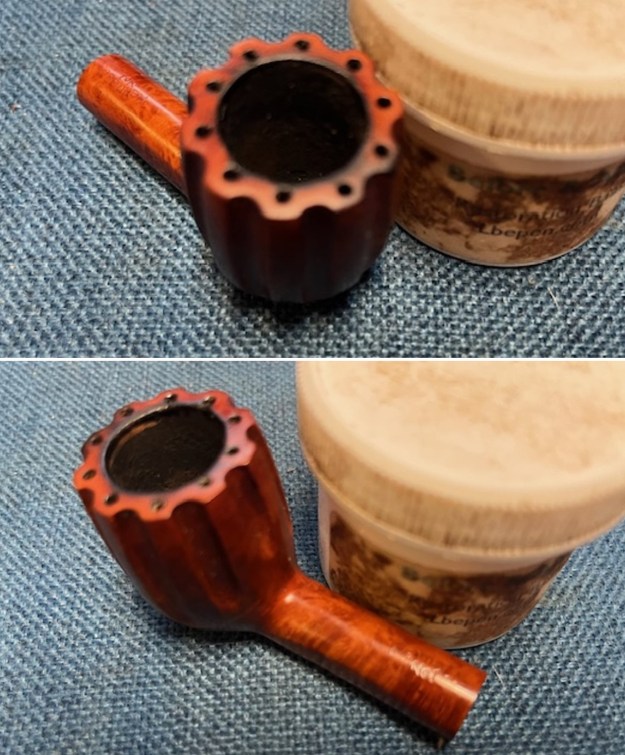
If this pipe is a normative example of the “Giubileo D’Oro” (“Gold Jubilee”) reject line, keep the rejects coming!  What can I say?  This is one of those restorations that discovered gold in hiding. The grain presentation on this ample Briar Calabash bowl is reminiscent to me of Preben Holm’s moniker, ‘Follow the grain.’  The straight, fire grain reaches toward the rim and the rim’s rounded shape provides a view of delicate bird’s eye, a 3-D perspective of the tips of the fire grain’s release into the air.  The heel presentation is equally expressive of larger, more chaotic patterns – for me, characteristic of the origins of the fire.  The Briar Calabash shape also contributes to the ensemble with its sweeping curves and lines moving toward the gently bending stem.  Is it obvious that I’m impressed with this line of Savinelli, Fiammata?  Clam man Jon commissioned this pipe and has the first opportunity to adopt him from The Pipe Steward Store benefitting the Daughters of Bulgaria.  Thanks for joining me!

I use Conservator’s Wax for polishing briar, metal and rubber


Blog by Steve Laug

For the past few years I have been using a Canadian made product called Conservator’s Wax on pipes with either rusticated or sandblast finishes. I have mentioned often in my blogs on those pipes and I am surprised that more of you have not asked me about the product and what it is.

For years I had read about Renaissance Wax on different forums and how well it worked on briar pipes but I could not find it here in Canada (though I am told that it is now available). I always planned on getting a can from Amazon to try out but somehow never got around to ordering it. I wondered if there was not something like that here in Canada that I could purchase and experiment with.

One day I was visiting one of my favourite tool shops – Lee Valley Tools. To me it is the kind of place I can spend an afternoon or more wandering and looking at the assorted tools and supplies that carry. I was in the wood polishing area looking at sandpapers, micromesh and other wise and came across this little silver can that said it was for polishing woods and other things. I asked about it and one of the gents there said that he had used it for years on wooden bowls and other pieces that he had turned on his lathe. I said it was a very light weight wax that really polished well and lasted to protect the pieces he had made.

After reading the details of the product while I was in the shop I thought that it might be something like Renaissance Wax. It seemed like it would be worth a try to see what it worked like on pipes. Here is a summary of what I read:

CONSERVATOR’S WAX is a blend of highly refined microcrystalline waxes of fossil origin (petrochemical based) based on a formula which has become the standard material used in museums and art galleries and by professional conservators and restorers the world over. This high performance, crystal clear wax may be used on wood, metal, ceramics, ivory, marble, polished stones, leather, plastics, gilding, cast resins, photographs, and like materials offering excellent moisture resistance and protection against heat and finger marks. Its application on exterior surfaces enhances weather resistance. Apply it with a soft cloth to gently remove built-up dirt and grime and old wax, then buff when dry to polish to a soft sheen.

I brought it home and have been using the same can for 4 or 5 years now. It does not take much of the wax to do the job. I apply it by hand to the surface of rusticated and sandblast pipes as well as plateau on the rim of some freehands and let it dry. I buff it with a shoe brush and I have been very pleased with the results. It does not clog up the crevices, valleys or depths of these finishes and provides a lasting shine. I find that it is equal to Halcyon II wax in terms of its polish and workability on rough finishes. I have also used it on smooth finishes as part of the experiment and found that it works well. For me it does not replace carnauba for smooth surfaces but it is certainly workable.
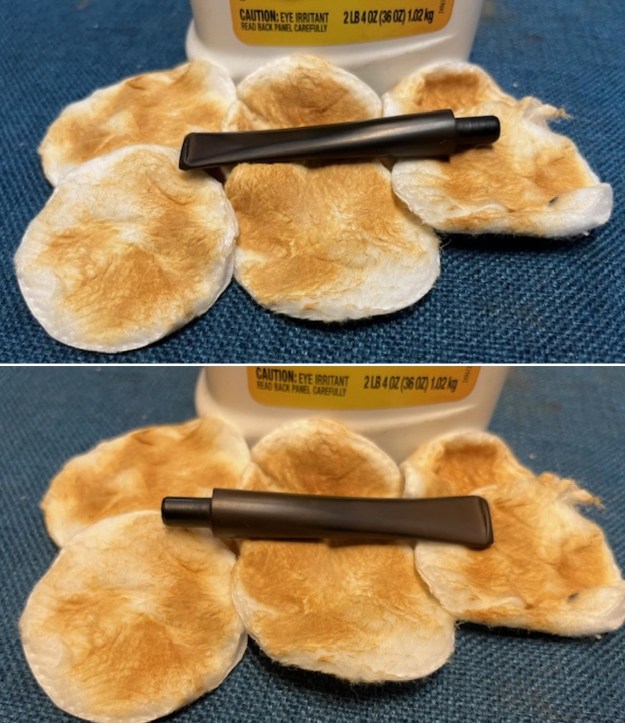
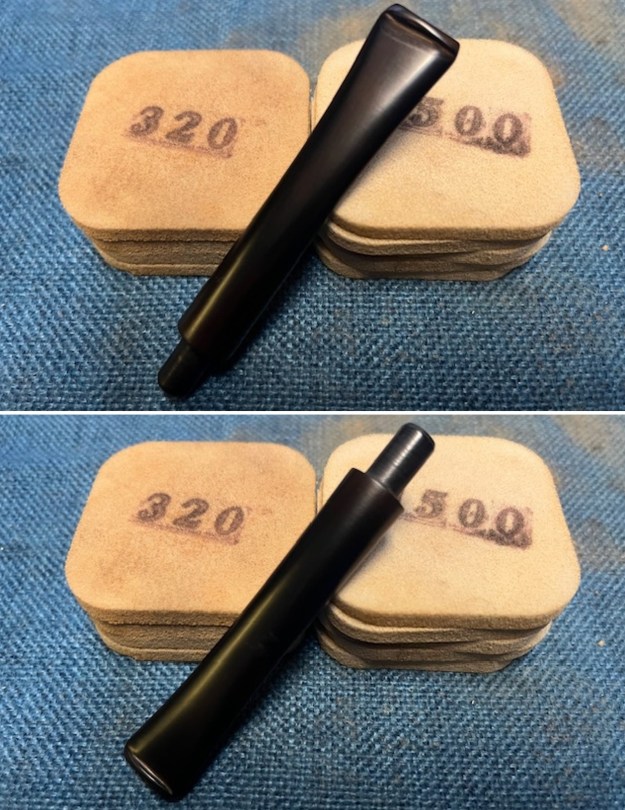
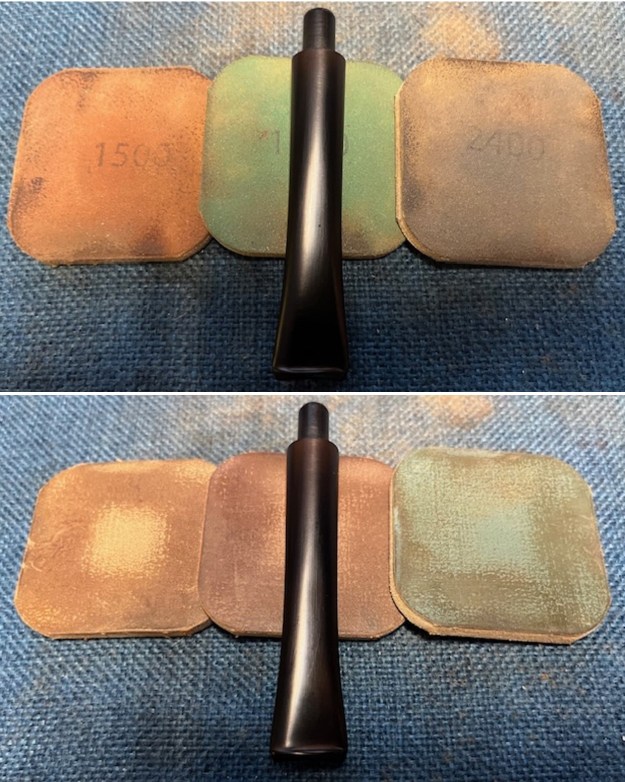
In terms of its polishing and cleaning capabilities I have used it on briar that I have restained and it seems to buff out the tiny scratches that have been left behind from all of my polishing and buffing. I have used it on stubborn oxidation on vulcanite stem and found that it did not have the polishing ability to remove that from the hard rubber. It did however; work very well in hand cleaning the oxidation around stem logos and stamping without damaging those areas. On large oxidized areas there are other products that do a better job. I have also used it to polish and clean metal bands and ferrules and it cleans off oxidation and tarnish in the stamping and hallmarks quite well. It not only cleans but leaves behind a nice shine on nickel, silver and brass.
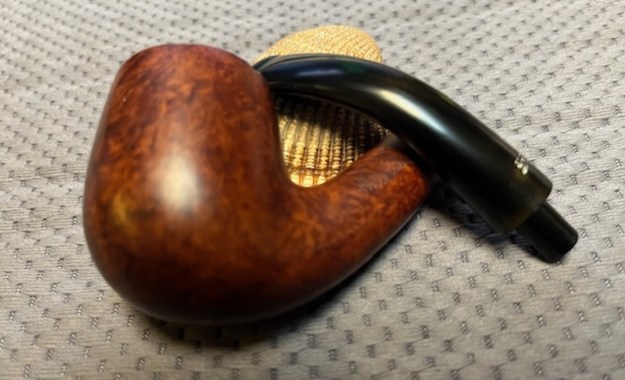
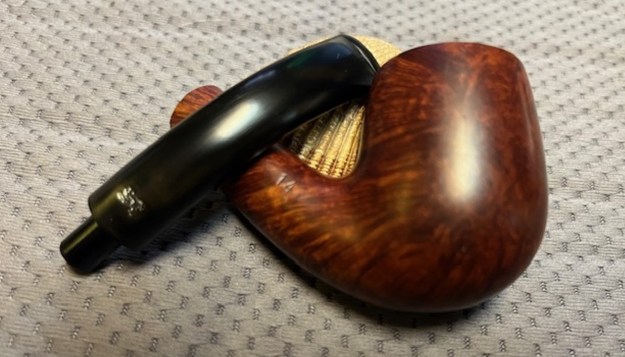
I can recommend it to those of you who cannot find Renaissance Wax or do not want to order the small jars of Halcyon II wax. It is a suitable replacement and one that I use regularly. As I mentioned, the small 125ml container that I have has lasted for 4-5 years and I work on a lot of pipes. I will definitely pick up another can when I visit Lee Valley Tools in the near future. It is a product that I keep on hand. Give it a try and see what you think.