Tag Archives: pipe restemming

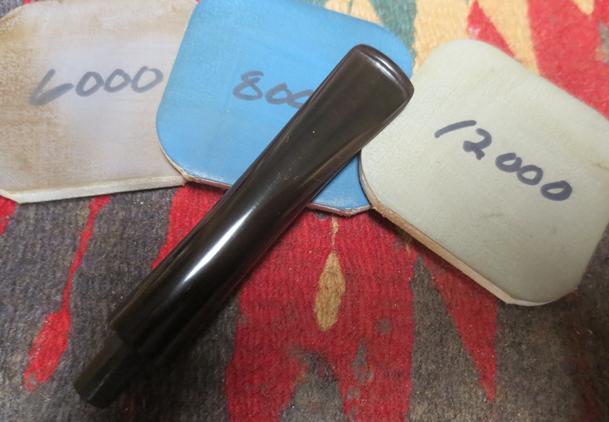
Repairing a Broken Tenon on a Birks Savinelli “Lollo”


Blog by Steve Laug

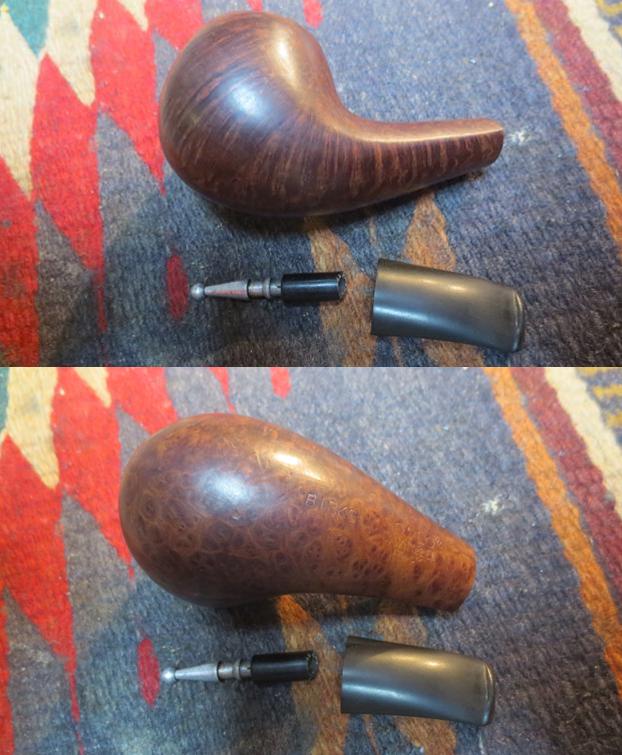
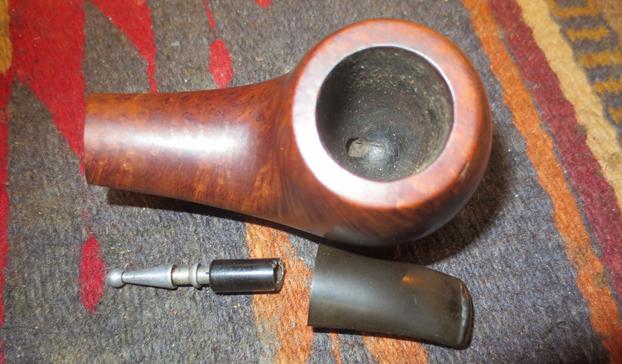
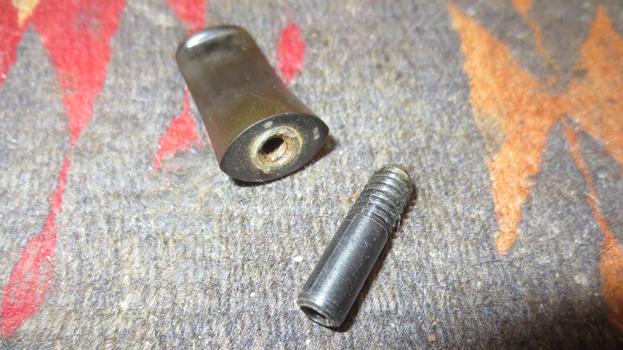
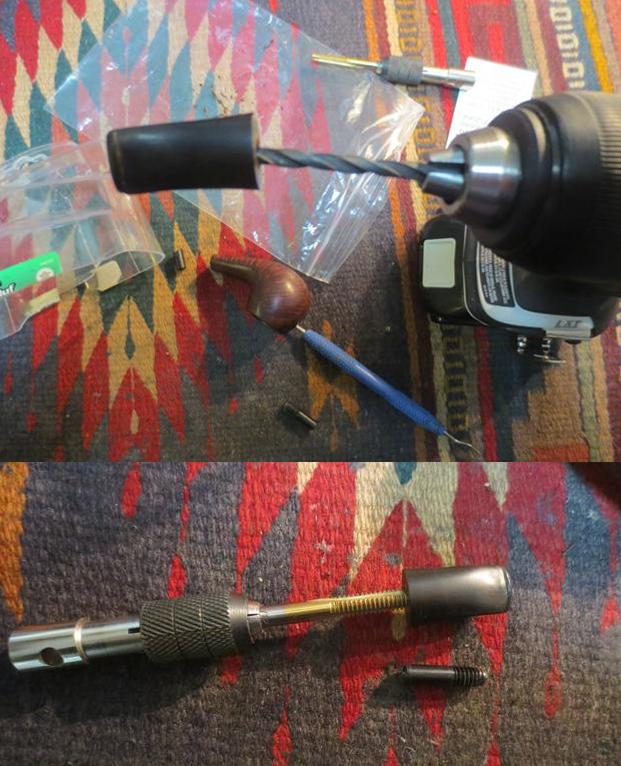
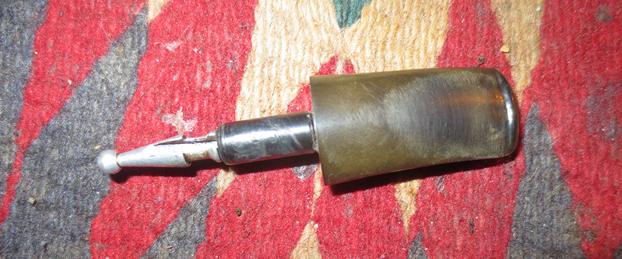
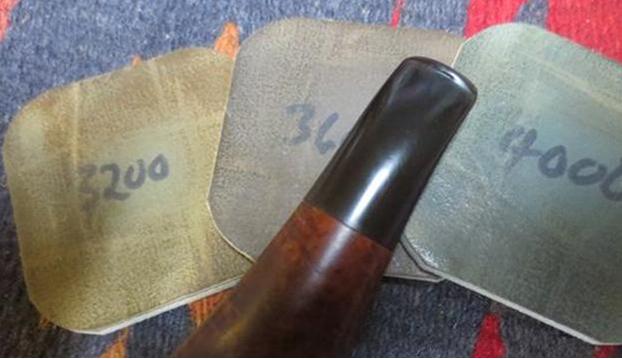
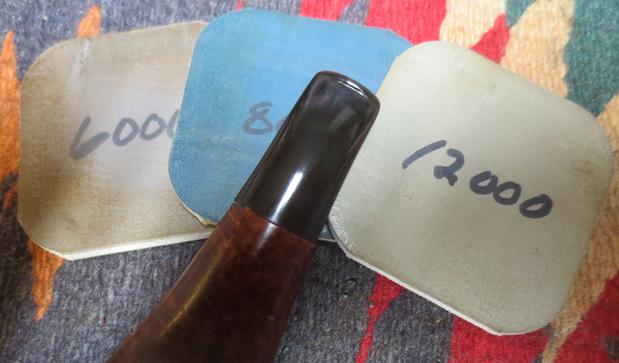
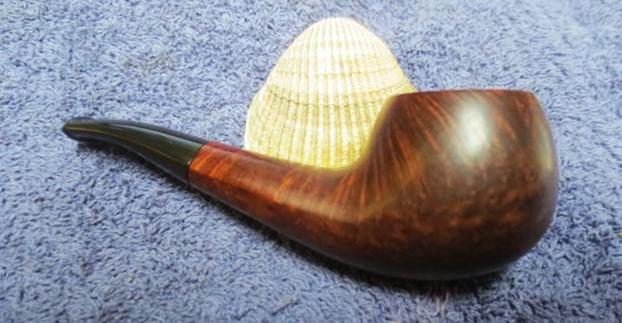
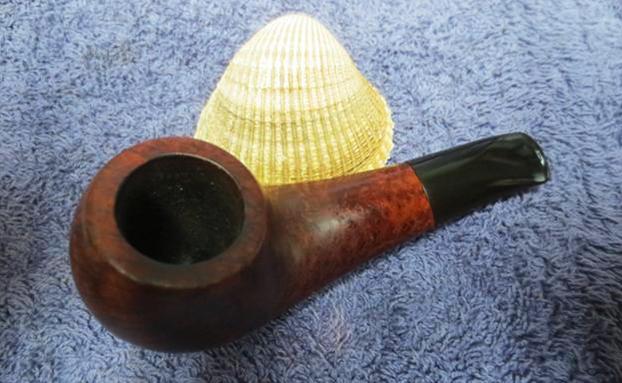
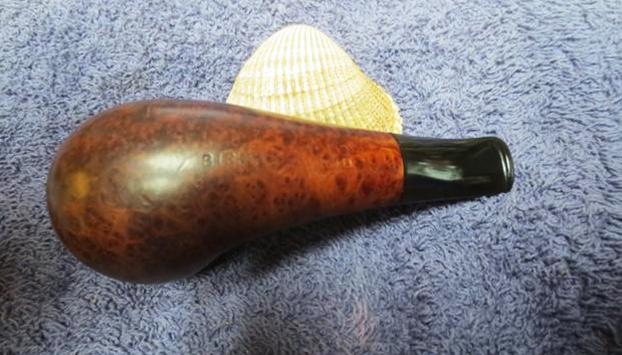
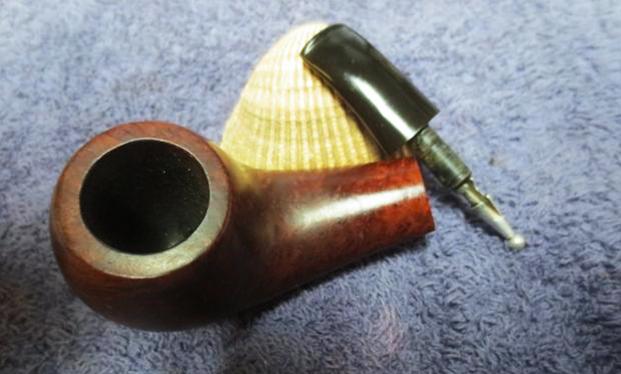
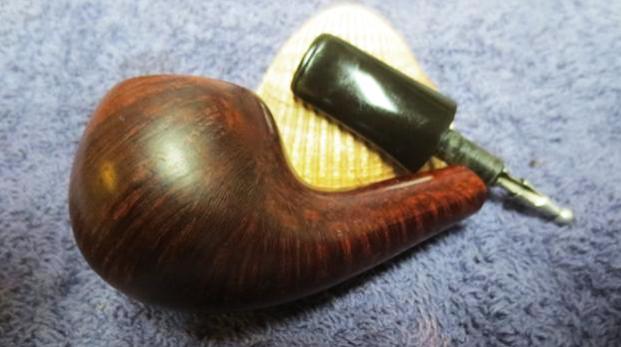
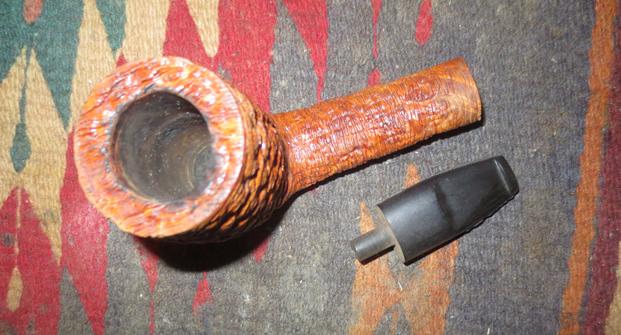
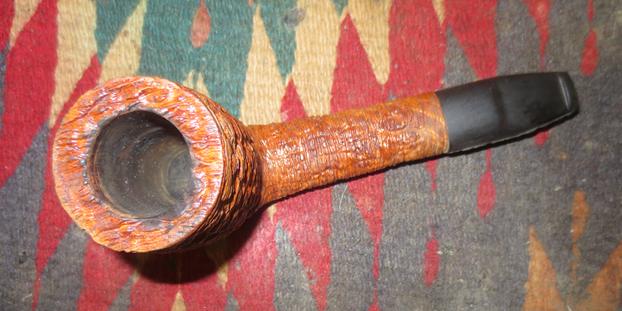
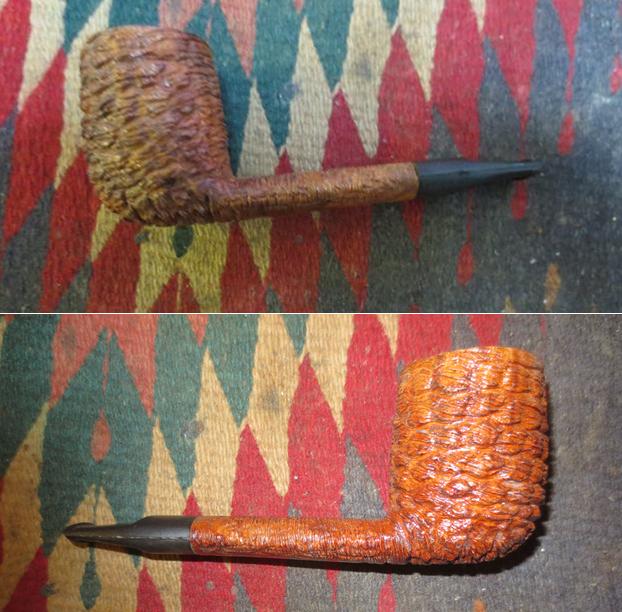
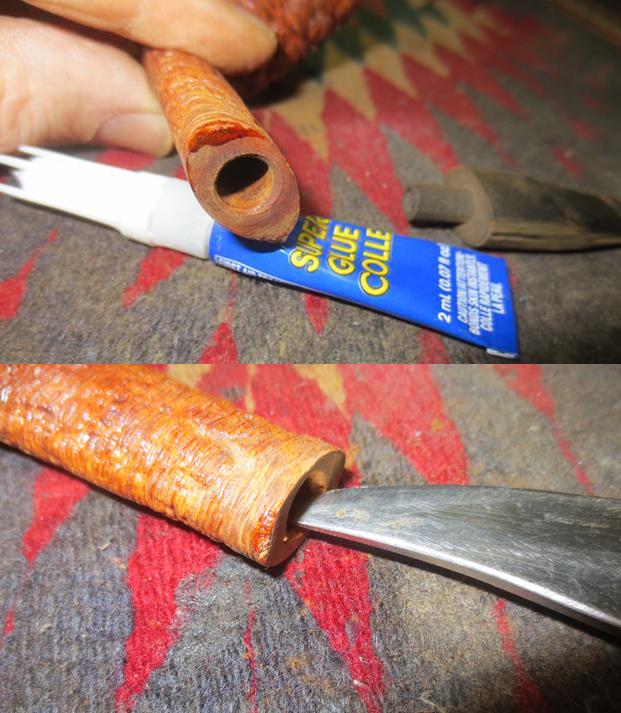
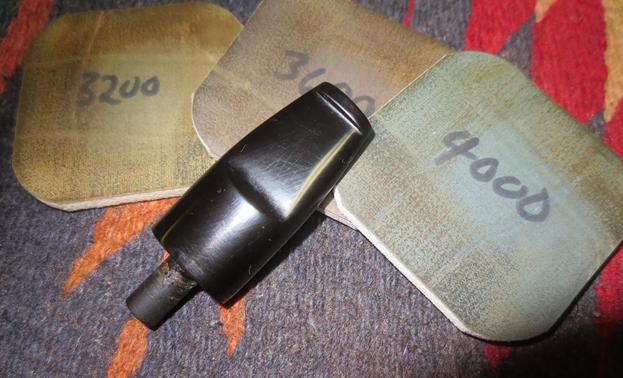
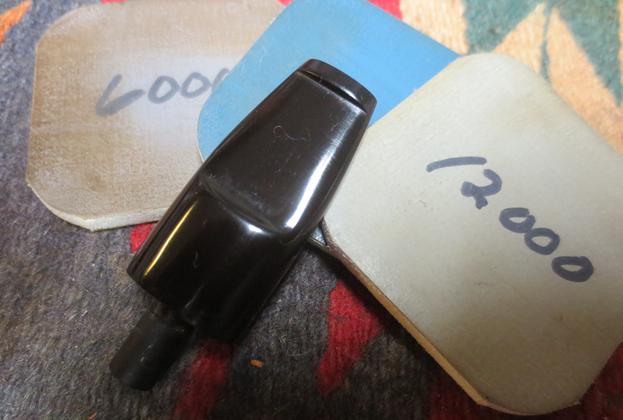
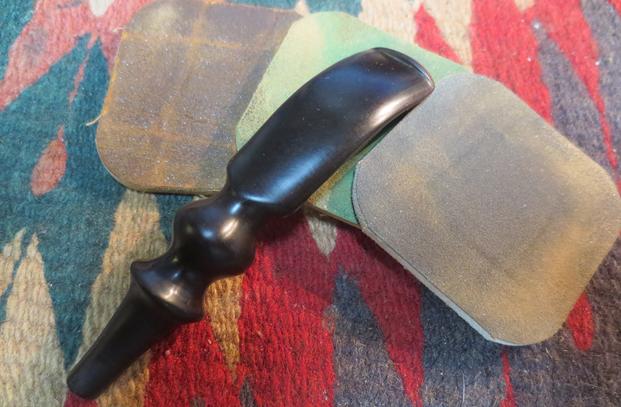
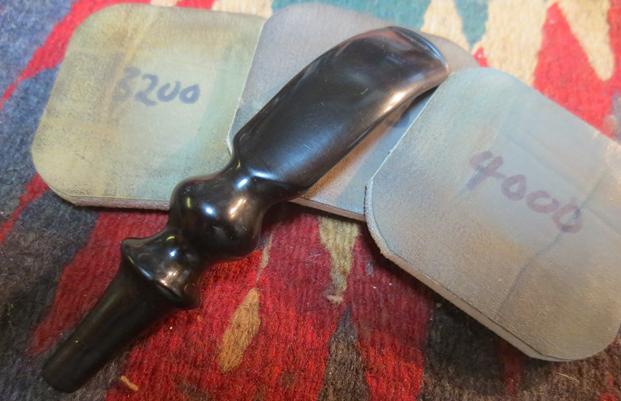
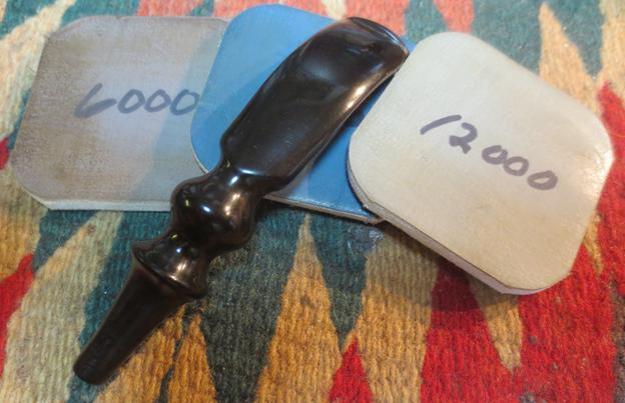
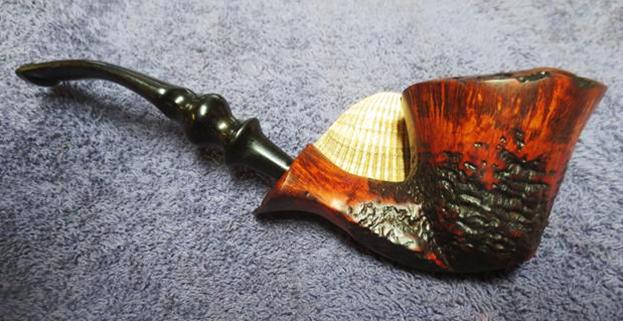
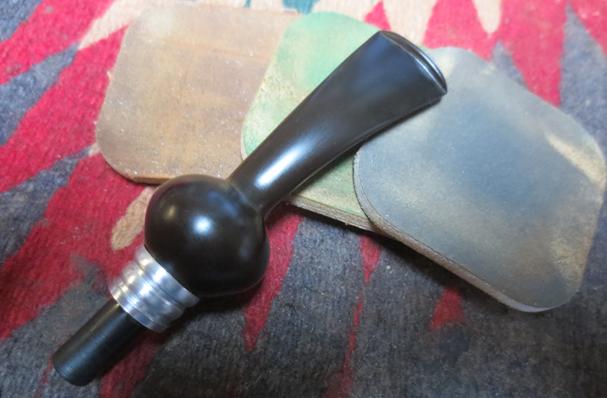
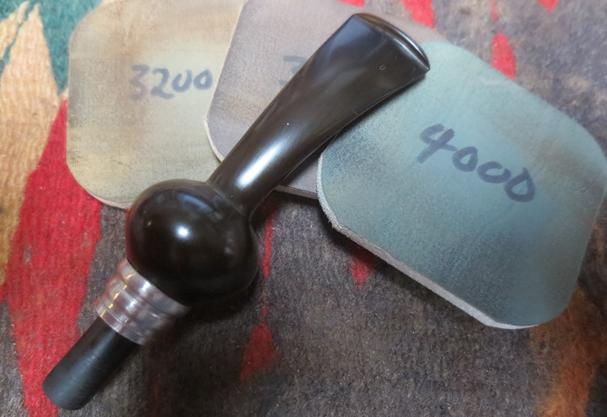
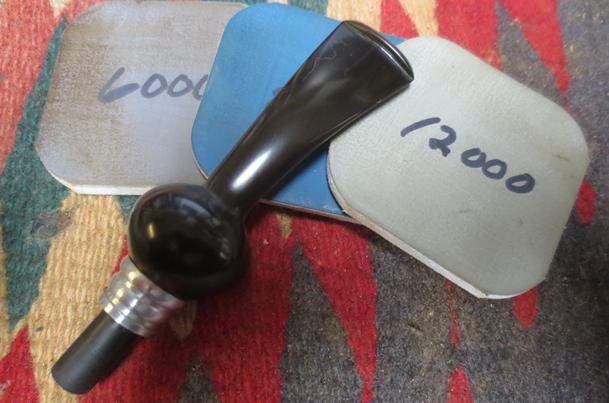
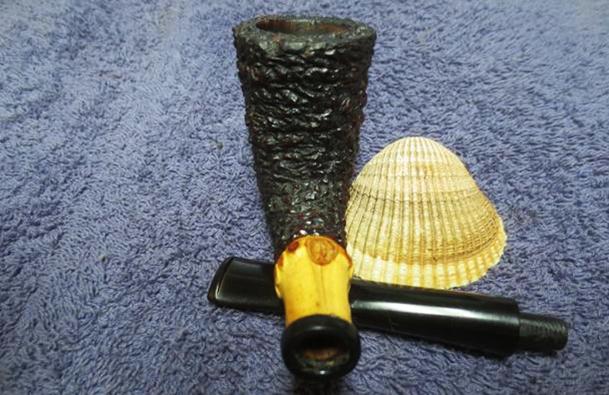
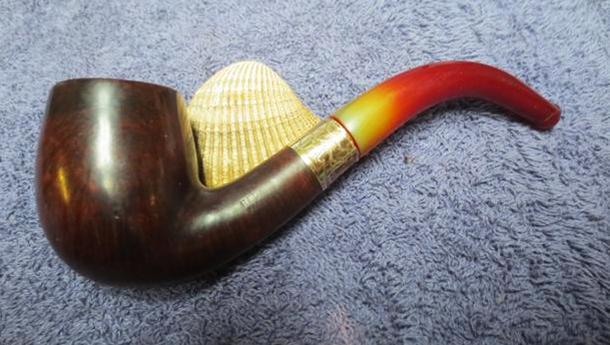
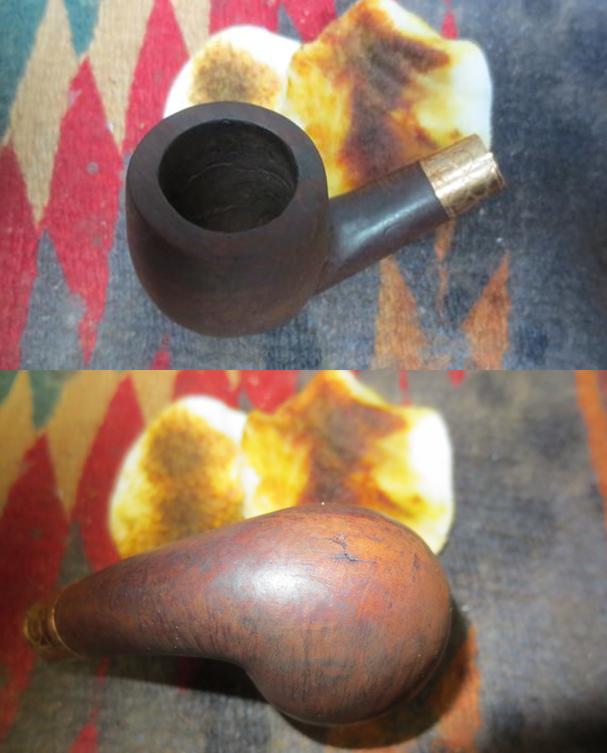
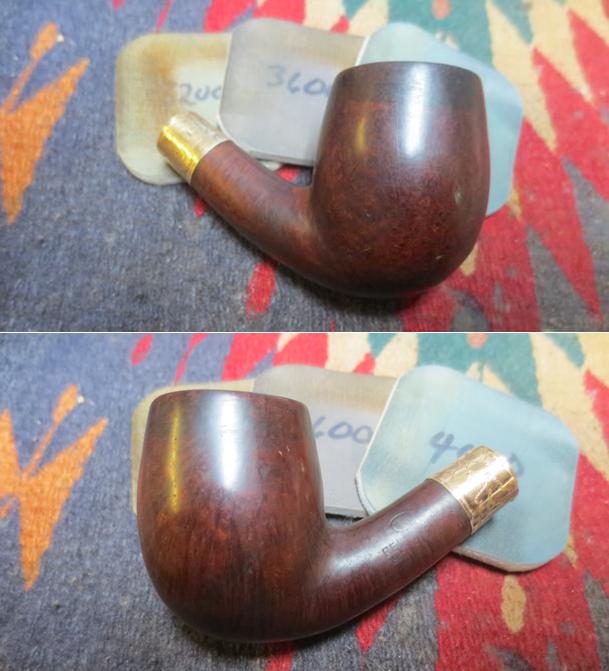
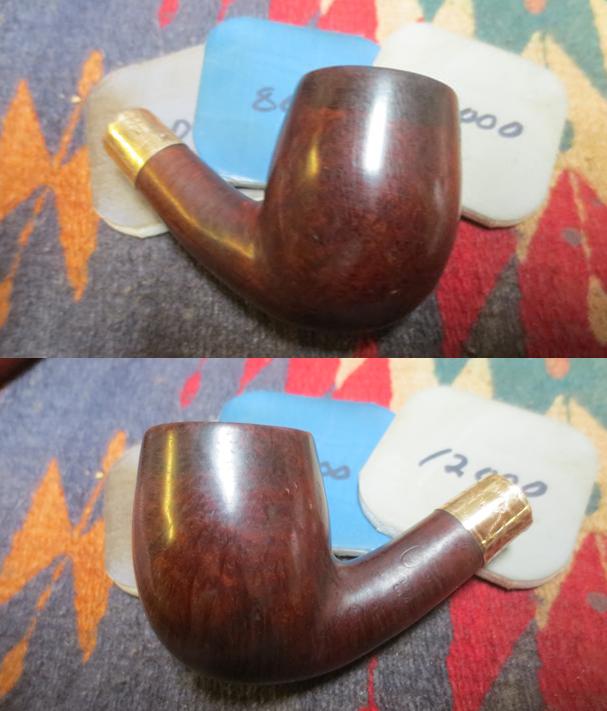
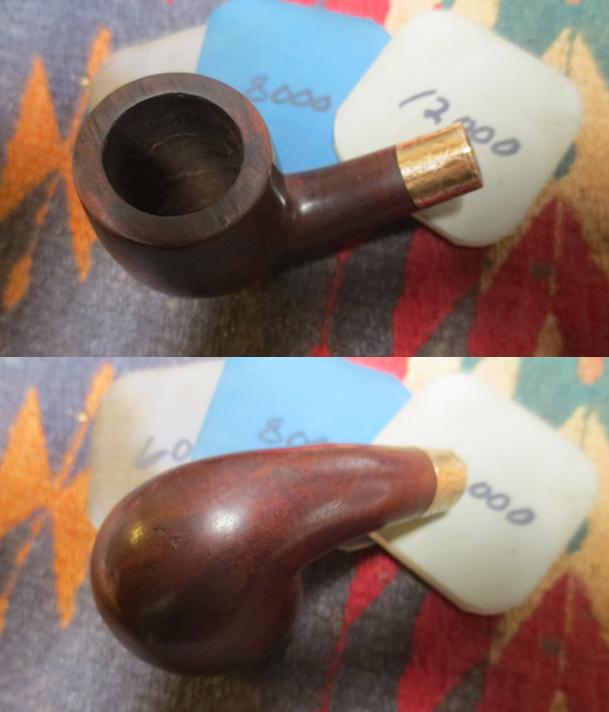
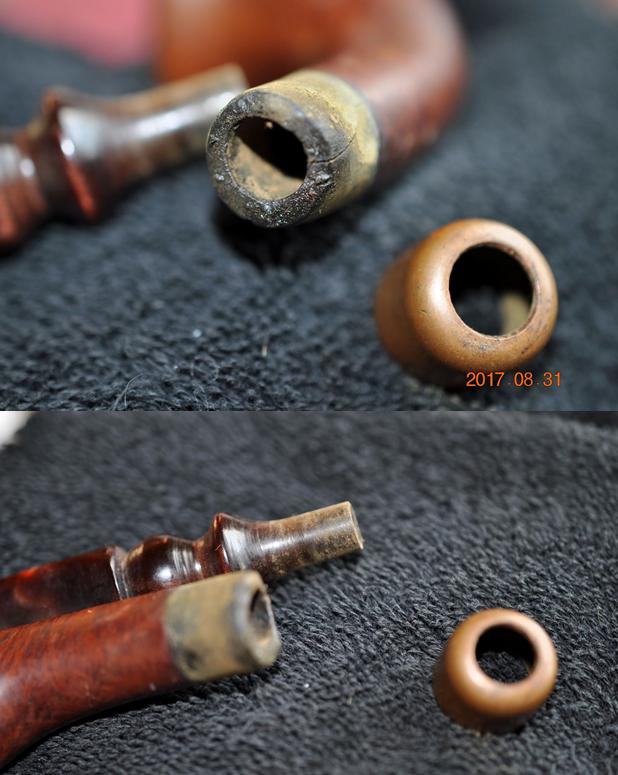
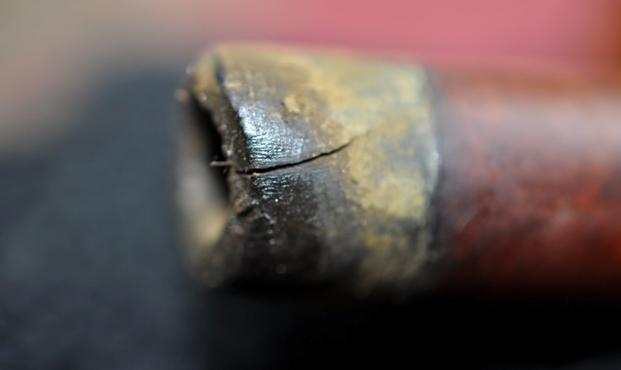
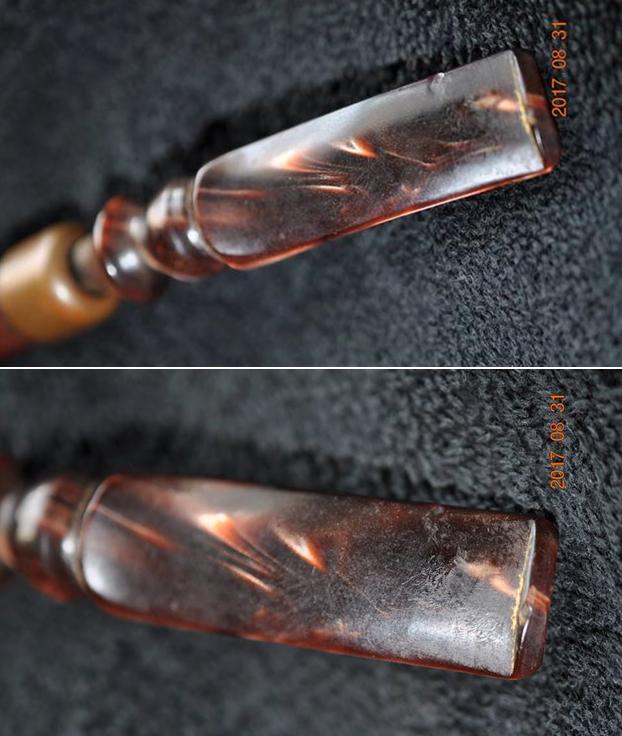
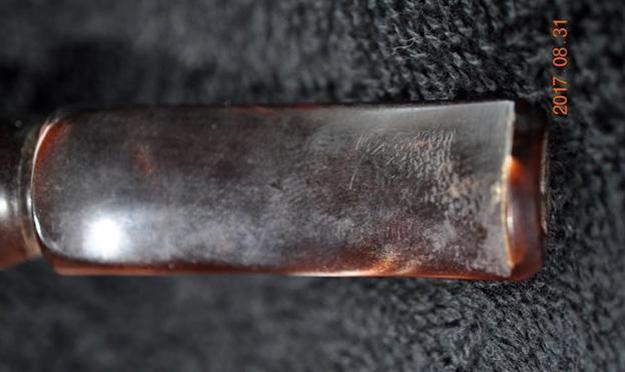
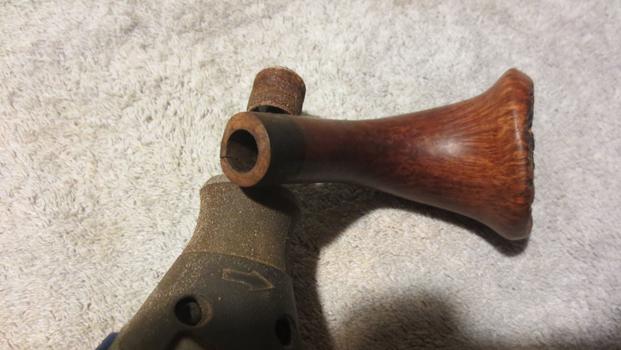
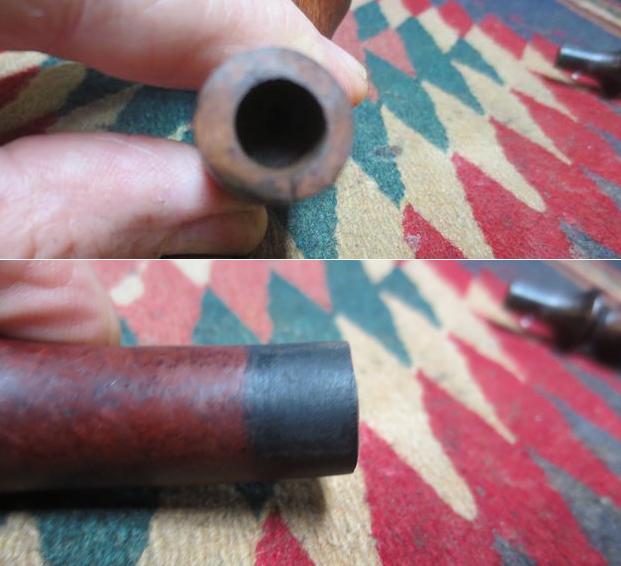
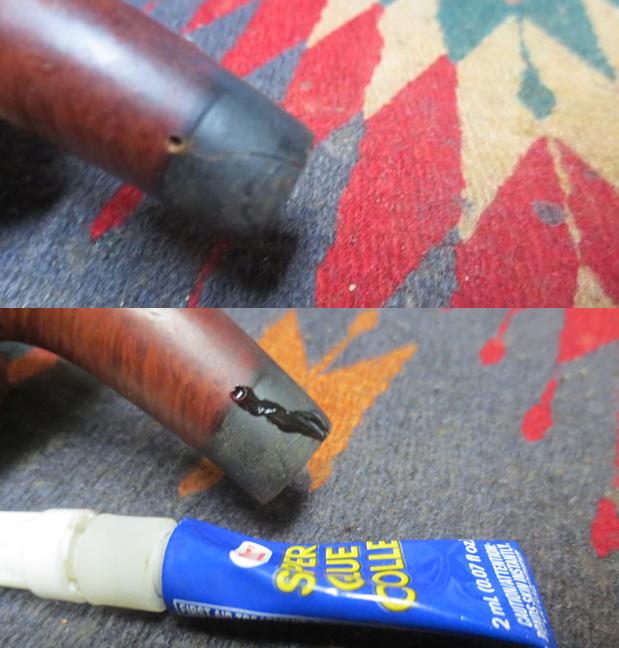
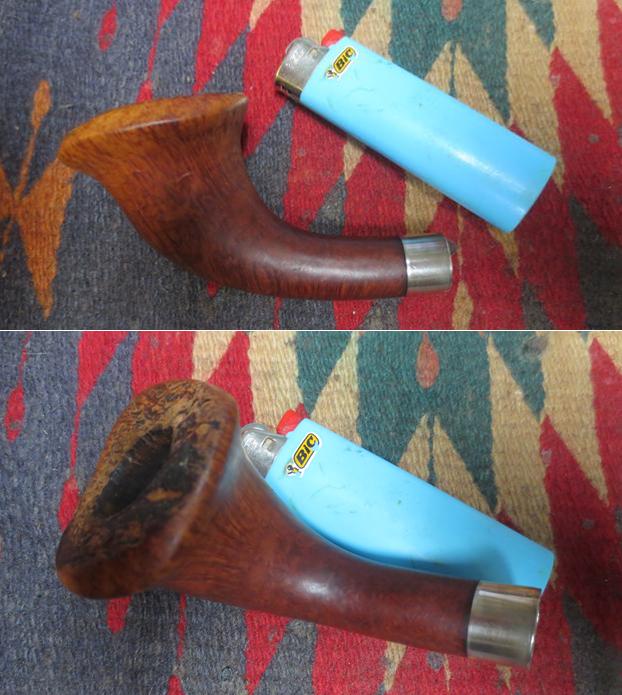
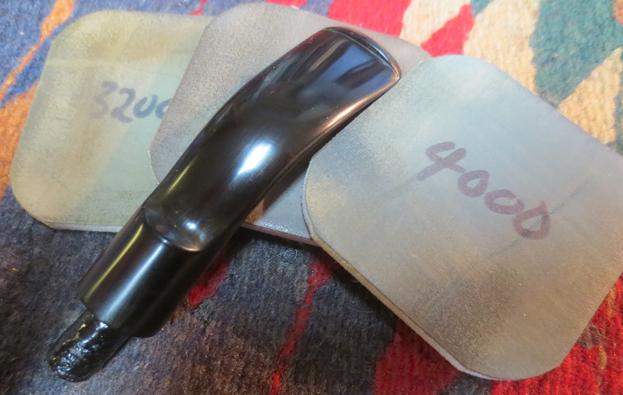
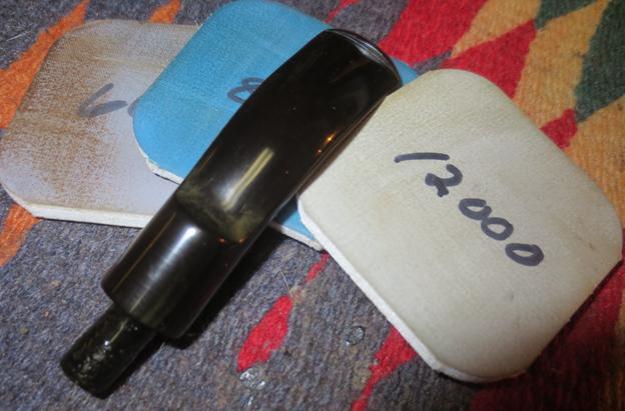
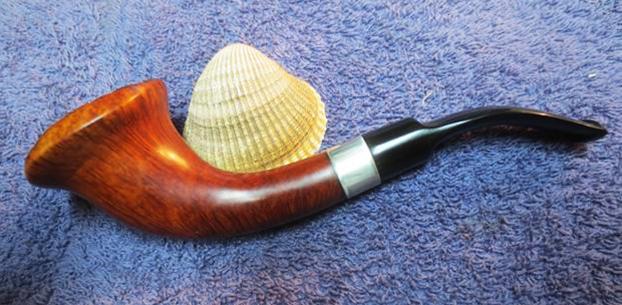
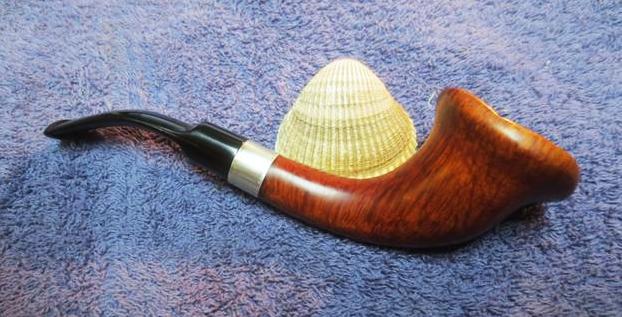
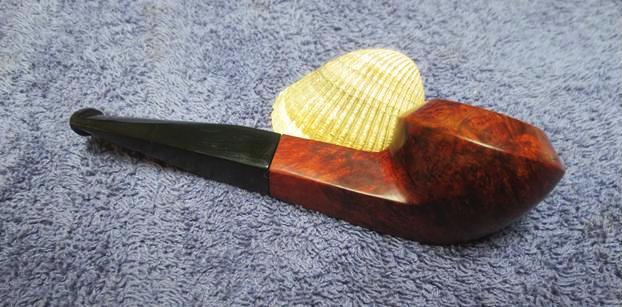
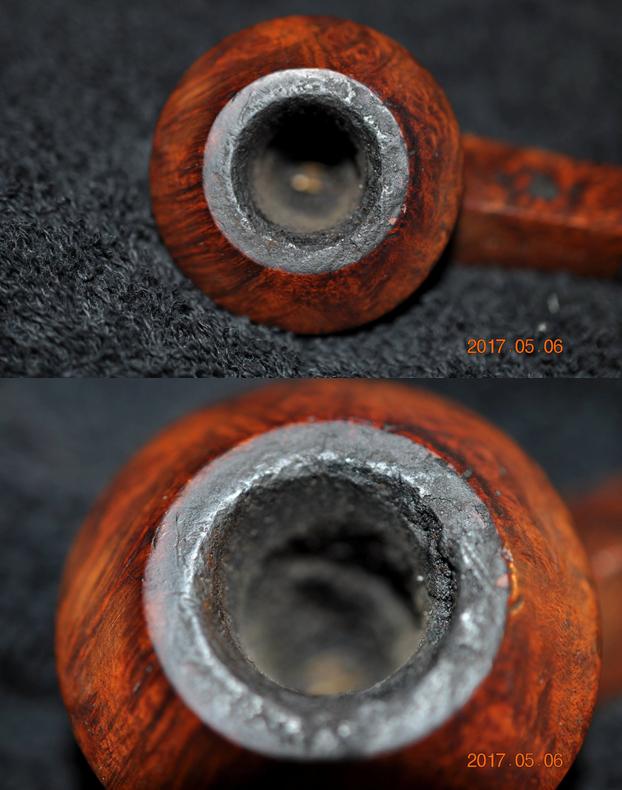
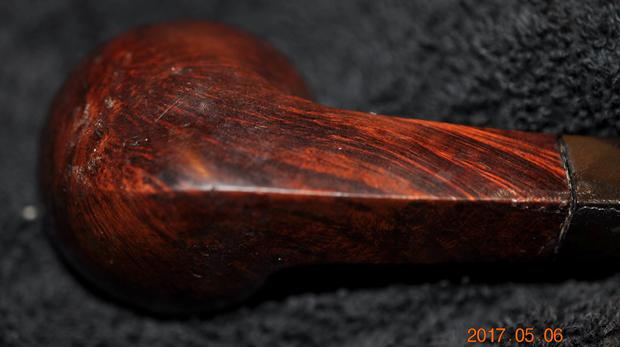
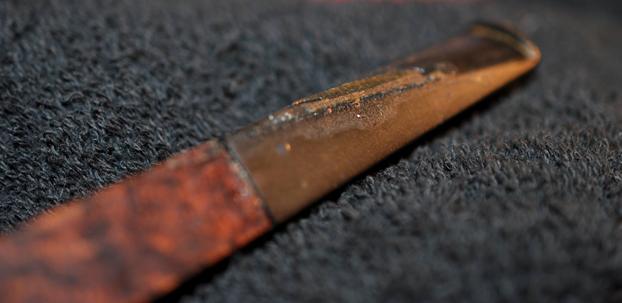
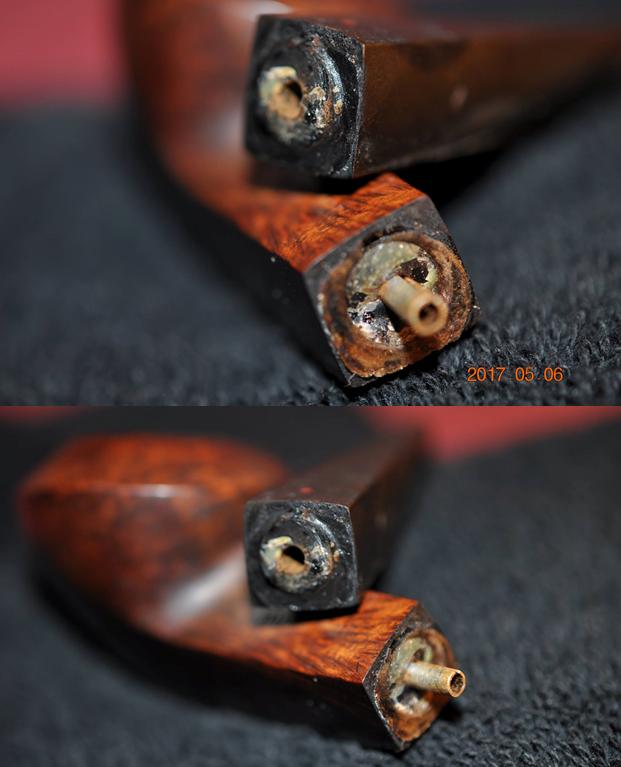
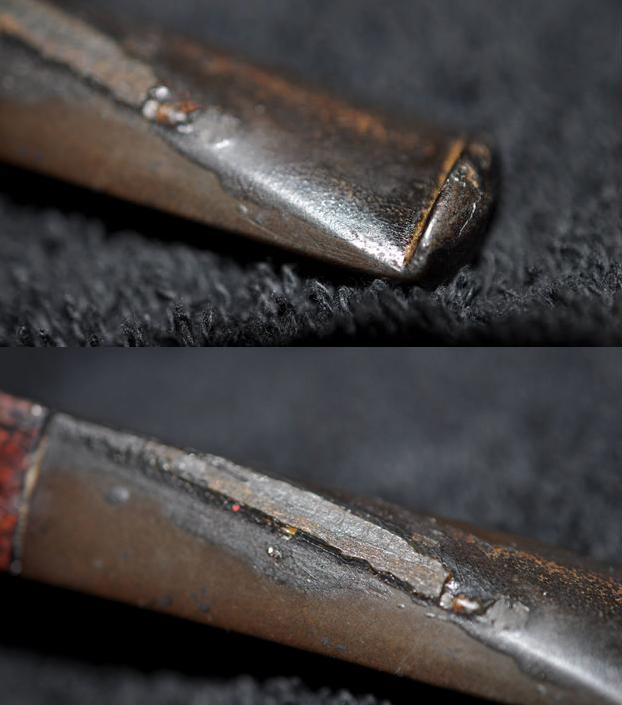
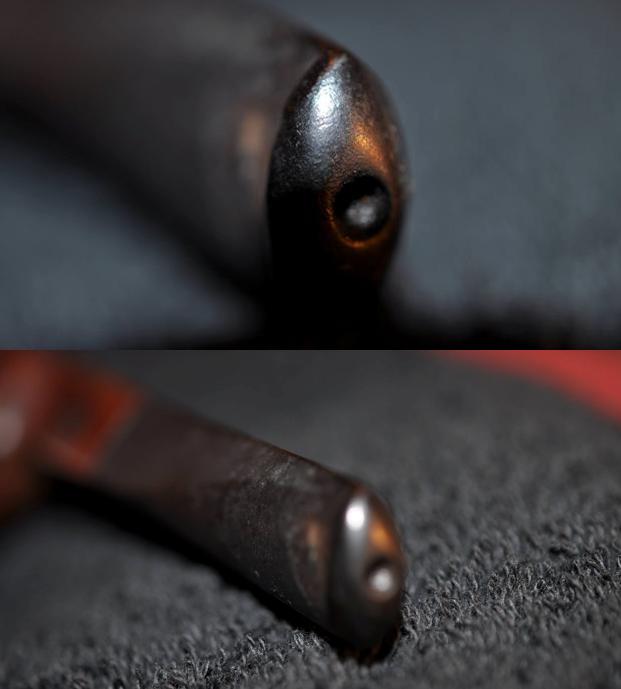
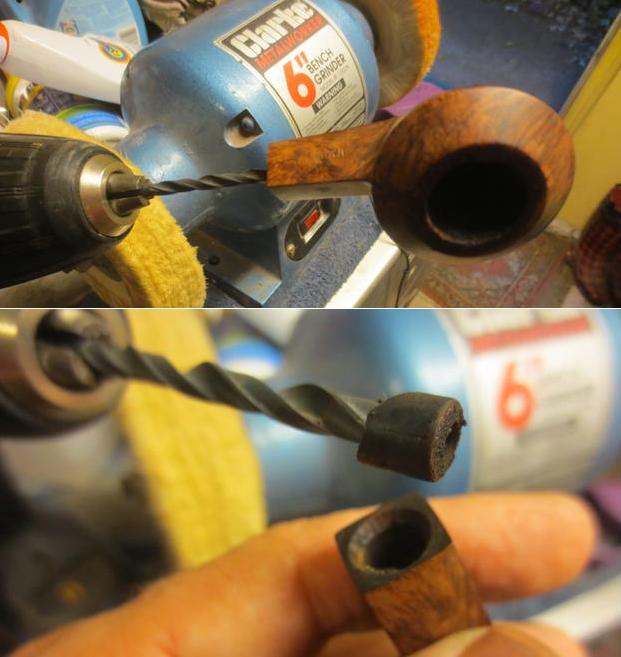
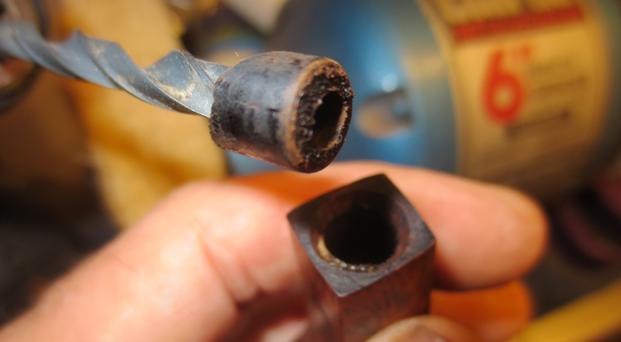
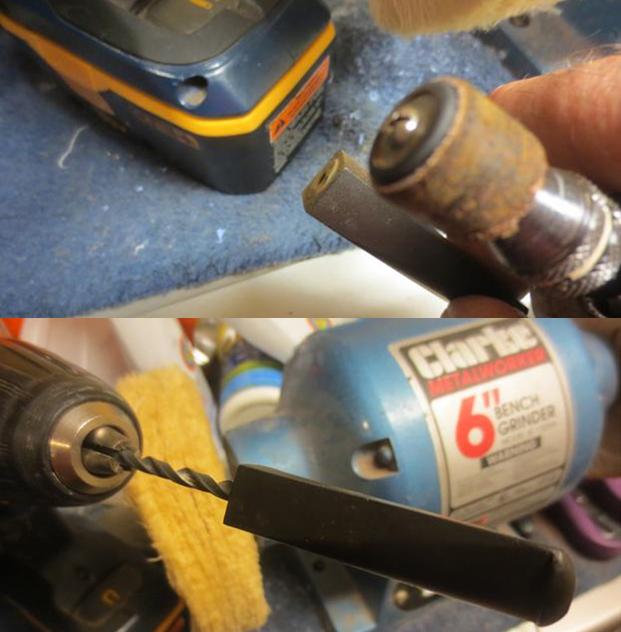
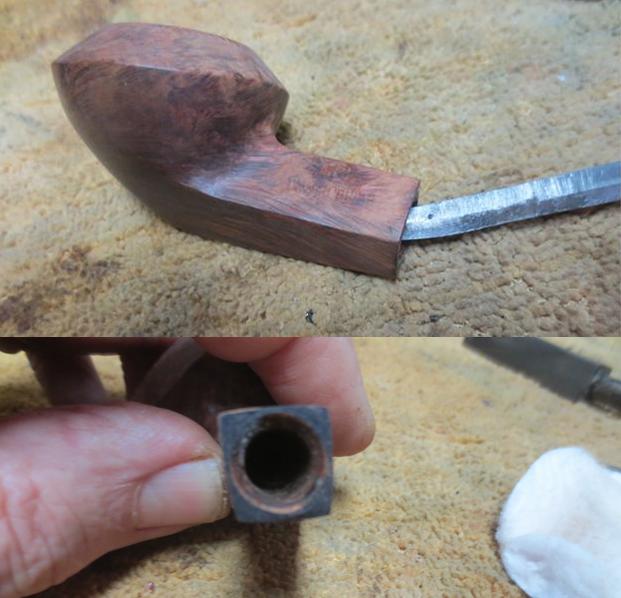
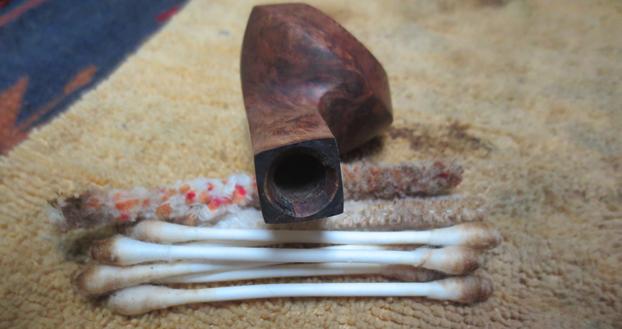
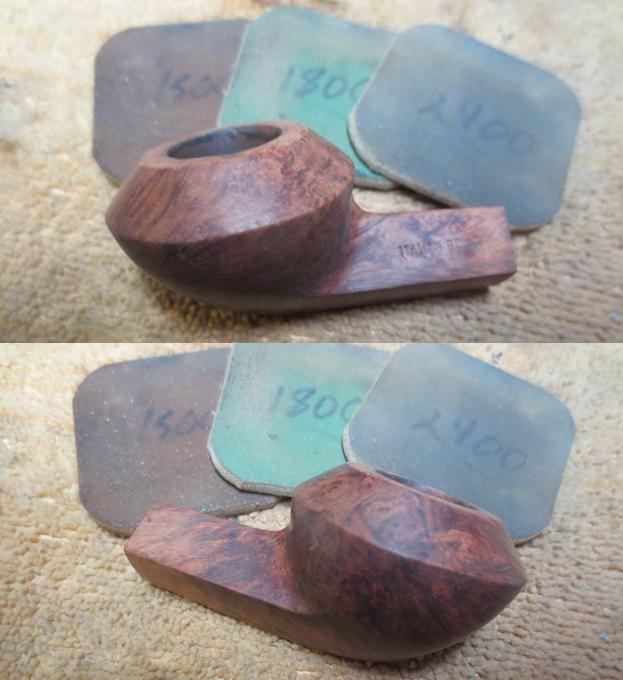
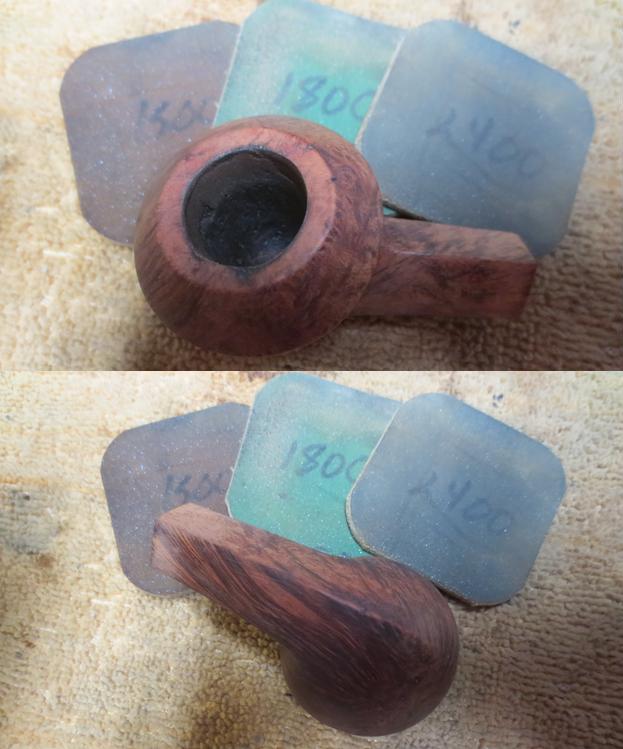
I received a call from a local pipeman who said he had broken the stem off of his favourite pocket pipe. He had been given my name by a local pipe shop. He stopped by and dropped off a small bag with the parts of his pipe in it. He had dropped the pipe down the stairs and it had bounced down to the bottom in two pieces. He was able to remove the broken tenon but the damage was done. The pipe was stamped Birks and next to that it was stamped “Lollo” over Savinelli over Italy. The pipe was actually in really good shape. The bowl was clean and the briar had some nice grain all around the sides, top and bottom. The rim was clean and there was a very light cake inside. The broken tenon had a stinger in the tenon that he wanted to preserve. The stem was oxidized and showed some tooth chatter on both sides near the button. I told him I would have a look at the pipe and decide whether to replace the tenon or the stem. He was fine either way as long as the pipe was the same when he picked it up. I put the parts of the pipe on my work table and took photos of the pipe before I started working on it. I went through my box of tenons and found one that was the proper size for the mortise. I use threaded replacement tenons on stems like this. I used a Dremel and sanding drum to smooth out the rough edges of the broken tenon left on the stem. I used a sharp knife to bevel the edge of the airway in the end of the stem. Beveling it keeps the drill bit centred when I drill out the airway for the threaded end of the tenon.I chucked a drill bit the same diameter as the threaded end of the replacement tenon.  The photo below shows the tenon on the end of the drill bit. I lined it up before drilling it so that the stem was straight and the airway would not be curved. I drilled the airway to the same depth as the threaded end of the tenon. Once the airway was straight I used tap to cut threads in the airway in the stem so that I could turn the new tenon in place. I put a drop of glue on the threads of the tenon and quickly turned it into the stem until it sat flush against the face of the stem. I pushed the stinger into the tenon end and aligned it so that the slot in it was facing the top of the stem. I checked the alignment on the new tenon and all was straight and ready.The oxidation on the stem really showed up under the bright light of the flash. I polished the vulcanite stem with micromesh sanding pads – wet sanding it with 1500-2400 grit pads and dry sanding it with 3200-4000 grit pads. I wiped the stem down with Obsidian Oil after each sanding pad. I buffed the stem with Blue Diamond on the buffing wheel. I brought it back to the table and sanded it with the final three 6000-12000 grit pads. After the final pad I gave it a final coat of oil and set it aside to dry. I put the stem back on the bowl and gently worked the pipe over on the buffing wheel using Blue Diamond to polish the bowl and shank. I used a gentle touch on the pipe when I was buffing to polish the bowl. I buffed the stem with a harder touch to raise the gloss on the rubber. I gave the bowl and stem multiple coats of carnauba wax. I buffed the pipe with a clean buffing pad to raise the shine. I hand buffed it with a microfiber cloth to deepen the shine. The finished pipe is shown in the photos below. It looks better than it did in the beginning. It is the first little Savinelli “Lollo” I have worked on. It is well made and a beautiful piece of briar. The dimensions of the pipe are: Length: 4 inches, Height: 1 1/2 inches, Diameter of the bowl: 1 1/4 inches, Diameter of the bowl: 3/4 inches. I will be calling the pipeman who dropped it off for repair. I think he will enjoy his pipe!

This Old Italian Canadian showed Promise


Blog by Steve Laug

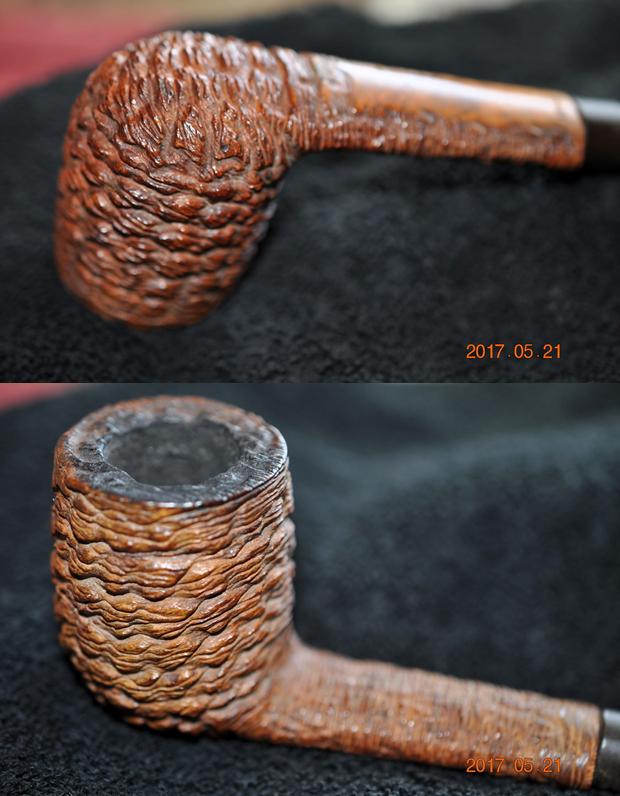
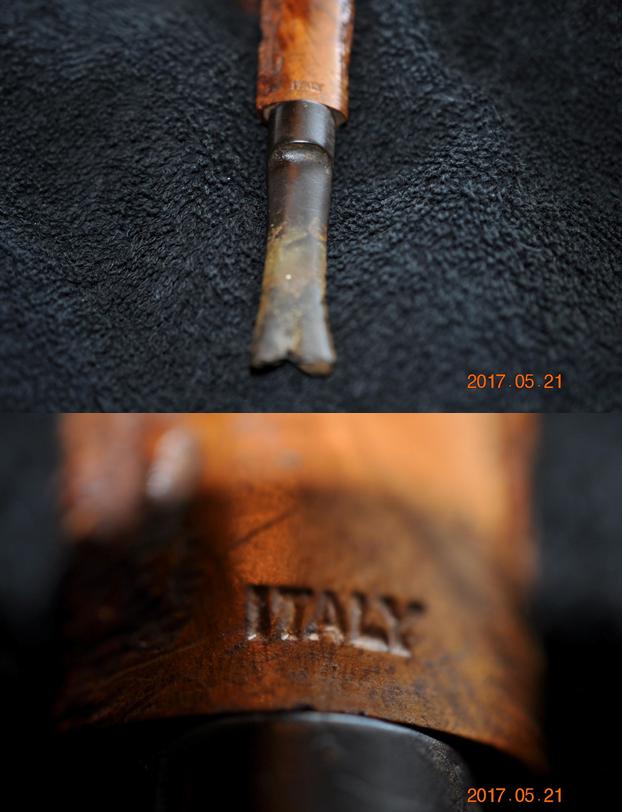
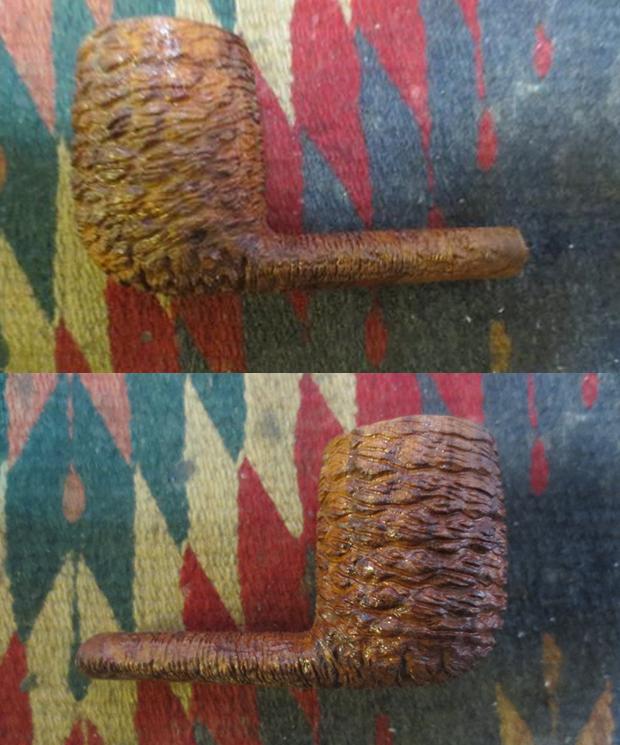
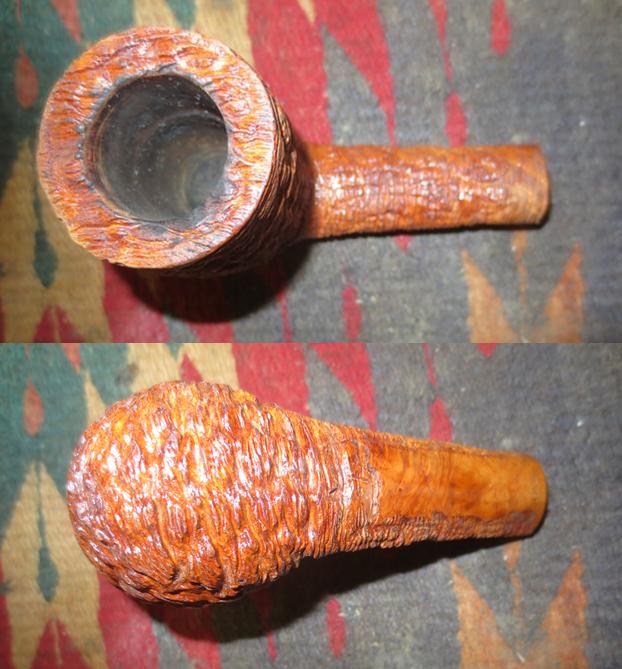
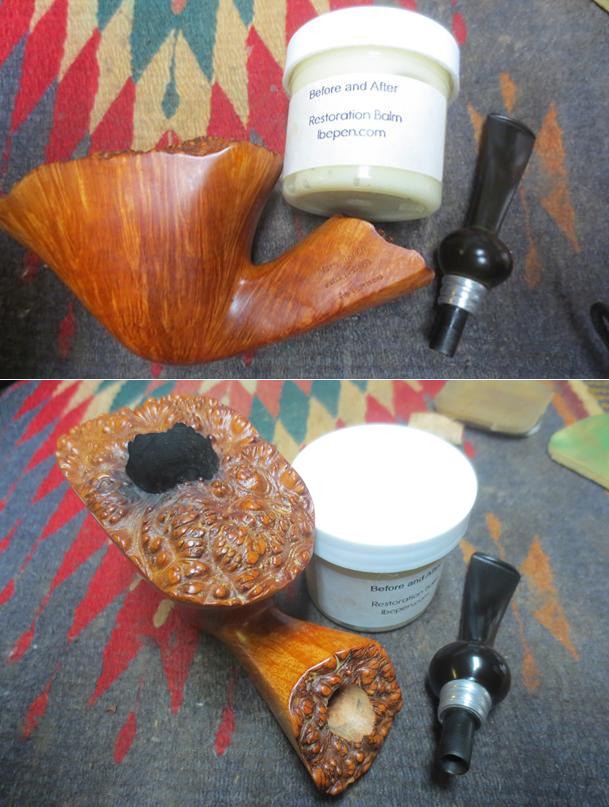
Jeff picked this heavily rusticated pipe up on one of his recent forays into the antique shops and malls of Montana. It is sea rock like rustication on the bowl and shank with a wire rustication on top of that. The finish was very dirty with a lot of dirt and grime in the deeper grooves of the rustication. There was a random stem stuck in the shank when he picked it up – I think it was just to make it more sellable. The stem is a round saddle stem while the shank is oval. The finish was dirty and there were some nicks in it around the shank end. The bowl had a heavy cake in it with some lava overflow filling in the rustication pattern on the rim top. There appeared to be some burn damage on the back left side of the rim top. The pipe had a smooth portion on the underside of the shank for stamping but the only stamping was at the shank/stem junction where it read ITALY. Jeff took photos of the pipe before he started his clean up. The rim top can be seen in the next photo. You can see the thick cake and the lava overflow on the top of the rim. It is hard to know if there is damage to the inner edge of the rim but the outer edge was clean and undamaged. It appeared that there was some burn damage on the back left side of the inner rim edge but we would not know until Jeff cleaned the pipe.Jeff took pictures of both sides of the bowl to show the rocky, craggy appearance of the finish on the bowl. It is unusual and interesting at the same time.The next photos show the shank and Italy stamping on the shank end. The stem is obviously the wrong one. You can see the variation of the round saddle portion of the stem and the oval shank. I am not too worried about the stem as it is going in the bin anyway as I will need to fit a new stem on the shank. Jeff worked his magic in cleaning up this pipe as it was a real mess on the rim and deep grit and grime in the grooves of the finish. He reamed it with a PipNet reamer and smoothed the walls of the bowl with a Savinelli Fitsall pipe knife. He scrubbed out the mortise and the airway in the shank and the stem with alcohol, cotton swabs and pipe cleaners. He scrubbed the exterior of the bowl, rim and shank with a tooth brush and Murphy’s Oil Soap to the oils and tars on the bowl, rim and shank. He rinsed it under running water. He dried it off with a soft cloth. Once the grime was removed the finish actually looked quite good condition. I took photos of the pipe to show its condition before I started my work on it. I did not bother with the old stem as it would be replaced. I went through my can of stems and found one that had the same diameter all the way around as the shank. The fit against the shank end was almost perfect. I would need to make the edges taper a bit more at the shank. The stem was new and still had castings on the sides and the end of the button. The tenon was a perfect fit in the mortise. I put the stem in the shank and took photos of the restemmed pipe. The pipe looks good with the new stem. There is promise in the appearance at this point. I repaired the chip on the left side of the shank end with clear super glue. I needed to rebuild that edge to remove the damaged area and allow the stem to fit snug against the shank. I used a sharp knife to bevel the edges of the mortise to accommodate the hip at the tenon/stem junction.I used a brass bristle wire brush on the rustication to clean off any remnants of the finish and then wiped the bowl down with acetone on cotton pads to remove the dust. I stained the bowl with a dark brown aniline stain and flamed it to set it in the briar. I repeated the process several times until I was happy with the coverage on the bowl. I set the bowl aside to dry overnight before proceeding with polishing the briar.In the morning I buffed the bowl with a shoe brush to raise a shine on the briar. I took the following photos to show what the pipe looked like at this point in the process. The bowl is looking good with a lot of colour variation due to the roughness of the rustication. I laid aside the finished bowl and turned my attention to the stem. I sanded out the casting marks and scratches on the stem with 220 grit sandpaper. I opened up the slot in the button with needle files to make it easier to push a pipe cleaner through. After I had removed the casting marks and the scratches on the stem surface it was time to work on it with micromesh sanding pads. I wet sanded it with 1500-2400 grit pads and wiped it down after each pad with Obsidian Oil to give the next pad more bite when I sanded. I dry sanded it with 3200-12000 grit pads and again wiped it down with the oil after each pad. After the final pad I wiped it down with a final coat of oil and set it aside to dry. Each photo shows it progressively getting a shine. I set aside the stem and picked up the bowl once again. I used the Mark Hoover’s Before & After Restoration Balm on the briar. I rubbed it into the grooves on the bowl sides with my fingers. I wanted it to go deep in the grooves to further test the effectiveness of the product. This would be a good test as it one of the roughest rustications that I have worked on with the product. As I have mentioned in previous blogs Mark had said that the product can be used on briar or stems – whether vulcanite, acrylic or horn. He said it was designed to pull the dirt off of the briar as well as polish it. I figured this deep rustication would certainly put those claims to a test. He said that he had added some anti-oxidants to keep the briar from getting damaged from both UV rays and water. Once I had all the grooves and surfaces of the bowl covered I wiped it down with a clean cotton pad and then buffed it with a shoe brush. It seemed to work very well and I took the following photos to show the results. I put the stem back on the bowl and buffed it with Blue Diamond on the buffing wheel to polish the stem and lightly polish the briar. I gave the stem multiple coats of carnauba wax buffed it with a clean buffing pad to raise a shine. I gave the bowl multiple coats of Conservator’s Wax and rubbed it into the rusticated finish. I buffed it with a shoe brush and then with a clean buffing pad to raise the shine. I hand buffed the pipe with a microfiber cloth to deepen the shine. The variegated finish on the bowl and stem combine to present a beautiful pipe. The pipe really does look good with the new stem. The dimensions of this pipe are Length: 5 1/2 inches, Height: 2 1/8 inches, Bowl diameter: 1 1/2 inches, Chamber diameter: 7/8 inches. The finished pipe is shown in the photos below. I will soon be adding it to the rebornpipes store if you are interested in adding to your collection. It is a beauty and will serve someone very well. Email me at slaug@uniserve.com or send me a message on Facebook. Thanks for looking.


Restemming and Reconditioning a Rungsted Mariner by Preben Holm


Blog by Steve Laug

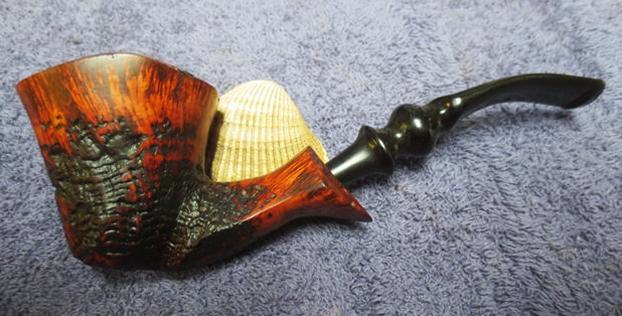
I don’t know when I learned that the Rungsted line of pipes was another line that Preben Holm carved. But I learned that he made several lines outside the Ben Wade contract pipes he was producing for Snug Harbor/Lane. This was confirmed when I looked online and found a thread on PipesMagazine.com. The discussion covered a brand called Britta Bech and one of the members there happened to mention and confirm what I already knew about the Rungsted line. From my memory and the speaker’s the pipes were mostly carved in the mid to late 70’s or early 80’s during the height of the Danish Freehand pipe craze in the US. The speaker there said that though some refer to these as seconds he did not think that was accurate and that really it was a totally separate line from Preben Holm. I would agree with his assessment on this. I am pretty certain looking at the various Rungsted pipes that I have worked on that there are no flaws. They all combine both smooth and sandblast finishes and present a really interesting finished pipe. (mlaug on pipesmagazine.com http://pipesmagazine.com/forums/topic/preben-holm-info-needed).

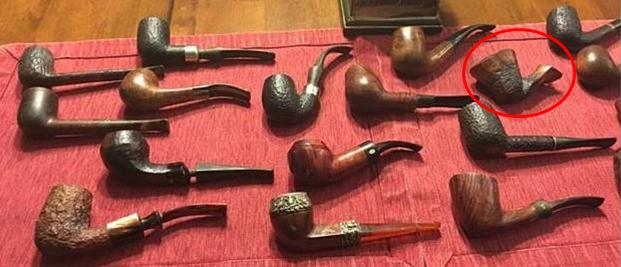
This particular pipe came in a lot that Jeff and I purchased from a fellow in Idaho. Jeff had purchased the pipes shown in the photo below from him. The Rungsted is circled in red at the top right side of the photo. The photo came because I asked Jeff to send me a picture of the pipes he picked up. I have written about the find on a previous blog that you can read if you are interested at the link that follows: https://rebornpipes.com/2016/10/07/a-good-day-hunting-orchestrated-between-british-columbia-and-idaho/ 

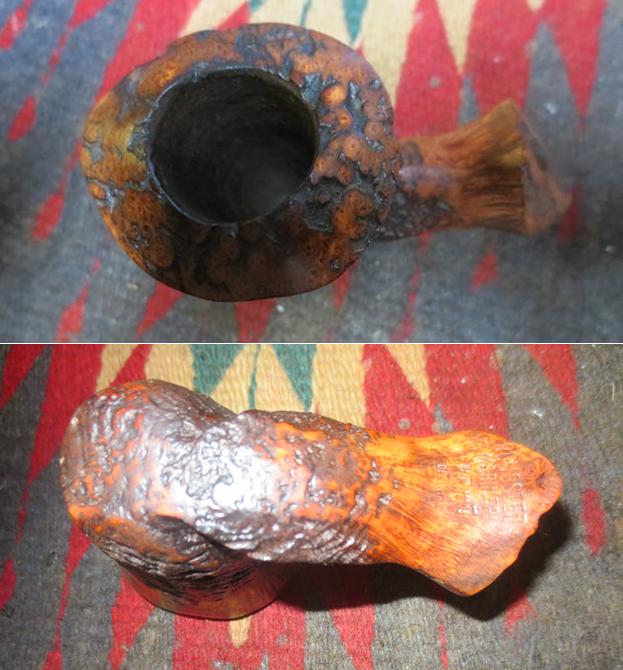
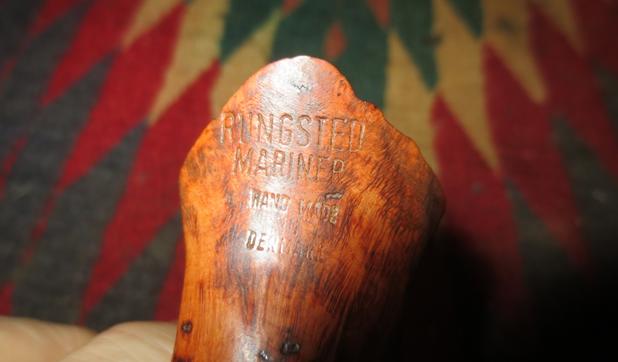
Jeff did a great job cleaning off the debris and grime on this old bowl. It did not have a stem when it came to us, one would have to be made to fit it. He reamed it with a PipNet reamer and smoothed the walls of the bowl with a Savinelli Fitsall pipe knife. He scrubbed out the mortise and the airway in the shank and the stem with alcohol, cotton swabs and pipe cleaners. He scrubbed the exterior of the bowl, rim and shank with a tooth brush and Murphy’s Oil Soap to the oils and tars on the bowl, rim and shank. He rinsed it under running water. He dried it off with a soft cloth. Once the grime was removed the finish underneath was in stellar condition. The rich patina of the older briar was a variegated finish of smooth and sandblast looked great. I took photos of the bowl to show its condition before I started my work on it. The shank of the pipe was stamped on the smooth underside. It read RUNGSTED over MARINER over Hand Made in Denmark. The stamping was quite legible, though the lower portion was lighter than the upper.I had a stem in my can of stems that I had started shaping for another pipe some time ago and abandoned. It needed to have a little more of the tenon end taken down to fit in the mortise but it had the correct look for the pipe. I took pictures of the stem before I did the work to make it fit.I sanded the tenon end down with 220 grit sandpaper until it fit snugly in the shank. I put it in place on the pipe and took the next set of photos. Lots of sanding to do, but it gives an idea of what the pipe will look like when it is finished. In my ongoing experiment with Mark Hoover’s Before & After Restoration Balm I am using it on this mixed finish pipe. It should be a good test of how it works in the transitions between the smooth and sandblast portions as well as on the plateau on the rim and the shank end. I have used it individually on each of those finishes but not on a pipe that had all three features. Mark describes the product being designed for use on briar or stems – whether vulcanite, acrylic or horn. It was formulated to pull the dirt off of the briar as well as polish it at the same time. It includes anti-oxidants to keep the briar from getting damaged from UV rays and water as well as something that enlivens the briar. I worked it into the sandblast portions with my fingers and rubbed it on the smooth portions. I wiped it down with a cotton pad to see if it pulled out the dirt. It worked very well on all the different parts of this bowl. I took the following photos to show the results. As always, I will continue using it for a while and see how it works in a variety of settings before I give an opinion of the product. I buffed the bowl with a clean buffing pad to polish the briar and see what the finished bowl would look like and if areas that needed a bit more attention. The buffed bowl can be seen in the photos that follow. It has a rich patina that really has a deep glow to it. The two finishes really flow into each other and give the pipe a warm look. I sanded out the casting marks and scratches on the stem with 220 grit sandpaper. I opened the slot in the end of the button with needles files and sandpaper to make it easier to push a pipe cleaner into the stem and shank. I polished it with micromesh sanding pads – wet sanding it with 1500-2400 grit pads and wiping it down after each pad with Obsidian Oil to give the next pad more bite when I sanded. I dry sanded it with 3200-12000 grit pads and again wiped it down with the oil after each pad. After the final pad I wiped it down with a final coat of oil and set it aside to dry. I put the stem back on the bowl and buffed it with Blue Diamond on the buffing wheel to polish the stem and the smooth portions of the briar. I used a soft touch around the stamped areas as I did not want to flatten them polish them away even more that they already were. I gave the stem multiple coats of carnauba wax buffed it with a clean buffing pad to raise a shine. I gave the bowl multiple coats of Conservator’s Wax and rubbed it into the sandblast and the plateau areas. I buffed it with a shoe brush and then with a clean buffing pad to raise the shine. I hand buffed the pipe with a microfiber cloth to deepen the shine. The variegated finish on the bowl and stem combine to present a beautiful pipe. The pipe really does look fresh and new to me and I like the finished look with the new stem. The dimensions of this pipe are Length: 6 1/2 inches, Height: 2 inches, Bowl diameter: 2 inches, Chamber diameter: 7/8 inches. The finished pipe is shown in the photos below. I will soon be adding it to the rebornpipes store if you are interested in adding to your collection. It is a beauty and will serve someone very well. Email me at slaug@uniserve.com or send me a message on Facebook. Thanks for looking.

Fashioning a Churchwarden Stem for a Mario Grande Freehand


Blog by Steve Laug

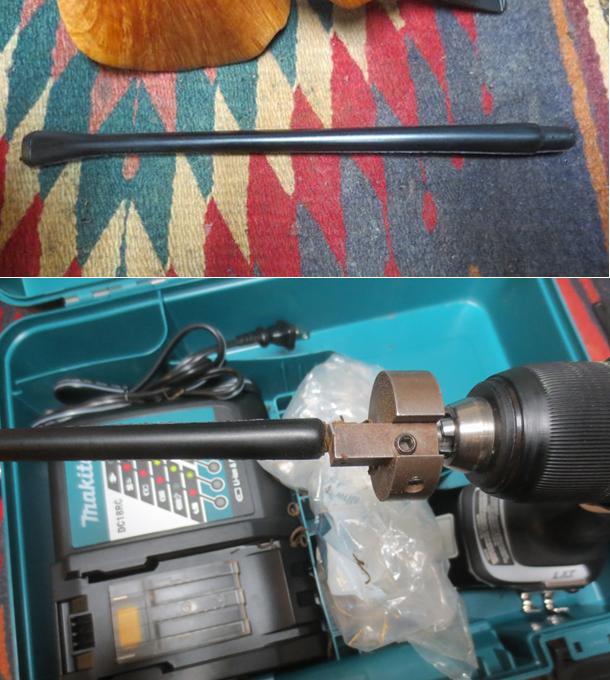
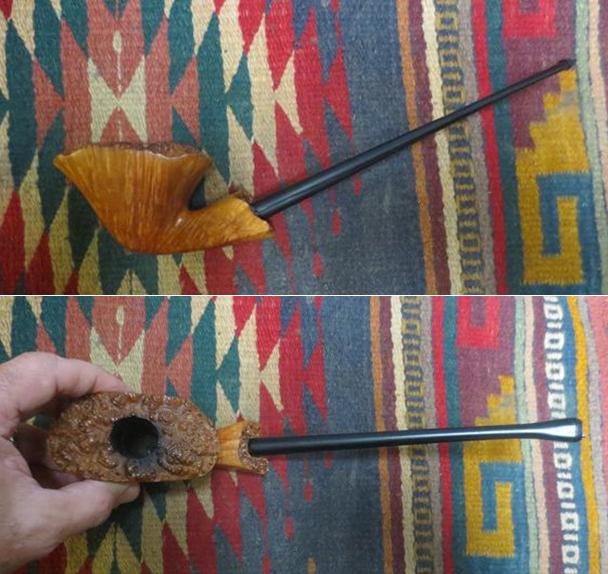
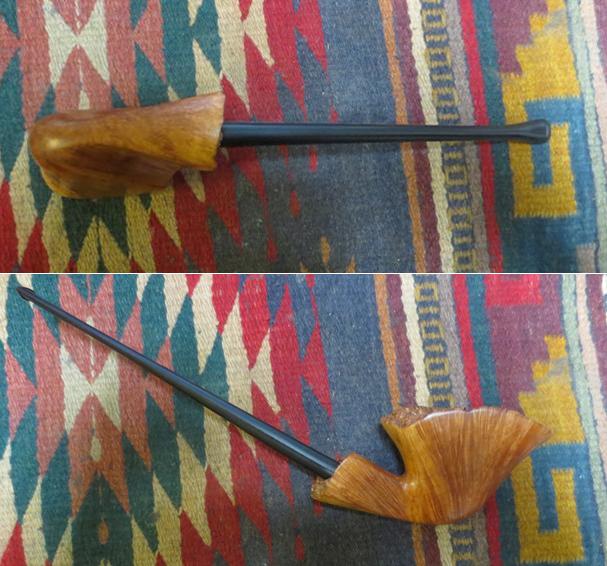
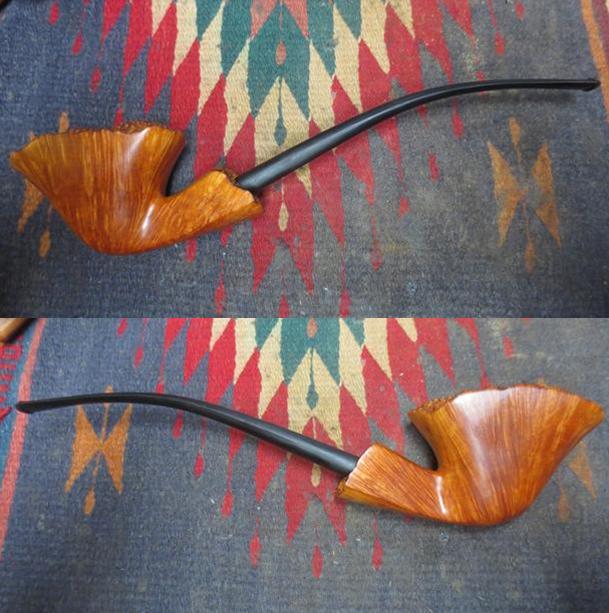
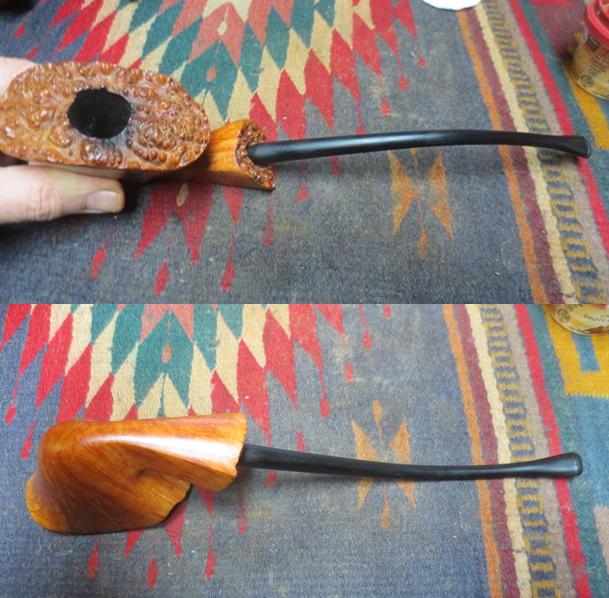
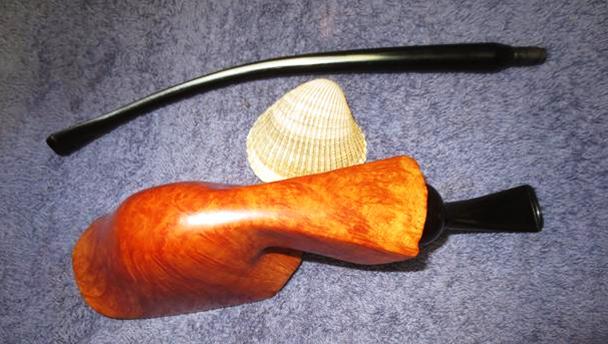
A while back I was contacted by a fellow named Chris who was referred to me by the local pipe and cigar shop. He needed a repair on a Joh’s Churchwarden with a broken shank. I repaired the shank, banded it and cleaned it up. You can read about that repair on a previous blog at this link:  (https://rebornpipes.com/2017/08/26/repairing-a-broken-shank-and-crooked-alignment-on-a-johs-churchwarden/). He also had a big Mario Grande Freehand that he wanted me to make a churchwarden stem for. He really likes the long stems and wondered if I could make him one that he could use interchangeably on his Mario Grande pipes. He wanted a really long stem but the only stems made are 8 inches long. I contacted him and he said to go ahead order one for this pipe. Several weeks went by and the stems finally arrived. I took some photos of the pipe.The pipe was a big piece of briar and it was in good shape. The existing stem was oxidized on the top side and the ball at the tenon insert. I decided that I would both clean up the existing stem and make a new stem for it.I took a photo of the top of the bowl that shows the beautiful plateau top and the size and shape of the chamber. For a block of briar this large the chamber was only 3/4 inches in diameter. It is a small chamber for a pipe this large.I took photos of the stem to show that the oxidation was heavier on the top side of the stem than the underside.I took the stem out of the mailing bag and wiped it down. It had the casting marks on both sides of the stem and on the tenon and button end. Those would need to be cleaned up. I used a Dremel and sanding drum to remove the casting marks on both sides and the button and tenon end. I drilled the airway open enough to hold the pin on the PIMO tenon turning tool. I put the tool in my cordless drill and pushed the stem onto it. I adjusted the cutting head to cut the tenon to the same diameter as the tenon on the existing stem. I held the stem and used the drill to cut away the excess material so that it would fit snugly in the mortise.I put the stem in the shank and took photos of the new look of this handmade Mario Grande. The pipe looks really good and will be a great sitting pipe. There is no way that the weight of this piece of briar will ever work as a clencher. I put a pipe cleaner in the airway in the stem and put it on a cookie tray. I turned the setting on the oven to 350 degrees F and put the cookie sheet and stem in the oven. I let it heat for 10 minutes until the stem was absolutely straight and pliable. I put the stem in the shank and bent it to an angle that matched the flow of the bowl and shank. I held it until the stem cooled and the bend was set.In my continued experiment with the new product from Mark Hoover – the creator of the Before & After Pipe Stem Deoxidizer and Polishes. He calls it Before & After Restoration Balm and it can be used on briar or stems – whether vulcanite, acrylic or horn. He said it was designed to pull the dirt off of the briar as well as polish it. He added some anti-oxidants to keep the briar from getting damaged from both UV rays and water. This is the second smooth briar pipe that I chose to use it on. I figured it would be a good test to see how it worked on a smooth briar bowl and a lightly oxidized vulcanite stem. I applied it and worked it into the crevices of the plateau on the shank and the rim top with a shoes brush. It worked well, so I took the following photos to show the results. The bowl and the stem have a rich shine. I would need to polish the stem a bit more to remove all of the oxidation but it was far better than when I started. I will continue using it and see how it works on a variety of pipes before I give a review.I buffed the stem with red Tripoli and Blue Diamond polish to remove as much of the oxidation as I could with the wheel. I polished the stem with micromesh sanding pads to remove the oxidation that remained – wet sanding it with 1500-2400 grit pads and wiping it down after each pad with Obsidian Oil. I dry sanded it with 3200-12000 grit pads and again wiped it down with the oil after each pad. After the final pad I gave it another coat of the oil and set it aside to dry. I put the stem in the shank and took photos of the new Churchwarden look of the Mario Grande. I sent the photos to Chris to see what he thought of the new stem. I turned my attention to the Churchwarden stem. I sanded away the marks from the castings and shaped the tenon end of the stem into a cone to fit into the conical drilling at the end of the shank. I buffed the stem with red Tripoli and Blue Diamond polish to remove as much of the scratching in the vulcanite as I could with the wheel. I polished the stem with micromesh sanding pads to further remove the scratches – wet sanding it with 1500-2400 grit pads and wiping it down after each pad with Obsidian Oil. I dry sanded it with 3200-12000 grit pads and again wiped it down with the oil after each pad. After the final pad I gave it another coat of the oil and set it aside to dry. I put the churchwarden stem back on the bowl and buffed the pipe and stem with Blue Diamond on the buffing wheel to polish the briar and vulcanite. I switched stems and buffed the short stem with Blue Diamond as well to polish it. I gave the bowl and both stems multiple coats of carnauba wax and I gave the plateau areas on the rim and shank end with several coats of Conservator’s Wax. I buffed it with a clean buffing pad to raise a shine. I hand buffed it with a microfiber cloth to deepen the shine. The rich medium brown stain and the rough plateau on both the rim top and shank end the polished black vulcanite of both stems worked well together to give a rich look to the pipe. The finished pipe is shown in the photos below. I took photos of it with the churchwarden stem and with the original short stem to give an idea of how it looked all polished and shining. Thanks for looking.

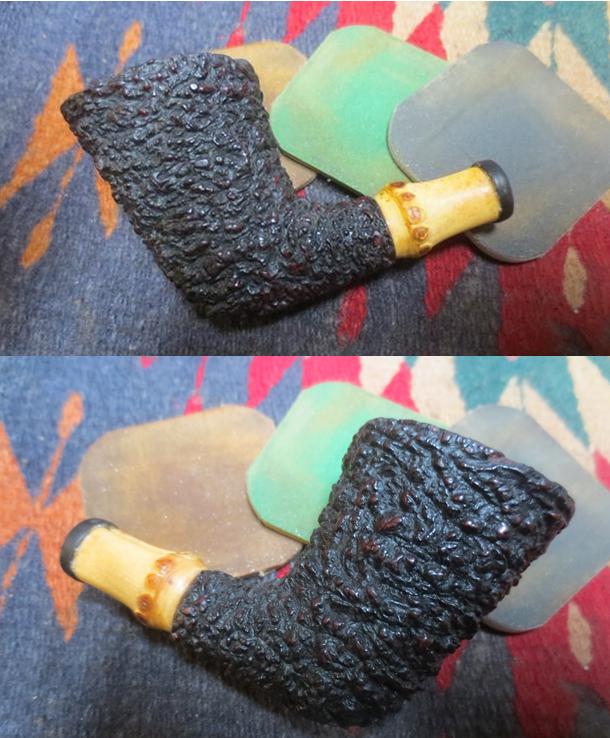
Another Frankenpipe – Salvaging a Lido Root Briar Dublin Bowl


Blog by Steve Laug

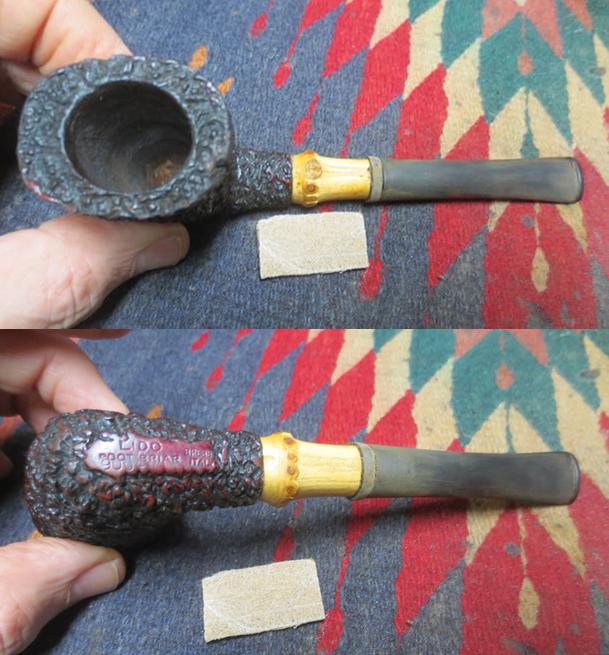
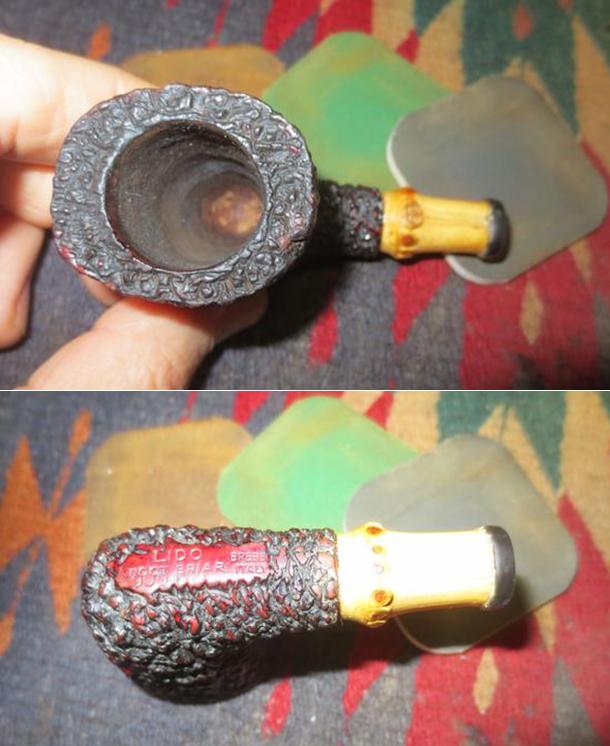
My brother Jeff picked up a nice looking Brebbia pipe on one of his trips to Montana. It was a Brebbia Lido Root Briar Dublin. It had an almost Castello Sea Rock finish on the bowl and shank. It was stamped on a smooth spot on the underside of the bowl and shank. It read Lido over Root Briar over 9004. Next to that it read Brebbia over Italy. Jeff showed me the pictures and it was a nice looking pipe as far as I could see. The shank looked a little short and the angle of the stem was funny but it was nice. The oval shape of the bowl was different and made the pipe interesting. When Jeff examined it at his hotel he discovered that the stem had been glued into the shank. The close he looked the more convinced he became that the shank had been broken and that this was a quick fix either to keep the pipe smokable or to make it sellable. Either way it was no longer a good find in his mind.

We talked when he was doing the cleanup and he was going to throw it away. He did not take pictures of the pipe as it was when he got it for this reason. The bowl had a thick cake and the rim had a copious overflow of lava that filled in the finish. I asked him to clean it up anyway and send it to me. He was dubious but he did it. He reamed and cleaned the bowl and shank to a point where it was spotless. He scrubbed the exterior with Murphy’s Oil Soap and a tooth brush and was able to get the rim clean of the lava. It was clean when it arrived in Vancouver. I unpacked the box and looked at it briefly and tossed it back in the box. I had no inspiration as to what to do with it at that point so I figured I would just let it sit for a while.

Yesterday I woke early to an idea for the Brebbia bowl. I don’t know if that happens to you but it does to me. Probably means I am thinking too much about pipes but it is what it is. I knew what I wanted to do with the bowl so I dug it out of the box and turned it over in my hands. I did not take photos of it at that point though I should have. I used a Dremel and sanding drum to square up the broken shank end. It was at an angle so it needed to be made flat. I sanded it on the topping board to smooth out the end of the shank and face it. I cleaned out the inside of the shank end with alcohol and cotton swabs to remove the dust and debris and ready for the next part of the process.

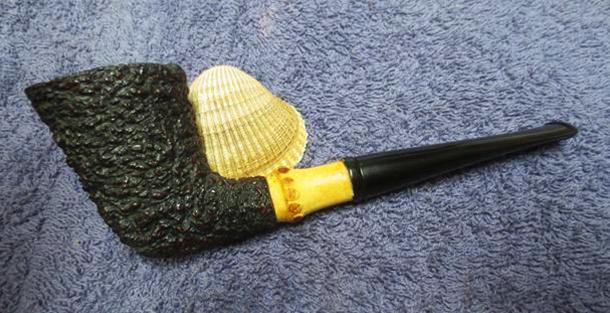
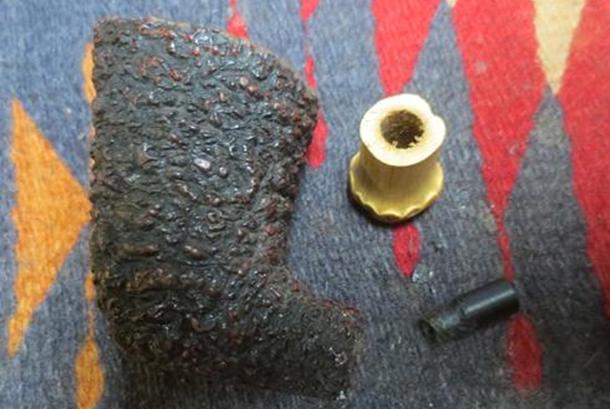
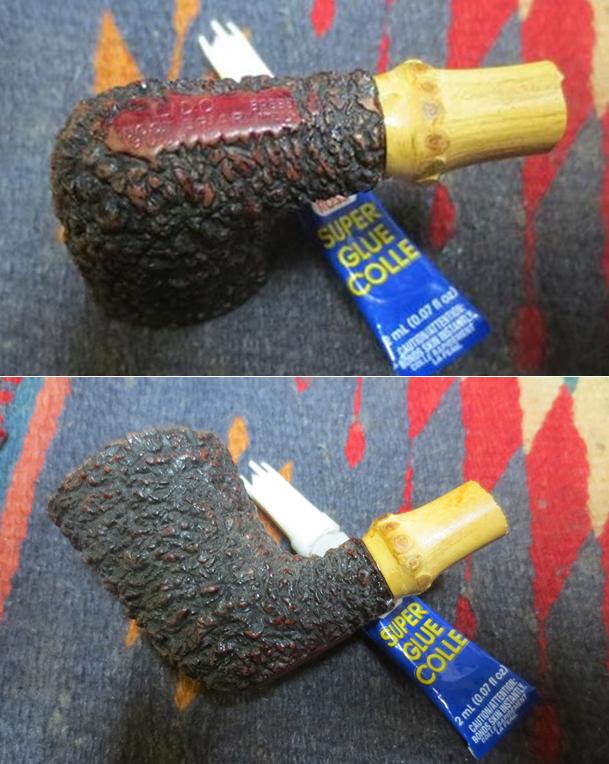
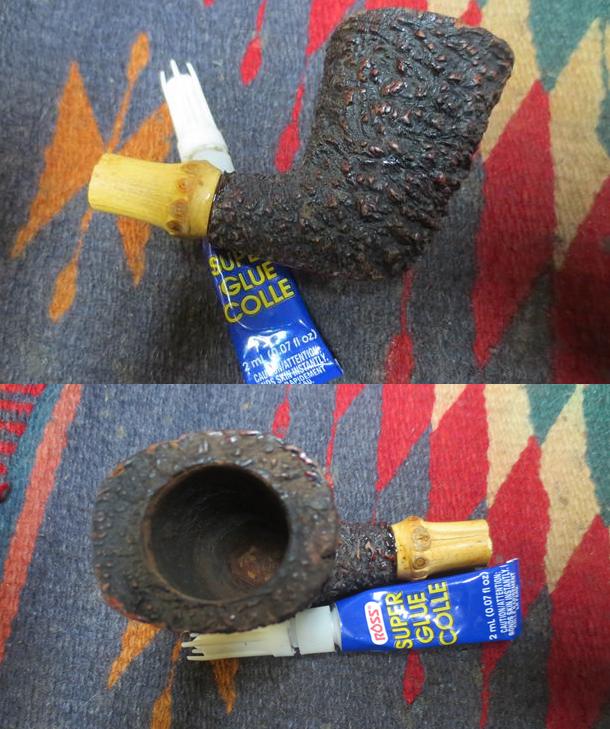
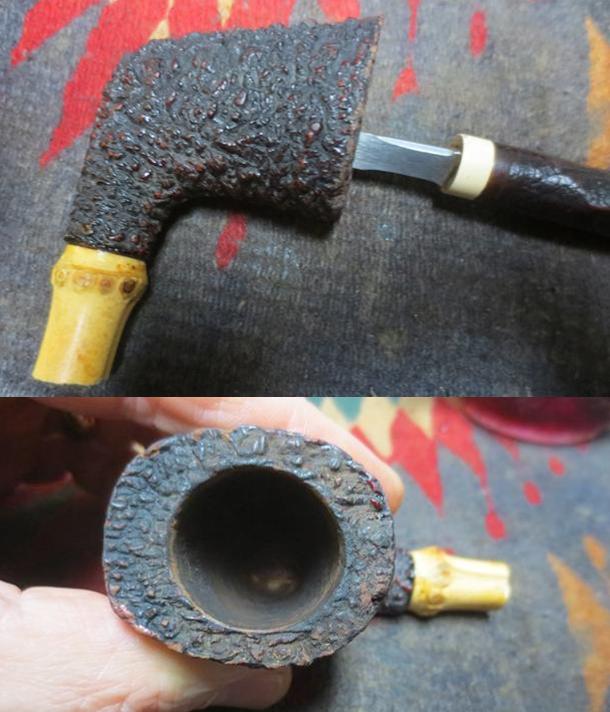
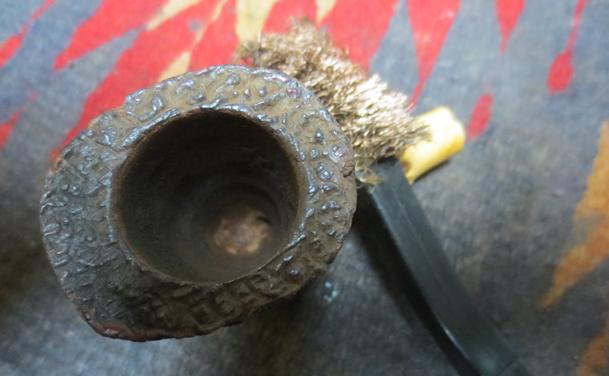
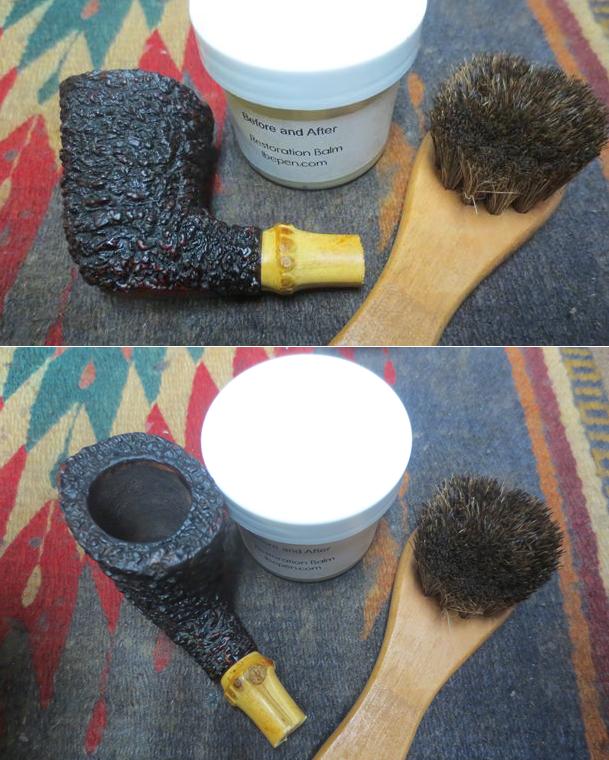
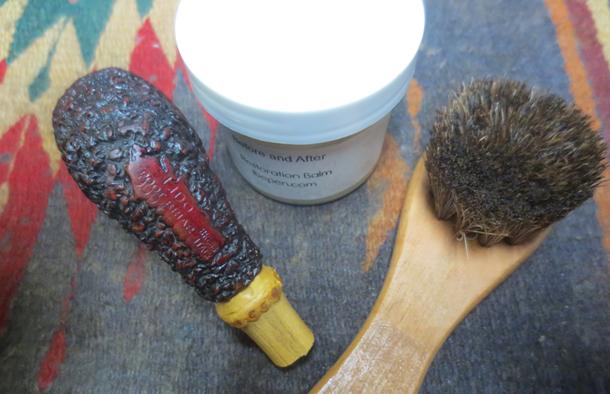
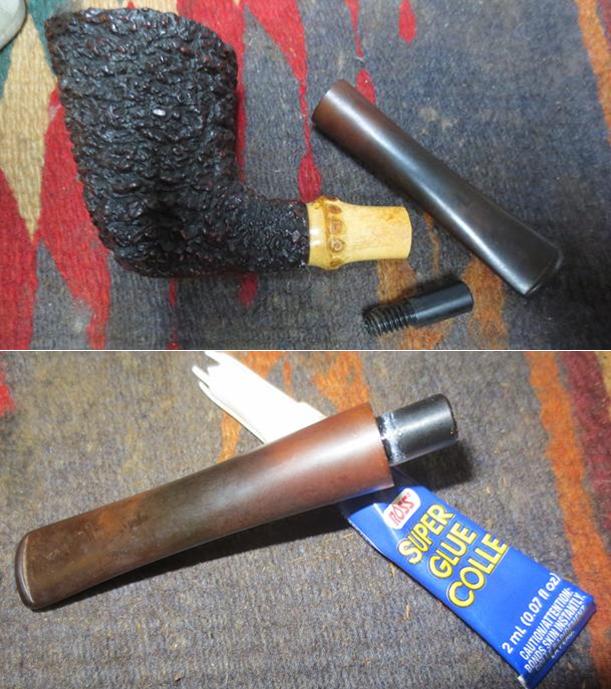
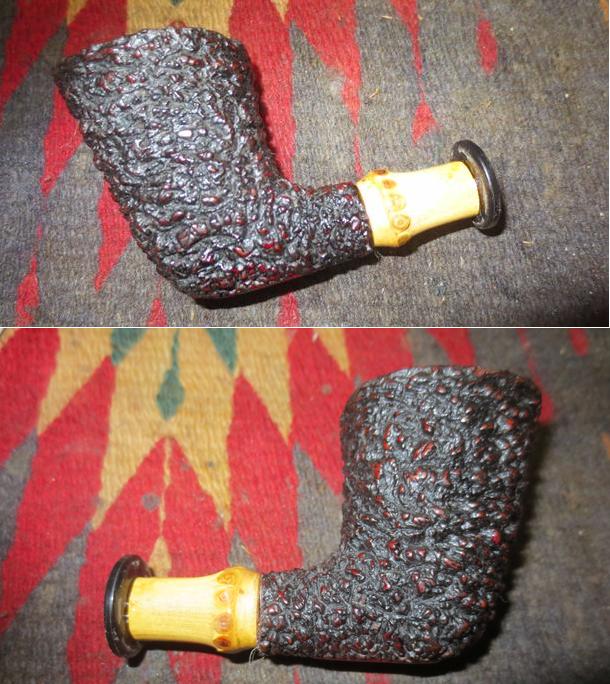
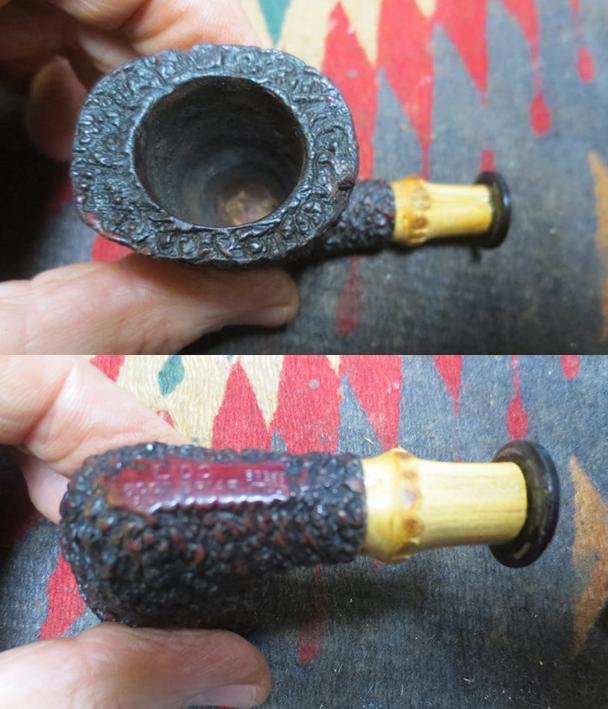
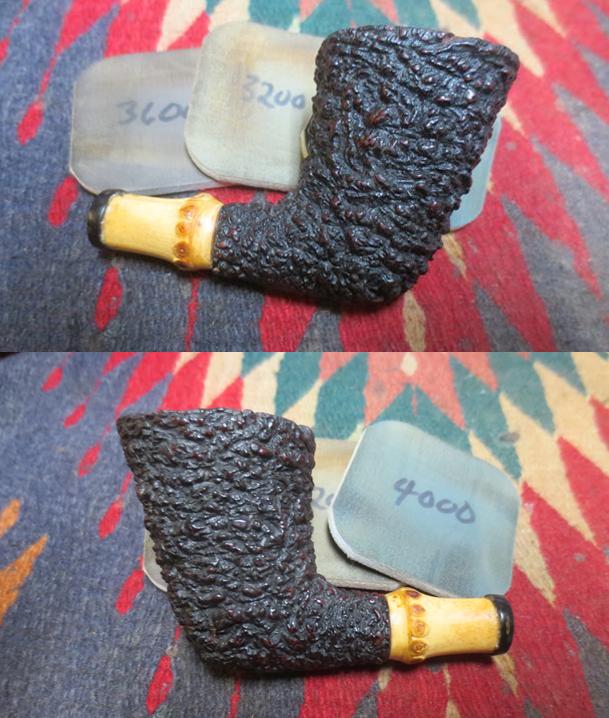
I went through my box of parts and found a one inch long piece of bamboo with one knuckle that I had cut off in a repair on another pipe. It was a thick hard piece of bamboo that would work well. The end with the knuckle was the same basic diameter as the shank end so that would work well. I also keep broken chunks of Delrin and vulcanite tenons to use for this kind of thing so I salvaged a one inch long piece of Delrin that was perfect. I roughed up the surface a bit and took down the outer diameter with the Dremel and sanding drum so that it would insert into the shank end. The photo below shows the accumulation of parts ready to be joined together.In the past I have used epoxy to glue the parts together. This time I chose to use clear super glue. I applied the glue to the end of the tenon that went into the shank and pressed it into place. I made sure that things lined up well and let the glue cure. It does not take long – which is why I chose to use it this time. You have to work quickly to assure all is aligned before it sets. Once it was set I painted the end of the shank and the bamboo with super glue and applied it to the tenon as well and pressed the bamboo over the extended piece of tenon. I lined everything up so the fit was correct. I wanted the groove in the bamboo on the top side of the shank so once it was done I held it until it set. The following photos show the bowl and shank repair at this point in the process. I liked the look of the pipe at this point. I cleaned up the reaming a bit as I saw some remaining cake on the back side of the bowl during the process. I used the Savinelli Fitsall pipe knife to cut it back and smooth out the surface of the bowl interior.I used a brass bristle brush to clean up the top of the rim a bit more. There still seemed to be remnants of lava in the nooks and crannies of the rustication that needed attention. Nothing does the job on this kind of surface like a brass bristle tire brush.I am continuing to experiment with a new product from Mark Hoover – the creator of the Before & After Pipe Stem Deoxidizer and Polishes. He calls it Before & After Restoration Balm and it can be used on briar or stems – whether vulcanite, acrylic or horn. He said it was designed to pull the dirt off of the briar as well as polish it. He added some anti-oxidants to keep the briar from getting damaged from both UV rays and water. I chose to use it on this third pipe – because of the roughness of the rusticated finish on this bowl. I figured it would be a good test to see if it reached deep into the rustication and pulled out the dirt. I applied it and worked it into the crevices with a shoes brush. It seemed to work very well and I took the following photos to show the results. I will continue using it for a while and see how it works in a variety of settings before I give an opinion of the product. I decided to see what stem I would use for this pipe. I needed something close to the diameter of the end of the bamboo. I went through my can of stems and found one that was perfect. It was the same diameter and would match well. It was oxidized but there were no tooth marks in the vulcanite so it would be a simple clean up. It did not have a tenon so I would need to replace the tenon in the stem. The photo below shows the parts. The thing I neglected to photograph was the end of the stem. The drilling was perfect for being able to turn the new threaded tenon in place. I coated the threads with a coat of super glue and turned the tenon in place on the stem. I quickly aligned the tenon and made sure it was straight before the glue set. You have to work quick with the super glue to achieve this before it sets. I sprayed the tenon with accelerator to harden the glue. It leaves behind a white residue that is shown in the photo. It easily comes off with a damp cloth.I set the stem aside for a while and turned back to the end of the bamboo where it would meet the stem. I used the Dremel and sanding drum to flatten it out. I pressed it against the sandpaper on the topping board to face it and make it square. Once I had that done I looked through my box of parts and found a hard rubber button that I had drilled to use as a spacer on a previous pipe. It would work perfect in this situation. I glued it in place on then end of the shank with super glue. I filled in around the joint against the bamboo with the tip of the superglue to seal it and allow no air or moisture to seep through the joint. Once the glue had hardened I would need to trim it back to the diameter of the stem. It would serve as a smooth surface for the end of the stem to sit against and make the fitting of the stem much easier. The final photo in this series shows an end view of the space on the bamboo. You can see how it looks from that perspective in the photo. I neglected to take photos of the process of trimming back the spacer. Once the glue set (several hours) I used the Dremel and sanding drum to take back the excess material of the space close to the diameter of the stem. I sanded the spacer with the stem in place using a worn piece of 180 grit sandpaper to smooth it out and also to remove the oxidation on the stem. I did take a photo of the pipe to send to my brother.There will still need to be a lot of sanding to match these two parts a bit more but you can see the general idea in the photos below. I like the way the pipe looks so far. Given the parts I had available this Frankenpipe is coming together quite well. Once everything lined up well it was time to polish the spacer and the stem. I polished the stem with micromesh sanding pads – wet sanding it with 1500-2400 grit pads and wiping it down after each pad with Obsidian Oil. I dry sanded it with 3200-12000 grit pads and again wiped it down with the oil after each pad. After the final pad I gave it another coat of the oil and set it aside to dry. I polished the spacer at the same time  using micromesh sanding pads – wet sanding it with 1500-2400 grit pads and wiping it down after each pad with Obsidian Oil. I dry sanded it with 3200-12000 grit pads and again wiped it down with the oil after each pad. After the final pad I gave it another coat of the oil and set it aside to dry. I put the stem back on the bowl and buffed the pipe with Blue Diamond on the buffing wheel to polish the briar. I used a soft touch on the sandblasted areas as I did not want to flatten them or fill in the grooves with polishing compound. I gave the stem multiple coats of carnauba wax and I gave the sandblasted bowl several coats of Conservator’s Wax. I buffed it with a clean buffing pad to raise a shine. I hand buffed it with a microfiber cloth to deepen the shine. The rough sandblast finish with its dark brown and oxblood contrast stain and the newly added bamboo shank work well with the tapered stem I fit to the shank to make a beautiful pipe. The pipe looks fresh and new. The dimensions of this pipe are Length: 6 inches, Height: 2 1/8 inches, Bowl diameter: 1 3/8 inches wide and 1 3/4 inches long, Chamber diameter: 7/8 inches. The finished pipe is shown in the photos below. I like it! It came out pretty well in my opinion – not too bad for a Frankenpipe. Thanks for looking.

Rode Hard & Put Away Wet – MLC Redmanol French Briar Bent Billiard


Blog by Steve Laug

This older MLC bent billiard is a turn of the 20th century pipe. According to Pipedia, (https://pipedia.org/wiki/M._Linkman_%26_Co) the initials stand for M. Linkman Company which was thought to mean Mary Linkman Company. They were a Chicago based company that produced both briars and meerschaums. The company was named for the mother of the same Linkman who branded pipes under that same name and then eventually became the Dr. Grabow pipe manufacturer with which we are familiar. Pipephil’s site gave a little more information at this link (http://www.pipephil.eu/logos/en/logo-l4.html). M. Linkman and Co. was established by Louis B. Linkman and August Fisher in 1898. The company closed down in the 1950s and the Dr Grabow branch was sold to Henry Leonard and Thomas Inc. There was also a note that early Linkman’s pipes were stamped MLC in an oval.

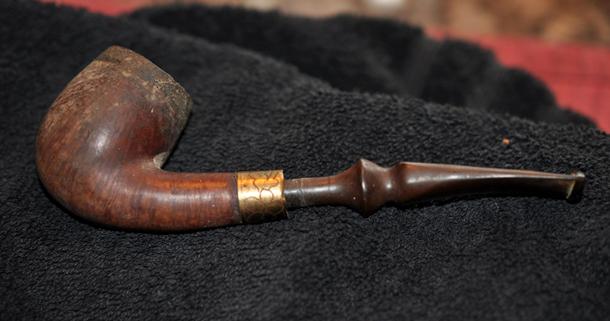
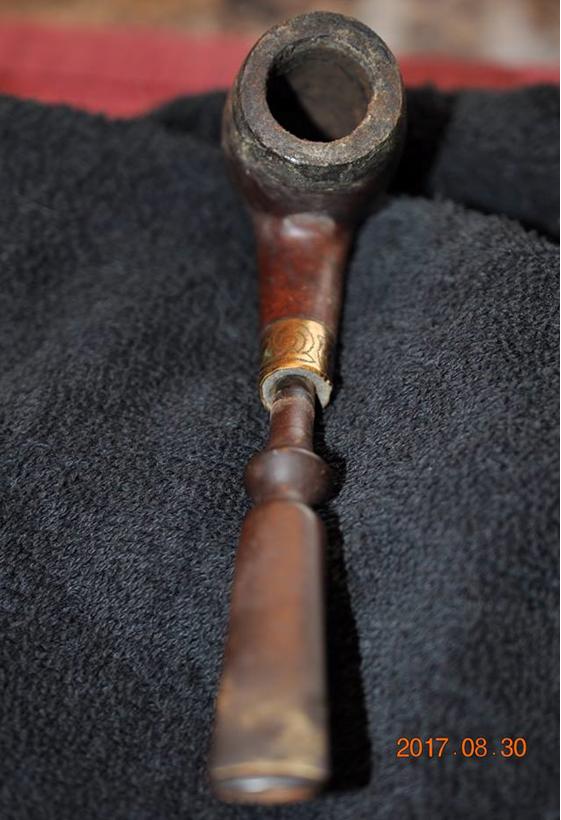
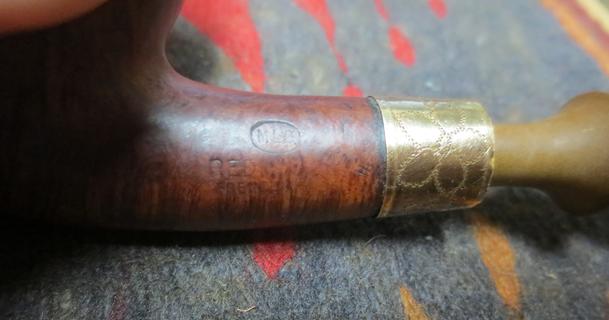
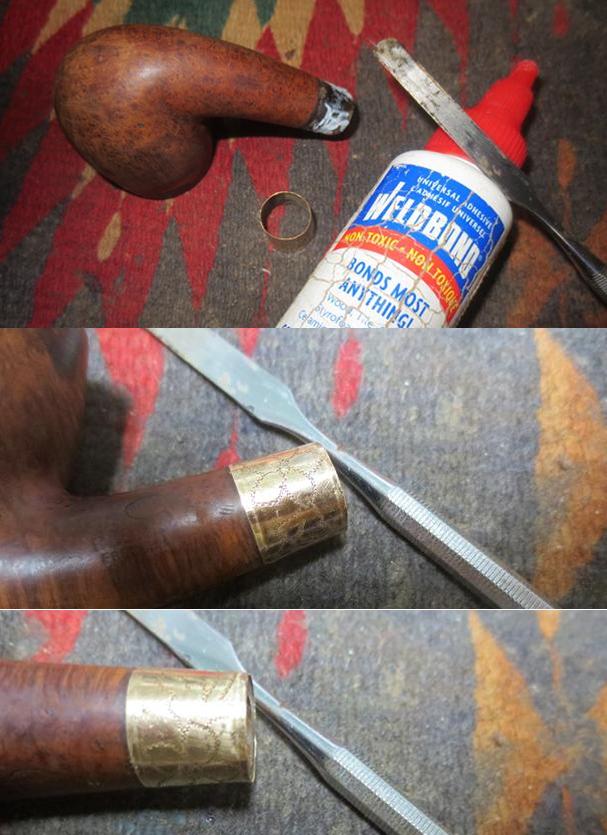
If you have followed this blog for a while you have come to know that I love really old pipes and this one fits into that category of pipes. It is stamped MLC in an oval over Redmanol over French Briar on the left side of the shank. There are no other stampings on the pipe. The band is brass and is etched with a pattern of vines and flower around the entire band. The band was a mess on the shank end. It was bent and dented and no longer round. It was loose on the shank and would need to be straightened out before it was reglued. It is a small bent billiard and definitely sporting the wrong stem. It should have had a Redmanol stem to go with the stamping on the shank of the bowl.

I have written a bit more about the MLC brand on several early blogs (https://rebornpipes.com/2016/11/12/an-interesting-the-nuvo-mlc-italian-briar-hidden-in-a-wdc-case/ https://rebornpipes.com/2017/08/17/restoring-a-sad-old-mlc-bent-billiard/).

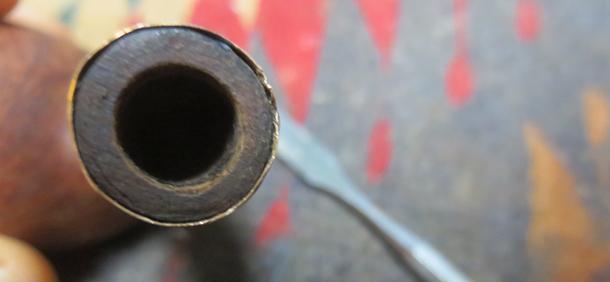
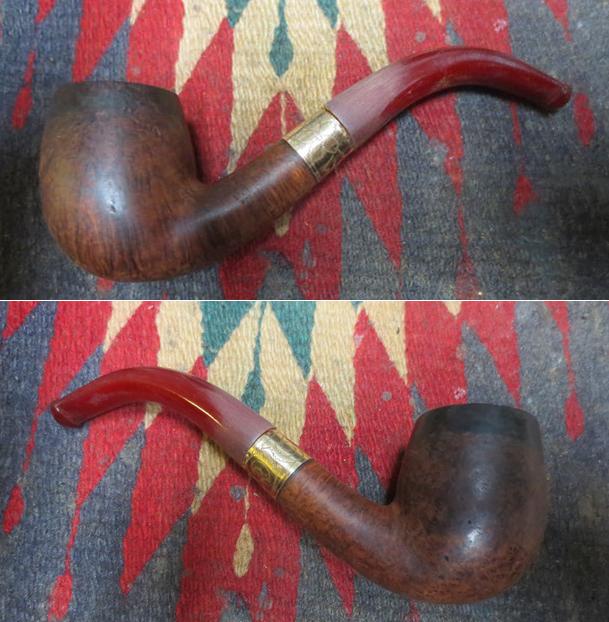
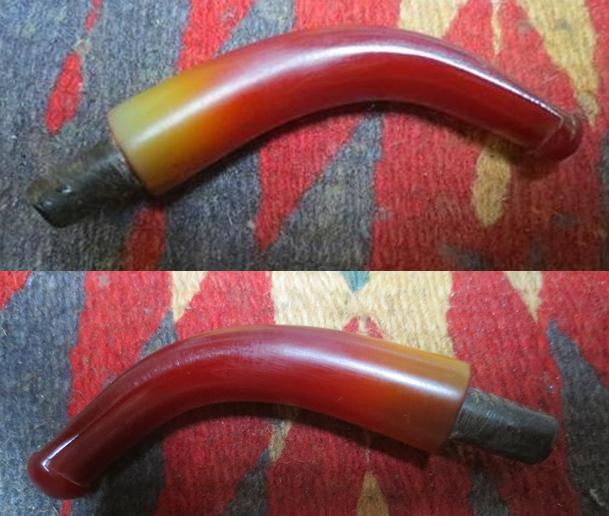
Jeff took the photos that follow before started the cleanup. You can see from the photos the condition of the pipe. The bowl exterior was absolutely filthy. It is the first time I have seen the lava that usually is on the rim flow over the top and down the sides of the bowl. The lava on the outside edge of the bowl and the thick cake in the bowl made it hard to know what the condition of the rim edges. The incorrect stem and the condition of the pipe told me that it was someone’s favourite smoker and when the old stem broke or wore out a convenient replacement was stuck in the shank and it continued to be smoked. The next photos of the bowl, rim and the flow of lava down the outside of the bowl shows how filthy this pipe was before Jeff started his clean up. The bowl is scratched and nicked but even that damage is hard to assess given the condition of the pipe. If you look closely you can see the MLC oval on the next photo of the shank. Below that it reads Redmanol over  French Briar. You can see the tars that have built up on the shank and pushed the band toward the end of the shank. It really was a dirty pipe. The photo of the bottom of the bowl and shank show more of the worn condition of the briar.The next three photos show the condition of the end of the band. It was in rough shape. As the band was pushed off the shank end because of the tars the end that extended beyond the briar of the shank was bent and damaged.The last photo Jeff took showed the condition of the stem. I was not particularly concerned with the stem as I was planning on replacing it with a fitted stem. If I used it in the future I would clean it up.I reread the blogs on the MLC pipes that I had restored previously to refresh the information. Now I was ready to see what I could do with this old pipe. It is really nice working on clean pipes. I have done enough repairs recently that have required me to ream and clean them that I have a greater appreciation for how nice it is to have this done for me. Thanks Jeff for your work and the way it makes my part a bit easier. He worked his usual magic in cleaning up this messy pipe. I really wondered what would lie beneath all of the grime and tars. Jeff reamed it with a PipNet reamer and cleaned up the remnants with a Savinelli Fitsall pipe knife. He scrubbed out the mortise and the airway in the shank and the stem with alcohol, cotton swabs and pipe cleaners. He spent quite a bit of time scrubbing the exterior of the bowl, rim cap and shank with a tooth brush and Murphy’s Oil Soap to remove the build up. He rinsed it under running water. It took a lot of scrubbing to get it free of the tars but it worked well. He dried it off with a soft cloth. Once the grime was removed it was clear that the finish underneath was in rough shape. The briar was quite nice with a mix of straight and birdseye grain around the bowl and shank. I took photos of the pipe to show its condition before I started my work on it. Jeff had done a miracle in removing the thick cake, cleaning the lava on the rim and sides of the bowl. The inner edge was in pretty  decent shape as was the outer one. I was happy to see the condition. There was however a darkening on the rim top and all around the bowl coming down the sides about ¼ inch. At first I thought that it might have been left behind by a rim cap of some sort but there were no small nail holes in the briar on the sides of the bowl. I think that actually it is what is left behind by the greasy hands of the pipe man and the lava that had flowed down the bowl sides.He was also able to remove much of the grime around the band on the shank and leave the stamping undamaged.I removed the stem and carefully slid the band off the shank. I wanted to clean up the end of the shank with alcohol and sandpaper. I also want to smooth out the back edges of the band and see if I could make it smooth and useable once again. I heated the end of an awl/ice pick and pressed it against the damaged areas of the band. The brass was quite thin so it was really quite workable. I was able to remove all of the damaged areas but one that was a compressed area on the bottom side. It would be hidden on the underside of the shank once it was glued back in place.I scrubbed the shank end and the dark area with acetone to remove more of the grime that was on the surface of the briar. I was able to reduce quite a bit of the buildup around the top of the bowl and the rim top with this method. I sanded the end of the shank to smooth it out. I used a dental spatula to spread the all-purpose glue around the shank. I pressed the band back on the shank with the small damaged spot on the underside.I took a photo of the end of the shank to show that the band fit tight on the shank and was even with the shank end. You can see the damaged area on the underside of the shank on the right side of the photo.I looked through my can of stems because I remembered having a bent Redmanol stem that I had picked up somewhere along the way. Sure enough it was there. It was slightly larger in diameter than the shank of the pipe so it would need to be sanded to fit nicely on the shank. It also had a push stem on it that would need to be removed and replaced with a normal tenon. Both of those were relatively easy jobs. I was anxious to get moving on the stem so of course I forgot to take photos of the stem with the meerschaum push tenon. It was loose so I unscrewed it from the stem. I had a small threaded Delrin tenon with the threads that were close to the same and threaded it into the airway on the stem. It worked well so I unscrewed it and glued it in place in the stem. The photos below show the new tenon on the stem.The tenon fit well in the mortise. The fit against end of the shank was nice. I sanded it to remove the excess material and reduce the diameter of the stem to match the shank using 220 grit sandpaper. In the photos below it is getting close to a nice fit. What you can’t see in the photos is that the nice, rich, red colour of the Redmanol lightened with sanding to shades of blood orange. I could not start over so I decided to keep sanding until the fit was correct. At first I did not like the effect on the Redmanol and I was disappointed by the colour shift. Looking at the stem from the drilled airway before I put the tenon in place and the flat end of the stem it appeared that the red was solid all the way through the material so when the oranges and yellows started to show up I was a bit frustrated. Now as I look at it I have to say it is growing on me. It reminds of the Popsicles that we used to by when I was a kid. I stopped sanding the bowl and put the stem on the shank to get a couple of photos so I could look at it on the screen and get the effect. It is almost like flame… kind of a nice variation. It is interesting to see the fine red line between the band and the stem – the flat end still is an even red. I don’t quite understand it but I am resolved to live with it. I am going to stain the bowl so that should also add to the variations of colour on this old pipe.I decided to try to bleach out the darkening on the rim top and first ¼ inch of the bowl all the way around. I wiped it down with bleach on a cotton pad and left it on the dark area to do its work. It worked better on the left side than the right.I stained the bowl with a dark brown aniline stain to try to blend in the dark rim stains. I applied the stain, flamed it and repeated the process. Once it dried I wiped the bowl down with alcohol on cotton pads to make it more transparent and let the grain shine through.  In the process some of the nicks in the briar showed up more clearly. I decided not to fill them in but to leave them as war wounds on this old timer. They tell a story that I wish the pipe could tell us. I polished the briar with micromesh sanding pads. I started polishing with 3200-4000 grit pads and wiped the bowl down after each pad with a damp cloth. I continued to polish with 6000-12000 grit pads and wiped it down after each pad. I hand buffed it with a soft cloth. The dark ring around the top of the bowl is still visible but less than before. The rim looks good. To further blend the darkened top portion of the bowl with the rest of the pipe I gave the bowl a contrast coat of Danish Oil Cherry Stain. I applied it by hand and rubbed it off and repeated the process to get a good smooth coat.I wiped the stain coat off and hand buffed the pipe lightly. The photos below show what the pipe is looking like at this point in the process. The right side still shows darker than the left at top edge of the bowl. I polished the stem with micromesh sanding pads – wet sanding it with 1500-2400 grit pads and dry sanding with 3200-12000 grit pads. I wiped the stem down with Obsidian Oil after each pad. After the final 12000 grit pad I gave it a final coat of oil and set it aside to dry. I put the stem back on the bowl and buffed it with Blue Diamond on the buffing wheel to polish the briar. I gave the pipe multiple coats of carnauba wax and buffed it with a clean buffing pad to raise a shine. I hand buffed it with a microfiber cloth to deepen the shine. The newly variegated Redmanol stem did not too bad with the old pipe. It shines like polished horn and the flow of the colours worked with the colours on the bowl. The way the colours shifted on the parts worked well together to present a beautiful pipe. The dark rim edge almost looks like the way meerschaum pipes were flumed with a dark edge. The pipe looks fresh and new. Later I will need to give it a bowl coating to protect the bowl inside as there are spidering cracks all around the briar. The finished pipe is shown in the photos below. Thanks for looking.


Restemming a A Unique Randy Wiley Freehand 99


Blog by Steve Laug

Earlier this week I received a call from a fellow who had been referred to me by a local pipe and cigar shop. He had a pipe that he had broken the stem on and wanted to know if I would replace the stem for him. He was visiting Vancouver and thought he could get a stem while he was here. I told him to drop it by my office and I would have a look and see what I could do with it. I was not clear at this point if the stem had broken at the tenon or somewhere else. I also wondered if the tenon was still in the shank. I wanted to see for myself before I committed to repairing it. He brought it by the office and he showed it to me and I was hooked. It was a beautiful Randy Wiley Pipe stamped Wiley over an R. Wiley signature. Under that it was stamped Handmade USA over 99. Andy C. posted a comment below that the number 99 is a grade number and that this is one of Randy’s higher grade pipes. Thanks Andy for the information. He told me that pipe was a gift from a partner and he really wanted it repaired. The briar was beautiful grained on the smooth part and faded into a swirled and dotted rustication pattern. The rim top was plateau briar and had been left natural. There was a shank extension that was marbled green, golds, yellows and blacks and really worked well with the patterns on the briar. I looked down the shank of the pipe and could see a lot of debris that was built up in the mortise and airway. It appeared to be tars and pieces of debris from the broken stem. The bowl still had some remnants of tobacco inside. It had a rich tobacco smell that was intriguing. I asked him what tobacco he smoked and he said that he primarily smoked a dark natural tobacco from the Amazon called Mapacho.

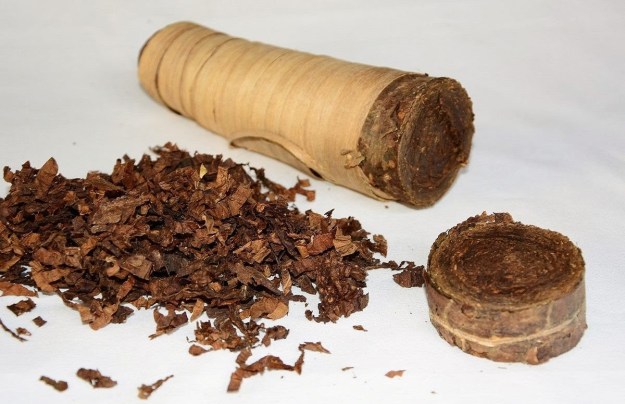
I knew nothing of Mapacho so I looked it up on the internet. I found that Mapacho was Nicotiana rustica and is a rainforest plant in the Solanaceae family. It is a very potent variety of tobacco. It contains up to nine times more nicotine than common species of Nicotiana such as Nicotiana tabacum (common tobacco). I have included a picture because it is an intriguing looking tobacco.I asked him if he wanted me to clean up the bowl, ream and polish the pipe while I made a stem. He did not think it was necessary as it did not have a thick cake and he had taken good care of it. So I brought it home to fit a new stem. I checked out the inside of the mortise and shank with pipe cleaners, cotton swabs and alcohol to make sure that I could get a snug fit with the new stem. I pushed a pipe cleaner through the airway and cleaned out the debris. I waxed the bowl with Conservator’s Wax and buffed it with a clean buffing pad to raise the shine. I took pictures of the polished pipe.  It really is a beauty and the contrast of finishes with the marbled shank extension of the really work well together. The next photo shows the stamping on the underside of the shank. The stamping is very clear and readable.With the bowl finished I used a preformed stem that I had in my stem can that I thought would work well with the style of this pipe. It was in excellent condition – unused and undamaged. It had slight oxidation that would be quite easy to deal with on the buffer. I turned the stem end on my PIMO tenon turning tool to reduce the end to fit in the shank. I cut it back to slightly larger than I needed and then sanded and filed it by hand until it fit in the mortise.I funneled the end of the tenon to facilitate the flow of air from the bowl to the end of the button. I used a sharp pen knife to shape the funnel and sanded the inside to remove all sharp edges.I sanded the stem surfaces with 220 grit sandpaper to remove the light oxidation and scratches on both sides of the stem. I sanded the end of the button and the sides of the stem to remove the casting marks on the stem. I worked on it until it was black and there was no remnant of oxidation or the casting marks left on it. I polished the stem with micromesh sanding pads – wet sanding it with 1500-2400 grit pads and buffed it with red Tripoli to remove the oxidation that showed up in the first photo below. I dry sanded it with 3200-12000 grit pads. I rubbed the stem down with Obsidian Oil after each pad to give traction to the next pad and also bring a little life to the vulcanite stem. After the final pad I gave it a last coat of the oil and set it aside to dry. I buffed the stem with Blue Diamond and gave it multiple coats of carnauba wax. I buffed it with a clean buffing pad to raise the shine. The next series of photos show the development of the shine on the rubber stem. I gave the pipe multiple coats of carnauba wax and buffed it with a clean buffing pad to raise a shine. I hand buffed it with a microfiber cloth to deepen the shine. The new black stem of polished vulcanite and the polished briar work well together to present a beautiful pipe. The pipe looks fresh and new. Tomorrow it will go out in the afternoon post to its original owner. I think he will enjoy the look and feel of his new stem. The finished pipe is shown in the photos below. Thanks for walking with me through this restemming job and through a bit of education for me on Mapacho tobacco. Thanks for looking.

The Rebirth of an Unmarked Horn


Blog by Steve Laug

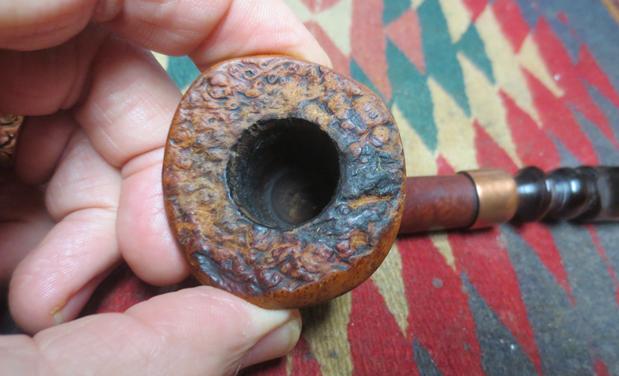
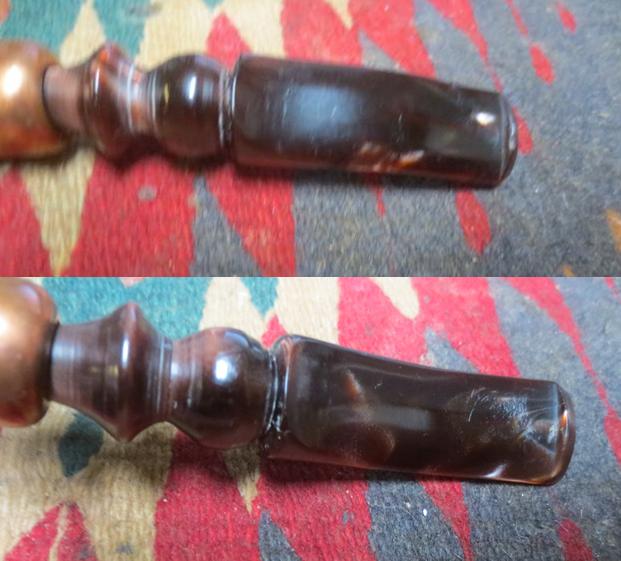
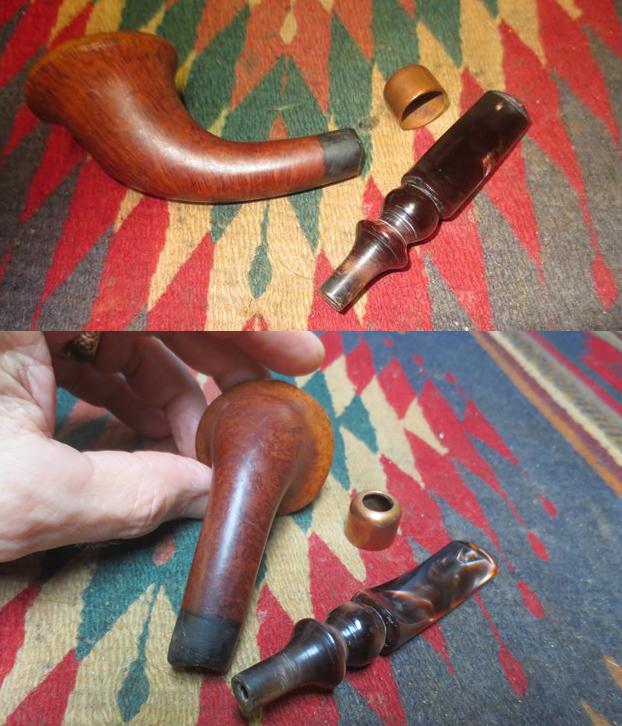
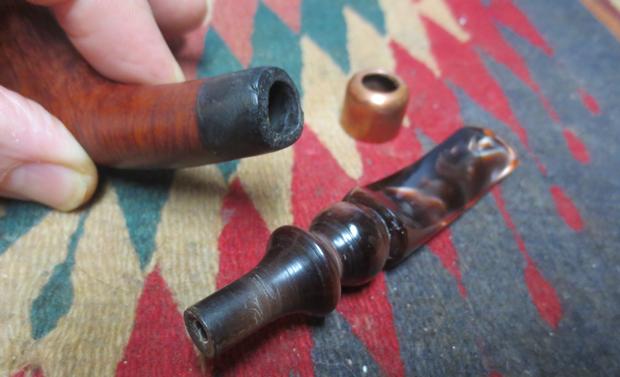
When my brother sent me photos of this particular pipe I could not see what he saw in it. It was just ugly in my opinion. The shank was crooked, the plateau crown had been sanded slightly, the shank was cracked and missing a chunk of briar, the copper ferrule looked like it fit better under a sink than on the shank and the finish had warts in it all around the bowl. To top it off the stem was clunky, thick Lucite and had lots of divots and tooth marks. It did not look like it belonged at all. The entire pipe looked like a failed shop project to me – one that took its own direction as it was being made. He purchased it and took photos of it before he cleaned it up thinking I might be charmed by it as he was.The next photo from the top shows the bow in the shank. I figured that the drilling would be way off once I got it and took it apart. I was pretty certain this one was going to interesting to work on to see if I could get anything resembling a nice looking pipe out of the concoction that it was in the photos. Note also the thick cake in the bowl and the overflow of lava on the rim filling in the smoothed out plateau. It was hard to know at this point if there was damage to the inner edge of the rim because of the thick cake and lava. Only a thorough clean up would reveal the condition. The next three photos show the warts on the sides of the bowl. The finish was rough. It was hard to tell if these were fills or if the pipe had not been sanded smooth when it was originally finished. In the photos, they look like scratches but they are actually standing above the finish on the briar. Some of them have scratches around the edges on the surface of the bowl. As I looked at the horn, I had to admit there was something strangely alluring to the shape and it was growing on me. The copper fitting is not snug on the shank it rattles around and is only held in place by the stem. You can see the gap between the cap and the shank. The shank under the band is coated with grime and there is a dark oxidized buildup.When the stem is removed the cap falls off and reveals the damaged shank. You can see the crack in the shank end and up the side on the right side of the photo below. The tars and oils that have built up on the end of the shank and in the mortise are quite thick. In the second photo below you can see the missing piece of briar. The third photo is a close up of the shank end. It shows the damage clearly as well as thick tars on the shank  under the cap. The stem is Lucite and in rough condition. It is the thick kind of stem that came out when Lucite first came on the market. It thick and poorly shaped. There are major dents in the surface and many tooth marks and chatter on both sides of the stem at the button. I do not intend to reuse the stem as it is not my kind of stem. I will replace it with a vulcanite stem and fit it to the shank. Jeff did his usual thorough clean up even on this ugly, old pipe. He reamed it with a PipNet reamer and cleaned up the remnants with a Savinelli Fitsall pipe knife. He scrubbed out the mortise and the airway in the shank and the stem with alcohol, cotton swabs and pipe cleaners. He scrubbed the exterior of the bowl and shank with a tooth brush and Murphy’s Oil Soap and rinsed it under running water. He scrubbed the rim on the bowl to clean out the lava on the plateau. It took much scrubbing to get it free of the tars. He dried it off with a soft cloth. The bowl itself was very light weight. It is a good looking piece of briar and has flame grain all around the bowl and shank with some birdseye on the shank top and bottom. He cleaned up the Lucite stem with the oil soap as well and was able to remove much of the debris. There were tooth marks and tooth chatter on both sides of the stem. The freehand style stem had a tapered tenon that sat tightly in the copper end cap. The copper cap was loose and fell off when the stem was removed from the pipe. I spent time turning the pipe over to see if I could find any identifying stamping that would help me know who made it and when it was made. There was nothing there. It was an unstamped pipe by an unknown maker at an unspecified point in time. I took photos of the pipe to show its condition before I started my work on it. Jeff did a great job on the rim top and the bowl. The inner edge of the rim was in good condition with little damage. There was still a little lava on the back side of the rim top that would need to be taken care of.The Lucite stem was clean but looking at it close up I knew that I did not want to keep the stem. I would need to go through my can of stems to find one that would work on this pipe.I removed the stem and the end cap and looked closely at the damage to the end of the shank. Once Jeff had cleaned it up the damage was really clear. The end of the shank had deteriorated and chunks of briar were missing. The surface of the shank end was rough and damaged. There was a large crack on the right side near the underside going from the shank end up the shank for ½ inch. I used a Dremel and sanding drum to remove the damaged shank end. I evened up the end of the shank and took off all of the compromised briar. I cleaned up the end so that a regular stem would work with it. I smoothed out the inside of the mortise. During this cleanup is when I discovered that the mortise and the airway in the shank were drilled at an angle. The airway was high in the end of the mortise and came out at the bottom of the bowl. The mortise itself curved and was poorly drilled in the shank. I cleaned up the briar that had been under the copper band. The briar was black with the colour going deep in the briar. I sanded it smooth and used a microdrill bit to drill a pin hole at the end of the crack to stop it from spreading further. I filled in the hole and the crack with clear super glue and let it cure.When the glue repair had dried, I sanded it smooth and pressure fit a nickel band over the end of the shank. I heated the band with a lighter to expand it and pressed the shank end and band so that the band went up the shank to cover the crack and the repair. I think that the band was a far better look for the pipe than the copper shank cap had been. I scrubbed the plateau top with a brass bristle tire brush to remove the remaining lava in the crevices of the surface. I worked on it until the rim top was clean.I sanded the bowl with 220 grit sandpaper to remove the warts from the surface and smooth out the scratches and dents. I wanted the surface to be smooth the way it should have been when the pipe was made. I worked on it until it was smooth to the touch. When I finished I washed the surface of the bowl and shank with acetone on a cotton pad to remove the last of the dust and the remaining finish from the briar. I buffed the bowl with Blue Diamond to polish it a bit and see where I needed to do some work before the final buff. I hand polished the briar with micromesh sanding pads – wet sanding with 1500-2400 grit pads and dry sanding with 3200-12000 grit pads. I wiped the bowl down with a damp cloth after each buffing pad. I hand buffed it with a microfibre cloth after the 12000 grit pad. The pictures below show the progress of the polishing on the briar. I used a black Sharpie Pen to colour in the crevices on the plateau top. I wanted the smooth high spots to shine through the deep black in the grooves. The contrast would look really good once the pipe was given a finish coat of stain and was buffed and waxed.I stained the briar with a Danish Oil Cherry stain to highlight the red colours in the briar and bring about a contrast with straight grain. I stained the plateau as well to give red hues to the high spots and contrast with the black of the crevices on the top. I hand buffed the bowl with a soft cotton cloth and then with a microfiber cloth to raise the shine. The bowl looks really good and the grain stands out. The straight grain all around the bowl sides looks really good. I chose a vulcanite saddle stem for the replacement for the Lucite stem. I knew it would be a bit of work to get things lined up because of the drilling in the shank. I measured the angles in the shank and figured I would need to bend the tenon at the angle shown in the photo. I heated the tenon and put it in the shank while it was still pliable and set the angle to match the angle of the mortise. The photo below shows the angle on the tenon. Bent at that angle the stem sits tight against the mortise. It gives you a good idea of the how poorly drilled the pipe was and what measures I had to take to line things up. I gave the tenon a coat of clear fingernail polish to make it fit snug in the mortise and let it dry. I roughened it up with the edge of a needle file to give it a bite in the shank. I tried the fit and all was well.I sanded the stem surfaces with 220 grit sandpaper to remove the light oxidation and the tooth marks and chatter on both sides of the stem. I worked on it until it was black and there was no remnant of oxidation or tooth marks.I polished the stem with micromesh sanding pads – wet sanding it with 1500-2400 grit pads and dry sanding it with 3200-12000 grit pads. I rubbed the stem down with Obsidian Oil after each pad to give traction to the next pad and also bring a little life to the vulcanite stem. After the final pad I gave it a last coat of the oil and set it aside to dry. I left the tenon with a few ridges to add bite to the inside of the mortise and hold it firmly in place. Some oxidation showed up on the top side of the stem near the saddle in the photos above so I worked it over in that area once again. When I finished I buffed the pipe on the wheel using Blue Diamond Polish and worked over the stem and bowl to remove any remaining scratches. I buffed the nickel band to give it a shine. I gave the pipe multiple coats of carnauba wax and buffed it with a clean buffing pad to raise a shine. I hand buffed it with a microfiber cloth to deepen the shine. The warts and nicks that I had sanded out were gone and the grain just popped on this old pipe. The new stem, with the angled tenon brought things into line and to me the pipe looked much better. The black of the polished vulcanite and the polished briar work well together to present a beautiful pipe. The finished pipe is shown in the photos below. It really is a beauty. Thanks for looking.

Replacing a Broken Tenon & Restoring an Old Italian Bulldog


Blog by Steve Laug

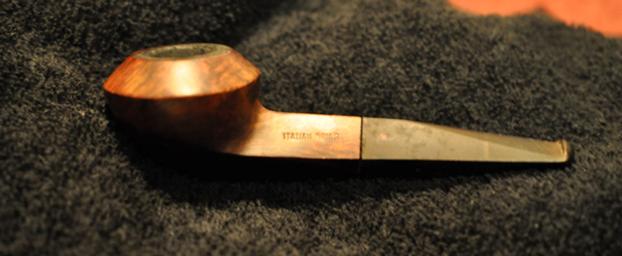
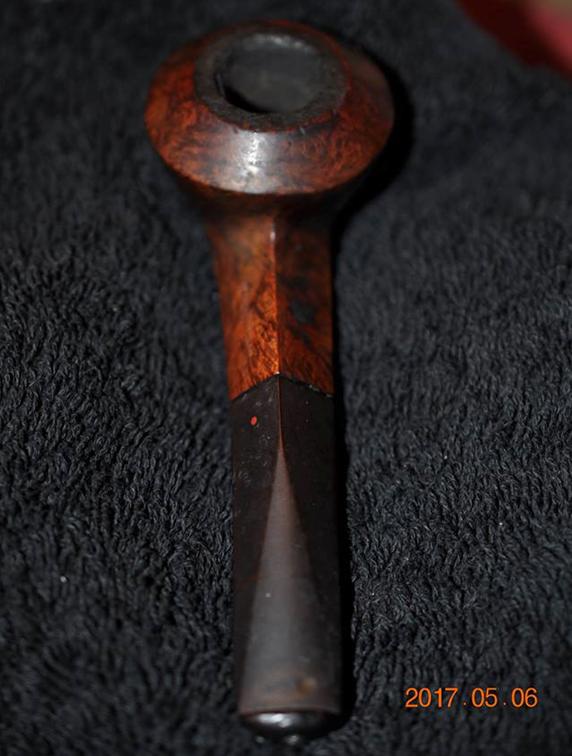
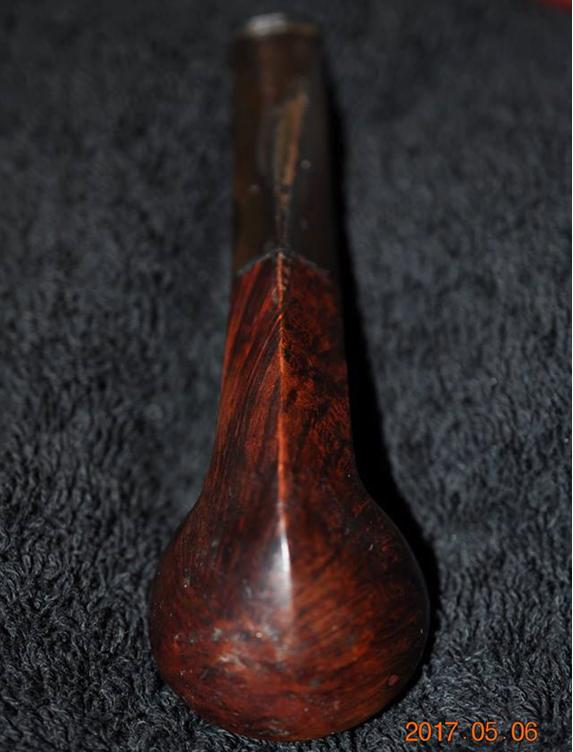
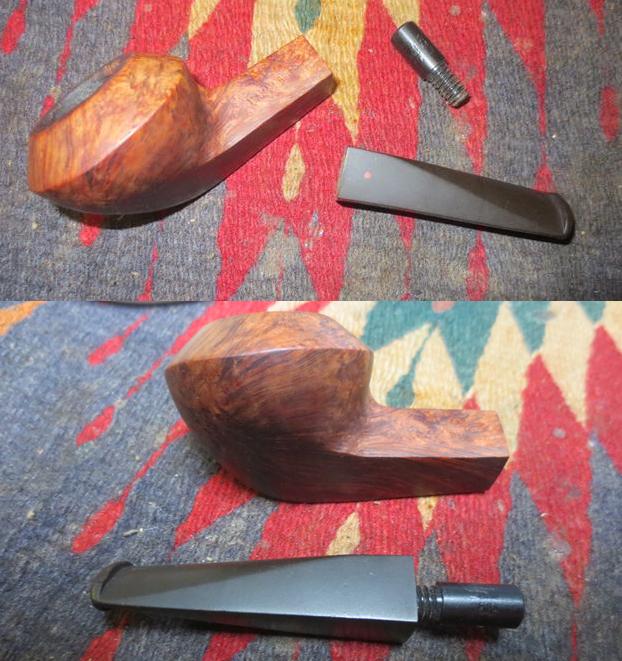
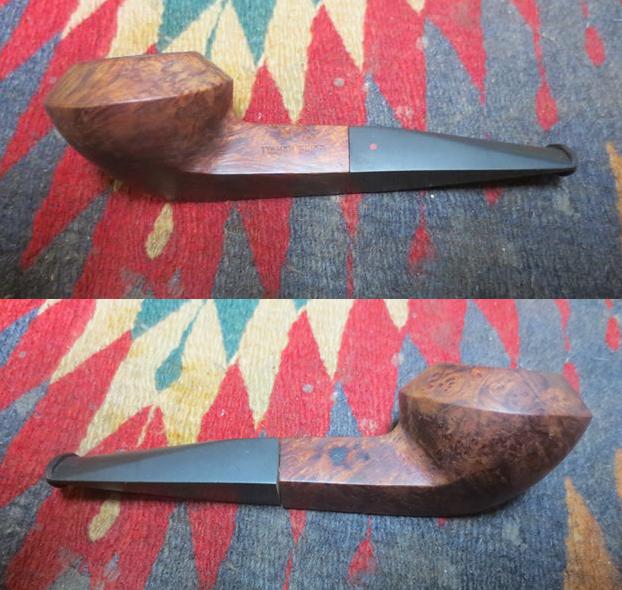
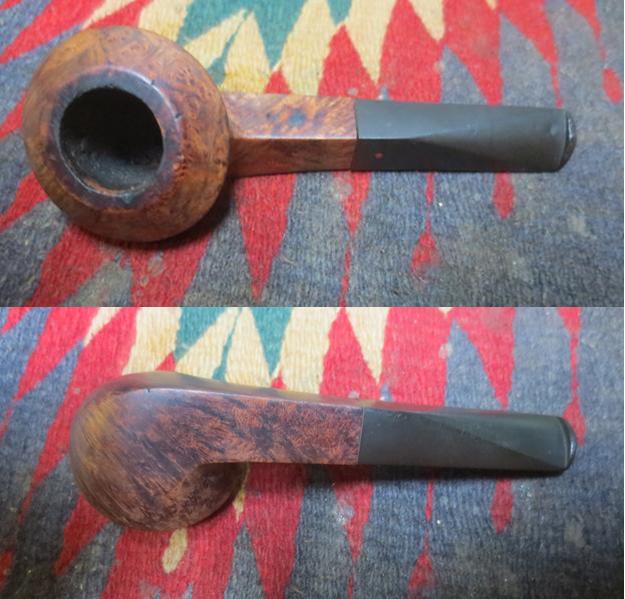
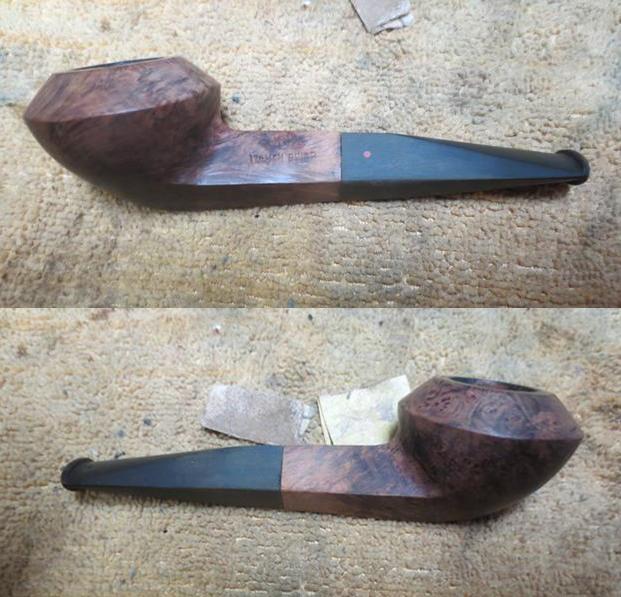
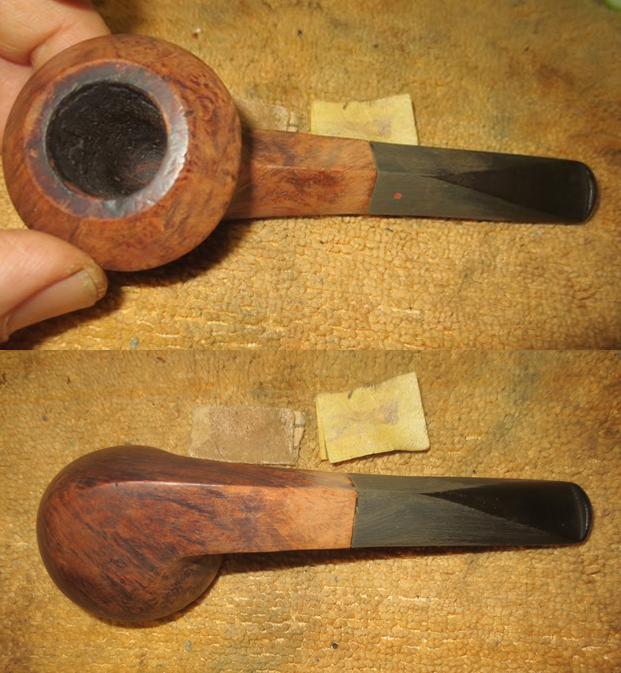
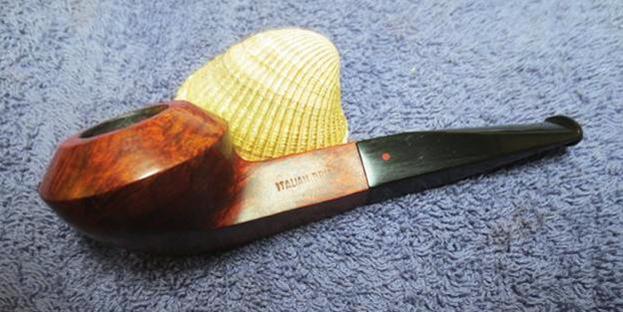
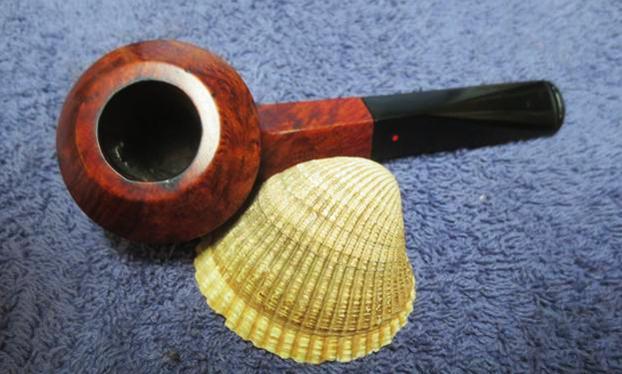
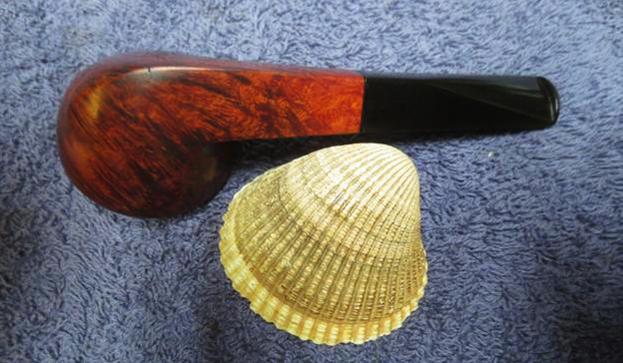
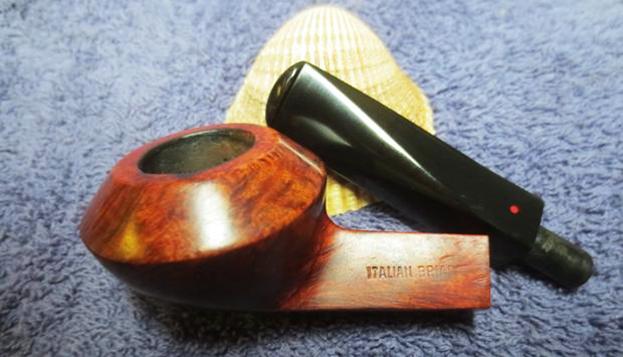
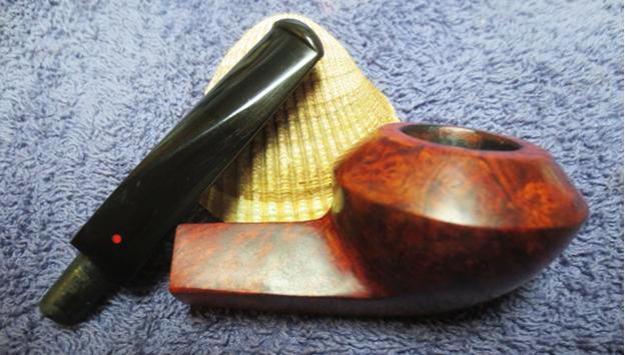
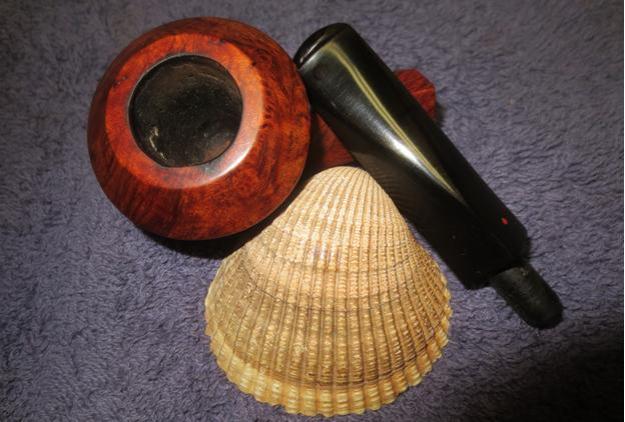
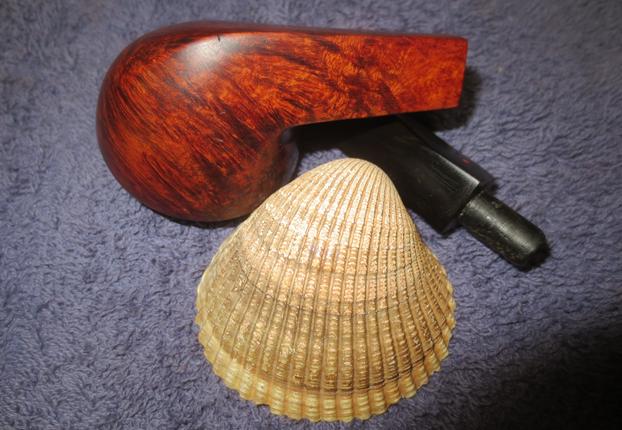
I am just about finished cleaning up and restoring the pipes my brother and I picked up on our Virtual Pipe Hunt in Montana. The next pipe that I brought to my work table was from that hunt. I think I may have two or three left two work on but this is one that I have picked up and put back several times since they arrived in Vancouver. As I mentioned in my last blog I have written several blogs about that hunt as it was one of those once it a life time finds. It contained a lot of late 1890s and early 1900 era pipes. These included C.P.F., W.D.C. and some no name pipes from the same era. Again if you are interested in reading about any of the restorations, a quick search on the blog for “Virtual Pipe Hunt” will give you the links to a blog about the hunt and to other pipes that were included. This particular little Bulldog shaped pipe had something about it that caught my eye. It combined some interesting grain (birdseye, swirled and cross grain) on the bowl and a diamond shaped taper stem with an orific button. The finish was worn and the stem was glued onto the shank. At this point in the process the stem would not move as the glue held it tightly in place. The top of the shank was stamped ITALIAN BRIAR in block print and no other stamping on the pipe on either side. The stem had a red dot on the left top side of the diamond. There were tooth marks and the stem was really dirty with an overflow of glue that was on both sides. My brother took photos of the pipe before he started the cleanup process.The next two photos show the pipe from the top side and the underside of the pipe. The topside shows the wear and tear to the finish. There were a lot of scratches and nicks in the briar and a cake in the bowl with lava overflow on the rim top. The underside of the bowl showed the nicks and scratches that went down both sides and the bottom of the bowl and shank. He took some photos of the rim top and bowl. Both photos show the thick cake in the bowl and a thick lava coat on the rim top. It is hard to know if there was any damage to the inner edge of the bowl or on the top surface of the rim.The close up of the underside of the bowl and shank shows the glue buildup in the gap between the shank and the stem.The stem looked like it was in rough shape. There were some peeling flakes on the surface of the stem. They could either be glue or damage to the stem.I was really surprised that my brother was able to get the stem off the shank. It turned out that the broken tenon was glued in the shank and a piece of inner tube was glued into the broken tenon. About an inch of the tube extended beyond the shank and the stem fit on the tube. The glue was painted onto the end of the shank and the end of the stem and the two parts were held together until the glue set. Jeff used some acetone to eat through the glue in the gap between the stem and the shank and was able to pry the pieces apart.The next photos show the damaged stem. It looked like the repair had also included painting the surface of the stem with glue. The glue had bubbled, cracked and peeled leaving behind a messy chipped finish. The orific button on the rounded stem end was in good shape. It appeared that the glue mixture had protected the stem from a lot of tooth marks and chatter. Jeff did his usual thorough cleanup of the pipe. I am coming to expect nothing less when he sends me pipes that have gone through his cleaning process. He reamed the bowl with a PipNet reamer, scraped the bowl and the rim top with a Savinelli Fitsall Pipe Knife to clear off the lava build up. He cleaned out the internals in the airway in the shank as much as possible with the broken glued in tenon in the way. He used alcohol, cotton swabs and pipe cleaners. He cleaned out the airway in the stem with alcohol and pipe cleaners. He scrubbed the exterior of the briar and the stem with Murphy’s Oil Soap and a tooth brush to remove all of the grime on the briar and the hardened, chipped glue on the finish of the stem. He rinsed the parts under running water and dried it with a soft cloth. He soaked the stem in OxyClean to clean off the glue on the surface. When the pipe arrived in Vancouver it looked different than it did when we picked it up in Montana. I forgot to take photos of the pipe before I started on it because I was excited to pull the broken tenon from the shank. You can see the clean bowl and stem in the photos.

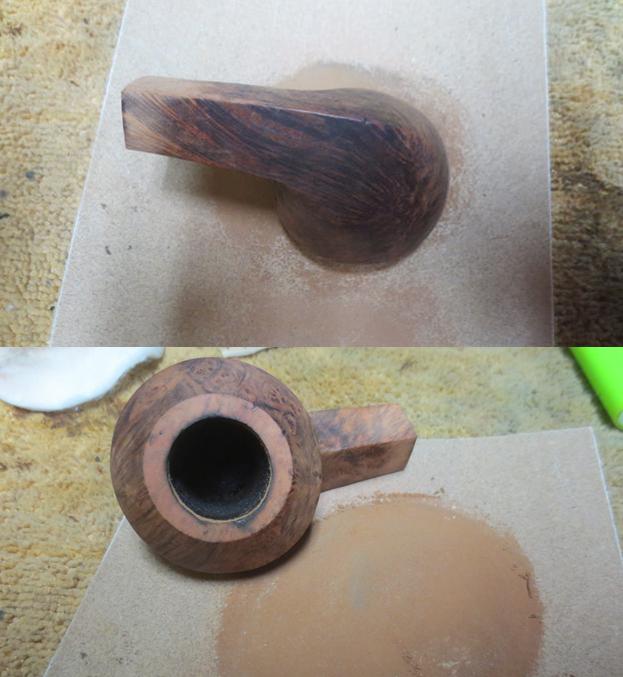
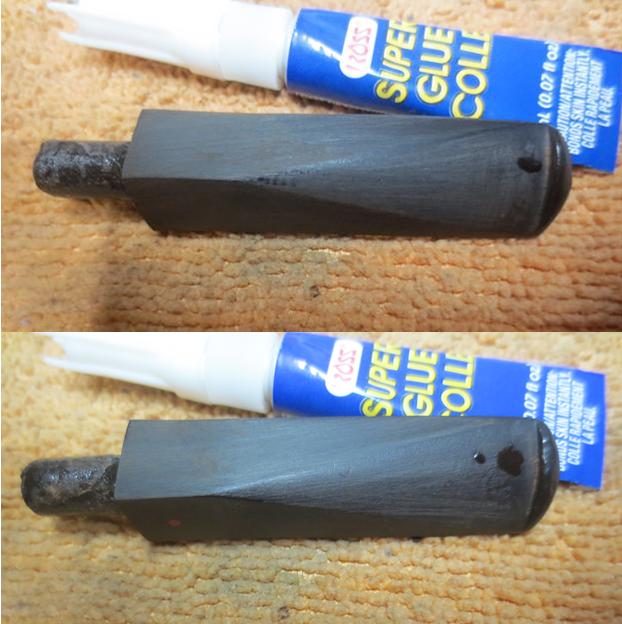
I put a drill bit in the chuck of my cordless drill and turned the bowl as the bit went into the airway on the broken tenon. I used one that was slightly larger than the airway and worked my way up to the one in the second photo. Some of the tenon crumbled away and the remainder stuck on the drill bit. I pulled it out of the shank and that part of the process was complete. The shank was clear. I used a Dremel and sanding drum to smooth out the broken edges of the tenon on the end of the stem. I smoothed it out until the broken tenon was smooth against the end of the stem. I put a drill bit in the chuck of my cordless drill and turned the stem onto the bit to open the airway for the new threaded Delrin tenon. I increased the size of the bit until it was the same size as the threaded tenon end. I cleaned up the newly drilled airway with a dental burr on the Dremel.I took the stem back to the work table and took pictures of the process of inserting the new tenon in the stem. The photos show the progress. I turned the tenon into the stem and put glue on the final few threads and use a pair of pliers to turn it into the stem until it was seated against the flush end. I put the stem in the shank and took some photos. The alignment is always a little off when the stem is first inserted. In this case the fit against the shank was perfect. The sides on the old stem and shank were just a little bit off. The left and top side aligned almost perfectly but the right and underside of the stem need some minor adjustments to fit properly. I sanded the stem/shank connection with 220 grit sandpaper to smooth out the transition and make it smooth to touch. I wiped the bowl down with acetone on a cotton pad to remove the remaining finish from the bowl. When I was finished I took photos of the fit and it was looking really good. I topped the bowl with 220 grit sandpaper on a topping board. I topped it until the surface was smooth and the damaged areas were removed. I used a folded piece of sandpaper to smooth out the inner edge of the bowl.I sanded the stem surface to remove the scratches and damage to the flat sides of the diamond and also the flat angle to the button. I wiped the stem down with alcohol on a cotton pad and removed the debris left behind by the sanding. I filled in the tooth marks with clear super glue and when the glue dried I sanded the repairs smooth with 220 grit sandpaper. I put some clear super glue on the tenon to build it up so that the fit in the shank would not be too loose. When the glue dried I sanded the surface of the tenon until it was smooth. I polished the stem with micromesh sanding pads – wet sanding it with 1500-2400 grit pads and dry sanding it with 3200-12000 grit pads. I rubbed the stem down with Obsidian Oil after each pad and after the final pad I gave it a final coat of oil. I set it aside to let it dry. I scraped out the inside of the mortise with a pen knife to remove the glue build up on the walls. I cleaned up the bevel with the blade of the knife at the same time to make sure that it did not interfere with the fit of the stem against the shank. I cleaned out the airway and mortise with pipe cleaners, cotton swabs and alcohol to remove the debris that remained once I pulled the old tenon. It took a few pipe cleaners and swabs but it did not take too long to clean it up. I polished the briar with micromesh sanding pads – wet sanding it with 1500-2400 grit sanding pads.  I worked around the stamping so I would not damage it in the process. I decided to stain the bowl with a medium brown stain pen rather than my regular aniline stain. I covered the sanded rim top, bowl sides and the shank with the stain. I continued to polish the bowl with micromesh sanding pads – dry sanding it with 3200-12000 grit sanding pads. I wiped it down after each pad with a damp cotton pad. The briar began to really shine as I worked through the micromesh sanding pads. I put the stem back on the bowl and buffed it with a carnauba wax buffing pad. I gave the stem and bowl multiple coats of wax. I buffed the completed pipe with a clean buffing pad to raise the shine. I hand buffed the pipe with a microfibre cloth to deepen the polish. The finished pipe is shown in the photos below. It turned out to be a pretty pipe. The black vulcanite stem with the red dot works well with the reddish colour of the briar. The grain stands out well with the colours of the stain. I like the look of finished pipe a lot. This one will probably stay in my own collection. Thanks for following along with me on this refurbishing journey.

Fanfare for the Everyman Pretender


Blog by Robert M. Boughton

Member, International Society of Codgers
Member, North American Society of Pipe Collectors
Member, Facebook Gentlemen’s Pipe Smoking Society
Website Roadrunner Restored Pipes
Blog RRP
Falderal About Me
Photos © the Author except as noted

From their inception, Kapp & Peterson’s goal was to make a good smoking pipe that the ordinary, common working man could afford and we believe they have, very admirably, lived up to this.
— From A Peterson Dating Guide: A Rule of Thumb, by Mike Leverette

INTRODUCTION

The restoration this blog recounts has nothing to do with Peterson’s pipes.  Still, the litany of near fabled proportions in pipe lore, that Charles Peterson and the Brothers Kapp, Friedrich and Heinrich, experienced a mutual epiphany of good will toward all, even the less fortunate commoners, still rings forth in perfect, ever-flowing three-part harmony.  The more probable truth, after all – that the good men of K&P had a capital brainstorm in the form of a simple but revolutionary merchandising notion to market early designs of Peterson’s System pipes starting sometime in the last quarter of the 19th century – lacks a certain universal, perpetual attraction, as it were.

Now, I should at least attempt mitigation of the foregoing critique I ’am sure will be perceived by some as an unwarranted attack on one of the last bastions of master pipe craftsmanship, as some readers may misinterpret the kind of remarks I’m prone to make after I’ve spent a good deal of time thinking a matter through.  No kind of disrespect on my part for Peterson of Dublin could be farther from the truth.  One fellow on the Smokers Forums UK who had never met me other than a few cursory cyber comments back and forth once made me the butt of a snarky but harmless jab after I posted a brief description of my restoration of a nice though common System Pipe that I decided to offer for sale given the number of finer samples in my collection.  So far, I’ve bought about 33 Petes I kept, not counting those I passed on to others with the gleam of love in their eyes I know so well.  As I recall the unhappy SF member’s words in typed reply, they were: “Wonders never cease!  I didn’t think I’d live to see the day you would say you could have enough Petersons!”  The member in question warmed up quite a bit after I began flooding his posts with compliments, and they were even genuine.

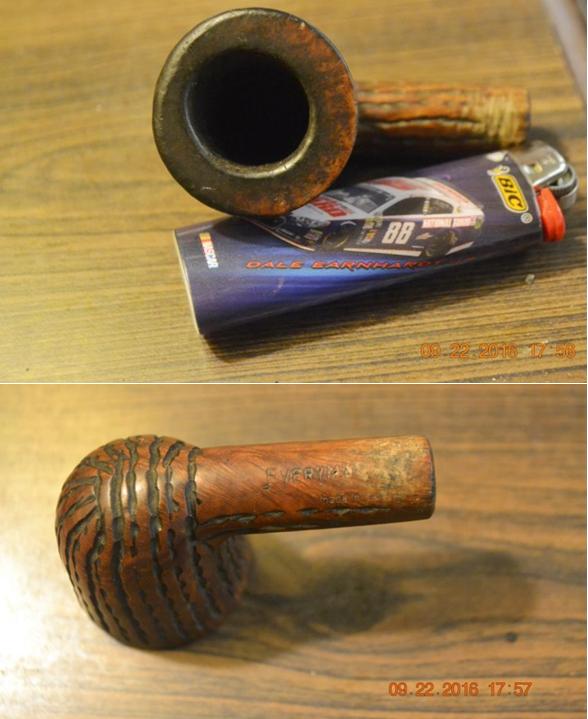
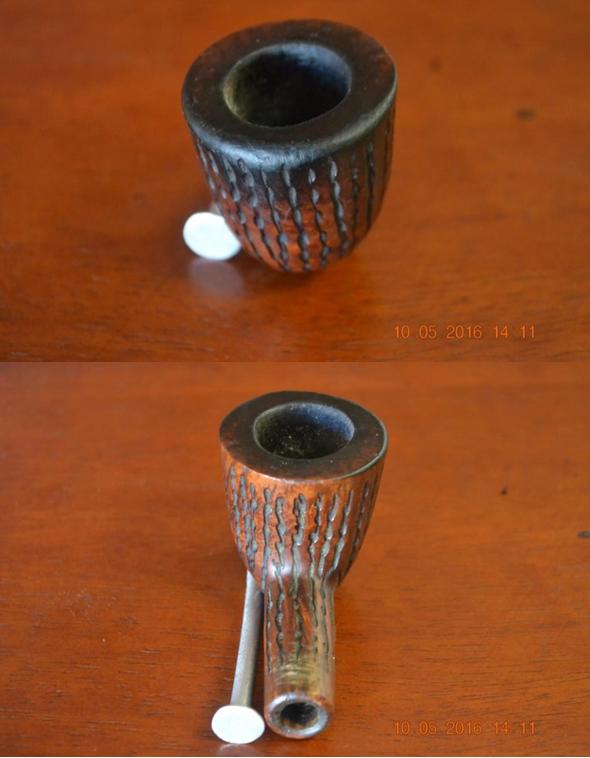
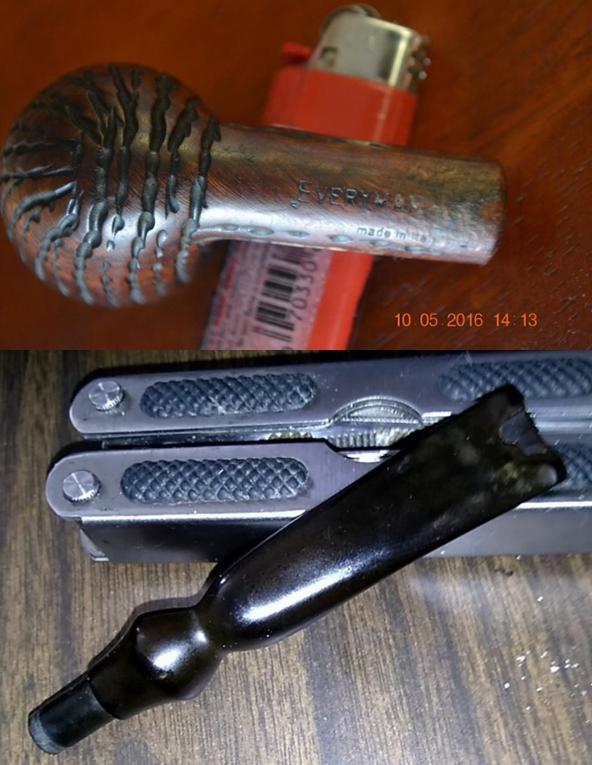
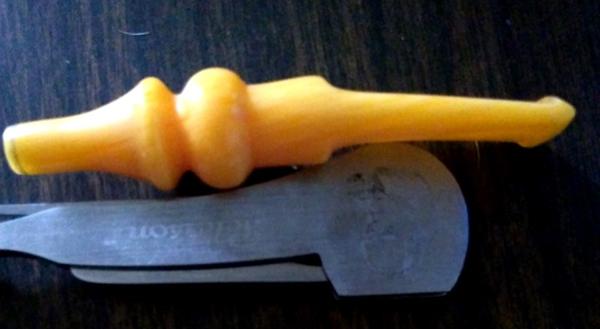
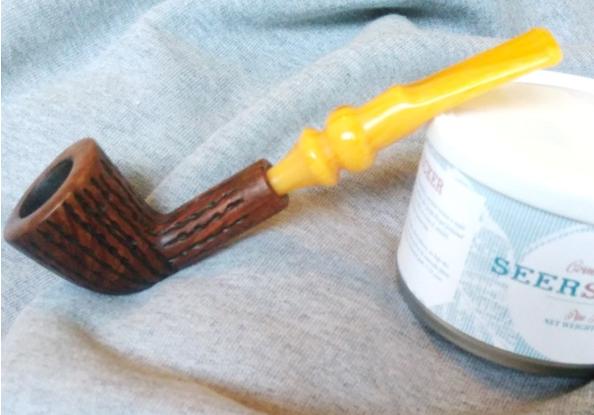
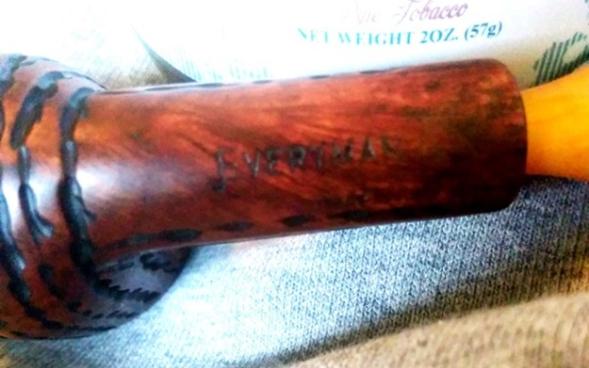
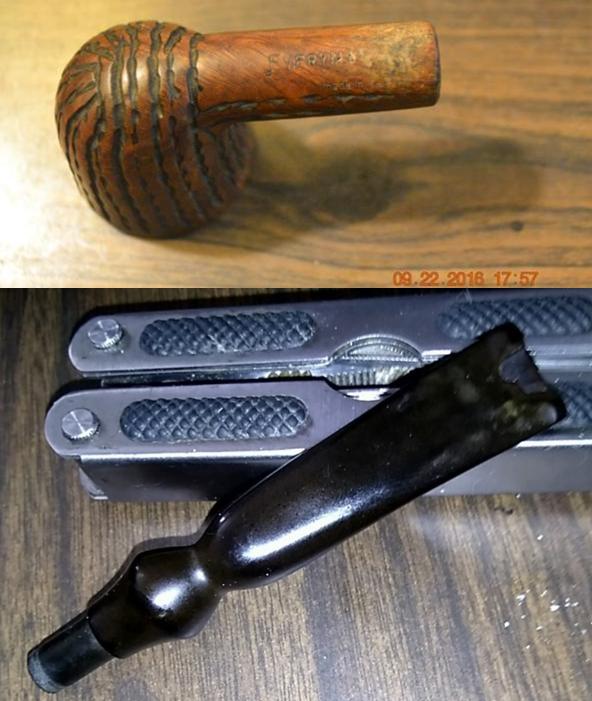
The real mystery of this blog is the single mark of nomenclature on the entire pipe, even counting the original black Vulcanite/Ebonite bit of the style called “fancy,” but which proved to be broken beyond my time and patience if not ability to repair.  Even the relative ease of the kind of work needed by the likes of Steve to mend a gap in the upper lip of the mouthpiece as gaping as that shown below requires, as our host notes in the blog cited under Sources, much practice.  Also – and this is an important factor, not an excuse – I intend to sell the pipe, not keep it for the shop, and at times have different standards for the two choices.See the date and time stamps?  I worked on the infernal bit from then until a couple of weeks ago before settling on the better part of valor.  As can be seen from the stummel, the pipe is called, with somewhat disingenuous simplicity and similarity to the well-known The Everyman London Pipe by Comoy’s of London (with all of that and more stamping packed onto even the sandblasted versions of the latter).  From the beginning, when I acquired the bedraggled waif in an estate lot at least two years ago and sat on it until late September last year, I had one of those uneasy feelings in my stomach at the mere idea of committing myself in print to the conclusion that it was in fact somehow part of the Comoy’s brood.
Before I snapped my habitual first seven shots of the pipe as it presented in O.R.  with more worthy candidates ahead of it in triage, I began my online search that only further clogged the veritable obstruction in my intestines.  Having made some genuinely heroic efforts on real Everyman and Guildhall London Pipes in my limited time learning this wonderful tradecraft, in the combined senses of the words as well as the more clandestine meaning of the singular, I knew just what to expect from Pipephil and Pipedia but visited both once again anyway.  Variations on this theme continued off and on during the interim period until a few days ago when I took the

Google approach of “I’m feeling lucky” and again entered the terms “Everyman Pipes.”  I swear I typed the same simplest of many search terms I had tried for two years, but this time, in one of those inexplicable flashes of serendipity, the top listing was for P&K Everyman Pipes at JR Cigar!

Growing breathless, I clicked on the link and saw, more or less, my pipe in two other shapes but with the same distinctive fancy bits and rugged vertical striations around the bowls, and both were straight.  One was a billiard, the other a pot, and both, marked down $10, were still, to me, listed at an outrageous $31.95.  Despite all that, I was quite pleased with myself to read the blurb at the top of the page:

“A true example of eye-catching yet economical handcrafted tobacco pipes, the P&K Everyman selection by the famed Comoy’s of London promises a premium pipe-smoking experience at prices that can’t be beat.”

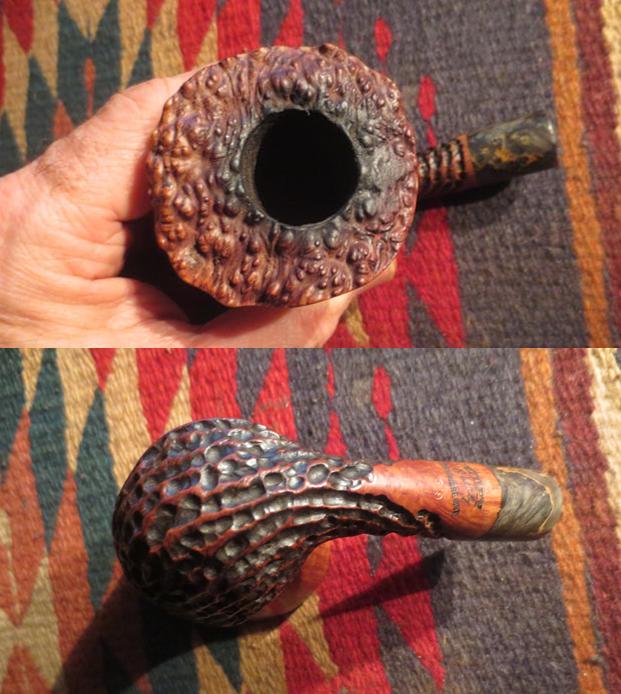
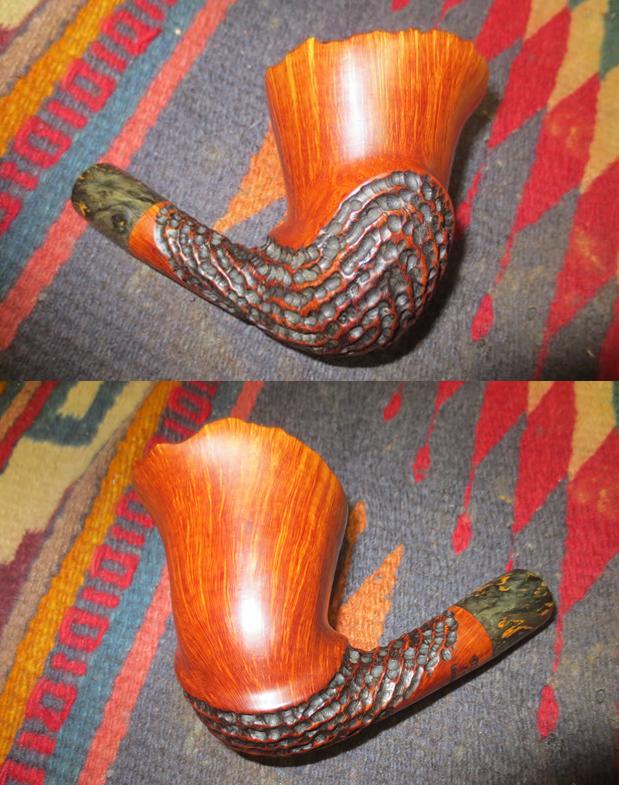
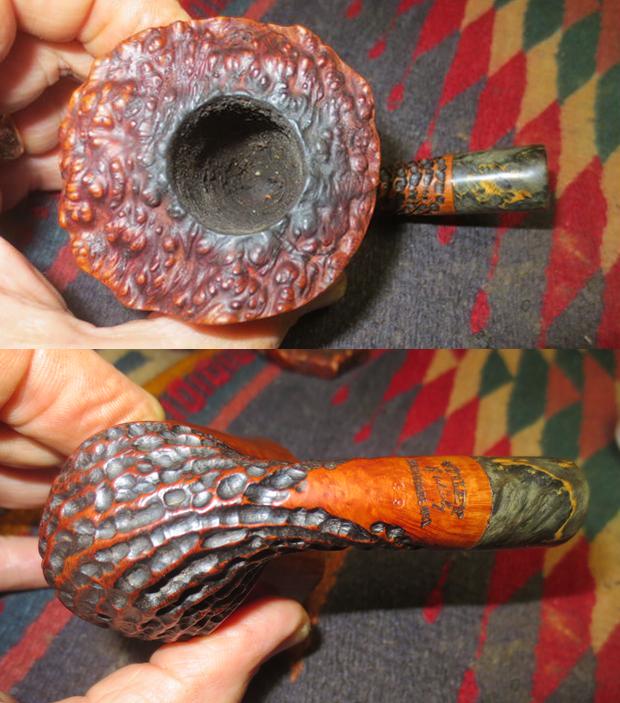
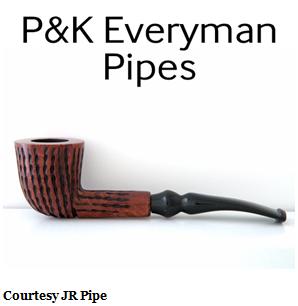
 I scanned further down the search result page, spotting a listing for the same pipe brand at Santa Clara Cigar, possessed of a remarkable resemblance to JR but with the Comoy’s blurb, ahem, omitted.  Nevertheless, at the fourth of five shapes down, there was my pipe, the P&K Straight Rustic #9, a Dublin.  Better later than never, the idea of looking up P&K Everyman pipe images occurred to me and at the top I saw the following, being the perfect factory image of my pipe.

OK, then.  As supremely pleased with myself as I was at this morsel of intel, even if some faiths that consider pride a sin could be right, I am not now nor have I ever been a member of the Nitwit Party, whose followers believe everything they read on the Internet or hear on TV is the truth.  There are many reasons for my worldview, not the least of which being my years as a newspaper journalist and photographer, as opposed to a photojournalist.  I sold my first news article when I was 15, and when I was 17 became credentialed by the Los Angeles County Sheriff’s Office as an official police and justice beat reporter for a community paper.  My publisher, editor and I tried the year before, and although there was no real age clause at the time (1978), the powers-that-were in the L.A.S.O. were too – well – pig-headed to relent until I gave everyone in the issuing bureau a major headache re-applying on the first of every month.

I try, no joke, not to pester Steve with questions to which I can find or – OMG! – figure out on my own using the brain that was between my ears at birth and, operating best on the right side of it, form a working plan to press on.  One of my best qualities is the willingness to admit at once when I am wrong, which in fact is a very good thing because I have had much more experience with that than, say, repairing bits with outlandish holes gnawed through them by people with Intermittent Explosive Disorder or tardive dyskinesia.  And no, I’m not making fun of people with disabilities, in particular schizophrenics, who seem to have been drawn to me all of my life, other than most of those in my family for some reason.  It’s sort of Cole Seer’s dramatic need in The Sixth Sense, having to be like a shrink to dead people. At any rate, Steve is one of the busiest, most productive persons I know, traveling the world almost non-stop, it seems at times,  doing good works while never letting on that his constant other full-time “job” writing and publishing mostly his own pipe restoration adventures and posting those of other contributors online.  All of this last part is by way of a drum roll of sorts.

You see, had I not called and left a brief message on Steve’s phone before emailing him more than the full details, as par for the course, I never would have received back the following concise words of wisdom as to the possibilities of who really made the Everyman Rustic Dublin on which I’m so very close now to describing all of the work I did!  Yes, I am!  Steve’s reply, in pertinent part, read:

I got your message when I got home late last evening and then read the email this morning.  I have not heard of the P&K brand and Everyman pipe does not at all look English to me. I am wondering if it could  possibly be from one of two original makers.

1. Alpha pipes Israel made for the cigar shop – the finish, style of the bowl and the stem make it look very much like many Alpha Israel pipes ) pre-Grabow ownership.

2. Lorenzo pipes Italy as they made many basket pipes for different shops.

That is as much as I would hazard to guess.

If I’ve ever needed Steve’s direction in research for a restore, this was it!  There is no way I would have reached those conclusions with such apparent ease and speed, in fact not ever, no how, no way, because I just don’t have his experience.  I mean, if there were a way I could get him to donate me a spare kidney or maybe his spleen so I could, like, grow all of his knowledge, why, I’d lie down on the table and do it in a heartbeat.  For now I guess I just need to get busy buying up and devouring and going back to again and again all of the great reference books out there, such as Who Made That Pipe?  The bottom line here is that Steve’s tip came back so fast my head spun like Linda Blair’s in The Exorcist, not to overdo the whole movie thing.

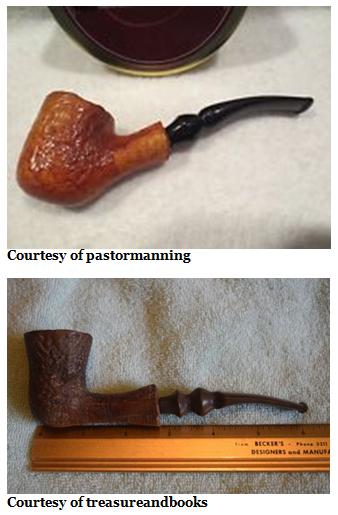
All I had to do was figure out how to look up the Lorenzo and Alpha possibilities, which I knew I could manage, and I did a few minutes after reading Steve’s email.  The funniest place the Lorenzo idea led me was to some images of my own restoration of a gigantic Spitfire by Lorenzo Mille I restored and blogged just before Hallowe’en 2014.  The money card turned out to be with the pre-DrG Alphas made in Israel.  I found the following oddly familiar-appearing Burl Briar Freehand Pipes on eBay, complete with the same fancy bits curved just so.
Case closed.

RESTORATION
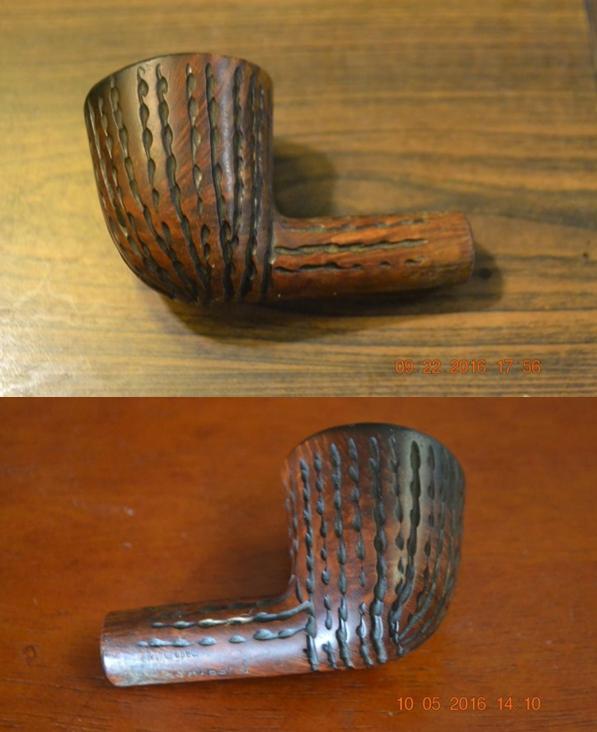
The bit aside, the only real problem with the pipe, and it was a real problem to be sure, was the rim.  Char and even the worst blistering from a close call with full-blown combustion, which so far I’ve had the opportunity to witness only with homemade corncobs, have often occasioned rise to heated anger but never cold feet.  (I – tender my apologies for all three puns.)  My mother for many years rose in the nursing world and enriched my vocabulary with terms the likes of crispy critter, with all of their brio, and sometimes spread cat cadavers across the dining room table, both extenders in place, on a single large thermo scientific wrap-around cover.  Thus I looked at the “easy” heat damage and the acute and problematic jagged rim edge and unequal width of the bowl’s peak with a logical, methodical approach that began to form.

I expect to blog my restores with the methods fresh in my mind.  There are even some of the jobs I hold special from the past few years that I’m sure I’ll never forget a single detail.  Not to suggest this was common or insignificant, but after nine months I can’t remember the specifics of how I accomplished the result of the first shot below.  The chamber had to be reamed, and when I do that I always follow up with 150-, 220- and 320-grit paper, so that’s a given.  I’m guessing I started with micro mesh on the rim just for the sake of trying and found it ineffective.  Then I would have turned to sandpaper and chosen 220 with the same rationale as the micro mesh but opted for 180 with the usual progression up to 400 before starting in on micro mesh and stopping when I realized I would have to solve the other obvious problems with more drastic steps.  Here are the results I just described, and after the drastic measure of a file.Healing the wounds of a procedure I consider radical enough that I have only used it less than the number of fingers I have on a hand (or, rather, considering the thumb is not technically a finger, the same number), in fact is not all that difficult in most cases, and seeing the result of the steps is always a great pleasure.  I used 180-, 220-, 320- and 400-grit paper, and then 1500-12000 micromesh on the rim.Then, I began the rest of the outer stummel.  Starting with super fine “0000” steel wool to lighten the color of the wood and easily get between the grooves, I switched to the full micro mesh.It was time for the retort.  As always, I was glad I did it, because this little stummel was filthy!  I have done as many as six retorts on a single pipe, and this one “only” needed three, all of them clearer.  I had no bit to connect to the shank and therefore had to stretch the rubber connector over the opening.  I show only the first round below.  I also followed the final retort with three cleaners dipped in alcohol alternated with three dry, all of which came out clean.Applying alcohol-based leather stain and flaming it is always fun, and I used Fiebings Medium Brown on all but the rim to leave a definite two-tone.  When it cooled, I wiped away the char and a little extra darkness with 8000 micro mesh. I hand-rubbed a sparing amount of Halcyon II Wax into the wood and crevices of the rusticated pipe for which it is made, not to be frugal but because a little goes a long way.  In most cases, I let it dry or set or whatever as much as it can, in general 20 minutes or so but sometimes a considerable time longer, and wiped the excess off with a soft cotton rag while rubbing more into the pores of the wood.  Other times, I let the setting process go on for a considerable time longer, but not often.  I was then almost finished with the long project and was more than prepared to accomplish the final main task,  filled with joy to tackle (thinking of football) the key part of the  experience: fitting one of two fancy Lucite stems, an orange and a yellow, that arrived in the mail – eight months after I finished the stummel.  In case anyone wondered at my persnickety comments regarding the amount of time I spent on a certain bit of work trying to repair a part of the original Everyman that I will now leave unnamed, in my own way, that’s why.
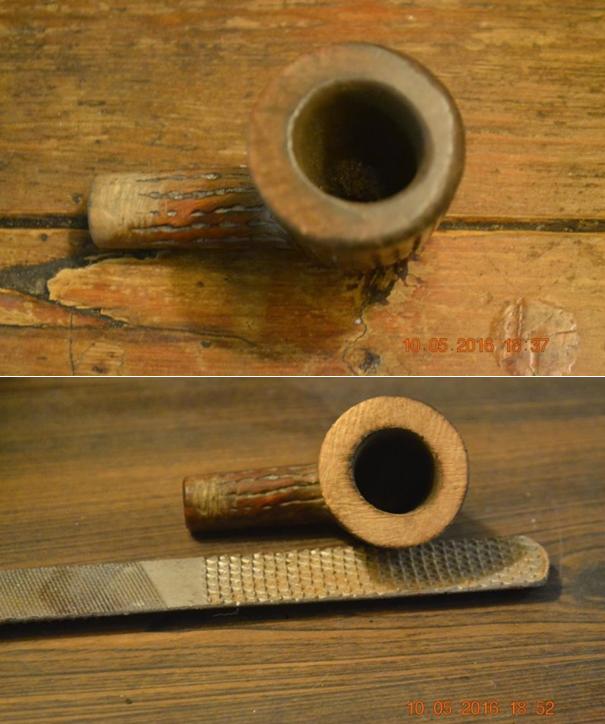
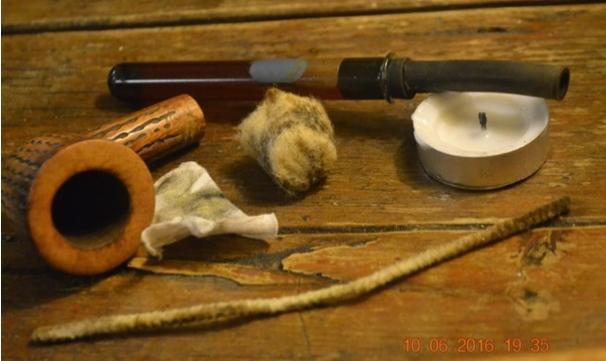
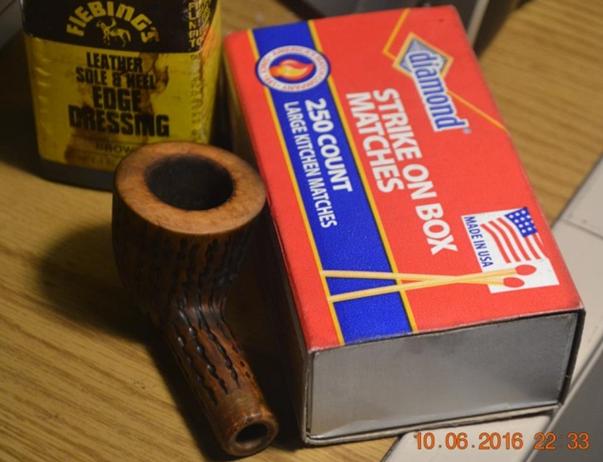
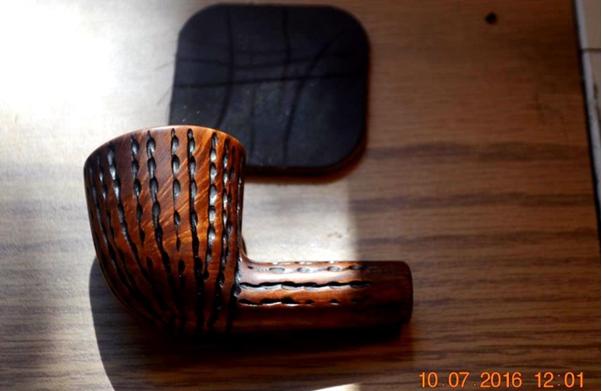
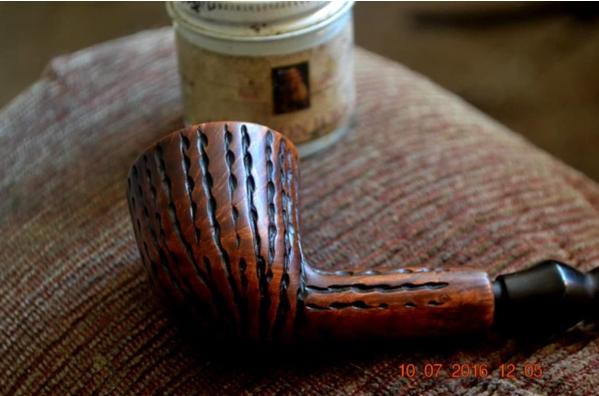
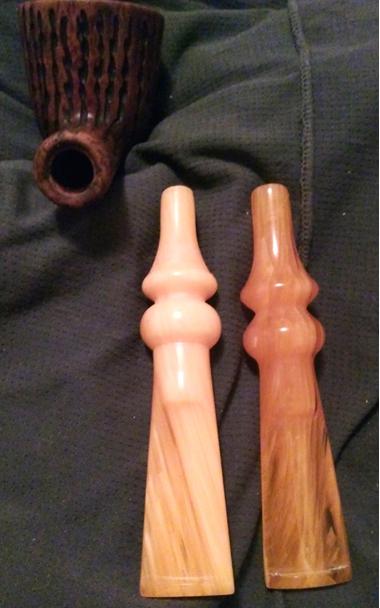
I went with the golden bit to the right.  As a point of interest, the popular online site where I bought a total of three bits in one order listed these two as gold, but the system is a touch odd, to me at least, and also the viewing system for the product you in fact get wasn’t working that day for all items, including the yellow bit.  But I can use it, and it was inexpensive!  Having none of the finer and more expensive equipment for tenon cutting, I hand-sanded the shank insert end down to where it had a nice, tentative fit for the time being.  That task took another day.  Making use /of another of Steve’s blogs, on bending stems, I chose the oven method because it had worked so well on several occasions in the past with Vulcanite.  BTW, I doubt the Lucite was the problem.  I always take a look in the mirror before pointing a finger lest I see three others pointed right back at me.  I say, go figure!  After that mishap, I switched to the boiling water method that worked better but I’m sure was spoiled by already having baked the bit. I repeated the boiling method and achieved the desired bend.  Halcyon II was is meant to be used in place of regular buffing wheel waxes and compounds, but I wanted a slightly brighter finish, and so I ended with spins of Red Tripoli and carnauba.
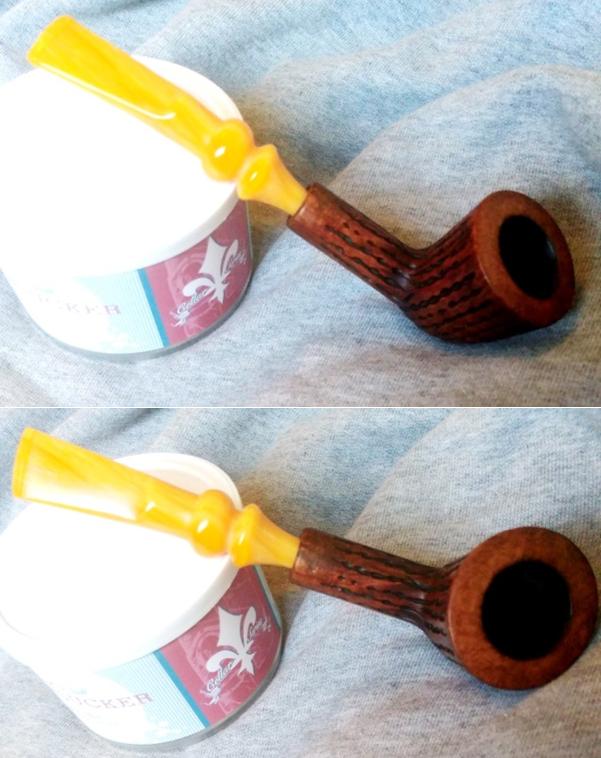
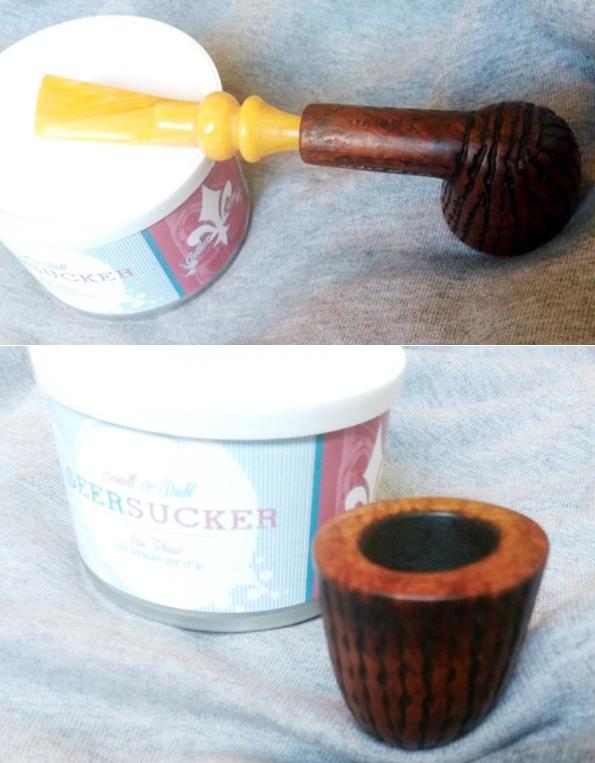
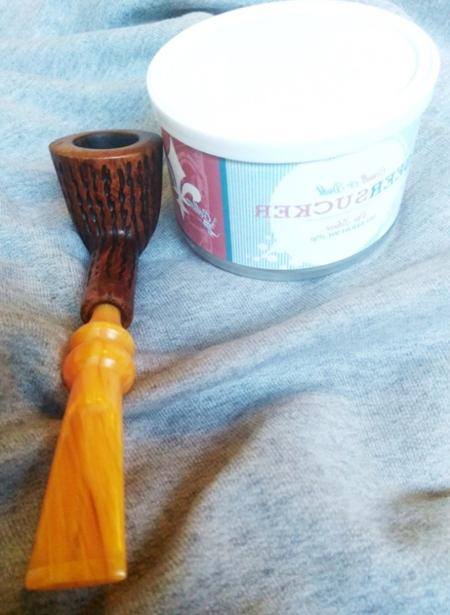
CONCLUSION

Even regardless of its look, and by that I mean nothing rude, the likelihood of this pipe being of British make – lacking any indication of such origin, whether the city or country of manufacture, a line name, or the often top secret coded markings of which our friends across the Pond are so fond – is so paltry as to end any further debate lacking official admissible documentary evidence.  WikiLeaks might suffice, in particular if the disseminator were to flee his country or be arrested or renditioned or still more conclusively, become the subject of cover page stories of the world’s tabloid toilet wipes.  On the other hand, and here I am not being facetious, if my already stated conclusion that the simple but honorable Everyman is a blast from the past of the pre-Dr. Grabow Alpha days of Israel, made by the Shalom Pipe Factory, and I am in fact wrong, I would as always appreciate input from any authorities or scholars among us.

SOURCES

https://www.jrcigars.com/brand/pipes-accessories/p-k-everyman-pipes

https://www.santaclaracigars.com/brand/pipes-accessories/p-k-everyman-pipes

https://rebornpipes.com/2015/07/18/bringing-new-life-to-a-gift-pipe-a-gasparini-mgm-elegante-brandy/comment-page-1/#comment-21243

https://pipedia.org/wiki/Stanwell_Shape_Numbers_and_Designers

http://www.ebay.com/itm/ALPHA-Burl-Briar-Freehand-Estate-Tobacco-Pipe-Made-In-Israel/332252221412?_trksid=p2047675.c100011.m1850&_trkparms=aid%3D222007%26algo%3DSIC.MBE%26ao%3D1%26asc%3D41376%26meid%3D0c2217f15e5f4850ad0061cb84cc5850%26pid%3D100011%26rk%3D1%26rkt%3D12%26sd%3D121269666970

http://www.ebay.com/itm/Vintage-Shalom-Select-Imported-Tobacco-Pipe-Vintage-smoking/322513288986?_trksid=p2047675.c100011.m1850&_trkparms=aid%3D222007%26algo%3DSIC.MBE%26ao%3D1%26asc%3D41376%26meid%3D0c2217f15e5f4850ad0061cb84cc5850%26pid%3D100011%26rk%3D5%26rkt%3D12%26sd%3D121269666970\

https://rebornpipes.com/2012/07/15/bending-vulcanite-stems/