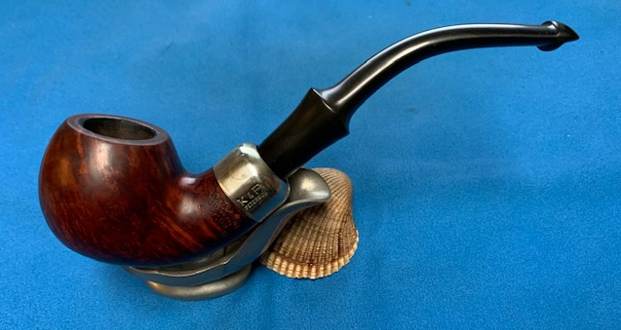
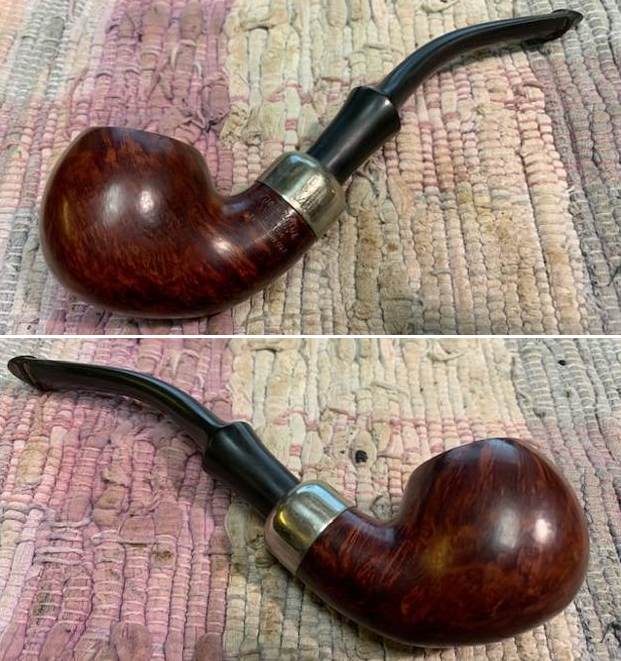
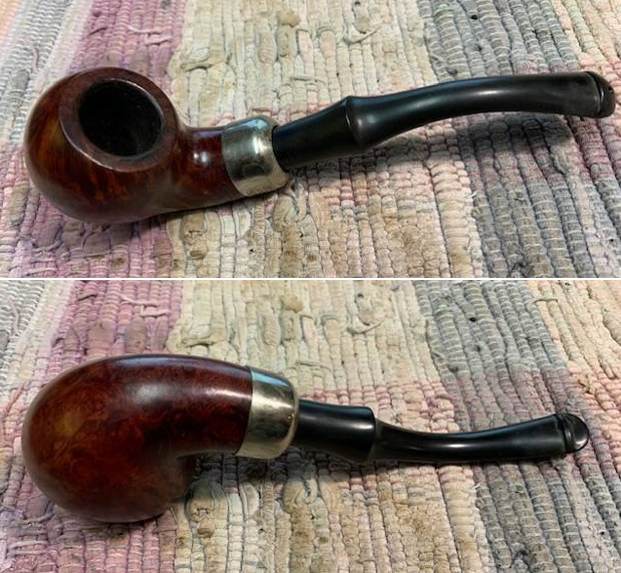
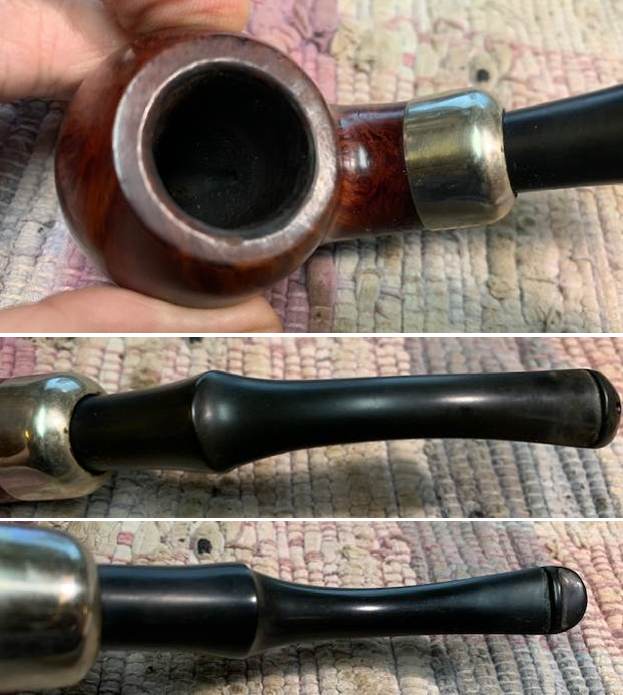
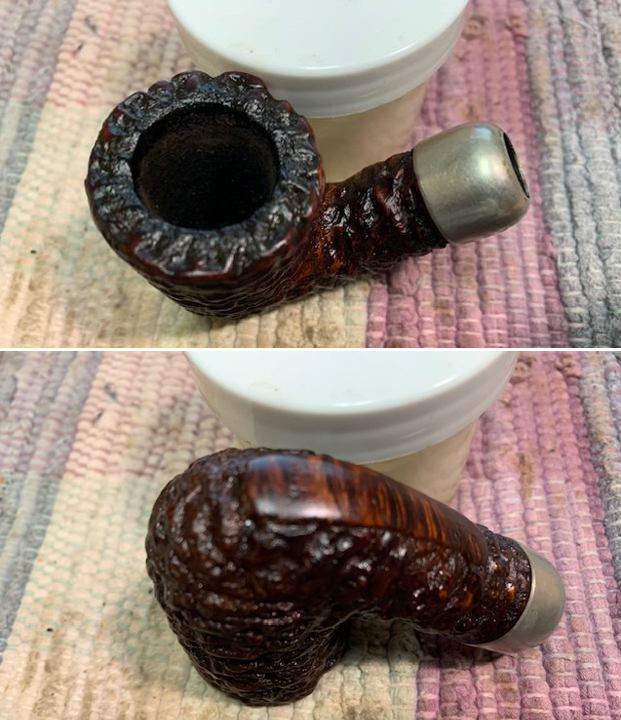
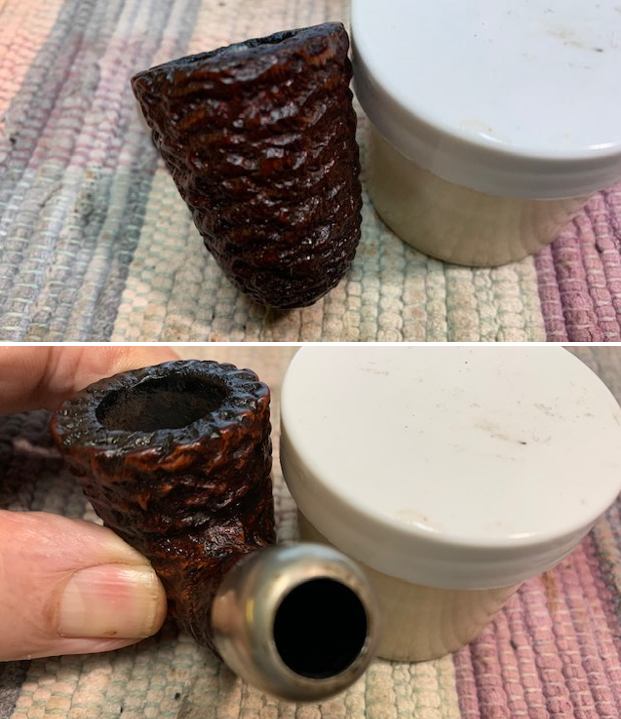
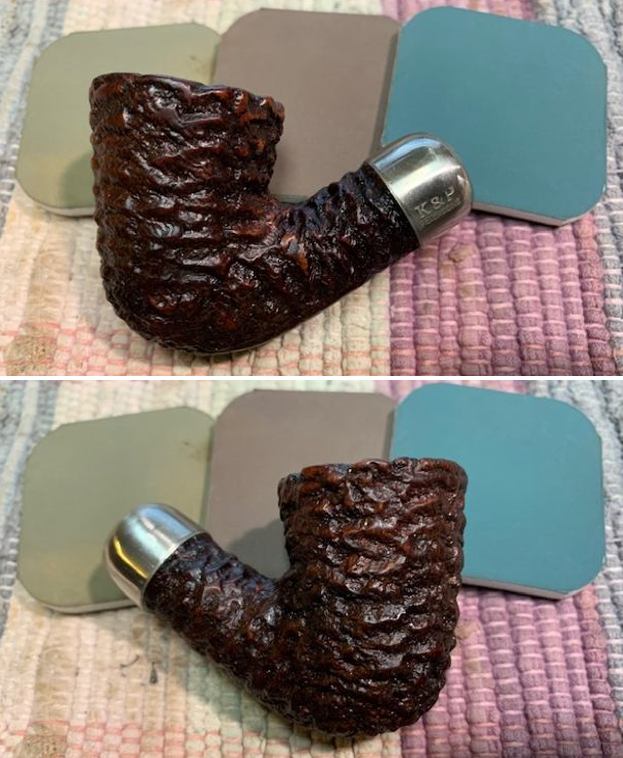
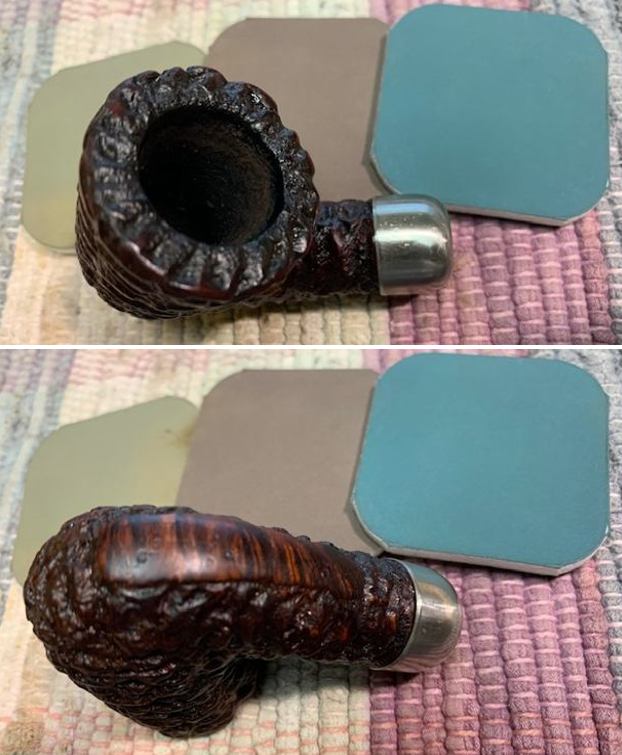
Tag Archives: Peterson’s System Standard Pipes

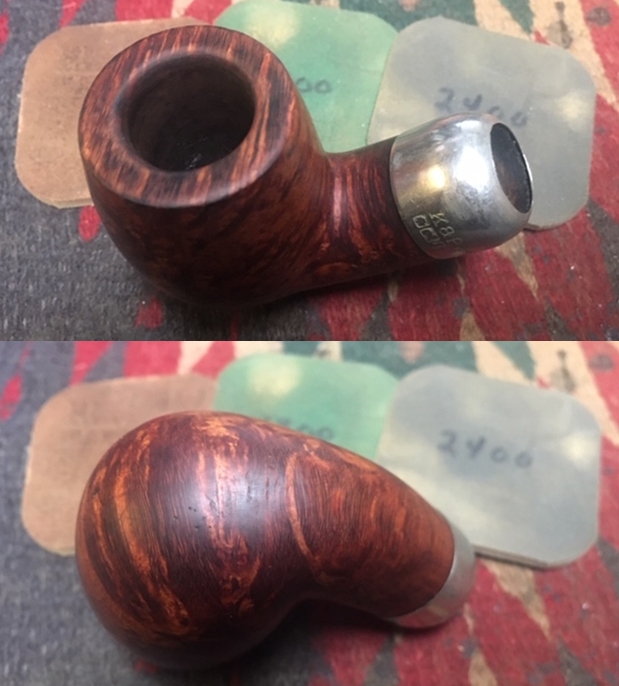
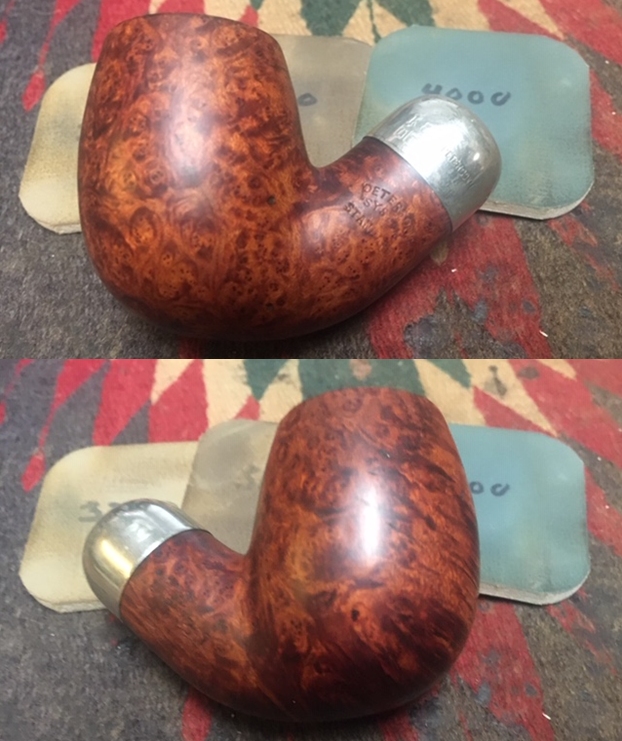
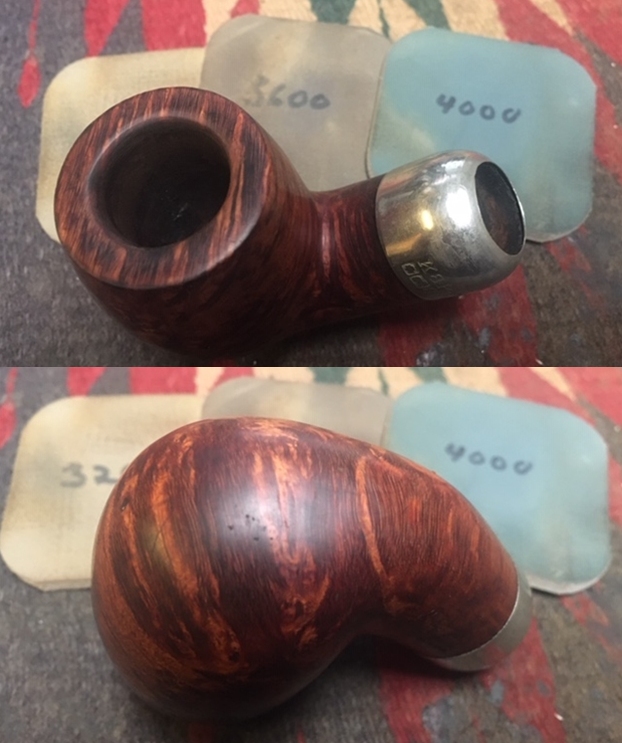
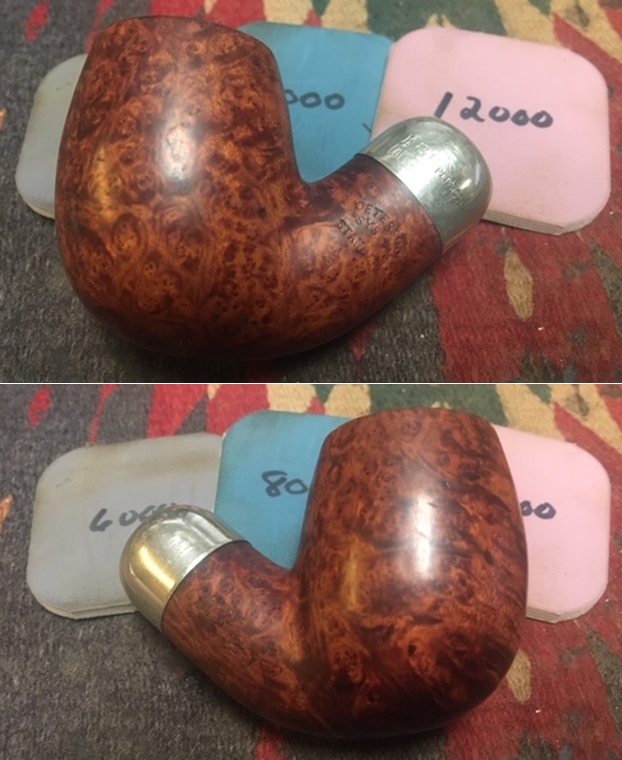
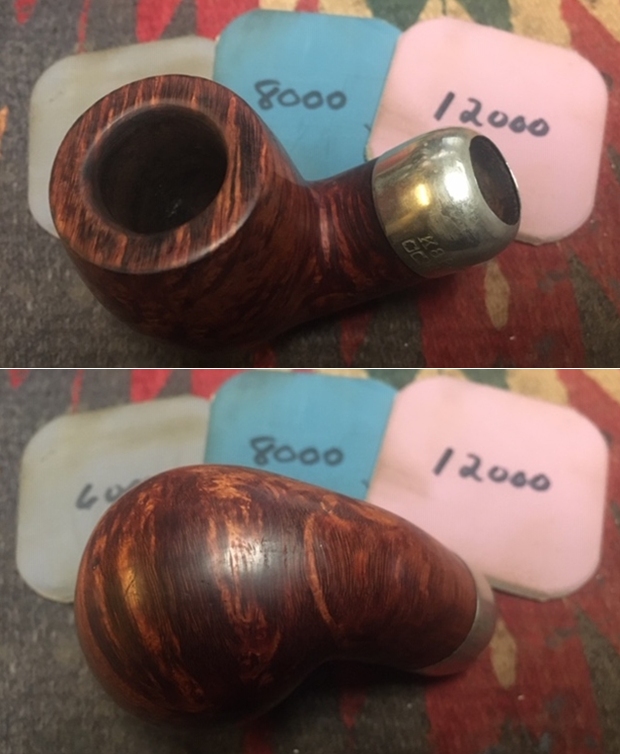
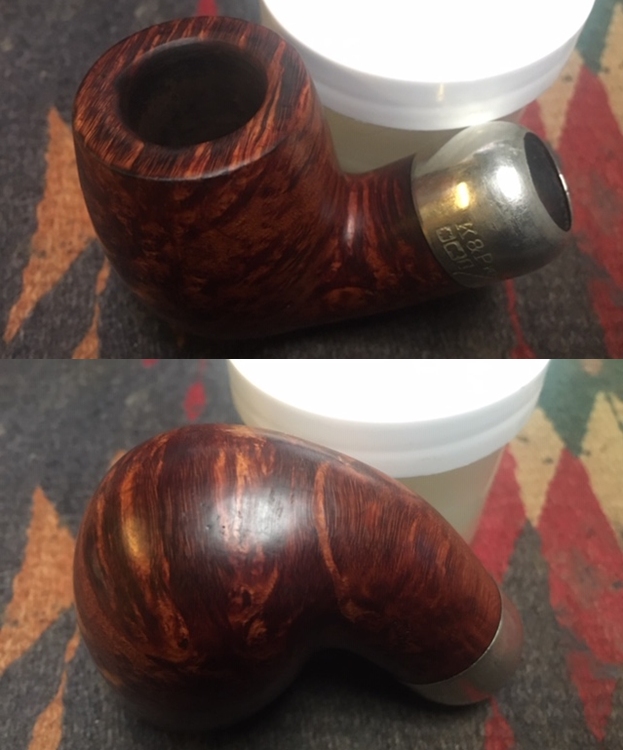
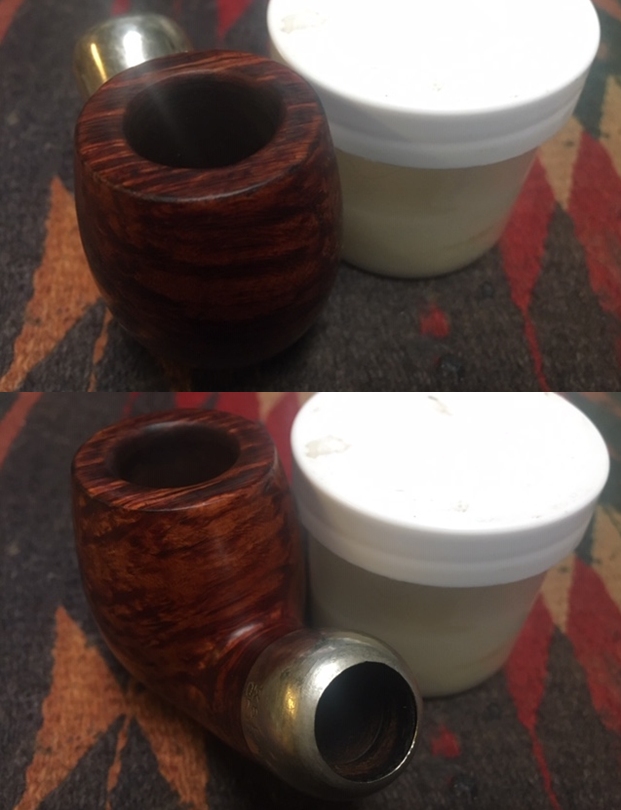
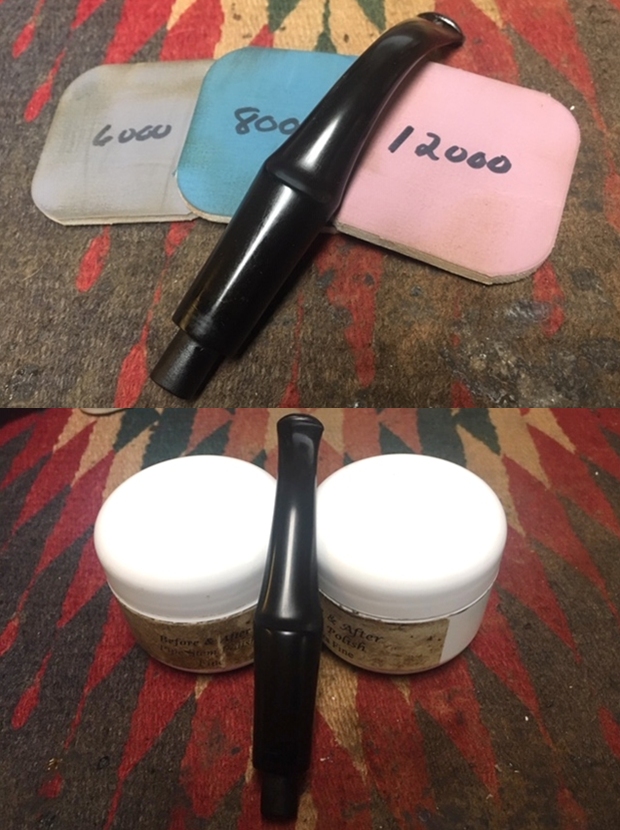
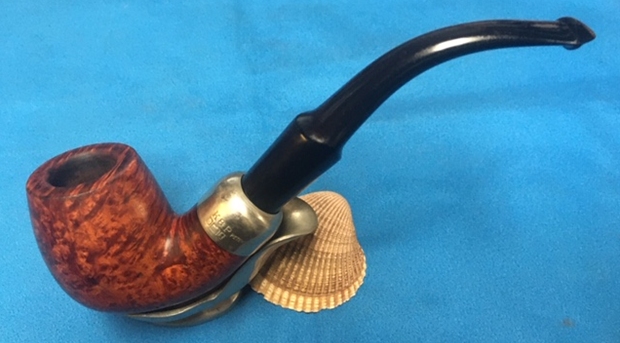
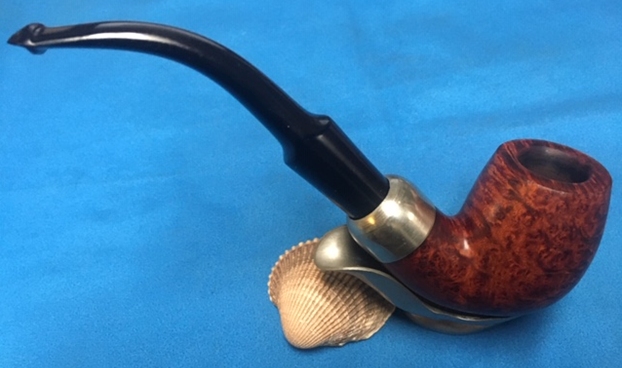
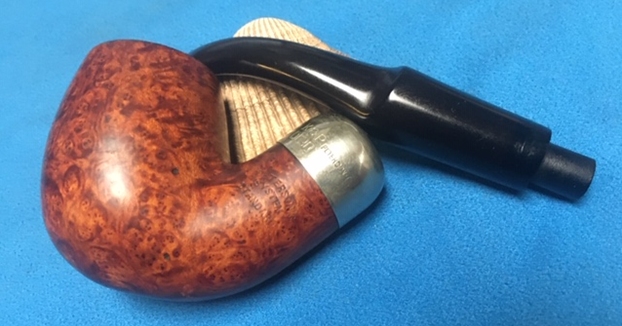
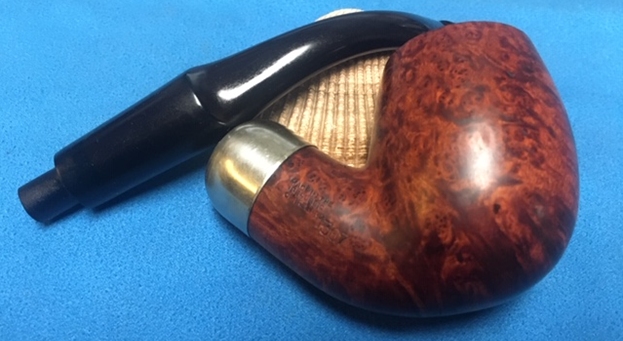
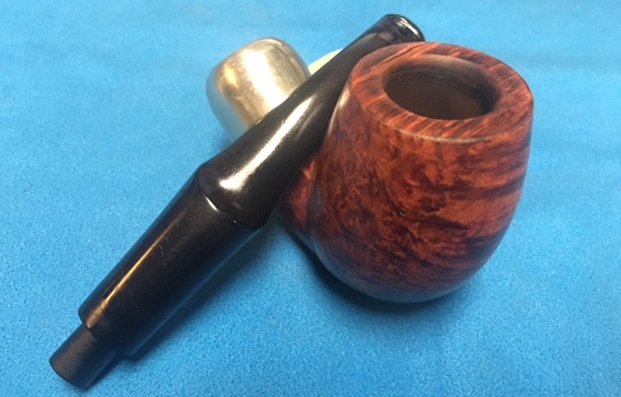
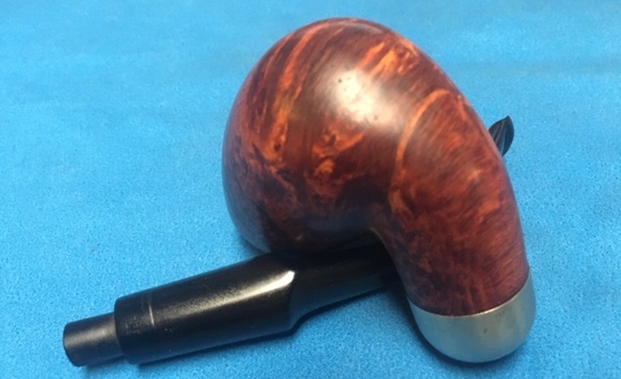
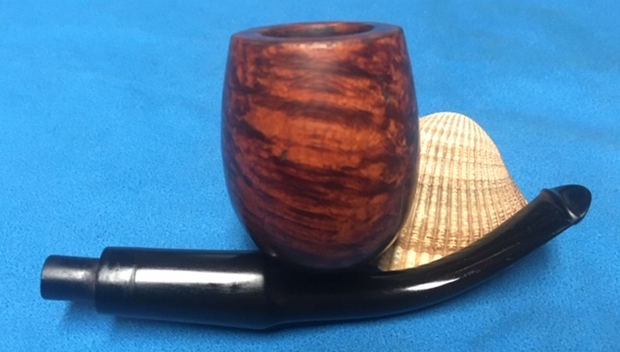
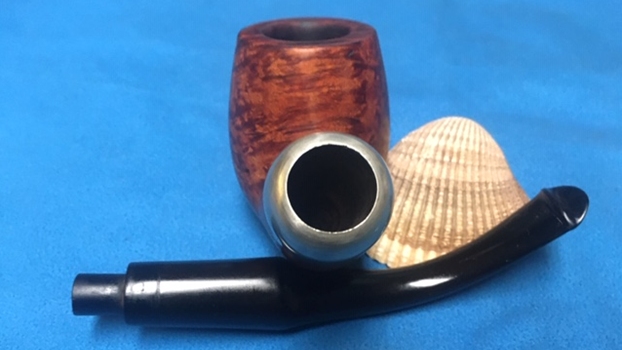
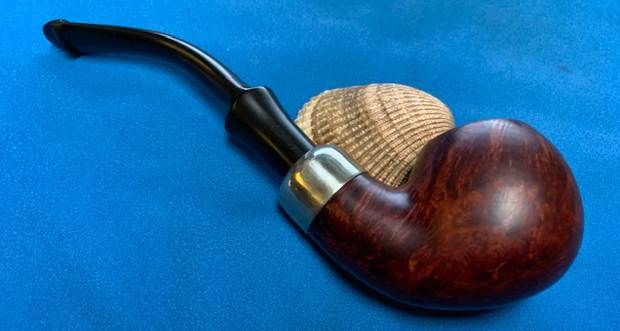
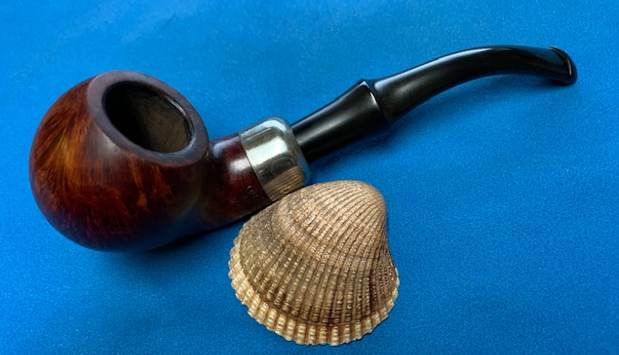
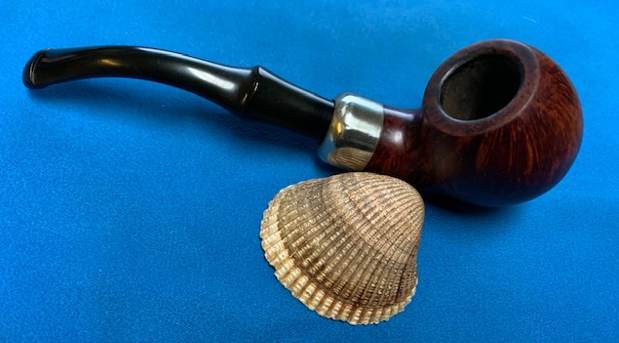
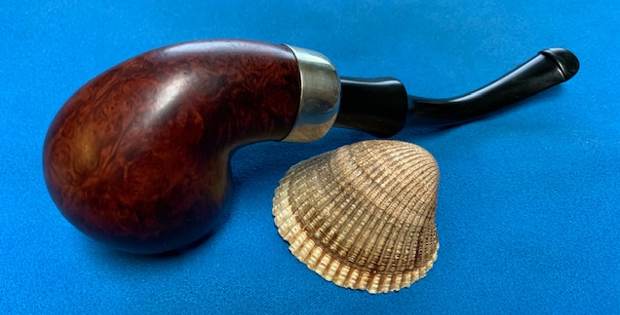
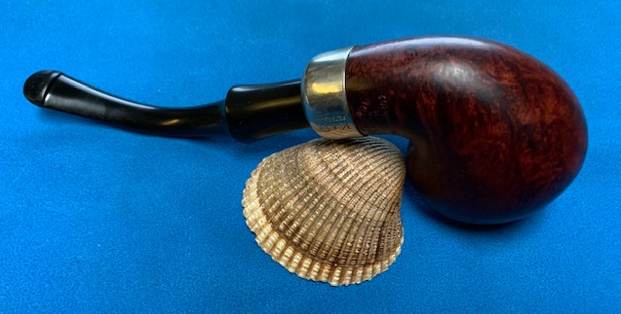
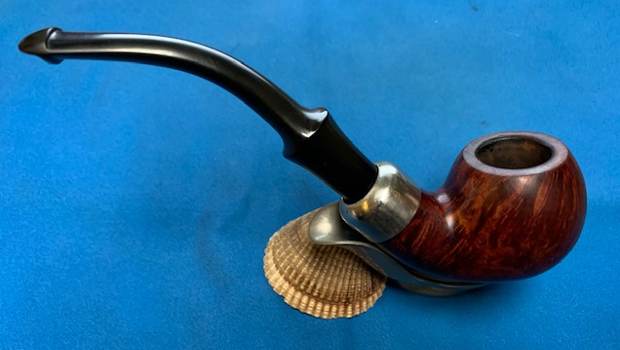
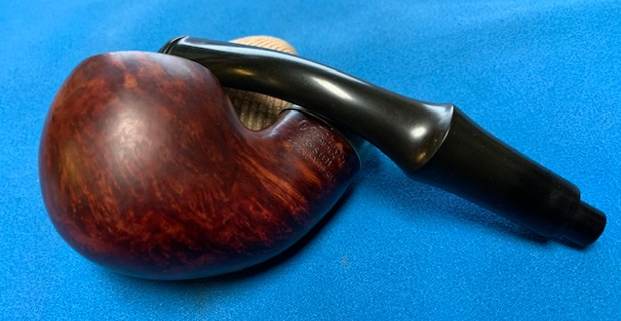
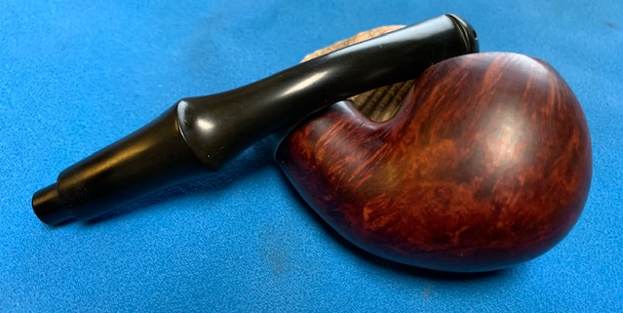
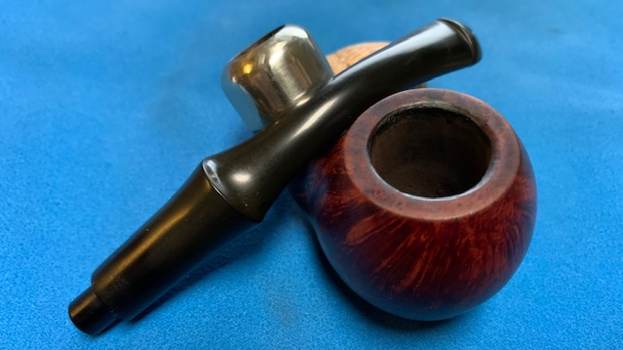
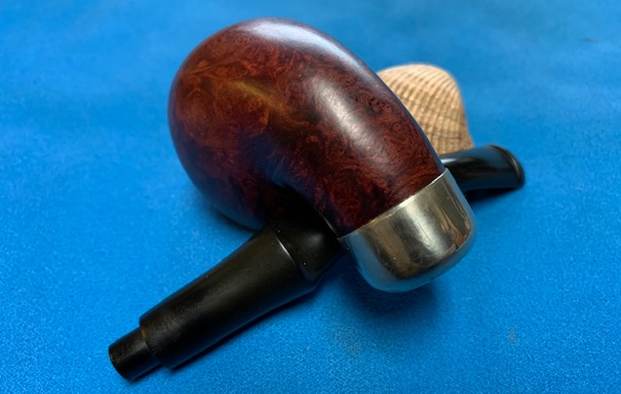
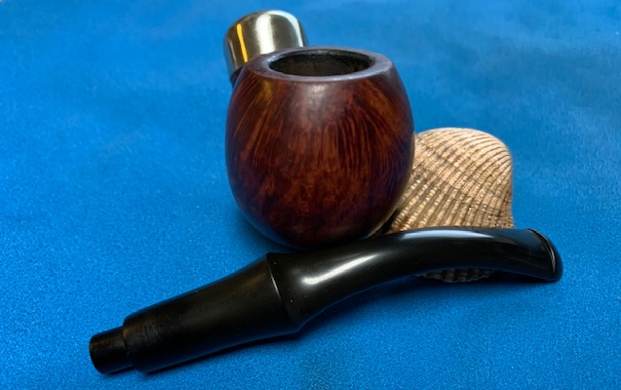
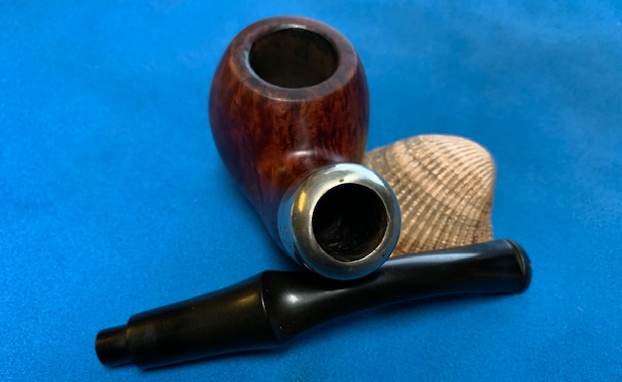
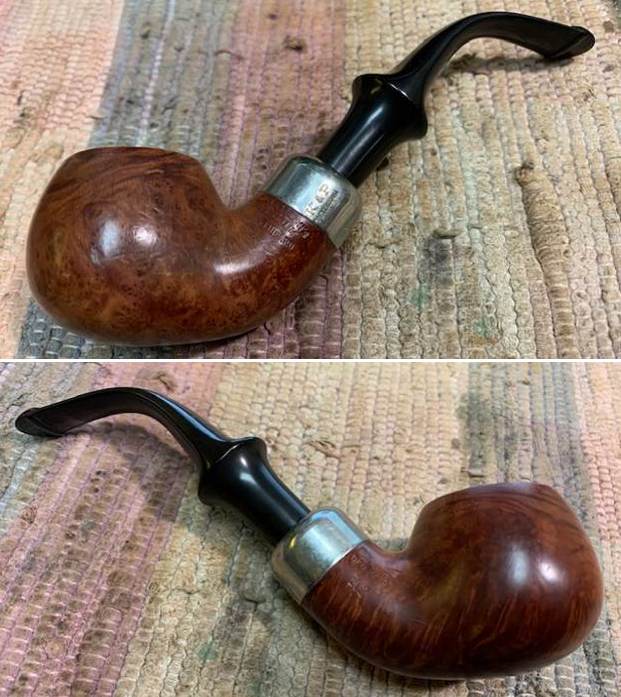
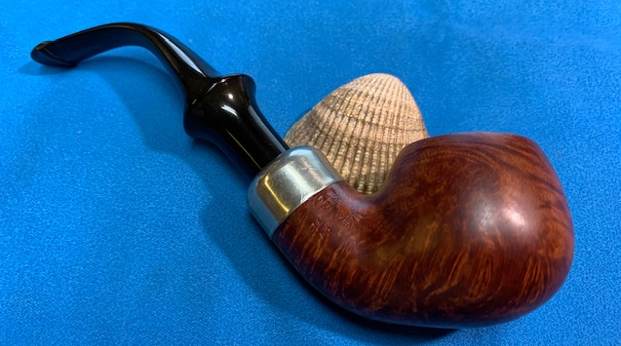
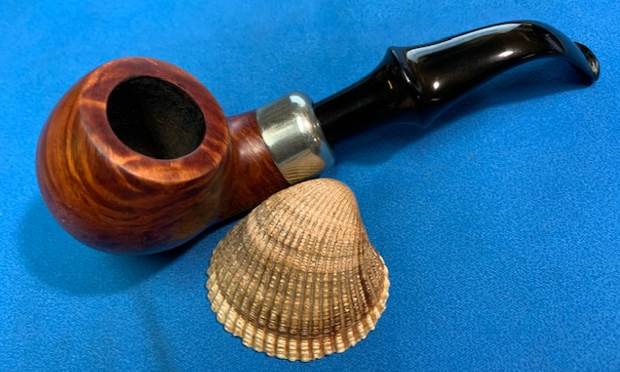
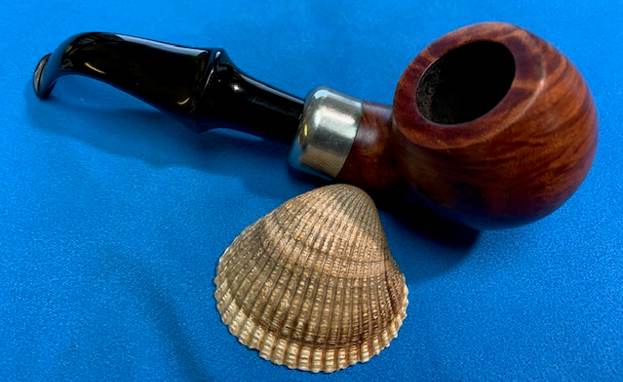
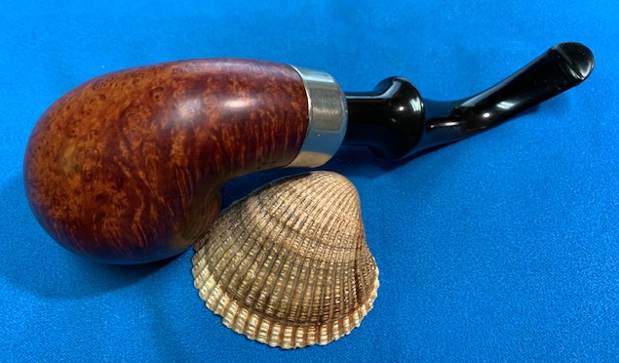
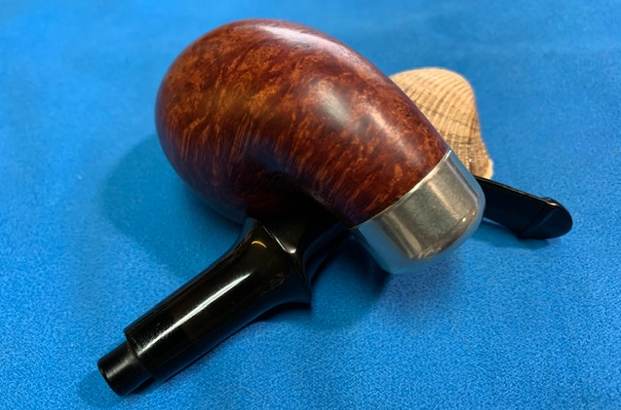
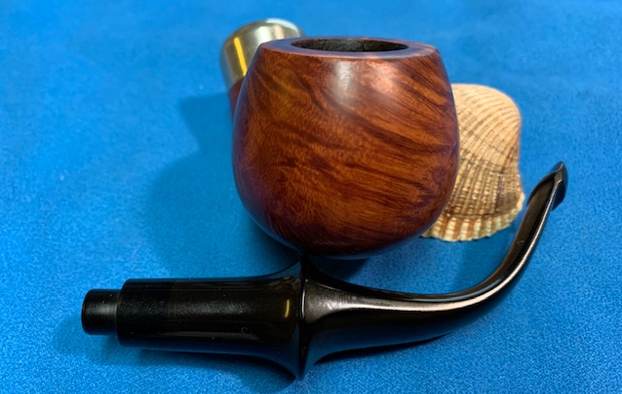
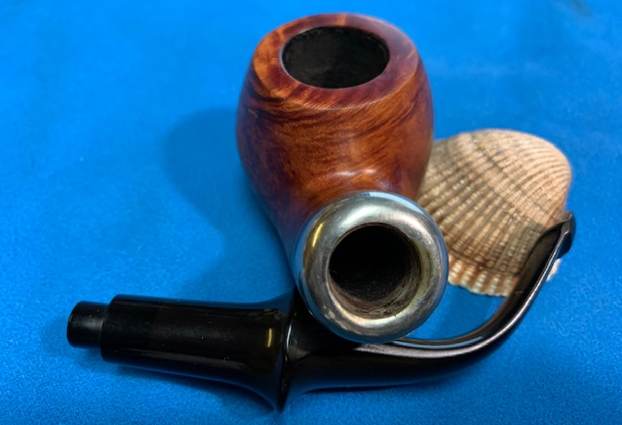
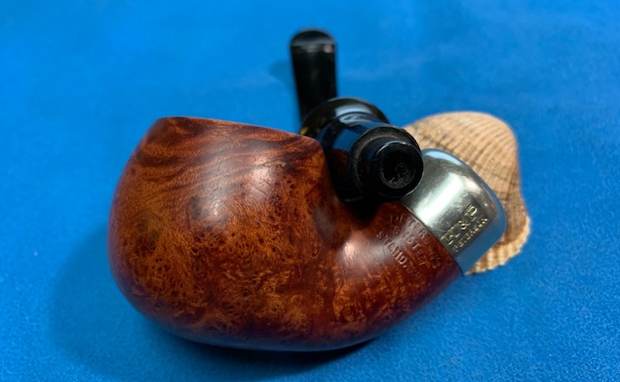
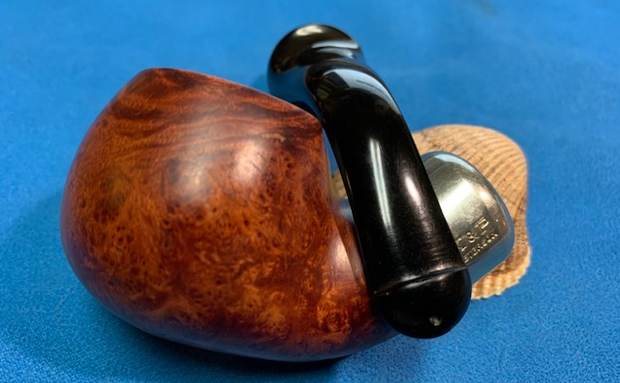
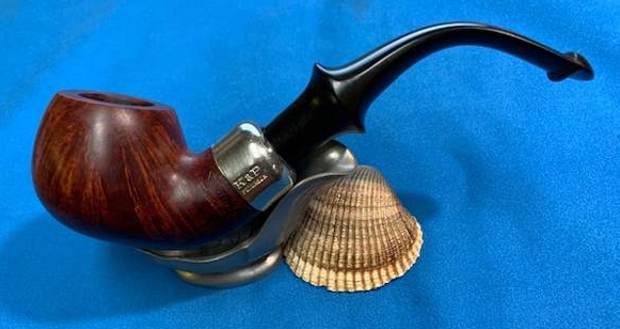
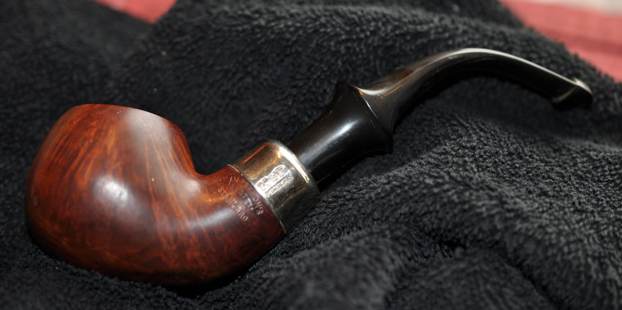
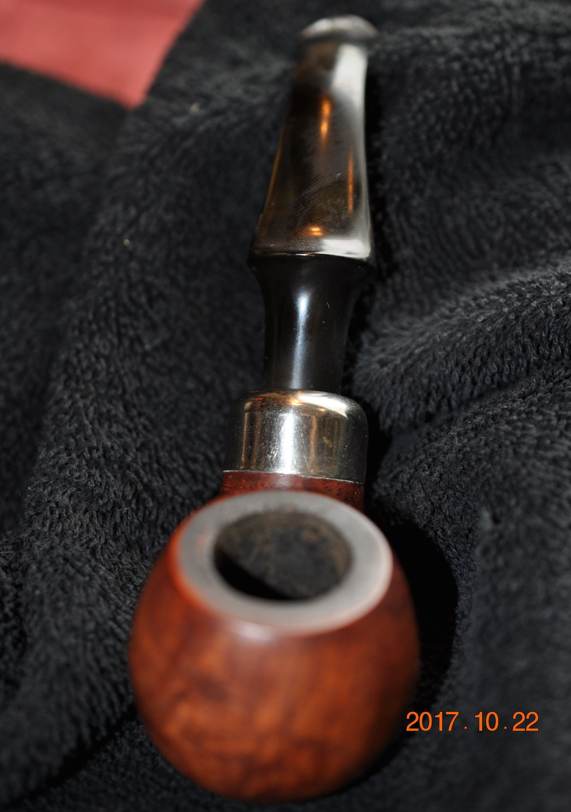
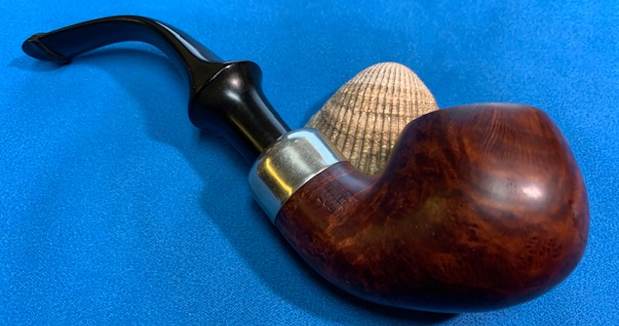
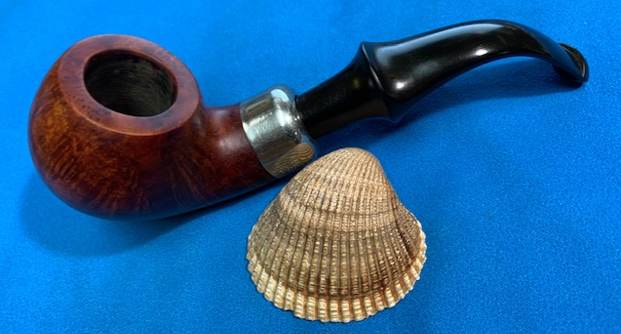
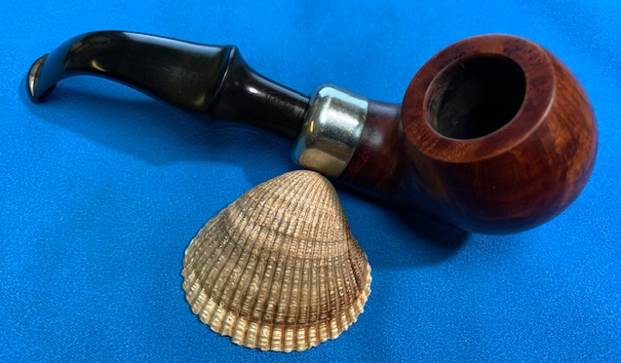
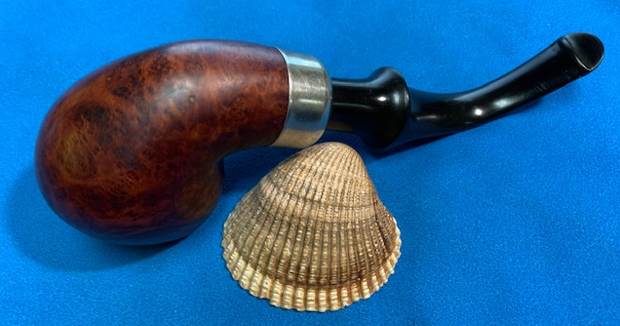
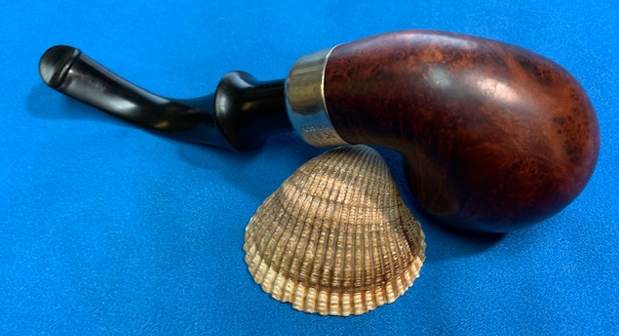
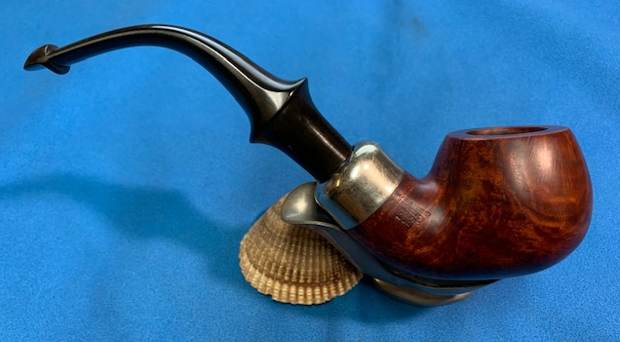
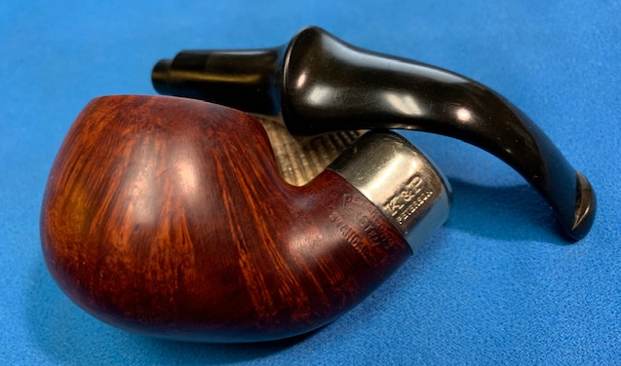
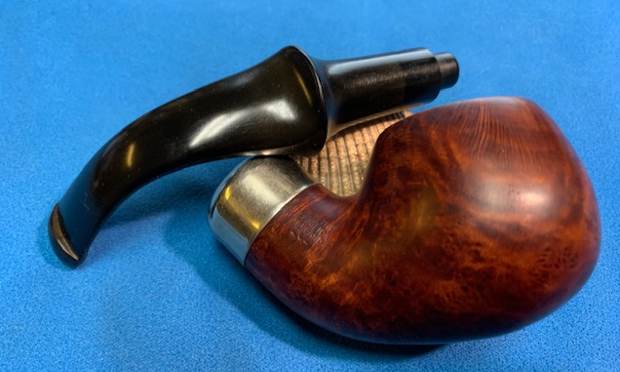
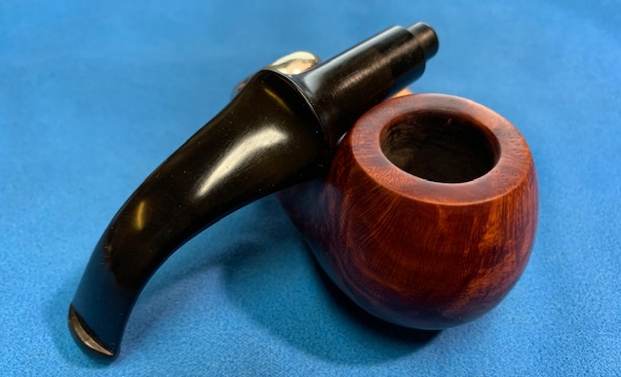
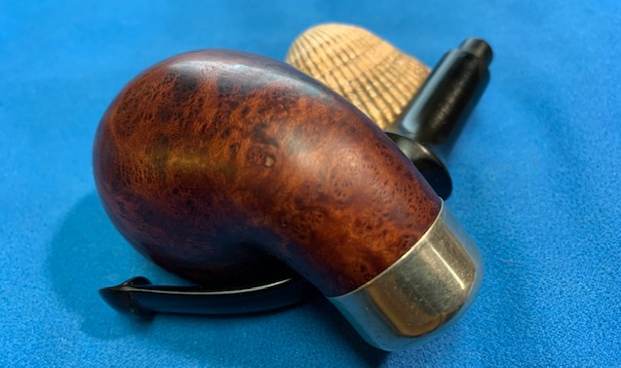
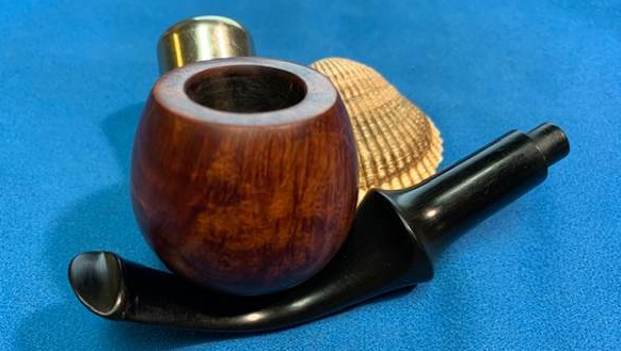
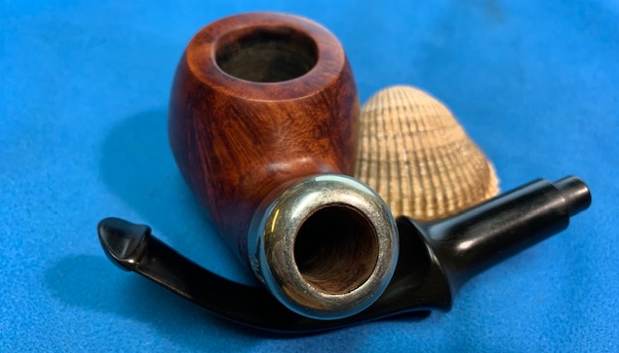
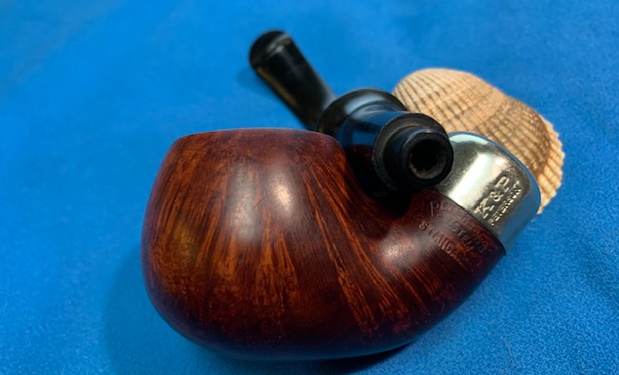
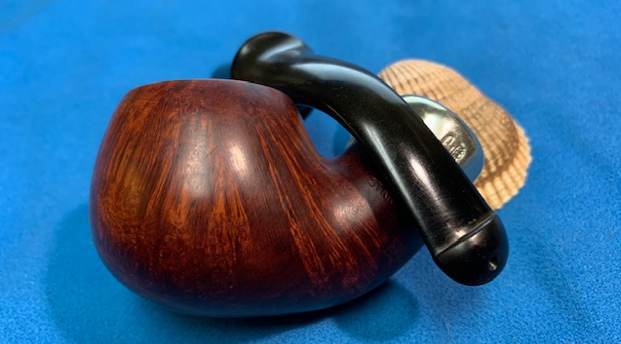
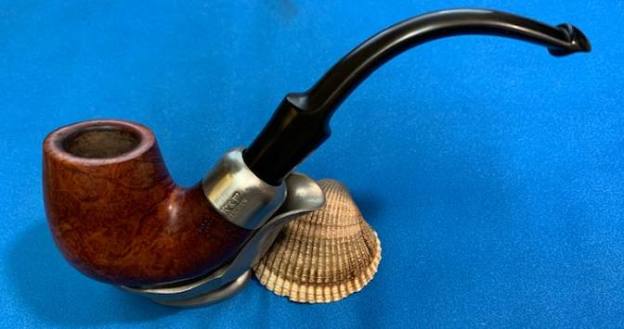
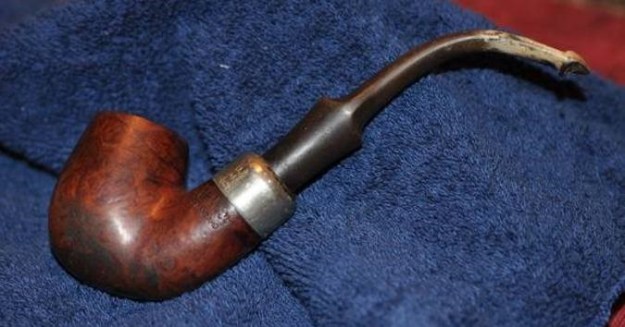
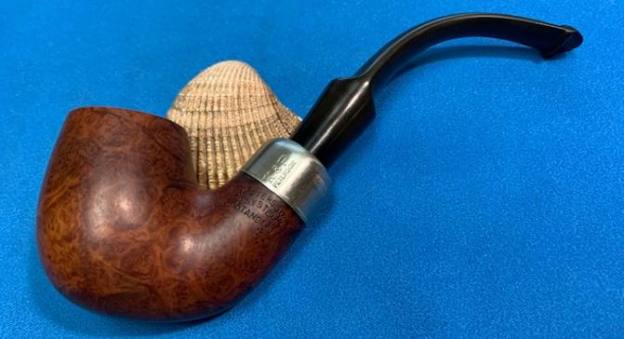
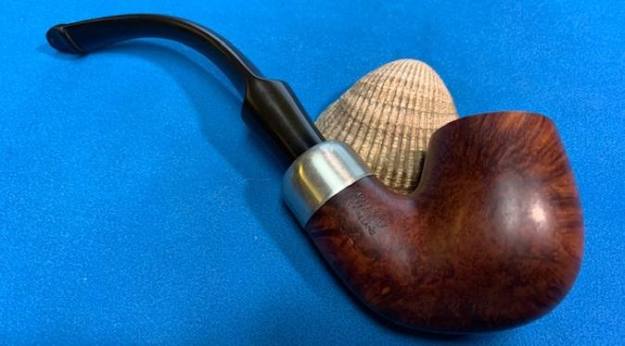
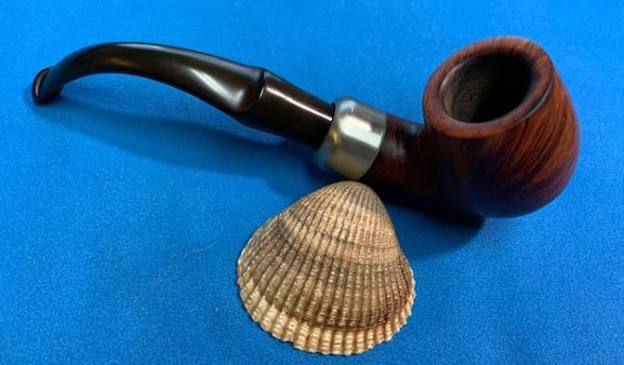
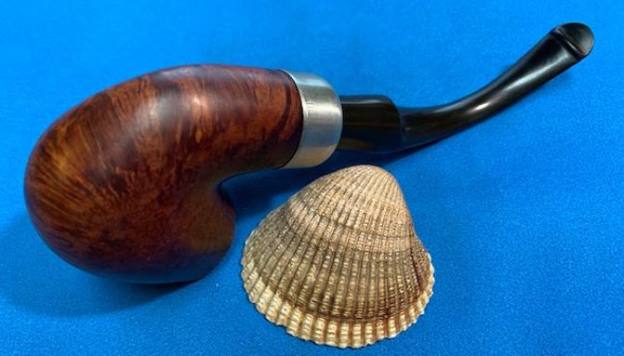
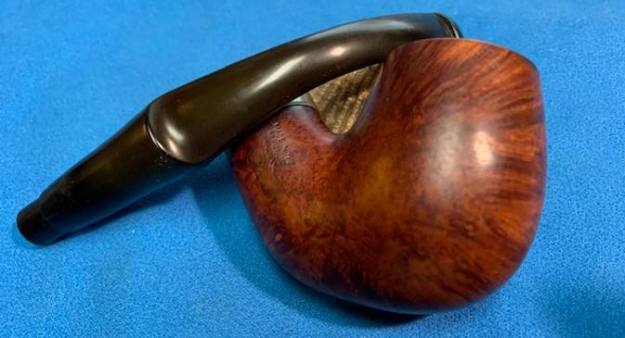
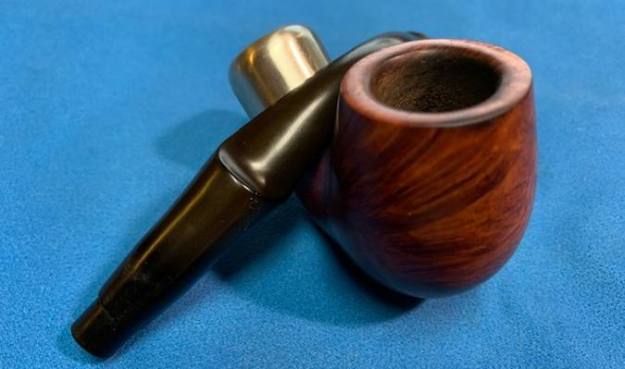
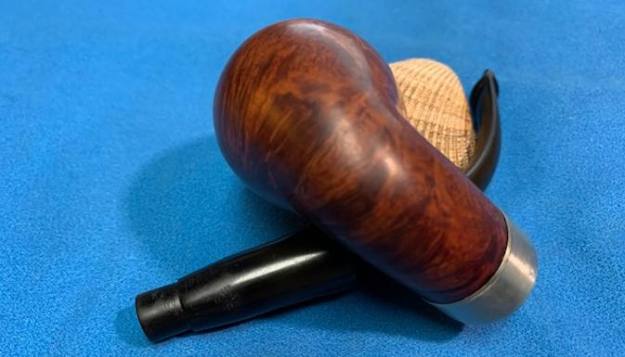
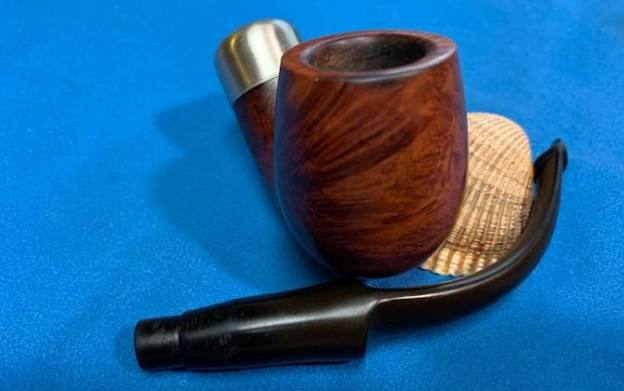
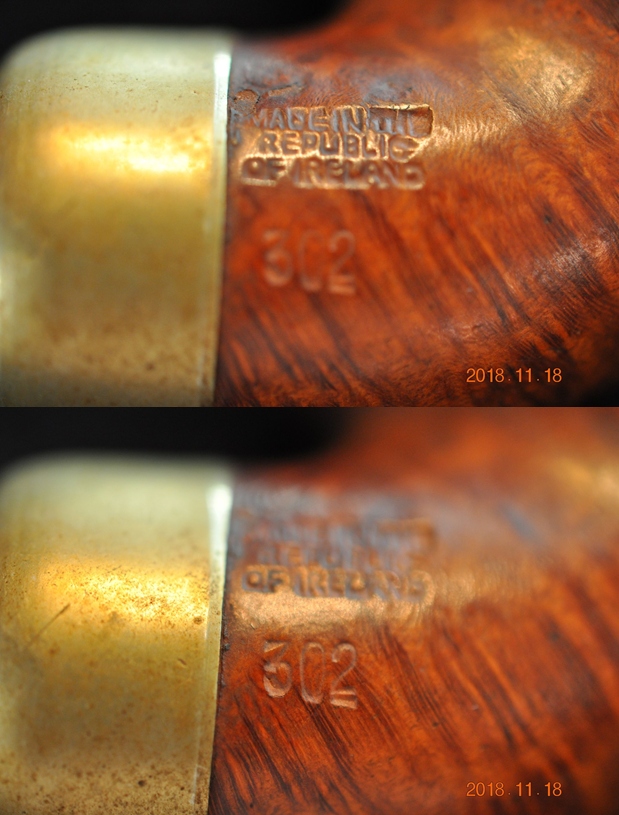
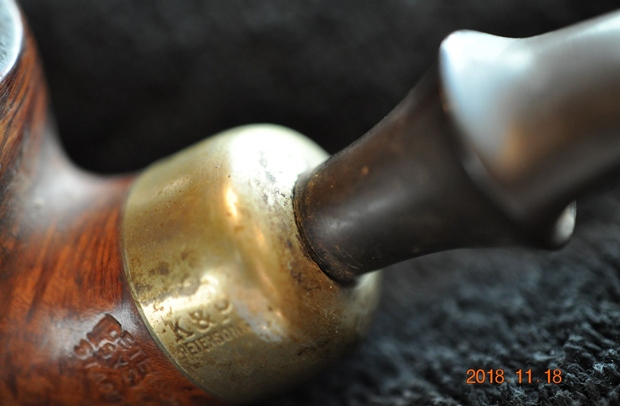
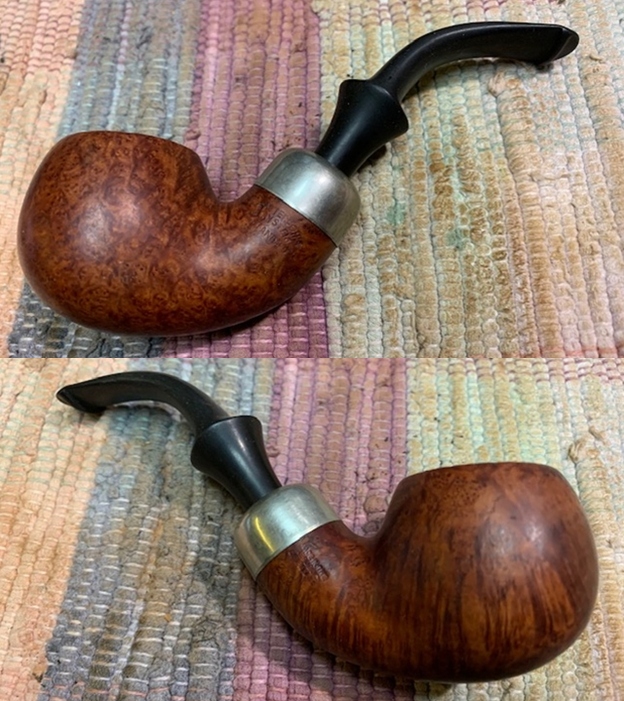
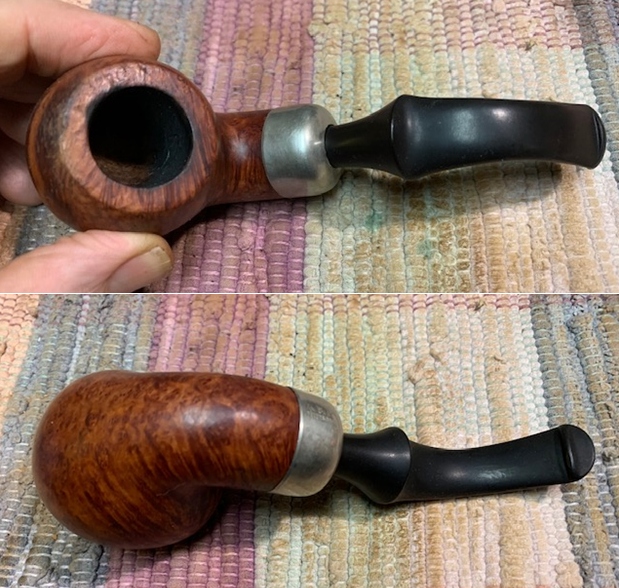
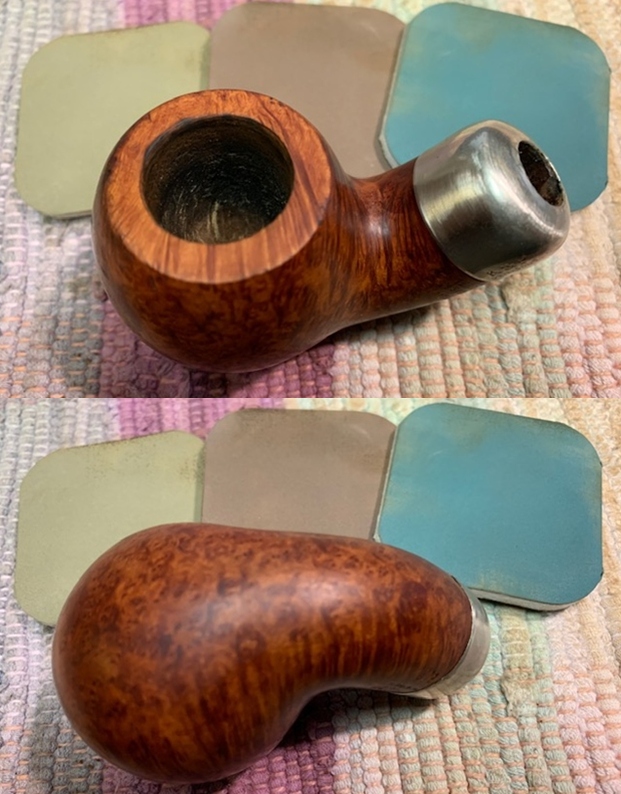
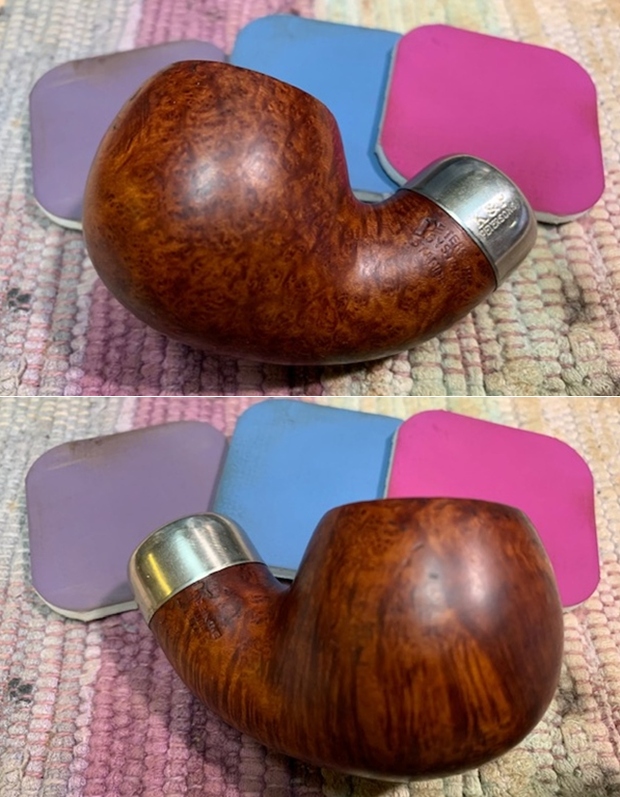
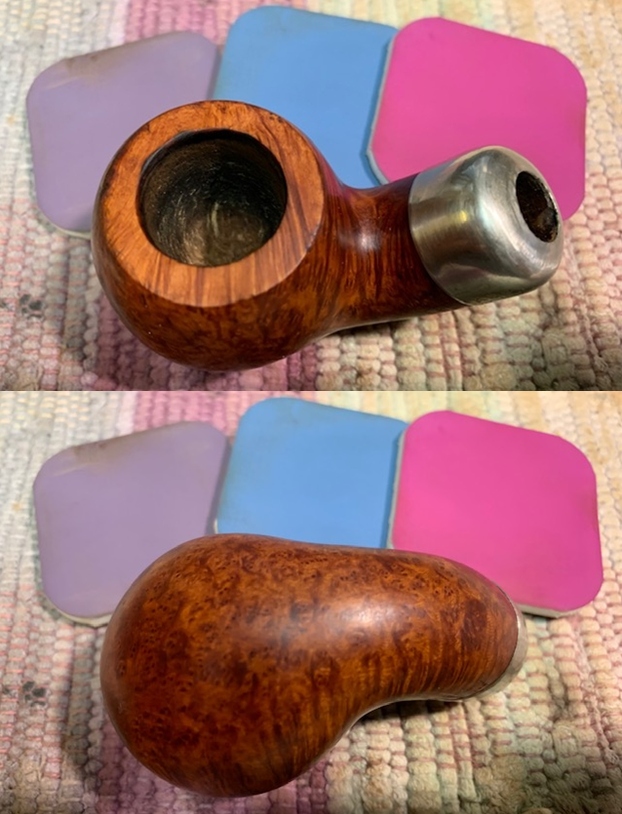
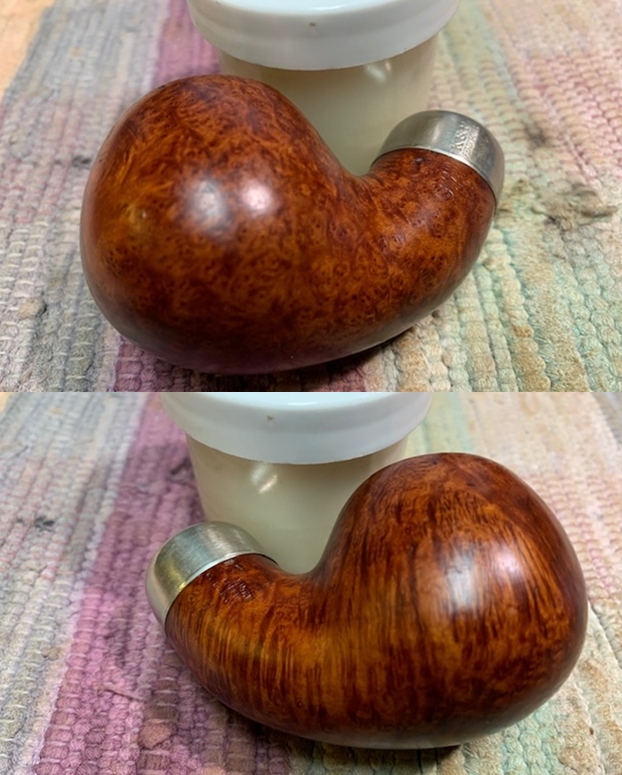
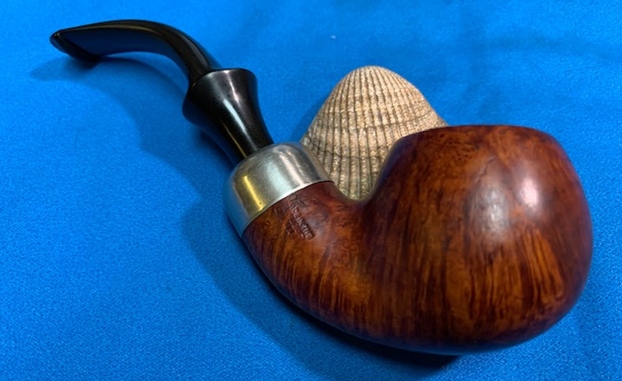
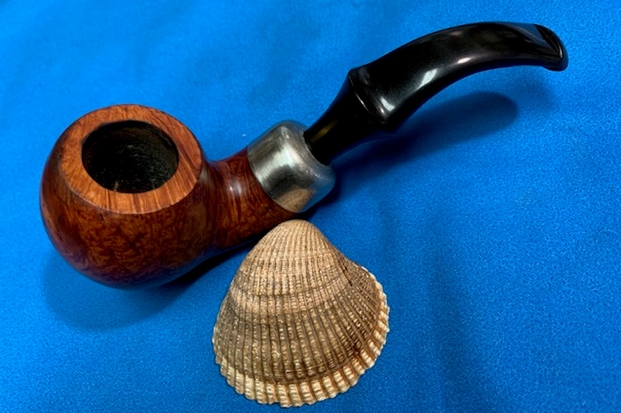
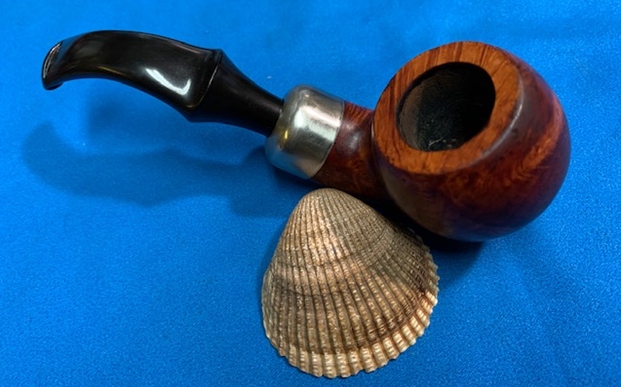
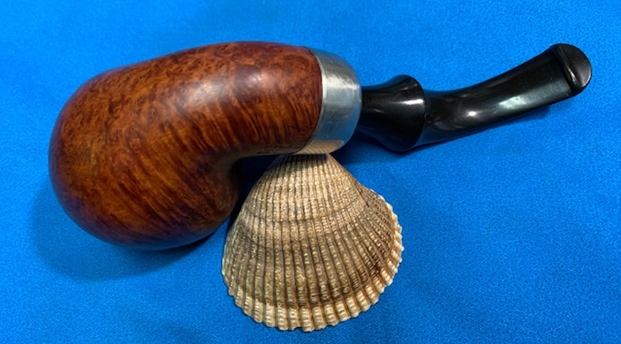
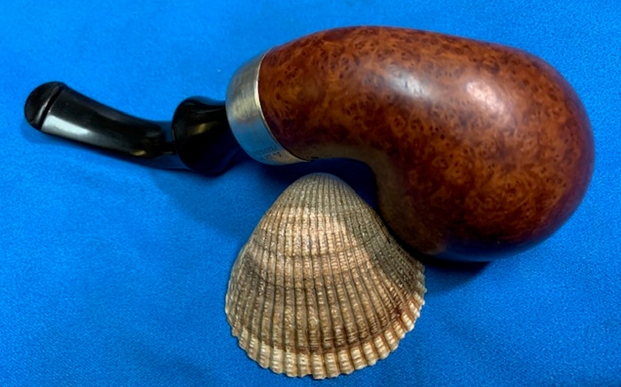
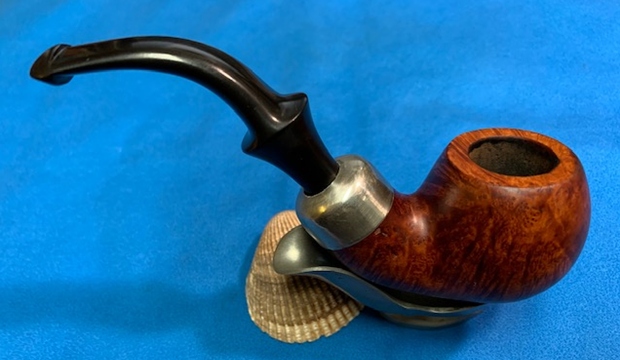
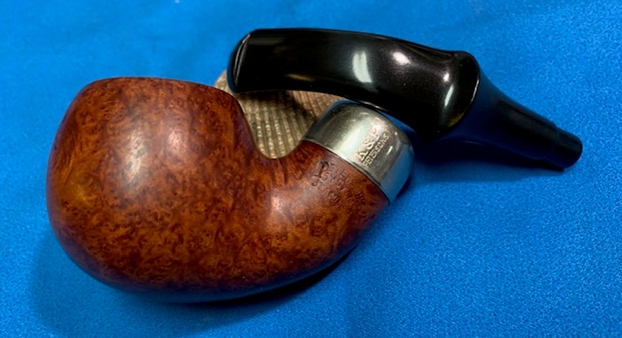
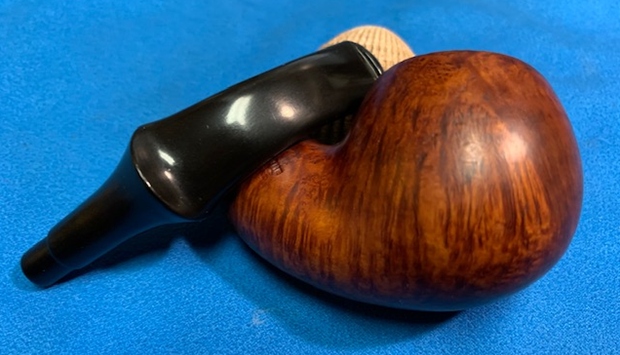
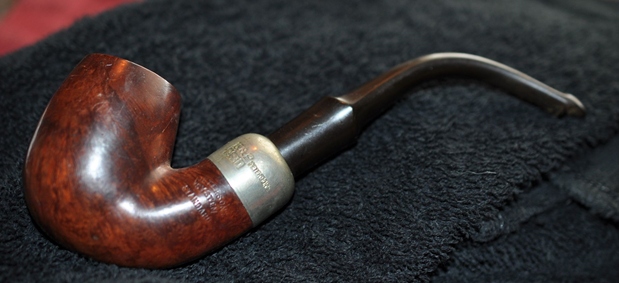
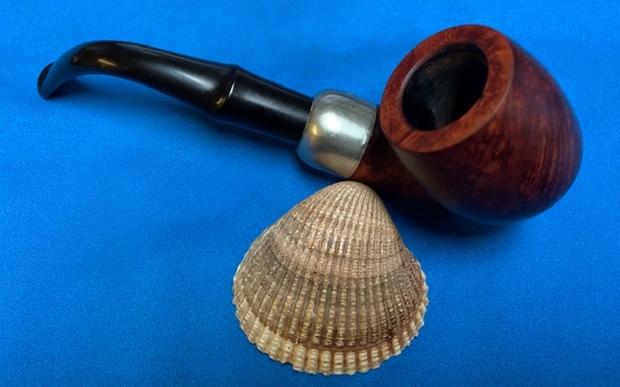
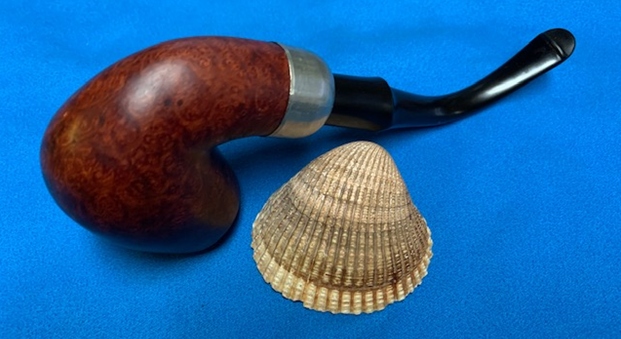
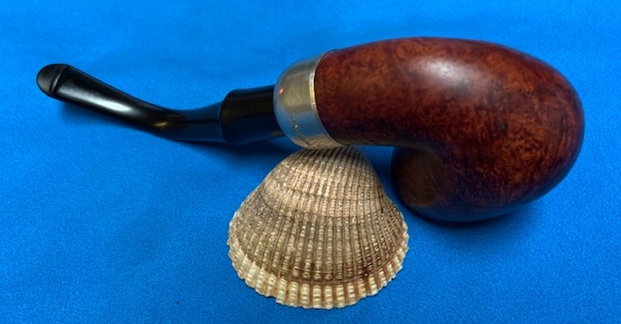
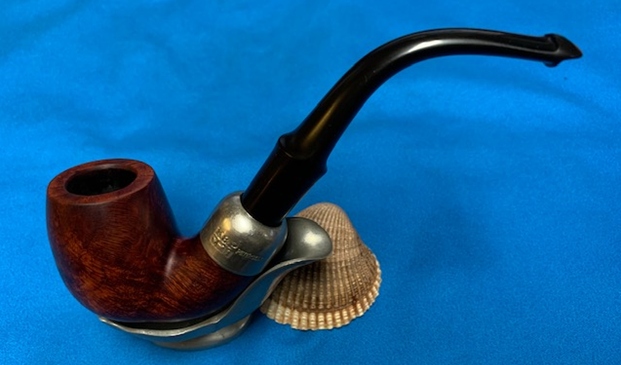
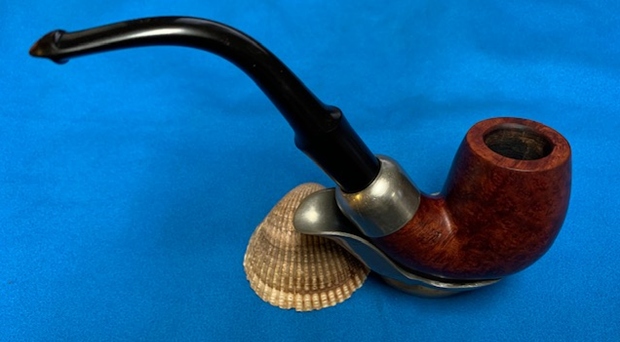
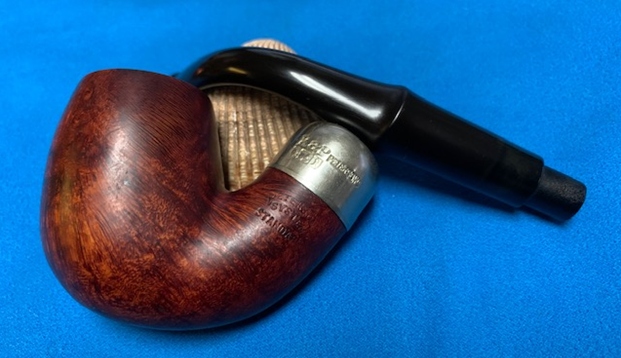
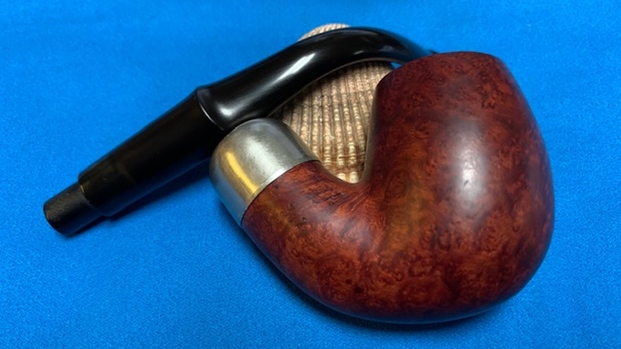
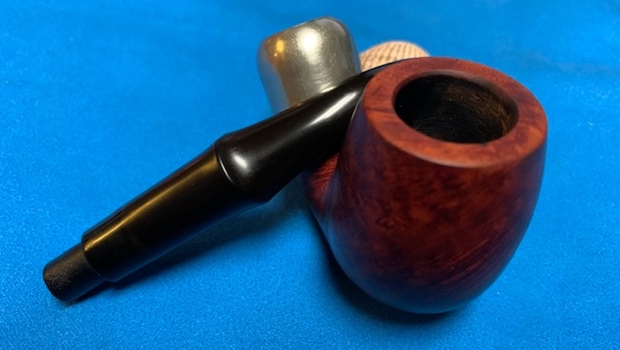
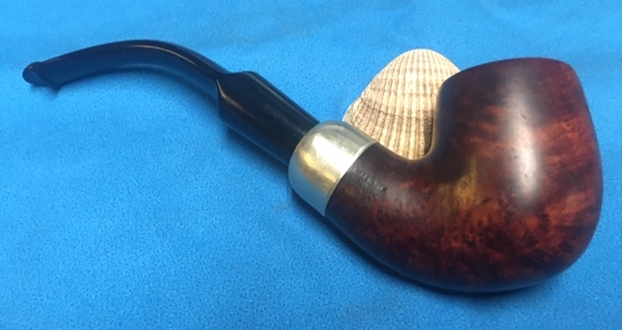
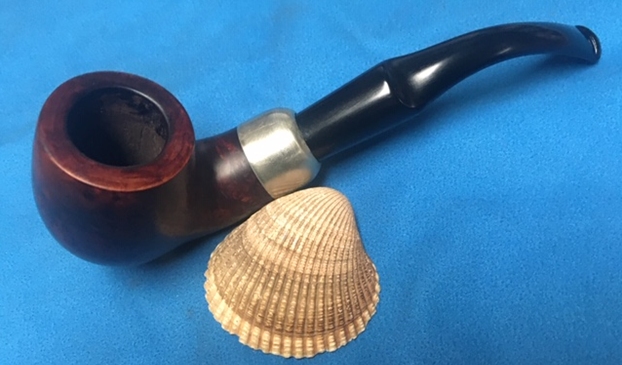
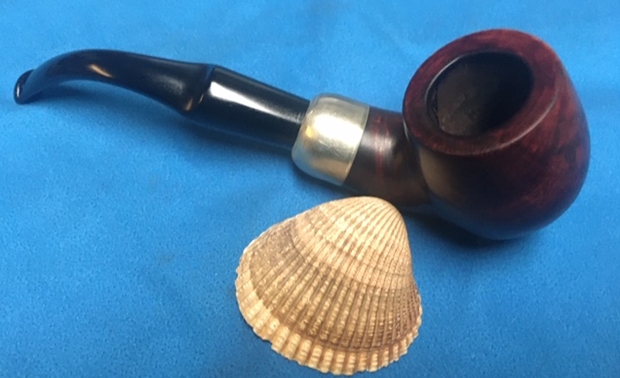
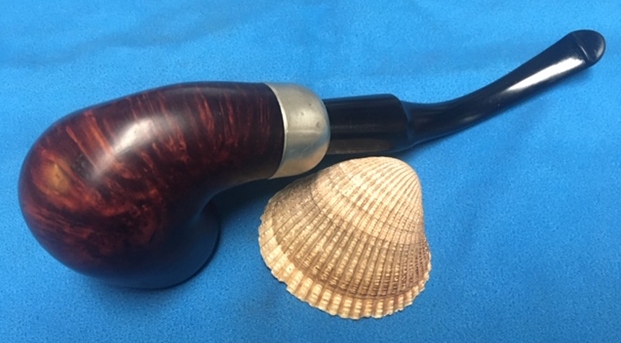
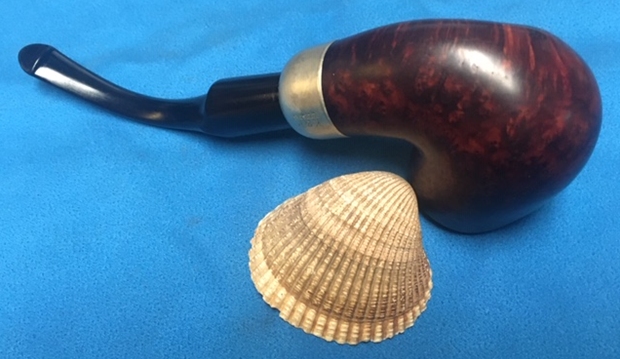
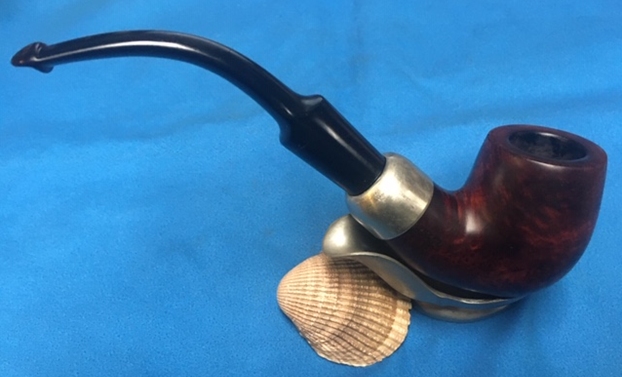
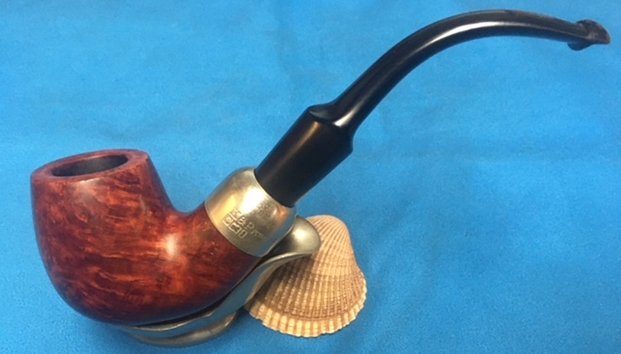
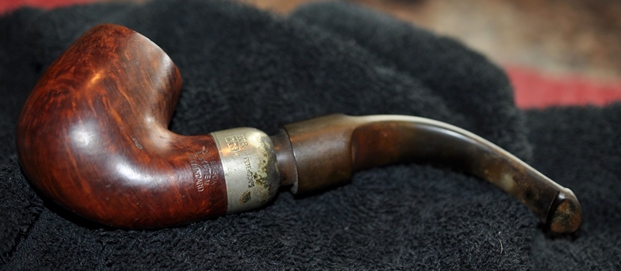
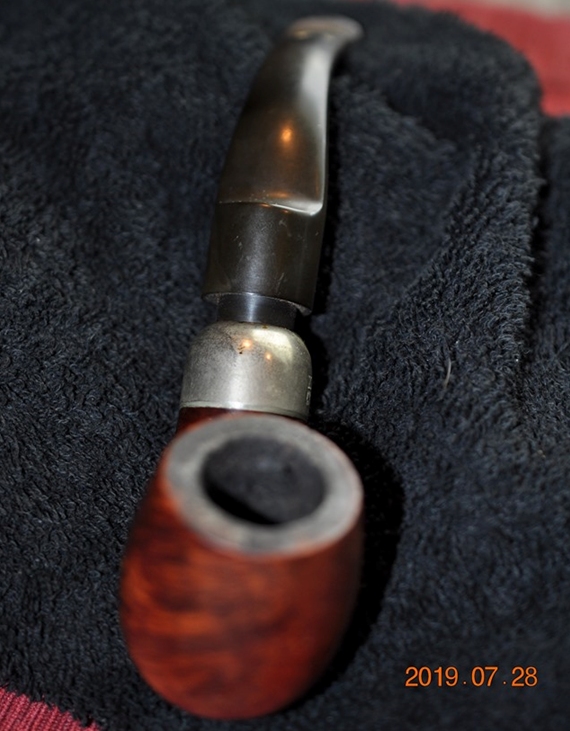
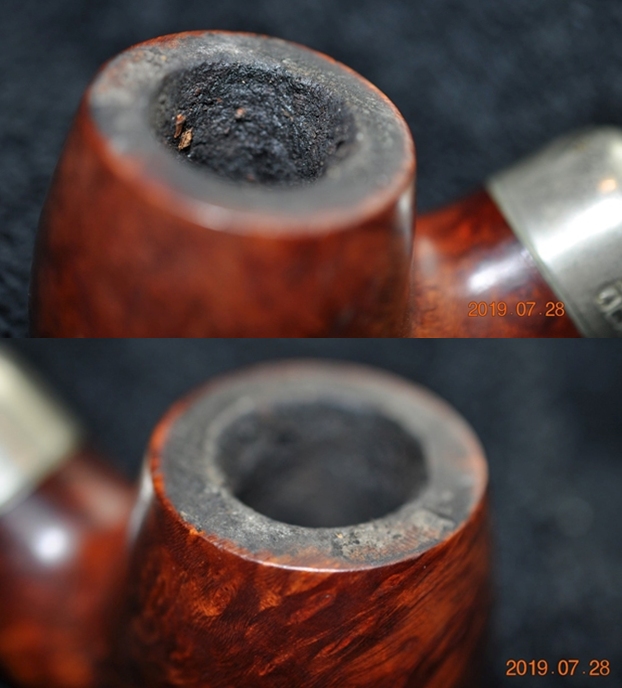
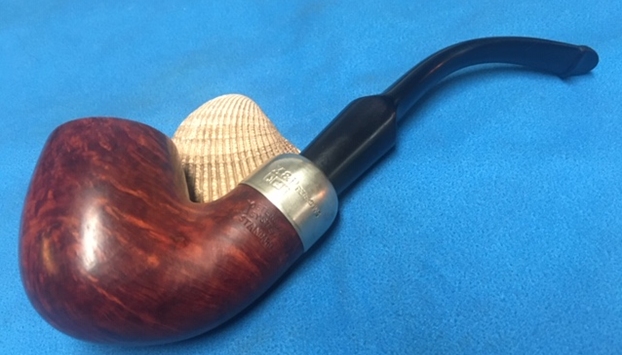
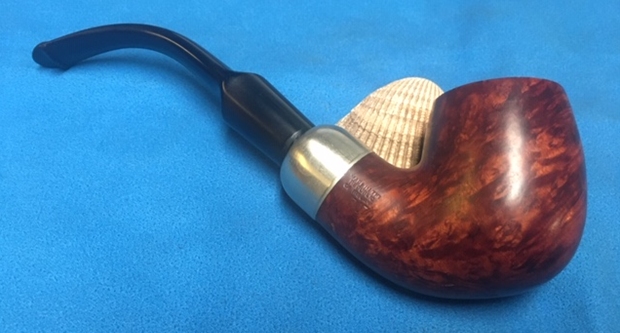
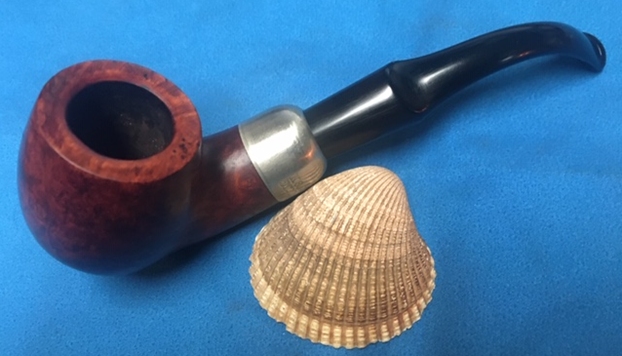
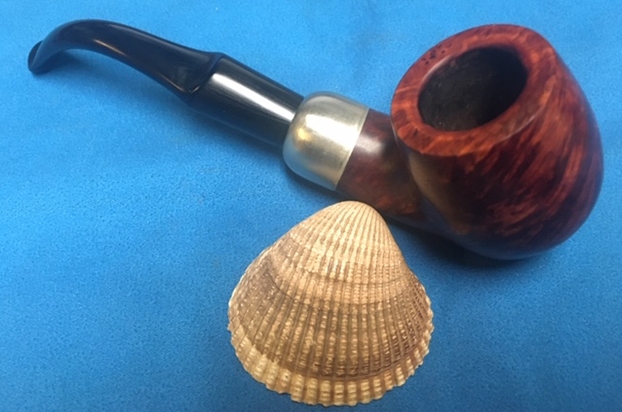
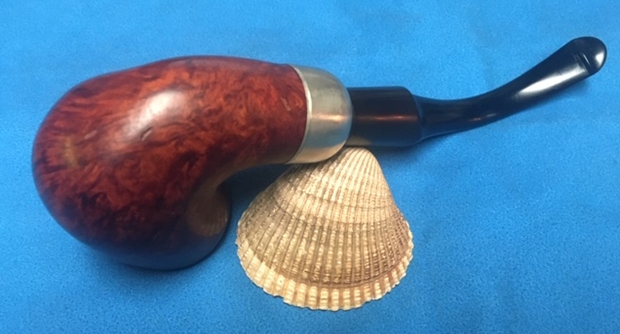
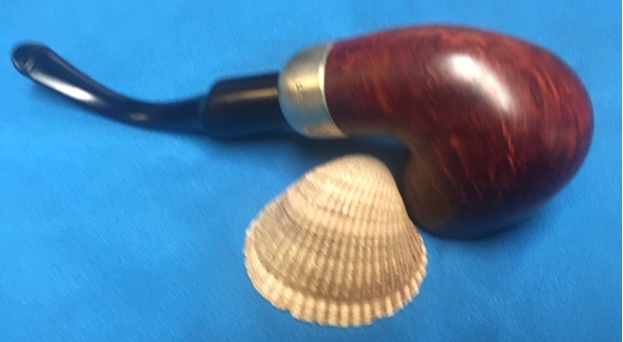
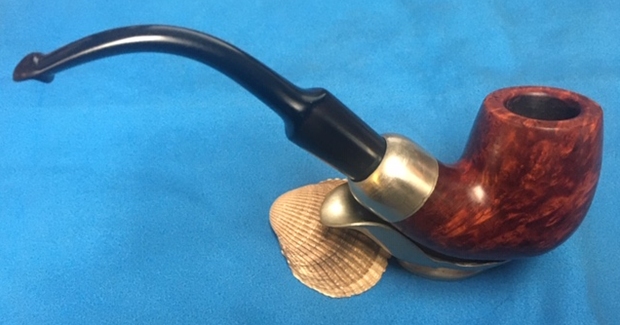
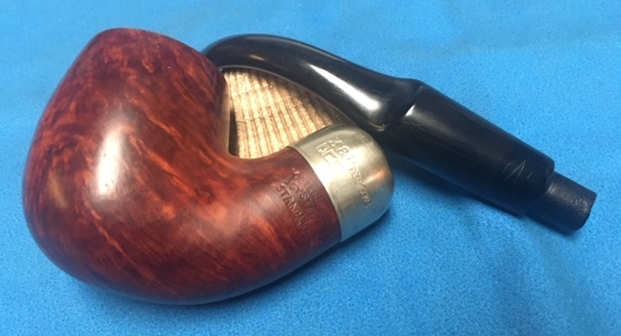
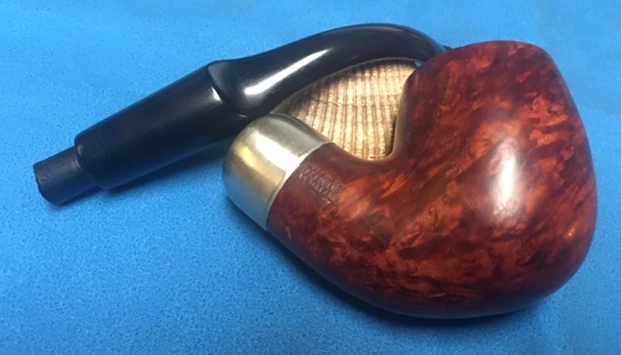
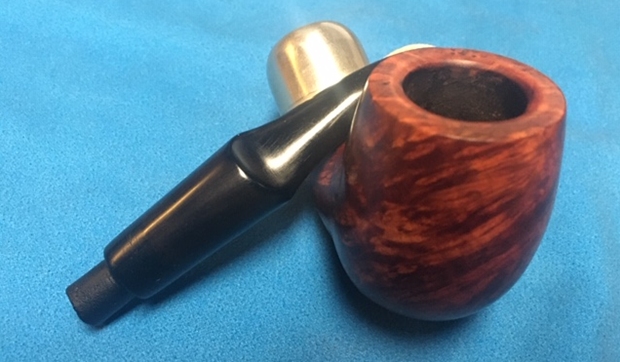
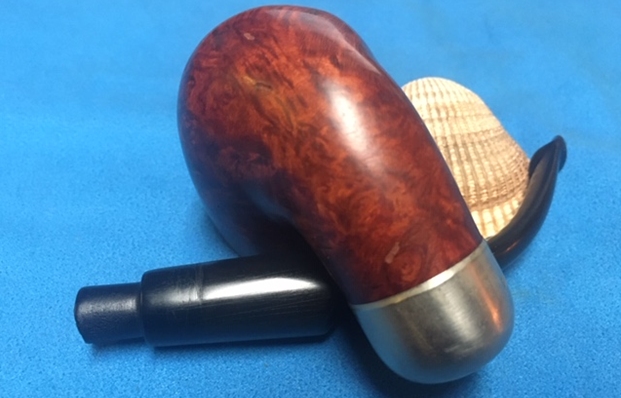
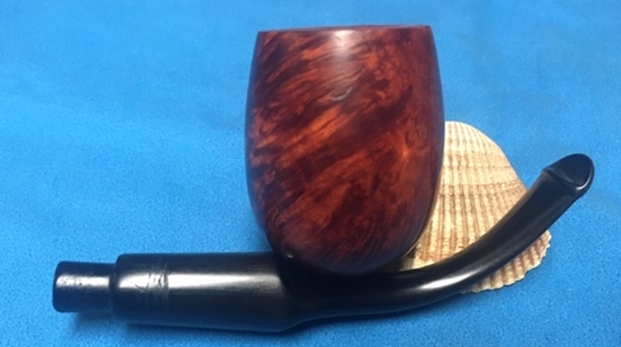
New Life for a Second Republic Era Peterson’s System Standard Smooth 302 Bent Apple


Blog by Steve Laug

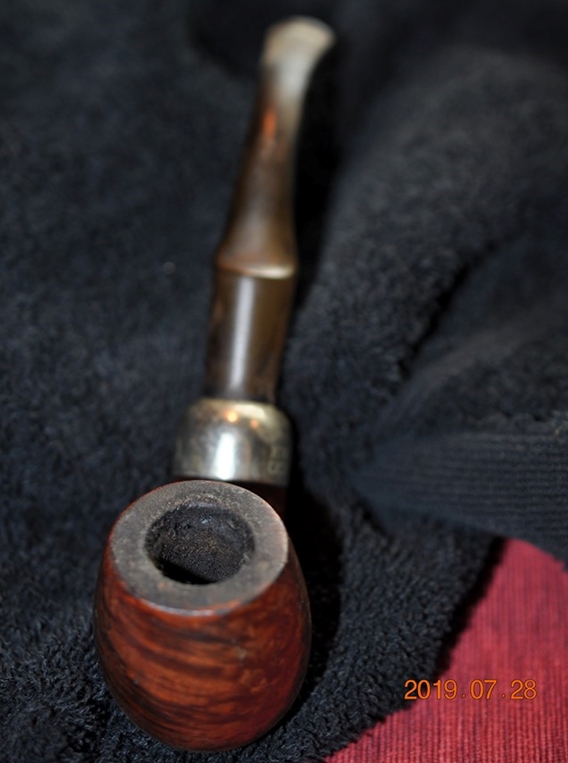
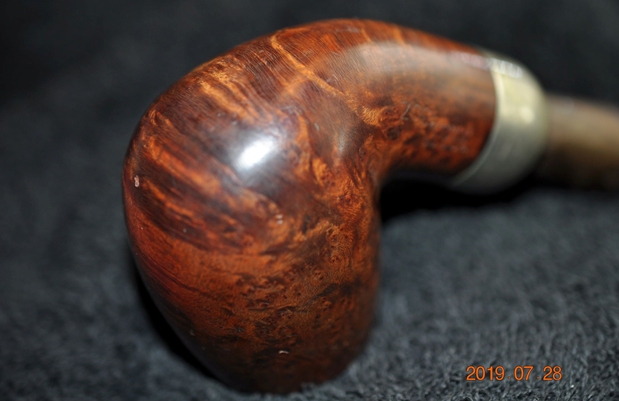
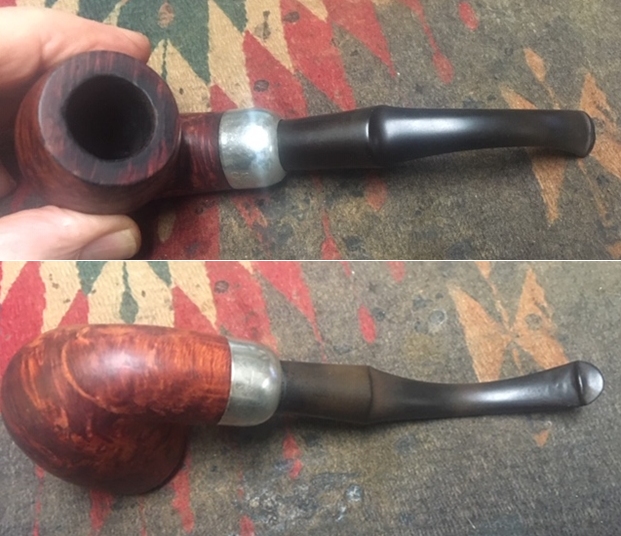
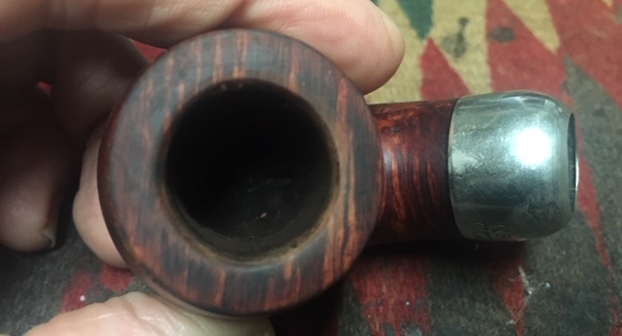
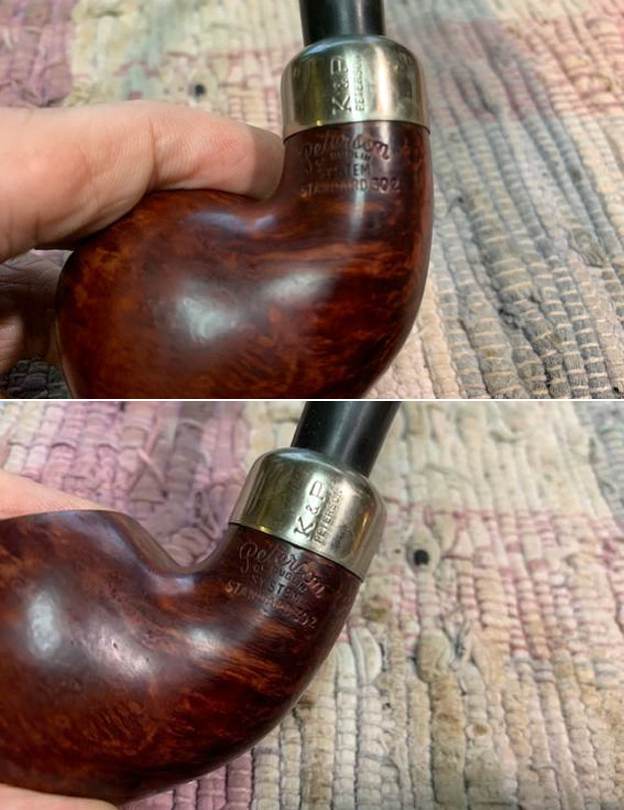
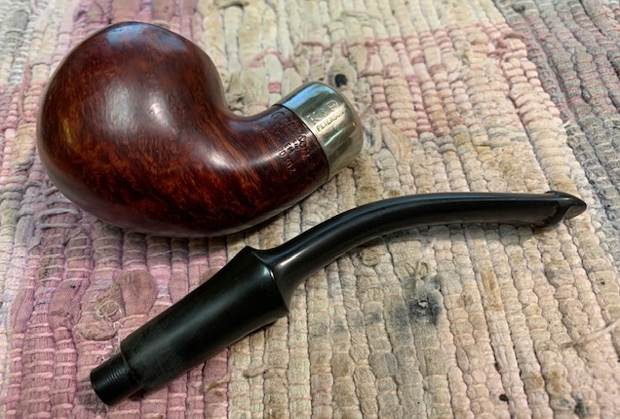
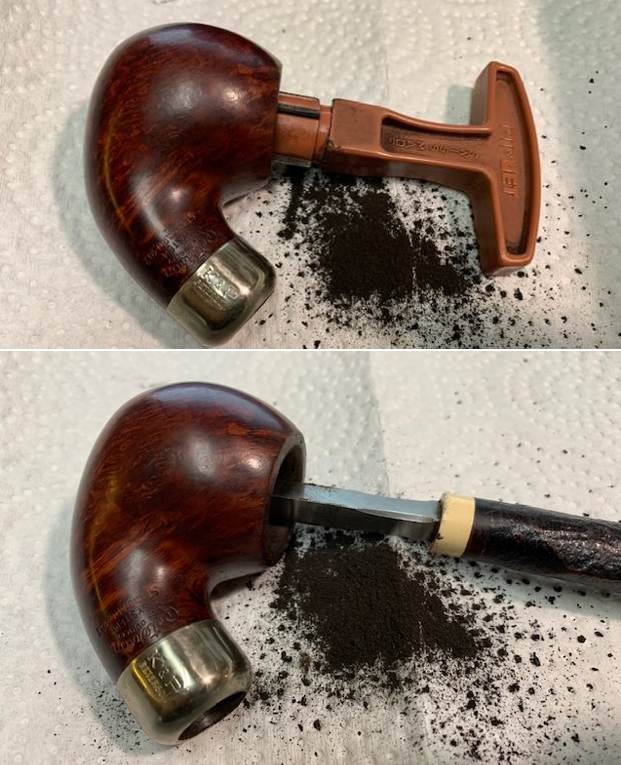
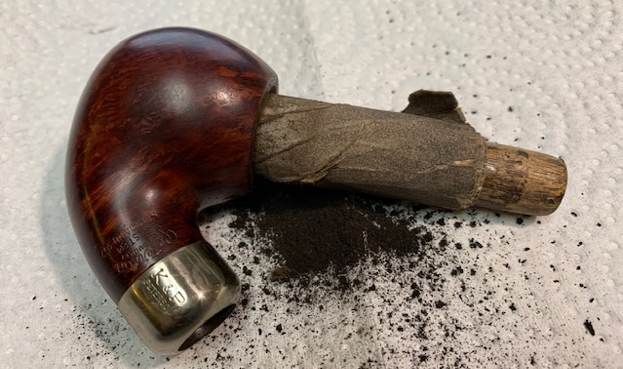
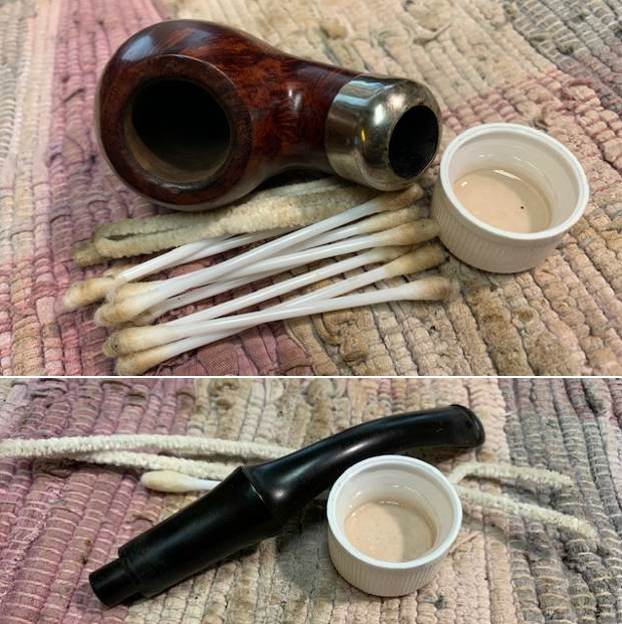
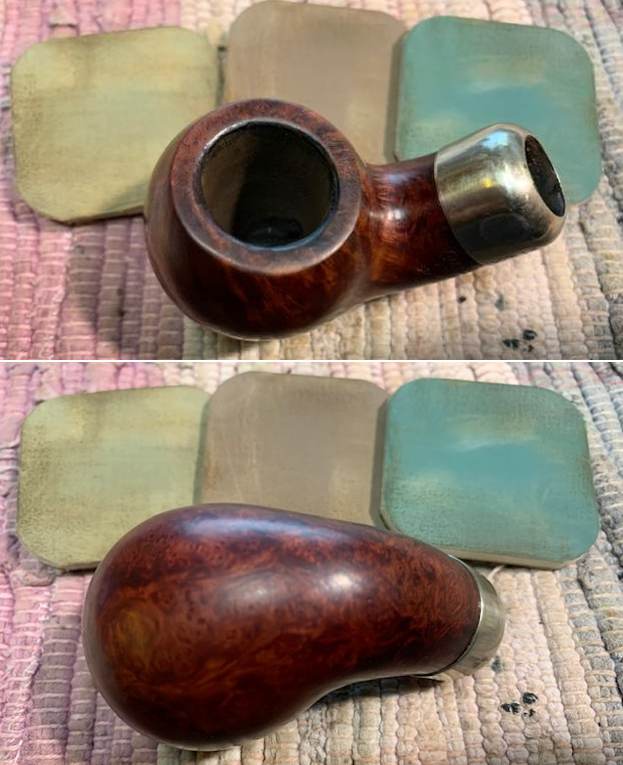
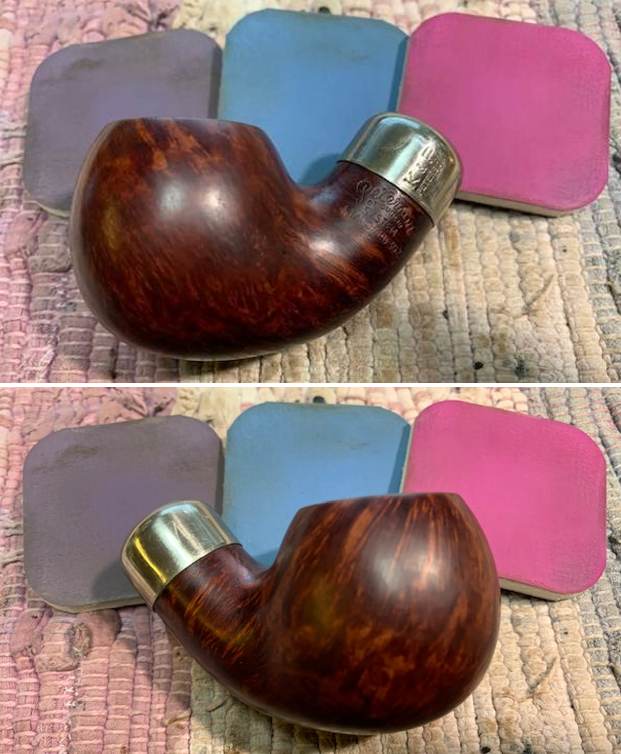
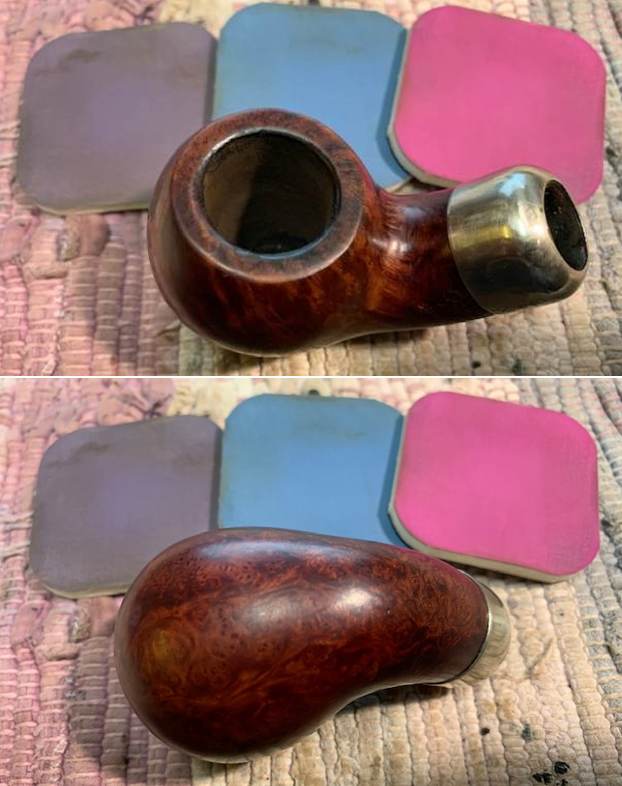
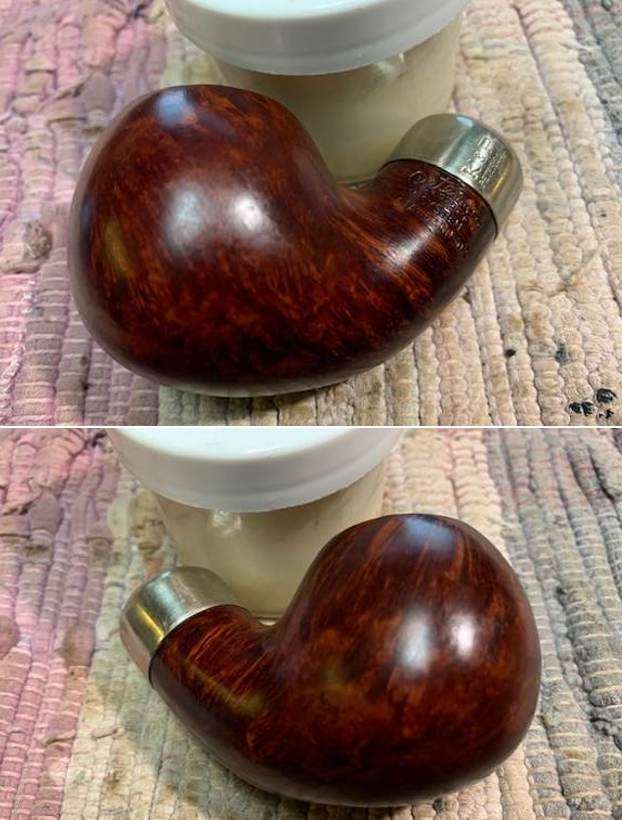
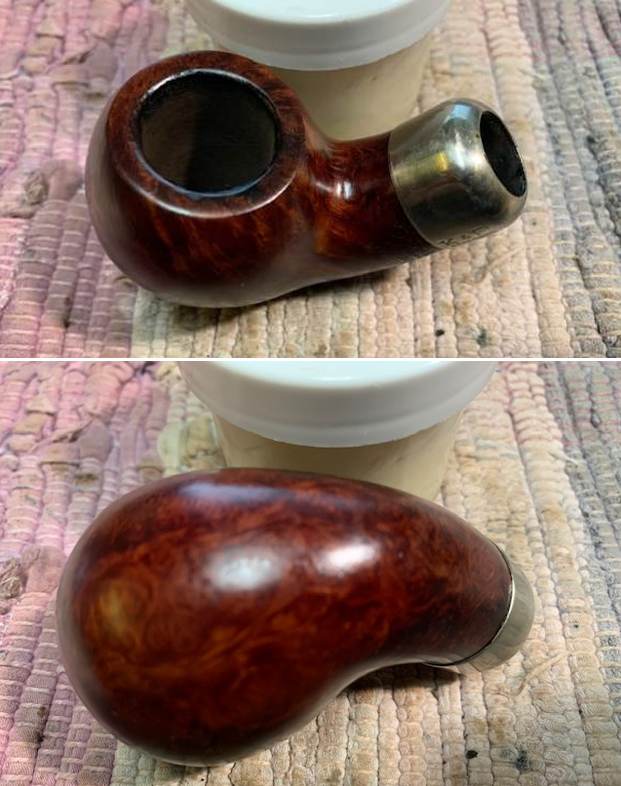
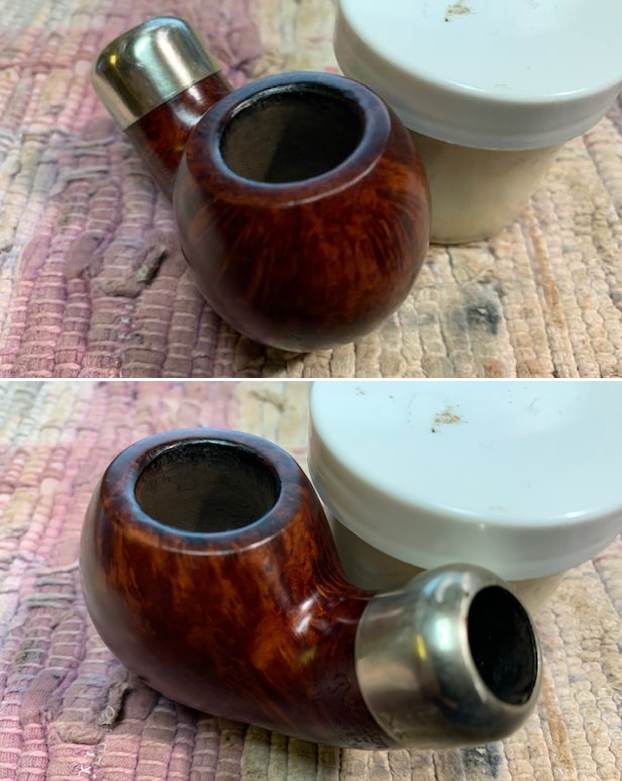
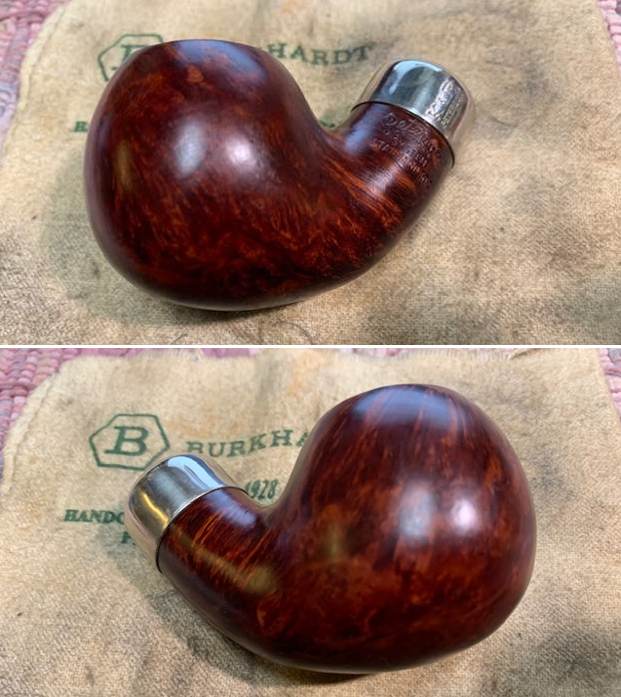
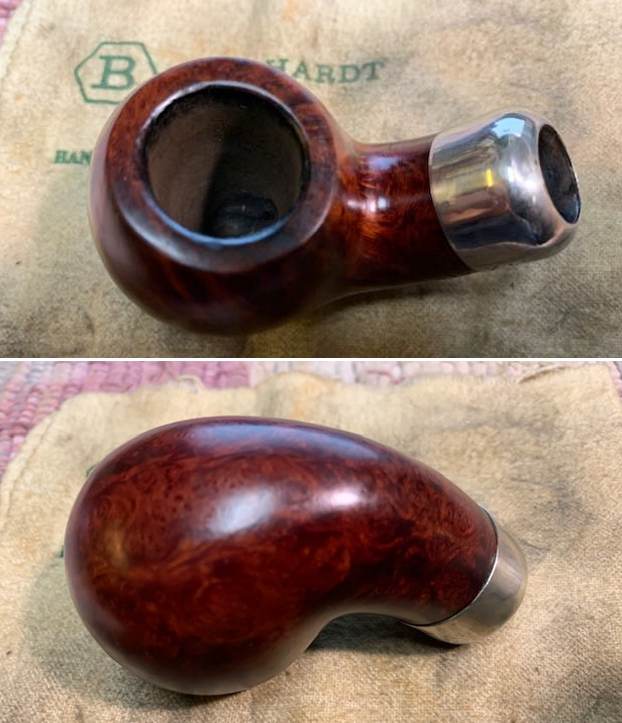
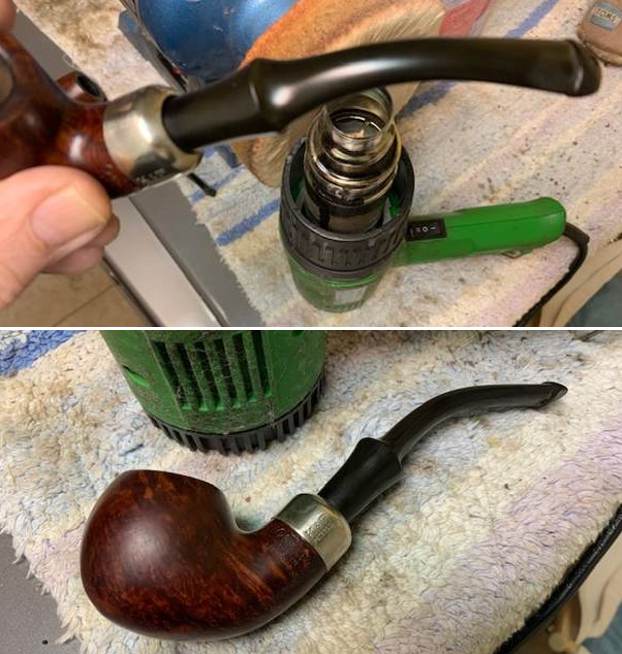
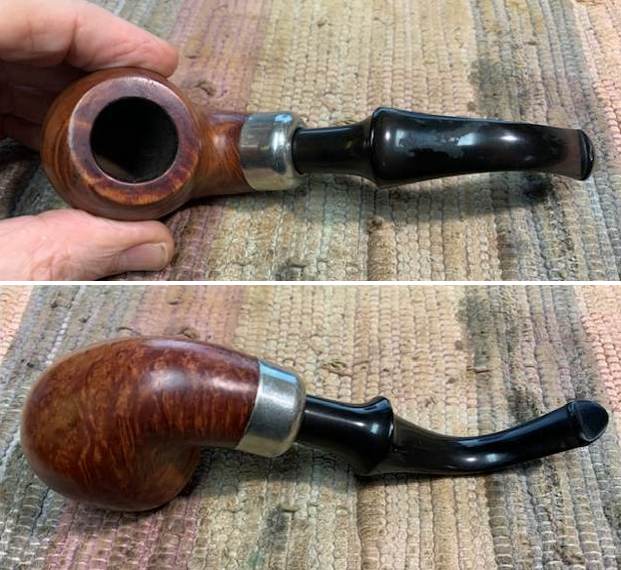
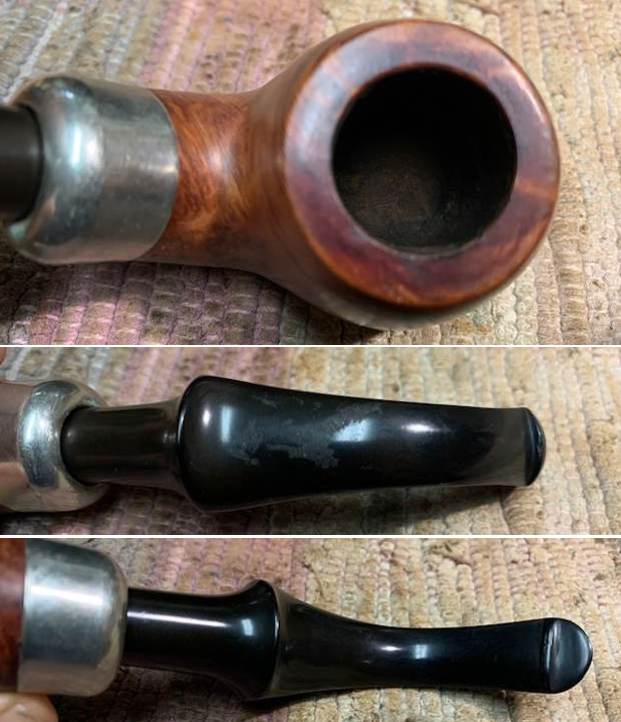
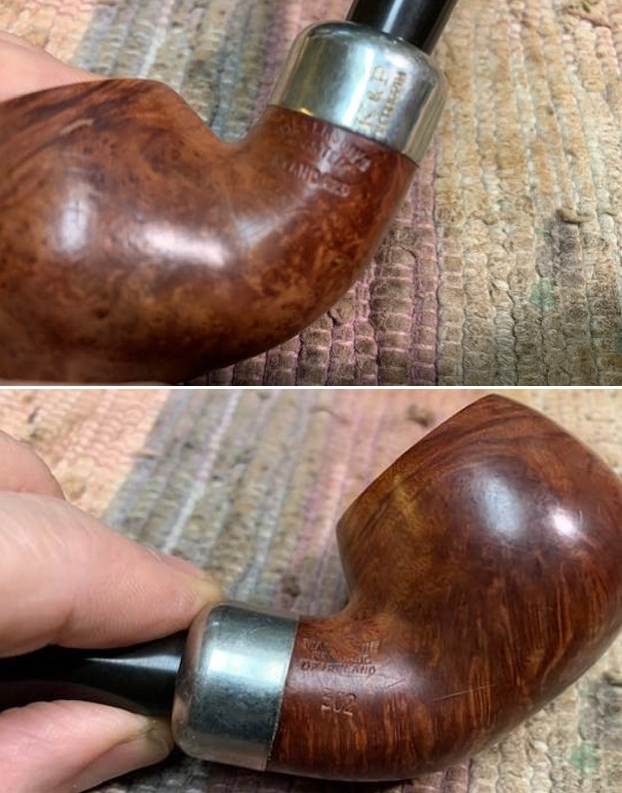
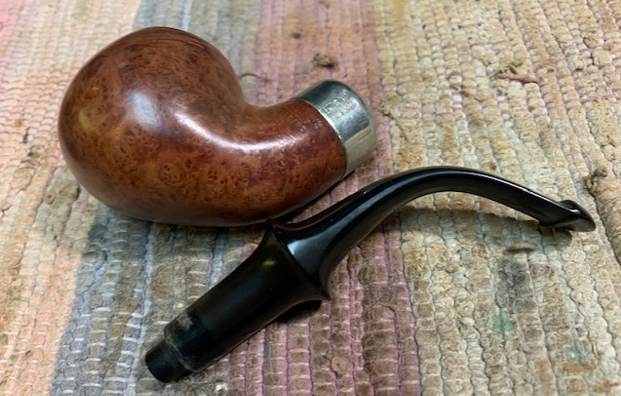
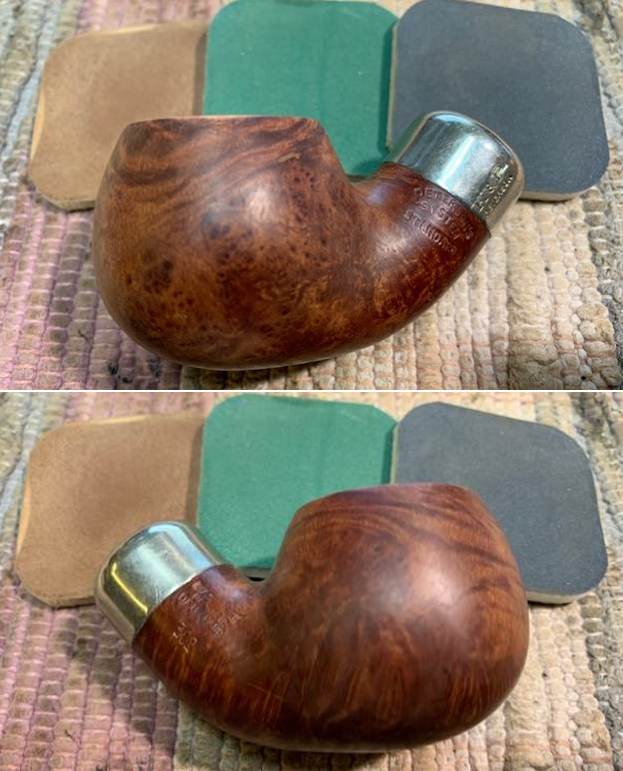
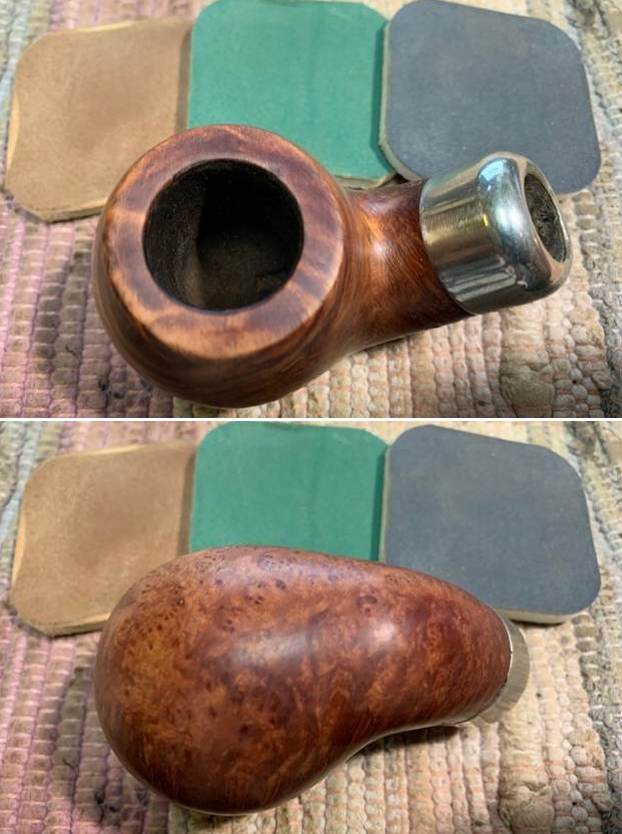
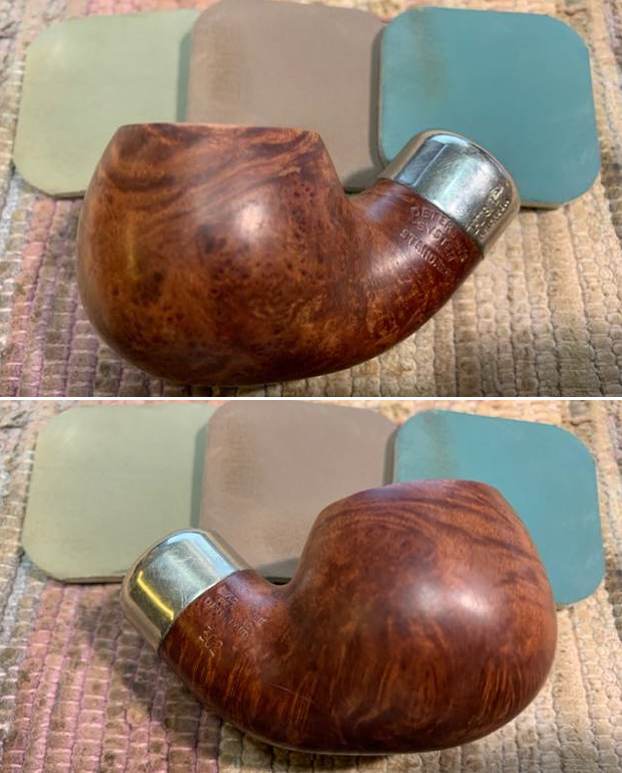
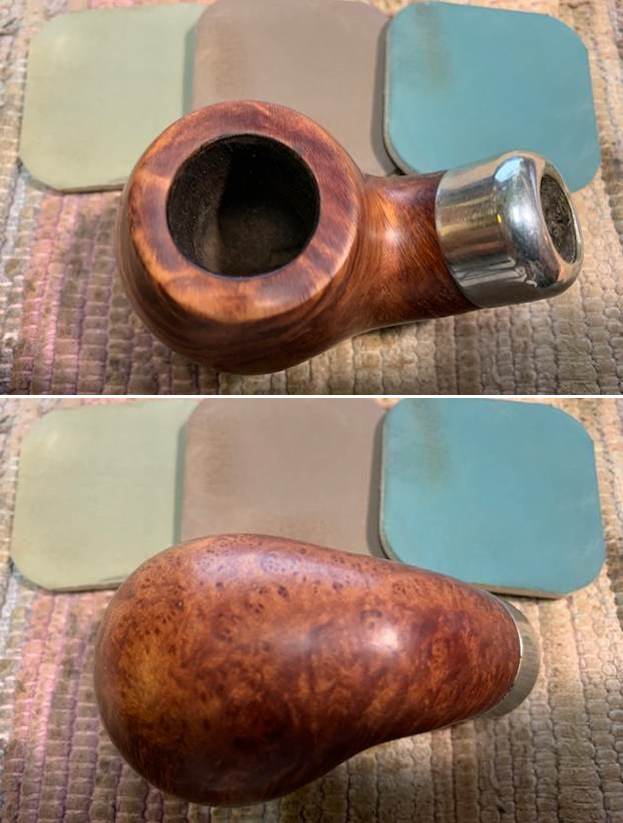
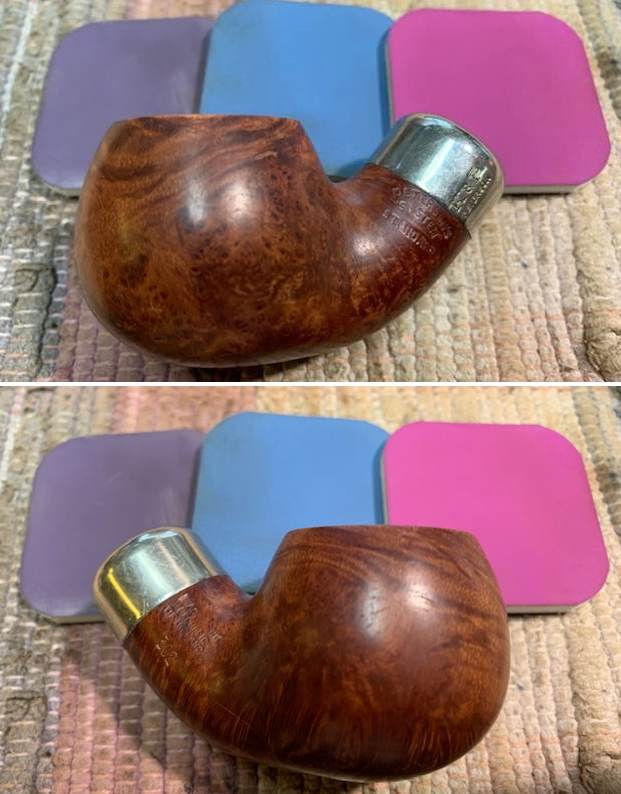
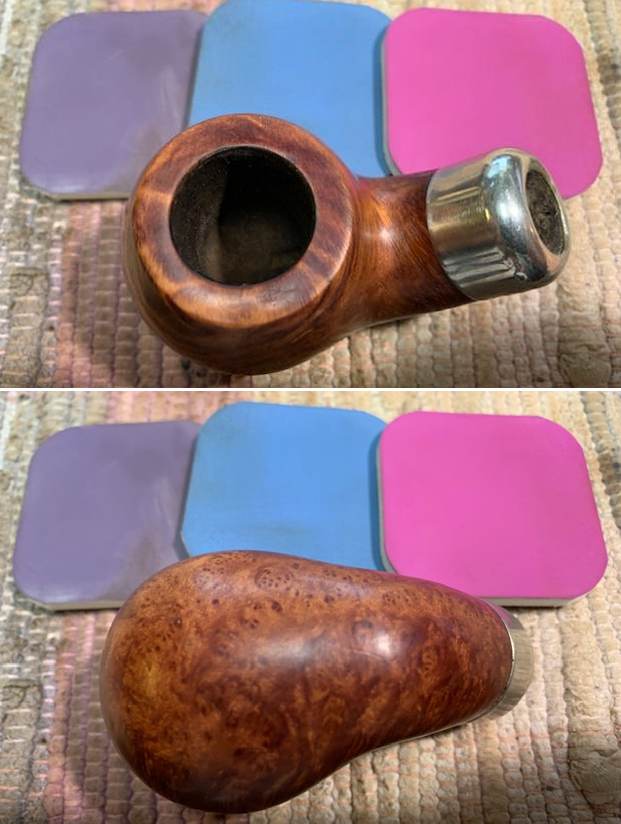
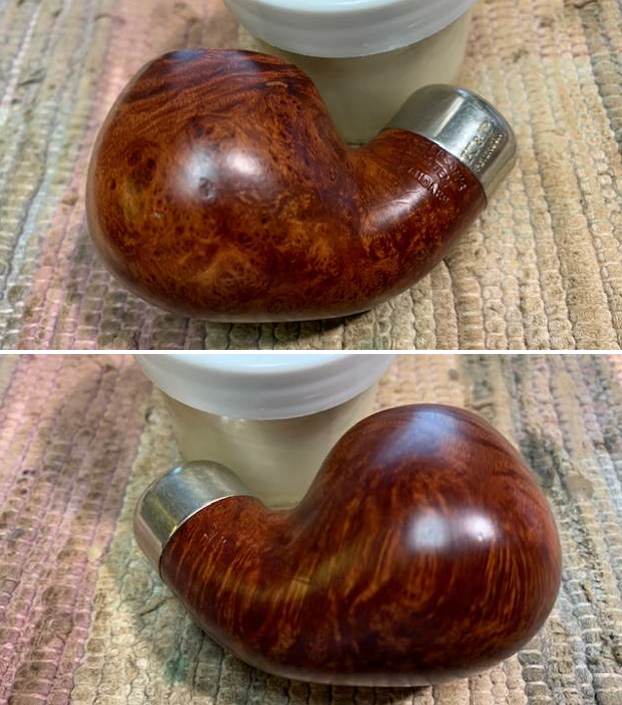
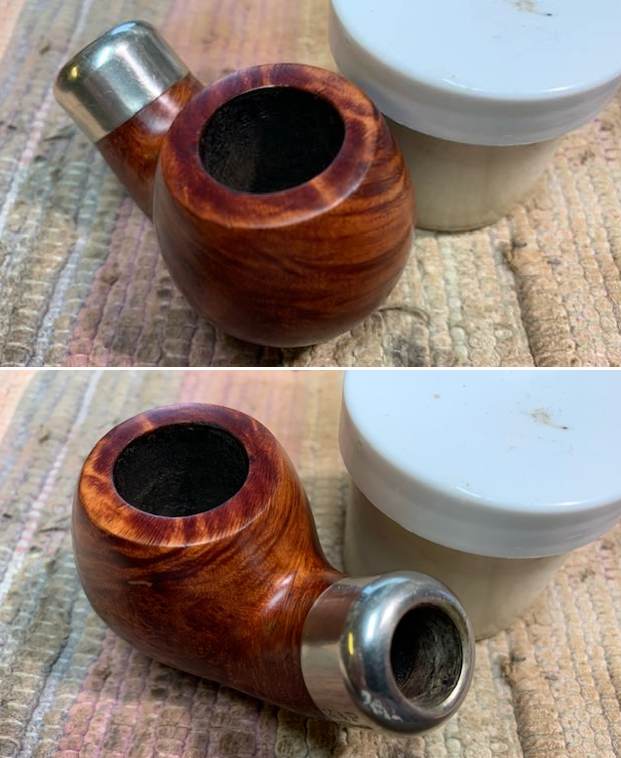
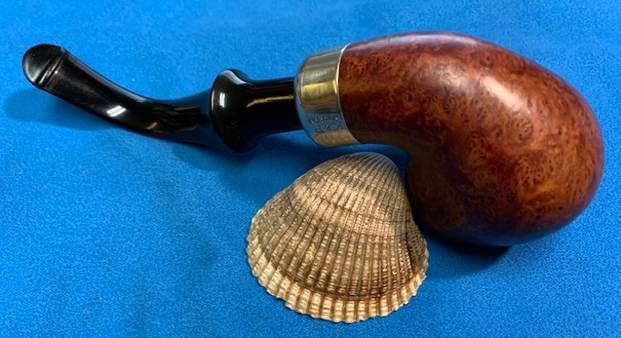
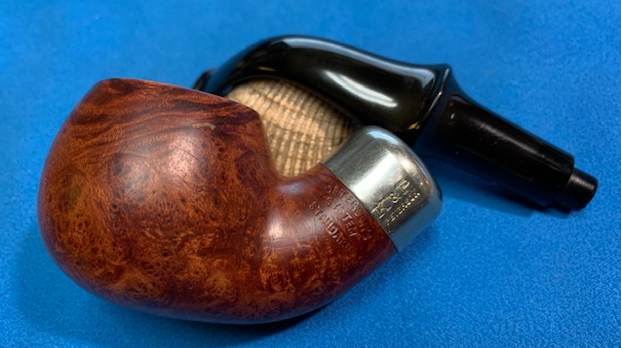
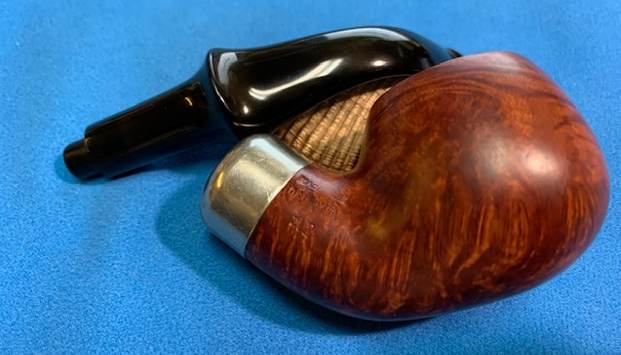
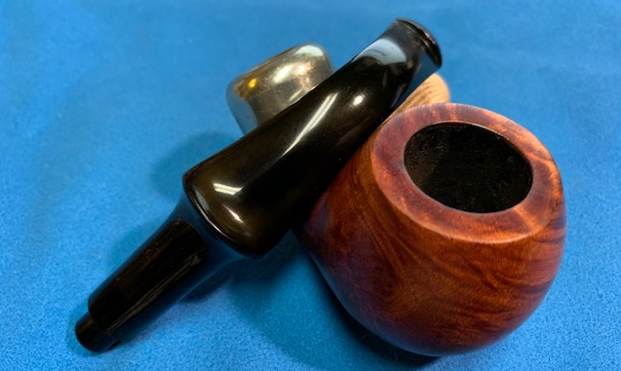
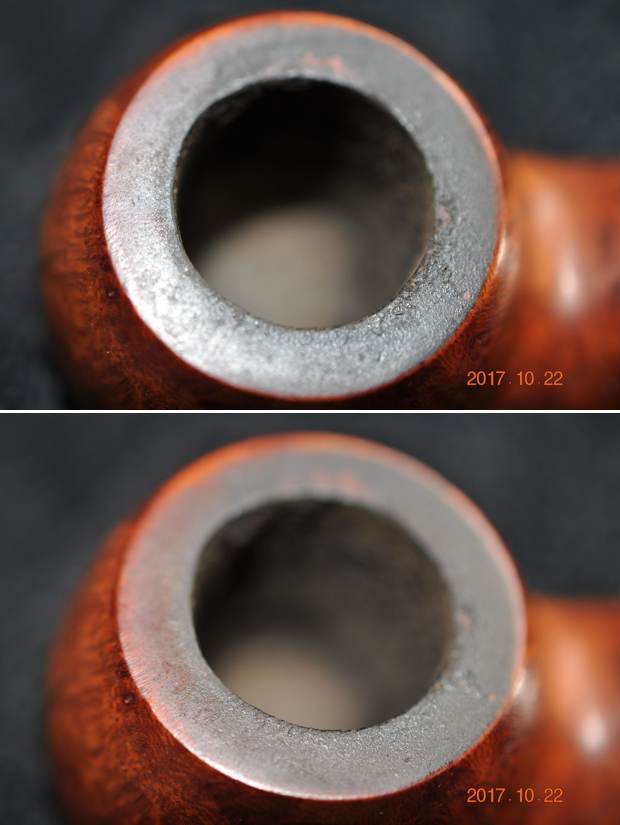
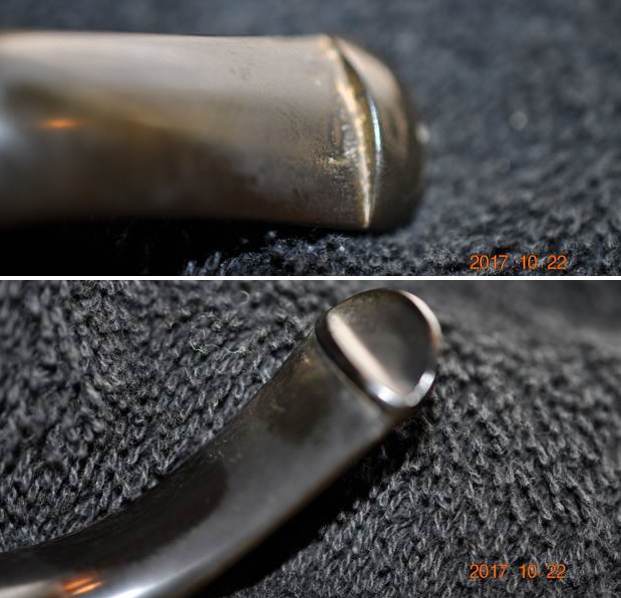
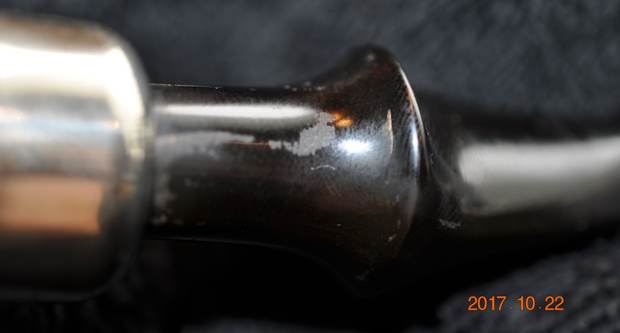
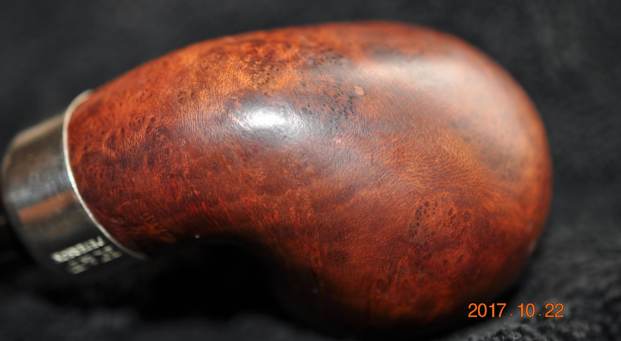
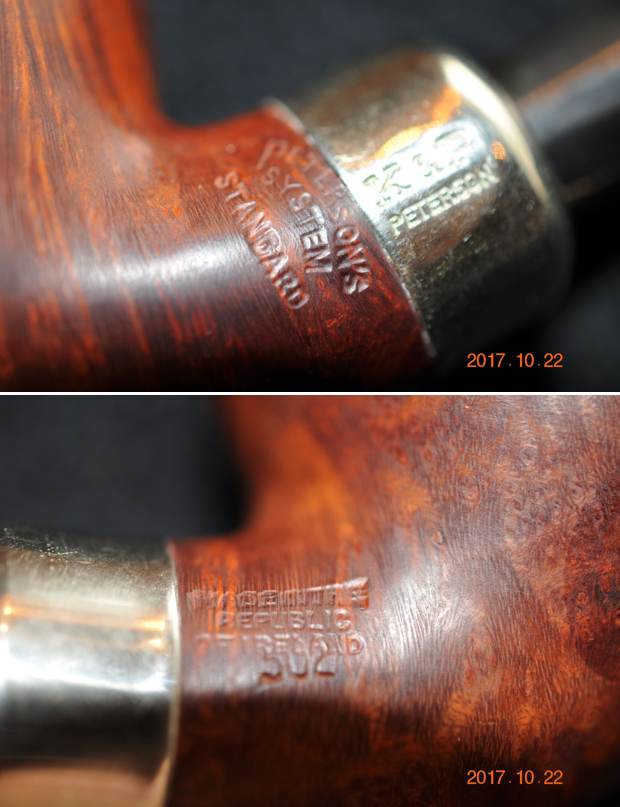
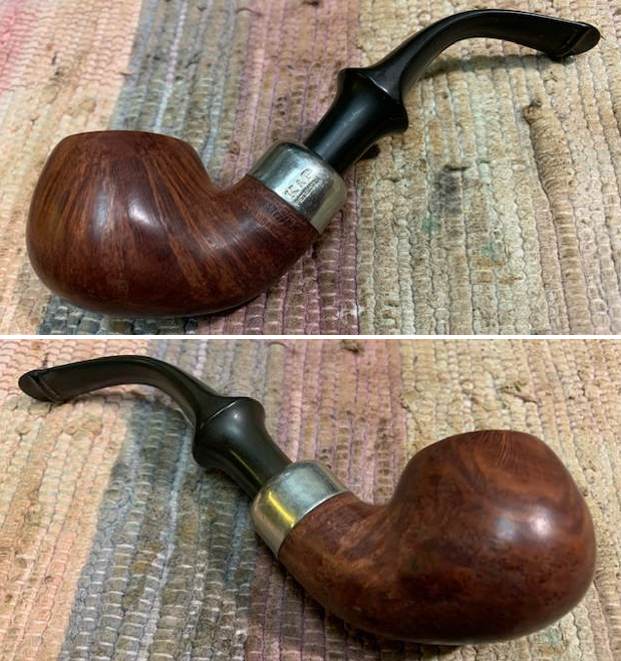
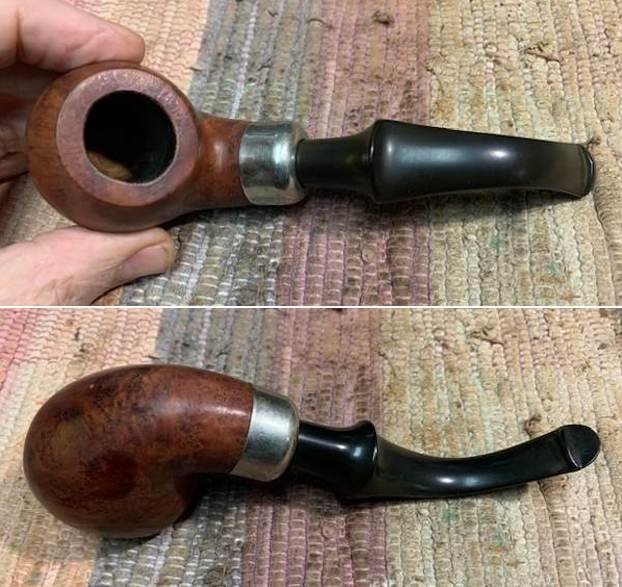
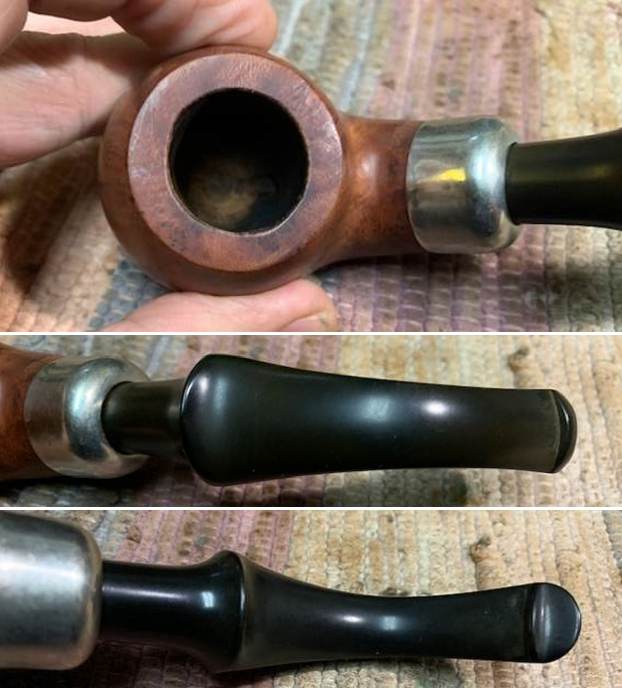
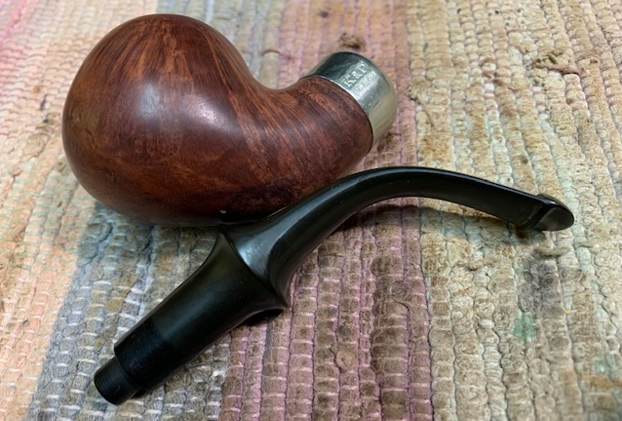
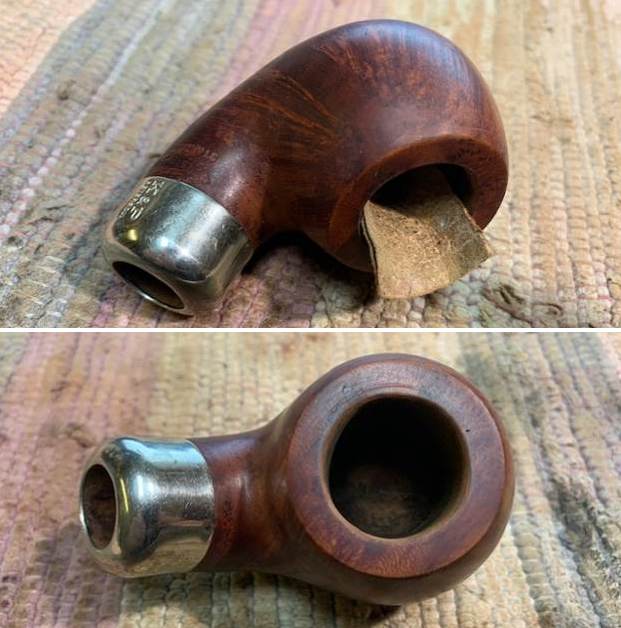
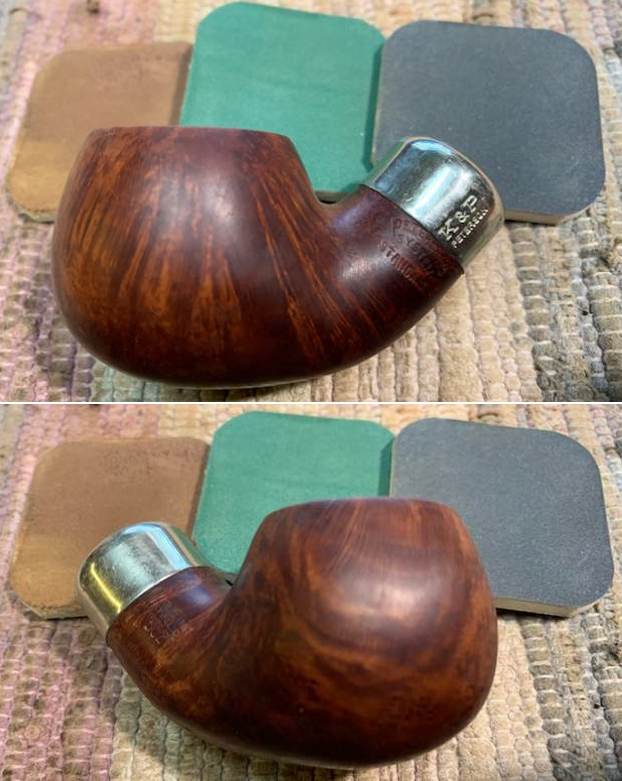
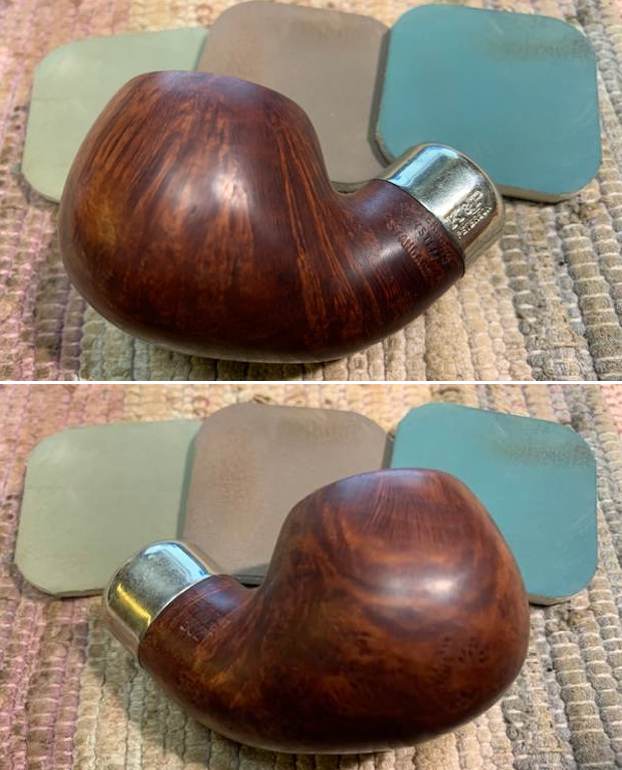
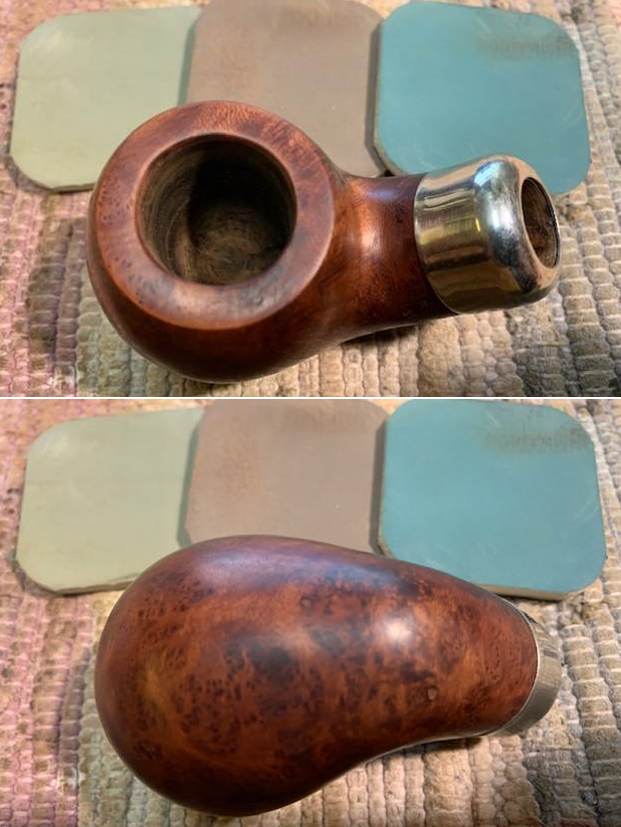
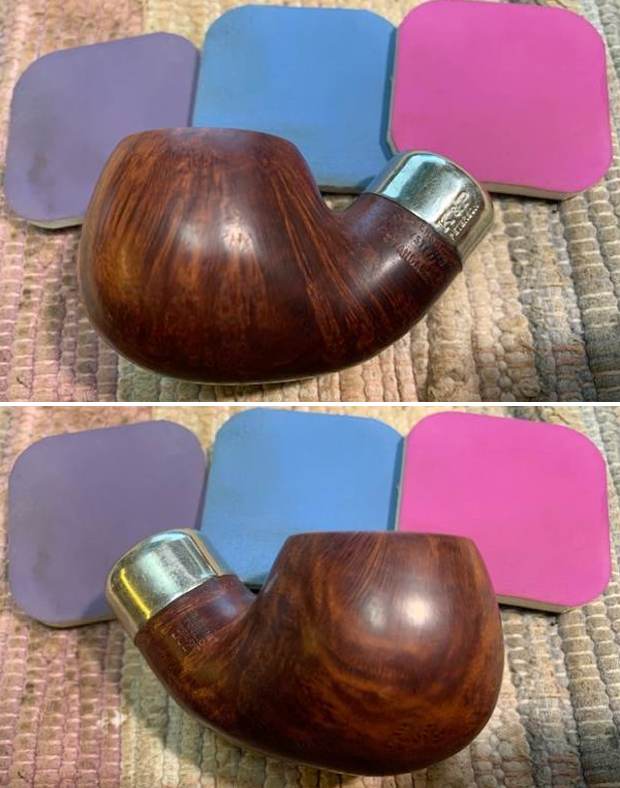
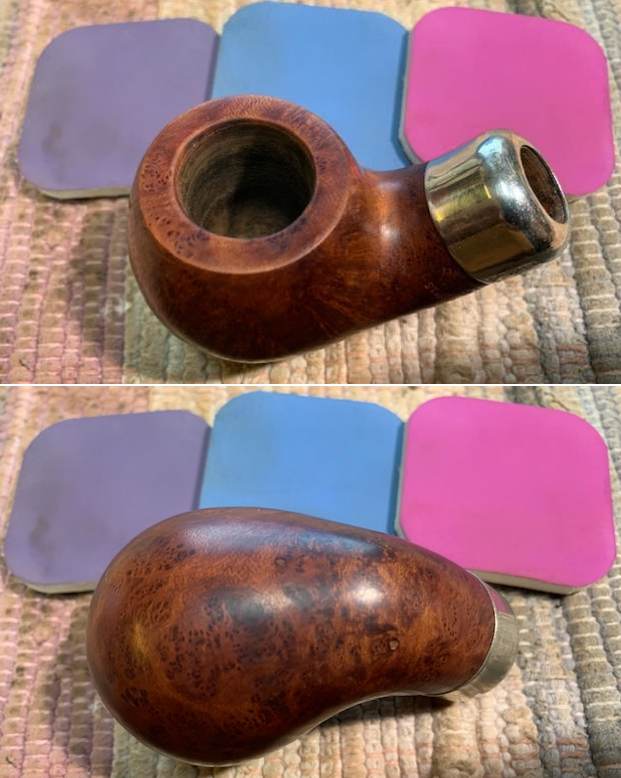
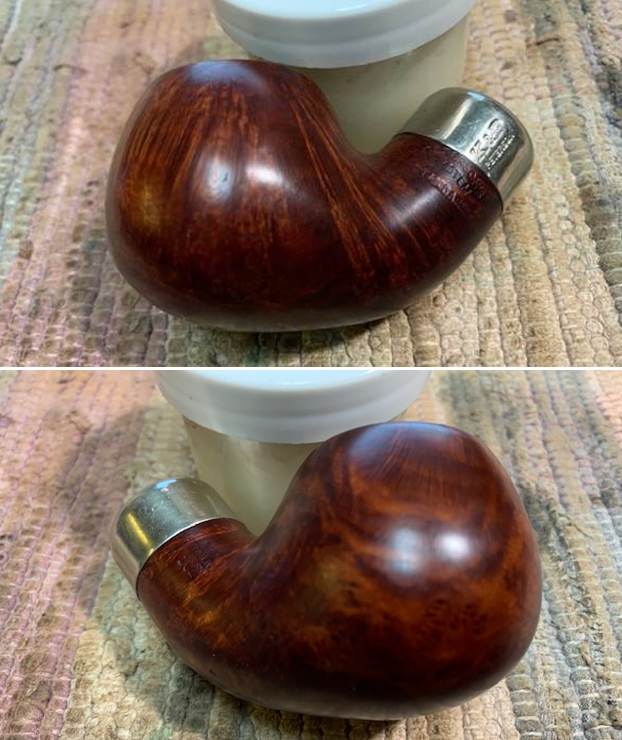
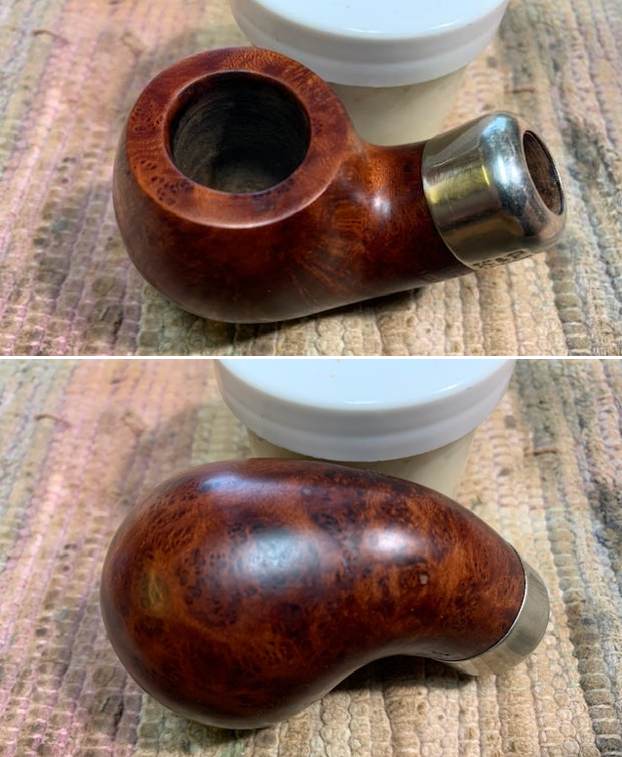
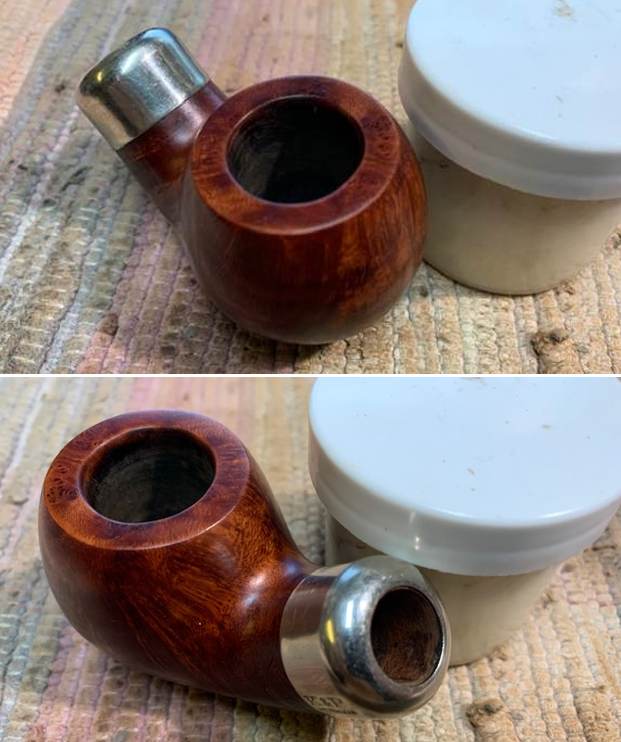
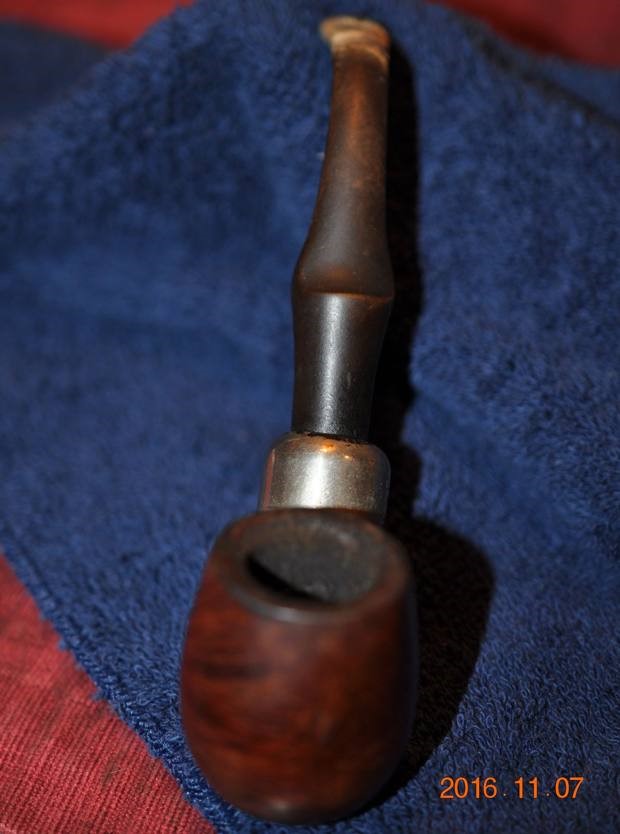
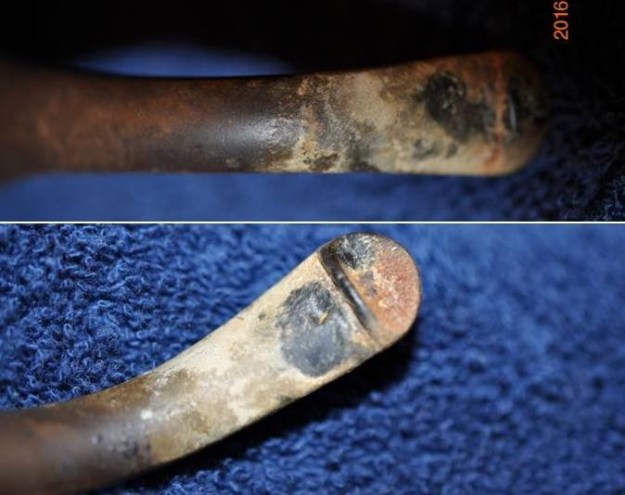
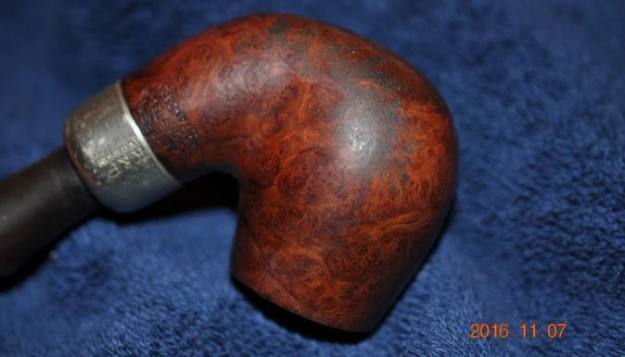
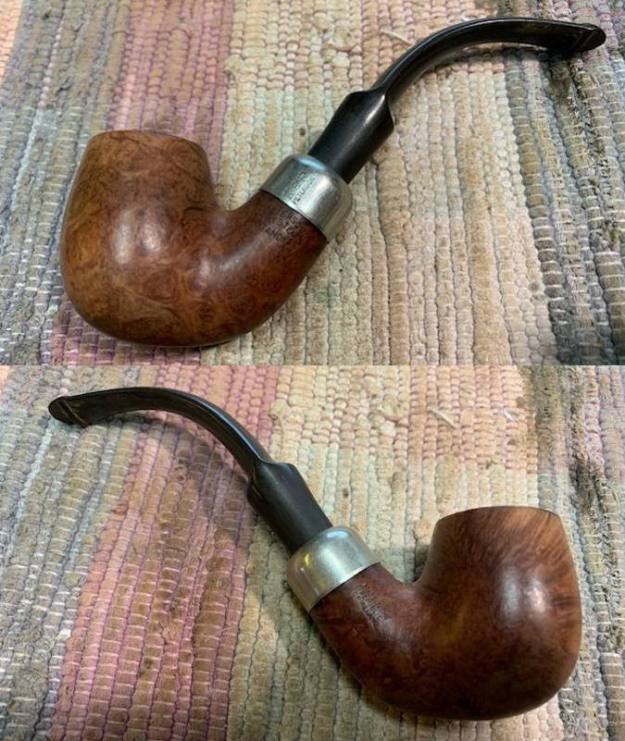
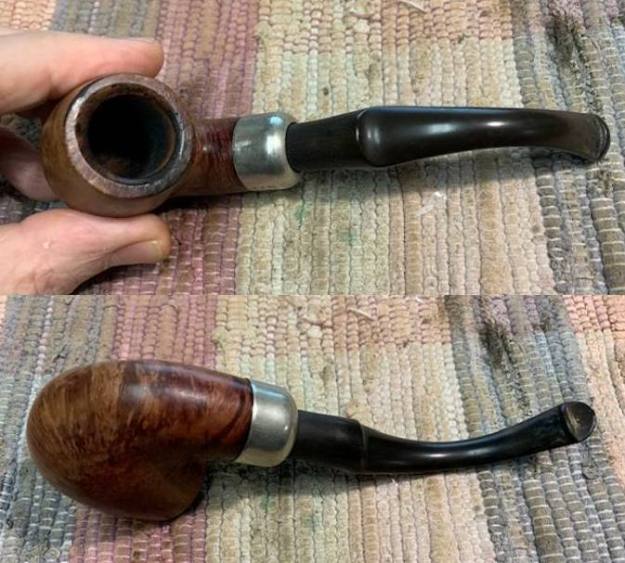
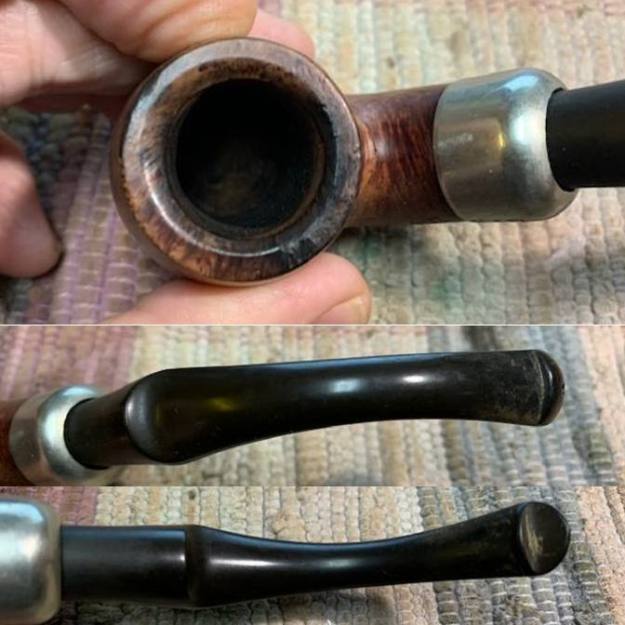
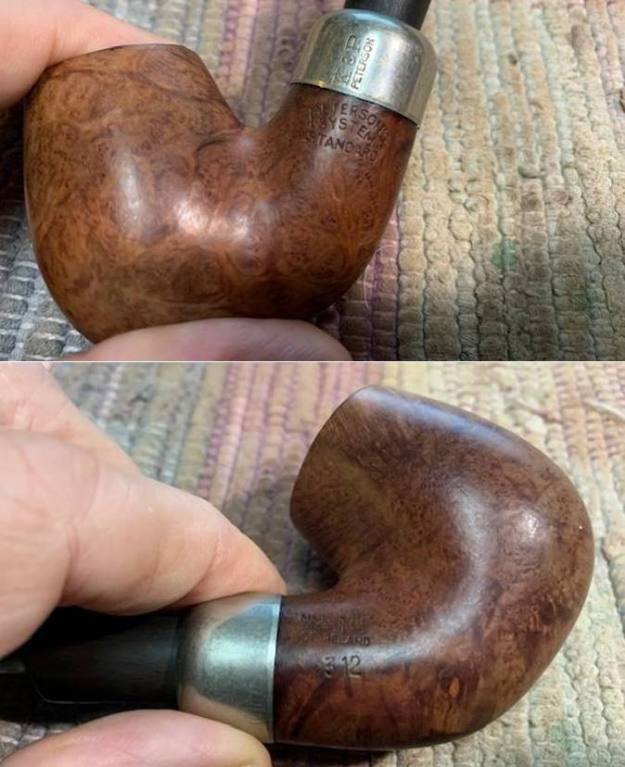
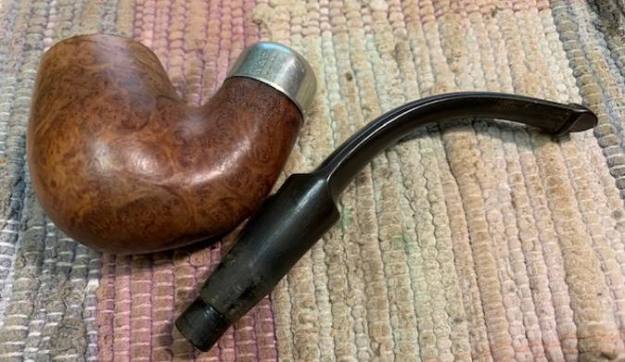
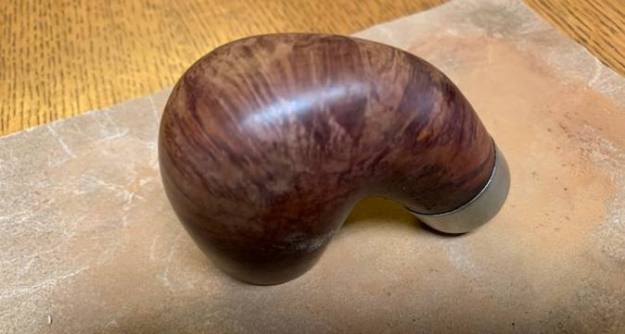
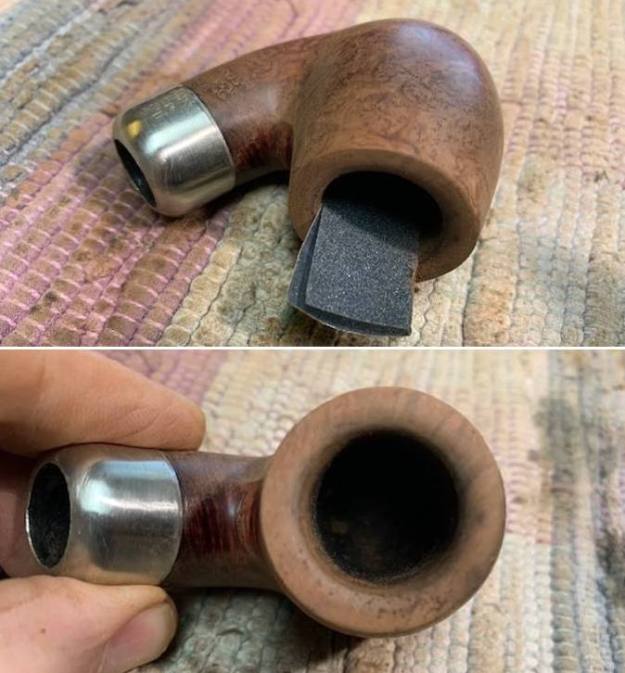
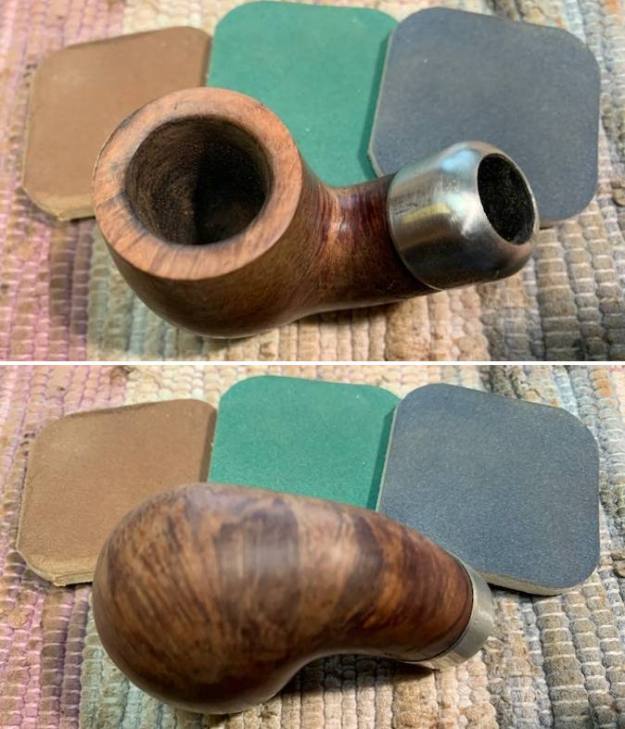
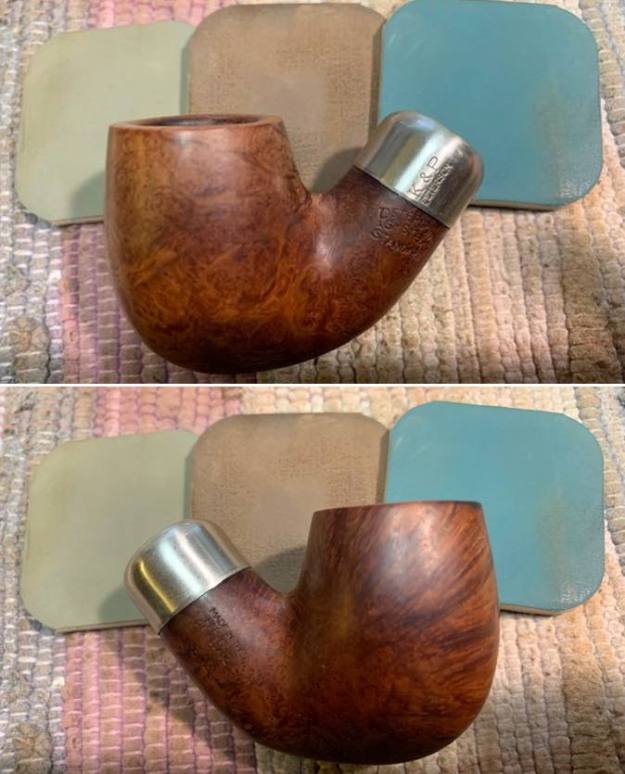
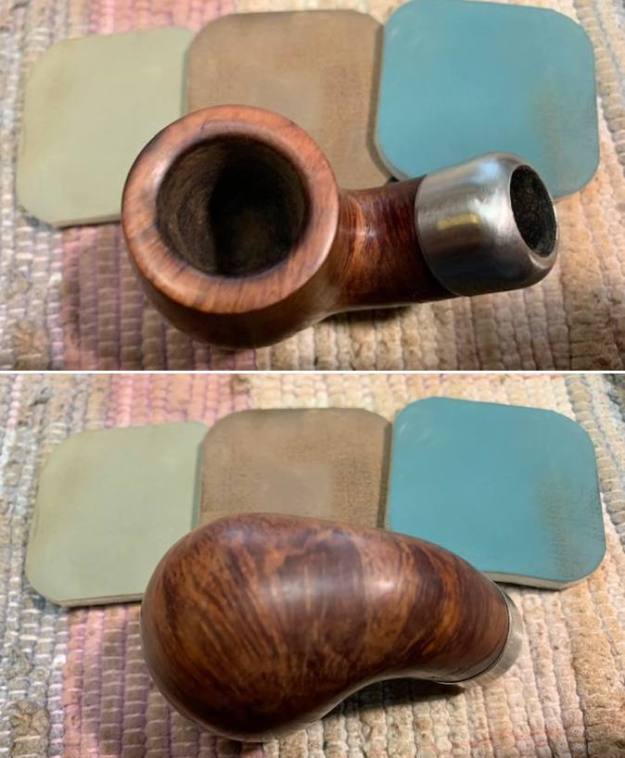
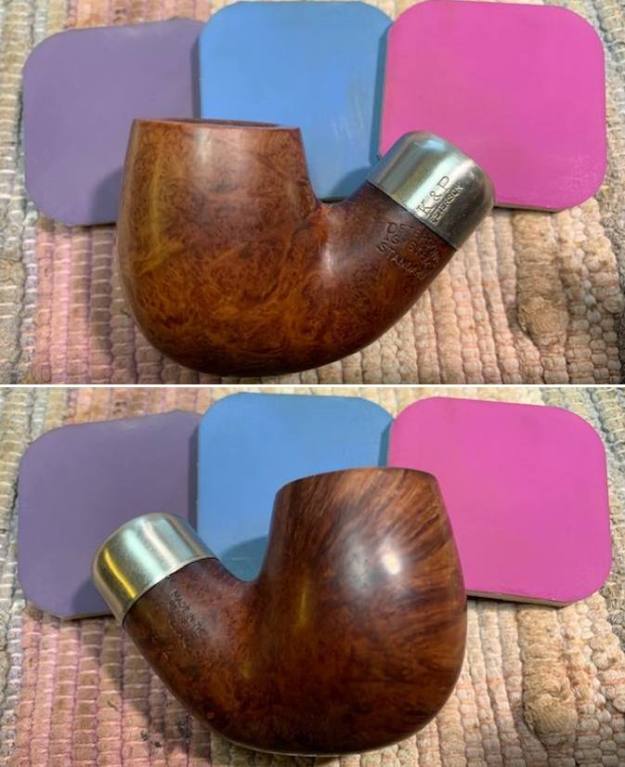
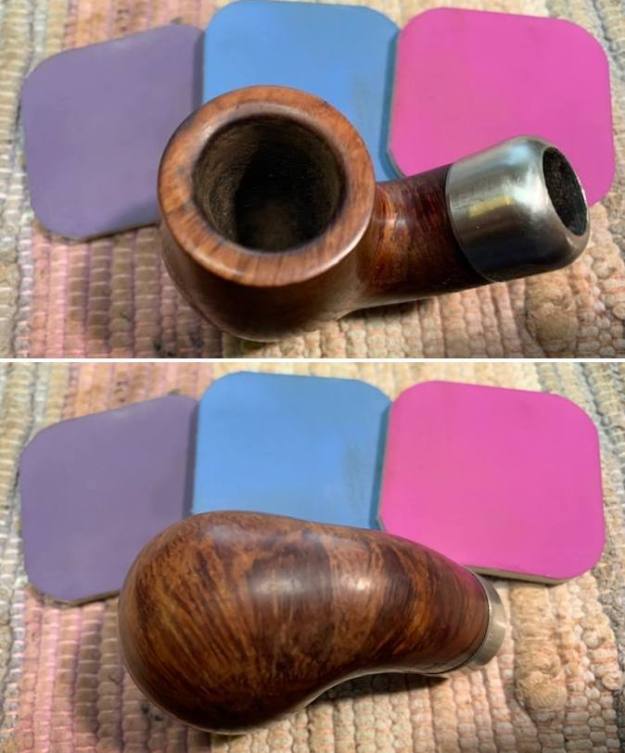
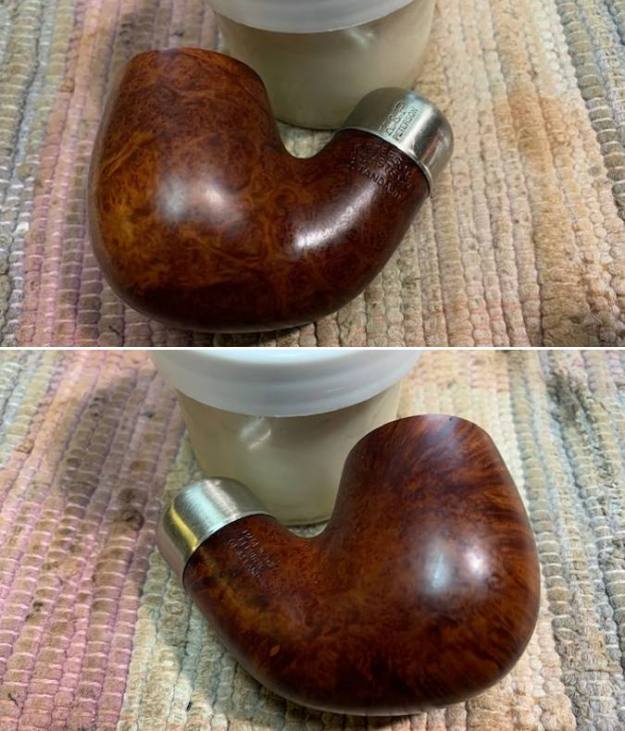
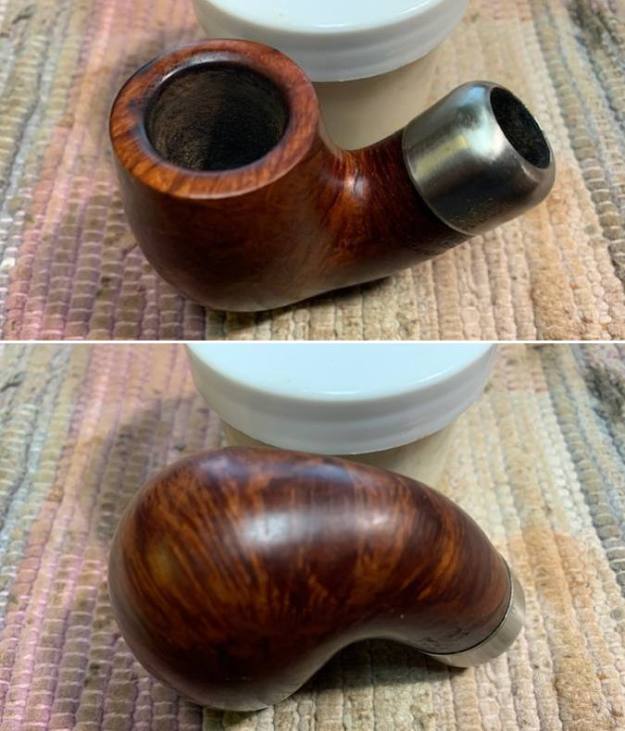
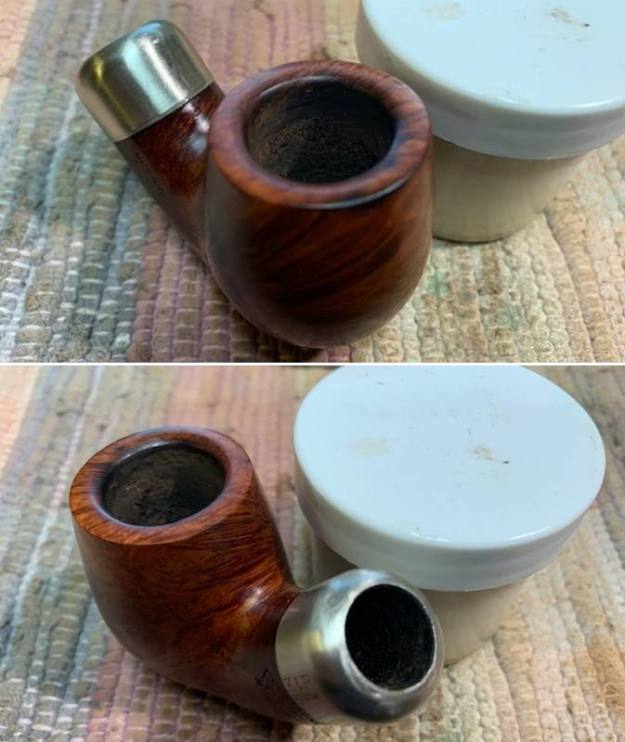
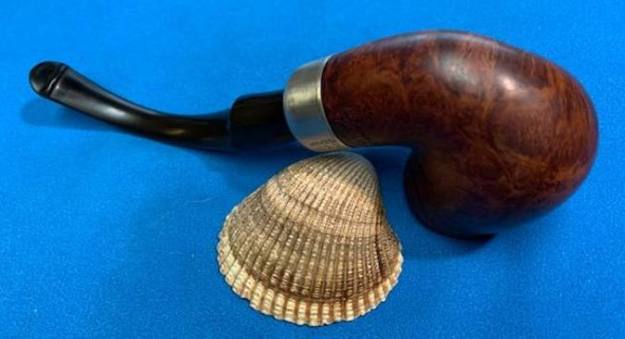
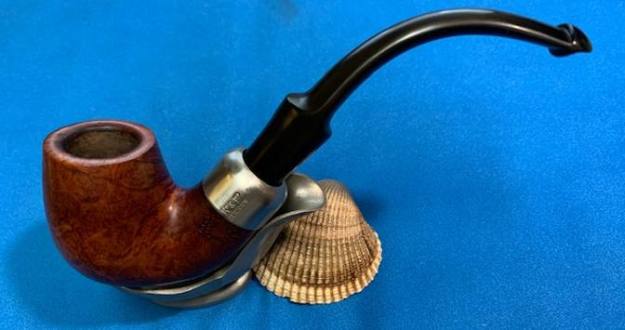
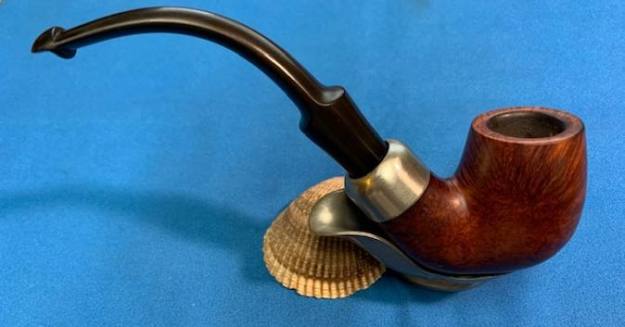
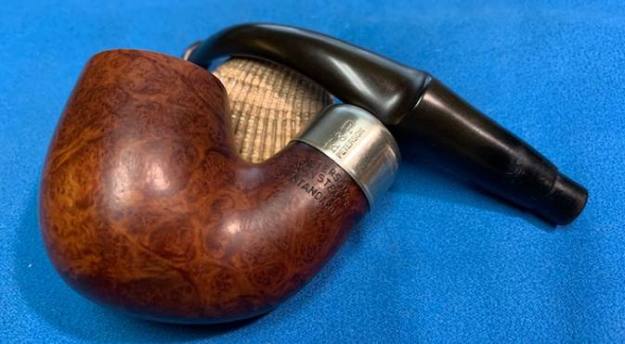
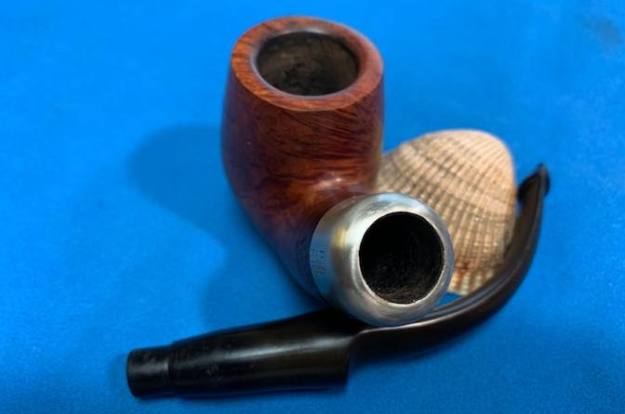
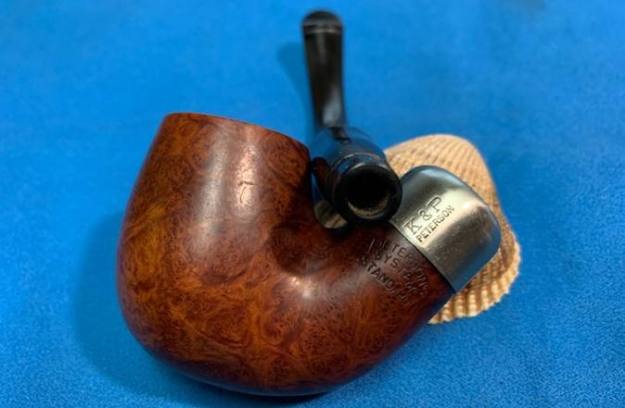
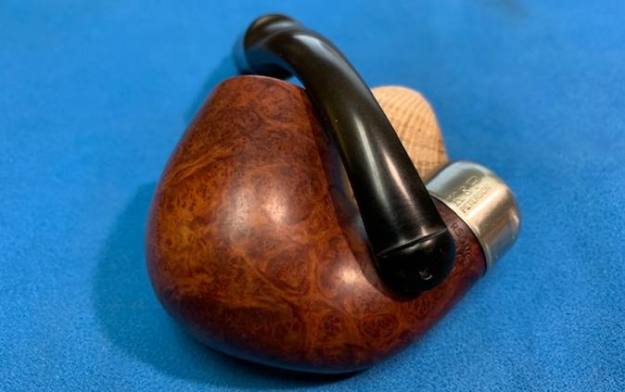
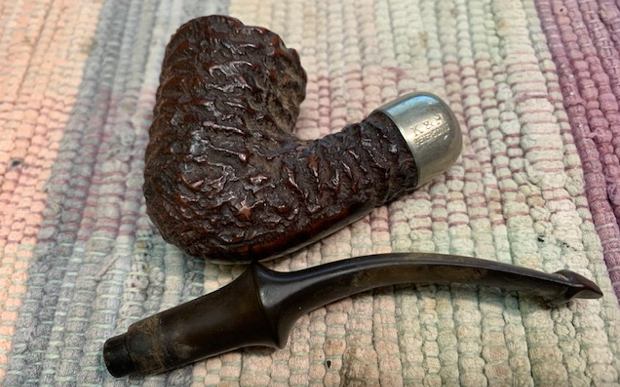
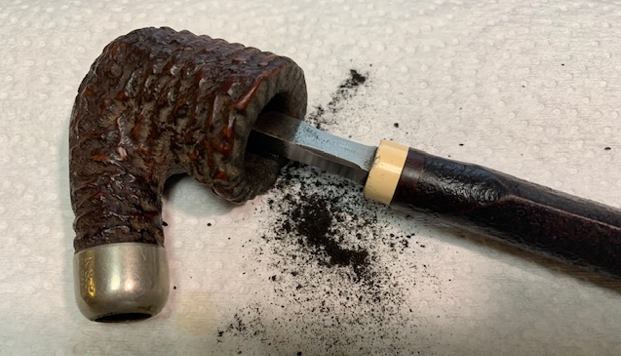
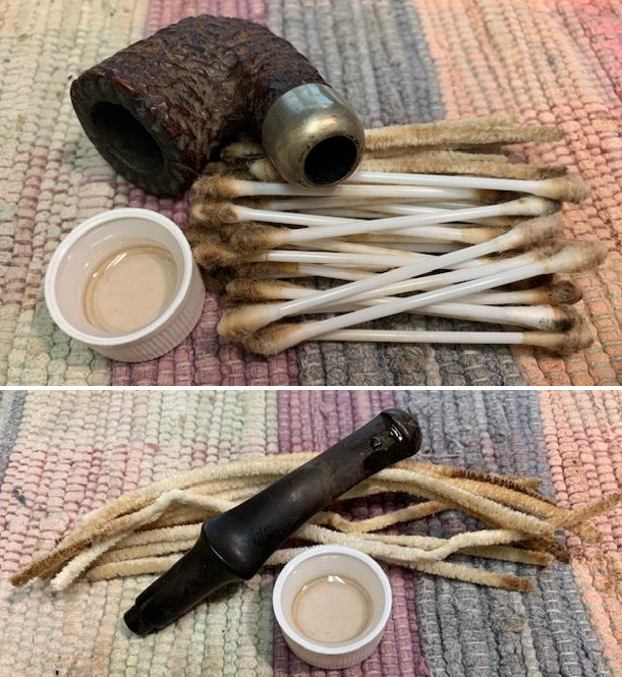
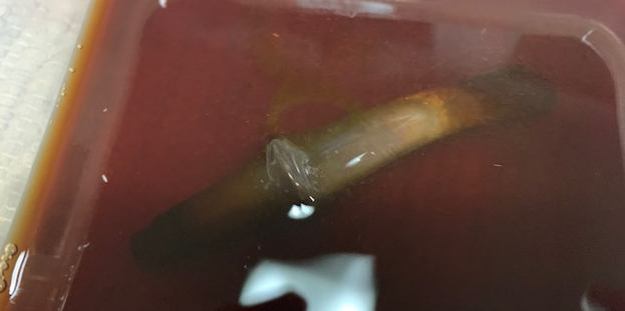
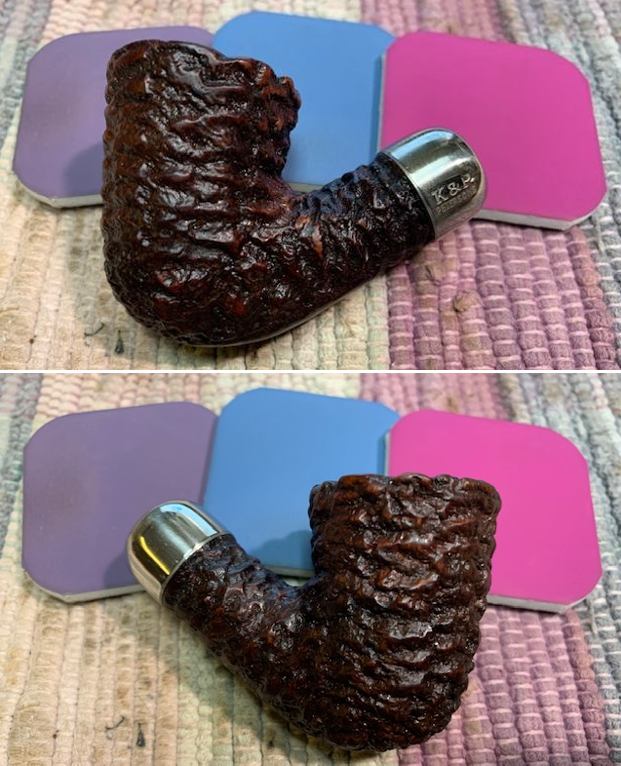
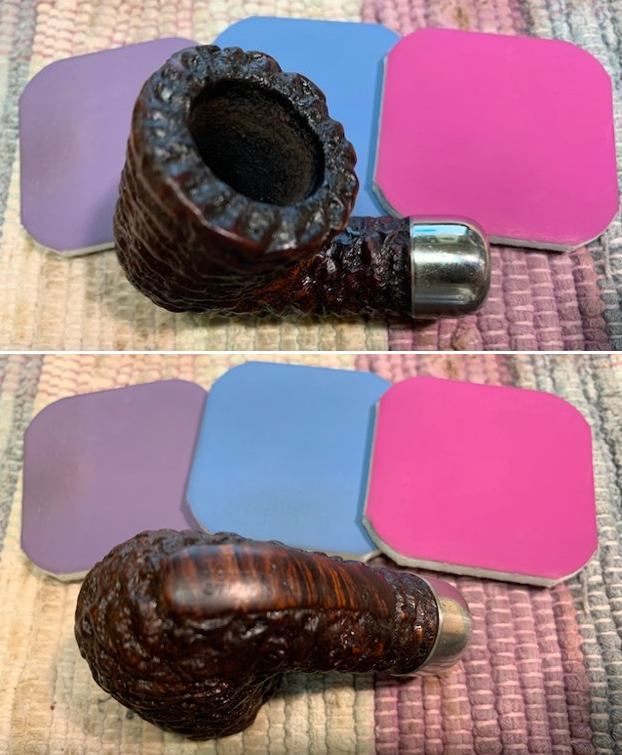
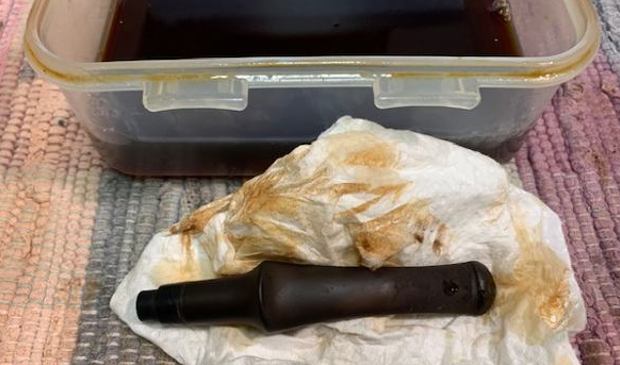
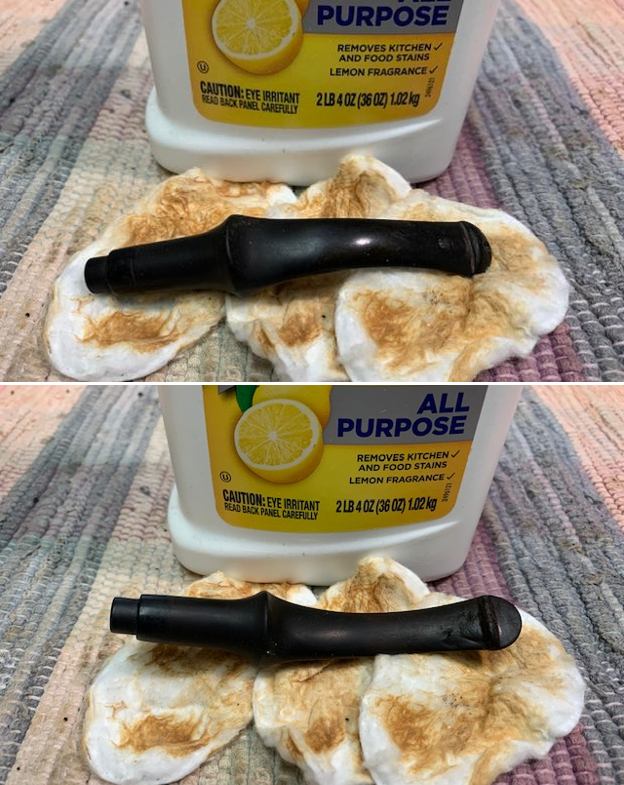
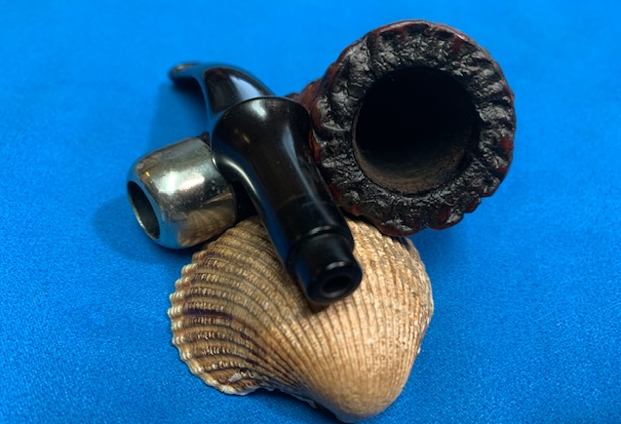
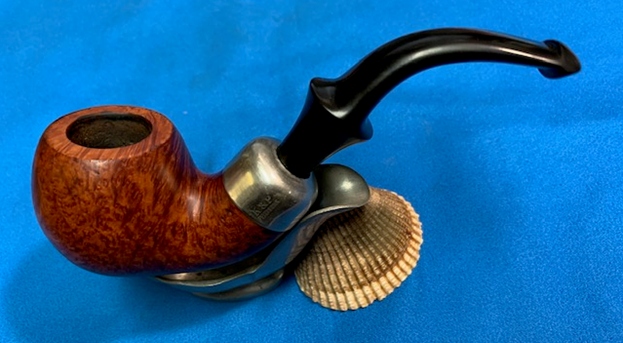
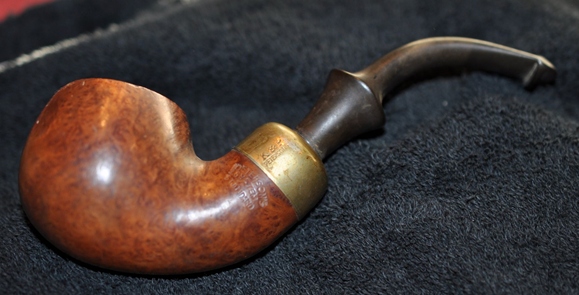
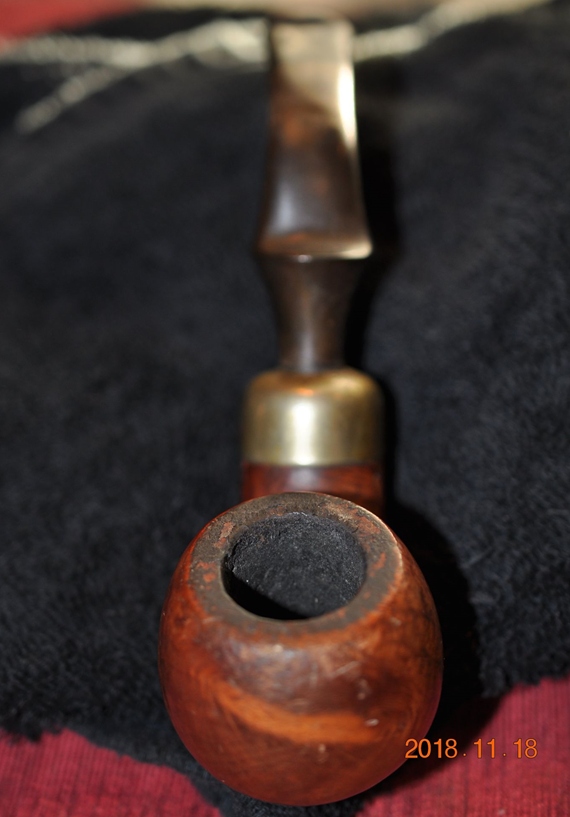
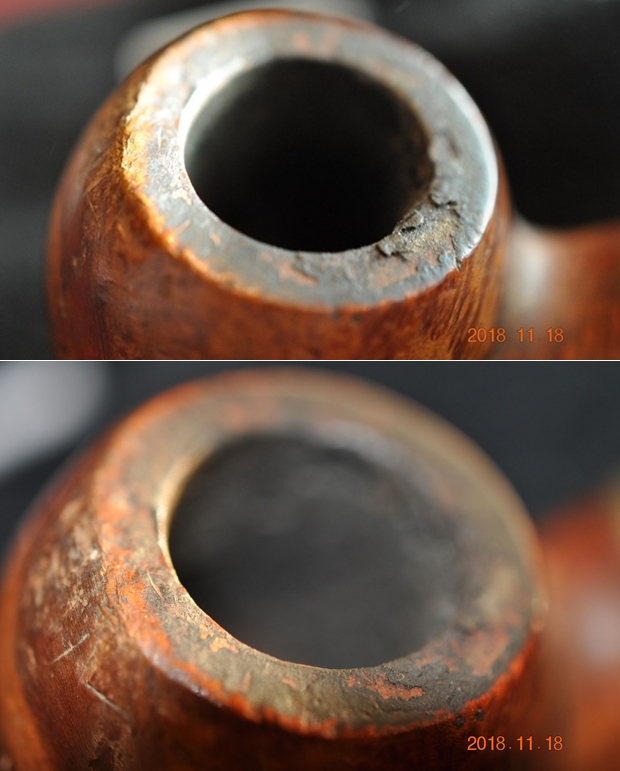
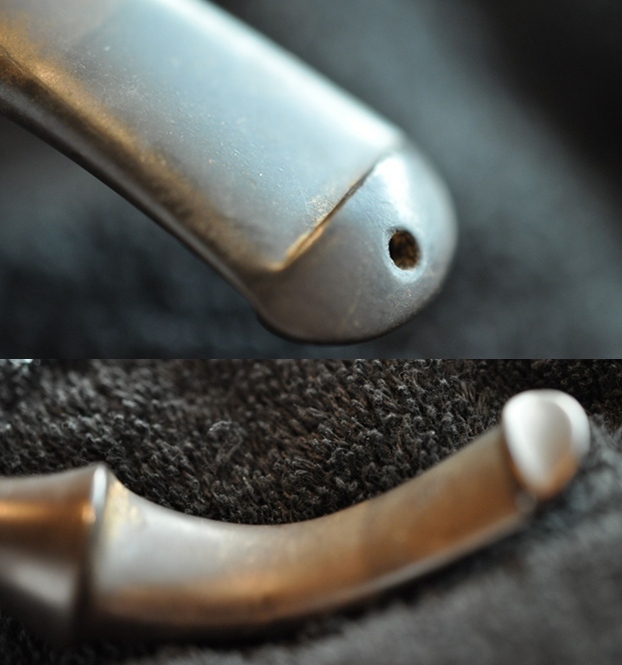
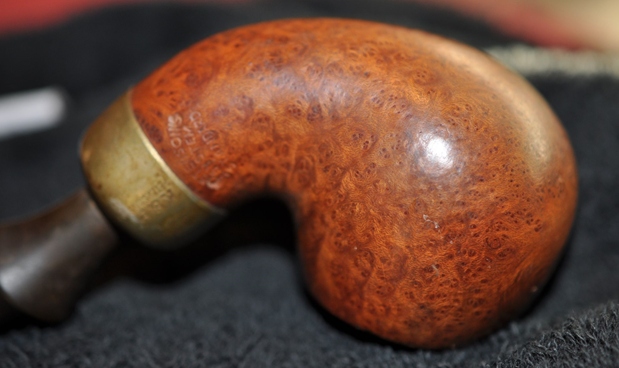
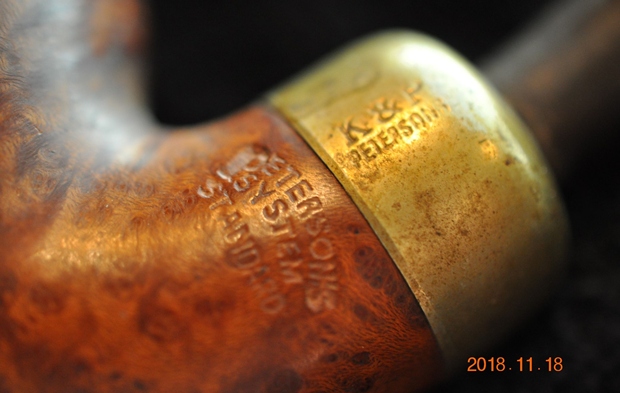
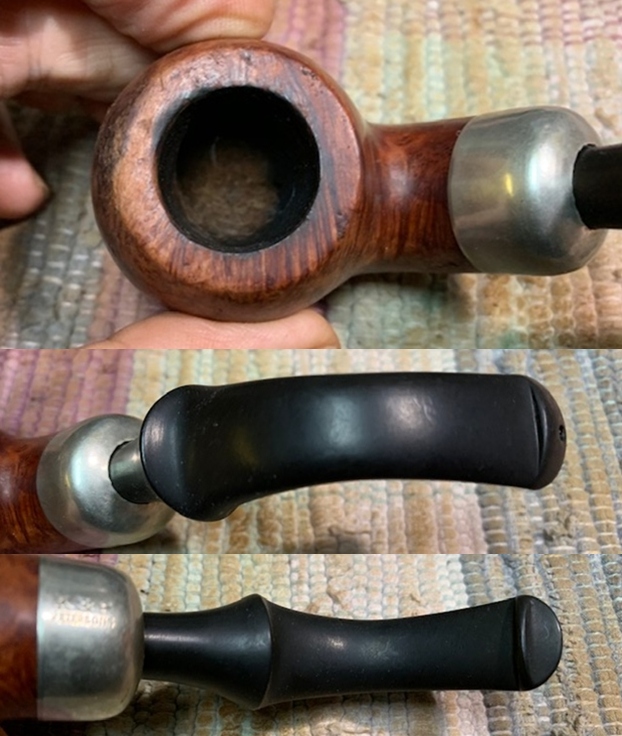
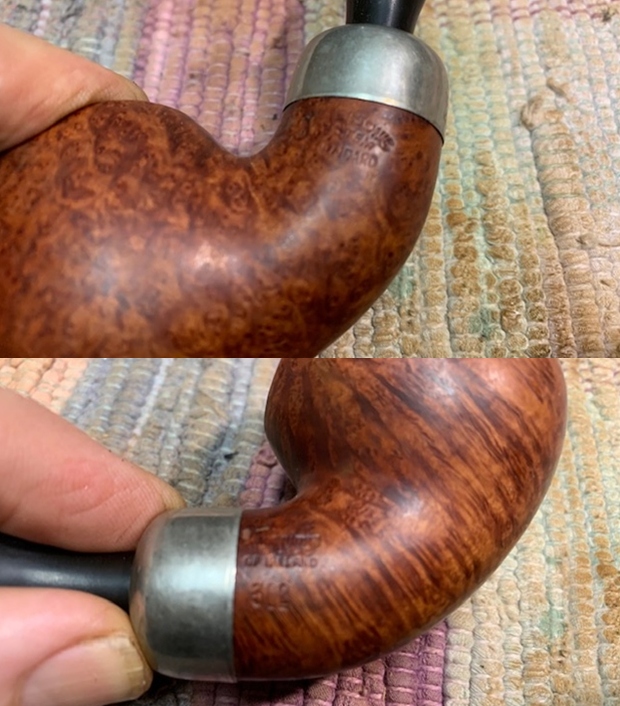
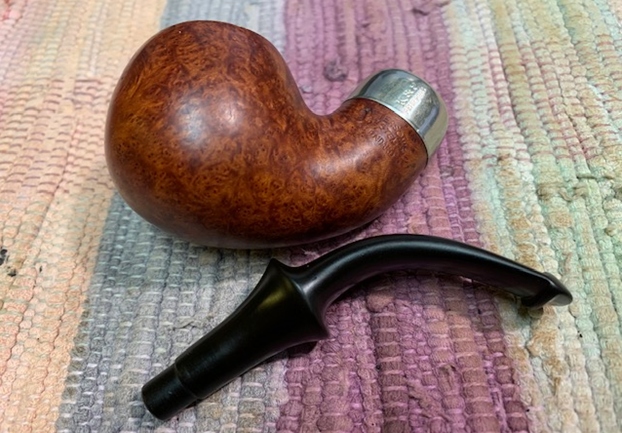
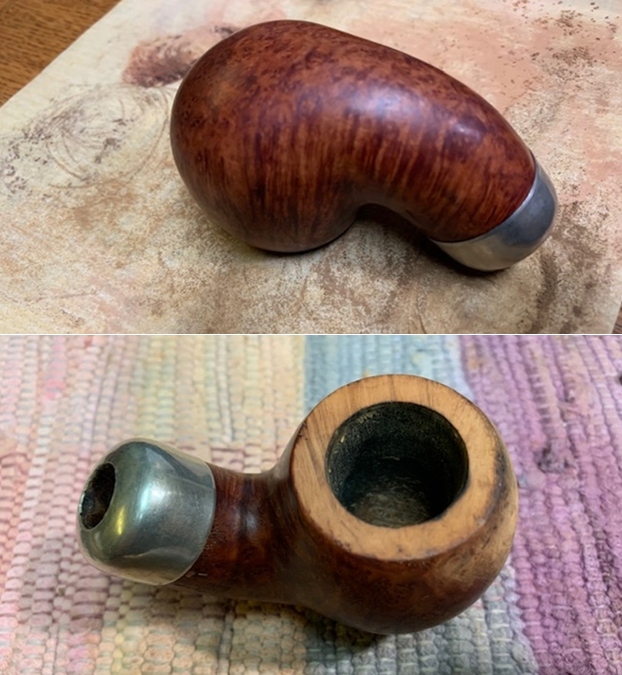
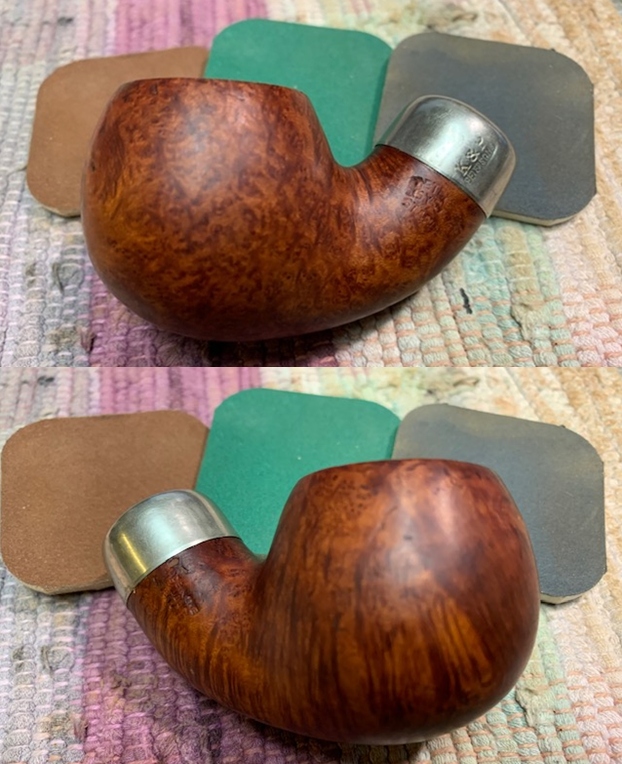
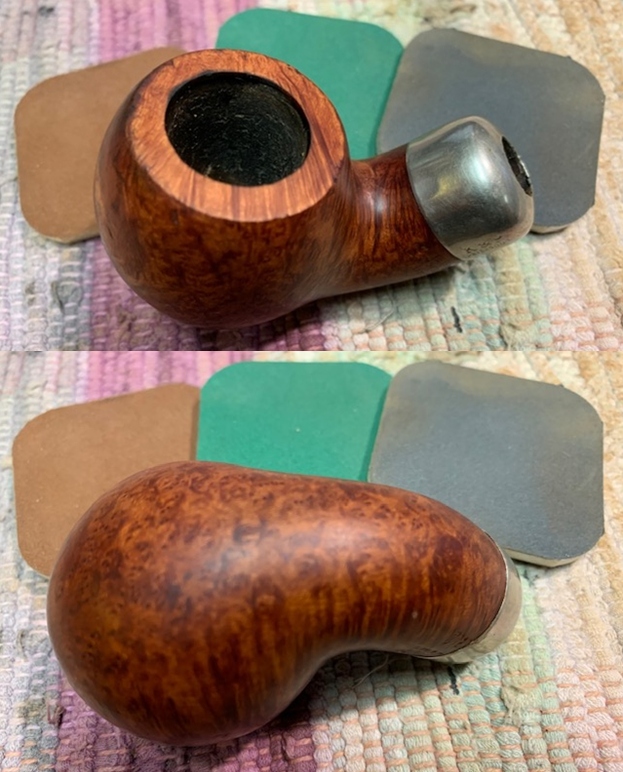
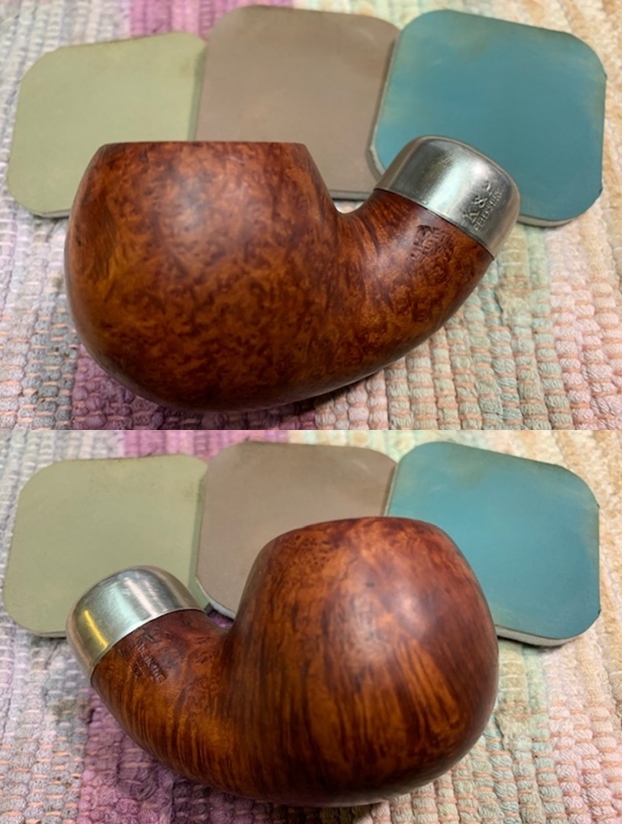
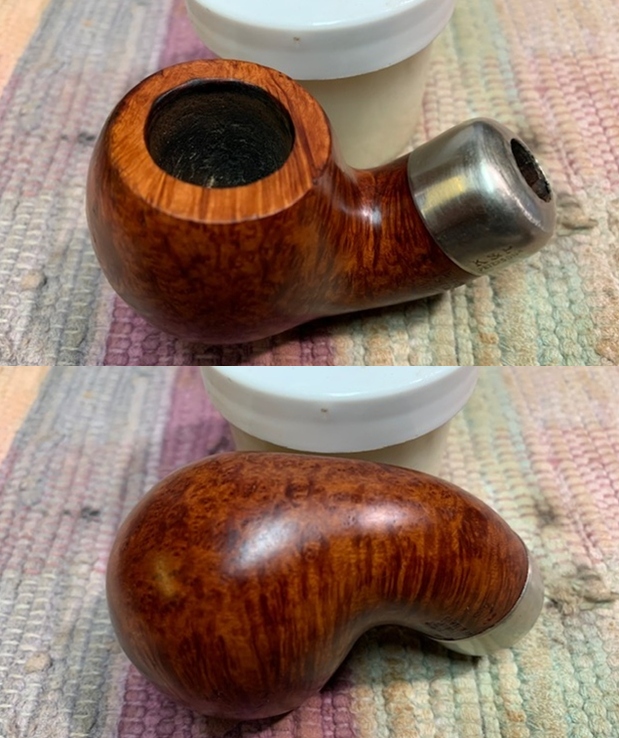
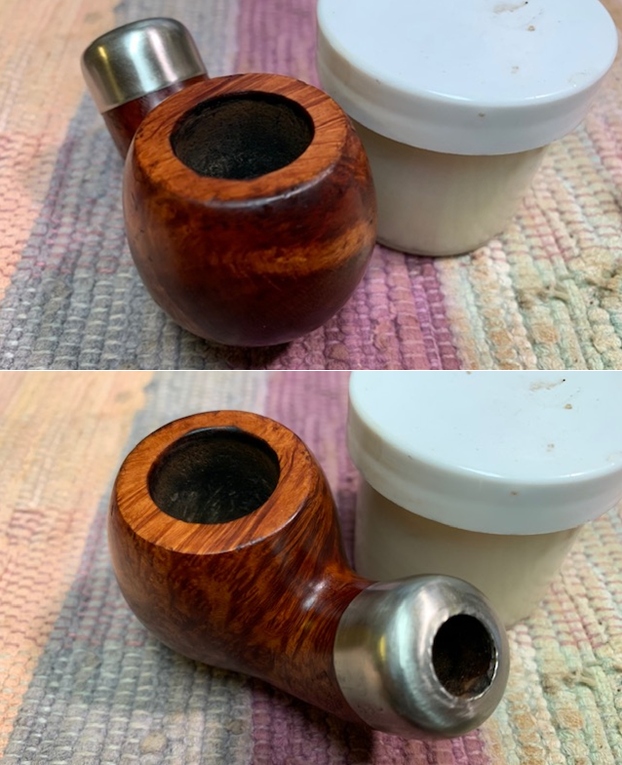
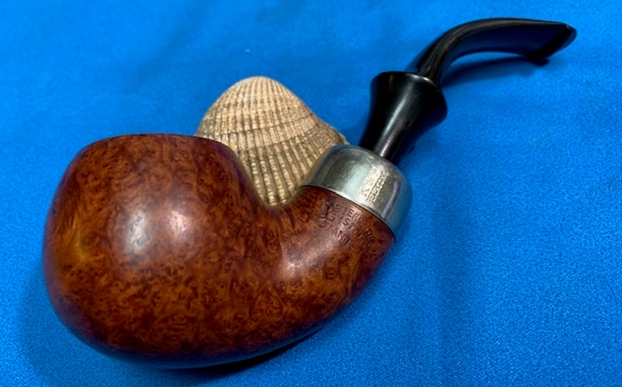
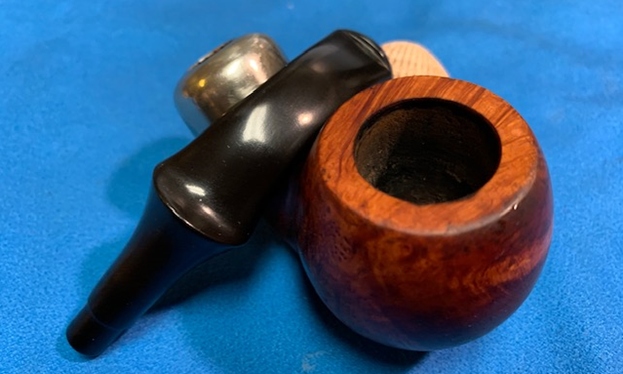
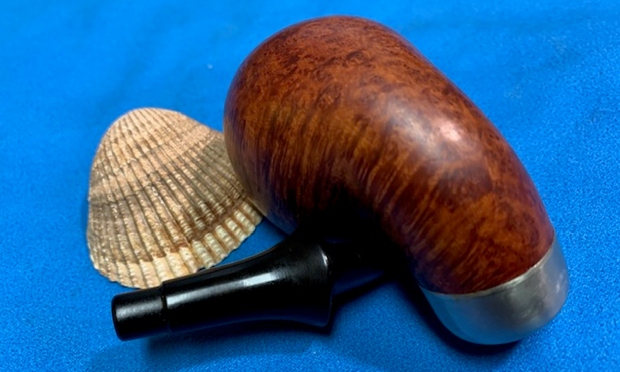
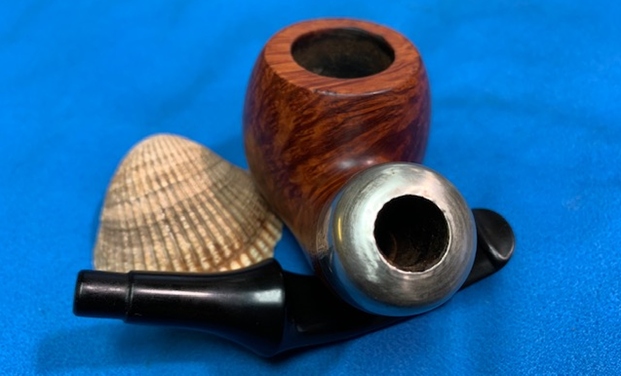
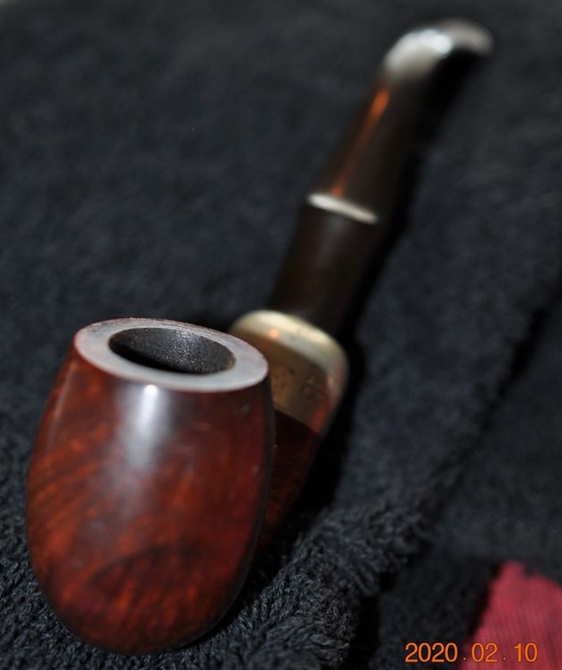
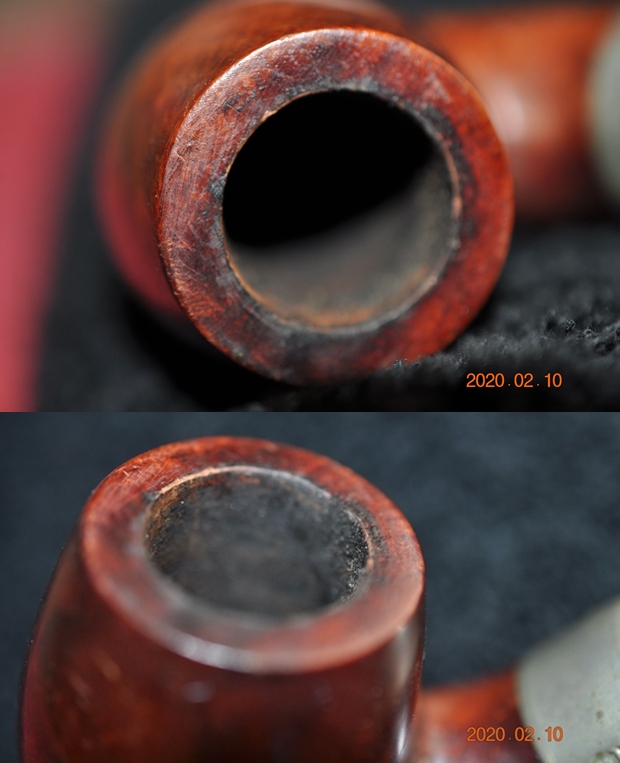
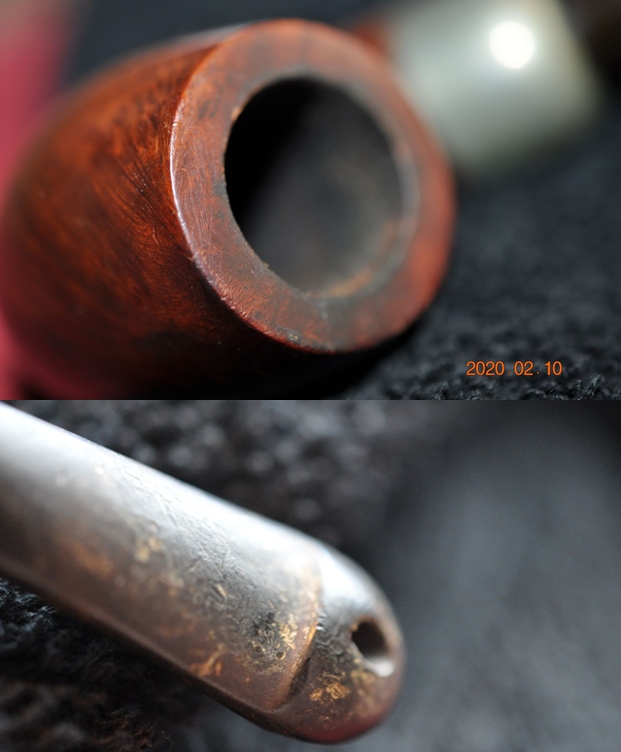
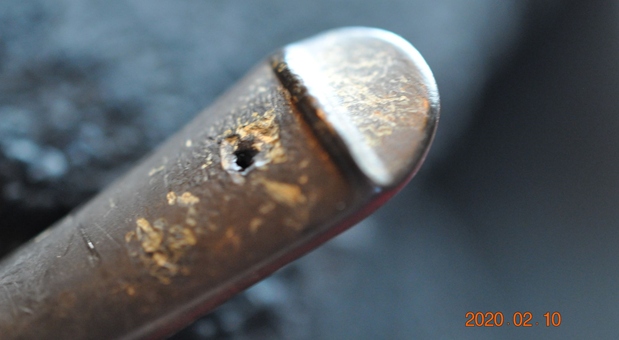
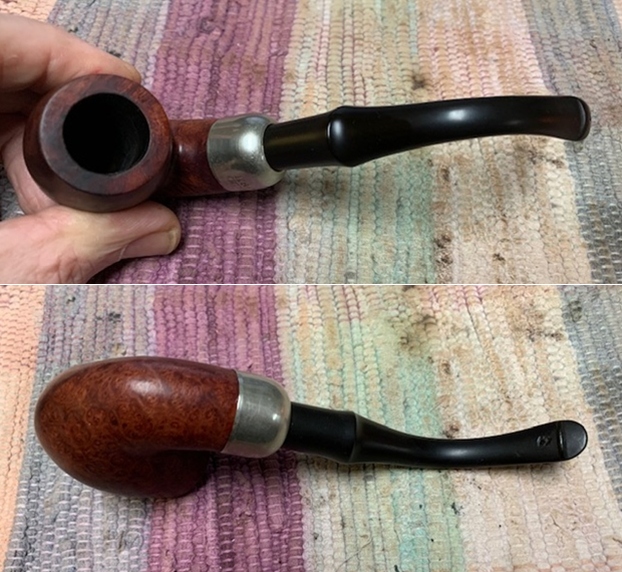
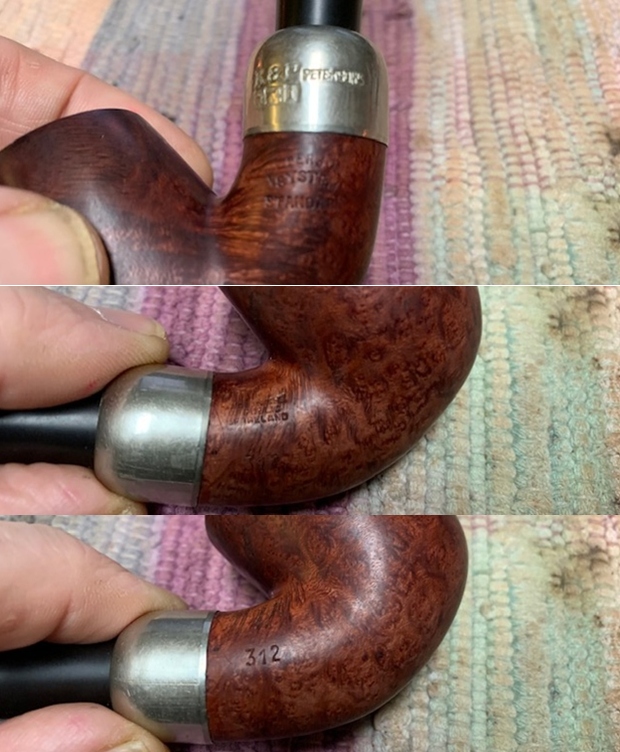
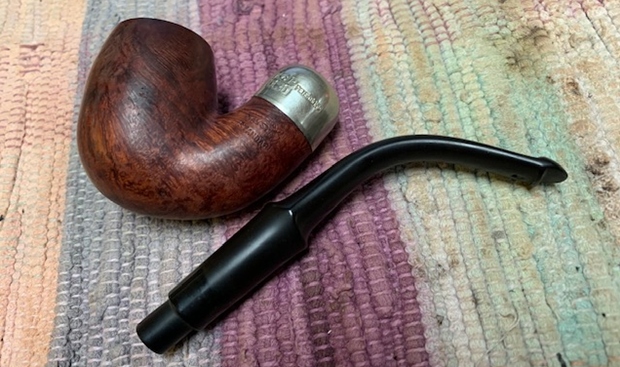
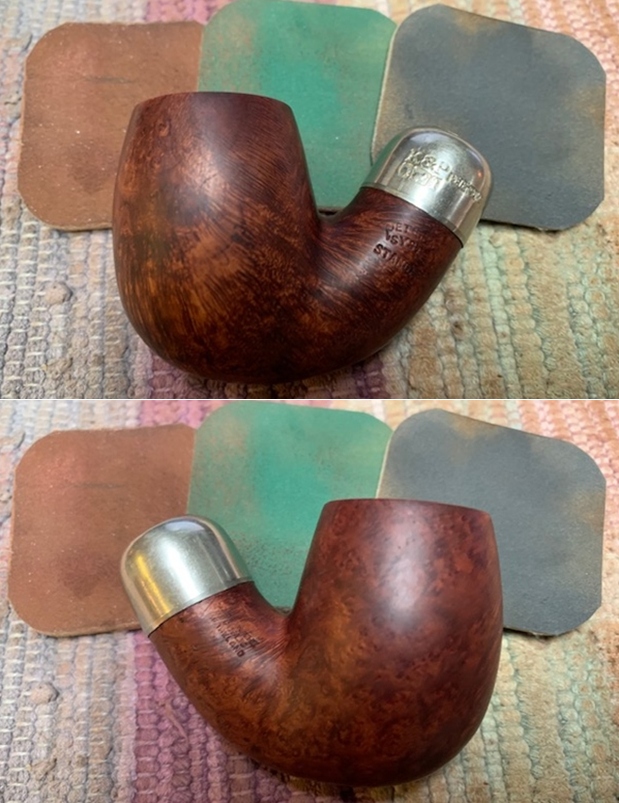
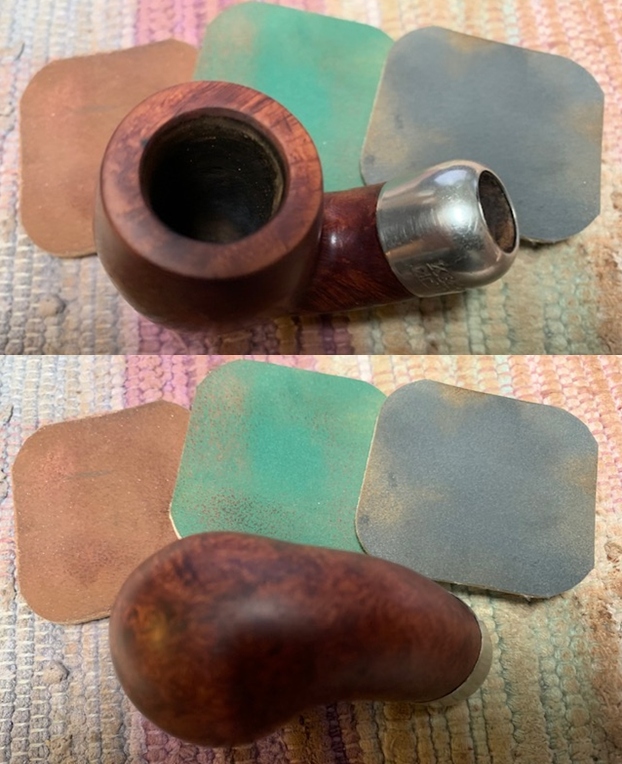
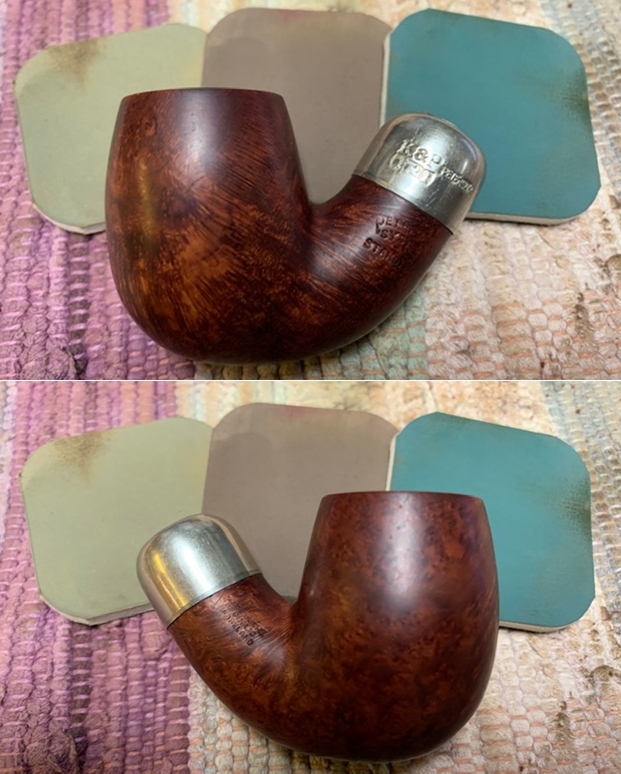
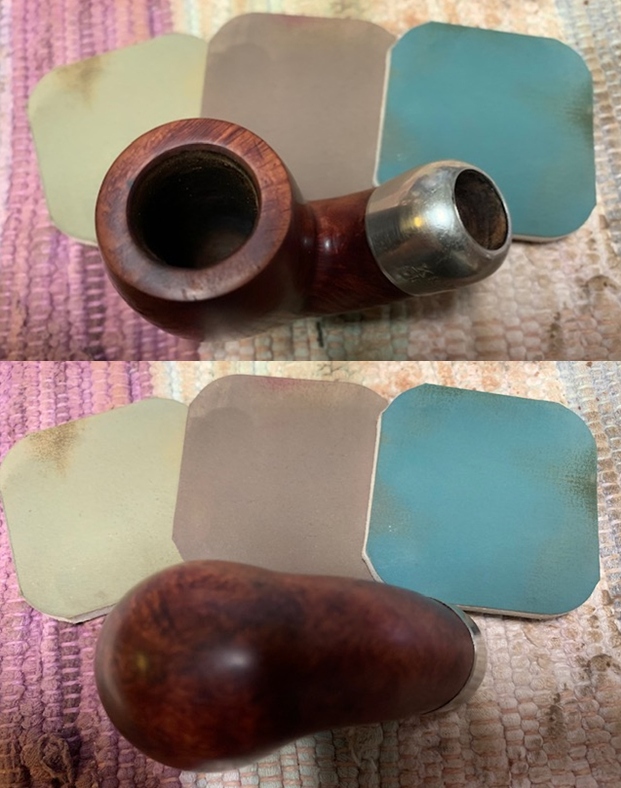
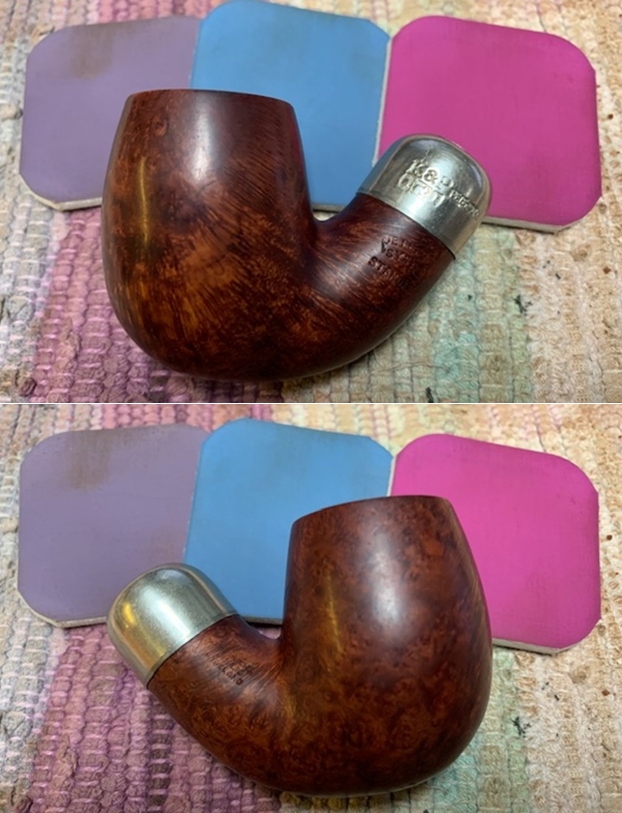
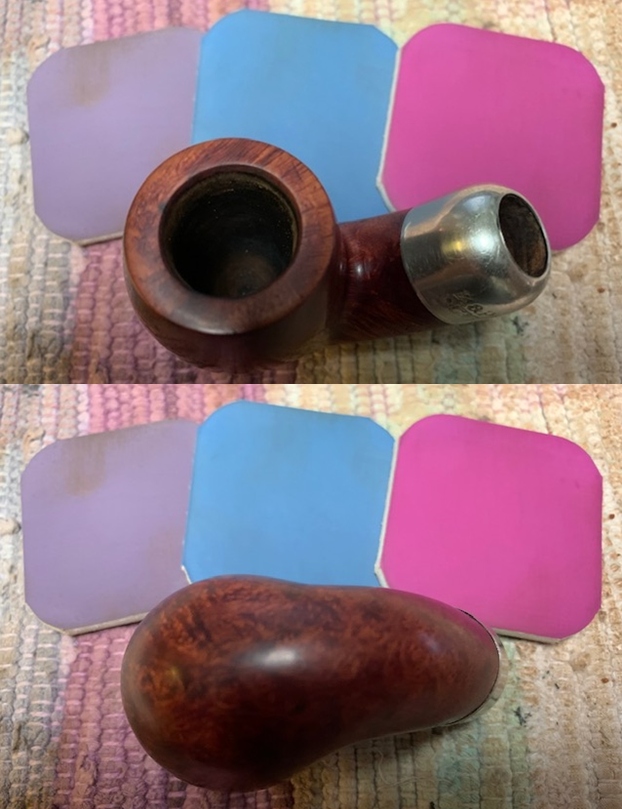
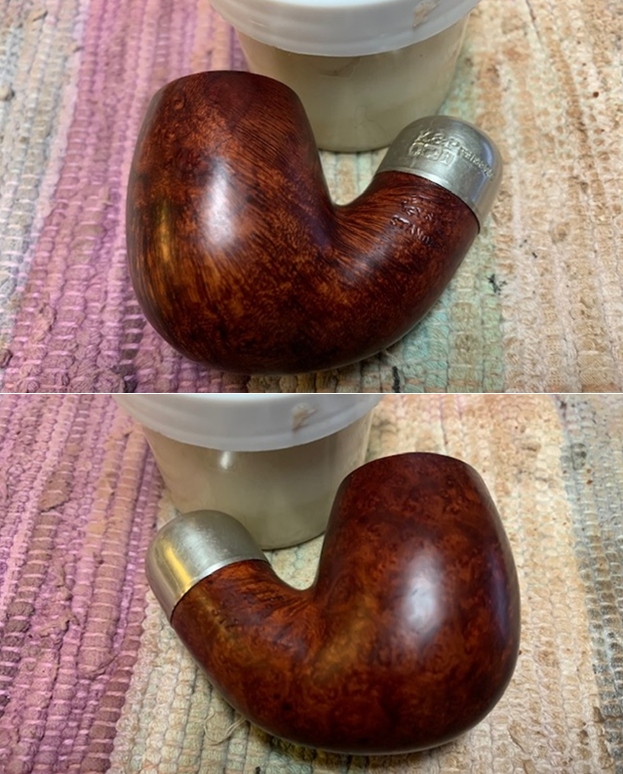
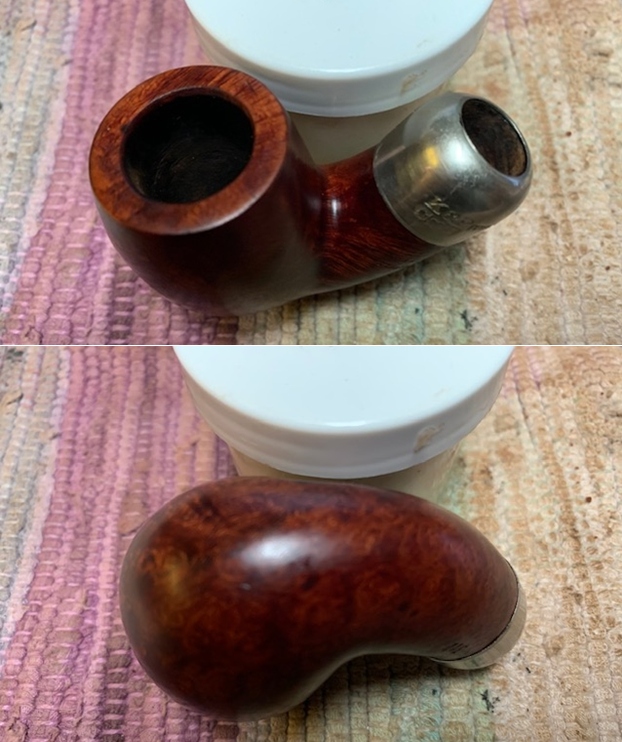
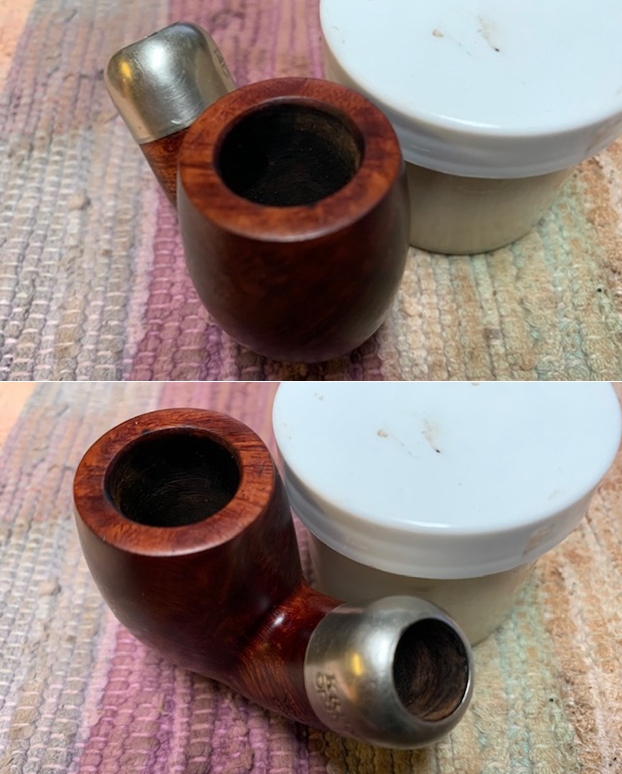
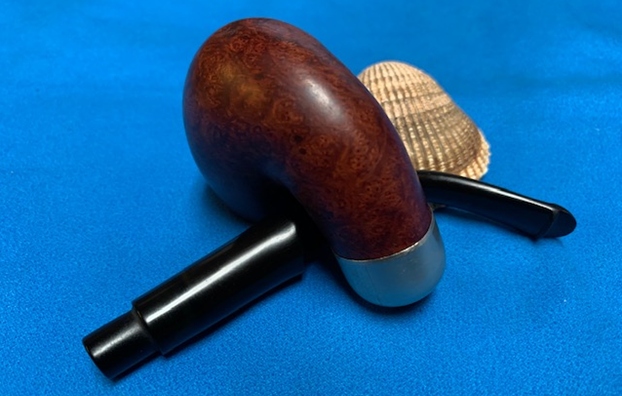
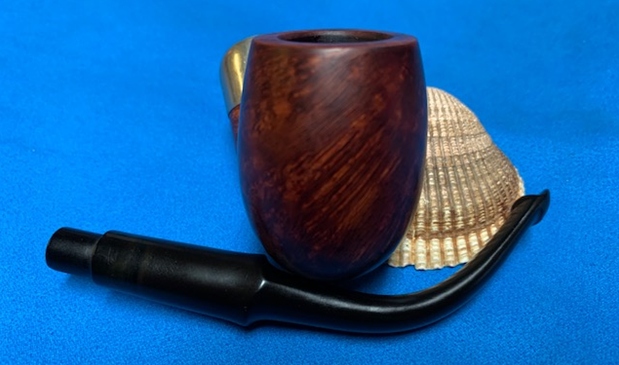
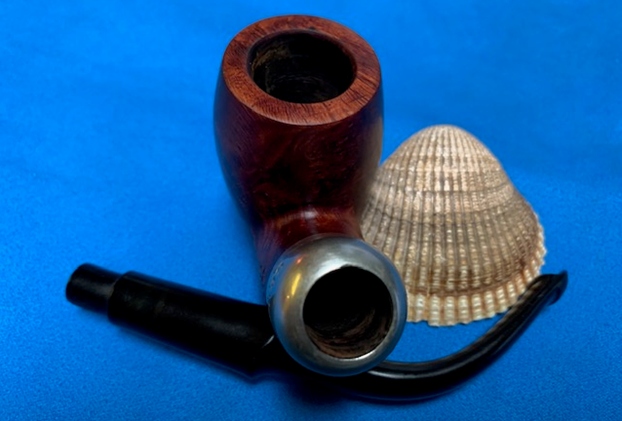
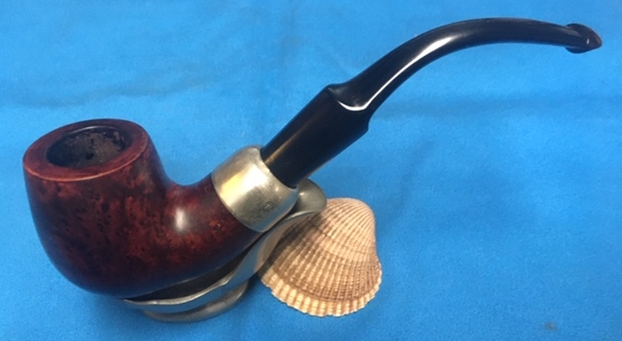
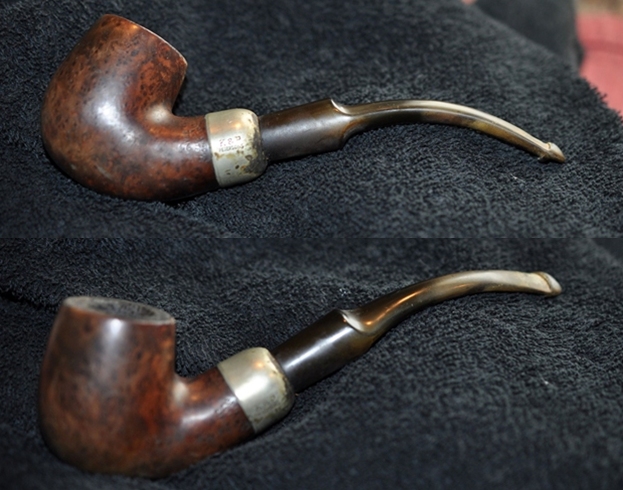
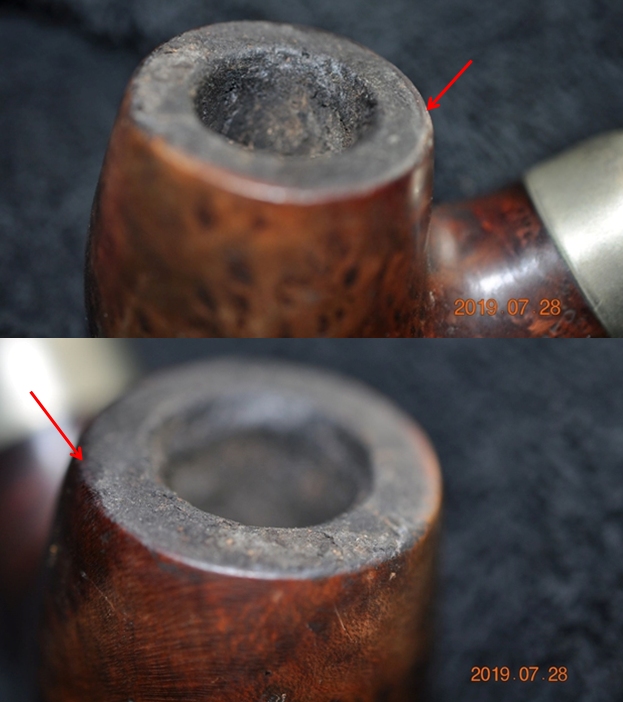
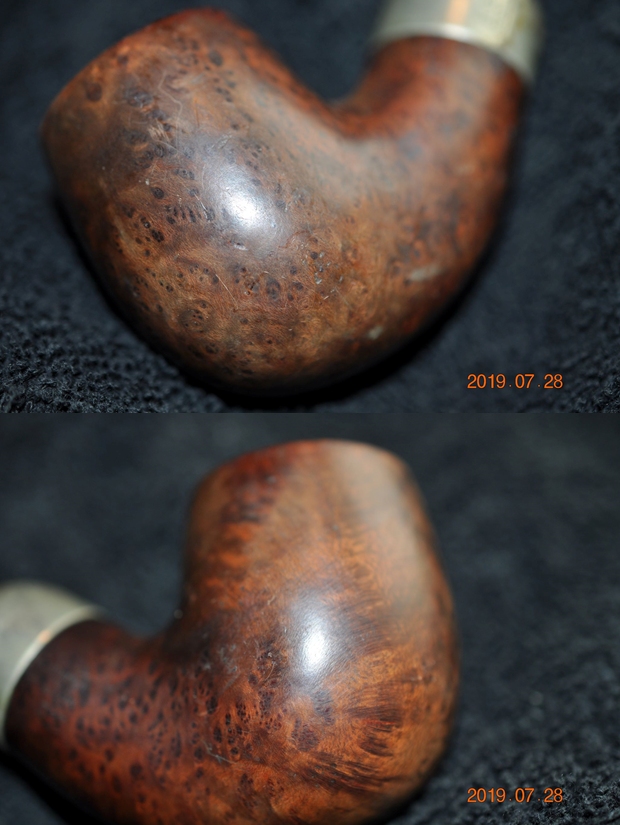
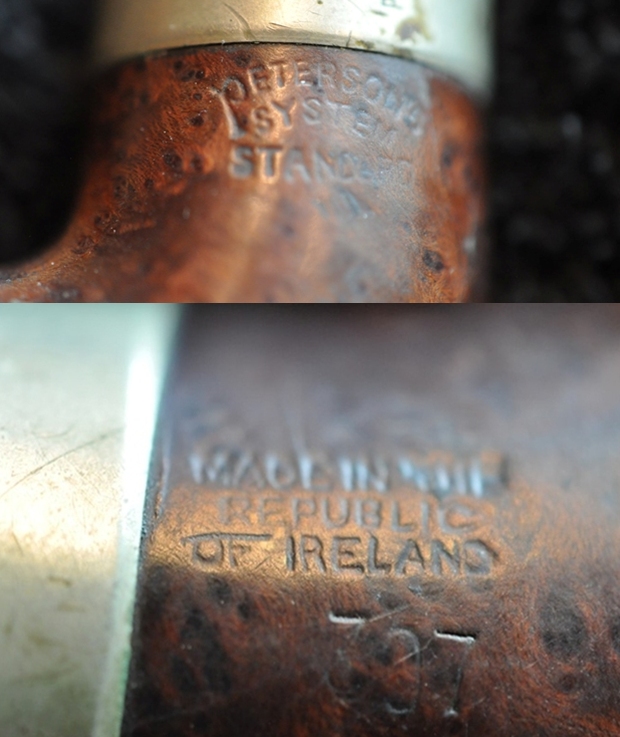
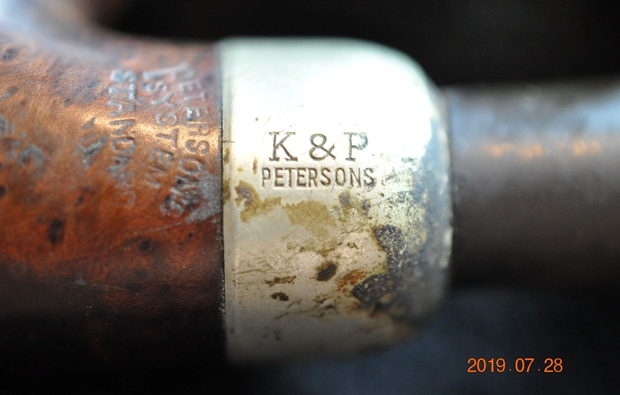
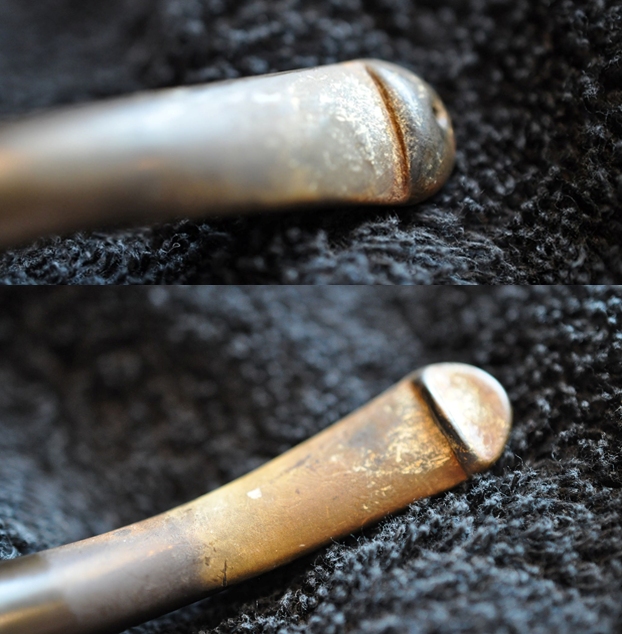
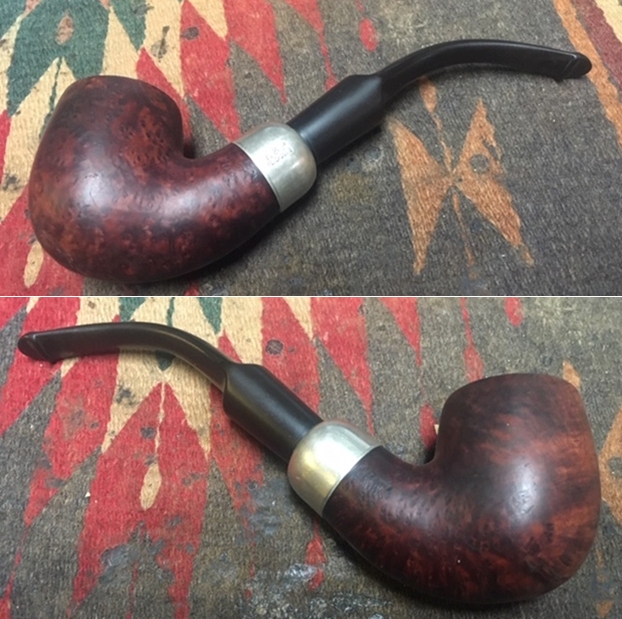
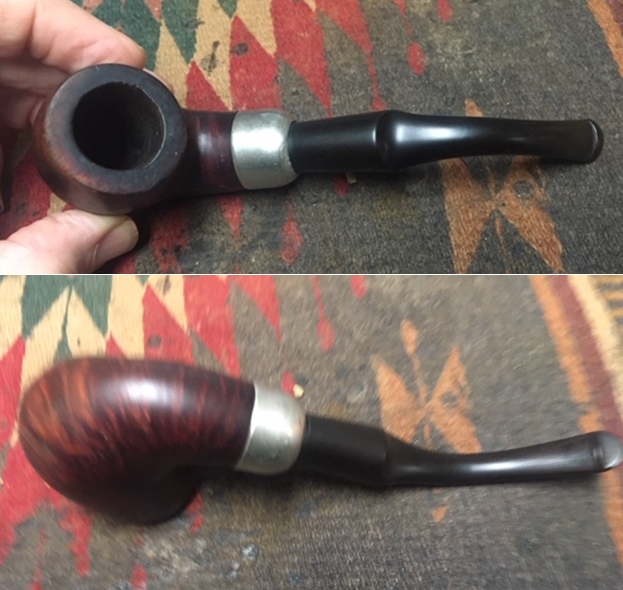
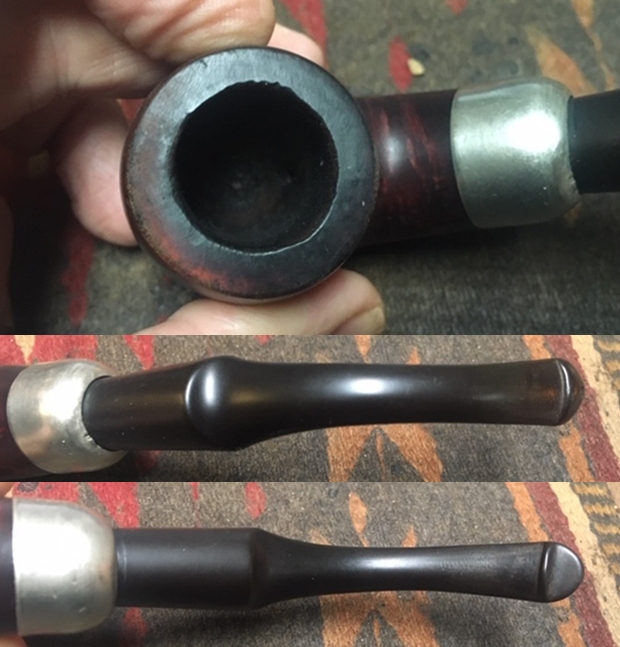
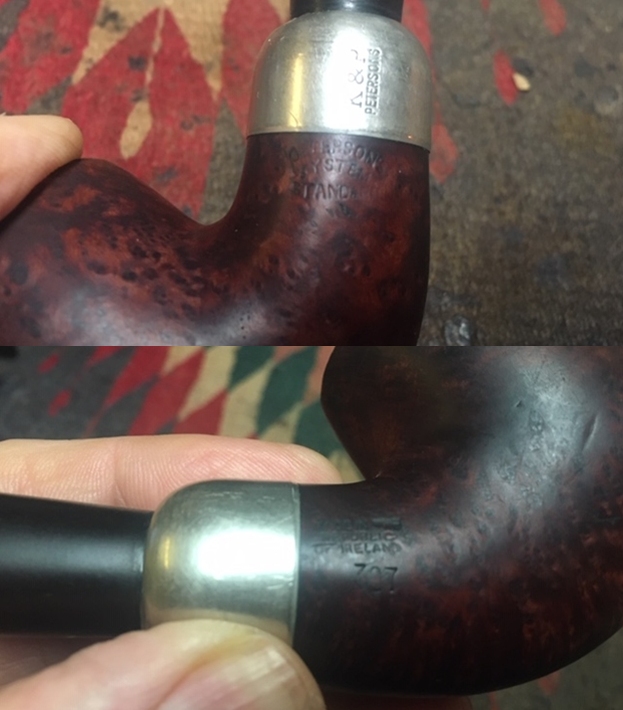
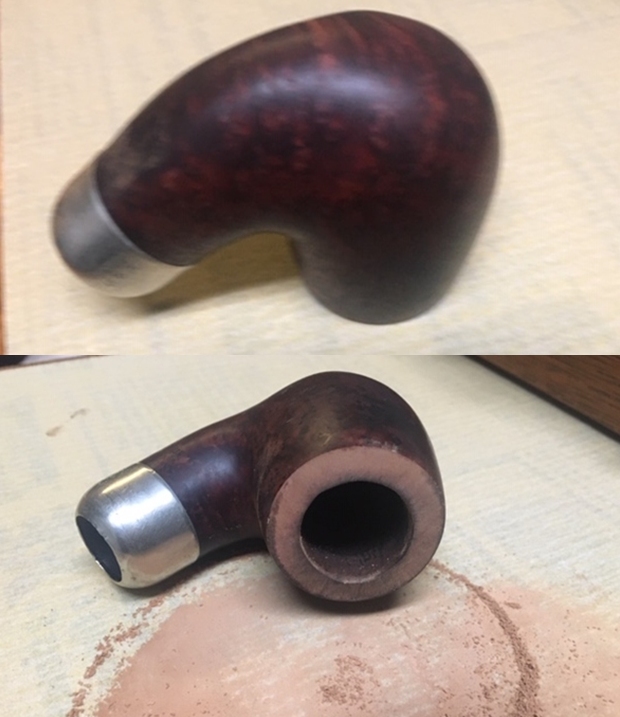
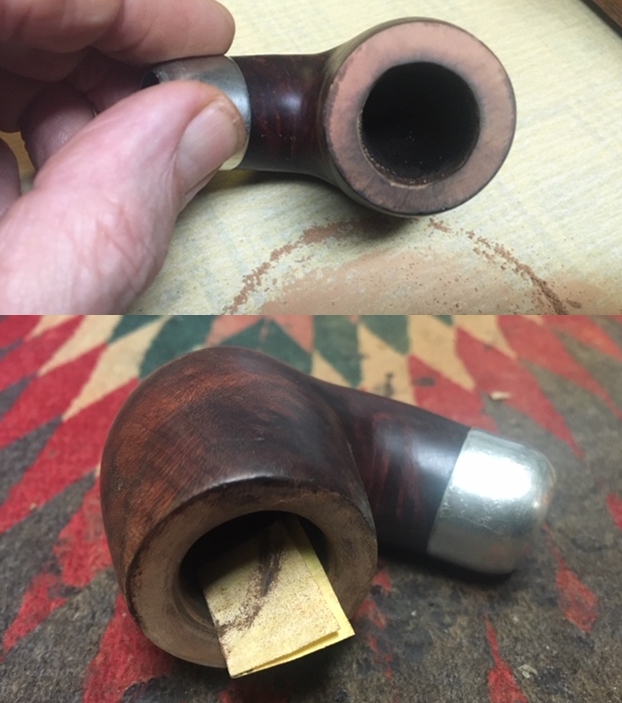
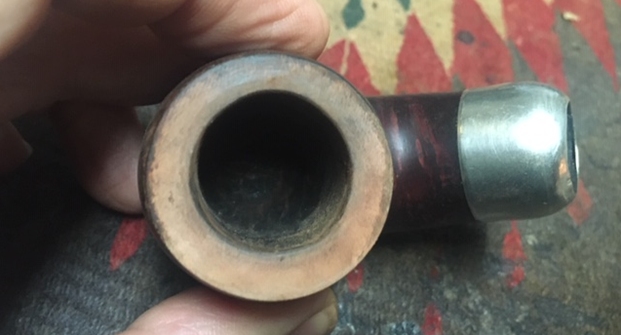
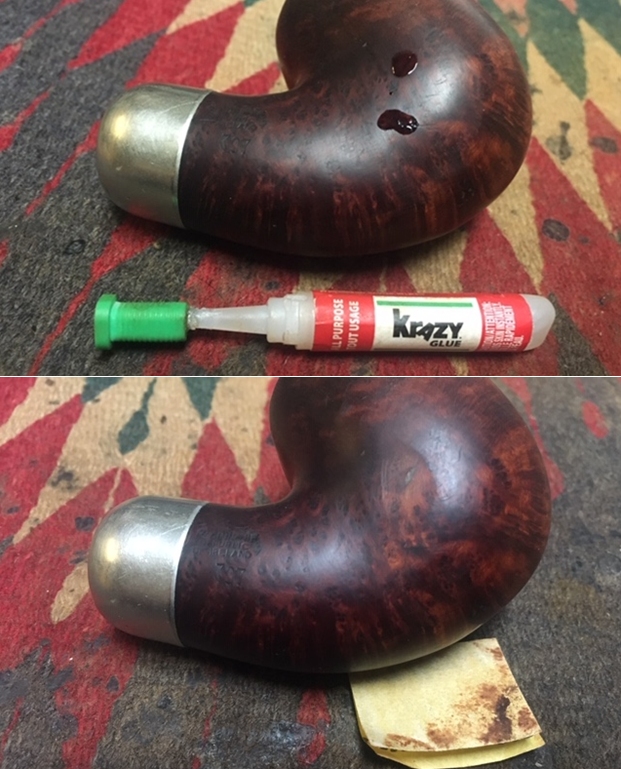
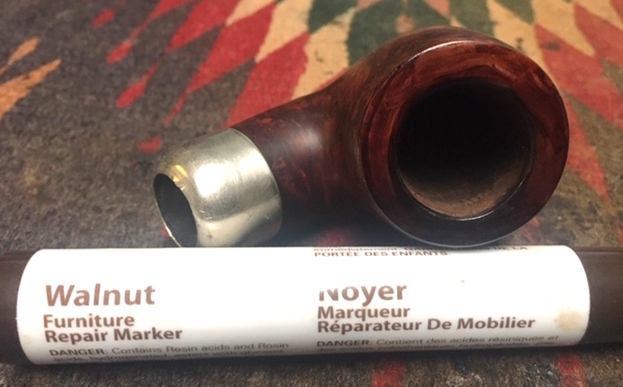
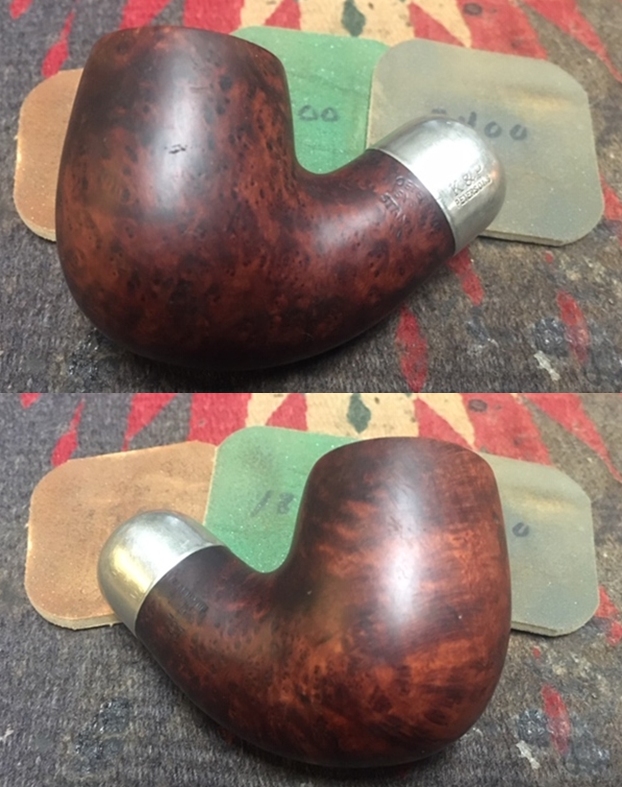
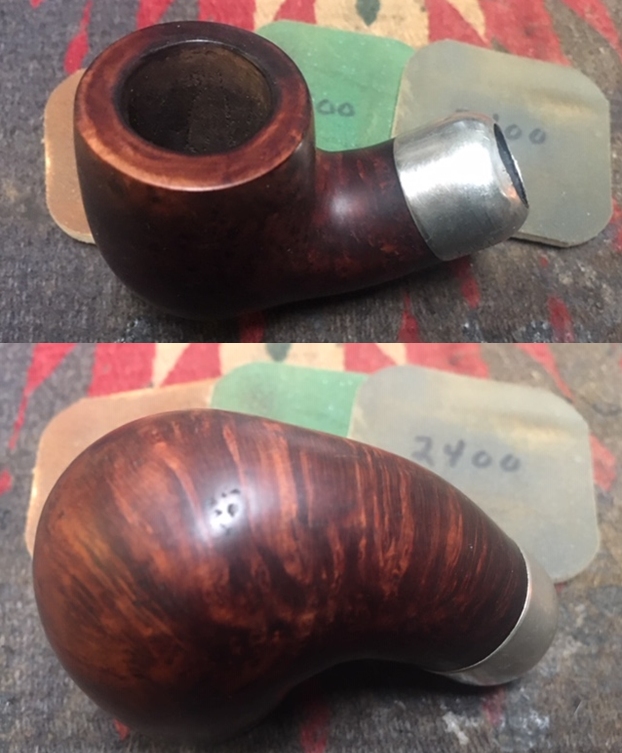
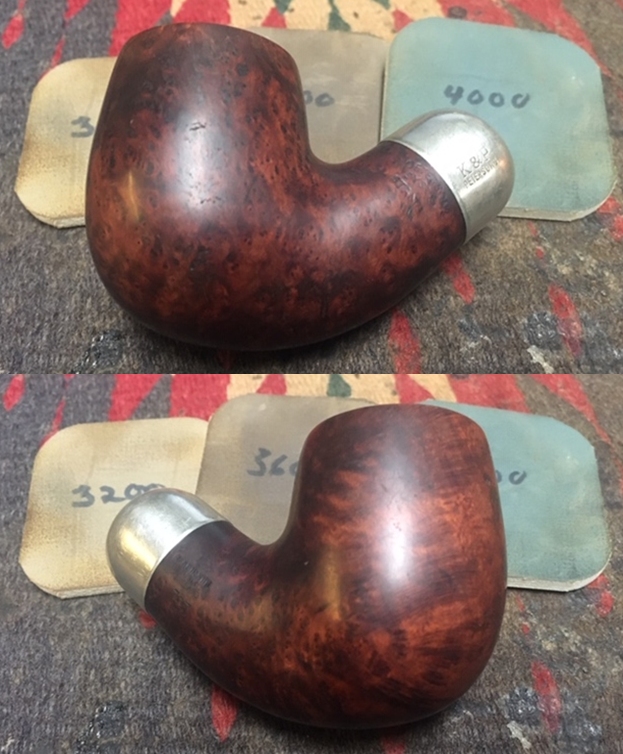
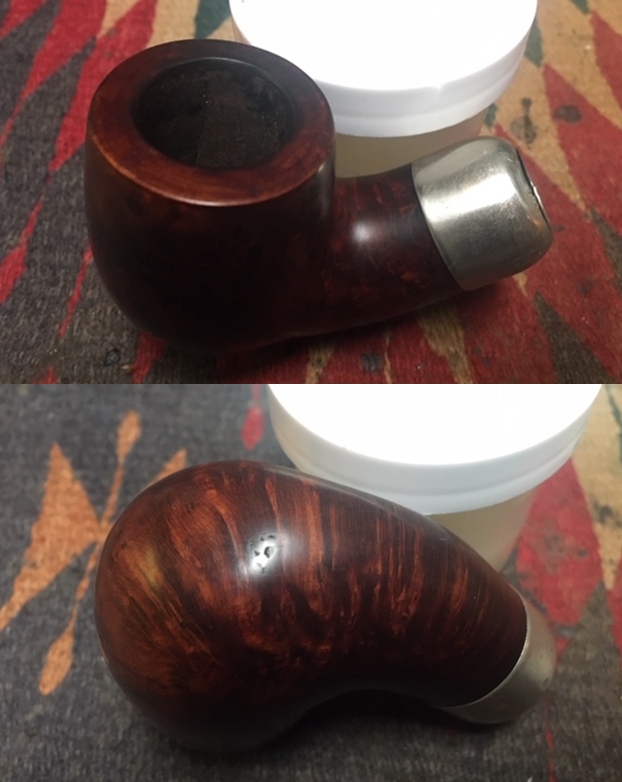
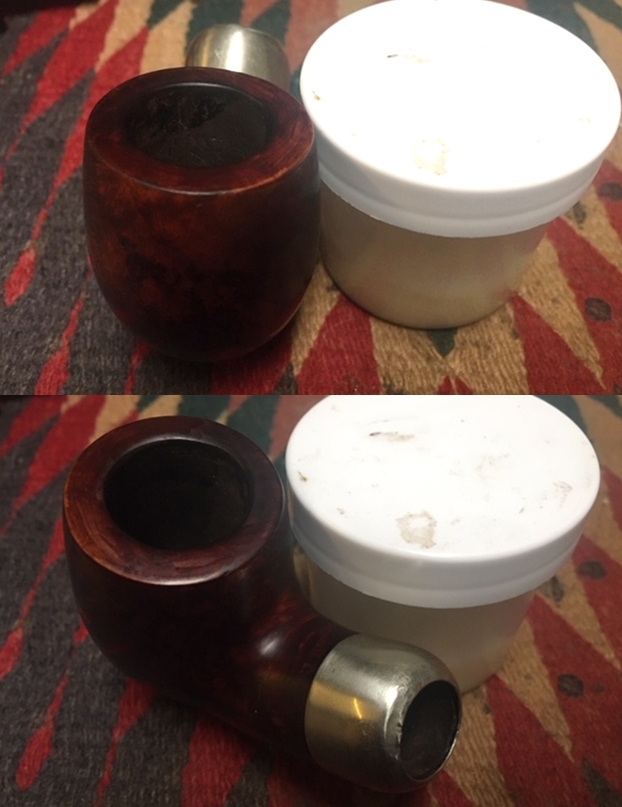
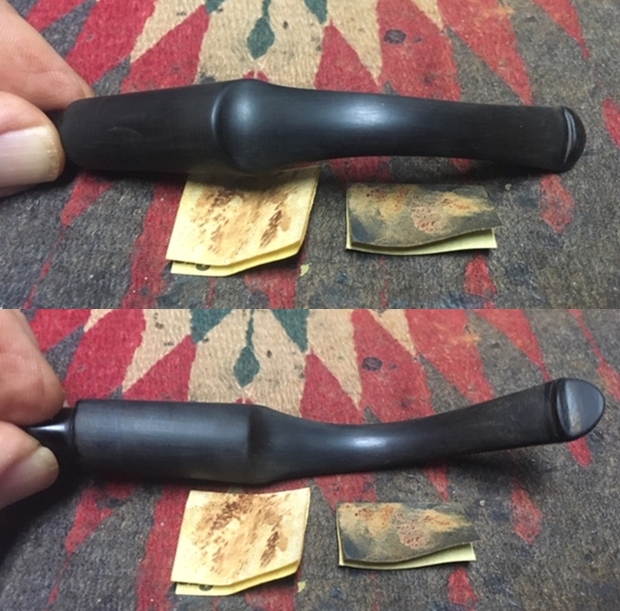
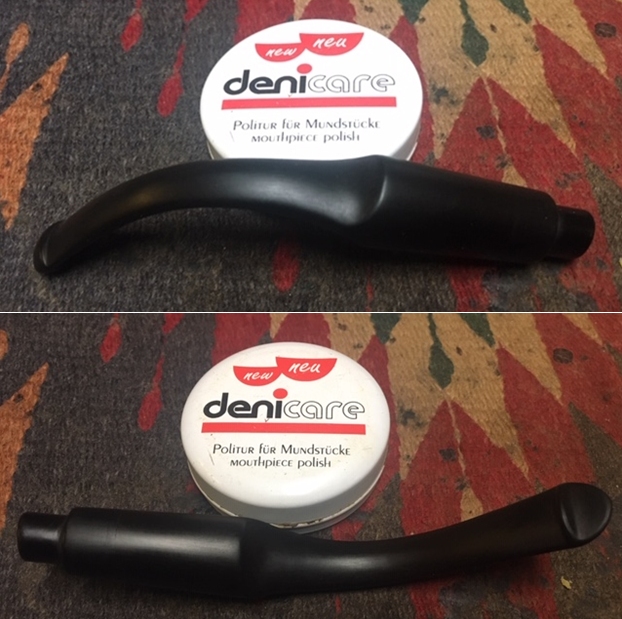
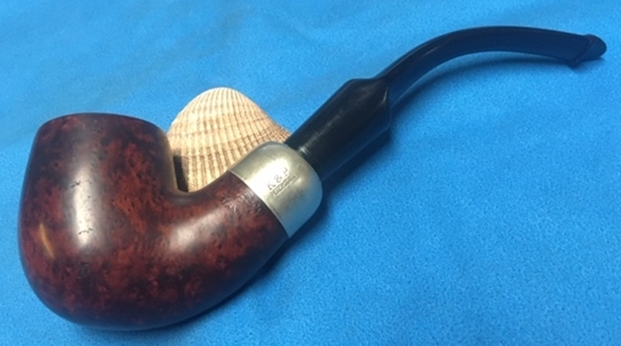
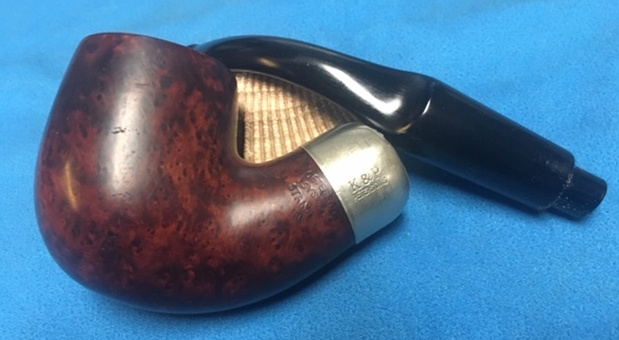
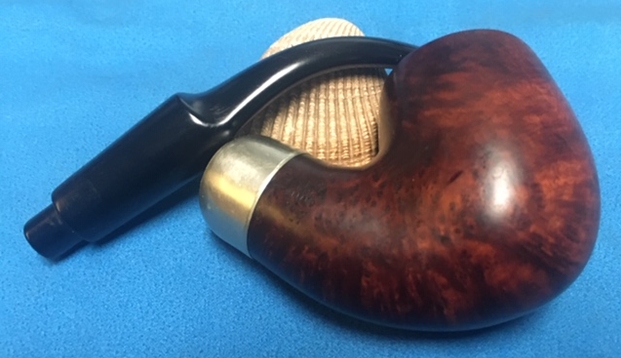
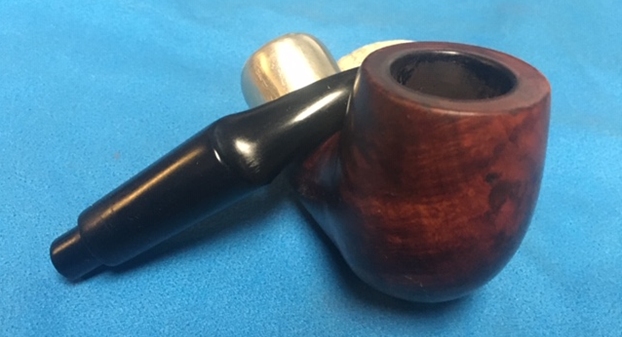
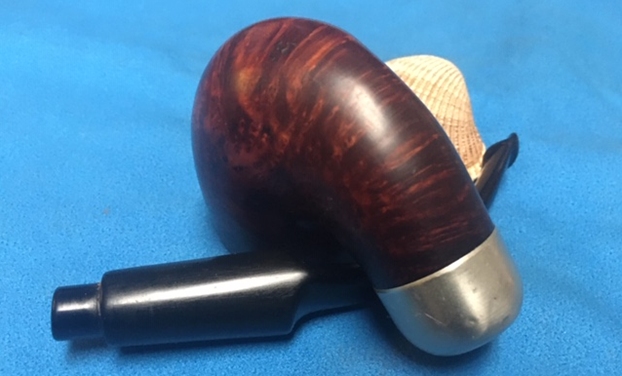
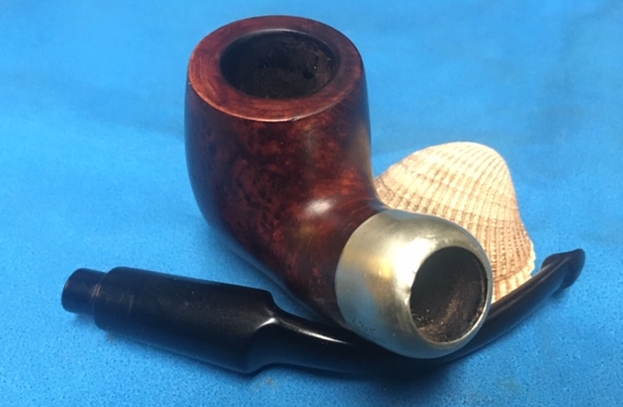
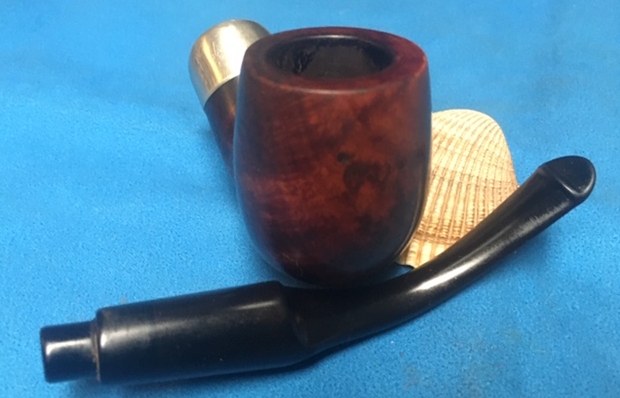
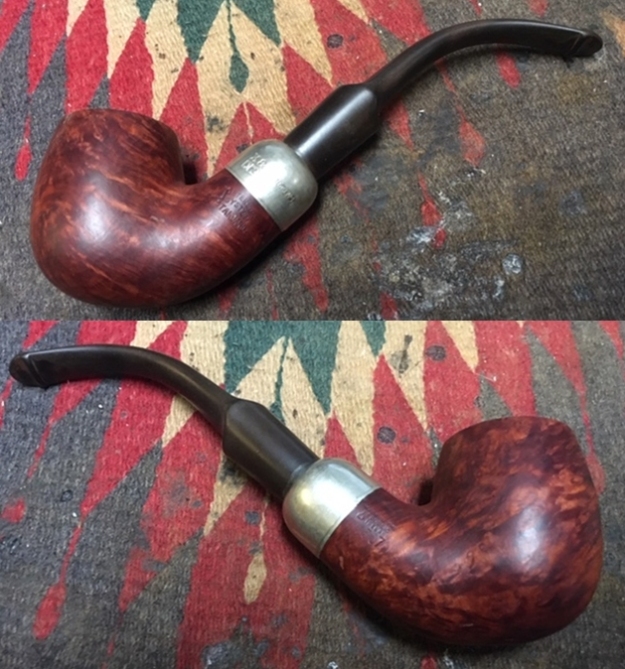
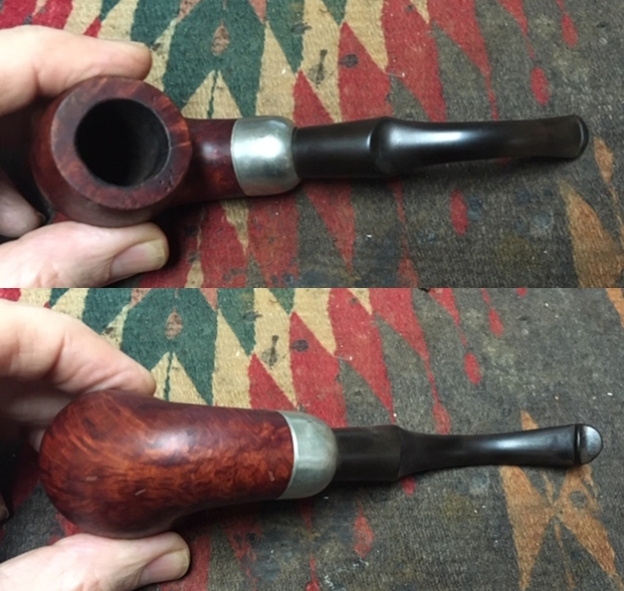
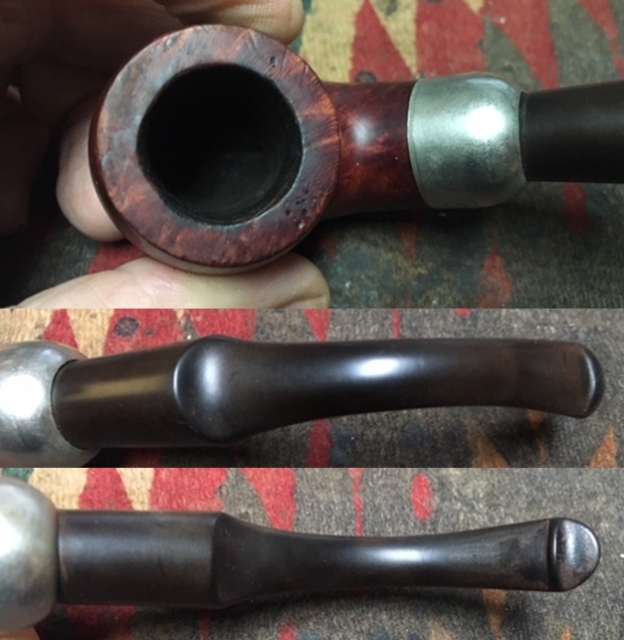
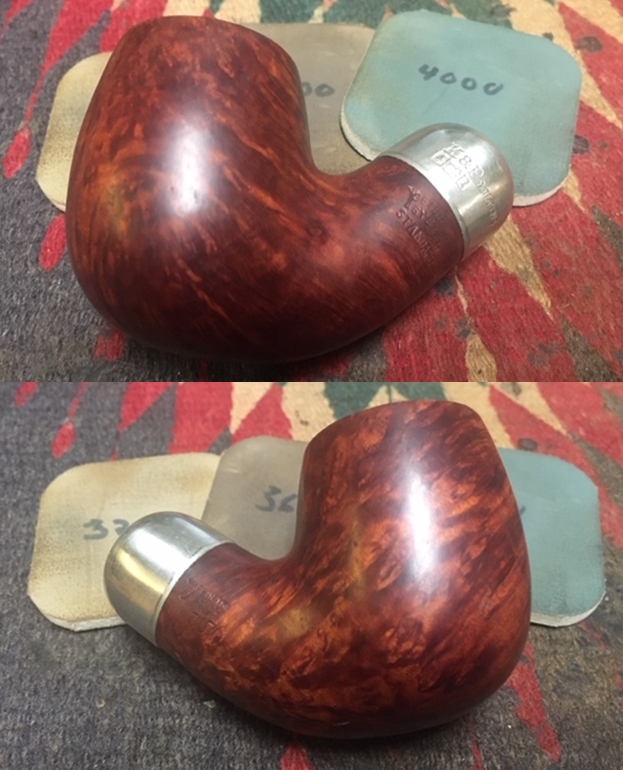
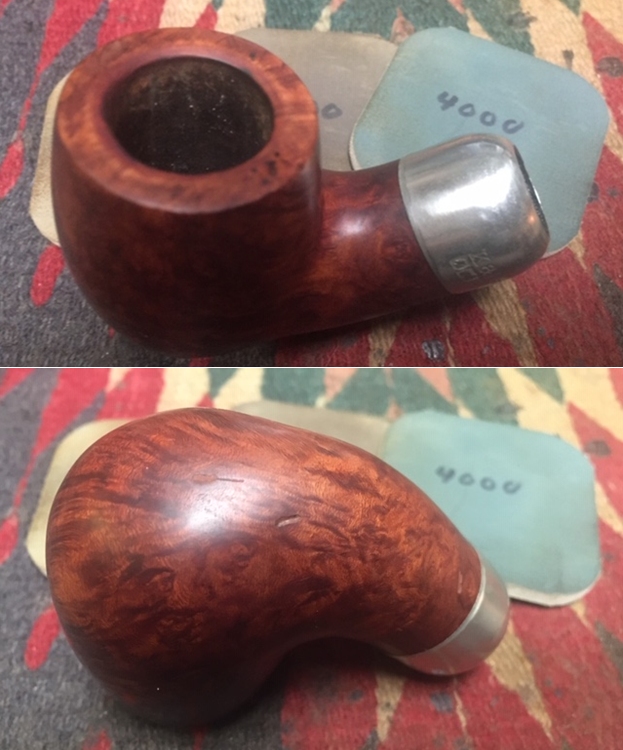
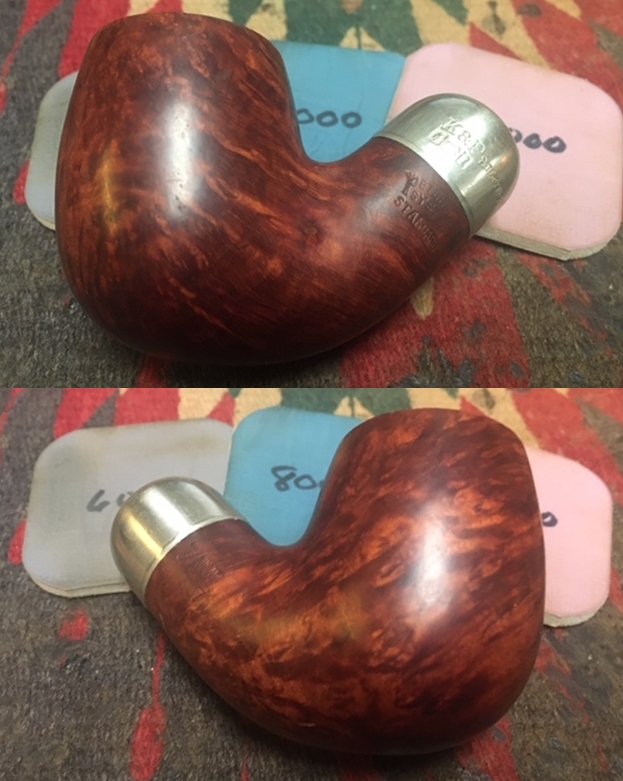
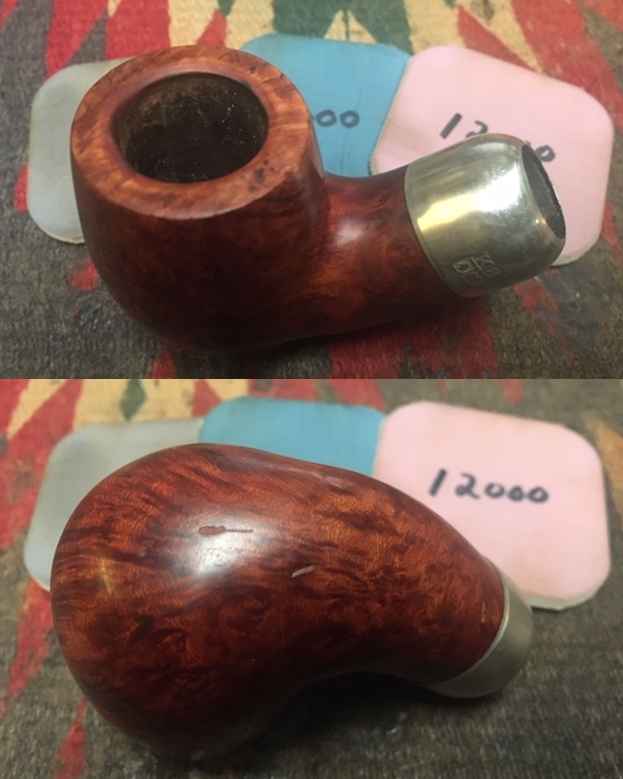
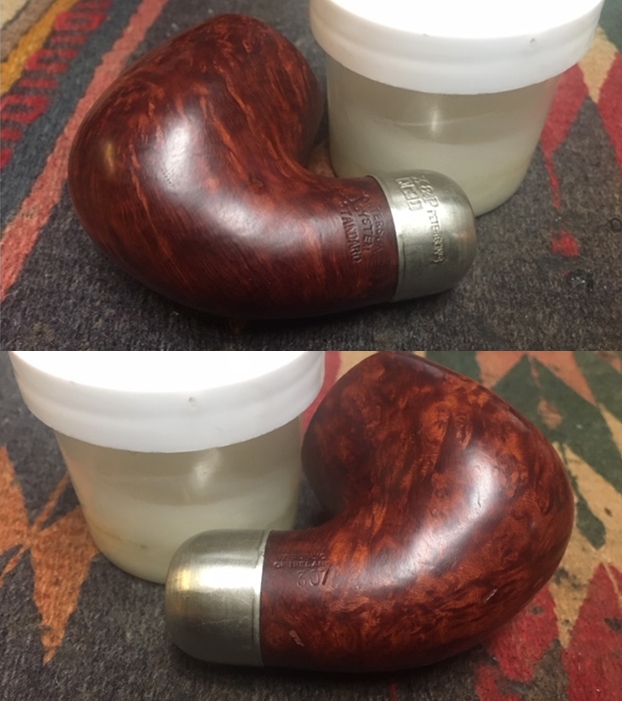
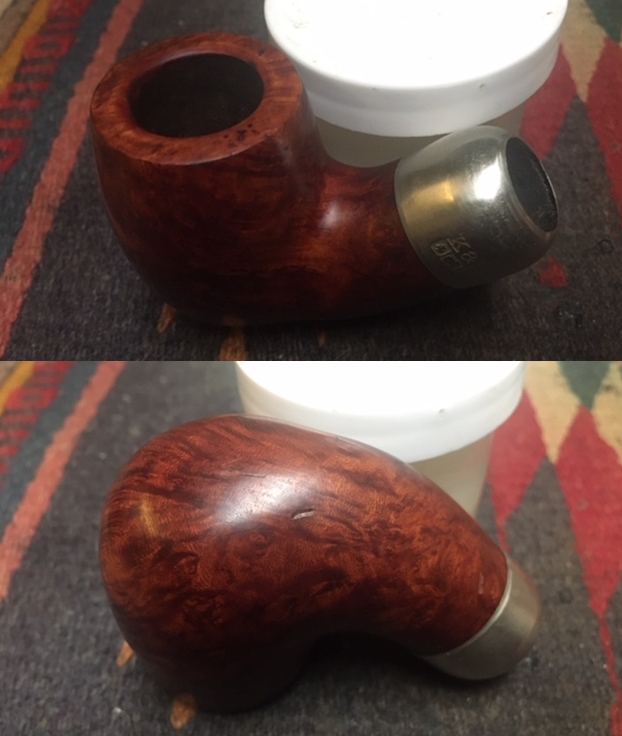
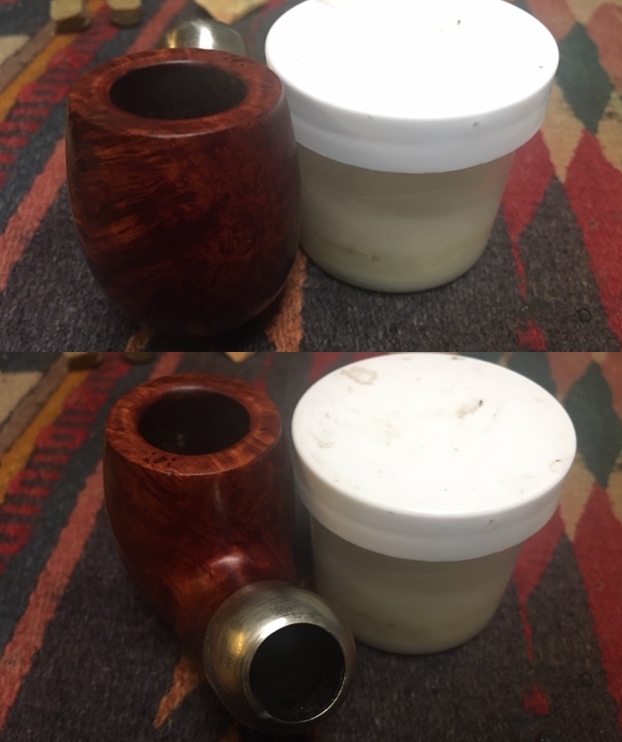
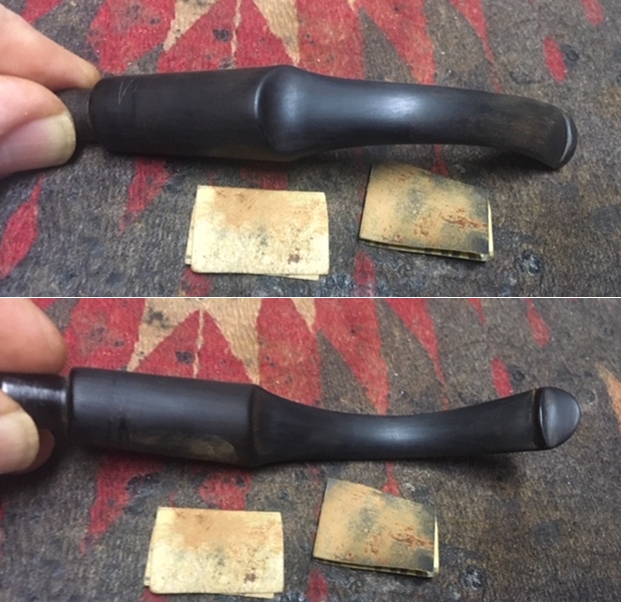
I chose another smooth Peterson’s System Standard 302 Bent Apple pipe with a saddle vulcanite stem to work on next. Here is a link to the first of them (https://rebornpipes.com/2021/12/29/restoring-a-petersons-republic-era-system-standard-302-bent-apple-2/). Neither Jeff nor I have any idea where this pipe came from or any of its background story. It is another of those mysteries that happen when the box of pipes for restoration overflows and there are no notes to go with the pipes in the box. I am sure we will have a few more of those in the days ahead. The pipe is stamped on the left side of the shank and reads Peterson’s [over] System [over] Standard. The nickel ferrule is stamped K & P [over] Peterson. On the right side it is stamped Made in the Republic of Ireland and underneath that is the shape number 302. Jeff had cleaned up the pipe with his usual thoroughness. He reamed the pipe with a PipNet Pipe Reamer and cleaned up the remnants with a Savinelli Fitsall Pipe Knife.  He scrubbed the bowl with undiluted Murphy’s Oil Soap with a tooth brush. He rinsed it under running warm water to remove the soap and grime. He cleaned out the inside of the shank and the airway in the stem with alcohol, cotton swabs and pipe cleaners. He soaked the stem in Before & After Deoxidizer and rinsed it off with warm water. Somewhere along the way as it sat here it picked up some stickiness on the top of the stem that looks a lot like what is left behind by a gummed label. I took photos of the pipe 3 years later when I finally got around to working on it. As you can see it is another beautiful looking pipe. I took photos of the rim top and bowl as well as the stem to give a sense of the condition of both. The rim top and the inner edge were in excellent condition. The stem was clean but had light tooth marks and chatter on the top and underside ahead of the button. I took photos of the stamping on the sides of the shank. They are clear and readable as noted above.I took the stem out of the shank and took a photo of the overall look of the pipe. It is another beauty. There are a few small dings from the journey of the pipe that will remain as a part of its story.I am including the information from Pipedia’s article on Peterson pipes. It is a great read in terms of the history of the brand (https://pipedia.org/wiki/Peterson). I have included a bit of the pertinent history here.

1950 – 1989 The Republic Era – From 1950 to the present time, the stamp for this era is “Made in the Republic of Ireland” in a block format generally in three lines but two lines have been used with or without Republic being abbreviated.

I knew that I was dealing with a Republic Era pipe made between 1950-1989. It was a smooth Peterson’s System Standard 302 Apple with nice grain. The finish was stained with a combination of brown stains. Now it was time to work on the pipe.

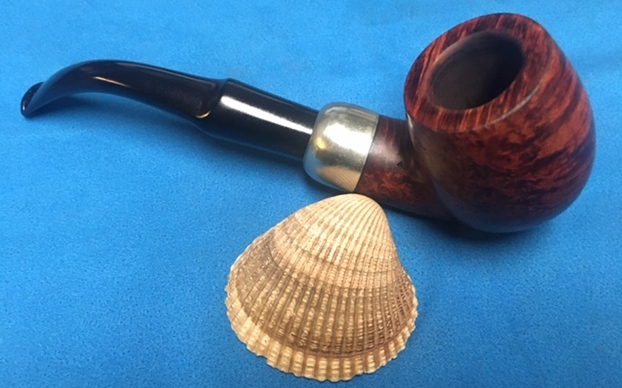
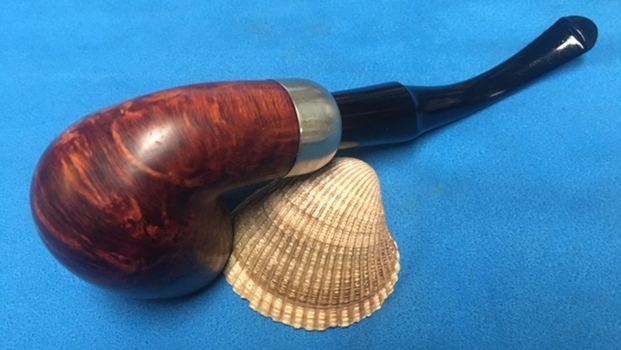
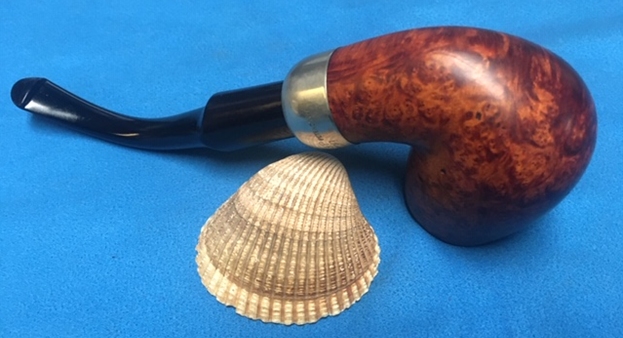
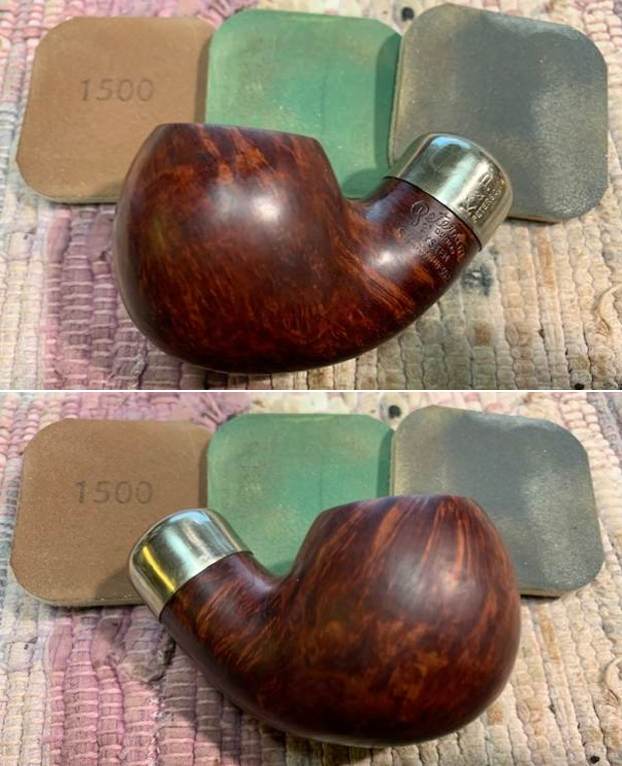
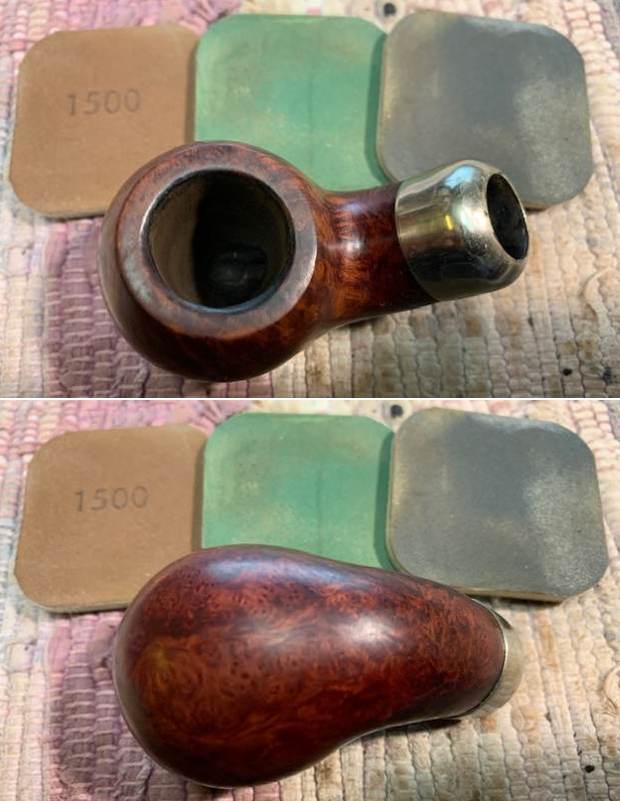
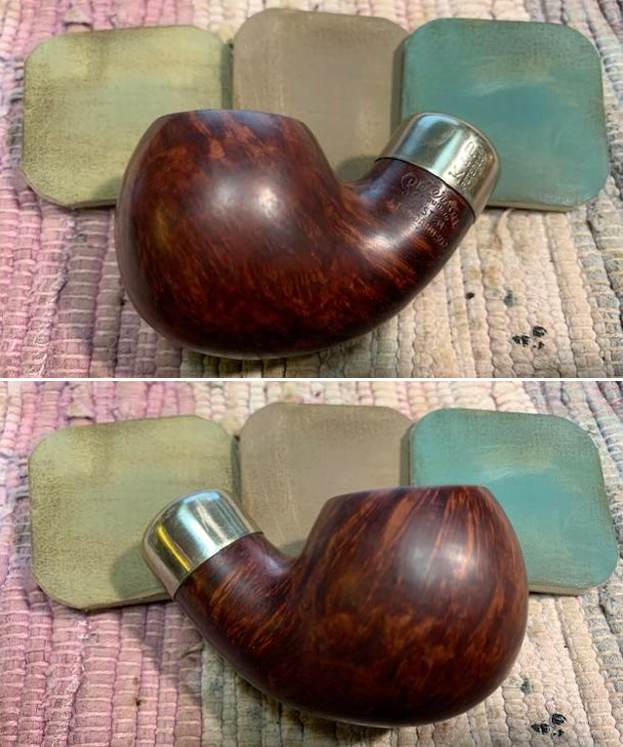
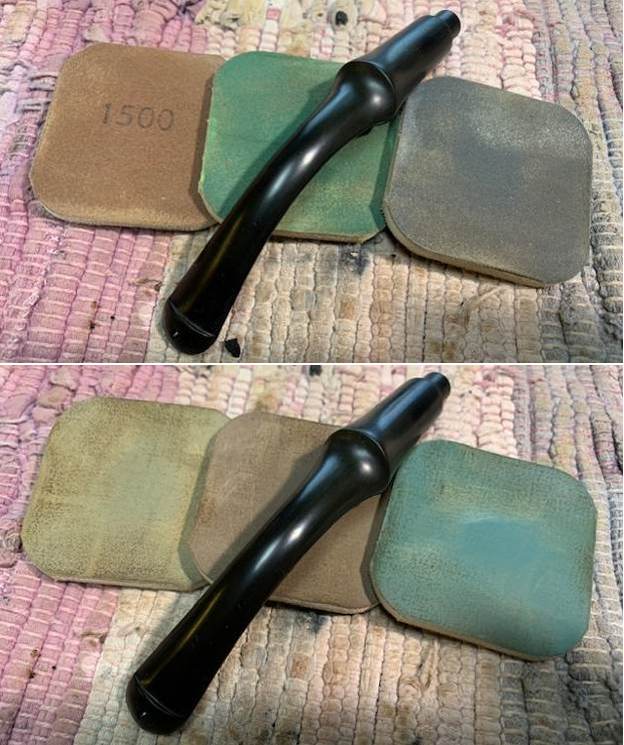
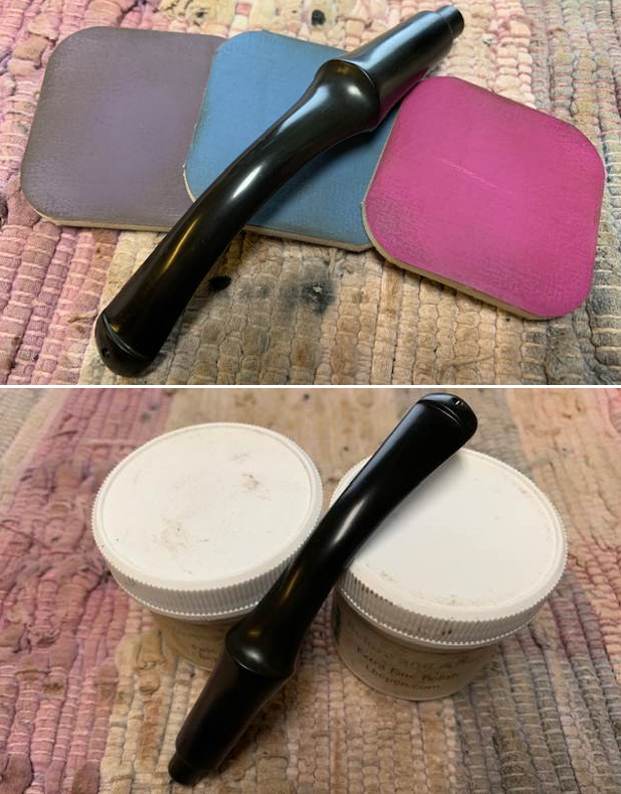
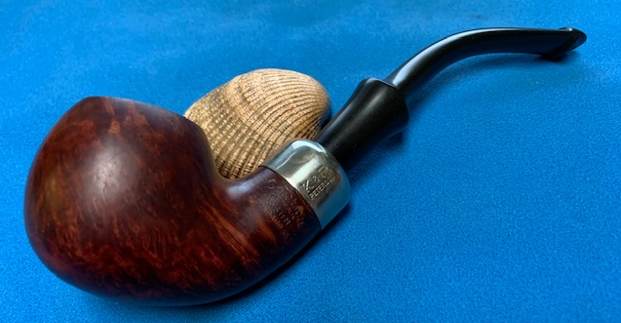
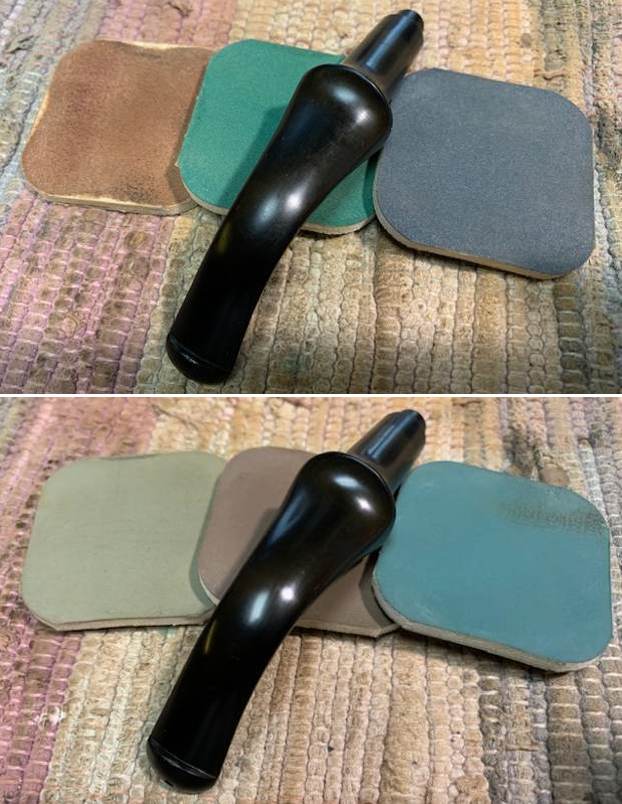
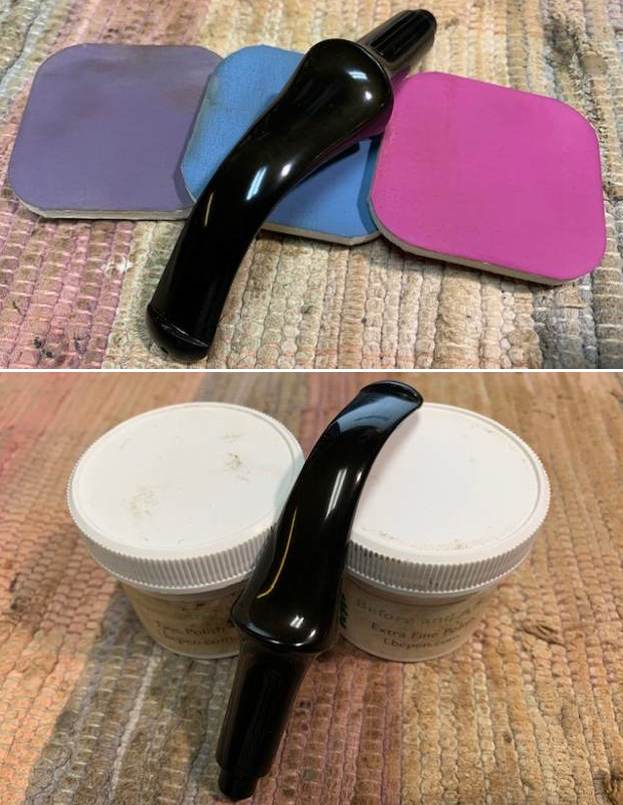
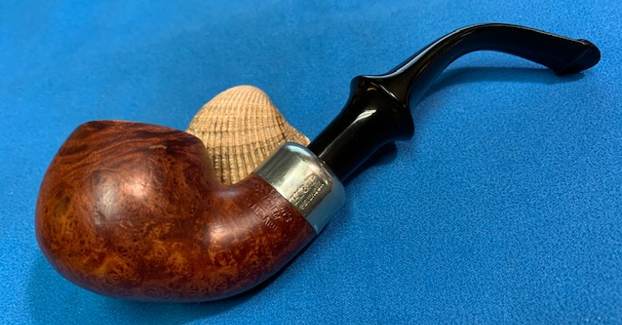
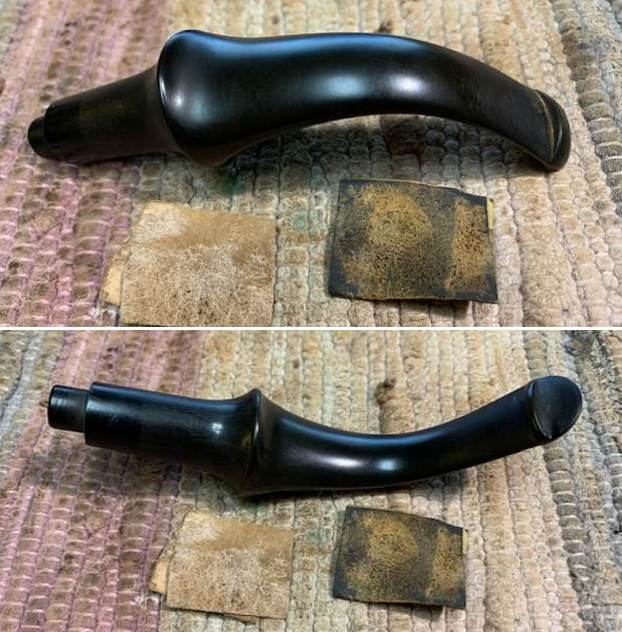
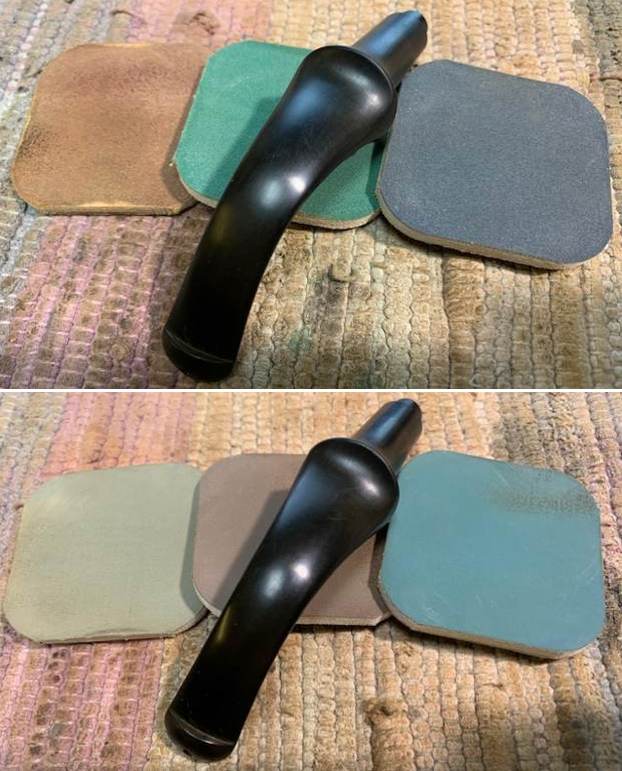
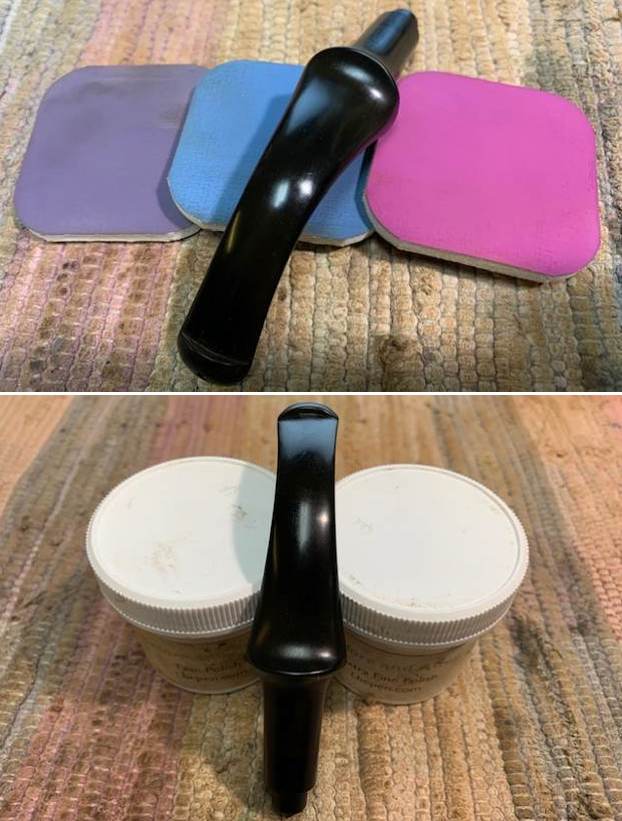
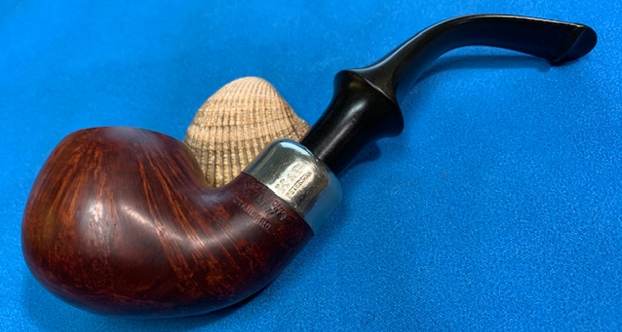
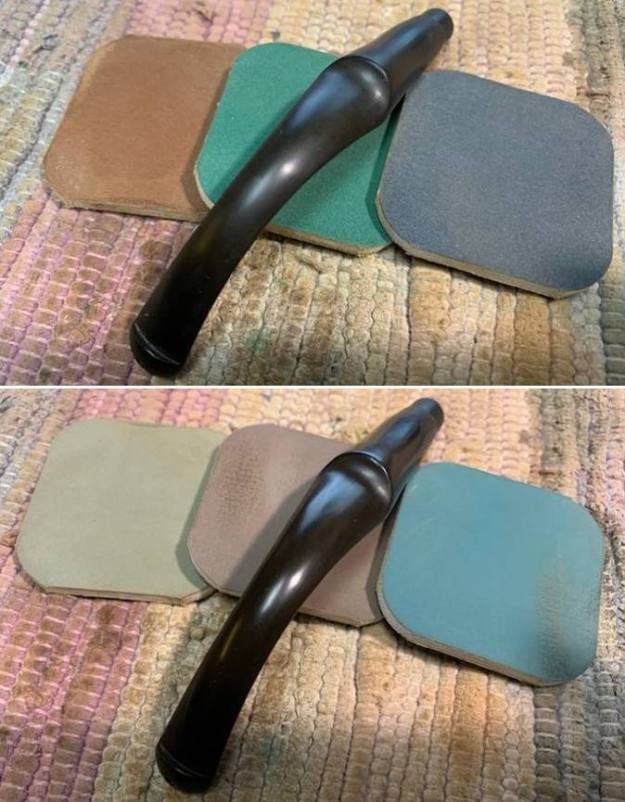
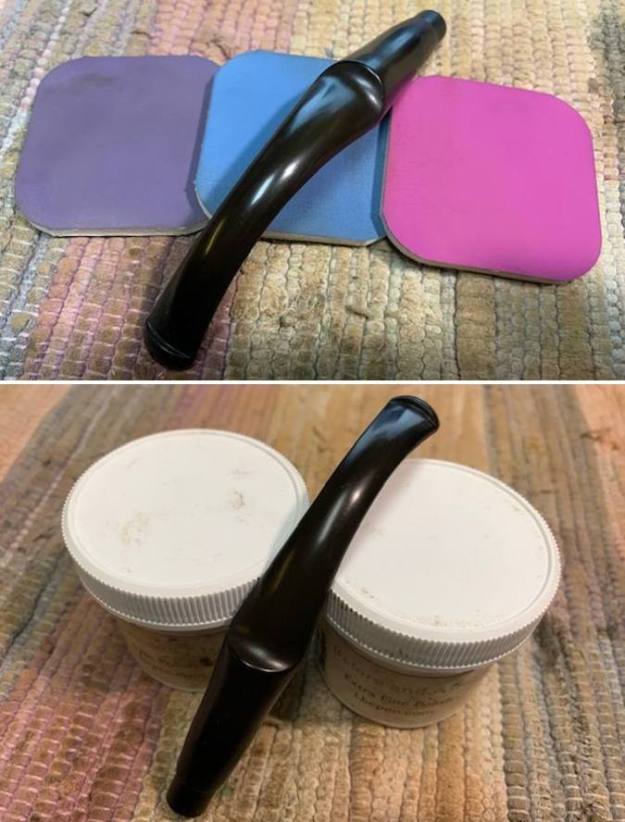
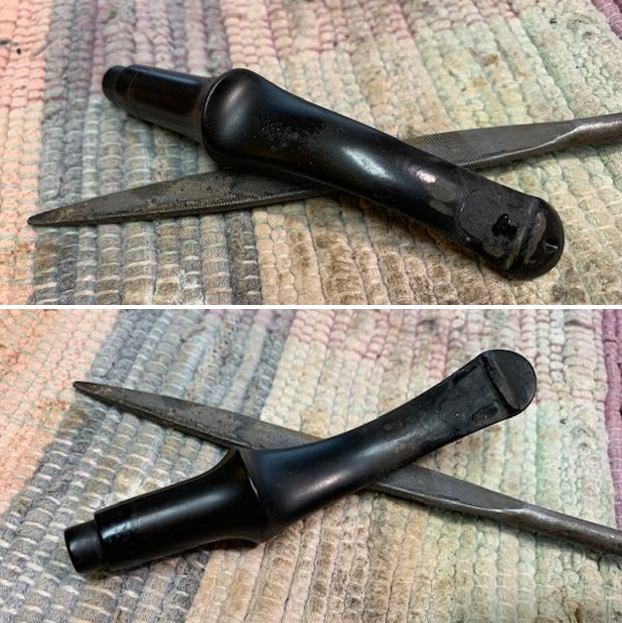
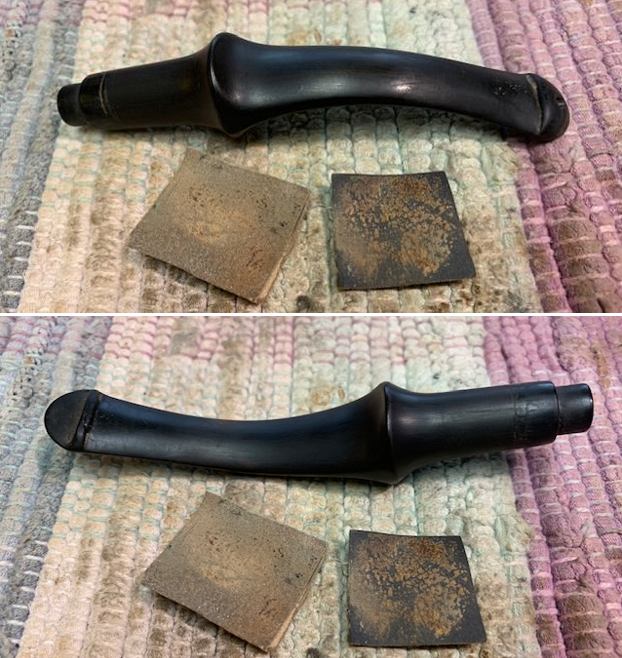
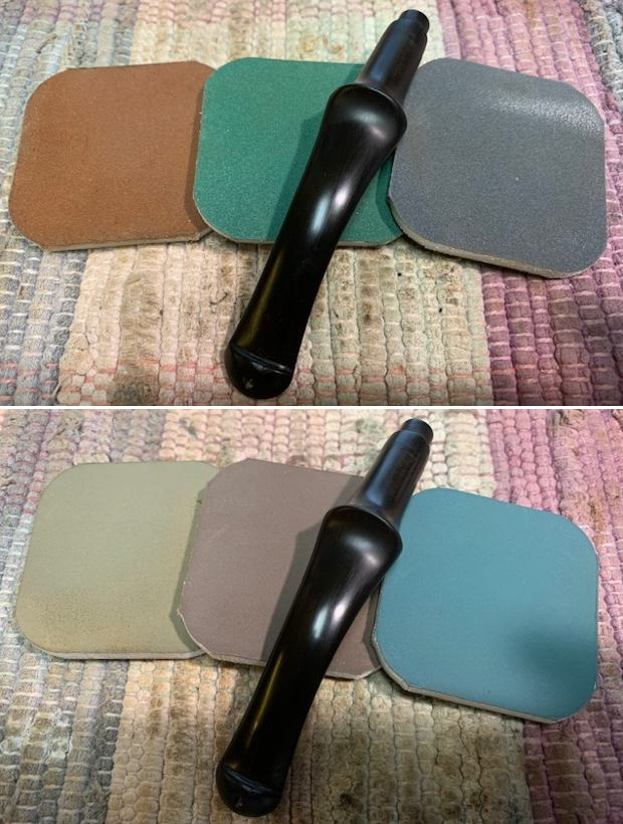
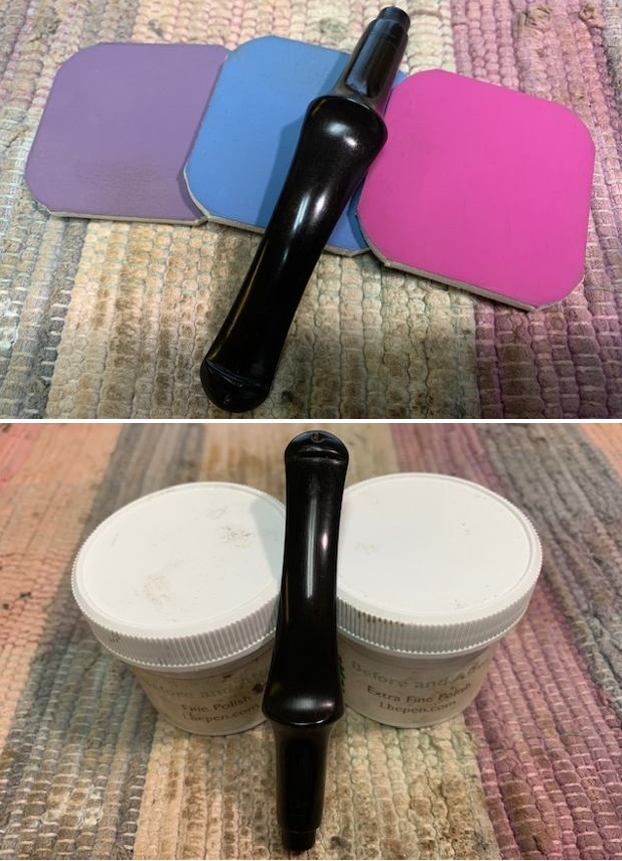
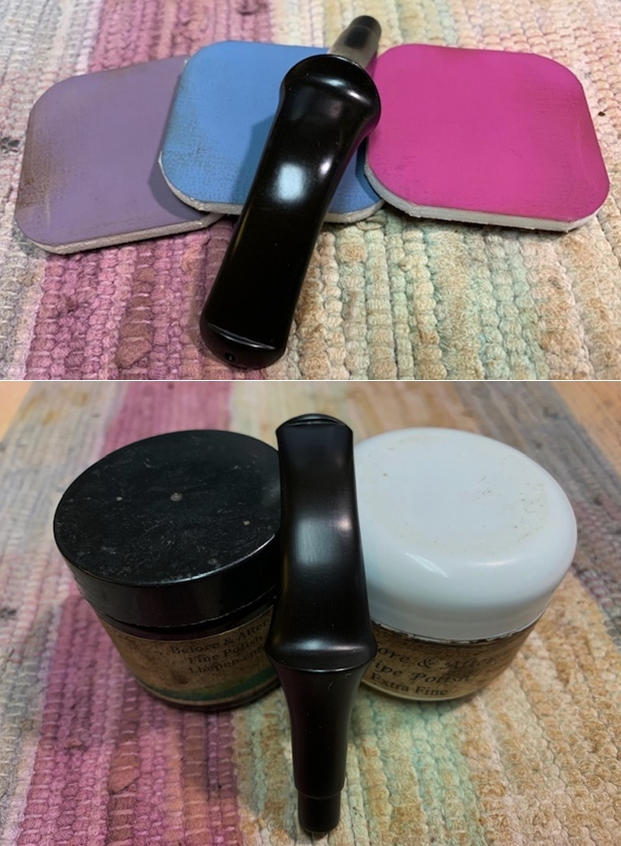
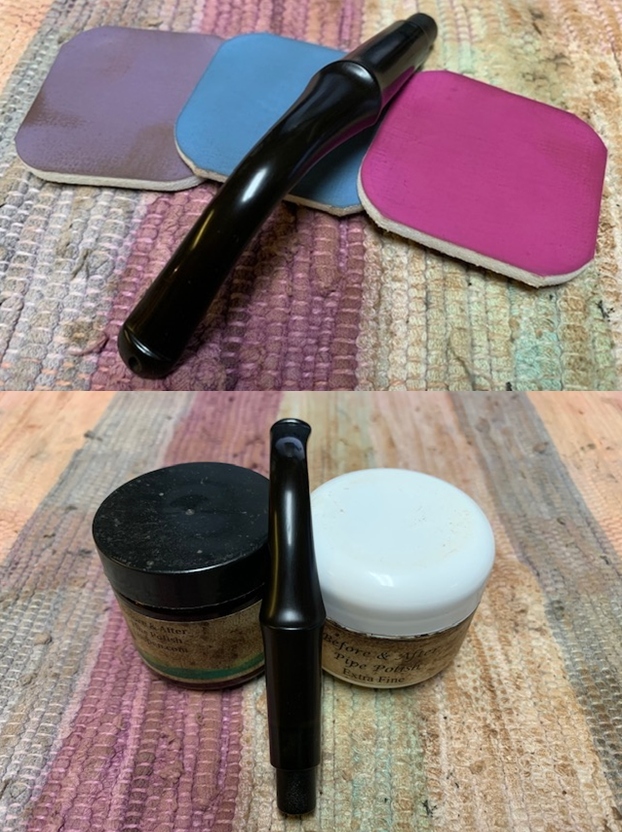
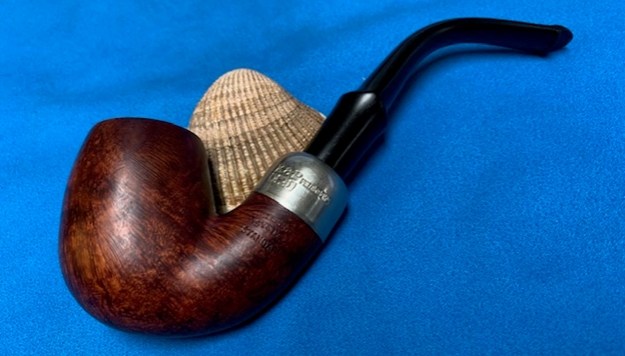
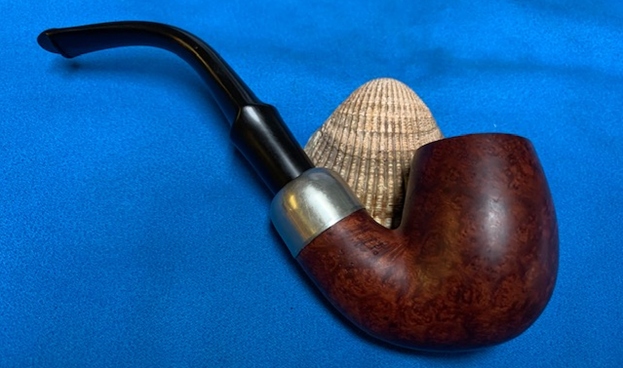
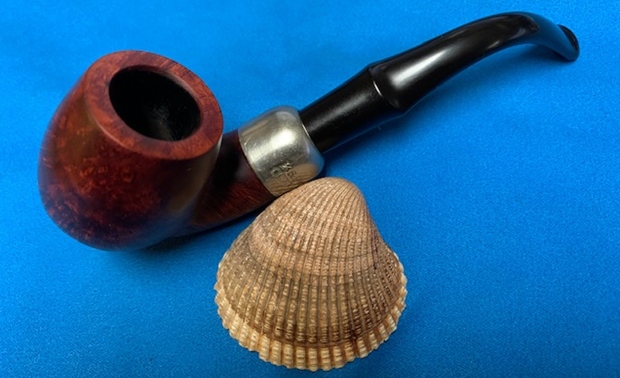
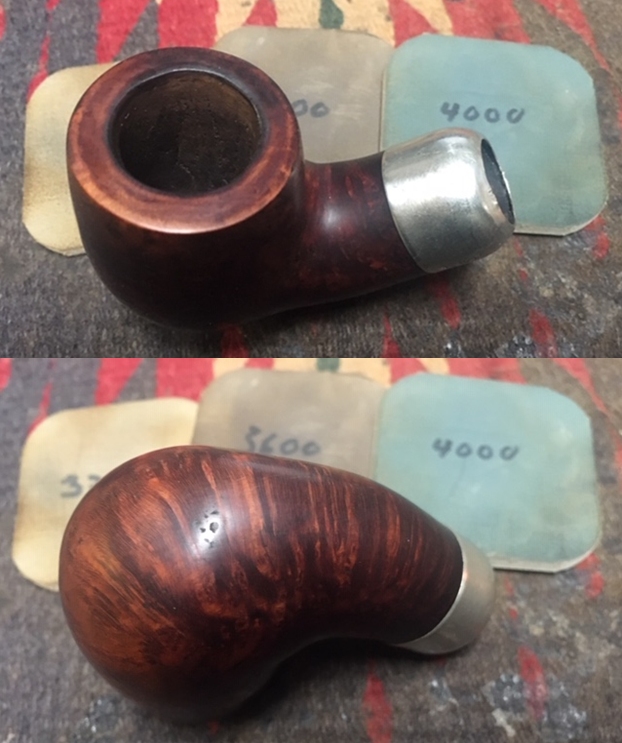
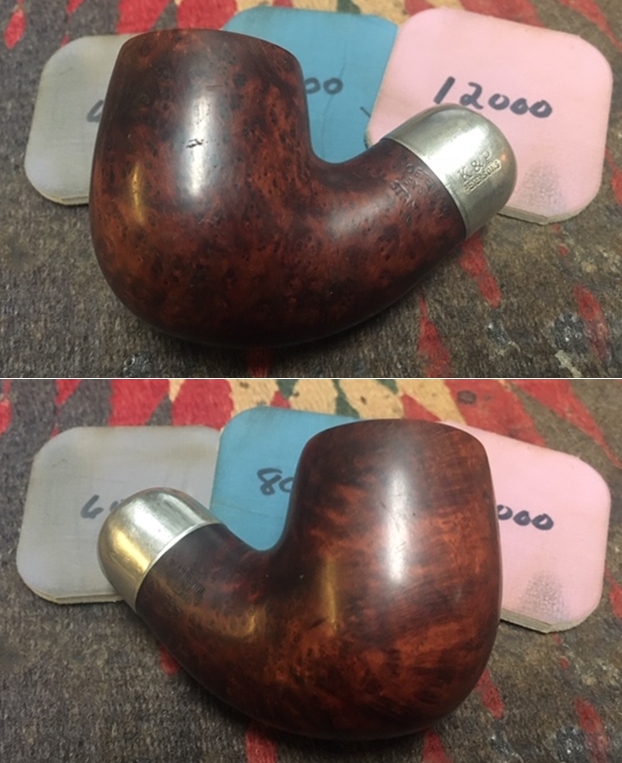
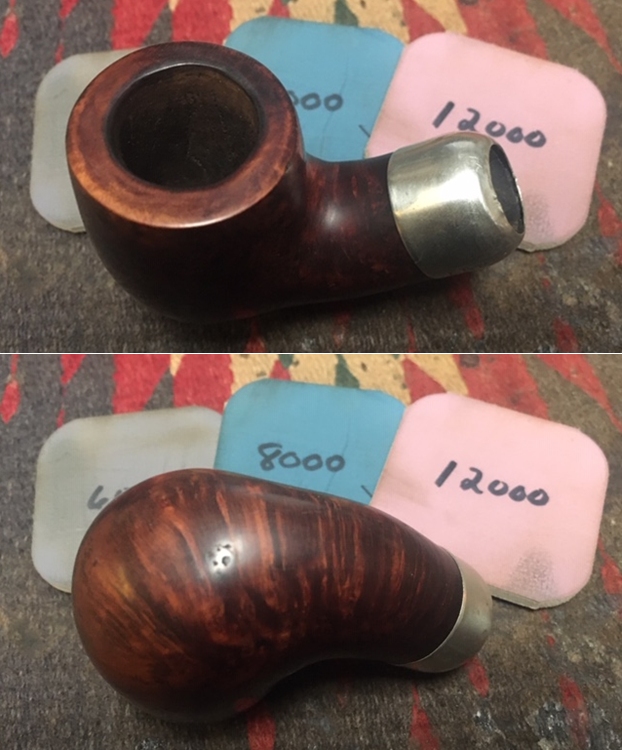
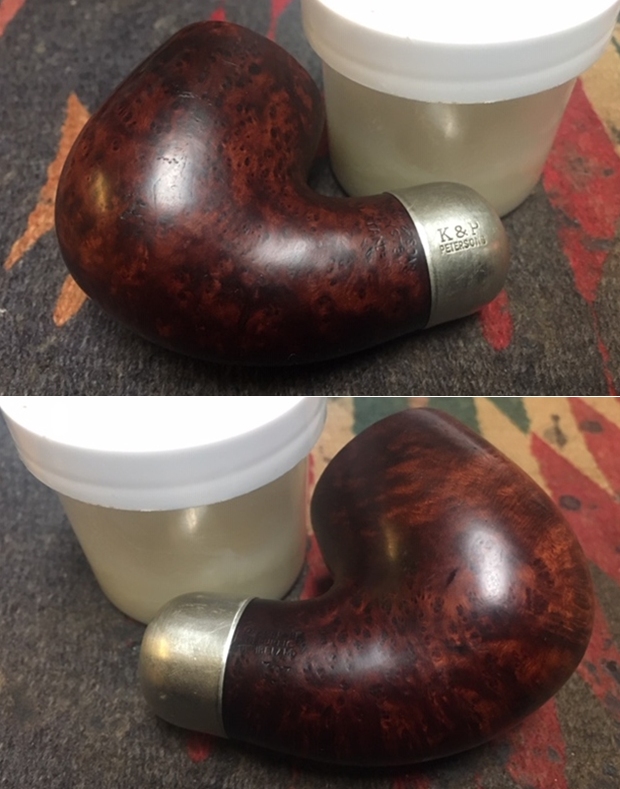
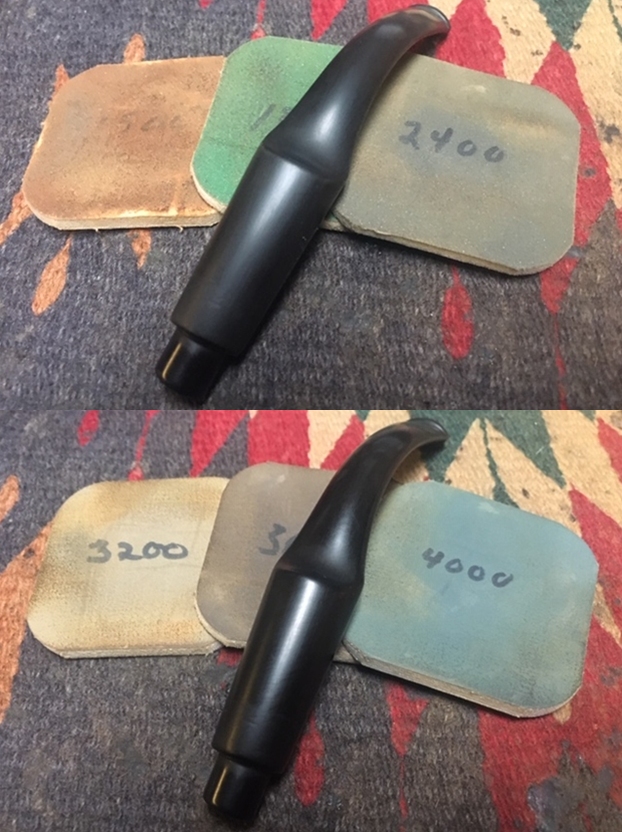
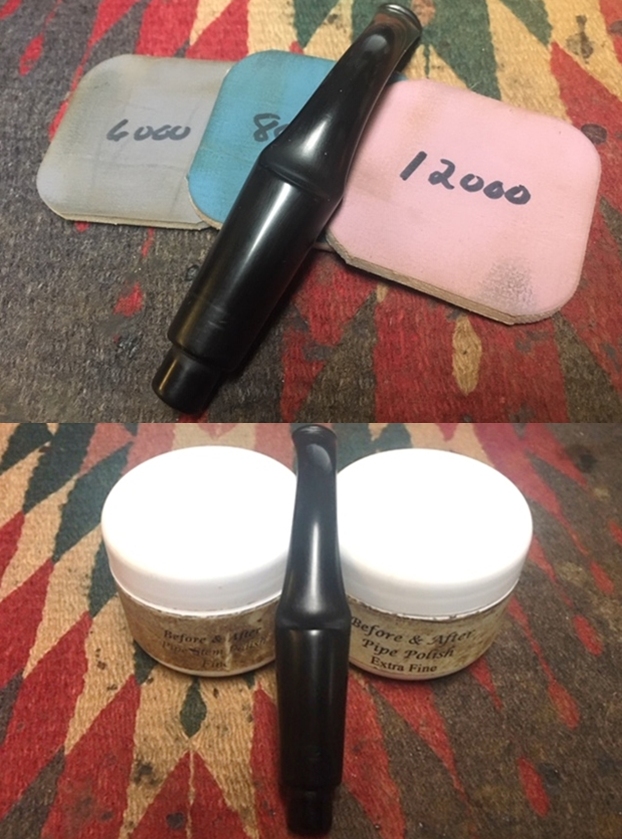
I started my work on the pipe by polishing the briar with micromesh sanding pads – wet sanding with 1500-12000 grit pads. I wiped the bowl down after each pad with a damp cloth. I rubbed the bowl down with Before & After Restoration Balm. I worked it into the surface of the bowl sides and shank with my fingertips. The product works to clean, enliven and protect the briar. I let the balm sit for a little while and then buffed with a cotton cloth to raise the shine.    I set the bowl aside and turned to work on the stem. I polished the stem with micromesh sanding pads – 1500-12000 grit pads. I wiped it down with Obsidian Oil after each sanding pad. I used Before & After Pipe Polish – both Fine and Extra Fine to further polish the stem. I gave it a final coat of Obsidian Oil and set it aside to dry. This Republic Era Peterson’s System Standard 302 Bent Apple with a vulcanite saddle stem is a great looking pipe now that it has been restored. The beautiful grain that shines through the polished finish is stunning. I put the stem back on the bowl and carefully buffed the pipe with Blue Diamond on the buffing wheel. I gave the bowl and the stem multiple coats of carnauba wax on the buffing wheel and followed that by buffing the entire pipe with a clean buffing pad. I hand buffed the pipe with a microfiber cloth to deepen the shine. The finished Peterson’s System Standard 302 fits nicely in the hand and feels great. Give the finished pipe a look in the photos below. The dimensions of the pipe are Length: 6 inches, Height: 1 ½ inches, Outside diameter of the bowl: 1 ¼ inches, Chamber diameter: ¾ of an inch. The weight of the pipe is 72gr/2.57 oz. This pipe has been spoken for so it will soon be heading out with a couple of others that have been set aside for their new trustee. Thanks for reading this blog and my reflections on the pipe while I worked on it. There are many more to come!

Restoring a Peterson’s Republic Era System Standard 302 Bent Apple


Blog by Steve Laug

The next pipe on the work table came to us from an antique store in October, 2017 in Pocatello, Idaho, USA. It is a smooth Peterson’s System Standard pipe with a saddle vulcanite stem. The pipe is stamped on the left side of the shank and reads Peterson’s [over] System [over] Standard. On the right side it is stamped Made in the Republic of Ireland and underneath that is the shape number 302. The shape number stamp is partially double stamped over the COM stamp. It is a shape that Peterson’s called a Bent Apple. The nickel ferrule is stamped K & P [over] Peterson. The finish had a lot of grime ground into it and it was very dirty. The bowl was moderately caked and there was a lava coat on the flat rim top and the inner edge of the rim. The inner edge had some nicks and damage and the rim top had a lot of scratches that looked like the rim top had been scraped with a knife. The stem was lightly oxidized and had light tooth chatter and marks on the top and underside near the P-lip style button. The dirty Bent Apple shaped pipe showed promise. Jeff took photos of the pipe before he started his cleanup work.  He took photos of the rim top and bowl to give a clear picture of the thickness of the cake and the condition of the rim top and edges. He also took photos of the top and underside of the stem to show the oxidation, calcification and chatter and tooth marks. Jeff took a photo of the side and heel of the bowl to give a picture of what the briar around the pipe looked like.He took photos of the stamping on the shank and the nickel ferrule. It reads as noted above and is clear and readable.    I am including the information from Pipedia’s article on Peterson pipes. It is a great read in terms of the history of the brand (https://pipedia.org/wiki/Peterson). I have included a bit of the pertinent history here.

1950 – 1989 The Republic Era – From 1950 to the present time, the stamp for this era is “Made in the Republic of Ireland” in a block format generally in three lines but two lines have been used with or without Republic being abbreviated.

I knew that I was dealing with a Republic Era pipe made between 1950-1989. It was a smooth Peterson’s System Standard 302 Apple with nice grain. The finish was stained with a combination of brown stains. Now it was time to work on the pipe.

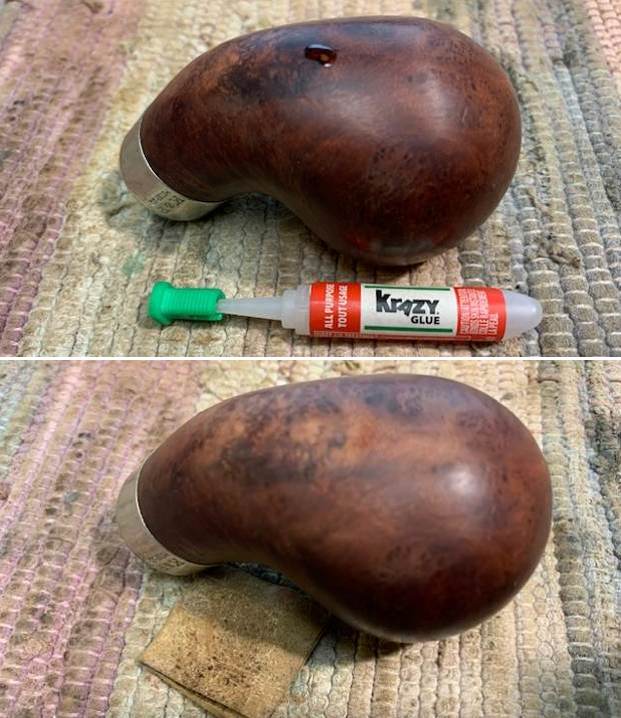
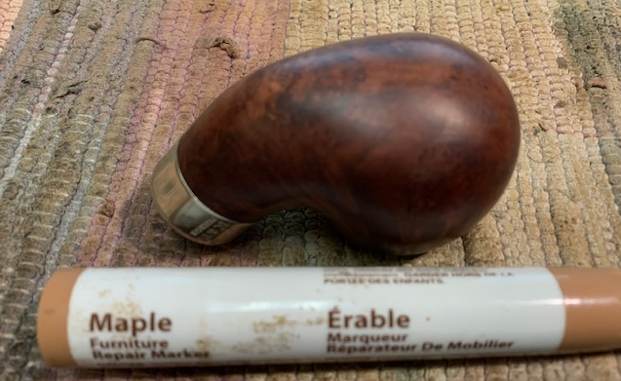
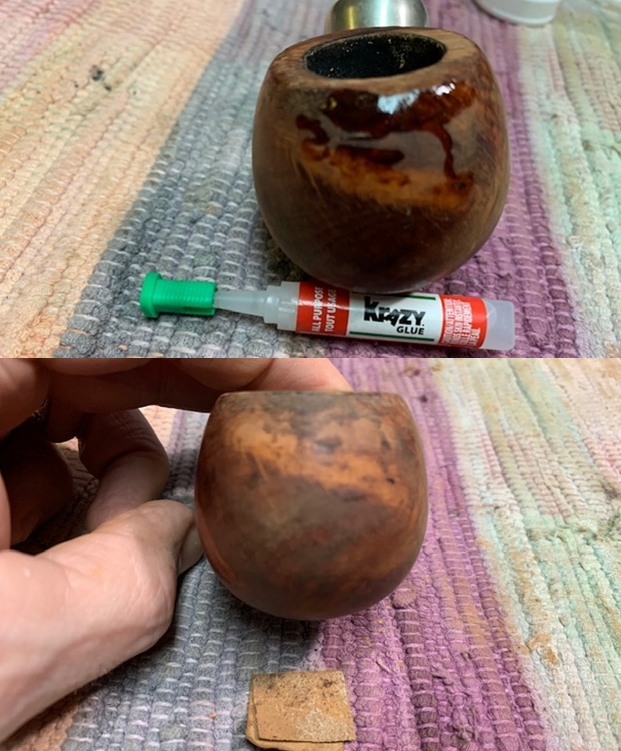
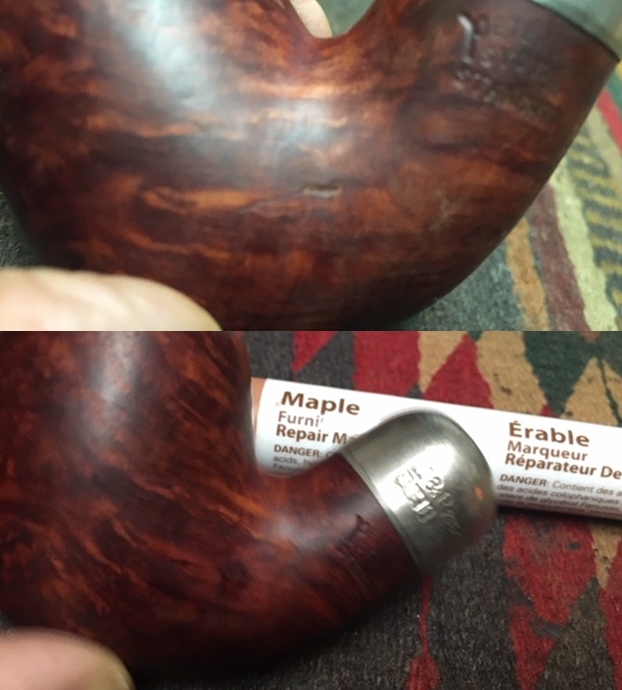
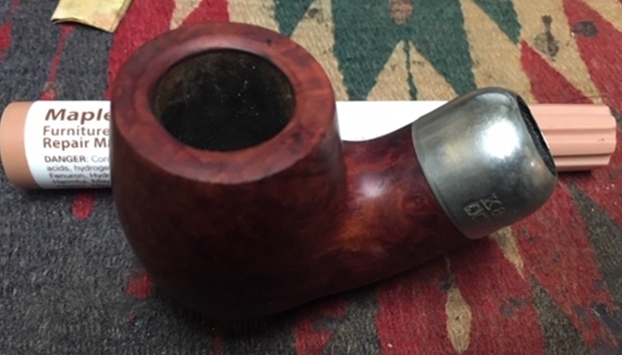
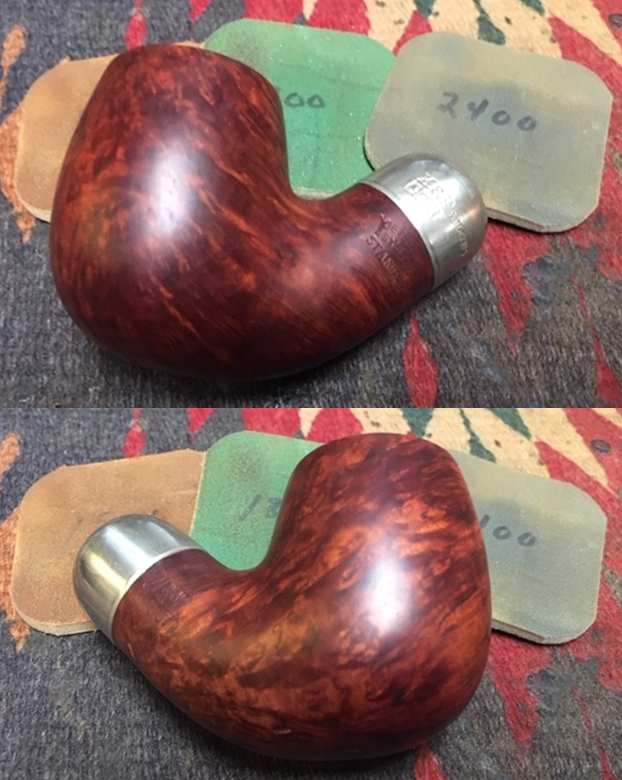
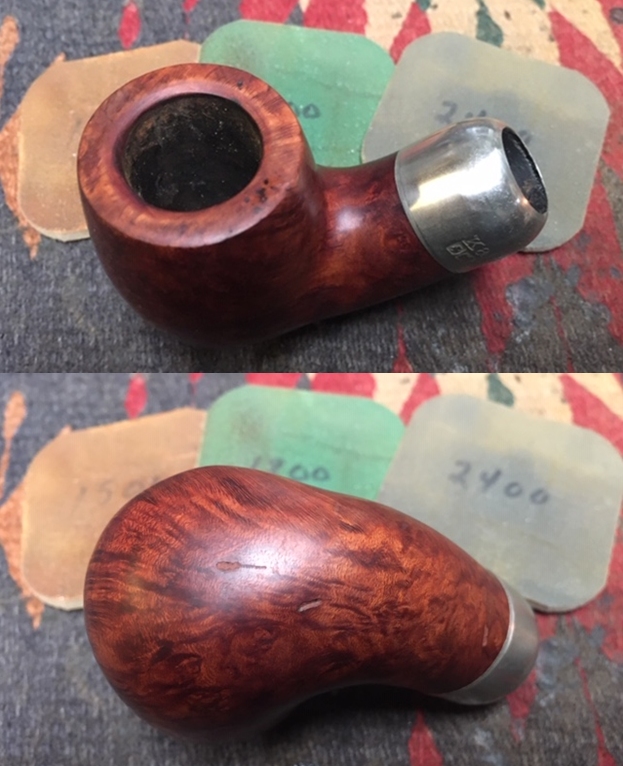
Jeff had cleaned up the pipe with his usual penchant for thoroughness. He reamed the pipe with a PipNet Pipe Reamer and cleaned up the remnants with a Savinelli Fitsall Pipe Knife.  He scrubbed the bowl with undiluted Murphy’s Oil Soap with a tooth brush. He rinsed it under running warm water to remove the soap and grime. He cleaned out the inside of the shank and the airway in the stem with alcohol, cotton swabs and pipe cleaners. He soaked the stem in Before & After Deoxidizer and rinsed it off with warm water. I took photos of the pipe 3 years later when I finally got around to working on it. The rim top and inner edge of the rim looked very good with a bit of damage on the inner edge and on the rim surface leaving the bowl slightly out of round. The stem surface looked very good with some tooth marks and chatter on both sides near the button. I took a photo of the stamping on the shank. It is clear and readable as noted above.     I removed the stem and took a photo of the pipe to give a sense of the whole. The stem is a typical Peterson’s System stem. I started my work on the pipe by working over the rim top and the inner edge of the bowl to clean up the damage. Once finished the rim top and edge looked much better.  I repaired one small deep nick in the heel of the bowl by filling it in with clear super glue. Once it cured I sanded it smooth to blend it into the surrounding briar. I touched up sanded area with a Maple stain pen to blend it into the surrounding briar. I polished the briar with micomesh sanding pads – wet sanding with 1500-12000 grit pads. I wiped the bowl down after each pad with a damp cloth.  I rubbed the bowl down with Before & After Restoration Balm. I worked it into the surface of the bowl sides and shank with my fingertips. The product works to clean, enliven and protect the briar. I let the balm sit for 15 minutes and then buffed with a cotton cloth to raise the shine.    I set the bowl aside and turned to work on the stem. I smoothed out the chatter and tooth marks with 220 grit sandpaper and started polishing it with 400 grit wet dry sandpaper.  I polished the vulcanite stem with micromesh sanding pads – 1500-12000 grit pads. I wiped it down with a damp cloth after each sanding pad. I used Before & After Pipe Polish – both Fine and Extra Fine to further polish the stem.    This Peterson’s System Standard 302 Bent Apple with a vulcanite saddle stem is a great looking pipe now that it has been restored. The beautiful grain that shines through the polished finish is stunning. I put the stem back on the bowl and carefully buffed the pipe with Blue Diamond on the buffing wheel. I gave the bowl and the stem multiple coats of carnauba wax on the buffing wheel and followed that by buffing the entire pipe with a clean buffing pad. I hand buffed the pipe with a microfiber cloth to deepen the shine. The finished Peterson’s System Standard 302 fits nicely in the hand and feels great. Give the finished pipe a look in the photos below. The dimensions of the pipe are Length: 6 inches, Height: 2 inches, Outside diameter of the bowl: 1 ¼ inches, Chamber diameter: ¾ of an inch. The weight of the pipe is 50gr/1.76oz.  I will be putting this pipe on the rebornpipes store shortly. You will find it in the Irish Pipemakers section. If you are interested in adding this pipe to your collection send me a message or an email. Thanks for reading this blog and my reflections on the pipe while I worked on it. There are many more to come!

A Lot of Work…But it is a Beautiful Republic Era Peterson’s System Standard 312


Blog by Steve Laug

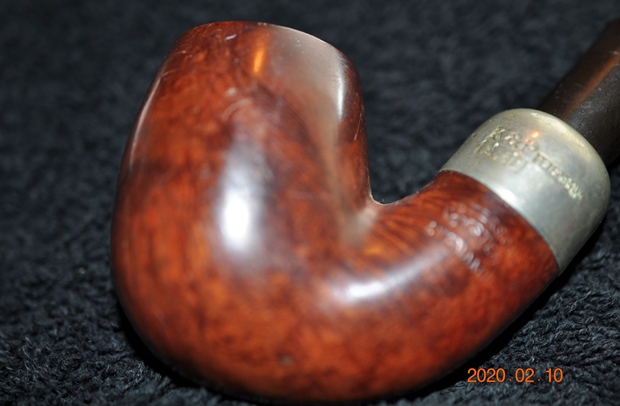
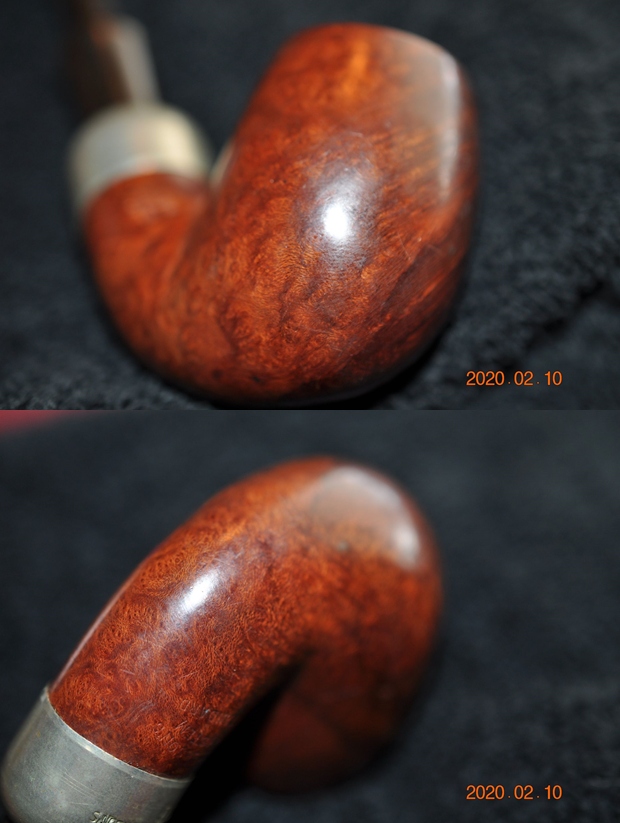
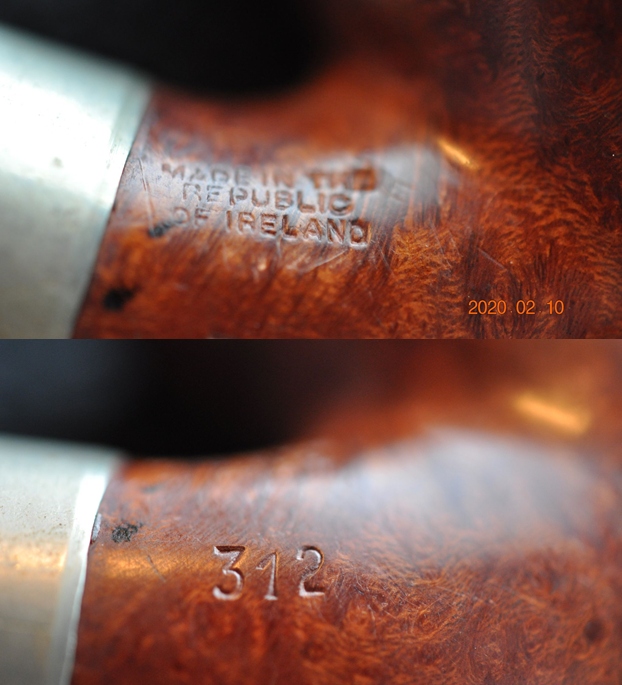
The next pipe on the table was purchased on eBay on October 3, 2016 from Des Moines, Iowa, USA. It was a very dirty Peterson’s System Standard 312. The finish is quite nice with a classic Peterson’s shape and smooth finish. The pipe had a lot of grime ground into the smooth finish with oils and tars in the grain. The bowl had a thick cake with a lot of lava overflow on the rim top and edges. The pipe is stamped on the left side of the shank and reads Peterson’s [over] System [over] Standard. On the right side is stamped Made in the Republic of Ireland [three lines] with the shape number 312 under that. On the oxidized nickel shank cap (ferrule) it is stamped K&P [over] Peterson. The stamping is clear and readable on the pipe and band. The ferrule has a lot of tars and oils oozing out of the end where the stem fits. The stem was dirty, oxidized and calcified with tooth marks and chatter on the stem near the button on both sides and some on the surface of the button as well. There was no Peterson’s “P” on the left side of the P-lip stem. Jeff took photos of the pipe before he worked on it. He took photos of the rim top to show the thick cake in the bowl and the thick overflow of lava on rim top and edge. It is very hard to know what the inner and outer edges look like under the lava. The stem looked rough – there was oxidation, calcification and some deep tooth marks on both sides. He took a photo of the side and heel of the bowl to show the amazing grain that was shining through the grime and oils there. It would definitely look really good once it was cleaned up.The stamping on the sides of the shank read as noted above. The photos show that they are very clear and readable. The stamping on the nickel ferrule is also readable. I am including the information from Pipedia’s article on Peterson pipes. It is a great read in terms of the history of the brand (https://pipedia.org/wiki/Peterson). I have included a bit of the pertinent history here.

1950 – 1989 The Republic Era – From 1950 to the present time, the stamp for this era is “Made in the Republic of Ireland” in a block format generally in three lines but two lines have been used with or without Republic being abbreviated.

I knew that I was dealing with a Republic Era pipe made between 1950-1989. It was a smooth Peterson’s System Standard 312 Billiard with nice grain. The finish was stained with a combination of brown stains. Now it was time to work on the pipe.

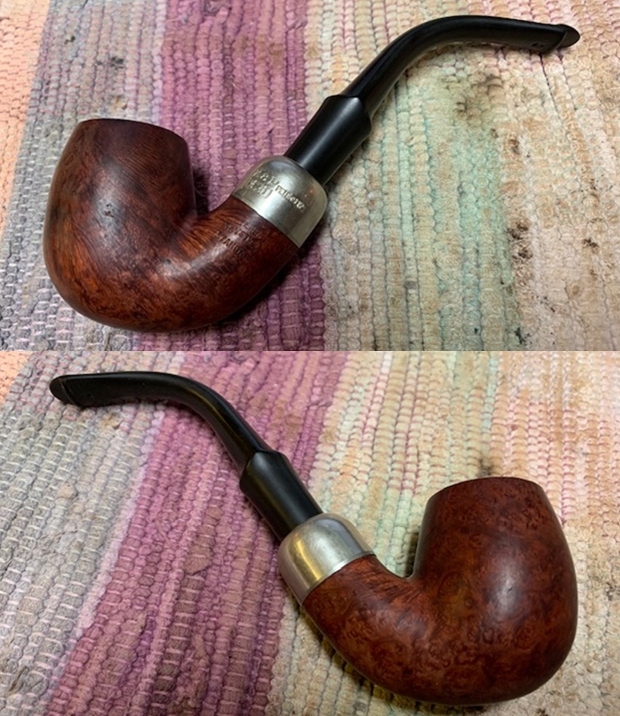
Jeff had cleaned it thoroughly. He had reamed it with a PipNet reamer and cleaned that up with a Savinelli Fitsall Pipe Knife. He had scrubbed the exterior of the briar with undiluted Murphy’s Oil Soap. He cleaned out the interior of the shank, sump and airway in the shank and stem with alcohol, pipe cleaners and cotton swabs. He scrubbed the stem with Soft Scrub to remove the oxidation and calcification on the surface. He soaked it in Before & After Deoxidizer to remove the oxidation. He removed it from the Deoxidizer and rinsed it off with warm water. I took some photos of the pipe before I started my part of the work. The rim top had some scratches and darkening on the surface. The outer and inner edges of the rim was okay but there was some burn damage on the front outer edge and on the back inner edge. The stem surface looked better with some tooth marks and chatter on both sides near the button. There was still some light oxidation that would need to be dealt with on the shank end and around the P-lip. I took photos of the stamping on the shank sides. It is clear and readable as noted above.   I removed the stem and took a photo of the pipe to give a sense of the whole. The stem is a typical Peterson’s System stem.I started my work on the pipe by working over the rim top and the inner edge of the bowl to clean up the damage. I topped the bowl lightly on a topping board with 220 grit sandpaper. I used a folded piece of 220 grit sandpaper to rework the inner bevel on the bowl. It worked well and the finished rim top looked significantly better. I polished the briar with micomesh sanding pads – dry sanding with 1500-12000 grit pads. I wiped the bowl down after each pad with a damp cloth. I rubbed the bowl down with Before & After Restoration Balm. I worked it into the surface of the bowl sides and shank with my fingertips. The product works to clean, enliven and protect the briar. I let the balm sit for 15 minutes and then buffed with a cotton cloth to raise the shine. I set the bowl aside and turned to work on the stem. I polished the stem with micromesh sanding pads – 1500-12000 grit pads. I wiped it down with Obsidian Oil after each sanding pad. I used Before & After Pipe Polish – both Fine and Extra Fine to further polish the stem. This Peterson’s System Standard 312 Bent Billiard with a vulcanite stem is a great looking pipe now that it has been restored. The beautiful grain that shines through the polished finish is stunning. As the pipe is smoked the patina should develop and look even better. I put the stem back on the bowl and carefully buffed the pipe with Blue Diamond on the buffing wheel. I gave the bowl and the stem multiple coats of carnauba wax on the buffing wheel and followed that by buffing the entire pipe with a clean buffing pad. I hand buffed the pipe with a microfiber cloth to deepen the shine. The finished Peterson’s System Standard 312 fits nicely in the hand and feels great. Give the finished pipe a look in the photos below. The dimensions of the pipe are Length: 6 inches, Height: 1 ¾ inches, Outside diameter of the bowl: 1 ¼ inches, Chamber diameter: ¾ of an inch. The weight of the pipe is 61grams/2.15oz. This one has been reserved for first refusal. If you are interested in being in the queue for this pipe send me a message or an email. Thanks for reading this blog and my reflections on the pipe while I worked on it. There are many more to come!

Restoring a Republic Era Peterson’s System Standard 305 Rusticated Dublin


Blog by Steve Laug

A while back I received a small box of pipes from a fellow pipeman who wanted to donate them to support  the non-profit organization I work for – the SA Foundation (www.safoundation.com). The organization has been providing long term recovery, housing and job training for women who have escaped sexual exploitation and trafficking. For over thirty years the work has gone on and thousands of young women and their children have been empowered to start over with skills and options. The work is currently in 7 countries and 12 cities around the world. If you are interested give the website a look.

Now back to the pipes. There were eight total pipes in the lot that he sent me. The first one I restored was a large Irish Second 05 Calabash that is heading off to Michigan. The second pipe was a Peterson’s Kapet pipe in a shape 124 (https://rebornpipes.com/2021/08/16/restoring-a-republic-era-petersons-kapet-124/). The third pipe was a very Danish looking Made in London, England Sandblast Acorn. (https://rebornpipes.com/2021/08/17/restoring-a-very-danish-looking-made-in-london-england-acorn/). The fourth pipe was a Bromma Bent Billiard with a screw on bowl (https://rebornpipes.com/2021/08/18/restoring-what-looks-like-a-swedish-bromma-pipe/). The fifth pipe is a Canadian Made Paradis Pipe (https://rebornpipes.com/2021/08/19/restoring-canadian-made-paradis-rustic-246-bent-dublin/). The sixth pipe was an unsmoked small carved figural meerschaum that is for sale on the rebornpipes store (https://rebornpipes.com/rebornpipes-store/meerschaum-pipes-smooth-figurals/). The seventh pipe was a Medico Ventilator Bent Billiard (https://rebornpipes.com/2021/08/20/restoring-a-sandblast-medico-ventilator-bent-billiard/). All of the pipes were in clean condition and had been lightly reamed.

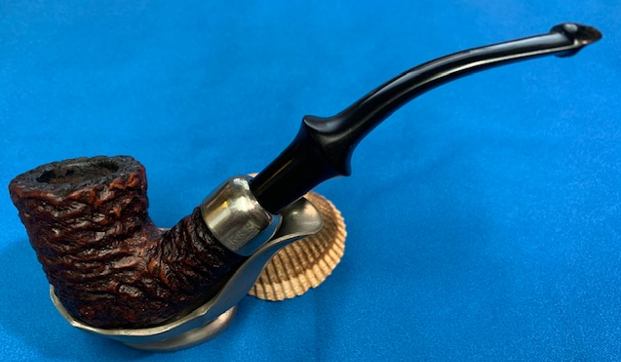
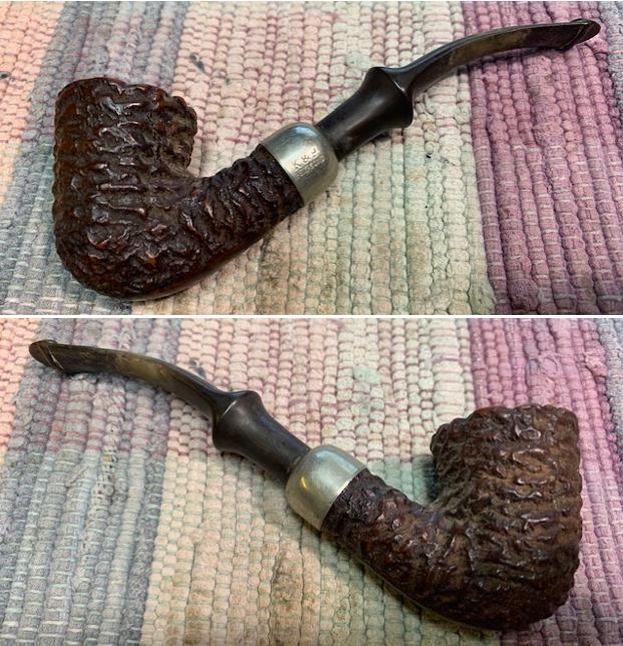
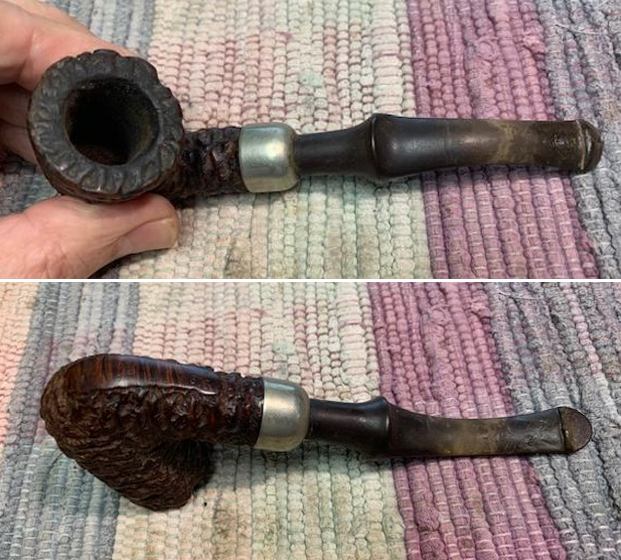
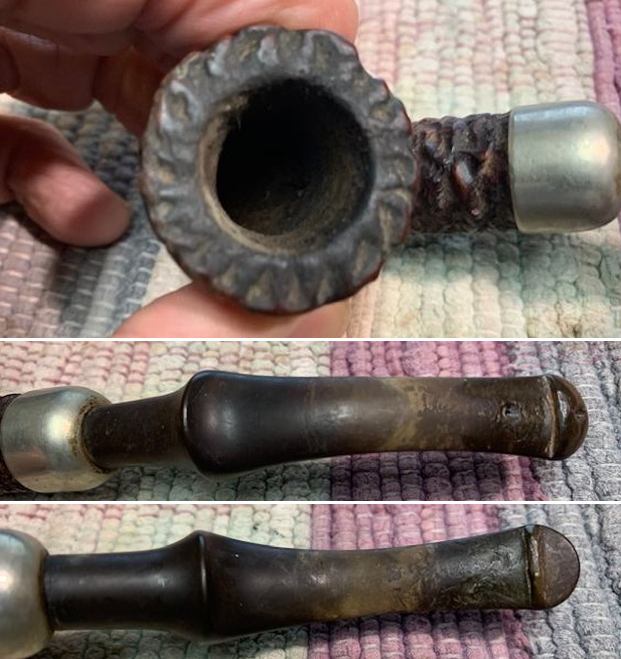
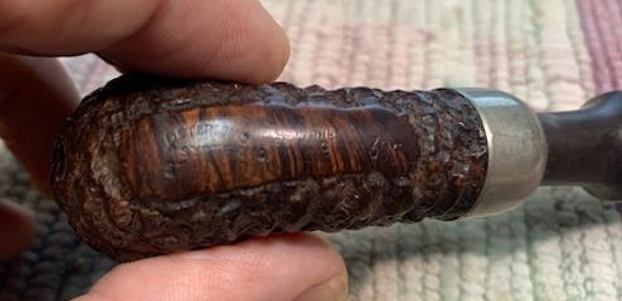
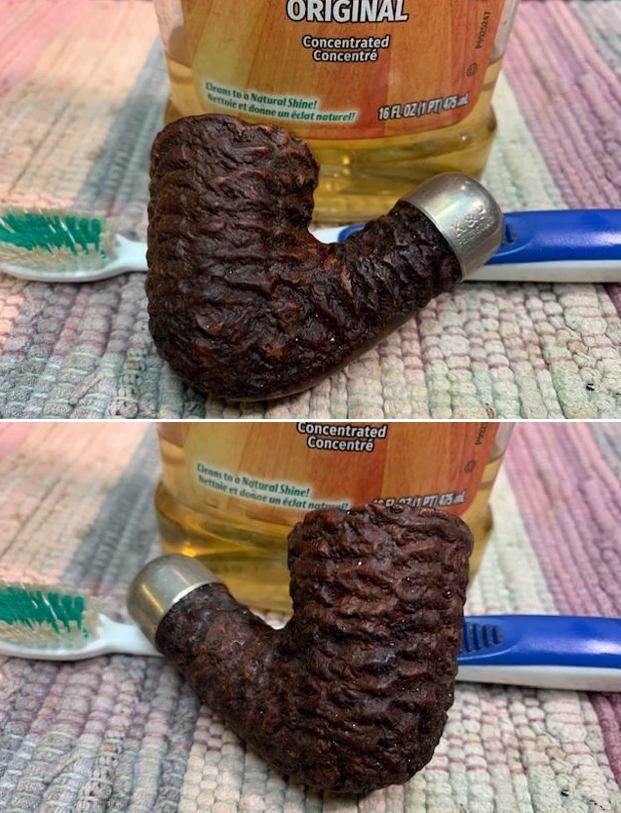
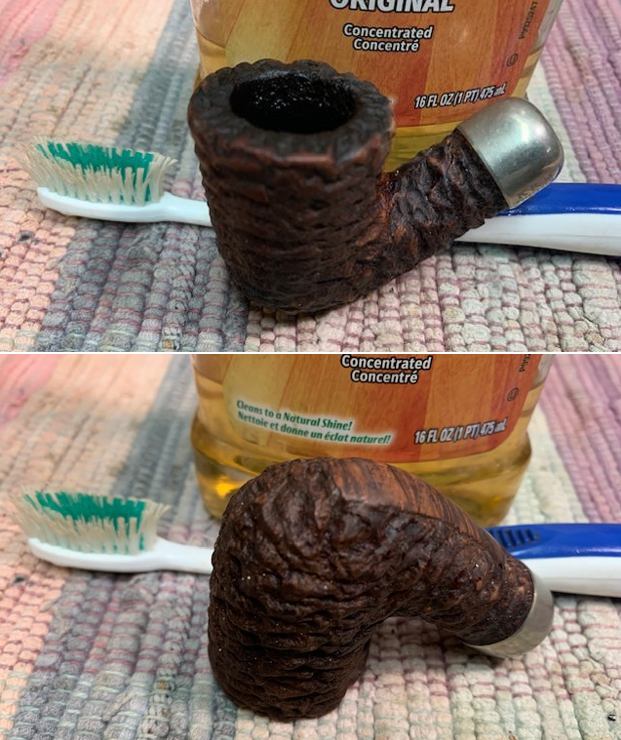
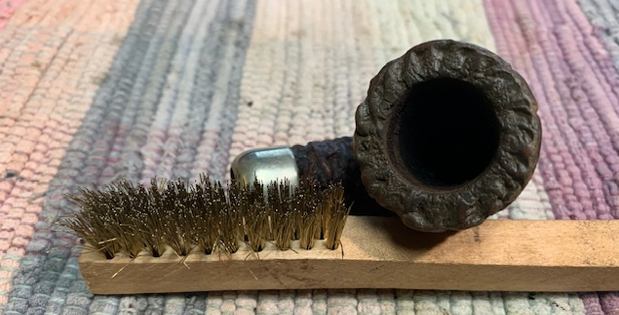
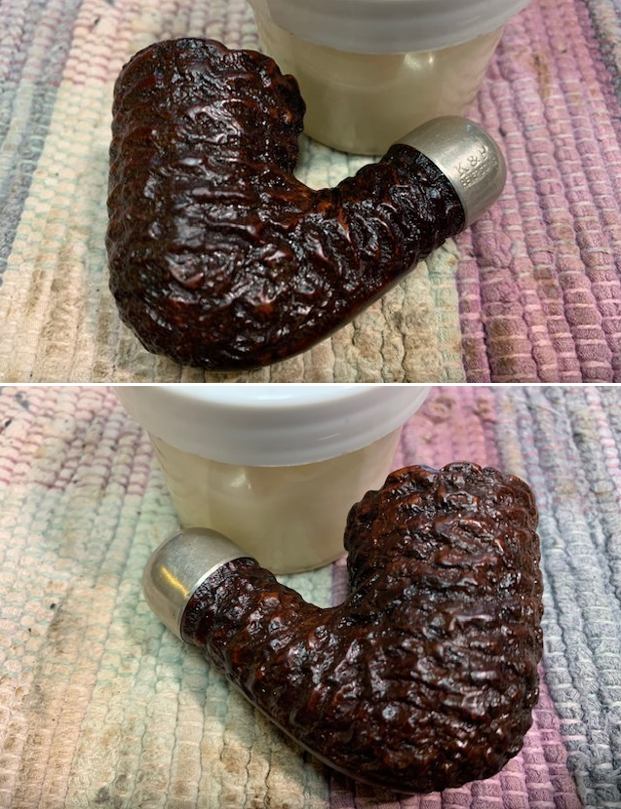
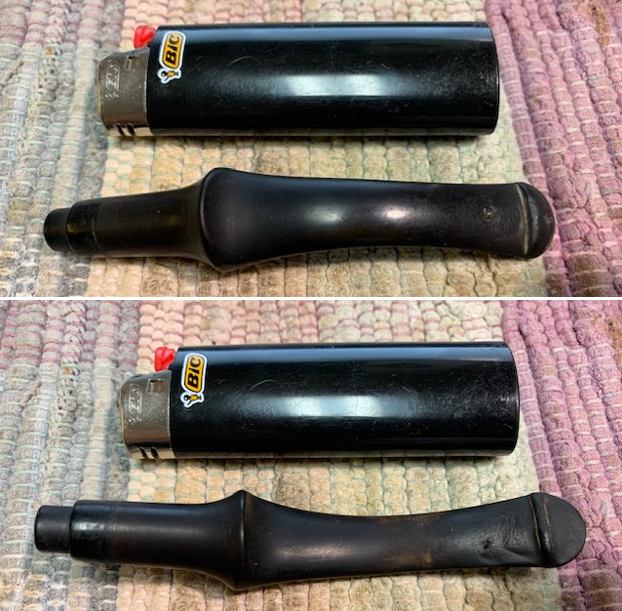
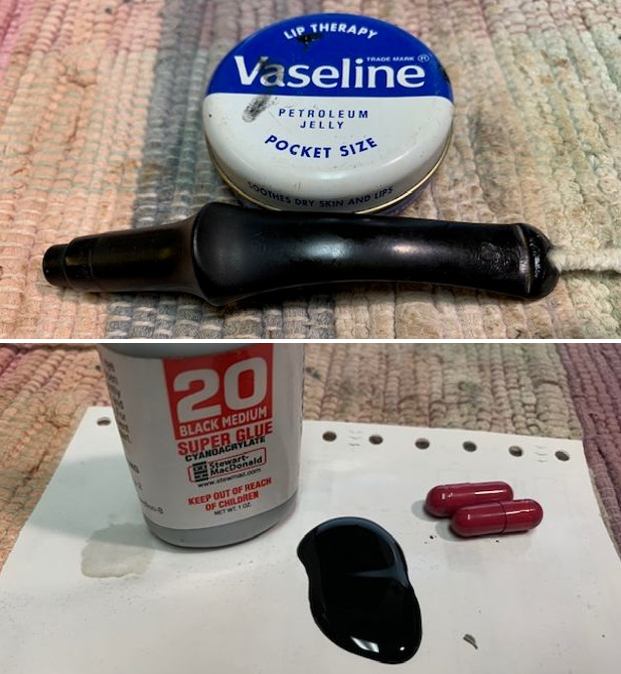
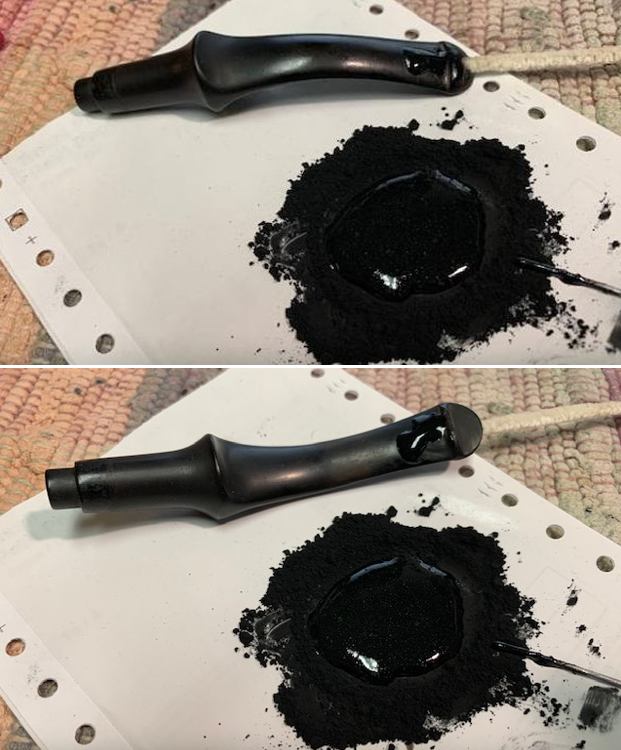
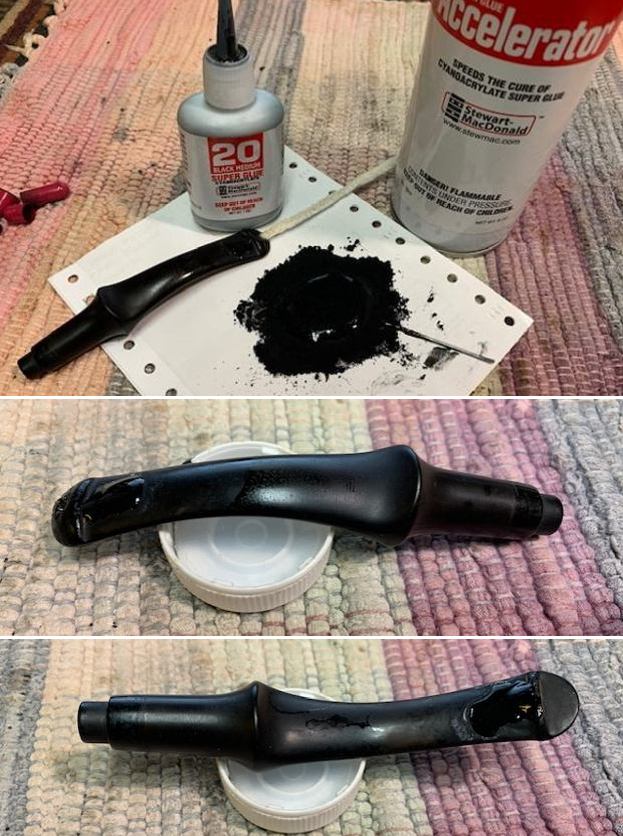
The next pipe, the eighth and final one is a bent Peterson’s System Standard 305 Rusticated Bent Dublin. The pipe was clean on the inside but dusty on the sandblast finish. The classic Peterson rustication was very well done and quite rugged. The rim top and edges looked very good. The pipe was stamped on the shank and read Peterson’s [over] System [over] Standard. That is followed by the stamping Made in the Republic of Ireland in three lines. Finally at the end of the smooth panel is the shape number 305. The nickel ferrule was stamped on the left side and read K&P [over] Petersons. The vulcanite P-lip stem had a small hole in the topside ahead of the button that looks like a bite through. There is a lot of tooth chatter and marks on both sides ahead of the button. There was no P stamp on the side or top of the stem. I took some photos of the pipe before I started my clean up work on it. I took photos of the bowl and rim top as well as the stem to show the condition of the pipe. The rim top was dusty and had some lava build up in the rustication. There was a thin cake in the bowl as well. The finish on the bowl had paint flecks and dust in the crevices of the rustication. The stem was oxidized, calcified and had a lot of tooth chatter and some deep tooth marks on both the top and bottom. There was a small bite through on the topside ahead of the button. This was obviously a great smoking pipe and someone’s favourite!I took a photo of the stamping on the underside of the heel of the bowl. It was clear and readable as noted above. I removed the stem from the shank and took a photo of the pipe. The great rustication and charm of the pipe are visible even with the grime and dust. Now it was time to work on the pipe. I started my work on the pipe by cleaning up the reaming. I removed the remaining cake with a Savinelli Fitsall Pipe Knife and took it back to bare briar so that I could examine the bowl for heat damage. It looked good.I cleaned the mortise, sump and shank along with the airway in both the shank and the stem with 99% isopropyl alcohol, pipe cleaners and cotton swabs until the interior of the pipe was very clean. I dropped the stem in a bath of Briarville’s Stem Deoxidizer to soak while I worked on the bowl.I scrubbed the exterior of the pipe with undiluted Murphy’s Oil Soap. I scrubbed the rustication and paid serious attention to the lava on the rim top. I used a tooth brush and the soap and rinsed it off with running water. I dried it off with a cotton towel. There were still some small flecks of white paint on the bowl sides. I used a brass bristle brush to work on the white paint flecks in the rustication and to clean up the remaining debris on the rim top. It works well and leaves the surface clean.With the surface clean I was ready for the next step in the process. I rubbed the bowl and shank down with Before & After Restoration Balm. I worked it into the surface of the bowl sides and shank with my fingertips and a horsehair shoe brush to clean, enliven and protect the briar. I let the balm sit for ten minutes then buffed the bowl with a cotton cloth to raise the shine. I polished the nickel ferrule with micromesh sanding pads – using 3200-12000 grit pads and wiping it down after each pads with a damp cotton pad. The nickel took on a rich shine and looked really good with the rusticated bowl. I set the bowl aside and turned my attention to the stem. I removed it from the Briarville Pipe Stem Deoxidizer and cleaned it off with a paper towel. It looked much better.I scrubbed the stem surface with Soft Scrub to make sure I had removed as much of the remaining oxidation as I could before moving on to the repair that needed to be done on the bite through on the top of the stem.Once clean, I “painted” the tooth marks and chatter on the stem surface with the flame of a lighter to try and raise the dents. It worked relatively well and lifted the majority of them so that they were either gone or smaller. With that finished I greased a pipe cleaner with Vaseline and inserted it in the stem until it was below the bite through. I mixed a paste of black super glue and charcoal powder to make the repair. I pressed the paste into the hole on the stem top. I filled the remaining tooth chatter and marks in with the mixture and set it aside to cure. I sprayed it with an accelerator then removed the pipe cleaner. I did not want it to dry and stick in the airway. Once the repairs cured I used a small file to flatten out the repairs and reshape the P-lip style button edges. I used 220 grit sandpaper to smooth out the repairs on both sides of the stem. I started to polish it with 400 grit wet dry sandpaper. The stem is looking much better. I polished the stem with micromesh sanding pads – 1500-12000 grit pads. I wiped it down with Obsidian Oil after each sanding pad. I used Before & After Pipe Polish – both Fine and Extra Fine to further polish the stem. I gave it a final rubdown with Obsidian Oil and set it aside to cure. I put the parts back together. This Republic Era Peterson’s System Standard Rusticated 305 Bent Dublin  is a great looking pipe with a great rustication on the bowl. The rich, dark brown stained  sandblast bowl and shank look surprisingly nice. The combination works well with the polished nickel ferrule and the polished black, vulcanite P-lip stem. I carefully buffed the pipe with Blue Diamond on the buffing wheel using a light touch on the briar. I gave the bowl multiple coats of Conservator’s Wax and the stem multiple coats of carnauba wax on the buffing wheel and followed that by buffing the entire pipe with a clean buffing pad. I hand buffed the pipe with a microfiber cloth to deepen the shine. The finished Peterson’s System Standard 305 is light and sits nicely in the hand and feels great. Give the finished pipe a look in the photos below. The dimensions of the pipe are Length: 5 ¾ inches, Height: 2 inches, Outside diameter of the bowl: 1 ¼ inches, Chamber diameter: ¾ of an inch. The weight of the pipe is 37 grams /1.31 ounces. I will be putting it on the rebornpipes store shortly in the Irish Pipemakers Section. If you are interested in adding this pipe to your collection send me a message or an email. Thanks for reading this blog and my reflections on the pipe while I worked on it. There are many more to come!

Restoring a Peterson’s Republic Era System Standard 302 Bent Apple


Blog by Steve Laug

The next pipe on the work table came to us from an online auction from Romney, West Virginia, USA. It is a smooth Peterson’s System Apple shaped pipe with a saddle vulcanite stem. The pipe is stamped on the left side of the shank and reads Peterson’s [over] System [over] Standard. On the right side it is stamped Made in the Republic of Ireland and underneath that is the shape number 302. The nickel ferrule is stamped K & P [over] Peterson. The nickel ferrule was also heavily discoloured by oils and tars. The finish had a lot of grime ground into it and it was very dirty. There was also some serious road rash on the front of the bowl and rim. The bowl was heavily caked and there was a thick lava coat on the flat rim top and the inner edge of the rim. It was hard to tell what condition of the inner edge was because of the lava coat. Only cleaning would make that clear. The stem was oxidized, calcified and had tooth chatter and marks on the top and underside near the P-lip style button. The pipe showed promise but it was very dirty. Jeff took photos of the pipe before he started his cleanup work.  He took photos of the rim top and bowl to give a clear picture of the thickness of the cake and the condition of the rim top and edges. He also took photos of the top and underside of the stem to show the oxidation, calcification and chatter and tooth marks. Jeff took a photo of the side and heel of the bowl to give a picture of what the briar around the pipe looked like.     He took photos of the stamping on the shank and the nickel ferrule. It reads as noted above and is clear and readable.   I am including the information from Pipedia’s article on Peterson pipes. It is a great read in terms of the history of the brand (https://pipedia.org/wiki/Peterson). I have included a bit of the pertinent history here.

1950 – 1989 The Republic Era – From 1950 to the present time, the stamp for this era is “Made in the Republic of Ireland” in a block format generally in three lines but two lines have been used with or without Republic being abbreviated.

I knew that I was dealing with a Republic Era pipe made between 1950-1989. It was a smooth Peterson’s System Standard 302 Bent Apple with nice grain. The finish was stained with a combination of brown stains. Now it was time to work on the pipe.

Jeff had cleaned up the pipe with his usual penchant for thoroughness. He reamed the pipe with a PipNet Pipe Reamer and cleaned up the remnants with a Savinelli Fitsall Pipe Knife.  He scrubbed the bowl with undiluted Murphy’s Oil Soap with a tooth brush. He rinsed it under running warm water to remove the soap and grime. He cleaned out the inside of the shank and the airway in the stem with alcohol, cotton swabs and pipe cleaners. He soaked the stem in Before & After Deoxidizer and rinsed it off with warm water. I took photos of the pipe once I received it.    The rim top and inner edge of the rim looked very good with a bit of damage on the inner edge and on the rim surface. There were some scratches and nicks on the front outer edge of the bowl. The stem surface looked very good with some light tooth marks and chatter on both sides near the button. I took photos of the stamping on the shank. It is clear and readable as noted above. I removed the stem and took a photo of the pipe to give a sense of the whole. The stem is a typical Peterson’s System stem.I started my work on the pipe by working over the rim top and the inner edge of the bowl to clean up the damage. Once finished the rim top and edge looked much better.  I repaired the deep gouges on the front side of the bowl by filling them in with clear super glue. Once it cured I sanded it smooth to blend it into the surrounding briar. I restained the front of the bowl and the rim top with a combination of Cherry and Maple stain pens to blend in the colour of those areas to the rest of the bowl.I polished the briar with micomesh sanding pads – wet sanding with 1500-12000 grit pads. I wiped the bowl down after each pad with a damp cloth. I rubbed the bowl down with Before & After Restoration Balm. I worked it into the surface of the bowl sides and shank with my fingertips. The product works to clean, enliven and protect the briar. I let the balm sit for a little while and then buffed with a cotton cloth to raise the shine. I polished the vulcanite stem with micromesh sanding pads – 1500-12000 grit pads. I wiped it down with a damp cloth after each sanding pad. I used Before & After Pipe Polish – both Fine and Extra Fine to further polish the stem.     This Peterson’s System Standard 302 Bent Apple with a vulcanite stem is a great looking pipe now that it has been restored. The beautiful grain that shines through the polished finish is stunning. I put the stem back on the bowl and carefully buffed the pipe with Blue Diamond on the buffing wheel. I gave the bowl and the stem multiple coats of carnauba wax on the buffing wheel and followed that by buffing the entire pipe with a clean buffing pad. I hand buffed the pipe with a microfiber cloth to deepen the shine. The grain just popped with the wax and the buffing. It is a beauty! The finished Peterson’s System Standard Apple 302 fits nicely in the hand and feels great. Give the finished pipe a look in the photos below. The dimensions of the pipe are Length: 5 ½ inches, Height: 1 ¾ inches, Outside diameter of the bowl: 1 ½ inches, Chamber diameter: ¾ of an inch. The weight of the pipe is 67gr/2.36oz. If you are interested in adding this pipe to your collection send me a message or an email. Thanks for reading this blog and my reflections on the pipe while I worked on it. There are many more to come!

Restoring a Peterson’s Republic Era System Standard 312 Bent Billiard


Blog by Steve Laug

The next pipe on the work table came to us from an online auction from Front Royal, Virginia, USA. It is a smooth Peterson’s System pipe with a saddle vulcanite stem. The pipe is stamped on the left side of the shank and reads Peterson’s [over] System [over] Standard. On the right side it is stamped Made in the Republic of Ireland and underneath that is the shape number 312. The nickel ferrule is stamped K & P Peterson with three hallmarks underneath. The finish had a lot of grime ground into it and it was very dirty. The bowl was moderately caked and there was a light lava coat on the flat rim top and the inner edge of the rim. The inner edge had some nicks and damage and the rim top had a lot of scratches that looked like the rim top had been scraped with a knife. The stem was oxidized, calcified and had tooth chatter and marks on the top and underside near the P-lip style button. It also had a bite through on the underside of the stem just ahead of the button. The pipe showed promise but it was very dirty. Jeff took photos of the pipe before he started his cleanup work.   He took photos of the rim top and bowl to give a clear picture of the thickness of the cake and the condition of the rim top and edges. He also took photos of the top and underside of the stem to show the oxidation, calcification and chatter and tooth marks. The photo of the underside of the stem you can see the bite through that is present.  Jeff took a photo of the side and heel of the bowl to give a picture of what the briar around the pipe looked like.     He took photos of the stamping on the shank and the nickel ferrule. It reads as noted above and is clear and readable.   I am including the information from Pipedia’s article on Peterson pipes. It is a great read in terms of the history of the brand (https://pipedia.org/wiki/Peterson). I have included a bit of the pertinent history here.

1950 – 1989 The Republic Era – From 1950 to the present time, the stamp for this era is “Made in the Republic of Ireland” in a block format generally in three lines but two lines have been used with or without Republic being abbreviated.

I knew that I was dealing with a Republic Era pipe made between 1950-1989. It was a smooth Peterson’s System Standard 312 Billiard with nice grain. The finish was stained with a combination of brown stains. Now it was time to work on the pipe.

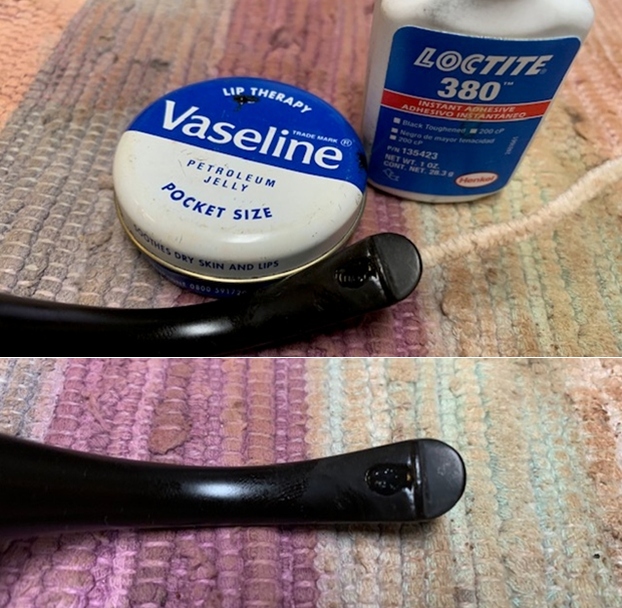
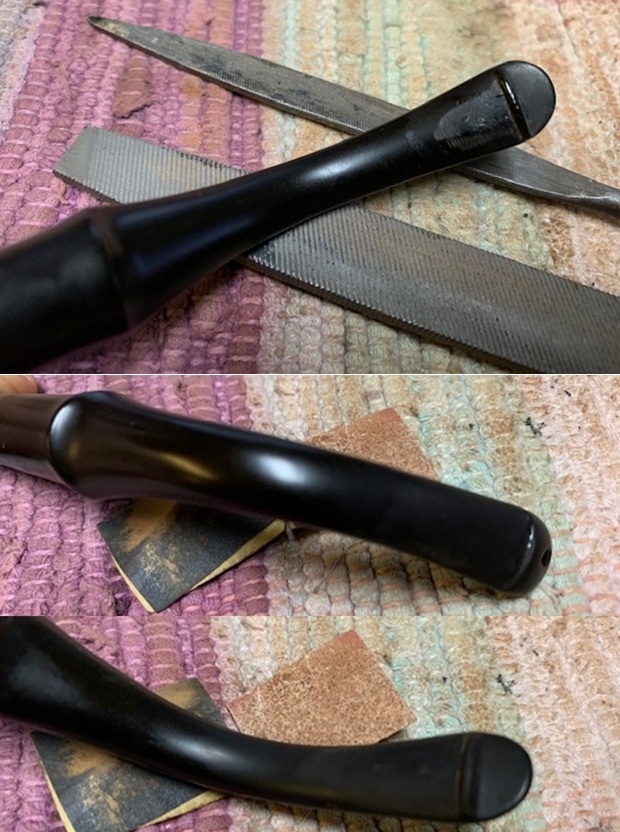
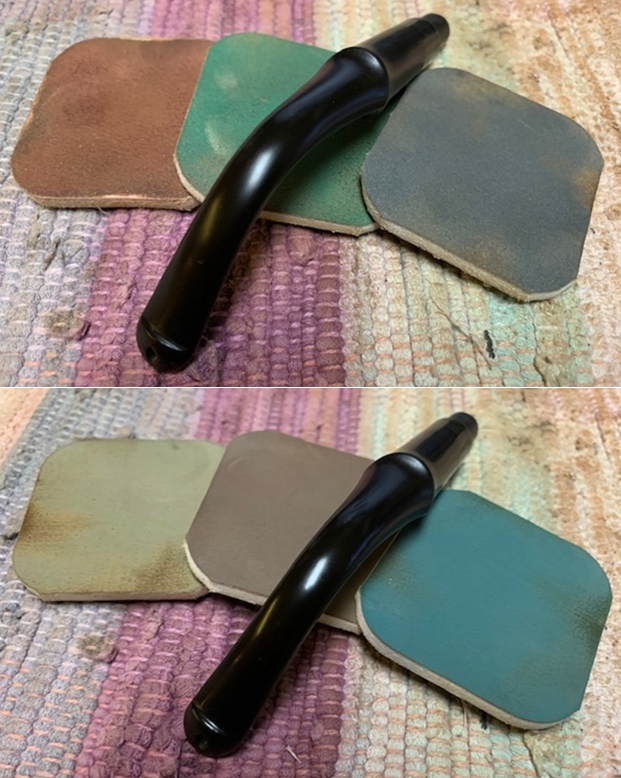
Jeff had cleaned up the pipe with his usual penchant for thoroughness. He reamed the pipe with a PipNet Pipe Reamer and cleaned up the remnants with a Savinelli Fitsall Pipe Knife.  He scrubbed the bowl with undiluted Murphy’s Oil Soap with a tooth brush. He rinsed it under running warm water to remove the soap and grime. He cleaned out the inside of the shank and the airway in the stem with alcohol, cotton swabs and pipe cleaners. He soaked the stem in Before & After Deoxidizer and rinsed it off with warm water. I took photos of the pipe once I received it. The rim top and inner edge of the rim looked very good with a bit of damage on the inner edge and on the rim surface. The stem surface looked very good with some tooth marks and chatter on both sides near the button.  The bite through on the underside of the stem is not huge but it is very present.  I took a photo of the stamping on the shank. It is clear and readable as noted above.    I removed the stem and took a photo of the pipe to give a sense of the whole. The stem is a typical Peterson’s System stem.I started my work on the pipe by working over the rim top and the inner edge of the bowl to clean up the damage. Once finished the rim top and edge looked much better.  I repaired the deep gouges on the left side of the bowl by filling them in with clear super glue. Once it cured I sanded it smooth to blend it into the surrounding briar.I polished the briar with micomesh sanding pads – wet sanding with 1500-12000 grit pads. I wiped the bowl down after each pad with a damp cloth. I rubbed the bowl down with Before & After Restoration Balm. I worked it into the surface of the bowl sides and shank with my fingertips. The product works to clean, enliven and protect the briar. I let the balm sit for a little while and then buffed with a cotton cloth to raise the shine. I set the bowl aside and turned to work on the stem. I coated a pipe cleaner with Vaseline and inserted it in the airway in the stem. I filled in the bite through with black Loctite 380 CA Glue. I set it aside to let the repair cure then smooth it out with a file and rasp. I smoothed out the file marks with 220 grit sandpaper and started polishing it with 400 grit wet dry sandpaper.   I polished the vulcanite stem with micromesh sanding pads – 1500-12000 grit pads. I wiped it down with a damp cloth after each sanding pad. I used Before & After Pipe Polish – both Fine and Extra Fine to further polish the stem.    This Peterson’s System Standard 312 Bent Billiard with a vulcanite stem is a great looking pipe now that it has been restored. The beautiful grain that shines through the polished finish is stunning. As the pipe is smoked the patina should develop and look even better. I put the stem back on the bowl and carefully buffed the pipe with Blue Diamond on the buffing wheel. I gave the bowl and the stem multiple coats of carnauba wax on the buffing wheel and followed that by buffing the entire pipe with a clean buffing pad. I hand buffed the pipe with a microfiber cloth to deepen the shine. The finished Peterson’s System Standard 312 fits nicely in the hand and feels great. Give the finished pipe a look in the photos below. The dimensions of the pipe are Length: 6 inches, Height: 2 inches, Outside diameter of the bowl: 1 ¼ inches, Chamber diameter: ¾ of an inch. The weight of the pipe is 50gr/1.76oz. If you are interested in adding this pipe to your collection send me a message or an email. Thanks for reading this blog and my reflections on the pipe while I worked on it. There are many more to come!

The Second of Two Republic Era Peterson’s 307 System Standards from Bob Kerr’s Estate


Blog by Steve Laug

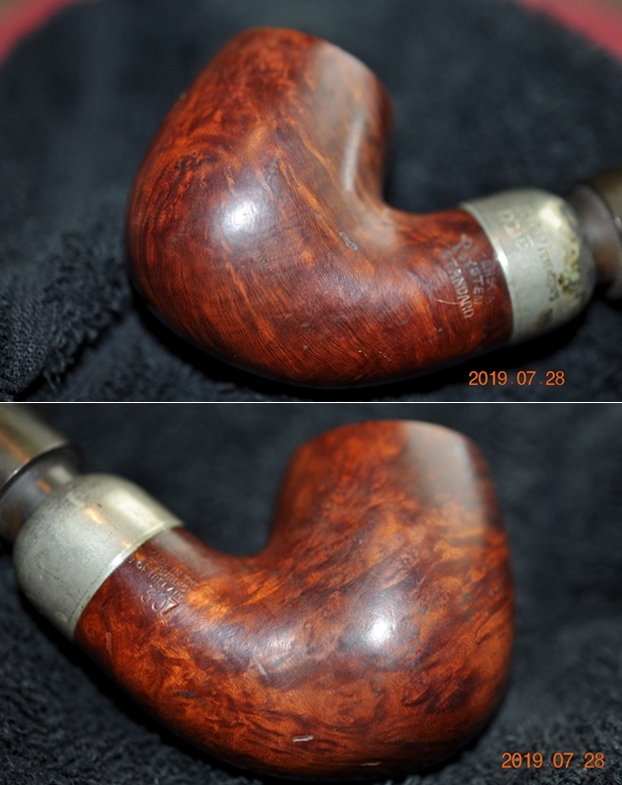
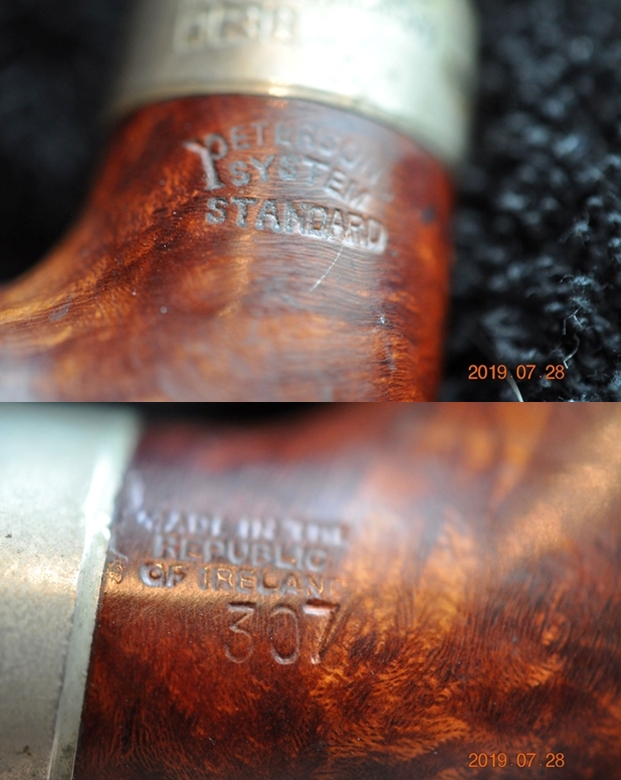
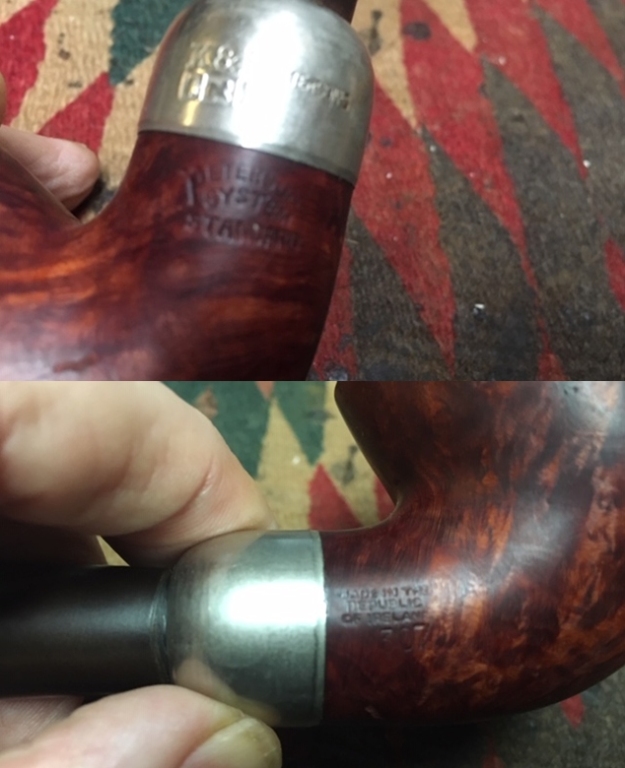
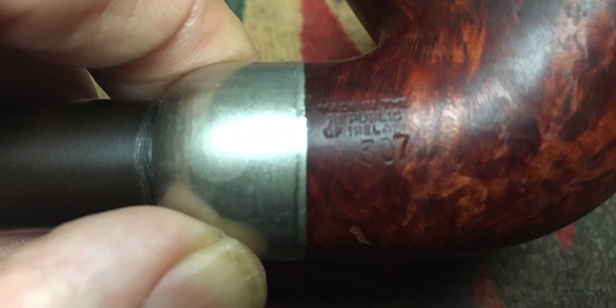
I am working on the last Peterson’s System Standard pipe from Bob Kerr’s collection of 9 Peterson’s System pipes. I have restored quite a few of his Petersons already so this is kind of subset of the Peterson Collection. You can read about those restorations in previous blogs. To be honest with you I have been dreading working on these 9 because when they arrived they were absolutely filthy and the reservoir in the shank was filled with tars and oils. It looked to me that they had never been cleaned. Jeff cleaned them for me and because of that I have been enjoying working on these Peterson’s particularly because Jeff has done such a thorough cleanup of them before I receive them. When I took it out of the box of the pipes that Jeff had cleaned up and sent back to me, I could see that it was stamped Peterson’s System Standard vertically on the left side of the shank next to the band. The right side of the shank was stamped Made in the Republic of Ireland over the shape number 307. It has some stunning grain around the bowl and shank like the first one that I worked on that can be seen under the thick grime.

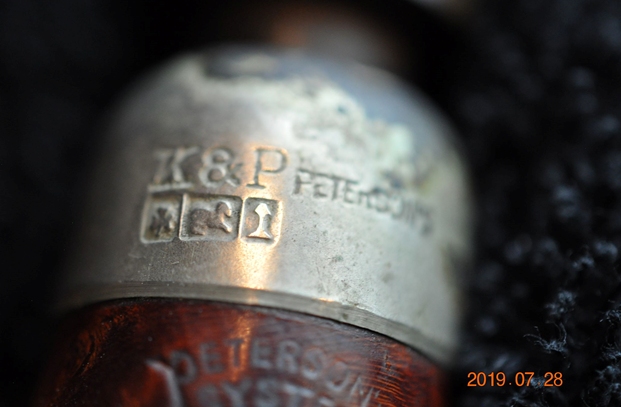
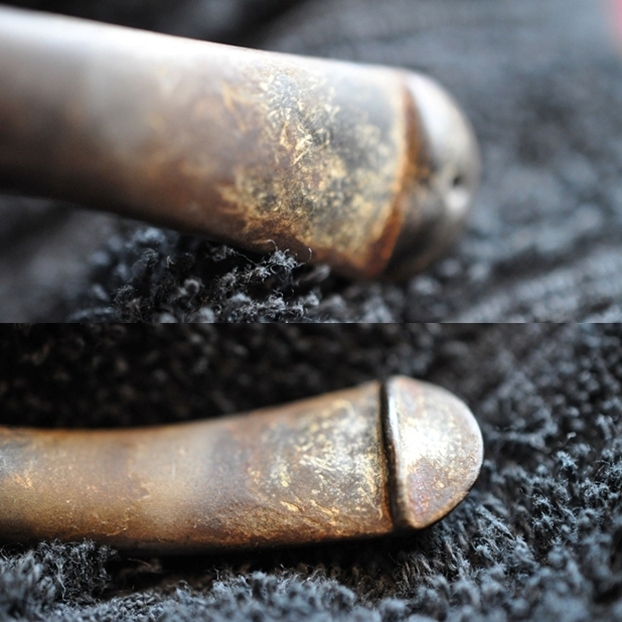
There was a thick cake in the bowl with remnants of tobacco stuck on the walls. There was a lava overflow on the rim. The top and edges of the rim appear to have some damage all the way around the bowl. I think that there was a beautiful pipe underneath all of the buildup of years of use. The nickel ferrule on the shank end was oxidized and is stamped on the top and left side K&P Petersons. It is not dented or damaged. The stem was oxidized and calcified toward the end with some tooth chatter. There were also some tooth marks on both sides of the stem ahead of the “P-lip’. Jeff took photos of the pipe before he started his cleanup work on it. Jeff took photos of the bowl and rim top to show the thick, hard cake in the bowl with remnants of tobacco stuck on the walls of the bowl. There was a lava build up on the top of the rim and the edges of the bowl. The rim top looked pretty good but it was hard to know for sure but it appeared that there was damage all around the inner edge. The outer edges of the rim had some damage on the back side where it appeared to have been hit against a hard surface and left behind a rough edge.    Jeff took photos of the sides and heel of the bowl to show the condition of the finish. You can see the swirling grain around the sides of the bowl and shank. Even under the dirt and debris of the years it looked very good. Jeff took photos of the stamping on the left side of the bowl and shank. The vertical stamping on the left side was readable as you can see from the photos. It read Peterson’s System Standard. He did not take a photo of the stamp on the right side of the shank but it read Made in the Republic of Ireland with the shape number 307 underneath. The nickel ferrule on the shank end is stamped on the top and left side K&P Peterson’s. Jeff took photos of the top and underside of the stem showing the tooth chatter, scratching and oxidation on the stem surface and wear on the edges of the button. There were two deep dents on the top of the stem just ahead of the P-lip. I have included the information on the shape number on this pipe that I picked up on researching the previous pipes. This is the second of two Peterson’s System Standard pipes in Bob’s collection marked with the 307 shape number. I have included a page from a Petersons Catalogue that I have on rebornpipes (https://rebornpipes.com/tag/peterson-hallmark-chart/). I have put a red box around the 307 shown in the catalogue page shown below. That should give a clear picture of the size and shape of the pipe.I am also including the information from Pipedia’s article on Peterson pipes. It is a great read in terms of the history of the brand (https://pipedia.org/wiki/Peterson). I have included a bit of the pertinent history here.

1950 – 1989 The Republic Era  – From 1950 to the present time, the stamp for this era is “Made in the Republic of Ireland” in a block format generally in three lines but two lines have been used with or without Republic being abbreviated.

During the 1950’s and 60’s the Kapp & Peterson company was still in the ownership of the Kapp family. However 1964 saw the retiral of the company Managing Director Frederick Henry(Harry) Kapp.

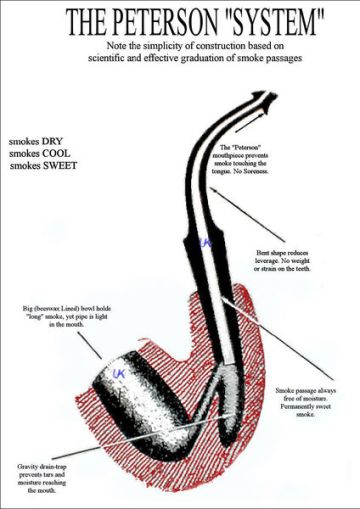
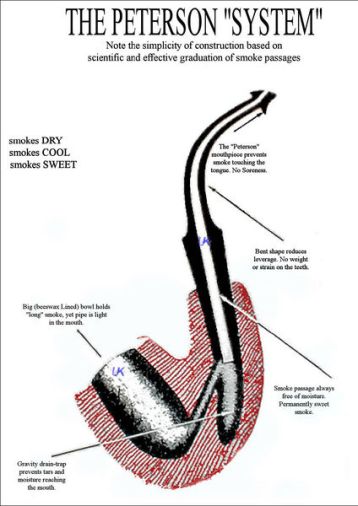
Pipedia also included a section of information on the System pipes including a diagram of the sytems look (https://pipedia.org/wiki/Peterson#Republic_Era_Pipes). I quote a section of the article in part and include a link to another article on Pipedia on the System pipe.

The Peterson System pipes are the standard bearers of the Peterson pipe family, famous for the excellent smoking pleasure they provide. Often imitated but never equaled, the Peterson System smokes dry, cool and sweet, thanks to the scientific effectiveness of the original design. The heart of the System is the unique graduated bore in the mouthpiece. This makes the suction applied by the smoker 15 times weaker by the time it reaches the tobacco chamber. The result is that all the moisture flows into the reservoir and, thus cannot reach the smoker’s mouth. The Peterson Lip further enhances the effectiveness of the graduated bore by directing the flow of smoke upwards and away from the tongue. This achieves a uniquely even distribution of smoke and virtually eliminates any chance of tonguebite or bitterness. Furthermore, the shape is contoured so that the tongue rests comfortably in the depression under the opening. Each “PLip” mouthpiece is made from Vulcanite. For the Peterson System pipes to work properly, the stem/tenon has to have an extension, the tip of which will pass by the draft hole from the bowl and into the sump. Upon the smoker drawing in smoke, this extension then directs the smoke down and around the sump to dispense a lot of the moisture before the smoke enters the extension and stem. On the System Standards and other less expensive systems, this extension with be made of Vulcanite turned integrally with the stem. On the more expensive System pipes this extension will be made of metal which screws into the Vulcanite stem. This extension on the earlier pipes will be of brass and the newer pipes will be of aluminium. Most smokers not knowing this function of the metal extension, assumes that it is a condenser/stinger and will remove it as they do with the metal condensers of Kaywoodie, etc. Should you have a System pipe with this metal extension, do not remove it for it will make the System function properly and give you a dryer smoke (https://pipedia.org/wiki/A_closer_look_at_the_famous_Peterson_Standard_System_Pipe).

With that information in hand I knew what I was dealing with in terms of the stamping and the age of this pipe. I knew from the information that the pipe was made during the Republic Era between 1950 and 1989. Most of Bob’s pipes were purchased in the 60s so my guess is that this is also a 60’s era pipe. Now it was time to work on the pipe.

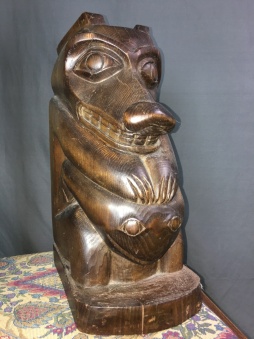
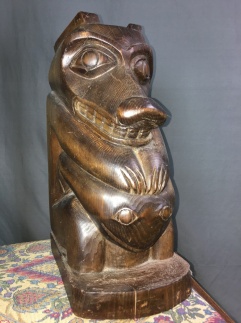
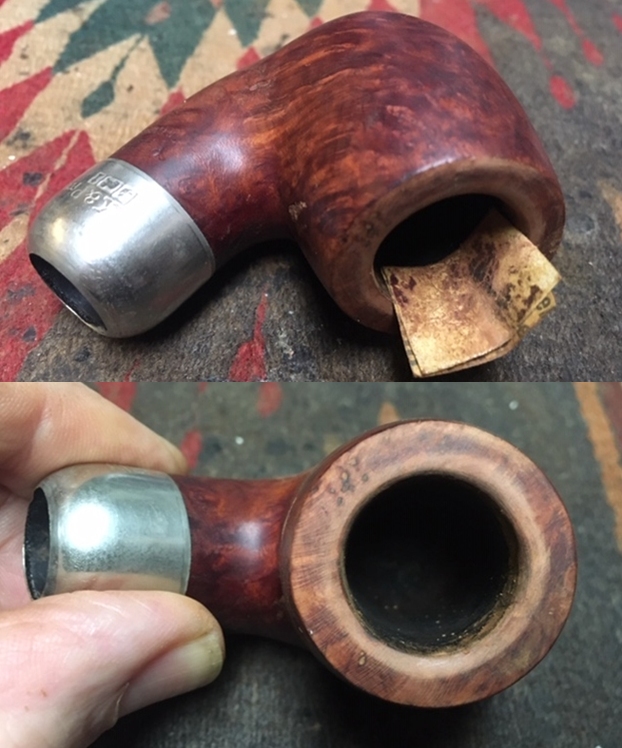
I am really happy to have Jeff’s help on cleaning these Peterson’s System Standard pipes as they are a real pain to get clean. He cleaned this filthy pipe with his usual penchant for thoroughness that I really appreciate. This one was a real mess and I did not know what to expect when I unwrapped it from his box. He reamed it with a PipNet pipe reamer and cleaned up the reaming with a Savinelli Fitsall Pipe Knife. He scrubbed out the internals with alcohol, pipe cleaners and cotton swabs until the pipe was clean. He scrubbed the exterior of the bowl with Murphy’s Oil Soap and a tooth brush to remove the grime and grit on the briar and the lava on the rim top. The finish looks very good with great looking grain around the bowl and shank. Jeff soaked the stem in Before & After Deoxidizer to remove the oxidation on the rubber. When the pipe arrived here in Vancouver for the second stop of its restoration tour I was amazed it looked so good.    I took some close up photos of the rim top and also of the stem surface. I wanted to show what an amazing job Jeff did in the cleanup of the rim top. The rim top was darkened with nicks and notches around the top and inner edge. The inner edge was very rough – but not as bad as the other System pipes in the estate. I also took close up photos of the stem to show the tooth marks and chatter on the stem surface. The majority of the marks were on the underside.    One of the things I appreciate about Jeff’s cleanup is that he works to protect and preserve the nomenclature on the shank of the pipes that he works on. The stamping on this one was very faint to start with so I was worried that it would disappear altogether with the cleanup. He was not only able to preserve it but it is clearer than shown in the earlier photos. I took some photos to show the clarity of the stamping. I have noticed that many restorers are not careful to protect the stamping in their cleaning process and often by the end of the restoration the nomenclature is almost destroyed. I would like to encourage all of us to be careful in our work to preserve this as it is a critical piece of pipe restoration!Since this is another pipe Bob’s estate I am sure that some of you have read at least some of the other restoration work that has been done on the previous pipes. You have also read what I have included about Bob Kerr, the pipeman who held these pipes in trust before I came to work on them (see photo to the left). Also, if you have followed the blog for long you will already know that I like to include background information on the pipeman whose pipes I am restoring. For me, when I am working on an estate I really like to have a sense of the person who held the pipes in trust before I worked on them. It gives me another dimension of the restoration work. I asked Brian if he or his wife would like to write a brief biographical tribute to her father, Bob. His daughter worked on it and I received the following short write up on him and some pictures to go along with the words including one of Bob’s carvings. Once again I thank you Brian and tell your wife thank you as well.

I am delighted to pass on these beloved pipes of my father’s. I hope each user gets many hours of contemplative pleasure as he did. I remember the aroma of tobacco in the rec room, as he put up his feet on his lazy boy. He’d be first at the paper then, no one could touch it before him. Maybe there would be a movie on with an actor smoking a pipe. He would have very definite opinions on whether the performer was a ‘real’ smoker or not, a distinction which I could never see but it would be very clear to him. He worked by day as a sales manager of a paper products company, a job he hated. What he longed for was the life of an artist, so on the weekends and sometimes mid-week evenings he would journey to his workshop and come out with wood sculptures, all of which he declared as crap but every one of them treasured by my sister and myself. Enjoy the pipes, and maybe a little of his creative spirit will enter you!

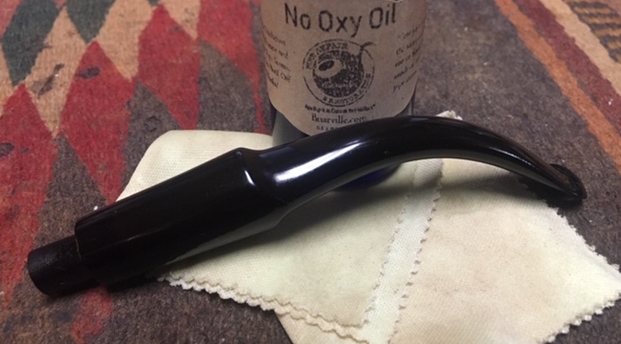
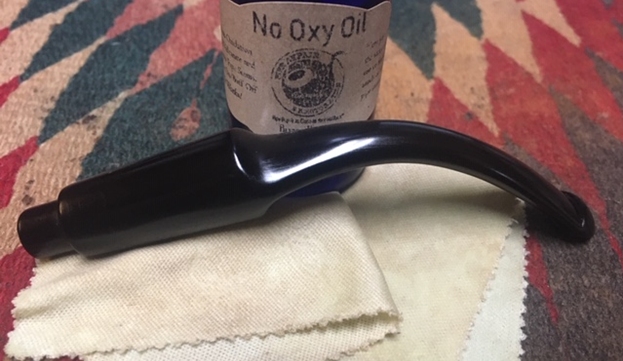
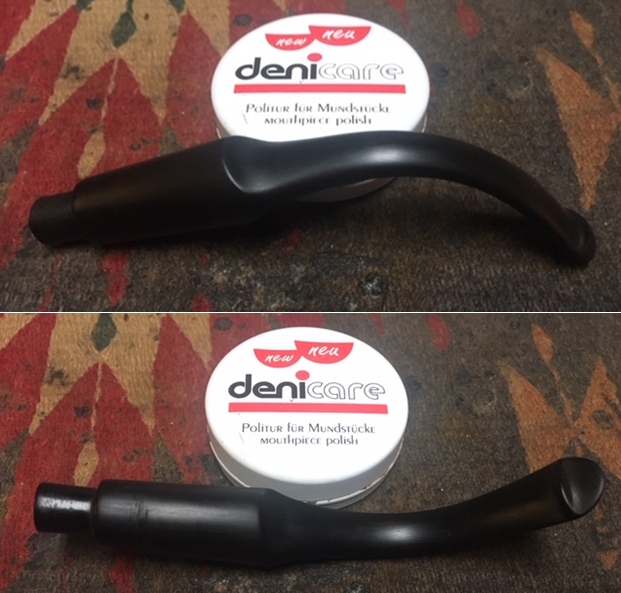
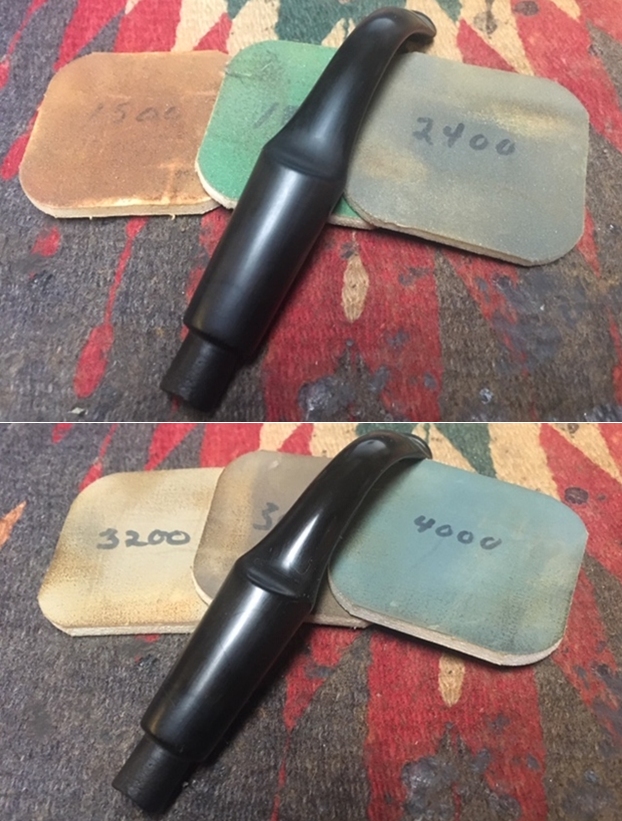
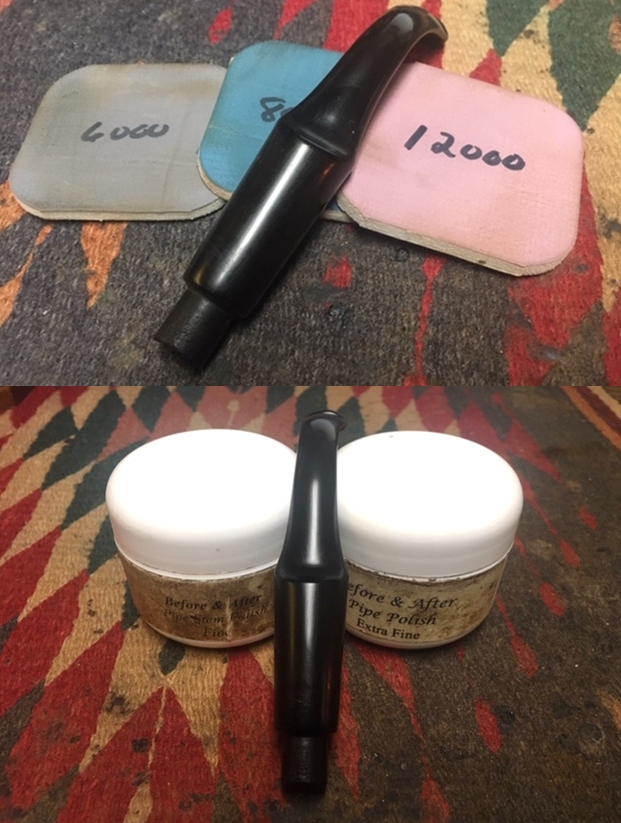
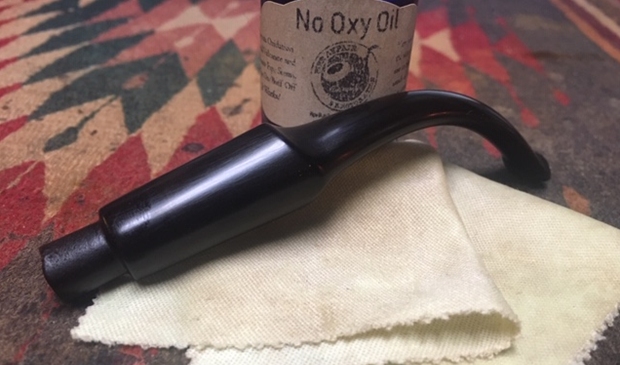
Now with all of the background on the line and the background on Bob Kerr it was time to get on with the restoration of this next mixed grain Peterson’s System Standard 307 Bent Billiard. I am really coming to appreciate the hard cleanup work that Jeff did on these pipes. They were a real mess when I sent them to Jeff and I have to tell you it was great that I did not need to clean this pipe. I decided to start the process by dealing with the damage to the rim top and edges of the bowl. I topped it on a topping board with 220 grit sandpaper. I worked on the inner edge and gave it a very light bevel so that it took care of the damage on the inner edge. The photos show the progress.   There were two deep chips on the right side of the bowl. I wiped the chip out with alcohol on a cotton swab and then filled it in with clear Krazy Glue. I let it cure and then sanded the repair smooth with 220 grit sandpaper to blend it into the rest of the surrounding area.I restained the rim top with a Walnut stain pen to match the colour of the bowl and shank. There was still a little darkening on the right side but the top looked really good. Once I polish it the blend will be perfect.I polished the briar with micromesh sanding pads – wet sanding it with 1500-12000 grit pads and I wiped the bowl down after each sanding pad with a damp cloth. The bowl began to take on a finished shine. I rubbed the bowl and rim down with Before & After Restoration Balm. I worked it into the surface of the briar with my fingertips to clean, enliven and protect it. I let the balm sit for a little while and then buffed with a cotton cloth to raise the shine. I really like watching the Balm do its magic and bring the briar alive. I sanded the stem with 220 grit sandpaper to remove the oxidation that remained in the vulcanite and also the tooth marks on the top and underside near the button. I polished it with 400 grit wet dry sandpaper. I rubbed the stem down with Denicare Mouthpiece Polish. I have a few tins of this laying around so I am trying to use them up. It does a pretty good job polishing the stem. I polished the stem with micromesh sanding pads – wet sanding with 1500-12000 grit pads. I wiped the stem down after each sanding pad with Obsidian Oil. I polished it with Before & After Pipe Stem Polish – both Fine and Extra Fine. Once I had finished the polishing I gave it a coat of a new product I am experimenting with from Briarville Pipe Repair. It is called “No Oxy Oil” and it is made to protect the stem from oxidizing. I set it aside to dry.   Once again at this point in the restoration process I am excited to be on the homestretch. This is the second of the two 307’s from Bob’s pipes so I look forward to the final look when it is put back together, polished and waxed. I put the bowl and stem back together. I polished the bowl and stem with Blue Diamond to polish out the scratches in the briar and the vulcanite. I gave the bowl and the stem multiple coats of carnauba wax. I buffed the pipe with a clean buffing pad to raise the shine. I hand buffed it with a microfiber cloth to deepen the shine. The pipe polished up pretty nicely. The grain is quite stunning and really pops with the wax and polish. The shiny black vulcanite stem is a beautiful contrast to the browns of the bowl and thick shank. This is the second of Bob’s Peterson’s System Standard 307 Bent Billiards and it was another fun pipe to work on thanks to Jeff’s cleanup work. The polished nickel Ferrule works as a contrast between the stem and the briar and binds it all together. It really is a quite stunning piece of briar whose shape follows the flow of the briar. The pipe is comfortable pipe to hold in the hand. The finished pipe is shown in the photos below. The dimensions of the pipe are Length: 6 ½ inches, Height: 2 inches, Outside diameter of the bowl: 1 3/8 inches, Chamber diameter: ¾ of an inch. This beautiful pipe will be going on the rebornpipes store if you would like to add it to your collection and carry on Bob’s legacy. If not, I have a lot more of Bob’s estate to work on of various brands. Perhaps one of those will catch your attention. Thanks for reading this blog and my reflections on the pipe while I worked on it. This is an interesting estate to bring back to life.

The First of Two Republic Era Peterson’s 307 System Standards from Bob Kerr’s Estate


Blog by Steve Laug

I am working on the last two Peterson’s System Standard pipes from Bob Kerr’s collection of 9 Peterson’s System pipes. I have restored quite a few of his Petersons already so this is kind of subset of the Peterson Collection. You can read about those restorations in previous blogs. To be honest with you I have been dreading working on these 9 because when they arrived they were absolutely filthy and the reservoir in the shank was filled with tars and oils. It looked to me that they had never been cleaned. Jeff cleaned them for me and because of that I have been enjoying working on these Peterson’s particularly because Jeff has done such a thorough cleanup of them before I receive them. When I took it out of the box of the pipes that Jeff had cleaned up and sent back to me, I could see that it was stamped Peterson’s System Standard vertically on the left side of the shank next to the band. The right side of the shank was stamped Made in the Republic of Ireland over the shape number 307. It has some stunning grain around the bowl and shank like the first one that I worked on that can be seen under the thick grime.

There was a thick cake in the bowl with remnants of tobacco stuck on the walls. There was a lava overflow on the rim. The top and edges of the rim appear to have some damage all the way around the bowl. I think that there was a beautiful pipe underneath all of the buildup of years of use. The nickel ferrule on the shank end was oxidized and is stamped on the top and left side K&P Peterson’s over three hallmarks. It is not dented or damaged. The stem was actually one from the Deluxe System Pipe so I swapped the two stems earlier in the restoration process once it arrived in Vancouver. Both stems were oxidized and calcified toward the end with some tooth chatter. There were also some tooth marks on both sides of the stem ahead of the “P-lip’. Jeff took photos of the pipe before he started his cleanup work on it. Jeff took photos of the bowl and rim top to show the thick, hard cake in the bowl with remnants of tobacco stuck on the walls of the bowl. There was a lava build up on the top of the rim and the edges of the bowl. The rim top looked pretty good but it was hard to know for sure but it appeared that there was damage all around the inner edge. The outer edges of the rim appeared to be in good condition.    Jeff took photos of the sides and heel of the bowl to show the condition of the finish. You can see the swirling grain around the sides of the bowl and shank. Even under the dirt and debris of the years it looked very good. Jeff took photos of the stamping on the left side of the bowl and shank. The vertical stamping on the left side was readable as you can see from the photos. It read Peterson’s System Standard. He did not take a photo of the stamp on the right side of the shank but it read Made in the Republic of Ireland with the shape number 307 underneath. The nickel ferrule on the shank end is stamped on the top and left side K&P Peterson’s over three hallmarks – a Shamrock, a shape that looks like a reclining lion and a tower. Typically these hallmarks are not like those in silver that help to date a pipe but are rather marks that make it clear that the pipe was made in Ireland. Jeff took photos of the top and underside of the stem showing the tooth chatter, scratching and oxidation on the stem surface and wear on the edges of the button. There were two deep dents on the top of the stem just ahead of the P-lip.   I have included the information on the shape number on this pipe that I picked up on researching the previous pipes. It is one of two Peterson’s System Standard pipes in Bob’s collection marked with the 307 shape number. I started my hunt for information by turning to a Peterson Catalogue that I have on rebornpipes and looked up the System Standard pipes (https://rebornpipes.com/tag/peterson-hallmark-chart/). I have put a red box around the 307 shown in the catalogue page shown below. That should give a clear picture of the size and shape of the pipe.I am also including the information from Pipedia’s article on Peterson pipes. It is a great read in terms of the history of the brand (https://pipedia.org/wiki/Peterson). I have included a bit of the pertinent history here.

1950 – 1989 The Republic Era  – From 1950 to the present time, the stamp for this era is “Made in the Republic of Ireland” in a block format generally in three lines but two lines have been used with or without Republic being abbreviated.

During the 1950’s and 60’s the Kapp & Peterson company was still in the ownership of the Kapp family. However 1964 saw the retiral of the company Managing Director Frederick Henry(Harry) Kapp.

Pipedia also included a section of information on the System pipes including a diagram of the sytems look (https://pipedia.org/wiki/Peterson#Republic_Era_Pipes). I quote a section of the article in part and include a link to another article on Pipedia on the System pipe.

The Peterson System pipes are the standard bearers of the Peterson pipe family, famous for the excellent smoking pleasure they provide. Often imitated but never equaled, the Peterson System smokes dry, cool and sweet, thanks to the scientific effectiveness of the original design. The heart of the System is the unique graduated bore in the mouthpiece. This makes the suction applied by the smoker 15 times weaker by the time it reaches the tobacco chamber. The result is that all the moisture flows into the reservoir and, thus cannot reach the smoker’s mouth. The Peterson Lip further enhances the effectiveness of the graduated bore by directing the flow of smoke upwards and away from the tongue. This achieves a uniquely even distribution of smoke and virtually eliminates any chance of tonguebite or bitterness. Furthermore, the shape is contoured so that the tongue rests comfortably in the depression under the opening. Each “PLip” mouthpiece is made from Vulcanite. For the Peterson System pipes to work properly, the stem/tenon has to have an extension, the tip of which will pass by the draft hole from the bowl and into the sump. Upon the smoker drawing in smoke, this extension then directs the smoke down and around the sump to dispense a lot of the moisture before the smoke enters the extension and stem. On the System Standards and other less expensive systems, this extension with be made of Vulcanite turned integrally with the stem. On the more expensive System pipes this extension will be made of metal which screws into the Vulcanite stem. This extension on the earlier pipes will be of brass and the newer pipes will be of aluminium. Most smokers not knowing this function of the metal extension, assumes that it is a condenser/stinger and will remove it as they do with the metal condensers of Kaywoodie, etc. Should you have a System pipe with this metal extension, do not remove it for it will make the System function properly and give you a dryer smoke (https://pipedia.org/wiki/A_closer_look_at_the_famous_Peterson_Standard_System_Pipe).

With that information in hand I knew what I was dealing with in terms of the stamping and the age of this pipe. I knew from the information that the pipe was made during the Republic Era between 1950 and 1989. Most of Bob’s pipes were purchased in the 60s so my guess is that this is also a 60’s era pipe. Now it was time to work on the pipe.

I am really happy to have Jeff’s help on cleaning these 9 Peterson’s System Standard pipes as they are a real pain to get clean. He cleaned this filthy pipe with his usual penchant for thoroughness that I really appreciate. This one was a real mess and I did not know what to expect when I unwrapped it from his box. He reamed it with a PipNet pipe reamer and cleaned up the reaming with a Savinelli Fitsall Pipe Knife. He scrubbed out the internals with alcohol, pipe cleaners and cotton swabs until the pipe was clean. He scrubbed the exterior of the bowl with Murphy’s Oil Soap and a tooth brush to remove the grime and grit on the briar and the lava on the rim top. The finish looks very good with great looking grain around the bowl and shank. Jeff soaked the stem in Before & After Deoxidizer to remove the oxidation on the rubber. When the pipe arrived here in Vancouver for the second stop of its restoration tour I was amazed it looked so good.   I took some close up photos of the rim top and also of the stem surface. I wanted to show what an amazing job Jeff did in the cleanup of the rim top. The rim top was darkened with nicks and notches around the top and inner edge. The inner edge was very rough – but not as bad as the other System pipes in the estate. I also took close up photos of the stem to show the tooth marks and chatter on the stem surface. The majority of the marks were on the underside.  One of the things I appreciate about Jeff’s cleanup is that he works to protect and preserve the nomenclature on the shank of the pipes that he works on. The stamping on this one was very faint to start with so I was worried that it would disappear altogether with the cleanup. He was not only able to preserve it but it is clearer than shown in the earlier photos. I took some photos to show the clarity of the stamping. I have noticed that many restorers are not careful to protect the stamping in their cleaning process and often by the end of the restoration the nomenclature is almost destroyed. I would like to encourage all of us to be careful in our work to preserve this as it is a critical piece of pipe restoration!     Since this is another pipe Bob’s estate I am sure that some of you have read at least some of the other restoration work that has been done on the previous pipes. You have also read what I have included about Bob Kerr, the pipeman who held these pipes in trust before I came to work on them (see photo to the left). Also, if you have followed the blog for long you will already know that I like to include background information on the pipeman whose pipes I am restoring. For me, when I am working on an estate I really like to have a sense of the person who held the pipes in trust before I worked on them. It gives me another dimension of the restoration work. I asked Brian if he or his wife would like to write a brief biographical tribute to her father, Bob. His daughter worked on it and I received the following short write up on him and some pictures to go along with the words including one of Bob’s carvings. Once again I thank you Brian and tell your wife thank you as well.

I am delighted to pass on these beloved pipes of my father’s. I hope each user gets many hours of contemplative pleasure as he did. I remember the aroma of tobacco in the rec room, as he put up his feet on his lazy boy. He’d be first at the paper then, no one could touch it before him. Maybe there would be a movie on with an actor smoking a pipe. He would have very definite opinions on whether the performer was a ‘real’ smoker or not, a distinction which I could never see but it would be very clear to him. He worked by day as a sales manager of a paper products company, a job he hated. What he longed for was the life of an artist, so on the weekends and sometimes mid-week evenings he would journey to his workshop and come out with wood sculptures, all of which he declared as crap but every one of them treasured by my sister and myself. Enjoy the pipes, and maybe a little of his creative spirit will enter you!

Now with all of the background on the line and the background on Bob Kerr it was time to get on with the restoration of this next mixed grain Peterson’s System Standard 307 Bent Billiard. I am really coming to appreciate the hard cleanup work that Jeff did on these pipes. They were a real mess when I sent them to Jeff and I have to tell you it was great that I did not need to clean this pipe. I decided to start the process by dealing with the damage to the inner edge and top of the rim. I sanded it with 220 grit sandpaper and worked on the flat surface as well as the inner edge. I gave it a very light bevel so that it took care of the damage on the inner edge. The second photo shows the rim top after the shaping.   There was a deep chip in the shank near the bowl/shank junction on the left side of the shank. It was probably a fill that had fallen out. I wiped the chip out with alcohol on a cotton swab and then filled it in with clear Krazy Glue. I let it cure and then sanded the repair smooth with 220 grit sandpaper to blend it into the rest of the surrounding area. I filled in the deeper nicks on the rim top with Krazy Glue as well and sanded them smooth. I stained the area with a Maple stain pen to match the bowl. I polished the briar with micromesh sanding pads – wet sanding it with 1500-12000 grit pads and I wiped the bowl down after each sanding pad with a damp cloth. The bowl began to take on a finished shine.  I rubbed the bowl and rim down with Before & After Restoration Balm. I worked it into the surface of the briar with my fingertips to clean, enliven and protect it. I let the balm sit for a little while and then buffed with a cotton cloth to raise the shine. I really like watching the Balm do its magic and bring the briar alive.    I sanded the stem with 220 grit sandpaper to remove the oxidation that remained in the vulcanite and also the tooth marks on the top and underside near the button.  I polished it with 400 grit wet dry sandpaper.I rubbed the stem down with Denicare Mouthpiece Polish. I have a few tins of this laying around so I am trying to use them up. It does a pretty good job polishing the stem.  I polished the stem with micromesh sanding pads – wet sanding with 1500-12000 grit pads. I wiped the stem down after each sanding pad with Obsidian Oil. I polished it with Before & After Pipe Stem Polish – both Fine and Extra Fine. Once I had finished the polishing I gave it a coat of a new product I am experimenting with from Briarville Pipe Repair. It is called “No Oxy Oil” and it is made to protect the stem from oxidizing. I set it aside to dry.    Once again at this point in the restoration process I am excited to be on the homestretch. This is the first of two 307’s from Bob’s pipes so I look forward to the final look when it is put back together, polished and waxed. I put the bowl and stem back together. I polished the bowl and stem with Blue Diamond to polish out the scratches in the briar and the vulcanite. I gave the bowl and the stem multiple coats of carnauba wax. I buffed the pipe with a clean buffing pad to raise the shine. I hand buffed it with a microfiber cloth to deepen the shine. The pipe polished up pretty nicely. The grain is quite stunning and really pops with the wax and polish. The shiny black vulcanite stem is a beautiful contrast to the browns of the bowl and thick shank. This is the first of two of Bob’s Peterson’s System Standard 307 Bent Billiards and it was another fun pipe to work on thanks to Jeff’s cleanup work. The polished nickel Ferrule works as a contrast between the stem and the briar and binds it all together. It really is a quite stunning piece of briar whose shape follows the flow of the briar. The pipe is comfortable pipe to hold in the hand. The finished pipe is shown in the photos below. The dimensions of the pipe are Length: 6 ½ inches, Height: 2 inches, Outside diameter of the bowl: 1 3/8 inches, Chamber diameter: ¾ of an inch. This beautiful pipe will be going on the rebornpipes store if you would like to add it to your collection and carry on Bob’s legacy. If not, I have a lot more of Bob’s estate to work on of various brands. Perhaps one of those will catch your attention. Thanks for reading this blog and my reflections on the pipe while I worked on it. This is an interesting estate to bring back to life.


A Third Republic Era Peterson’s 1307 System Standard from Bob Kerr’s Estate


Blog by Steve Laug

I am continuing to work on Bob Kerr’s collection of 9 Peterson’s System pipes that are ready to be restored. This pipe is the third of the large Canadian Imported Standard System 1307 pipes that I have in his estate. I have restored quite a few of his Petersons already so this is kind of subset of the Peterson Collection. You can read about those restorations in previous blogs. To be honest with you I have been dreading working on these 9 because when they arrived they were absolutely filthy and the reservoir in the shank was filled with tars and oils. It looked to me that they had never been cleaned. Jeff cleaned them for me and because of that I have been enjoying working on these Peterson’s particularly because Jeff has done such a thorough cleanup of them before I receive them. When I took it out of the box of the pipes that Jeff had cleaned up and sent back to me, I could see that it was stamped Peterson’s System Standard vertically on the left side of the shank next to the band. The right side of the shank was stamped Made in the Republic of Ireland over the shape number 1307. It has some stunning grain around the bowl and shank like the first one that I worked on that can be seen under the thick grime.

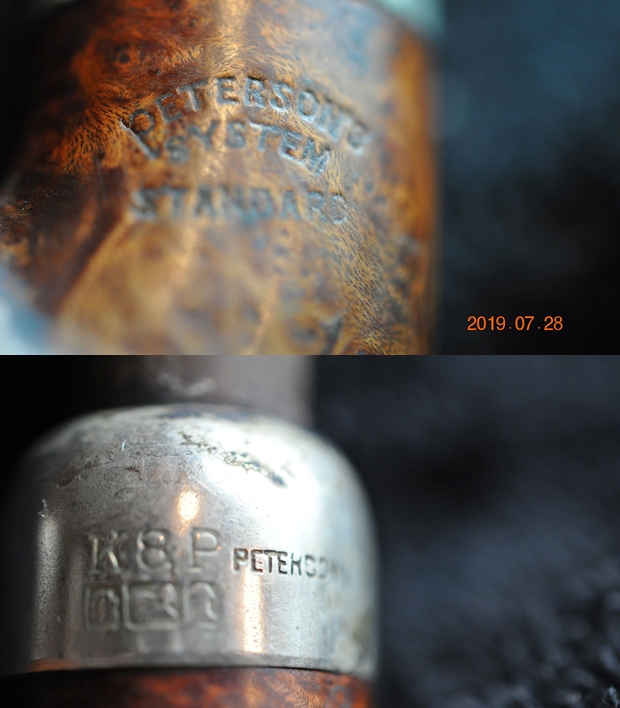
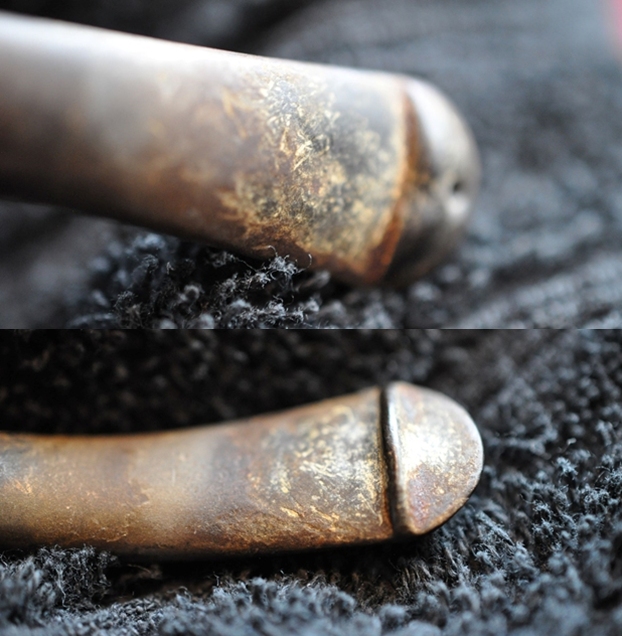
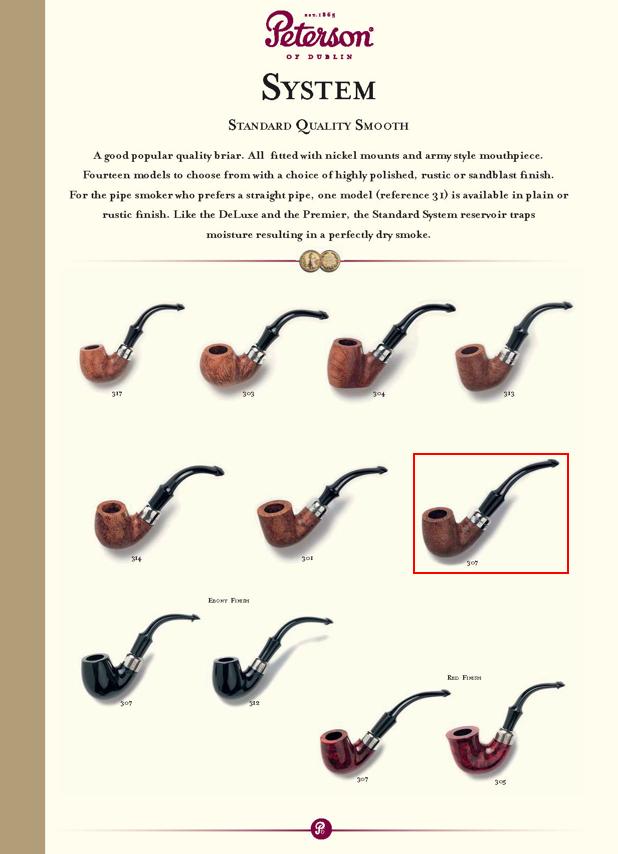
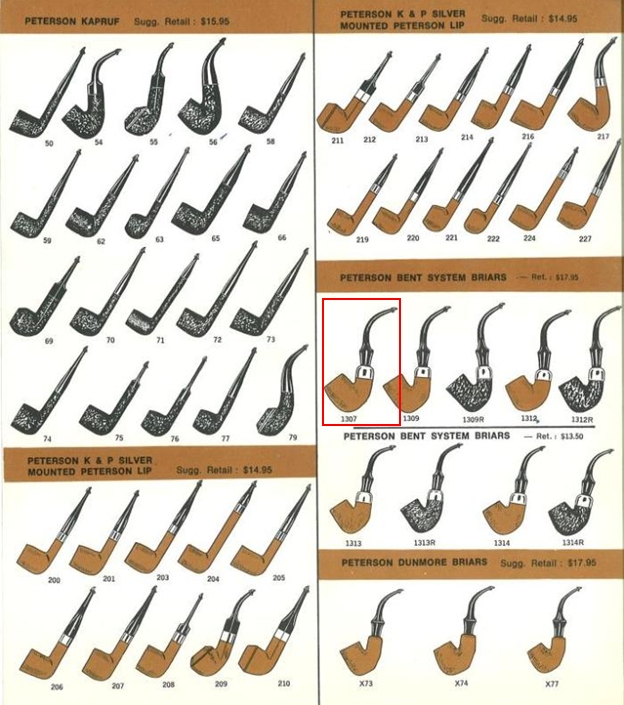
There was a thick cake in the bowl with remnants of tobacco stuck on the walls. There was a lava overflow on the rim. The top and edges of the rim appear to have some damage all the way around the bowl. I think that there was a beautiful pipe underneath all of the buildup of years of use. The nickel ferrule on the shank end was oxidized and is stamped on the top and left side K&P Peterson’s over three hallmarks. It is not dented or damaged. The stem was oxidized and calcified toward the end with some tooth chatter. There were also some tooth marks on both sides of the stem ahead of the “P-lip”. Jeff took photos of the pipe before he started his cleanup work on it. Jeff took photos of the bowl and rim top to show the thick, hard cake in the bowl and the lava build up on the top of the rim and the edges of the bowl. The rim top looked pretty good but it was hard to know for sure but it appeared that there was damage all around the inner edge. The outer edges of the rim appeared to be in good condition.   Jeff took photos of the sides and heel of the bowl to show the condition of the finish. You can see the interesting birdseye grain on the sides of the bowl and shank. Even under the dirt and debris of the years it looked very good. The cross grain on the heel was beautiful.   Jeff took photos of the stamping on the left side of the bowl and shank. The vertical stamping on the left side was readable as you can see from the photos. It read Peterson’s System Standard. He did not take a photo of the stamp on the right side of the shank but it read Made in the Republic of Ireland with the shape number 1307 underneath. The nickel ferrule on the shank end is stamped on the top and left side K&P Peterson’s over three hallmarks – a Shamrock, a shape that looks like a reclining lion and a tower. Typically these hallmarks are not like those in silver that help to date a pipe but are rather marks that make it clear that the pipe was made in Ireland.   Jeff took photos of the top and underside of the stem showing the tooth chatter, scratching and oxidation on the stem surface and wear on the edges of the button. There were two deep dents on the top of the stem just ahead of the P-lip.    I have included the information on the shape number on this pipe that I picked up on researching the previous pipes. It is another of the three Peterson’s System Standard pipes in Bob’s collection marked with the 1307 shape number. There are also 2 System Standards marked 307 and for the life of me I cannot tell the difference. They are virtually identical in shape, size and marking. I started my hunt for information by turning to a Peterson Catalogue that I have on rebornpipes and looked up the System Standard pipes (https://rebornpipes.com/tag/peterson-hallmark-chart/). I have put a red box around the 307 shown in the catalogue page shown below. That should give a clear picture of the size and shape of the pipe. But there was nothing to give me any information on what the first number 1 meant in the shape number 1307 pipe that I am working on. I decided to email Mark Irwin to see if he could point me in the right direction either in the book to something I was missing or to something else that might help.Since this is stamped the same as the previous two 1307 pipes, I am including the information on the unique numbering on it. Mark pointed me in the direction that I needed. I quote the pertinent part of his email. The red highlighted portion was the clue I was looking for on this pipe. I have already cleaned up several of Bob’s pipes that were sold through GT&C (Genin, Trudeau and Company, Montreal, Quebec).
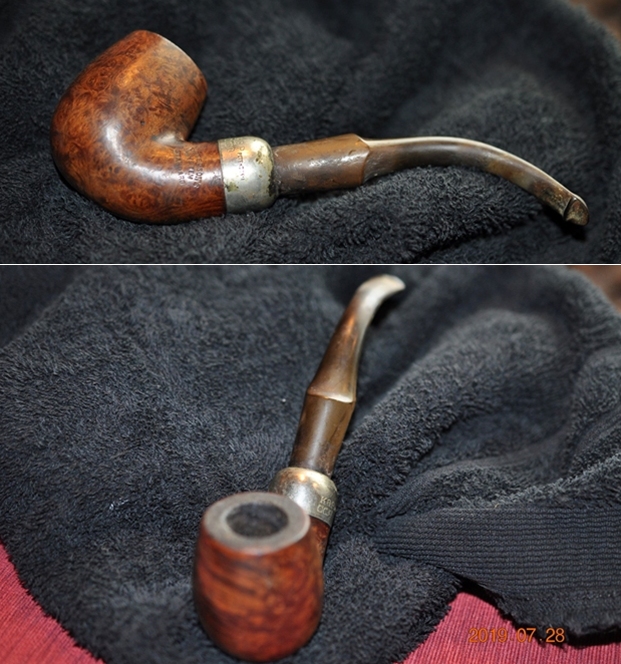
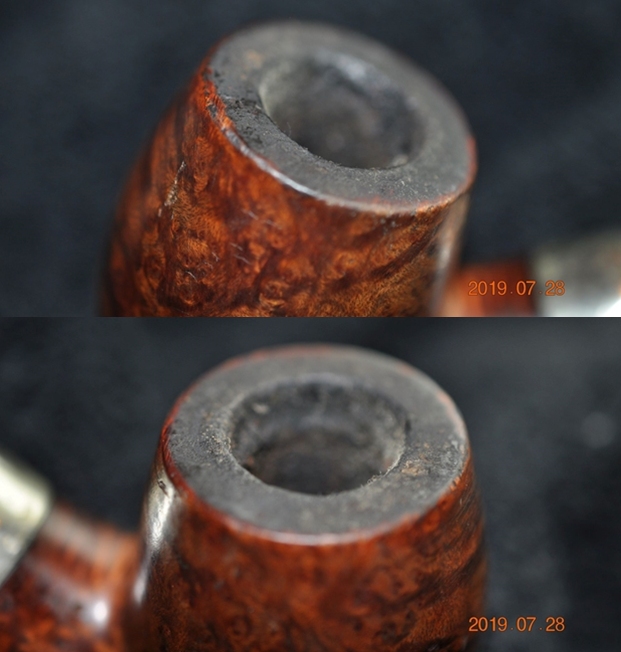
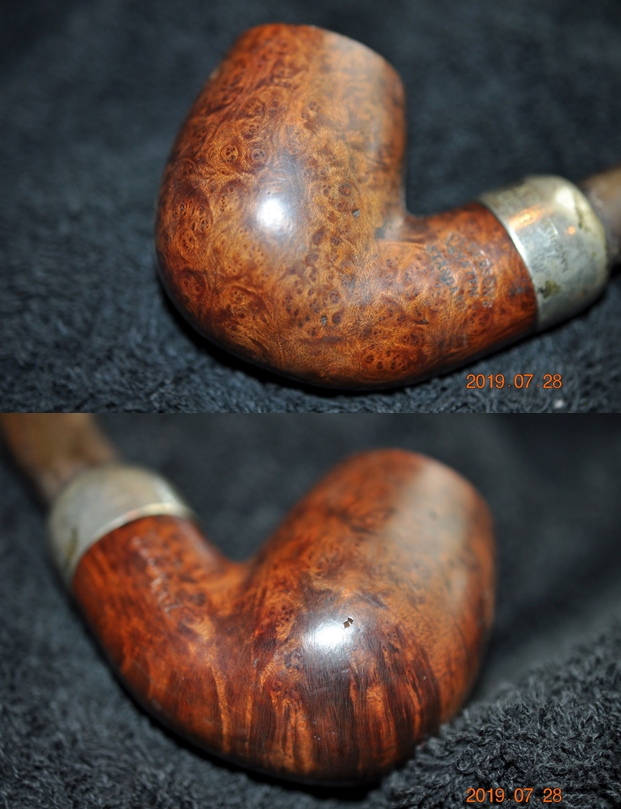
The index at the back of the book is pretty good, and points you to all the GT&C goodies, but 155 has a photo from the catalog with your 1307, while 318 and 323 explain the rationale for the “1” prefix. In a nutshell, just drop the “1” and you’ve got the shape. My theory is that GT&C added this to aid them in warranty work, so they’d know the pipe was bought on Canadian soil.

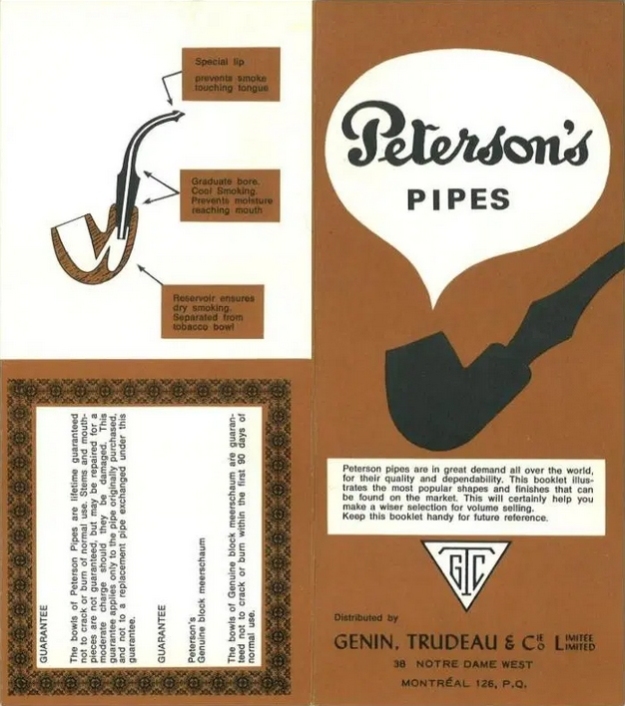
I turned then to a previous blog I had written on a Kapruf 54 that had an odd shape number stamp and referred to the Canadian numbering system used by GT&C. Here it the link to that blog (https://rebornpipes.com/2019/08/09/back-to-bob-kerrs-estate-another-canadian-import-petersons-kapruf-a-54/). In the blog I included a link to a blog I did on the GT&C Catalogue that came to me in some paperwork the family gave me. I have included the cover of the catalogue and the page on the system pipes showin the 1307 shape. I have put a red box around the shape for ease of reference (https://rebornpipes.com/2016/09/13/petersons-pipes-brochure-from-genin-trudeau-co-montreal-quebec/). Be sure to check out the rest of the document on the link.

The GT&C Catalogue combined with the earlier Peterson Pipe Catalogue page make the link definitive. I am also including the information from Pipedia’s article on Peterson pipes. It is a great read in terms of the history of the brand (https://pipedia.org/wiki/Peterson). I have included a bit of the pertinent history here.
1950 – 1989 The Republic Era  – From 1950 to the present time, the stamp for this era is “Made in the Republic of Ireland” in a block format generally in three lines but two lines have been used with or without Republic being abbreviated.

During the 1950’s and 60’s the Kapp & Peterson company was still in the ownership of the Kapp family. However 1964 saw the retiral of the company Managing Director Frederick Henry(Harry) Kapp.

Pipedia also included a section of information on the System pipes including a diagram of the sytems look (https://pipedia.org/wiki/Peterson#Republic_Era_Pipes). I quote a section of the article in part and include a link to another article on Pipedia on the System pipe.
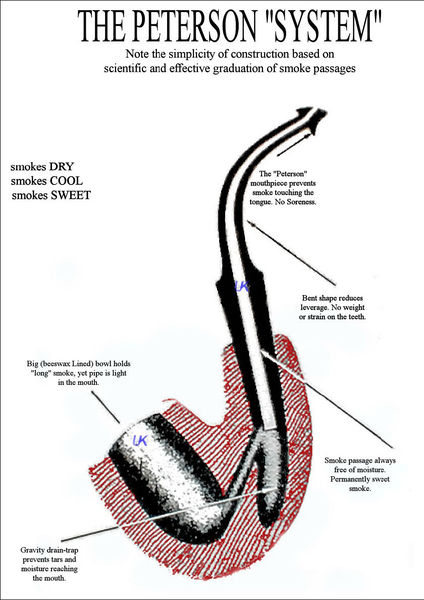
The Peterson System pipes are the standard bearers of the Peterson pipe family, famous for the excellent smoking pleasure they provide. Often imitated but never equaled, the Peterson System smokes dry, cool and sweet, thanks to the scientific effectiveness of the original design. The heart of the System is the unique graduated bore in the mouthpiece. This makes the suction applied by the smoker 15 times weaker by the time it reaches the tobacco chamber. The result is that all the moisture flows into the reservoir and, thus cannot reach the smoker’s mouth. The Peterson Lip further enhances the effectiveness of the graduated bore by directing the flow of smoke upwards and away from the tongue. This achieves a uniquely even distribution of smoke and virtually eliminates any chance of tonguebite or bitterness. Furthermore, the shape is contoured so that the tongue rests comfortably in the depression under the opening. Each “PLip” mouthpiece is made from Vulcanite. For the Peterson System pipes to work properly, the stem/tenon has to have an extension, the tip of which will pass by the draft hole from the bowl and into the sump. Upon the smoker drawing in smoke, this extension then directs the smoke down and around the sump to dispense a lot of the moisture before the smoke enters the extension and stem. On the System Standards and other less expensive systems, this extension with be made of Vulcanite turned integrally with the stem. On the more expensive System pipes this extension will be made of metal which screws into the Vulcanite stem. This extension on the earlier pipes will be of brass and the newer pipes will be of aluminium. Most smokers not knowing this function of the metal extension, assumes that it is a condenser/stinger and will remove it as they do with the metal condensers of Kaywoodie, etc. Should you have a System pipe with this metal extension, do not remove it for it will make the System function properly and give you a dryer smoke (https://pipedia.org/wiki/A_closer_look_at_the_famous_Peterson_Standard_System_Pipe).

With that information in hand I knew what I was dealing with in terms of the stamping and the age of this pipe. I knew from the information that the pipe was made during the Republic Era between 1950 and 1989. Most of Bob’s pipes were purchased in the 60s so my guess is that this is also a 60’s era pipe. I also knew that the pipe was brought into Canada by the Canadian importer, Genin, Trudeau & Co. in Montreal, Quebec. Noting above that the catalogue postal code puts it in the late 60s early 70s which also fits the story. Now it was time to work on the pipe.

I am really happy to have Jeff’s help on cleaning these 9 Peterson’s System Standard pipes as they are a real pain to get clean. He cleaned this filthy pipe with his usual penchant for thoroughness that I really appreciate. This one was a real mess and I did not know what to expect when I unwrapped it from his box. He reamed it with a PipNet pipe reamer and cleaned up the reaming with a Savinelli Fitsall Pipe Knife. He scrubbed out the internals with alcohol, pipe cleaners and cotton swabs until the pipe was clean. He scrubbed the exterior of the bowl with Murphy’s Oil Soap and a tooth brush to remove the grime and grit on the briar and the lava on the rim top. The finish looks very good with great looking grain around the bowl and shank. Jeff soaked the stem in Before & After Deoxidizer to remove the oxidation on the rubber. When the pipe arrived here in Vancouver for the second stop of its restoration tour I was amazed it looked so good.   I took some close up photos of the rim top and also of the stem surface. I wanted to show what an amazing job Jeff did in the cleanup of the rim top. The rim top was darkened with nicks and notches around the top and inner edge. The inner edge was very rough – almost looked like a knife had been used on it.  I also took close up photos of the stem to show the tooth marks and chatter on the stem surface. The majority of the marks were on the underside.   One of the things I appreciate about Jeff’s cleanup is that he works to protect and preserve the nomenclature on the shank of the pipes that he works on. The stamping on this one was very faint to start with so I was worried that it would disappear altogether with the cleanup. He was not only able to preserve it but it is clearer than shown in the earlier photos. I took some photos to show the clarity of the stamping. I have noticed that many restorers are not careful to protect the stamping in their cleaning process and often by the end of the restoration the nomenclature is almost destroyed. I would like to encourage all of us to be careful in our work to preserve this as it is a critical piece of pipe restoration!      Since this is another pipe Bob’s estate I am sure that some of you have read at least some of the other restoration work that has been done on the previous pipes. You have also read what I have included about Bob Kerr, the pipeman who held these pipes in trust before I came to work on them (see photo to the left). Also, if you have followed the blog for long you will already know that I like to include background information on the pipeman whose pipes I am restoring. For me, when I am working on an estate I really like to have a sense of the person who held the pipes in trust before I worked on them. It gives me another dimension of the restoration work. I asked Brian if he or his wife would like to write a brief biographical tribute to her father, Bob. His daughter worked on it and I received the following short write up on him and some pictures to go along with the words including one of Bob’s carvings. Once again I thank you Brian and tell your wife thank you as well.
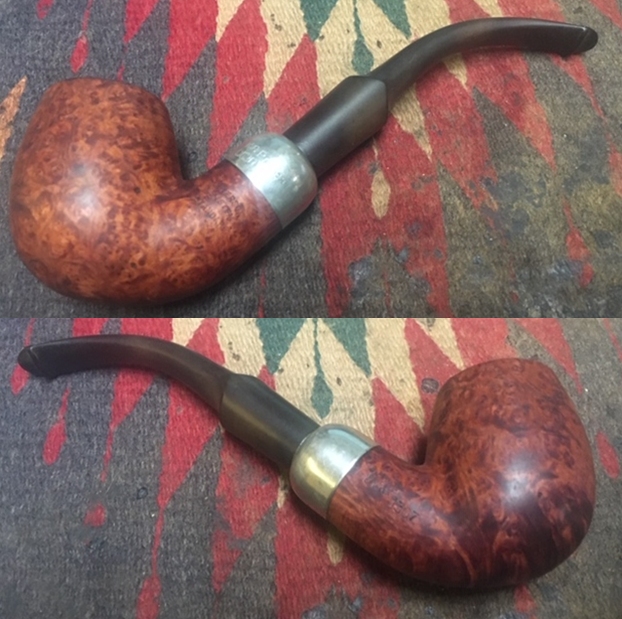
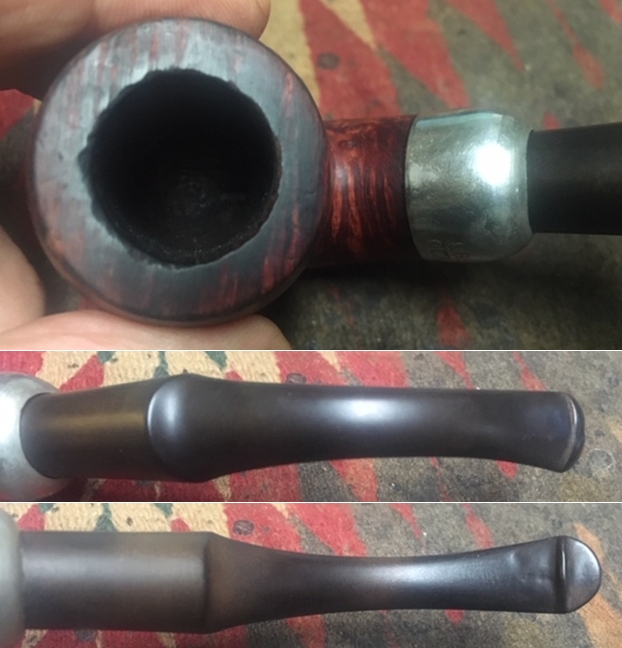
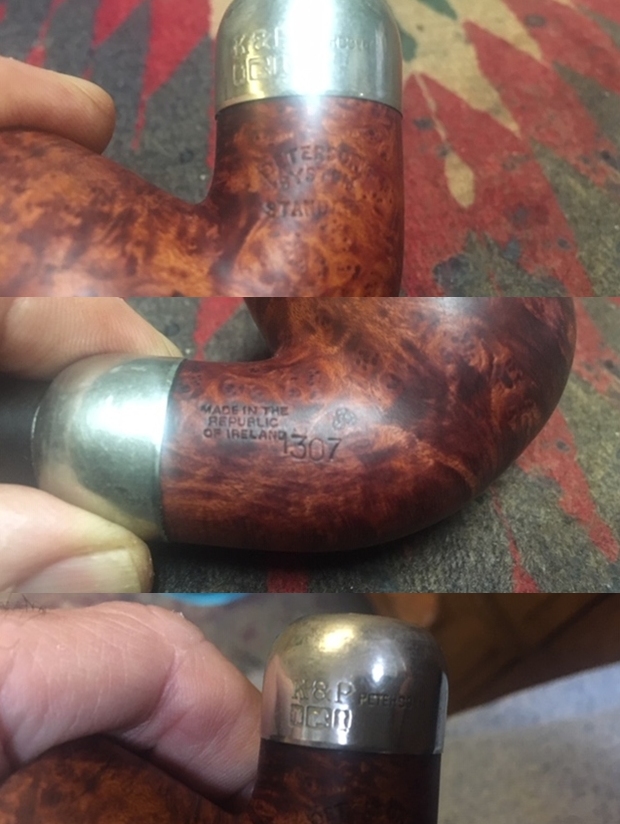
I am delighted to pass on these beloved pipes of my father’s. I hope each user gets many hours of contemplative pleasure as he did. I remember the aroma of tobacco in the rec room, as he put up his feet on his lazy boy. He’d be first at the paper then, no one could touch it before him. Maybe there would be a movie on with an actor smoking a pipe. He would have very definite opinions on whether the performer was a ‘real’ smoker or not, a distinction which I could never see but it would be very clear to him. He worked by day as a sales manager of a paper products company, a job he hated. What he longed for was the life of an artist, so on the weekends and sometimes mid-week evenings he would journey to his workshop and come out with wood sculptures, all of which he declared as crap but every one of them treasured by my sister and myself. Enjoy the pipes, and maybe a little of his creative spirit will enter you!
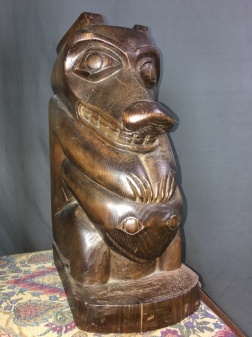
Now with all of the background on the line and the background on Bob Kerr it was time to get on with the restoration of this next mixed grain Peterson’s System Standard 1307 Bent Billiard. This is the last of the 1307 pipes that I am restoring. I am really coming to appreciate the hard cleanup work that Jeff did on these pipes. They were a real mess when I sent them to Jeff and I have to tell you it was great that I did not need to clean this pipe. I decided to start the process by dealing with the damage to the inner edge and top of the rim. The first photo below shows what the rim looked like when I started. I sanded it with 220 grit sandpaper and worked on the flat surface as well as the inner edge. I gave it a very light bevel so that it took care of the damage on the inner edge. The third photo shows the rim top after the shaping. I polished the briar with micromesh sanding pads – wet sanding it with 1500-12000 grit pads and I wiped the bowl down after each sanding pad with a damp cloth. The bowl began to take on a finished shine. I rubbed the bowl and rim down with Before & After Restoration Balm. I worked it into the surface of the briar with my fingertips to clean, enliven and protect it. I let the balm sit for a little while and then buffed with a cotton cloth to raise the shine. I really like watching the Balm do its magic and bring the briar alive. I “painted” the stem with the flame of a Bic lighter to raise the dents then lightly sanded it with 220 grit sandpaper to clean up the area around the deep tooth marks. I wiped the stem down with alcohol and filled in the tooth marks on the top and underside as well as on the edges of the “P-lip” button itself with clear Krazy Glue.I used a small file to recut the button edge on both the top and underside and to smooth out the filled in areas on the stem surface on both sides.  I smoothed out the repair on the button and on both sides of the stem with 220 grit sandpaper.  I polished it with 400 grit wet dry sandpaper.   I polished the stem with micromesh sanding pads – wet sanding with 1500-12000 grit pads. I wiped the stem down after each sanding pad with Obsidian Oil. I polished it with Before & After Pipe Stem Polish – both Fine and Extra Fine. Once I had finished the polishing I gave it a coat of a new product I am experimenting with from Briarville Pipe Repair. It is called “No Oxy Oil” and it is made to protect the stem from oxidizing. I set it aside to dry.    Once again at this point in the restoration process I am excited to be on the homestretch. This is the final 1307 from Bob’s pipes so I look forward to the final look when it is put back together, polished and waxed. I put the bowl and stem back together. I polished the bowl and stem with Blue Diamond to polish out the scratches in the briar and the vulcanite. I gave the bowl and the stem multiple coats of carnauba wax. I buffed the pipe with a clean buffing pad to raise the shine. I hand buffed it with a microfiber cloth to deepen the shine. The pipe polished up pretty nicely. The grain is quite stunning and really pops with the wax and polish. The shiny black vulcanite stem is a beautiful contrast to the browns of the bowl and thick shank. This last of Bob’s Peterson’s System Standard 1307 Bent Billiards was another fun pipe to work on thanks to Jeff’s cleanup work. The polished nickel Ferrule works as a contrast between the stem and the briar and binds it all together. It really is a quite stunning piece of briar whose shape follows the flow of the briar. The pipe is comfortable pipe to hold in the hand. The finished pipe is shown in the photos below. The dimensions of the pipe are Length: 6 ½ inches, Height: 2 inches, Outside diameter of the bowl: 1 3/8 inches, Chamber diameter: ¾ of an inch. This beautiful pipe will be going on the rebornpipes store if you would like to add it to your collection and carry on Bob’s legacy. If not, I have a lot more of Bob’s estate to work on of various brands. Perhaps one of those will catch your attention. Thanks for reading this blog and my reflections on the pipe while I worked on it. This is an interesting estate to bring back to life.
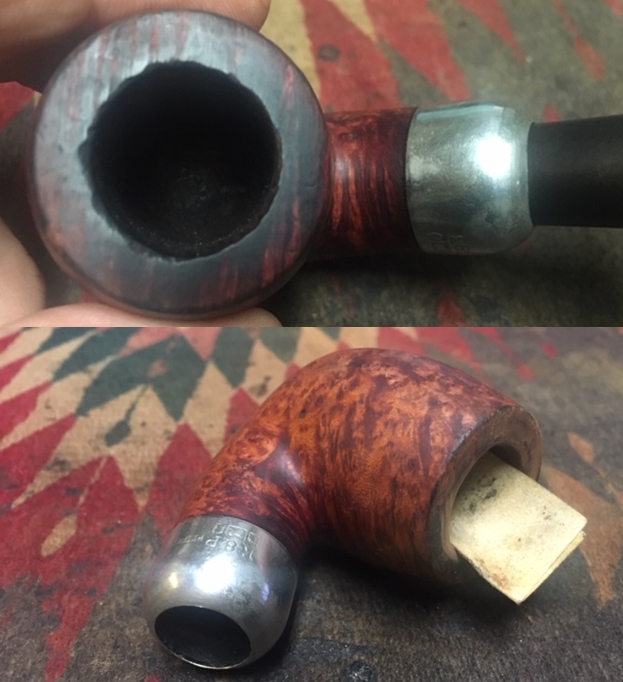
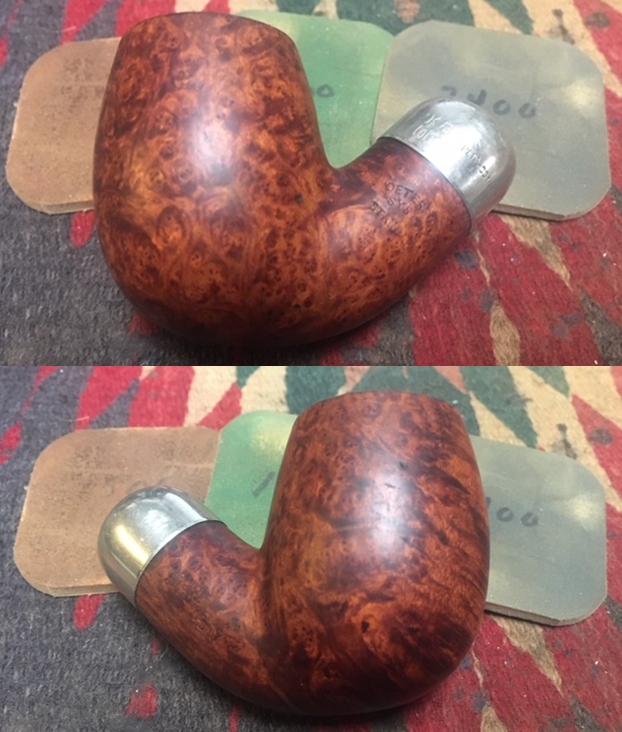
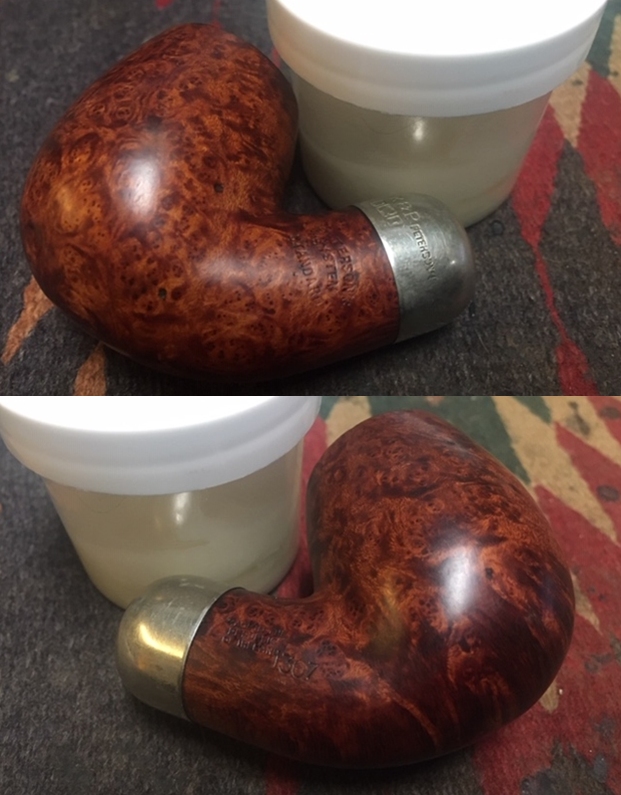
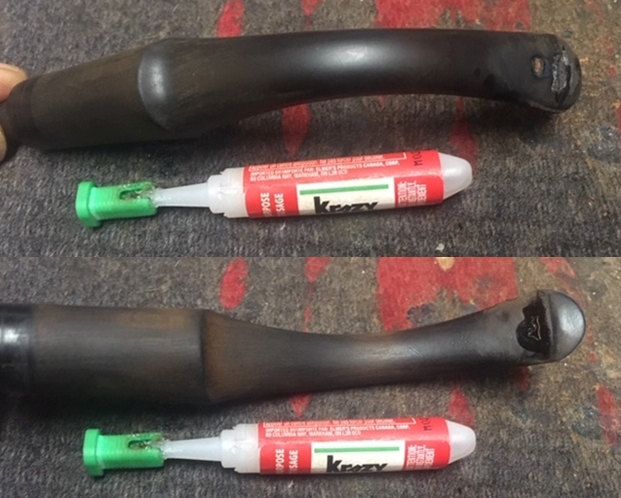
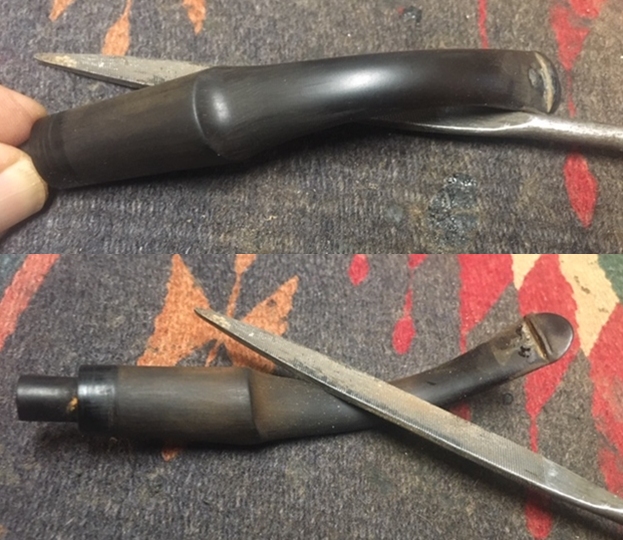
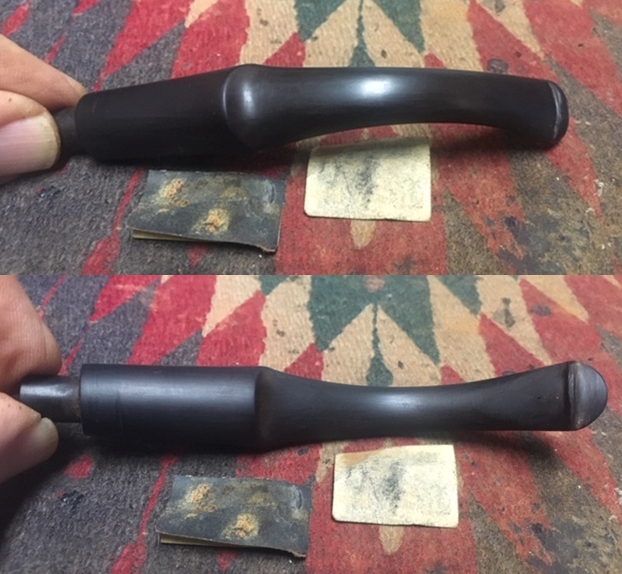
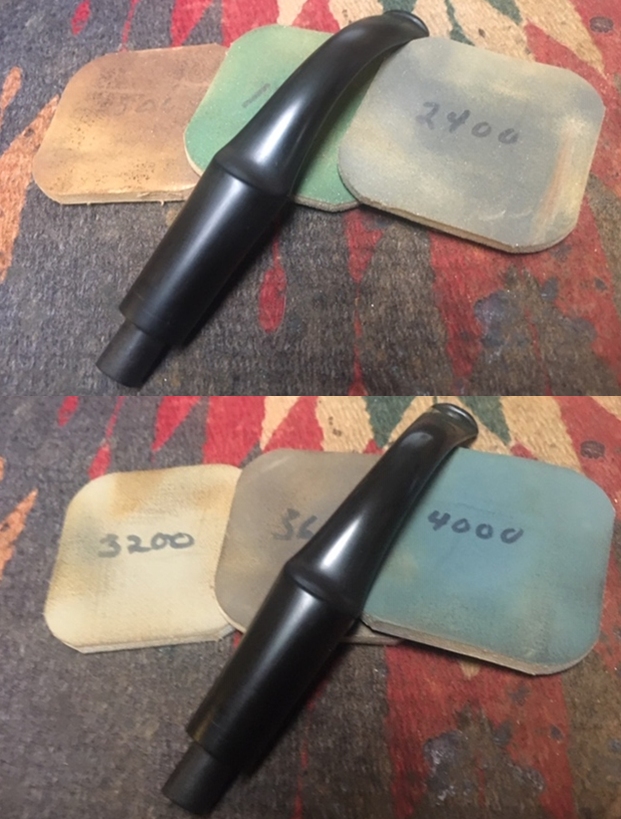
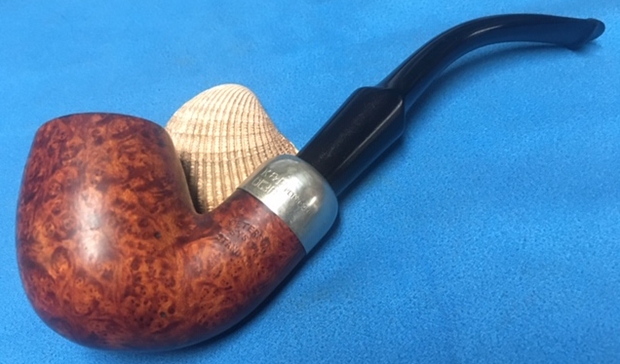
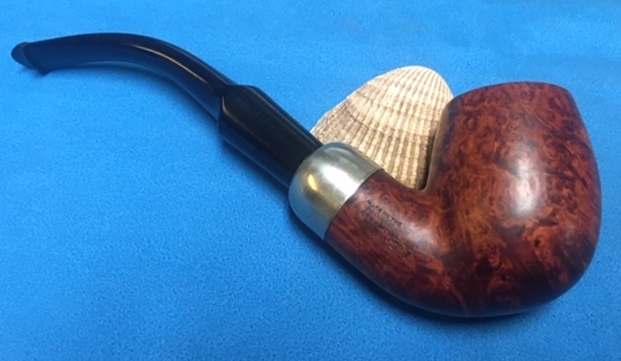
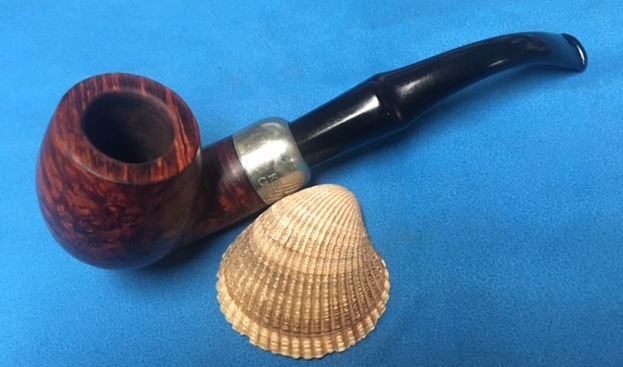
Another Athens find: Renewing a Stout Peterson System Standard 313 Republic of Ireland


Blog by Dal Stanton

Athens, Greece, has been fertile ground for me in landing some nice pipes in the Athenian ‘wild’.  An area very close to the well-known Acropolis summit and near-by Mars Hill, where the Apostle Paul gave his defense of the Christian faith, is the Monastiraki market area. I have found several keepers in this area. I was drawn to one antique shop that spilled out onto the sidewalk of a typically narrow, crowded street.  As I looked over the plethora of paraphernalia in the shop, my eye caught sight of two lonely pipes among statuettes, ash trays, jars and lamps.  Immediately I knew one was a definite possibility – a Pete.  I looked quickly to determine if it was Pre-Republic or Republic of Ireland.  It was a Republic, but seemed to carry some weight of years.  What also caught my attention was that it was on the smaller side as far as I’ve seen of Petersons.  The shape number on the right side of the shank was 313.  The other pipe keeping company with the Pete was a Bewlay London Made ‘Reject’.  Interesting.  I’m always interested in pipes with the mark, ‘Reject’. The shop owner was all business and I wasn’t as happy with the bundled deal as I had wished, but I wanted the Pete and he’s now with me here in Sofia, Bulgaria. This Peterson System Standard 313 has been in my ‘Help Me!’ basket for some time until my brother-in-law, Greg, commissioned it to be restored along with a Comoy’s Pebble Grain Modern Poker.  He and his wife, Sarah, my wife’s sister, were visiting us here in Bulgaria, and Greg trolled through my buckets of pipes until he found these two – he commissioned both when he couldn’t decide!  The Pete and the Comoy’s both benefit the Daughters of Bulgaria, helping women and girls that have been trafficked and sexually exploited.  Thanks, Greg!
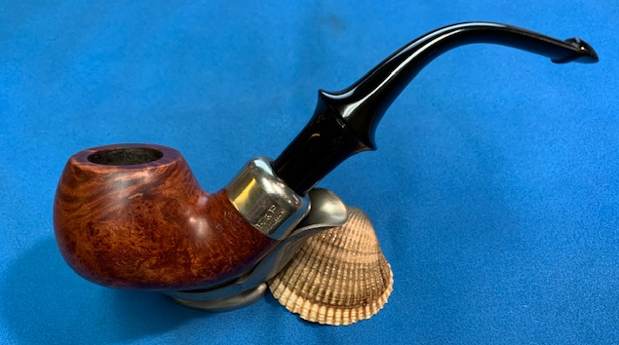
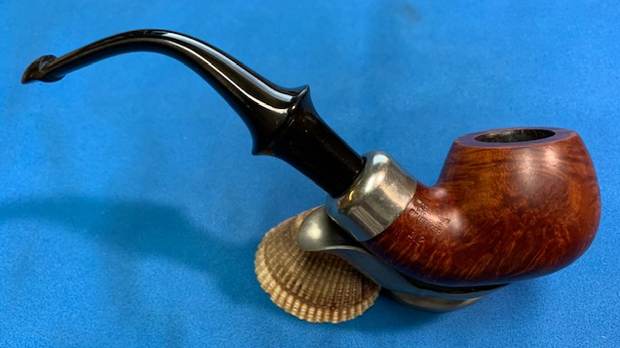
With this being the first Peterson System Pipe on my worktable, I’m looking forward to learning what I can.  The first thing I did was to identify the shape number of this Peterson.  Not long-ago Steve posted on rebornpipes a very interesting Peterson of Dublin Pipe Catalogue which he thought was dated about 2010.  I enjoyed looking through it then and tucked it away in my mind for when I would bring a Peterson to the worktable.  I found the shape 313 in the Standard Quality Smooth section of the catalogue which I included below.  It’s on the far right of the first row.  The description of the Standard Quality was helpful.What I also found interesting and helpful was the description of the Peterson System Pipe.  When this design hit the market in the late 1800s it was innovative then and continues to be popular today. Two design innovations were the focus: a trap (or sump) that collected the moisture in the mortise and the well-known ‘P-Lip’ stem, which stands for ‘Peterson’.  This design was supposed to be superior by directing the smoke to the upper part of the mouth rather than burning the tongue.  It is also engineered to compress the air as it moves toward the button.  I’ve included the description and a cutout showing the design from the same catalogue.I love working on vintage pipes – I only wish they could talk and tell their stories while I restore them!  With this Peterson now on my work table, I take some pictures to chronicle his condition and to get a closer look. The nomenclature is clear.  On the left side of the shank is stamped in arched fashion, ‘PETERSON’S’ over ‘SYSTEM’ over ‘STANDARD’ in straight letters.  Above this stamp, on the nickel ferule is ‘K&P PETERSON’S’.  The right side of the shank bears the ‘MADE IN THE REPUBLIC OF IRELAND’ placing it in the Republic Era – from 1949 until the present (from the Pipedia article:  A Peterson Dating Guide; A Rule of Thumb, by Mike Leverette).I’ve also been curious about the ‘faux’ hallmarks stamped under the K&P on the ferrule.  From the same helpful Pipedia article I read this:

Before we close this section on silver hallmarks, we must address the marks that many people refer to as hallmarks. Peterson uses three marks on some of their pipes that are not silver hallmarks but are rather another Peterson logo (See Enclosure 4).

These marks are:

  • A Shamrock for the many shamrocks found in Ireland
  • A Prone Fox representing the famous fox hunts in Ireland’s history, and
  • A Stone Tower for the many hundreds of stone towers spotted throughout Ireland

Again, these are not genuine silver hallmarks. I’m indulging in a bit of history to better appreciate the K&P Peterson’s on my worktable.  Another question, “K&P”?  Again, Mike Leverette’s Dating Guide article helps with a concise history along with pictures from Pipedia’s main Peterson article:

The history of Ireland is an old and honorable one; steeped in warfare, family, racial and religious traditions. No other country can compete in comparison. However, the first couple of millennia of Irish history have no relevance to this dating guide. Should you wish to read more on the history of the Irish, I recommend “The Story of the Irish Race” by Seamus MacManus who gives a very vivid, and near as we can tell, an accurate portrayal of their history.

History pertinent to our purposes began in the year 1865; the year Charles Peterson opened a small tobacco shop in Dublin. Later in 1875, Charles Peterson approached the Kapp brothers, Friedrich and Heinrich, with a new pipe design and with this, a very long-lived partnership was formed, Kapp & Peterson. This new pipe design is the now famous Peterson Patented System Smoking Pipe. By 1890, Kapp & Peterson was the most respected pipe and tobacco manufacturer in Ireland and rapidly gaining followers in England and America. In 1898 another of Peterson’s remarkable inventions became available, the Peterson-Lip (P-Lip) mouthpiece, also known as the Steck mouthpiece. So, for the purpose of this dating guide, we will study Irish history, relevant to our pipe dating needs, from 1870s until now.

Before we start with this Peterson dating guide, an observation; the Kapp Brothers originally came from Nuremberg, Germany. They were making pipes at least as early as the 1850s (their Dublin shop opened in 1855) and in many of the shapes we now associate with Peterson since the Kapp Brothers simply took their existing shapes and incorporated Charles Peterson’ s patented design into them. From their inception, Kapp & Peterson’s goal was to make a good smoking pipe that the ordinary, common working man could afford, and we believe they have, very admirably, lived up to this.

With a great admiration for the pioneering businessmen and pipe men, Kapp and Peterson, I now turn to the Peterson System Standard 313 on my table – really a quintessential working man’s pipe. It gives that kind of persona. The chamber is still loaded with the former steward’s tobacco!  Whenever I see this I wonder if this was the last bowl enjoyed on this side of life.  I’ll never know, and the Pete still isn’t talking!  The chamber has moderate cake build-up and the rim has some lava flow and some scorching.  The stummel generally is in good shape with typical marks of wear, but nothing too serious, and it is darkened with grime.  There is one fill I detect on the front, right of the stummel which I record with a picture.  The nickel ferrule has some dark areas on it which will hopefully clean up and shine up.  The System P-Lip stem has a good collection of tooth chatter, but I don’t detect any clench dents.  I begin the restoration of this Peterson by first adding the stem to a soak of Before and After Deoxidizer along with a Peretti and Comoy’s stem that are in the queue along with their respective stummels.  Before I place the stem in the Deoxidizer, I clean the internals of the System Stem P-Lip for the first time, and I now understand some of what I’ve read about the difficulty in cleaning these stems!  They are engineered to narrow down toward the button and the P-Lip draft hole is smaller than usual.  I read from the Pipedia Peterson article above that Falcon pipe cleaners are thinner and can be used well with these stems.  Good to know!  With pipe cleaners dipped in isopropyl 95% I clean the stem and this keeps the Deoxidizer from becoming soiled as quickly. I let the stem soak for several hours.  After removing the stem, I let it drain of the Deoxidizer and then wipe off the raised oxidation using cotton pads wetted with light paraffin oil.  The oxidation wipes off as a nasty brown goo.  The System stem looks good after it is wiped down well.Putting the stem to the side, with the stummel now in hand, I clean the old baccy out of the chamber.  The tobacco still has a sweet aroma to it – I’m not a tobacco blend expert or else I might hazard a guess!  Using the Pipnet Reaming Kit, I start with the smallest blade and ream the chamber removing the carbon cake down to the fresh briar.  Since the bowl diameter is smaller, I only use the first blade.  I then utilize my Savinelli Fitsall Tool, which I find to be very handy. It can remove some carbon at the floor of the chamber missed by the Pipnet blade and it scrapes the walls more closely giving me greater control.  Wrapping a piece of 240 grit sanding paper around the Sharpie Pen, I sand the chamber walls removing even more carbon residue and getting down to the briar for a fresh start. Finally, I use a cotton pad wetted with isopropyl 95% and clean the chamber of the carbon dust.  Looking at the chamber, I see no problems – it looks great. Turning to the externals, I use undiluted Murphy’s Oil Soap with cotton pads to scrub the grime off the bowl and rim.  I also use a brass brush on the rim which is dark from some scorching.  After this, I rinse the stummel with tap water.  While I was doing this, I allowed the water to run over the nickel ferrule and rubbed it with cloth to see if this would help clean it up.  There is still what looks like corrosion on the nickel-plated surface.  I’ll do some Google research later to see what the next step might be to clean the nickel safely.  I also am not able to remove the darkened briar on the rim.  I’ll need to give it a gentle topping to remove it.  While I think about these challenges, I clean the internals of the stummel.  Using pipe cleaners, cotton-buds and shank brushes dipped in isopropyl 95%, I go to work.  Well…, some time later, I’m still not 100% satisfied with the cleaning of the Peterson ‘sump’ and draft hole.  The old tar and oil gunk is thick and only after employing many weapons in the arsenal is it starting to shape up.  The sump has collected the moisturized gunk as designed.  Along with pipe cleaners, cotton buds and different sized shank brushes, I also use both a dental spatula and probe to stir up and scrape the mortise and sump walls.  I take a picture to show this frontal attack – it isn’t pretty.  Now, to continue the cleaning I’ll use the kosher salt and alcohol approach.  Using kosher salt, which does not leave a taste as iodized salt does, I fill the chamber with salt, cup the top of the bowl with my palm and give it a shake to displace the salt.  I then set it in an egg crate to keep it stable.  Using a cotton ball, I create a wick to stuff down the mortise to act as a wick drawing more of the oils and tars out of the briar.  I make the wick by stretching and twisting the cotton ball and then guiding the end down into the draft hole as far as I can get it – I use a piece of thin metal coat hanger wire to push the cotton through the draft hole.  I also push the cotton down into the sump.   Once that is done, using a large eye dropper, I fill the bowl with alcohol until it surfaces over the salt.  After a few minutes – after it’s been absorbed, I top it off again.  I set the stummel aside to soak through the night. The next morning, the salt-alcohol soak did the job!  The salt is soiled, and the cotton wick is full of tars and oils.  After dumping the expended salt in the waste basket, I wipe the bowl out with a paper towel and blow through the mortise to loosen and left-over salt.  I run a pipe cleaner and alcohol through the draft hole and a cotton bud as well in the sump and the mortise walls to make sure all is clean and I’m happy to report that it is!  From this cleaning, I think a wise practice for any Pete steward would be to clean your pipe often!  Don’t allow too much gunk to collect in the sump.Turning to the Peterson-Lip stem, I use 240 grit paper to sand focusing on the tooth chatter on P-Lip button and the upper and lower bit.  I also refresh the lines of the button contours using a flat needle file.  To erase the scratches made by the file and 240 paper, I use 470 paper.   I then employ 600 grade paper sanding the entire stem and follow this with 0000 steel wool which begins the buffing up of the vulcanite. Before moving on to using micromesh pads on the stem, I use Before and After Fine and Extra Fine Polish on the stem to enrich the vulcanite.  For each polish successively, I place a bit on my finger and work it into the vulcanite.  I then wait a few minutes and wipe each successive polish off with a cotton cloth which also buffs up the vulcanite gloss.I put the stem aside and look again at the Peterson stummel.  I have two initial challenges to solve.  The rim’s dark ring from it being scorched.  Secondly, the small fill on the right-front quadrant of the stummel.  I use a dental probe and dig at it a bit to see how solid the fill is.  Some of the fill material flaked off and left a small indentation as a result. This needs to be filled again and masked. I will patch it before moving ahead with the stummel surface.  But first, I work on the rim.  I use a chopping board with 240 grade paper on it.  To top the inverted stummel, I use uniform, easy circular motions and I don’t need to take much off – just enough to remove the scorched wood.  Switching the paper on the chopping board to 600 grade paper, I top the stummel a bit more to smooth out the 240 scratches.  I take pictures to show the progress.   I notice that there is still a bit of dark wood on the outer rim lip. I’ll take care of that when I’m sanding the stummel rounding off the edge slightly.  I’ll stain the rim’s bare briar a bit later to match the stummel’s surface. Now, to address the fill. I again use a dental probe to scrape the old fill and to remove what is not solid.  To darken the old, remaining fill, I use a cherry stain stick to darken and color the fill so that it will blend with the briar grain better – I hope!  I then apply a small drop of clear super glue to the hole.  I use a toothpick to guide the super glue to the patch – while I was doing this, the power went out and I had to finish using the sunlight coming into the open window!  I put the stummel aside and wait for the CA glue to cure and the lights and internet to come back on! I decide to work on the stem using the micromesh pads. Starting with pads 1500 to 2400 grade, I wet sand the System stem. Then, using 3200 to 4000 and 6000 to 12000 I dry sand the stem.  Following each set of 3 pads, I apply Obsidian Oil to revitalize the vulcanite.  I never grow tired of watching the pop in the vulcanite when it turns to that glassy gloss!  The Peterson-Lip System stem is looking good.  I put it aside to dry and absorb the Obsidian Oil. I turn back to the stummel.  The CA glue has cured on the patch and I begin the process of removing the patch mound by using a flat needle file.  The most important part of this process is to keep the file on the hardened glue and not slide off and to impact needlessly the neighboring briar.  I want to keep the area needing repair and refinishing as small as possible!  I file the glue mound down until it’s almost at the level of the briar surface.  Then, using a tightly rolled piece of 240 grit paper, I sand the mound further, so it is flush with the briar.  Finally, I use 600 grade paper to smooth the patch out preparing it for dye stick to blend the patch.  I think its going to blend very well with the briar. Now, to the rim.  I use 240 grit paper rolled tightly and I run it around the outer rim edge to give it a slight rounding to remove the remnants of damage on the rim.  I gently pinch the rolled paper over the rim edge with my thumb, so I create the slight bevel.  I also do the same, very lightly, to the inside rim edge.  I follow by doing the same with a rolled piece of 600 grade paper.  Finally, I take the stummel back to the topping board once more on 600 grade paper simply to redefine a crisp line around the rim after the beveling.  I think it looks great and ready for the next step. I’m hoping that I can match the dye stick color correctly!  I read on rebornpipes, Steve was restoring a Peterson System Standard and needed to use a dye stick on the rim.  He used cherry and said that it matched the Peterson schema well.  I’ll do the same and see how it goes!  I apply dye to the both the fill patch and the rim.  I wait a while for the dye to thoroughly dry before proceeding.I then sand the stummel with micromesh pads.  I wet sand using pads 1500 to 2400, and then dry sand with pads 3200 to 4000 and 6000 to 12000. To protect the Peterson’s nomenclature, I stay clear of the until the later pads – and even then, a very light touch. As you can see in the pictures above and the focused one immediately below, the nickel ferule of this Pete needs help dealing with the corrosion – it is an eyesore.  Care must be given because metals can be a bit tricky.  One approach that works for silver might turn another metal black!  After doing some quick ‘How to clean/polish nickel plating’ searching on Google, the approaches I found were helpful.  The general theme is to start conservatively and then to work more aggressively – that is, simply washing the nickel with warm water (every source warned about the need to use warm water with nickel – not hot nor cold) and a mild liquid dish detergent.  I do this to begin, and it does brighten the ferule but does not help with the corrosion.  The next step is to make a paste using baking powder (a mild abrasive and acidic) with water.  This I do next with better results.  At first, I have too much water, but eventually I find the ratio to create a thicker paste.  I then apply the paste with my thumb and work it in around the entire ferule but concentrating on the corrosive spots – the main one being over the ‘Peterson’s’ stamp. Afterwards, I gently rinse the ferule with warm water.  I like the progress, but I return to the paste and this time use a cotton pad dipped a bit into the paste and use it in a circular motion over the spot and then rinse.  I buff the ferule with a cloth and I like the results! The corrosion on the nickel is greatly reduced and the ferule looks shinier – but not pristine, still holding some scuffs from life.  I think this is good because he is an older Pete after all! The Pete is looking great.  Before moving to the final stages using abrasive compounds on the stem and stummel, I apply Before and After Restoration Balm to the stummel which has a way of enriching and deepening the briar. In keeping with the product’s name, I take some before pictures to compare with the after pictures – that always interests me.  I put some on my finger and work the Balm into the briar.  The Balm starts more liquidy and gradually firms up into a thicker, wax-like consistency.  After applying, I prop the stummel on an egg crate and let it sit for some minutes to absorb the Balm.  Then, after about 20 minutes, I wipe the Balm off, buffing up the shine with a cloth.  Then I take the ‘after’ pictures which are below for comparison.  I like the results. Because of the military style stem, I leave the stummel and stem separated as I apply compounds and wax.  I begin by mounting a cotton cloth buffing wheel to the Dremel dedicated to the application of Blue Diamond compound.  With the Dremel set to the slowest speed, I apply the compound to the stummel in a slow, patient, methodical manner.  I use the sheen created on the briar by the overhead lamp to see the compound as I move it and direct it over the surface.  For the System stem, I switch cotton cloth buffing wheels and apply White Diamond, which is a finer abrasive than Blue Diamond.  For both compounds, I don’t apply much pressure to the wheel but allow the speed and the abrasive compounds to do the work.  After the compounds, I wipe stummel and stem with a felt cloth to remove compound dust before applying the wax. Then, again changing to another cotton cloth buffing wheel, and increasing the Dremel to about 40% power, I apply a few coats of carnauba wax to both stummel and stem and complete the process with a rigorous hand buffing with a micromesh cloth to raise the shine.
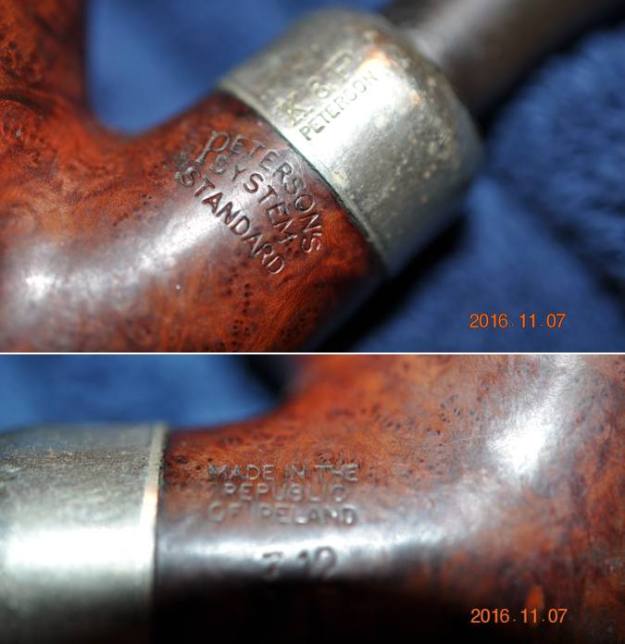
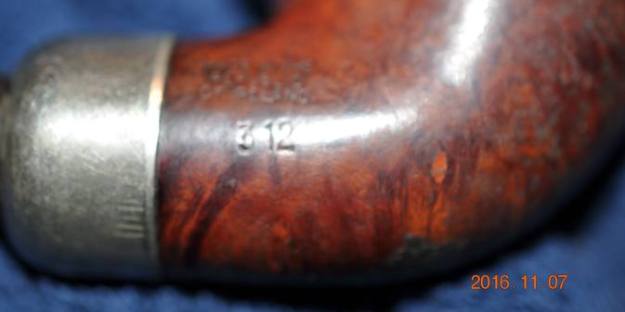
Oh my! The image that comes to my mind as I look at this Republic of Ireland Peterson, is that of a leprechaun, smoking his newly shined up pipe, doing a jig as he dances down the street!  This is the first Peterson on The Pipe Steward worktable and I’m pleased with the results and appreciate more the history of this well-known, proud Irish pipe name.  The grain of this Peterson System is surprisingly expressive and eye catching for a ‘Standard’ grade – a workingman’s pipe.  The nickel ferule came out great providing a classy transition for the military styled P-Lip System stem.  I’m pleased with the results! Greg commissioned this Peterson System Standard 313 and he will have first dibs on it in The Pipe Steward Store.  This pipe will benefit the work of the Daughters of Bulgaria – women and girls who have been trafficked and sexually exploited.  The pictures start with a before and after! Thanks for joining me!