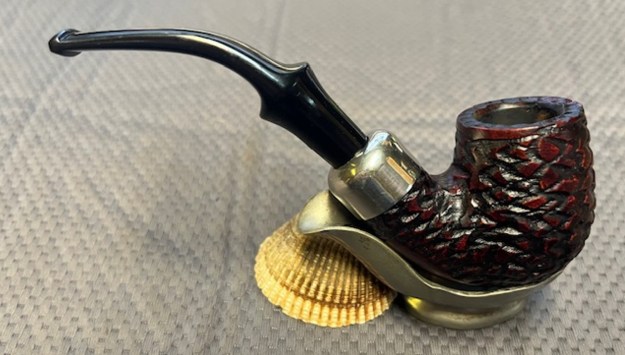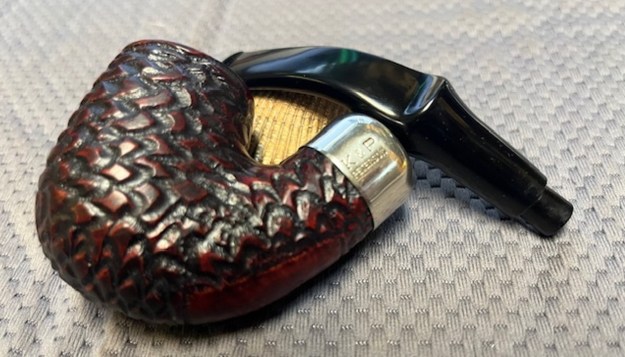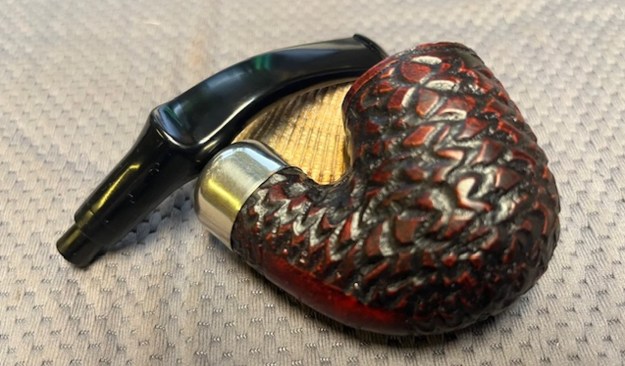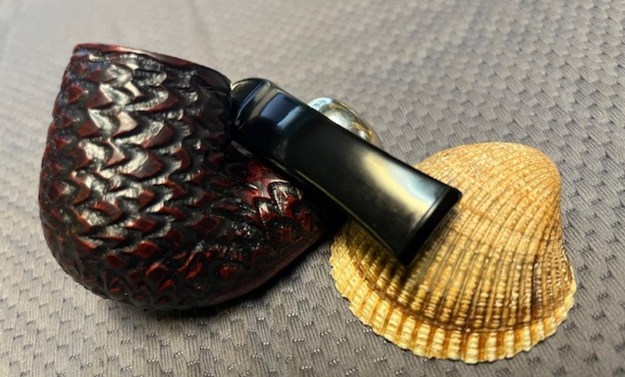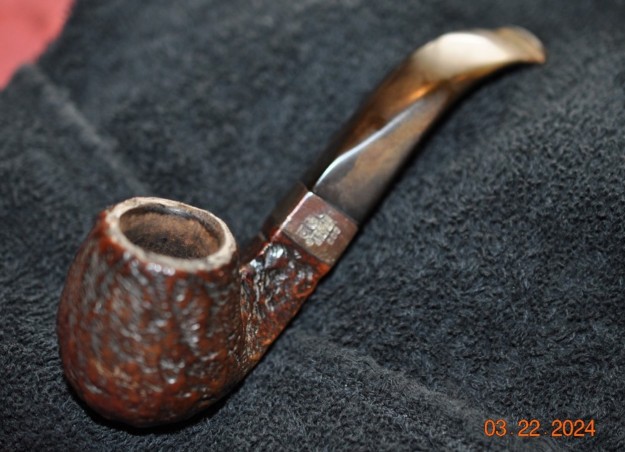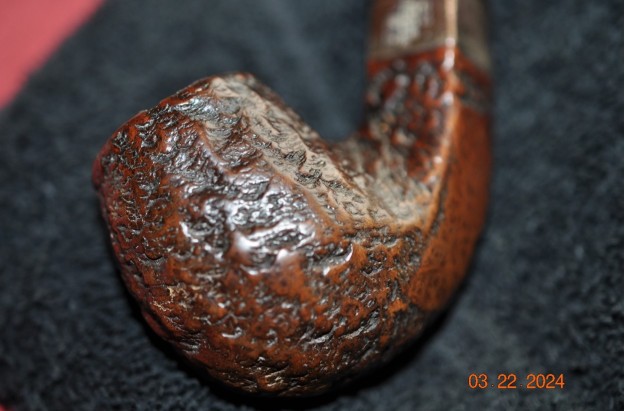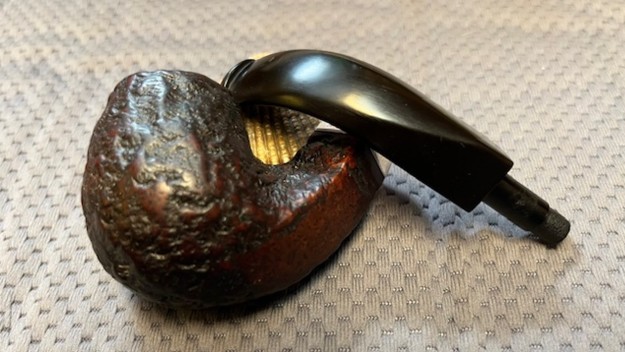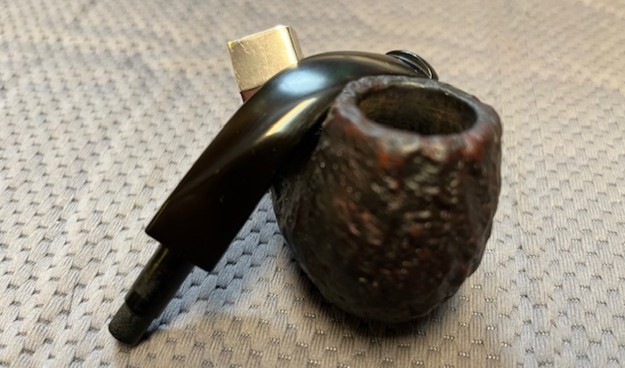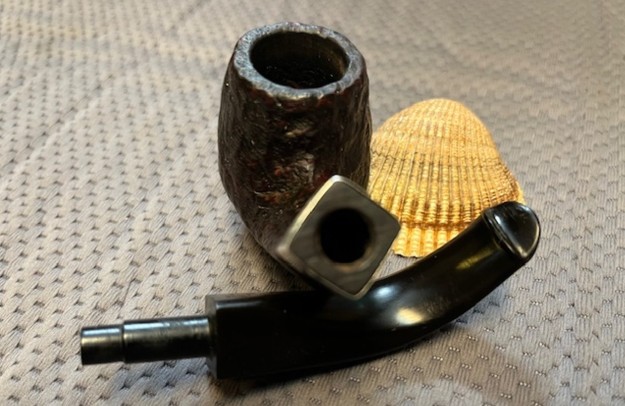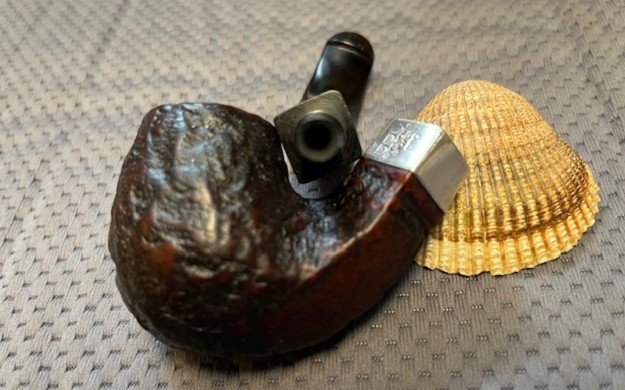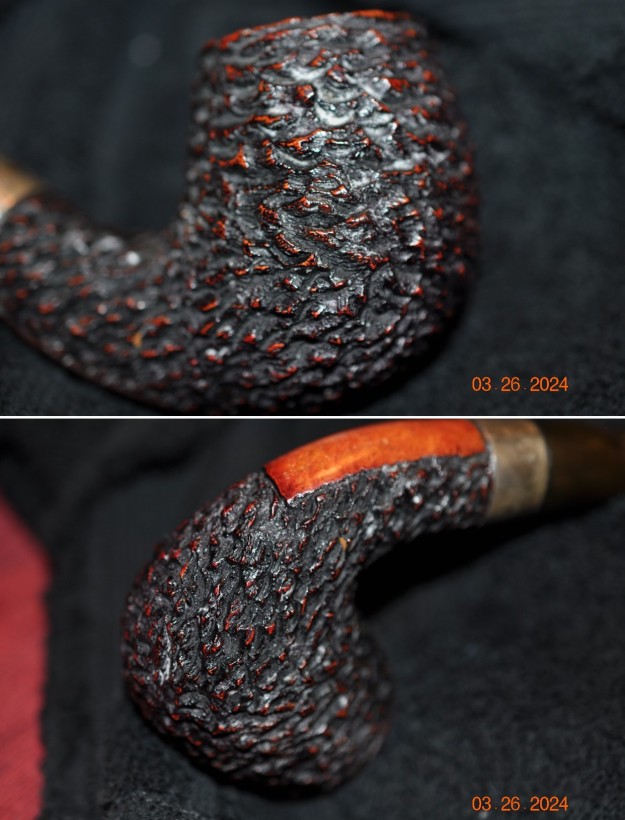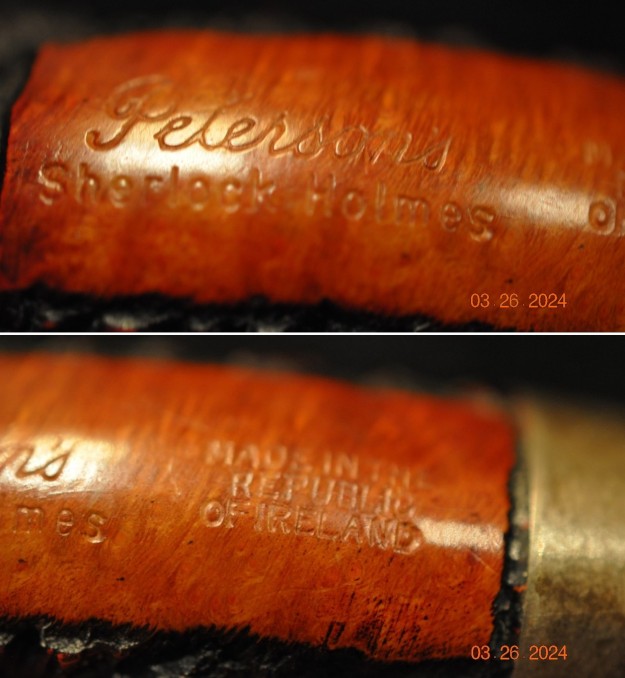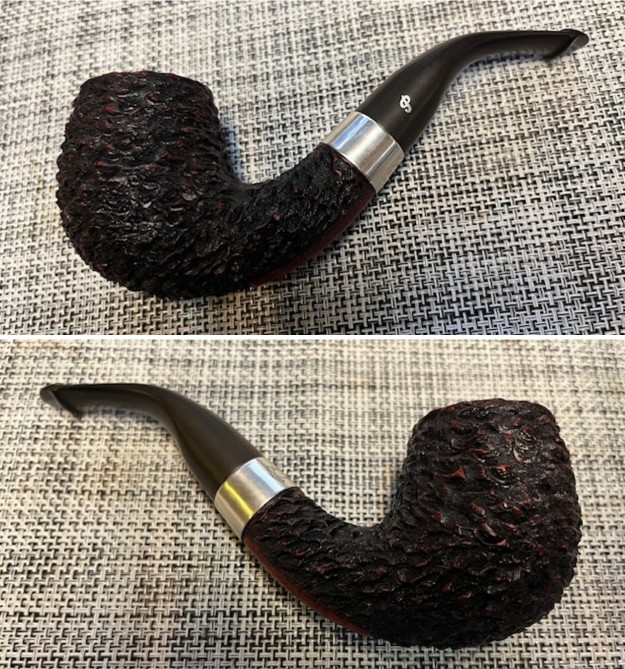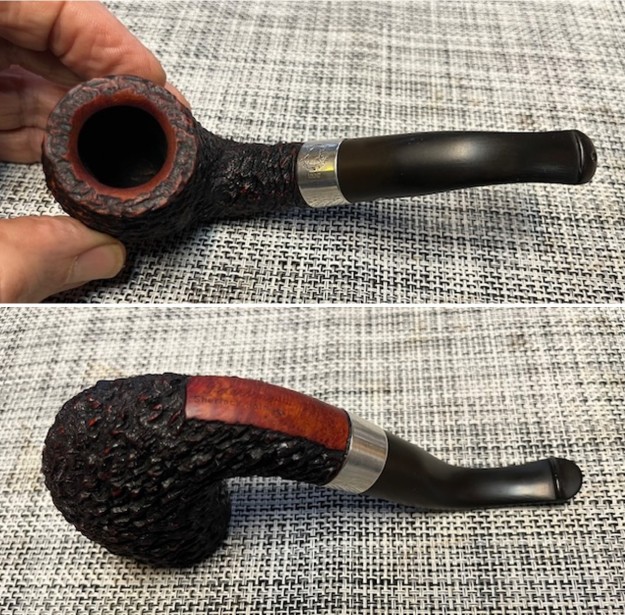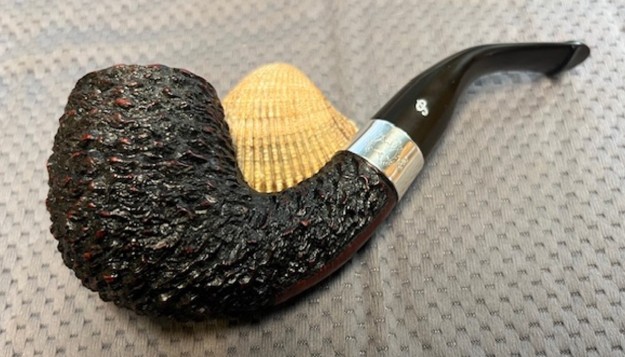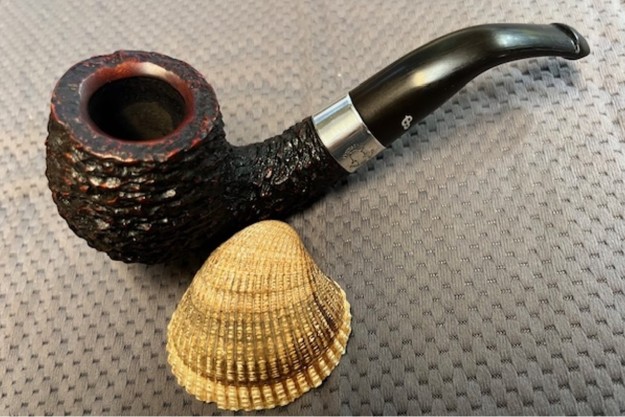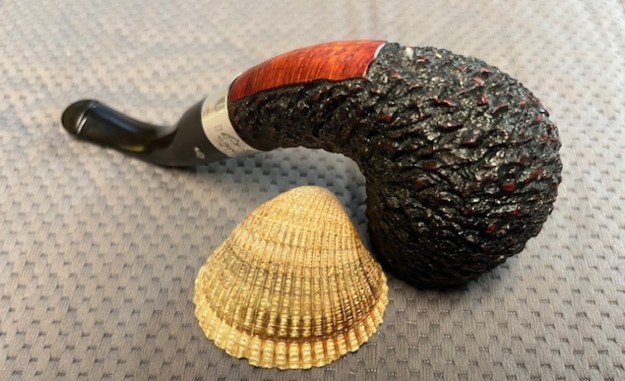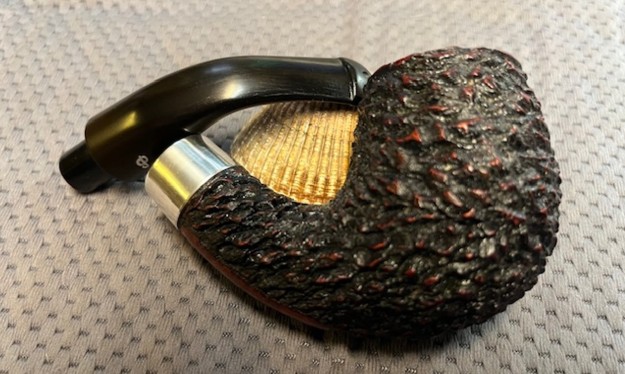
Tag Archives: Petersons Pipes

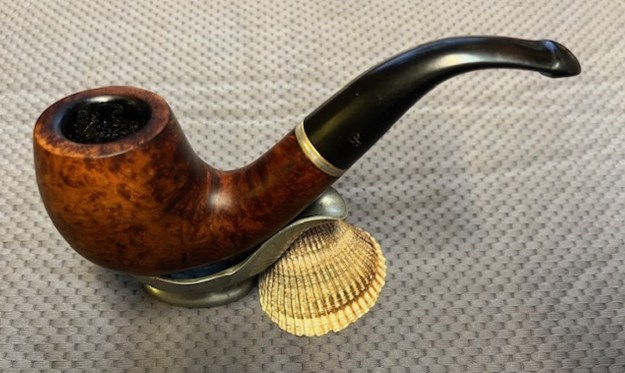
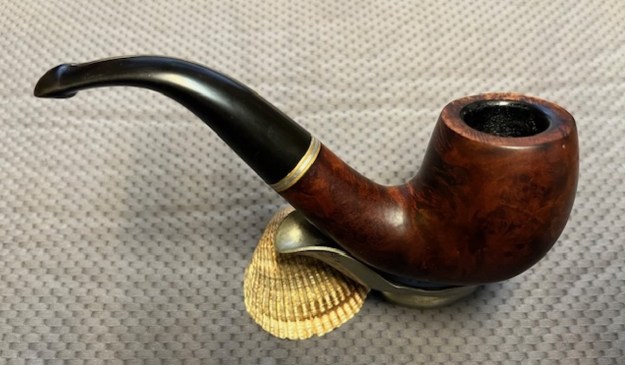
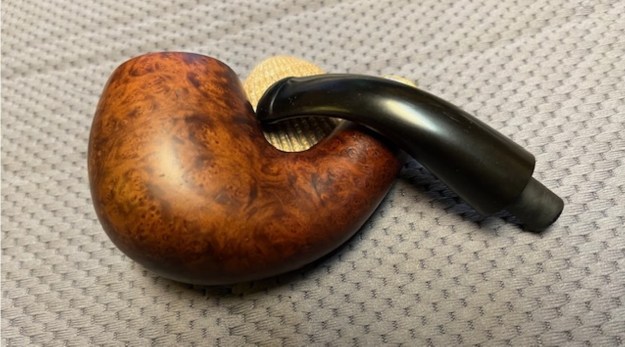
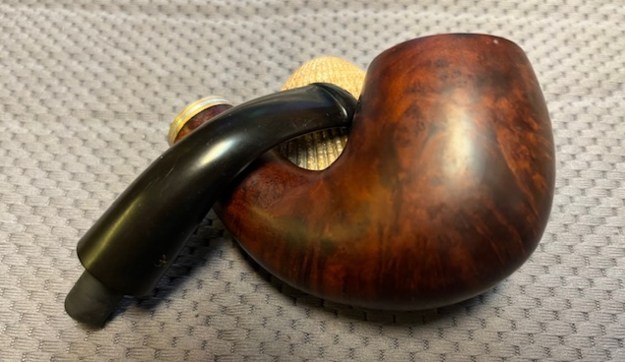
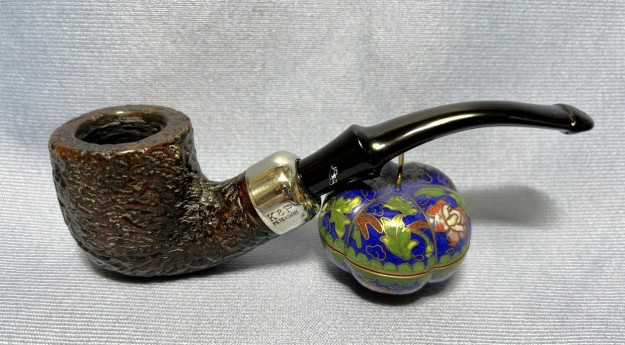
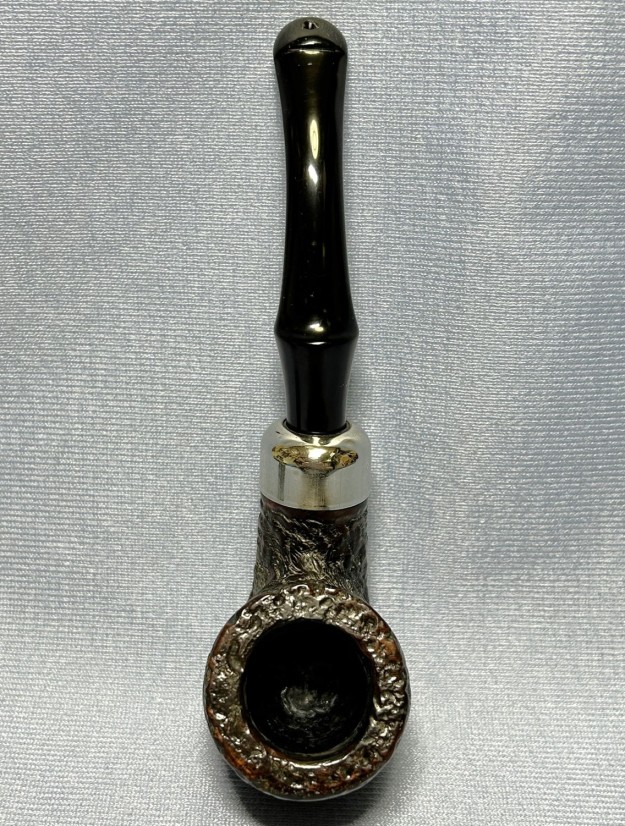
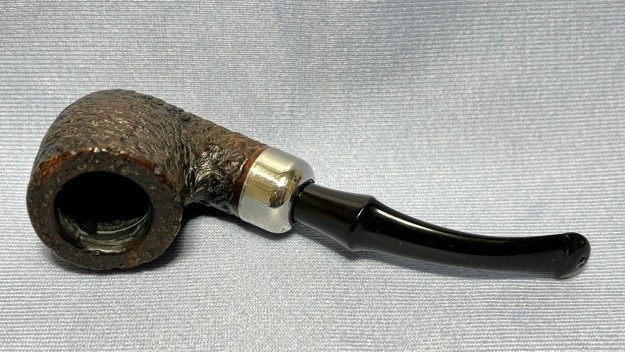
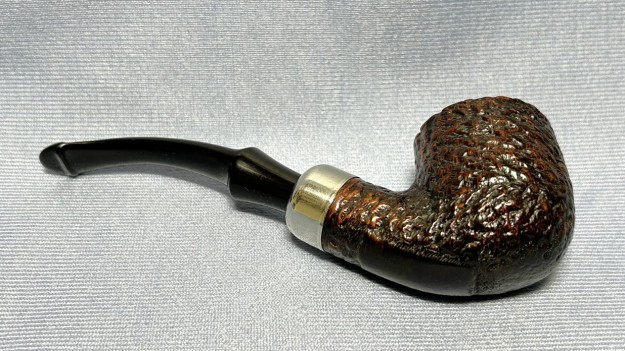
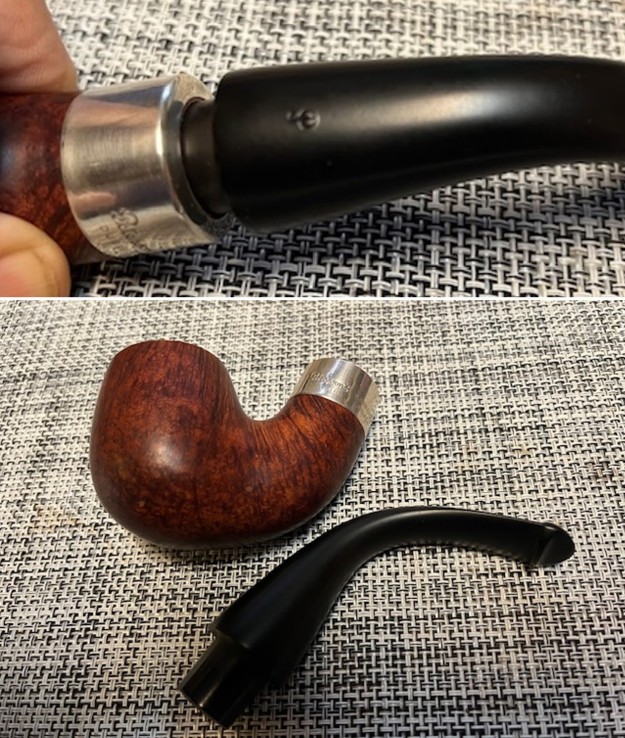
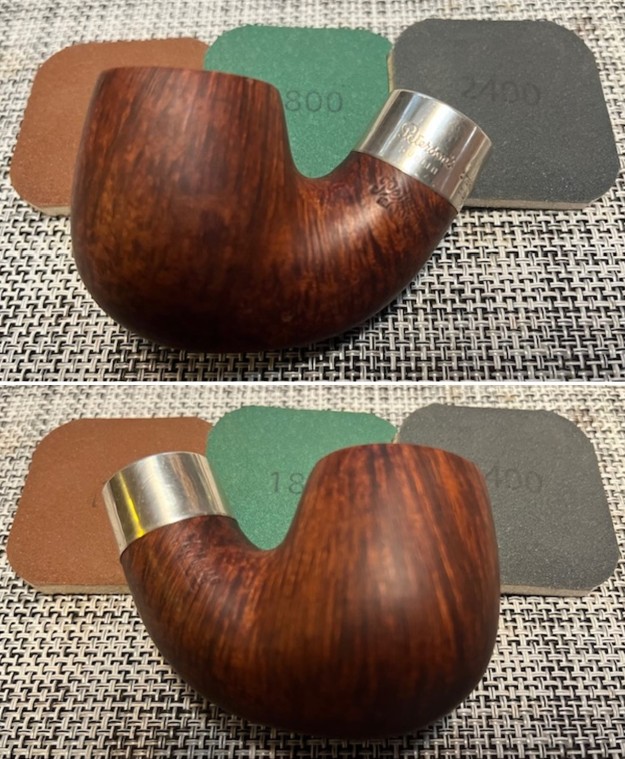
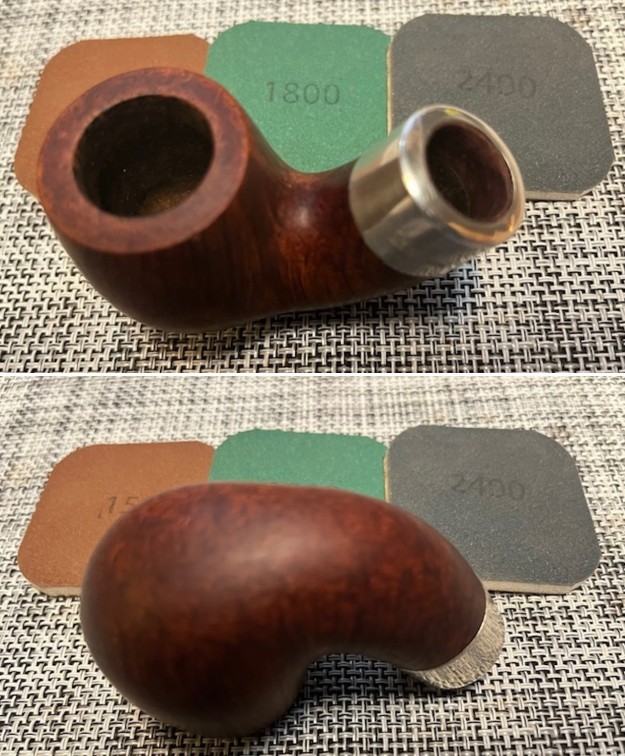
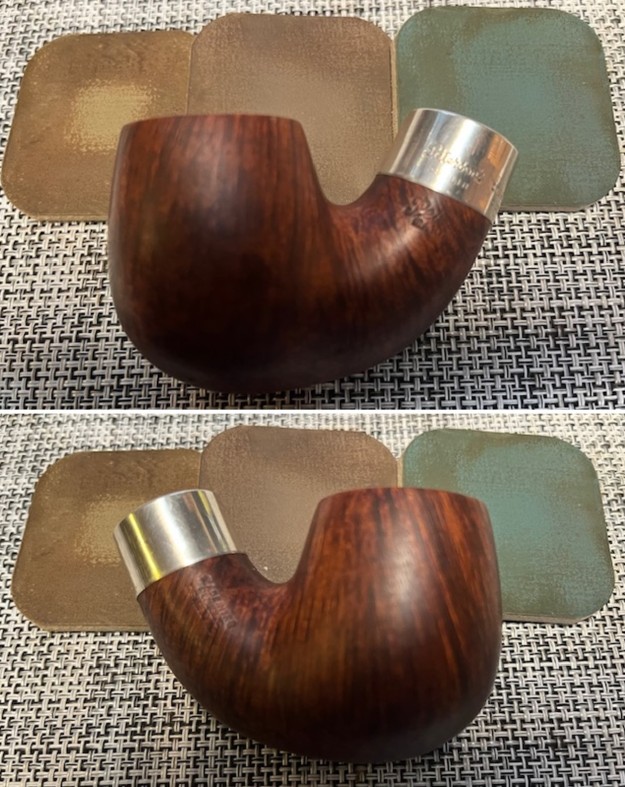
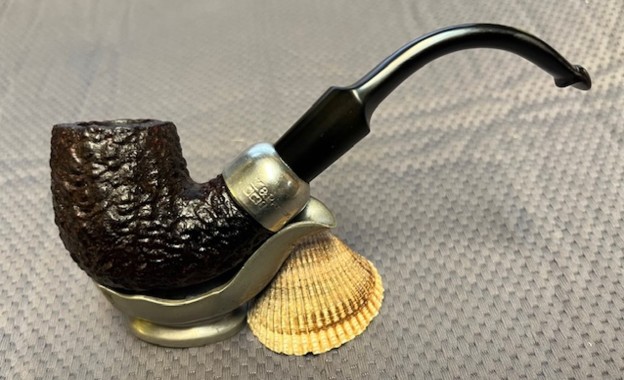
Restoring a Republic Era Peterson’s System Standard 302 Apple


Blog by Steve Laug

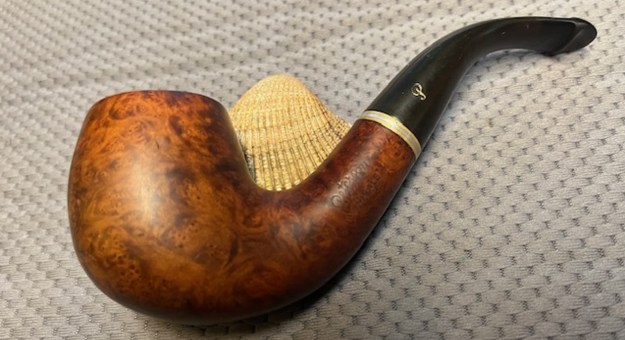
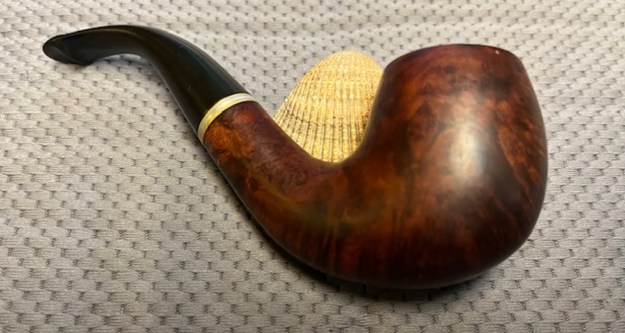
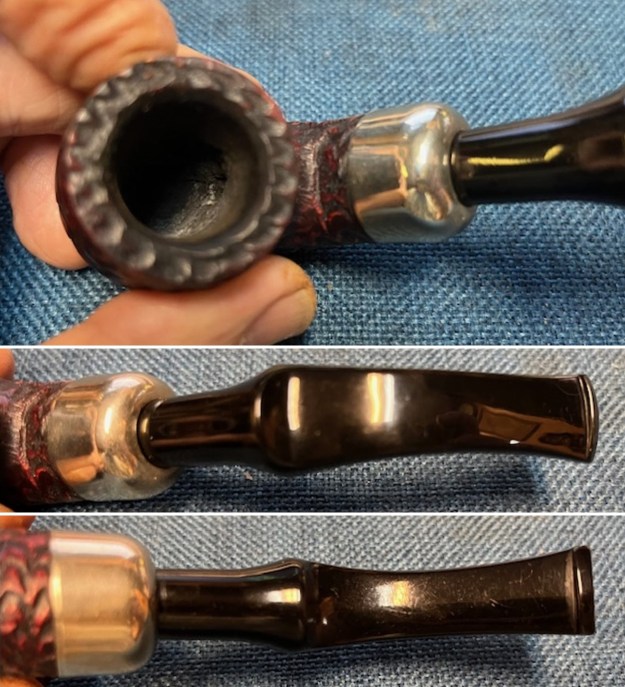
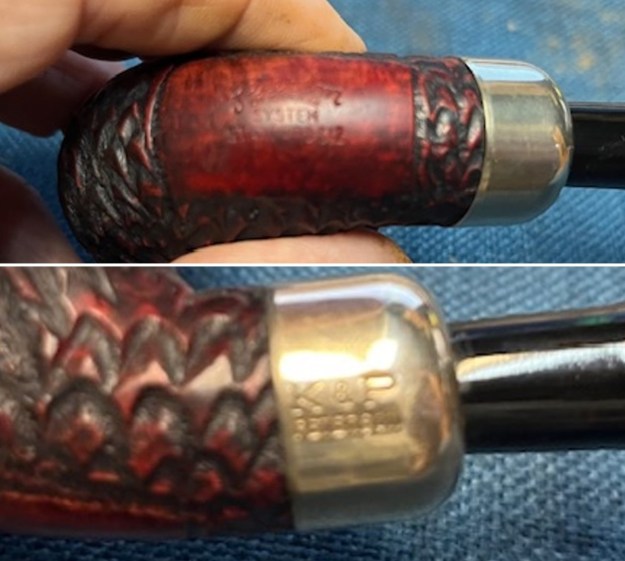
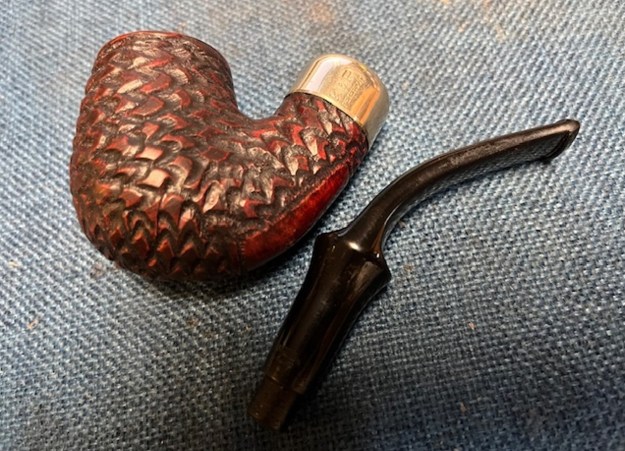
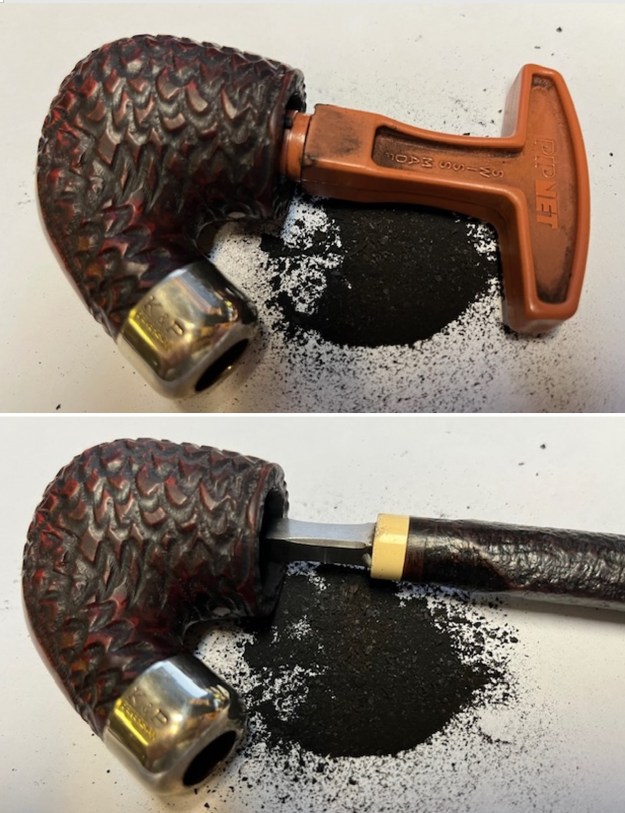
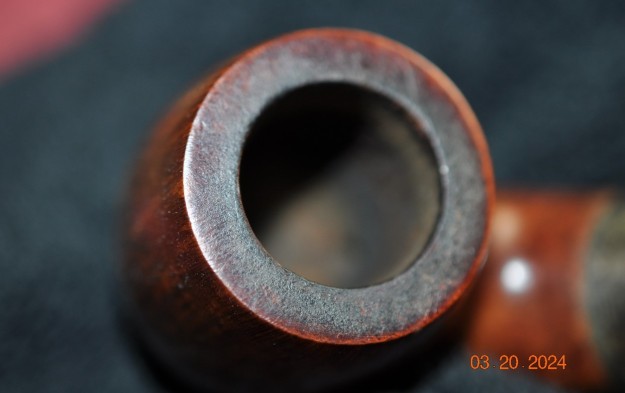
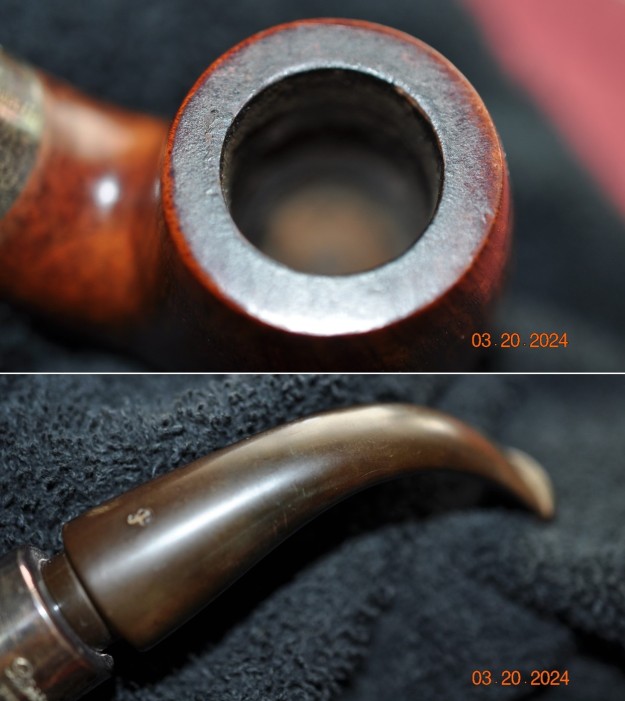
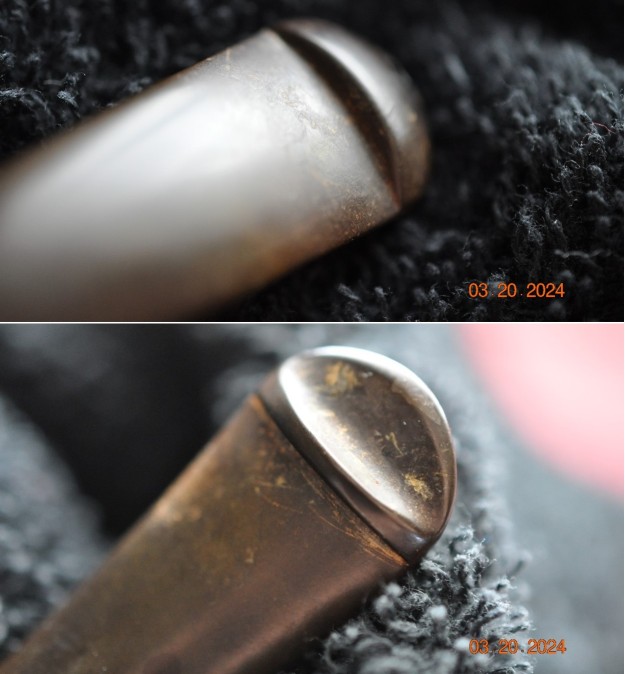
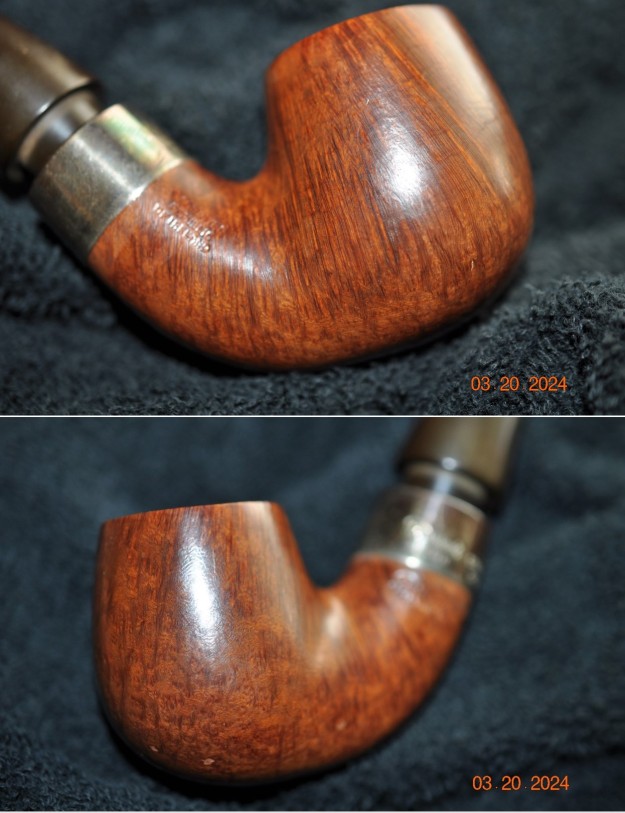
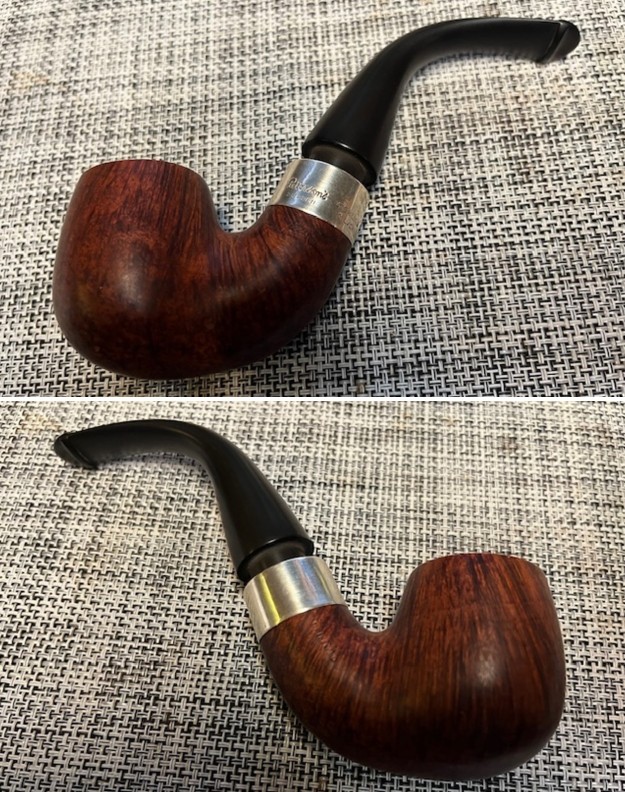
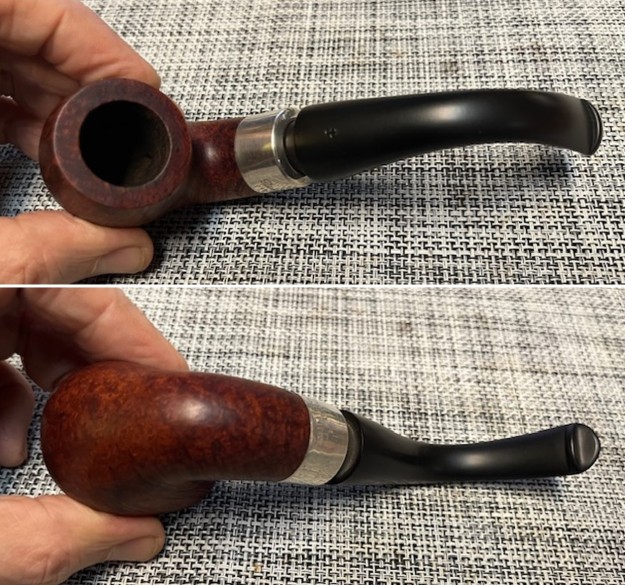
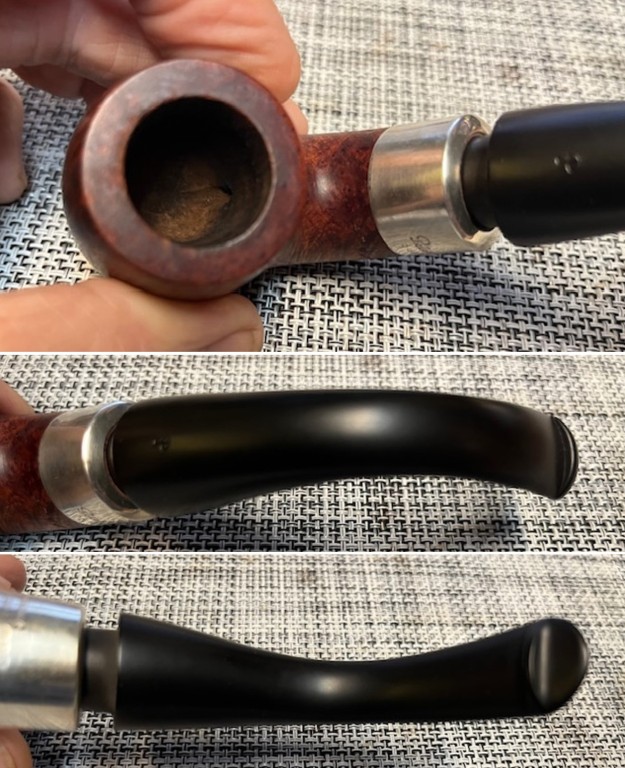
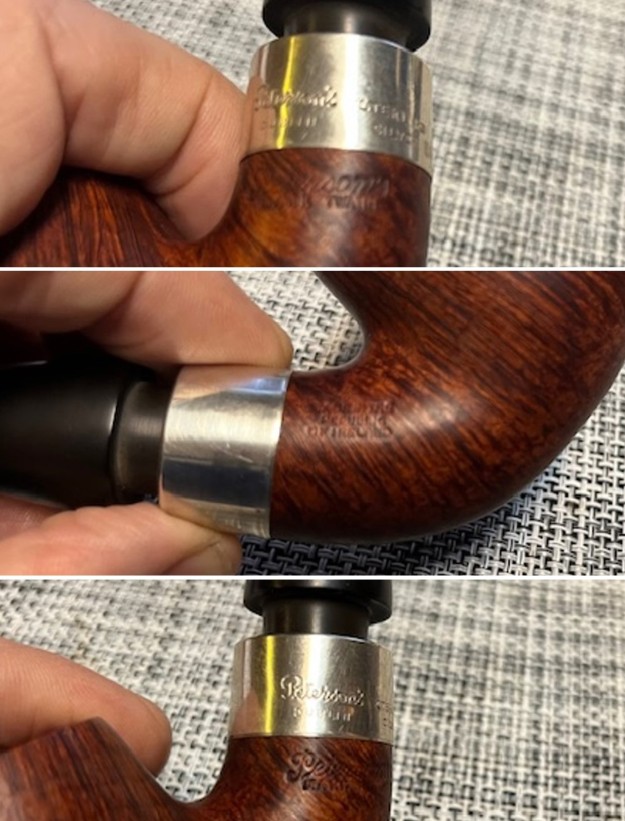
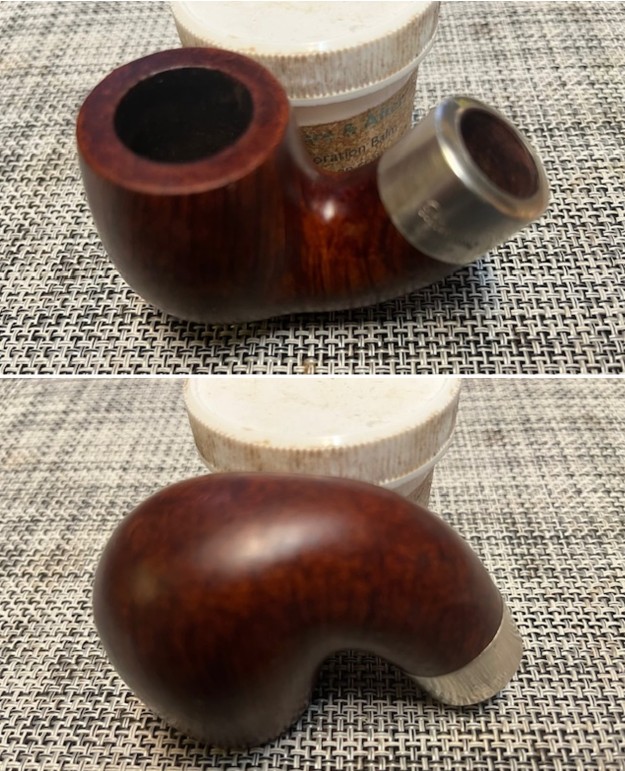
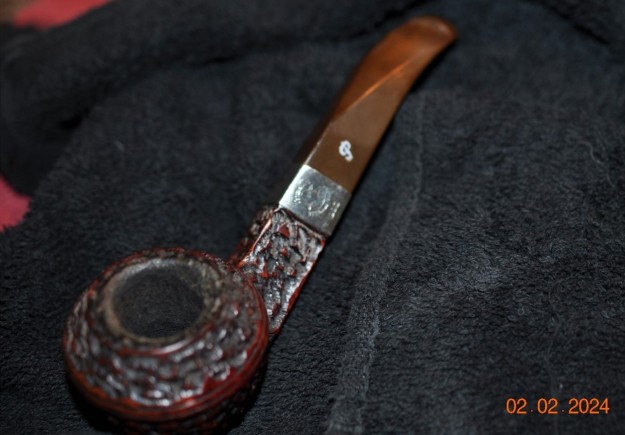
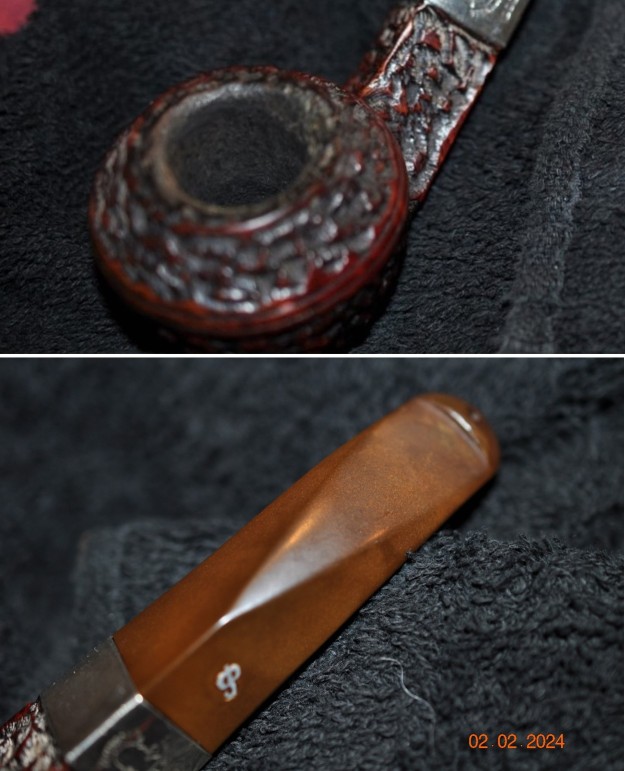
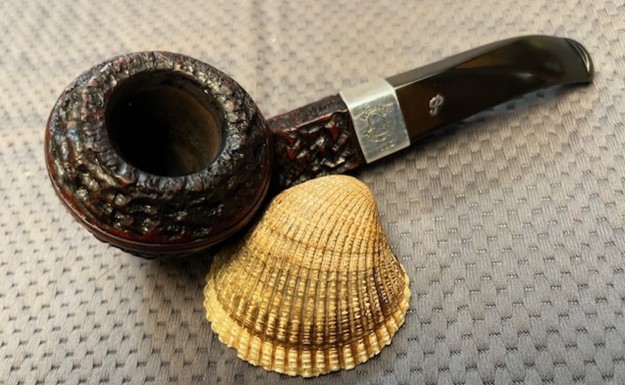
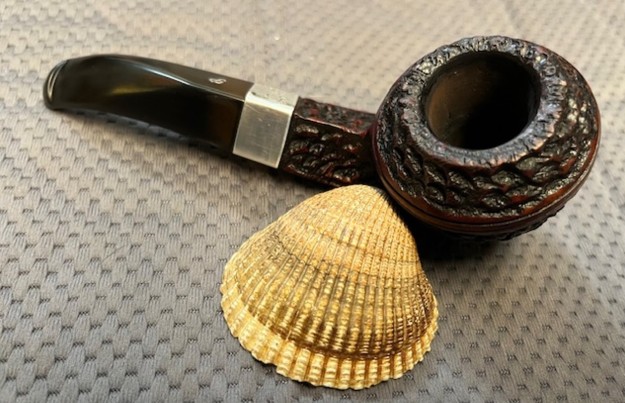
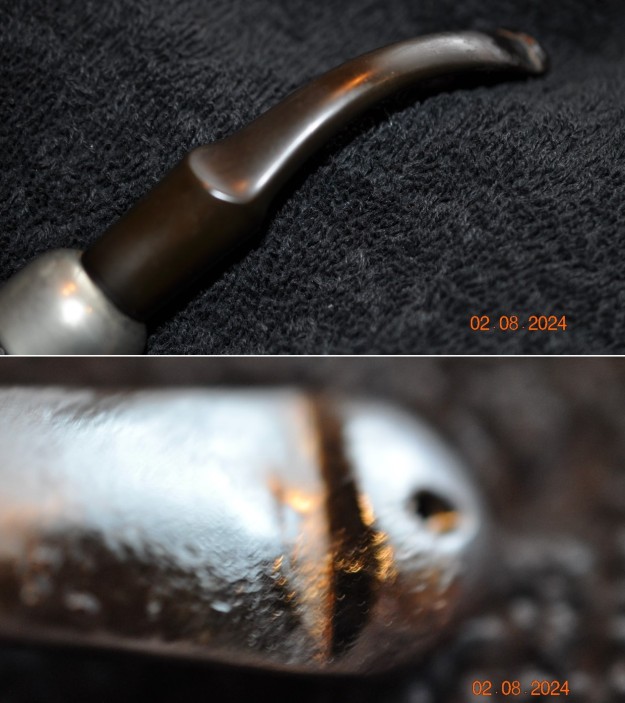
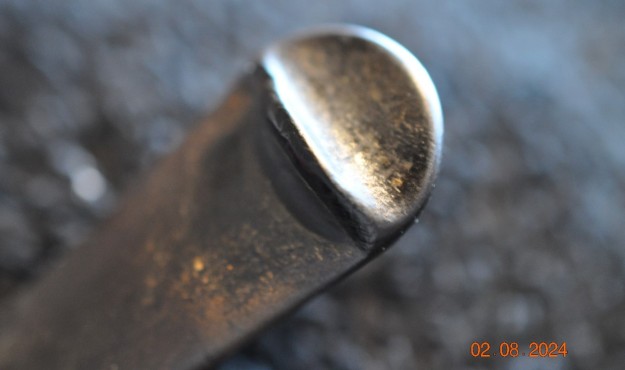
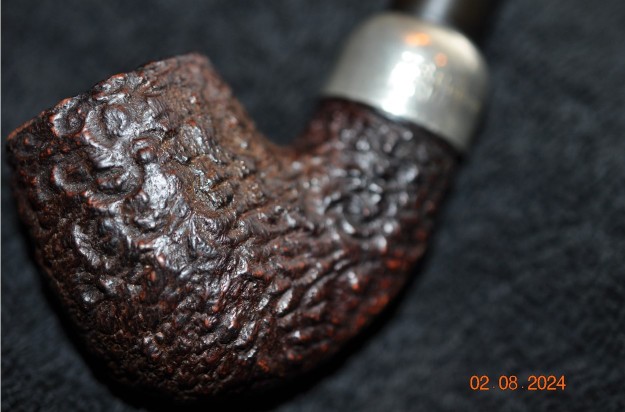
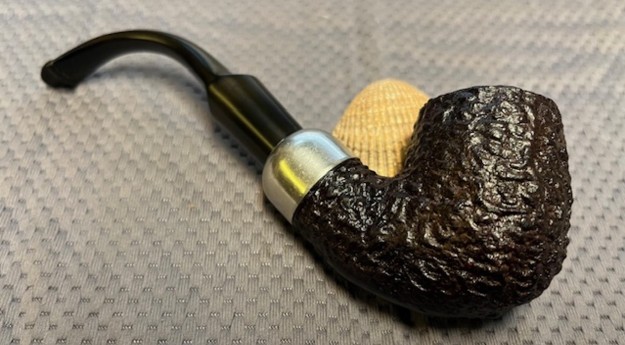
The next pipe I have chosen is another smooth finished Peterson’s System – this time a System Standard shape 302. It came to us from our source in Copenhagen, Denmark on 01/29/24. It had fishtail stem rather than a P-lip stem. The finish was smooth with some nice grain around the sides and shank. It was stamped on the left side of the shank and read Peterson’s [arched over] System [over] Standard. On the right side of the shank it was stamped Made in the Republic of Ireland (three lines) over the shape number 302. It was dirty with grime ground into the finish around the bowl and shank. There was a moderate cake in the bowl and some light lava spots on the rim top. The nickel ferrule was in good shape but had some scratches that would need to be polished. It is stamped as well and reads K & P [over] Peterson on the left. The vulcanite fishtail stem was unstamped and there was some oxidation, calcification and light chatter near the button that would polish out. Jeff took photos of the pipe before he started my work. He took photos of the rim top and stem to show the general condition of the pipe. The bowl is moderately caked and the rim top and edges have a spotty lava overflow. The stem looks good but it has light tooth marks on the top and underside near the button. He took photos of the sides and heel of the bowl to show the grain that was very visible around the bowl and shank. He took photos of the stamping on the shank sides and the ferrule. It read as noted above and was clear and readable. I am including the information from Pipedia’s article on Peterson pipes. It is a great read in terms of the history of the brand (https://pipedia.org/wiki/Peterson). I have included a bit of the pertinent history here.

1950 – 1989 The Republic Era – From 1950 to the present time, the stamp for this era is “Made in the Republic of Ireland” in a block format generally in three lines but two lines have been used with or without Republic being abbreviated.

During the 1950’s and 60’s the Kapp & Peterson company was still in the ownership of the Kapp family. However 1964 saw the retiral of the company Managing Director Frederick Henry(Harry) Kapp.

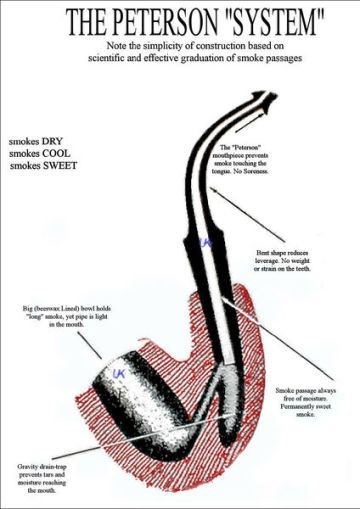
Pipedia also included a section of information on the System pipes including a diagram of the sytems look (https://pipedia.org/wiki/Peterson#Republic_Era_Pipes). I quote a section of the article in part and include a link to another article on Pipedia on the System pipe.

The Peterson System pipes are the standard bearers of the Peterson pipe family, famous for the excellent smoking pleasure they provide. Often imitated but never equalled, the Peterson System smokes dry, cool and sweet, thanks to the scientific effectiveness of the original design. The heart of the System is the unique graduated bore in the mouthpiece. This makes the suction applied by the smoker 15 times weaker by the time it reaches the tobacco chamber. The result is that all the moisture flows into the reservoir and, thus cannot reach the smoker’s mouth. The Peterson Lip further enhances the effectiveness of the graduated bore by directing the flow of smoke upwards and away from the tongue. This achieves a uniquely even distribution of smoke and virtually eliminates any chance of tonguebite or bitterness. Furthermore, the shape is contoured so that the tongue rests comfortably in the depression under the opening. Each “PLip” mouthpiece is made from Vulcanite. For the Peterson System pipes to work properly, the stem/tenon has to have an extension, the tip of which will pass by the draft hole from the bowl and into the sump. Upon the smoker drawing in smoke, this extension then directs the smoke down and around the sump to dispense a lot of the moisture before the smoke enters the extension and stem. On the System Standards and other less expensive systems, this extension with be made of Vulcanite turned integrally with the stem. On the more expensive System pipes this extension will be made of metal which screws into the Vulcanite stem. This extension on the earlier pipes will be of brass and the newer pipes will be of aluminium. Most smokers not knowing this function of the metal extension, assumes that it is a condenser/stinger and will remove it as they do with the metal condensers of Kaywoodie, etc. Should you have a System pipe with this metal extension, do not remove it for it will make the System function properly and give you a dryer smoke (https://pipedia.org/wiki/A_closer_look_at_the_famous_Peterson_Standard_System_Pipe).

With that information in hand I knew what I was dealing with in terms of the stamping and the age of this pipe. I knew from the information that the pipe was made during the Late Republic Era between 1950 and the present day. Personally I think this is probably a 60s-70s pipe. Now it was time to work on the pipe.

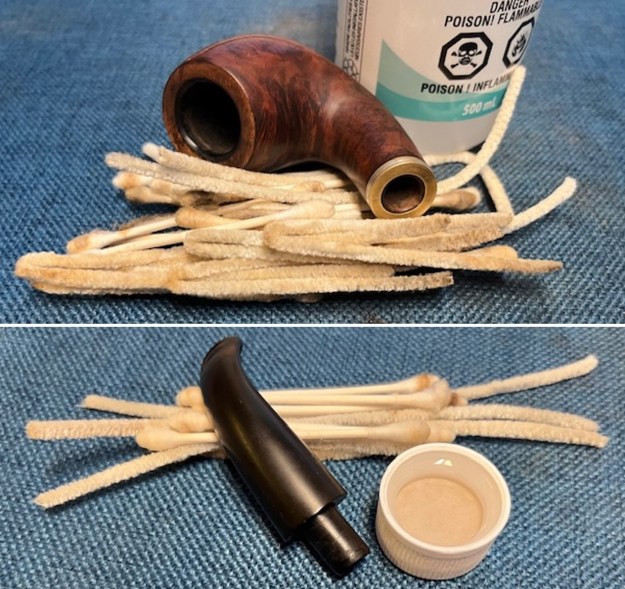
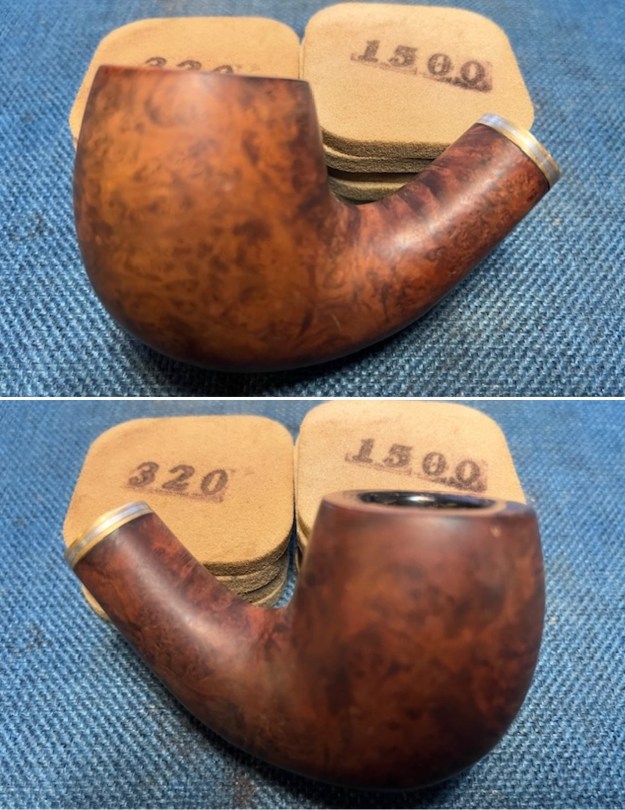
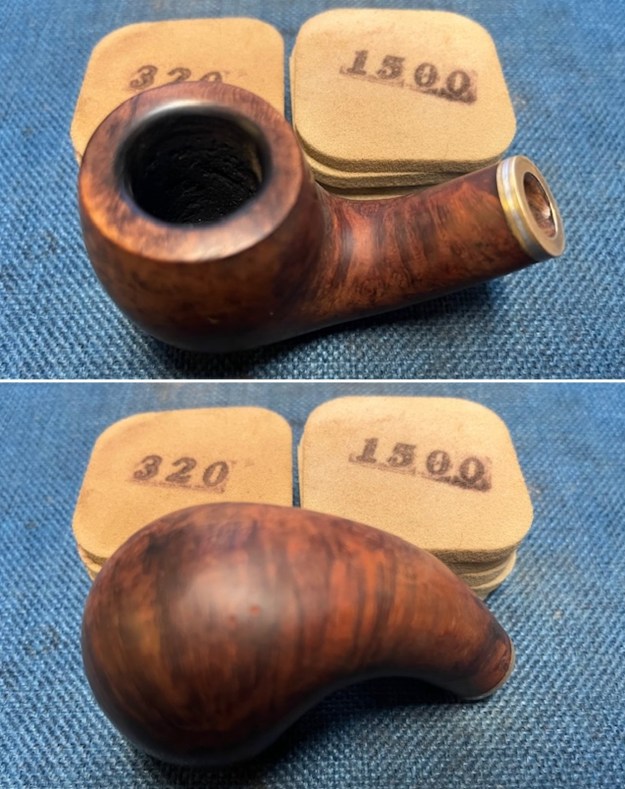
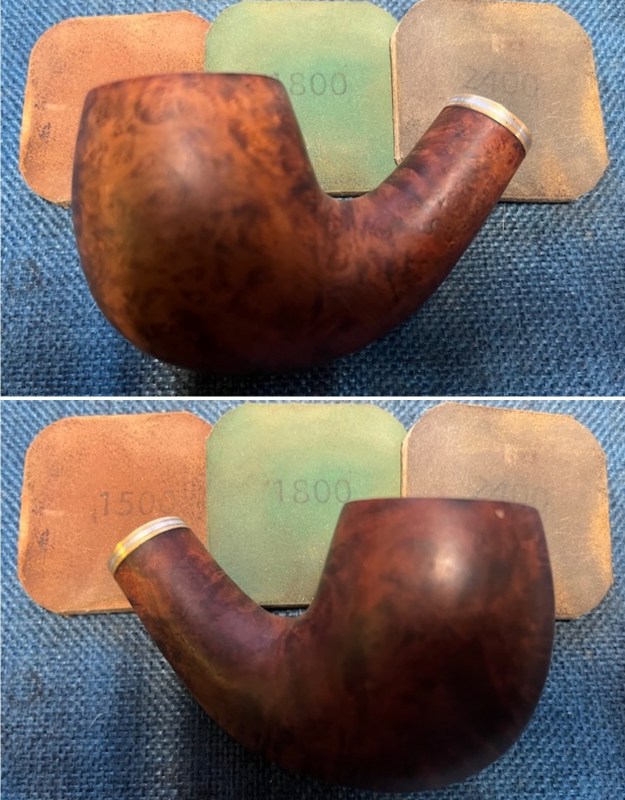
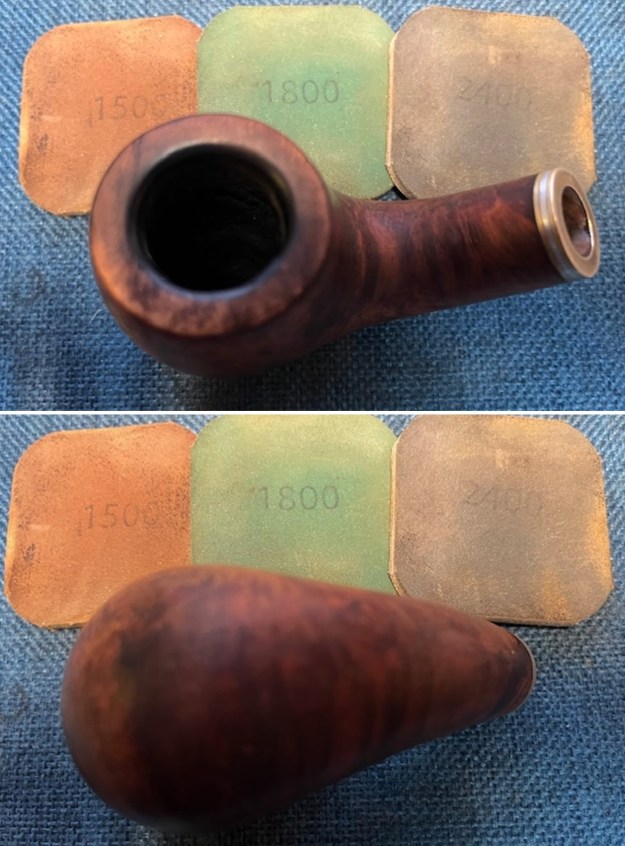
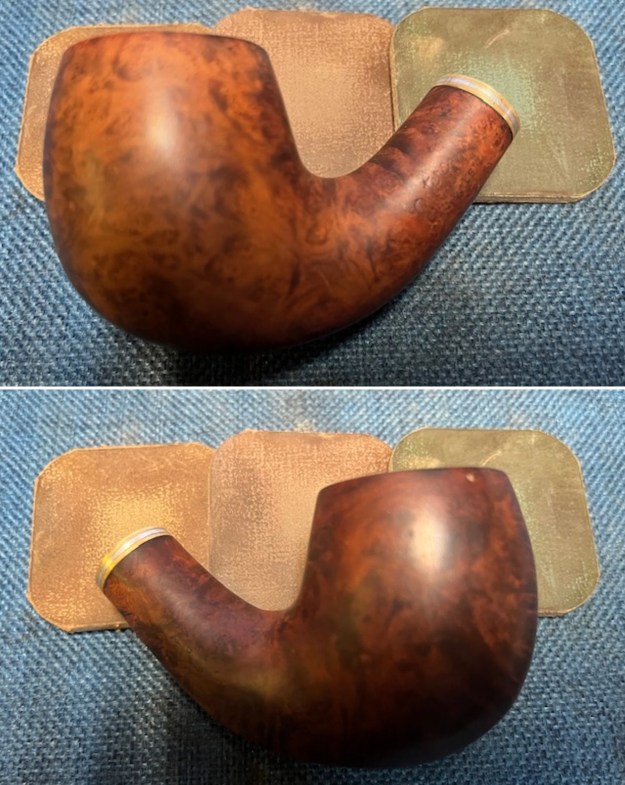
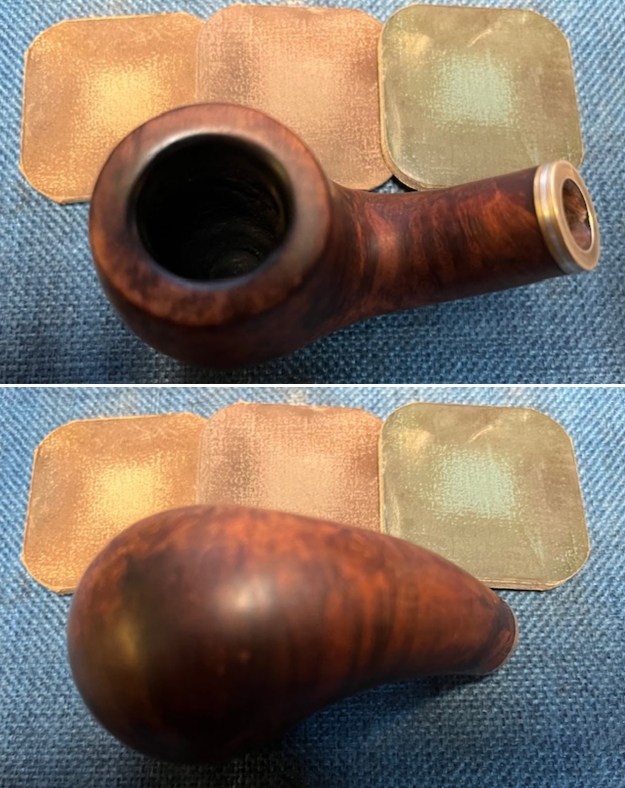
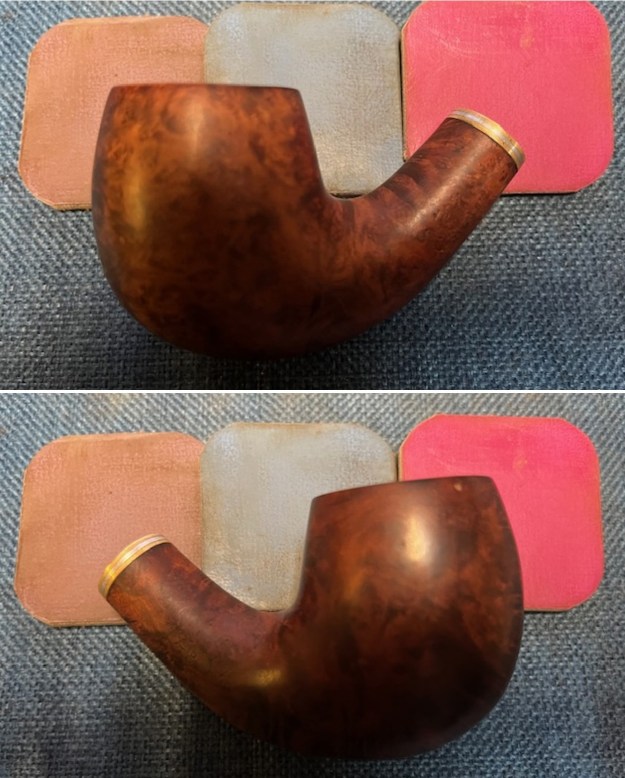
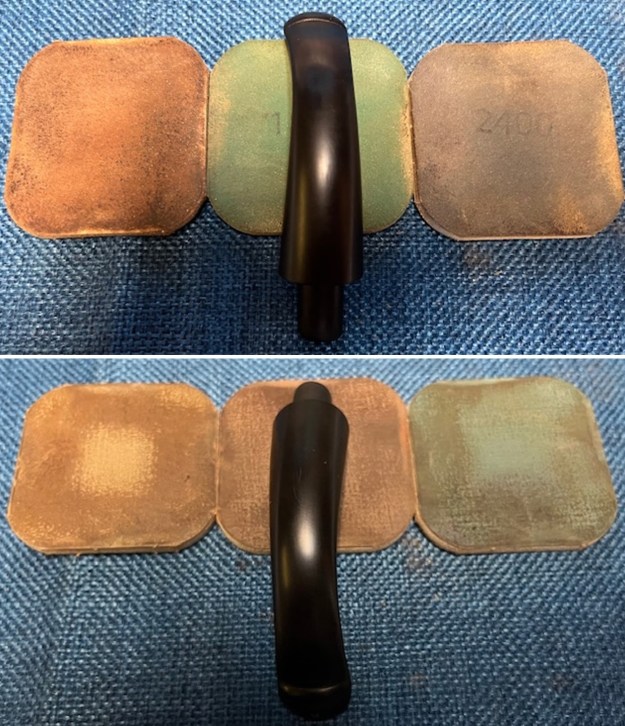
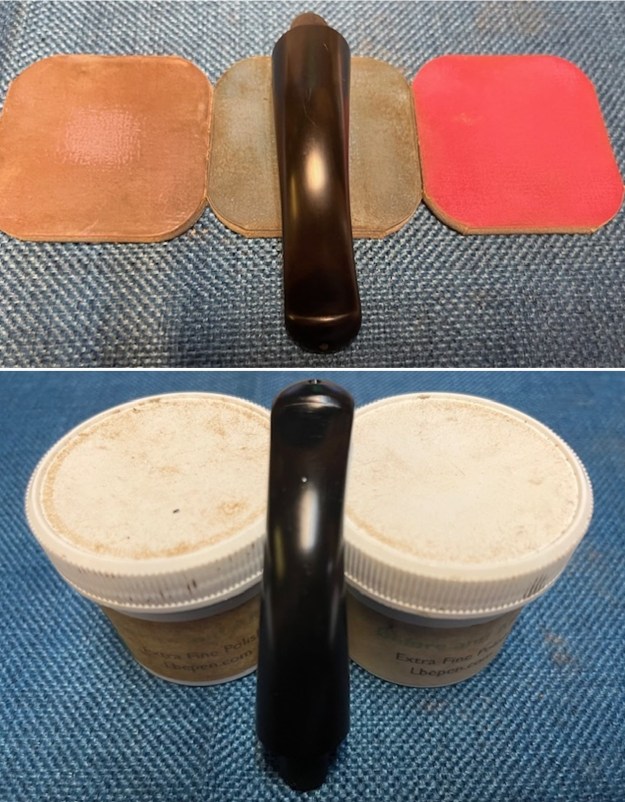
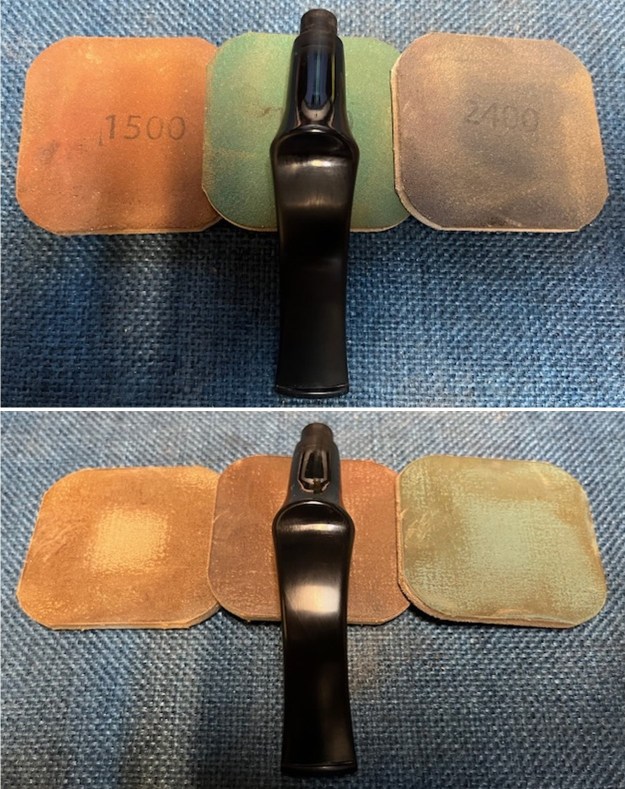
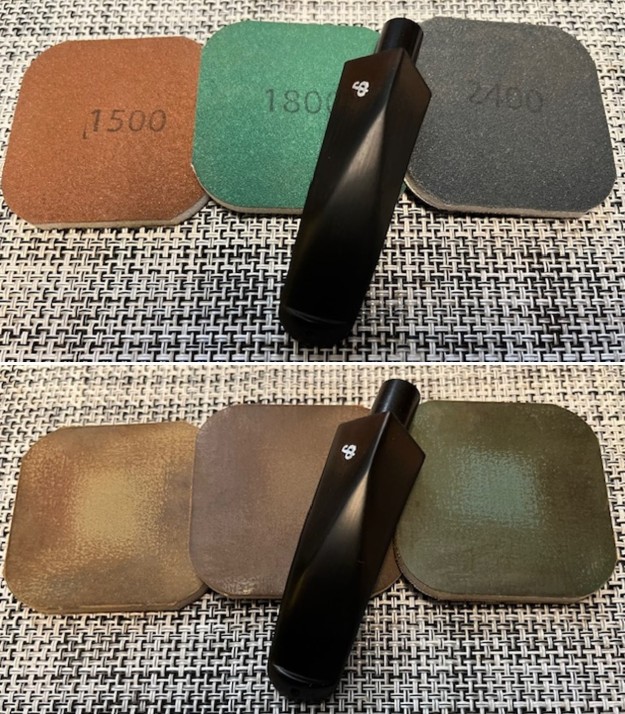
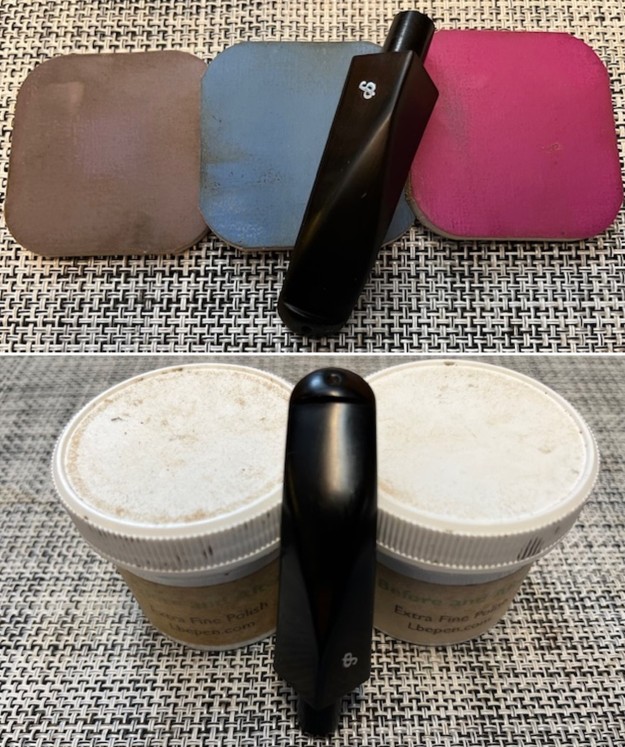
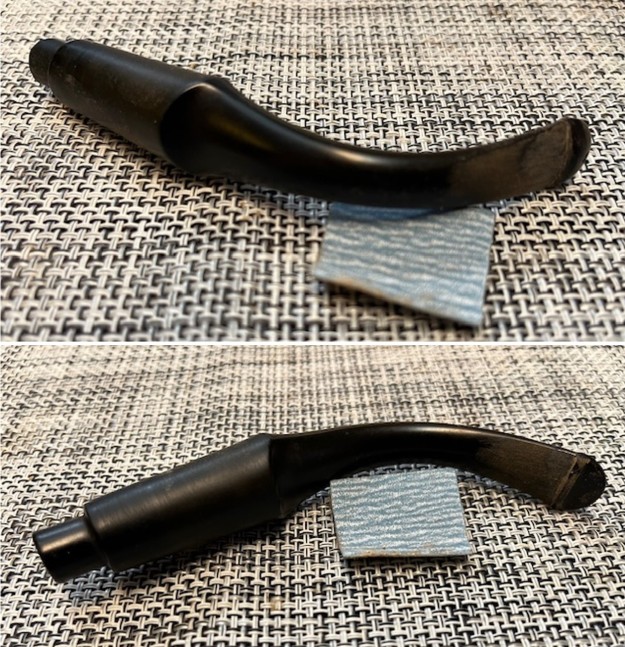
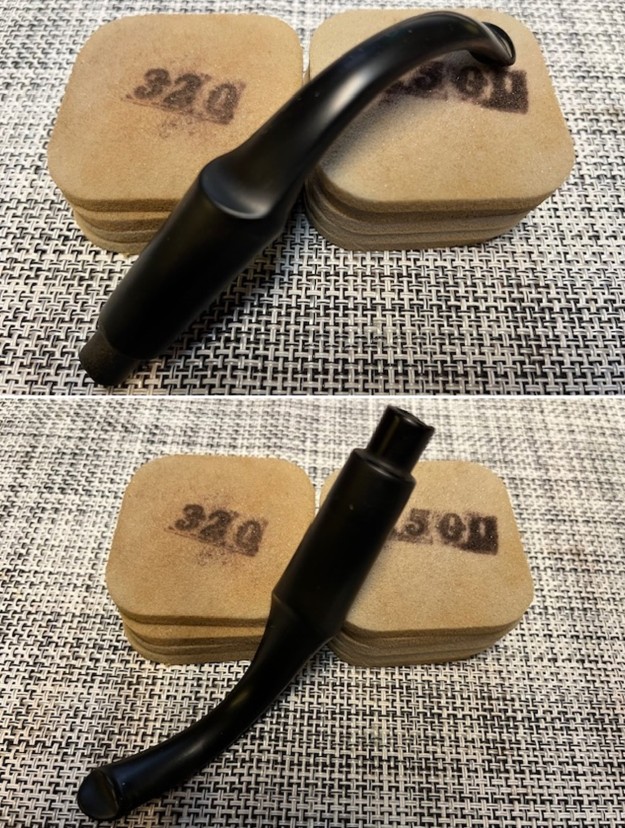
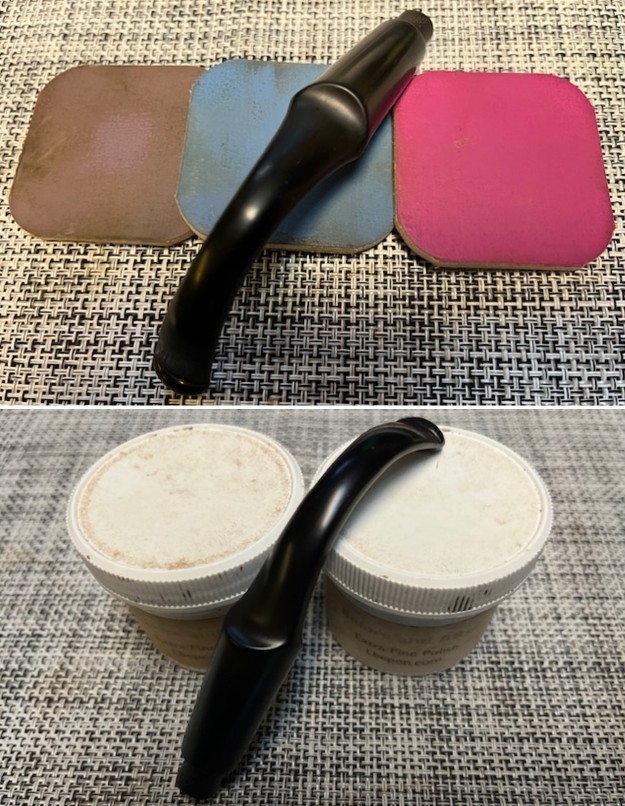
Jeff had cleaned up the pipe with his usual thoroughness. He reamed the pipe with a PipNet Pipe Reamer and cleaned up the remnants with a Savinelli Fitsall Pipe Knife.  He scrubbed the bowl with undiluted Murphy’s Oil Soap with a tooth brush. He rinsed it under running warm water to remove the soap and grime. He cleaned out the inside of the shank and the airway in the stem with alcohol, cotton swabs and pipe cleaners. He soaked the stem in Before & After Deoxidizer and rinsed it off with warm water. Somewhere along the way as it sat here it picked up some stickiness on the top of the stem that looks a lot like what is left behind by a gummed label. I took photos of the pipe 3 years later when I finally got around to working on it. As you can see it is another beautiful looking pipe. I took photos of the rim top and bowl as well as the stem to give a sense of the condition of both. The rim top and the inner edge had some darkening and burn damage on the inner edge on the back of the bowl. The stem was clean but had light tooth marks and chatter on the top and underside ahead of the button.I took photos of the stamping on the sides of the shank. They are clear and readable as noted above. I took the stem out of the shank and took a photo of the overall look of the pipe. It is another beauty. There are a few small dings from the journey of the pipe that will remain as a part of its story. I started my work on the pipe by working on the damage to the top and inner edge of the rim with a folded piece of 220 grit sandpaper. I was able to remove the darkening on the top completely but I also took care of the burn damage on the inner edge to give it a slight bevel. It looks much better. I worked the top and edge over with a 320 grit sanding sponge and wiped it down with a damp cloth. It looked much better. I polished the briar with micromesh sanding pads – wet sanding with 1500-12000 grit pads. I wiped the bowl down after each pad with a damp cloth. I rubbed the bowl down with Before & After Restoration Balm. I worked it into the surface of the bowl sides and shank with my fingertips. The product works to clean, enliven and protect the briar. I let the balm sit for a little while and then buffed with a cotton cloth to raise the shine. I polished the nickel ferrule with a jeweller’s cloth to protect and polish the metal. It really adds a sparkle to the metal ferrule. I set the bowl aside and turned to work on the stem. I polished the stem with micromesh sanding pads – 1500-12000 grit pads. I wiped it down with Obsidian Oil after each sanding pad. I used Before & After Pipe Polish – both Fine and Extra Fine to further polish the stem. I gave it a final coat of Obsidian Oil and set it aside to dry. This Republic Era Peterson’s System Standard 302 Bent Apple with a vulcanite, fish tail,  saddle stem is a great looking pipe now that it has been restored. The beautiful grain that shines through the polished finish is stunning. I put the stem back on the bowl and carefully buffed the pipe with Blue Diamond on the buffing wheel. I gave the bowl and the stem multiple coats of carnauba wax on the buffing wheel and followed that by buffing the entire pipe with a clean buffing pad. I hand buffed the pipe with a microfiber cloth to deepen the shine. The finished Peterson’s System Standard 302 fits nicely in the hand and feels great. Give the finished pipe a look in the photos below. The dimensions of the pipe are Length: 5 ½ inches, Height: 1 ½ inches, Outside diameter of the bowl: 1 ¼ inches, Chamber diameter: ¾ of an inch. The weight of the pipe is 69 grams/2.43 ounces. This pipe has been spoken for so it will soon be heading out with a couple of others that have been set aside for their new trustee. Thanks for reading this blog and my reflections on the pipe while I worked on it. There are many more to come!

Peterson’s Emerald Republic Era 03


Blog by Steve Laug

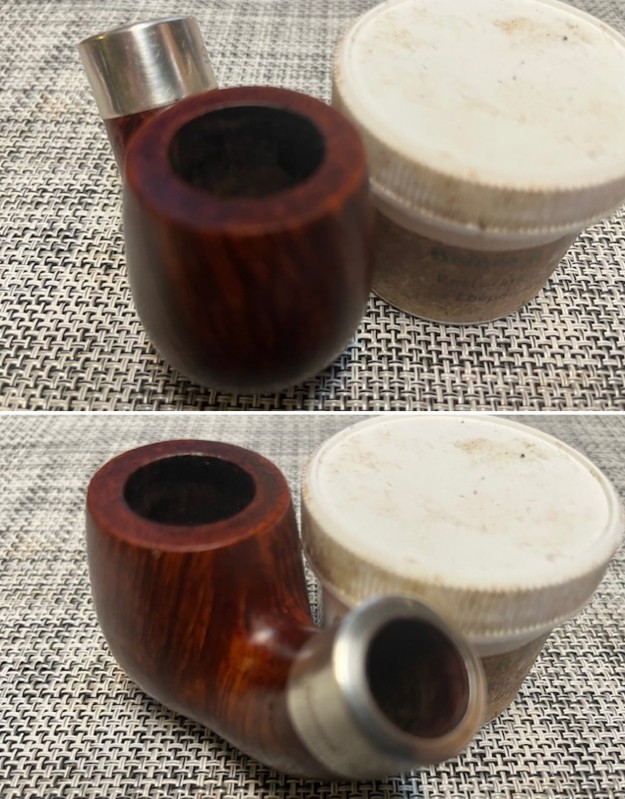
The next pipe on the work table is a lovely Peterson’s style briar pipe. We purchased it from a seller in Spring Branch, Texas, USA on 02/29/2024. It is a classic Peterson’s 03 shaped bowl. It has a smooth, rich brown stained bowl that really highlights the grain in the briar. The bowl is dirty with grime in the finish. There is a moderate cake in the bowl and a light lava overflow on the rim top and edges. The stamping on the pipe is clear and readable and on the left side it reads Peterson’s [over] Emerald. On the right side it reads Made in the Republic of Ireland (three lines) [followed by] the shape number 03. There is an interesting light green shank band sandwiched between two brass bands that adds distinguishing Emerald line touch to the pipe. The stem had a P logo stamped on the left side of the taper. It is oxidized, calcified and has tooth chatter and marks on both sides ahead of the P-lip button. Jeff took photos of the pipe before he started his cleanup. Jeff took photos of the rim top and stem to show the general condition of the pipe. The bowl is moderately caked and the rim top and edges have a light coat of lava overflowing on to them. The stem is oxidized, calcified and has tooth chatter and tooth marks on the top and underside near the button. Jeff took photos of the bowl sides and heel to show the condition of the finish around this bowl. It has some great grain. He took photos of the stamping on the shank sides. You can see that it is clear and reads as noted above. The P logo is also clear on the left side of the stem.I am including the information from Pipedia’s article on Peterson pipes. It is a great read in terms of the history of the brand (https://pipedia.org/wiki/Peterson). I have included a bit of the pertinent history here.

1950 – 1989 The Republic Era – From 1950 to the present time, the stamp for this era is “Made in the Republic of Ireland” in a block format generally in three lines but two lines have been used with or without Republic being abbreviated.

During the 1950’s and 60’s the Kapp & Peterson Company was still in the ownership of the Kapp family. However 1964 saw the retiral of the company Managing Director Frederick Henry (Harry) Kapp.

I knew that I was dealing with a Republic Era pipe made between 1950 and the present.

I turned to The Peterson Pipe book by Mark Irwin and Gary Malmberg for more information. On page 299 there was a summary of the Emerald Pipe. I quote

Emerald (1987-) Moderate-priced line in Bordeaux and black rustic finish with a shank band of green acrylic between brass rings, P-lip mouthpiece; smooth walnut version added in ’91. Fishtail mouthpiece added in ’97. Identical line and finishes named Jade from early eighties until ’87.

This information narrowed down the date even further. The smooth walnut finish was added in 1991 so this one came out after 1991 and has a P-lip style mouth piece. Now it was time to work on the pipe.

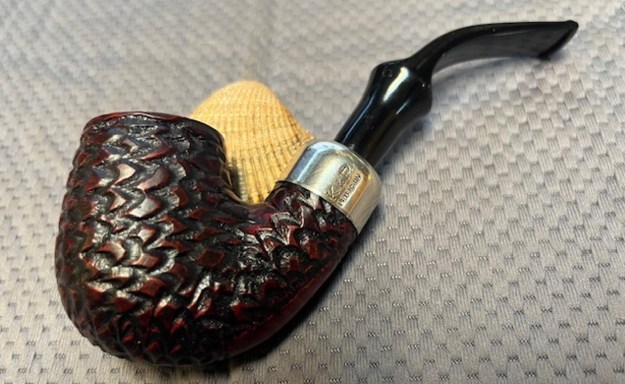
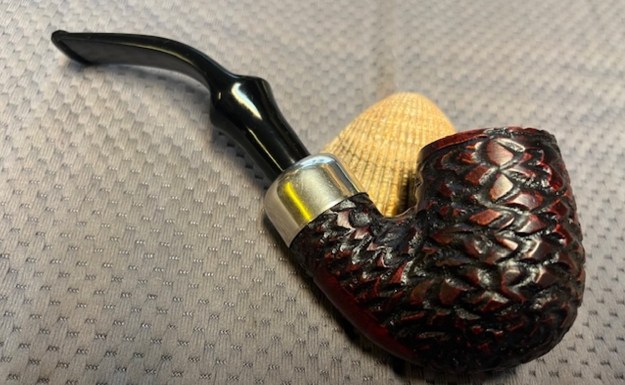
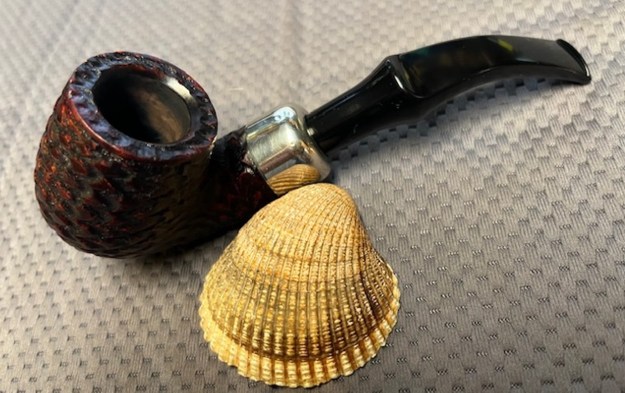
Jeff had done a great job cleaning up the pipe as usual. He reamed the pipe with a PipNet reamer and cut back the cake back to the bare briar. He cleaned up the walls with a Savinelli Fitsall Pipe Knife. He scrubbed the interior of the bowl and shank with pipe cleaners, shank brushes, cotton swabs and alcohol to remove the tars and oils. He scrubbed the exterior of the pipe with Murphy’s Oil Soap and a tooth brush to remove the grime from the finish. He worked on the rim top lava and darkening with the soap and tooth brush. He scrubbed the inside of the stem with alcohol and pipe cleaners. He scrubbed the exterior with Soft Scrub and then soaked it in Briarville’s Pipe Stem Deoxidizer. He washed it off with warm water to remove the Deoxidizer. The pipe looked very good when it arrived. I took close up photos of the rim top and the stem surface. I wanted to show how well it had cleaned up. The rim top looked very good. The bevelled inner edge was in excellent condition. I took photos of the stem to show the light chatter and tooth marks on the surface ahead of the button.I took photos of the stamping on the sides of the shank. You can see that it is stamped as noted above. It is clear and readable. I took the pipe apart and took a photo of the pipe. It is a good looking pipe and has some great grain around the bowl and shank. I polished the briar with micromesh sanding pads – dry sanding with 1500-12000 grit pads and wiping the bowl down after each sanding pad. The grain really began to shine through. It is a beautiful pipe. I worked some Before & After Restoration Balm into the surface of the briar with my fingertips to clean, enliven and protect the briar. I let the balm sit for 15 minutes and then buffed with a cotton cloth to raise the shine. The photos show the bowl at this point in the restoration process. I set the bowl aside and worked on the stem. I touched up the gold P stamp on the left side of the stem with some Rub’n Buff Antique Gold. I pressed it into the stamp with a tooth pick and wiped it off with a soft cotton pad.I sanded out the light tooth marks and chatter in the surface and the button edges with 320-3500 grit sanding pads. I wiped it down after each pad with a cloth impregnated with Obsidian Oil to preserve and remove debris. I polished the stem with micromesh sanding pads – wet sanding with 1500-12000 grit sanding pads. I wiped it down after each sanding pad with Obsidian Oil. I polished it with Before & After Pipe Stem Polish – both Fine and Extra Fine. I am excited to finish this Republic Era Peterson’s Emerald 03 Bent Apple.  I put the pipe back together and buffed it with Blue Diamond on the buffing wheel. I gave the bowl and the stem multiple coats of carnauba wax. I buffed the pipe with a clean buffing pad to raise the shine and hand buffed it with a microfibre cloth to deepen the shine. It is fun to see what the polished bowl looks like with the polished triple brass and emerald acrylic band and the black vulcanite stem. It is a real beauty. This Classic Peterson’s Emerald 03 feels great in my hand. It is light and well balanced. Have a look at it with the photos below. The dimensions are Length: 5 inches, Height: 1 ½ inches, Outside diameter of the bowl: 1 ¼ inches, Chamber diameter: ¾ of an inch. The weight of the pipe is 53 grams/1.83 ounces. It is a beautiful pipe and one that will be on the Irish Pipe Makers Section of the rebornpipes store soon. If you are interested in adding it to your collection let me know. Thanks for walking through the restoration with me as I worked over this pipe. Thanks to each of you who are reading this blog.

Restoring the second Antique Collectible Find – a GT&Co Peterson’s System Standard 1307


Blog by Steve Laug

Last weekend on April 27 Kenneth and I went to an antique and collectible sale at an arena in New Westminster, BC, Canada. I wrote about the adventure and posted it in a previous blog last weekend (https://rebornpipes.com/2024/04/28/you-have-to-join-kenneth-and-me-on-a-great-morning-pipe-hunt/). On the hunt I picked up four pipes that I have listed below:

  1. Jeantet Fait Main Bent Freehand Dublin 4 with a diamond shank
  2. Jeantet Fait Main Bent Apple 9 with a uniquely shaped shank and stem
  3. Republic Era Peterson’s System Pipe 1307 Bowl sans stem
  4. Brigham Made in Canada 625 Squat Straight Bulldog

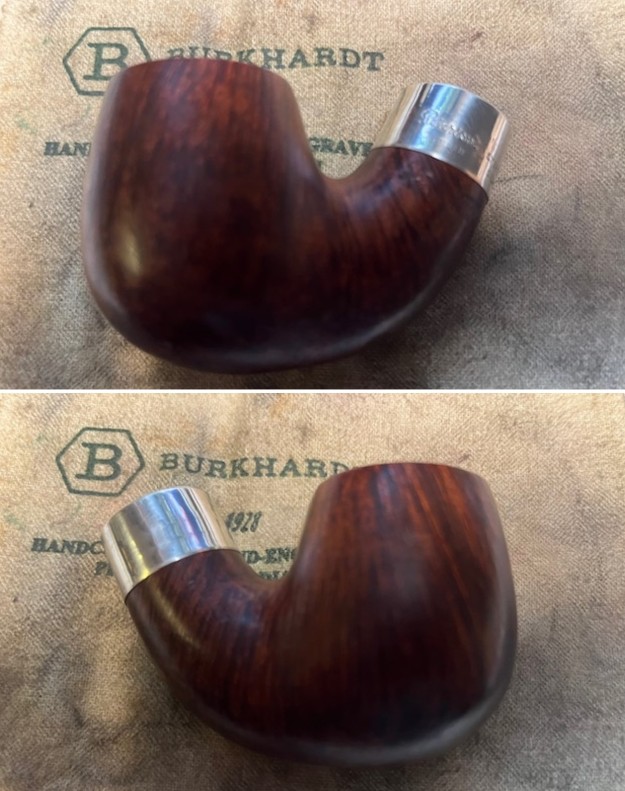
I have included photos of the foursome below. They are in the order of the list above. I chose to work on the third pipe in the above photos. It is shown in the photos below and is Peterson’s with a forked tail [over] System [over] Standard on the left side of the shank. On the right side of the shank it is stamped Made in the Republic of Ireland (in three lines) [over] 1307 the shape number. There is a very clean nickel ferrule that is stamped on the left side and reads K&P over Makers Marks which makes it pre-circa 1963.The three symbols are a Shamrock, a Wolfhound and a Tower without a door. That is followed by the stamping Peterson’s. The pipe has some great grain around the bowl sides and shank. The rim top is flat and the edges look good. The bowl had a moderate cake on the walls and a light lava coat on the rim top and edges of the bowl. The briar has some grime and grit ground into the briar. There was no stem so I would need to fit a new one on the bowl. The photos below show what I saw when I examined the pipe. I took photos of the stamping on the undersides of the shank. It reads as noted above. It is faint in spots but is still very readable. I took the stem off and took a photo of the parts to give a sense of the size of the bowl.I have included the information on the shape number on this pipe that I picked up on researching the other pipes. It is a Peterson’s System Standard pipe with a 1307 shape number. The 307 is identical in shape, size and marking. I started my hunt for information by turning to a Peterson Catalogue that I have on rebornpipes and looked up the System Standard pipes (https://rebornpipes.com/tag/peterson-hallmark-chart/). I have put a red box around the 307 shown in the catalogue page shown below. That should give a clear picture of the size and shape of the pipe. But there was nothing to give me any information on what number 1 meant in the shape number 1307 that I am working on. Since this is stamped with the same “1” as previous Peterson pipes that I have worked on I turned to the blog and had a look. I am including the information on the unique numbering. Mark pointed me in the direction that I needed. I quote the pertinent part of his email. The underlined portion was the clue I was looking for on this pipe. I have already cleaned up several of Bob’s pipes that were sold through GT&C (Genin, Trudeau and Company, Montreal, Quebec).

The index at the back of the book is pretty good, and points you to all the GT&C goodies, but 155 has a photo from the catalog with your 1307, while 318 and 323 explain the rationale for the “1” prefix. In a nutshell, just drop the “1” and you’ve got the shape. My theory is that GT&C added this to aid them in warranty work, so they’d know the pipe was bought on Canadian soil.

I turned then to a previous blog I had written on a Kapruf 54 that had an odd shape number stamp and referred to the Canadian numbering system used by GT&C. Here it the link to that blog (https://rebornpipes.com/2019/08/09/back-to-bob-kerrs-estate-another-canadian-import-petersons-kapruf-a-54/). In the blog I included a link to a blog I did on the GT&C Catalogue that came to me in some paperwork the family gave me. I have included the cover of the catalogue and the page on the system pipes showing the 1312 shape. I have put a red box around the shape for ease of reference (https://rebornpipes.com/2016/09/13/petersons-pipes-brochure-from-genin-trudeau-co-montreal-quebec/). Be sure to check out the rest of the document on the link.

The GT&C Catalogue combined with the earlier Peterson Pipe Catalogue page make the link definitive. I am also including the information from Pipedia’s article on Peterson pipes. It is a great read in terms of the history of the brand (https://pipedia.org/wiki/Peterson). I have included a bit of the pertinent history here.

1950 – 1989 The Republic Era – From 1950 to the present time, the stamp for this era is “Made in the Republic of Ireland” in a block format generally in three lines but two lines have been used with or without Republic being abbreviated.

During the 1950’s and 60’s the Kapp & Peterson company was still in the ownership of the Kapp family. However 1964 saw the retiral of the company Managing Director Frederick Henry(Harry) Kapp.

Pipedia also included a section of information on the System pipes including a diagram of the sytems look (https://pipedia.org/wiki/Peterson#Republic_Era_Pipes). I quote a section of the article in part and include a link to another article on Pipedia on the System pipe.

The Peterson System pipes are the standard bearers of the Peterson pipe family, famous for the excellent smoking pleasure they provide. Often imitated but never equaled, the Peterson System smokes dry, cool and sweet, thanks to the scientific effectiveness of the original design. The heart of the System is the unique graduated bore in the mouthpiece. This makes the suction applied by the smoker 15 times weaker by the time it reaches the tobacco chamber. The result is that all the moisture flows into the reservoir and, thus cannot reach the smoker’s mouth. The Peterson Lip further enhances the effectiveness of the graduated bore by directing the flow of smoke upwards and away from the tongue. This achieves a uniquely even distribution of smoke and virtually eliminates any chance of tonguebite or bitterness. Furthermore, the shape is contoured so that the tongue rests comfortably in the depression under the opening. Each “PLip” mouthpiece is made from Vulcanite. For the Peterson System pipes to work properly, the stem/tenon has to have an extension, the tip of which will pass by the draft hole from the bowl and into the sump. Upon the smoker drawing in smoke, this extension then directs the smoke down and around the sump to dispense a lot of the moisture before the smoke enters the extension and stem. On the System Standards and other less expensive systems, this extension with be made of Vulcanite turned integrally with the stem. On the more expensive System pipes this extension will be made of metal which screws into the Vulcanite stem. This extension on the earlier pipes will be of brass and the newer pipes will be of aluminium. Most smokers not knowing this function of the metal extension, assumes that it is a condenser/stinger and will remove it as they do with the metal condensers of Kaywoodie, etc. Should you have a System pipe with this metal extension, do not remove it for it will make the System function properly and give you a dryer smoke (https://pipedia.org/wiki/A_closer_look_at_the_famous_Peterson_Standard_System_Pipe).

With that information in hand I knew what I was dealing with in terms of the stamping and the age of this pipe. I knew from the information that the pipe was made during the Republic Era between 1950 and 1989. I also knew that the pipe was brought into Canada by the Canadian Importer, Genin, Trudeau & Co. in Montreal, Quebec. Noting above that the catalogue postal code puts it in the late 60s early 70s which also fits the story. Now it was time to work on the pipe.

I cleaned up the thin cake in the bowl with a Savinelli Fitsall Pipe Knife and sanded the bowl with a piece of 220 grit sandpaper wrapped around a piece of dowel. I used a folded piece of 220 grit sandpaper to clean up the top of the rim and the inner edge to make it look better.I scrubbed the exterior of the bowl and shank with undiluted Murphy’s Oil Soap and a tooth brush to remove the grime. I rinsed it off with warm running water and dried it off with a soft cloth. I cleaned the mortise and the airway in the shank with alcohol, cotton swabs and pipe cleaners. They were dirty but the pipe is clean now.   I sanded the surface of the briar with 320-3500 grit sanding pads. It took on a real shine on the briar. I wiped it down after each sanding pad with a damp cloth to remove the sanding dust and debris left behind. I polished the bowl and rim top with micromesh sanding pads – wet sanding with 1500-12000 grit pads. I wiped the rim down after each sanding pad to remove the dust and debris from the sanding. The rim top was looking very good after the final polishing pad.  I rubbed the bowl and shank down with Before & After Restoration Balm. I worked it into the surface of the briar with my fingertips to clean, enliven and protect it. I let the balm sit for a little while and then buffed with a cotton cloth to raise the shine. I set the bowl aside and turned my attention to fitting a new stem. I chose a new stem for the pipe from my lot of new stem blanks. It is a Peterson’s Made Replacement stem so it should fit well once the work is done.I used a flat rasp to sand out the casting marks on the sides and ends of the stems. I followed that up with a folded piece of 220 sandpaper. I flattened out the casting marks and the sanded them smooth and blended them into the surface. I also sanded out the casting marks on the end of the stem and around the P-lip button. It looked much better at this point. I took a photo of the pipe bowl and the new stem. I still needed to do a lot more work on it to smooth out the scratches and file marks. It is going to look very good.I reshaped the shank end with 220 grit sandpaper to get a snug fit in the ferrule. It took time but as I shaped the angles the stem fit very well deep enough in the shank. I heated it with a lighter to soften the vulcanite and bent it to fit the angles of the bowl. I fit it in the shank and took photos of the pipe put back together. It looks good. I sanded the stem with 320-3500 grit sanding pads. I wiped it down after each sanding pad with a damp cloth to remove the debris left behind. It is beginning to look much better.I polished the stem with micromesh sanding pads – wet sanding it with 1500-12000 grit pads. I wiped the stem down after each sanding pad with a cotton pad to remove the sanding debris. I finished polishing the stem with Before & After Pipe Stem Polish – both fine and extra fine. I finished by wiping it down with Obsidian Oil and buffing it to a shine. It feels good to be finishing the restoration of this Made for Canada GT&Co Republic Era Peterson’s System Standard 1307. I look forward to the final look when it is put back together, polished and waxed. I put the bowl and stem back together. I polished them with Blue Diamond to polish out the scratches in the briar and the vulcanite. I gave the bowl and the stem multiple coats of carnauba wax. I buffed the pipe with a clean buffing pad to raise the shine. I hand buffed it with a microfiber cloth to deepen the shine. The pipe polished up pretty nicely. The grain is quite stunning and really pops with the wax and polish. The newly fit shiny black vulcanite stem is a beautiful contrast to the browns of the bowl and thick shank. This Peterson’s System Standard 1307 Bent Billiard is a beauty. The polished nickel Ferrule works as a contrast between the stem and the briar and binds it all together. It really is a quite stunning piece of briar whose shape follows the flow of the briar. The pipe is comfortable pipe to hold in the hand. The finished pipe is shown in the photos below. The dimensions of the pipe are Length: 6 ½ inches, Height: 2 inches, Outside diameter of the bowl: 1 ¼ inches, Chamber diameter: ¾ of an inch. The weight of the pipe is 68 grams/2.40 ounces. I will be adding the pipe to the rebornpipe store in the Irish Pipe Makers Section. If you are interested in adding it to your collection let me know. Thanks for reading this blog and my reflections on the pipe while I worked on it. This was an interesting estate to bring back to life.

Cleaning up a Wayward Republic Era K&P Peterson’s System Standard 314


Blog by Steve Laug

Sometimes there is benefit to being a pipe rescue location. Although I am not sure my wife and daughters would agree with that. But I have to say it does keep this old guy busy rejuvenating old pipes and giving them life. If you were to come into my basement office/workshop (but mind you few do) I think you would be surprised by two things – the number of books on the shelves and the number of pipes in the storage bins behind my desk! There are a lot of pipes that still need attention. Most have been reamed and cleaned so that part is finished. But many still need a lot of attention to make them smokable again. Ah well, enough of that. This post is about a pipe I received in the mail today. Several weeks ago I received an email from a friend, Dave in Nova Scotia regarding a pipe he had that he thought I might enjoy having. I have included a portion of his email as it sets the stage for this interesting old Peterson’s System Standard 314.

Hi Steve,

Dave in Nova Scotia. Hope you’re enjoying the spring!

If you’re interested and want to send postage for a Canada Post small box, I’ll send you this Peterson system standard, 314.

Was my brother-in-law’s. He bought it Ireland many years ago. Needs some TLC. 

Yours is the home for wayward pipes!

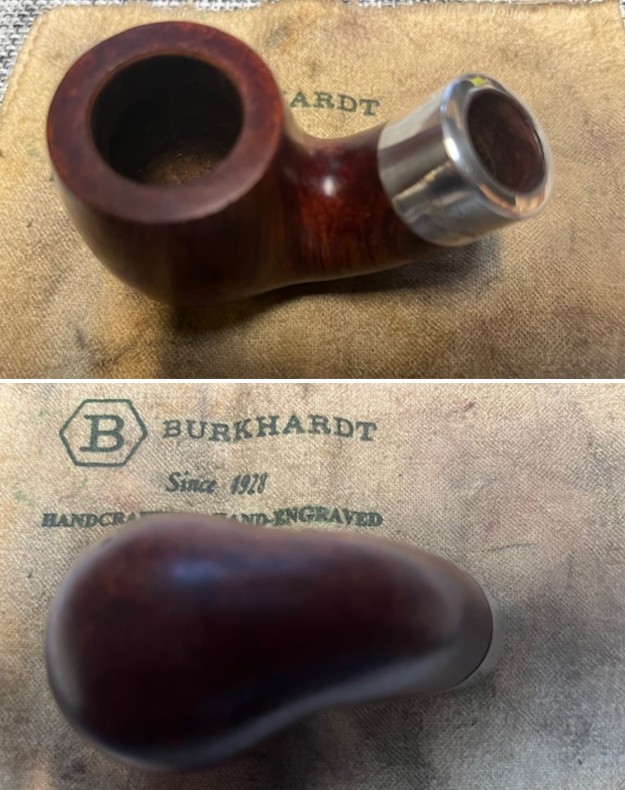
So, I knew that the pipe was a Peterson’s System Standard 314 that had originally belonged to his brother-in-law who had purchased it directly from Peterson’s in Ireland. He included two photos of the Peterson for me to have a look at. I have included them below. The pipe was in desperate need of a restoration that is for sure. But I have truly worked on pipes in worse condition than this one. The box arrived on Friday this past week and I unpacked it to examine it carefully. The pipe was very dirty and tired looking. The finish was dirty and the nickel ferrule on the shank end was very corroded in spots on the left and underside and covered in thick grime. There were some dark spots on the left and right side toward the bottom of the bowl. The rim top had a thick lava coat that flowed up from the thick cake in the bowl. It was stamped on the left side vertically under the ferrule and read Peterson’s with the forked leg on the P [arched over] System [over] Standard. On the right side of the shank the stamping is horizontal and reads Made in the Republic of Ireland [in three lines] with the 314 shape number underneath that. The nickel ferrule was stamped under the grime and read K&P over Peterson’s. The stem is covered in a thick build up of dirt and oils. There is some oxidation on the stem surface and surprisingly there are no tooth marks. I took photos of the pipe before I started my work on it. I took photos of the bowl and rim top to show the condition of the bowl. You can also see the condition of the nickel ferrule with all of the corrosion and grime completely removing the shine of the nickel ferrule. The stem is dirty around the insert in the ferrule. It is lightly oxidized and is very dirty on the stem and the button. There are light tooth marks and chatter on the stem service on both sides ahead of the p-lip.I took photos of the stamping on the shank sides. It is faint but still very readable as noted above. I removed the stem from the shank and took a photo of the pipe parts to show what I was working with. You can also see the dark spot on the right side of the bowl ahead of the stamping. I started my working on the pipe by addressing the corrosion and oxidation on the nickel ferrule. I sanded it with 320 grit sanding pads to remove the corrosion. I was utterly surprised that the nickel ferrule cleaned up and had a rich shine to it. I reamed the bowl with a PipNet pipe reamer and took the cake back to bare briar. I cleaned up the reaming with Savinelli Fitsall Pipe Knife to remove remnants of cake. I sanded the walls of the bowl with 220 grit sandpaper wrapped around a piece of dowel. I scrubbed the externals bowl and shank with Murphy’s Oil Soap and a tooth brush. I rinsed it off with warm water to remove the grime and debris from the scrubbing. I scrubbed out the internals with alcohol, cotton swabs and pipe cleaners to remove the grime in the shank and sump of the Pete. I also scrubbed the airway on the inside of the stem at the same time. The pipe was very dirty but it cleaned up well.I cleaned off the remaining darkening on the rim top with a folded piece of 220 grit sandpaper. It cleaned up very well and looked good. There was no damage to the inner or outer rim edges.I worked over the briar bowl sides and rim top with 320-3500 grit sanding pads. I sanded down the dark spots on the surface and was able to remove the damage. Thankfully they were not burn marks. I wiped the bowl down after each sanding pad with a damp cloth to remove the dust and sanding debris left behind. The pipe had cleaned up so well that I turned to polish the briar with micromesh sanding pads. I dry sanded it with 1500-12000 grit sanding pads and wiped the bowl down after each pad with a damp cloth. By the final pads the briar really had a shine. I rubbed the briar down with Before & After Restoration Balm. I worked it into the briar with my fingertips. The product works to clean, enliven and preserve the briar. I let it sit for 10 minutes then I buffed it with a cotton cloth to deepen the shine. The briar really comes alive with the balm. I set aside the bowl and turned my attention to the stem. To help remove the oxidation I scrubbed the stem with Soft Scrub Cleanser and cotton pads. It took some elbow work but the stem definitely looked better and the sulphur smell of the oxidation is gone!I sanded the surface with 320-3500 grit sanding pads to further clean up the spots of oxidation on the surface of the stem. I wiped it down with a soft damp cloth following each sanding pad to remove the sanding debris.I polished the vulcanite with micromesh sanding pads – 1500-12000 grit pads. I wiped it down with Obsidian Oil after each sanding pad. I used Before & After Pipe Polish – both Fine and Extra Fine to further polish the stem. It really took on a shine and I knew that once it was buffed it would look amazing. This Republic Era Peterson’s System Standard 314 Bent Billiard with a vulcanite stem is a great looking pipe now that it has been restored. The beautiful grain around the bowl sides stands out very well with the contrast of the polished nickel ferrule. The polished finish is stunning. I put the stem back on the bowl and carefully buffed the pipe with Blue Diamond on the buffing wheel. I gave the bowl and the stem multiple coats of carnauba wax on the buffing wheel. I followed that by buffing the entire pipe with a clean buffing pad. I hand buffed the pipe with a microfiber cloth to deepen the shine. The finished Peterson’s System Standard 314 fits nicely in the hand and feels great. Give the finished pipe a look in the photos below. The dimensions of the pipe are Length: 5 inches, Height: 1 ¾ inches, Outside diameter of the bowl: 1 1/8 inches, Chamber diameter: ¾ of an inch. The weight of the pipe is 45grams/1.59oz. This one has been reserved for first refusal. If you are interested in being in the queue for this pipe send me a message or an email. Thanks for reading this blog and my reflections on the pipe while I worked on it. There are many more to come!
Fixing a Cracked Peterson Emerald


Blog by Kenneth Lieblich

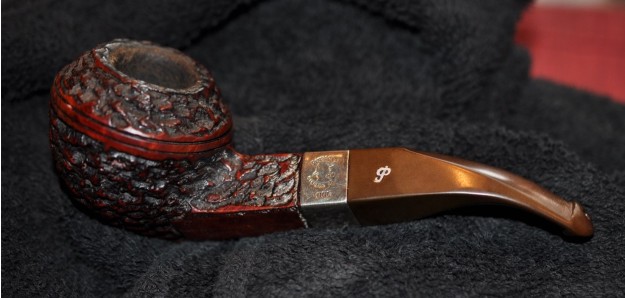
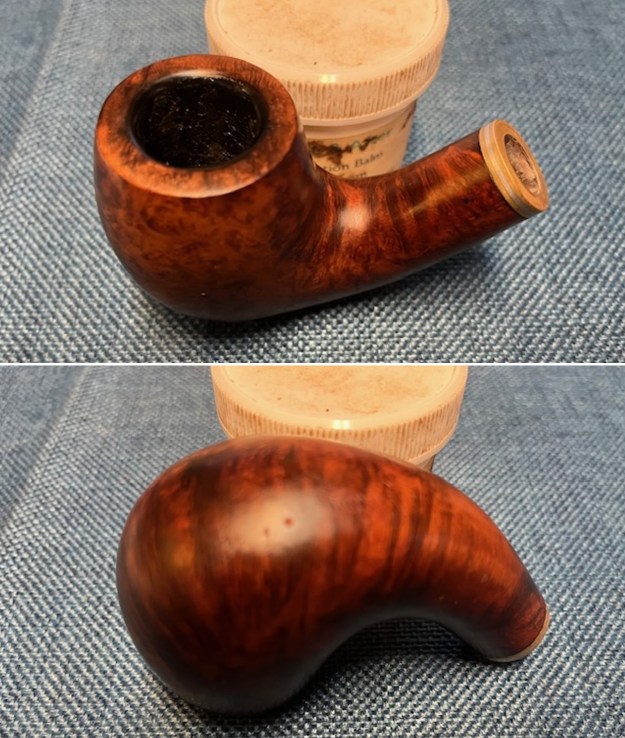
This is the fourth and final pipe I repaired for the gentleman in Washington. All four pipes have been great to work on, but I think I like this one best. It’s a portly and handsome Peterson Emerald XL02 Bent Apple. The pipe is smooth and has a P-lip stem. It is an elegant pipe with beautiful lines – and it feels so comfortable! Can’t wait to get this one done. Let’s take a closer look at the pipe. On the left side of the shank, it reads Peterson’s [over] Emerald. On the right side of the shank, it reads Made in the [over] Republic [over] of Ireland. To the right of that is the shape number, XL02. On the stem was the normal, stylized P of the Peterson firm. Interestingly, this P was in bas relief, rather than engraved. In an effort to learn more about the Emerald line of pipes, I went to Pipedia’s Peterson page – and learned precisely nothing. Pipephil provided just as much. Even the Peterson website itself had nothing on the historical Emeralds except to discuss the current crop of heavily rusticated pipes. So, naturally, my reliable source for all things Peterson is Mark Irwin from Peterson Pipe Notes. He has a blog post on the Emeralds – specifically the rusticated ones, but he does reference the smooth ones too. Have a look at the article here.Irwin and Gary Malmberg’s book, The Peterson Pipe: The Story of Kapp & Peterson, also made mention of the Emerald line:

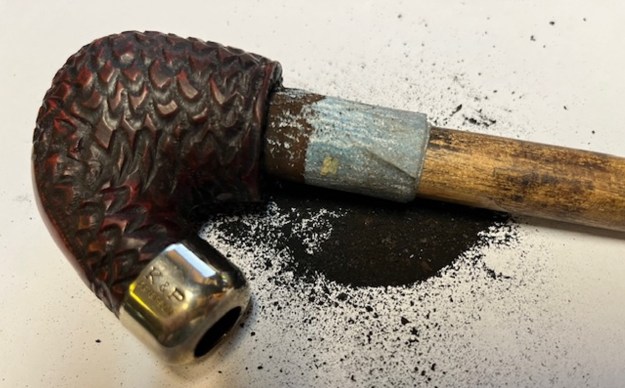
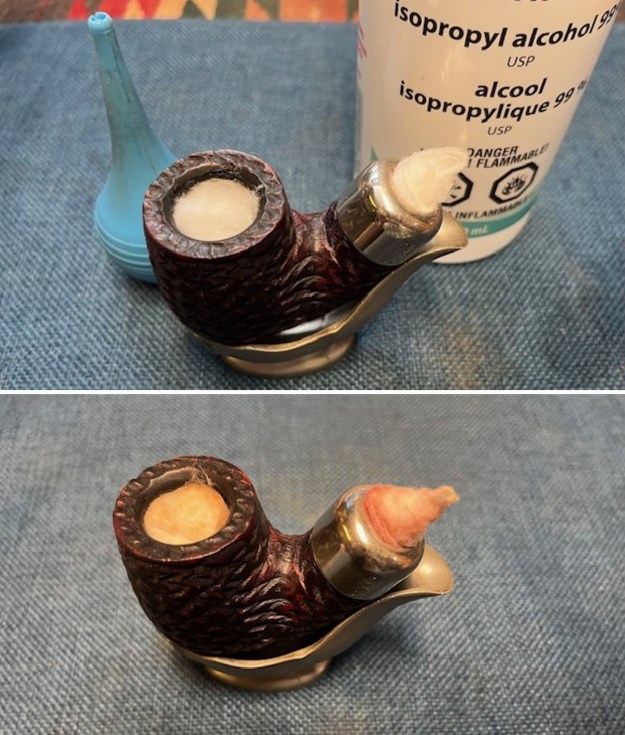
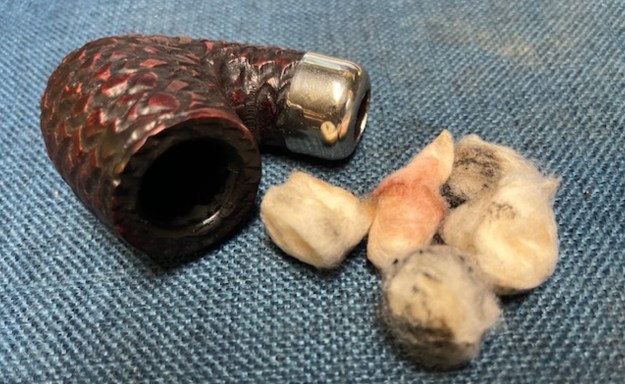
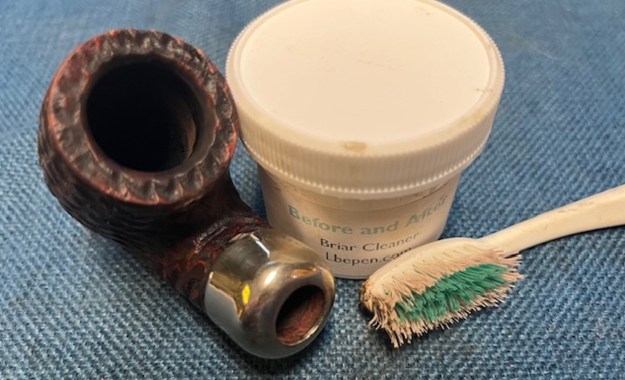
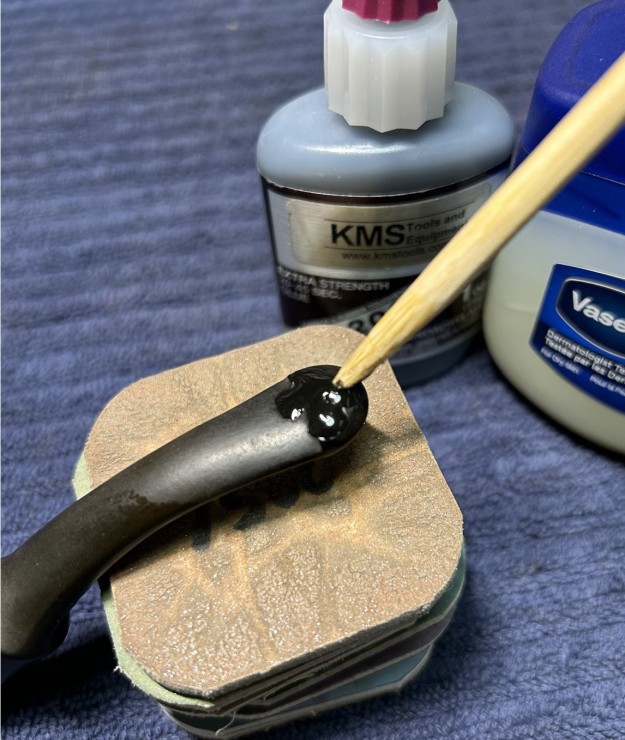
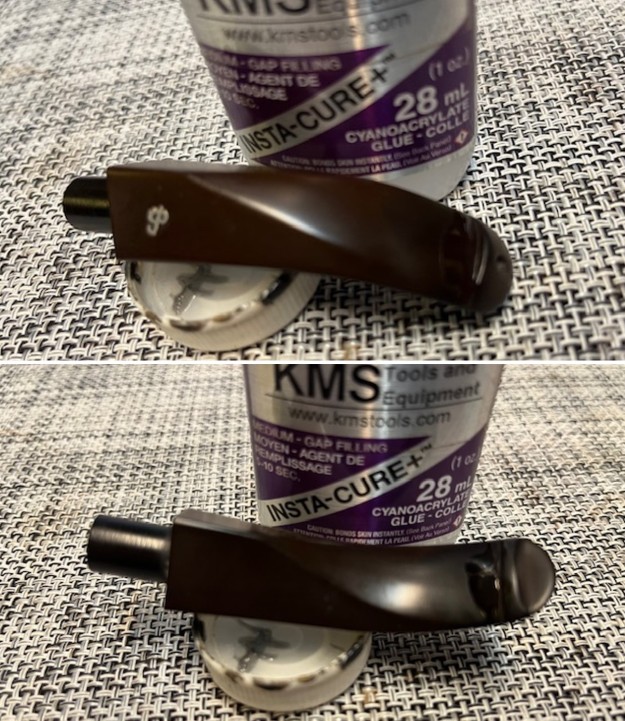
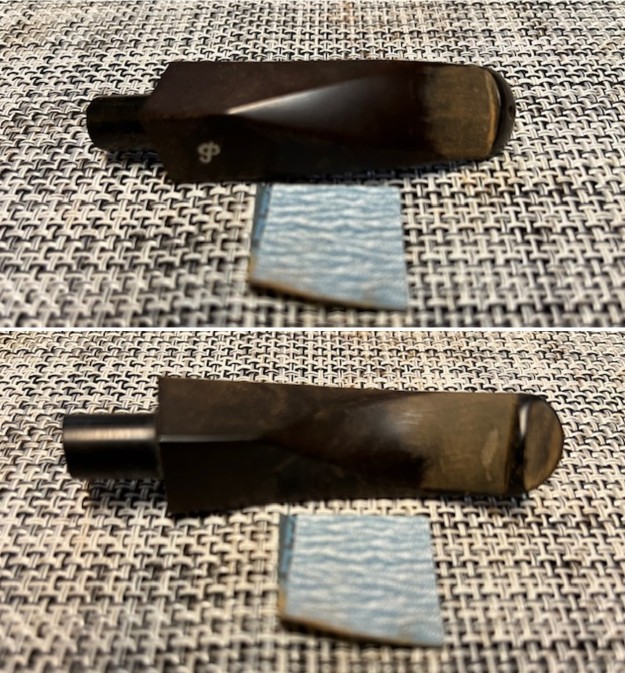
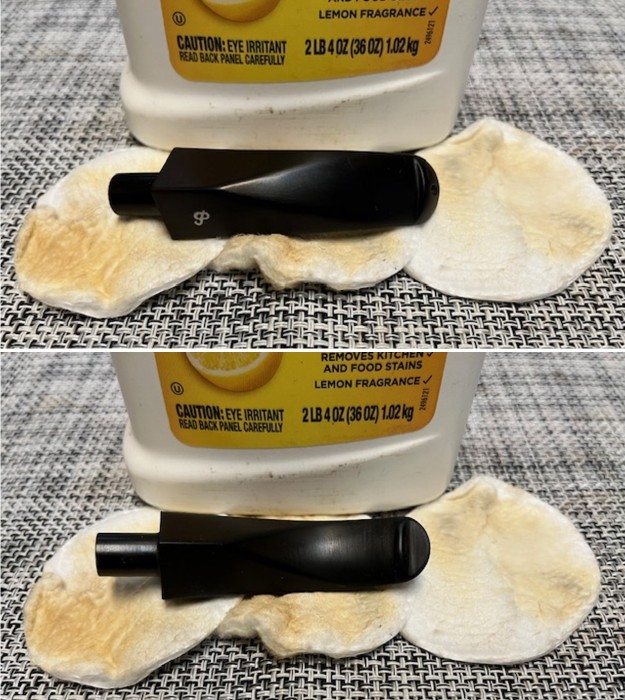
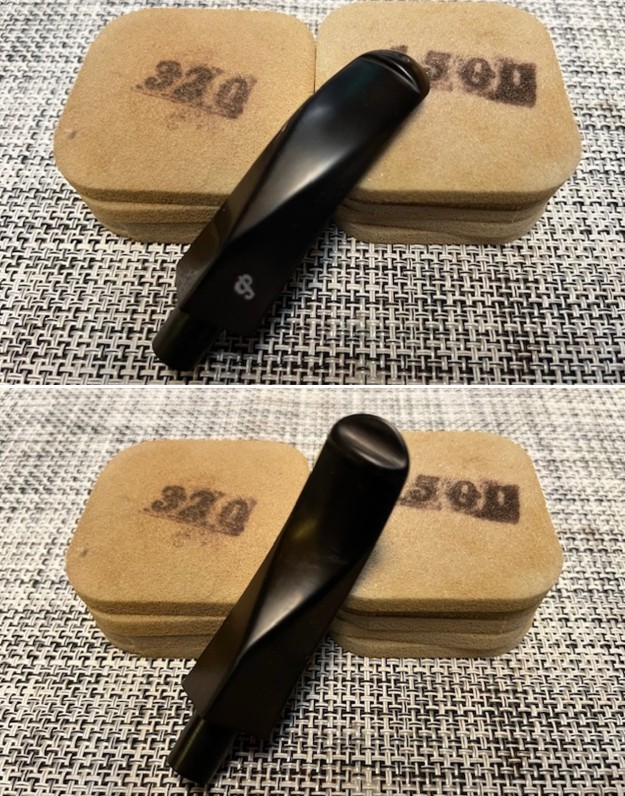
Emerald (1987-) Moderate-priced line in Bordeaux and black rustic finish with a shank band of green acrylic between brass rings, P-lip mouthpiece; smooth walnut version added in ’91. Fishtail mouthpiece added in ’97. Identical line and finishes named Jade from early eighties until ’87.Putting all the bits and pieces together, I think we can safely say that this pipe dates from between 1991 and 1997.On to the stem. As usual, I cleaned the insides with lemon-infused isopropyl alcohol and some pipe cleaners. Fortunately, it wasn’t too dirty inside. Then I wiped down the outside of the stem with Murphy’s Oil Soap on some cotton rounds – that removed some exterior dirt. Then, of course, I stuck it in the deoxidizing solution overnight. The next day, I scrubbed it down with some SoftScrub on cotton rounds. I built up the tooth marks on the stem with black cyanoacrylate adhesive and let them fully cure. I had tried the BIC lighter trick, but it didn’t work. I then sanded the adhesive down – first with a small file, then with 400-grit sandpaper to meld seamlessly into the stem. I then used all nine Micromesh pads (1,500 through 12,000 grit) to bring out the lovely black lustre on the stem. I also used Obsidian Pipe Stem Oil in between each pad scrubbing (from 3,600 on). Moving on to the stummel, I used the PipNet Reamer to remove the built-up cake and followed that with 220-grit sandpaper taped to a dowel to eliminate as much as I could. I took the chamber down to bare briar. For now, I proceeded to clean out the insides of the shank with Q-tips, pipe cleaners, and lemon-infused isopropyl alcohol. There was quite a bit of filth inside this stummel and it took a fair amount of cotton to get it clean. I already knew there were going to be some big, bad problems inside, so no sense in delaying the inevitable work. As the photos show, there were many heat fissures in the briar and the major crack on the outside of the bowl was made to look even more dramatic once I cleaned the stummel. I used a dental pick to remove extra debris lodged inside this crack. Before moving to pipe surgery, I decided to de-ghost the pipe in order to remove any lingering smells of the past. I thrust cotton balls into the bowl and the shank and saturated them with 99% isopropyl alcohol. I let the stummel sit overnight. This caused any remaining oils, tars and smells to leach out into the cotton. The bowl was nice and clean after this.Repairing the crack first involves drilling a tiny hole at the end of the crack to stop it from elongating any further. I took my micro drill bit (see how tiny!) and delicately drilled a hole through the briar. I then administered a dose of CA glue (mixed with briar dust) along the crack and let it cure. This was done on the side of the bowl, as well as on the rim, of course. This crack was simply too severe to plug with pipe mortar. Instead, I prepared some J.B. Weld epoxy and filled the cracks and gouges, ensuring that the epoxy was evenly spread throughout the bowl. Of course, I did plug the draught hole with a folded pipe cleaner (coated in Vaseline) to make sure none of the epoxy made its way up there. Once done, a good 24 hours was needed to ensure that the epoxy was properly set.Once cured, I gently sanded the inside of the bowl to provide a surface for what was to come next. I coated the entire inside of the bowl with a mixture of activated charcoal and my wife’s homemade yogourt. Once hardened, this provided a good, slightly abrasive surface for a new cake to build.After all of that, I used all nine Micromesh pads (1,500 through 12,000 grit) all over the stummel to make it lovely and smooth. I then used my restoration balm and rubbed that into the wood to have its nourishing properties work on the wood. I let it set for 20 minutes or so. Afterwards, I rubbed down the stummel with a microfibre cloth. At long last, I was off to my bench buffer to put the final touches on this pipe. I first gave it a thorough going-over with White Diamond compound. Following that, several coats of carnauba wax created a beautiful, glossy seal on the pipe and provided some closure to this involved repair.This Peterson Emerald XL02 Bent Apple is such a good-looking pipe. I’m thrilled to have completed all of my customers pipes and I trust that he will enjoy this one (and the others) for many years. I hope you enjoyed reading the story of this pipe as much I as I did in restoring it. If you are interested in more of my work, please follow me here on Steve’s website or email me directly at kenneth@knightsofthepipe.com. Thank you very much for reading and, as always, I welcome and encourage your comments.

Enflamed by Peterson’s Grain


Blog by Kenenth Lieblich

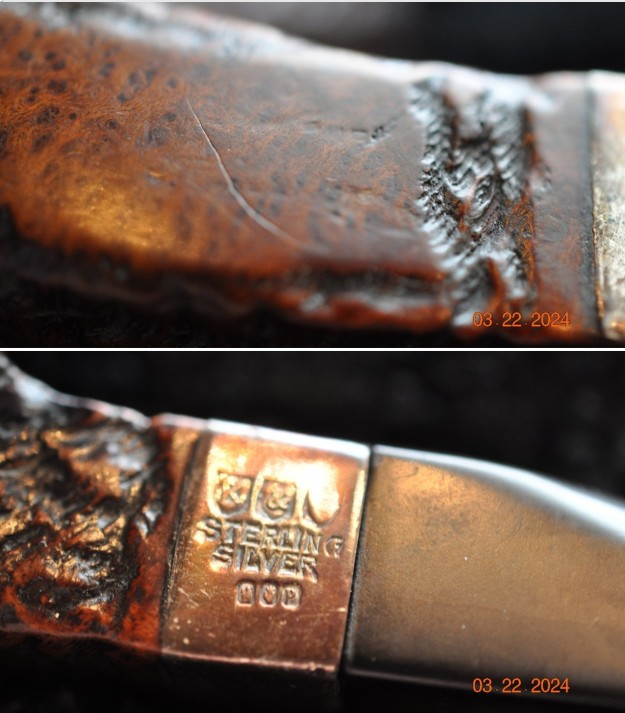
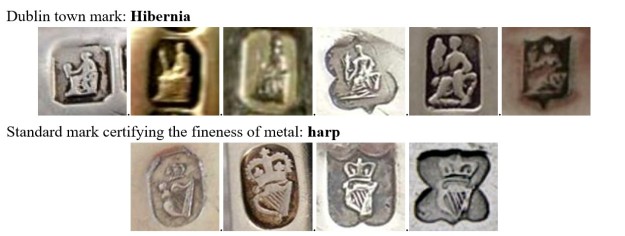
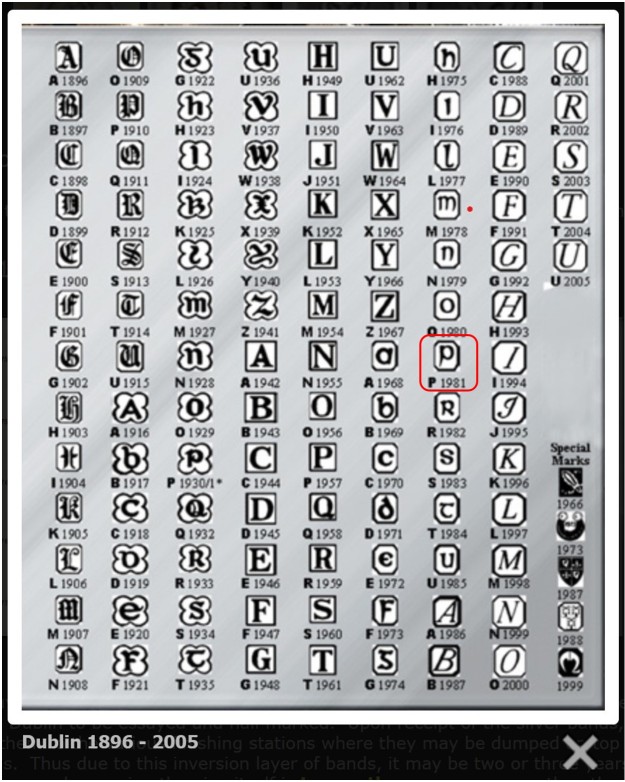
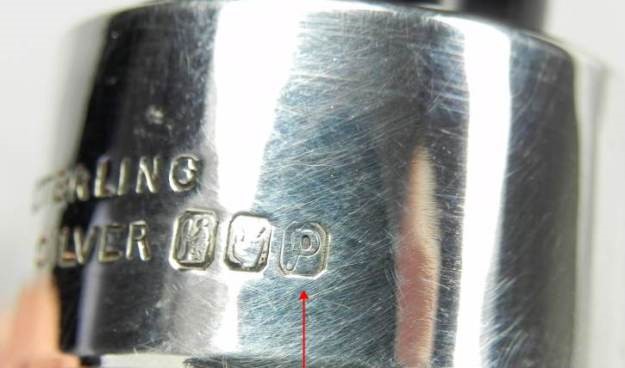
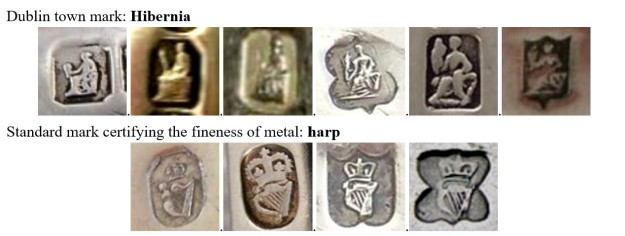
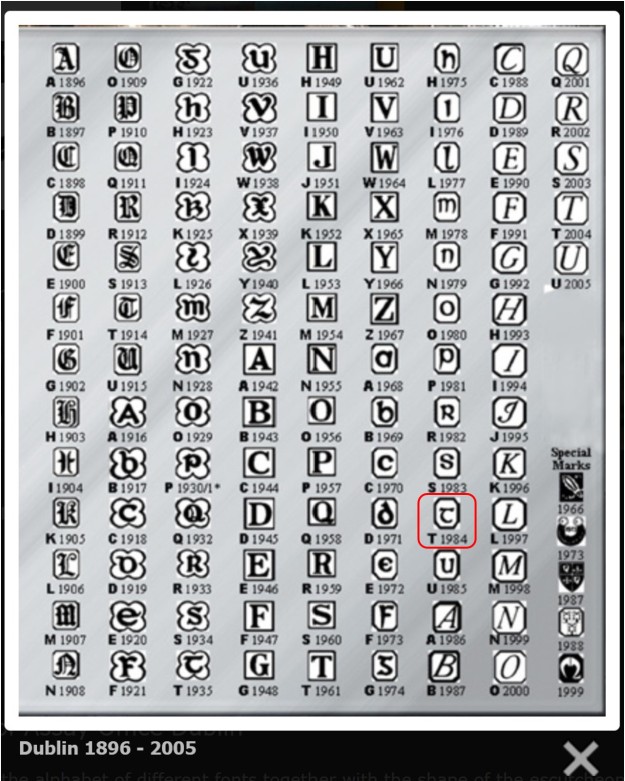
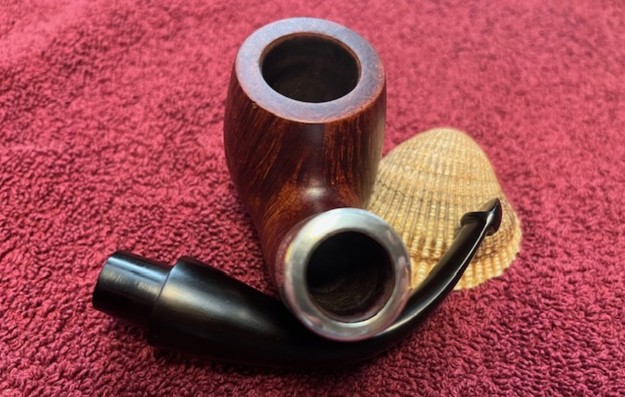
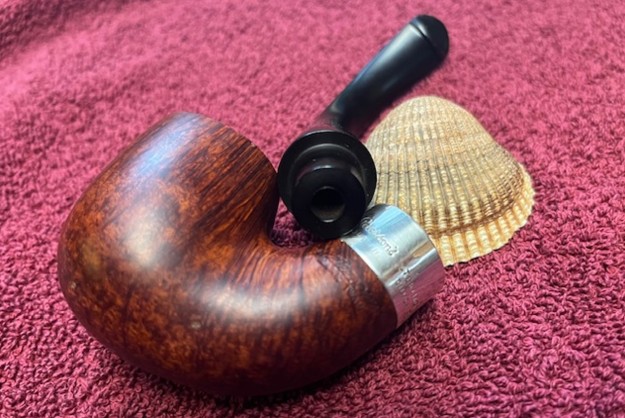
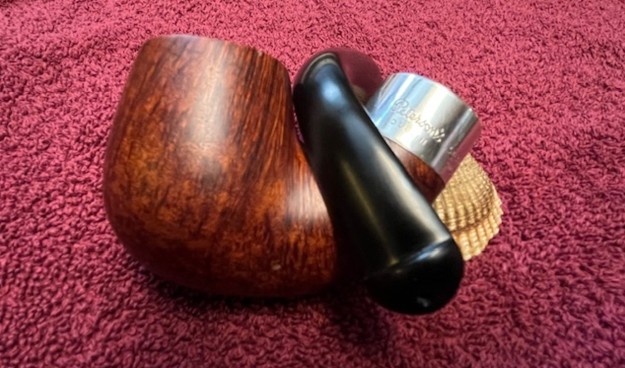
This beauty is a Peterson Flame Grain B10 calabash pipe with a P-lip stem. It is the second pipe of four that I’m restoring for a customer in Washington. It’s an awfully handsome pipe, but has some serious issues to be addressed. Let’s see what we can do to revivify this great pipe. I’m looking forward to the challenge. One note: I unfortunately lost several photos that I took of this pipe, so the photographic evidence won’t be as thorough as usual. The Peterson website says that this pipe shape “combines elements of traditional bent Dublin, Calabash, and Rhodesian archetypes”. I can see what they mean, but I’m calling it a calabash – so there! The markings are quite interesting. On the left side of the shank, it reads Peterson [over] of Dublin [over] Flame Grain. On the right side of the shank, it reads B10. There is also a sterling silver band which provides some additional marks: Peterson and a word which I assume to be Sterling (but it is somewhat obliterated). There are also some hallmarks: Hibernia – a woman seated, her arm on a harp, representing Ireland. Then .925 in an oval, confirming that this is 92.5% silver. The third mark, I believe, is supposed to be a letter indicating the year of manufacture. However, the third mark here didn’t look like a letter to me. Steve thought it could be the letter Y (indicating 2009), but suggested I ask Peterson expert, Mark Irwin, about it. He confirmed that it is, indeed, a Y. I know something about Peterson pipes, but wanted to know more about the Flame Grain line, so I went over to Pipedia to have a look. Obviously, there is a long and very good article about Peterson – here is the link. No significant mention was made of the Flame Grain line there, but Mark Irwin and Gary Malmberg’s book, The Peterson Pipe: The Story of Kapp & Peterson, did make mention of it:

Flame Grain (1997-) Smooth flame-grained with brass band 1997-c.2000, sterling silver thereafter. Stamped arched Peterson over arched OF DUBLIN over FLAME GRAIN. Black vulcanite mouthpiece, also amber coloured (2010-), P-Lip mouthpiece, hot foil stamped P.Meanwhile, Mark Irwin’s website, Peterson Pipe Notes, has an article about the B shapes. You can read the whole thing here. He includes this point:

The B10 and B11 seem to have been released at the same time, and both have found a home in the Classic Range in almost every line Peterson issues. Sykes Wilford describes the B10 as a “Calabash variation,” featuring “the softly convex rim, blending elements of the bent Dublin, bent Bulldog along with the Calabash shape.” I have both pipes in the Rosslare Royal Irish line (with the faux spigot), hallmarked “S” for 2003, although it may have been issued before that date.All of this information seems to confirm that this pipe is among the first iterations of the B10 with the amber-coloured stem, starting in 2010.

The pipe’s got a handsome, golden acrylic stem, presumably made to look like amber. One of the things that drives me nuts about acrylic stems is how difficult they are to clean inside. I can certainly disinfect and scrub them without any problem, but the stains of the tobacco are awfully stubborn and almost never go away completely. I began by using a dental tool to clean out the filth in the bore. There was quite a bit of debris there. Moving on, I set about doing the best I could on this one – using pipe, cleaners, and alcohol as usual. In fact, upon finishing that, I also used some SoftScrub on some pipe cleaners to see if I can get some further benefit to the cleaning. It did help, and I was pleased with that, but it would never be like new. The stylized P of Peterson was engraved on the left side of the stem, and I used some silver Rub’n’Buff to restore that back to its original state.There were a few tooth marks, etc. on the bit of the stem, and I addressed those by filling them with some superglue. Once that had cured, I sanded the stem down – first with some sandpaper, then with my micromesh pads and pipe stem oil. I was really pleased with the way it came out in the end. On to the stummel, and this is where the major issues lie. First and foremost, the rim, as the photos show, was in very bad shape. It had quite a bit of burning on it, and had been reamed so aggressively that the opening was badly out of round. The damage was significant enough that I knew I would not be able to make it invisible, but I also knew that I could improve it substantially.Before that, however, I reamed the pipe to remove the considerable cake in the bowl. It was very nasty. The inside of the bowl was in rough shape – there were many heat fissures. Whoever previously owned this pipe must have smoked the dickens out of it. Furthermore, I needed to use a drill bit in the shank to loosen up some of the hardened debris. That worked quite well at assisting me. I then cleaned out the insides with cotton swabs, pipe, cleaners, and alcohol. It was pretty dirty inside, so considerable work was needed. Following that, I de-ghosted the pipe with cotton balls and some alcohol. I let that sit overnight to remove even more filth and stench from the old pipe. After that, I cleaned the insides with soap and tube brushes. Then I cleaned the outside with Murphy’s and some cotton rounds and a toothbrush. Once thoroughly clean, the extent of the damage to the stummel was apparent. Even though this is a young pipe, it’s had a hard life. It’s my job to extend its life expectancy! First things first: there was a notable fill on the side of the bowl. I opted to fill it with CA glue and briar dust.Naturally, the rim was the major issue. Since the top edge was quite uneven and beat up, I began by “topping” the pipe – that is to say, I gently and evenly sanded down the rim on a piece of 220-grit sandpaper. This effectively evened the top edge (and removed a bit of damage), without altering the look of the pipe.This is the point where I’m missing some photos. After topping, I wanted to address the serious burns. It was bad – really bad – and it would be a challenge to make the pipe look normal. At the same time, it was necessary to address the bowl being so badly out of round. I used a solid wooden sphere (wrapped with sandpaper) on the inner edge of the rim in order to repair some of this. In addition, I also sanded down the outside of the bowl, near the rim, so as to minimize the visual effect of the roughened edge. I sanded all the way around to ensure that the pipe retains its look. Next, I used all nine Micromesh pads (1,500 through 12,000 grit) all over the stummel to make it lovely and smooth. It was a laborious process to sort out these issues, but I was reasonably pleased in the end. In order to fill in the heat fissures and prevent any further internal damage, I mixed up some of my pipe mortar and lined the briar walls with it. This will definitely extend the life of this terrific pipe.Then, applying some Before & After Restoration Balm added that certain something which brings out the wood’s beauty. I also took out my jewellery cloth and buffed up the lovely sterling silver band. Then it was off for a trip to the buffer. A dose of White Diamond and a few coats of carnauba wax were just what this pipe needed. The lovely shine made the wood very attractive. Despite its flaws, this is a very handsome pipe and will provide many years of smoking pleasure.This Peterson Flame Grain B10 calabash is back from the brink and I hope my friend in Washington will enjoy taking it on as his own. I hope you enjoyed reading the story of this pipe as much I as I did in restoring it. If you are interested in more of my work, please follow me here on Steve’s website or email me directly at kenneth@knightsofthepipe.com. Thank you very much for reading and, as always, I welcome and encourage your comments.

Restoring a Fascinating Peterson Deluxe 595


Blog by Kenneth Lieblich

This is a pipe belonging to the father of a good friend. He told me there was nothing especially wrong with it, but it did need some spiffing up. The gentleman in question is a fine pipe smoker and has been in the “briar brigade” (I just made that up) for many years. I was happy to help him out. He said that the pipe had been given to him by his then-girlfriend (now wife) when they were courting in the 1960s. It was the first pipe he ever owned. The pipe is a Peterson Deluxe 595 bulldog. It’s a really handsome pipe — very classic-looking, well-smoked, and well-cared for. The markings on the pipe read Peterson’s [over] DeLuxe on the left of the shank. On the right side is Made in the [over] Republic [over] of Ireland, and next to that, the shape number 595. On the left side of the stem is the beautiful, stylized P of the Peterson company. That P must have had some colouring in it at some point, but it was long gone. It was hard to find any information about the 595. I was trying to research it and ended up circling around to a blog post that Steve did in 2020 about a 595 he worked on. That pipe and this pipe are very similar, but there are two crucial differences which I’ll mention in a moment. In Steve’s article of May 2020, he quotes from some email correspondence he had with Peterson expert, Mark Irwin, from Peterson Pipe Notes. I quote Irwin here regarding the 595:

Hey Steve, this is from the 500 shape group, although I’ve not documented the 595 before. It’s an upsized-version of the 80s. Peterson would call this shape a Rhodesian, incidentally, saving bulldog for their round shanks. You can see more 500s at https://petersonpipenotes.org/the-peterson-500-shapes-and-new-old-stock/. The POY 2019 for Peterson was taken from this group as well. I make the argument in that blog post that these shapes were made in the late 1970s and early 1980s when they owned their own US distributor, Allied, and were going after the US market. c. 1980-85, so Late Republic Era, 1969-1990.

If you read Steve blog post (found here), you’ll notice the two differences. First, the pipe I’ve got has the three-line version of “Made in the Republic of Ireland,” whereas Steve’s says “Made in Ireland”. Second, the pipe I’ve got has the P on the stem, whereas Steve’s does not.

However, there’s another wrinkle in this story. As I indicated earlier, the gentleman received this pipe in the 1960s in Hong Kong! I have no doubt that he is telling the truth, but I wasn’t able to square it with the information above. Due to my own ignorance, I also emailed Mark Irwin to clarify what was confusing me. He very kindly responded with the clarifying information. Among other things, he wrote

The 595 goes back to at least 1947’s catalog, and perhaps even before. I’ve attached that catalog for you, where you’ll find your pipe on p. 5.

I have included that page below. Thanks to Mark (and the original owner), I can confirm that this pipe dates from the early to mid-1960s.Let’s have a look at the pipe. The stem had several tooth marks, plus some oxidation and calcification. Also, an extra bit of the end of the tenon was broken – I’d have to take a closer look at that. The stummel was in nice condition, no real scratches or damage — except on the rim. That had lots of lava, and what looked like considerable burning, but I’d have to check more closely later. Inside the bowl was a good amount of cake that would need to be cleaned out. On to work – I started with a BIC lighter and ‘painted’ the stem with its flame in order to lift the few bite marks and dents. This was not particularly successful in raising the damage, but did help a little.Next, I took a closer look at the broken tenon end. I’m not sure what happened there, but it was badly damaged and the only reasonable option was to remove it, as it could cause further problems. I then sanded down the end of the tenon to make it smooth and flat. Then I wiped the outside down with Murphy’s Oil Soap on some cotton pads and the inside with pipe cleaners and lemon-infused isopropyl alcohol. Once this process was done, the stem went for an overnight soak in the Pipe Stem Oxidation Remover. The next day, I wiped down the stem with SoftScrub cleaner and some cotton rounds to remove surface oxidation. After that, I used some gold Rub’n’Buff to fill in the P on the stem. This P would have been gold coloured originally.I also built up the tooth dents (pun intended) on the stem with cyanoacrylate adhesive and let them fully cure.  I then sanded the adhesive down – first with a small file, then with 400-grit sandpaper to meld seamlessly into the stem. I then used all nine Micromesh pads (1,500 through 12,000 grit) to bring out the lovely black lustre on the stem. I also used Obsidian Pipe Stem Oil in between each pad scrubbing. Moving on to the stummel, I used the PipNet Reamer to remove the built-up cake and followed that with 220-grit sandpaper taped to a dowel to eliminate as much as I could. I took the chamber down to bare briar, as I wanted to ensure there were no hidden flaws in the wall. Fortunately, there were none. Next, I took a dental tool and gently ran it along the grooves of the outside of the bowl to clear out any filth in there. In order to save as much of the rim as possible, I used a piece of machine metal to very delicately scrape away as much burnt material as I could. I do this before automatically jumping to my topping board; this gentle scraping revealed far more burn damage than I had anticipated, so it would need more work later.For now, I proceeded to clean out the insides of the shank with Q-tips, pipe cleaners, and lemon-infused isopropyl alcohol. There was quite a bit of filth inside this stummel and it took a fair amount of cotton to get it clean. That done, I decided to de-ghost the pipe in order to remove any lingering smells of the past. I thrust cotton balls into the bowl and the shank and saturated them with 99% isopropyl alcohol. I let the stummel sit overnight. This caused any remaining oils, tars and smells to leach out into the cotton. The bowl was nice and clean after this.I followed that up by cleaning the outside with Murphy’s and the insides with some Castile soap and tube brushes. After all this cleaning, I took a closer look at the damage to the rim. As the photo shows, the damage was considerable. At this point, I asked the owner if he wanted me to remove all the burn marks, which would entail significant removal of briar, or simply deal with the surface damage and leave the wood intact. He opted for the latter (correctly, in my view). The burns would remain on this pipe, but they are part of its story – and that is just fine.In order to remove some remaining burns on the rim, I did ultimately “top” the pipe – that is to say, I gently and evenly sanded down the rim on a piece of 220-grit sandpaper. This effectively removed the surface damage, without altering the look of the pipe.I also took a wooden sphere, wrapped a piece of 220-grit sandpaper around it, and sanded the inner side of the chamber. This achieved two things: first, it removed some of the burn marks on the inner edge of the rim; and second (and more importantly), the circular shape and motion of the sphere gradually returned the edge to a perfect circle.With all that done, I polished it up with all nine of my Micromesh pads. After that, a light application of Before & After Restoration Balm brought out the best in the stummel’s grain. Of course, the final step is buffing with some White Diamond and a few coats of carnauba wax.This is a beautiful pipe with an interesting history. I was delighted and honoured to be a part of it! I hope you enjoyed reading the story of this pipe as much I as I did restoring it. If you are interested in more of my work, please follow me here on Steve’s website or email me directly at kenneth@knightsofthepipe.com. The approximate dimensions of the pipe are as follows: length 5¼ in. (134 mm); height 1½ in. (37 mm); bowl diameter 1½ in. (39 mm); chamber diameter ¾ in. (18 mm). The weight of the pipe is 1⅛ oz. (34 g). Thank you very much for reading and, as always, I welcome and encourage your comments.

Restoring a Peterson’s Republic Era Kildare 86 Taper Stem Apple


Blog by Steve Laug

The next pipe on the table came to us from somewhere neither Jeff or I remember. I can tell you though that it has been sitting here for a long time. That happens a lot when I am working through a country in my boxes. This the last of the current Peterson Pipes that I have to work on at the moment (no worries as there are more coming). It is a beautifully grained Peterson’s “Kildare” 86 Apple. The shape follows the grain around the bowl which is a combination of cross grain and birdseye. The finish was clean and the pipe had been reamed in the past so I am pretty sure it has been through Jeff’s clean up. The pipe is stamped on the left side of the shank and reads Peterson’s [over] “Kildare”. On the right side of the shank Made in the Republic of Ireland (three lines) followed by the shape number 86. The stamping is clear and readable on both sides. The stem was quite clean though there were light tooth marks and chatter on the stem near the button on both sides. There was the no Peterson’s “P” on the taper stem. I took photos of the pipe before I started my work on it. I took photos of the rim top and stem to show the general condition of the pipe. The bowl has been cleaned but the rim top and the inner edge have some darkening. The finish on the bowl is quite clean. The photos of the stem show the oxidation, calcification and light tooth marks and chatter on both sides near the button. The P-Lip button and edges look good.I took photos of the sides of the shank to show the stamping. The stamping is faint but readable in the photos below and is as noted above. I also removed the stem from the shank and took a photo of the parts of the pipe to give a clear picture of what I see here. I am including the information from Pipedia’s article on Peterson pipes. It is a great read in terms of the history of the brand (https://pipedia.org/wiki/Peterson). I have included a bit of the pertinent history here.
1950 – 1989 The Republic Era – From 1950 to the present time, the stamp for this era is “Made in the Republic of Ireland” in a block format generally in three lines but two lines have been used with or without Republic being abbreviated.

During the 1950’s and 60’s the Kapp & Peterson Company was still in the ownership of the Kapp family. However, 1964 saw the retiral of the company Managing Director Frederick Henry (Harry) Kapp.

I turned to “The Peterson Pipe” by Mark Irwin and Gary Malmberg to get some background on the Peterson’s System Line. On page 314 it had the following information.

Kildare (1965-) First issue of line with matte-finish in Classic Range shapes, P-Lip and fishtail mouthpiece. Second issue C.1979 as Kildare Patch, with rusticated patches on pipe surface. Third issue 2010, matte-brown, P-Lip or fishtail mouthpiece, no band. Fourth issue 2011-, burgundy sandblast finish, nickel army mount, fishtail mouthpiece, exclusive to smokingpipes.com.

Judging from the description above I believe that I am working on a First Issue of the line in the time period of 1965-1979. It is a late Republic Era Classic Shaped pipe with a matte-finish and a P-Lip stem. Now it was time to work on the pipe.

With that information at hand I turned to work on the pipe itself. I used a folded piece of 220 grit sandpaper to smooth out the inner edge and the rim top. It looked much better.I polished it with micromesh sanding pads – dry sanding with 1500-12000 grit sanding pads. I wiped it down with a damp cloth to remove the dust on the surface. I did not need to restain the rim top and edge because with polishing the match is very good. I rubbed the bowl down with Before & After Restoration Balm. I worked it into the surface of the bowl sides and shank with my fingertips. The product works to clean, enliven and protect the briar. I let the balm sit for a little while and then buffed with a cotton cloth to raise the shine. I set the bowl aside and turned my attention to the stem. I sanded it smooth with 220 grit sandpaper. I started polishing it with 600 grit wet dry sandpaper.I polished the stem with micromesh sanding pads – wet sanding with 1500-12000 grit pads. I wiped the stem down after each sanding pad with Obsidian Oil. I polished it with Before & After Pipe Stem Polish – both Fine and Extra Fine. I gave it a coat of Obsidian Pipe Stem Oil. It works to protect the stem from oxidizing. I set it aside to dry. Once again at this point in the restoration process I am excited to be on the homestretch. I look forward to the final look when the Republic Era Peterson’s “Kildare” 86 Apple with a saddle stem is put back together, polished and waxed. I put the bowl and stem back together. I lightly polished the bowl and stem with Blue Diamond to polish out the scratches in the briar and the vulcanite. I gave the bowl and the stem multiple coats of carnauba wax. I buffed the pipe with a clean buffing pad to raise the shine. I hand buffed it with a microfiber cloth to deepen the shine. The pipe polished up pretty nicely. The grain really pops with the wax and polish. The shiny black vulcanite stem is a beautiful contrast to the browns of the bowl and thick shank. This Republic Era Peterson’s “Kildare” 86 Apple was another fun pipe to work on. It is a nice piece of briar that cleaned up really well. The pipe feels great in the hand will be better when warmed up while smoking. The finished pipe is shown in the photos below. The dimensions of the pipe are Length: 5 ½ inches, Height: 1 ½ inches, Outside diameter of the bowl: 1 inch, Chamber diameter: ¾ of an inch. The weight of the pipe is 1.09 ounces/31 grams. I will be putting it on the rebornpipes store in the Irish Pipemakers Section if you would like to add it to your rack and carry on the previous pipeman’s legacy. This is an interesting estate to bring back to life.

As always, I encourage your questions and comments as you read the blog. Thanks to each of you who are reading this blog. Remember we are not pipe owners; we are pipe men and women who hold our pipes in trust until they pass on into the trust of those who follow us.

Restoring a Republic Era Petersons “Kildare” 87S Apple with a Saddle Stem


Blog by Steve Laug

The next pipe I have chosen is smooth finished Peterson’s “Kildare” Apple shaped pipe that had a very dirty/grimy finish but had some good-looking grain around the bowl sides and shank. Both Jeff and I have no memory of where we picked up this pipe. Was it a trade or a pipe hunt find? Could easily have been either one. This Lightweight Apple was stamped on the left side of the shank and read Peterson’s [over] “Kildare”. It was stamped on the right side and read Made in the Republic of Ireland (three lines) followed by the number 87S (faint but present) near the shank/bowl junction. I believe the “S” is for the saddle stem designation. The pipe was filthy when I brought it to the table. There was grime ground into the briar sides and rim. There was a minimal cake in the bowl but there was still a coat of lava on the rim top but the edges of the bowl. The inner edge of the bowl was thickly coated in lava and it was hard to know how the rim top and edges looked underneath. The stem was dirty with oxidation and calcification on it. There were light tooth marks and chatter on the top and underside on and near the button. There was a light “P” stamp logo on left side of the saddle stem. I took photos of the pipe before my cleanup work. They tell the story and give a glimpse of the promise that we see in this pipe. I took photos of the rim top and stem to show the general condition of the pipe. The bowl has been but the rim top has a lava coat flowing down the outside of the bowl and the inner edge. The finish on the bowl is rough around the outer edge but I will know more once it is cleaned up. The photos of the stem show the oxidation, calcification and light tooth marks and chatter on both sides near the button. The P-Lip button and edges look good.I took photos of the sides of the shank to show the stamping. The stamping is faint but readable in the photos below and is as noted above. There is a “P” logo stamp on the left side of the saddle stem. It is faint but I am hoping that I can bring it back with white acrylic. I also removed the stem from the shank and took a photo of the parts of the pipe to give a clear picture of what I see here. I am including the information from Pipedia’s article on Peterson pipes. It is a great read in terms of the history of the brand (https://pipedia.org/wiki/Peterson). I have included a bit of the pertinent history here.

1950 – 1989 The Republic Era – From 1950 to the present time, the stamp for this era is “Made in the Republic of Ireland” in a block format generally in three lines but two lines have been used with or without Republic being abbreviated.

During the 1950’s and 60’s the Kapp & Peterson Company was still in the ownership of the Kapp family. However, 1964 saw the retiral of the company Managing Director Frederick Henry (Harry) Kapp.

I turned to “The Peterson Pipe” by Mark Irwin and Gary Malmberg to get some background on the Peterson’s System Line. On page 314 it had the following information.

Kildare (1965-) First issue of line with matte-finish in Classic Range shapes, P-Lip and fishtail mouthpiece. Second issue C.1979 as Kildare Patch, with rusticated patches on pipe surface. Third issue 2010, matte-brown, P-Lip or fishtail mouthpiece, no band. Fourth issue 2011-, burgundy sandblast finish, nickel army mount, fishtail mouthpiece, exclusive to smokingpipes.com.

Judging from the description above I believe that I am working on a First Issue of the line in the time period of 1965-1979. It is a late Republic Era Classic Shaped pipe with a matte-finish and a P-Lip stem. Now it was time to work on the pipe.

With that information at hand I turned to work on the pipe itself. Jeff had thoroughly cleaned up the pipe. He reamed the pipe with a PipNet Pipe Reamer and cleaned up the remnants with a Savinelli Fitsall Pipe Knife. I scrubbed the bowl with undiluted Murphy’s Oil Soap and a tooth brush. I rinsed it under running warm water to remove the soap and grime. The bowl was much cleaner though there were many small nicks and divots in the surface of the briar – but it was clean! I used a half wooden ball and a piece of 220 grit sandpaper to bevel and clean up the rim top. I also used a folded piece of 220 grit sandpaper to smooth out the outer edge as well and give a slight curved or crown rim top look. I filled in the many nicks and divots in the bowl surface with clear CA glue. Once it cured I smoothed them out with a medium and a fine sanding sponge. Once finished it looked much better. I cleaned out the inside of the shank and the airway in the stem with alcohol, cotton swabs and pipe cleaners. Many pipe cleaners later the airways were clear and the smell much better.I polished it with micromesh sanding pads – dry sanding with 1500-12000 grit sanding pads. I wiped it down with a damp cloth to remove the dust on the surface. I did not need to restain the rim top and edge because with polishing the match is very good. I rubbed the bowl down with Before & After Restoration Balm. I worked it into the surface of the bowl sides and shank with my fingertips. The product works to clean, enliven and protect the briar. I let the balm sit for a little while and then buffed with a cotton cloth to raise the shine. I set the bowl aside and turned my attention to the stem. I scrubbed the exterior of the stem with Soft Scrub to remove as much of the oxidation and calcification as possible. It certainly is improved!In the photos above you can see roughening on the top of the stem surface. I cleaned up the surface and there was some pitting in the surface on both sides. I filled in the pitted surface with clear CA glue. Once it cured I flattened it out with a small file and sanded it smooth with 220 grit sandpaper. I started polishing it with 600 grit wet dry sandpaper. I touched up the “P” stamp on the left side of the saddle with some white acrylic fingernail polish. Once it cured I used a worn 1500 grit micromesh pad to polish off the excess material. The stamp is faint in the vulcanite so it is quite hard to see clearly.I polished the stem with micromesh sanding pads – wet sanding with 1500-12000 grit pads. I wiped the stem down after each sanding pad with Obsidian Oil. I polished it with Before & After Pipe Stem Polish – both Fine and Extra Fine. I gave it a coat of Obsidian Pipe Stem Oil. It works to protect the stem from oxidizing. I set it aside to dry. NOTE: When I was buffing the pipe I notice a scratch on the left side the shank above the stamping that looked like a crack in the shank… I was a bit frustrated so I stopped buffing and checked it out and was relieved to see under bright light that it was a scratch and not a crack. I also removed the stem and checked the mortise end and there was no crack! I tried steaming the scratch out and was able to improve it but it is still present. There is also a small on the underside of the stem… irritating but part of the pipe’s story.

I am excited to be on the homestretch. I look forward to the final look when the Republic Era Peterson’s “Kildare” 87S Apple with a saddle stem is put back together, polished and waxed. I put the bowl and stem back together. I lightly polished the bowl and stem with Blue Diamond to polish out the scratches in the briar and the vulcanite. I gave the bowl and the stem multiple coats of carnauba wax. I buffed the pipe with a clean buffing pad to raise the shine. I hand buffed it with a microfiber cloth to deepen the shine. The pipe polished up pretty nicely. The grain really pops with the wax and polish. The shiny black vulcanite stem is a beautiful contrast to the browns of the bowl and thick shank. This Republic Era Peterson’s “Kildare” 87S Apple was another challenging pipe to work on. It is a nice piece of briar that cleaned up really well. The pipe feels great in the hand will be better when warmed up while smoking. The finished pipe is shown in the photos below. The dimensions of the pipe are Length: 5 ½ inches, Height: 1 ¾ inches, Outside diameter of the bowl: 1 inch, Chamber diameter: ¾ of an inch. The weight of the pipe is 1.13 ounces/32 grams. I will be putting it on the rebornpipes store in the Irish Pipemakers Section if you would like to add it to your rack and carry on the previous pipeman’s legacy. This is an interesting estate to bring back to life.

As always, I encourage your questions and comments as you read the blog. Thanks to each of you who are reading this blog. Remember we are not pipe owners; we are pipe men and women who hold our pipes in trust until they pass on into the trust of those who follow us.

Restoring a Worn and Tired Republic Era Peterson’s System Standard 317


Blog by Steve Laug

Jeff and I both have no idea where we picked up this pipe. We have no real memory of it but it is obvious that Jeff had cleaned it up sometime in its journey. It was stamped on the left side of the shank and read Peterson’s [over] System [over] Standard. On the right side it is stamped and reads Made in the Republic of Ireland (three lines) with the shape number 317 underneath. The pipe was a tired old workhorse with a worn finish. The bowl was also clean and there was no cake or damage on the bowl walls. The rim top was clean but there was some darkening on the top and on the inner and outer edge of the bowl. The nickel ferrule was tired and dull. It was stamped K&P [over] Peterson and there were no dents in the nickel ferrule. The stem was very clean with a light oxidation and light tooth marks and chatter on the top and underside. There was a faint “P” logo on the stem side. It had also straightened out over time and would need to be bent to fit the flow of the pipe. I took these photos before I started my clean up work to give an idea of the condition of the pipe. I took photos of the rim top and bowl as well as the stem to give a sense of the condition of both. The rim top had some scratching on the top and damage to the inner edge and rim top. The stem cleaned up well and the tooth marks on the top and underside ahead of the button are light and should clean up easily.I took photos of the stamping on the sides of the shank and on the ferrule and stem. It is readable but faint in places. I took the stem out of the shank and took a photo of the overall look of the pipe. I remembered that Paresh had restored a Peterson’s System Standard (his was a 314) earlier this year and as usual had done good work on the research. I turned to his blog and read through his work on the pipe (https://rebornpipes.com/2021/07/24/helping-a-fellow-piper-with-his-dream-pipea-petersons-system-pipe/). I quote below from the section on his blog regarding the dating of the pipe.

While dating a Peterson’s pipe, I always fall back to my under mentioned favorite site; http://thepetersonpipeproject.blogspot.com/2007/07/dating-peterons-pipes.html  I quote from the above site.

Stamping of Bowl: During the years of Kapp and Peterson’s business operations, the country of Ireland has undergone several name changes and K&P’s stamping on their pipes reflects these changes. Knowing these changes, a Peterson pipe can be roughly dated and placed in “eras.”

  • The Republic Era is from 1949 until the present. The Republic of Ireland was formed on 17 April 1949. From 1949 to present the stamp for this era is “Made in the Republic of Ireland” in a block format generally in three lines but two lines have been used with or without Republic being abbreviated.

With that information at hand I turned to work on the pipe itself. I decided to start my work on the pipe by addressing the damage on the inside edge of the bowl and the rim top. I used a folded piece of 220 grit sandpaper to give the inner edge a slight bevel to remove the darkening and clean up the rim top. I wiped the top and edges down with a damp cloth and the rim top and edges looked much better. I polished the briar with micromesh sanding pads – dry sanding with 1500-12000 grit pads. I wiped the bowl down after each pad with a damp cloth. I did not need to restain the rim top and edge because with polishing the match is very good. I rubbed the bowl down with Before & After Restoration Balm. I worked it into the surface of the bowl sides and shank with my fingertips. The product works to clean, enliven and protect the briar. I let the balm sit for a little while and then buffed with a cotton cloth to raise the shine. I set the bowl aside and turned to work on the stem. I decided to start by rebending the stem. I heated it with the flame of a lighter to soften the vulcanite and when it was soft I bent it to the correct angle. It looked much better.I repaired the tooth marks on the top of the stem with clear CA glue. There were two deeper marks that I could not lift. This took care of those on the top side. There were none on the underside. Once it cured I sanded the repairs smooth with 220 grit sandpaper and cleaned up the light marks on the underside at the same time. I started polishing the stem with 600 grit wet dry sandpaper. I polished the stem with micromesh sanding pads – 1500-12000 grit pads. I wiped it down with Obsidian Oil after each sanding pad. I continued polishing the stem using Before & After Pipe Polish – both Fine and Extra Fine to further it. I wiped it down with Obsidian Oil and set it aside to dry. This Republic Era Peterson’s System Standard 317 Bent Billiard with a vulcanite stem is a great looking pipe now that it has been restored. The beautiful grain that shines through the polished finish is stunning. The dents in the rotated nickel ferrule really are a part of the story of the pipe and one that was unchangeable. It carries on to the next pipeman or woman who takes on the trust. As the pipe is smoked the patina should darken and look even better. I put the stem back on the bowl and carefully buffed the pipe with Blue Diamond on the buffing wheel. I gave the bowl and the stem multiple coats of carnauba wax on the buffing wheel and followed that by buffing the entire pipe with a clean buffing pad. I hand buffed the pipe with a microfiber cloth to deepen the shine. The finished Peterson’s System Standard 317 Bent Billiard fits nicely in the hand and feels great. Give the finished pipe a look in the photos below. The dimensions of the pipe are Length: 5 inches, Height: 1 ½ inches, Outside diameter of the bowl: 1 inch, Chamber diameter: ¾ of an inch. The weight of the pipe is 33 grams/1.16 ounces. I will soon be adding it to the rebornpipe store in the Irish Pipe Makers Section. If you are interested in this pipe send me a message or an email. Thanks for reading this blog and my reflections on the pipe while I worked on it. There are many more to come!