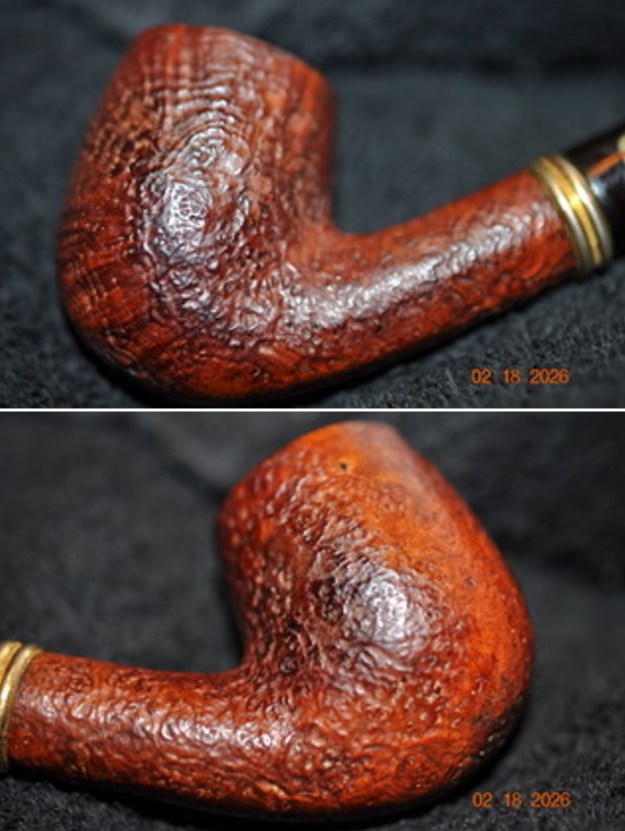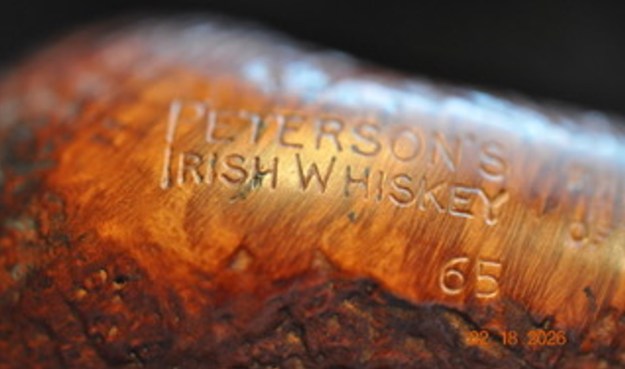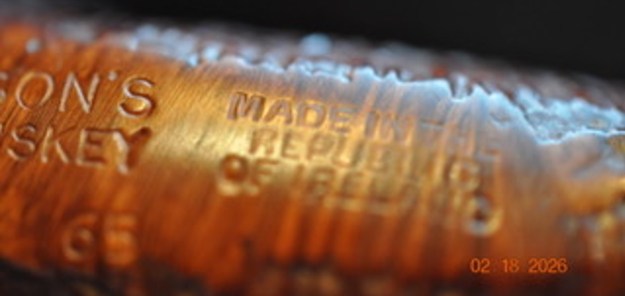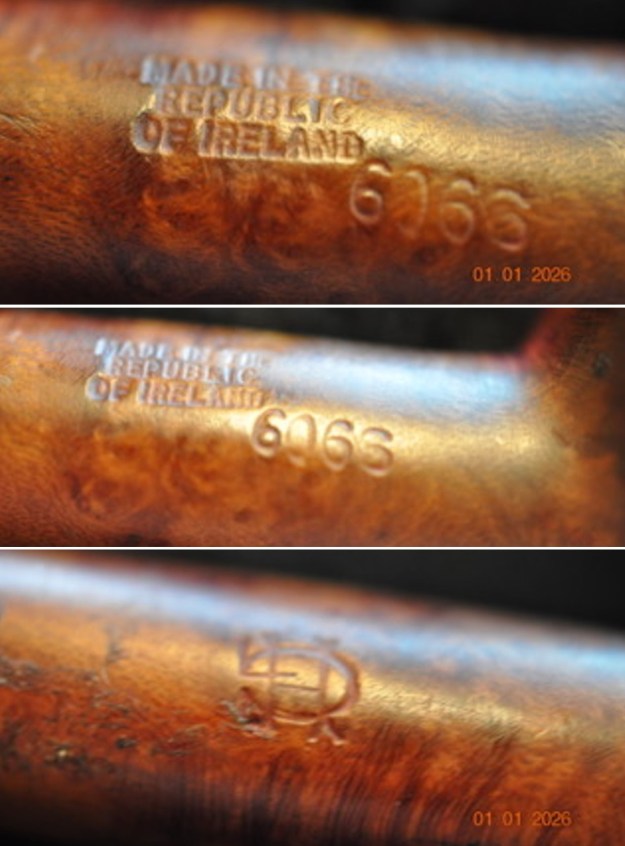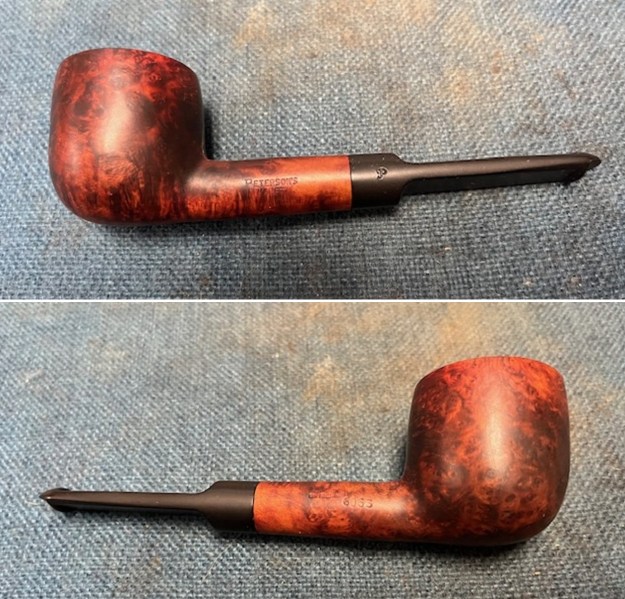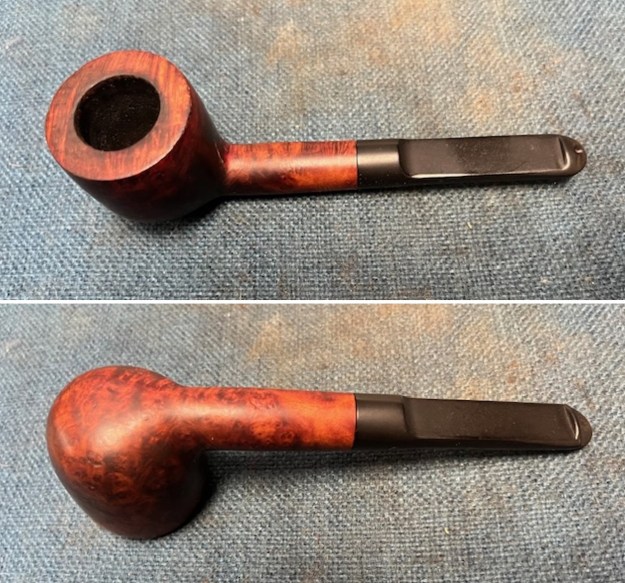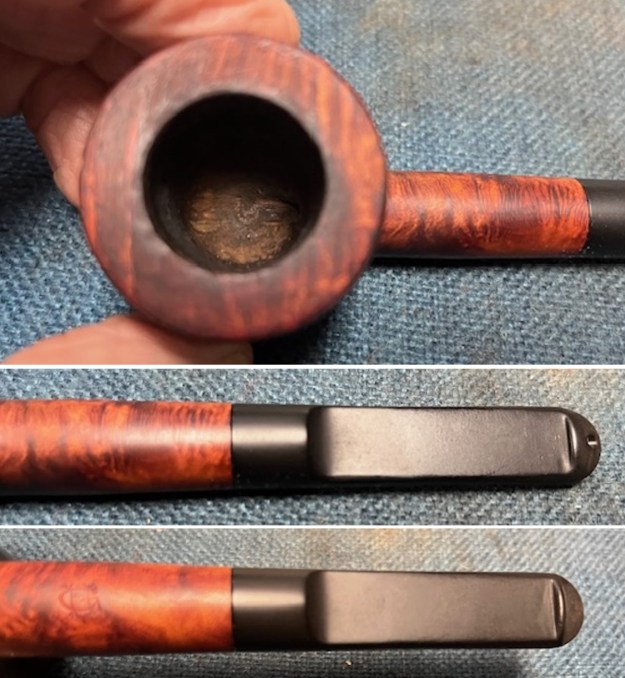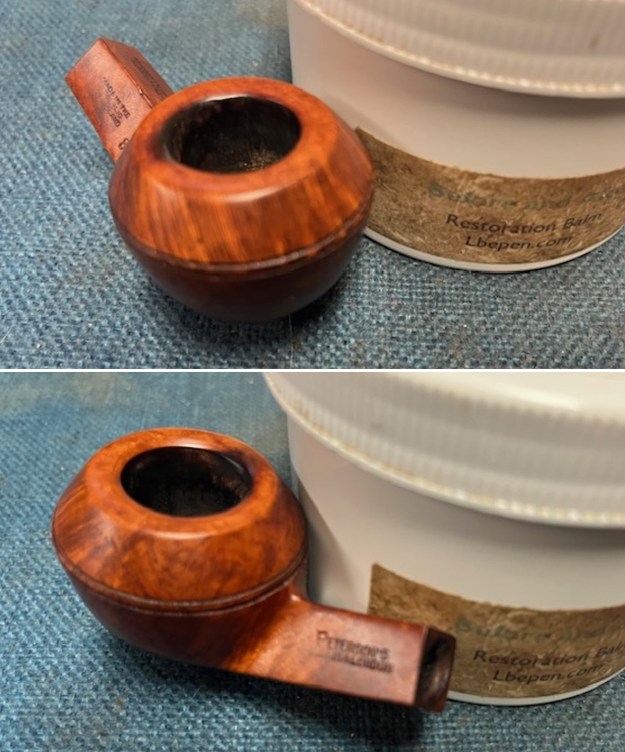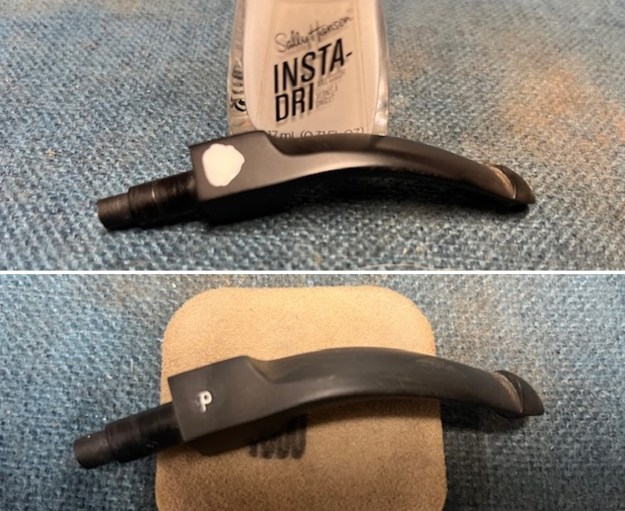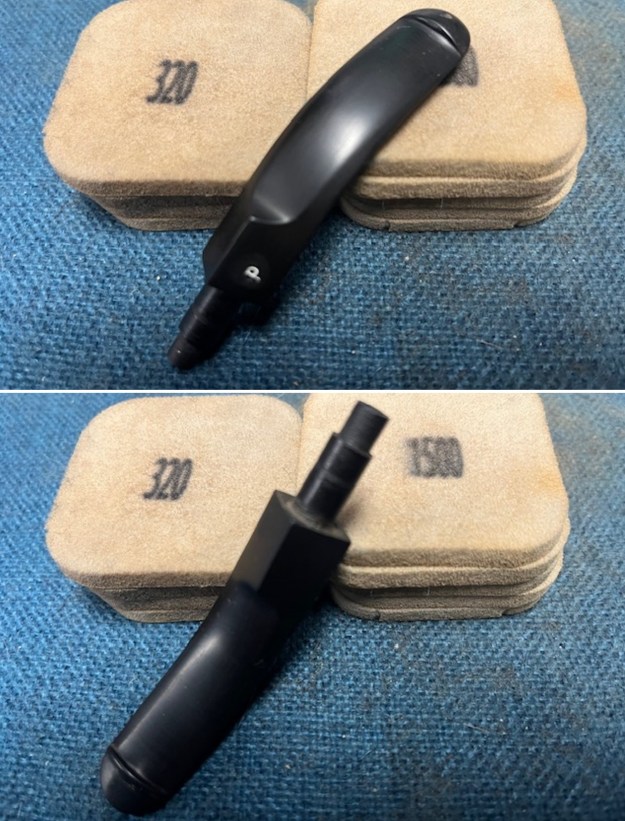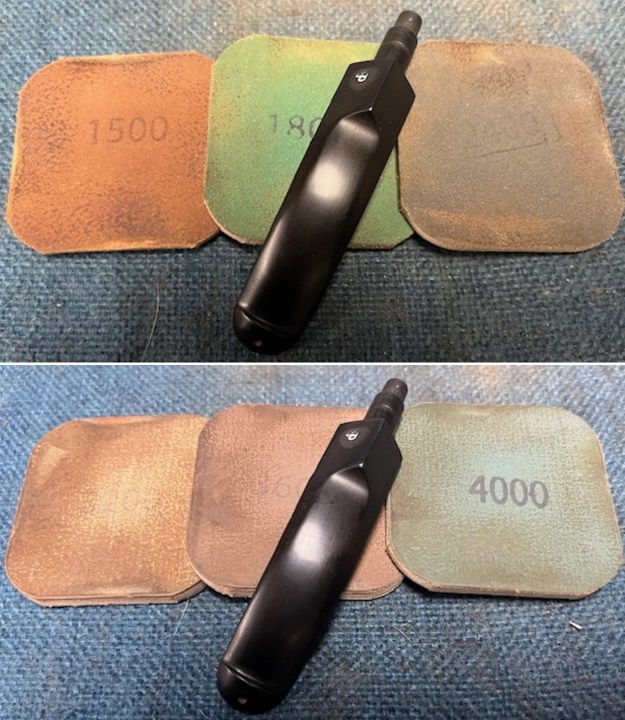
Tag Archives: Petersons Pipes

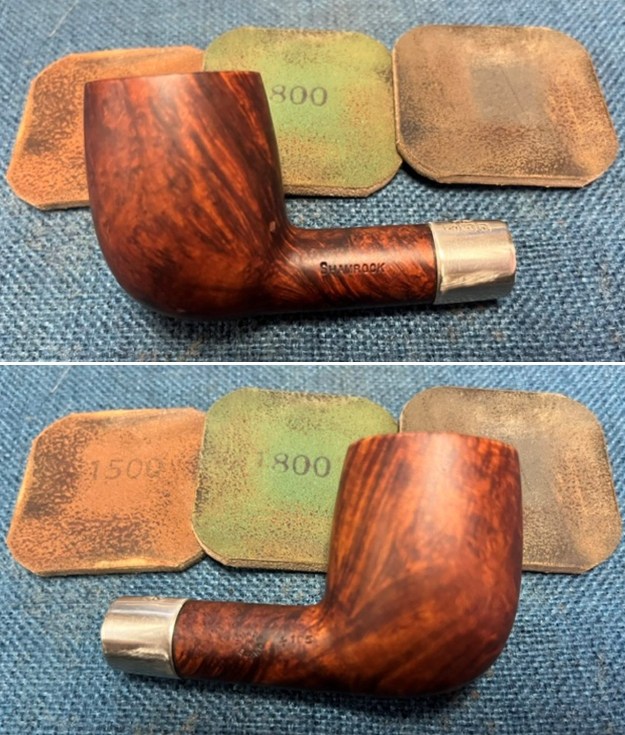
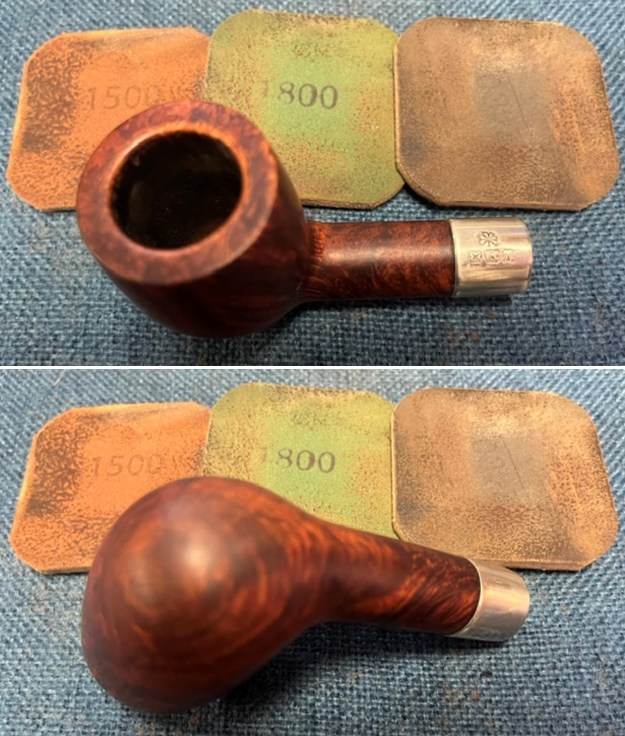
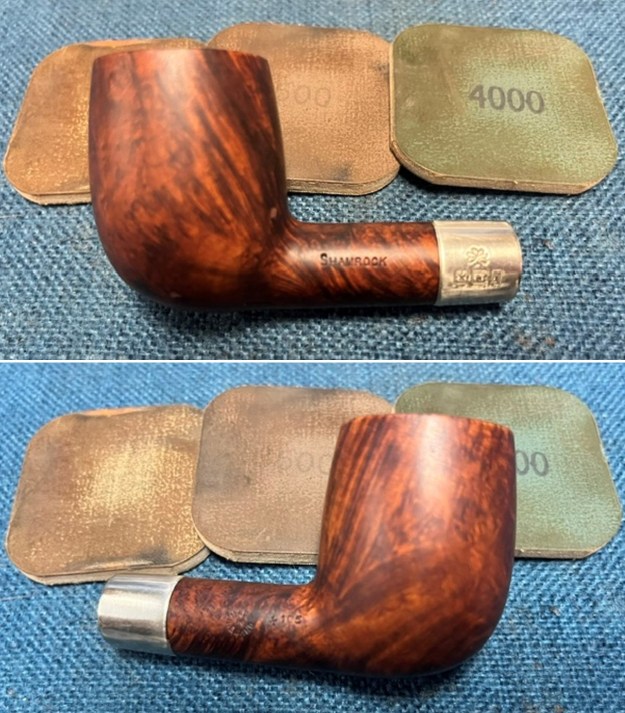
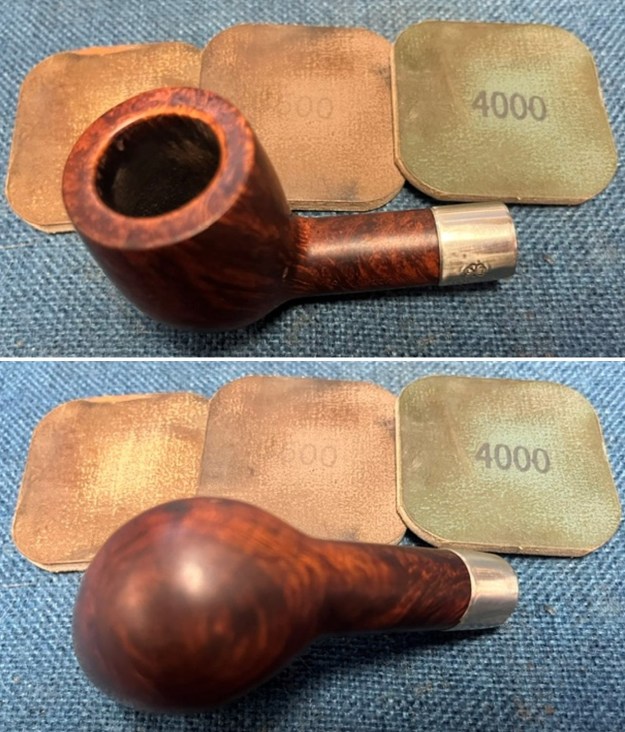
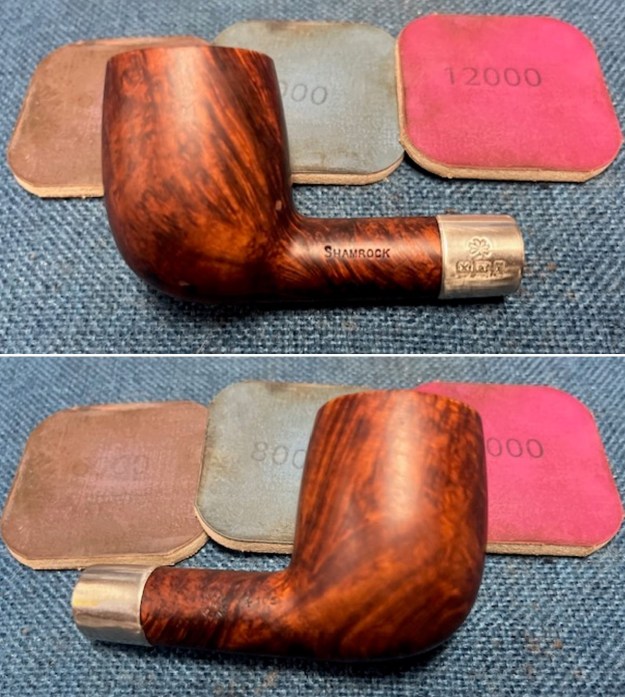
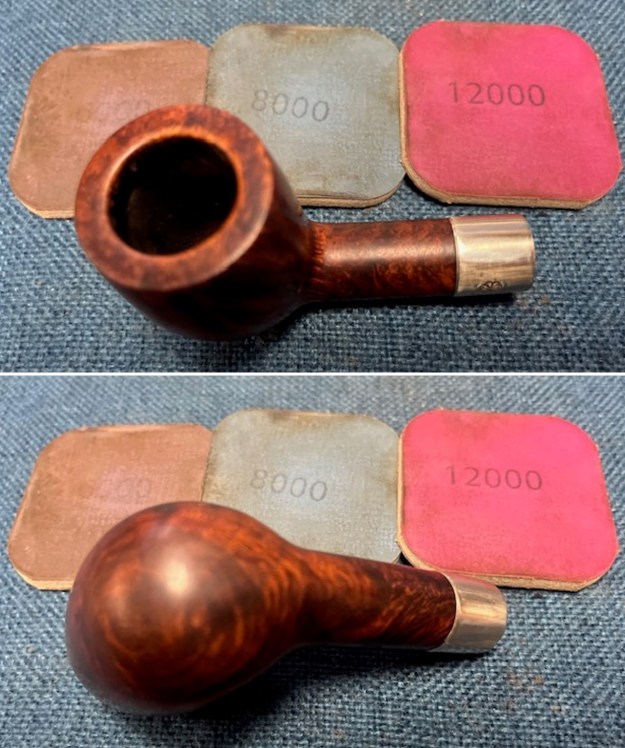
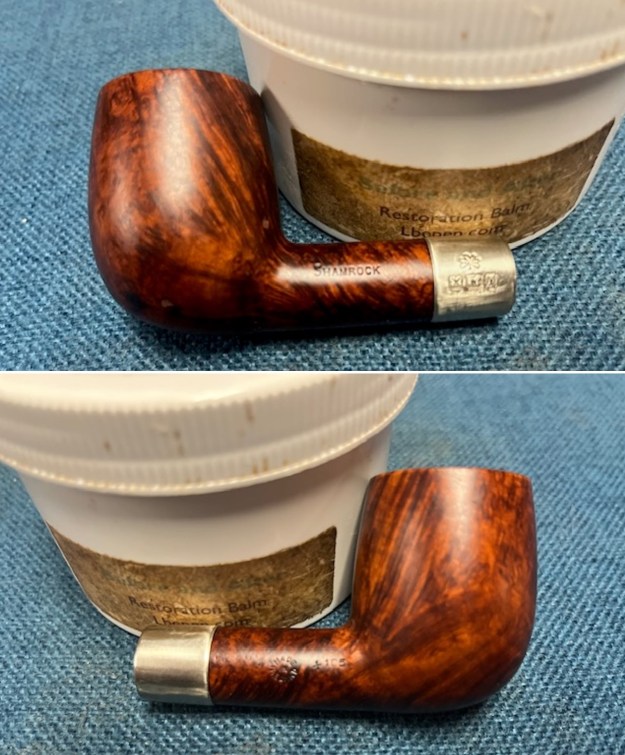
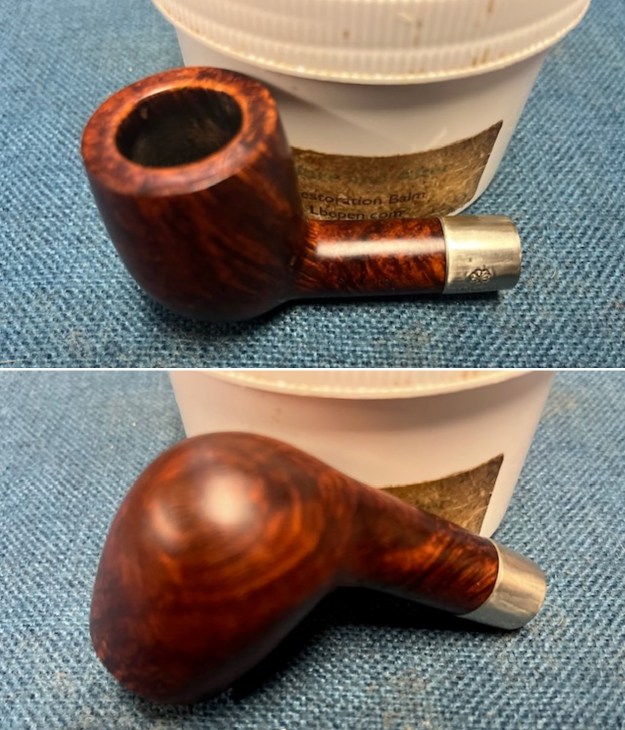
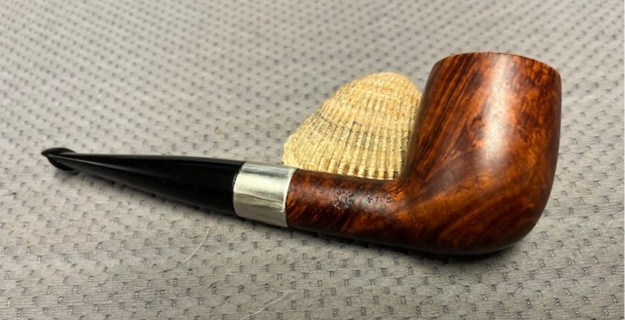
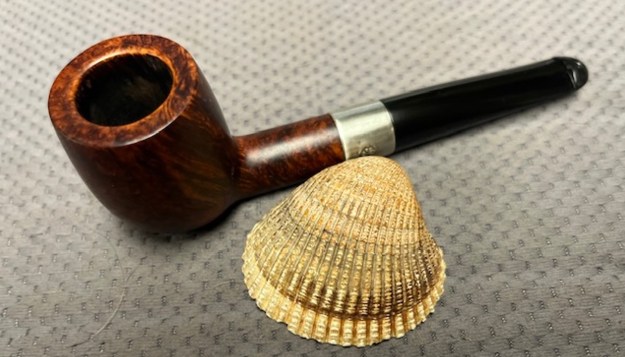
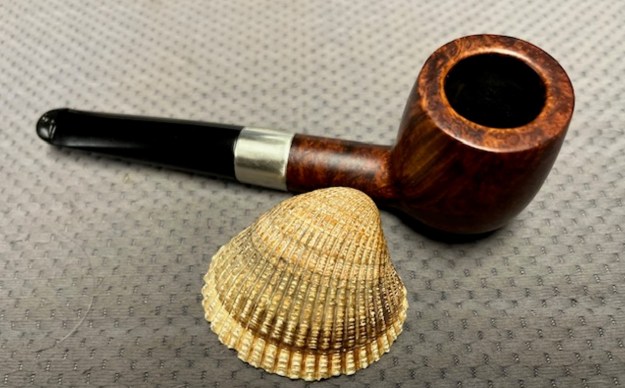
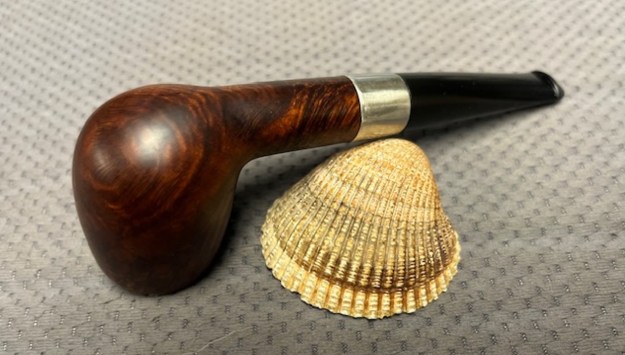
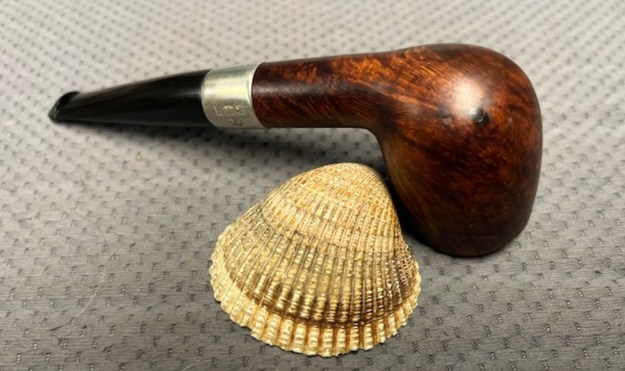
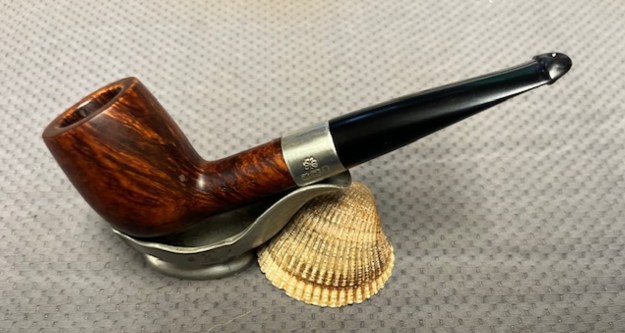
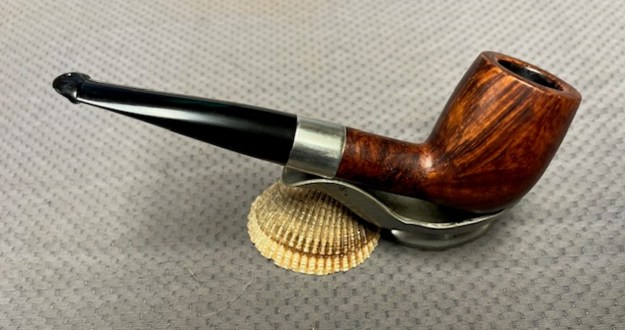
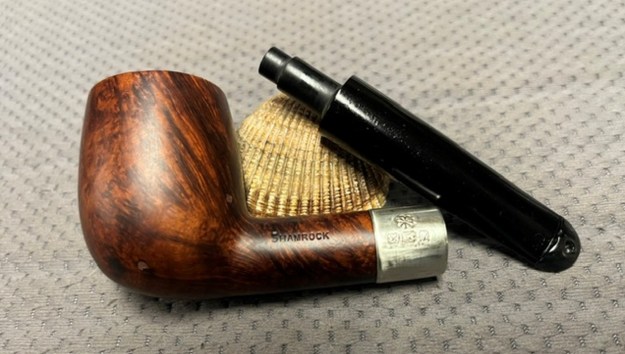
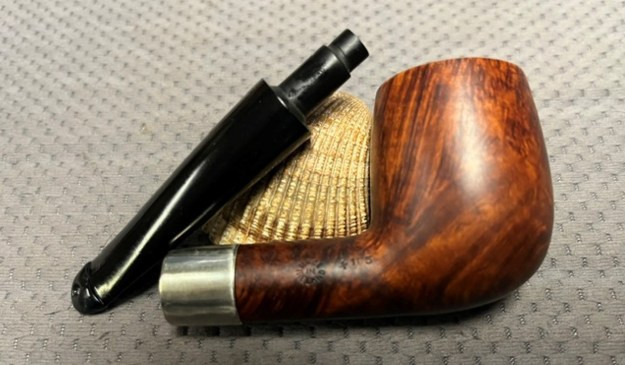
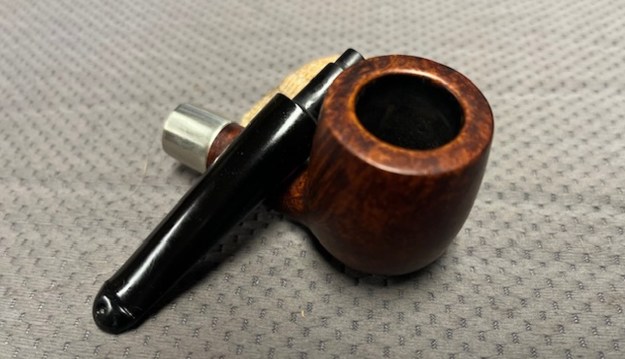
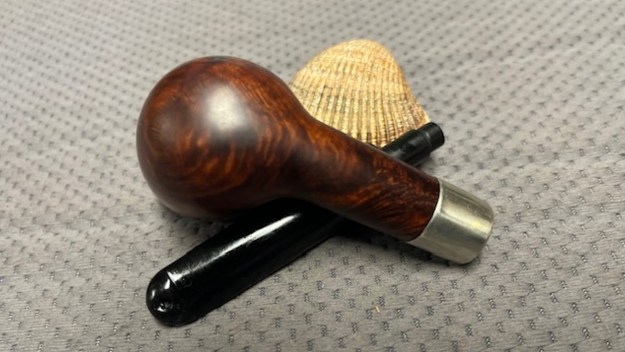
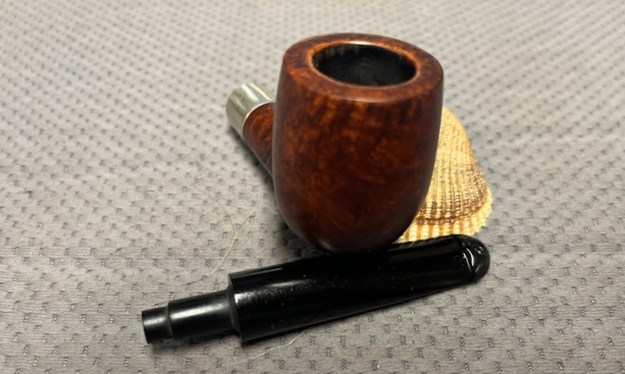
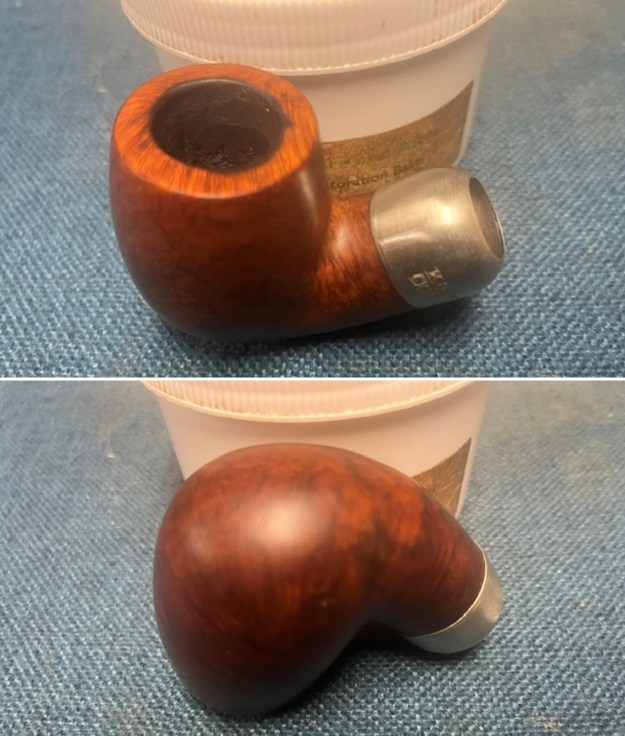
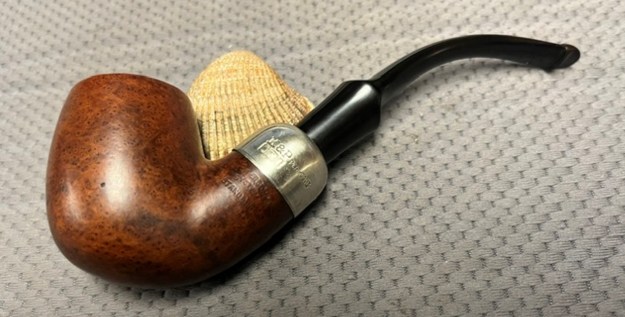
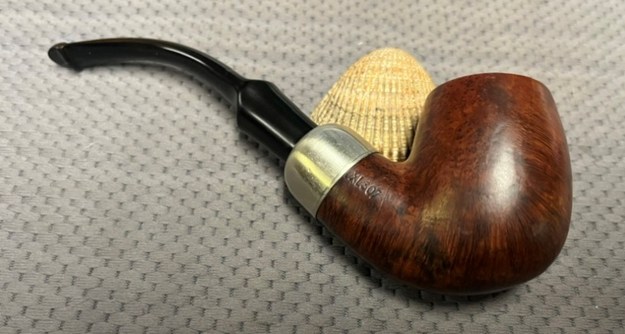
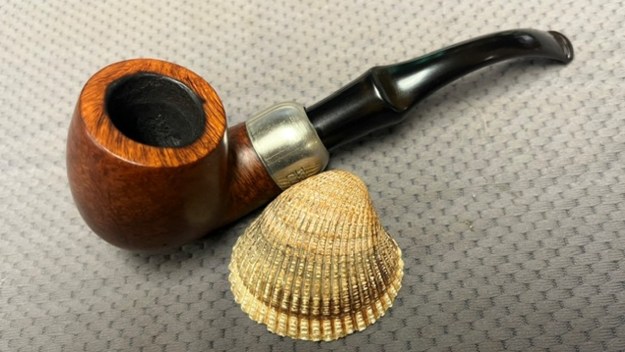
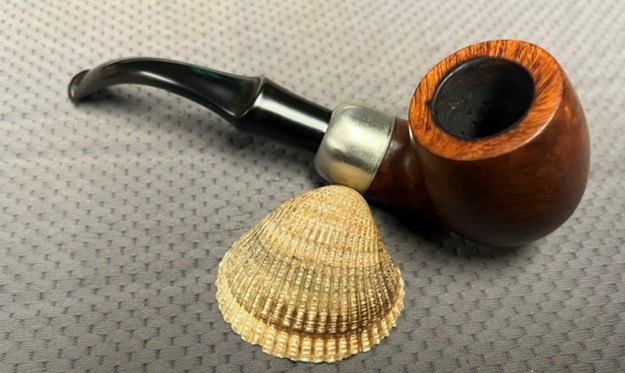
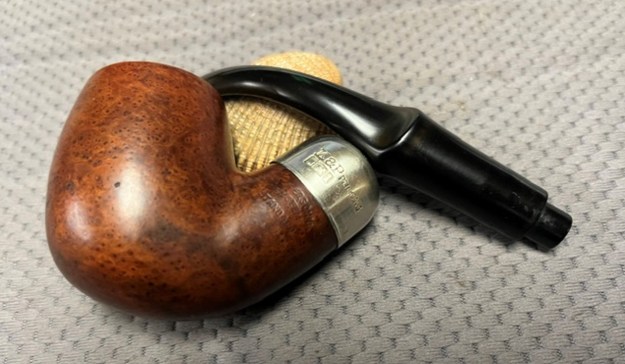
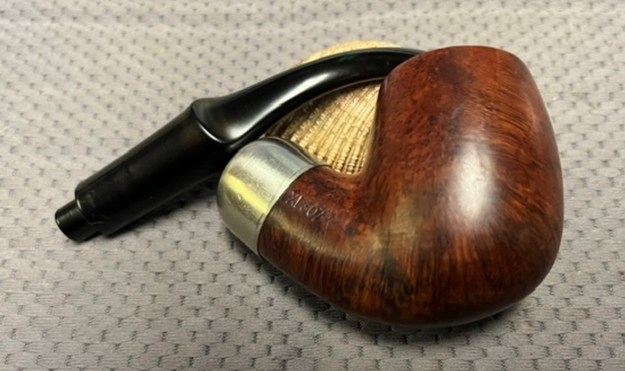
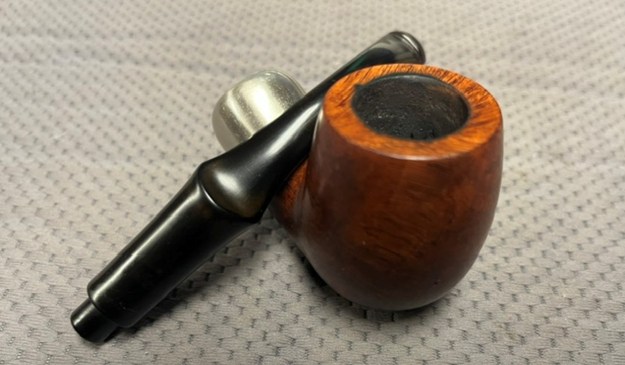
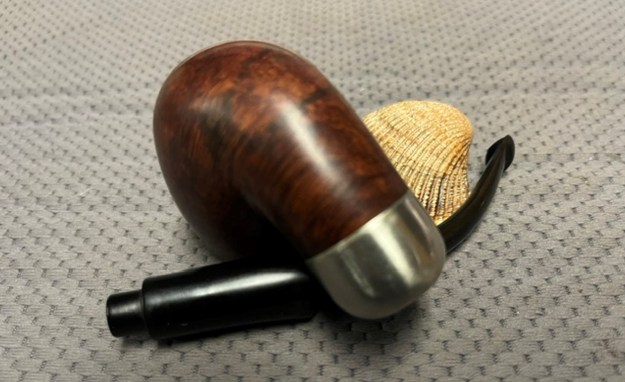
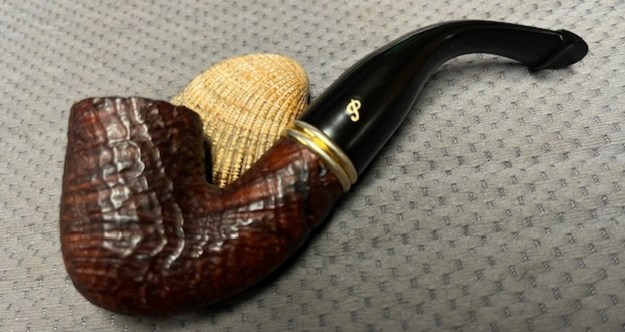
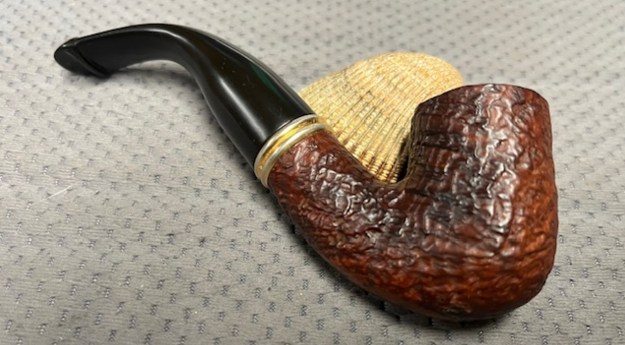
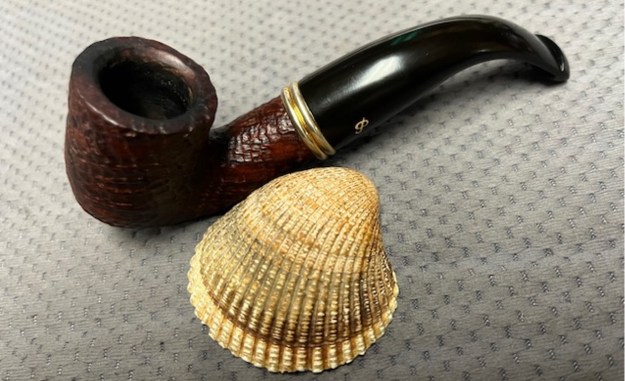
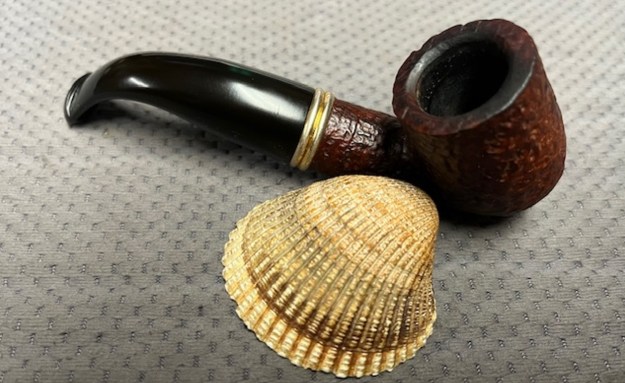
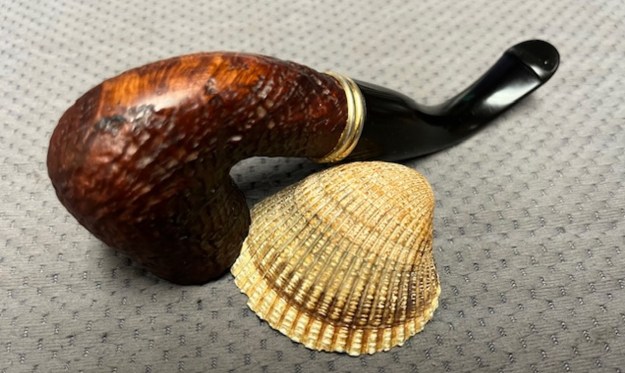
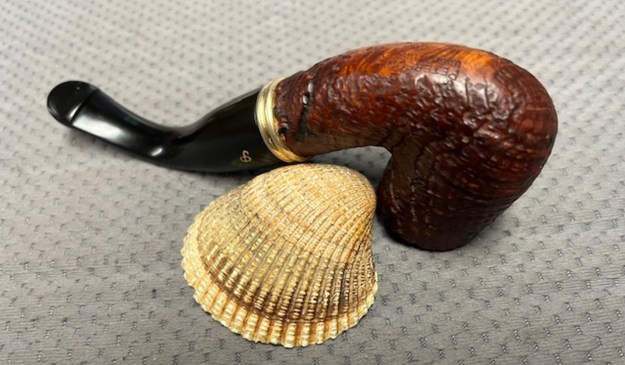
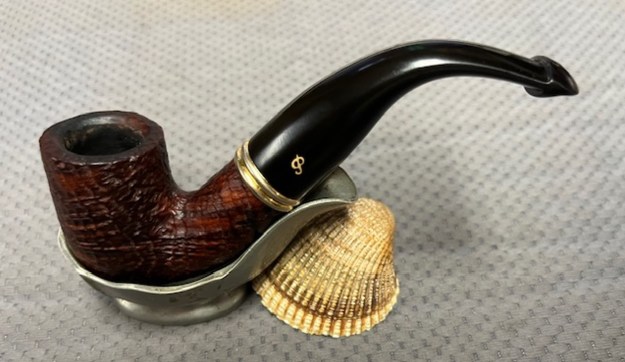
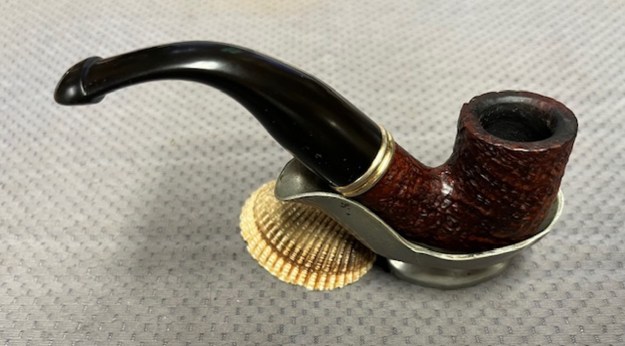
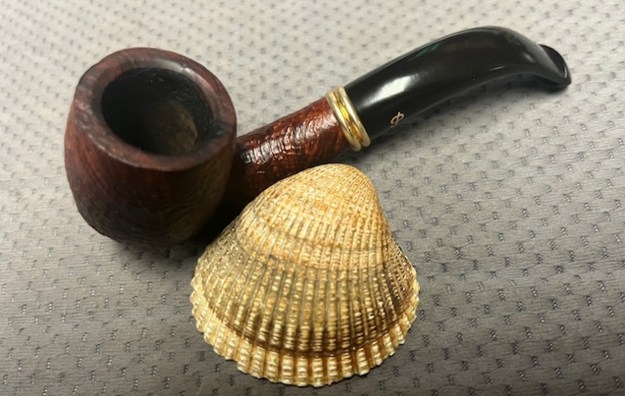
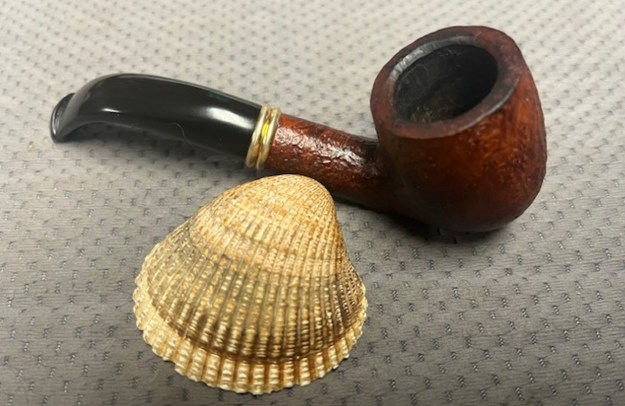
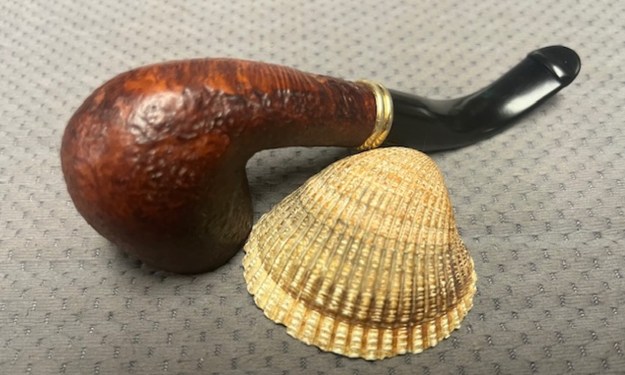
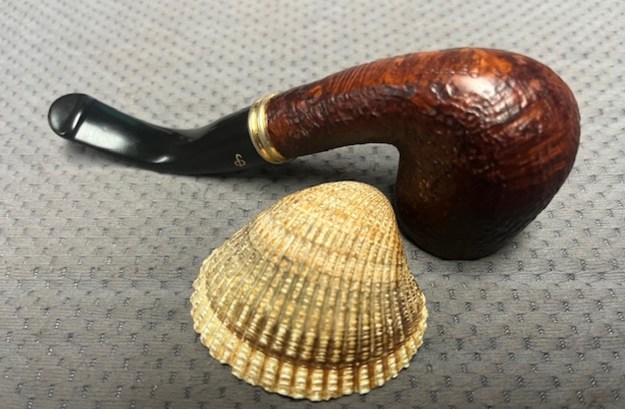
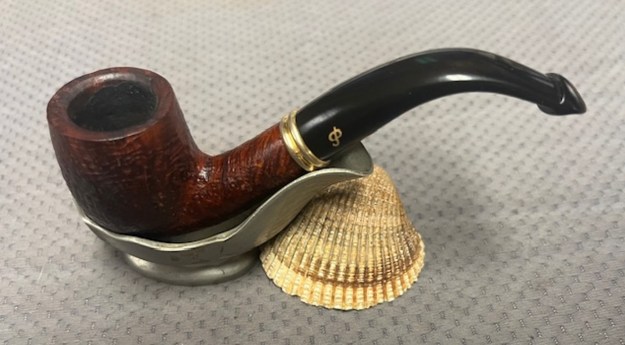
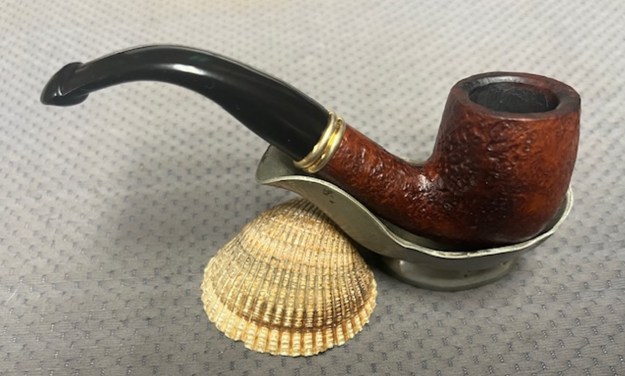
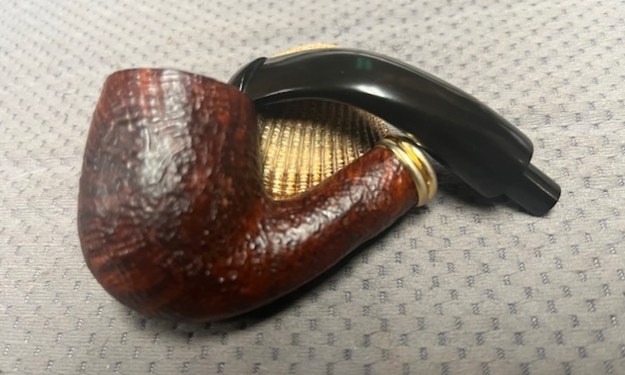
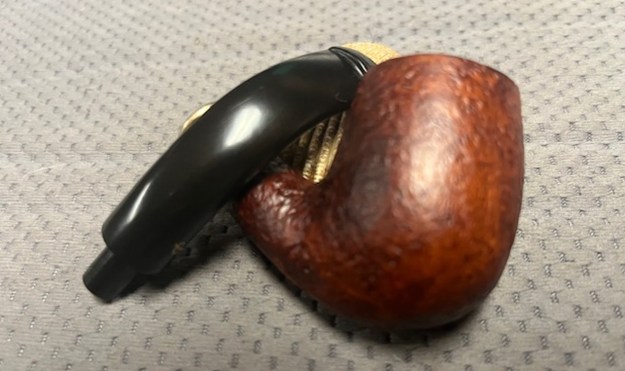
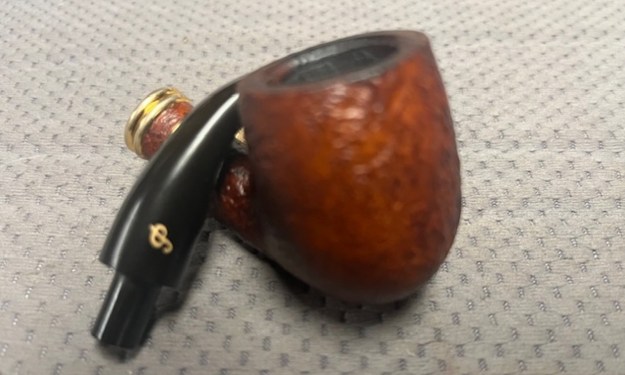
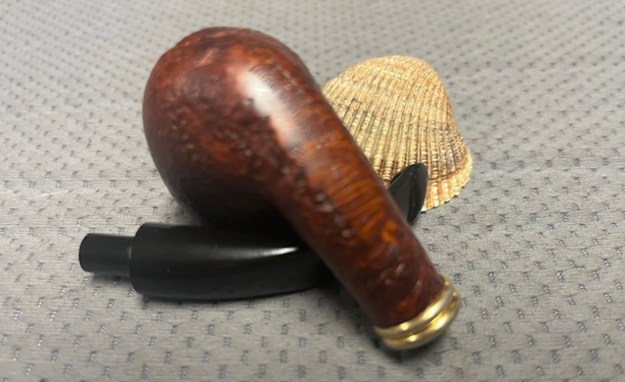
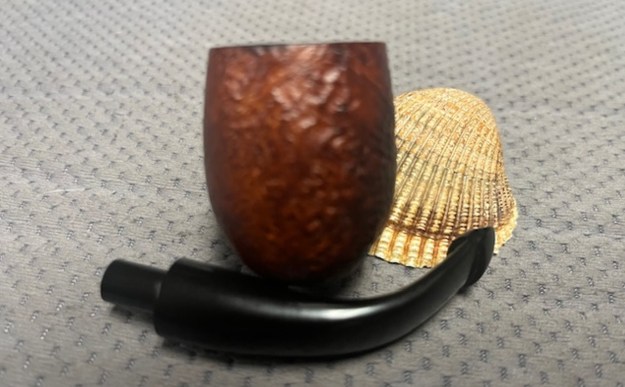
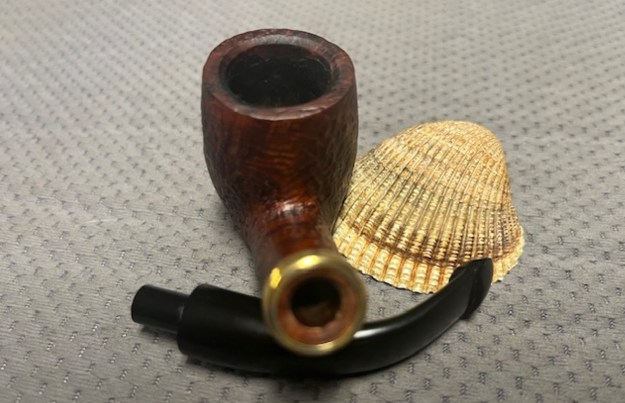
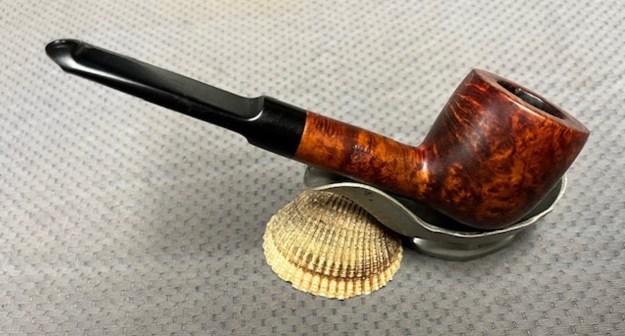
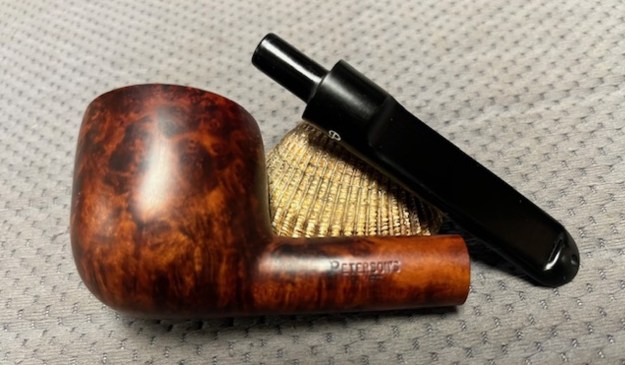
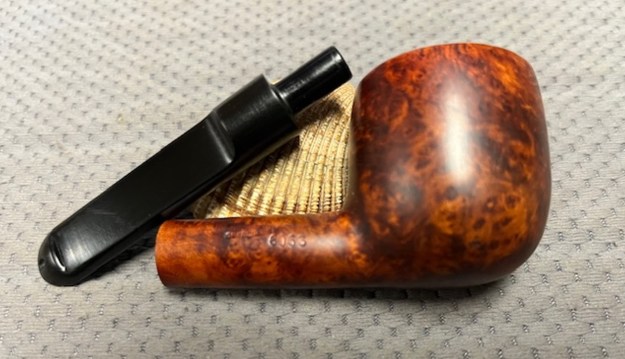
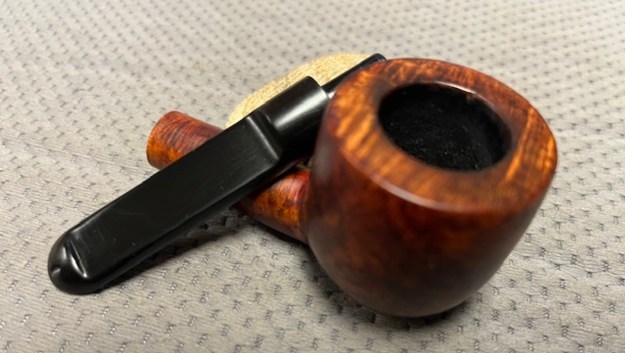
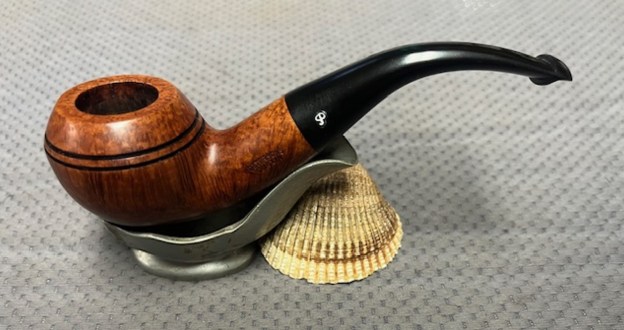
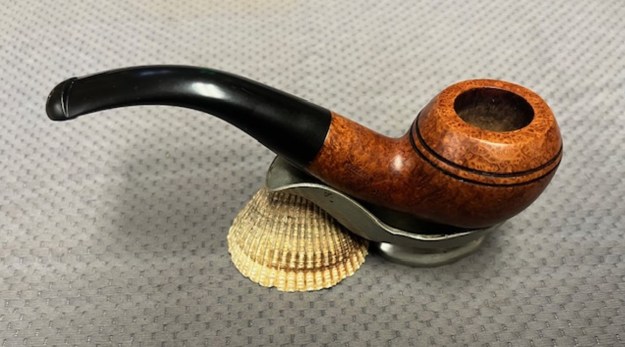
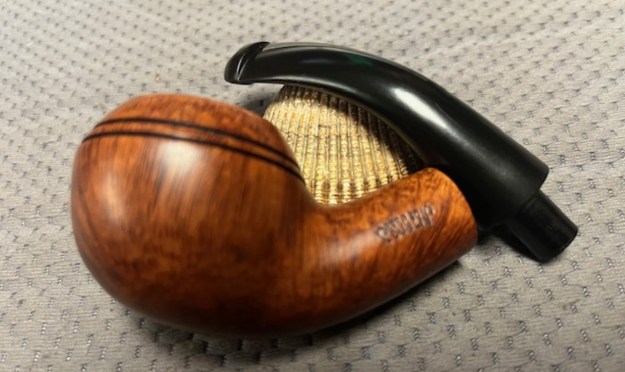
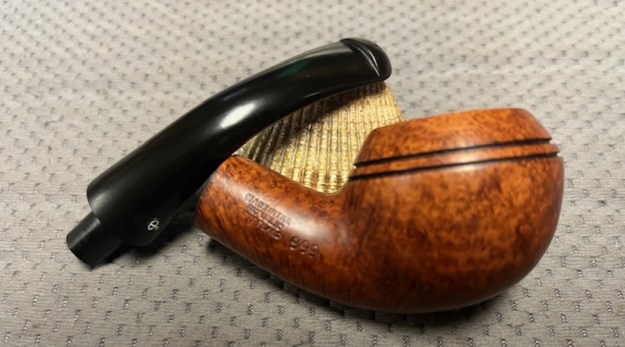
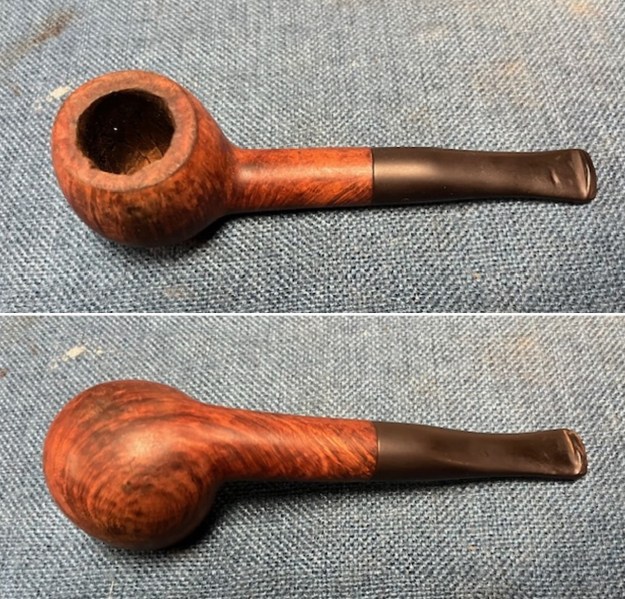
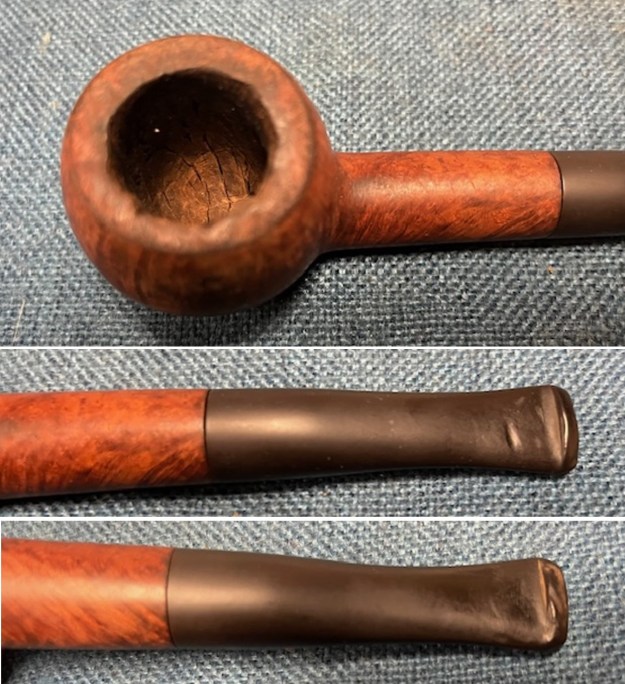
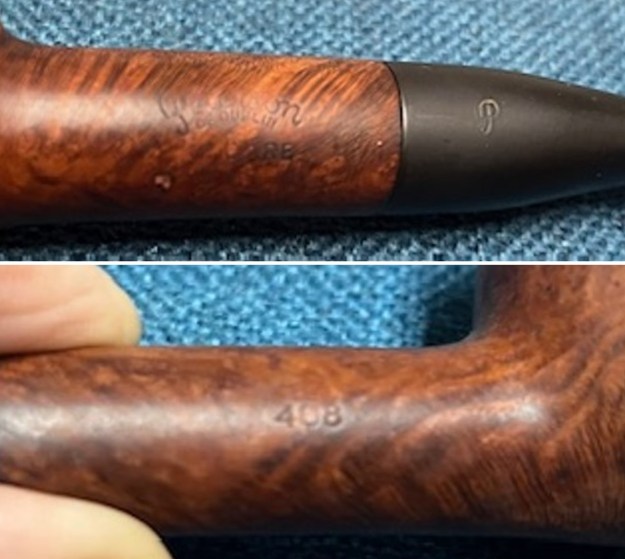
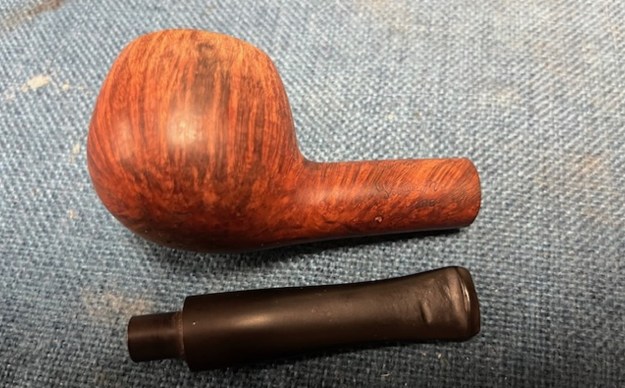
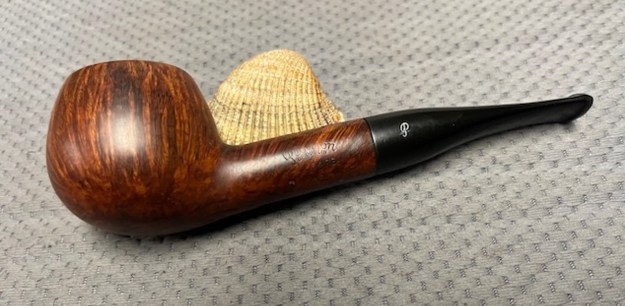
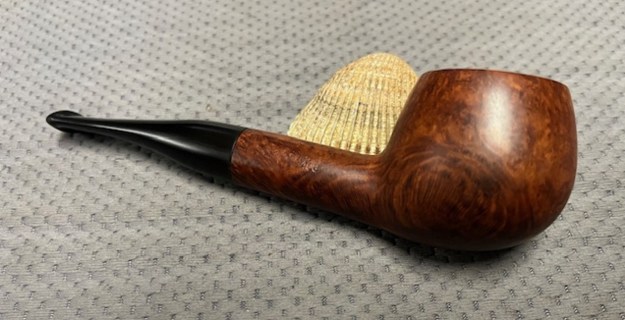
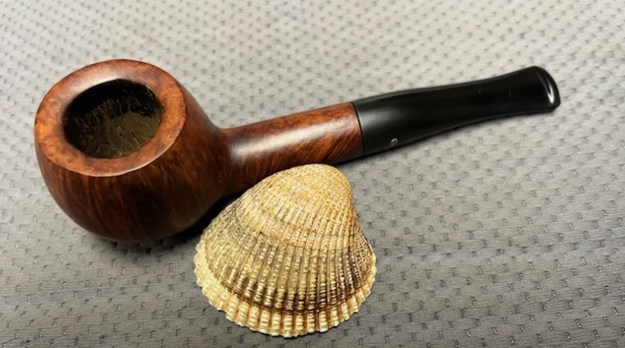
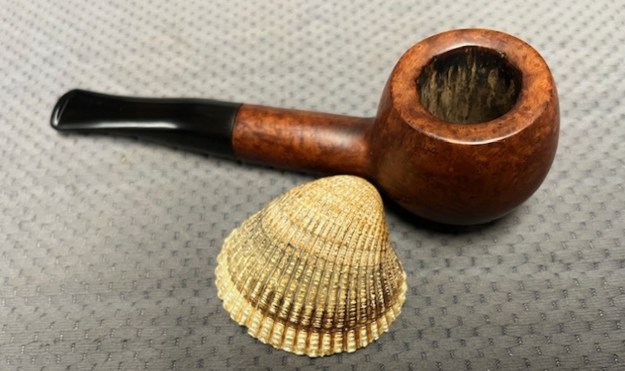
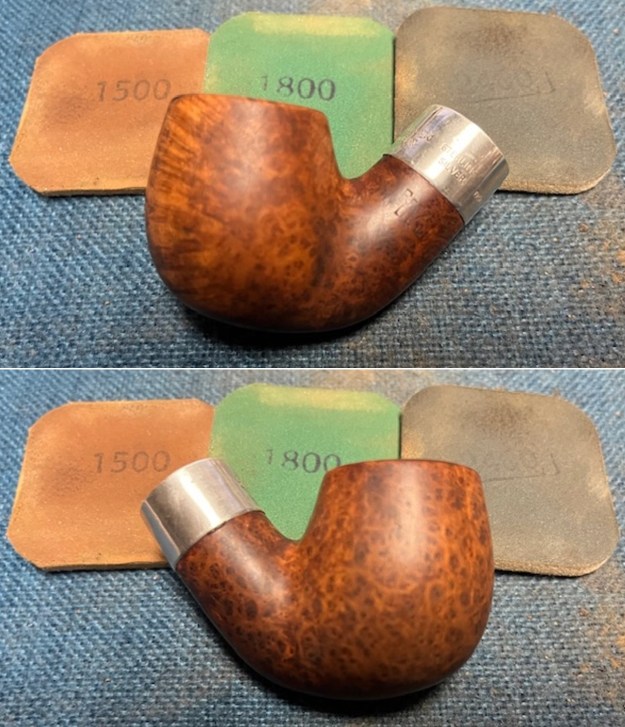
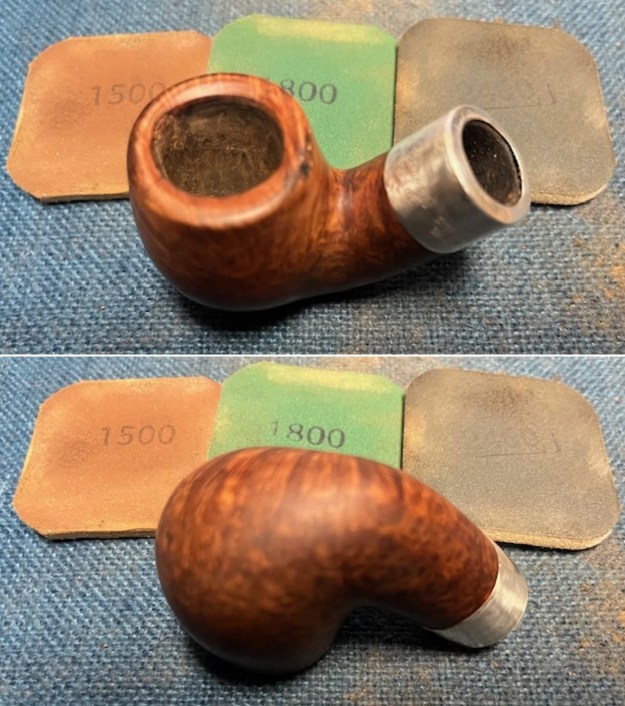
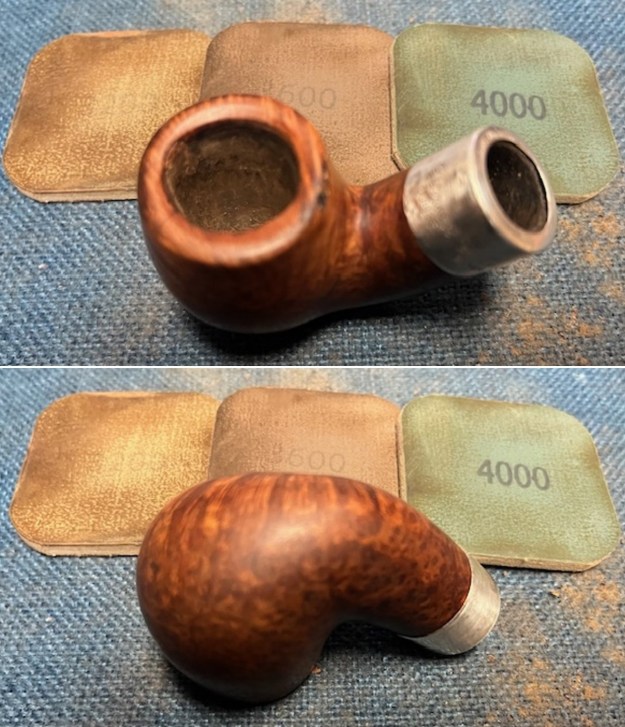
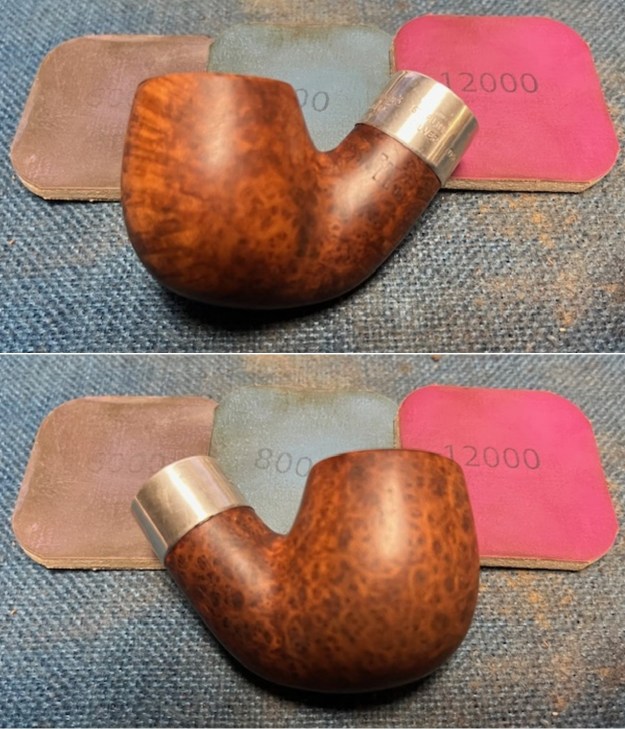
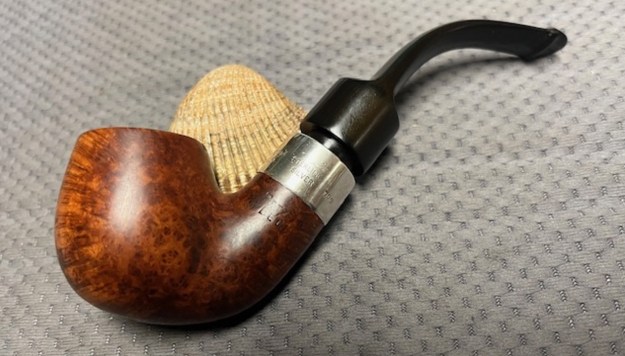
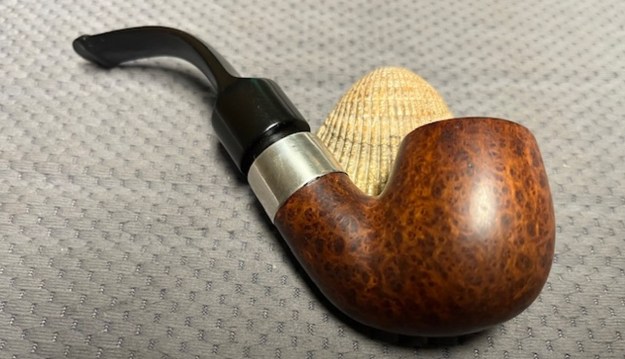
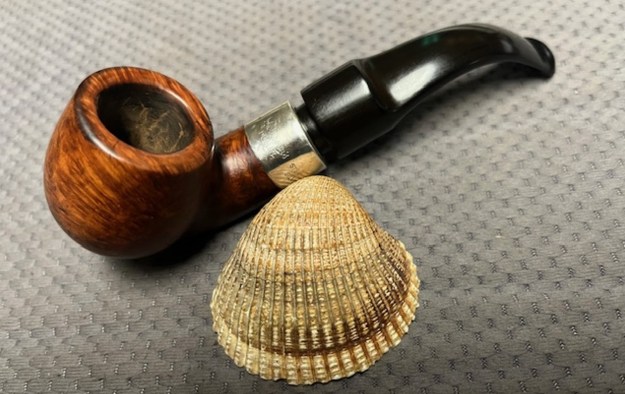
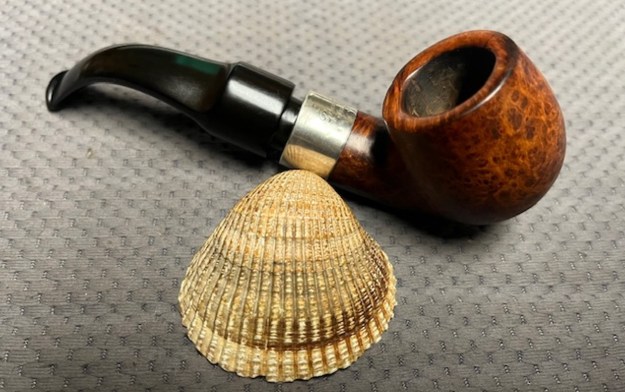
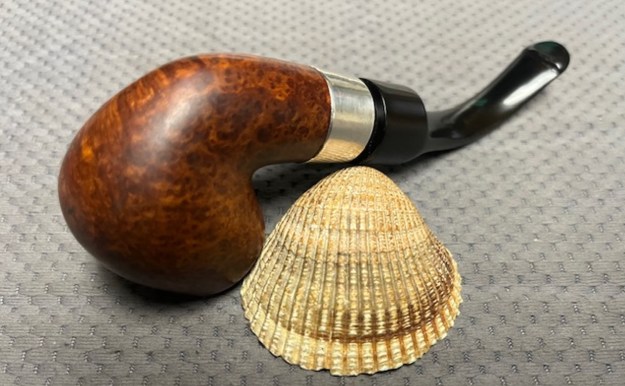
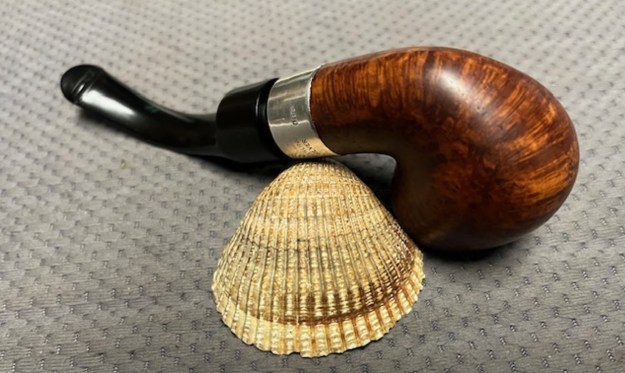
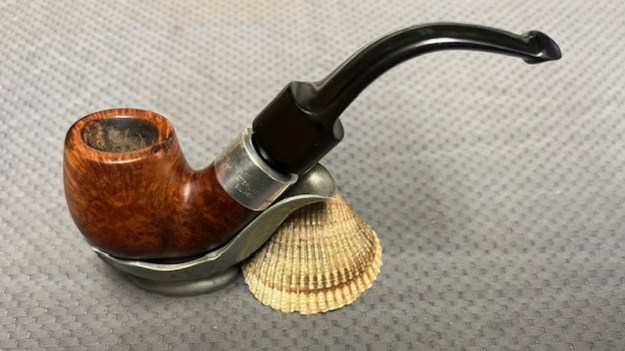
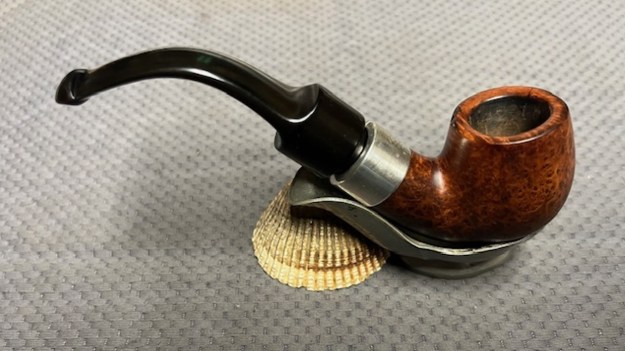
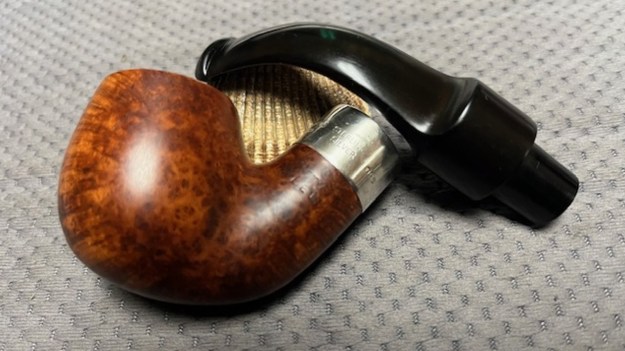
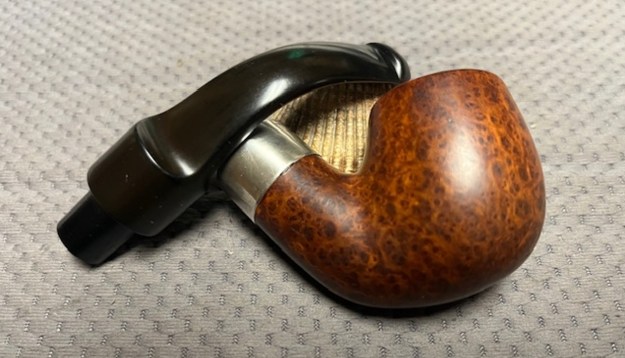
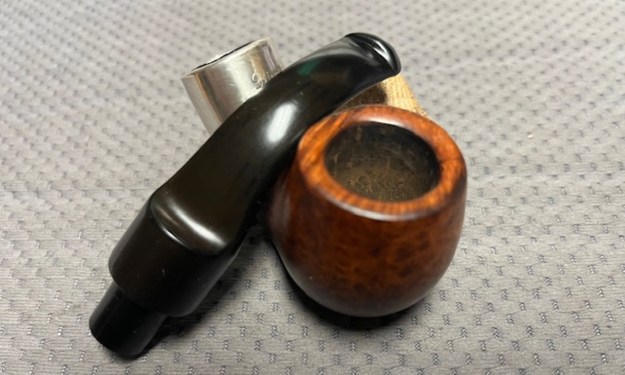
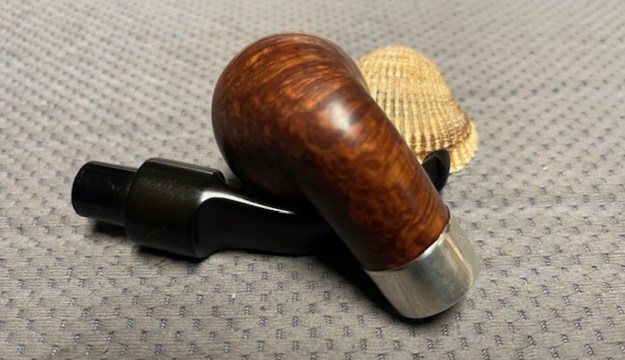
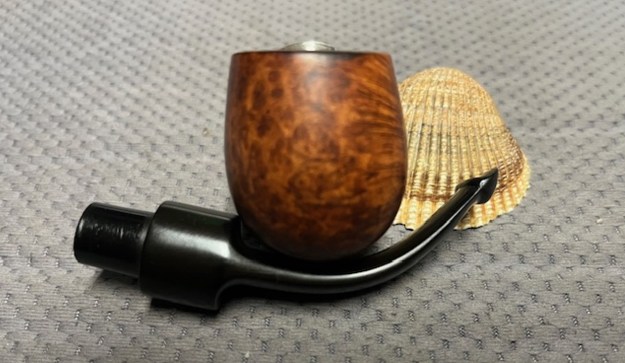
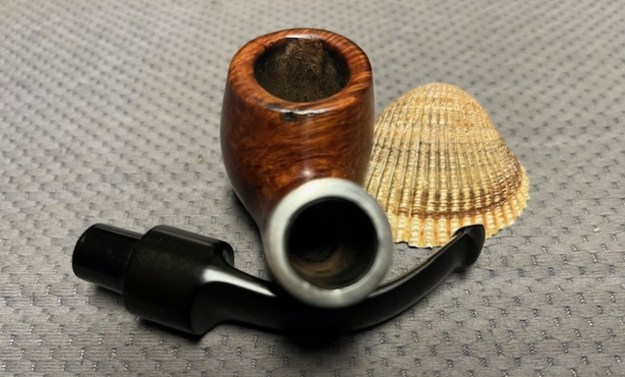
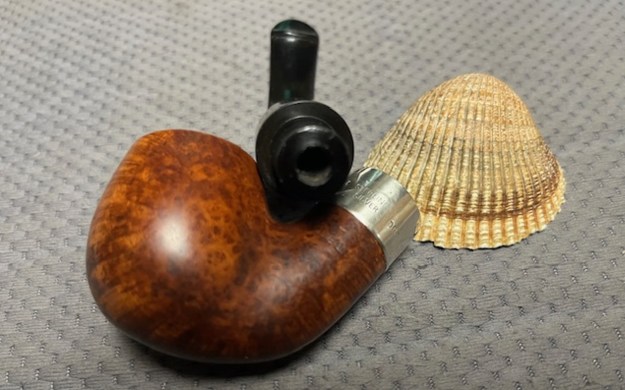
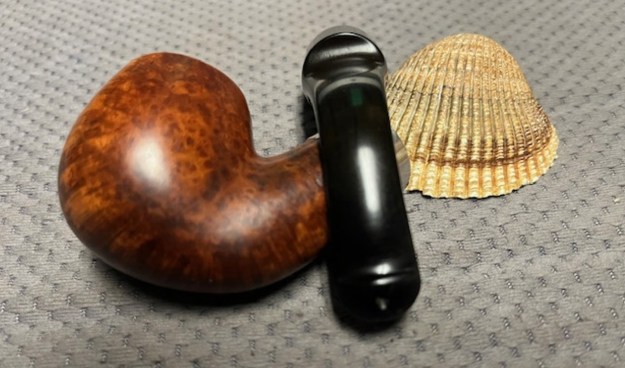
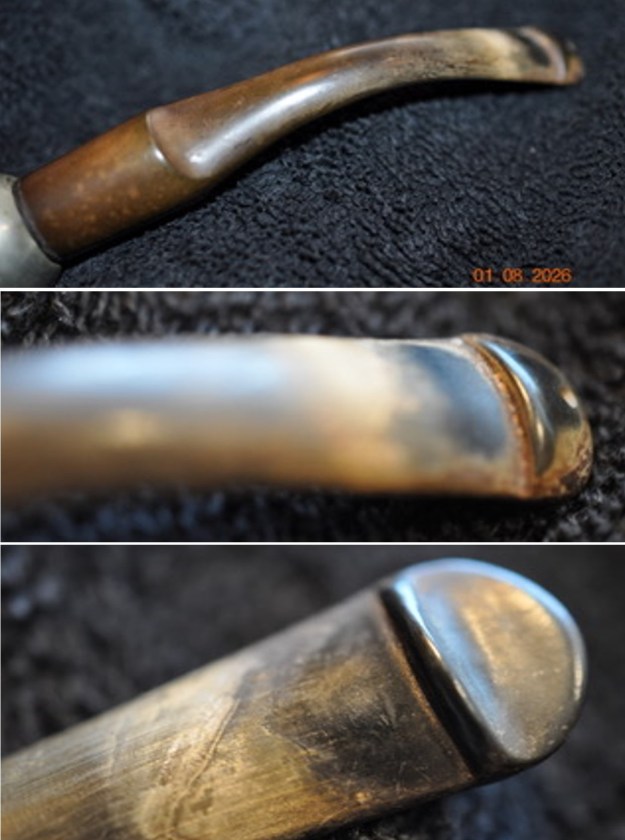
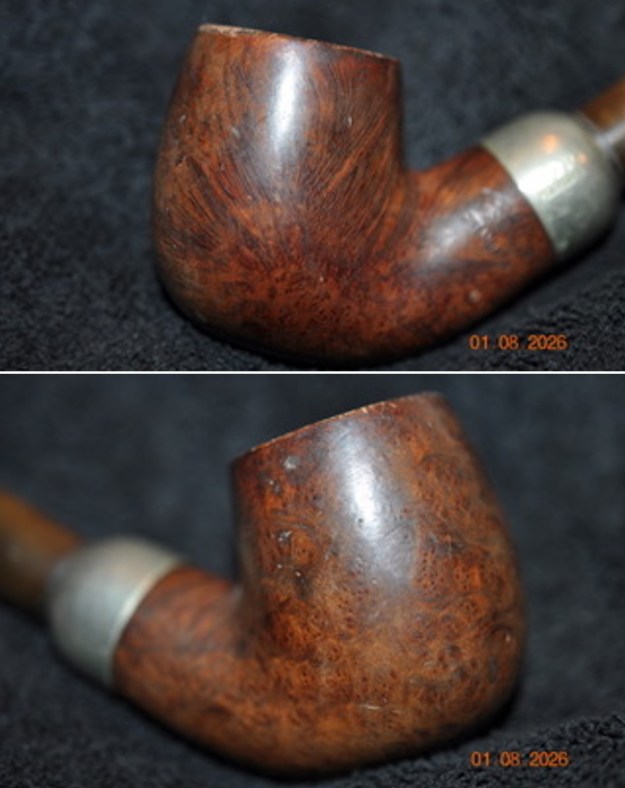
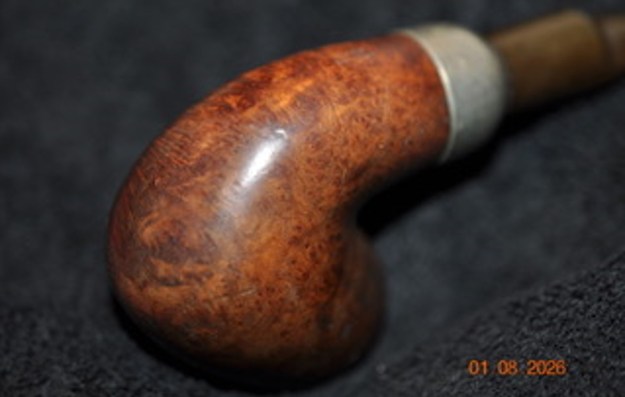
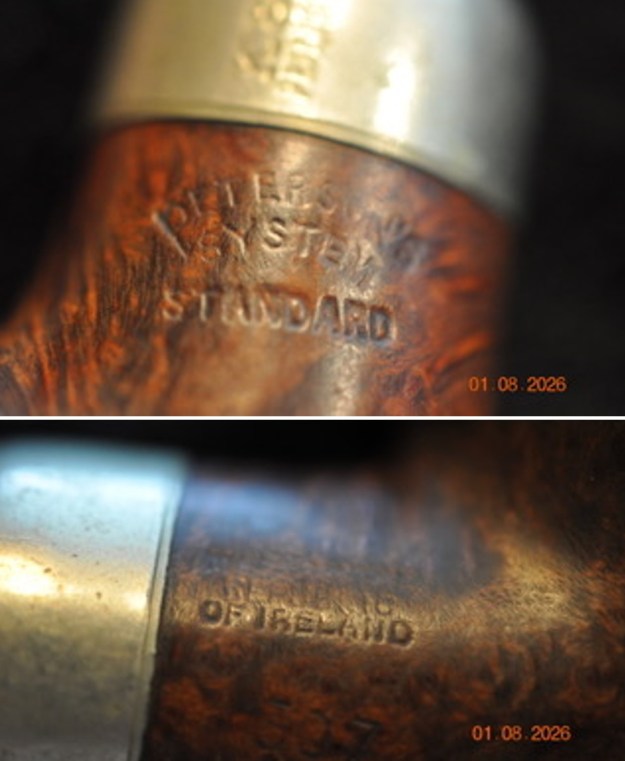
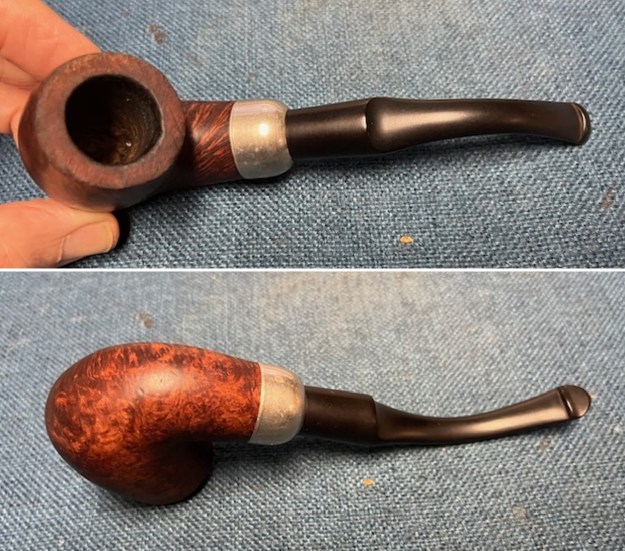
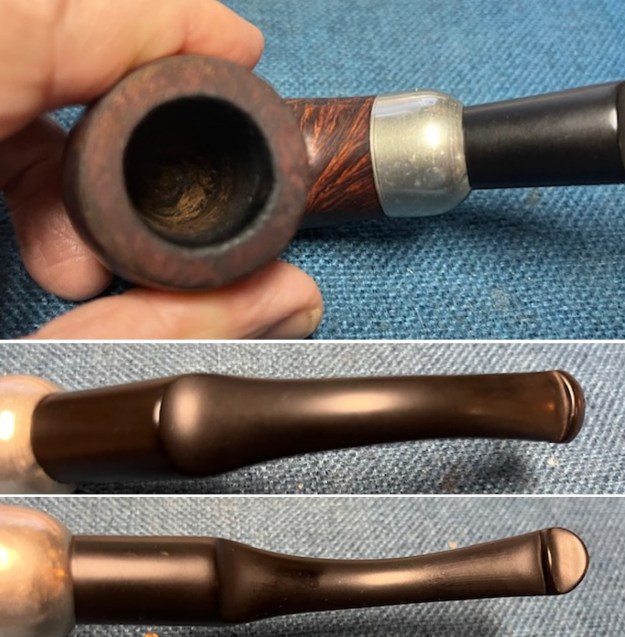
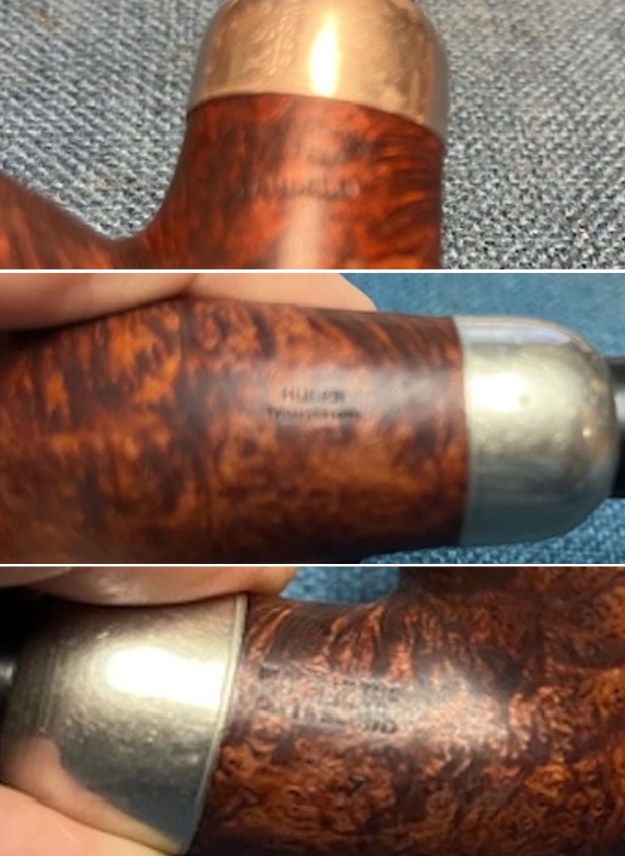
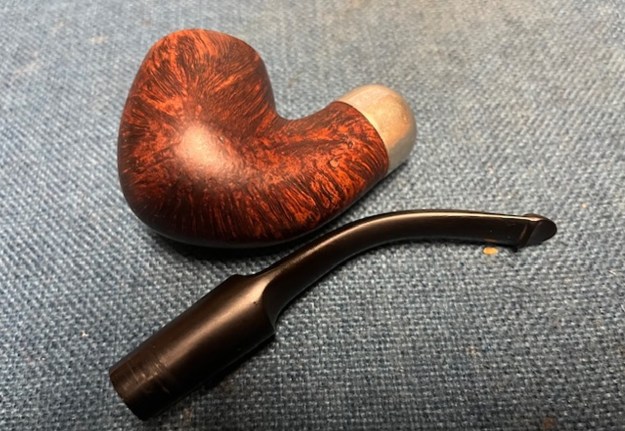
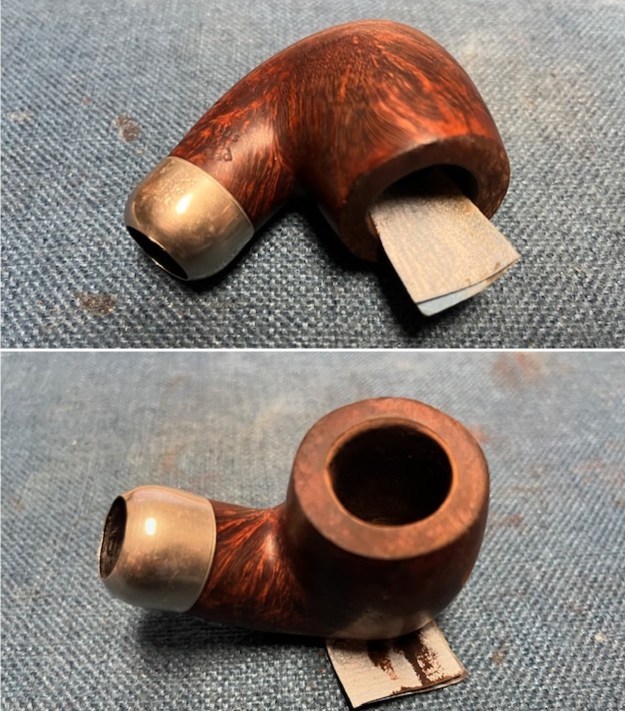
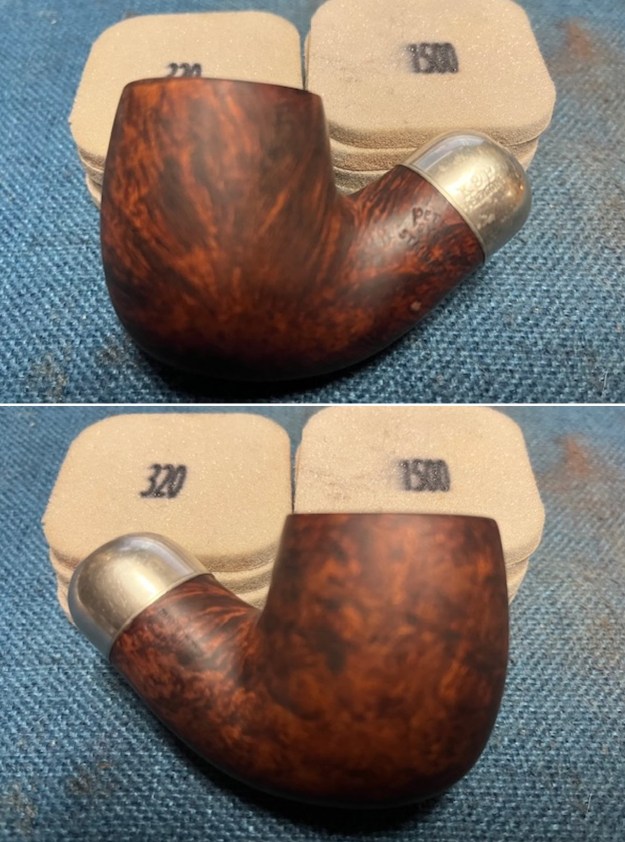
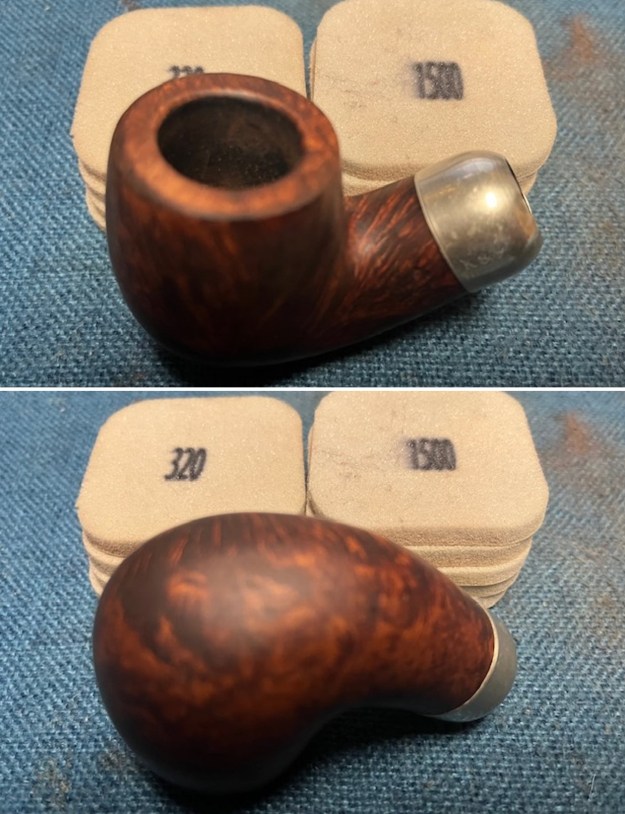
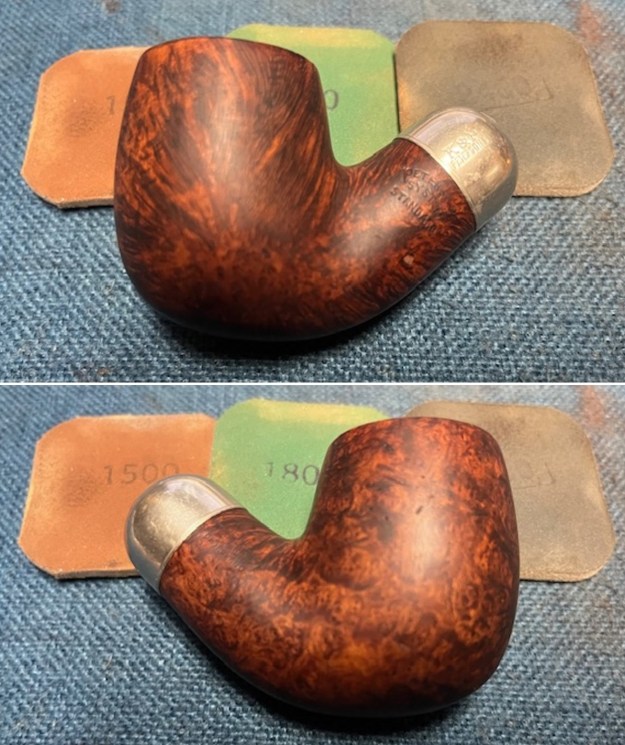
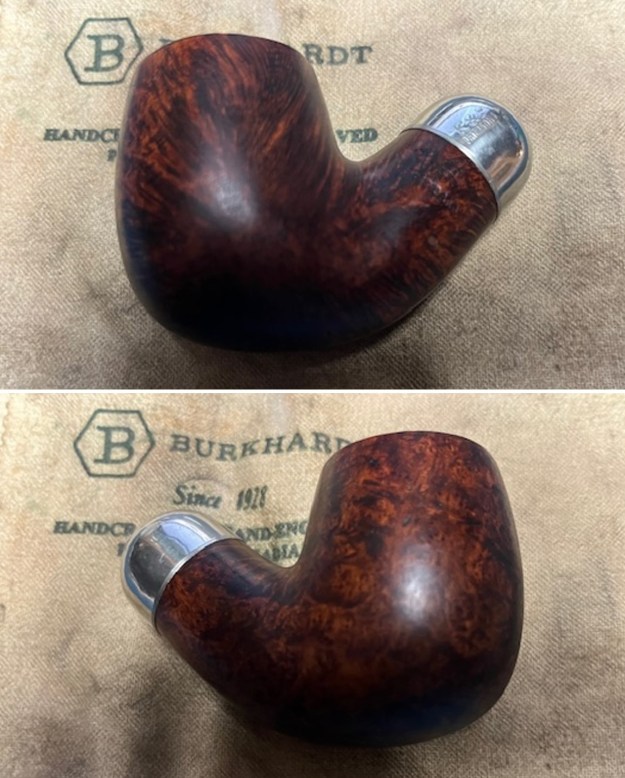
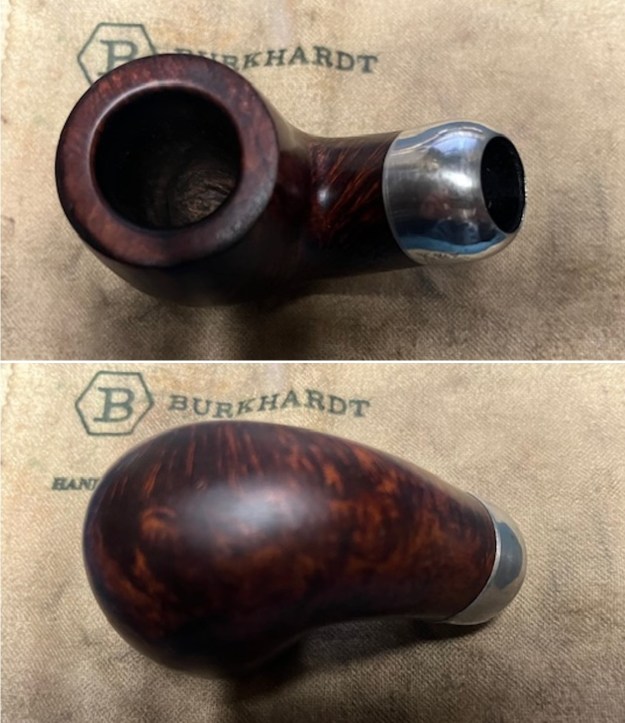
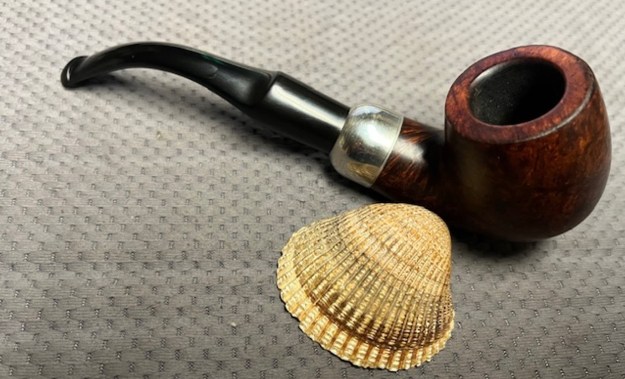
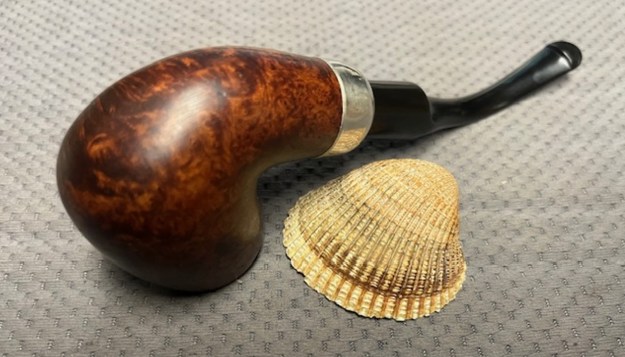
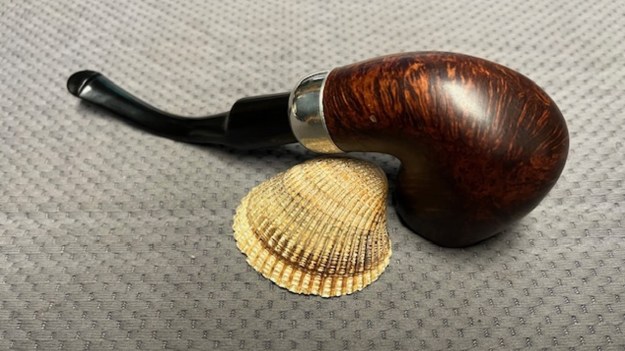
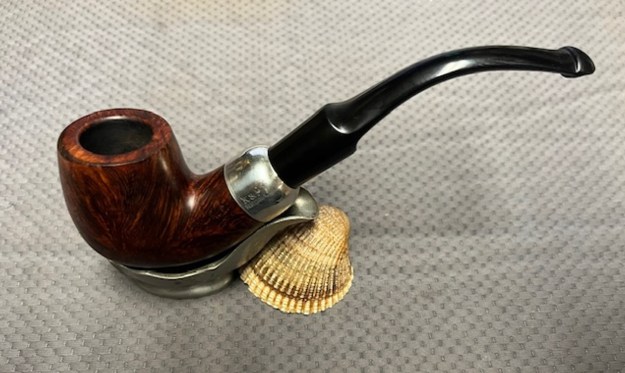
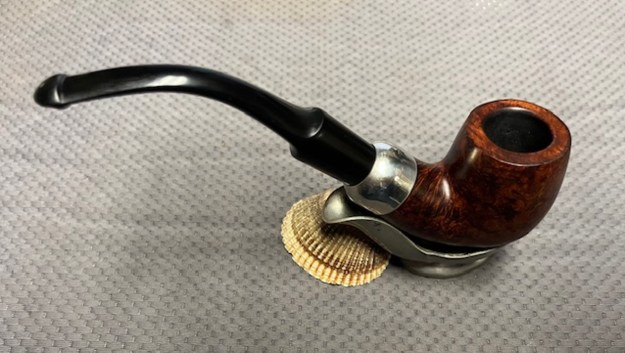
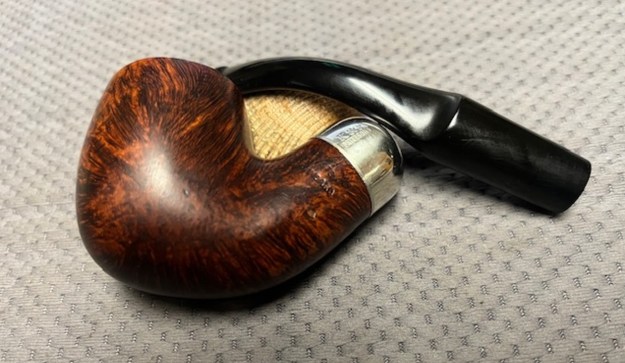
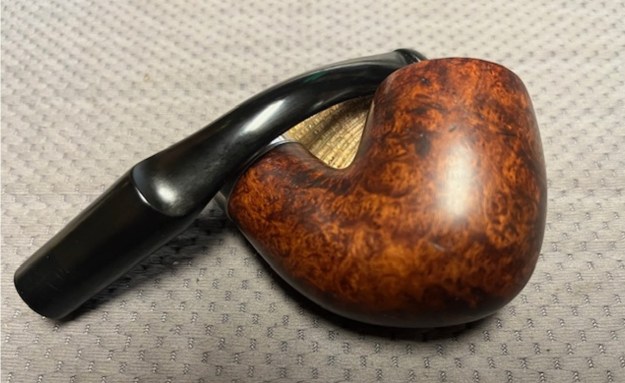
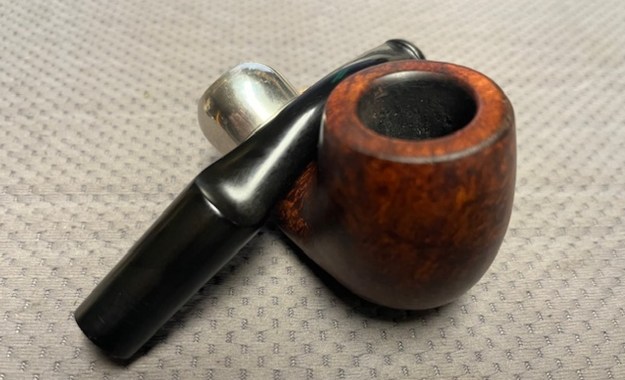
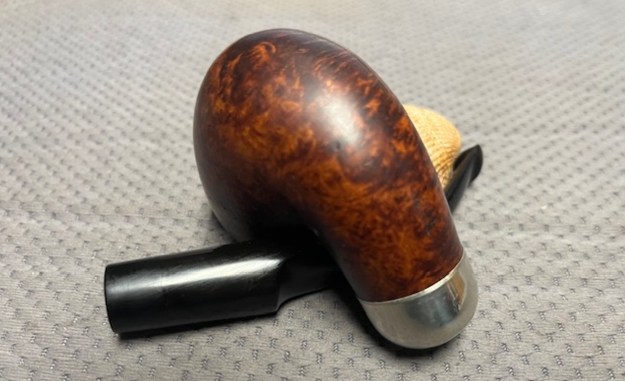
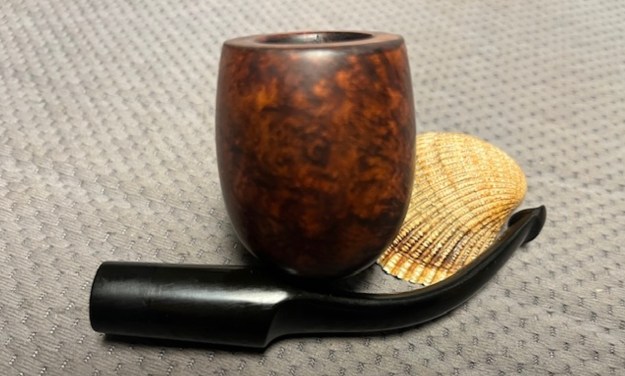
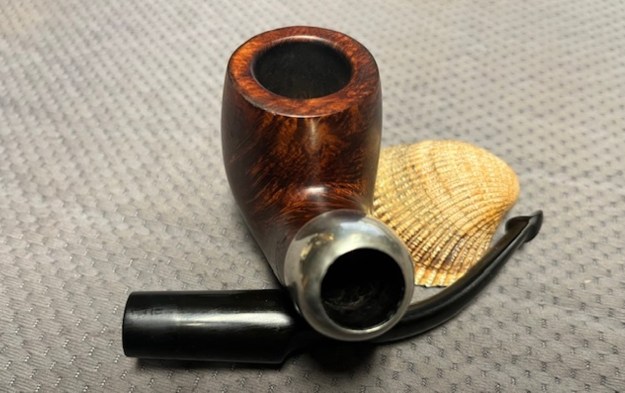
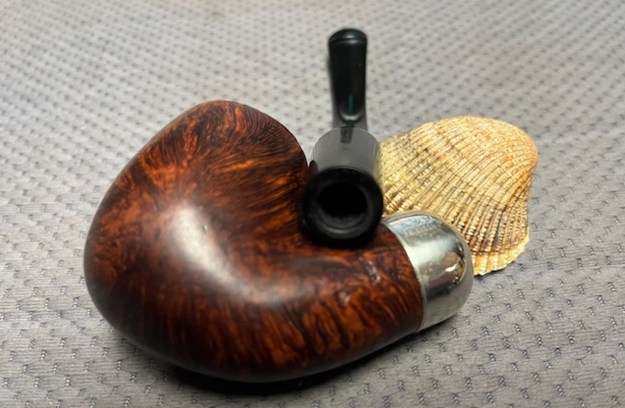
A Lovely Republic Era Peterson’s Sterling Filter 69 Stirling Bent Billiard


by Steve Laug

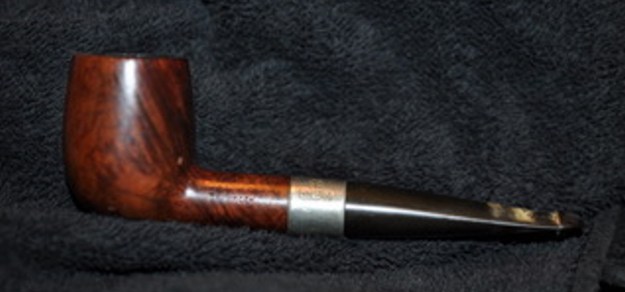
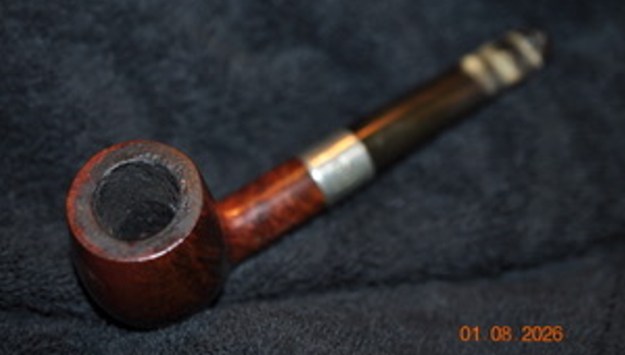
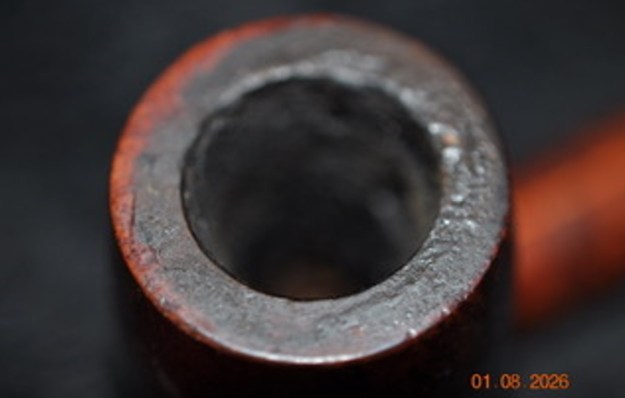
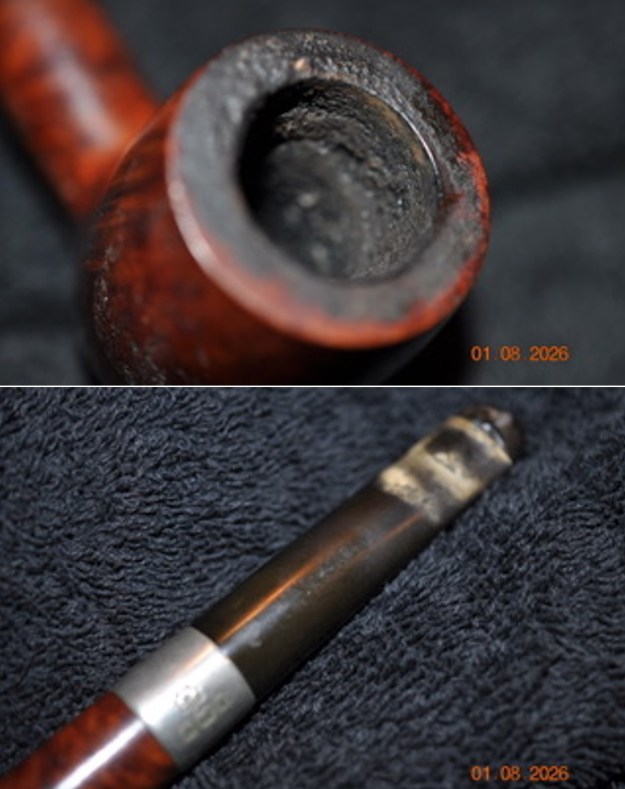
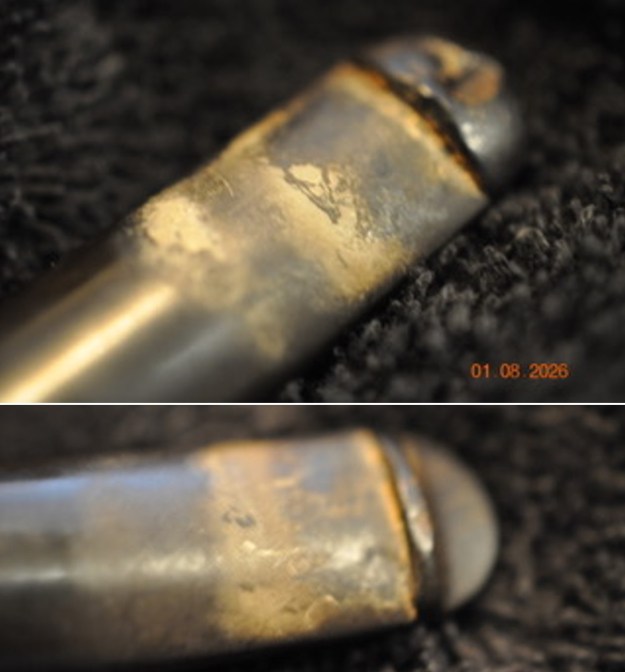
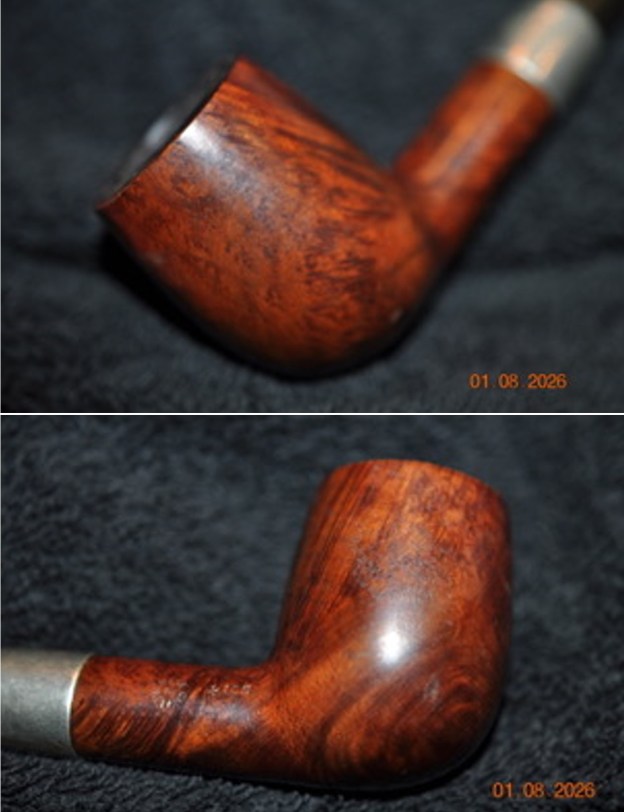
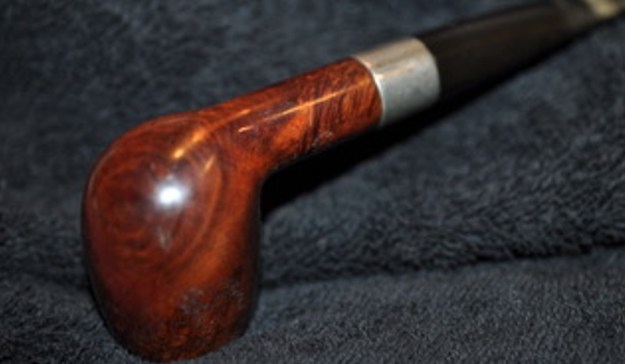
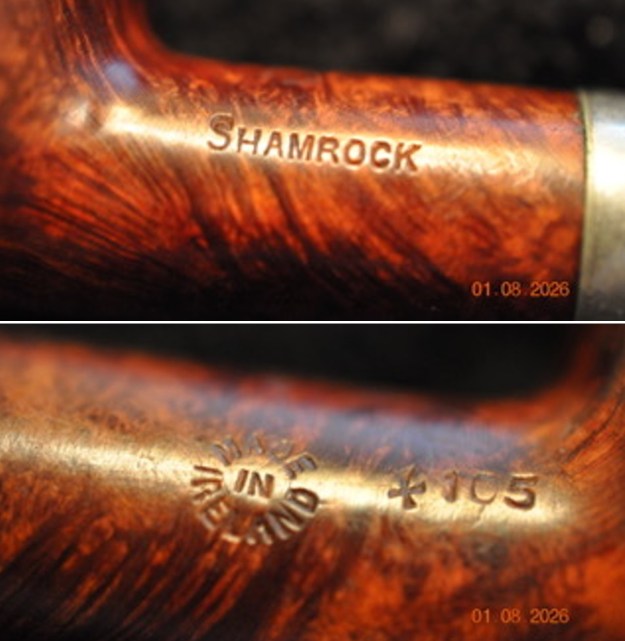
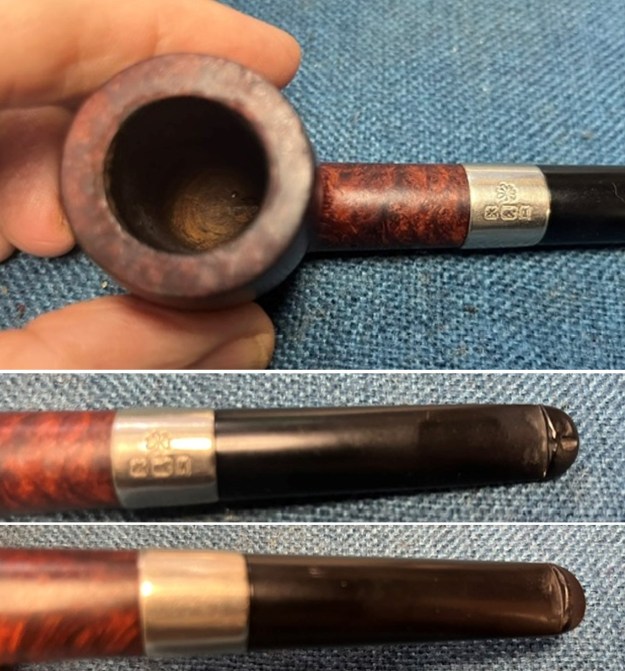
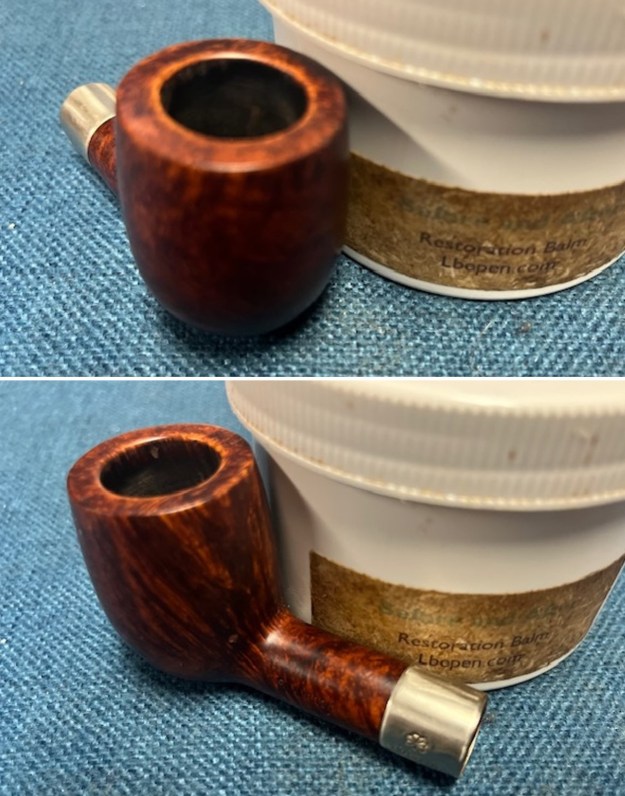
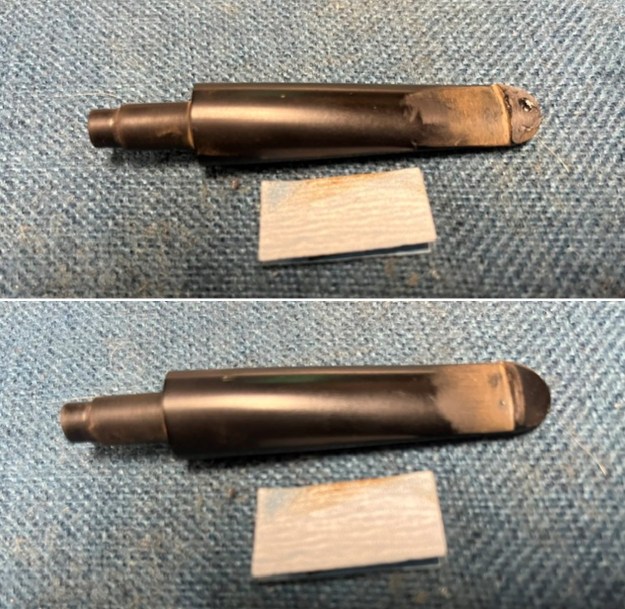
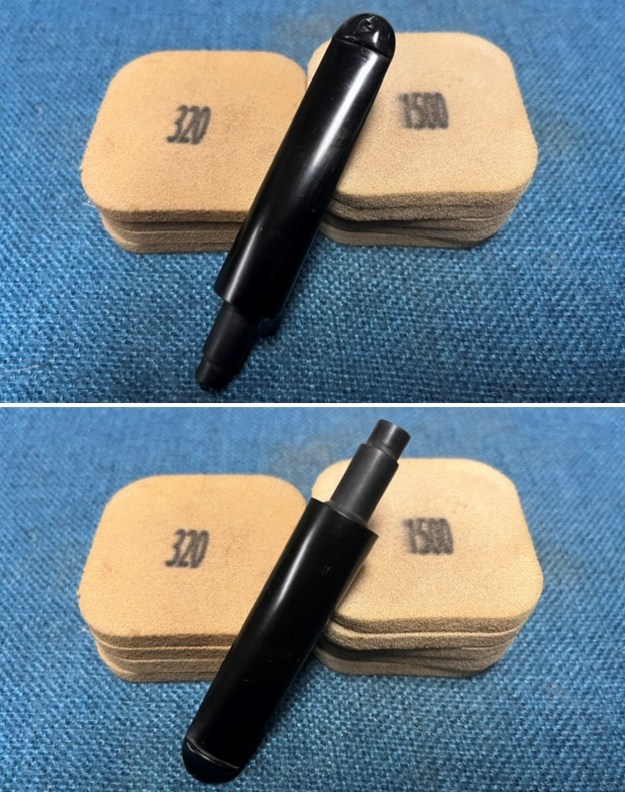
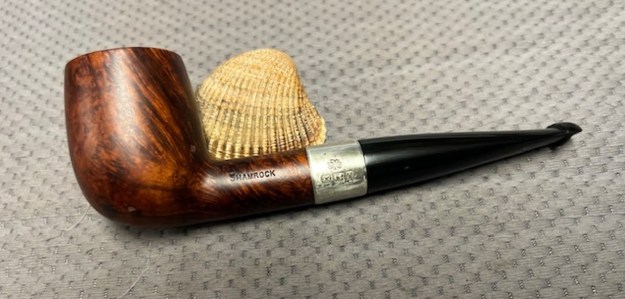
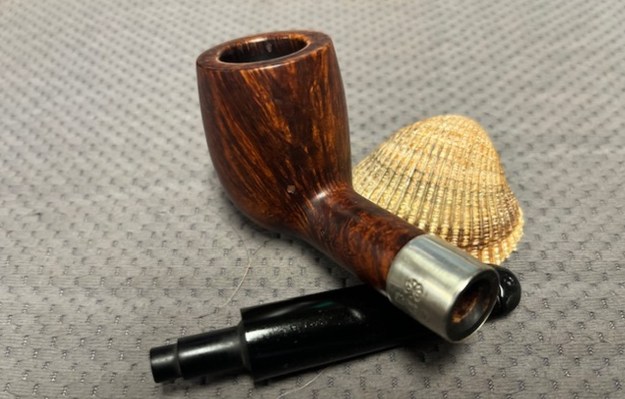
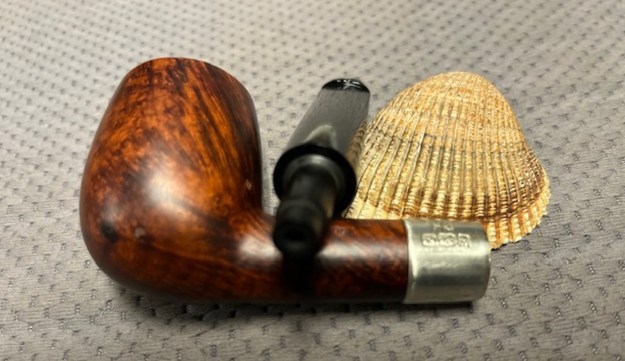
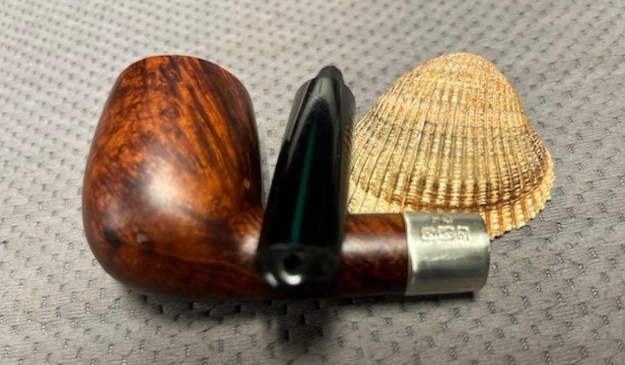
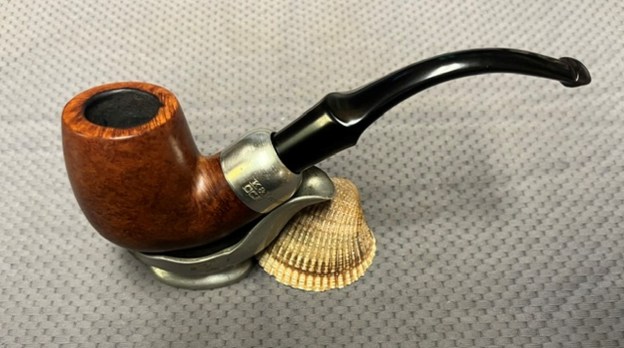
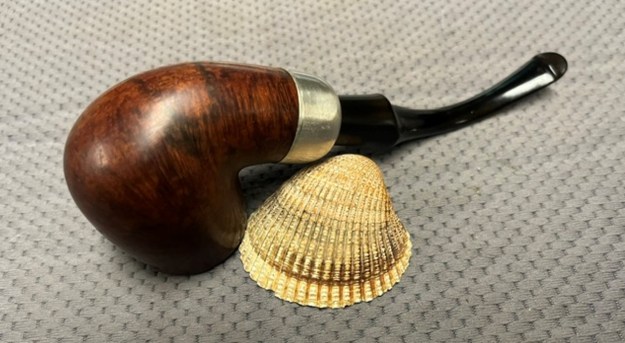
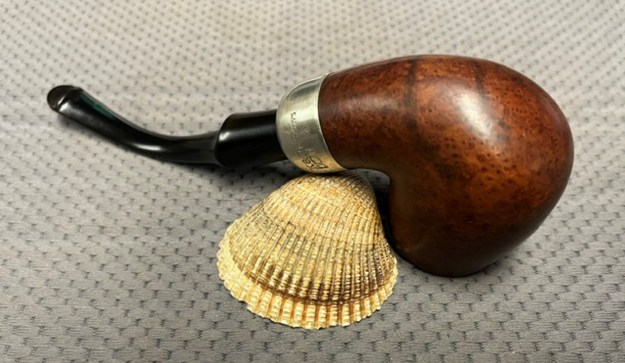
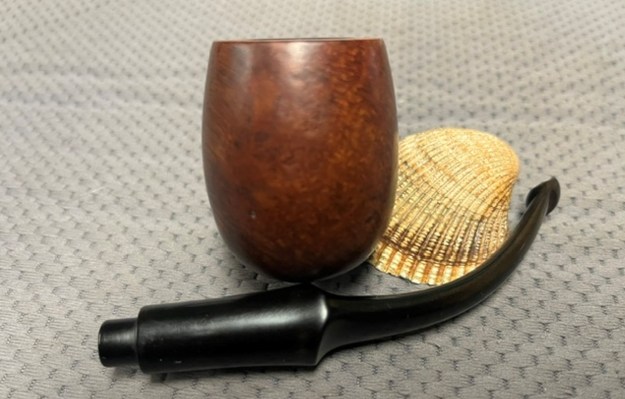
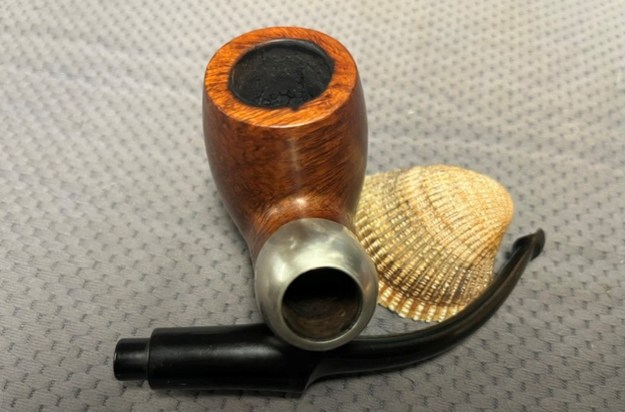
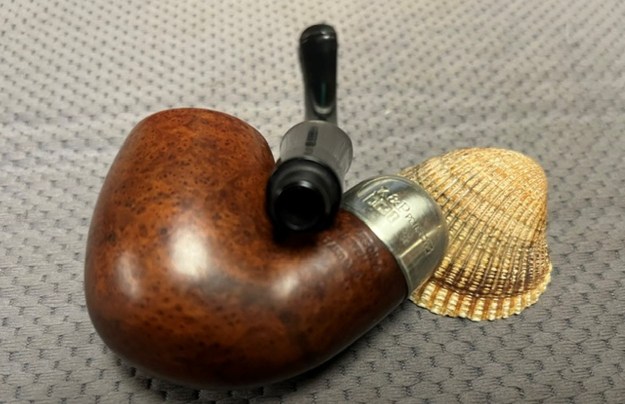
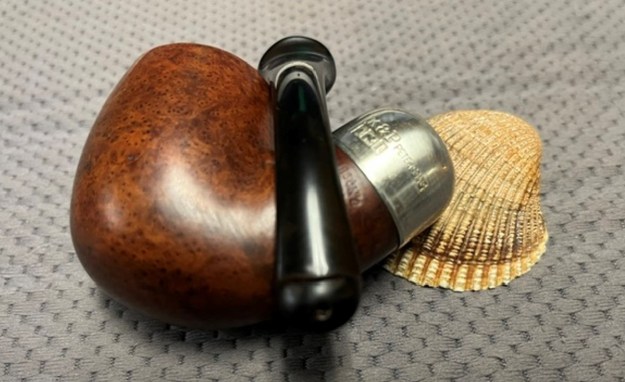
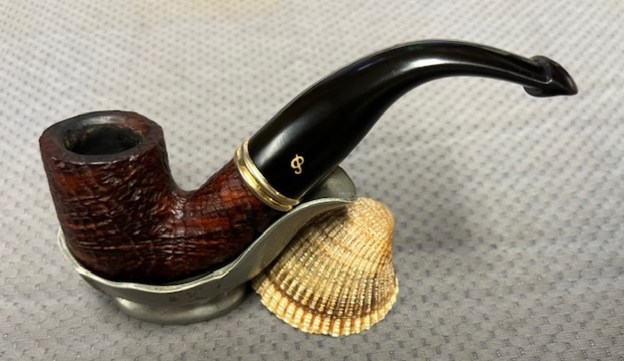
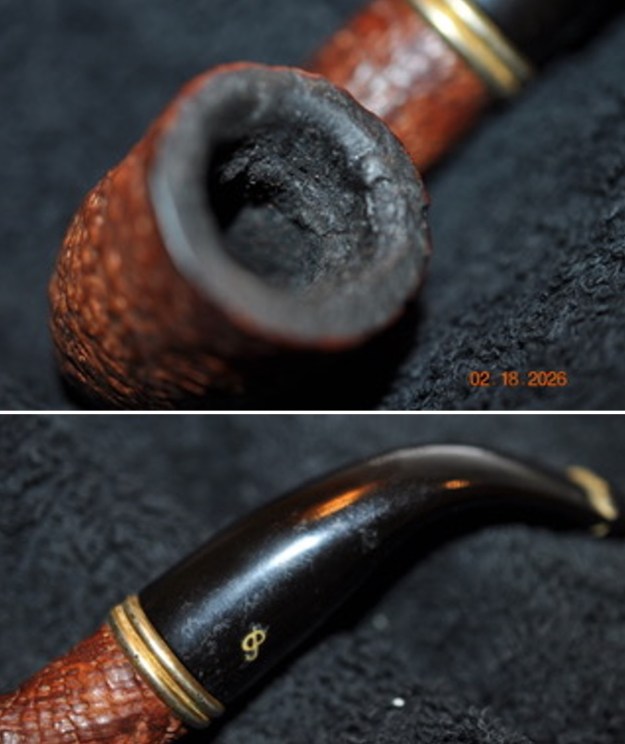
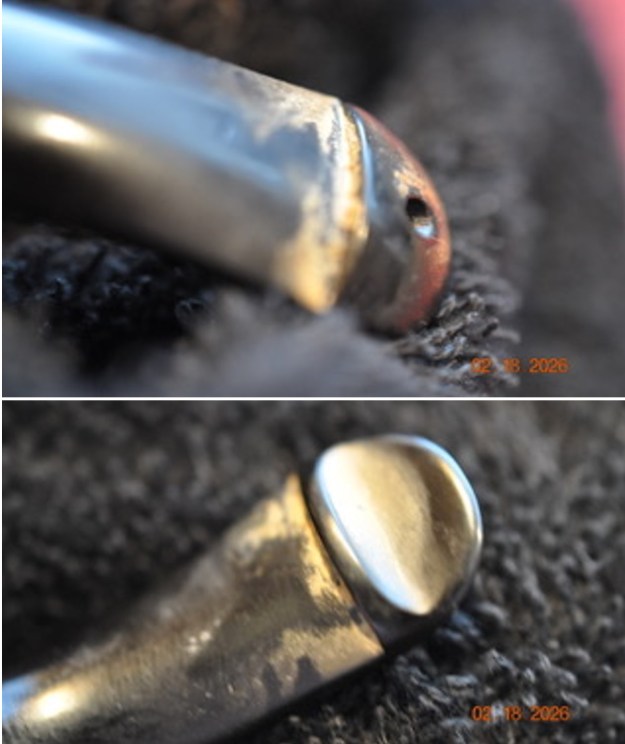
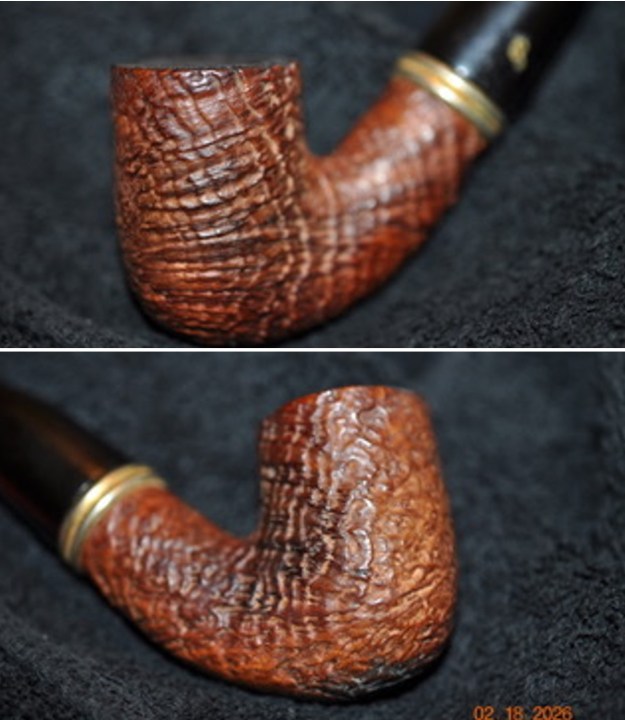
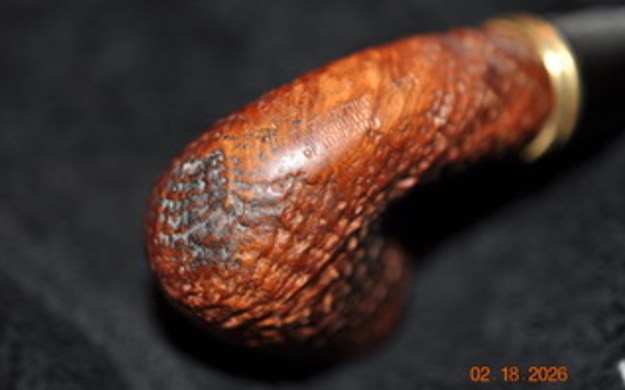
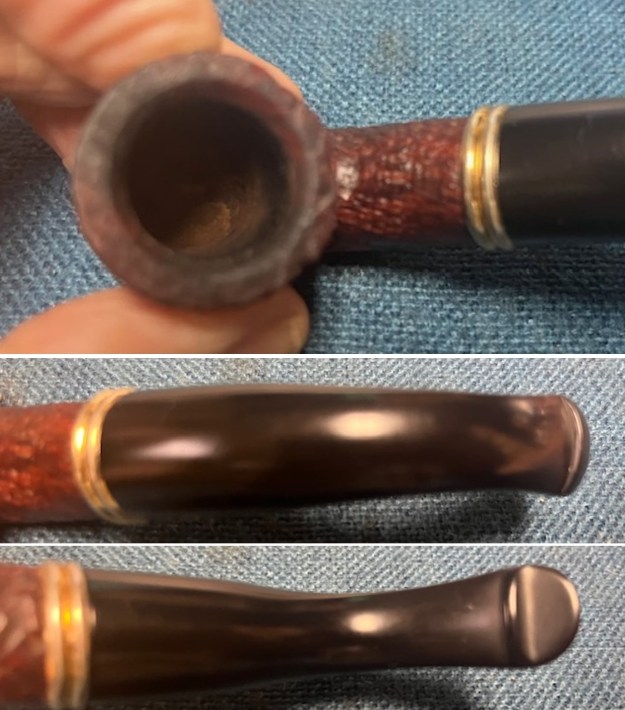
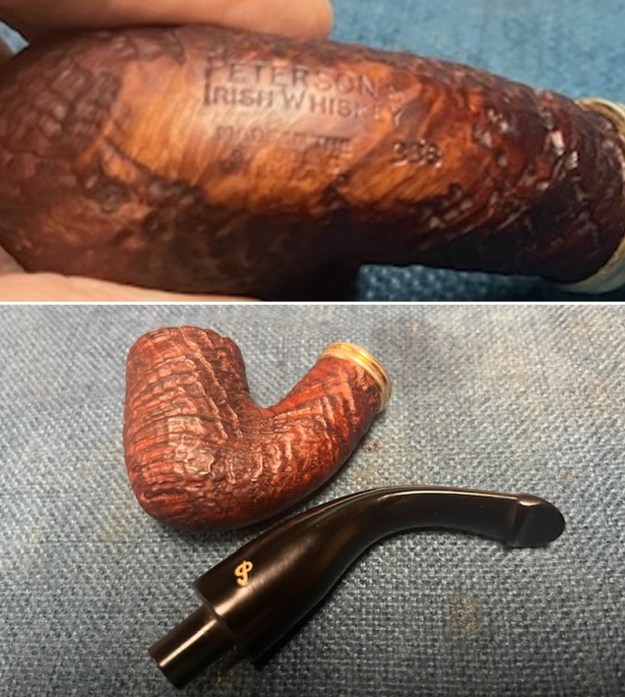
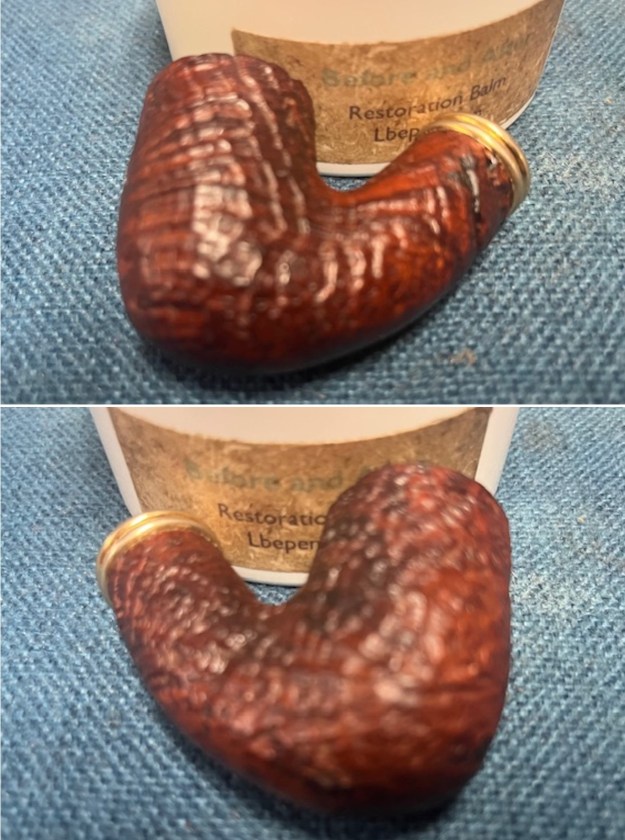
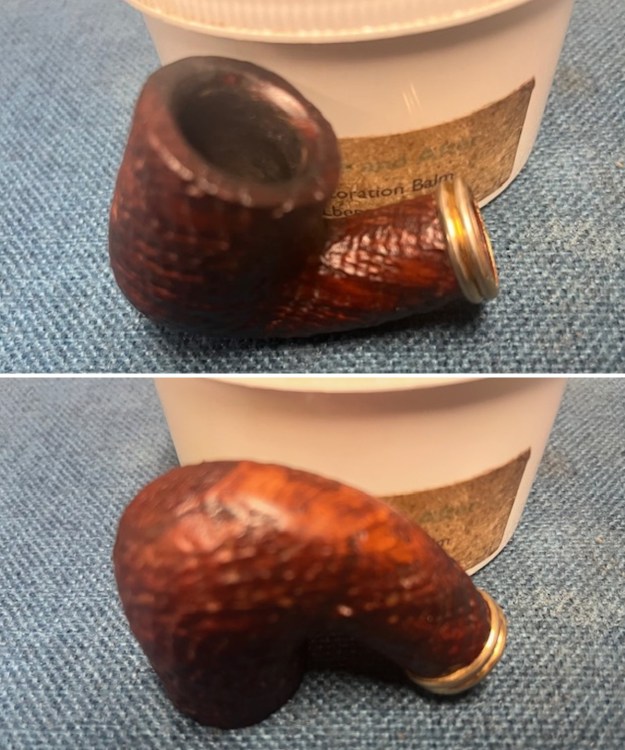
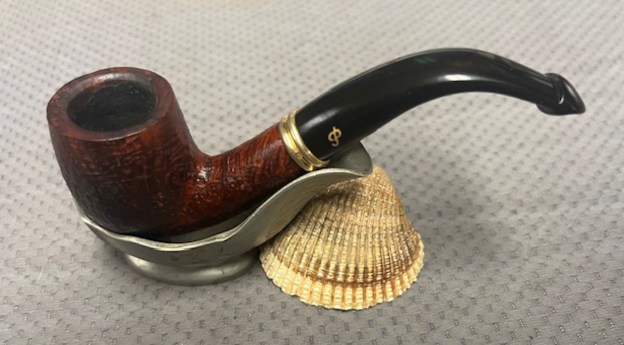
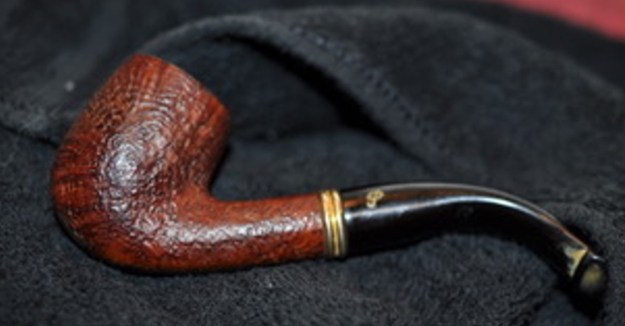
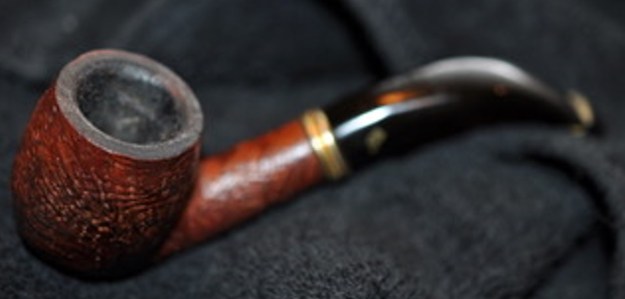
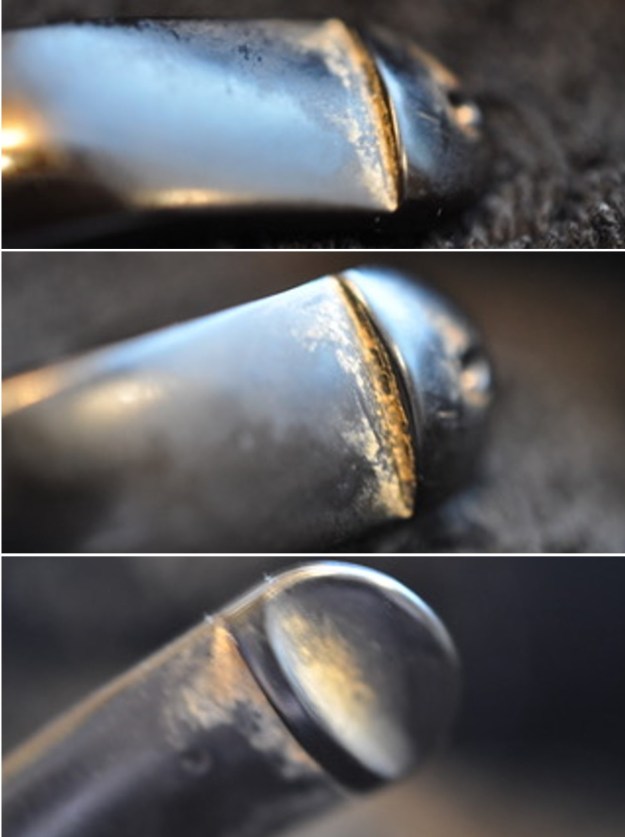
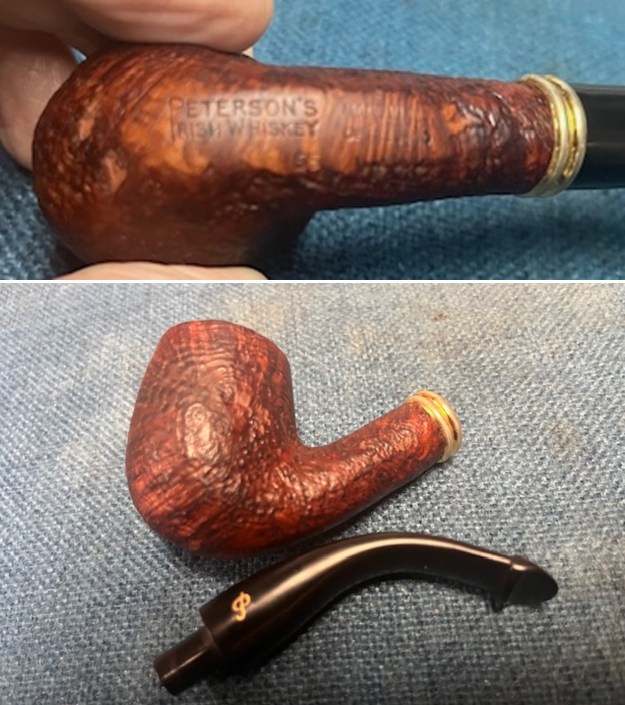
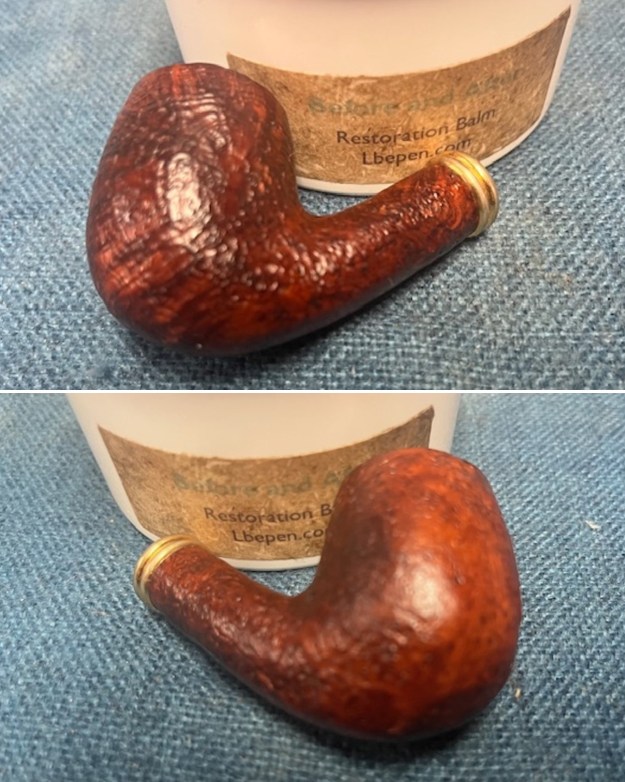
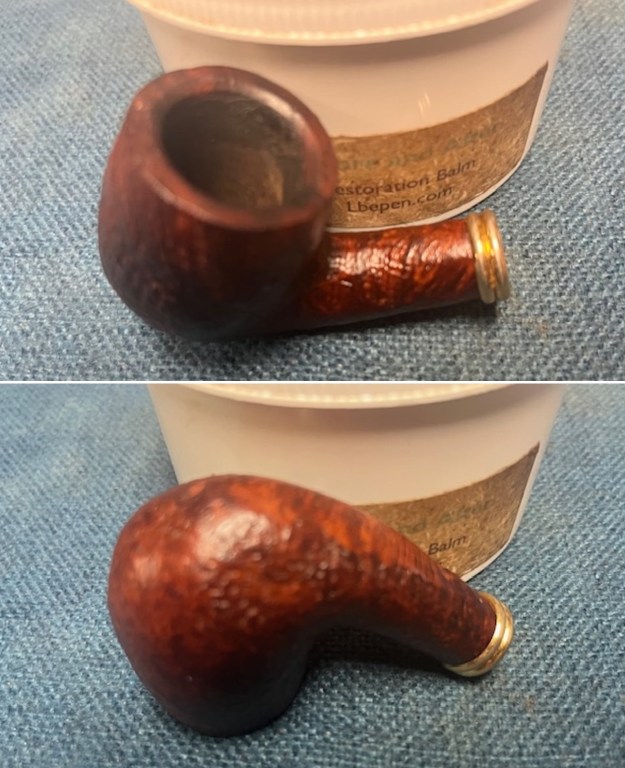
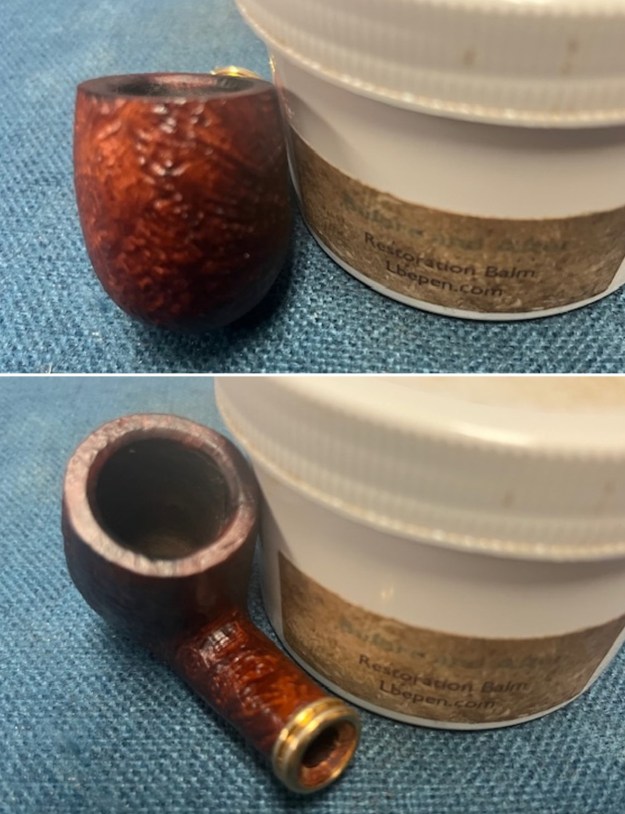
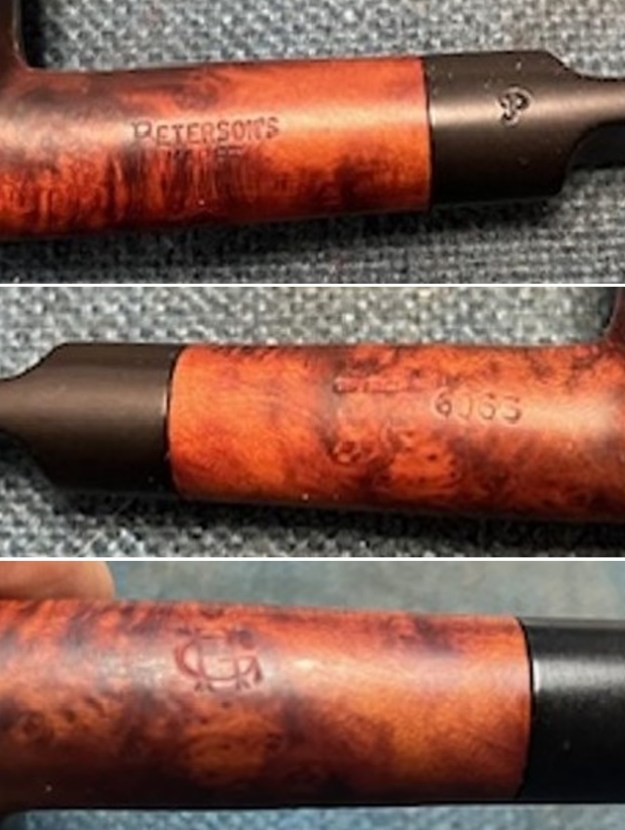
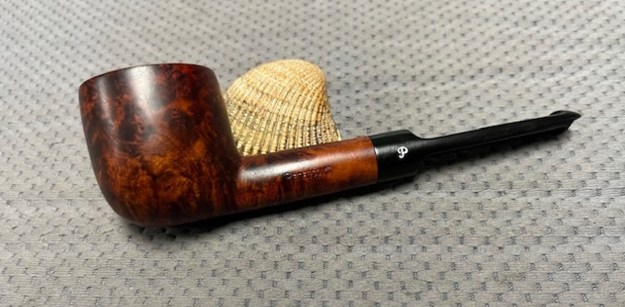
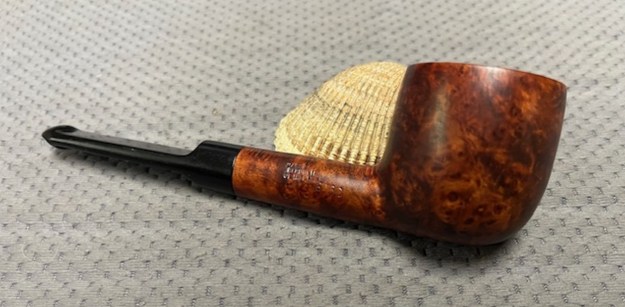
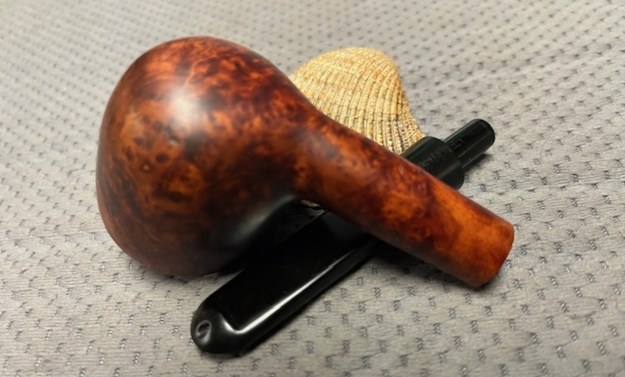
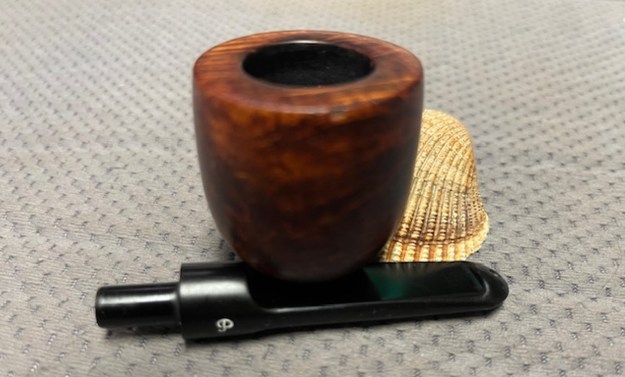
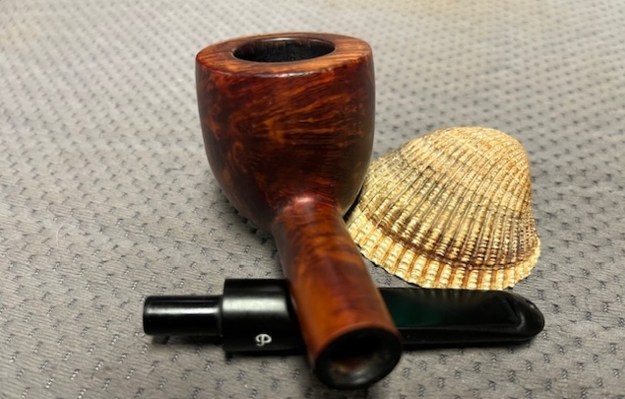
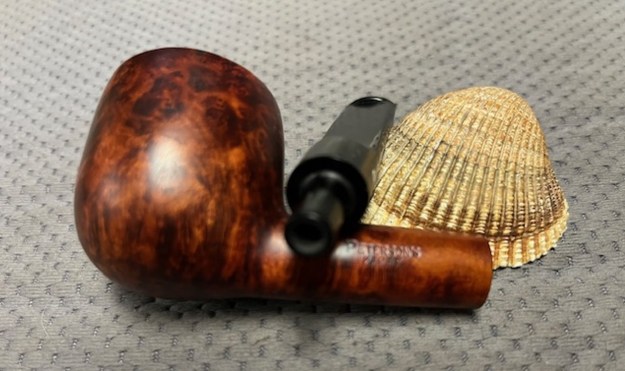
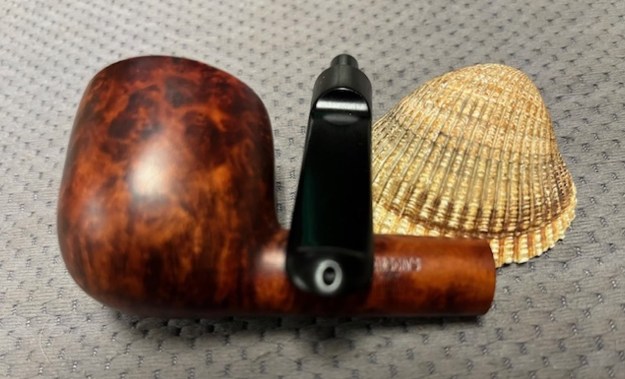
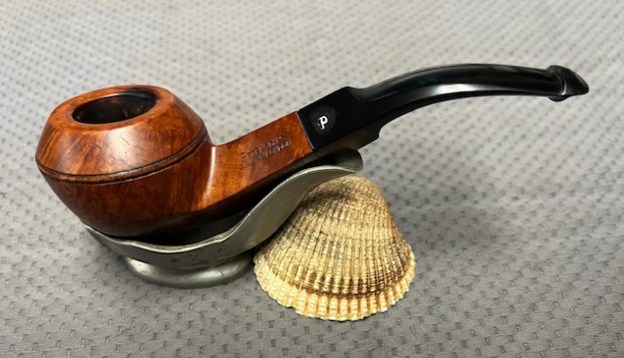
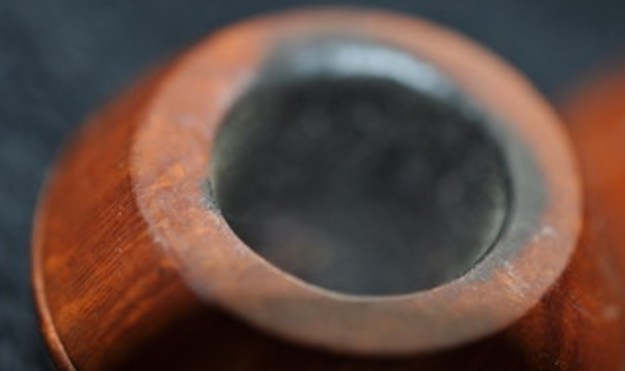
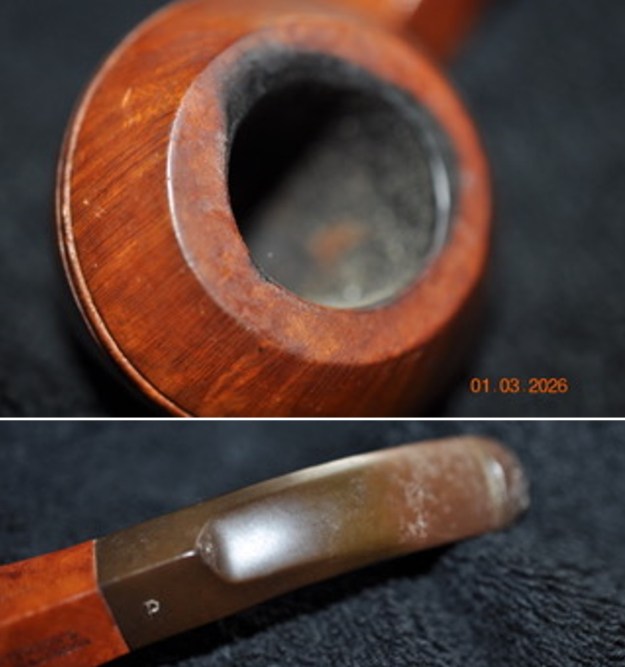
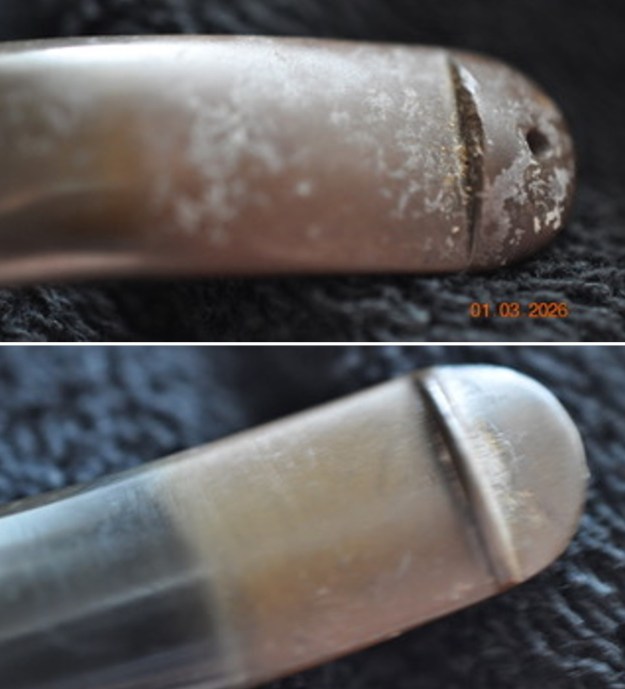
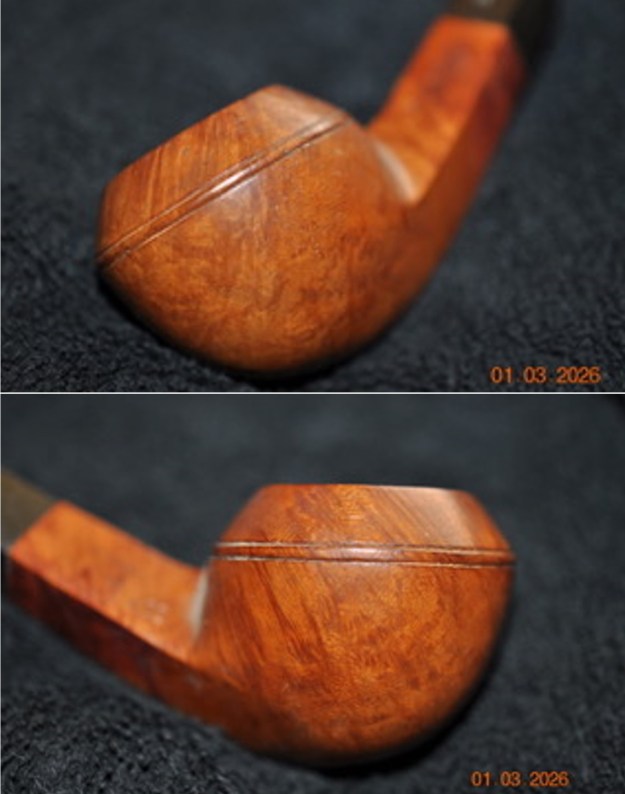
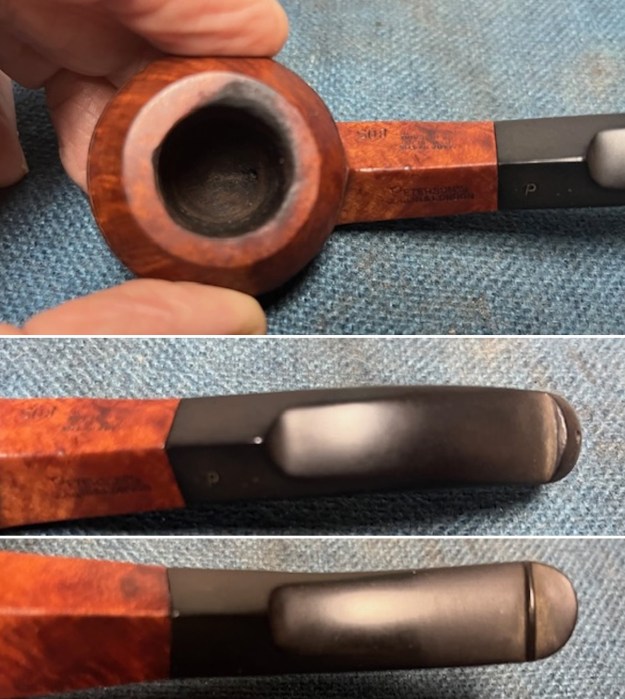
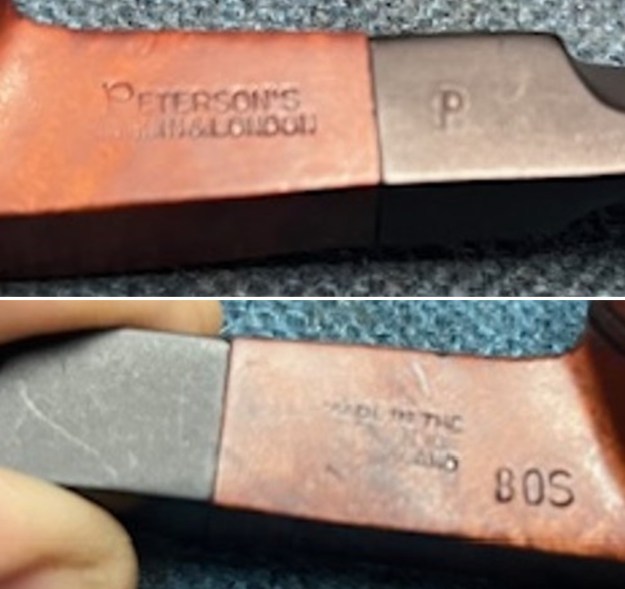
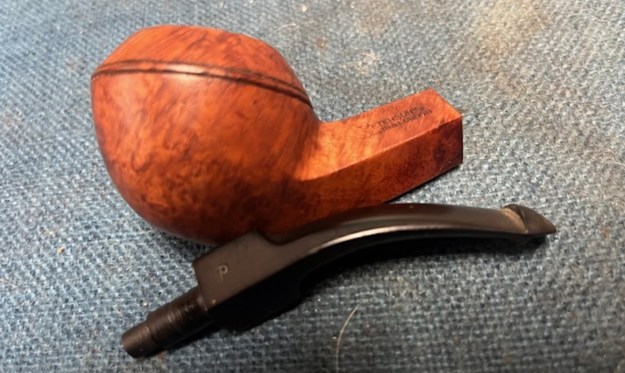
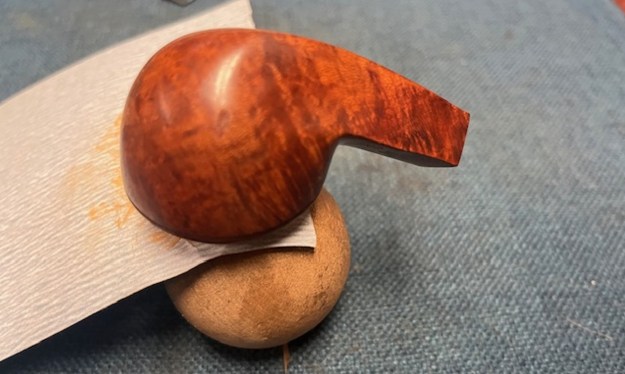
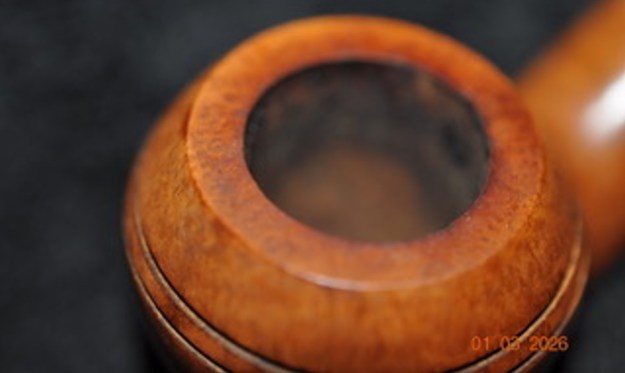
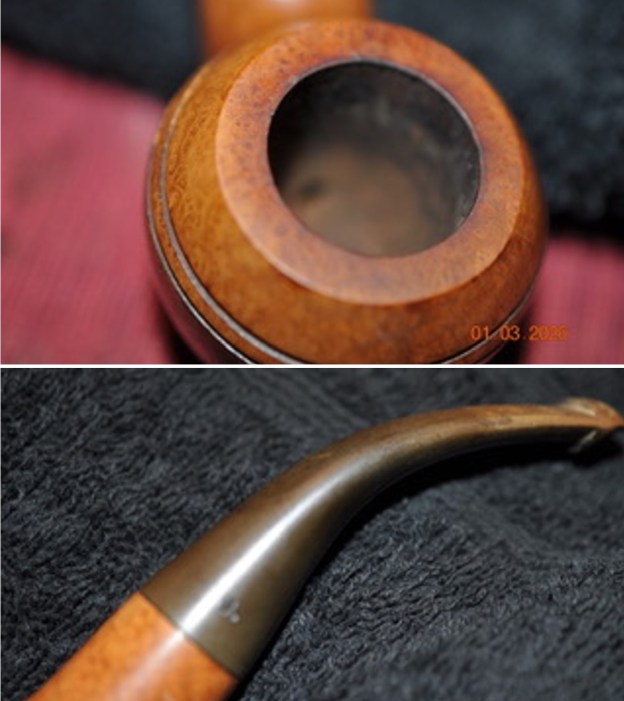
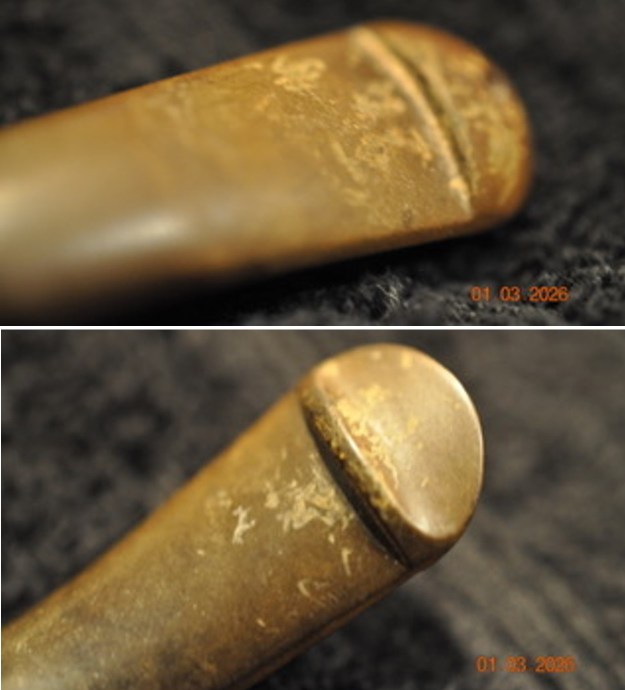
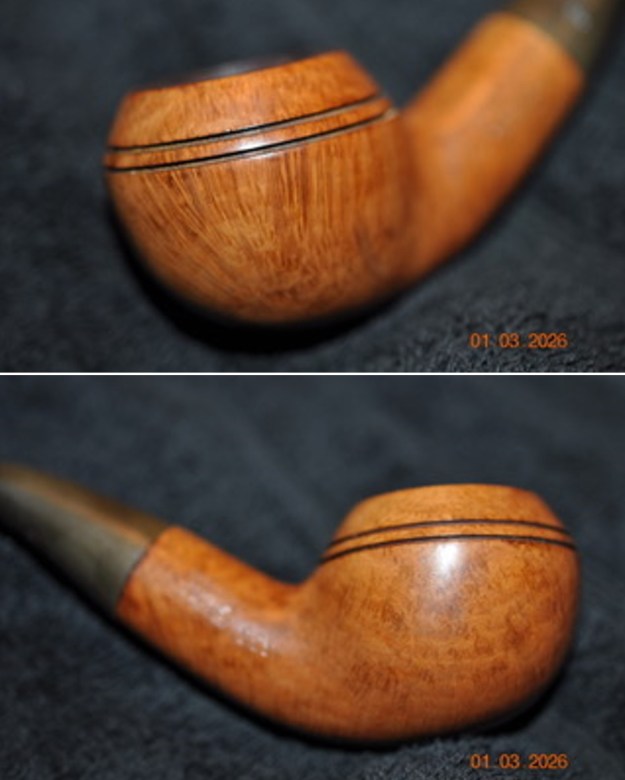
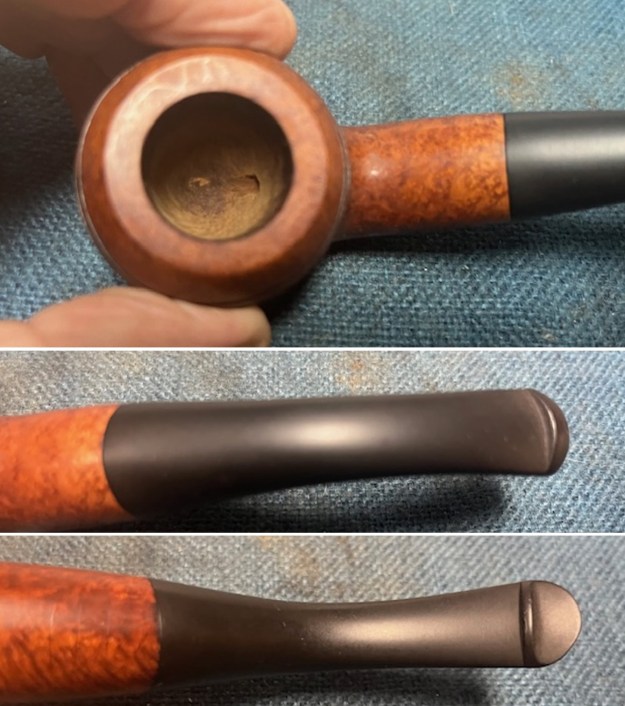
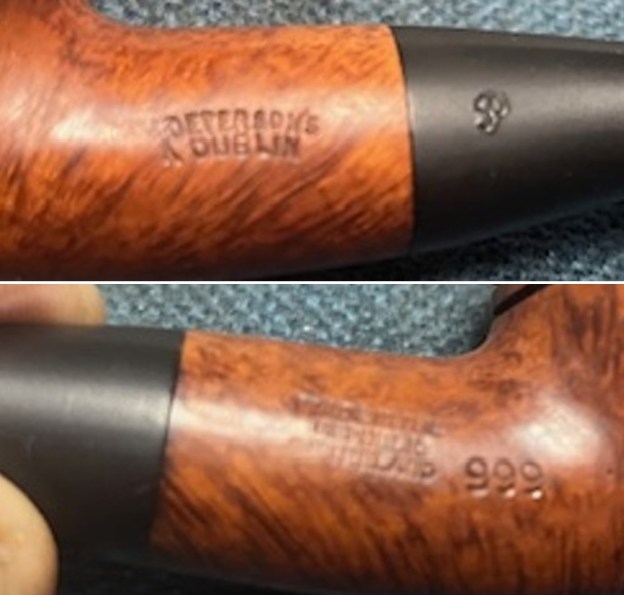
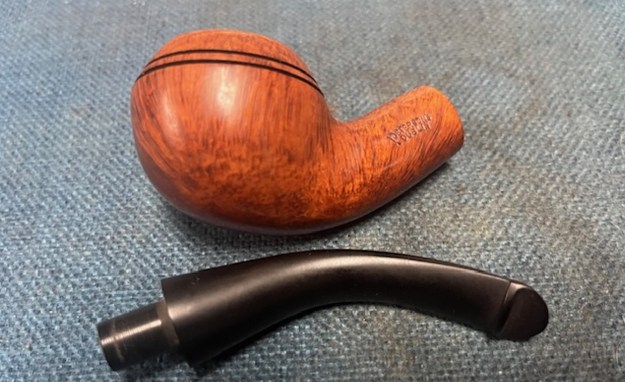
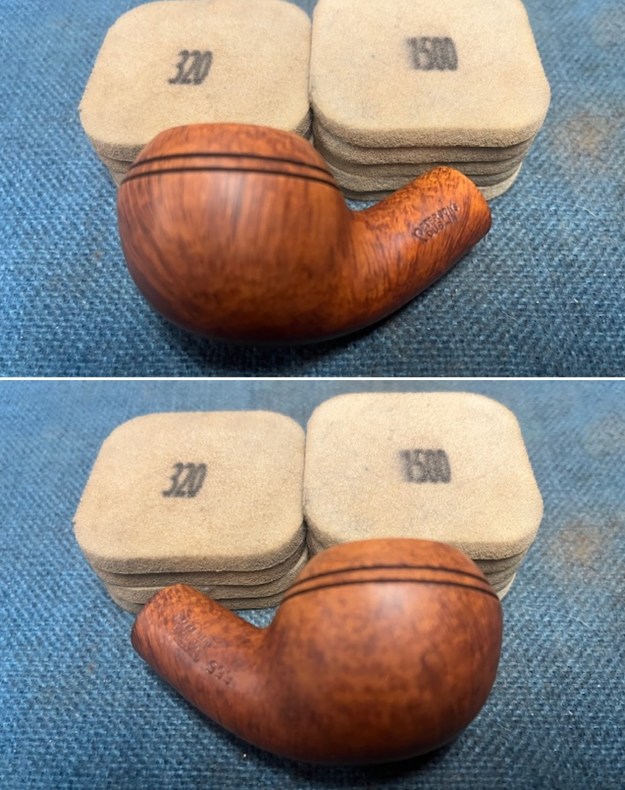
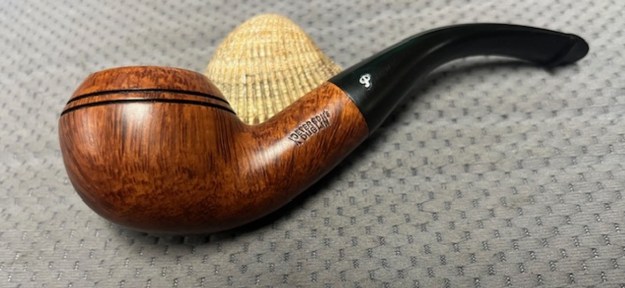
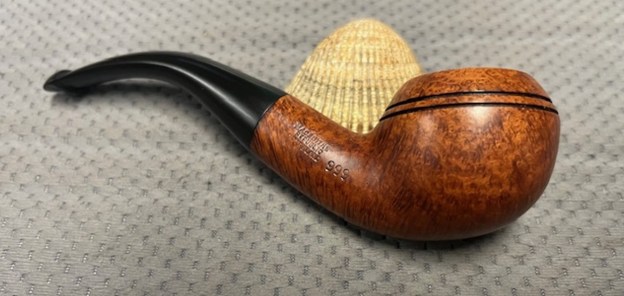
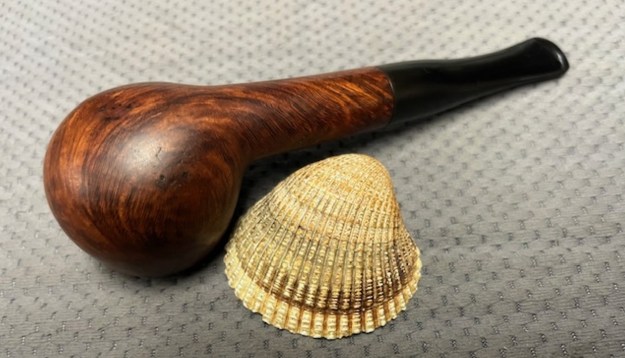
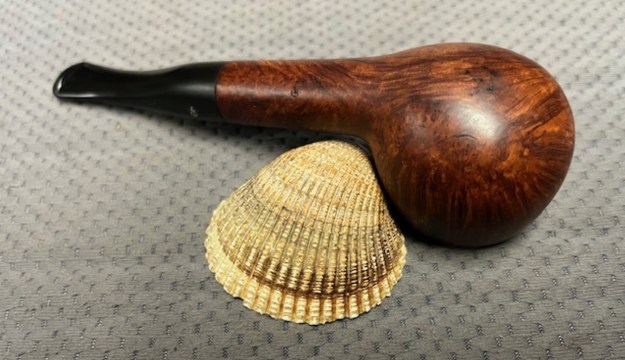
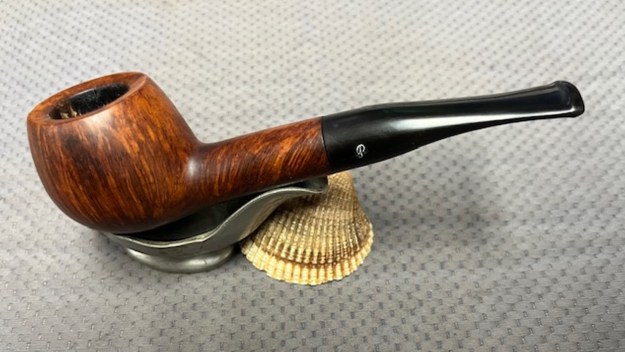
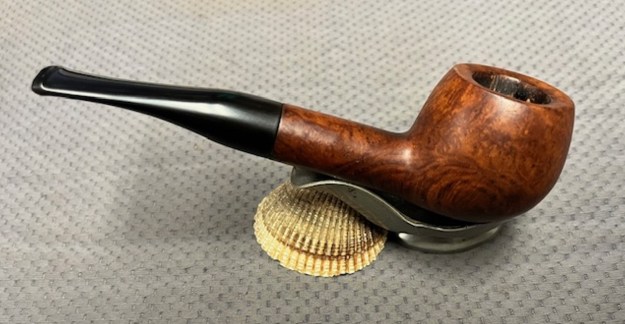
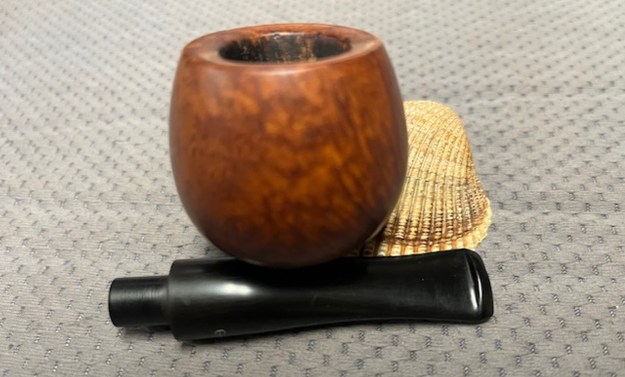
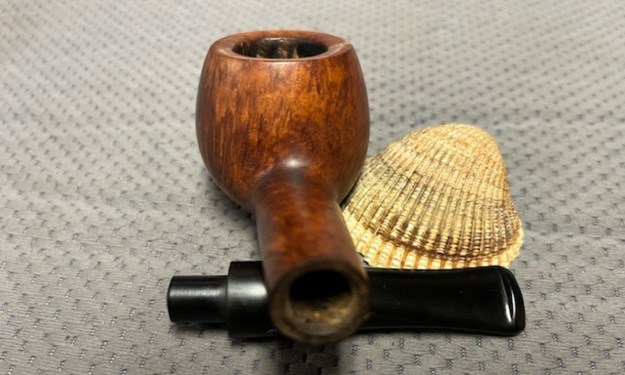
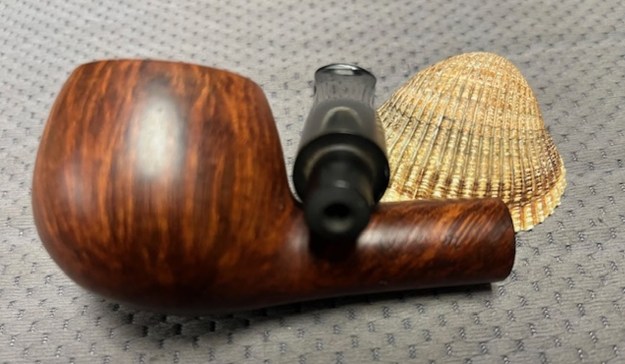
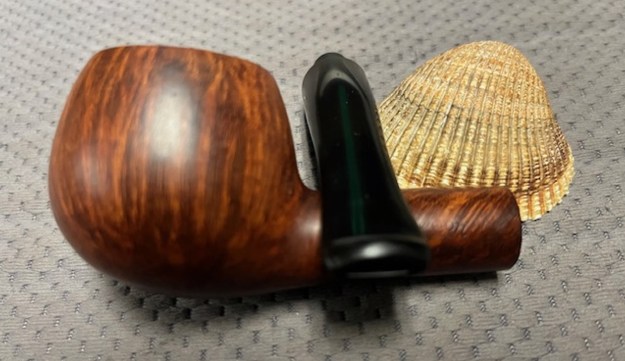
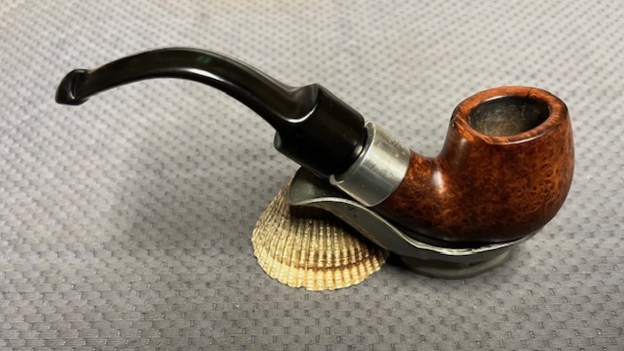
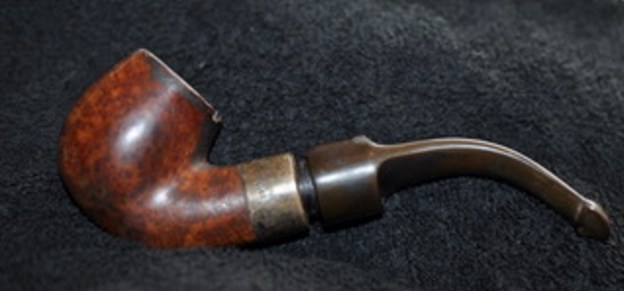
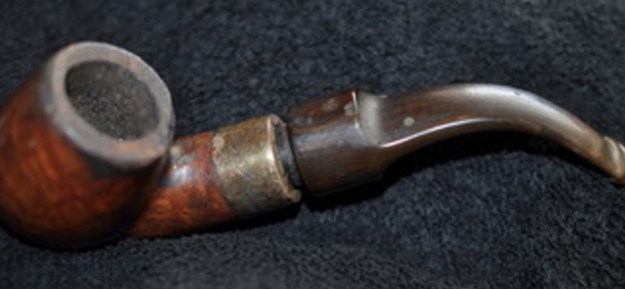
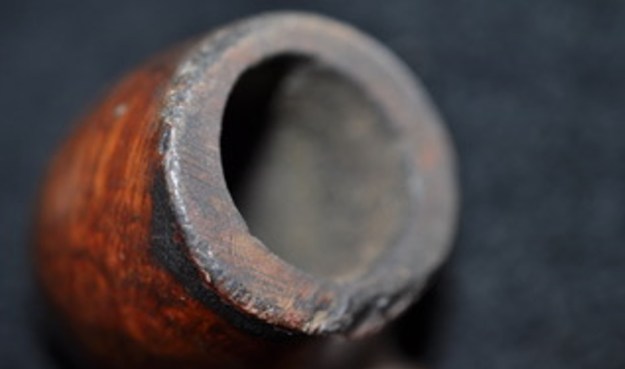
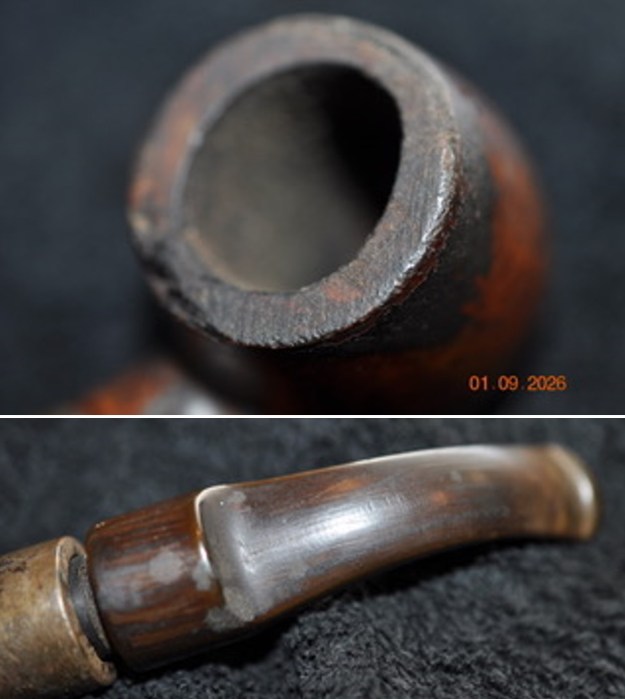
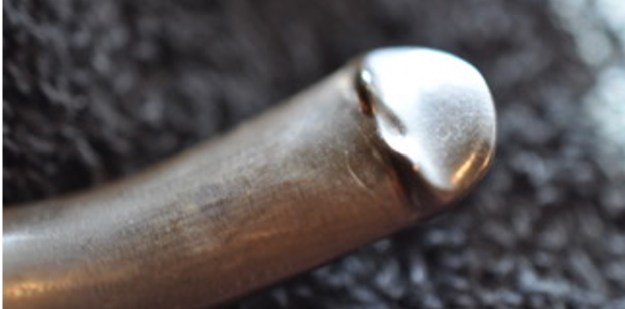
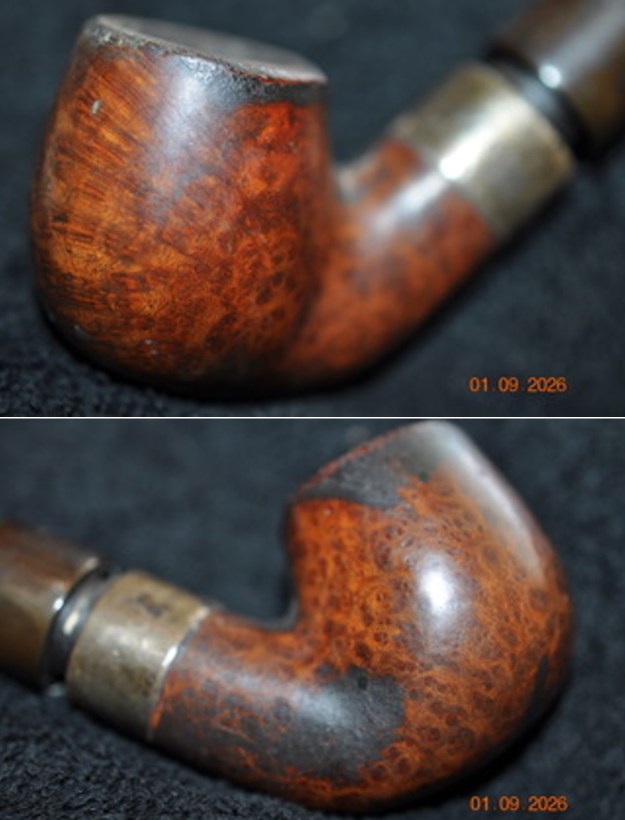
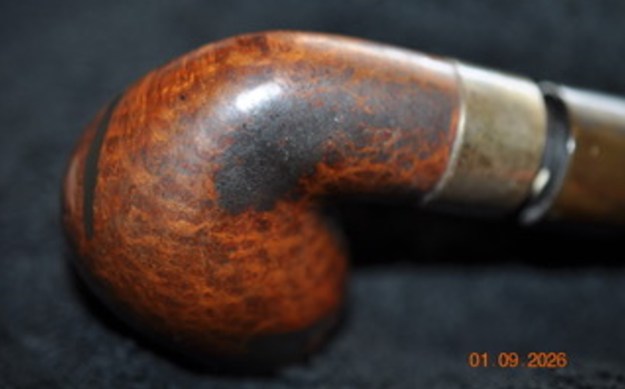
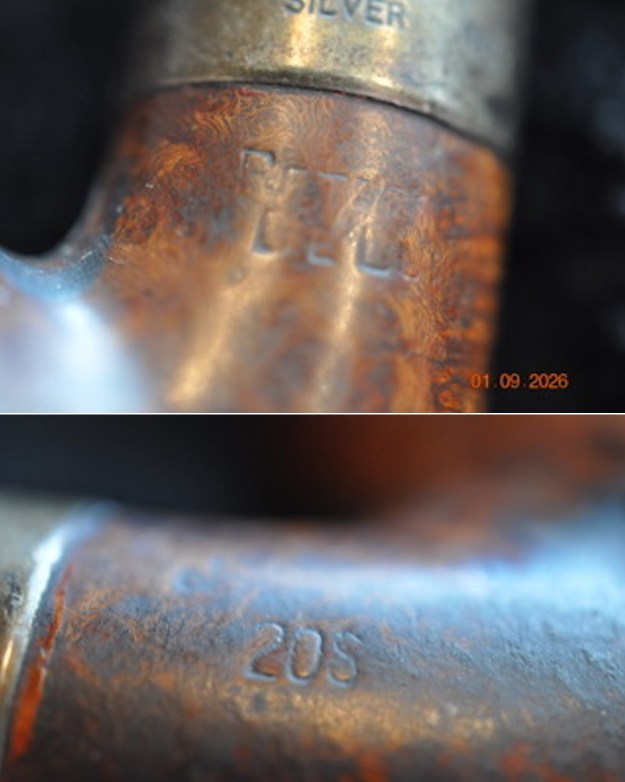
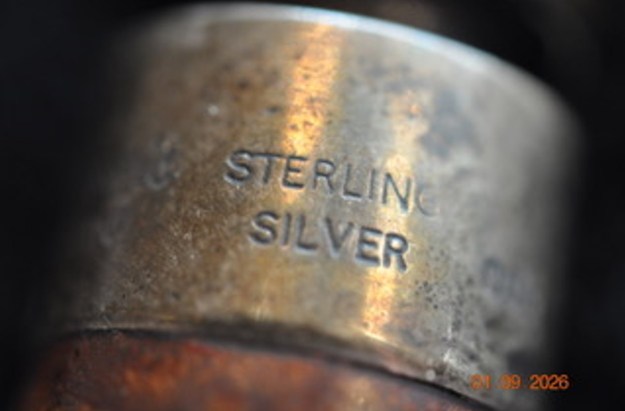
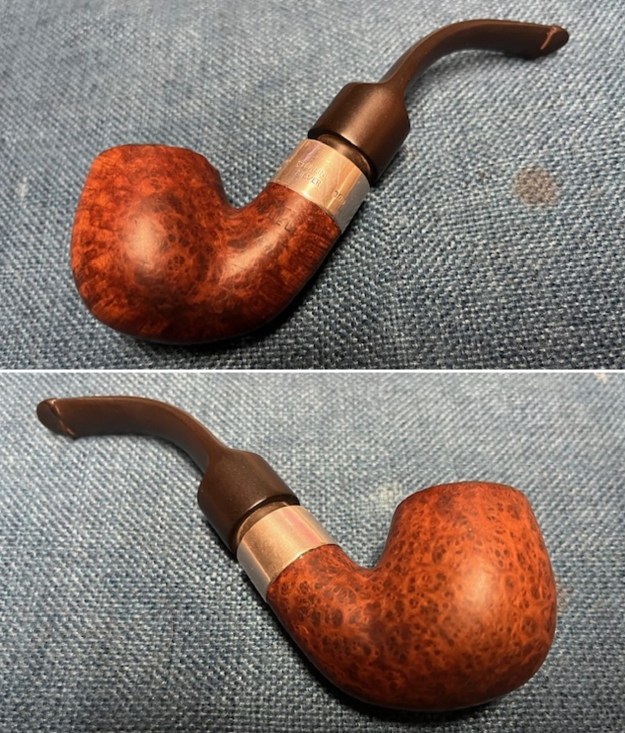
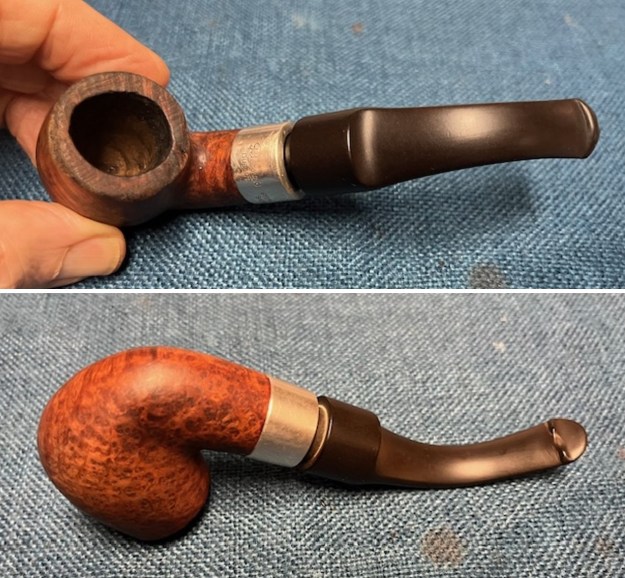
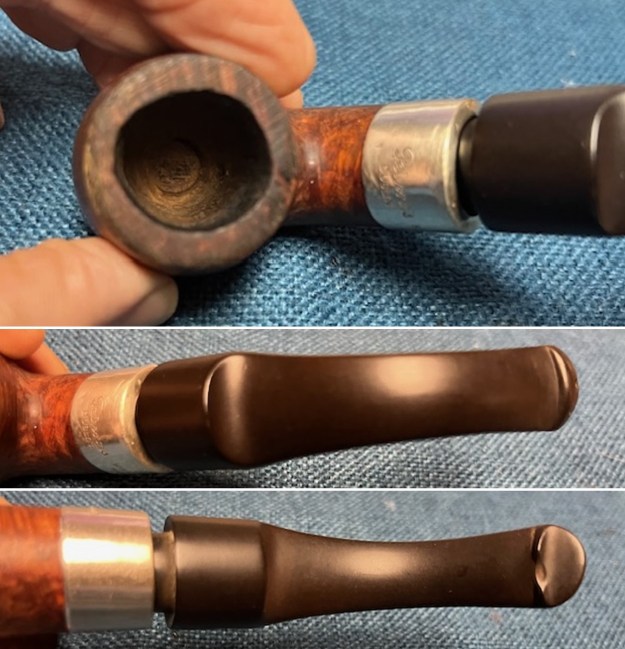
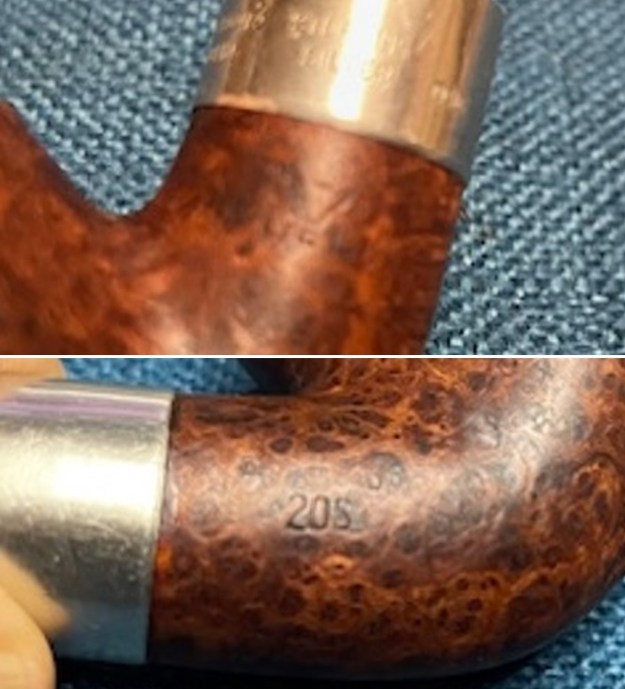
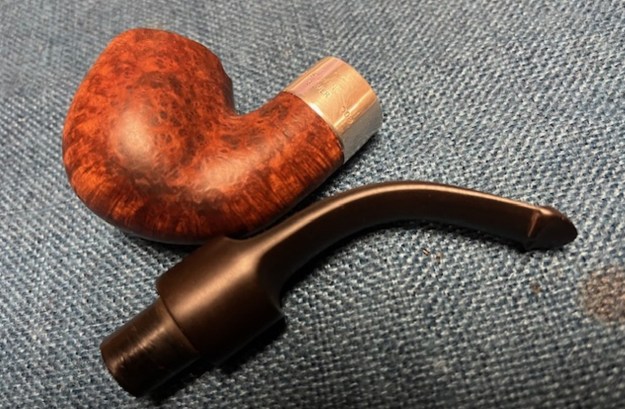
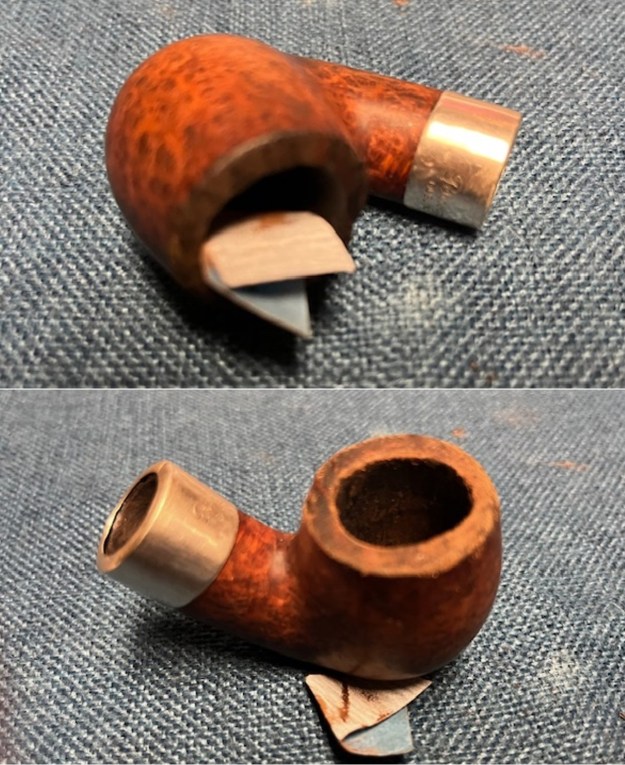
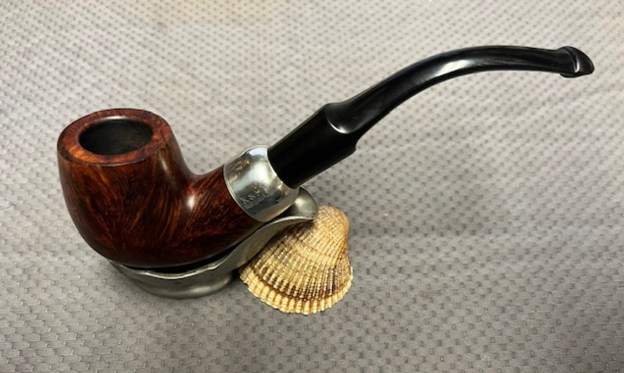
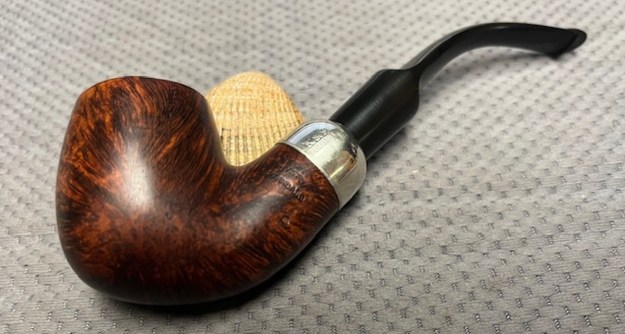
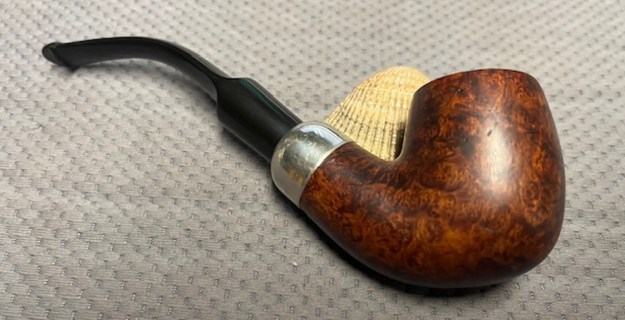
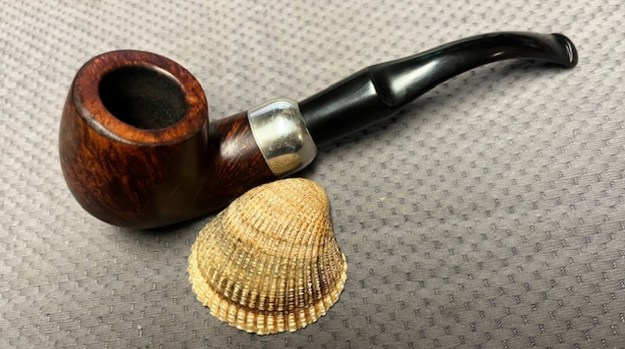
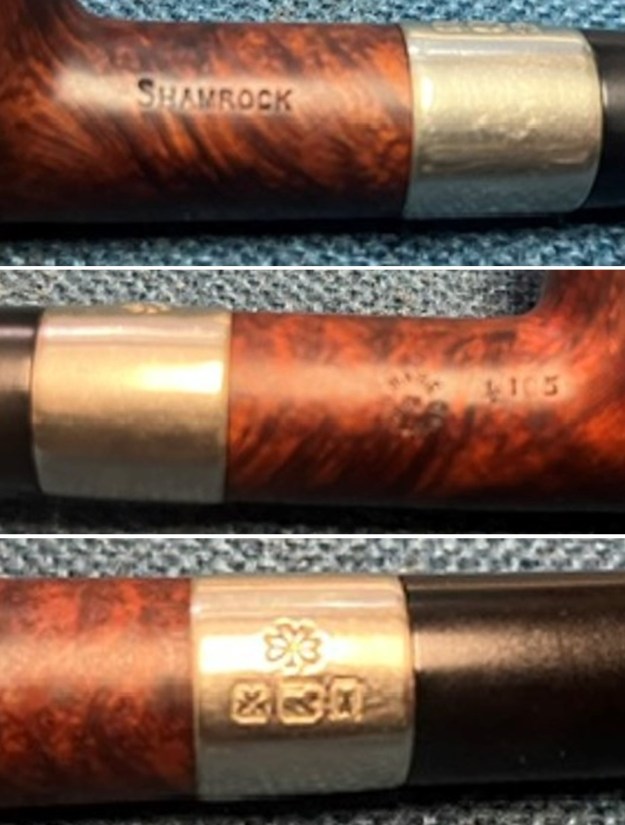
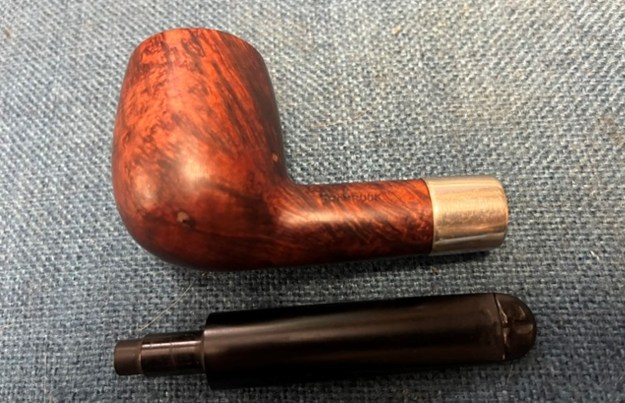
The next pipe I have chosen is smooth finished Peterson’s “Sterling Silver” pipe. The pipe came to us from our contact in Copenhagen, Denmark. This one is a Peterson’s Bent Billiard pipe with a taper fishtail stem. It has a rich brown coloured finish with interesting grain around the bowl sides and shank. It is very dirty. This Bent Billiard has a silver band on the shank that was oxidized. The grime on the finish was ground into the briar. The brown stains make the grain really pop. It was stamped on the left side of the shank and reads Peterson’s [over] “Sterling Filter”. On the right side it is stamped with the three line Made in the Republic of Ireland stamp followed by the shape number 69. The tarnished band is stamped with Peterson’s [over] Dublin followed by Sterling [over] Silver. To the right that it has three hallmarks – Hibernia seated arm on a harp (signifies country of manufacture), a crowned harp designating Sterling quality and finally a Date Letter mark – in this case an italic “I” (1976). It was in filthy condition when Jeff brought it to the table. There was a thick cake in the bowl and spots of lava on the rim top and inner edge of the bowl. The stem was oxidized, calcified and had light tooth marks and chatter on the top and underside near the button. Jeff took photos of the pipe before his cleanup work before he started on the pipe. Jeff took photos of the rim top and stem to show the general condition of the pipe. The bowl is lightly caked and the rim top and edges look very good. The stem is oxidized and has light tooth marks on the top and underside near the button. Jeff took some photos of the bowl sides and heel to show the grain that was around this bowl. It is a nice looking pipe. He took photos of the sides of the shank to show the stamping. The stamping is readable in the photos below and is as noted above. The stamping on the Sterling Silver band is also readable through the oxidation. I am including the information from Pipedia’s article on Peterson pipes. It is a great read in terms of the history of the brand (https://pipedia.org/wiki/Peterson).

I turned to “The Peterson Pipe” by Mark Irwin and Gary Malmberg to get some background on the Sterling Pipe. On page 314 it had the following information on the line.

Sterling (1949-c1957; 1978-) – Higher grade line with sterling band. Early example, 1949-57, with COM of Made in Ireland forming a circle, were offered to the US market through Rogers Imports and have no hallmark, although until recent years the line carried Peterson’s maker’s mark, the K&P is in separate shields. Models beginning in ’78 with hallmarked dates and a COM stamp of Made in [over] the Republic [over] of Ireland.

I knew that I was dealing with a pipe made between 1949-1957 as shown by the Made in the Republic of Ireland three-line format stamp. Now it was time to work on the pipe.

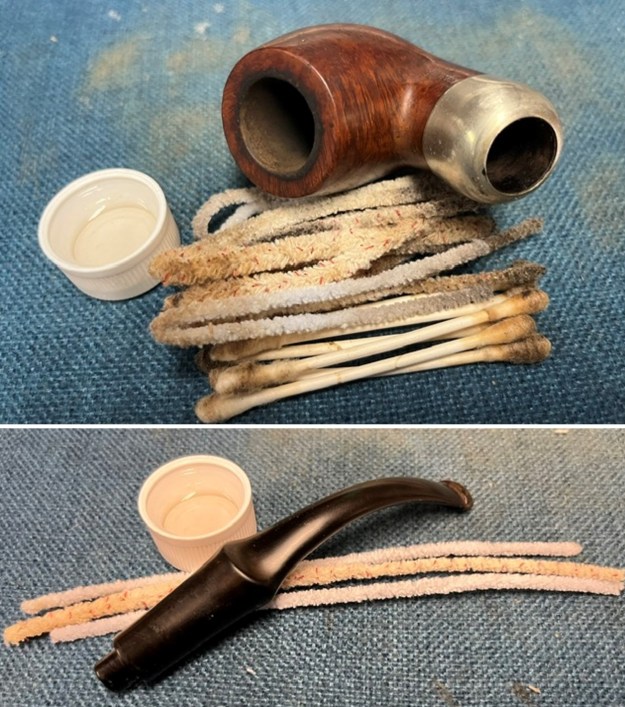
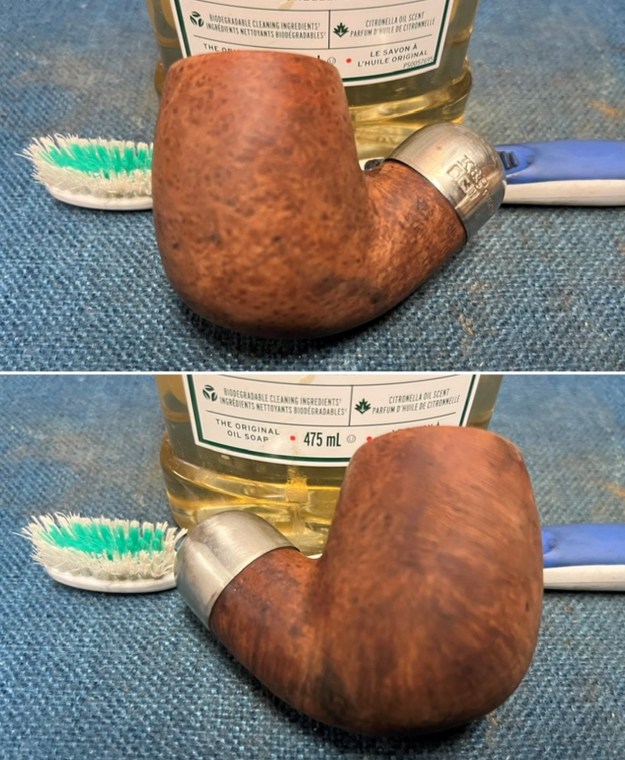
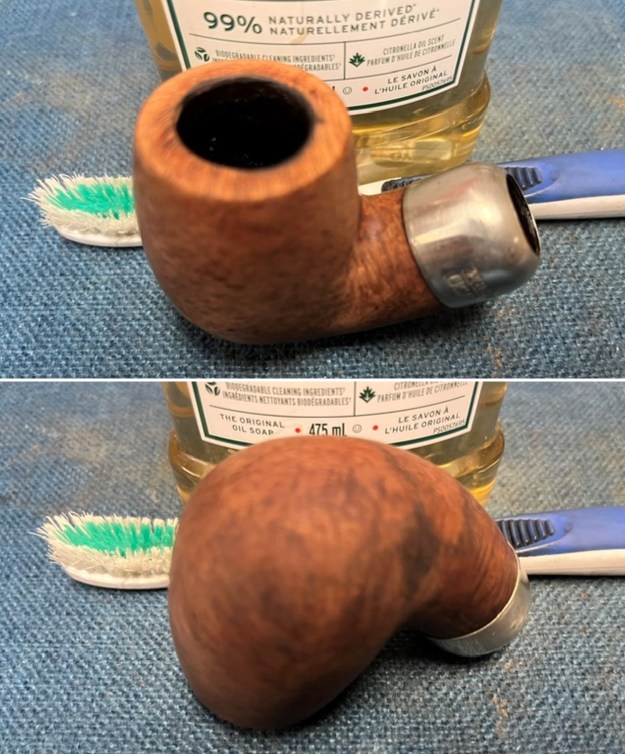
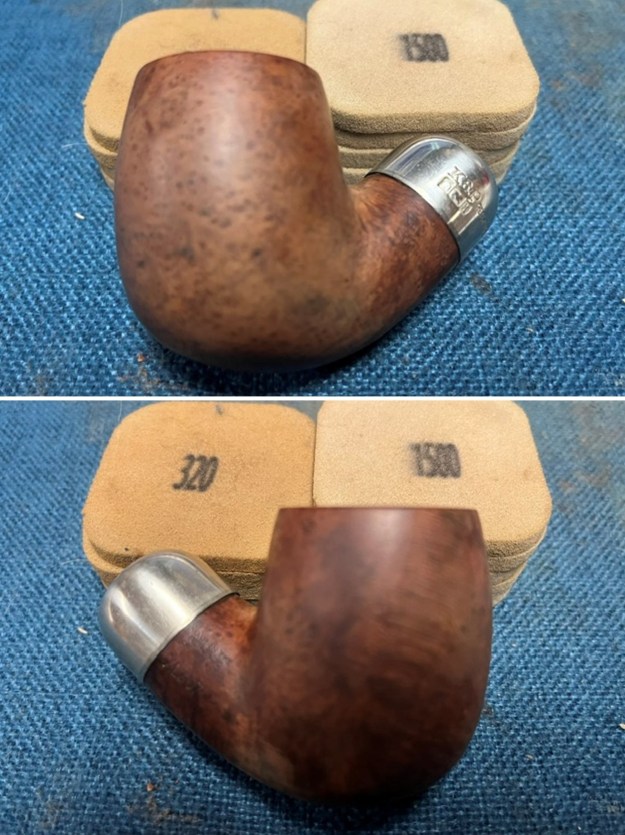
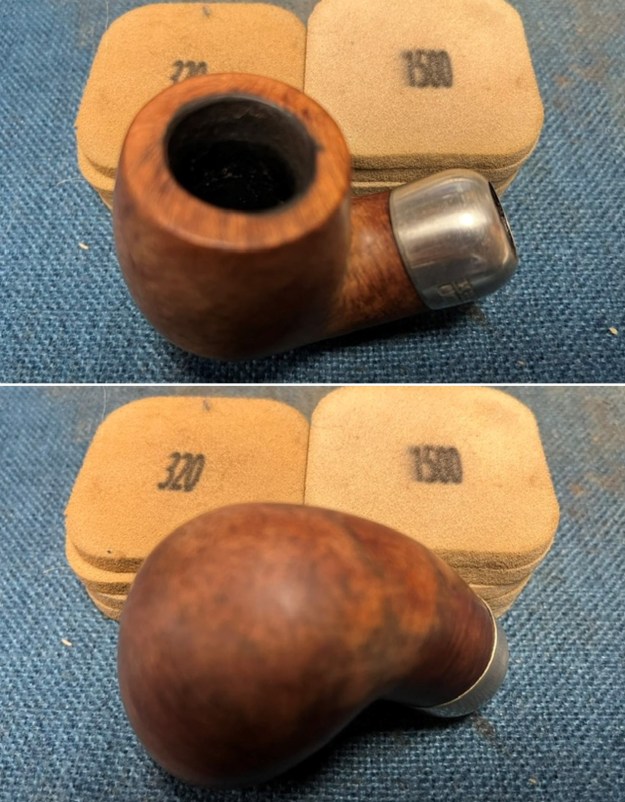
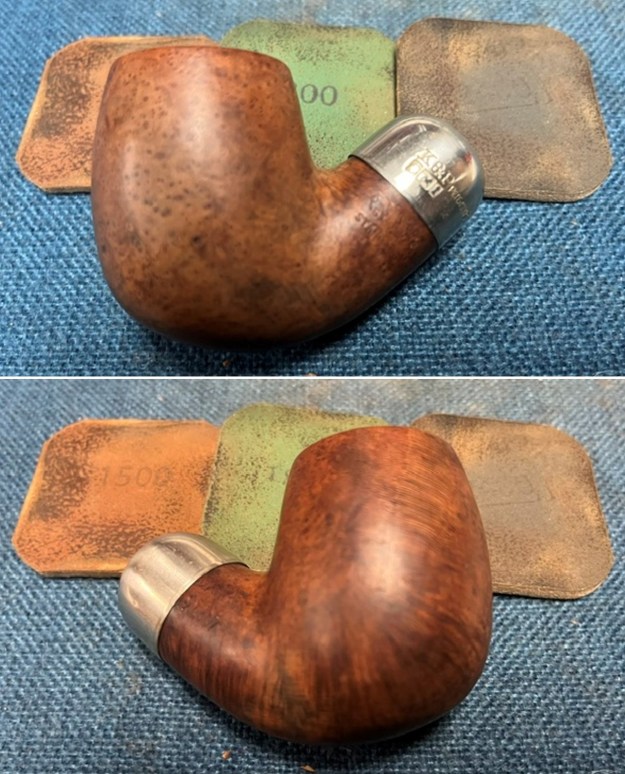
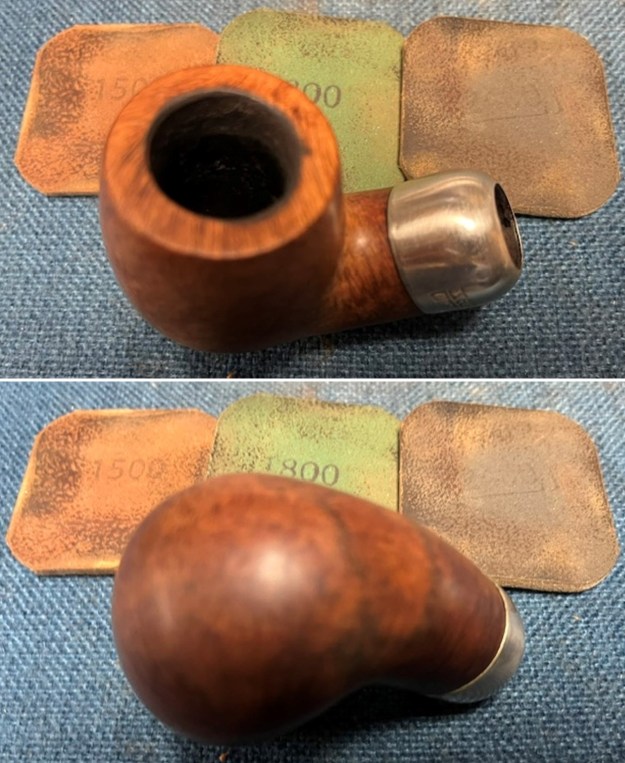
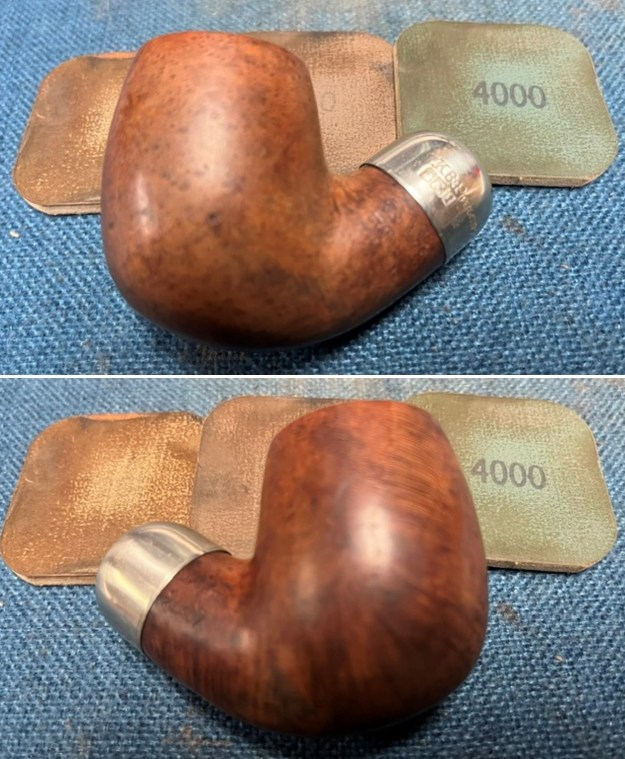
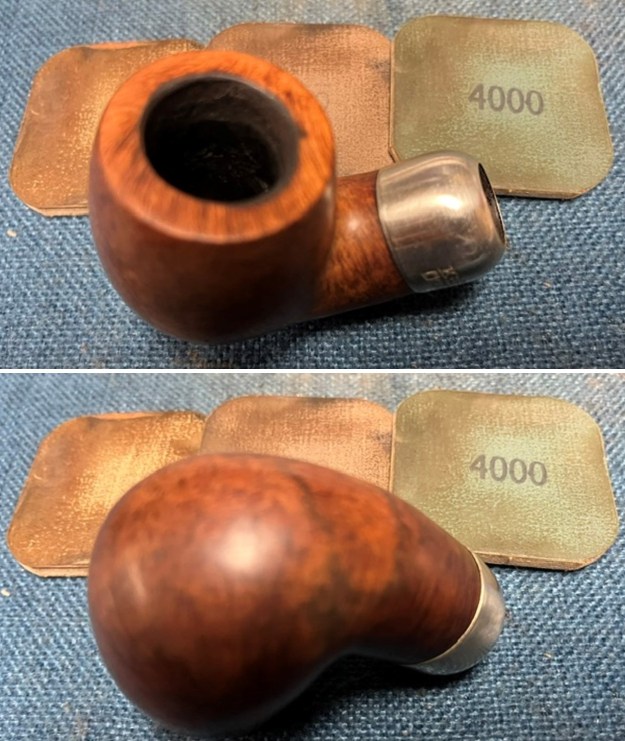
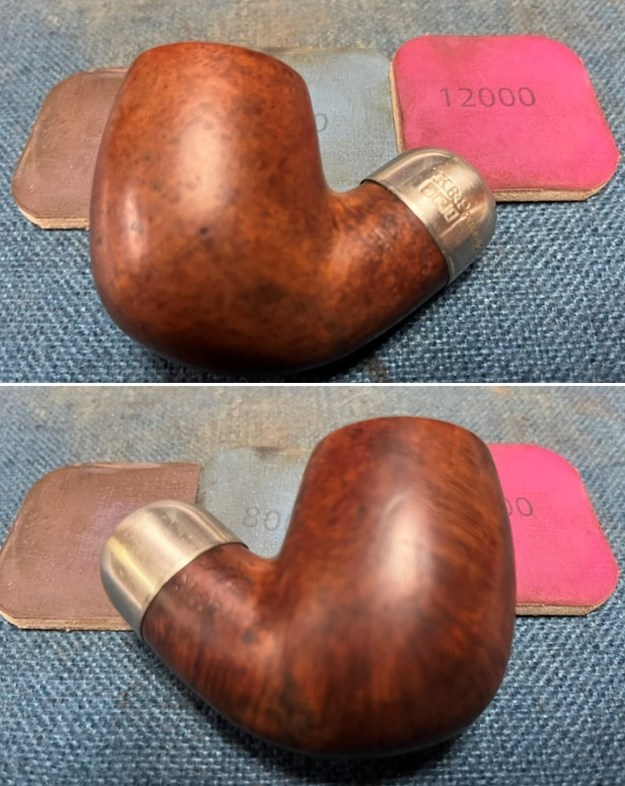
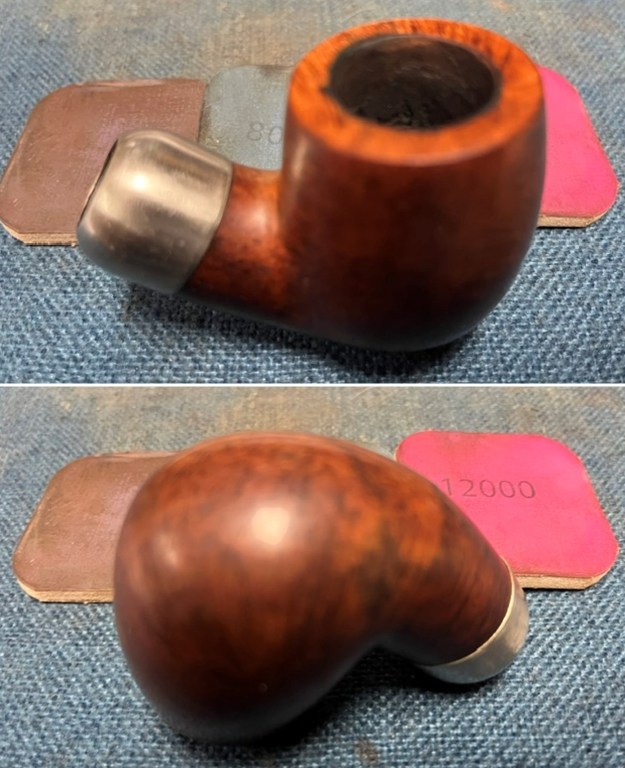
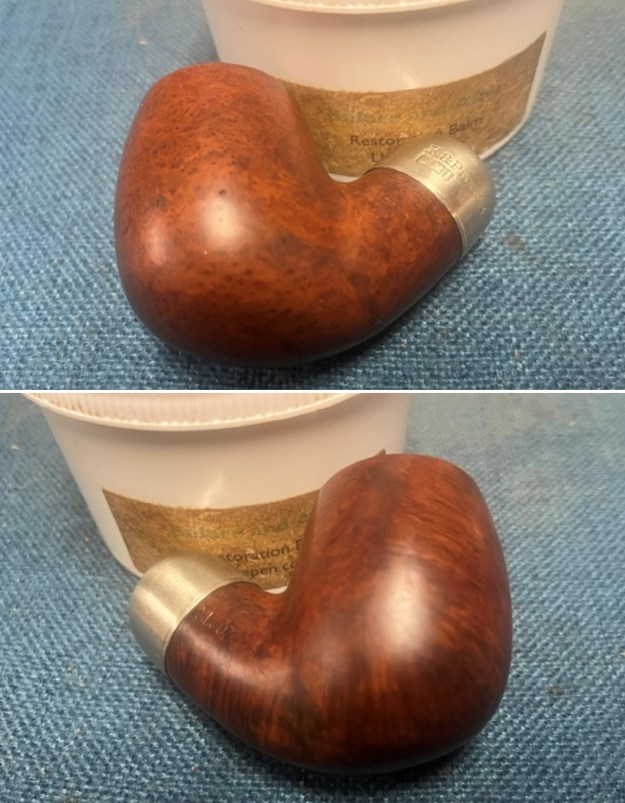
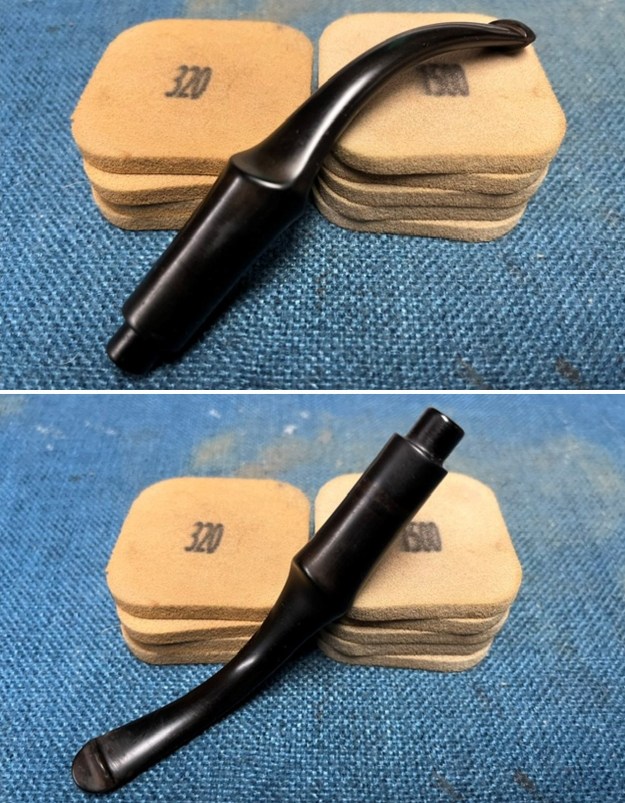
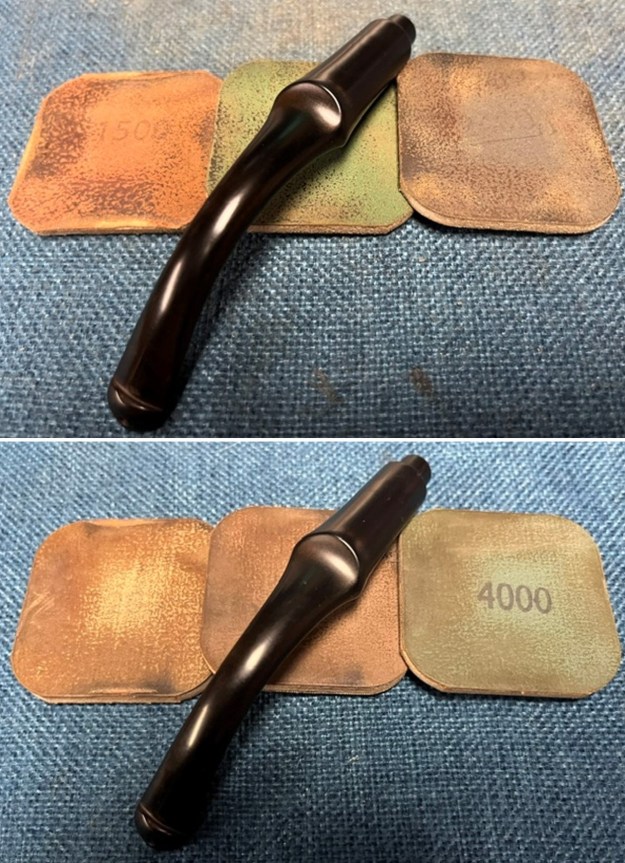
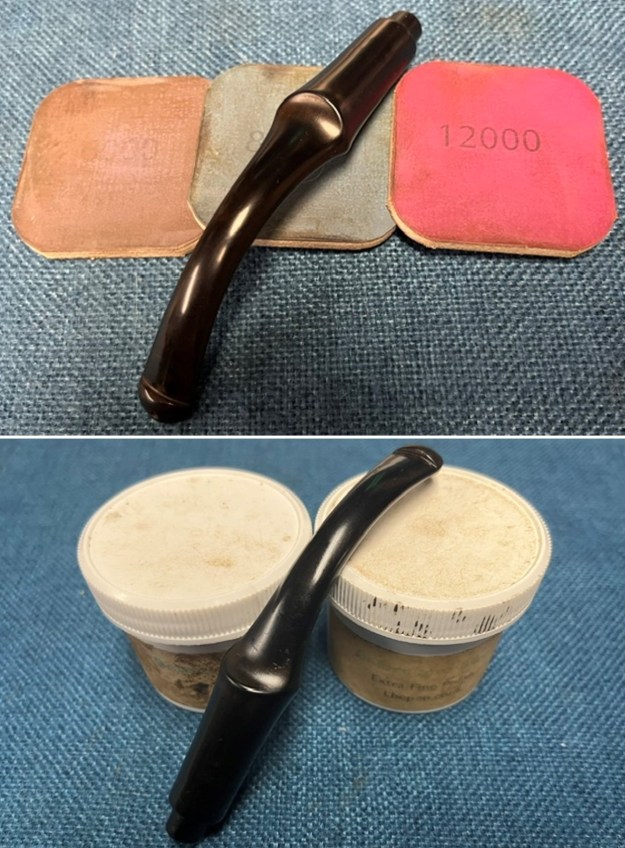
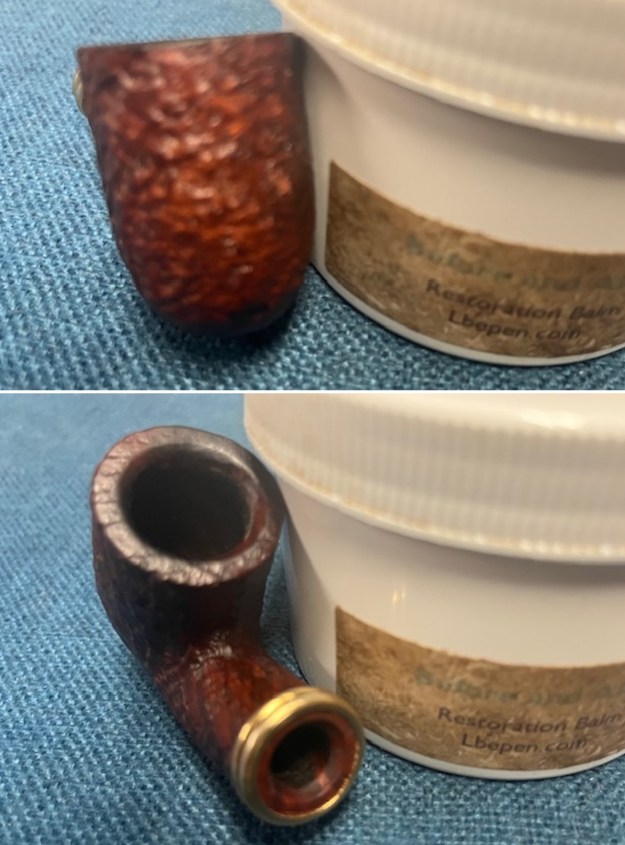
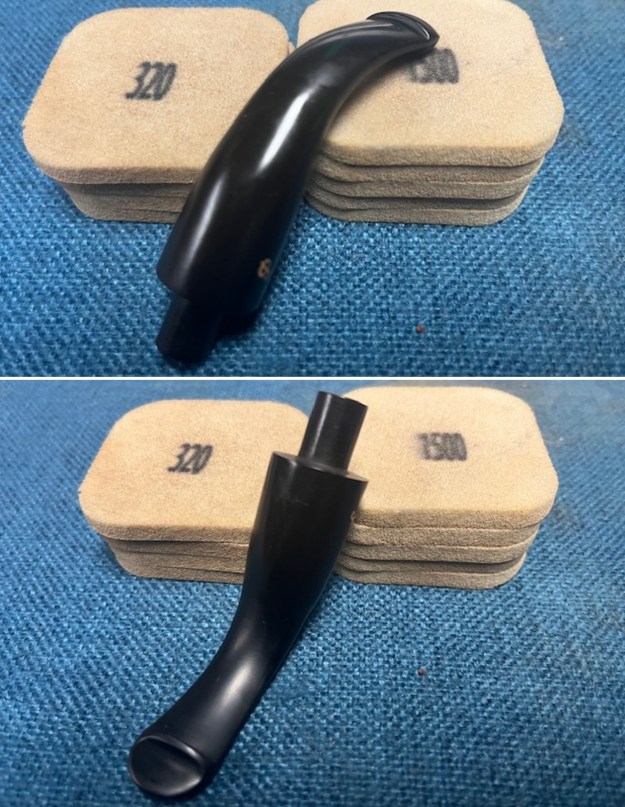
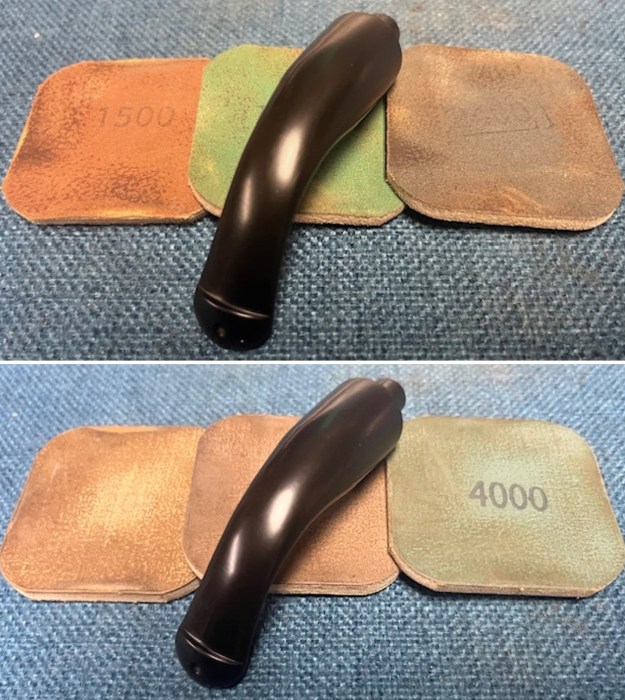
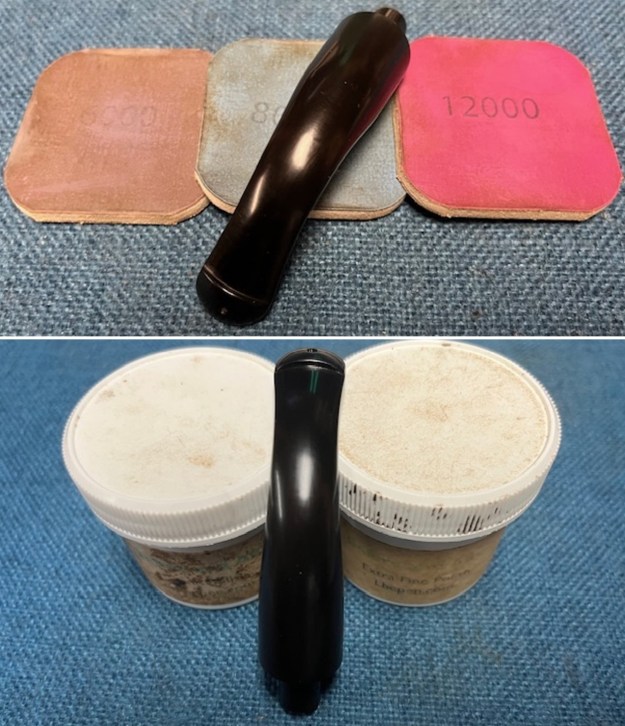
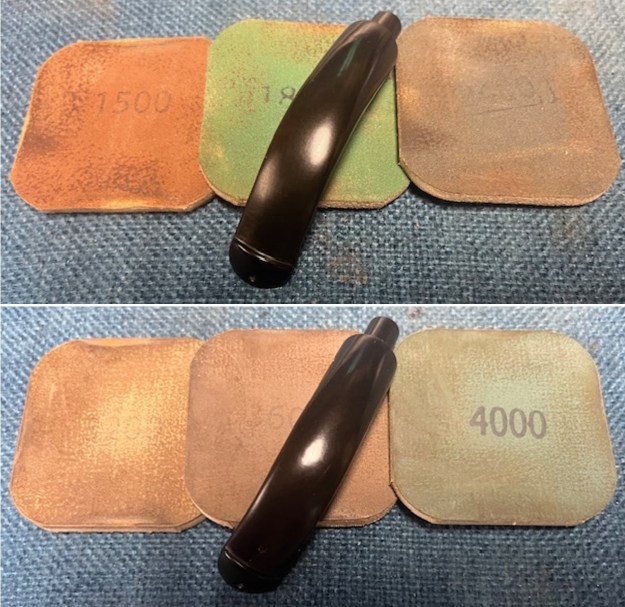
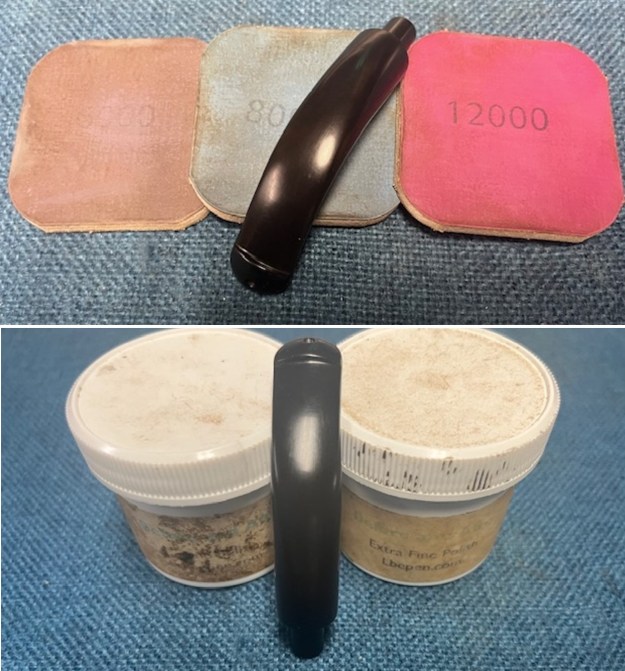
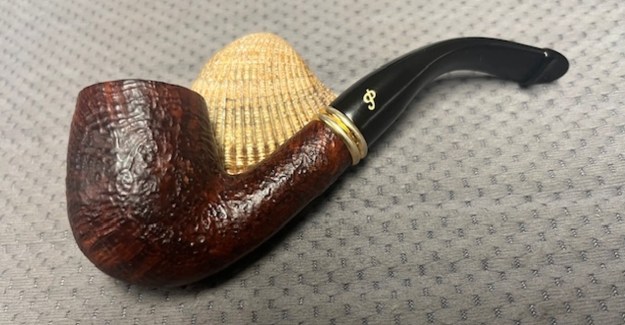
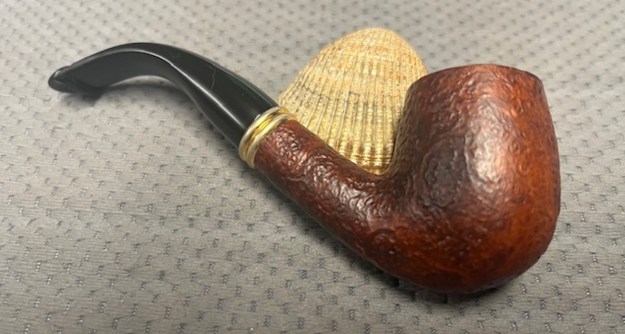
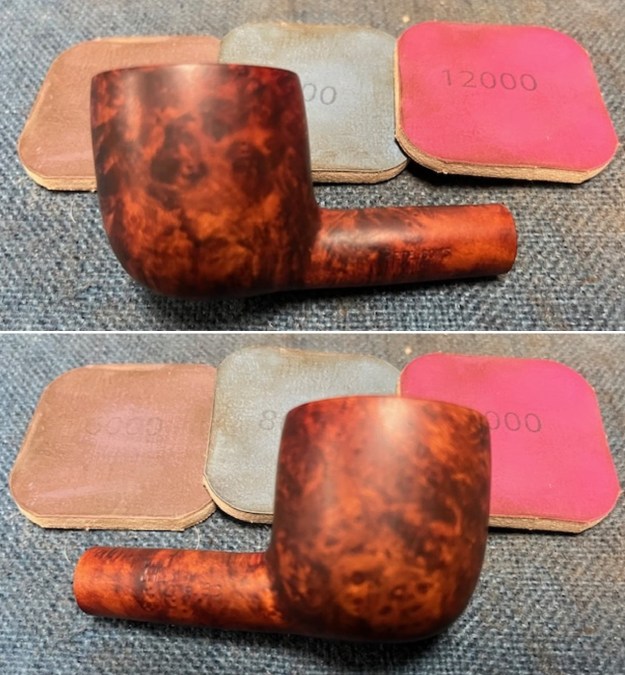
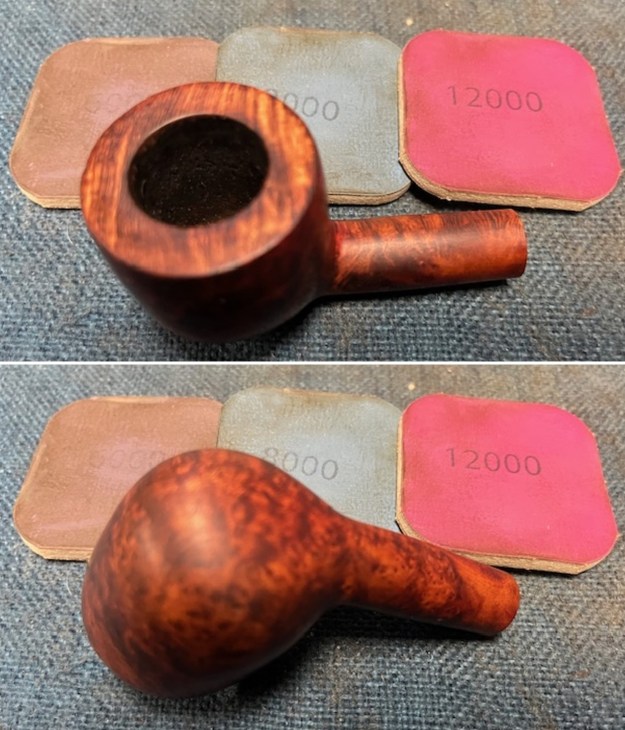
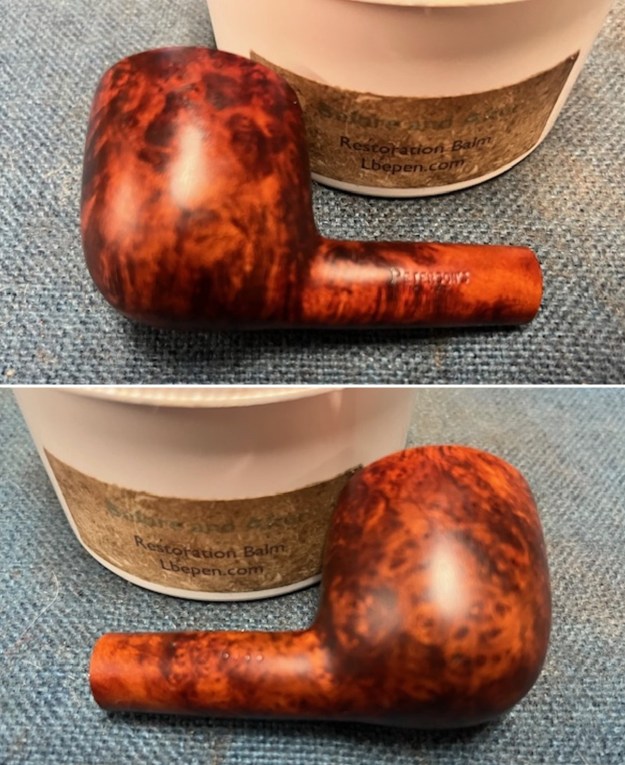
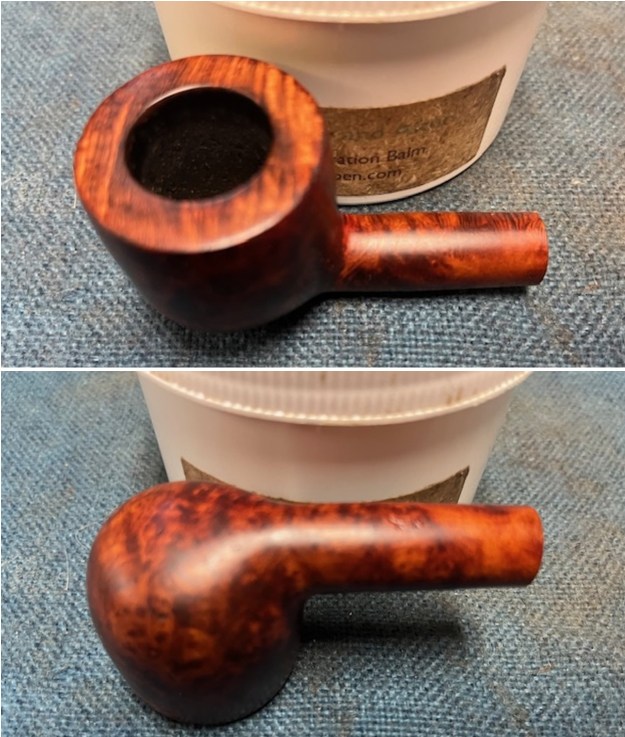
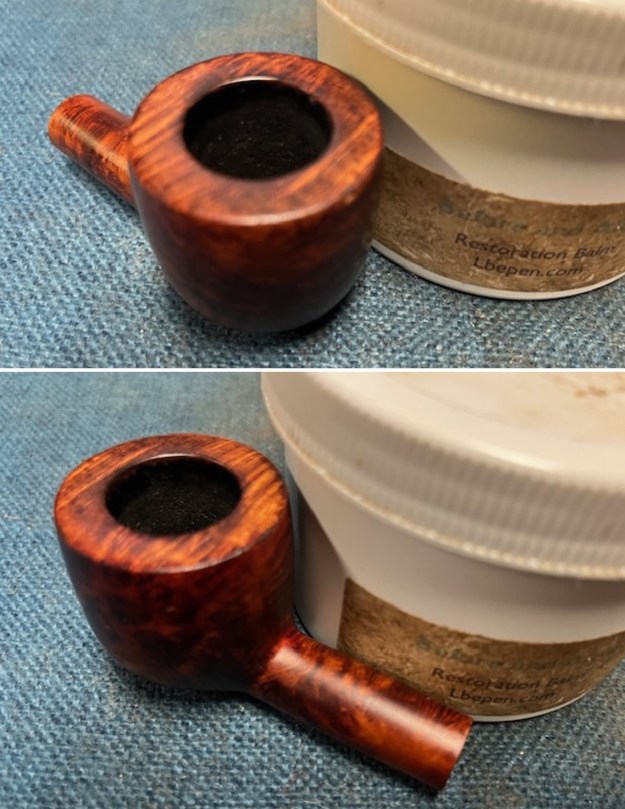
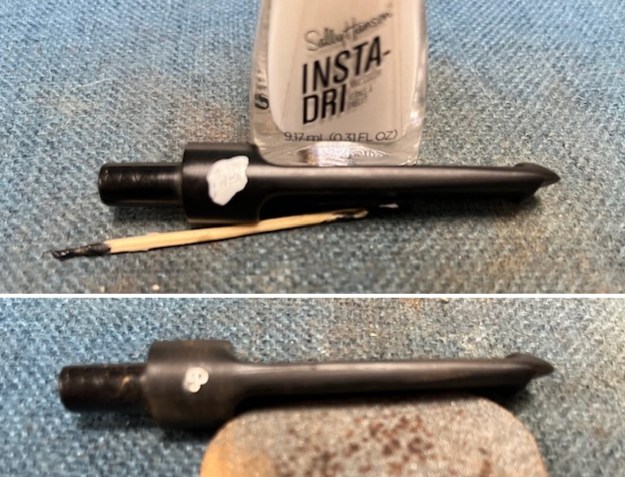
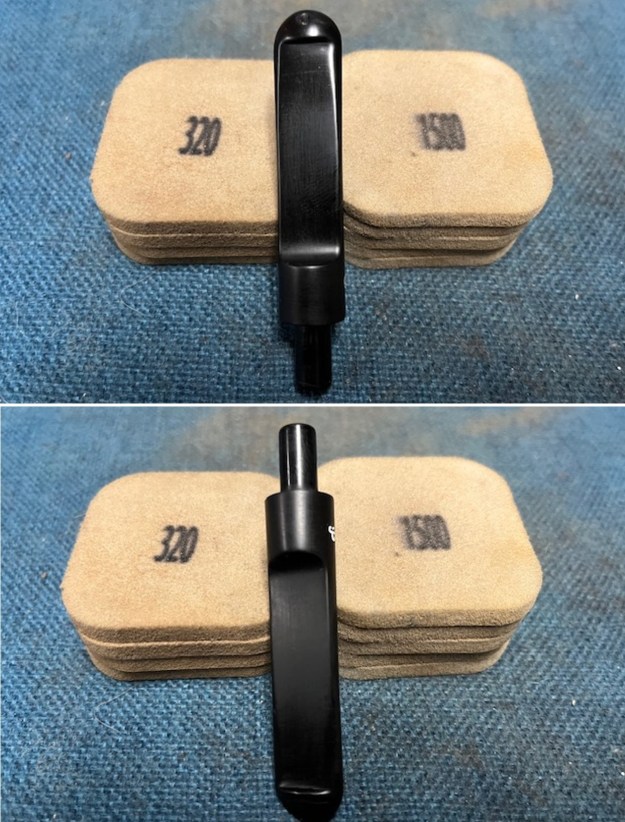
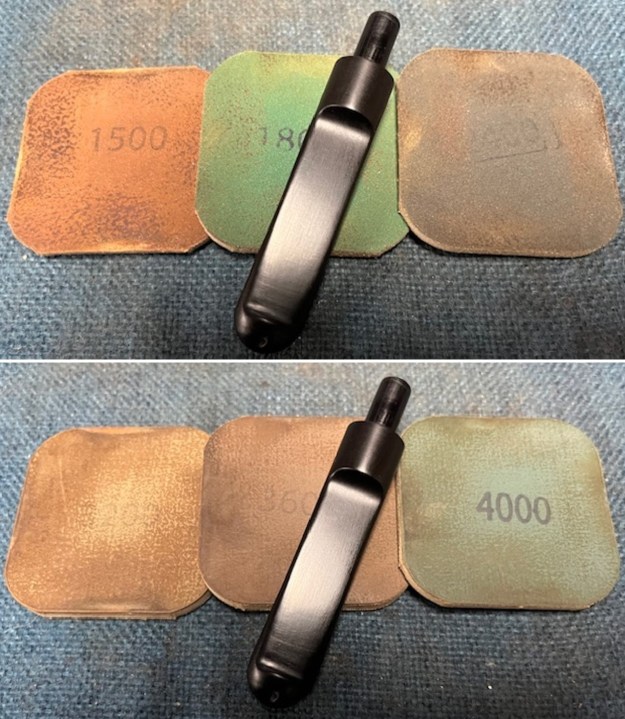
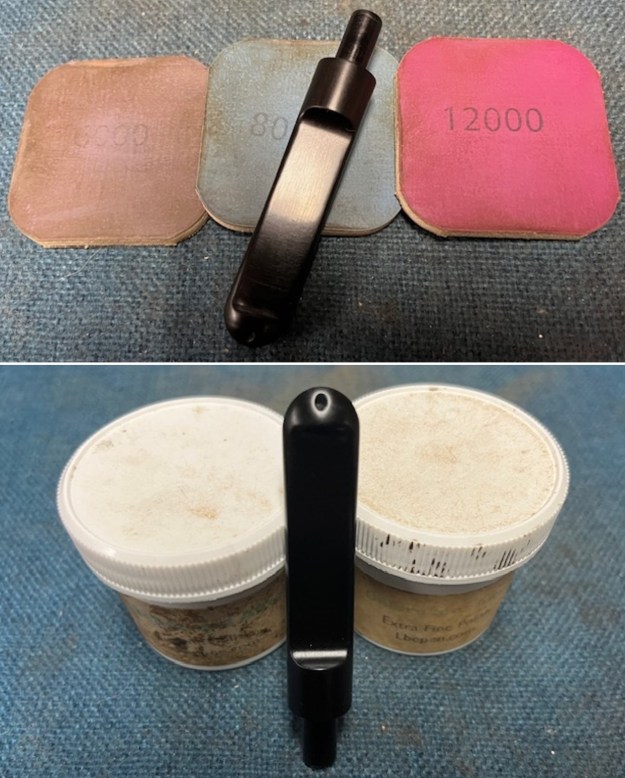
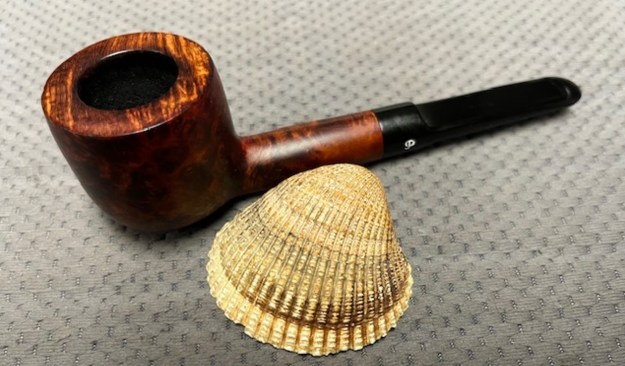
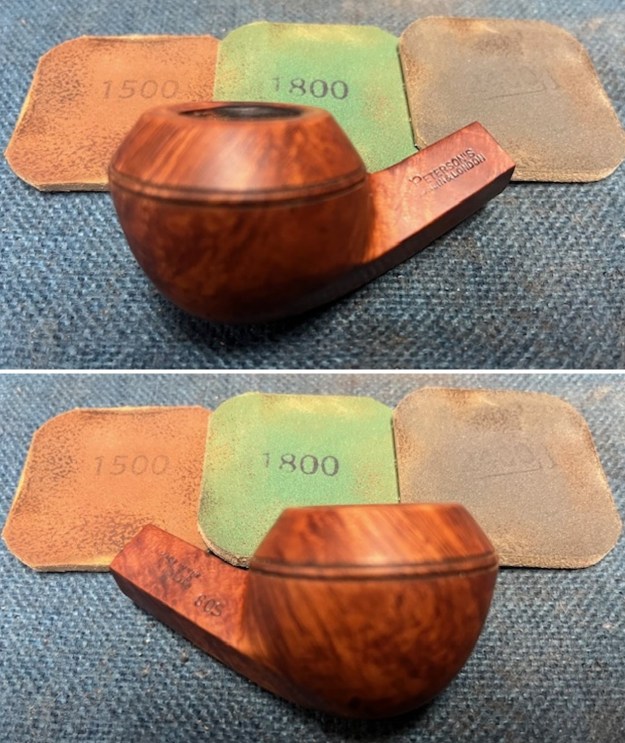
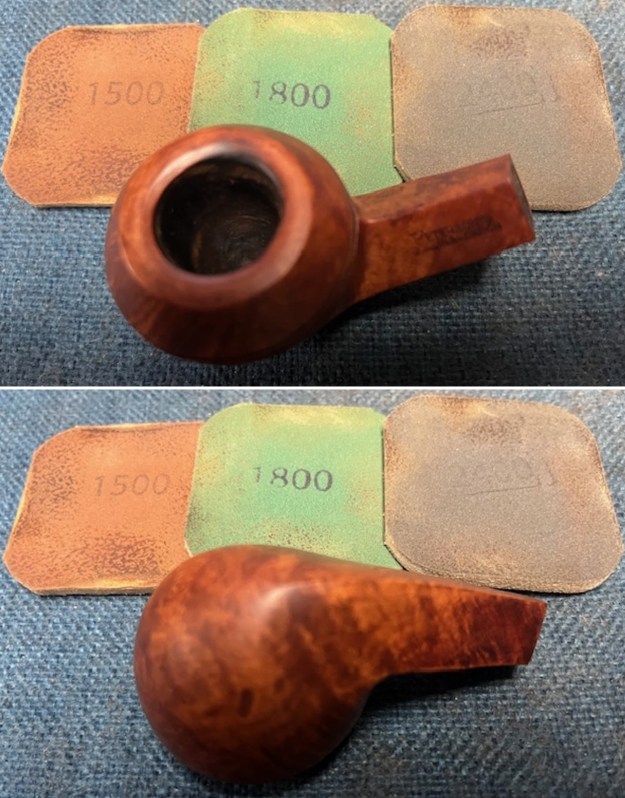
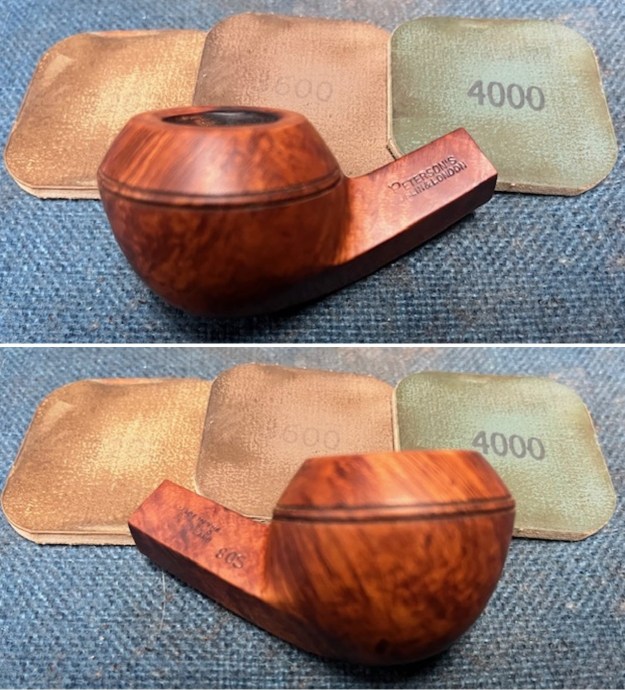
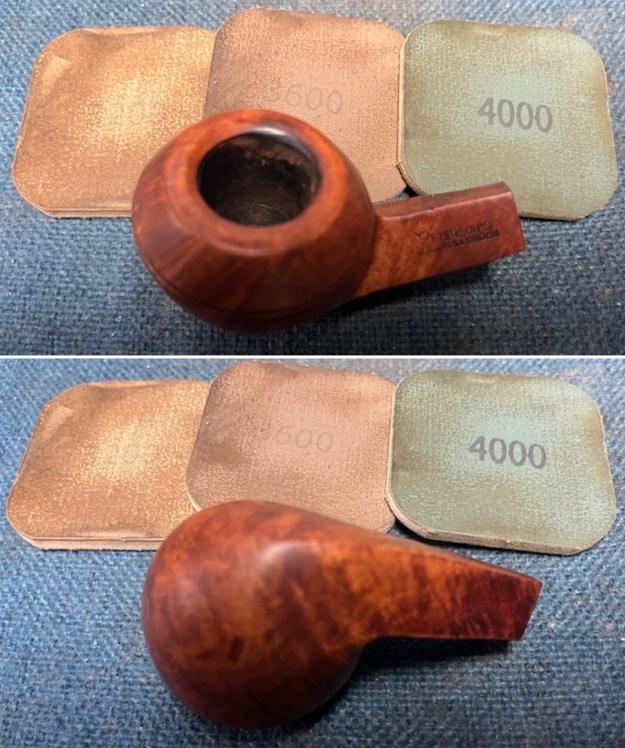
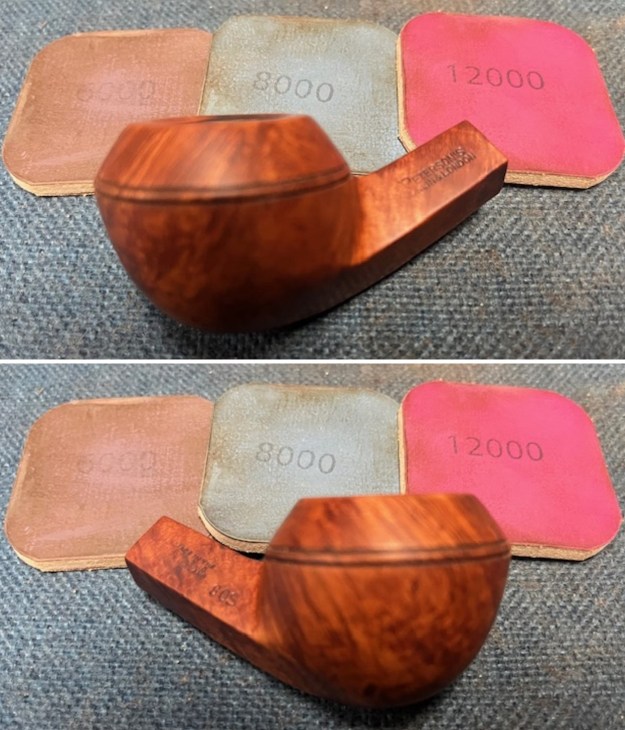
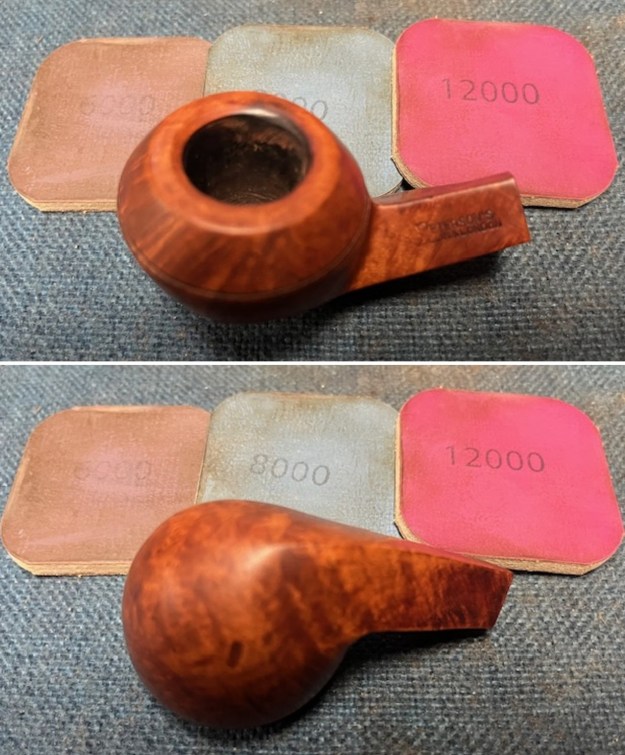
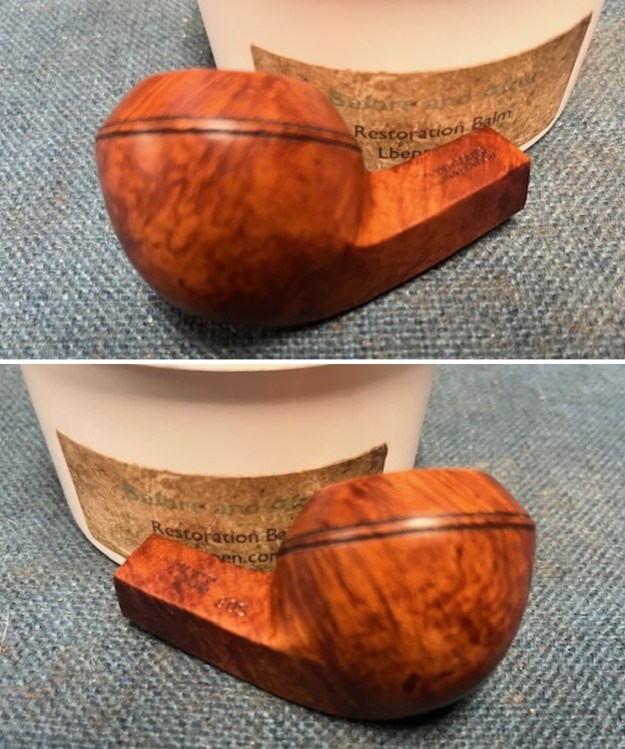
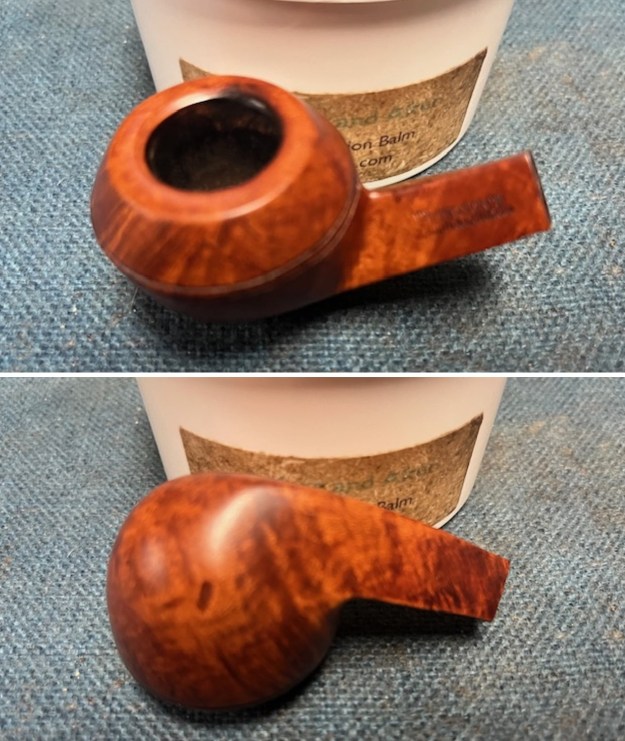
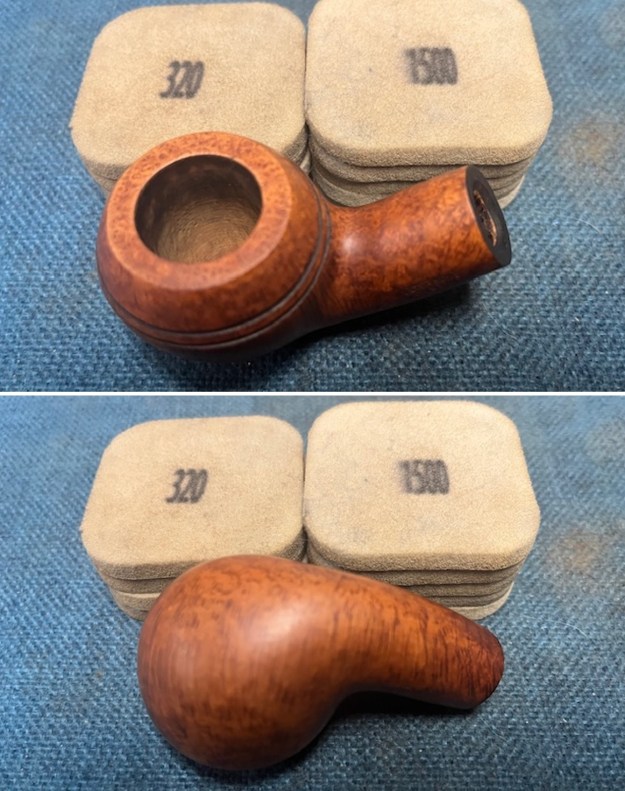
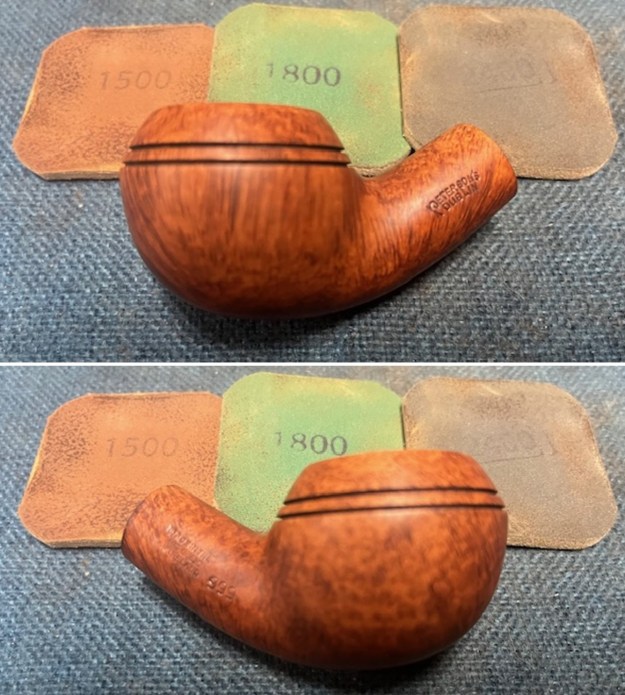
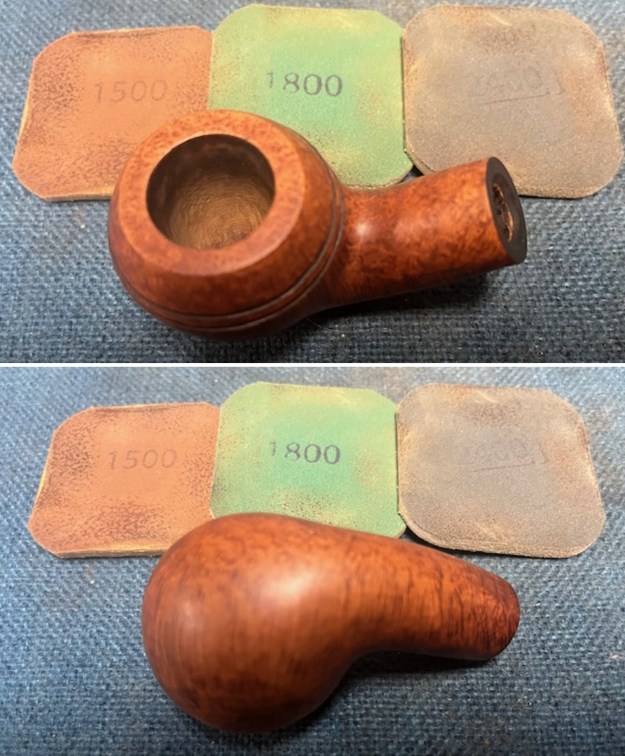
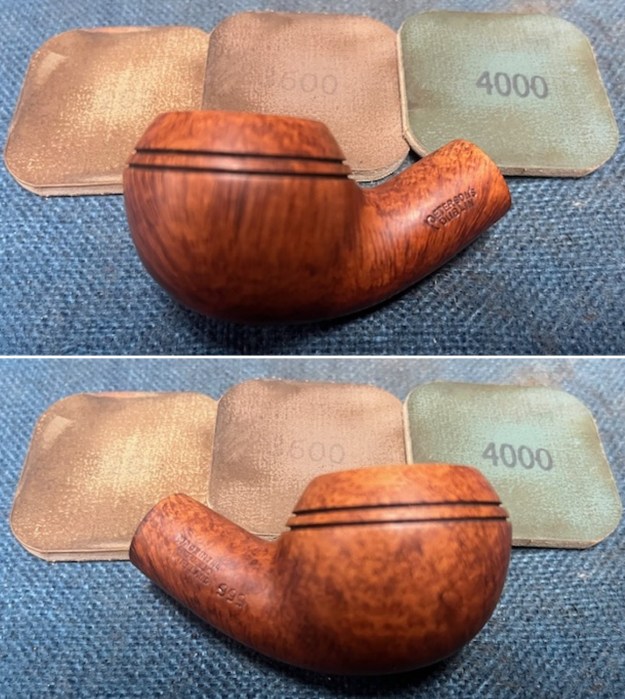
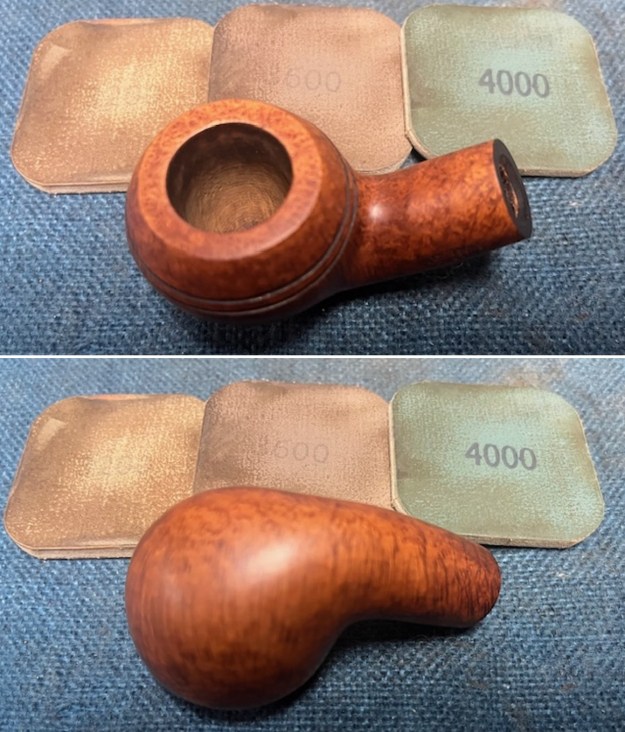
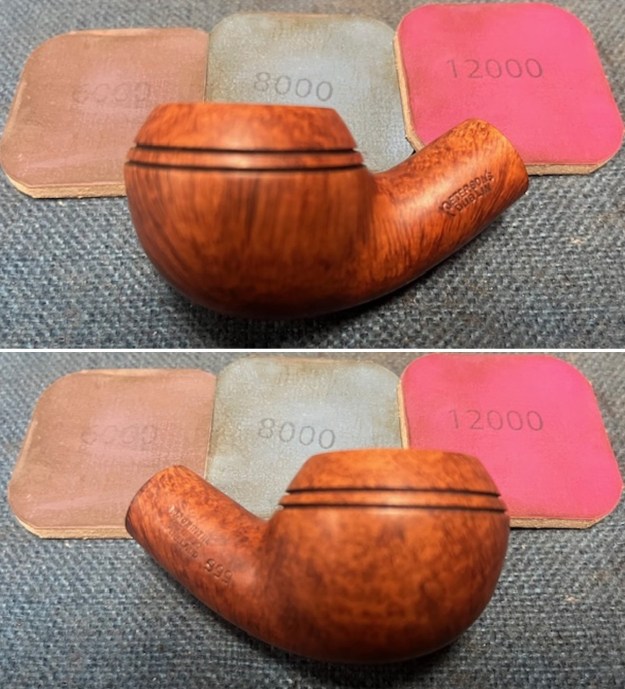
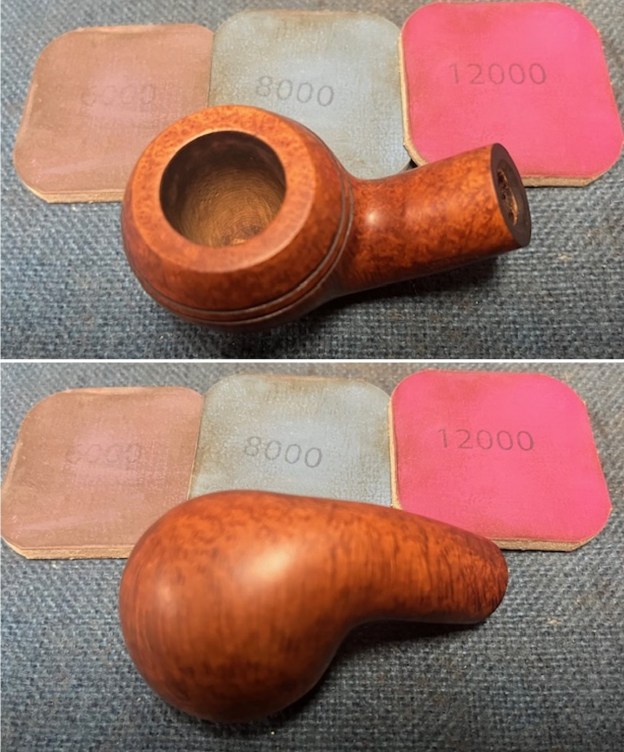
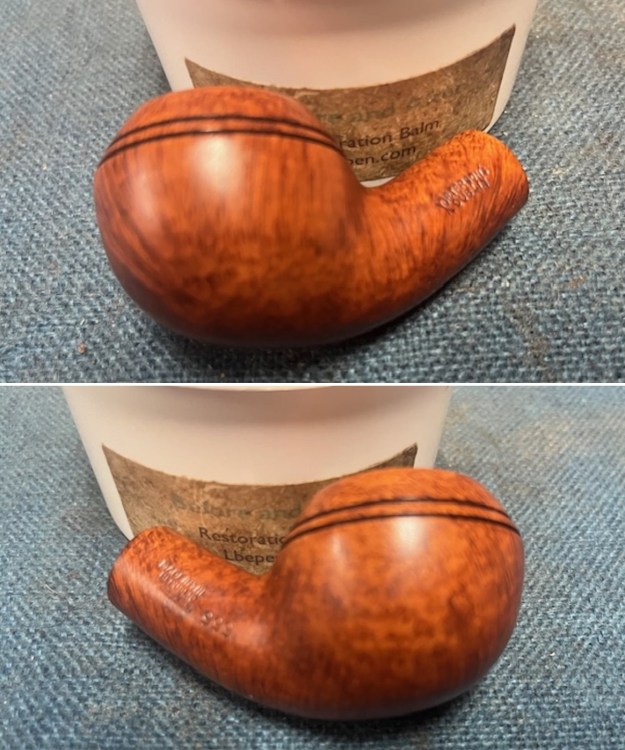
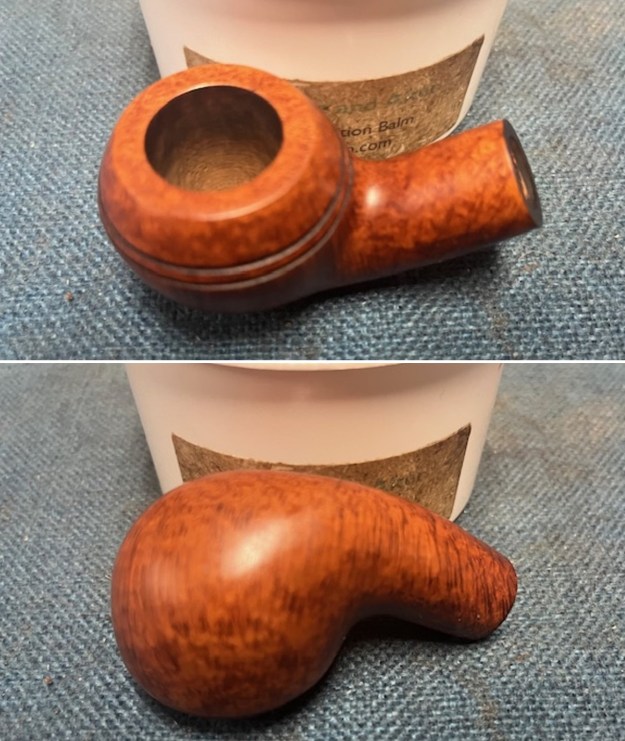
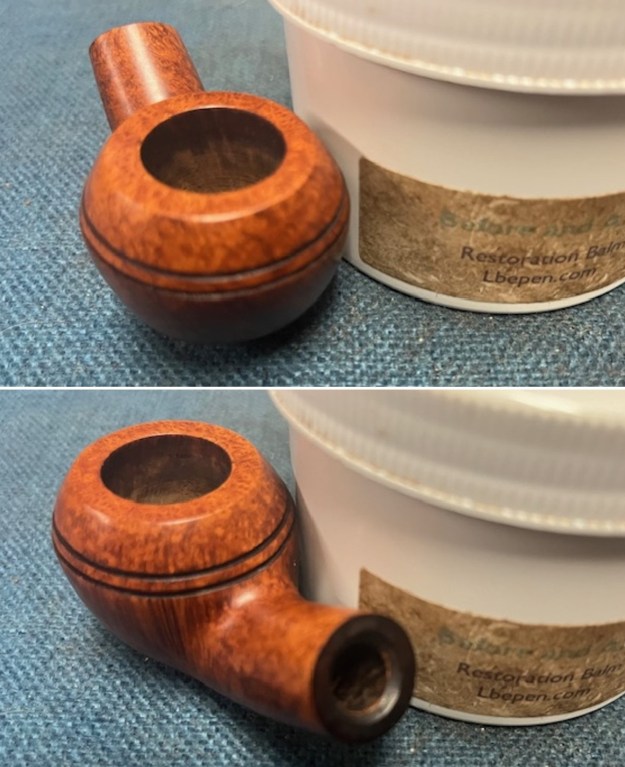
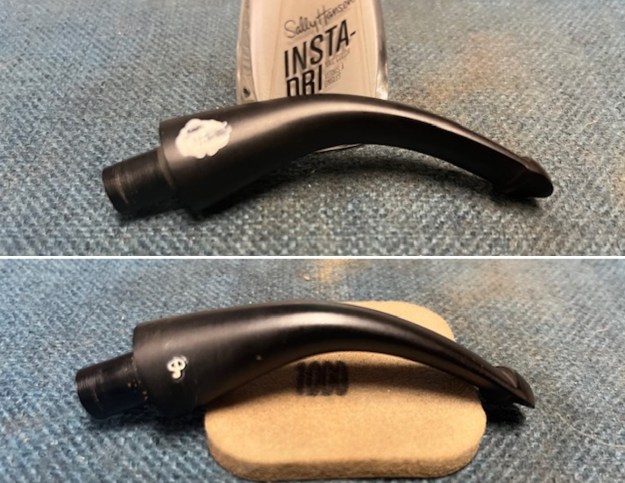
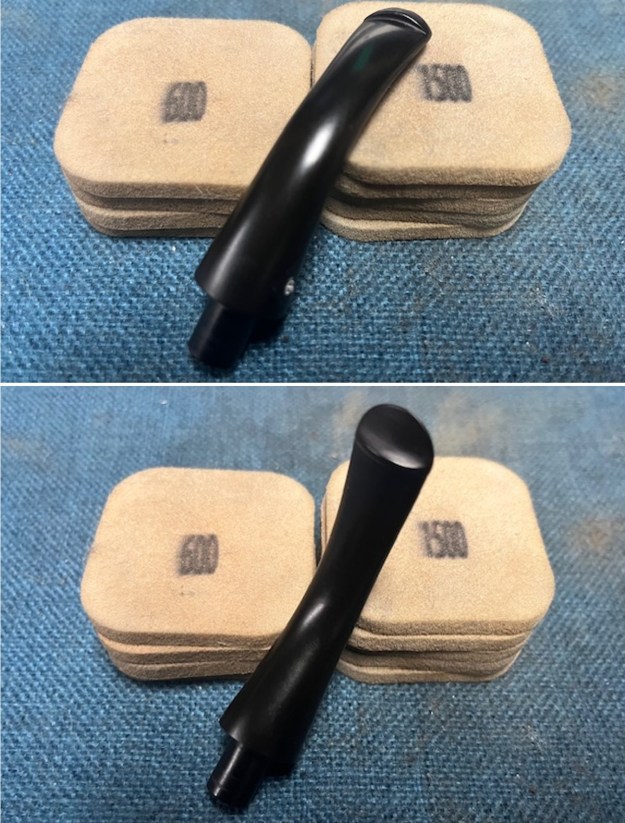
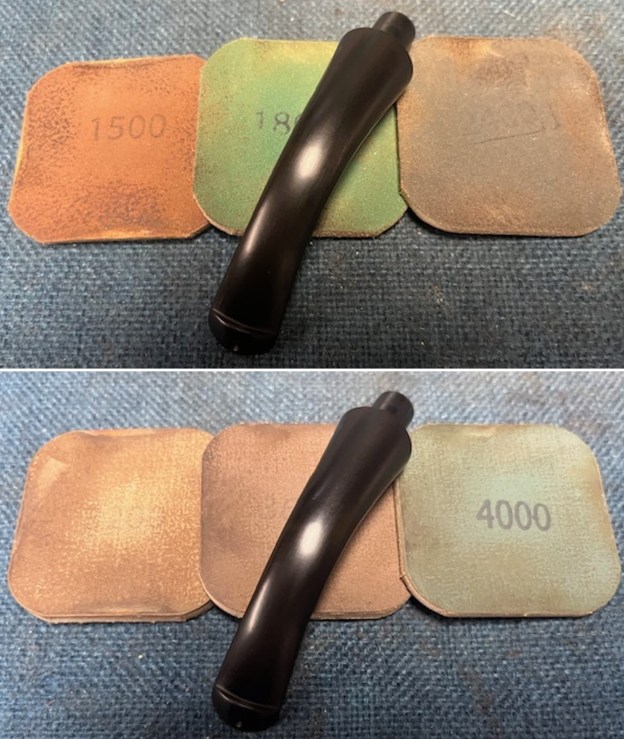
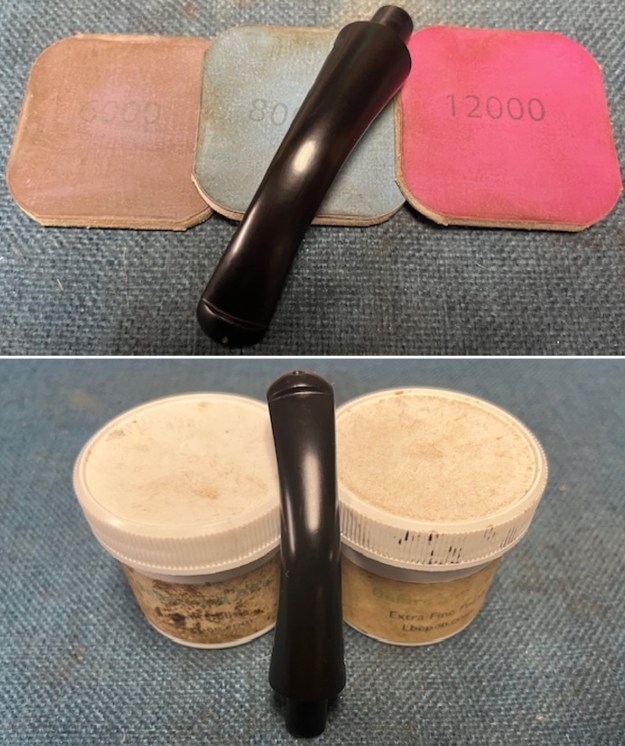
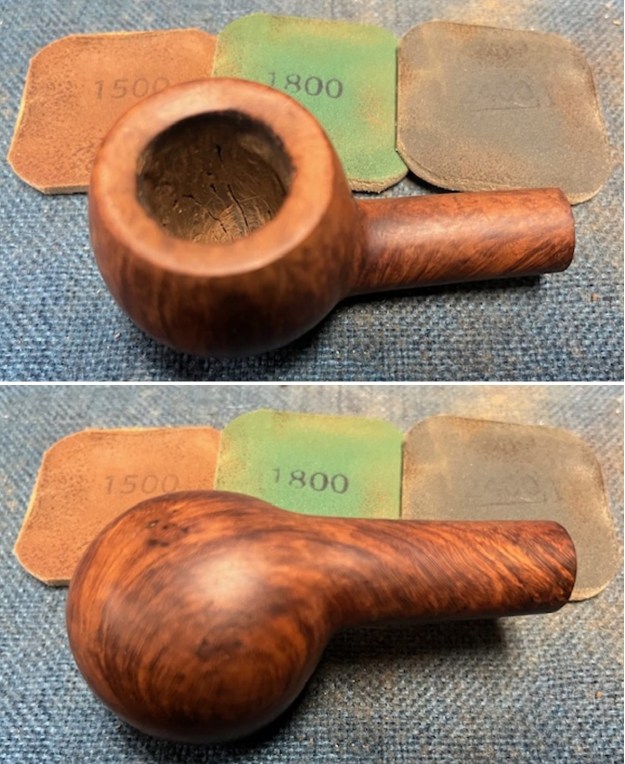
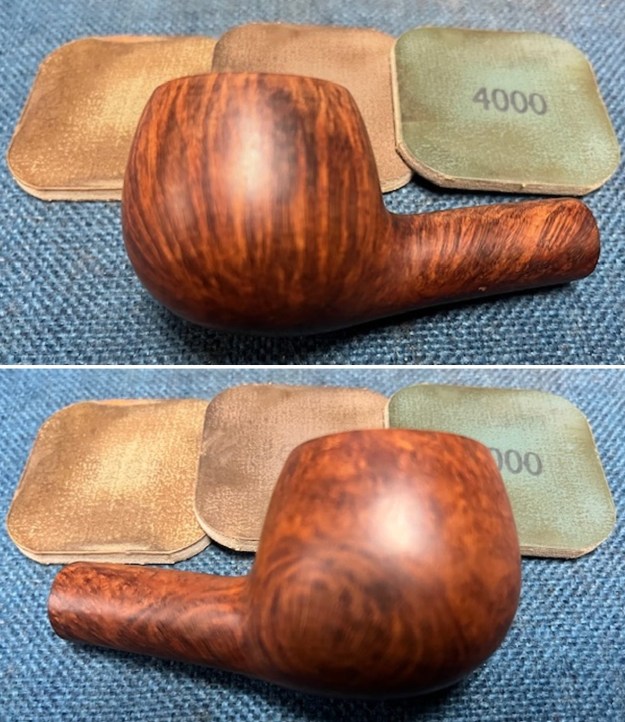
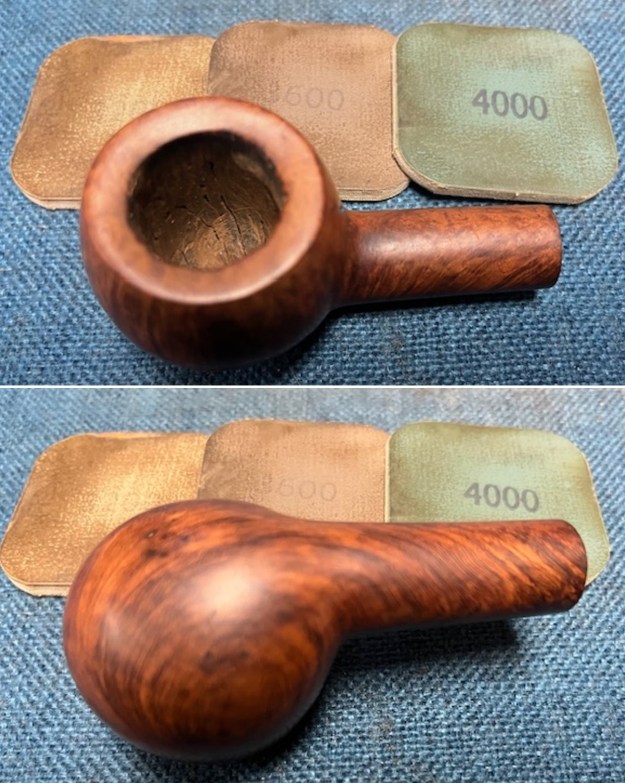
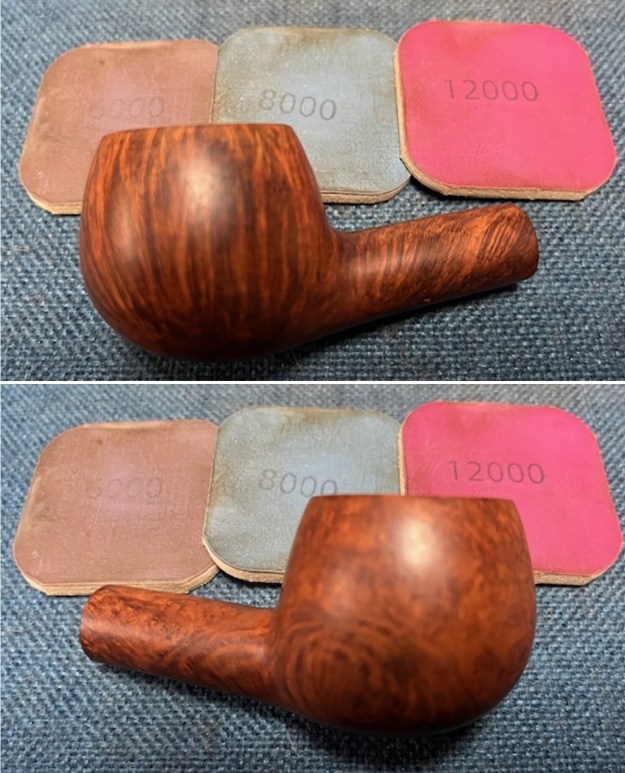
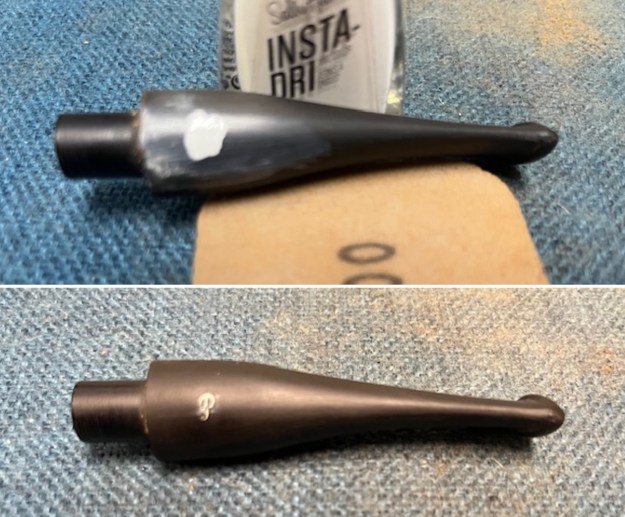
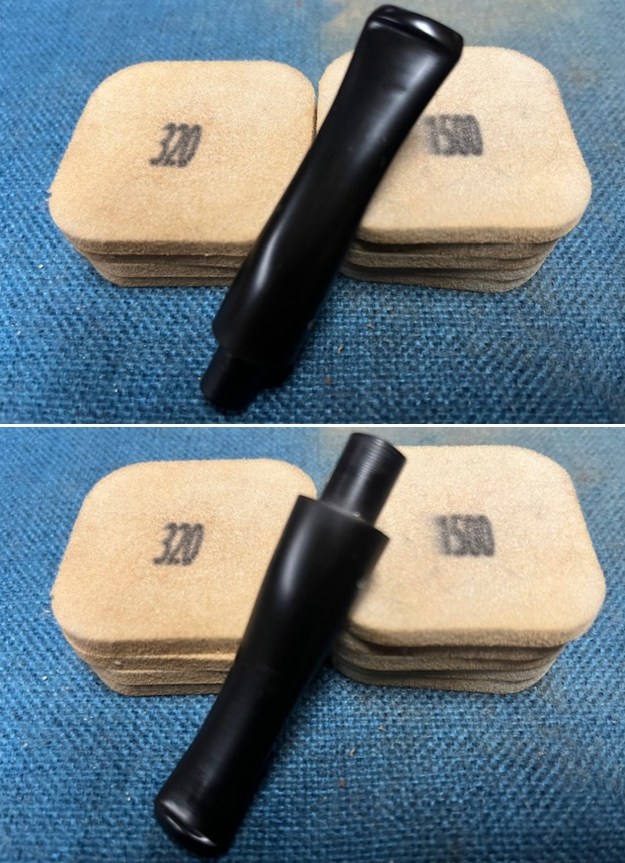
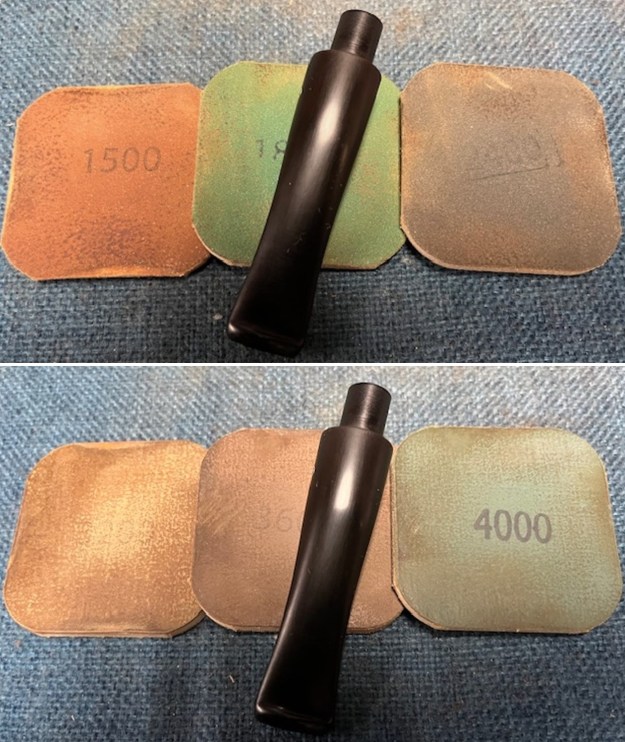
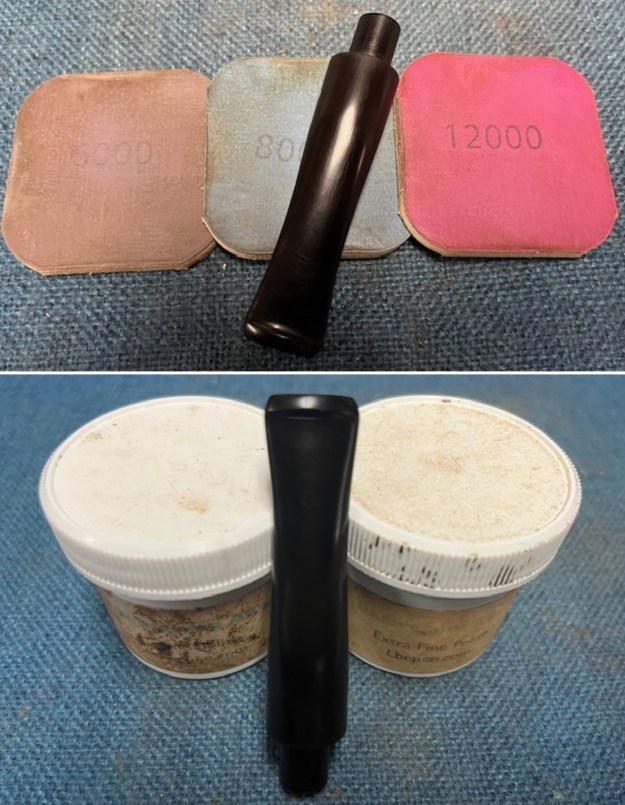
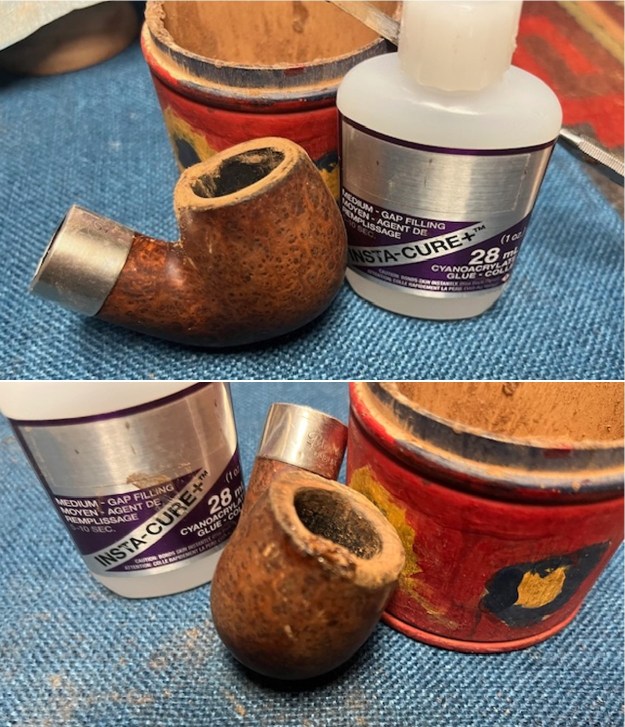
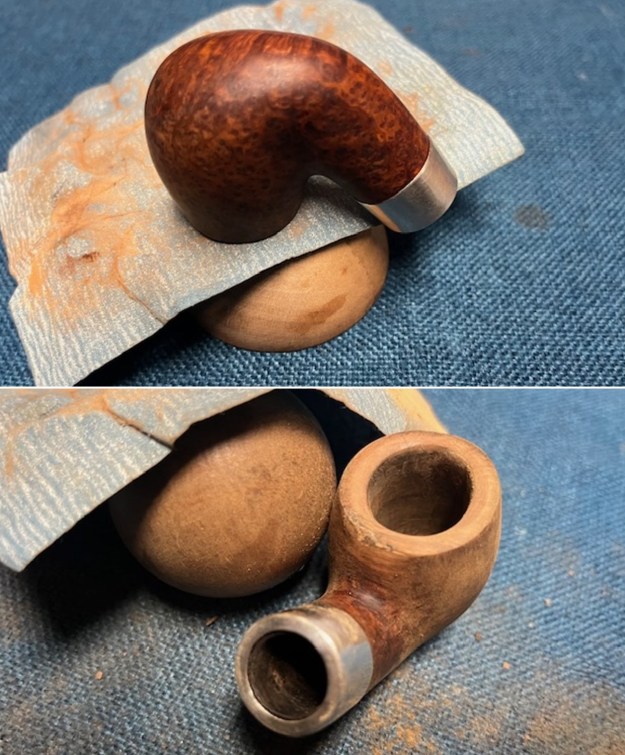
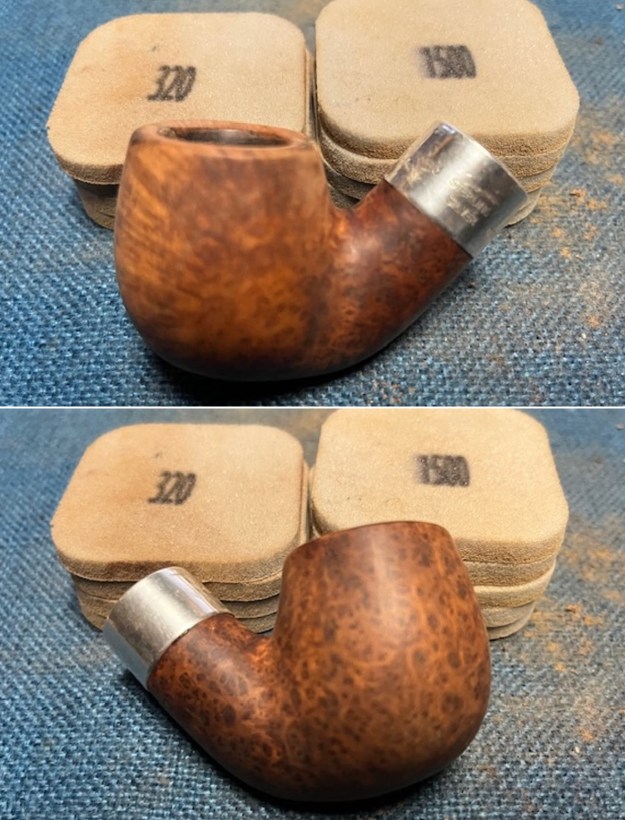
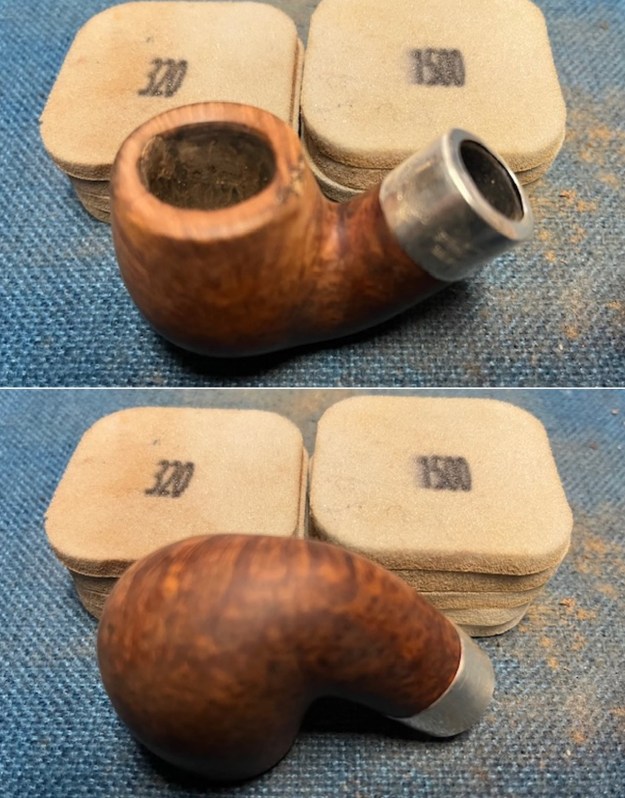
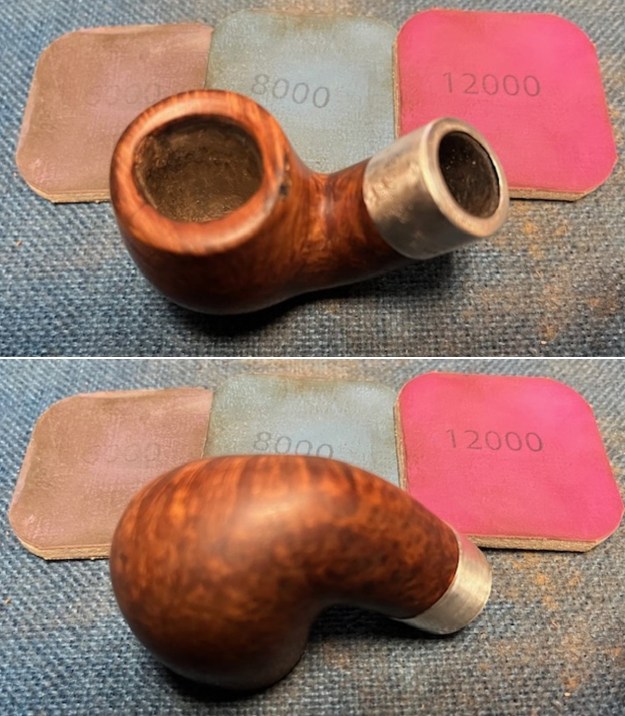
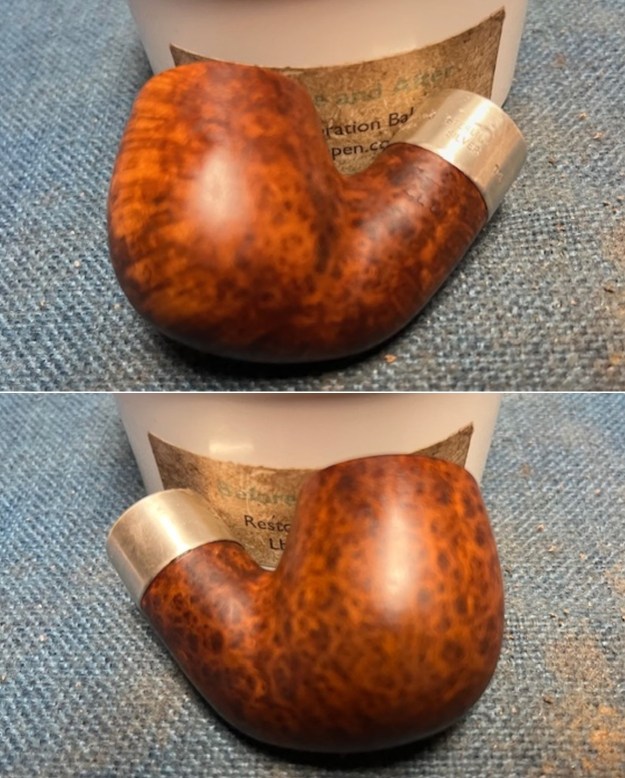
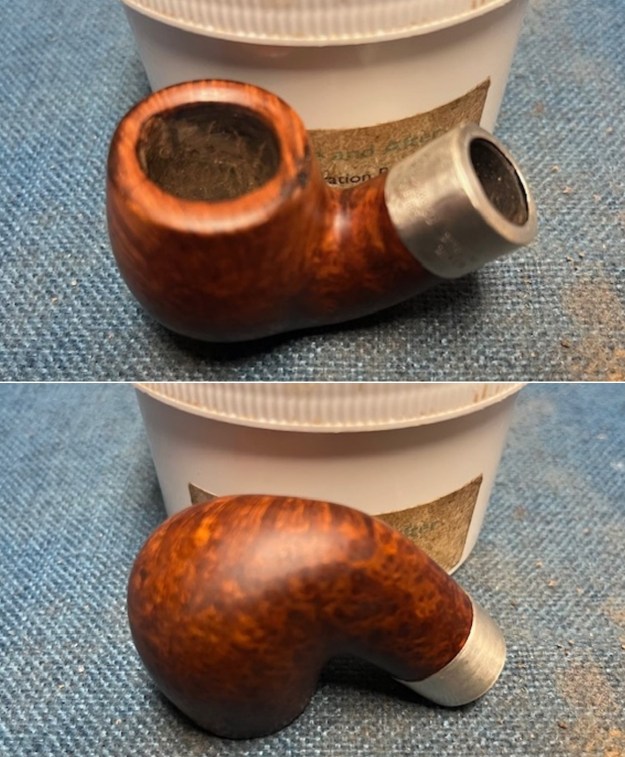
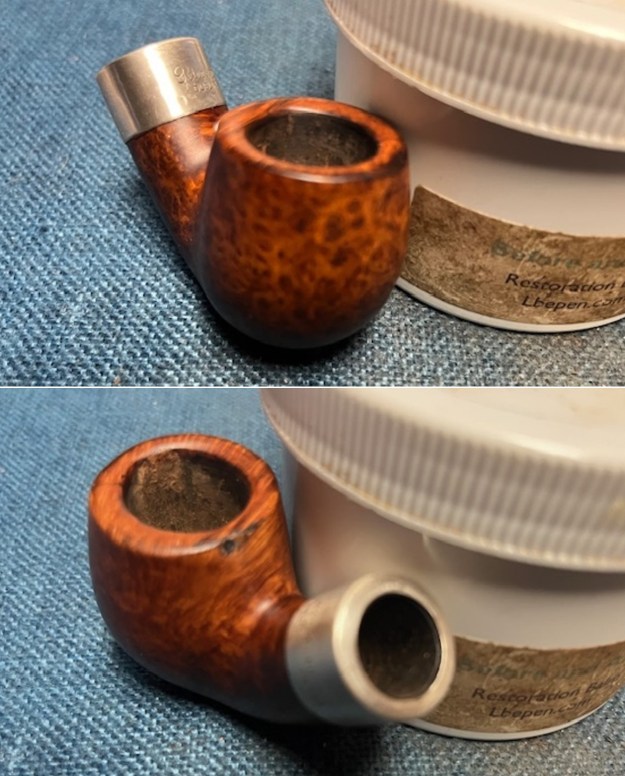
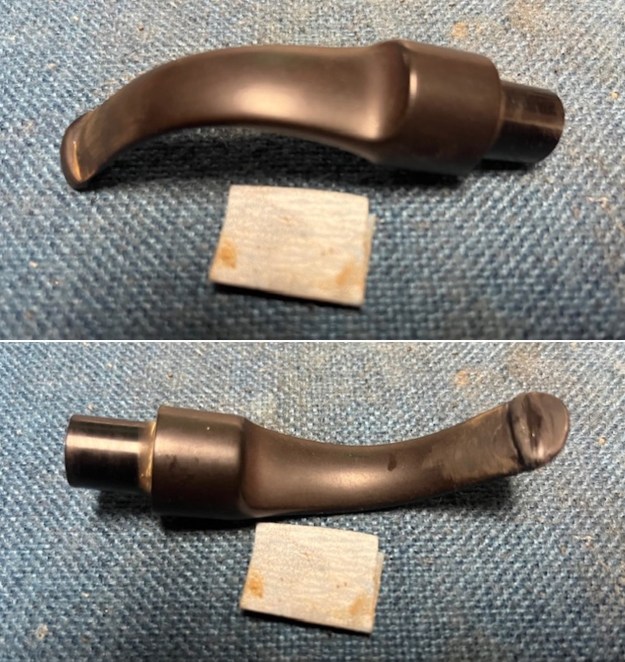
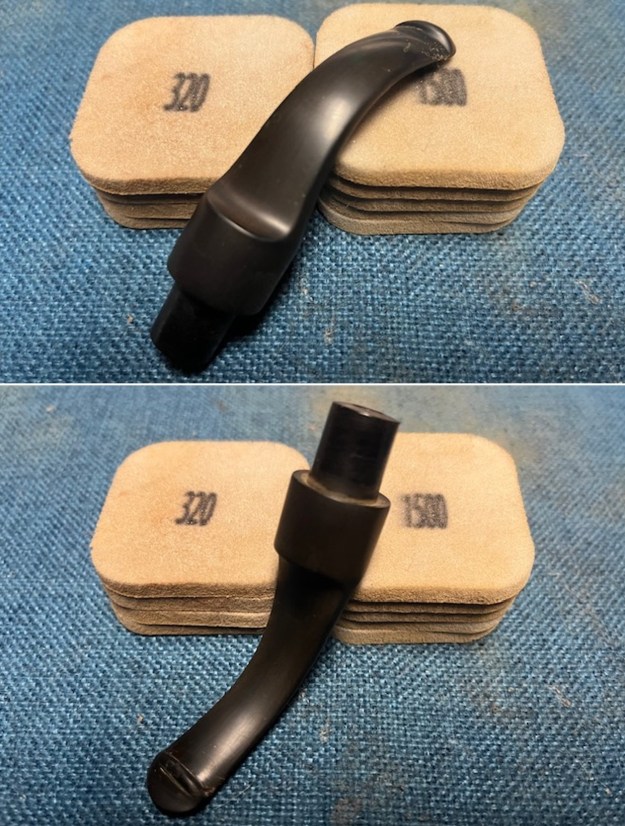
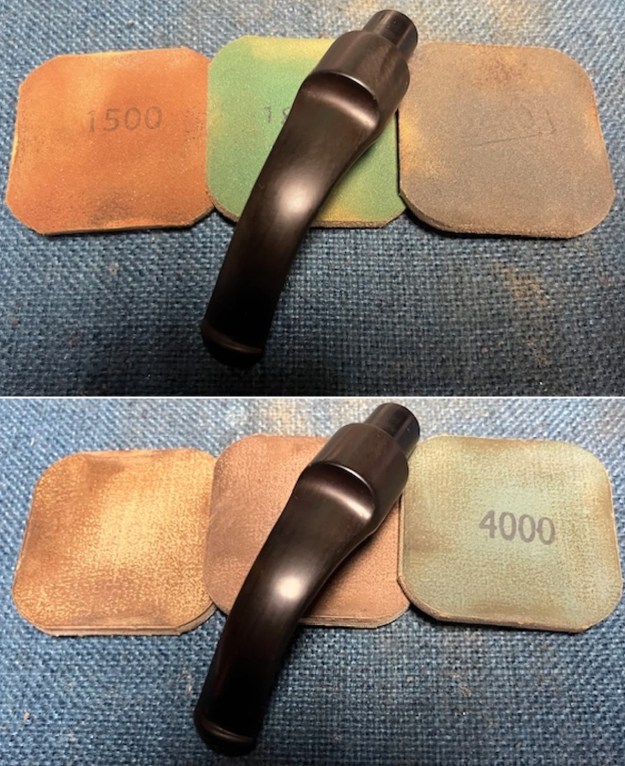
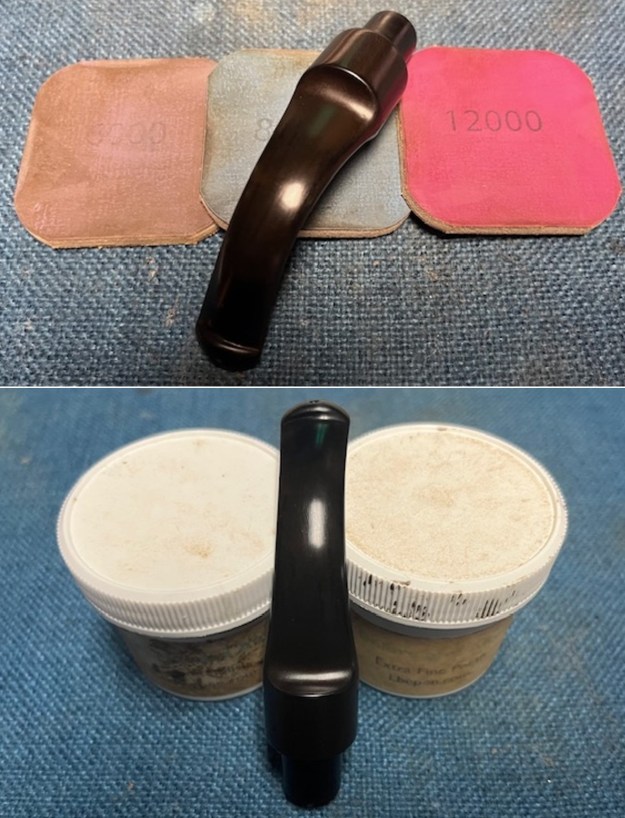
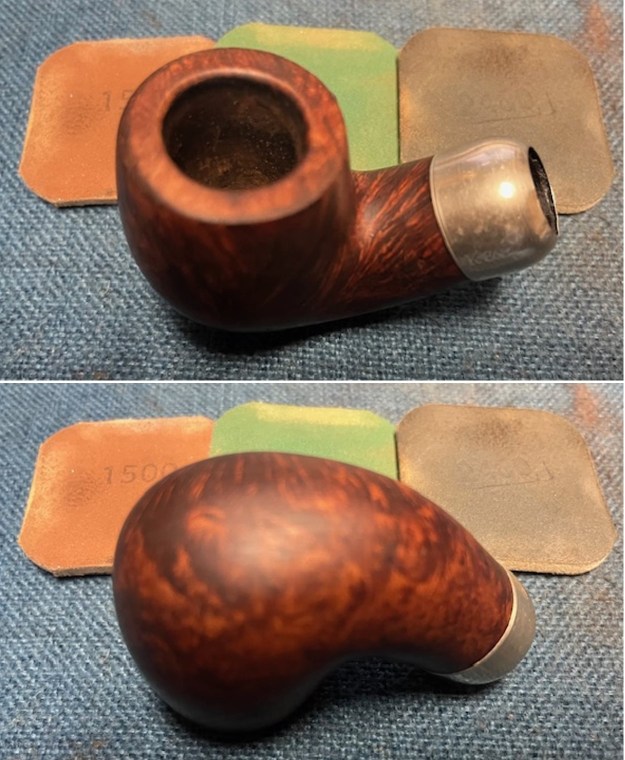
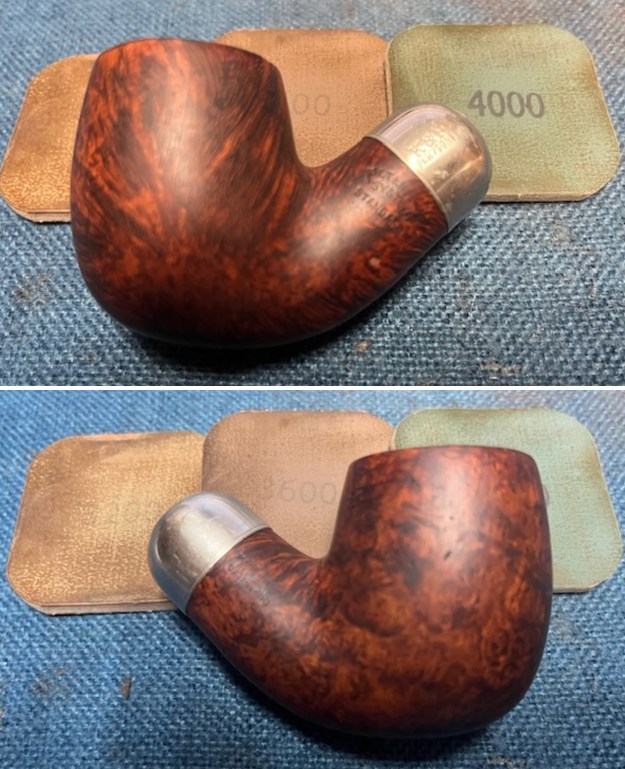
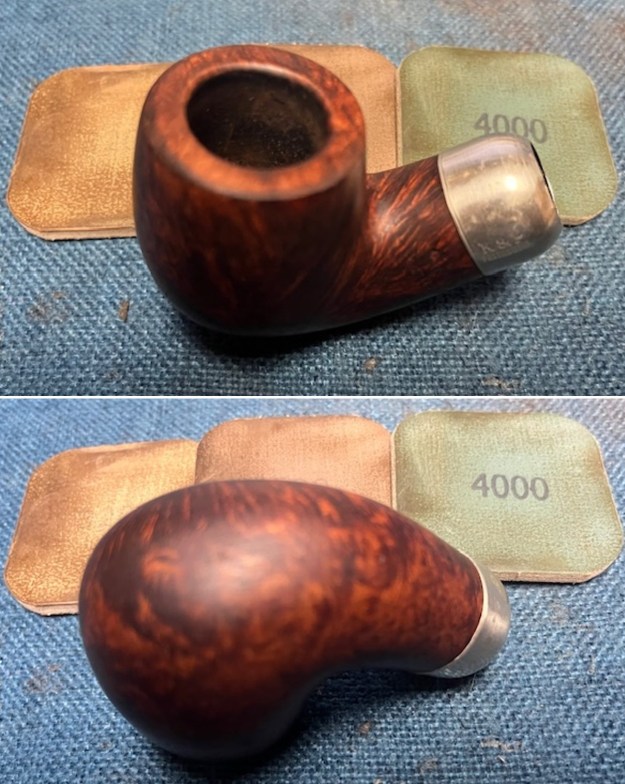
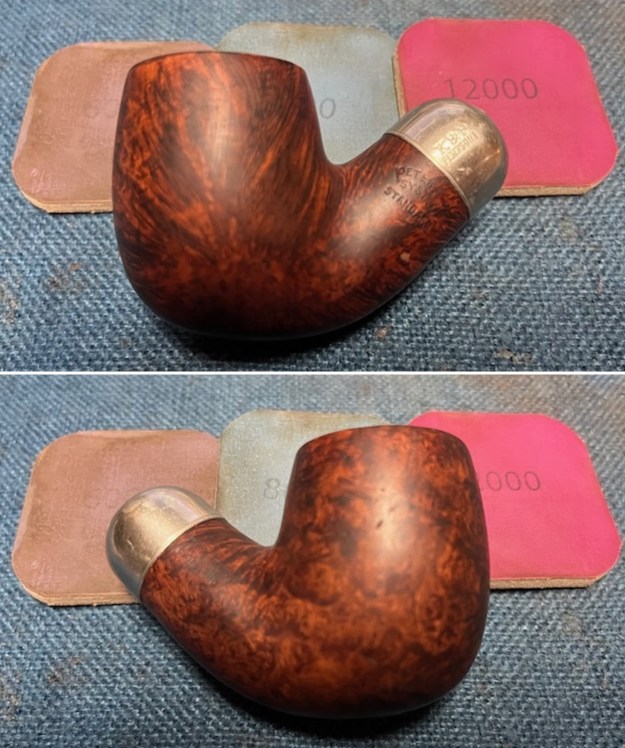
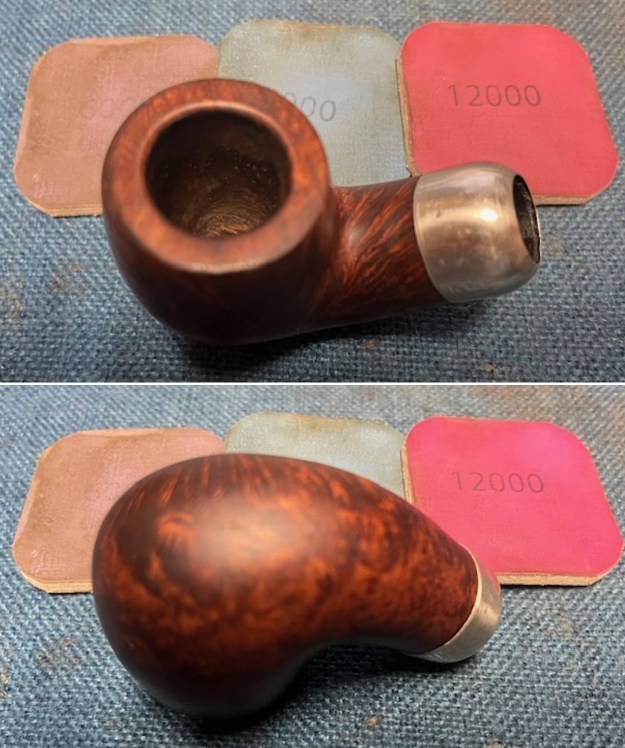
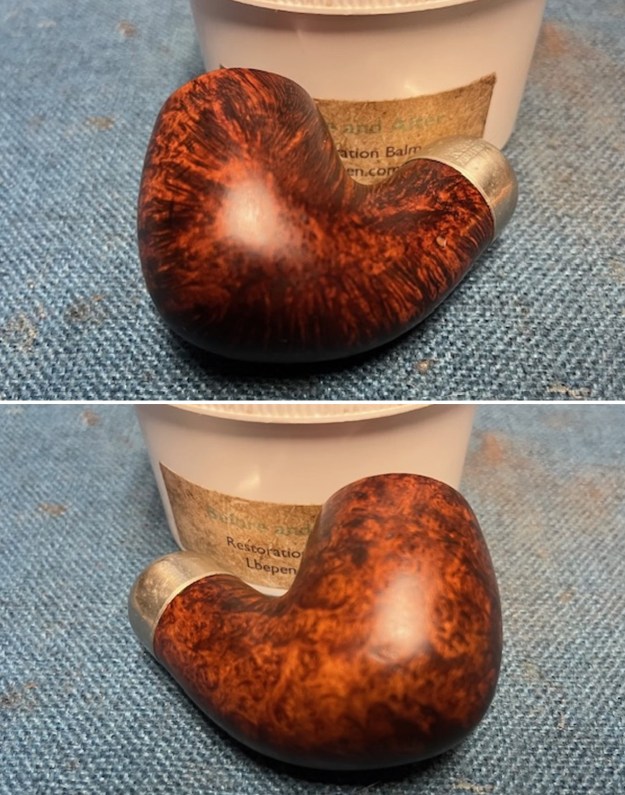
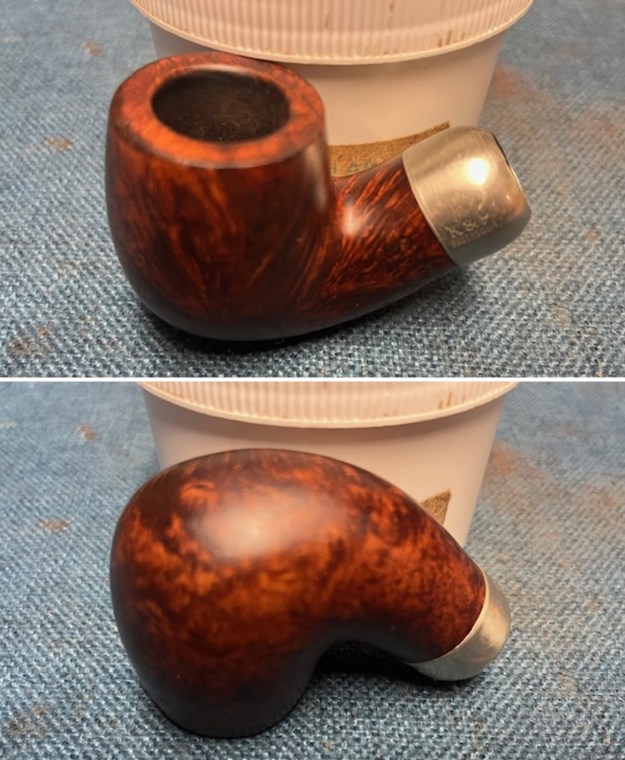
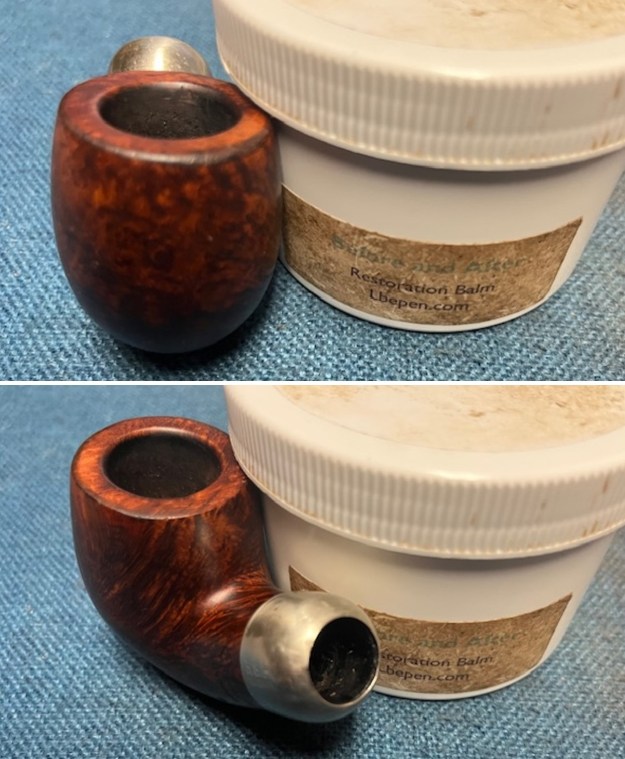
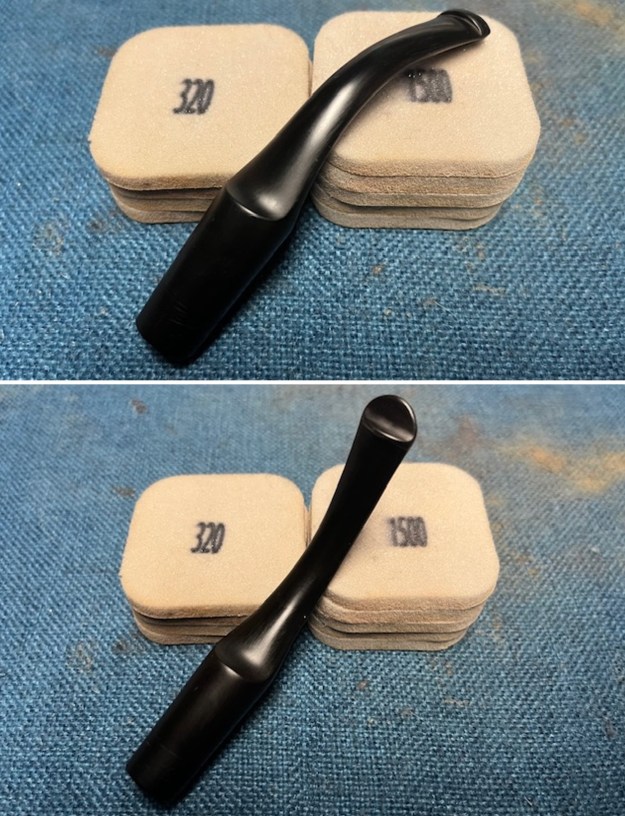
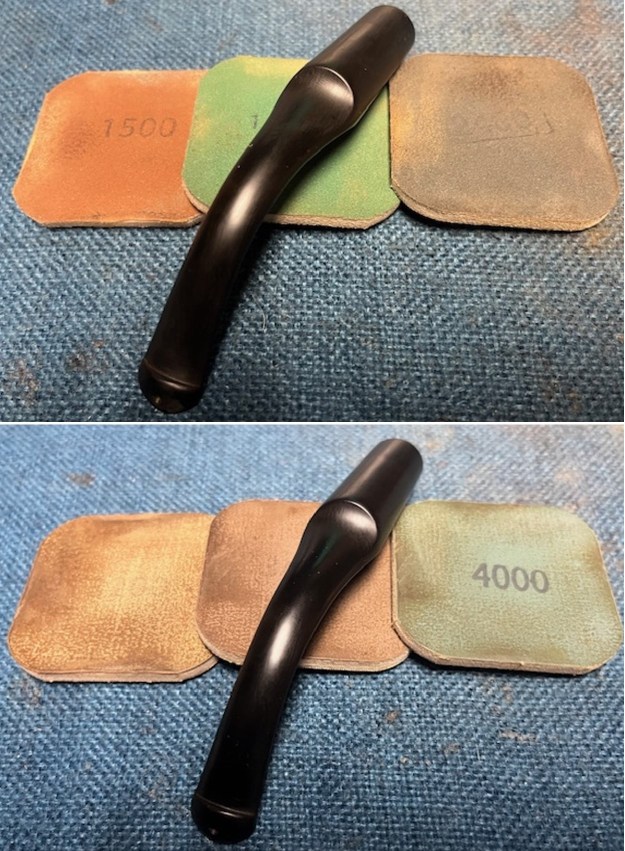
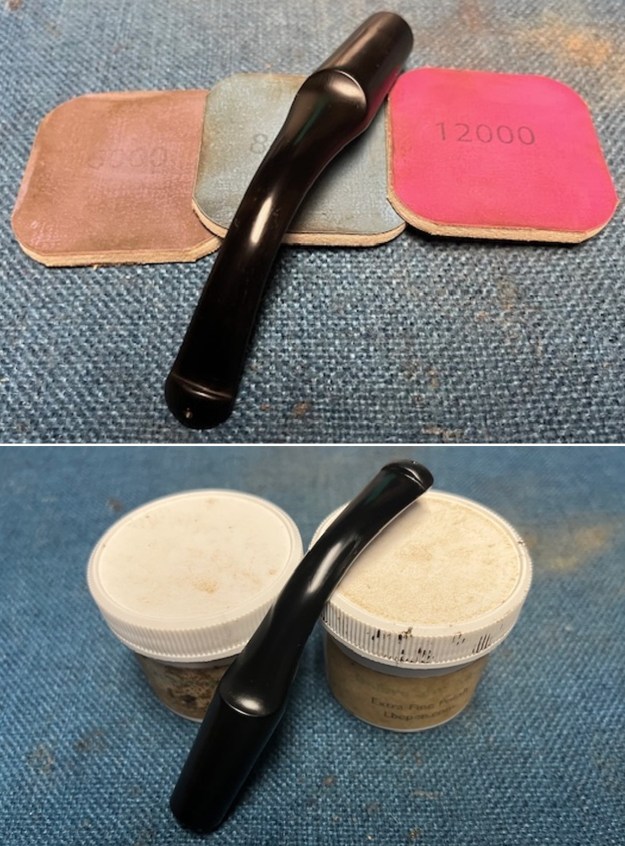
Jeff had done a great job cleaning up the pipe as usual. He reamed the pipe with a PipNet reamer and cut back the cake back to the bare briar. He cleaned up the walls with a Savinelli Fitsall Pipe Knife. He scrubbed the interior of the bowl and shank with pipe cleaners, shank brushes, cotton swabs and alcohol to remove the tars and oils. He scrubbed the exterior of the pipe with undiluted Murphy’s Oil Soap and a tooth brush to remove the grime from the finish. He worked on the rim top lava with the soap and tooth brush. He scrubbed the inside of the stem with alcohol, shank brushes and pipe cleaners. He scrubbed the exterior with Soft Scrub and then soaked it in Briarville’s Pipe Stem Deoxidizer. He washed it off with warm water to remove the deoxidizer. The pipe looked very good when it arrived here. I took some close-up photos of the rim top and also of the stem surface. The rim top and the inner edge looked very good. The silver cleaned up well on the band, though it needed more work. The stem was clean and the tooth marks and chatter were minimal.I took photos of the stamping on the top and underside of the shank. You can see that it is stamped as noted above. It is faint and readable. I took the pipe apart and took a photo of the pipe. It is a good looking pipe and has some nice looking grain around the bowl. I sanded the briar with 320-3500 grit 2×2 inch sanding pads to remove the scratches and marks in the finish. I wiped the bowl down with a damp cloth after each sanding pad to remove the sanding debris. It really looks much better. I polished the briar with 1500-12000 grit micromesh pads – dry sanding it with each pad and wiped down the bowl after each pad. I gave it a final wiped with a Briar Wipe cloth to polish the finish. The briar looked very good at this point. I began my work on it by working some Before & After Restoration Balm into the surface of the briar with my fingertips to clean, enliven and protect the briar. I let the balm sit for 15 minutes and then buffed with a cotton cloth to raise the shine. The photos show the bowl at this point in the restoration process. I polished the Sterling Silver band on the shank with a jeweller’s cloth to remove the tarnish and polish it. I set the bowl aside and turned my attention to the stem. I sanded the stem with 320-3500 grit 2×2 inch sanding pads and wiped it down with an Obsidian Oil cloth after each sanding pad. The stem began to take on a shine.I touched up the P stamp on the left side of the stem with white acrylic fingernail polish. I worked it into the P stamp with a tooth pick. Once it dried I scraped off the excess of the acrylic with my fingernail. I sanded the stem area with a worn 1500 grit micromesh sanding pad. It looked very good. I fit the stem with a Vauen Dr. Perl Junior 9mm filter in the filter tenon of the pipe. It is a great fit and that it fit very well.I polished the stem with micromesh sanding pads – wet sanding with 1500-12000 grit sanding pads. I wiped it down after each sanding pad with Obsidian Oil. I polished it with Before & After Pipe Stem Polish – both Fine and Extra Fine. I am excited to finish this smooth Peterson’s “Sterling Filter” 69 Bent Billiard. I put the pipe back together and lightly buffed it with Blue Diamond on the buffing wheel. I gave the bowl and the stem multiple coats of carnauba wax. I hand buffed the pipe with a clean buffing pad to raise the shine. It is fun to see what the polished bowl looks like with the depths of the sandblast taking on a rich glow. Added to that the polished Sterling Silver band and the black vulcanite taper P-lip stem was beautiful. This smooth Classic Peterson’s “Sterling Filter” 69 Bent Billiard is nice looking and the pipe feels great in my hand. It is light and well balanced. Have a look at it with the photos below. The dimensions are Length: 5 ½ inches, Height: 2 inches, Outside diameter of the bowl: 1 ¼ inches, Chamber diameter: ¾ of an inch. The weight of the pipe is 59 grams/2.08 ounces. It is a beautiful pipe and one that will be on the Irish Pipe Makers Section of the rebornpipes store soon. If you are interested in adding it to your collection let me know. Thanks for walking through the restoration with me as I worked over this pipe. Thanks to each of you who are reading this blog.

What a Lovely Republic Era Peterson’s “Sterling Silver” 68 Brandy


by Steve Laug

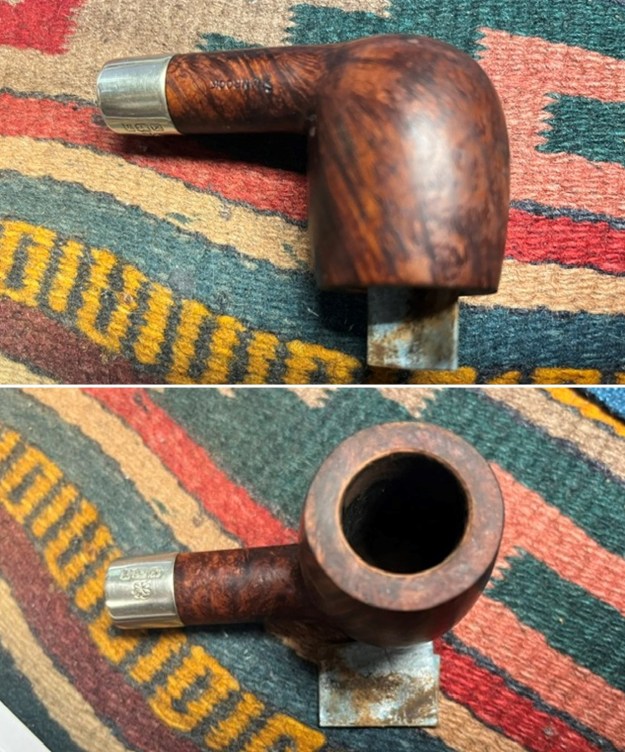
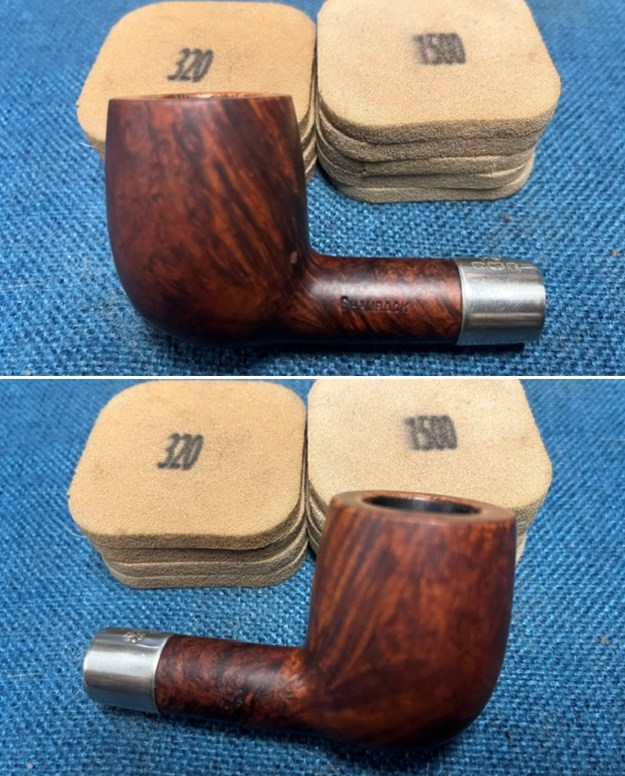
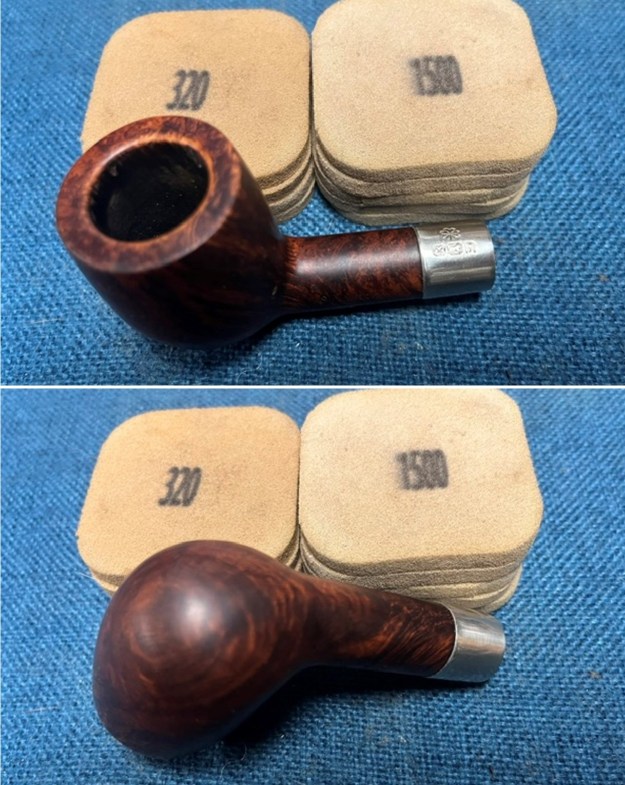
The next pipe I have chosen is smooth finished Peterson’s “Sterling Silver” pipe. The pipe came to us from a Facebook seller in Oregon City, Oregon, USA. This one is a Peterson’s Brandy shaped pipe with a taper P-lip stem. It has a rich brown coloured finish with interesting grain around the bowl sides and shank. It is very dirty. This Brandy has a silver band on the shank that was badly oxidized. The grime on the finish was ground into the finish on the bowl sides. The brown stains make the grain really pop. It was stamped on the left side of the shank and reads K&P in shields [over] “Sterling [over] Silver”. To the right of that it is stamped with the three line Made in the Republic of Ireland stamp followed by the shape number 68. The heavily tarnished band is stamped with K&P in shields [over] Sterling [over] Silver. To the right that it has three hallmarks – Hibernia seated arm on a harp (signifies country of manufacture), a crowned harp designating Sterling quality and finally a Date Letter mark – in this case an italic upper-case italic “I” (1994). It was in filthy condition when Jeff brought it to the table. There was a thick cake in the bowl and spots of lava on the rim top and inner edge of the bowl. The stem was oxidized, calcified and had light tooth marks and chatter on the top and underside near the button. Jeff took photos of the pipe before his cleanup work before he started on the pipe. Jeff took photos of the rim top and stem to show the general condition of the pipe. The bowl is lightly caked and the rim top and edges look very good. The stem is oxidized and has light tooth marks on the top and underside near the button. Jeff took some photos of the bowl sides and heel to show the grain that was around this bowl. It is a nice looking pipe. He took photos of the sides of the shank to show the stamping. The stamping is readable in the photos below and is as noted above. The stamping on the Sterling Silver band is also readable through the oxidation. I am including the information from Pipedia’s article on Peterson pipes. It is a great read in terms of the history of the brand (https://pipedia.org/wiki/Peterson).

I turned to “The Peterson Pipe” by Mark Irwin and Gary Malmberg to get some background on the Sterling Pipe. On page 314 it had the following information on the line.

Sterling (1949-c1957; 1978-) – Higher grade line with sterling band. Early example, 1949-57, with COM of Made in Ireland forming a circle, were offered to the US market through Rogers Imports and have no hallmark, although until recent years the line carried Peterson’s maker’s mark, the K&P is in separate shields. Models beginning in ’78 with hallmarked dates and a COM stamp of Made in [over] the Republic [over] of Ireland.

I knew that I was dealing with a pipe made between 1949-1957 as shown by the Made in the Republic of Ireland three-line format stamp. Now it was time to work on the pipe.

Jeff had done a great job cleaning up the pipe as usual. He reamed the pipe with a PipNet reamer and cut back the cake back to the bare briar. He cleaned up the walls with a Savinelli Fitsall Pipe Knife. He scrubbed the interior of the bowl and shank with pipe cleaners, shank brushes, cotton swabs and alcohol to remove the tars and oils. He scrubbed the exterior of the pipe with undiluted Murphy’s Oil Soap and a tooth brush to remove the grime from the finish. He worked on the rim top lava with the soap and tooth brush. He scrubbed the inside of the stem with alcohol, shank brushes and pipe cleaners. He scrubbed the exterior with Soft Scrub and then soaked it in Briarville’s Pipe Stem Deoxidizer. He washed it off with warm water to remove the deoxidizer. The pipe looked very good when it arrived here. I took some close-up photos of the rim top and also of the stem surface. The rim top and the inner edge looked very good. The silver cleaned up well on the band. The stem was clean and the tooth marks and chatter were minimal.I took photos of the stamping on the top and underside of the shank. You can see that it is stamped as noted above. It is faint and readable. I took the pipe apart and took a photo of the pipe. It is a good looking pipe and has some nice looking grain around the bowl. I sanded the briar with 320-3500 grit 2×2 inch sanding pads to remove the remainder of the varnish coat that the acetone did not remove. I wiped the bowl down with a damp cloth after each sanding pad to remove the sanding debris. It really looks much better. I polished the briar with 1500-12000 grit micromesh pads – dry sanding it with each pad and wiped down the bowl after each pad. I gave it a final wiped with a Briar Wipe cloth to polish the finish. The briar looked very good at this point. I began my work on it by working some Before & After Restoration Balm into the surface of the briar with my fingertips to clean, enliven and protect the briar. I let the balm sit for 15 minutes and then buffed with a cotton cloth to raise the shine. The photos show the bowl at this point in the restoration process. I polished the Sterling Silver band on the shank with a jeweller’s cloth to remove the tarnish and polish it. I scrubbed the oxidized stem surface with Soft Scrub cleanser on cotton pads. I was able to remove a major portion of the oxidation. It began to look much better.I set the bowl aside and turned my attention to the stem. I sanded the stem with 320-3500 grit 2×2 inch sanding pads and wiped it down with an Obsidian Oil cloth after each sanding pad. The stem began to take on a shine.I touched up the P stamp on the left side of the stem with white acrylic fingernail polish. I worked it into the P stamp with a tooth pick. Once it dried I scraped off the excess of the acrylic with my fingernail. I sanded the stem area with a worn 1500 grit micromesh sanding pad. It looked very good.I polished the stem with micromesh sanding pads – wet sanding with 1500-12000 grit sanding pads. I wiped it down after each sanding pad with Obsidian Oil. I polished it with Before & After Pipe Stem Polish – both Fine and Extra Fine. I am excited to finish this smooth Peterson’s “Sterling Silver” 68 Brandy. I put the pipe back together and lightly buffed it with Blue Diamond on the buffing wheel. I gave the bowl and the stem multiple coats of carnauba wax. I hand buffed the pipe with a clean buffing pad to raise the shine. It is fun to see what the polished bowl looks like with the depths of the sandblast taking on a rich glow. Added to that the polished Sterling Silver band and the black vulcanite taper P-lip stem was beautiful. This smooth Classic Peterson’s “Sterling Silver” 68 Brandy is nice looking and the pipe feels great in my hand. It is light and well balanced. Have a look at it with the photos below. The dimensions are Length: 5 ½ inches, Height: 2 inches, Outside diameter of the bowl: 1 ¼ inches, Chamber diameter: ¾ of an inch. The weight of the pipe is 59 grams/2.08 ounces. It is a beautiful pipe and one that will be on the Irish Pipe Makers Section of the rebornpipes store soon. If you are interested in adding it to your collection let me know. Thanks for walking through the restoration with me as I worked over this pipe. Thanks to each of you who are reading this blog.

Peterson’s System Standard Made in the Republic of Ireland 313 with K&P Peterson’s Ferrule


by Steve Laug

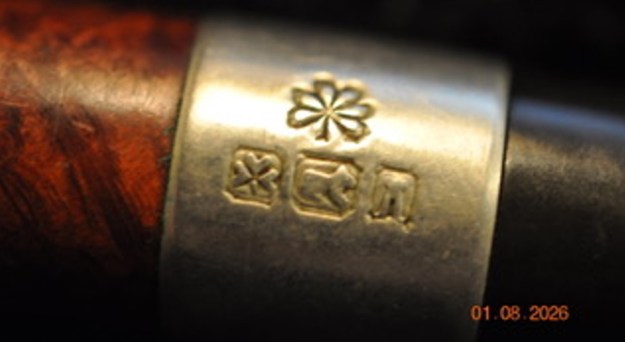
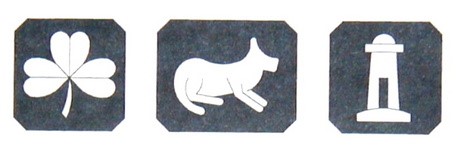
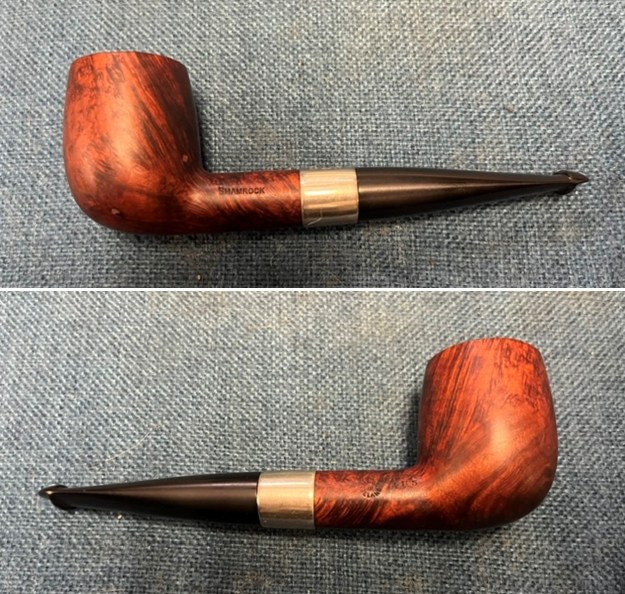
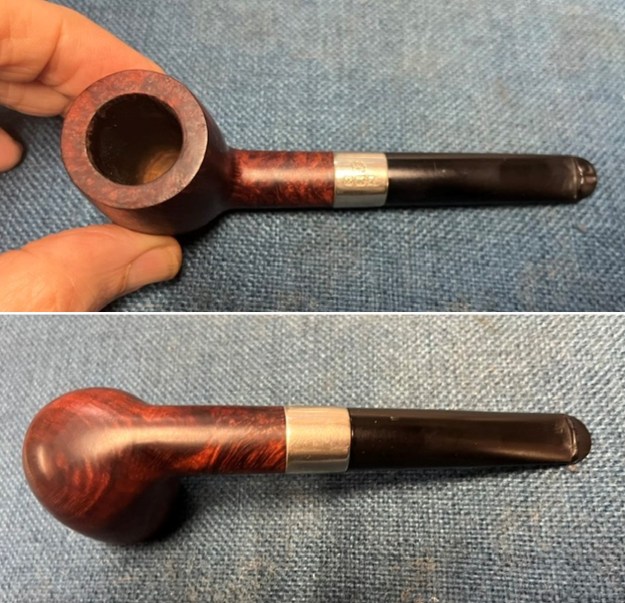
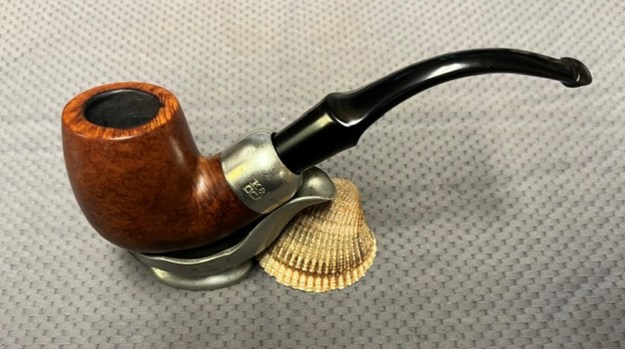
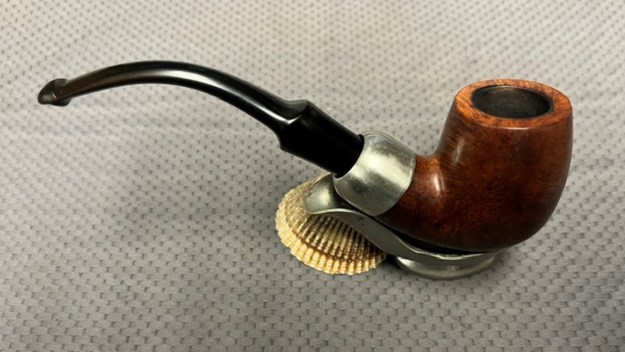
The next pipe I have chosen is another Peterson’s System Standard pipe – this one a sandblast. It is a nice smaller size with a saddle style Peterson’s P-lip stem on the shank end. It came to us from our contact in Copenhagen, Denmark on 04/11/2023. This pipe was obviously a favourite of the previous pipe smoker. It had been well smoked and there was a thick cake in the bowl and some lava overflowing onto the rim top. The rim top had been knocked hard and damaged showing raw briar. There was grime and hand oil ground into the finish. The nickel ferrule was oxidized but undamaged. The pipe was stamped vertically on the underside and read Peterson’s [arched over] System [over] Standard. Next to that it was stamped with the shape number 313 [over] the three-line Republic of Ireland stamp. The ferrule was stamped K& P [over] the three common hallmarks on System pipes with Nickel ferrules – a shamrock, a wolf hound, and a tower. That is followed by Peterson’s. The stem was lightly oxidized and had tooth marks and chatter on both sides ahead of the button. Jeff took photos of the pipe before he started his clean up work on it. Jeff captured the cake in the bowl and the damaged rim top and front outer edge on the bowl in his photos. You can also see the lava on the back rim top and edge in the photos. The stem surface had tooth chatter and marks and was oxidized. He took photos of the sides and the heel of the bowl to show the interesting grain patterns in the sandblast briar. It was quite beautiful. He took photos of the stamping on the underside of the shank and on the ferrule. It is readable and clear as noted above.To figure out a date on this Peterson’s pipe, I turned to The Peterson Pipe Project Blog to see what I could find out about it (http://thepetersonpipeproject.blogspot.com/2007/07/dating-peterons-pipes.html). I quote from the above site below.

Stamping of Bowl:

During the years of Kapp and Peterson’s business operations, the country of Ireland has undergone several name changes and K&P’s stamping on their pipes reflects these changes. Knowing these changes, a Peterson pipe can be roughly dated and placed in “eras.”

The Republic Era is from 1949 until the present. The Republic of Ireland was formed on 17 April 1949. From 1949 to present the stamp for this era is “Made in the Republic of Ireland” in a block format generally in three lines but two lines have been used with or without Republic being abbreviated.

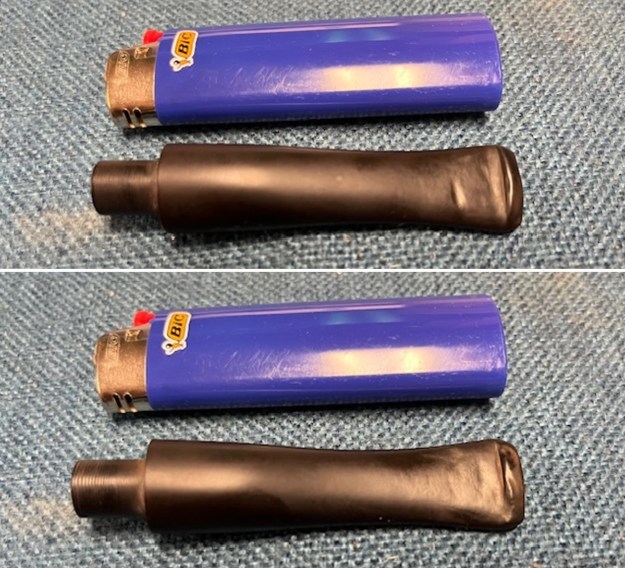
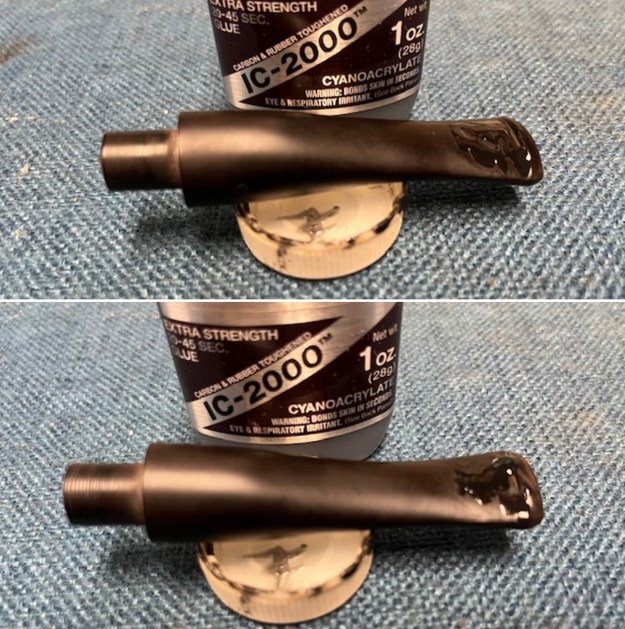
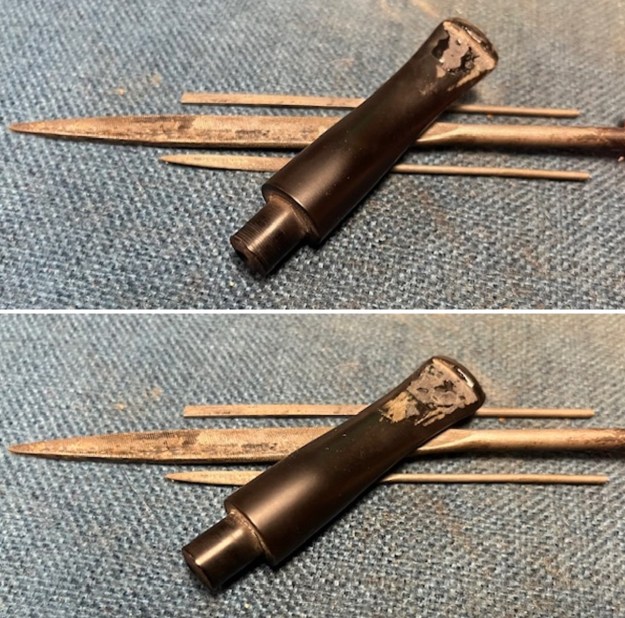
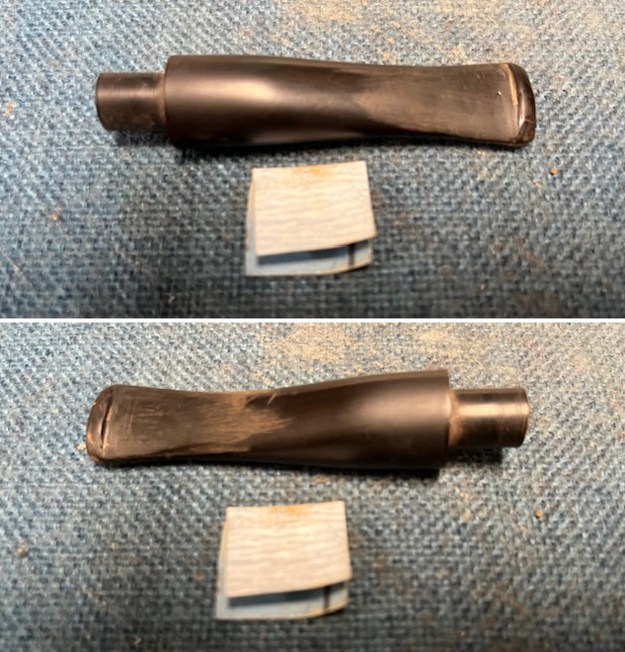
With that information at hand I turned to work on the pipe itself. Jeff had thoroughly cleaned up the pipe. He reamed the pipe with a PipNet Pipe Reamer and cleaned up the remnants with a Savinelli Fitsall Pipe Knife.  He scrubbed the bowl with undiluted Murphy’s Oil Soap with a tooth brush. He rinsed it under running warm water to remove the soap and grime. He cleaned out the inside of the shank and the airway in the stem with alcohol, cotton swabs and pipe cleaners. He scrubbed the exterior of the stem with Soft Scrub to remove as much of the oxidation as possible. He soaked the stem in Briarville’s Pipe Stem Deoxidizer and rinsed it off with warm water. I took photos of the pipe once I received it. I took photos of the rim top and bowl as well as the stem to give a sense of the condition of both. The rim top looked had some scratching on the top and some damage to the inner edge but over all it was in much better condition than I thought. The stem cleaned up well and the tooth marks on the top and underside ahead of the button are visible in the photos.I decided to start my work on the pipe by addressing the damage on the rim top. I used my modified Philip’s Screwdriver “Rusticator” to clean up the burned and damaged rim top and edges. I worked to approximate the texture on the rest of the bowl sides. It took some careful fiddling to get it close. Once I finished the rustication I stained the rim top to match the rest of the bowl with a black stain pen. It looked very good.I rubbed the bowl down with Before & After Restoration Balm. I worked it into the surface of the bowl sides and shank with my fingertips. The product works to clean, enliven and protect the briar. I let the balm sit for a little while and then buffed with a cotton cloth to raise the shine. I polished the nickel ferrule on the shank with a jeweller’s cloth to remove the tarnish and polish it. It began to look very good and had a rich shine. I set the bowl aside and turned my attention to the stem. I painted the tooth marks on the top and underside of the stem with the flame of a lighter. I was able to slightly lift the marks and filled in what remained with black, rubberized CA glue. Once it cured I use small files to flatten the repairs. I cleaned them up with a folded piece of 220 grit sandpaper to blend them into the surface of the stem. I sanded the stem with 320-3500 grit 2 x 2inch sanding pads. I wiped the stem down with an Obsidian Oil cloth after each sanding pad and the stem looked very good.I polished the stem with micromesh sanding pads – 1500-12000 grit pads. I wiped it down with Obsidian Oil after each sanding pad. I used Before & After Pipe Polish – both Fine and Extra Fine to further polish the stem. This Republic Era Peterson’s System Standard 313 Sandblast Bent Billiard with a vulcanite stem is a great looking pipe now that it has been restored. The beautiful grain that shines through the polished finish is stunning. I put the stem back on the bowl and carefully buffed the pipe with Blue Diamond on the buffing wheel. I gave the bowl and the stem multiple coats of carnauba wax on the buffing wheel and followed that by buffing the entire pipe with a clean buffing pad. I hand buffed the pipe with a microfiber cloth to deepen the shine. The finished Peterson’s System Standard Sandblast 313 fits nicely in the hand and feels great. Give the finished pipe a look in the photos below. The dimensions of the pipe are Length: 5 inches, Height: 1 ¾ inches, Outside diameter of the bowl: 1 1/8 inches, Chamber diameter: ¾ of an inch. The weight of the pipe is 37 grams/1.27 ounces. This Peterson’s System Standard 313 will be added to the Irish Pipe Makers section of the rebornpipes store soon. If you want to add it to your collection send me an email or a message! Thanks for your time.

A Restored Republic Era Peterson’s System Standard 309 Bent Billiard


by Steve Laug

The next pipe on the work table is Peterson’s System pipe that we purchased from our contact in Copenhagen, Denmark on 01/29/2024. It was stamped on the left side of the shank and read Peterson’s [arched over] System [arched over] Standard. On the right side of the shank it was stamped Made in the Republic of Ireland (in three lines) [over] the shape number 309. The nickel ferrule on the shank end was oxidized and is stamped on the top and left side K&P [over] the three common hallmarks on System pipes with Nickel ferrules – a shamrock, a wolf hound, and a tower. That is followed by Peterson’s. It has a rich smooth finish with pretty grain around the bowl and shank that is covered with a lot of oils, debris and grime. There was a thick cake in the bowl with remnants of tobacco stuck on the walls. There was a heavy lava overflow on the rim top and edges. The top and edges of the rim appeared to be in good condition. There was a very beautiful pipe underneath all of the buildup of years of use. The stem was a Peterson’s style P-Lip. It was oxidized and calcified toward the end with some tooth marks and chatter. Jeff took photos of the pipe before he started his cleanup work on it. Jeff took photos of the bowl and rim top to show the cake in the bowl and the lava build up on the top of the rim and the edges of the bowl. The rim top looked pretty good. Jeff took photos of the top and underside of the stem showing the tooth chatter, calcification and oxidation on the stem surface and wear on the edges of the button. Jeff took photos of the sides and heel of the bowl to show the condition of the finish. You can see the grime around the sides of the bowl and shank. Even under the dirt and debris of the years it looked very good. Jeff took photos of the stamping on the sides of the shank. The stamping was readable as you can see from the photos. It read as noted above. The nickel ferrule is actually clearly stamped and readable. I am including the information from Pipedia’s article on Peterson pipes. It is a great read in terms of the history of the brand (https://pipedia.org/wiki/Peterson). I have included a bit of the pertinent history here.

1950 – 1989 The Republic Era – From 1950 to the present time, the stamp for this era is “Made in the Republic of Ireland” in a block format generally in three lines but two lines have been used with or without Republic being abbreviated.

During the 1950’s and 60’s the Kapp & Peterson company was still in the ownership of the Kapp family. However 1964 saw the retiral of the company Managing Director Frederick Henry(Harry) Kapp.

Pipedia also included a section of information on the System pipes including a diagram of the systems look (https://pipedia.org/wiki/Peterson#Republic_Era_Pipes). I quote a section of the article in part and include a link to another article on Pipedia on the System pipe.

The Peterson System pipes are the standard bearers of the Peterson pipe family, famous for the excellent smoking pleasure they provide. Often imitated but never equaled, the Peterson System smokes dry, cool and sweet, thanks to the scientific effectiveness of the original design. The heart of the System is the unique graduated bore in the mouthpiece. This makes the suction applied by the smoker 15 times weaker by the time it reaches the tobacco chamber. The result is that all the moisture flows into the reservoir and, thus cannot reach the smoker’s mouth. The Peterson Lip further enhances the effectiveness of the graduated bore by directing the flow of smoke upwards and away from the tongue. This achieves a uniquely even distribution of smoke and virtually eliminates any chance of tonguebite or bitterness. Furthermore, the shape is contoured so that the tongue rests comfortably in the depression under the opening. Each “PLip” mouthpiece is made from Vulcanite. For the Peterson System pipes to work properly, the stem/tenon has to have an extension, the tip of which will pass by the draft hole from the bowl and into the sump. Upon the smoker drawing in smoke, this extension then directs the smoke down and around the sump to dispense a lot of the moisture before the smoke enters the extension and stem. On the System Standards and other less expensive systems, this extension with be made of Vulcanite turned integrally with the stem. On the more expensive System pipes this extension will be made of metal which screws into the Vulcanite stem. This extension on the earlier pipes will be of brass and the newer pipes will be of aluminum. Most smokers not knowing this function of the metal extension, assumes that it is a condenser/stinger and will remove it as they do with the metal condensers of Kaywoodie, etc. Should you have a System pipe with this metal extension, do not remove it for it will make the System function properly and give you a dryer smoke (https://pipedia.org/wiki/A_closer_look_at_the_famous_Peterson_Standard_System_Pipe).

I have included the information on the shape number on this pipe that I picked up on researching the previous pipes. I have included a page from a Petersons Catalogue that I have on rebornpipes (https://rebornpipes.com/tag/peterson-hallmark-chart/). There is no shape 309 shown in the catalogue page of rusticated shaped shown below. I wonder if it is an older or a newer shape. But I am uncertain of that. I knew that I was dealing with a Republic Era pipe made between 1950-1989. It was a Sandblasted Peterson’s System Standard 308 Bent Billiard with a great sandblast. The bowl was stained with a combination of black and brown stains. Now it was time to work on the pipe.

Jeff had cleaned it thoroughly. He had reamed it with a PipNet reamer and cleaned that up with a Savinelli Fitsall Pipe Knife. He had scrubbed the exterior of the briar with undiluted Murphy’s Oil Soap. He removed the shiny coat on the briar with acetone on cotton pads. He cleaned out the interior of the shank, sump and airway in the shank and stem with alcohol, pipe cleaners and cotton swabs. He scrubbed the stem with Soft Scrub to remove the oxidation and calcification on the surface. He soaked it in Briarville’s Pipe Stem Deoxidizer to remove the oxidation. He removed it from the Deoxidizer and rinsed it off with warm water. I took some photos of the pipe before I started my part of the work (sadly I forgot to take photos until after I had rubbed the bowl down with Before & After Restoration Balm. But you can see the idea. I took some close up photos of the rim top and also of the stem surface. I wanted to show what an amazing job Jeff did in the cleanup of the rim top. The rim top and inner edge of the bowl looked good. There was some wear on the top and outer edges that needed to be cleaned up. I also took close up photos of the stem to show the condition of the vulcanite. It was quite clean and there were tooth marks on both sides ahead of the button. Jeff works to protect and preserve the nomenclature on the shank of the pipes that he works on. He was able to preserve and maintain its condition in the process. I took some photos to show the clarity of the stamping. I have noticed that many restorers are not careful to protect the stamping in their cleaning process and often by the end of the restoration the nomenclature is almost destroyed. I would like to encourage all of us to be careful in our work to preserve this as it is a critical piece of pipe restoration! I took the stem off the shank and took a photo of the pipe. I sanded the briar with 320-3500 grit 2×2 inch sanding pads to remove the remainder of the varnish coat that the acetone did not remove. I wiped the bowl down with a damp cloth after each sanding pad to remove the sanding debris. It really looks much better. I polished the bowl with micromesh sanding pads – dry sanding it with 1500-12000 grit sanding pads. I wiped it down with a damp cloth after each sanding pad to remove the dust. The briar was really shining by the final pad. I rubbed the bowl and rim down with Before & After Restoration Balm. I worked it into the surface of the briar with my fingertips to clean, enliven and protect it. I let the balm sit for 10 minutes and then buffed with a cotton cloth to raise the shine. I really like watching the Balm do its magic and bring the briar alive. I polished the nickel ferrule with a jeweller’s cloth to remove the oxidation and to further protect it from further oxidation. The shine is quite nice. I set the bowl aside and moved on to sand the stem with 320-3500 grit 2×2 inch sanding pads. I wiped it down with an Obsidian Oil cloth after each sanding pad to remove the sanding debris. The stem began to look much better.I polished the stem with micromesh sanding pads – wet sanding with 1500-12000 grit pads. I wiped the stem down after each sanding pad with Obsidian Oil. I polished it with Before & After Pipe Stem Polish – both Fine and Extra Fine. I gave it a coat of Obsidian Pipe Stem Oil. It works to protect the stem from oxidizing. I set it aside to dry. Once again at this point in the restoration process I am excited to be on the homestretch. I look forward to the final look when the Sandblasted Peterson System Standard 309 is put back together, polished and waxed. I put the bowl and stem back together. I lightly polished the bowl and stem with Blue Diamond to polish out the scratches in the briar and the vulcanite. I gave the bowl and the stem multiple coats of carnauba wax. I buffed the pipe with a clean buffing pad to raise the shine. I hand buffed it with a microfiber cloth to deepen the shine. The pipe polished up pretty nicely. The depths of the rustication really pop with the wax and polish. The shiny black vulcanite stem is a beautiful contrast to the dark browns of the bowl and thick shank and nickel ferrule. This Republic Era Peterson’s System Standard 309 Bent Billiard was another fun pipe to work on. It really is a quite stunning piece of briar whose shape follows the flow of the briar. The pipe feels great in the hand will be better when warmed up while smoking. The finished pipe is shown in the photos below. The dimensions of the pipe are Length: 6 inches, Height: 2 inches, Outside diameter of the bowl: 1 ¼ inches, Chamber diameter: ¾ of an inch. The weight of the pipe is 2.01 ounces/57 grams. I will be putting it on the rebornpipes store in the Irish Pipemakers Section if you would like to add it to your rack and carry on the previous pipeman’s legacy. This is an interesting estate to bring back to life.

As always, I encourage your questions and comments as you read the blog. Thanks to each of you who are reading this blog. Remember we are not pipe owners; we are pipe men and women who hold our pipes in trust until they pass on into the trust of those who follow us.

Restoring a Republic Era Peterson’s “Sterling Silver” 606S Sandblast Pot


by Steve Laug

The next pipe I have chosen is smooth finished Peterson’s “Sterling Silver” pipe. The pipe came to us from our contact in Copenhagen, Denmark. This one is a classic Peterson’s Pot shaped pipe with a saddle P-lip stem. It has a dark brown coloured finish with amazing sandblast grain around the bowl sides and shank. It is very dirty. This Pot has a silver band on the shank that was badly oxidized. The grime on the finish was ground into the finish on the bowl sides. The contrast of the brown stains make the sandblast really pop. It was stamped on the underside of the shank and reads 606S the shape number on the heel of the bowl followed by the three line Made in the Republic of Ireland followed by Peterson’s [over] “Sterling Silver”. The heavily tarnished band is stamped with K&P in shields [over] Sterling [over] Silver. To the right that it has three hallmarks – Hibernia seated arm on a harp (signifies country of manufacture), a crowned harp designating Sterling quality and finally a Date Letter mark – in this case it is a lower case “s” (1983). It was in filthy condition when Jeff brought it to the table. There was a thin cake in the bowl and a spattering of lava in the sandblast of the rim top but a clean inner edge of the bowl. The stem was oxidized and had light tooth marks and chatter on the top and a deeper on on the underside near the button. Jeff took photos of the pipe before his cleanup work before he started on the pipe.  Jeff took photos of the rim top and stem to show the general condition of the pipe. The bowl is lightly caked and the rim top and edges look very good. The stem is oxidized and has light tooth marks on the top and underside near the button. Jeff took some photos of the bowl sides and heel to show the grain that was around this bowl. It is a nice looking pipe. He took photos of the sides of the shank to show the stamping. The stamping is readable in the photos below and is as noted above. The stamping on the Sterling Silver band is also readable through the oxidation. I am including the information from Pipedia’s article on Peterson pipes. It is a great read in terms of the history of the brand (https://pipedia.org/wiki/Peterson).

I turned to “The Peterson Pipe” by Mark Irwin and Gary Malmberg to get some background on the Sterling Pipe. On page 314 it had the following information on the line.

Sterling (1949-c1957; 1978-) – Higher grade line with sterling band. Early example, 1949-57, with COM of Made in Ireland forming a circle, were offered to the US market through Rogers Imports and have no hallmark, although until recent years the line carried Peterson’s maker’s mark, the K&P is in separate shields. Models beginning in ’78 with hallmarked dates and a COM stamp of Made in [over] the Republic [over] of Ireland.

I knew that I was dealing with a pipe made between 1949-1957 as shown by the Made in the Republic of Ireland three line format stamp. Now it was time to work on the pipe.

Jeff had done a great job cleaning up the pipe as usual. He reamed the pipe with a PipNet reamer and cut back the cake back to the bare briar. He cleaned up the walls with a Savinelli Fitsall Pipe Knife. He scrubbed the interior of the bowl and shank with pipe cleaners, shank brushes, cotton swabs and alcohol to remove the tars and oils. He scrubbed the exterior of the pipe with undiluted Murphy’s Oil Soap and a tooth brush to remove the grime from the finish. He worked on the rim top lava with the soap and tooth brush. He scrubbed the inside of the stem with alcohol, shank brushes and pipe cleaners. He scrubbed the exterior with Soft Scrub and then soaked it in Briarville’s Pipe Stem Deoxidizer. He washed it off with warm water to remove the deoxidizer. The pipe looked very good when it arrived here. I took some close up photos of the rim top and also of the stem surface. The rim top had some darkening on the back top and the inner edge. It also had some nicks and scratch on the rim top at the back and on the right. The silver cleaned up well on the band. The stem was clean and the tooth marks and chatter were minimal.I took photos of the stamping on the top and underside of the shank. You can see that it is stamped as noted above. It is faint and readable. I took the pipe apart and took a photo of the pipe. It is a good looking pipe and has some nice looking grain around the bowl. The briar looked very good at this point. I began my work on it by working some Before & After Restoration Balm into the surface of the briar with my fingertips to clean, enliven and protect the briar. I let the balm sit for 15 minutes and then buffed with a cotton cloth to raise the shine. The photos show the bowl at this point in the restoration process. I polished the Sterling Silver band on the shank with a jeweller’s cloth to remove the tarnish and polish it. I set the bowl aside and turned my attention to the stem. I filled in the deep tooth mark on the underside of the stem with black rubberized CA glue. Once the repair cured, I sanded the stem with a folded piece of 220 grit sandpaper to remove the remnants of oxidation and the repair on underside of the stem ahead of the button.I sanded the stem with 320-3500 grit 2×2 inch sanding pads and wiped it down with an Obsidian Oil cloth after each sanding pad. The stem began to take on a shine.I touch up the P stamp on the left side of the saddle stem with some white acrylic fingernail polish. I pressed it into the stamp with a toothpick and scraped off the excess with the pick and then lightly sanded it with a worn 1200 grit sanding pad. I polished the stem with micromesh sanding pads – wet sanding with 1500-12000 grit sanding pads. I wiped it down after each sanding pad with Obsidian Oil. I polished it with Before & After Pipe Stem Polish – both Fine and Extra Fine. I am excited to finish this Sandblast Peterson’s “Sterling Silver” 606S Pot. I put the pipe back together and lightly buffed it with Blue Diamond on the buffing wheel. I gave the bowl and the stem multiple coats of carnauba wax. I hand buffed the pipe with a clean buffing pad to raise the shine. It is fun to see what the polished bowl looks like with the depths of the sandblast taking on a rich glow. Added to that the polished Sterling Silver band and the black vulcanite saddle stem was beautiful. This smooth Classic Peterson’s “Sterling Silver” 606S Pot is nice looking and the pipe feels great in my hand. It is light and well balanced. Have a look at it with the photos below. The dimensions are Length: 5 ½ inches, Height: 1 ½ inches, Outside diameter of the bowl: 1 ½ inches, Chamber diameter: ¾ of an inch. The weight of the pipe is 40grams/1.41 ounces. It is a beautiful pipe and one that will be on the Irish Pipe Makers Section of the rebornpipes store soon. If you are interested in adding it to your collection let me know. Thanks for walking through the restoration with me as I worked over this pipe. Thanks to each of you who are reading this blog.

Restoring a Republic Era Peterson’s Rosslare XL13 fishtail stem 9mm Filter Bulldog


by Steve Laug

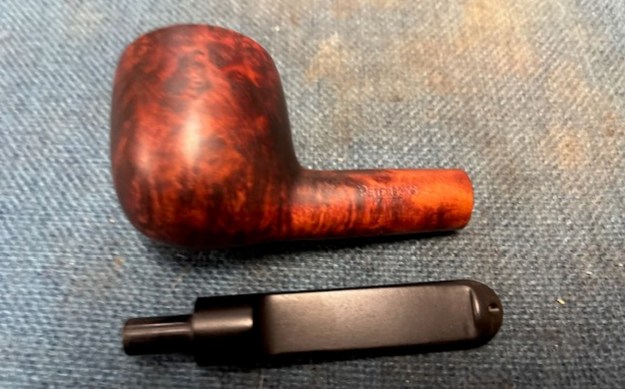
The next pipe I have chosen is another Peterson’s Rosslare Bulldog. This one is a large size Bulldog with a Peterson’s taper, fishtail stem. It came to us from our contact in Copenhagen, Denmark on 11/21/2023. This pipe was obviously a favourite of the previous pipe smoker. It had been well smoked but it had been reamed and cleaned recently. The briar was dirty with grime and oils ground into the finish and the varnish coat was spotty and peeling. The pipe was stamped on the left side and read Peterson’s [over] Rosslare. On the right side it had the three-line Republic of Ireland stamp [over] the shape number XL13. On the left underside of the diamond shank it is stamped HUBER [over] MUNCHEN. The acrylic stem was clean without tooth marks. It was a 9mm filter stem. The Peterson’s P logo was present but the gold had washed out over time. Jeff took photos of the pipe before he started his clean up work on it. Jeff captured the light cake in the bowl and the clean rim top in his photos. The edges looked to be in excellent condition and the varnish coat had been removed from the rim top. The taper, fishtail stem surface was very clean. He took photos of the sides and the heel of the bowl to show the interesting grain patterns in the briar. The varnish coat is spotty on the rim top and shank end. Even so it was quite beautiful. He also took some photos of the shank sides to capture the stamping on the shank. It was also stamped Huber Munchen on the underside and he did not capture that in a photo. I wanted to understand the Rosslare line to see where it stood in the Peterson’s hierarchy. I turned to page 311 of “The Peterson’s Pipe” by Mark Irwin and Gary Malmberg and read about the line. I quote:

Rosslare (2003-) Upper-grade line, Classic Range and select B shapes in smooth or black sandblast, sterling band often fitted with faux spigot, amber fishtail acrylic mouthpiece, embedded aluminum P in the first years and hot foil P more recently. Not to be confused with the Rosslare Royal Irish (2010)

I turned to (http://thepetersonpipeproject.blogspot.com/2007/07/dating-peterons-pipes.html) to lock down a rough period of time for the Republic Era. I quote:

Stamping of Bowl: During the years of Kapp and Peterson’s business operations, the country of Ireland has undergone several name changes and K&P’s stamping on their pipes reflects these changes. Knowing these changes, a Peterson pipe can be roughly dated and placed in “eras.”

The Republic Era is from 1949 until the present. The Republic of Ireland was formed on 17 April 1949. From 1949 to present the stamp for this era is “Made in the Republic of Ireland” in a block format generally in three lines but two lines have been used with or without Republic being abbreviated.

Finally, on the underside of the shank it is stamped Huber [over] Munchen. From a past restoration I did a lot of work on the stamping (https://rebornpipes.com/2023/10/14/petersons-kildare-special-hg-republic-of-ireland-10-canadian/). Have a look if you are interested.

To learn more about the Huber Munchen stamp I turned to page 300 of “The Peterson’s Pipe” by Mark Irwin and Gary Malmberg as noted by him in the previous blog and found a great paragraph on the stamping. I quote in full.

GH Retailer’s Monogram (c. 1960s) George Huber of Munich, Germany, a Peterson distributor and retailer for decades, stamped their monogram on pipes sold in their store, G overlaid on H. Peterson shared in the 1988 commemoration of Huber’s 125th year in business by producing a special pipe with a sterling rim cap, stamped HUBER over CELEBRATION.

The pipe I have is one that does not bear that monogram and does not appear to have ever had the sterling rim cap and was not stamped HUBER over CELEBRATION. It was however, stamped Huber [over] Munchen – the city where the shop was located. With that information I turned my attention to working on the pipe.

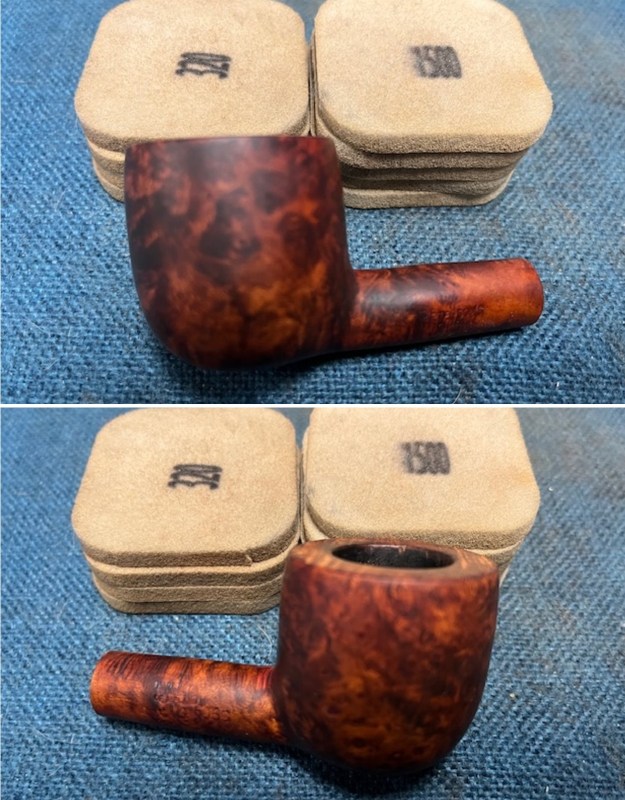
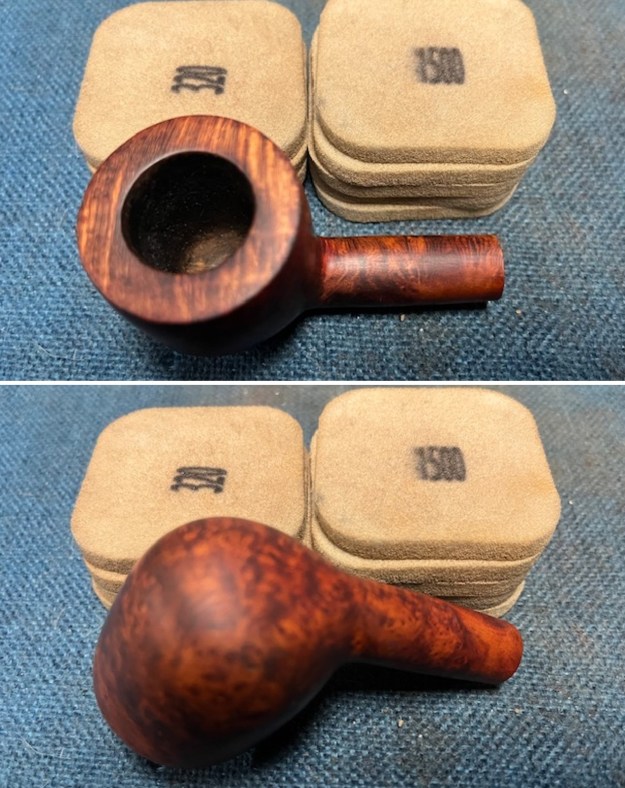
Jeff cleaned this filthy pipe with his usual clean up process. He reamed it with a PipNet pipe reamer and cleaned up the reaming with a Savinelli Fitsall Pipe Knife. He scrubbed out the internals with alcohol, pipe cleaners and cotton swabs until the pipe was clean. He scrubbed the exterior of the bowl with Murphy’s Oil Soap and a tooth brush to remove the grime and grit on the briar and the lava on the rim top. The finish looks very good with great looking grain around the bowl and shank. Jeff soaked the acrylic stem in Briarville’s Pipe Stem Deoxidizer to remove the grime on the surface. When the pipe arrived here in Vancouver for the second stop of its restoration tour I was amazed it looked so good. I took some close up photos of the rim top and the stem surface. I wanted to show how well it had cleaned up. The rim top and inner and outer edge looked very good. It did not have any varnish on the rim and the shank end was also missing the varnish on the first inch from the shank end. It was ragged looking. Once stripped of the varnish it should polish well. I also took close up photos of the stem to show the condition of the stem surface near the button.I took photos of the stamping on the sides of the shank. You can see that it is stamped as noted above. It is faint in spots but readable. I removed the stem and took a photo of the pipe to have a look at the parts and overall look. To address the spotty varnish on the bowl sides and shank, I wiped it down with acetone and cotton pads. I removed a lot of the varnish coat and sanding it with the sanding pads would remove the rest of the coat. I sanded the briar with 320-3500 grit 2×2 inch sanding pads to remove the remainder of the varnish coat that the acetone did not remove. I wiped the bowl down with a damp cloth after each sanding pad to remove the sanding debris. It really looks much better. I polished the briar with micromesh sanding pads – dry sanding with 1500-12000 grit pads. I wiped the bowl down after each pad with a damp cloth. I rubbed the bowl down with Before & After Restoration Balm. I worked it into the surface of the bowl sides and shank with my fingertips. The product works to clean, enliven and protect the briar. I let the balm sit for a little while and then buffed with a cotton cloth to raise the shine. I set the bowl aside and turned my attention to the stem. I polished the stem with micromesh sanding pads – dry sanding it with 1500-12000 grit pads. I wiped the stem down with Obsidian Oil after each pad. I polished it with Before & After Pipe Polish – both Fine and Extra Fine and gave it a final coat and set it aside to dry. I touched up the gold P stamp on the left side of the stem with Rub’n Buff Antique Gold. I pressed it into the stamp with a toothpick. I buffed it off with a soft cloth. I fit the stem with a 9mm filter and put the pipe back together again. The fit was perfect. I am excited to finish this Peterson’s Rosslare XL13 Bulldog. I put the pipe back together and buffed it with Blue Diamond on the buffing wheel. I gave the bowl and the stem multiple coats of carnauba wax. I hand buffed the pipe with a clean buffing pad to raise the shine. It is fun to see what the polished bowl looks like with beautiful mixed grain all around it. Added to that the polished black vulcanite stem combined with the bowl and sandwich brass/nickel/brass band on the shank and made a stunning pipe. This smooth Classic Peterson’s Rosslare XL13 Straight Bulldog is great looking and the pipe feels great in my hand. It is light and well balanced. Have a look at it with the photos below. The dimensions are Length: 5 ½ inches, Height: 2 inches, Outside diameter of the bowl: 1 ¼ inches, Chamber diameter: 7/8 of an inch. The weight of the pipe is 44 grams/1.55 ounces. It is a beautiful pipe that I will soon be putting on the rebornpipes store in the Irish Pipe Makers Section. If you are interested in adding it to your collection send me an email or a message. Thanks for walking through the restoration with me as I worked over this pipe. Thanks to each of you who are reading this blog.
As always, I encourage your questions and comments as you read the blog. Thanks to each of you who are reading this blog. Remember we are not pipe owners; we are pipe men and women who hold our pipes in trust until they pass on into the trust of those who follow us.

Restoring a 1978 Peterson’s Dublin 221S Bent Billiard


by Steve Laug

The next pipe I have chosen is another Peterson’s Dublin Bent Billiard pipe. This one is a nice smaller size It has a silver ferrule and a taper style Peterson’s stem on the shank end. It came to us from our contact in Copenhagen, Denmark on 04/11/2024. This pipe was obviously a favourite of the previous pipe smoker. It had been well smoked but was also well cared for. The bowl was recently reamed and there was no lava on the rim. The briar was dirty with grime and oils ground into the finish and some of the lava flowing down the bowl sides. The Sterling Silver ferrule was oxidized but undamaged. The pipe was stamped vertically on the left side and read Peterson’s with a forked P [over] Dublin. On the right side it had the three-line Republic of Ireland stamp [over] the shape number 221S. The ferrule was stamped Peterson’s [over] Dublin on the top left side. That is followed by Sterling [over] Silver. To the right that it has three hallmarks – Hibernia seated arm on a harp (signifies country of manufacture), a crowned harp designating Sterling quality and finally a Date Letter mark – in this case it is an italic “m” (1978). The stem was lightly oxidized and was free of tooth marks or chatter on both sides ahead of the button. Jeff took photos of the pipe before he started his clean up work on it. Jeff took photos of the rim top and stem to show the general condition of the pipe. The bowl and the rim top were quite clean. The inner edge of the bowl had some darkening around the edges. The photos of the stem show the light tooth marks and chatter on both sides near the button. Jeff took some photos of the bowl sides and heel to show the amazing grain that was around this bowl underneath the grime and grease coat on the surface. It is a nice looking pipe. He took photos of the sides of the shank to show the stamping. The stamping is readable in the photos below and is as noted above. He also captured some of the stamping on the Sterling Silver band on the shank. I am including the link to the Pipedia’s article on Peterson pipes. It is a great read in terms of the history of the brand (https://pipedia.org/wiki/Peterson).

I turned to “The Peterson Pipe” by Mark Irwin and Gary Malmberg to get some background on the Peterson’s London Made England line. On page 298 it had the following information.

“Dublin” (1906-2003) Although DUBLIN appears under PETERSON’s on many pipes over the decades, it has served mostly to part of the brand name. The word first appeared on pipes hallmarked 1906-11, stamped PETERSON’S over PATENT over DUBLIN. The simpler PETERSON’S over DUBLIN first appeared on pipes hallmarked 1912 after the expiration of the patent. Illustrations of pipes in the’37 catalog show a random dispersion of the stamp PETERSON’S over OF DUBLIN together with the ordinary PETERSON’S over DUBLIN on ever model offered. Specimens of the former will bear either an Irish COM and almost certainly date from 1945-62. It was first mentioned in print as pat of the model name in the’68 price list, as K&P DUBLIN, in ’92 for a Danish market line.

I knew the date for the pipe I was working on from the stamping on the silver– 1978. Since the one I was working on did not have a D shape it is not provable that it was made for the Danish market. Now it was time to work on the pipe.

Jeff had done a great job cleaning up the pipe as usual. He reamed the pipe with a PipNet reamer and cut back the cake back to the bare briar. He cleaned up the walls with a Savinelli Fitsall Pipe Knife. He scrubbed the interior of the bowl and shank with pipe cleaners, cotton swabs, shank brushes and alcohol to remove the tars and oils. He scrubbed the exterior of the pipe with undiluted Murphy’s Oil Soap and a tooth brush to remove the grime from the finish. He worked on the rim top lava and the darkened spots with the soap and tooth brush. He scrubbed the inside of the stem with alcohol and pipe cleaners. He scrubbed the exterior with Soft Scrub and then soaked it in Briarville Pipe Stem Deoxidizer. He washed it off with warm water to remove the Deoxidizer. The pipe had some dark spots on the briar but it looked far better when it arrived. I took some close up photos of the rim top and the stem surface. I wanted to show how well it had cleaned up. The rim and inner and outer edge looked very good. It should polish well. I also took close up photos of the stem to show the condition of the stem surface near the button.I took photos of the stamping on the sides of the shank. You can see that it is stamped as noted above. It is faint in spots but readable. I took photos of the stamping on the silver band to try and capture what was on the band. It is readable. I removed the stem and took a photo of the pipe to have a look at the parts and overall look. I sanded the briar with 320-3500 grit 2×2 inch sanding pads. I wiped the bowl down after each sanding pad to remove the sanding debris. It really looks much better. I polished the briar with micromesh sanding pads – dry sanding with 1500-12000 grit pads. I wiped the bowl down after each pad with a damp cloth. I rubbed the bowl down with Before & After Restoration Balm. I worked it into the surface of the bowl sides and shank with my fingertips. The product works to clean, enliven and protect the briar. I let the balm sit for a little while and then buffed with a cotton cloth to raise the shine. I polished silver band with a jeweller’s cloth to remove the tarnish and protect the finish from further tarnishing. It took on a rich shine. I set the bowl aside and turned my attention to the stem. I polished the stem with micromesh sanding pads – dry sanding it with 1500-12000 grit pads. I wiped the stem down with Obsidian Oil after each pad. I polished it with Before & After Pipe Polish – both Fine and Extra Fine and gave it a final coat and set it aside to dry. I am excited to finish this Peterson’s Dublin Silver Banded Bent Billiard. I put the pipe back together and buffed it with Blue Diamond on the buffing wheel. I gave the bowl and the stem multiple coats of carnauba wax. I hand buffed the pipe with a clean buffing pad to raise the shine. It is fun to see what the polished bowl looks like with beautiful mixed grain all around it. Added to that the polished black vulcanite stem combined with the bowl and sandwich brass/nickel/brass band on the shank and made a stunning pipe. This smooth Classic Peterson’s Dublin banded Bent Billiard is great looking and the pipe feels great in my hand. It is light and well balanced. Have a look at it with the photos below. The dimensions are Length: 5 inches, Height: 1 ½ inches, Outside diameter of the bowl: 1 1/8 inches, Chamber diameter: ¾ of an inch. The weight of the pipe is 44 grams/1.59 ounces. It is a beautiful pipe that I will soon be putting on the rebornpipes store in the Irish Pipe Makers Section. If you are interested in adding it to your collection send me an email or a message. Thanks for walking through the restoration with me as I worked over this pipe. Thanks to each of you who are reading this blog.

As always, I encourage your questions and comments as you read the blog. Thanks to each of you who are reading this blog. Remember we are not pipe owners; we are pipe men and women who hold our pipes in trust until they pass on into the trust of those who follow us.

Life for a Peterson’s System Standard 313 Made in the Republic of Ireland


by Steve Laug

The next pipe I have chosen is another Peterson’s System Standard pipe. This one is a nice smaller size It has a saddle style Peterson’s stem on the shank end. It came to us from a seller in Sylacauga, Alabama, USA on 04/08/2024. This pipe was obviously a favourite of the previous pipe smoker. It had been well smoked and there was a thick cake in the bowl and lava overflowing onto the rim top. The briar was dirty with grime and oils ground into the finish and some of the lava flowing down the bowl sides. The nickel ferrule was oxidized but undamaged. There were oils oozing out under the ferrule and also out of the top of the ferrule onto the stem. The pipe was stamped vertically on the left side and read Peterson’s [over] System [over] Standard. On the right side it had the three-line Republic of Ireland stamp [over] the shape number 313. The ferrule was stamped K& P over Peterson’s on the left side. The stem was oxidized and had light tooth marks and chatter on both sides ahead of the button. Jeff took photos of the pipe before he started his clean up work on it. Jeff captured the thick cake in the bowl and the heavy lava overflow onto the rim top in his photos. There really was no way of knowing what the edges looked like under the thick cake. You can also see the lava flowing down the sides of the bowl in the photos. The stem surface had tooth chatter and marks and was oxidized. He took photos of the sides and the heel of the bowl to show the interesting grain patterns in the briar. It was quite beautiful. He took photos of the stamping on the sides of the shank and on the ferrule. It is readable and clear as noted above. While dating a Peterson’s pipe, I always fall back to my under mentioned favourite site; http://thepetersonpipeproject.blogspot.com/2007/07/dating-peterons-pipes.html

I quote from the above site.

Stamping of Bowl:

During the years of Kapp and Peterson’s business operations, the country of Ireland has undergone several name changes and K&P’s stamping on their pipes reflects these changes. Knowing these changes, a Peterson pipe can be roughly dated and placed in “eras.”

The Republic Era is from 1949 until the present. The Republic of Ireland was formed on 17 April 1949. From 1949 to present the stamp for this era is “Made in the Republic of Ireland” in a block format generally in three lines but two lines have been used with or without Republic being abbreviated.

With that information at hand I turned to work on the pipe itself. Jeff had thoroughly cleaned up the pipe. He reamed the pipe with a PipNet Pipe Reamer and cleaned up the remnants with a Savinelli Fitsall Pipe Knife.  He scrubbed the bowl with undiluted Murphy’s Oil Soap with a tooth brush. He rinsed it under running warm water to remove the soap and grime. He cleaned out the inside of the shank and the airway in the stem with alcohol, cotton swabs and pipe cleaners. He scrubbed the exterior of the stem with Soft Scrubb to remove as much of the oxidation as possible. He soaked the stem in Briarville’s Pipe Stem Deoxidizer and rinsed it off with warm water. I took photos of the pipe once I received it. I took photos of the rim top and bowl as well as the stem to give a sense of the condition of both. The rim top looked had some scratching on the top and some damage to the inner edge but over all it was in much better condition than I thought. The stem cleaned up well and the tooth marks on the top and underside ahead of the button are visible in the photos.I took photos of the stamping on the shank sides. The are clear and readable as noted above. There is some faintness on parts of the stamping but it is still readable. I took the stem out of the shank and took a photo of the overall look of the pipe. I decided to start my work on the pipe by addressing the damage on the inside edge of the bowl and the rim top. I used a folded piece of 220 grit sandpaper to smooth out the edge. I wiped it down with a damp cloth and the rim top damage and darkening on the inner and outer edges were gone.I sanded the briar with 320-3500 grit 2×2 inch sanding pads. I wiped the bowl down after each sanding pad to remove the sanding debris. It really looks much better. I polished the briar with micromesh sanding pads – dry sanding with 1500-12000 grit pads. I wiped the bowl down after each pad with a damp cloth. I rubbed the bowl down with Before & After Restoration Balm. I worked it into the surface of the bowl sides and shank with my fingertips. The product works to clean, enliven and protect the briar. I let the balm sit for a little while and then buffed with a cotton cloth to raise the shine. I set the bowl aside and turned to work on the stem. I polished the stem with micromesh sanding pads – 1500-12000 grit pads. I wiped it down with Obsidian Oil after each sanding pad. I used Before & After Pipe Polish – both Fine and Extra Fine to further polish the stem. This Republic Era Peterson’s System Standard 313 Bent Billiard with a vulcanite stem is a great looking pipe now that it has been restored. The beautiful grain that shines through the polished finish is stunning. As the pipe is smoked the patina should develop and look even better. I put the stem back on the bowl and carefully buffed the pipe with Blue Diamond on the buffing wheel. I gave the bowl and the stem multiple coats of carnauba wax on the buffing wheel and followed that by buffing the entire pipe with a clean buffing pad. I hand buffed the pipe with a microfiber cloth to deepen the shine. The finished Peterson’s System Standard 313 fits nicely in the hand and feels great. Give the finished pipe a look in the photos below. The dimensions of the pipe are Length: 5 inches, Height: 1 ½ inches, Outside diameter of the bowl: 1 1/8 inches, Chamber diameter: ¾ of an inch. The weight of the pipe is 37 grams/1.31 ounces. This one has been reserved for first refusal. If you are interested in being in the queue for this pipe send me a message or an email. Thanks for reading this blog and my reflections on the pipe while I worked on it. There are many more to come!

Irish Seconds Made in the Republic of Ireland Rusticated Bent Billiard loose stem


by Steve Laug

The next pipe on the work table came to us from a seller in Brazil, Indiana, USA on 11/12/2020. It is a nicely rusticated Irish Second Bent Billiard with a tapered vulcanite stem. The pipe is stamped on the underside of the shank and reads IRISH SECONDS [over] Made in the Republic of Ireland. Irish Seconds were a Peterson’s Second Line that usually did not make the grade because of flaws in the briar or sandpits. The rusticated finish hid any of those and there was a lot of grime ground into grooves on the bowl and shank. The bowl was heavily caked and there was lava on the rim top and the inner edge of the rim. The edges looked okay but we would know more after the cleanup. The stem was oxidized, calcified and had tooth chatter and deep tooth marks on the top and underside ahead of an on the button. There were not markings or a logo on the taper stem. The pipe showed promise but it was very dirty. Jeff took photos of the pipe before he started his cleanup work. He took photos of the rim top and bowl to give a clear picture of the thickness of the cake and the condition of the rim top and edges. He also took photos of the top and underside of the stem to show the oxidation, calcification and chatter and tooth marks. Jeff took photos of the sides and heel of the bowl to give a picture of what the briar around the pipe looked like. There is a great rustication under the grime. He took photos of the stamping on the shank. It reads as noted above and is clear and readable.I am including the information from Pipedia’s article on Peterson pipes. It is a great read in terms of the history of the brand (https://pipedia.org/wiki/Peterson). I have included a bit of the pertinent history here.

1950 – 1989 The Republic Era – From 1950 to the present time, the stamp for this era is “Made in the Republic of Ireland” in a block format generally in three lines but two lines have been used with or without Republic being abbreviated.

I knew that I was dealing with a Republic Era pipe made between 1950-1989. It was a Rusticated Bent Billiard with an interesting pattern. The finish was stained with a combination of brown and black stains. Now it was time to work on the pipe.

Jeff had cleaned up the pipe with his usual penchant for thoroughness. He reamed the pipe with a PipNet Pipe Reamer and cleaned up the remnants with a Savinelli Fitsall Pipe Knife. He scrubbed the bowl with undiluted Murphy’s Oil Soap with a tooth brush. He rinsed it under running warm water to remove the soap and grime. He cleaned out the inside of the shank and the airway in the stem with alcohol, cotton swabs, shank brushes and pipe cleaners. He soaked the stem in Briaville’s Pipe Stem Deoxidizer and rinsed it off with warm water. I took photos of the pipe once I received it. The fit of the stem to the shank was off and shank end had some damage from scuffing and some sanding it looked like. Because of that the stem did not seat against the shank end in a clean way. I decided to clean up the shank end by fitting it with a thin brass band that would provide a straight edge for the stem surface to sit against and also give the rusticated bowl a bit of bling. There were no cracks in the shank so it was purely a cosmetic fix. I chose the band from my bands and pressed it on the shank end to have a look at the pipe with the band. I liked what I saw so I removed the band and coated the inside with a layer of white glue and pressed in place on the shank. I fit the stem on the shank and took photos of the pipe with stem and band in place. I turned my attention to the damage on the inner edge of the rim. The bowl was quite out of round with burn damage on the front right and the back left. I used a folded piece of 220 grit sandpaper to smooth out the edge and remove the roughness. I was able to make it look better even thought it is still not perfect. You can also see the burn damage on the right front rim top where the rustication is quite smooth.I used a Philips Screwdriver that I had converted into a four-prong rustication tool to rework the smooth portion of the rim top. It looked better when I had finished. I touch up the stain on that portion of the rim top with a black stain pen to blend the work into the surface. I was happy with the progress. Though it did not change the damage on the rim edge it did hide it a bit and make it less visible.I rubbed the bowl and rim down with Before & After Restoration Balm. I worked it into the surface of the briar with my fingertips and with a shoe brush to get into the grooves. The product works to clean, enliven and protect it. I let the balm sit for 10 minutes and then buffed with a cotton cloth to raise the shine. I really like watching the Balm do its magic and bring the briar alive. I set the bowl aside and turned my attention to the stem. I filled in the deep grooves on the surface of the stem with black rubberized CA glue. Once it cured I flattened the repairs and recut the button edge with small needle files. I sanded the repaired areas further to blend them in with 220 grit sandpaper. It really began to look quite good. I sanded the stem with 320-3500 grit 2×2 inch sanding pads. I wiped the stem down after each sanding pad with Obsidian Oil. I blended in the tooth marks and chatter in the surface and after the final pad a deep shine began to develops.I polished the stem with 1500-12000 grit micromesh sanding pads. I wiped the stem down after each sanding pad with Obsidian Oil. I polished it with Before & After Pipe Stem Polish – both Fine and Extra Fine. I gave it a coat of Obsidian Pipe Stem Oil. It works to protect the stem from oxidizing. I set it aside to dry. Once again at this point in the restoration process I am excited to be on the homestretch. I look forward to the final look when the Republic Era Peterson’s Irish Seconds Bent Billiard is put back together, polished and waxed. I put the bowl and stem back together. I lightly polished the bowl and stem with Blue Diamond to polish out the scratches in the briar and the vulcanite. I gave the bowl and the stem multiple coats of carnauba wax. I buffed the pipe with a clean buffing pad to raise the shine. I hand buffed it with a microfiber cloth to deepen the shine. The pipe polished up nicely. The depths of the rustication really pop along with the thin brass band after the wax and polish. The shiny black vulcanite stem is a beautiful contrast to the browns of the bowl and thick shank. This Republic Era Peterson’s Irish Second Bent Billiard was another fun pipe to work on. The pipe feels great in the hand will be better when warmed up while smoking. The finished pipe is shown in the photos below. The dimensions of the pipe are Length: 6 inches, Height: 2 inches, Outside diameter of the bowl: 1 ¼ inches, Chamber diameter: ¾ of an inch. The weight of the pipe is 2.36 ounces/67 grams. I will be putting it on the rebornpipes store in the Irish Pipemakers Section if you would like to add it to your rack and carry on the previous pipeman’s legacy. This is an interesting estate to bring back to life.

As always, I encourage your questions and comments as you read the blog. Thanks to each of you who are reading this blog. Remember we are not pipe owners; we are pipe men and women who hold our pipes in trust until they pass on into the trust of those who follow us.

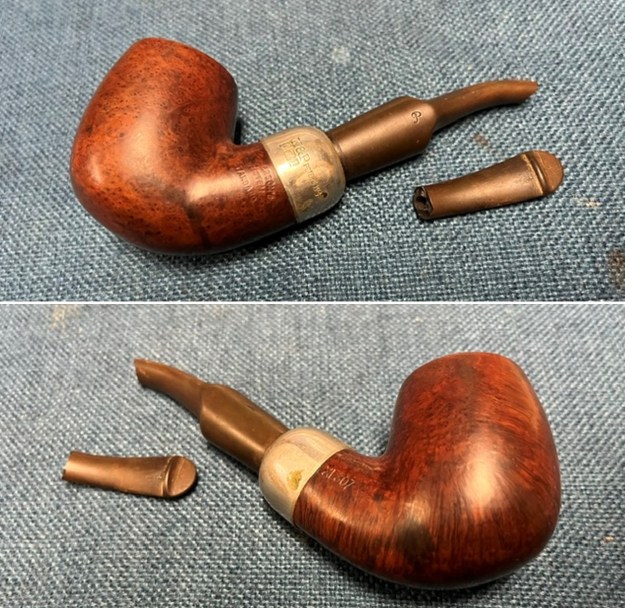
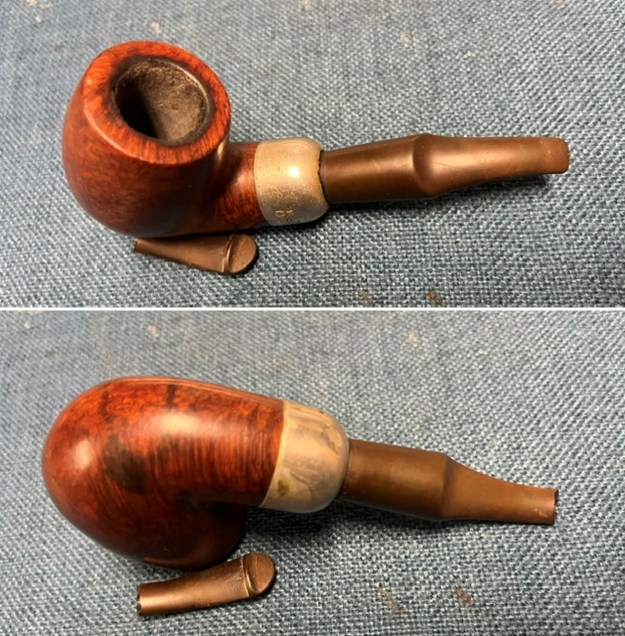
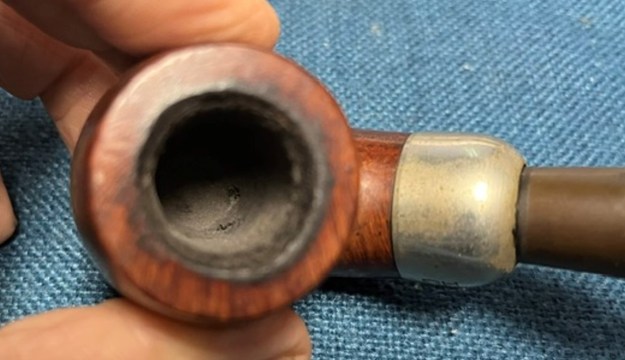
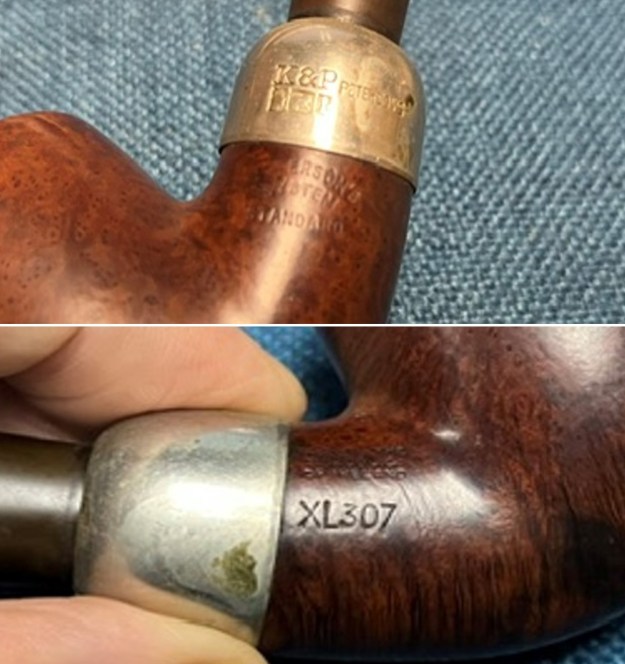
Rejuvenating a Peterson’s Republic Era System Standard 307 Huber Munchen


by Steve Laug

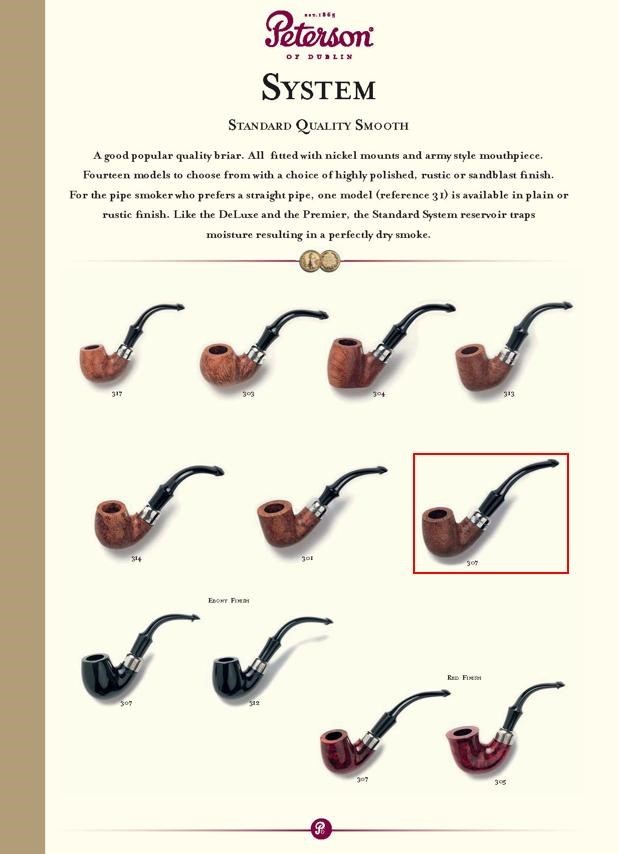
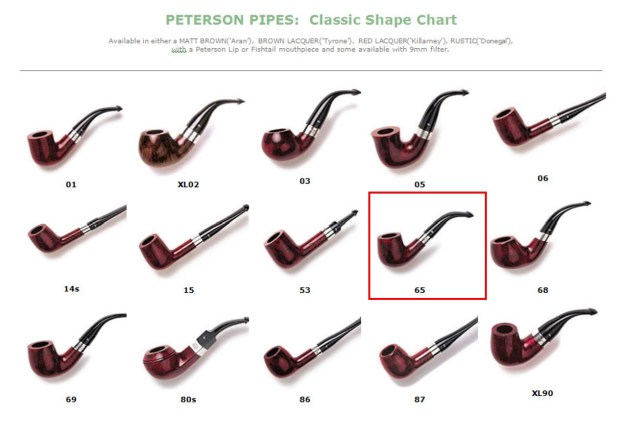
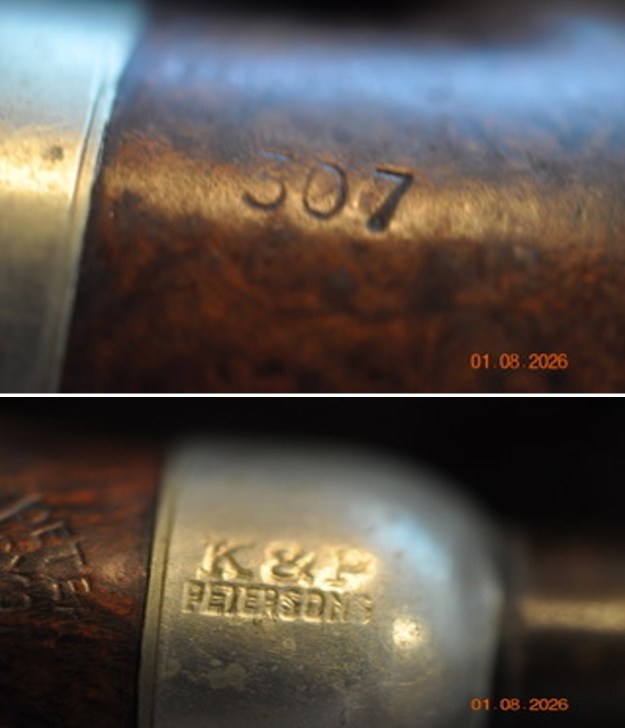
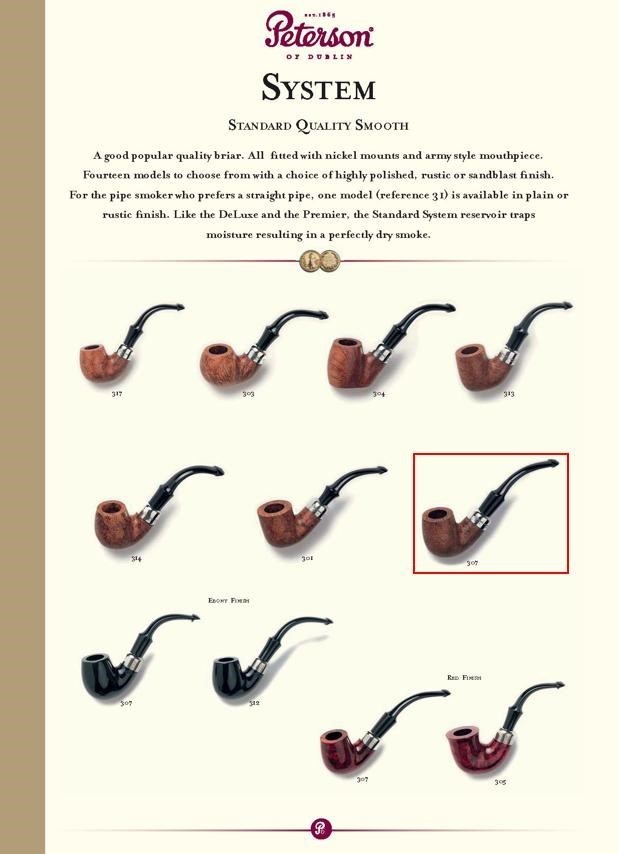
The next pipe on the work table is Peterson’s System pipe that we purchased from our contact in Copenhagen, Denmark on 04/11/2023. It was stamped Peterson’s [over] System [over] Standard on the left side of the shank vertically below the nickel ferrule. On the right it is stamped Made in the Republic of Ireland (in three lines) [over] the shape number 307. The underside of the shank was stamped Huber [over] Munchen. It has a smooth finish around the bowl and shank have oils, debris and grime ground into the finish. There was a thick cake in the bowl and a lava overflow on the rim top that was heavier toward the back side. The top and edges of the rim were well hidden under the tars and lava. There was a very beautiful pipe underneath the buildup of years of use. The ferrule on the shank end was oxidized and is stamped on the top and left side K & P [over] Peterson. The stem was a Peterson’s style P-Lip. It was oxidized and calcified toward the end with some tooth marks and chatter. There were tooth marks on the button itself as well. Jeff took photos of the pipe before he started his cleanup work on it. Jeff took photos of the bowl and rim top to show the thick, hard cake in the bowl and lava build up on the top of the rim and the edges of the bowl. The front outer edge has some damage from being knocked against a hard surface. Only clean up would tell the full story. Jeff took photos of the top and underside of the stem showing the tooth chatter, scratching, calcification and oxidation on the stem surface and wear on the edges of the button. Jeff took photos of the sides and heel of the bowl to show the condition of the finish. You can see the grime around the sides of the bowl and shank. Even under the dirt and debris of the years it looked very good. Jeff took photos of the stamping on the underside of the bowl and shank. The stamping was faint but readable as you can see from the photos. It read as noted above. The nickel Ferrule is clearly stamped and readable. I have included the information on the shape number on this pipe that I picked up on researching the previous pipes. I have included a page from a Petersons Catalogue that I have on rebornpipes (https://rebornpipes.com/tag/peterson-hallmark-chart/). I have put a red box around the 307 shown in the catalogue page shown below. That should give a clear picture of the size and shape of the pipe. I am also including the information from Pipedia’s article on Peterson pipes. It is a great read in terms of the history of the brand (https://pipedia.org/wiki/Peterson). I have included a bit of the pertinent history here.

1950 – 1989 The Republic Era – From 1950 to the present time, the stamp for this era is “Made in the Republic of Ireland” in a block format generally in three lines but two lines have been used with or without Republic being abbreviated.

During the 1950’s and 60’s the Kapp & Peterson company was still in the ownership of the Kapp family. However, 1964 saw the retiral of the company Managing Director Frederick Henry (Harry) Kapp.

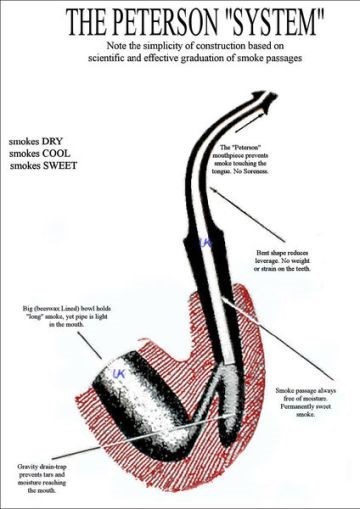
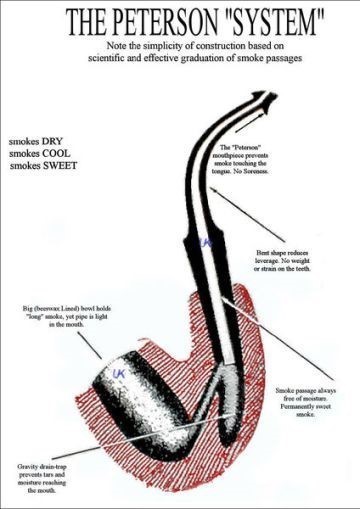
Pipedia also included a section of information on the System pipes including a diagram of the systems look (https://pipedia.org/wiki/Peterson#Republic_Era_Pipes). I quote a section of the article in part and include a link to another article on Pipedia on the System pipe.

The Peterson System pipes are the standard bearers of the Peterson pipe family, famous for the excellent smoking pleasure they provide. Often imitated but never equalled, the Peterson System smokes dry, cool and sweet, thanks to the scientific effectiveness of the original design. The heart of the System is the unique graduated bore in the mouthpiece. This makes the suction applied by the smoker 15 times weaker by the time it reaches the tobacco chamber. The result is that all the moisture flows into the reservoir and, thus cannot reach the smoker’s mouth. The Peterson Lip further enhances the effectiveness of the graduated bore by directing the flow of smoke upwards and away from the tongue. This achieves a uniquely even distribution of smoke and virtually eliminates any chance of tonguebite or bitterness. Furthermore, the shape is contoured so that the tongue rests comfortably in the depression under the opening. Each “PLip” mouthpiece is made from Vulcanite. For the Peterson System pipes to work properly, the stem/tenon has to have an extension, the tip of which will pass by the draft hole from the bowl and into the sump. Upon the smoker drawing in smoke, this extension then directs the smoke down and around the sump to dispense a lot of the moisture before the smoke enters the extension and stem. On the System Standards and other less expensive systems, this extension with be made of Vulcanite turned integrally with the stem. On the more expensive System pipes this extension will be made of metal which screws into the Vulcanite stem. This extension on the earlier pipes will be of brass and the newer pipes will be of aluminium. Most smokers not knowing this function of the metal extension, assumes that it is a condenser/stinger and will remove it as they do with the metal condensers of Kaywoodie, etc. Should you have a System pipe with this metal extension, do not remove it for it will make the System function properly and give you a dryer smoke (https://pipedia.org/wiki/A_closer_look_at_the_famous_Peterson_Standard_System_Pipe).

Finally, on the underside of the shank it is stamped Huber [over] Munchen. From a past restoration I did a lot of work on the stamping (https://rebornpipes.com/2023/10/14/petersons-kildare-special-hg-republic-of-ireland-10-canadian/). Have a look if you are interested.

To learn more about the Huber Munchen stamp I turned to page 300 of “The Peterson’s Pipe” by Mark Irwin and Gary Malmberg as noted by him in the previous blog and found a great paragraph on the stamping. I quote in full.

GH Retailer’s Monogram (c. 1960s) George Huber of Munich, Germany, a Peterson distributor and retailer for decades, stamped their monogram on pipes sold in their store, G overlaid on H. Peterson shared in the 1988 commemoration of Huber’s 125th year in business by producing a special pipe with a sterling rim cap, stamped HUBER over CELEBRATION.

The pipe I have is one that does not bear that monogram and does not appear to have ever had the sterling rim cap and was not stamped HUBER over CELEBRATION. It was however, stamped Huber [over] Munchen – the city where the shop was located. With that information I turned my attention to working on the pipe.

Jeff cleaned this filthy pipe with his usual clean up process. He reamed it with a PipNet pipe reamer and cleaned up the reaming with a Savinelli Fitsall Pipe Knife. He scrubbed out the internals with alcohol, pipe cleaners and cotton swabs until the pipe was clean. He scrubbed the exterior of the bowl with Murphy’s Oil Soap and a tooth brush to remove the grime and grit on the briar and the lava on the rim top. The finish looks very good with great looking grain around the bowl and shank. Jeff soaked the stem in Briarville’s Pipe Stem Deoxidizer to remove the oxidation on the vulcanite. When the pipe arrived here in Vancouver for the second stop of its restoration tour I was amazed it looked so good. I took some close up photos of the rim top and also of the stem surface. I wanted to show what an amazing job Jeff did in the cleanup of the rim top. The rim top and inner edge were in good condition. There was some darkening and slight damage to the inner edge. The rim top also had some roughening on the front edge. I also took close up photos of the stem to show the condition of the vulcanite. It was quite clean and the tooth marks on the button and on the stem ahead of the button were very visible in the photos.One of the things I appreciate about Jeff’s cleanup is that he works to protect and preserve the nomenclature on the shank of the pipes that he works on. The stamping on this one was faint in spots to start with so I was worried that it would disappear altogether with the cleanup. He was able to preserve and maintain its condition in the process. It did not become worse but the photos give an accurate picture of the stamping. I have noticed that many restorers are not careful to protect the stamping in their cleaning process and often by the end of the restoration the nomenclature is almost destroyed. I would like to encourage all of us to be careful in our work to preserve this as it is a critical piece of pipe restoration! I took the stem off the shank and took a photo of the pipe. I decided to start my work on the pipe by cleaning up the rim top and inner edge of the bowl with a folded piece of 220 grit sandpaper. I removed the damage on the inner edge and the nicks on the rim top. I worked on the damage on the rim front – not removing it but minimizing it. The rim looked significantly better. I wiped the bowl and shank down with cotton pads and alcohol to further remove some of the darkening in the bowl and to better blend the stain that was present on the bowl. I sanded the bowl and shank with 320-3500 grit 2 x2 inch sanding pad. I wiped the bowl down after each sanding pad with a damp cloth. The grain can be seen through the finish. I polished the briar with micromesh sanding pads – dry sanding it with 1500-12000 grit sanding pads. I wiped it down with a damp cloth after each sanding pad to remove the dust. The briar was really shining by the final pad. I rubbed the bowl and rim down with Before & After Restoration Balm. I worked it into the surface of the briar with my fingertips to clean, enliven and protect it. I let the balm sit for 10 minutes and then buffed with a cotton cloth to raise the shine. I really like watching the Balm do its magic and bring the briar alive. I sanded the stem with 320-3500 grit 2×2 inch sanding pads. I wiped the stem down after each sanding pad with Obsidian Oil. I blended in the tooth marks and chatter in the surface and after the final pad a deep shine began to develop.I polished the stem with 1500-12000 grit micromesh sanding pads. I wiped the stem down after each sanding pad with Obsidian Oil. I polished it with Before & After Pipe Stem Polish – both Fine and Extra Fine. I gave it a coat of Obsidian Pipe Stem Oil. It works to protect the stem from oxidizing. I set it aside to dry. Once again at this point in the restoration process I am excited to be on the homestretch. I look forward to the final look when the Huber Munchen Peterson’s System Standard 307 is put back together, polished and waxed. I put the bowl and stem back together. I lightly polished the bowl and stem with Blue Diamond to polish out the scratches in the briar and the vulcanite. I gave the bowl and the stem multiple coats of carnauba wax. I buffed the pipe with a clean buffing pad to raise the shine. I hand buffed it with a microfiber cloth to deepen the shine. The pipe polished up nicely. The depths of the grain really pop with the wax and polish. The shiny black vulcanite stem is a beautiful contrast to the browns of the bowl and thick shank and polished nickel ferrule. This Republic Era Peterson’s System Standard 307 Bent Billiard was another fun pipe to work on. The pipe feels great in the hand will be better when warmed up while smoking. The finished pipe is shown in the photos below. The dimensions of the pipe are Length: 6 ½ inches, Height: 2 inches, Outside diameter of the bowl: 1 ¼ inches, Chamber diameter: ¾ of an inch. The weight of the pipe is 2.43 ounces/69 grams. I will be putting it on the rebornpipes store in the Irish Pipemakers Section if you would like to add it to your rack and carry on the previous pipeman’s legacy. This is an interesting estate to bring back to life.
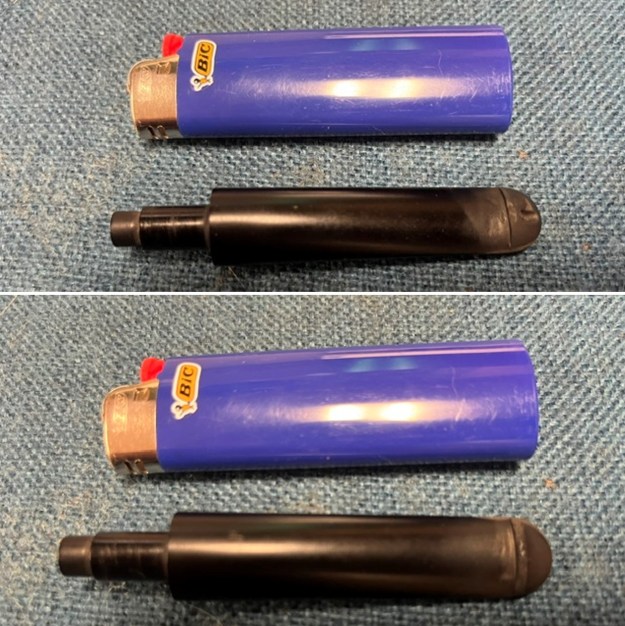
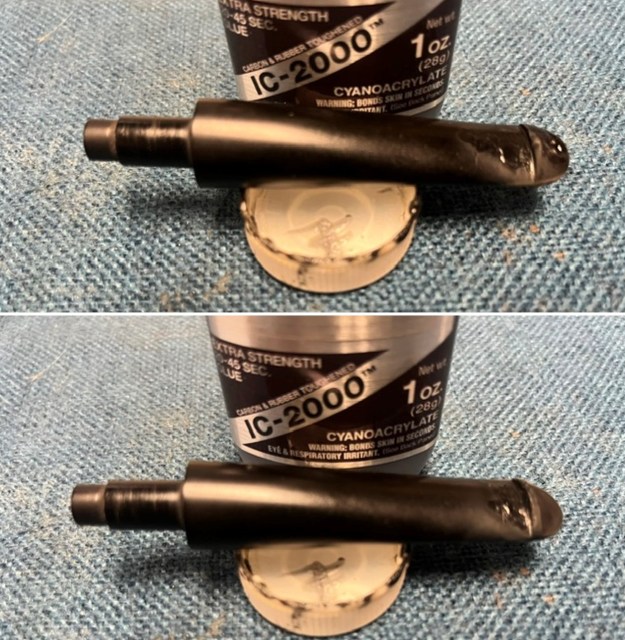
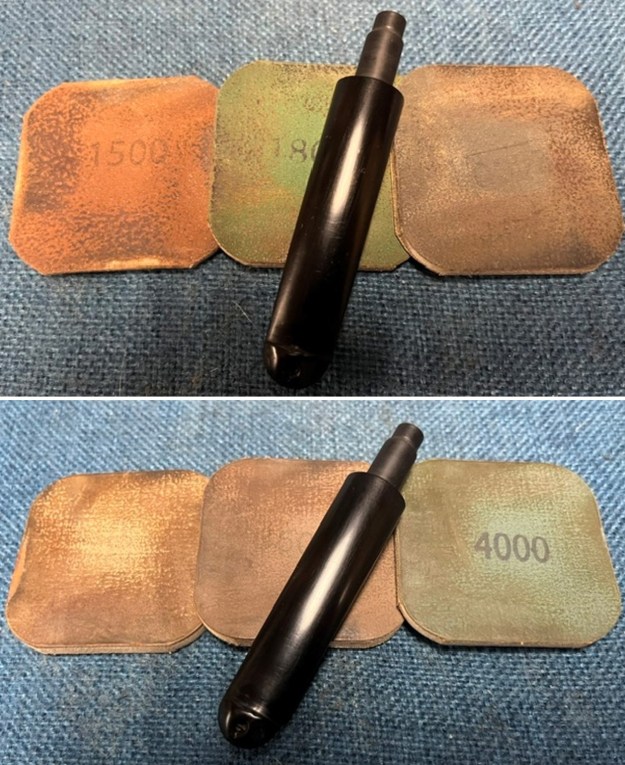
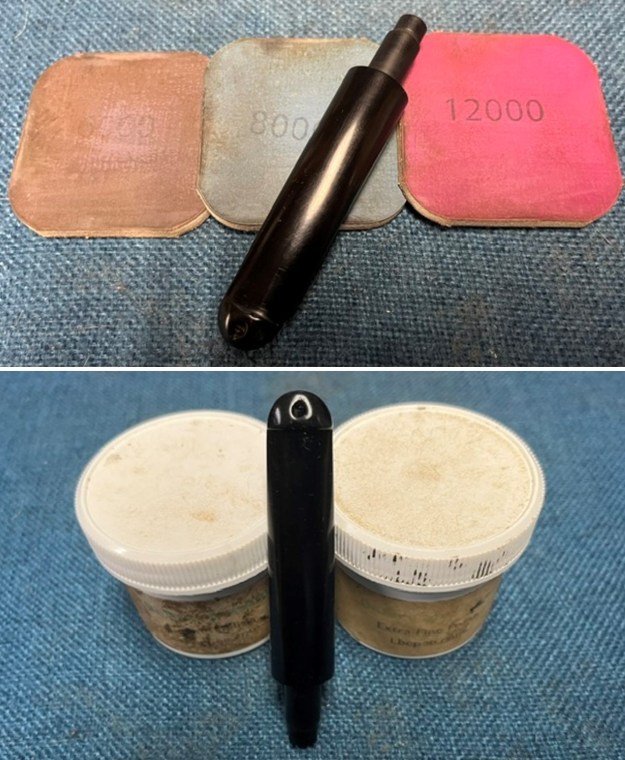
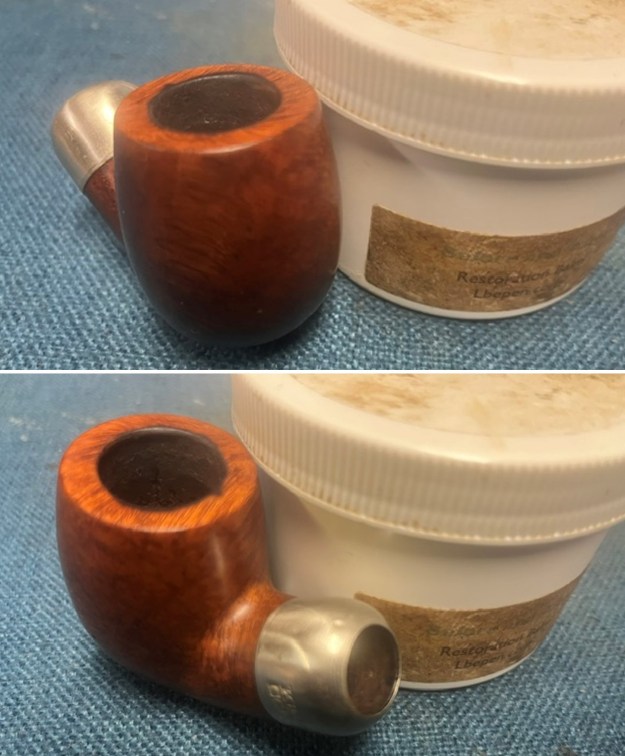
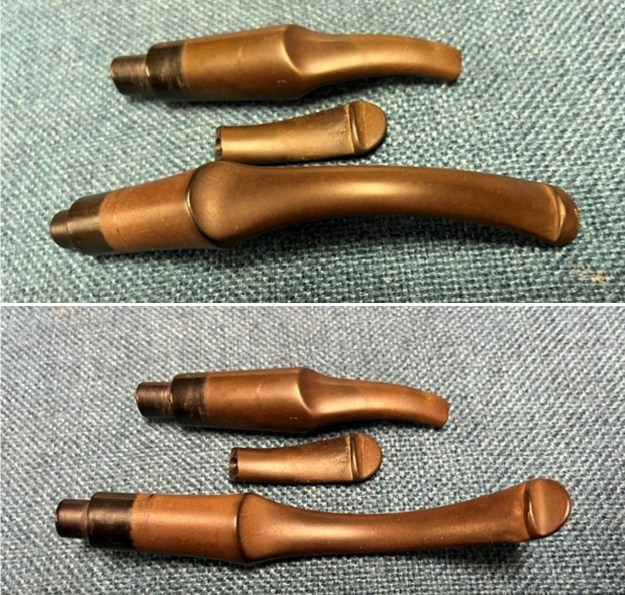
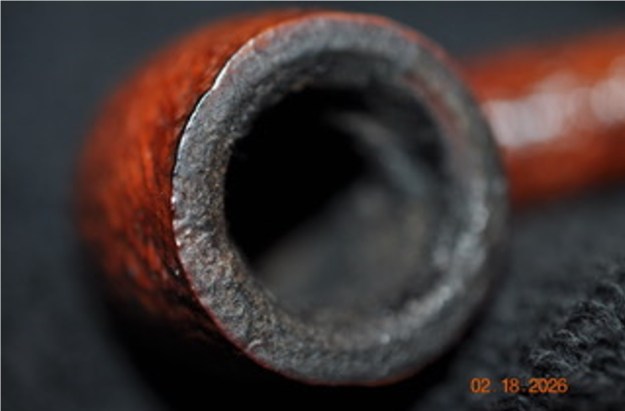
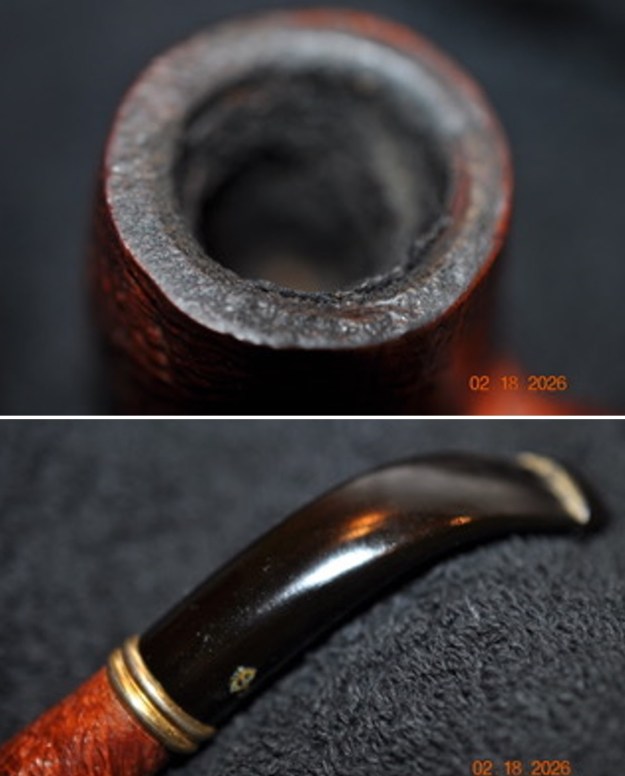
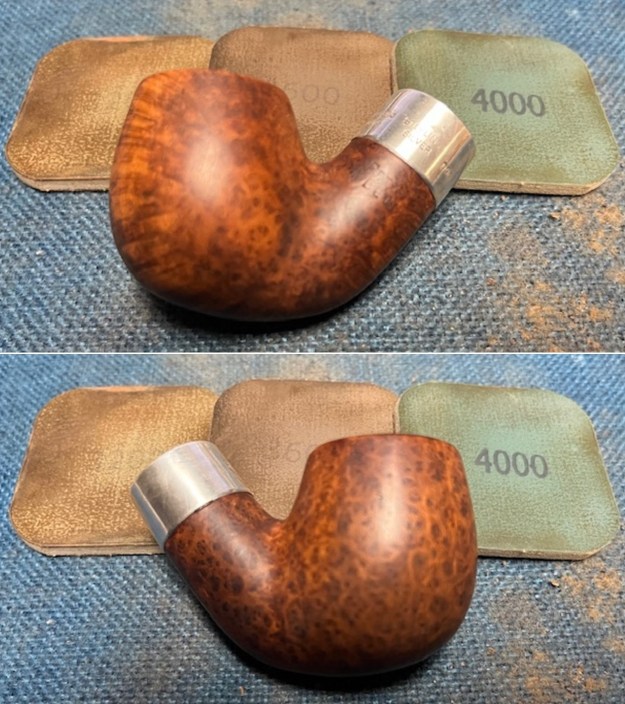
As always, I encourage your questions and comments as you read the blog. Thanks to each of you who are reading this blog. Remember we are not pipe owners; we are pipe men and women who hold our pipes in trust until they pass on into the trust of those who follow us.