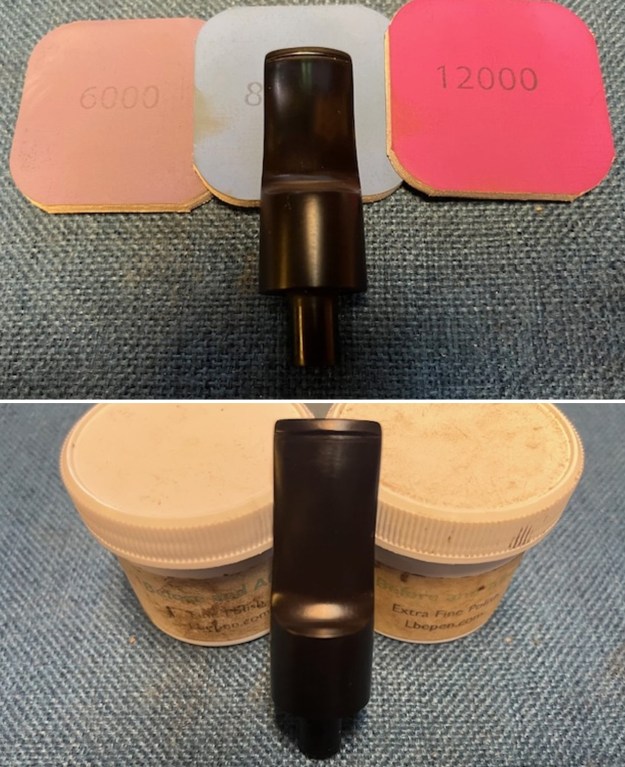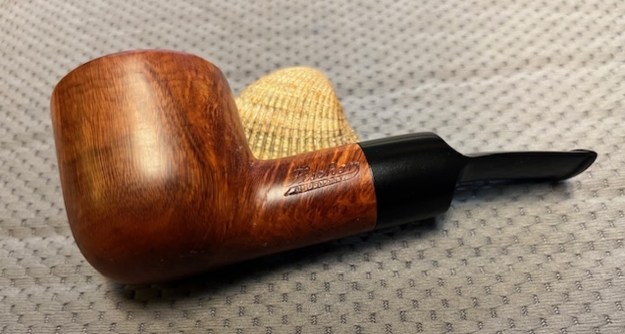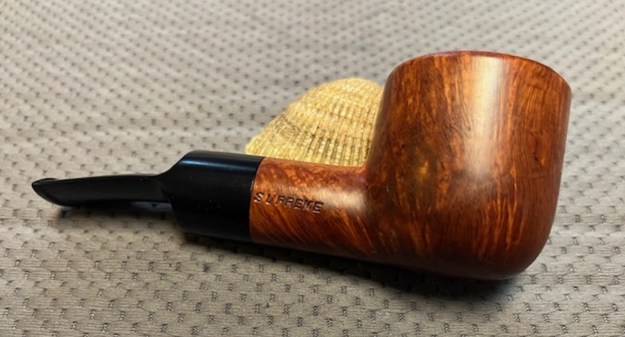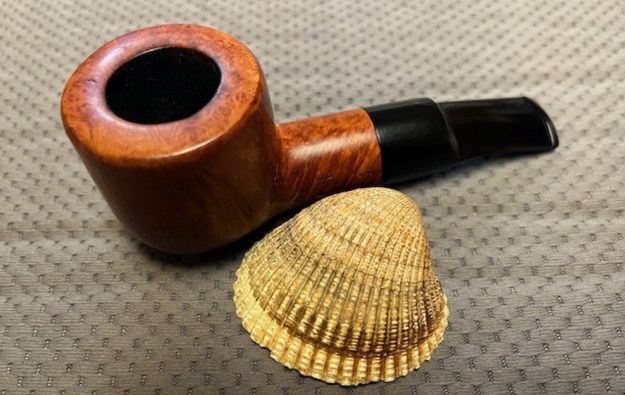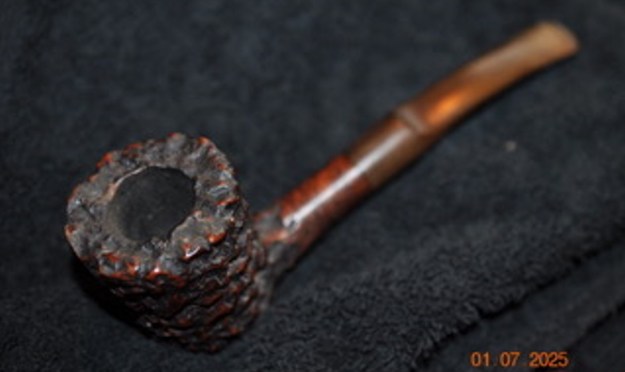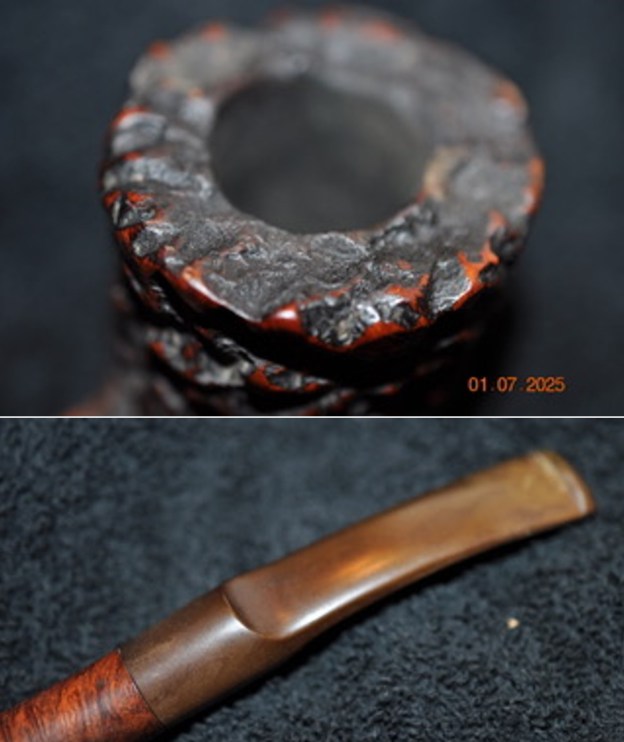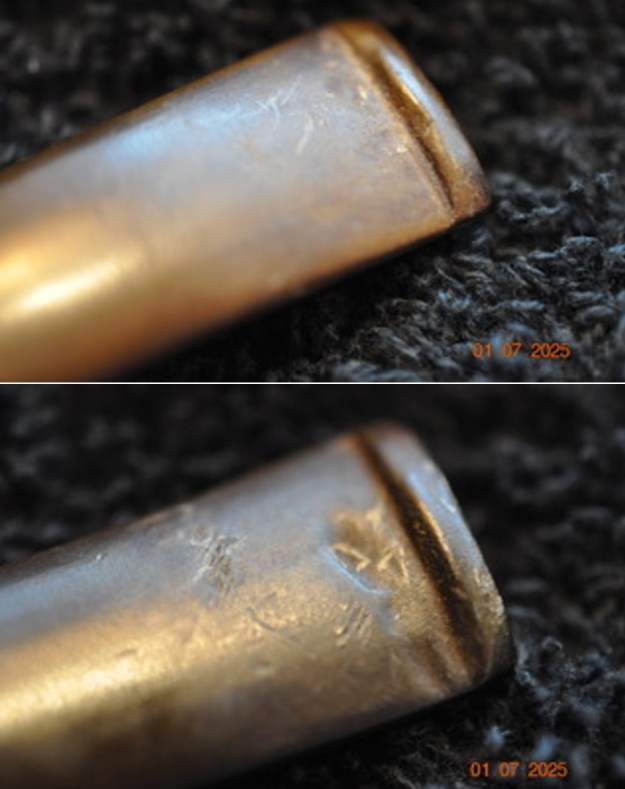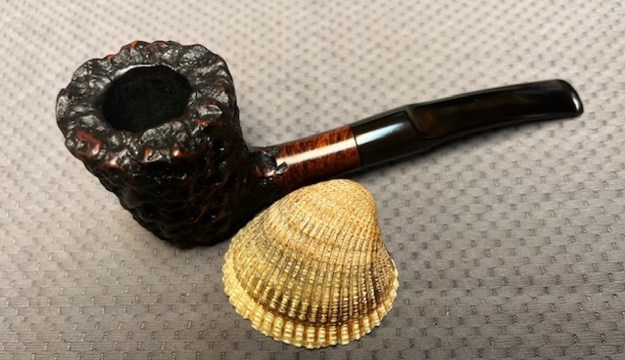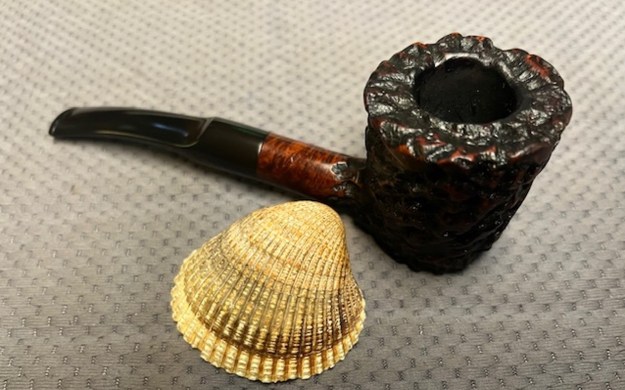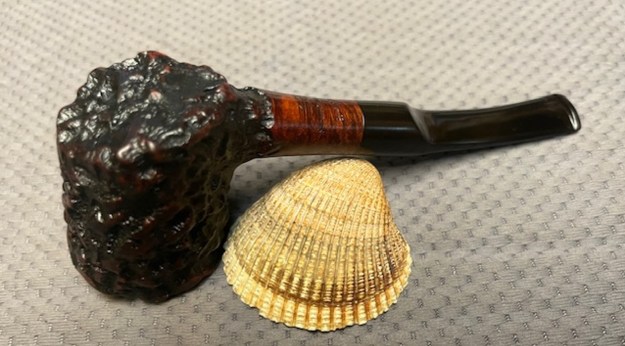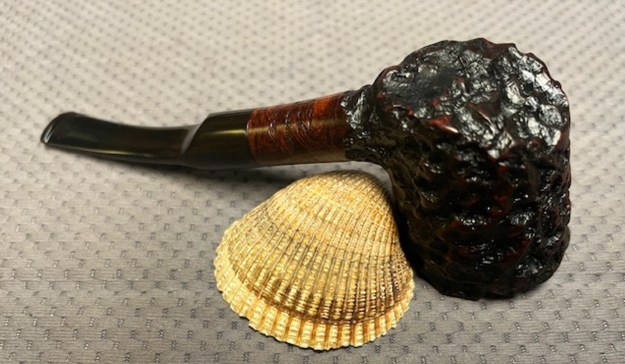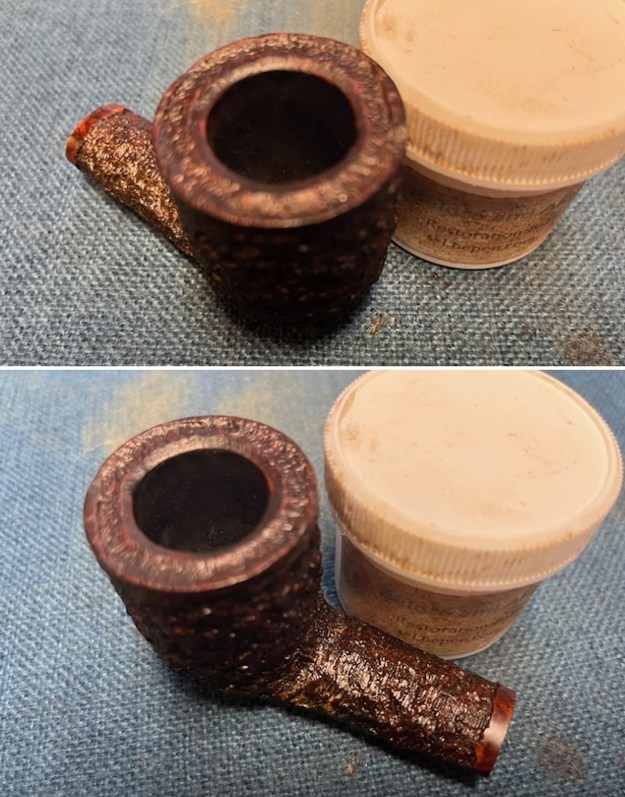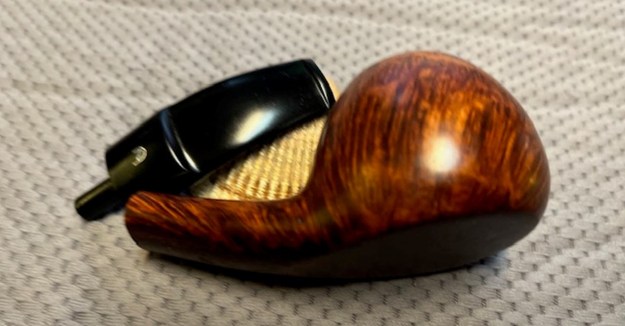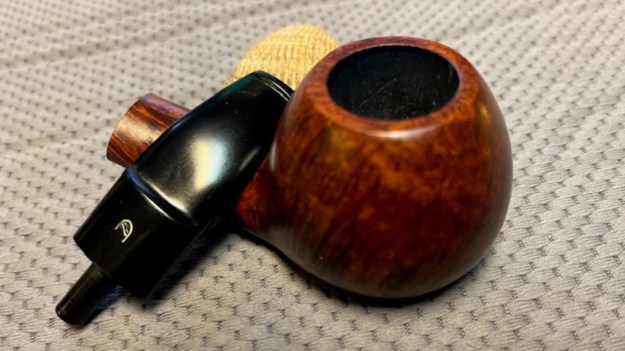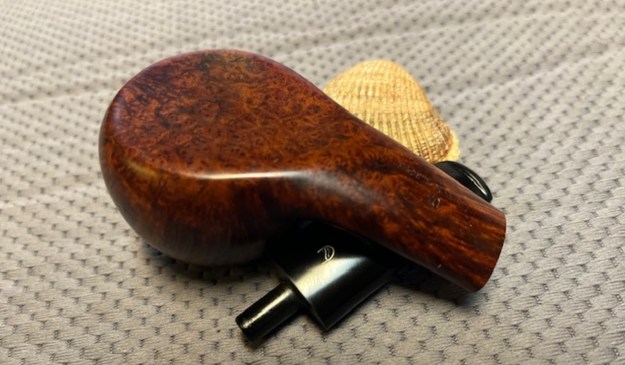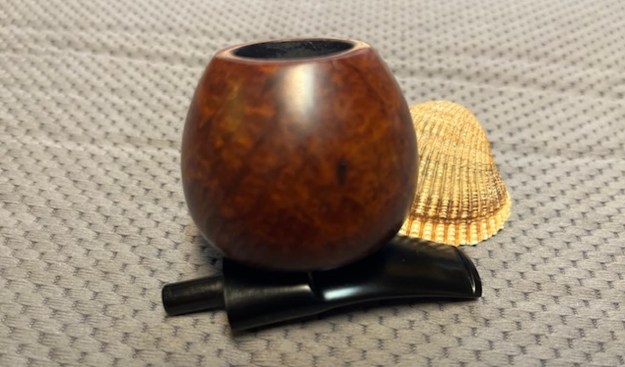
Tag Archives: Oxidation

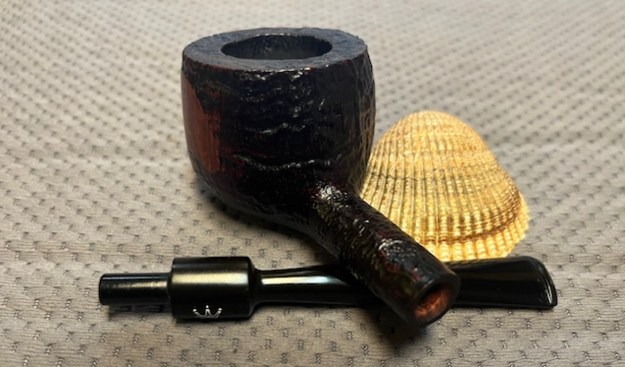
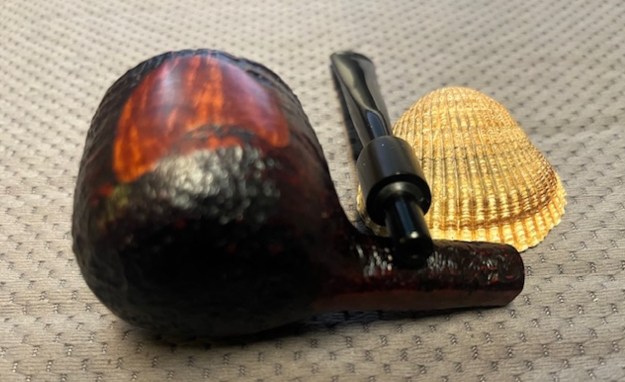
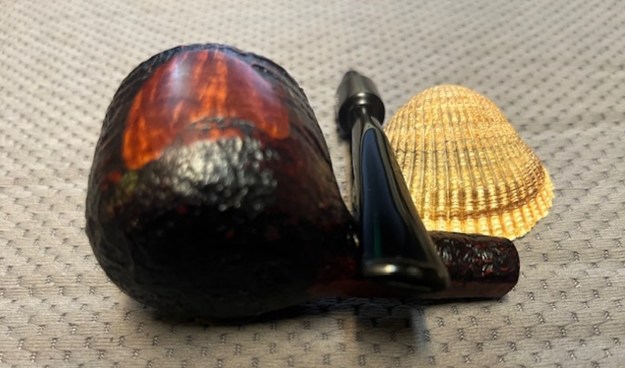
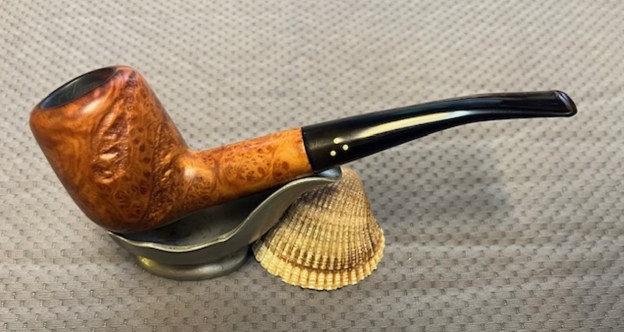
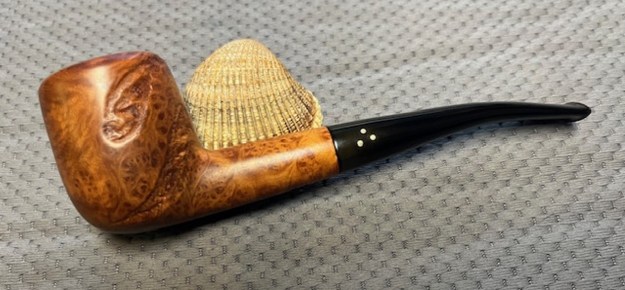
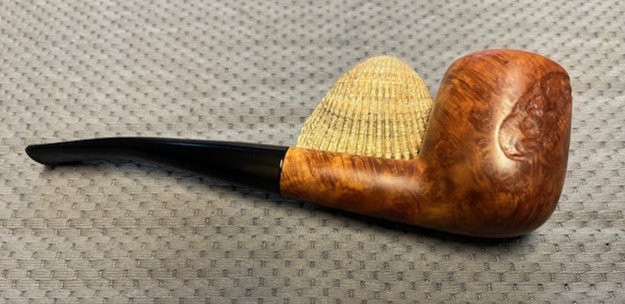
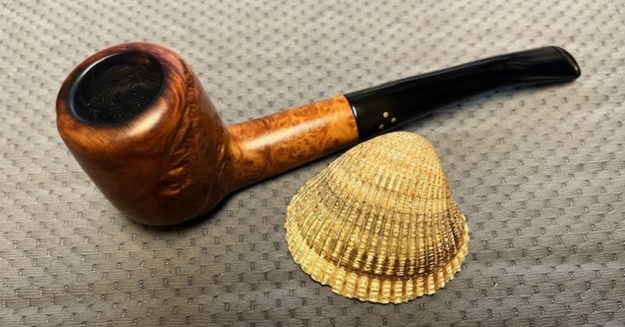
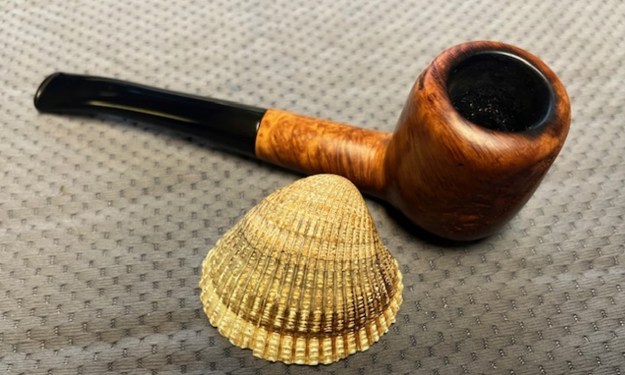
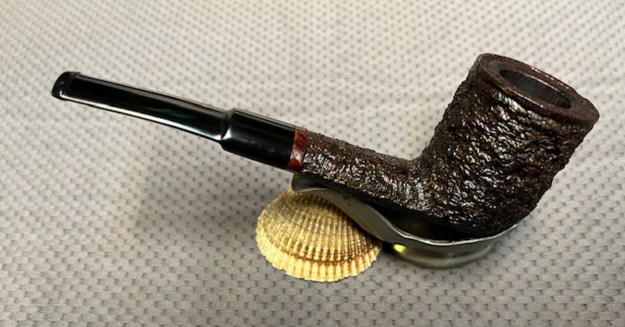
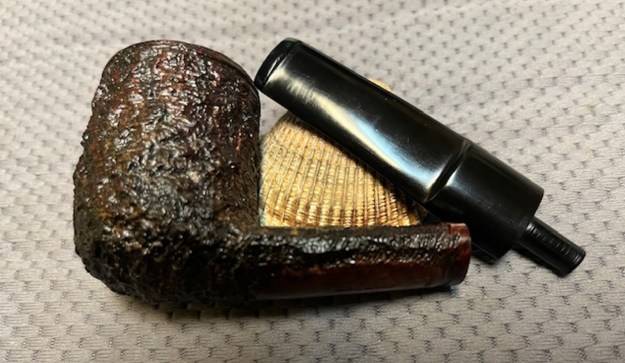
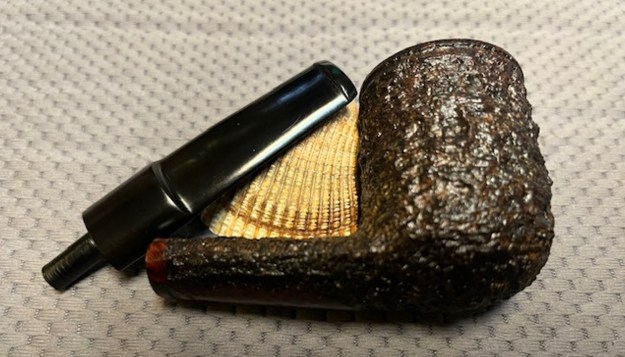
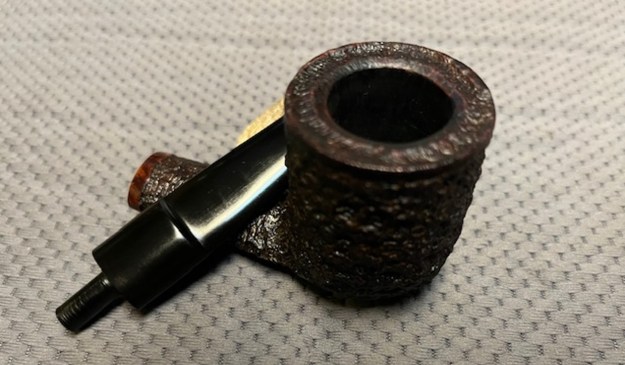
Restoring a Well Smoked “Malaga” Small Straight Rhodesian


by Steve Laug

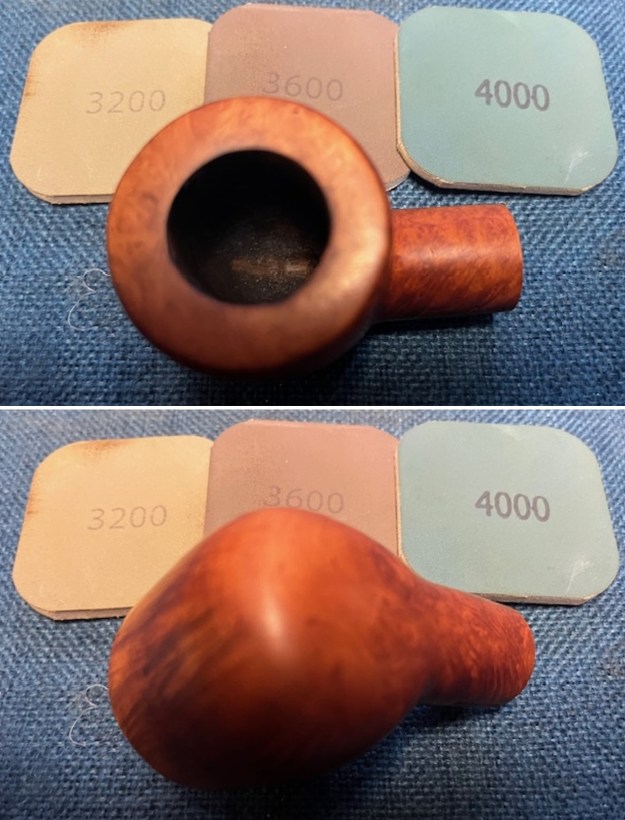
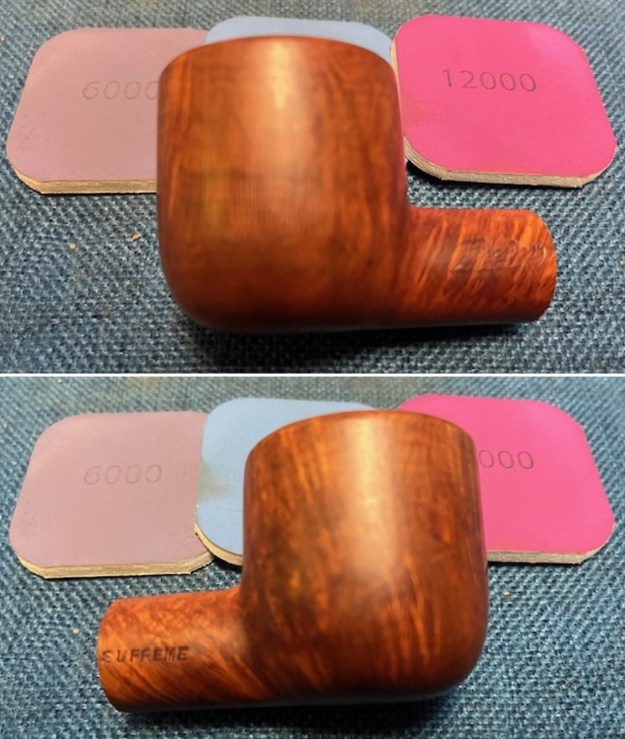
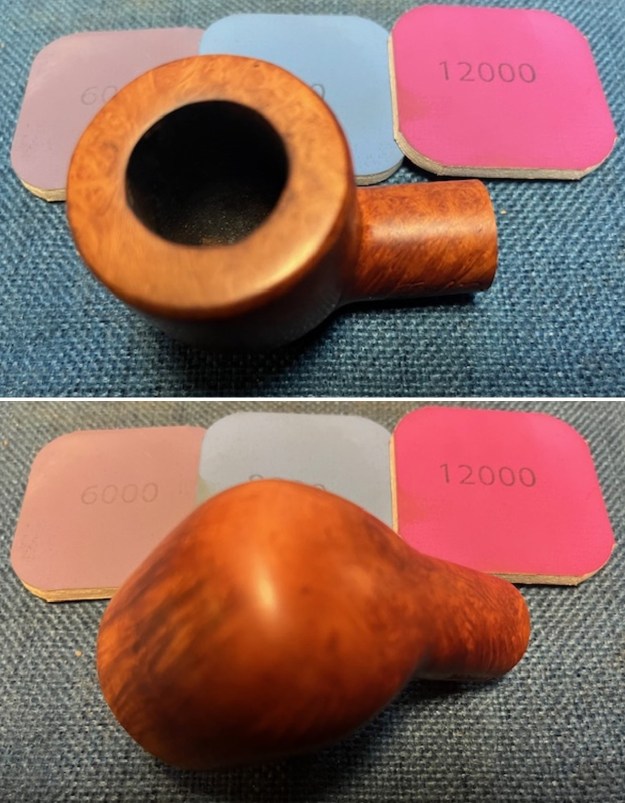
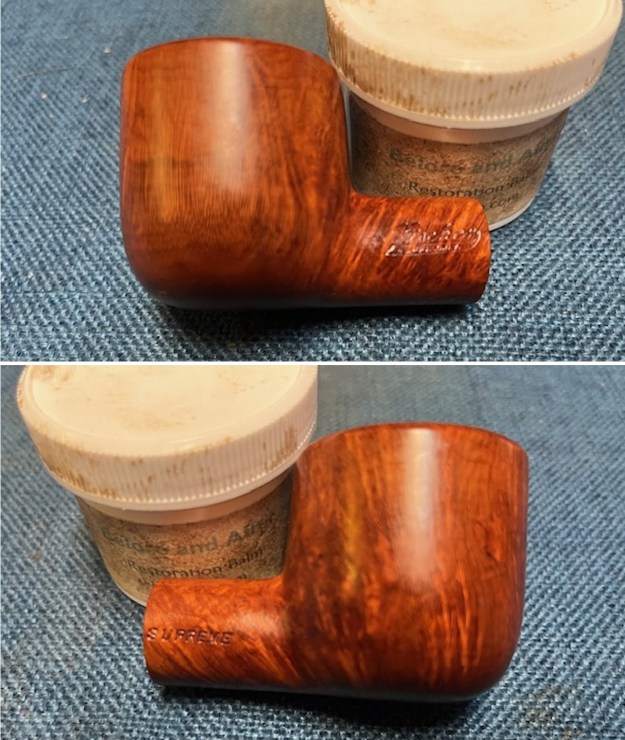
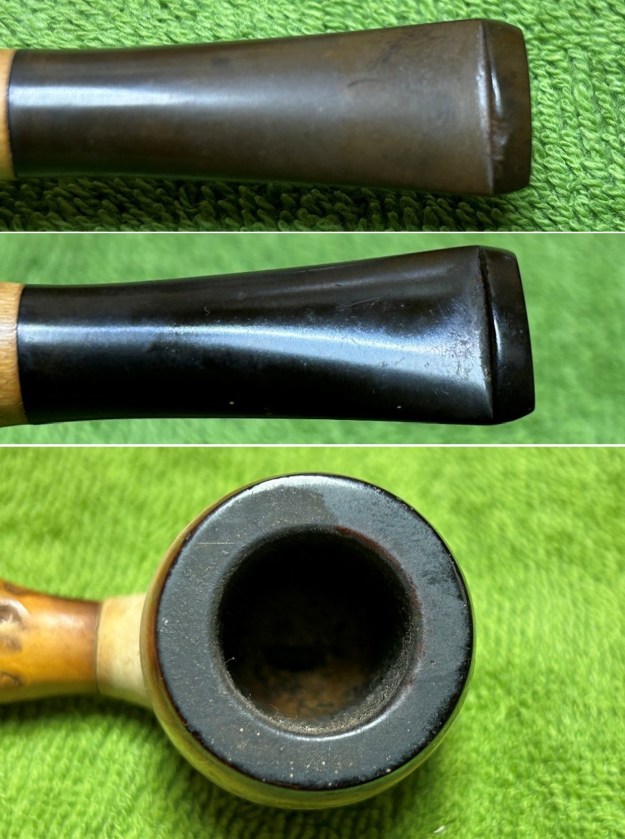
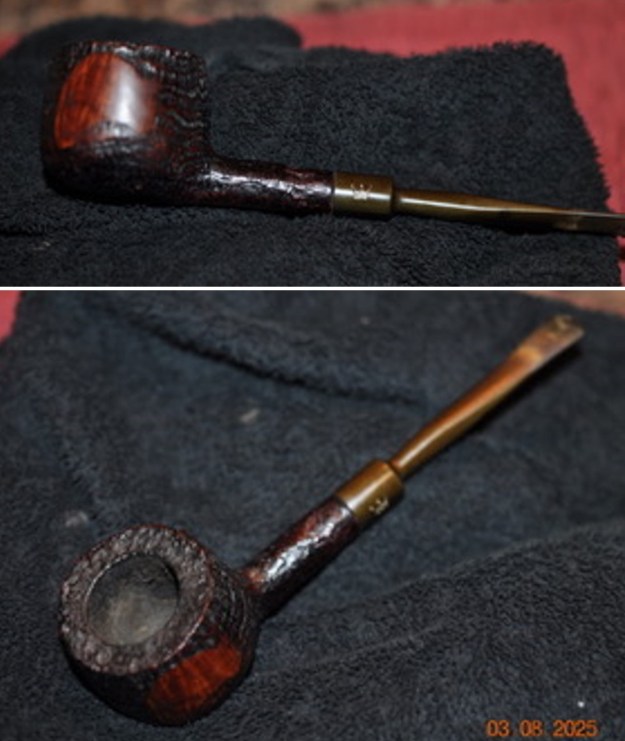
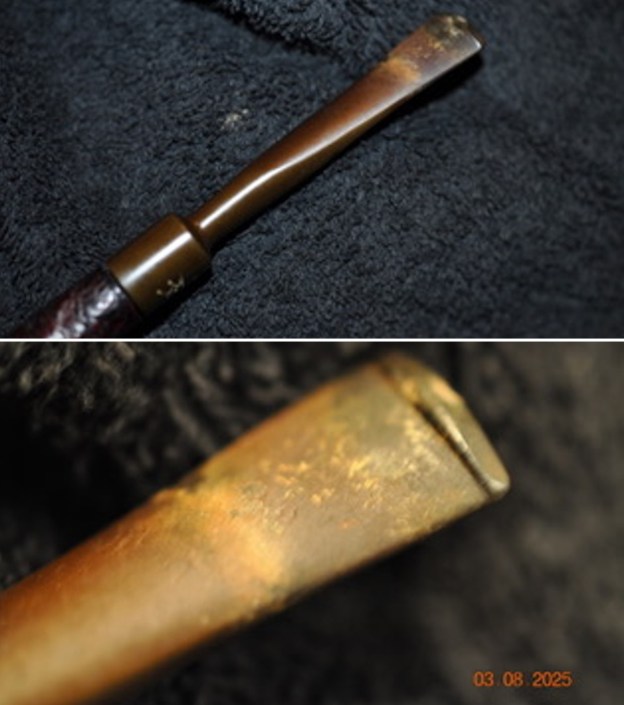
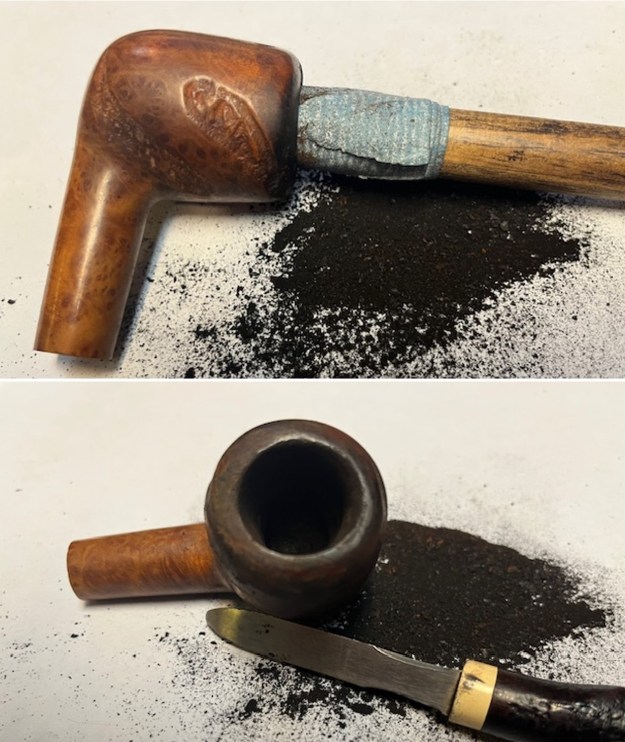
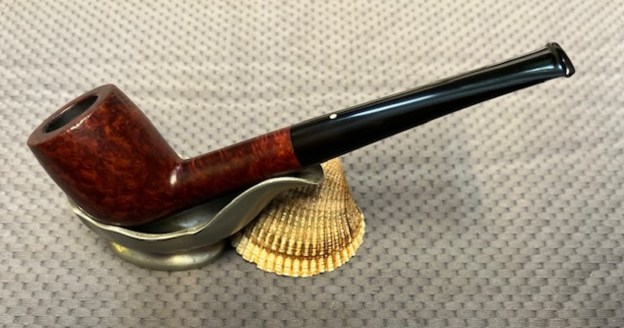
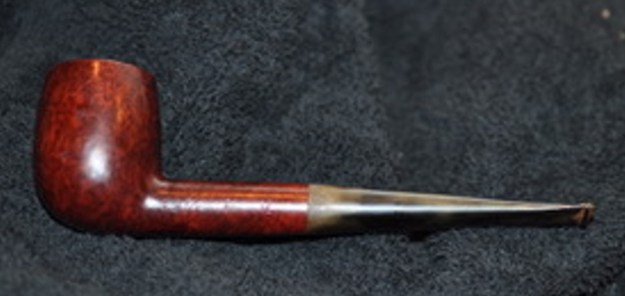
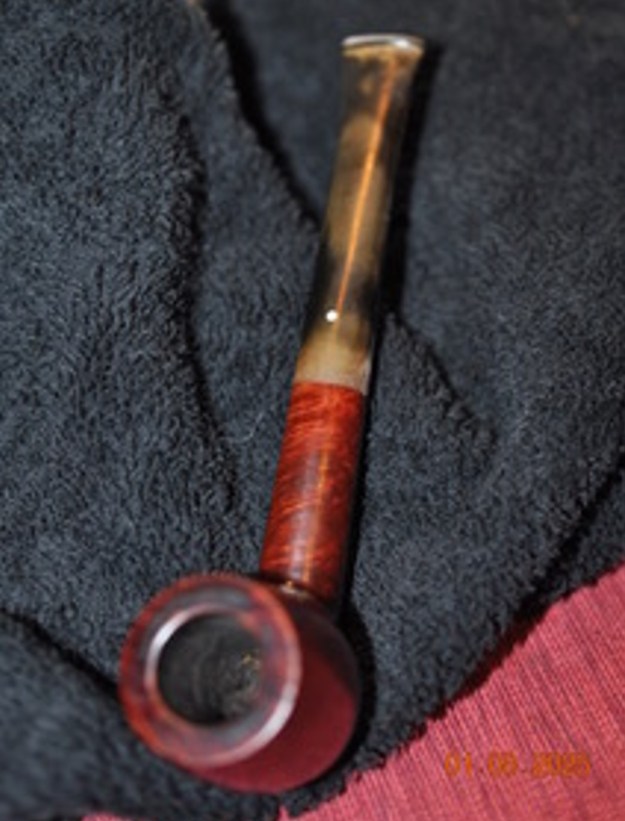
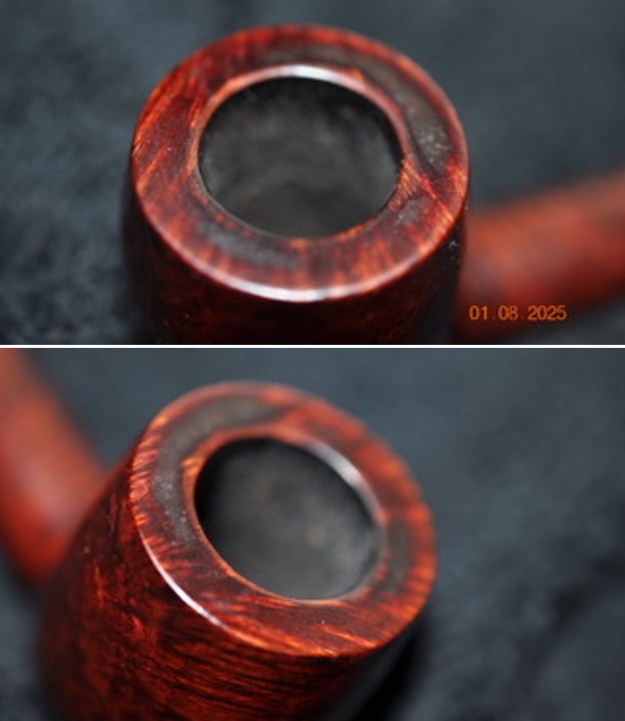
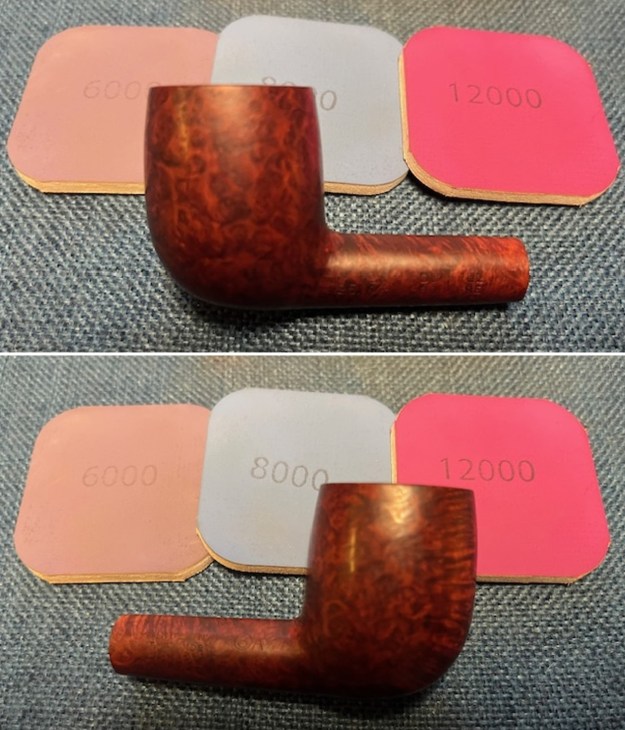
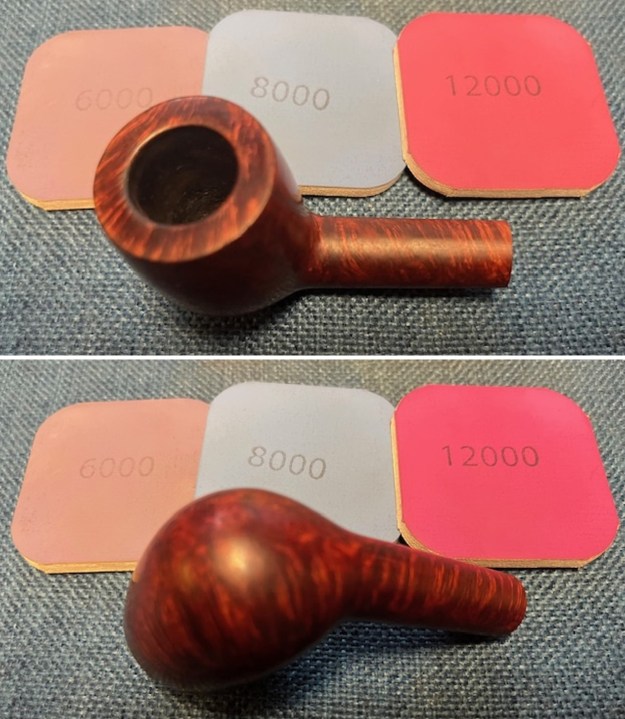
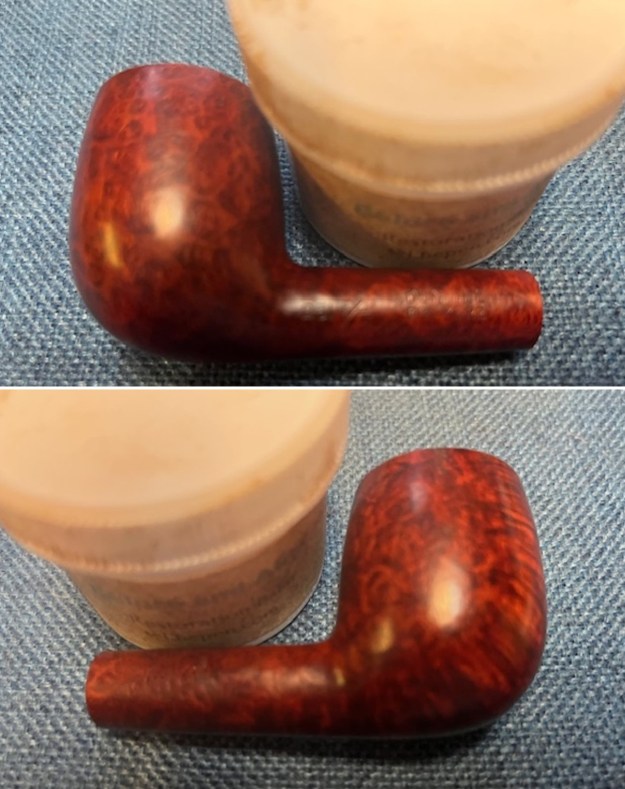
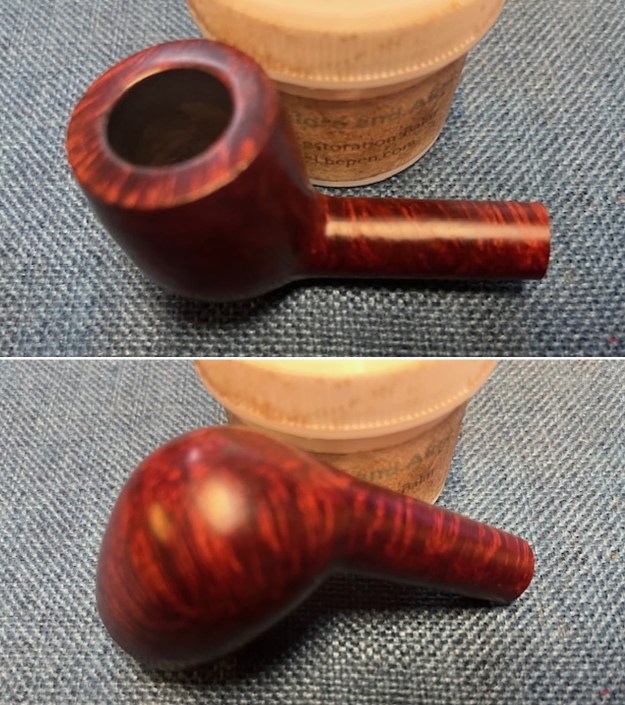
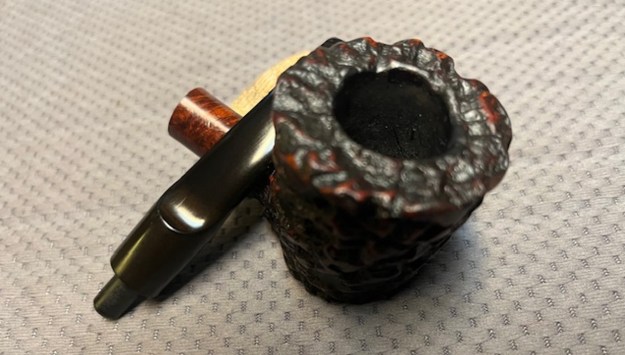
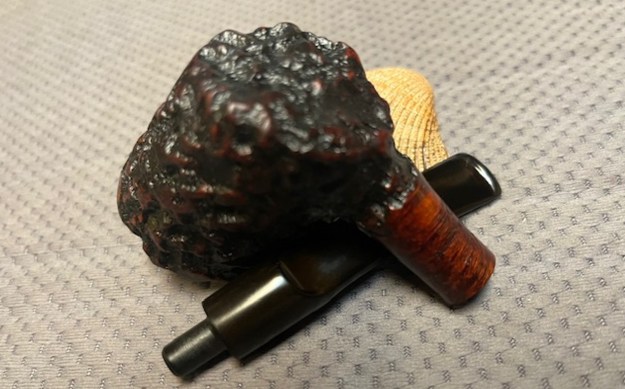
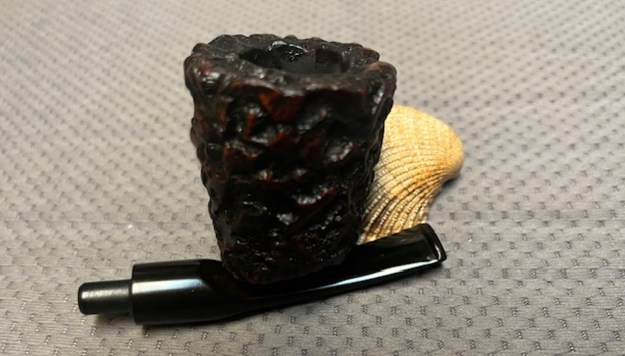
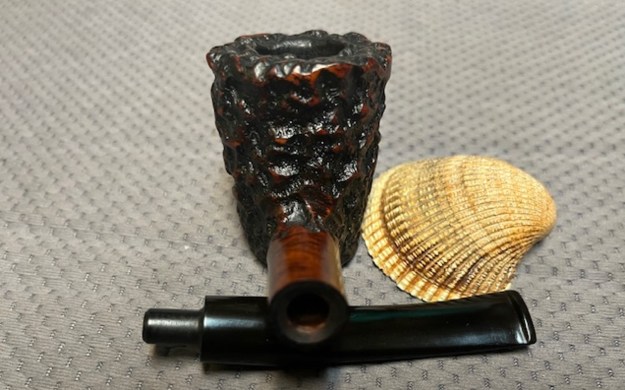
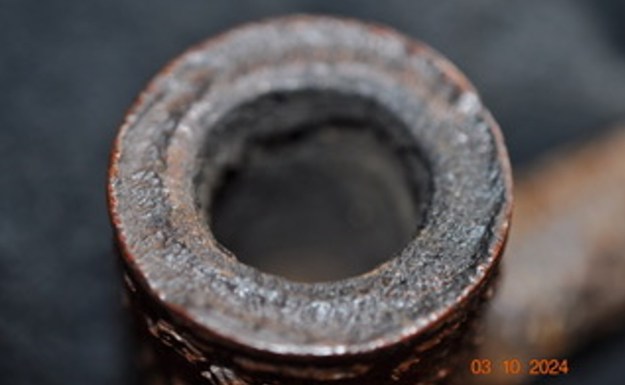
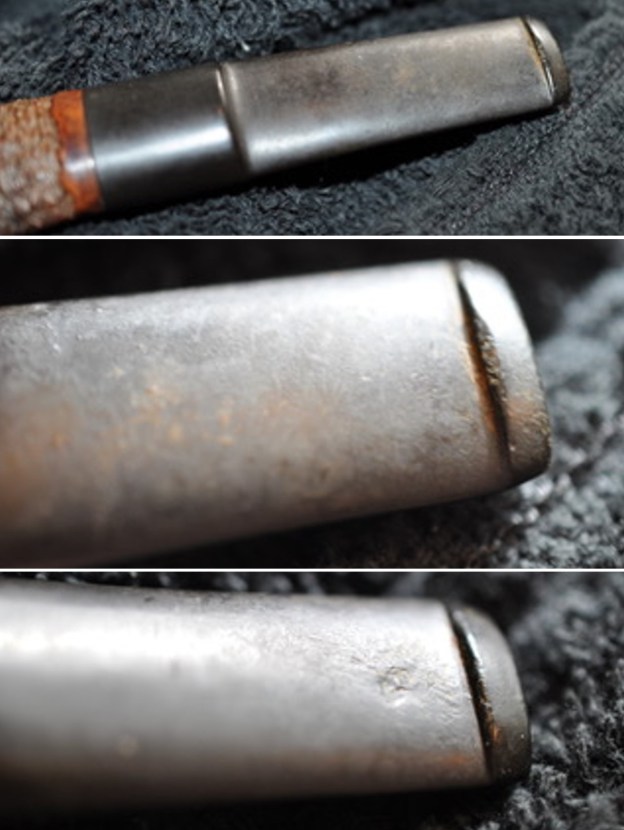
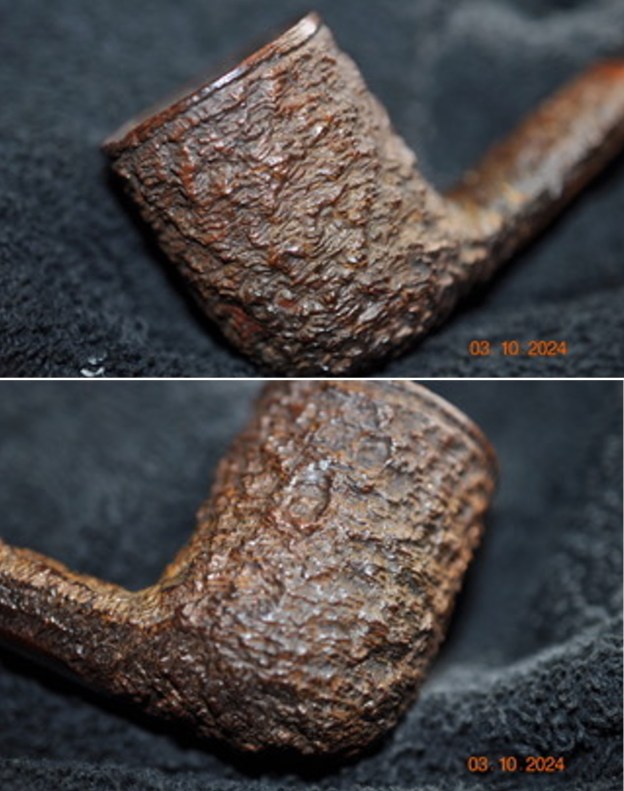
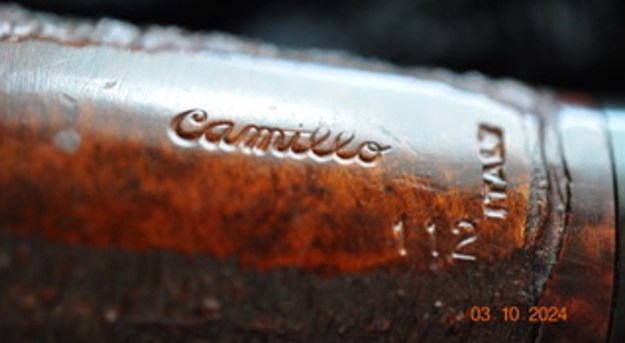
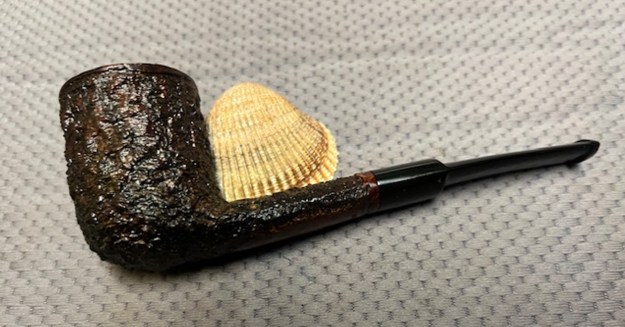
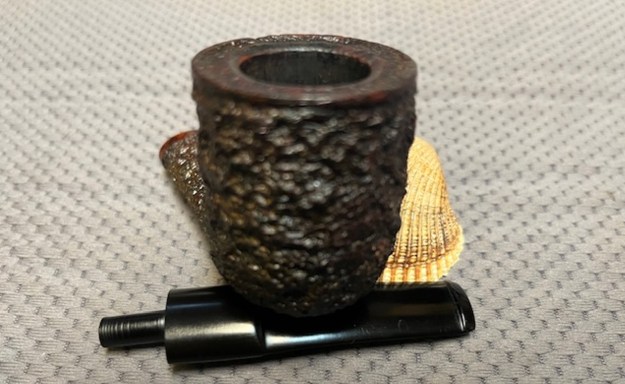
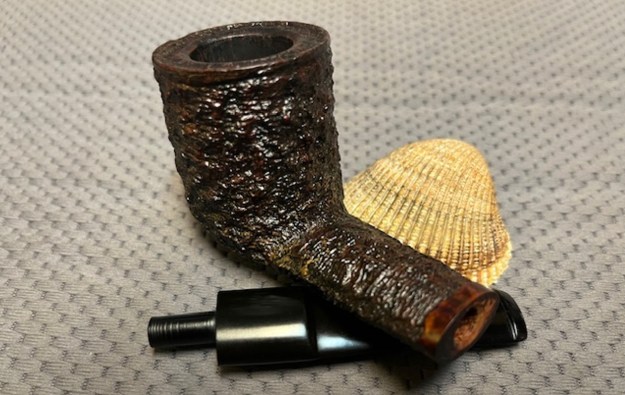
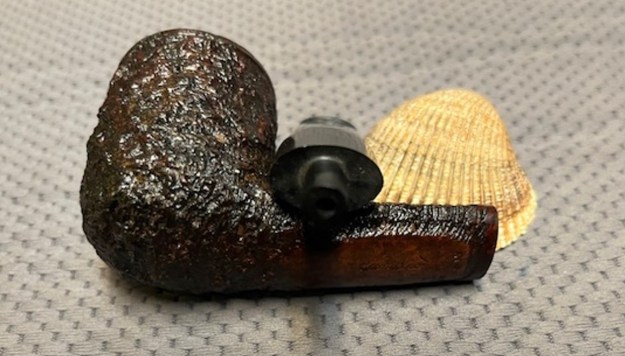
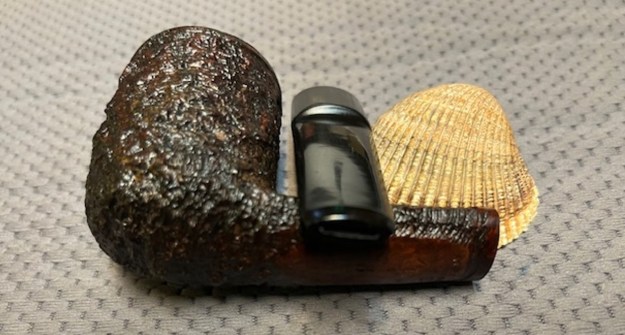
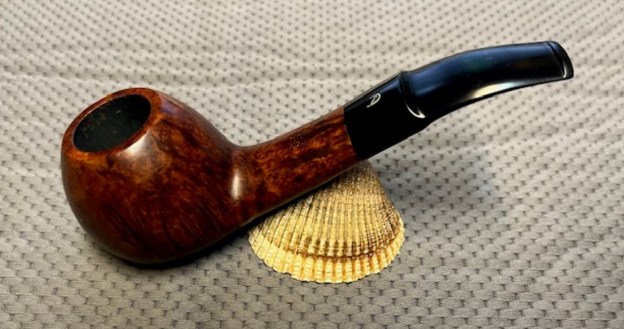
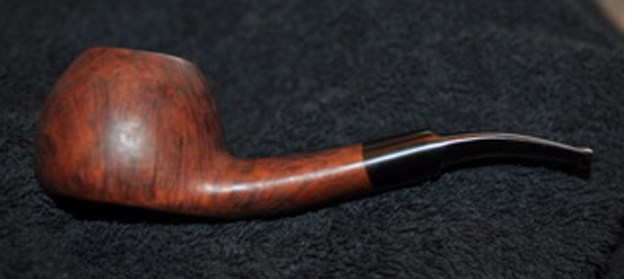
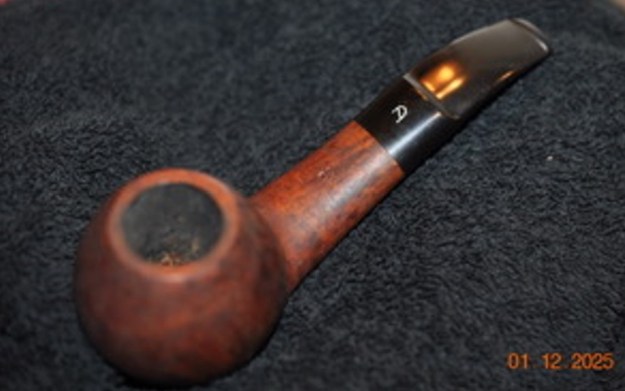
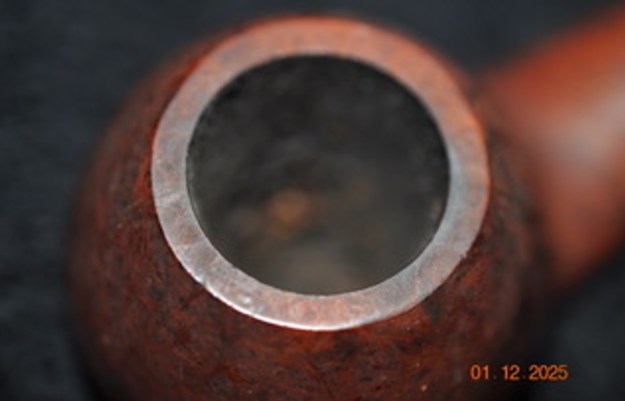
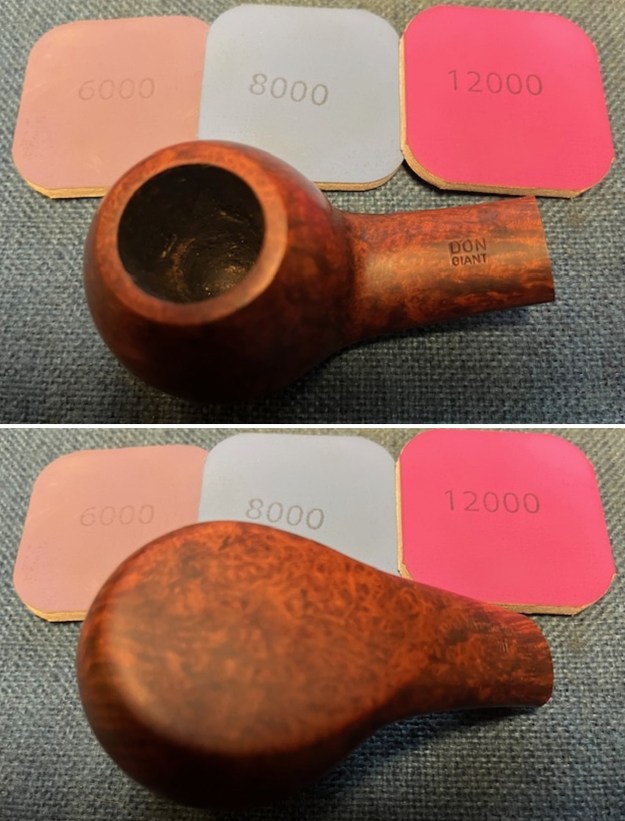
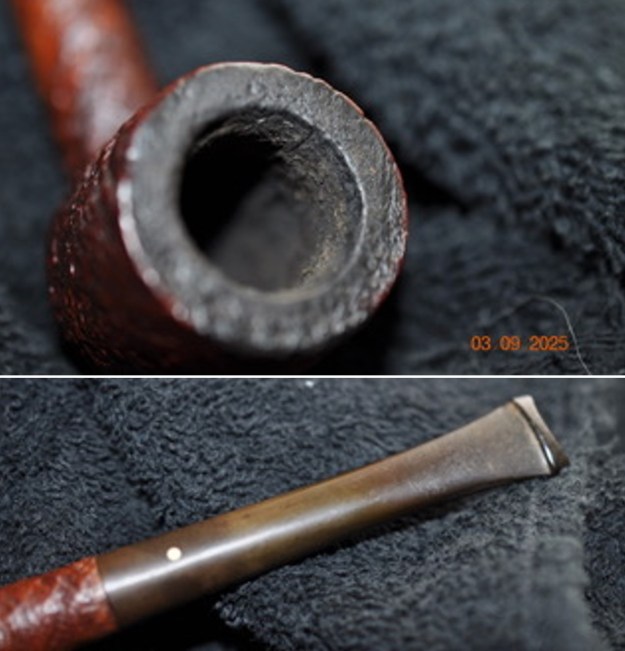
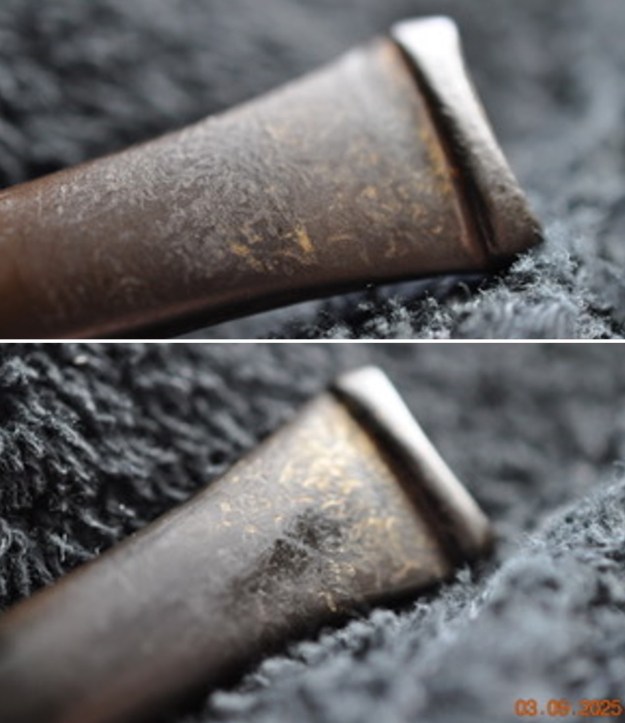
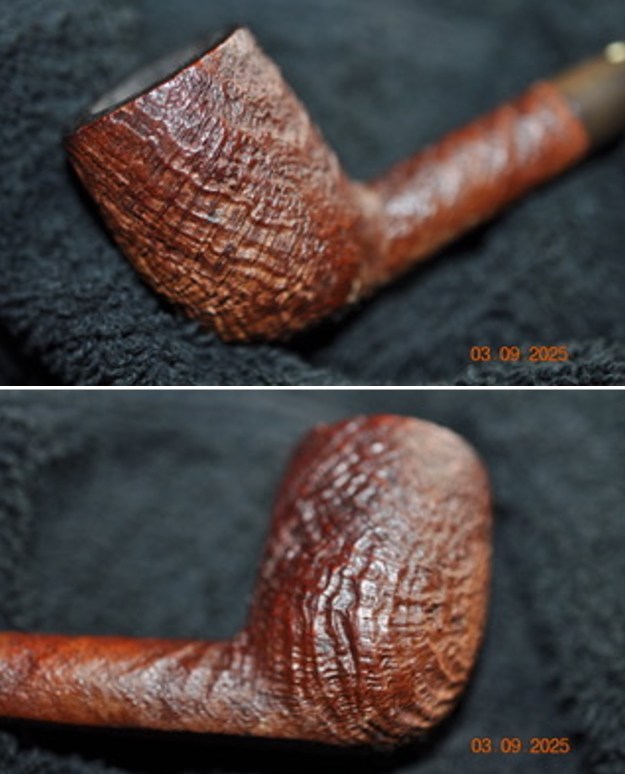
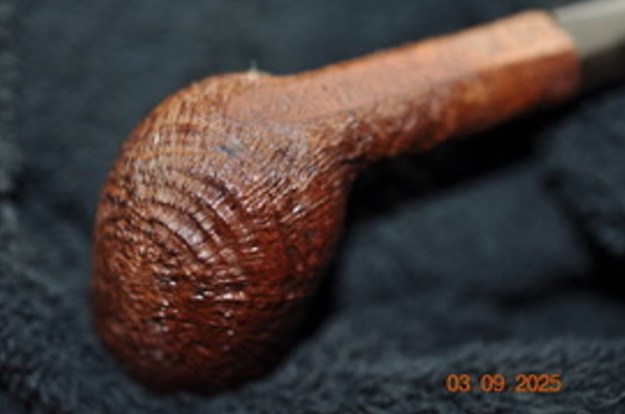
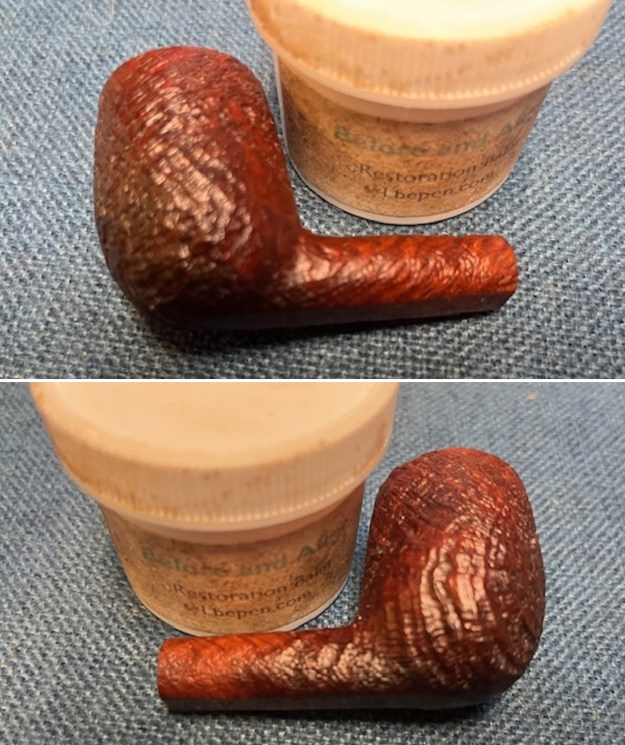
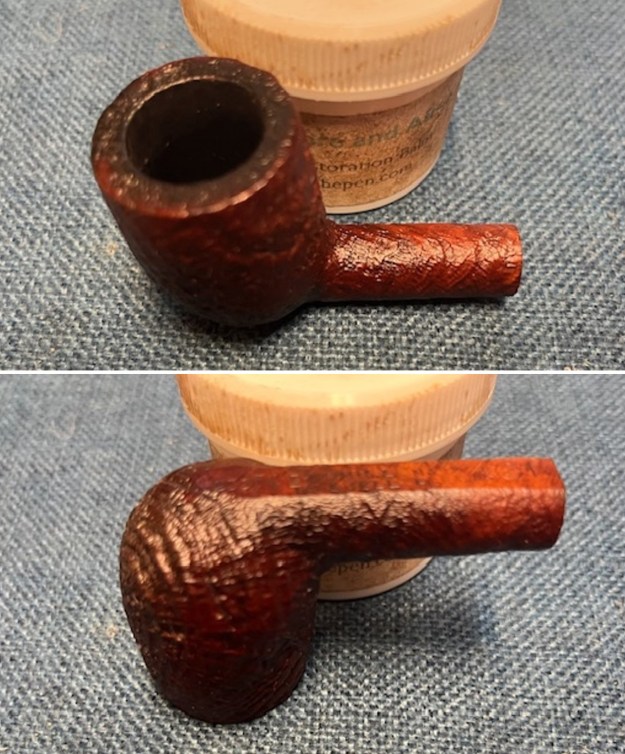
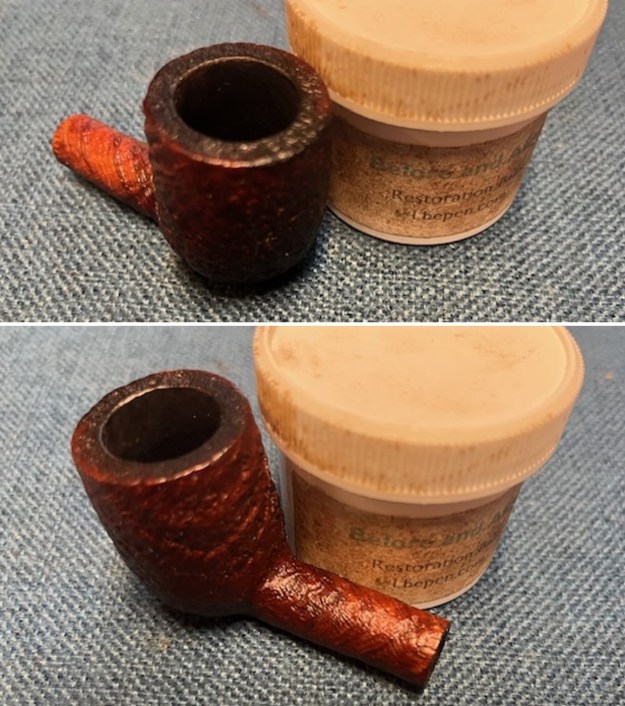
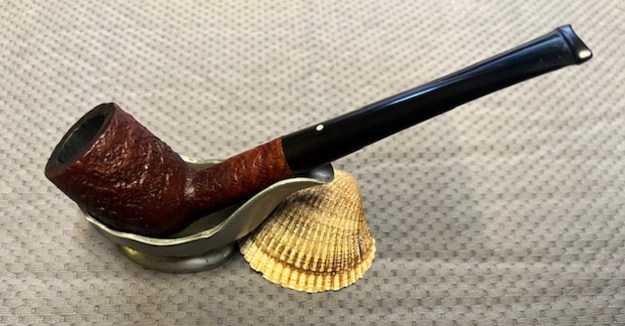
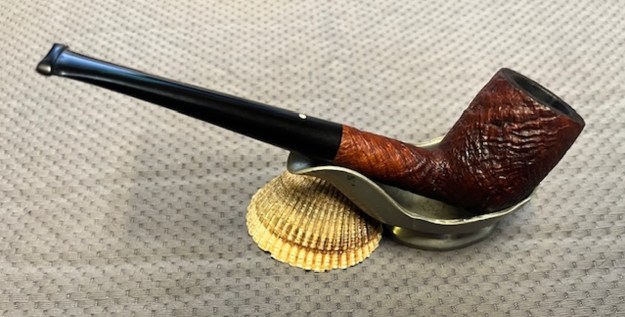
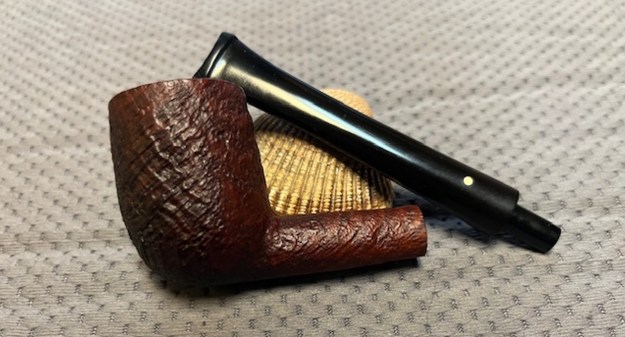
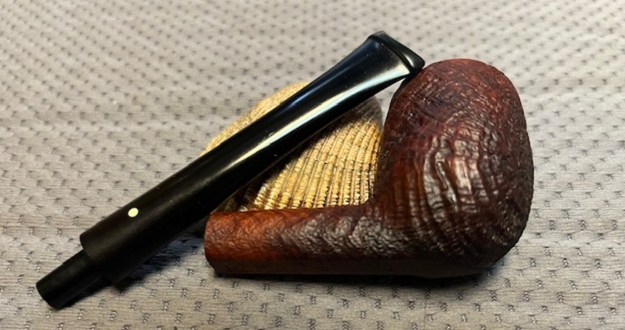
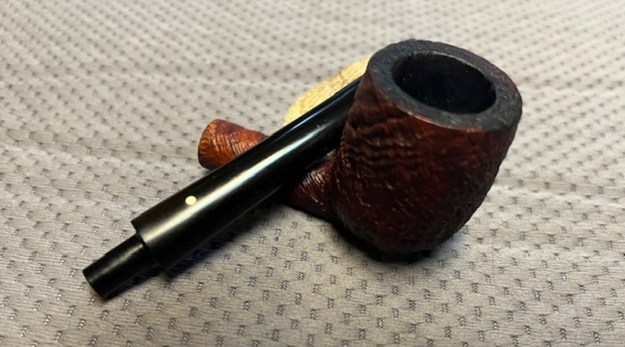
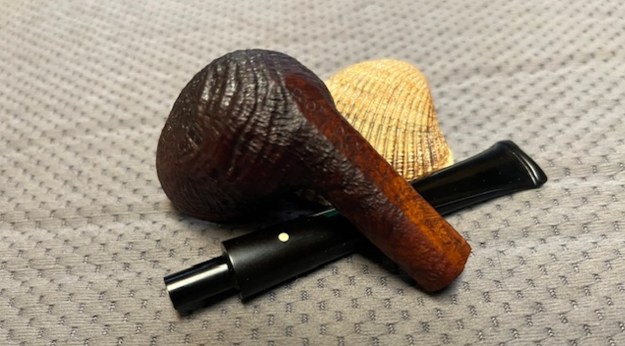
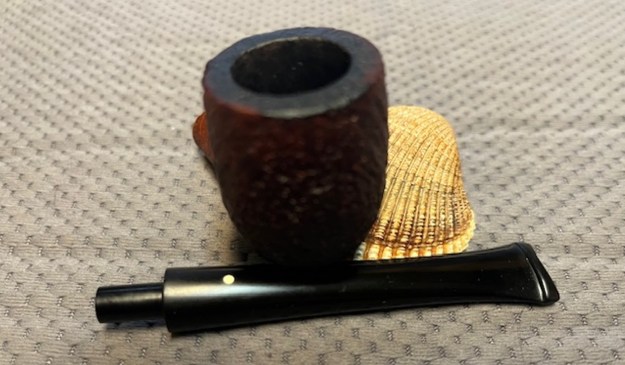
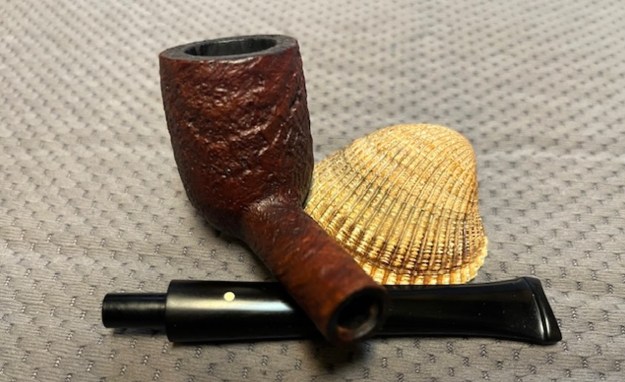
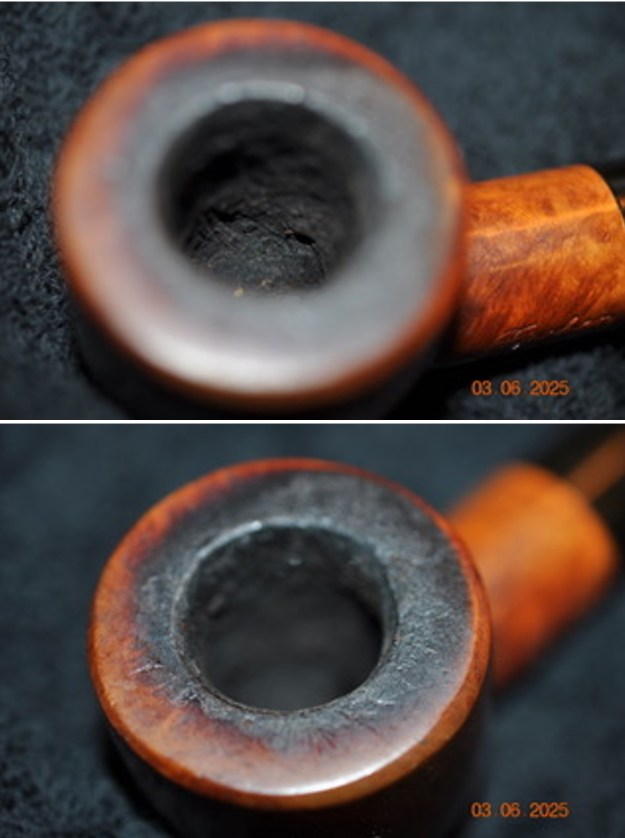
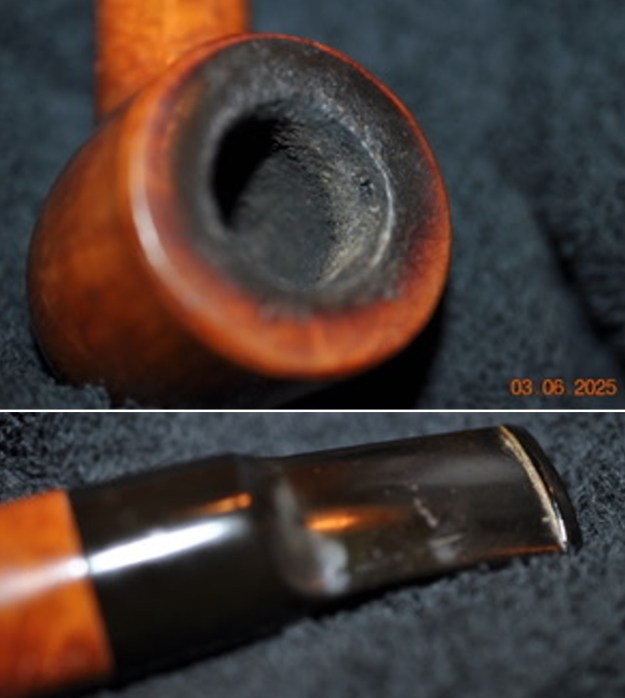
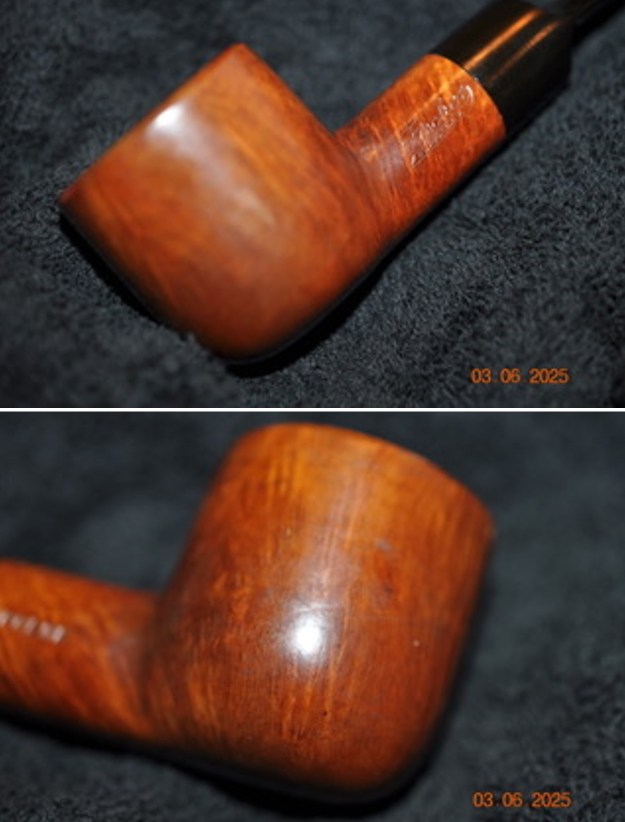
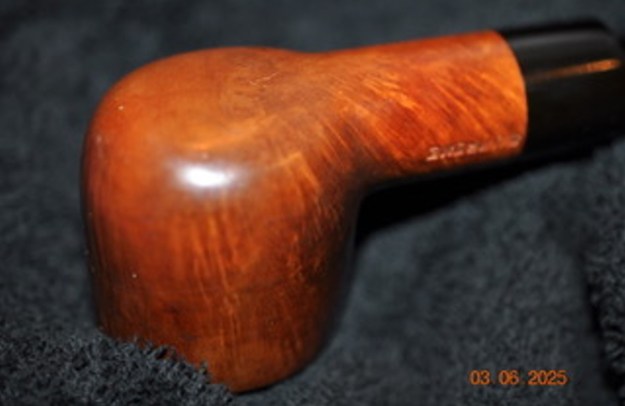
The next pipe I have chosen is a medium sized Rhodesian. The stem is a vulcanite taper. We purchased it recently as one of two pipes from eBay from a seller in Aurora, Colorado, USA. The contrast of the brown stains on this oil cured pipe makes the grain stand out. It was stamped left side of the shank and read “Malaga”. On the right side it is stamped Aged Imported Briar. The pipe was heavily smoked. The Rhodesian shape has a crowned rim cap separated from the bowl by a pair of matching twin rings. They are dirty and clogged with grime. The bowl was heavily caked there was a heavy coat of lava on the rim top and inner edge. It was hard to know the condition of the rim due to the thick lava coat. The black vulcanite stem was in good condition other than being dirty and having tooth marks and chatter on both sides of the stem ahead of the button. There were no stampings or logo on the stem itself though it is certainly the original. Malaga stems were well fit but never bore any identifying marks on the surface. Jeff took photos of the pipe before his cleanup work. They tell the story and give a glimpse of the pipe. Jeff took close up photos of the bowl and rim to capture the condition of the pipe before he started his cleanup work. The heavy cake in the bowl is overflowing onto the rim top. It was too thick so see if there was damage to the edges of the bowl. The next photos show the stem surface. There is light oxidation and calcification on the stem. There are tooth marks and chatter on both sides near the button and wear on the button surface and edges. He also took photos of the sides and bottom of the bowl and shank to show the beautiful grain around the bowl. The photos show the general condition of the bowl and wear on the finish. It is very dirty but this is another beautiful pipe. Jeff took a photo to capture the stamping on the shank. The photos show the stamping “MALAGA” on the left side of the shank and Aged Imported Briar on the right side. The stamping is very readable. I am including the link to a blog that I wrote that gives some of the history of the Malaga brand and the Malaga Pipe Shop in Royal Oak, Michigan in the USA. I have written an earlier blog to give a little history of the Malaga Brand and the pipemaker, George Khoubesser. Here is the link – https://rebornpipes.com/tag/malaga-pipes/.That blog also includes links to a catalogue and the history of the pipemaker George Khoubesser. Follow the link to get a feel for the brand and the pipemaker.

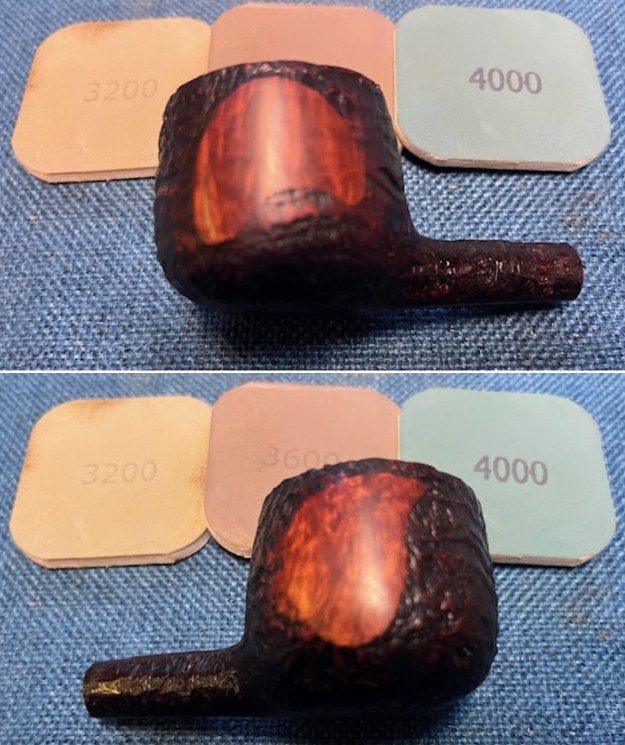
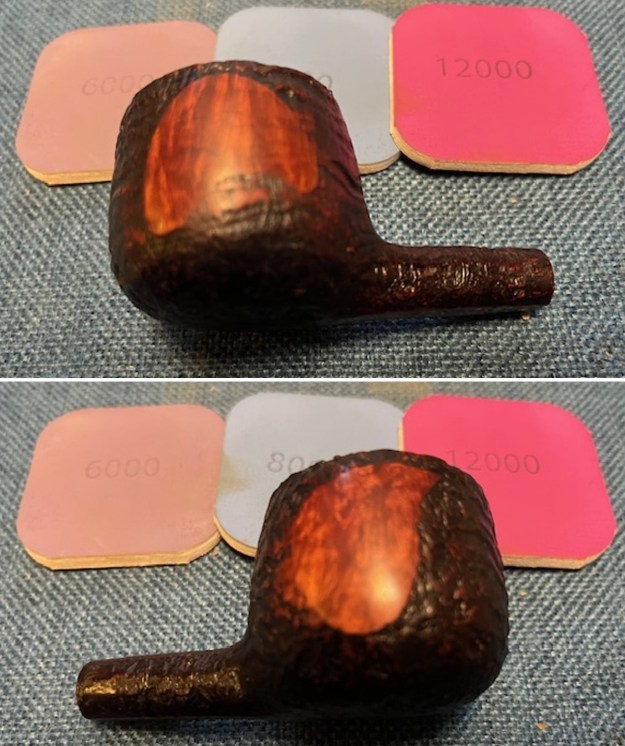
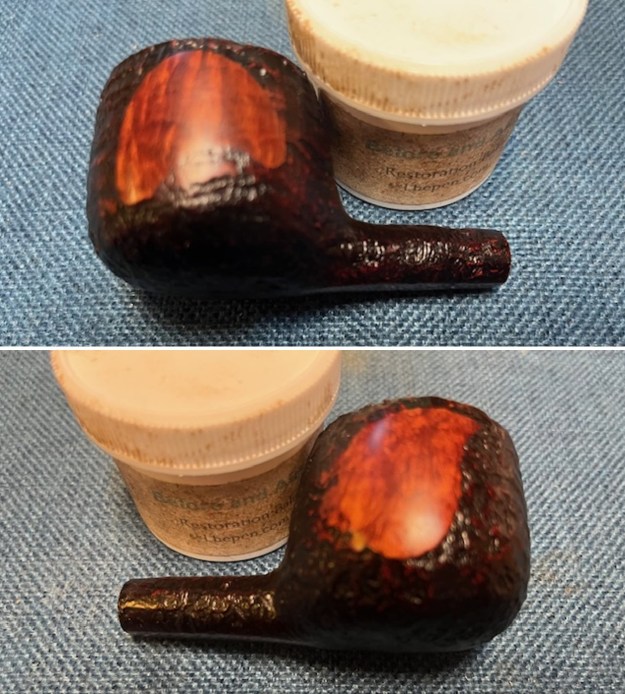
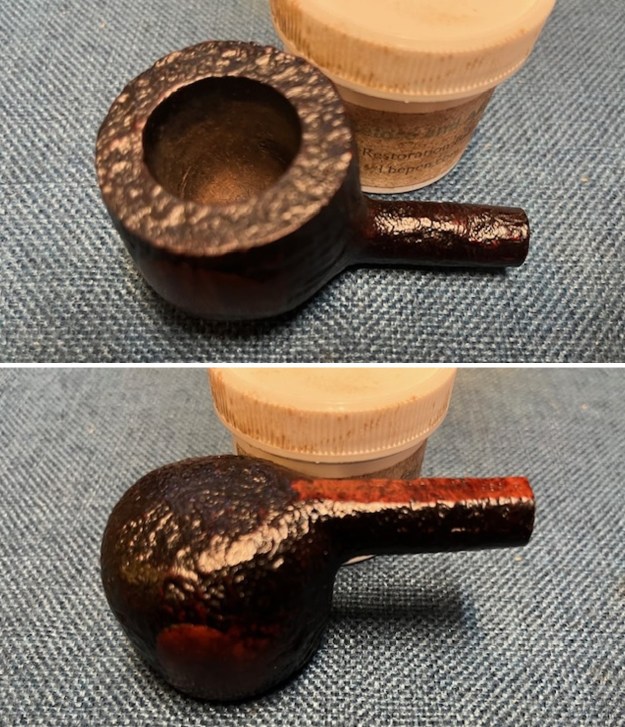
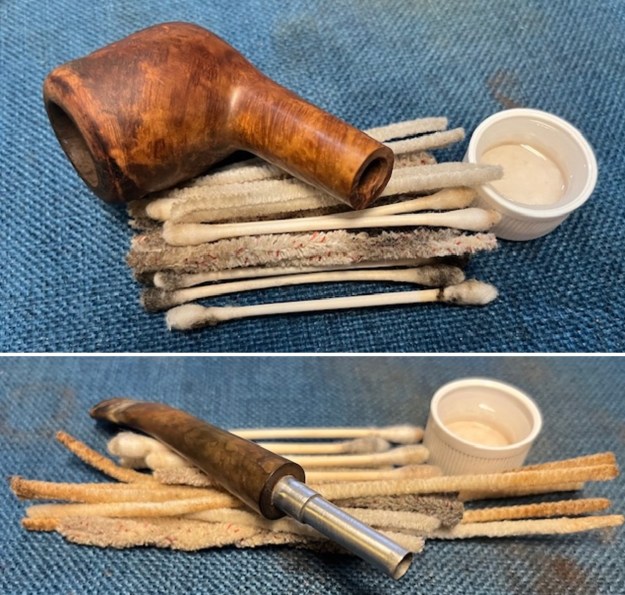
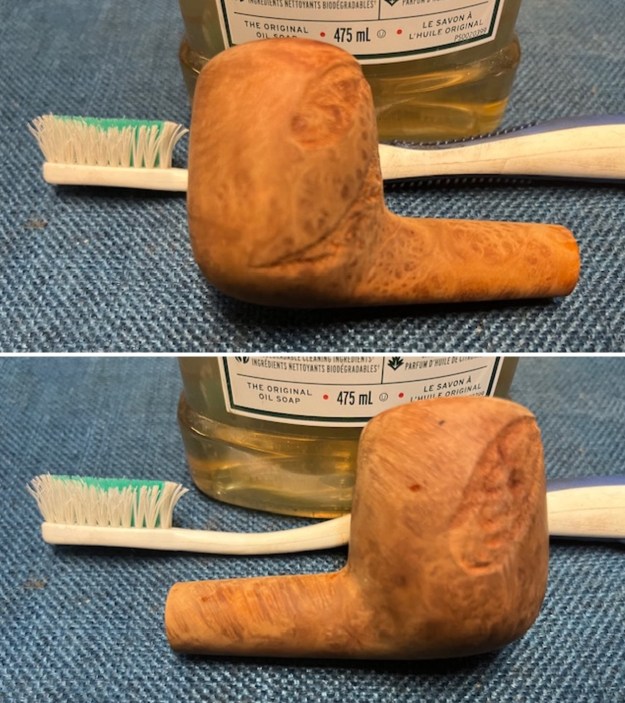
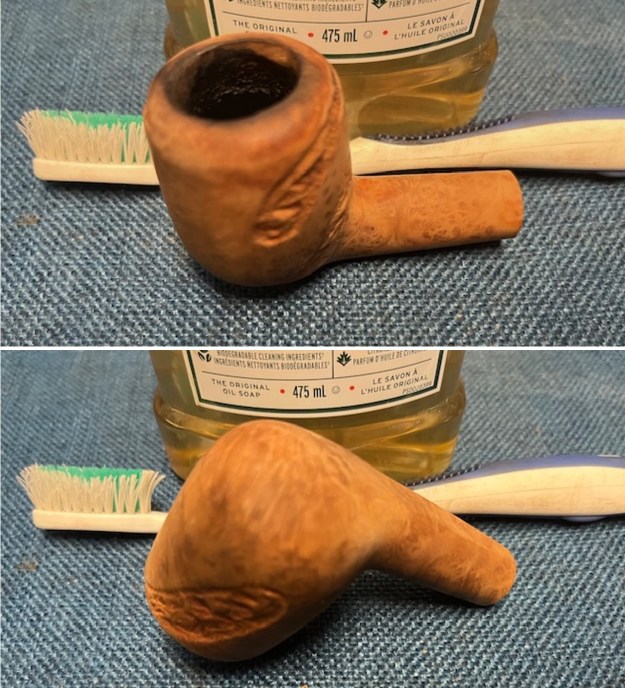
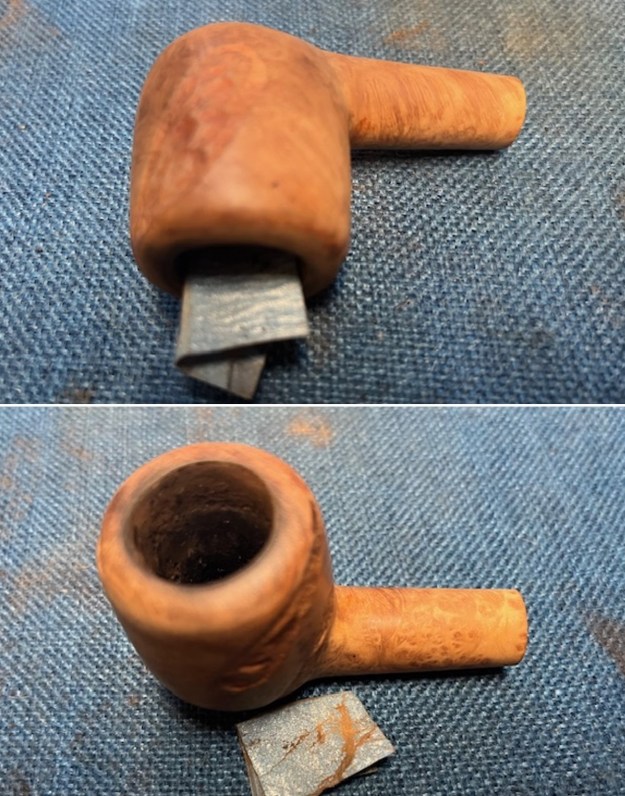
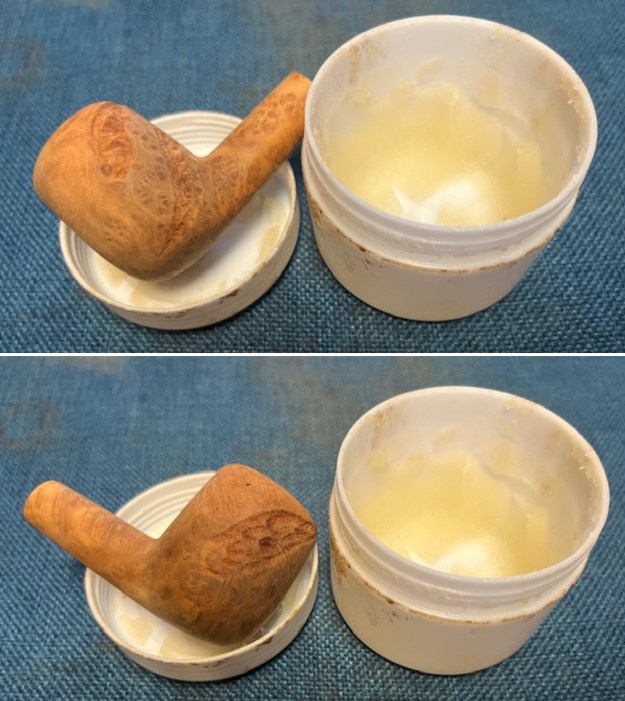
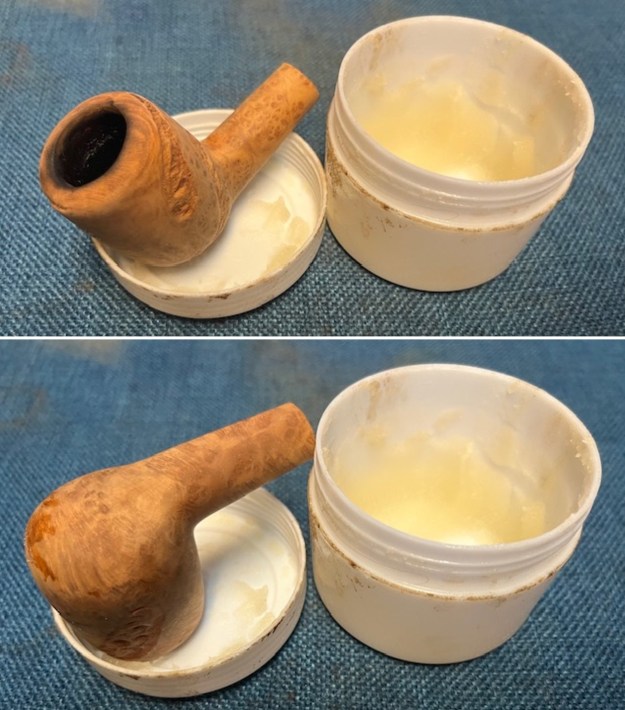
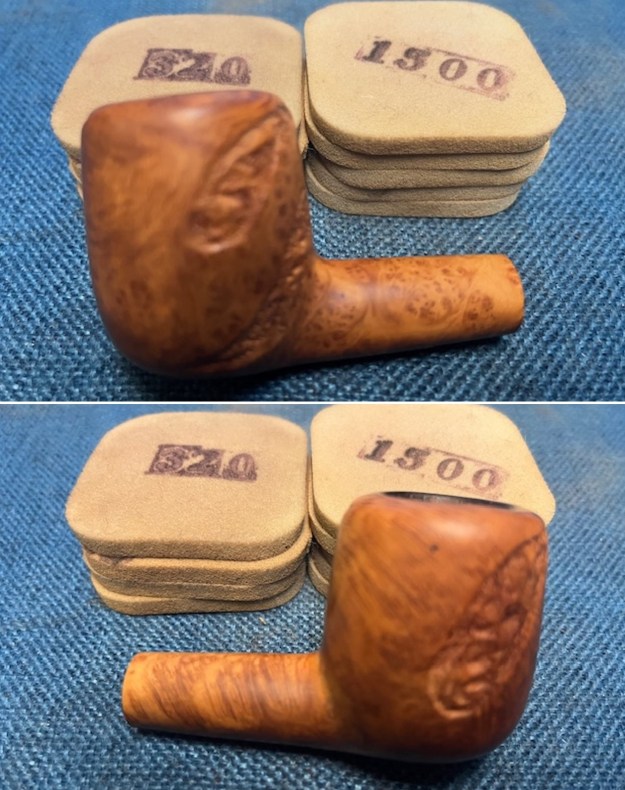
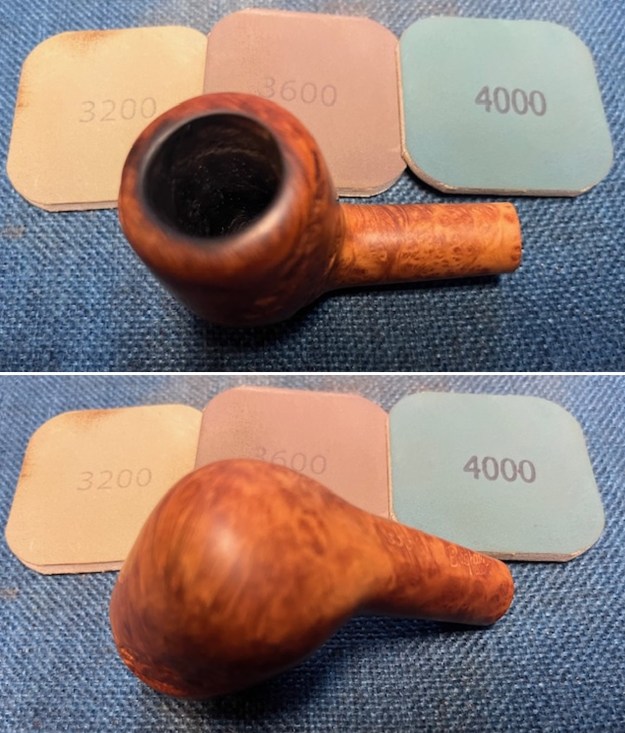
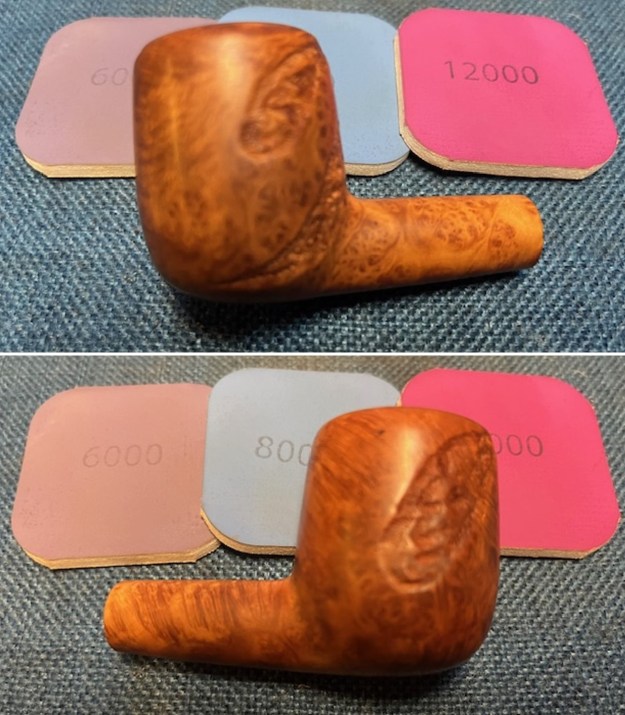
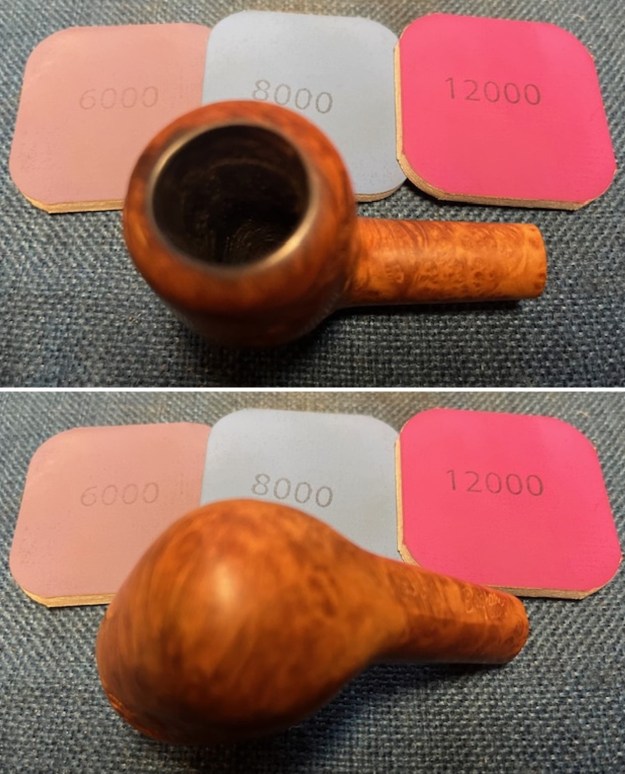
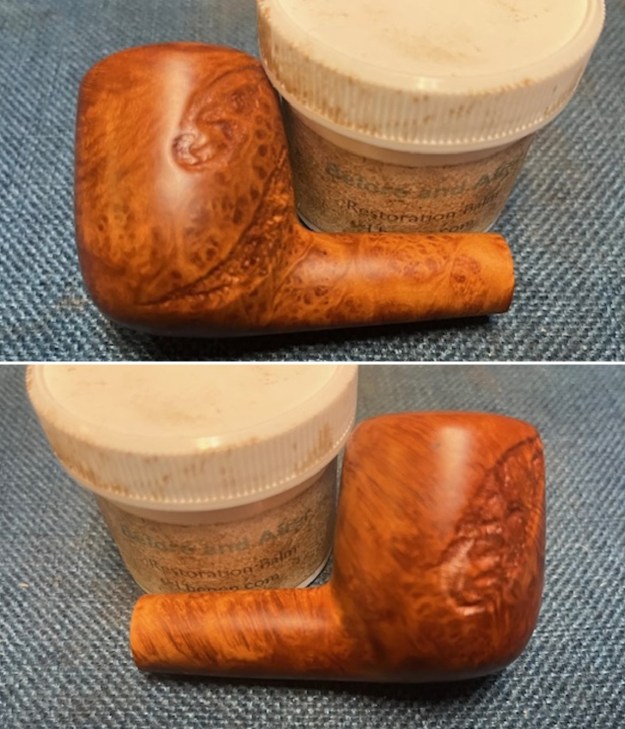
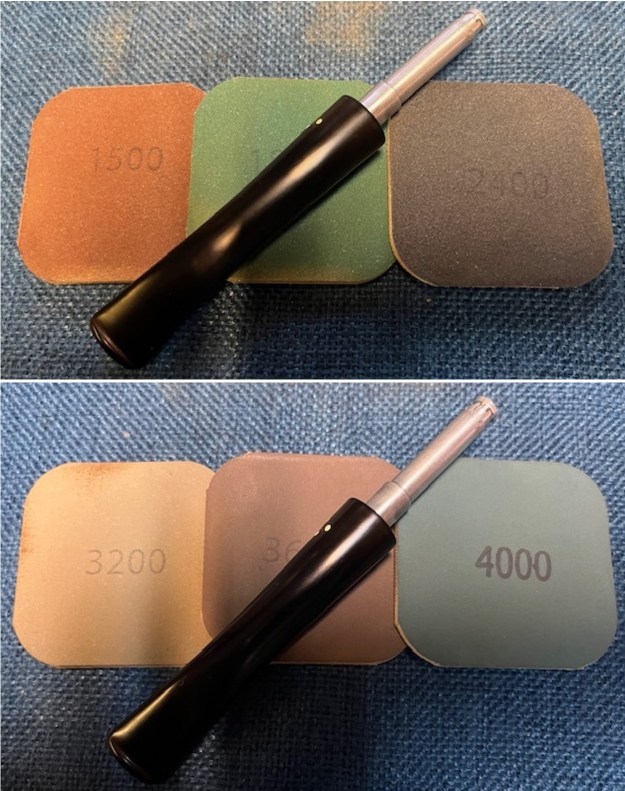
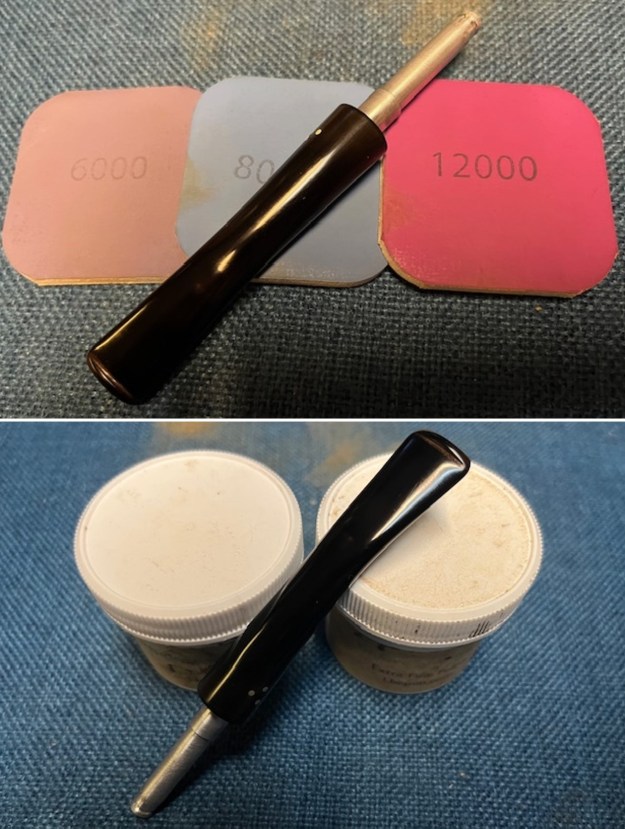
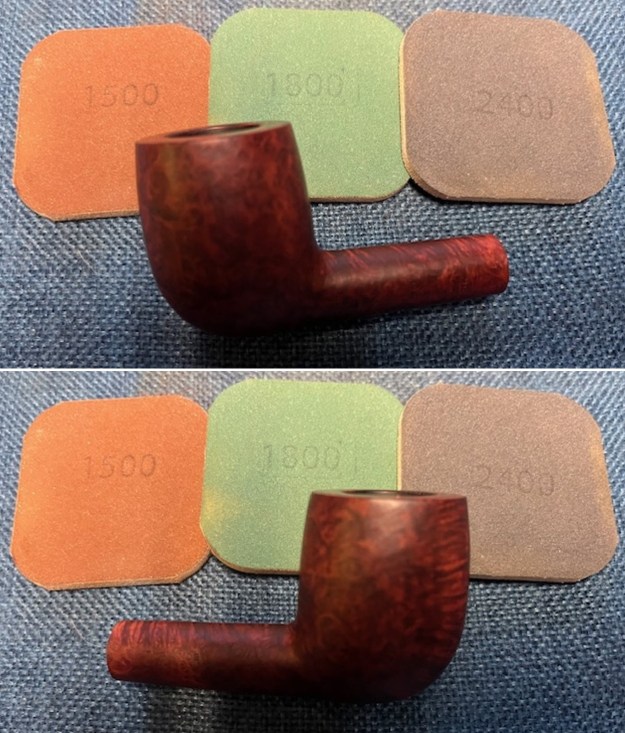
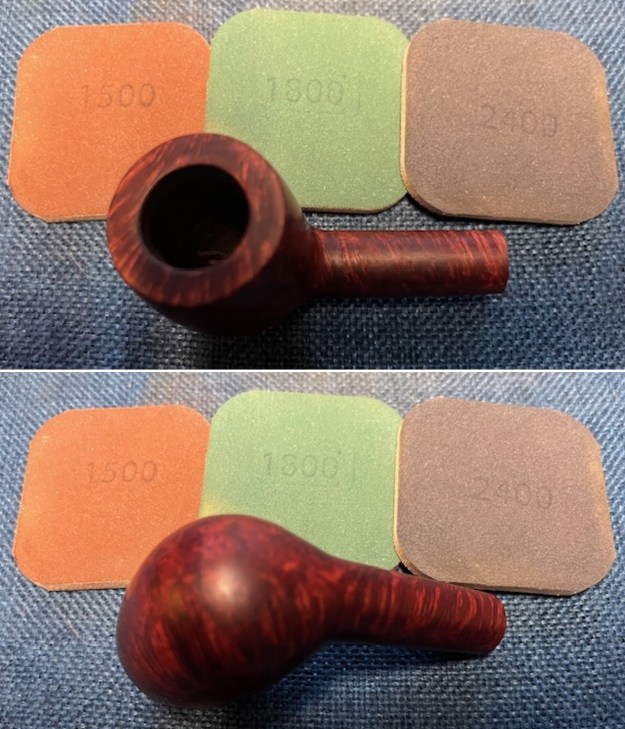
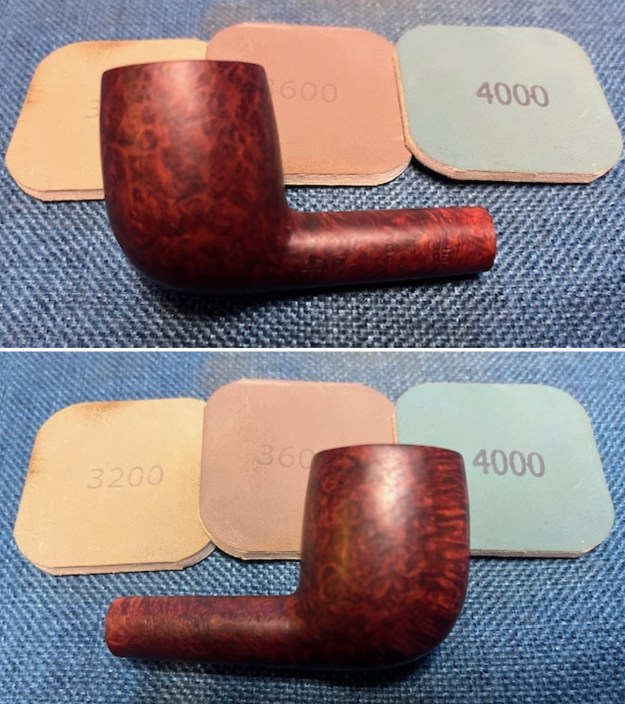
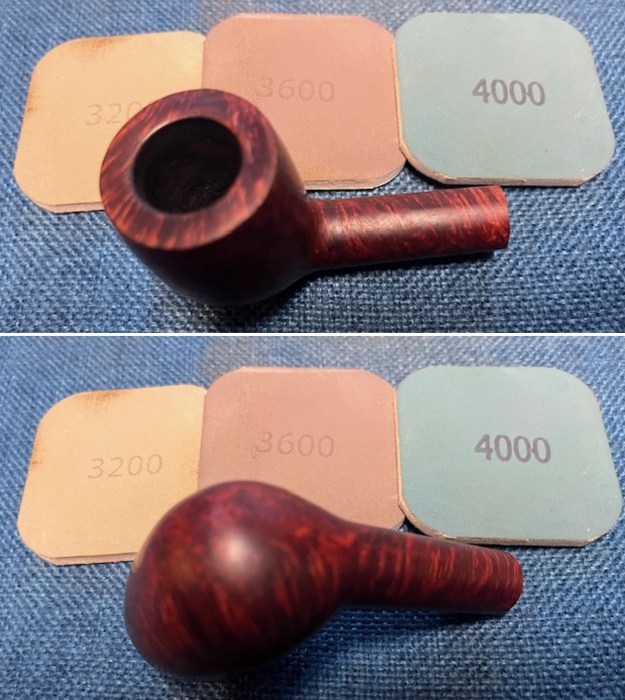
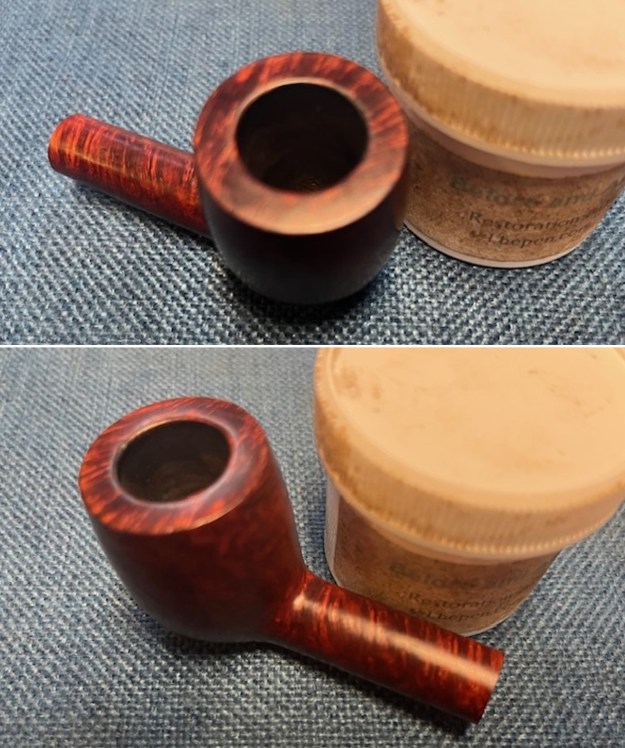
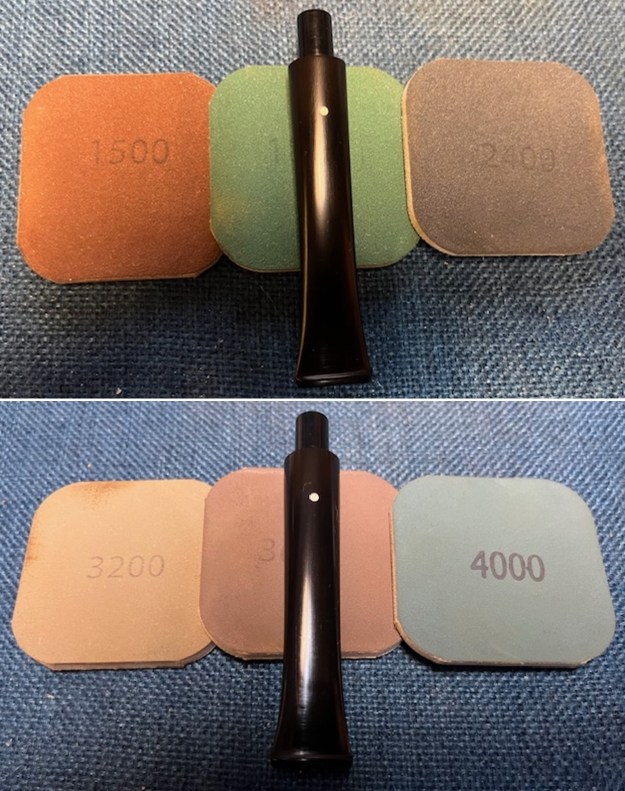
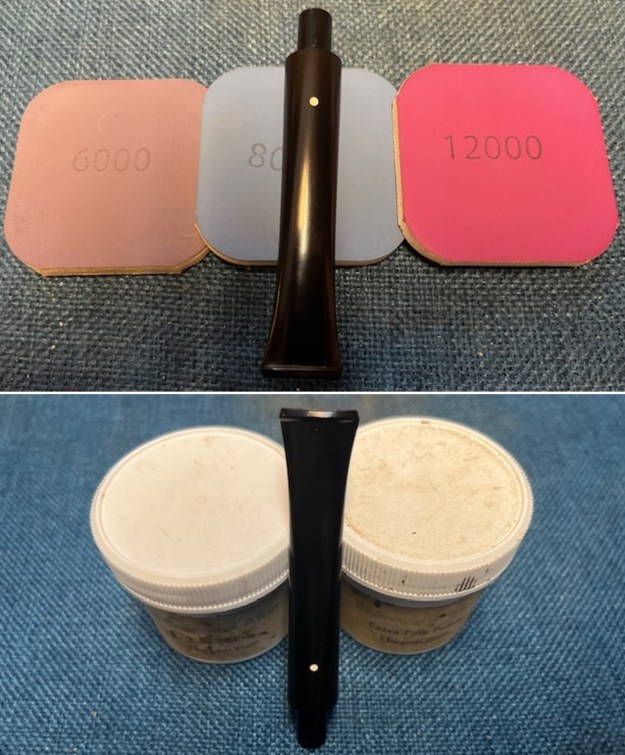
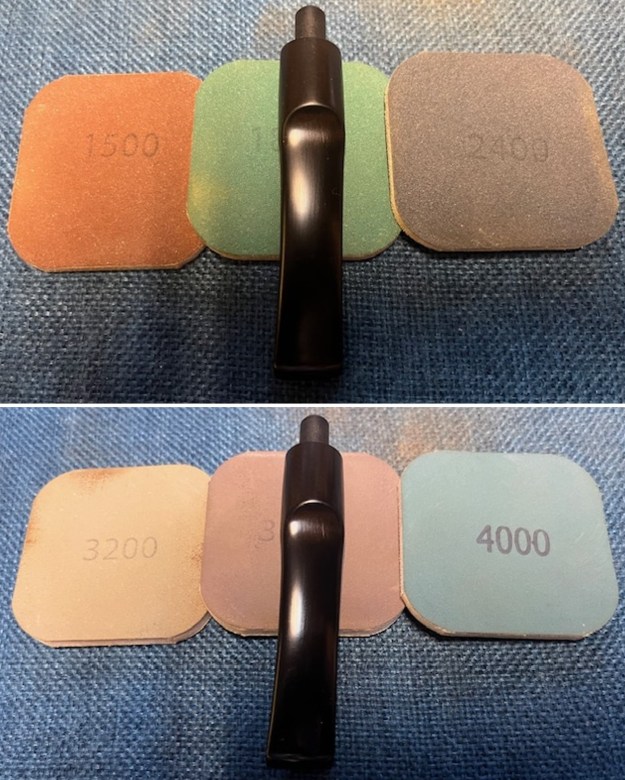
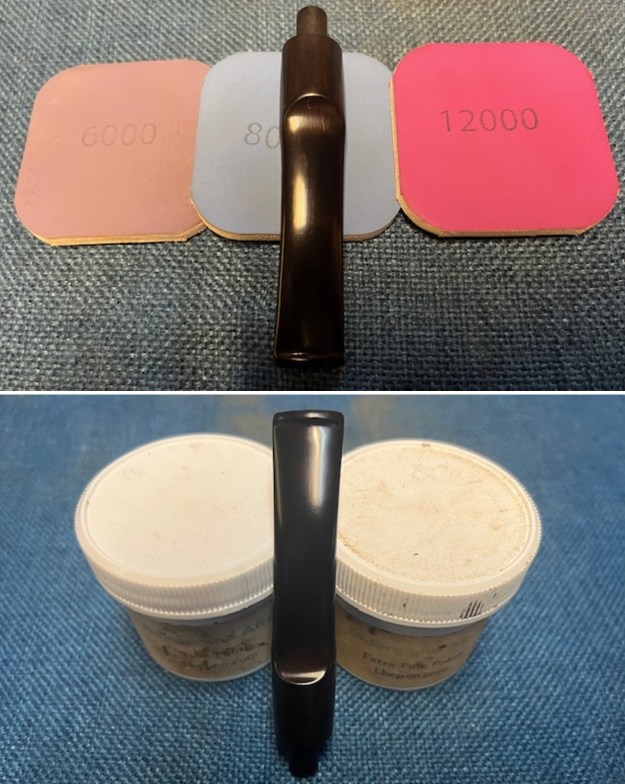
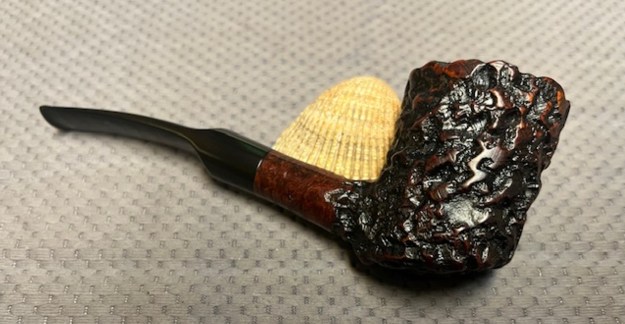
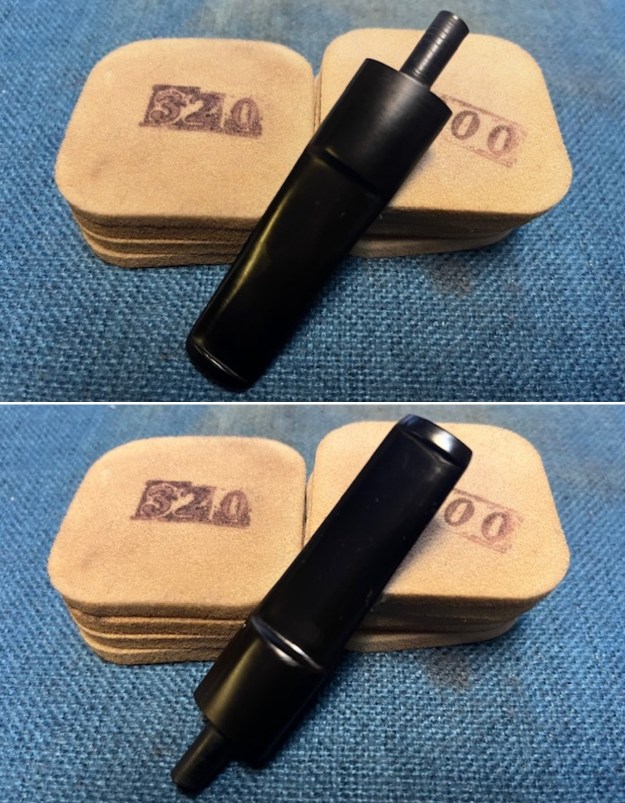
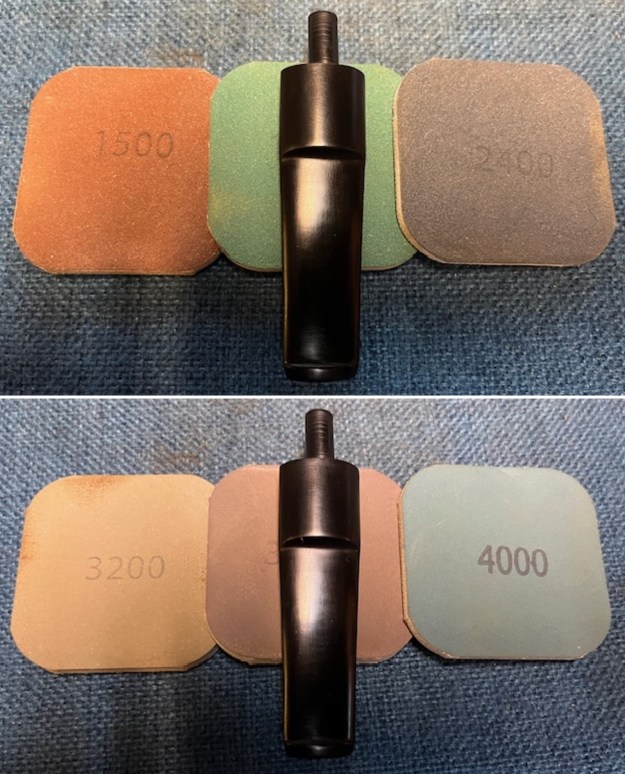
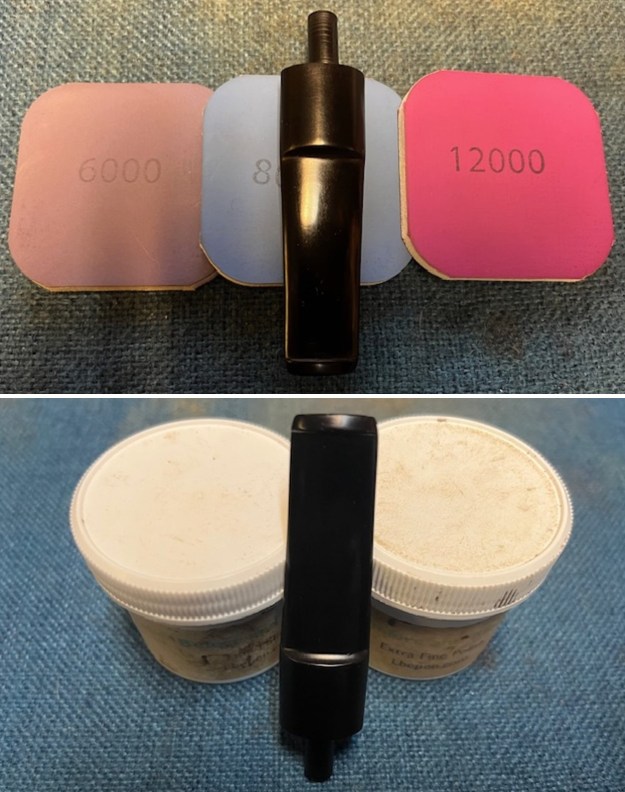
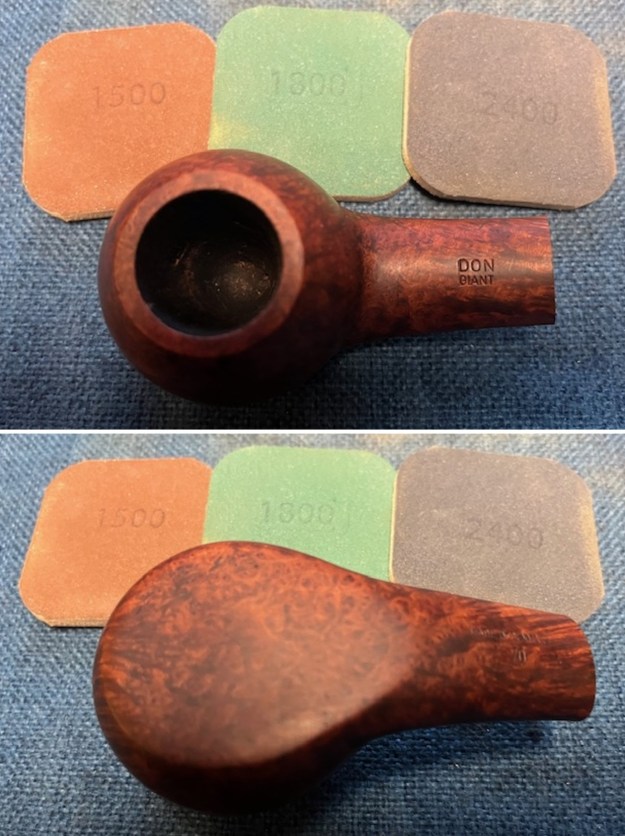
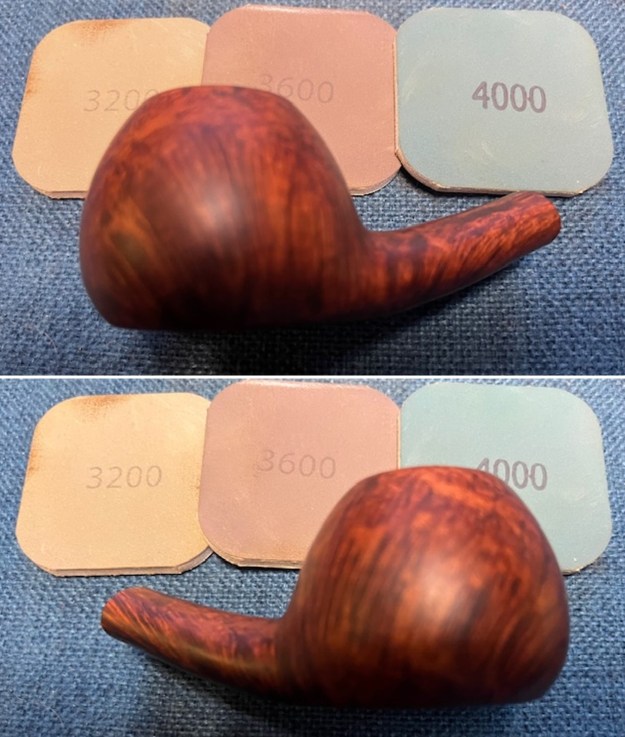
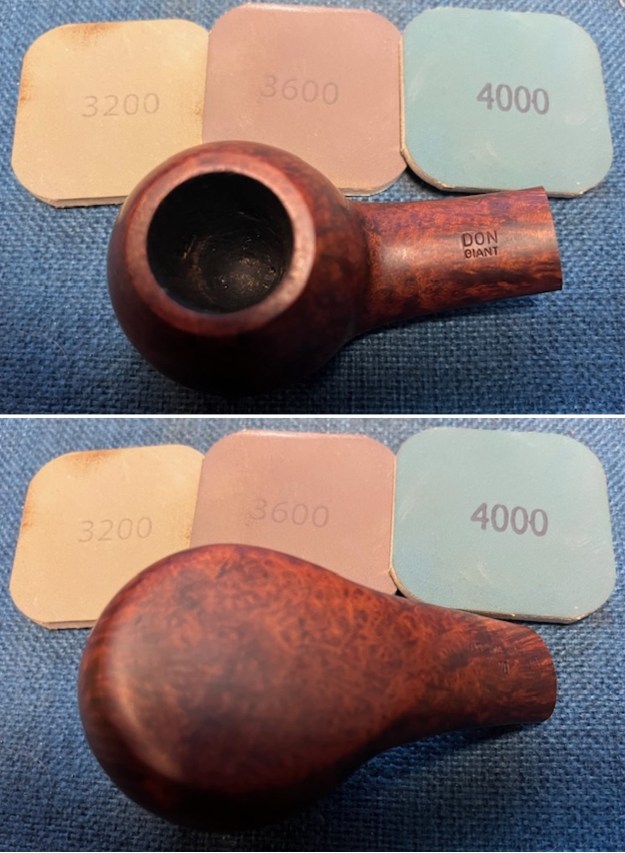
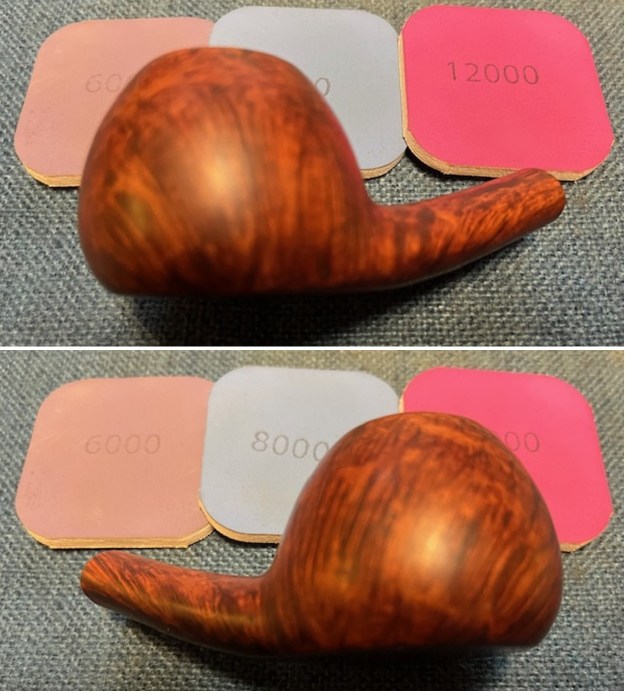
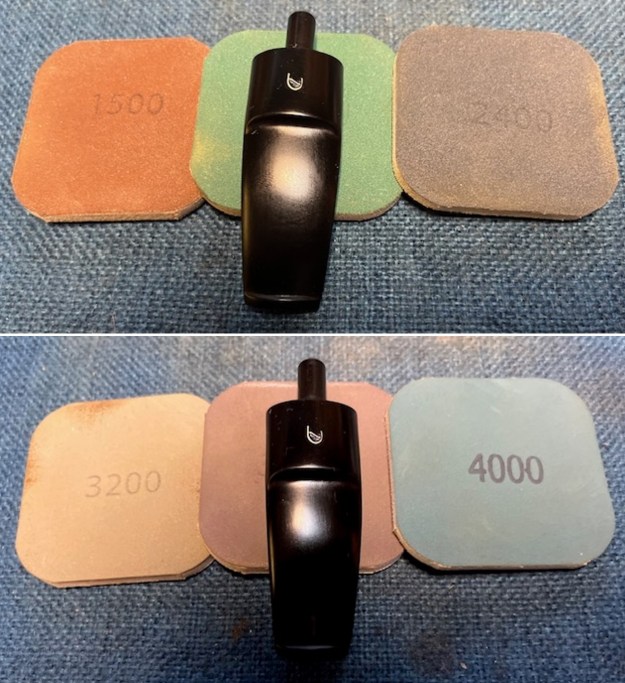
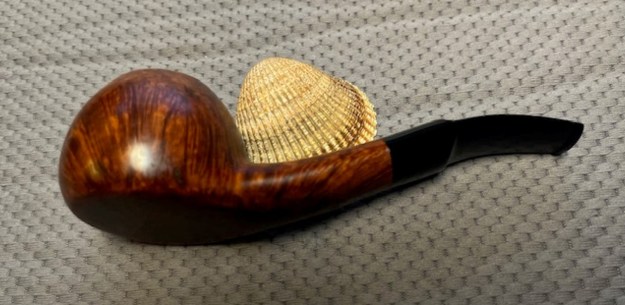
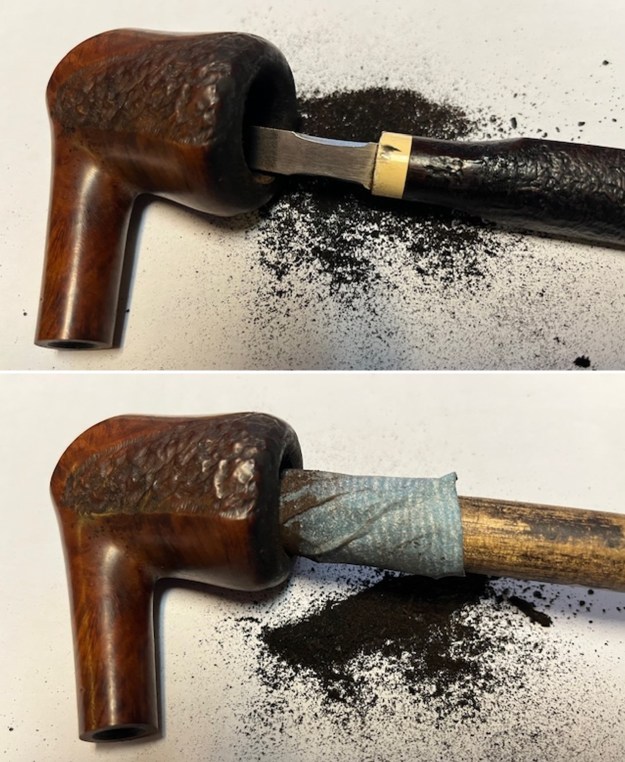
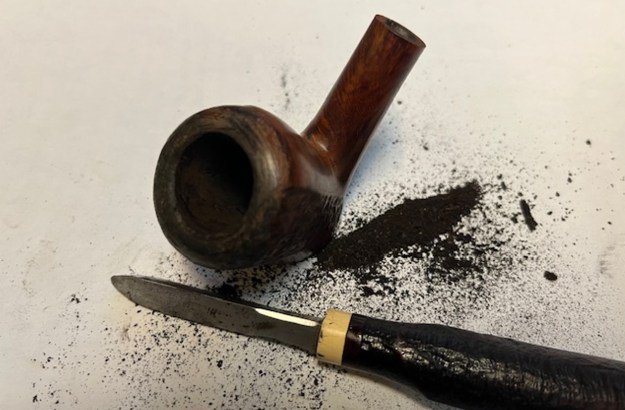
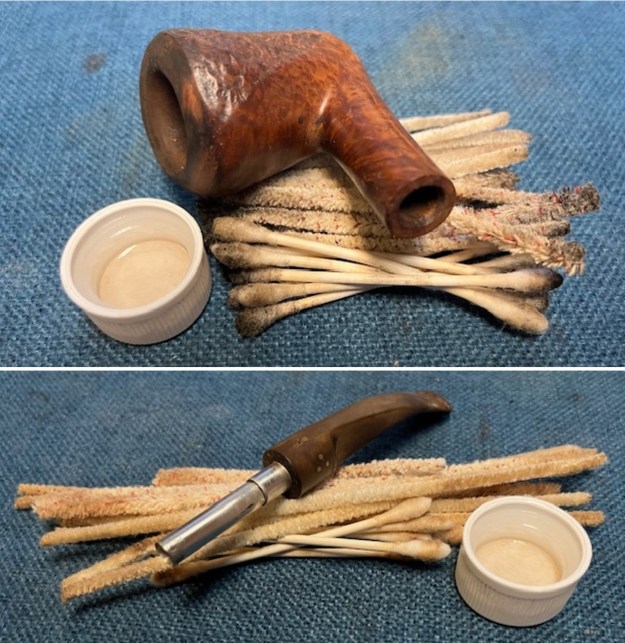
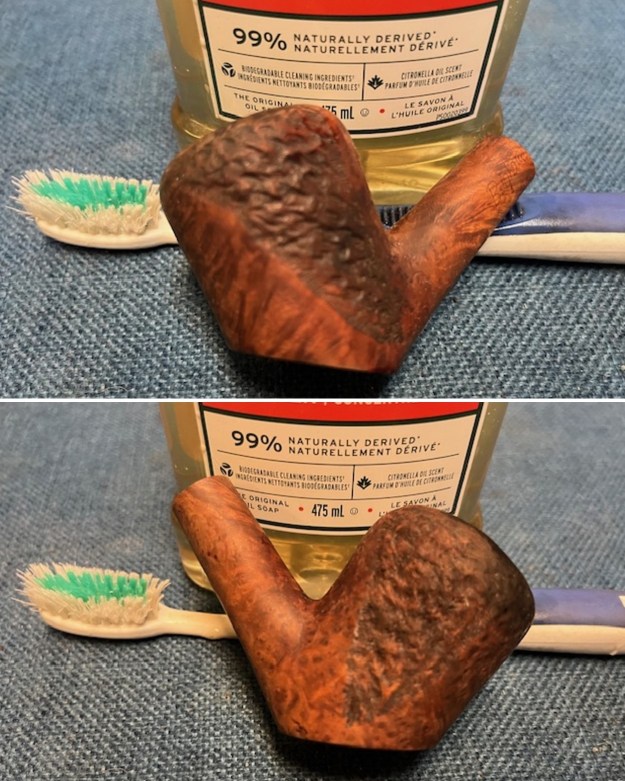
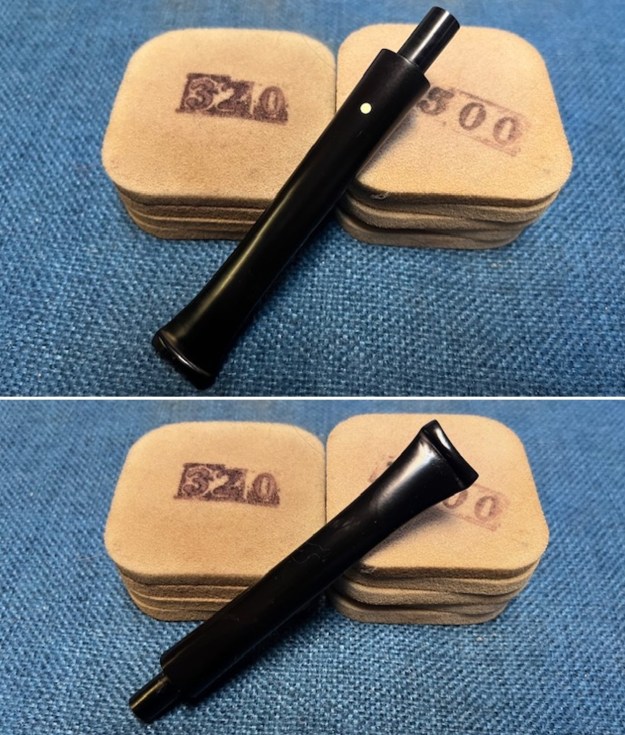
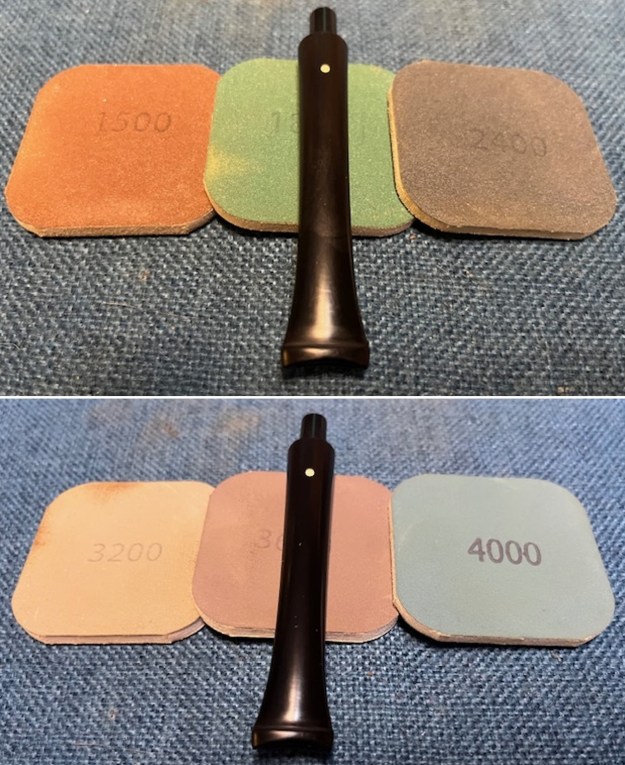
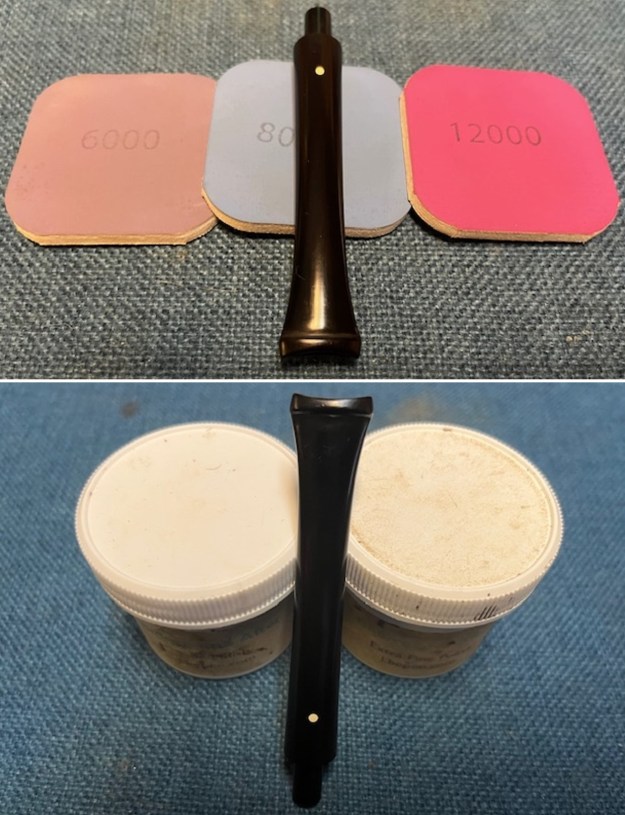
I am also including a flyer “The Pipe of True Smoking Enjoyment” that Malaga sent with each pipe they made. The language of the brochure is well written and gives a clear picture of how Malaga sees the process of breaking in their pipes. Take time to read it as it is very much written in the language of the times.Now it is time to work on the pipe itself. Jeff reamed the bowl with a PipNet pipe reamer and followed up with a Savinelli Fitsall pipe knife to remove the cake. He scrubbed out the mortise and the airway in the shank and the stem with alcohol, cotton swabs and pipe cleaners. He scrubbed the exterior of the bowl, rim, shank and stem with a tooth brush and undiluted Murphy’s Oil Soap to remove the oils, tars and lava on the rim and the grime on the finish of the bowl. He rinsed it under running water. He dried it off with a soft cloth. He was able to remove the lava build up on the rim top and the flat surface of the rim looked very good. The inner edge of the rim looked very good. The outer edge looked very good. He soaked the stem in Before & After Deoxidizer and rinsed it with hot water. I took photos of the pipe to show its condition before I started my work on it. I took close up photos of the rim top and the stem surface. I wanted to show how well it had cleaned up. The rim top and edges looked very good. I took photos of the stem to show the condition it was in. There were tooth marks on both sides ahead of the button.I took photos of the stamping on the sides of the shank. You can see that it is stamped as noted above. It is clear and readable on the left side but the stamping on the right is faint on the left side of the stamp. I took the pipe apart and took a photo of the pipe. It is a good looking pipe with incredible grain. I polished the briar with micromesh sanding pads – dry sanding with 1500-12000 grit pads. I wiped the bowl down after each pad with a damp cloth to remove the sanding dust. By the end of the process the pipe bowl looked very good. I worked some Before & After Restoration Balm into the surface of the briar with my fingertips to clean, enliven and protect the briar. I let the balm sit for 15 minutes and then buffed with a cotton cloth to raise the shine. The photos show the bowl at this point in the restoration process. I set the bowl aside and turned my attention to the vulcanite stem. I sanded the stem with 320-3500 grit sanding pads to remove the tooth marks and chatter against the button edge and sand the logo. It worked well on the tooth marks but did little on the logo on the stem top.I polished the stem with micromesh sanding pads – dry sanding with 1500-12000 grit sanding pads. I wiped it down after each sanding pad with Obsidian Oil. I polished it with Before & After Pipe Stem Polish – both Fine and Extra Fine. I put the stem back on the “Malaga” Aged Imported Briar Rhodesian and took it to the buffer. I buffed the bowl and stem with Blue Diamond to polish the briar and the vulcanite. Blue Diamond does a great job on the smaller scratches that remain in both. I gave the bowl and the stem several coats of carnauba wax and buffed the pipe with a clean buffing pad to raise the shine. I hand buffed it with a microfiber cloth to deepen the shine. I am amazed at how well it turned out. The finished pipe is shown in the photos below. This is a beautiful “Malaga” Straight Rhodesian with a smooth finish and the vulcanite taper stem has a great look. The dimensions of the pipe are Length: 5 ¾ inches, Height: 1 ½ inches, Outside diameter of the bowl: 1 ½ inches, Chamber diameter: ¾ of an inch. The weight of the pipe is 1.23 ounces/35 grams. This is another pipe that I will be putting on the rebornpipes online store in the American Pipe Makers and Pipemaking Companies Section shortly, if you are interested in adding it to your collection. Thanks for walking through the restoration with me on this beauty!

As always, I encourage your questions and comments as you read the blog. Thanks to each of you who are reading this blog. Remember we are not pipe owners; we are pipe men and women who hold our pipes in trust until they pass on into the trust of those who follow us.

Restoring a Unique Old Weber The Scoop Squat Bulldog


by Steve Laug

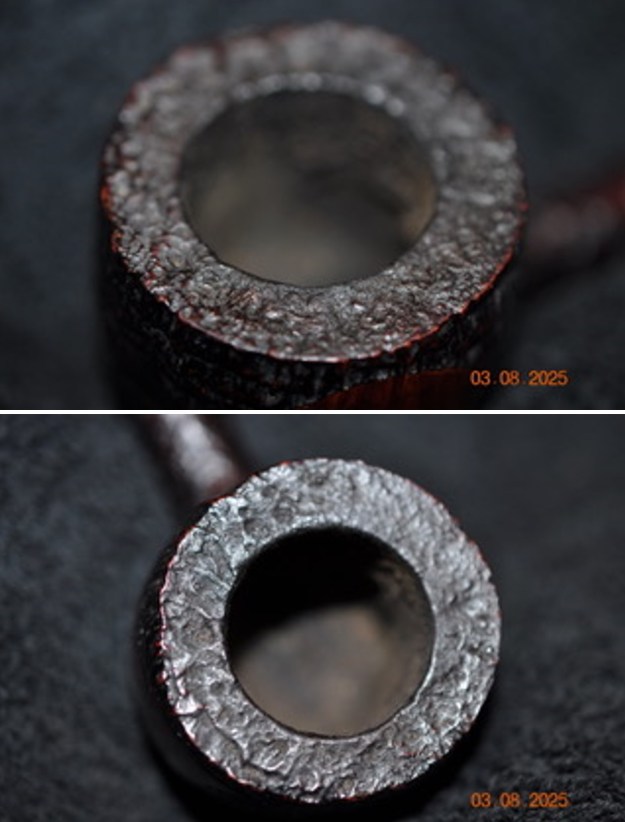
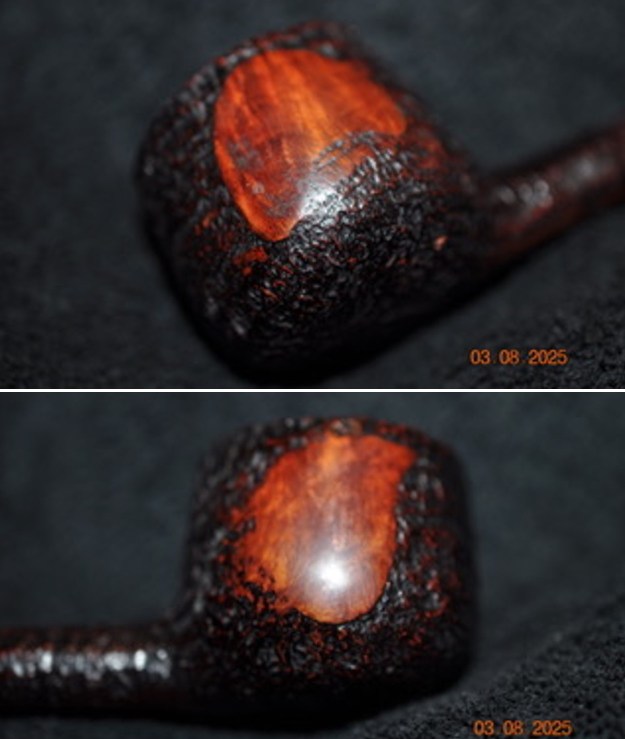
Last Fall I received an email from a lady in Pasadena, California, USA. We bought it from her on 11/08/2024. She sent me a series of photos to give me a sense of the condition of the pipe. The first photo showed the damaged box. The old box was definitely a Weber Box but it was for a Billiard not a Bulldog. The Box says Hand Turned from Genuine Imported Briar on the top of the box cover. On the end of the box it is labelled Billiard [over] the Weber logo [over] Synchro Standard. The box was in very rough condition with the paper label torn and falling apart. Inside there was mould on the bottom and one end of the box. It was a mess and to my mind was not worth keeping. Here are her photos.She also sent photos of the pipe so I could see it as she had described it. This particular Weber was a shape that he made famous. I have had several different versions of this pipe – mostly straight or ¼ bent and all were rusticated with Weber’s recognizable rustication. This one was different – it had a unique rustication style that set it apart. The first is a side and top shot that gives a sense of the rustication on the bowl side and the inset rim top. The stem was also quite clean. The second and third photos below show the top and the heel of the bowl. The top is smooth and inset a little bit. The rim edges look quite good. The sides and heel of the bowl are heavily rusticated with three odd shaped smooth spots on the front and the sides.The rusticated finish on this pipe and the Weber Scoop stamping are what caught our eye. The pipe has something about it that just grabbed me. I have worked on many Weber pipes and even a scoop in the past. But never have I seen one like this one. It is stamped on the left topside of the shank and reads Weber in an oval (logo) [over] The Scoop. On the right underside of the diamond shank it is stamped Hand Made [over] Imported Briar. It has a classic combination of Brown stains on the smooth and rusticated finish that is a stark contrast to the vulcanite saddle stem. It is a squat Bulldog with a vulcanite stem. The bowl is smooth on the rim top and rusticated everywhere else. There was a light cake in the bowl and spots of lava on the edges of the rim top. The inner edge and the top look good other than that. The stem is oxidized and very dirty at this point. It does not show any tooth marks or chatter on the top and underside ahead of the button. There is no logo on the diamond saddle stem and other than being dirty looks to be in good condition. Jeff took some photos of the box to confirm what I thought of the condition from the above photos. He removed the lid from the box and took photos of the inside of the box. It is very dirty and the inside had a lot of mould build up on the bottom of the box and ends. The pipe itself was very dirty and smelled mouldy.Jeff took the pipe out of the box and took photos of the pipe to show its condition. It is dirty, dusty and mouldy smelling. You can clearly see the unique finish that I spoke of above.He took some photos of the rim top and bowl from various angles to give me a clear picture of the condition of the rim top and bowl. It a light cake on the inside of the bowl and the rim top is spotted with lava that is heavier on the back side. He included photos that show the top and underside of the stem. It is as described above. Jeff took photos of the sides and heel of the bowl to give a sense of the carving and rustication on the bowl. It is quite unique and strangely beautiful. He captured the stamping on the sides of the shank. It read as noted above and is clear and very readable.I decided to do a bit of reading on Weber pipes in general and also see if I could pick up specific information on Weber The Scoop. I looked on Pipedia and found the following interesting historical information (https://pipedia.org/wiki/Weber_Pipe_Co.).

Carl B. Weber was a German from Bavaria. Aged 21 he immigrated to the USA in 1911. In 1938 he established Weber Briars Inc. in Jersey City, New Jersey – later renamed the Weber Pipe Co. The firm grew to be one of the giants of American pipe industry focusing itself in the middle price and quality zone. Trademark: “Weber” in an oval. Beside that Weber – especially in the years after 1950 – was a most important supplier for private label pipes that went to an immense number of pipe shops. In New York alone for example, exactly the same pipes were found at Wilke’s, Barclay Rex, Trinity East, Joe Strano’s Northampton Tobacconist in Ridgewood, Queens, Don-Lou in Bensonhurst, Brooklyn. Nearly all pipes for Wilke were unstained and many models, for example the “Wilke Danish Bent”, could hardly deny originating of Weber. Among others well reputed pipemaker Anthony Passante worked for Weber.

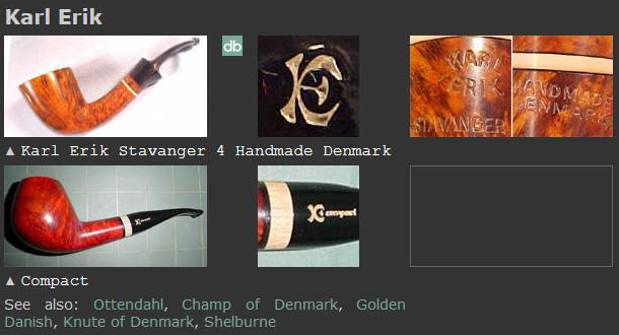
Weber Pipe Co. owned and manufactured Jobey pipes – when mainly sold in the USA by The Tinderbox from 1970’s – 80’s. In addition Jobey / Weber bought Danish freehands from Karl Erik (Ottendahl). These pipes were offered as Jobey Dansk. Ottendahl discontinued exports to the United States in 1987 and in the very same year – obviously only as a ghost brand – Jobey was transferred to Saint-Claude, France to be manufactured by Butz-Choquin. Carl B. Weber is the author of the famous book “Weber’s Guide to Pipes and Pipe Smoking”.                                   

There was also a sales poster on the site that had an inset about The Scoop so I have included a copy of that poster below. Make sure to have a look at the photo and information. Armed with that information I turned my attention to the pipe itself. Jeff had cleaned the pipe with his usual penchant for thoroughness that I really appreciate. He reamed it with a PipNet pipe reamer and cleaned up the reaming with a Savinelli Fitsall Pipe Knife. He scrubbed out the internals with alcohol, pipe cleaners, shank brushes and cotton swabs until the pipe was clean. He scrubbed the exterior of the bowl with Murphy’s Oil Soap and a tooth brush to remove the grime and grit on the briar and the lava on the rim top. The finish looks very good with good looking grain around the bowl and shank. The musty smell of the ruined box was no longer and issue. Jeff soaked the stem in Before & After Deoxidizer to remove the oxidation on the rubber. When the pipe arrived here in Vancouver for the second stop of its restoration tour it looked very good. I took photos before I started my part of the work. I took close up photos of the bowl, rim top and stem to show how clean the pipe was. The bowl was clean and the rim top and the inner edge look beautiful. The cap on this pipe was smooth with a ring around the inner and out edge and a rim top that is slightly inset. It is unique among the Weber Pipes that I have worked on. The stem was clean and did not show either tooth marks or chatter.I took photos of the stamping on the sides of the shank. It is very clear and readable and read as noted above. I also removed the stem from the shank and took photos of the pipe to show the look of the parts. I sanded the rim top with 320-3500 grit sanding pads to remove the light scratching on the edges and surface of the rim. I wiped it down with a damp cloth after each sanding pad to remove the debris.I polished the smooth rim top with 1500-12000 grit micromesh sanding pad – dry sanding it with the pads. I wiped the bowl down with a damp cloth after each pad. It began to take on a deep shine. The exterior of the bowl look better after sanding. I worked some Before & After Restoration Balm into the briar with my finger tips and a shoe brush to get into the nooks and crannies. I let it sit on the bowl for 10 minutes and then buffed it off with a paper towel and soft cloth. The product is a great addition to the restoration work. It enlivens, enriches and protects the briar while giving it a deep glow. It is a product I use on every pipe I restore. I set the bowl aside and sanded the stem with 320-3500 grit sanding pads. I wiped it down after each pad with Obsidian Oil and it began to look very good.I polished the stem with micromesh sanding pads – dry sanding with 1500-12000 grit pads. Once again, I wiped it down between each pad with Obsidian Oil. I further polished it with Before and After Stem Polish – both Fine and Extra Fine. It looked very good. I am excited to be on the homestretch with beautiful Weber The Scoop Squat Bulldog. This is the part I look forward to when it all comes back together, polished and waxed. I put the bowl and stem back together. I polished the bowl and stem with Blue Diamond to polish out the scratches in the briar and the vulcanite. I gave the bowl multiple coats of Conservator’s Wax and the stem multiple coats of carnauba wax. I buffed the pipe with a clean buffing pad to raise the shine. I hand buffed it with a microfiber cloth to deepen the shine. The unique rusticated finish looks really good with the interesting patterns standing out on the shape. The richly stained briar and the polished black vulcanite went really well together. This Weber Scoop has a recognizable shape and look that catches the eye. The brown stain really makes the rustication depths pop. It is another comfortable pipe to hold in the hand. The finished pipe is shown in the photos below. The dimensions of the pipe are Length: 5 ½ inches, Height: 1 ½ inches, Outside diameter of the bowl: 2 inches, Chamber diameter: 1 inch. The weight of the pipe is 39 grams/1.38 ounces. This one will soon be on the American Pipe Makers Section of the rebornpipes store. Let me know if you are interested in adding it to your rack. Thanks for reading this blog and my reflections on the pipe while I worked on it.

Another pipe dropped off for repair and restoration


by Steve Laug

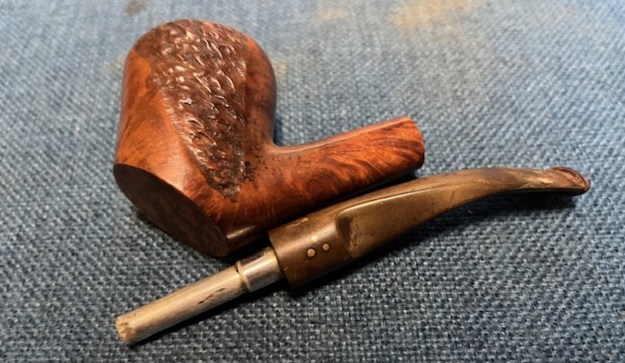
On Sunday afternoon a fellow stopped by with a bag of parts from one of his first pipes. It was in pieces and he was thinking perhaps it needed a new stem. As I looked at the parts I could see what happened. It also seemed things were missing. The 9mm filter tenon had come loose from the stem and in the process, he lost one of the metal spacers. The spacers were originally an acrylic ring sandwiched between to steel washers. With one missing it made the fit of the stem to the shank crooked as the acrylic spacer was not uniform in its depth. Work would need to be done on the spacer pieces to correct the issues. The pipe appeared to be a basket pipe from Italy and bore the stamp Angelo on the left side. It was not a brand I was familiar with. It had a thick varnish coat that was bubbling all around the sides and would need to be removed. The finish was smooth with small hash marks around the surface of the bowl and shank. The bowl had a thick cake and an overflow of lava on the rim top. The top and inner edges looked good as far as I could tell through the grime. The stem had tooth marks and chatter on both sides and was dirty and scratched from sitting around. I put the stem in the shank part way to have a look at what I had to work with. The order of the rings on the stem as it is in the following photos appears wrong to me. The missing ring changes the sandwich look. I think the washer needs to go against the stem face and the acrylic against the shank to have the right feel. I will need to set those in an order that minimizes the break in the flow of the stem and shank. Here are some photos of the pipe as it was initially fit together. I took the stem off the shank and took a photo of the current look of the pipe. I think there is potential to improve the look as it has some charm and the sitter base is very balanced and functional.Before I started my reworking of the stem and bowl on this problematic pipe I wanted to have a bit of information on the Angelo brand. I personally like to have the background so that when I am working on a pipe I know who carved or made it originally. Then as I work on it I can carry on a dialogue with them (at least in my mind) about my changes. I turned to PipePhil’ site for information (http://www.pipephil.eu/logos/en/logo-a6.html#angelo). I have included a screen capture of the pertinent section and the sidebar information below the photo.Second brand used by the Rovera family (Angelo and Damiano) who produces Ardor, Roverart and Rovera.

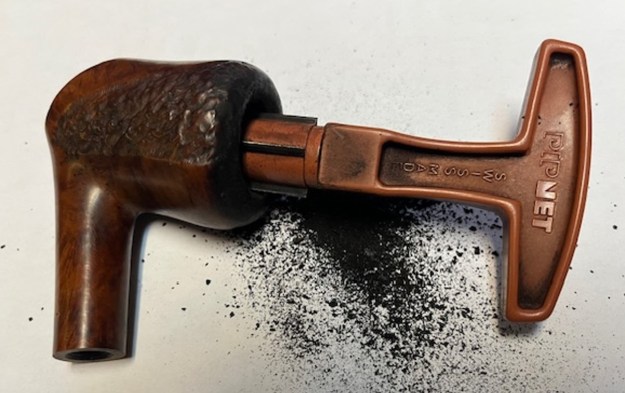
I decided to start my work on the pipe by addressing the puzzle of the stem. I took it apart and found that the rings were not glued and could be slipped up and down the tenon. This was a plus in this case so I removed the rings and reversed the order so that the metal spacer separated the vulcanite stem from the acrylic spacer. I fit it in the stem and in the shank for a look. Because the shank is very dirty it is hard to press the stem into the shank all the way but this gave me a sense of the look of the pipe with the rings reverse. I liked it and was pretty sure that the missing metal spacer would have been on the other side of the acrylic. With the order of the spacers to my liking I cleaned out the stem with alcohol, pipe cleaners and cotton swabs to remove the grime in the airway and int seat of the tenon. I cleaned out the tenon at the same time. I coated the tenon end that it in the stem with black CA glue using a tooth pick. Once it was ready I pressed the parts together and set the stem aside to let the glue cure. I like the overall look of the stem at this point. I did not anchor the acrylic ring as there were going to be issues with the fit as it was not round or flat on the face.While the glue cured on the tenon I move to address the bowl. I reamed the cake in the bowl using a PipNet pipe reamer with the second and third cutting heads to take back the cake. I used a Savinelli Fitsall Pipe Knife to scrape the remainder of the cake out of the bowl and clean up the bottom of the bowl. I sanded the bowl walls with 220 grit sandpaper wrapped around a piece of dowel. With the bowl cleaned out I was able to see that the bowl walls and bottom were in great condition. There was no checking or damage. I used the edge of the Fitsall knife to scrape the lava from the rim top. I decided to remove the bubbling varnish coat next. I used acetone and cotton pads to scrub the thick bubbling varnish coat off the bowl. I was surprised by the way the briar looked with the shiny coat gone. It was a nice looking piece of wood and once cleaned and polished would be quite lovely. I sanded the bowl and shank (carefully avoiding the stamping) with 320-3500 grit sanding pads. I wiped the bowl down after each pad with a damp cloth to remove the dust and debris from the sanding. The briar really was taking on a rich shine. After the sanding and stem work I cleaned out the airway in the shank, mortise and the stem with alcohol, pipe cleaners and cotton swabs. I was surprised by how much more gunk came out of the tenon particularly. The pipe was clean now.I polished the bowl and rim with micromesh sanding pads – dry sanding with 1500-12000 grit sanding pads. I wiped it down after each pad with a damp cloth. It took on a deeper shine with each pad. I decided to fit the stem to the shank end before I gave it a rub down with Restoration Balm. The shank was cut at and angle and the stem would not fit flat against it. I put the stem in place and marked it with a pencil to clean up the angle. The top half of the shank needed to be reduced in depth to match the bottom half. I used a folded piece of 220 sandpaper to do the work. I constantly rechecked the fit until I had the face flat and the stem sat correctly. The picture below shows the sanded shank end. I stained the sanded briar with a walnut stain pen to match the rest. I rubbed the briar down with Before & After Restoration Balm. I worked it into the briar with my fingertips to work it into the finish. The product works to clean, enliven and preserve the briar. I let it sit for 10 minutes then I buffed it with a cotton cloth to deepen the shine. The briar really comes alive with the balm. I sanded the stem with 320-3500 grit sanding pads to smooth out the marks. I wiped it down with Obsidian Oil after each sanding pad. The bands and the stem work very well.I polished the stem with micromesh sanding pads – dry sanding with 1500-12000 grit pads. Once again, I wiped it down between each pad with Obsidian Oil. I further polished it with Before and After Stem Polish – both Fine and Extra Fine. It looked very good. I used a replacement tenon to make a 9mm converter to fit a stem to be a non-filter stem. I slipped it into the tenon and it fit well.This reworked Angelo Bent Sitter has a beautiful finish now that the varnish coat has been removed and the stem refit. It truly has a new lease on life. The medium brown/black finish gives depth to the grain around the bowl and shank. The rebuilt and polished black vulcanite acrylic stem adds to the mix. I put the stem back on the bowl and buffed the pipe with Blue Diamond on the buffing wheel being careful to not buff the stamping. I gave the bowl and the stem multiple coats of carnauba wax on the buffing wheel and followed that by buffing it with a clean buffing pad. I hand buffed the pipe with a microfiber cloth to deepen the shine. The finished Angelo Bent Sitter is quite nice and feels great in the hand. Give the finished pipe a look in the photos below. The dimensions of the pipe are Length: 5 ½ inches, Height: 1 ¾ inches, Outside diameter of the bowl: 1 ¼ inch, Chamber diameter: ¾ of an inch. The weight of the pipe is 1.69 ounces/48 grams. Thanks for walking through the restoration with me as I worked over another beautiful pipe. The fellow who dropped it off will pick up his pipe on the weekend. I am looking forward to seeing what he thinks of it.

Restoring a James Upshall Handmade in England 6FH Sandblast Square shank Dublin/Lumberman


by Steve Laug

The next pipe on the table is one that we picked up in the lot from a seller in Barrington, Rhode Island, USA on 08/22/2024. The sandblast finish on this pipe and the Upshall stamping are what caught our eye. The pipe has something about it that reminds me of a Charatan pipe. It is stamped on the underside of the shank and reads James Upshall [over] Hand Made [over] In England. To the right of that is the shape stamp 6FH. It has a classic combination of Black and Brown stains on the sandblast finish that is a stark contrast to the vulcanite saddle stem. It is a long Lumberman or long shank Lovat shape square shank pipe with a vulcanite stem. The bowl is a tall Dublin bowl with a smooth rim top and a light cake in the bowl and spots of lava on the rim top. The inner edge and the top look very good other than that. The stem is lightly oxidized. It does not show any tooth marks or chatter on the top and underside ahead of the button. The James Upshall oval JU logo is stamped in white on the top of the stem and looks to be in good condition. Jeff took some photos of the pipe to show the general condition of the pipe before he started his clean up. He took some photos of the rim top and bowl from various angles to give me a clear picture of the condition of the rim top and bowl. It a light cake on the inside of the bowl and the rim top is spotted with lava. He included photos that show the top and underside of the stem. It is as described above. Jeff took some photos of the sides and heel of the bowl to show the condition of the finish on the pipe. The photos showed some great grain in the sandblast around the bowl and shank. It is a great looking piece of briar. He took a photo of the stamping on the underside of the shank. The stamping was clear and readable as noted above. He also took a photo of the oval JU logo on the topside of the saddle stem.Before I started my work on the pipe I looked up the Upshall listing on pipephil’s site to see what I could find (http://www.pipephil.eu/logos/en/logo-j1.html#jamesupshall).Artisan: Barry Jones learned his skill from the age of 15 at Charatan’s. In 1978 he joined Kenneth Barnes and established the James Upshall brand at Tilshead (Wiltshire). Production (2006): ~ 30 pipes/week
I turned to Pipedia to remind myself of the background on the brand Upshall brand (https://pipedia.org/wiki/James_Upshall). I read through the article and found the section on Grading & Sizing Information really helpful. I have included that below. I have highlighted the pertinent text in red below.

James Upshall pipes are graded by various finishes, i.e. bark, sandblast, black dress and smooth etc. Then by cross grain, flame grain, straight grain and, last but not least, the perfect high grade, which consists of dense straight grain to the bowl and shank. The latter being extremely rare. In addition, the price varies according to group size, i.e. from 3-4-5-6 cm high approximately Extra Large. We also have the Empire Series which are basically the giant size, individually hand crafted pipes which come in all finishes and categories of grain. All our pipes are individually hand carved from the highest quality, naturally dried Greek briar. In order to simplify our grading system, let me divide our pipes into 4 basic categories.

  1. It begins with the Tilshead pipe, which smokes every bit as good as the James Upshall but has a slight imperfection in the briar. In the same category price wise you will find the James Upshall Bark and Sandblast finish pipes, which fill and smoke as well as the high grades.
  2. In this category we have the best “root quality” which means that the grain is either cross, flame or straight, which is very much apparent through the transparent differing color finishes. This group will qualify as the “S”- Mahogany Red, “A” – Chestnut Tan and “P” – Walnut. The latter having the straighter grain.
  3. Here you have only straight grain, high grade pipes, which run from the “B”, “G”, “E”, “X” and “XX”. The latter will be the supreme high grade. Considering the straightness of the grain the latter category is also the rarest. Usually no more than 1% of the production will qualify.
  4. Lastly, we have the Empire Series. These are basically Limited Edition gigantic individually hand crafted pieces, which again are extremely rare due to the scarcity of large, superior briar blocks.

Armed with that information I turned my attention to the pipe itself. Jeff had cleaned the pipe with his usual penchant for thoroughness that I really appreciate. He reamed it with a PipNet pipe reamer and cleaned up the reaming with a Savinelli Fitsall Pipe Knife. He scrubbed out the internals with alcohol, pipe cleaners and cotton swabs until the pipe was clean. He scrubbed the exterior of the bowl with Murphy’s Oil Soap and a tooth brush to remove the grime and grit on the briar and the lava on the rim top. The finish looks very good with good looking grain around the bowl and shank. Jeff soaked the stem in Before & After Deoxidizer to remove the oxidation on the rubber. When the pipe arrived here in Vancouver for the second stop of its restoration tour it looked very good. I took photos before I started my part of the work. I took close up photos of the bowl, rim top and stem to show how clean the pipe was. The bowl was clean and the rim top and the inner edge look beautiful. The stem was clean and did not show either tooth marks or chatter.I took a photo of the stamping on the underside of the shank. It is faint in spots but still readable and read as noted above. I also removed the stem from the shank and took photos of the pipe to show the look of the parts.I polished the smooth rim top with 1500-12000 grit micromesh sanding pad – dry sanding it with the pads. I wiped the bowl down with a damp cloth after each pad. It began to take on a deep shine. The exterior of the bowl look better after sanding. I worked some Before & After Restoration Balm into the briar with my finger tips and a shoe brush to get into the nooks and crannies. I let it sit on the bowl for 10 minutes and then buffed it off with a paper towel and soft cloth. The product is a great addition to the restoration work. It enlivens, enriches and protects the briar while giving it a deep glow. It is a product I use on every pipe I restore. I set the bowl aside and sanded the stem with 320-3500 grit sanding pads. I wiped it down after each pad with Obsidian Oil and it began to look very good.I polished the stem with micromesh sanding pads – dry sanding with 1500-12000 grit pads. Once again, I wiped it down between each pad with Obsidian Oil. I further polished it with Before and After Stem Polish – both Fine and Extra Fine. It looked very good. I am excited to be on the homestretch with beautiful James Upshall Sandblast Square Shank 6FH Dublin. This is the part I look forward to when it all comes back together, polished and waxed. I put the bowl and stem back together. I polished the bowl and stem with Blue Diamond to polish out the scratches in the briar and the vulcanite. I gave the bowl and the stem multiple coats of carnauba wax. I buffed the pipe with a clean buffing pad to raise the shine. I hand buffed it with a microfiber cloth to deepen the shine. The pipe polished up pretty nicely. The beautiful sandblast finish looks really good with the interesting patterns standing out on the shape. The dark stained sandblast and the polished black vulcanite went really well together. This James Upshall Long, Square Shank Dublin was another fun pipe to work on thanks to Jeff’s cleanup work. It really has that classic English Charatan look that catches the eye. The combination of various brown stains really makes the pipe look attractive. It is another comfortable pipe to hold in the hand. The finished pipe is shown in the photos below. The dimensions of the pipe are Length: 6 inches, Height: 2 inches, Outside diameter of the bowl: 1 ¼ inches, Chamber diameter: ¾ of an inch. The weight of the pipe is 35 grams/1.23 ounces. This one will soon be on the British Pipe Makers Section of the rebornpipes store. Let me know if you are interested in adding it to your rack. Thanks for reading this blog and my reflections on the pipe while I worked on it.
Restoring a much loved Peterson’s of Dublin Kinsale XL25


by Steve Laug

Sunday afternoon Auke stopped by with a pipe he wanted me to work on for him. It was obviously a favourite pipe of his. It was a Peterson’s shape that I have worked on before and one that was in the Sherlock Holmes series and labelled as a Strand. This one however was stamped on the underside of the shank in a smooth band and read Peterson’s [over] of Dublin [over] Kinsale. To the right of that it was stamped with the shape number XL25. It is a large rusticated pipe that is quite beautiful. This one was dirty with a moderate cake in the bowl smelling of the aromatics that Auke smoked. There was a lava build up on the rim top covering the smooth surface. The finish was a bitty sticky with the grime and dirt. Otherwise it was in good shape. The three stacked bands were a little tarnished on the shank end. The stem was very tight from the build up of tars and oils in both. Auke said the draw was quite constricted and was hard to pull air through – a symptom of a dirty, gummy airway in the shank and stem. The vulcanite stem is also very dirty. There was oxidation, calcification and some light tooth damage on both sides ahead of the button. The gold “P: stamp on the left side of the stem was in good shape – just a bit tarnished. I took photos of the pipe before I started my work on it. I took a closeup photo of the rim top and bowl to give a sense of the dirty condition of the pipe and the thickness of the cake and lava on the bowl top. The rim top and edges look to be under the lava coat but the cleanup will reveal the facts. I also took photos of the stem to show the top and underside ahead of the button.I took photos of the stamping on the underside of the shank. It was readable through the grime and debris. It read as noted in the above paragraphs. I also took the stem off the shank and took a photo of the look and proportion of the pipe.I turned to a Catalogue I have on the blog that has a section on the Classic Range Kinsale Smooth and Rustic finishes. It says that it is based on the Sherlock Holmes collections. A quality briar in a smooth burnt orange or rustic finish. Here is the link (https://rebornpipes.com/wp-content/uploads/2015/05/peterson-cataloguecomp_page_30.jpg). I have included a copy of the page below.I started my work on the pipe by reaming the cake in the bowl. I used a PipNet pipe reamer with the second and third cutting heads to take back the cake. I used a Savinelli Fitsall Pipe Knife to scrape the remainder of the cake out of the bowl and clean up the bottom of the bowl. I sanded the bowl walls with 220 grit sandpaper wrapped around a piece of dowel. With the bowl cleaned out I was able to see that the bowl walls and bottom were in great condition. There was no checking or damage. I cleaned the airway in the shank and stem with pipe cleaners, cotton swabs and isopropyl alcohol. Many pipe cleaners later that airway was clean and once again wide open.I scrubbed the externals of the bowl and shank with undiluted Murphy’s Oil Soap and a tooth brush. I rinsed it with warm running water and repeated the scrubbing and rinsing process until the pipe was clean and looked better. I polished the rim top with micromesh sanding pads to clean up the darkening on the smooth surface and inner bevelled edge. It looked much better. I rubbed the briar down with Before & After Restoration Balm. I worked it into the briar with my fingertips and a horsehair shoe brush to work it into the finish. The product works to clean, enliven and preserve the briar. I let it sit for 10 minutes then I buffed it with a cotton cloth to deepen the shine. The briar really comes alive with the balm.I polished the stem with micromesh sanding pads – dry sanding with 1500-12000 grit pads. Once again, I wiped it down between each pad with Obsidian Oil. I further polished it with Before and After Stem Polish – both Fine and Extra Fine. It looked very good. This Rusticated Peterson’s of Dublin Kinsale XL25 with an oval Taper Stem has a beautiful rusticated finish that has a new lease on life. The medium brown/black/mahogany finish gives depth to the rustication around the bowl and shank. It has a classic look of a Peterson’s pipe. The rebuilt and polished black vulcanite taper stem adds to the mix. I put the stem back on the bowl and buffed the pipe with Blue Diamond on the buffing wheel being careful to not buff the stamping. I gave the bowl multiple coats of Conservator’s Wax and the stem multiple coats of carnauba wax on the buffing wheel and followed that by buffing it with a clean buffing pad. I hand buffed the pipe with a microfiber cloth to deepen the shine. The finished Peterson’s of Dublin Kinsale XL25 is quite nice and feels great in the hand. Give the finished pipe a look in the photos below. The dimensions of the pipe are Length: 6 inches, Height: 2 inches, Outside diameter of the bowl: 1 ¼ inch, Chamber diameter: ¾ of an inch. The weight of the pipe is 1.83 ounces/52 grams. Thanks for walking through the restoration with me as I worked over another beautiful pipe. Auke will pick up his pipe on the weekend. I am looking forward to seeing what he thinks of it.

Spiffing Up a Handsome Brigham 2044 XL Billiard


by Kenneth Lieblich

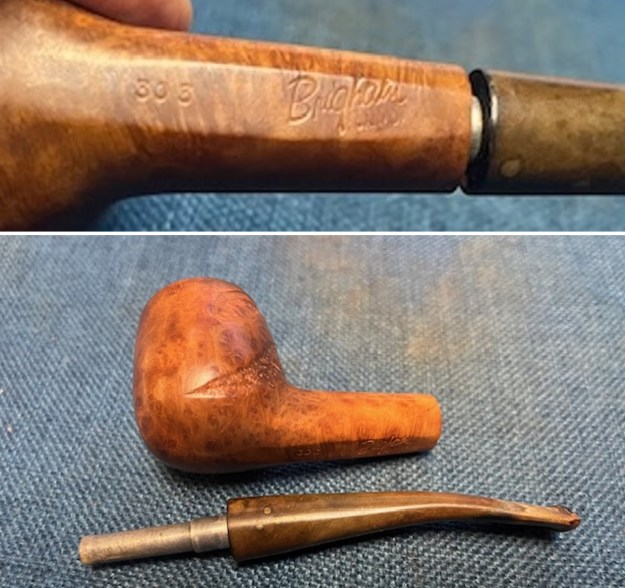
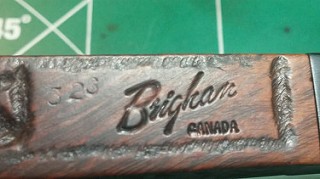
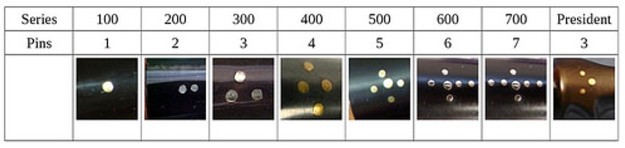
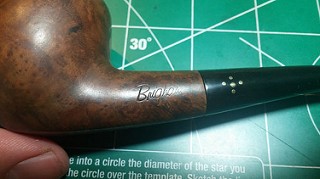
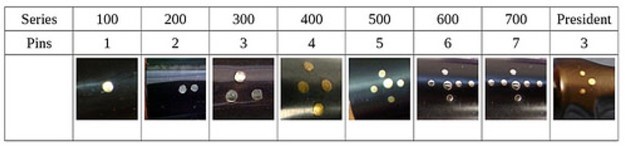
Here’s a terrific, rugged, and handsome pipe that I recently acquired from a local gentleman. I am pleased to report that he maintained his pipes very well and that makes my job easier. This particular pipe was no exception – in fact, I can’t imagine that this pipe was smoked more than a couple of times or so. This is an older Brigham 2044 XL system billiard – and what a monumental pipe it is! Let’s look at the markings. First, the stem has two brass pins – this is the classic way that Brigham identified their pipes. On the underside of the stummel, there is the shape number 2044. Then, off to the far right are the words Made in Canada and, next to that, Brigham.I was pretty sure I knew how old this pipe was, but felt it was best to check with Charles Lemon’s book, Brigham Pipes: A Century of Canadian Briar. I photographed a couple of pages and highlighted the relevant parts.Given that this pipe doesn’t include a size letter (like L), I think it is fair to conclude that this pipe dates from approximately 1964–69. We can see that the code 2044 translates as follows: the “2” corresponds to the two pins on the stem, indicating the “Select” level of pipe. The “04” corresponds to the shape of the pipe, which is listed in Lemon’s book as “Large Straight Billiard, Round Taper Stem”. Finally, the terminal “4” –repeating the last digit of the regular code – indicates that this is an oversize pipe. And it certainly is!

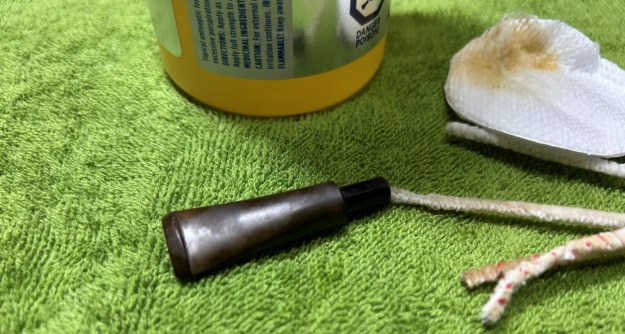
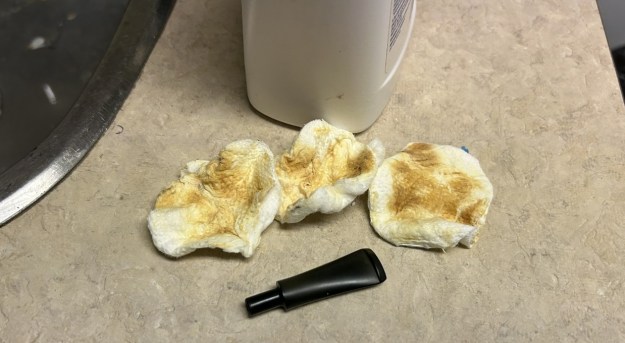
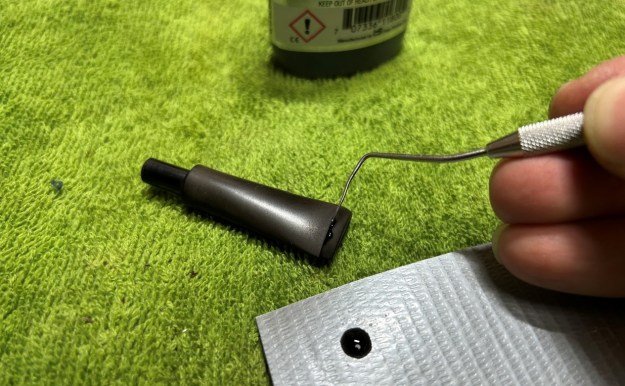
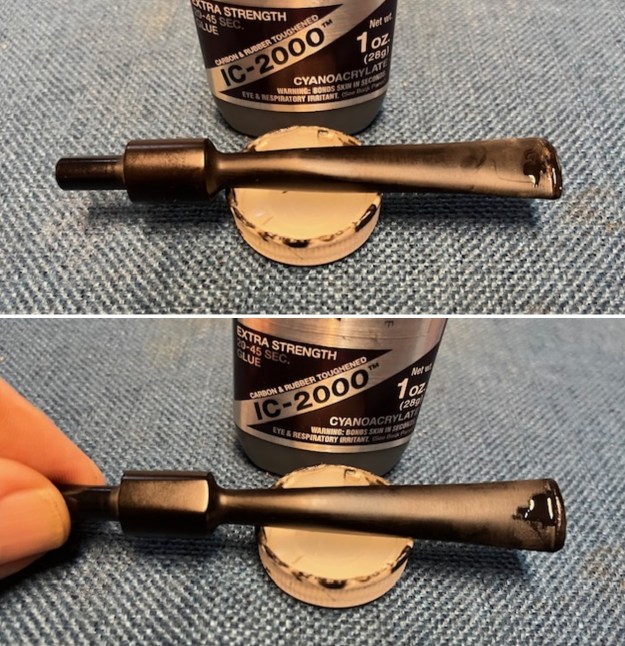
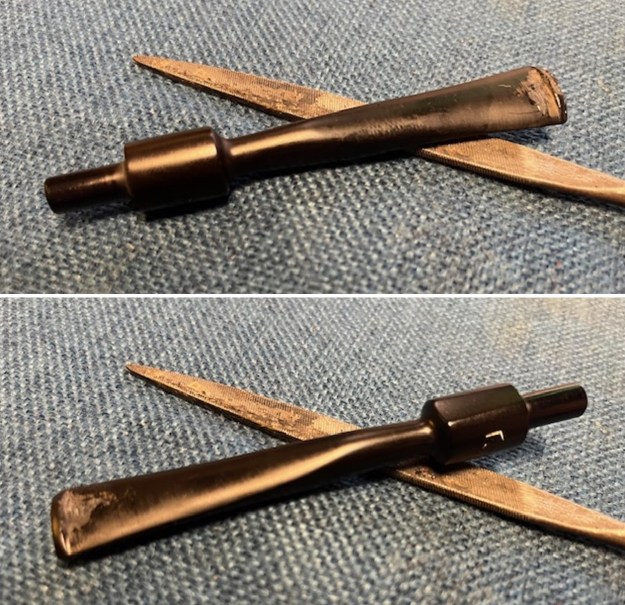
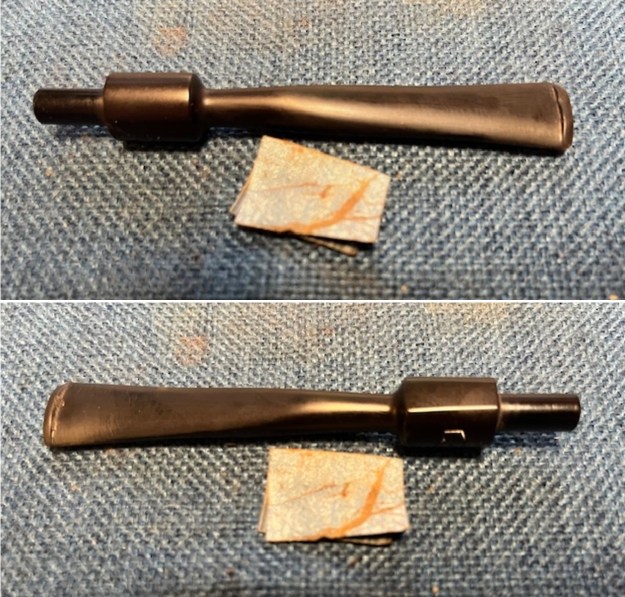
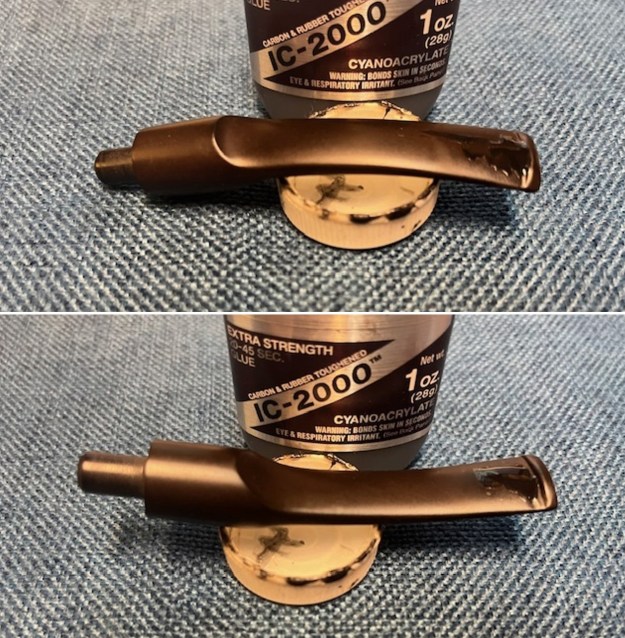
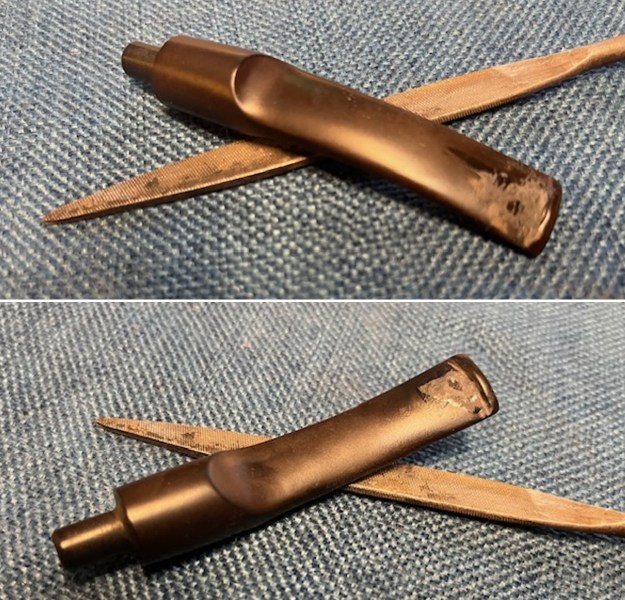
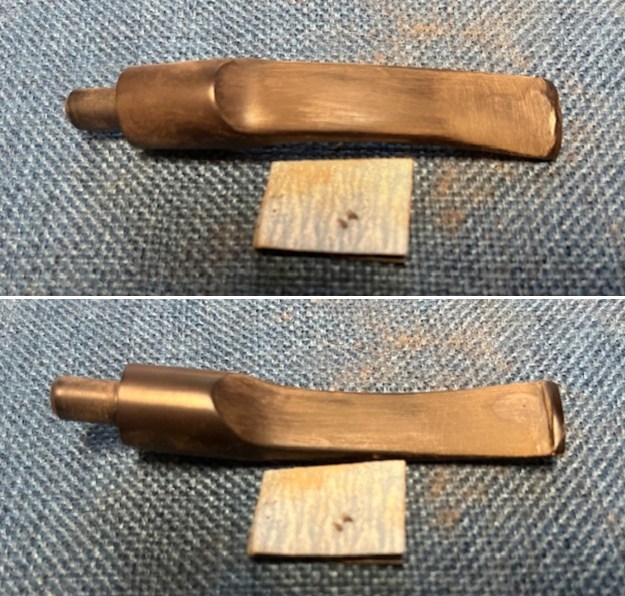
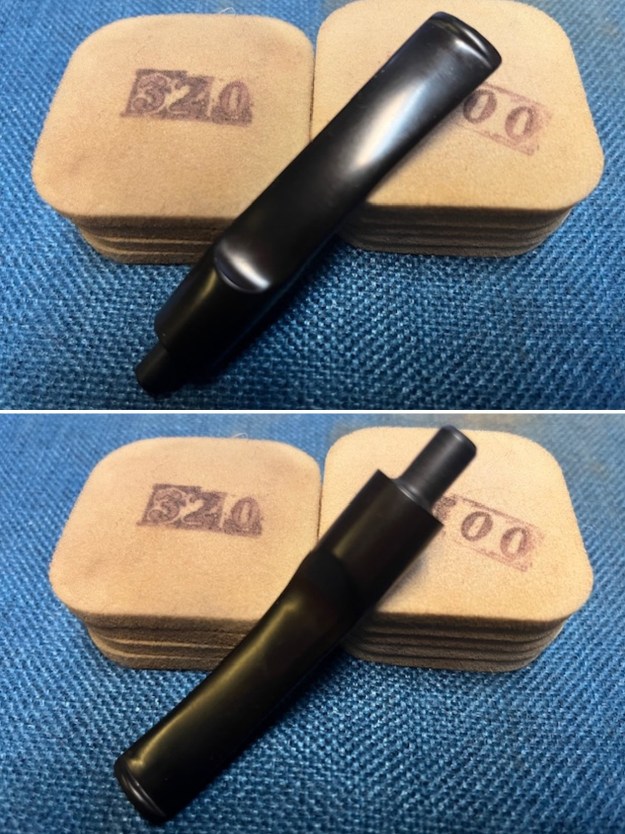
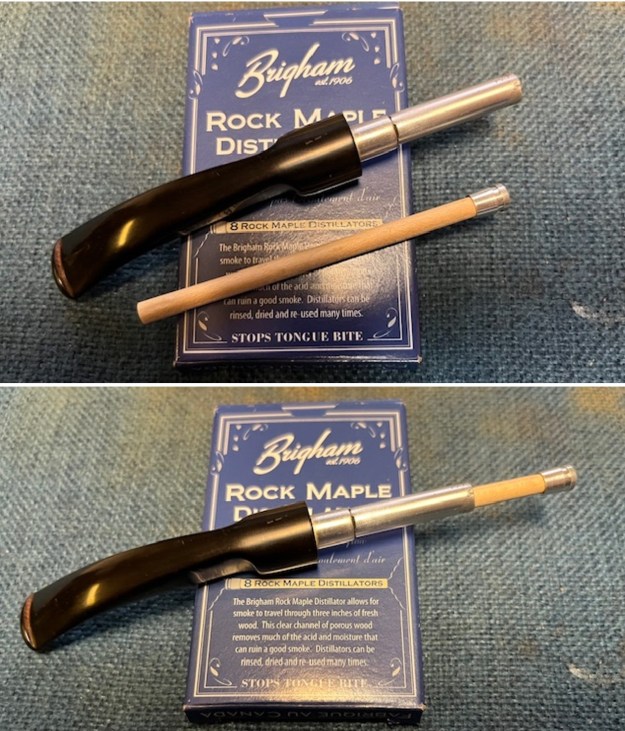
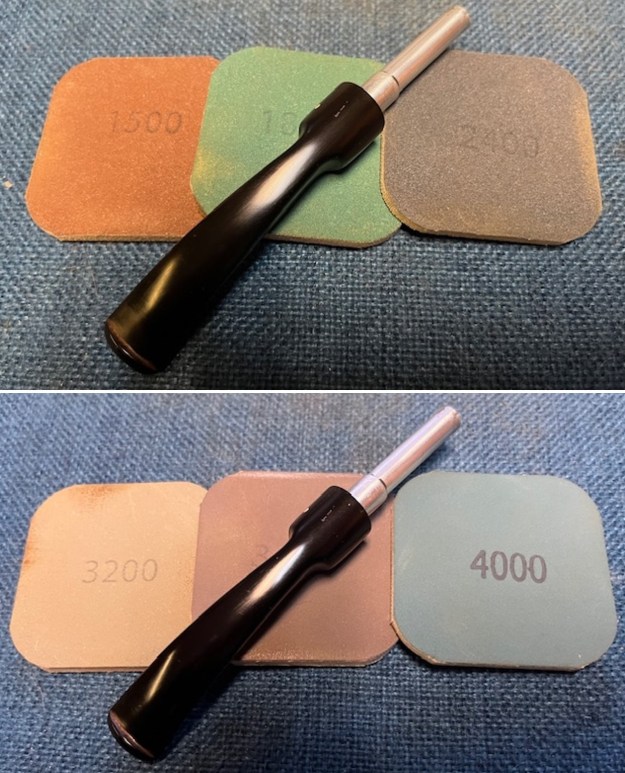
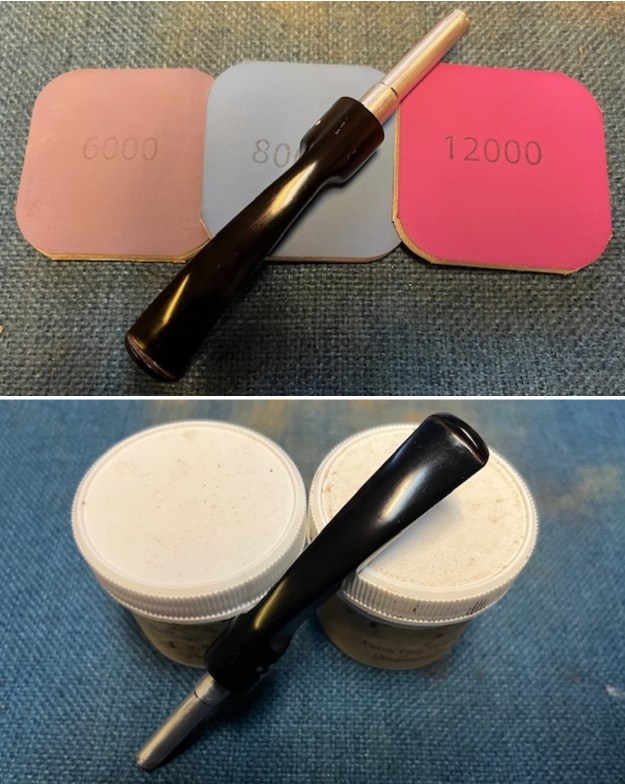
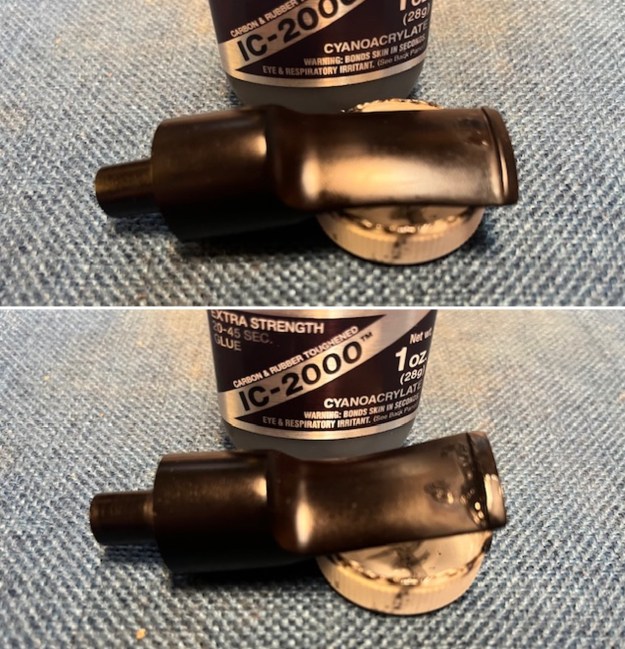
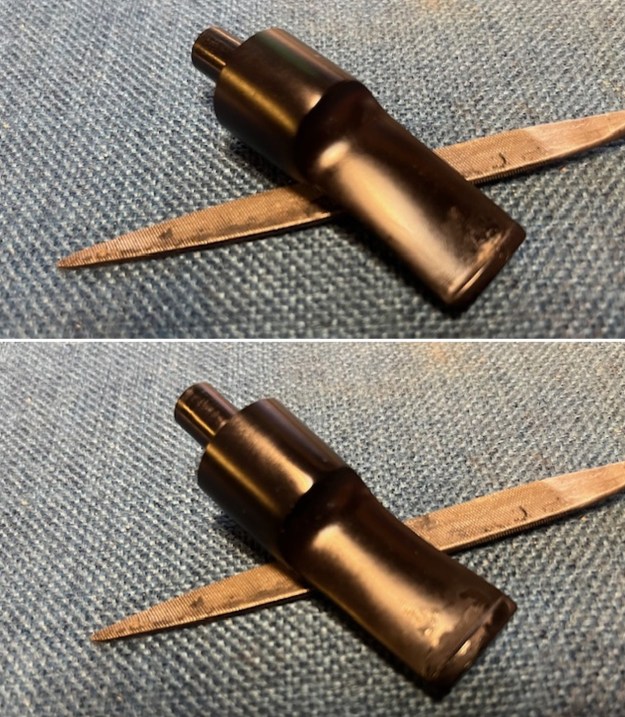
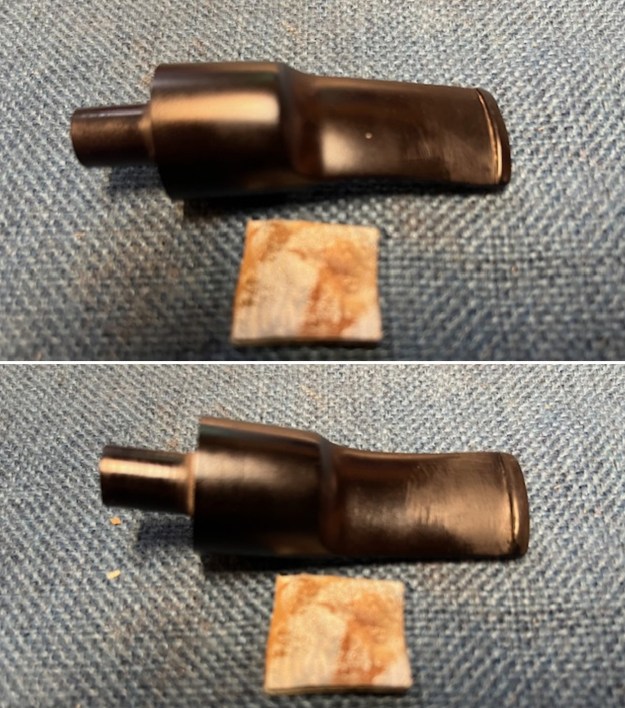
Anyway, both the stem and stummel were in very good condition. There were some minor tooth marks on the stem and a bit of oxidation. The rim of the stummel had what looked like a burn on it, but it turned out to be nothing of note. I used oil soap on a few cotton rounds and wiped the stem down to provide an initial cleaning before moving on. I cleaned the inside of the stem with both pipe cleaners and cotton swabs dipped in 99% lemon-infused isopropyl alcohol. I scrubbed thoroughly to make sure the interior was clean.The goal of the next step is the removal (or minimization) of oxidation. Going to my sink, I used cream cleanser, cotton rounds, and a toothbrush, and scoured the stem to remove as much surface oxidation as possible. As the photos show, the result is a hideous brownish mess – but better off the stem than on it.Once the stem was reasonably clean, I soaked it overnight in some Briarville Stem Oxidation Remover. This solution works to draw oxidation in the stem to the surface. This is a major aid and an important step in ensuring a clean stem. The following day, I drew the stem out from its bath and scrubbed the lingering fluid with a toothbrush.Now that the stem is clean and dry, I set about fixing the marks and dents in the vulcanite. This is done by filling those divots with black cyanoacrylate adhesive, impregnated with carbon and rubber. I left this to cure and moved on. The penultimate step for the stem is sanding. First, with my set of needle files, I reduce the bulk of the cyanoacrylate repairs. I want to remove the excess adhesive as near to the surface as possible, without cutting into the vulcanite. Following that, I use all nine of the micromesh sanding pads (1,500 through 12,000 grit) to sand out flaws, even out the vulcanite, and provide gentle polishing of the finished surface. I also apply pipe-stem oil while using the last five micromesh pads. There was a wonderful, deep black shine to the stem when I was done. Now that the stem is (nearly) complete, I can move on to the stummel. The first step for me is to ream out the bowl – that is to say, remove all the cake inside the bowl. This accomplishes a couple of things. First (and most obviously), it cleans the bowl and provides a refurbished chamber for future smoking. Second, when the old cake is removed, I can inspect the interior walls of the bowl and determine if there is damage or not. Not much to be removed from this pipe – it was pretty clean!My next step was to remove the so-called burn on the rim. For this, I took a piece of machine steel and gently scraped. The metal’s edge is sharp enough to remove what I need, but not so sharp that it damages the rim. This work revealed that the marks were on the surface only. There was no damage to the wood at all.Similar to the stem, I then cleaned the stummel with both pipe cleaners and cotton swabs dipped in 99% lemon-infused isopropyl alcohol. To tidy up the briar, I also wiped down the outside with some oil soap on cotton rounds (and a toothbrush). This does a good job of cleaning any latent dirt on the surface of the briar. The last step of the cleaning process is to scour the inside of the stummel with some soap and tube brushes. I used all nine micromesh pads (1,500 through 12,000 grit) on the underside of the stummel and the rim to finish it off. This sanding minimizes flaws in the briar and provides a beautiful smoothness to the wood. I rubbed some Before & After Restoration Balm into the briar and let it sit for 25 minutes or so. The balm moisturizes the wood and gives a beautiful depth to the briar. I then buffed it with a microfibre cloth. For the final step, I took the pipe to my bench buffer and carefully polished it with three coats of conservator’s wax. This procedure makes the pipe look its best – the stummel sings and the stem glows.All done! This Brigham 2044 XL billiard looks fantastic again and is ready to be enjoyed by its next owner. I am pleased to announce that this pipe is for sale! If you are interested in acquiring it for your collection, please have a look in the ‘Canadian’ section of the store here on Steve’s website. You can also email me directly at kenneth@knightsofthepipe.com. The approximate dimensions of the pipe are as follows: length 6⅛ in. (156 mm); height 2¼ in. (58 mm); bowl diameter 1¾ in. (44 mm); chamber diameter 1 in. (26 mm). The weight of the pipe is 2⅓ oz. (72 g). I hope you enjoyed reading the story of this pipe’s restoration as much as I enjoyed restoring it. If you are interested in more of my work, please follow me here on Steve’s website or send me an email. Thank you very much for reading and, as always, I welcome and encourage your comments.

Restoring a Rusticated Man Rhodesian African Meerschaum from the Isle of Man


by Steve Laug

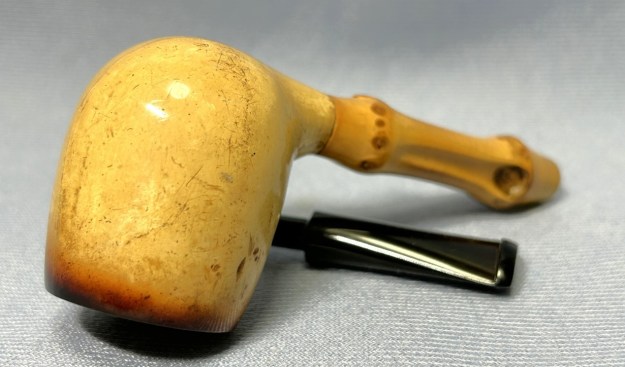
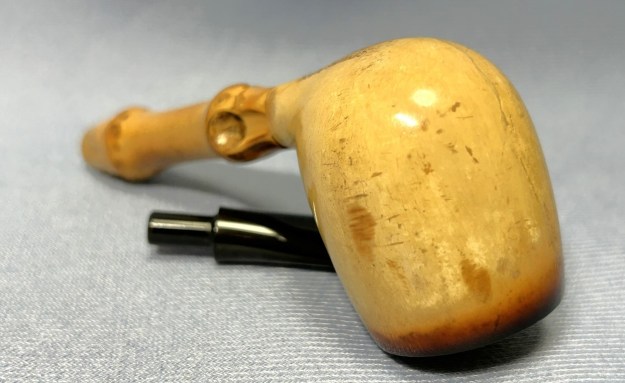
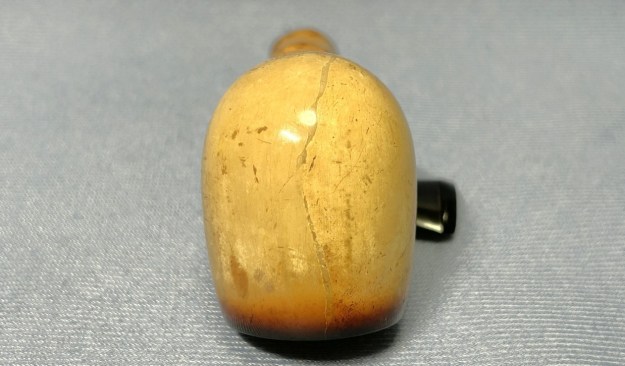
The next pipe on the work table is the last of three sent to me by a fellow near Vancouver for restoration. It is a rusticated meerschaum from the Isle of Man. It is stamped on the underside of the shank and reads Man [over] Isle of Man. The bowl was surprisingly clean with just a little cake. The rim top and inner edge of the bowl was very clean. There was an inset on the rim top that was smooth. There was an acrylic band on the end of the shank that served as a smooth face for the saddle stem. The finish was dusty and dirty but otherwise in great condition. The vulcanite saddle stem was lightly oxidized and had deep tooth marks and chatter on both sides ahead of the button. There was a circle with an arrow symbol on the left side of the saddle. It should be a straightforward clean up. I took photos of the pipe before I started my cleanup work. I took a close-up photo of the rim top to show the construction and the condition of the bowl and inner edge of the bowl and the stem. The bowl looks good with minimal cake on the bowl walls. The stem photos show the tooth marks on both sides ahead of the button.I took a photo of the stamping on the sides of the shank. It is clear and readable as noted above. I removed the stem and took a photo of the parts of the pipe. I have to say it is one of the first Isle of Man pipes that I really like the shape. It reminds of the GBD 9438.Before I started working on it I turned to Pipephil to see what I could find out about the Man stamp (http://www.pipephil.eu/logos/en/logo-m1.html). I have included the screen capture of the information there. It has the same logo as the one I am working on. I also included the sidebar information below the photo.A brand of MANXMAN PIPES Ltd, The Quay, Old Laxey, Isle of Man, British Isles. The meerschaum used for these pipes usually was of Tanzanian origine (like Kiko or Twiga pipes).
See also: Manx Meerschaum, Pioneer

From there I turned to Pipedia and looked under the Laxey Pipes Ltd listing as they made all of the Manx pipes (https://pipedia.org/wiki/Laxey_Pipes_Ltd.). I quote a pertinent portion below:

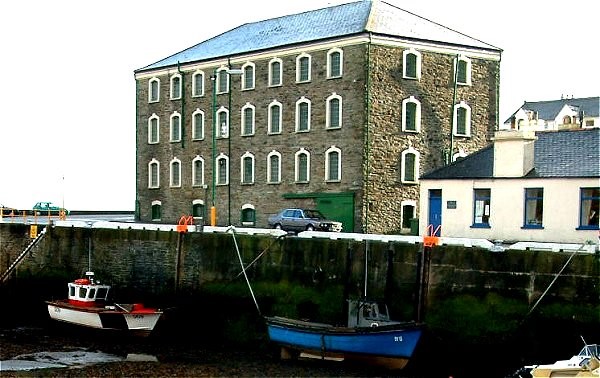
Laxey Pipes Ltd. resided in a historical 19th century four-storey Man stone building at The Quay, Old Laxey, Isle of Man, which thankfully has been preserved.

The company specialised in the production of meerschaum pipes using the Meerschaum mined by the Tanganyika Meerschaum Corporation in the Amboseli basin in Tanganyika (since 1964 part of the United Republic of Tanzania).

Please note: you may often find names like “Manx Pipes Ltd.”, “Man Pipe Co.” and others more, but there is no indication of another Isle of Man pipe producer other than Laxey Pipe Ltd. at any time!

Laxey Pipes Ltd. marketed own brands like “Manxpipe”, “Manxman”, “Manxland” e.c. Names like “John Bull”, “White Knight” (unwaxed), “Domino” (black, or lined) indicated some shapes / colours of Laxey’s own series. The stems either showed the astronomical sign for “male” or “man” (circle + arrow), or the crest of the Isle of Man, the 3-legged X in a circle. Manxpipes and Laxey’s other brands were available through pipe retailers in general, but also were sold (mainly) to tourists through their own shop in Laxey.

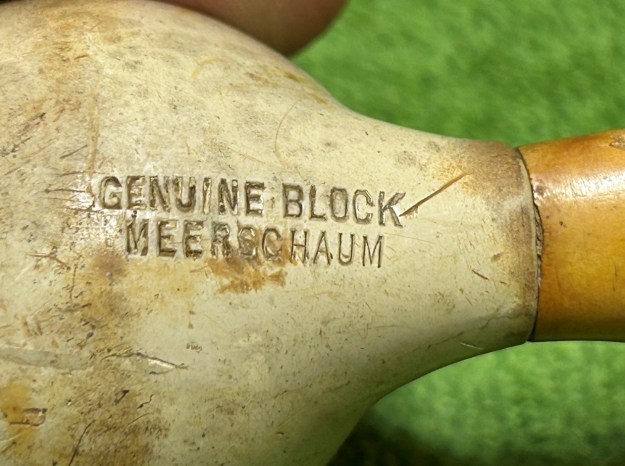
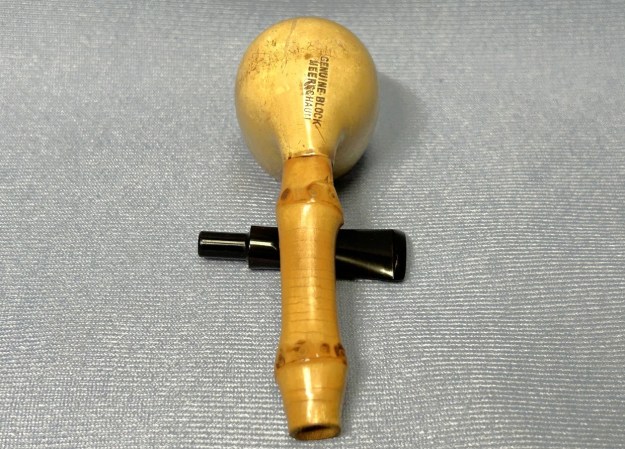
Furthermore Laxey Pipes Ltd. manufactured the meer bowls for Peterson, Barling, Nørding and others from the later 1960’s until 2001. Man Pipe e.g. was a brand distibuted by Comoy’s. The bowls usually showed no nomenclature indicating the orderer. “Genuine Block Meerschaum” was engraved frequently. Often, just the stems were different, while bowls were the same.

From the above I was able to discern that the pipe was indeed made by Laxey and that the Man Pipe brand was distributed by Comoy’s. That is something I was unaware of until reading this.

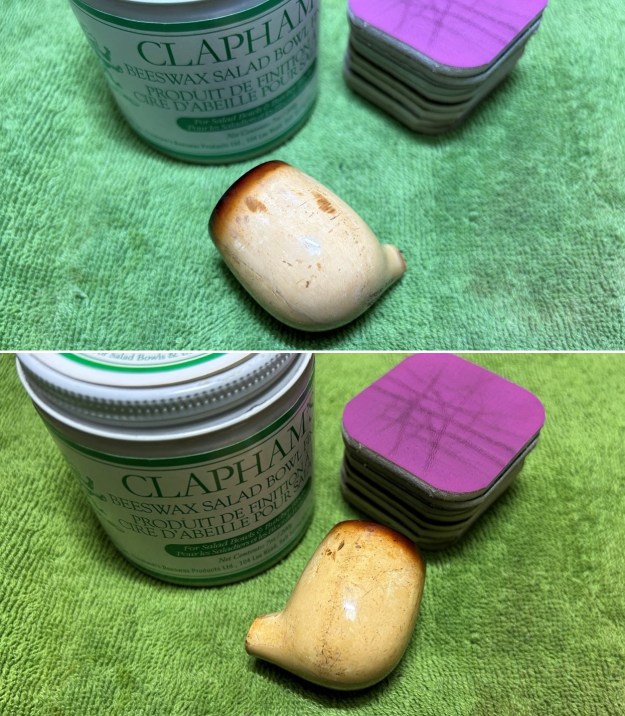
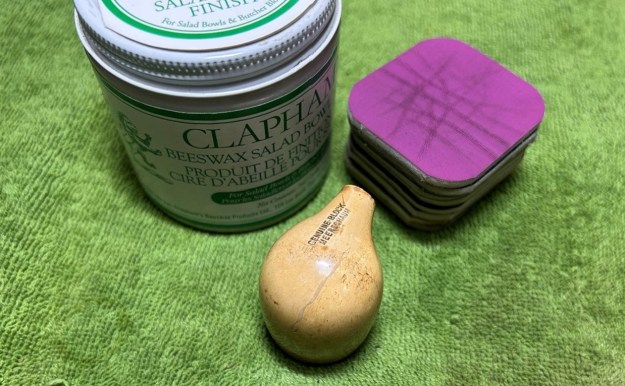
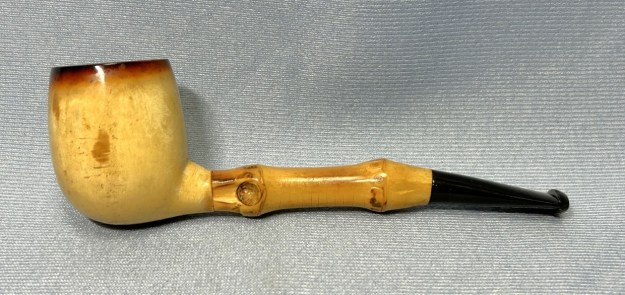
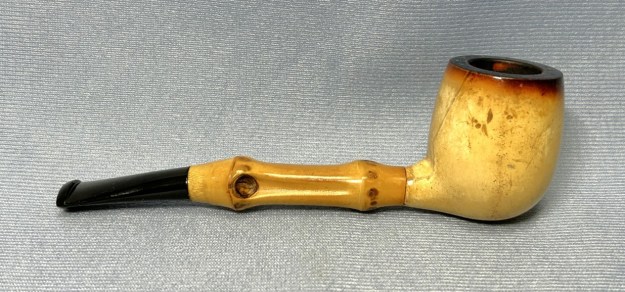
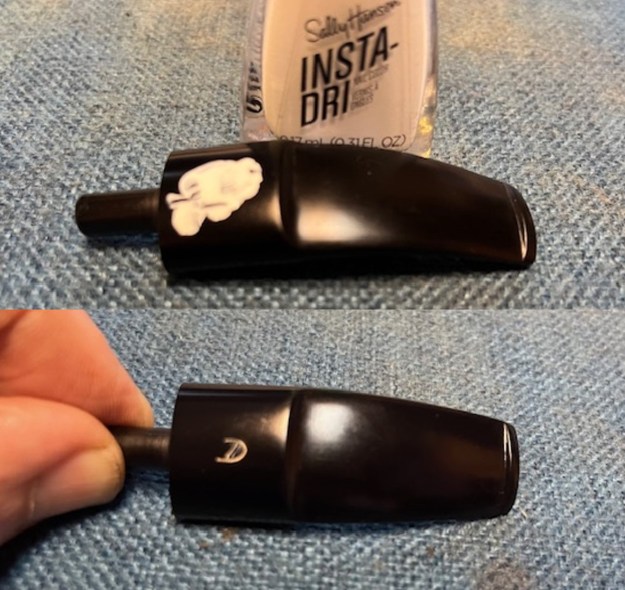
Now it was time to work on the pipe. Since the bowl was only lightly dirty I decided to sand the bowl walls. I sanded the bowl with a piece of dowel wrapped with 220 grit sandpaper. It looked much better at this point.I moved on to clean up the internals. I cleaned out the airway and mortise with pipe cleaners, cotton swabs and alcohol. I cleaned out the airway in the stem at the same time. It was a dirty pipe but after this cleanup it was much better.I scrubbed the externals of the pipe with undiluted Murphy’s Oil Soap and a tooth brush to remove the grime in the finish and on the rim top. I worked on it until it looked much better and then rinsed it off with warm water. I dried it off with a soft cloth. The exterior of the bowl looks after the cleaning. I worked some Clapham’s Beeswax/Carnauba wax mixture into the rusticated meerschaum with my fingertips and a shoe brush. I let it sit on the bowl for 10 minutes and then buffed it with a soft cloth. The product is a great addition to the restoration work. It really brought the meerschaum alive and it is an easy product to use as it is a soft wax. I set the bowl aside and turned my attention to the stem. I “painted” the stem surface with the flame of a lighter to lift the tooth marks. I was able to lift some of them. I filled in the remaining tooth marks with black rubberized CA glue. I set it aside to let the repairs cure. Once the repair cured I flattened it with a small flat file. I sanded the repairs smooth with a folded piece of 220 grit sandpaper. I scrubbed the stem with Soft Scrub to break down the oxidation on the stem. I scrubbed it with cotton pads and removed a lot of oxidation. The stem is looking much better at this point in the process.I touched up the Man logo on the left side of the saddle with white acrylic nail polish. I pressed it into the stamping with a tooth pick. I scraped off the excess and the logo looked very good. I sanded the stem with 320-3500 grit sanding pads and wiped it down with Obsidian Oil to remove the sanding dust.I polished the stem with micromesh sanding pads – dry sanding with 1500-12000 grit pads. I wiped the stem down after each sanding pad with Obsidian Oil to further protect the vulcanite surface. I finished the polishing with Before & After Pipe Stem Polish – Fine and Extra Fine. I wiped the stem down a final time with Obsidian Oil and a cloth. It really looks very good. I am always excited to finish working on a pipe. This Isle of Man Meerschaum Man Rhodesian is no exception. I put the pipe back together and buffed it with Blue Diamond on the buffing wheel. I gave the bowl and the stem multiple coats of carnauba wax. I buffed the pipe with a clean buffing pad to raise the shine and hand buffed it with a microfibre cloth to deepen the shine. It is fun to see what the polished bowl looks like with the black vulcanite taper stem. This Classic looking Meerschaum Man Rhodesian feels great in my hand. It is light and well balanced. Have a look at it with the photos below. The dimensions are Length: 5 ½ inches, Height: 1 ½ inches, Outside diameter of the bowl: 1 ¼ inches, Chamber diameter: ¾ of an inch. The weight of the pipe is 54 grams/1.94 ounces. Since this is the third of the three pipes I worked on for the fellow here in Vancouver, I will be packing them up and sending them back to him this week. Thanks for walking through the restoration with me as I worked over this pipe. Thanks to each of you who are reading this blog.
Restoring a K & P Dublin Made in Ireland 216 Dublin with a P-Lip stem


by Steve Laug

The next pipe on the work table is the 2nd of three pipes sent to me by a fellow near Vancouver for restoration. It is a Peterson’s Dublin shape with a Sterling Silver band. It is stamped on the left side of the shank and reads K&P [over] Dublin and on the right side Made in Ireland in a circle followed by the shape number 216. The silver band is stamped with K & P in shields [over] Sterling [over] Silver. The bowl had a light cake and a light overflow of lava on the rim top and inner edge. There was some darkening on the top and what looked like a fill on top at the back of the bowl. The finish was oily and light in spots on the left side near the top.  The silver band was tarnished but should clean up well. The P-lip stem was a vulcanite taper that was lightly oxidized and had light tooth marks and chatter on both sides ahead of the button. The stem did not seat properly in shank because of tars and oils in the mortise. It should be a straightforward clean up. I took photos of the pipe before I started my cleanup work. I took a close-up photo of the rim top to show the condition of the bowl and inner edge of the bowl and the stem. You can clearly see the cake in the bowl and the darkening and lava on the rim top. The stem photos show the light tooth marks on both sides ahead of the button.I took a photo of the stamping on the sides of the shank. It is clear and readable as noted above. I removed the stem and took a photo of the parts of the pipe. It is a unique and strangely pretty little pipe. Now it was time to work on the pipe. I reamed the pipe with a PipNet reamer using the first and second cutting head. I took the cake back to bare briar. I cleaned up the reaming with a Savinelli Fitsall Pipe Knife to remove the remnants. I sanded the bowl with a piece of dowel wrapped with 220 grit sandpaper. It looked much better at this point. I moved on to clean up the internals. I cleaned out the airway and mortise with pipe cleaners, cotton swabs and alcohol. I cleaned out the airway in the stem at the same time. It was a dirty pipe but after this cleanup it was much better.I scrubbed the externals of the pipe with undiluted Murphy’s Oil Soap and a tooth brush to remove the grime in the finish and on the rim top. I worked on it until it looked much better and then rinsed it off with warm water. I dried it off with a soft cloth. I smoothed out the inner edge of the bowl and worked on the rim top with a folded piece of 220 grit sandpaper. It was beginning to look much better. Once I had cleaned the top there was a darkened spot on the top toward the back that showed a small fill. I topped it on a topping board with 220 grit sandpaper. I polished the bowl with micromesh sanding pads – dry sanding with 1500-12000 grit sanding pads. I wiped it down between pads with a damp cloth. It really began to take on a deep shine. The dark spot on the rim top is where the fill is still in place. Before going further with the sanding/polishing process I touch up the stain on the rim top and inner edge with a Cherry Stain Pen. It matched very well with the rest of the briar. Once it dried I finished the polishing process with the micromesh pads. The exterior of the bowl looks better after sanding. I worked some Before & After Restoration Balm into the briar with my finger tips. I let it sit on the bowl for 10 minutes and then buffed it off with a paper towel and soft cloth. The product is a great addition to the restoration work. It enlivens, enriches and protects the briar while giving it a deep glow. It is a product I use on every pipe I restore. I set the bowl aside and turned my attention to the stem. There were no deep marks or chatter so I sanded the stem with 320-3500 grit sanding pads and wiped it down with Obsidian Oil to remove the sanding dust.I polished the stem with micromesh sanding pads – dry sanding with 1500-12000 grit pads. I wiped the stem down after each sanding pad with Obsidian Oil to further protect the vulcanite surface. I finished the polishing with Before & After Pipe Stem Polish – Fine and Extra Fine. I wiped the stem down a final time with Obsidian Oil and a cloth. It really looks very good. I am always excited to finish working on a pipe. This K&P Dublin Made in Ireland 216 Dublin is no exception. I put the pipe back together and buffed it with Blue Diamond on the buffing wheel. I gave the bowl and the stem multiple coats of carnauba wax. I buffed the pipe with a clean buffing pad to raise the shine and hand buffed it with a microfibre cloth to deepen the shine. It is fun to see what the polished bowl looks like with the black vulcanite taper stem. This Classic looking Peterson’s K&P Dublin 216 Dublin feels great in my hand. It is light and well balanced. Have a look at it with the photos below. The dimensions are Length: 6 inches, Height: 1 ¾ inches, Outside diameter of the bowl: 1 ¼ inches, Chamber diameter: ¾ of an inch. The weight of the pipe is 31 grams/1.09 ounces. I will be putting it on the rebornpipes store shortly in the Irish Pipe Makers Section if you are interested in it. Thanks for walking through the restoration with me as I worked over this pipe. Thanks to each of you who are reading this blog.
Restoring an Odd Pipe Stamped Old England Genuine Briar


by Steve Laug

The next pipe on the work table is the first of three pipes sent to me by a fellow pipeman near Vancouver for restoration. It reminds me of the Caveman Pipes that I have worked on in the past. This one is basically a roughly cut Panel that is somewhat Dublin shaped. There is no real shank on the pipe but rather kind of a nipple that the stem was inserted into. The pipe is stamped on the left side of the bowl and reads Old England in an old English script [over] Genuine Briar. The bowl had a moderate cake in it and an overflow of lava on the rim top and inner edge that left it looking rough and out of round. The finish on the bowl was oily and there appeared to be a small hairline crack on the left side mid bowl. The stem was a long vulcanite taper that was oxidized and had some deep tooth marks on both sides ahead of the button. Both the stem and bowl were dirty. It should be an interesting and straightforward clean up. I took photos of the pipe before I started my cleanup work. (I missed a photo of the heel of the bowl prior to cleaning). I took a close-up photo of the rim top to show the condition of the bowl and inner edge of the bowl and the stem. You can clearly see the cake in the bowl and the damage on the inner edge. The stem photos show the tooth marks on both sides ahead of the button.I took a photo of the stamping on the left side of the bowl toward the heel. It is clear and readable as noted above. I removed the stem and took a photo of the parts of the pipe. It is a unique and strangely pretty little pipe.I did a bit of hunting on the brand and did not find any information on it. I did find a Sasieni Second brand with this stamping but the stamping was quite different from that on this one. The similarity is in the name of the brand. Nothing definitive was found but this could be something.

Now it was time to work on the pipe. I reamed the pipe with a PipNet reamer using the first and second cutting head. I took the cake back to bare briar. I cleaned up the reaming with a Savinelli Fitsall Pipe Knife to remove the remnants. I sanded the bowl with a piece of dowel wrapped with 220 grit sandpaper. It looked much better at this point. I moved on to clean up the internals. The airway into the bowl was plugged so I broke it through with a paper clip. I cleaned out the airway and mortise with pipe cleaners, cotton swabs and alcohol. I cleaned out the airway in the stem at the same time. It was a dirty pipe but after this cleanup it was much better.I scrubbed the externals of the pipe with undiluted Murphy’s Oil Soap and a tooth brush to remove the grime in the finish and on the rim top. I worked on it until it looked much better and then rinsed it off with warm water. I dried it off with a soft cloth. I smoothed out the inner edge of the bowl and worked on the rim top with a folded piece of 220 grit sandpaper. It was beginning to look much better.After I cleaned the bowl I found a small hairline crack on the left side of the bowl just below middle. I have circled it in the photo below. I put a bead of clear superglue on the crack to seal it. Once it cured I smoothed it out with 220 grit sandpaper.I sanded the exterior of the bowl with 320-3500 grit sanding pads to blend in the repair and clean up the surface of the bowl. I wiped it down with a damp cloth after each sanding pad to remove the sanding dust. I polished the bowl with micromesh sanding pads – dry sanding with 1500-12000 grit sanding pads. I wiped it down between pads with a damp cloth. It really began to take on a deep shine. The exterior of the bowl looks better after sanding. I worked some Before & After Restoration Balm into the briar with my finger tips. I let it sit on the bowl for 10 minutes and then buffed it off with a paper towel and soft cloth. The product is a great addition to the restoration work. It enlivens, enriches and protects the briar while giving it a deep glow. It is a product I use on every pipe I restore. I set the bowl aside and turned my attention to the stem. I “painted” the tooth marks with the flame of a lighter to lift them. The heat helped lift them but not enough. I filled in the tooth marks with black CA glue put in place with a tooth pick. I set it aside to cure. Once the repair cured I used a file to flatten out the repair and clean up the edge of the button. I sanded it further with a folded piece of 220 grit sandpaper to blend it into the surrounding vulcanite. I sanded the stem with 320-3500 grit sanding pads and wiped it down with Obsidian Oil to remove the sanding dust.I polished the stem with micromesh sanding pads – dry sanding with 1500-12000 grit pads. I wiped the stem down after each sanding pad with Obsidian Oil to further protect the vulcanite surface. I finished the polishing with Before & After Pipe Stem Polish – Fine and Extra Fine. I wiped the stem down a final time with Obsidian Oil and a cloth. It really looks very good. It was great to finish the repairs and reshaping on this Old England Genuine Briar Freehand Panel Sitter. I put the pipe back together and buffed it with Blue Diamond on the buffing wheel. I gave the bowl multiple coats of carnauba wax. I buffed the pipe with a clean buffing pad to raise the shine. I hand buffed the pipe with a microfiber cloth to deepen the shine. It is fun to see what the polished bowl looks like with deep sandblast all around it. Added to that the polished black, vulcanite, taper stem was beautiful. This Old England Panel Sitter is great looking and the pipe feels great in my hand. It is light and well balanced. Have a look at it with the photos below. The dimensions are Length: 5 ½ inches, Height: 1 ¾ inches, Outside diameter of the bowl: 1 ¼ inches, Chamber diameter: ¾ of an inch. The weight of the pipe is 29 grams/1.02 ounces. It is the first of three pipes sent to me by the fellow near Vancouver. I have two more of his pipes to finish before I send them back to him.
As always, I encourage your questions and comments as you read the blog. Thanks to each of you who are reading this blog and following this restoration. Remember we are not pipe owners; we are pipe men and women who hold our pipes in trust until they pass on into the trust of those who follow us.

A Pair of Pretty Petes for your Perspicacious Perusal


by Kenneth Lieblich

I have a couple of Peterson pipes that came my way recently and I decided to clean them up and get them ready. Not much of a restoration story on these – just some beautiful pipes. I gave them a quick (and thorough) once over and now it’s time to turn them over to you. Both have been hardly used (once, maybe twice) and they are very handsome. If you’re interested in adding one or both to your collection, be sure to drop me a line.

First is a Peterson K&P Irishmade 106 billiard with nickel military mount. Gorgeous pipe. If you are interested in acquiring it for your collection, please have a look in the “Irish” pipe section of the store here on Steve’s website. You can also email me directly at kenneth@knightsofthepipe.com. The approximate dimensions of the Peterson Irishmade 106 are as follows: length 6 in. (152 mm); height 2 in. (51 mm); bowl diameter 1½ in. (40 mm); chamber diameter ¾ in. (20 mm). The weight of the pipe is 1⅝ oz. (48 g). Have a look below. Thanks. Next is a Peterson System Standard 1307 (same as 307) bent billiard. Another lovely pipe. If you are interested in acquiring it for your collection, please have a look in the “Irish” pipe section of the store here on Steve’s website. You can also email me directly at kenneth@knightsofthepipe.com. The approximate dimensions of the Peterson System Standard 1307 are as follows: length 6½ in. (165 mm); height 2⅛ in. (54 mm); bowl diameter 1½ in. (40 mm); chamber diameter ⅞ in. (21 mm). The weight of the pipe is 2⅜ oz. (67 g). Have a look below. Thanks.