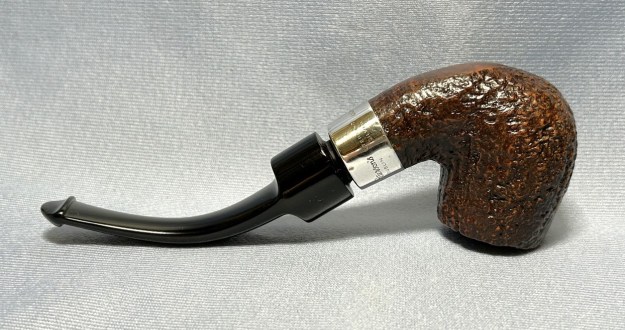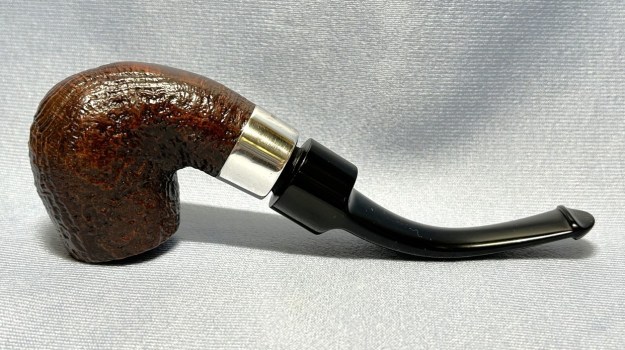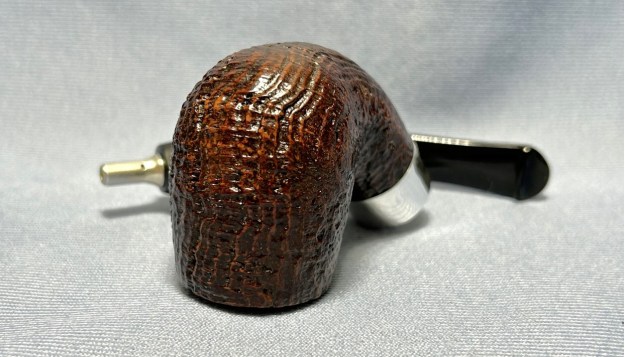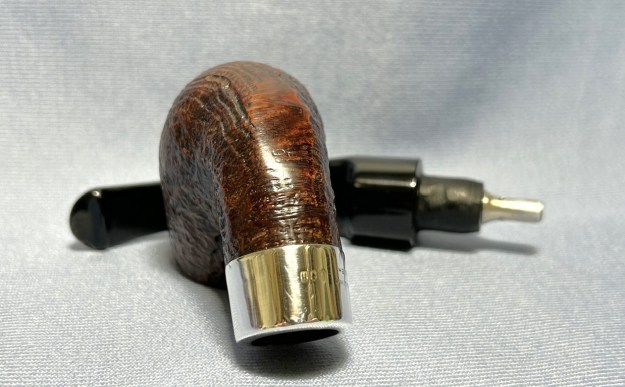
Tag Archives: Kenneth Lieblich ariticle

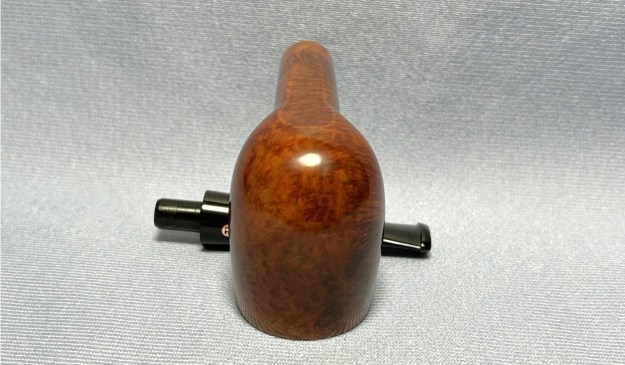
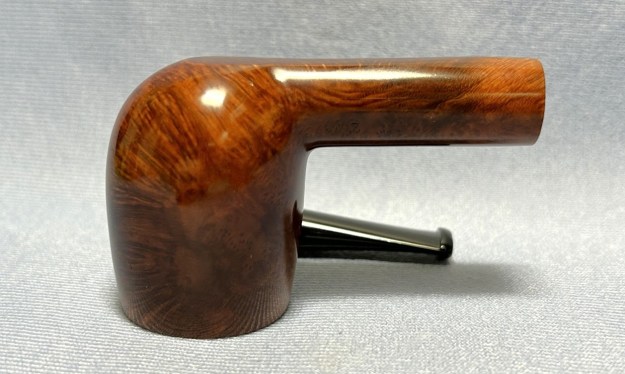
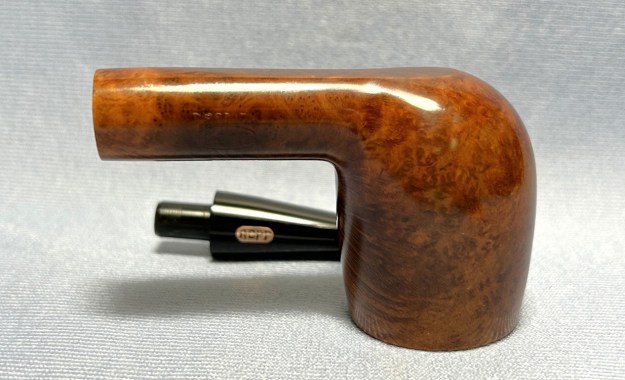
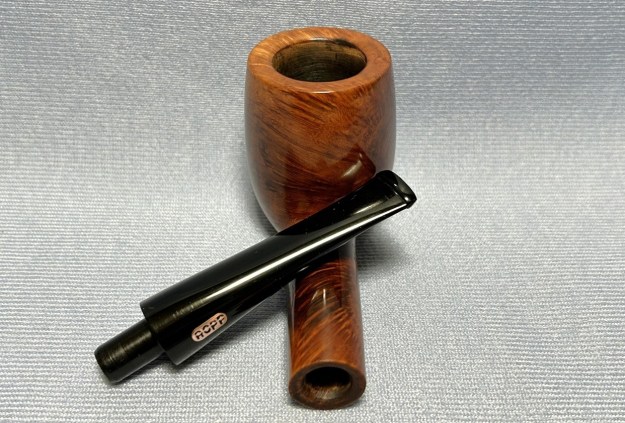
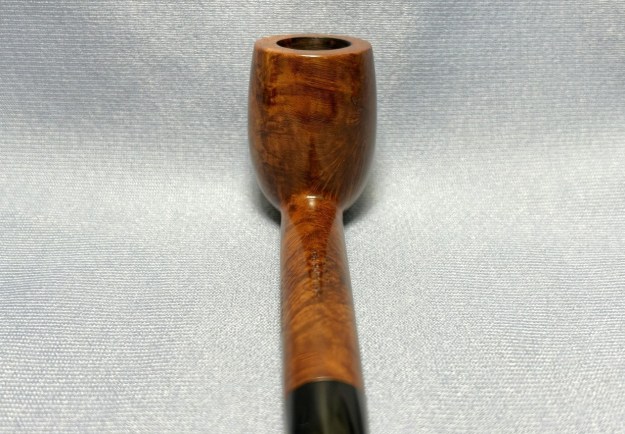
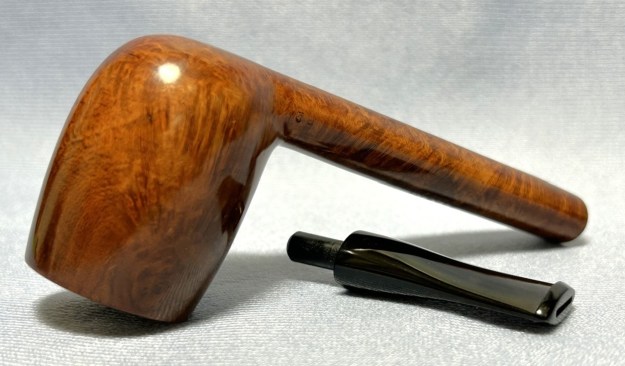
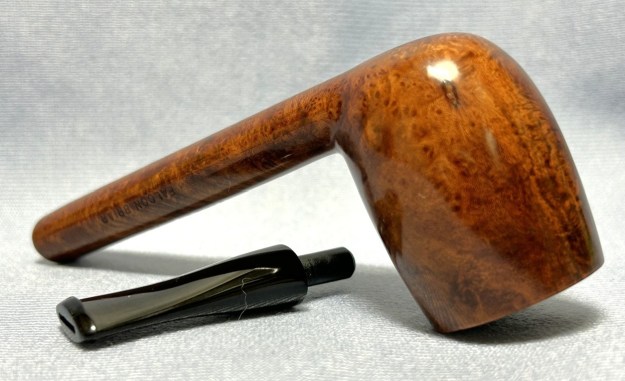
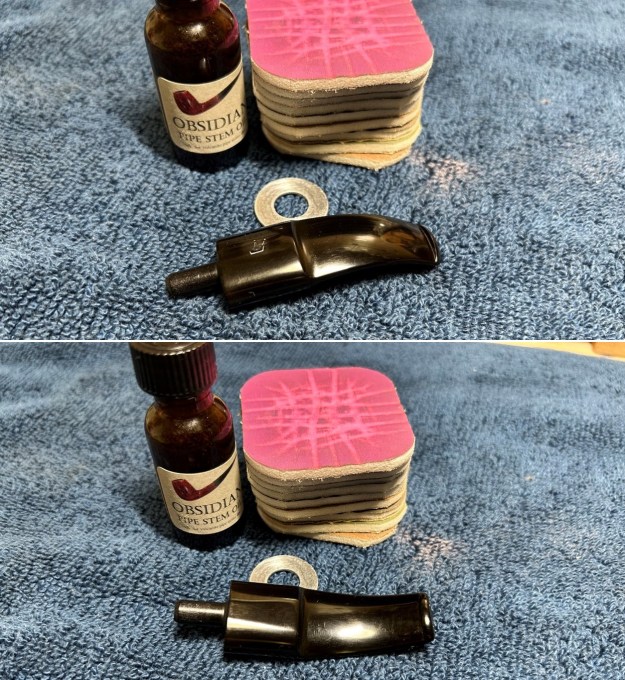
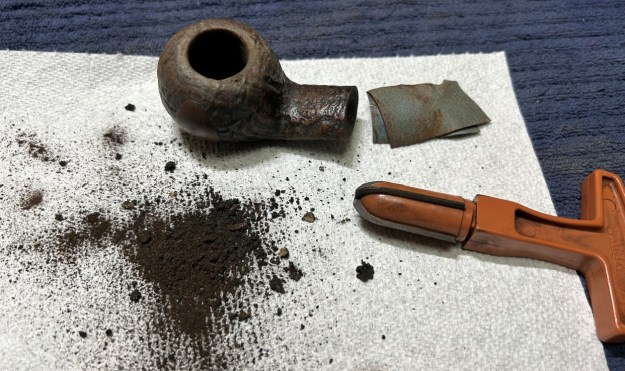
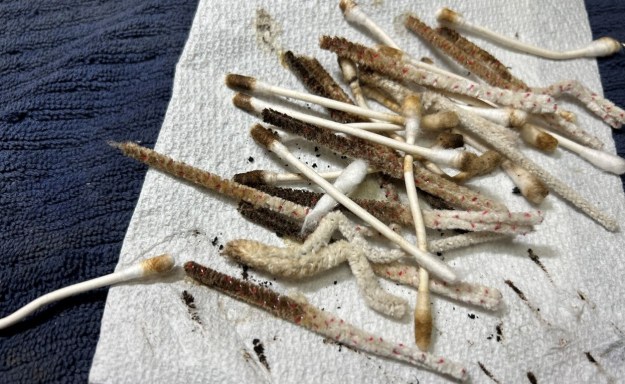
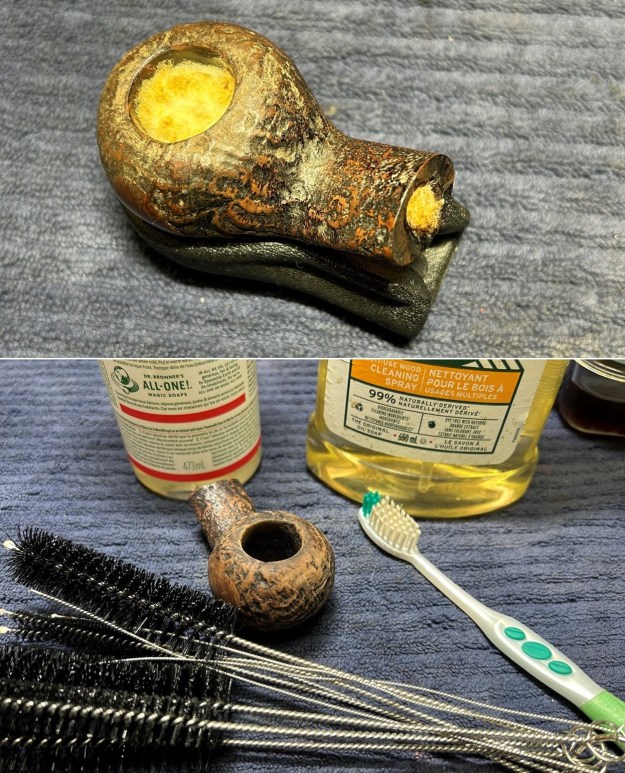
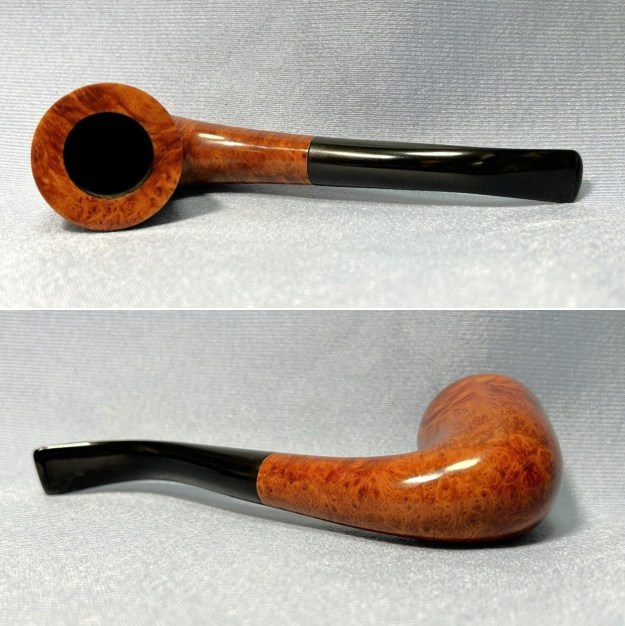
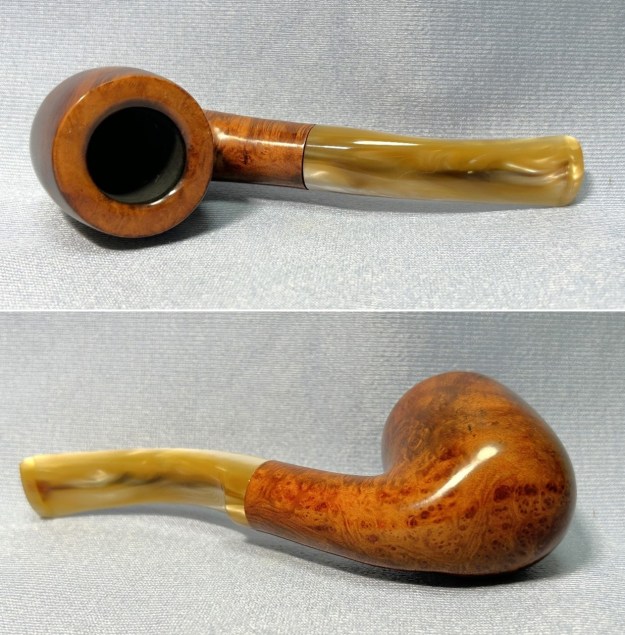
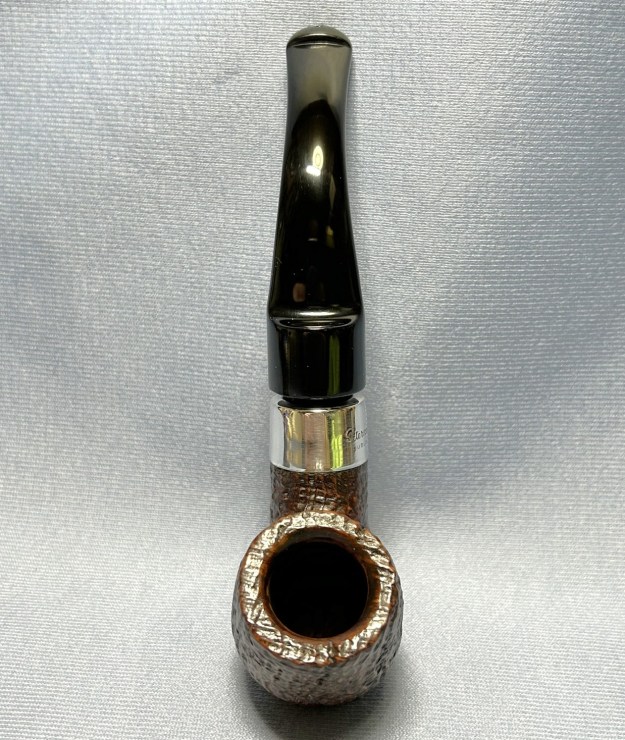
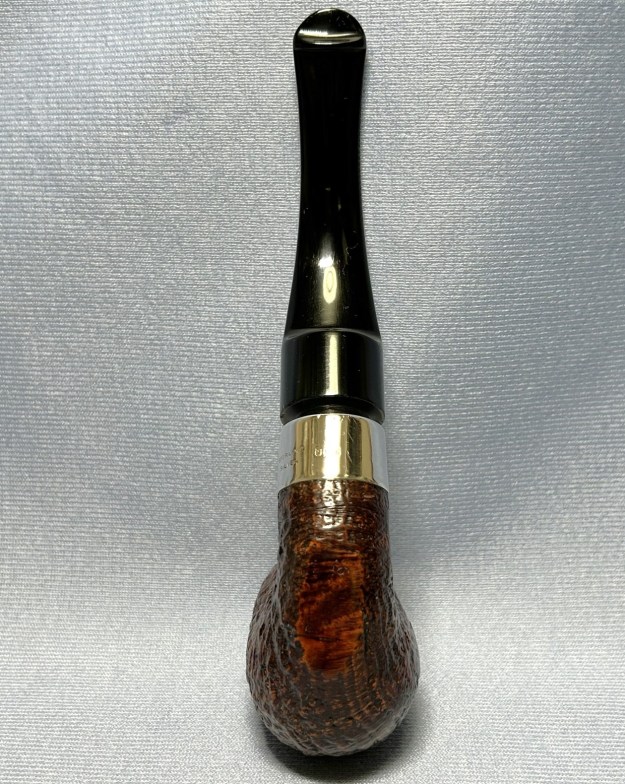
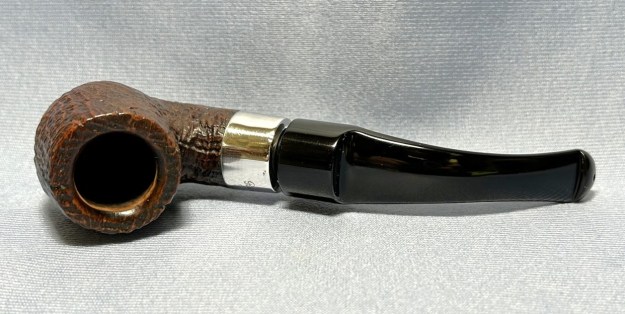
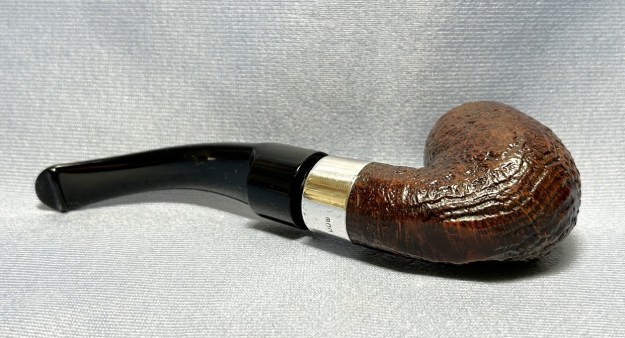
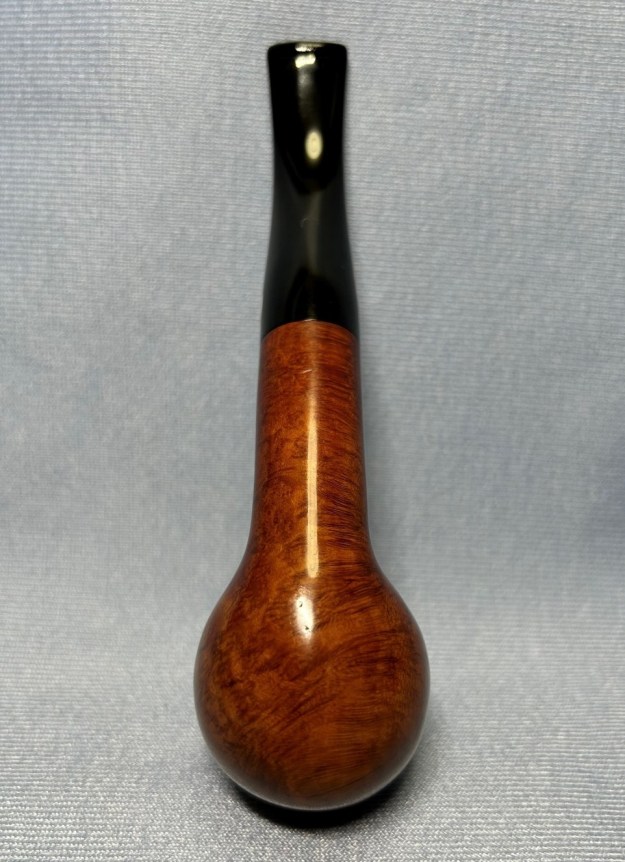
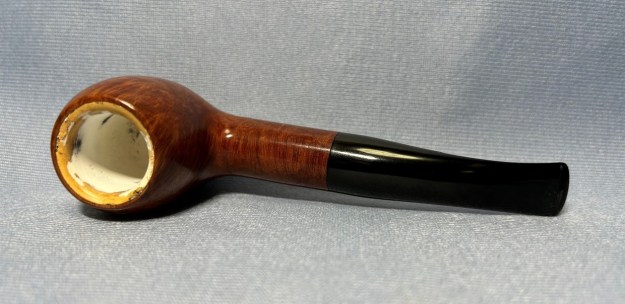
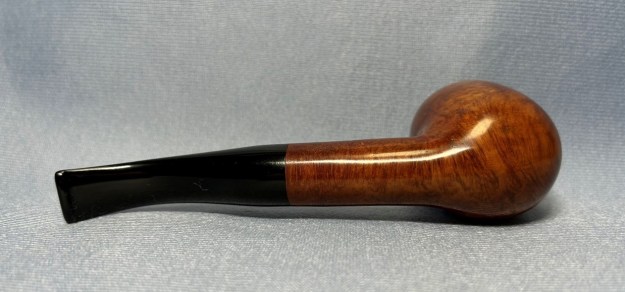
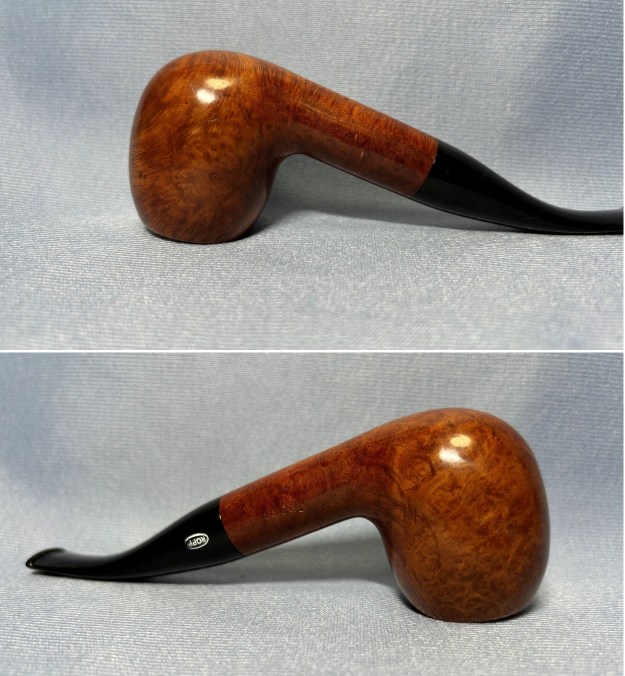
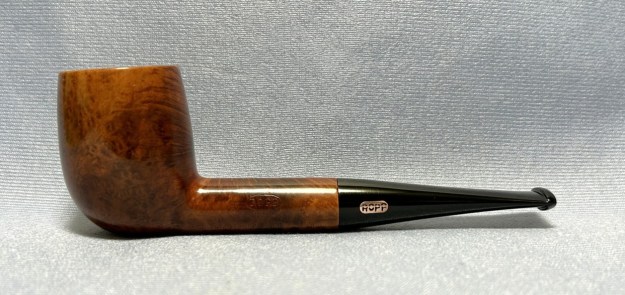
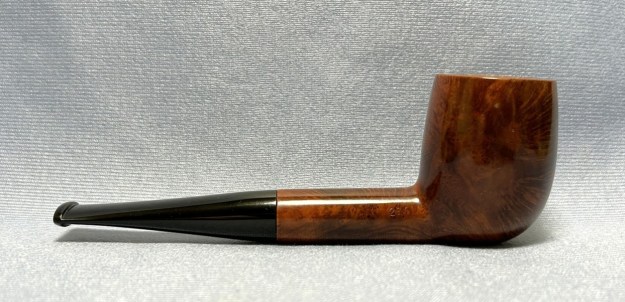
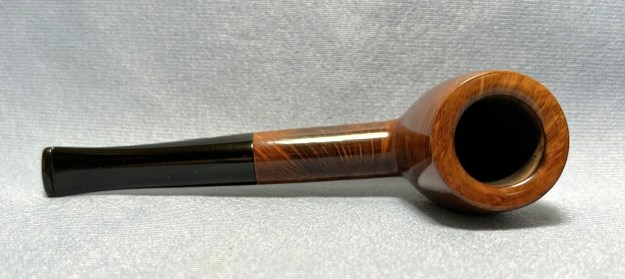
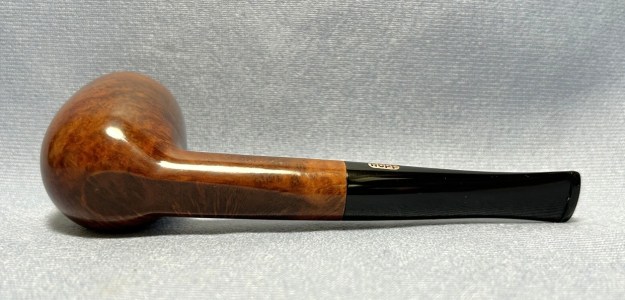
Restoring a Beautiful and Bountiful Ropp Altesse 284 Billiard


by Kenneth Lieblich

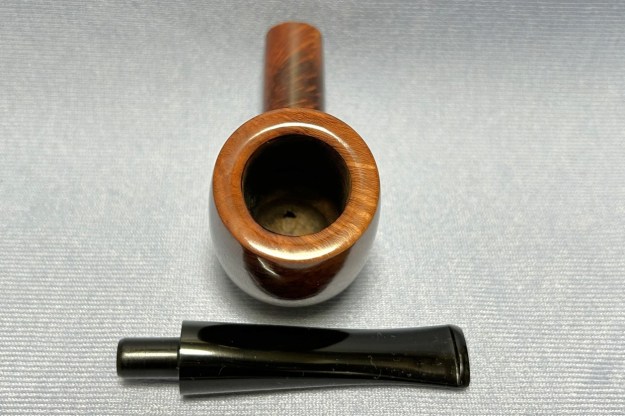
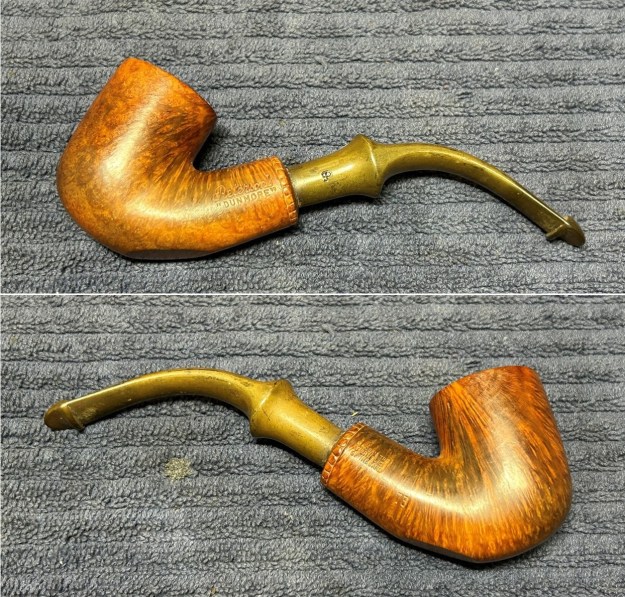
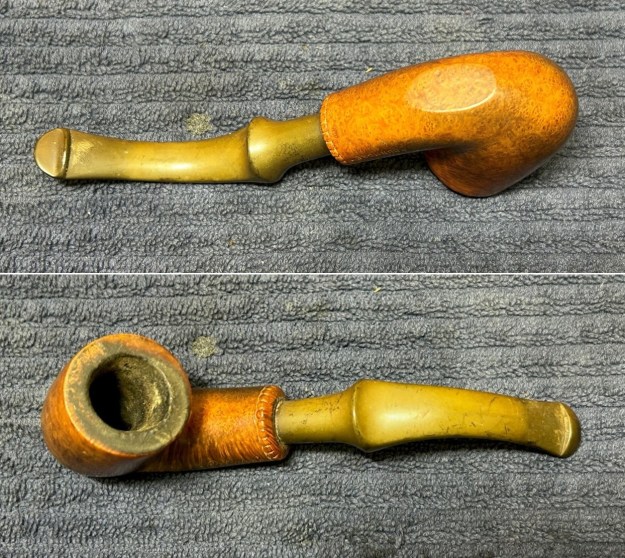
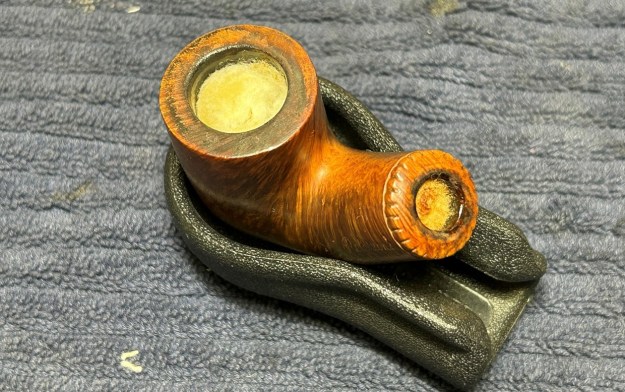
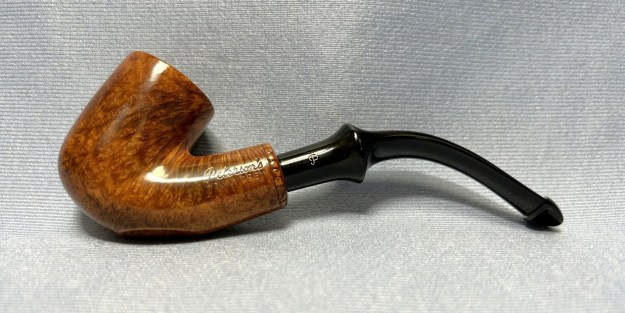
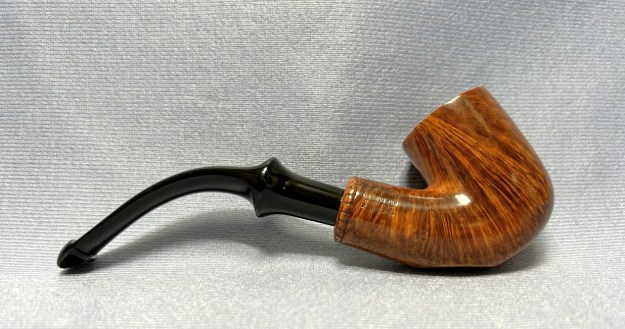
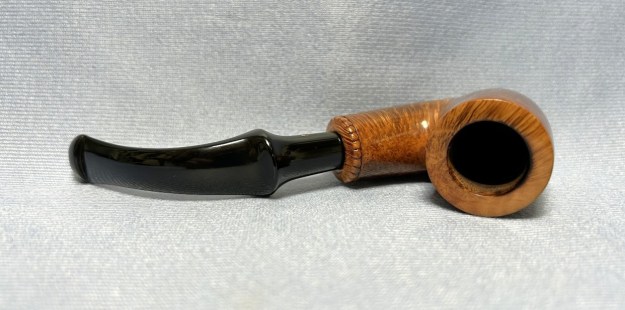
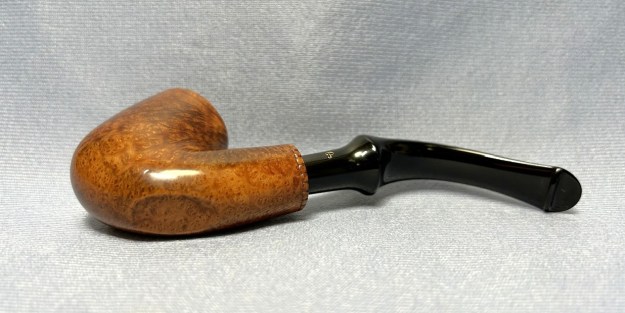
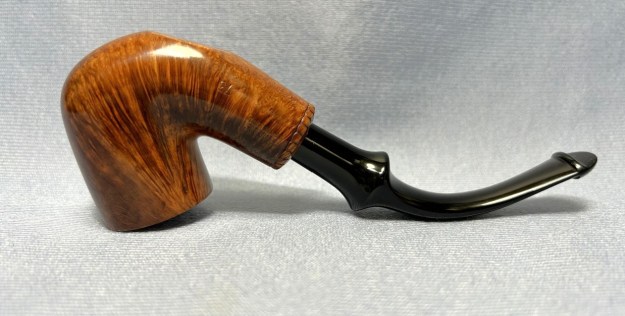
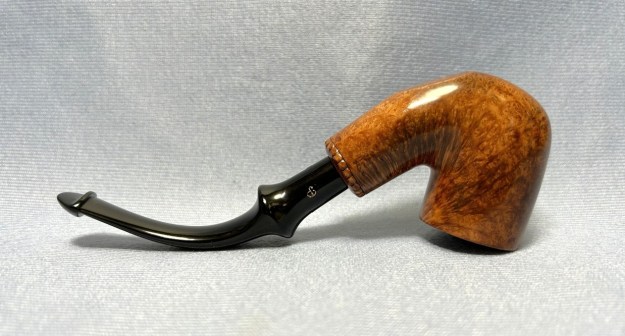
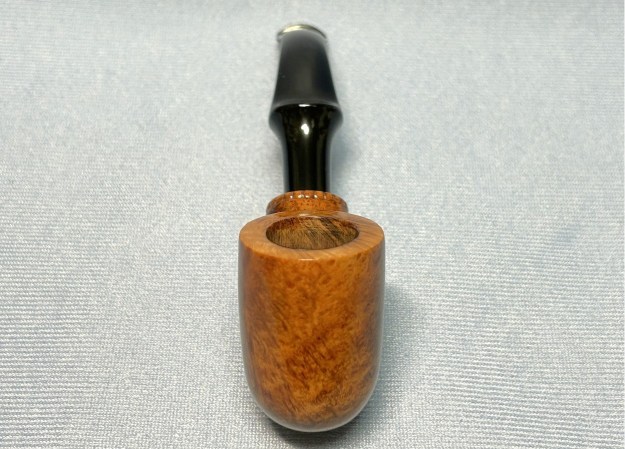
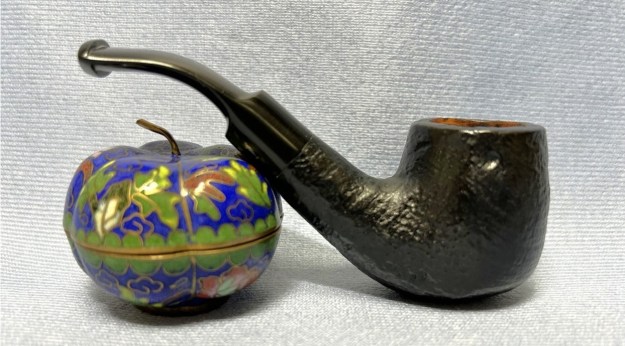
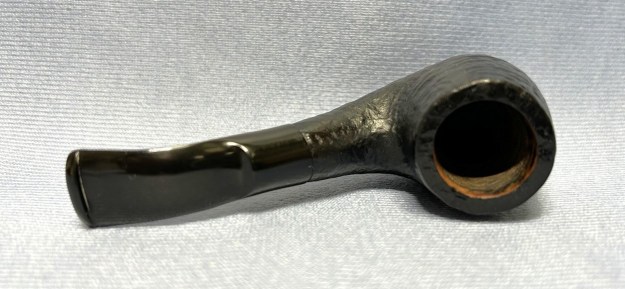
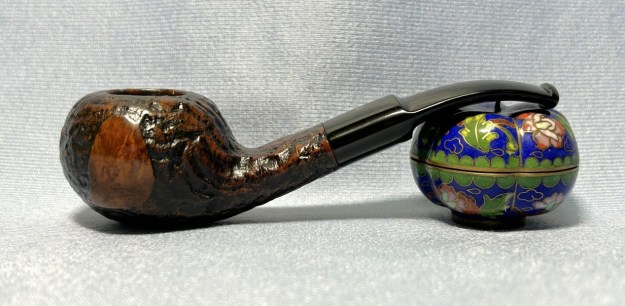
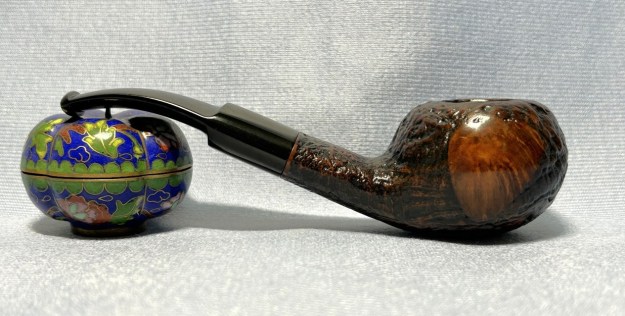
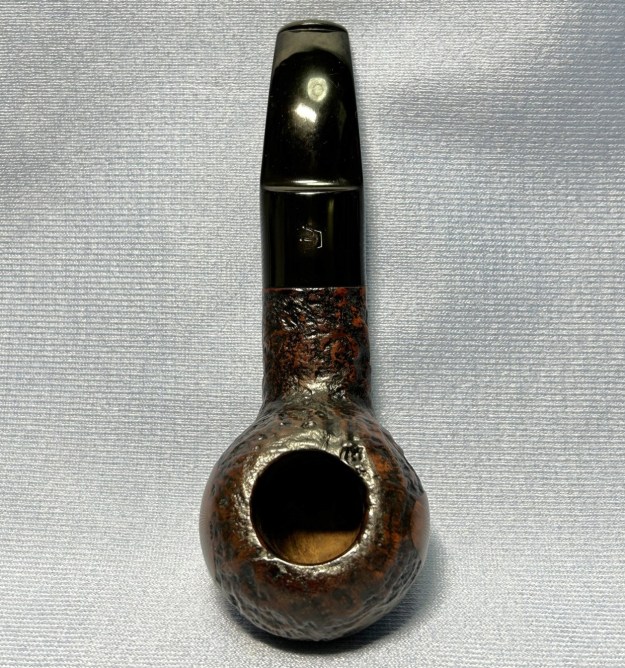
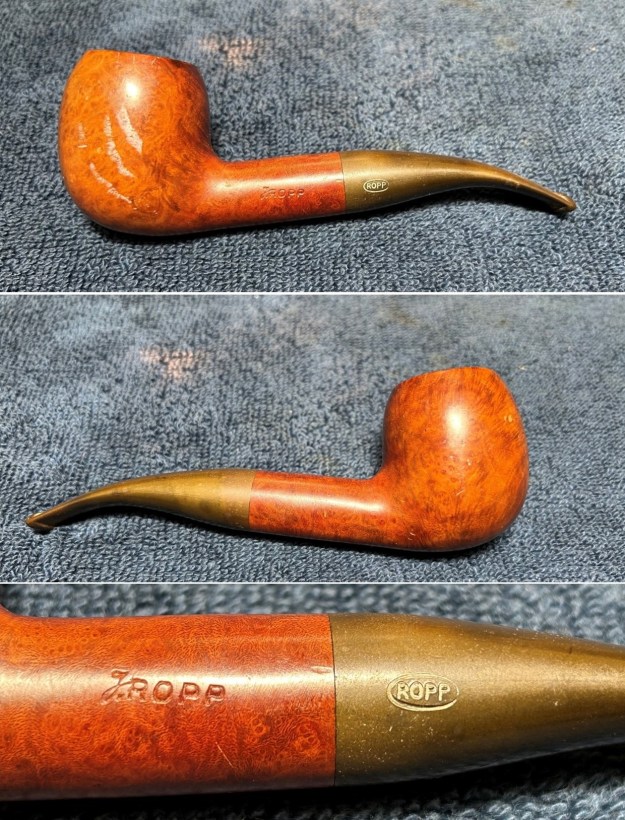
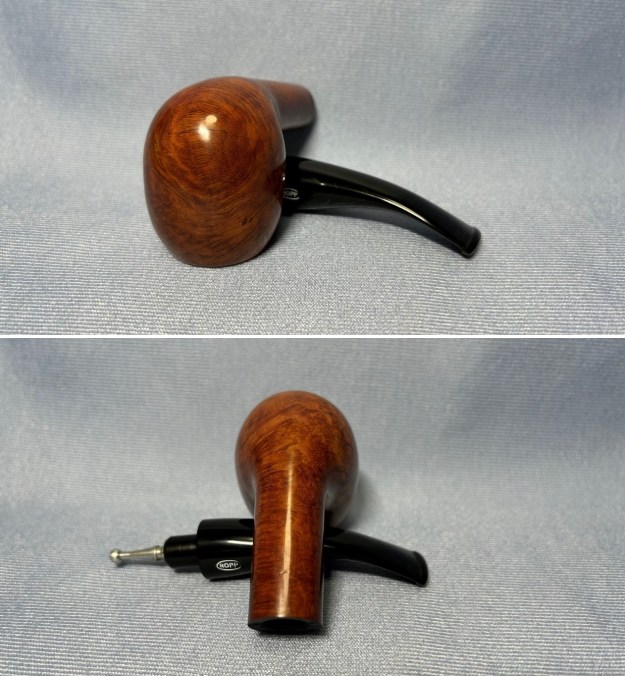
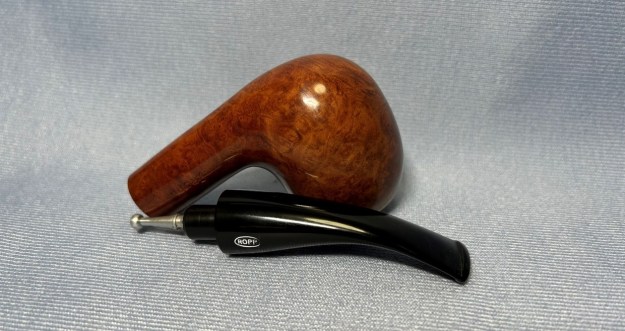
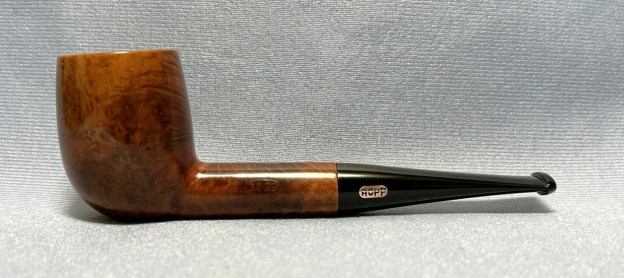
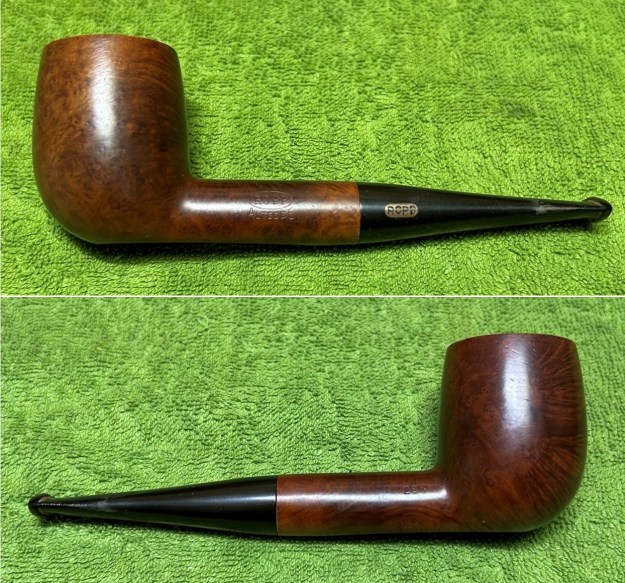
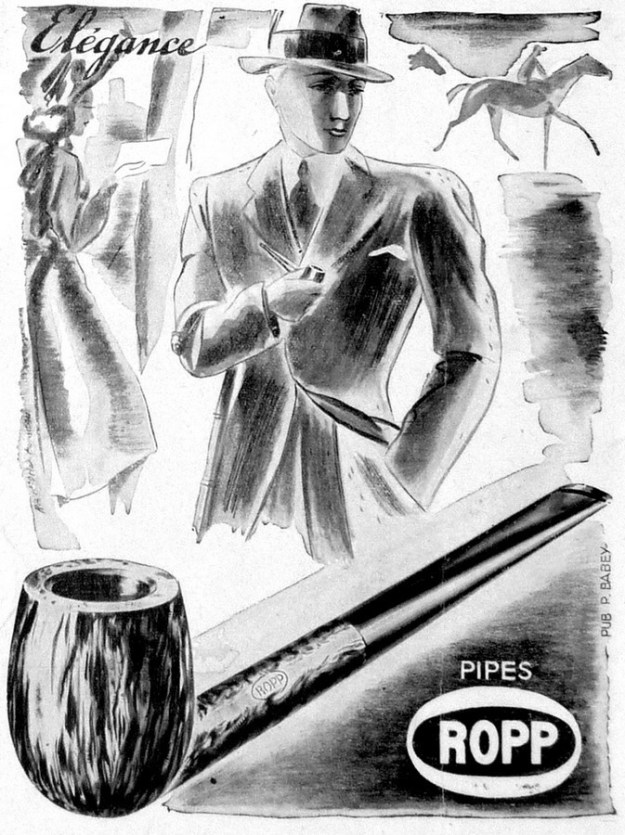
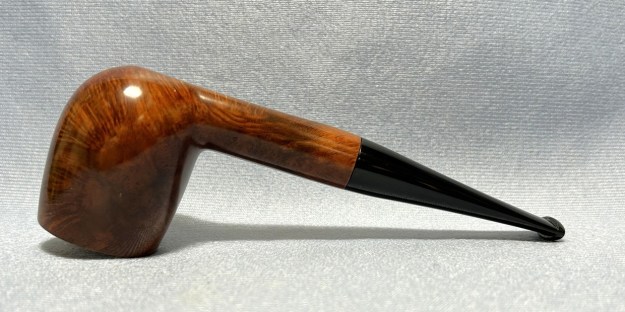
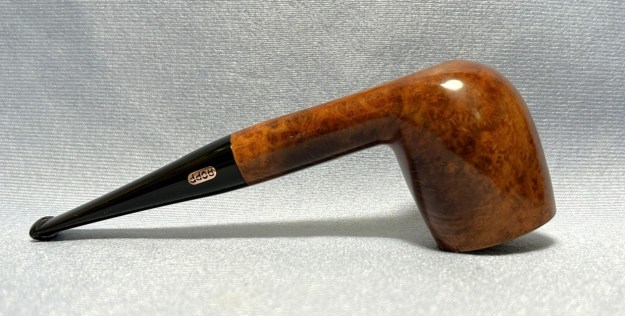
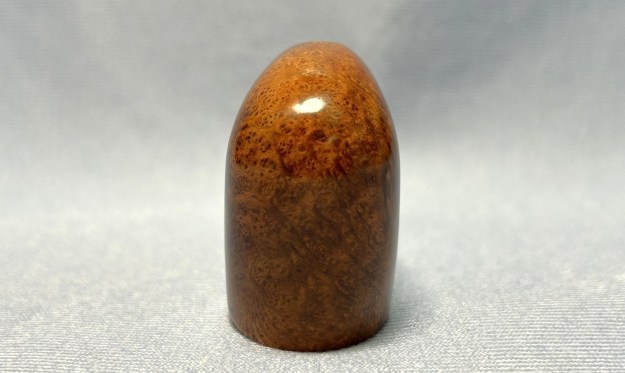
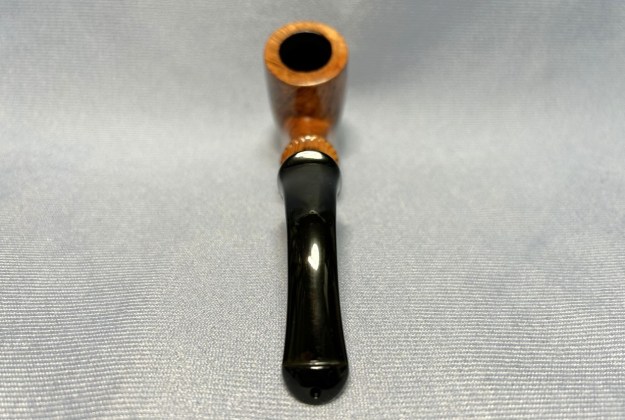
Here is another pipe I’ve restored for a local family – and I’ve been drip feeding the restoration stories over a stupidly long time. However, after that bit of self-deprecation, let’s have a look. This is a really handsome, solid Ropp Altesse 284 billiard. It’s a lovely shape and a big bowl. Gosh, when my friend selected this pipe, I thought to myself, ‘Good choice’. This is an older Ropp and the markings are definitely worth examining. On the left side of the shank, we see (inside an oval) the word Ropp [over] Altesse. The French word ‘altesse’ means ‘highness’ in English. The right side of the shank reads 284, which is the shape number. Finally, the stem has the Ropp logo, which is very familiar – however, this time the logo is in brass, rather than the normal nickel. This is significant because the brass version of the logo was reserved for higher quality pipes. From Pipedia, here is a very brief history of the Ropp company:
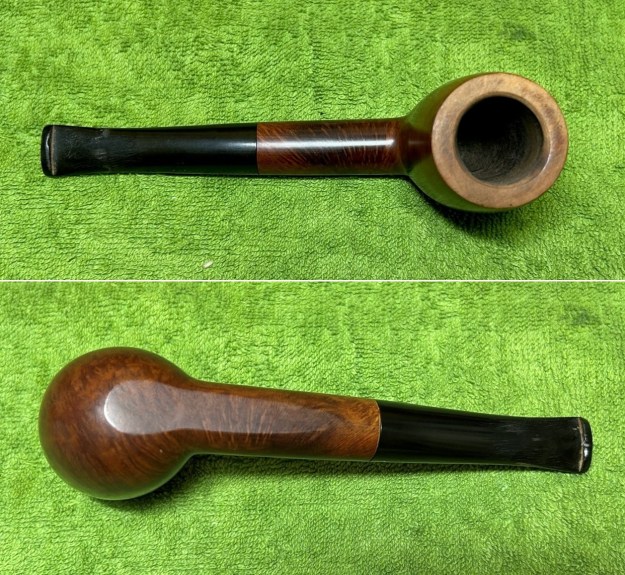
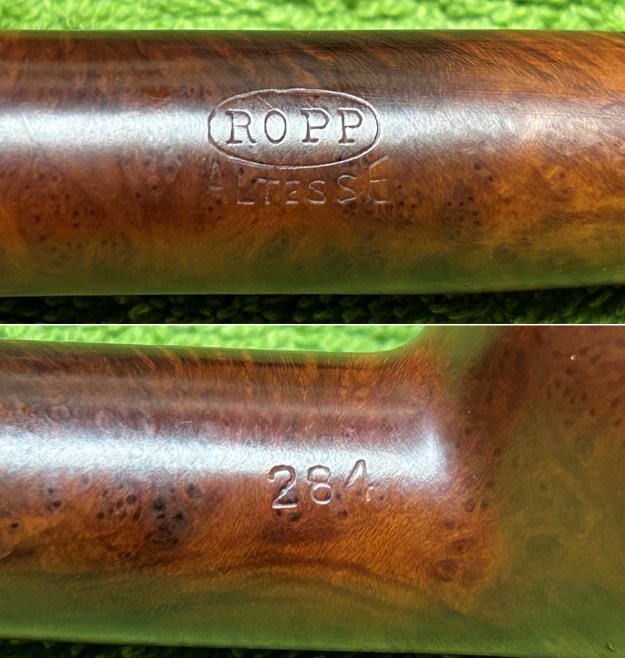
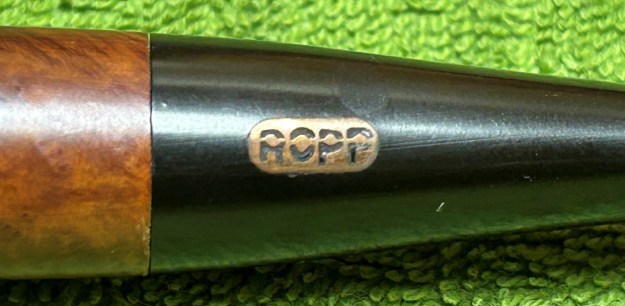
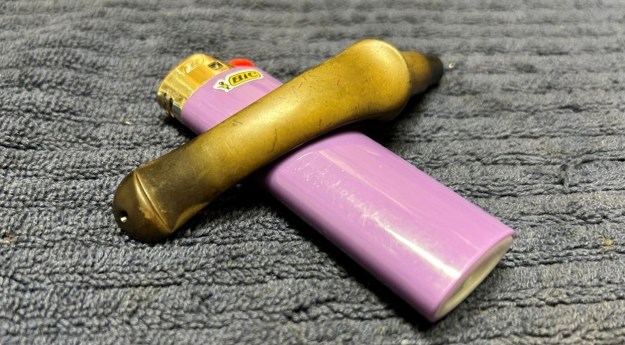
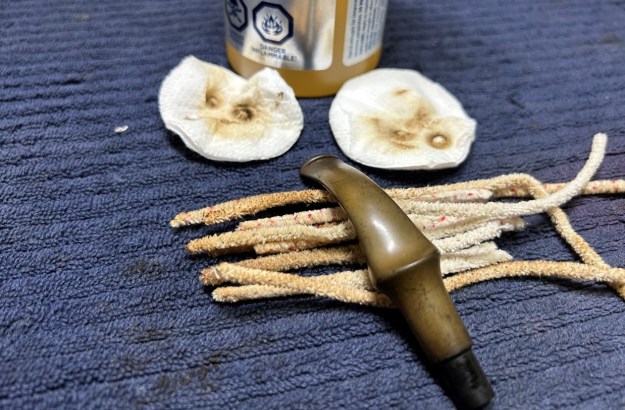
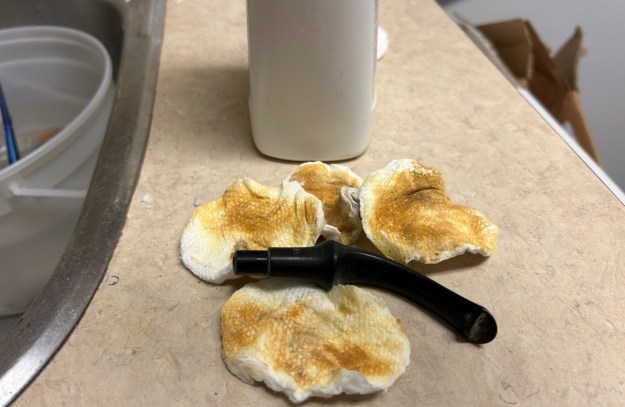
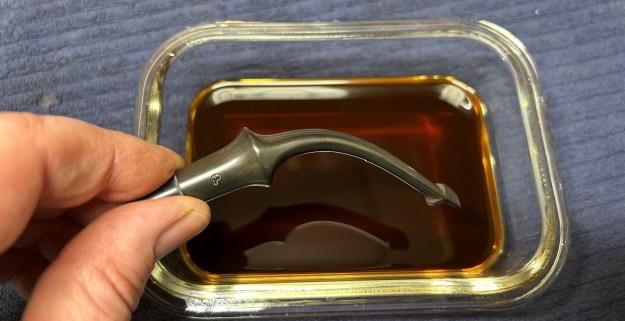
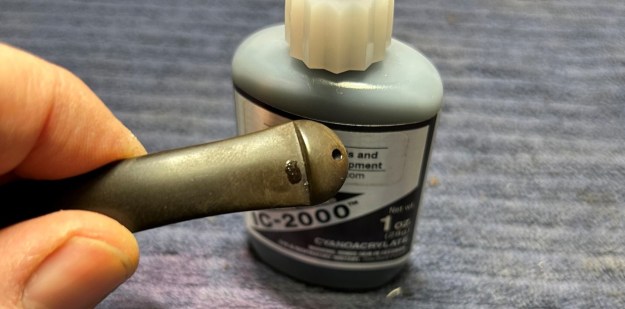
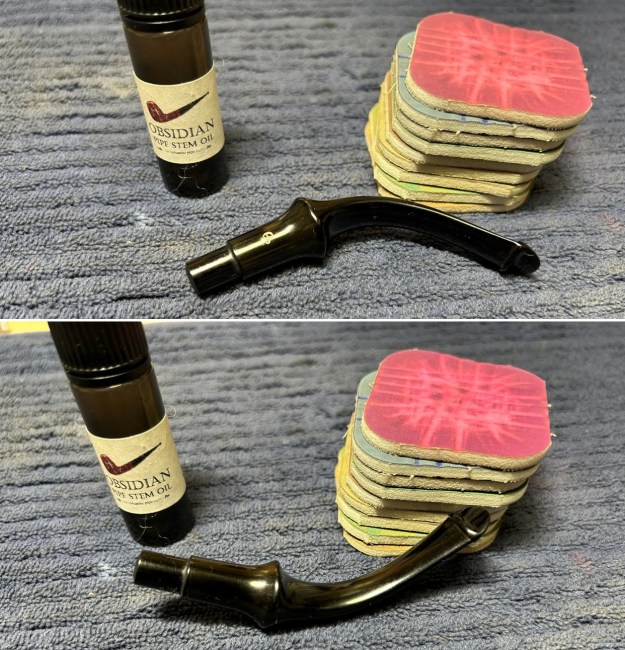
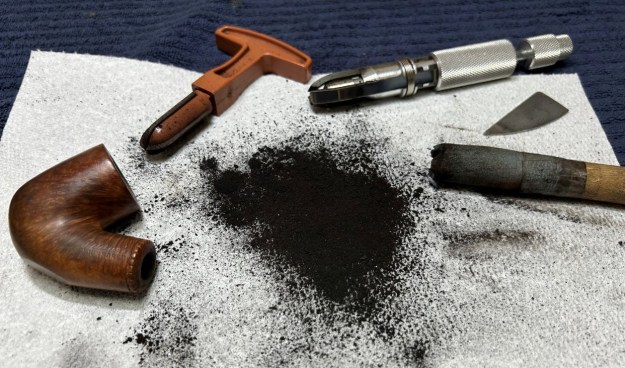
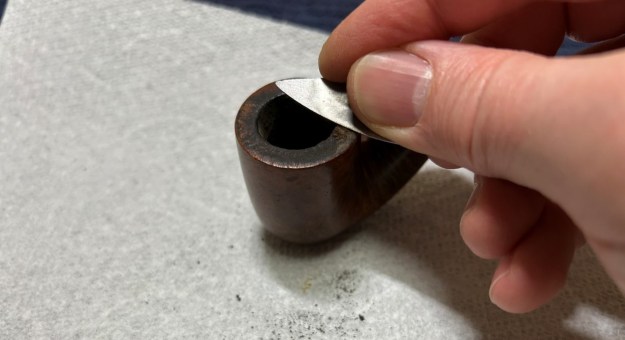
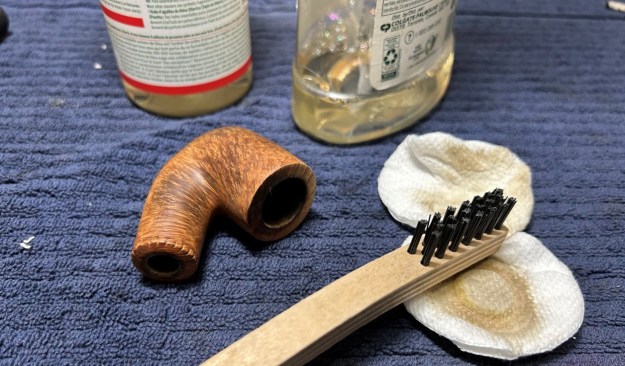
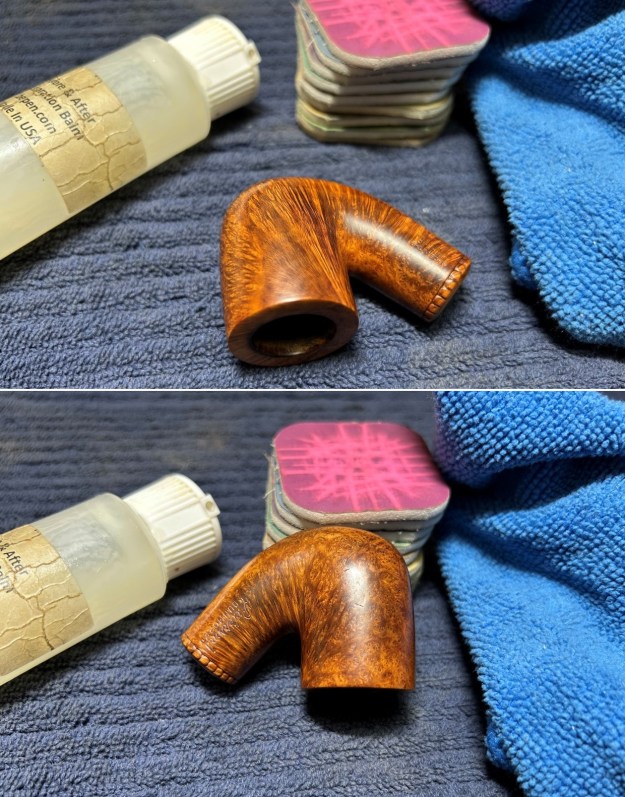
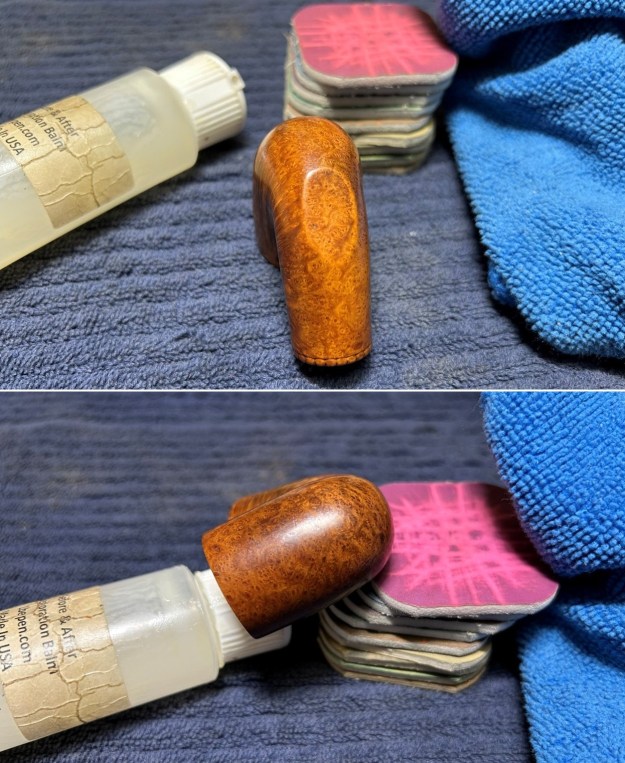
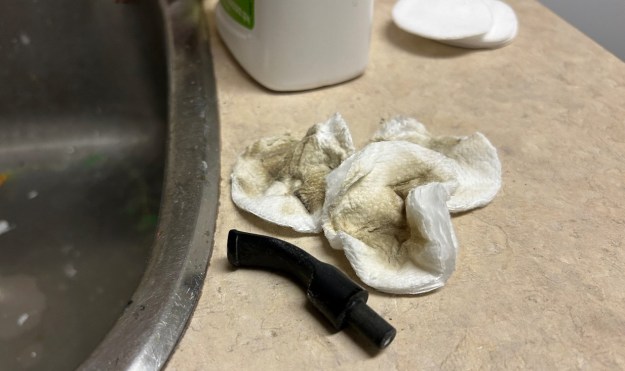
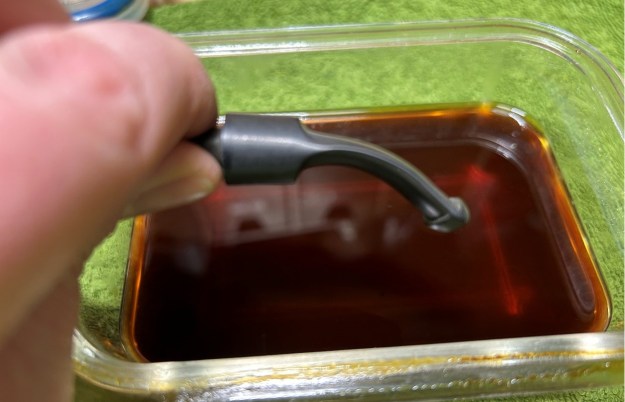
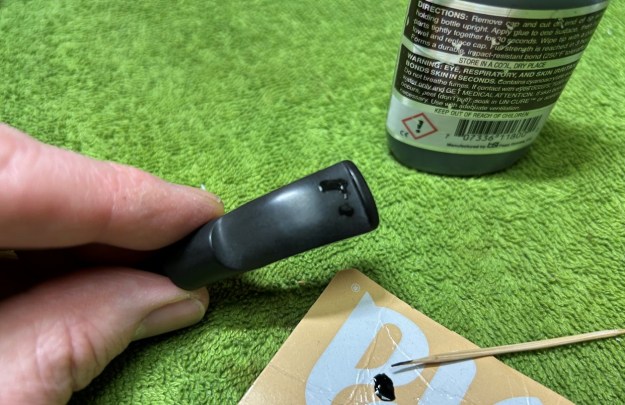
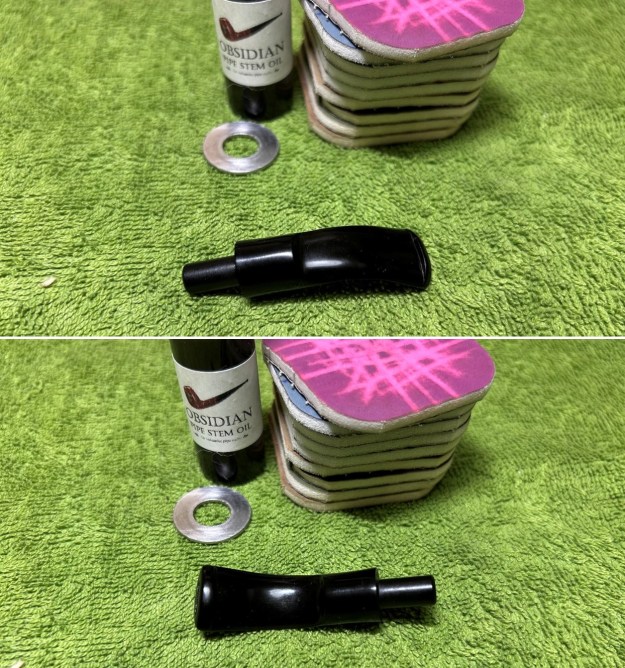
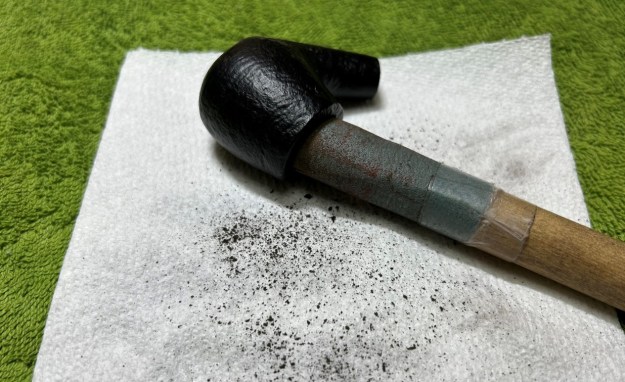
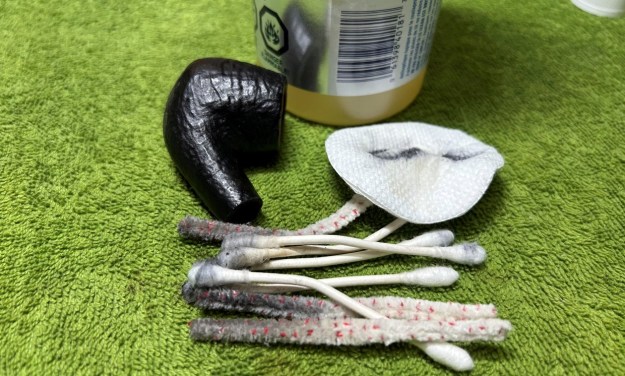
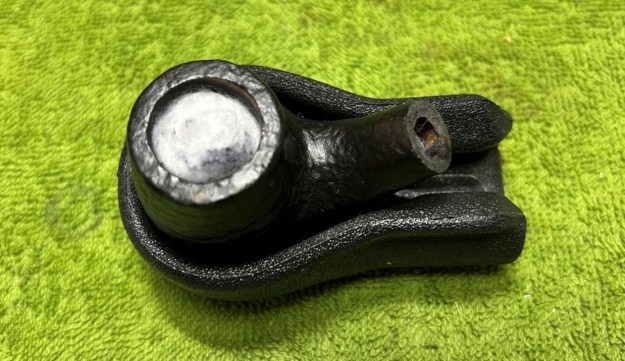
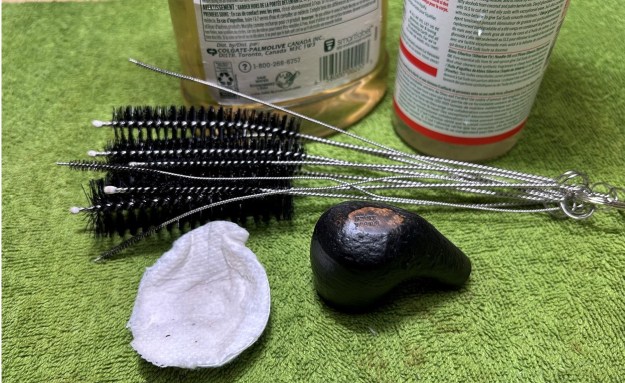
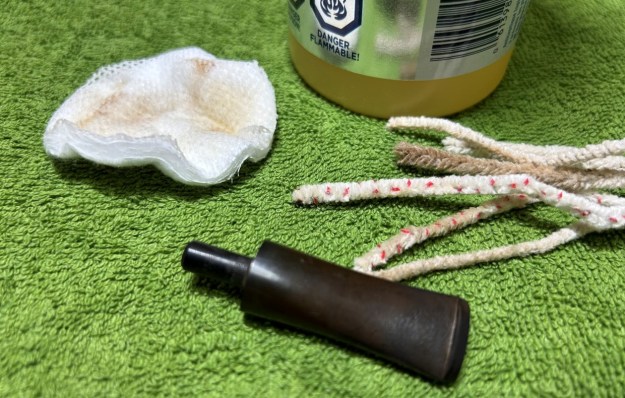
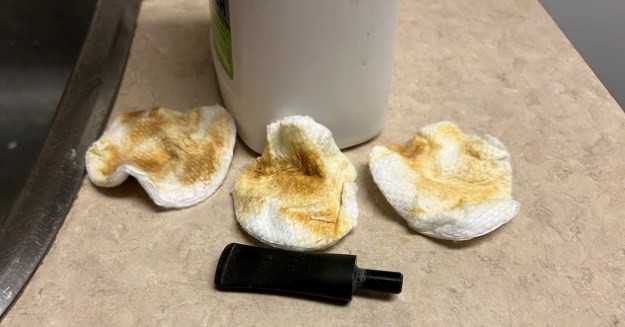
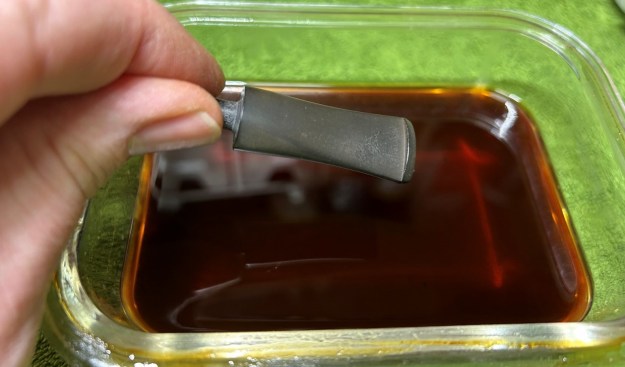
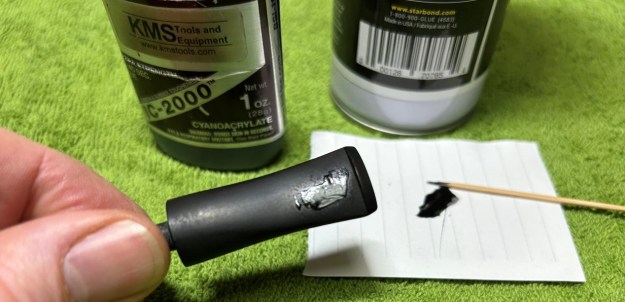
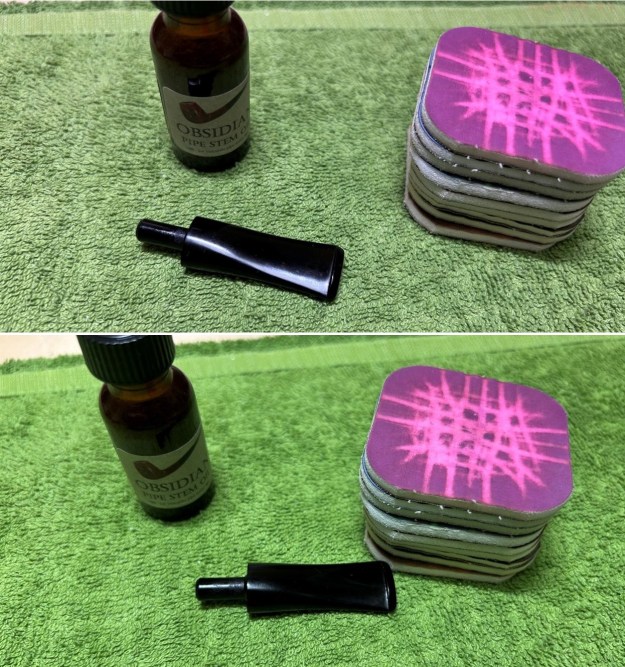
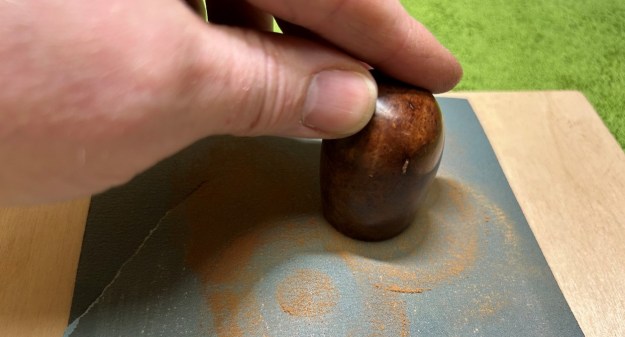
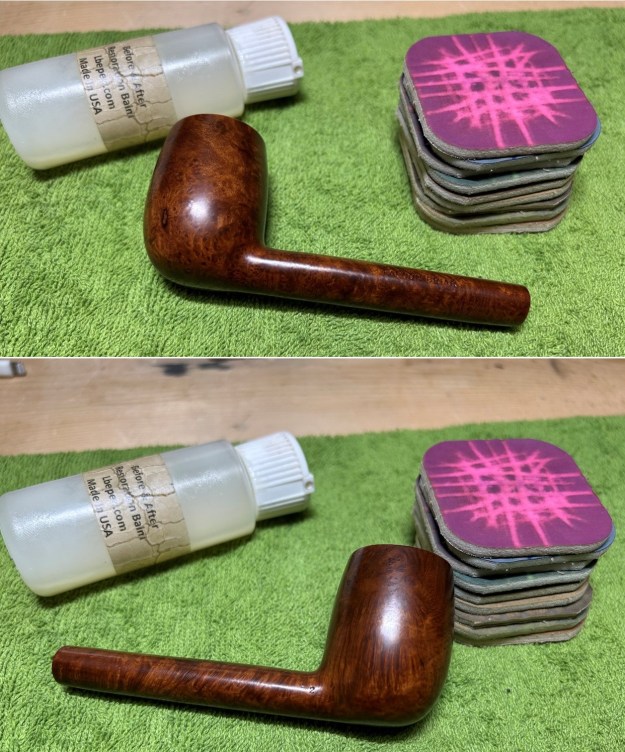
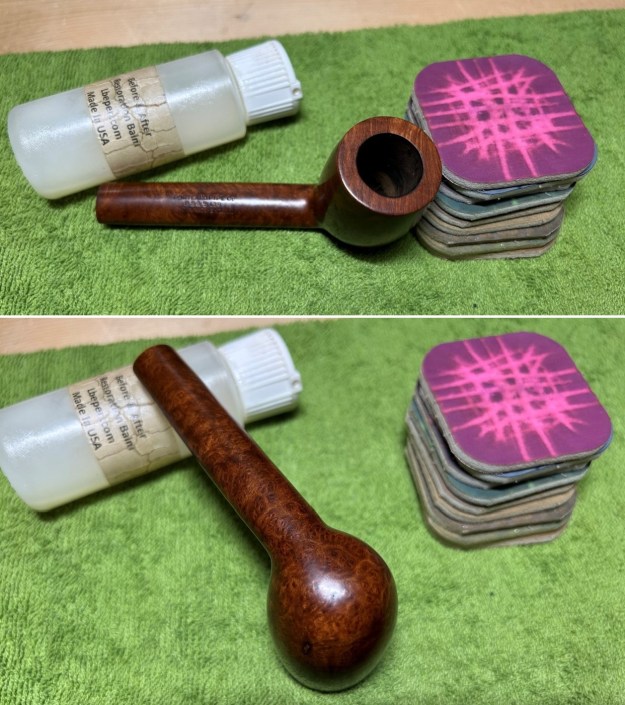
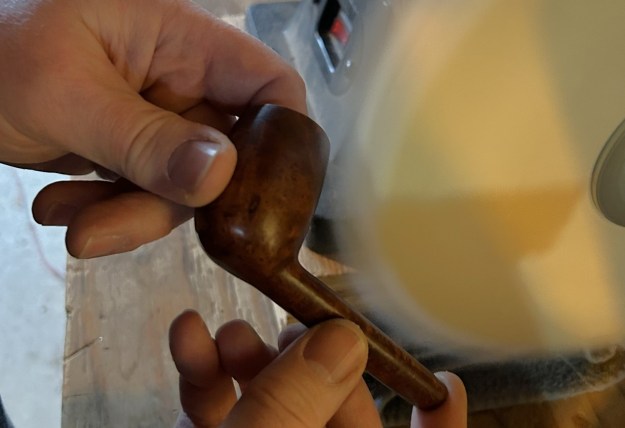
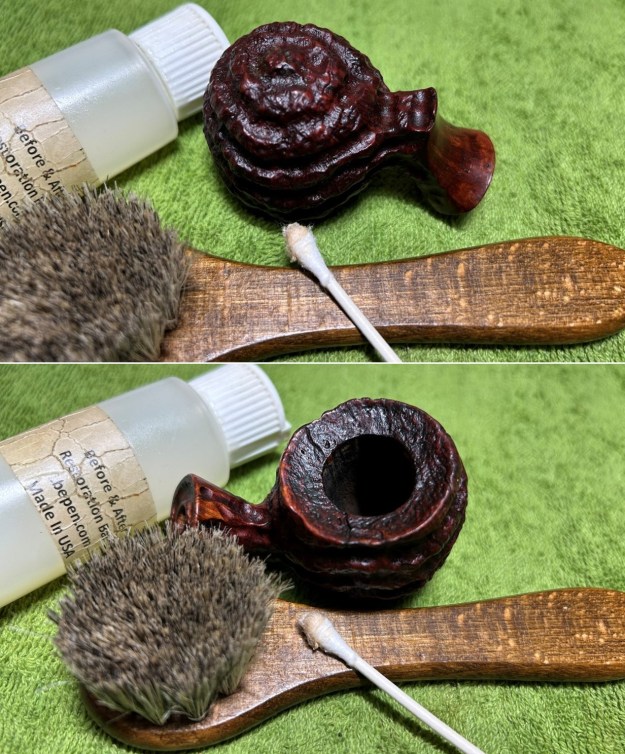
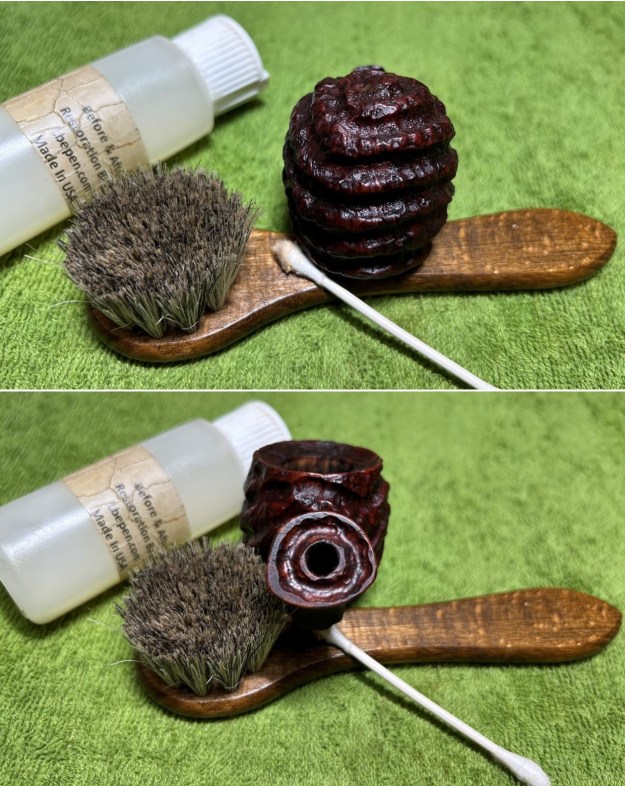
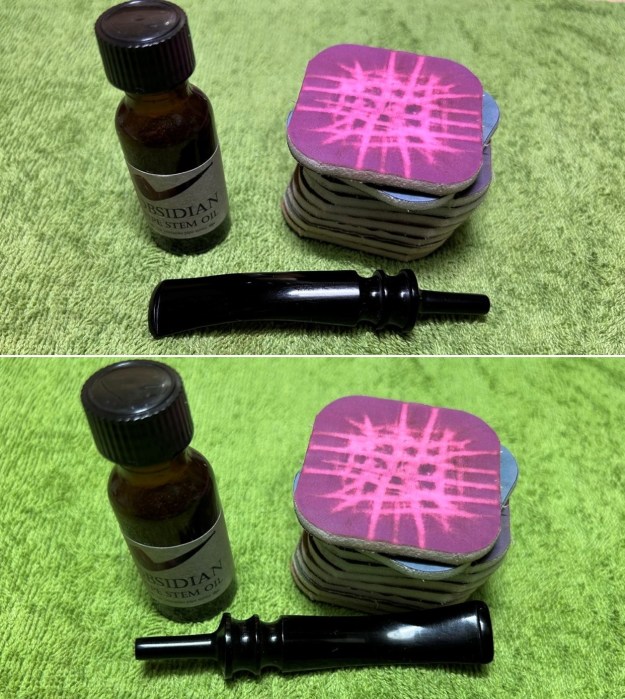
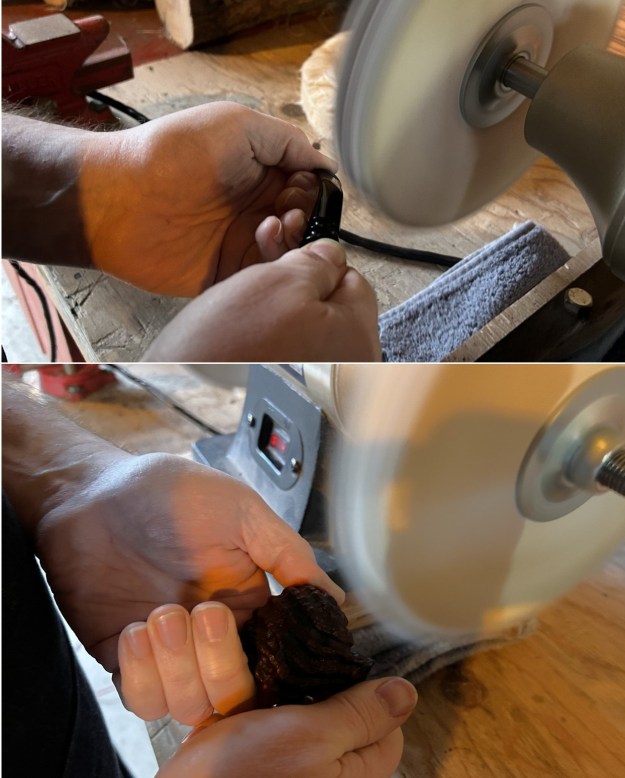
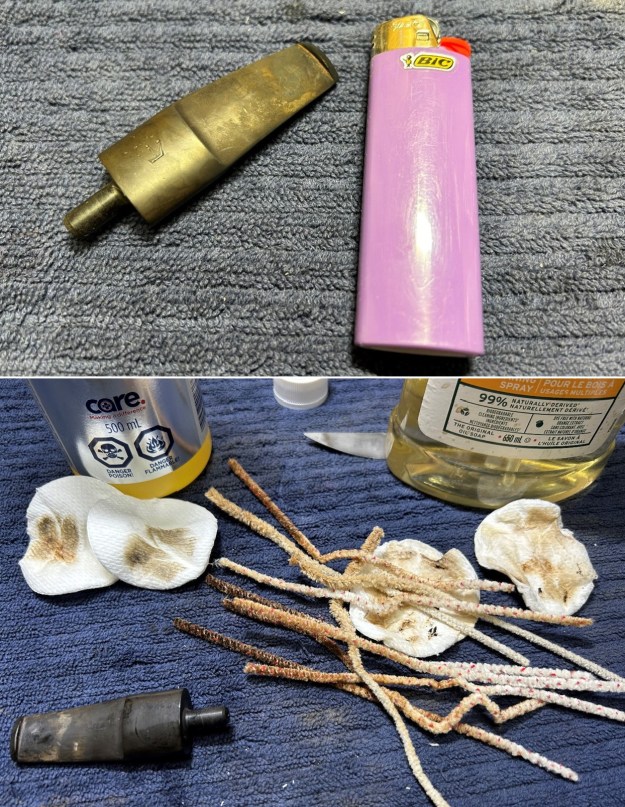
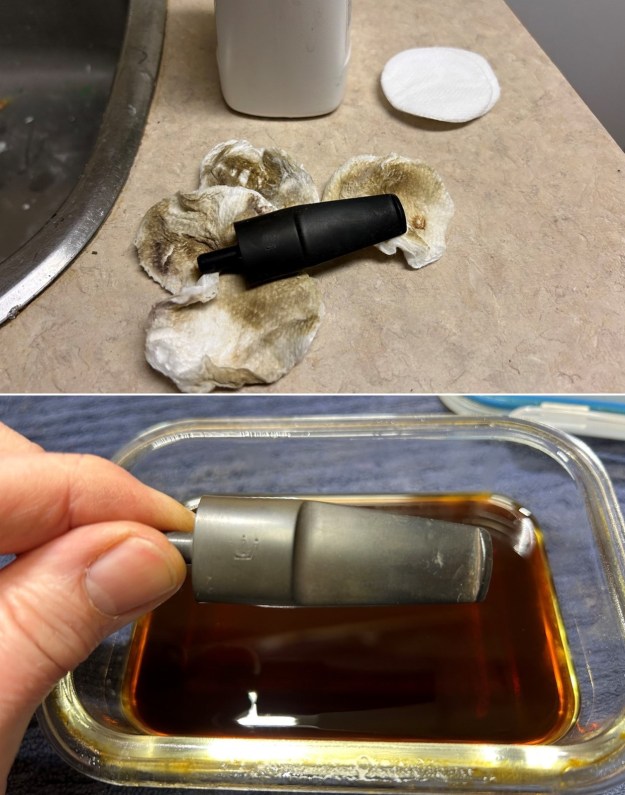
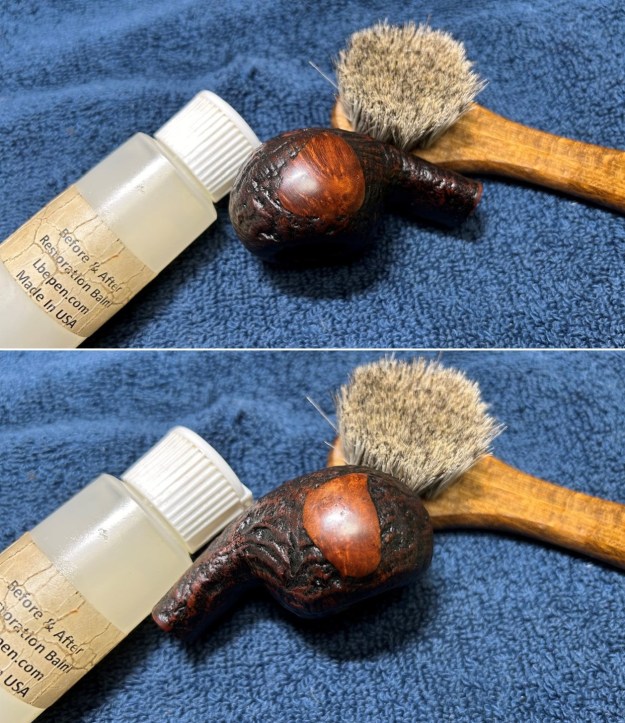
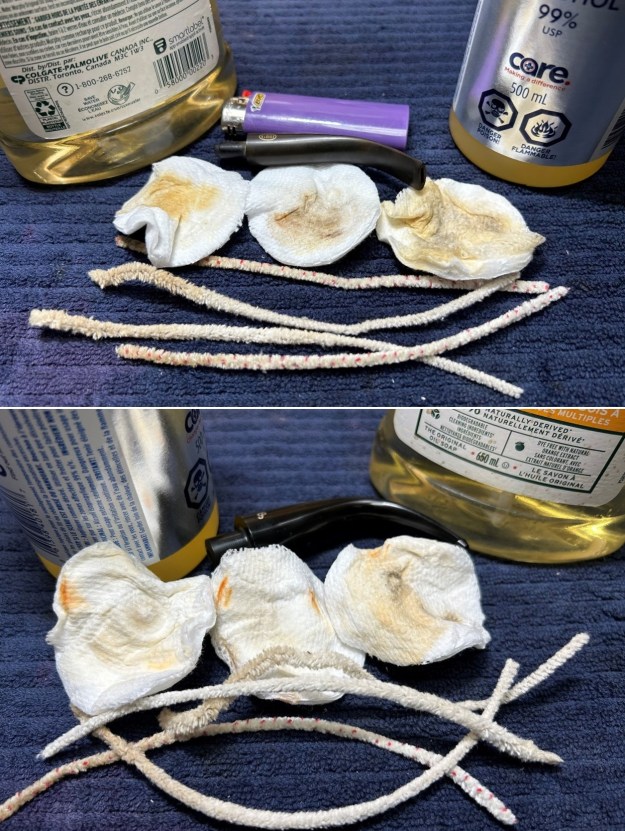
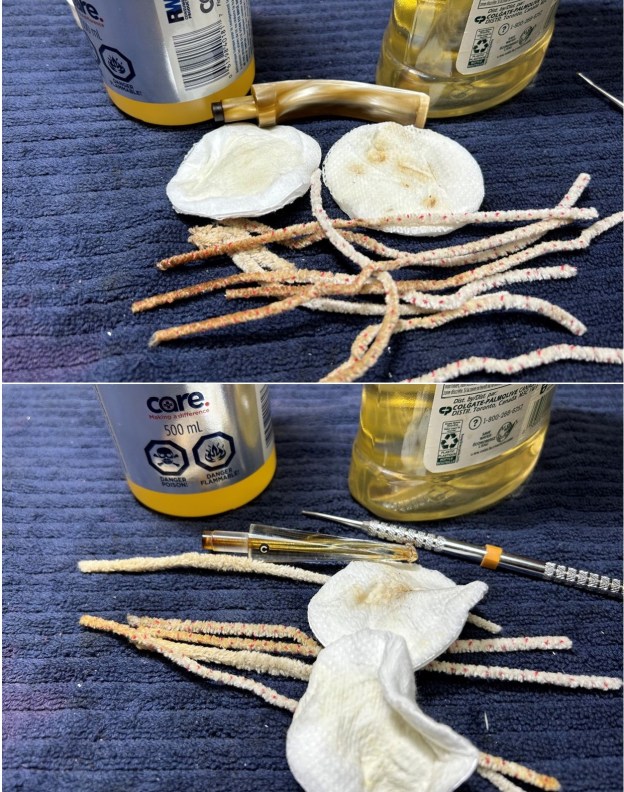
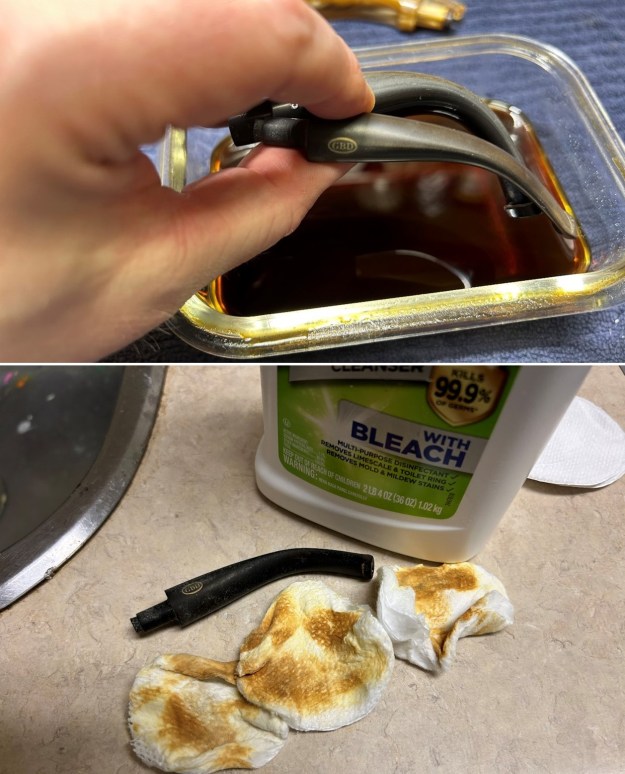
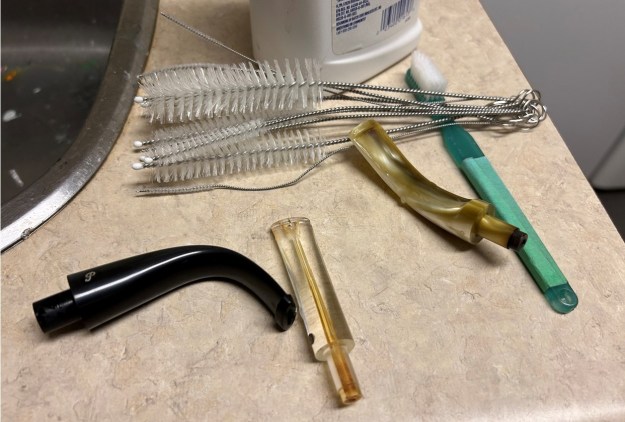
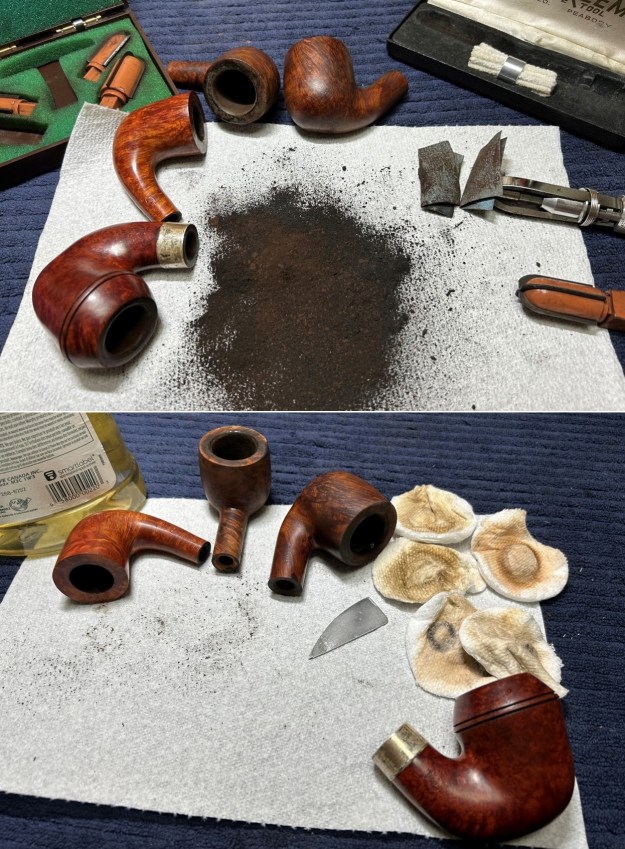
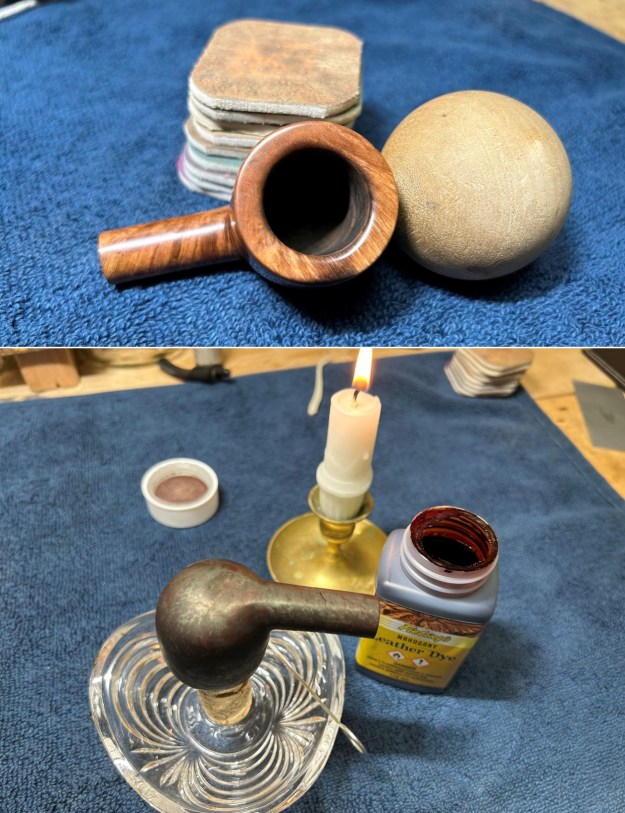
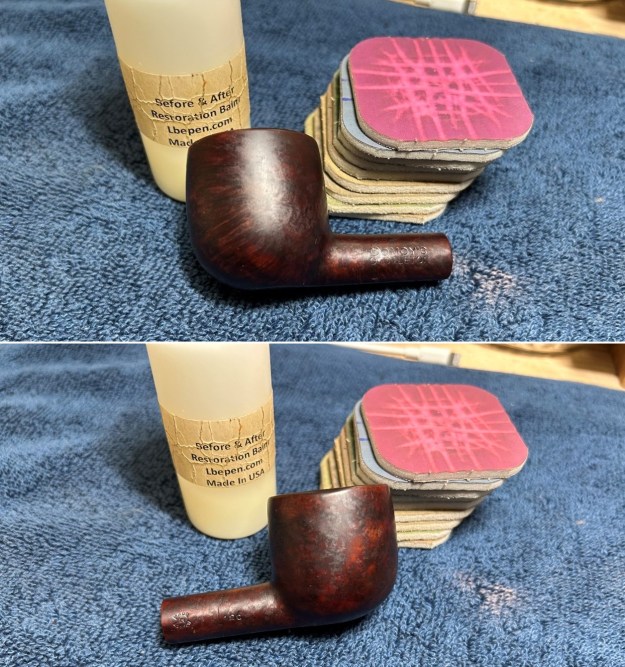
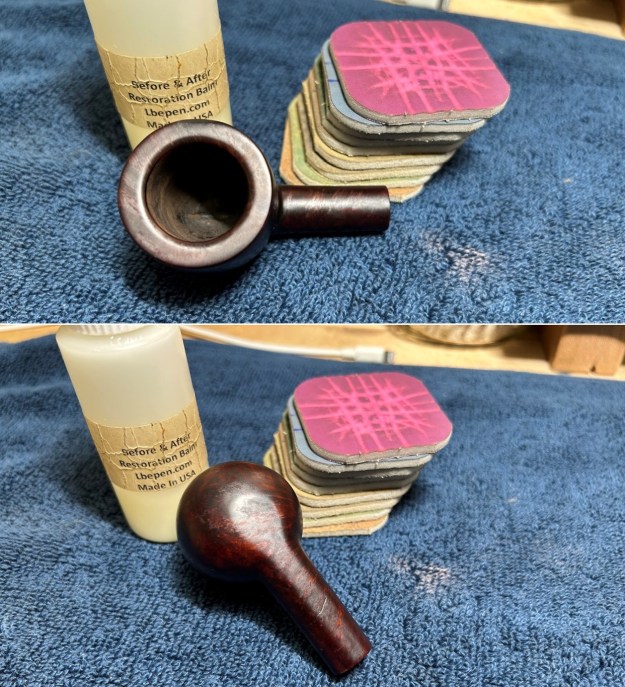
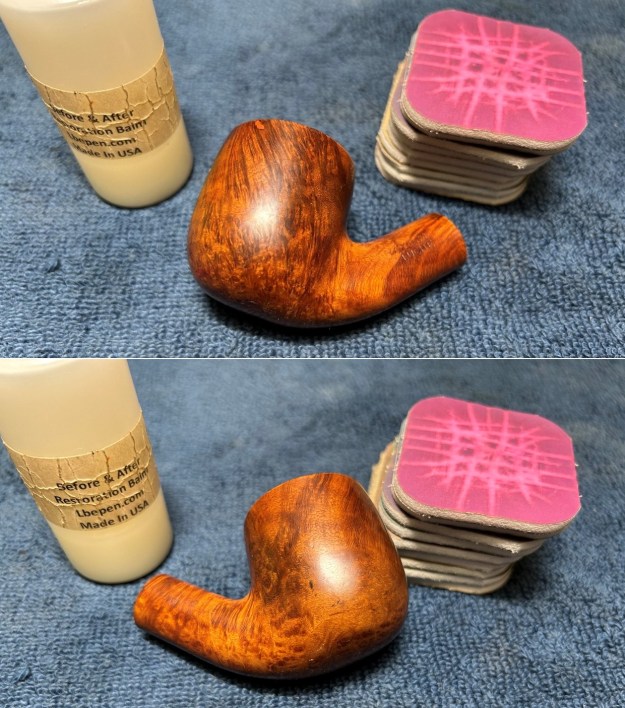
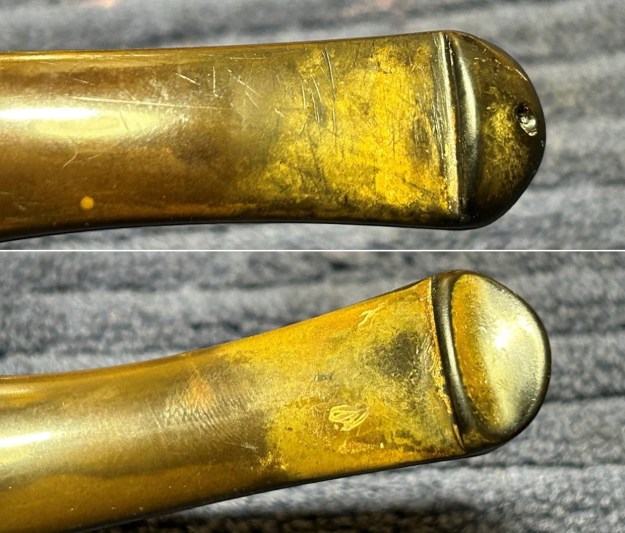
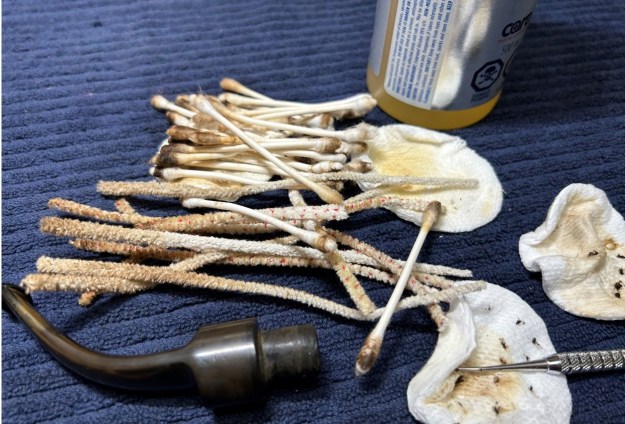
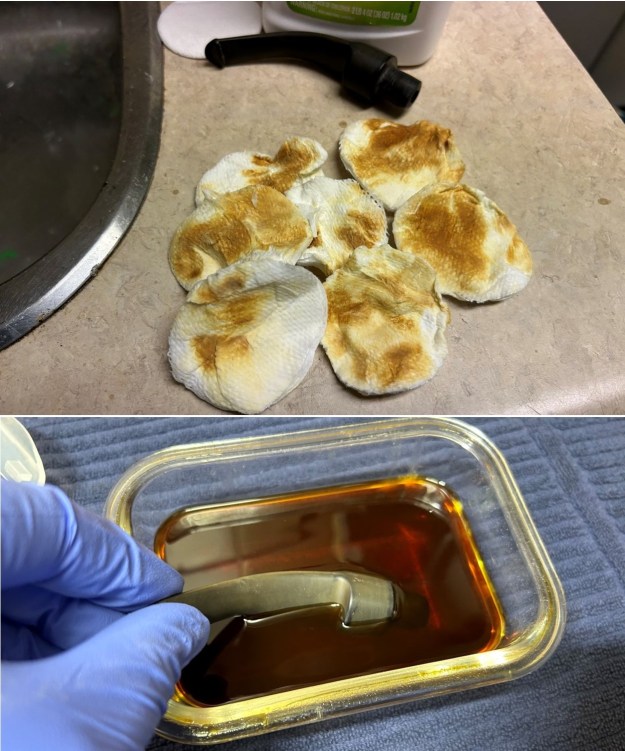
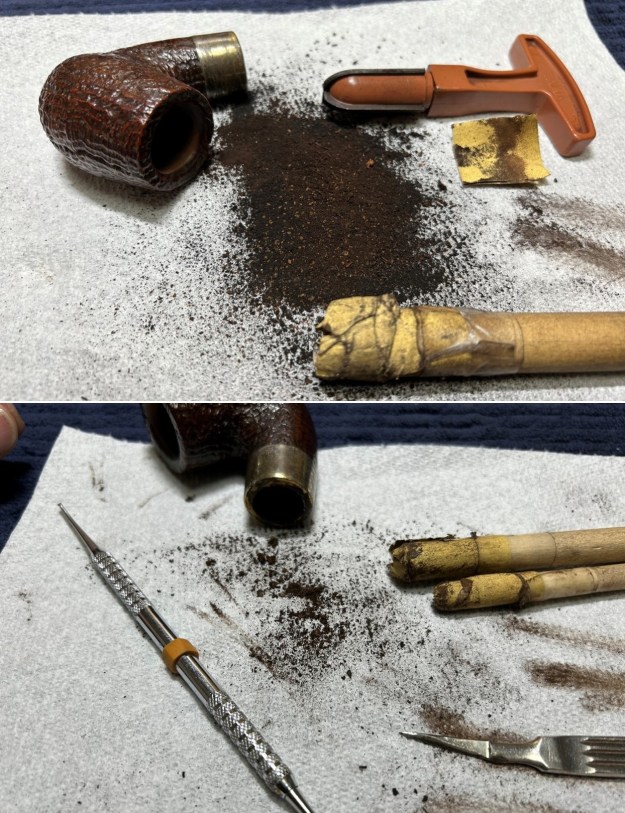
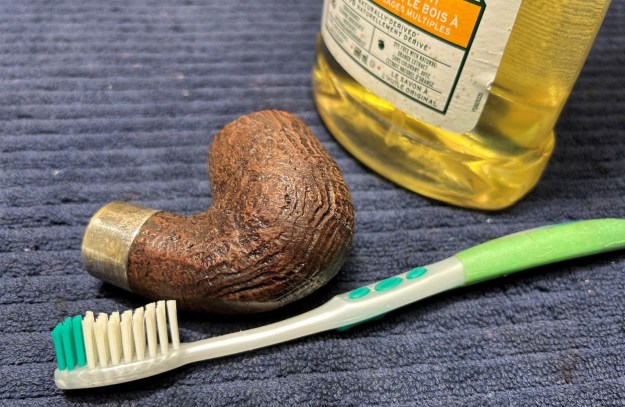
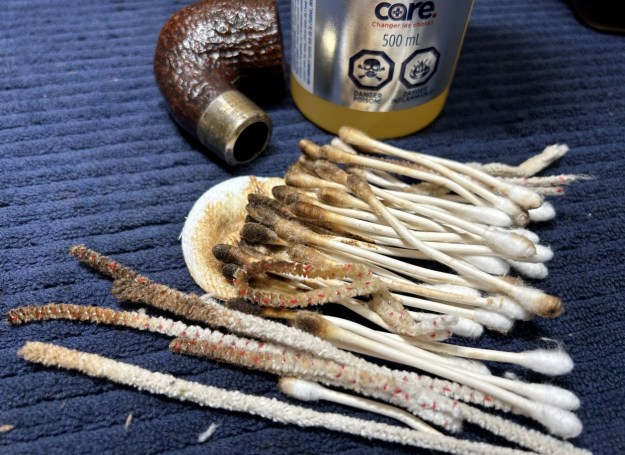
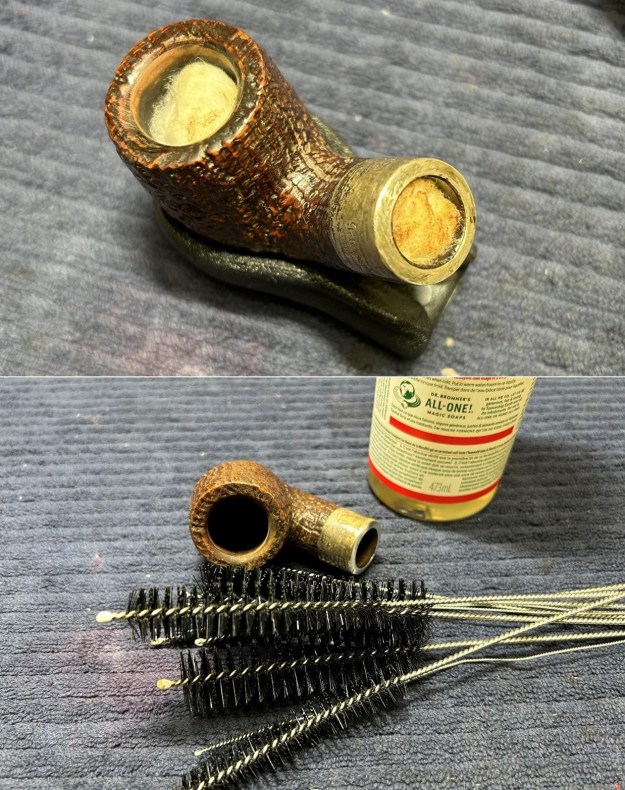
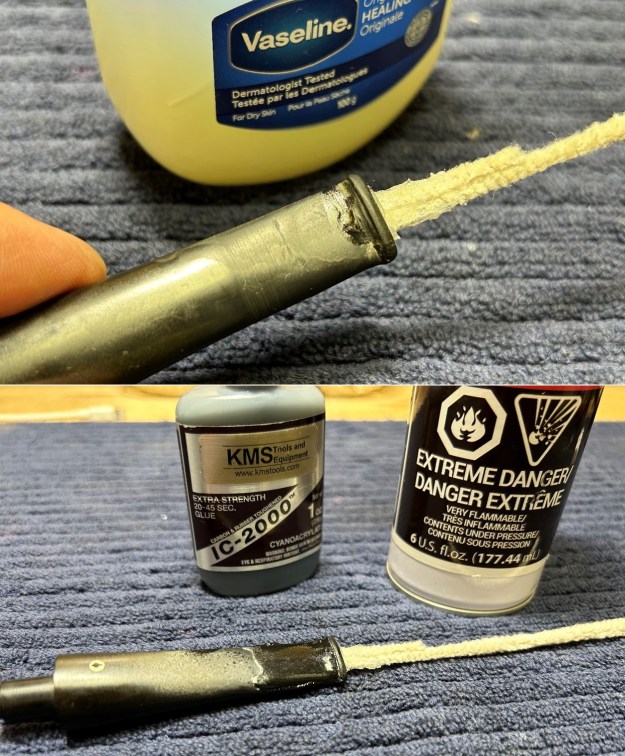
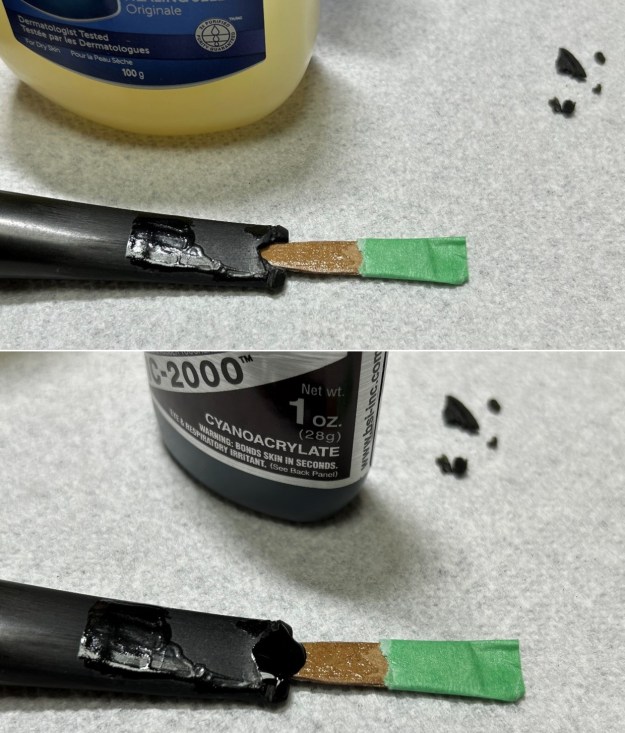
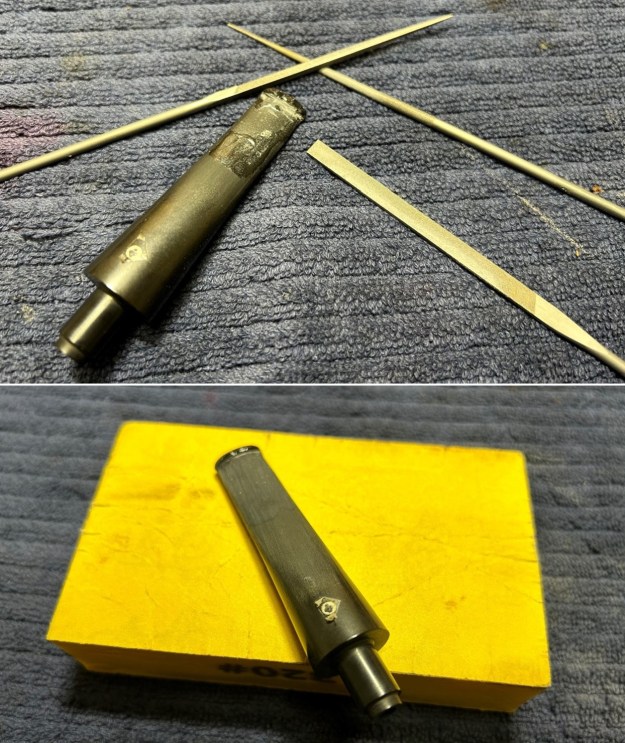
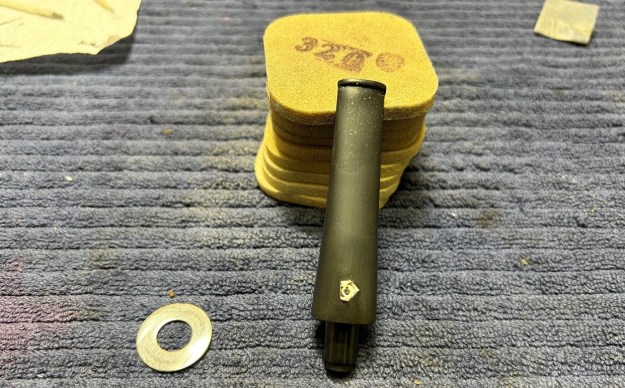
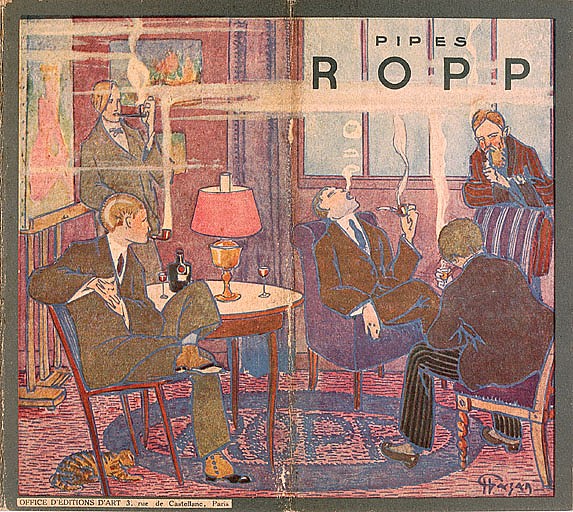
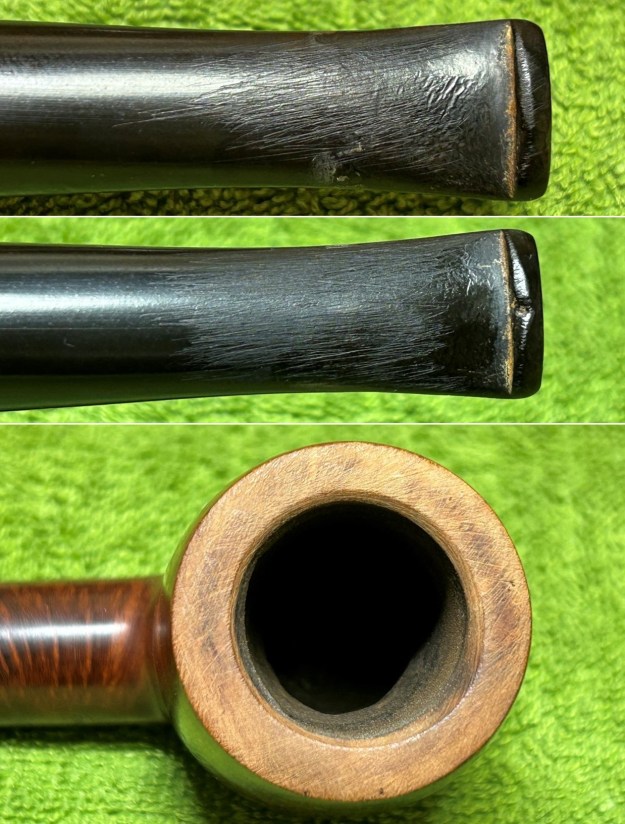
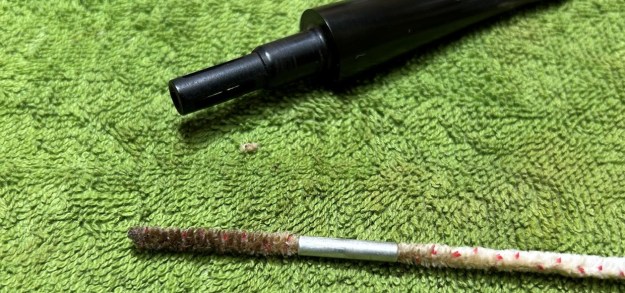
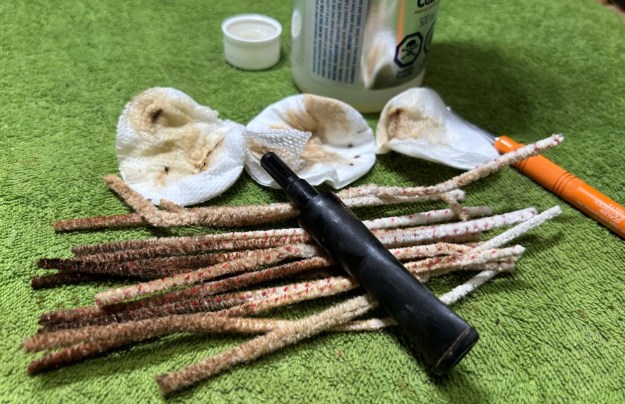
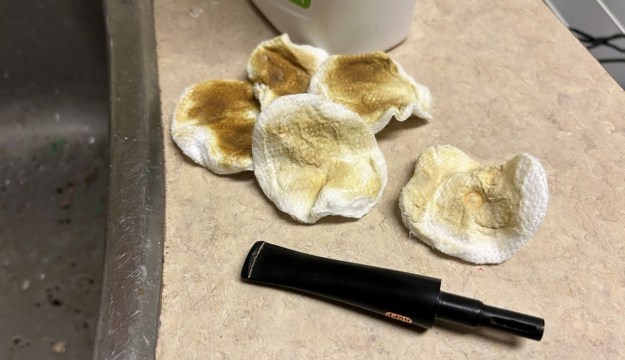
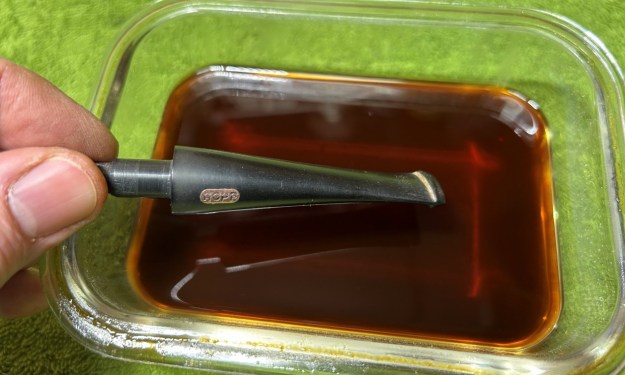
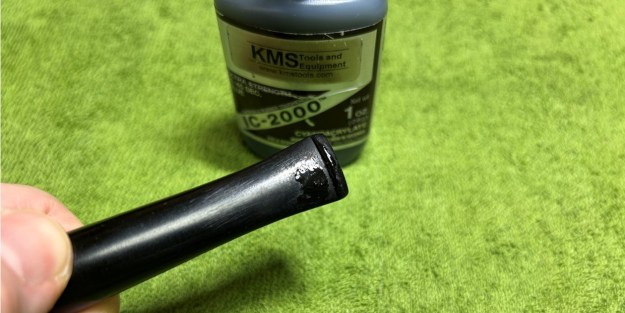
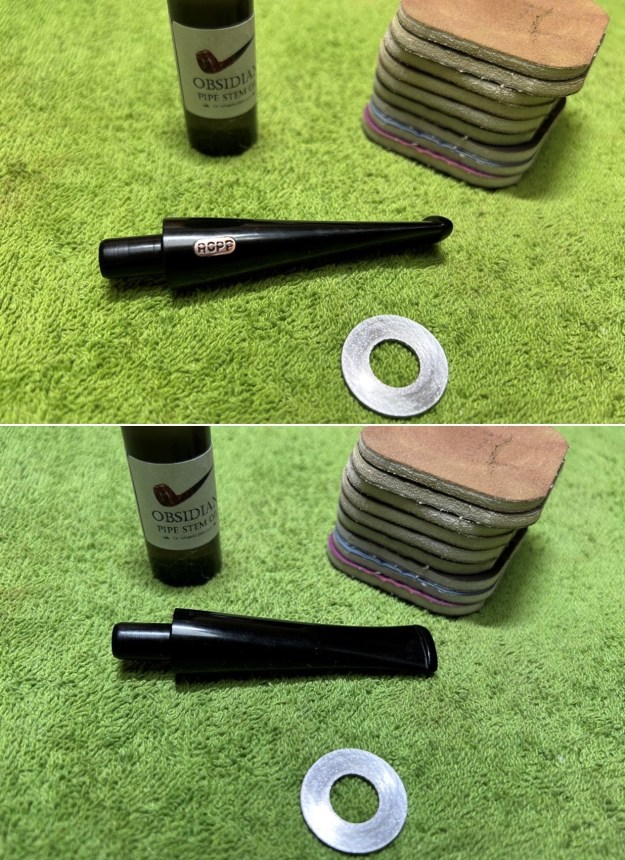
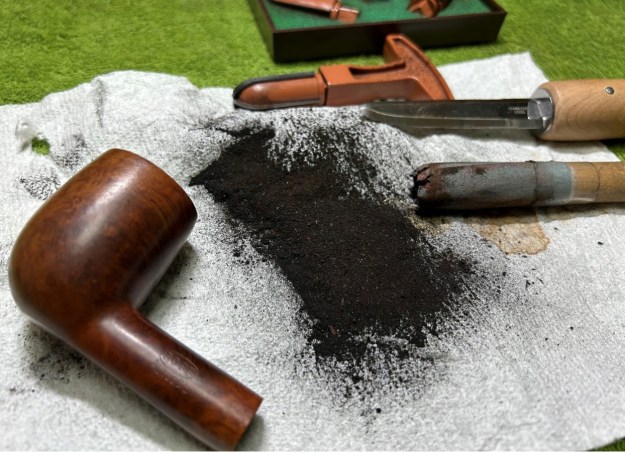
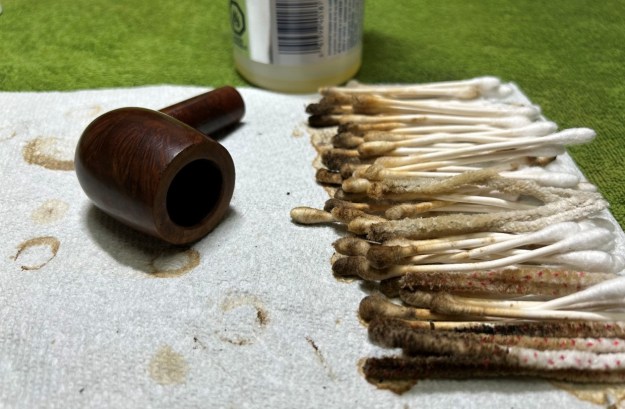
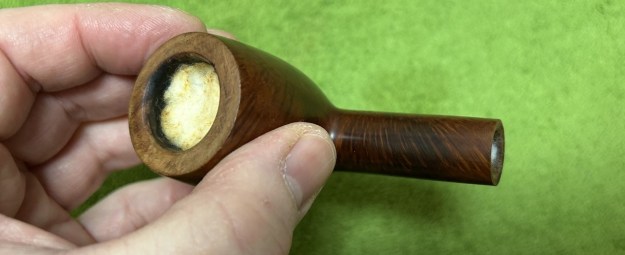
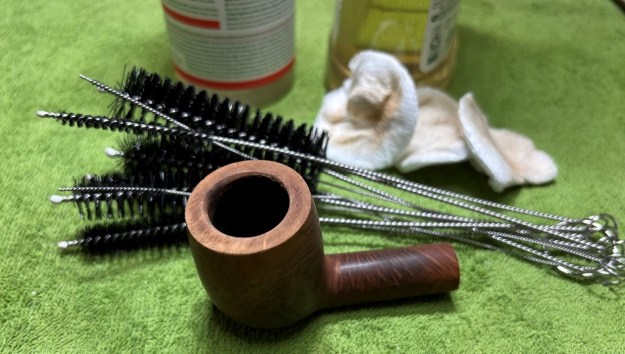
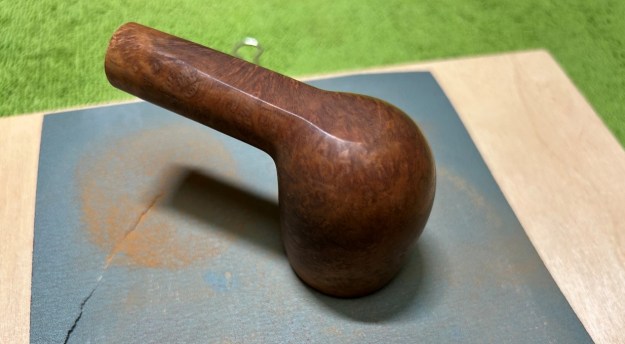
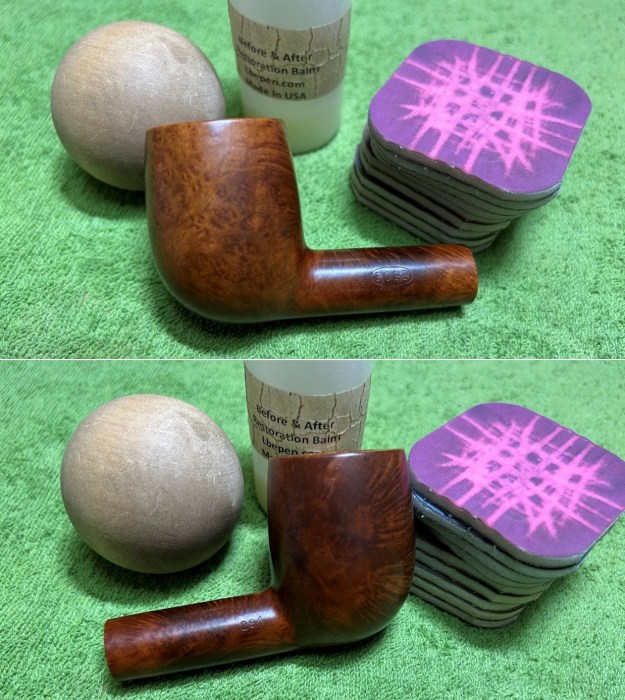
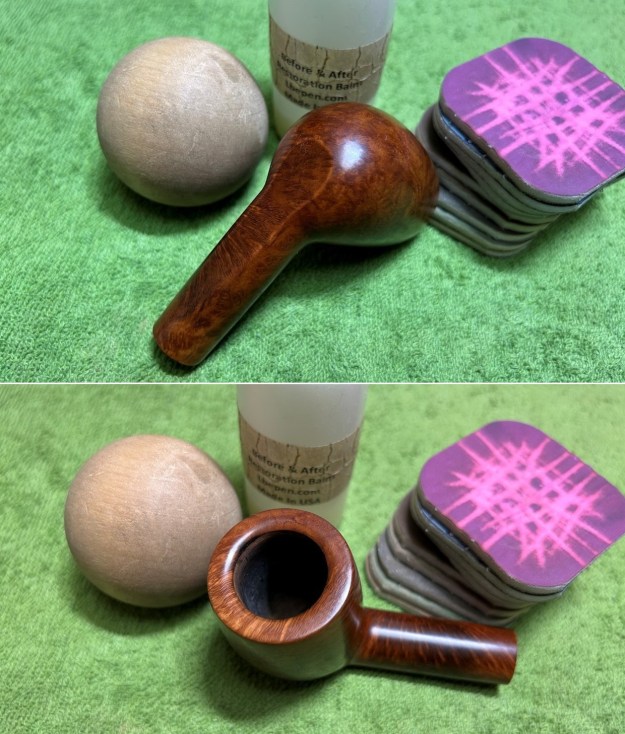
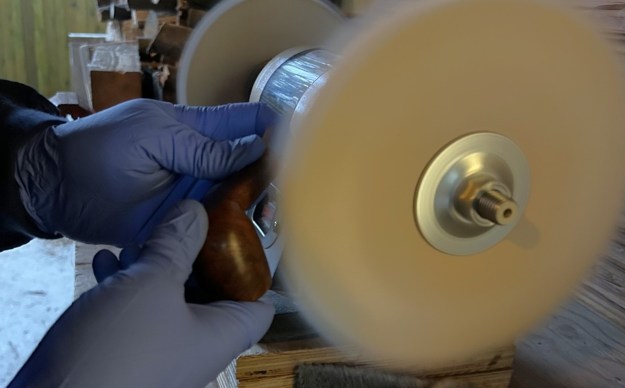
Eugène-Léon Ropp (1830–1907) acquired a patent for the cherrywood pipe in 1869. In 1870, he established a workshop to manufacture such pipes in Bussang, in the Vosges mountains. Around 1893, his business moved into the former mill of Sicard (part of the community of Baume-les-Dames in Upper Burgundy. The pipes were a big success in export as well. Shortly before 1914, Ropp designated A. Frankau & Co. (BBB) to be the exclusive distributor in the UK and its colonies. Probably in 1917, a workshop in Saint-Claude in the rue du Plan du Moulin was acquired to start the fabrication of briar pipes. In 1923, another small building in Saint-Claude, serving as a workshop for polishing, was added. Cherrywood pipes were the mainstay of Ropp until the company finally closed down in September 1991. The company was taken over by Cuty-Fort Entreprises in 1994. What sort of condition is this pipe in? Quite frankly, it looks as though someone in the past has made some elementary steps to cleaning or restoring this pipe. The stem has been thoroughly chewed and someone has clearly tried to scape off something in the path – you can the see scratch marks. The stummel has lovely feel to it. Not too dirty, but the rim has – like the stem – been scraped or cleaned in some way. The photos show how different the rim looks from the rest of the pipe.I used a disposable lighter and ‘painted’ the stem with its flame. The gentle heat of the flame can cause the dents in the vulcanite of the stem to expand back into shape. In this case, not much happened. Alas. This pipe also had an unusual metal and acrylic innertube. As the photos of this restoration show, I initially started cleaning it, but discovered that it was badly cracked – and so I elected to remove it altogether.I used oil soap on a few cotton rounds and wiped the stem down to provide an initial cleaning of filth before moving on to the next steps. The primary cleaning comes next. I cleaned the inside of the stem with both pipe cleaners and cotton swabs dipped in 99% lemon-infused isopropyl alcohol. I scrubbed thoroughly to make sure the interior was clean. I used a lot of pipe cleaners and cotton swabs, as it was pretty dirty.The goal of the next step is the removal (or minimization) of oxidation. Going to my sink, I used cream cleanser, cotton rounds, and a toothbrush, and scoured the stem to remove as much surface oxidation as possible. As the photos show, the result is a hideous brownish mess – but better off the stem than on it.Once the stem was reasonably clean, I soaked it overnight in some Briarville Stem Oxidation Remover. This solution works to draw oxidation in the stem to the surface. This is a major aid and an important step in ensuring a clean stem. The following day, I drew the stem out from its bath and scrubbed the lingering fluid with a toothbrush.Now that the stem is clean and dry, I set about fixing the marks and dents in the vulcanite. This is done by filling those divots with black cyanoacrylate adhesive, impregnated with carbon and rubber. I left this to cure and moved on.The penultimate step for the stem is sanding. First, with my set of needle files, I reduce the bulk of the cyanoacrylate repairs. I want to remove the excess adhesive as near to the surface as possible, without cutting into the vulcanite. Following that, I use all nine of the micromesh sanding pads (1,500 through 12,000 grit) to sand out flaws, even out the vulcanite, and provide gentle polishing of the finished surface. I also apply pipe-stem oil while using the last five micromesh pads. There was a wonderful, deep black shine to the stem when I was done.Now that the stem is (nearly) complete, I can move on to the stummel. The first step for me is to ream out the bowl – that is to say, remove all the cake inside the bowl. This accomplishes a couple of things. First (and most obviously), it cleans the bowl and provides a refurbished chamber for future smoking. Second, when the old cake is removed, I can inspect the interior walls of the bowl and determine if there is damage or not. I used a reamer, a pipe knife, and a piece of sandpaper taped to a wooden dowel. Collectively, these ensure that all the debris is removed.Similar to the stem, I then cleaned the stummel with both pipe cleaners and cotton swabs dipped in 99% lemon-infused isopropyl alcohol. With a pipe this dirty, it took quite a while and much cotton to get clean.I then decided to ‘de-ghost’ the pipe – that is to say, exorcize the remaining filth from the briar. I filled the bowl and the shank with cotton balls, then saturated them with 99% isopropyl alcohol. I let the stummel sit overnight. This caused any remaining oils, tars and smells to leach out into the cotton.To tidy up the briar, I also wiped down the outside with some oil soap on cotton rounds (and a toothbrush). This does a good job of cleaning any latent dirt on the surface of the briar. The last step of the cleaning process is to scour the inside of the stummel with some soap and tube brushes. This is the culmination of a lot of hard work in getting the pipe clean.The rim is a bit more rugged than I would like. In order to lessen the nicks etc. on the rim, I ‘topped’ the pipe – that is to say, I gently and evenly sanded the rim on a piece of 220-grit sandpaper. This effectively minimizes the damage, without altering the look of the pipe.I used all nine micromesh pads (1,500 through 12,000 grit) on the outside of the stummel to finish it off. This sanding minimizes flaws in the briar and provides a beautiful smoothness to the wood. After that, the bare wood on the rim needed to be tinted in the same colour as the rest of the stummel. I used some of my furniture pens (which is simply dye in pen form) to match the colours. I rubbed some Before & After Restoration Balm into the briar and let it sit for 20 minutes or so. The balm moisturizes the wood and gives a beautiful depth to the briar. I then buffed it with a microfibre cloth. For the final step, I took the pipe to my bench buffer and carefully polished it – first with a white diamond compound, then with three coats of carnauba wax. This procedure makes the pipe look its best – the stummel sings and the stem glows.All done! This Ropp Altesse 284 billiard looks fantastic again and is ready to be enjoyed by its new owner. It was a pleasure to work on. The approximate dimensions of the pipe are as follows: length 5¾ in. (146 mm); height 1⅞ in. (48 mm); bowl diameter 1½ in. (39 mm); chamber diameter ¾ in. (19 mm). The weight of the pipe is 1¾ oz. (52 g). I hope you enjoyed reading the story of this pipe’s restoration as much as I enjoyed restoring it. If you are interested in more of my work, please follow me here on Steve’s website or send me an email at kenneth@knightsofthepipe.com. Thank you very much for reading and, as always, I welcome and encourage your comments.
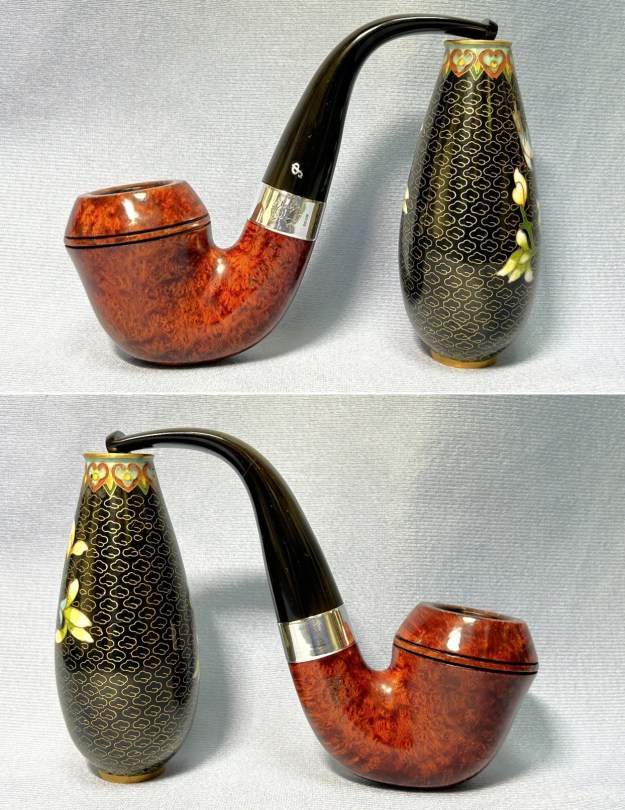
Restoring a Handsome Peterson Dunmore 73


by Kenneth Lieblich

Lá Fhéile Pádraig sona duit!

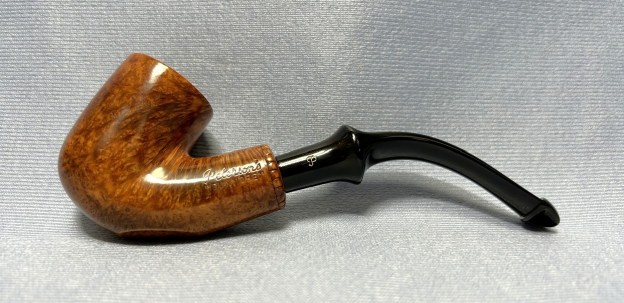
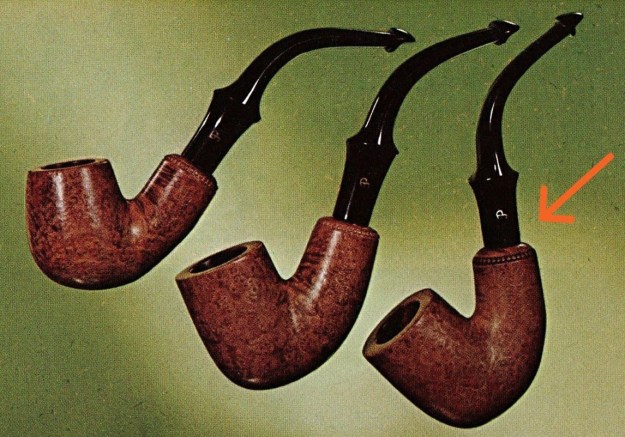
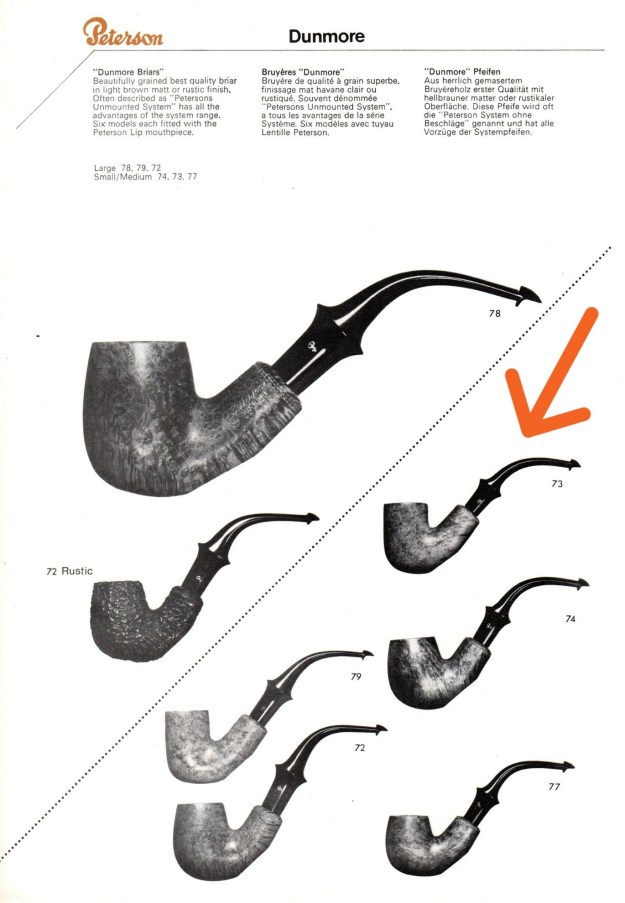
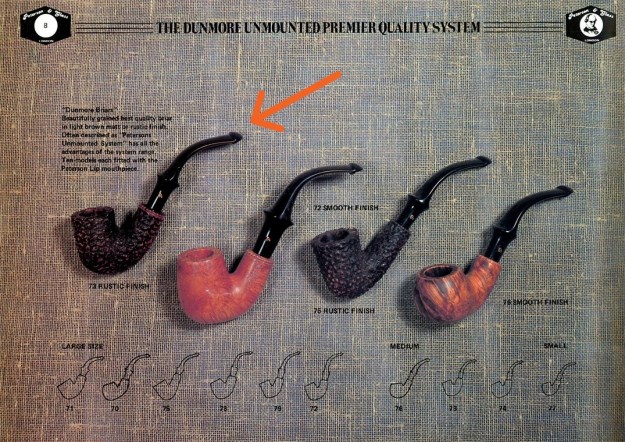
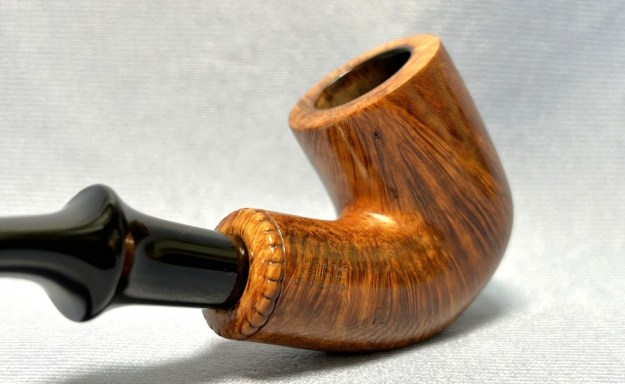
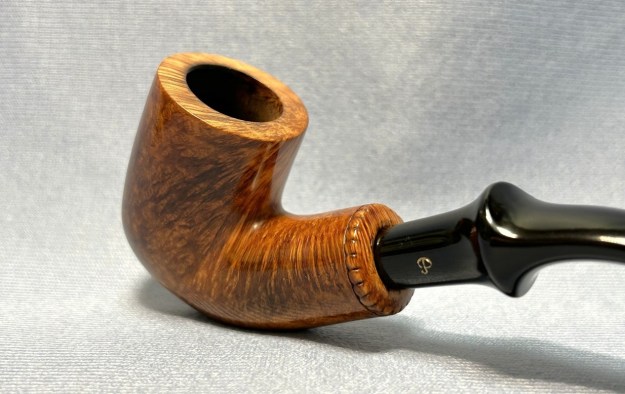
As it is the feast of Saint Patrick, I thought I would post an Irish pipe today – even though I have no Irish heritage myself. No matter! Petersons are very popular, so why not put some spit and polish on this handsome devil. I nabbed this beauty a couple of years ago and, unaccountably, it’s been sitting around waiting for me to clean it up. Let’s look at the markings. On the left side of the shank are the words Peterson’s [over] “Dunmore”. On the right side of the shank are the words Made in the [over] Republic [over] of Ireland. Then down and to the right of that is the shape number, 73. Finally, on the left side of the stem, is the stylized letter P of the Peterson Pipe Company.I’ve always found the scalloped edge at the end of Dunmore shanks to be quite attractive. Let’s investigate the Dunmore line a bit more. Mark Irwin of the Peterson Pipe Notes blog has a great article about Dunmores, which you should read here. Allow me to quote a few passages:

The line originated in collaboration with Iwan Reis in 1971. How it came about is anyone’s guess at this point. Chuck Levi, the man who more than any other was responsible for bringing the great Danish artisan pipes to the US, was working with the creative minds at K&P to bring something new to the IRC catalog, and this was one of about a dozen K&P lines that debuted as exclusives in the Iwan Reis catalogs of that era.The concept was to modernize the System pipe by removing what was perceived as the old-fashioned nickel mount. And old-fashioned it was—if you look at pipe catalogs from the 1940s on through most of the rest of the 20th century, nickel ferrules and even bands were almost non-existent. K&P was virtually the only hold out, using sterling bands on the Sterling Silver Classic line and on the Premier & De Luxe Systems. A bead was then carved around the stummel at the mortise end…

But there were two more ingredients to the original Dunmore aesthetic…. Paddy Larrigan, K&P’s master-craftsman, was always striving to push the envelope in pipe engineering, and one of the things he dearly loved was a pipe that would sit, so he shaved off the bottom of the shank to allow the Dunmore System to sit on its shank and button, which gives it its uniqueness in the catalog. The downside of this is that I am not convinced that all the Dunmore reservoirs, being slightly smaller than the traditional System, are quite as effective. 

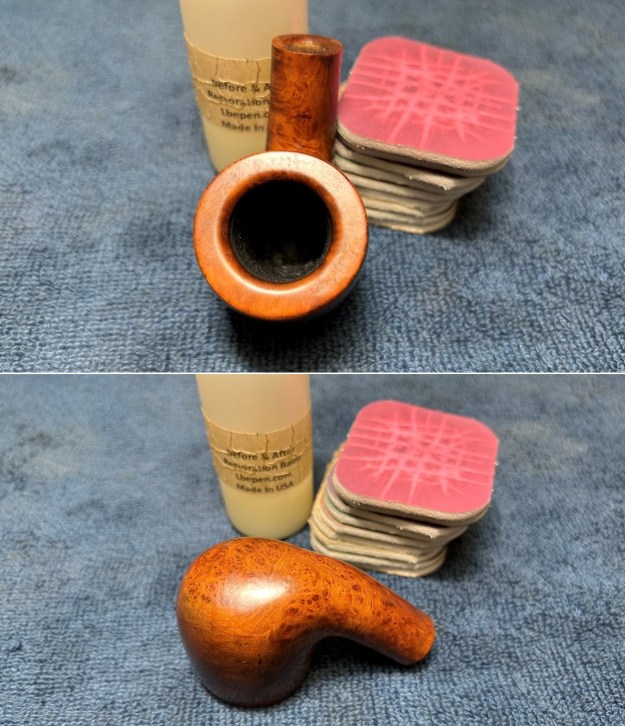
The third distinguishing mark of the original Dunmore lines is the stem. Both the System and Classic versions utilized the wide-shoulder “Comfort Lip,” with a painted  gold P on the stem. This doubtless helps the System sit as well as giving it a more muscular visual balance, strength being a long-standing concept in the design language of the company. While it gives the illusion of being an army “push” mount, of course it isn’t, but is a traditional tenon-mortise or “navy mount” as the old hands at K&P used to call it.Based on Mark’s information on his website and in his book, The Peterson Pipe Book, I can estimate that this pipe is from the mid- to late-70s – something like 50 years old. Many thanks to Mark for his help.On to the work! The pipe was in good shape and – boy-oh-boy – it had been smoked a lot! Things were dirty, rather than damaged – which is much preferred. The stem was oxidized and had a few tooth marks, but nothing deep or large. The stummel was loaded with cake and had substantial lava on the rim.I used a disposable lighter and ‘painted’ the stem with its flame. The gentle heat of the flame can cause the dents in the vulcanite of the stem to expand back into shape. In this case, it actually worked reasonably well and there was a bit of lift.I used oil soap on a few cotton rounds and wiped the stem down to provide an initial cleaning of filth before moving on to the next steps. The primary cleaning comes next. I cleaned the inside of the stem with both pipe cleaners and cotton swabs dipped in 99% lemon-infused isopropyl alcohol. I scrubbed thoroughly to make sure the interior was clean. I used quite a few pipe cleaners and cotton swabs – more than the photo shows.The goal of the next step is the removal (or minimization) of oxidation. Going to my sink, I used cream cleanser, cotton rounds, and a toothbrush, and scoured the stem to remove as much surface oxidation as possible. As the photos show, the result is a hideous brownish mess – but better off the stem than on it. Once the stem was reasonably clean, I soaked it overnight in some Briarville Stem Oxidation Remover. This solution works to draw oxidation in the stem to the surface. This is a major aid and an important step in ensuring a clean stem. The following day, I drew the stem out from its bath and scrubbed the lingering fluid with a toothbrush. Now that the stem is clean and dry, I set about fixing the marks and dents in the vulcanite. This is done by filling those divots with black cyanoacrylate adhesive, impregnated with carbon and rubber. I left this to cure and moved on. After this, I painted the logo on the stem with a gold-coloured metallic wax finish. I restored the logo carefully and let it fully set before proceeding.The penultimate step for the stem is sanding. First, with my set of needle files, I reduce the bulk of the cyanoacrylate repairs. I want to remove the excess adhesive as near to the surface as possible, without cutting into the vulcanite. Following that, I use all nine of the micromesh sanding pads (1,500 through 12,000 grit) to sand out flaws, even out the vulcanite, and provide gentle polishing of the finished surface. I also apply pipe-stem oil while using the last five micromesh pads. There was a wonderful, deep black shine to the stem when I was done.Now that the stem is (nearly) complete, I can move on to the stummel. The first step for me is to ream out the bowl – that is to say, remove all the cake inside the bowl. This accomplishes a couple of things. First (and most obviously), it cleans the bowl and provides a refurbished chamber for future smoking. Second, when the old cake is removed, I can inspect the interior walls of the bowl and determine if there is damage or not. I used a reamer, a pipe knife, and a piece of sandpaper taped to a wooden dowel. Collectively, these ensure that all the debris is removed.My next step was to remove the lava on the rim. For this, I took a piece of machine steel and gently scraped the lava away. The metal’s edge is sharp enough to remove what I need, but not so sharp that it damages the rim. Similar to the stem, I then cleaned the stummel with both pipe cleaners and cotton swabs dipped in 99% lemon-infused isopropyl alcohol. With a pipe this dirty, it took quite a while and much cotton to get clean. It was so, so dirty.I then decided to ‘de-ghost’ the pipe – that is to say, exorcize the remaining filth from the briar. I filled the bowl and the shank with cotton balls, then saturated them with 99% isopropyl alcohol. I let the stummel sit overnight. This caused any remaining oils, tars and smells to leach out into the cotton.To tidy up the briar, I also wiped down the outside with some oil soap on cotton rounds (and a toothbrush). This does a good job of cleaning any latent dirt on the surface of the briar. I also used a nylon brush on the rim. The last step of the cleaning process is to scour the inside of the stummel with some soap and tube brushes. This is the culmination of a lot of hard work in getting the pipe clean.I used all nine micromesh pads (1,500 through 12,000 grit) on the outside of the stummel to finish it off. This sanding minimizes flaws in the briar and provides a beautiful smoothness to the wood. I rubbed some Before & After Restoration Balm into the briar and let it sit for 20 minutes or so. The balm moisturizes the wood and gives a beautiful depth to the briar. I then buffed it with a microfibre cloth. For the final step, I took the pipe to my bench buffer and carefully polished it – first with a white diamond compound, then with three coats of carnauba wax. This procedure makes the pipe look its best – the stummel sings and the stem glows.

All done! This Peterson Dunmore 73 looks fantastic again and is ready to be enjoyed by its next owner. I am pleased to announce that this pipe is for sale! If you are interested in acquiring it for your collection, please have a look in the ‘Irish’ section of the store here on Steve’s website. You can also email me directly at kenneth@knightsofthepipe.com. The approximate dimensions of the pipe are as follows: length 5¼ in. (133 mm); height 3 in. (76 mm); bowl diameter 1⅛ in. (30 mm); chamber diameter ⅝ in. (18 mm). The weight of the pipe is 1¼ oz. (36 g). I hope you enjoyed reading the story of this pipe’s restoration as much as I enjoyed restoring it. If you are interested in more of my work, please follow me here on Steve’s website or send me an email. Thank you very much for reading and, as always, I welcome and encourage your comments.

A New Home for a Brebbia Bent Pocket Pipe


by Kenneth Lieblich

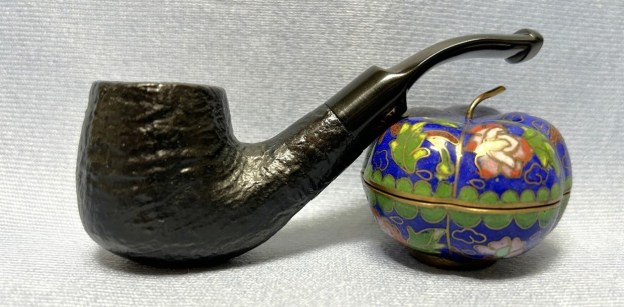
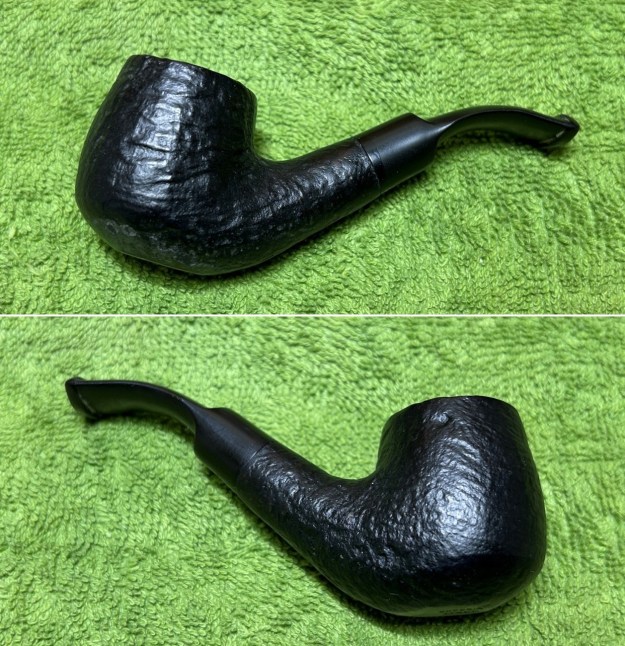
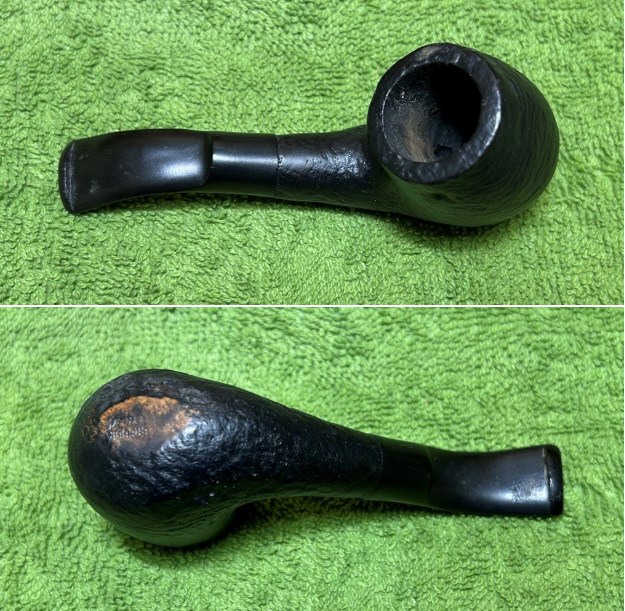
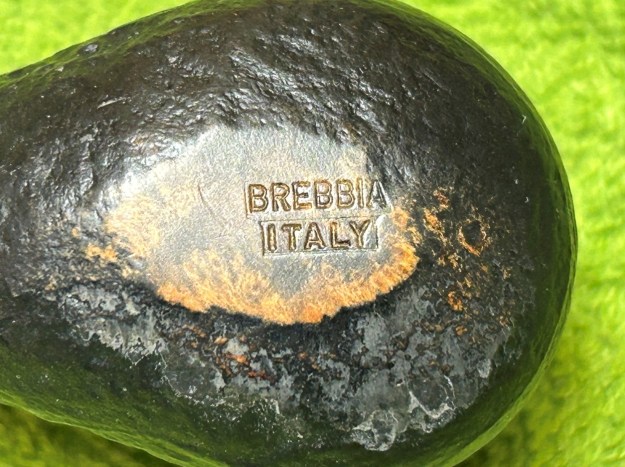
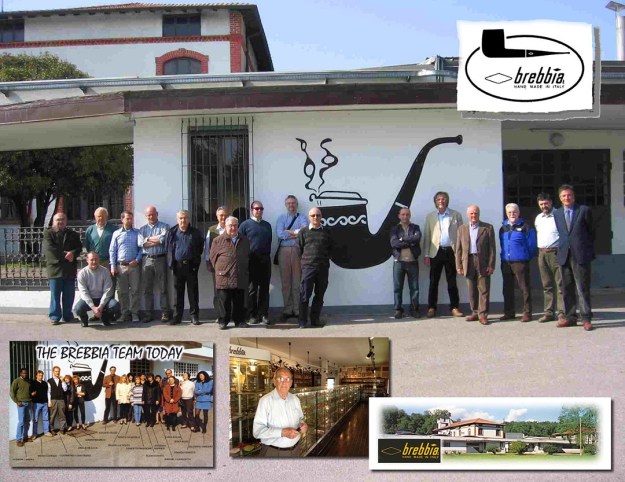
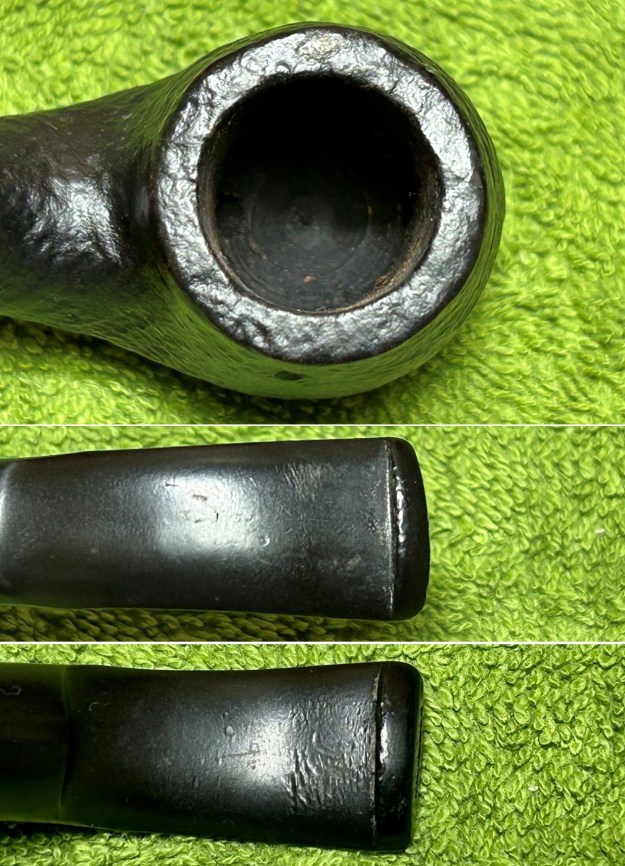
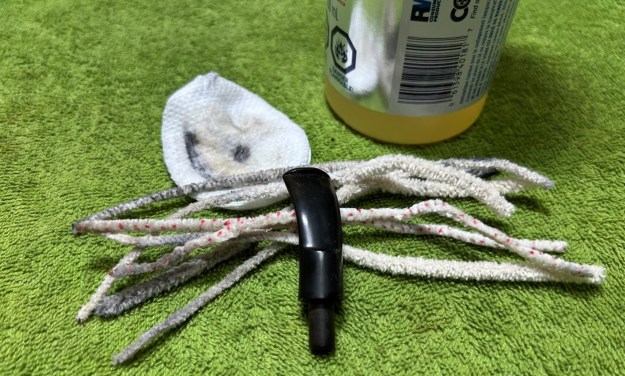
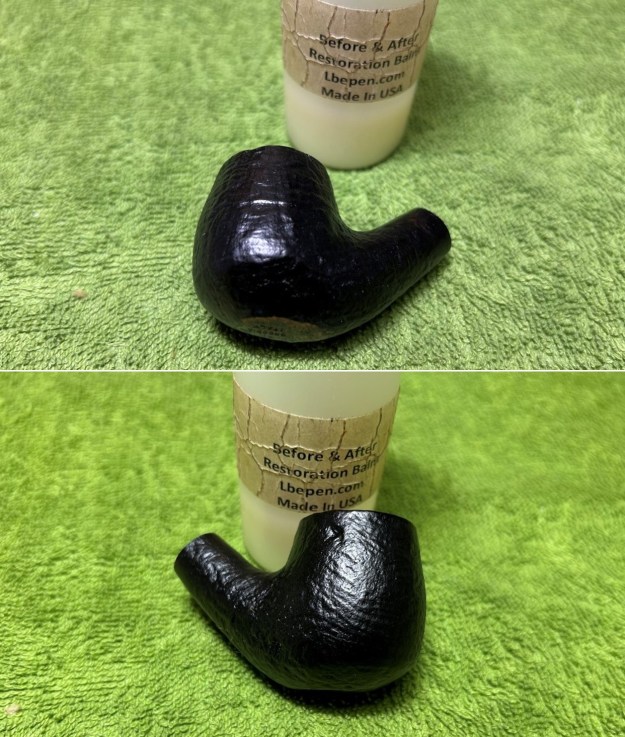
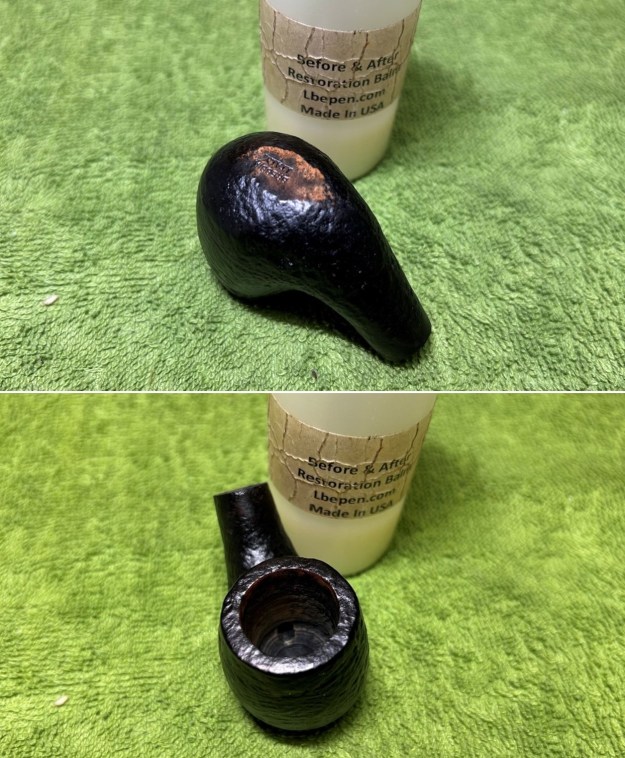
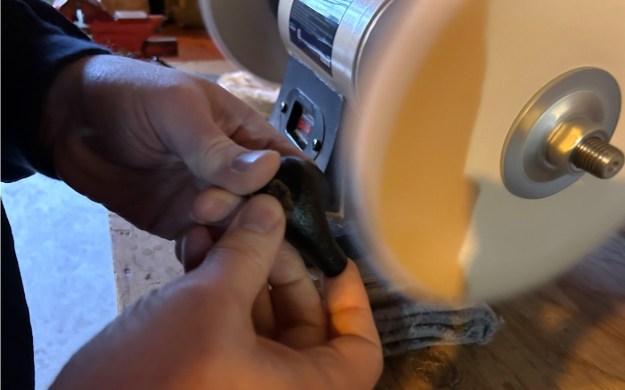
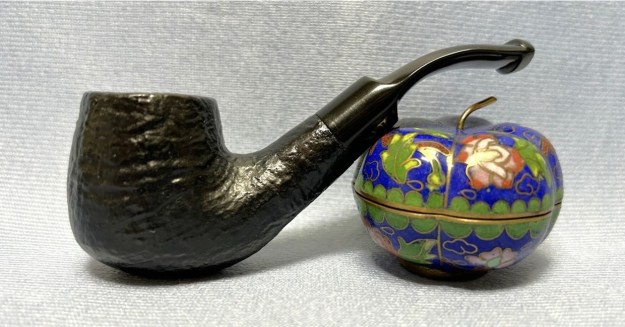
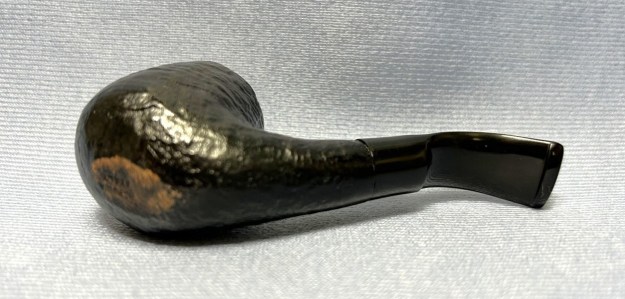
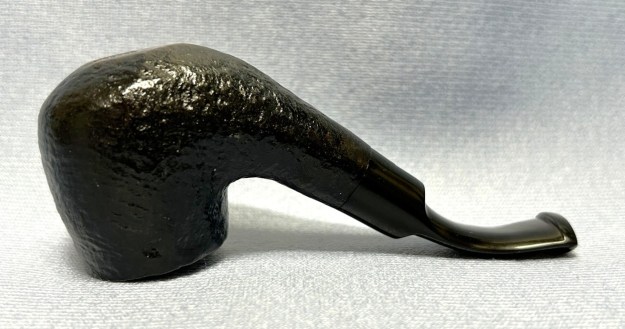
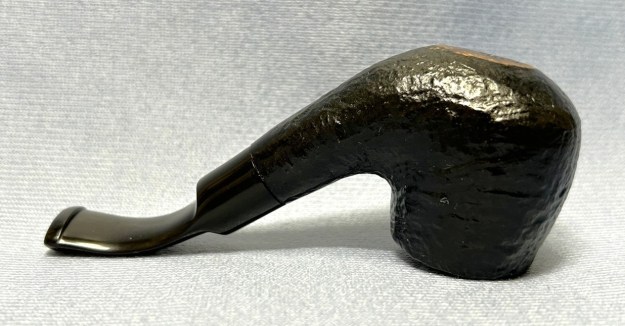
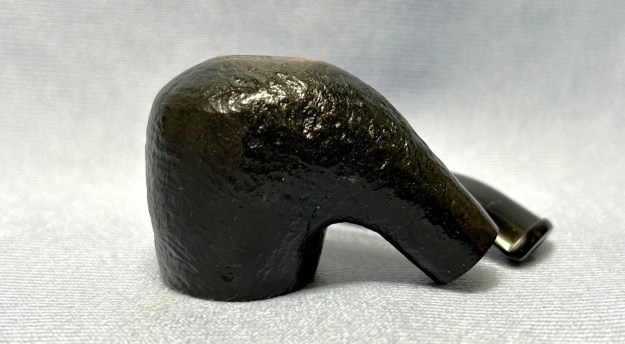
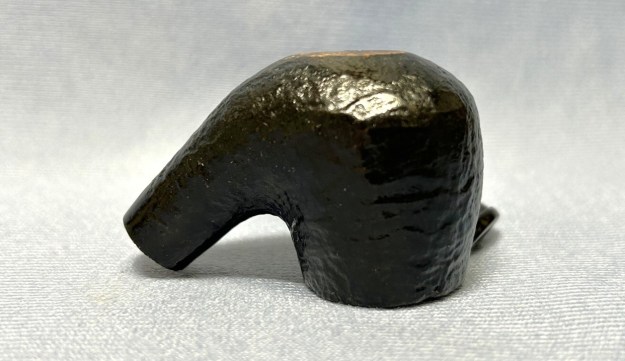
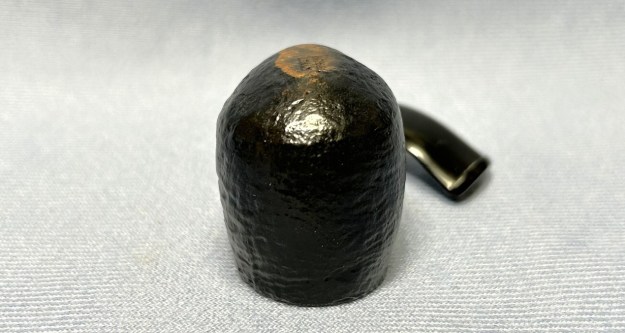
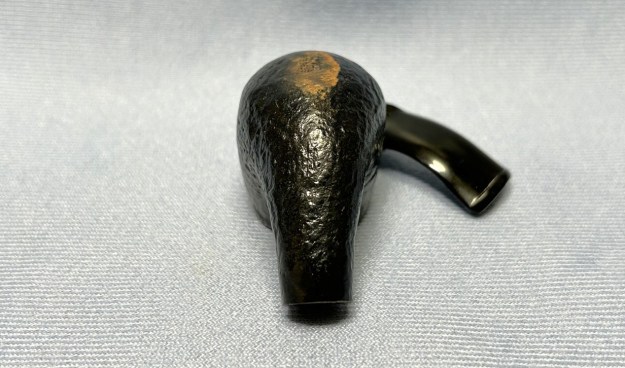
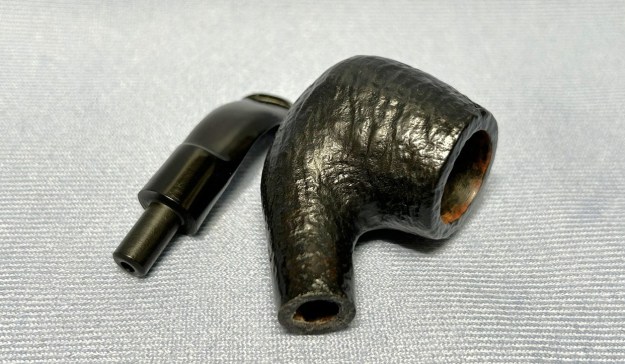
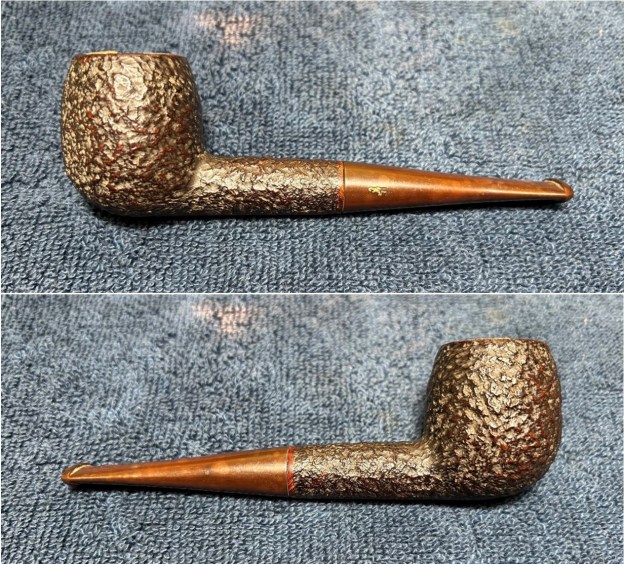
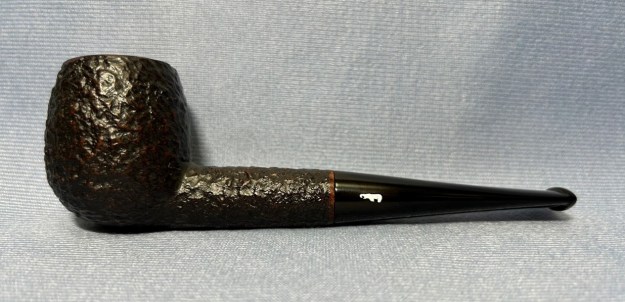
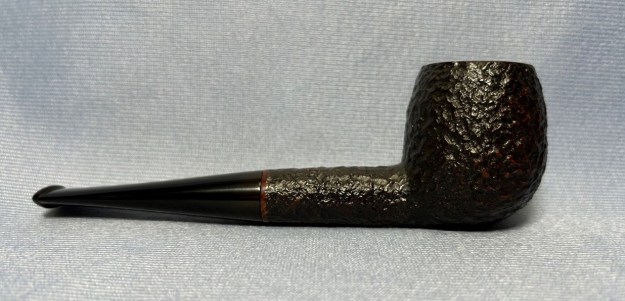
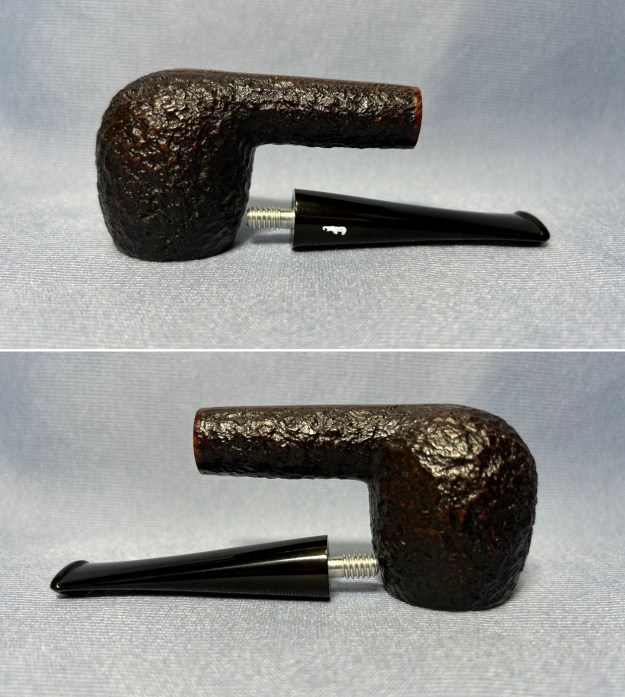
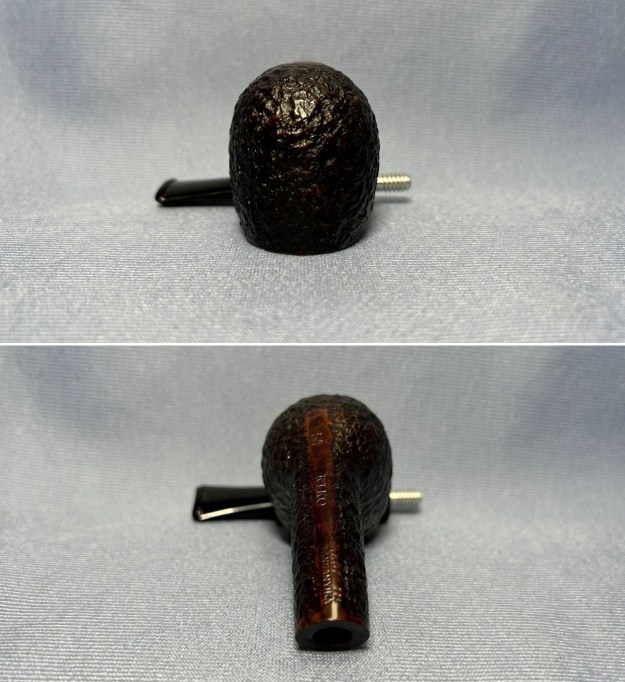
A young gentleman came to me with the desire for a small pipe he could use on the go. We ultimately settled on a charming little pipe made by Brebbia. It’s a black, sandblasted bent billiard pocket pipe. Despite its diminutive size, it’s a very handsome pipe and promises to be a good smoker. It will serve this fellow very well for a long time to come. Only two words constitute the entirety of this pipe’s markings. On the underside of the stummel are the words Brebbia [over] Italy. I’ve worked on some Brebbia pipes before, so I went and looked up my previous articles. I learned from Pipedia and Pipephil that the Brebbia pipe company was named after the locality of Bosco Grosso di Brebbia in Lombardy, Italy. The company was founded by Enea Buzzi and Achille Savinelli in 1947, but they parted ways in 1953. Mr Savinelli went on to form his eponymous company, while Mr Buzzi kept the factory and created Maniffatura Pipe Brebbia – they produce MPB and Brebbia pipes. Mr Buzzi’s family still run the company today. Let’s this pipe cleaned up! On the whole, the pipe is in good shape. Nothing major is wrong with either the stem or the stummel. Great news!First, I used oil soap on a few cotton rounds and wiped the stem down to provide an initial cleaning of filth before moving on to the next steps. The primary cleaning comes next. I cleaned the inside of the stem with both pipe cleaners and cotton swabs dipped in 99% lemon-infused isopropyl alcohol. I scrubbed thoroughly to make sure the interior was clean.The goal of the next step is the removal (or minimization) of oxidation. Going to my sink, I used cream cleanser, cotton rounds, and a toothbrush, and scoured the stem to remove as much surface oxidation as possible. As the photos show, the result is a hideous brownish mess – but better off the stem than on it.Once the stem was reasonably clean, I soaked it overnight in some de-oxidation fluid. This solution works to draw oxidation in the stem to the surface. This is a major aid and important step in ensuring a clean stem. The following day, I drew the stem out from its bath and scrubbed the lingering fluid with a toothbrush.Once clean and dry, I set about fixing the marks and dents in the vulcanite. This is done by filling those divots with black cyanoacrylate adhesive, impregnated with carbon and rubber. I left this to cure and moved on.The penultimate step for the stem is sanding. First, with my set of needle files, I reduce the bulk of the cyanoacrylate repairs. I want to remove the excess adhesive as near to the surface as possible, without cutting into the vulcanite. Following that, I use all nine of the micromesh sanding pads (1,500 through 12,000 grit) to sand out flaws, even out the vulcanite, and provide gentle polishing of the finished surface. I also apply pipe-stem oil while using the last five micromesh pads. There was a wonderful, deep black shine to the stem when I was done.Now that the stem is (nearly) complete, I can move on to the stummel. The first step for me is to ream out the bowl – that is to say, remove all the cake inside the bowl. This accomplishes a couple of things. First (and most obviously), it cleans the bowl and provides a refurbished chamber for future smoking. Second, when the old cake is removed, I can inspect the interior walls of the bowl and determine if there is damage or not. In this case, there was none. I used a reamer and a piece of sandpaper taped to a wooden dowel. Collectively, these ensure that all the debris is removed.The inside of the stummel needs to be cleaned thoroughly. Similar to the stem, I then cleaned it with both pipe cleaners and cotton swabs dipped in 99% lemon-infused isopropyl alcohol. Fortunately, it wasn’t too dirty.I then decided to ‘de-ghost’ the pipe – that is to say, exorcize the remaining filth from the briar. I filled the bowl and the shank with cotton balls, then saturated them with 99% isopropyl alcohol. I let the stummel sit overnight. This caused any remaining oils, tars and smells to leach out into the cotton.To tidy up the briar, I also wiped down the outside with some oil soap on cotton rounds (and a toothbrush). This does a good job of cleaning any latent dirt on the surface of the briar. The last step of the cleaning process is to scour the inside of the stummel with some soap and tube brushes. This is the culmination of the work in getting the pipe clean.No sanding needed for a sandblast. So, I rubbed some Before & After Restoration Balm into the briar and let it sit for 20 minutes or so. The balm moisturizes the wood and gives a beautiful depth to the briar. I then buffed it with a microfibre cloth. For the final step, I took the pipe to my bench buffer and carefully polished it – first with a white diamond compound, then with three coats of conservator’s wax. This procedure makes the pipe look its best – the stummel sings and stem glows.This Brebbia bent billiard pocket pipe is very handsome and will provide many years of smoking pleasure. I hope you enjoyed reading the story of this pipe as much I as I did restoring it. If you are interested in more of my work, please follow me here on Steve’s website or email me directly at kenneth@knightsofthepipe.com. The approximate dimensions of the pipe are as follows: length 3⅔ in. (93 mm); height 1⅜ in. (36 mm); bowl diameter 1⅛ in. (30 mm); chamber diameter ⅔ in. (17 mm). The weight of the pipe is ⅞ oz. (25 g). I hope you enjoyed reading the story of this pipe’s restoration as much as I did restoring it. If you are interested in more of my work, please follow me here on Steve’s website or send me an email. Thank you very much for reading and, as always, I welcome and encourage your comments.

Restoring a Handsome Portland Pipe Co. “Falcon Briar”


by Kenneth Lieblich

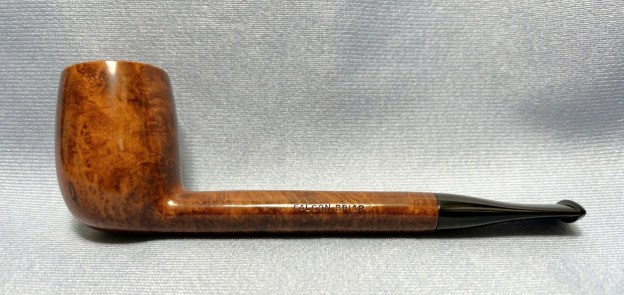
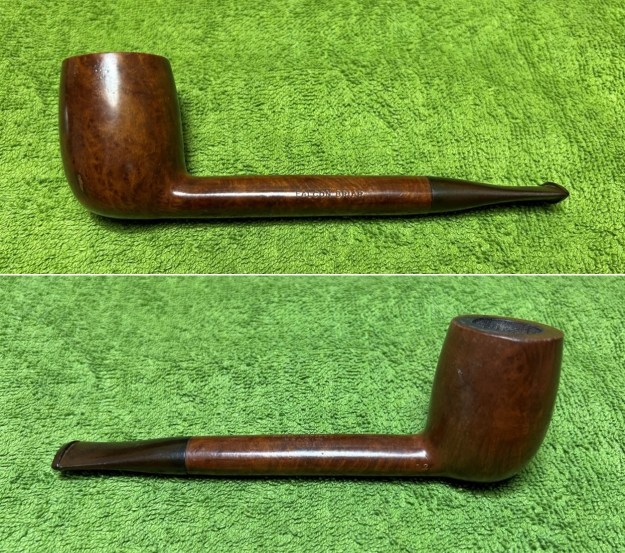
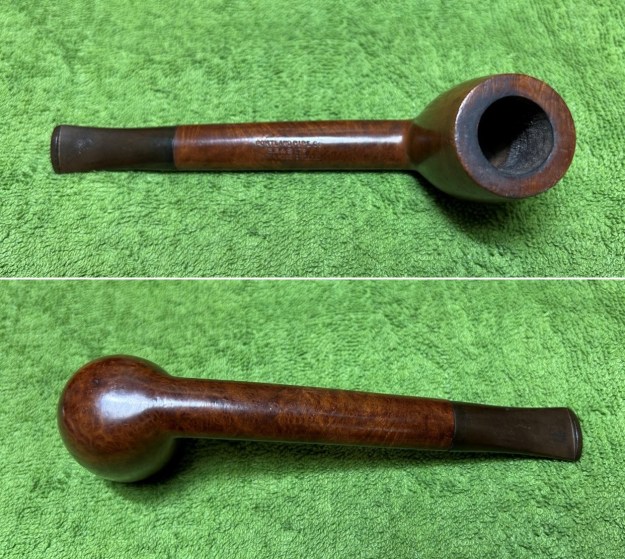
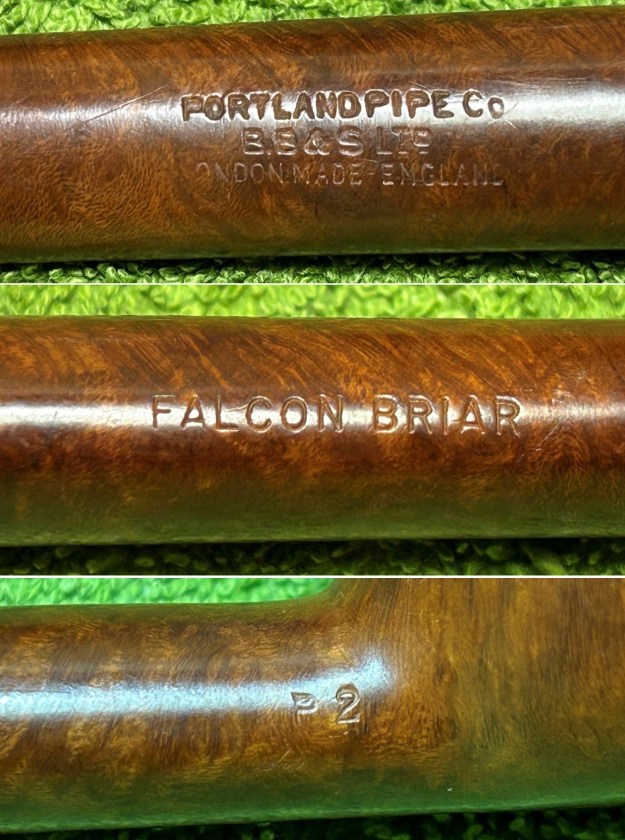
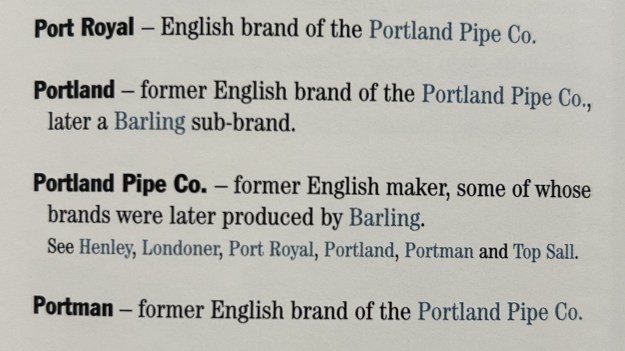
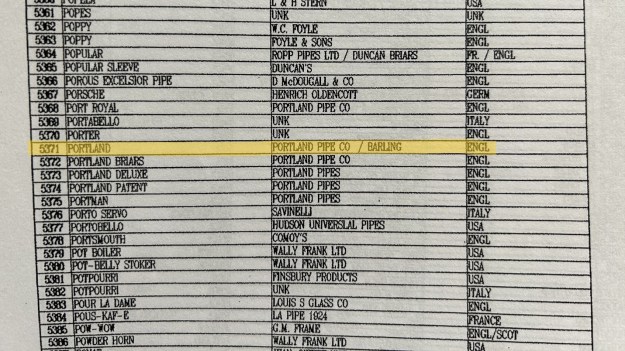
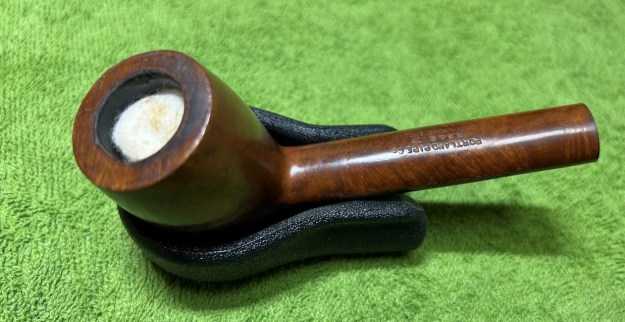
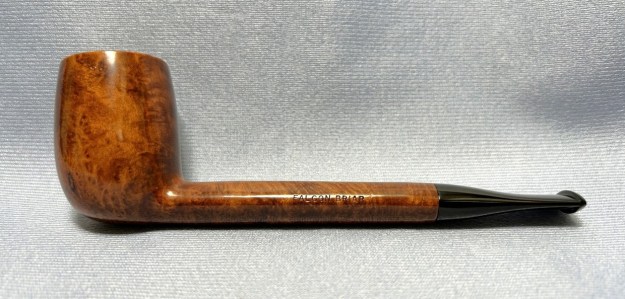
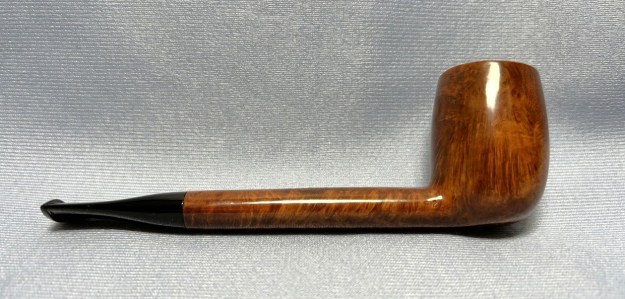
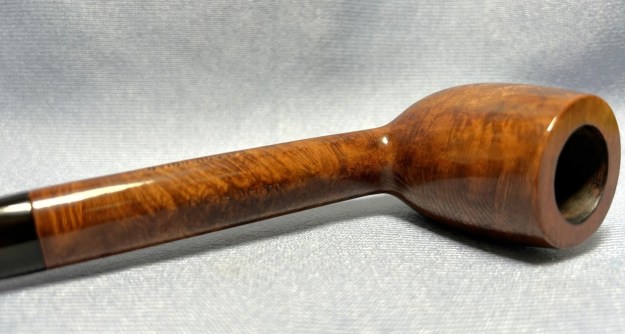
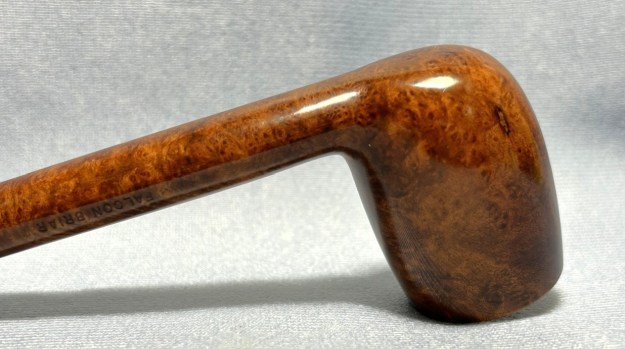
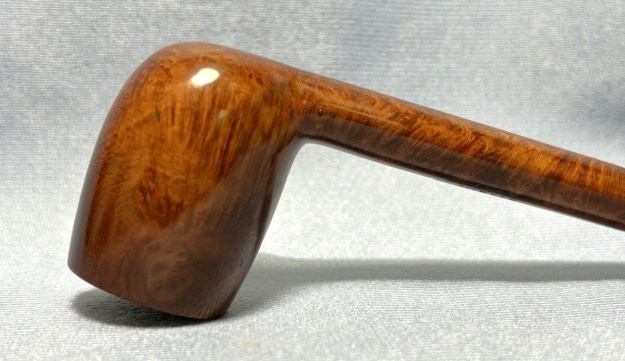
This is the next pipe that I restored for a local family. One of the gentlemen selected this fine Canadian shape for his own. It’s a good-looking pipe and worthy of restoration. This pipe comes from the Portland Pipe Co., which I’ve written about before. This specific pipe has some interesting markings – let’s take a look. On the top of the shank, it reads Portland Pipe Co [over] B.B& S Ltd. [over] London made – England. On the left side of the shank, it reads Falcon Briar. On the right side of the shank, it reads P2 – presumably a shape code. Two things puzzled me: the term “Falcon Briar” and the code “P2”. They didn’t conform to anything I already knew about Portland. Here is a review of my digging for information on Portland Pipe Co.I began my research with José Manuel Lopes’ book, Pipes: Artisans and Trademarks. As the photo shows, there was a little information, but not a lot.The connection with Barling was interesting, so I also checked Wilczak and Colwell’s book, Who Made That Pipe? From the photos below, you can see that the Portland Pipe Co. is connected to Barling too.Time to check online. Pipephil had a similarly brief write-up (included here).Pipedia was a bit more informative. Their page on the Portland Pipe Co. includes the following information (the typos are in the original and are NOT mine):

Portland Pipe Company was an English pipe maker, and appears to have started in the 1930’s, and went out of business in 1962. It’s though they had ties to Barling pipes from the 1930’s. They might have been a sub-brand or “second” which was separate from, but fully owned by Barling’s all along. It also thought that after Portland closed down, and during Barling’s corporate era (BB&S), Barling picked up some of the Portland brand (Londoner, Cragmoor and Portland) and made them for a while. WILCZAK & COLWELL in their book “Who Made That Pipe?” acknowledge the brand as from England, though some have been made in Italy as well (see Pipephil.eu). The Brand John Peel is a pipe which has the stamping: JOHN PEEL, A PORTLAND PIPE, MADE WHOLLY IN ENGLAND. I have a model with is also stamped SPECIAL, it’s a stack design with shape number 801. This pipe might have been made either by Portland or Barling. According to a 1940 price sheet, the following models were offered, along with the correlating prices:

 Vintage (10/6)
Exchange (7/6)
Londoner (7/6)
Mosaic (7/6)
Portland Super (7/6)
Crustor (5/6)
Diploma (5/6)
Port Royal (5/6)
Port-de-Luxe (5/6)
Portland Patent (5/6)
Souk-el-Arba (5/6)
Times (4/6)
British Sovereign (3/6)
John Peel (3/6)
Jubilee (3/6)
Sirdar (3/6)
Campaigner (2/6)
Dandy (2/6)
First Call (2/6)
Knobby (2/6)
Topsall (2/6)
Topsall Comfort (2/6)
Portman (2/-)
British National (1/6)
Ruf Kut (1/6)

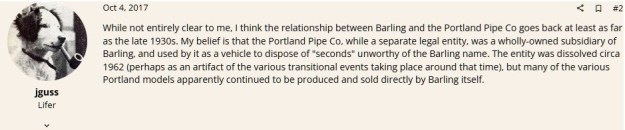
This doesn’t mention anything about “Falcon Briar”. However, there are a few other tidbits of information. The PipesMagazine.com forums include an interesting comment from Barling expert Jonathan Guss:Finally, over at the Very Keen on Pipes website, a reader commented on one of their posts by saying:

“… Portland pipes make up one of the great mysteries of London pipe making. No one knows when Barling bought Portland but most of us barling guys believe it was mid to late 30’s. I saw a reference once online using the year 1936 but this cannot be confirmed. Next, John Peel was for a long time thought to have been a shop but there is no evidence proving that. However, John Peel pipes were almost certainly made by Portland. What most of use want in a pipe of this type is a pipe made before 1962, when the barling family was let go by the new owners and the brand went into a downward spiral quality wise. Re Portland, a number of them have recently turned up as a result of a “garage find” of a batch of pipes from the Toronto Canada area and they were mixed in with other wood from the 50’s and that seems to indicate a 50’s date of manufacture. Note: in those days several of the larger pipe makers made pipes or just bowls for other brands and these were mostly Charatan, Comoy and other makers such as Orlick. What is almost certain is that never did barling make / sell any pipes that were not carved by barling carvers untill after 1970. So, Portland and Peel were never actually barling made, these pipes were either made by Portland in house or, in later years past 1962, by Charatan and others. Also, if one looks at the style of the bits it evident that Portland and Peel pipes were not made that long ago, probably 50’s and 60’s unless there is a BB&S stamp which indicates post 1970 age (the & symbol being the give away since B.B.S was used in the older pre 1962 era.) Just some info for you to keep in mind… “

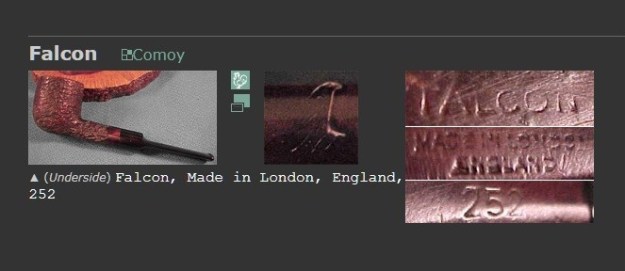
This is interesting stuff and then Steve gave me another possible detail. Apparently, Comoy’s used to make a line of pipes called ‘Falcon’ and another called ‘Royal Falcon’. Perhaps this bowl was made by Comoy, but later picked up by Portland. This could explain why the pipe contains the ‘Falcon Briar’ line. Pipephil has this tidbit:By inference (and some educated guesswork), this pipe was made in England, probably in the 1970s (or, at least, post 1970), by the Portland Pipe Co. However, there may be a Comoy connection too. I am happy to be educated by someone who knows more.

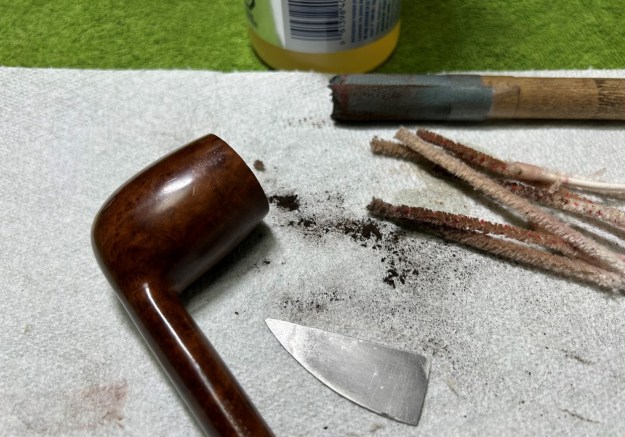
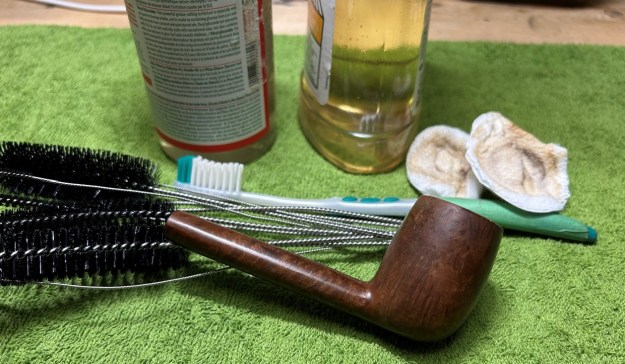
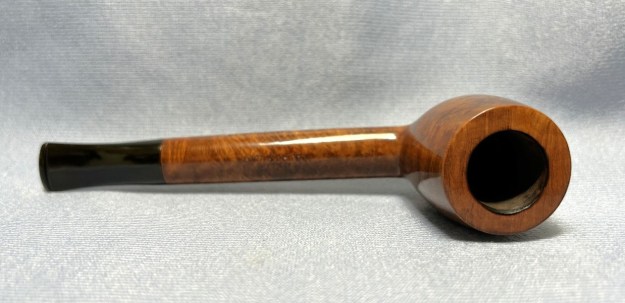
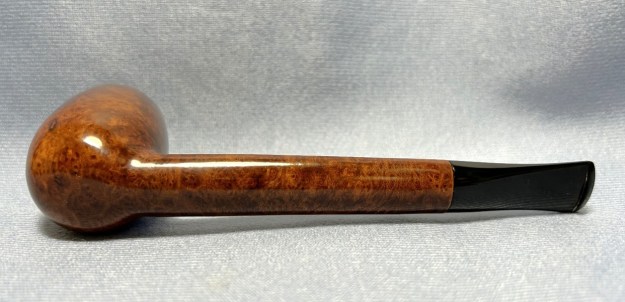
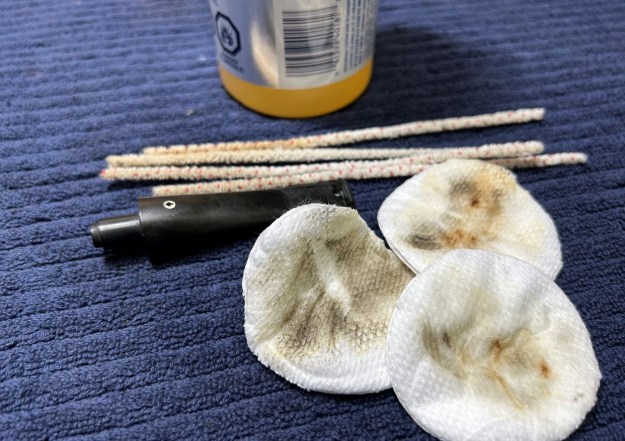
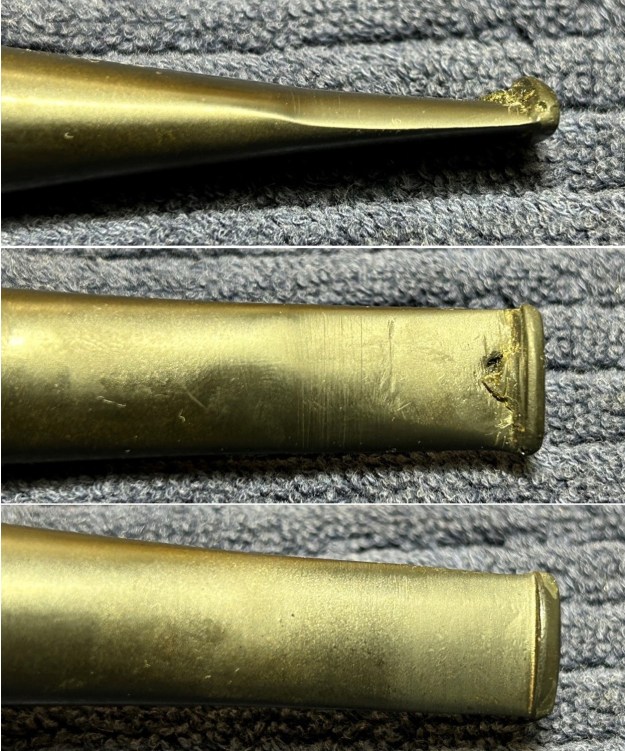
The pipe was in good condition and didn’t require any major surgery. The bowl was a bit dirty and banged up, but nothing serious. Similarly, the stem had some tooth marks and scrapes, nothing to worry about.To start, I used a disposable lighter and ‘painted’ the stem with its flame. The gentle heat of the flame can cause the dents in the vulcanite of the stem to expand back into shape. This helped a little bit.I used oil soap on a few cotton rounds and wiped the stem down to provide an initial cleaning of filth before moving on to the next steps. The primary cleaning comes next. I cleaned the inside of the stem with both pipe cleaners and cotton swabs dipped in 99% lemon-infused isopropyl alcohol. I scrubbed thoroughly to make sure the interior was clean.The goal of the next step is the removal (or minimization) of oxidation. Going to my sink, I used cream cleanser, cotton rounds, and a toothbrush, and scoured the stem to remove as much surface oxidation as possible. As the photos show, the result is a hideous brownish mess – but better off the stem than on it.Once the stem was reasonably clean, I soaked it overnight in some de-oxidation fluid. This solution works to draw oxidation in the stem to the surface. This is a major aid and important step in ensuring a clean stem. The following day, I drew the stem out from its bath and scrubbed the lingering fluid with a toothbrush.Once clean and dry, I set about fixing the marks and dents in the vulcanite. This is done by filling those divots with black cyanoacrylate adhesive, impregnated with carbon and rubber. I left this to cure and moved on.The penultimate step for the stem is sanding. First, with my set of needle files, I reduce the bulk of the cyanoacrylate repairs. I want to remove the excess adhesive as near to the surface as possible, without cutting into the vulcanite. Following that, I use all nine of the micromesh sanding pads (1,500 through 12,000 grit) to sand out flaws, even out the vulcanite, and provide gentle polishing of the finished surface. I also apply pipe-stem oil while using the last five micromesh pads. There is a wonderful, deep black shine to the stem when I am done.Now that the stem is (nearly) complete, I can move on to the stummel. The first step for me is to ream out the bowl – that is to say, remove all the cake inside the bowl. This accomplishes a couple of things. First (and most obviously), it cleans the bowl and provides a refurbished chamber for future smoking. Second, when the old cake is removed, I can inspect the interior walls of the bowl and determine if there is damage or not. Everything looked good inside the bowl. My next step was to remove the lava on the rim. For this, I took a piece of machine steel and gently scraped the lava away. The metal’s edge is sharp enough to remove what I need, but not so sharp that it damages the rim. This worked well. Similar to the stem, I then cleaned the insides of the stummel with both pipe cleaners and cotton swabs dipped in 99% lemon-infused isopropyl alcohol. The pipe turned out to be a bit dirtier than I expected.I then decided to ‘de-ghost’ the pipe – that is to say, exorcize the remaining filth from the briar. I filled the bowl and the shank with cotton balls, then saturated them with 99% isopropyl alcohol. I let the stummel sit overnight. This caused any remaining oils, tars and smells to leach out into the cotton.To tidy up the briar, I also wiped down the outside with some oil soap on cotton rounds (and a toothbrush). This does a good job of cleaning any latent dirt on the surface of the briar. The last step of the cleaning process is to scour the inside of the stummel with some soap and tube brushes. This is the culmination of a lot of work in getting the pipe clean.In order to lessen the nicks on the rim, I ‘topped’ the pipe – that is to say, I gently and evenly sanded the rim on a piece of 220-grit sandpaper. This effectively minimizes the damage, without altering the look of the pipe.I used all nine micromesh pads (1,500 through 12,000 grit) on the outside of the stummel to finish it off. This sanding minimizes flaws in the briar and provides a beautiful smoothness to the wood. I rubbed some Before & After Restoration Balm into the briar and let it sit for 20 minutes or so. The balm moisturizes the wood and gives a beautiful depth to the briar. I then buffed it with a microfibre cloth. For the final step, I took the pipe to my bench buffer and carefully polished it – first with a white diamond compound, then with three coats of carnauba wax. This procedure makes the pipe look its best – the stummel sings and stem glows.This Portland Canadian is a very handsome pipe and will provide many years of smoking pleasure. I hope you enjoyed reading the story of this pipe as much I as I did restoring it. If you are interested in more of my work, please follow me here on Steve’s website or email me directly at kenneth@knightsofthepipe.com. The approximate dimensions of the pipe are as follows: length 6 in. (153 mm); height 1⅞ in. (48 mm); bowl diameter 1⅓ in. (33 mm); chamber diameter ⅔ in. (17 mm). The weight of the pipe is 1⅜ oz. (40 g). I hope you enjoyed reading the story of this pipe’s restoration as much as I did restoring it. If you are interested in more of my work, please follow me here on Steve’s website or send me an email. Thank you very much for reading and, as always, I welcome and encourage your comments.

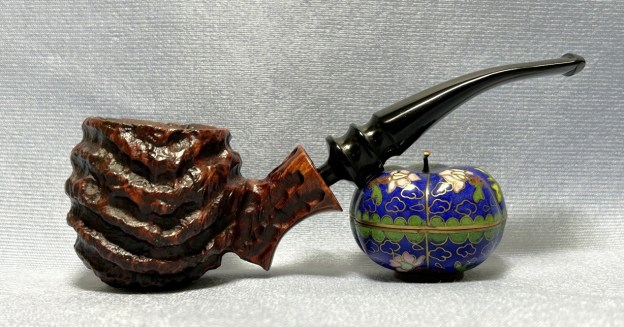
Finding a Stem for a Bjørn Thurmann Hand Made


by Kenneth Lieblich

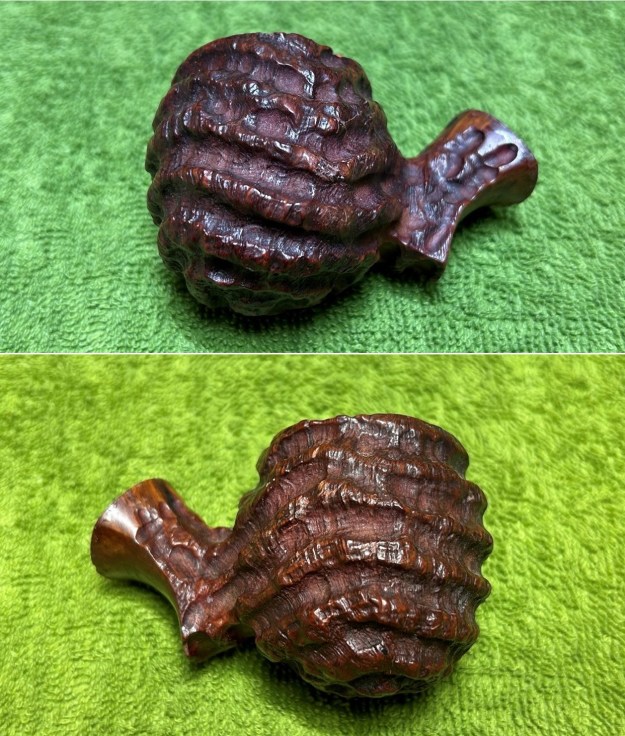
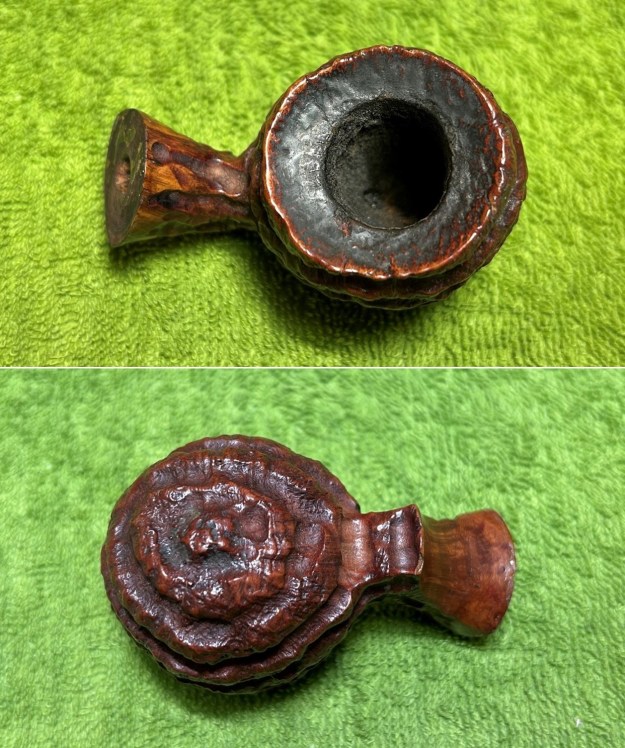
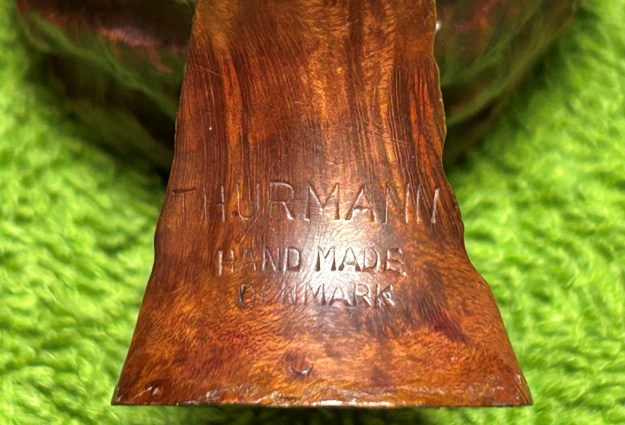
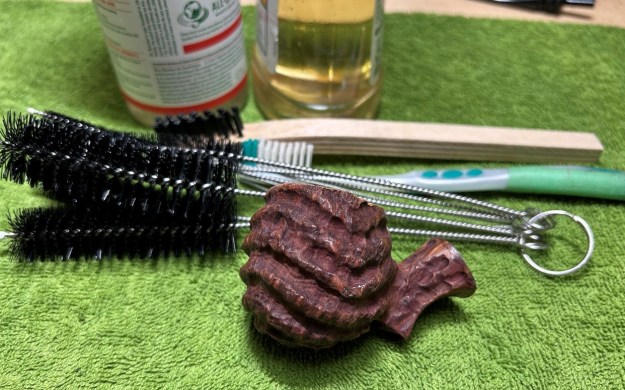
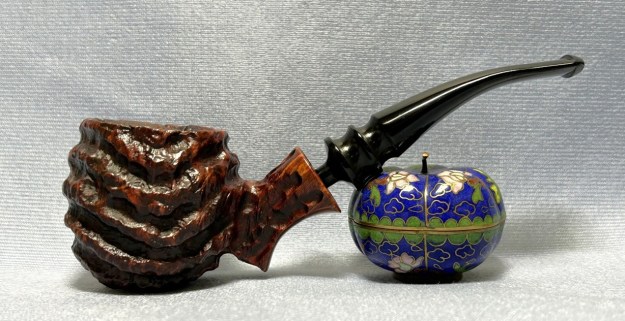
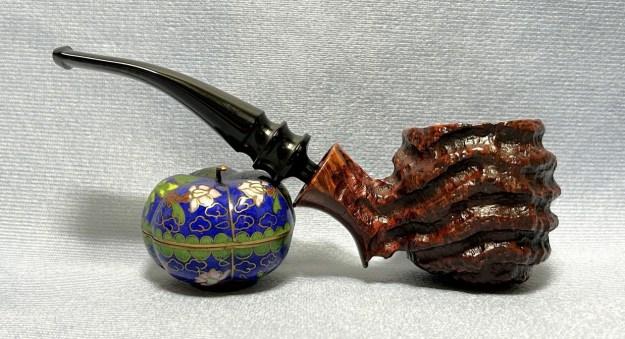
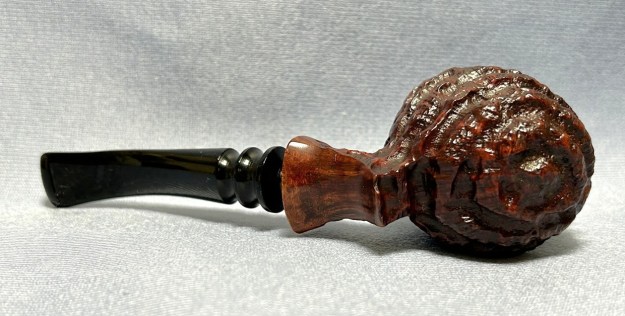
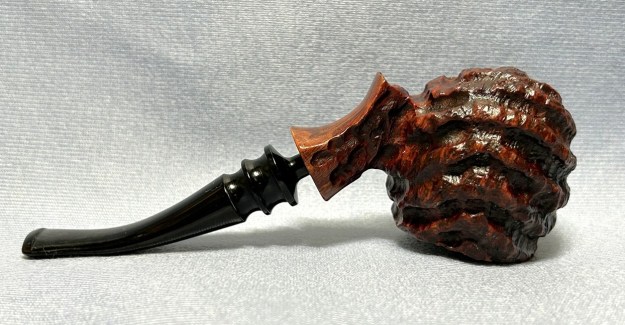
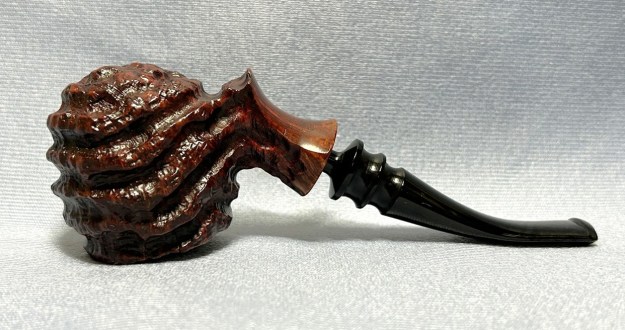
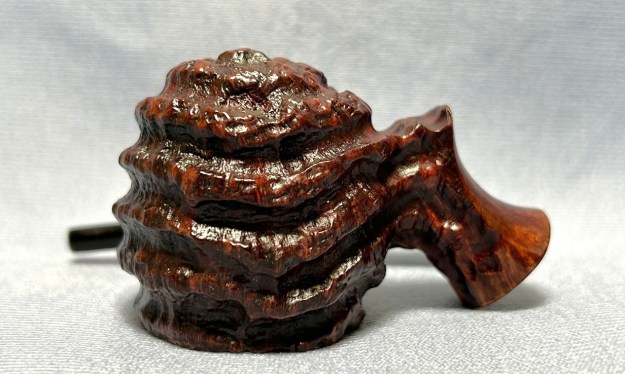
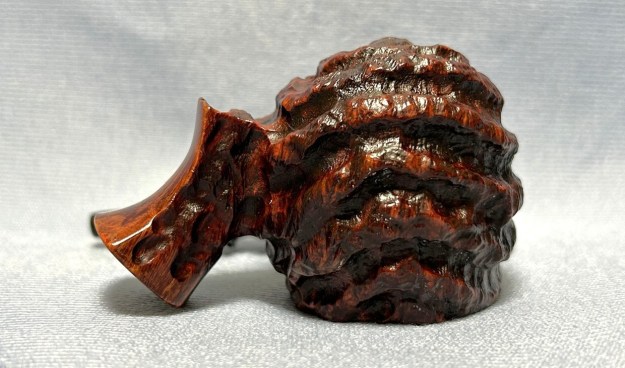
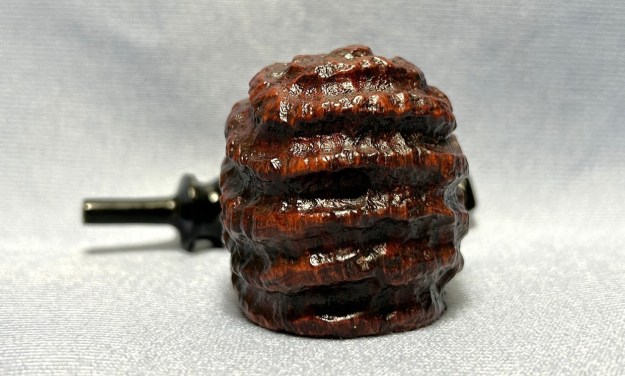
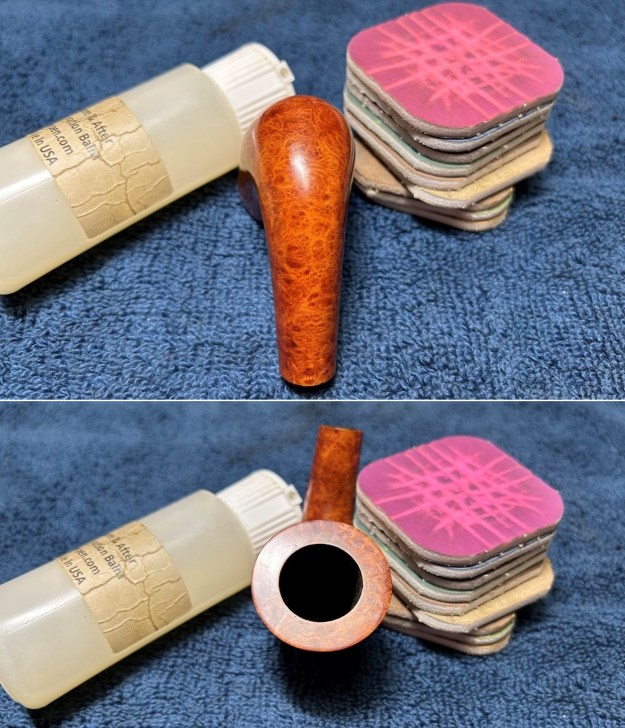
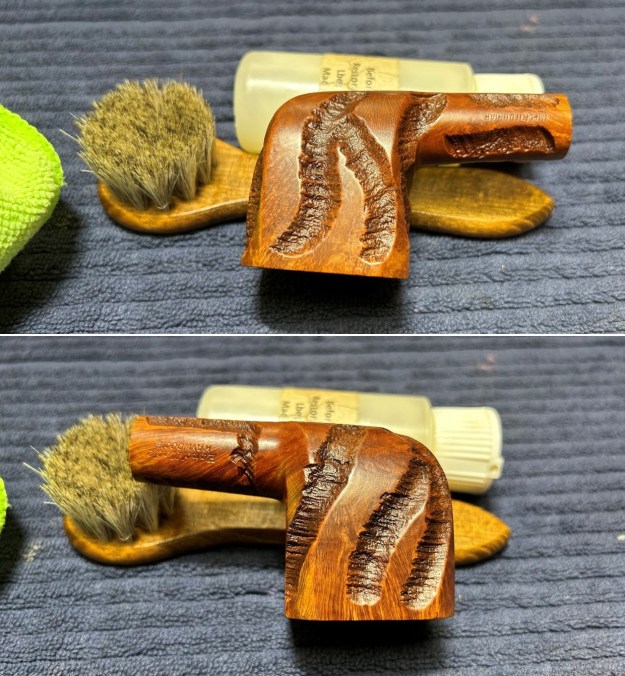
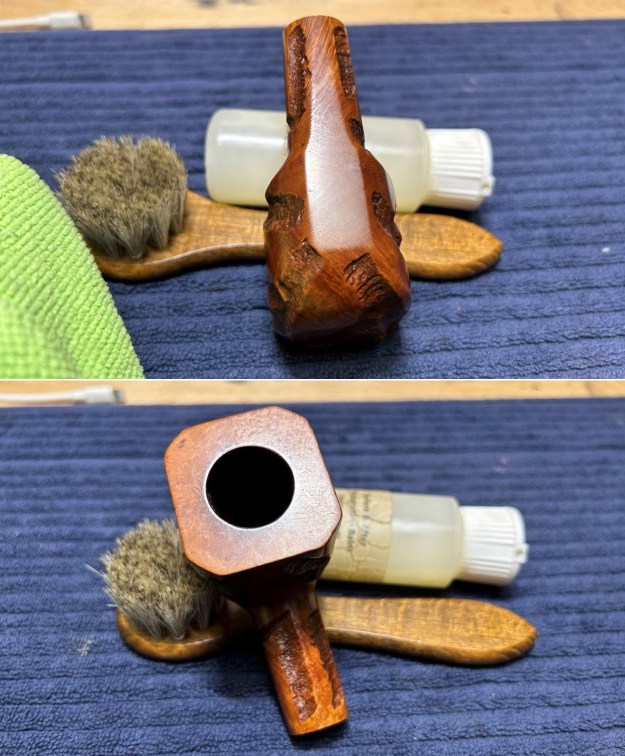
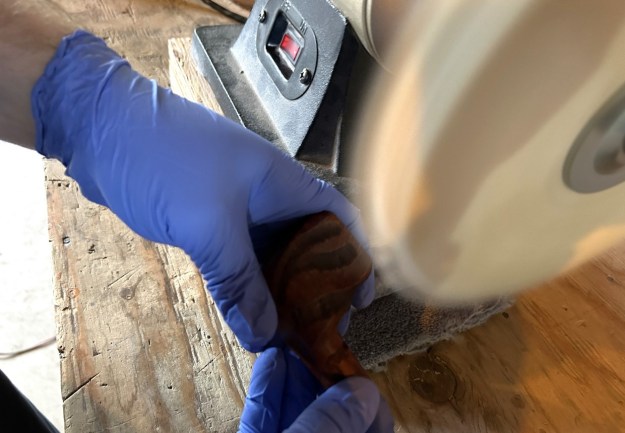
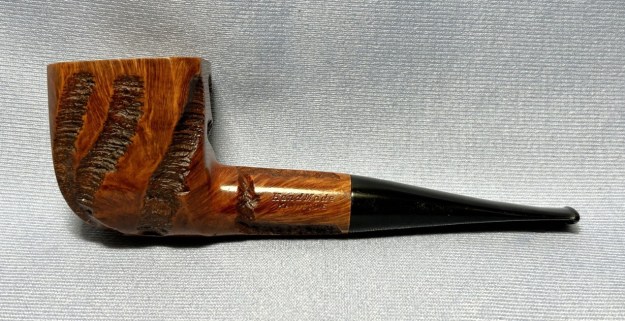
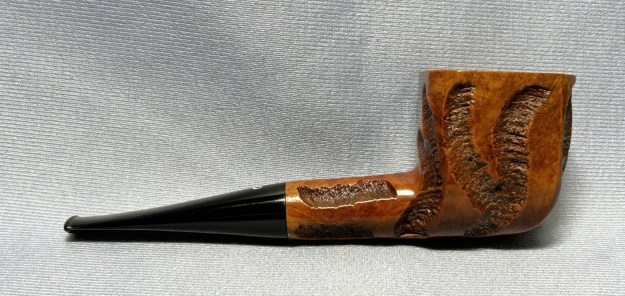
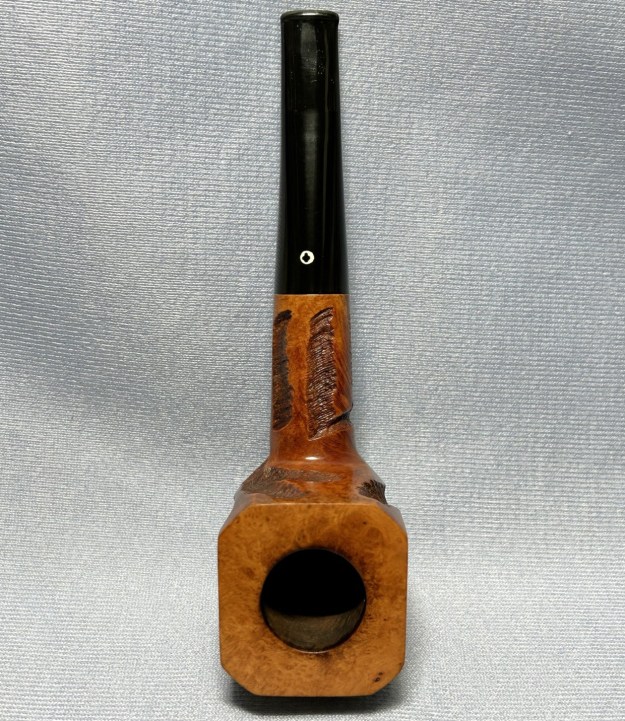
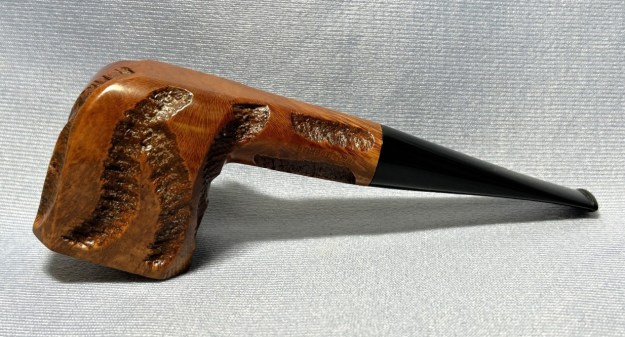
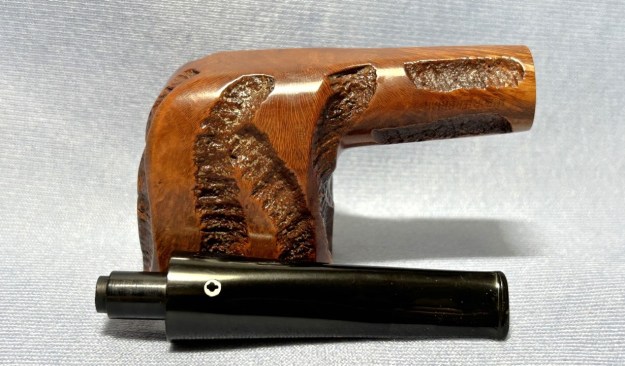
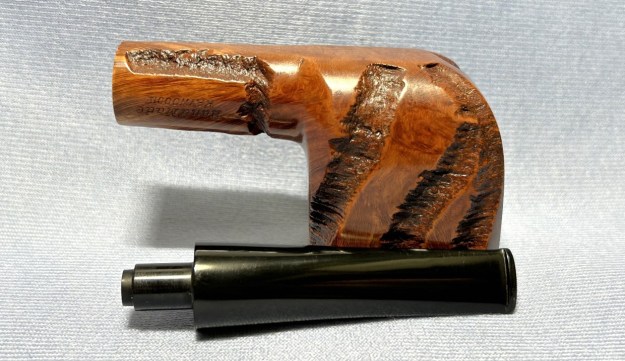
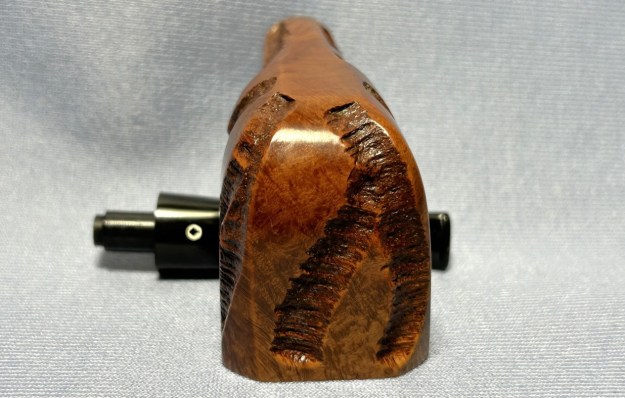
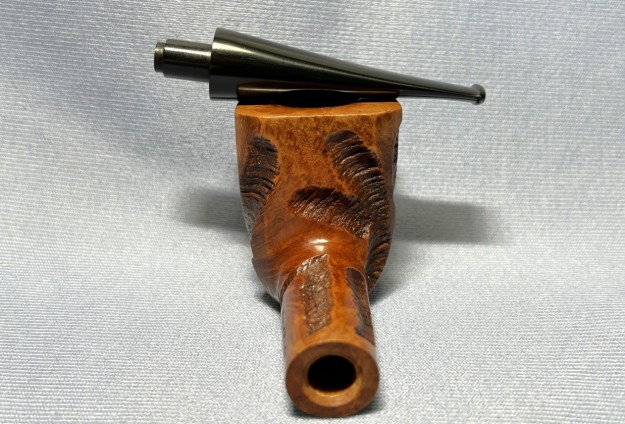
Steve’s recent foray into re-stemming pipes inspired me to try the same. In my box of various-and-sundry pipes, I was drawn to a nifty Danish freehand – but it was missing its stem. The beautifully rugged and chunky stummel has a real charm to it. The grooves and trenches are quite remarkable. This is a pipe that deserves a new stem. Let’s take a deeper dive into Thurmann’s pipes. The pipe was made by the esteemed pipemaker, Bjørn Thurmann. Unfortunately, I am not able to date the pipe, as the photo below shows all of the markings to be seen. On the underside of the stummel were some identifying markings. They read Thumann [over] Hand Made [over] Denmark [over] 3.Thurmann passed away a few years ago, but his company, Thurmann Piber, is still well known in Copenhagen for the fine quality of his work. The reference book, Scandinavian Pipemakers by Jan Andersson, provides us with a nice overview of his background and work. I will quote a bit of it here:

Bjørn Thurmann was born in 1946 – some would say, born into the tobacco trade. In 1953, his parents opened a pipe shop in central Copenhagen and Bjørn helped them there from the beginning, mainly by sorting pipes. Initially, the pipes were bought from a firm called Larsen & Stigart, but eventually they decided to start their own production.

Bjørn’s parents thought that their son ought to widen his views and get some international experience, so, in 1968, he was sent to London to work in different tobacconists shops, a period of learning that ended at Dunhill’s famous shop on Duke Street. After returning home, he almost immediately received an offer to work for Iwan Ries & Co. in Chicago, an offer that was hard to resist, so off he went.

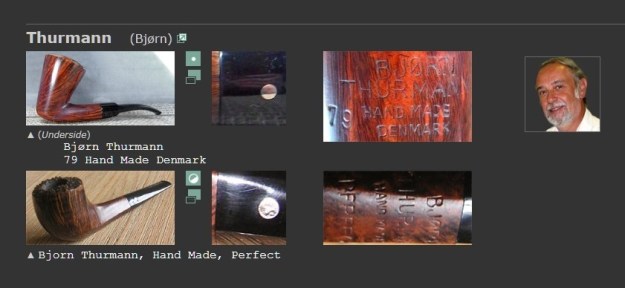
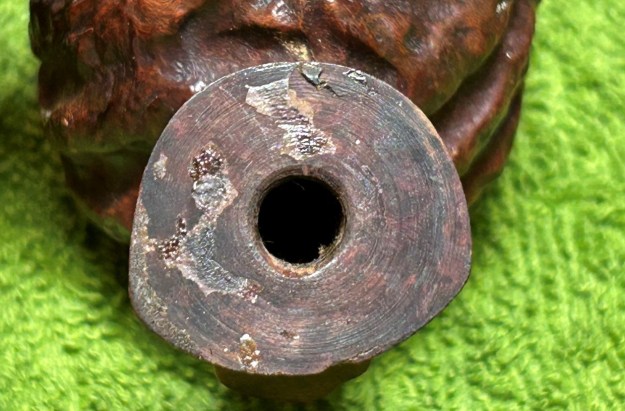
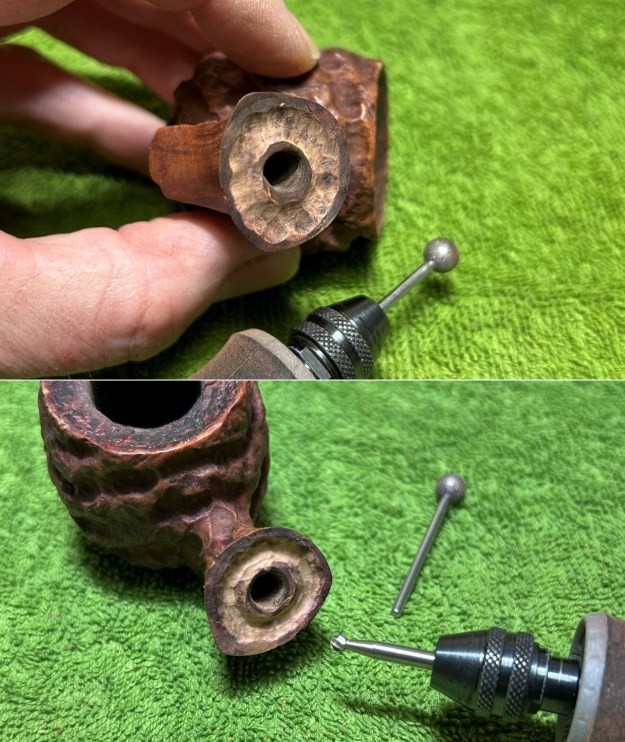
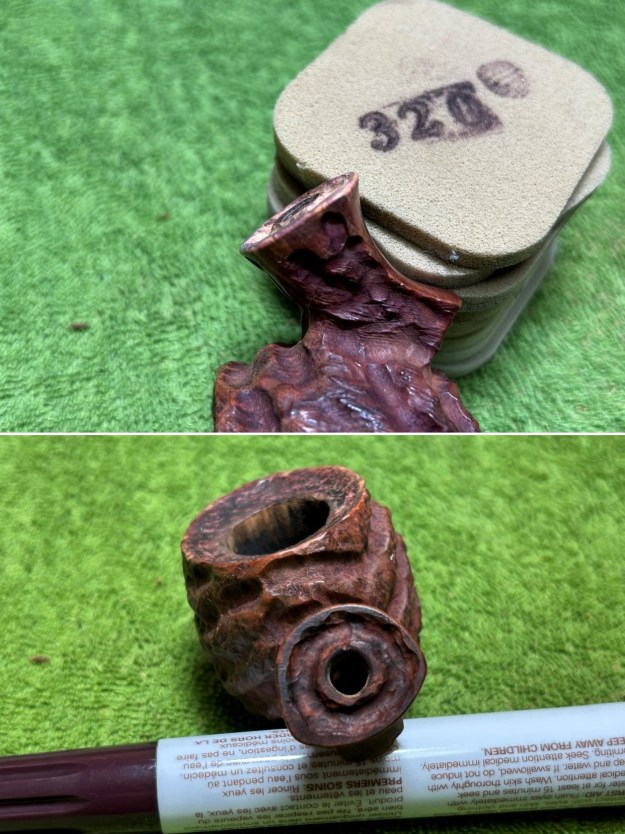
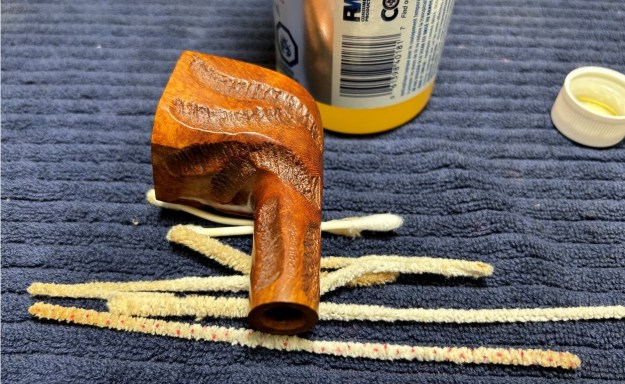
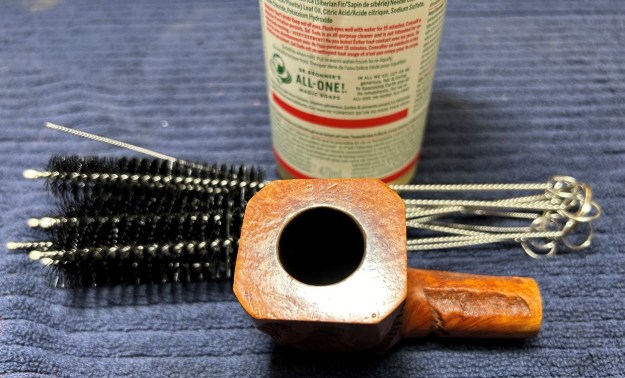
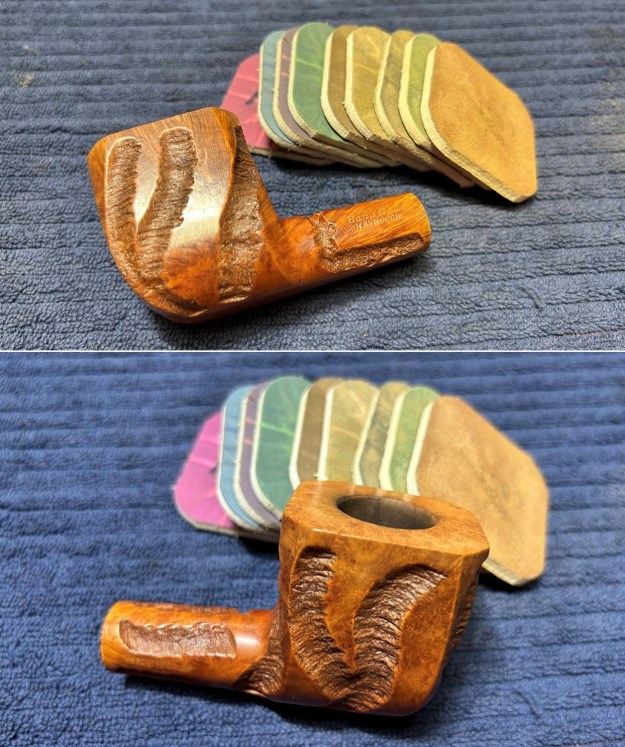
 In 1976, Bjørn established himself as an independent pipemaker, and since then he has had shops in several places in Copenhagen. Bjørn has also written a book called Pibemagerens Handbog (The Pipemakers Handbook), which tells how to make pipes using simple tools most people have at home.Clearly, Thurmann was a vastly experienced and talented pipe man. One can not only see, but also feel, the quality of the briar. Here is a screenshot from Pipephil:Let’s get working! The first step for me is to ream out the bowl – that is to say, remove all the cake inside the bowl. This accomplishes a couple of things. First (and most obviously), it cleans the bowl and provides a refurbished chamber for future smoking. Second, when the old cake is removed, it allows me to inspect the interior walls of the bowl and determine if there is damage or not. I used a reamer, a pipe knife, and a piece of sandpaper taped to a wooden dowel. Collectively, these ensure that all the debris is removed. I’m pleased to report that the inside of the bowl looks good.My next step was to remove the lava on the rim. For this, I took an old butter knife and gently scraped the lava away. This provides an edge that is sharp enough to remove what I need, but not so sharp that it damages the rim.The inside of the stummel needs to be cleaned thoroughly. So I then cleaned it with both pipe cleaners and cotton swabs dipped in 99% lemon-infused isopropyl alcohol. It took some work to get clean!I then decided to ‘de-ghost’ the pipe – that is to say, exorcize the remaining filth from the briar. I filled the bowl and the shank with cotton balls, then saturated them with 99% isopropyl alcohol. I let the stummel sit overnight. This caused any remaining oils, tars and smells to leach out into the cotton.To tidy up the briar, I also wiped down the outside with some oil soap on cotton rounds (and a toothbrush). This does a good job of cleaning any latent dirt on the surface of the briar. The last step of the cleaning process is to scour the inside of the stummel with some all-purpose cleanser and tube brushes. This is the culmination to a lot of hard work in getting the pipe clean.Before picking a stem and slapping it on, there is quite a bit of prep work required. First, the flat face of the shank obviously once had a shank extension. A few years ago, I worked on another Thurmann pipe that also had a shank extension, so this didn’t surprise me. However, there was no shank extension anymore, so I had to improvise.After pondering the situation, I decided to carve the shank face in a style similar to the rest of the pipe. I took my Dremel and a couple of different burrs, and carved a trench that matched those on the bowl. I think it came out really well.The edge of the shank face was quite sharp. This makes sense when one considers that the extension would have butt up against it. However, it didn’t look right anymore. Instead, I very carefully sanded this sharp edge to match the rim’s edge. After that, I used some of my furniture pens (which is just dye in pen form) and matched the colours. Looks great.I rubbed some Before & After Restoration Balm into the briar and left it to sit for 20 minutes or so. I also had to use my horsehair brush and a cotton swap to get into the nooks and crannies. The balm moisturizes the wood and gives a beautiful depth to the briar. I then buffed it with a microfibre cloth. Now, I had to find a suitable stem and make it work with the stummel. I quickly found a stem in my stores that worked perfectly. It matched the style and shape of the pipe, and I felt that it was a great choice. First, I reduced the thickness of the tenon until it fit snuggly in the stummel’s mortise. I used all nine of the micromesh sanding pads (1,500 through 12,000 grit) to sand out flaws, even everything out, and provide gentle polishing of the finished surface. I also applied pipe-stem oil while using the last five micromesh pads. There was a wonderful, deep black shine to the stem when I was done. The final step is buffing. I took the pipe to my bench buffer and carefully polished it – first with a white diamond compound for the stem, then with three coats of conservator’s wax for the stummel. Naturally, this procedure makes the pipe look its best – the stummel sings and the stem glows.All done! This Bjørn Thurmann Hand Made was a pleasure to work on. It looks fantastic and is ready to be enjoyed again by its next owner. I am pleased to announce that this pipe is for sale! If you are interested in acquiring it for your collection, please have a look in the ‘Danish’ section of the store here on Steve’s website. You can also email me directly at kenneth@knightsofthepipe.com. The approximate dimensions of the pipe are as follows: length 5⅝ in. (12 mm); height 1¾ in. (44 mm); bowl diameter 1⅔ in. (43 mm); chamber diameter ¾ in. (19 mm). The weight of the pipe is 1⅞ oz. (54 g). I hope you enjoyed reading the story of this pipe’s restoration as much as I did restoring it. If you are interested in more of my work, please follow me here on Steve’s website or send me an email. Thank you very much for reading and, as always, I welcome and encourage your comments.

Salvaging a Beautiful Royal Danish from Sixten Ivarsson


by Kenneth Lieblich

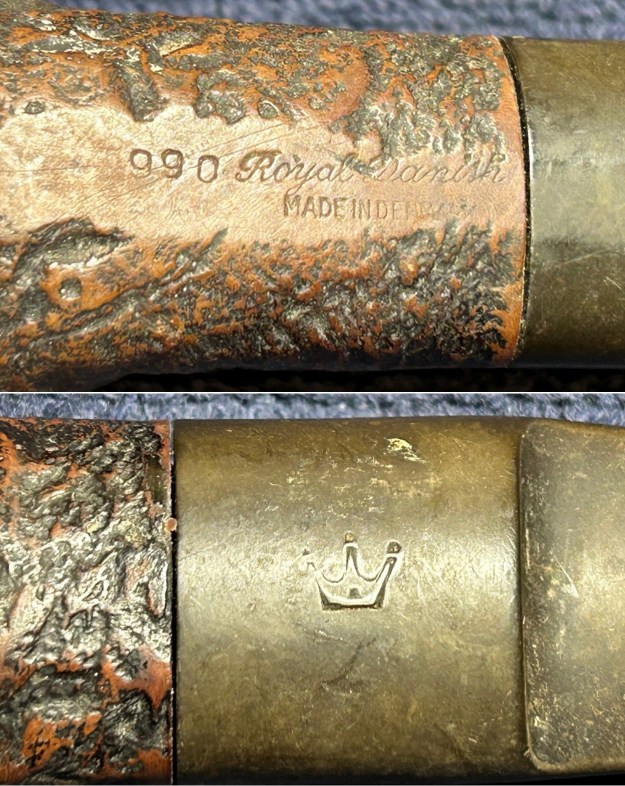
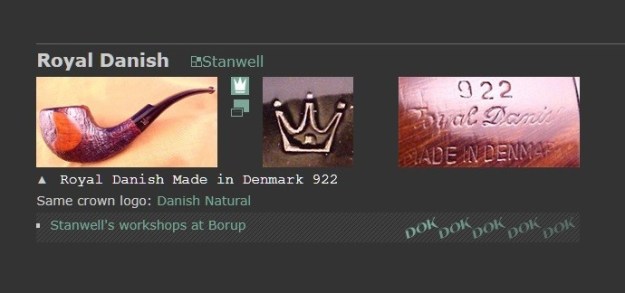
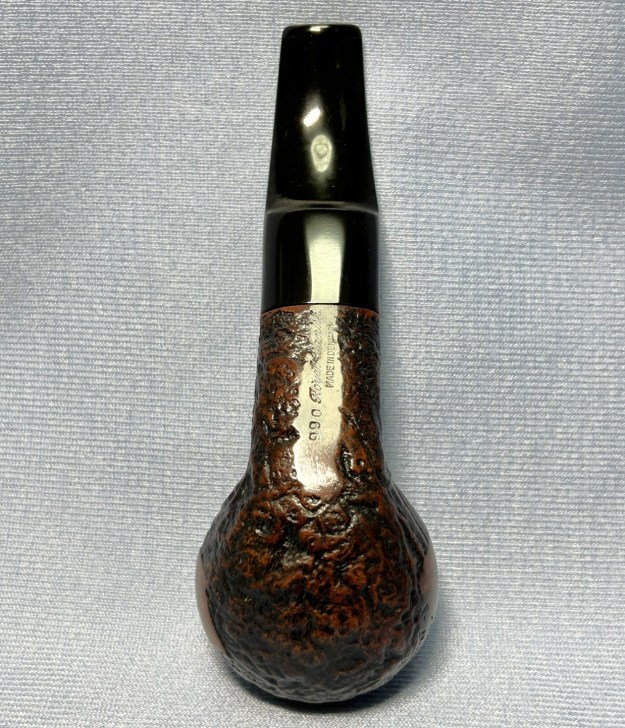
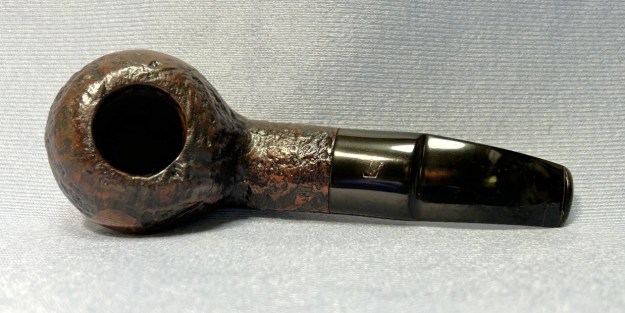
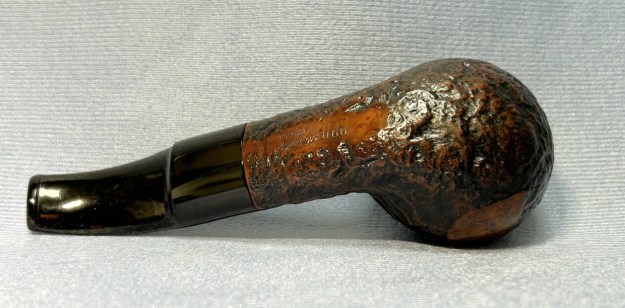
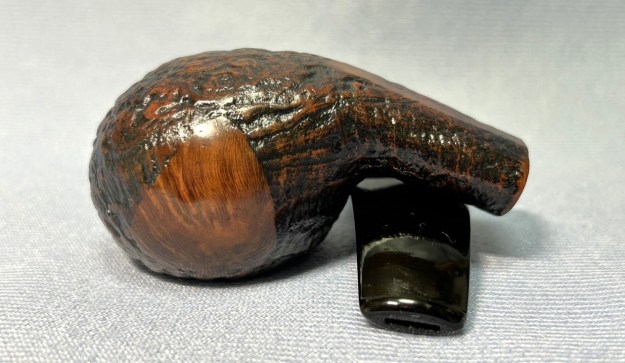
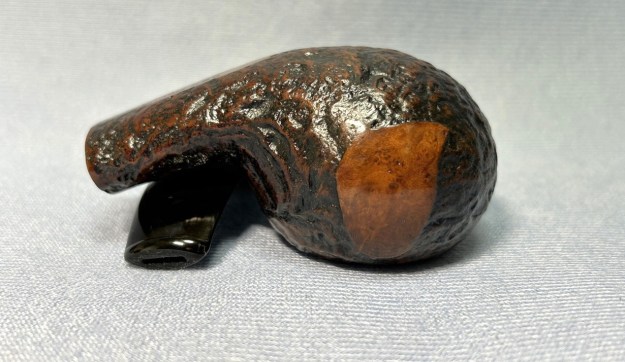
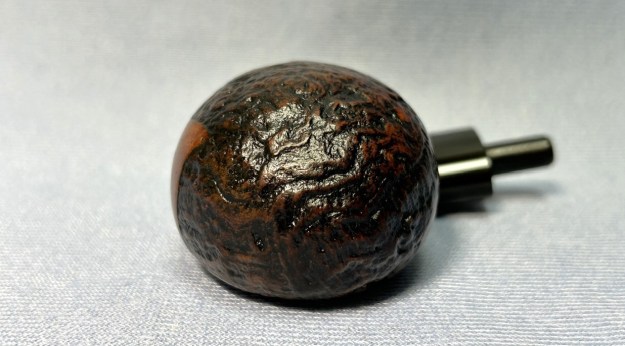
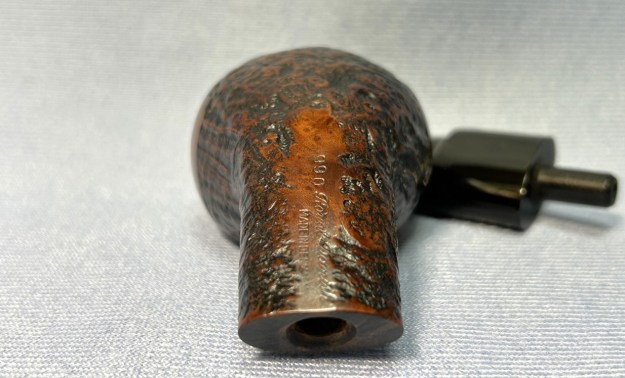
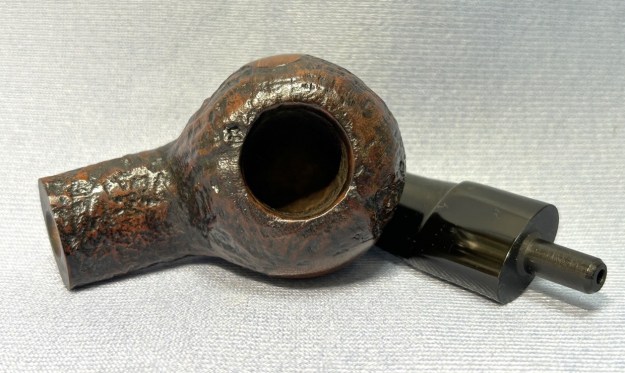
I picked this pipe up recently and was immediately charmed by it. This is a really good-looking Royal Danish 990, designed in 1951 by Sixten Ivarsson. It’s got that lovely tomato shape, with a lovely sandblast, and a lovely smooth panel on each side of the bowl. The combination of smooth and sandblasted briar is very attractive. When I got my hands on it, it was one dirty, dirty pipe. But I was sure this one was going to shine once I worked my magic on it. This is a Royal Danish ball-shaped freehand with a saddle mouthpiece –that’s what the description of Stanwell pipes calls it, though I’ve called it a tomato. I learned from previous research that “Royal Danish” is a Stanwell sub-brand. As is typical of Stanwell sub-brands, the quality is immaculate and it’s not at all obvious why this wasn’t a full-blown Stanwell. This ball is a very attractive shape and it really makes an impression. The underside of the shank reads 990 Royal Danish [over] Made in Denmark and, on the stem, a lovely crown.Both Pipedia and Pipephil list Royal Danish as being a Stanwell sub-brand (and not much else), as per the photo below.The Royal Danish line uses the same shape numbers as Stanwell, but adds a 9 in front. That’s why this pipe corresponds to Stanwell 90. Meanwhile, Pipedia has a good amount of nformation on the Stanwell brand and its history. I certainly recommend looking it over: https://pipedia.org/wiki/Stanwell.

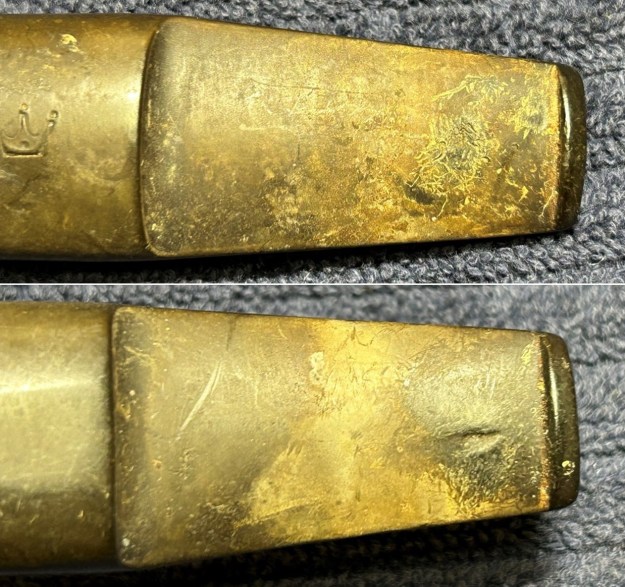
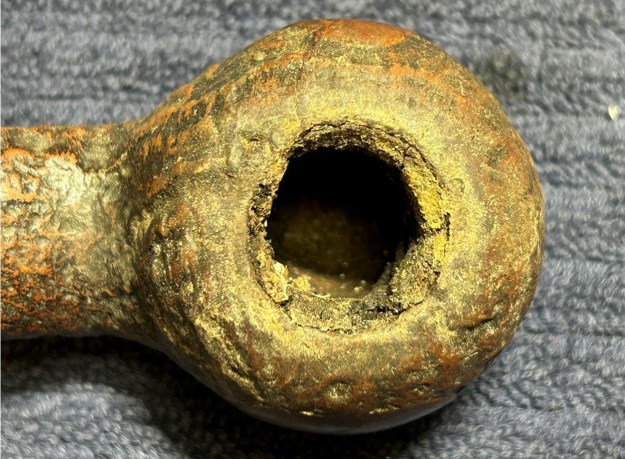
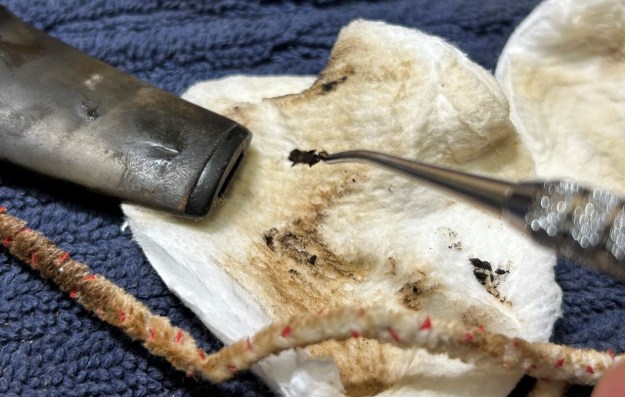
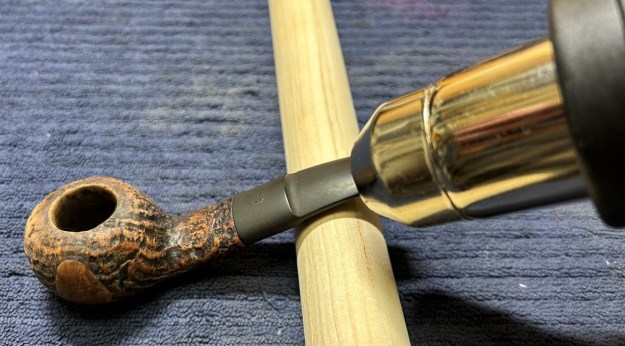
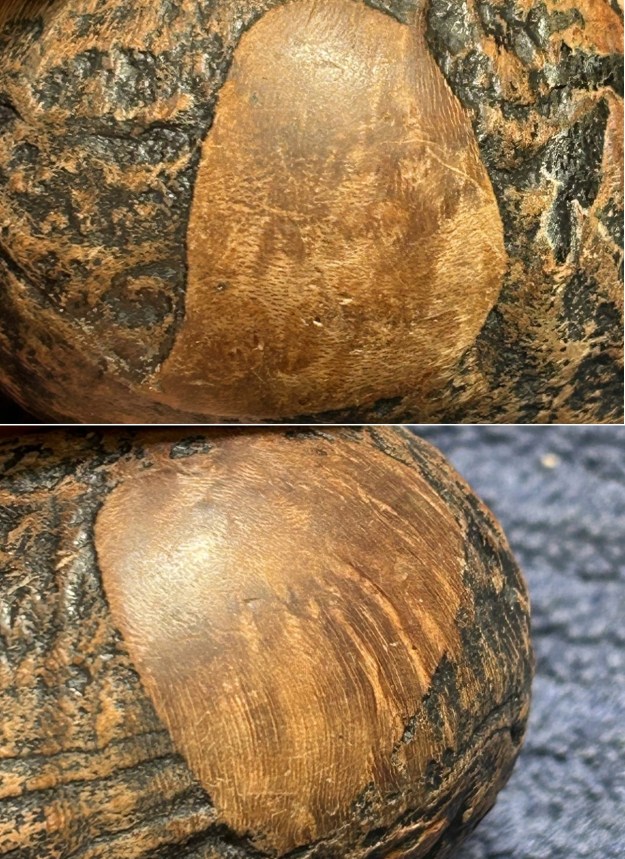
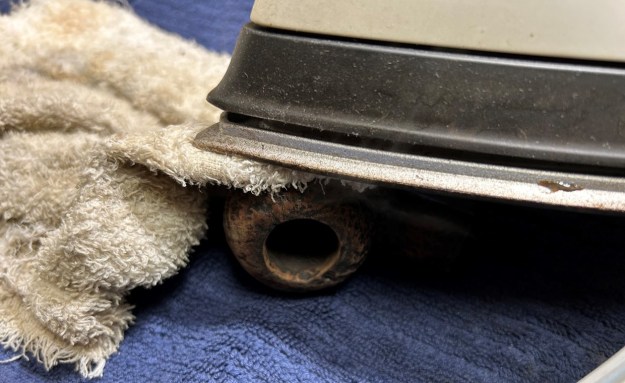
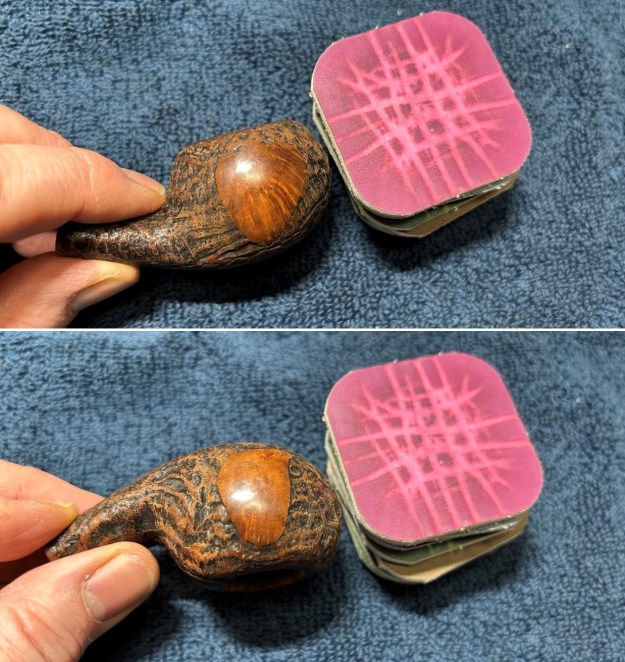
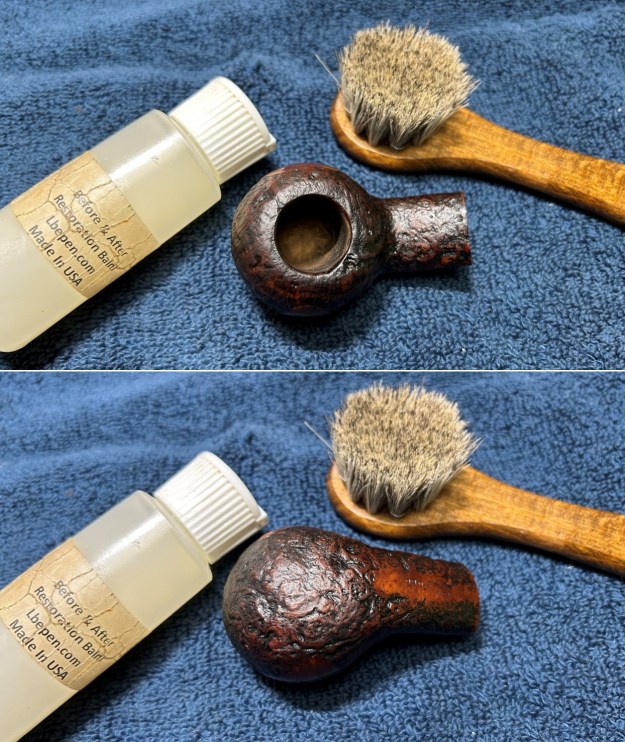
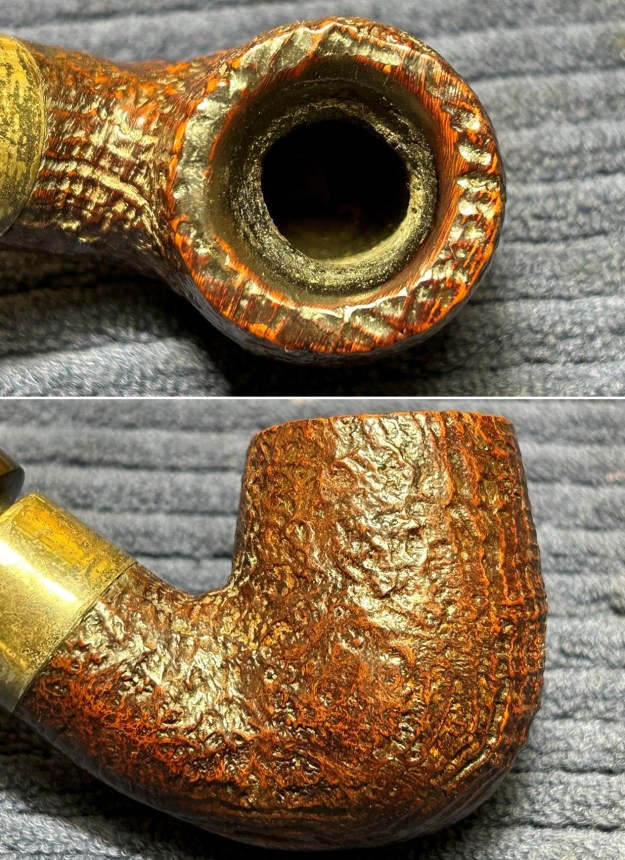
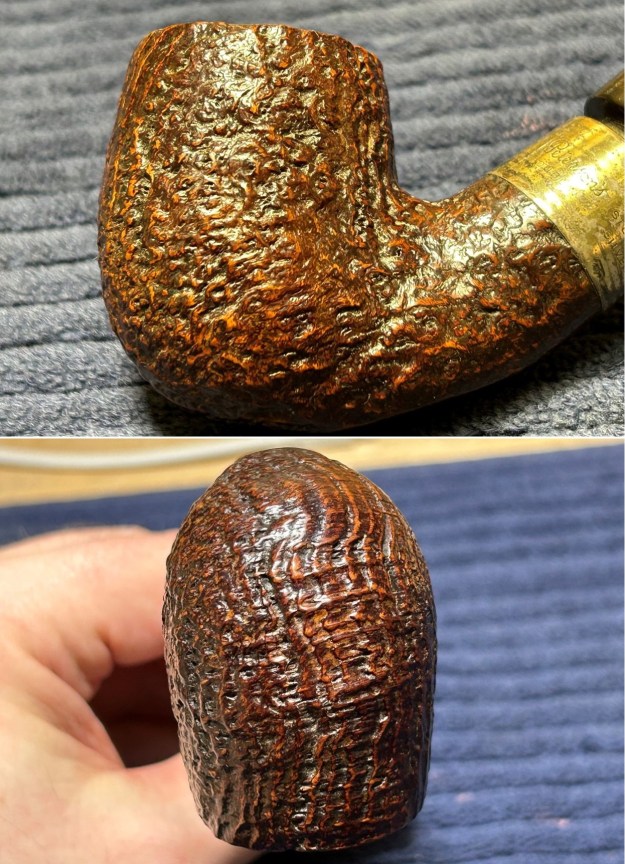
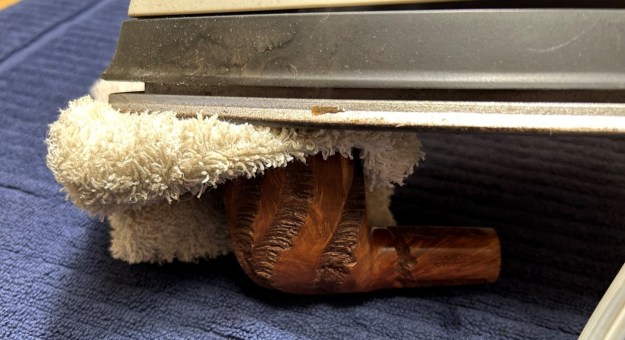
Anyway, this really is a good-looking pipe. No major issues to resolve – just a few minor ones. The stem was very dirty, and had some small dents. There was also some oxidation on the vulcanite. The stummel was sooooo dirty. Inside and outside the bowl were pretty gross. The stummel would need some considerable work to clean. The stem was first on my list. I wiped down the outside of the stem with oil soap on some cotton pads. I also took a BIC lighter and ‘painted’ the stem with its flame in order to lift the bite marks and dents. This worked reasonably well, but I would still need to sort out the dents. The stem was clogged enough that I actually needed to scoop out gunk from inside with a dental tool. Then, I cleaned out the insides of the stem with pipe cleaners and isopropyl alcohol. Once this process was done, I used some cleanser and cotton pads to wipe down the stem before throwing it in the oxidation remover overnight. The following day, I cleaned all of the de-oxidizing mess and again scrubbed with the cleanser on some cotton pads to remove the leftover oxidation. This worked well. I used some silver Rub’n’Buff to restore the crown logo on the stem. I painted the area carefully and let it fully set before proceeding. Before I moved on to the Micromesh pads, I built up the dents on the stem with black, carbon-and-rubber-infused cyanoacrylate adhesive and let them fully cure.At this point, I turned my attention to the bend in the stem – or, rather, the lack of bend. Over time, the stem had gradually uncurled and straightened, so that it now no longer looked quite right. To correct this, I gradually heated the stem with my heat gun and then carefully bent it bank into shape, using a large wooden dowel as my guide. Worked perfectly!I sanded the adhesive down with my needle files to meld seamlessly into the stem. I then used all nine Micromesh pads (1,500 through 12,000 grit) to bring out the lovely black lustre on the stem. I also used pipe stem oil in between each pad scrubbing (from 3600 on up). On to the stummel, and the usual cleaning procedures were in order for this pipe. I used both the PipNet reamer and some 220-grit sandpaper (taped to a dowel) to remove the enormous amounts of cake and take the bowl down to bare briar, as I wanted to ensure there were no significant flaws in the walls of the bowl. Fortunately, there were none.I then proceeded to clean out the insides of the shank with cotton swabs, pipe cleaners, and isopropyl alcohol. There was considerable filth inside this stummel.I decided to de-ghost the pipe, so I thrust cotton balls into the bowl and the shank and saturated them with 99% isopropyl alcohol. I let the stummel sit overnight. This caused any remaining oils, tars and smells to leach out into the cotton. I followed that up by cleaning the insides with some dish soap and tube brushes. The bowl was nice and clean after this. I then moved on to cleaning the outside of the stummel with oil soap, some cotton pads, and a toothbrush. That removed any latent dirt hidden in the lovely recesses of the sandblast.There were a few nicks on the smooth section of briar on either side of the bowl. In order to try and improve this, I took a wet piece of cotton cloth, draped over the affected area, and used a hot iron to produce steam. This steam can sometimes cause the dents to swell back into place. Since this was a partial sandblast, I only needed to use the Micromesh pads on the smooth sections near the rim and shank. I applied some Before & After Restoration Balm to the wood and let it sit for 20 minutes or so. I then used a horsehair brush to ensure the balm got into those lovely sandblast grooves. The balm does wonderful things to the wood and really emphasizes how beautiful this pipe is. I’m going to be sorry to see it go. I took the pipe to my bench polisher and gave it a thorough going-over with my buffing compound and conservator’s wax. This pipe was a delight from the start and its beauty only increased through the restoration process. This Royal Danish 990 freehand ball is elegant, light, and incredibly comfortable to hold. Finally, I am pleased to announce that this pipe is for sale! If you are interested in acquiring it for your collection, please have a look in the ‘Danish’ pipe section of the store here on Steve’s website. You can also email me directly at kenneth@knightsofthepipe.com. The approximate dimensions of the pipe are as follows: length 5 in. (127 mm); height 1½ in. (37 mm); bowl diameter 1¾ in. (44 mm); chamber diameter ¾ in. (19 mm). The weight of the pipe is 1½ oz. (46 g). I hope you enjoyed reading the story of this restoration as much as I enjoyed restoring it. If you are interested in more of my work, please follow me here on Steve’s website or send me an email. Thank you very much for reading and, as always, I welcome and encourage your comments.

Having Fun Restoring Four Charming Pipes


by Kenneth Lieblich

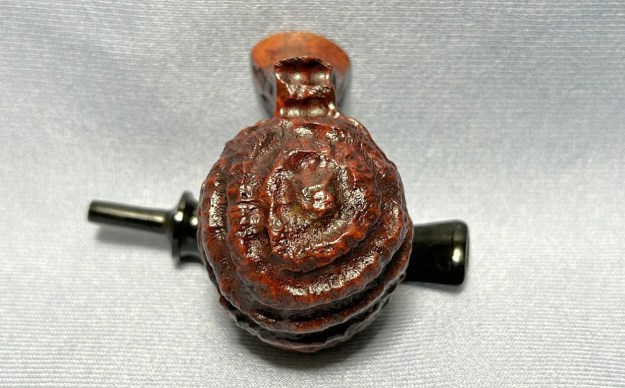
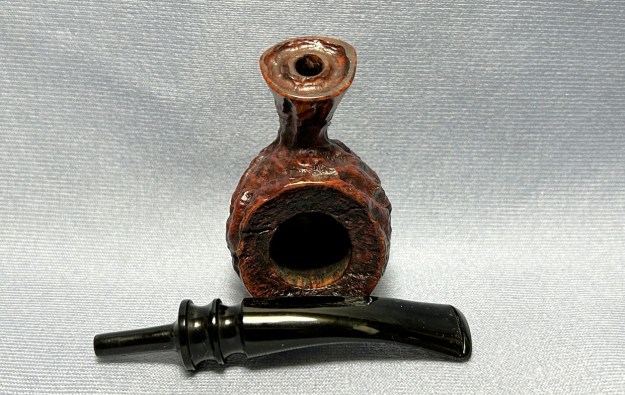
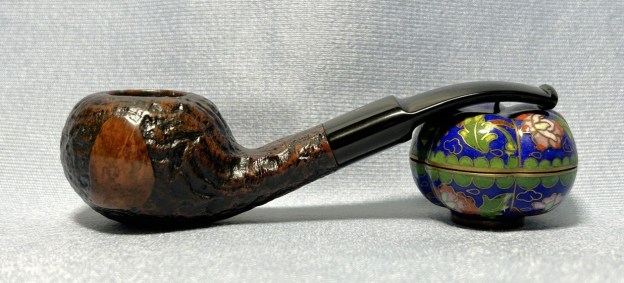
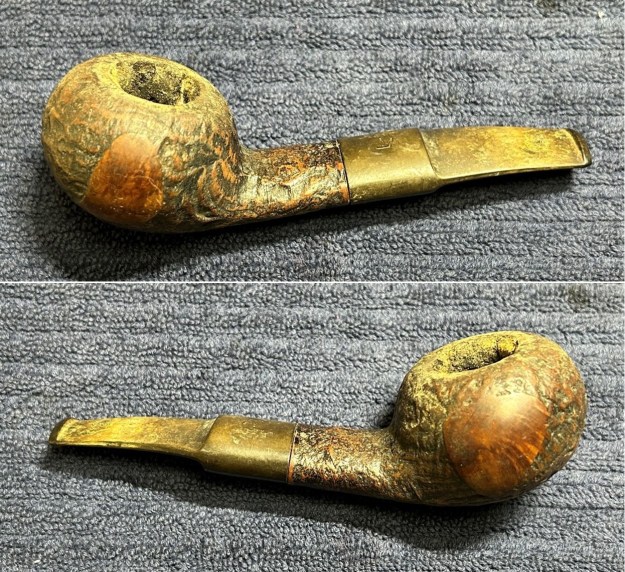
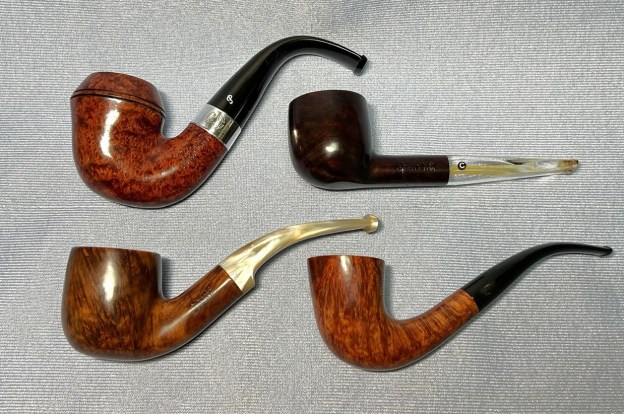
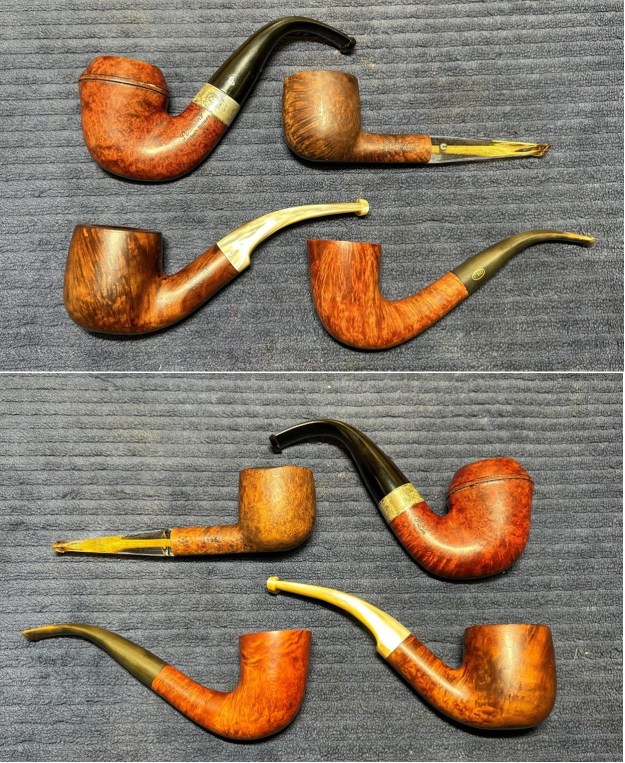
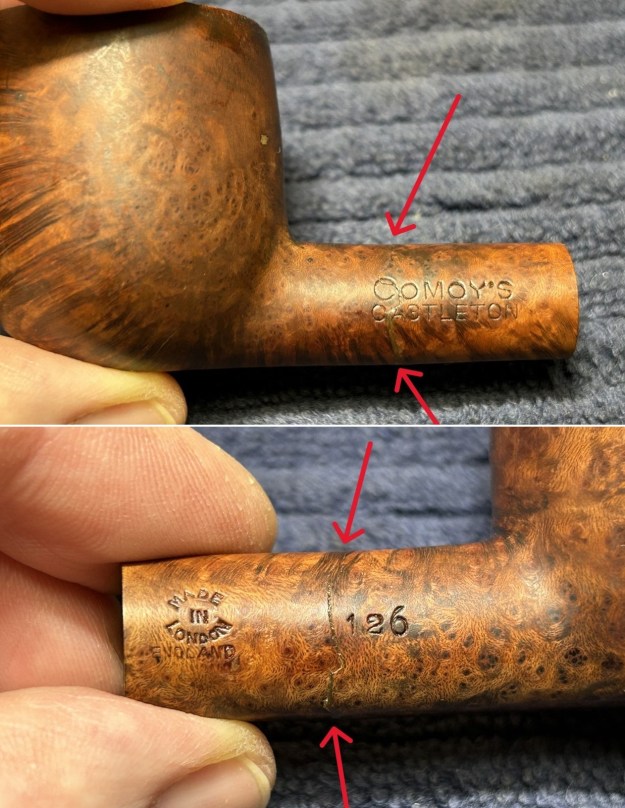
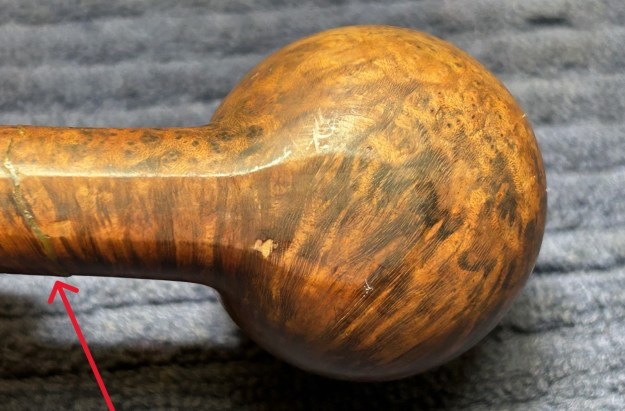
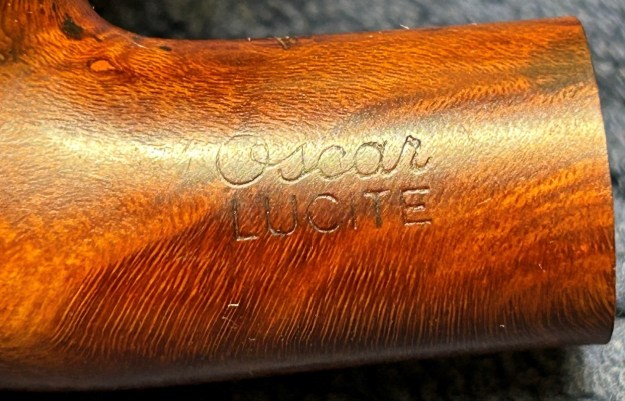
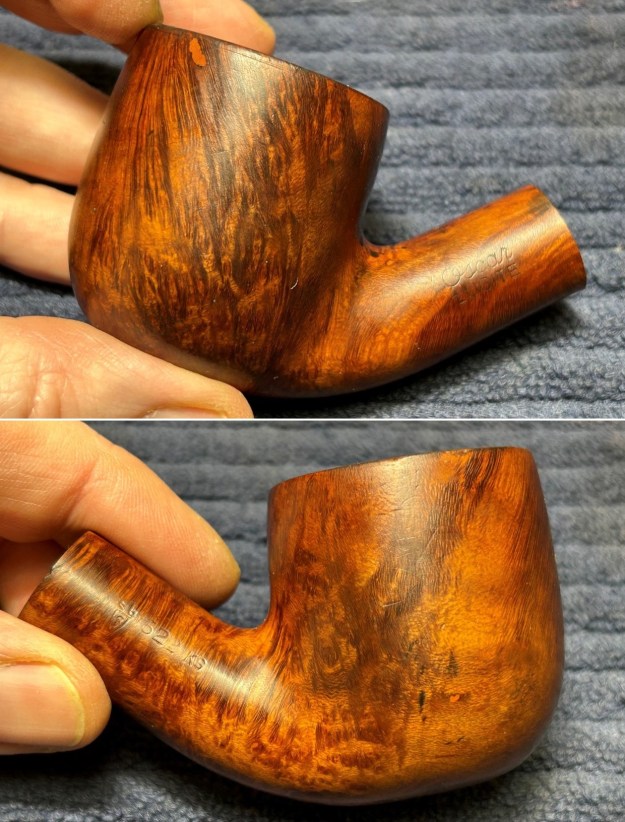
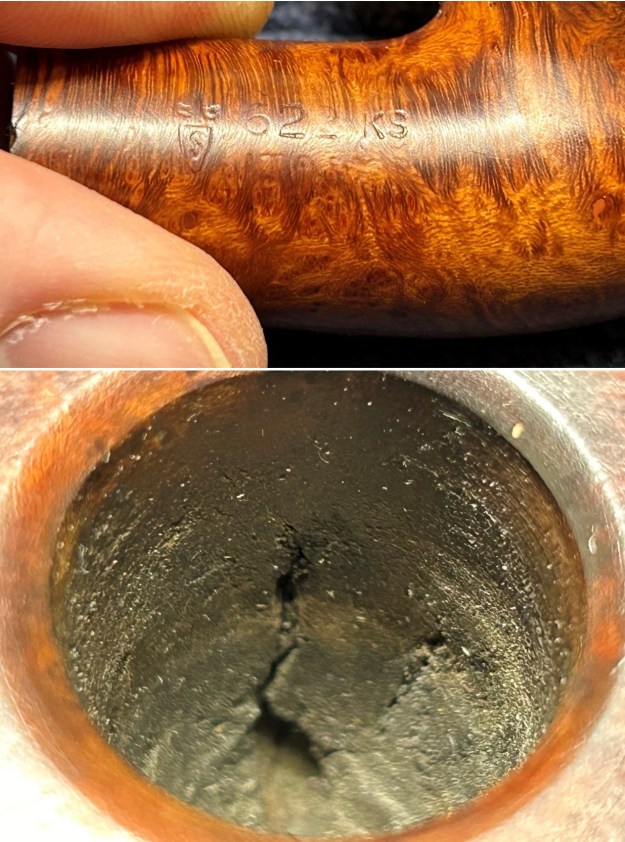
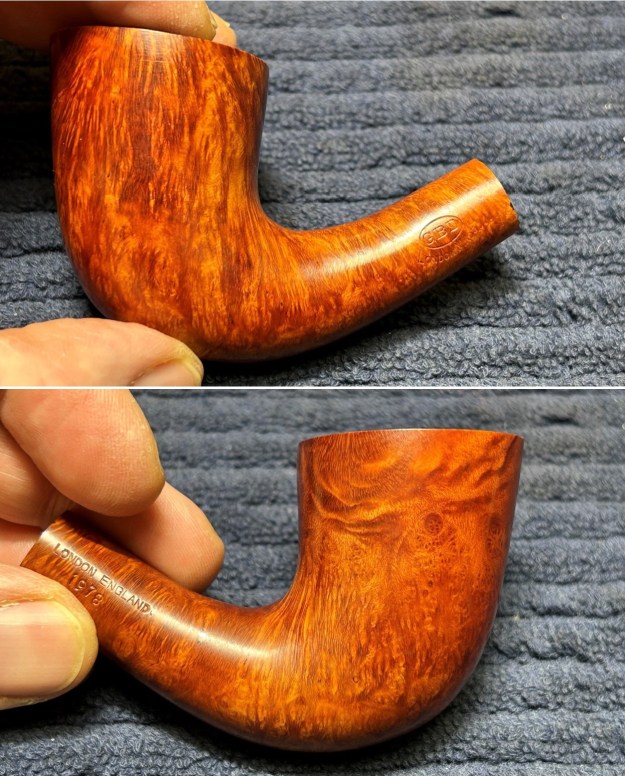
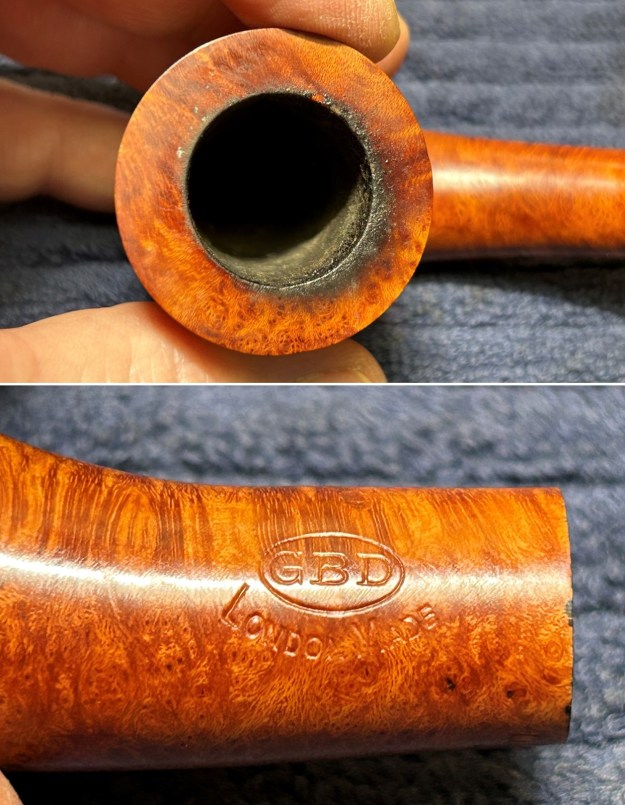
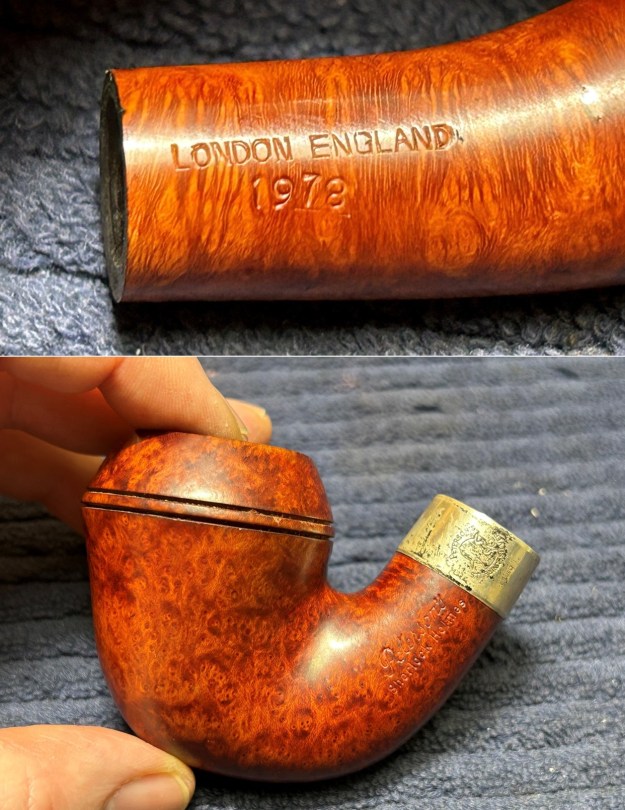
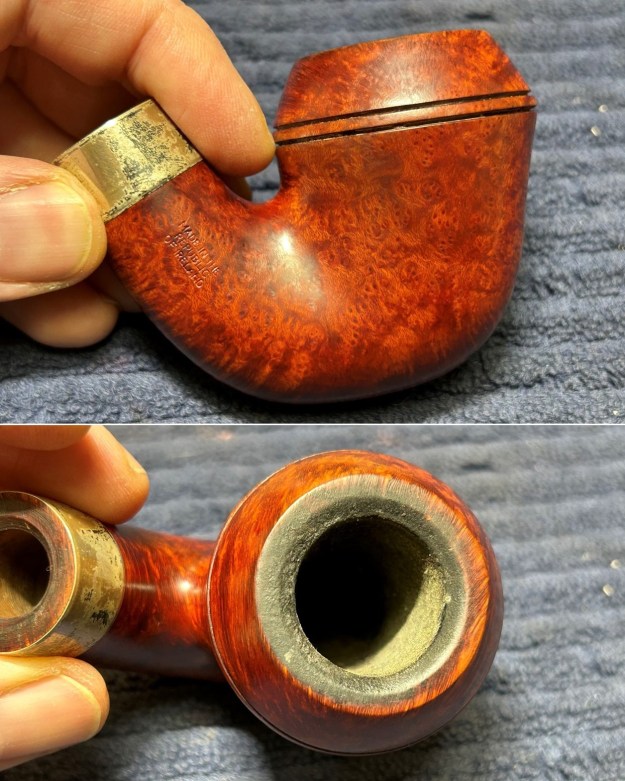
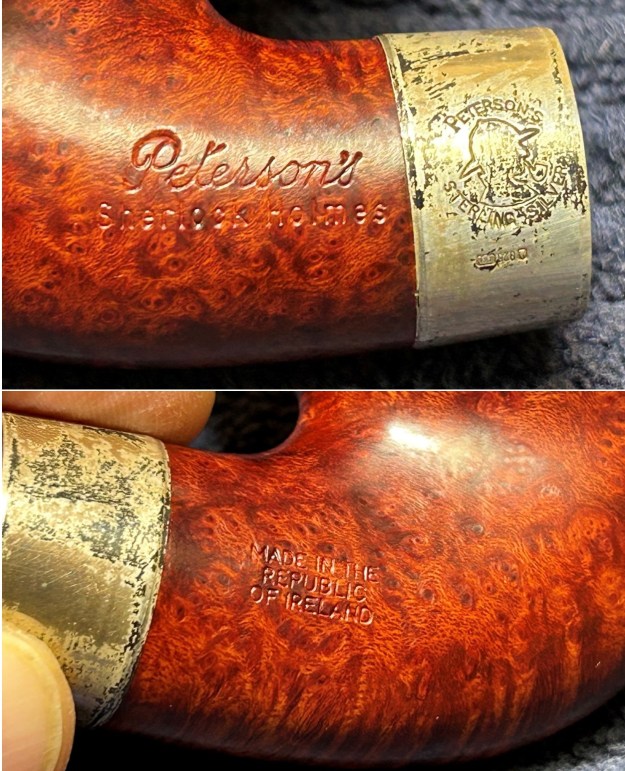
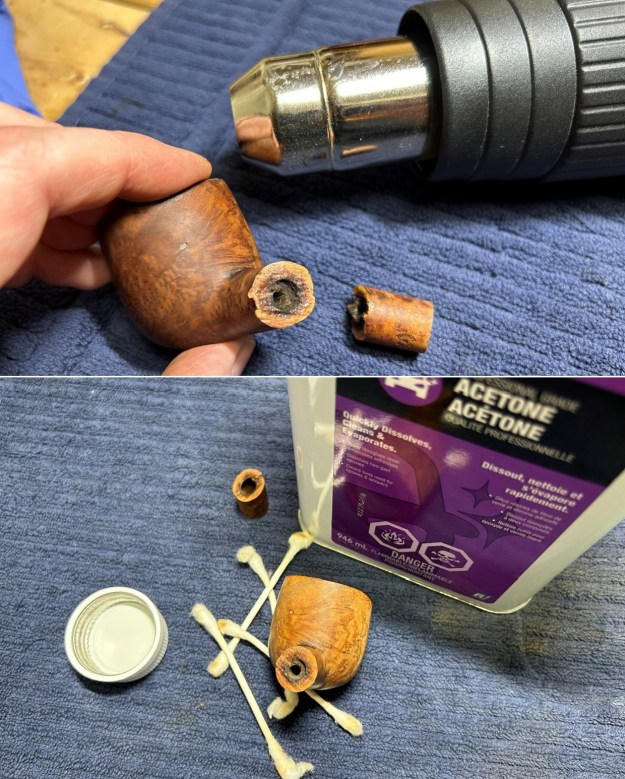
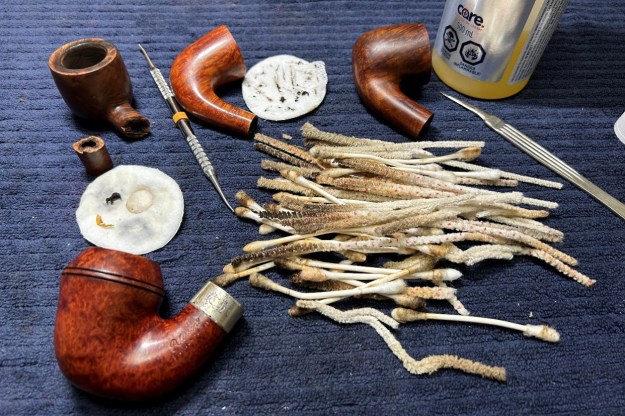
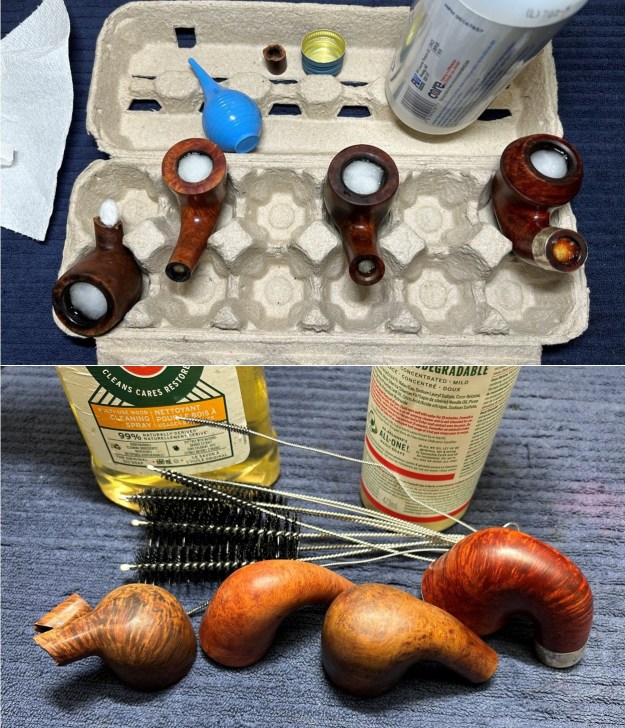
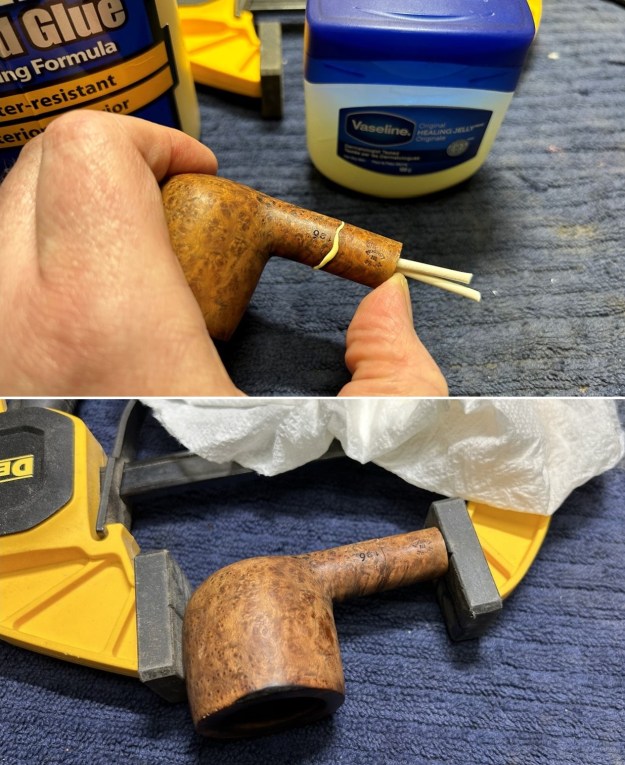
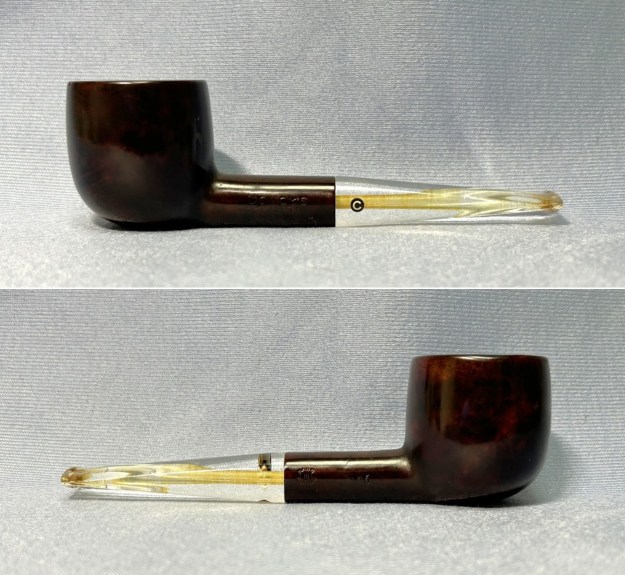
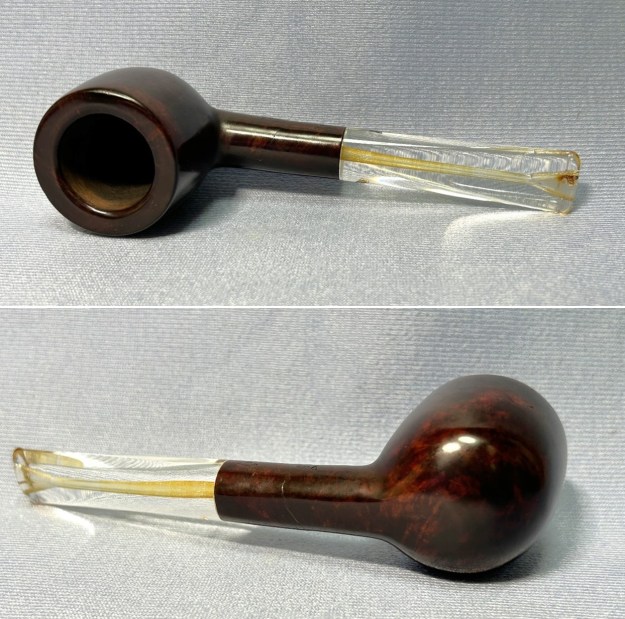
A great customer of mine recently sent me some pipes for repair and restoration. I was happy to help out and the pipes were sent to me post-haste. There were some surprises to be discovered and challenges to be overcome. On this occasion, I did something different than I usually do: I restored all four at once, rather than one at a time. This blog is more of a show-and-tell than my usual restoration stories. This blog post is going to give a good overview of the restorations but doesn’t need to provide detail on each individual pipe. Let’s jump right in and see what we’ve got.First is a Comoy’s Castleton 126 large straight pot. Second is a Savinelli Oscar 622KS Lucite king size bent pot. Third is a GBD London Made 1978 bent Dublin. Fourth is a Peterson Sherlock Holmes Watson P-lip. All four are very attractive and I’m sure will be good smokers. A first glace at them all suggests that everything is fine, but things are not always what they seem… As I was inspecting the Comoy, I noticed, to my chagrin, that the shank was completely snapped. Someone had glued it back together, but it wasn’t well done and I was going to have to redo it. Similarly, when I dug deeper into the Savinelli, I noticed that there was a lot of damage to the inside of the bowl. That’s a problem! But I’ve got a solution. Fortunately, the GBD and Peterson didn’t have any major issues. That was good news. With all four stems, I wiped down the outside with some oil soap on some cotton rounds. Naturally, the insides needed to be cleaned too, and I did that with some pipe cleaners and 99% isopropyl alcohol. Two of the stems were vulcanite and two were acrylic, so I only needed to soak the vulcanite stems in the deoxidizing liquid. When they were done, I wiped them down with some cleanser on cotton rounds. After that, I sanded all four stems with my Micromesh pads – and I used the pipe stem oil towards the end of the sanding. They all looked so much better when I was done. Next step, of course, was removing all the cake from inside the bowls. I took out my PipNet reamer and my KleenReem and went to work. There was plenty of filth inside and it took a little while to get it all out of four bowls. I followed that up by sanding the insides with a piece of 220-grit sandpaper on a wooden dowel. I also gently scaped down the bowl rims in order to remove any lava there. Working through these pipes reminded me that most of my cleaning techniques for these pipes came from Steve and his brother, Jeff. They personify the standard for which all pipe restorers should strive. Thanks again Jeff and Steve for all your help to me.Before I moved on to cleaning the inside of the stummels, I decided that it made sense, at this point, to take apart the broken shank. This would make it easier to clean. I used my heat gun, softened the glue, and it came apart easily. I wiped down the ends with acetone to ensure that no glue remained.Now, it was time to clean the insides. As usual, I used a truck load of pipe cleaners, cotton swabs, and isopropyl alcohol to get everything spick and span.Following that, I set all four stummels up for a de-ghosting session. The bowls were stuffed with cotton balls and then socked with alcohol. This works to draw out any remaining filth. It really makes things look and smell better. When that was done, I used some soap and tube brushes and scoured the insides. They looked fabulous. I also cleaned the outsides with some oil soap on some cotton rounds.Next, I needed to repair the broken shank on the Comoy and the gouges in the Savinelli. The location of the break on the shank was awkward and wouldn’t allow for a strengthening tube to be installed. So, I simply had to glue it with great care. I used wood glue, as it has the best strength for what was needed. I also coated a couple of cotton swabs with petroleum jelly and shoved them down the shank to prevent any glue from dripping into the shank. I clamped the two parts together and left them overnight. I was quite pleased with the results.Meanwhile, I needed to mix up some heat-resistant epoxy for the Savinelli. I stuck a petroleum-jelly-coated pipe cleaner into the draught hole of the pipe and applied a thin layer of epoxy. I also let this cure overnight. I then sanded down the excess and made the bowl a new coating – a mixture of yoghurt and activated charcoal. This also sat for some hours to try and it makes a wonderful coating for a new cake to build on. I then moved on to sanding down the wood on all four stummels. I used all of my Micromesh pads and endured that everything was smooth and lovely. There was, however, considerable burn damage on the Comoy. After topping the pipe and reshaping it, I decided that this one needed a new stain on the wood. With the broken shank, burns on the rim, and topping, it needed a beauty treatment. I ended up staining this one with Fiebing’s mahogany stain – it turned out absolutely beautifully, but, for whatever reason, the photos here show it as being much darker than it is in person. Trust me: in person, it looks great. All four pipes got a nice coating of the restoration balm and were left to sit for 20 minutes or so. I then buffed them by hand with a microfibre cloth. I took the pipes to my bench buffer and spiffed them all up with some White Diamond and carnauba wax. My last step was to polish the sterling silver band on the Peterson with my jewellery cloth. And voilà! These beauties are already on their way back to their owner. I trust that he will enjoy their new and improved status. I hope you enjoyed reading this quick write-up of this lovely bunch of pipes. If you are interested in my work, please follow me here on Steve’s website or email me directly at kenneth@knightsofthepipe.com. Thank you very much for reading and, as always, I welcome and encourage your comments.
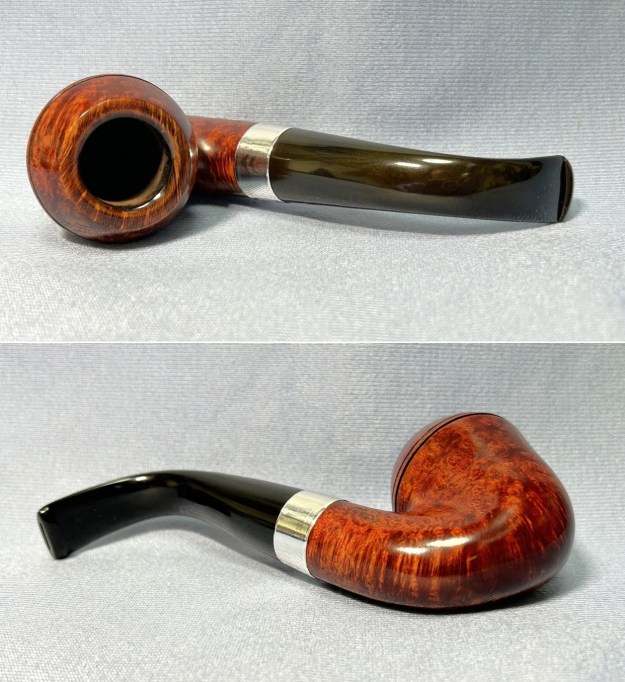
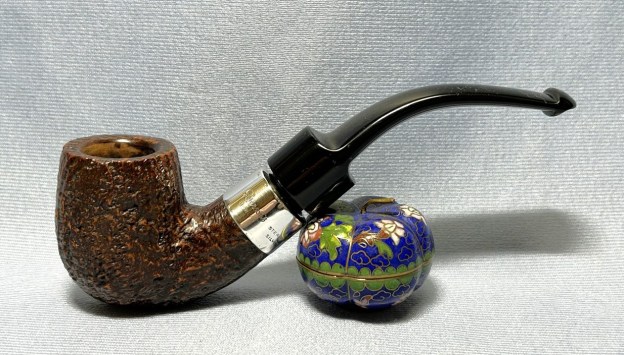
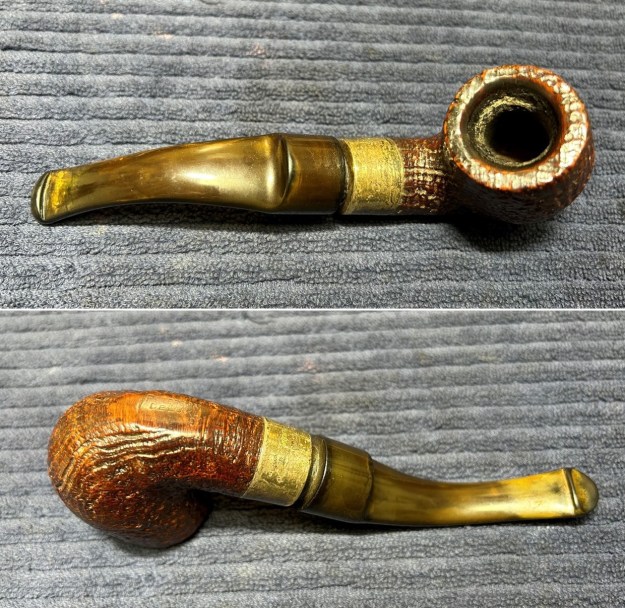
Restoring a Handsome Peterson Deluxe System 9S


by Kenneth Lieblich

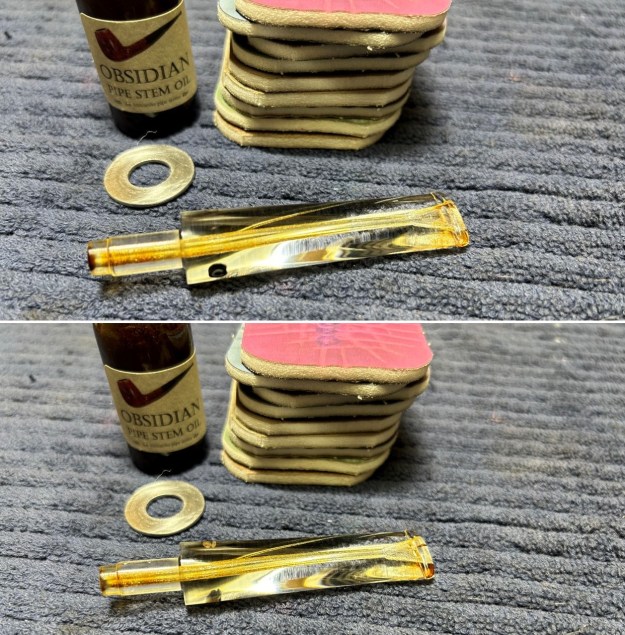
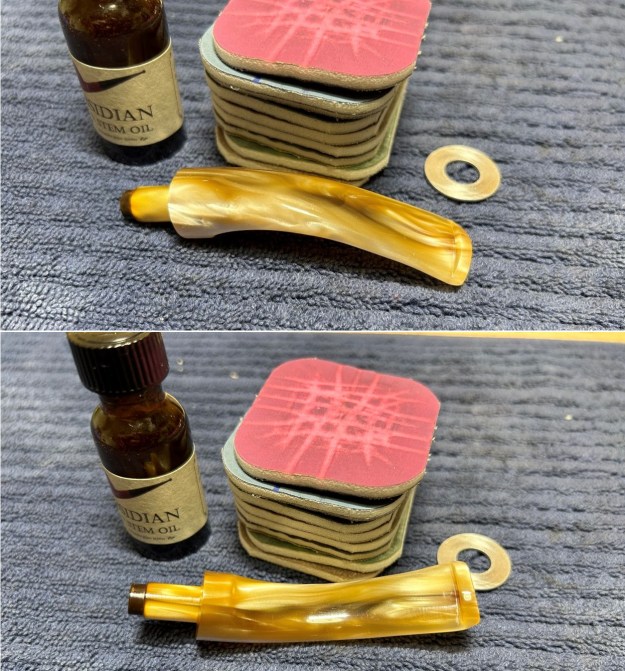
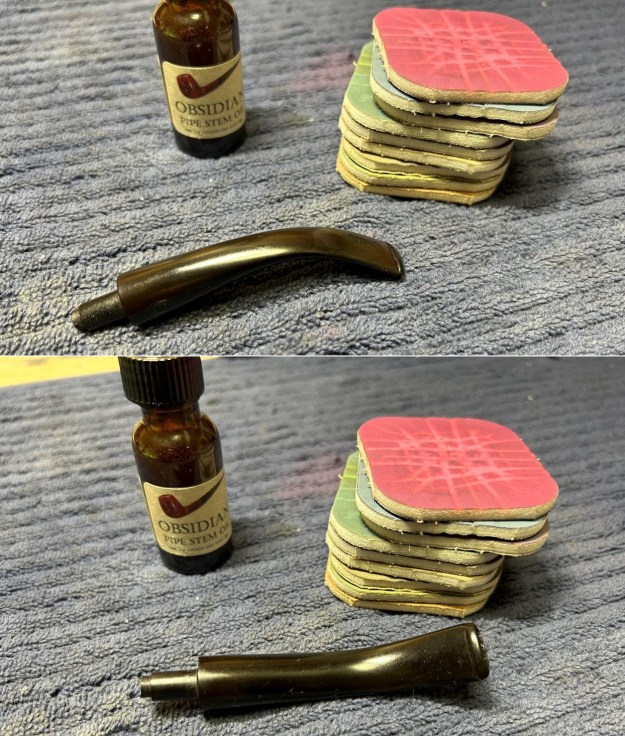
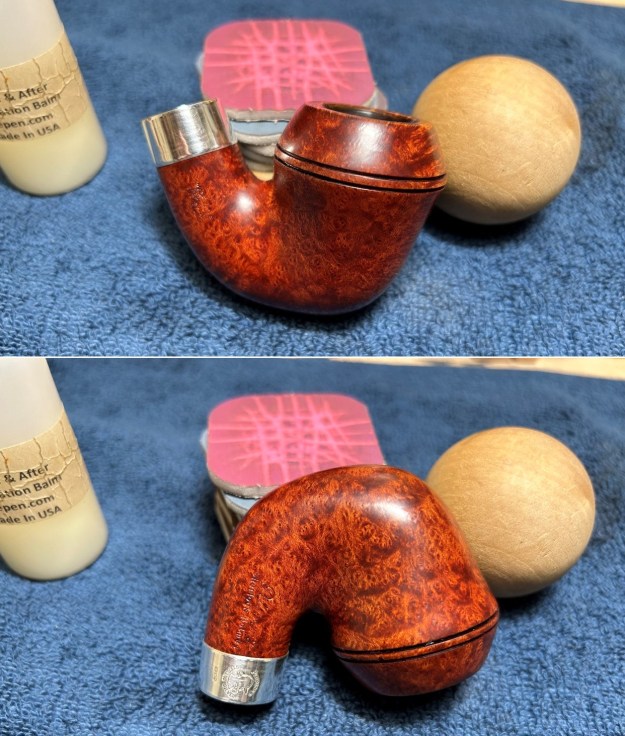
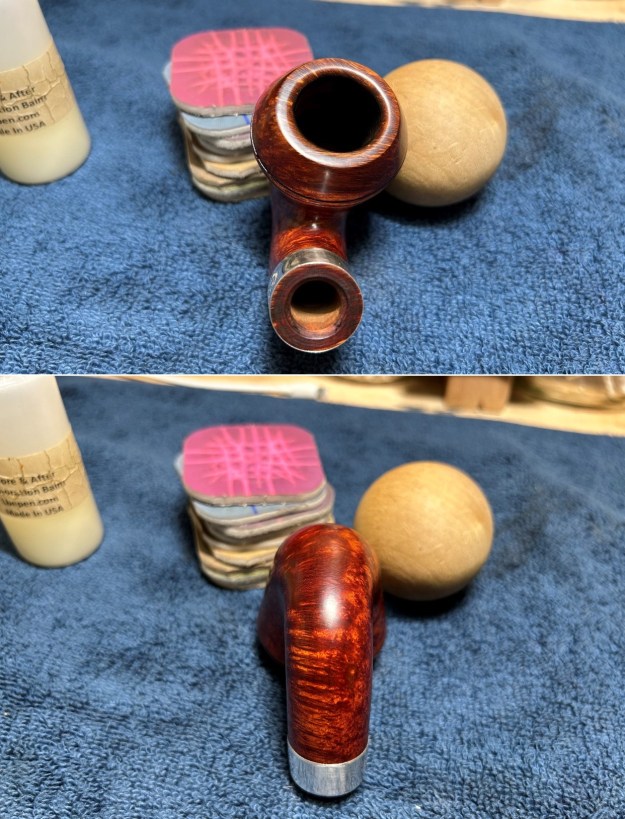
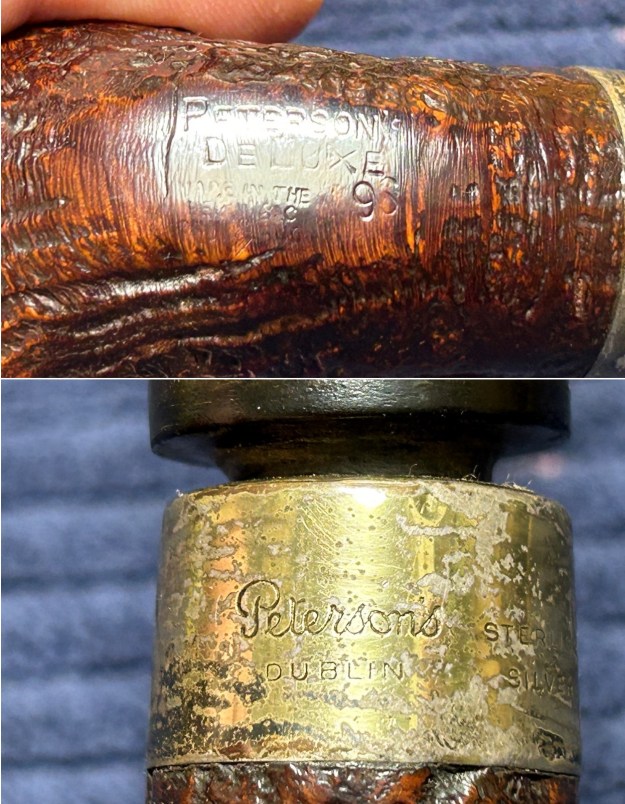
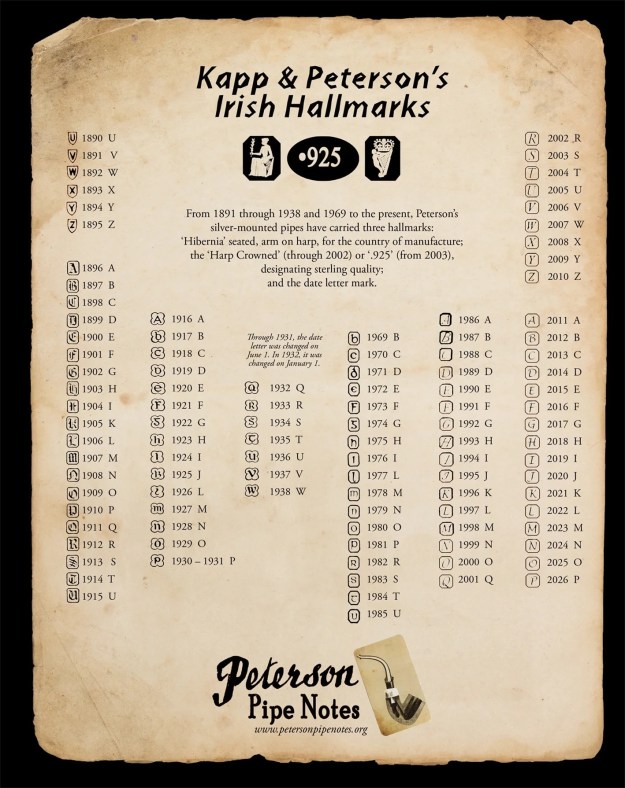
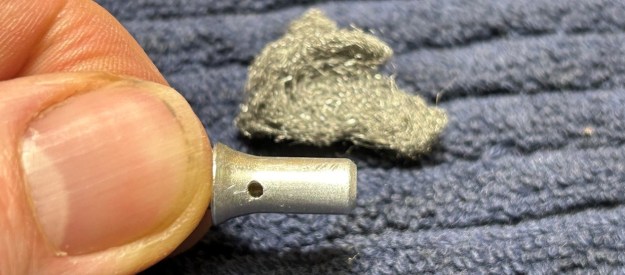
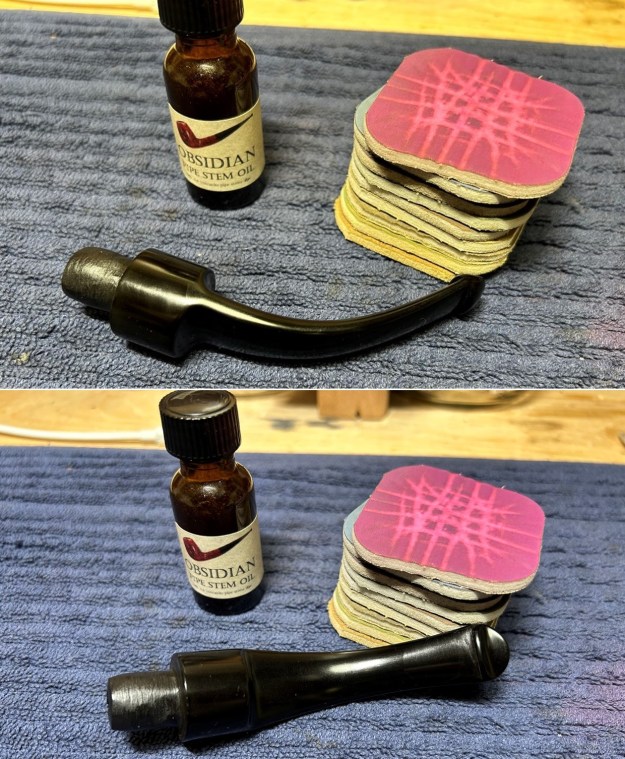
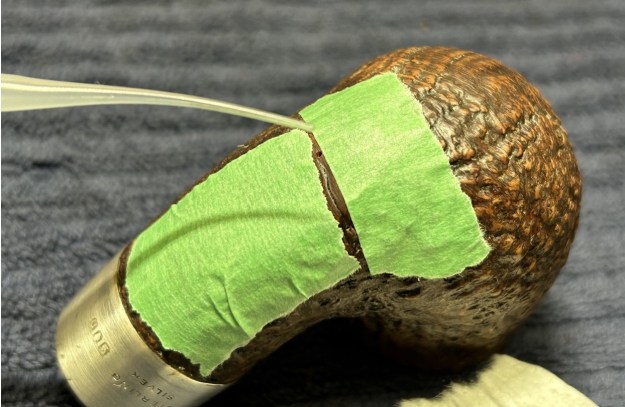
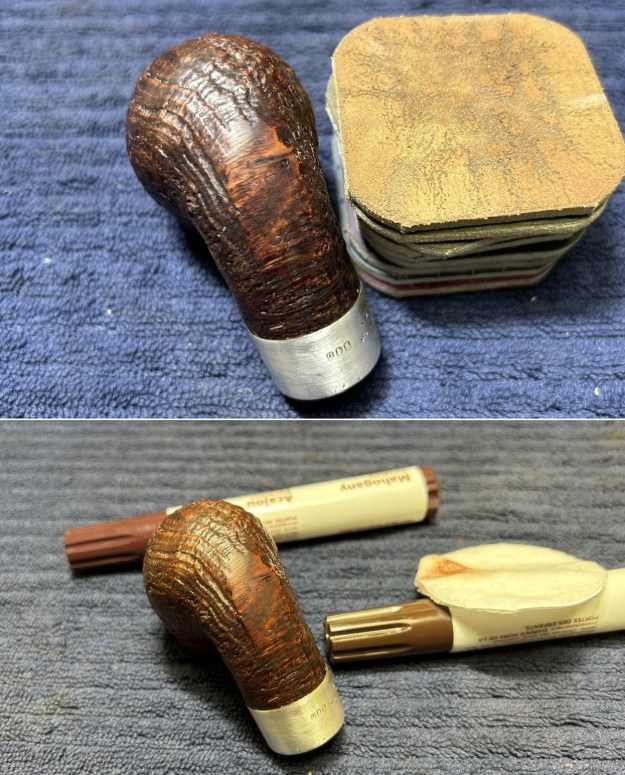
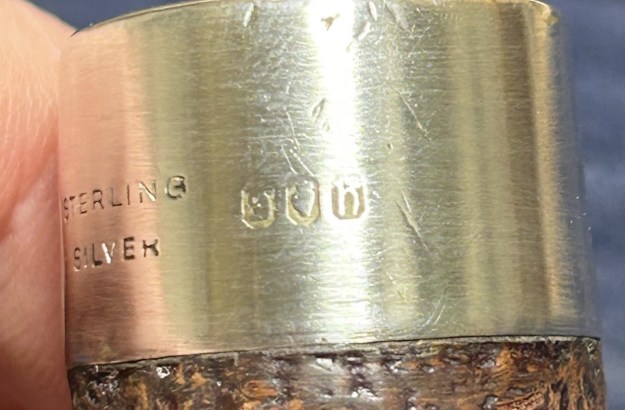
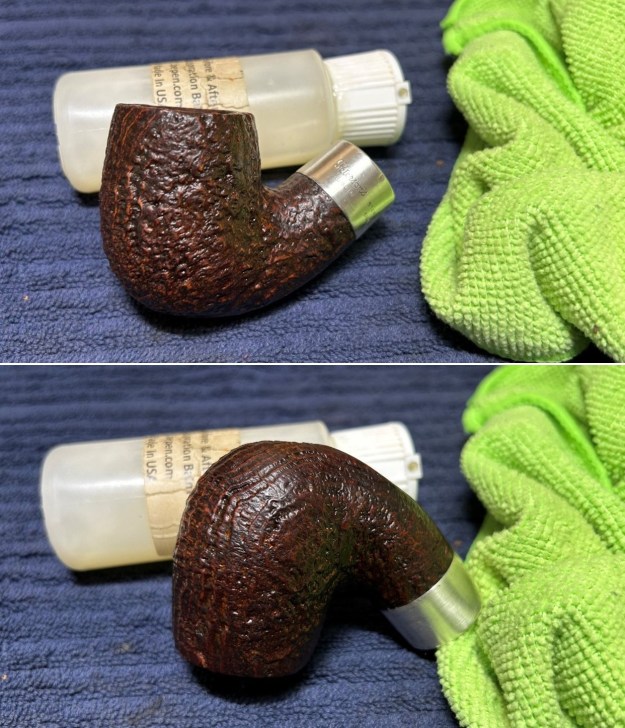
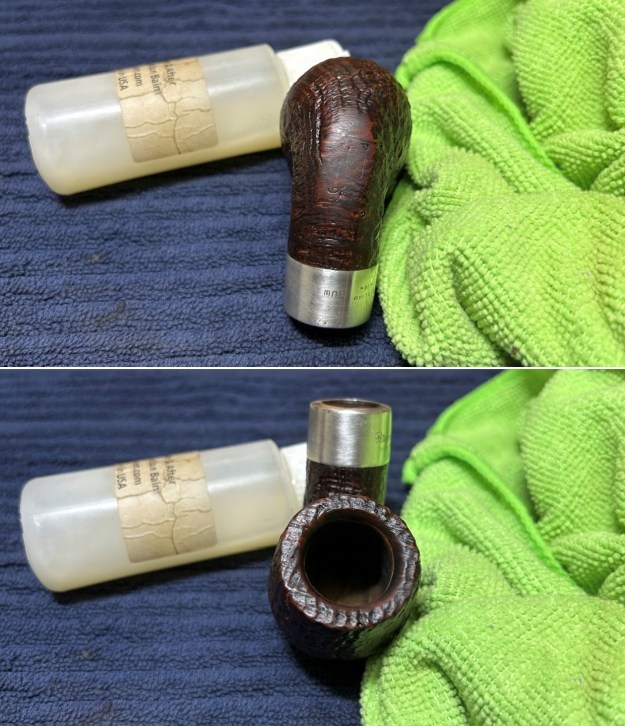
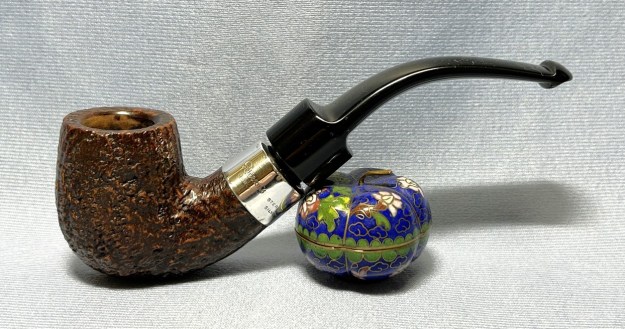
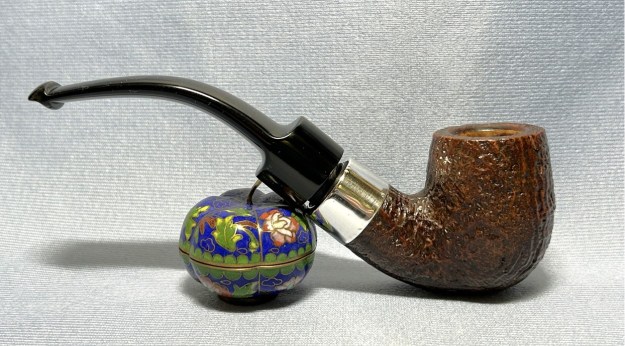
This is the second of the Deluxe Petes I restored recently. You can read about the other one here. This one is a good-looking bent billiard, with a sandblast finish. It comes from the Republic era, has a sterling silver band, and has the classic Peterson P-lip. This one has already been sold, but I thought I’d show it to you anyway. Let’s have a look at the markings on this pipe. The underside of the stummel reads, Peterson’s [over] DeLuxe [over] Made in the [over] Republic [over] of Ireland. Next to that is the shape number, 9S. The band has markings too. First are the words Peterson [over] Dublin. Next to that are the words Sterling [over] Silver. Finally, it has a set of proper hallmarks: Hibernia, which indicated that it was made in Dublin. Next is the Harp Crowned, which indicates sterling silver. Third is the date letter. In this case, it’s a stylized H. Checking the Irish hallmarks chart tells me that this pipe dates from 1975 – almost fifty years ago. For more information on Peterson Deluxe System pipes, click on the link to my previous article and it will provide some useful information.Time to get on with it! The stem was pretty dirty. It had some calcification on it and I used a sharp edge to carefully scrape that off. Once done, I scrubbed the stem with oil soap on some cotton pads. I also took a BIC lighter and ‘painted’ the stem with its flame in order to lift the few bite marks and dents. Then I cleaned out the inside with pipe cleaners, cotton swabs, and lemon-infused isopropyl alcohol. You can see just how filthy it was inside. I wiped down the stem with cleanser to remove surface oxidation. Then the stem went for an overnight soak in the Pipe Stem Oxidation Remover. The next day, I used the cleanser again with some cotton rounds.I also took the opportunity to clean up the aluminum chimney with some isopropyl alcohol, then sanded with some 0000-grit steel wool.I built up the small tooth marks on the stem with black cyanoacrylate adhesive and let them fully cure. I then used my needle files, Micromesh pads and Obsidian Pipe Stem Oil to make it look great. Onto the stummel – it was both beautiful and a mess! The first thing I did was to ream out the mountain of cake inside the bowl. I used the PipNet, and some sandpaper taped to a dowel. Fortunately, there was no damage to the interior walls. I used cotton rounds and a toothbrush with some oil soap to scrub the outside of the stummel. I then proceeded to clean out the insides of the shank with Q-tips, pipe cleaners, and lemon-infused isopropyl alcohol. I followed that up by de-ghosting the pipe and the bowl was nice and clean after this. I then cleaned the insides with some dish soap and tube brushes. In the process of cleaning, however, I noticed something unfortunate. The underside of the stummel has a small crack. After inspecting it closely, I saw that it wasn’t too serious at all and would be an easy fix.Repairing the crack first involves drilling a tiny hole at each end of the crack to stop it from elongating any further. I took my micro drill bit and delicately drilled a hole into the briar. I then administered a dose of CA glue (mixed with briar dust) along the crack and let it cure. It came out really well and, after sanding it smooth, I touched up the colour with my furniture pens. I then worked on cleaning up the sterling silver band. I taped it off, as I didn’t want to damage the wood. This worked well and I was pleased. I followed that up with some Before & After Restoration Balm. I let it sit on the wood for 20 minutes or so, then buffed it off with a microfibre cloth. I took the pipe to the buffer. I gave it a good application of conservator’s wax, since carnauba wax will gum up in the grooves. This made all the difference. It really sparkled after that. I also polished the silver with my jewellery cloth. This Peterson Deluxe System 9S Bent Billiard is such a good-looking pipe. I’m sure my customer will enjoy this one for many years. I hope you enjoyed reading the story of this pipe as much I as I did in restoring it. If you are interested in more of my work, please follow me here on Steve’s website or email me directly at kenneth@knightsofthepipe.com. Thank you very much for reading and, as always, I welcome and encourage your comments.
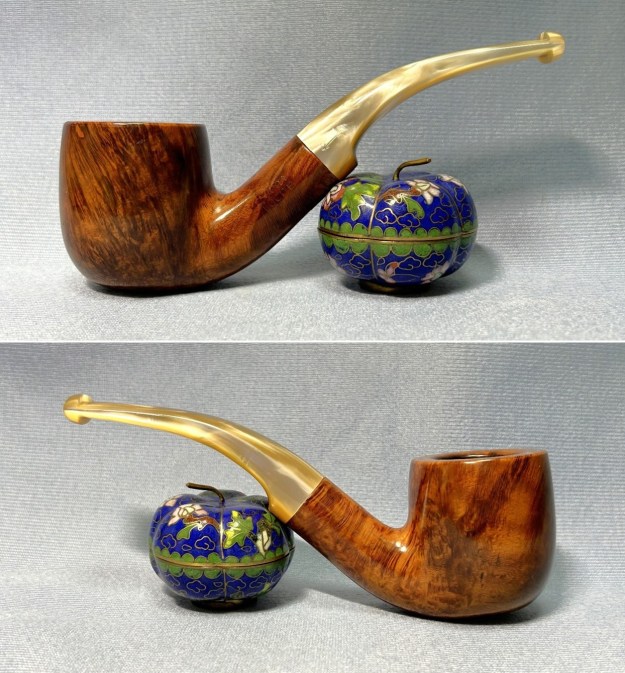
Restoring a Terrific Handmade Oversize Kaywoodie


by Kenneth Lieblich

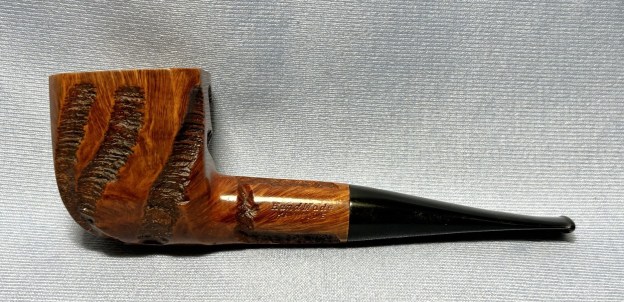
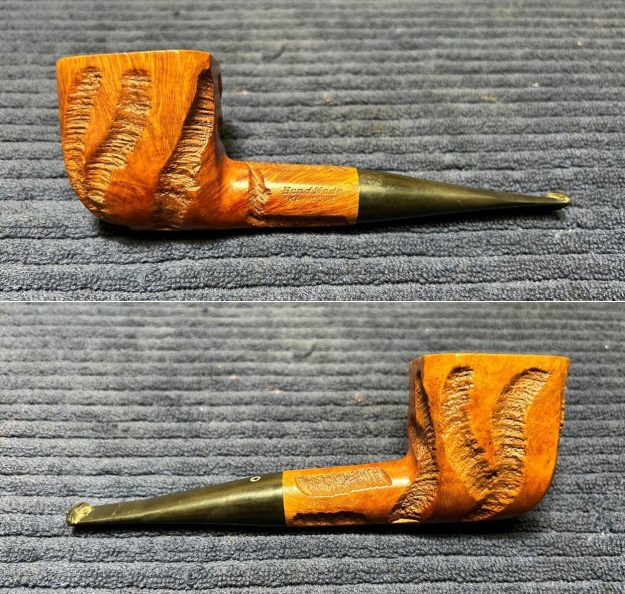
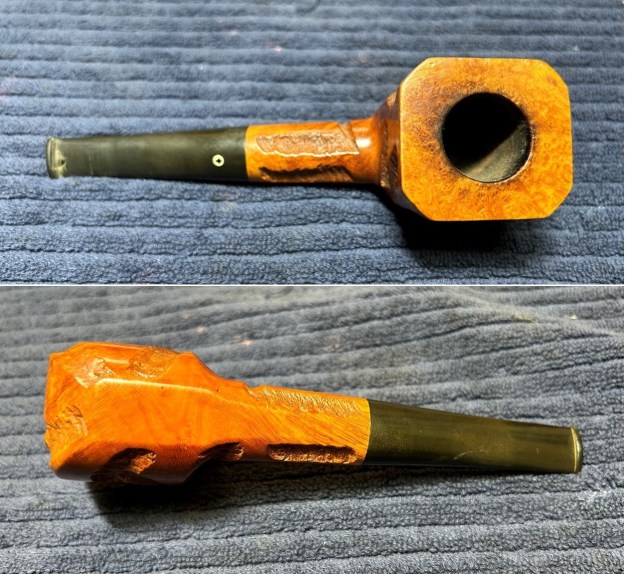
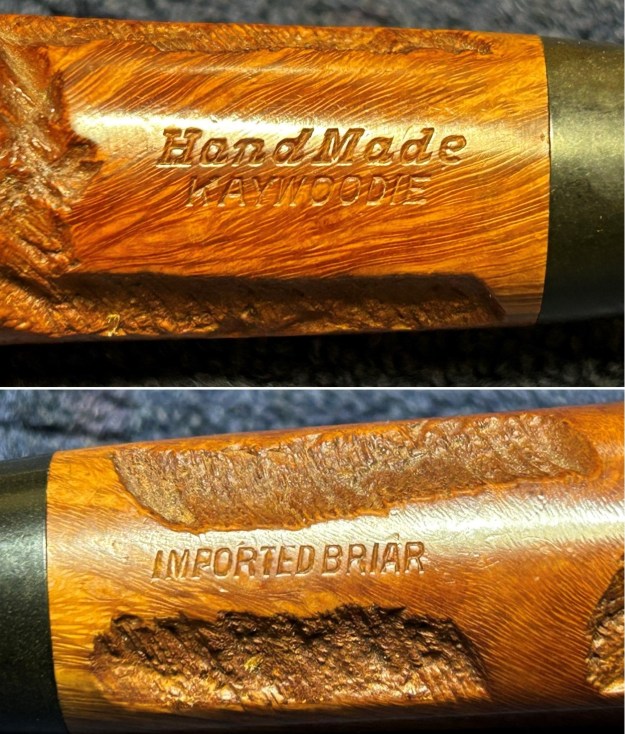
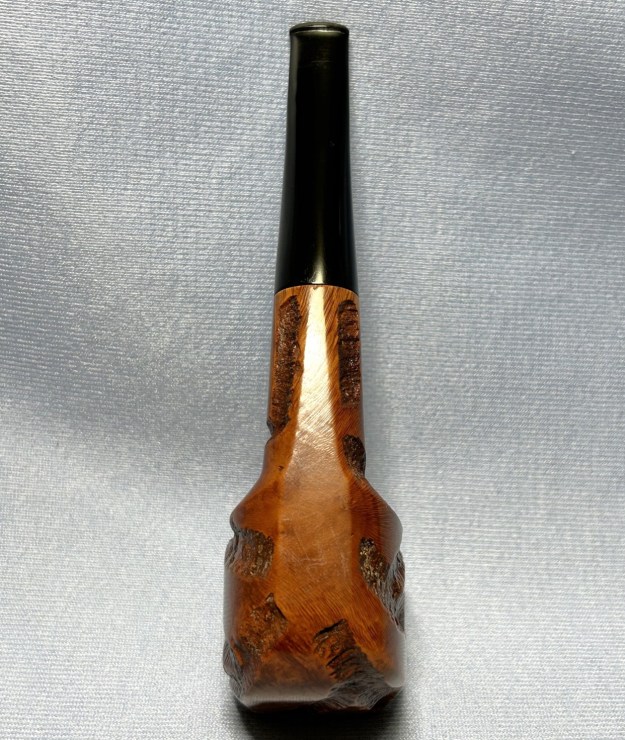
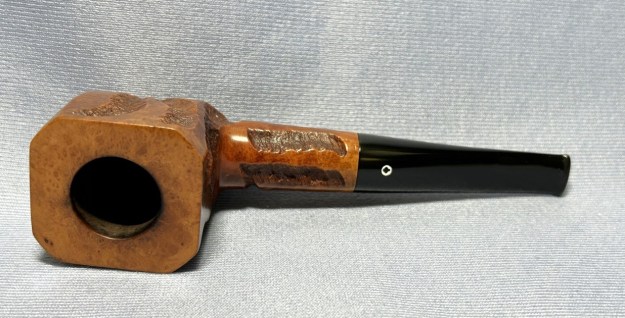
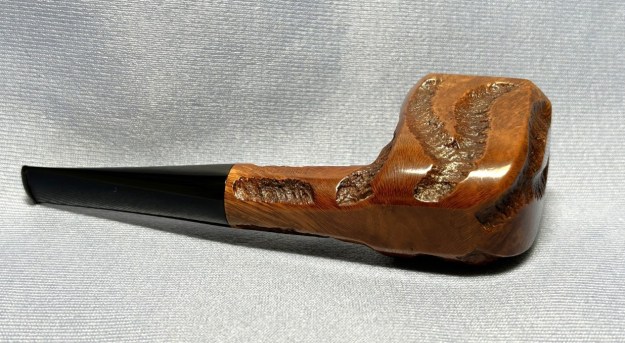
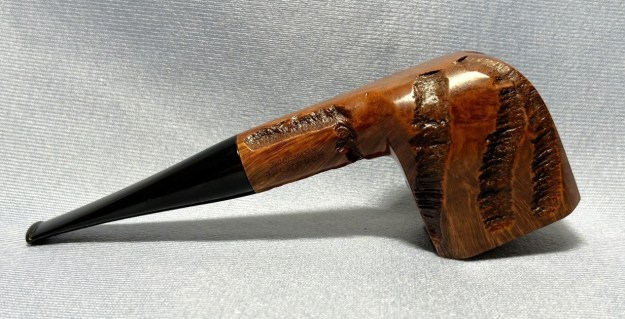
Next up is this interesting, rugged pipe from Kaywoodie. It is from the handmade Oversize Kaywoodie line and has wonderfully thick walls. When I first saw it, this nifty pipe reminded me, in style, of a Custombilt pipe. It is not that, but it is reminiscent of that. This was a bizarre and challenging restoration, but the results are terrific. Let’s examine the markings on the pipe. The left side of the shank shows HandMade [over] Kaywoodie. The right side of the shank shows, merely, Imported Briar. Finally, the stem has the famous cloverleaf logo on the top. As you can see, it is a white circle with a black leaf inside. Unfortunately, there was no shape number, no shape name, nor any other markings. Hmm… Dating this Kaywoodie is a bit of a head-scratcher. I think I’ve figured it out, but the historical details of many a pipe have been lost in the mists of time. This is an Oversize Handmade Kaywoodie and it doesn’t help that, as I mentioned, there isn’t any shape number on the pipe. Perhaps the cloverleaf logo on the stem can help. Pipephil says:

The cloverleaf logo: the round logo (black cloverleaf in white circle or white cloverleaf in black circle) was first used in 1937. Up until the late 40’s this logo was used on all of the upper-grade pipes. The concomitant use of the plain white cloverleaf and the disk inlaid logo continued until the early 80’s. Up until the late 1940’s/early 50’s, the logo was on top of the stem. After that the logo was moved to the side of the stem (exceptions exist).So, perhaps this is a better-quality pipe! From what little I understand, this was, indeed, considered to be a better pipe. Pipedia laid this information out:

Throughout much of the 1940’s, 50’s and 60’s, the Kaywoodie family of pipes consisted of 11 basic grades of briar pipes; though new grades were frequently added to the line and some older grades were discontinued or downgraded. These 11 basic grades of pipes, listed in ascending order of quality, were:
Drinkless
Hand-made Super Grain
Super Grain
Relief Grain
Flame Grain
Silhouette
Oversize Kaywoodies
Meerschaum Inlaid Kaywoodies
Connoisseur
Ninety-fiver
Centennial

Given how singularly rare the last two were (Ninety-fiver and Centennial), this would indicate a very good quality pipe. Pipedia gave me reason to think this particular pipe was from 1947. Part of the article entitled “Collector’s Guide to Kaywoodie Pipes”, states:

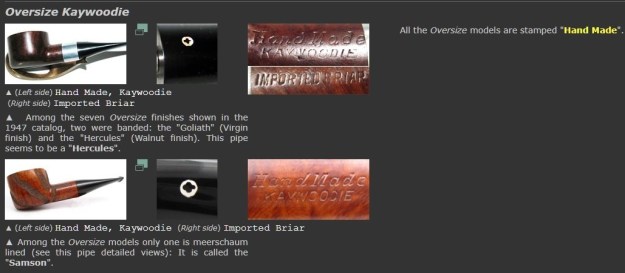
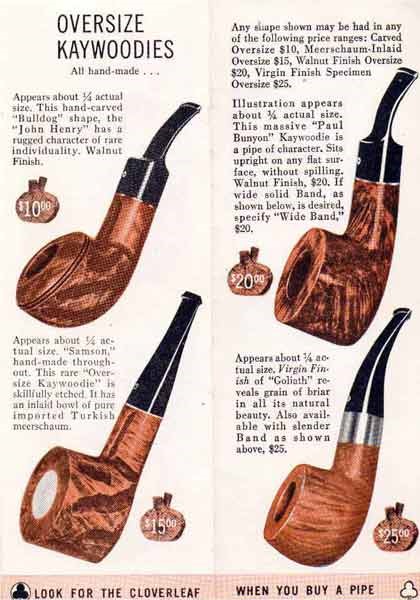
The 1947 Kaywoodie catalog shows 12 grades of briar pipes and introduces the Kaywoodie Block Meerschaum. The briar pipes were available in 69 shapes. In addition to these individual pipes, the 1947 catalog shows two- and seven-pipe matched grain sets. The Oversize Kaywoodies were, as the name implies, “Giants”. Lowndes notes that these pipes were stamped simply, “Hand-Made”. The pipes were all roughly “bulldog-ish” in appearance and were available in the following styles and grades:

Hand-carved “Colossus” ($10)
Walnut finish, banded “Hercules” ($20)
Hand-carved “John Henry” ($10)
Virgin finish, specimen grain “Paul Bunyan”
($25) Virgin finish, banded specimen grain “Goliath”
($25) Walnut finish “Atlas”
($20) Hand-carved, Meerschaum-Inlaid “Samson” ($15)Now, there is no model number or name on my pipe, so it’s not clear to me if this pipe one of the model names mentioned above or some other.

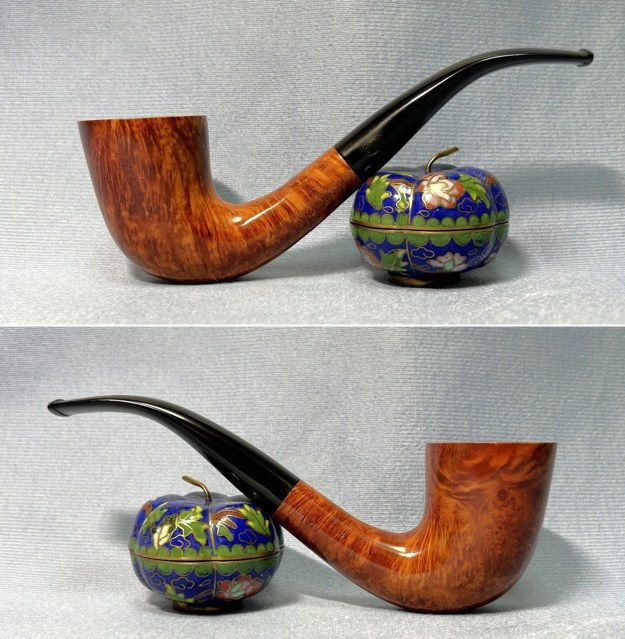
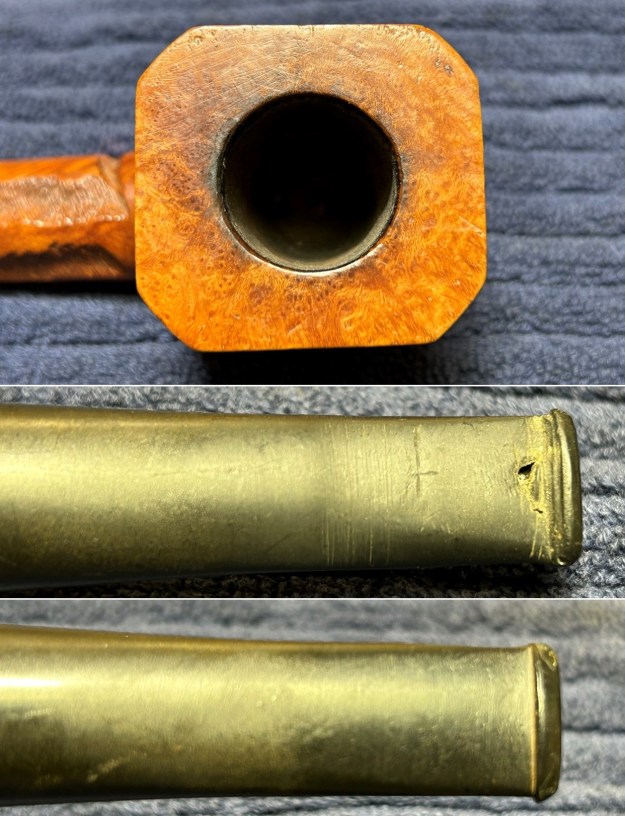
Let’s get on with restoring the pipe. The stummel was in good shape. The main issue with this pipe was the stem. The photos demonstrate that the bit had a small bite through. No big deal, I thought. I’ve repaired those before. Alas, this ended up being much more challenging than I had expected.I worked on the stummel first. In order to clean out the cake in the bowl, I used the Pipnet reamer and followed that up with a piece of sandpaper taped to a wooden dowel. I sanded down the cake until I hit the briar walls, so that I could inspect them for potential damage. Everything looked good on the inside, which is great.I proceeded to clean out the inside of the shank with 99% isopropyl alcohol and pipe cleaners and cotton swabs. It was a bit dirty in there, but I got it clean in the end.When that was done, I set up to clean the pipe’s insides with soap and some tube brushes. The pipe was beautifully clean after that.As I was cleaning, I noticed that there were a few minor dents on the rim. I wet a piece of cotton cloth with water, heated up my iron, and set about trying to raise the dents. Often, the hot, moist air created by the cloth and iron can lift the wood back into shape. This technique worked really well on this occasion.After this, I used all nine Micromesh pads (1,500 through 12,000 grit) to remove the scratches in the wood (especially on the rim) and make everything smooth. Then a light application of Before & After Restoration Balm brought out the best in the stummel’s grain. The grain on this pipe is pretty great! Moving on to the stem – I started out by cleaning the inside of the stem with lemon-infused 99% isopropyl alcohol and some pipe cleaners and cotton swabs. It was dirty, but not too bad. I also cleaned the stem with some Murphy’s on some cotton rounds. As you can see, the stem wasn’t too dirty and won’t need a soaking.Now it was time to fix the bite-through. Obviously, one option here would be to get another stem from my stock and replace the broken one, but I always try to use original materials wherever possible. I noticed that a repair had already been attempted on this stem at some point in the past. Someone had used some soft rubber (from one of those stem bits) to bridge the gap in the stem.I figured that adding my black carbon and rubber infused cyanoacrylate adhesive to this existing repair would be a good idea. I first plugged up the stem’s draught hole with a pipe cleaner coated in petroleum jelly. This ensured that any of the cyanoacrylate would not accidentally plug up the air passage in the stem.I then used a miniature file to shape the button and make it suitable for sanding. Uh oh – big problem. The soft rubber repair was not nearly good enough and broke off completely while I was sanding. Sigh. I repeated the process of building up the bit with black cyanoacrylate glue. This time I used a piece of cardboard coated in petroleum jelly (rather than a pipe cleaner). I then sanded the stem down with 220- and 400-grit sandpapers to meld seamlessly into the stem. I also used a sanding sponge to ensure that it keeps its shape and looks like it should. I won’t bore you by repeating myself, but I had to add black cyanoacrylate adhesive two more times until it was satisfactory. I then used all nine Micromesh pads (1,500 through 12,000 grit) on the stem to make it look as good as possible. I also used Obsidian Pipe Stem Oil in between each pad scrubbing. It is worth noting that a repair this big on a stem will never be invisible or perfect, but I was pleased with how the stem finished up. Off to the bench polisher to put the final touches on this pipe. I first gave it a thorough (but light-handed) going-over with White Diamond compound. One doesn’t want to use too much for fear of gumming up the rustication. Following that, several coats of conservator’s wax created a beautiful seal on the pipe.All done! This Handmade Oversize Kaywoodie looks fantastic and is ready to be enjoyed again by the next owner. I am pleased to announce that this pipe is for sale! If you are interested in acquiring it for your collection, please have a look in the “American” section of the store here on Steve’s website. You can also email me directly at kenneth@knightsofthepipe.com. The approximate dimensions of the pipe are as follows: length 6 in. (152 mm); height 2 in. (51 mm); bowl diameter 1½ in. (39 mm); chamber diameter ¾ in. (20 mm). The weight of the pipe is 2¼ oz. (64 g). I hope you enjoyed reading the story of this pipe’s restoration as much as I did restoring it. If you are interested in more of my work, please follow me here on Steve’s website or send me an email. Thank you very much for reading and, as always, I welcome and encourage your comments.
Fixing the Unfixable


by Kenneth Lieblich

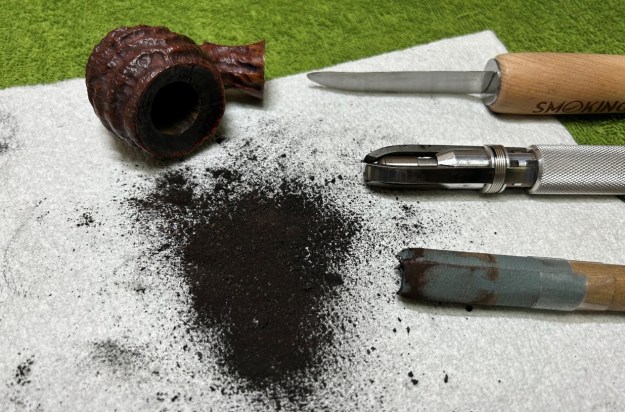
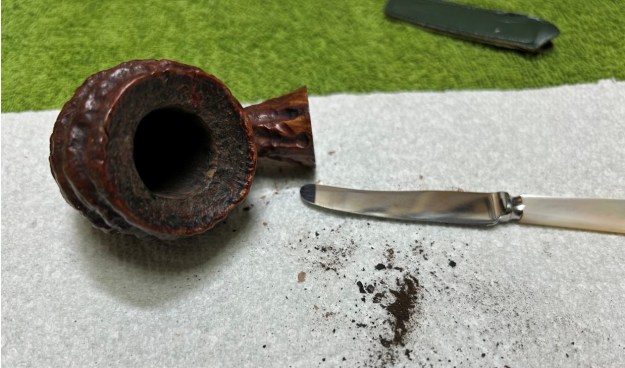
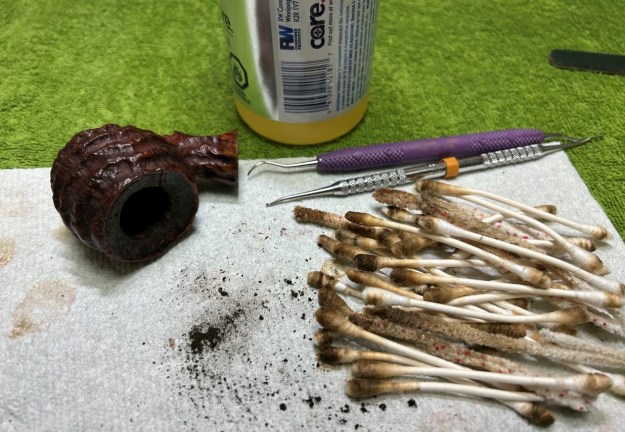
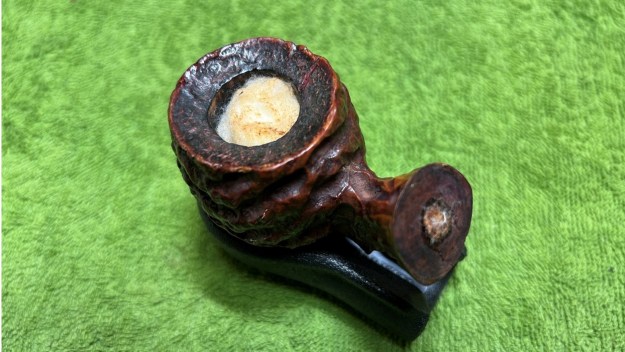
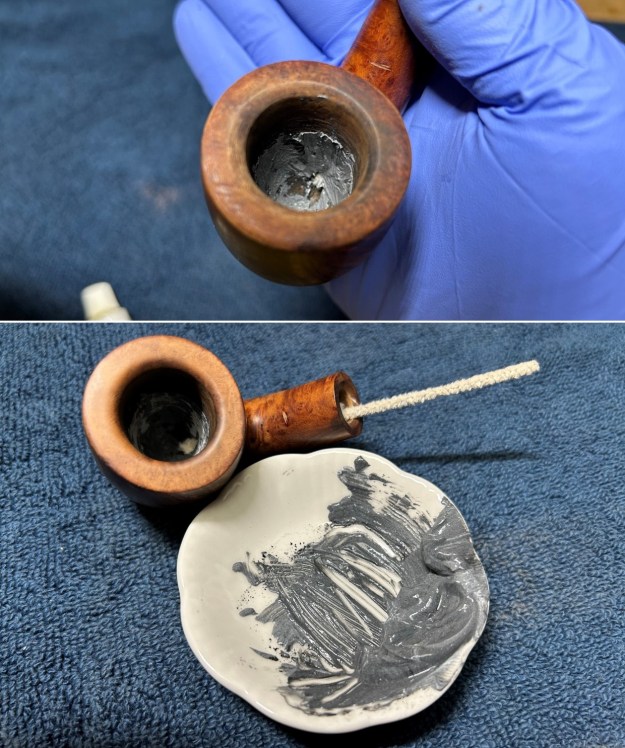
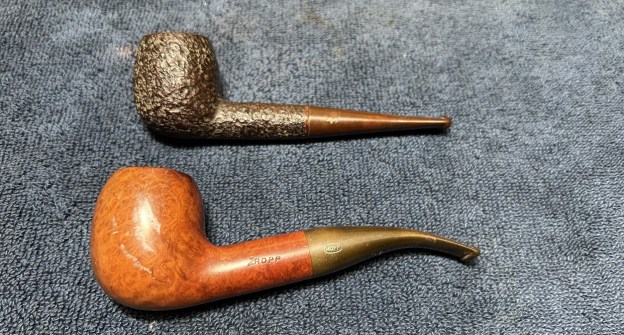
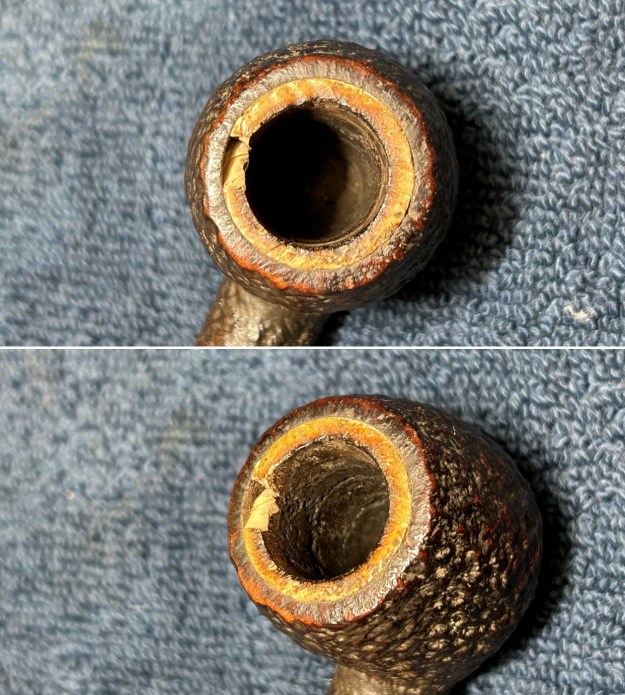
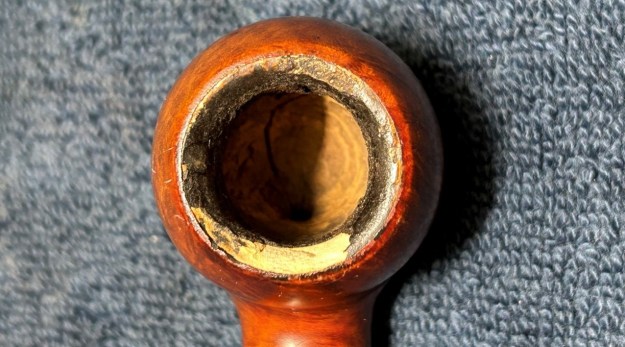
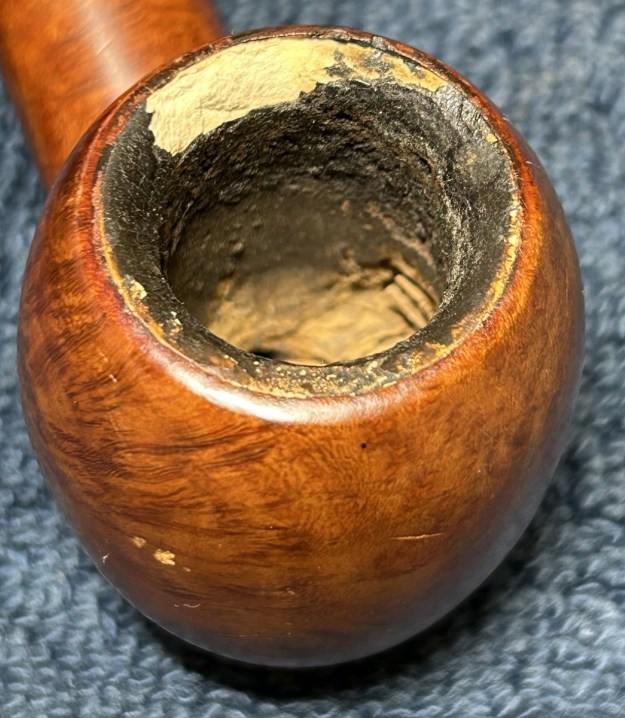
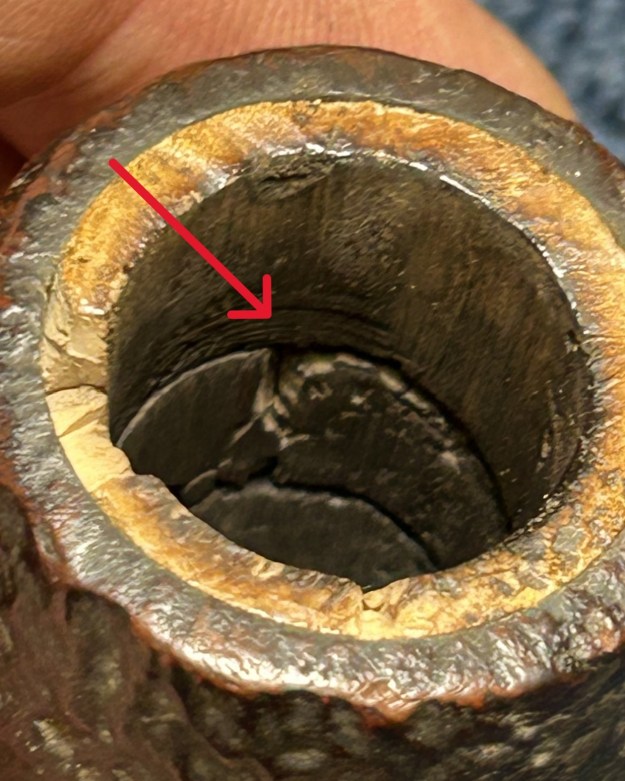
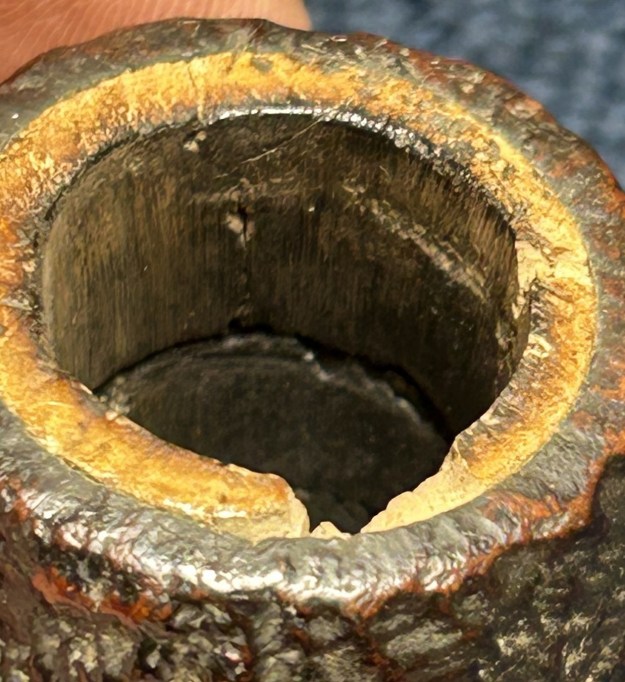
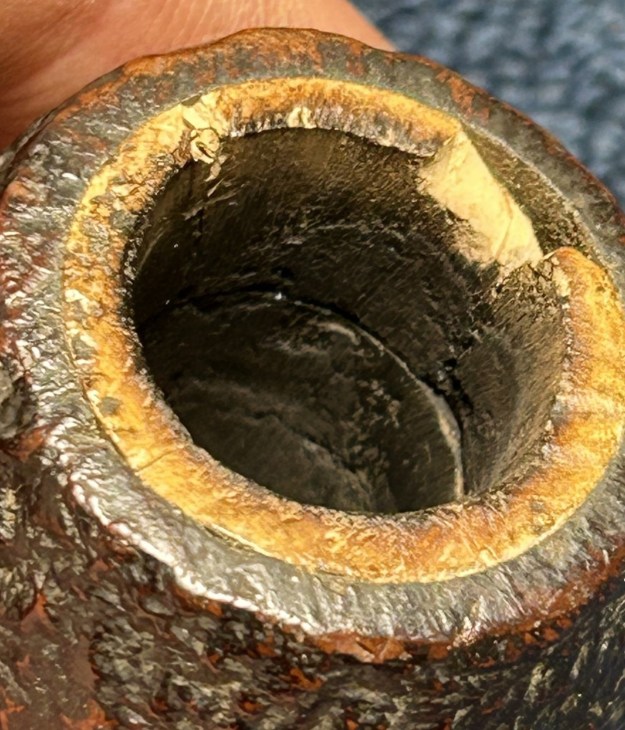
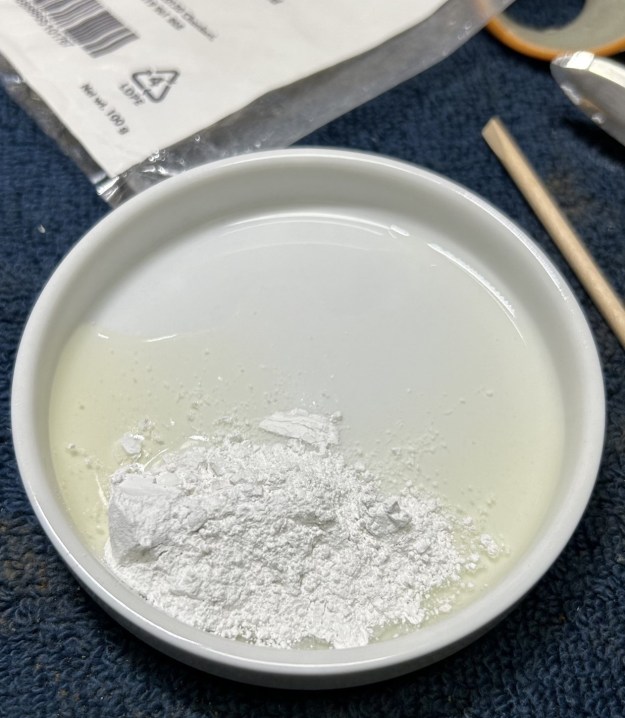
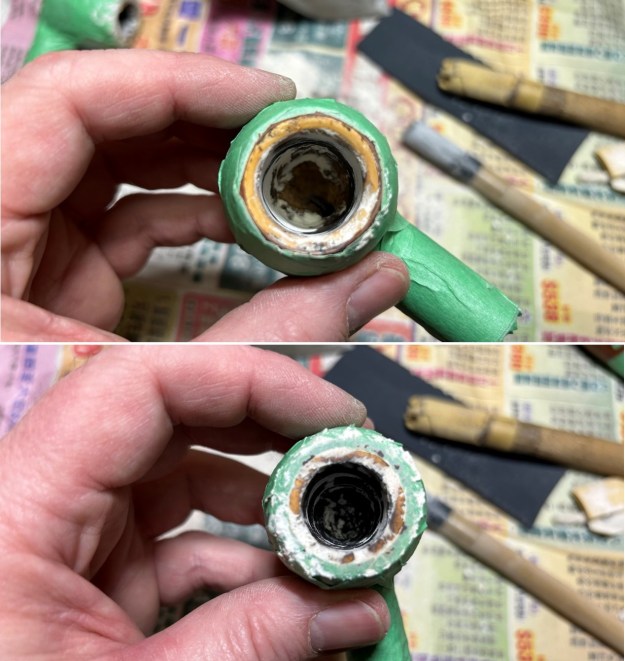
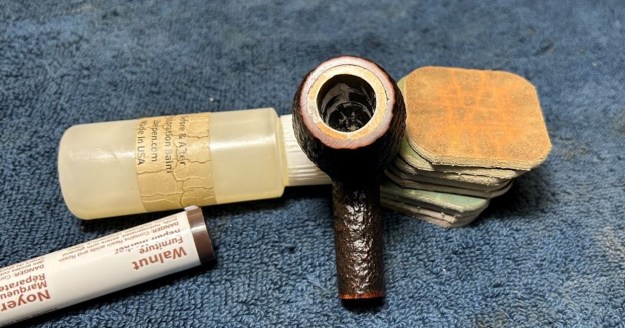
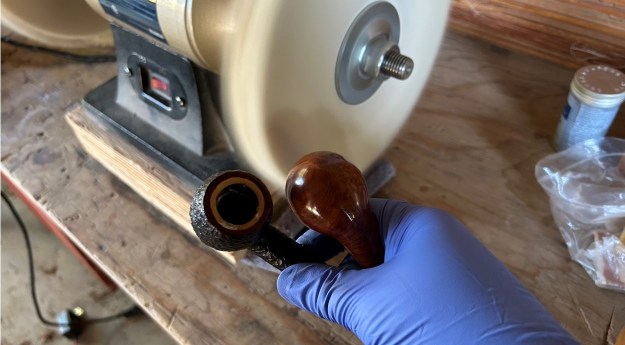
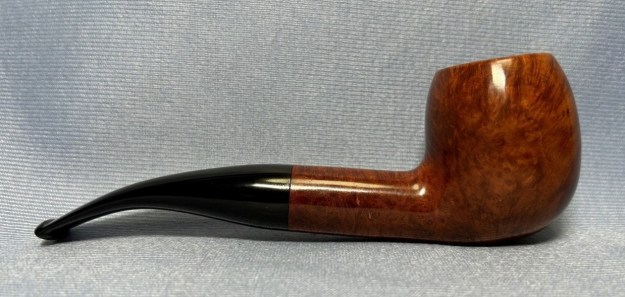
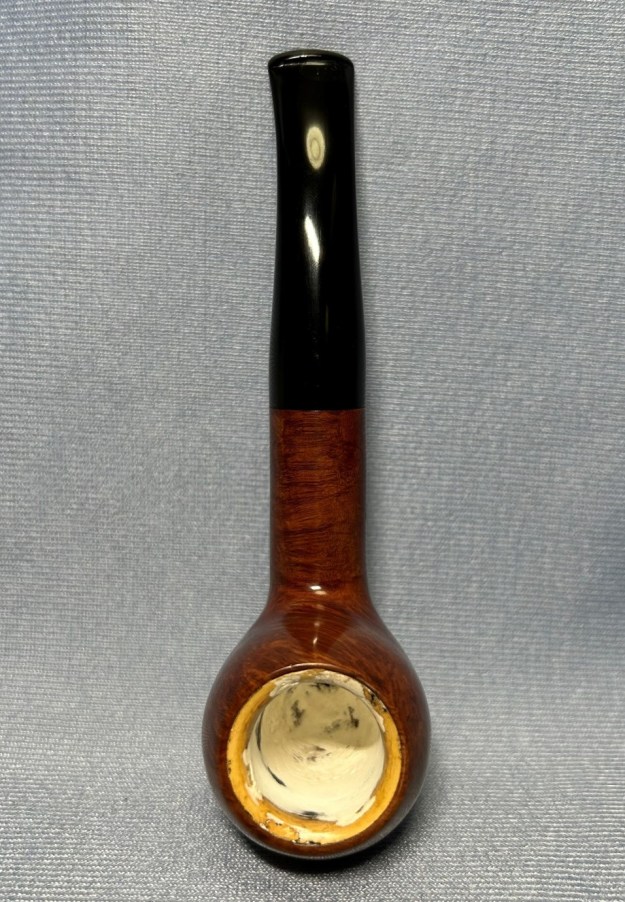
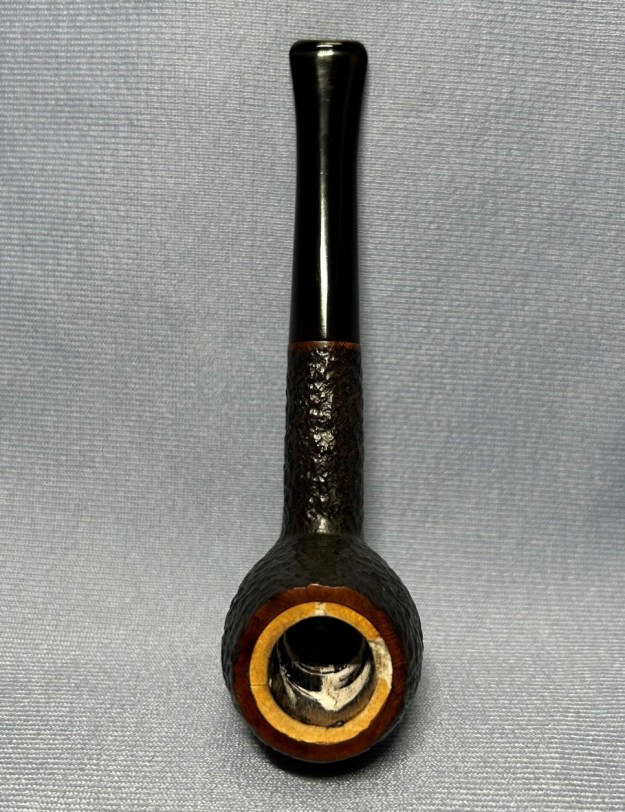
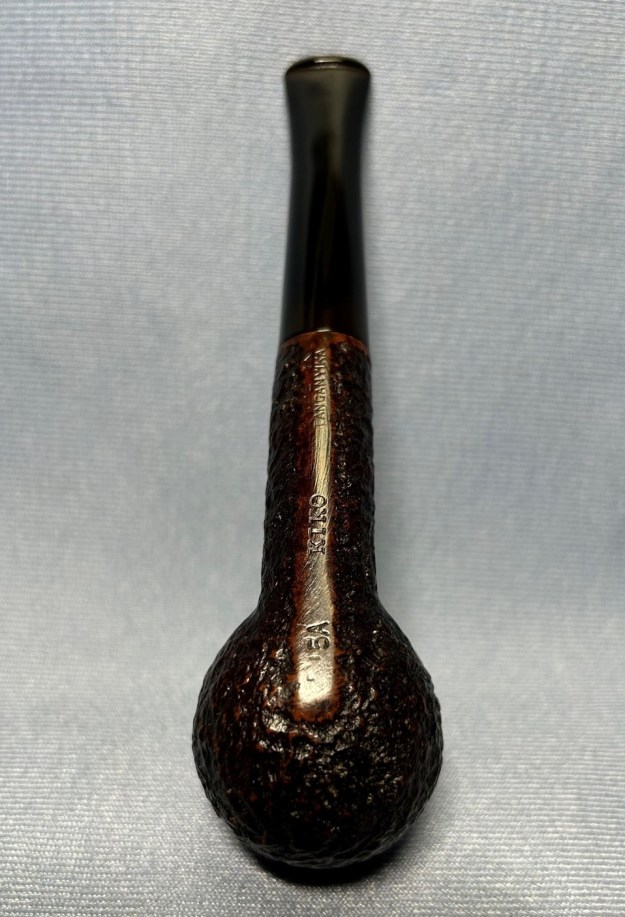
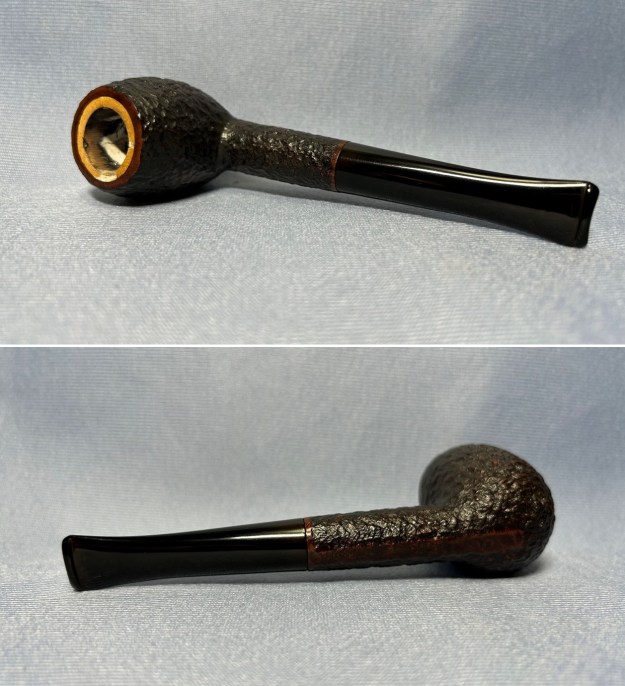
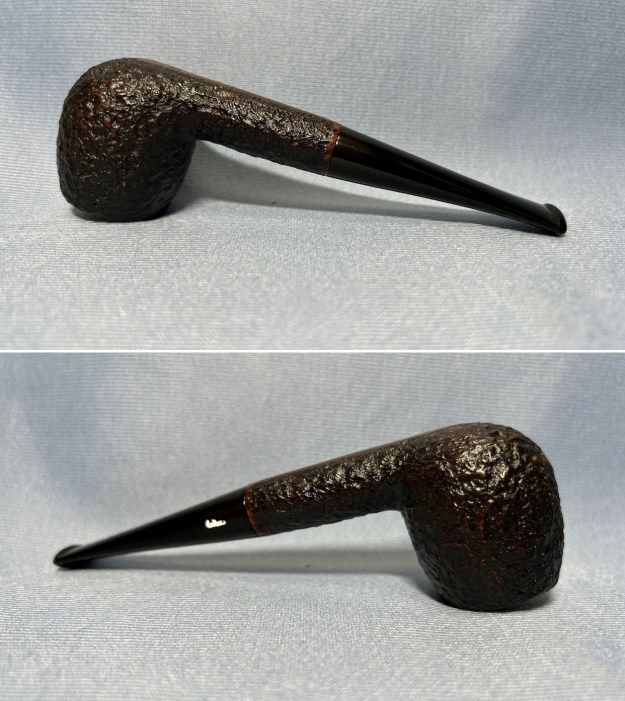
Strap yourself in – this is going to be a wild ride! My cousin-in-law likes to send me pipe projects that are a little off the beaten track. They also usually end up being quite tricky and this one is no exception. He sent me two meerschaum-lined pipes that have been badly damaged and require repair. One pipe is a Kiko, from Tanganyika in eastern Africa, and the other is from Ropp, the venerable pipe-maker of St Claude, France. Although the briar exteriors are fine, the meerschaum interiors of the bowls are a complete disaster. The Kiko looks as though it’s probably been dropped at some point. Meerschaum is quite fragile, so no wonder it cracked so badly. The Ropp is equally bad, but I think that’s because it was badly reamed rather than dropped. Who knows and, quite frankly, the answer is of academic interest. They both suffered from having a cake which is not a good idea for meerschaum. I subjected these pipes to my usual cleaning procedures – for both stem and stummel – but I’m going to gloss over those details today. To be clear, both stems were deoxidized, repaired, sanded, and polished. In addition, the briar parts of the stummels were thoroughly cleaned, sanded, and polished too. I also did a thorough, but exceptionally careful, cleaning of the insides. I needed to remove as much filth as possible, but liquids like water, alcohol, etc., don’t do well with meer. As an aside, the Ropp had a substantial crack in the briar and this only added to the complexity of the repairs.In this blog post, I’m skipping writing about the usual stuff in order to focus on the major issue with these pipes – the busted meerschaum lining and how to fix it. In consulting with Steve, he mentioned a post on a blog from a few years ago that talked about repairing this very thing. The blog is called ‘Baccy Pipes’ and the fellow’s name is Troy W. I want to give him full credit for starting me on my research for this job. Here’s the link to his repair: https://baccypipes.wordpress.com/2017/06/10/old-time-meer-lining-repair-method-on-a-1930s-kaywoodie-shellcraft-5651/. The curious thing about this repair was that Troy used a mixture of egg white and chalk to mend the broken meerschaum. As he writes:
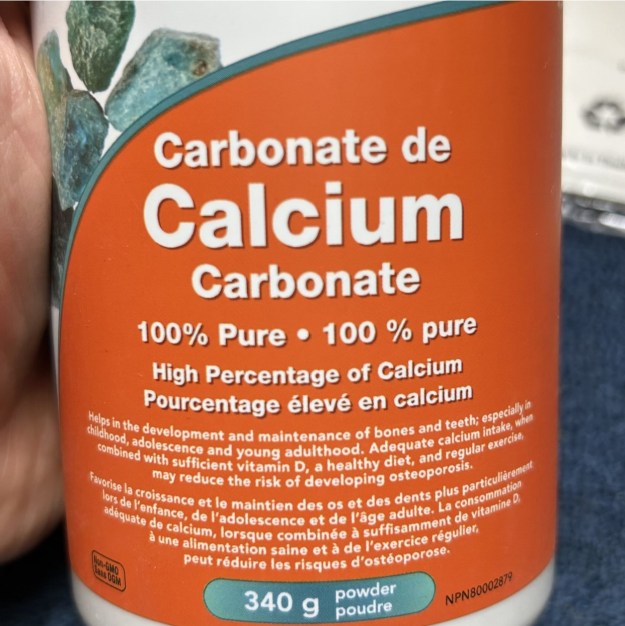
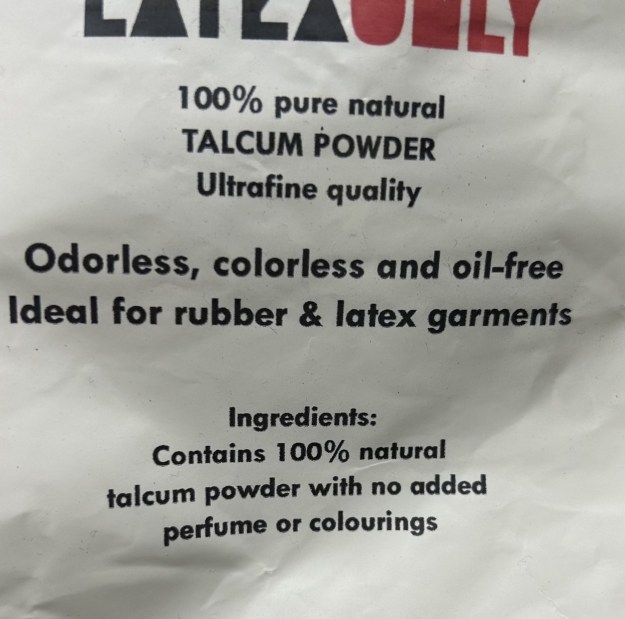
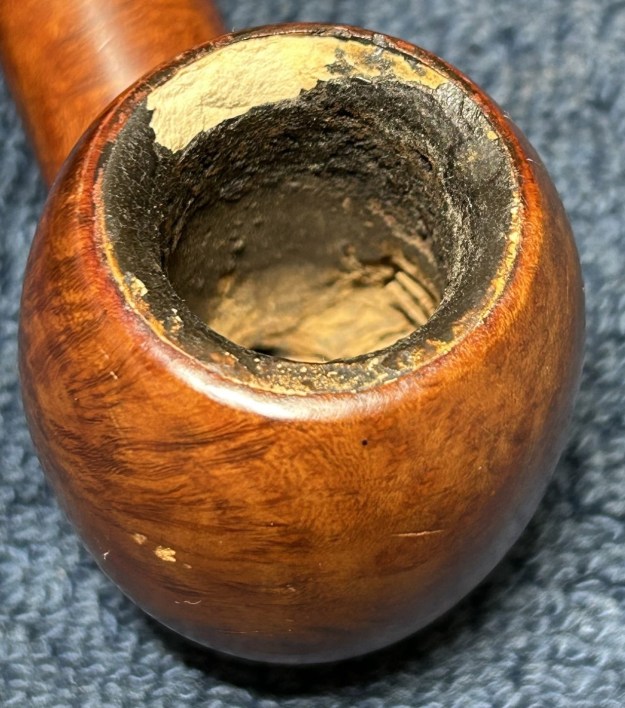
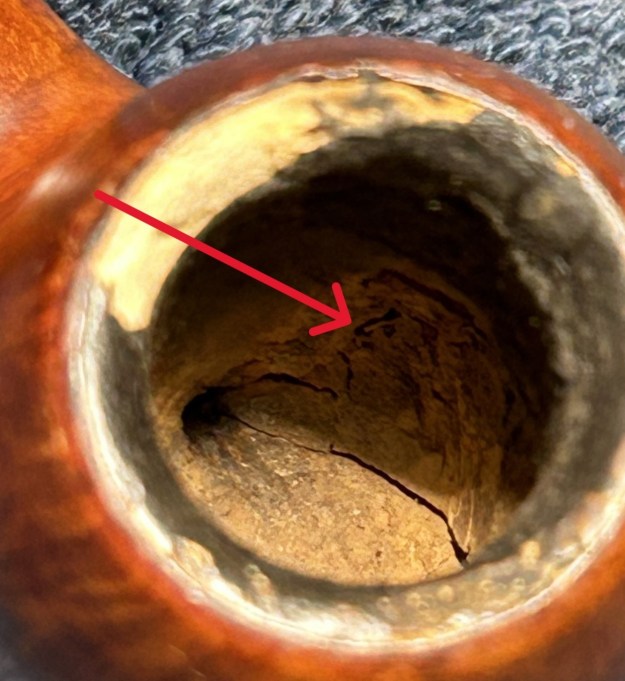
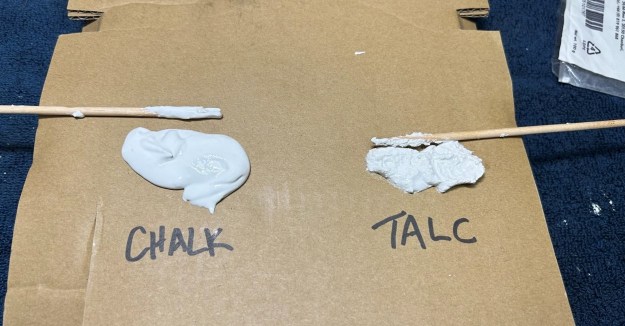
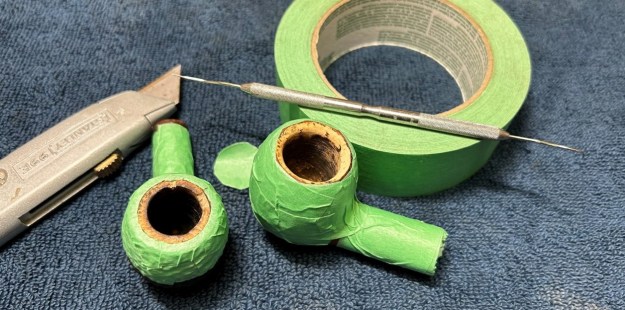
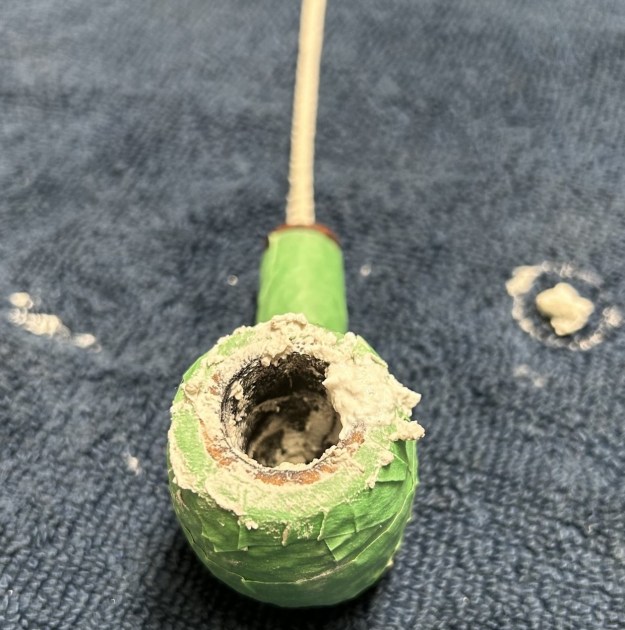
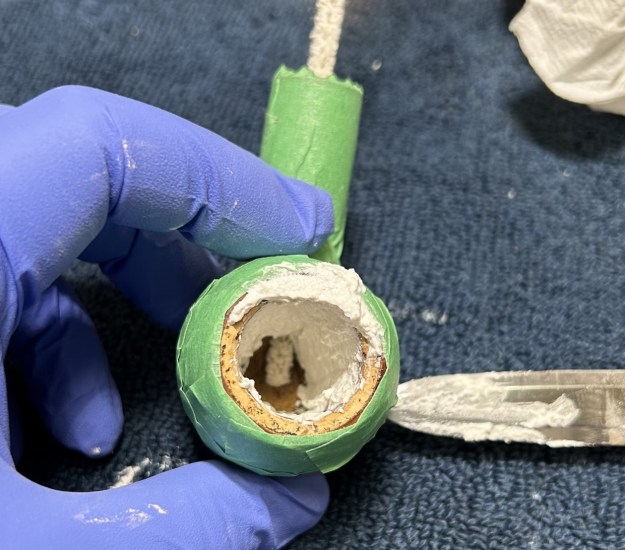
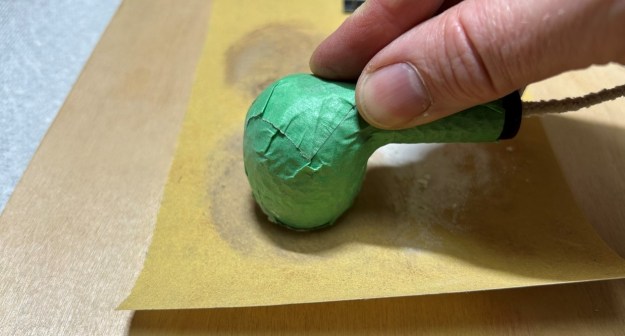
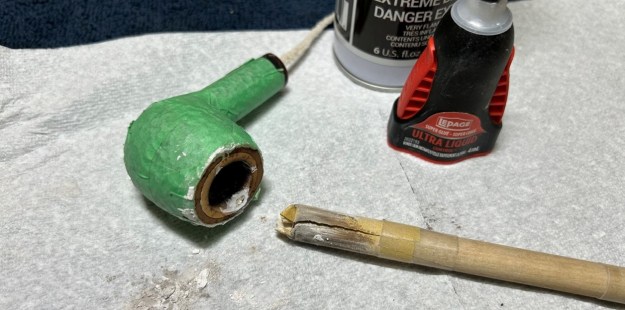
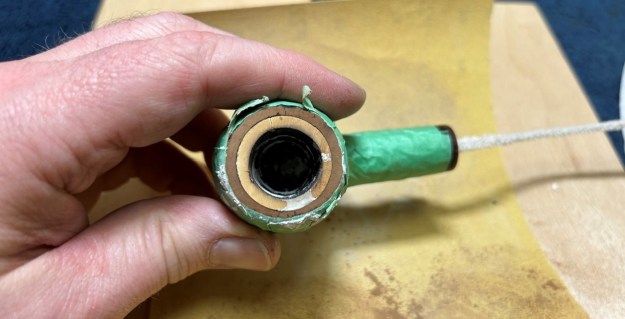
I had read and heard from other pipe restores that a old late 19th-early 20th century druggist recipe for fixing broken meerschaum was egg whites and finely ground chalk, so that was what I was going to try and fix the meer lined rim with. It is said to have about the same porous properties of meerschaum and imparts no taste to the tobacco.I was immediately intrigued and my brain began to ruminate on this. In the past, Steve and I have both used plaster of Paris when repairing meer-lined bowls. What about egg and chalk? Putting together the ingredients would be no problem: chalk, that is to say, calcium carbonate is easy to acquire. And then a thought struck me – I wonder if I could do an experiment on the properties of both calcium carbonate and a product that’s much closer to meerschaum in composition. Meerschaum is a type of magnesium silicate – and so is talc. They are not identical substances, but surely closer than chalk. If I could buy some pure, unadulterated talc, that might prove to be a good option. Well, it turns out that getting pure talc with absolutely nothing else in it was not as easy as I thought. I did eventually find a small package for sale on Amazon and it ended up being shipped from Germany (no idea why) to my home on the west coast of Canada. Let’s have a quick look at the insides of the two bowls, because they have different problems and very different sized apertures. The Ropp had the much larger bowl, and its insides were more damaged at the bottom. There was a surprising amount of meerschaum missing at the bottom and it is difficult to convey this in photos. However, the photos do clearly show the large chuck missing from the rim. I suspected that, although the width of the bowl meant it would be easier to access, it would require the most work and be the most difficult to repair satisfactorily. The Kiko had its own set of problems. There were also missing chunks on the rim, but the cracks inside were devastating. The width of the bowl meant that I could get nothing larger than my pinky finger inside. A small piece of broken meerschaum fell out from one of the cracks while I was inspecting it. That didn’t bode well. Now let’s start cracking some egg! Obviously, I took two dishes and mixed up a batch of chalk and egg white in one and talc and egg white in the other. Both materials were powdered, so I had no concerns about overly large particles in either mixture. During mixing, the talc seemed grittier than the chalk, but it was difficult to assess this properly and difficult to know how much to mix into the egg white. I put the two blobs on a piece of cardboard for a couple of days and let them set. Once dry, I conducted my own absurdly unscientific compressive strength test on both materials as a way of determining straight away if one material was clearly superior to the other. There wasn’t any obvious difference – and any differences I may have detected could easily have been a figment of my imagination. Both materials seemed about equal. I opted to try the talc first – for no other reason than it was chemically closer to meerschaum.I took both stummels and wrapped all of the wood in painter’s tape. I had nightmarish visions of what could happen to these pipes if I got the eggy goo on them. Better safe than sorry. I started applying the egg/talc mixture to the Kiko first. I wanted to make sure than the cavernous cracks were completely filled with the stuff. I needed a good bond and I added more than I needed – assuming there would be some shrinkage in the drying process. Similarly, I smooshed the mix on the Ropp too, hoping for the best. There’s no way to sugarcoat this: the whole process was a mess. Really a mess. Once the pipes had dried overnight, I took a look and I wasn’t particularly impressed with my work. But a more detailed examination was needed, so I put on a sanding mask and set about removing the excess material. I used sandpapers of various grits on dowels, sandpapers on my fingers, and sandpapers on my topping board. Hmm. The results were ok, but no better than that – and ‘ok’ just isn’t good enough for me.I hadn’t put enough material inside the Ropp – there were still areas that needed to be built up. I also felt that the material on the rims of both pipes was just too brittle – especially on the Kiko. Perhaps I was wrong to try talc.Round two. This time I repeated the entire process with egg white and chalk. Old boys in days of yore used it, so why not me? I won’t bore you by rewriting the same slathering and sanding process as above, but, the chalk mixture yielded no better results than the talc. The extra layer of goo was good insofar as it added more protection to the walls – but the results may have been the same if I’d added more talc. Sadly, the chalk did not seem to improve the frangibility of the rim.Round three. More slathering and sanding. I added a bit more egg/chalk mixture to bulk up areas that needed it and I hoped that perhaps the rim would somehow magically be improved.Round four – yes round four. This time – a slight change. I opted to return to the material that Steve and I have both used successfully in the past – plaster of Paris. This was not a complete redo, as before, but merely touch ups (in some cases aided by a drop of glue). At this point, I was placated by the plaster and felt that the results were acceptable – not perfect, but acceptable. Once the sanding was done, I could remove the painter’s tape and finish the pipes off. The Kiko needed some colour added to the rim after all the topping. I used my furniture pens to match the colour and it came out very well.Both pipes went on the buffing wheel and they look great. This was a very timing-consuming and enormously frustrating process. In the end, I learned quite a few things about the repair of meerschaum. Just like everything else, there isn’t a one-size-fits-all solution. I think egg/talc or egg/chalk is fine for small repairs, where the cracks are small and not structural. But larger repairs require something different: either grafting on a spare piece of meerschaum (which I have done successfully in the past) or using a more reliably solid goo like plaster of Paris.The Kiko and Ropp are much improved and I hope my cousin will like them. I hope you enjoyed reading the story of these pipes as much I as I did restoring them. If you are interested in more of my work, please follow me here on Steve’s website or email me directly at kenneth@knightsofthepipe.com. Thank you very much for reading and, as always, I welcome and encourage your comments.