Tag Archives: Julius Vesz Pipes

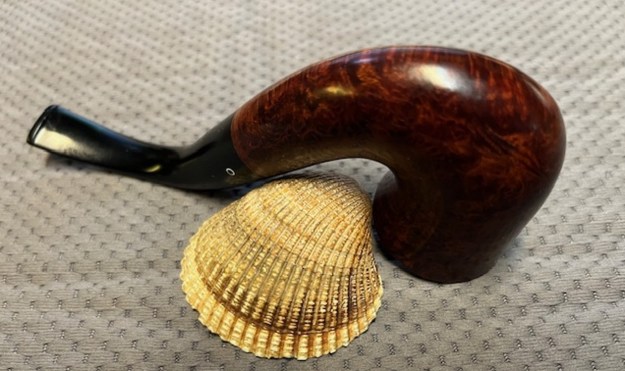
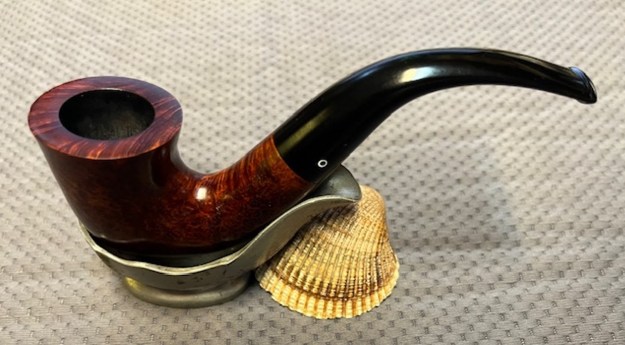
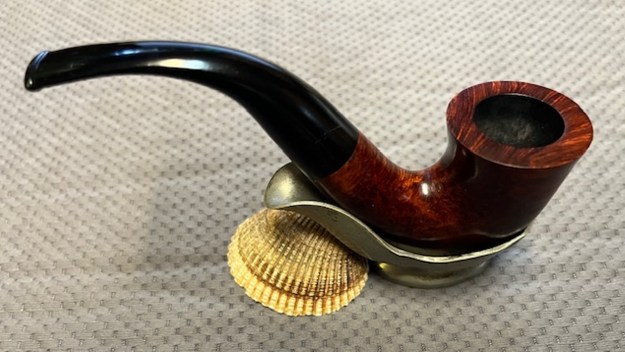
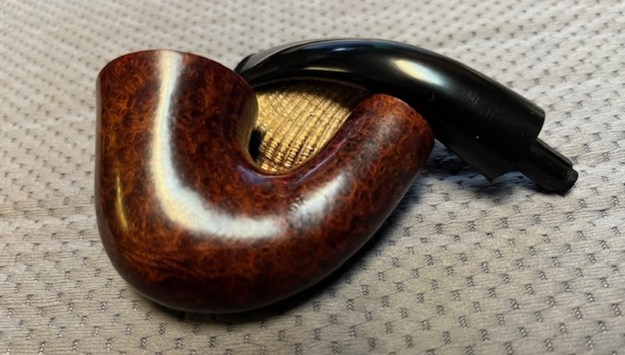
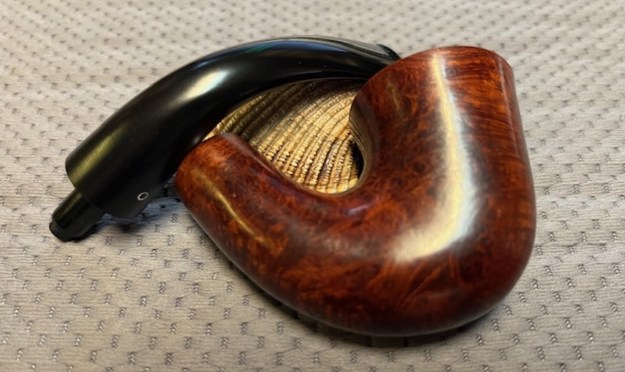
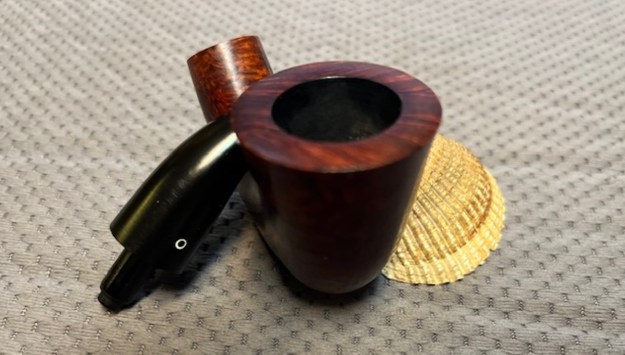
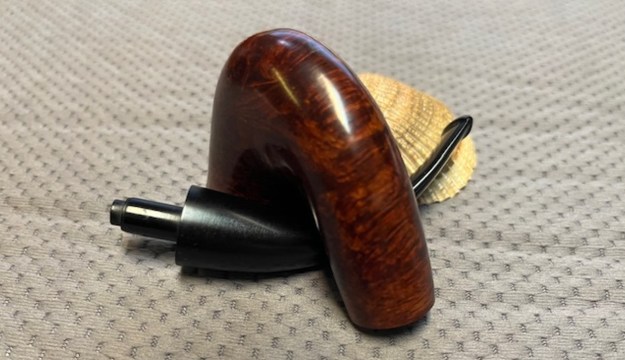
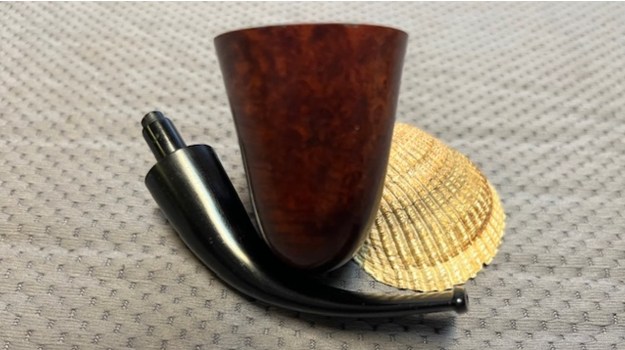
New Life for a Damaged Julius Vesz Hand Made circle 6 Calabash 97


by Steve Laug

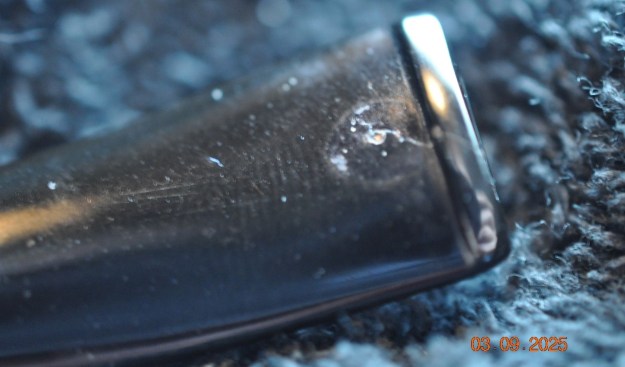
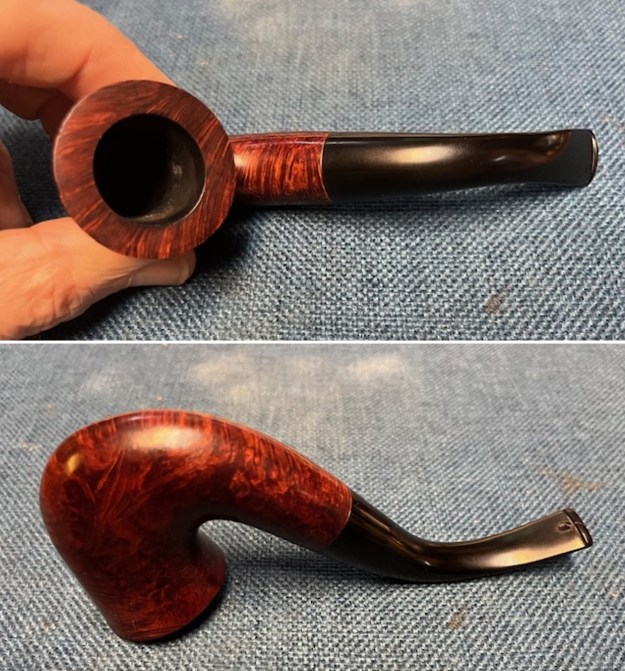
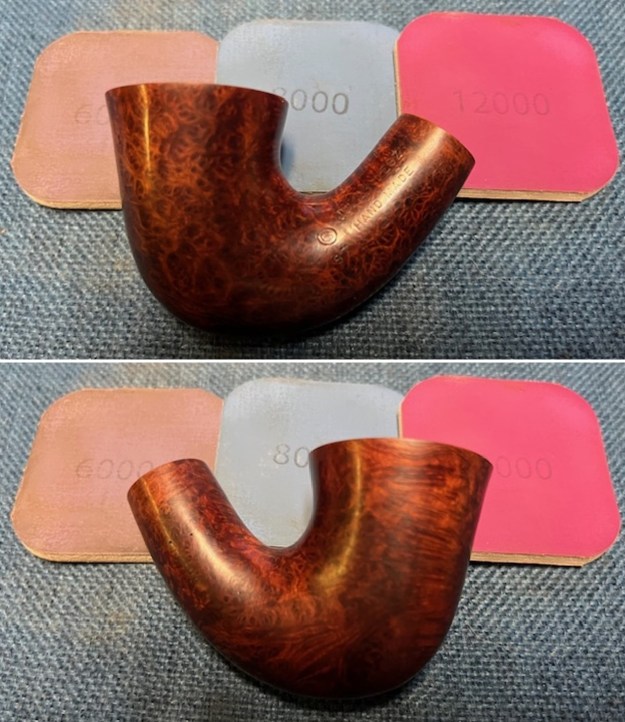
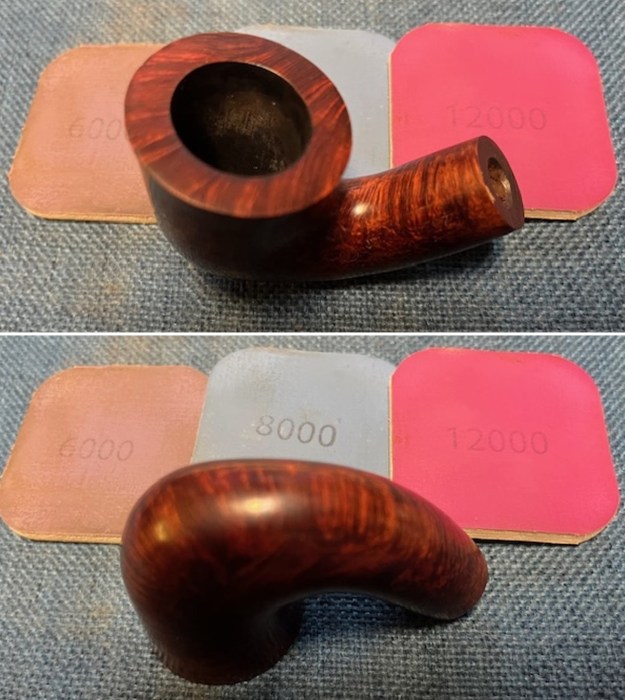
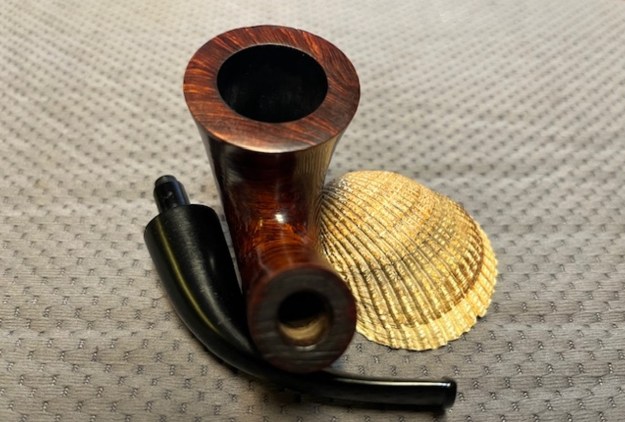
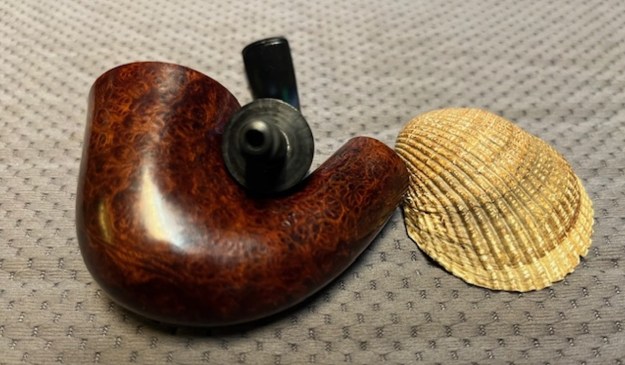
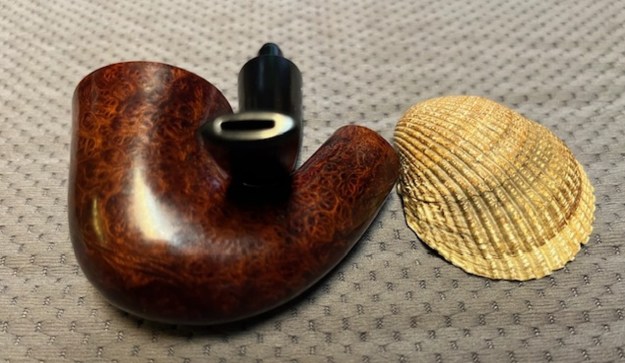
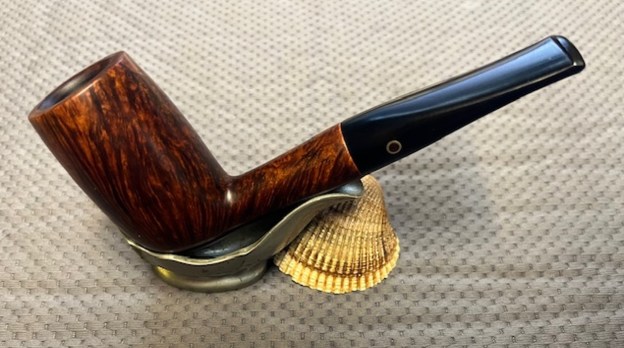
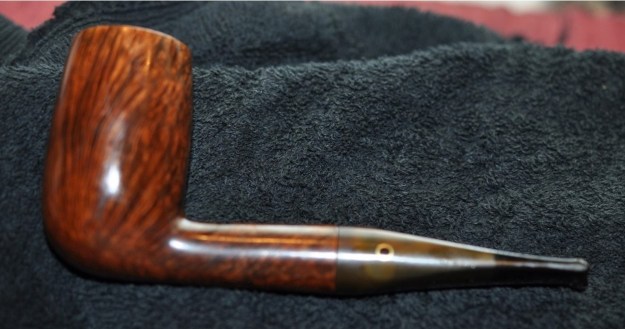
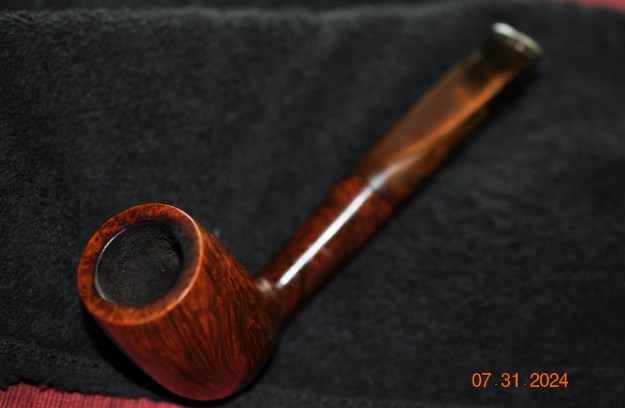
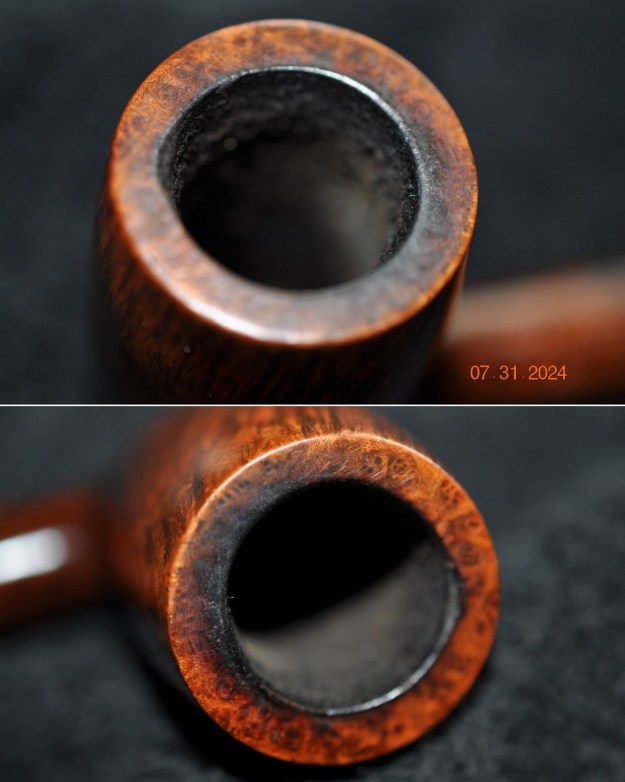
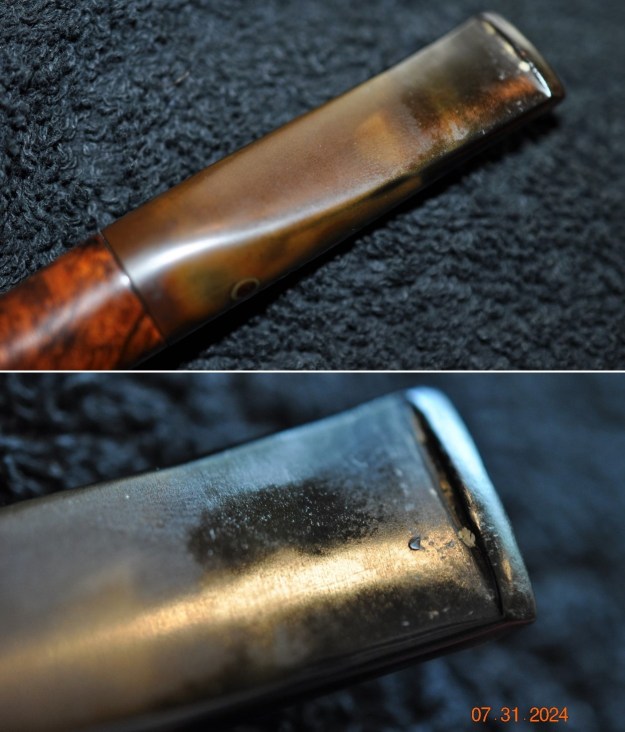
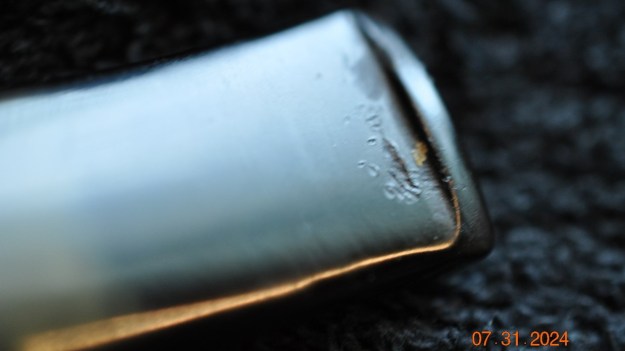
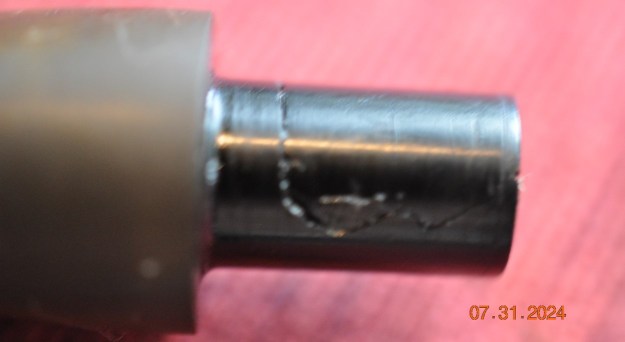
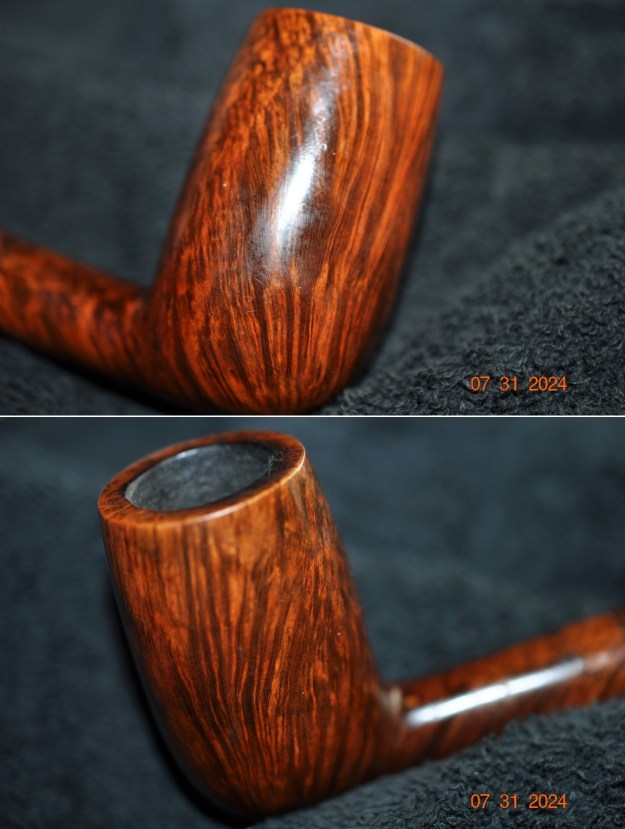
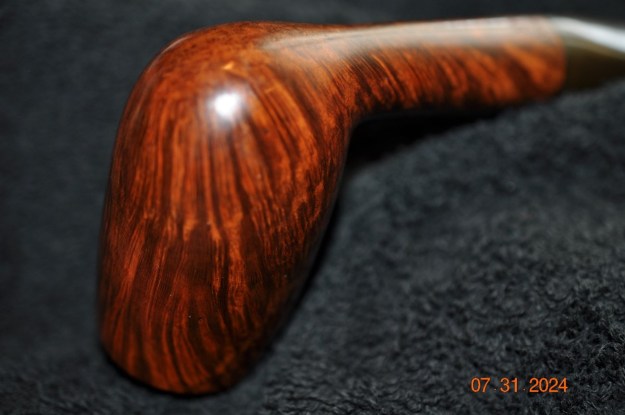
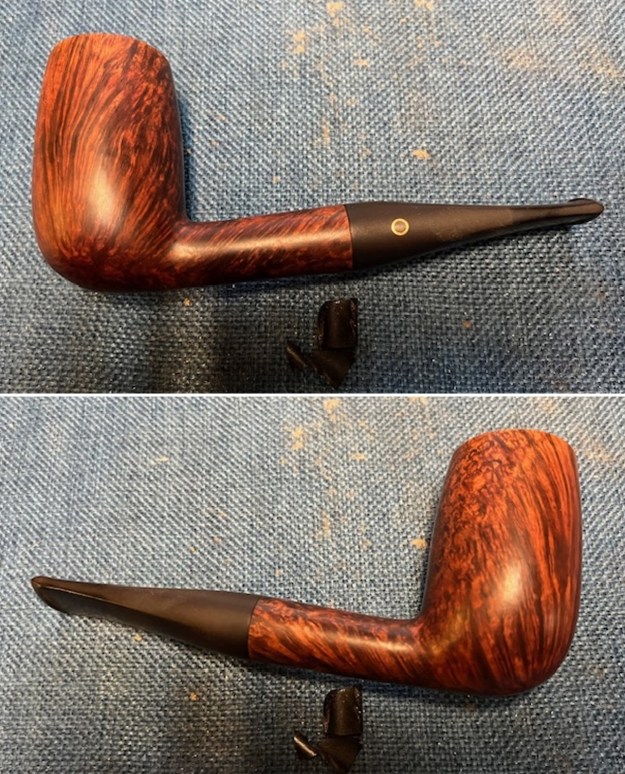
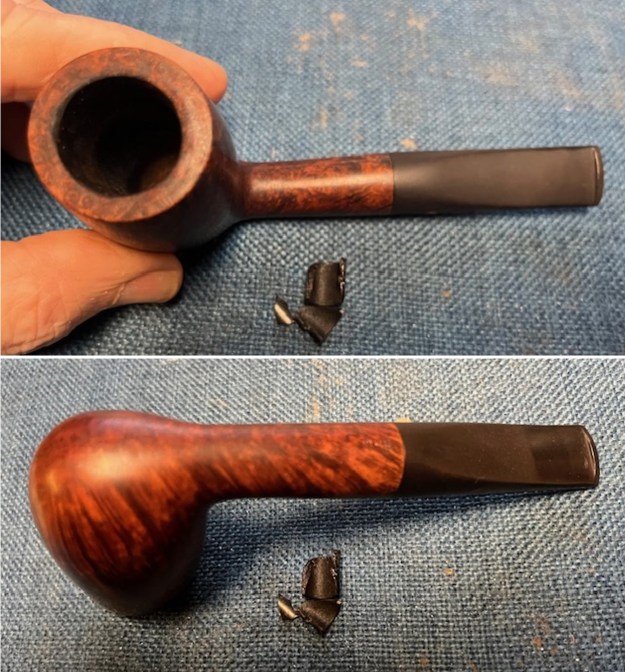
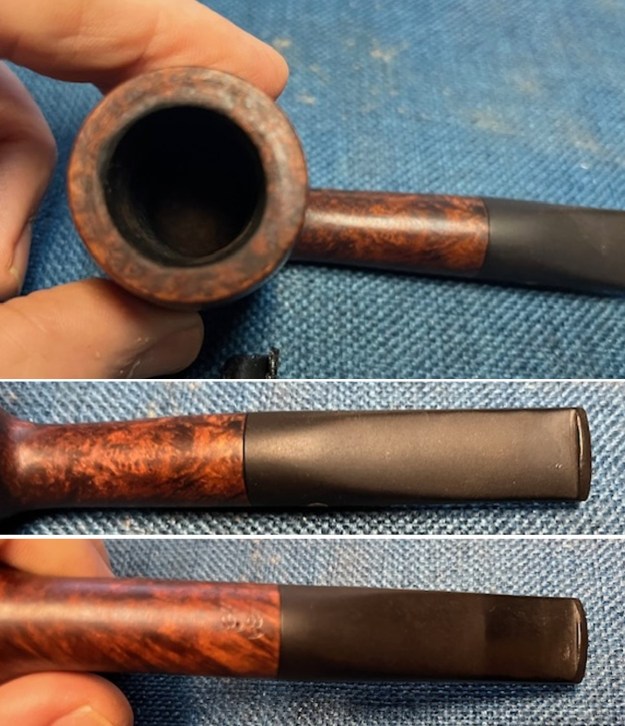
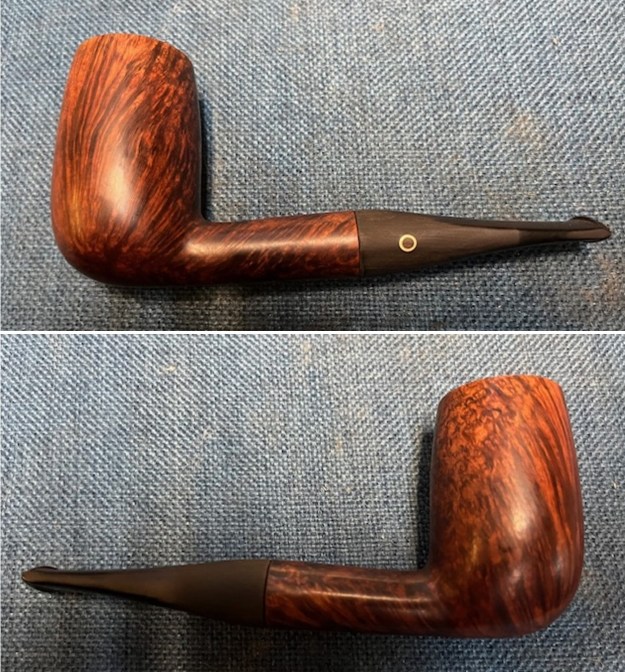
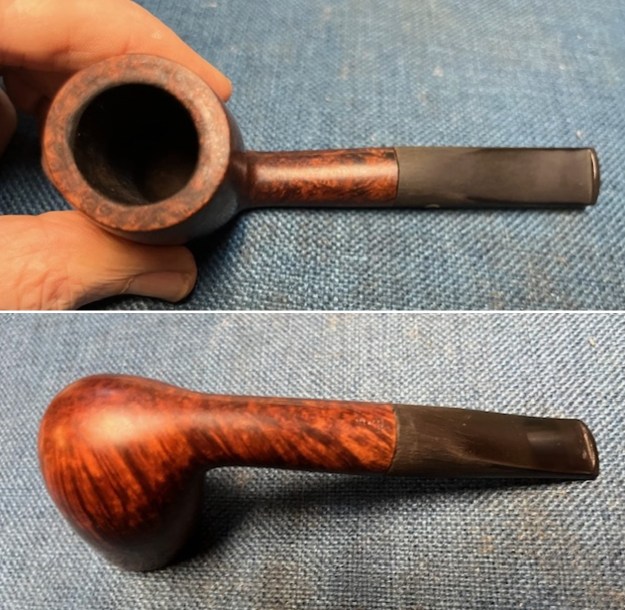
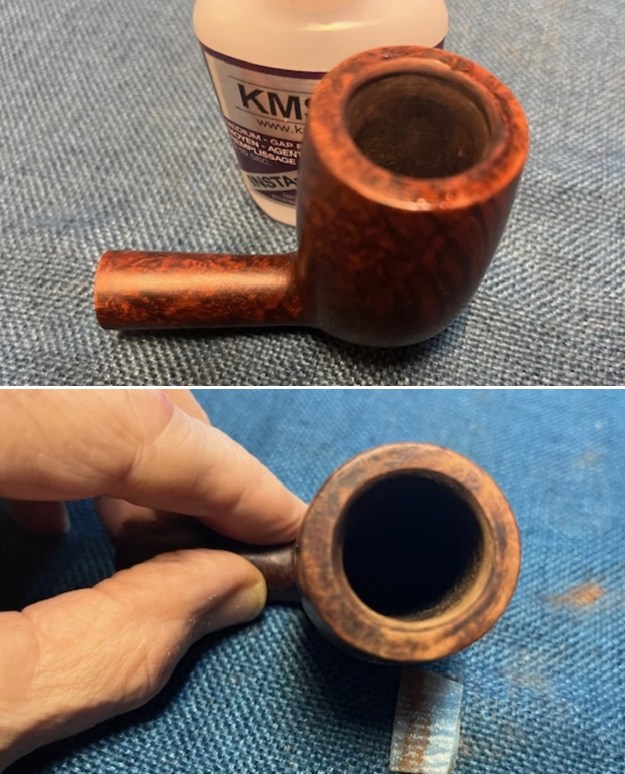
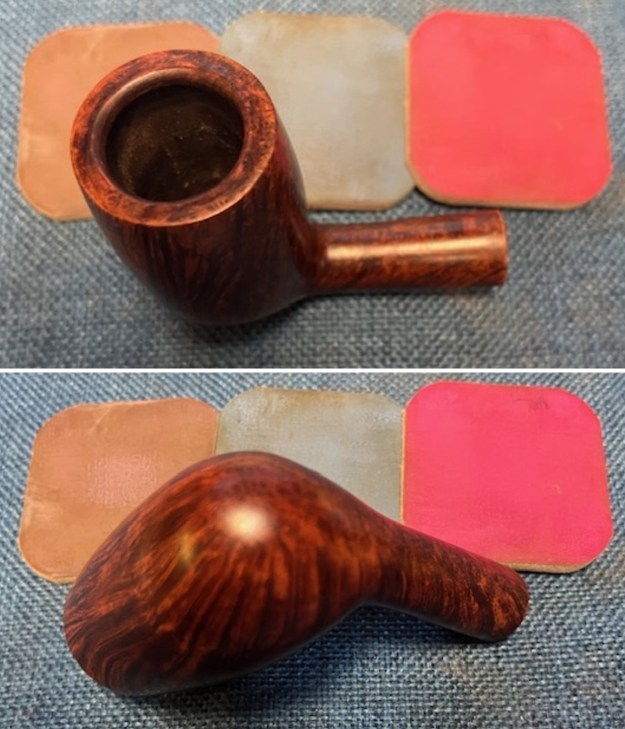
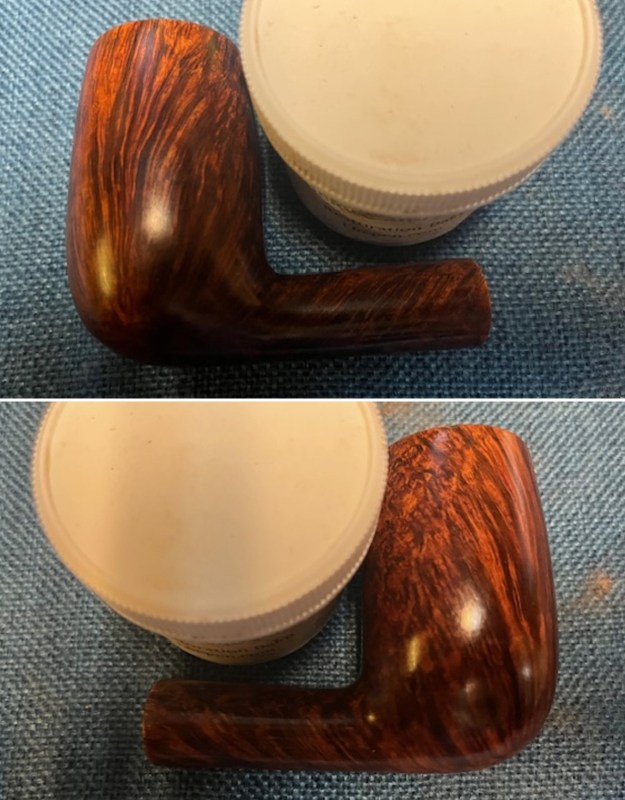
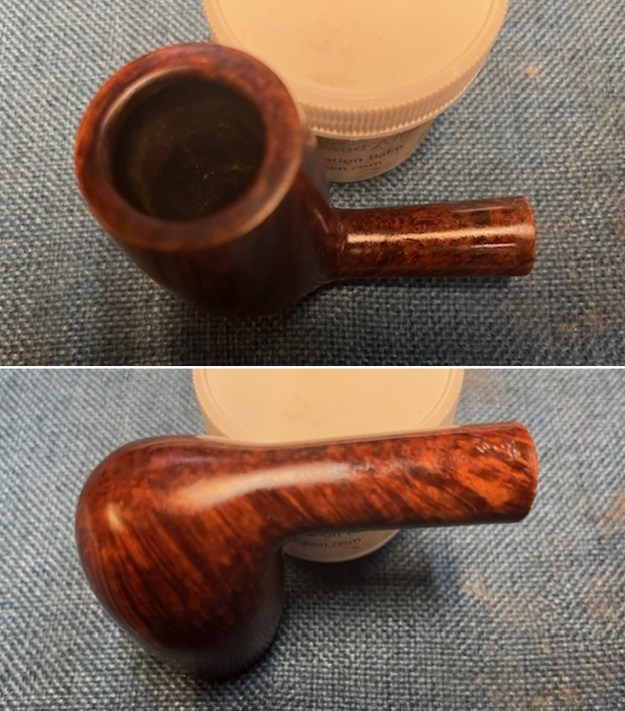
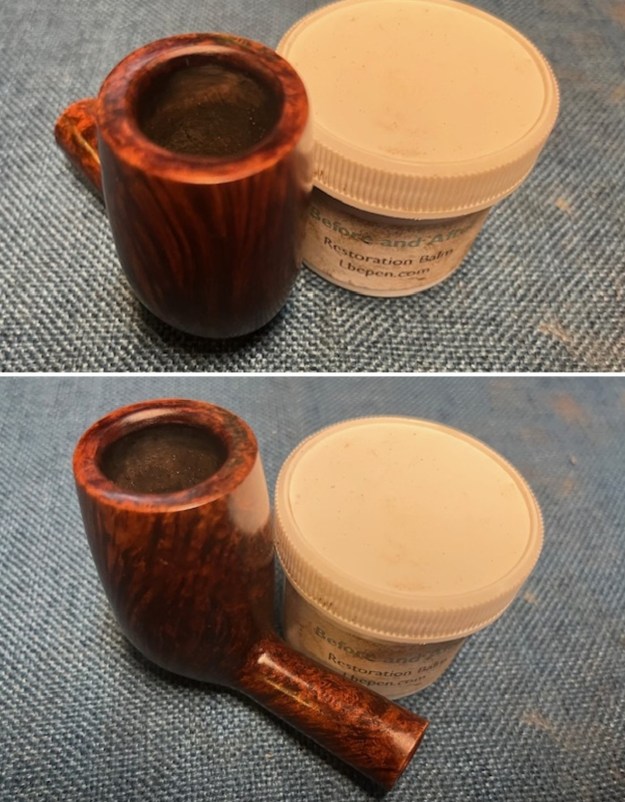
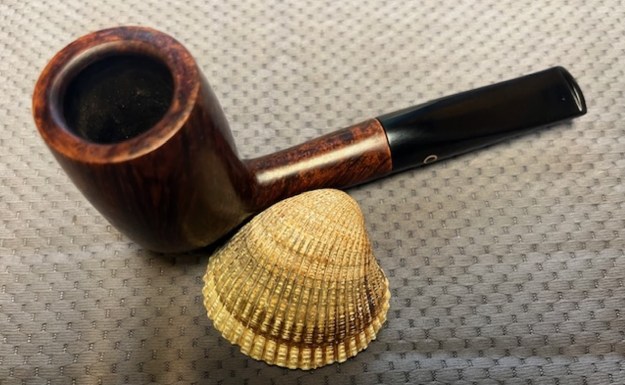
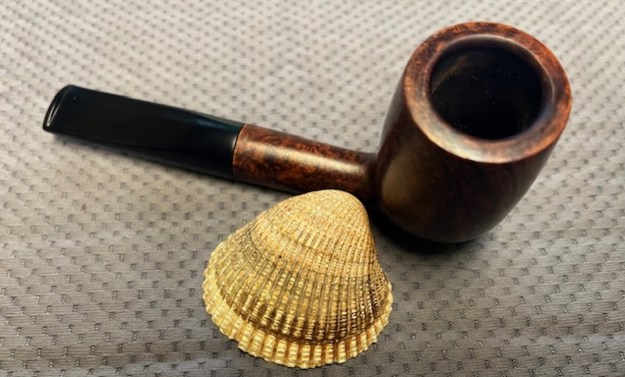
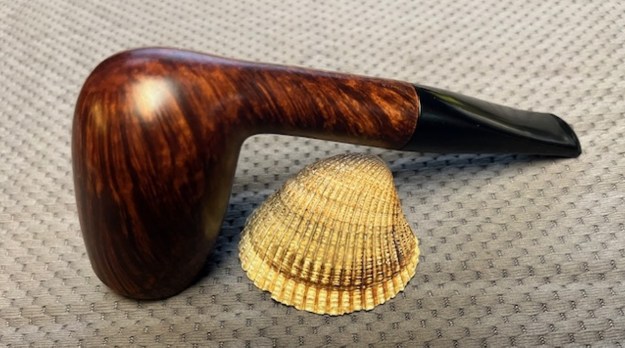
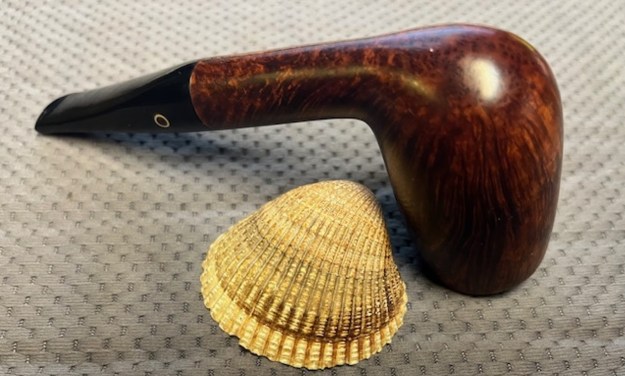
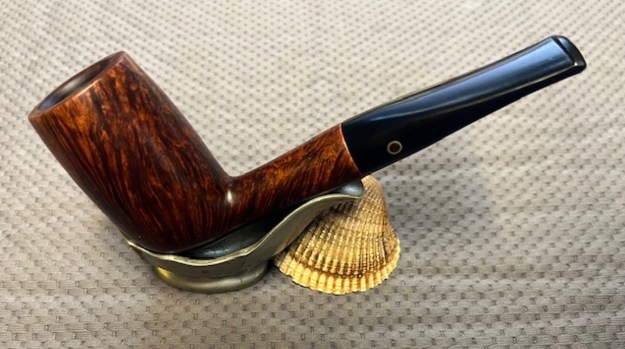
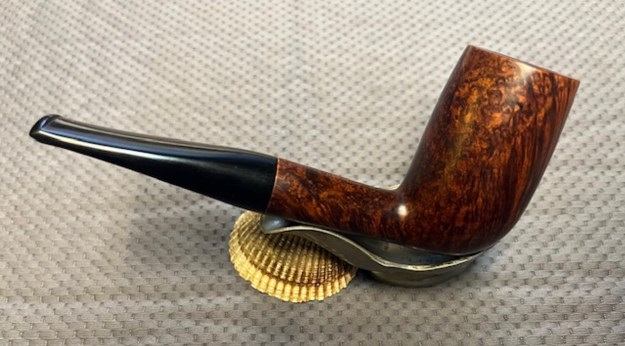
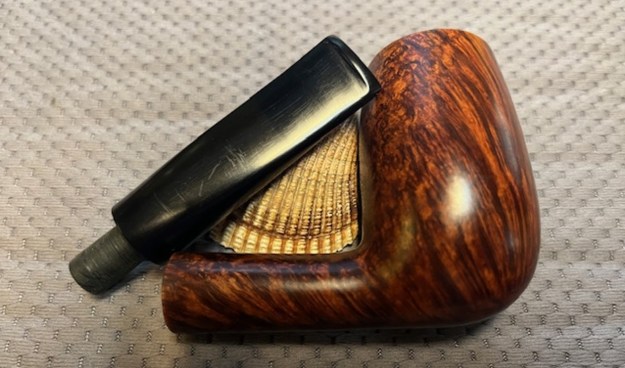
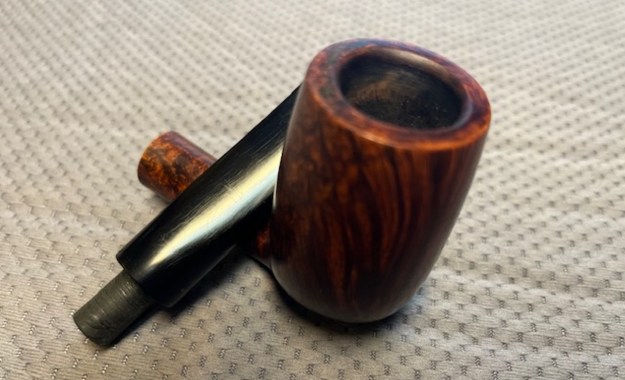
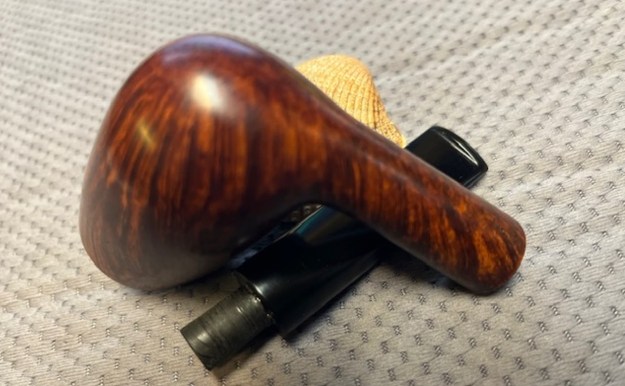
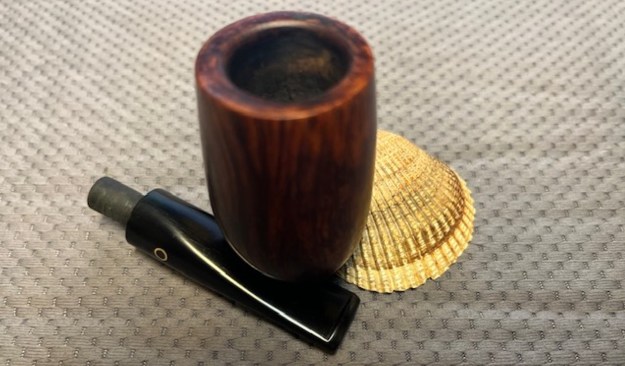
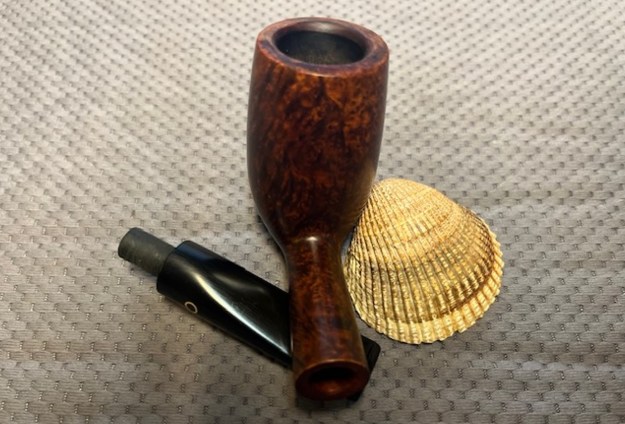
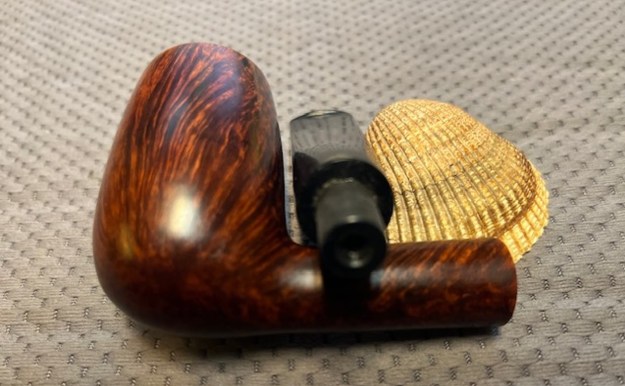
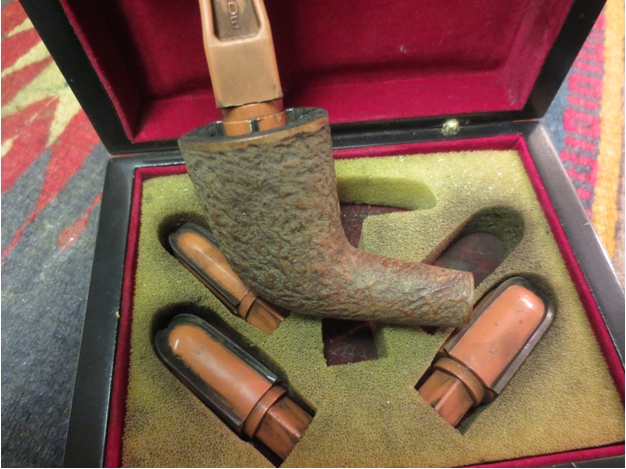
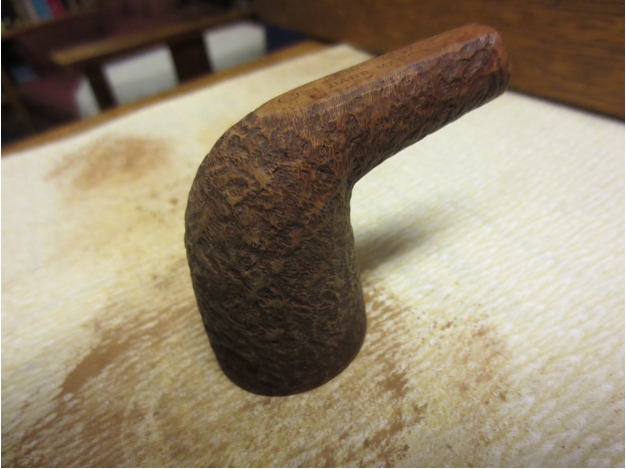
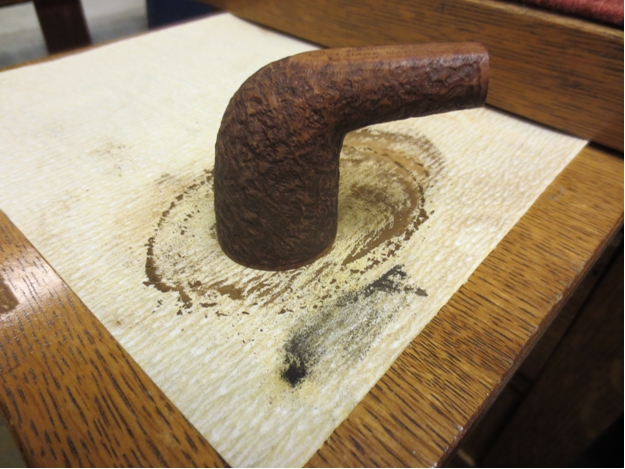
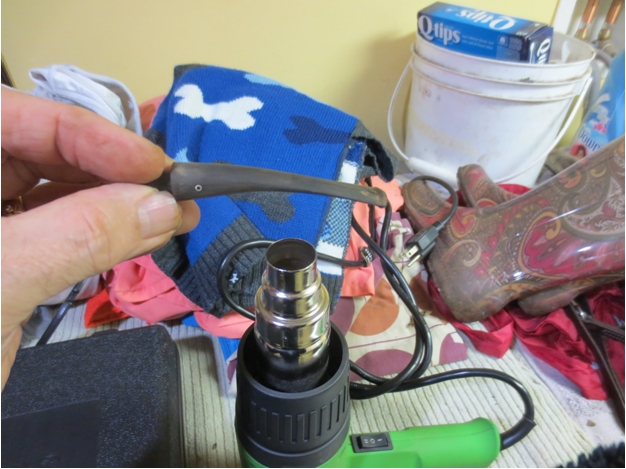
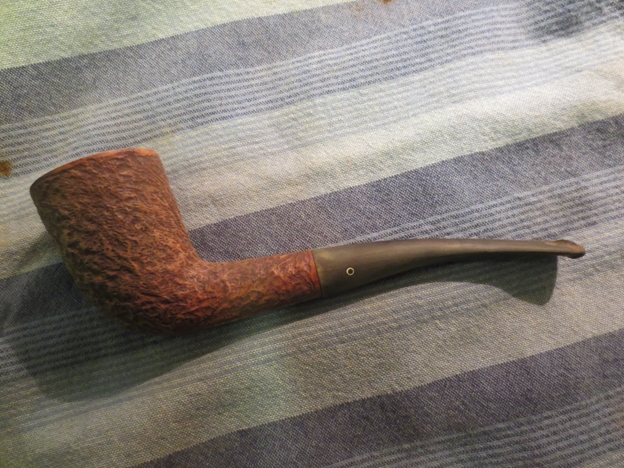
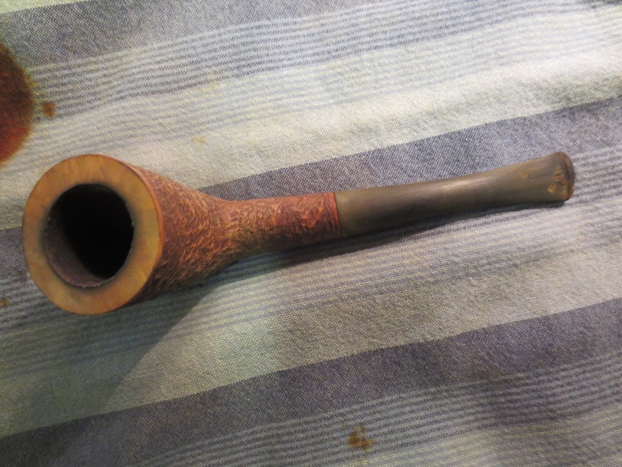
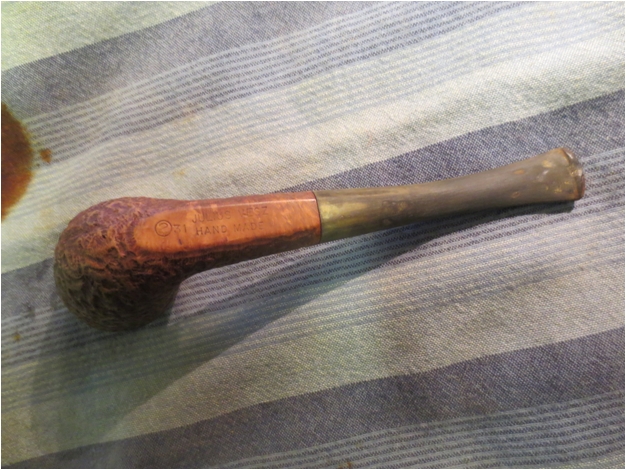
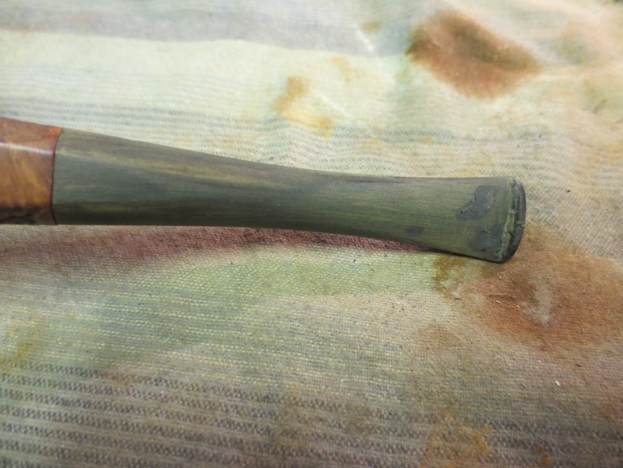
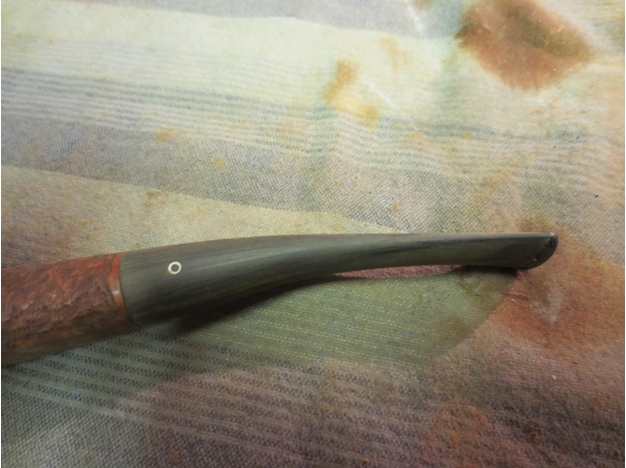
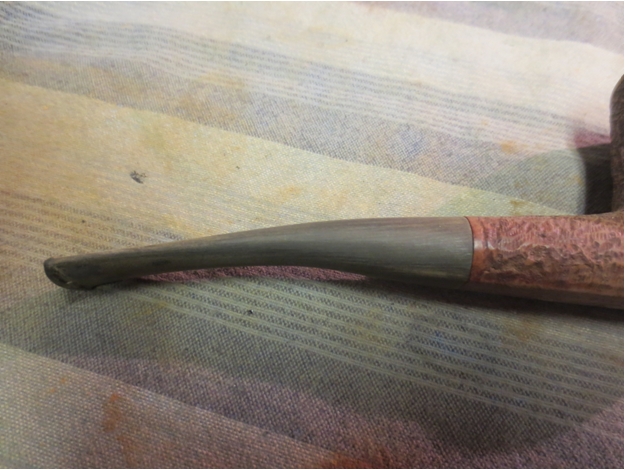
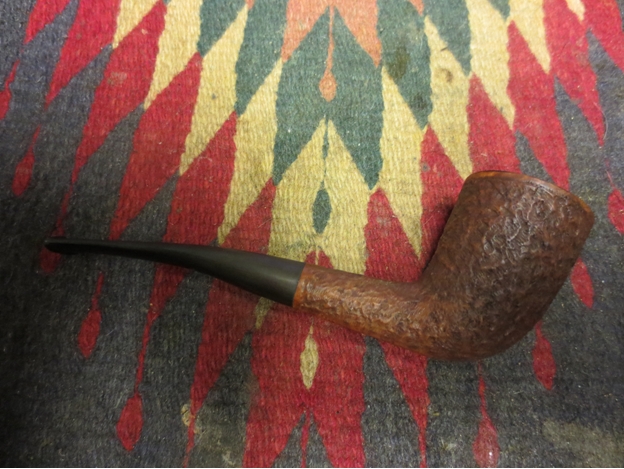
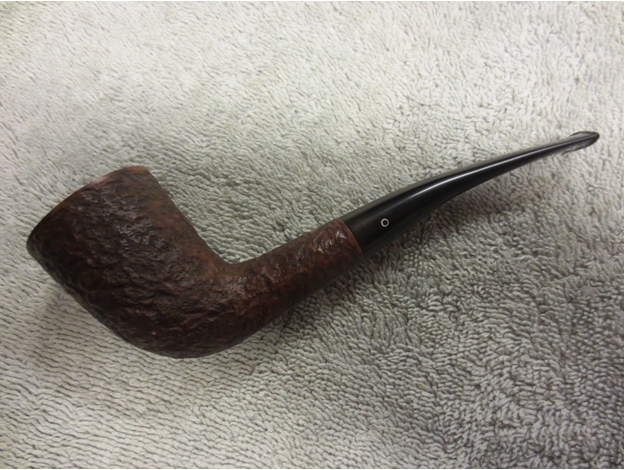
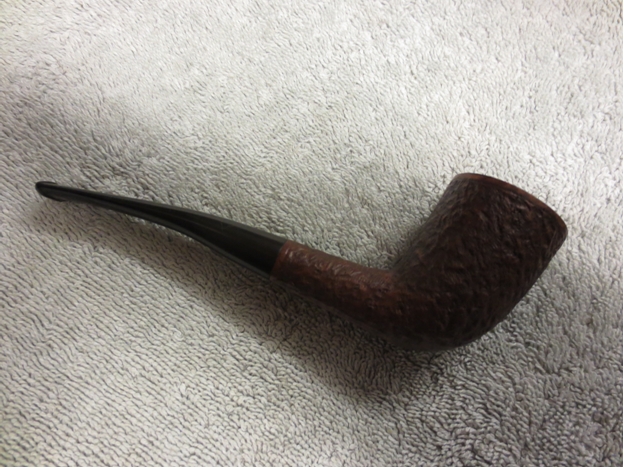
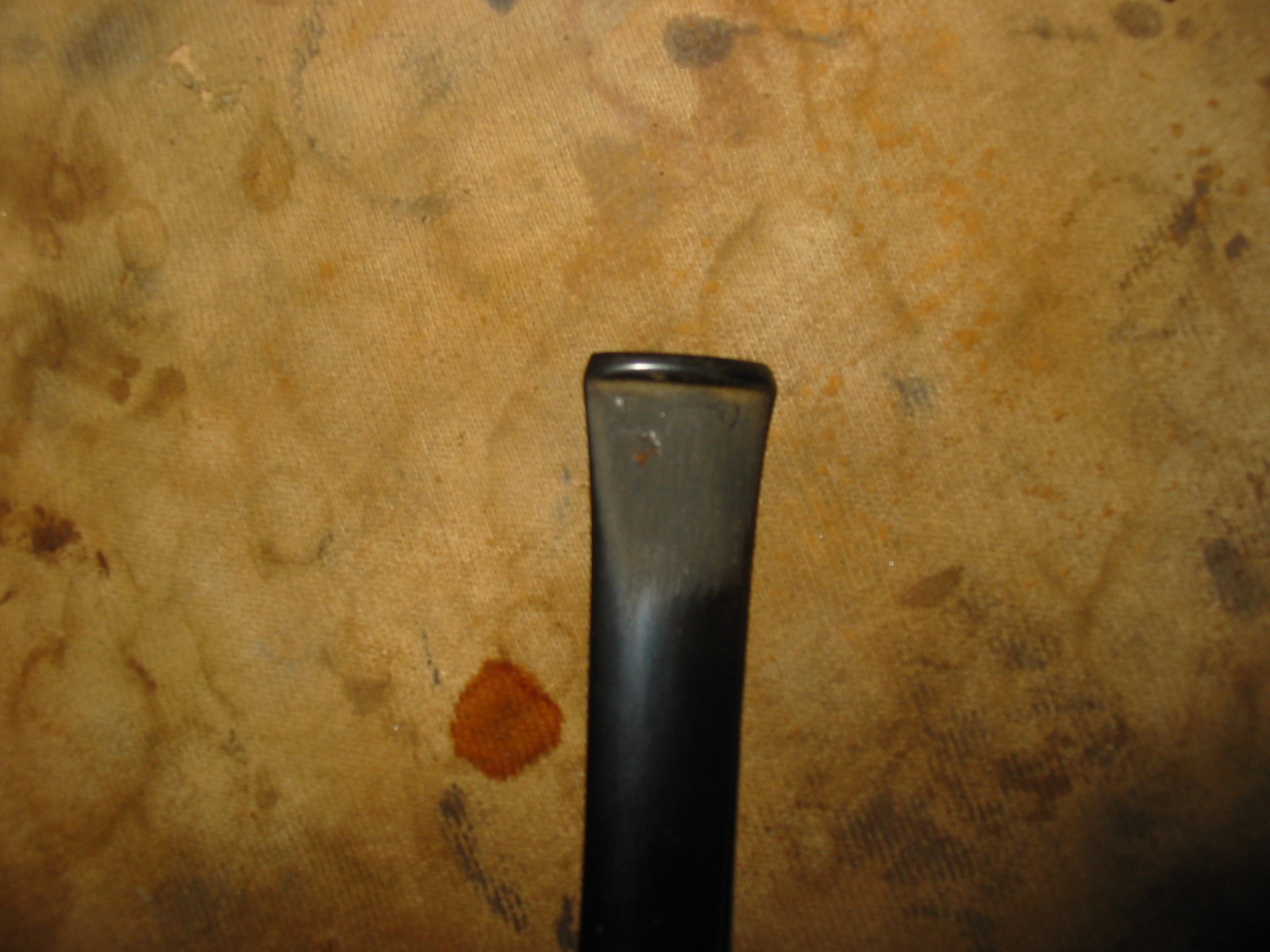
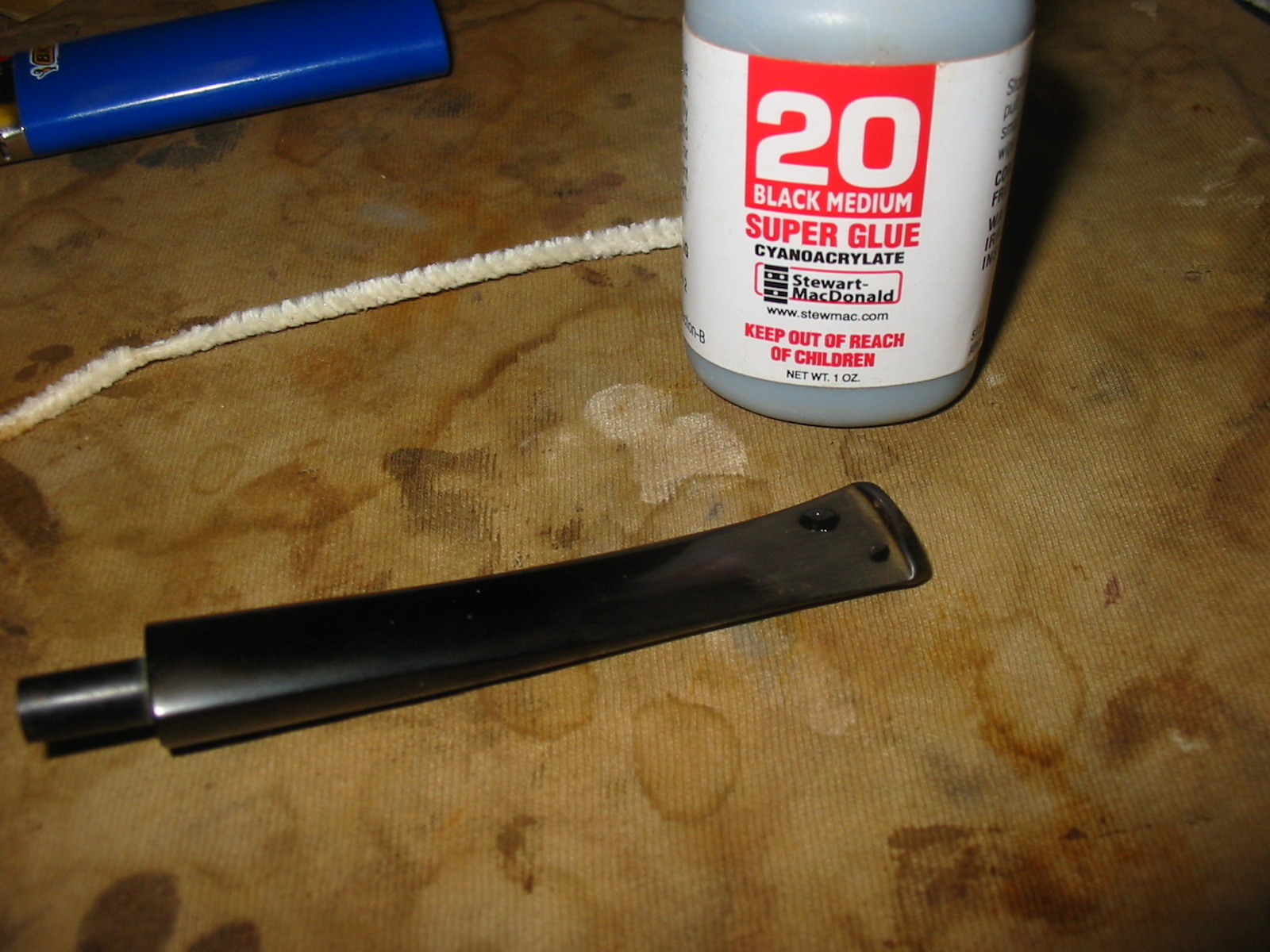
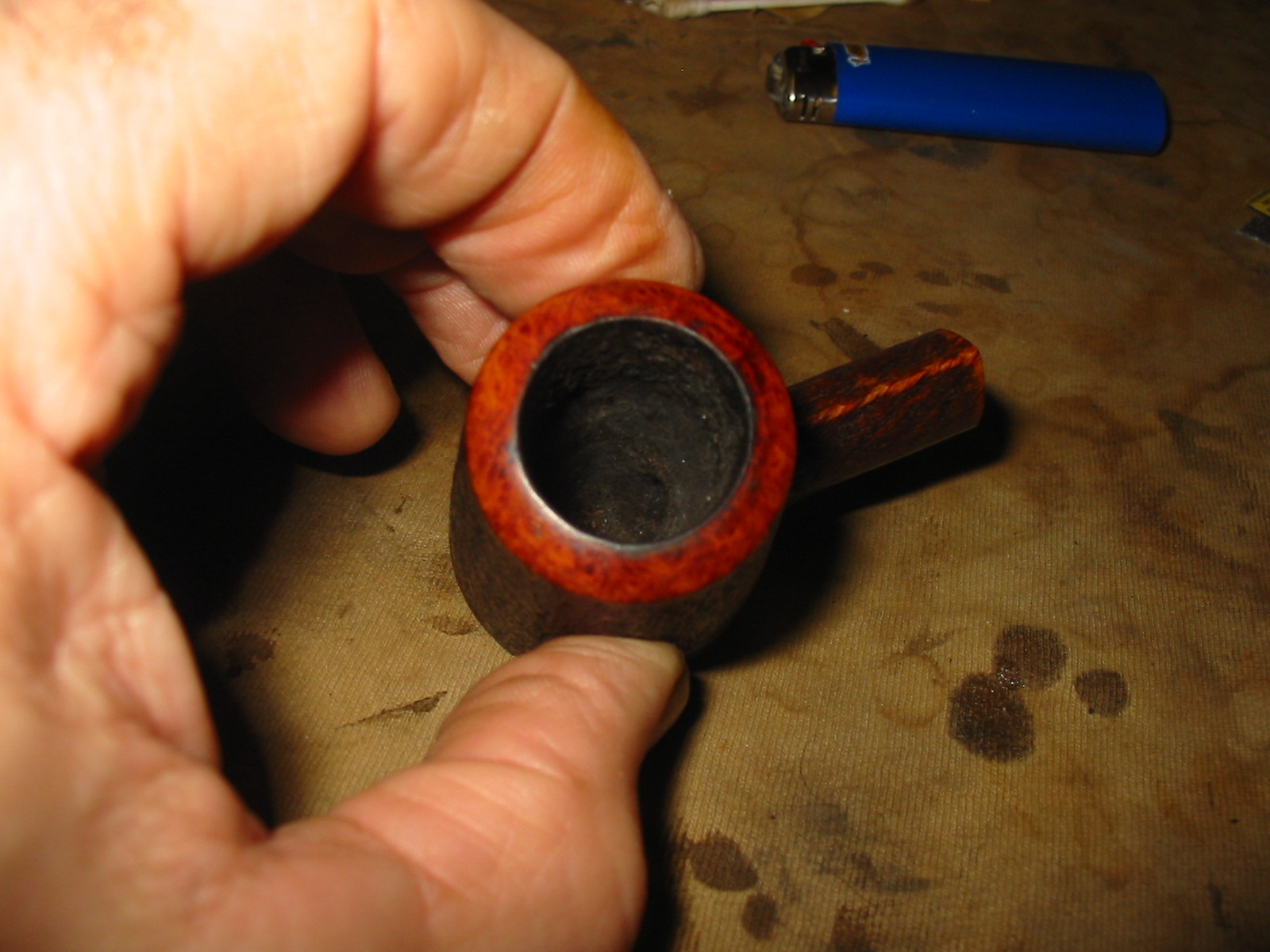
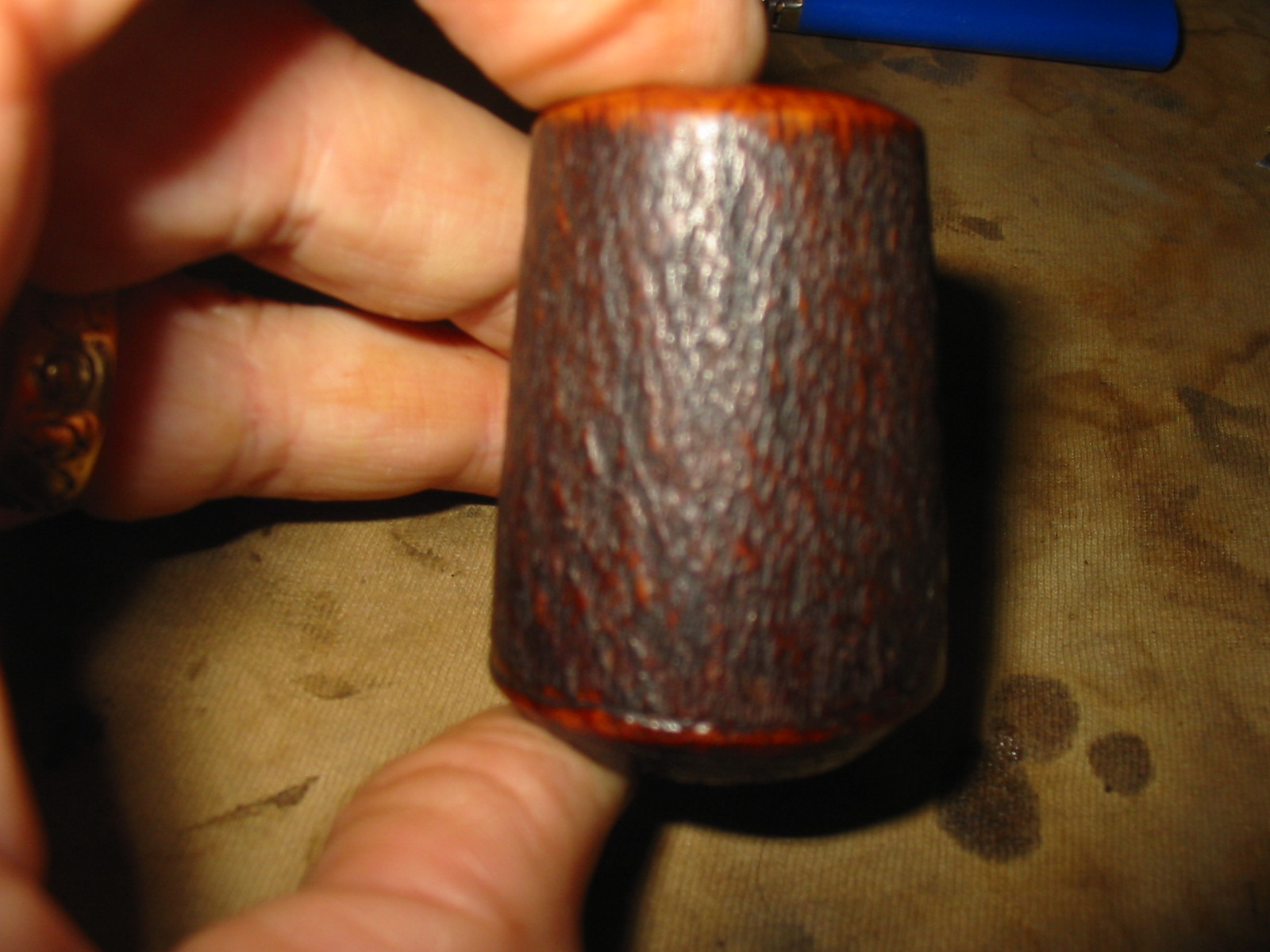
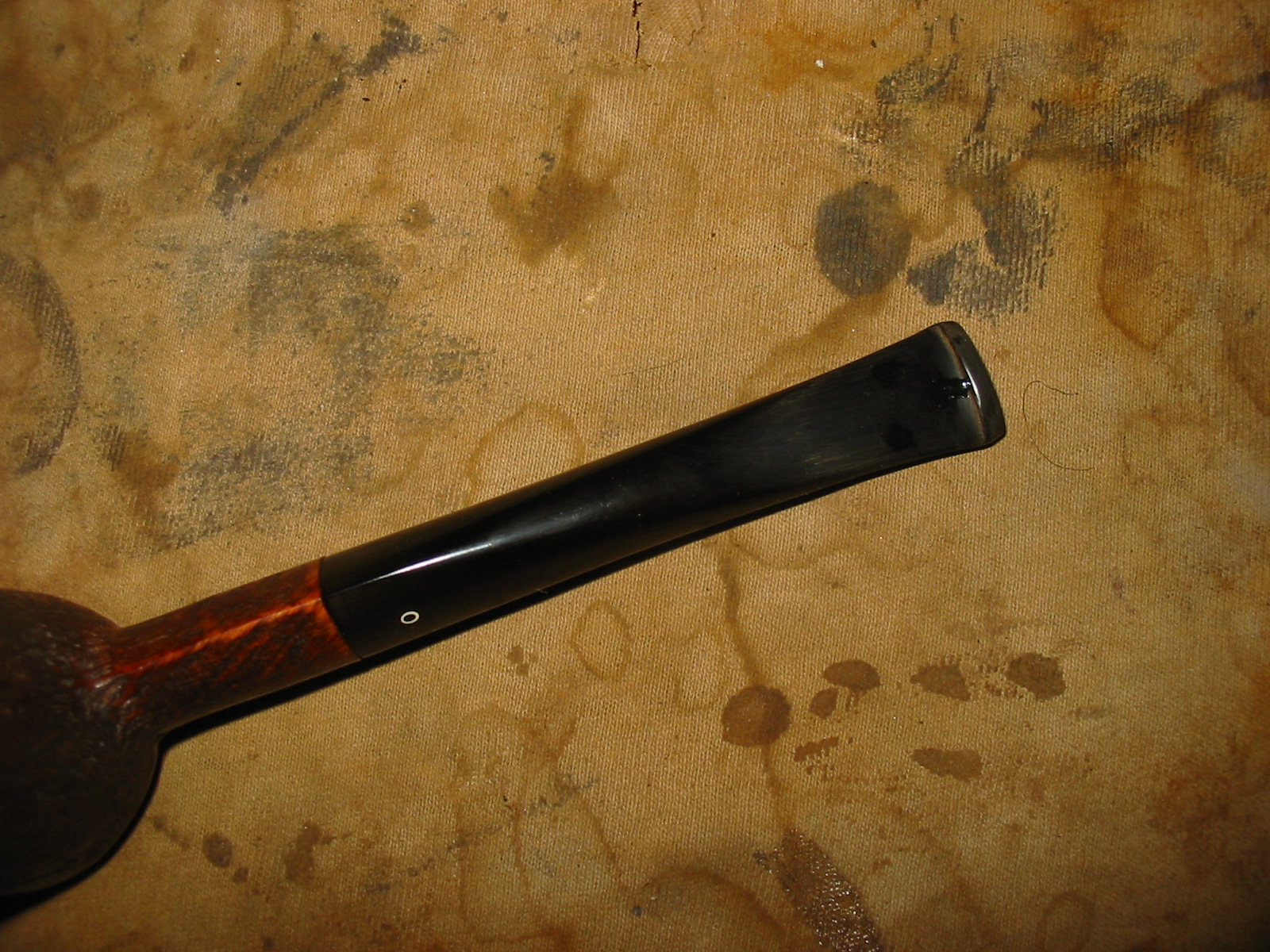
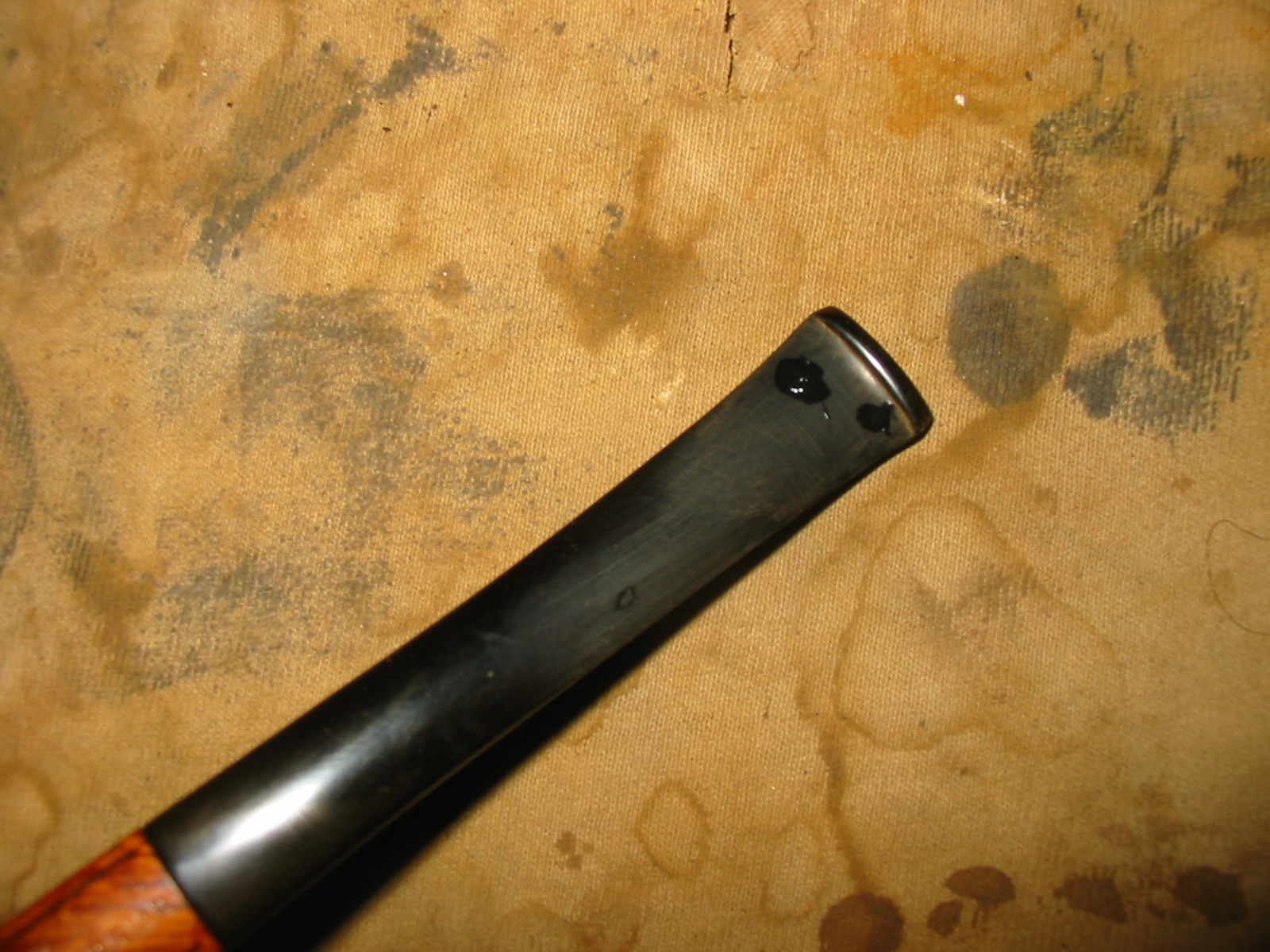
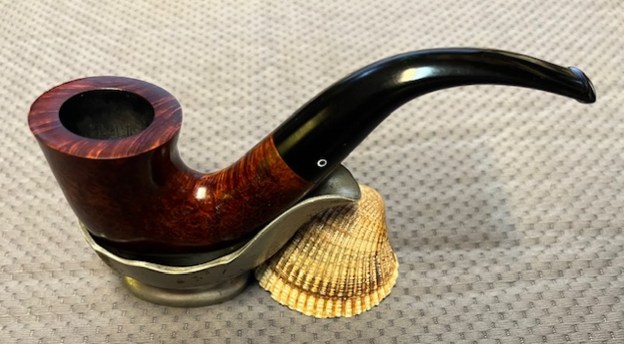
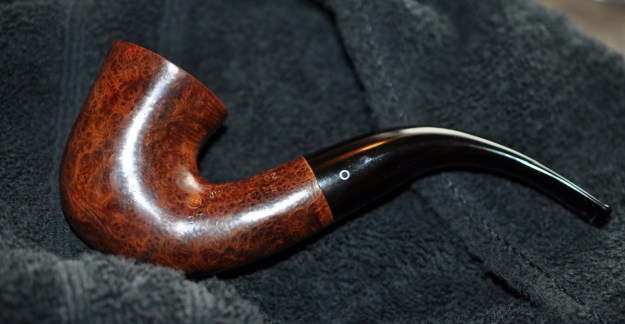
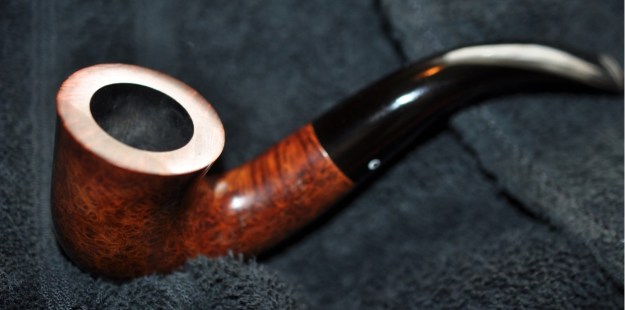
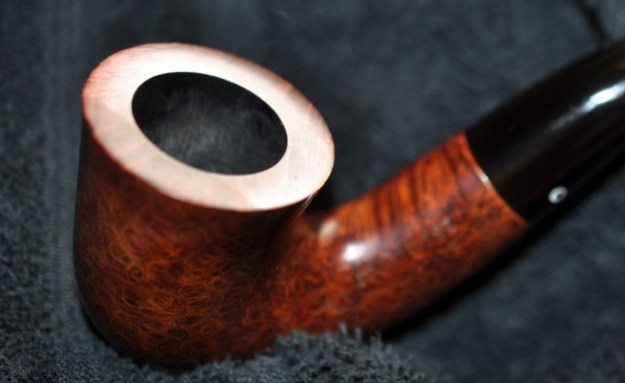
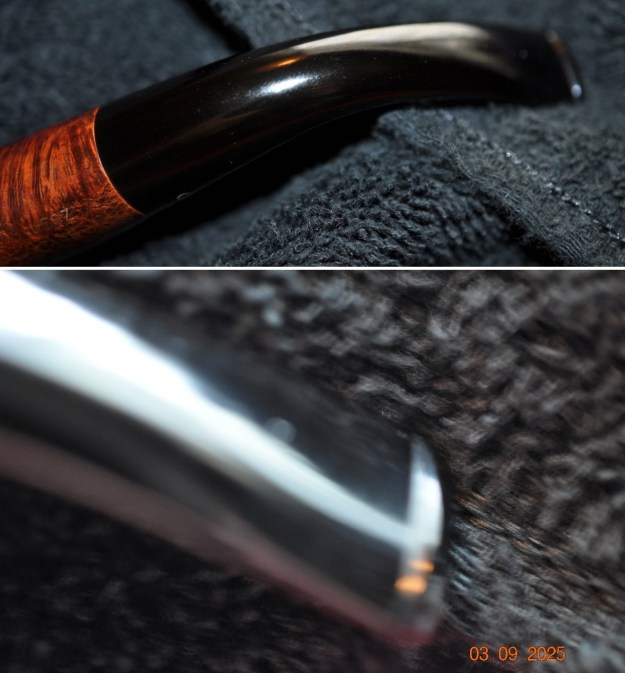
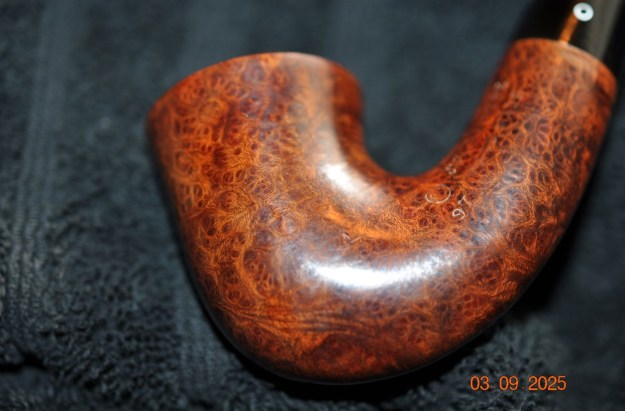
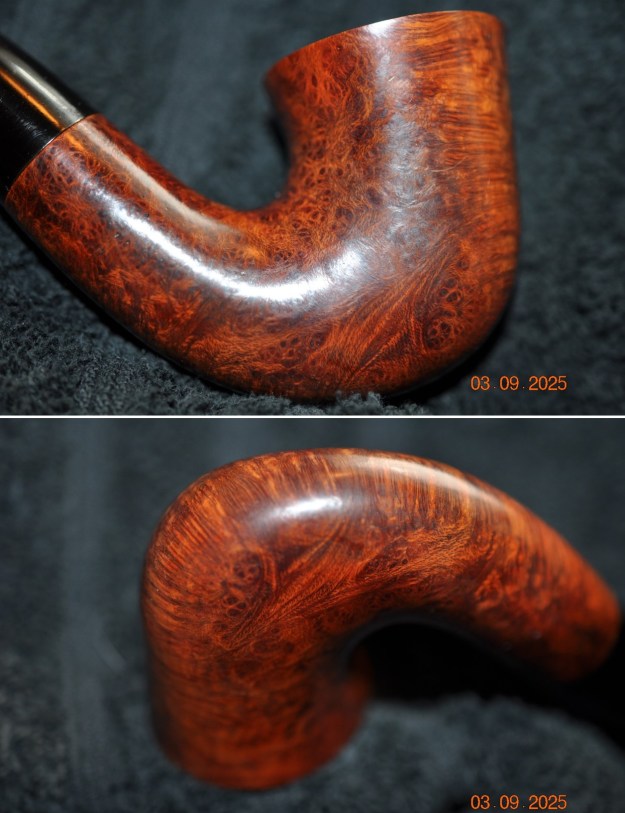
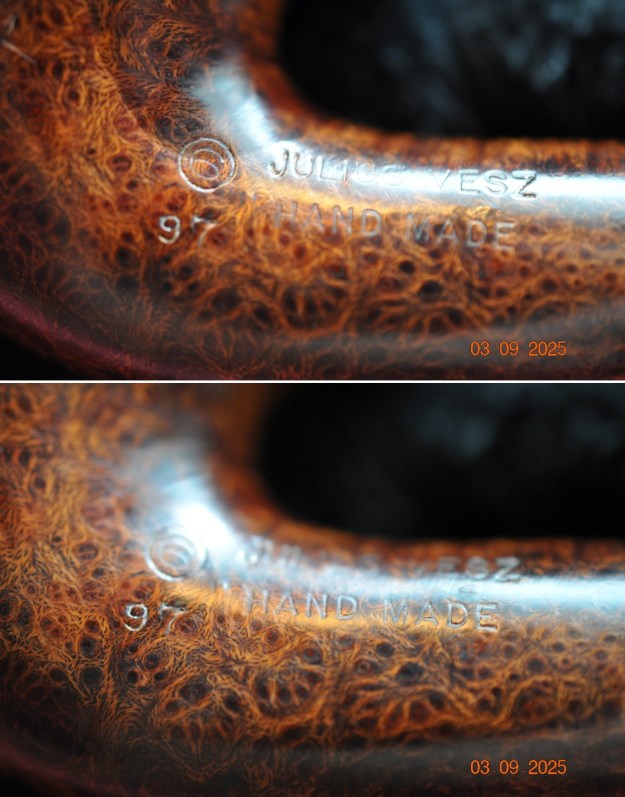
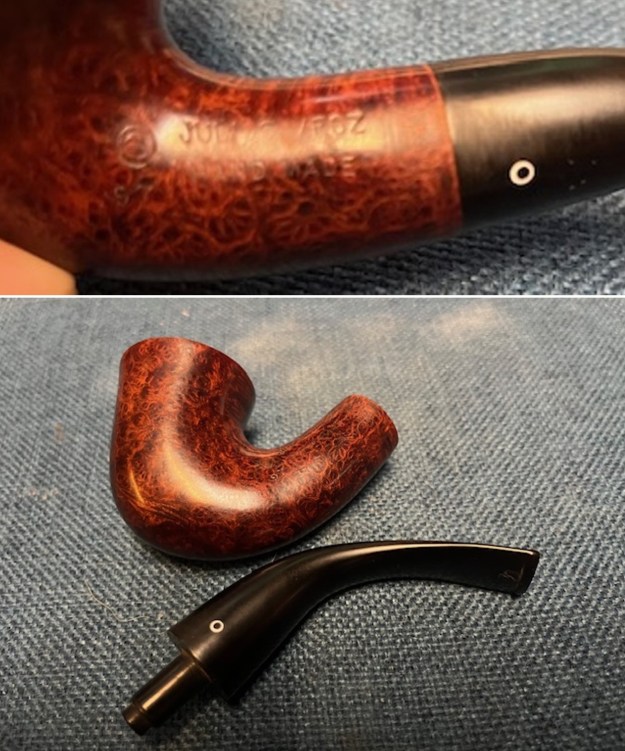
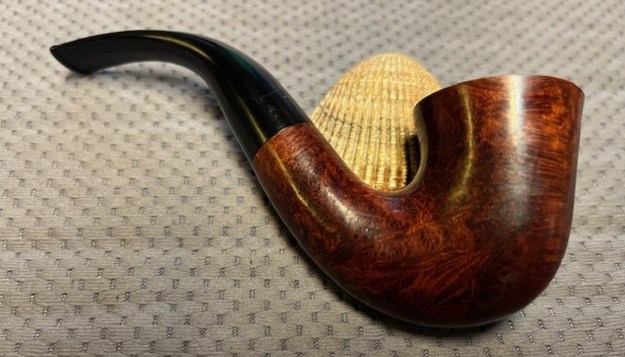
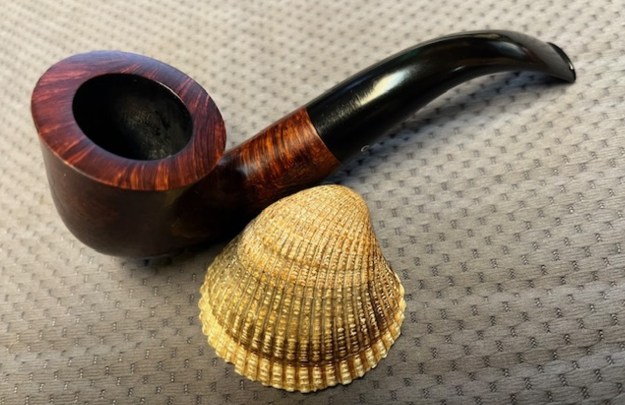
The next pipe on the table is one that we picked up in the lot from a good friend in Barrington, Rhode Island, USA on 08/22/2024. The smooth finish on this Canadian made pipe and the Julius Vesz stamping are what caught our eye. It is stamped on the left side of the shank and reads Circle 6 [over] 97 followed by Julius Vesz [over] Hand Made. It has a rich reddish, brown stain on the smooth finish that is a stark contrast to the well shaped Bent Vulcanite Stem. It is a great looking Bent Calabash shape. The bowl was clean and appears to have been recently reamed. It was a lightly smoked and well cared for pipe. The inner edge and the top look good and were clean. The stem is another issue. The shank appears to have been reshaped a bit and was rough in its fit to the shank. The left side was particularly rough. The stem itself has a poorly finished repair on a bite through on the underside ahead of the button. The white circle logo of Vesz pipes was on the left side of the stem and looks to be in good condition. Jeff took some photos of the pipe to show the general condition of the pipe before he started his clean up. He took a photo of the rim top and bowl to give me a clear picture of the condition of the rim top and bowl. It is quite clean and the inside of the bowl is very clean and shows that the pipe has been lightly smoked. He included photos that show the top and underside of the stem. It is as described above. The final photo below shows the repaired bite through in the underside of the stem ahead of the button. Jeff took some photos of the sides and heel of the bowl to show the condition of the finish on the pipe. The photos showed some great grain around the bowl and shank even with the grime in the finish. It is a great looking piece of briar. He took photos of the stamping on the sides of the shank. It was clear and readable as noted above. He also captured the white circle logo on the left side of the bent taper stem. Before I started working my part of the restoration I spent some time trying to place the hand cut line in the Vesz hierarchy. I turned to rebornpipes to have a look at some of the pieces I had written previously on the brand. The first was a catalogue I had picked up on Vesz pipes from a friend. It was an older catalogue from the time period that the brand was called Craft Pipes (https://rebornpipes.com/2016/09/13/an-older-julius-vesz-catalogue/). In going through the catalogue there was nothing that referred to the newer lines of the Vesz pipes that showed up in other places.
A piece I wrote on a Vesz Zulu gave a lot of historical background on the brand so I reread that (https://rebornpipes.com/2014/10/04/a-review-a-julius-vesz-shape-76-zulu/). I quoted a part of the article that applied to the pipe I was working on now.

My first Vesz is stamped on the left side of the shank Julius Vesz Hand Made Canada with a circle 4 stamp. I learned from correspondence with Julius’ son Rob that his dad’s Hand Made pipes were graded (in ascending order): 2 – 4 and this one is a grade 4 stamped pipe. It also bears a shape number of 76 which is the Zulu shape. The stem bears a white circle inlay that is common on his pipes.

The pipe I was working on was stamped Julius Vesz [over] Hand Made and had a circle 6 stamp. That appears to be the grade stamp though it is higher than the 2-4 listed above. It also bears the shape number of 97 which is a Calabash. The stem also has a white inlay circle on the stem.

In the previous blog about I quoted from Pipedia in the piece and have included that and the link below and the information on Vesz. The picture and the material is taken from this link http://pipedia.org/wiki/Vesz_Pipes
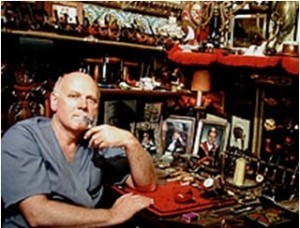
 “Born and raised in Hungary, Julius Vesz was first exposed to pipe making through his grandfather. Although his grandfather died when Julius was only 9 years old, he can still picture his grandfather making pipes. It made a lasting impression that matured years later.

After immigrating to Canada at age 23, Vesz worked as a mechanical draftsman, but ever since a child had wanted to do something on his own. Remembering his grandfather’s pipe making and repairing, he thought perhaps he should try his hand at that also. He sought out Charlie Dollack, who had a repair shop in downtown Toronto, but while Charlie encouraged the young Vesz, he did not offer any help or instruction.

Julius continued on his own, setting up a modest shop in his own home, and was soon fixing and making pipes for several department stores, as well as United Cigar, which later turned into his main source of work. He discovered he had a unique skill, which he practiced and nurtured on his own. Like his grandfather, Vesz is motivated by a desire to create pipes that approach perfection.”

Over the years I have followed Julius Vesz’ pipes and kept an eye out for one that caught my eye. Julius Vesz is a Canadian pipe maker who has been controversial in his claim to use dead root briar. Many have argued about his choice of terms regarding the briar that he uses. But regardless of your take on that issue he makes beautiful pipes that smoke exceptionally well. His unique raindrop shaped pipes may be how many people know him. He had a shop in the Royal York Hotel, 100 Front Street West in Toronto. He now has moved out of the shop and into his home…”

Now I knew that the Hand Made pipe I had was the top of the lower line of Vesz Pipes below the Hand Cut line. It was graded 6 which is close to the top of the line. It is a beauty and it is now time to work on it!

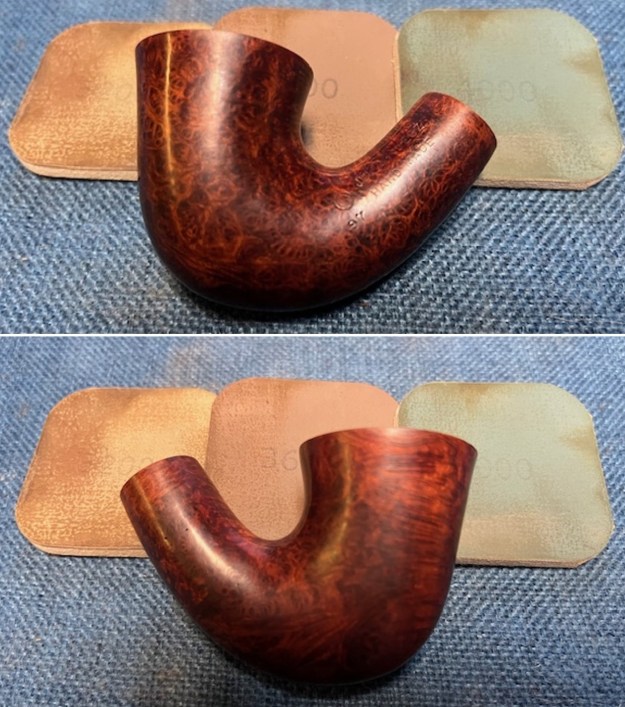
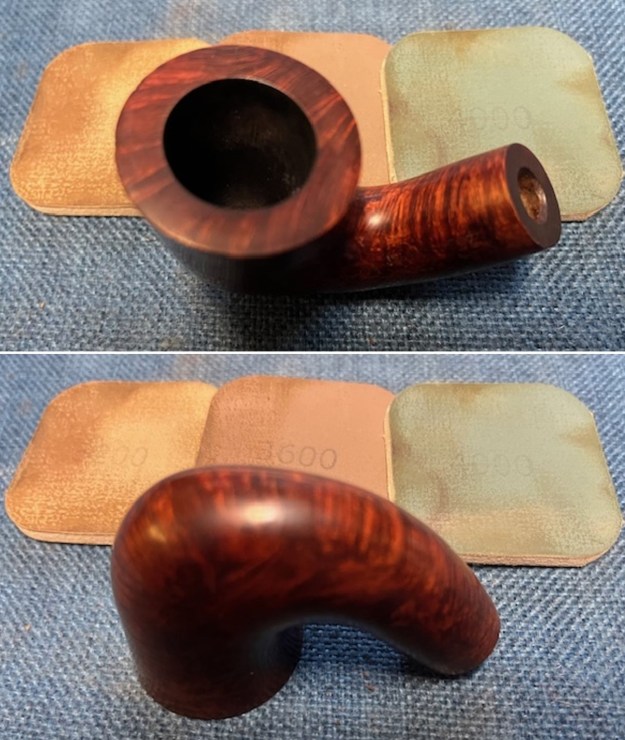
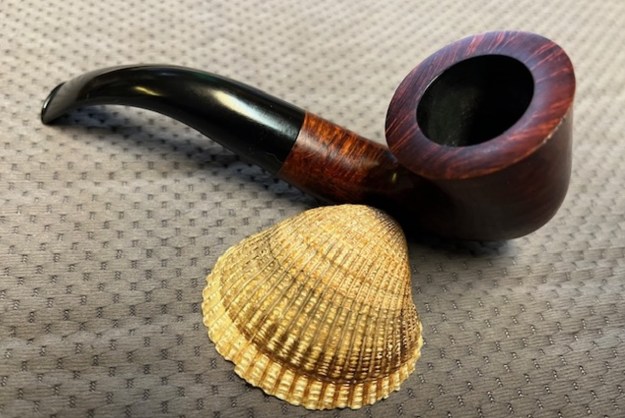
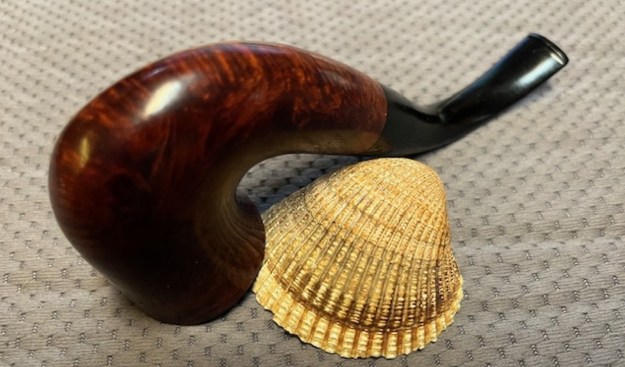
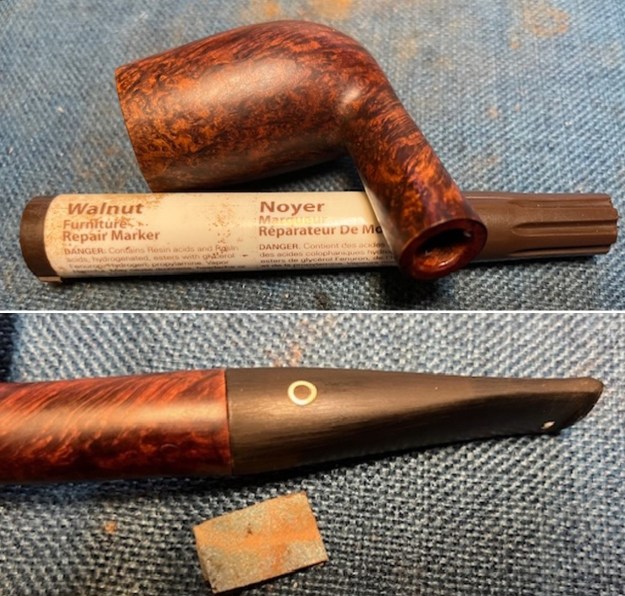
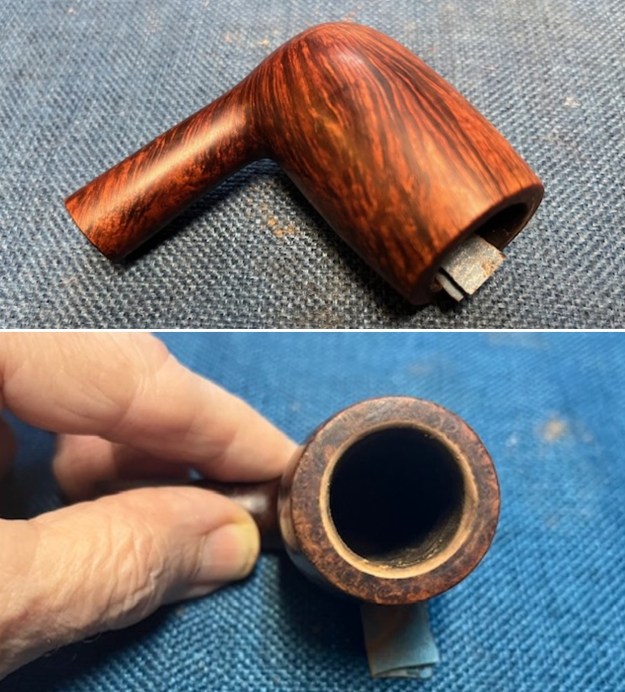
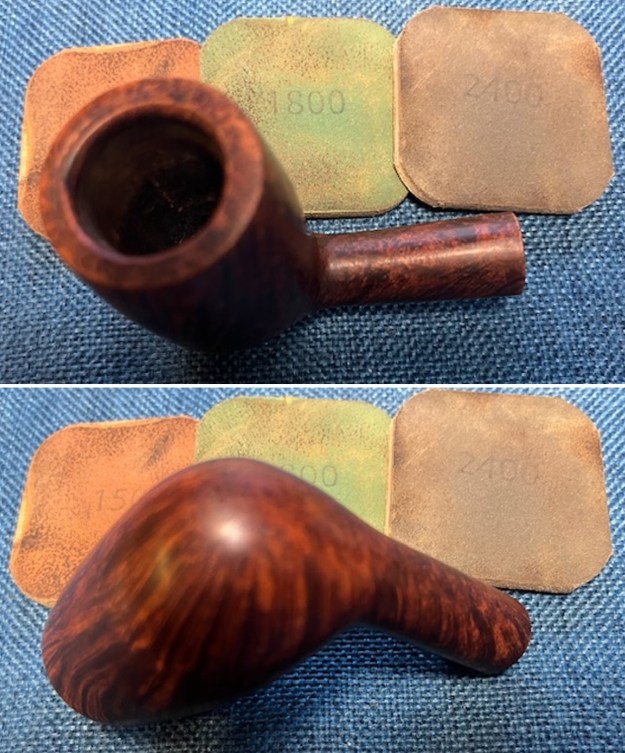
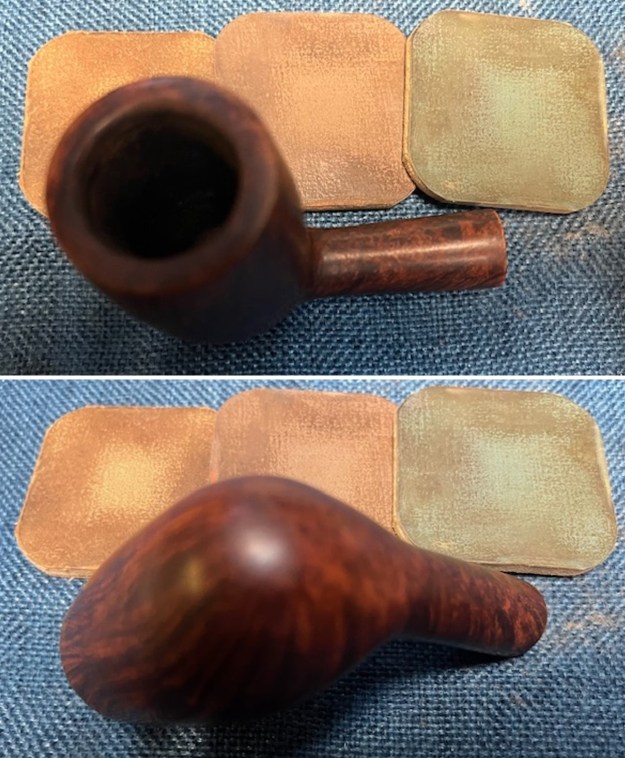
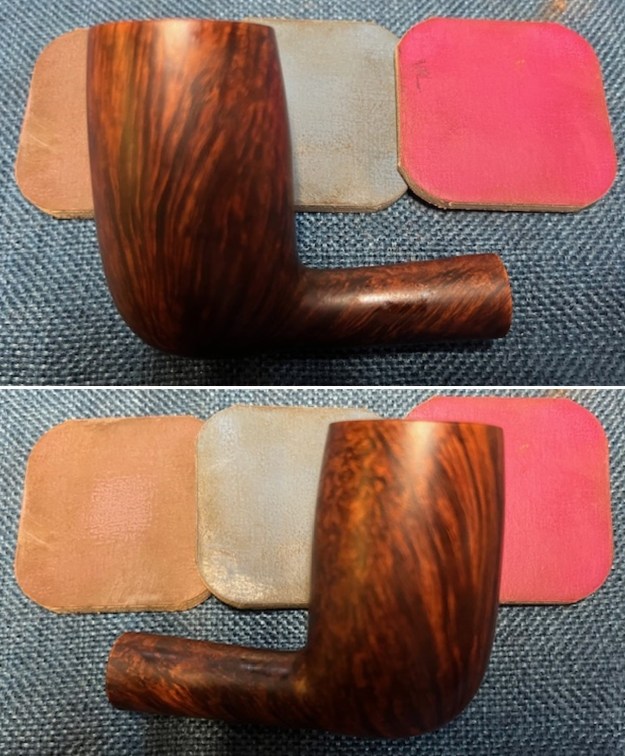
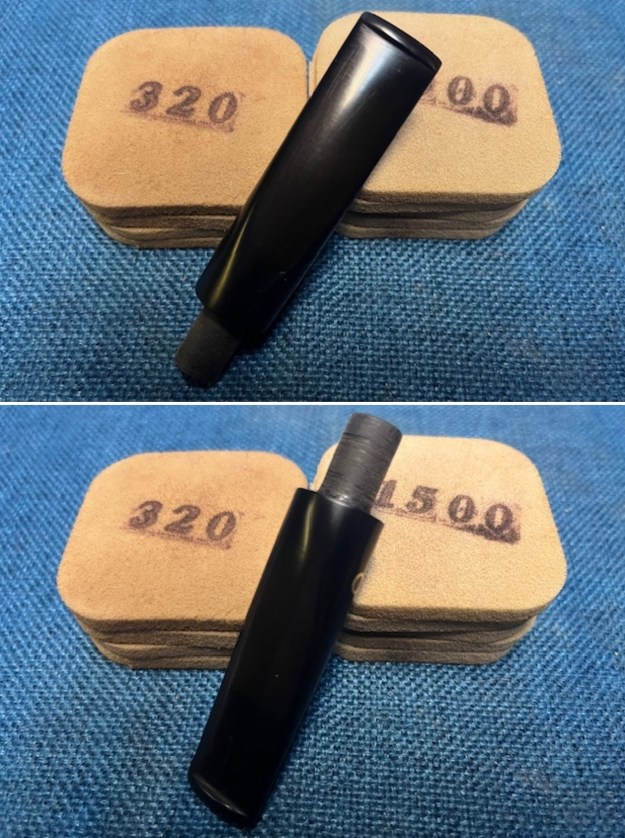
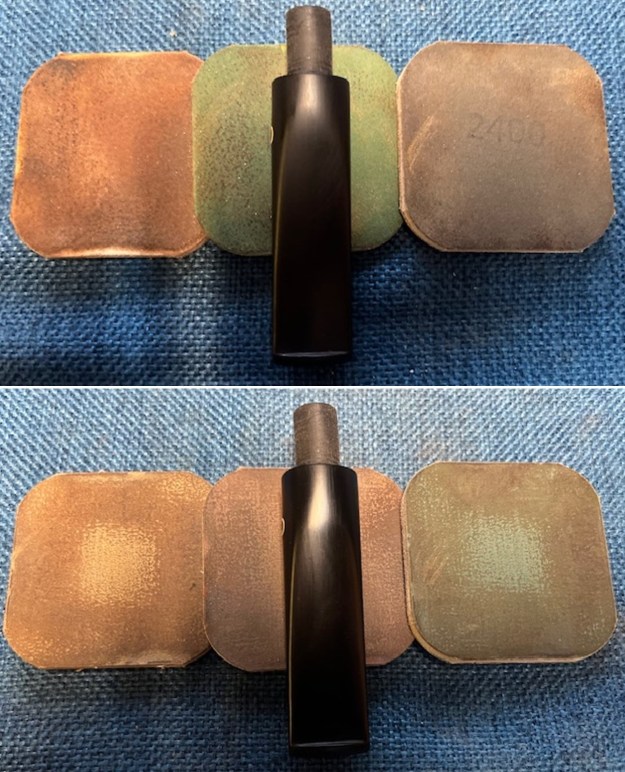
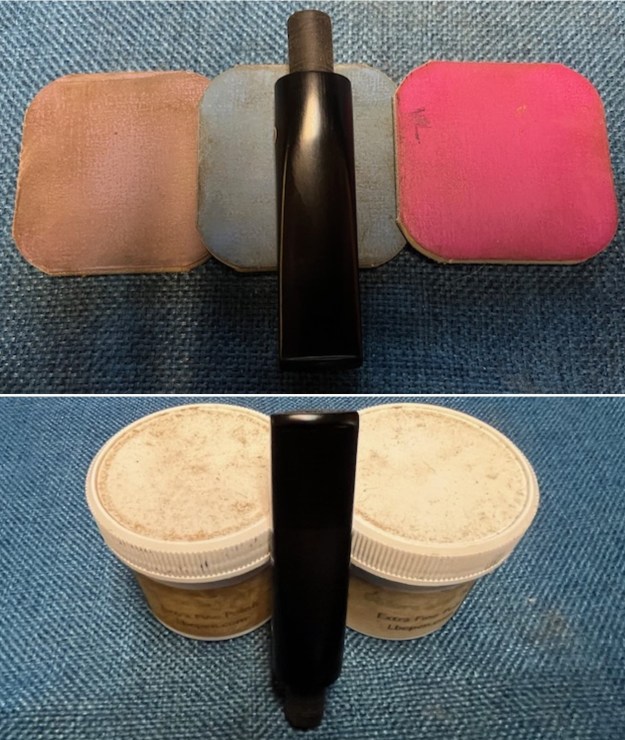
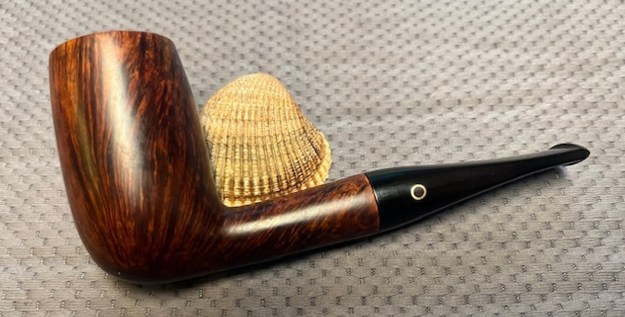
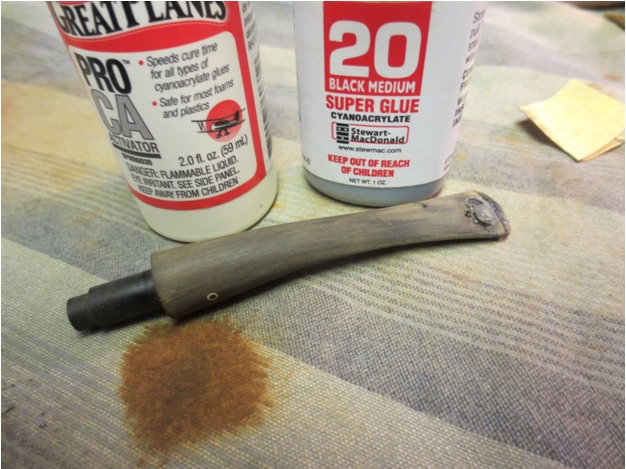
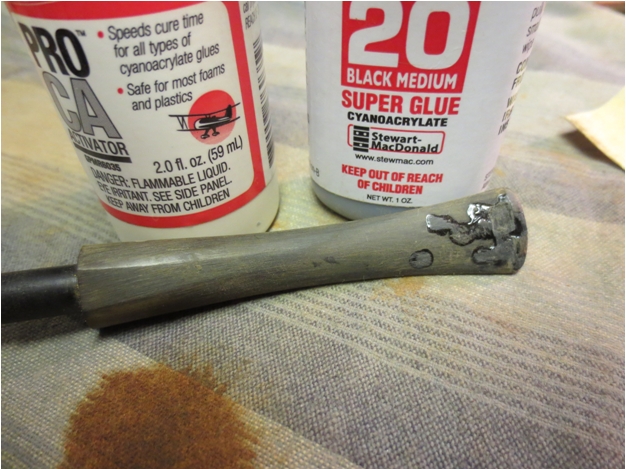
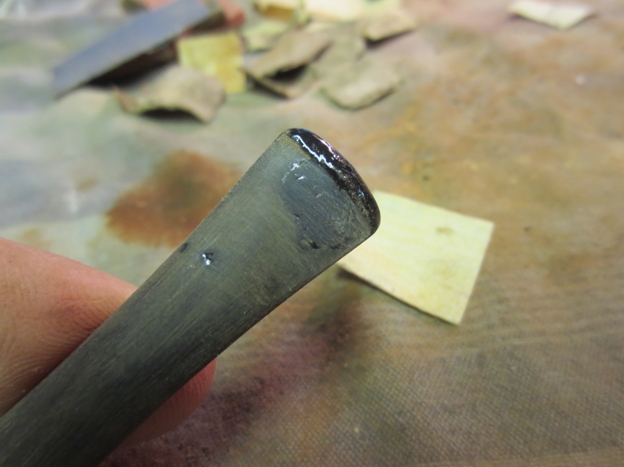
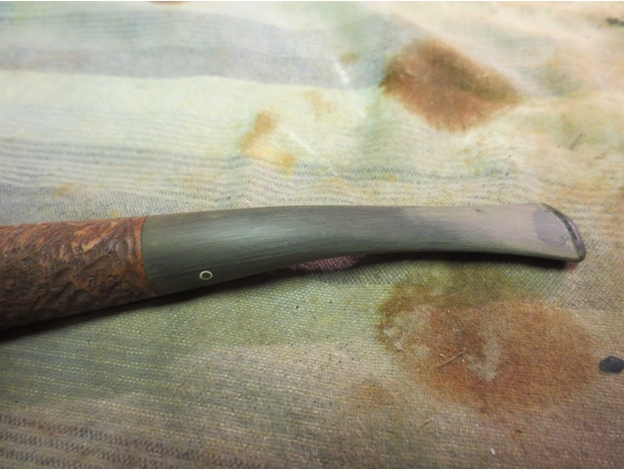
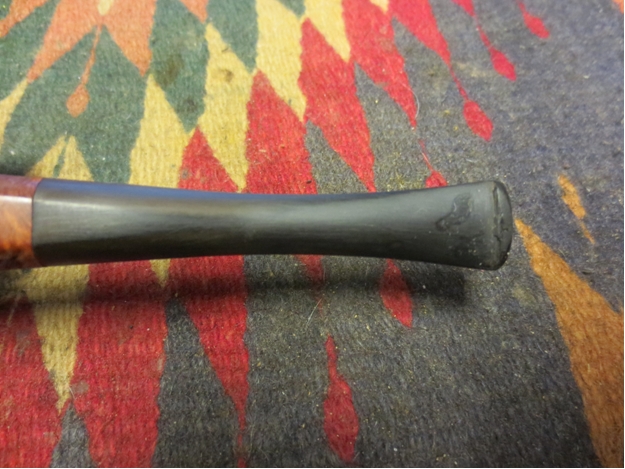
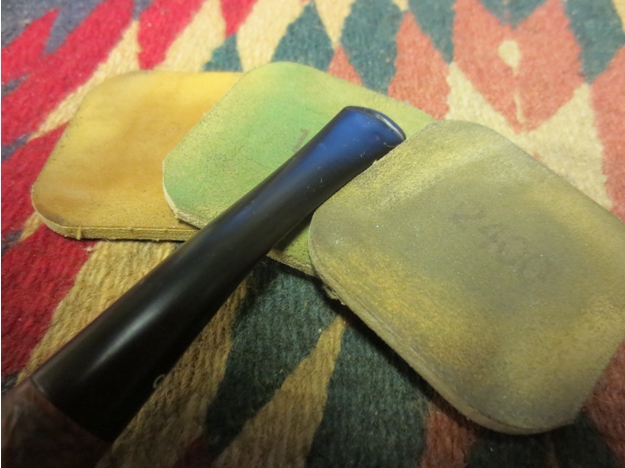
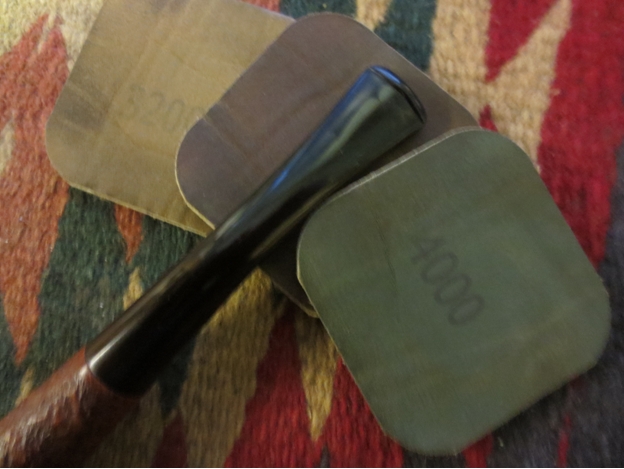
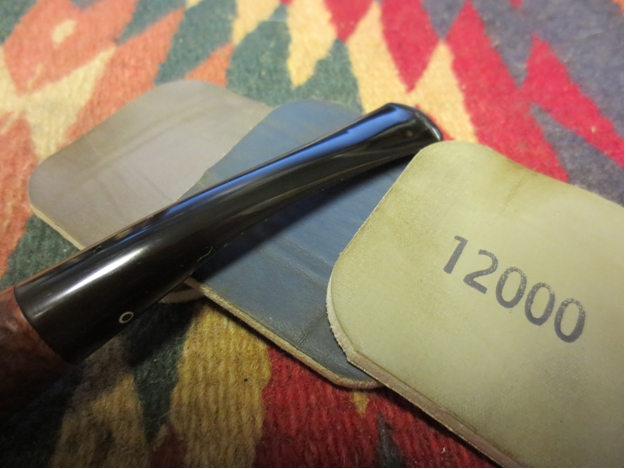
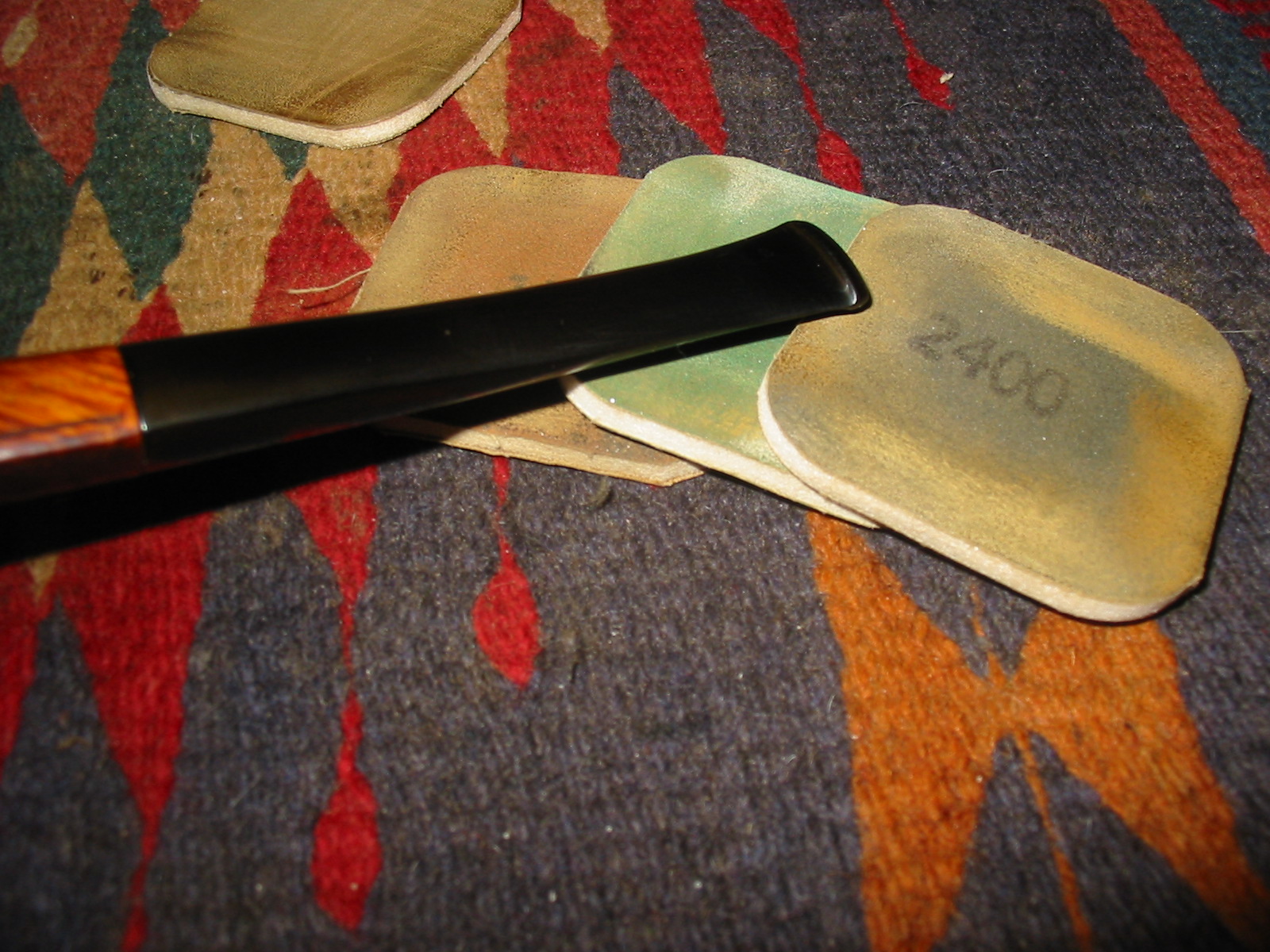
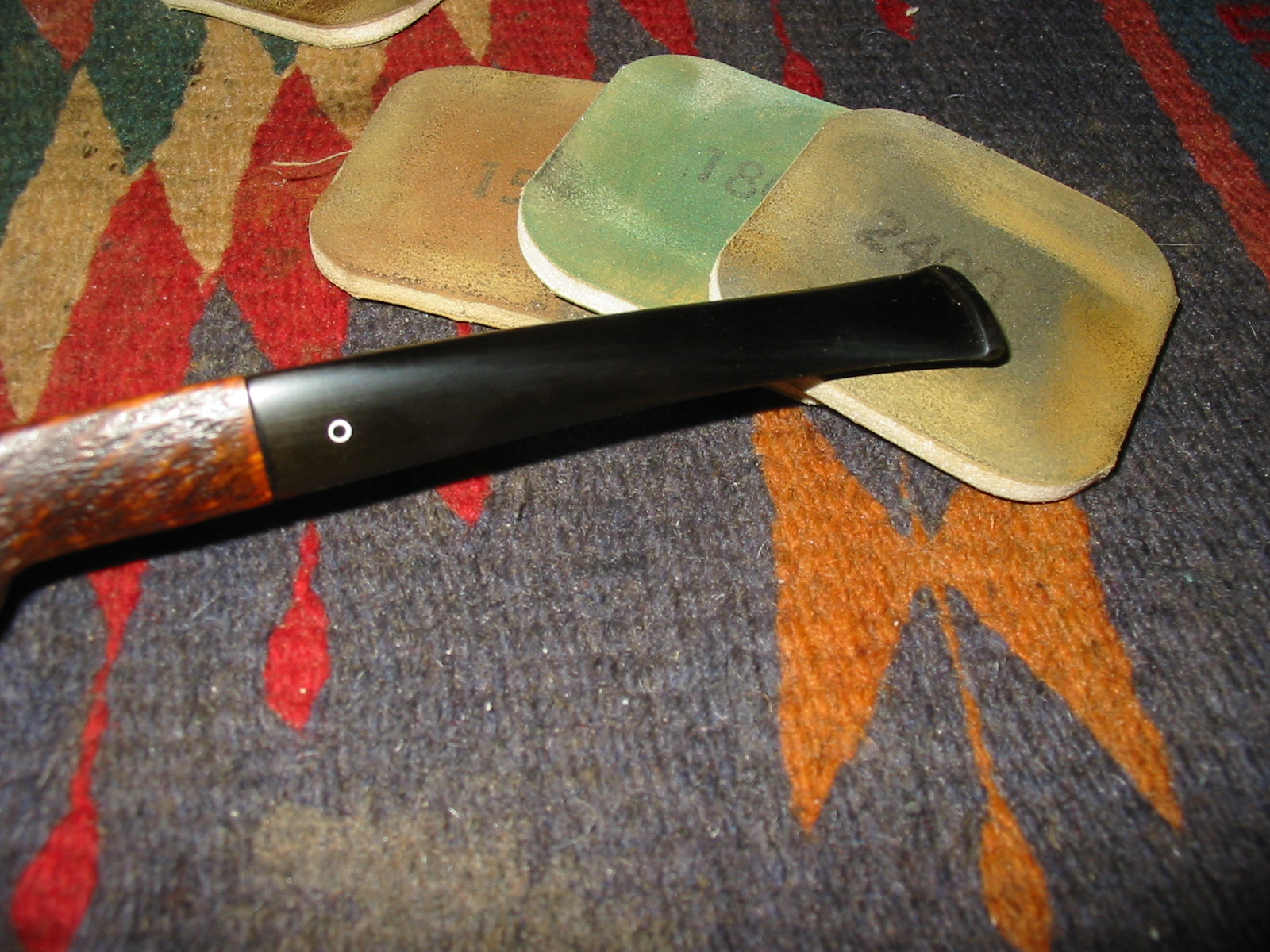
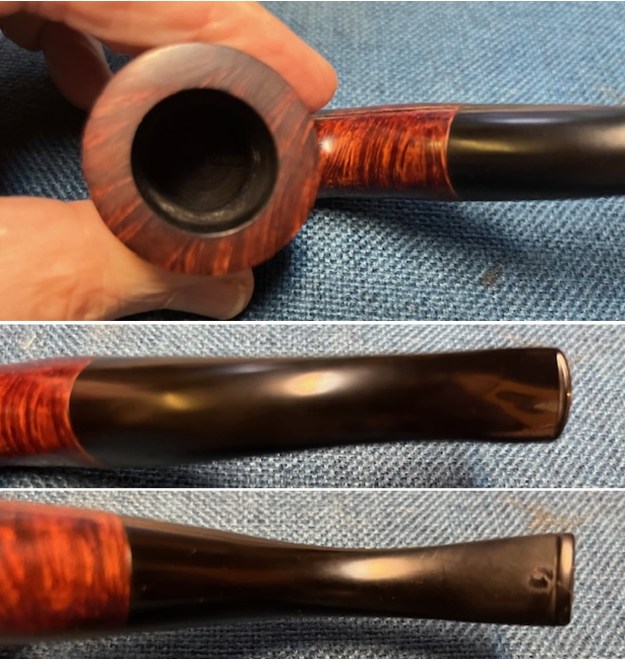
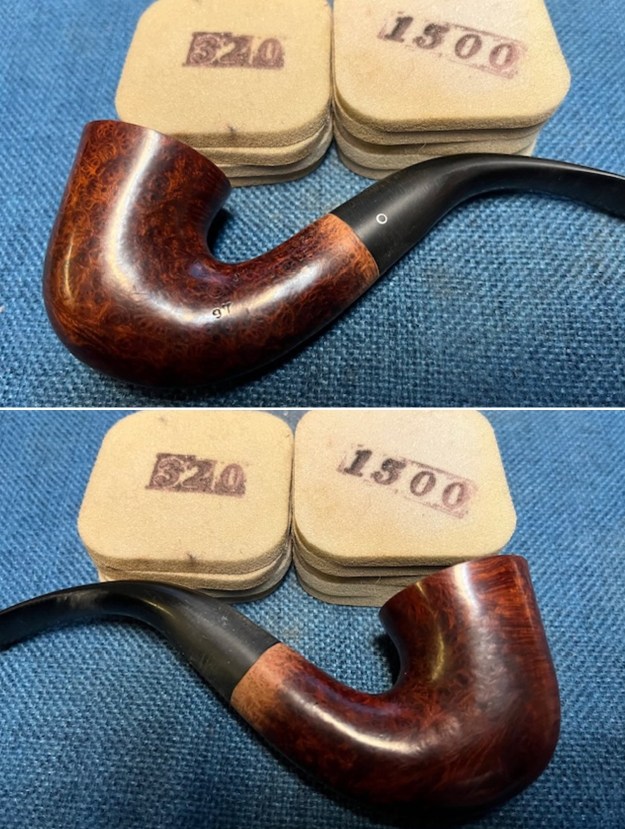
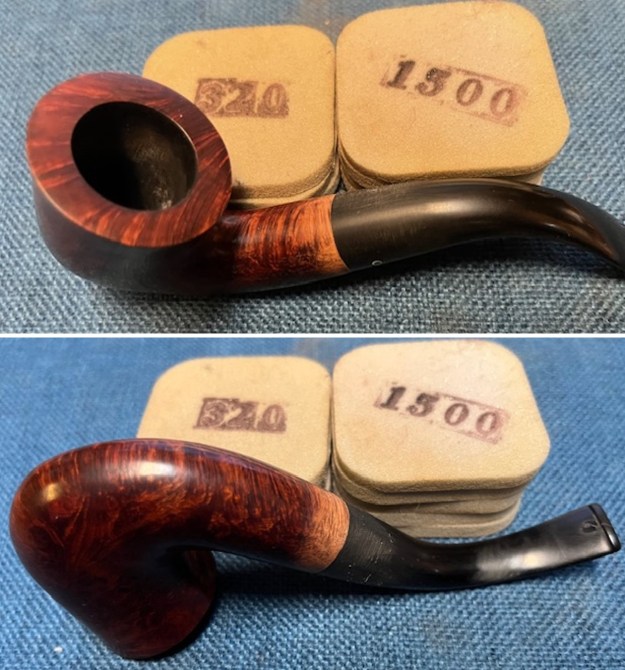
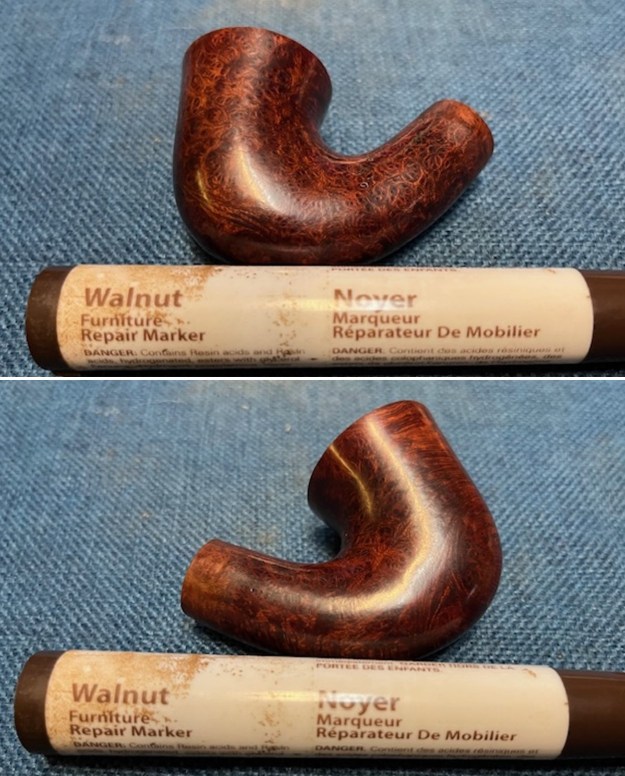
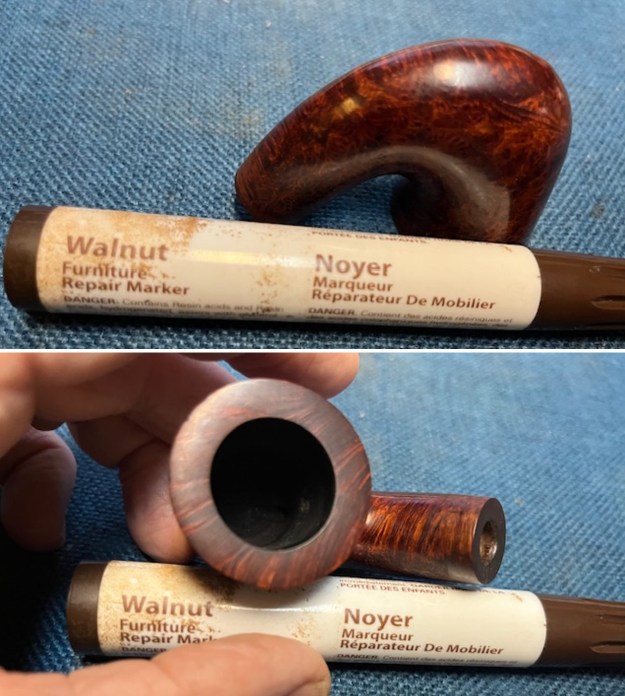
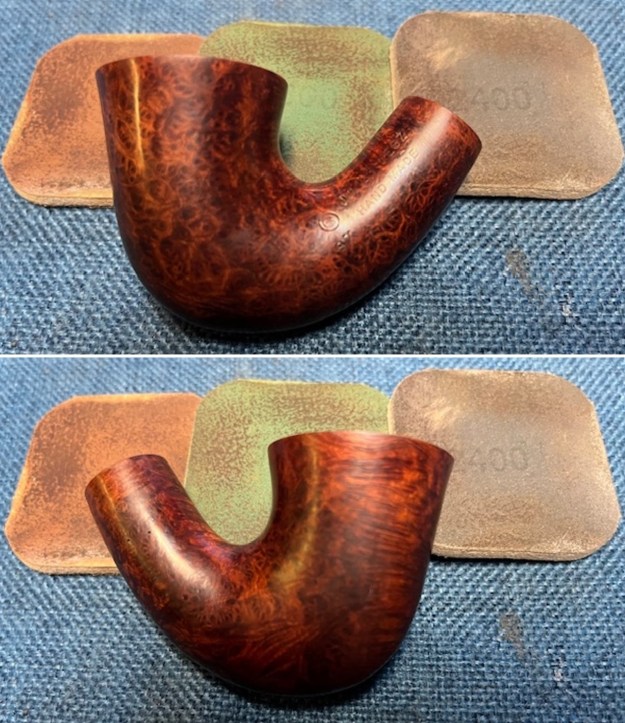
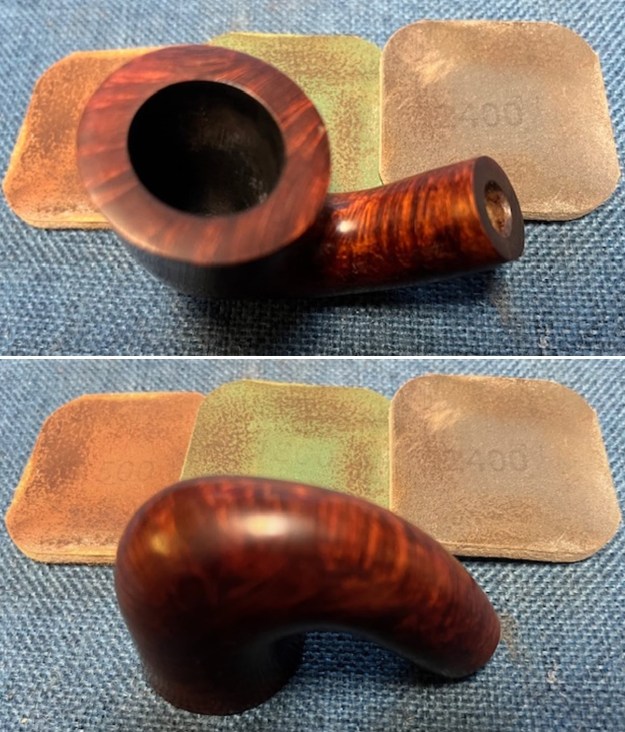
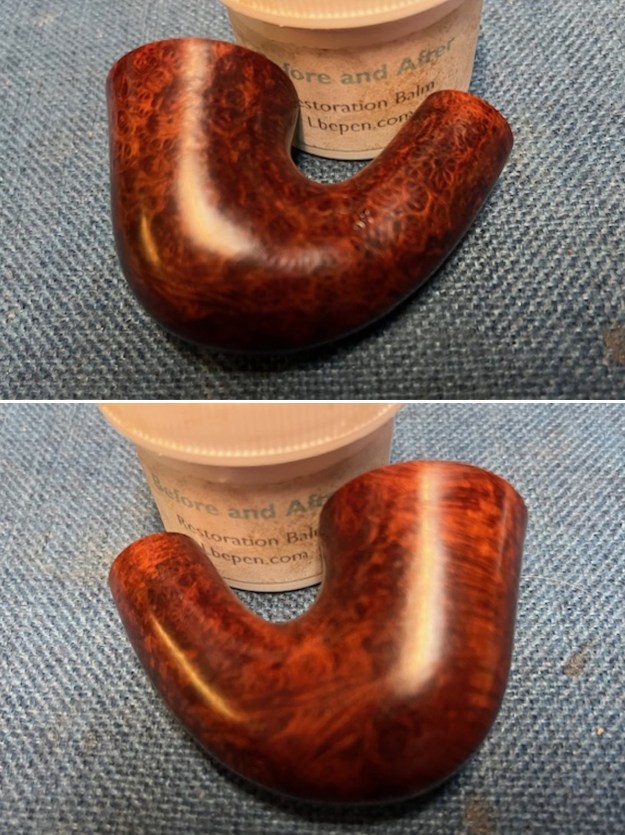
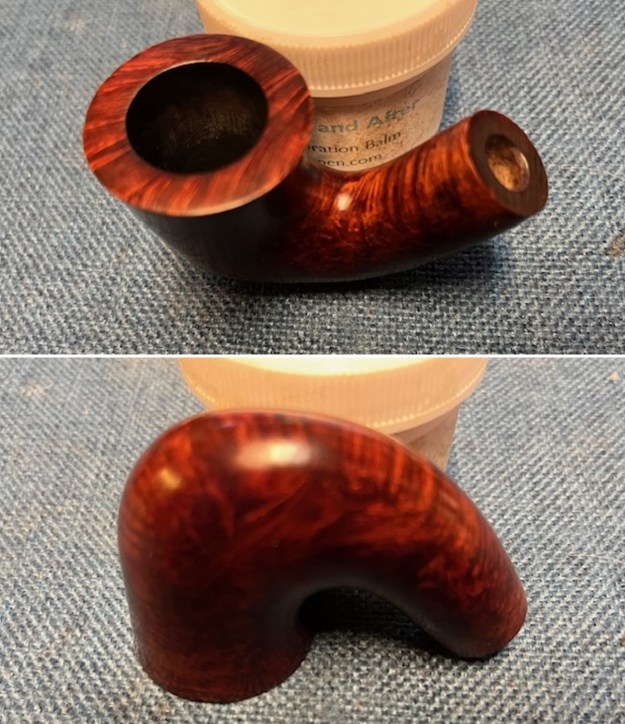
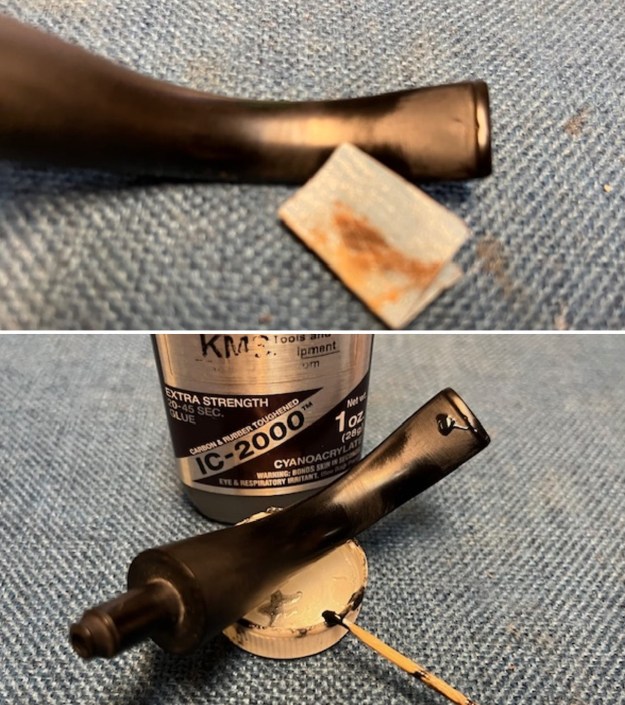
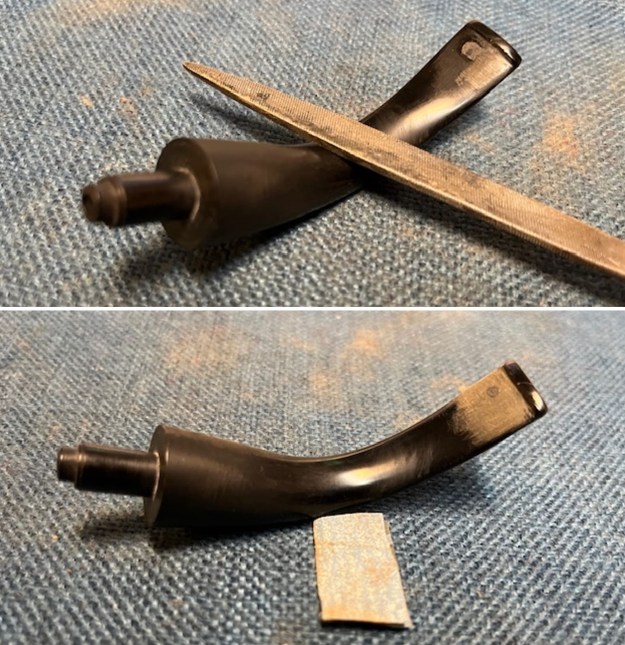
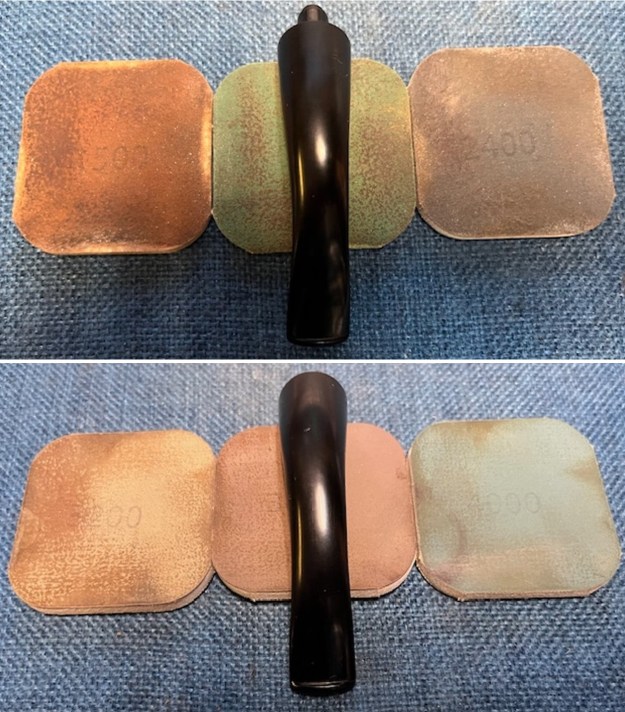
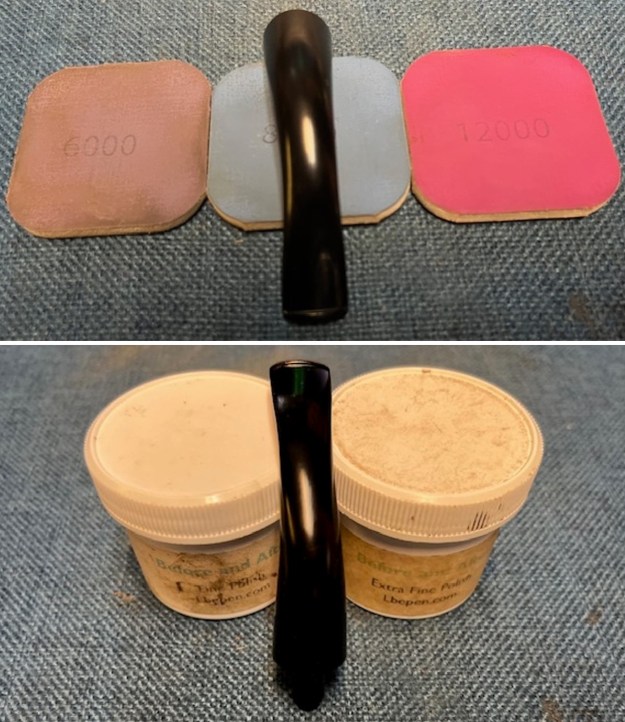
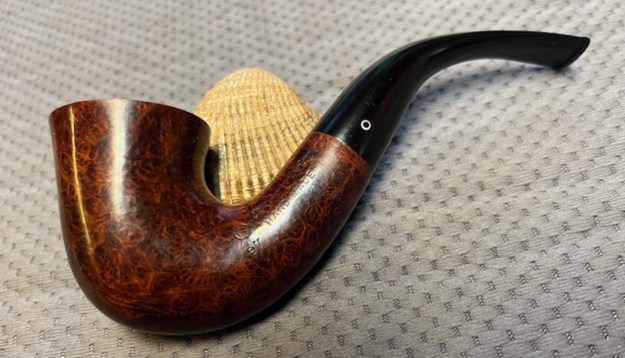
Armed with that information I turned to work on the pipe itself. Jeff had done a great job cleaning up the pipe as usual. He cleaned up the inside of the bowl with a Savinelli Fitsall Pipe Knife. The rim top and the inner edge of the bowl are in excellent condition. The bowl walls looked very good. He scrubbed the interior of the bowl and shank with shank brushes, pipe cleaners, cotton swabs and alcohol to remove the tars and oils. He scrubbed the exterior of the pipe with Murphy’s Oil Soap and a tooth brush to remove the grime from the finish. He scrubbed the inside of the stem with alcohol and pipe cleaners. He scrubbed the exterior with Soft Scrub and then soaked it in Briarville’s Pipe Stem Deoxidizer. He washed it off with warm water to remove the deoxidizer. The stem looked very good. I took photos of the pipe before I started working on it. I took close up photos of the bowl, rim top and stem to show how clean the pipe was. The bowl was clean and the rim top and the inner edge look beautiful. The stem was clean and had light tooth marks and chatter on both sides. You can also see the poor repair on the underside of the stem.I took a photo of the stamping on the left side of the shank. It is very clear and readable and read as noted above. I also removed the stem from the shank and took photos of the pipe to show the look of the parts. I started my work on the pipe by dealing with the roughness at the shank stem junction. I sanded it with 320-3500 grit sanding pads to smooth out the transition. It looked and felt much better. I touched up the sanded areas on the shank with a Walnut Stain Pen. The colour matched the bowl stain very well. I polished the bowl and shank with 1500-12000 grit micromesh sanding pad – dry sanding it with the pads. I wiped the bowl down with a damp cloth after each pad. It began to take on a deep shine. The shank reshape and reworking blended in very well and the colour is more and more rich with the polishing. The exterior of the bowl looks better after sanding. I worked some Before & After Restoration Balm into the briar with my finger tips. I let it sit on the bowl for 10 minutes and then buffed it off with a paper towel and soft cloth. The product is a great addition to the restoration work. It enlivens, enriches and protects the briar while giving it a deep glow. It is a product I use on every pipe I restore. It was ready for the next step. I used a folded piece of 220 grit sandpaper to sand out the poorly done repair on the underside of the stem. I flattened it out and cleaned off the surface of the stem. I filled in the area with black CA glue put in place with a tooth pick. I set it aside to cure.Once the repair cured I used a file to flatten out the repair and clean up the edge of the button. I sanded it further with a folded piece of 220 grit sandpaper to blend it into the surrounding vulcanite.I polished the sanding repairs on the shank end of the stem and the repair of the bite through by sanding it with micromesh sanding pads. I dry sanded them with 1500-12000 grit pads. I wiped the stem down after each sanding pad with Obsidian Oil to further protect the vulcanite surface. I finished the polishing with Before & After Pipe Stem Polish – Fine and Extra Fine. I wiped the stem down a final time with Obsidian Oil and a cloth. It really looks very good. It was great to finish the repairs and reshaping on this Julius Vesz Hand Made Circle 6 Calabash 97. I put the pipe back together and buffed it with Blue Diamond on the buffing wheel. I gave the bowl multiple coats of carnauba wax. I buffed the pipe with a clean buffing pad to raise the shine. I hand buffed the pipe with a microfiber cloth to deepen the shine. It is fun to see what the polished bowl looks like with deep sandblast all around it. Added to that the polished black, vulcanite, taper stem was beautiful. This Julius Vesz Hand Made 97 is great looking and the pipe feels great in my hand. It is light and well balanced. Have a look at it with the photos below. The dimensions are Length: 5 ½ inches, Height: 1 ¾ inches, Outside diameter of the bowl: 1 3/8 inches, Chamber diameter: ¾ of an inch. The weight of the pipe is 43 grams/1.48 ounces. It is a beautiful pipe and one that I will hold onto for awhile. I always have enjoyed Julius’ pipes and this one is a great shape.
As always, I encourage your questions and comments as you read the blog. Thanks to each of you who are reading this blog and following this restoration. Remember we are not pipe owners; we are pipe men and women who hold our pipes in trust until they pass on into the trust of those who follow us.
Restoring and Replacing a Tenon on a Hand Cut B Olive Stack


by Steve Laug

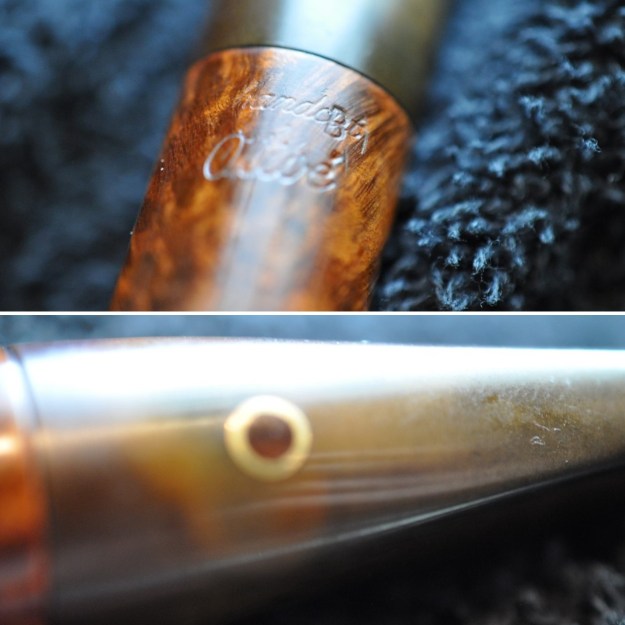
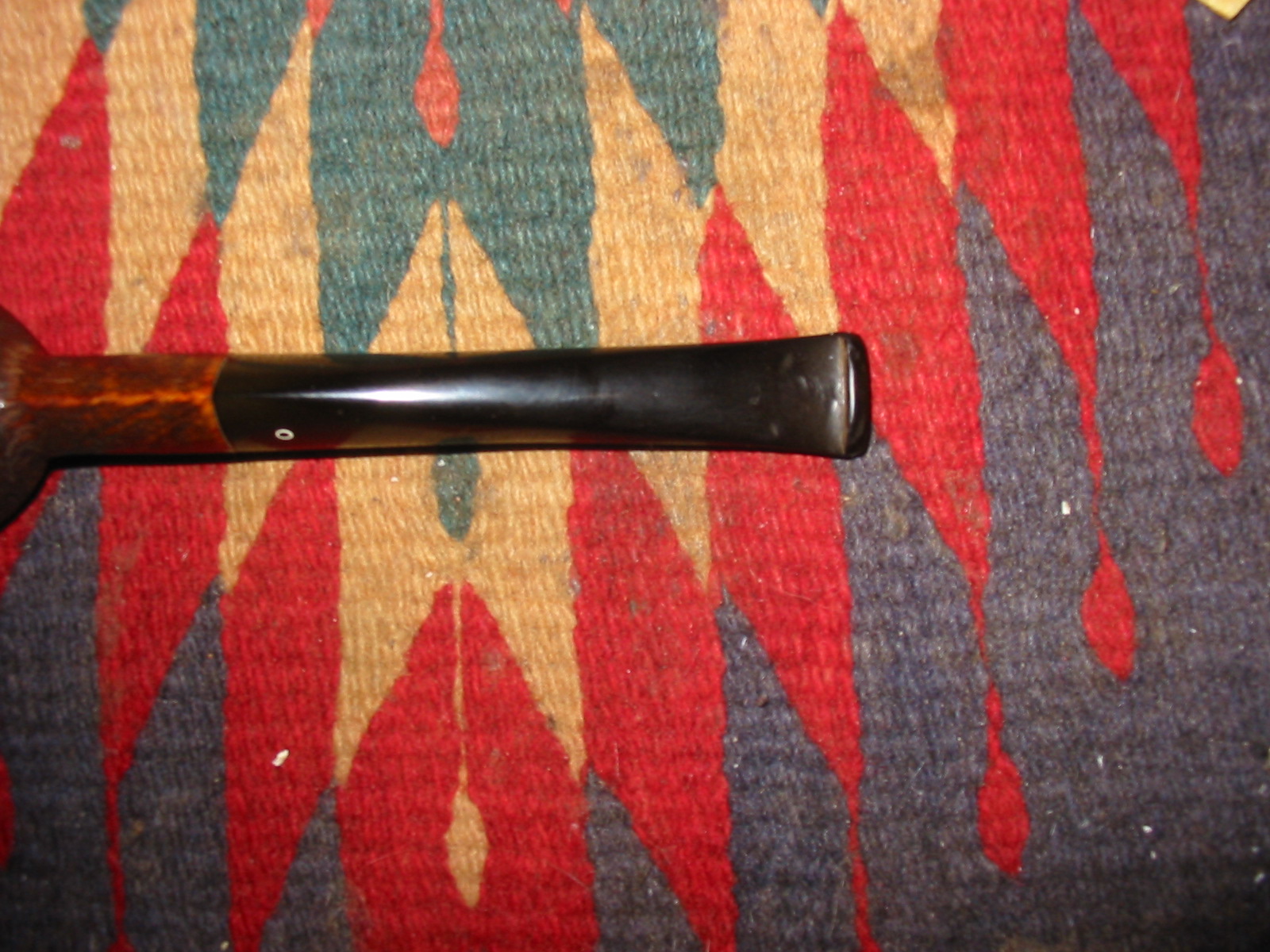
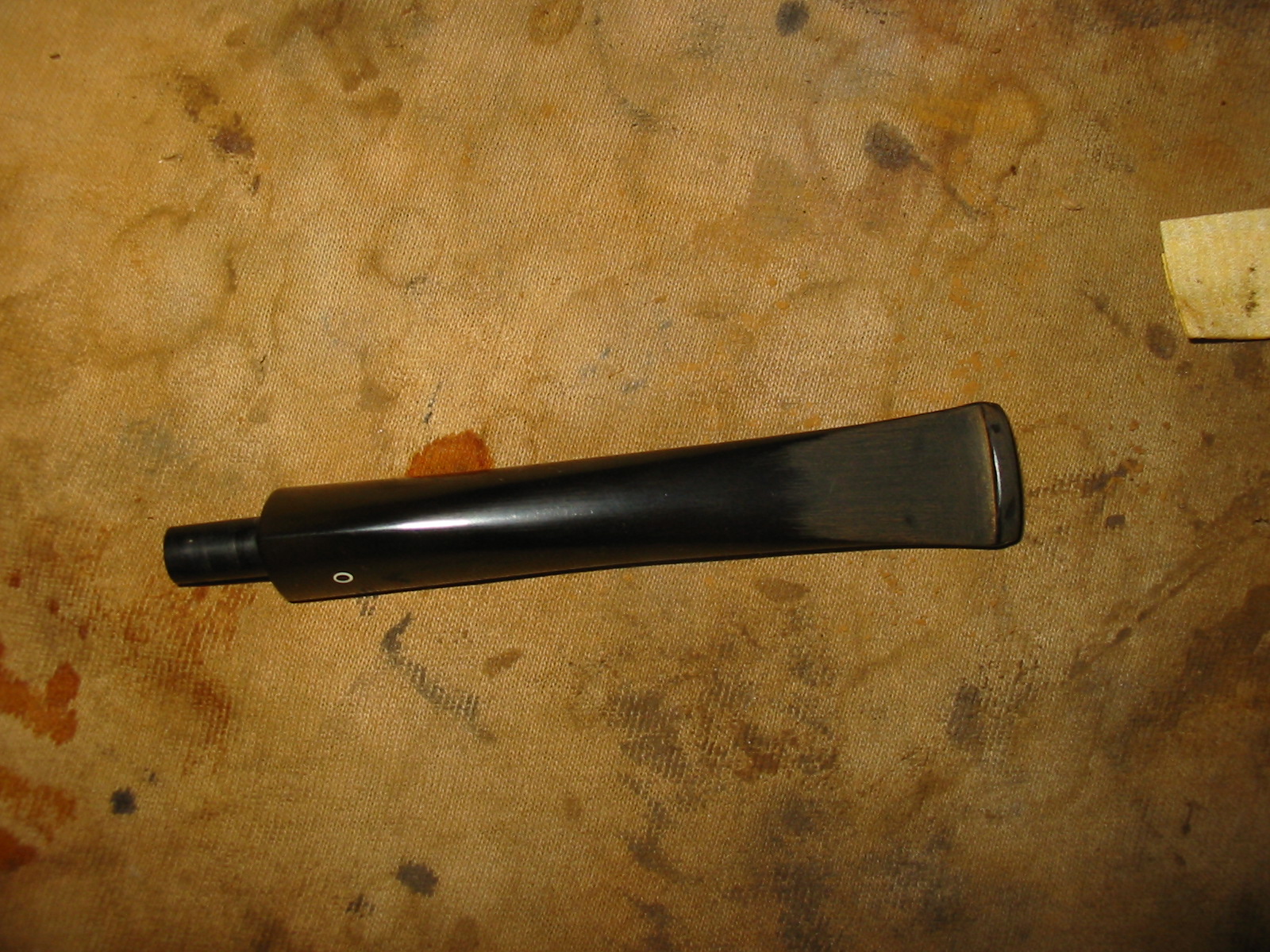
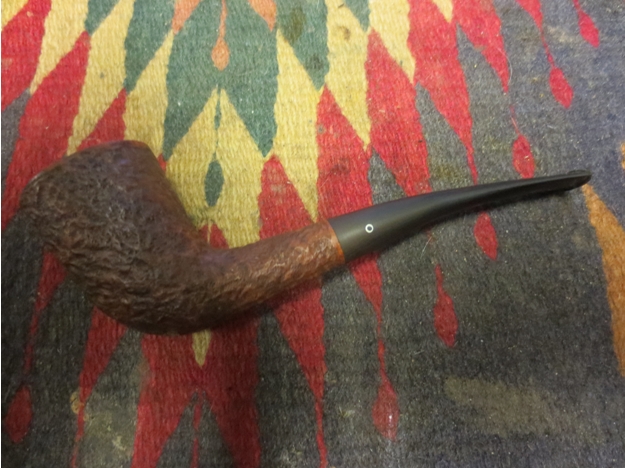
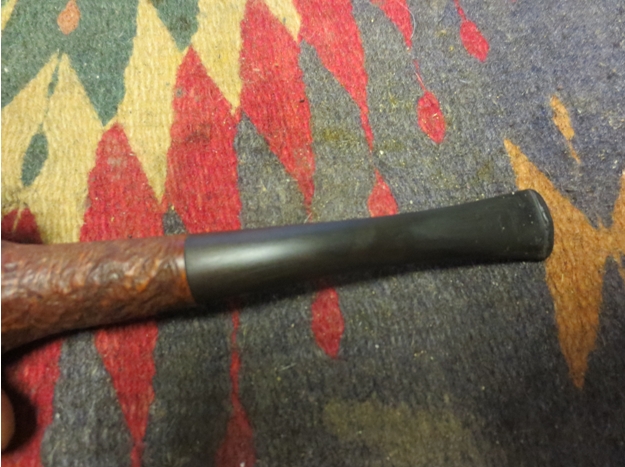
The next pipe on the table was one that we purchased from our contact in Denmark who has provided us with some great pipes. We bought it on 02/16/2023. It caught my eye because of the brass “O” on the stem which I have come to associate with Julius Vesz Hand Made pipes. The stamping on the shank is a bit odd, but uses some of the words that I have come to associate with Vesz pipes.  On the underside of the shank it reads hand cut (lower case script) with B on top of the “cut” portion of the stamp making it unclear. Below that the stamp reads Olive and I don’t think it refers to the wood but perhaps the finish on the pipe. I have never seen a Vesz stamped with that nomenclature. The wood is definitely briar and not Olive wood. I really like the fact that the pipe is the top of the line of Vesz Hand Cut pipes. The bowl had a thick cake with an overflow of lava on the top and the inner edge of the bowl. There were also some burn marks and darkening on the inner edge of the rim. These would need to be dealt with in the clean up and restoration. The finish was dirty with grime and grit ground into the briar. The Ebionite stem was oxidized and had some tooth marks on both sides ahead of the button. Jeff took some photos of the pipe before he started his clean up work. Jeff took some great photos of the rim top that show the thick cake in the bowl and the lava on the rim top. There was also some burn damage on the front inner edge of the bowl and some darkening around the edges. He also captured the condition of the stem showing the oxidation and the tooth damage on both sides. Jeff took a photo of the damage to the filter tenon. It had a major crack on the top half. I expected it to break free during the cleanup process.He captured the grain around the sides and heel of the bowl well in these photos. It was amazing grain and the stain was a rich walnut that made the grain really pop around the bowl and shank. Jeff took a photo of the stamping on the underside of the shank. It was clear and readable as noted above. You can see the “B” stamped on top of the Hand Cut stamp. The second photo shows the brass “O” on the left side of the taper stem and the oxidation around it on the side of the taper stem.Before I started working my part of the restoration I spent some time trying to place the hand cut line in the Vesz hierarchy. I turned to rebornpipes to have a look at some of the pieces I had written previously on the brand. The first was a catalogue I had picked up on Vesz pipes from a friend. It was an older catalogue from the time period that the brand was called Craft Pipes (https://rebornpipes.com/2016/09/13/an-older-julius-vesz-catalogue/). In going through the catalogue there was nothing that referred to the newer lines of the Vesz pipes that showed up in other places.
A piece I wrote on a Vesz Zulu gave a lot of historical backgroundon the brand so I reread that (https://rebornpipes.com/2014/10/04/a-review-a-julius-vesz-shape-76-zulu/). I quoted from Pipedia in the piece and have included that and the link below.

Pipedia gives good background information on Vesz. The picture and the material is taken from this link http://pipedia.org/wiki/Vesz_Pipes

“Born and raised in Hungary, Julius Vesz was first exposed to pipe making through his grandfather. Although his grandfather died when Julius was only 9 years old, he can still picture his grandfather making pipes. It made a lasting impression that matured years later.

After immigrating to Canada at age 23, Vesz worked as a mechanical draftsman, but ever since a child had wanted to do something on his own. Remembering his grandfather’s pipe making and repairing, he thought perhaps he should try his hand at that also. He sought out Charlie Dollack, who had a repair shop in downtown Toronto, but while Charlie encouraged the young Vesz, he did not offer any help or instruction.

Julius continued on his own, setting up a modest shop in his own home, and was soon fixing and making pipes for several department stores, as well as United Cigar, which later turned into his main source of work. He discovered he had a unique skill, which he practiced and nurtured on his own. Like his grandfather, Vesz is motivated by a desire to create pipes that approach perfection.”

Over the years I have followed Julius Vesz’ pipes and kept an eye out for one that caught my eye. Julius Vesz is a Canadian pipe maker who has been controversial in his claim to use dead root briar. Many have argued about his choice of terms regarding the briar that he uses. But regardless of your take on that issue he makes beautiful pipes that smoke exceptionally well. His unique raindrop shaped pipes may be how many people know him. He has a shop in the Royal York Hotel, 100 Front Street West in Toronto.

His Hand Cut pipes are crafted from his oldest and finest blocks of aged briar. They come in a variety of shapes and styles and no two are the same. The grading of the Hand Cut is ascending from 3 – 9, then switches to A – D. The pipe I am working on is a B grade so it is getting close to the top of the grading scale which I would expect from the grain on the briar. The Hand Cut pipes were often personalized with bone, silver and gold ornamentation.

His early pipes bore the Craft Briar stamp, and though his company still is registered as Craft Briar his pipes are now stamped Julius Vesz. He carved every pipe that bears his name and though they may bear similarities to others that he has carved each one is one of a kind. His site says that “Every pipe is meticulously crafted from his personal supply of aged briar that he has been accumulating since the 1960s. The extremely old briar gives each pipe the exceptional smoking characteristics found only in a world famous Julius Vesz pipe.”

Now I knew that the Hand Cut pipe I had was the top line of Vesz Pipes and that it was Graded a B which is close to the top of the line which tops out at Grade D. It is a beauty and it is now time to work on it!

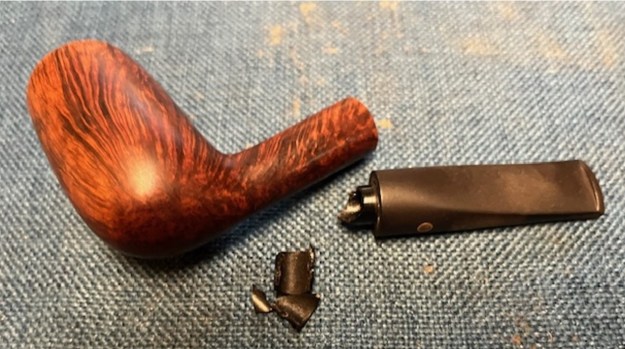
Jeff had thoroughly cleaned up the pipe. He had reamed the pipe with a PipNet pipe reamer back to bare briar and removed the remnants of the cake with a Savinelli Fitsall Pipe Knife. He scrubbed the bowl with undiluted Murphy’s Oil Soap and a tooth brush. He rinsed it under running warm water to remove the soap and grime. He cleaned out the inside of the shank and the airway in the stem with alcohol, cotton swabs, pipe cleaners and shank brushes. He soaked the stem in Briarville’s Pipe Stem Deoxidizer and rinsed it off with warm water. The filter tenon, shown cracked above, fell apart in the clean up. You can see pieces of the broken tenon below. I took photos of the pipe before I started my part of the restoration work.

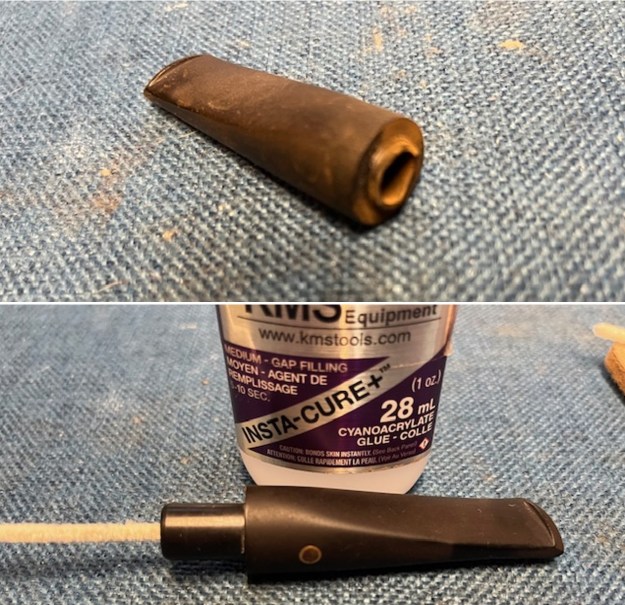
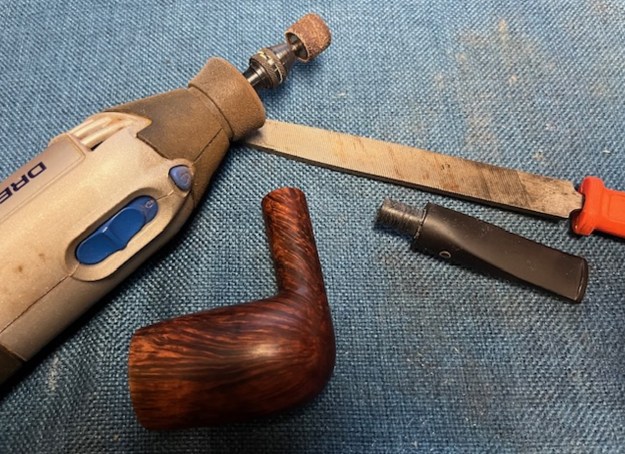
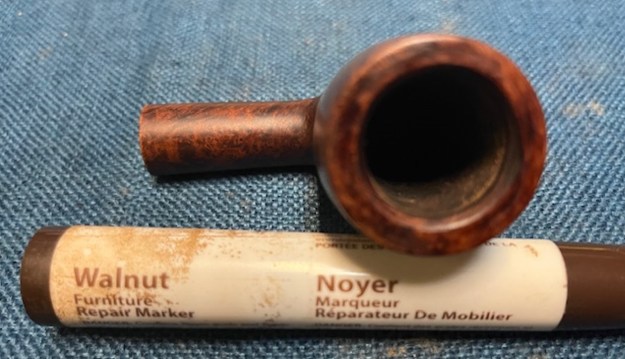
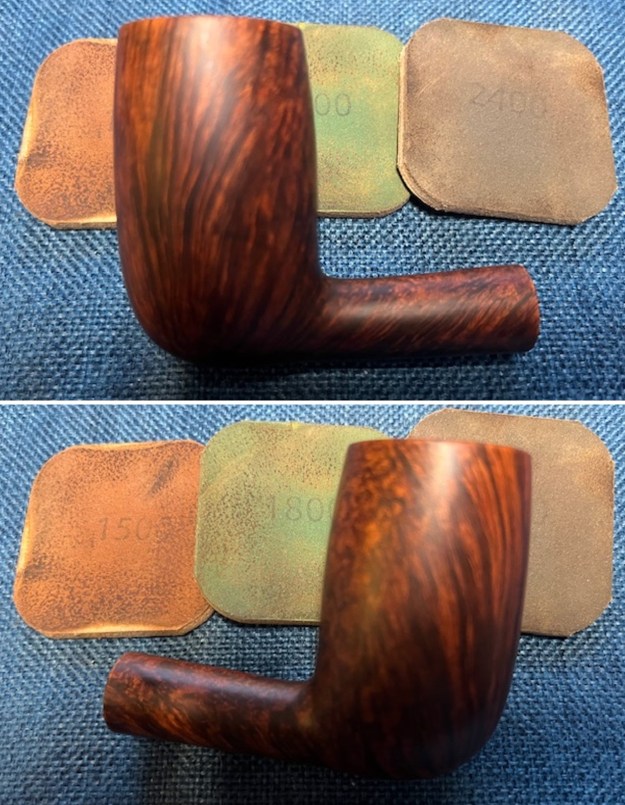
I took photos of the bowl and rim top to show the clean condition. The burn damage on the inner edge of the bowl is clear on the front of the bowl. The rim top has some scratches and marks as well. The bowl walls look very good. The thick vulcanite stem looks very clean and the tooth marks are evident next to the button on both sides.I took the stem off the bowl and took photos of the broken tenon and parts. It will definitely need to be replaced. The beauty of this is that I can replace it with a regular tenon instead of the filter tenon. To me that is good news.I decided to replace the tenon first. I knew that fitting it would require adjustments to the stem and shank so I wanted to do that before I put a lot of work into polishing the bowl. I used a Dremel to flatten out the broken tenon end. The photo below shows it in process to the flattening out. Once it is flat and the face of the stem is smooth then it will be time to put a new tenon in place. With flattened I used a Delrin tenon – the largest that I had to fit into the airway in the stem. I coated the threaded end of the tenon with clear CA glue and inserted it in the end of the stem.I set the stem aside to let the glue cure on the new tenon. Once it had hardened it was time to reduce the diameter of the new tenon to properly fit in shank. I used a file and a Dremel with a sanding drum to bring it to the right diameter.When I had the tenon shaped correctly, diameter and fit correct I put the stem in the shank and took the following photos. You can see that the fit is very good. It is snug and looks good against the shank end. The alignment to the shank end is quite good but I will need to sand the right side of the stem a little to make the transition smooth. I will need to do the same on the right, top and bottom sides – adjusting either the stem or the shank for smooth transition between the stem and shank. I have to say it is a really beautiful pipe! I sanded the transition smooth all the way around the shank and stem joint. I was careful on the underside to not damage the stamping. Once it was smooth I polished the sanded areas with 1200-3200 grit micromesh pads. I used a Walnut stain pen to blend in the adjusted areas to the rest of the briar. That transition looked and felt very good.I set the stem aside for now and turned to the bowl. I used a folded piece of 220 grit sandpaper to smooth out the damage on the front inner edge and to give it a slight bevel to bring it back to round and deal with the darkening in that area of the rim edge. It definitely looks better. I smoothed it out with micromesh sanding pads. There were some gouges in the rim top on the front and I did not want to top the bowl. I used a tooth pick and clear CA glue to fill in the gouges. Once it cured I smoothed them out with 220 grit sandpaper and smoothed it with some 1500 grit micromesh. I restained the top and the inner edge with a Walnut stain pen. I polished the briar with micromesh sanding pads – dry sanding with 1500-12000 grit sanding pads. I wiped the bowl down with a damp cloth after each pad. I take photos of the three groups of pads for my own viewing primarily as I am looking for progress in polishing. Once again, by the end of the process it looked quite good. I rubbed the bowl and shank down with Before & After Restoration Balm. I worked it into the surface of the bowl sides and shank with my fingertips. It works to clean, enliven and protect the briar. I let the balm sit for 15 minutes and buffed with a cotton cloth to raise the shine. The grain came alive. I set the bowl aside and turned my attention to the stem. The scratches, tooth chatter and marks easily were addressed by dry sanding the stem with 320-3500 grit sanding pads. I wiped it down after each pad with Obsidian Oil. It looked very good at this point in the process.I polished the vulcanite stem with micromesh sanding pads – 1500-12000 grit pads to further remove the remaining scratches. I wiped the stem down with Obsidian Oil after each sanding pad. I used Before & After Pipe Polish – both Fine and Extra Fine to further polish the stem. I rubbed it down with a final coat of Obsidian Oil and let it dry. This Julius Vesz Hand Cut Grade B Olive Stack is a great looking pipe with great grain around the sides of the bowl. The replaced broken filter tenon with a Delrin one worked very well and now it is a nonfilter pipe. I put the stem back on the bowl and carefully buffed the pipe with Blue Diamond on the buffing wheel using a light touch on the briar. I gave the bowl and the stem multiple coats of carnauba wax on the wheel and followed by buffing the pipe with a clean buffing pad. I hand buffed the pipe with a microfiber cloth to deepen the shine. The finished Vesz Hand Cut B Grade Olive fits nicely in the hand and feels great. Give the finished pipe a look in the photos below. The dimensions of the pipe are Length: 5 ½ inches, Height: 2 ½ inches, Outside diameter of the bowl: 1 ¼ inches, Chamber diameter: 7/8 of an inch. The weight of the pipe is 52 grams/1.80 ounces. This one will be with me for awhile so I can enjoy the beauty of this high grade Julius Vesz Hand Cut Stack. I think I will enjoy it for a while before I make up my mind once and for all… at least for now. Thanks for reading this blog and my reflections on the pipe while I worked on it. As always, I appreciate your comments and questions. Thanks for your support and time!

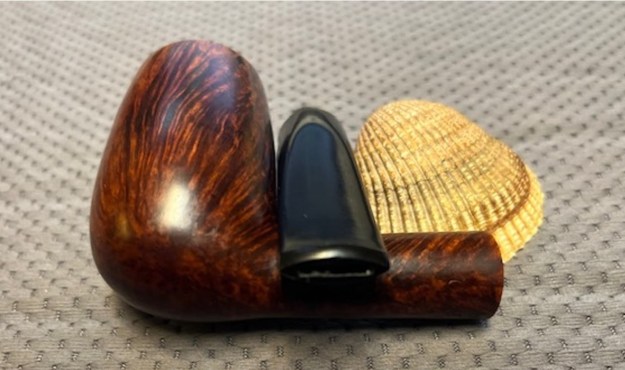
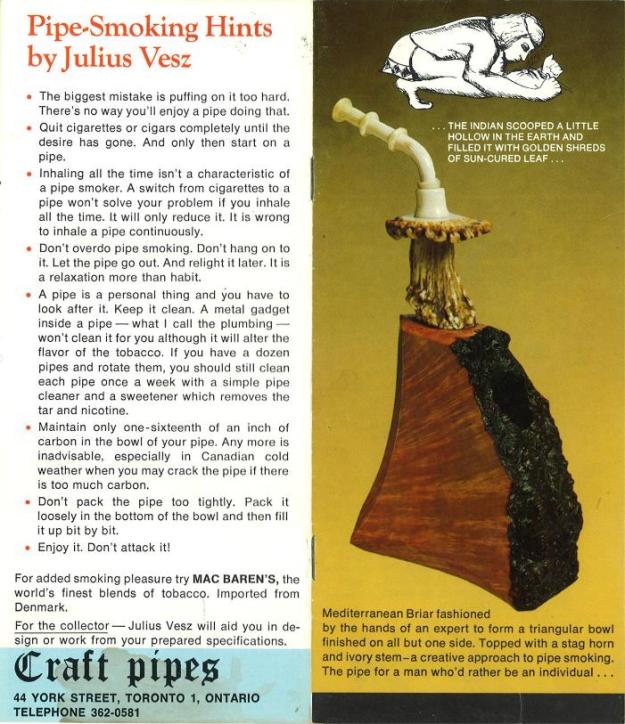
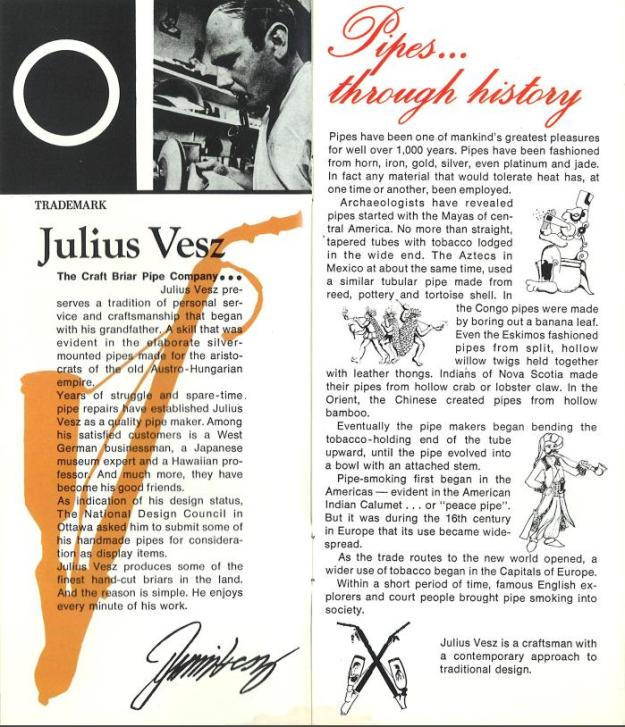
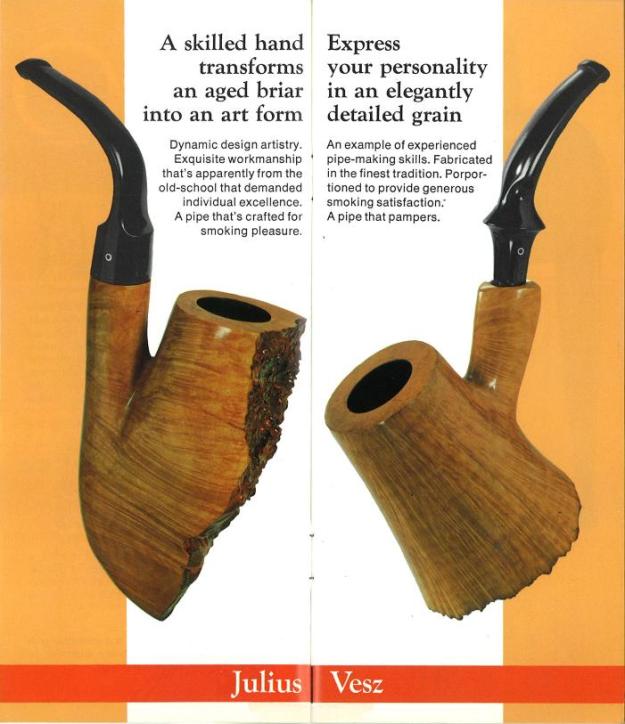
An Older Julius Vesz Catalogue


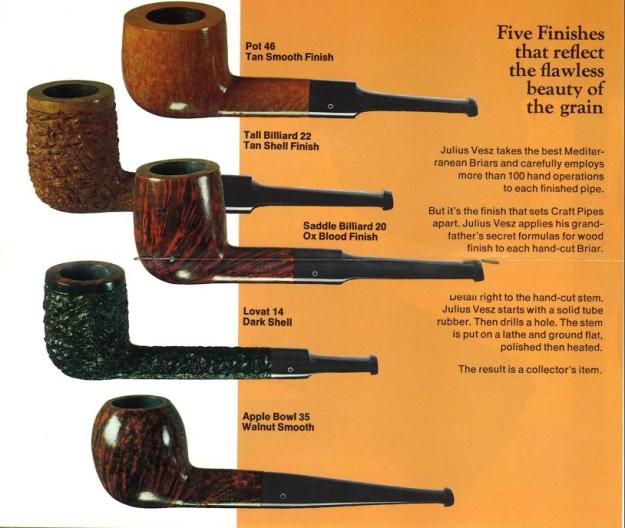
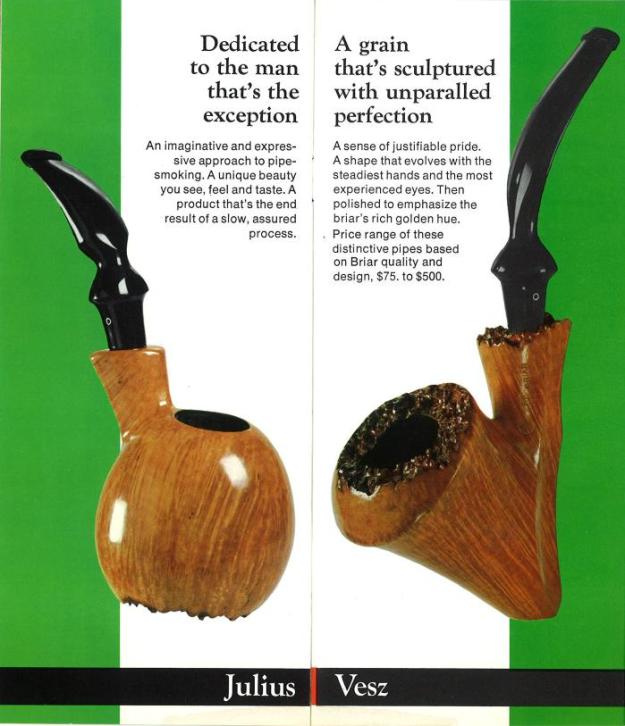
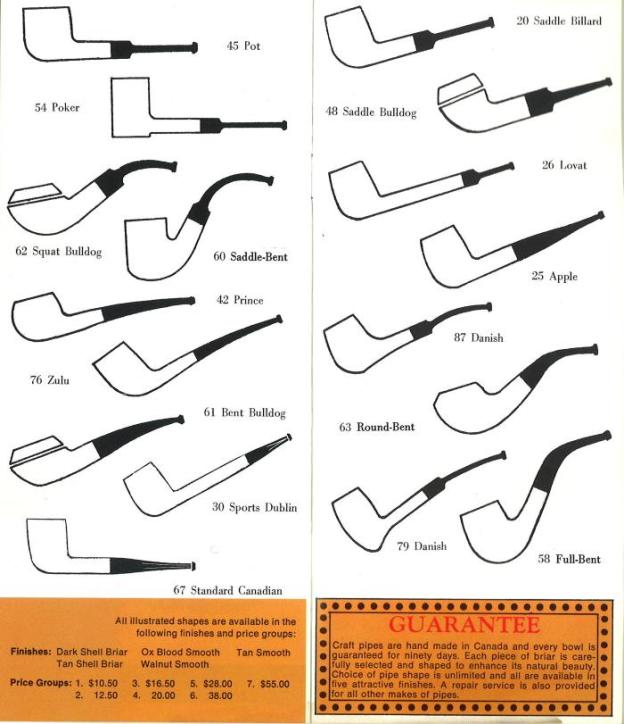
On Sunday I visited R.J. Clarke Tobacconist here in Vancouver and he gave me a bag of tobacco literature. There are catalogues, brochures, flyers, inserts and letters from suppliers. There is some pretty interesting memorabilia in the bag. I am scanning the documents and will be posting them here on the blog to give them a wide audience. The first of these is an older Julius Vesz catalogue. I have several of Julius’ pipes and enjoy them. They smoke cool and dry. So this was a great addition to the information I have on the pipes. I thought I would share it with you all. Enjoy the brochure.

vesz1 vesz2 vesz3vesz4vesz5vesz6

Rode Hard Put Away Wet – A Tired Julius Vesz shape 31 Zulu/Canted Dublin


Blog by Steve Laug

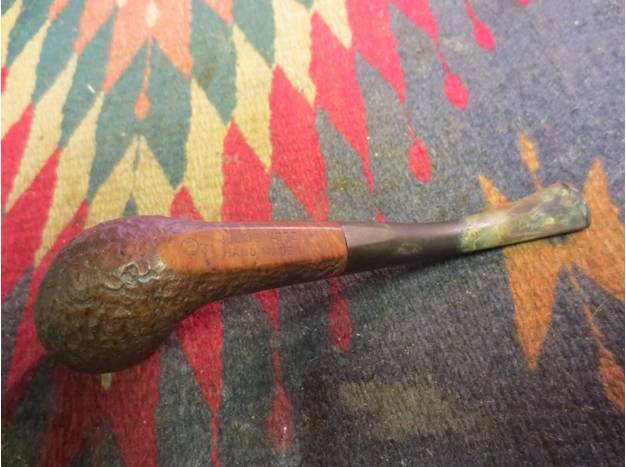
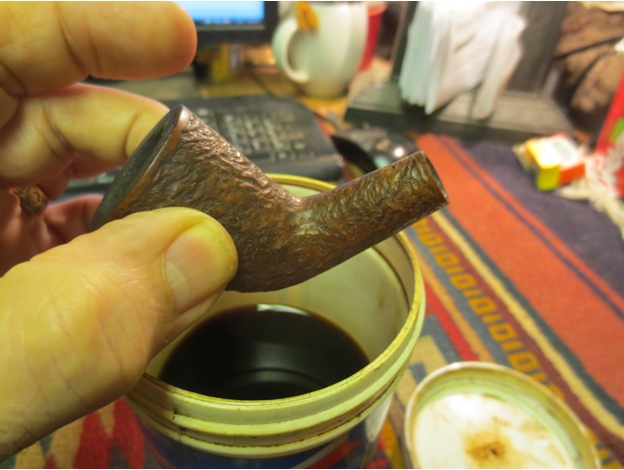
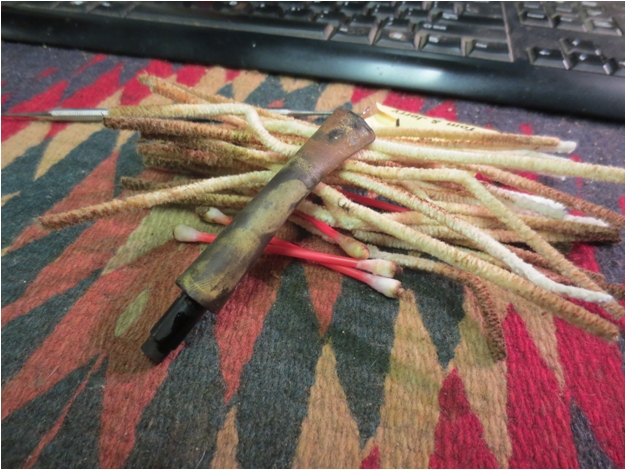
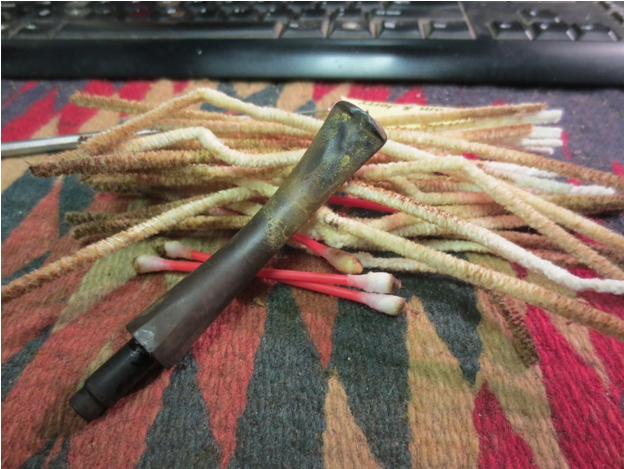
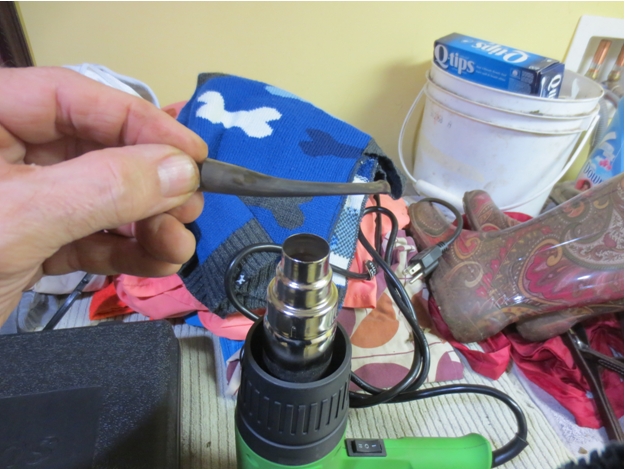
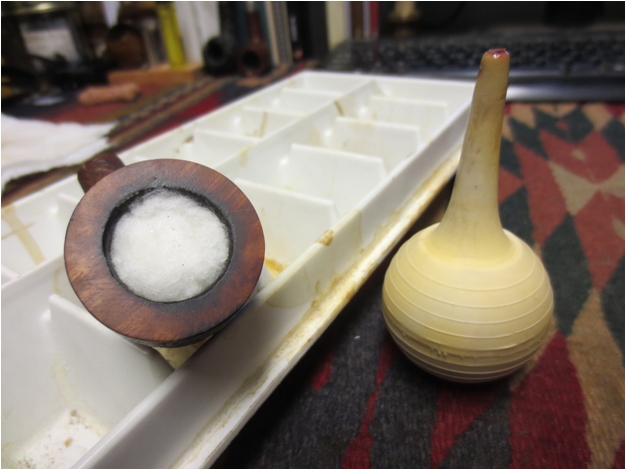
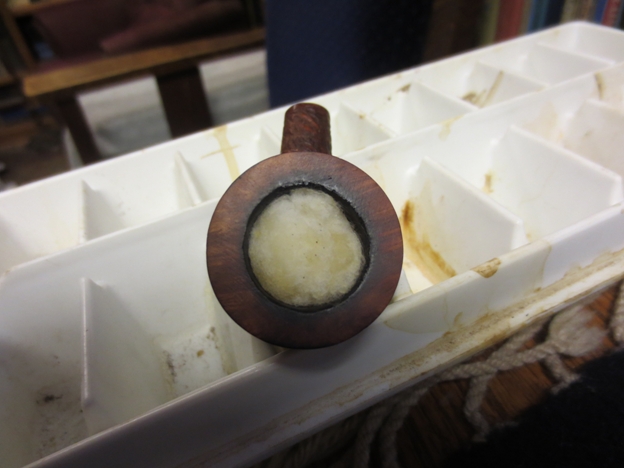
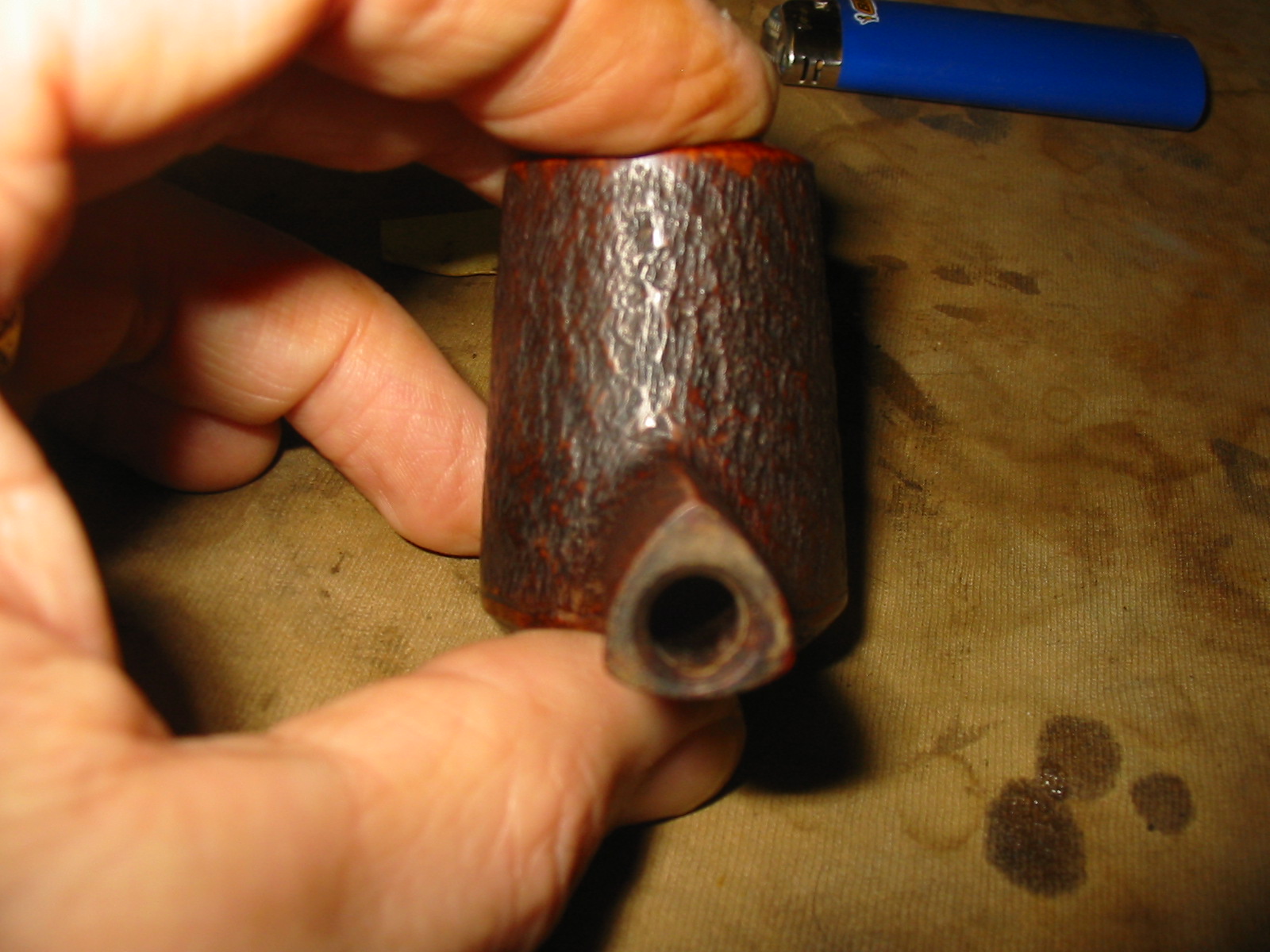
When I walked by the display case in the antique mall and saw the classic Vesz finish and the O logo on the stem I knew I was looking at one of Julius’ pipes. It was in very rough shape. The stem was covered on the topside and underside from the button forward for about an inch with a lot of dents and bite marks. On the topside there was a bite through – not large, more of a pinhole sized hole. There was also a lot of calcified buildup on the stem. The stem was over bent and the flat bottom of the bowl and shank did not rest on the desk top when laid down. The stem arch kept it from happening. The button and crease had were also worn. The rest of the stem was oxidized. The bowl finish was dirty and worn with white paint spots on the bowl. The stem was very tight and hard to remove but when I did remove it the tars on the end of the tenon were thick. The inside of the stem was so filled that the airway was virtually clogged. The slot on the end of the stem was plugged but for a hole the size of a pencil lead.Vesz1 Vesz2 The rim was damaged and worn from tapping it out on hard surfaces. There were large dents and worn areas. The inner edge was blackened and on first glance looked to have burned damage. It was hard to tell for sure but it also looked to be slightly out of round due to the damage to the inside edge. The bowl was heavily caked with a concrete like carbon build up. I tried to ream it and found it too hard to cut as it stood. The inside of the shank had heavy carbon and tar buildup.Vesz3 The pipe is stamped on the flattened bottom of the shank. Toward the front of the bowl it is stamped Circle 3 which denotes the price point of the pipes. Julius stamped them 1-6 to denote the price. That is followed by the shape number – in this case 31. The final stamping is Julius Vesz over Hand Made.Vesz4 To soften the concrete like cake so that I could ream it more easily without damaging the briar I put the bowl into an alcohol bath to soak for a while. I also wanted to remove the grime from the rustication on the bowl and the soak would facilitate that.Vesz5 While the bowl soaked I worked on the stem. I cleaned the inside of the stem with cotton swabs, pipe cleaners and isopropyl alcohol. I also sanded the calcification with 180 grit sandpaper and 220 grit sandpaper to remove the build up from the surface of the stem. The tooth marks are very evident in the photos below.Vesz6 Vesz7 I took the bowl out of the alcohol bath to ream it and found that indeed the alcohol had softened the cake enough to make reaming a very easy task. I reamed it with a PipNet reamer starting with the smallest cutting head and working up to the size of the diameter of the bowl.Vesz8 I topped the bowl and removed the damaged surface of the rim. I set up a topping board and used 220 grit sandpaper to gently and carefully remove the damage. I sanded the bowl in a circular pattern on the board as I find that doing so does not leave as deep scratches in the finish. Once I had removed the damage I could see the state of the inner edge of the rim. It had some darkening but it was still solid. There were no deep burned areas that needed to be removed.Vesz9 Vesz10 Vesz11 I set up a heat gun and heated the bent stem to reduce the bend to a point where the pipe would sit up right on the flat bottom of the shank and bowl. I also heated the tooth dents to raise them as much as possible before I sanded them.Vesz12 Vesz13 Once the stem was heated and flexible I inserted it in the shank and pressed down on the bend to adjust the bend to allow the bowl to sit without falling over. The tooth marks did lift quite a bit and are visible in the last two photos of the foursome below.Vesz14 Vesz15 Vesz16 I sanded the stem with 220 grit sandpaper and then with medium and fine grit sanding sponges to clean up the dents as much as possible. The surface needed to be cleaned and prepped for the work of filling the dents with black super glue. I washed down the dents with alcohol to remove the sanding dust. I filled the holes and built up the dents in the button lip with black super glue until they were overfilled, then sprayed them with the accelerator to harden the glue. I sanded the fills with 180 grit sandpaper and then with 220 grit sandpaper to begin the process of smoothing them and blending them into the surface of the vulcanite.Vesz17 Vesz18 I continued to sand with the 220 grit sandpaper to shape the crease and the button as well as the surface of the patches until they were at the same level as the surface of the stem.Vesz19 Vesz20 I sanded the stem after that with a medium and a fine grit sanding sponge to further blend it into the stem surface. It took a lot of sanding to blend it into the surrounding vulcanite.Vesz21 Vesz22Vesz23 Vesz24 I rubbed down the stem with Obsidian Oil to make the scratches and trouble areas very visible. I also rubbed down the bowl with olive oil and wiped it off and set it aside overnight to let the oil be absorbed into the wood. In the morning I took the following set of two photos to show the state of the pipe when I began to do the finishing work on it. Vesz25 Vesz26 I sanded the stem with fine grit sanding sponges to clean it up further and remove the deeper scratches. I then sanded it with micromesh sanding pads – wet sanding with 1500-2400 grit pads and dry sanding with 3200-12,000 grit pads. I rubbed it down with Obsidian Oil between each set of three pads. I finished the stem work by buffing the stem with White Diamond on the wheel to finish the polish. I gave it several coats of carnauba wax and buffed it with a soft flannel buff to raise the shine.Vesz27 Vesz28 Vesz29 Vesz30 Vesz31 The bowl had a heavy ghosting of aromatics – it was overwhelming and no matter how many times I cleaned it the smell remained. I filled the bowl with cotton balls, pressed them down and then filled the bowl with isopropyl alcohol with an ear syringe until the cotton was soaked. I set the pipe bowl in an old ice-cube tray that holds it upright and let the alcohol and cotton do their work to pull out the oils from the briar and sweeten it. I have moved more and more toward using cotton instead of coarse salt. It seems to work just as well and is less of a mess in the clean up stage.Vesz32 I let the pipe sit with the alcohol and cotton balls for about three hours. The photo below shows the oils that were drawn out of the bowl. The cotton turned a yellow-brown and was almost dry.Vesz33 I took the cotton balls out of the bowl and cleaned the shank and bowl with pipe cleaners. I put the stem back in place on the pipe and gave the pipe a hand polish with some Halcyon II Wax. I hand buffed it with a shoe brush to raise the shine. The finished pipe is shown below. The look and feel of the pipe is far better than when I started. The repairs to the stem and button worked well and blended in nicely to the stem. The topping of the bowl removed the damaged portion and the blackening of the inner edge of the rim is merely a character trait. This is one that will stay in my collection. It smells sweet and is ready to smoke.Vesz34 Vesz35 Vesz36 Vesz37

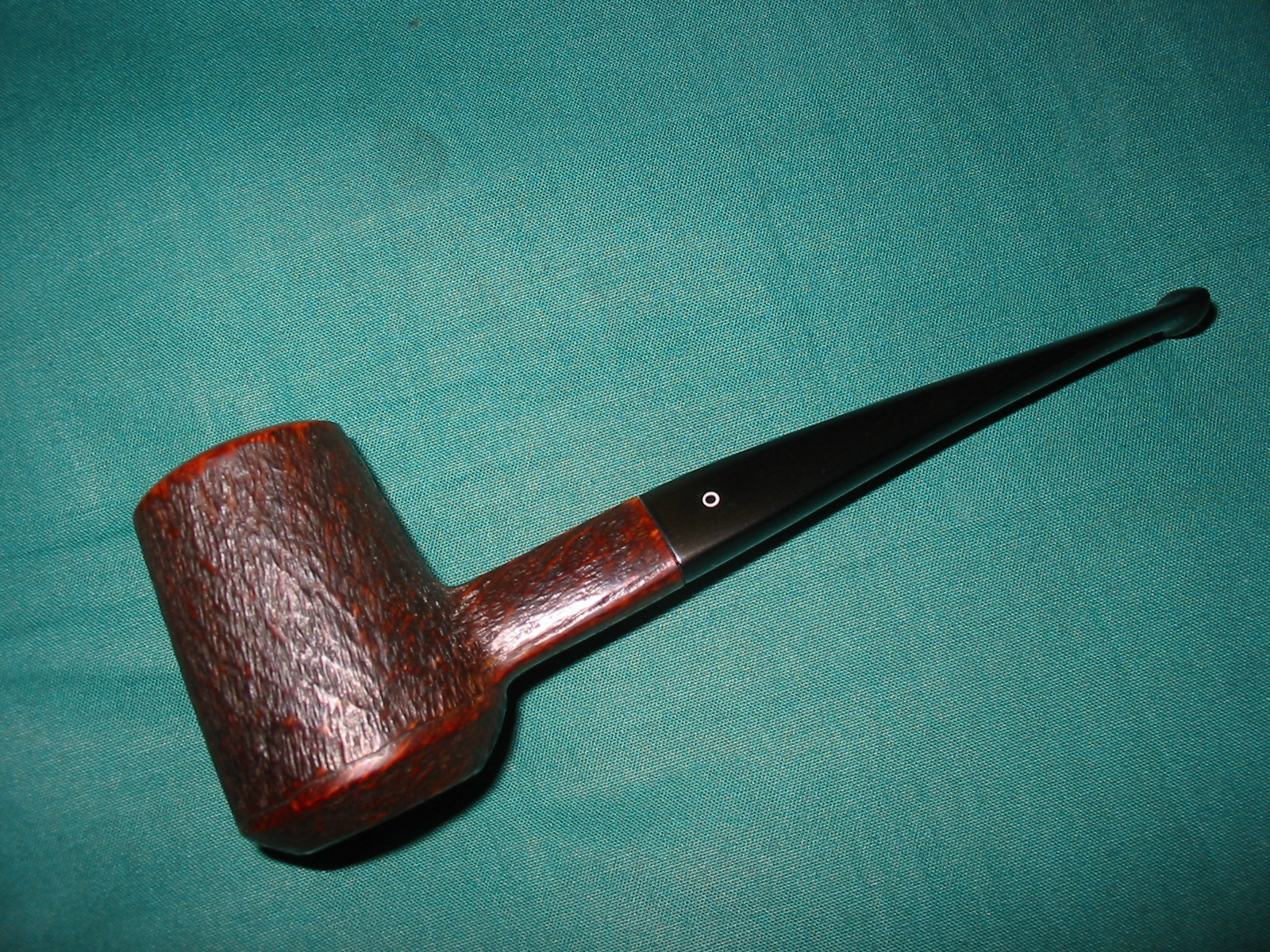
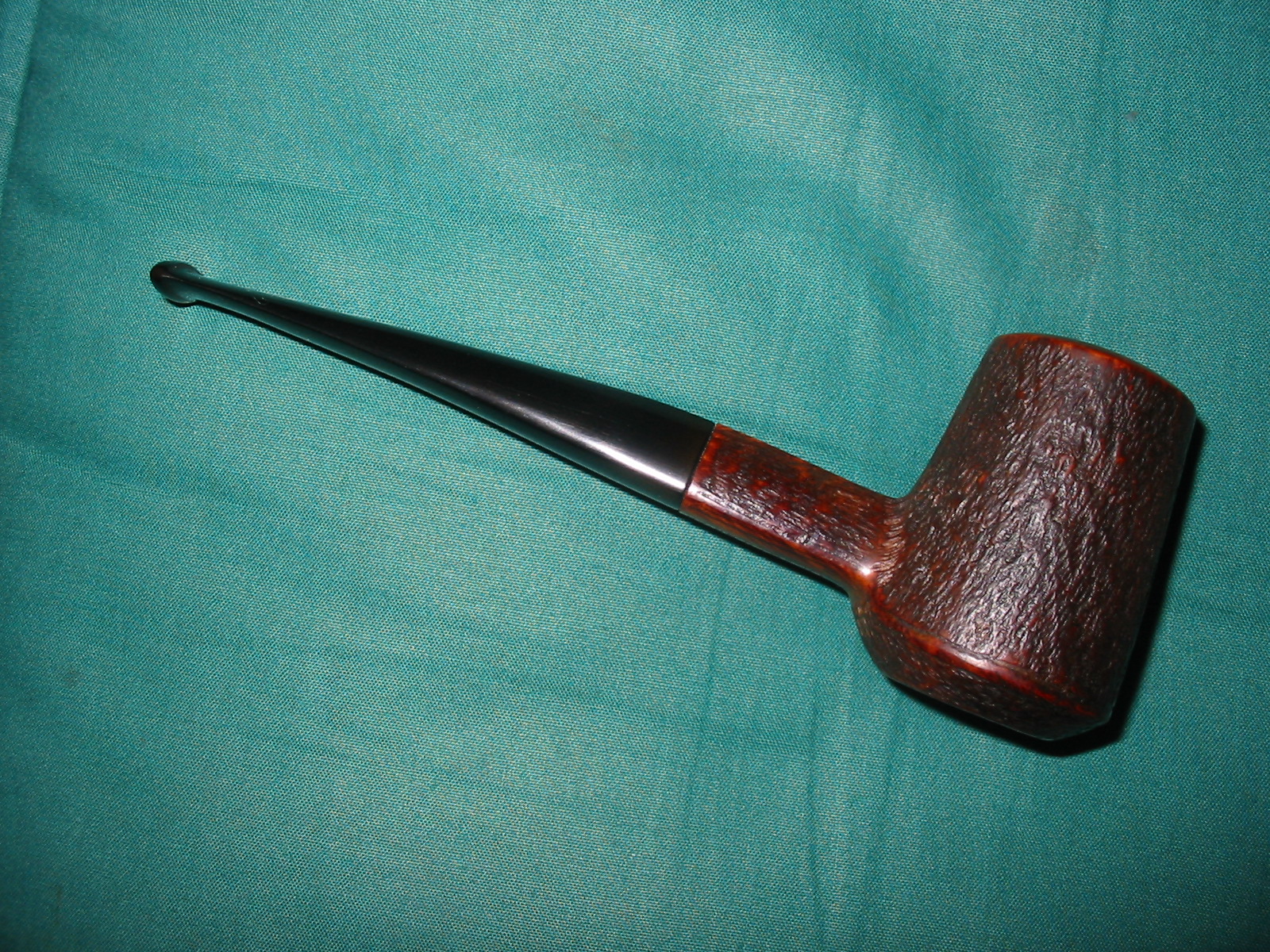
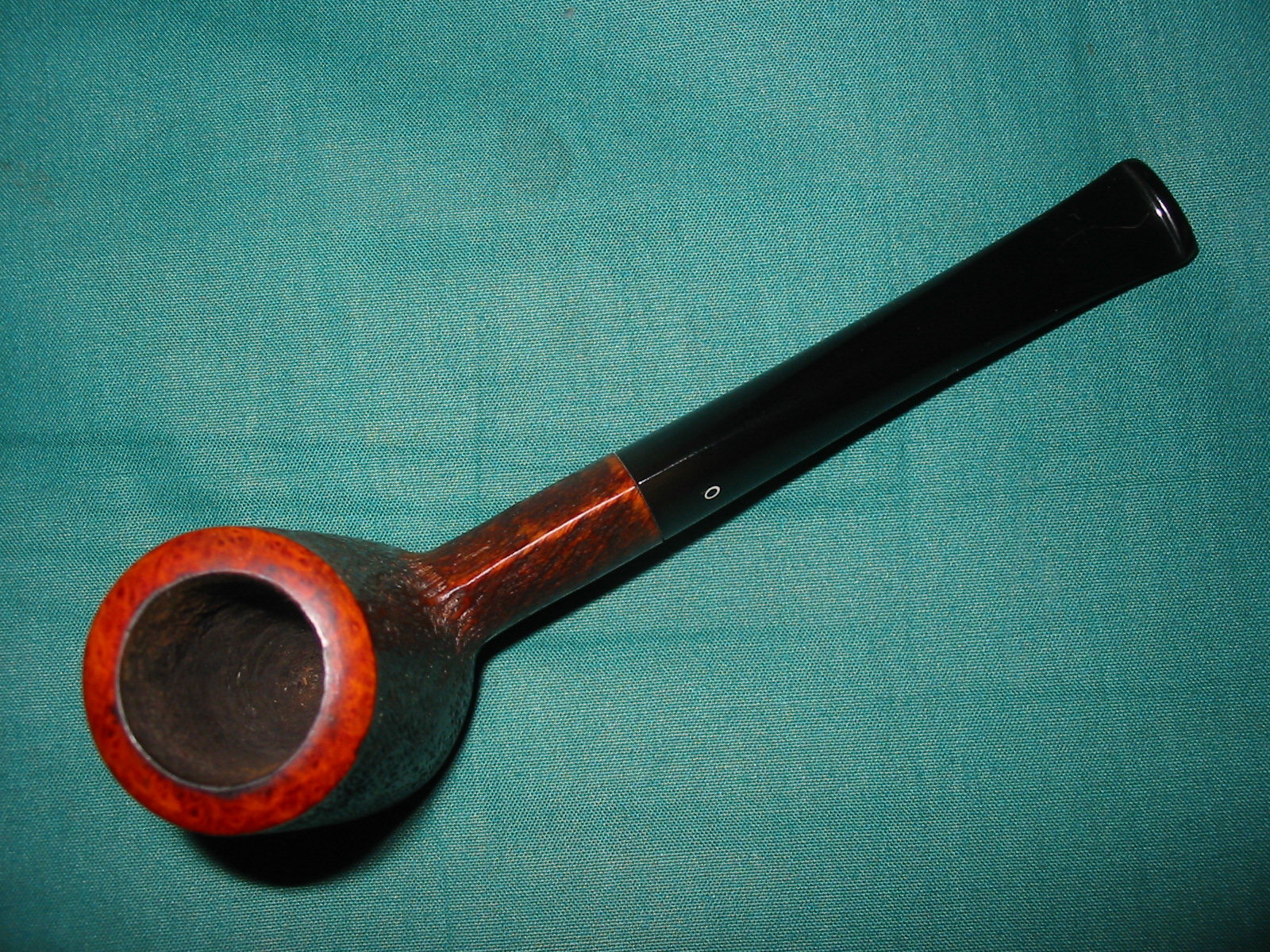
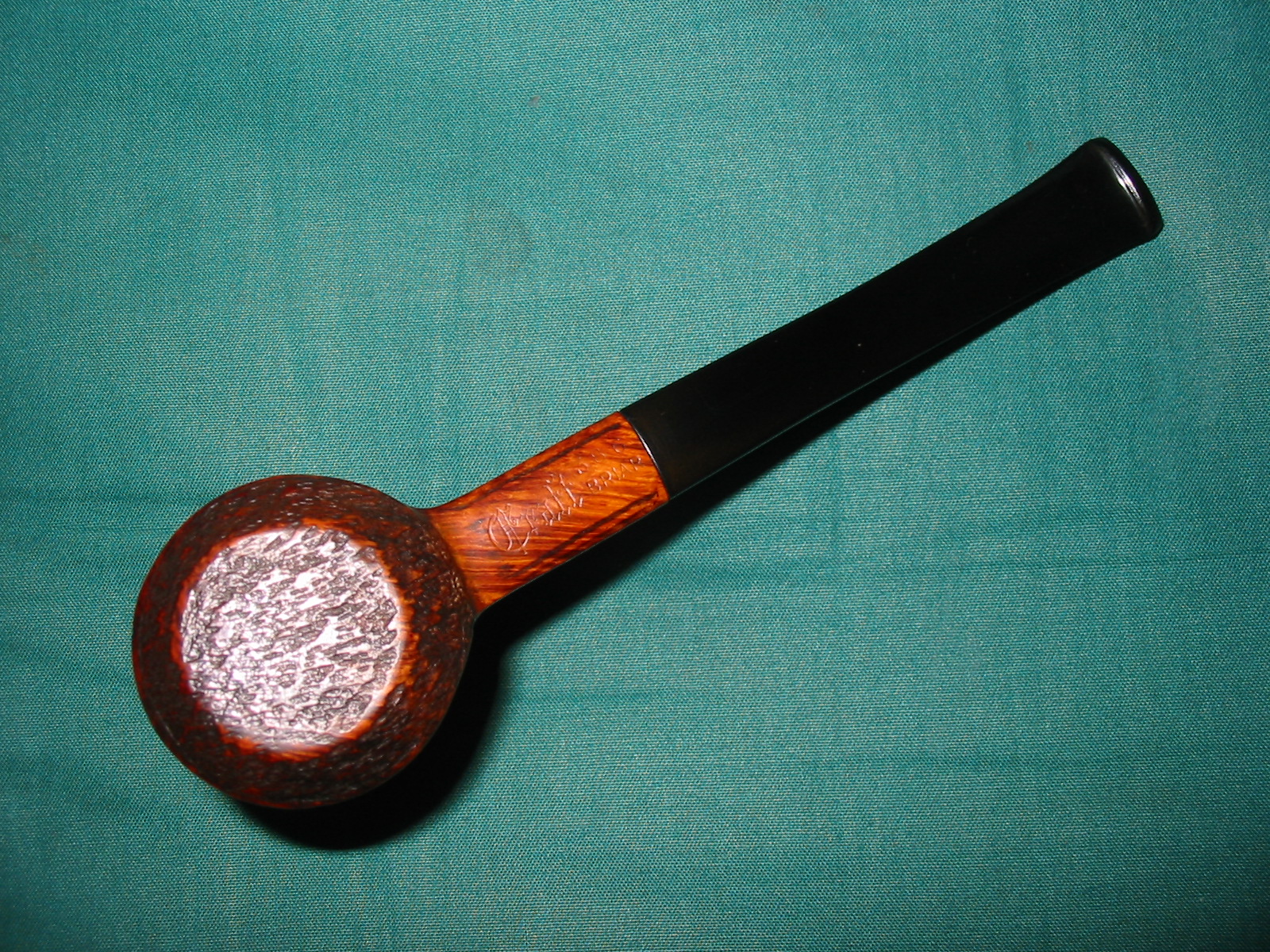
Restoring A Craft Briar Volcano/Poker


Finding this old pipe comes with a tale that is just too good not to tell. I have written it up here for your reading and also to help me remember the tale.

Yesterday I paid a visit to the Vancouver Flea Market to see if I could add any more pipes to my stock of pipes to refurbish. I generally have had some good luck there picking up older pipes at a good price. There is one seller at the market that has some pipes that have always caught my eye but her prices have been unreasonable. She would not negotiate on prices at all so I generally walked away from her and bought from other sellers. However, this time I decided to play a bit of her game. I looked at the various pipes and asked her prices. She walked away so I did as well. I made a loop around the market and then came back to her. She had a twinkle in her eye when I came back and she asked, “Are you serious to buy or do you just look?” I laughed and said, “That my dear lady depends solely upon you!” Again she had that same look and she responded, “Which pipe are you wanting?” I started with the one furthest away from the one I wanted and asked her price. It was a Savinelli Autograph in very nice shape. She took it from the case and waxed eloquent about its beauty. Now I knew her price was based on how beautiful the pipe was to her. She spoke of how her father had smoked a pipe in the old country and she had prepared his tobacco for him. She got a faraway look in her eye.

That did not last long and she was back to business. “You want it?” she asked. I asked her price which was far more than I was willing to pay. So I moved her on to the other pipes in her display case. These she said were less beautiful and were priced accordingly. I carefully went over each pipe talking about how I restore them to their original beauty because I was a pipeman. I loved pipes and everything about them. I enjoyed the process of restoration. She was hooked! I finally got around to the pipe that I had had my eye one for quite a while over the past trips I have made to the market. I asked her the price. She replied that it was $49 but the other one she had shown was way better. She said I should not wait and think too long as opportunities move quickly in our world and who knew if it would be there the next time I came back.

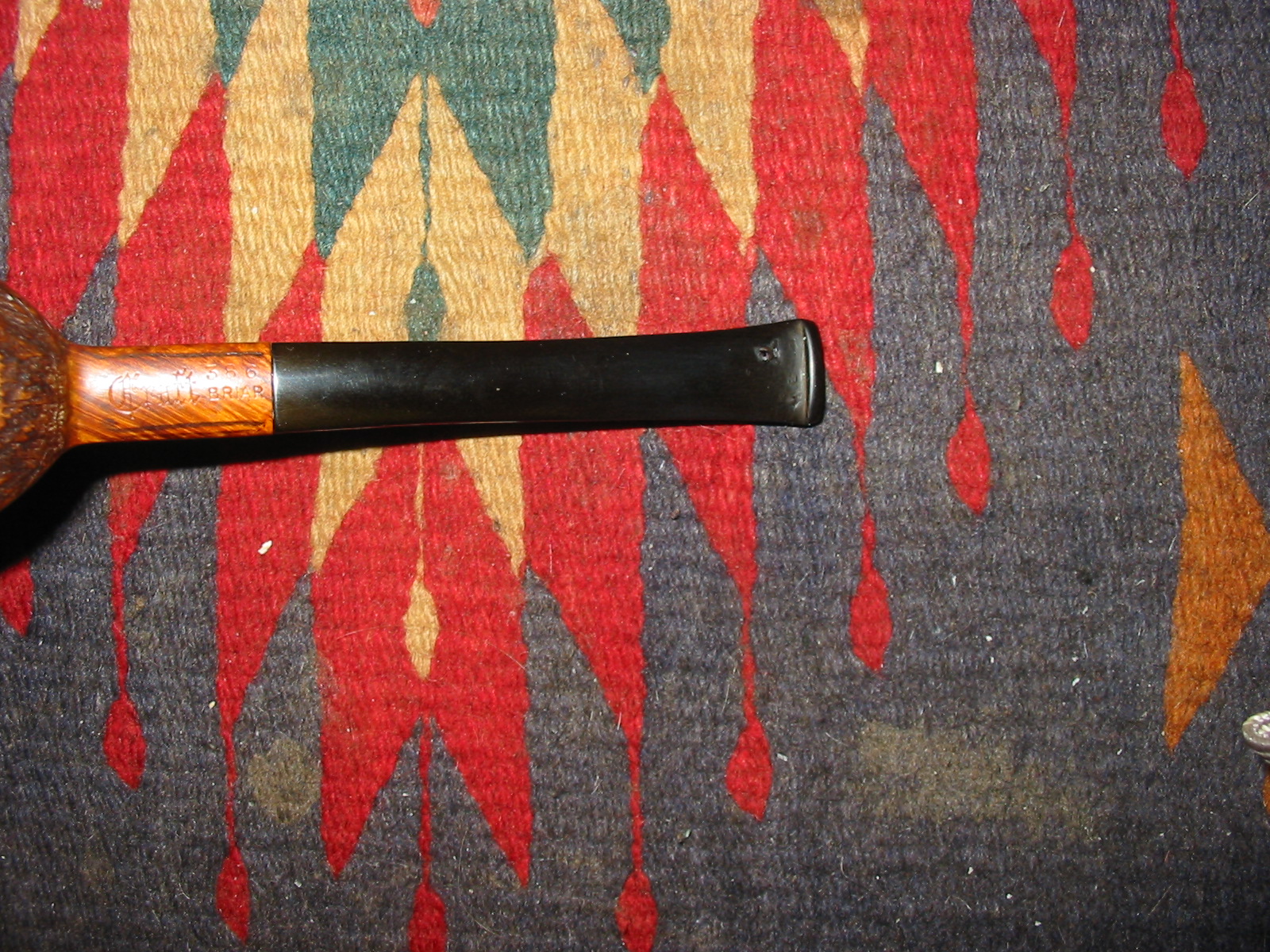
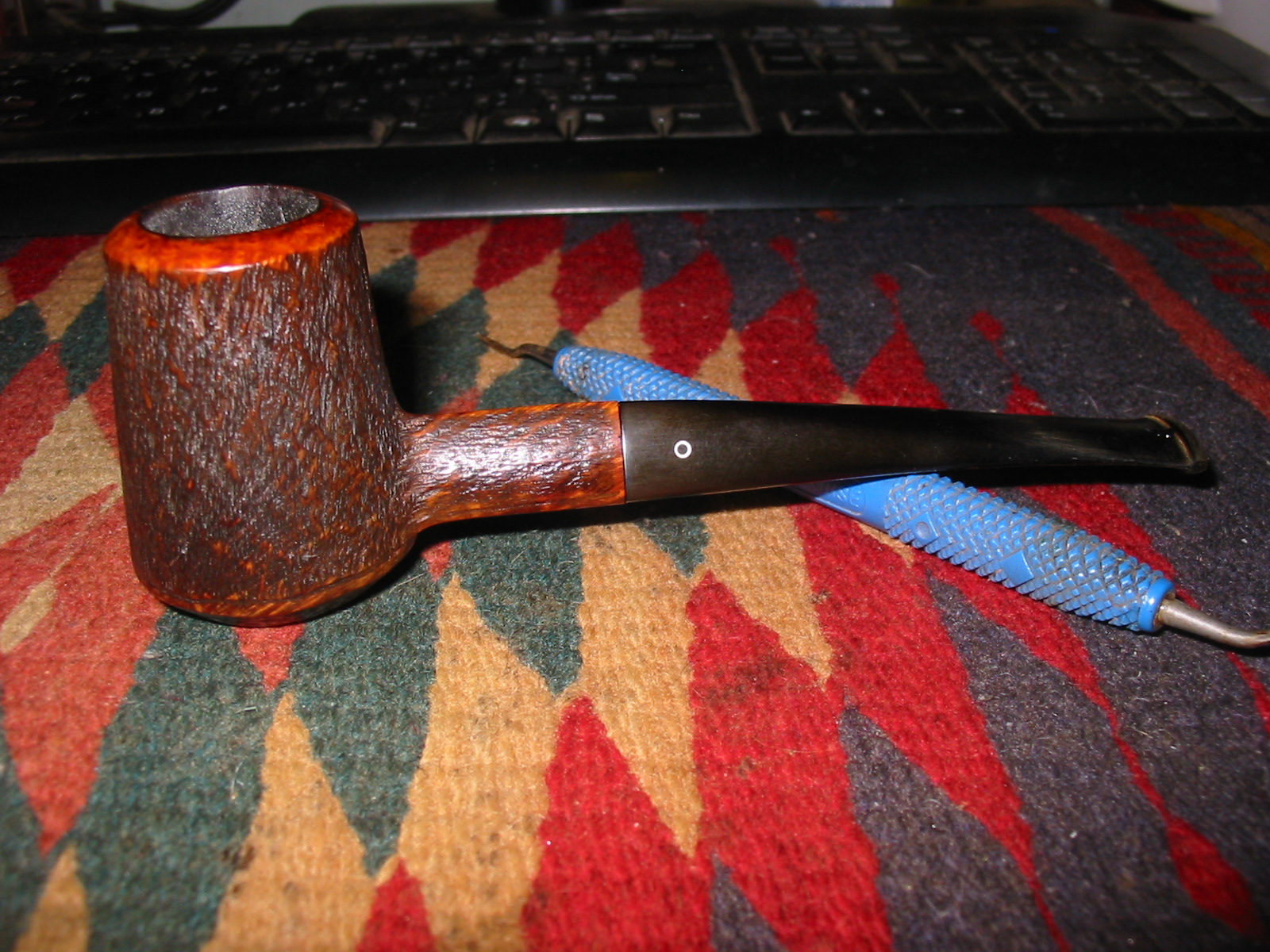
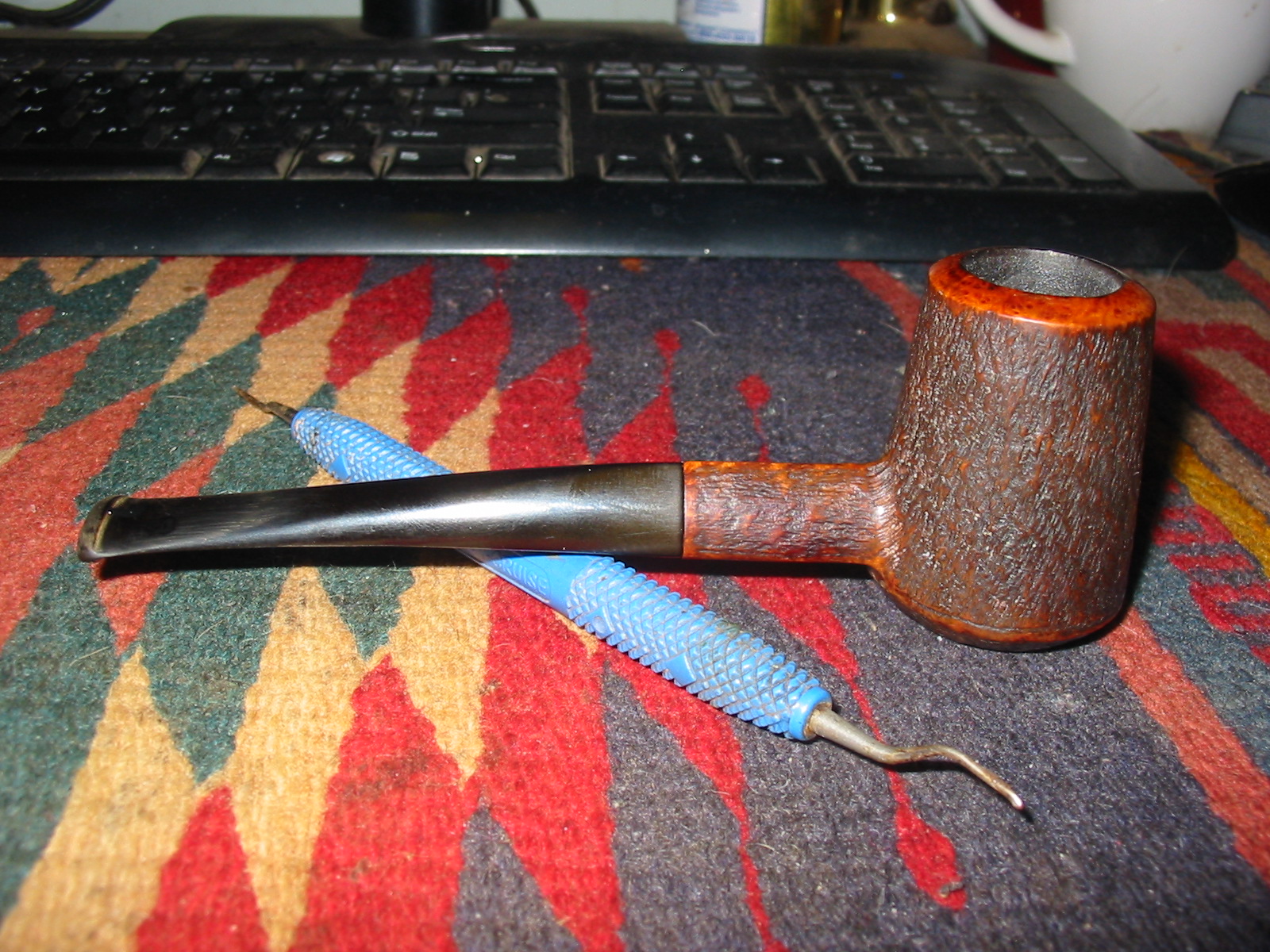
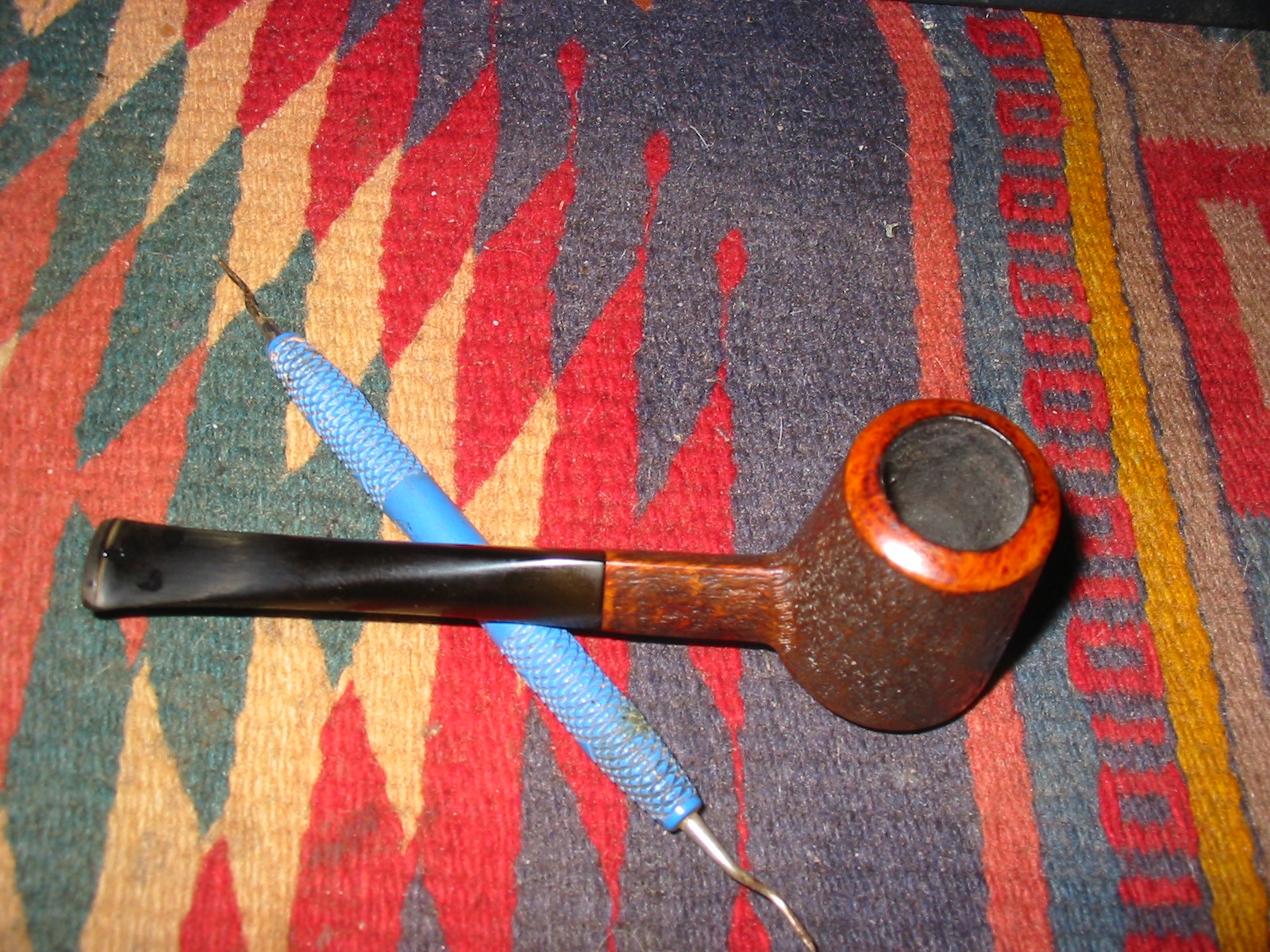
While she spoke I checked out the pipe I wanted. It was stamped on the bottom of its triangular shank, Craft in a Germanic Script and next to that Briar. Stamped above Briar was the number 386. It had an unusual rustication patter on it, a smooth rim and smooth lines on the edges of the triangular shank, the end of the shank and around the rounded bowl bottom. The bottom of the shank was smooth as well. The stem was clean and well fit, with slight oxidation around the shank. There were deep tooth marks on the top and bottom of the stem. The bowl was quite clean with a slight cake and the rim was relatively clean as well – a little tarry buildup at the back of the rim. There was no charring or burning. All of this was taken in while she waxed on about taking every opportunity to by the Savinelli.

When she paused for a breath I asked her the price on the pipe in my hands, knowing full well that there was a price tag on the underside of the stem. Without missing a beat she said, “You want that one? I will make a deal”. Ah, now I knew I could make an offer for the pipe. Too low an offer and she would be insulted but too little a variation from her price would insult her. What to do. I quickly came to a price in my mind and spoke it out, “I will pay you $40 cash right now. No tax and no more for this pipe of less beauty than the one you love so much.” She smiled and nodded her head. “We have a deal,” she said and held out her hand for the cash. I was ready and had two brand new $20’s in hand and laid them on her upturned palm. She smiled and told me to enjoy the new pipe but to not let the beautiful one pass without taking it home too.

I walked away and went to the coffee shop. I sipped a coffee while I did a bit of searching on the web regarding the Craft brand of pipes. Somewhere in the recesses of my memory it was a familiar name to me. The “o” logo on the stem looked familiar as well. I had a hunch the pipe was made by Julius Vesz, a Toronto pipemaker selling out of the York Hotel. I found a notation on the web that confirmed that the pipe was made in Toronto and sold out of a shop at the York Hotel. The address given on the site matched Vesz’ shop there. I was fairly certain that my hunch was correct. Another site stated that the Craft Briar Pipe Company’s principal was Julius Vesz. The identity of the carver was certified by the web.
IMG_3525

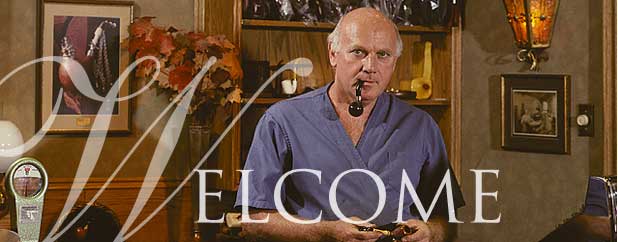
I still wanted to take one further step in confirming that the pipe did indeed come from Julius Vesz. I googled his website and sent an email via the website to the webmaster. I also emailed him directly from the contact information given on the site. Here is the web address should you want to check out some of his pipes: http://www.juliusvesz.ca/
welcome

I have included our correspondence about the pipe in full below.

On Dec 29, 2013, at 6:44 PM, Steve Laug wrote:
aboutpg

Good evening Mr. Vesz
I came across a pipe that I believe came from your shop if my research is correct. It is stamped Craft Briar and 3B6 and has a white o on the triangular stem. I was wondering if you could confirm that it is indeed one of your pipes. I have several of yours and thoroughly enjoy them and was caught by the “o” logo on the stem and the great shape of this one. Thank you for your time.
Kind regards
Steve Laug

On Dec 30, 2013 Rob Vesz wrote:

Hello Steve
This is Rob Vesz, Julius’ son replying. I take care of my father’s email and website. Thanks for your message and kind words.

Yes, Craft is the name Julius stamped on his very early pipes. It is in fact still the name of his company, but he operates under “Julius Vesz”. That pipe would be around 50 years old. My father stopped stamping Craft around the mid 1960’s.

It would be interesting to see a photo if you don’t mind emailing one.

Thanks again.

Rob Vesz

There is was – the web confirmation was confirmed by Rob Vesz that the pipe was indeed crafted by Julius Vesz and gave a date when the stamping on the pipes changed from Craft Briar in the mid 1960’s. I wrote back to Rob and sent the requested photos of the pipe and asked for clarification on the number stamp on the shank of the pipe. I wondered if it was not a date stamp. Below is that correspondence.

On Dec 30, 2013, at 12:37 PM, Steve Laug wrote:

Hi Rob
Thank you for your prompt reply. I appreciate the information. I am in the process of restoring the pipe now. Soon I will write it up for the rebornpipes blog – a blog I run for refurbishing of pipes.

I have attached three photos of the pipe. It is in pretty good shape other than some deep bite marks on the stem, top and bottom near the button.

One more question – can you interpret the stamping for me? The number on it is 386 – does that give me date information?
Thanks
Steve

On Dec 30, 2013 Rob Vesz wrote:

Steve
The 386 should be a style # that my father used. Will speak to him to see if he has any further thoughts on that.

Rob

Below are three more photos of the pipe showing what it looked like when I brought it home to refurbish.
IMG_3524

IMG_3526

IMG_3527

I took several photos of the end of the stem to show the tooth mark damage that was present. It truly was the only thing wrong with this pipe. The first photo shows the underside of the stem but does not show the size or the depth of the bite mark at the top of the photo.
IMG_3528

IMG_3529

I heated the stem with a heat gun to try to lift the tooth marks. The ones on the top of the stem lifted almost to the surface and a little sanding took care of the remnants there (Photos 1 and 2 below). The ones on the underside were deeper. Two of them lifted to the surface and with sanding disappeared. The one on the left side of Photo 3 was very deep and the surface of the vulcanite was broken so that it did not lift. It left a pit in the surface of the stem. I picked it clean with a dental pick.
IMG_3530

IMG_3531

IMG_3532

I wiped the sanded area of the stem down with Everclear on a cotton pad to clean the surface before using black superglue to repair the deepest bite mark and to also fix a small one to the right of it. The next two photos below show the drops of superglue on the surface of the stem. I set the stem aside for the glue to cure and went on to clean the bowl and rim.
IMG_3534

IMG_3533

I scrubbed the tars on the rim with saliva on a cotton pad until they were gone. The photo below shows some of the buildup still remaining that took a bit more elbow grease to remove. I also wiped down the rest of the bowl with a damp cotton pad to remove grime and dust.
IMG_3535

IMG_3536

IMG_3537

IMG_3538

IMG_3539

I cleaned out the shank with cotton swabs, pipe cleaners and Everclear to remove tars and oils left behind by smoking. I reinserted the stem in the shank and set the pipe down to continue to dry. There were two small marks left behind after I had sanded the top of the stem so I used the black superglue on them as well and set the pipe to rest on a dental pick while the glue on both sides of the stem dried.
IMG_3544

IMG_3545

IMG_3546

IMG_3547

IMG_3548

Once it was dry I sanded the excess with 220 grit sandpaper, a medium grit sanding sponge and then micromesh sanding pads. I wet sanded with 1500-2400 grit sanding pads and dry sanded with 3200-12,000 grit pads. After sanding with each group of three grits I wiped the stem down with Obsidian Oil and went on to sand with the next group of three.
IMG_3574

IMG_3575

IMG_3576

IMG_3577

IMG_3578

IMG_3579

When I had completed the sanding with the micromesh pads I wiped the stem down a final time with the oil and then buffed the bowl and stem with White Diamond on the buffing wheel. I completed the refurbishing with repeated coats of carnauba wax on the buffing wheel applied to the stem and Halcyon II wax hand applied to the bowl. I buffed the bowl and stem with a clean soft flannel buff for a final shine. It is nice to have a bit of history on an old pipe. The added story of the purchase is something that adds colour to the pipe and makes it unique in my collection.
IMG_3581

IMG_3582

IMG_3583

IMG_3585

I received an email from Rob on New Years afternoon giving some more detail on the date and stamping of the pipe. I include Rob’s note in full.

Hello Steve. Happy New Year!

I spoke to my father and have some more information for you. The “386” represents two things. The “3” is the price category. At that time Julius had 1 through 6 for pricing. Your pipe would have been in the middle. The “86” represents the style. I asked my father about the style associated with that number WITHOUT showing him the photos. He was able to describe it in detail, triangular shank/stem and all. He hasn’t made an “86” in a long time. It was his own custom shape. It looks somewhat like “poker” to me. Also, some other interesting bits of trivia- typically the “3” would would have been within a circle (ie- his pipes have been known as Circle 3’s, Circle 4’s etc., and continue to be known as such based on price). Your pipe is very old. Julius only made 200-300 “Craft” stamped pipes. Those that didn’t have circle around price number are even fewer and older. For awhile he didn’t have a circular stamp and that’s where yours fits in. So, you have a real gem and rarity! It looks great in the pictures. My father doesn’t use a computer, so next time I see him I’ll be sure to show him on my iPhone or iPad. He will enjoy seeing it and be glad that it’s in the hands of someone who appreciates it!

Hope this information had been helpful.

Sincerely,
Rob Vesz