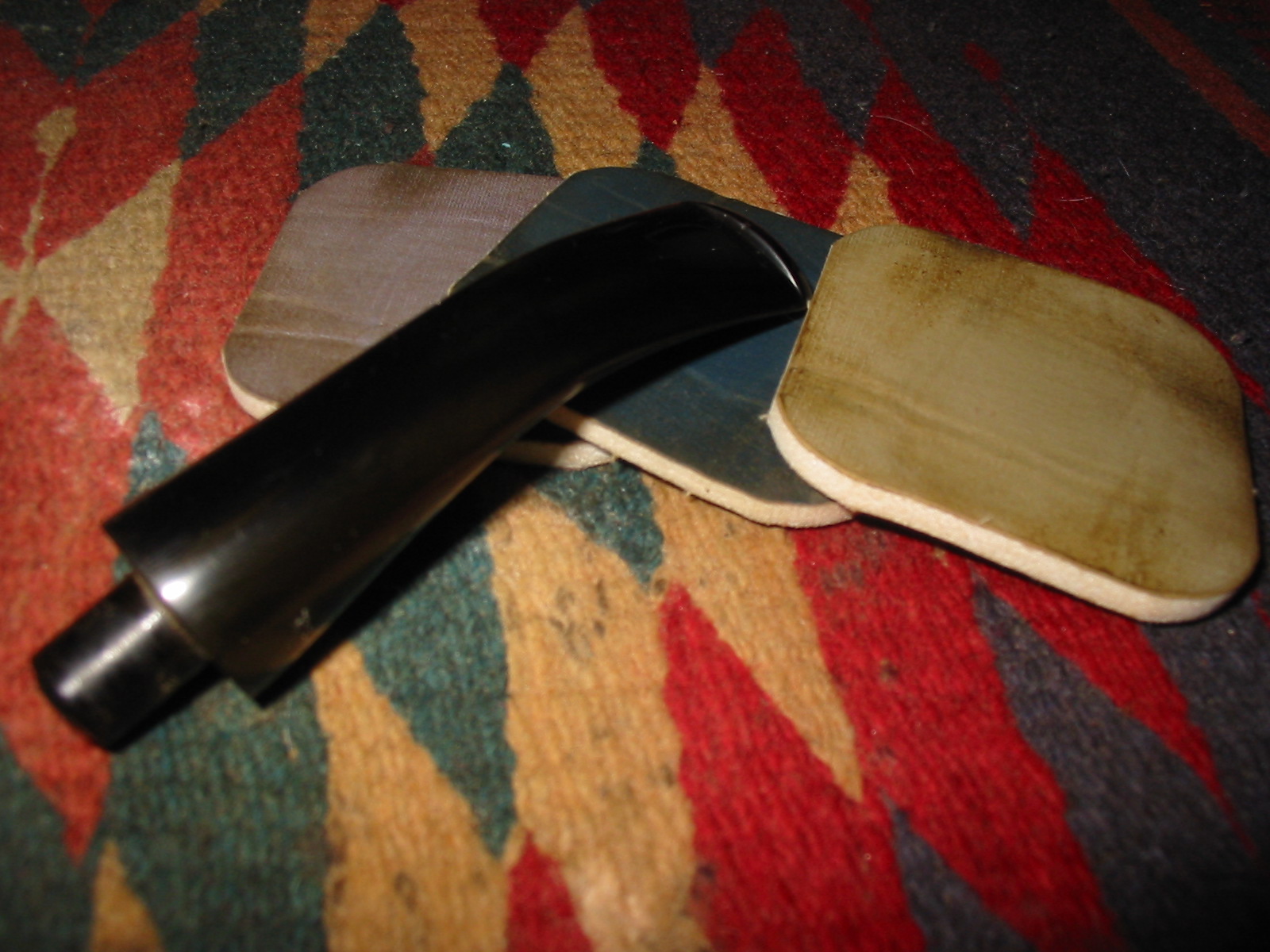
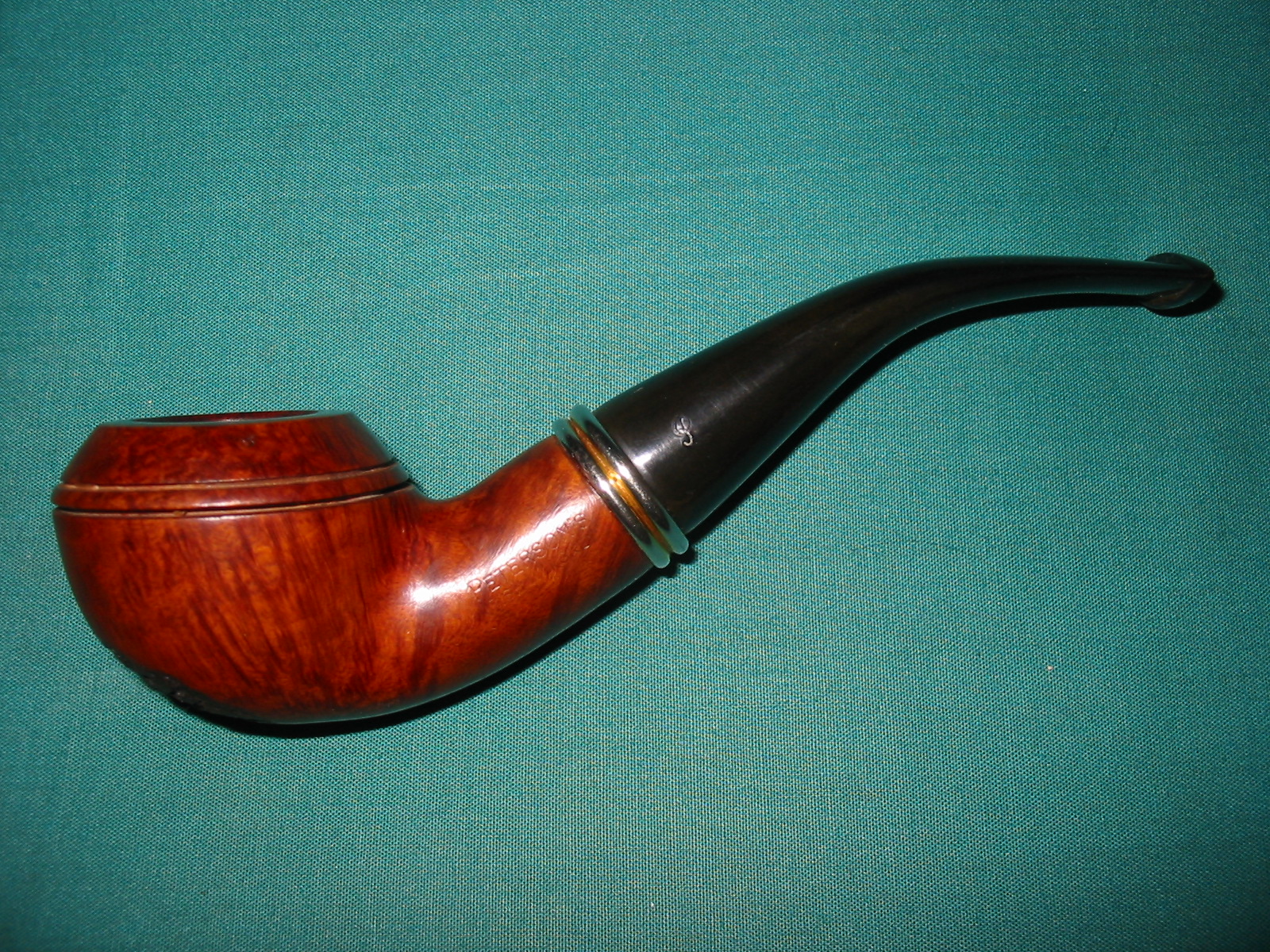
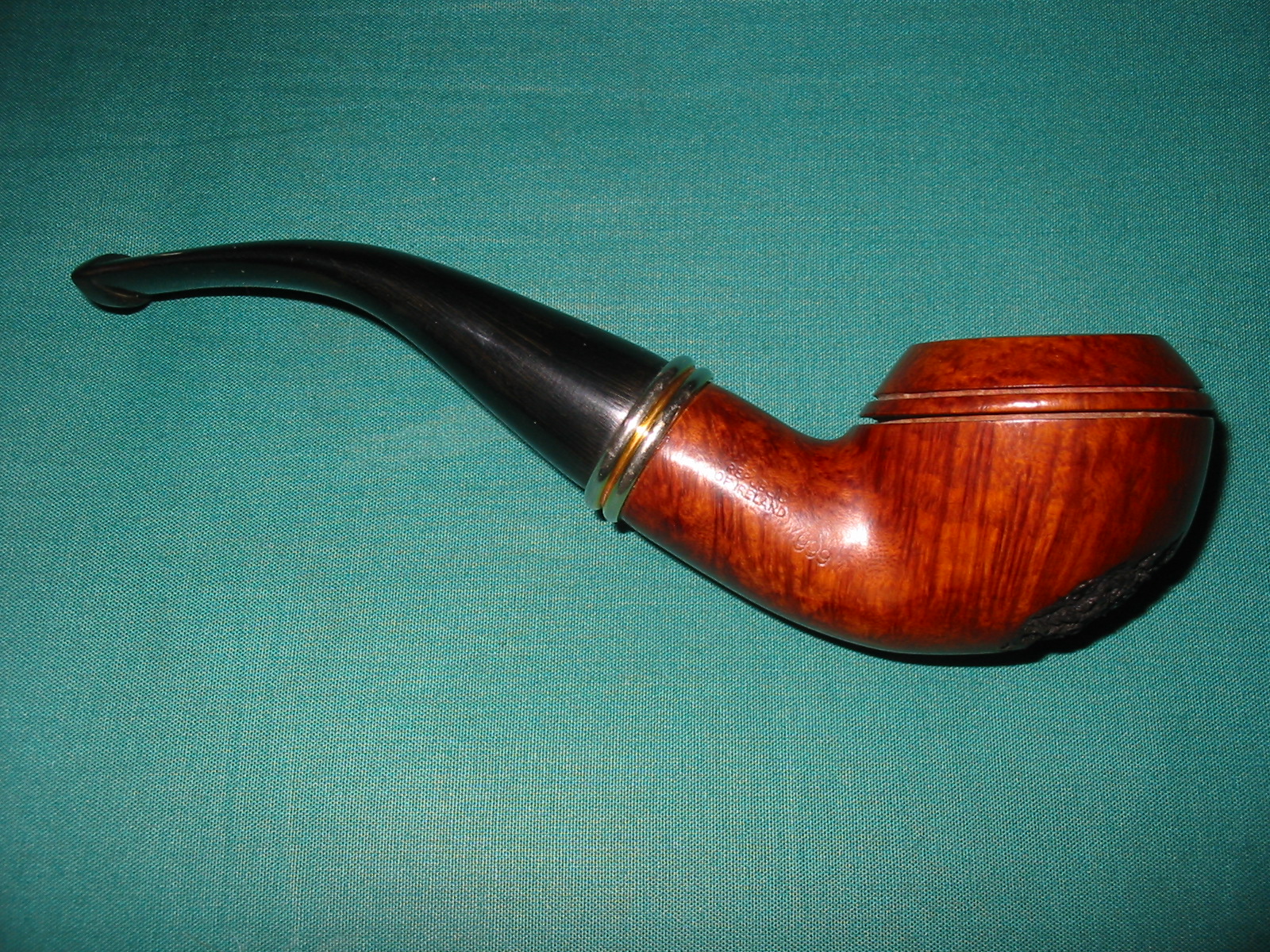
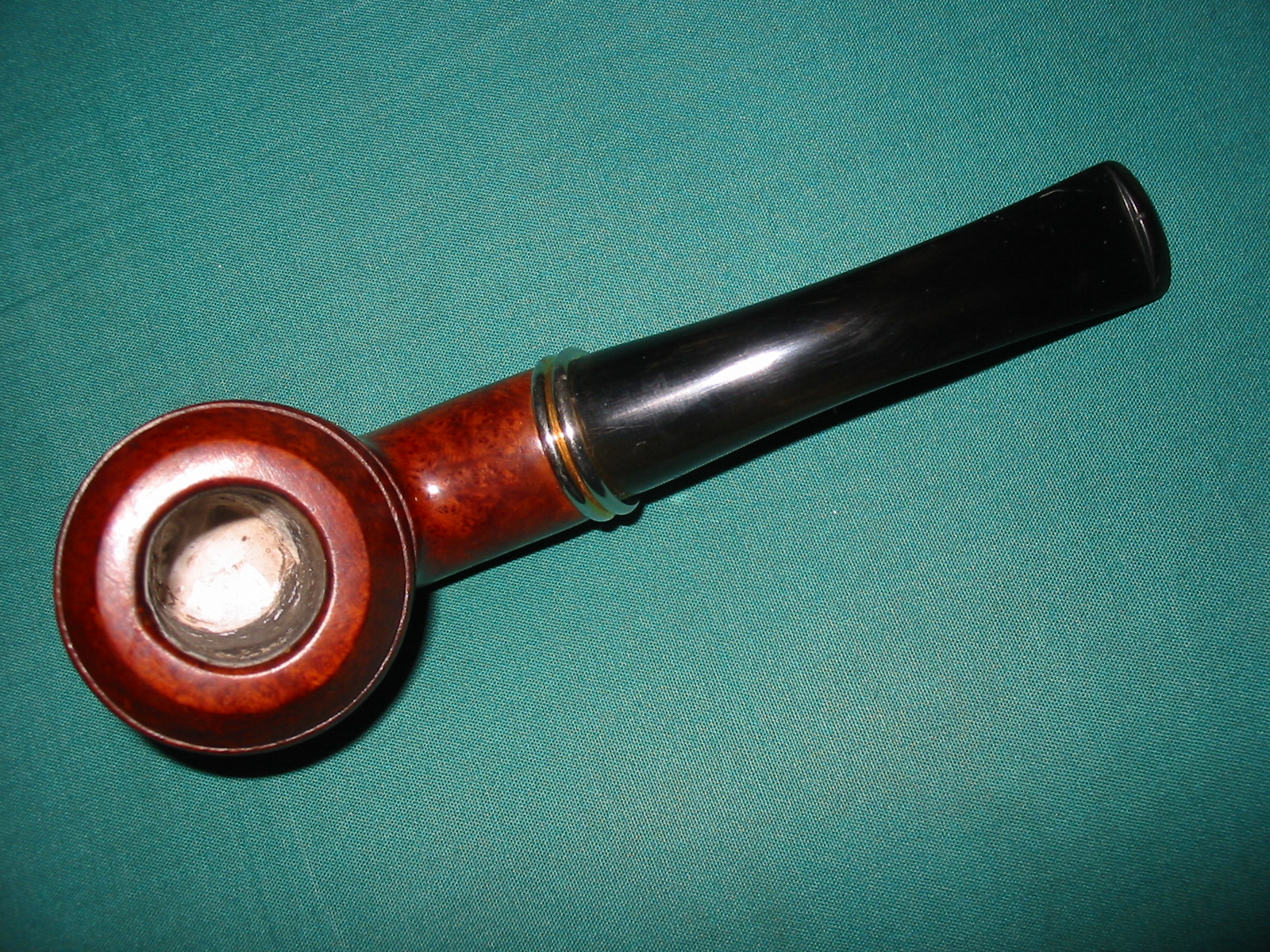
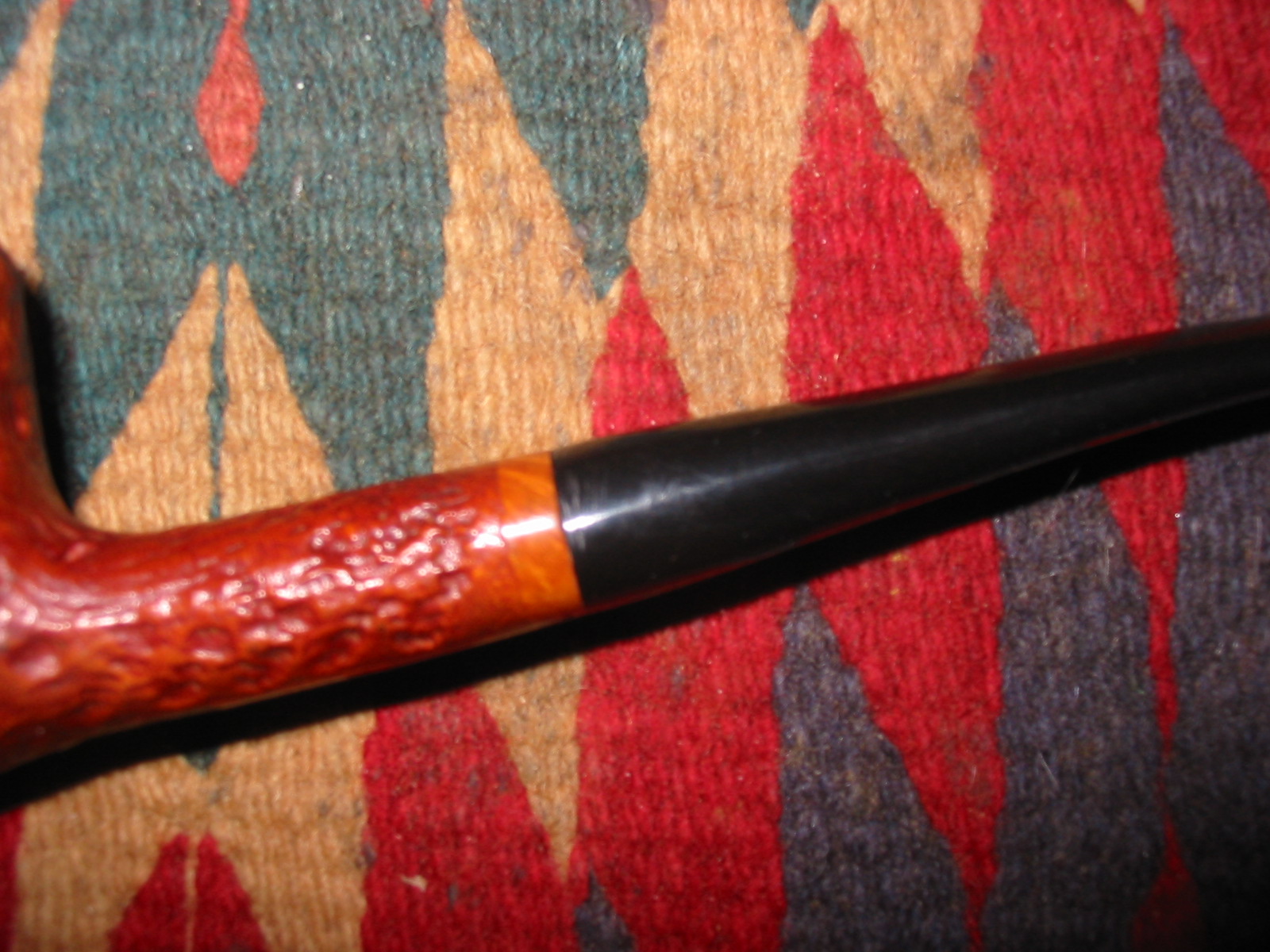
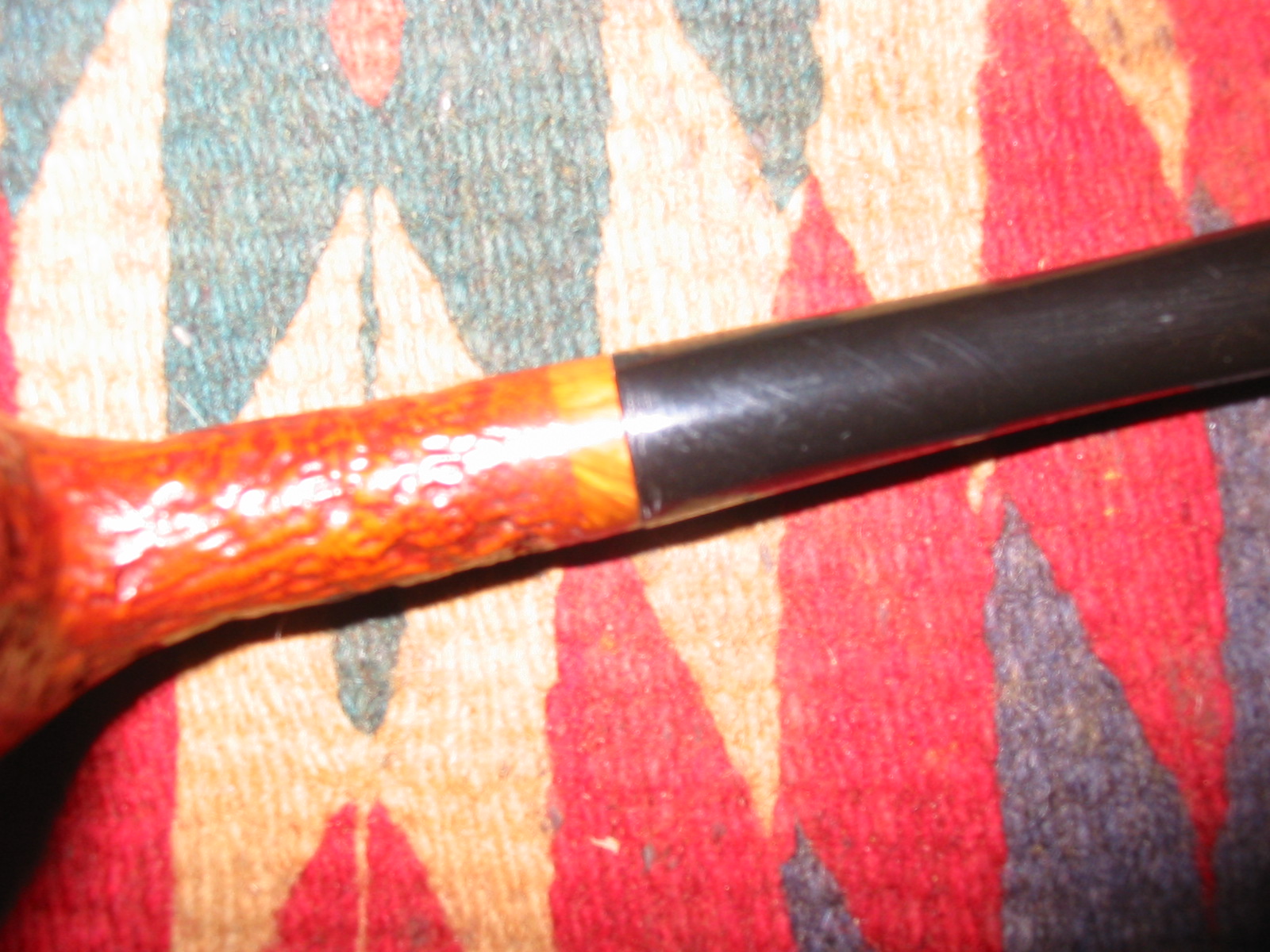
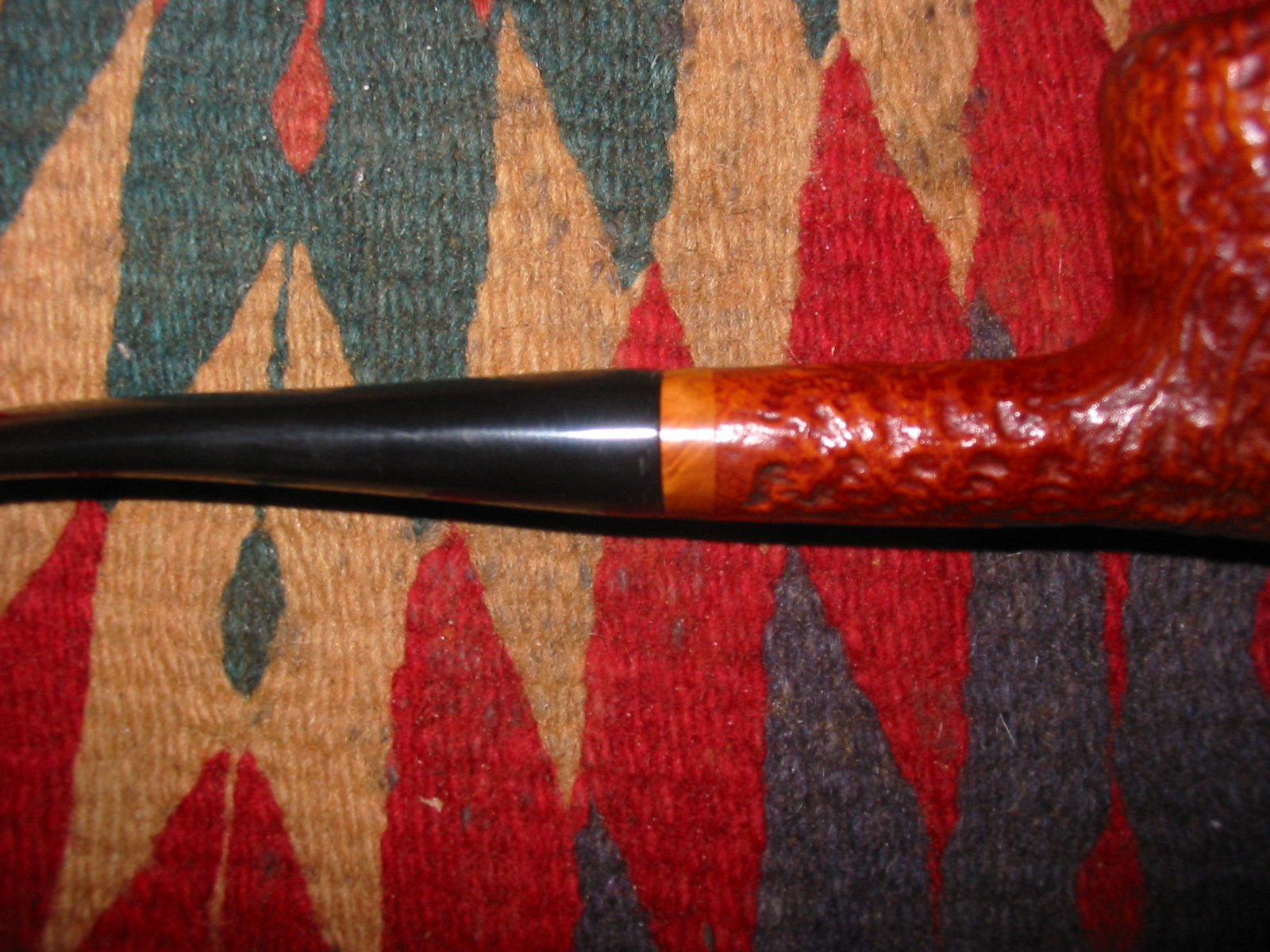
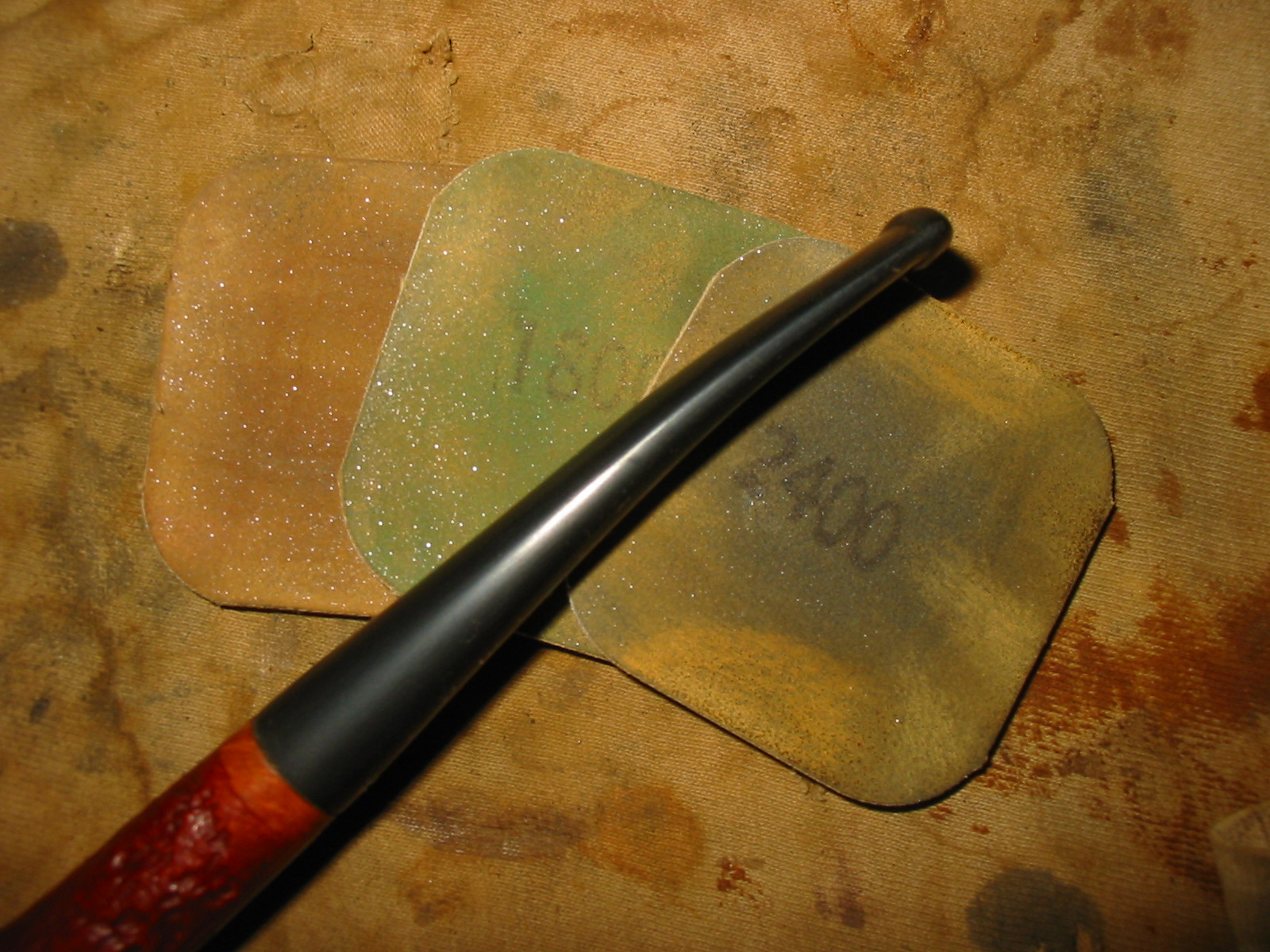
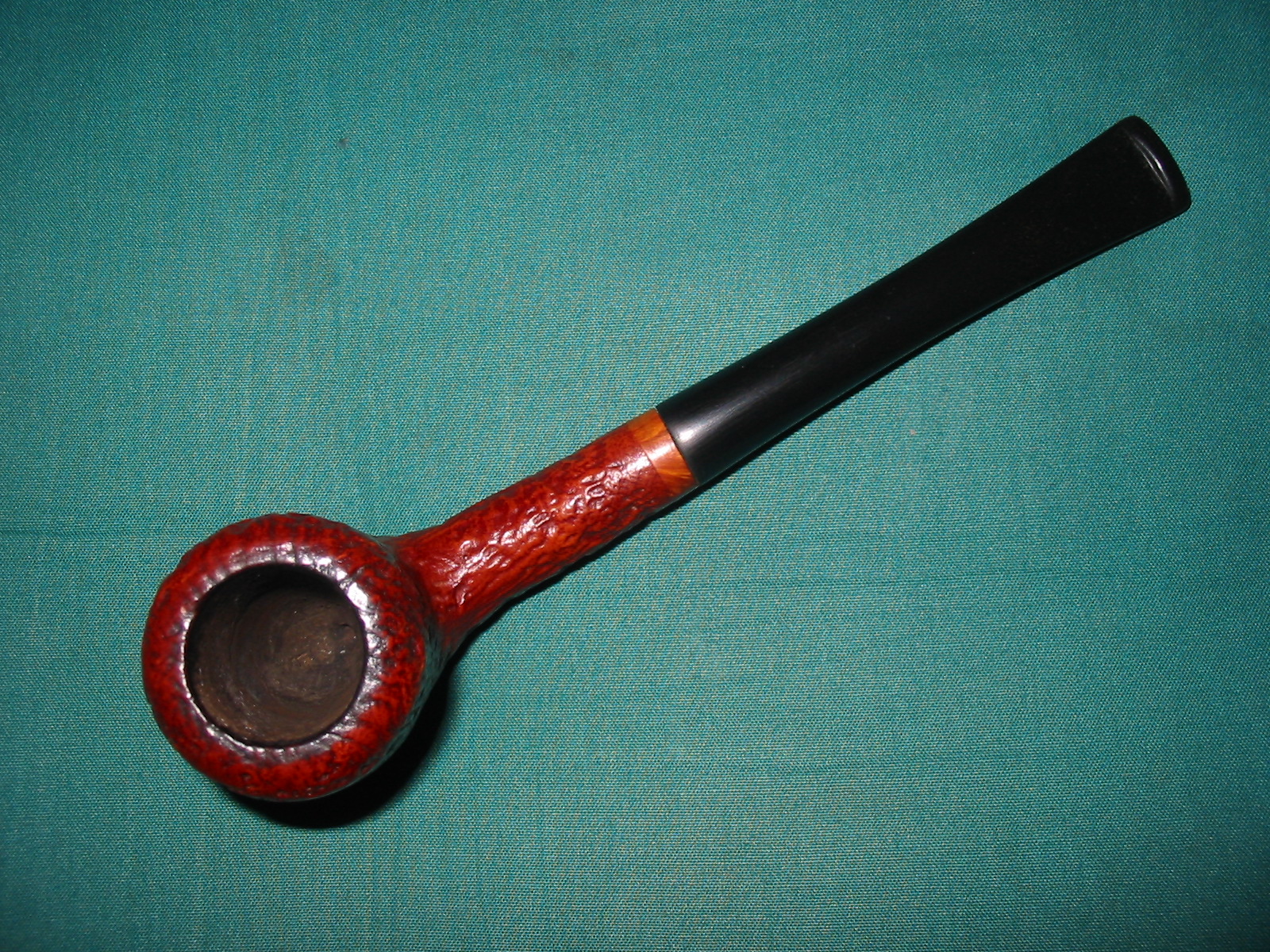
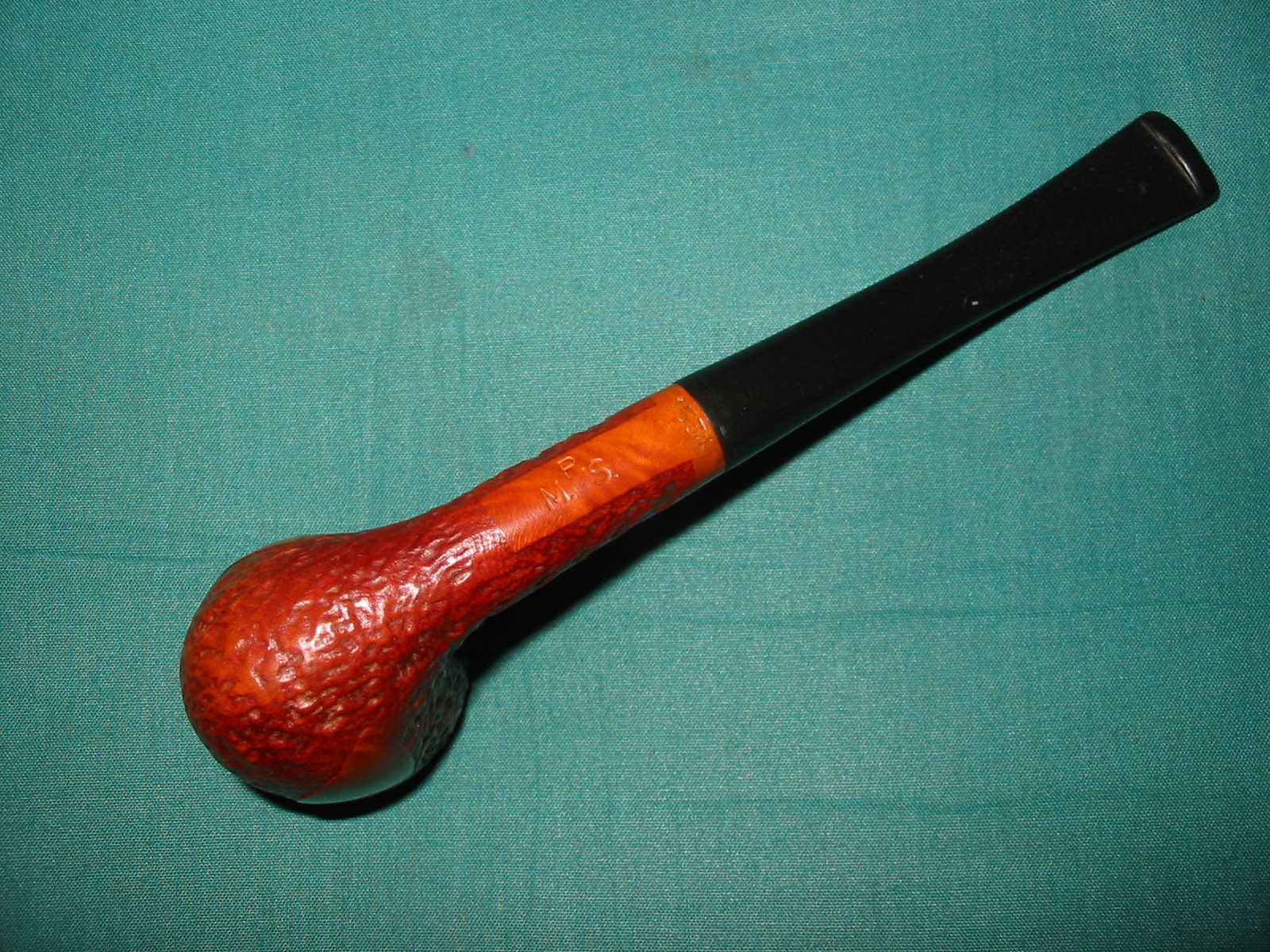
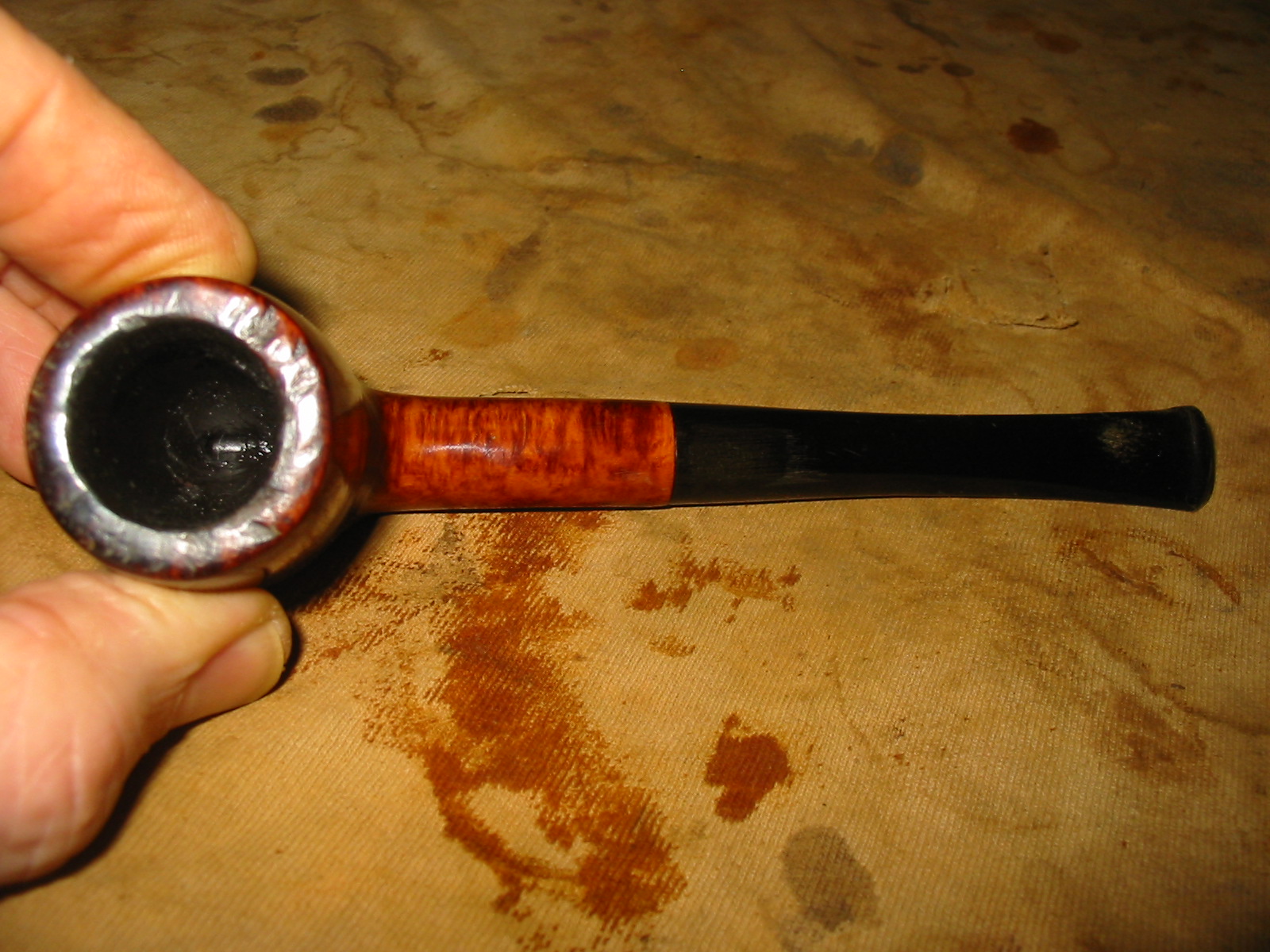
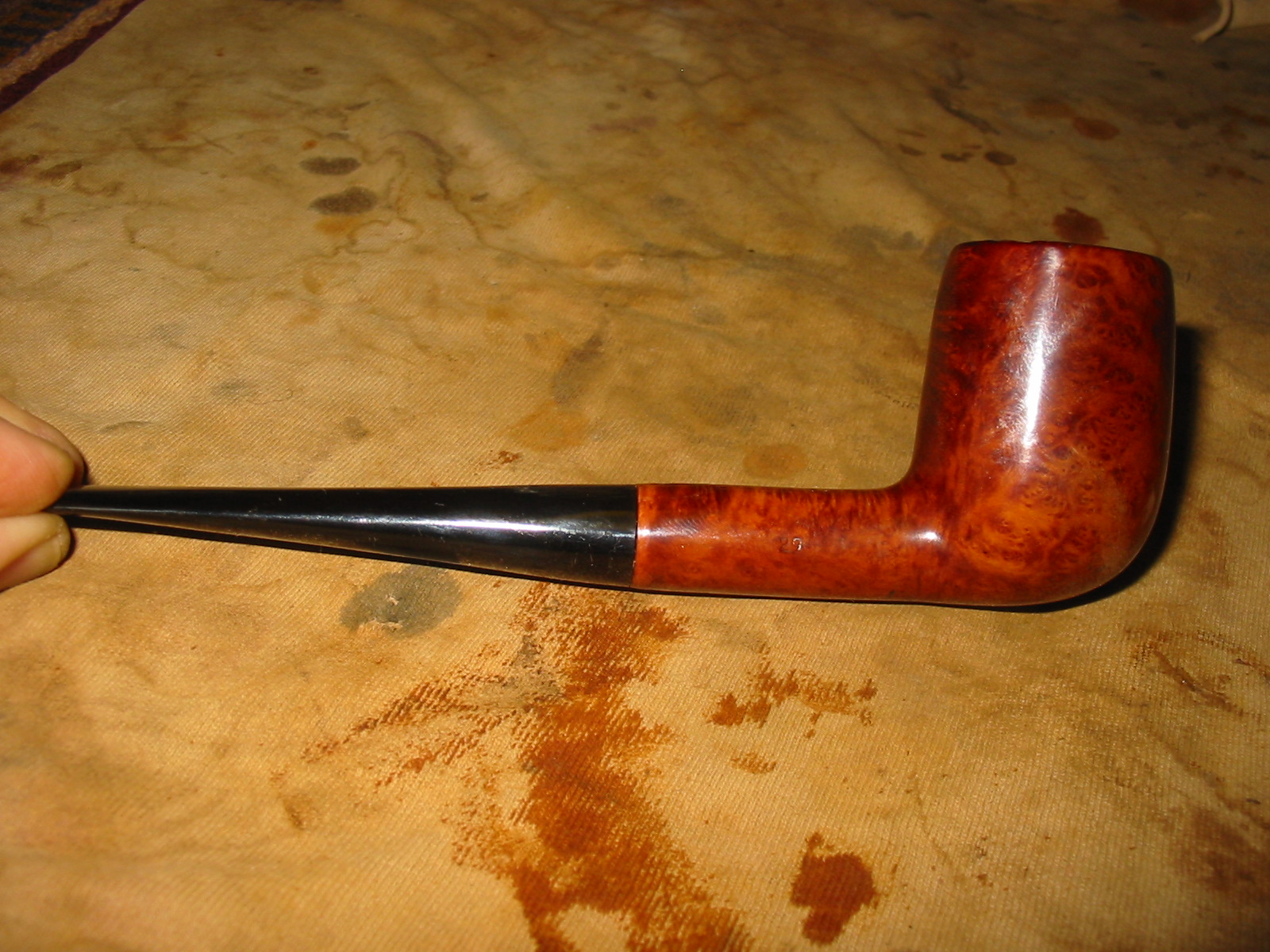
Tag Archives: fitting a stem

Refurbishing an Old Zulu Bowl


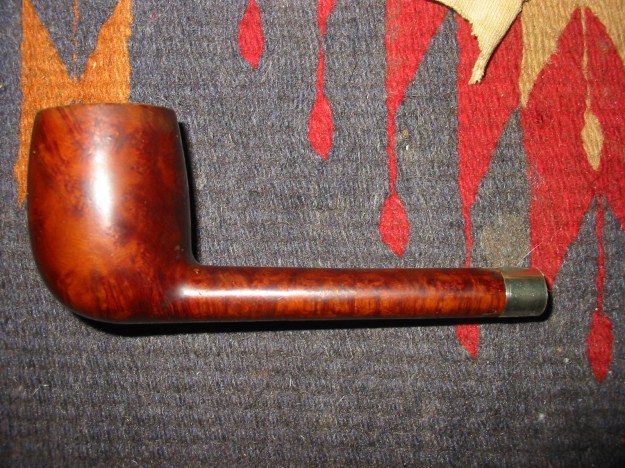
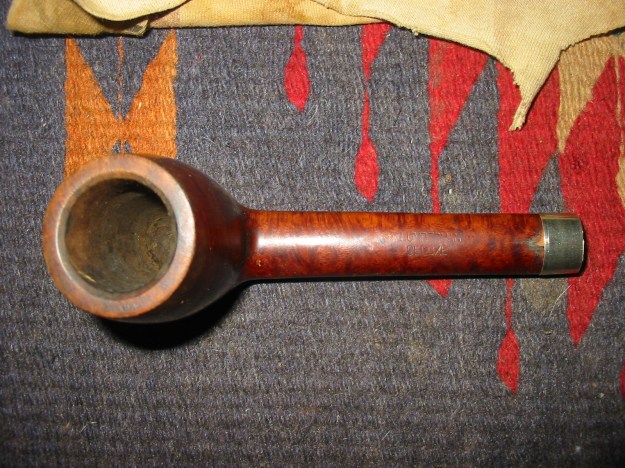
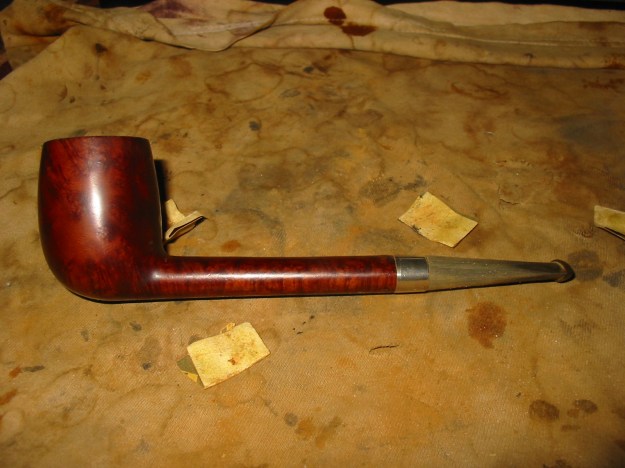
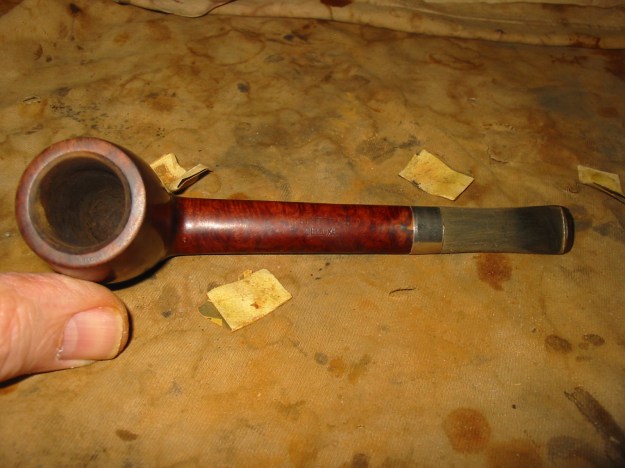
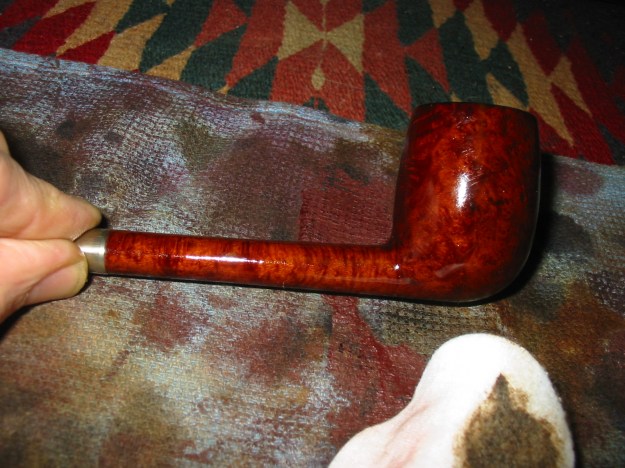
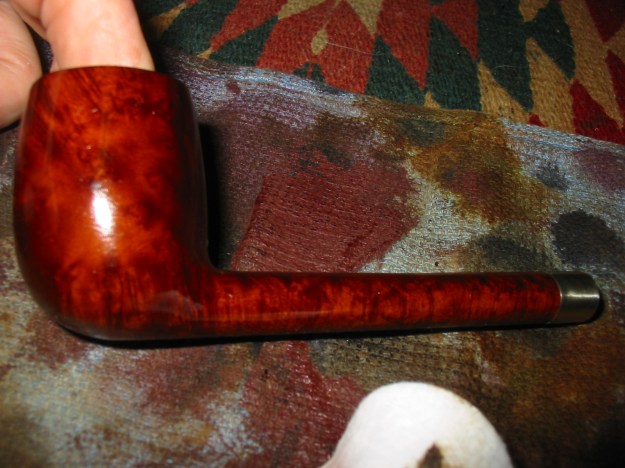
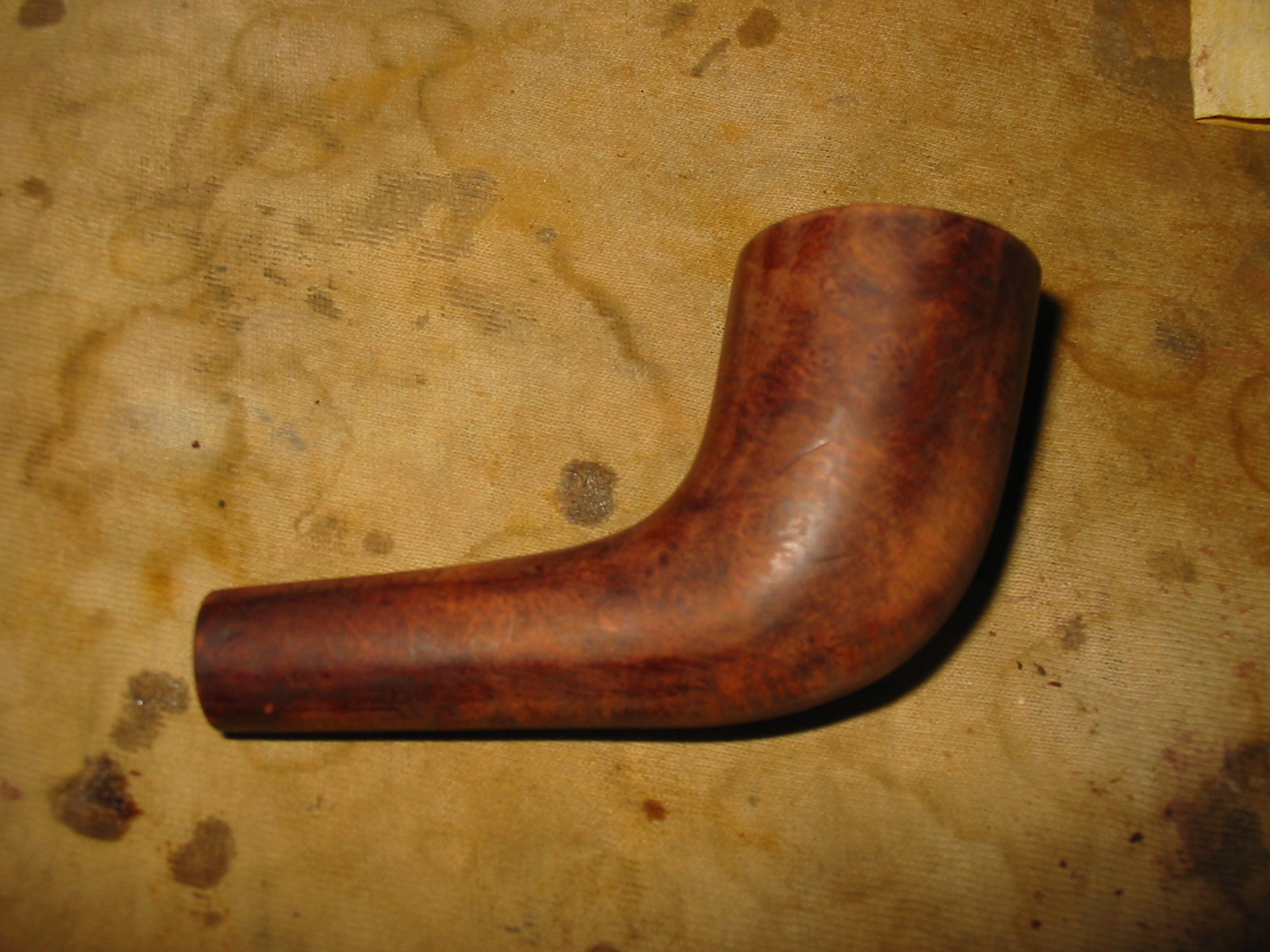
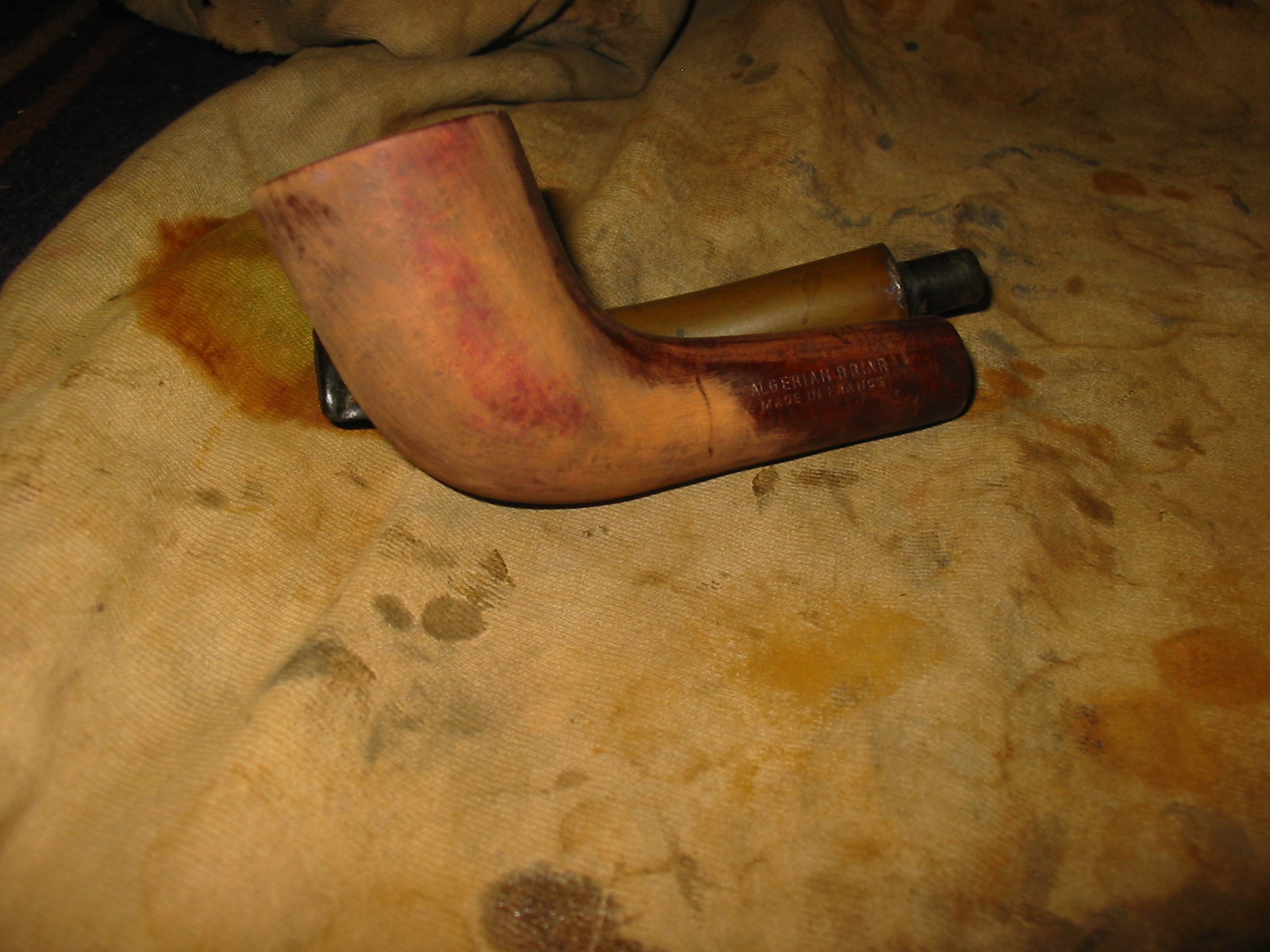
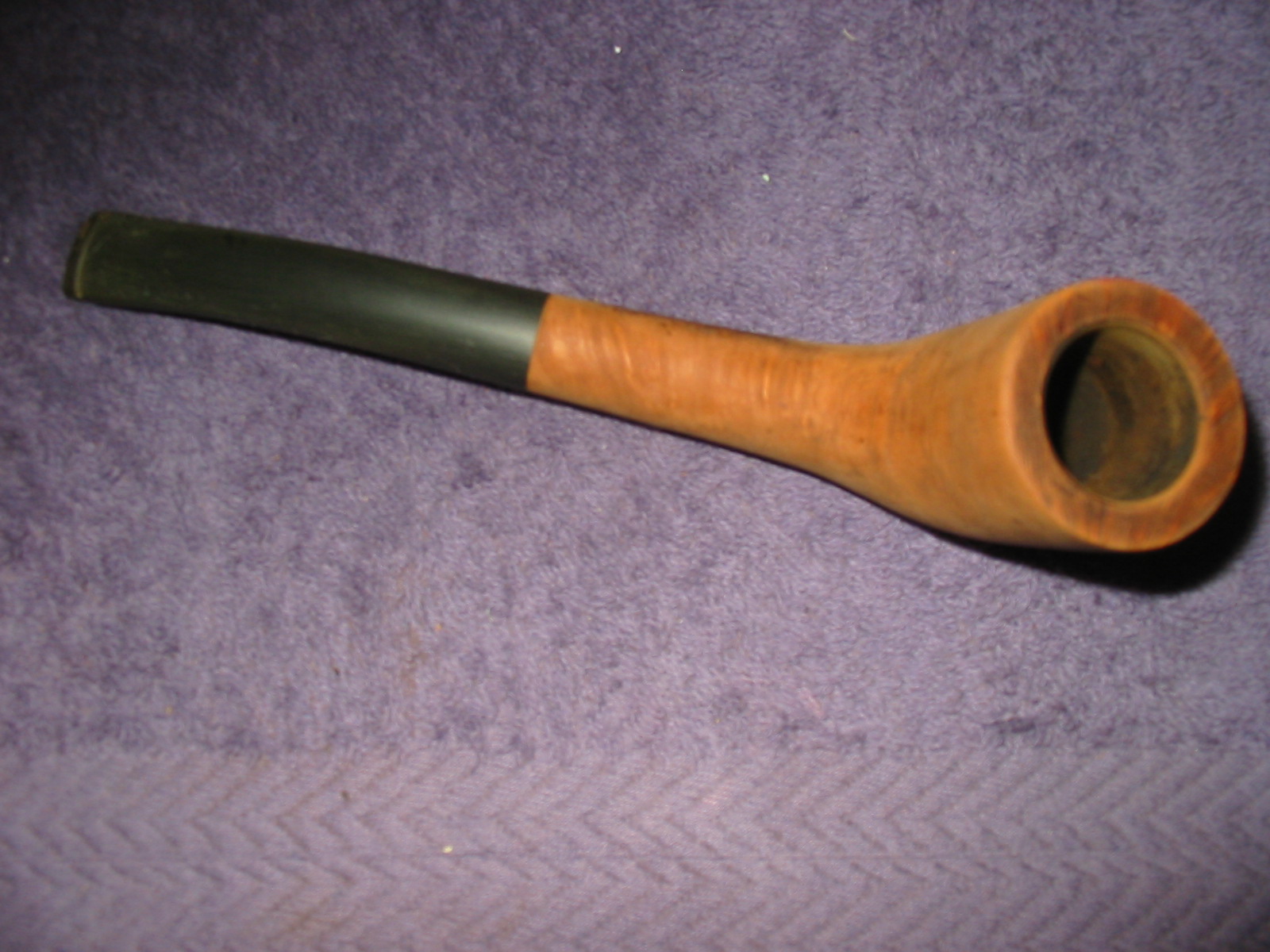
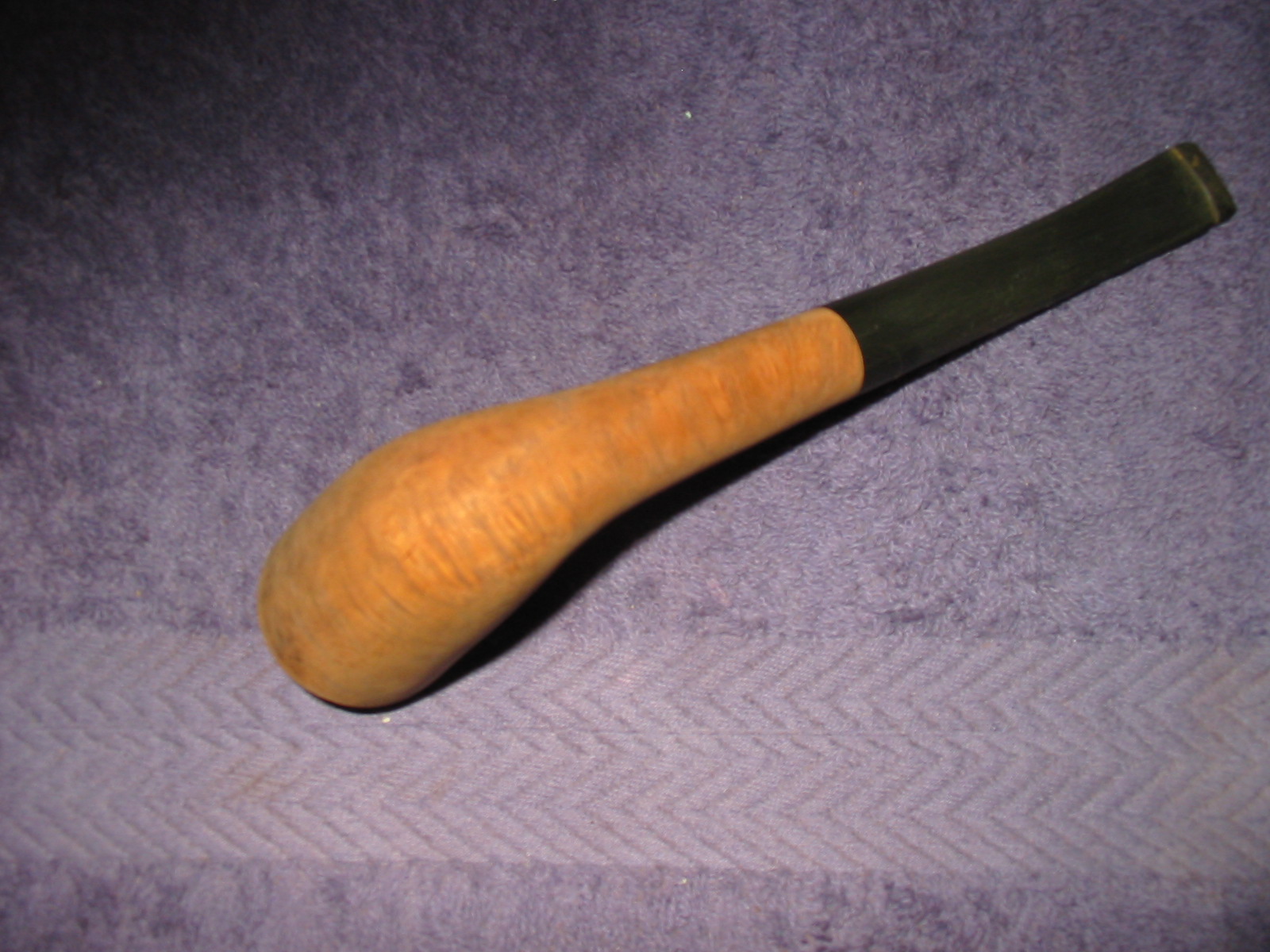
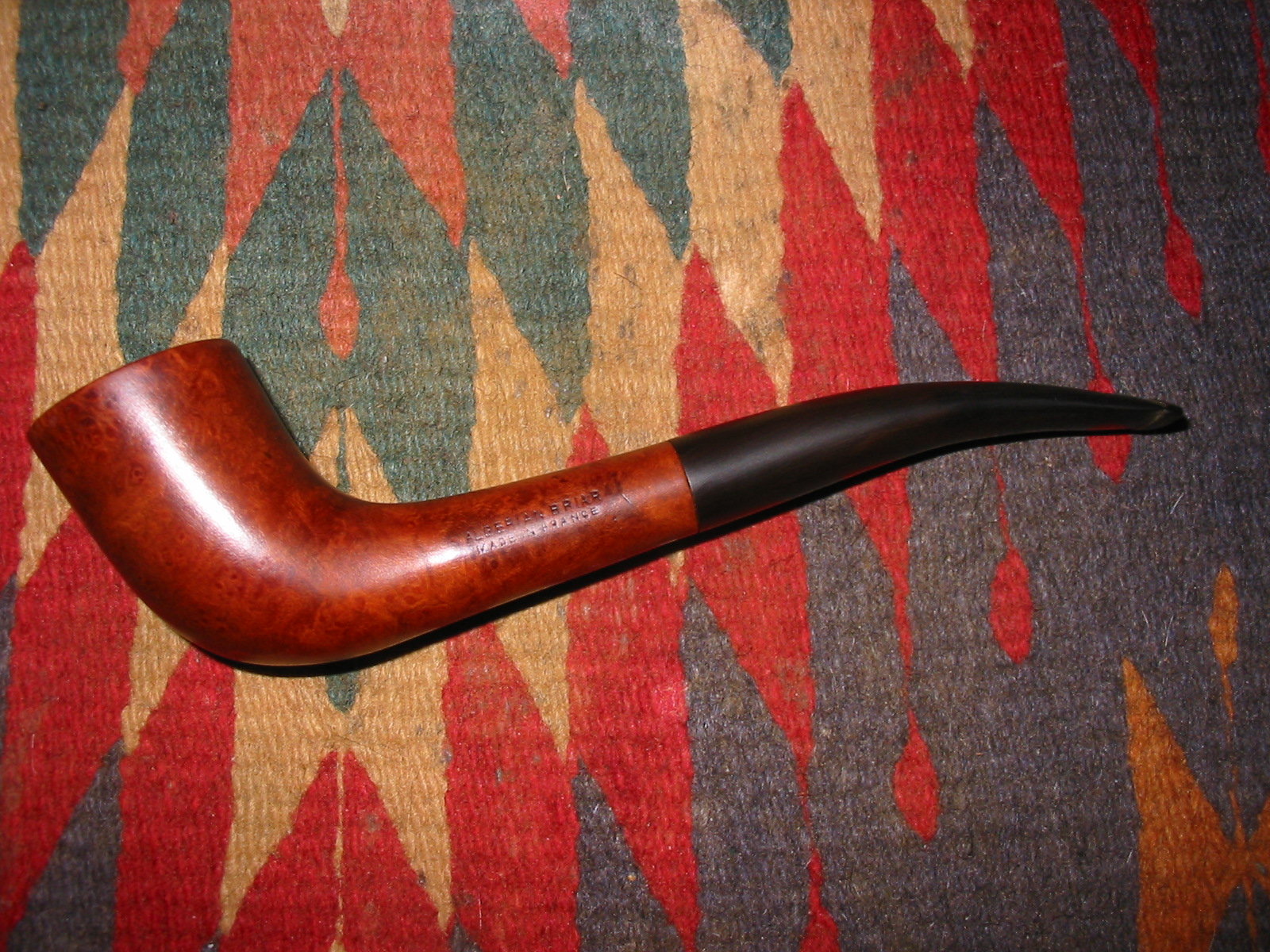
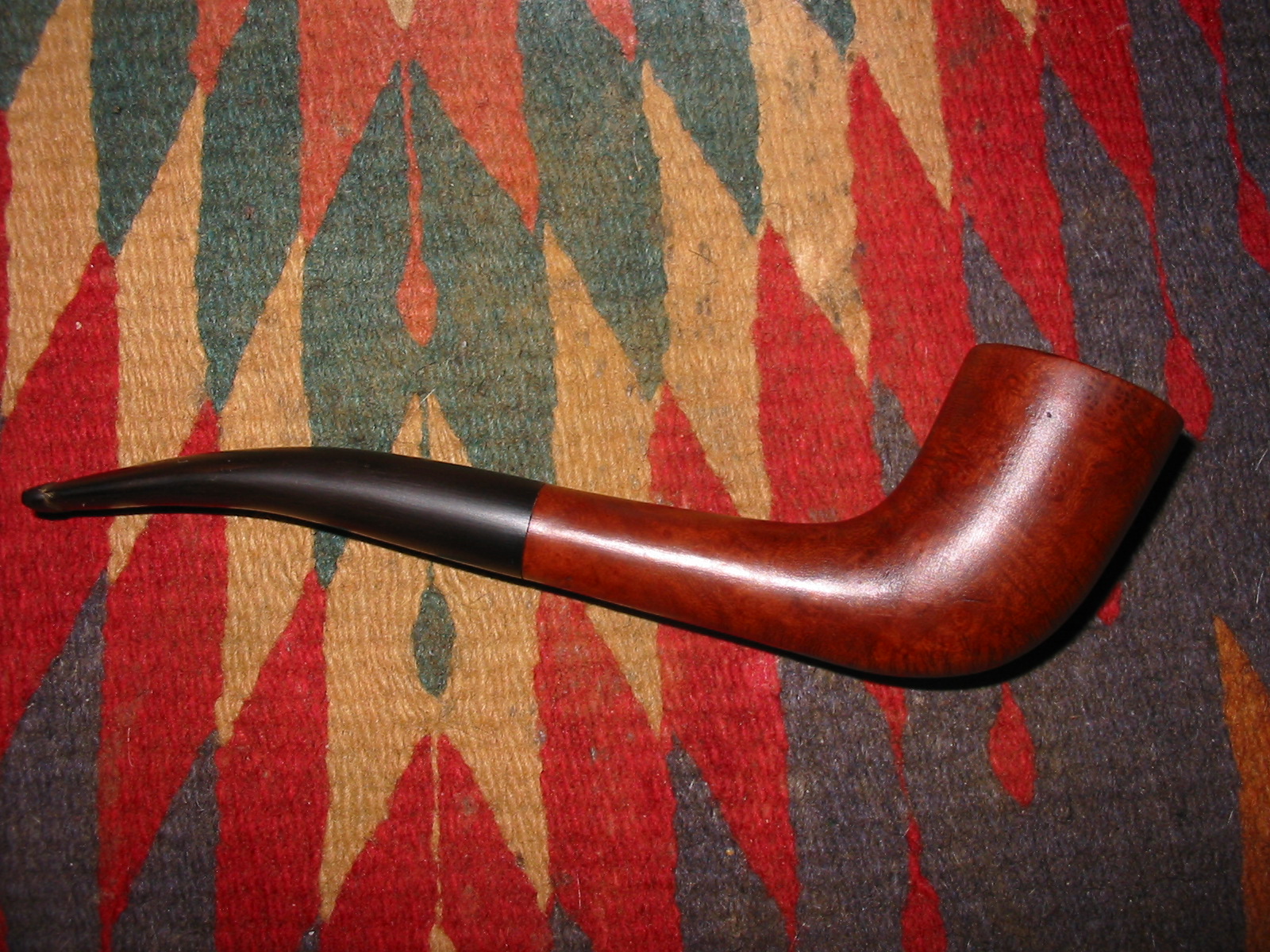
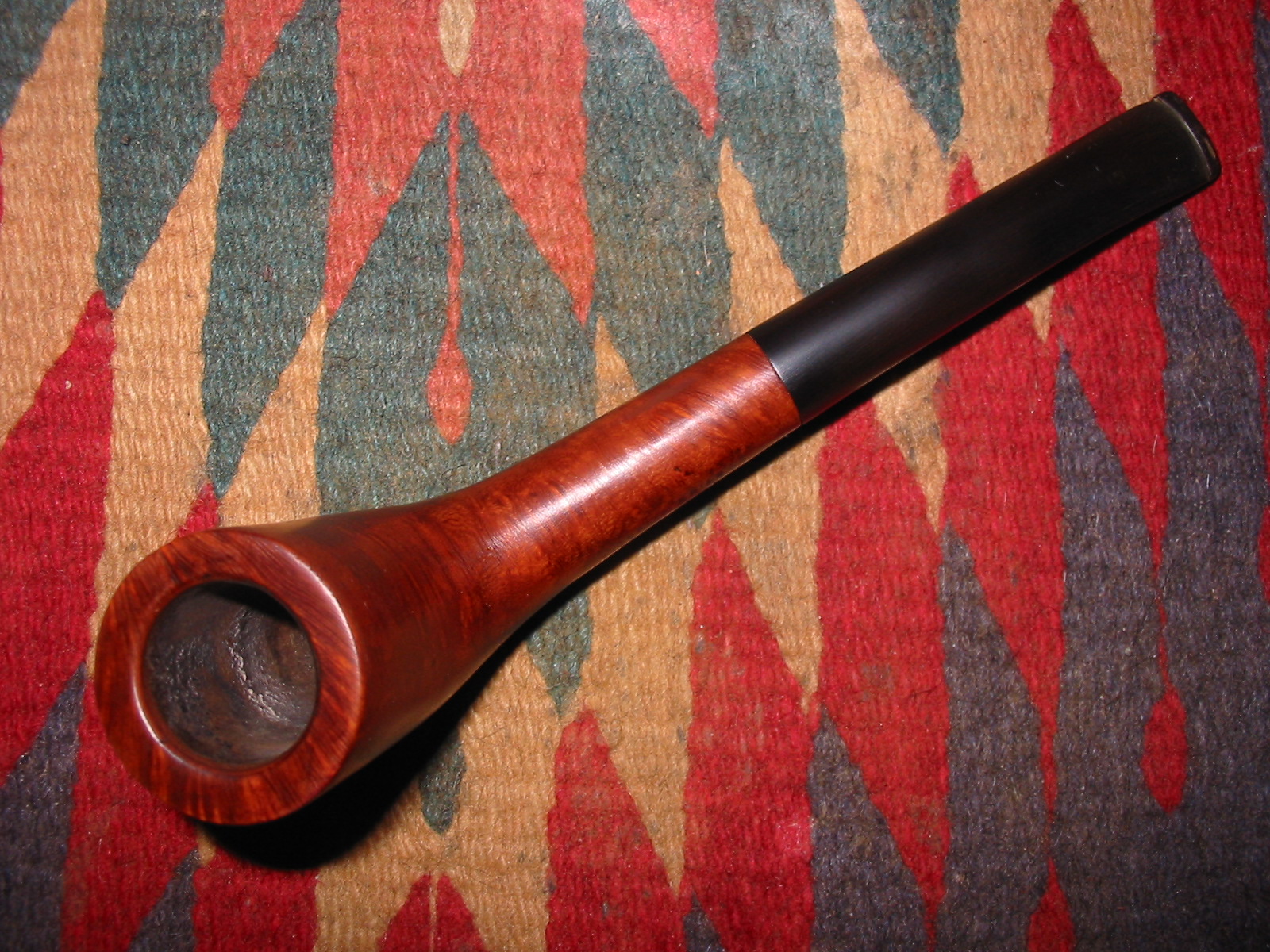
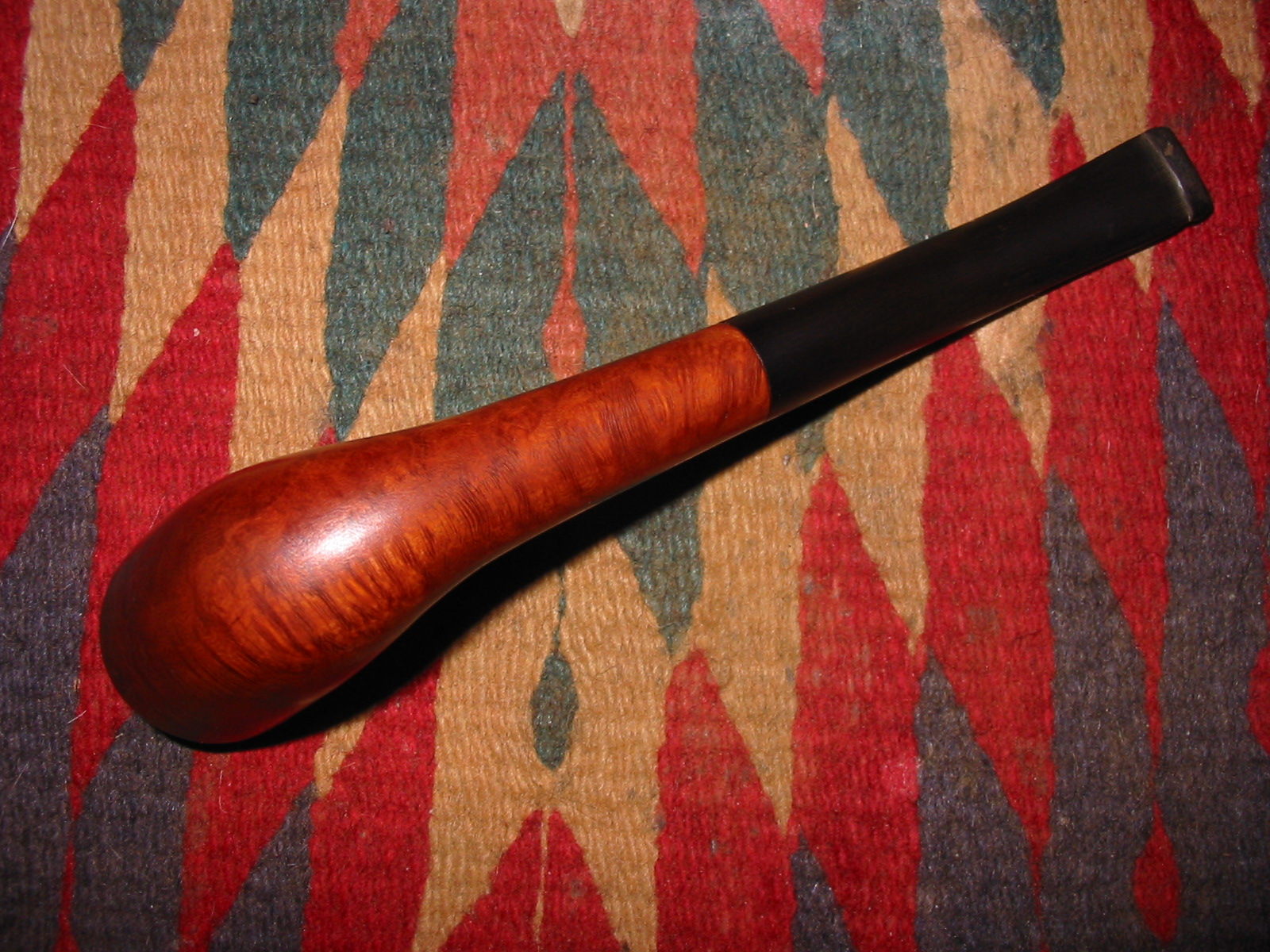
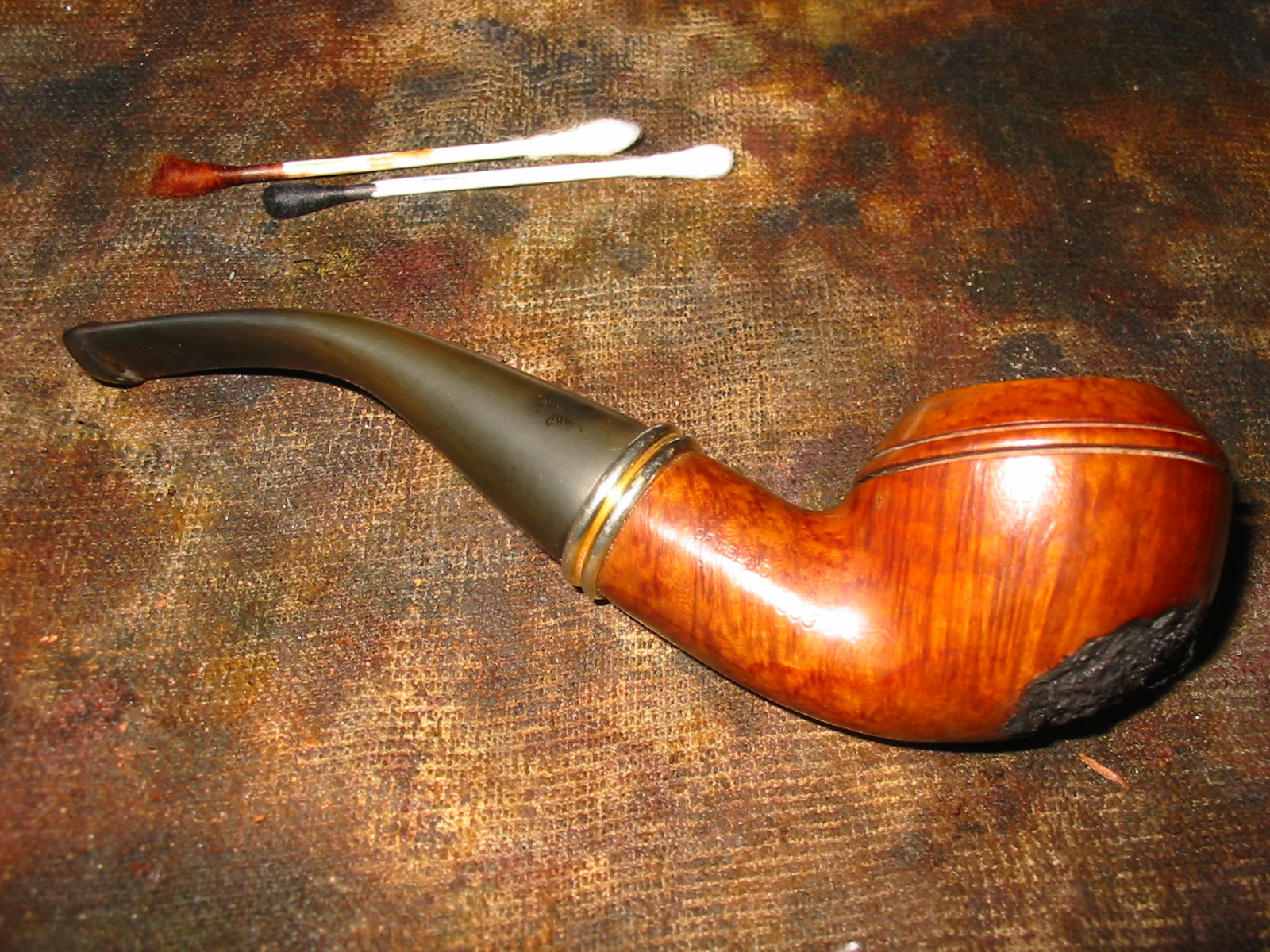
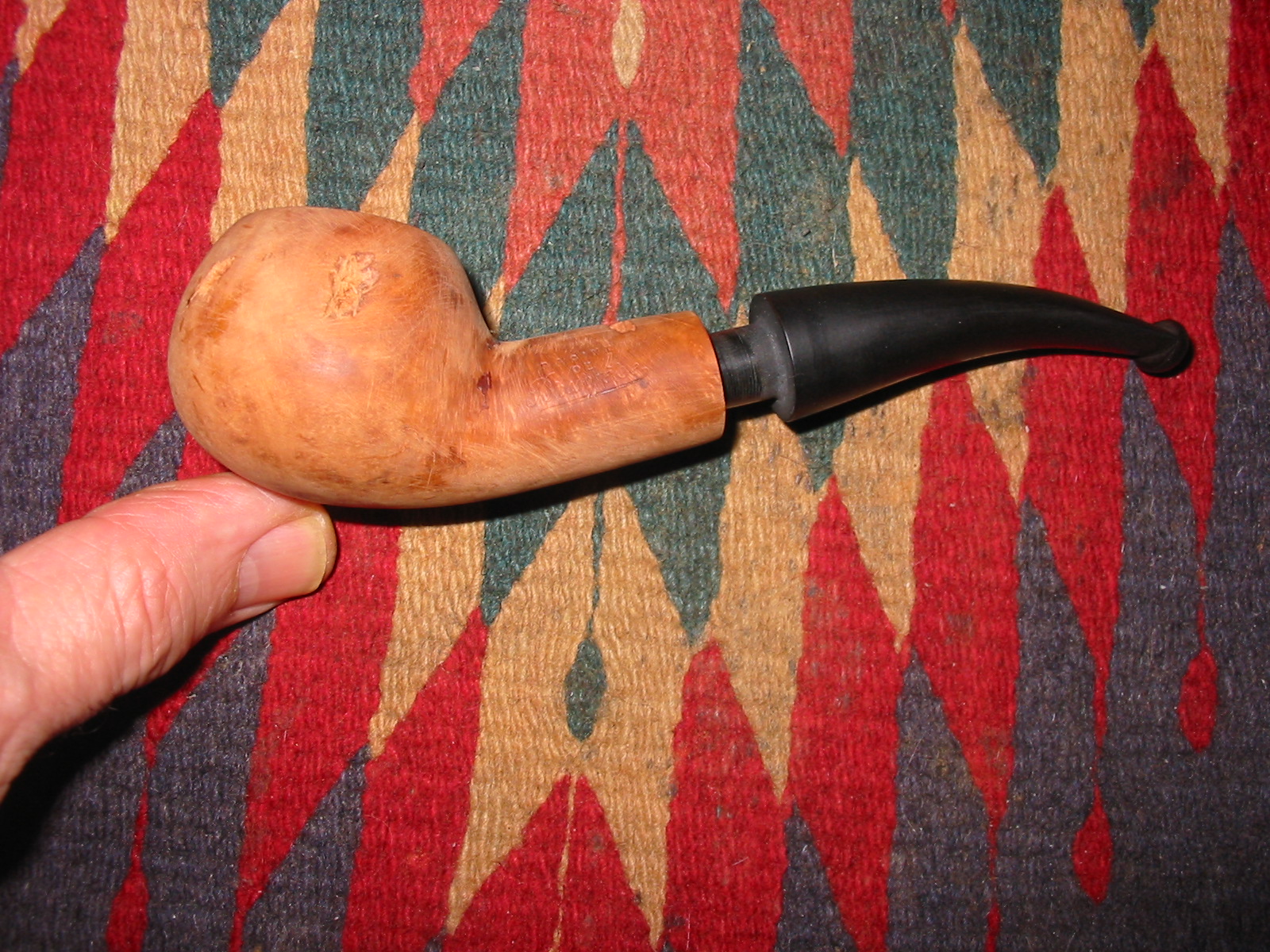
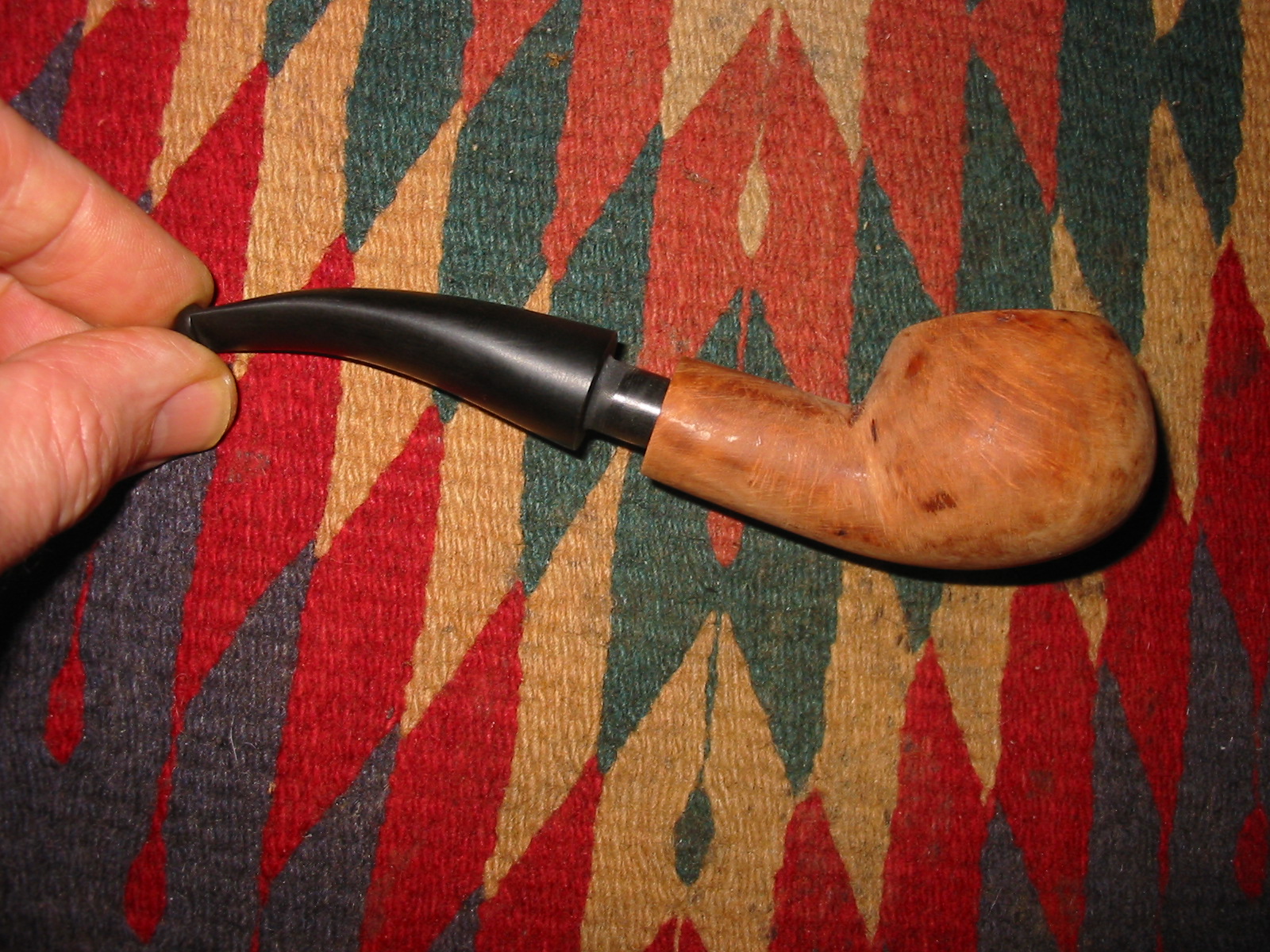
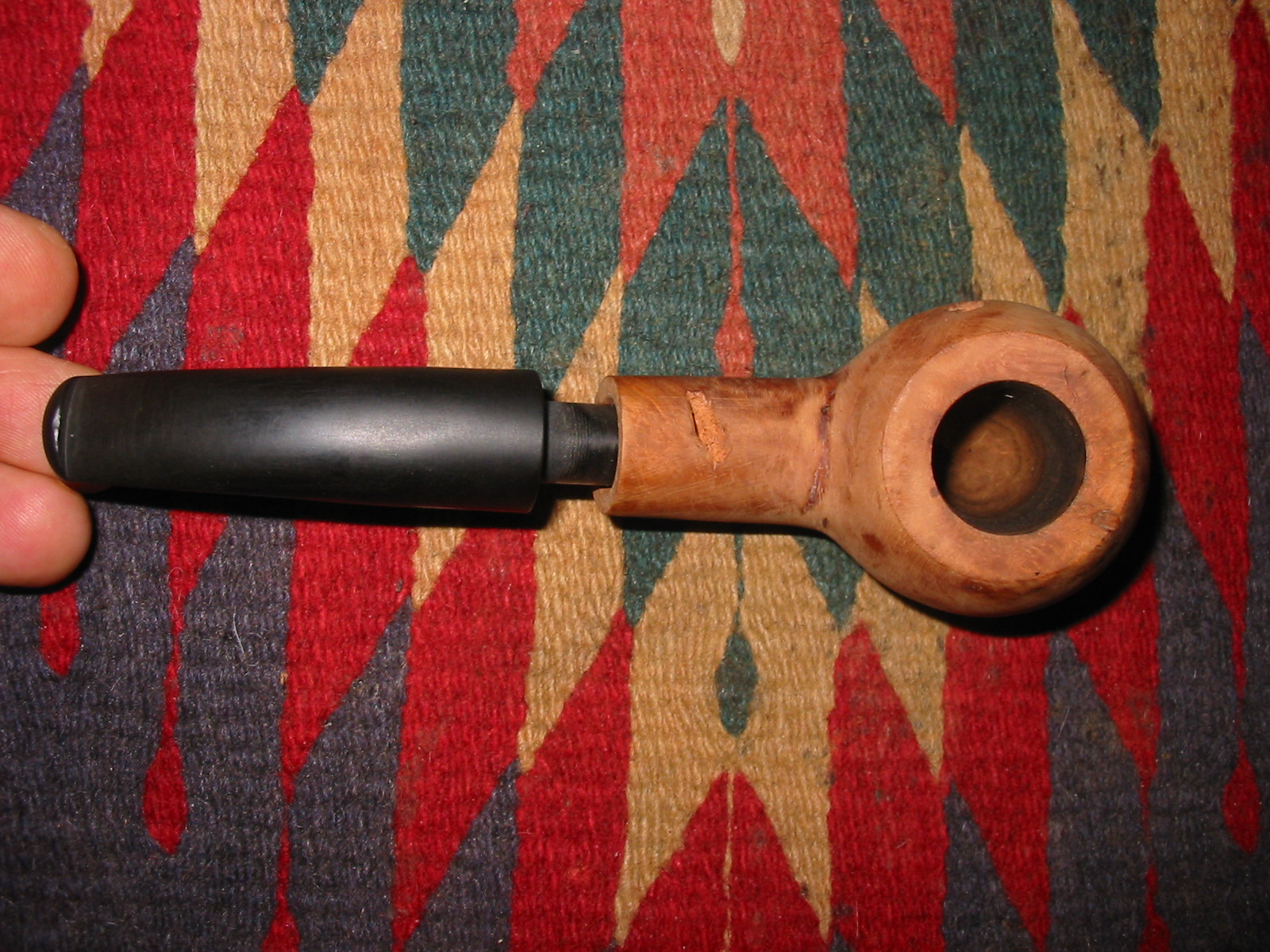
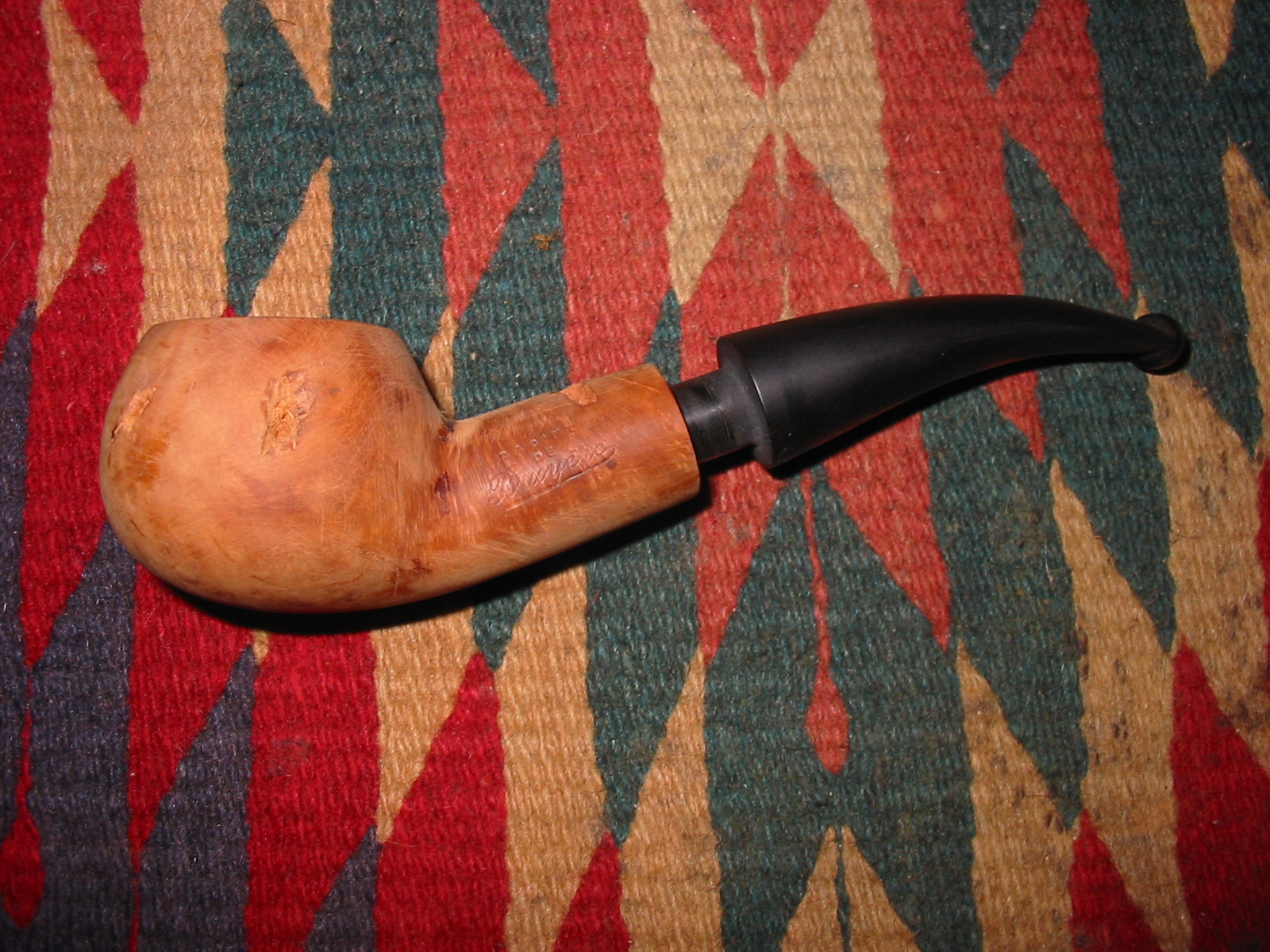
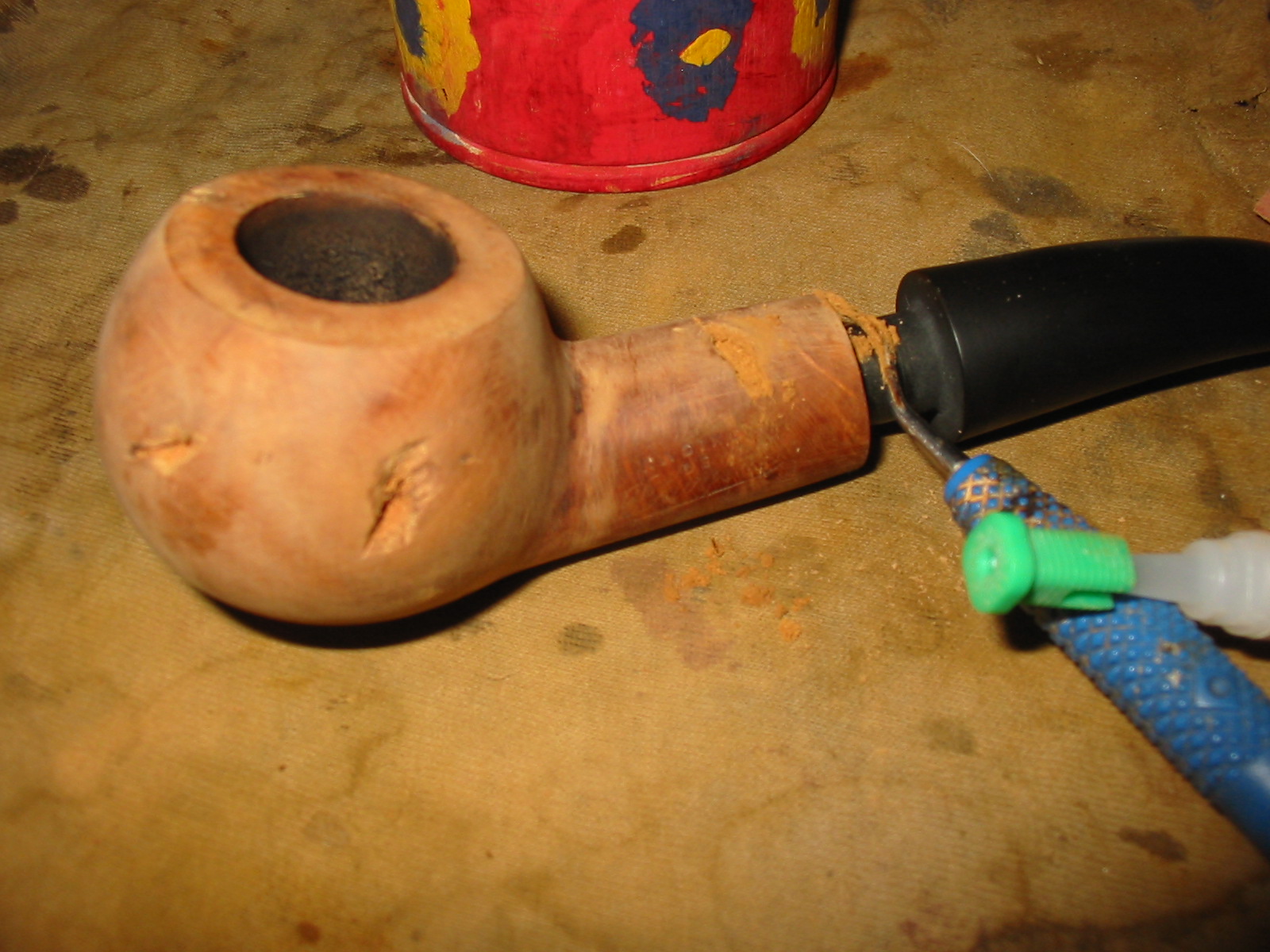
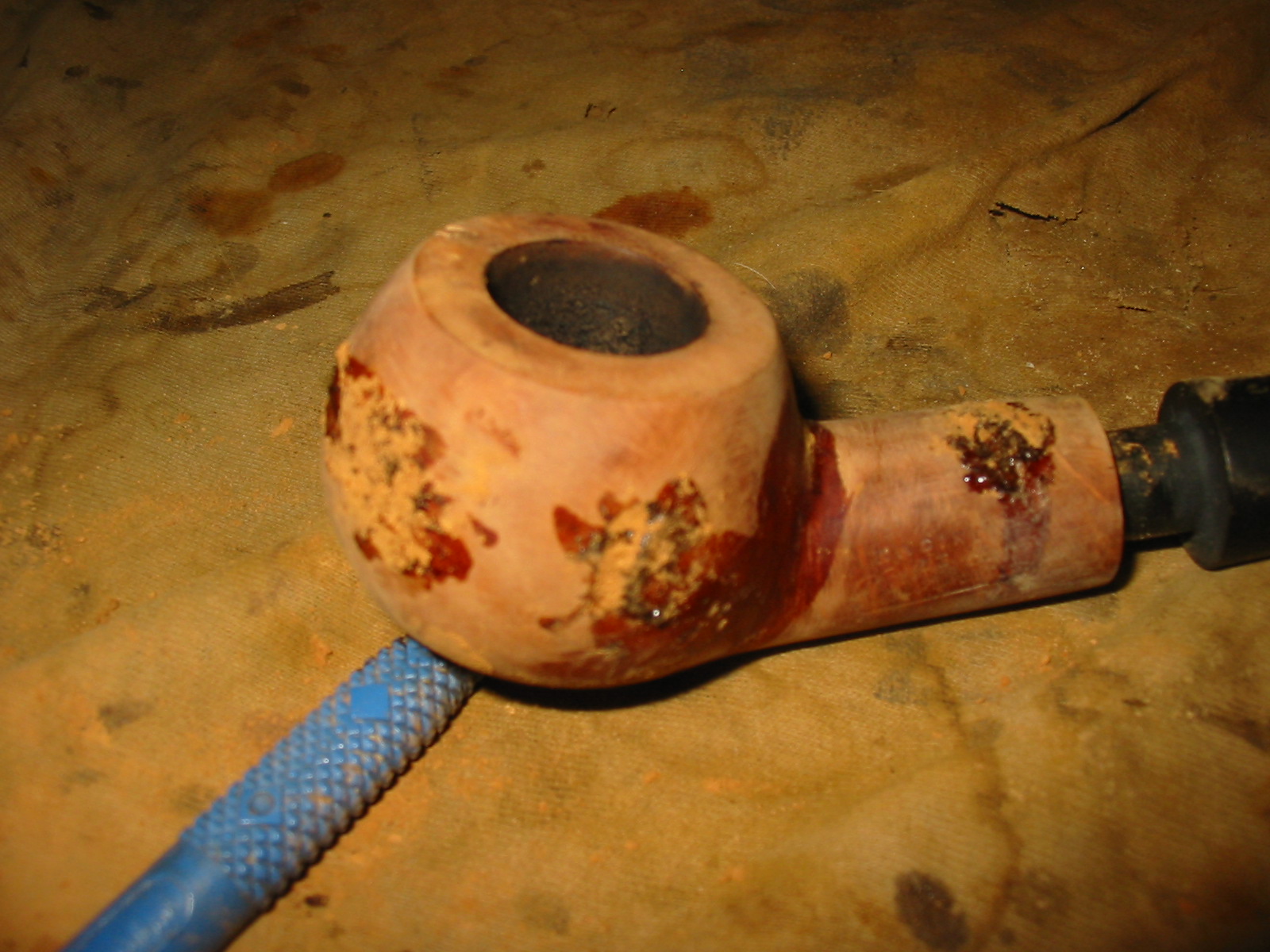
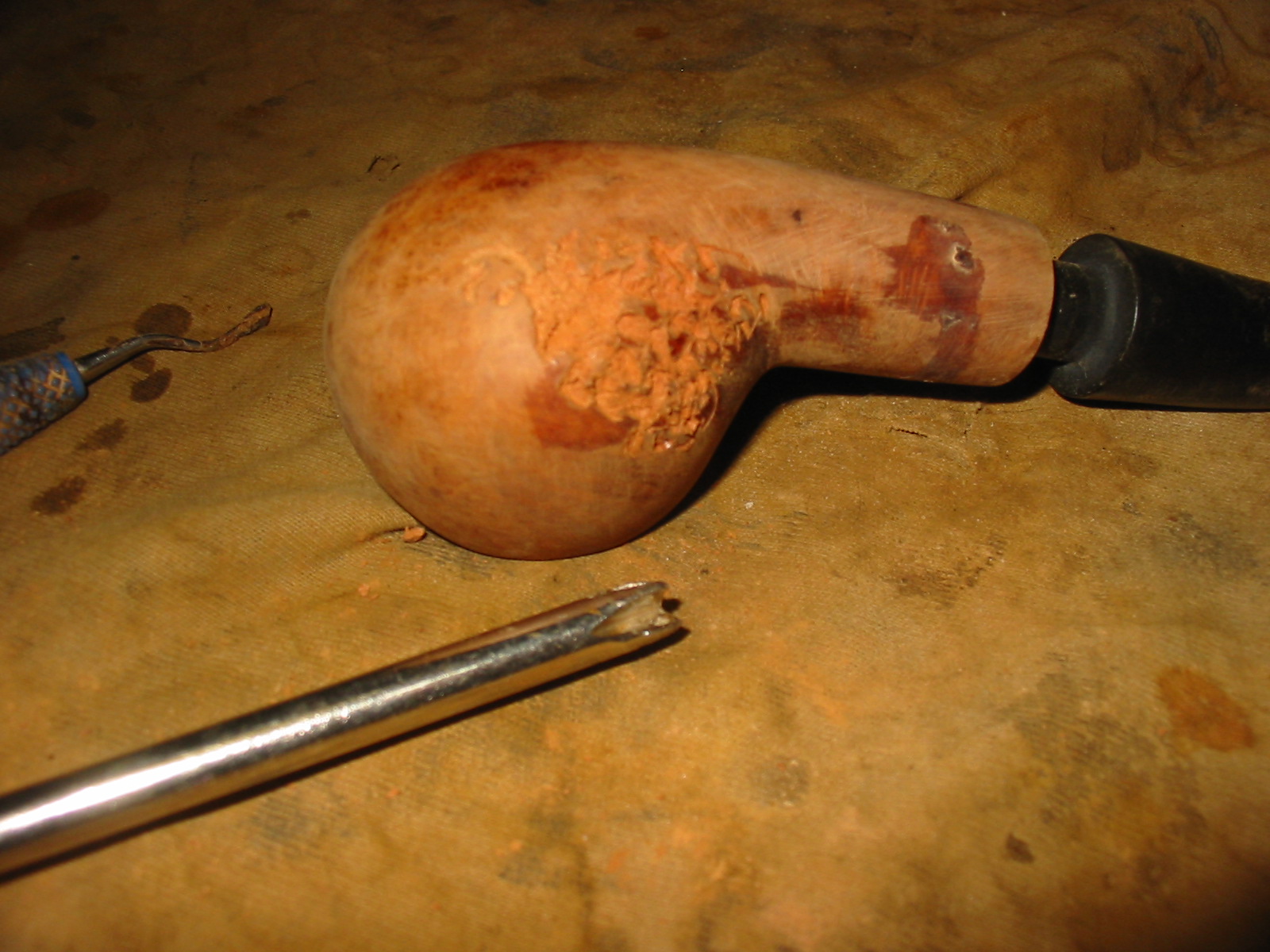
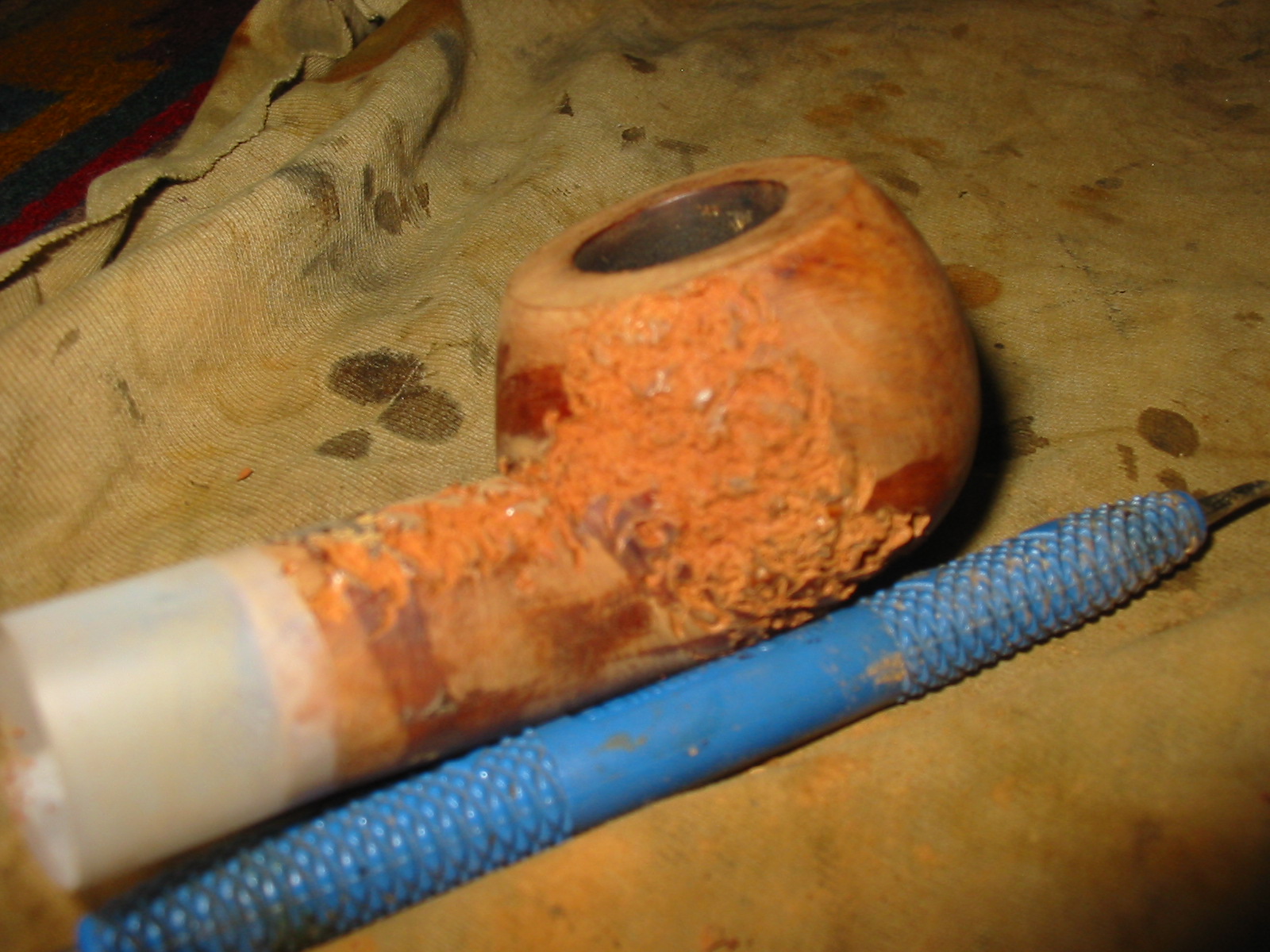
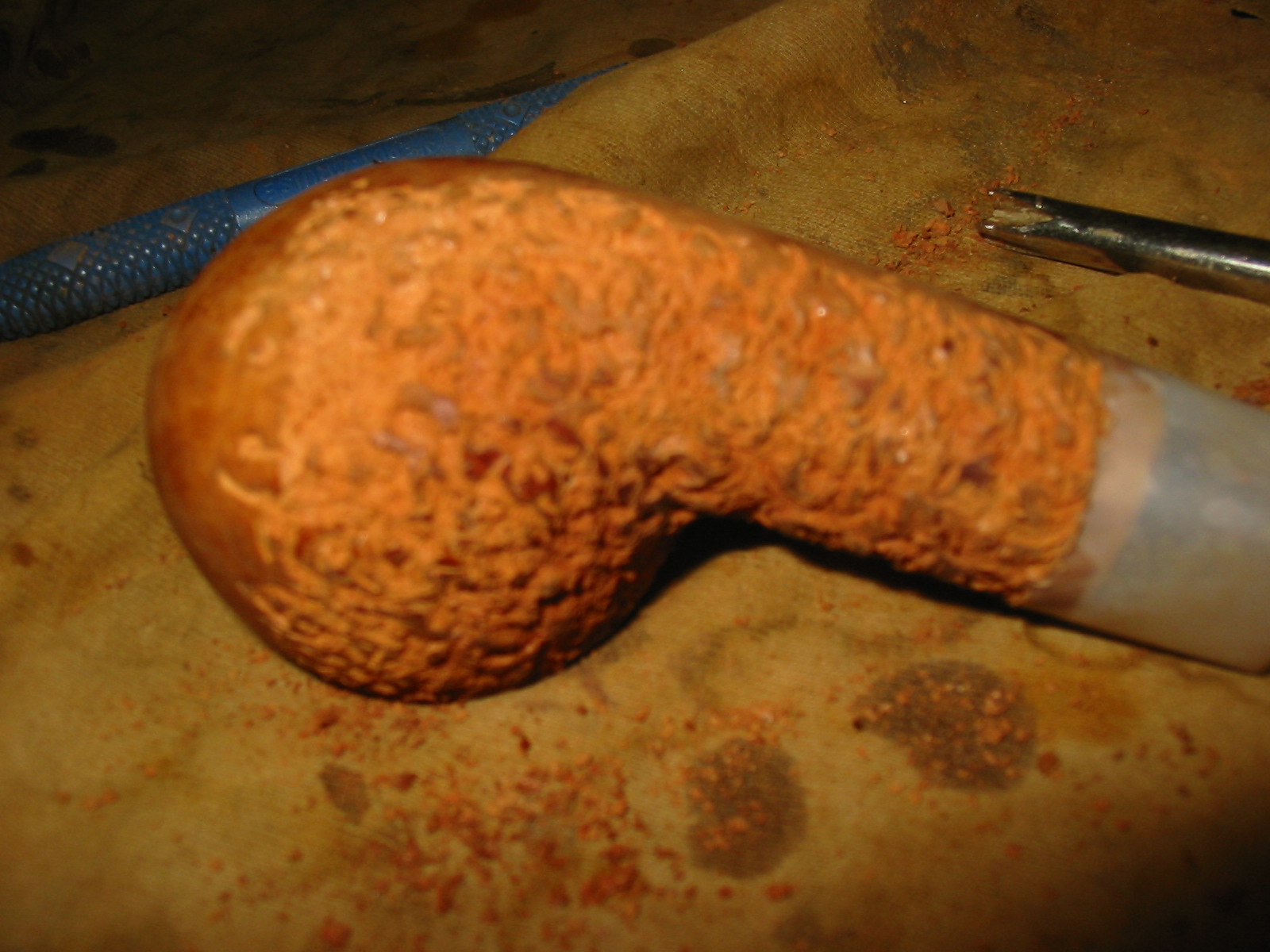
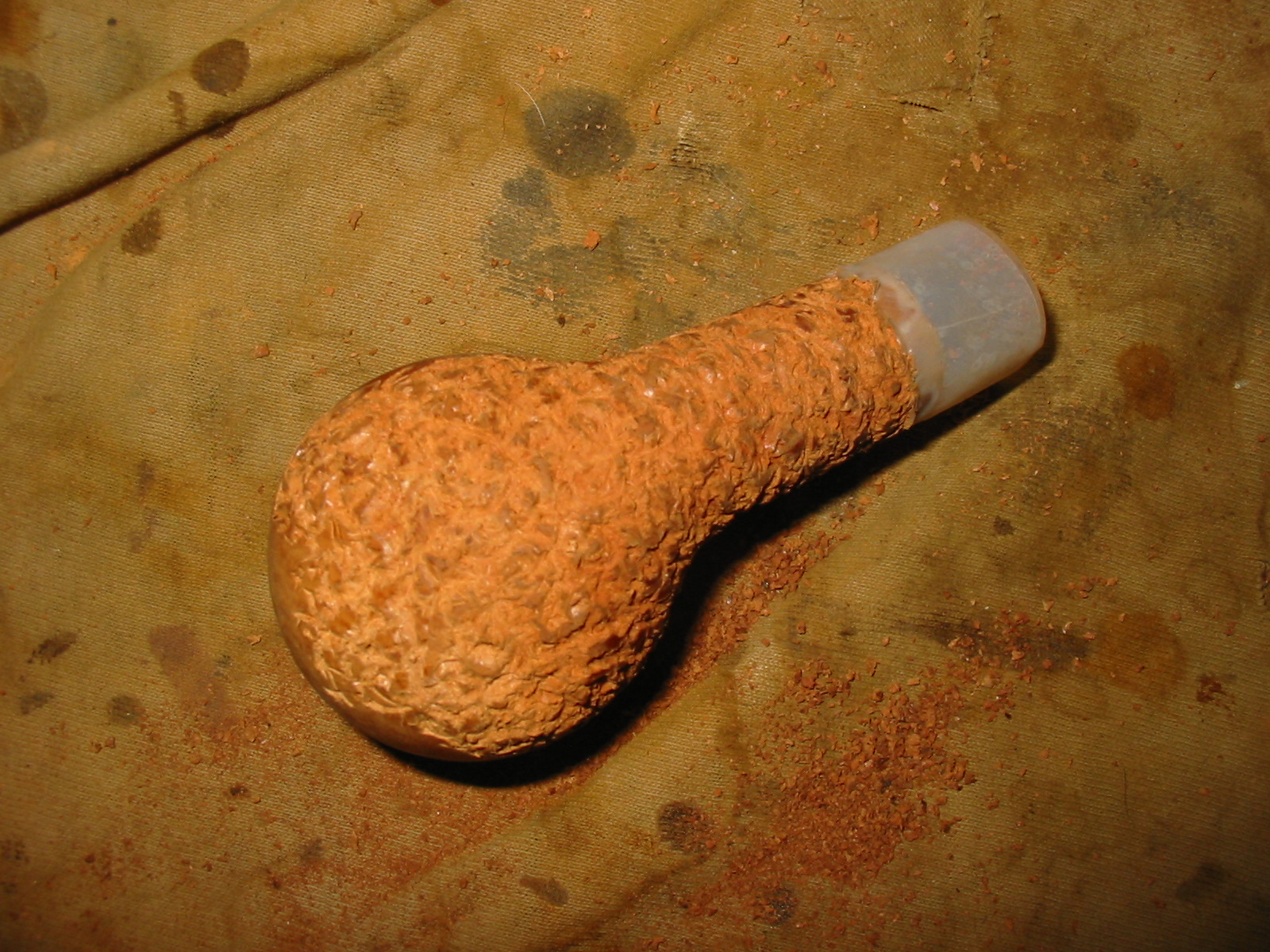
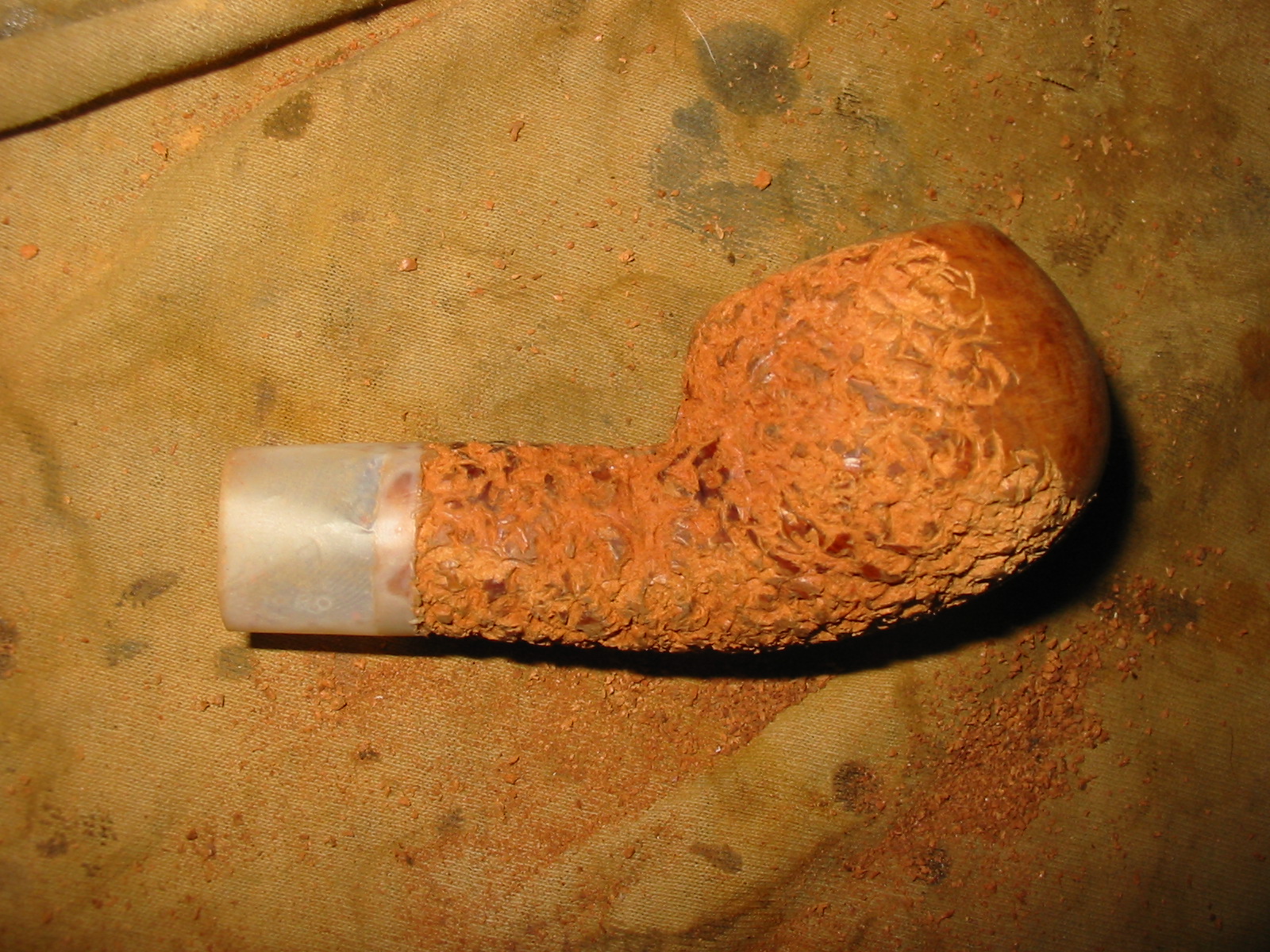
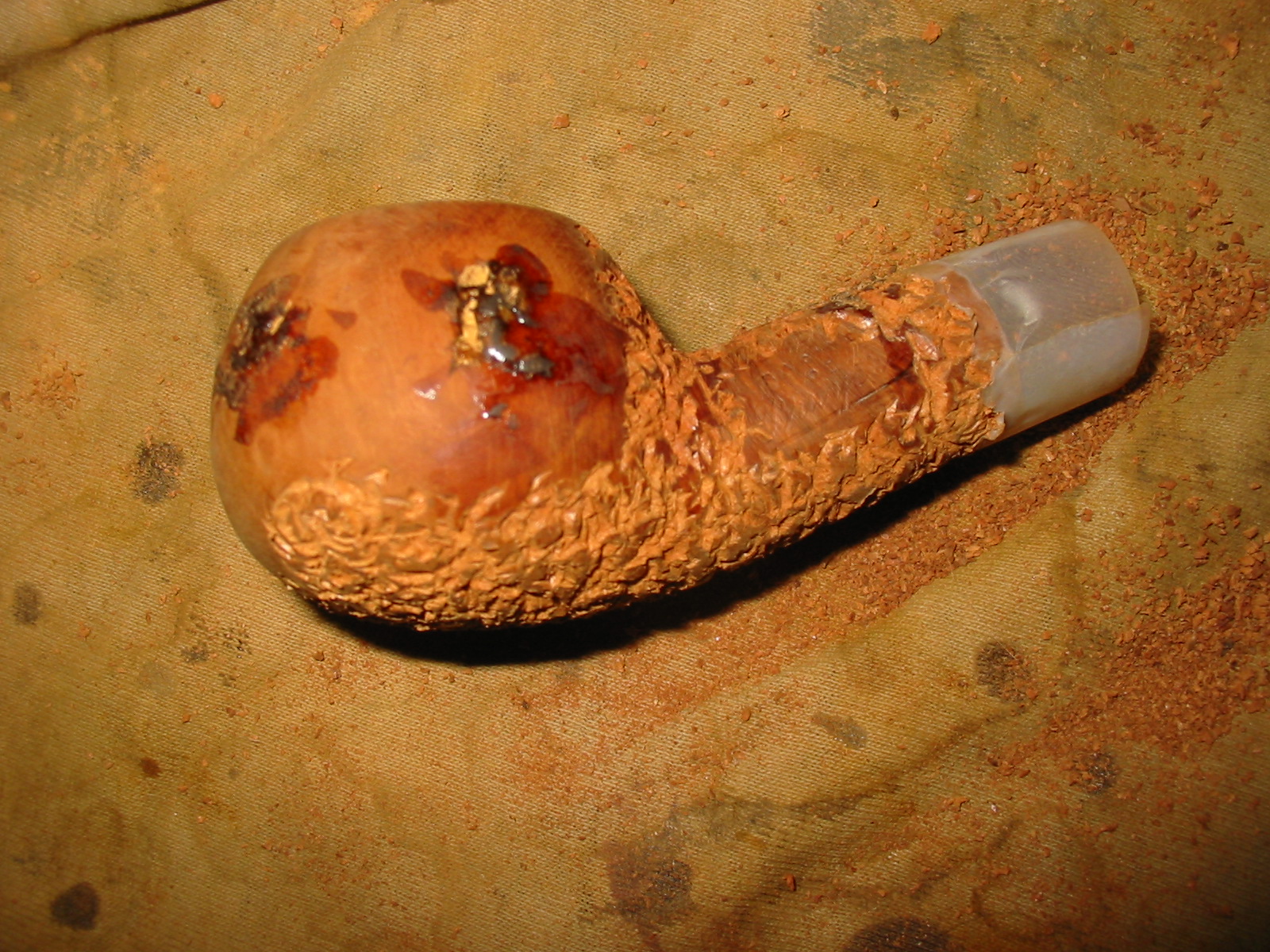
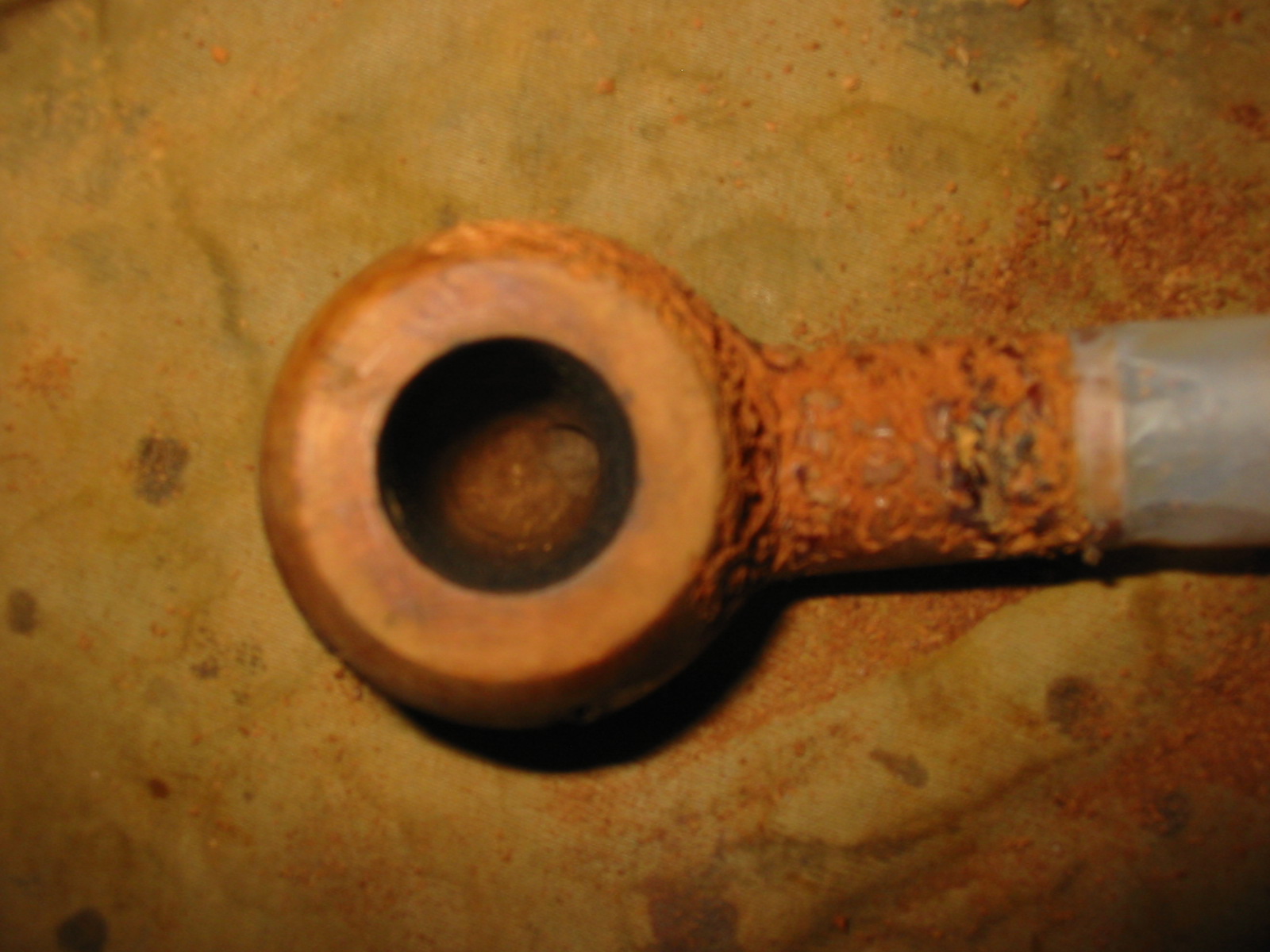
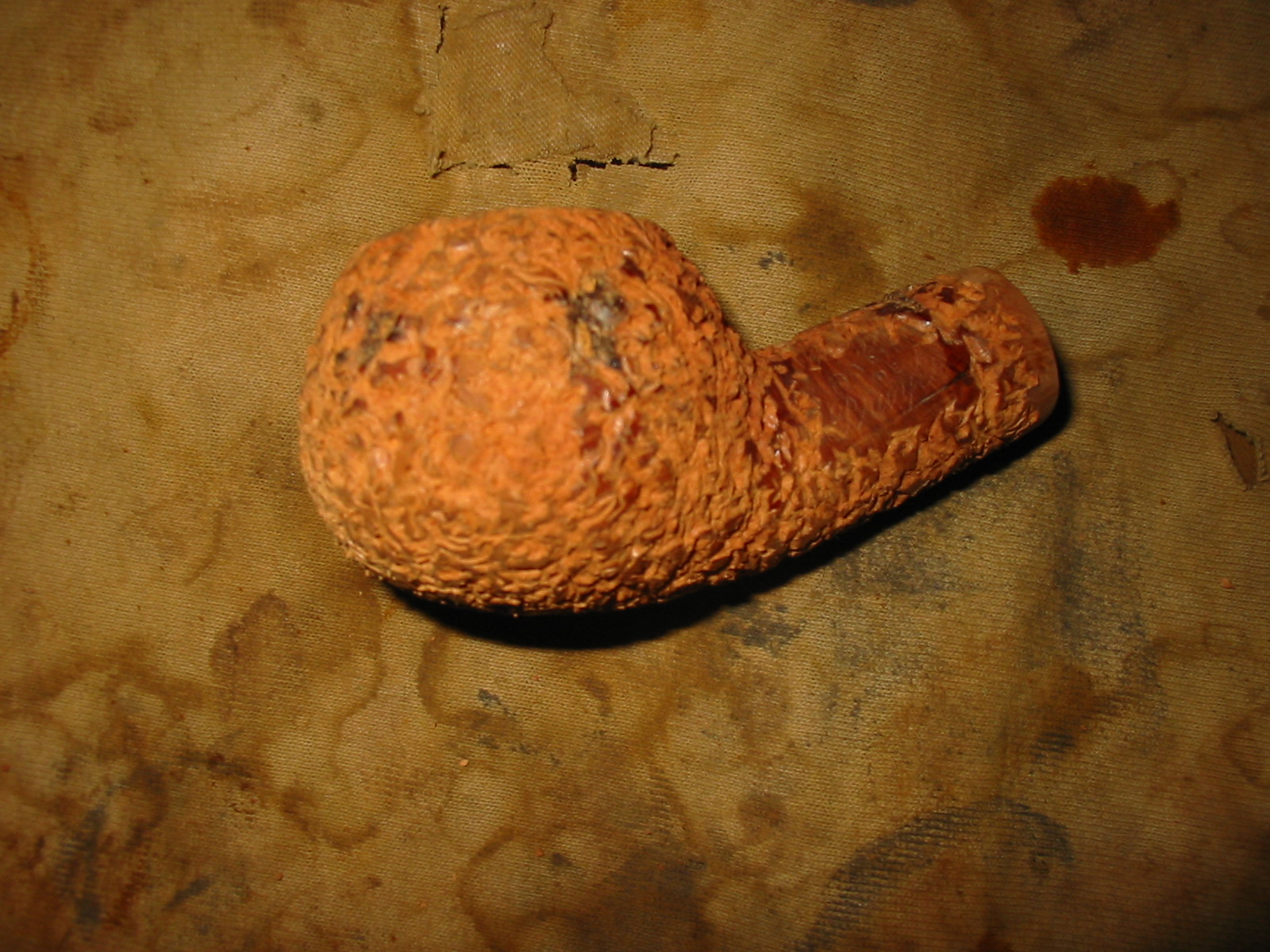
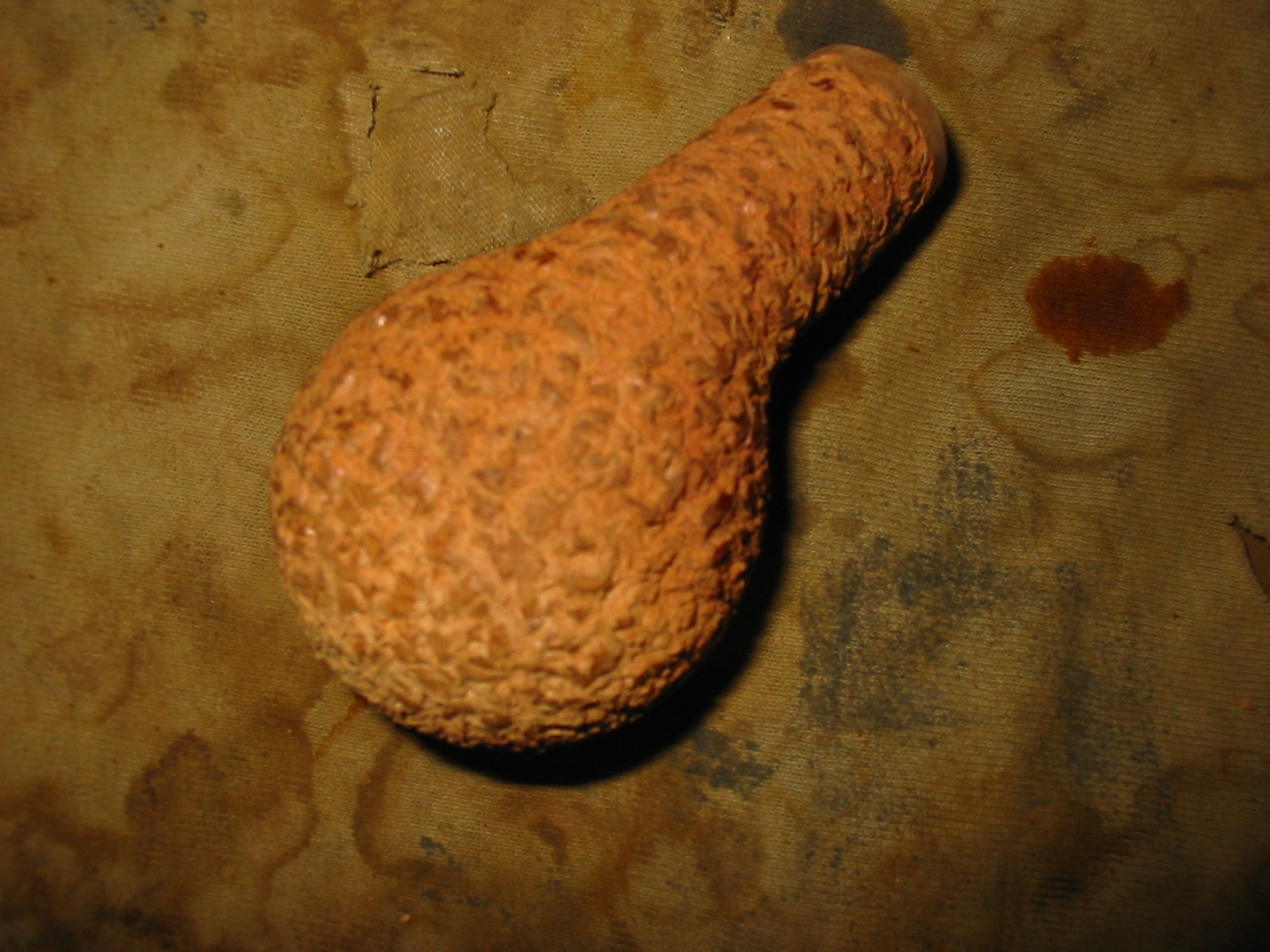
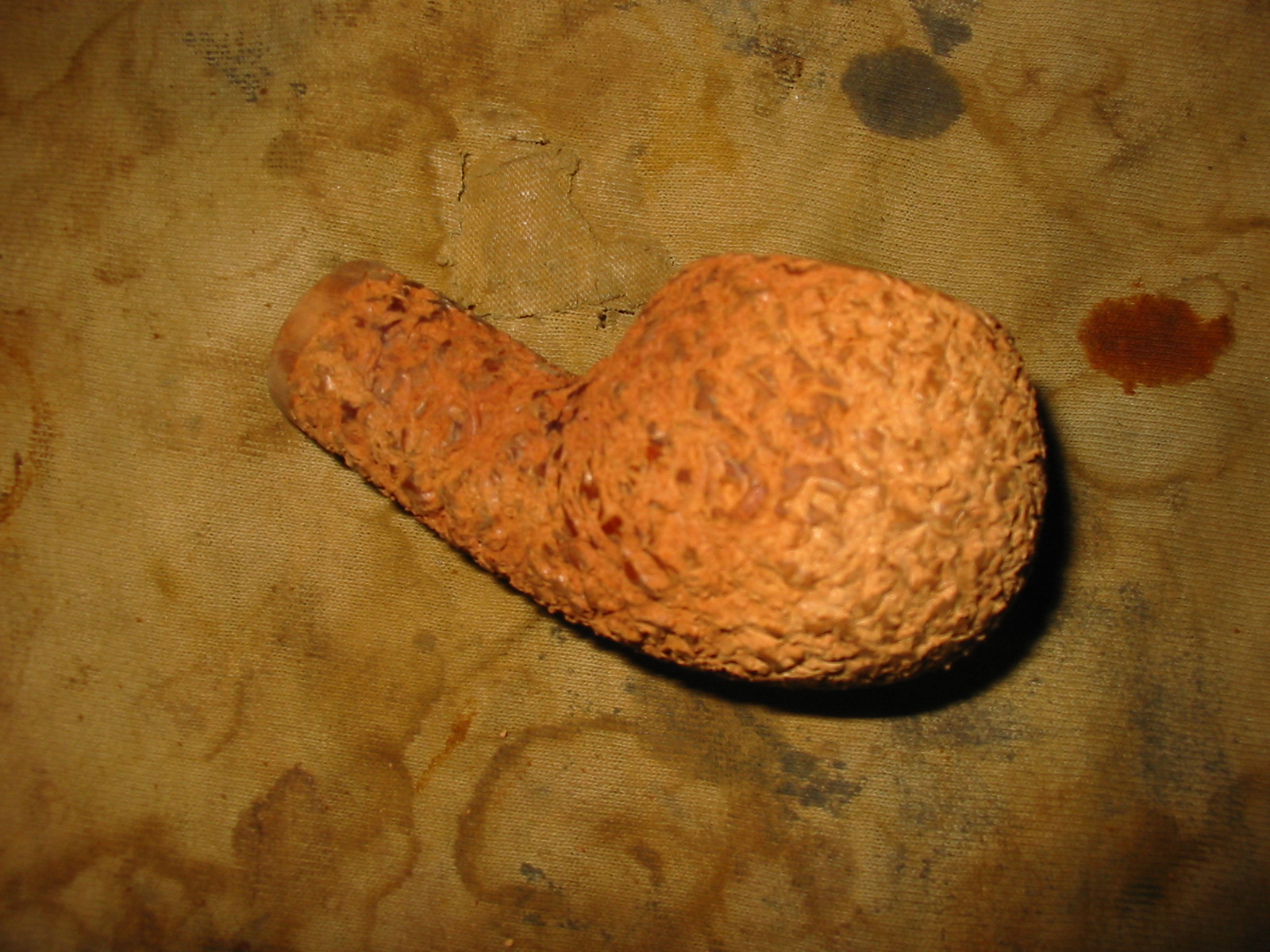
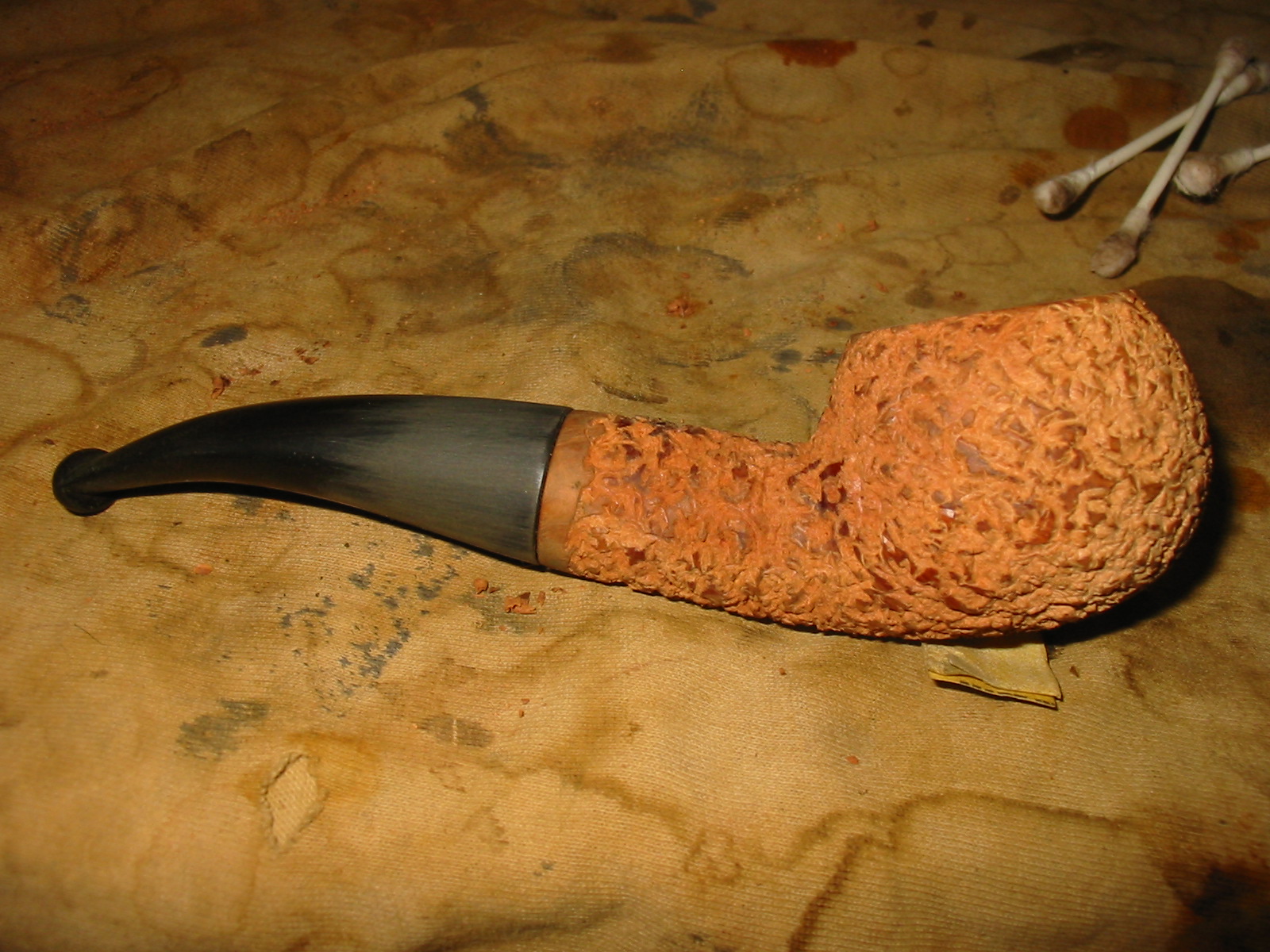
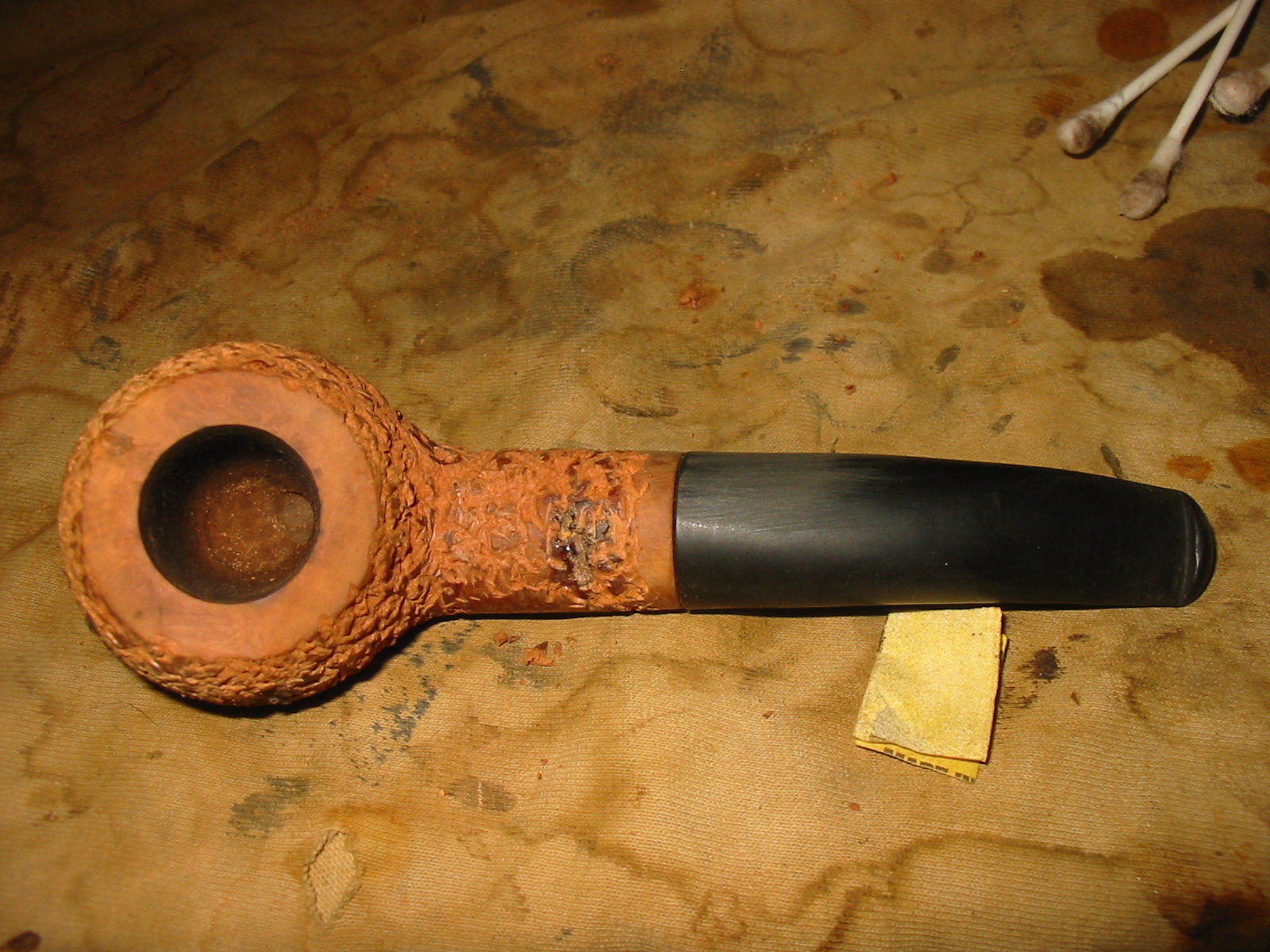
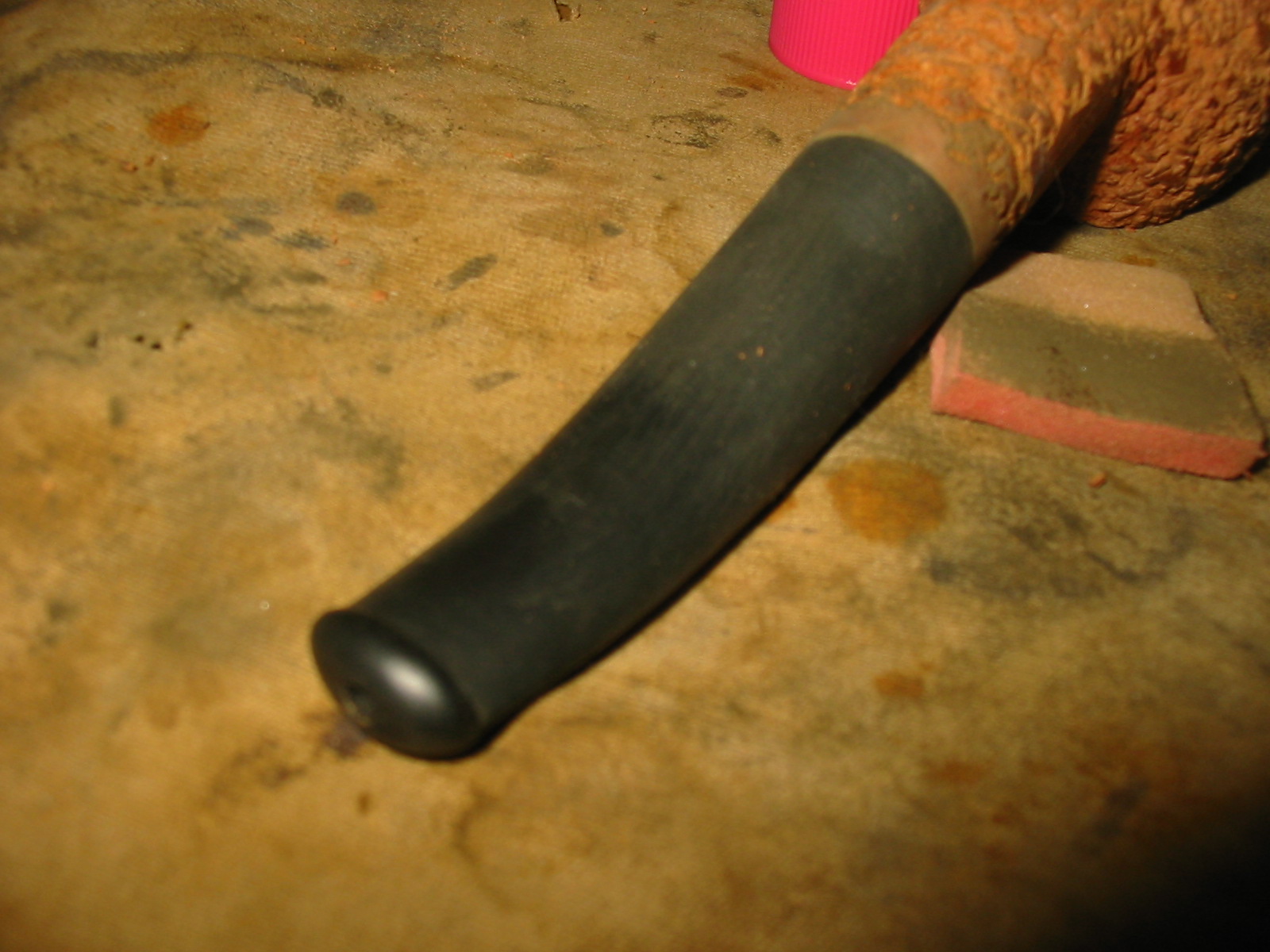
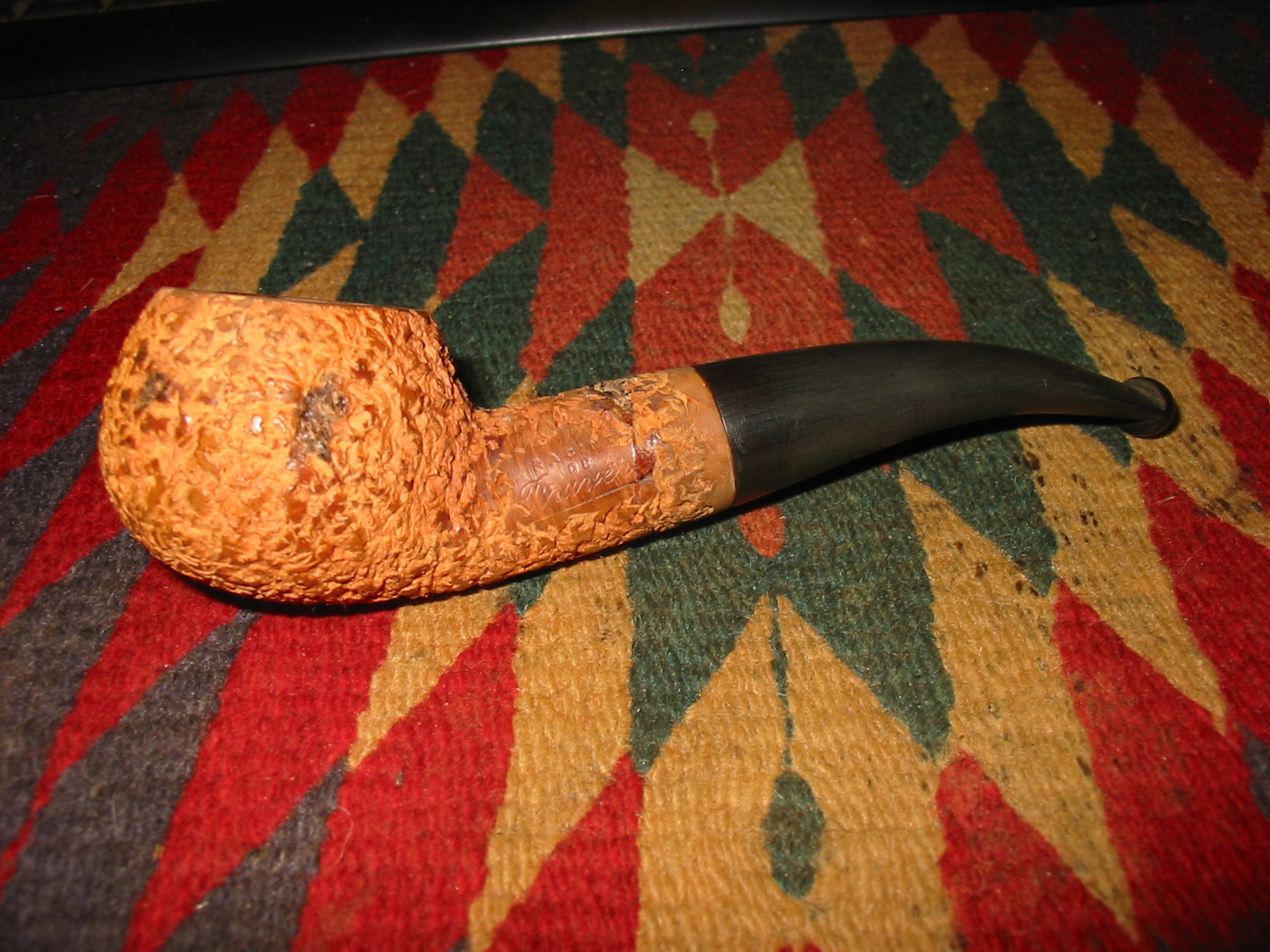
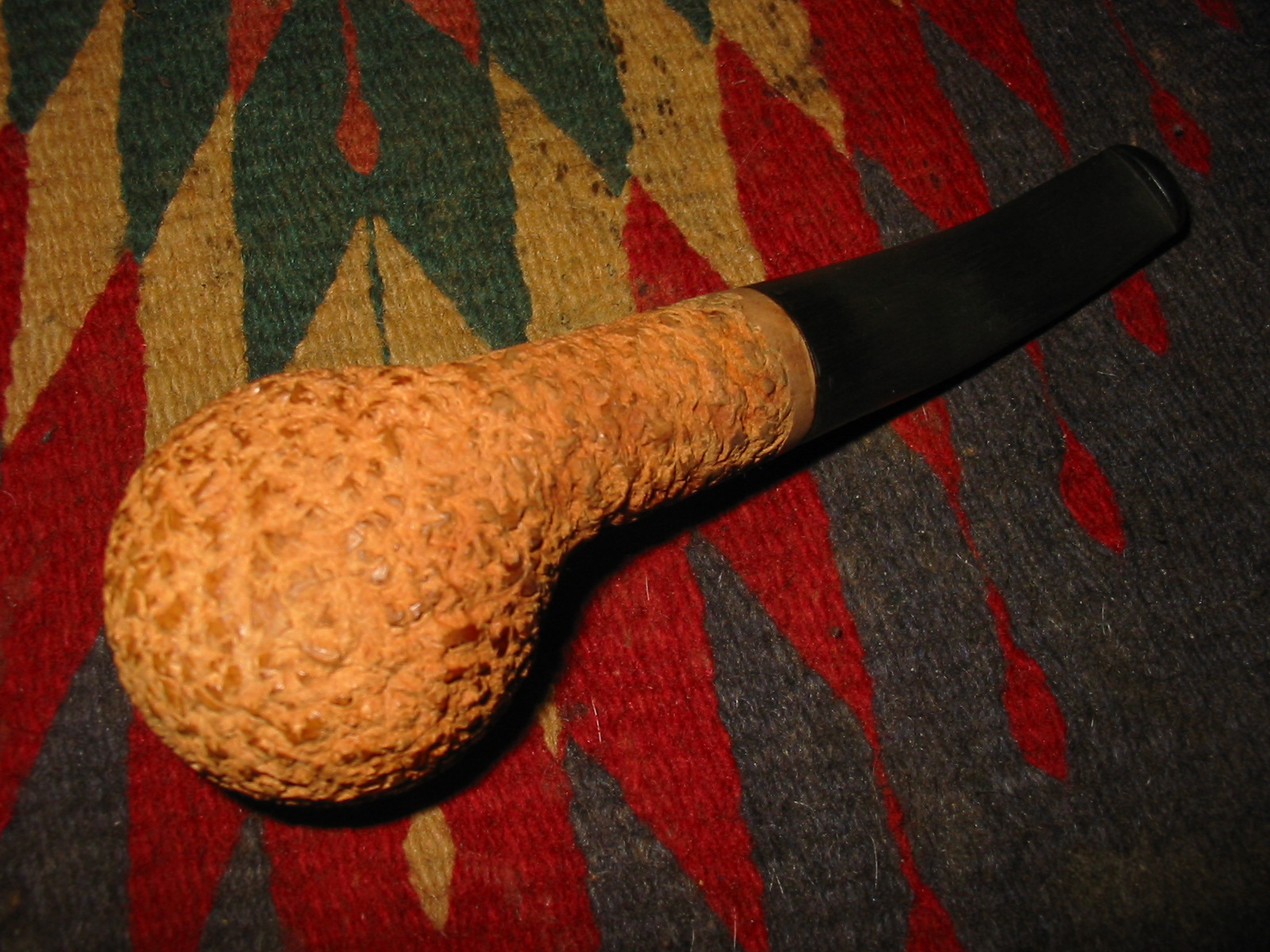
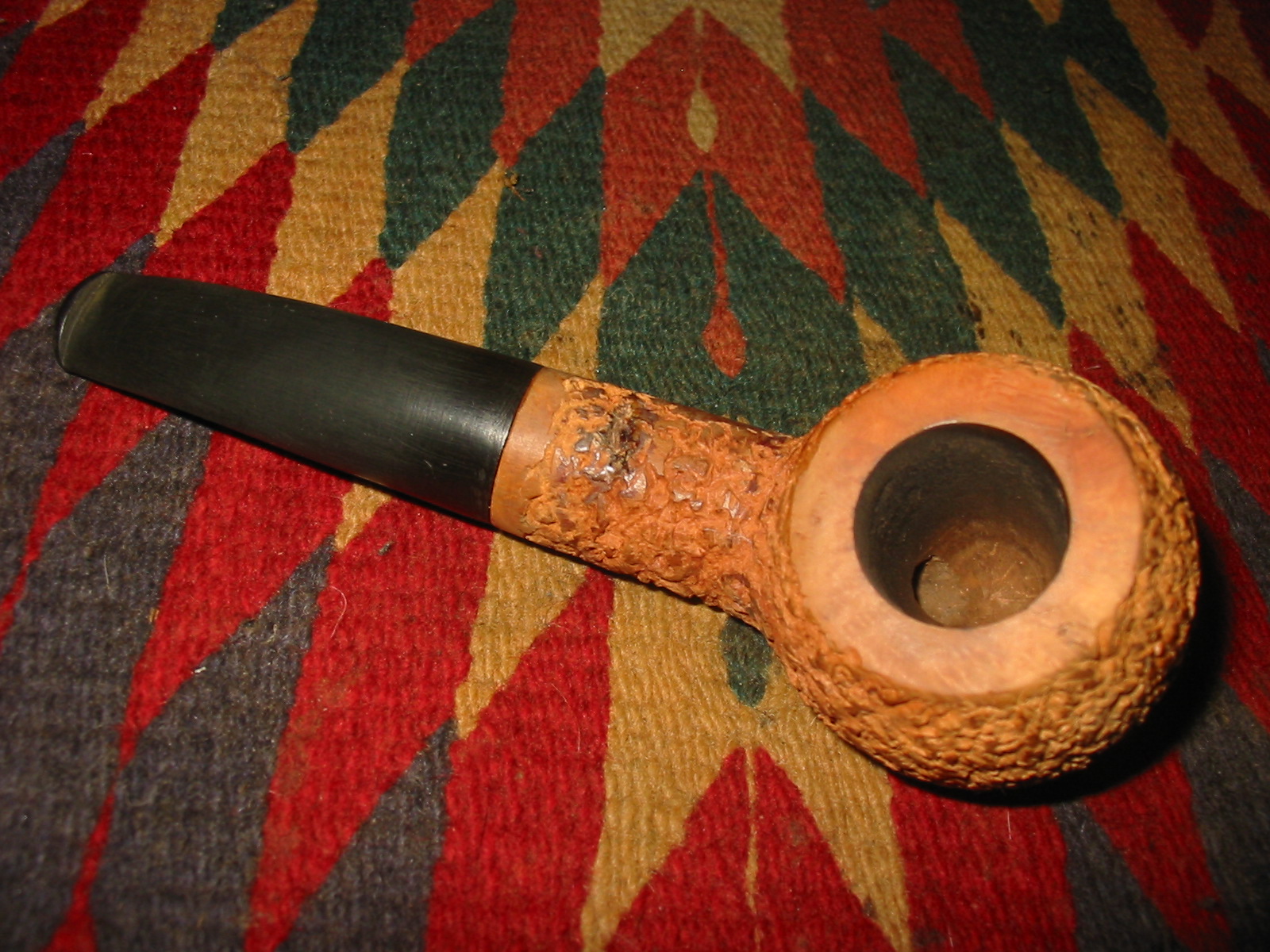
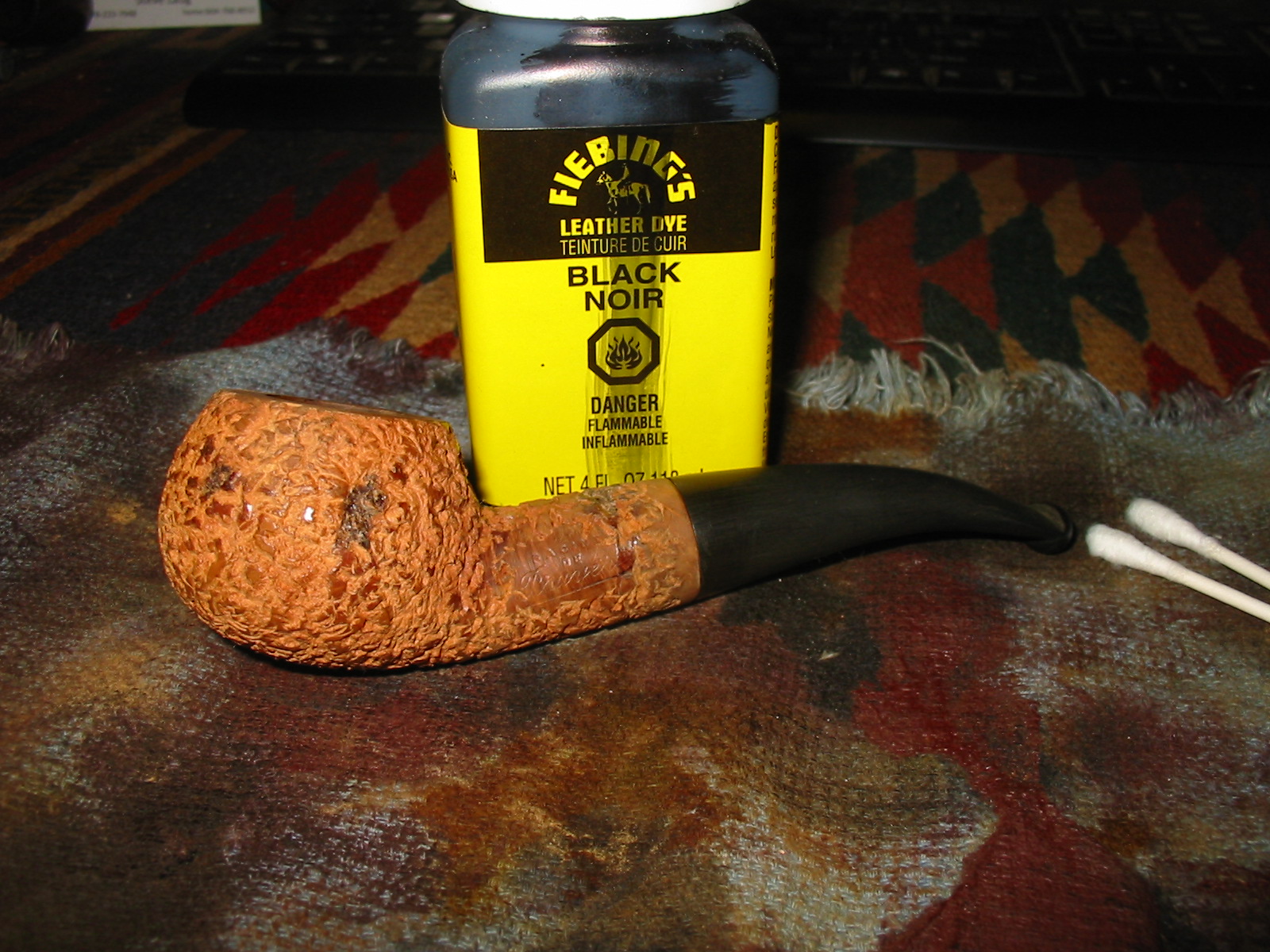
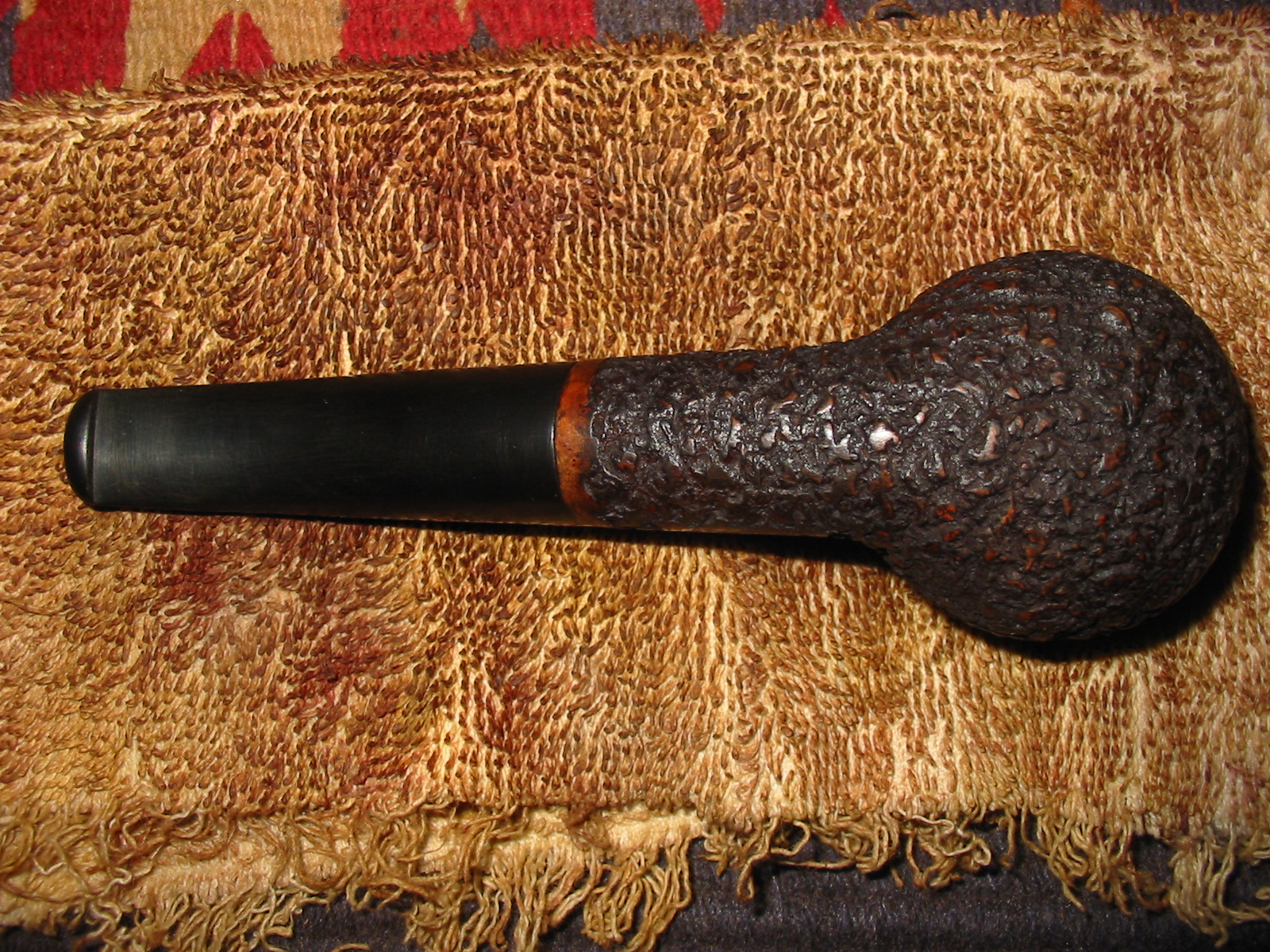
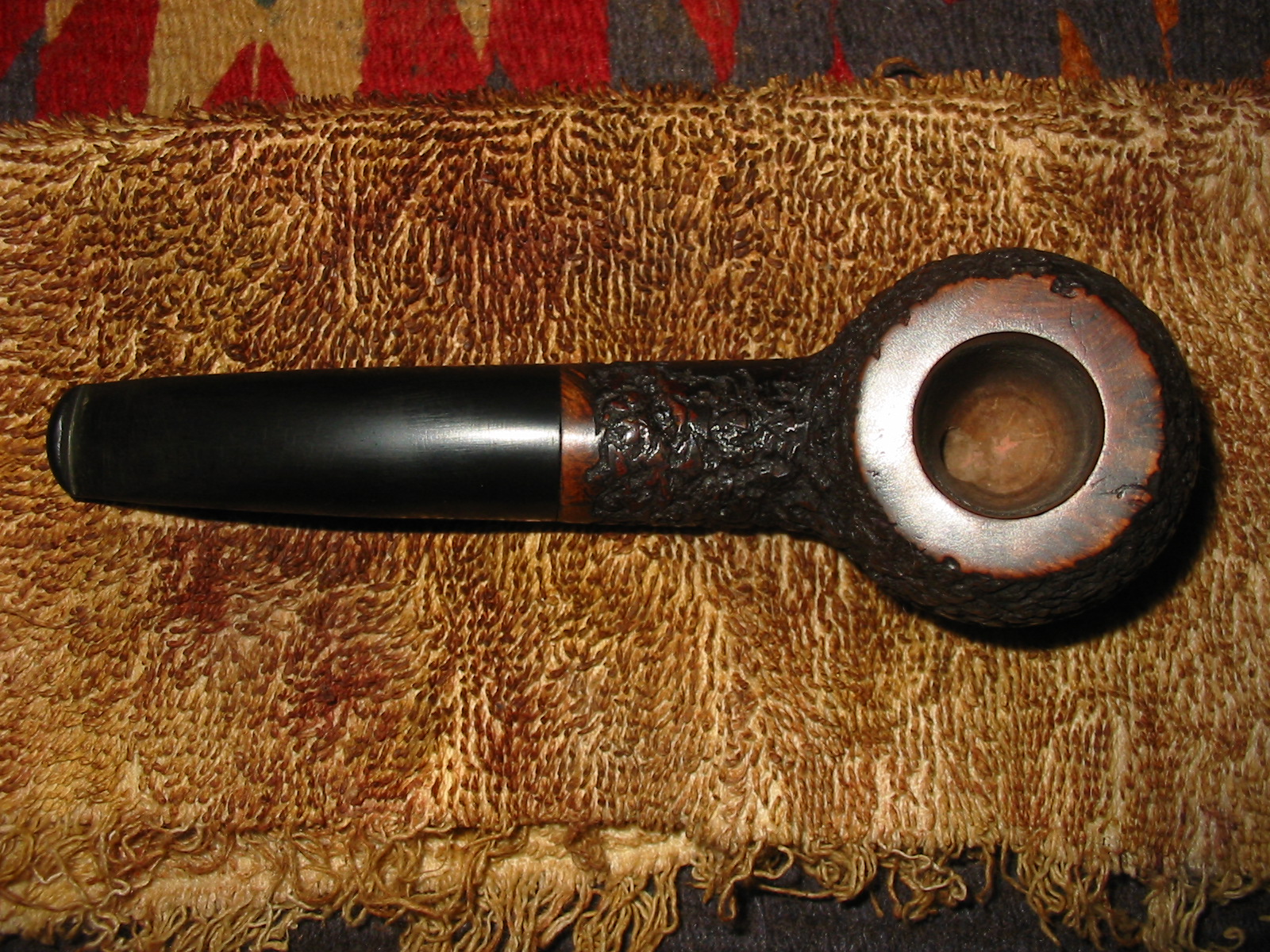
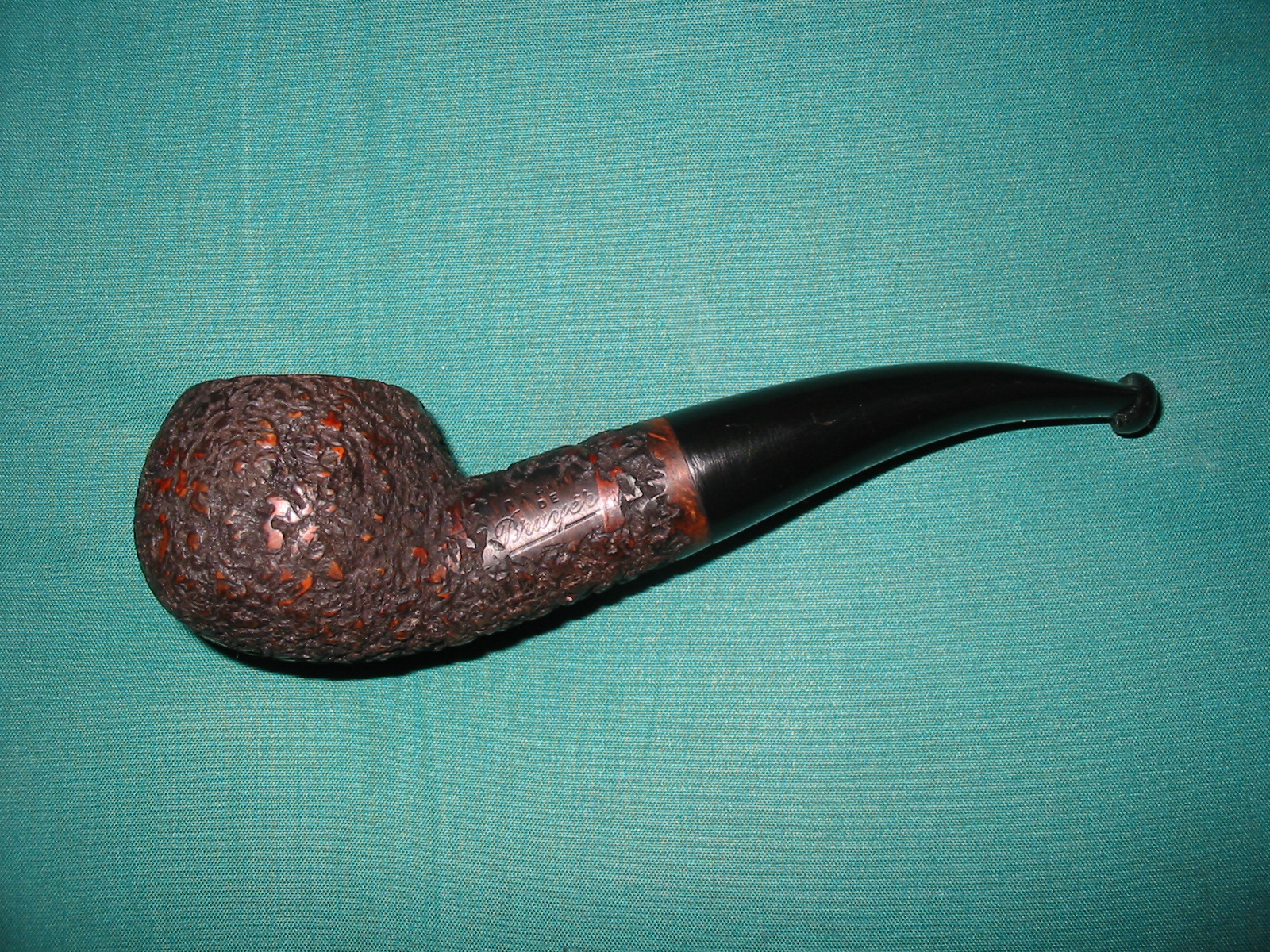
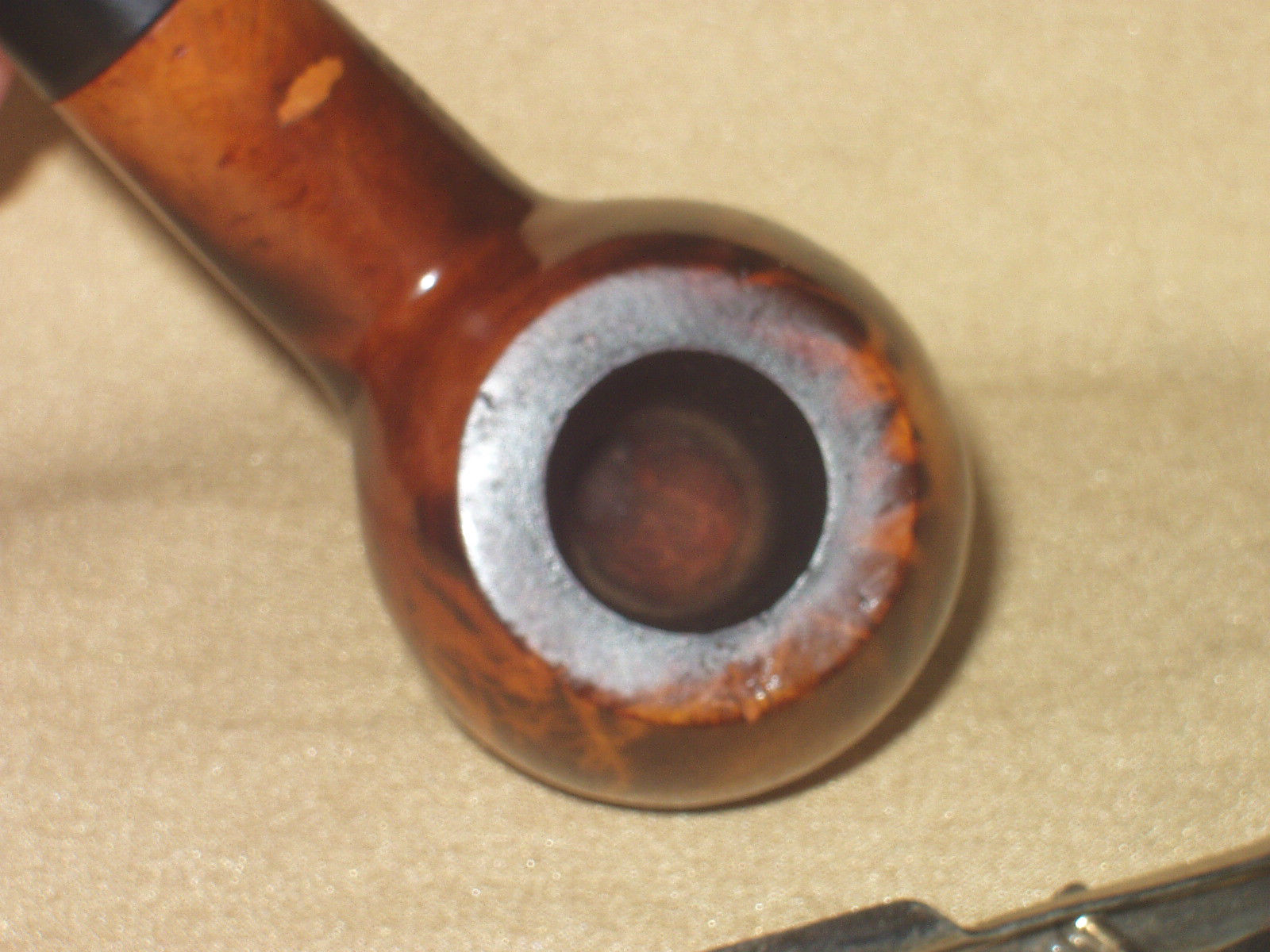
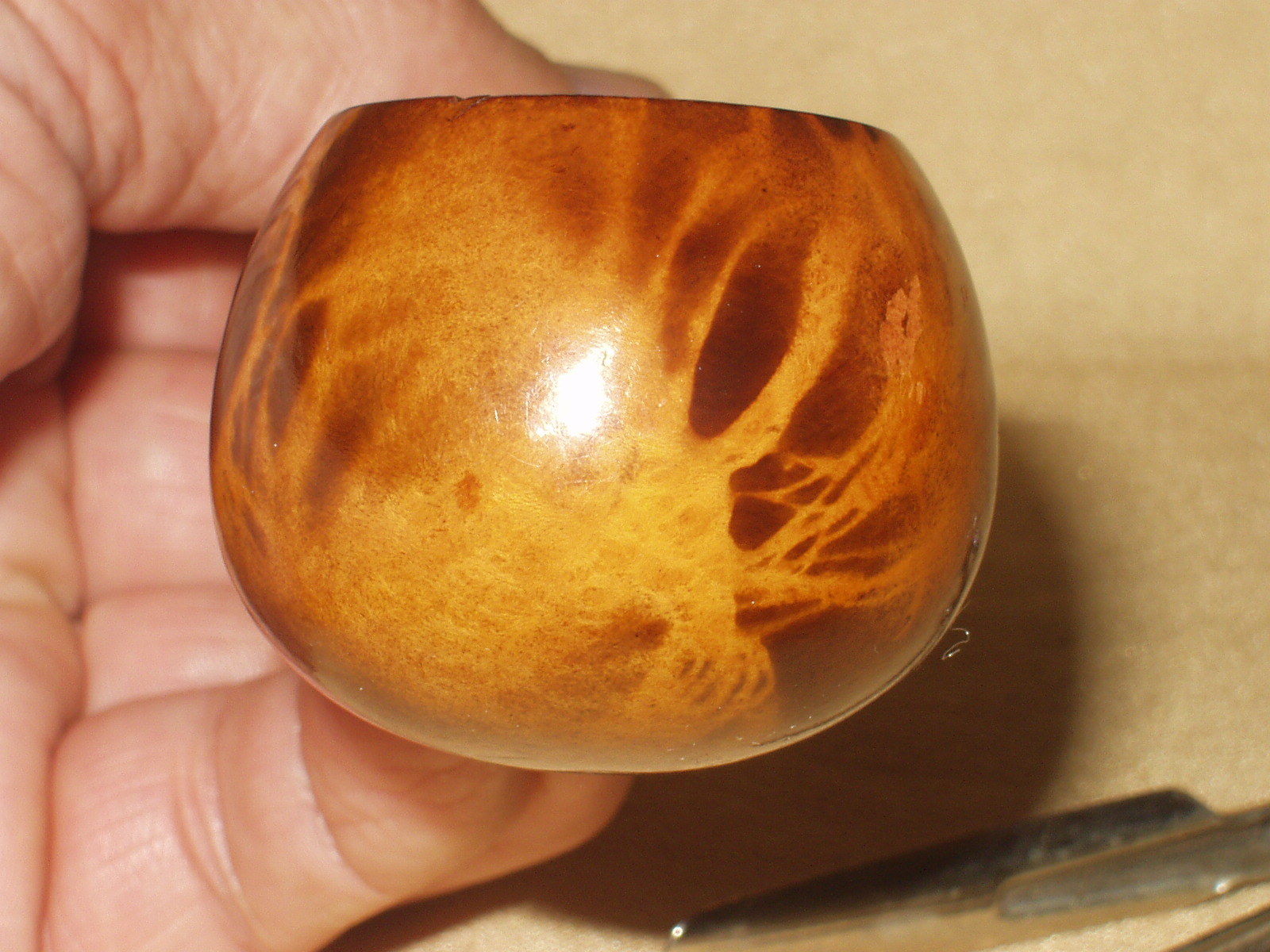
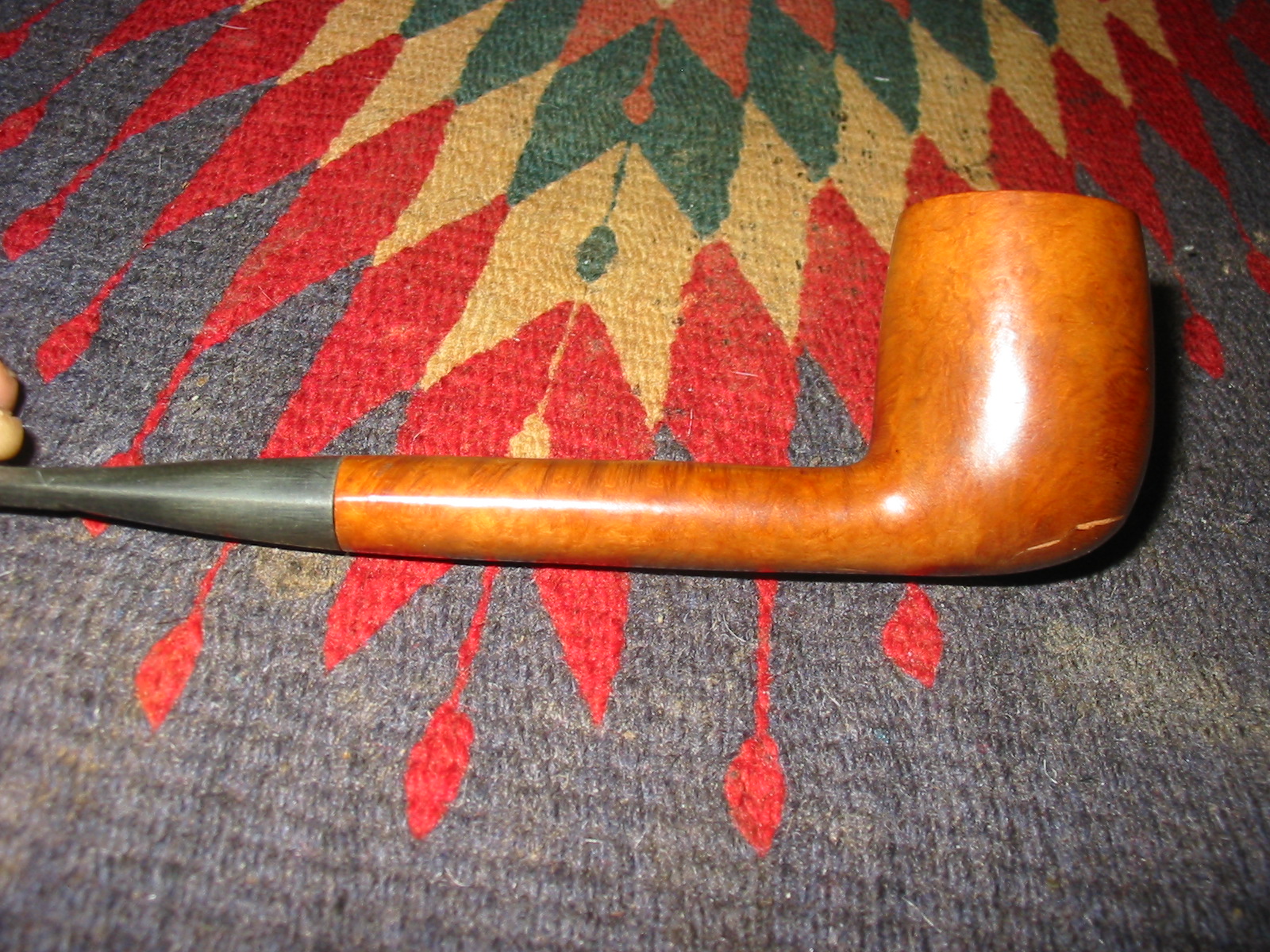
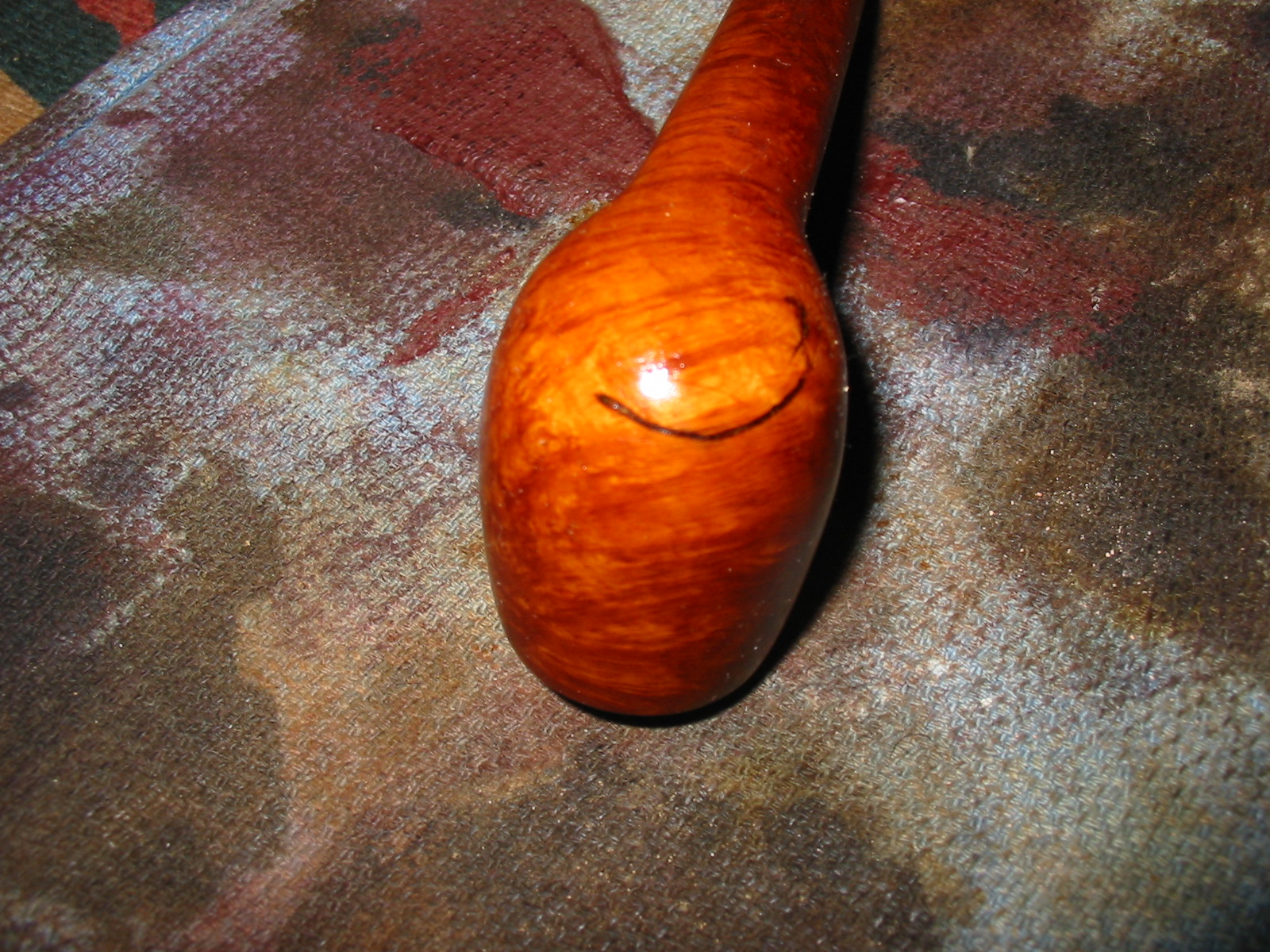
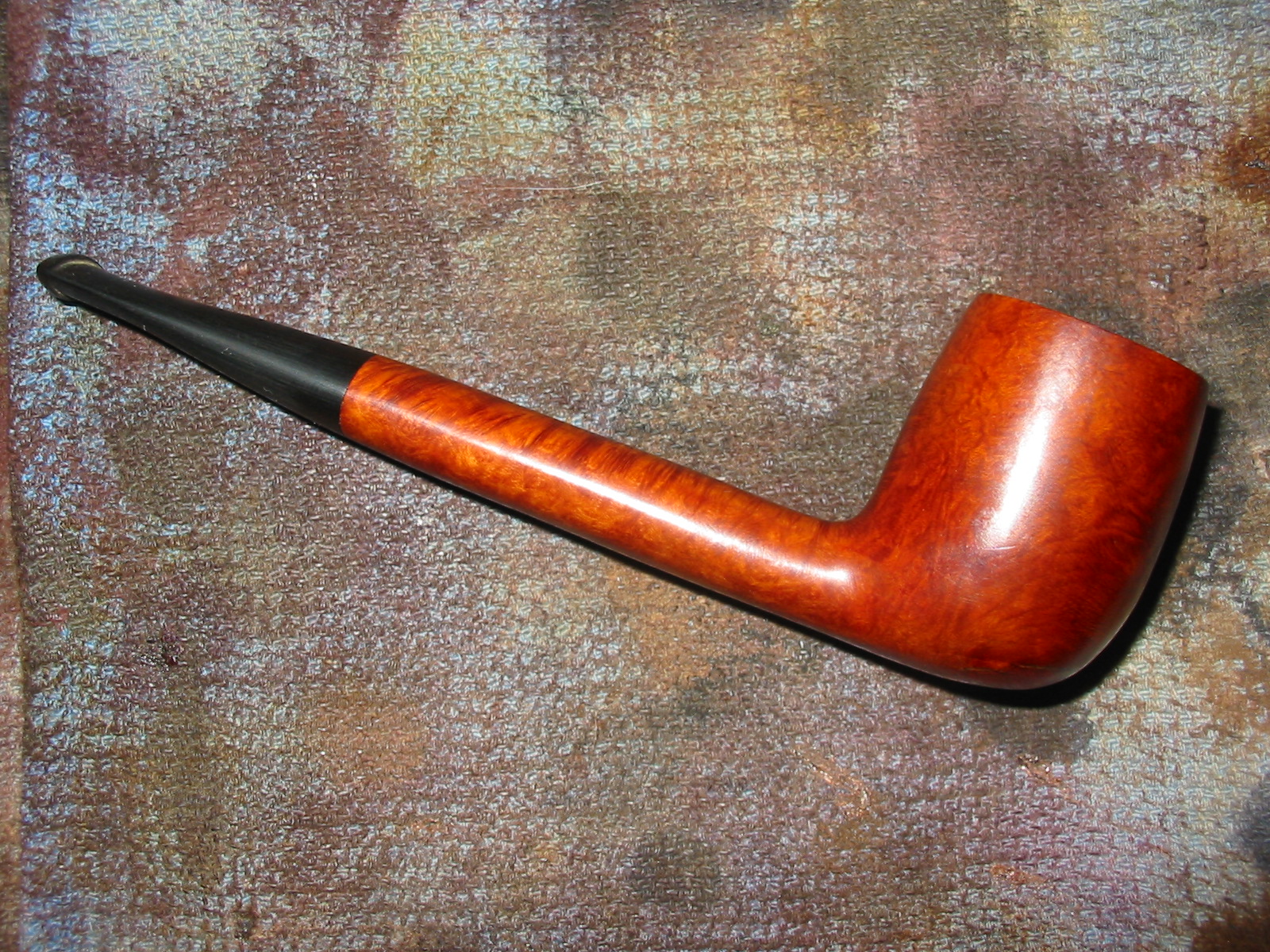
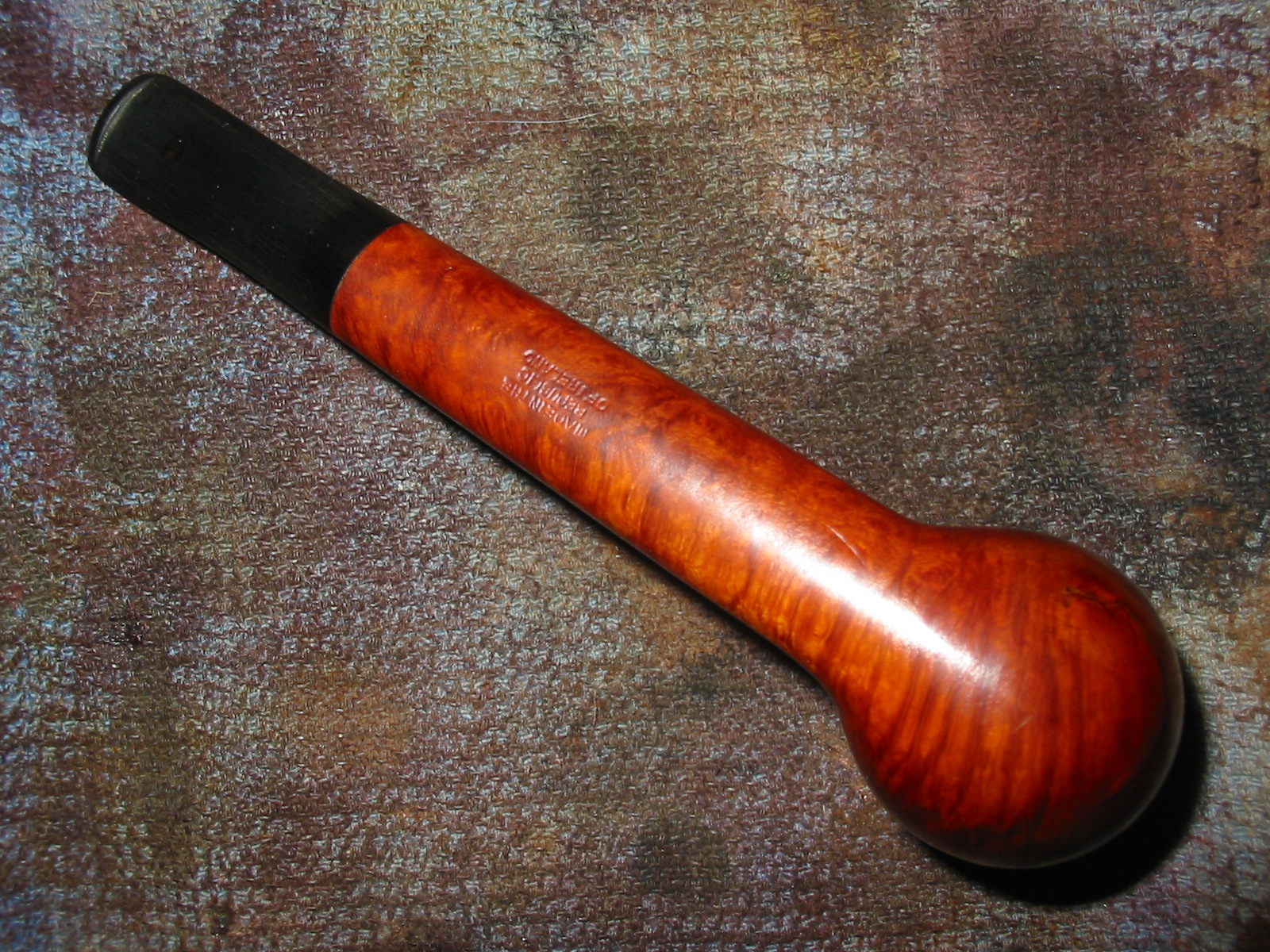
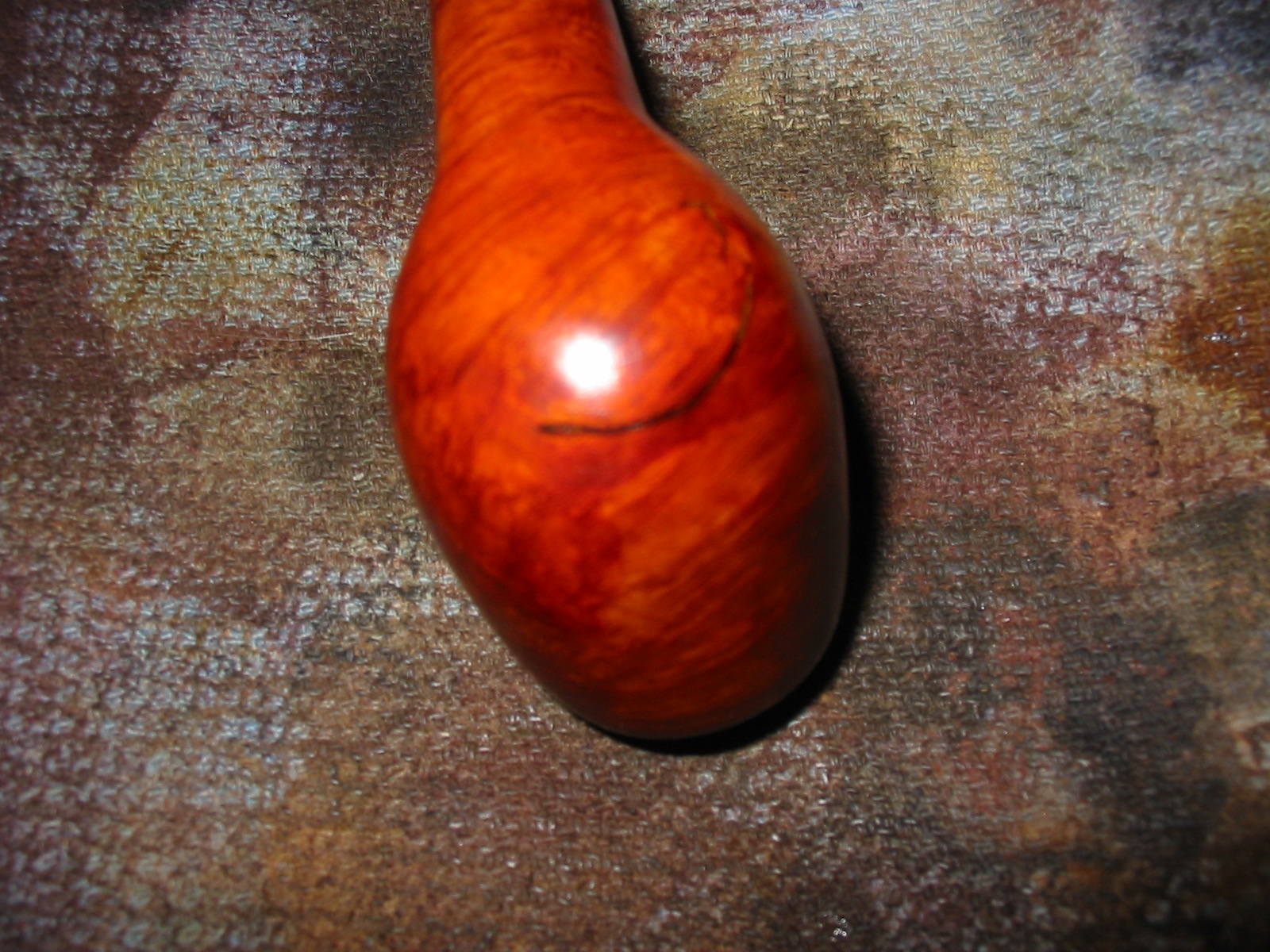
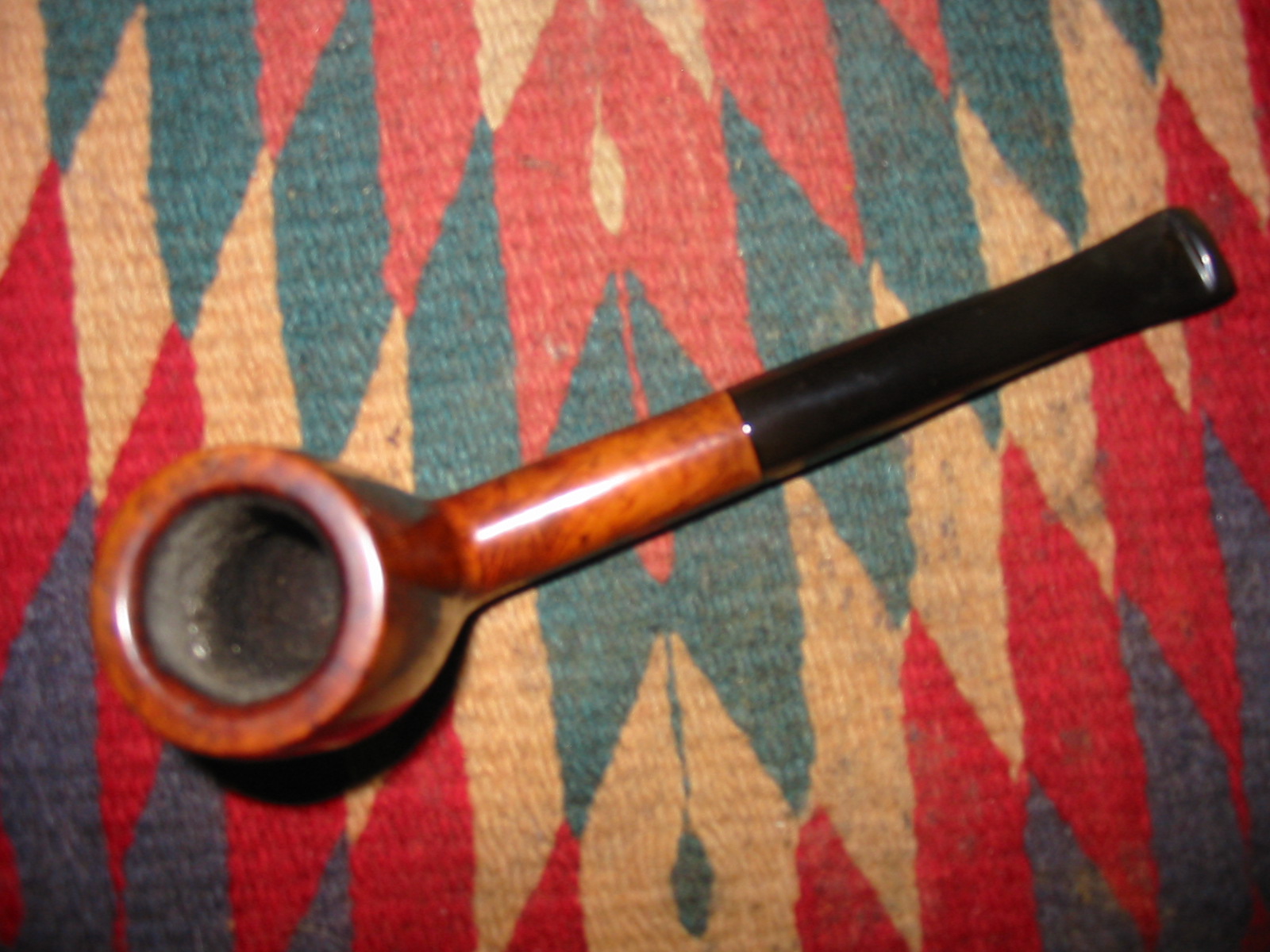
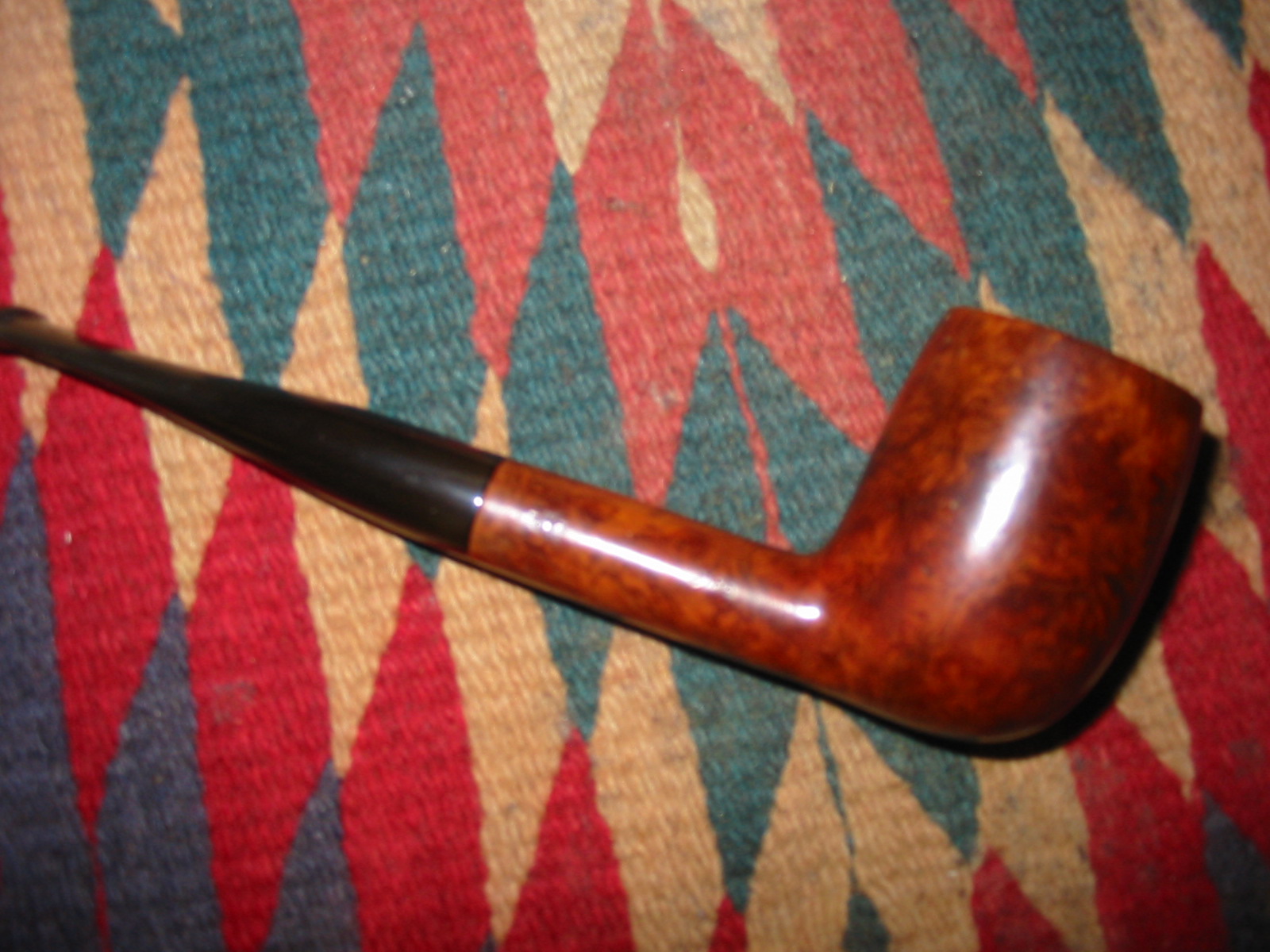
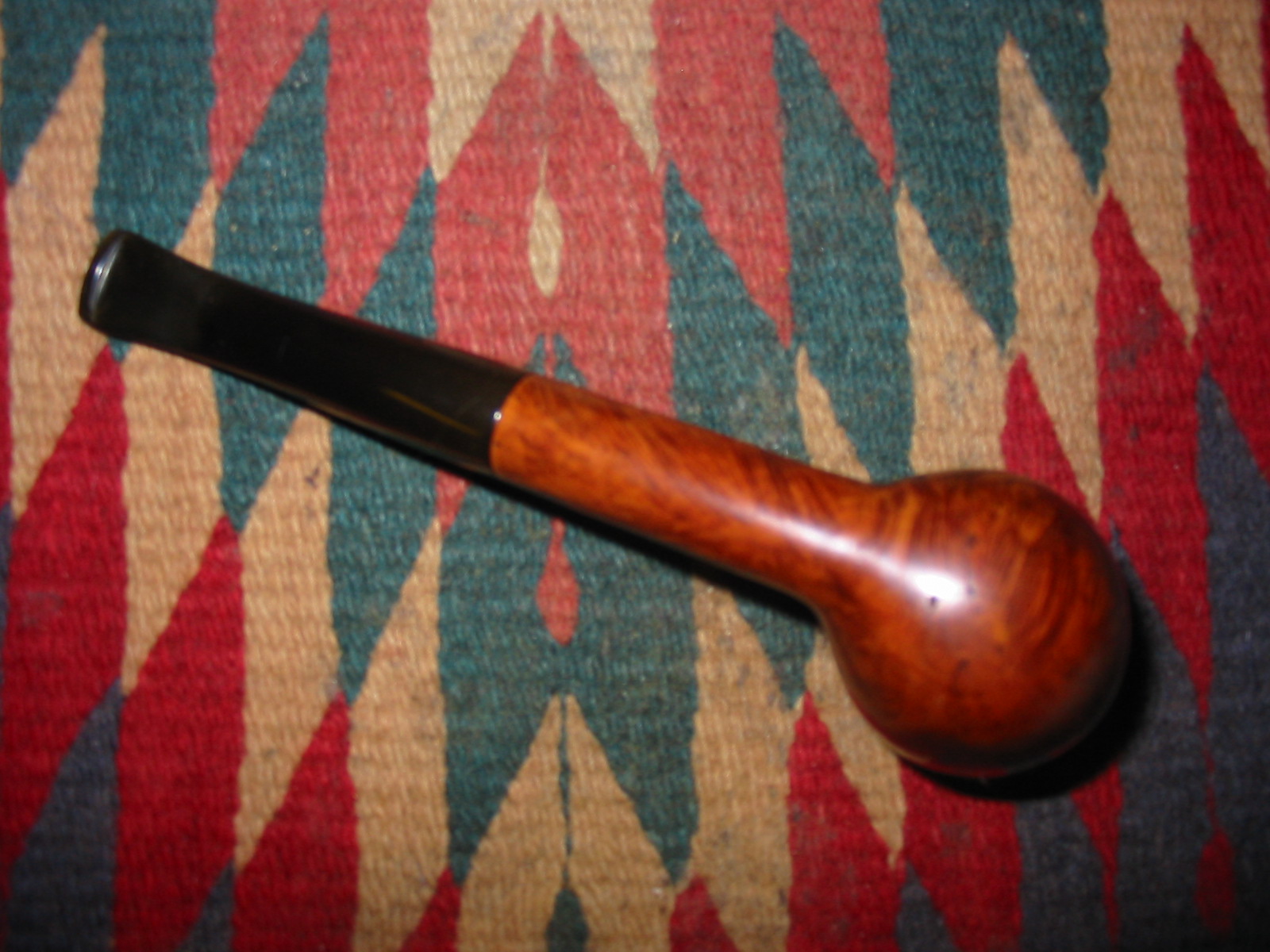
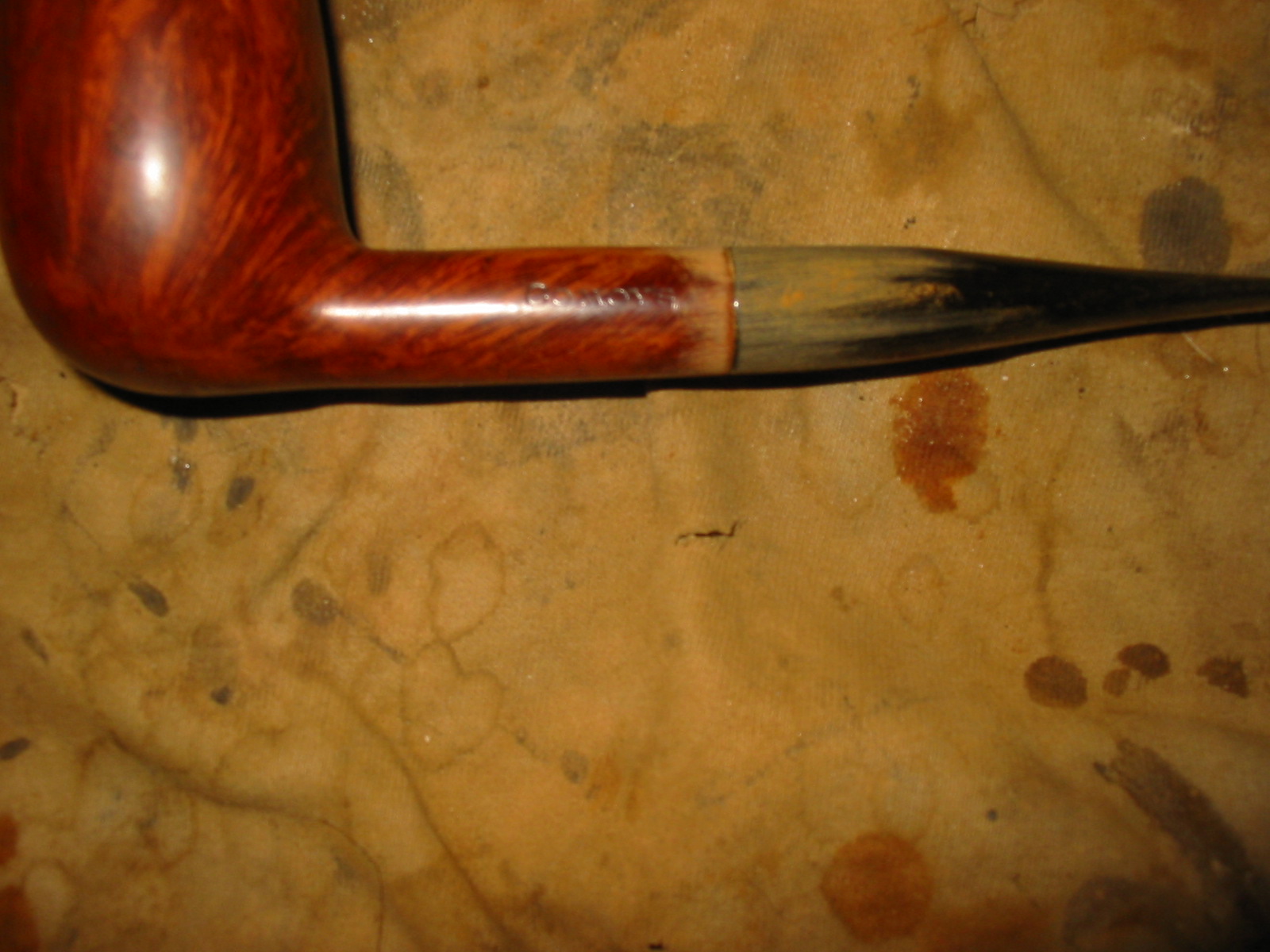
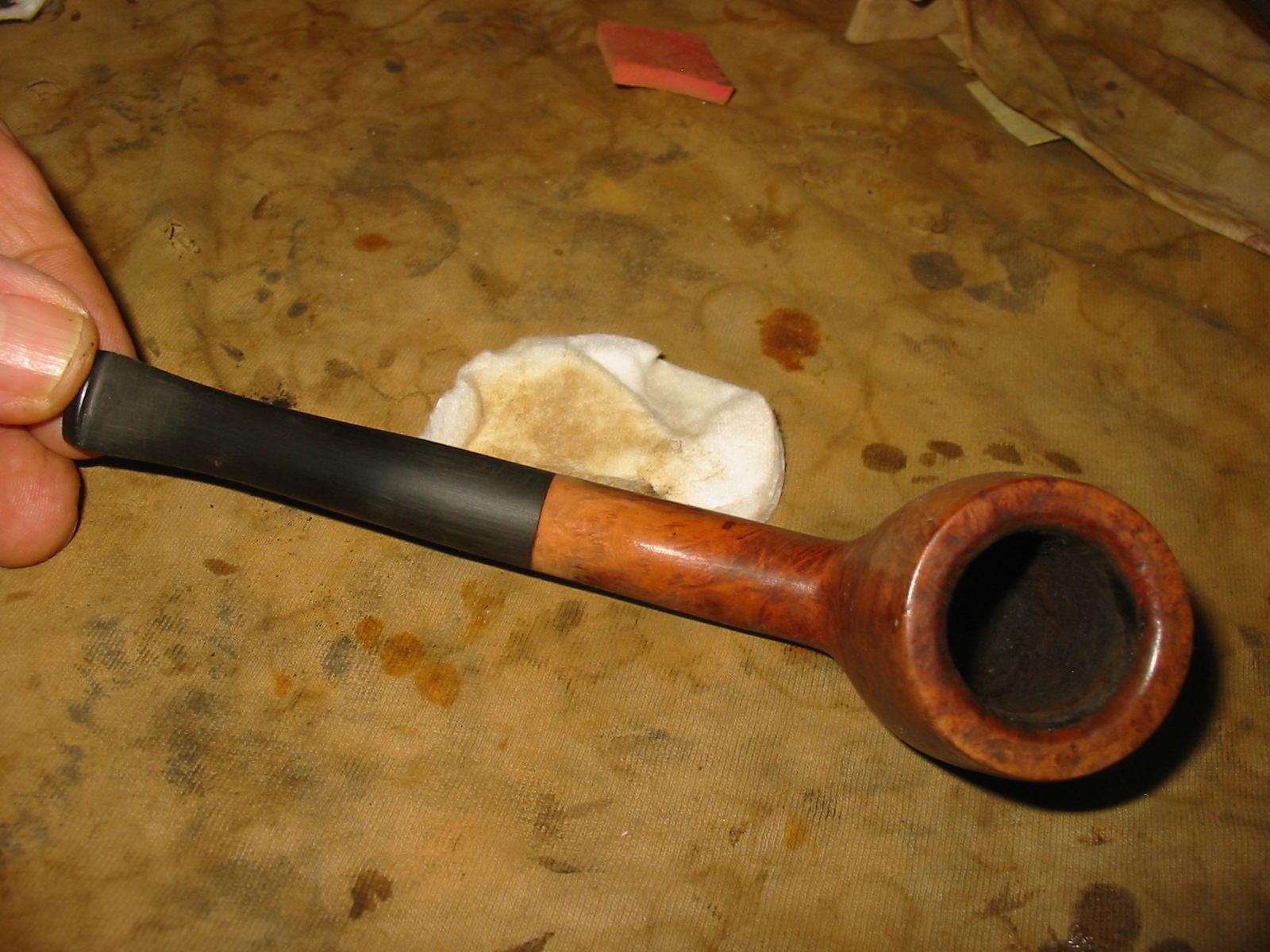
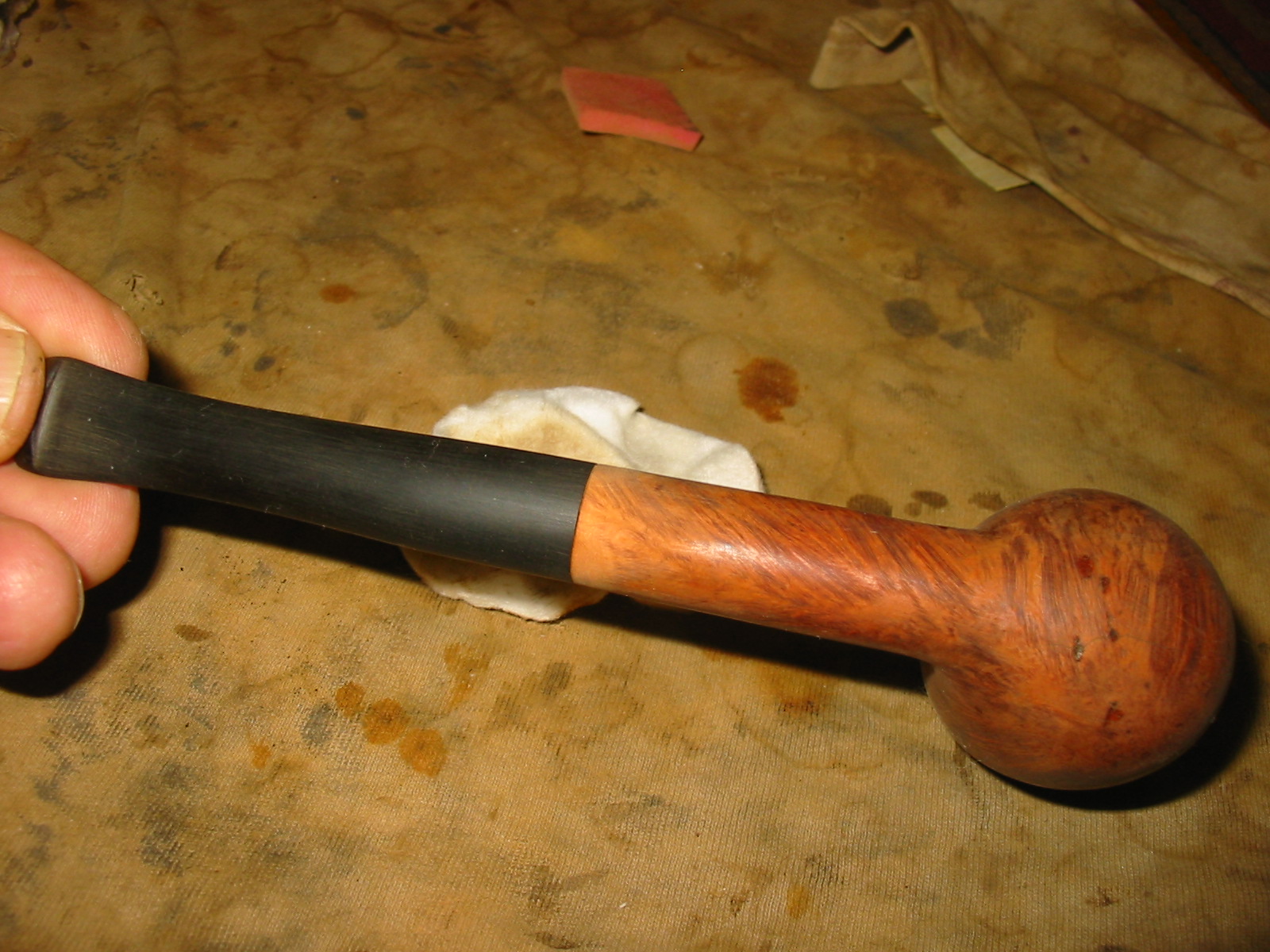
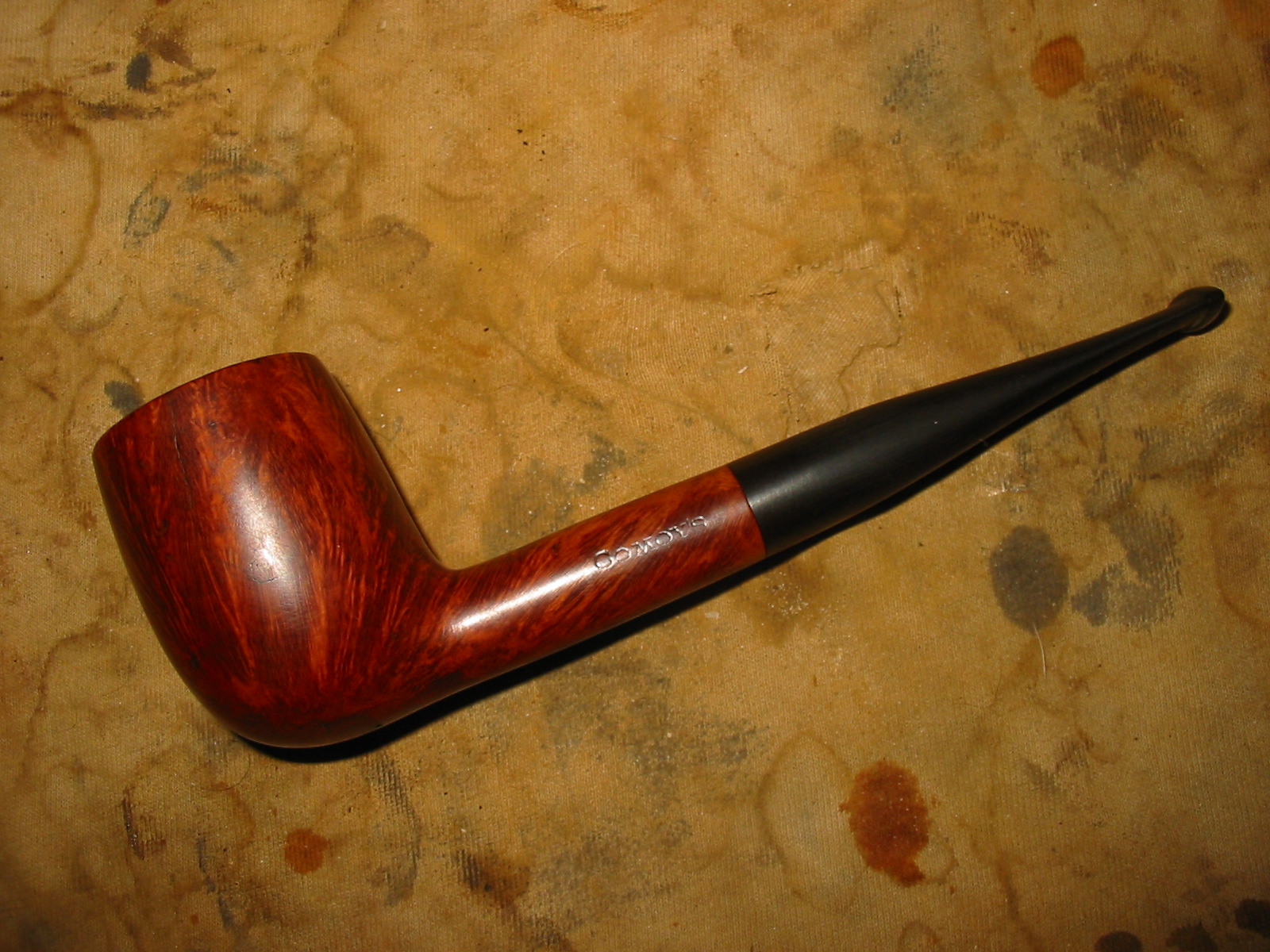
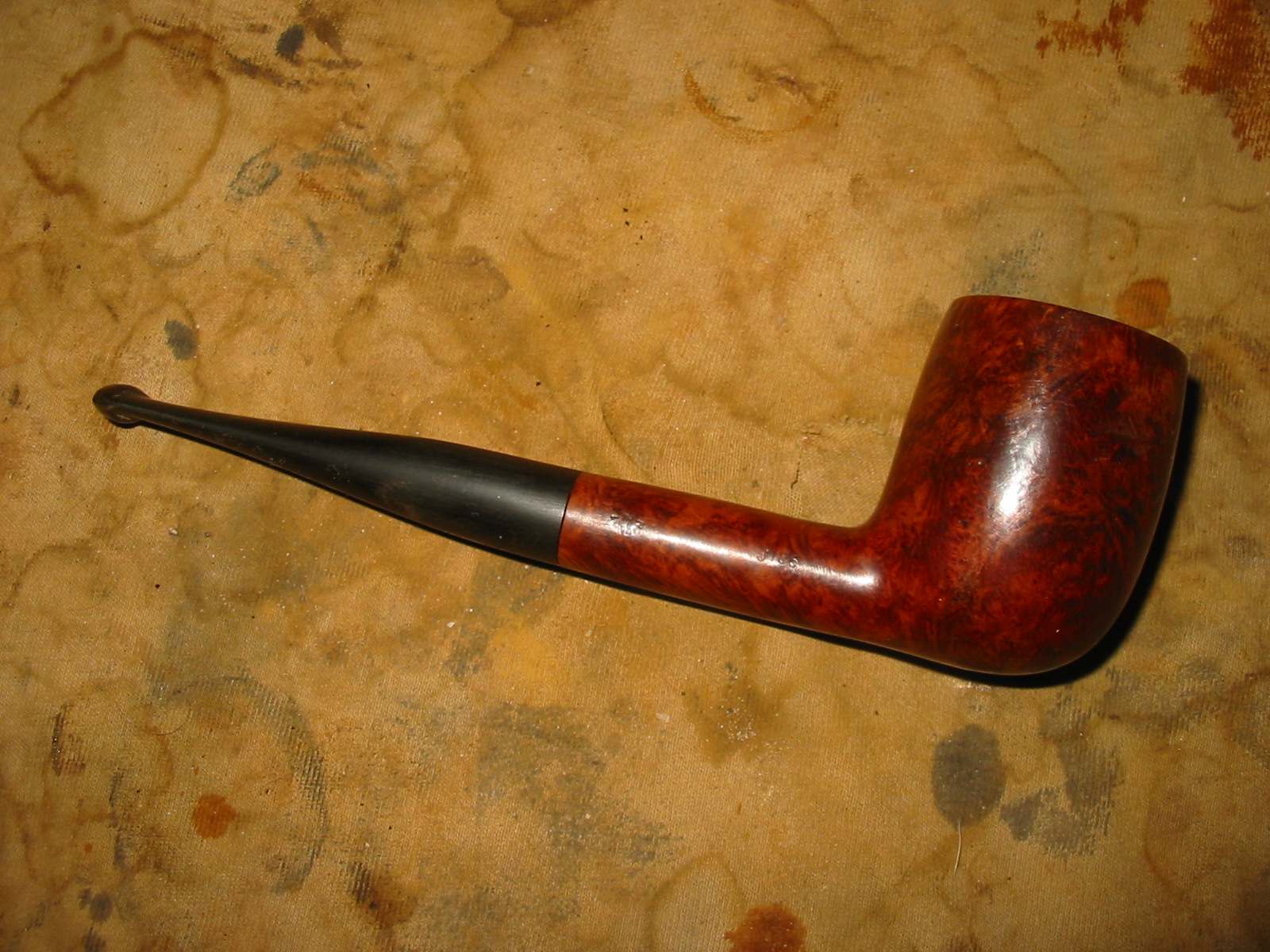
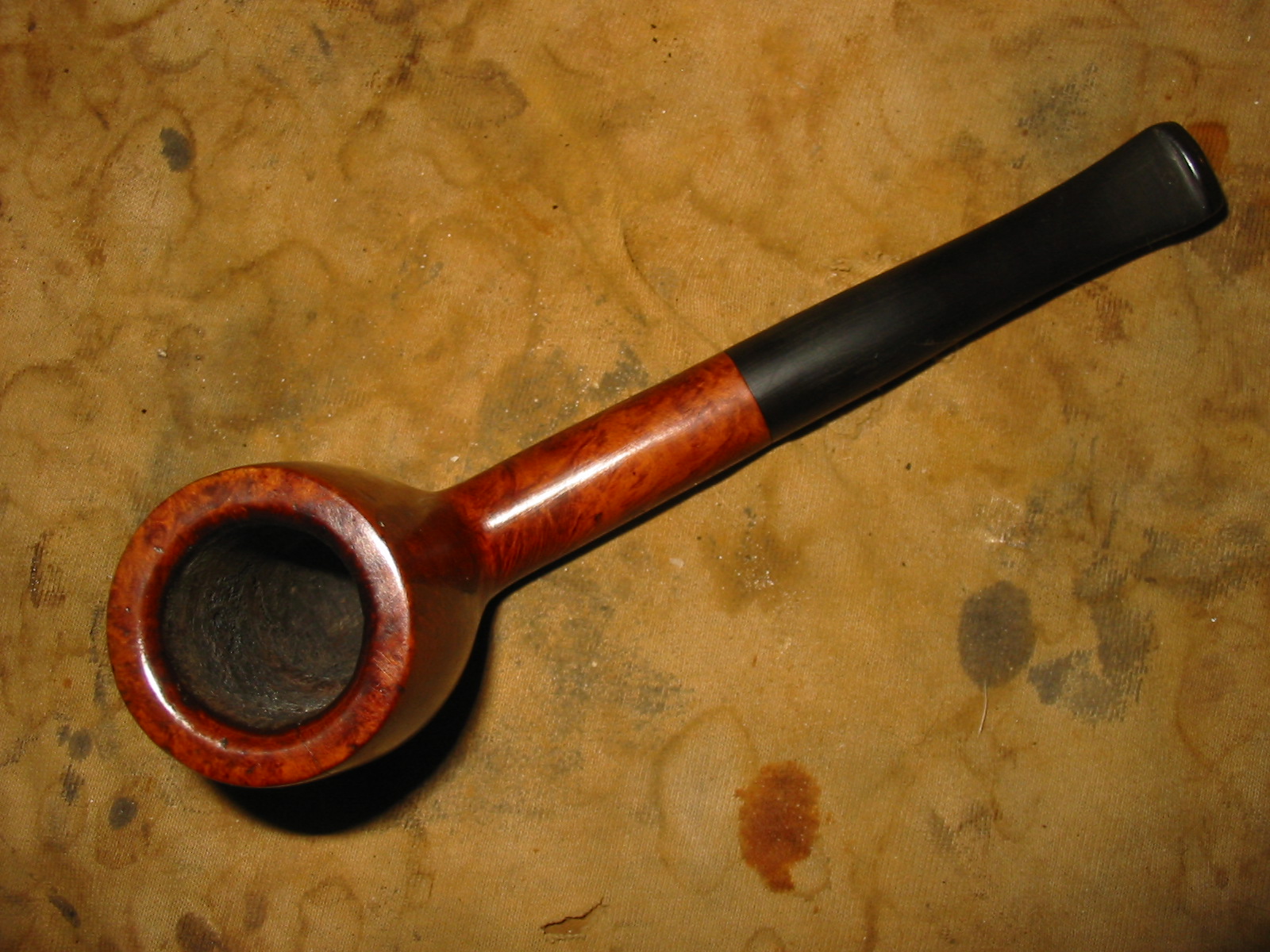
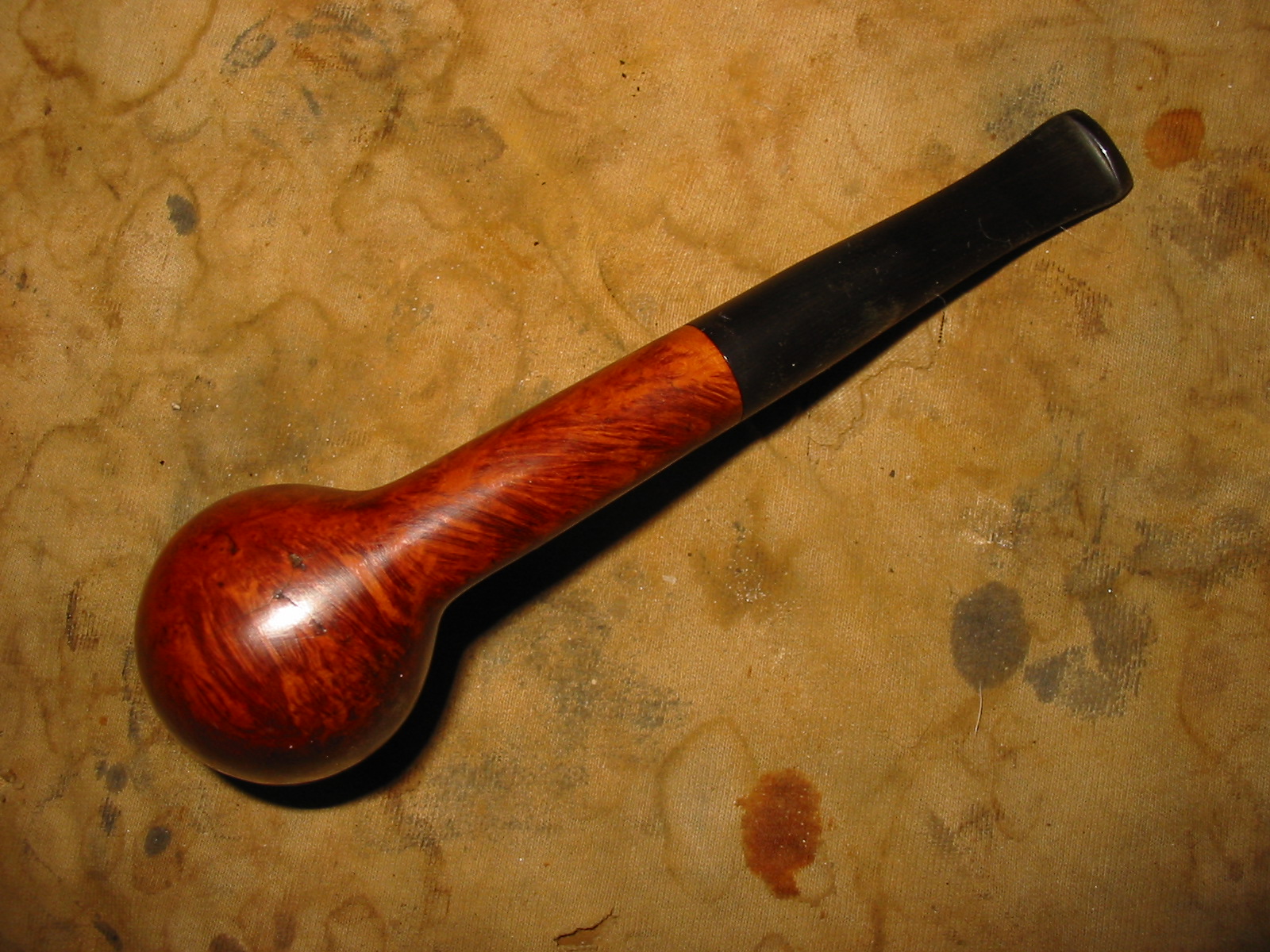
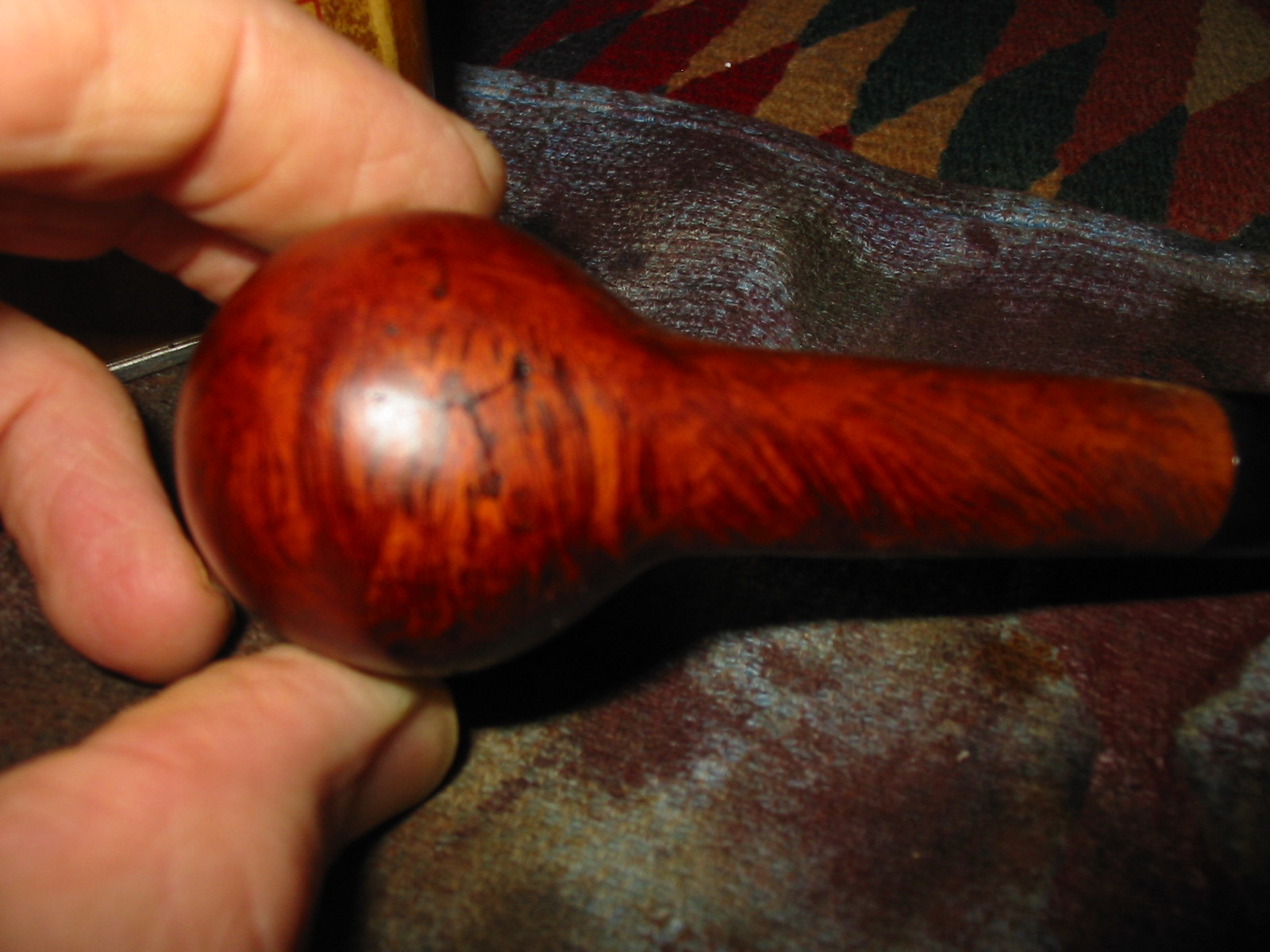
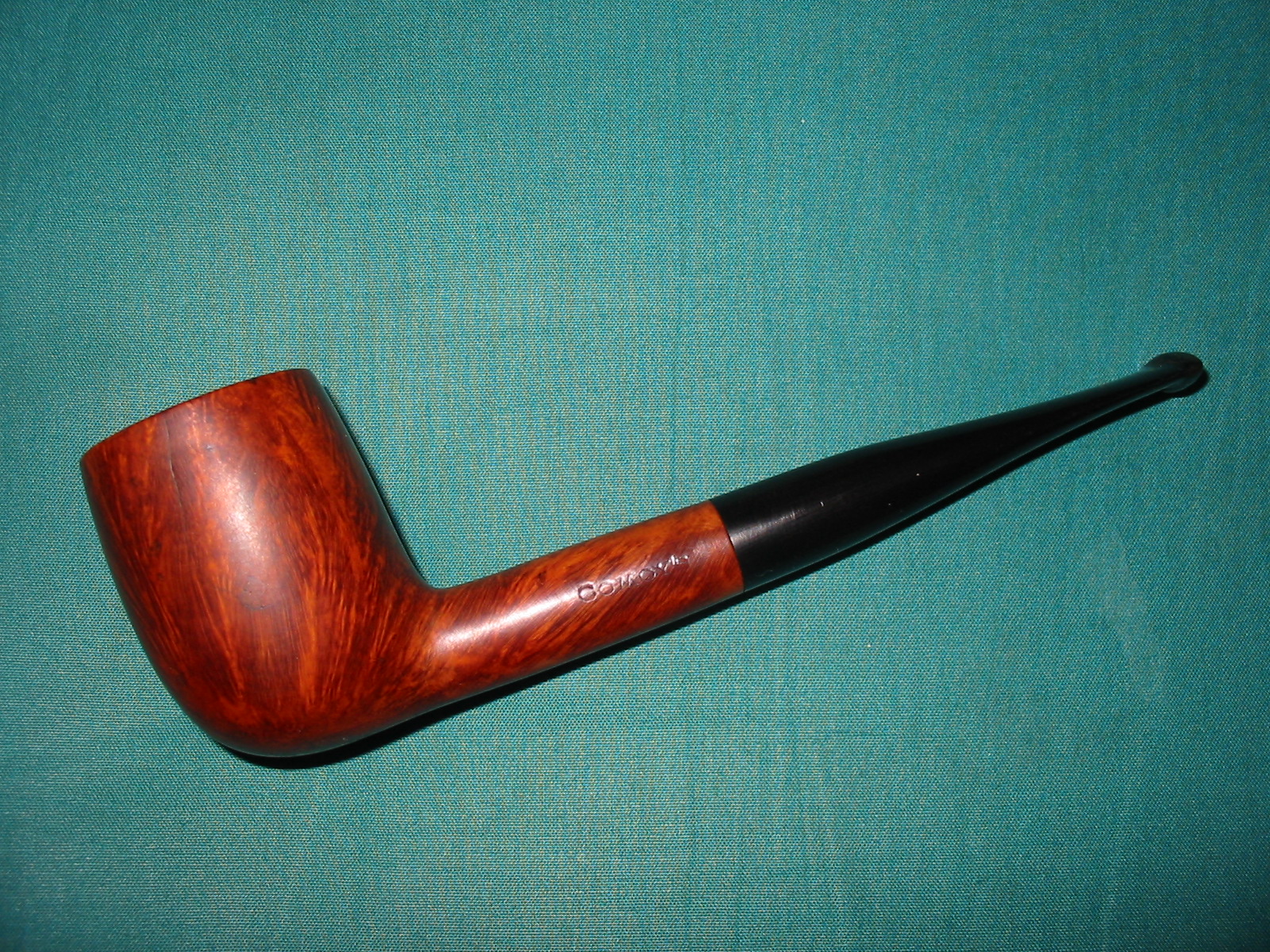
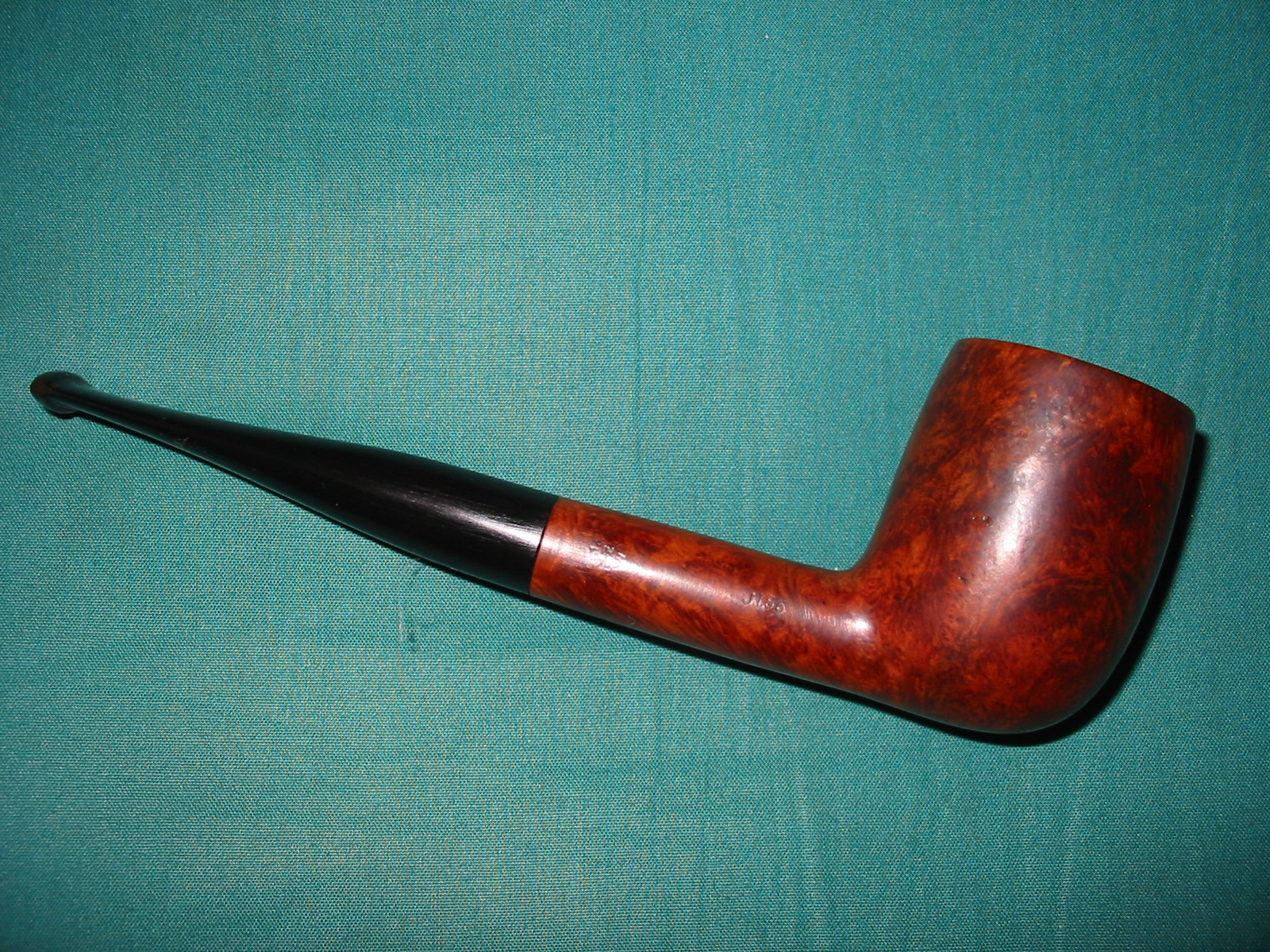
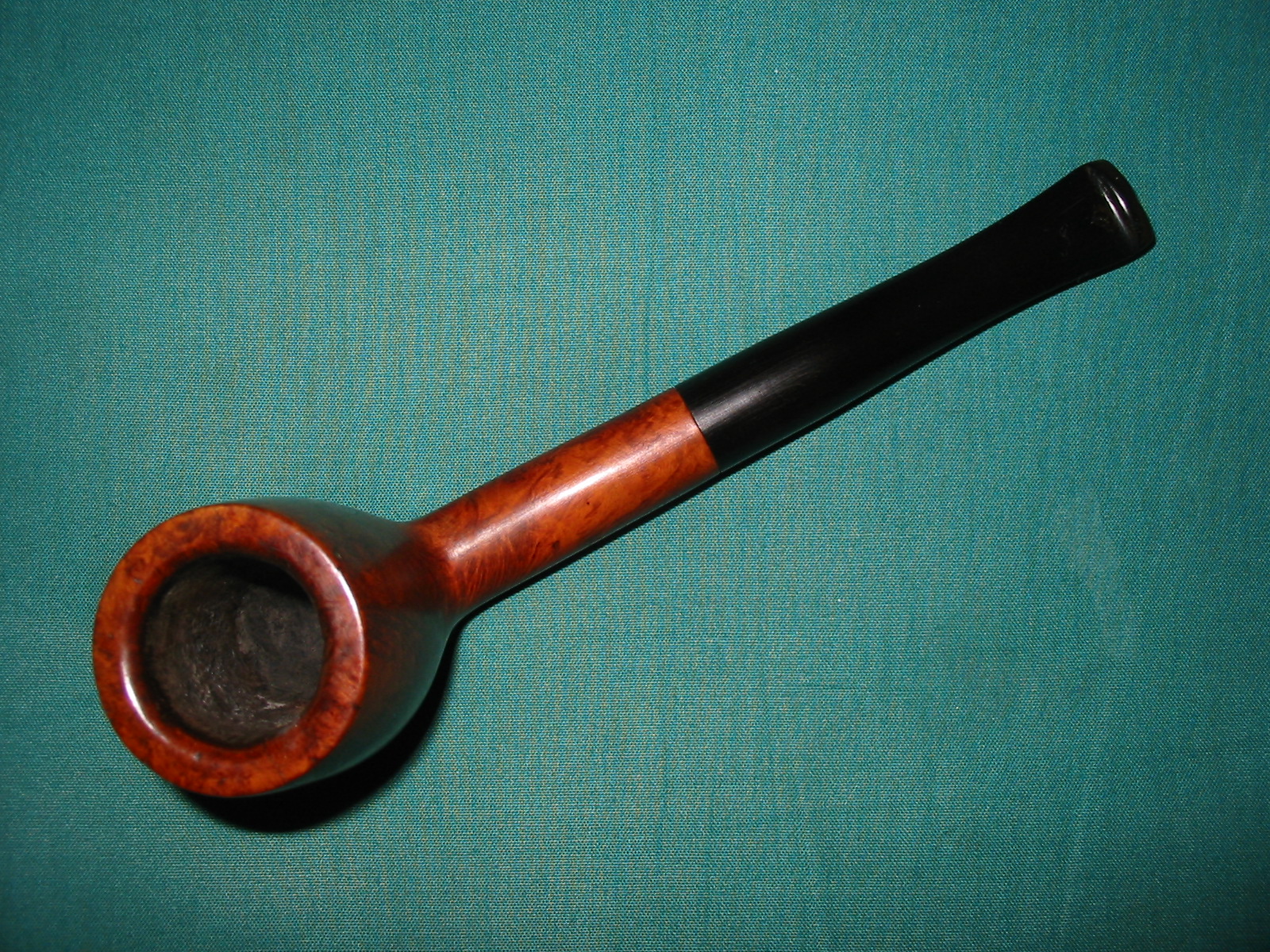
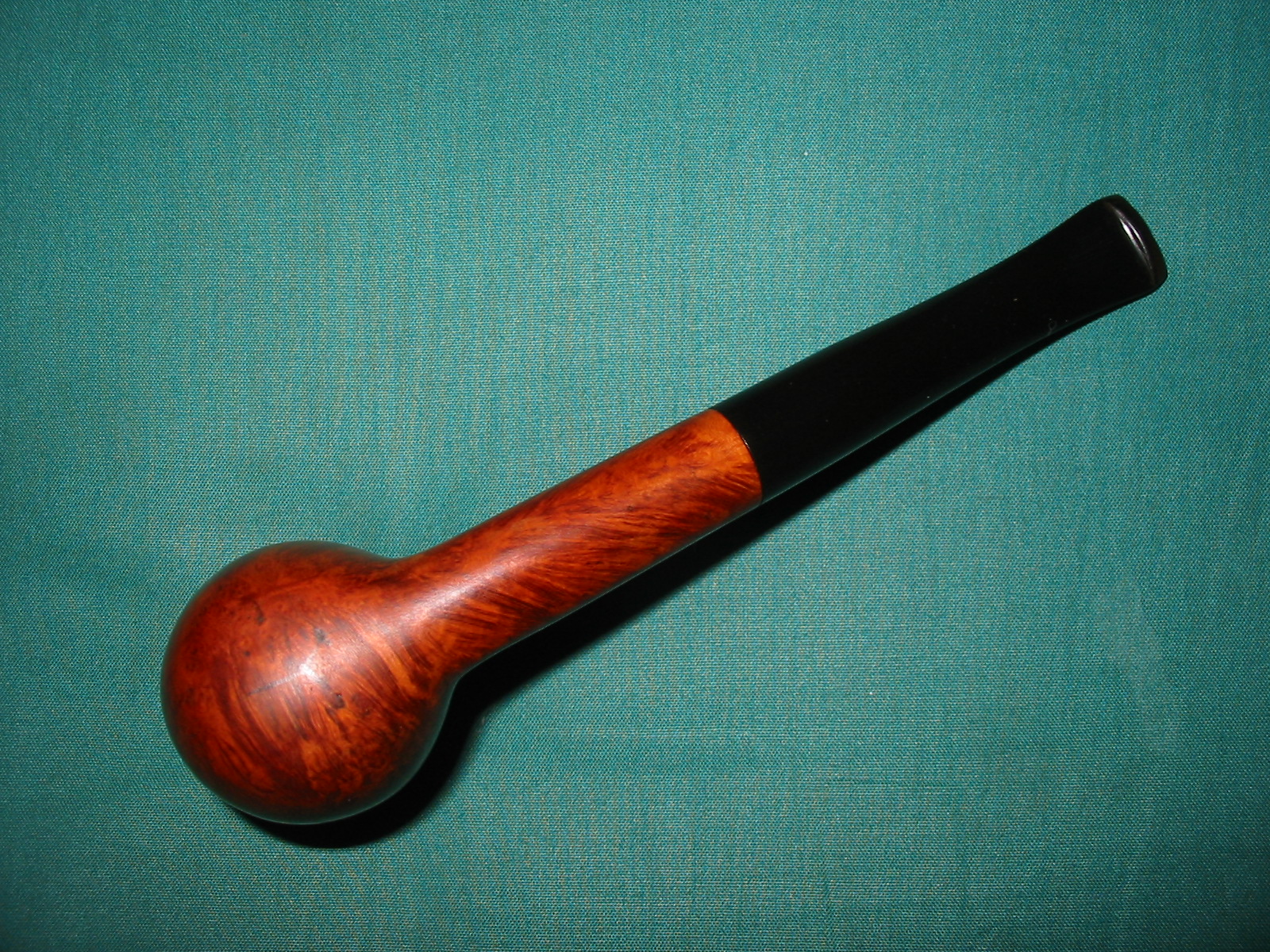
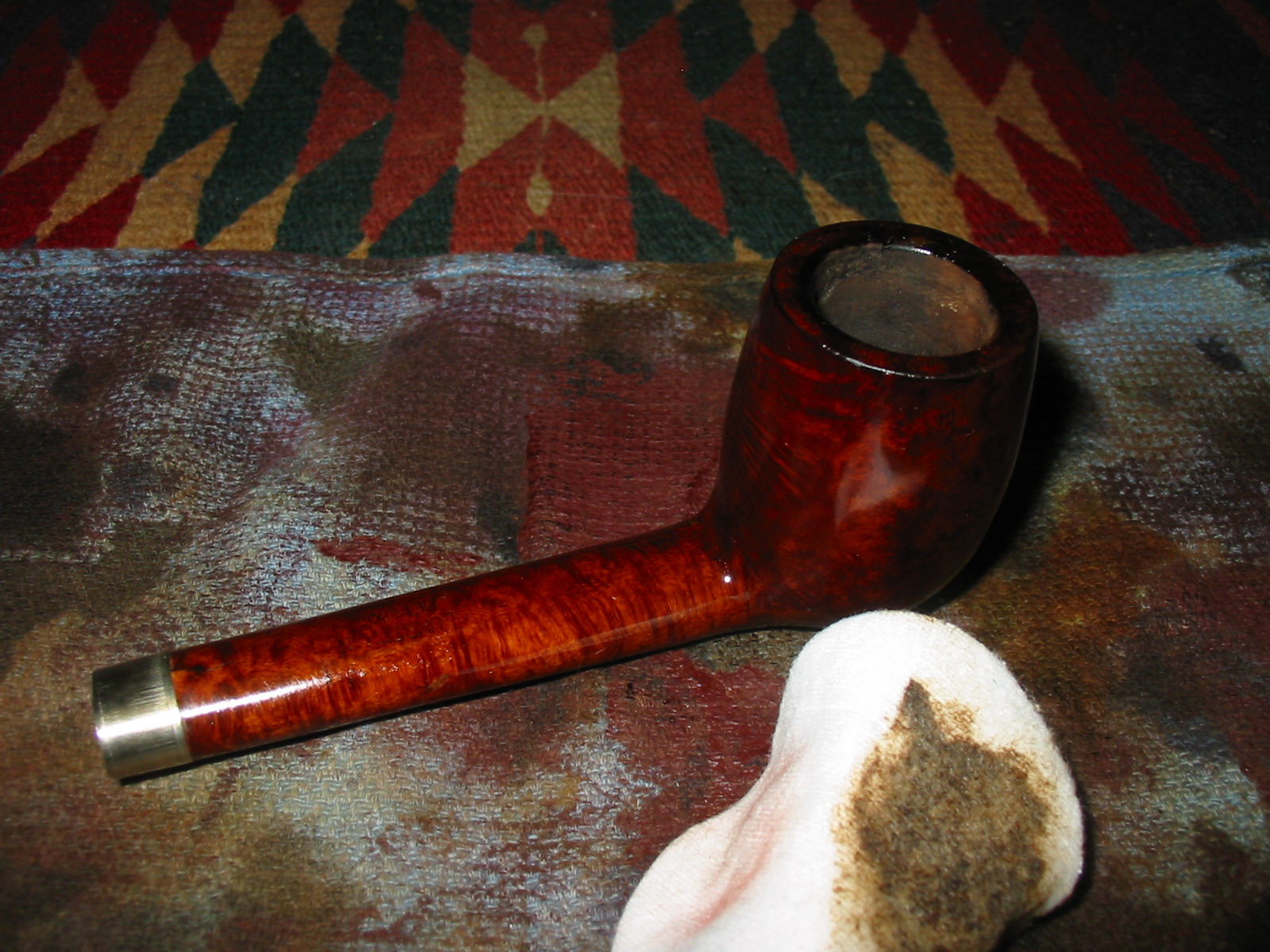
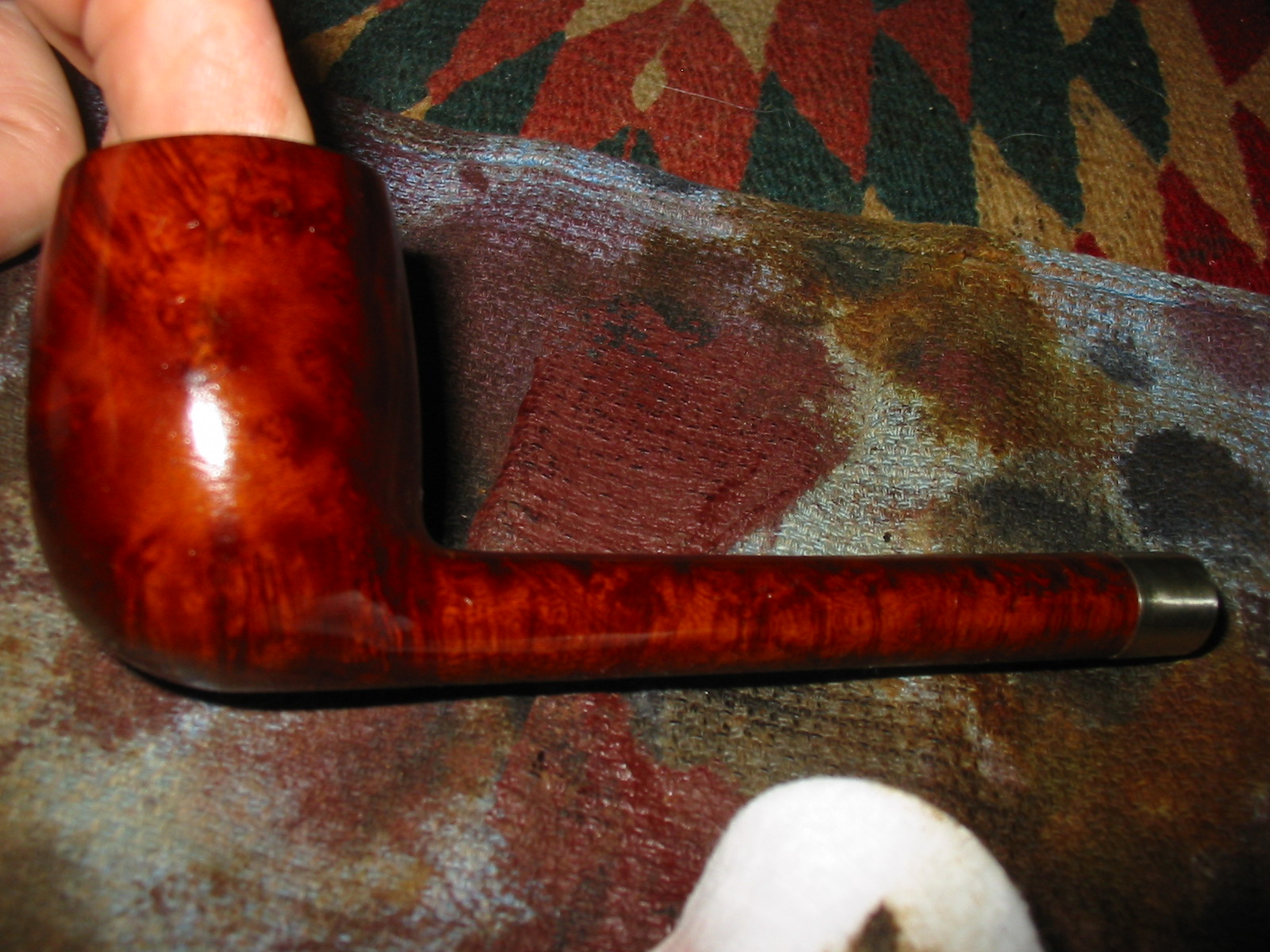
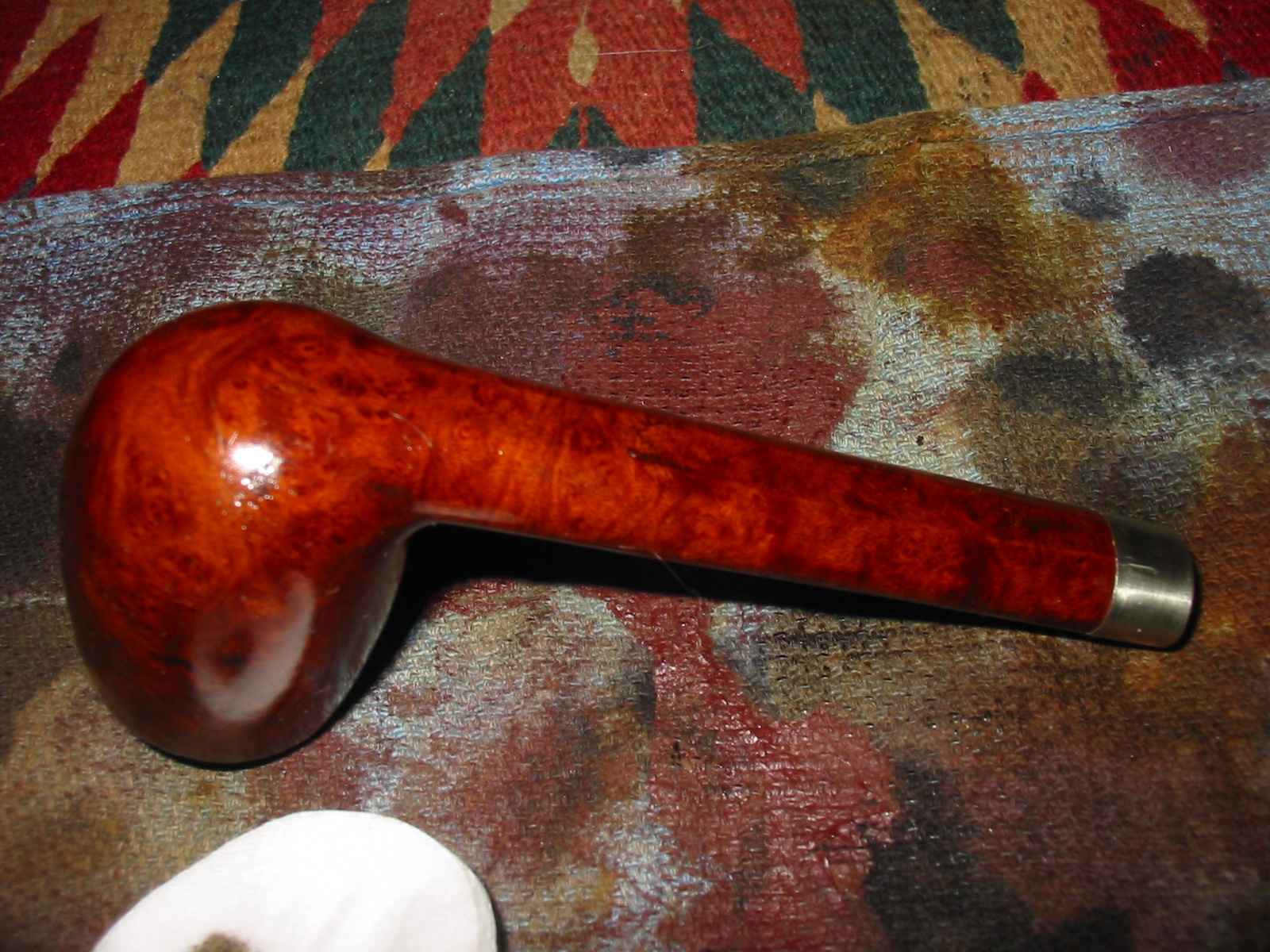
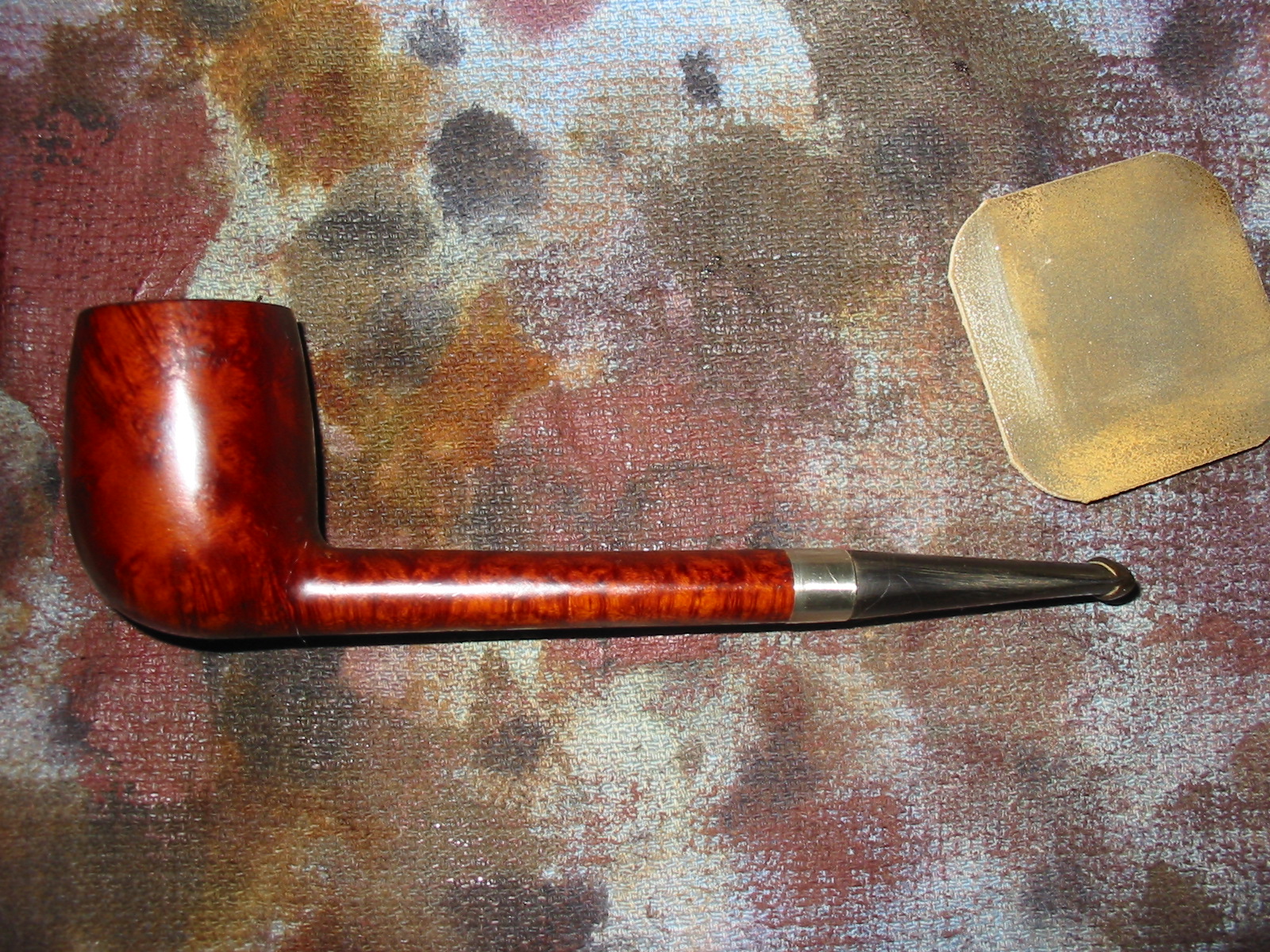
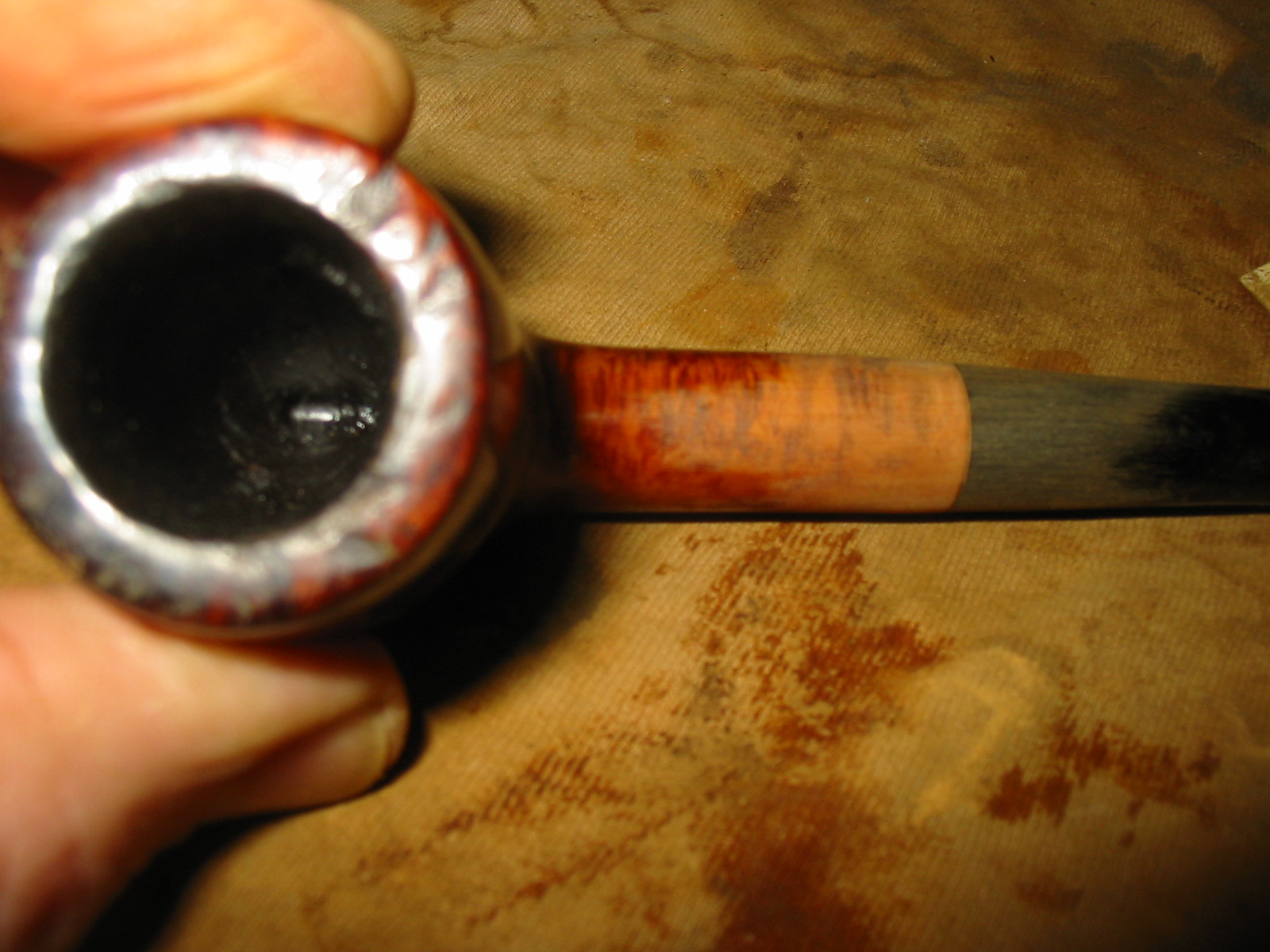
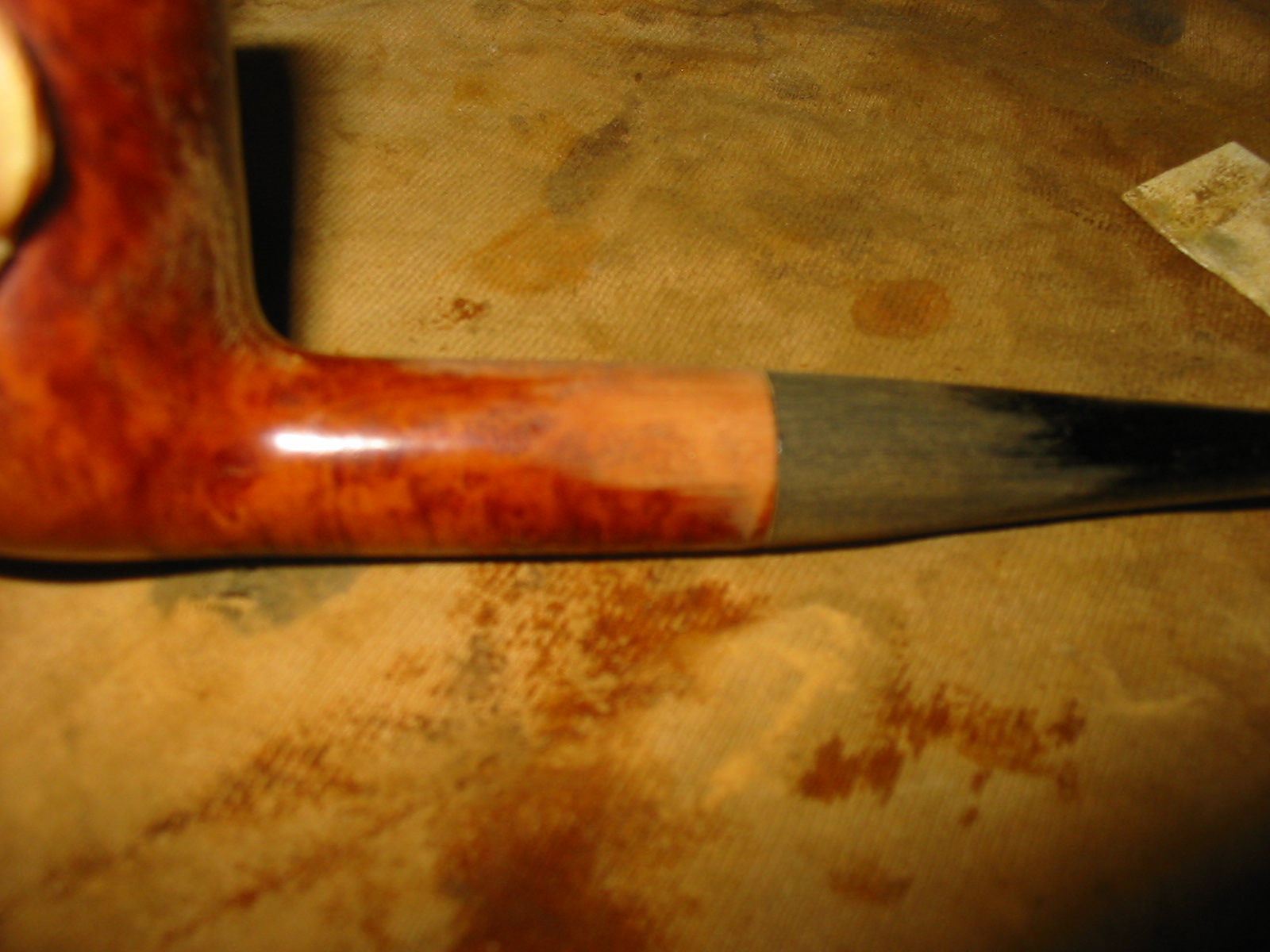
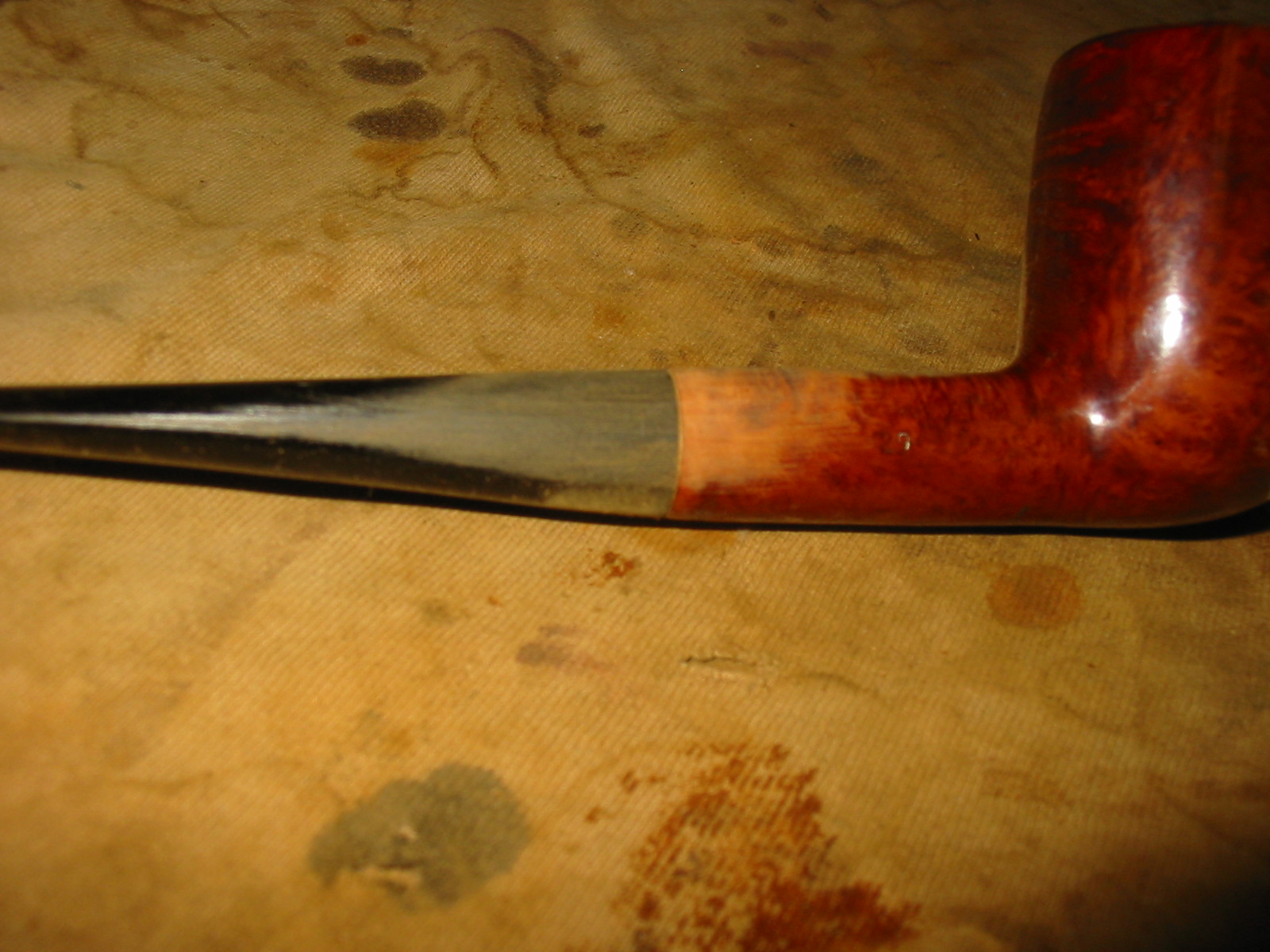
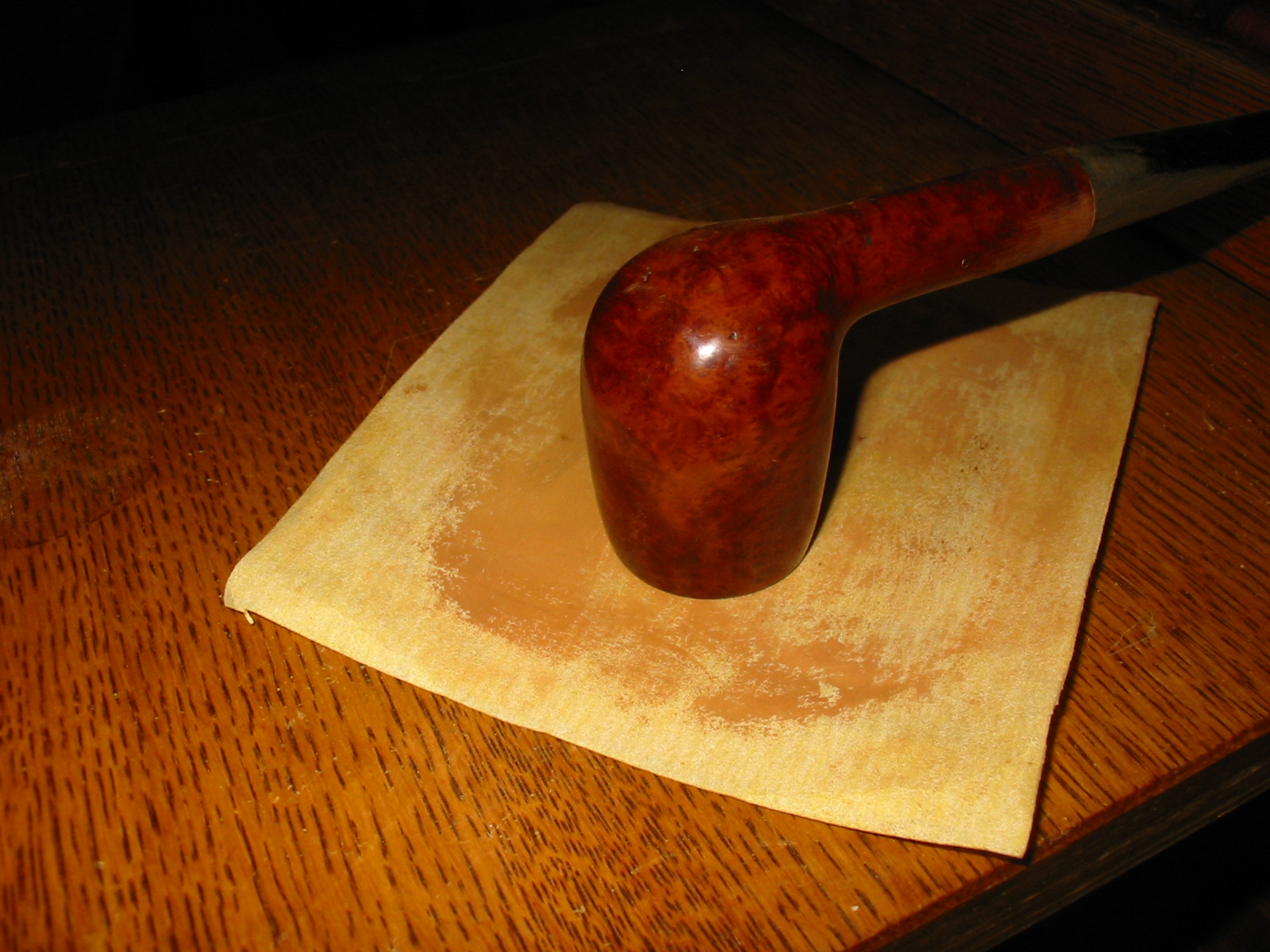
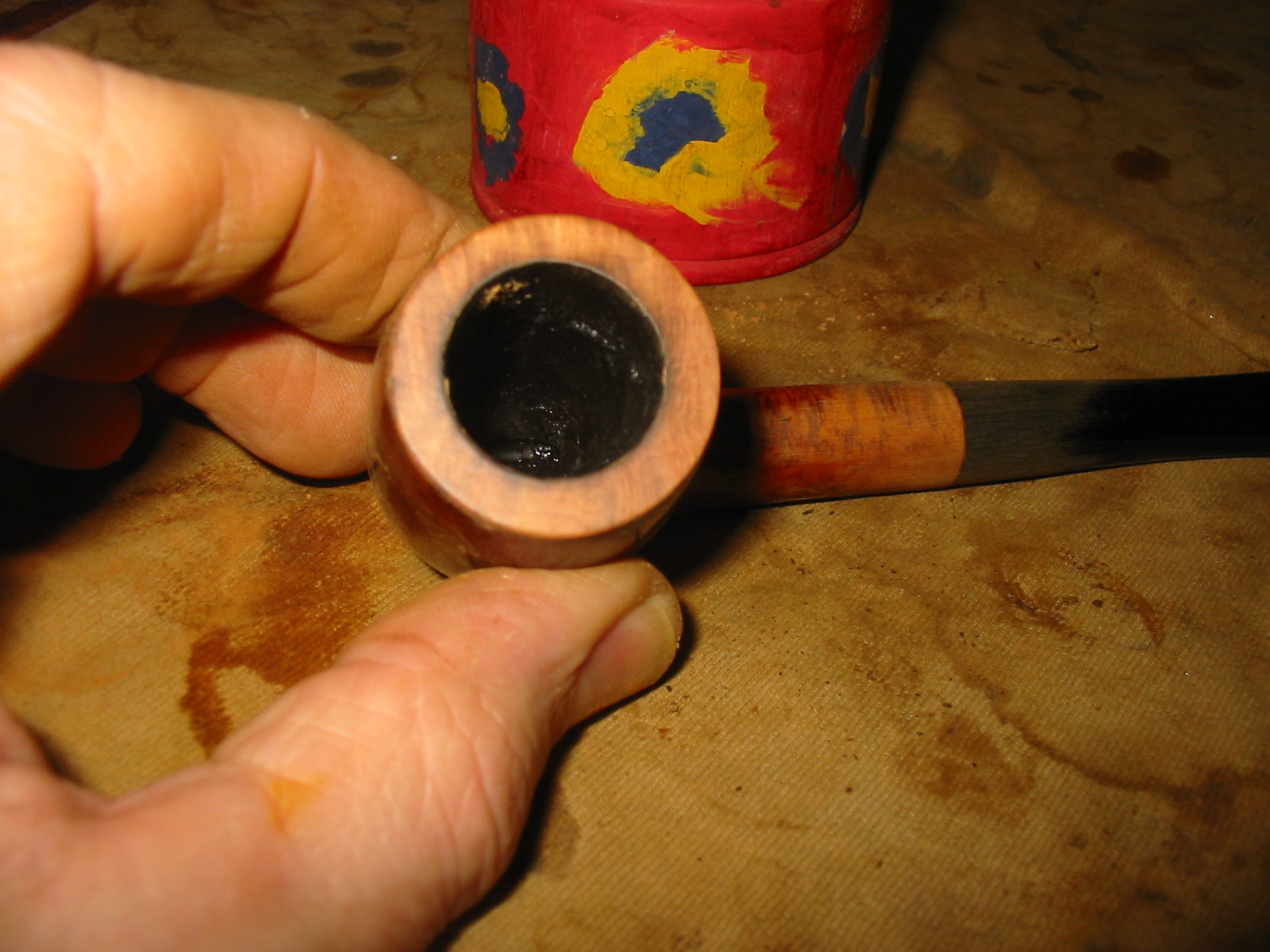
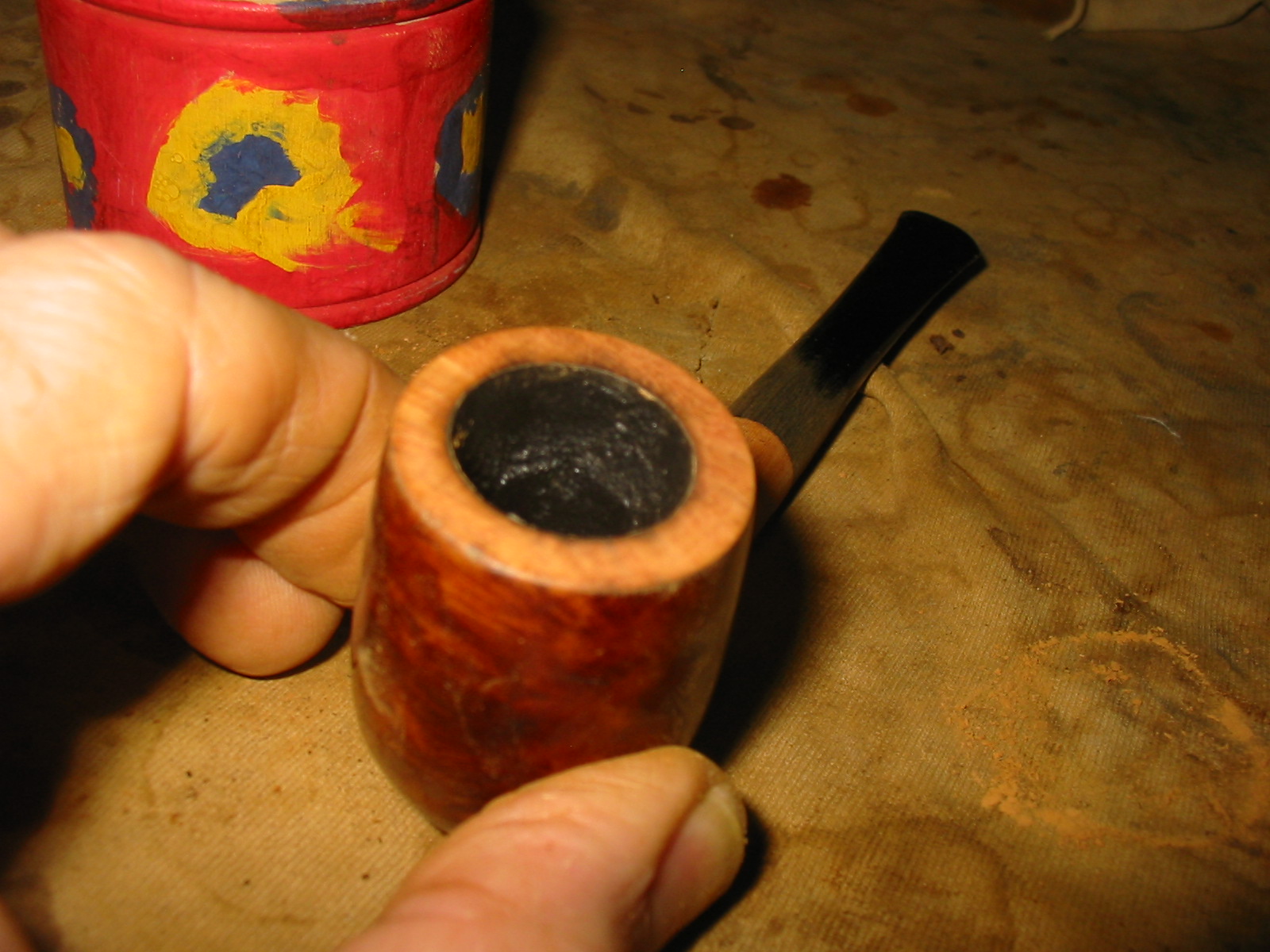
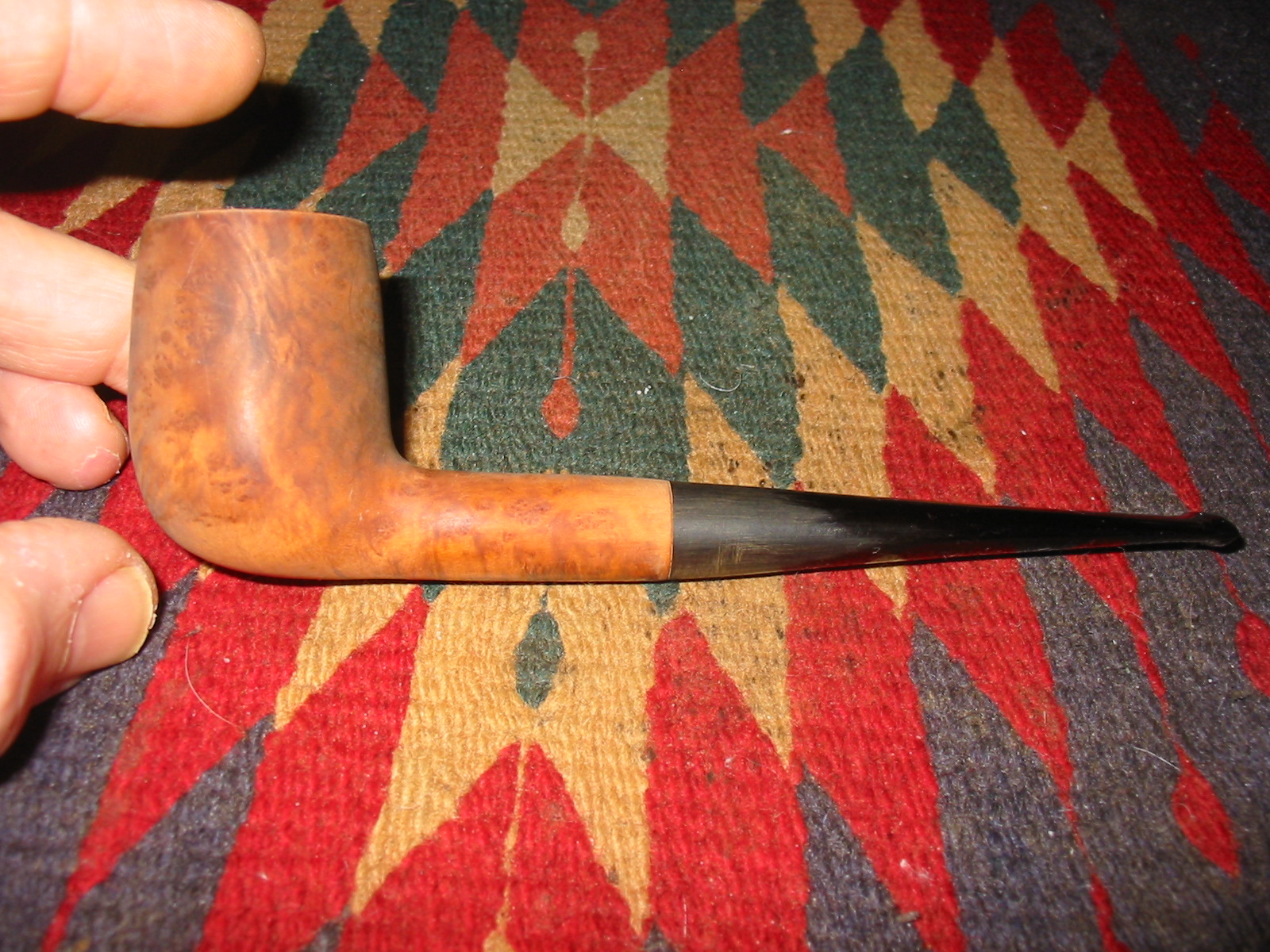
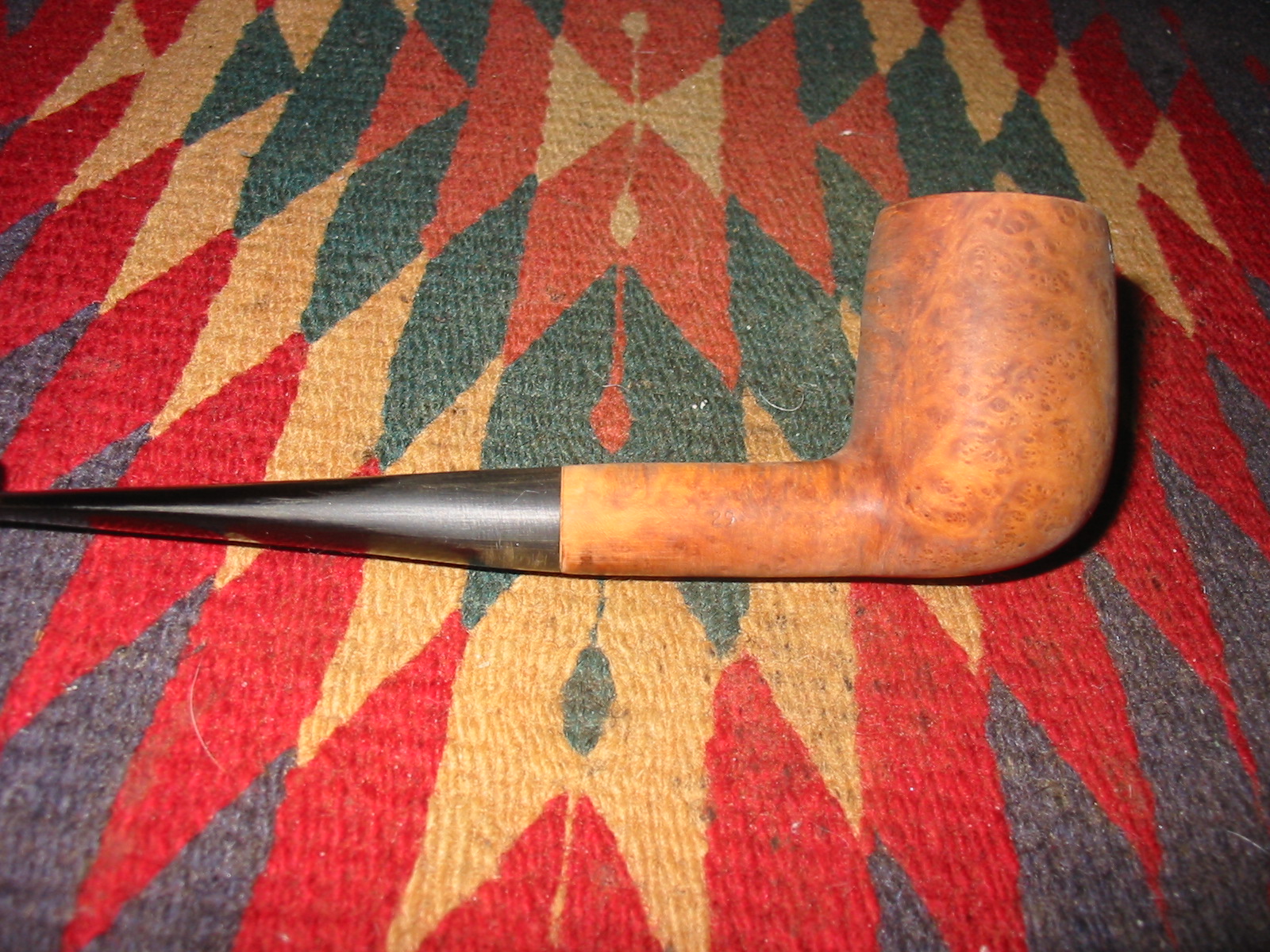
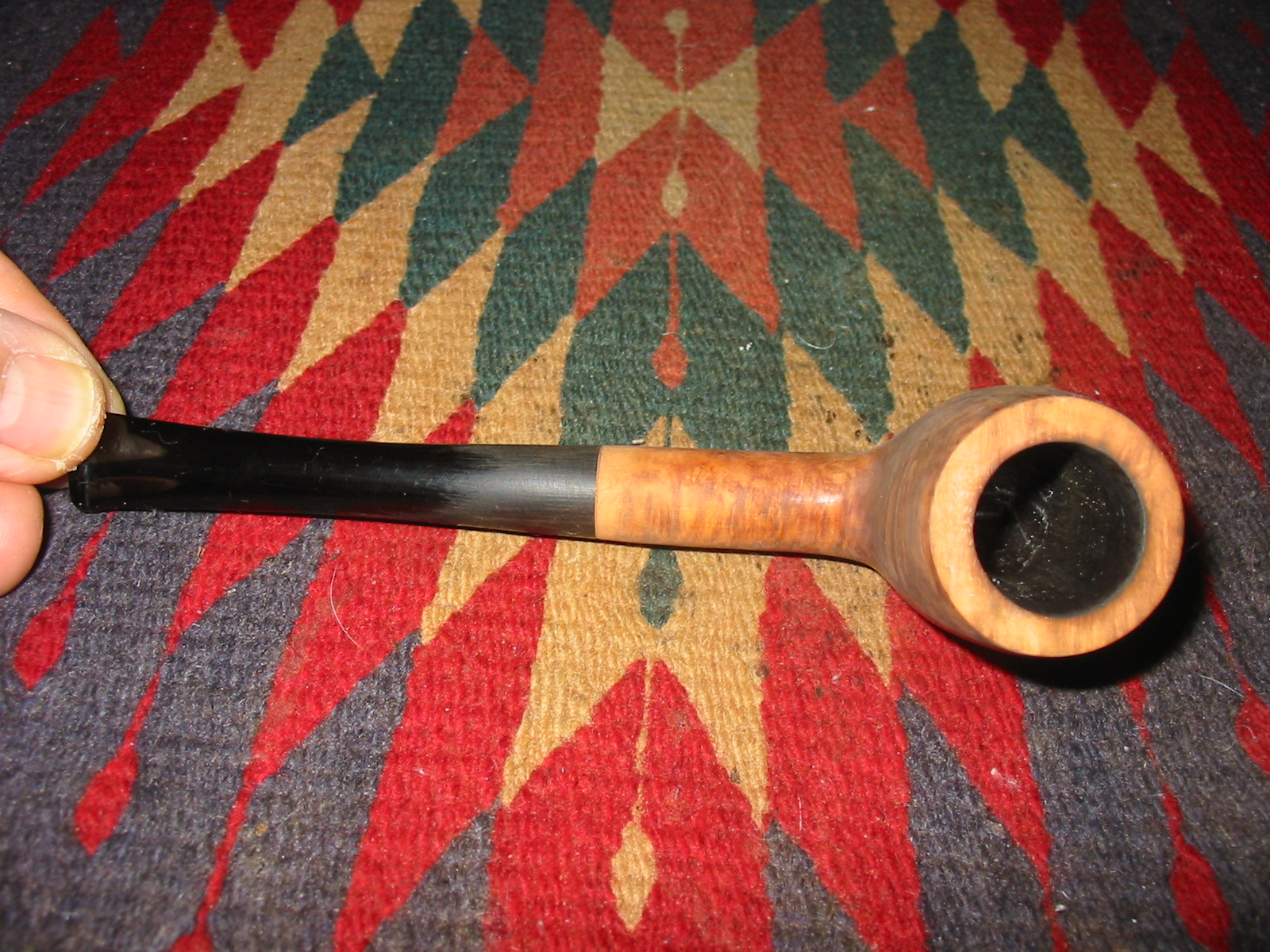
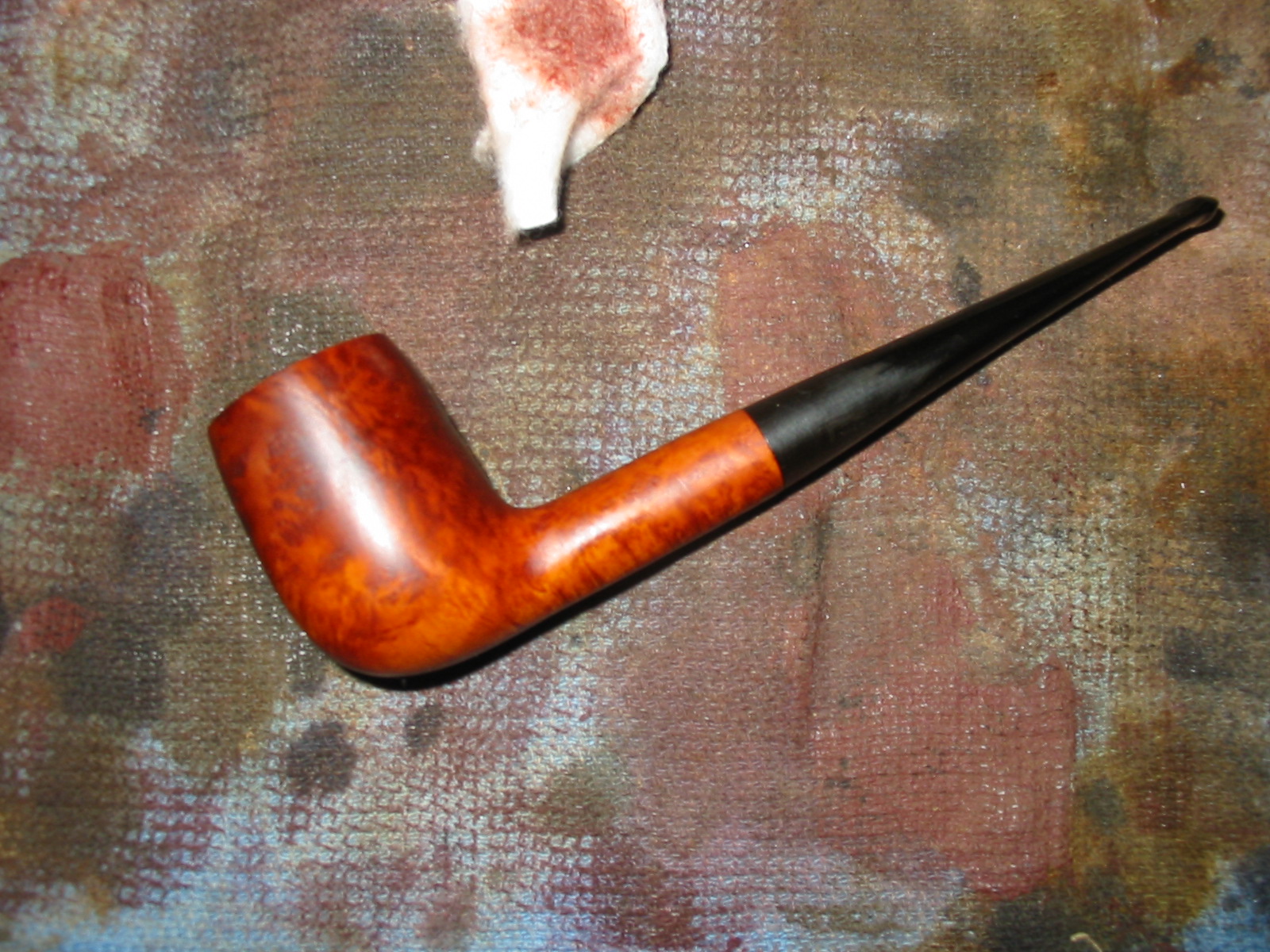
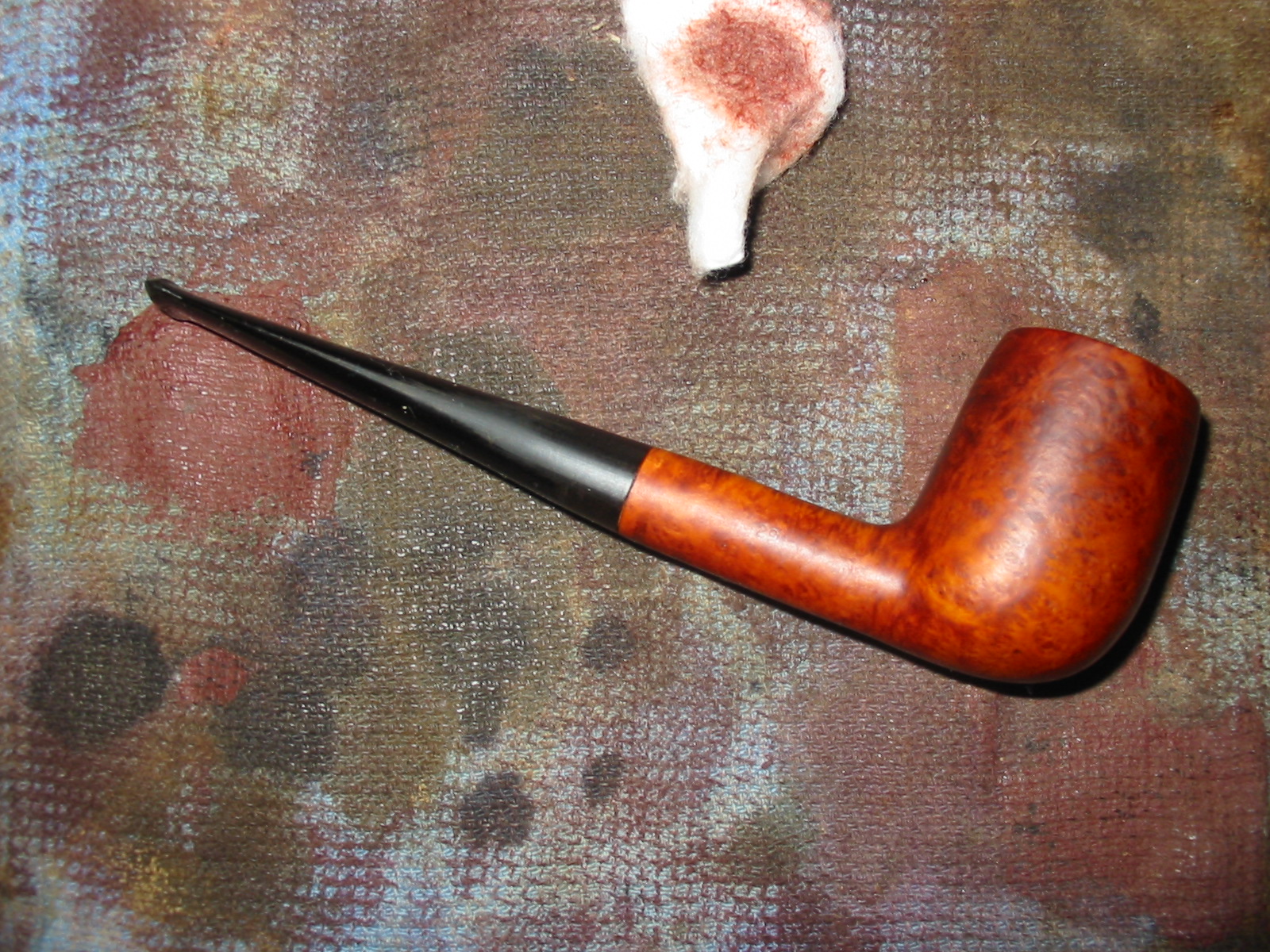
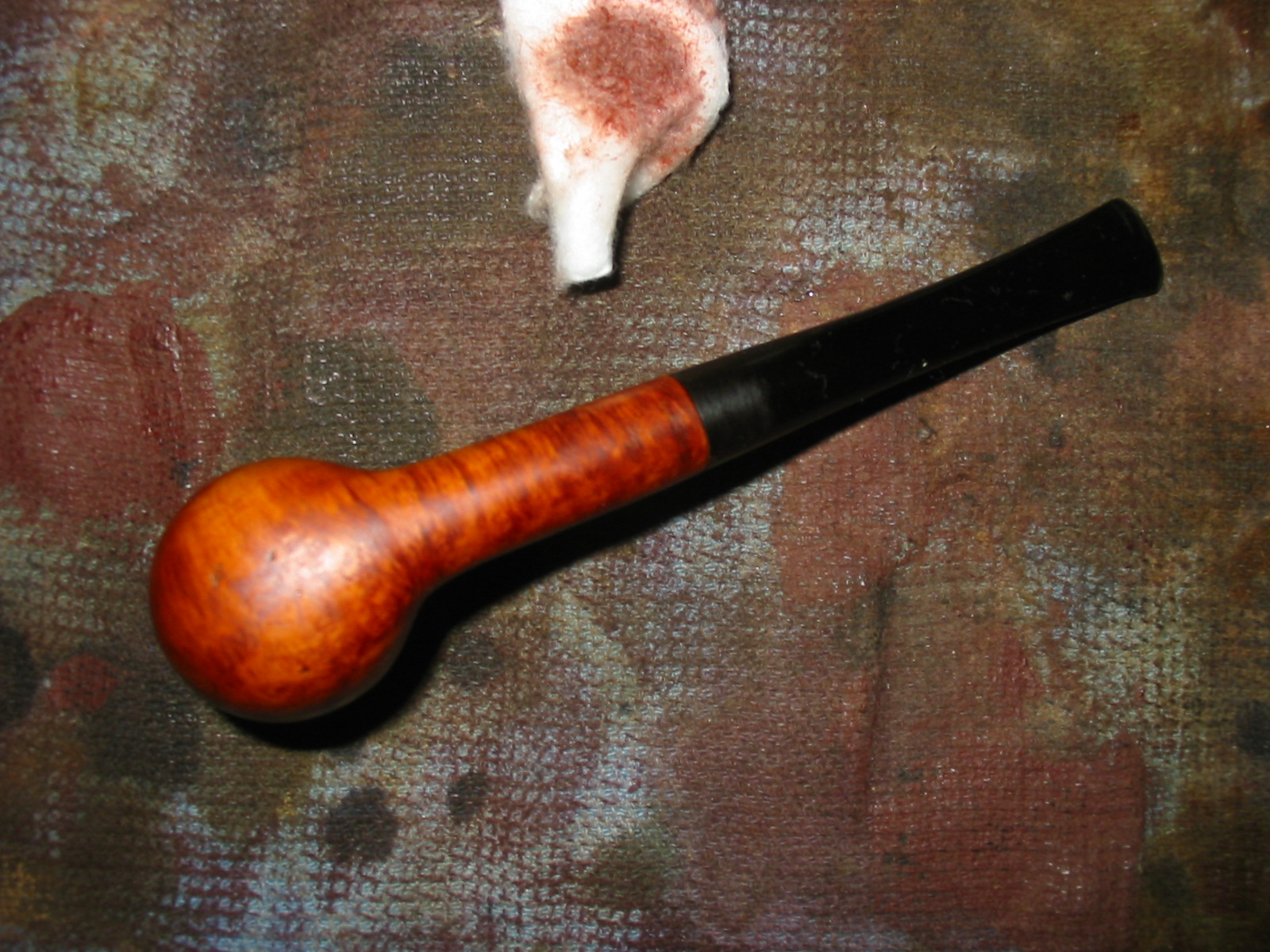
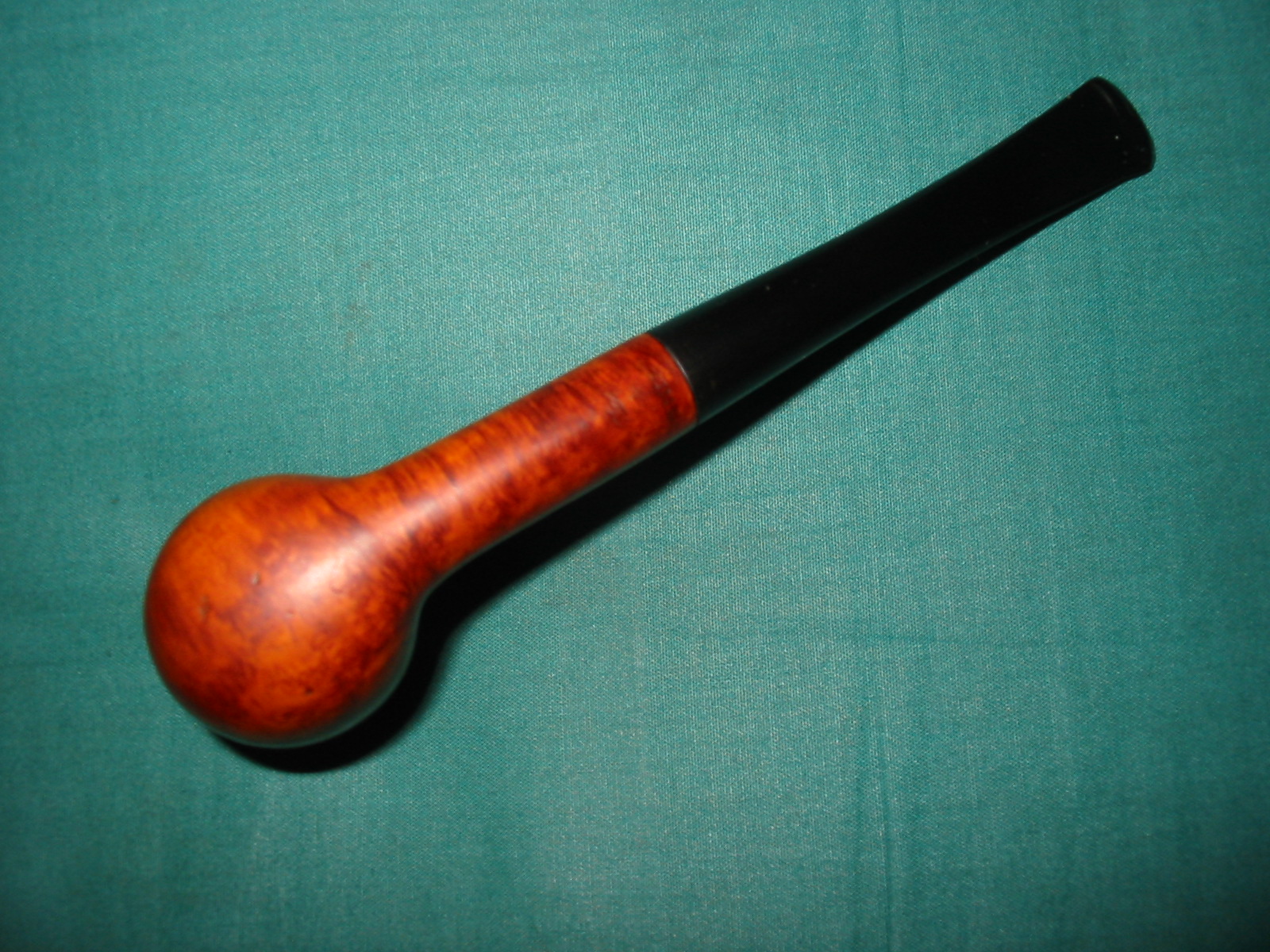
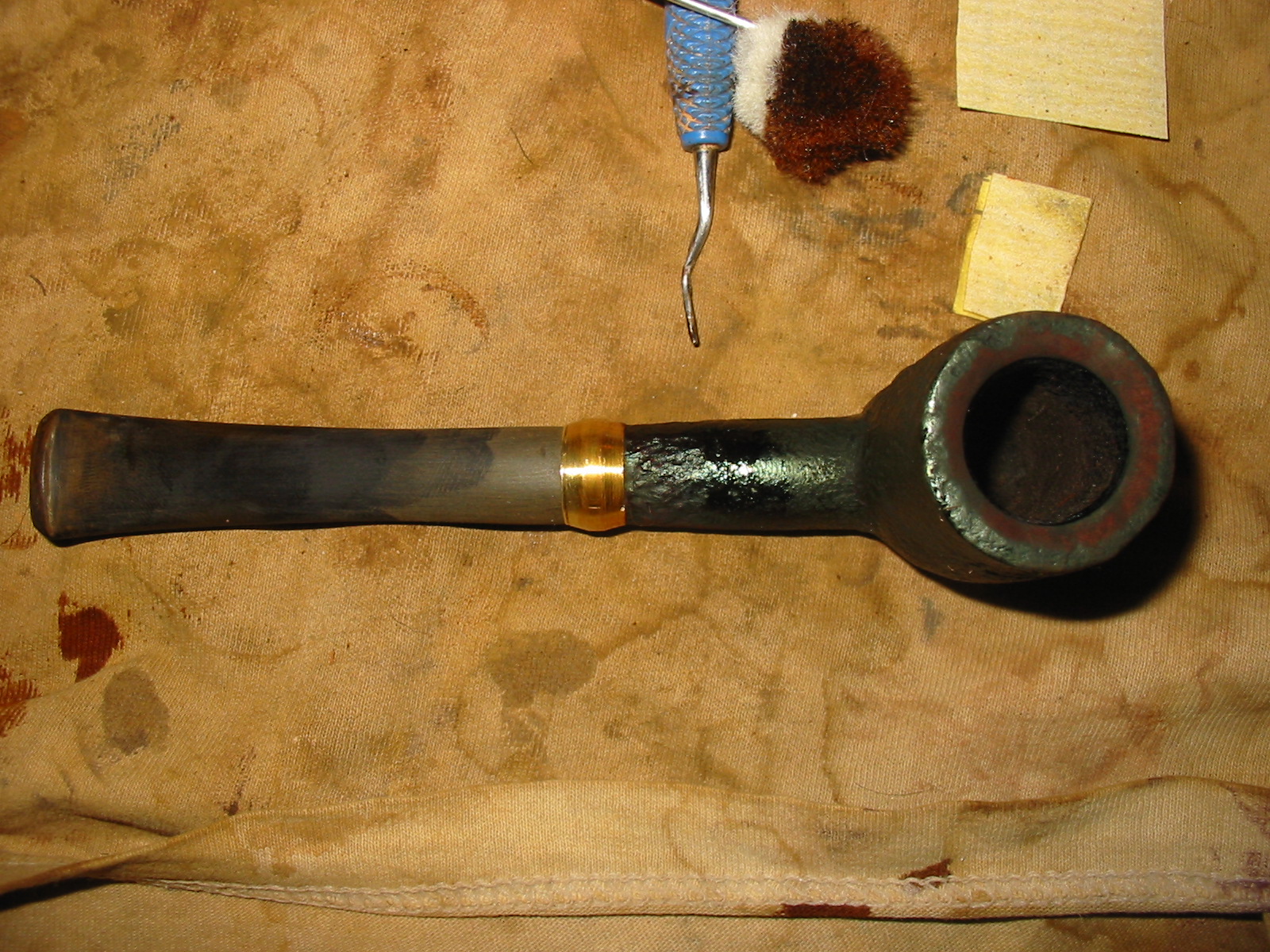
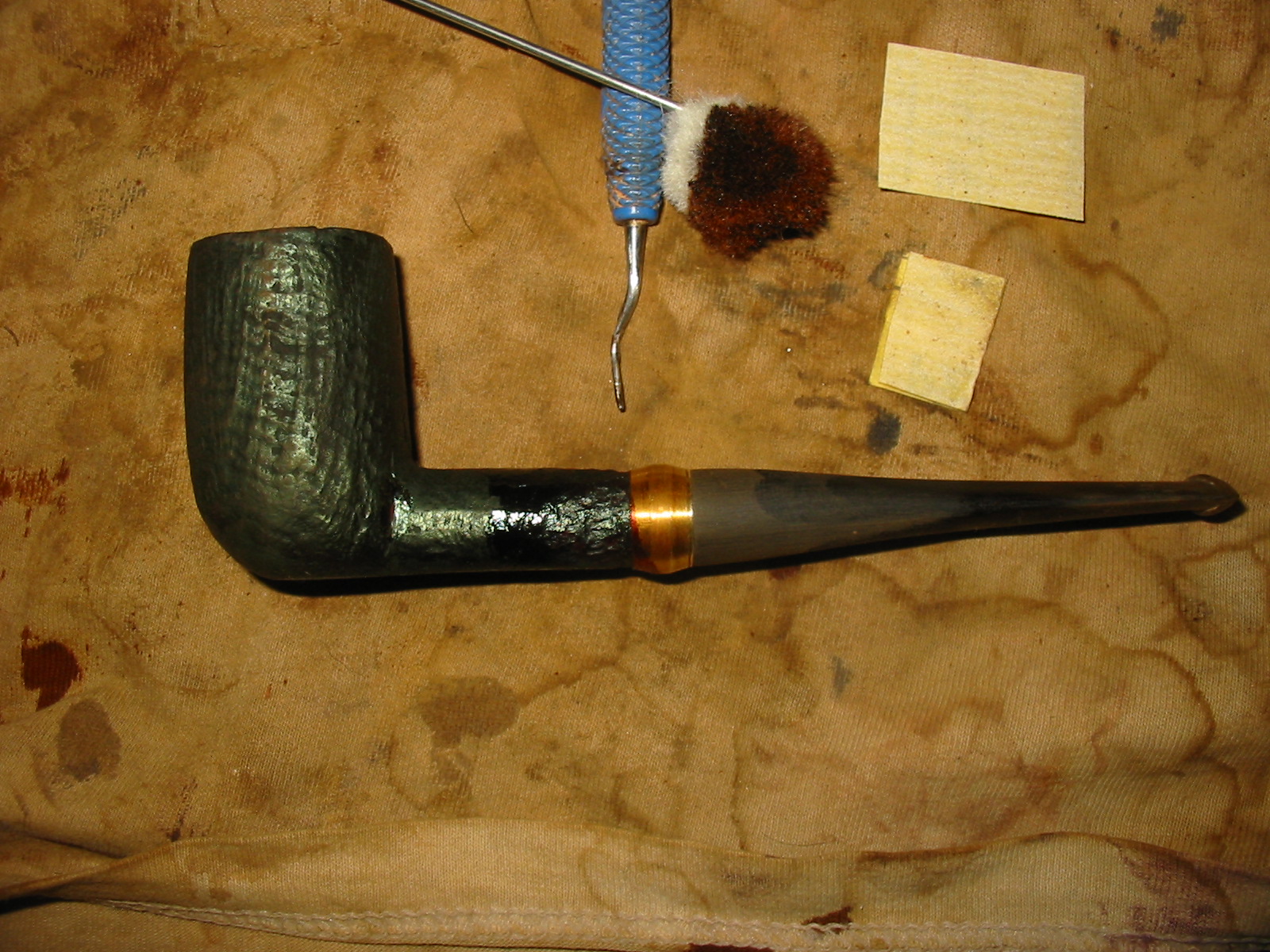
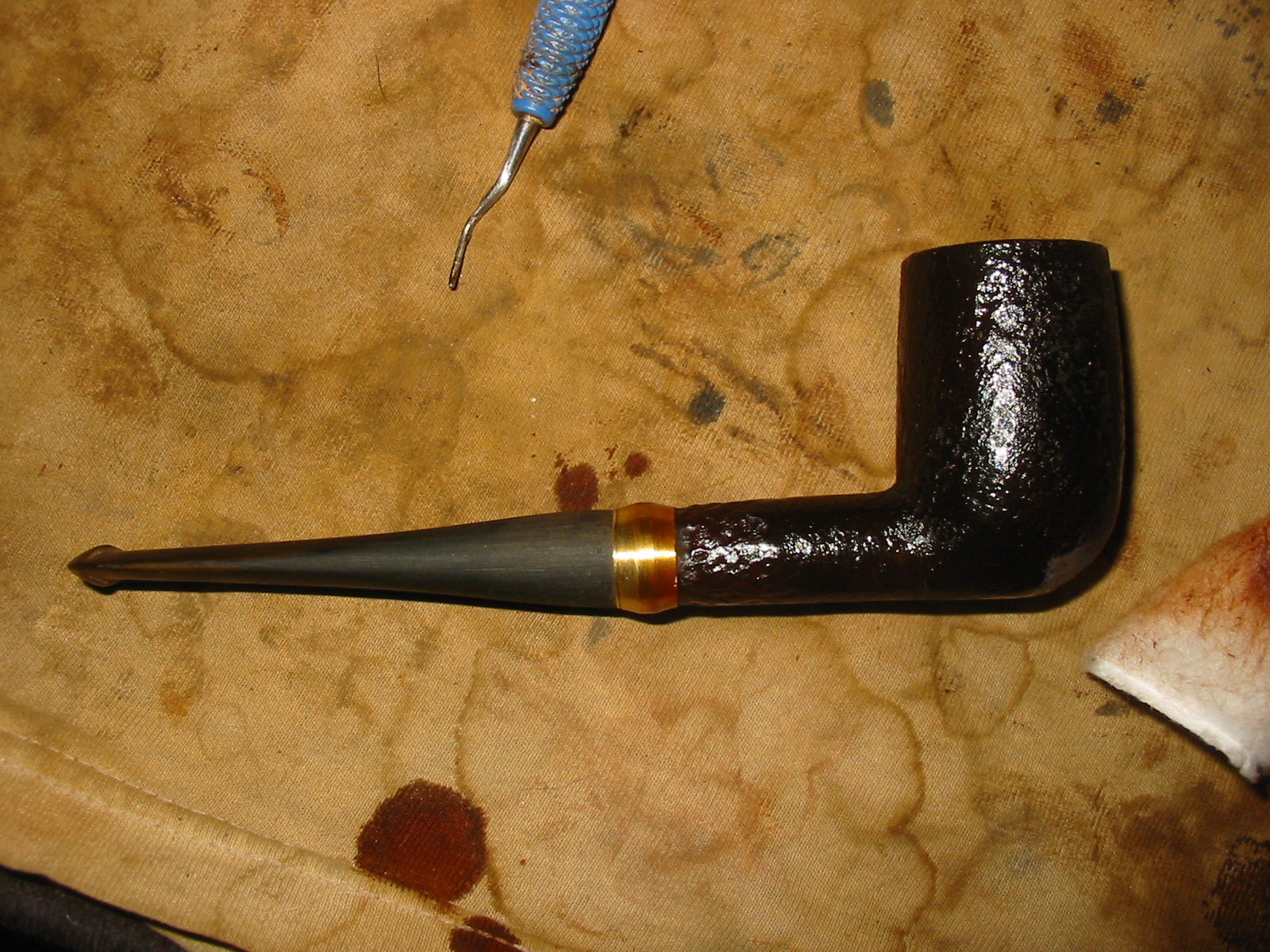
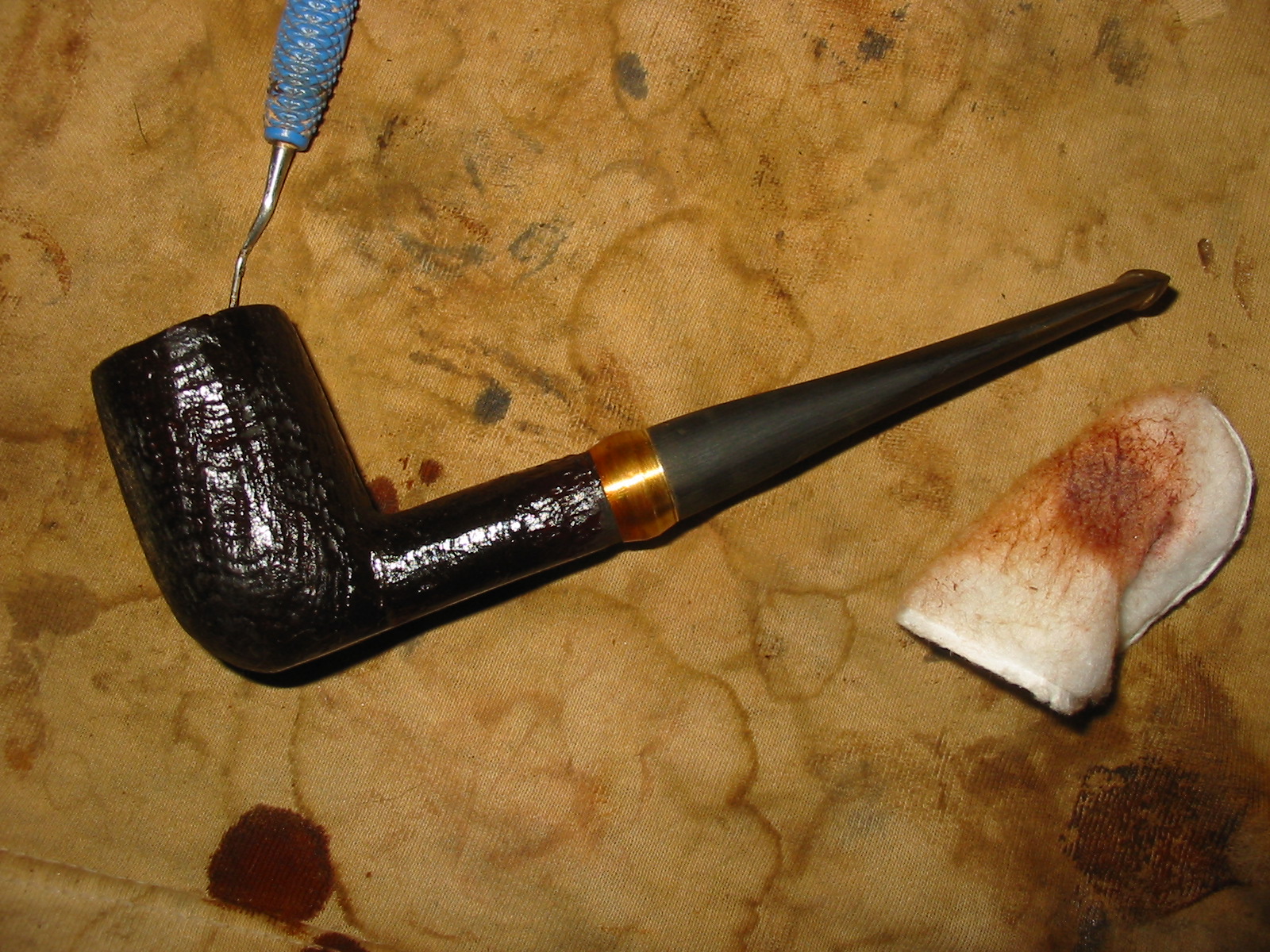
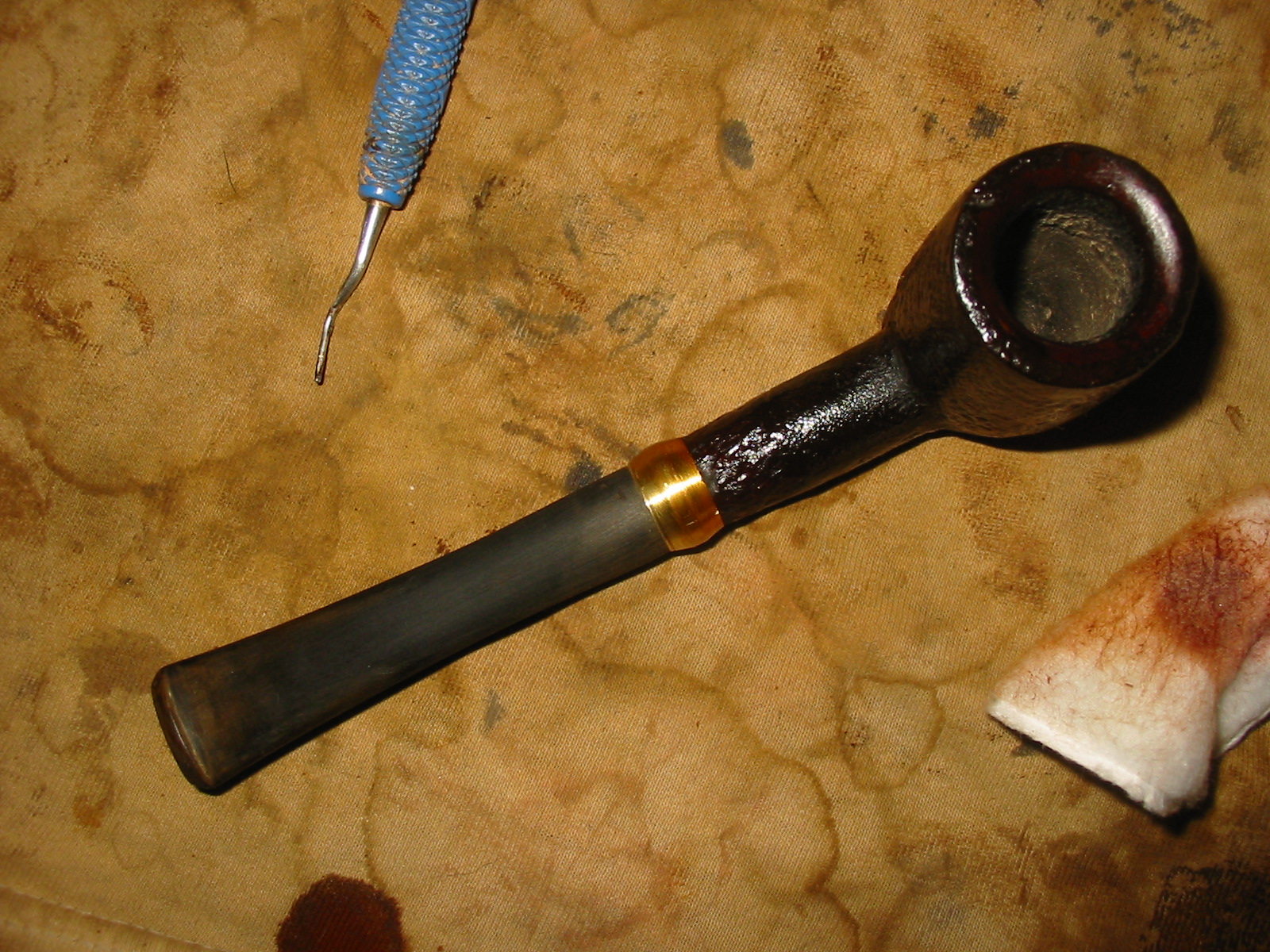
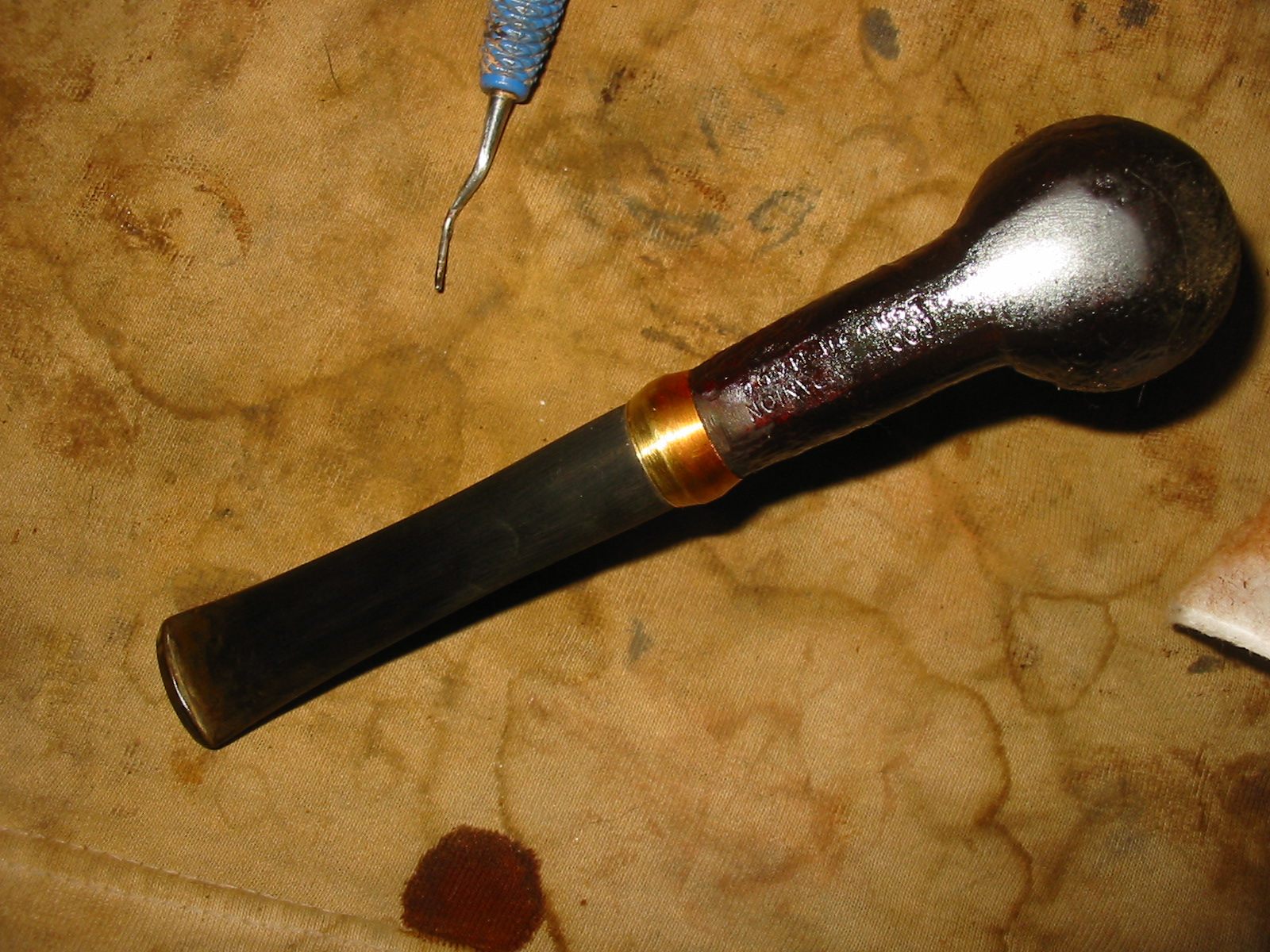
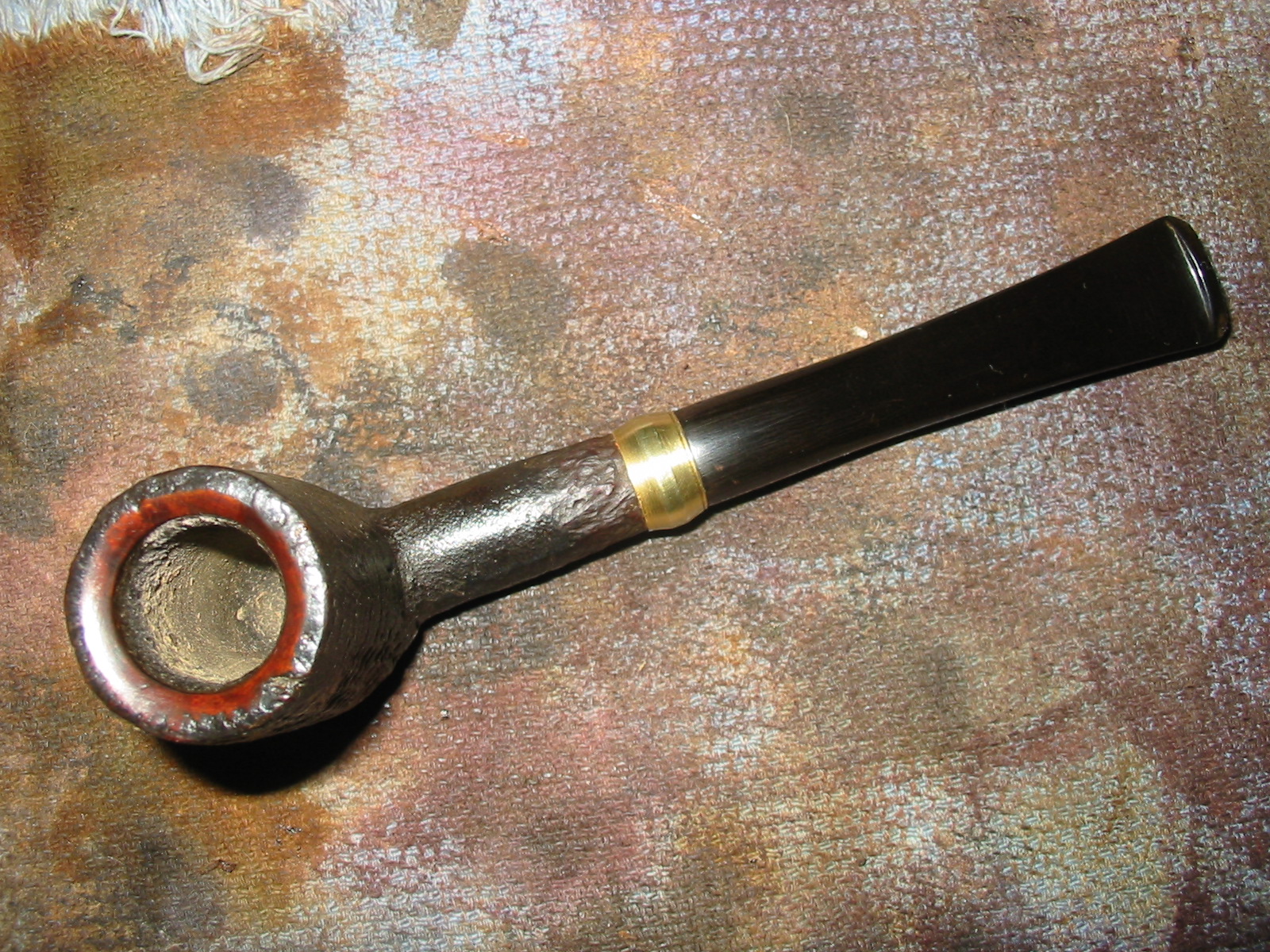
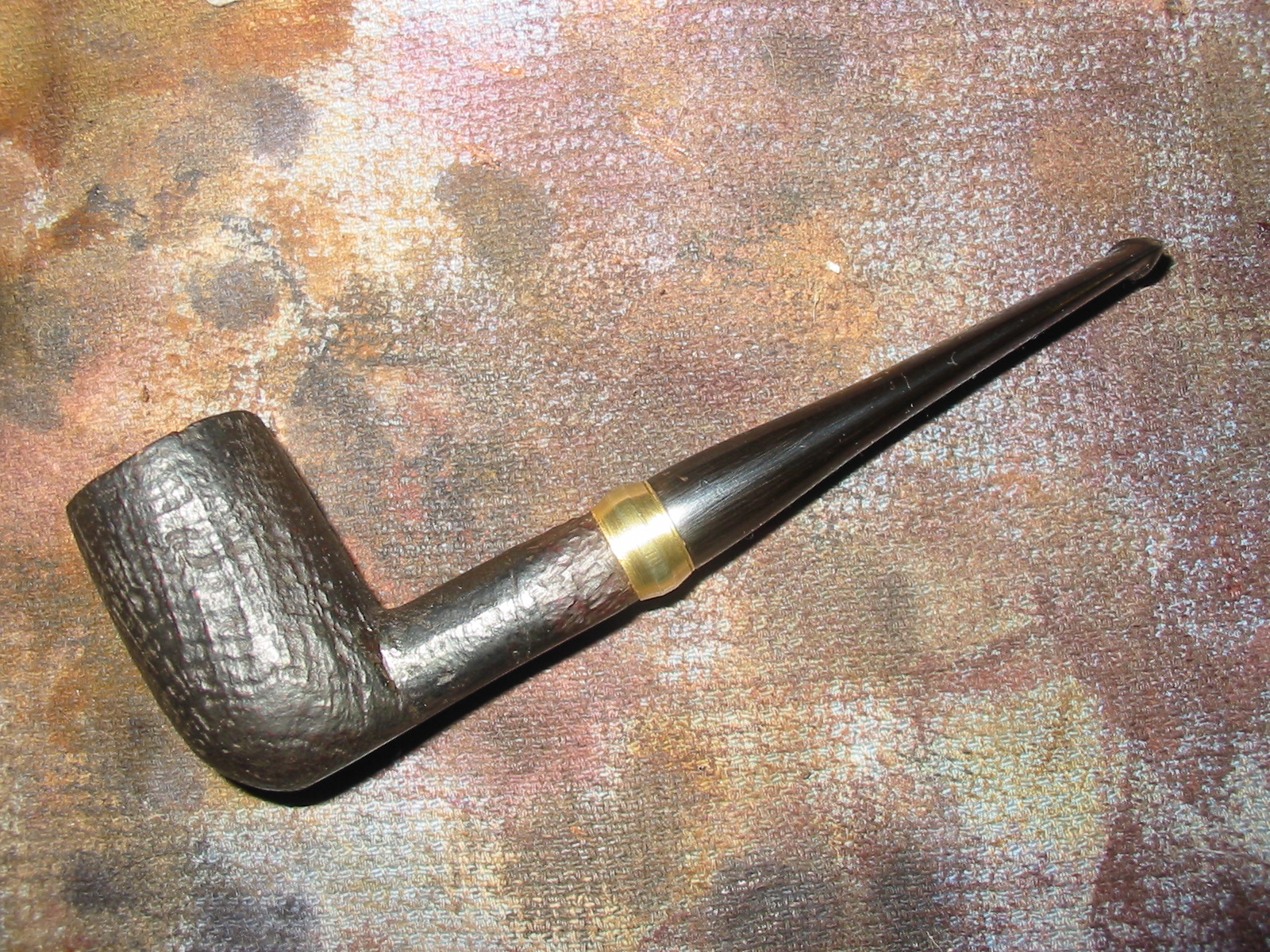
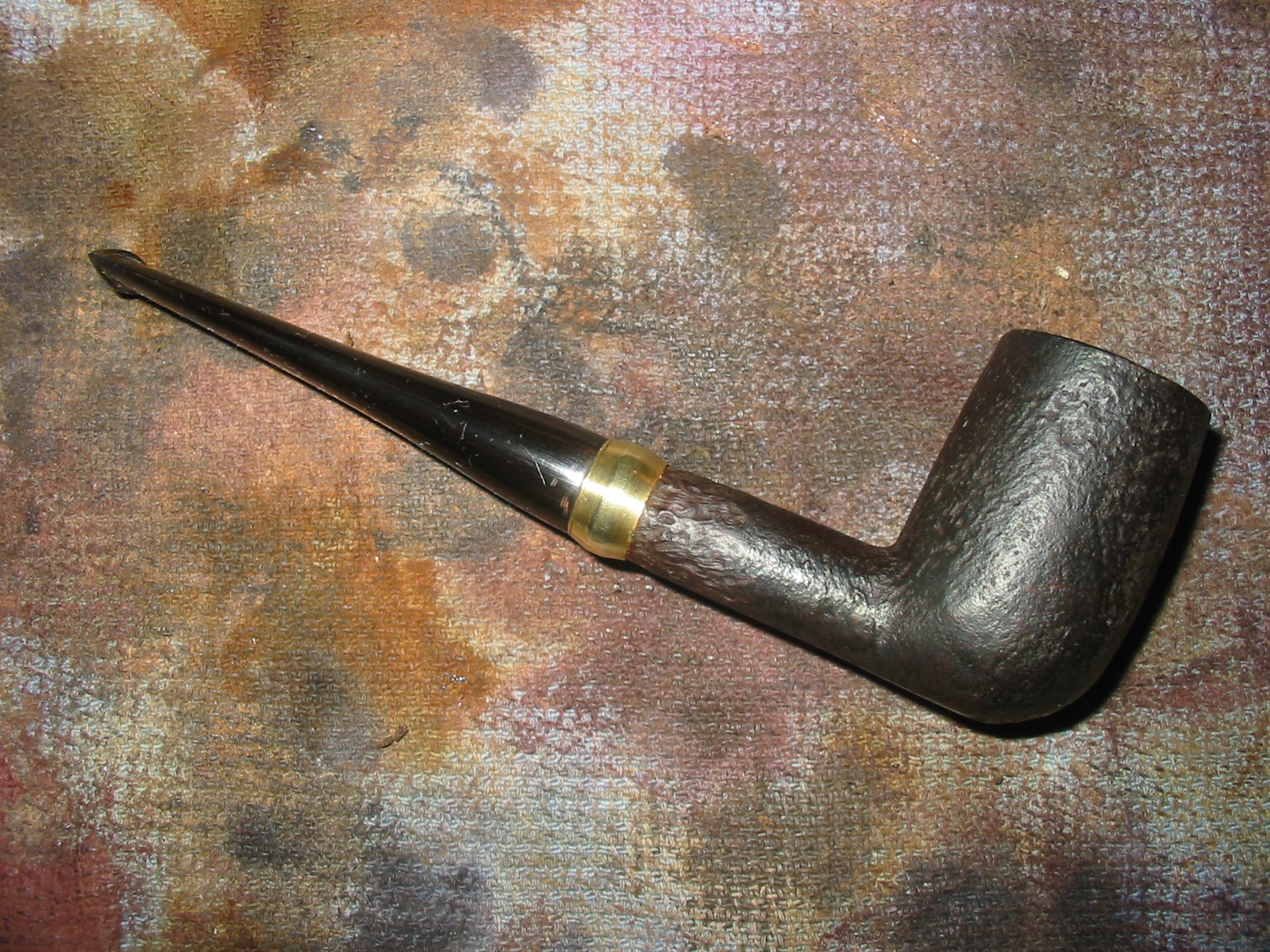
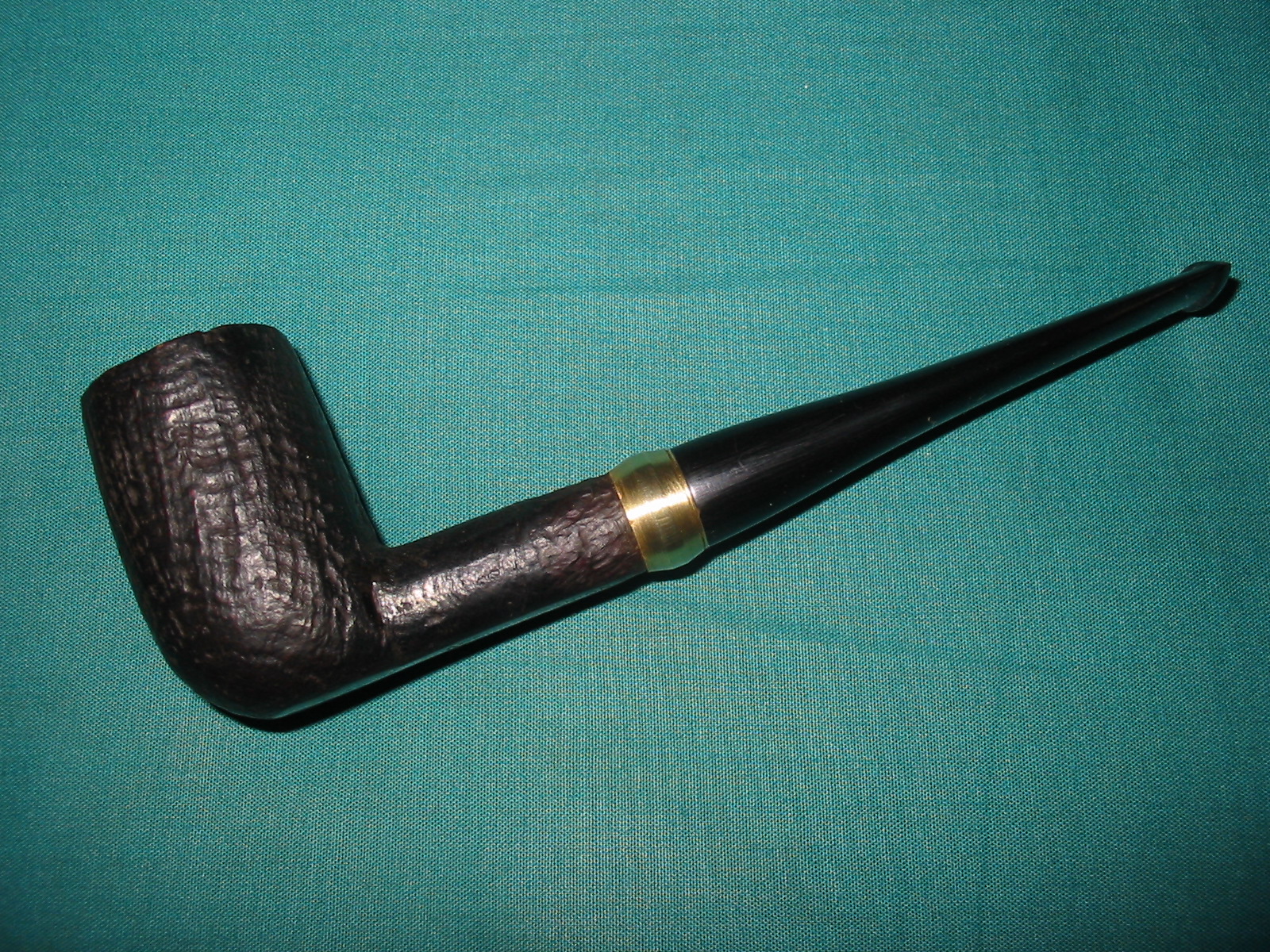
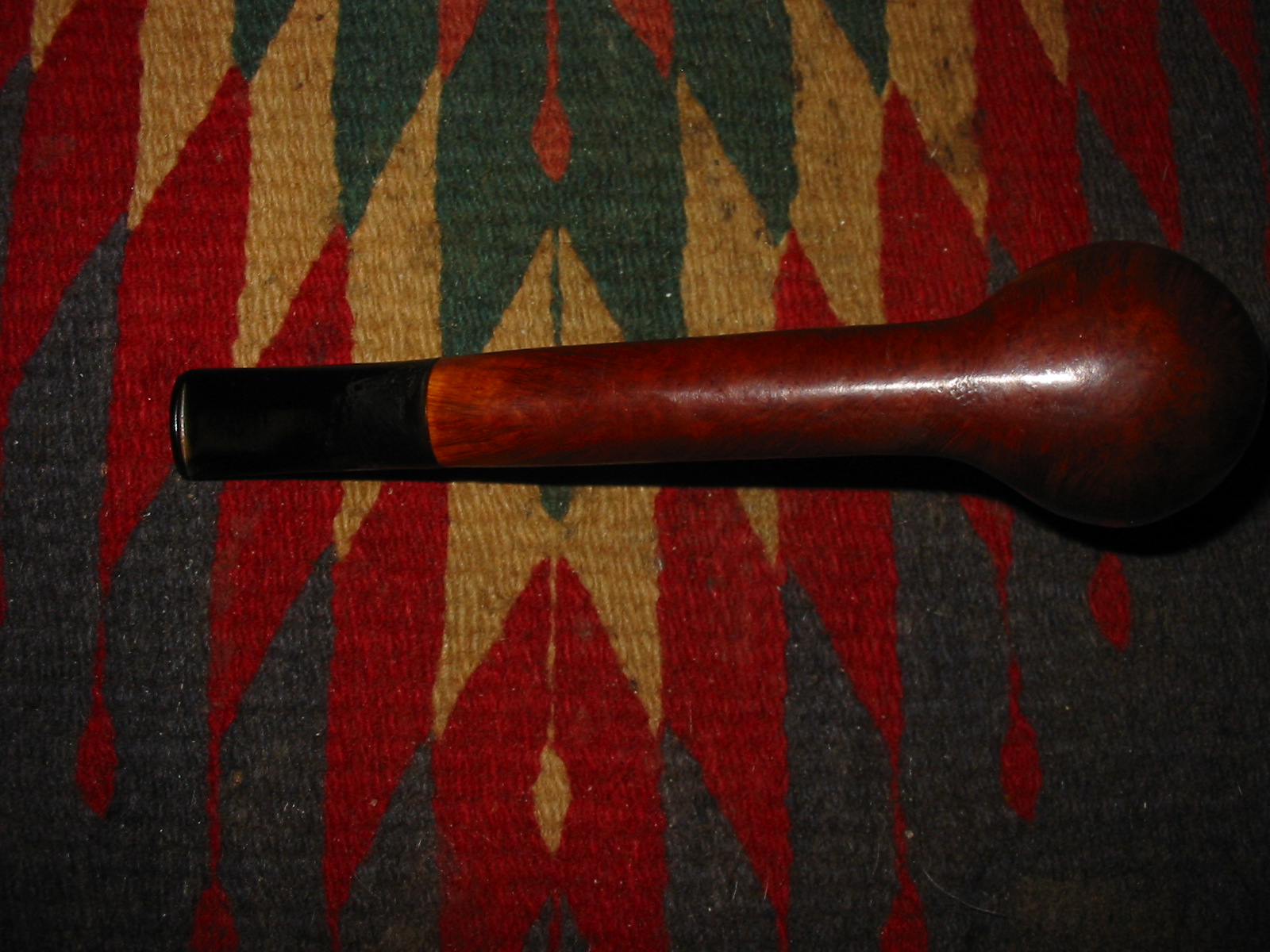
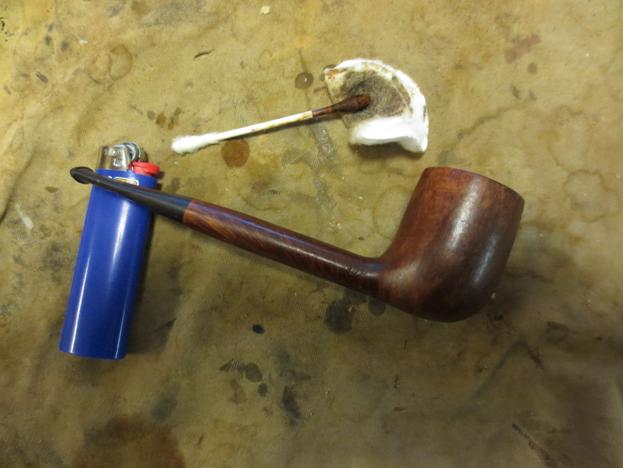
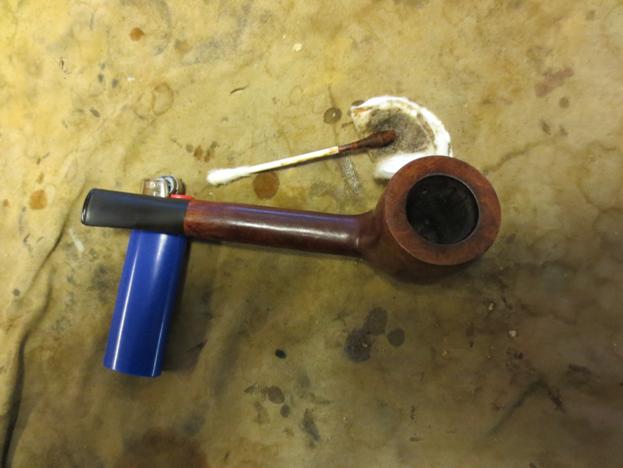
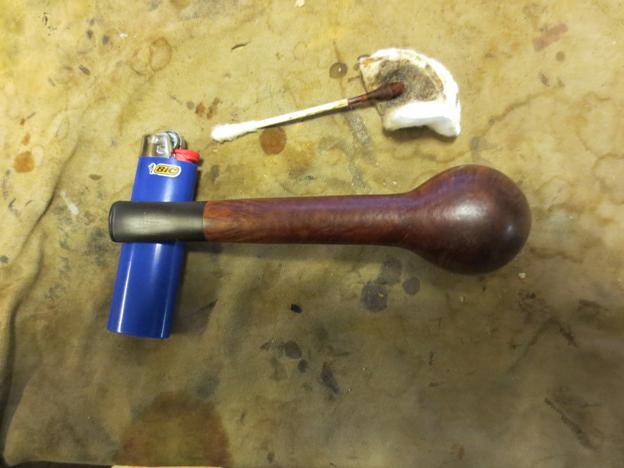
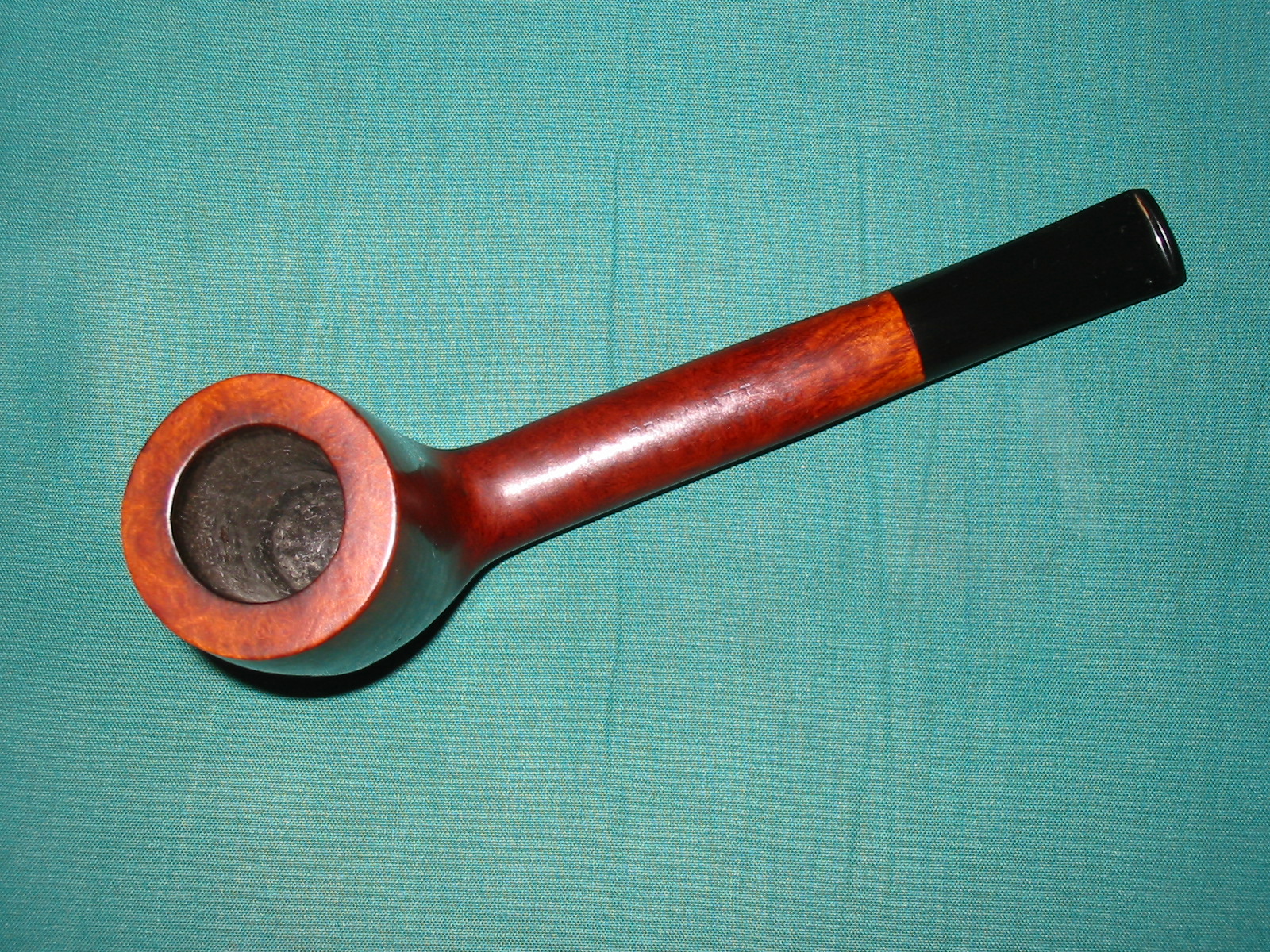
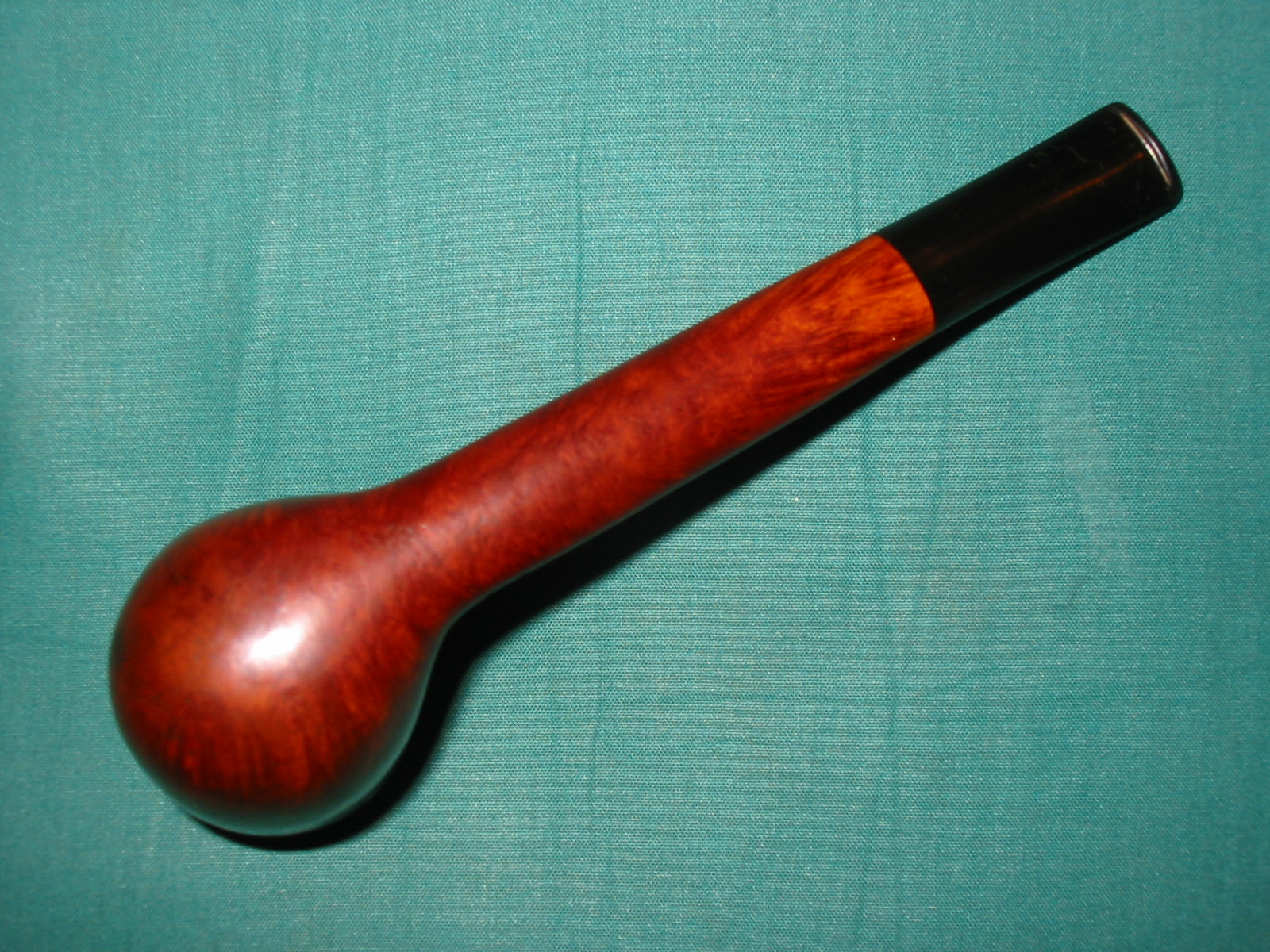
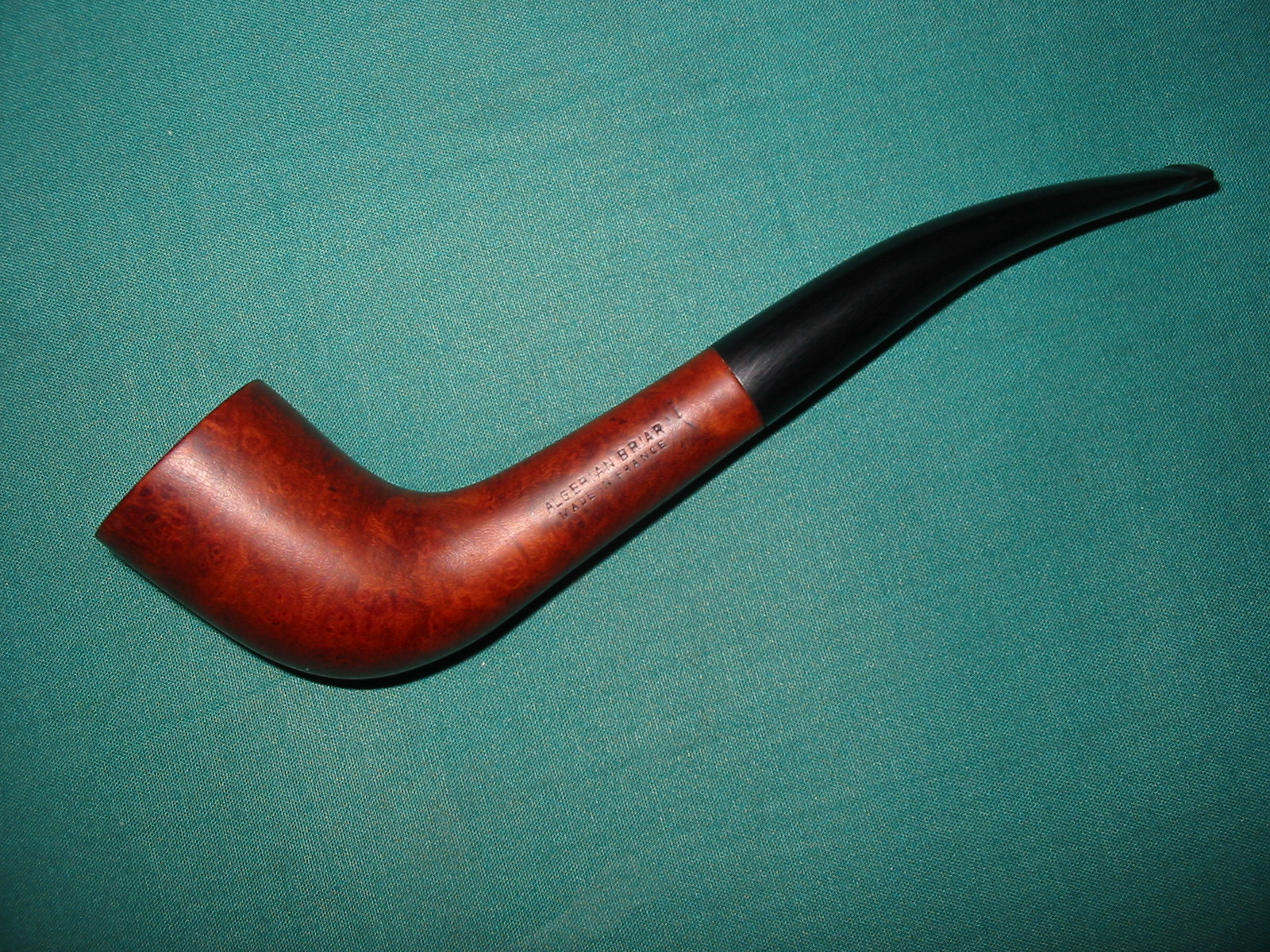
I was gifted a few pipe bowls that needed to be restemmed and refurbished by a friend. The first of these that I decided to clean up and restem was an old Zulu bowl. It is stamped Algerian Briar over Made in France on the left side of the shank and no other identifying marks. Thus the maker remains a bit of a mystery that I am not sure can be solved. The bowl itself was in fair shape. The cake in the bowl was not thick but it was particularly crumbly and soft. The finish on the pipe was also shot. The varnish coat was gone and the stain was streaked and damaged. There were a cut groove next to the left side of the stamping and a smaller one on the right side of the stamping. The shank was filthy and caked with oils and tars. The rim was in great shape with no damage to either the inside or outside rim. The grain under the stain coat looked promising with cross grain on the front and back of the bowl and the top and bottom of the shank and mixed birdseye on the sides of the both.
IMG_4862

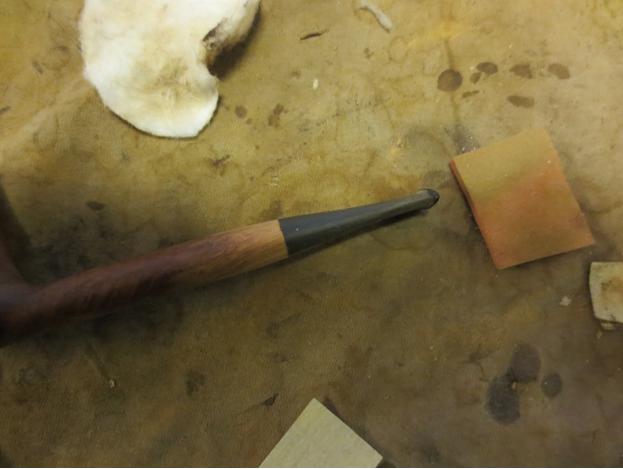
I had a stem in my can of stems that fit almost perfectly. It was damaged and would need some work but the fit and bend was perfect for the Zulu shape.
IMG_4863

IMG_4864

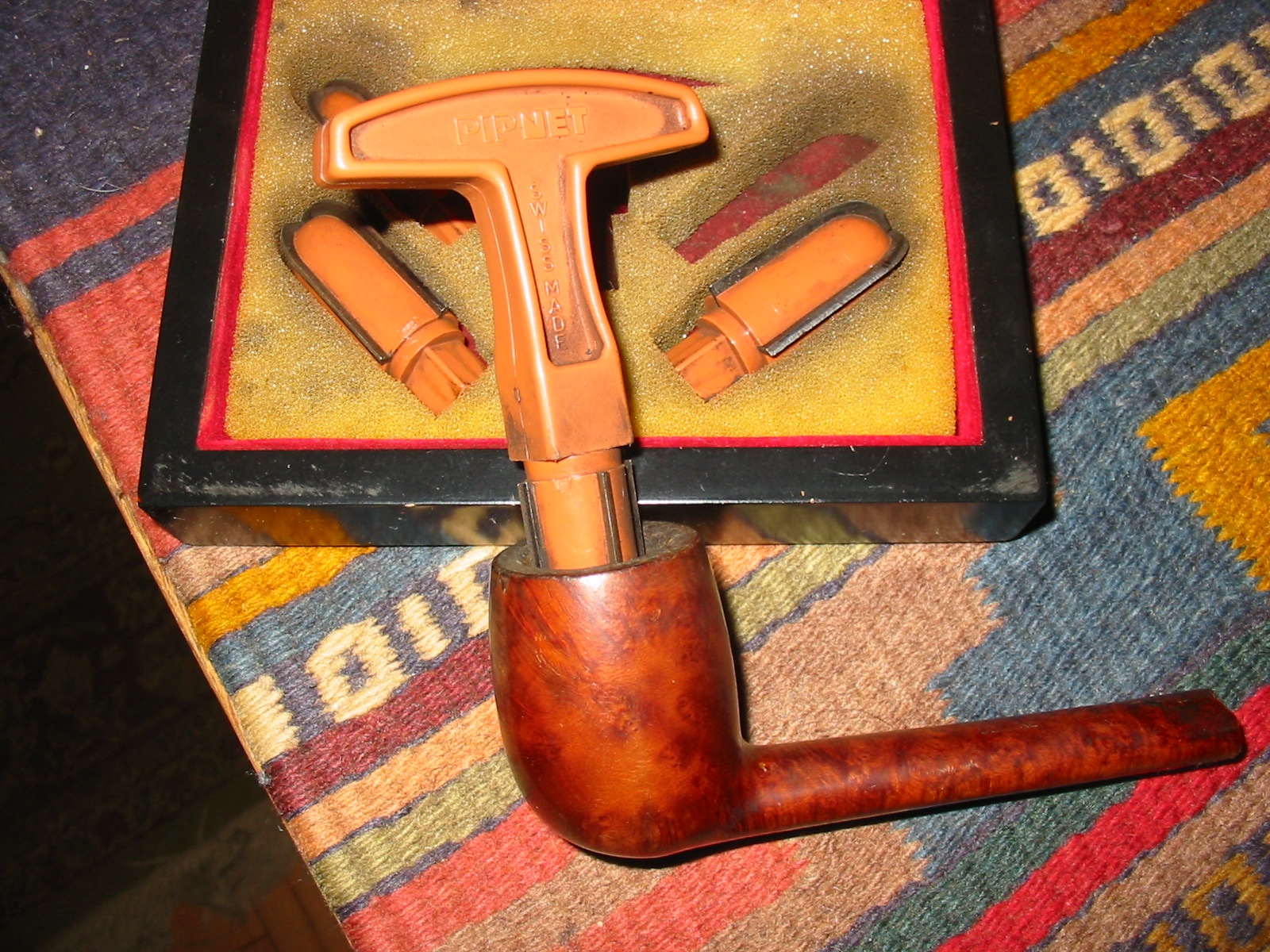
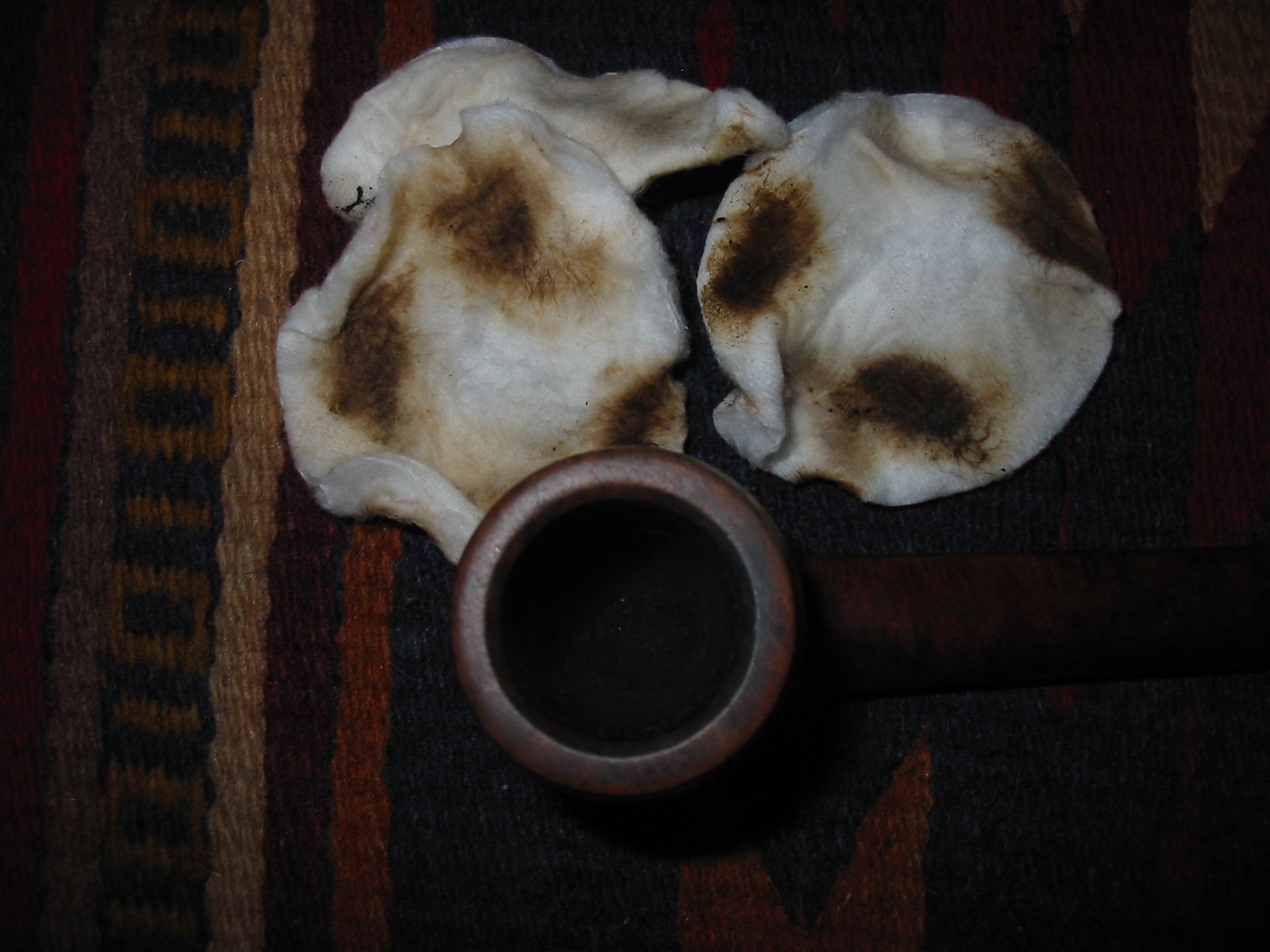
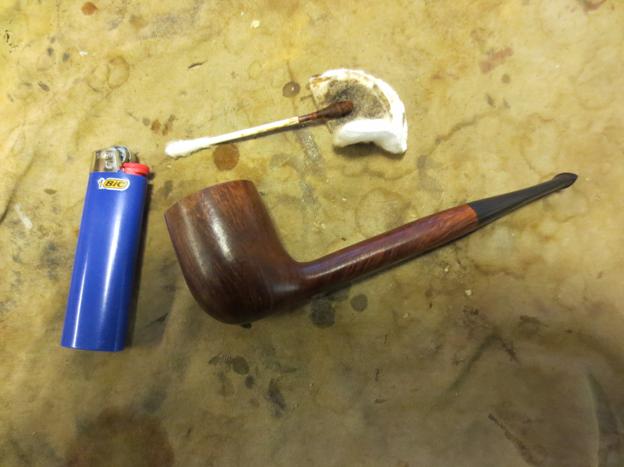
I fit the stem in place and wiped down the bowl with acetone on cotton pads to remove the remaining finish on the pipe. I reamed the bowl with a PipNet reamer and took the cake back to bare wood. I cleaned out the shank and the bowl with cotton swabs and Everclear.
IMG_4866

IMG_4867

IMG_4868

IMG_4869

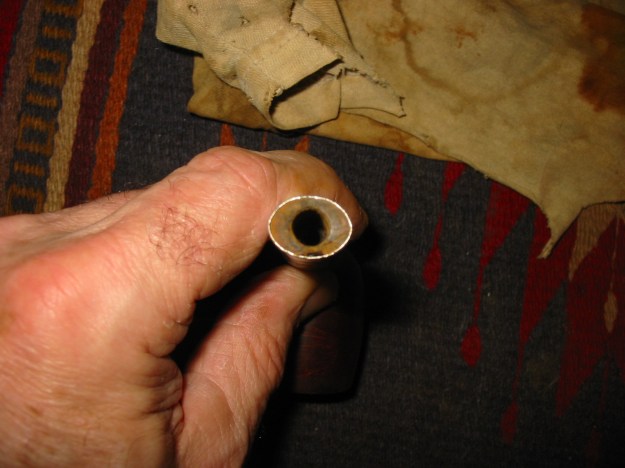
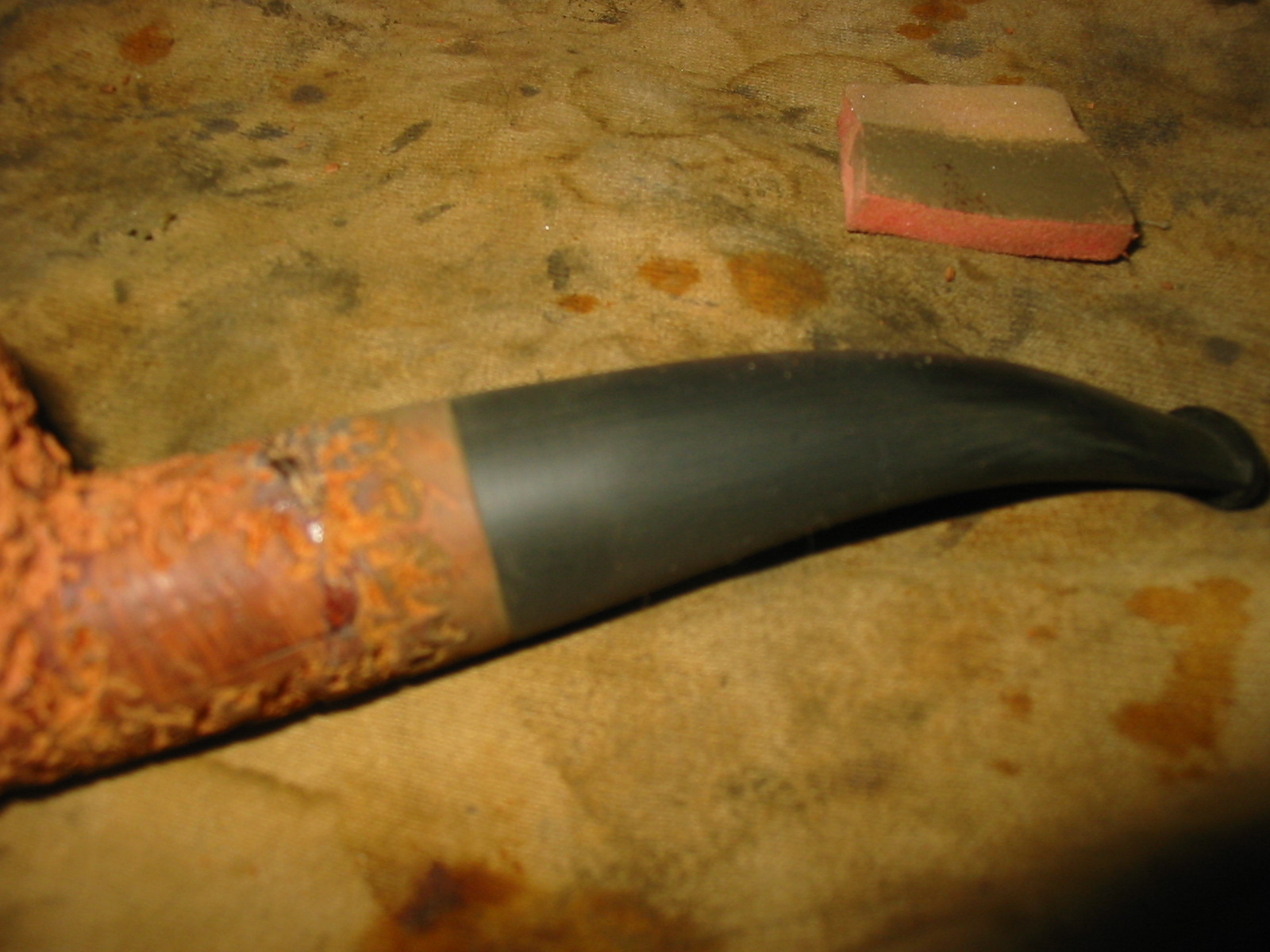
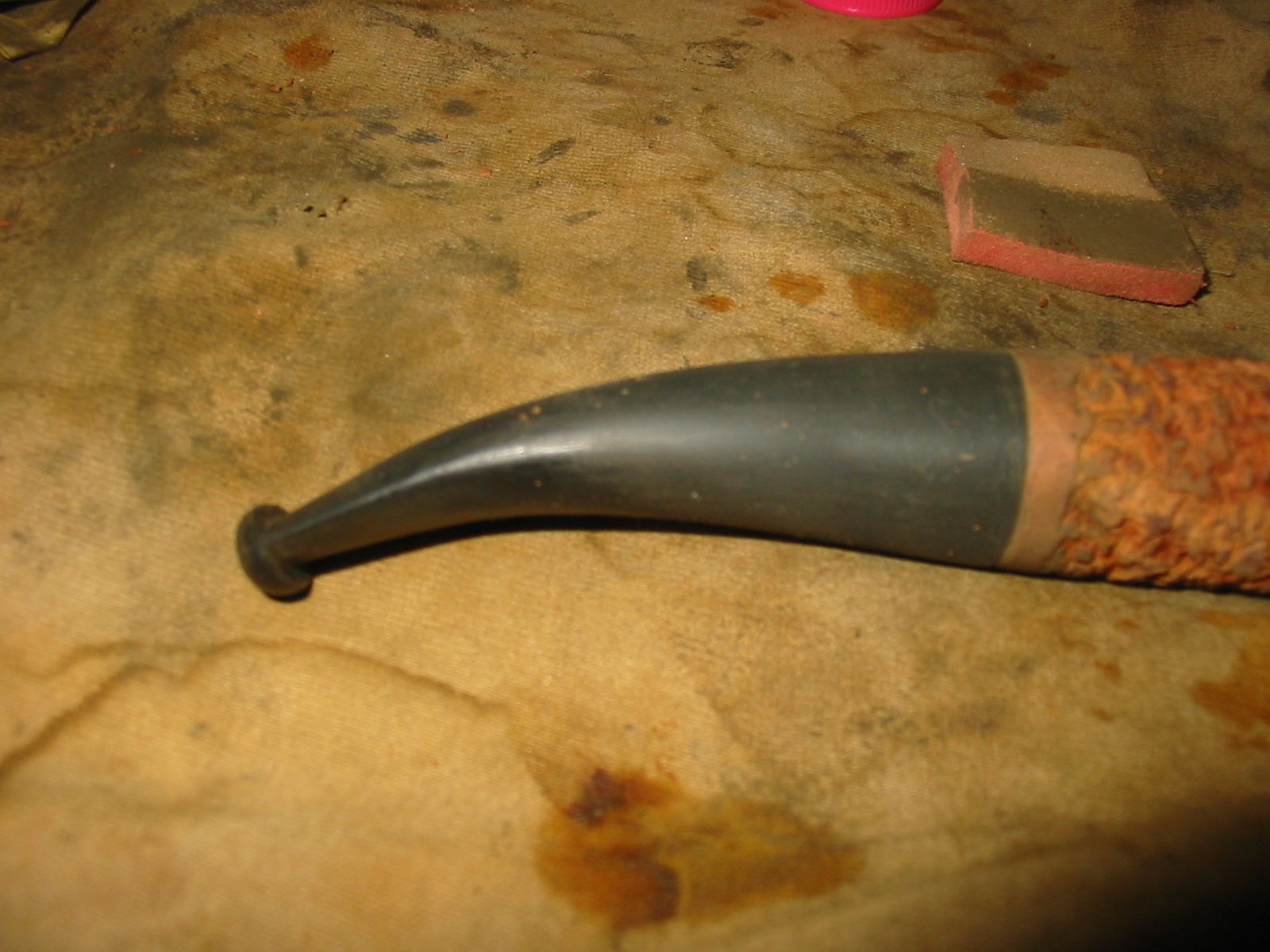
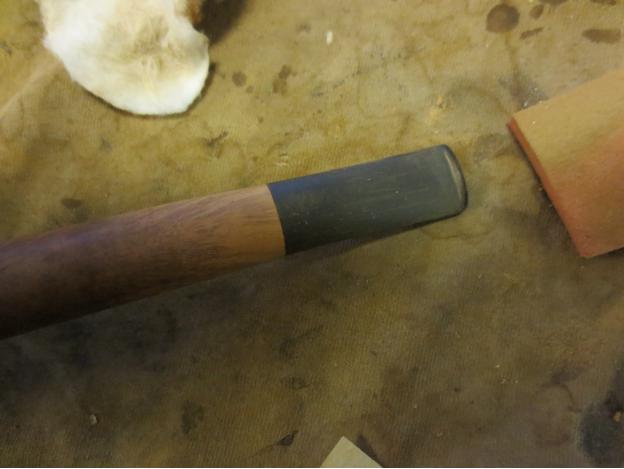
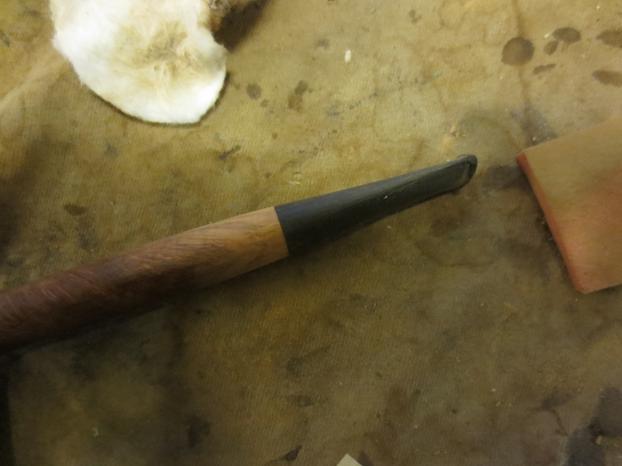
I sanded the stem until the transition between the shank and the stem was smooth. I used both 220 grit sandpaper and medium and fine grit sanding sponges to smooth it out. The end of the stem was badly damaged and the button was ruined. I decided to trim off the damaged end of the stem and rework the button. Once it was cut back I cleaned out the stem with Everclear and pipe cleaners. The stem was badly plugged with tars so I had to use a bent paper clip to push through the airway. I used shank brushes and pipe cleaners to remove the tarry build up and open up the stem once again.
IMG_4870

IMG_4872

The airway was still wide and open so I did not need to reshape it. The top and bottom of the button were thin so I could not remove any further material. I reshaped the externals as best as possible by rounding the ends of the stem and making the button more oval in external shape.
IMG_4873

The slight dents in the stem that remained would not lift with heat so I filled them with superglue until they were level with the surface of the stem.
IMG_4874

IMG_4875

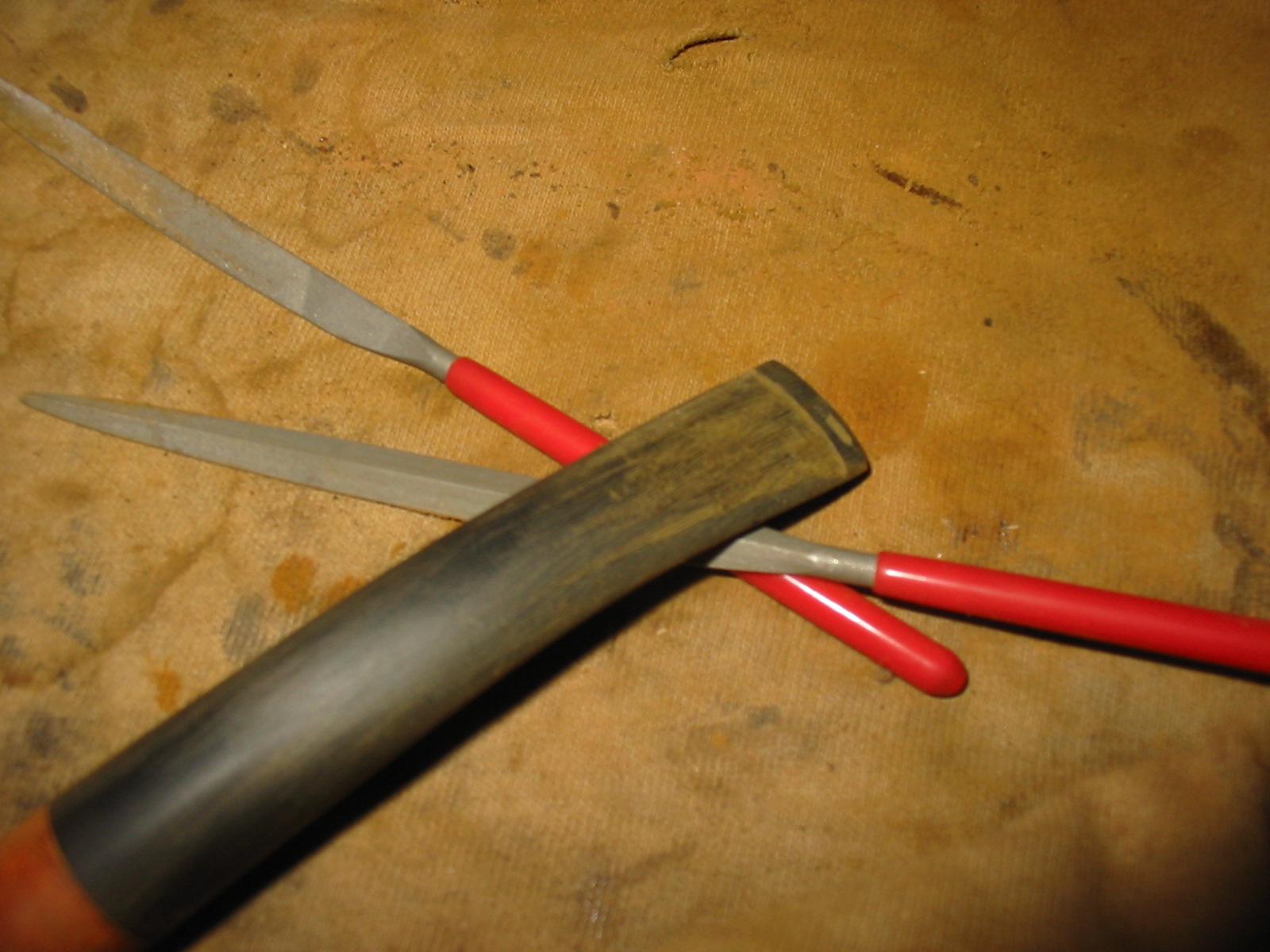
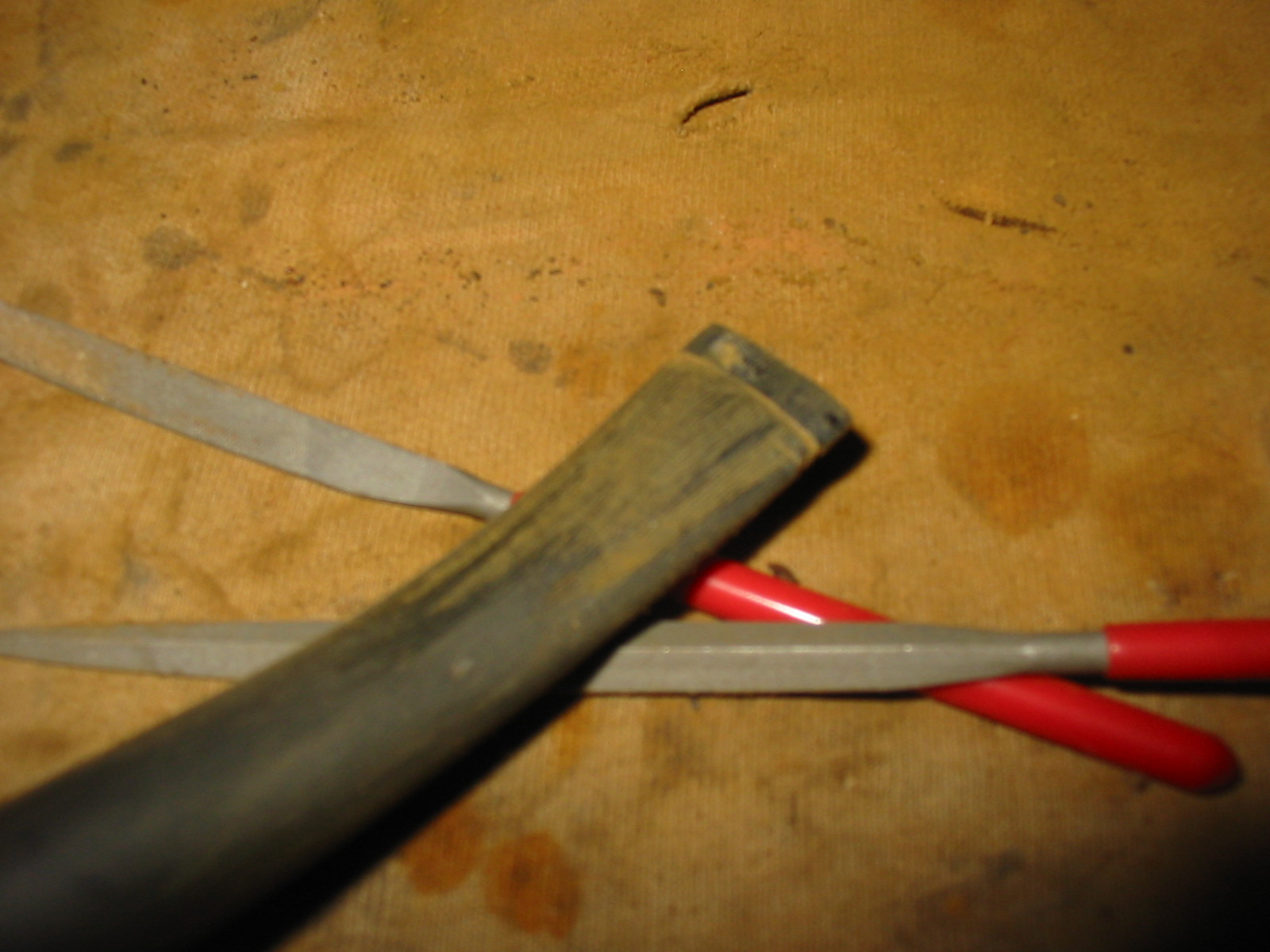
I cut the new button with needle files and shaped the end of the stem to have a better flow and taper to the new button. This involved removing some of the thickness of the stem and making the taper more angled. I used files and sandpaper to reshape the stem.
IMG_4876

IMG_4877

With the new button cut I sanded the stem and the entire pipe with 220 grit sandpaper to remove the remaining finish and make sure the flow of the stem was correct to the angles of the pipe. I also sanded it with a medium and fine grit sanding sponge to remove scratches in the briar and vulcanite.
IMG_4879

IMG_4880

IMG_4881

IMG_4882

IMG_4883

IMG_4884

The stain around the stamping on the left side of the shank was very set and stubborn. I lightly sanded it to break through the top coat and then scrubbed it with acetone on cotton pads to match it as much as possible to the unstained briar. I stained the bowl with an oxblood aniline stain, flamed it and restained and reflamed until I had an even coverage on the bowl. I hand buffed it with a soft cloth. I took the pipe to the buffer and buffed the stem and bowl with red Tripoli and White Diamond. The photos below show the pipe after the buffing.
IMG_4885

IMG_4886

IMG_4888

IMG_4889

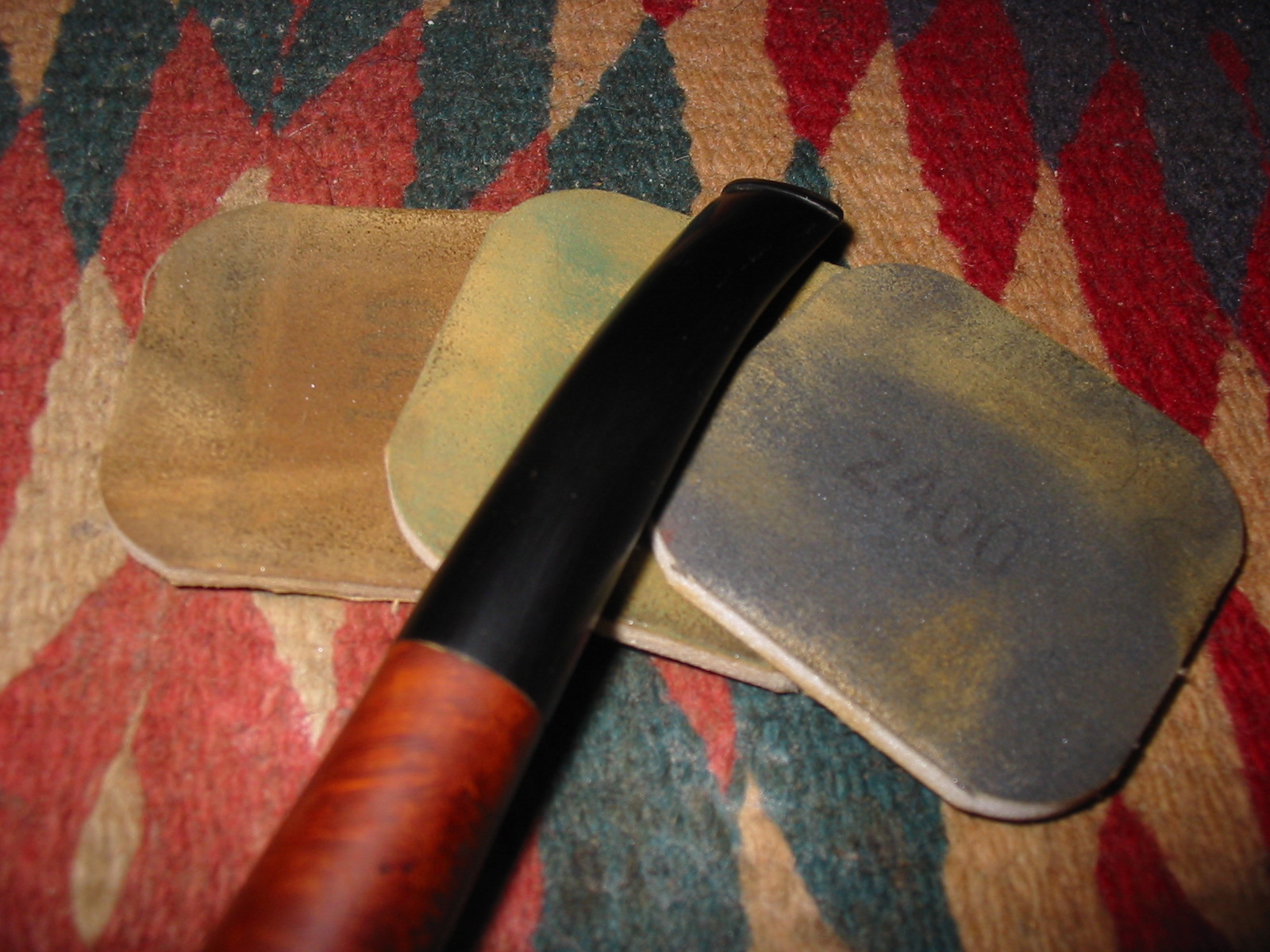
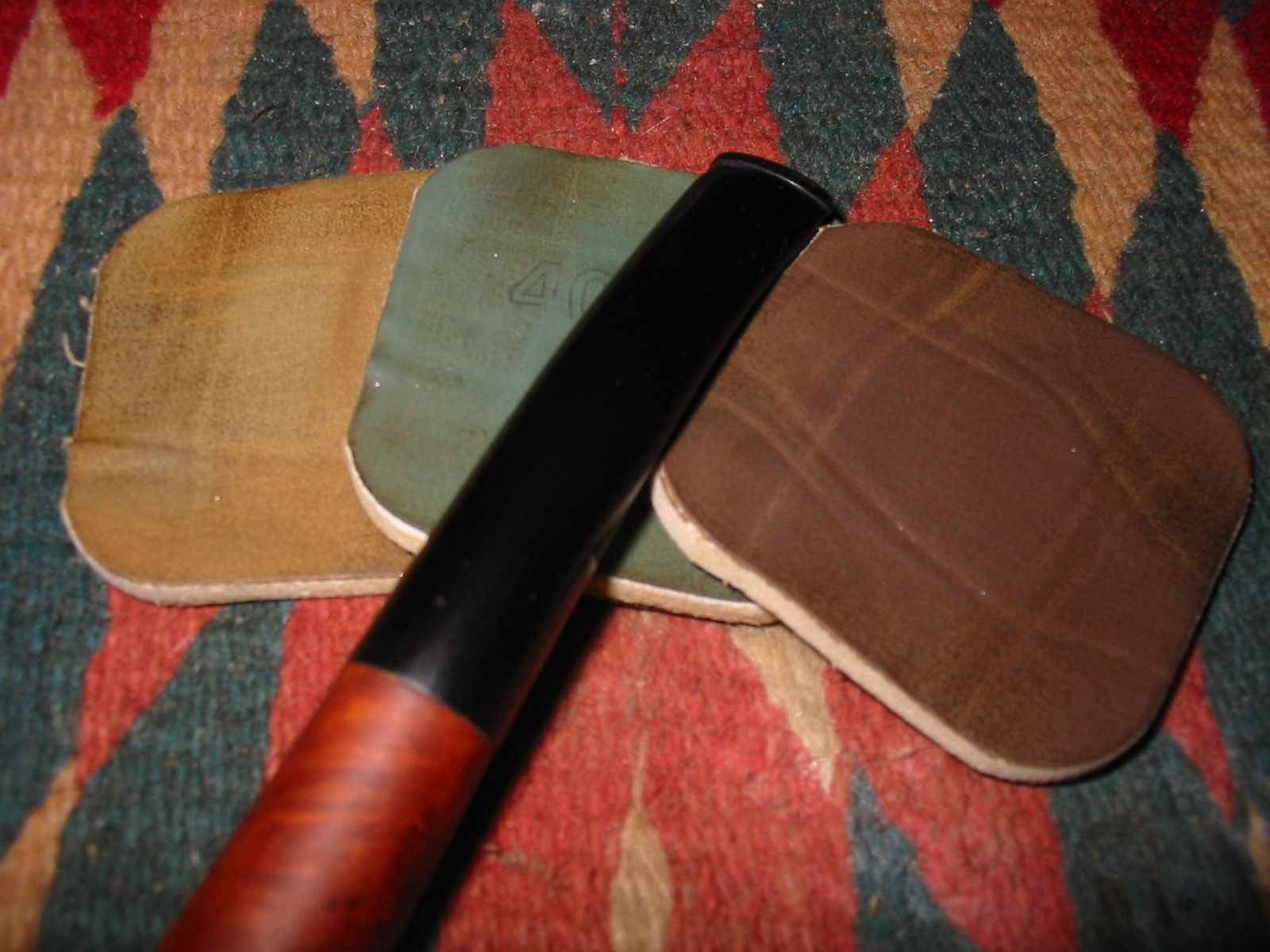
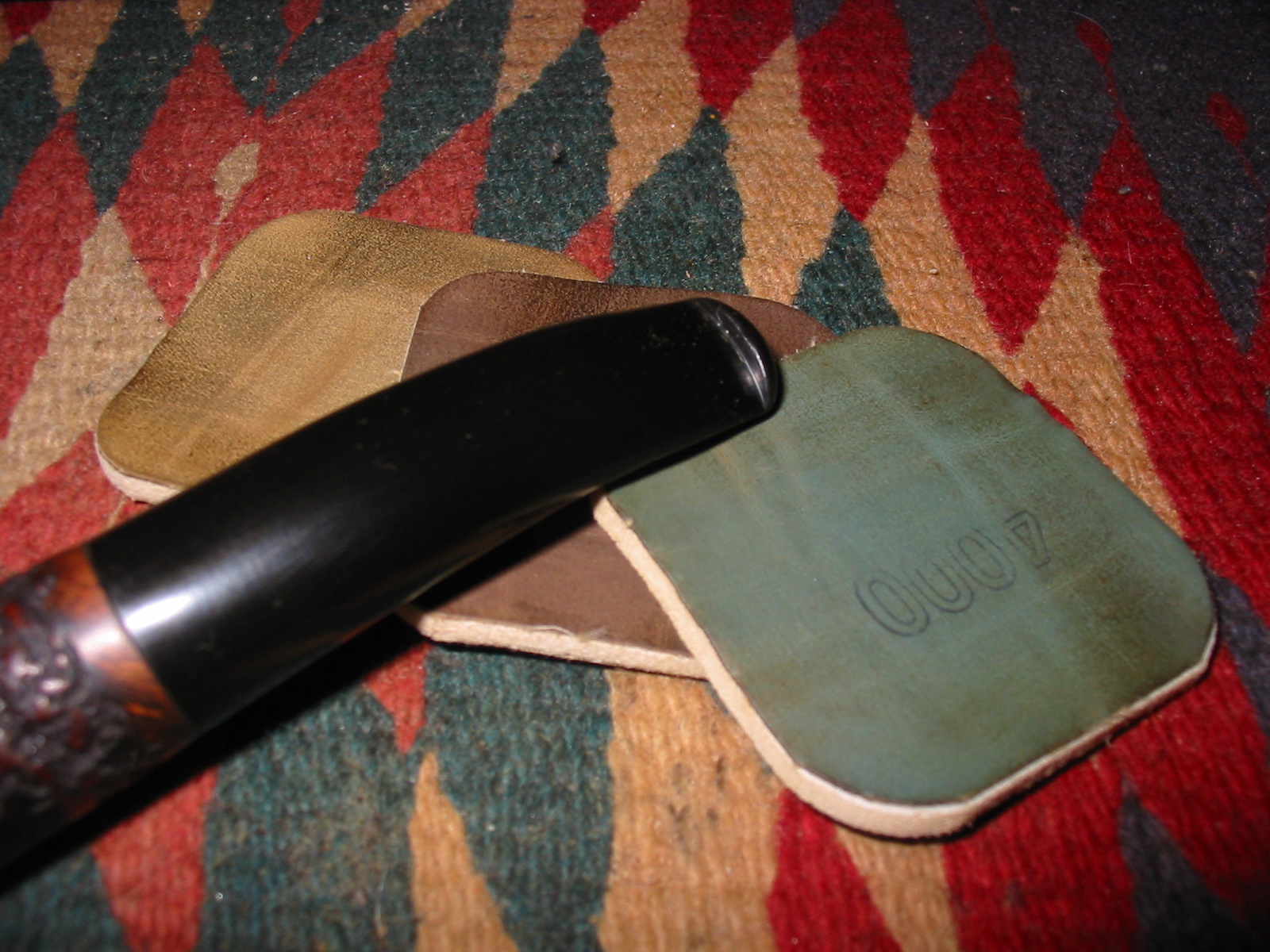
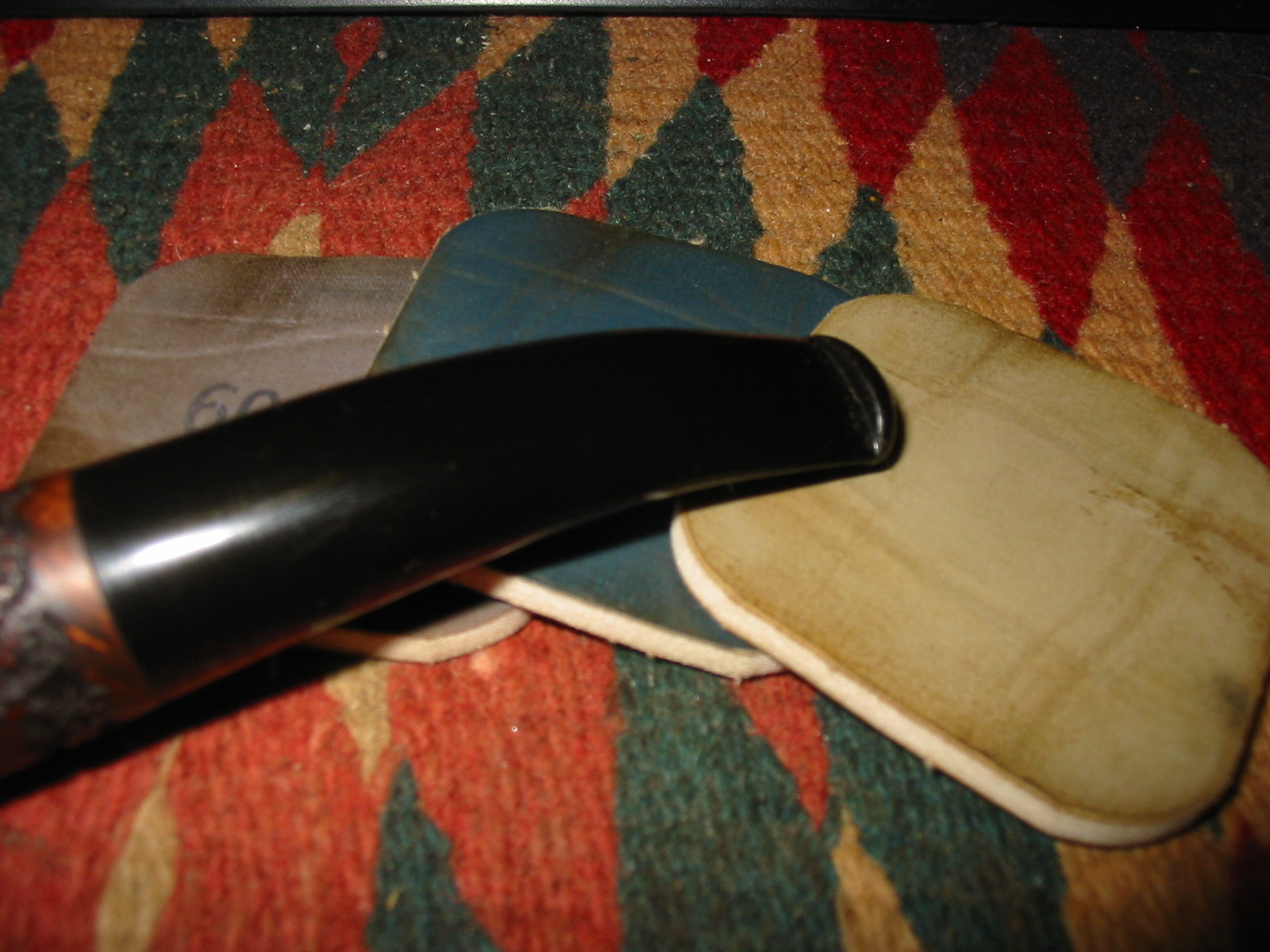
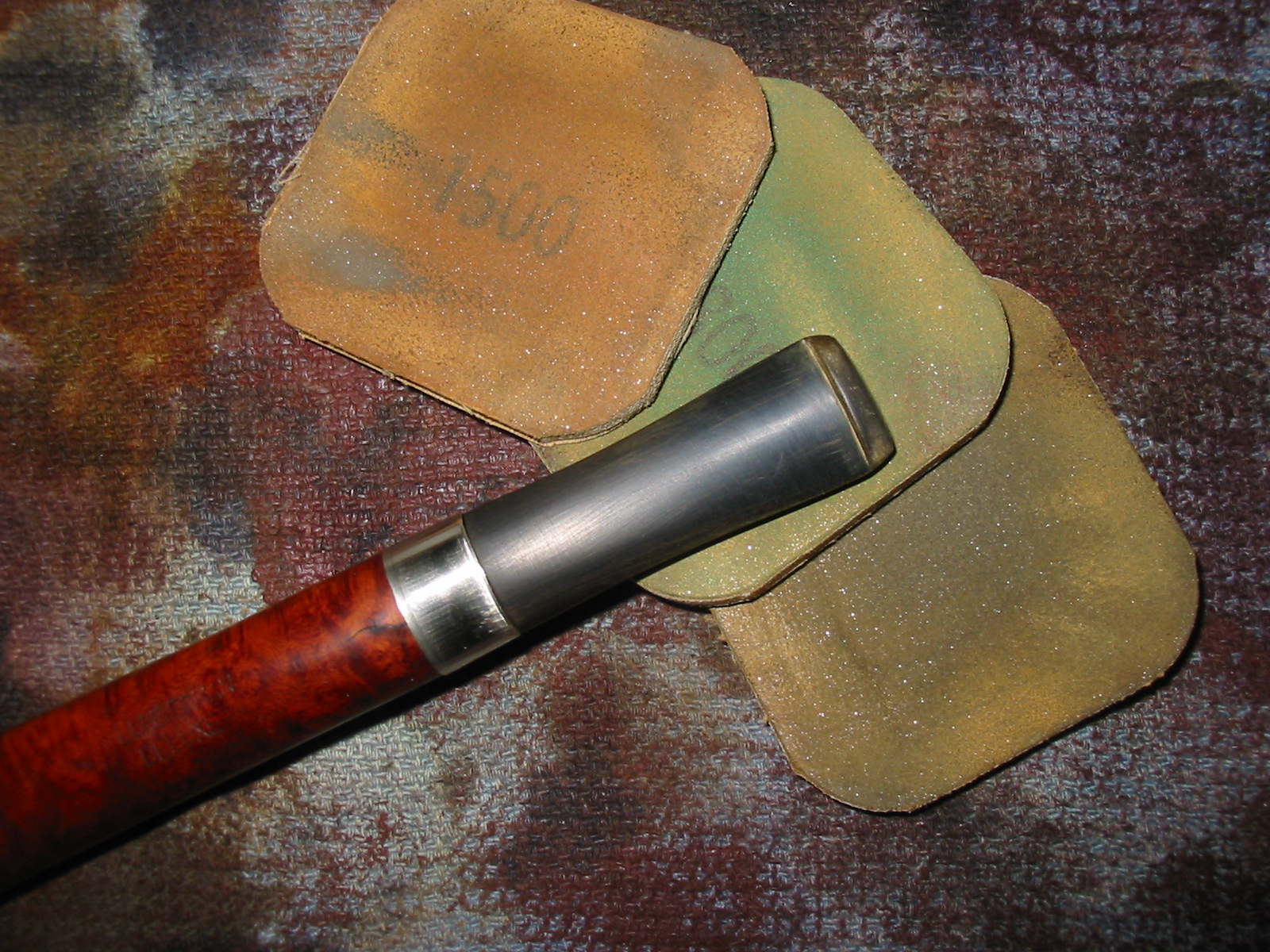
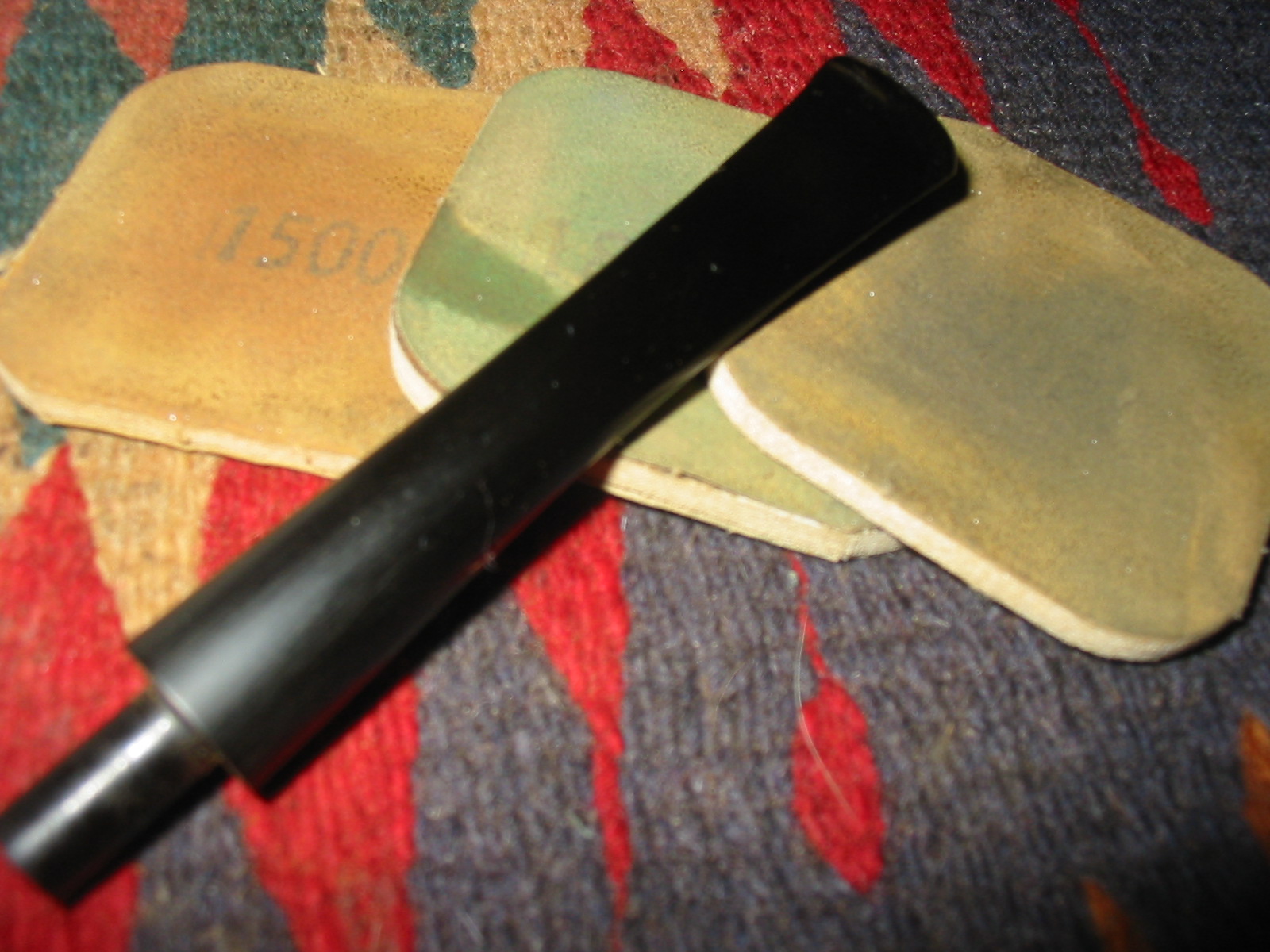
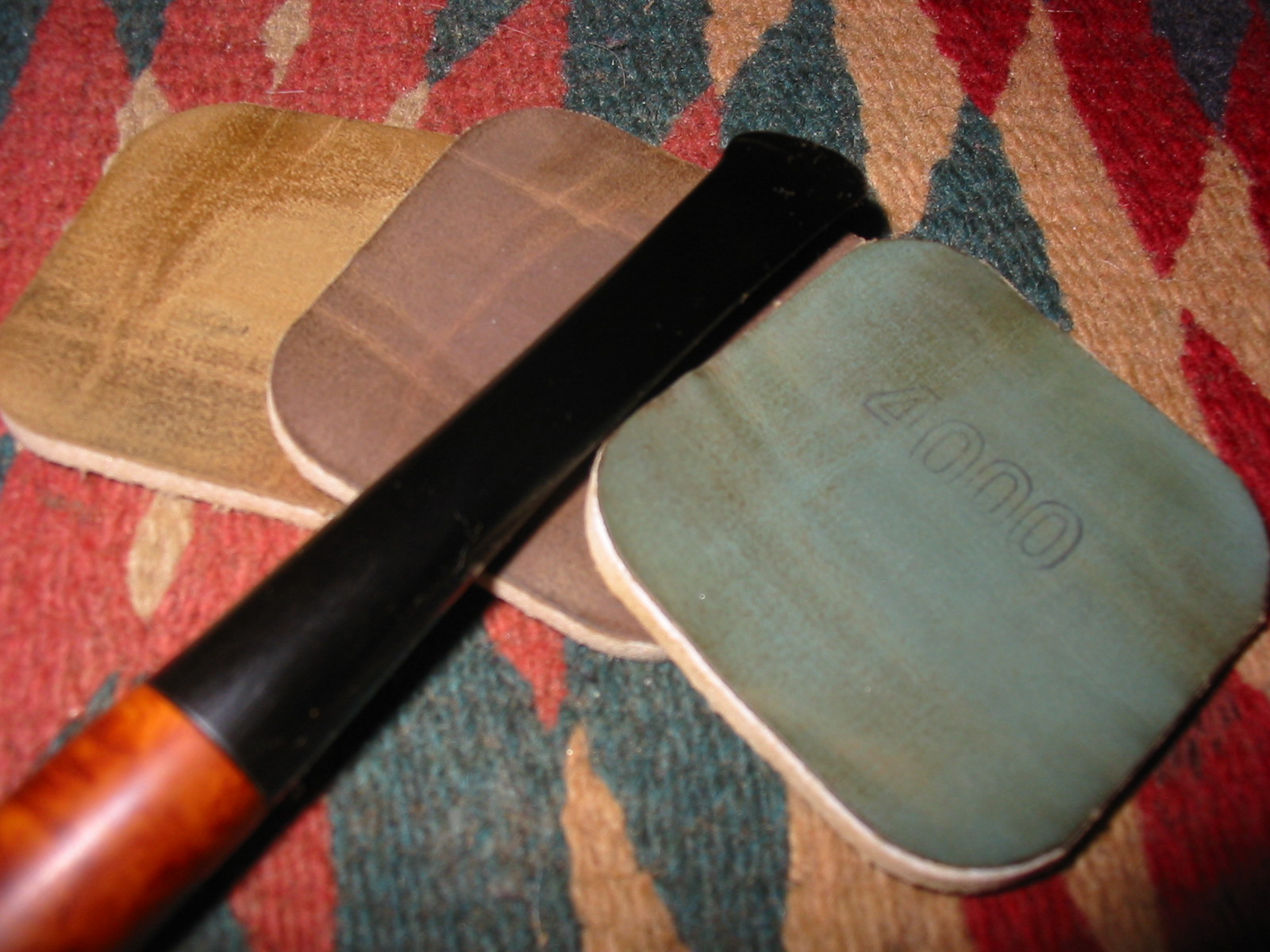
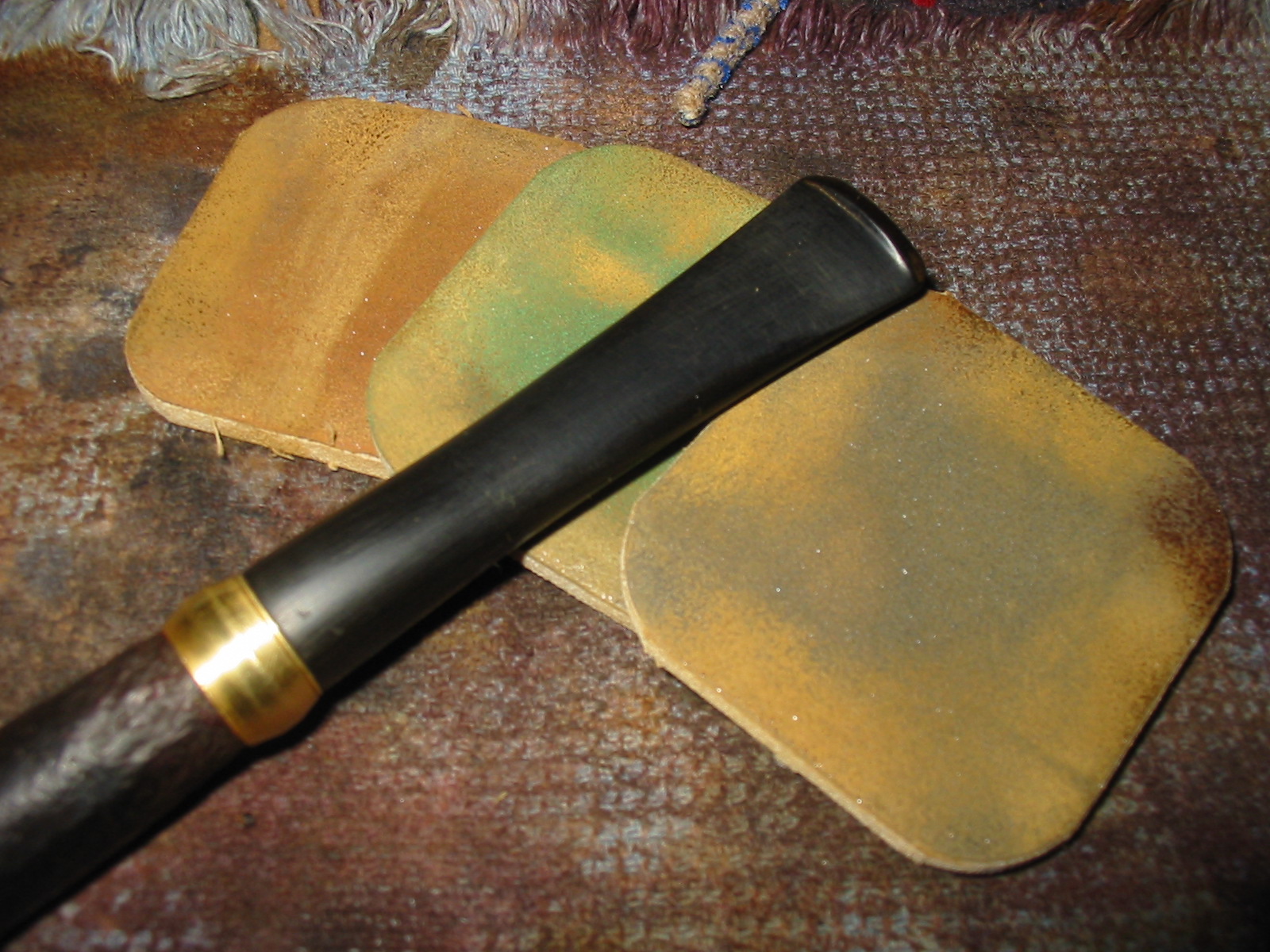
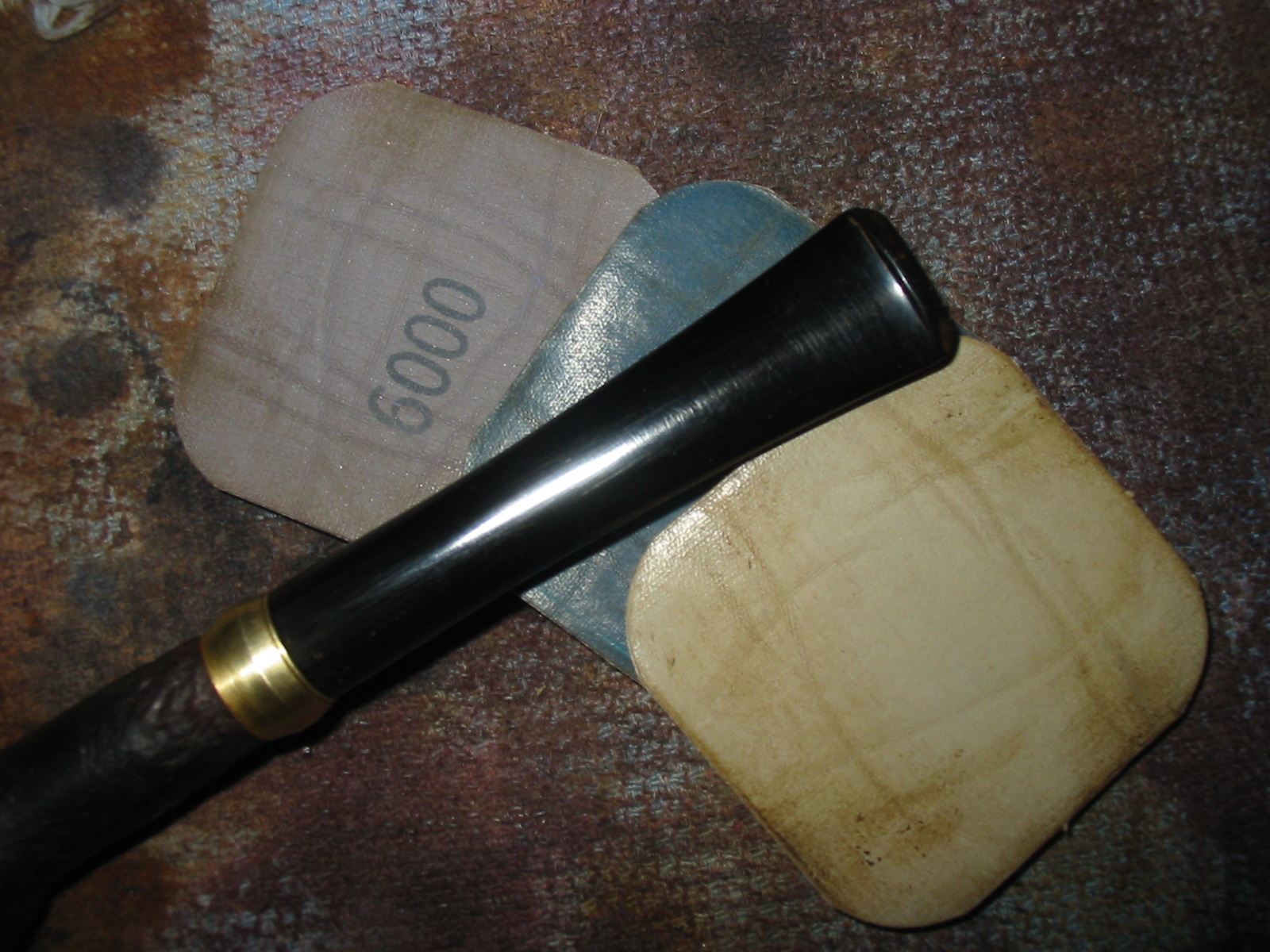
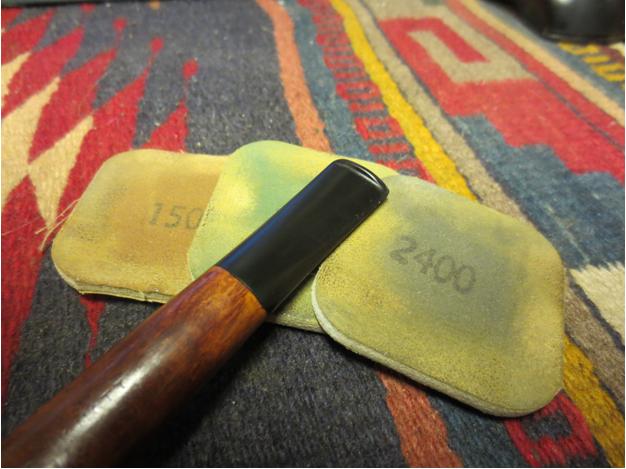
I sanded the stem with my usual array of micromesh sanding pads – wet sanding with 1500-2400 grit pads and dry sanding with 3200-12,000 grit pads. I rubbed the stem down with Obsidian Oil and when it dried hand buffed the stem.
IMG_4890

IMG_4891

IMG_4892

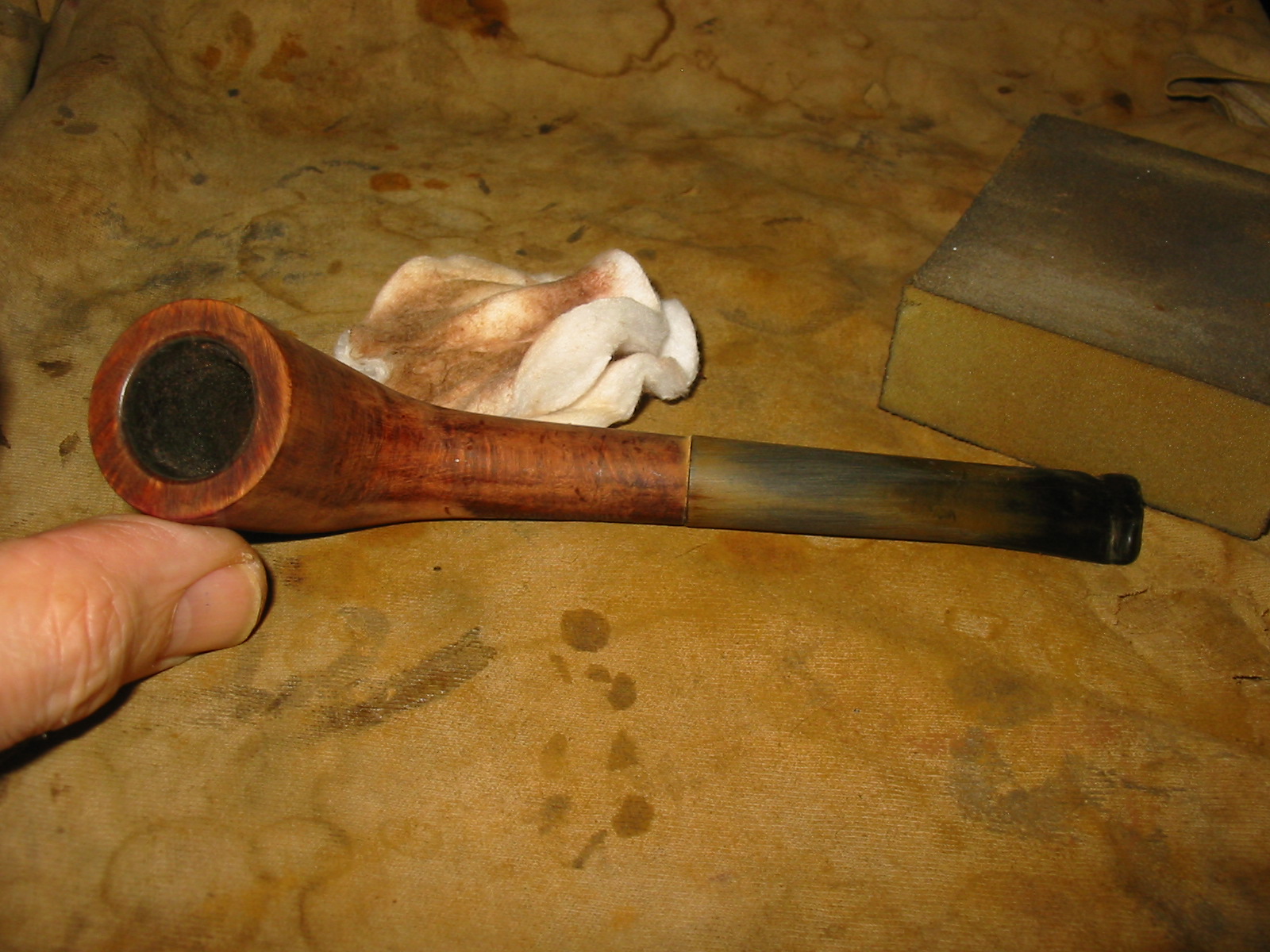
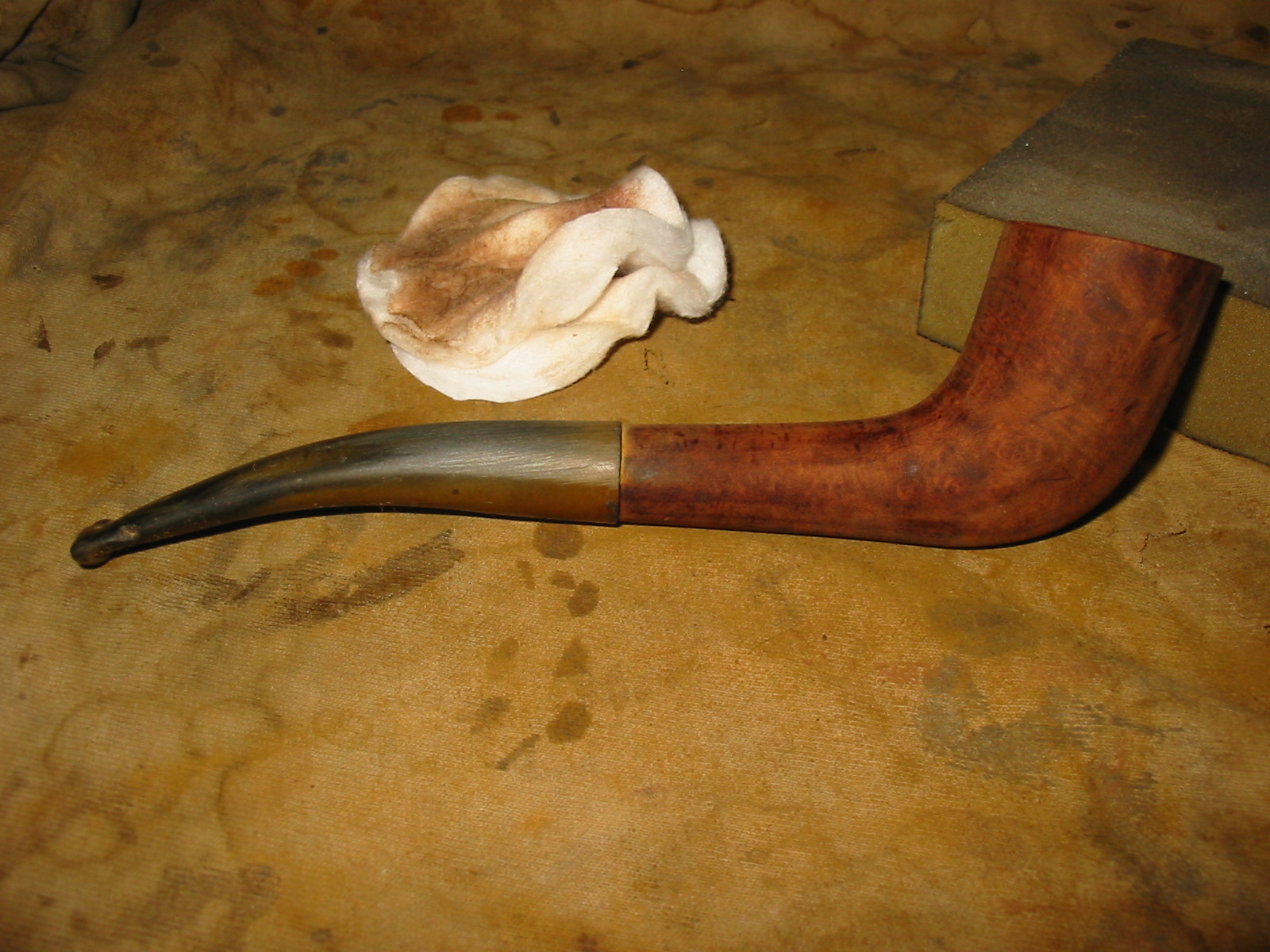
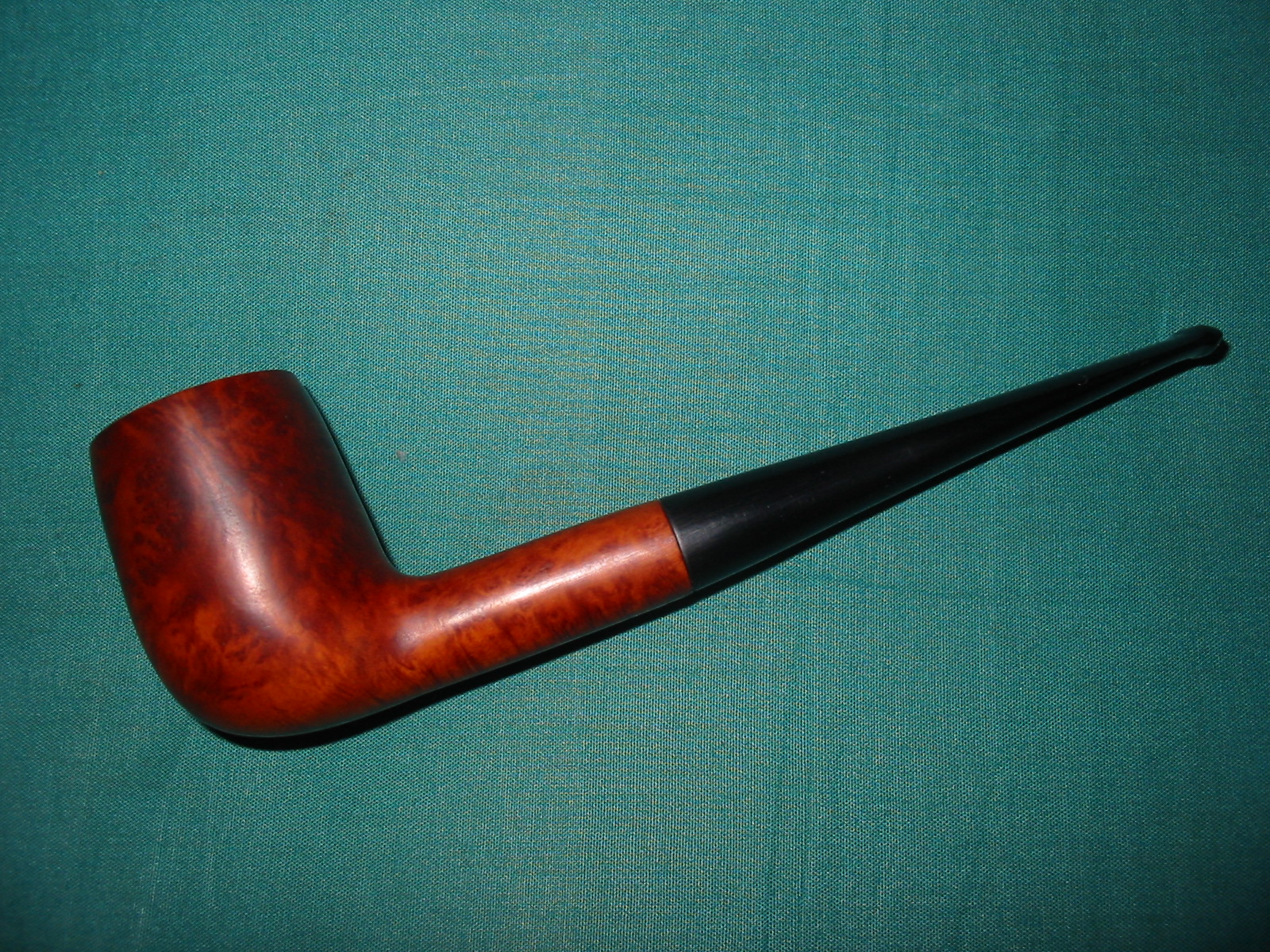
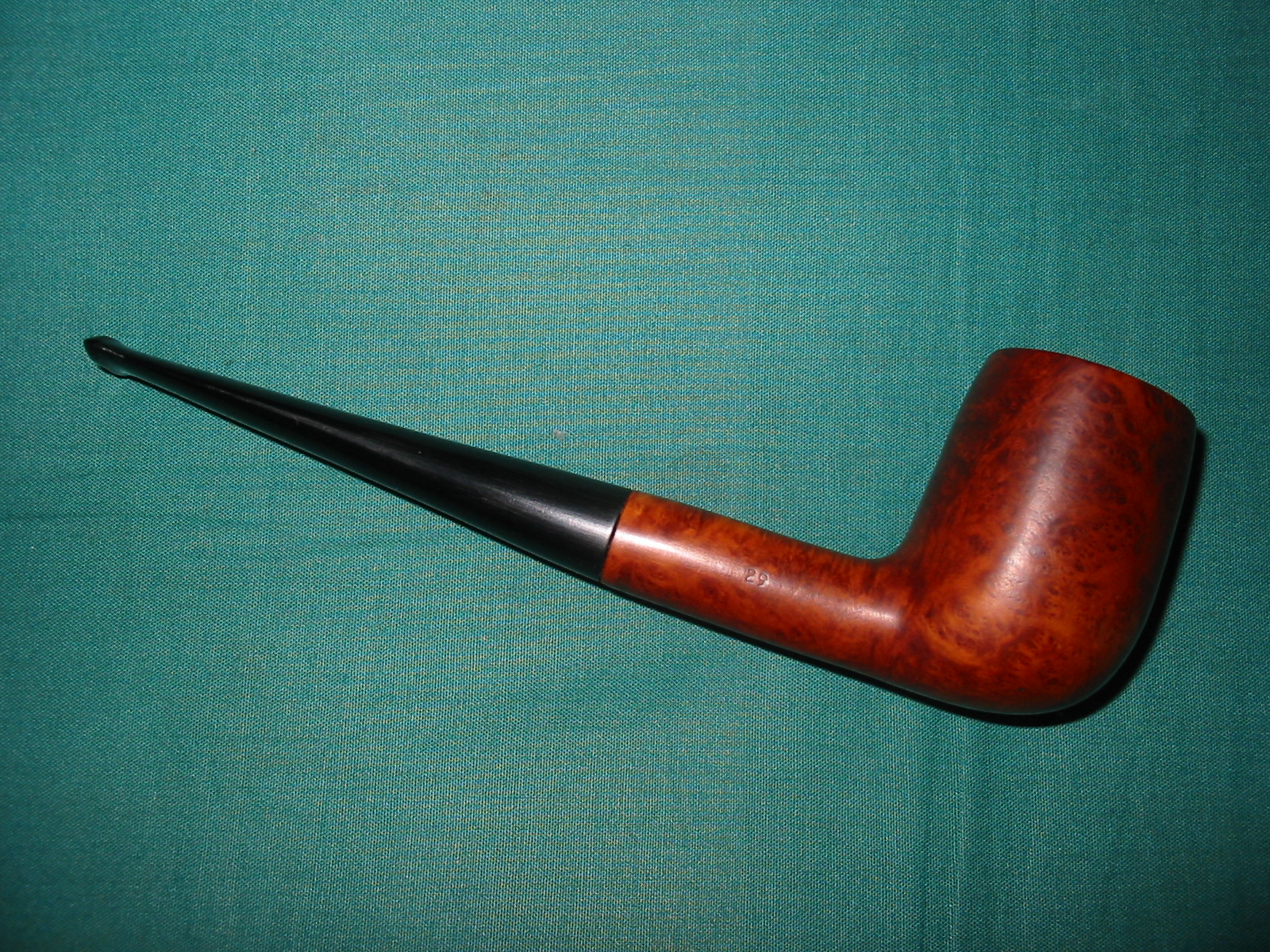
I buffed the pipe with White Diamond and then gave it multiple coats of carnauba wax. I finished by buffing it with a clean soft flannel buffing pad. The finished pipe is pictured below. It is ready to go into service again. I like the flow of the lines on this pipe. The shape and matte like finish work well together.
IMG_4893

IMG_4894

IMG_4896

IMG_4897

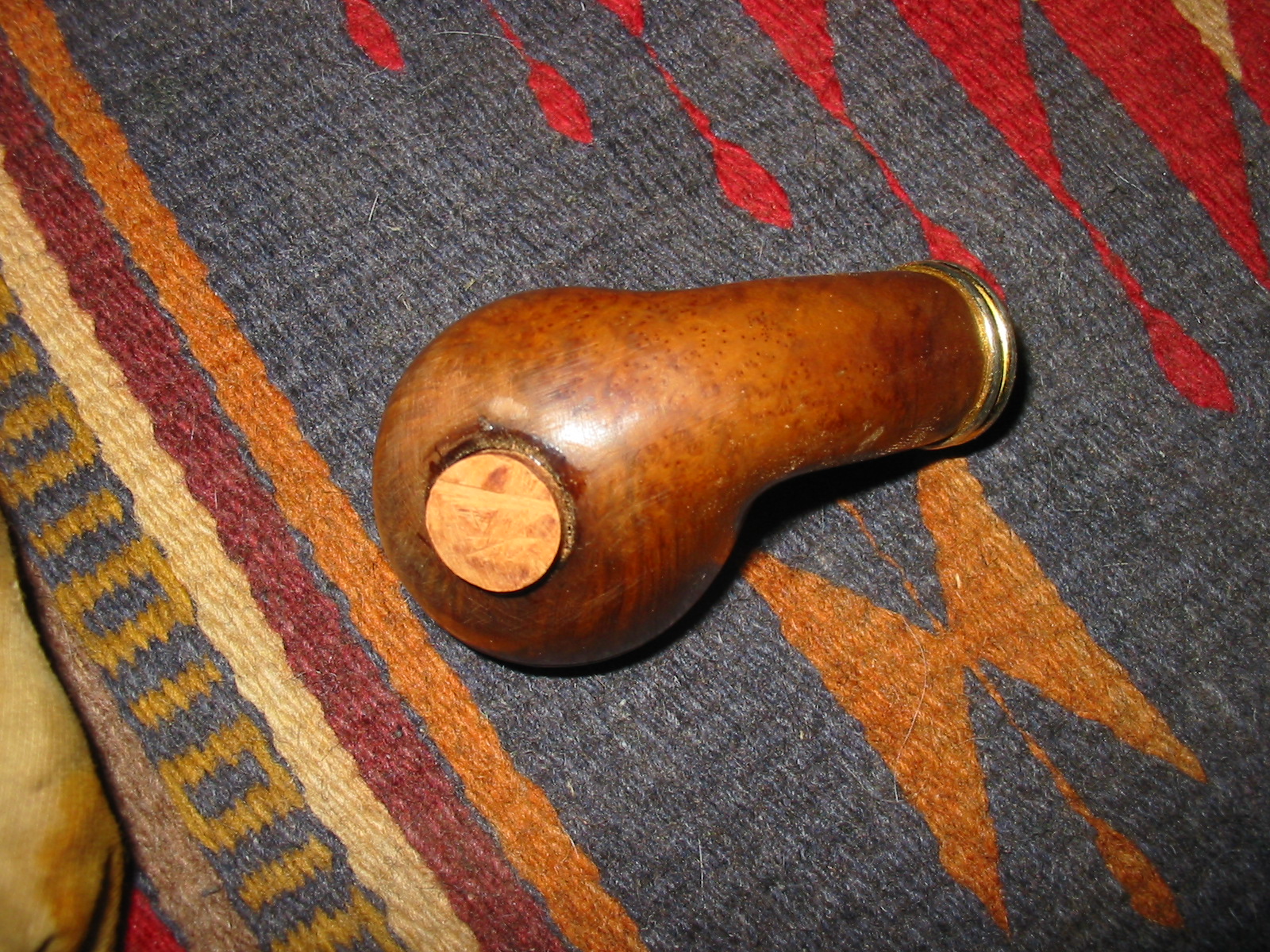
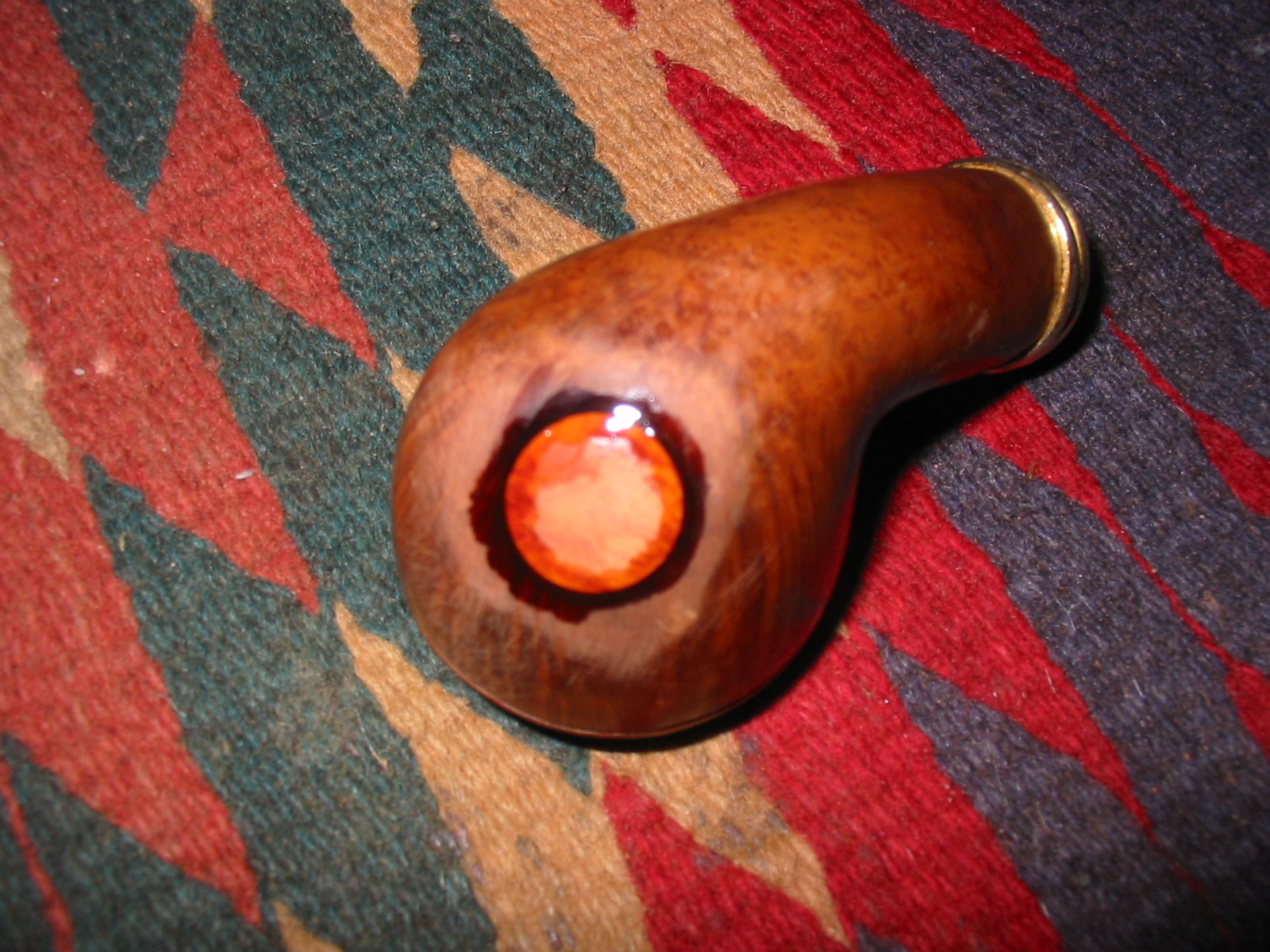
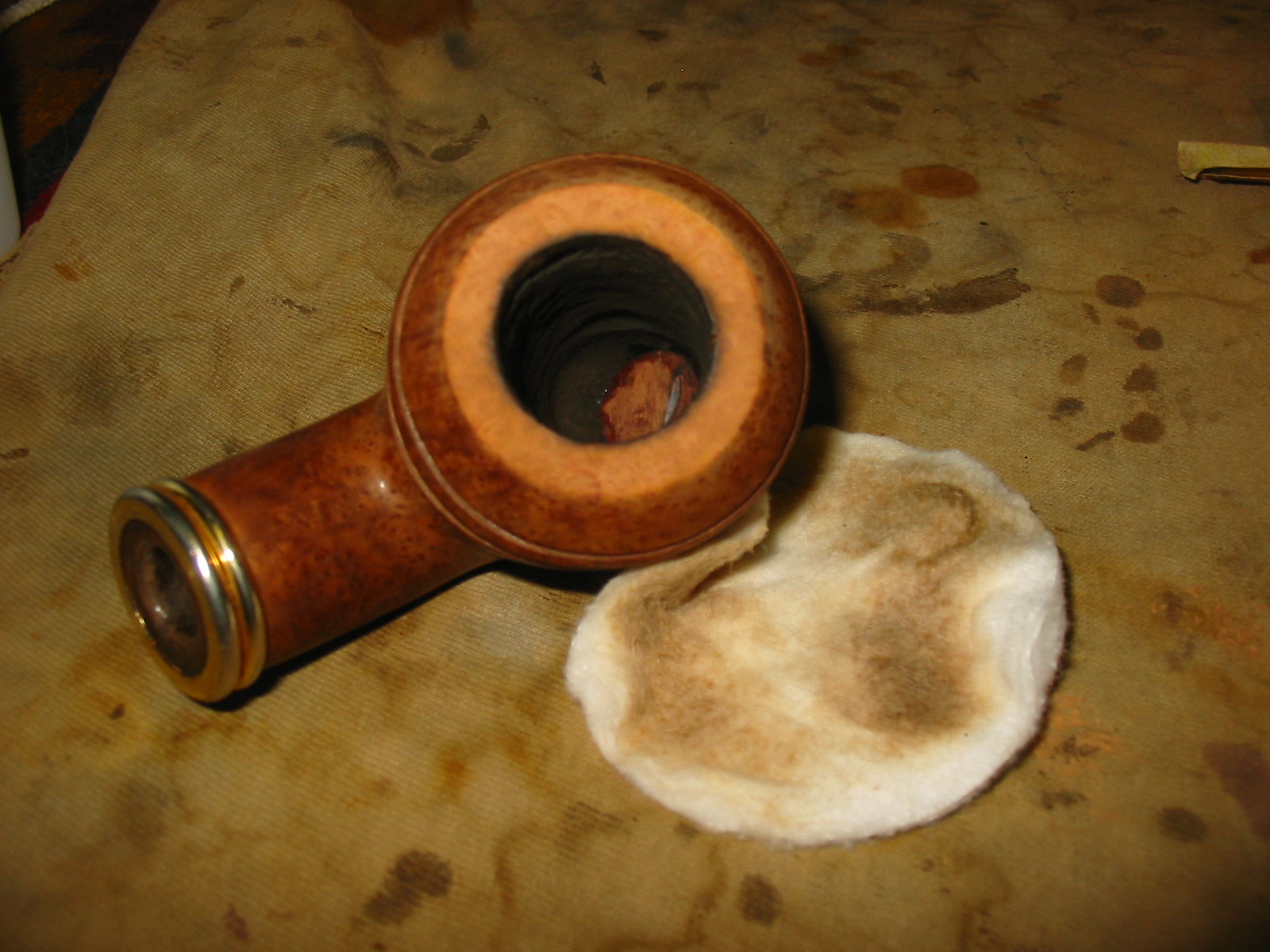
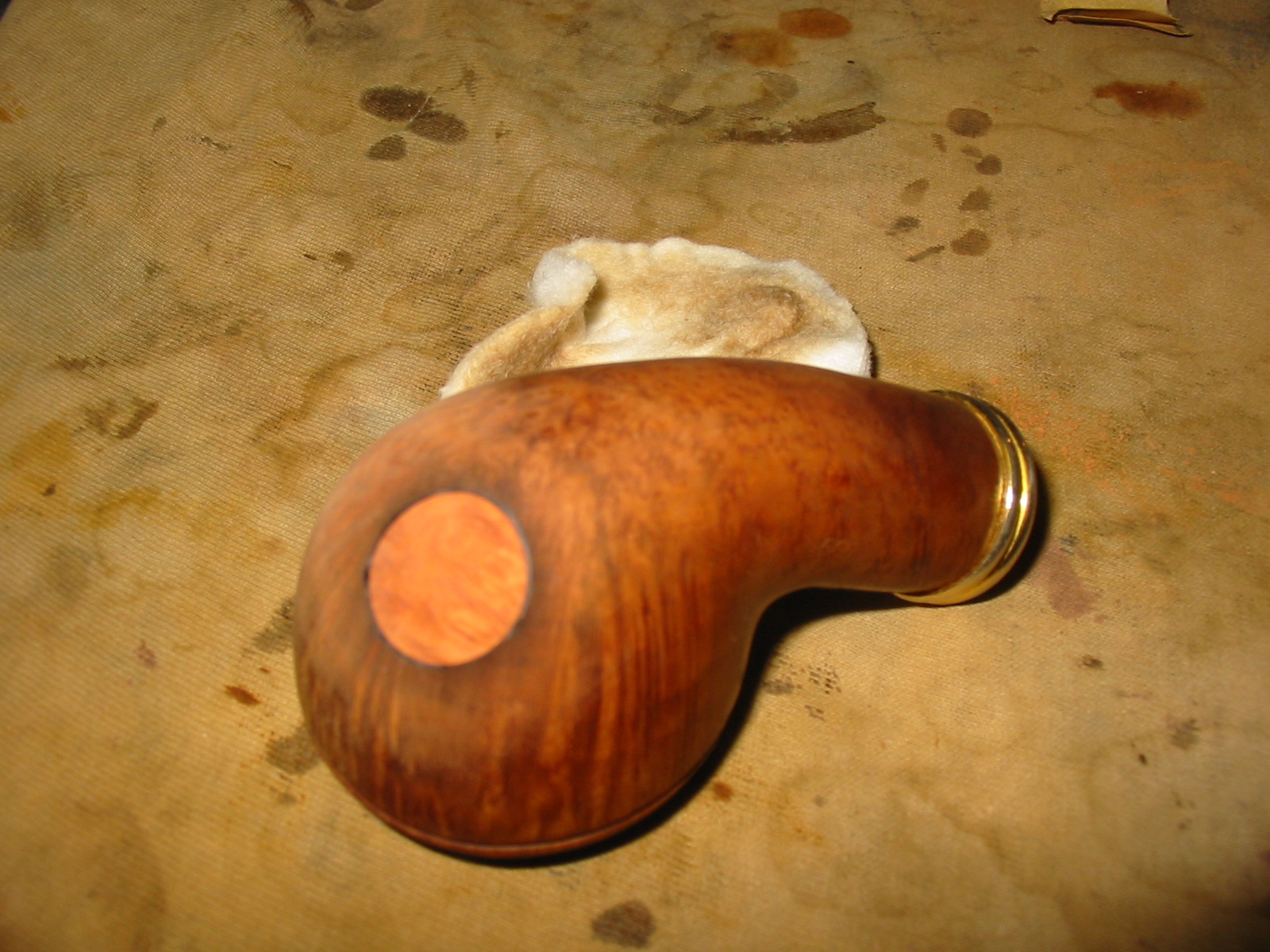
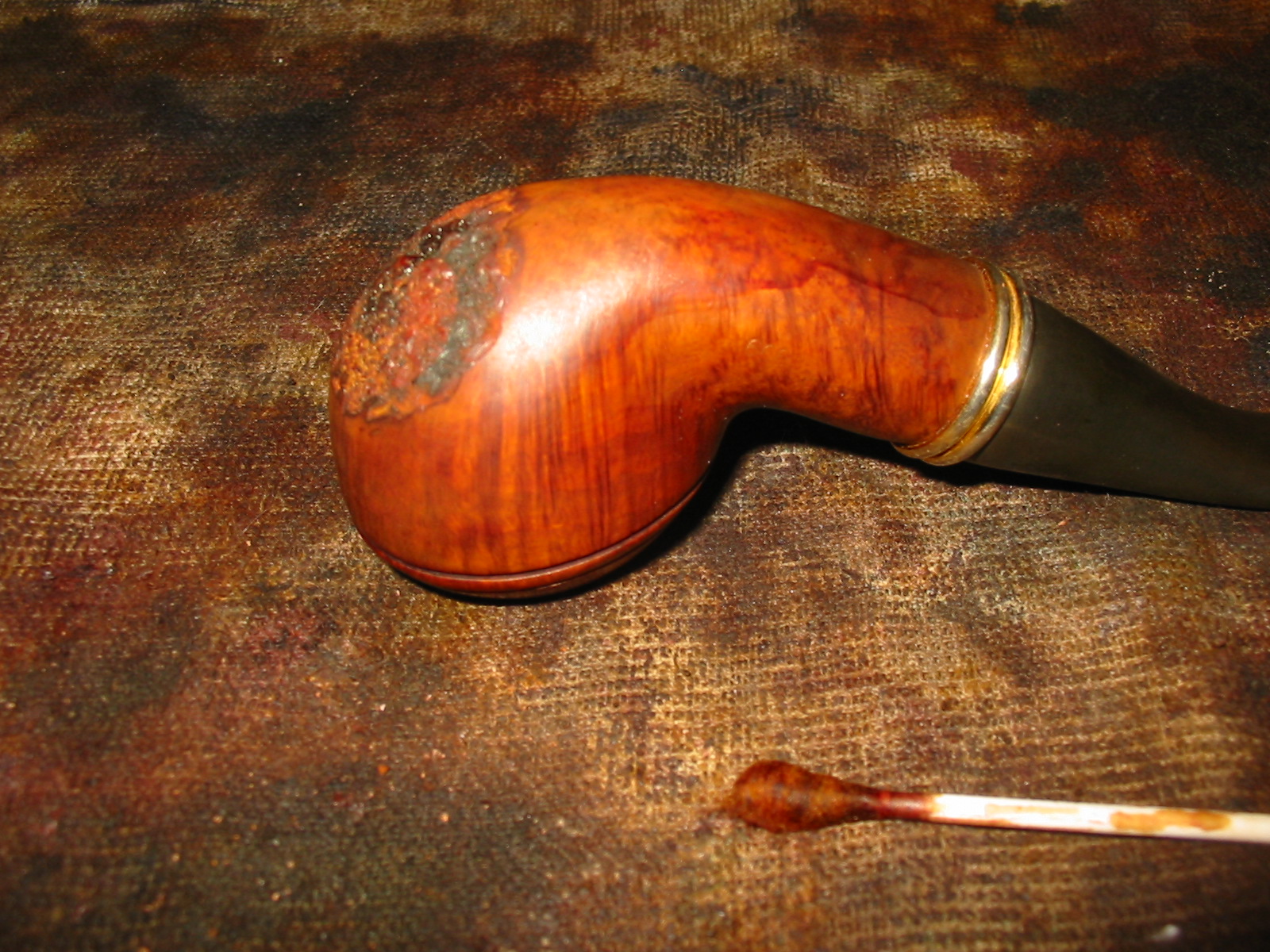
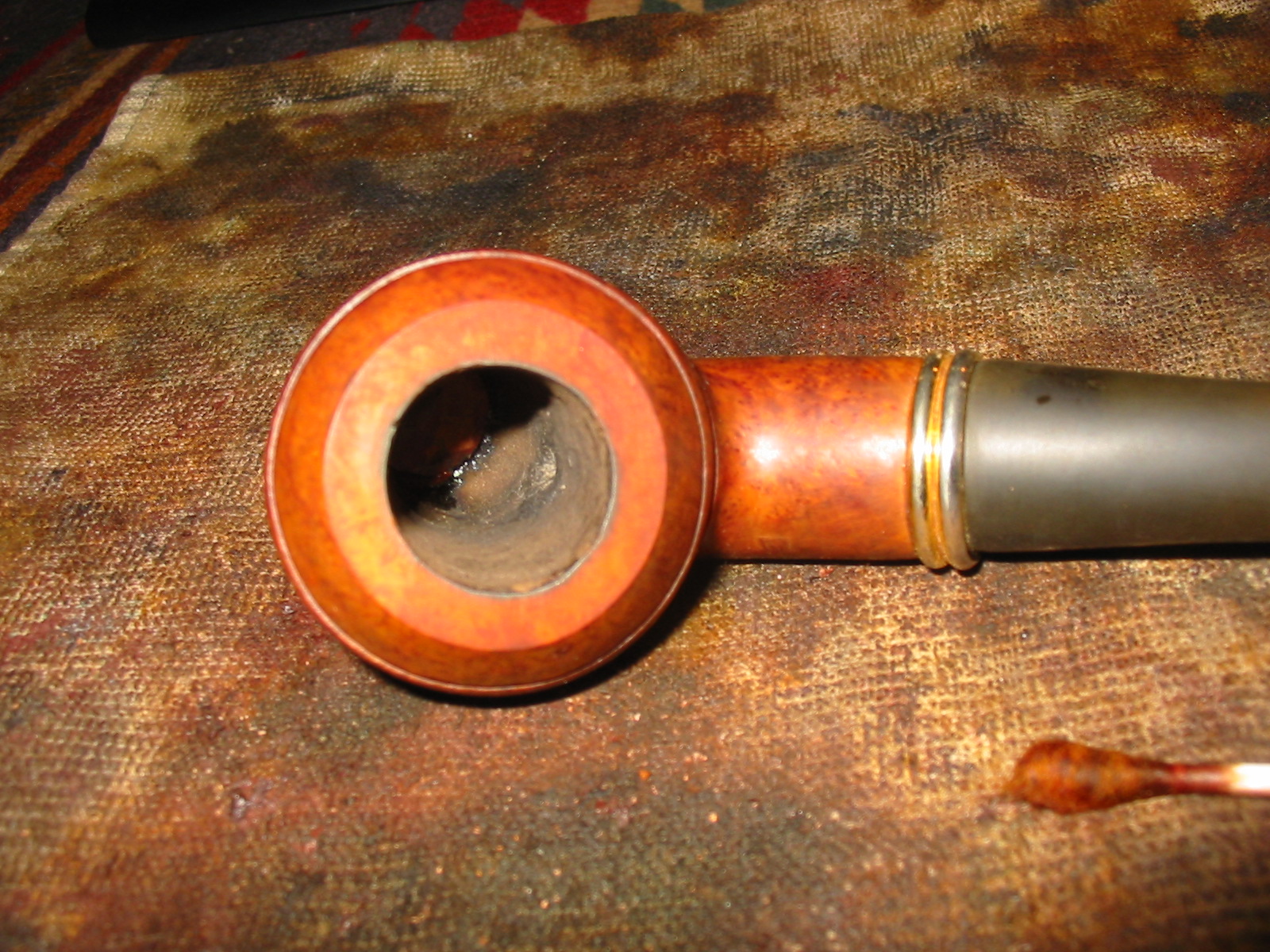
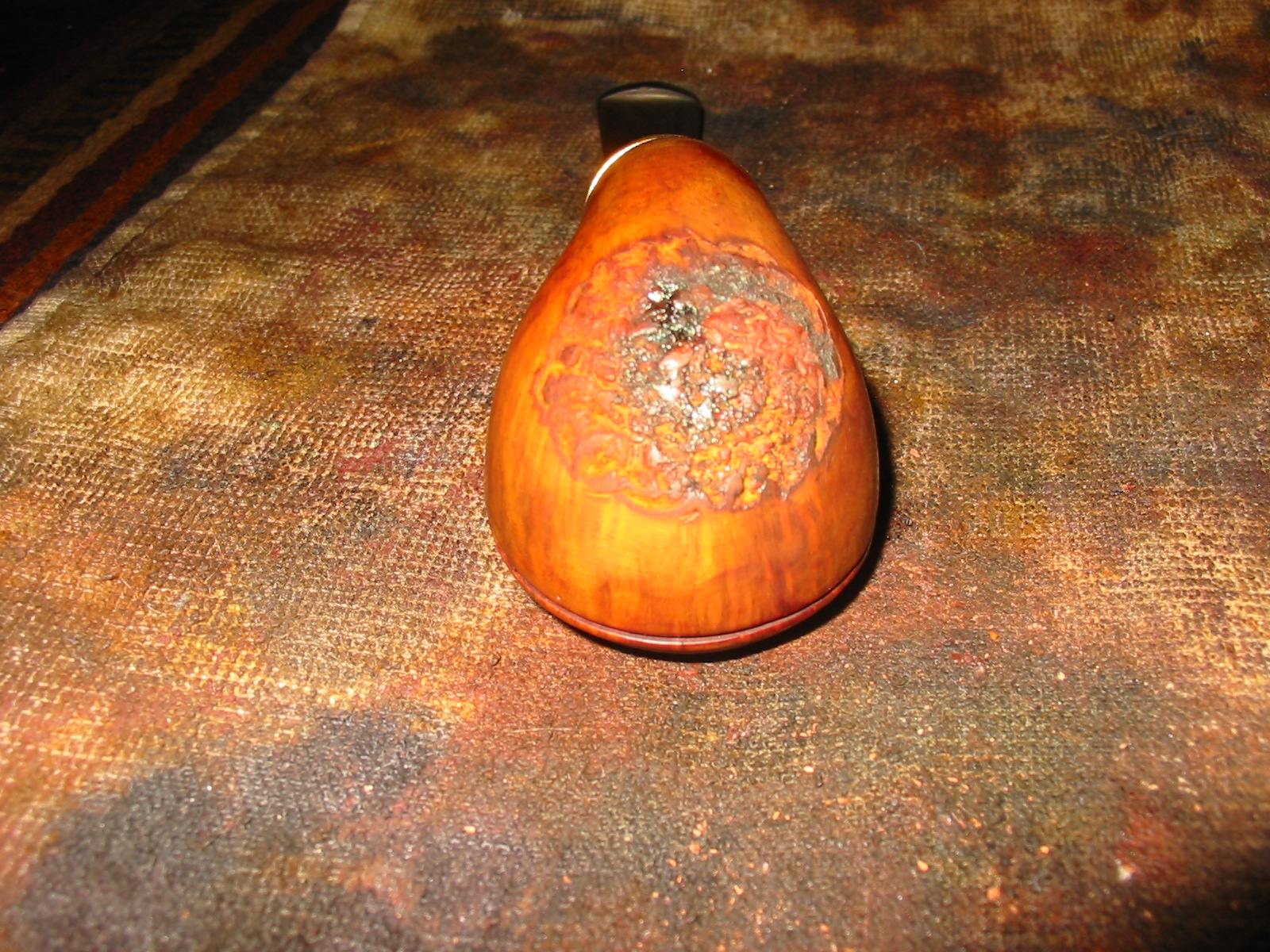
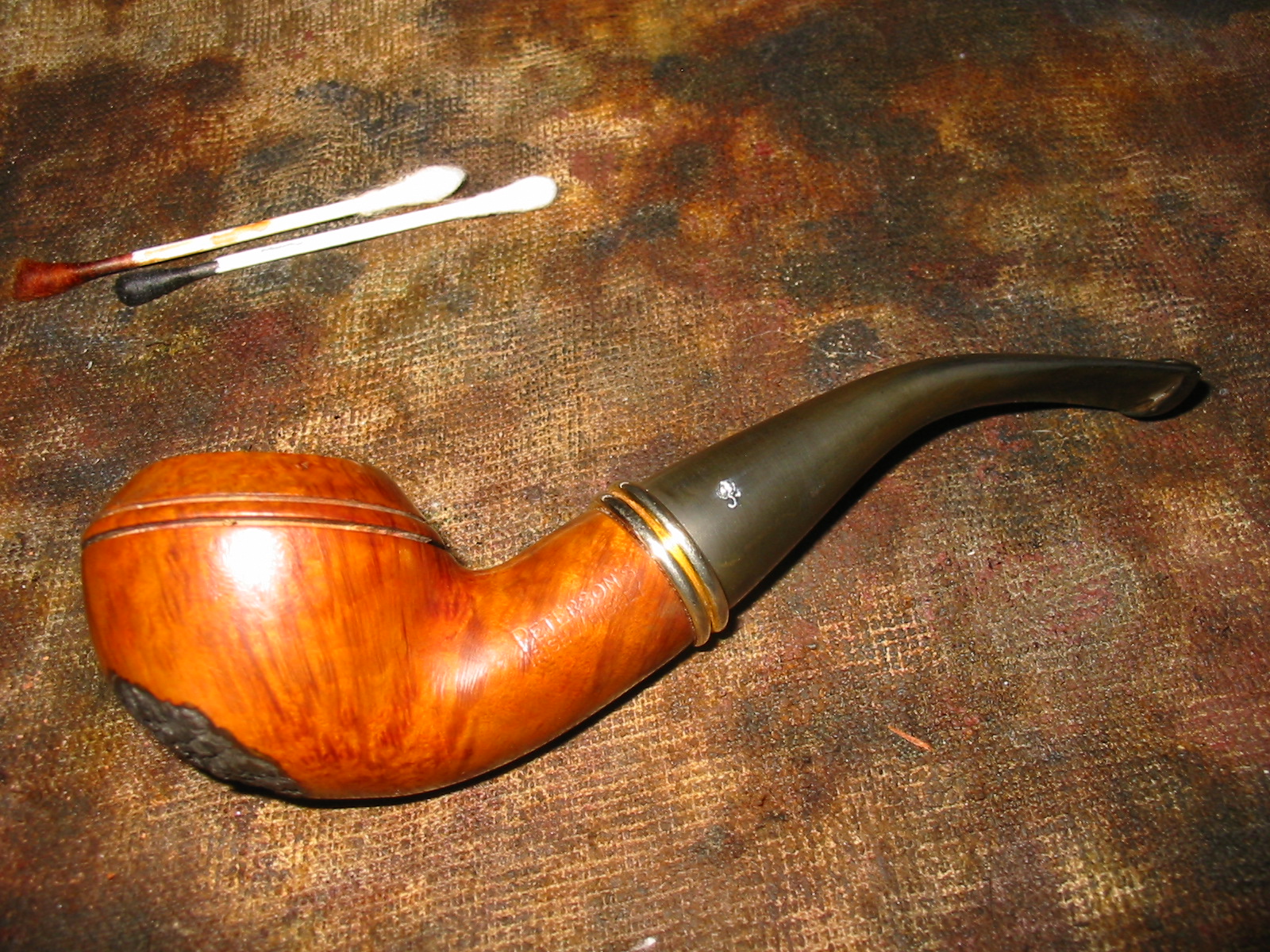
Plugging a Burnout on a Peterson’s Irish Whiskey 999


Blog by Steve Laug

Lately several of the pipes that I have refurbished were part of a trade with Mark Domingues for work on this pipe. It is a beautifully grained Peterson’s Rhodesian 999 – one of my favourite shapes. The grain on this thing is beautiful. The photo below shows what drew Mark to bid on this pipe in the first place. What the photo does not show however, is the incredibly horrible shape that this pipe was in when it came to Mark.
IMG_20131124_082613_134_zps6ef902eb

The problem with the pipe became obvious when Mark took it out of the shipping package to enjoy the “new” Peterson that he had purchased. The pipe had a serious burn through on the front right side of the bowl toward the bottom. That damage was quite extensive and either the pipe could be thrown away or the burn through drilled out and the damaged briar replaced with a briar plug.
IMG_20131125_123925_638_zps0ff2fe98

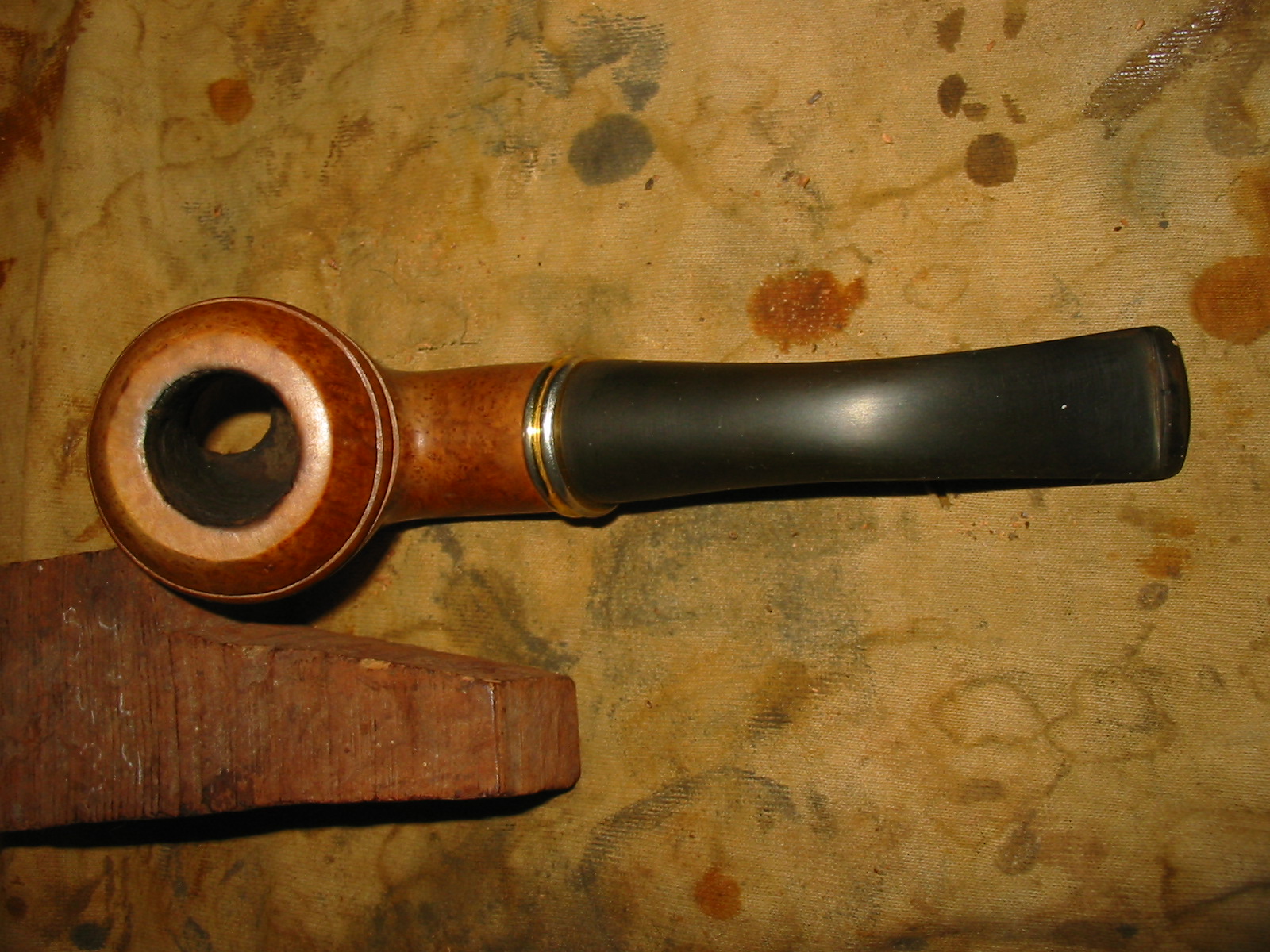
Mark decided to drill out the damaged portion of the bowl. We talked back and forth via email about the steps to take to fix it. He toyed with it and then one day asked if I wanted to do the work on it. He would send the pipe, a chunk of briar some pipes that he thought I might enjoy working on in exchange for the repair. After emailing back and forth we agreed to the terms and he sent the bowl on to me to do the repair in exchange for a few pipes for my refurbishing box. Here is what the pipe looked like when it arrived in Vancouver. Mark had cleaned up the exterior of the pipe and also the interior and drilled out the burnout. The brass/gold band on the shank was loose and the stem was in decent shape with two minor tooth marks.
IMG_4808

IMG_4809

IMG_4810

The top view of the pipe, shown in the photo below, also highlights several others issues with the pipe. First, the bowl itself was not drilled straight into the briar but at a slight angle from left to right. Second, the stem was totally out of round and the right side of the stem fit against the band far differently than the left side. Looking at the stem from the tenon end it was clear that the stem was not round but rather oblong. The small block of briar in the photo was sent along by mark for me to use in cutting a plug for the bowl.
IMG_4811

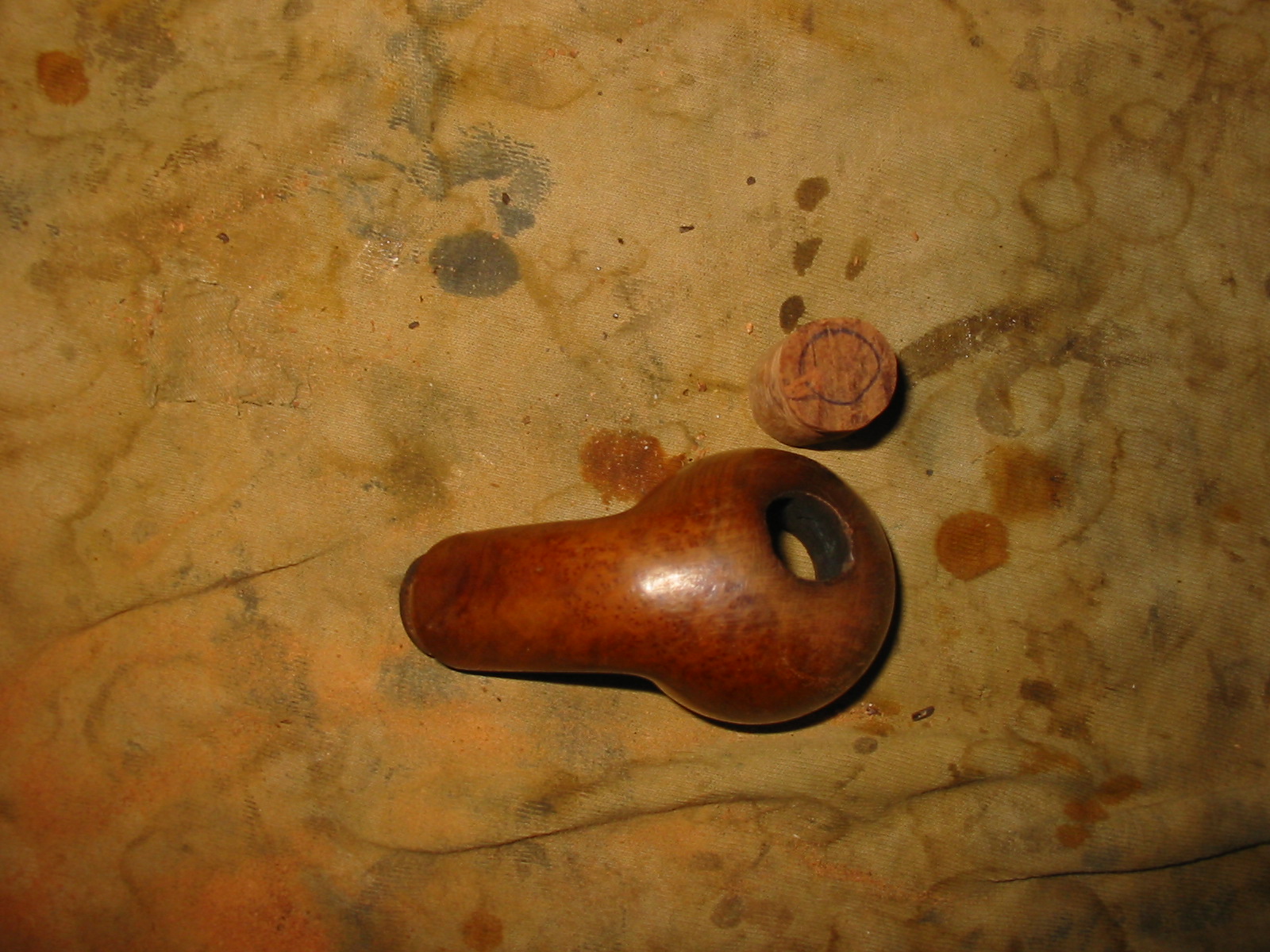
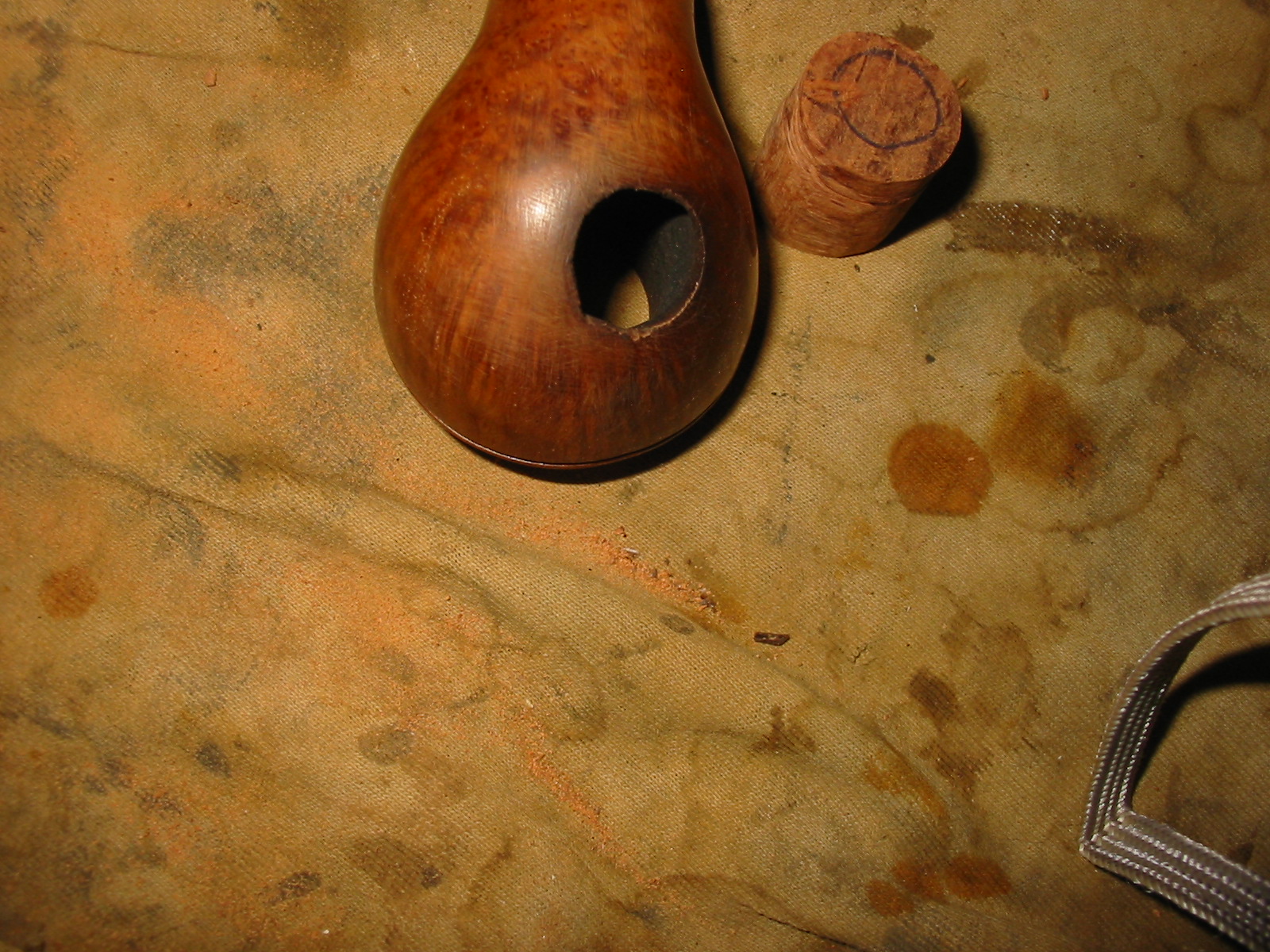
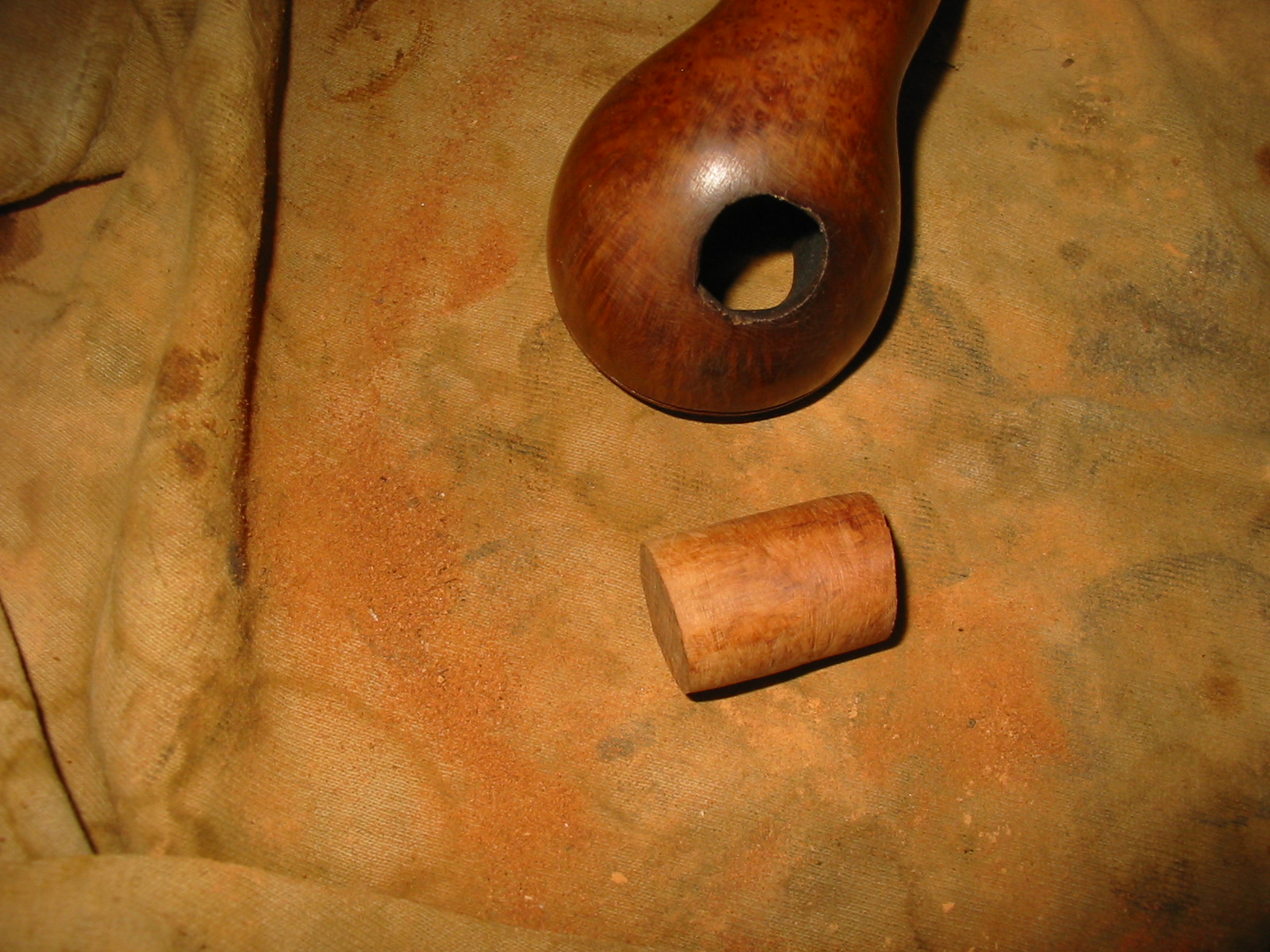
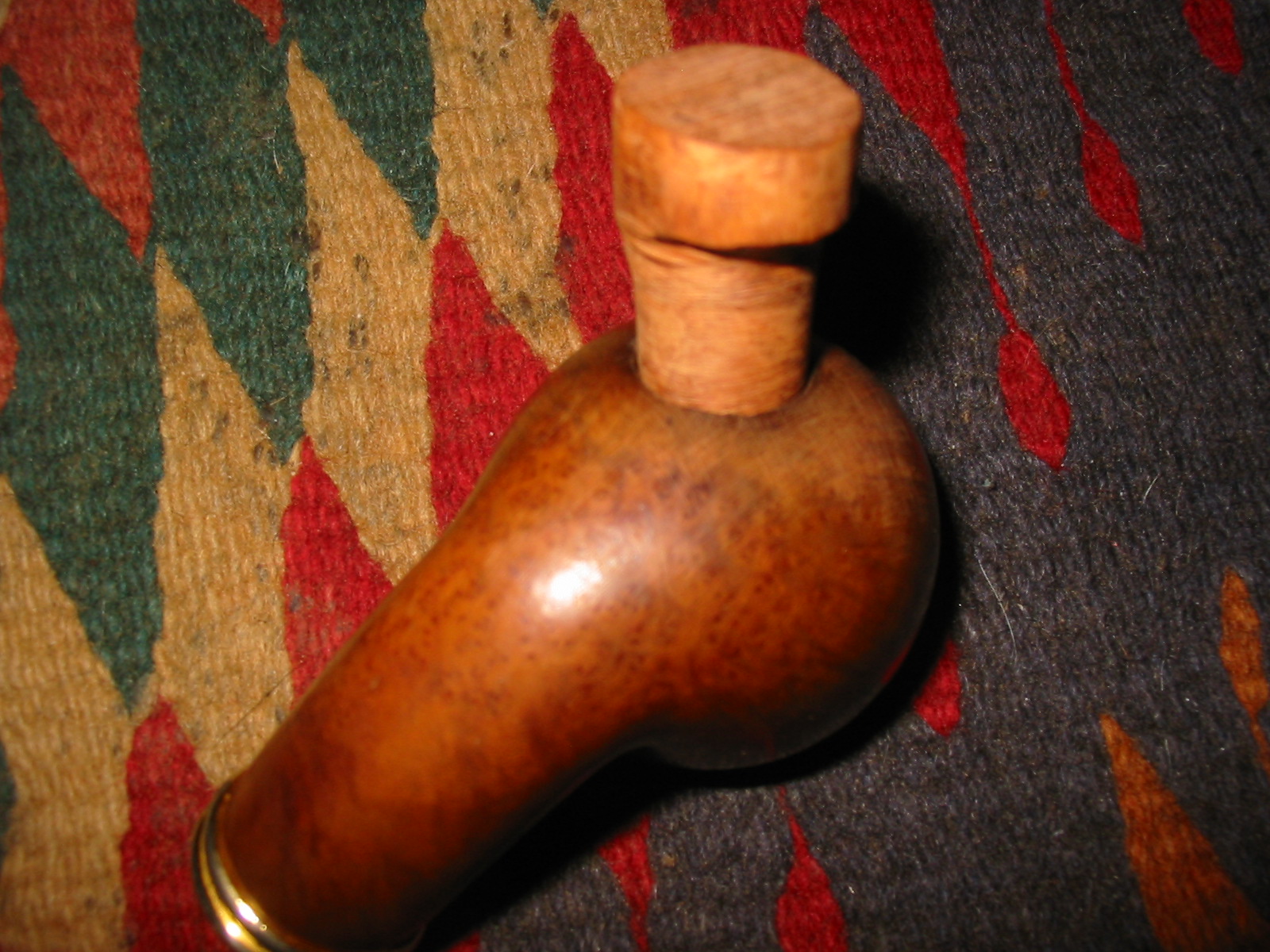
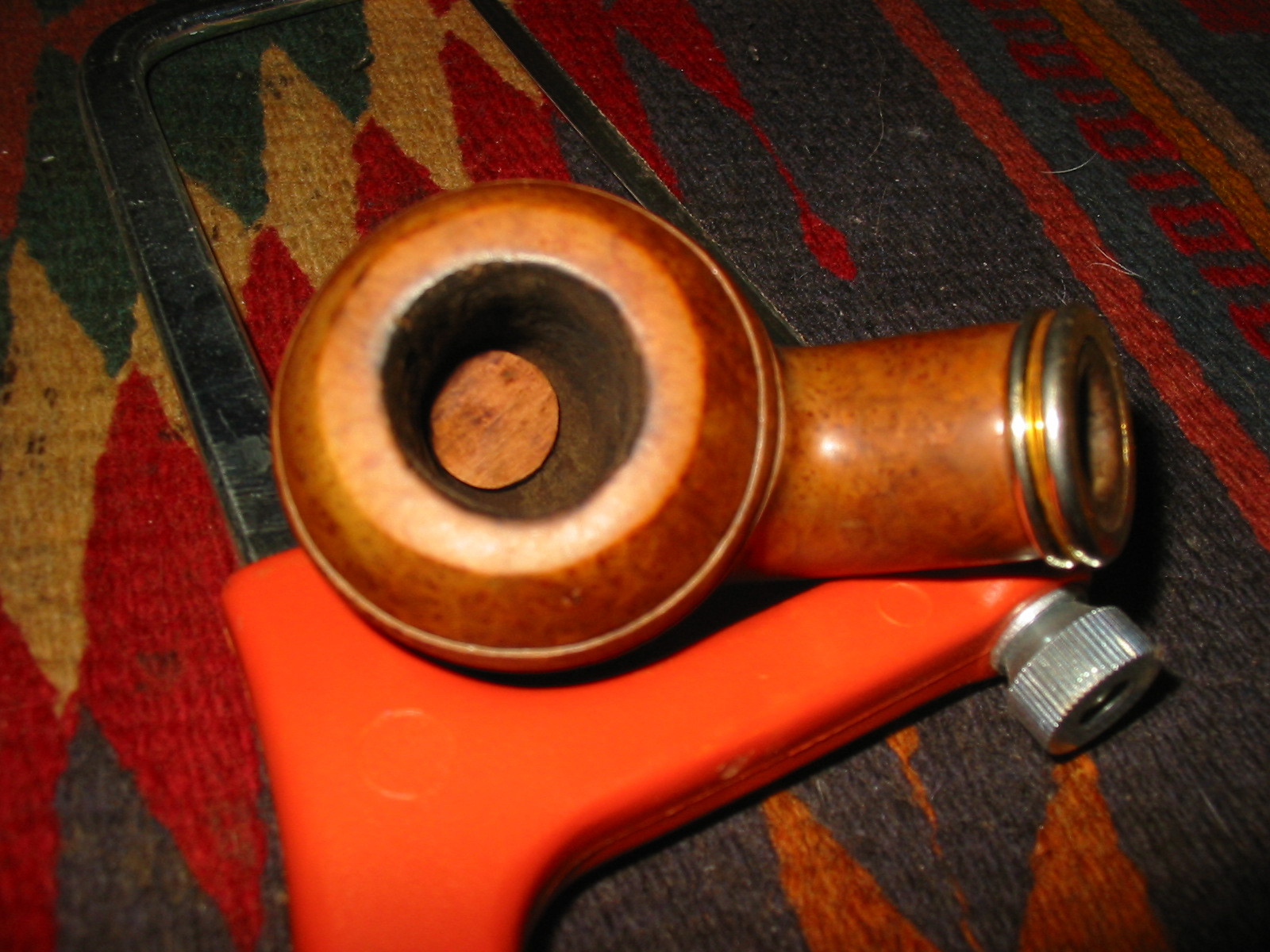
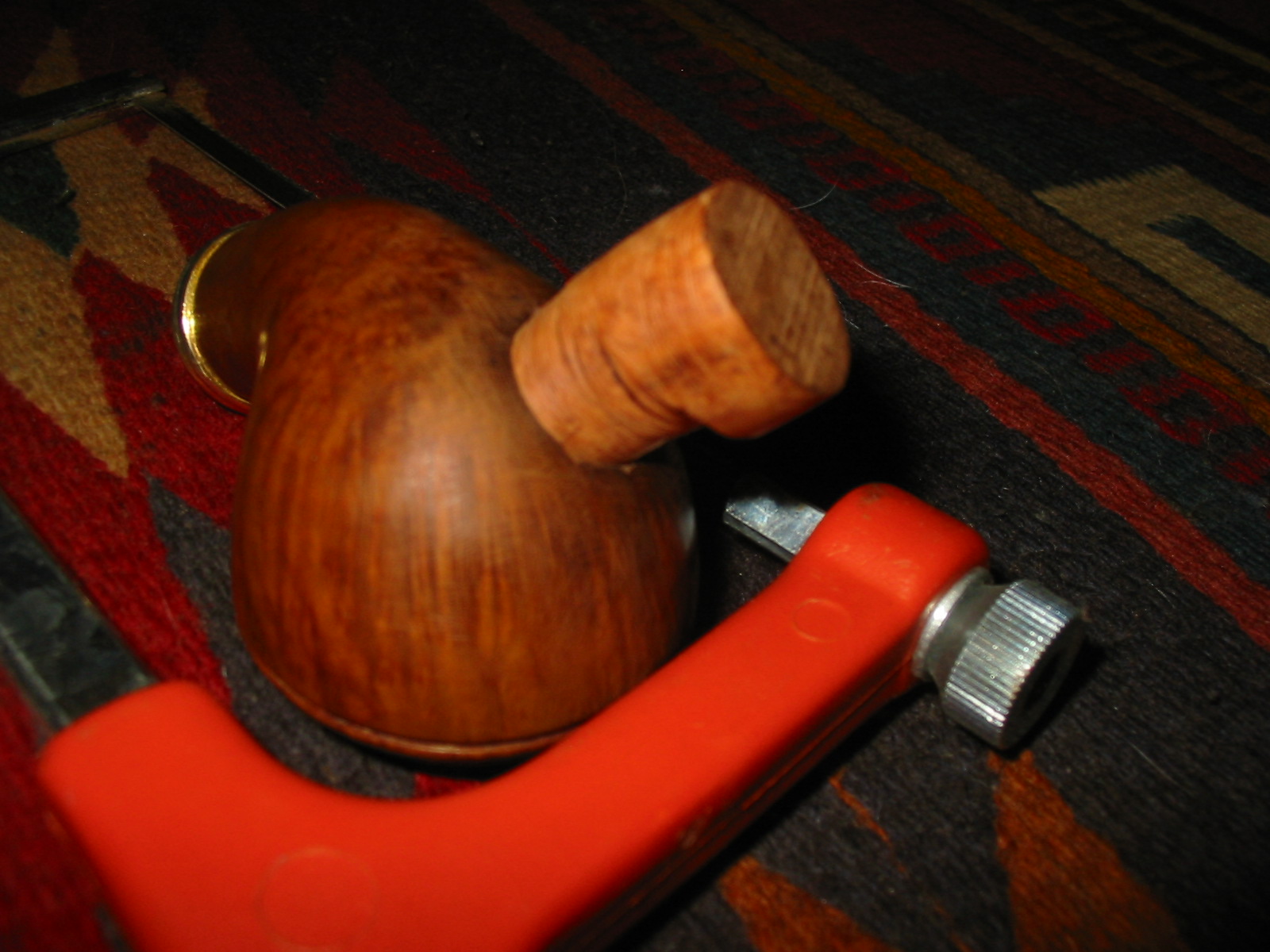
I used a small hacksaw to cut off a small chunk of briar. I then shaped the briar chunk into a cylinder. I always cut the plug long to give me something to hold onto when I am shaping it. I am sure others do it differently but I shape the plug with a Dremel by hand and I hold the piece of briar with my fingers while I shape it. The next series of eight photos show the progressive shaping of the cylinder to fit the drilled out hole in the bowl of the pipe.
IMG_4814

IMG_4815

IMG_4818

IMG_4819

IMG_4821

IMG_4822

IMG_4823

IMG_4824

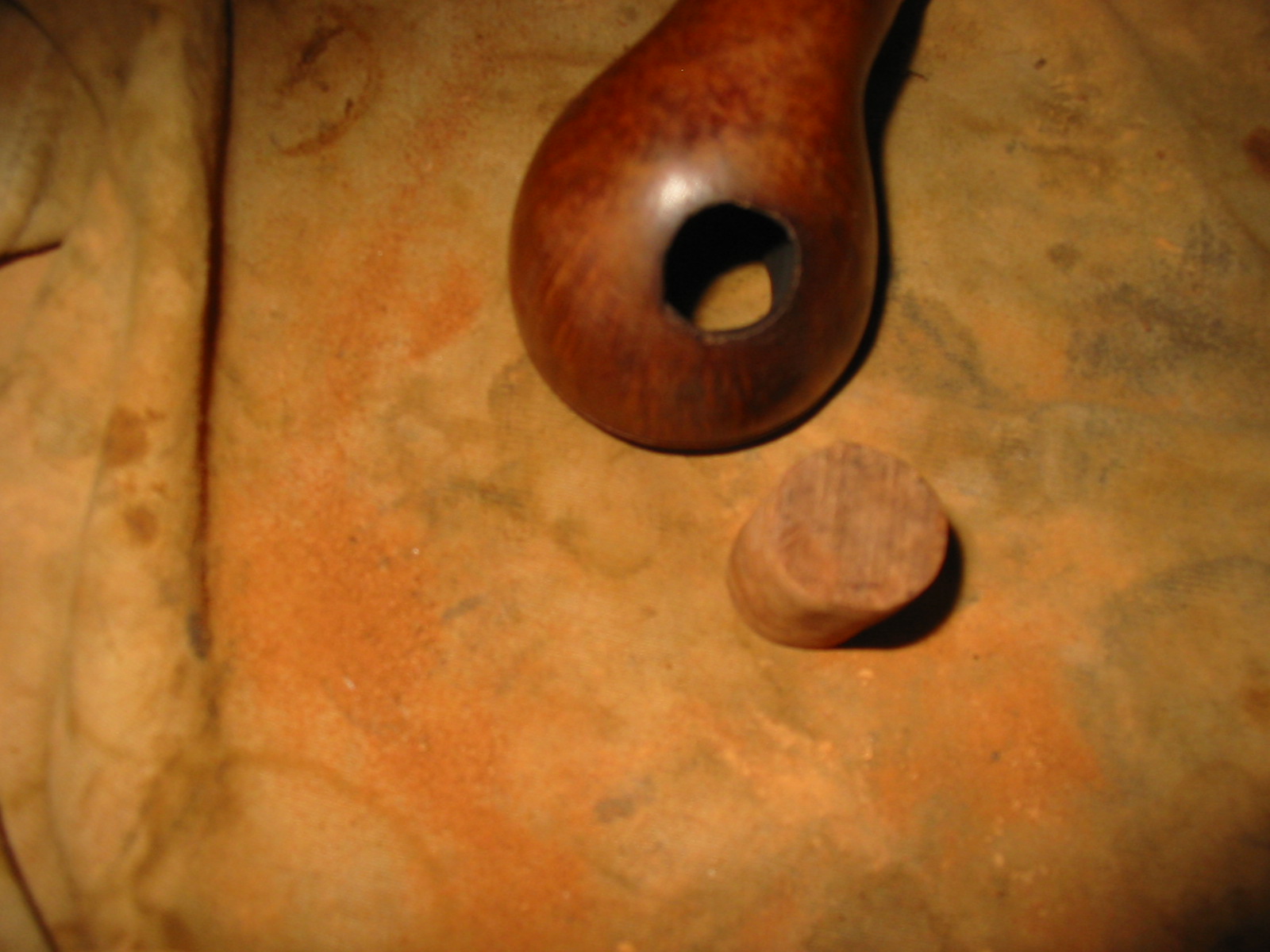
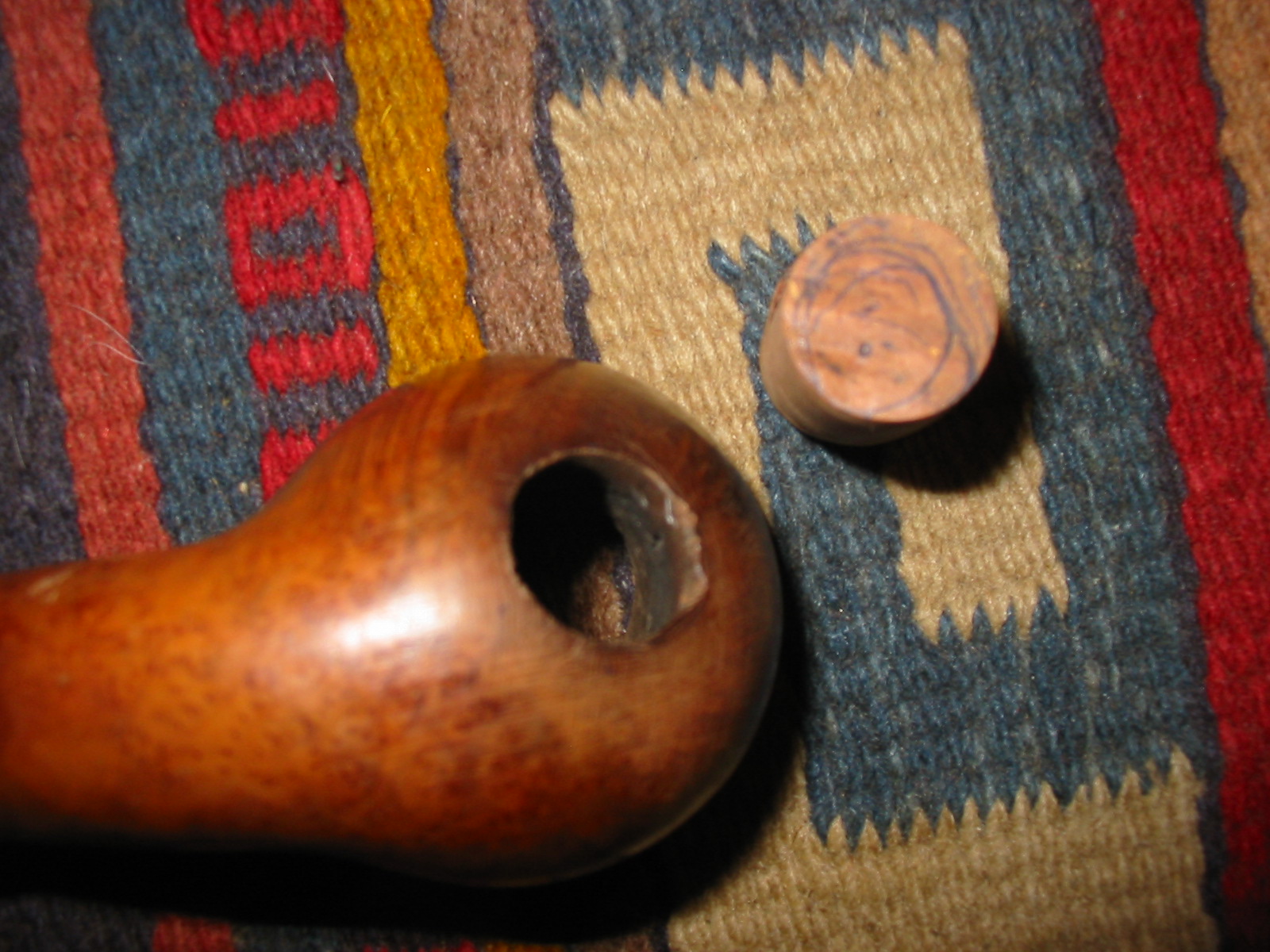
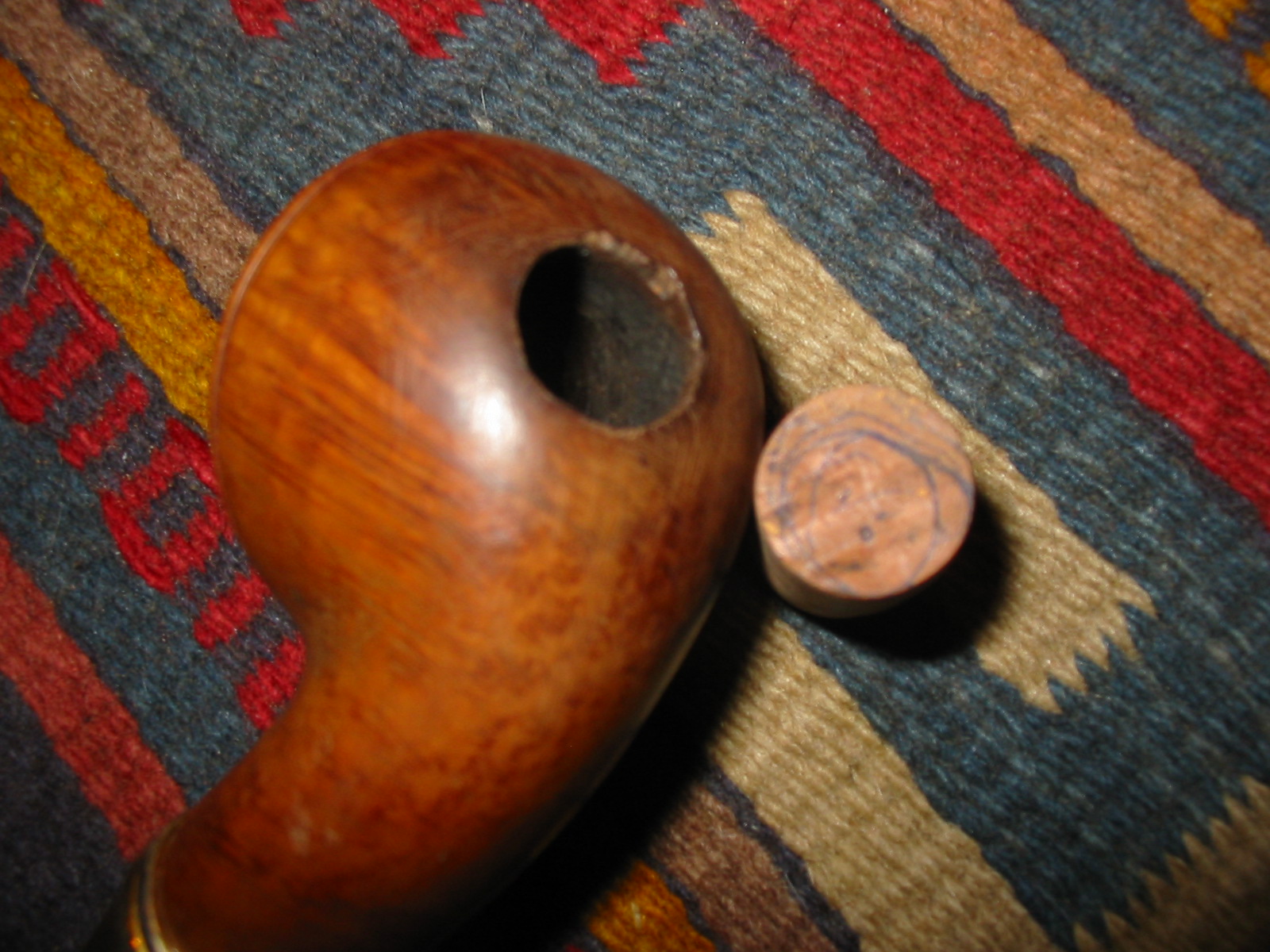
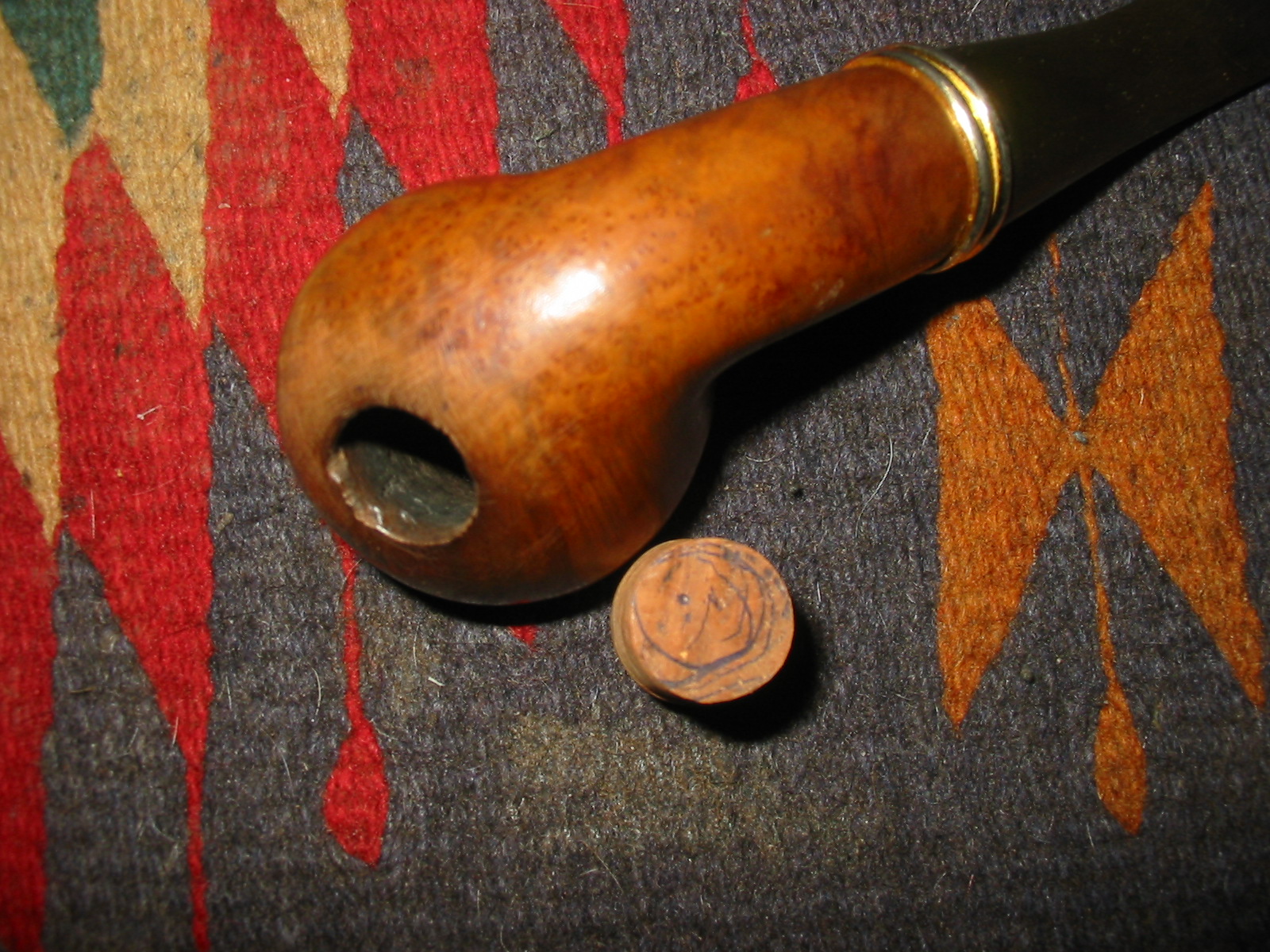
The next four photos show the final shape of the cylinder. I left a slight handle on the top of the plug to hold onto while I turned the cylinder with the Dremel. I tapered the plug slightly so that it would fit into the hole but not extend to far into the bowl itself. Once I had the shape correct and the piece extending into the bowl smoothed to fit the shape of the bowl I glued it in place with superglue.
IMG_4825

IMG_4826

IMG_4827

IMG_4828

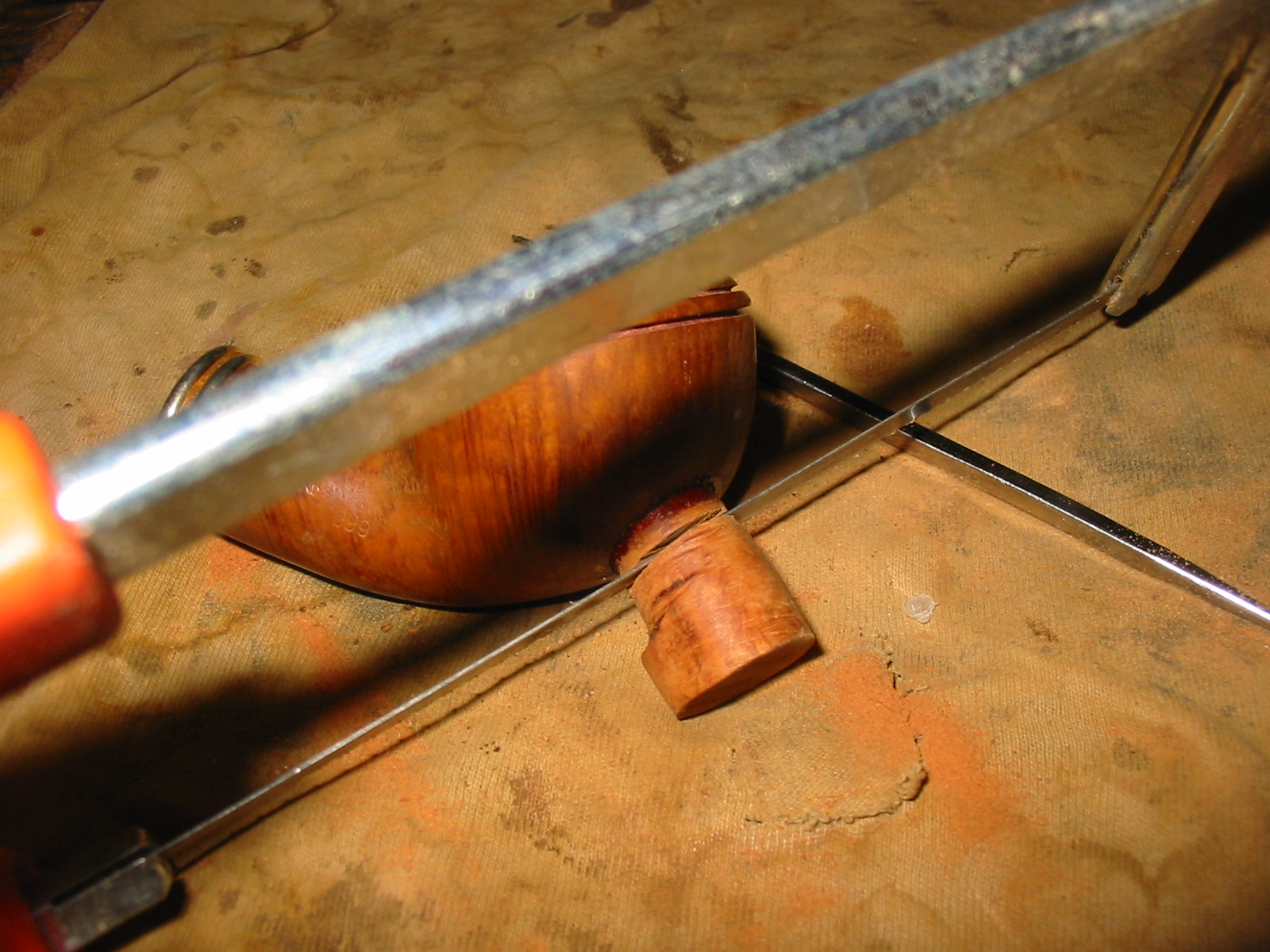
I used the hacksaw to trim off the excess briar in the plug as close as possible to the surface of the bowl.
IMG_4829

IMG_4830

Once I had it trimmed back to that place I used the Dremel and sanding drum to sand it down to the surface and then hand sanded with 220 grit sandpaper to make the surface of the plug and the bowl match. I used superglue around the circumference of the plug to hold it tightly in place.
IMG_4831

I washed down the surface of the bowl with acetone on cotton pads to remove the grit and the remaining finish on the bowl. I also sanded the plug and the rim with 220 grit sandpaper and then medium and fine grit sanding sponges to smooth out the scratches. I sanded the inner rim with a folded piece of sandpaper to remove the damage to that portion of the bowl. In the photos below the fit and finish of the plug is clearly visible. The grain on the plug and that on the bowl did not match but the fit was nearly perfect.
IMG_4832

IMG_4833

IMG_4834

IMG_4835

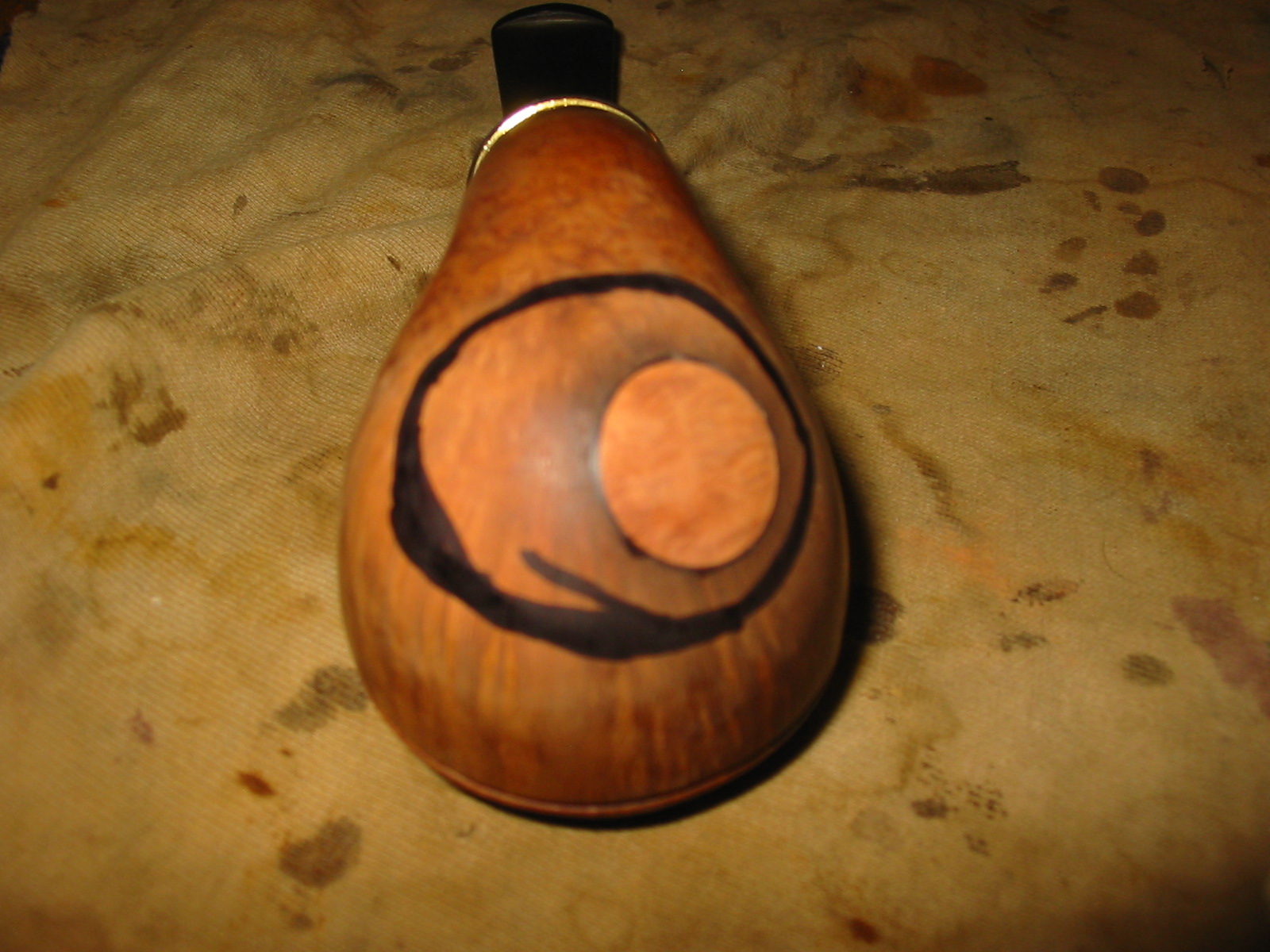
Mark and I had talked about rusticating the whole bowl but I could not bring myself to do that to such a beautiful piece of briar. I marked the area that I planned on rusticating with a black permanent marker to give myself an outlined area that I would rusticate. I find that setting up parameters and boundaries for the rustication helps me to keep it in a defined space more easily.
IMG_4836

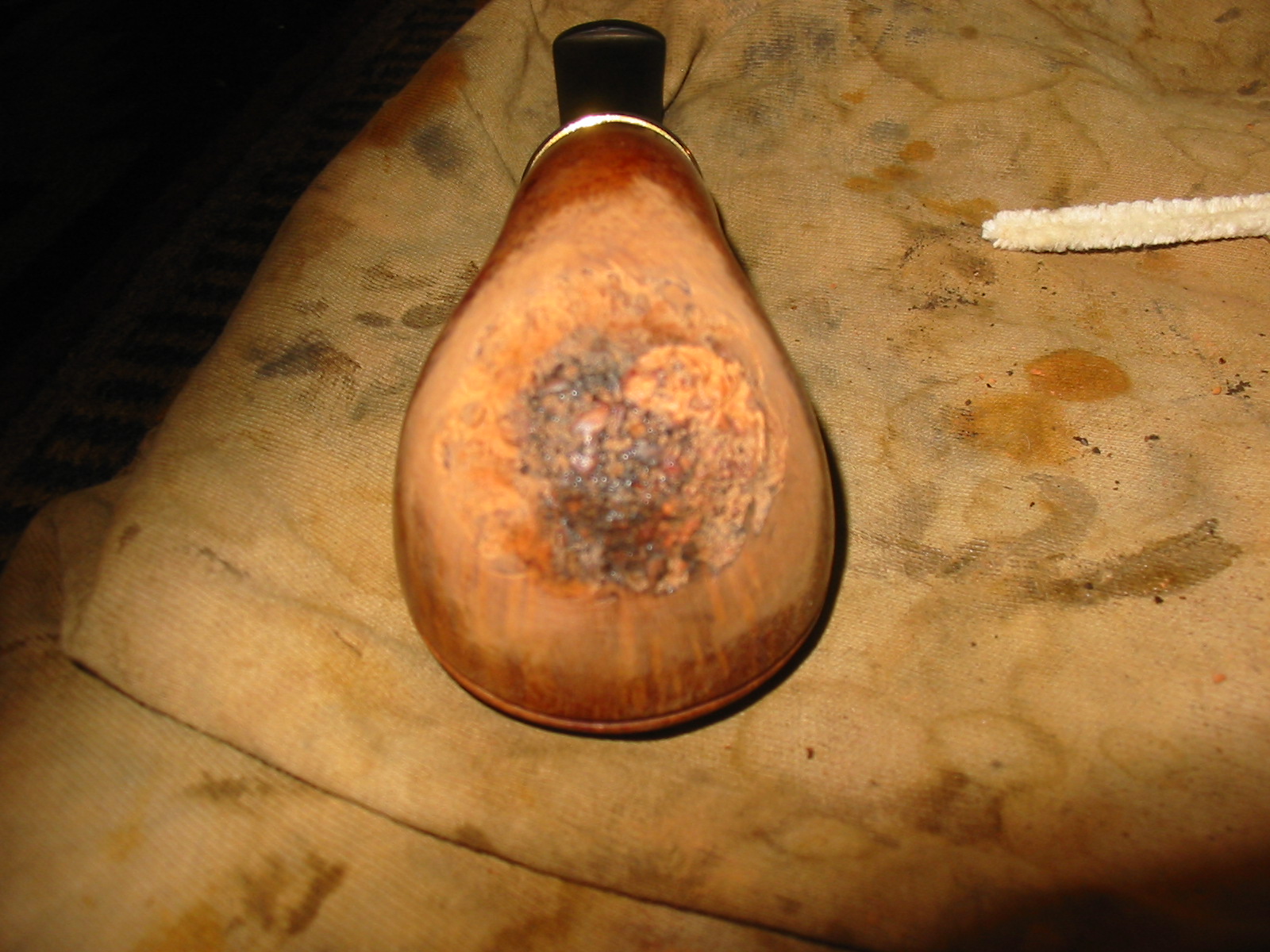
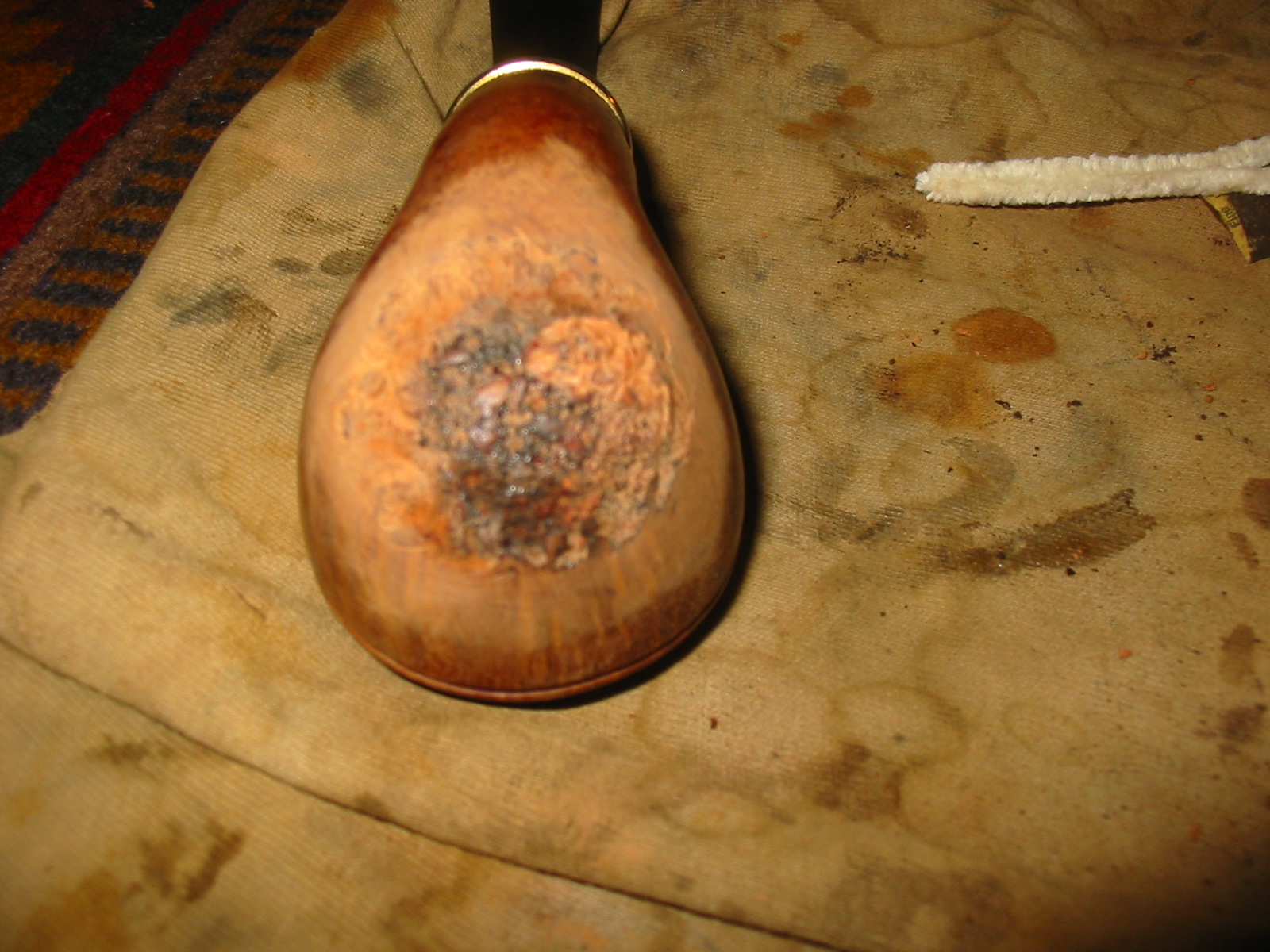
I used the modified Philips screwdriver with the four points to rusticate this part of the bowl. The next two photos show the rusticated portion of the bowl. The area of the older briar showed dark spots in the rustication and the new fresh plug showed almost white after rustication.
IMG_4837

IMG_4838

I decided to try and use a dark brown aniline stain thinned 2:1 with isopropyl alcohol on the whole pipe to see what would happen with the rustication. I wanted to see if the dark areas on the rustication would blend into the briar of the lighter parts. I did not really expect it to work but thought I would give it a try.
IMG_4840

IMG_4841

IMG_4842

IMG_4843

The dark portions of the old briar still showed dark after staining. I decided to use a black aniline stain on the rusticated portion of the bowl and leave the smooth part of the bowl the brown colour. I applied the stain with a cotton swab and flamed it, reapplied it and reflamed it until the coverage was even.
IMG_4844

IMG_4845

IMG_4846

The inside of the bowl then needed to be addressed. The drilling of the bowl was not only angled from left to right but the airway entered the bowl over 3/8 inches above the bottom of the bowl. Whether this was caused by drilling or over reaming is not clear to me. My problem was that the angle of the patch on the side did allow me to shape the patch to provide a new bottom for the bowl. I could have cut another piece of briar and inserted it into the bottom of the bowl but the strange angles of the bowl made that a task that I did not want to tackle. I opted to build up the bottom of the bowl with Plaster of Paris instead of pipe mud because of the depth of the buildup. My fear was that the pipe mud would have to be almost ½ inch thick and I was not sure if it would hold. I have used Plaster of Paris to repair meerlined pipes and it is durable and gives a solid base. I intend to use pipe mud on top of the repair and also reshape the bowl sides.

I glued the band on the shank with wood glue before I restained it with another coat of the medium brown aniline stain. I flamed it and then buffed it with White Diamond. I gave the smooth portions of the bowl several coats of carnauba wax and hand buffed the rusticated portion with Halcyon II wax.
IMG_4850

IMG_4851

IMG_4852

IMG_4853

I sanded the tooth marks and chatter out of the stem with 220 grit sandpaper and a medium grit sanding sponge. I reshaped the stem to fit more proportionally against the band. I made it round instead of oblong so that the fit against the band was even all the way around giving it a more finished look. I then sanded it with my usual array of micromesh sanding pads – wet sanding with 1500-2400 grit pads and dry sanding with 3200-12,000 grit pads. I rubbed the stem down with Obsidian Oil and when it was dry buffed it with White Diamond. I gave the stem multiple coats of carnauba wax to finish and protect it.
IMG_4854

IMG_4855

IMG_4856

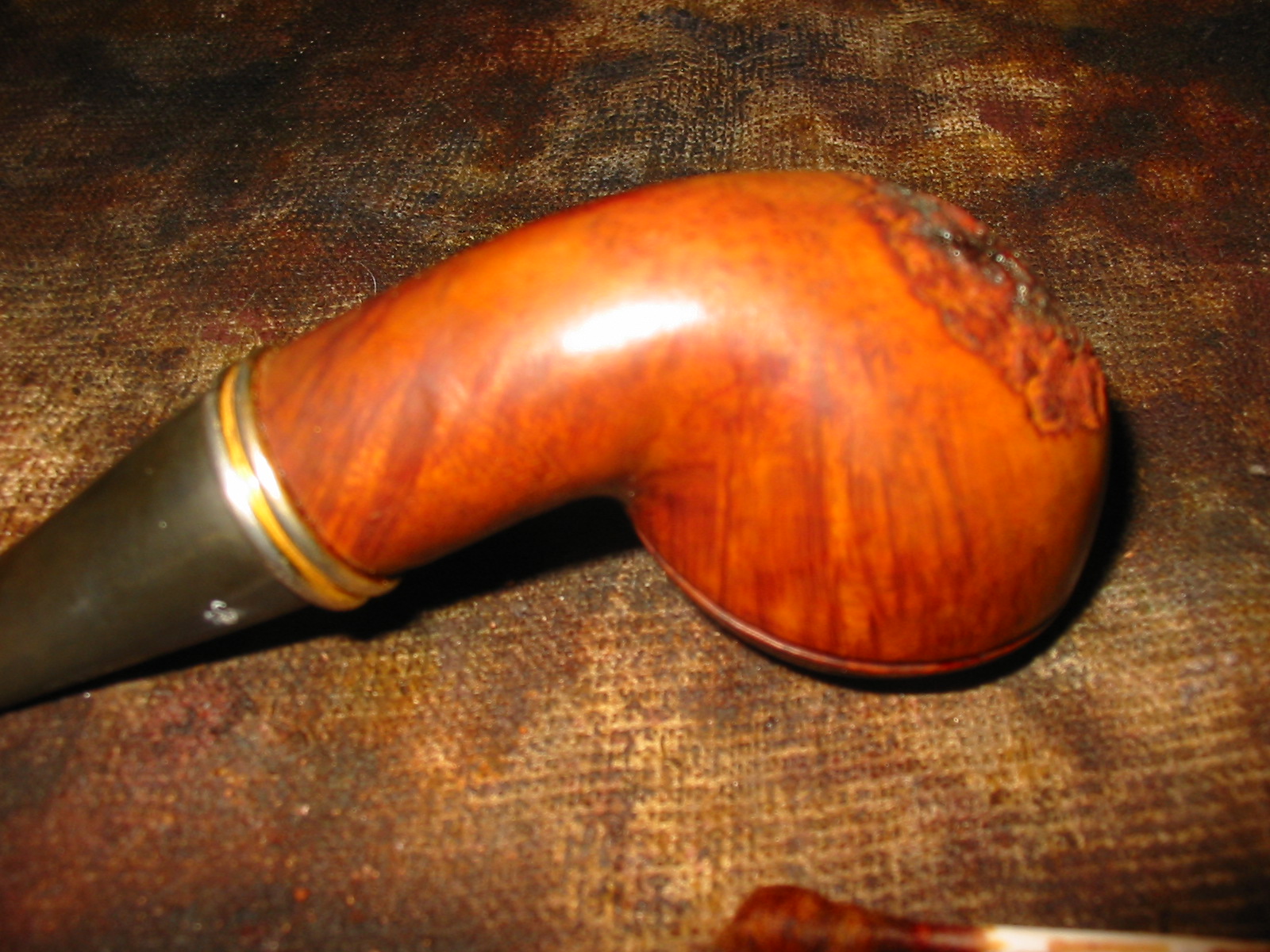
The next series of five photos show the finished exterior and stem of the pipe. The stain and the patch rustication are completed. The interior of the bowl still only bears the plaster repair. Once it cures for several days I will give it a coating of pipe mud to finish the job.
IMG_4857

IMG_4858

IMG_4859

IMG_4860

IMG_4861

The pipe is finished other than the pipe mud and soon it will go back to Mark for its inaugural smoke. I am looking forward to hearing his response once the pipe is in his hands and he has smoked it.

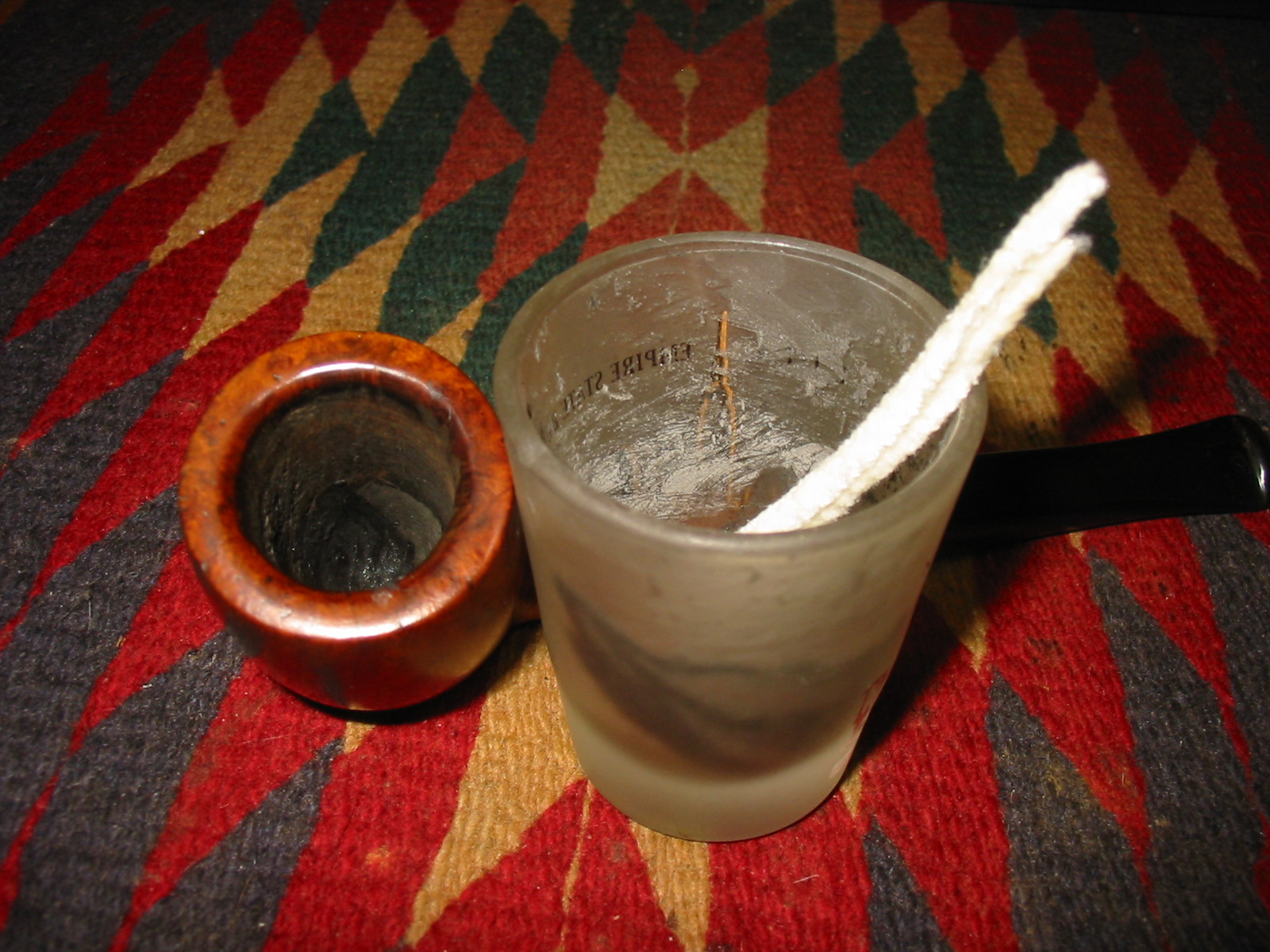
UPDATE: I applied the pipe mud to the bowl last evening. It was a great day to fire up a Cohiba Habana and save the ash to mix. I use a shot glass to collect the ash and add the water with an ear syringe. Once the mix is the right consistency I apply it with a folded pipe cleaner. I apply it and let it set and then follow up with a second or third coat as necessary.
IMG_5172

For this particular pipe mud application I built up the right side of the bowl toward the bottom to compensate for the angular drilling of the bowl. I was able to smooth out the wall and that side is as straight as possible.
IMG_5173

Rustication & Rebirth of a Racine de Bruyere Author


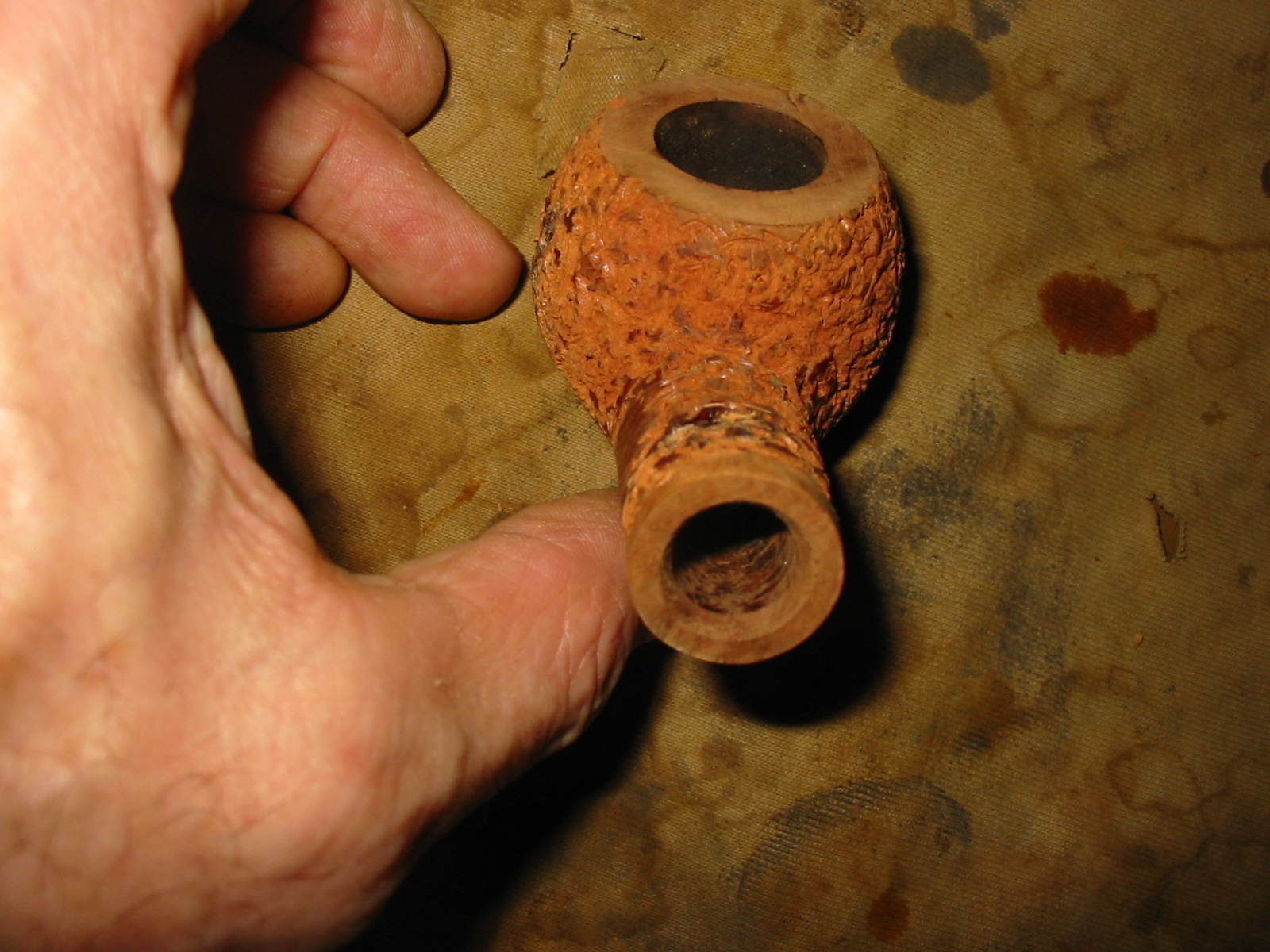
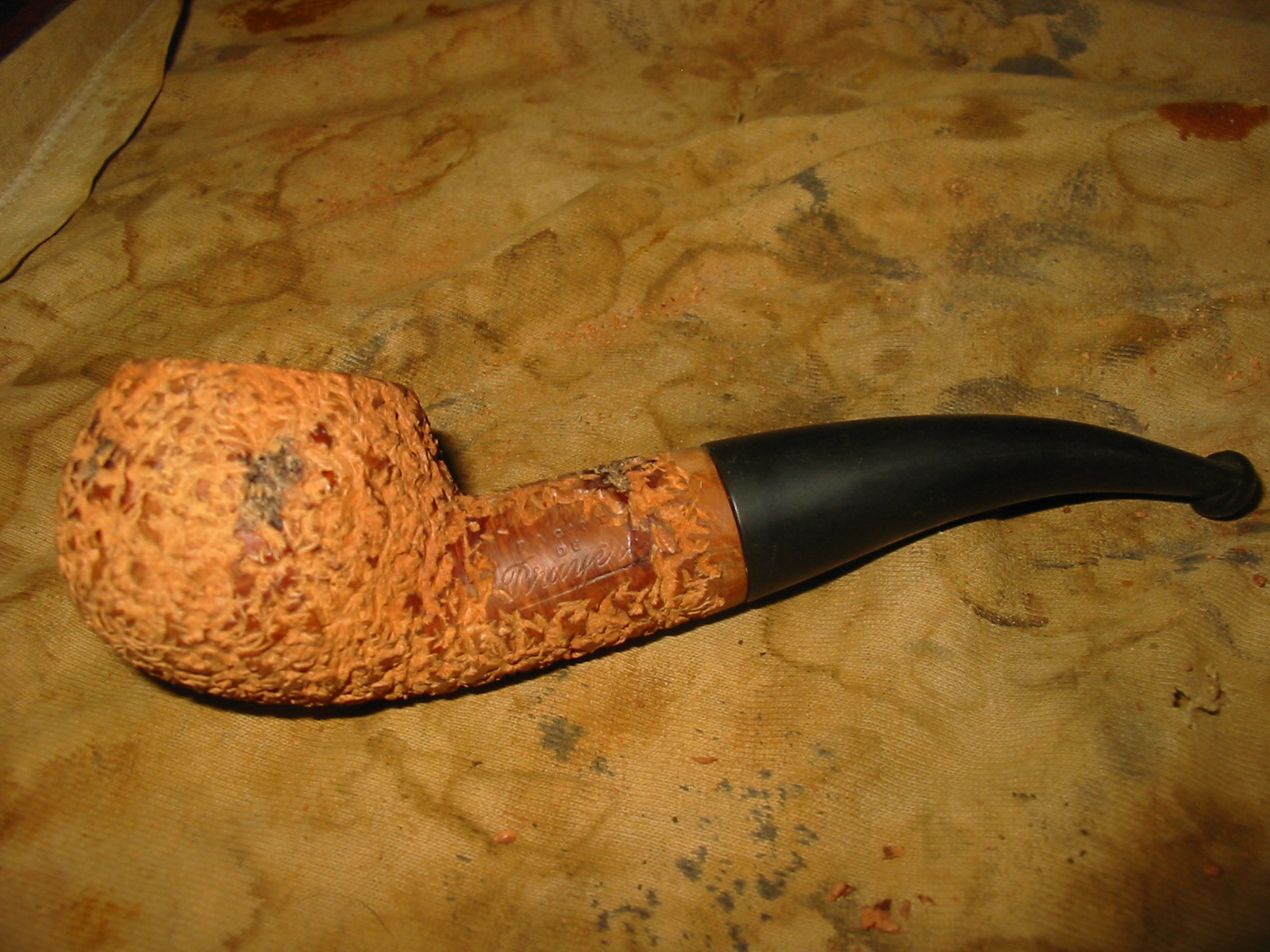
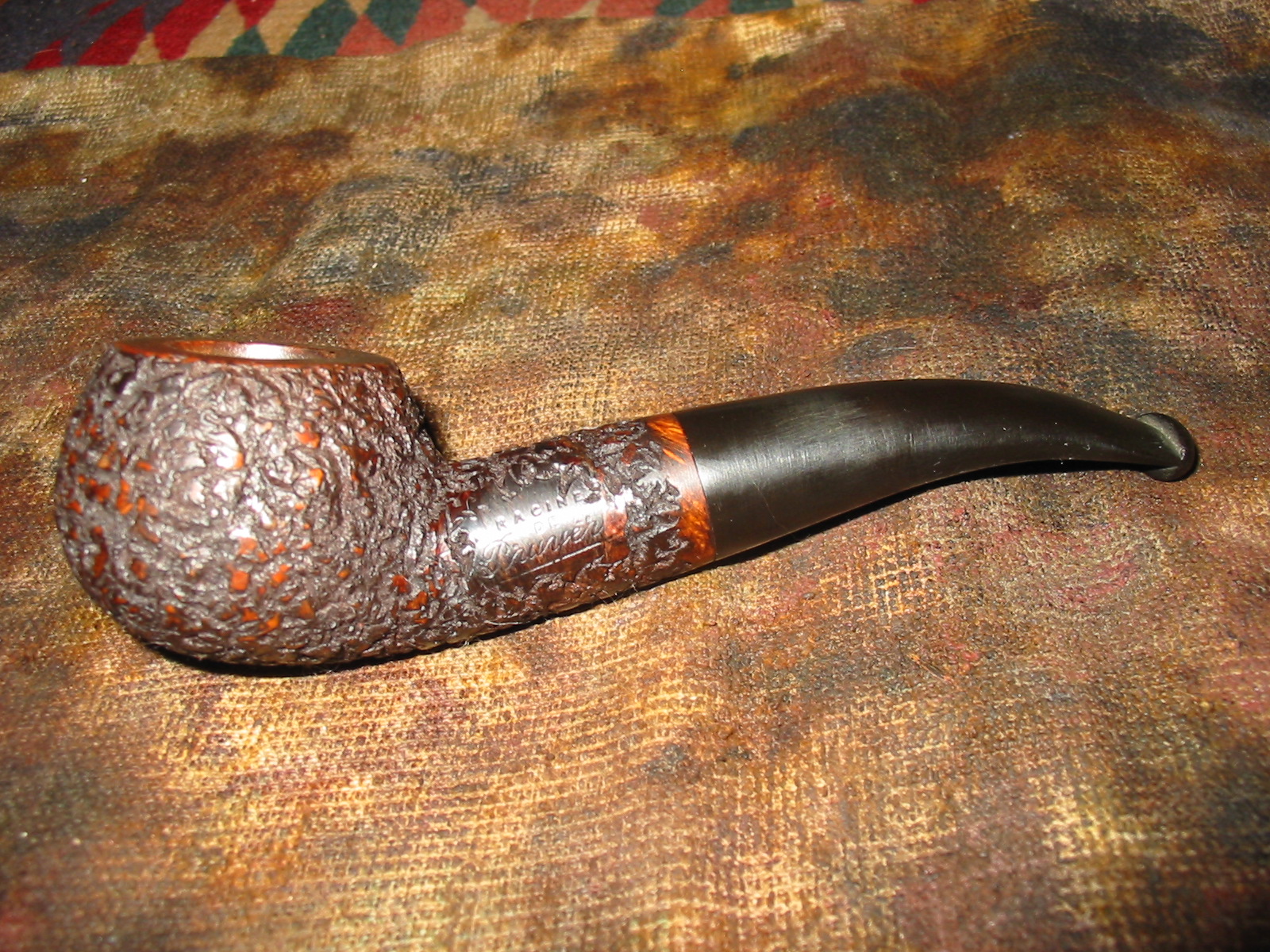
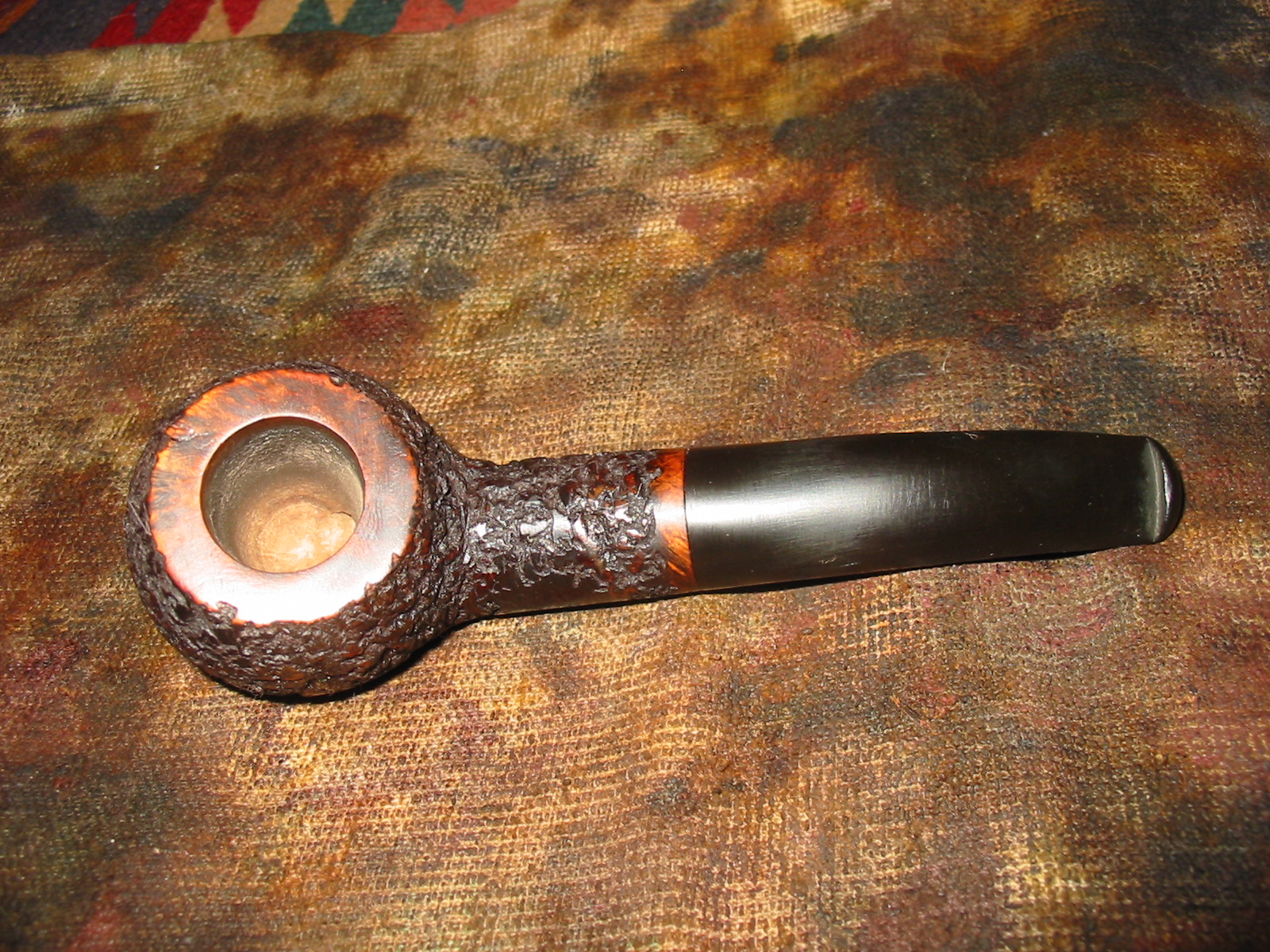
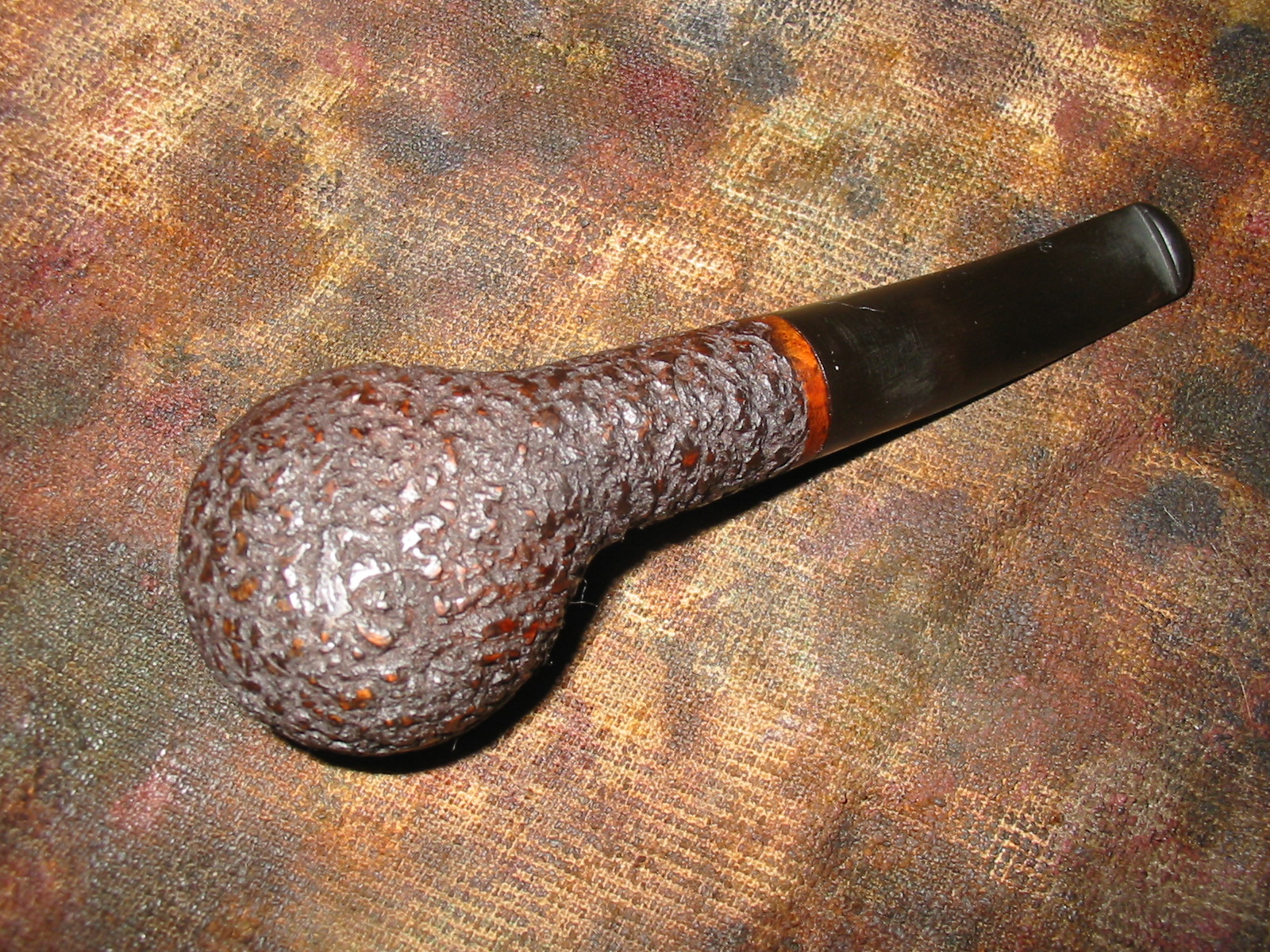
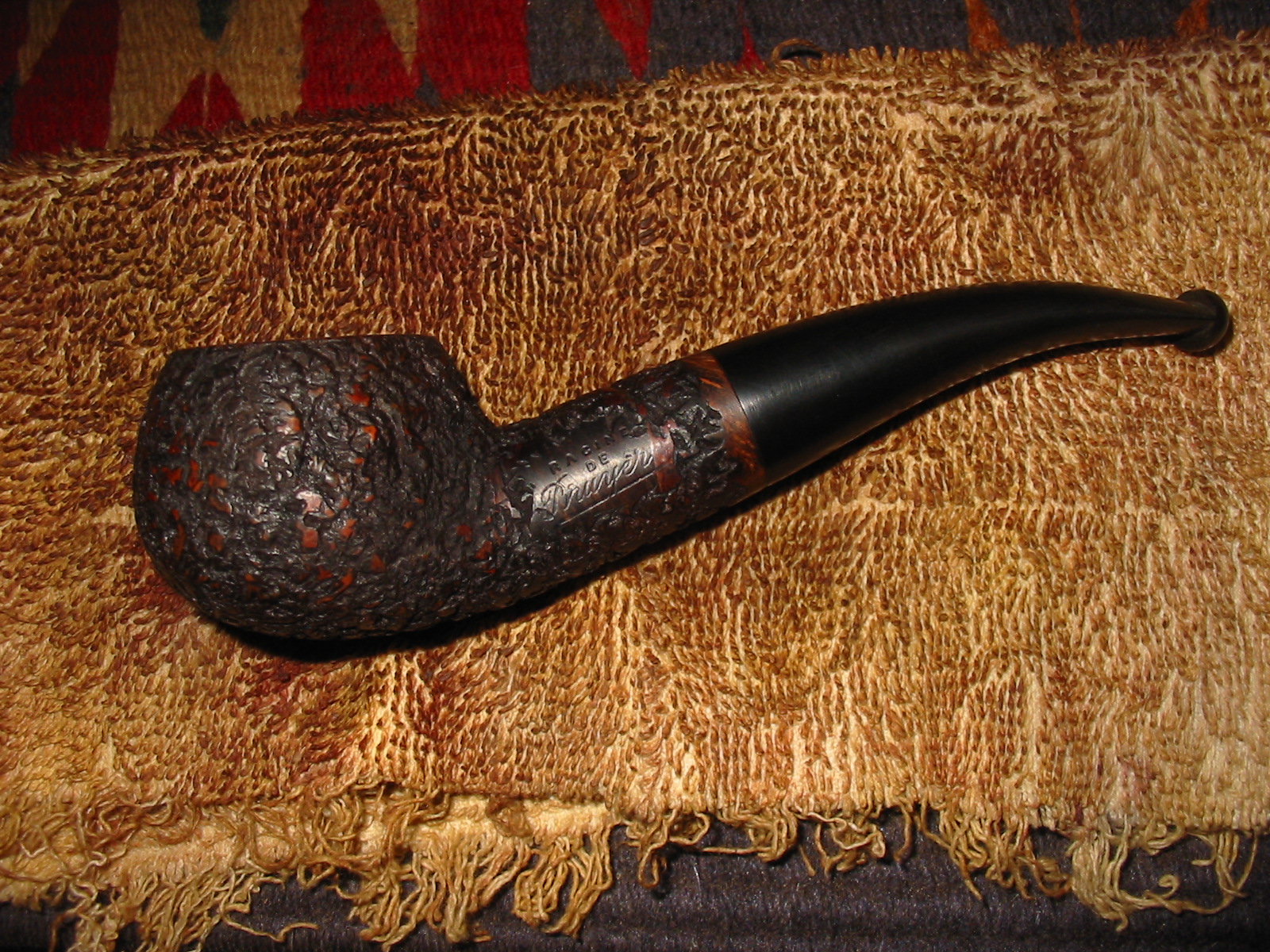
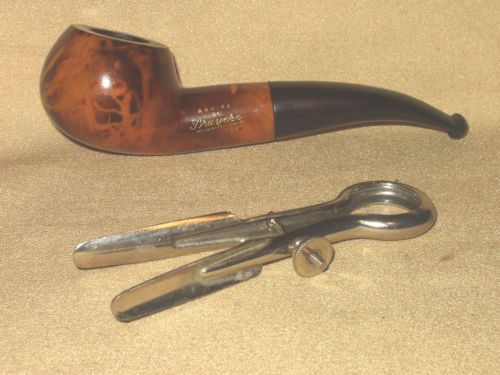
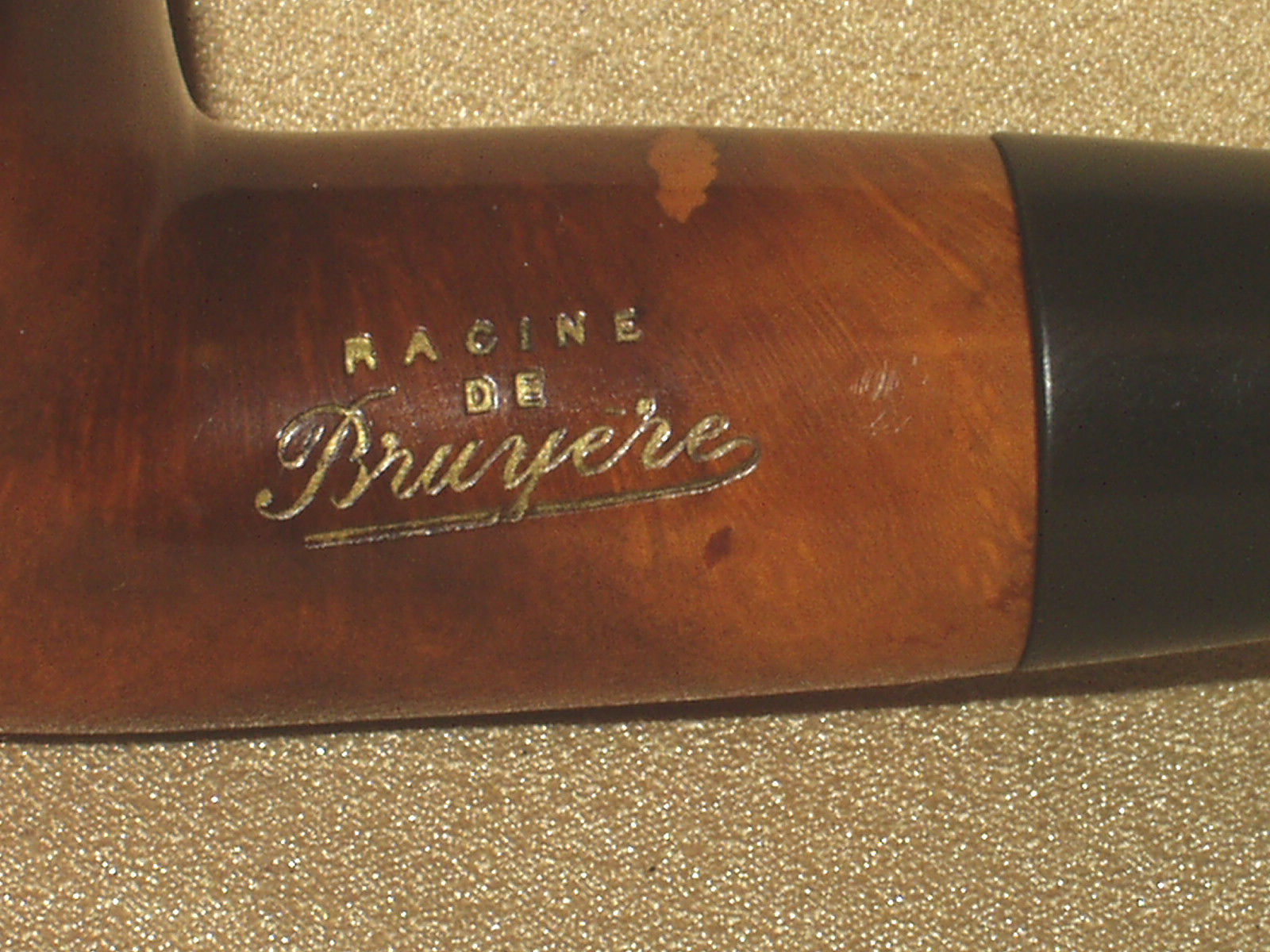
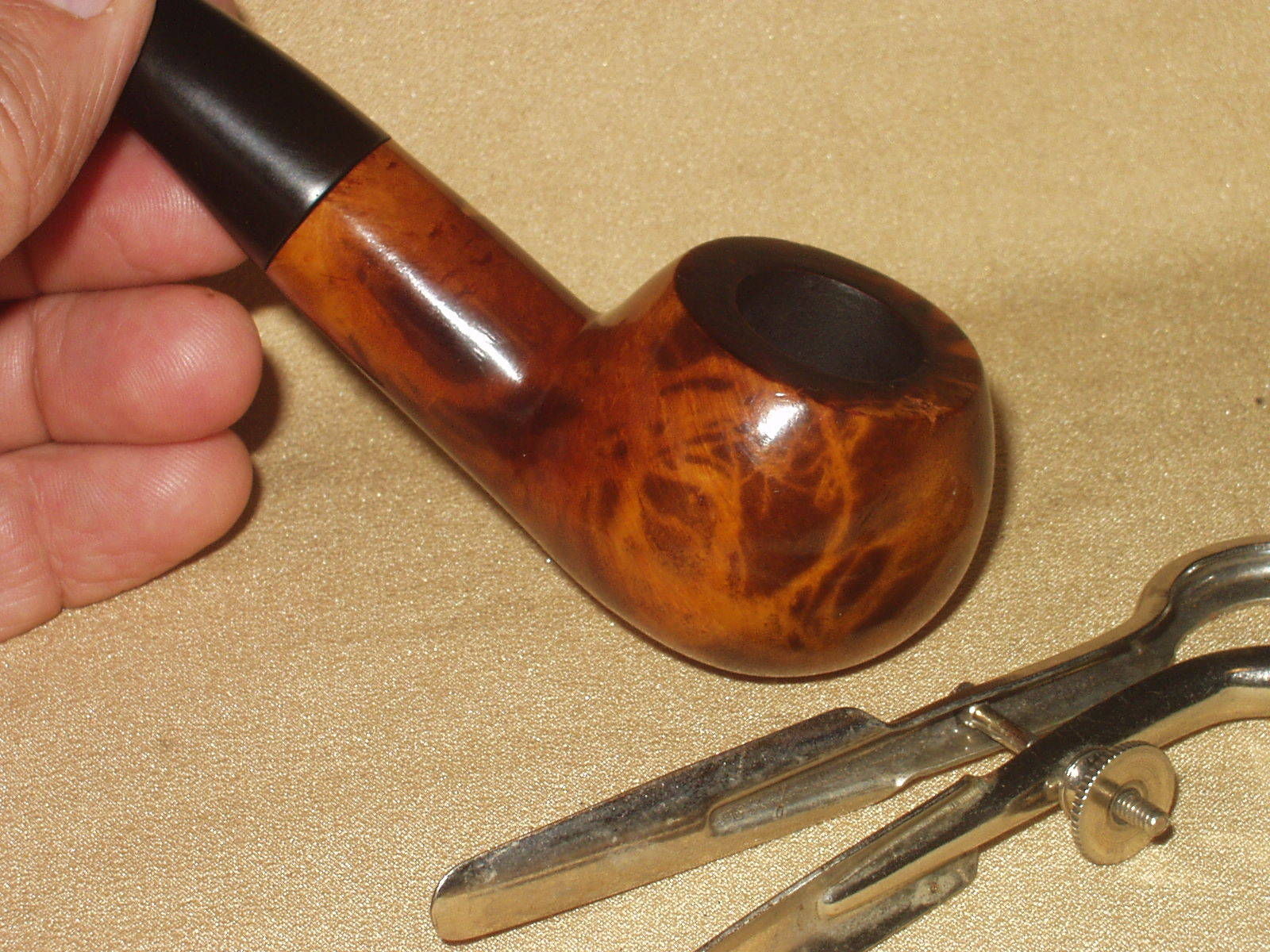
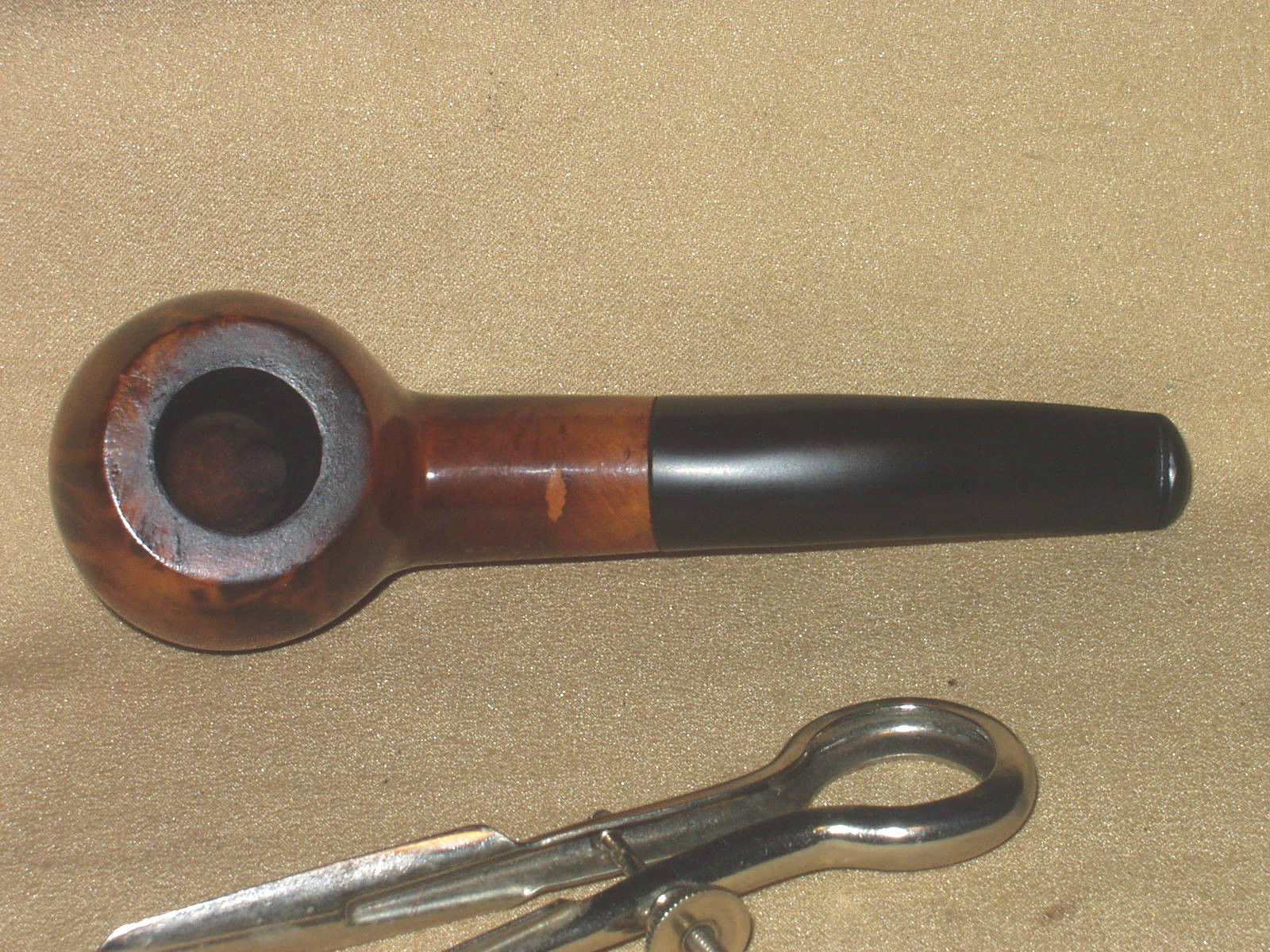
Another pipe that Mark included in the trade was stamped Racine de Bruyere. I have no idea about the maker or the time period of the pipe. The stem is an older style orific button (round hole in an end cap style button). Ron had stripped the finish off of the bowl and also had picked out the fills. The flaws in the briar that remained behind sans fills were deep crevices. The stem was stuck in the shank and would not insert the whole way. The stem itself was in great shape – good, hard older vulcanite. There was minor tooth chatter at the button on the top and the bottom of the stem. Once I had removed the stem the tenon was in great shape with a Dunhill style inner tube that extended all the way from the tenon into the airhole in the bowl. The photos below show the extent of the damage to the bowl in terms of the serious flaws in the briar. On top of the shank, on the left side and on the front of the bowl there were deep holes. There were also minor holes in other areas around the bowl. The shape is actually one of my favourite shapes so it would of course be worked on and brought back to life.
IMG_4748

IMG_4749

IMG_4750

IMG_4751

IMG_4752

IMG_4753

I used a dental pick to scrape away the debris in the pits. There were loose bits of briar and dust build up. I wiped the bowl down with acetone on a cotton pad to remove surface grit. I packed briar dust in layers alternating with superglue into the pits. Once they were filled to the top I tamped them down and then dripped superglue into the briar dust. I added more briar dust and also more superglue.
IMG_4754

IMG_4755

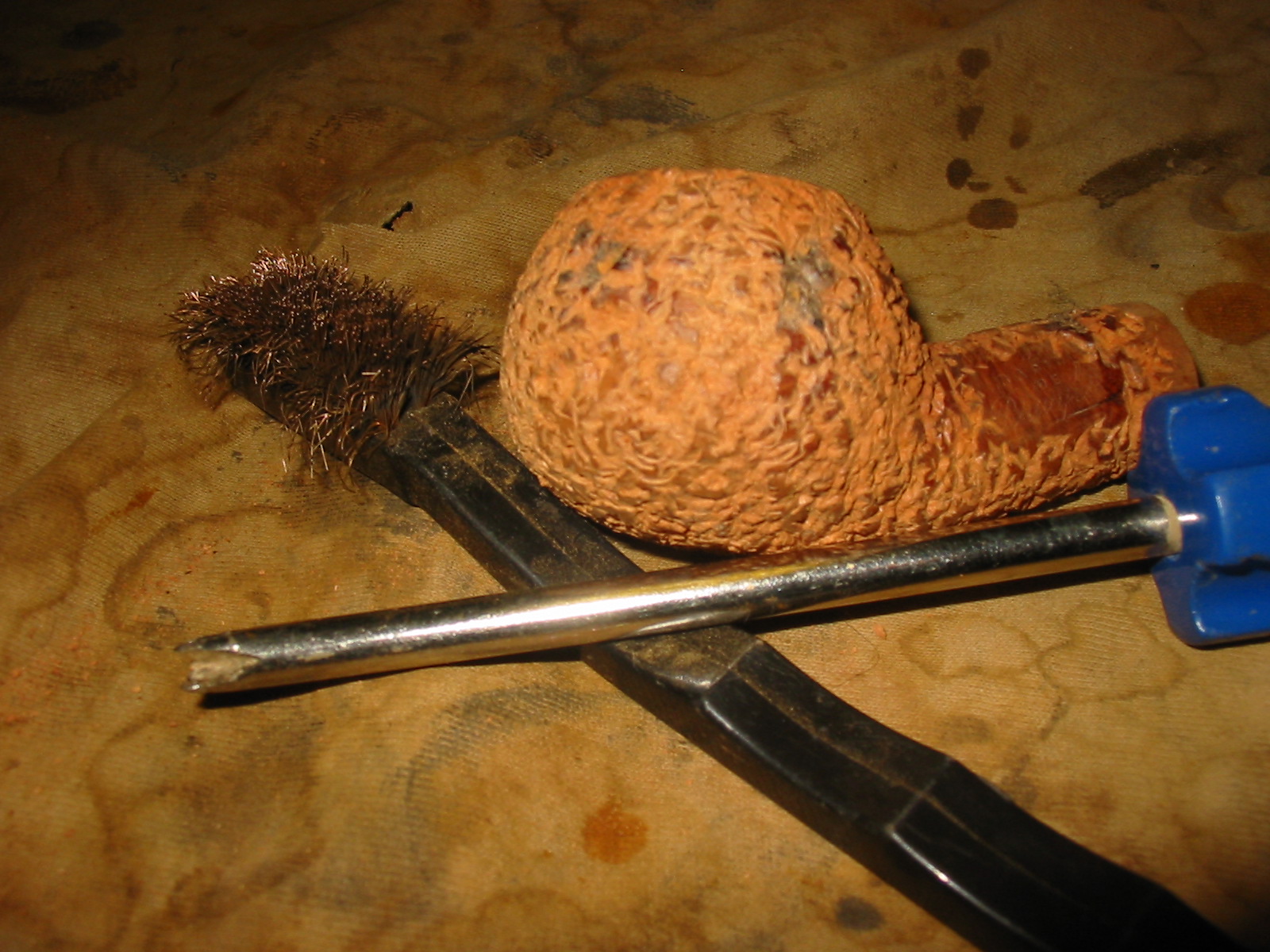
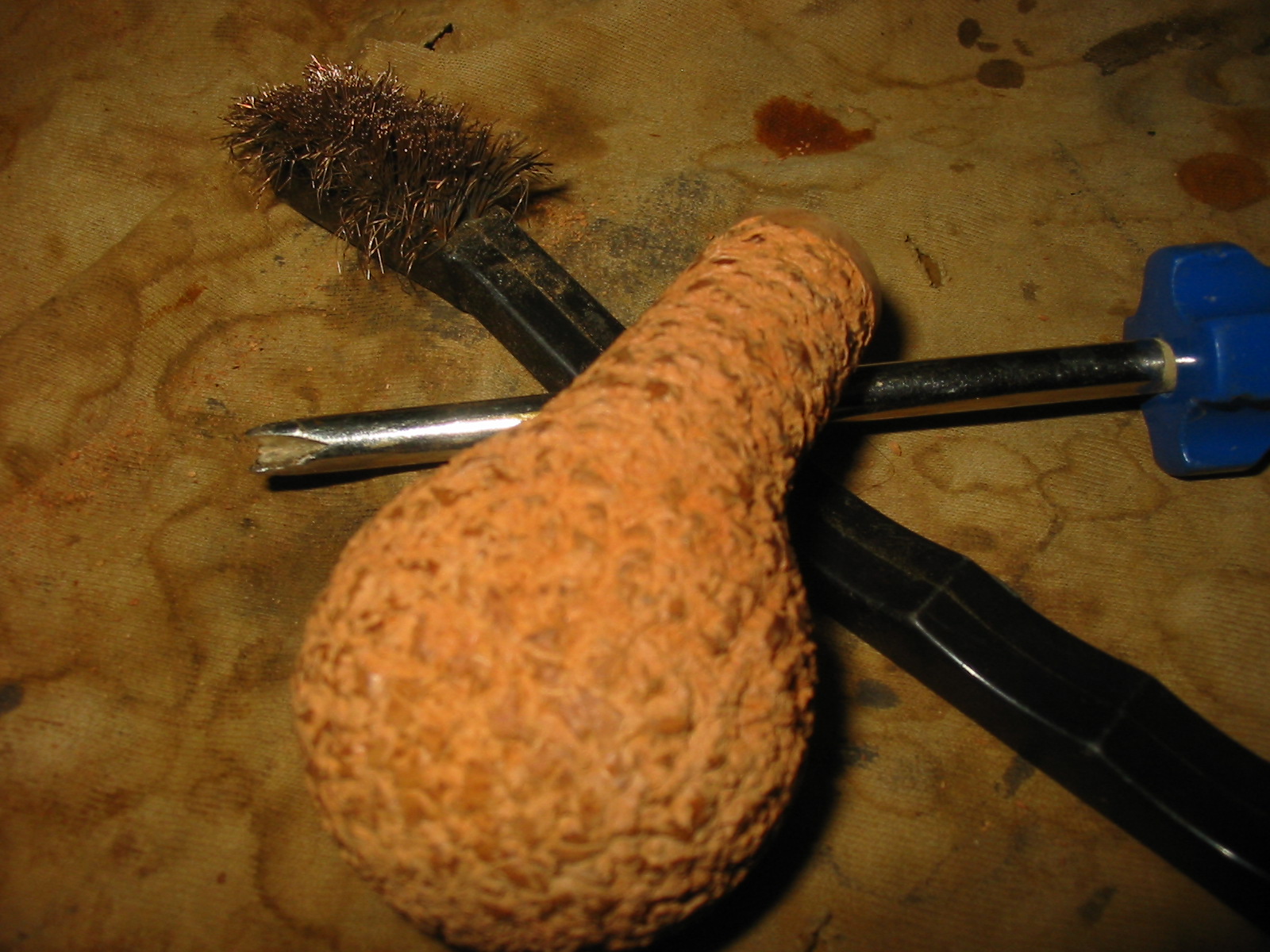
The sandpits, even with the fills, were large and there were many other small pits around the bowl. It made it an easy decision to rusticate the bowl. I used the modified Philips screwdriver to rusticate the bowl. I wrapped several layers of tape around the end of the shank so that I could leave a smooth band there making a stem fit more simple. I also put a piece of tape over the stamping on the left side of the shank. The next series of thirteen photos shows the progressive rustication of the bowl. I decided to do a deep rustication so I worked the tool deep into the wood of the bowl.
IMG_4756

IMG_4757

IMG_4758

IMG_4759

IMG_4760

IMG_4761

IMG_4762

IMG_4763

IMG_4764

IMG_4765

IMG_4766

IMG_4767

IMG_4768

When the rustication was complete I used a brass tire brush on the surface of the briar to knock off the sharp points and loose pieces of debris from the work of the tool. My aim was to leave behind some smooth spots that would end up have a contrast stain on them when I was finished.
IMG_4769

IMG_4770

IMG_4771

In order to get the stem to seat properly in the shank I used a knife and beveled/chamfered the inside edge of the mortise so that the stem would sit well. I also found in measuring the tenon that it was slightly too long for the mortise and the original manufacturer had left the end slightly at an angle so that it did not seat well in the mortise. I used a file to reseat the tenon and then put the stem in place. The fit was good, but the diameter of the stem was slightly more than the diameter of the smooth band on the shank so I sanded the band and the stem with 220 grit sandpaper. I was able to remove the excess diameter and bring the stem into line with the shank. I finished sanding it with a medium and fine grit sanding sponge to remove scratches.
IMG_4772

IMG_4773

IMG_4774

IMG_4775

IMG_4776

IMG_4777

IMG_4778

With the sanding finished the fit was tight and the transition was smooth. I scrubbed down the shank and the stem with some Everclear on a cotton pad to get rid of the sanding dust from the stem. With that done the pipe was ready to stain.
IMG_4779

IMG_4780

IMG_4782

IMG_4783

I decided to use a black aniline stain as the undercoat of the pipe. The stain would hide the repaired flaws well as they were also dark. I applied the stain with a cotton swab and made sure that it went into all the nooks and crannies of the briar.
IMG_4784

IMG_4785

IMG_4786

IMG_4787

IMG_4788

Once the stain was applied I flamed it with a lighter to set the stain and then took it to the buffer to see if I could buff away the stain on the higher parts of the rustication. I used red Tripoli to do the buffing. I kept a pretty light touch as I did not want the Tripoli to build up in the rustication. With that done, the finish was closer to what I was aiming for. I still wanted a few more of the high spots showing.
IMG_4790

IMG_4791

IMG_4792

IMG_4793

I wiped the bowl down with Everclear on a soft cloth to remove some more of the black and then buffed it with White Diamond. I then gave it a top coat of oxblood stain to bring out the contrast and highlight the high portions of the rustication. I buffed it again with White Diamond.
IMG_4794

IMG_4795

IMG_4796

IMG_4797

To remove the tooth chatter and the scratches from fitting the stem to the shank I used my usual array of micromesh sanding pads. I wet sanded with 1500-2400 grit pads and dry sanded with the 3200-12,000 grit pads. I rubbed the stem down with Obsidian Oil and let it dry.
IMG_4798

IMG_4800

IMG_4802

Once the stem was done I used 2400 grit micromesh sanding pads and dry sanded the high spots on the rustication on the bowl and the shank to further accentuate the contrast. I buffed the bowl lightly with White Diamond and then buffed the pipe as a whole with White Diamond yet again. Once it was done, I gave the stem multiple coats of carnauba wax. I also gave the bowl a very light buff with the carnauba wheel – too heavy a touch and the wax fills in the crevices of the rustication. I then hand buffed it with a shoe brush to finish the shine. The completed makeover is shown in the photos below. The pipe is ready to enter into a new chapter of its life.
IMG_4803

IMG_4804

IMG_4806

IMG_4807

Since posting this I have found out some information about the stamping. Racine de Bruyere means Genuine Briar. It was stamped on pipes coming out of St. Claude. The stamping does not define the maker but the region. The pipe was probably made in late 20’s to early 30’s. I found the original eBay sale description that showed the pipe as it was when Mark received it. I have included those pictures below. Note the gold leaf/paint in the stamping.
Racine2

Racine3

Racine4

Racine5

Racine6

Racine7

Racine8

Racinea

Reworking a Peterson’s Irish Seconds Canadian


Blog by Steve Laug

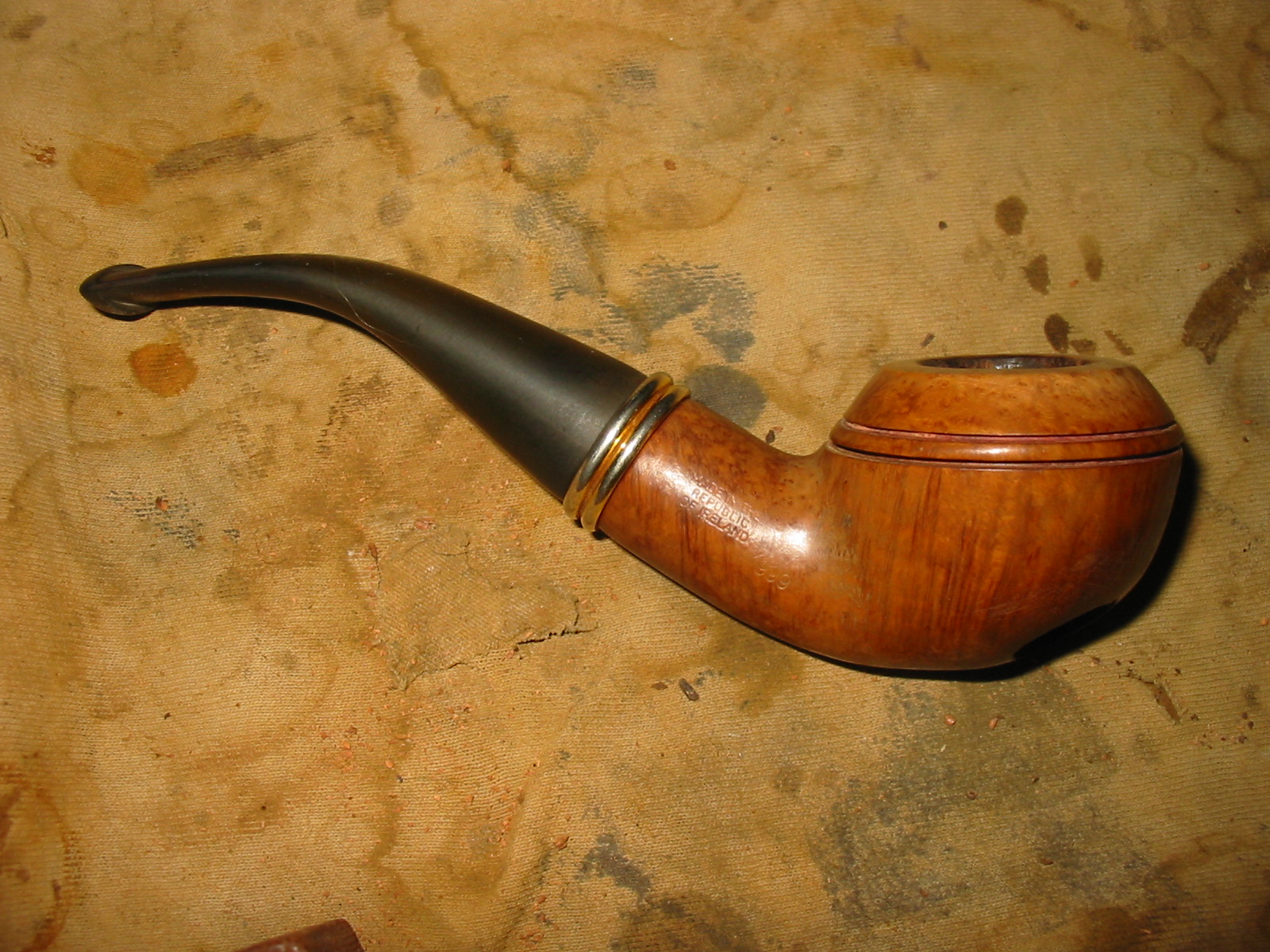
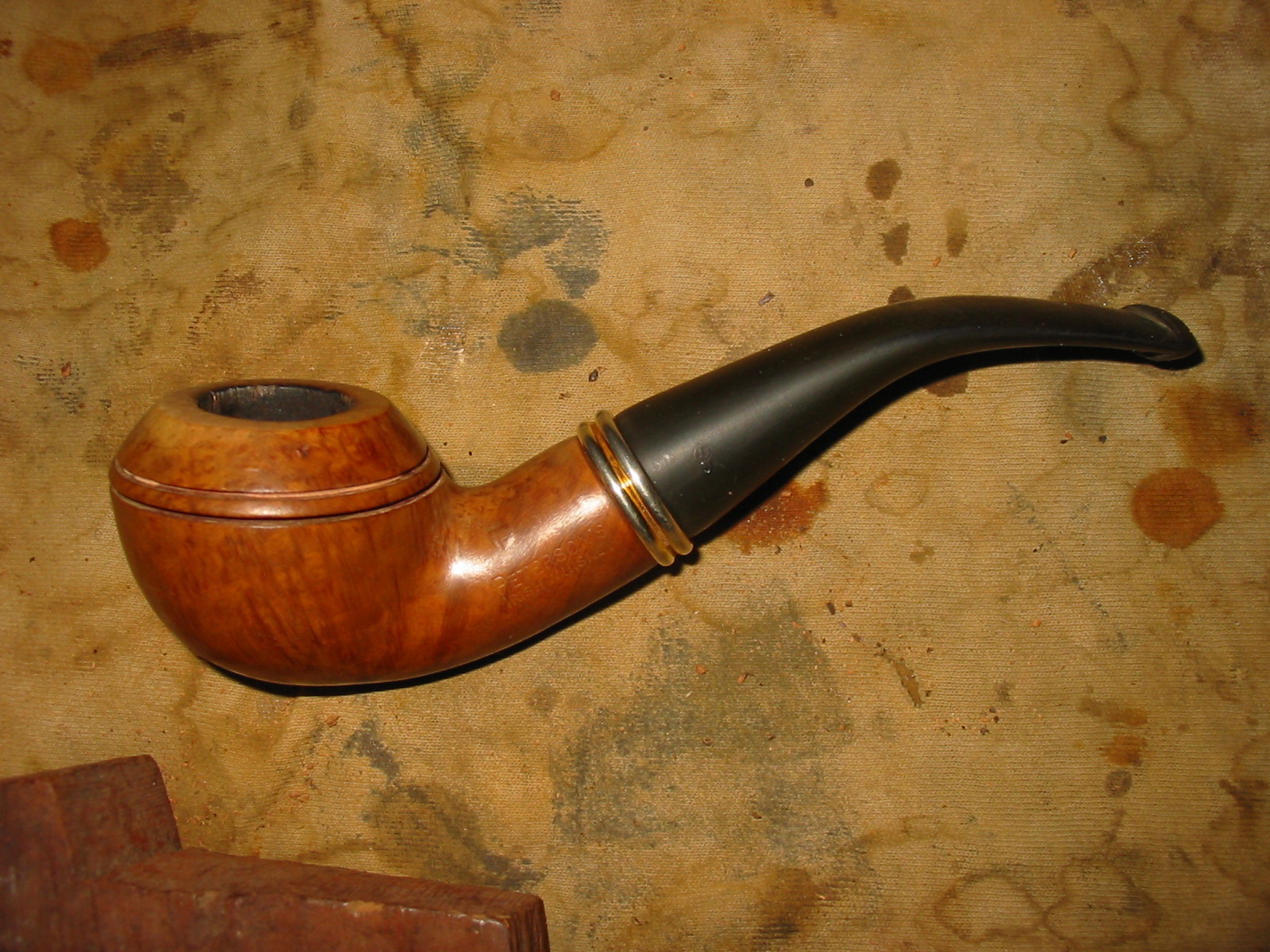
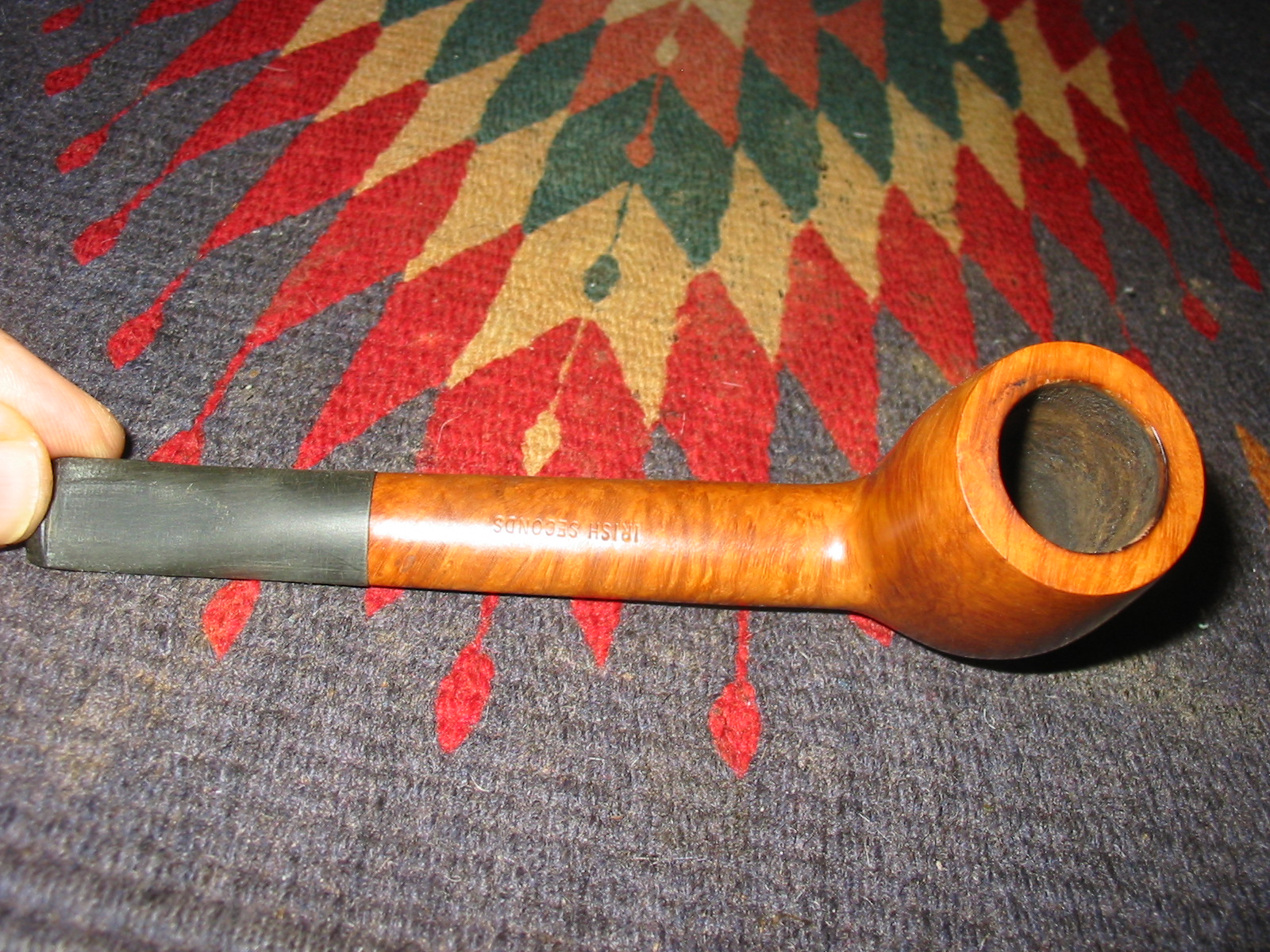
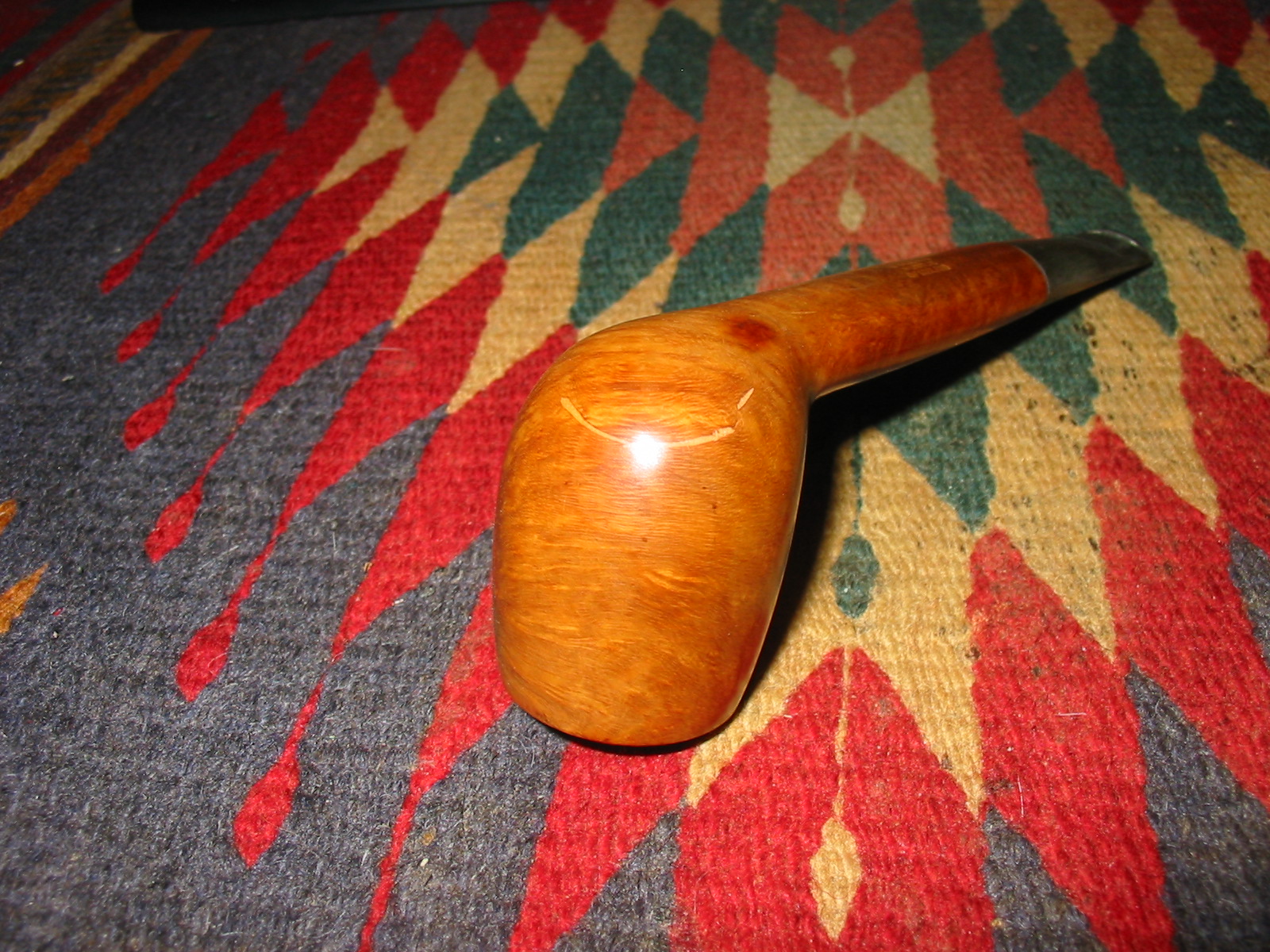
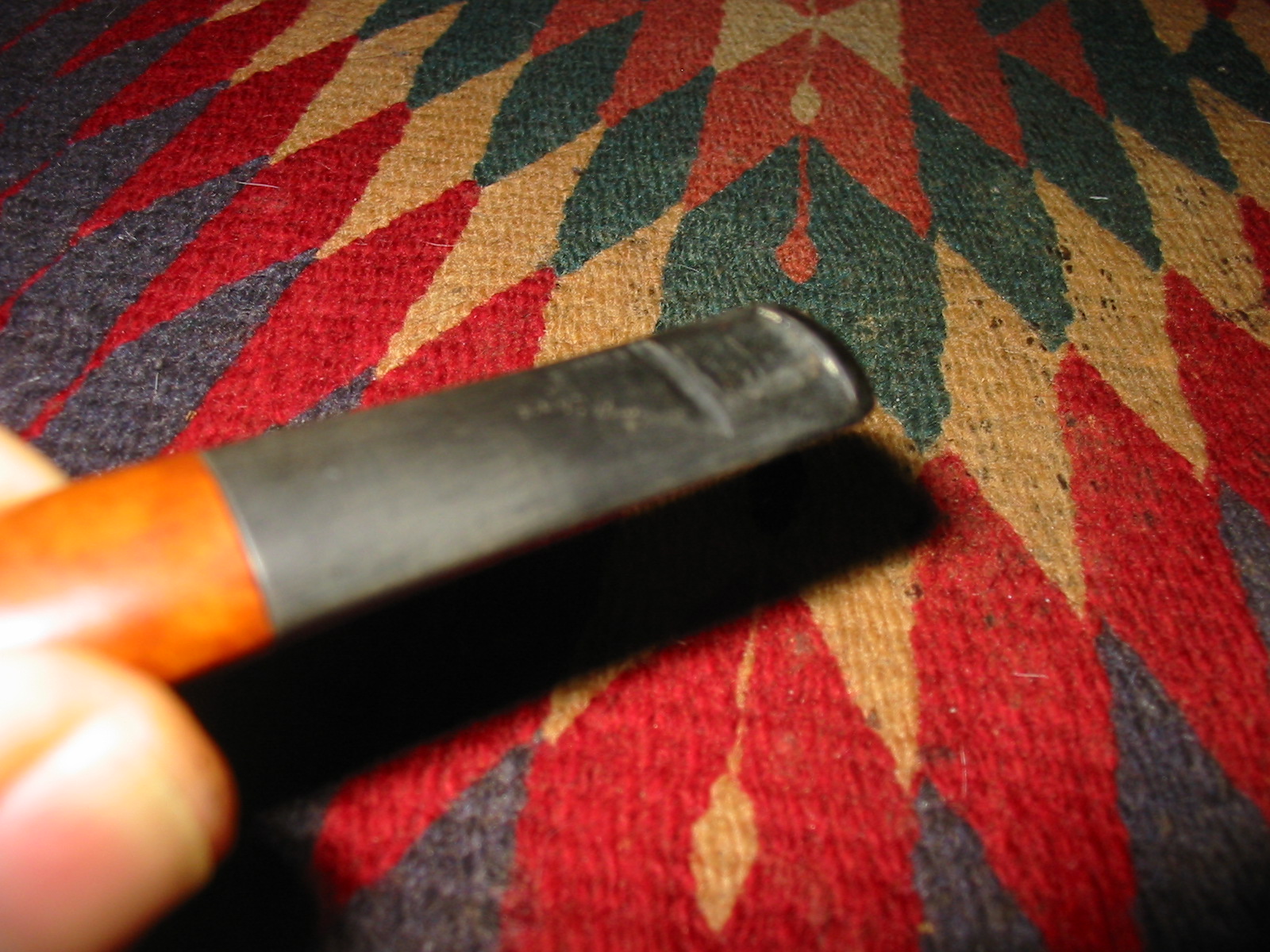
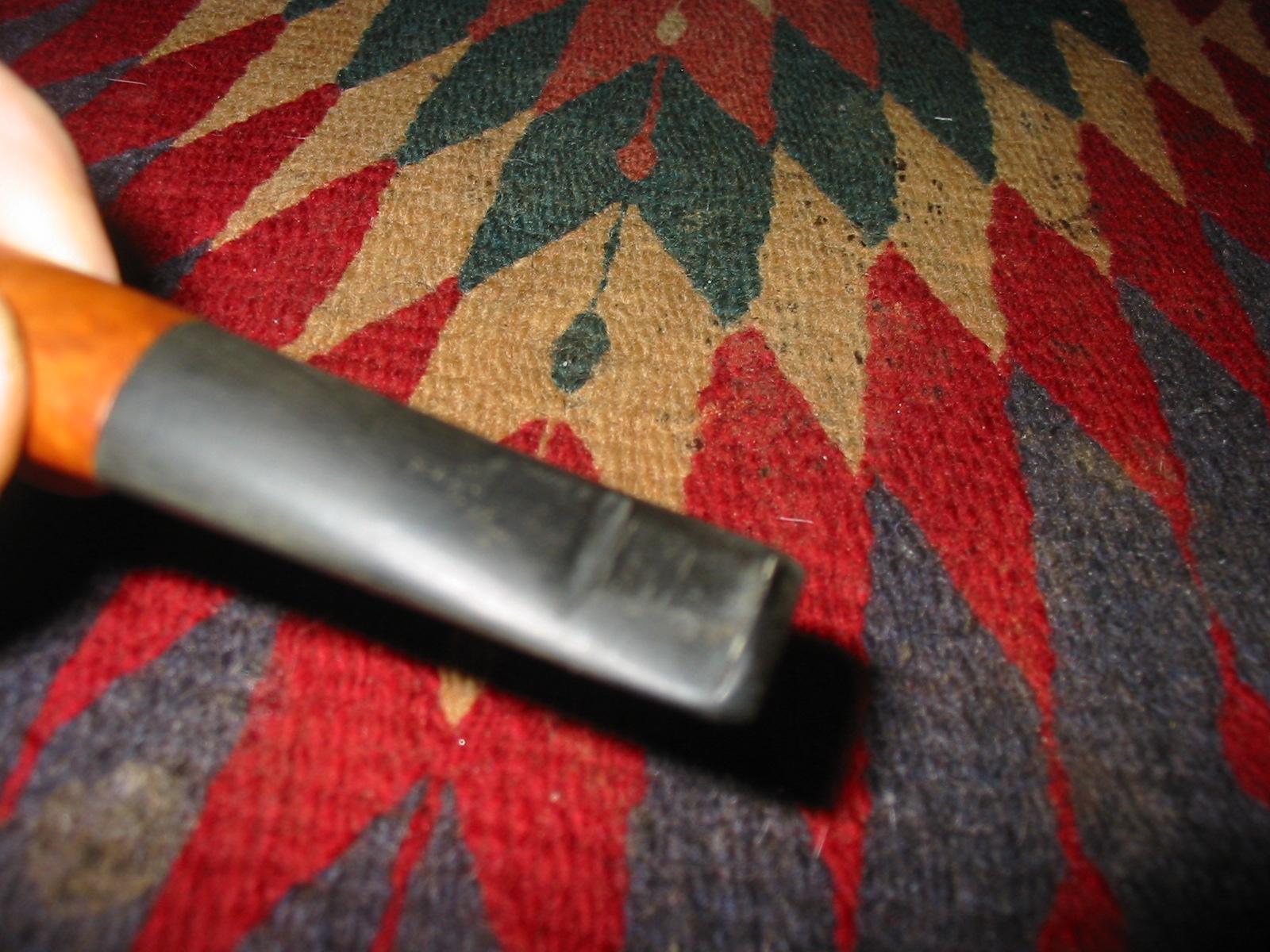
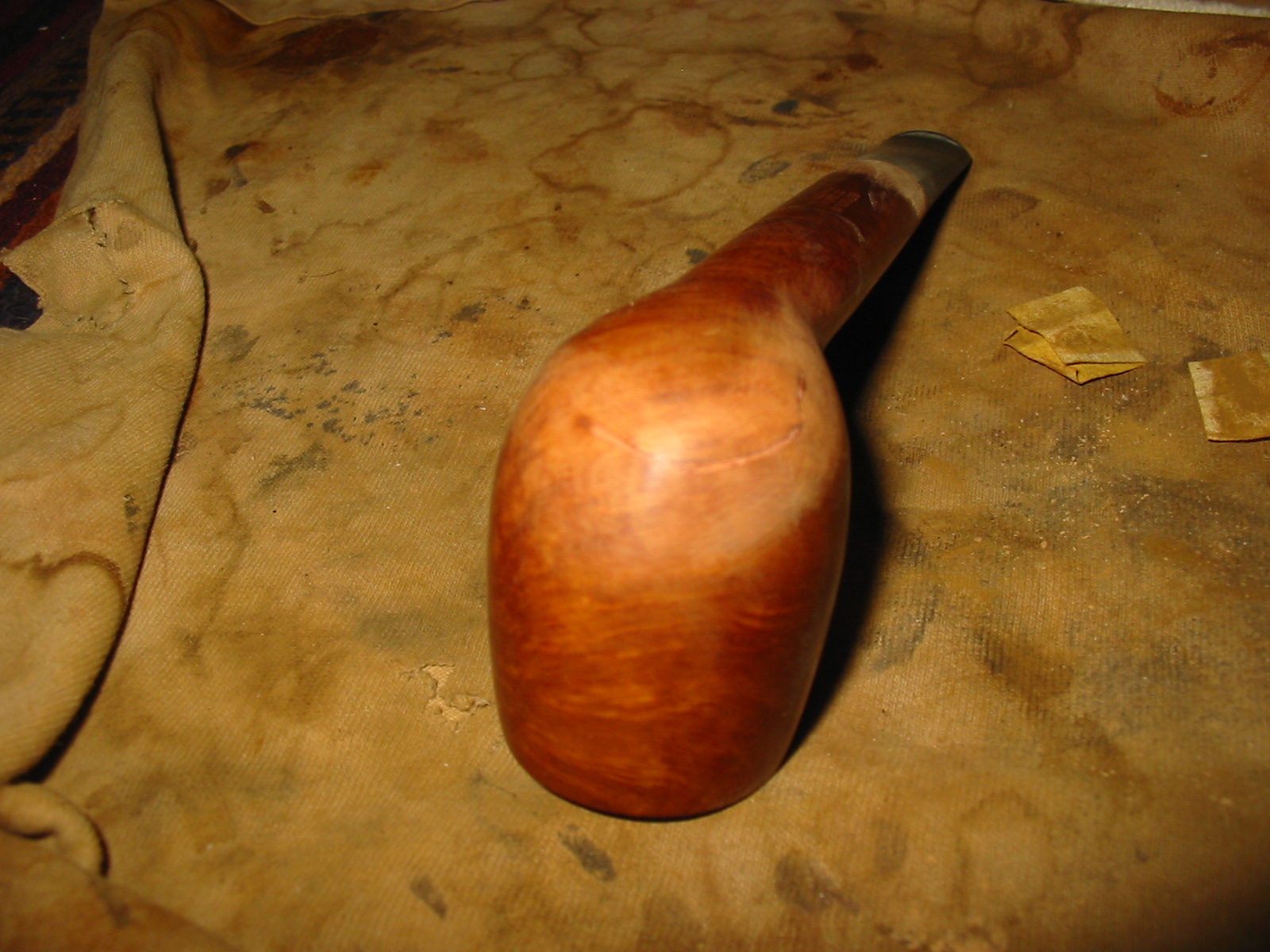
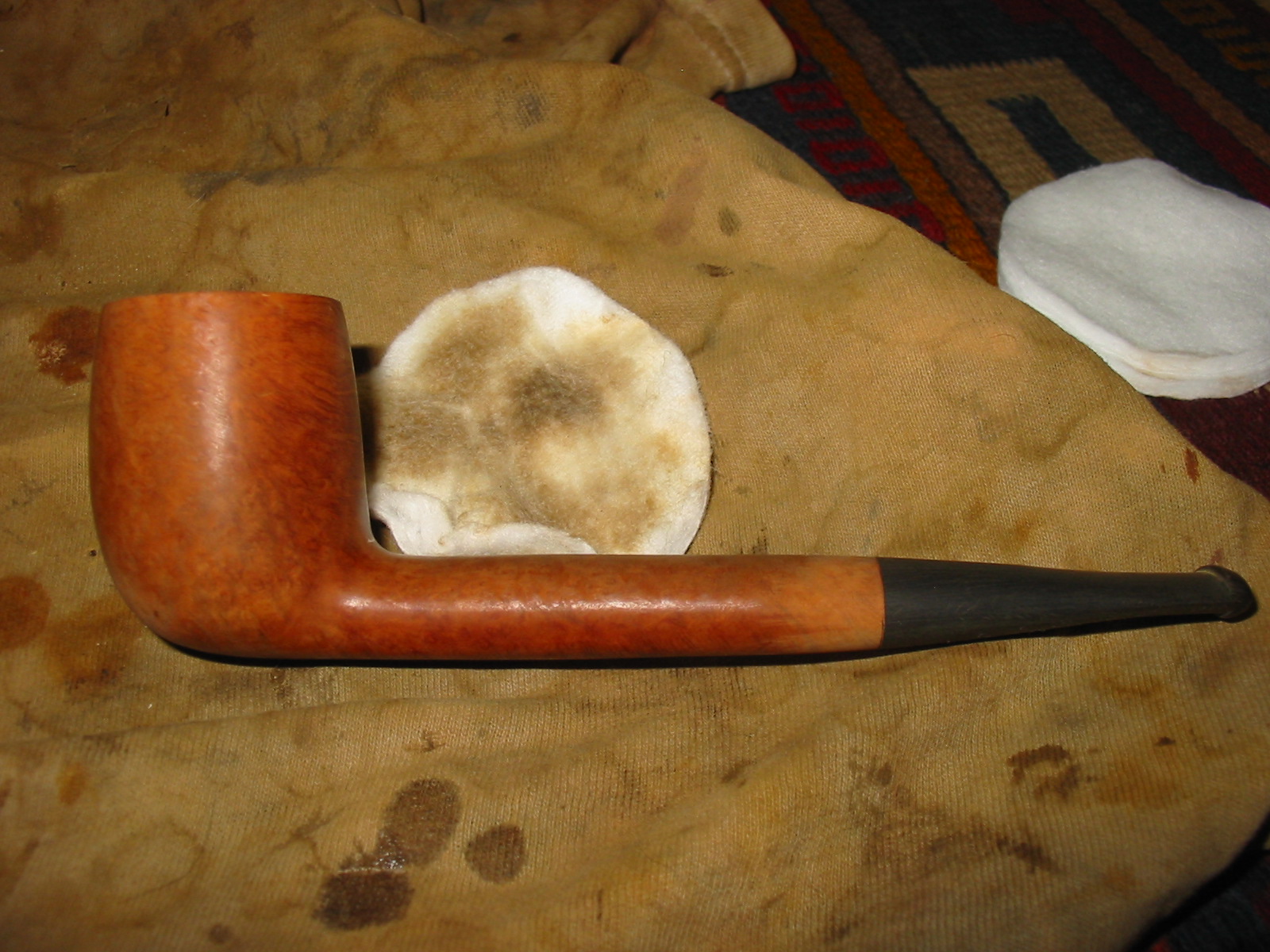
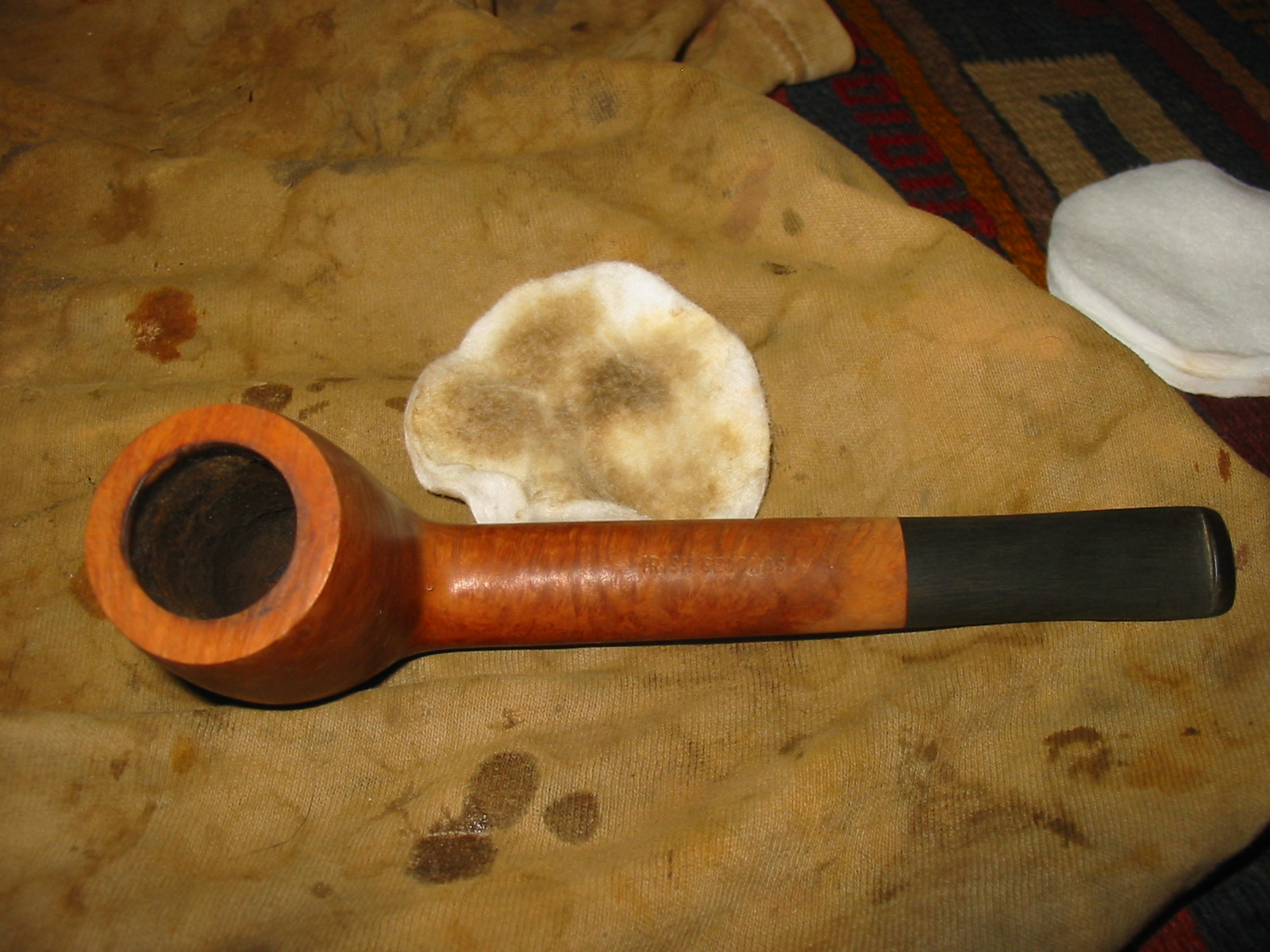
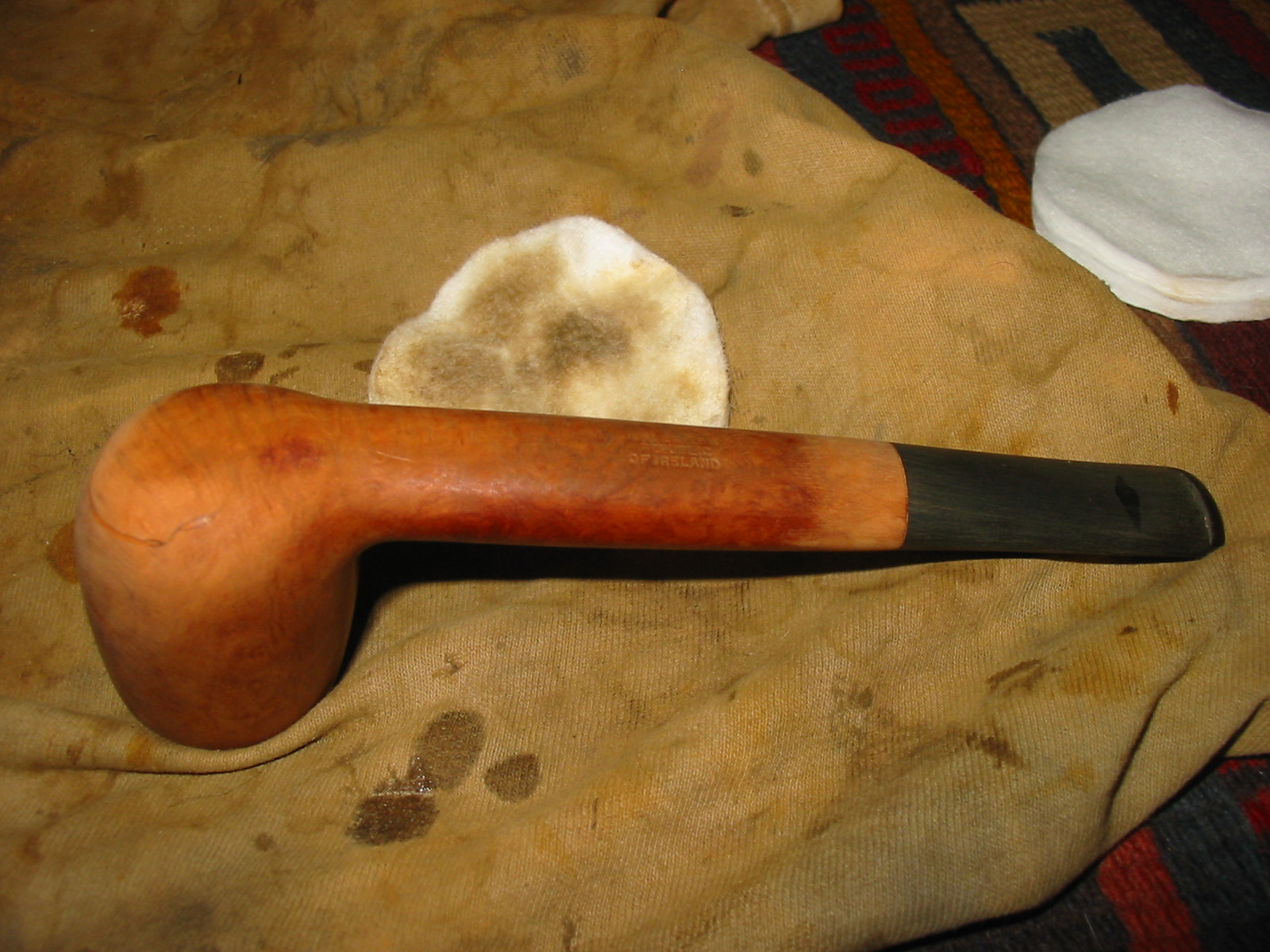
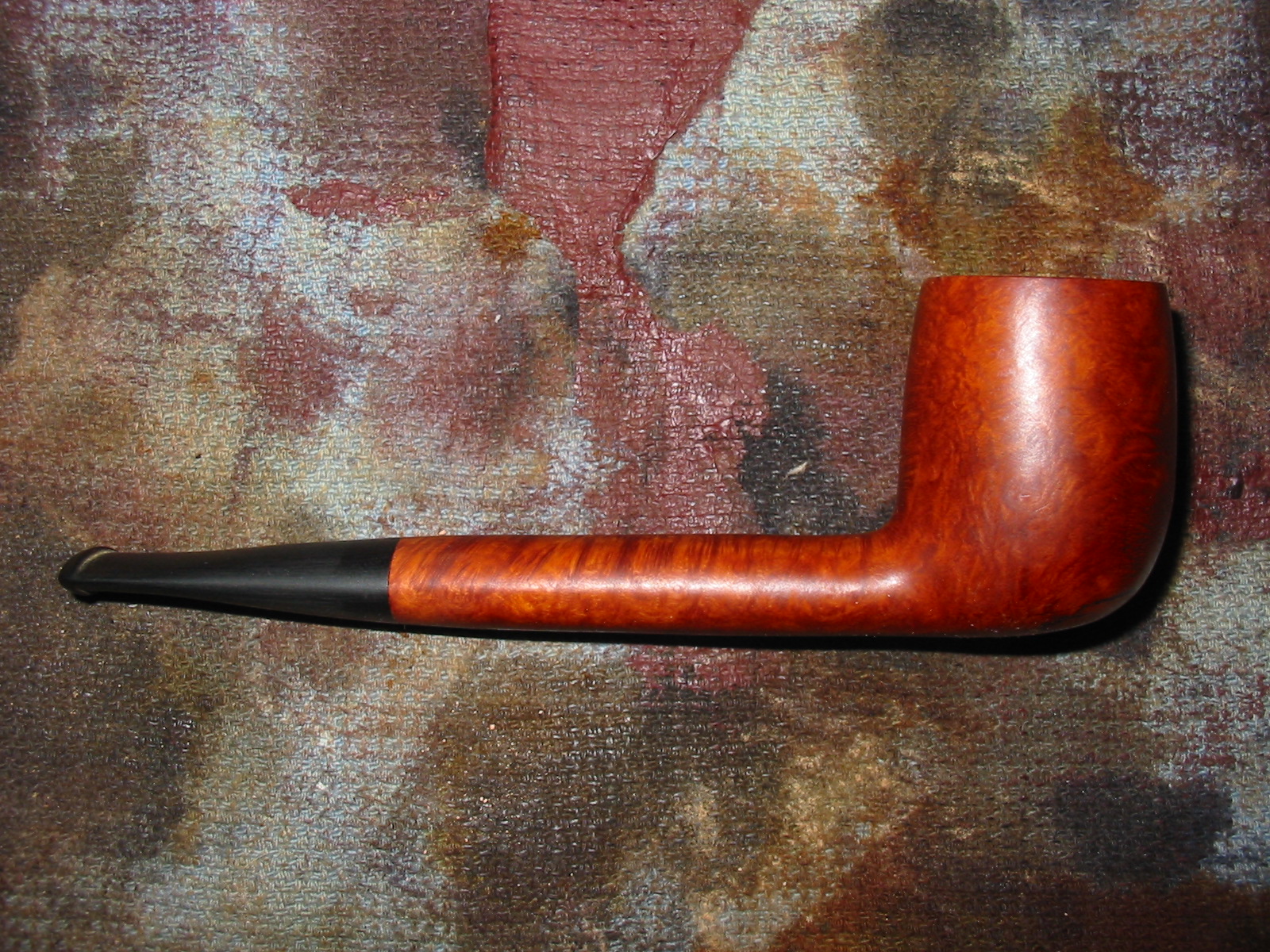
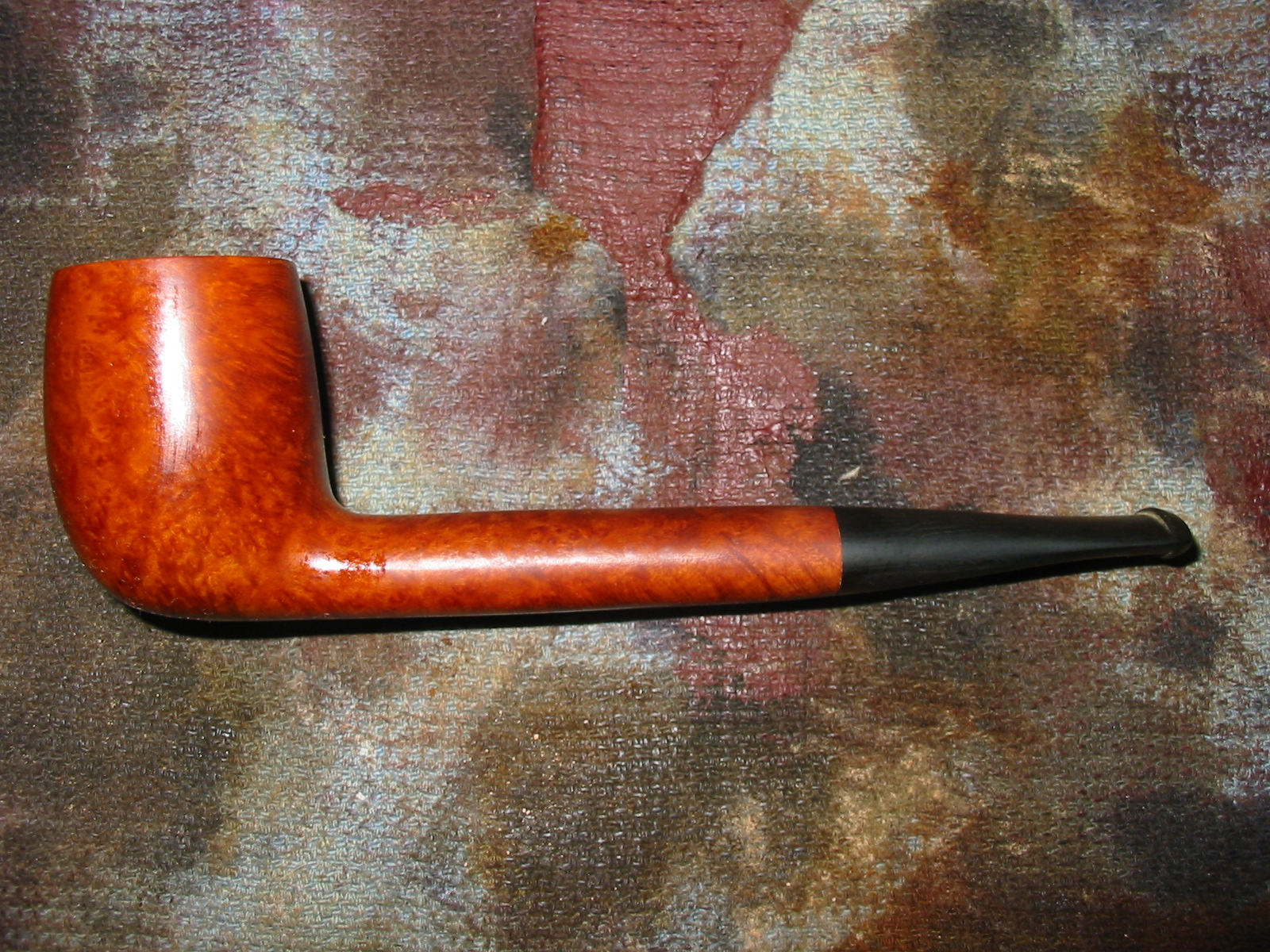
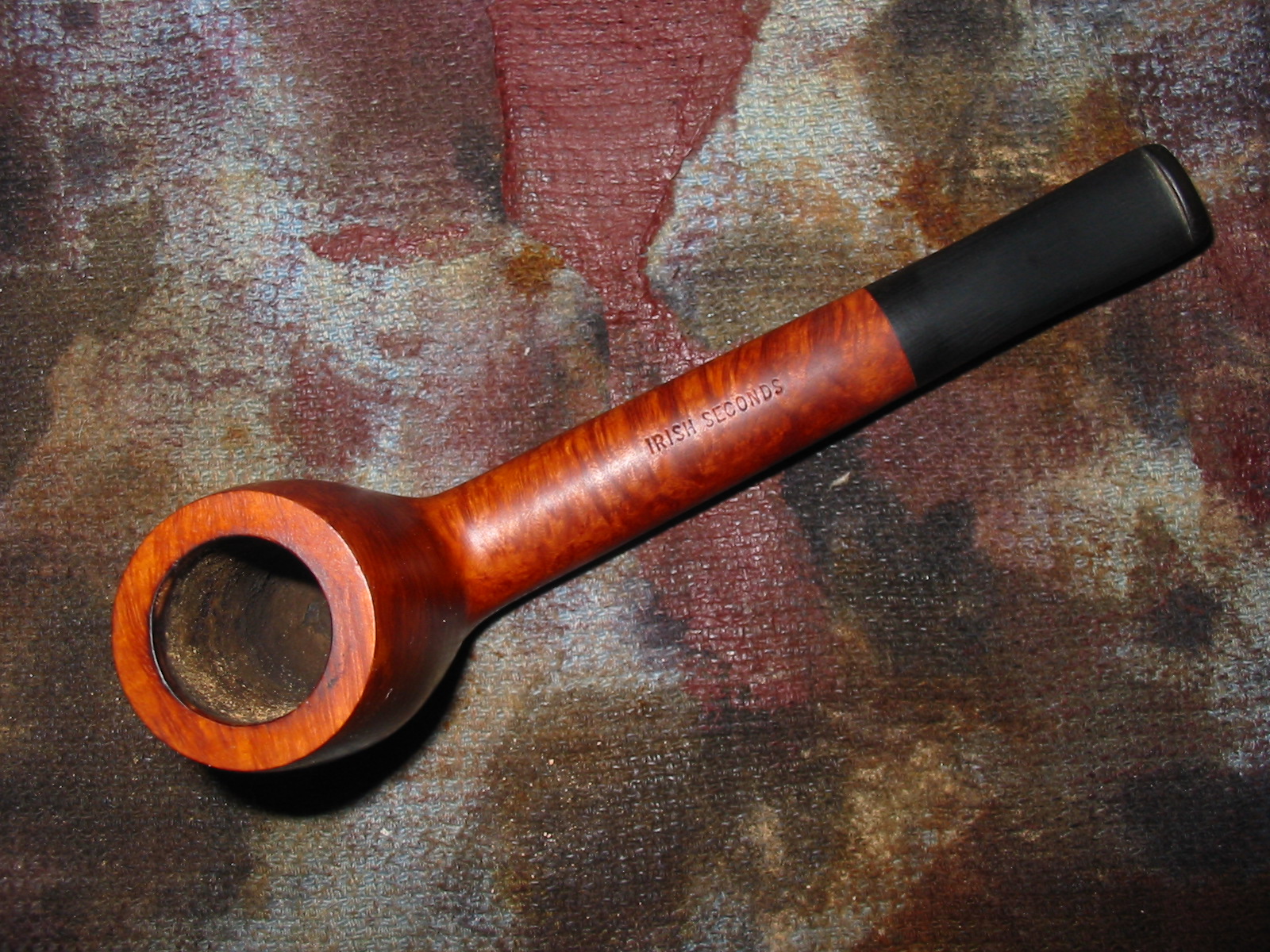
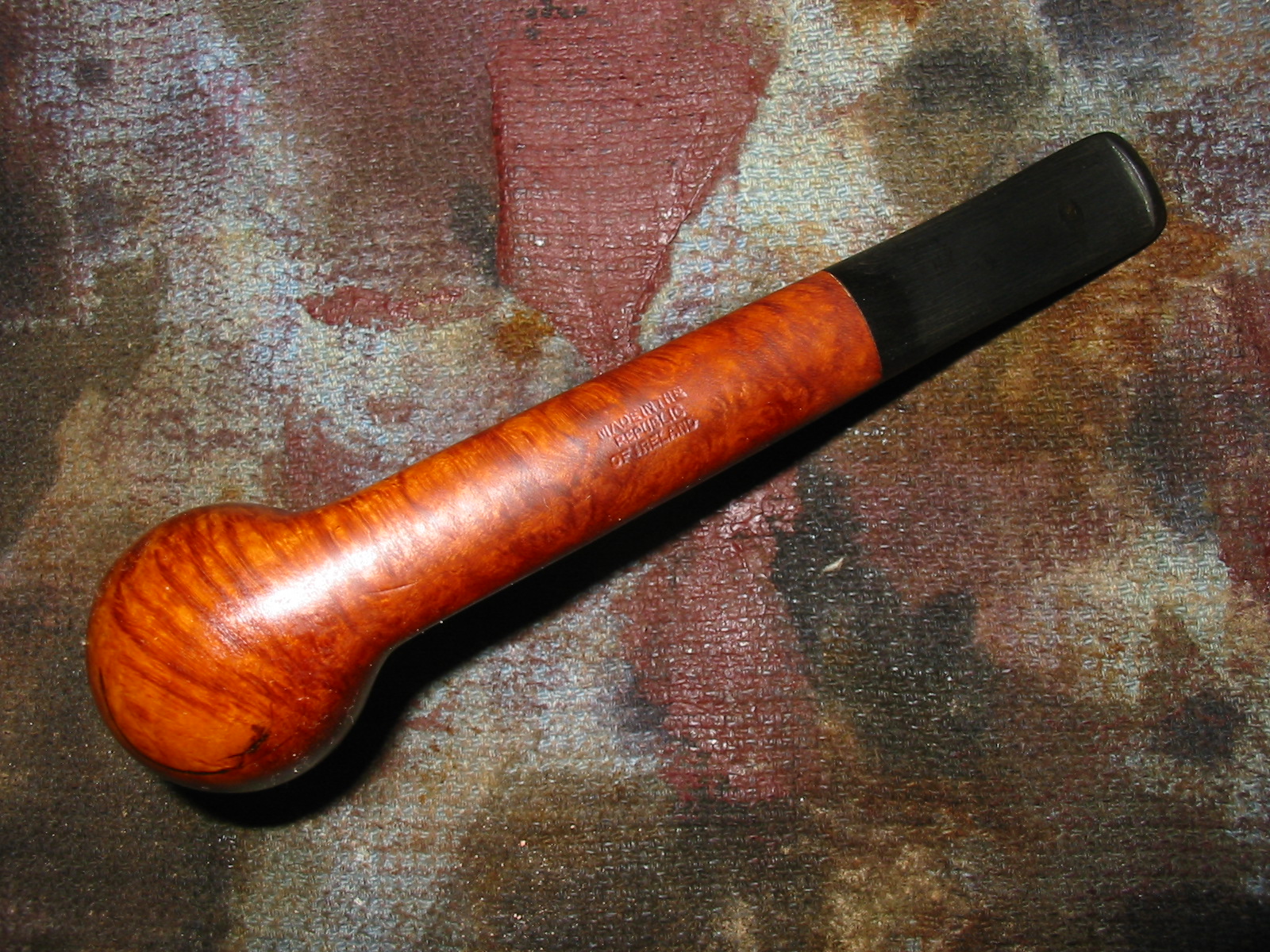
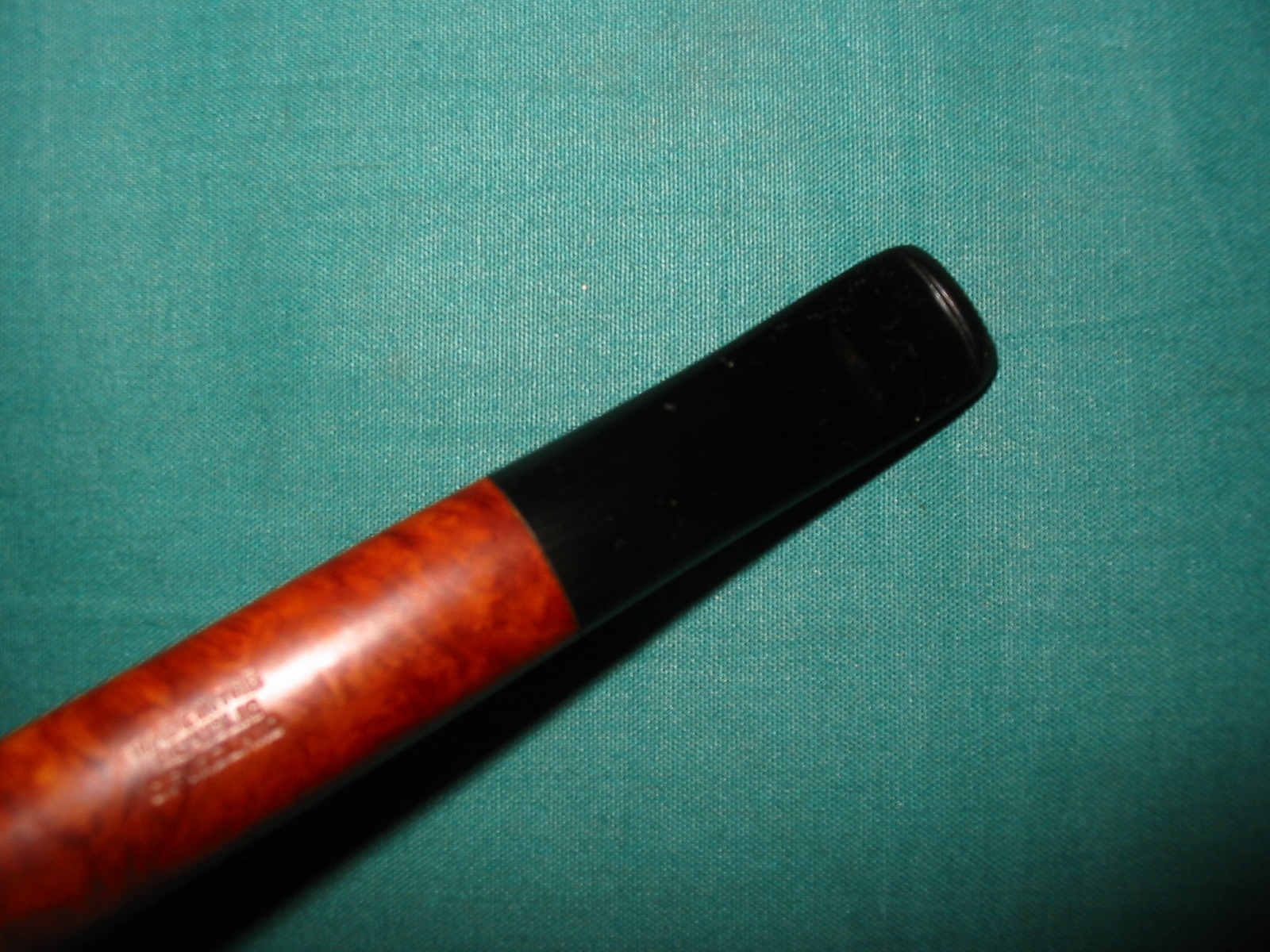
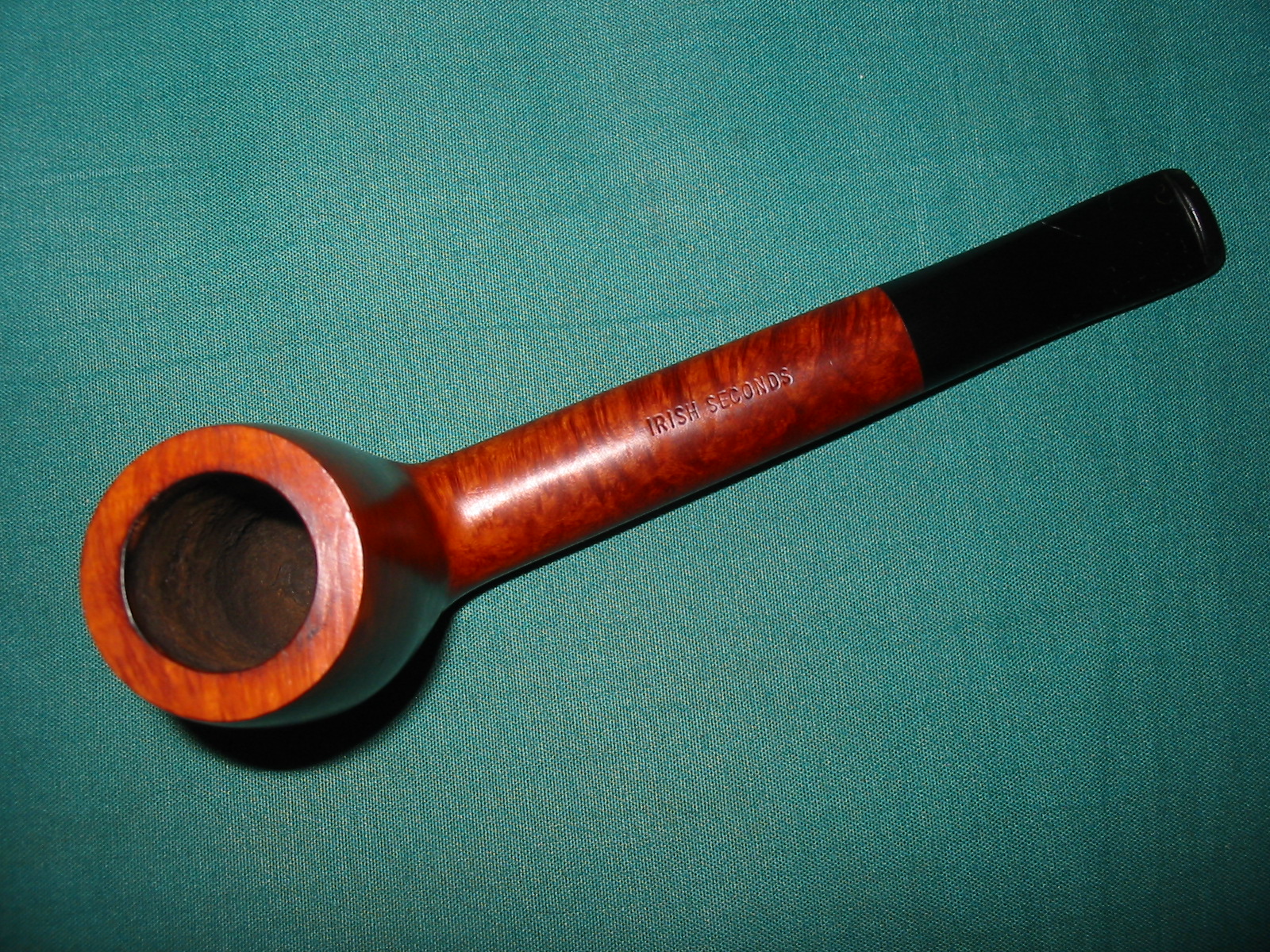
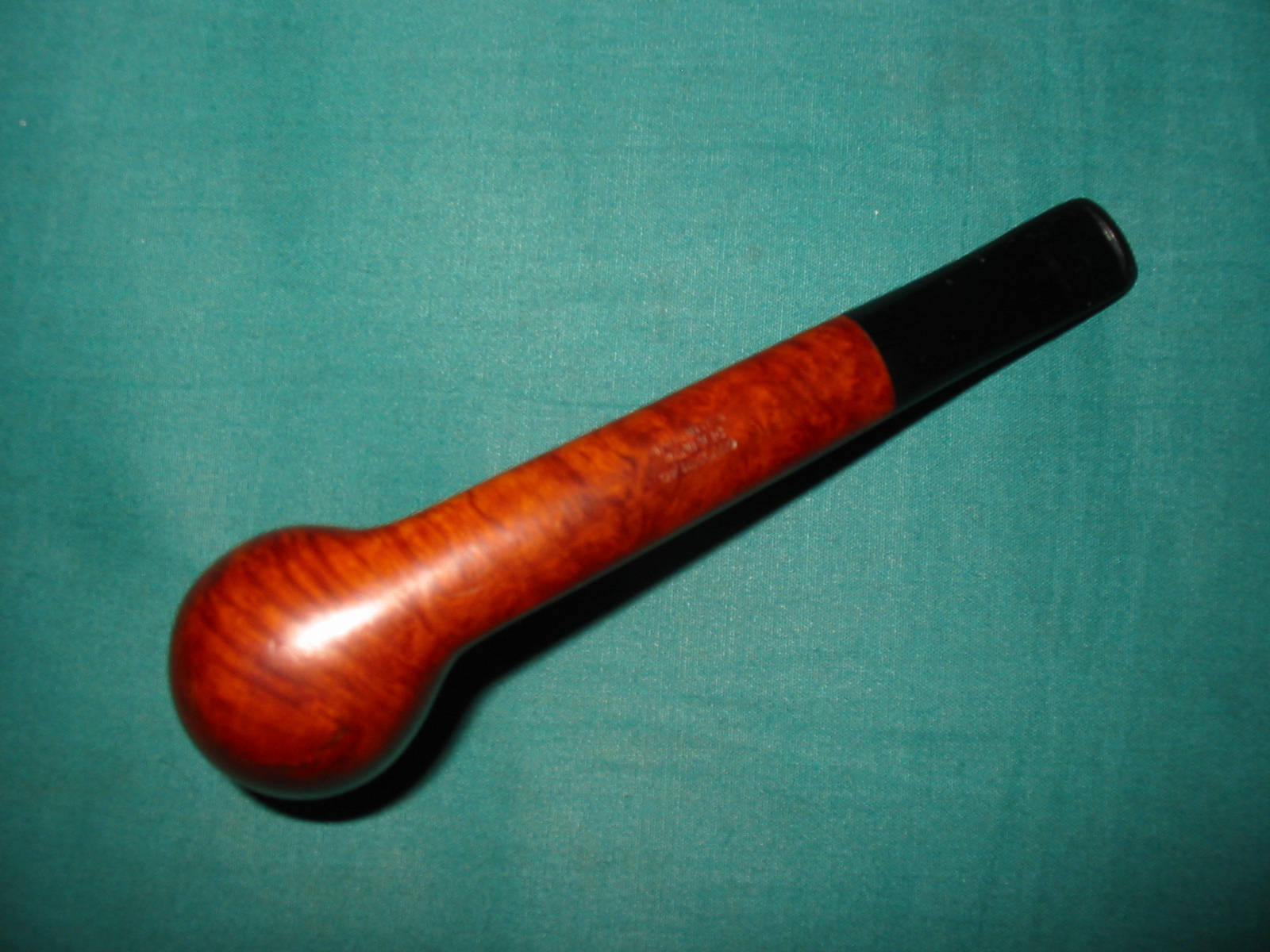
This pipe was another one I got in my trade with Mark, an Irish Seconds made by Peterson. It is stamped on the top of the shank, IRISH SECONDS and on the underside of the shank, Made in the Republic of Ireland. There is no shape number or other stamping on the pipe. The briar is actually very nice except for a flaw that ran around the bottom of the front of the bowl like a smile. It had been filled with white putty that had shrunk and left a shallow groove its entire length (from side to side of the front). The finish was non-existent and I am not sure it ever had been stained. The stem was evidently a replacement and did not fit well against the shank. The diameter of the oval on the shank and that of the stem did not match. The stem was also lopsided at the junction. On the underside of the stem there was a trough carved about ½ inch from the button that functioned as a groove to make the stem a dental bit. It too was poorly executed and was rough. The dimensions on this pipe are diminutive – its length is 5 ¼ inches, height is 1 5/8 and outer diameter of the bowl is 1 ¼ inches. It fits well in the hand and is very light in weight. I suspect that if it were not for the flaw noted above this would have been a higher grade Peterson.
IMG_4708

IMG_4709

IMG_4710

IMG_4711

The next photo shows the extent of the flaw and the white fill material on the bottom front of the bowl. This is the only flaw on the bowl.
IMG_4712

The next two photos below shows the groove that had been cut in the stem to make it function as a dental bit.
IMG_4713

IMG_4714

I used a dental pick to remove the white fill material in the flaw and then wiped it clean with acetone. The groove was not deep but it was long and quite wide. I used a combination of briar dust and superglue to replace the fill. I packed the area with briar dust using a dental pick and then dripped superglue into place. While the glue was still wet I quickly put more briar dust on top of the glue and packed it in place as well.
IMG_4715

I sanded the stem with 220 grit sandpaper and then a medium grit sanding sponge. I wiped it down with Everclear and then filled the remaining groove with clear superglue until it was a bubble on the surface of the stem. I sanded it with 220 grit sandpaper once it was dry. I sanded the stem shank junction with 220 grit sandpaper to smooth out the transition and make the fit more seamless. I followed that by sanding with a medium and a fine grit sanding sponge to remove the scratches. I was careful in sanding the shank to make the flow of the shank into the stem a gradual incline rather than an abrupt change. I have found that in doing this the stem and shank flow look as close to original as possible.
IMG_4716

IMG_4717

IMG_4718

IMG_4719

IMG_4720

I sanded the front of the bowl with 220 grit and also with the medium and fine grit sanding sponges. The fill still had spots that needed more work.
IMG_4721

I wiped the bowl down with acetone on cotton pads to clean up the finish. I am very happy with the transition from the shank to the bowl.
IMG_4722

IMG_4723

IMG_4724

IMG_4725

IMG_4726

I did more sanding on the fill on the front of the bowl and refilled the spots that needed work. I stained the bowl with a dark brown aniline stain thinned 2:1 with isopropyl alcohol. I have been using this mixture since I opened the bottle of stain several months ago and now am at the bottom of the bottle so it may be slightly darker.
IMG_4727

IMG_4728

IMG_4729

IMG_4730

The stain went into the new fill material but it turned very dark. I continued to apply the stain to the area and flame it repeatedly until the blend was better.
IMG_4731

I buffed the pipe with red Tripoli and the White Diamond to see where I stood with the staining.
IMG_4732

IMG_4733

IMG_4734

IMG_4735

The fill still stood out as can be seen from the photo below. I decided to continue to apply stain to the surrounding area on the bowl to darken the bottom of the bowl a bit. My thinking was that if the entire bottom of the bowl was slightly darker the fill would blend in better with the briar.
IMG_4736

IMG_4747

I sanded the stem with my usual array of micromesh pads – wet sanding with 1500-2400 grit sanding pads and dry sanding with 3200-12,000 grit sanding pads. I rubbed the stem down with Obsidian Oil to protect the vulcanite and set is aside to dry.
IMG_4737

IMG_4738

IMG_4739

I buffed the pipe and stem with White Diamond. The photo below shows the finished stem after buffing. The repair of the trough is not visible in the photo and is barely visible when held in the light. I am happy with the repair.
IMG_4745

I buffed the entire pipe with White Diamond a final time and then gave it multiple coats of carnauba wax to protect it. I did not want a high gloss on the pipe but rather a slight matte finish. The photos below show the finished pipe. It is ready for many more years of service.
IMG_4740

IMG_4741

IMG_4742

IMG_4744

Repairing and Reworking a Comoy’s J186 Billiard


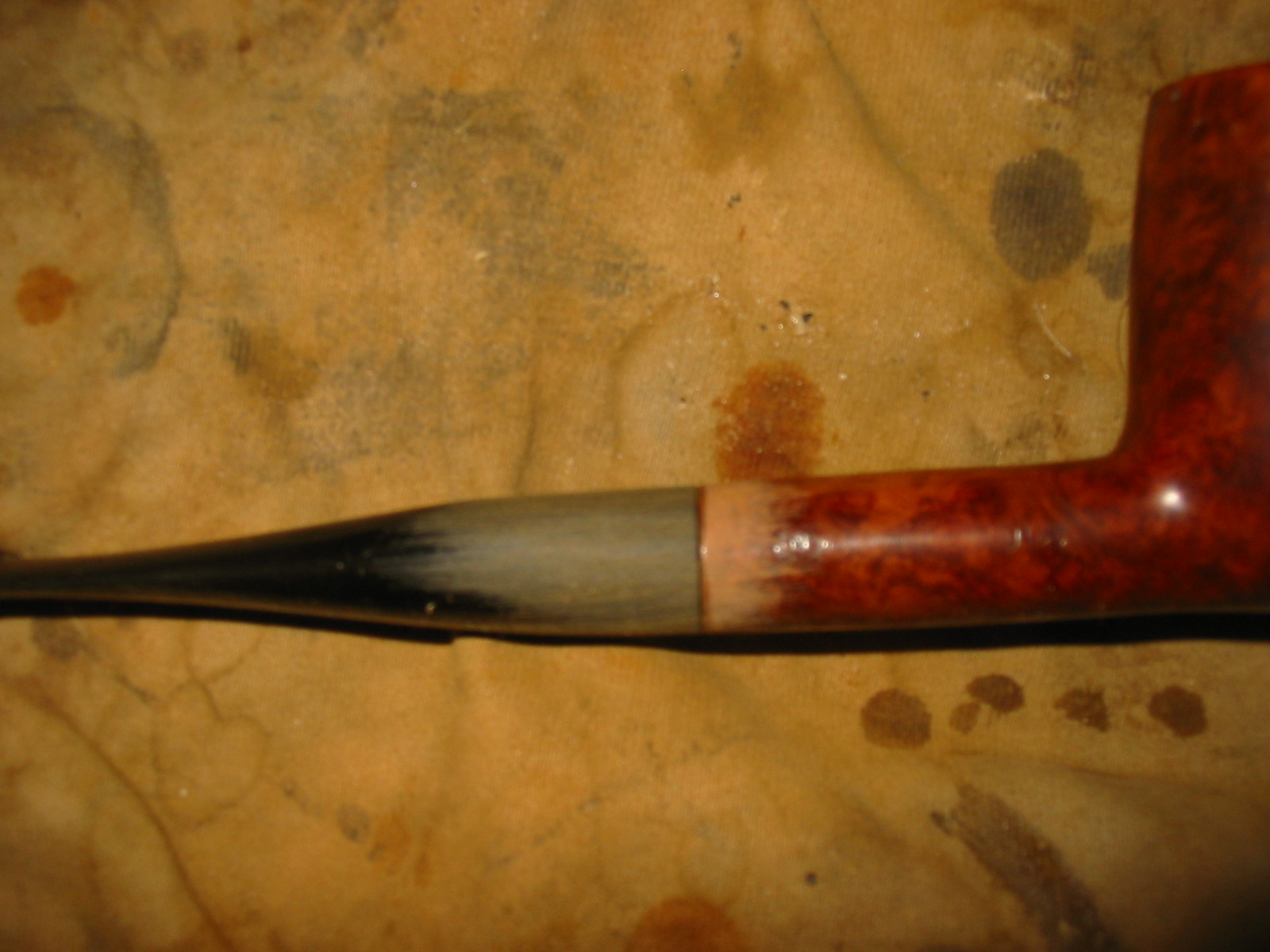
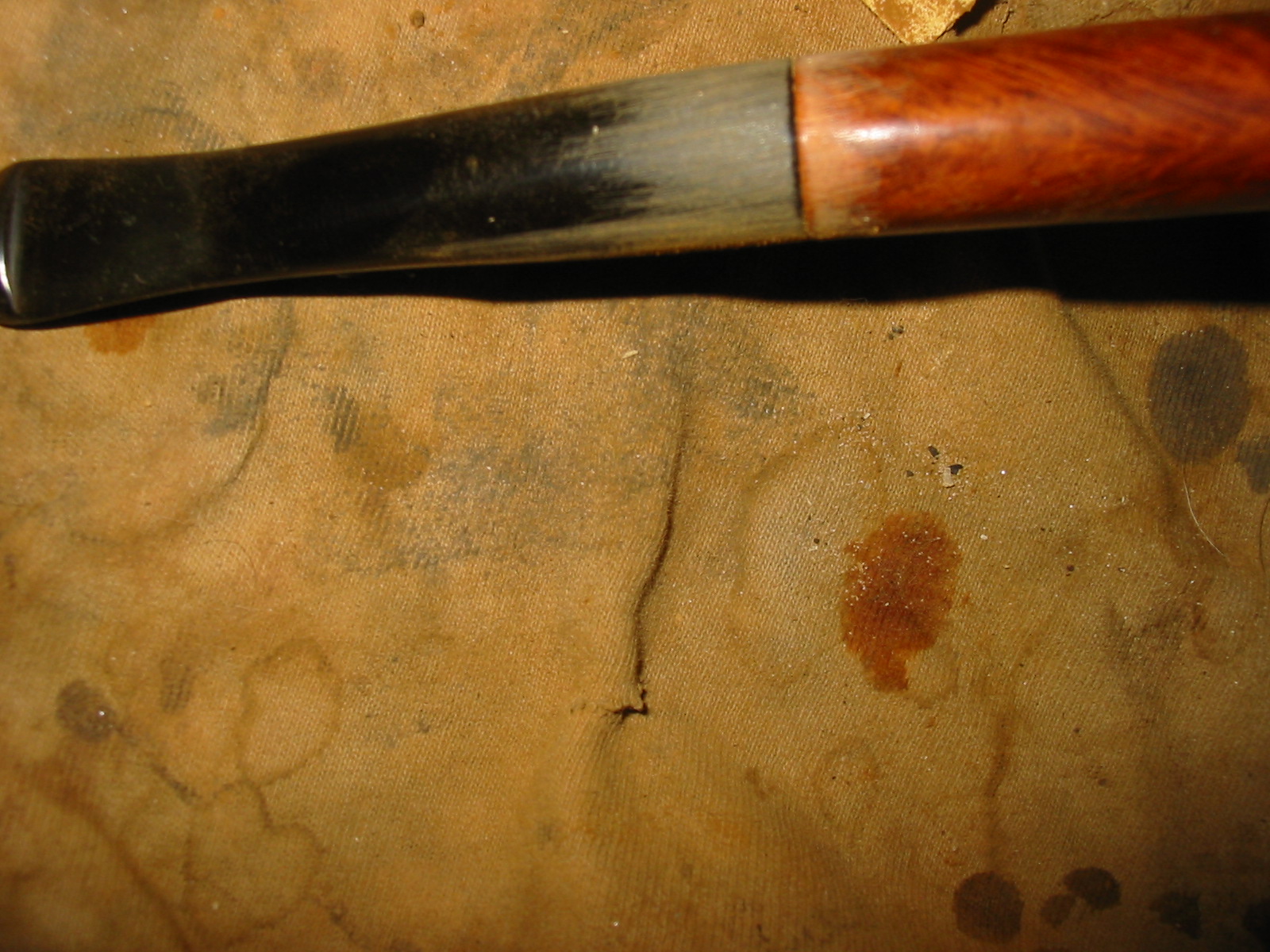
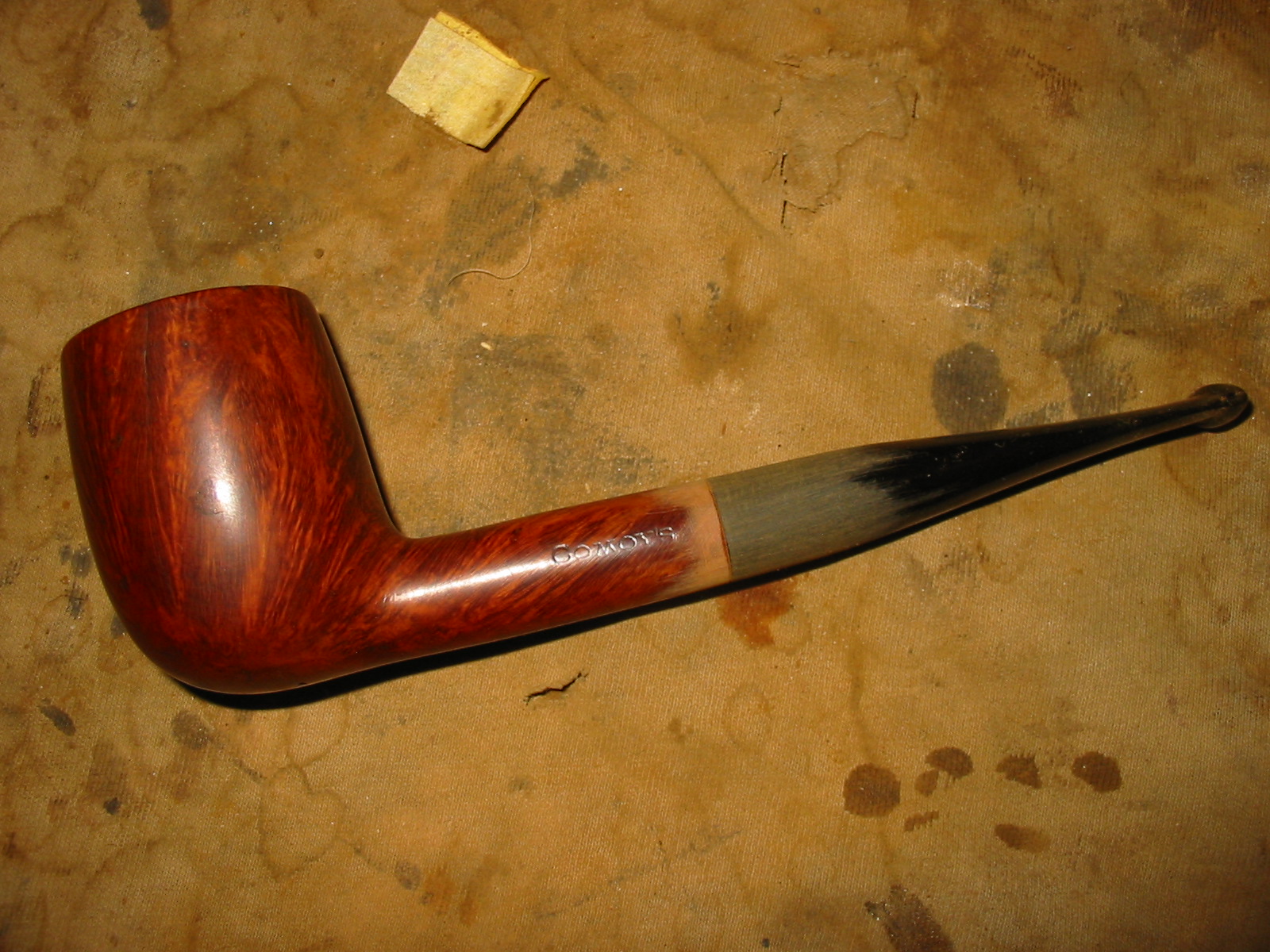
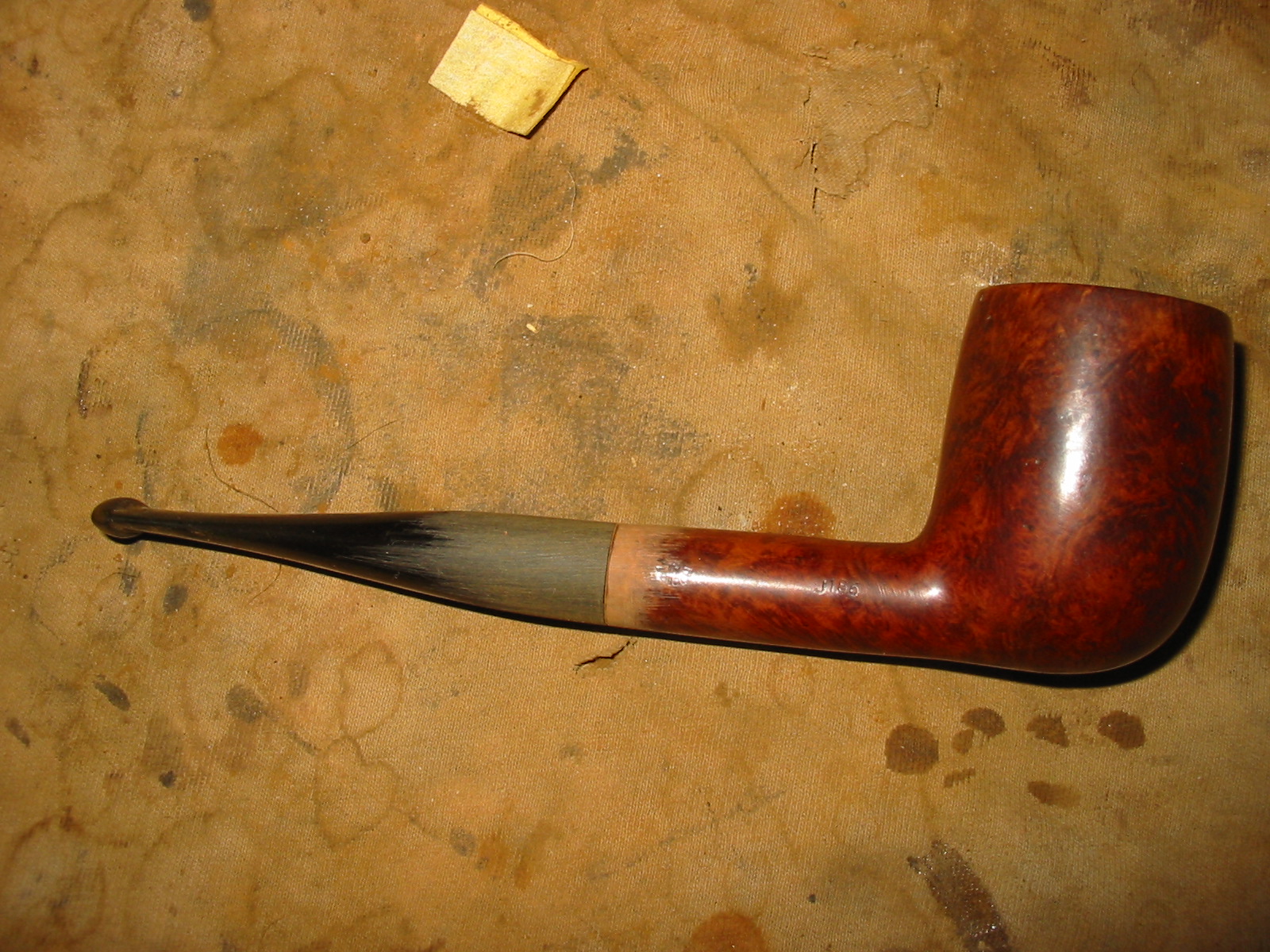
Another part of the trade I got from Mark was this damaged Comoy’s Billiard. It has some great grain on it. The stamping is Comoy’s on the left side of the shank and J186 on the right side. It also has the characteristic circular Made in London over a straight line England. This circular stamp is next to the end of the shank. The stem was a replacement – it does not have the C logo on it. It had also been repaired. I believe that Mark must have used the black superglue to patch a couple of bite marks in the stem near the button. The shoulders on the stem were rounded and the stem shank junction was not smooth. Otherwise the finish was in fairly decent shape and the stem looked good.
IMG_4669

IMG_4671

IMG_4672

In the letter Mark included with the pipes he noted that there were small cracks in the exterior bottom of the bowl. I examined it with a light and saw that the three small cracks radiated from the three divots on the bottom of the bowl. These were flaws in the briar or dents, I am not sure which. The cracks radiated from the three points to a centre point where they met. They did not extend beyond the divots. Examining the inside of the bowl the bottom was not overly deep and there did not appear to be any cracks internally.
IMG_4673

I decided to work on the rounded shoulders on the stem and the stem shank junction first. This is a very easy fix and I thought I would give the cracks a bit of thought before I worked on them. I sanded the stem and shank with 220 grit sandpaper carefully avoiding the stamping. I also did not want to sand too deeply so as to taper the stem artificially from the junction forward. This took care but I was able to smooth out the rounded shoulders. I followed the 220 sandpaper with a medium and a fine grit sanding sponge to remove the scratches.
IMG_4675

IMG_4676

IMG_4677

IMG_4678

IMG_4679

IMG_4680

IMG_4681

IMG_4682

I wiped the bowl down with acetone to remove the finish and make the restaining easier. I also wanted to clean up the bottom of the bowl to be able to examine the cracks more closely.
IMG_4683

IMG_4684

IMG_4685

As can be seen in the photo below the cracks are virtually invisible to the eye. There is no burn or darkening around the cracks so I am pretty sure that it is not a burn out. I decided to restain the bowl and see how the stain took in the area of the cracks.
IMG_4686

I stained the pipe with a dark brown aniline stain mixed 2:1 with isopropyl alcohol to approximate the colour on other Comoy’s I have. In the photos below it appears far redder in colour than it is in reality. I flamed the stain and repeated as necessary. The cracks were still visible so they would take a bit more work to repair.
IMG_4690

IMG_4691

IMG_4692

IMG_4693

I worked on the stem with my usual array of micromesh sanding pads – wet sanding with 1500-2400 grit pads and dry sanding with 3200-12,000 grit pads. I rubbed the stem down with Obsidian Oil and let it dry. I buffed it with White Diamond paying particular attention to the patches around the top and bottom of the stem near the button. I was able to blend them in well and the black of the polished stem and the black of the superglue match.
IMG_4694

IMG_4696

I decided to work on the cracks on the bottom of the bowl. I scratched out the cracks using a dental pick. I was able to clean out the debris in the cracks and open them slightly. They did not go deep into the briar and there was no internal darkening in the bottom of the cracks. I packed in briar dust and dripped superglue into the briar dust. The photo below shows the superglue briar mix after it had dried. I over filled the cracks to ensure good coverage of the repair.
IMG_4697

I sanded the patch with 220 grit sandpaper to remove the excess glue and followed that with a medium and a fine grit sanding sponge. The photo below, though slightly out of focus shows the repair clearly. It is almost a Y shaped repair.
IMG_4699

IMG_4700

I mixed a batch of pipe mud – cigar ash and water to make a paste. To ensure that the bottom was not damaged I picked it clean with the dental pick and then painted it with the pipe mud. Though there was no sign of damage on the inside of the bowl, the pipe mud was a precautionary measure for peace of mind.
IMG_4702

IMG_4703

I buffed the pipe with White Diamond and gave it multiple coats of carnauba wax to protect and to give it a shine. I have set it aside to allow the pipe mud to cure before using it. I want to see if the bowl bottom heats up at all during a smoke. I am happy with the overall look of the repaired pipe. If it turns out that the cracked area over heats then it may well be a candidate for a briar plug. The verdict is still out for now, but time will tell.
IMG_4704

IMG_4705

IMG_4706

IMG_4707

Repairing and Restoring a Lumberman Deluxe Canadian by Comoy’s


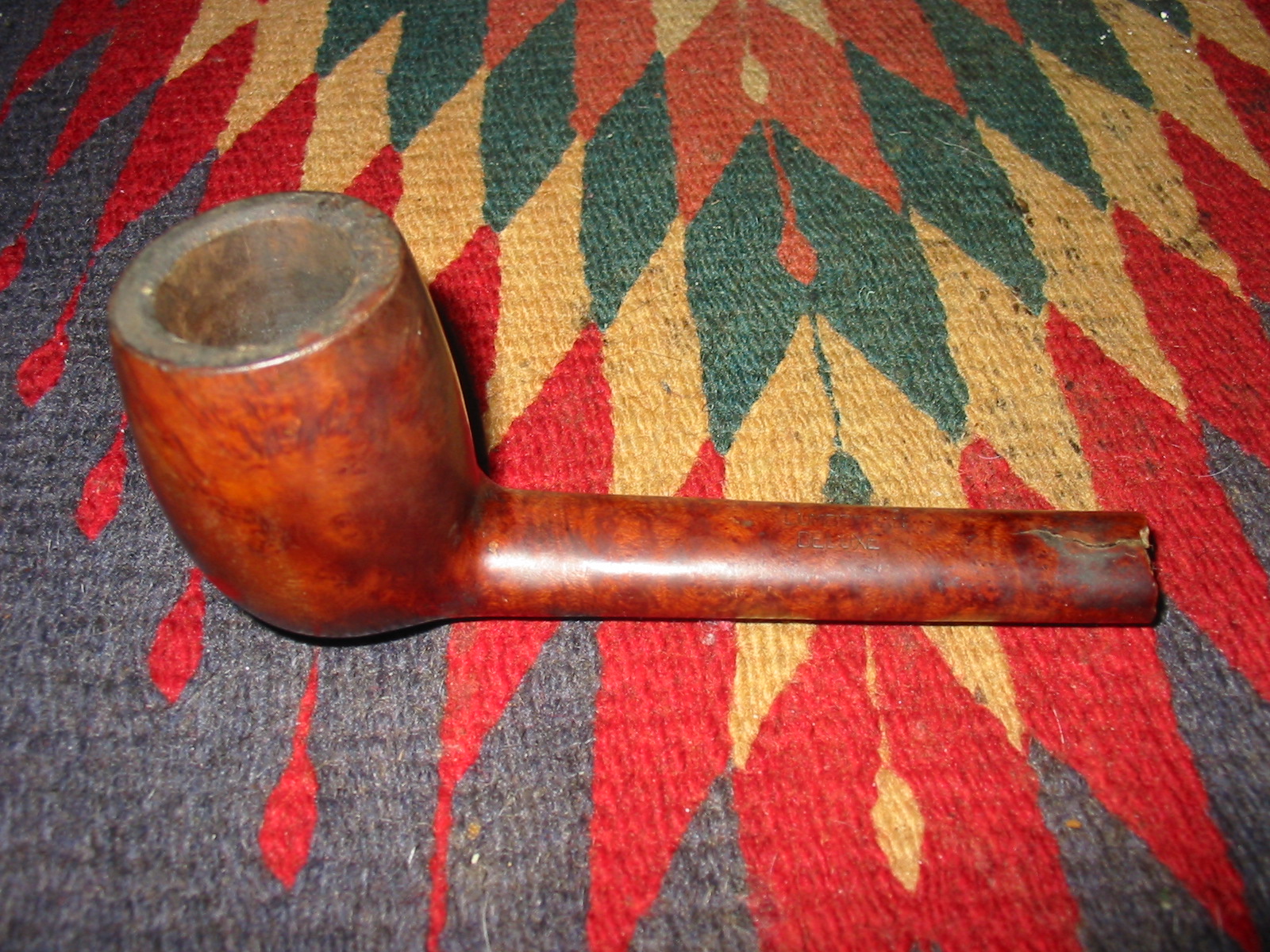
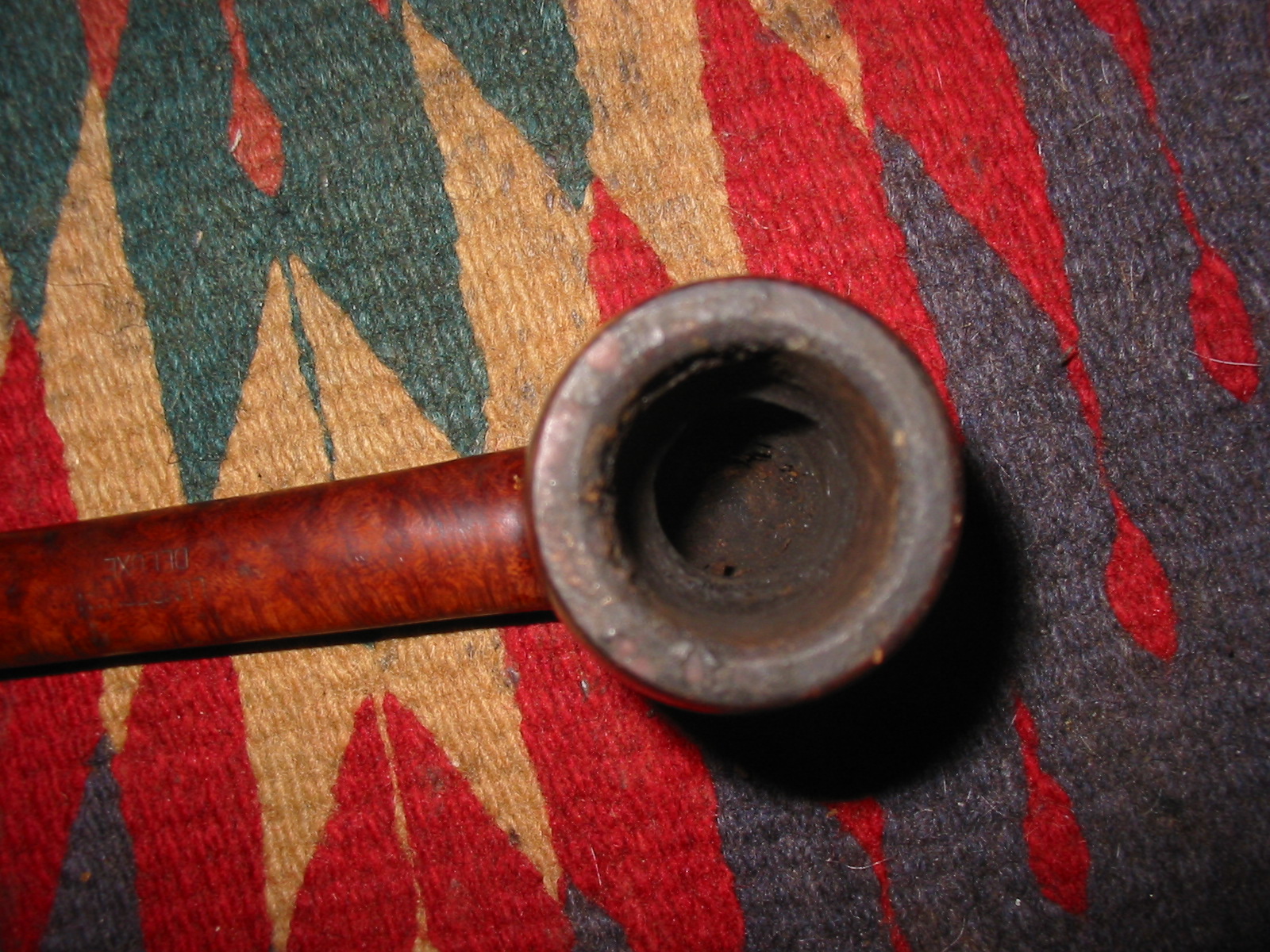
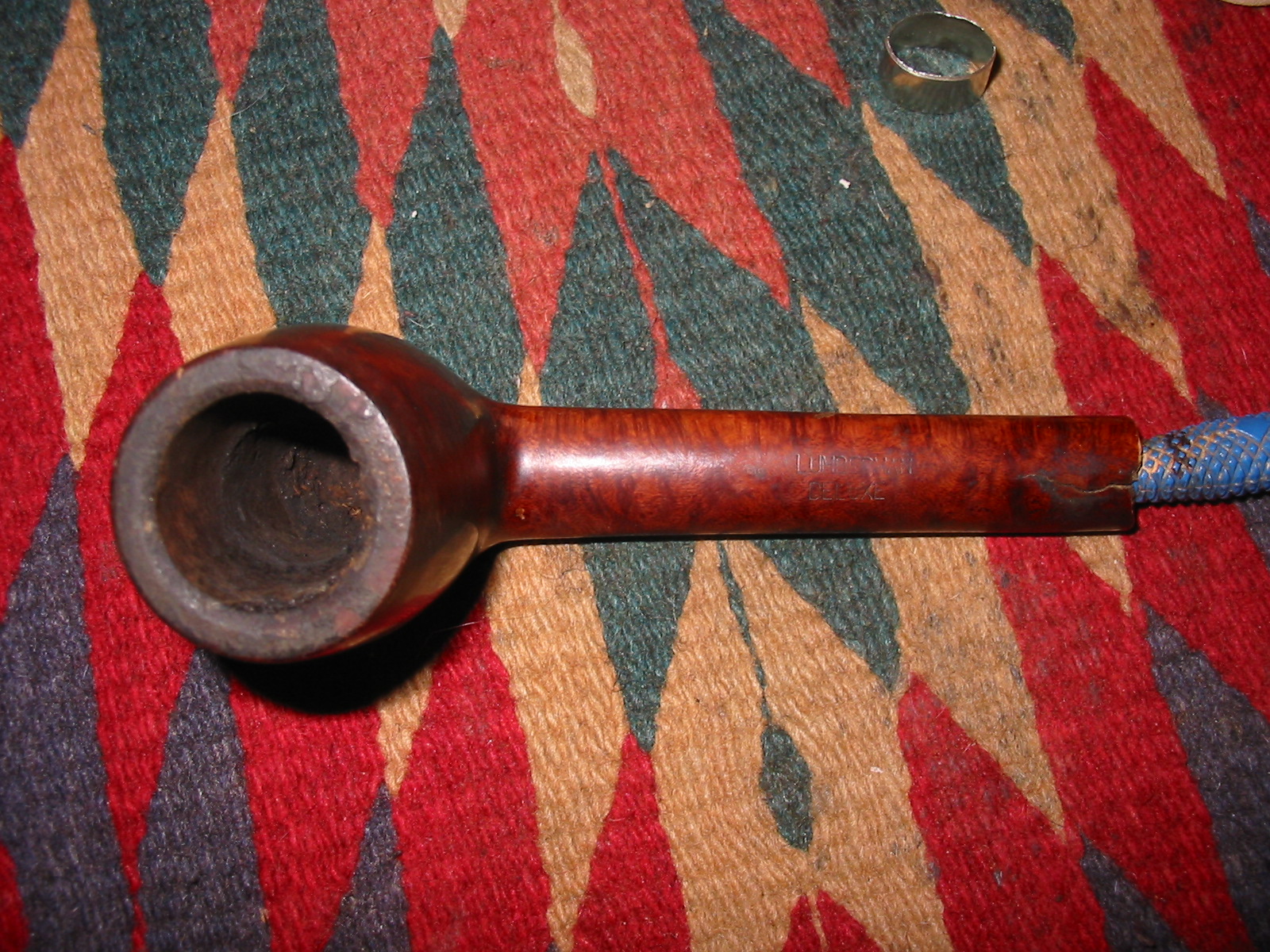
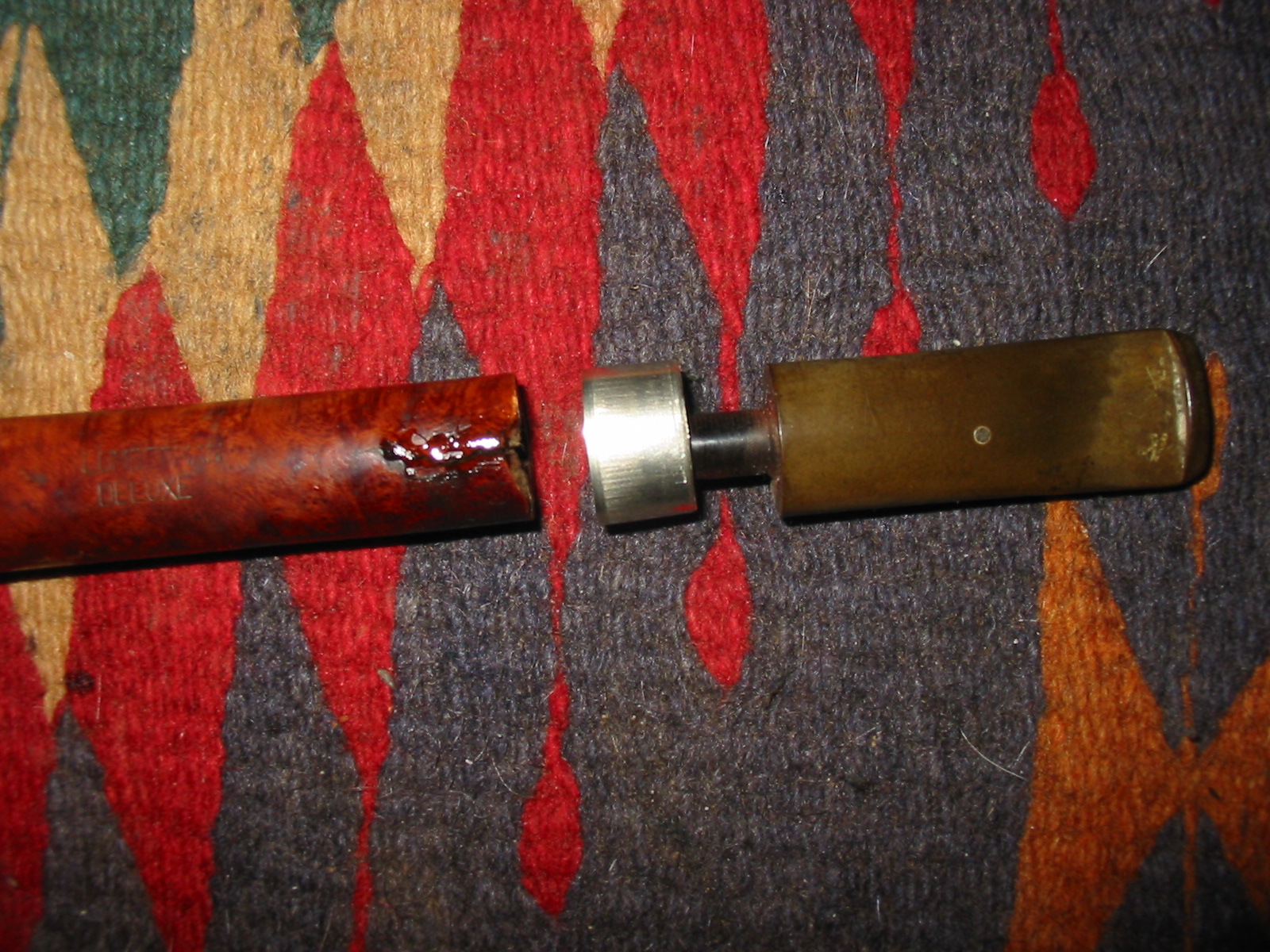
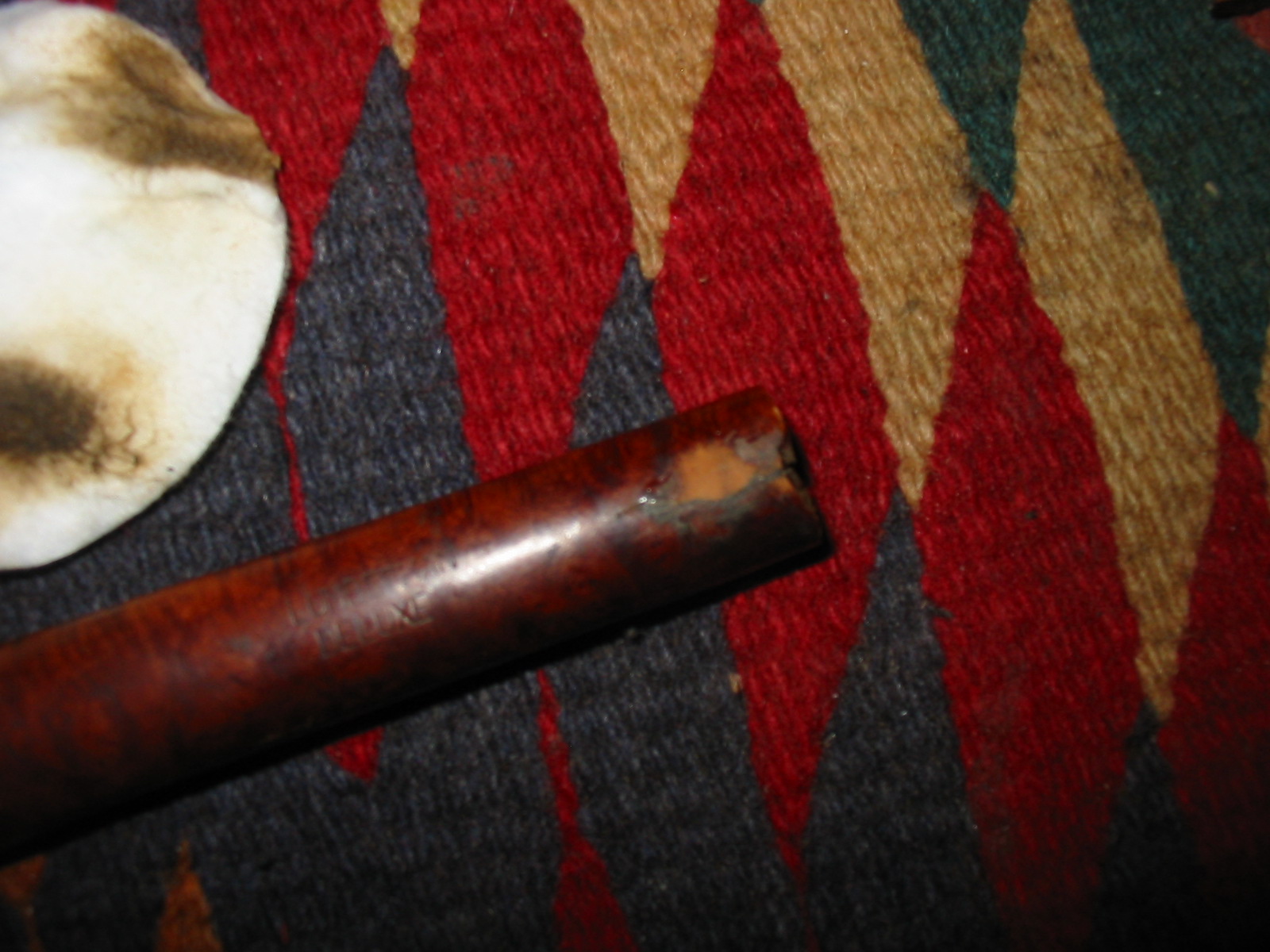
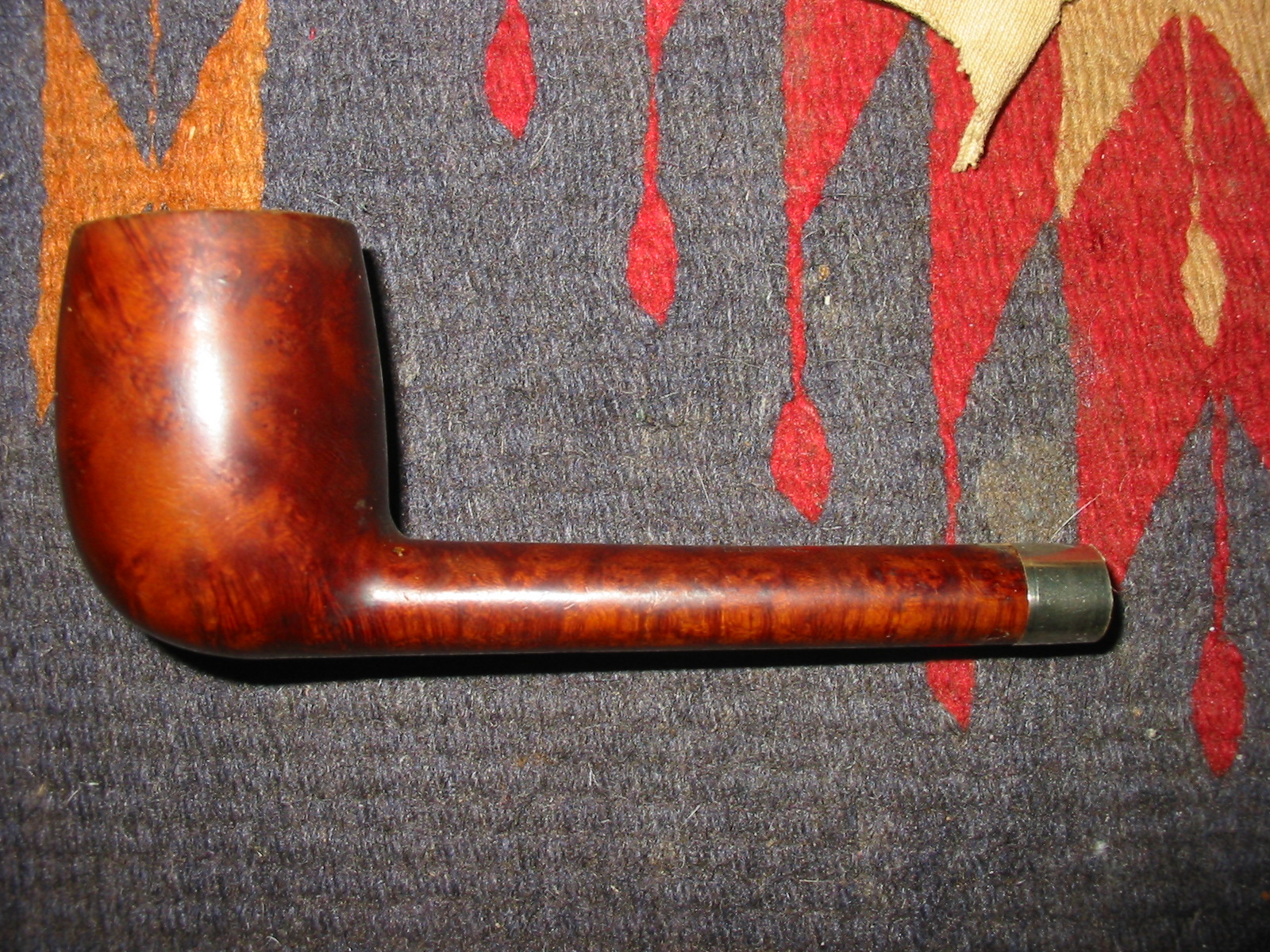
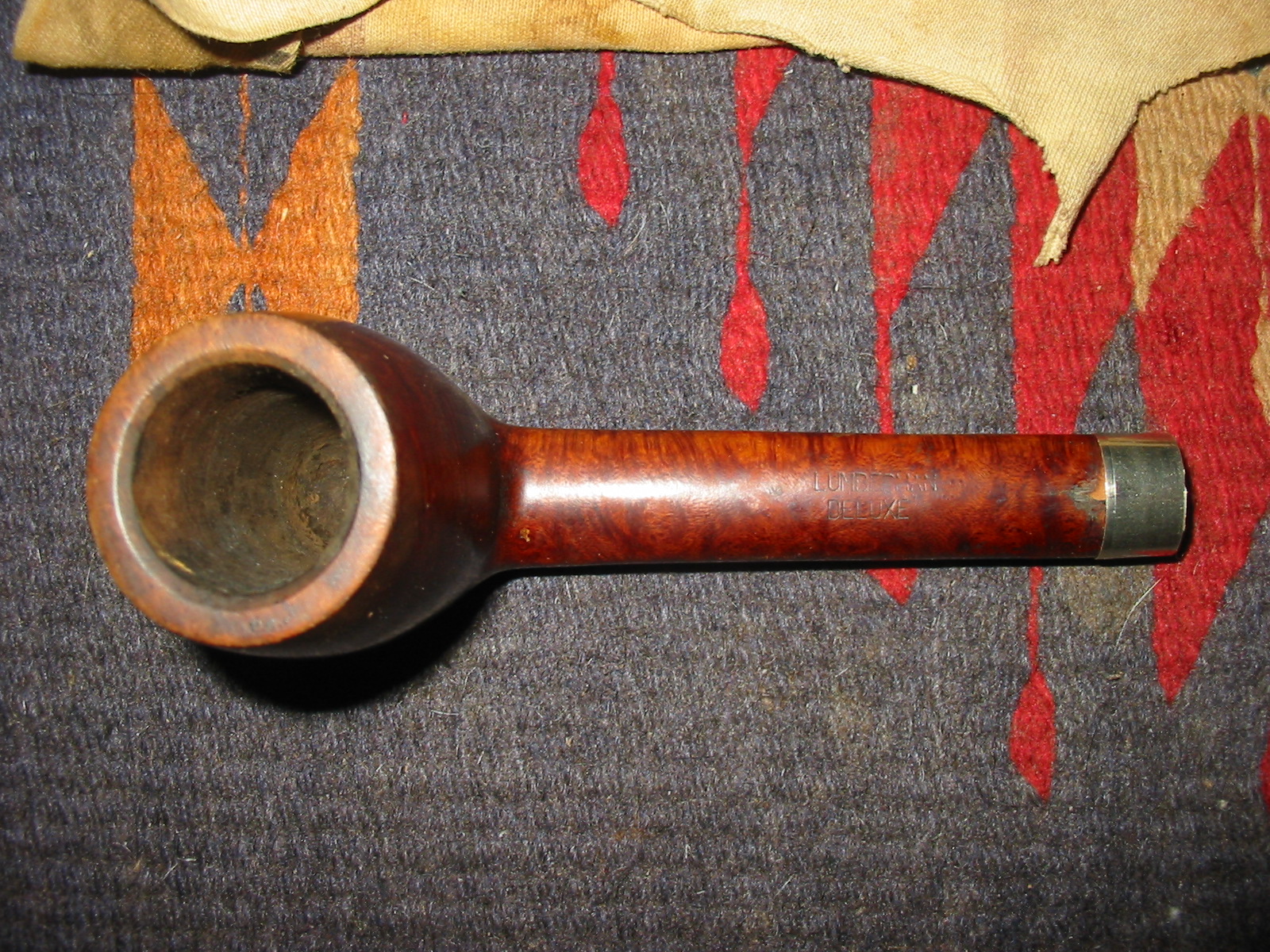
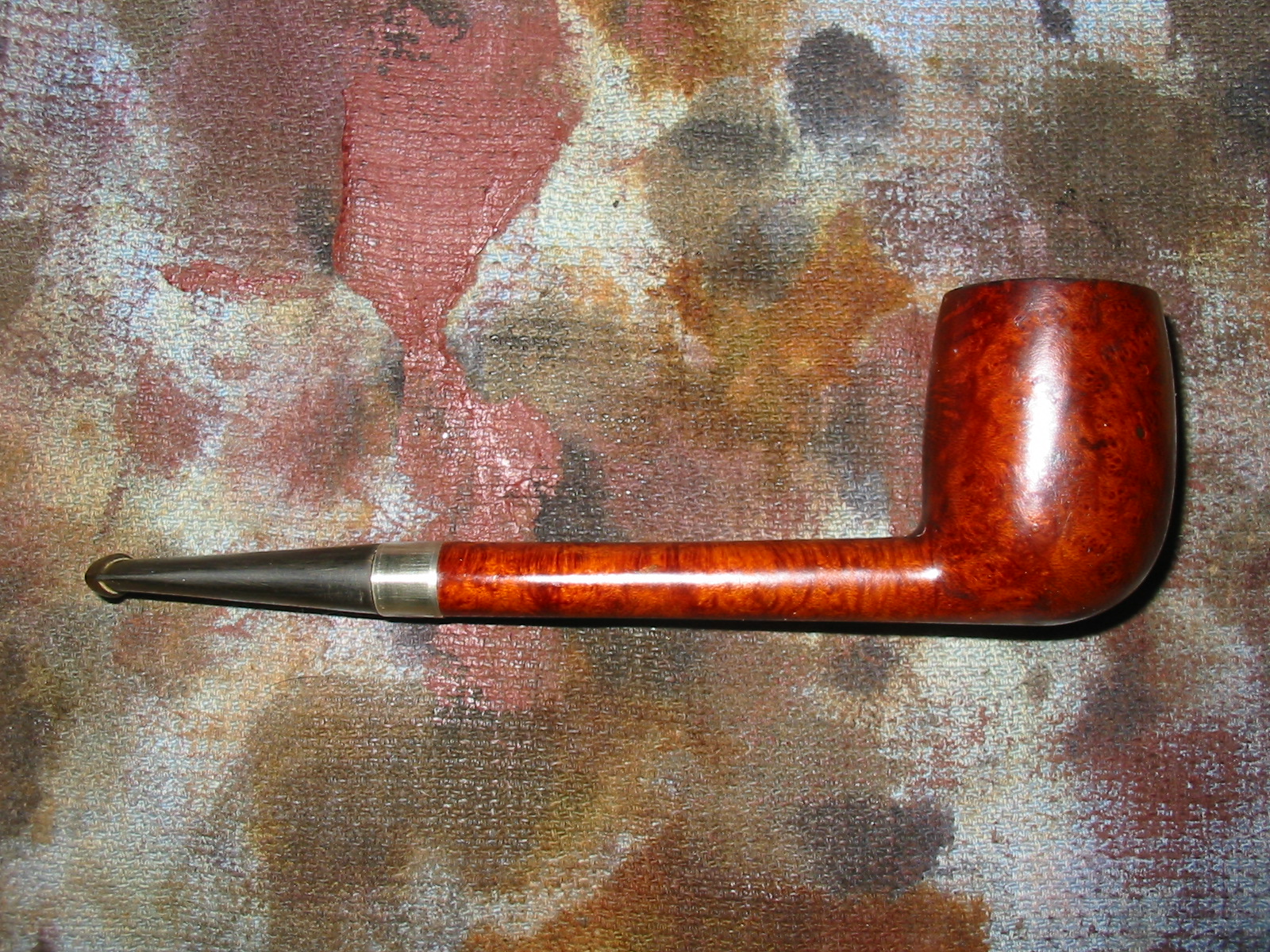
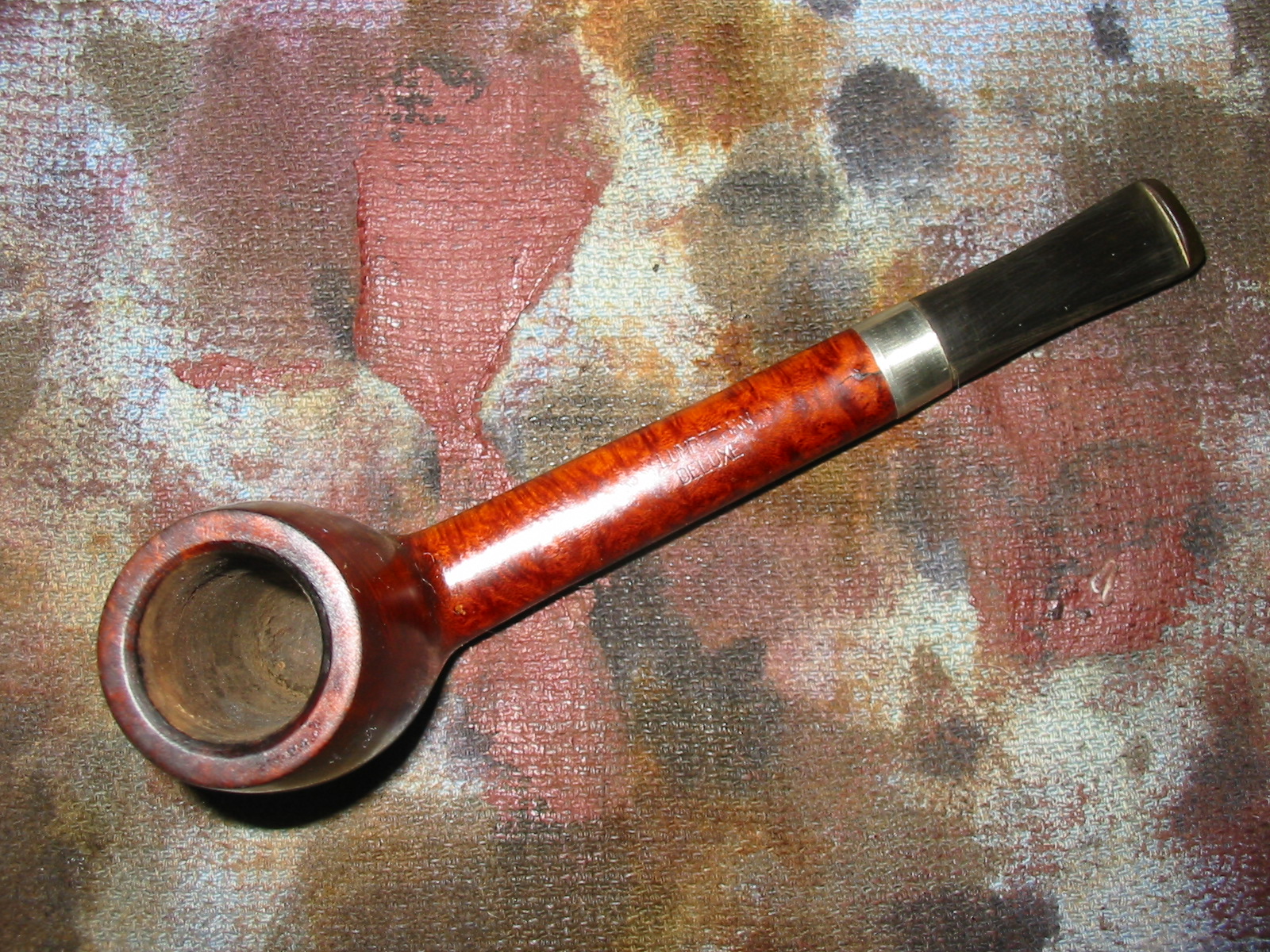
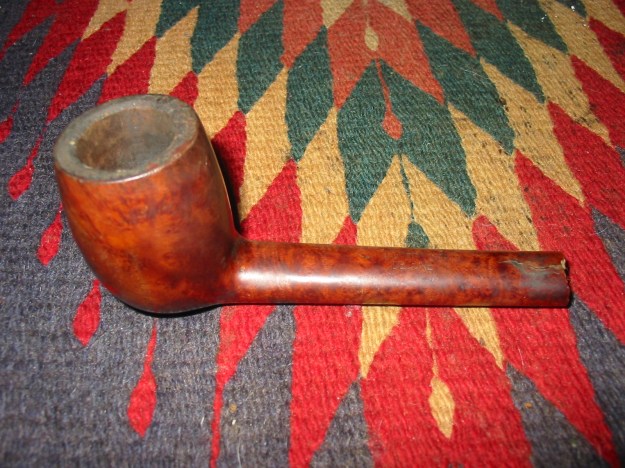
In a batch of pipes I was gifted by Andrew there was a pipe to repair. It is pictured below. The stamping on it was new to me. It is stamped LUMBERMAN over DELUXE on top of the shank and on the underside it is stamped Made and London arced in a circle with “in” at the center of the circle. It is also stamped 309X. I do not see an L after the X in the stamping of the shape number. The shank was cracked and looked like it had been taped from the sticky substance left around the shank and crack. It also was without a stem. Looking it over it appeared that the shank had also been cut off slightly and the cut was crooked. There was a chipped out portion at the end of the crack. All of that would need to be evened out in the repair. The bowl was caked toward the bottom and dirty with a buildup of carbon on the rim and the inner bevel of the rim. The finish was dirty and there were remnants of sticky tape that had been used to repair the shank on both the bowl and the end of the shank. It needed some TLC and work if it was going to be brought back to life.
IMG_4521

IMG_4522
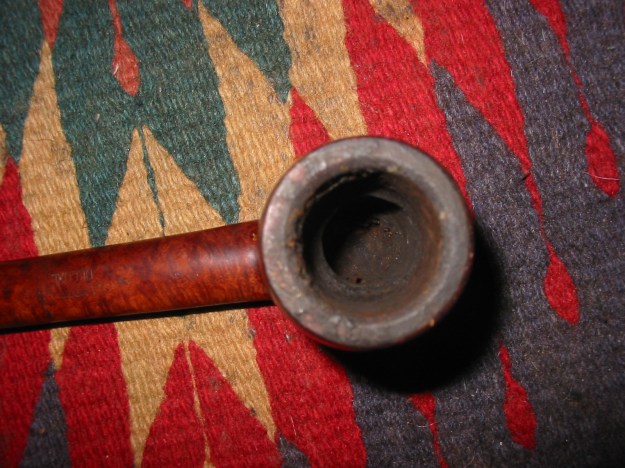
The close up photo below shows the extent of the caking and the buildup on the rim. Note that the inner bevel was intact and the rim itself was undamaged – no nicks or dings on the outer edge and no burn marks. This one would clean up nicely.
IMG_4528

The Lumberman stamping was new to me. I had not heard of it before but it looked interesting in the photos that Andrew sent along. I asked him about the brand so he included some interesting information on the stamping that he had gleaned from a Mr. Can EBay listing. It certainly sheds some light on the brand. Here is how the listing read:

“This Collectible Briar pipe is unique, extremely rare Comoy’s 309XL – a classic Canadian Shape. It has the arched Comoy’s nomenclature stamped over Deluxe (just as it appeared in the early 1930’s) both of which were stamped over Lumberman. For anyone already familiar with the stamping of Comoy Canadians that is enough to recognize that this is a rare and collectible Comoy.”

It appeared that the pipe was made by Comoy’s and well worth the effort to restore it. Andrew also sent along three pages of background information that he had found on the brand. I believe that Mr. Can was also the source of this information. I have included some of it here as it is interesting to those of us who are curious regarding the history of the pipes we collect:

“During its history, Comoy’s has had three distinct sets of nomenclature, though they became somewhat blended in later years. The earliest Comoy nomenclature either had no Comoy stamping or a scripted, signature like forward leaning Comoy’s beneath which were featured names instead of shape numbers. Few of those names (Like Leman, Naval, Adelaide, and so on) are recognized even by the most ardent collectors. Then after World War I when Comoy began introducing what is sometimes called their Old Nomenclature (featuring the Prima, as the Top of the line with other lines like the Old Bruyere, Grand Slam, Lions Head, Lumberman, Lumberman Special and so forth) and arched Comoy’s stamping was used. In the 1930’s the Prima gave way to the Deluxe as the top of the line Comoy. Then just before World War II newer nomenclature started to appear (like Blue Riband, Specimen Straight Grain, and so on) and the Deluxe was replaced by the Royal Comoy. That New Nomenclature expanded dramatically after the War and blended with the modern nomenclature today.”

“The use of the arched Comoy’s ended with World War II and was replaced after the War with a straight line Comoy’s (along with the now famous country of origin stamping of a circular “Made In London” over a straight line “England”.”

“Prior to World War II with manufacturing facilities in both France and England, Comoy had pipes made in both locations. Most were easily identifiable by their country of origin stamping. There were several versions of Comoy’s Lumberman made in France and/or England. (They might have been the dame pipe but with different nomenclature.) “The Lumberman” and “The Lumberman Special were made in both factories. But none had the arched Comoy’s stamping.”

“After WWII Comoy’s reintroduced the Deluxe, discontinued the arched Comoy’s and continued various versions of the Lumberman. Perhaps Comoy’s best graded Lumberman was stamped Lumberman Deluxe – but it had no Comoy stamping. Lumber was always stamped over Deluxe.”

“Normally Comoy offered to Canadian sizes designated by shape numbers 296 and 309. The difference was in the length of the Canadians. The 309 shape was Comoy’s longest Canadian and the 296 was shorter. However, the extra long Canadians were upgraded with the additional stamping of XL and the very longest were sometimes stamped XXL. Either upgrade was rare.” – the above was taken from correspondence Andrew included when he sent the pipe to me.

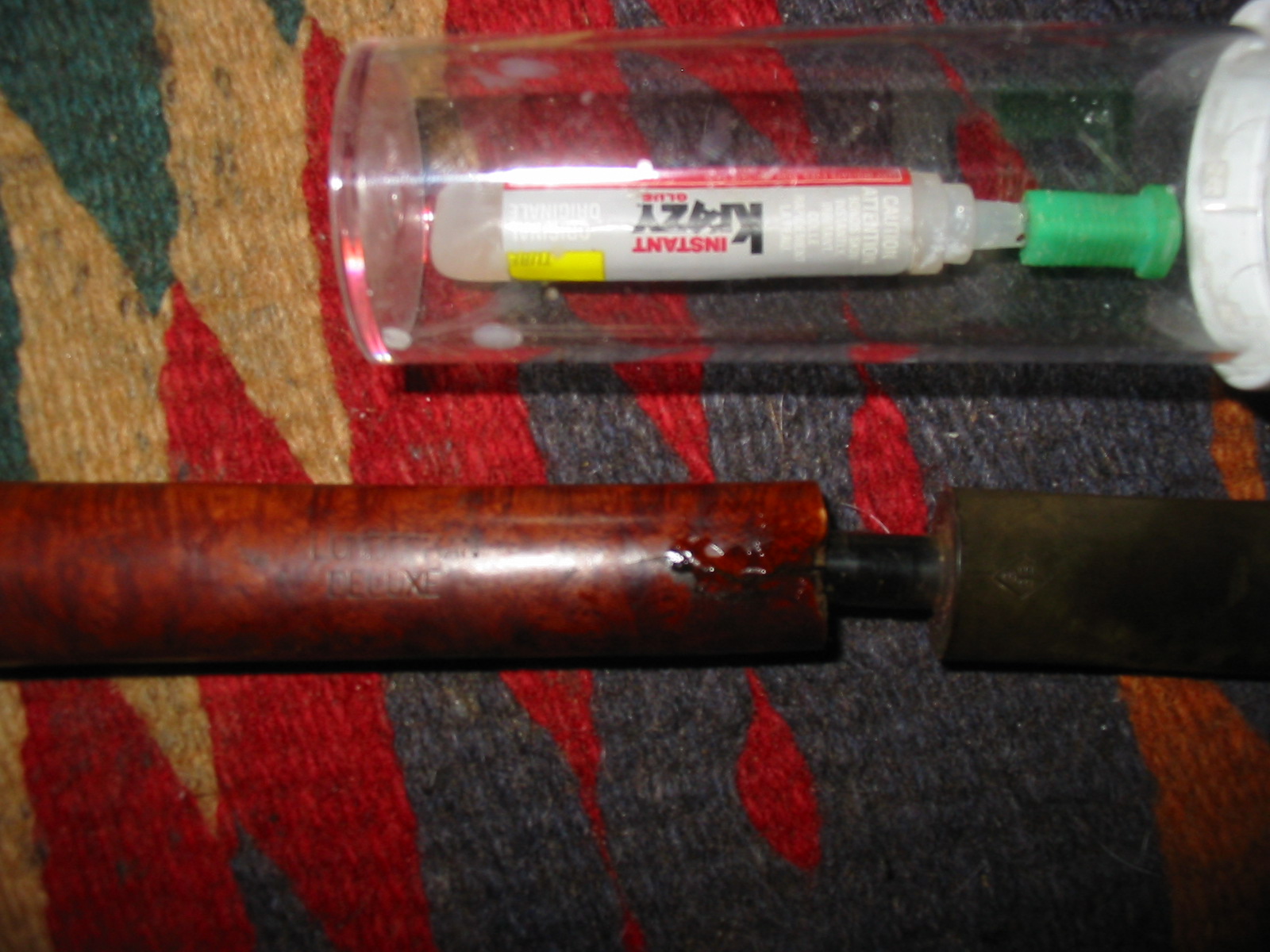
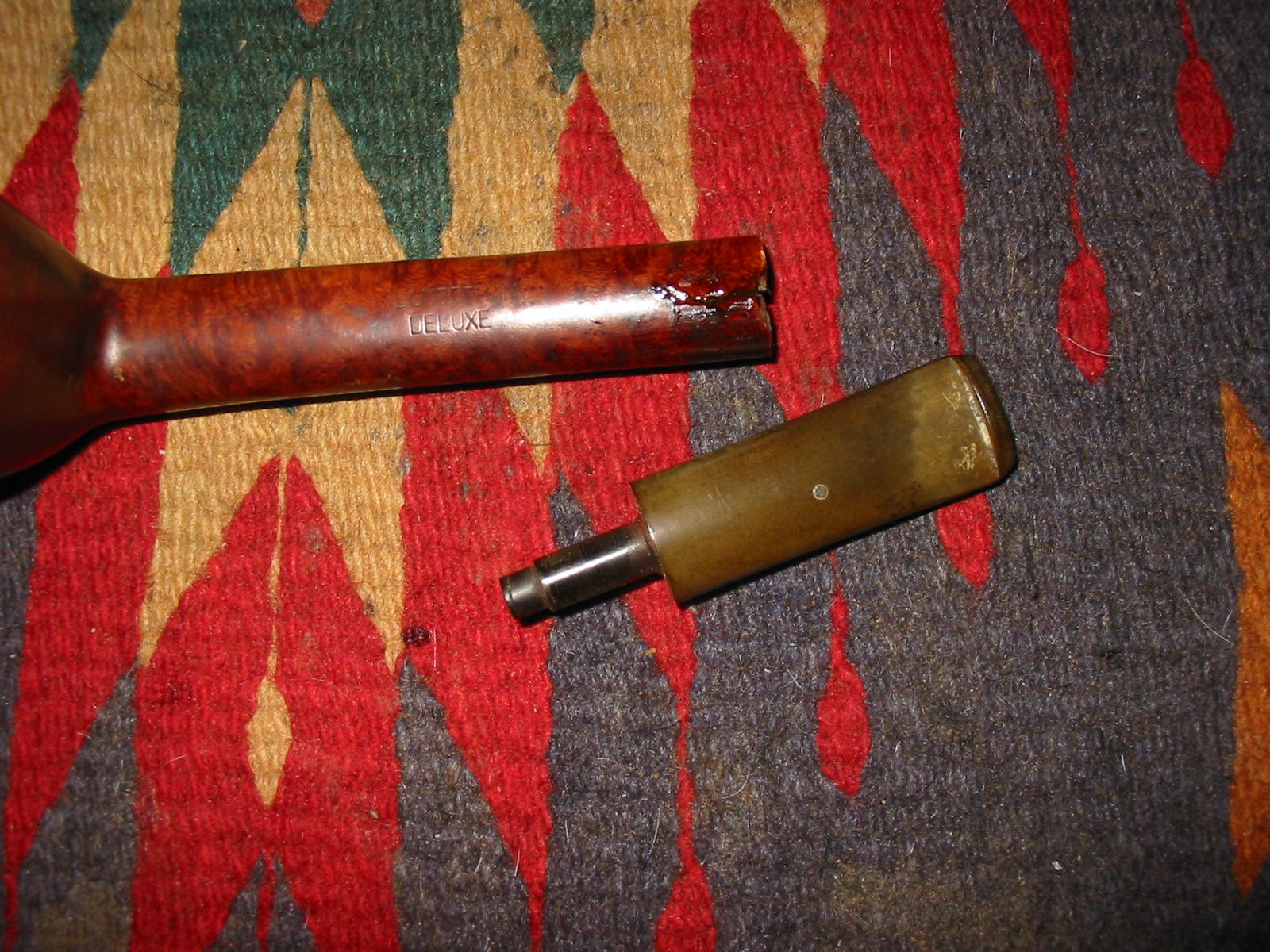
Armed with that information I was ready to work on the pipe. I have included a series of photos below to show the cracked shank and the repair I did to it. In the first photo I inserted a dental pick in the shank to open the crack so that I could clean it out. Also included in that photo is the band that I would use to band the cracked shank.
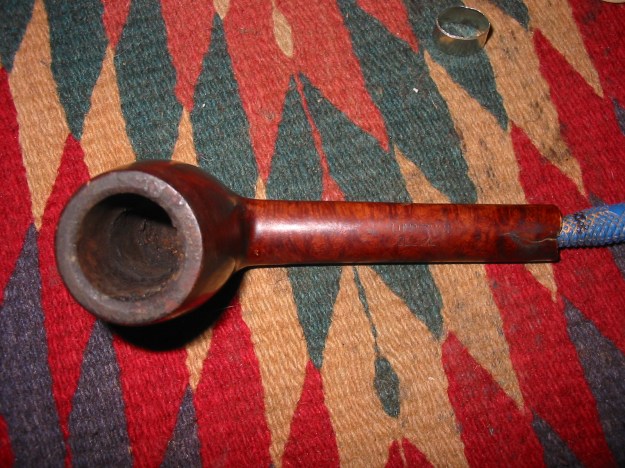
IMG_4523

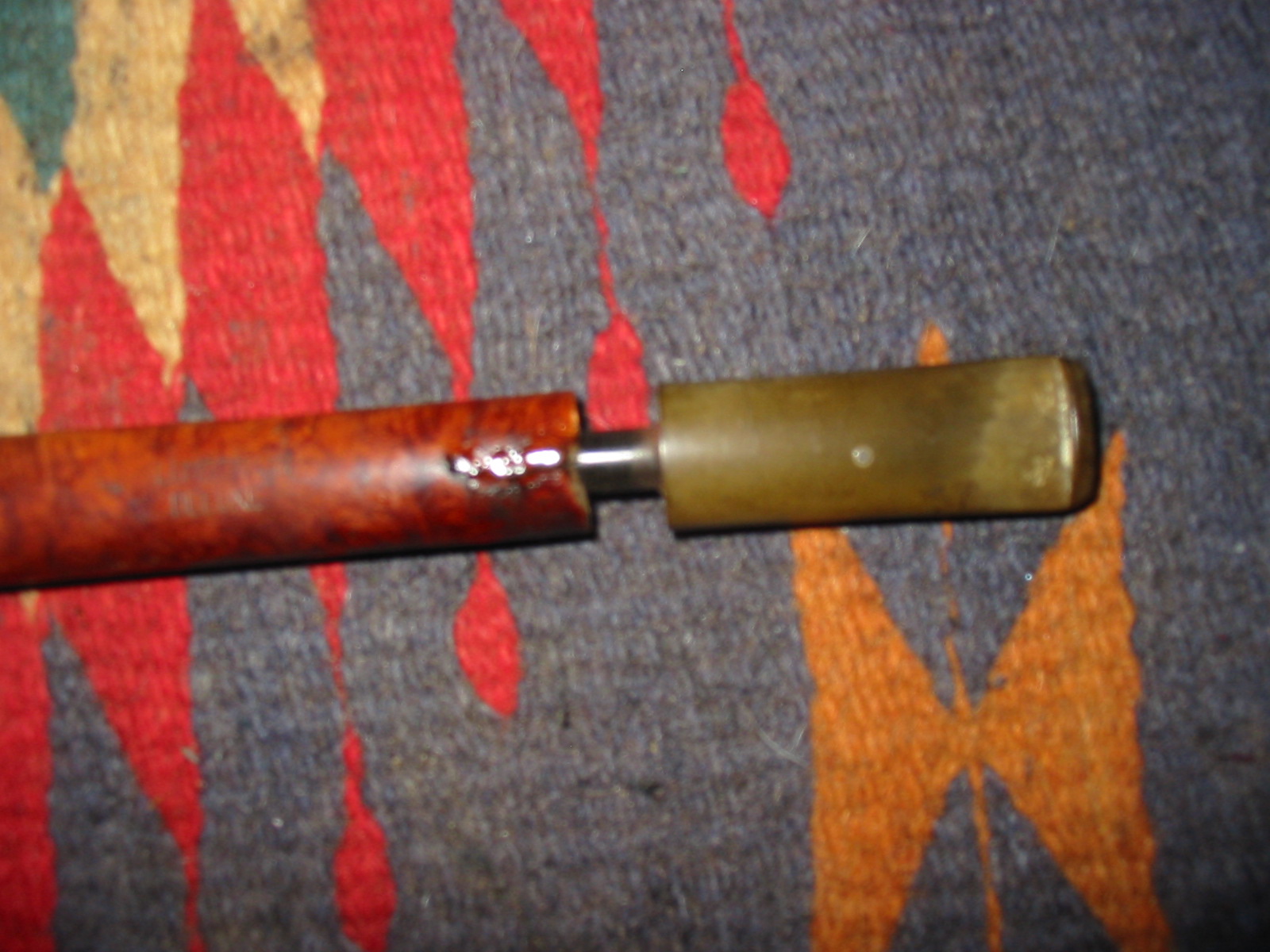
I wiped down the shank with acetone on a cotton pad to clean off the grime and build up of material left behind by the tape that had been used to repair the shank. Once it was clean I dripped some superglue into the crack of the shank and held it tightly together until the glue had dried. Once it had dried I inserted the end of the tenon of the stem I was going to fit to the shank of the pipe for the photos.
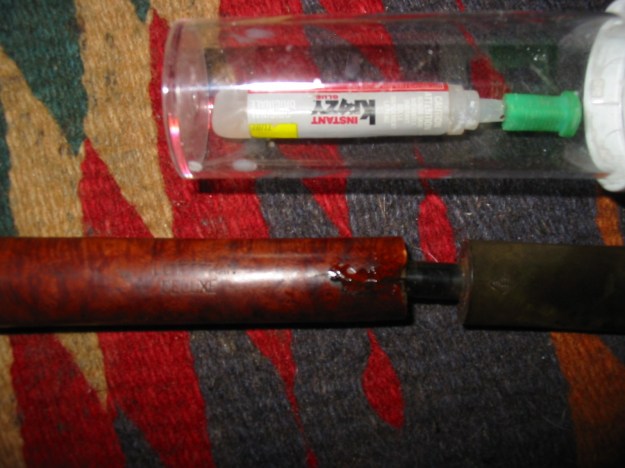
IMG_4532

IMG_4533

IMG_4534

IMG_4535

I sanded the repair and removed the excess glue from the surface of the top of the shank and wiped the area down with Everclear on cotton pads to clean up after sanding.
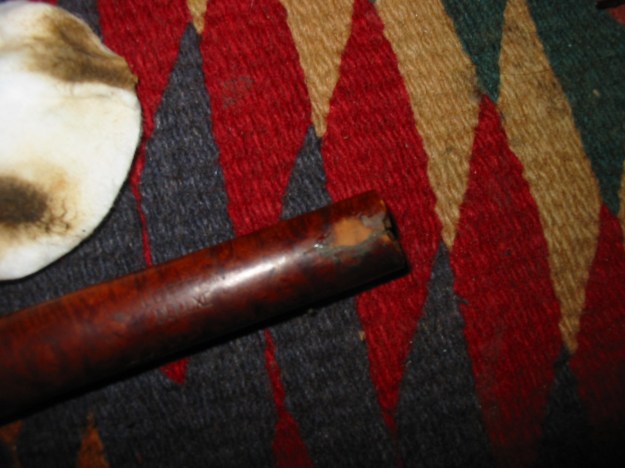
IMG_4539

I decided to ream the bowl and clean the rim before I went on to band the pipe. I cleaned the inside of the shank as well as I did not want the grime and build up to run when I heated the shank and the band for the pressure fit. I reamed it with a PipNet reamer and scrubbed the rim with saliva on a cotton pad and good old fashioned elbow grease.
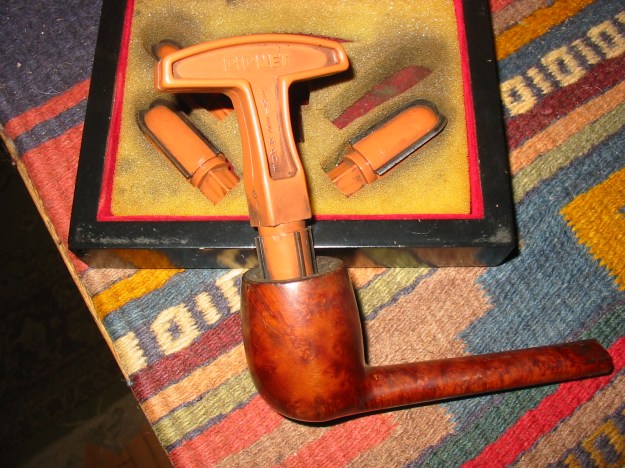
IMG_4537

IMG_4538

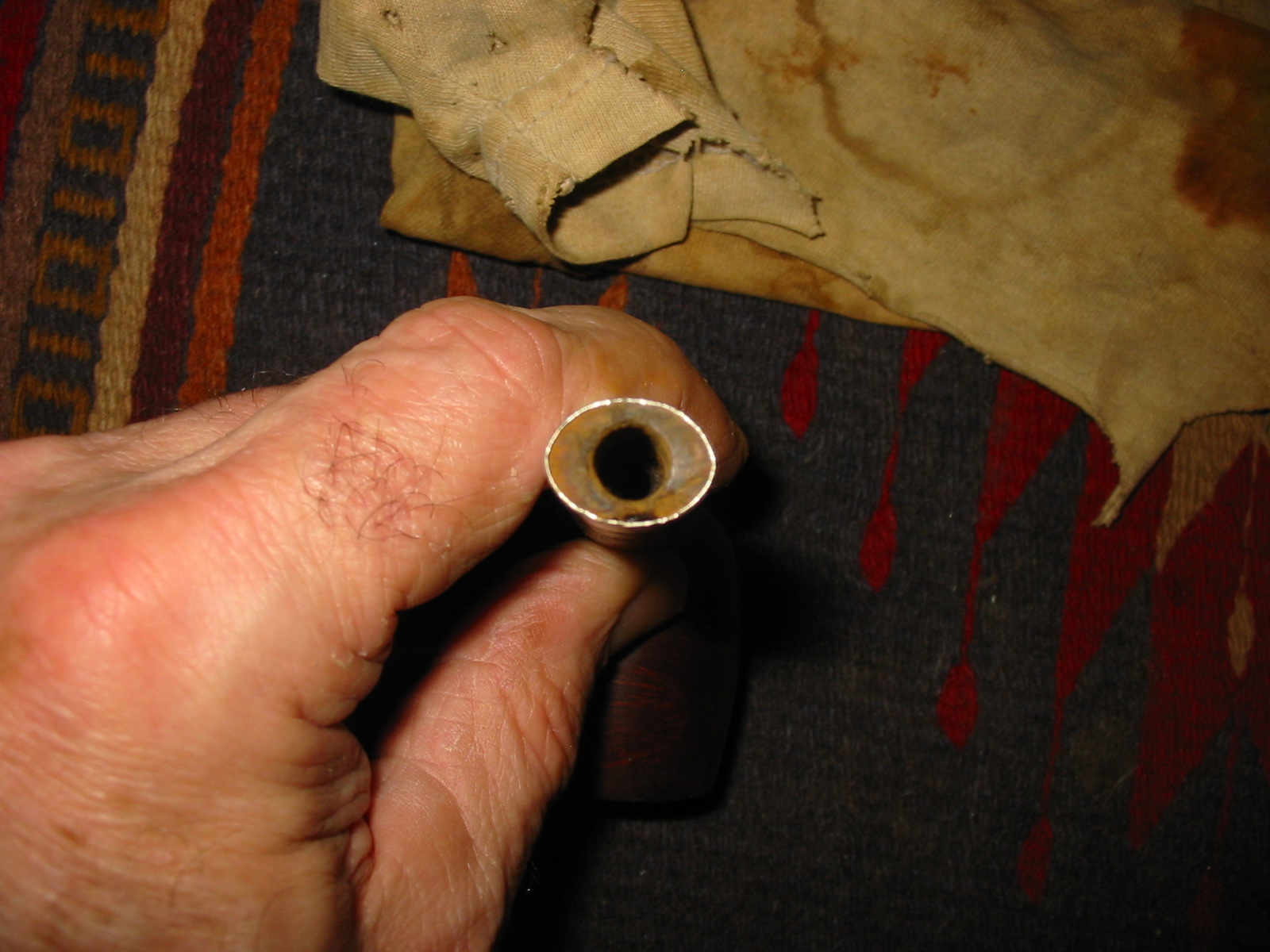
I turned the tenon down to get a good fit in the mortise and against the end of the shank. I wanted to see what I was working with in terms of the cut off shank. I knew that it was not straight but I wanted to see how far off it was. I also wanted to see the damage to the shank from the crack. The next series of four photos shows the damage to the shank. I was able to smooth out some of the damage but the band would certainly help in making the end of the shank smooth. I did not want to cut off any of the length after reading the information that Andrew provided. From photos I looked at on the net the stem was the right shape, taper and angles to fit this age of pipe. The old stem I chose was one that had the BBB diamond stamped on the top of it. The stamping was faint so it was a good one to sacrifice for this Lumberman.
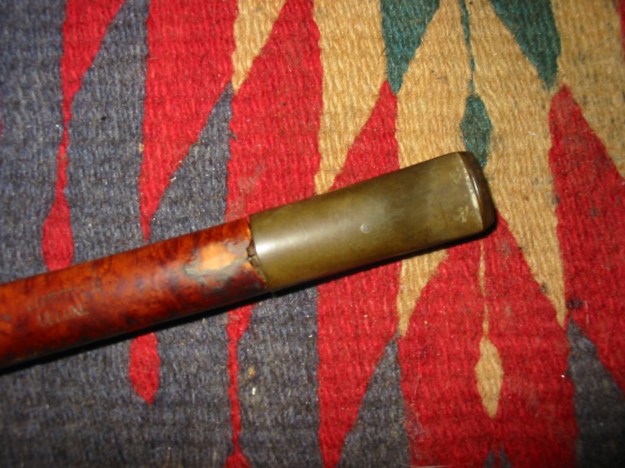
IMG_4540

IMG_4541

IMG_4542

IMG_4544

I removed the stem once it fit well and pressed the band onto the shank. I then heated it with a heat gun rotating the shank to evenly heat the band and keep the heat from burning the briar.
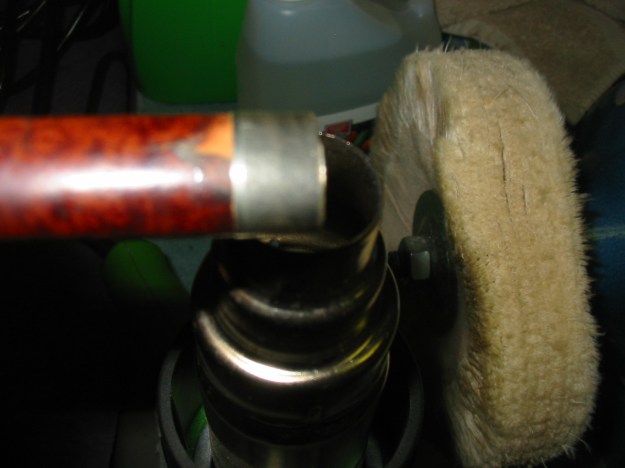
IMG_4546

IMG_4547

I pressed the band in place while it was still hot. I use a flat board and press down evenly until the band slides into place. This takes repeated heating until the fit is tight and straight against the end of the shank. In the case of this pipe after I pressed it in place I sanded the damaged end of the shank until it was even and then used a knife to cut a slight bevel on the inside edge of the mortise so that the stem would fit properly.
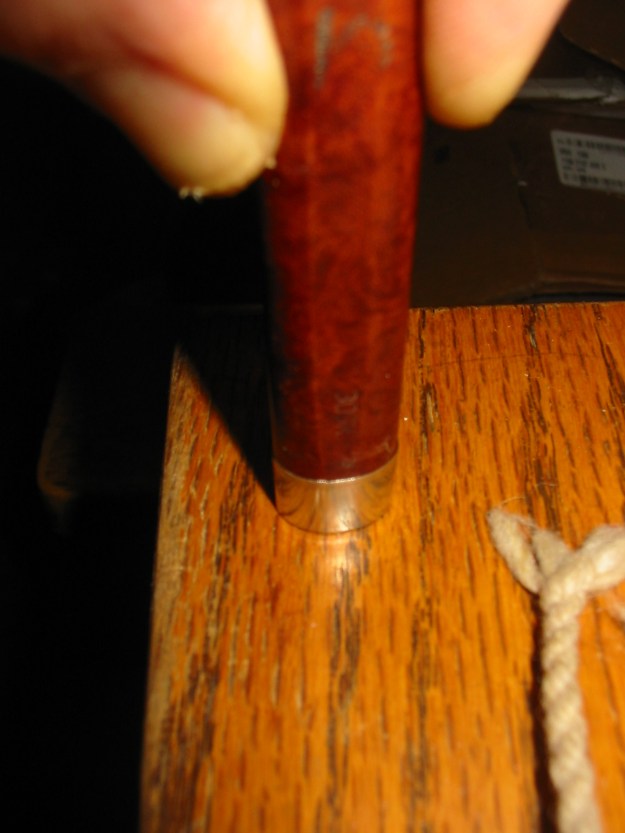
IMG_4548

IMG_4549

IMG_4550

IMG_4551

Once the band was in place I needed to sand down the tenon so that it would fit in the newly constricted airway. I used a folded piece of 220 grit sandpaper to sand down the excess vulcanite on the tenon so that the fit would be snug. The next three photos show the new stem in place with the band. The stem had been sanded with 220 grit sandpaper to match the lines of the shank and give a proper taper to the stem from the band to the button. I also sanded it with a medium grit sanding sponge.
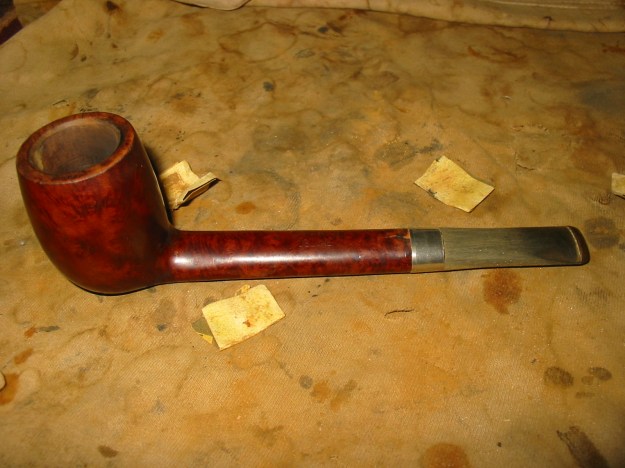
IMG_4553

IMG_4555

IMG_4557

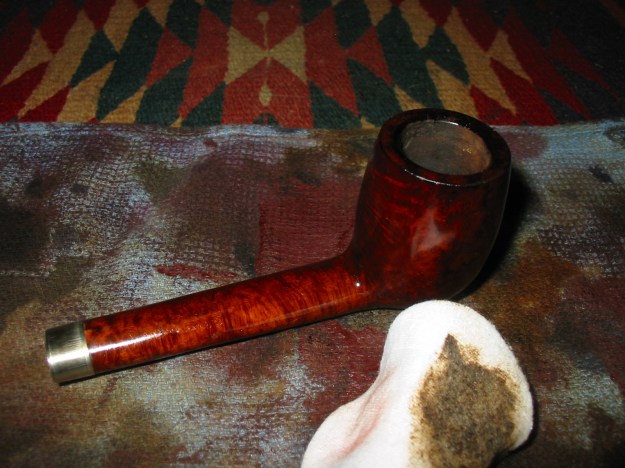
I sanded the area on the top of the shank where the repair extended slightly ahead of the band with 220 grit sandpaper and a medium grit sanding sponge. I followed that by sanding with micromesh sanding pads to smooth out the spot. I wiped down the bowl with acetone on a cotton pad until the surface was clean and free of debris and dust. I stained it with medium brown aniline stain that was thinned 2:1 with Isopropyl alcohol. I wanted the colour to match the tones that were present on the other Comoy’s that I had from this era and the photos I had seen on line. I applied the stain and flamed it. In the photos below the shine is from hand buffing the pipe with a soft cotton cloth.
IMG_4558

IMG_4559

IMG_4562

IMG_4563

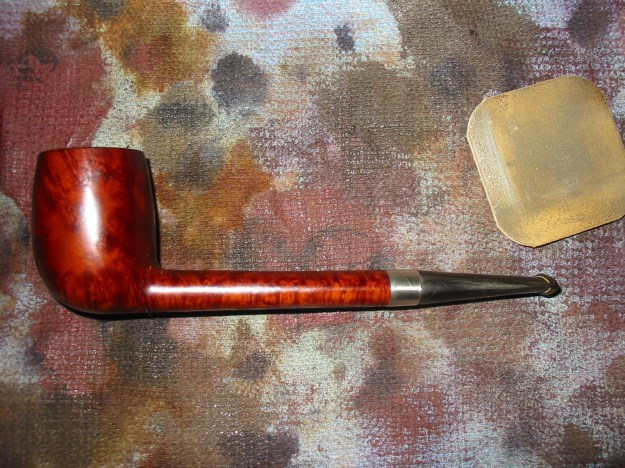
I reinserted the stem and worked on the band and the stem with 1500 grit micromesh to begin the process of removing scratches and polishing. I took the pipe to the buffer and gave it a quick buff with red Tripoli and White Diamond.
IMG_4566

IMG_4567

IMG_4568

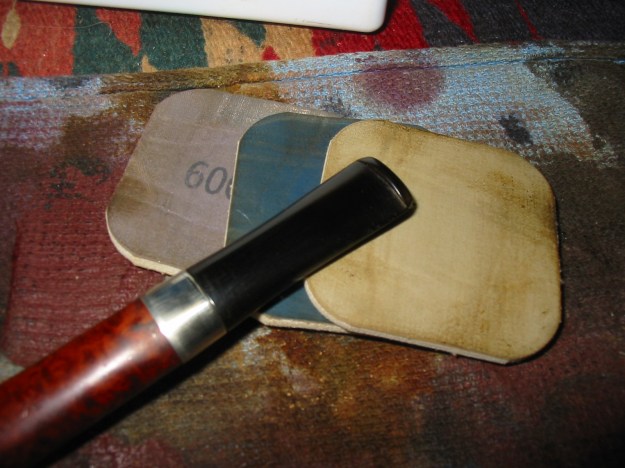
I worked on the stem with my usual array of micromesh sanding pads – wet sanding with 1500-2400 grit pads and dry sanding with 3200-12,000 grit pads.
IMG_4571

IMG_4570

IMG_4569

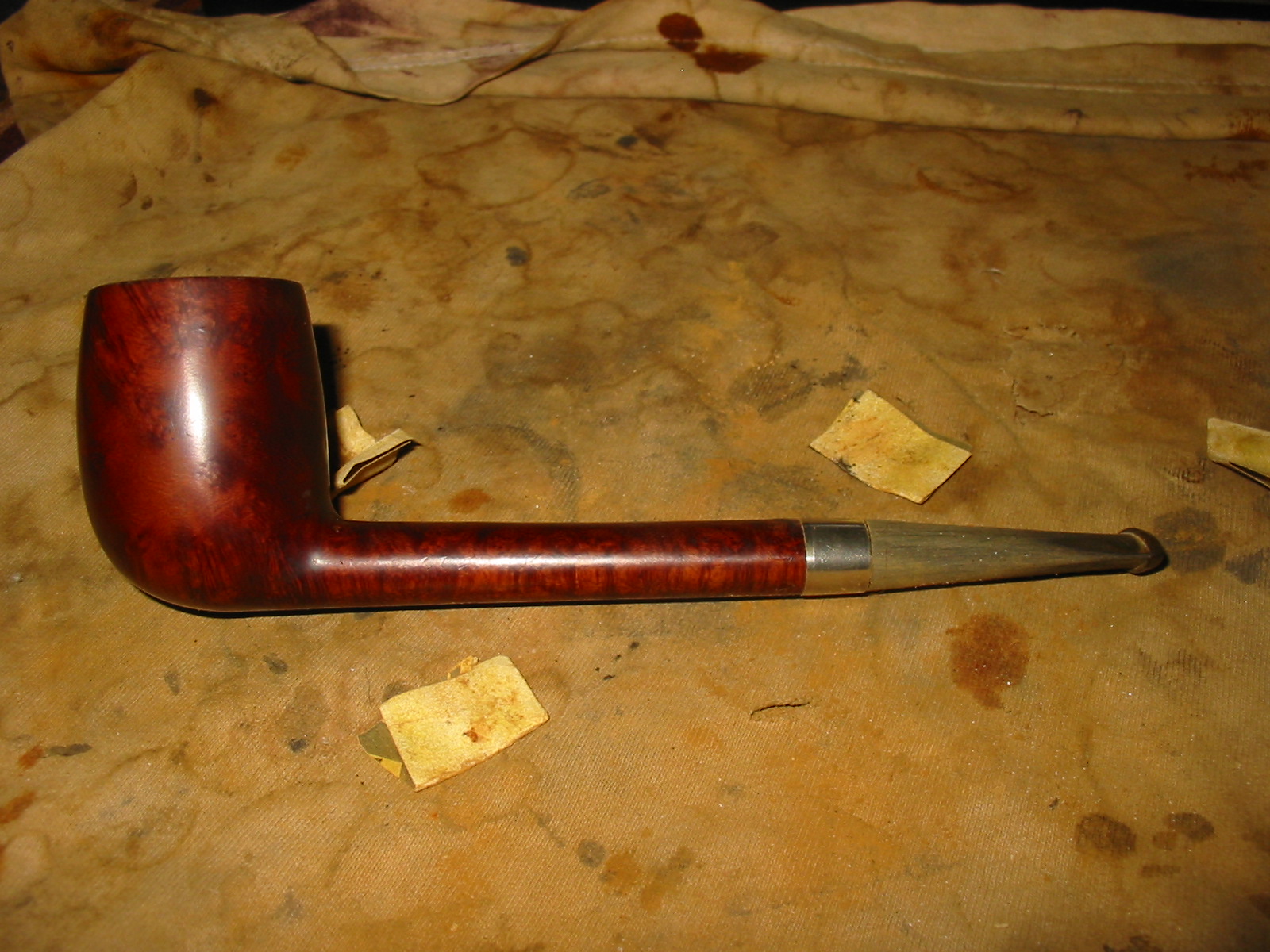
I rubbed the stem down with Obsidian Oil to protect it and when it had dried took the pipe to the buffer. I buffed the stem with White Diamond and gave the bowl and shank a light buff as well. I gave it multiple coats of carnauba wax and finished by buffing it with a clean flannel buff. The finished pipe is picture below.
IMG_4572

IMG_4573

IMG_4574

IMG_4575

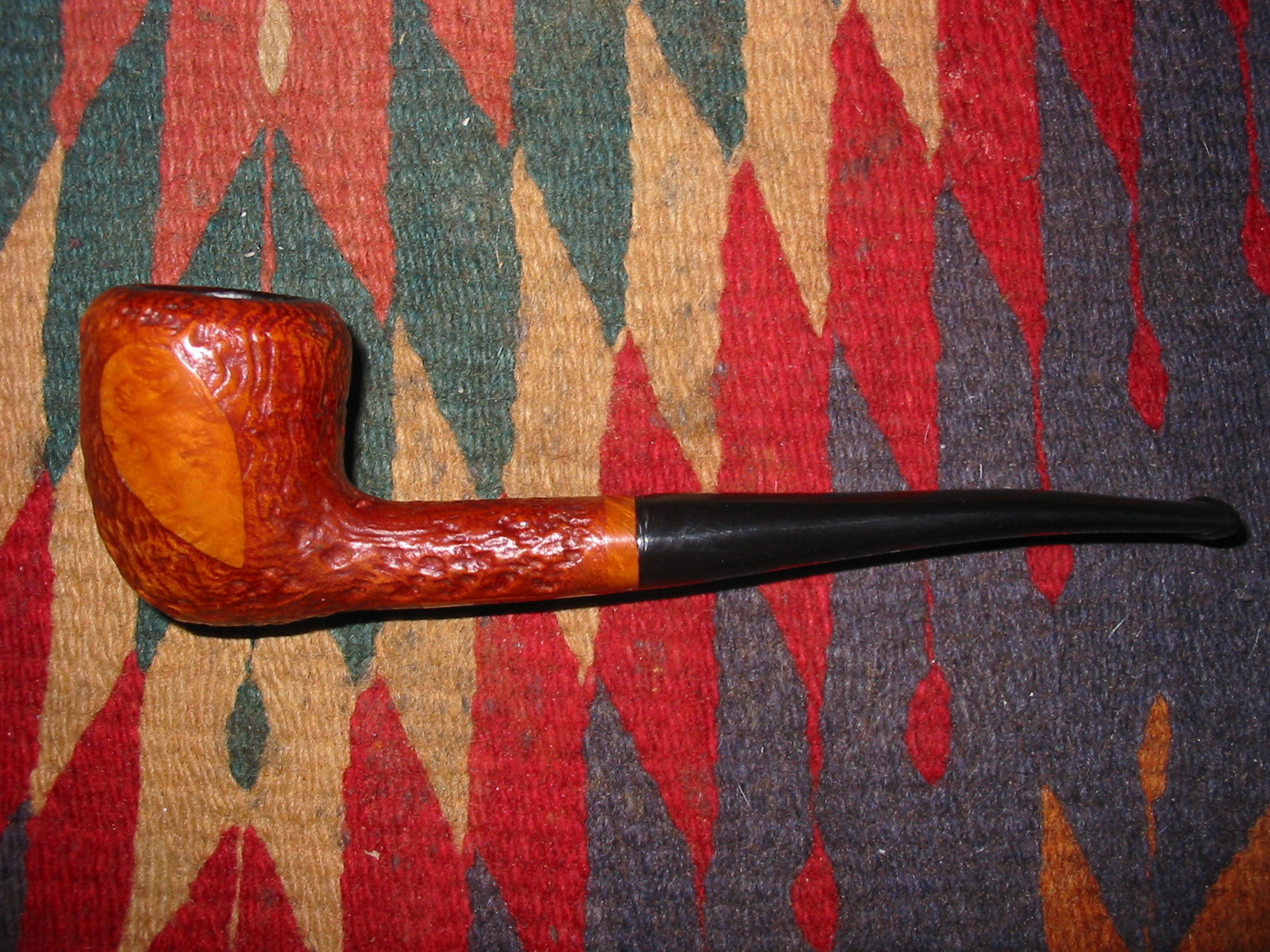
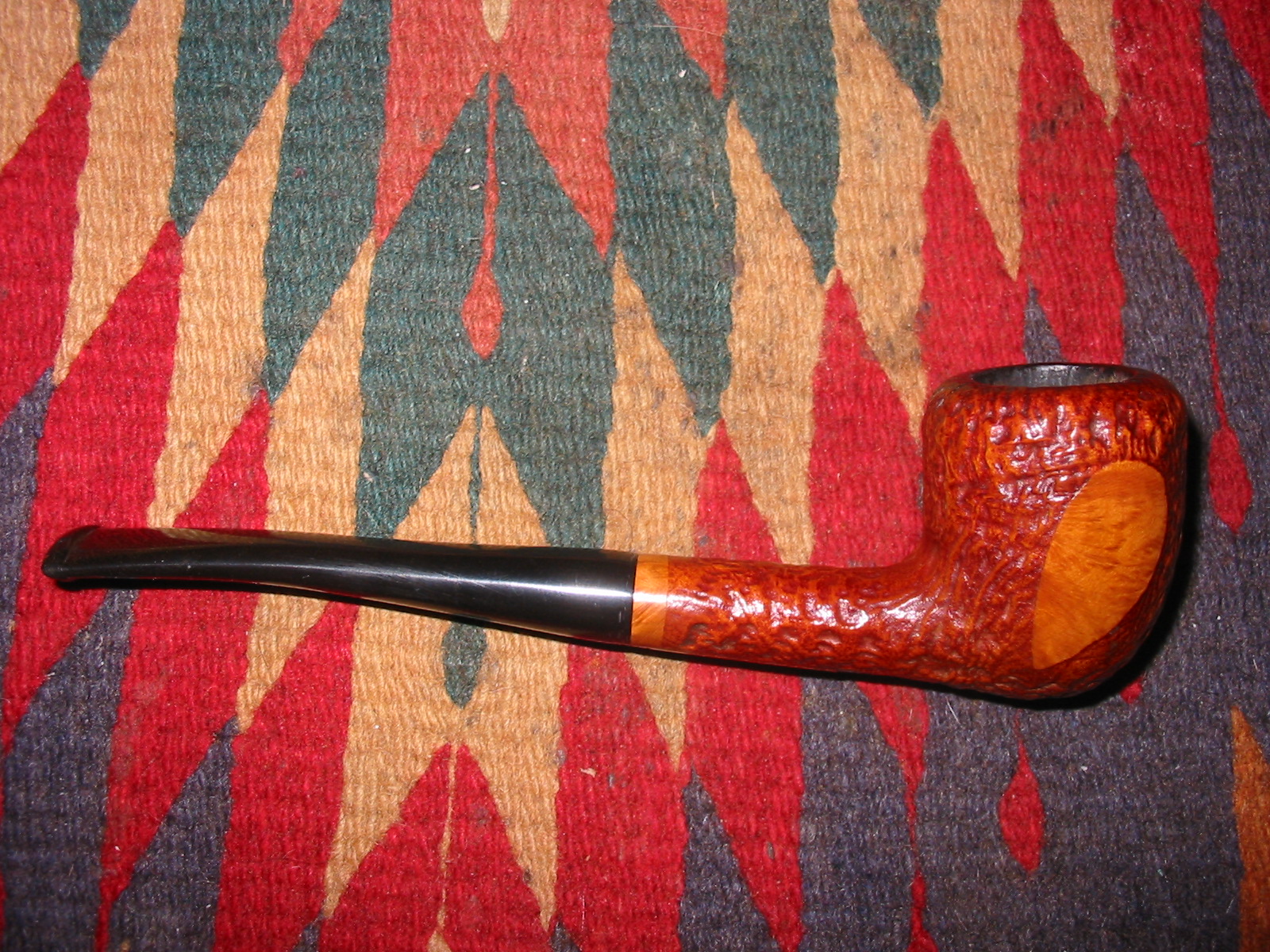
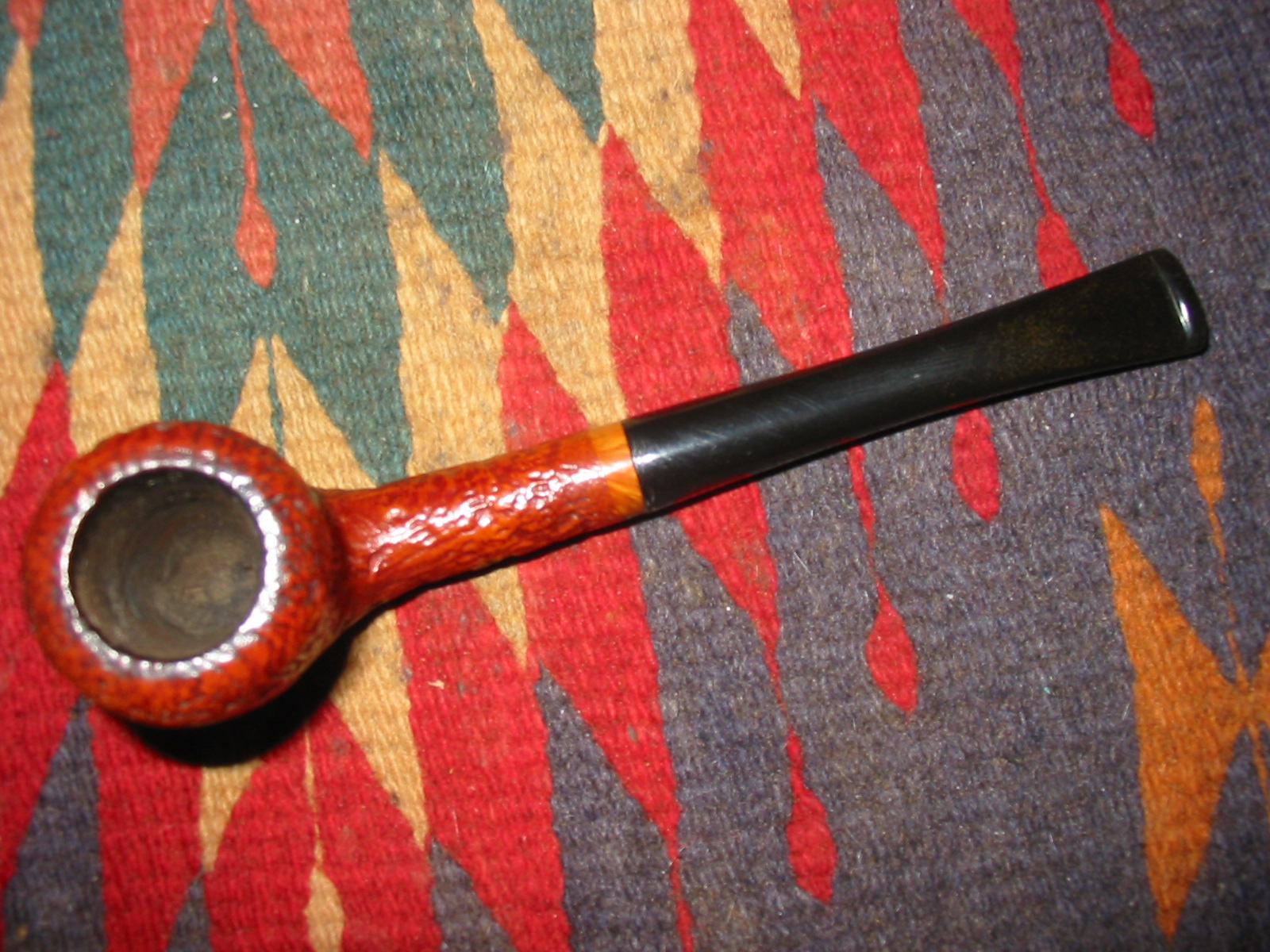
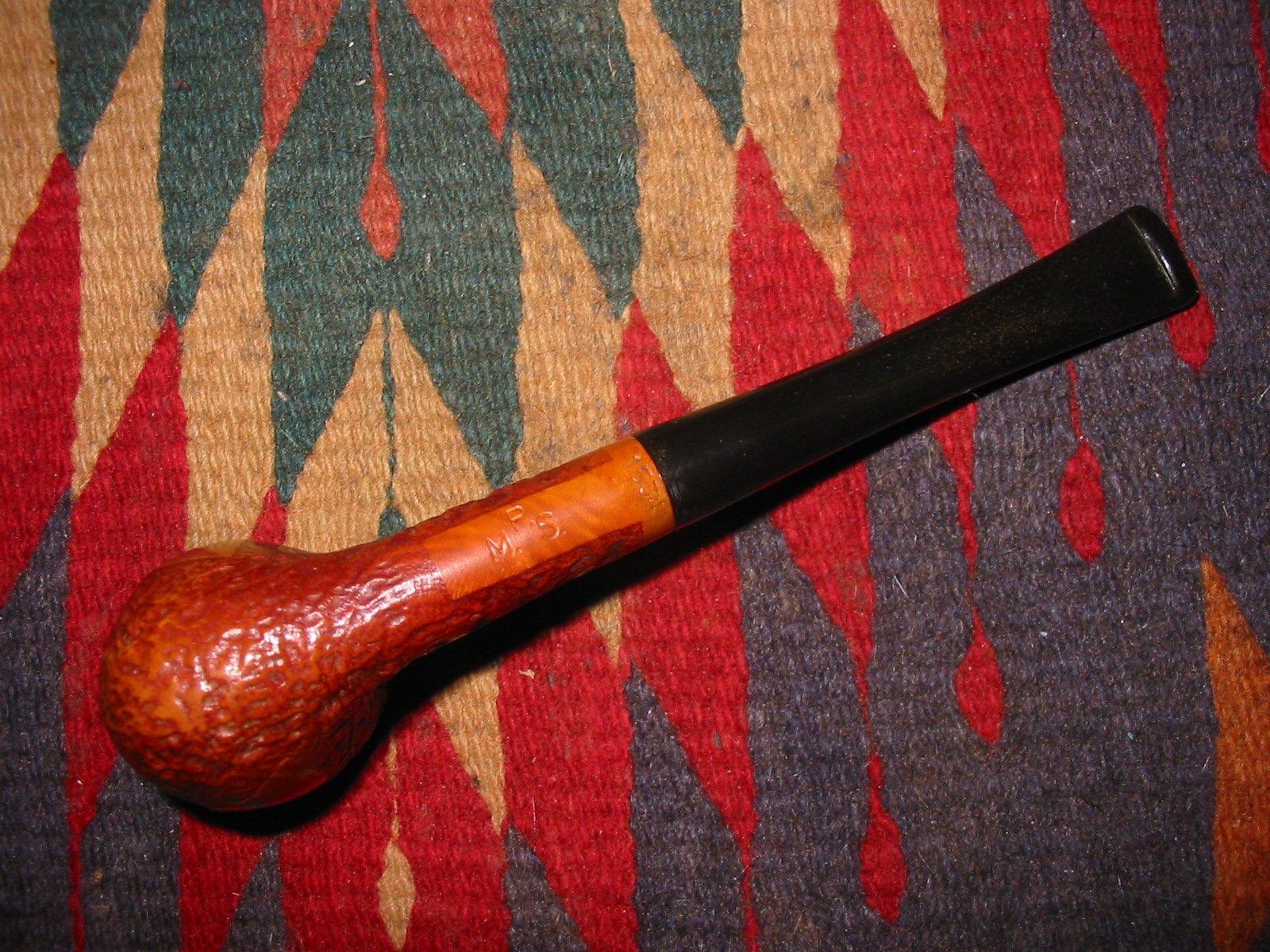
Reworking the Stem/Shank Junction on a MPS 1534


I went through the box of pipes for the Vancouver Pipe Club a final time and found two more that needed some cosmetic work. The first is rusticated acorn or Peewit shape with smooth “leaves” on the side of the bowl and a smooth spot on the shank and a band at the end of the shank. It is stamped on the underside of the shank M.P.S. with the P slightly higher than the M and S forming almost a triangle. Along the end of the shank it is stamped 1534. The pipe is in great shape and needed no cleaning or reworking. What was wrong with this one was the rough fit of the stem to the shank. It was clearly a replacement stem and showed the marks of the work done to fit it to the shank. There was no gap between the stem and shank and the tenon fit in the mortise snugly. The stem itself was slightly larger in diameter than the shank and was very rough. There were lots of lines and pits in the stem itself making the transition quite bumpy.
IMG_4414

IMG_4415

IMG_4416

IMG_4417

I took the following close up photos to show the gouges and scratches on the stem near the junction.
IMG_4418

IMG_4419

IMG_4421

I sanded the stem with 220 grit sandpaper and with a medium grit sanding sponge to smooth out the transition and remove the scratching and gouges. It took quite a bit of sanding to smooth it out but the fit when I finished was far better. I then sanded it with the usual array of micromesh sanding pads – wet sanding with 1500-2400 grit sanding pads and dry sanding with 3200-12,000 grit pads. I wiped the stem down with Obsidian Oil and rubbed it into the surface.
IMG_4422

IMG_4423

IMG_4424

When the Obsidian Oil had soaked into the vulcanite I took the pipe to the buffer and buffed it with White Diamond to polish the stem and bowl. I then gave it multiple coats of carnauba wax to protect and polish it. The pipe is ready to go back in the box with the rest of the lot that will go to the Vancouver Pipe Club. It should provide someone with a great smoking pipe.
IMG_4425

IMG_4427

IMG_4428

IMG_4429

Reclaiming a Mistreated Royal Danish 29 Billiard


This is the last of the Vancouver Pipe Club pipes that I decided to rework. It is stamped on the bottom of the shank near the stem Royal Danish over Made in Denmark. On the right side of the shank, mid shank it is stamped 29 which I assume is the shape number. Like the others in this lot it was coated with a thick coat of varnish. The finish under the varnish was dirty and there were finger prints in the varnish coat – like it had been handled while wet. The rim looked like someone had used it for a hammer and had a thick coat of tars on the rim under the varnish. Not only were there marks on the surface of the rim but the inner and outer edges were also rough and damaged. The stem is a replacement and it was poorly fitted to the shank. The person who had restemmed it had left the shank pitted with small divots and out of round. The stem itself was no longer round but in different spots than the shank. It had not been sanded on the underside at the shank because of the close stamping on the end of the shank. Instead it had ripples and grooves left in the vulcanite that made it feel very rough in that portion of the stem. The bowl was coated with the same black rubbery substance.
IMG_4373

IMG_4375

IMG_4378

IMG_4379

The next photo shows the condition of the rim and what led me to top the bowl and refinish this pipe. It had great overall structure but needed some TLC to bring it to the next level and make it a pleasure to have and to hold.
IMG_4380

I used 220 grit sandpaper to work on the stem shank junction and try to smooth things out. Though it is hard to see in the photos the transition was a mix of hills and valleys. It was very rough and uneven all around that portion of the top and sides of the shank. The stem itself was poorly finished as well at that point. There were sanding marks and gouges in its surface that paralleled the shank. The shoulders of the stem were rounded as well so the fit to the shank was odd. I worked on the shank stem fit before turning to the bowl rim.
IMG_4382

IMG_4383

IMG_4386

The underside of the shank was quite tedious to work on as the stamping was faint at that point and very close to the end of the shank. I had to use a folded piece of sandpaper and carefully sand the stem and shank for a good clean fit. I worked to smooth out the transition as much as possible and minimize the rounded edges of the stem. I wanted the fit to be even and tight. Once the transition between the shank and stem were smooth and the feel seamless to touch I moved on to top the bowl. I set up my topping board and a piece of 220 grit sandpaper and began to work on the top of the bowl. I sanded it until it was flat and the outer edges of the bowl were clean and sharp. I used a folded piece of sandpaper on the inner edge to clean up some of the damage and sharpen the angles.
IMG_4387

IMG_4388

IMG_4389

IMG_4390

I wiped the bowl down with acetone on cotton pads to remove the varnish and the finish and bring the briar back to an even tone throughout the pipe. It always makes the staining easier when you rework the entirety of the bowl and the overall condition of this pipe demanded that kind of work.
IMG_4392

IMG_4393

IMG_4394

I used a MinWax Red Mahogany stain on the bowl to approximate the reddish colour of the original stain. I rubbed it on and off with a cotton pad until I had the colour I was looking for. When the stain was dry I hand buffed it with a soft cloth to bring out a shine. I set the bowl aside while I worked on the stem.
IMG_4396

IMG_4397

IMG_4398

IMG_4400

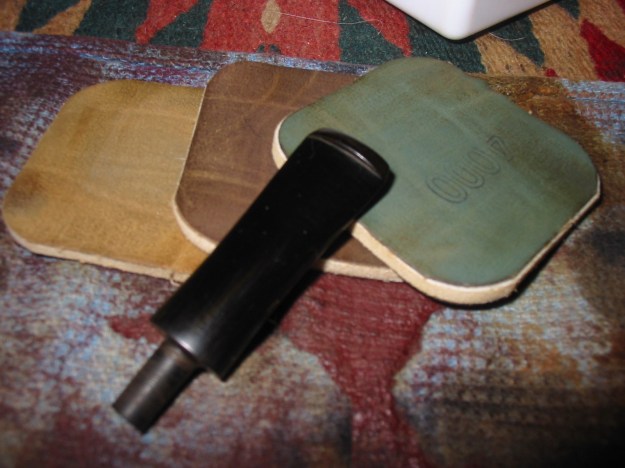
I sanded the marks out of the stem on the underside near the shank and in several spots on the taper mid stem with 220 grit sandpaper and then with a fine grit sanding sponge. I then used my usual array of micromesh sanding pads – wet sanding with 1500-2400 grit pads and dry sanding with 3200-12,000 grit pads.
IMG_4404

IMG_4406

IMG_4408

After sanding with the final grit of micromesh pads I rubbed down the stem with Obsidian Oil and then when it had dried took the pipe to the buffer. I lightly buffed the stem and bowl with White Diamond and then gave the pipe multiple coats of carnauba wax. The finished pipe is shown below and to my eye looks much better after the makeover. I think this is yet another pipe that will find a new home among the members of the Vancouver Pipe Club.
IMG_4409

IMG_4410

IMG_4411

IMG_4412

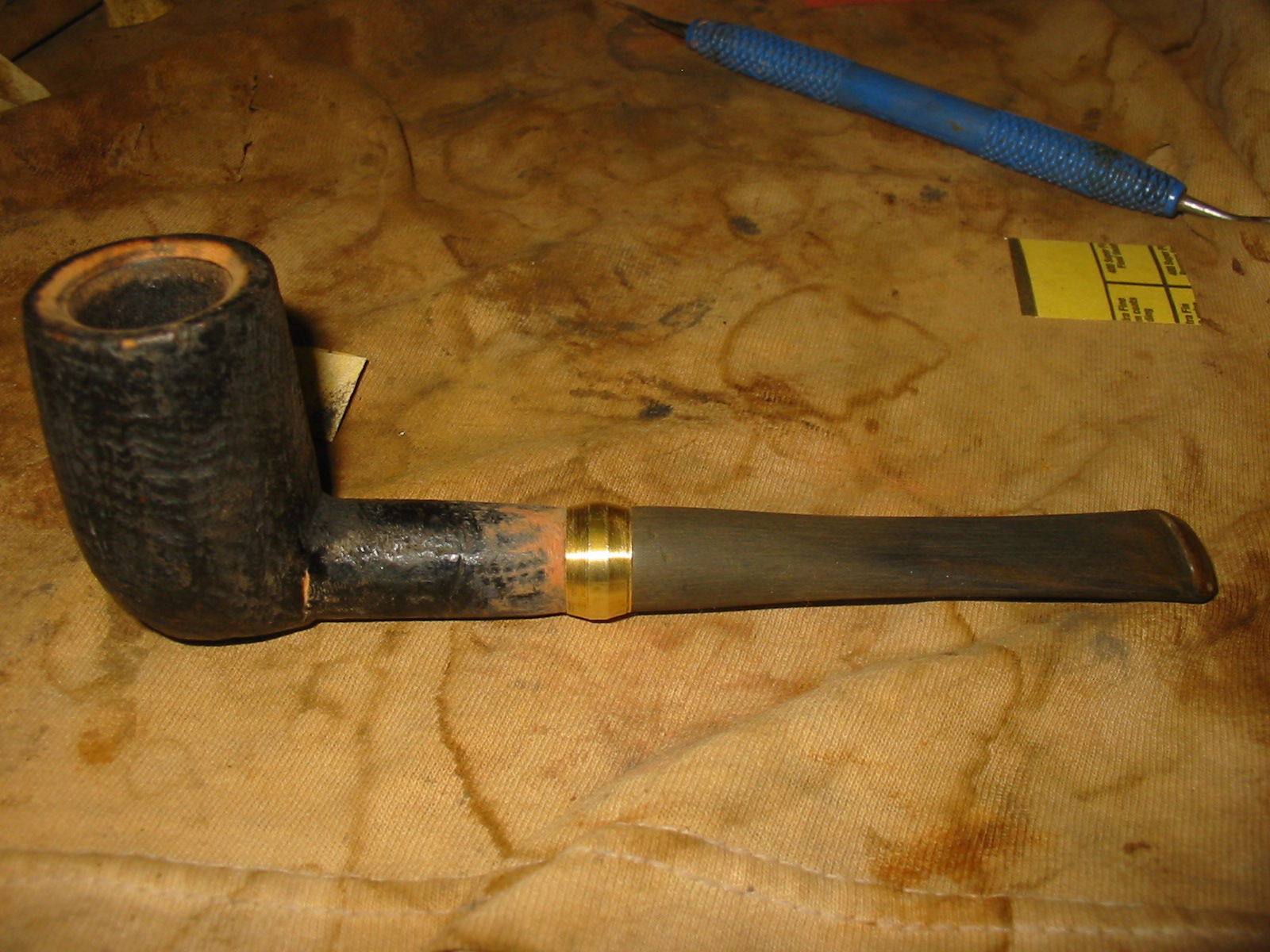
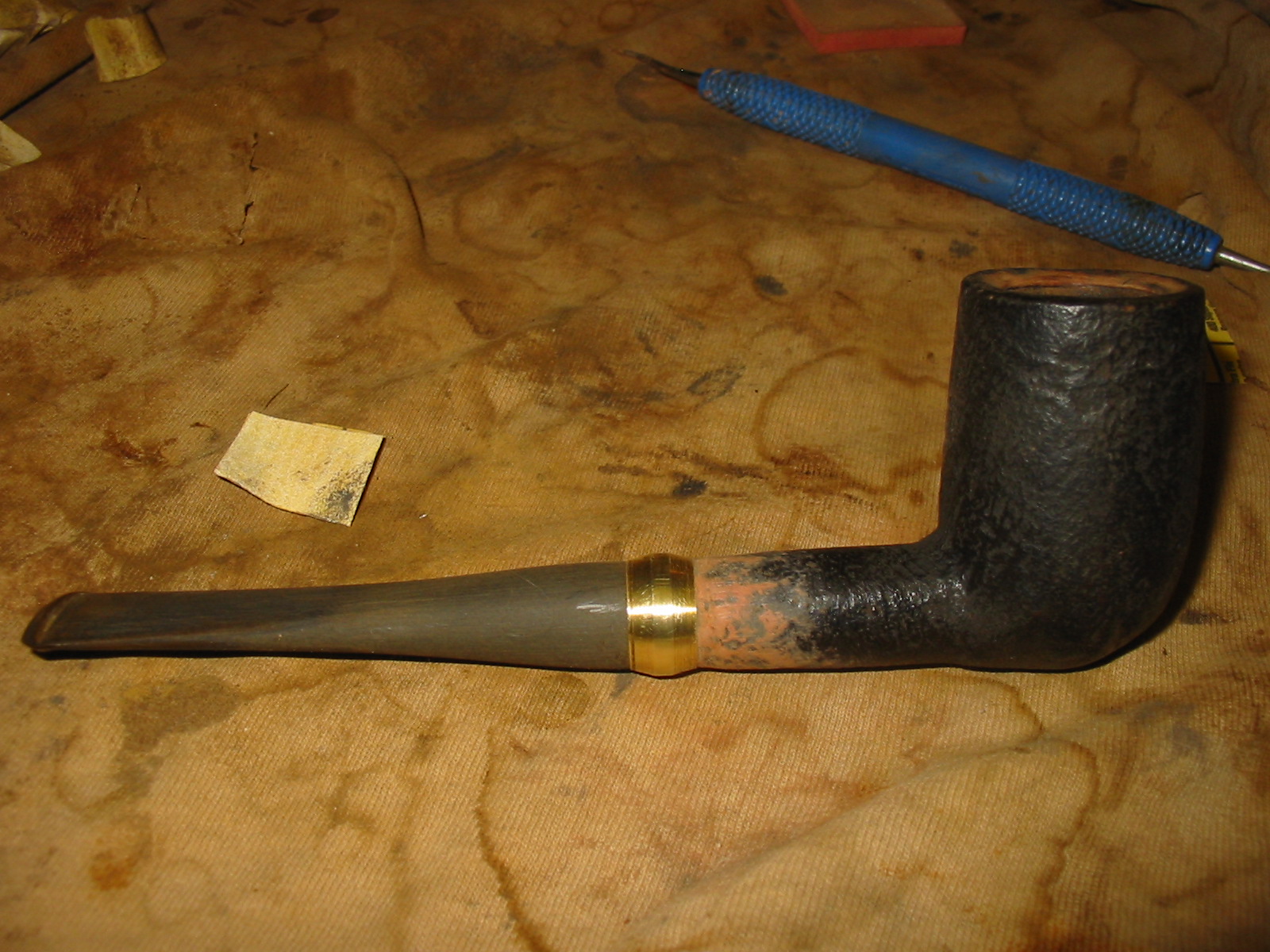
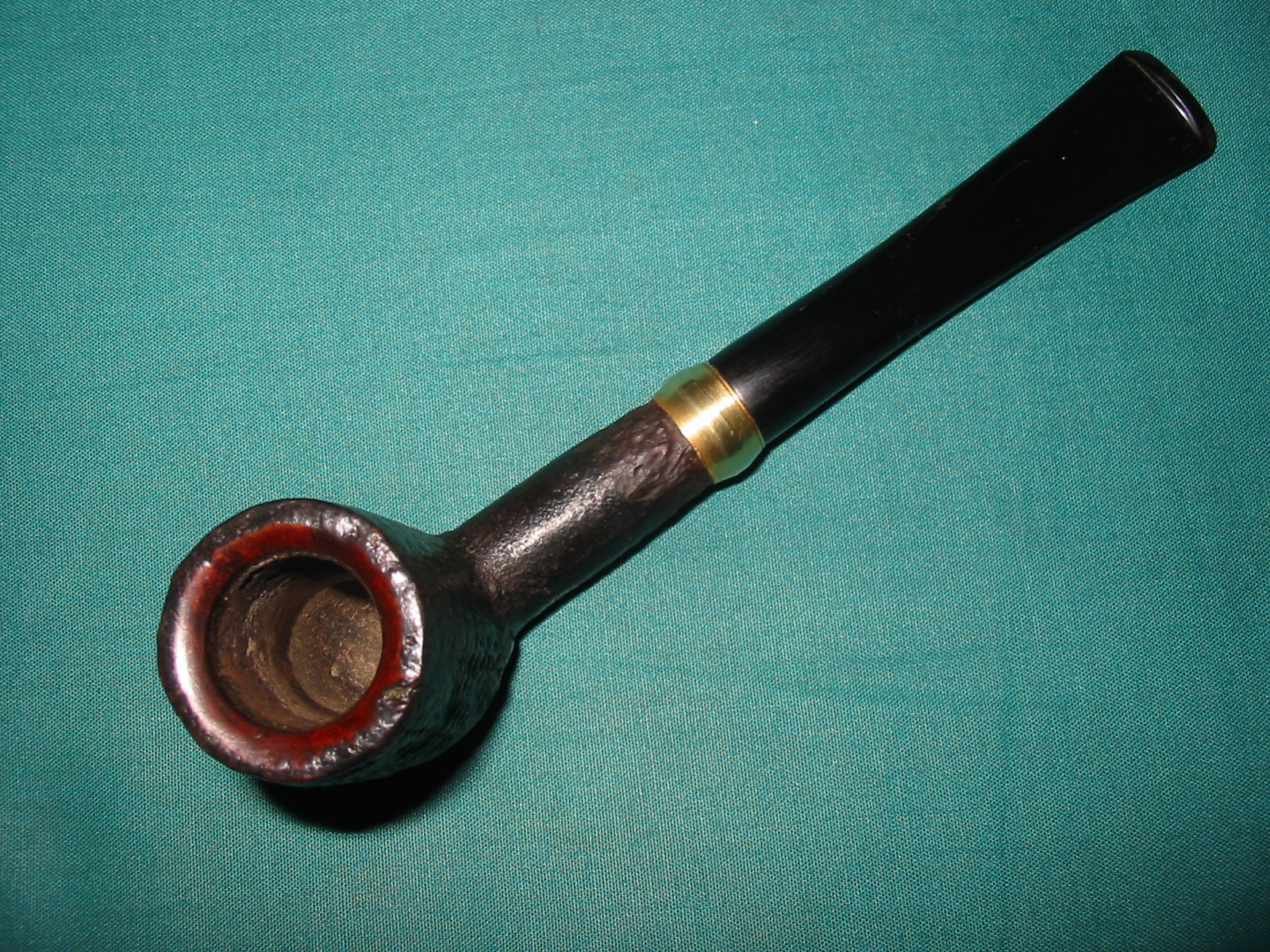
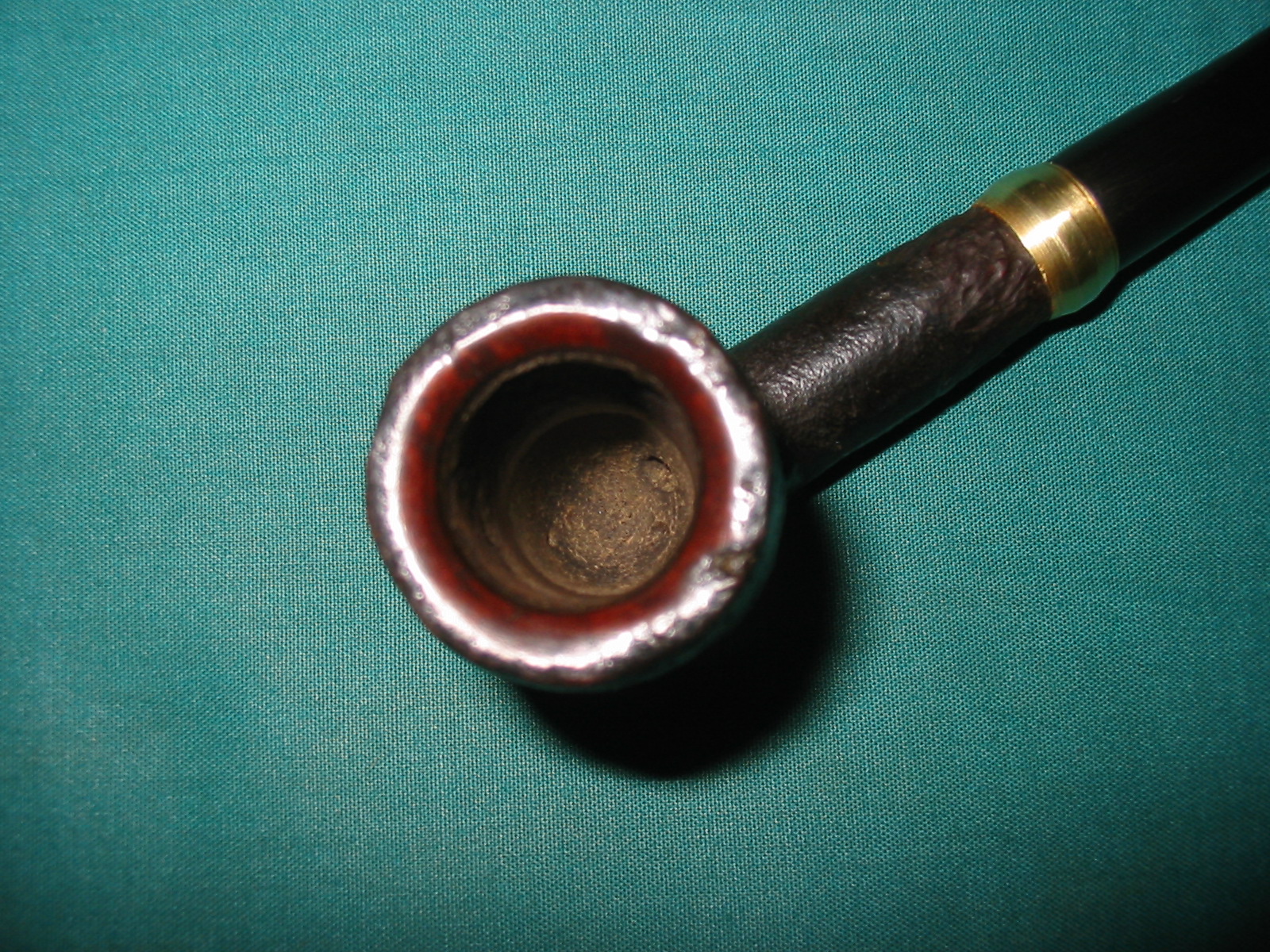
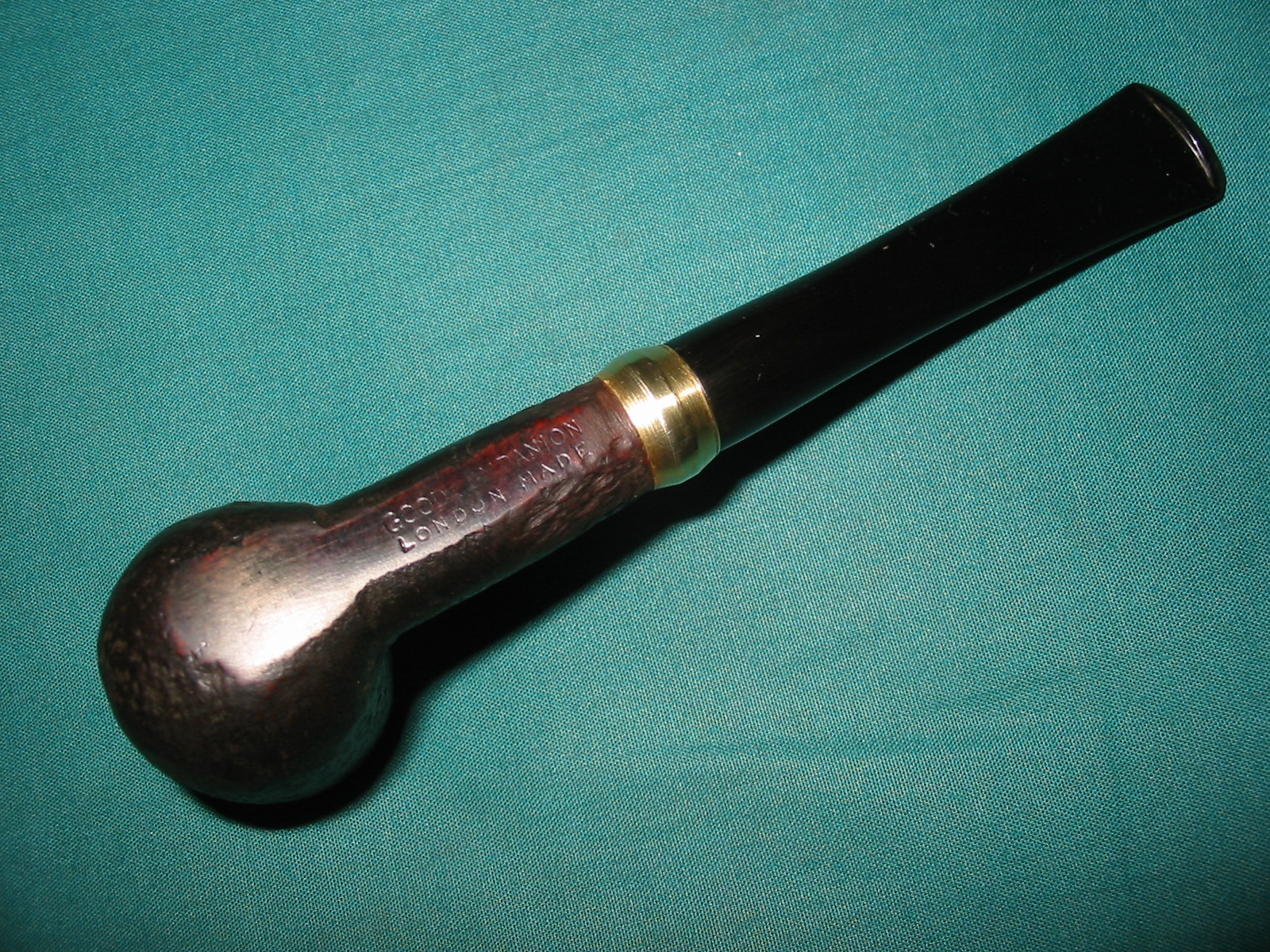
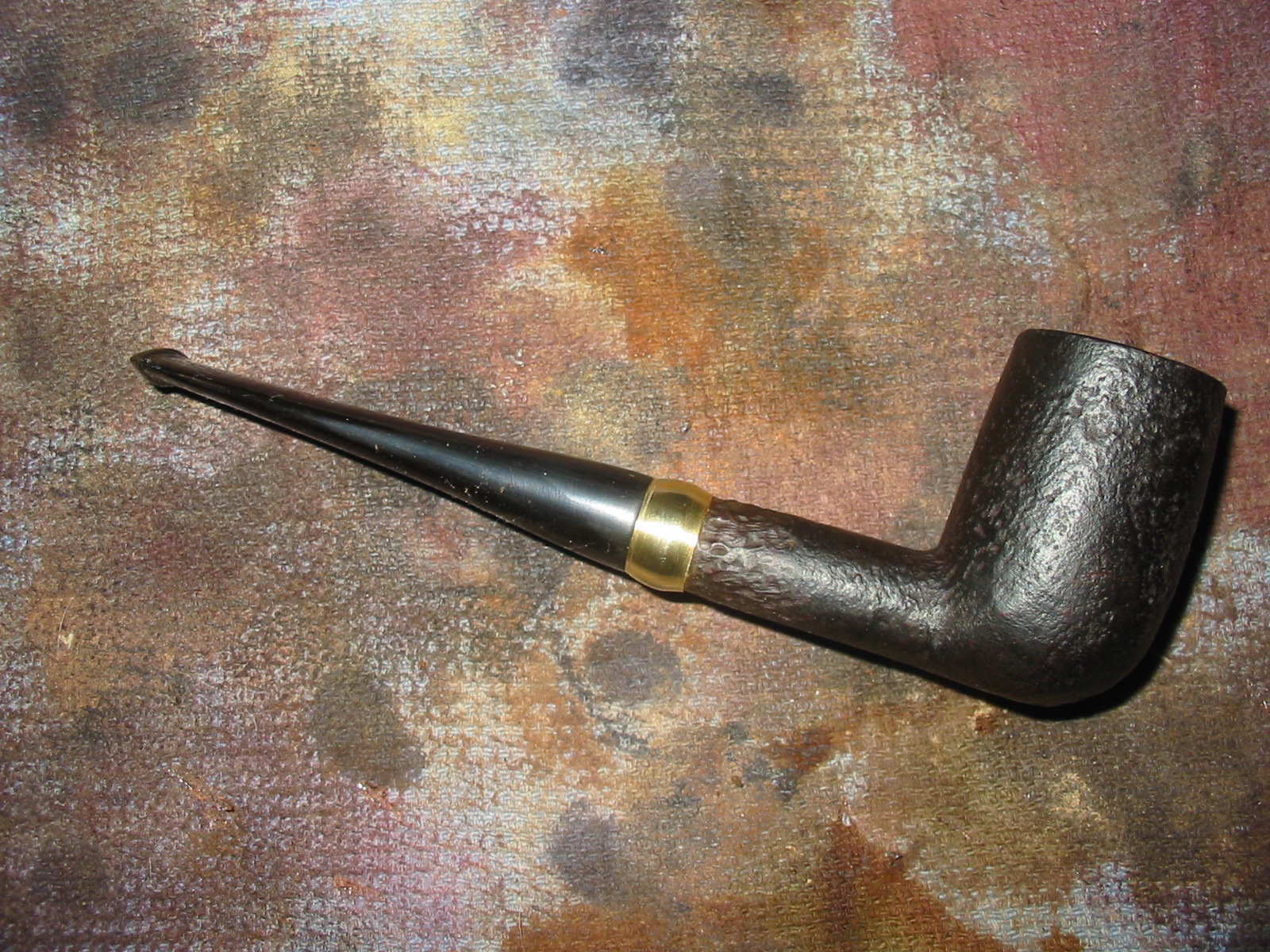
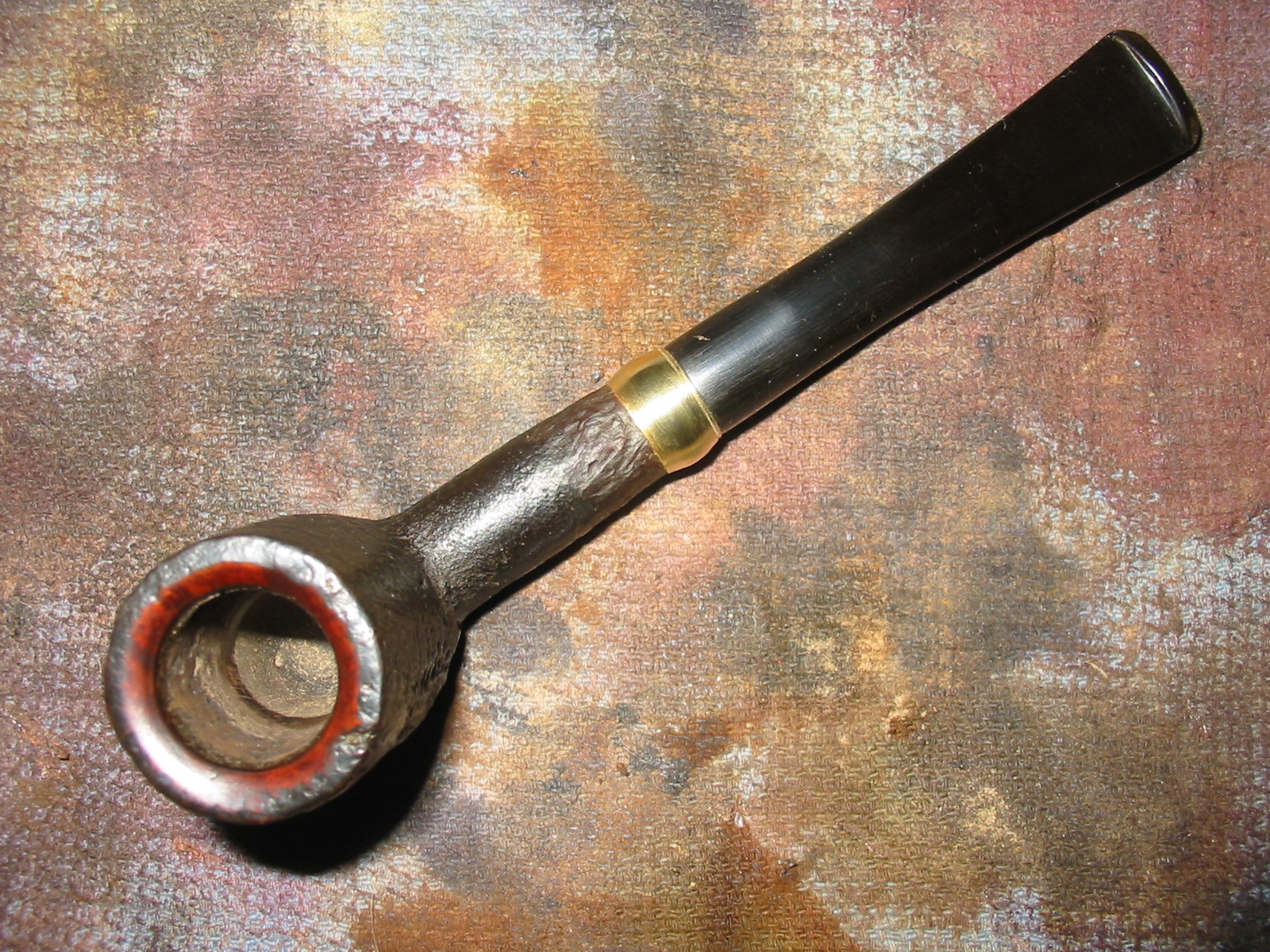
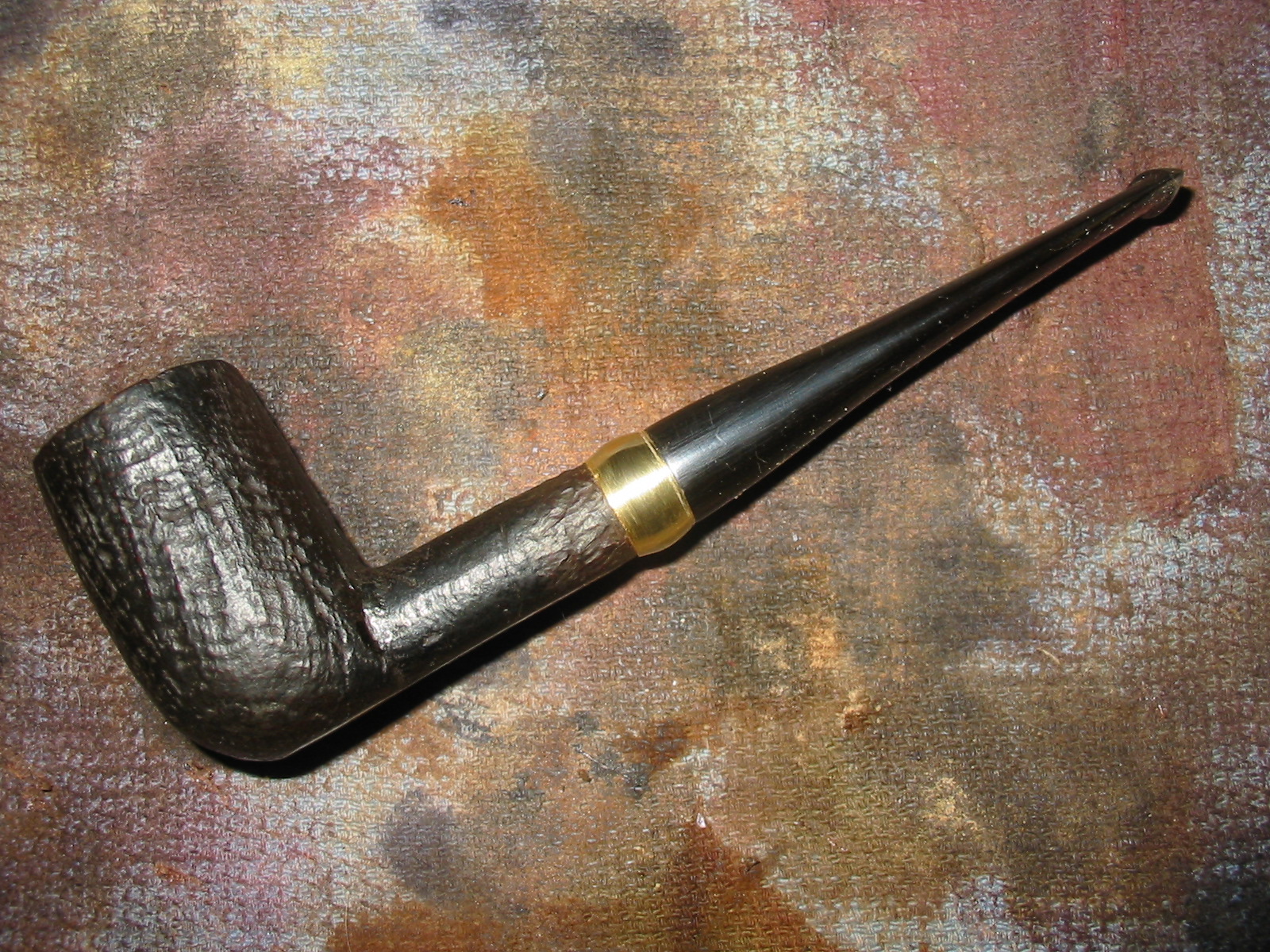
A Renovation of a Good Companion London Made Billiard


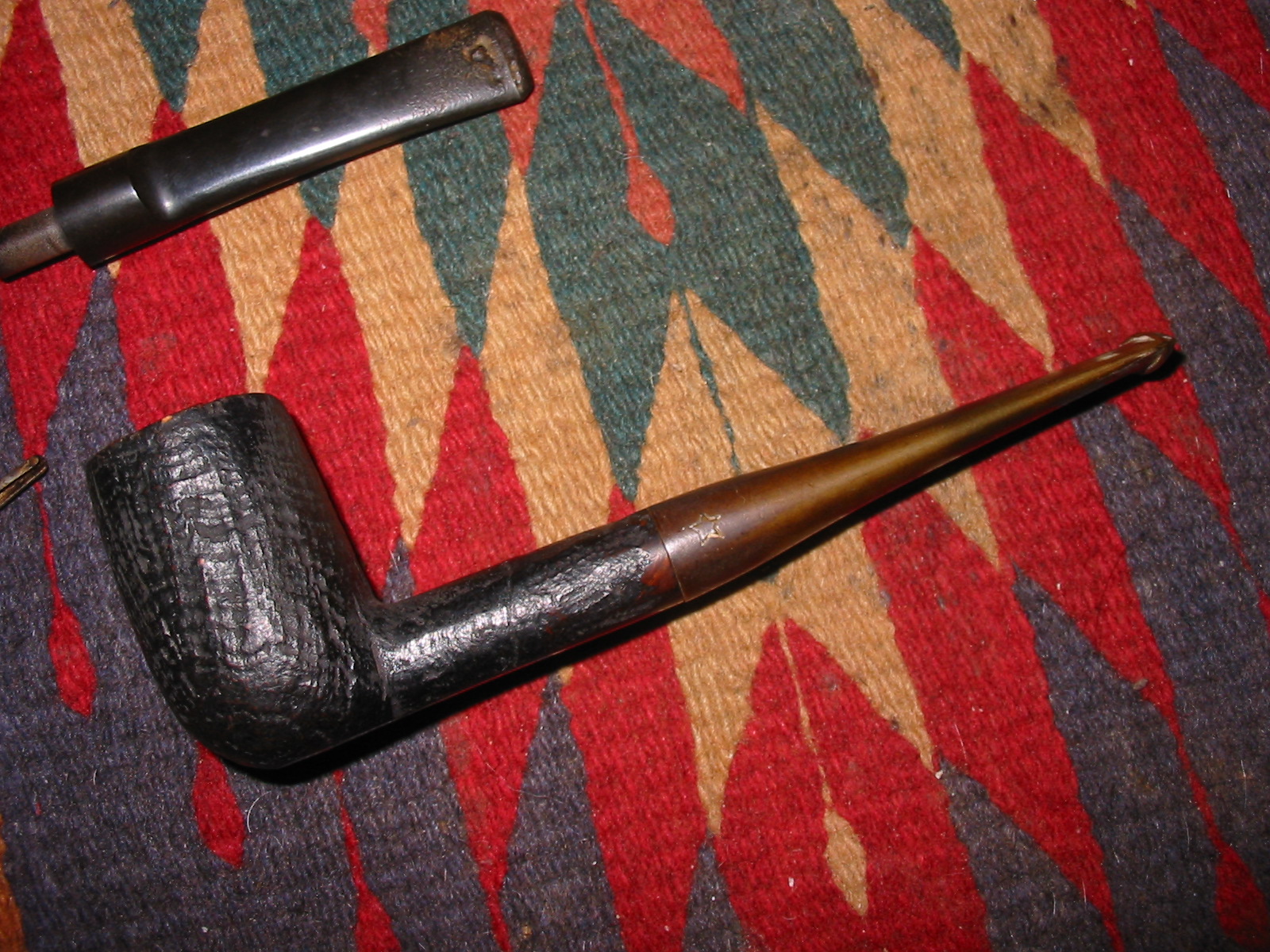
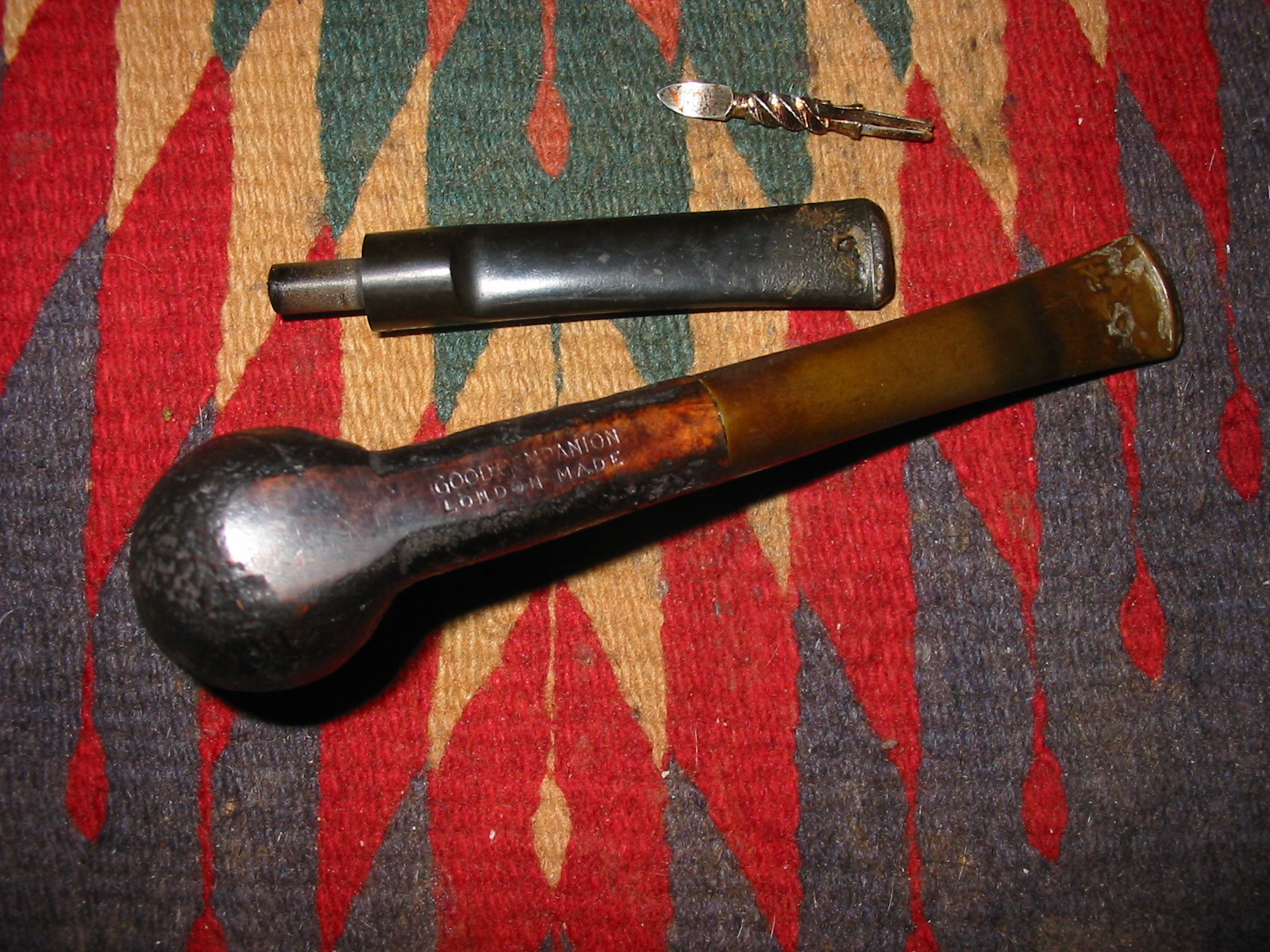
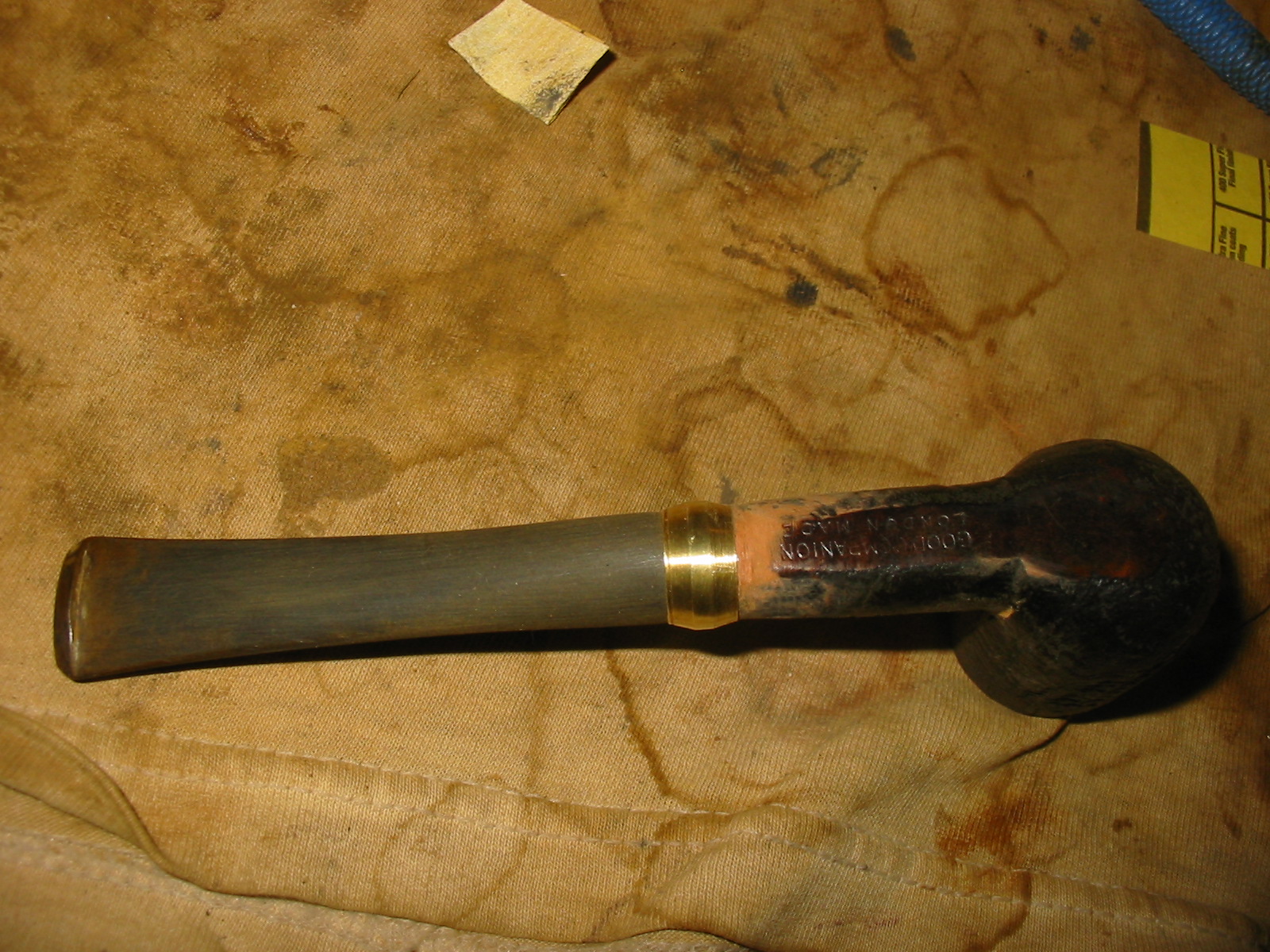
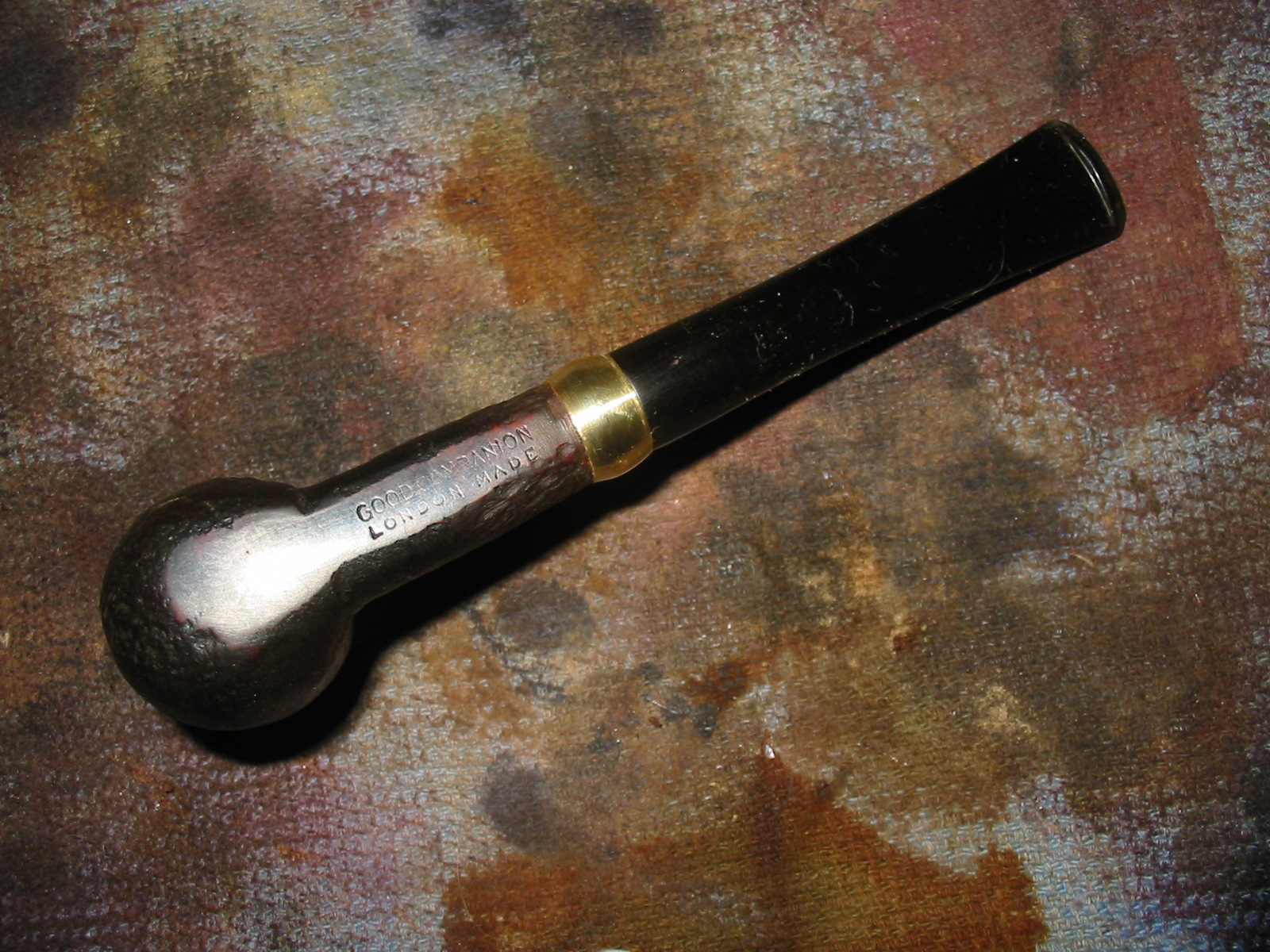
My wife and I went out for lunch on Saturday and there was an antique shop across the street from the restaurant. After eating we brave torrential downpours and ran across the street check out a shop we had not visited before. We looked through the various display cases and I found the pipe below along with a chewed up Yello-Bole billiard. The pipe was a small group 3 sized billiard. The finish was a dark brown stain on a sandblasted pipe. The left side had great grain pattern and showed deep grooves. The right side was a tight birdseye grain and the blast was shallow and close. The shank was rusticated to look like a sandblast. The stem had a slight bend but seemed be from sitting in the heat rather than intention. There was a bite through on the top surface of the stem that was large enough that it could not have been patched. The rim was originally smooth and beveled inward but the bevel had been damaged and needed to be reshaped and cleaned up. The stamping on the pipe is what ultimately made me spend the $10 to make the pipe mine. It read Good Companion over London Made on the underside of the shank. I just finished reading a new book by Mark Irwin called Pipe Companions. In it he wrote of the relationship between the pipe and the pipeman. I think it was a great coincidence to walk into a pipe stamped Good Companion. I wanted to clean it up and make it my own.
IMG_4177

IMG_4178

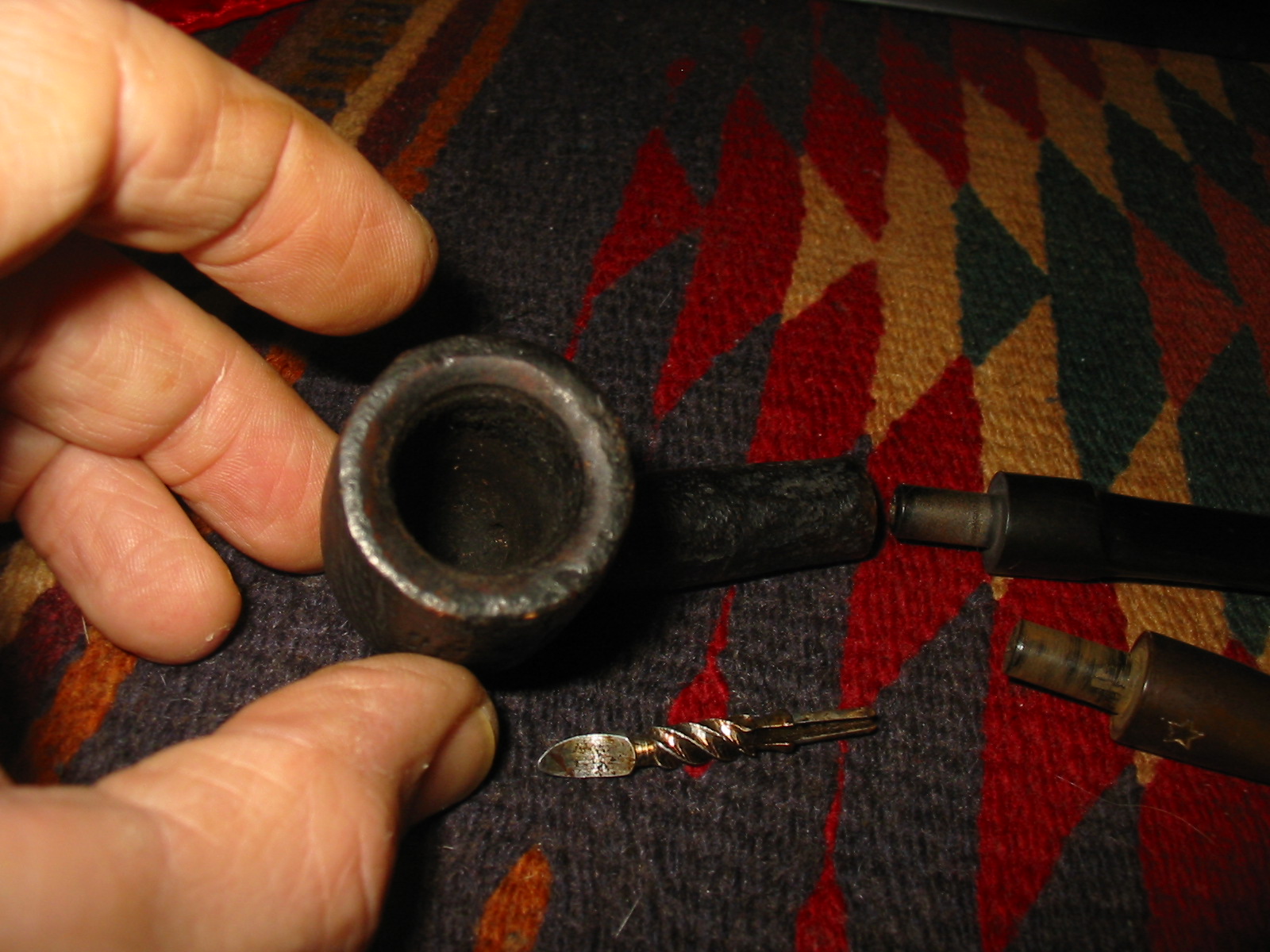
When I got home from the visit to the shop I took the pipe apart. The stem had a large spiral stinger apparatus in the tenon. The stem itself was badly chewed. I found a new stem for the pipe in my can of stems and worked on the tenon to make the tapered stem fit the shank.
IMG_4263

IMG_4264

IMG_4265

I pushed the newly fitted stem into the shank to have a look at the shape with a taper stem. I liked the overall look of the pipe with the new stem. I sanded the stem to remove the calcification and the oxidation on it. I also worked on the fit of the stem to the shank. I wanted the transition to be smooth and seamless. I took the stem in and out several times while I worked on it. The last time I pushed it into the shank there was a crack! I don’t know if that has happened to you but when it happens there is a sick feeling in the pit of my stomach. Here the pipe was almost ready to refinish and the stem fit well and then crack. The frustration at that moment is high level. I laid the pipe down and had a coffee while I thought about my next steps.
IMG_4266

IMG_4268

IMG_4269

IMG_4270

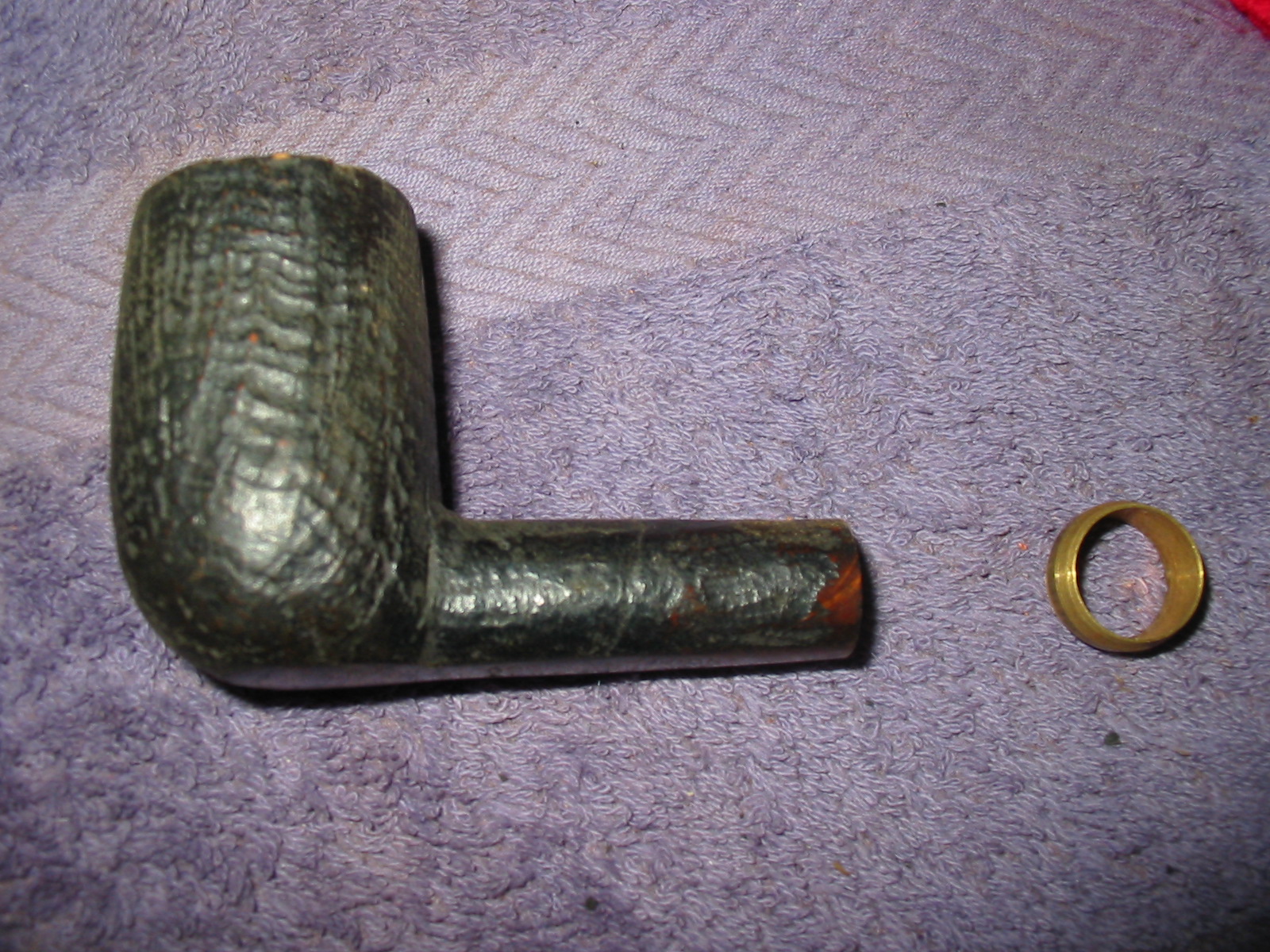
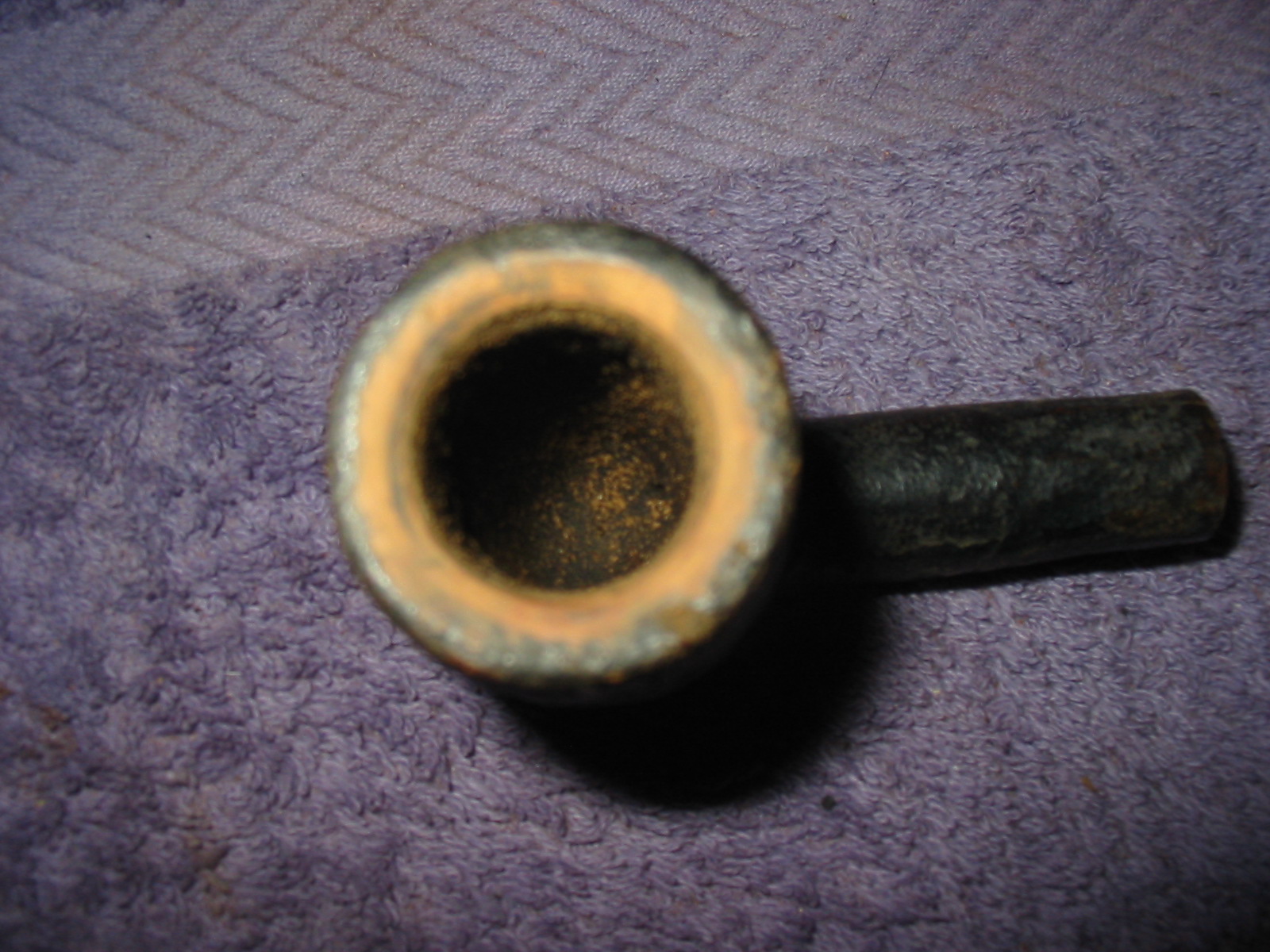
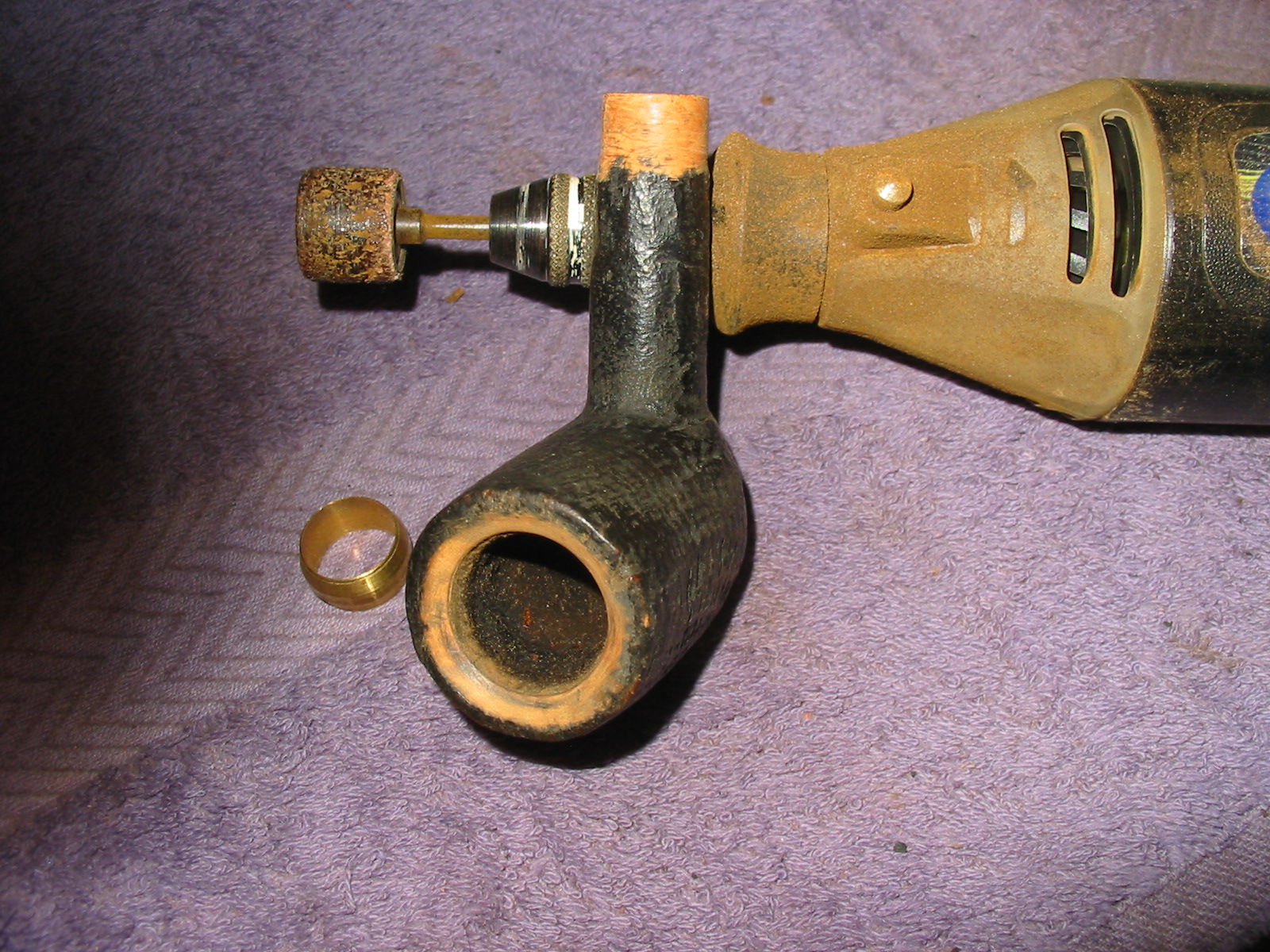
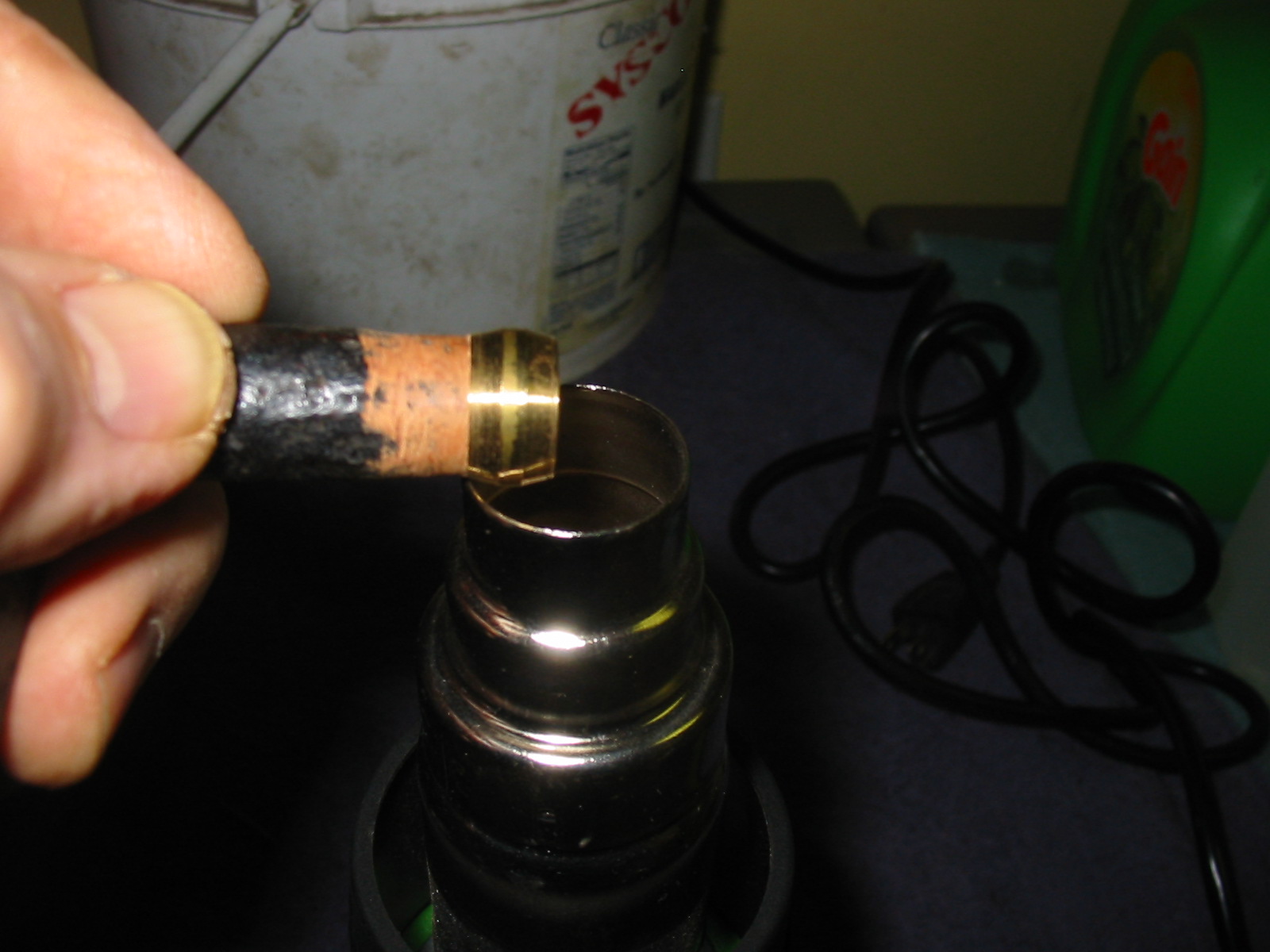
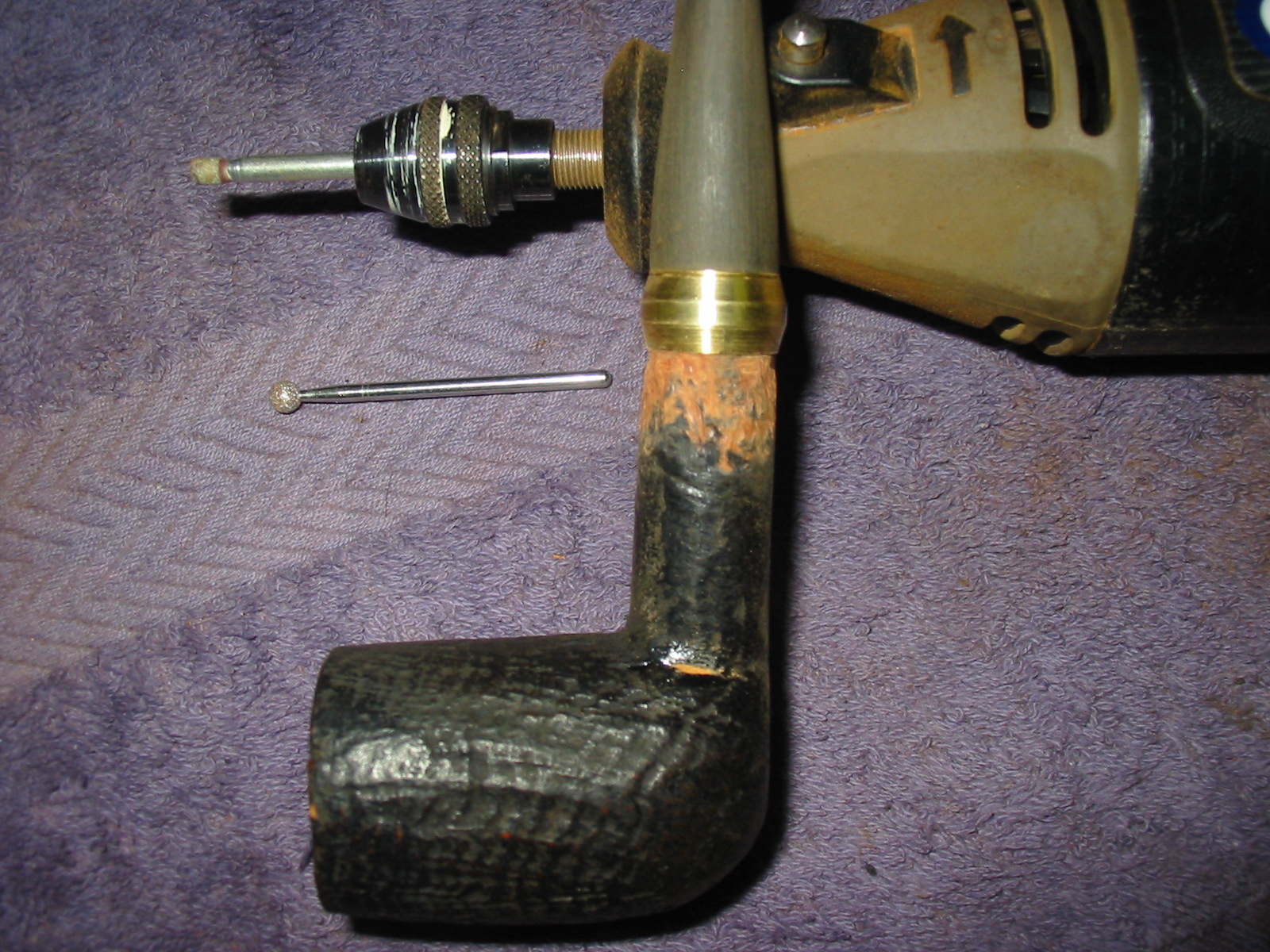
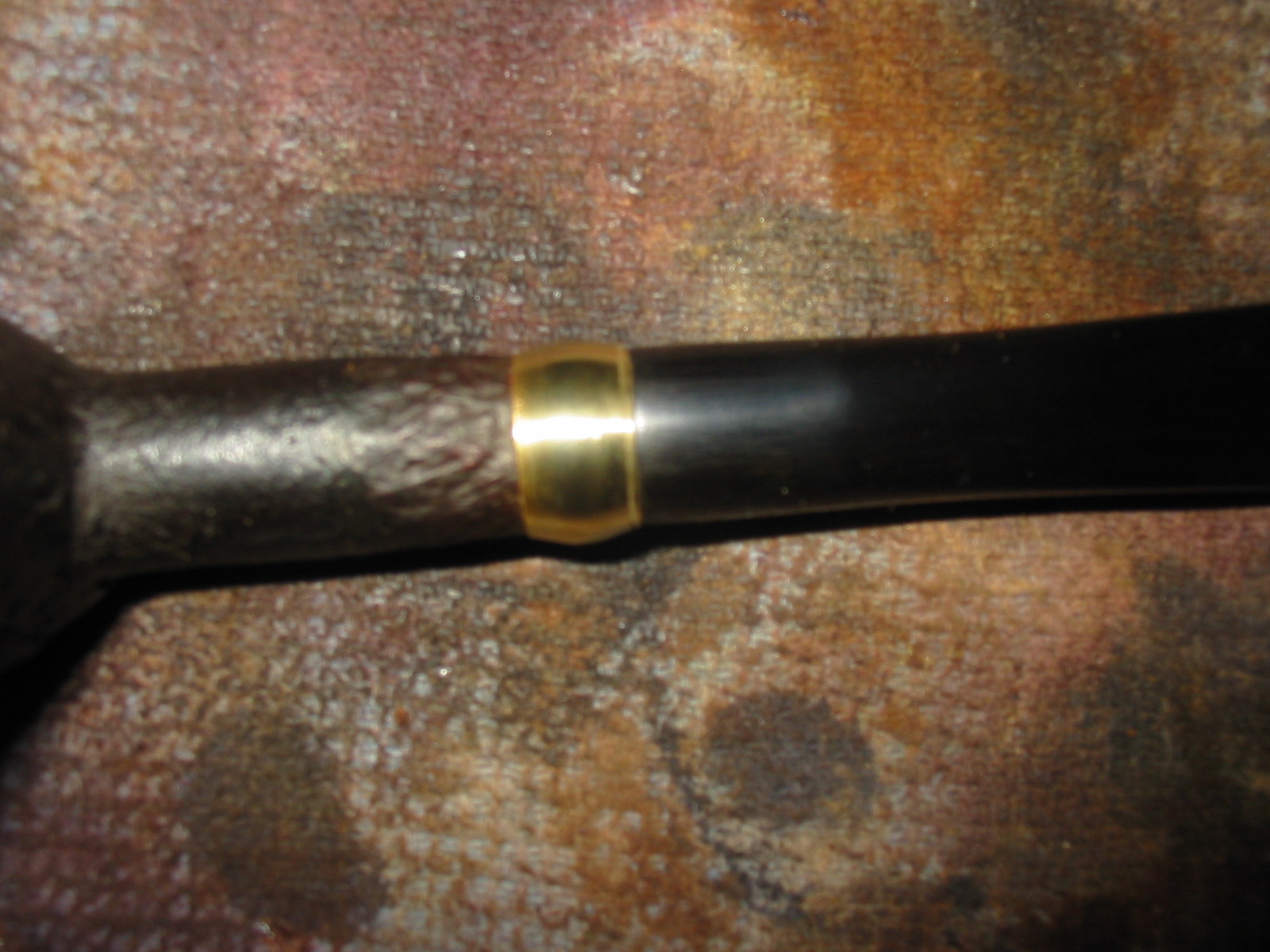
I went through the box of nickel bands that I have here and I did not have any the correct size for the shank. All of them were either too huge or too small. I did remember however that I had some brass plumbing pressure fitting pieces that would make a great band on the pipe and create a totally different look on this old pipe. Before fitting the band I worked on the bevel of the inner edge of the rim. I used a folded piece of sandpaper to smooth out the rim damage and reshape the bevel.
IMG_4271

IMG_4272

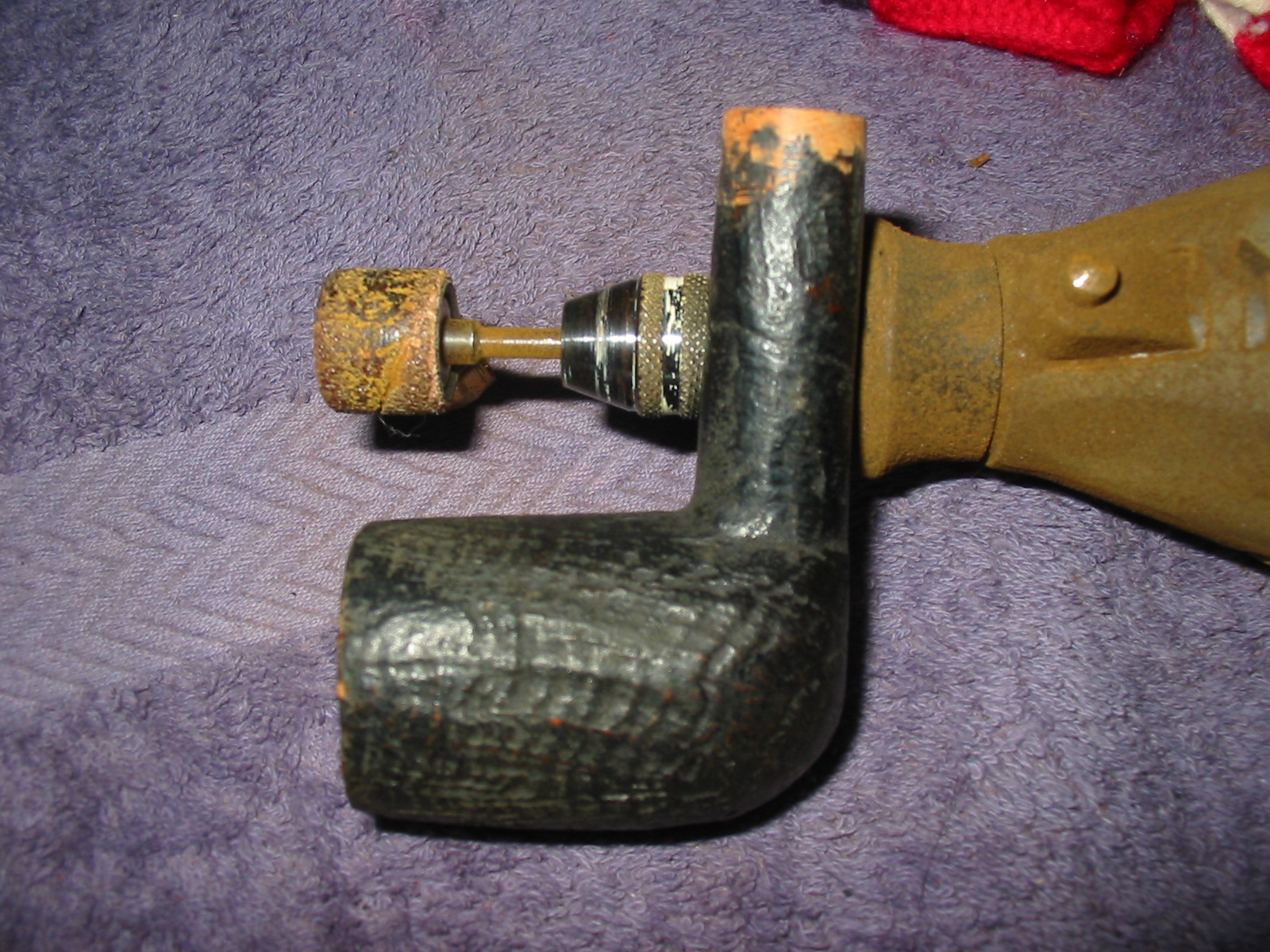
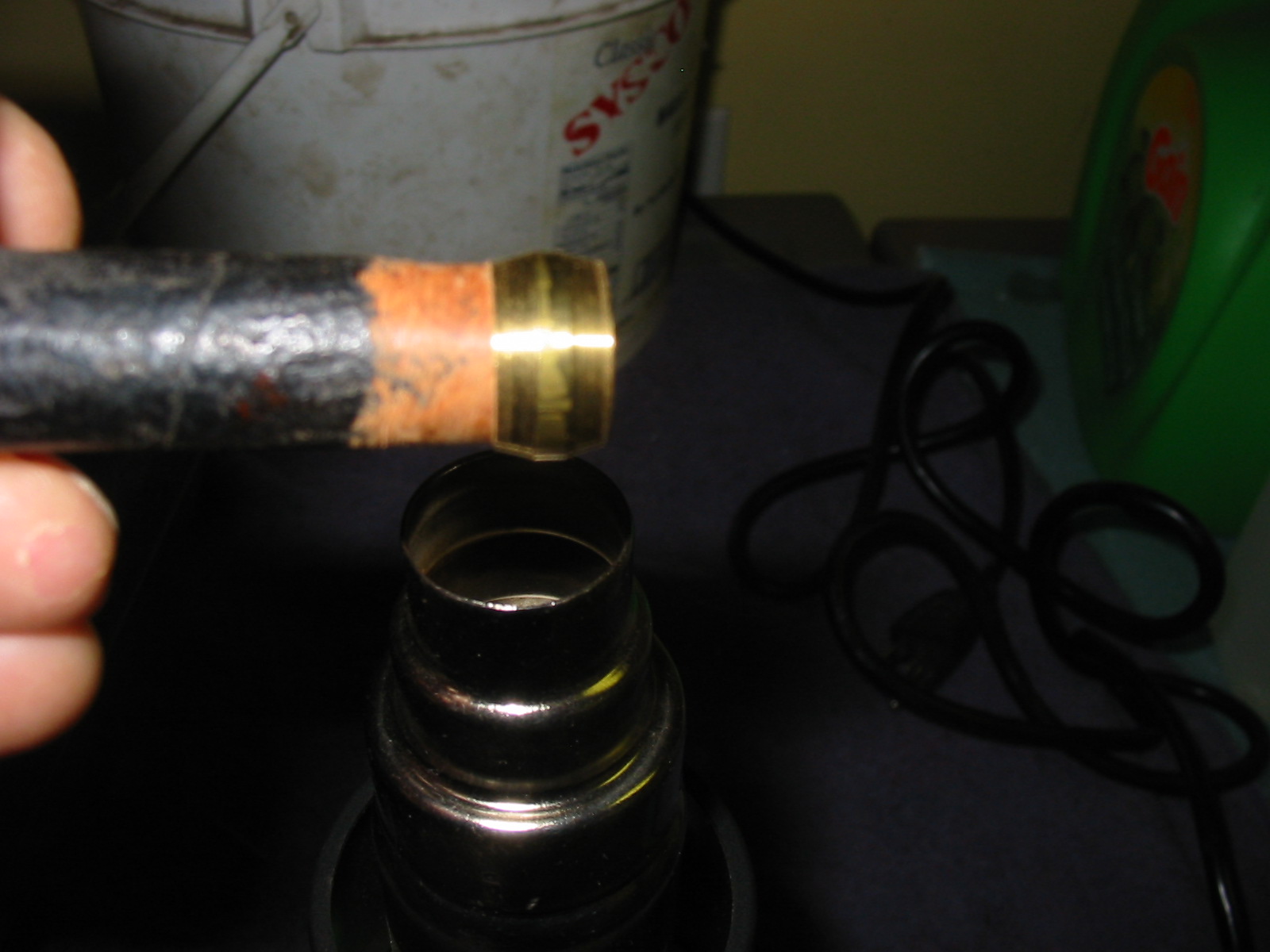
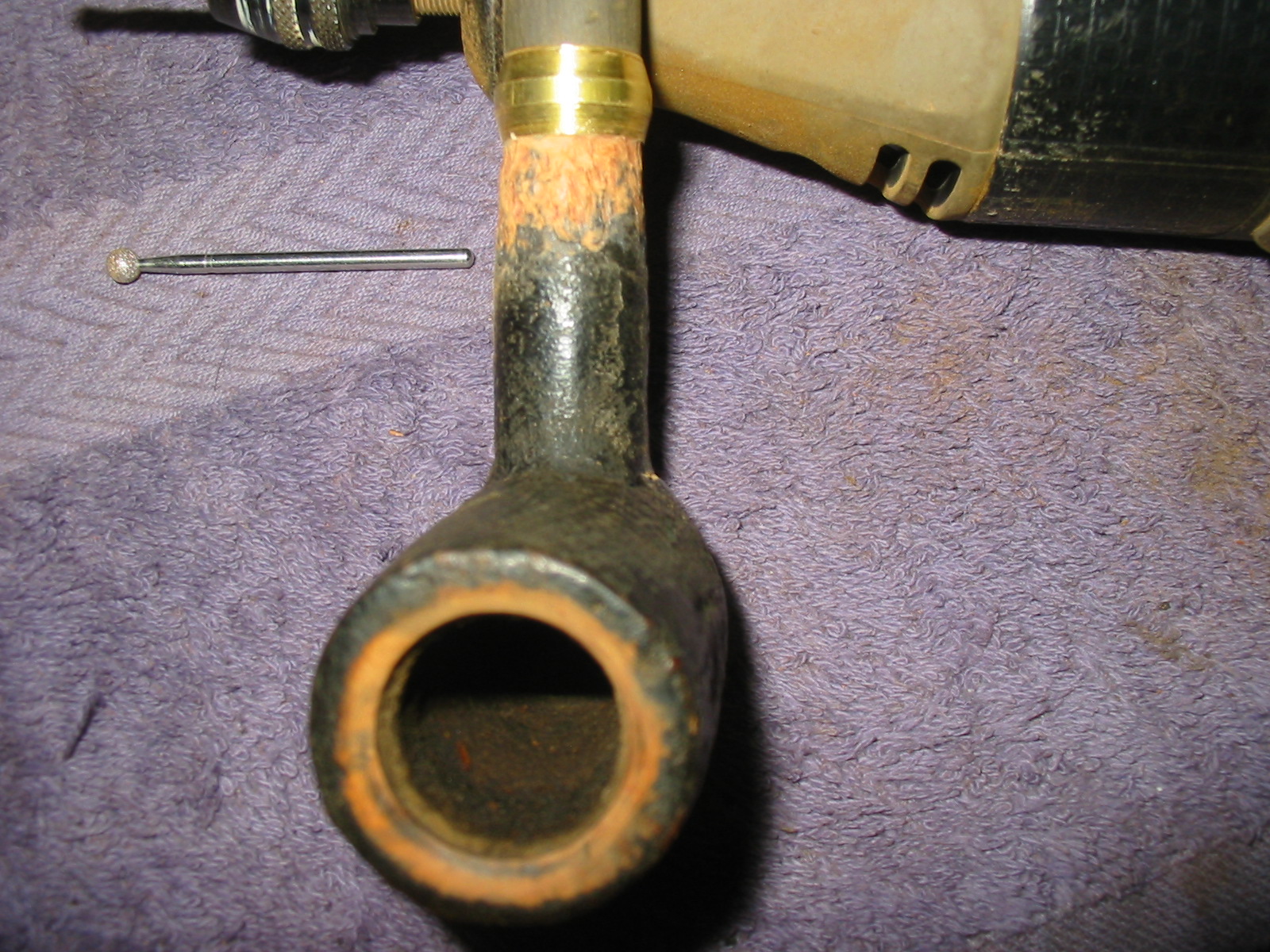
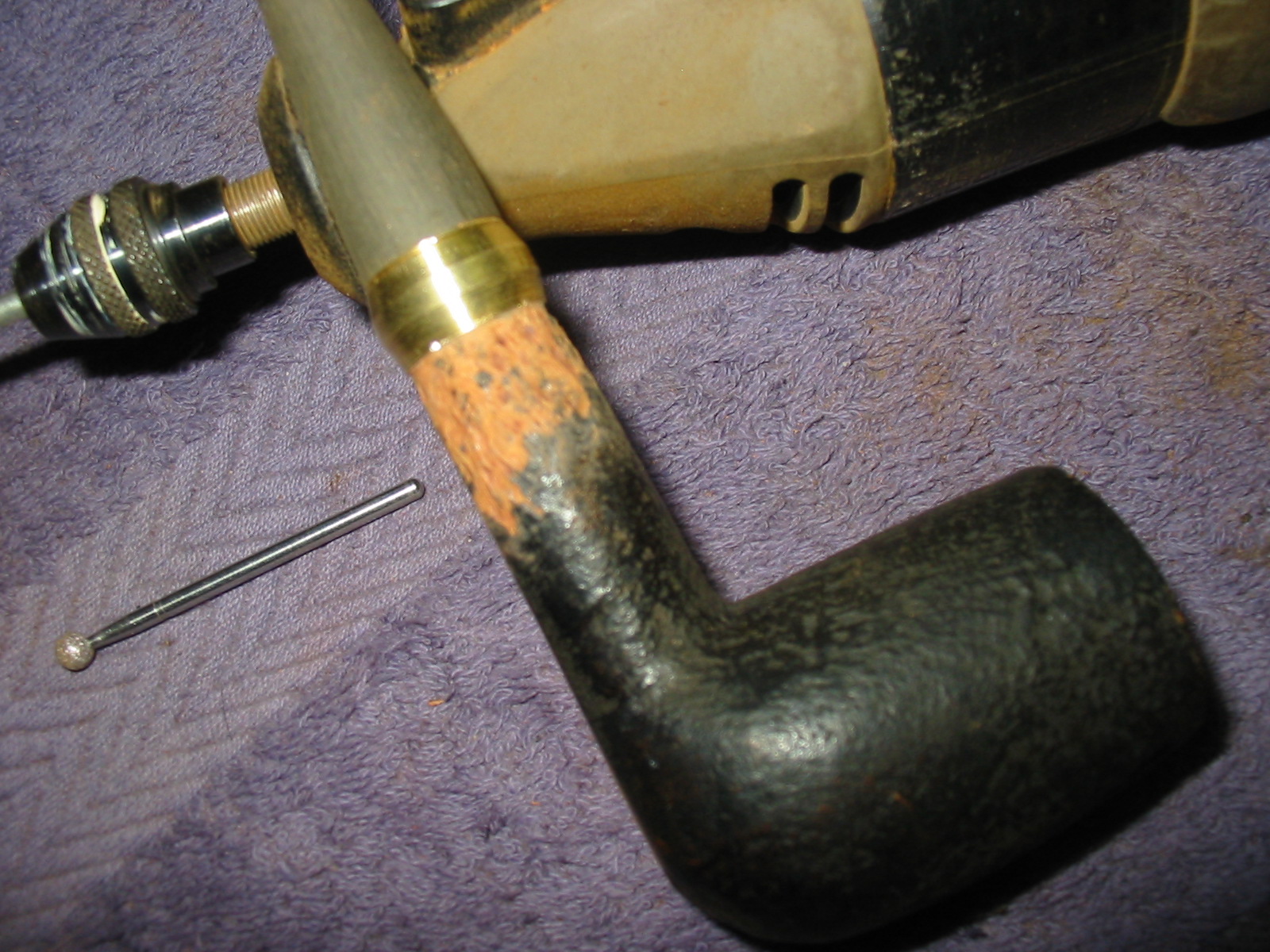
I used a Dremel and sanding drum to sand back the shank so that the band could be pressure fit against the cracked shank. I took back the rustication until the finish was gone and the shank area was smooth. When the band fit tightly on the shank I heated the brass band with a heat gun and then pressed it into place on the shank.
IMG_4273

IMG_4274

IMG_4276

IMG_4278

I pressed the band into place on the shank and then hand sanded the area in front of the band smooth so that I could rework the taper of the shank and the finish to match the rest of the pipe.
IMG_4279

IMG_4280

IMG_4281

IMG_4283

I used the two Dremel diamond cutting heads pictured below to rusticate the finish on the shank. I used the cylinder first and then the ball. I worked it into the briar to make the smooth area match the rest of the bowl.
IMG_4284

IMG_4285

IMG_4287

After rusticating the shank I stained it with a dark brown aniline stain and flamed it to set it deep within the grain. I stained the rest of the pipe as well and the rim with multiple coats of the dark brown.
IMG_4288

IMG_4289

IMG_4290

IMG_4291

Once the stain was dry on the bowl I hand buffed it with a cotton cloth and then stained it a second time with MinWax Red Mahogany stain. I rubbed it on and then rubbed it off. I repeated the process until I had the colour that I wanted.
IMG_4293

IMG_4294

IMG_4295

IMG_4296

I buffed the bowl on with White Diamond and to evenly distribute the stain coat and give the pipe a rich shine. When I had finished I worked on the stem with 220 grit sandpaper, a medium grit sanding sponge and micromesh sanding pads. I used my usual array – wet sanding with the 1500-2400 grit pads and dry sanding with the 3200-12,000 grit pads. I rubbed down the stem with Obsidian Oil and rubbed it into the vulcanite.
IMG_4297

IMG_4298

IMG_4299

I sanded the bevel on the bowl and the brass band on the shank with the 1500-2400 grit micromesh pads.
IMG_4300

IMG_4301

IMG_4302

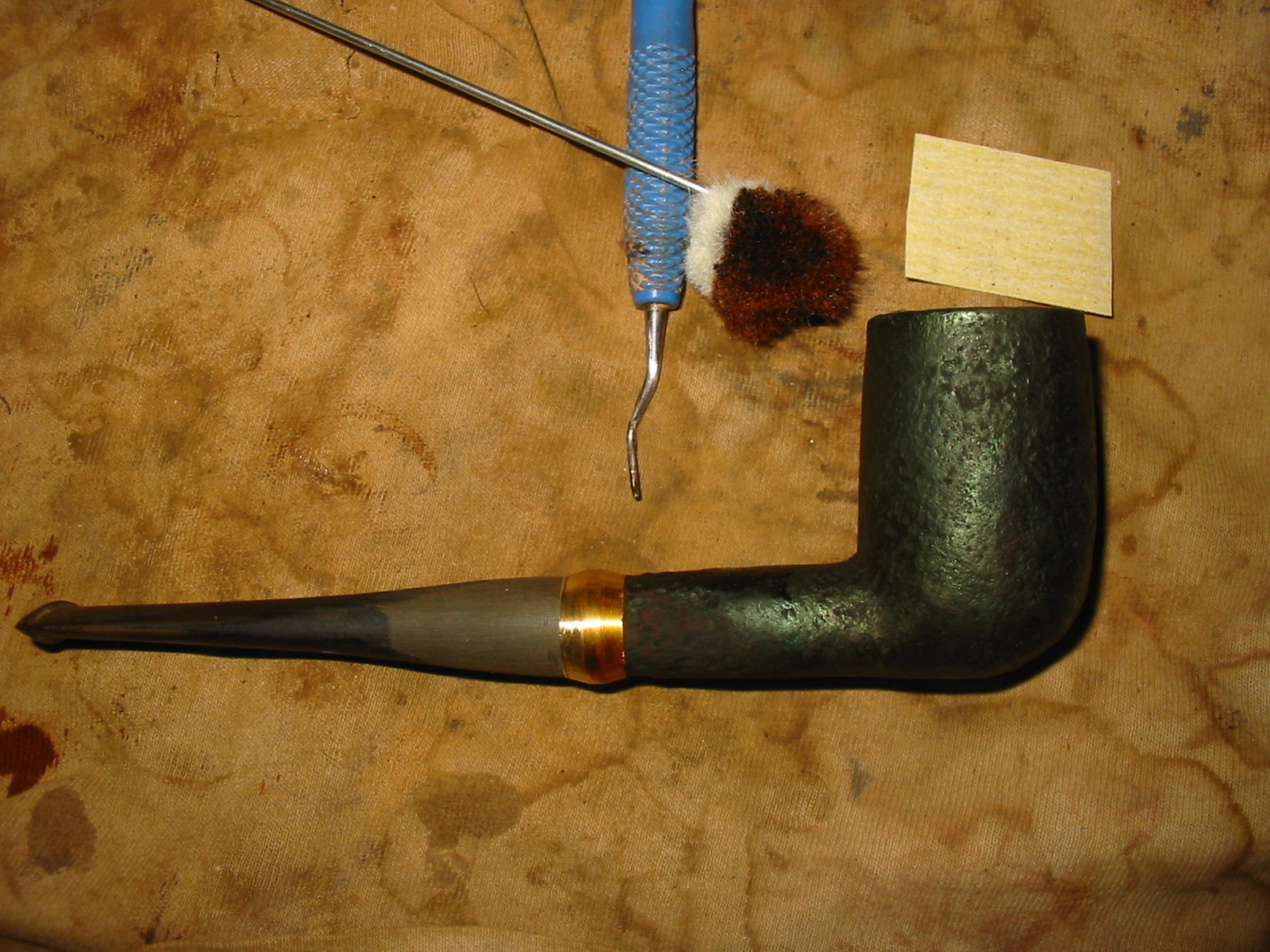
I buffed the pipe with White Diamond and then gave the stem multiple coats of carnauba wax. I used Halcyon II wax on the sandblast finish of the bowl. I buffed the pipe with a clean flannel buff. I have to say though I would have liked to keep the pipe unbanded and pristine, the crack that happened in the shank made me try something a little different. I actually like the finished look of the pipe with the brass band. The combination of the two stains give the blast finish depth that changes with different lighting and the tapered stem adds some panache to this Good Companion.
IMG_4309

IMG_4310

IMG_4311

IMG_4312

IMG_4313

Looking at the photos I decided to do a bit more work shaping the brass band. I sanded the band with 220 grit sandpaper to remove the ridges in the brass. I followed that by sanding with a medium and fine grit sanding sponge. I finished sanding the band with micromesh sanding pads from 1500-3200 grit polish it.
IMG_4314

IMG_4315

IMG_4316

IMG_4317

IMG_4318

IMG_4319

With the band finished I will give the pipe another buff to polish the handling that it received working over the stem.

Reworking an Orlik Matt Canadian Shape L78


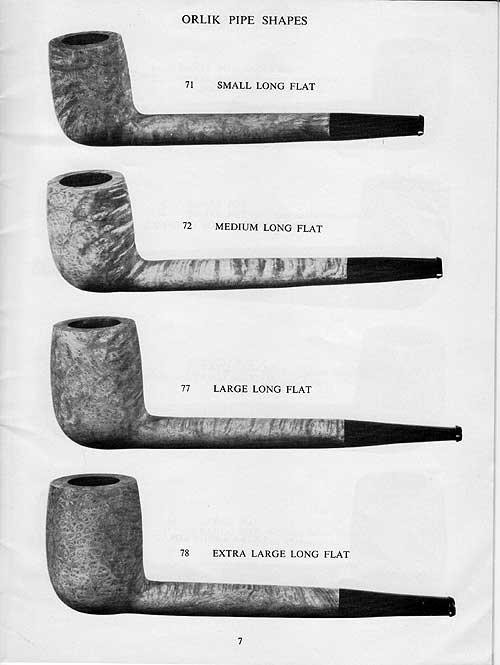
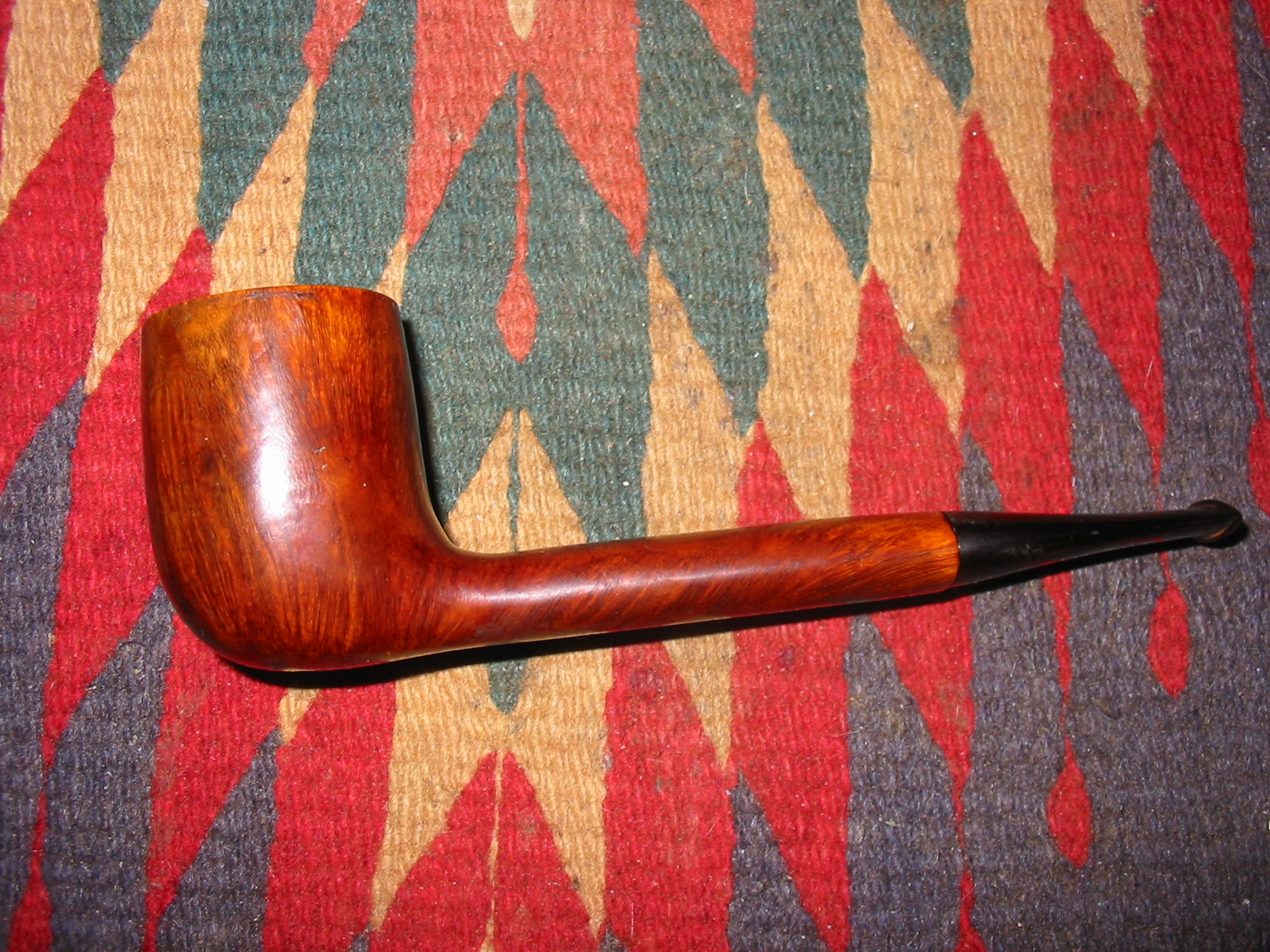
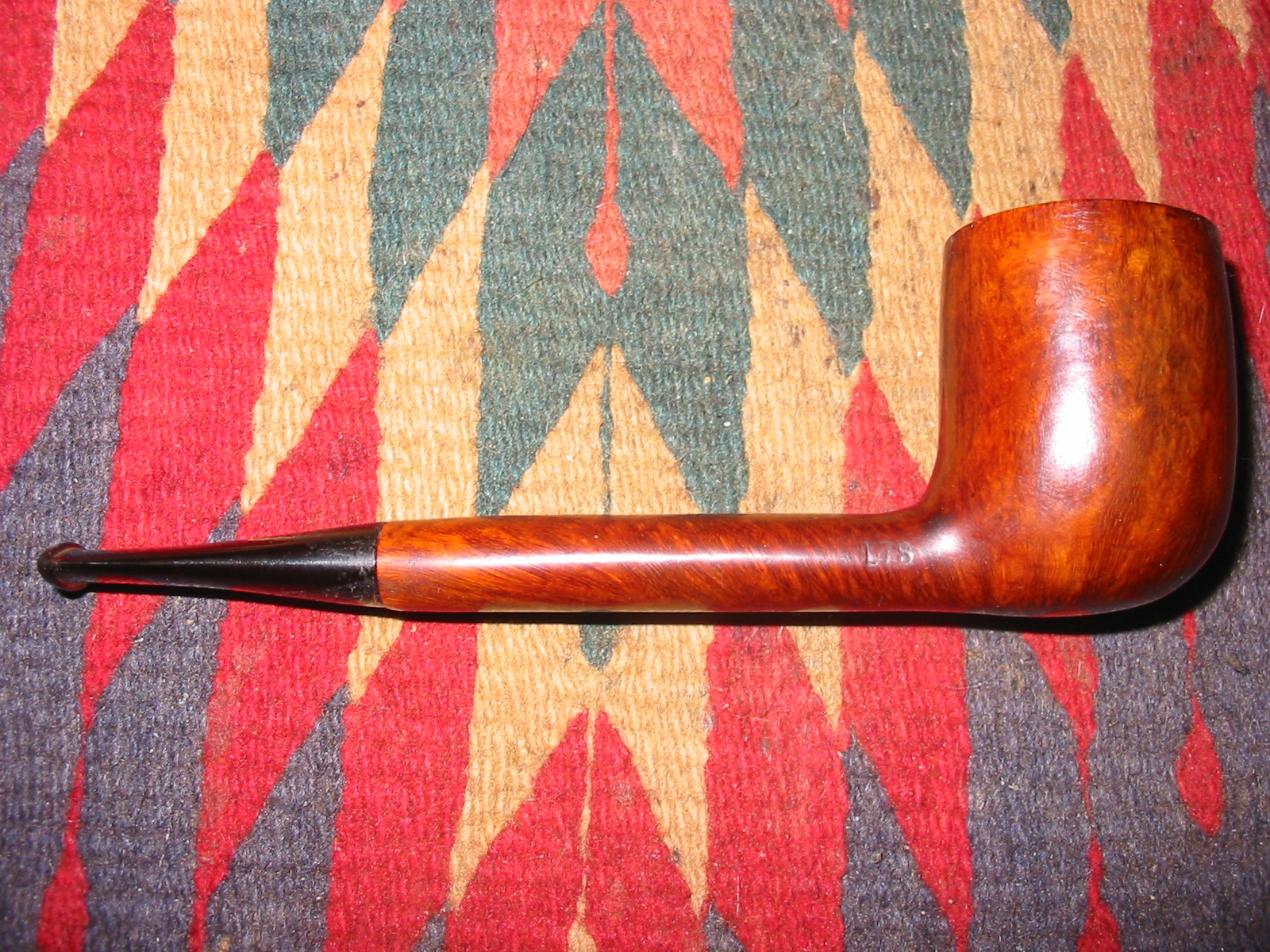
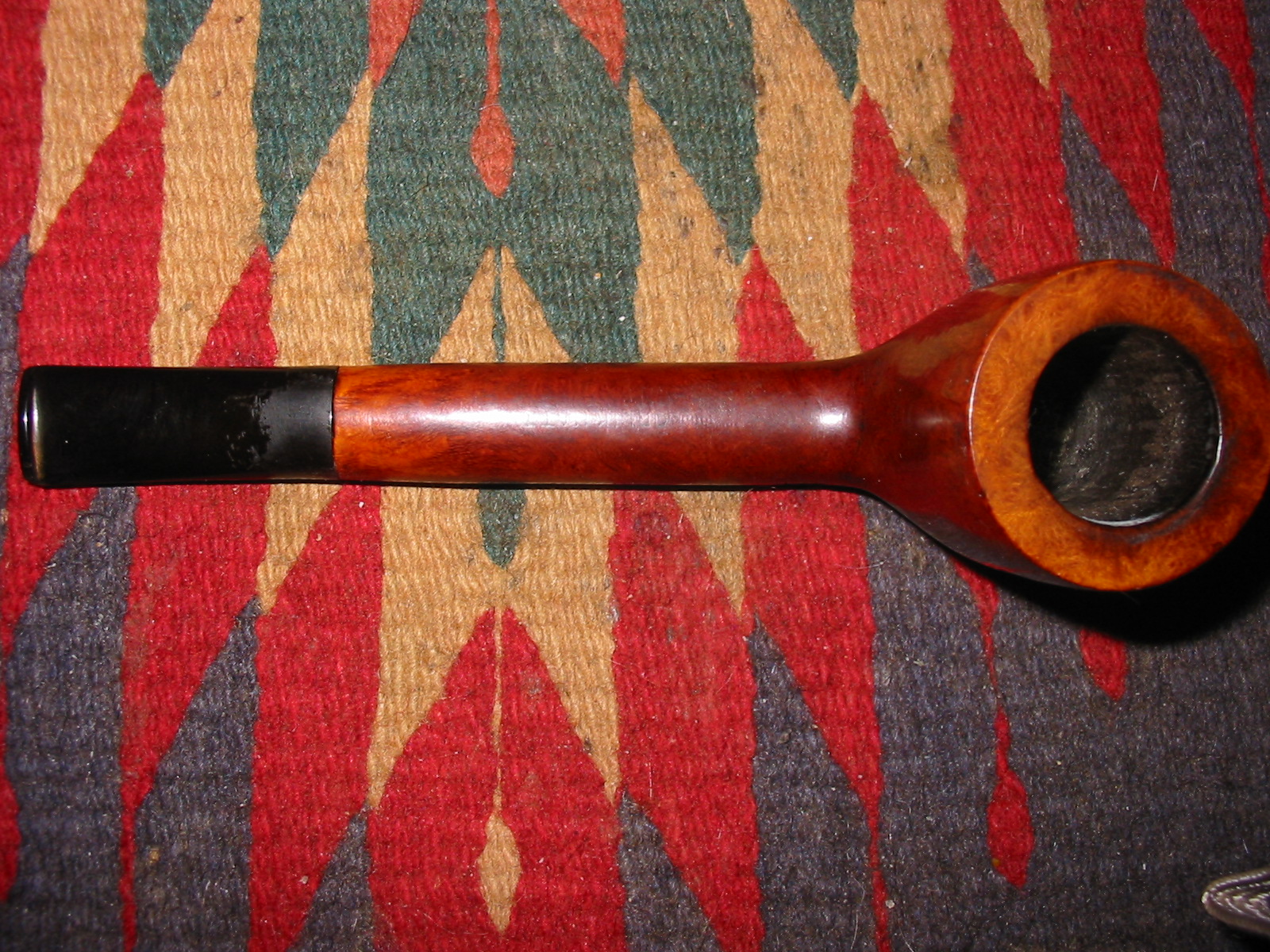
A few years ago I was gifted a small box of English pipes. I had truly forgotten about it but my daughters were cleaning out our storage room under the front porch (interior room) and came across the box. So now I have five more pipes to restore. The pipe on the table this morning was a Canadian with a poorly fitted replacement stem. It was not the same oval as the shank. The shank had been sanded down to fit the stem and done in such a way that it was no longer an even taper. Even in doing so the stem still was larger on the top and bottom where it met the shank. The transition was thus rough and uneven. The stem also had significant scratches on it and a spot at the top and bottom where there was an uneven bump near the shank. The bowl had been topped and then the rim and shank restained but they did not match the rest of the pipe. The stamping though faint on the top of the shank reads Orlik Matt over Made in England in block letters. There is also a shape number on the right side of the shank as noted in the title – L78. I did a bit of checking to see if the shape number matched what I had. I have included a page of shapes – the one I have is at the bottom of the page.
orl7

Here are some photos of the pipe when I started.
Orlik1

Orlik1b

Orlik2

Orlik3

I wiped the bowl and shank down with acetone on a cotton pad to remove the spotty finish. I cleaned out the shank and stem as they were filthy and prohibited a true fit on the stem. Once I had the stem sitting in the stem correctly I sanded the shank and stem junction with 220 grit sandpaper to smooth out the transition and even out the taper from the bowl to the stem. I wanted to also remove the excess vulcanite and to reshape the oval of the stem and shank. I wanted the transition to be smooth to the feel. I think that whoever restemmed and restored this pipe the first time gave the bowl a coat of varnish so I removed that with the acetone.
Orlik4

Orlik5

Orlik6

Orlik7

I sanded the stem shank union with a medium grit sanding sponge and a fine grit sanding block to further smooth out the transition and lines. I wanted a smooth flow of line from the bowl to the button.
Orlik8

Orlik9

Orlik10

Orlik11

Once I had finished sanding the stem and shank and the briar was smooth and unscratched it was time to stain the shank and rim. I gave the shank end and the rim a coat of dark brown aniline stain to try to bring it back to the same hues and the rest of the bowl and then stained the entire bowl and shank with a Minwax Medium Walnut stain. The first time I did it the stain still did not match well so I heated the end and the rim with a lighter and reapplied the dark brown aniline. Then stained them both again with the Minwax stain. When I had finished they were closer than before.
Orlik12

Orlik13

Orlik14

Orlik15

I sanded the stem and the bowl with micromesh sanding pads. I wet sanded the stem with 1500-2400 grit pads and then dry sanded the bowl and stem with 3200-12,000 grit pads. I rubbed the stem down with Obsidian Oil and then took the pipe to the buffer to give it a light buff with White Diamond to polish. I was careful in the buffing to avoid the already light stamping on the top of the shank. I had buffed that section with a soft cotton cloth.
Orlik16

Orlik17

I still was not happy with the stain coverage on the sanded portions of the pipe as they appeared lighter than the body of the pipe. I brought it back to the work table and touched up those two areas – the stem shank junction and the rim – with Minwax Red Mahogany Stain then set it aside to dry.
Orlik18

Orlik19

Orlik20

Orlik21

Orlik22

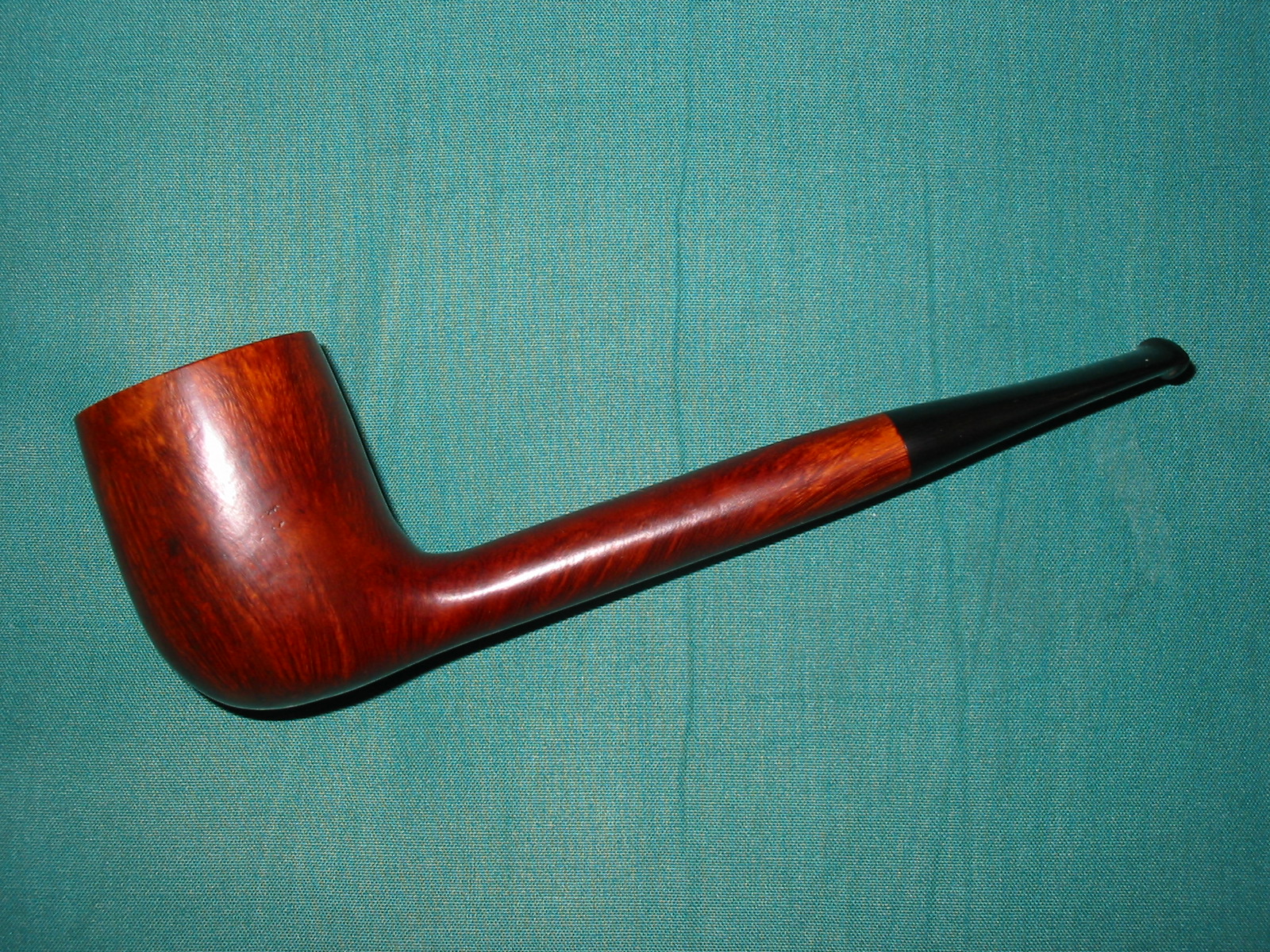
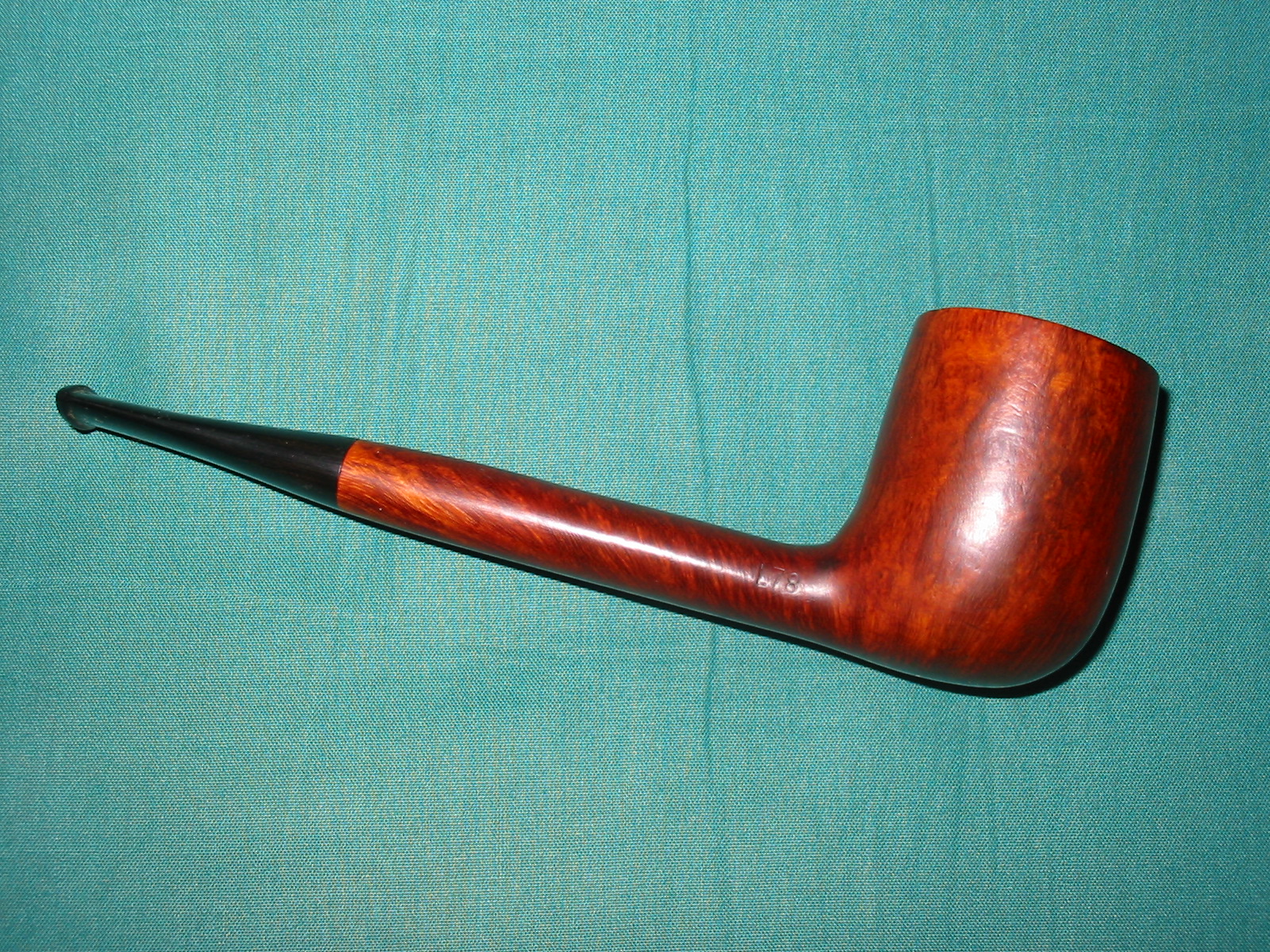
Once the stain was dry I lightly buffed the pipe with White Diamond and then gave it multiple coats of carnauba wax with the buffer. I polished the finished pipe with a clean flannel buff to protect it and give a shine. Even with the buffing I was seeking more of a matt look to the pipe than a shiny one. The finished pipe is pictured below.
Orlik23

Orlik24

Orlik25

Orlik26