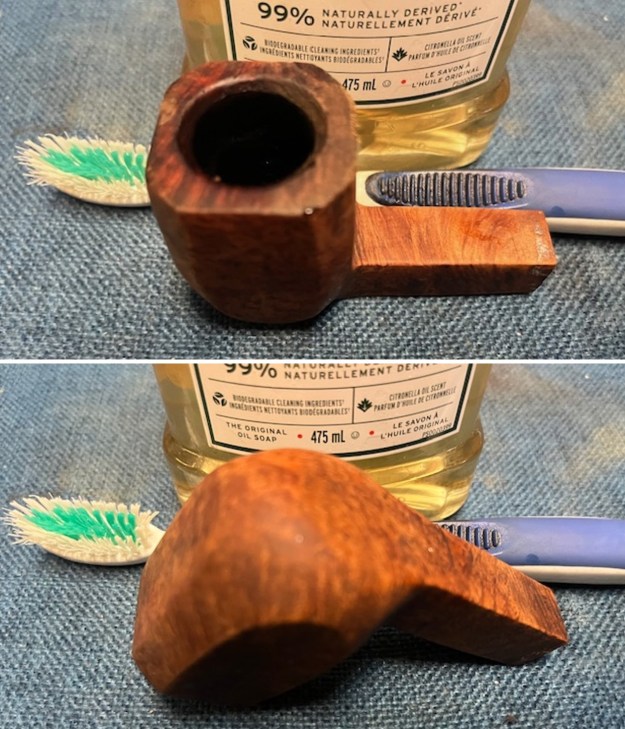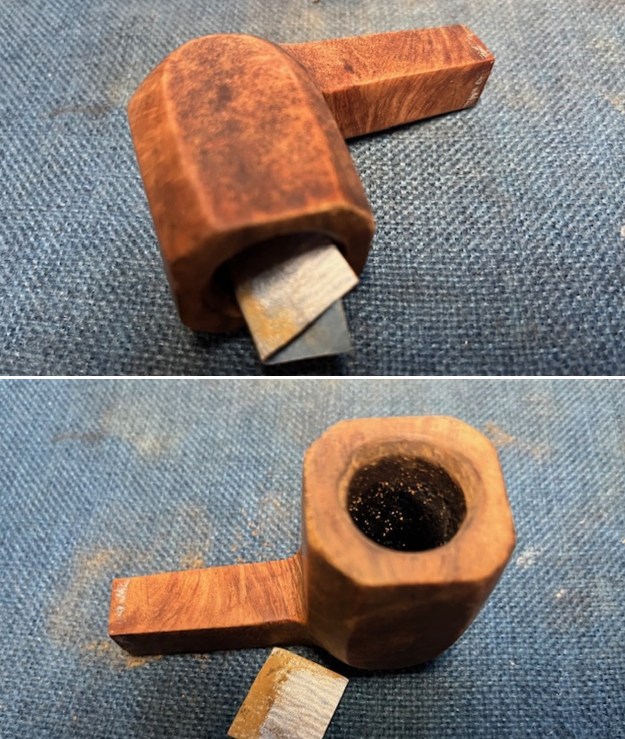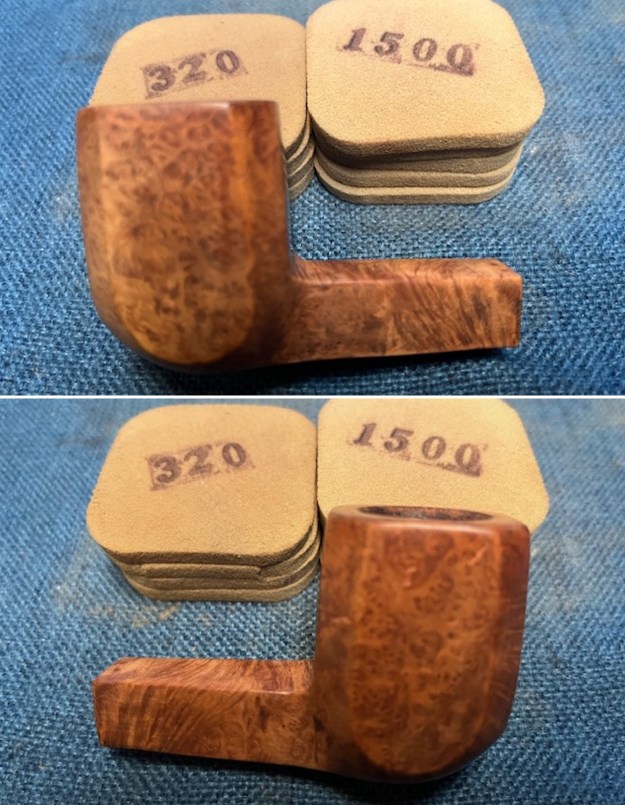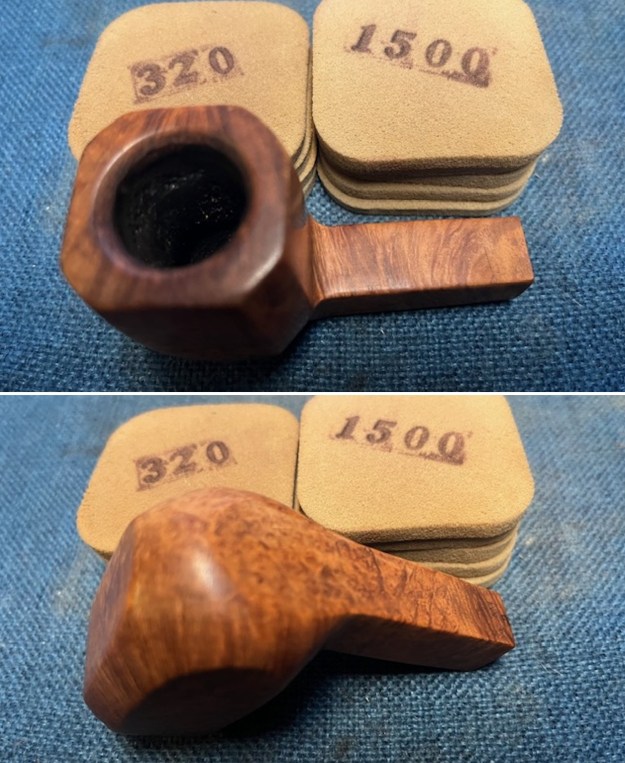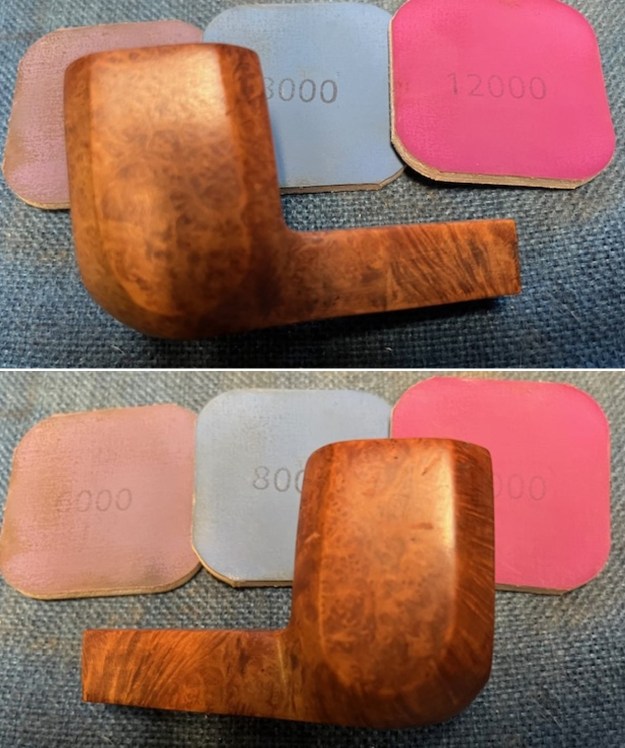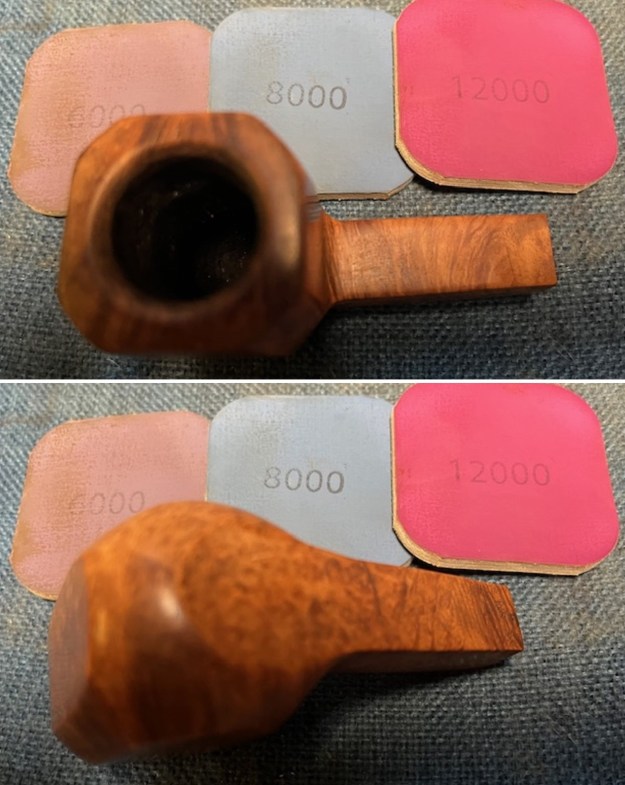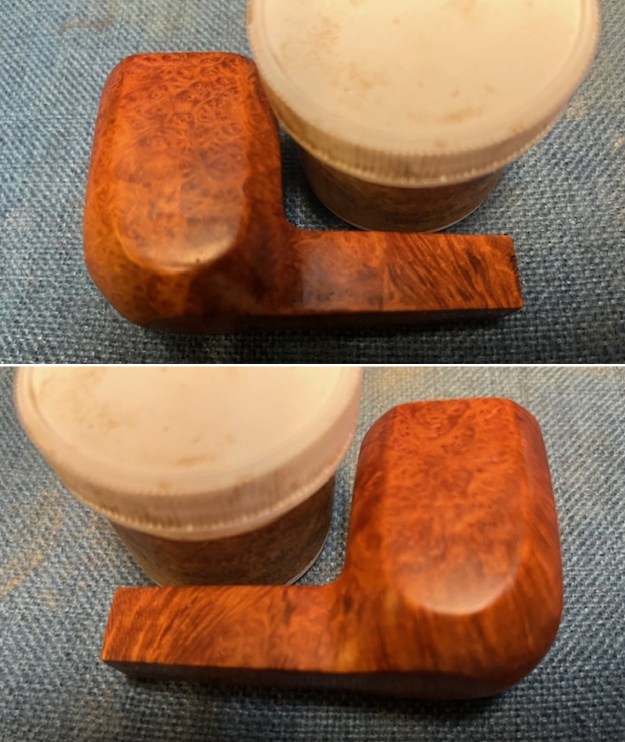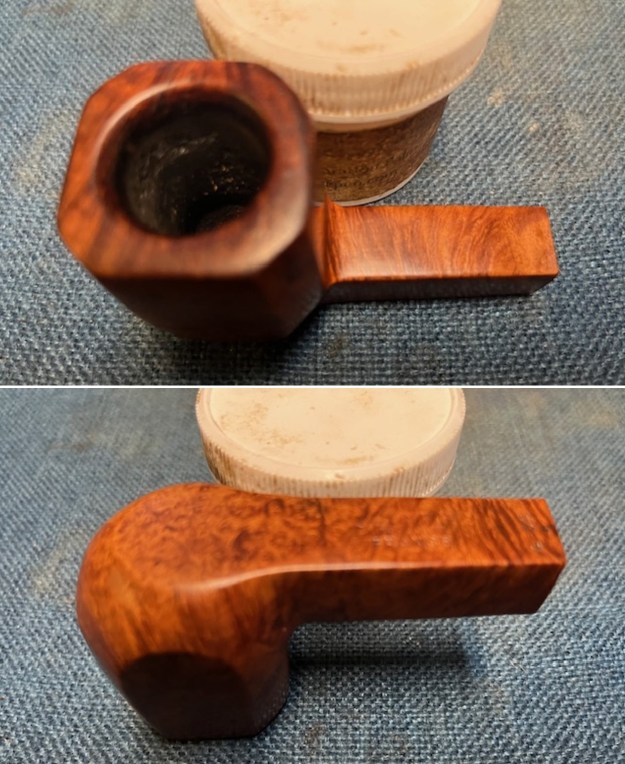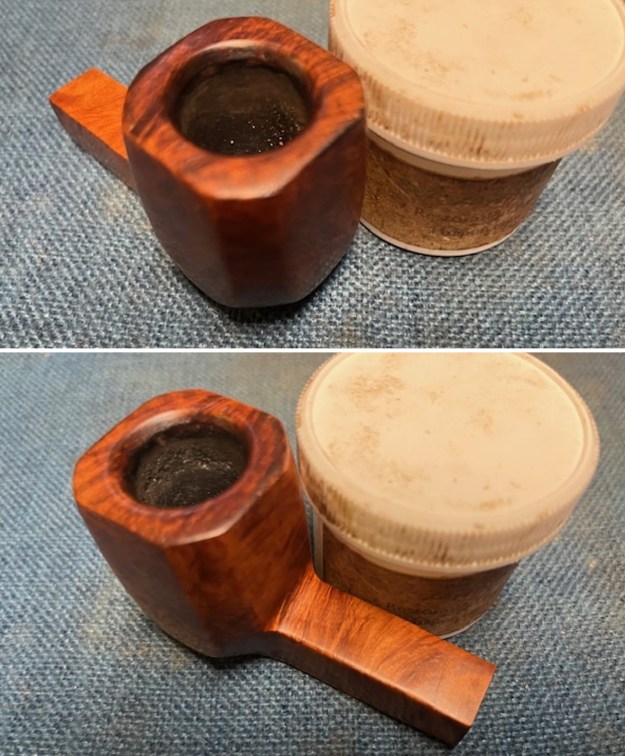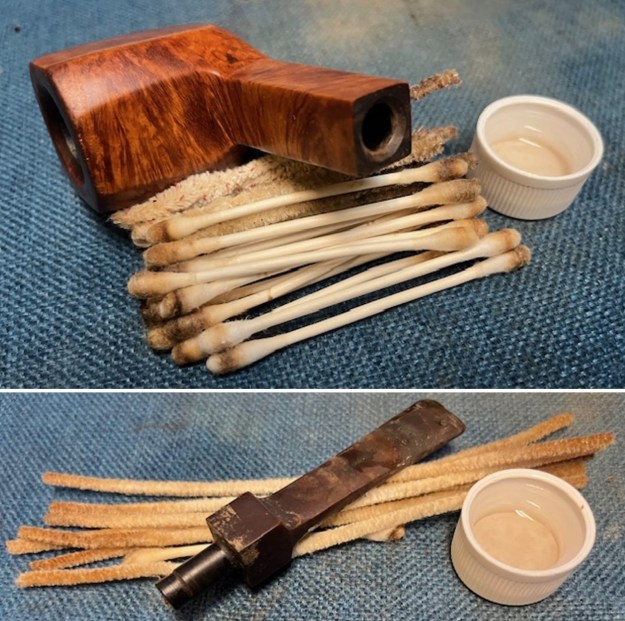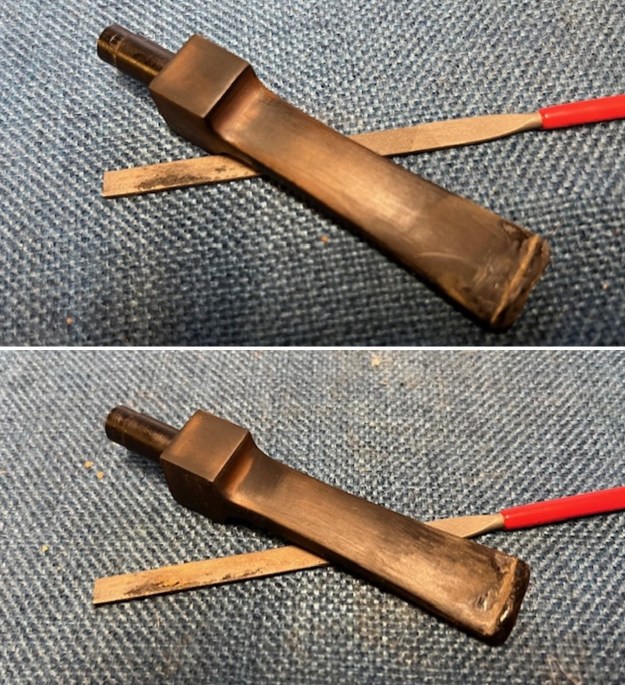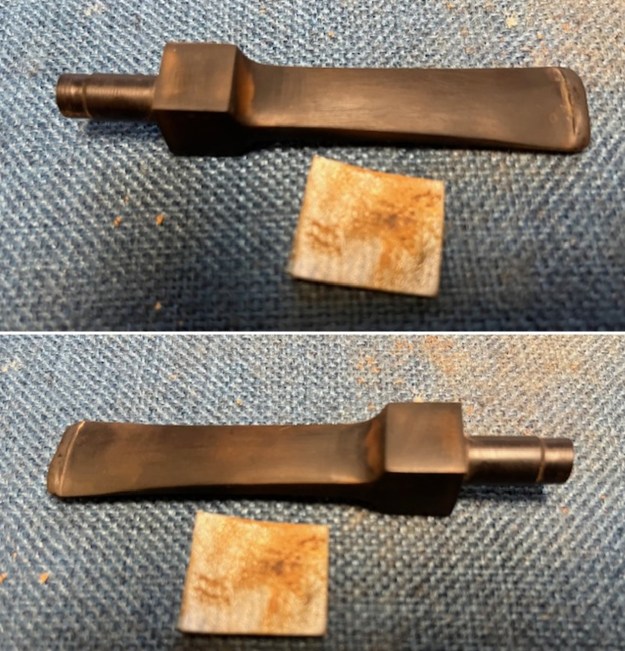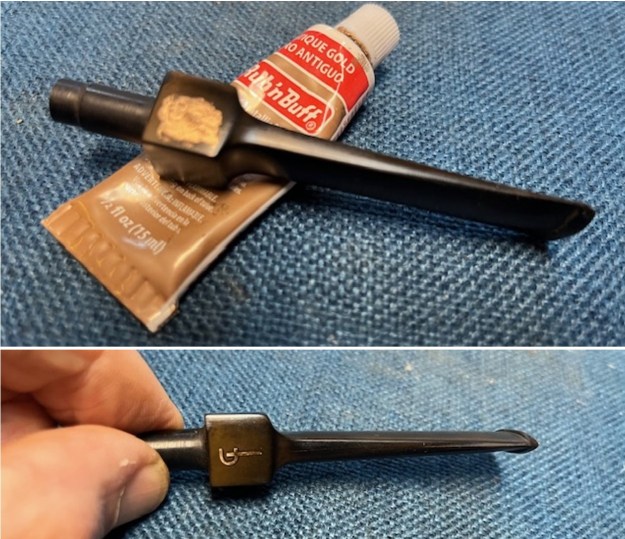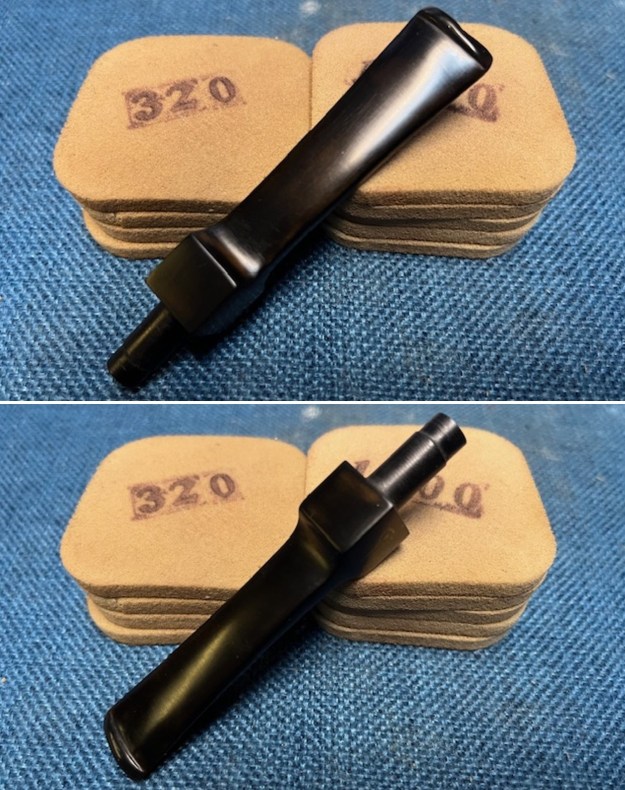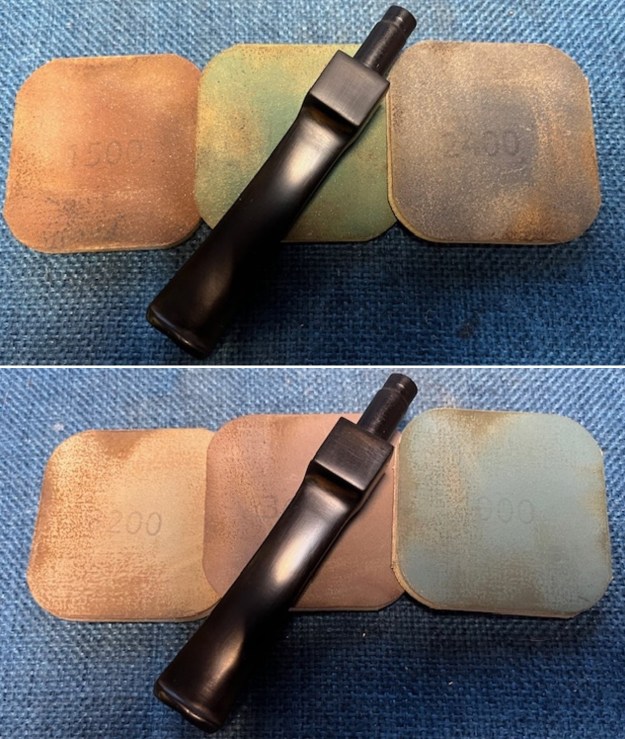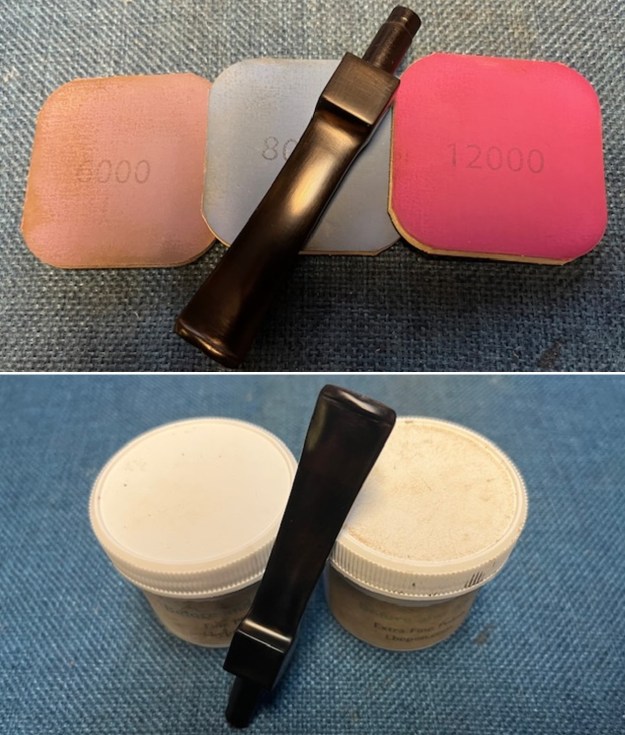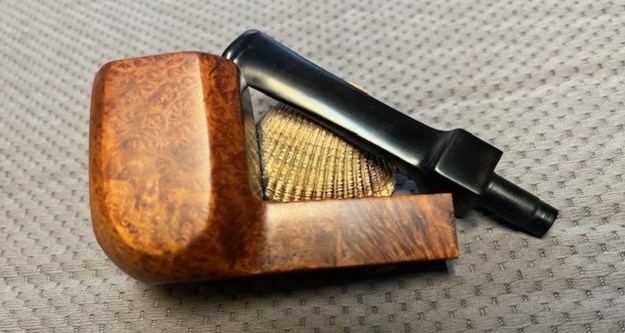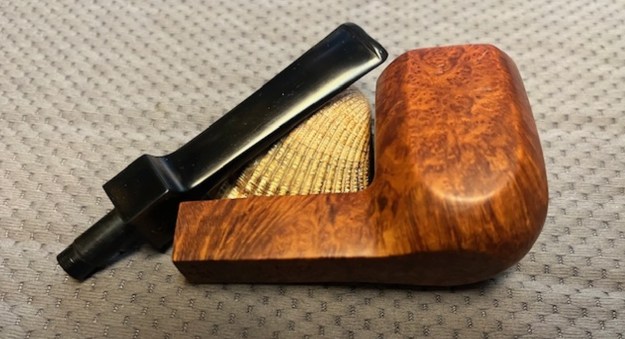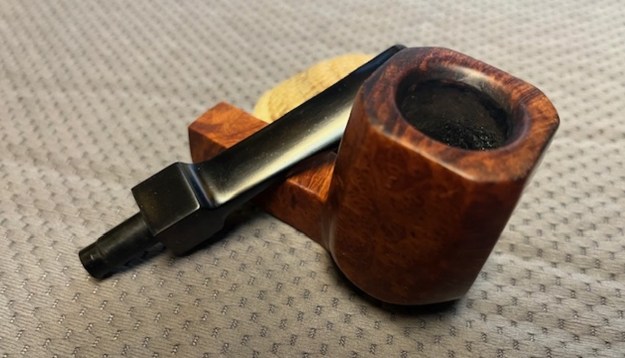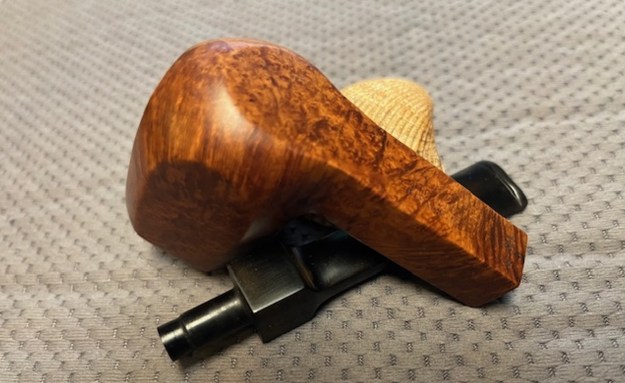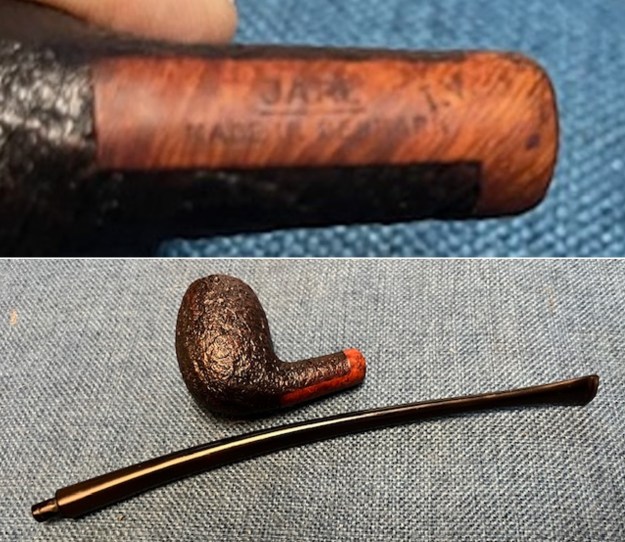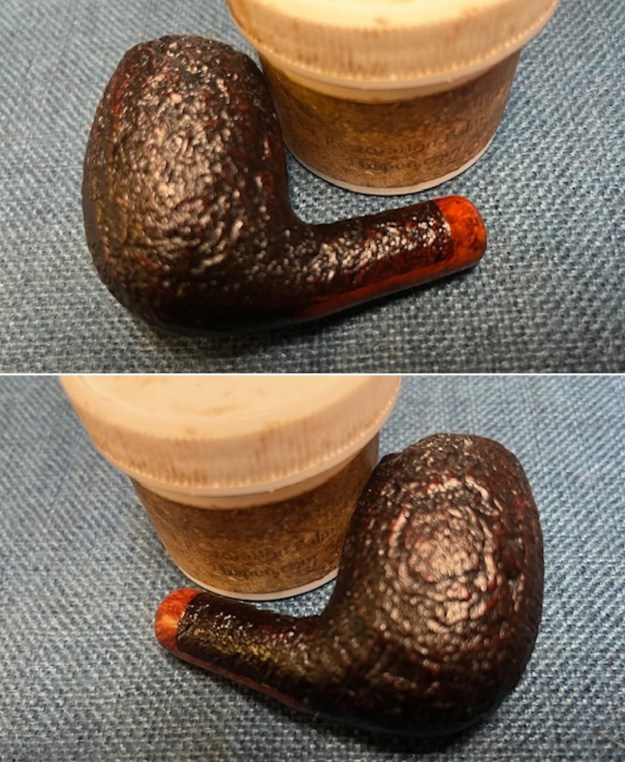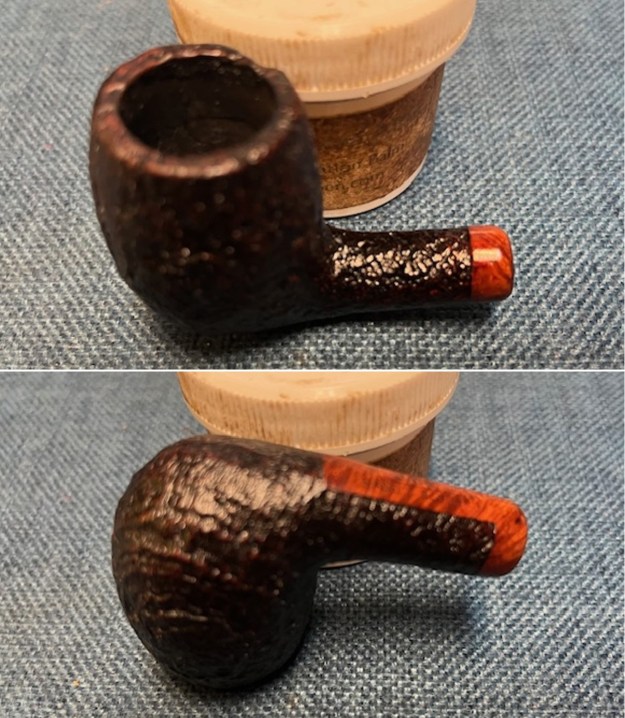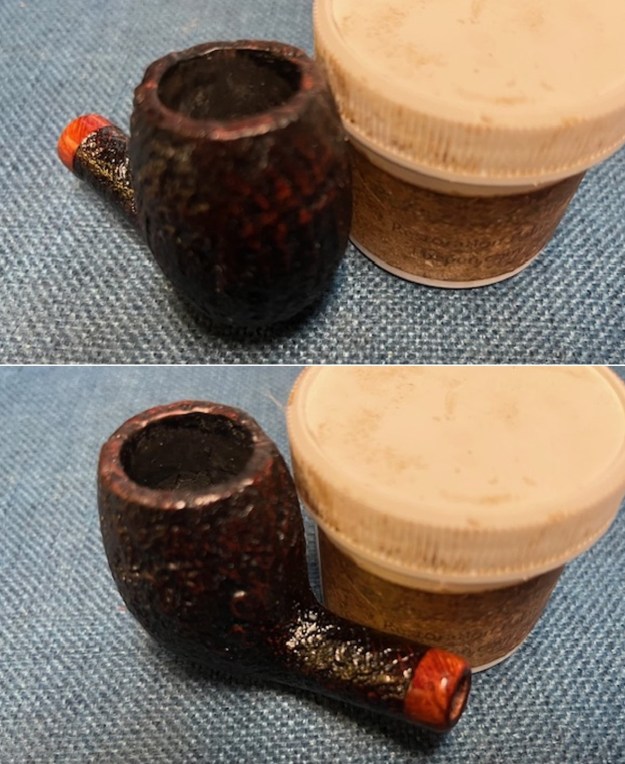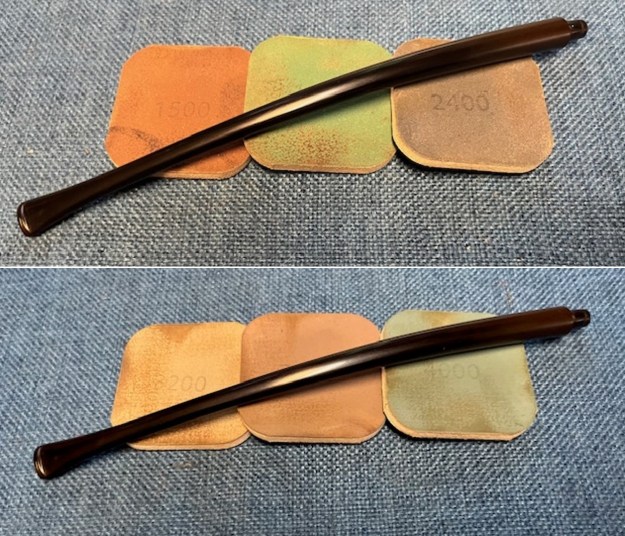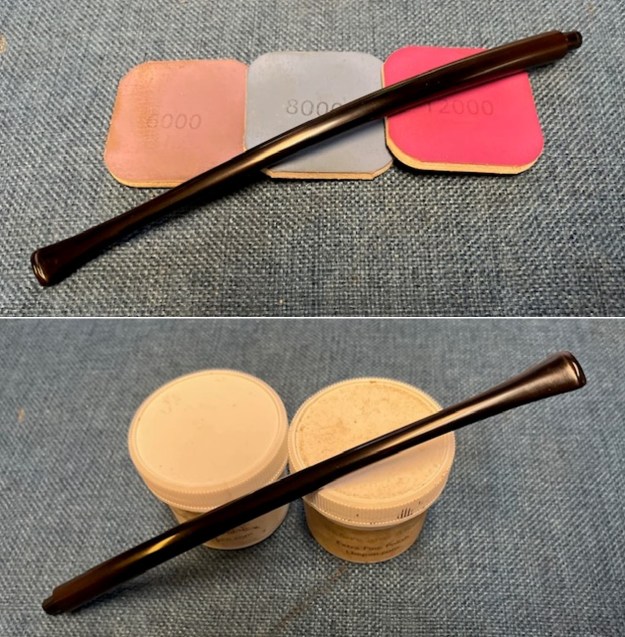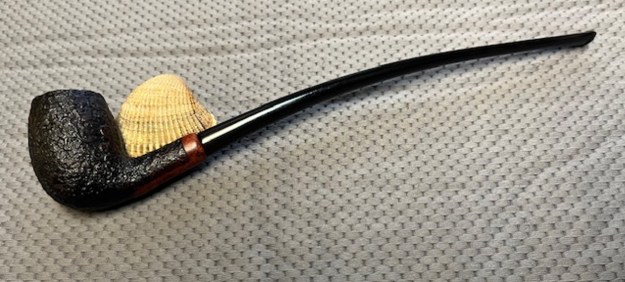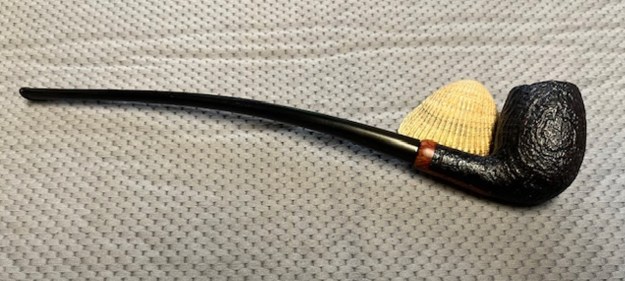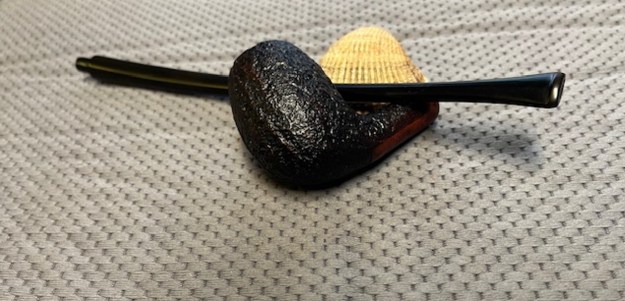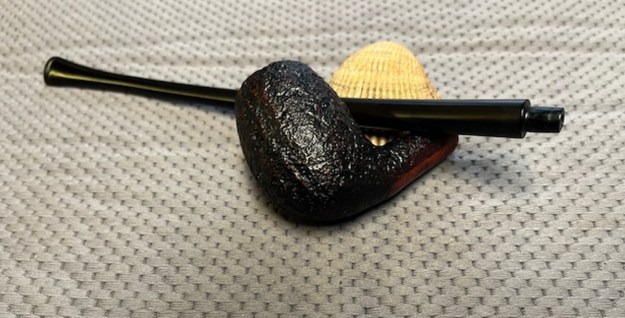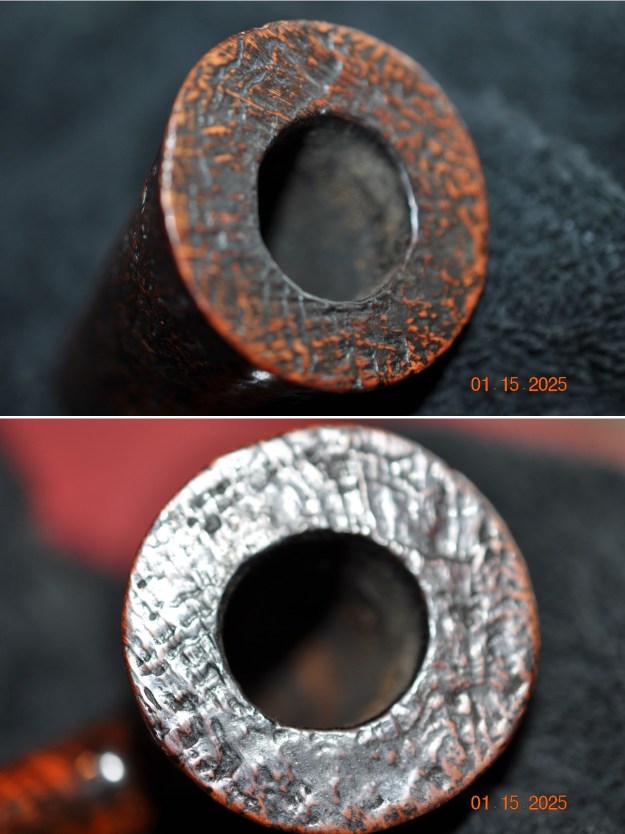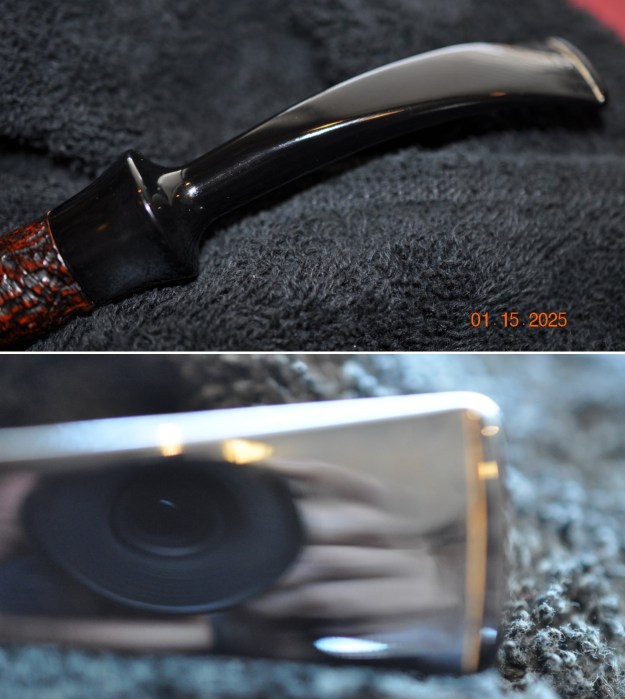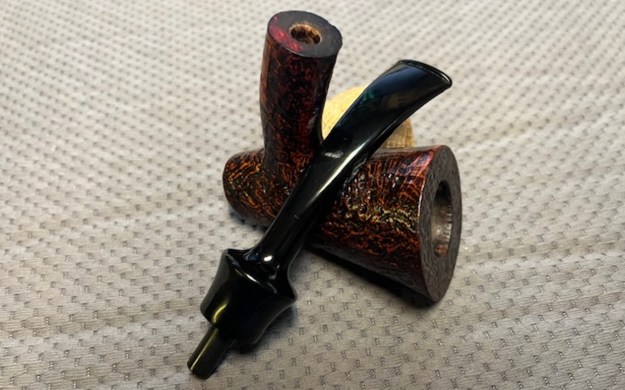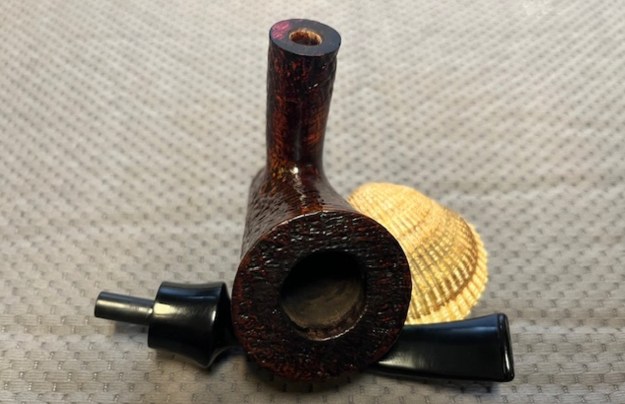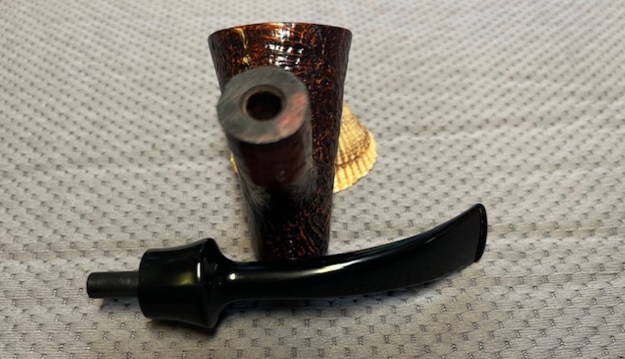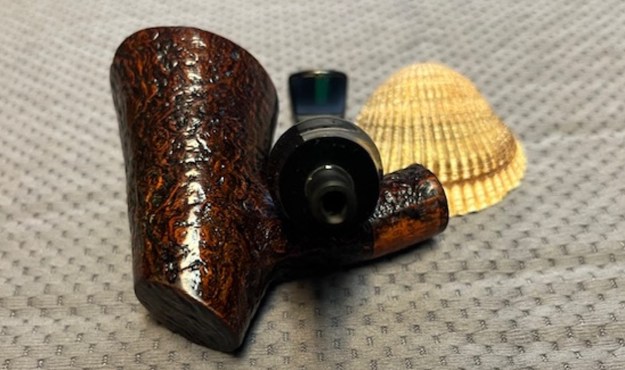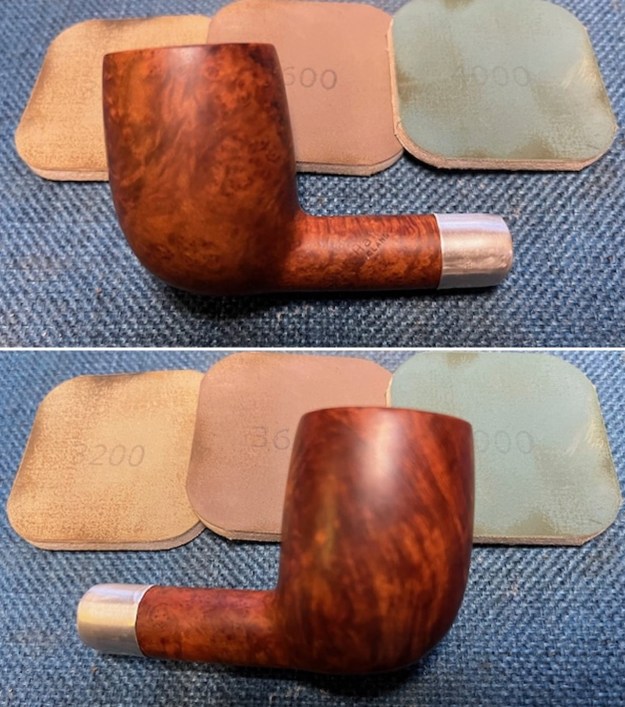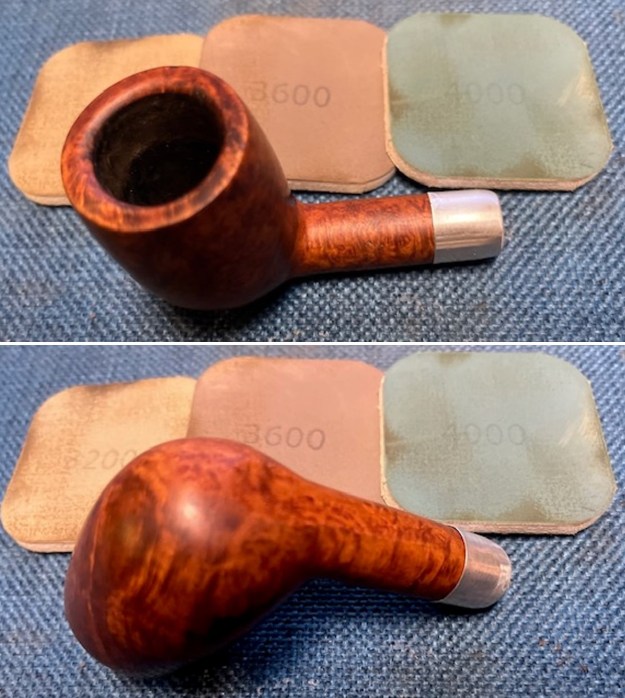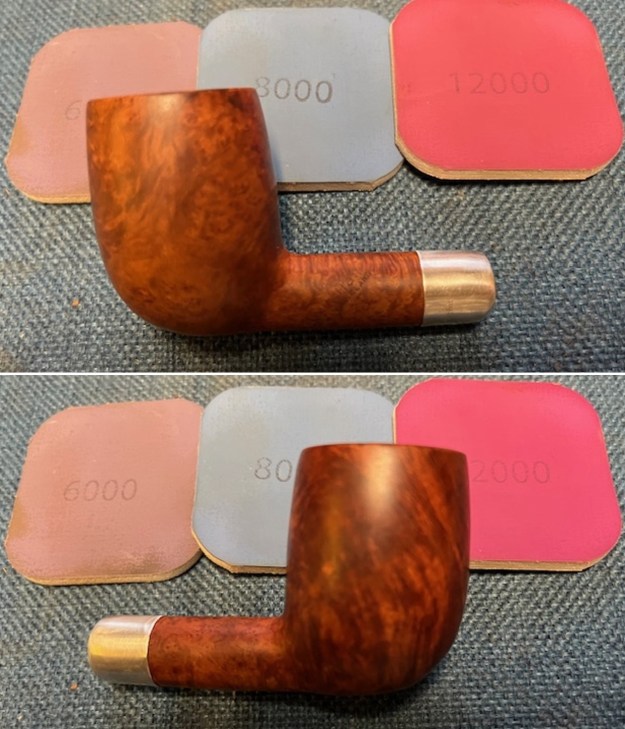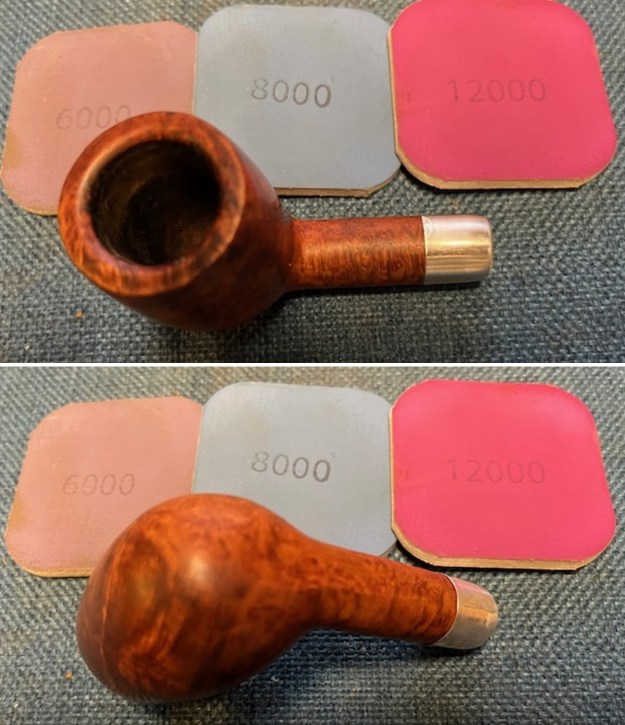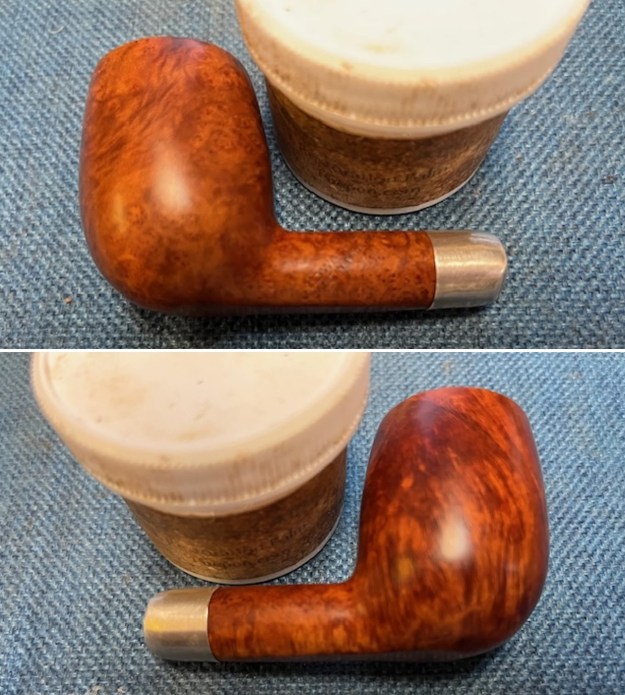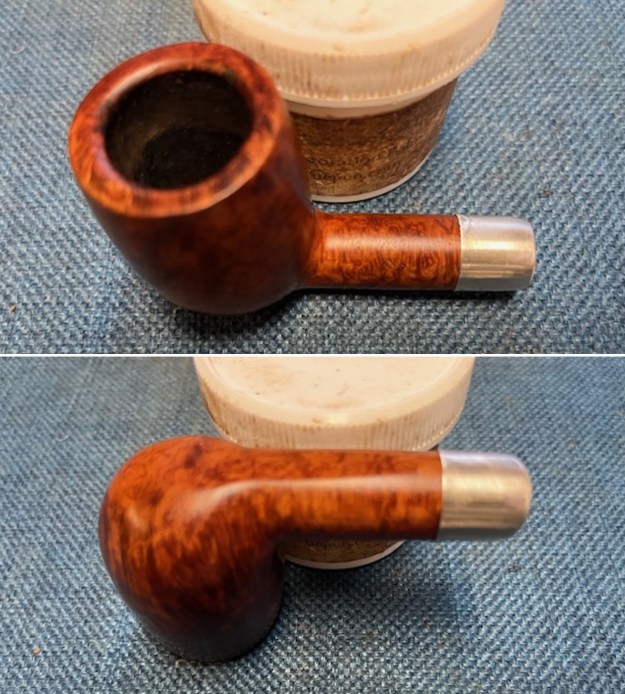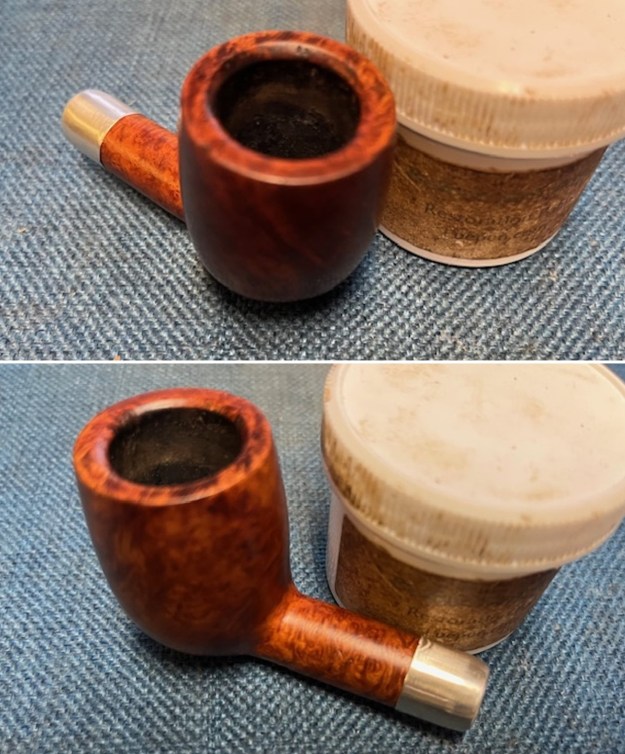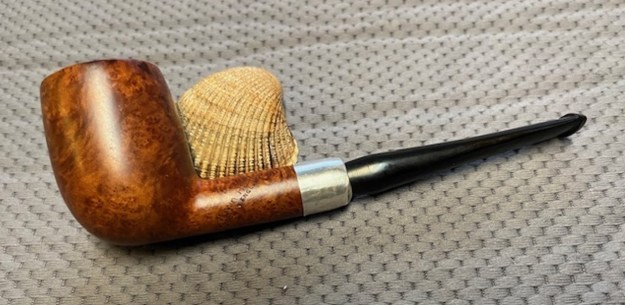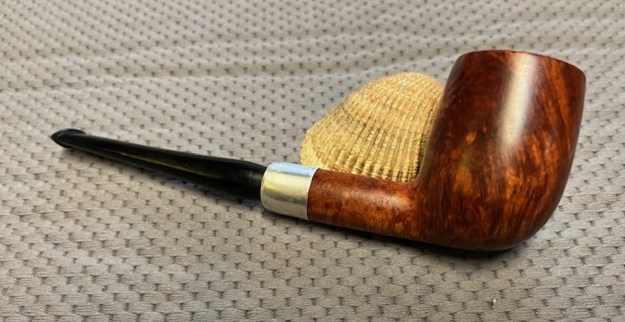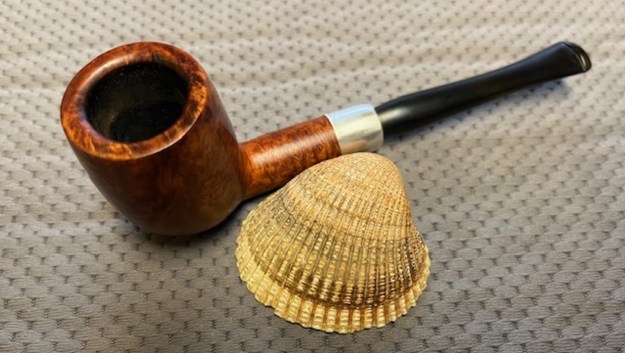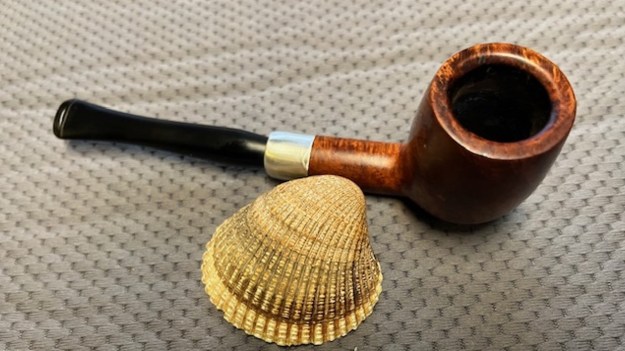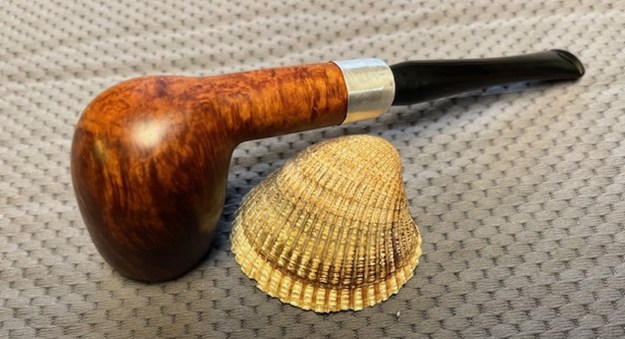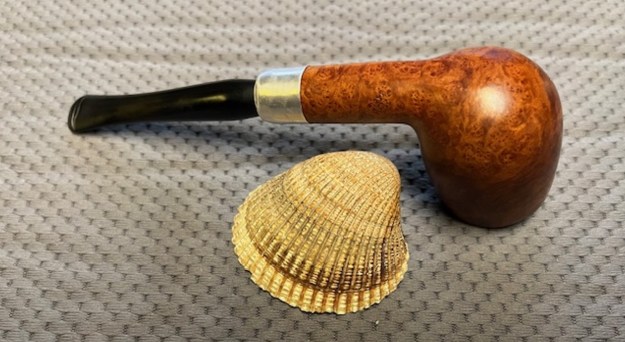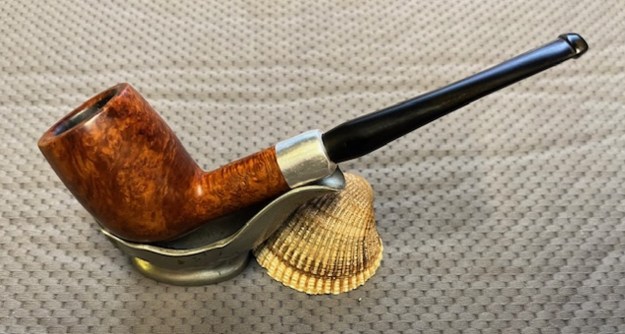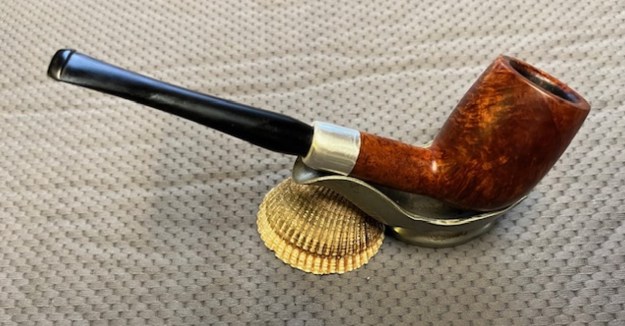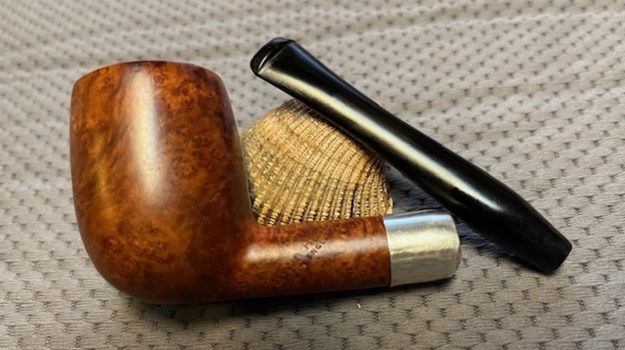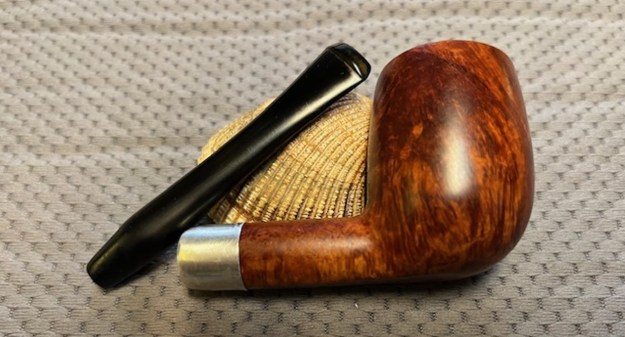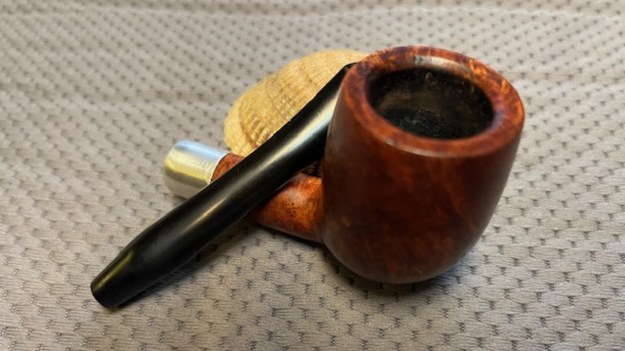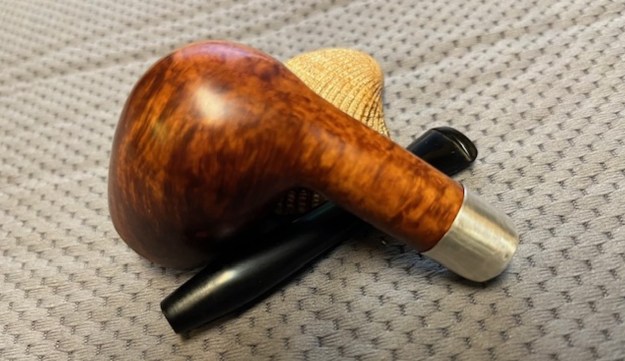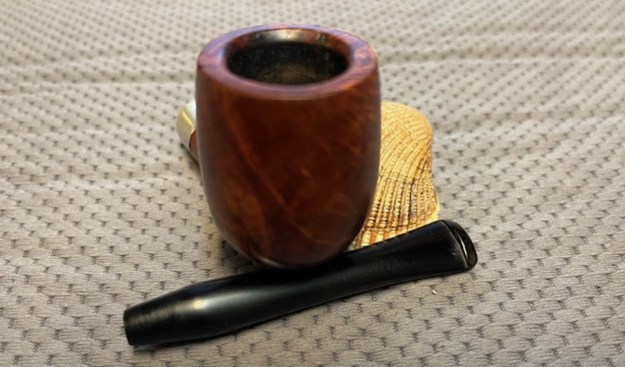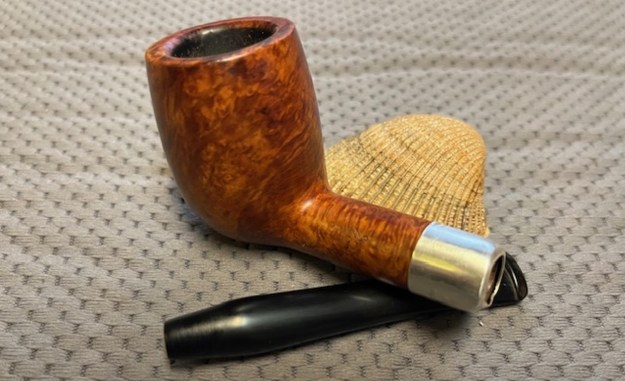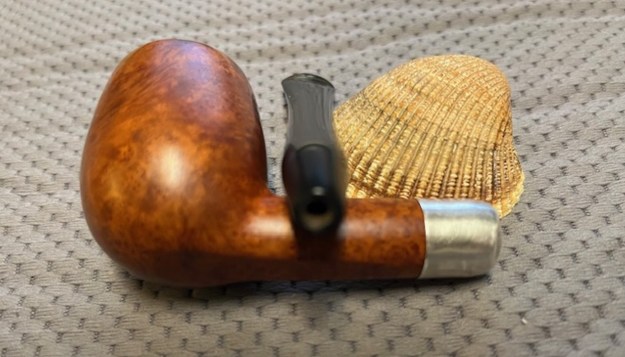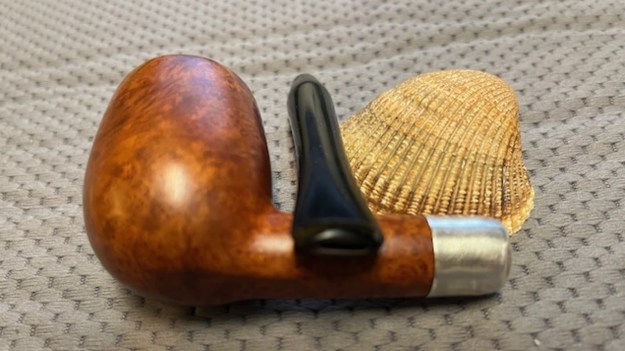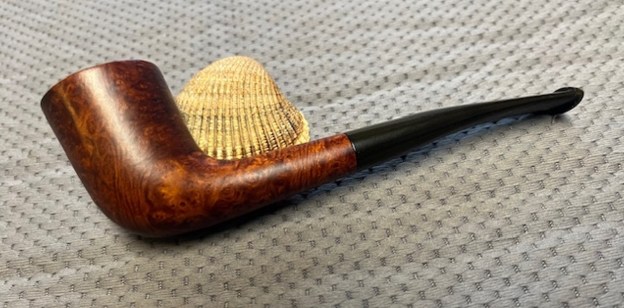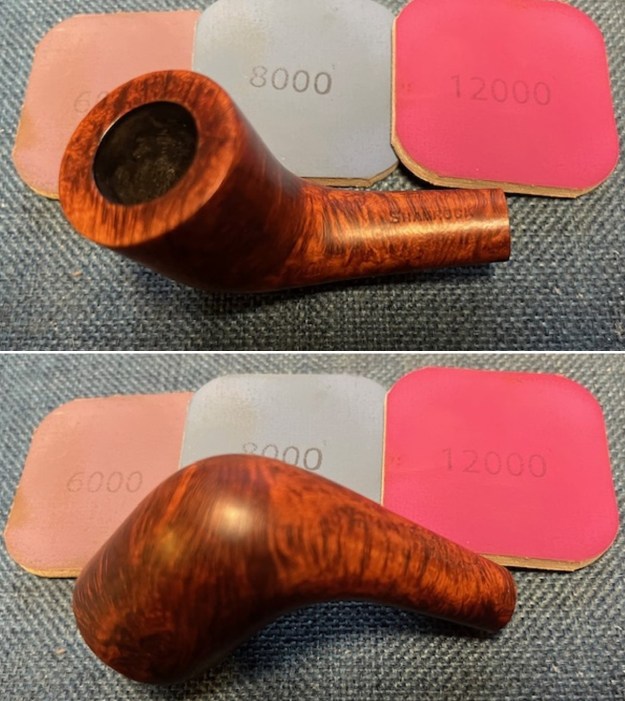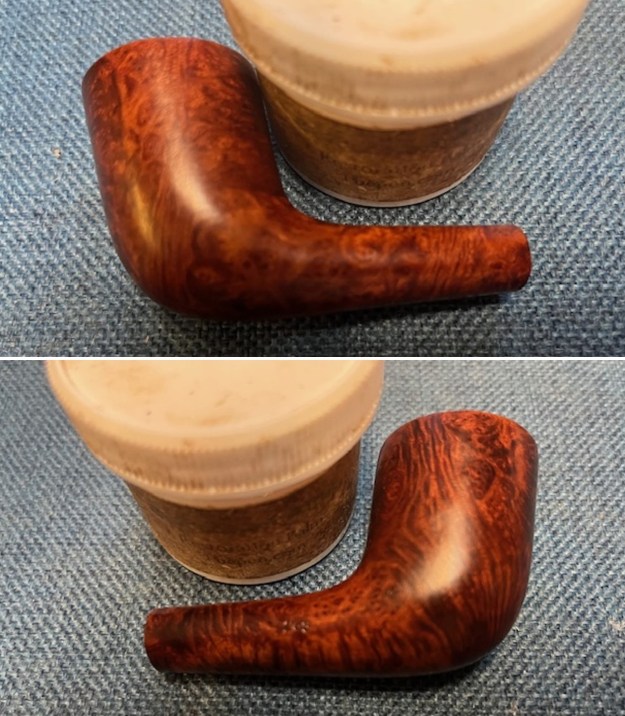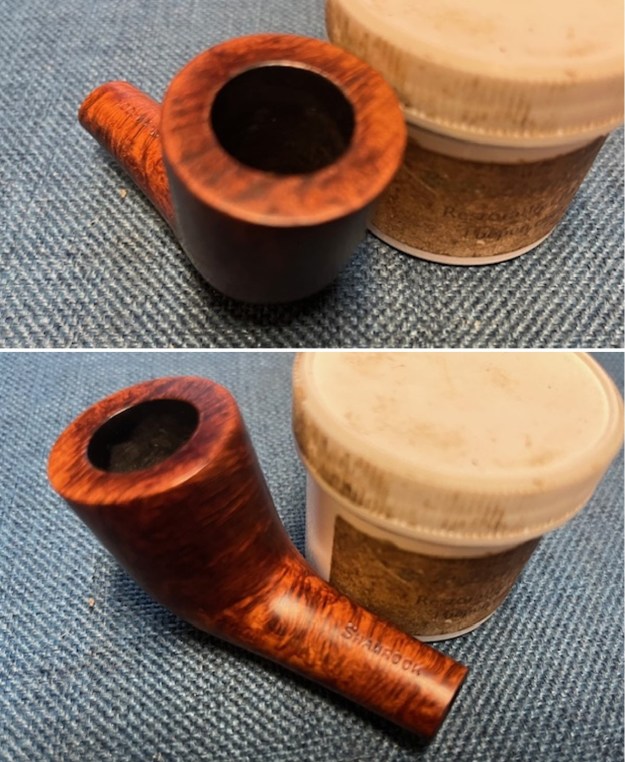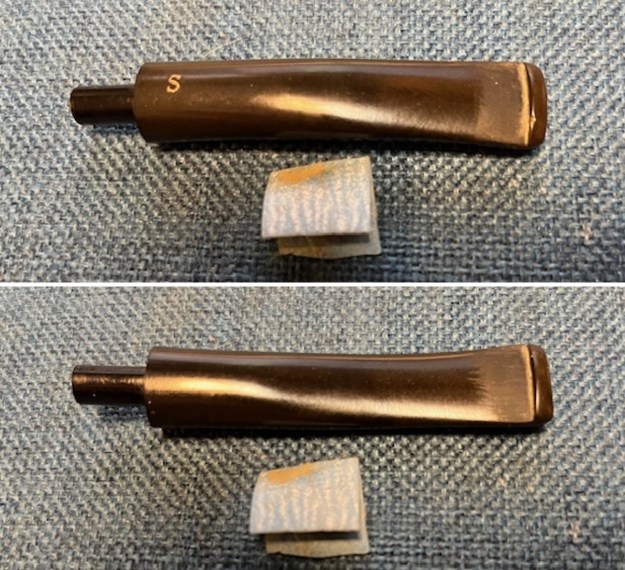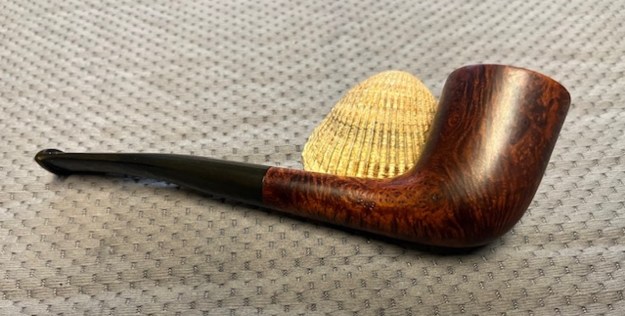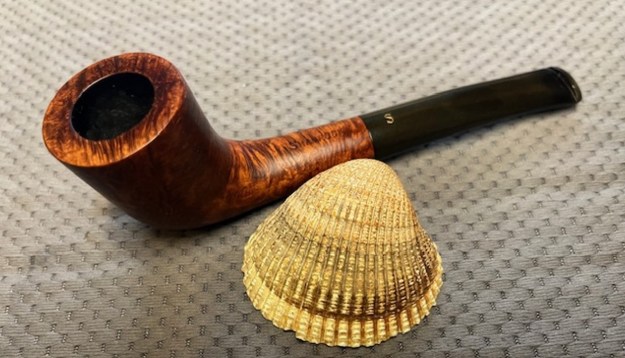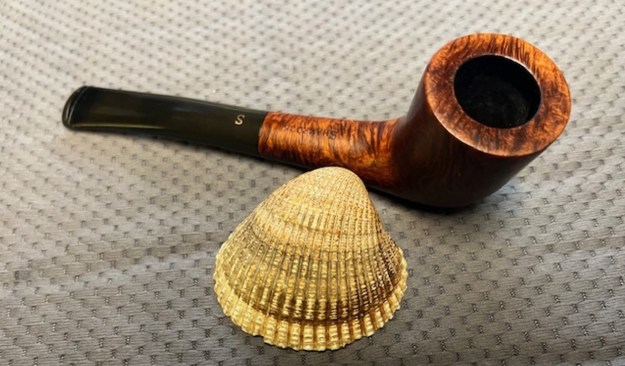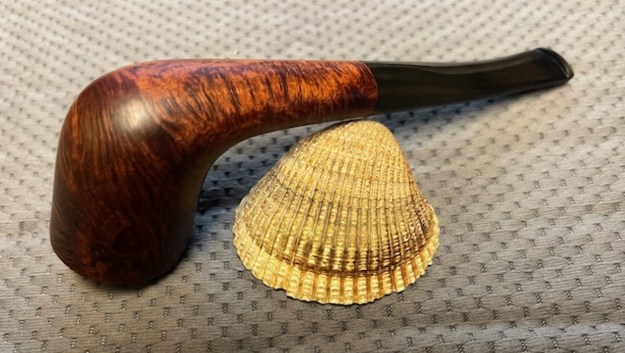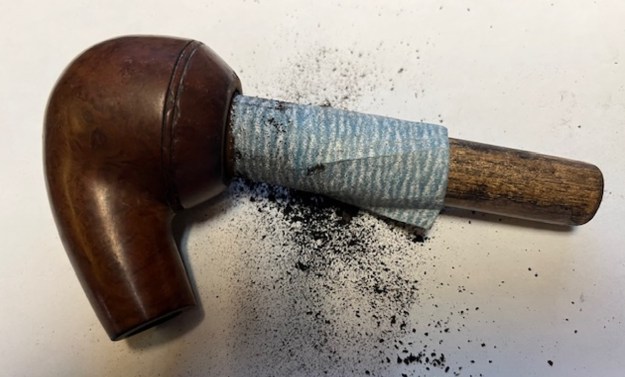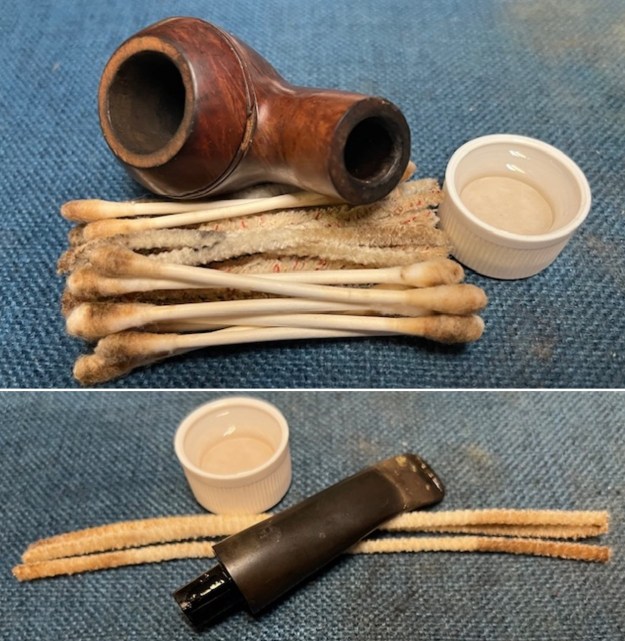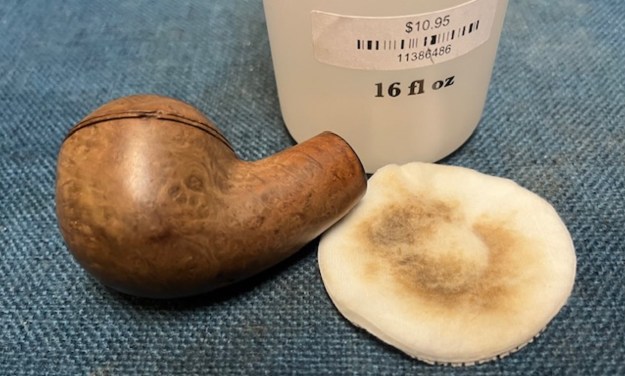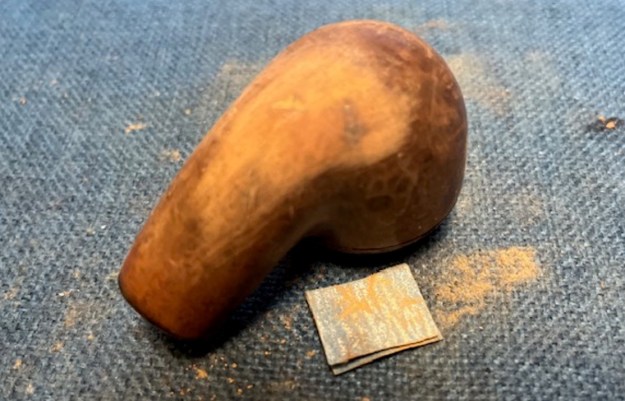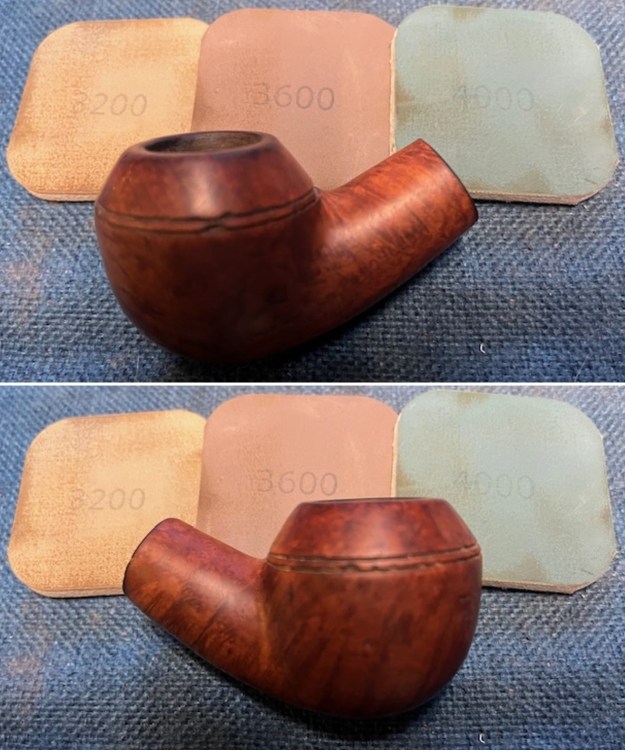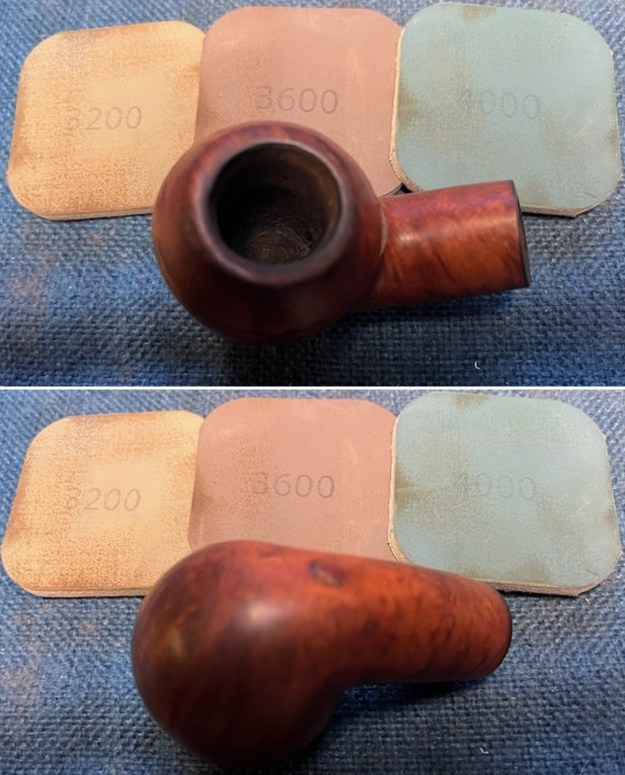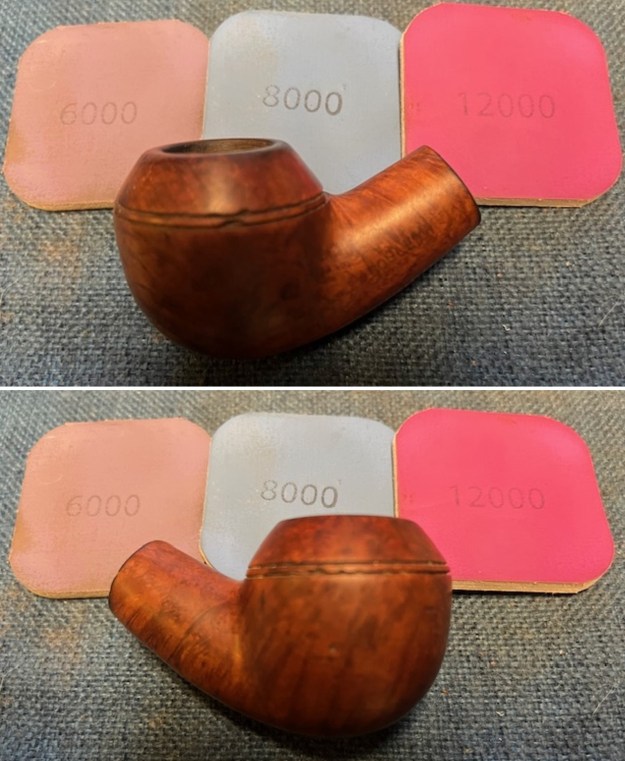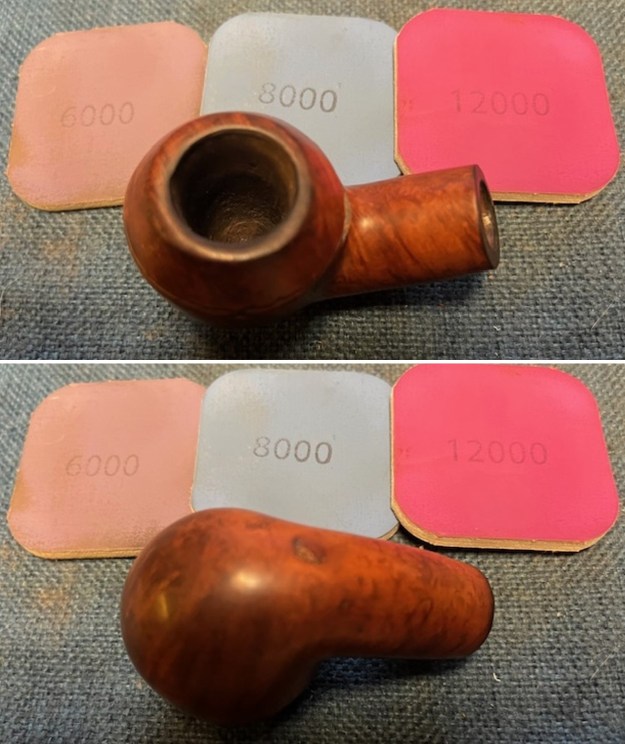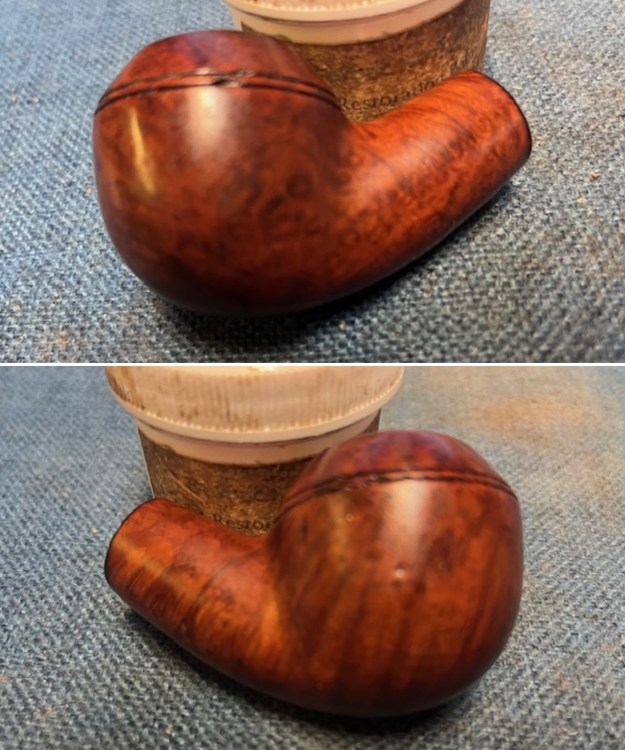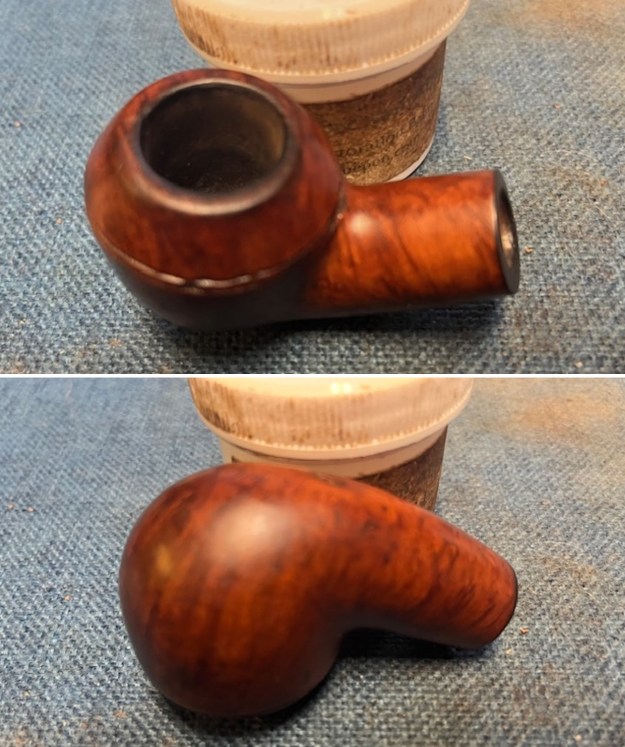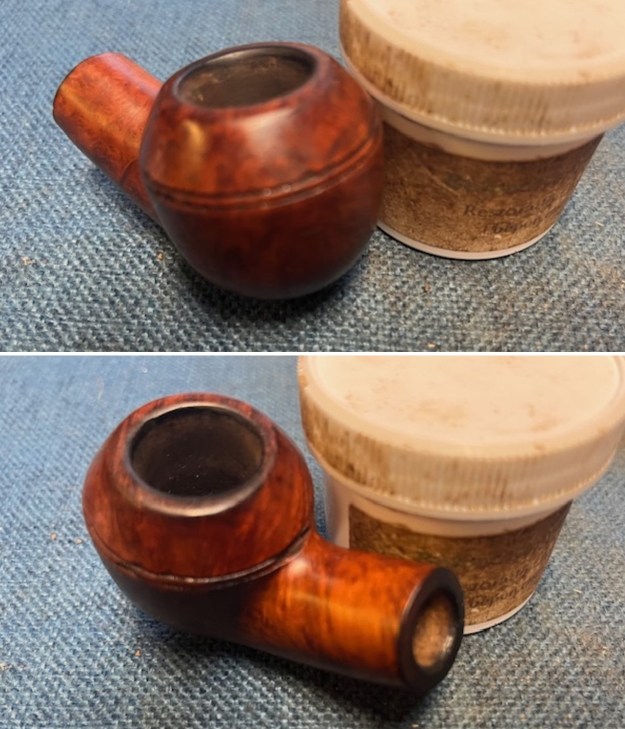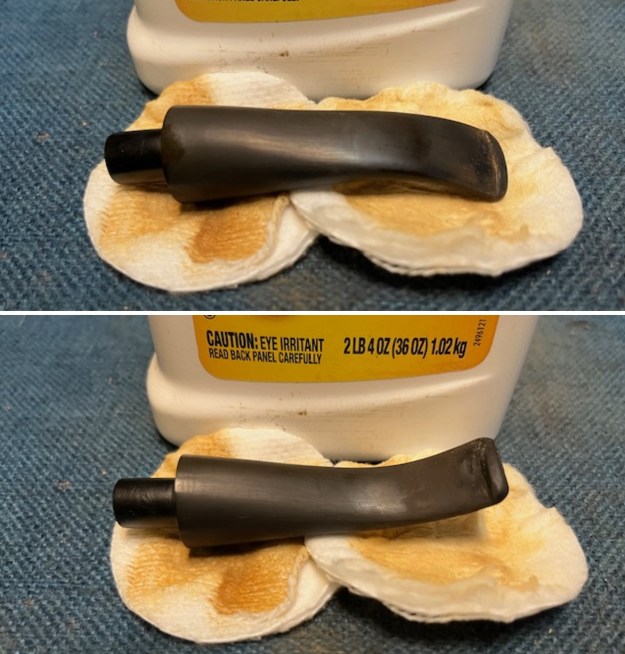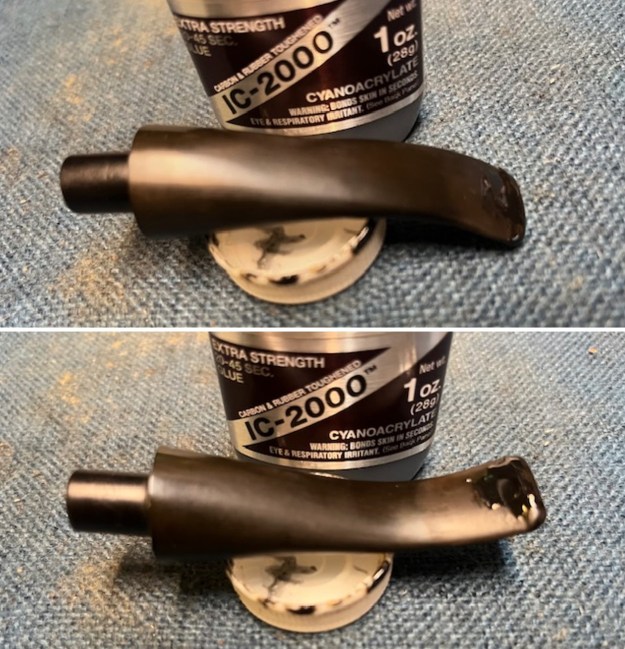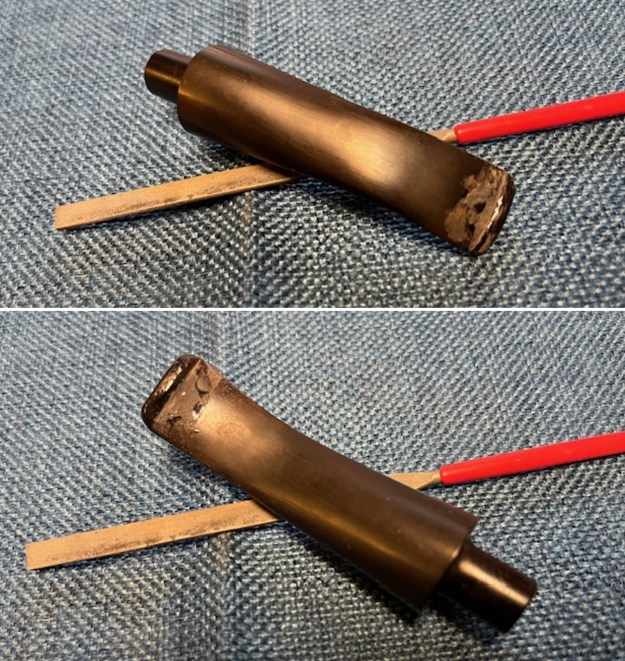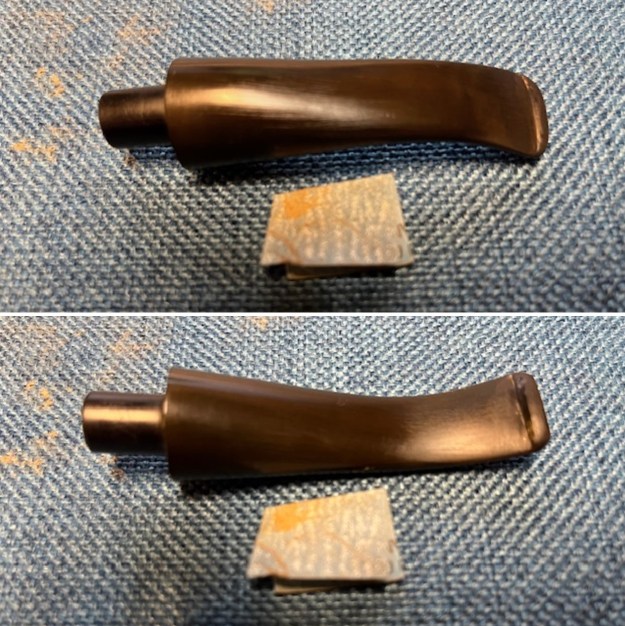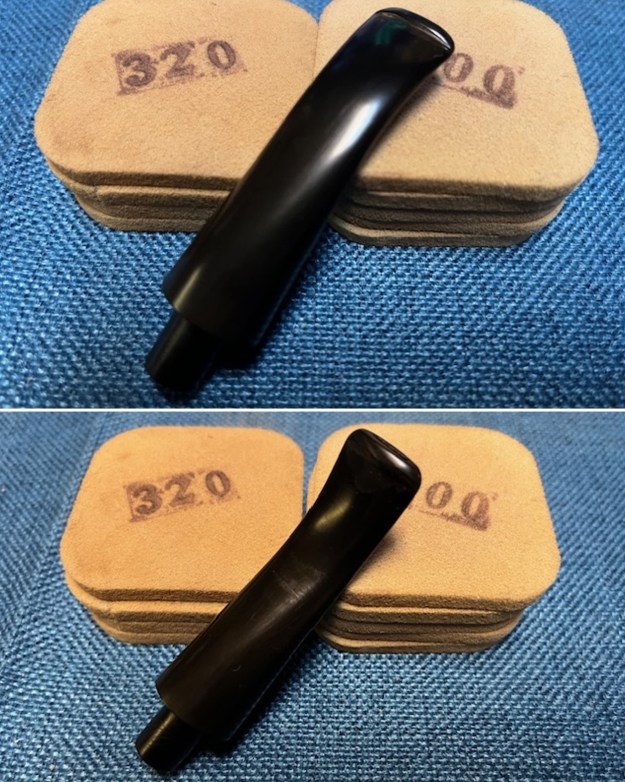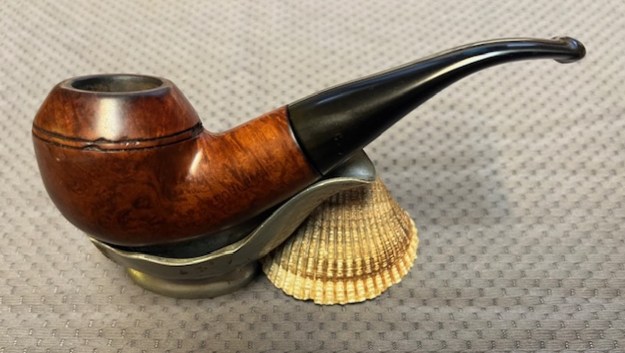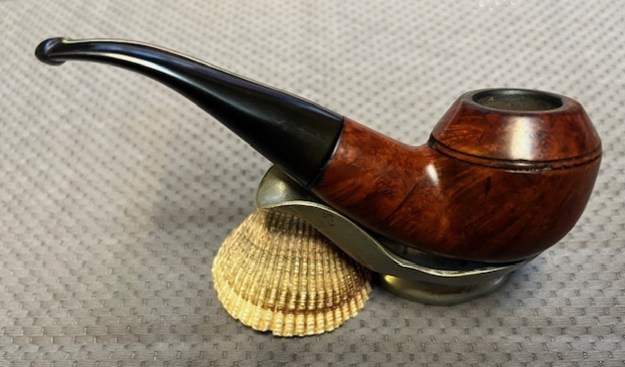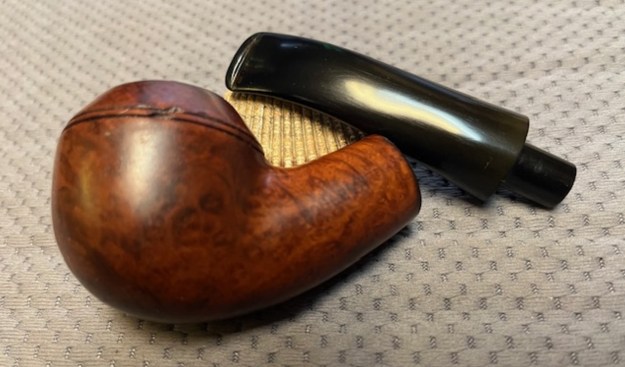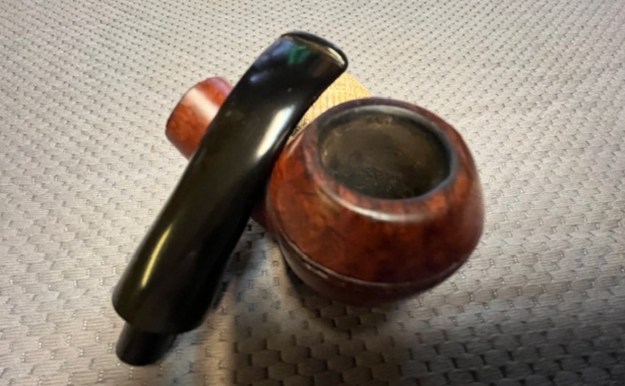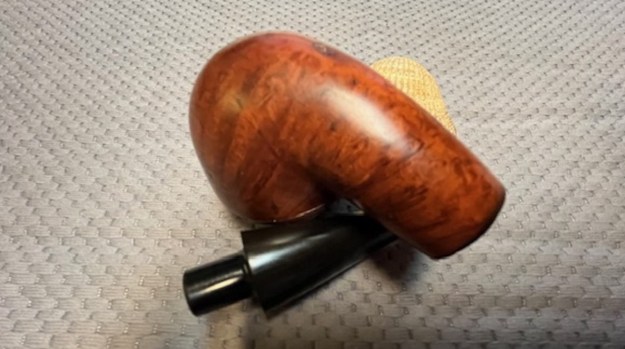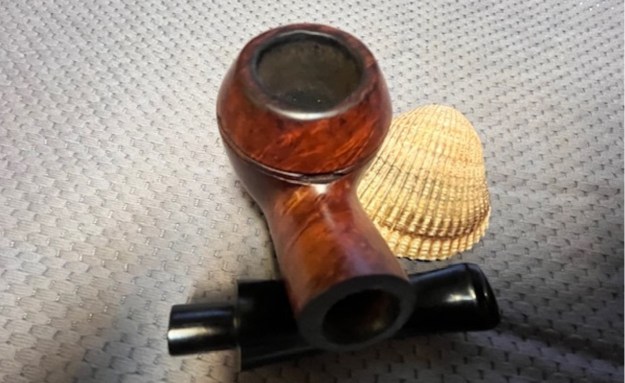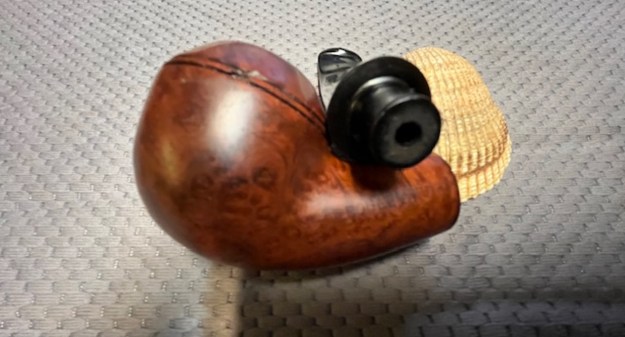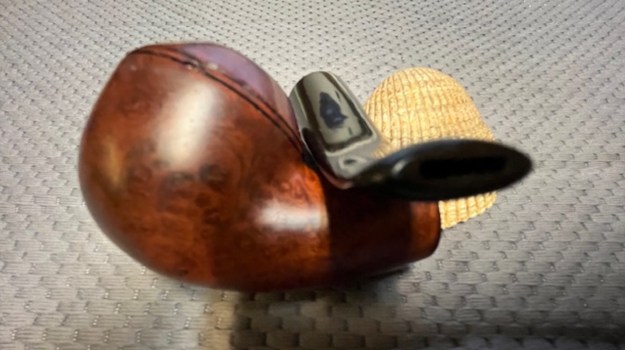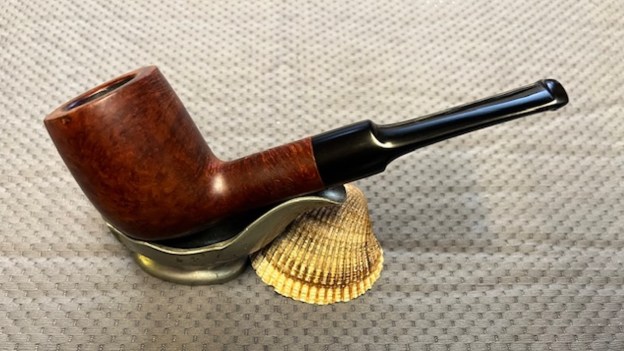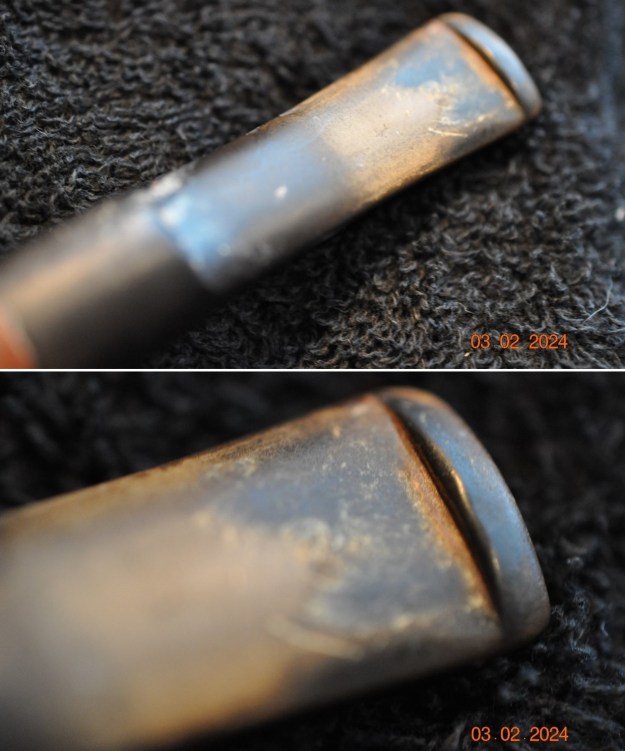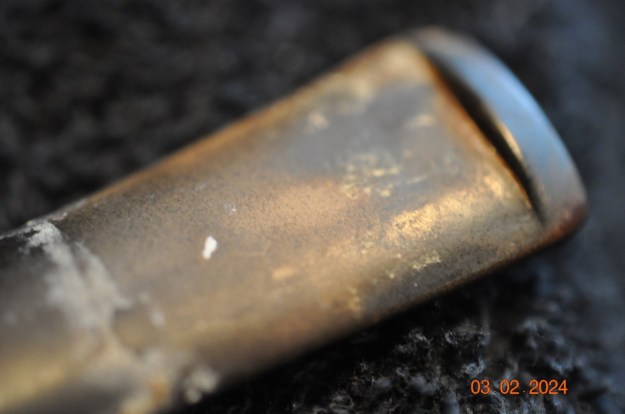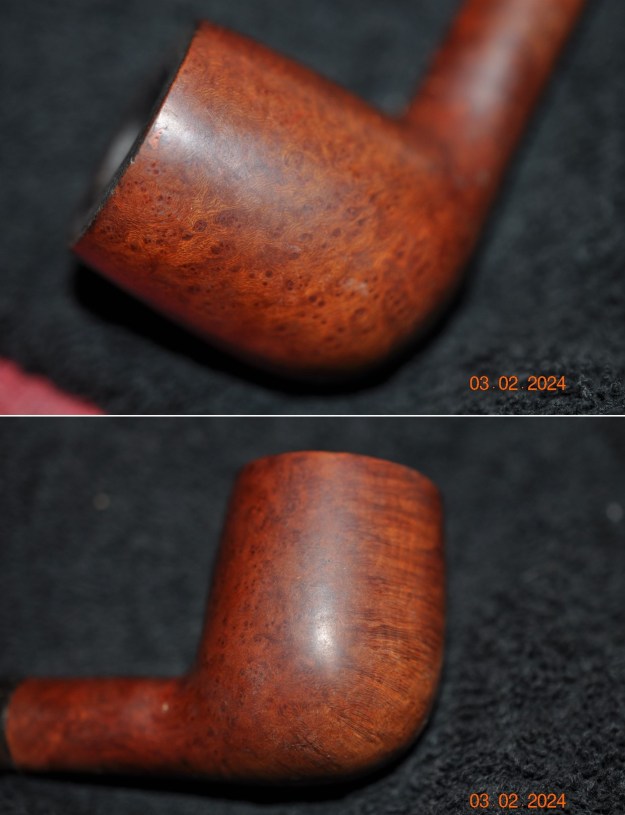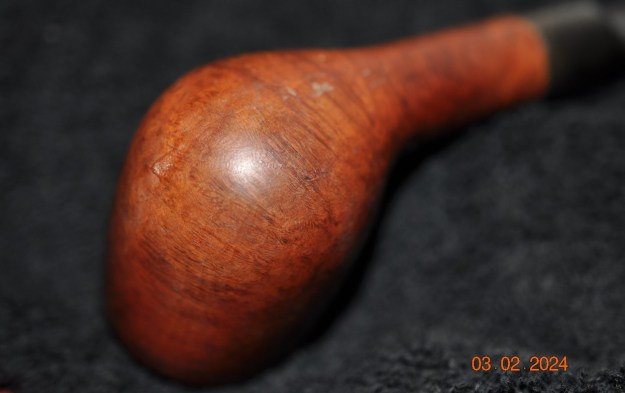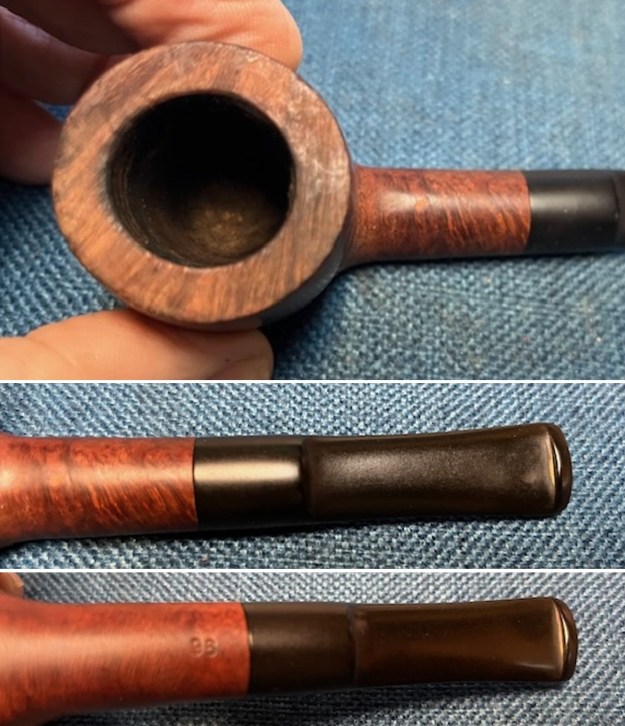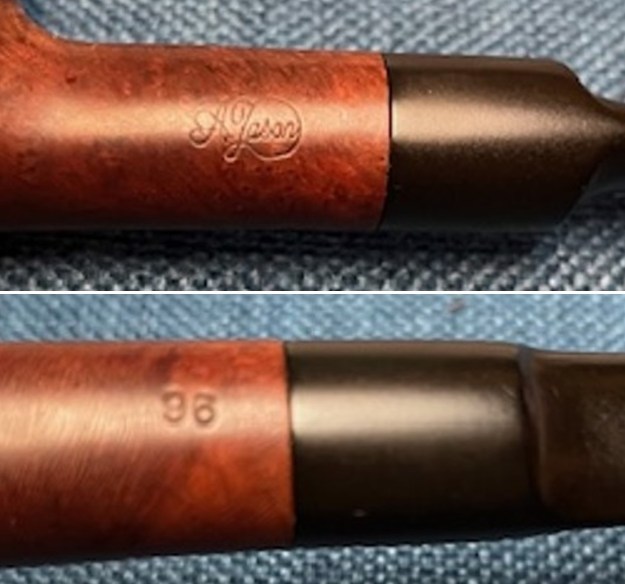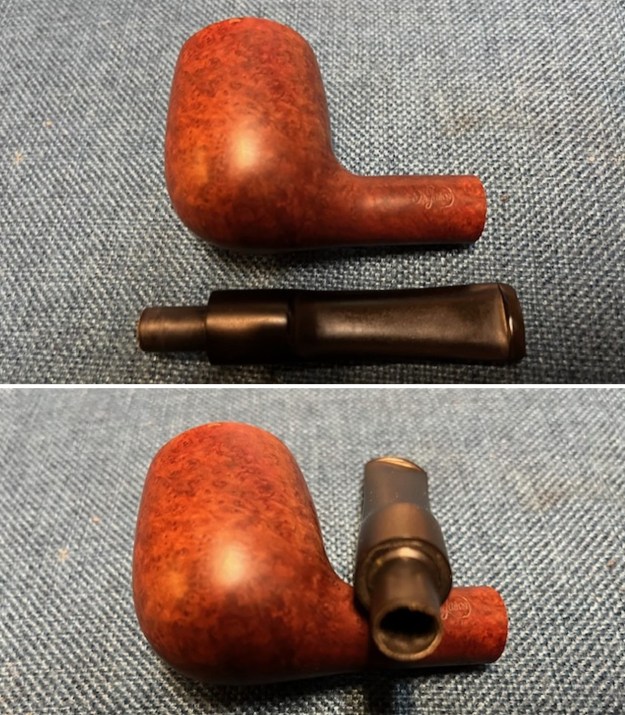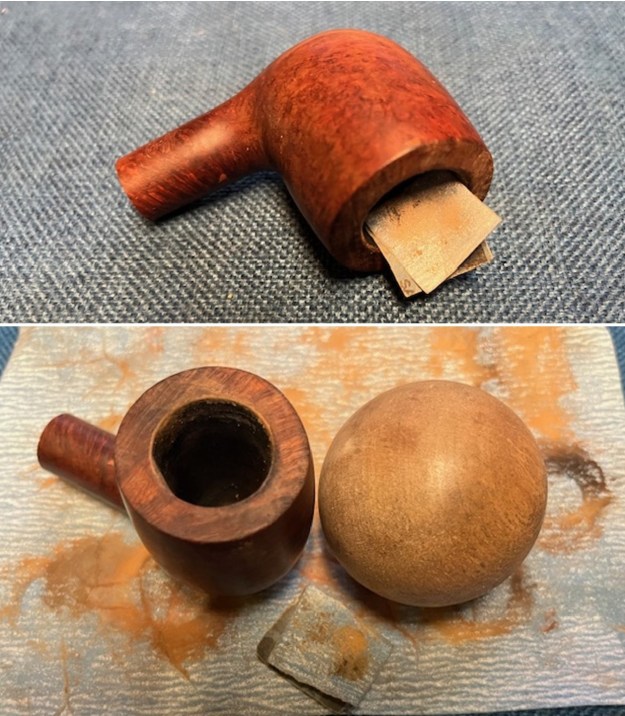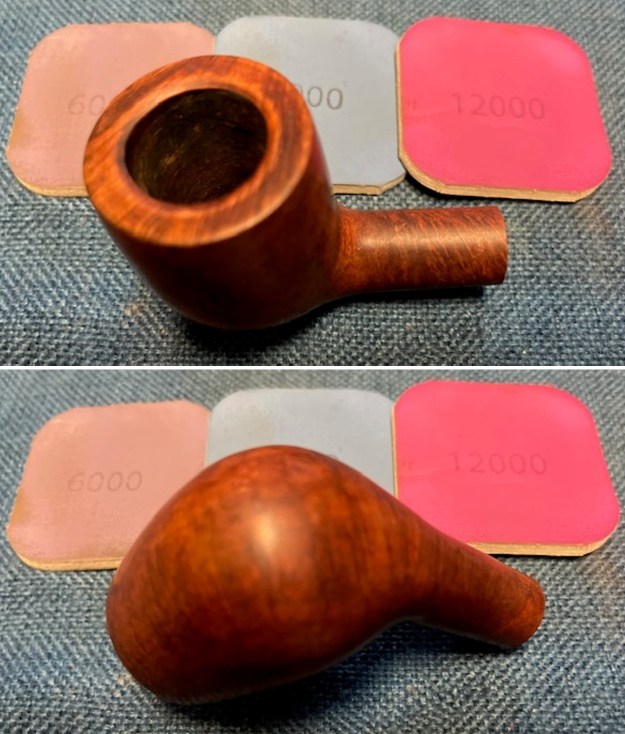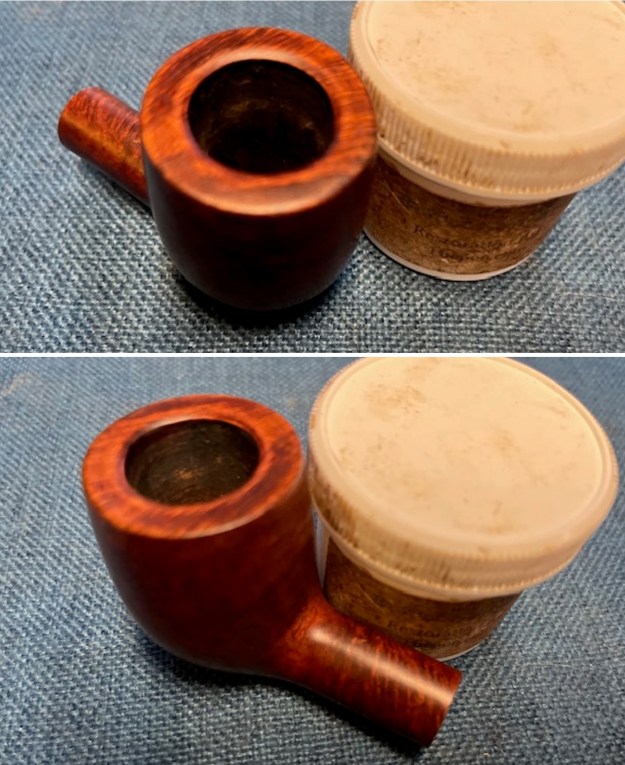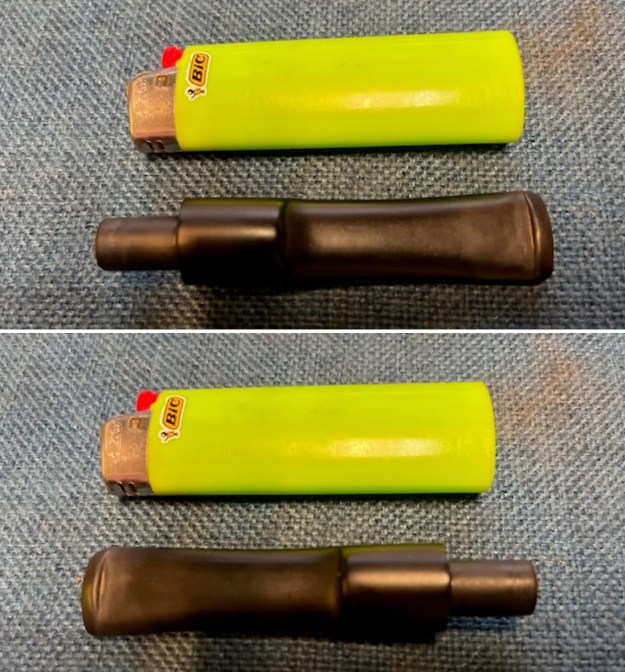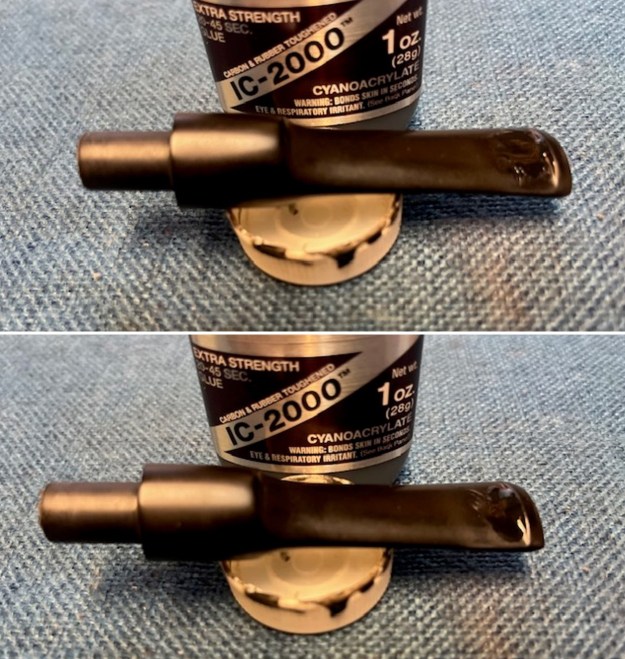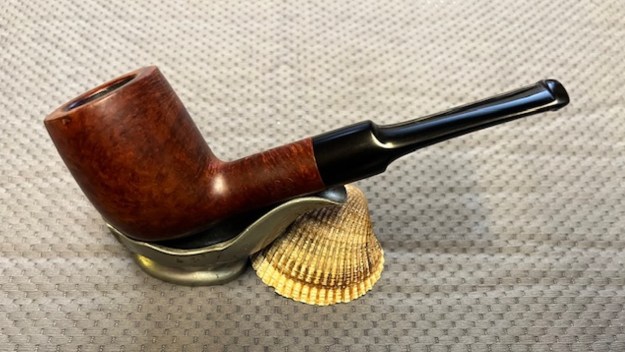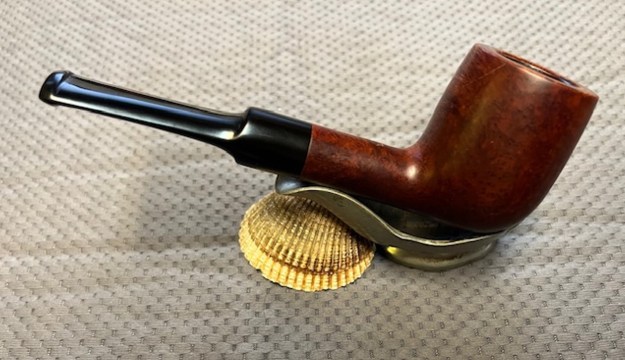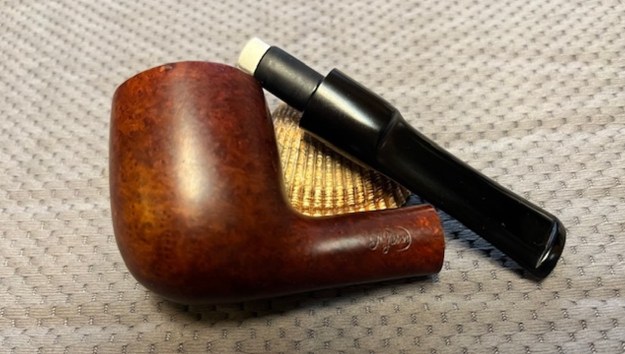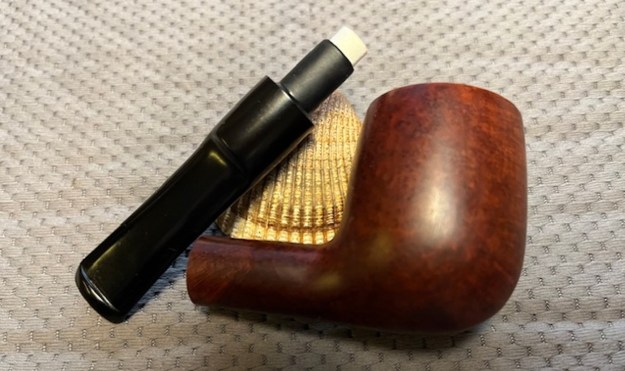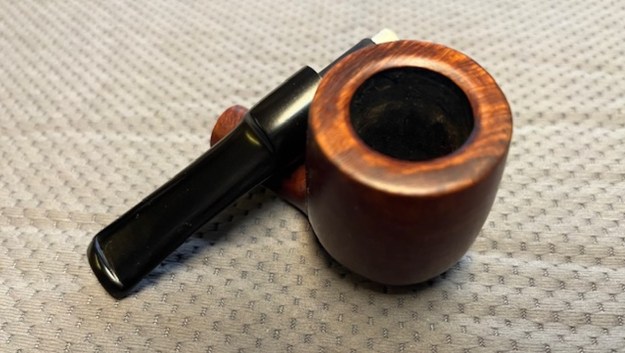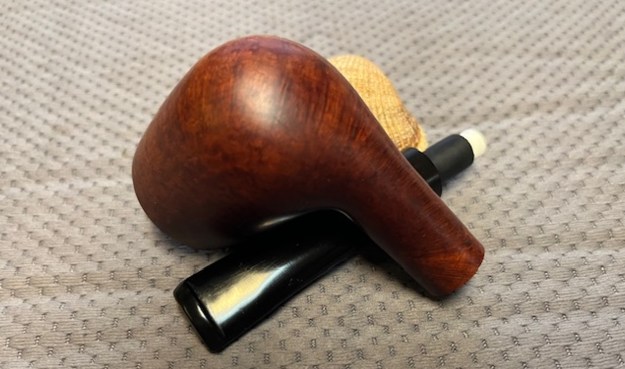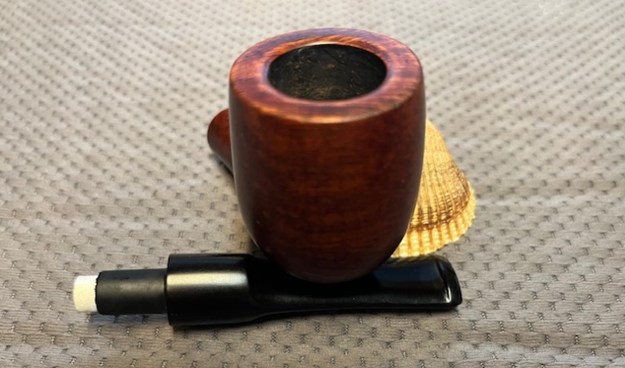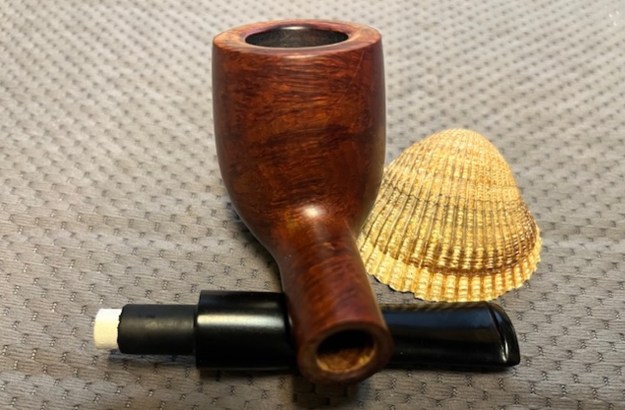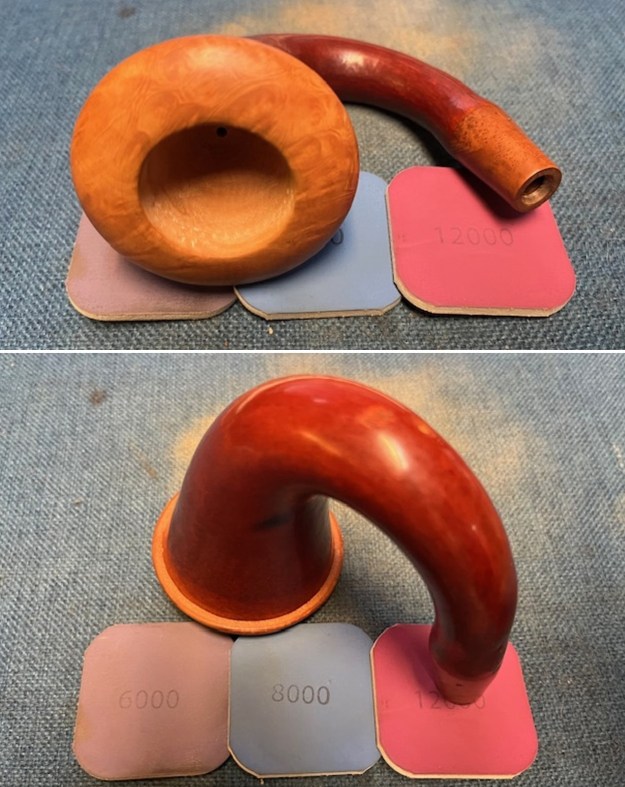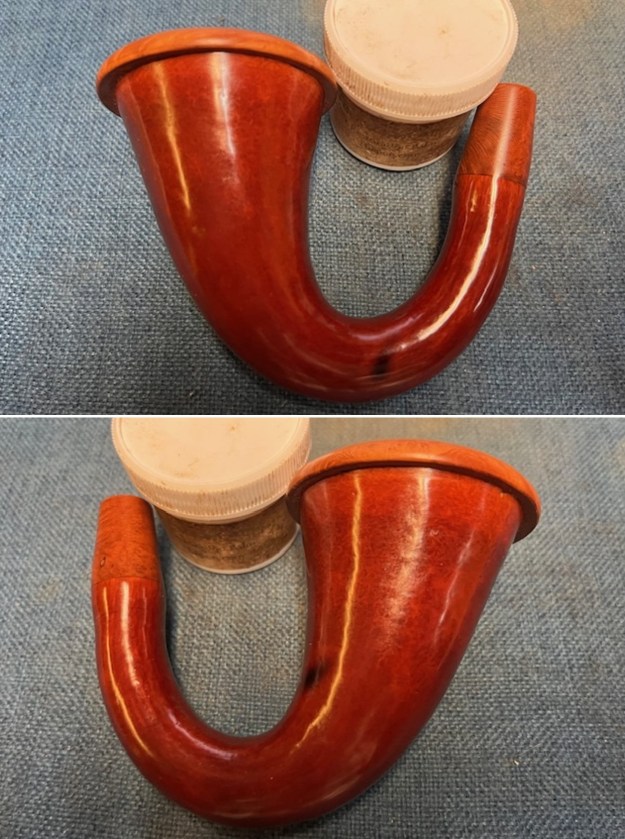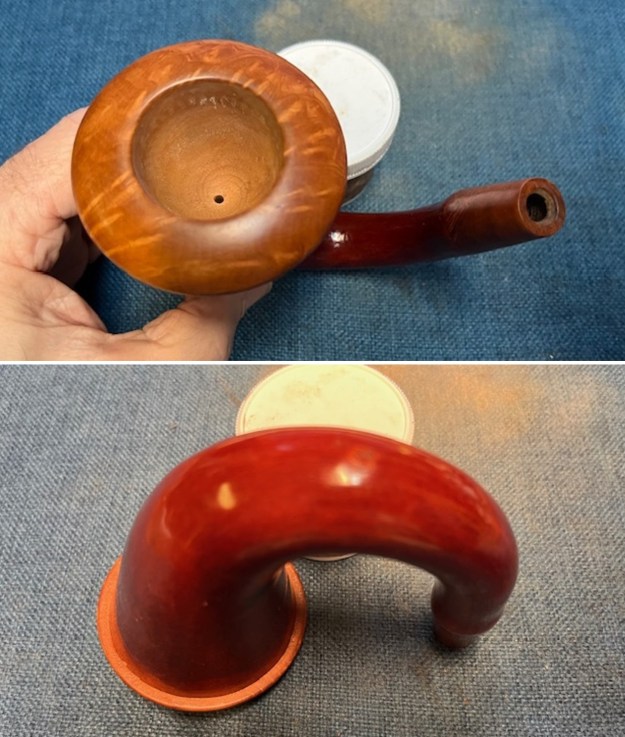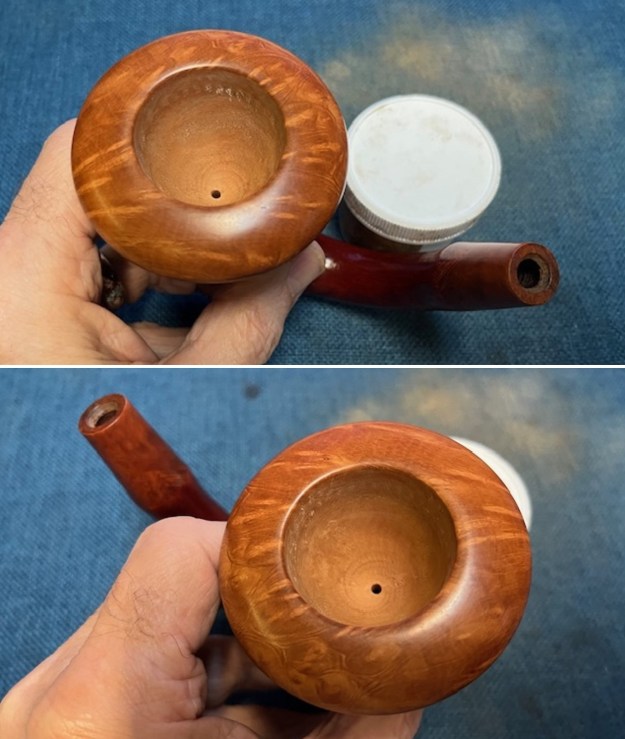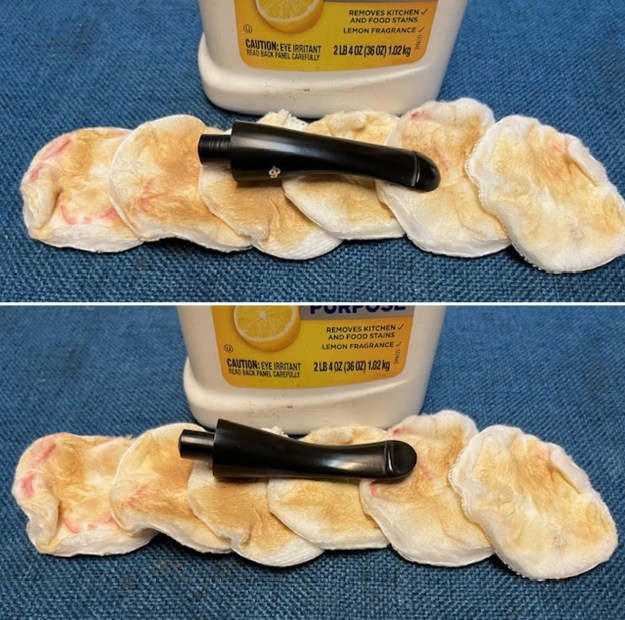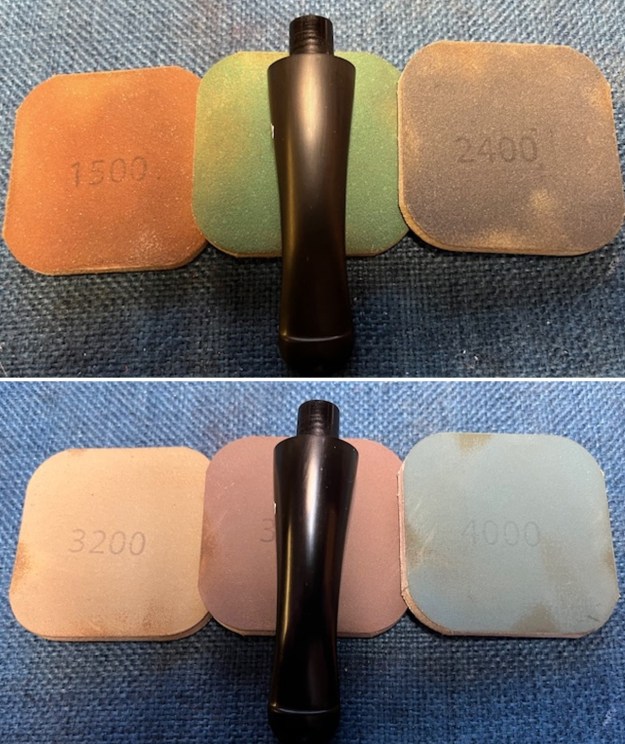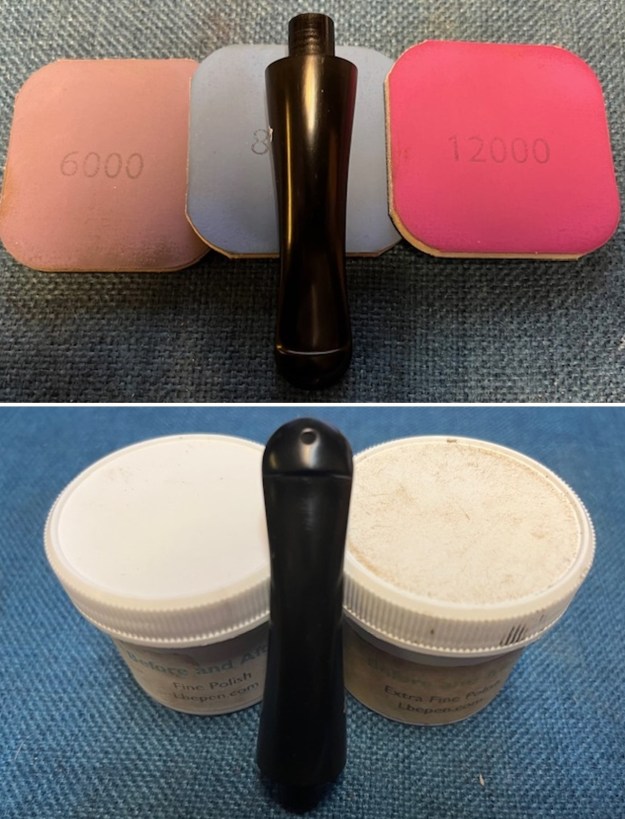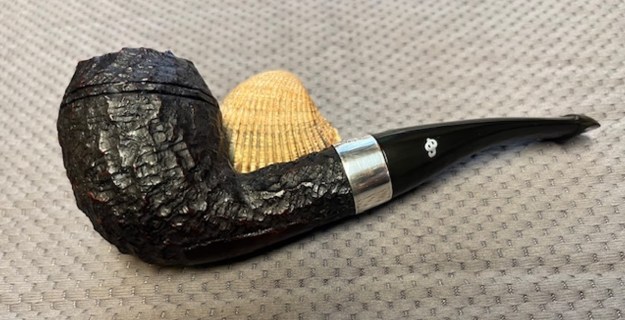
Tag Archives: fitting a stem

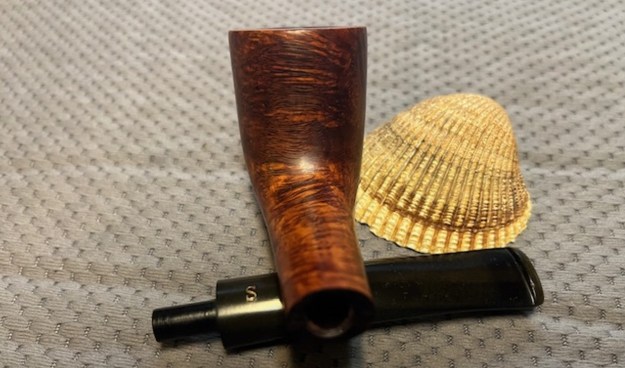
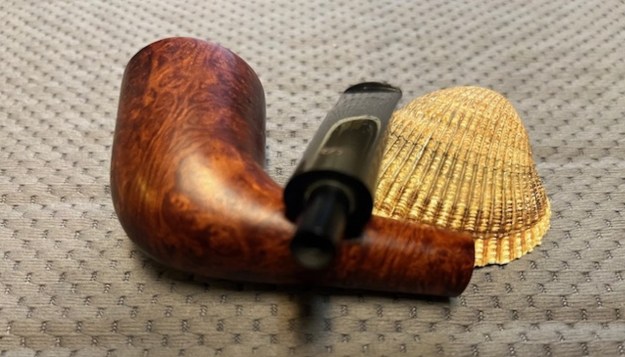
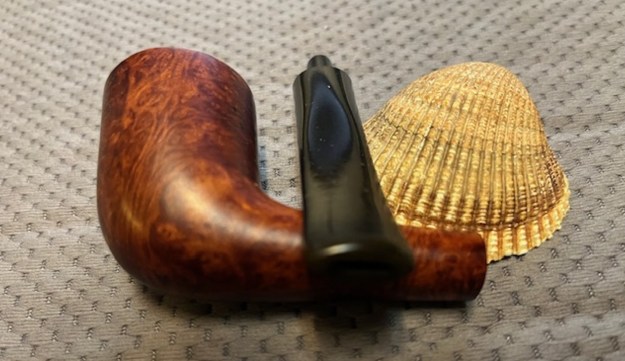
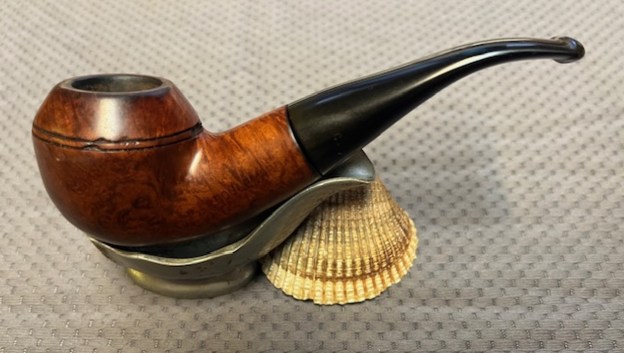
Restemming and Restoring a Wilshire Dublin


by Steve Laug

In November I received an email from Mario about working on some of his Dad’s pipes. Here is what he wrote to me.

I am desperately seeking help restoring and repairing some of my dad’s smoking pipes. I have tried reaching out to the only two known pipe repair establishments I could find in the entire country but one is not currently taking repair orders and the other said she didn’t want to try to repair these pipes without having even seen them. Would you be willing to take on the repairs or can you recommend anyone? Thank you much!!!—Mario

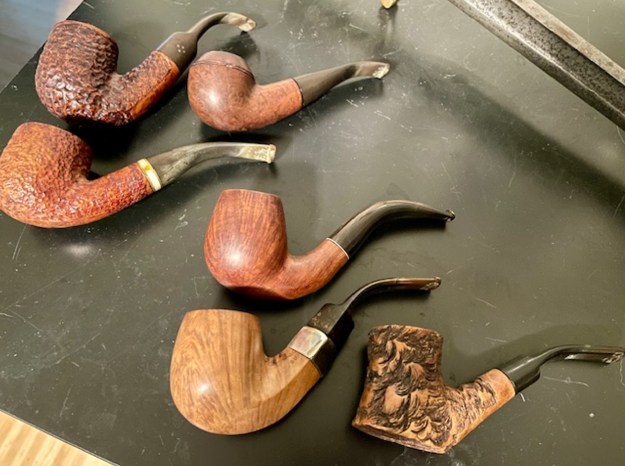
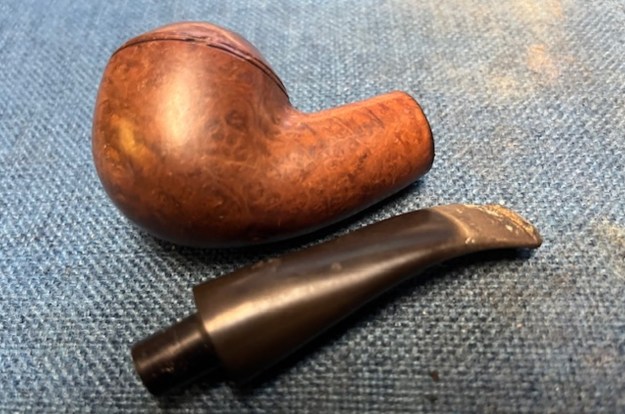
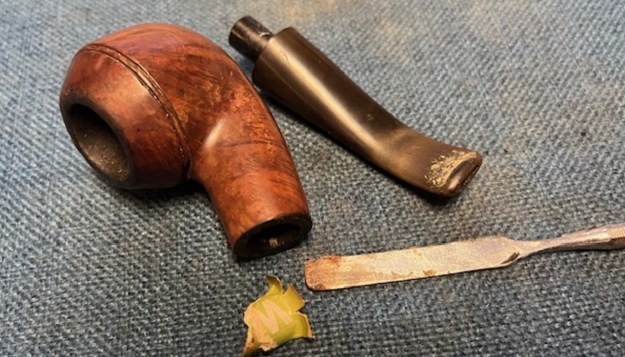
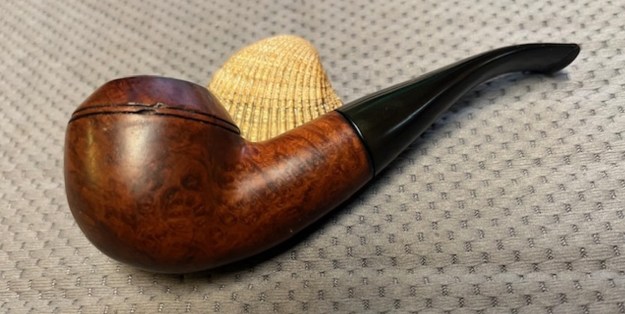
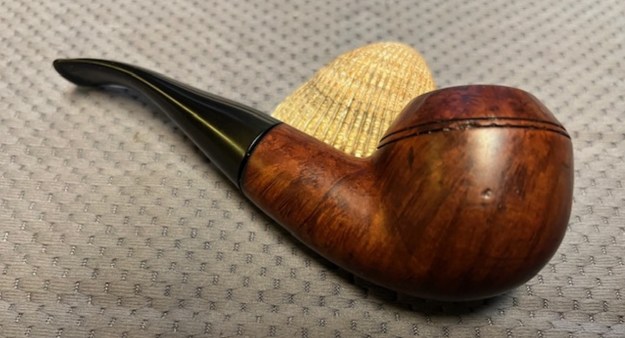
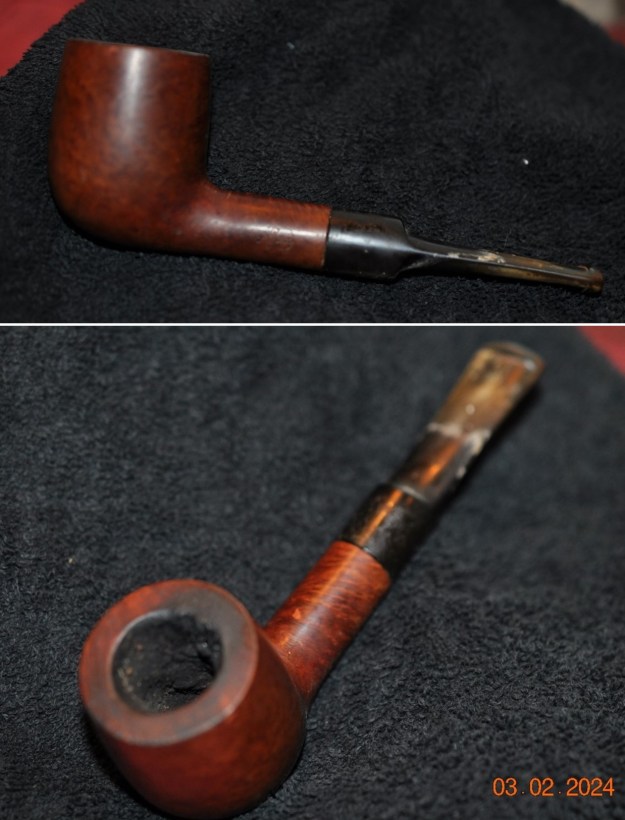
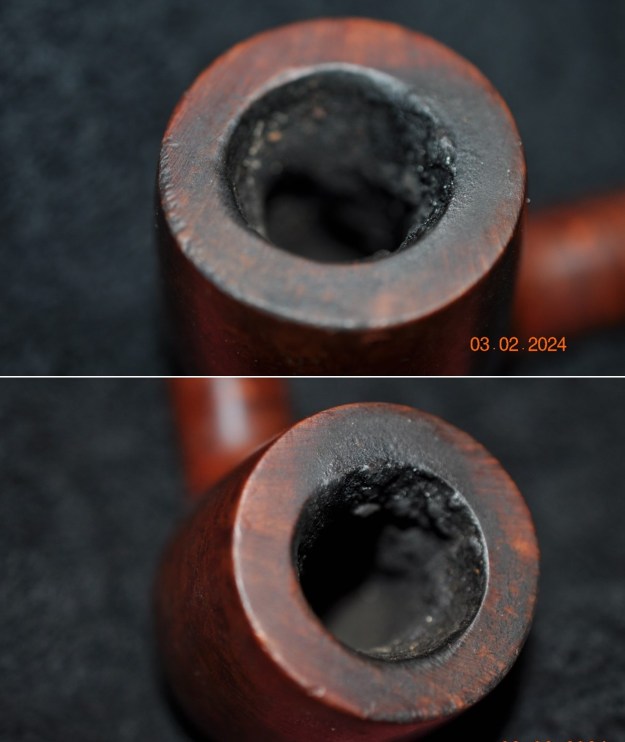
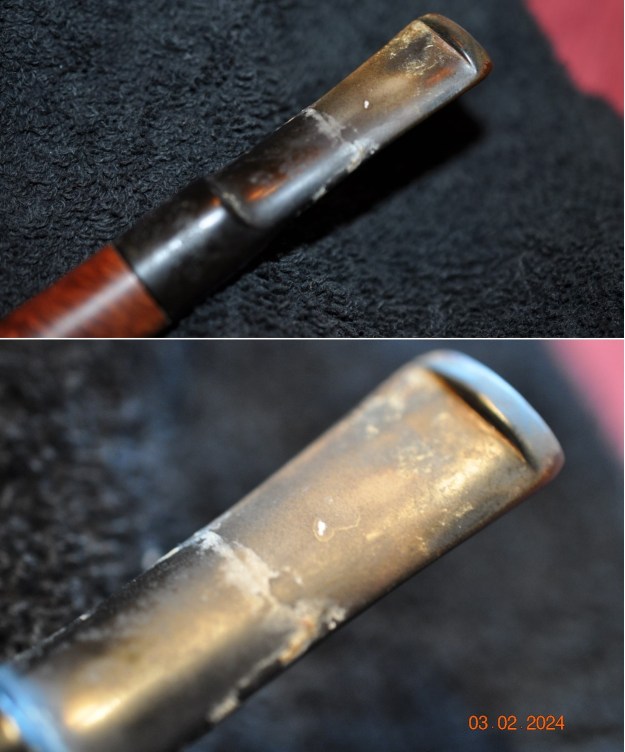
I wrote him back and asked him to send me photos of the pipes. He sent some single photos of the meerschaum bowl and stem, several of the leather clad Canadian and the photo of the rack and six pipes shown below. I looked through the photos and this is what I saw. There were two leather clad pipes a Canadian and a Pot. Both of them were cracked on the shanks and had been self-repaired with wire to hold the cracked shank together. The leather cladding was torn and the stitching was rotten and broken around the bowl. To me they were both unrepairable. There was a lovely older Meerschaum with a horn stem that needed a good cleaning and repairs to the horn stem. There were two Knute Freehand pipes with original stems that were dirty but fixable. The plateau on the smooth one had a large chunk of briar missing. There was a Wilshire Dublin with a chewed and misfit stem. Finally, there was a billiard that had been restemmed with a fancy GBD saddle stem on it. They were a messy lot but I told him to send them on to me. They arrived yesterday and the condition of the pipes in the photos was confirmed. They were a mess and needed much work. I have included Mario’s group photo below to show the lot.I decided to start working on the Dublin second. It was the one on the far left leaning against the left end of the rack in the photo above. It was a Dublin shape with a straight round shank and the stem did not fit in the shank correctly and it had a huge bite through on the topside of it. The bowl had a thick cake on the walls and a heavy lava coat on the rim top. It was internally a mess. The finish was dirty and had grime ground into the sides of the bowl. The shank was not cracked like the previous one and was in good shape. The pipe was stamped on the left side of the shank and read Wilshire in script. There was no other stamping on the shank sides. The stem was the wrong one. The diameter was less than the shank. I would need to fit it with a new stem. I took photos of the pipe when I unpacked it to examine it. I have included those below. I took a photo of the bowl and rim top to give you and idea of what I see. You can see the thick cake in the bowl and the thick lava overflow on the rim top and inwardly bevelled inner edges of the bowl. There also appears to be damage on the inner edge toward the back of the bowl. I also included photos of the stem. You can see that the stem is not correct. It does not fit the shank and is chewed a long way up the stem top. I took a photo of the stamping on the left side of the shank. It is clear and readable as noted above. I took a photo of the bowl with the incorrect stem removed to give a sense of the proportion and appearance of the pipe without the stem. You can see the damage on the stem top so it is no question that it needs to be removed.I turned to Pipephil’s site to see what I could find out about the Wilshire brand and was not disappointed (http://www.pipephil.eu/logos/en/logo-w3.html). I did a screen capture of the section below. It was good to know that the pipe was made by Comoy’s.Knowing that the pipe was made by Comoy I turned to the article on Comoy on Pipedia to see what I could learn (https://pipedia.org/wiki/Comoy%27s#Seconds_made_by_Comoy’s). Beside the great history article there was a section with photos toward the end of the article entitled Seconds Made by Comoy’s. There were no photos of the pipe but there was a list of these pipes and the last entry in the list was the Wilshire. The screen capture below shows the list as a whole and I have taken the last two columns and enlarged them below. The last item in the list is this brand of pipe.Now that I knew that I was working on a Comoy’s made second pipe and I had a bit of background on it I was ready to start on the pipe itself

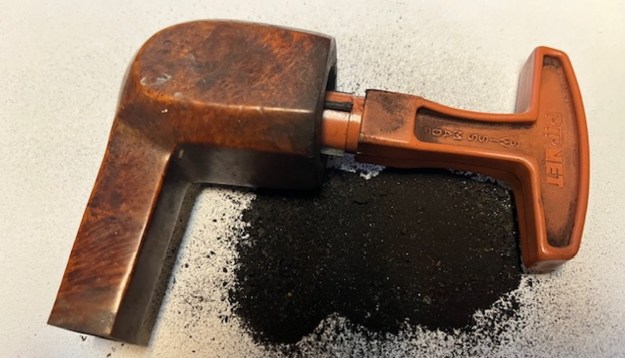
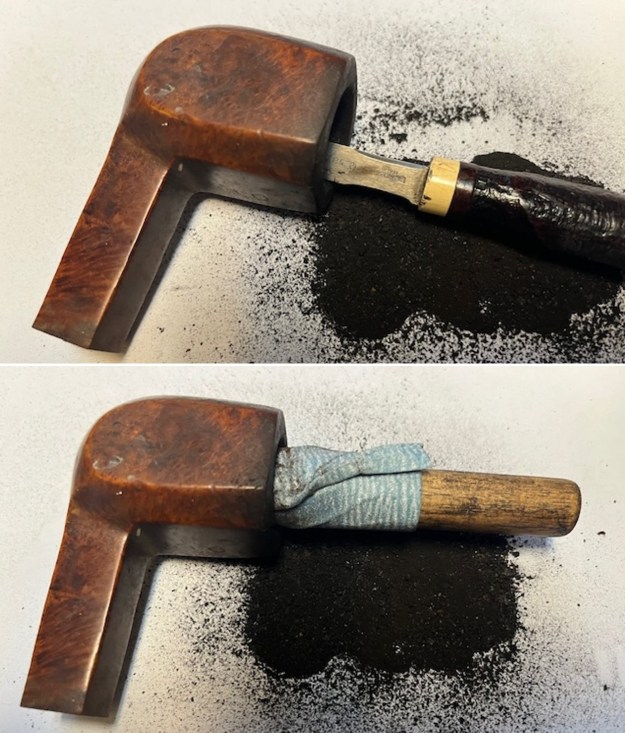
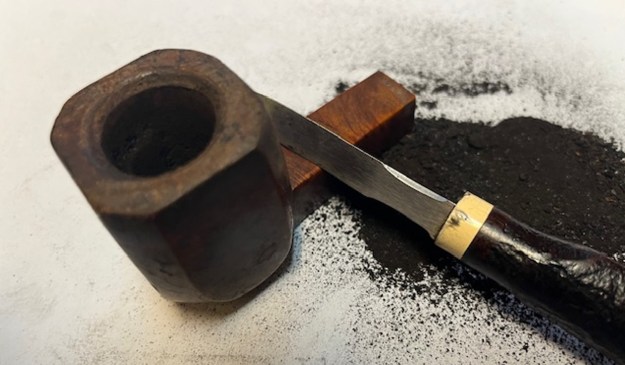
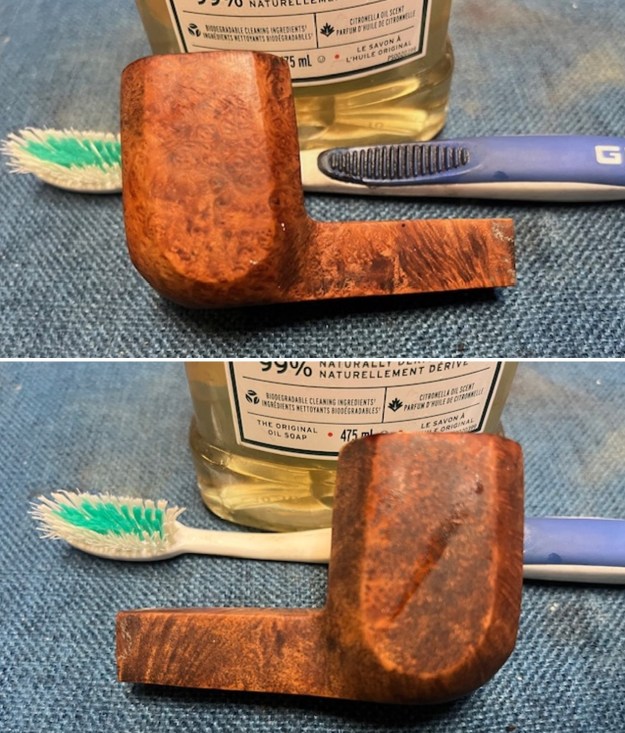
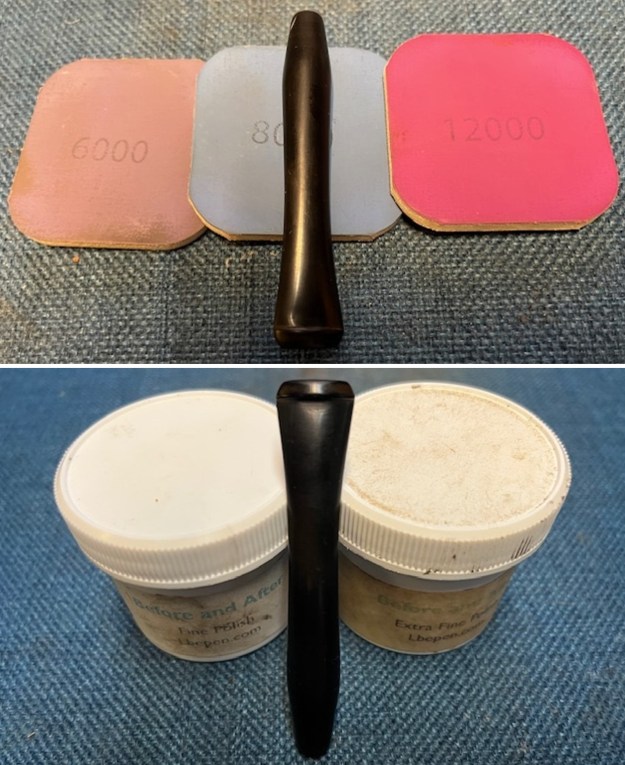
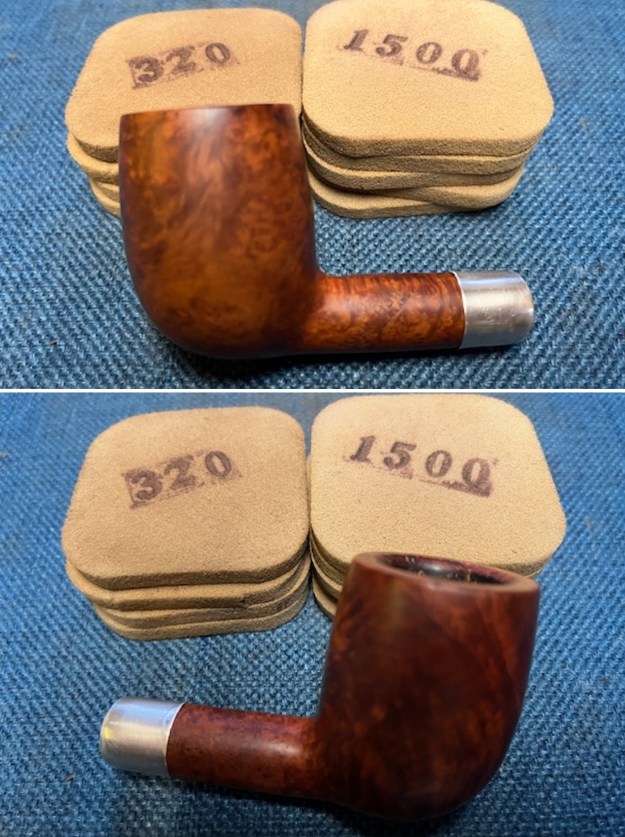
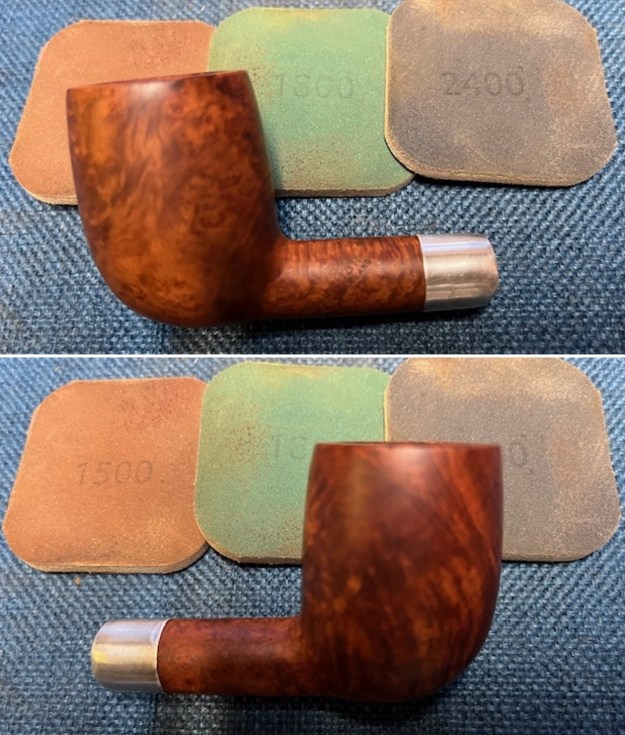
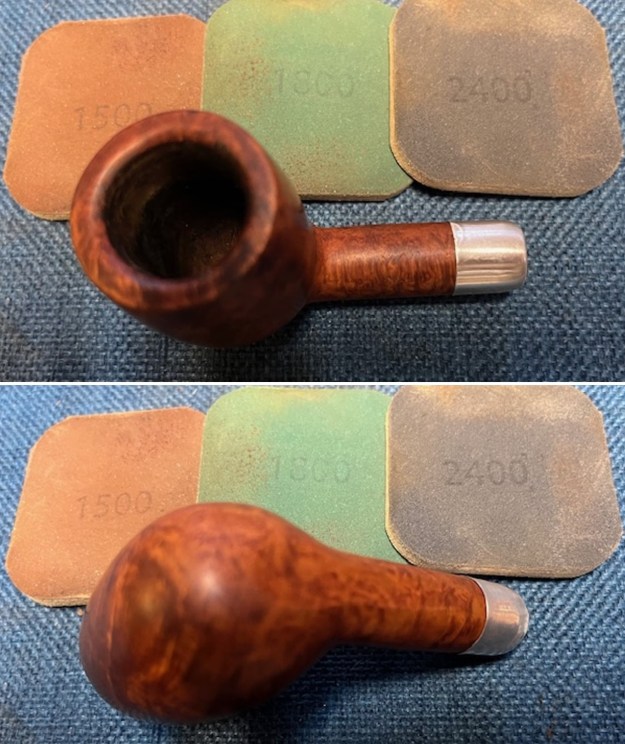
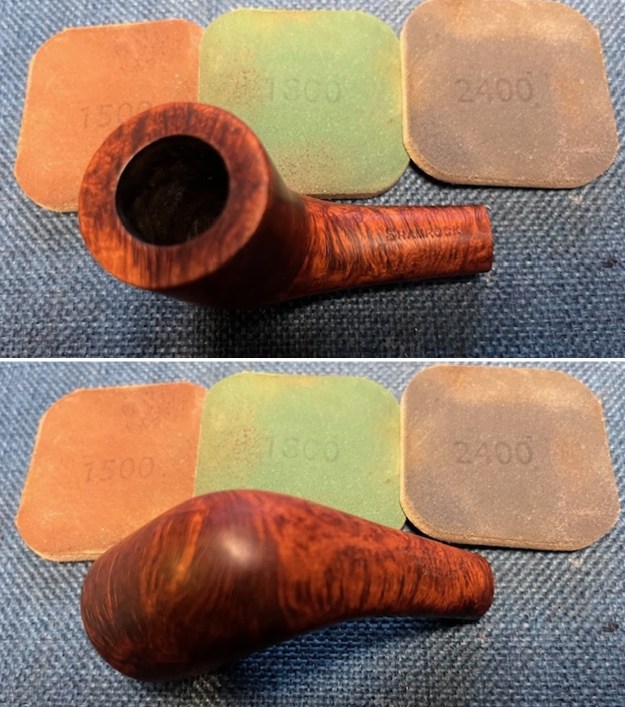
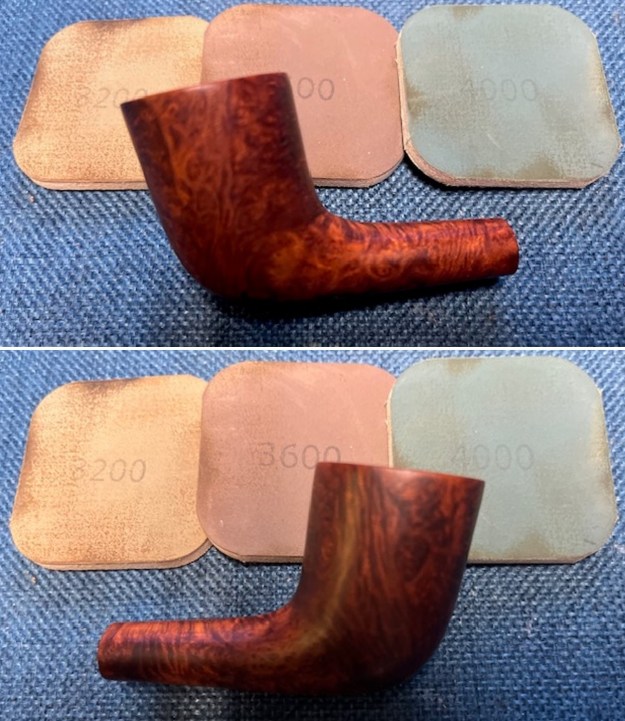
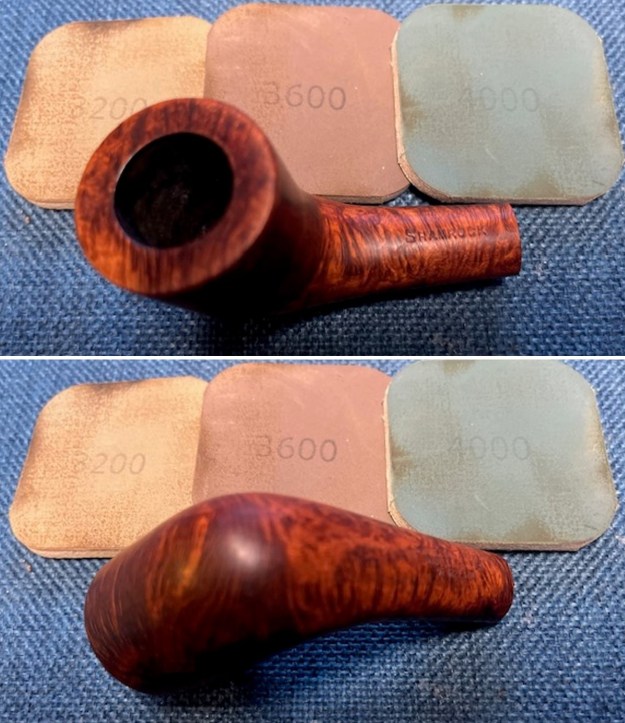
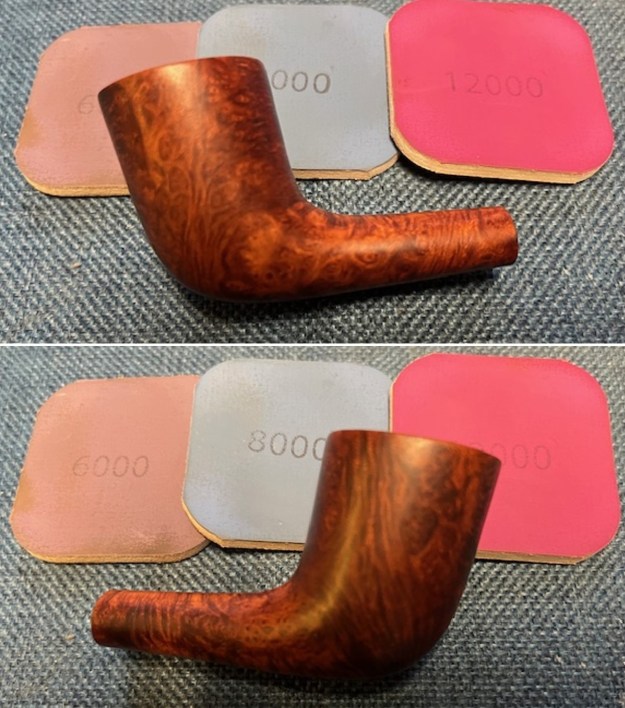
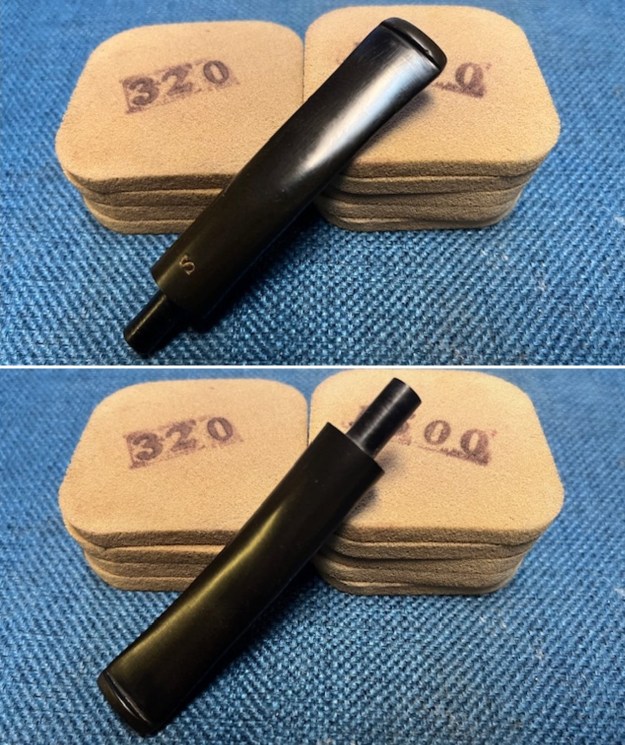
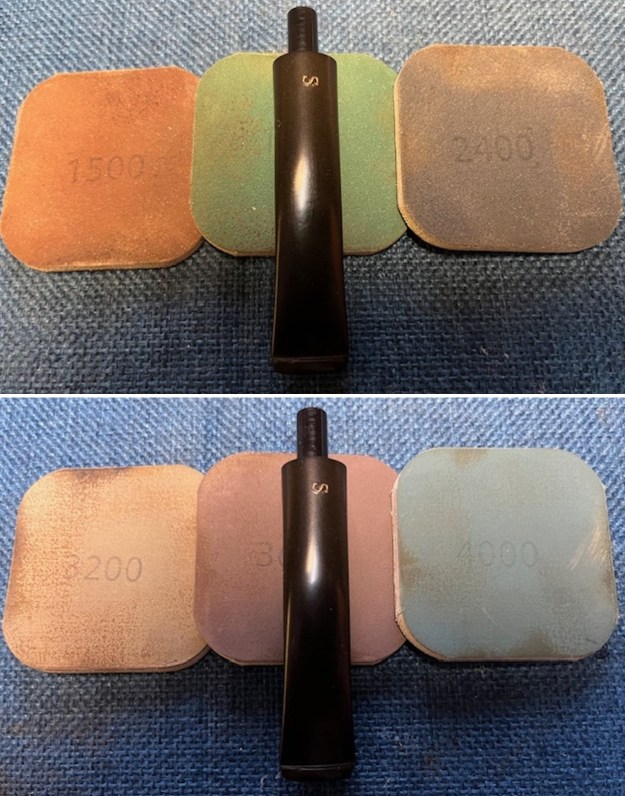
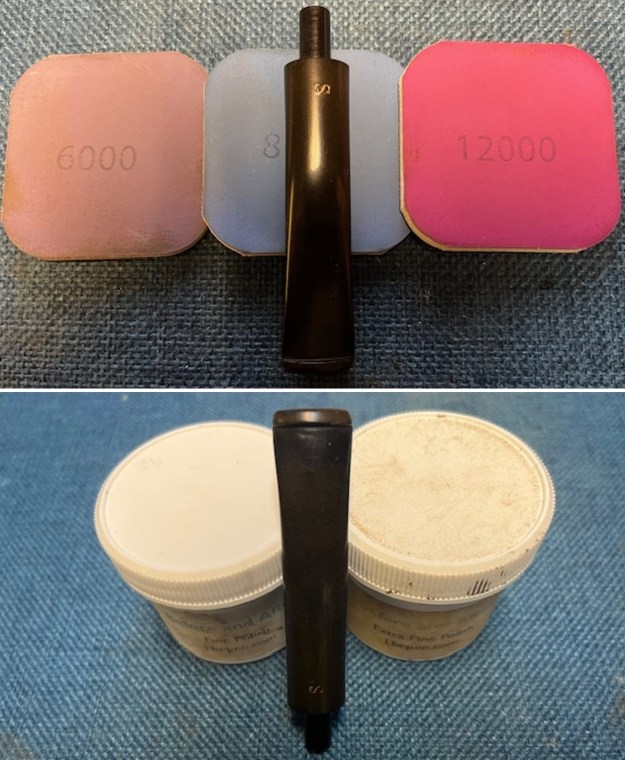
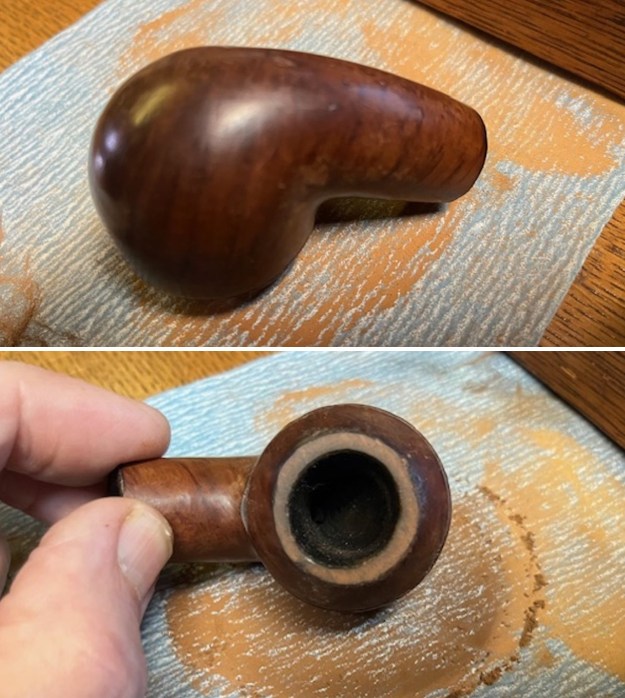
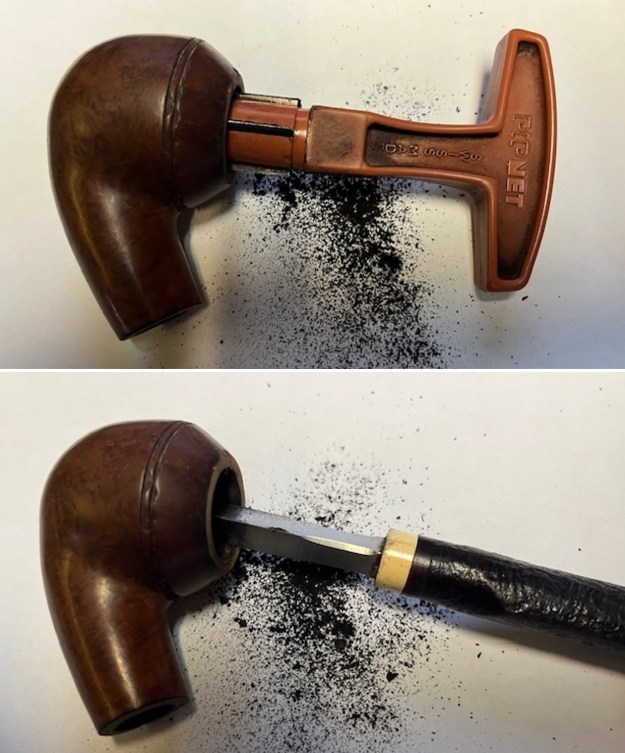
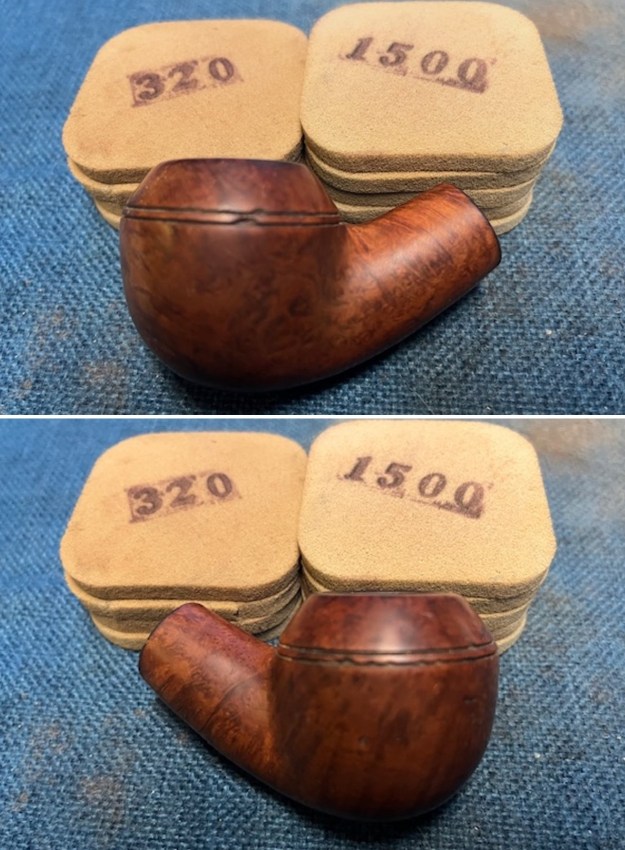
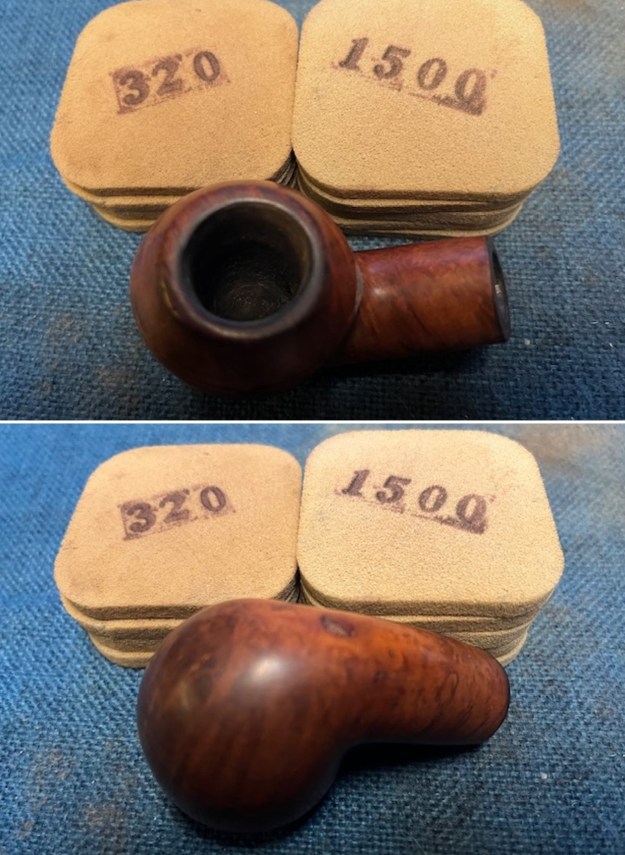
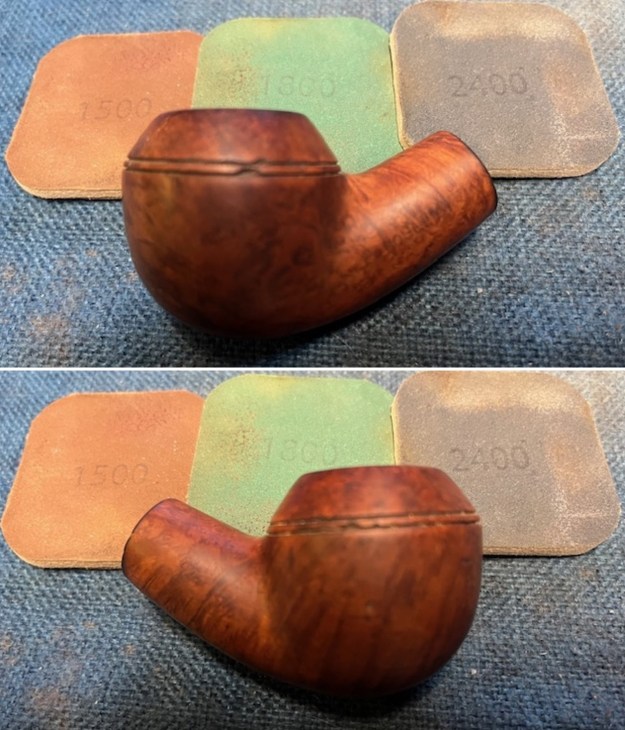
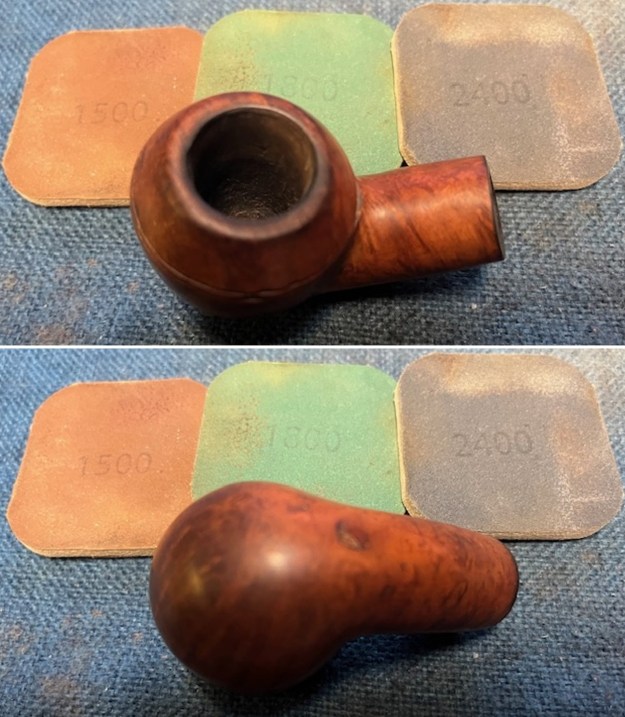
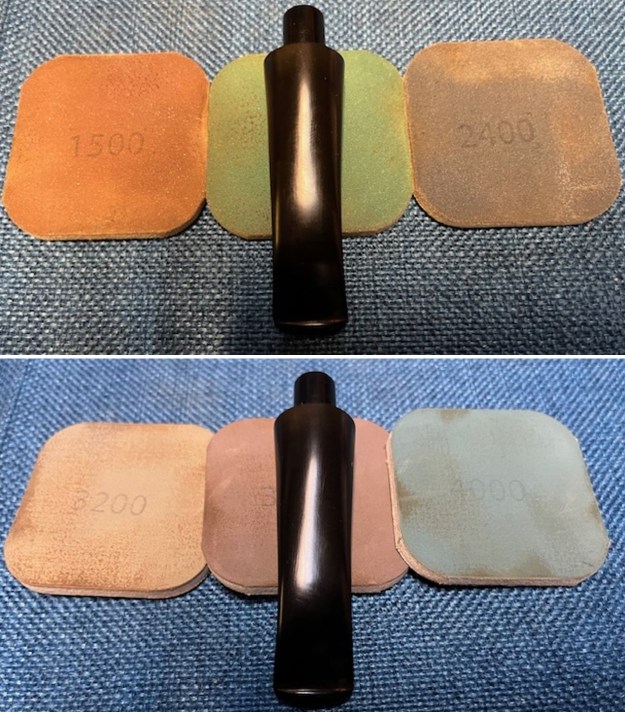
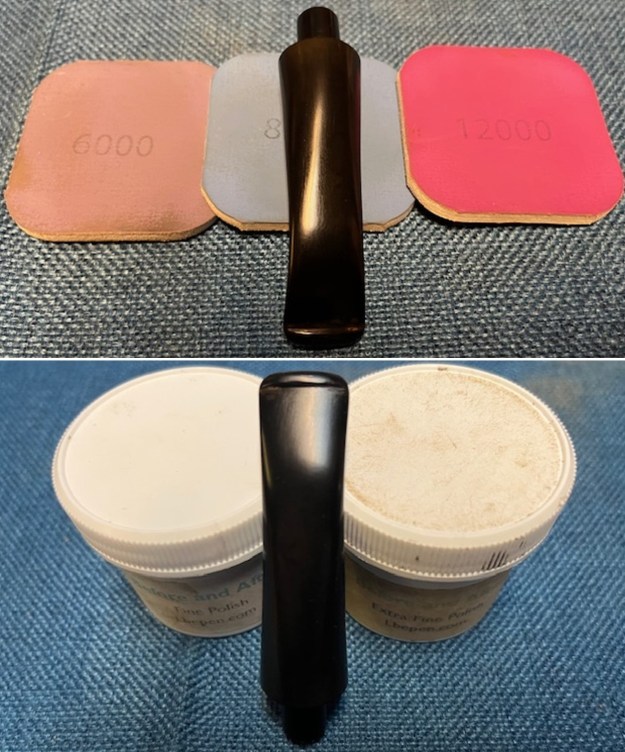
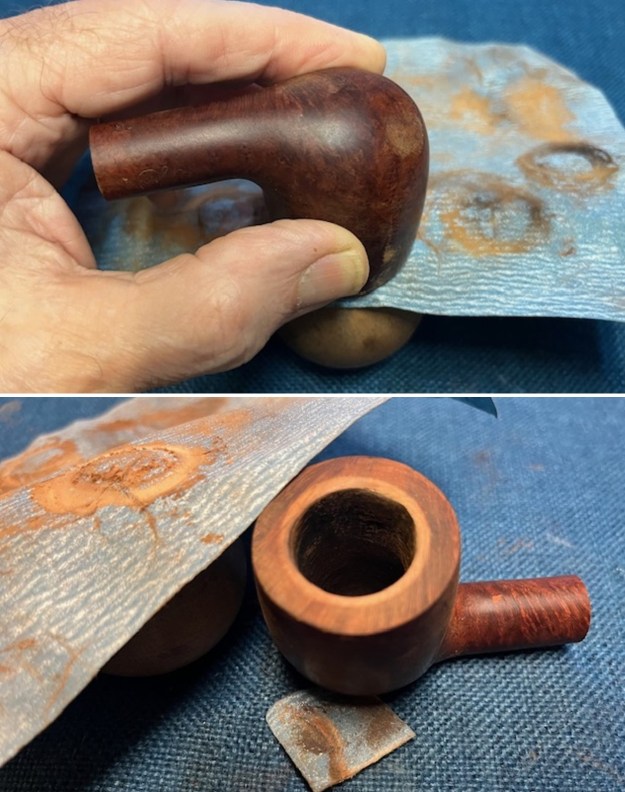
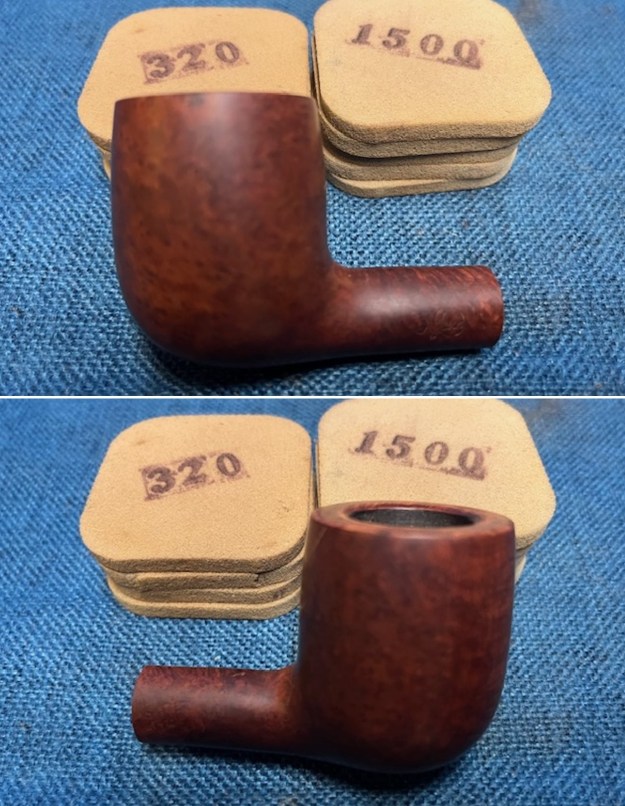
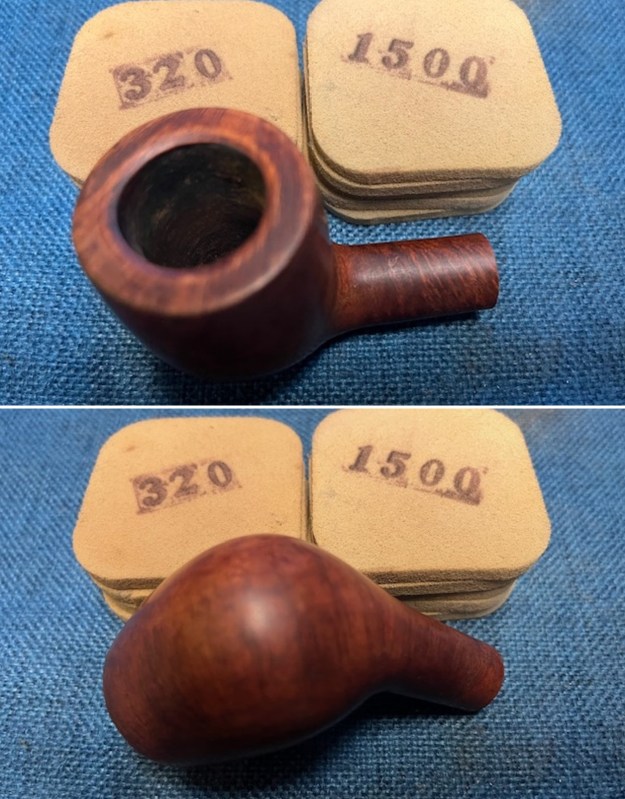
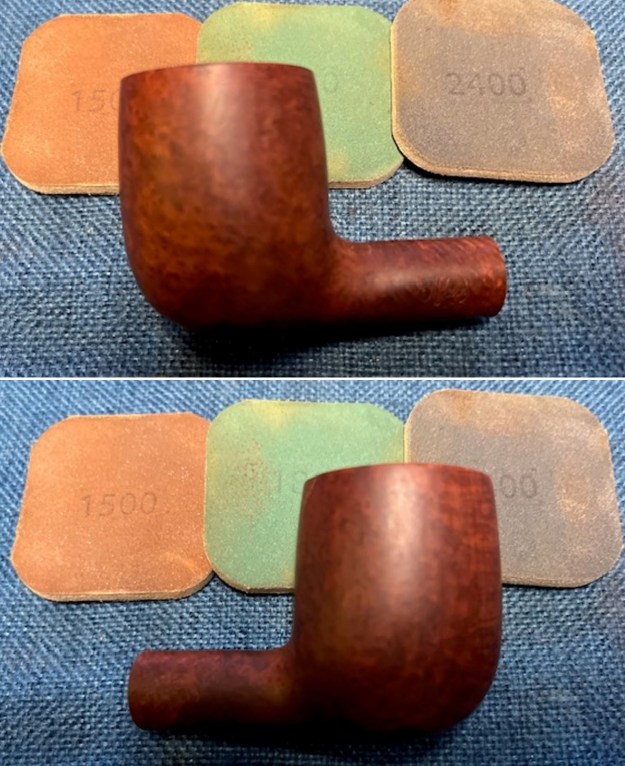
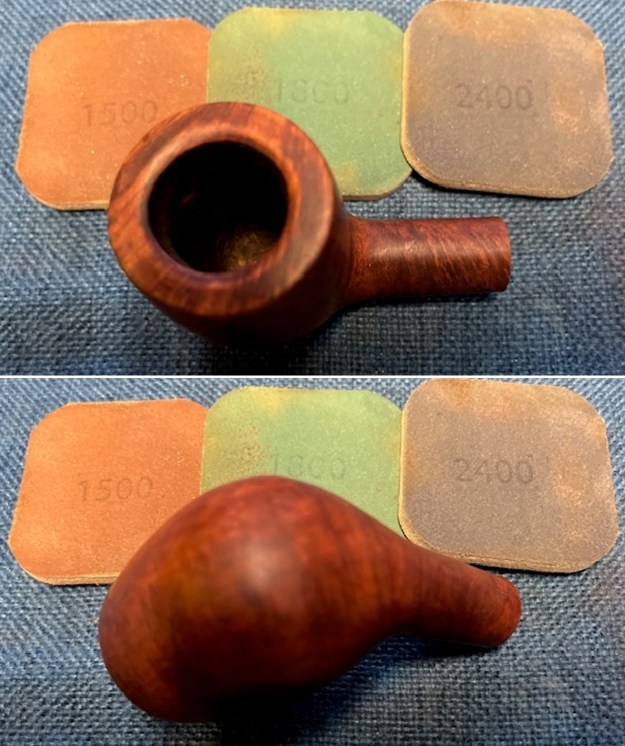
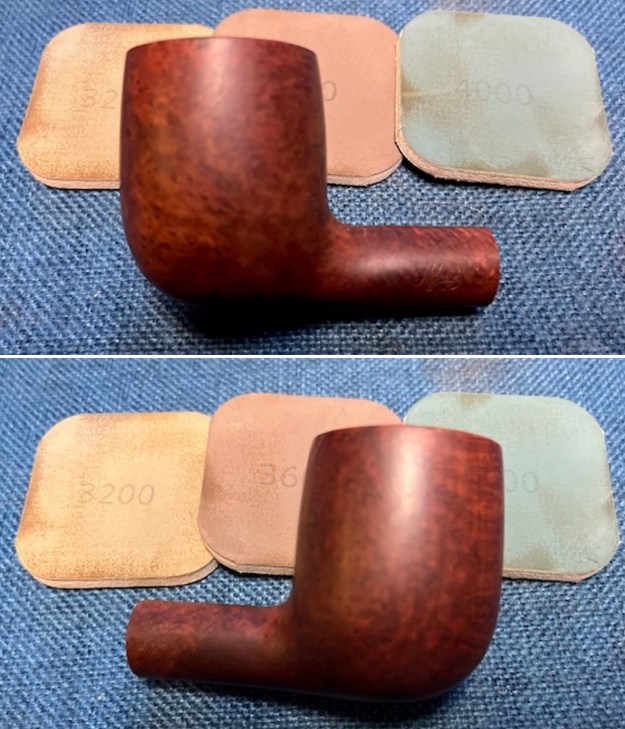
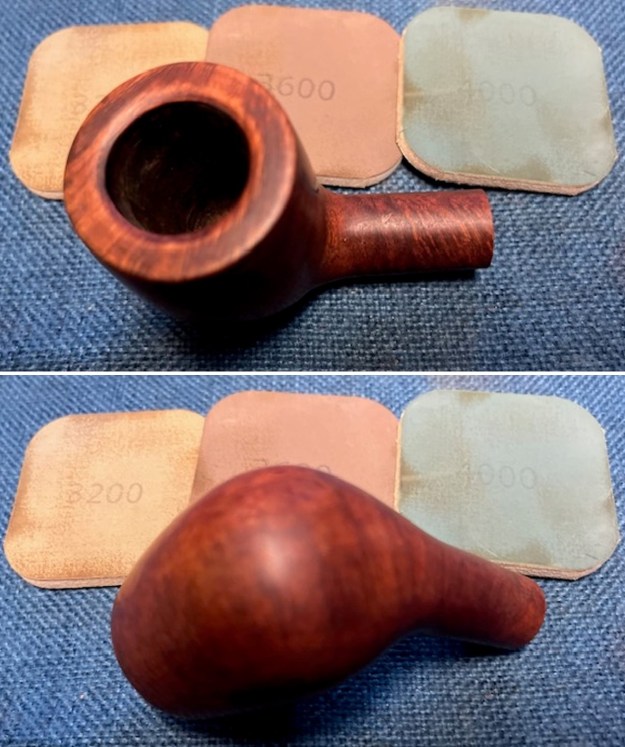
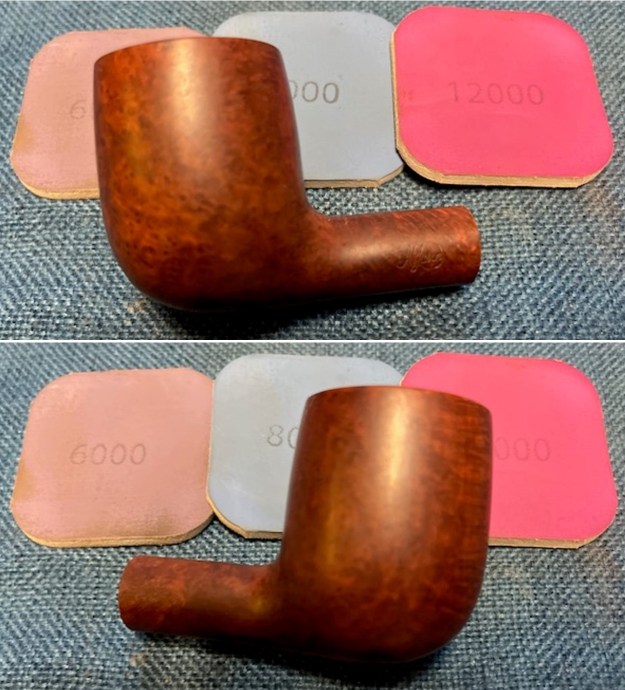
I reamed the bowl with a PipNet Pipe Reamer to take the cake back to bare briar. I cleaned up the remnants of cake with a Savinelli Fitsall Pipe Knife and removed the remaining debris. I sanded the bowl walls smooth with a piece of 220 grit sandpaper wrapped around a piece of dowel. I scraped the lava coat off the rim top with the Savinelli Pipe Knife and removed all of it. I scrubbed the externals of the bowl and shank with undiluted Murphy’s Oil Soap and a tooth brush. I worked over the bowl, shank and rim top with the soap and then rinsed it off warm water. The bowl looked extremely good. There were some significant burn marks on the rim top and inner edge but the bowl itself was very clean. I cleaned out the internals of the bowl and shank with pipe cleaners, cotton swabs, shank brushes and 99% isopropyl alcohol. It was very clean and it looked and smelled far better. I really liked the look of the shank band on the shank end.I lightly topped the bowl on a topping board with 220 grit sandpaper. I wanted to remove the dips and burned areas from the rim top and flatten it for the next step in the process. I used a half sphere and some 220 grit sandpaper to clean up the inner bevel on the rim edge and smooth out that part of the bowl. It was far from perfect but it was smooth and it was flat. I used 320-3500 grit sanding pads to smooth out the scratches and nicks in the surface of the briar. There were many small scratches and nicks in the briar. I wiped the bowl down after each sanding pad with a damp cloth to remove the sanding dust and debris. It really began to look very good. The grain is quite lovely. I polished the briar with micromesh sanding pads – dry sanding with 1500-12000 grit pads and wiped it down the bowl after each sanding pad. I rubbed the bowl and shank down with Before & After Restoration Balm. I worked it into the surface of the bowl sides and shank with my fingertips to clean, enliven and protect the briar. I let the balm sit for a little while and then buffed with a cotton cloth to raise the shine. The Balm did its magic and the grain stood out. I went through my can of stems and found one that was the right taper for the pipe bowl I was working on. It had the right look and would need shaping. I was not sure that the original stem had been bent so I was uncertain about doing that with this new stem. I may just do it because Mario’s Dad had done it to the pipe when he had it! I cleaned out the internals of the stem with alcohol and pipe cleaners. It was surprisingly clean so it was ready to work on it to make a proper fit.I sanded the stem to smooth it out with 320-3500 grit sanding pads. I wiped the stem down after each pad with an Obsidian Oil cloth. It was beginning to look very good.I used the lighter to soften the stem enough to bend it the same bend as the other stem had. It looked very good.I polished the stem with micromesh sanding pads – 1500-12000 grit pads. I wiped it down with a damp cloth after each sanding pad. I used Before & After Pipe Polish – both Fine and Extra Fine to further polish the stem. This restored and restemmed Comoy’s Made Wilshire Dublin with a new vulcanite taper stem is a great looking pipe now that it has been restored. The beautiful finish really highlights the grain. I put the stem back on the bowl and carefully buffed the pipe with Blue Diamond on the buffing wheel. I gave the bowl and the stem multiple coats of carnauba wax on the buffing wheel and followed that by buffing the entire pipe with a clean buffing pad. I hand buffed the pipe with a microfiber cloth to deepen the shine. The rim top shows some burns marks that I could not remove as they were very deep. The finished Wilshire Dublin is a beautiful pipe, but it fits nicely in the hand and feels great. Give the finished pipe a look in the photos below. The dimensions of the pipe are Length: 6 inches, Height: 1 ¾ inches, Outside diameter of the bowl: 1 ¼ inches, Chamber diameter: ¾ of an inch. The weight of the pipe is 38 grams /1.31 ounces. This is the second of six pipes that I am restemming and restoring for Mario from his Dad’s collection. I look forward to hearing what he thinks of this newly restemmed pipe. Thanks for reading this blog and my reflections on the pipe while I worked on it.

Restemming and Restoring a Lou’s Tobacco Row Billiard


by Steve Laug

In November I received an email from Mario about working on some of his Dad’s pipes. Here is what he wrote to me.

I am desperately seeking help restoring and repairing some of my dad’s smoking pipes. I have tried reaching out to the only two known pipe repair establishments I could find in the entire country but one is not currently taking repair orders and the other said she didn’t want to try to repair these pipes without having even seen them. Would you be willing to take on the repairs or can you recommend anyone? Thank you much!!!—Mario

I wrote him back and asked him to send me photos of the pipes. He sent some single photos of the meerschaum bowl and stem, several of the leather clad Canadian and the photo of the rack and six pipes shown below. I looked through the photos and this is what I saw. There were two leather clad pipes a Canadian and a Pot. Both of them were cracked on the shanks and had been self-repaired with wire to hold the cracked shank together. The leather cladding was torn and the stitching was rotten and broken around the bowl. To me they were both unrepairable. There was a lovely older Meerschaum with a horn stem that needed a good cleaning and repairs to the horn stem. There were two Knute Freehand pipes with original stems that were dirty but fixable. The plateau on the smooth one had a large chunk of briar missing. There was a Dublin with a replacement stem that had been chewed through the topside.  Finally, there was a billiard that had been restemmed with a fancy GBD saddle stem on it. They were a messy lot but I told him to send them on to me. They arrived yesterday and the condition of the pipes in the photos was confirmed. They were a mess and needed much work. I have included Mario’s group photo below to show the lot.This morning I decided to start working on the Billiard first. It was the one on the far right on top of the rack in the photo above. It was a billiard – not a GBD and the stem did not fit in the shank correctly and was a fancy saddle stem that had a huge bite through on the topside of it. The bowl had a thick cake on the walls and a heavy lava coat on the rim top. It was internally a mess. The finish was dirty and had a sticky coat on the right side of the bowl. There was a large fill on left side of the bowl near the top that had fallen out. There was a large crack in the shank on the right side that extended almost ¾ of an inch up the shank. The pipe was stamped on the left side of the shank and read Lou’s Tobacco Row. There was no other stamping on the shank sides. The stem was the wrong one. The diameter was less than the shank. The tenon was a bit large and when it had been used the shank had cracked. It would need to be banded and a new stem fit to the shank. I took photos of the pipe when I unpacked it to examine it. I have included those below. I took a photo of the bowl and rim top to give you and idea of what I see. You can see the thick cake in the bowl and the thick lava overflow on the rim top and inner edges of the bowl. I also included one photo of the stem. You can see that the stem is not correct. It does not fit the shank and it is going to need to be replaced.I took a photo of the stamping on the left side of the shank. It is clear and readable as noted above. I took a photo of the bowl with the incorrect stem removed to give a sense of the proportion and appearance of the pipe without the stem. You can see the damage on the stem top so it is no question that it needs to be removed.I could not find any information on Lou’s Tobacco Row either as a pipe or a pipe shop. I googled and a Lou’s Tobacco Bar in Milwaukee, Wisconsin, USA but nothing with the stamp on this pipe. It remains a bit of a mystery to me.

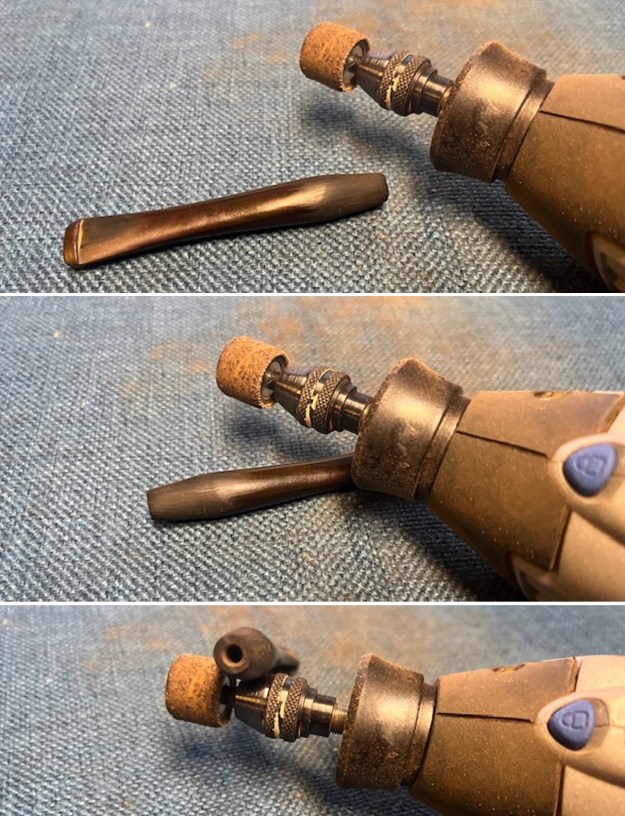
I decided to addressed the cracks on the right underside of the shank first. I took a photo of the cracks on the underside of the shank. There seems to be several cracks in the briar. The crack extended a depth of over ¾ inches on the shank. I went through my bands to find one that had the depth to pull together the cracks up the depth of the shank. I found a nice Sterling Silver Band that was the right depth to pull together the damage on the shank. It was a snug fit. I heated it with a lighter to soften the silver and pressed it on to the shank end to bind the breaks together. I reamed the bowl with a PipNet Pipe Reamer to take the cake back to bare briar. I cleaned up the cake with a Savinelli Fitsall Pipe Knife and removed the remaining debris. I sanded the bowl walls smooth with a piece of 220 grit sandpaper wrapped around a piece of dowel. I scraped the lava coat off the rim top with the Savinelli Pipe Knife and removed all of it. I cleaned out the internals of the bowl and shank with pipe cleaners, cotton swabs, shank brushes and 99% isopropyl alcohol. It was very clean and it looked and smelled far better. I really liked the look of the shank band on the shank end.I scrubbed the externals of the bowl and shank with undiluted Murphy’s Oil Soap and a tooth brush. I worked over the bowl, shank and rim top with the soap and then rinsed it off warm water. The bowl looked extremely good. There was one spot near the top left side of the bowl that would need to have a fill repaired. The briar looked very good with the sterling silver band on the shank. I cleaned up the inner edge of the bowl and the rim top with a folded piece of 220 grit sandpaper. It took a bit of work but I was able to remove the darkening on the edge, the nicks and damage and also some of the marks on the rim top.I applied some clear CA glue in the damaged fill on the left side of the bowl. I worked it into the space on the briar with a tooth pick. I pressed some briar dust into the fresh glue repair. Once it cured I sanded it smooth with a folded piece of 220 grit sandpaper. I used 320-3500 grit sanding pads to smooth out the scratches and nicks in the surface of the briar. There were many small scratches and nicks in the briar. I wiped the bowl down after each sanding pad with a damp cloth to remove the sanding dust and debris. It really began to llok very good. The grain is quite lovely. I polished the briar with micromesh sanding pads – dry sanding with 1500-12000 grit pads and wiped it down the bowl after each sanding pad. I rubbed the bowl and shank down with Before & After Restoration Balm. I worked it into the surface of the bowl sides and shank with my fingertips to clean, enliven and protect the briar. I let the balm sit for a little while and then buffed with a cotton cloth to raise the shine. The Balm did its magic and the grain stood out. I went through my can of stems and found one that was the right taper for the pipe bowl I was working on. It had the right look and would need a little adjustment to the bottom half of the stem to make the fit against band end equal all the way around the shank end.I cleaned out the internals of the stem with alcohol and pipe cleaners. It was surprisingly clean so it was ready to work on it to make a proper fit.I worked over the diameter of the stem at the band junction to reduce it to fit against the shank end. I used the Dremel and sanding drum to start the process and then finished the fit with 220 grit sandpaper to smooth out the sanding marks on the vulcanite. I also sanded over the tooth marks in the stem on both sides ahead of the button.
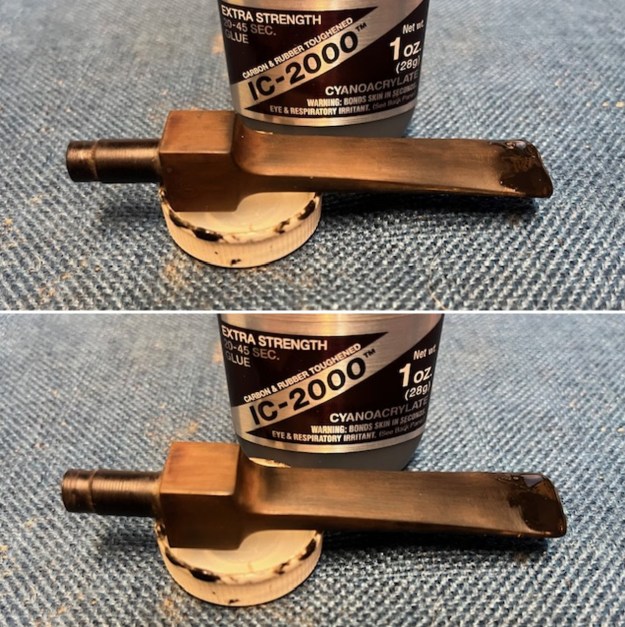
There were some small tooth marks on each side of the stem that remained after my sanding. I filled them in with clear super glue and used a tooth pick to flatten them out (I forgot to take a photo of the stem at this point). Once the repairs cured I flattened them with a small file. I sanded them smooth with a folded piece of 220 grit sandpaper. I sanded the stem to smooth it out with 320-3500 grit sanding pads. I wiped the stem down after each pad with an Obsidian Oil cloth. It was beginning to look very good.I polished the stem with micromesh sanding pads – 1500-12000 grit pads. I wiped it down with a damp cloth after each sanding pad. I used Before & After Pipe Polish – both Fine and Extra Fine to further polish the stem. This first of Mario’s Dad’s pipes, a banded, restored and restemmed Lou’s Tobacco Row Billiard with a new vulcanite taper stem is a great looking pipe now that it has been restored. The beautiful finish really highlights the grain and the polished finish is stunning with the Sterling Silver Band. I put the stem back on the bowl and carefully buffed the pipe with Blue Diamond on the buffing wheel. I gave the bowl and the stem multiple coats of carnauba wax on the buffing wheel and followed that by buffing the entire pipe with a clean buffing pad. I hand buffed the pipe with a microfiber cloth to deepen the shine. The finished Lou’s Tobacco Row Billiard is a large pipe, but it fits nicely in the hand and feels great. Give the finished pipe a look in the photos below. The dimensions of the pipe are Length: 6 ½ inches, Height: 1 ¾ inches, Outside diameter of the bowl: 1 ¼ inches, Chamber diameter: 7/8 of an inch. The weight of the pipe is 52 grams /1.87 ounces. This is the first of six pipes that I am restemming and restoring for Mario from his Dad’s collection. I look forward to hearing what he thinks of this newly banded and stemmed pipe. Thanks for reading this blog and my reflections on the pipe while I worked on it.

Restemming an Unsmoked Stanwell Made in Denmark 7451 Tiny Stack


by Steve Laug

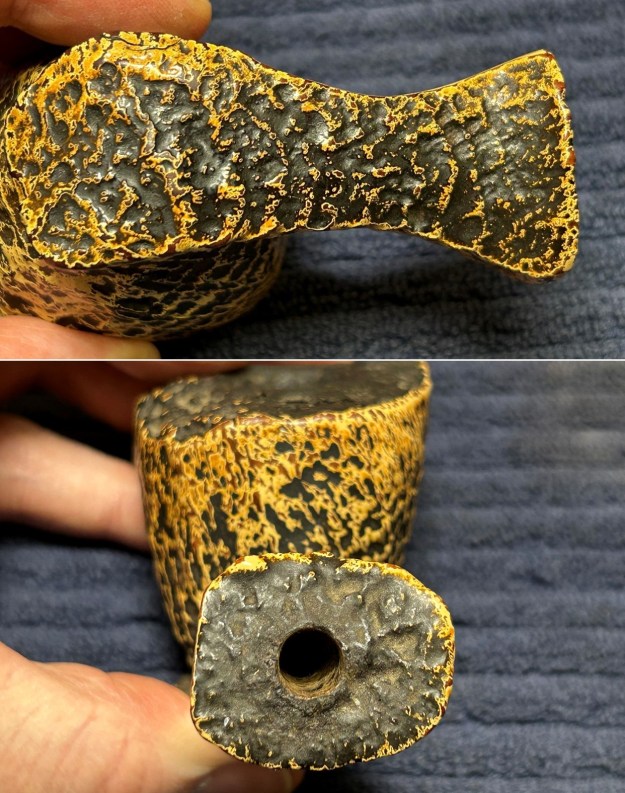
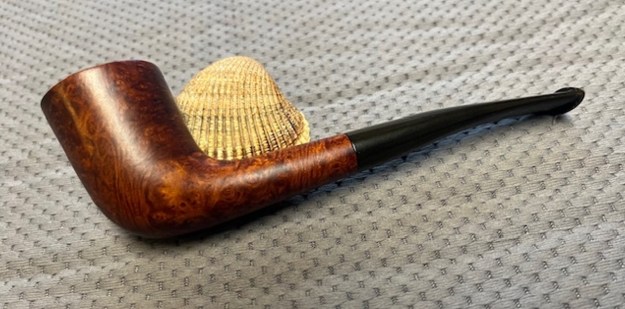
I had this tiny Stanwell sandblast pipe in my box of bowls to be restemmed as the stem on it was snapped off at the end at an angle. It appeared to be unsmoked and if not, it was very clean. I wonder if it was one of the early Ladies Pipes that many companies made to cater to what they assumed the female market wanted. The pipe was a beautiful sandblast with a smooth panel on the underside of the stem that was stamped and read Stanwell by the shape number 7541 [over] Made in Denmark. The stamping was clear and readable. The stem had an S stamp (without the crown) on the side and it looked like the button and stem had been snapped when someone grabbed the end of it and tried to turn it to remove the stem. It also had a small brass band that was held on the tenon of the pipe. It was inlaid with cut glass beads. The stem would need to be replaced and the band with beads installed on the new one. I took photos of the pipe before I started working on it. I took a photo of the rim top and bowl to show the condition of the bowl when I started working on it. It was clean and appeared to be unused/unsmoked. I did not bother taking photo of the stem as its condition was obvious in the above photos and I would need to replace it. I also took a photo of the bowl without the stem to give a sense of what the pipe looked like. It is also clear that the band with glass “jewels” was on the tenon not the shank.I went through the can of stems here and found a thin stem that was a saddle stem with a flared blade in a fishtail style. The tenon actually was very close to the original and would take very little adjusting to get a solid fit.I used a Dremel and sanding drum to reduce the diameter of the saddle to fit the diameter of the shank. I also used a flat file to further shape and reduce the fit to the shank size. I fit it to the shank to do the work on the fit. It did not take too much work to get the fit correct. The slot in the stem was small and thin. I sued a flair and an oval needle file to open the slot. I also used a slot saw to give it angle /Y shaped slot opening. When I was finished a pipe cleaner easily slid in and out.I sanded the saddle portion of the stem with 220 grit sandpaper to smooth out the file and Dremel marks on the saddle and also to remove the casting marks on the sides of the stem blade. I slid the brass/jewelled band on the tenon so that it fit against the saddle. I put the stem on the shank and took a photo of the look of the newly restemmed pipe. I took the stem off the shank and turned my attention to the bowl. I rubbed the stem down with Before & After Restoration Balm. I worked it into the sandblast surface of the bowl with my fingertips and a shoebrush. The product works to clean, enliven and preserve the briar. I let it sit for 15 minutes then I buffed it with a cotton cloth to deepen the shine. The briar really comes alive with the balm. The bowl was finished and now I needed to go back to polishing the stem. I sanded it with 320-3500 grit sanding pads. I dry sanded it and wiped it down with Obsidian Oil to protect and clean it. I sanded out the casting marks and the scratches in the surface. It looked much better with each sanding pad.I polished the stem with micromesh sanding pads – wet sanding it 1500-12000 pads. I wiped it down with a damp cloth after each pad to remove the dust and polishing debris. I polished it with Before & After Pipe Polish – both Fine and Extra Fine. I placed the brass ring with the inlaid glass gems on the tenon. It was made to slide on the tenon easily and stopped against the saddle of the stem. I took photos before and after.I am really happy with the way that this Small Sandblast Stanwell 7451 Tiny Stack turned out. It really is a beautiful looking pipe with a great shape sandblast finished bowl and rim. The new vulcanite saddle stem is really nice. The brass band on the tenon is inlaid with cut glass jewels. The briar really came alive with the buffing. The rich dark brown stains of the finish gave the pipe a sense of depth with the polishing and waxing. I put the stem back on the bowl and carefully buffed the pipe with Blue Diamond on the buffing wheel using a light touch on the briar. I gave the bowl and the stem multiple coats of carnauba wax on the buffing wheel. I buffed the pipe with a clean buffing pad to raise the shine. I hand buffed the pipe with a microfiber cloth to deepen the shine. The finished Stanwell 7451 Lady’s Pipe really is a beauty and feels great in the hand and looks very good. Give the finished pipe a look in the photos below. The dimensions of the pipe are Length: 5 ¼ inches, Height: 1 ½ inches, Outside diameter of the bowl: ¾ of an inch, Chamber diameter: ½ of an inch. The weight of the pipe is 17 grams/.56 of an ounce. The pipe will be going on the rebornpipes store soon. It will be in the section on Danish Pipe Makers if you would like to add it to your collection. Thanks for reading this blog and my reflections on the pipe while I worked on it. It was a fun one to work on!

Getting Creative with this Weber Golden Walnut Imported Briar Apple


by Steve Laug

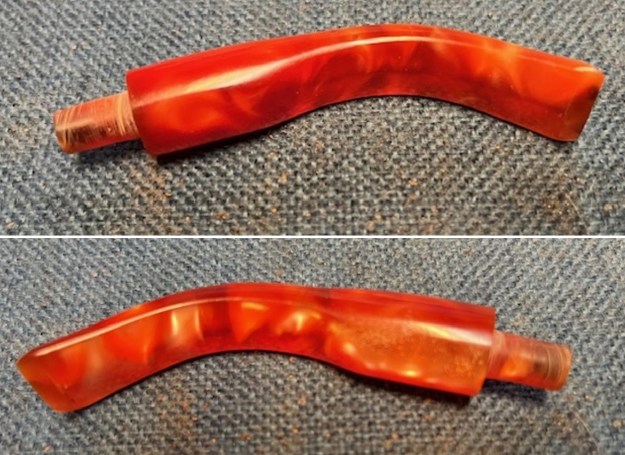
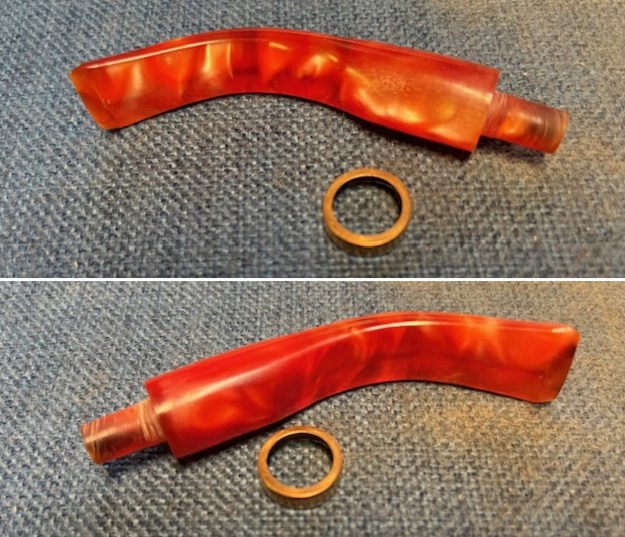
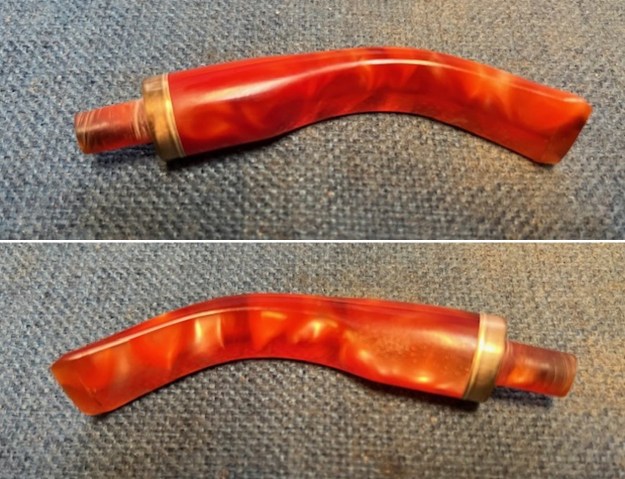
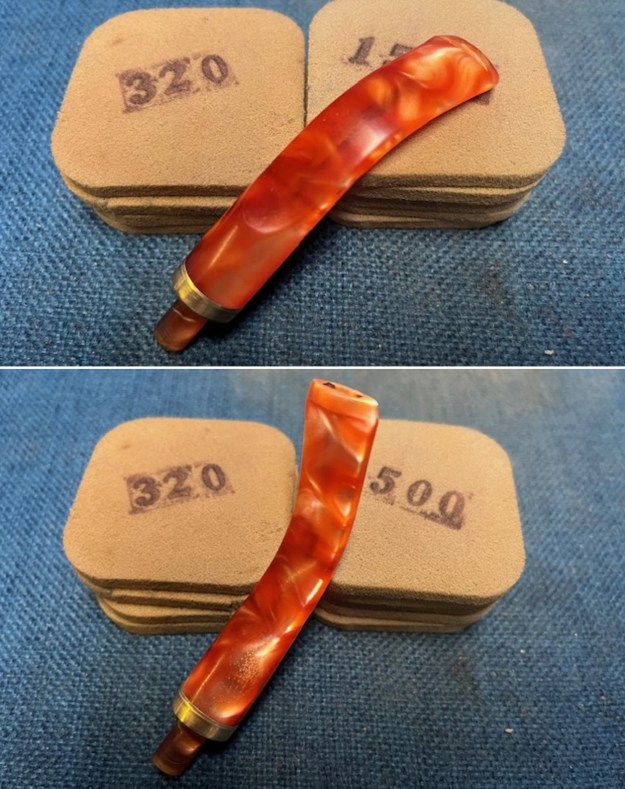
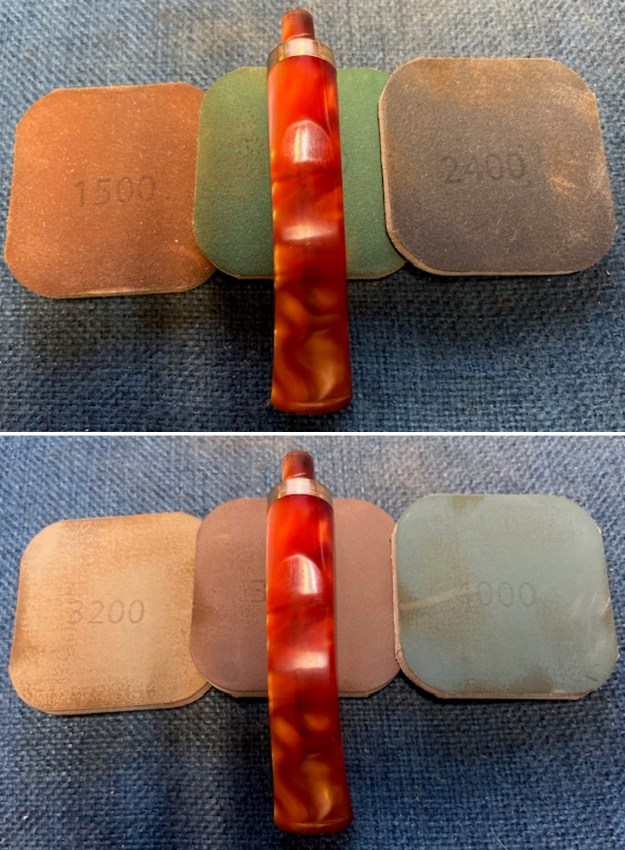
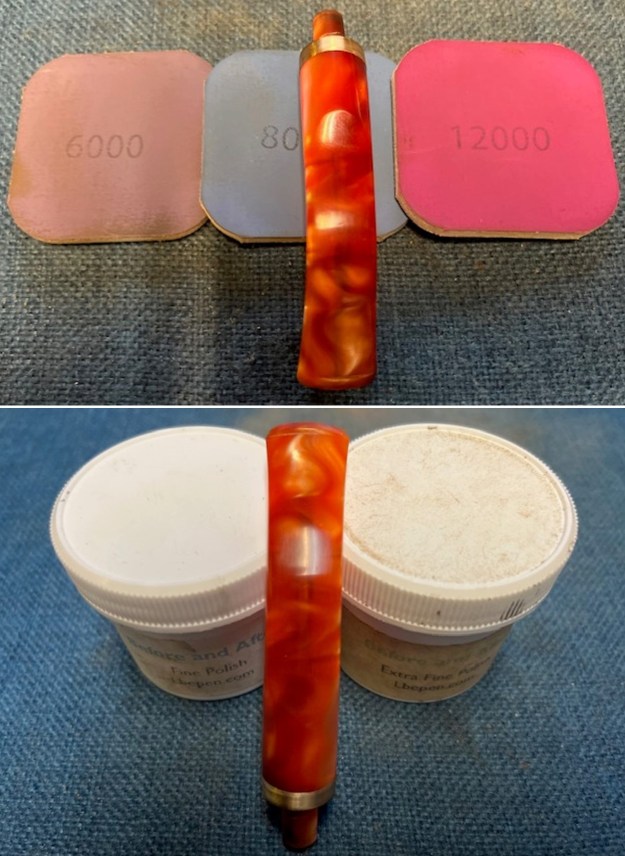
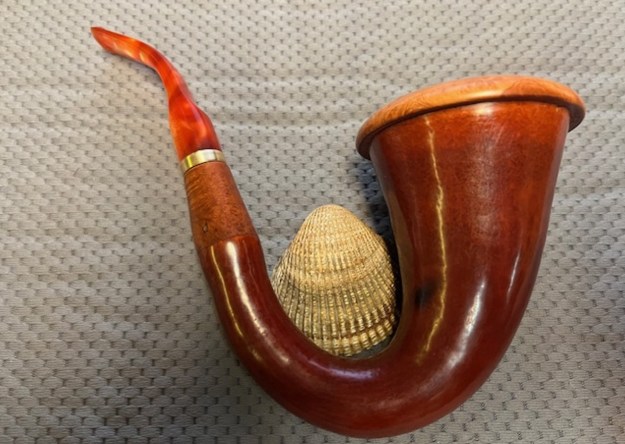
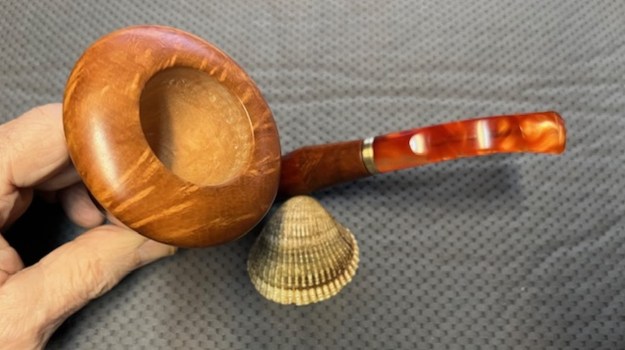
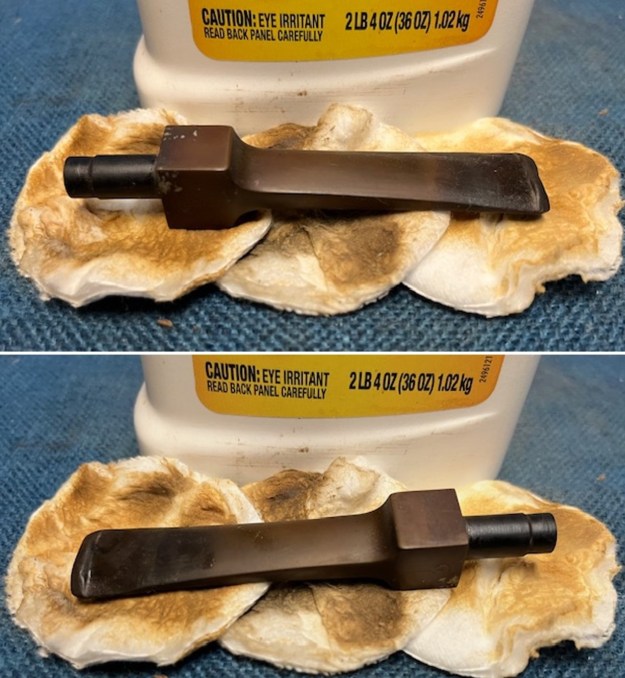
The next bowl on the table is a classic shaped Apple. It has been sitting here and I have looked at it over and over again and today I decided to restem it. I wanted to try something a little different with this restem and see if I could come up with an interesting restem. I think when you see it you will either love it or hate it! But there you go. Here is what I did! I cleaned up the bowl and matched a stem with briar bowl. It is a cleanup and restore and is a break from my work on the Freehand pipes. The bowl is dirty and somewhere in its life before it came to us the stem was lost. The finish was coated with varnish that left it shiny even under the grime. It showed promise under the grit and grime of the years. It was stamped on the left side of the shank and read Weber in an oval [over] Golden Walnut. The right side of the shank it is stamped Imported Briar. The bowl had a thick cake and a thick lava overflow on the rim top. There was some lava and tars coming down the bowl sides from the top. It is a pretty pipe with some great grain under the grime. I am hoping to match a nice stem to it. I took some photos of the bowl before I started my work on it. I took a close up photo of the rim top and bowl to give more of a sense of what I see and noted above. It is a dirty pipe but seems to have no damage on the rim top or edges.I took a photo of the snapped tenon in the shank end. The end of the tenon is quite smooth so it was a clean snap. I will need to pull it before I can fit a new stem to it.I took a photo of the stamping on the left and right side of the shank. The stamping looks blurry and double stamped in the photos but in person it is clear and readable. Recently I picked up some unused acrylic stems. There was an acrylic amber/orange variegated saddle stem in the lot. It was drilled for a new tenon and was clean. This stem had a close diameter to the shank end of the Weber and would work well I think.I put the bowl in the freezer for 30 minutes then used a drywall screw to pull out the broken tenon. I screwed it into the tenon and wiggled it free from the shank. I used the tenon piece to fit a new tenon in the shank end.I fit the new tenon in the shank end and it was a little tight. I used a Dremel and sanding drum to reduce the diameter just enough for a snug fit. I painted the threaded tenon with black CA glue and turned it into the end of the new stem. The fit was good. I set it aside and let the glue cure. I put it in the shank and the fit against the shank end was slightly off. I used a file to make the transition between the shank and the saddle portion of the stem very smooth. I liked the look of the variegated orange acrylic stem with the browns of the briar bowl. I cleaned up the file marks on the shank and avoided the stamping on both sides with a folded piece of 220 grit sandpaper. Once finished the transition and both the briar and the acrylic were smooth. I set aside the stem and turned my attention to reaming the pipe. I used a PipNet Reamer with the first and second cutting heads to take back the heavy cake to bare briar. I cleaned up the reaming with a Savinelli Fitsall Pipe Knife and finally sanded the bowl walls with 220 grit sandpaper wrapped around a dowel. I like to remove all the cake to examine the walls for damage and checking. Great news is that this one is free of any damage. With the bowl reamed it was time to work on the rim top. The lava was hard and thick. I started the process with a topping board and 220 grit sandpaper. Once I had smoothed off the top outer edges it was clear that the inner edge of the rim top was slightly bevelled inward. I used a wooden half sphere and 220 grit sandpaper to clean up the bevel and remove the damage to that portion of the rim top and edges. I cleaned up a few spots with a folded piece of 220 grit sandpaper. To remove the shiny varnish coat on the bowl and to use the stain on the bowl to colour the rim top and sanded shank end I wiped the bowl and shank down with acetone. I used cotton pads with the acetone and was able to easily remove the varnish and move some of the stain to the sanded portions of the shank and rim. I would need to restain but it definitely looked much better. I matched the stain on the bowl and shank with a Maple Stain Pen. I put it on the smooth sanded rim top and shank end. I wanted it to start matched before I started sanding the bowl and shank with sanding pads. I was very happy with the match. I worked on polishing out the sanding marks with 320-3500 grit sanding pads. I worked particularly on the transition between the shank and the stem surface. I also worked over the briar of the bowl and rim top at the same time. The bowl and stem looked very good once I finished. I took the stem off the shank and turned to the bowl first. I polished the briar with micromesh sanding pads – dry sanding with 1500-12000 grit pads. After each sanding pad I wiped the bowl down with a damp cloth to remove the sanding debris and dust. It began to take on a deep shine. I rubbed down the briar Before & After Restoration Balm. I worked it into the surface with my fingertips. The product works to clean, enliven and preserve the briar. I let it sit for 15 minutes then I buffed it with a cotton cloth to deepen the shine. The briar really comes alive with the balm. I polished the stem with micromesh sanding pads – 1500-12000 grit pads to remove them. I wiped the stem down with Obsidian Oil after each sanding pad. I used Before & After Pipe Polish – both Fine and Extra Fine to further polish the stem. I rubbed it down with a final coat of Obsidian Oil and let it dry. This is another pipe that I am really happy about the finished restoration. This reborn Weber Golden Walnut with a newly fitted golden acrylic variegated stem turned out really well to my eye. After restemming I think that it is unique and beautiful looking classic apple with a twist. The bowl is a classic Bent Billiard and the “new” horn stem is a great match. The polished horn stem works well with the briar and the nickel ferrule. The briar really came alive with the buffing. The rich reddish brown stains of the finish make the grain really pop with the polishing and waxing. I put the stem back on the bowl and buffed the pipe with Blue Diamond on the buffing wheel. I gave the bowl and the stem multiple coats of carnauba wax on the buffing wheel. I buffed the pipe with a clean buffing pad to raise the shine. I hand buffed the pipe with a microfiber cloth to deepen the shine. The finished Weber Golden Walnut Apple really has a unique beauty and feels great in the hand. It looks very good. Give the finished pipe a look in the photos below. The dimensions of the pipe are Length: 6 inches, Height: 1 ½ inches, Outside diameter of the bowl: 1 ½ inches, Chamber diameter: ¾ of an inch. The weight of the pipe is 45 grams/1.62 ounces. The pipe will be going on the rebornpipes store soon. It will be in the American Pipemakers Section if you would like to add it to your collection. Thanks for reading this blog and my reflections on the pipe while I worked on it. It was a fun one to work on!

Cleaning up and Restemming a Sandy London Made Sandblast Billiard


by Steve Laug

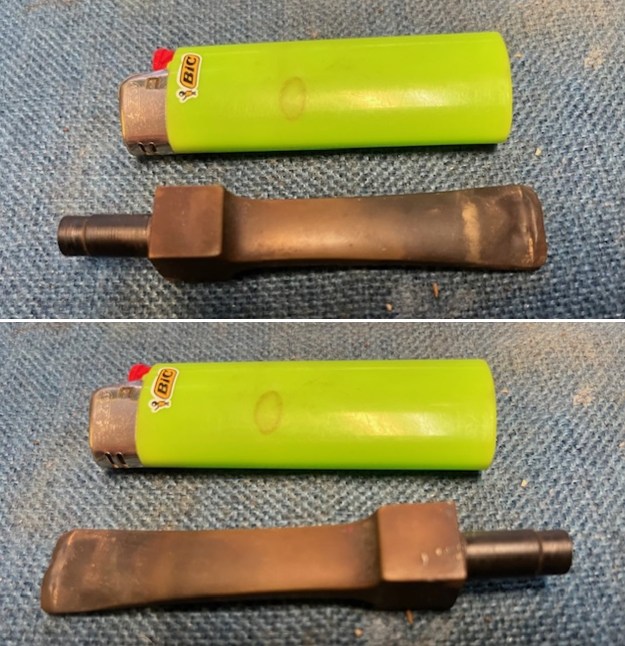
Once again, I dipped into my box of bowls to restem and came out with this interesting sandblast straight billiard. It is stained with a rich combination of brown stains that highlight the highs and lows of the blast. The finish is scratched and dirty but still interesting. The pipe is stamped on a smooth panel on the underside of the shank and reads 2 [followed by] Sandy [over] London Made. The bowl has a thick cake with some lava overflow on the rim top. There is something interesting about this little billiard bowl that makes me choose it next. Here are some photos for you to have a look. I took a close up photo of the rim top and bowl to give a sense of the thickness of the cake and the lava in the sandblast on the rim. It was a mess but obviously a well loved pipe. I took a photo of the stamping on the underside of the shank. There is a numeral 2 toward the heel of the bowl and the rest is centered in the shank in two lines as noted above.I took a photo of the stem I had chosen for the pipe next to the bowl so you can see the overall look of the stem and shank. It is slightly larger in diameter than the shank so that will need to be adjusted. The tenon is also slightly larger.I used a flat needle file to reduce the diameter of the tenon so that it would fit the shank of the pipe. It did not take too much to do and once it was removed it looked very good.I heated the stem with the flame of a Bic lighter to soften the vulcanite. Once it was soft enough I was able to straighten the stem to the angle that I wanted.I fit the stem to the shank and used a rasp to reduce the diameter of the stem. I wanted it to be a smooth transition from the shank to the stem. It was looking much better. I sanded the reduced stem diameter with 200 grit sandpaper to remove the file marks and smooth out the scratches. The transition began to really look good and it was smooth to the touch.I sanded out the scratches in the vulcanite with 320-3500 grit sanding pads. I wiped the stem down after each sanding pad with a cloth impregnated with Obsidian Oil. It started to take on a deep shine.I polished the stem with micromesh sanding pads – 1500-12000 grit pads to remove them. I wiped the stem down with Obsidian Oil after each sanding pad. I used Before & After Pipe Polish – both Fine and Extra Fine to further polish the stem. I rubbed it down with a final coat of Obsidian Oil and let it dry. I turned my attention to the bowl. I used a PipNet Reamer with the first and second cutting heads to take back the heavy cake to bare briar. I cleaned up the reaming with a Savinelli Fitsall Pipe Knife and finally sanded the bowl walls with 220 grit sandpaper wrapped around a dowel. I like to remove all the cake to examine the walls for damage and checking. Great news is that this one is free of any damage! I used a brass bristle wire brush to work over the sandblast rim top and edges. The inner edge and the top looked to be undamaged.I used alcohol, cotton swabs and pipe cleaners to clean out the internals of the shank and the new stem. Once finished the pipe smelled as clean as it looked.I scrubbed the bowl with a tooth brush and undiluted Murphy’s Oil Soap to remove the debris from the sandblast finish. I rinsed the bowl off with warm running water and dried it with a soft towel. It looked much better at this point. I restained the faded spots on the bowl sides and heel with a Mahogany and a Cherry stain pen to blend the colours into the sandblast finish. It looked much better at this point. I rubbed down the briar Before & After Restoration Balm. I worked it into the surface with my fingertips. I used a shoe brush to work the balm into crevices of the sandblast. The product works to clean, enliven and preserve the briar. I let it sit for 15 minutes then I buffed it with a cotton cloth to deepen the shine. The briar really comes alive with the balm. This is another pipe that I am really happy about the finished restoration. This reborn Sandy 2 London Made Sandblast Billiard turned out really well. I used a vulcanite stem I had here to fit the pipe with a new stem. After restemming I think that it really is a great looking pipe with a great shape and grain. The bowl is a classic English Billiard that looks excellent with the new vulcanite stem. The polished black of the stem works well with the briar. The briar really came alive with the buffing. The rich brown and mahogany stains of the finish make the blast really pop with the polishing and waxing. I put the stem back on the bowl and buffed the pipe with Blue Diamond on the buffing wheel. I gave the bowl and the stem multiple coats of carnauba wax on the buffing wheel. I buffed the pipe with a clean buffing pad to raise the shine. I hand buffed the pipe with a microfiber cloth to deepen the shine. The finished Sandy 2 London Made Billiard really has a unique beauty and feels great in the hand. It looks very good. Give the finished pipe a look in the photos below. The dimensions of the pipe are Length: 5 ½ inches, Height: 1 ½ inches, Outside diameter of the bowl: 1 ¼ inches, Chamber diameter: ¾ of an inch. The weight of the pipe is 28 grams/.99 ounces. The pipe will be going on the rebornpipes store soon. It will be in the British Pipemakers Section if you would like to add it to your collection. Thanks for reading this blog and my reflections on the pipe while I worked on it. It was a fun one to work on!

Restemming and Reclaiming an Anonymous Bent Billiard with a Bent Horn Stem


by Steve Laug

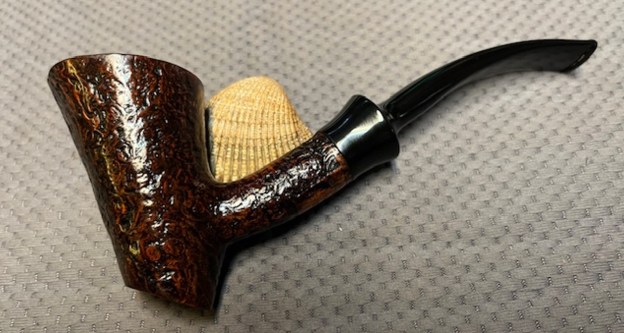
The next bowl on the table is a classic Peterson style Bent Billiard that has a sump in the mortise of the shank. It has been sitting here and I have looked at it over and over again and today I decided to restem it. I cleaned up the bowl and matched a stem with briar bowl. It is a cleanup and restore and is a break from the routine of my other work on pipes. The bowl is dirty and somewhere in its life before it came to us the stem was lost. The finish was coated with varnish that left it shiny even under the grime. It showed promise under the grit and grime of the years. It no stamping on the shank. The right side of the nickel ferrule is stamped with a triangle with an EP in the centre for Electroplating. Underneath that it had three Old English style letters in shields that look like DWF. The bowl had a thick cake and some lava overflow on the rim top. There were a few small nicks in the briar. It is a pretty pipe with some great grain and I am hoping to match a nice stem to it. I took some photos of the bowl before I started my work on it. I took a close up photo of the rim top and bowl to give more of a sense of what I see and noted above. It is a dirty pipe but seems to have no damage on the rim top or edges.I took a photo of the stamping on the left side of the ferrule on the shank. It is hard to capture with the letters with the reflection of the light.I found a stem in my cans of stems that would work well with the pipe. It is a great looking bent horn stem. The tenon was polished horn and was threaded into the end of the stem. The look of the stem and bowl was going work very well.I sanded down the diameter of the shank end of the stem so that it would fit well inside the ferrule. I used a folded piece of 220 grit sandpaper to smooth out the stem surface and to reduce the size of the stem. Once finished it fit well. I set it aside and went to work on the bowl.
I began my work on this pipe by reaming the pipe. I used a PipNet Reamer with the first and second cutting heads to take back the heavy cake to bare briar. I cleaned up the reaming with a Savinelli Fitsall Pipe Knife and finally sanded the bowl walls with 220 grit sandpaper wrapped around a dowel. I like to remove all the cake to examine the walls for damage and checking. Great news is that this one is free of any damage! I scraped off the rim top and edge of the bowl with the Savinelli Fitsall knife. The inner edge and the top looked to be undamaged.I used alcohol, cotton swabs and pipe cleaners to clean out the internals of the shank and the new horn stem. Once finished the pipe smelled as clean as it looked.I cleaned off the shiny coat of varnish on the bowl and shank with a cotton pad and acetone. Once finished it looked better. It is a great looking bowl with some nice grain around the sides and rimtop. I sanded the bowl to blend in the remaining fills to the surface of the bowl and to continue to clean up the rim top and remove any remnants of varnish. I used 320-3500 grit sanding pads and wiped the bowl down after each pad with a damp cloth to check on the progress. It came out looking much better. I polished the briar bowl with micromesh sanding pads – dry sanding with 1500-12000 grit sanding pads. I wiped it down with a damp cloth after each pad to remove the debris. The bowl and the band took on a rich glow. I paused the polishing and stained the rim top with an Oak Stain pen to match the rest of the briar. I finished the polishing with 6000-12000 grit pads. I wiped the briar down with a damp cloth to remove the sanding debris. But the bowl looked better and better. I rubbed down the briar Before & After Restoration Balm. I worked it into the surface with my fingertips. I used a shoe brush to work the balm into the twin rings around the cap. The product works to clean, enliven and preserve the briar. I let it sit for 15 minutes then I buffed it with a cotton cloth to deepen the shine. The briar really comes alive with the balm. I set the bowl aside and turned my attention back to the horn stem. I sanded out the scratches in the horn with 320-3500 grit sanding pads. I wiped the stem down after each sanding pad with a cloth impregnated with Obsidian Oil. It started to take on a deep shine.I polished the stem with micromesh sanding pads – 1500-12000 grit pads to remove them. I wiped the stem down with Obsidian Oil after each sanding pad. I used Before & After Pipe Polish – both Fine and Extra Fine to further polish the stem. I rubbed it down with a final coat of Obsidian Oil and let it dry. This is another pipe that I am really happy about the finished restoration. This reborn Anonymous Bent Billiard with a horn stem turned out really well. I used a horn stem I had here to fit the pipe with a new stem. After restemming I think that it really is a great looking pipe with a great shape and grain. The bowl is a classic Bent Billiard and the “new” horn stem is a great match. The polished horn stem works well with the briar and the nickel ferrule. The briar really came alive with the buffing. The rich brown stains of the finish make the grain really pop with the polishing and waxing. I put the stem back on the bowl and buffed the pipe with Blue Diamond on the buffing wheel. I gave the bowl and the stem multiple coats of carnauba wax on the buffing wheel. I buffed the pipe with a clean buffing pad to raise the shine. I hand buffed the pipe with a microfiber cloth to deepen the shine. The finished Bent Billiard with a Horn Stem really has a unique beauty and feels great in the hand. It looks very good. Give the finished pipe a look in the photos below. The dimensions of the pipe are Length: 6 inches, Height: 1 ¾ inches, Outside diameter of the bowl: 1 ¼ inches, Chamber diameter: ¾ of an inch. The weight of the pipe is 54 grams/1.90 ounces. This one will stay with me for awhile to enjoy. Thanks for reading this blog and my reflections on the pipe while I worked on it. It was a fun one to work on!

Restemming and Reclaiming a London Tower Made in London ¼ Bent Bulldog


by Steve Laug

The next bowl on the table is a classic English looking ¼ Bent Bulldog that I decided to restem. I cleaned up the bowl and matched a stem with briar bowl. It is a cleanup and restore and gives me a break from the routine of my other work on pipes. The bowl is dirty and somewhere in its life before it came to us the stem was lost. The finish was a bit dull and lifeless even though there was a shiny varnish coat. It showed promise under the grit and grime of the years. It was stamped on the left side of the shank and read London Tower in block text. On the right side it read Made In London [over] England. The bowl had a thick cake and some lava overflow on the rim top. The bowl also had some dust and oils ground into the finish of the bowl. There were a few small fills in the shank but the bowl seemed to be free of them. It is a pretty pipe with some great grain and I am hoping to match a nice stem to it. I took some photos of the bowl before I started my work on it. I took a close up photo of the rim top and bowl to give more of a sense of what I see and noted above. It is a dirty pipe but seems to have no damage on the rim top or edges.I took photos of the stamping on the left and right side of the shank. You can see that it is quite clear and readable. There were also some interesting water spots on the briar that are visible in the photos. There may well have been a shape number after the England stamp below and near the bowl but it not clear… potentially some remnants of numbers.I found a stem in my cans of stems that would work well with the pipe. It is interestingly a worn The Everyman Pipe by Comoy’s three bar logo stem and the shape was right for the pipe. The tenon was a Delrin replacement tenon that had been done before I had it and I would need to clean up the tenon end a bit and smooth it out for a clean fit but I think it would look good! Now it was time to learn about the brand itself. I was unfamiliar with the London Tower Brand but there was something about the shape and the way it looked with the Comoy’s Everyman stem above that made me think there was a Comoy’s Connection. Of course, I found nothing on either PipePhil’s site or on Pipedia. Pipedia had a listing for the brand but showed a few photos and asked for information. In essence it asked for the same thing I was looking for.

So, I turned and just did a general Google search for the London Tower Made in London England pipe. Low and behold I was given a link on Smokingpipes.com and two on eBay that connected the pipe to Comoy’s.

Here is the link to the Smokingpipes link that included a phot of the pipe they were selling. (https://www.smokingpipes.com/pipes/estate/england/moreinfo.cfm?product_id=257202). The description highlighted the stamping and the single photo shows the stamping clearly. I quote below and also have included the photo. The LONDON TOWER stamp is identical to the one I am working on though above it there is a Comoy’s stamp. The little bulldog I am working on does not currently have a Comoy’s stamp and honestly I do not think it did in my case.

A tall-bowled straight Billiard, this Comoy’s may not be amongst those that collectors spend countless waking hours pouring over listings in search of, but it’s still a fine representative of the English school nonetheless. Lightly smoked, but otherwise good condition. – Daniel BumgardnerThe first eBay item listed next was of a saddle stem, sandblast pot that bore the same stamp as the smokingpipes billiard. Here is the link (https://www.ebay.com/itm/145100770839). I include two photos of the pipe and its stamping. London Tower stamp is the same though this one just says Made in England where the one I am working on says Made in London England. The second eBay sale was for a different shaped pipe but the stamping was the same as the smokingpipes billiard – Comoy’s [over] London Tower. And like the one I have here it had some obvious fills (https://www.ebay.com/itm/195608835371?mkevt=1&mkcid=1&mkrid=711-53200-19255-0&campid=5338722076&customid=&toolid=10050).From the information I learned that the London Tower classic shape was in all probability made by Comoy’s and was a seconds line. Now it was time to work on the pipe itself.

I began by reaming the pipe. I used a PipNet Reamer with the first and second cutting heads to take back the heavy cake to bare briar. I cleaned up the reaming with a Savinelli Fitsall Pipe Knife and finally sanded the bowl walls with 220 grit sandpaper wrapped around a dowel. I like to remove all the cake to examine the walls for damage and checking. Great news is that this one is free of any damage! I scraped off the rim top and edge of the bowl with the Savinelli Fitsall knife. The inner edge and the top looked to be undamaged.I moved on to using the folded sandpaper to clean up the rim darkening on the pipe as well as further addressing the build up on the rim top. I was definitely looking better when I finished.I cleaned off the shiny coat of varnish on the bowl and shank with a cotton pad and acetone. I also used a dental pick to clean out the twin rings around the cap of the bowl. Once finished it looked better. Surprise, even what I thought was a fill on the top of the shank turned out to be a fleck of paint and it disappeared. I sanded the bowl to blend in the remaining fills to the surface of the bowl and to continue to clean up the rim top and remove any remnants of varnish. I used 320-3500 grit sanding pads and wiped the bowl down after each pad with a damp cloth to check on the progress. It came out looking much better. I used alcohol, cotton swabs and pipe cleaners to clean out the internals of the shank and the new stem. Once finished the pipe smelled as clean as it looked.I decided to put a narrow diamond shank band on the pipe. It is polished nickel and would work well with the three bars on the stem side.  The band came quite deep and I used a Dremel and sanding drum and a topping board to reduce the depth of the band. The first photo below shows the amount of band that I removed from the original band and the shorter band on the shank. I heated the band and pressed it in place on the shank end. It was short enough in depth to no hide any of the stamping. I polished the briar bowl and nickel band with micromesh sanding pads – dry sanding with 1500-12000 grit sanding pads. I wiped it down with a damp cloth after each pad to remove the debris. The bowl and the band took on a rich glow. I rubbed down the briar Before & After Restoration Balm. I worked it into the surface with my fingertips. I used a shoe brush to work the balm into the twin rings around the cap. The product works to clean, enliven and preserve the briar. I let it sit for 15 minutes then I buffed it with a cotton cloth to deepen the shine. The briar really comes alive with the balm. I set the bowl aside and worked on the fit of the stem against the shank as it was slightly larger than the shank. I also worked on removing the tooth indentations and oxidation on the stem surface. I started with 220 grit sandpaper to do the majority of the work and it began to look much better.I sanded out the scratches in the vulcanite with 320-3500 grit sanding pads. I wiped the stem down after each sanding pad with a cloth impregnated with Obsidian Oil. It started to take on a deep shine.I polished the stem with micromesh sanding pads – 1500-12000 grit pads to remove them. I wiped the stem down with Obsidian Oil after each sanding pad. I used Before & After Pipe Polish – both Fine and Extra Fine to further polish the stem. I rubbed it down with a final coat of Obsidian Oil and let it dry. This is another pipe that I am really happy about the finished restoration. This reborn London Tower Made in London England Bent Bulldog turned out really well. I used a vulcanite stem I had here to fit the pipe with a new stem. After restemming I think that it really is a great looking pipe with a great shape and grain. The bowl is a classic English Bent Bulldog that appears to have been made by Comoy’s and the “new” vulcanite stem is close to the original stem. The polished black of the stem works well with the briar. The briar really came alive with the buffing. The rich brown stains of the finish make the grain really pop with the polishing and waxing. I put the stem back on the bowl and buffed the pipe with Blue Diamond on the buffing wheel. I gave the bowl and the stem multiple coats of carnauba wax on the buffing wheel. I buffed the pipe with a clean buffing pad to raise the shine. I hand buffed the pipe with a microfiber cloth to deepen the shine. The finished London Tower Bulldog really has a unique beauty and feels great in the hand. It looks very good. Give the finished pipe a look in the photos below. The dimensions of the pipe are Length: 5 ½ inches, Height: 1 ½ inches, Outside diameter of the bowl: 1 ½ inches, Chamber diameter: ¾ of an inch. The weight of the pipe is 40 grams/1.41 ounces. The pipe will be going on the rebornpipes store soon. It will be in the British Pipemakers Section if you would like to add it to your collection. Thanks for reading this blog and my reflections on the pipe while I worked on it. It was a fun one to work on!

Restemming and Reclaiming a Stanwell Design Choice 886


by Steve Laug

The next pipe on the table is nice looking Stanwell Danish style Pot that I decided to restem. I cleaned up the bowl and matched a stem with briar bowl and vulcanite shank extension. It is a cleanup and restore and gives me a break from the routine of my other work on pipes. This bowl has a classic Stanwell look from the 1960s and 1970s. The finish was a bit dull and lifeless. It showed promise under the grit and grime of the years. It was stamped on the underside of the shank and read 866 [over] Stanwell [over] Design Choice [over] Made in Denmark. The bowl had a thick cake and some lava overflow on the crowned rim top. The bowl also had some dust and oils ground into the finish of the bowl. The vulcanite shank extension is lightly oxidized. It is a pretty pipe with some great grain and I am hoping to match a nice stem to it. I took some photos of the bowl before I started my work on it. I took a close up photo of the rim top and bowl to give more of a sense of what I see and noted above. It is a dirty pipe but seems to have no damage on the rim top or edges.I tried to capture the stamping in a photo. It is clear and readable as noted above. There are some faint spots on them but they are still readable.I found a stem in my cans of stems that would work well with the pipe. I would need to clean up the tenon end a bit and smooth it out for a clean fit but I think it would look good!I did some hunting on both Pipephil’s site and also on Pipedia for both the shape number and also the Design Choice series. While both sites were very helpful neither one gave information specific to the Design Choice.

I then did a general Google search for a Stanwell Design Choice 886 six pipe and came up with several pipes with info. Two were on Worthpoint auction site and gave me little that I did not have by just looking at the pipe. However, Smokingpipes.com had a listing for an 886 that gave a little more data to me. Here is the link and a quote from the description on the site for this shape (https://www.smokingpipes.com/pipes/estate/denmark/moreinfo.cfm?product_id=302469).  I quote:

Spanning a length of time between the 1960s and 1970s, Stanwell’s “Design Choice” series of variations on the marque’s shapes all predominantly featured the presence of a typically flared ferrule (which this “886” has). Likely based on a shape designed by Sixten Ivarsson himself, this Danish bent Pot also sports a pretty sweet cross-cut grain pattern. There are some dings on the bowl, and a touch of rim darkening, but otherwise condition is good. – Daniel Bumgardner

From the information I learned that the line featured a lot of Stanwell’s classic shape with the addition of a flared ferrule made of vulcanite. The pipe came out between the 1960 and 1970s and was probably based on a design by Sixten Ivarrson. Now it was time to work on the pipe itself.

I began by reaming the pipe. I used a PipNet Reamer with the first and second cutting heads to take back the heavy cake to bare briar. I cleaned up the reaming with a Savinelli Fitsall Pipe Knife and finally sanded the bowl walls with 220 grit sandpaper wrapped around a dowel. I like to remove all the cake to examine the walls for damage and checking. Great news is that this one is free of any damage! I scraped off the rim top and edge of the bowl with the Savinelli Fitsall knife aand started the clean up of the debris with a folded piece of 220 grit sandpaper. The inner edge and the top looked to be undamaged.I moved on to using the folded sandpaper to clean up the rim darkening on the pipe as well as further addressing the build up on the rim top. I was definitely looking better when I finished.I polished the briar bowl and vulcanite shank extension with micromesh sanding pads – dry sanding with 1500-12000 grit sanding pads. I wiped it down with a damp cloth after each pad to remove the debris. The bowl took on a rich glow. I was enjoying the beauty of the bowl when it suddenly dawned on me that I had not cleaned the shank or the airway in the bowl or stem. I went back and did so now. I had to be careful with the alcohol so as not to drip on the shank extension of the briar. I used alcohol, cotton swabs and pipe cleaners to clean out the internals and it is now clean on both the inside and outside.Now I could go back to my normal process. I rubbed down the briar and the vulcanite shank extension with Before & After Restoration Balm. I worked it into the surface with my fingertips. The product works to clean, enliven and preserve the briar. I let it sit for 15 minutes then I buffed it with a cotton cloth to deepen the shine. The briar really comes alive with the balm. I paused the process to put the stem in the shank and take a photo of the new look of the pipe with a stem in place. I still need to polish the stem but the look is very nice! I like it. I removed the stem and started my polishing process. I sanded out the scratches in the vulcanite with 320-3500 grit sanding pads. I wiped the stem down after each sanding pad with a cloth impregnated with Obsidian Oil. It started to take on a deep shine.I polished the stem with micromesh sanding pads – 1500-12000 grit pads to remove them. I wiped the stem down with Obsidian Oil after each sanding pad. I used Before & After Pipe Polish – both Fine and Extra Fine to further polish the stem. I rubbed it down with a final coat of Obsidian Oil and let it dry. This is another pipe that I am really happy about the finished restoration. This reborn Stanwell Design Choice 886 Danish Pot turned out really well. I used a vulcanite stem I had here to fit the pipe with a new stem. After restemming I think that it really is a great looking pipe with a great shape and grain. The bowl is Danish Style Pot shape and the vulcanite shank extension goes well with it. The new vulcanite stem is close to the original stem, though missing the saddle portion. The polished black of the stem works well with the briar. The briar really came alive with the buffing. The rich brown stains of the finish make the grain really pop with the polishing and waxing. I put the stem back on the bowl and buffed the pipe with Blue Diamond on the buffing wheel. I gave the bowl and the stem multiple coats of carnauba wax on the buffing wheel. I buffed the pipe with a clean buffing pad to raise the shine. I hand buffed the pipe with a microfiber cloth to deepen the shine. The finished Stanwell Design Choice 886 Pot really has a unique beauty and feels great in the hand. It looks very good. Give the finished pipe a look in the photos below. The dimensions of the pipe are Length: 5 ½ inches, Height: 1 ½ inches, Outside diameter of the bowl: 1 ¾ inches, Chamber diameter: ¾ of an inch. The weight of the pipe is 43 grams/1.45 ounces. The pipe will be going on the rebornpipes store soon. It will be in the section on Danish Pipe Makers if you would like to add it to your collection. Thanks for reading this blog and my reflections on the pipe while I worked on it. It was a fun one to work on!

Restemming and Redressing an interesting Prince Amled Calabash


by Steve Laug

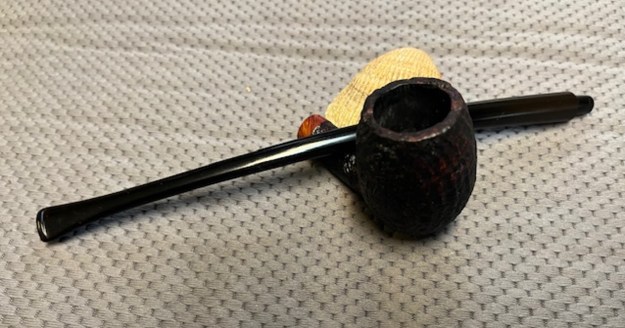
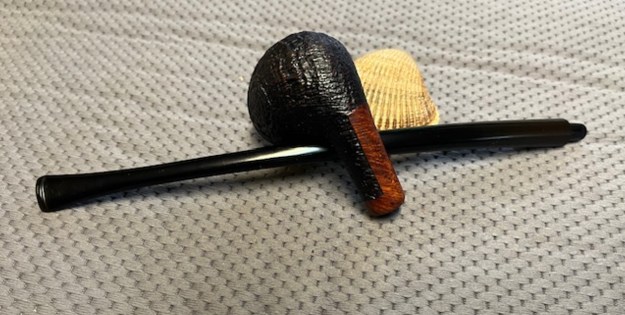
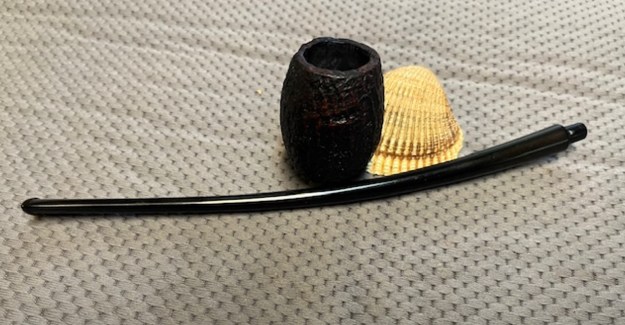
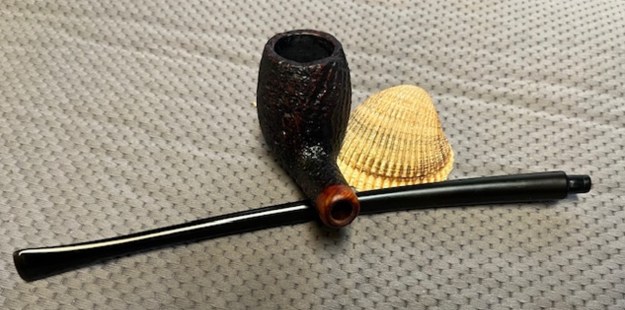
For the next pipe to work on I chose to clean up and match a stem with a uniquely rusticated calabash bowl that I have here in my box. This one was more complicated than some of the other quick cleanup and restores but it is interesting enough work to give me a break from normal restoration. This bowl has a wire rustication or bark rustication on the sides and shank. There is a smooth band on the shank end and around the rim top. The rim top itself is also smooth and bevelled inward. The finish was worn and quite lifeless looking. Nonetheless to me it showed promise under the grit and grime of the years. On the underside of the shank on a smooth panel it was clearly stamped Prince Amled [over] Made in Denmark [over] Hand Made. The conical bowl had a thick cake and an overflow of lava covering the inwardly bevelled rim top. The wire rustication was a filthy mess with lots of dirt and a bit of paint in the crevices. The shank end had some damage and was no longer smooth. There was also a small tenon snapped off in the shank that would need to be pulled before I could fit a stem to it. I took some photos of the bowl before I started my work on it. I took a close up photo of the bowl to give an idea of what I had to work with. The bowl was very dirty and had a thick cake. The rim top had a thick and hard lava that was obscuring whether there was damage to the smooth rim. Perhaps it had protected it from burn damage but only cleaning will reveal that. I also captured the broken tenon in the shank in the second photo. I took a photo to try and capture the stamping on the underside of the shank. It is present and is readable in person far more than the photos show. It is stamped as noted above.I went through my cans of stems here and found a thin taper stem that would fit quite well once the tenon was shaped and the diameter of the stem was fitted at the shank. It was dirty and needed a thorough cleaning but I think it will look good.Before I started to work on the pipe I wanted to refresh my memory about the brand. I turned first to Pipephils site to see if there was any information about the Danish Made Prince Amled brand (http://www.pipephil.eu/logos/en/logo-p5.html). I did a screen capture of what was on the site and I include that below. It was another of those pipes with little information included.I turned to Pipedia (https://pipedia.org/wiki/Prince_Amled) to see if there was any further information to help me with hunt for this pipe manufacturer. The listing for that pipe company had some great photos but also an appeal for information on the brand. It looked like I had as much information as I could find online.

It was time to work on the pipe! I decided to start by pulling the broken tenon in the shank. I screwed a coarse thread drywall screw into the airway and gently wiggled the tenon piece free. The shank was dirty but otherwise undamaged. There was some nicking on the shank end and edge that would need to be dealt with but otherwise it was good.Now the pipe was ready to be cleaned. I reamed it with a PipNet Pipe Reamer using the 1st and 2nd cutting heads to remove the cake. I cleaned up the remnants with a Savinelli Fitsall Pipe Knife. I finished the bowl by sanding the walls with a piece of 220 grit sandpaper wrapped around a piece of dowel. The bowl walls looked very good. I went through my thin brass bands to find one that would work to clean up the damage on the shank end. I use these to give a smooth surface to face the new stem. It adds a bit of bling but also does a great job making the shank face smooth to match the stem. I wiped the shank end down with alcohol to clean it off and gave the shank end a coat of glue. I pressed the band in place over the all-purpose glue and cleaned off the excess with a wet cloth.Once the glue had dried I scrubbed out the internals with pipe cleaners (normal & bristle), cotton swabs and alcohol to remove the tars and oils in the shank between the mortise and the entrance of the airway into the bowl. It was quite dirty. I cleaned out the internals on the stem at the same time.I scrubbed the exterior of the bowl and shank with a tooth brush and undiluted Murphy’s Oil Soap. I worked it into rustication on the bowl and shank and the dirty rim top with a tooth brush. I rinsed the soap and grime off with warm water and repeated the process until the pipe was clean. I dried it off with a soft towel. It looked much better at this point. I polished the rim top and the smooth portions of the band around the rim edge and underside of the shank with micromesh sanding pads – dry sanding with 1500 – 12000 grit pads. I wiped the briar down after each sanding pad to remove the debris. The smooth rim and edge began to take on a shine. I stained the rim top and the smooth portions of the rim edge, bowl and shank with a Cherry stain pen. It looks good but will look even better once it is buffed and polished. I rubbed the bowl down with Before & After Restoration Balm. I worked it into the surface of the briar with my fingertips and a horse hair shoe brush to clean, enliven and protect it. I let the balm sit for 10 minutes and then buffed with a cotton cloth to raise the shine. Mark Hoover’s Balm is a product that I have come to appreciate and one I use on every pipe I have been working on. I set the bowl aside and turned my attention to the stem. I sanded the stem surface with 320-3500 grit sanding pads to further blend them in and smooth out the surface of the stem.I polished the stem with micromesh sanding pads – dry sanding with 1500-12000 grit pads. I wiped the stem down after each pad with some Obsidian Oil. I finished hand polishing it with Before & After Pipe Stem Polish – Fine and Extra Fine. I rubbed it down with another coat of Obsidian Oil and let it dry. The stem really looked very good. This delicate and petite Prince Amled Hand Made Calabash Pipe is a real beauty. I know it is hand made in Denmark but that is the extent of the information available on the brand. The carving looks like tree bark on the sides and a great smooth rim and trim. The finish on the pipe is in excellent condition and the contrasting stains work well to highlight the stunning finish on the pipe. The thin vulcanite pencil stem adds to the mix. With the grime and debris gone from the finish and the bowl it was a beauty and the finish shows depth at this point. The rim top looks really good now. I put the stem back on the bowl and buffed the pipe with Blue Diamond on the buffing wheel. I gave the bowl multiple coats of Conservator’s Wax and the stem multiple coats of carnauba wax on the buffing wheel. I buffed it with a clean buffing pad on the buffer and hand buffed the pipe with a microfiber cloth to deepen the shine. The finished Prince Amled Calabash is quite nice and feels great in the hand. The dimensions of the pipe are Length: 5 inches, Height: 2 ¼ inches, Outside diameter of the bowl: 1 ¼ inches, Chamber diameter: 5/8 of an inch. The weight of the pipe is .92 ounces/25 grams. Thanks for walking through the restoration with me as I worked over another interesting pipe. This pipe will be added to the Danish Pipe Makers section of the rebornpipes store soon. If you want to add it to your collection send me an email or a message! Thanks for your time.

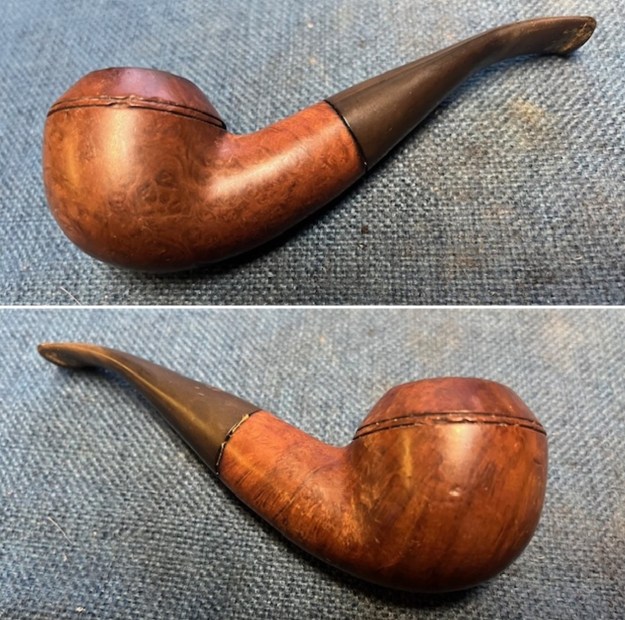
Great to work on an older WDC Thorobred Broken In Bent Billiard


by Steve Laug

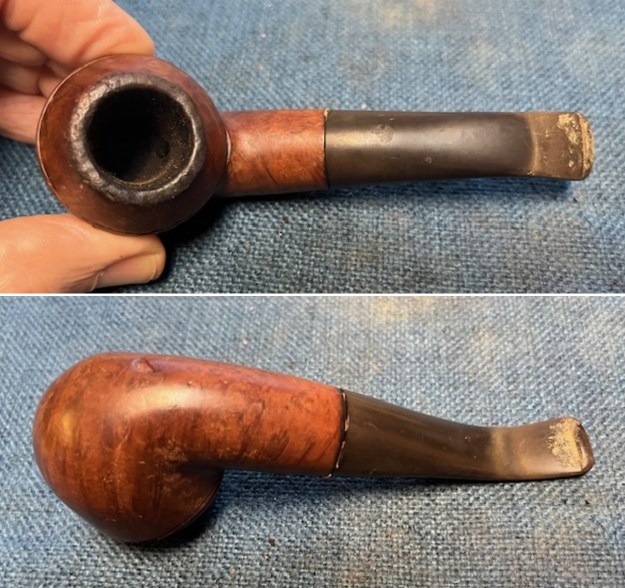
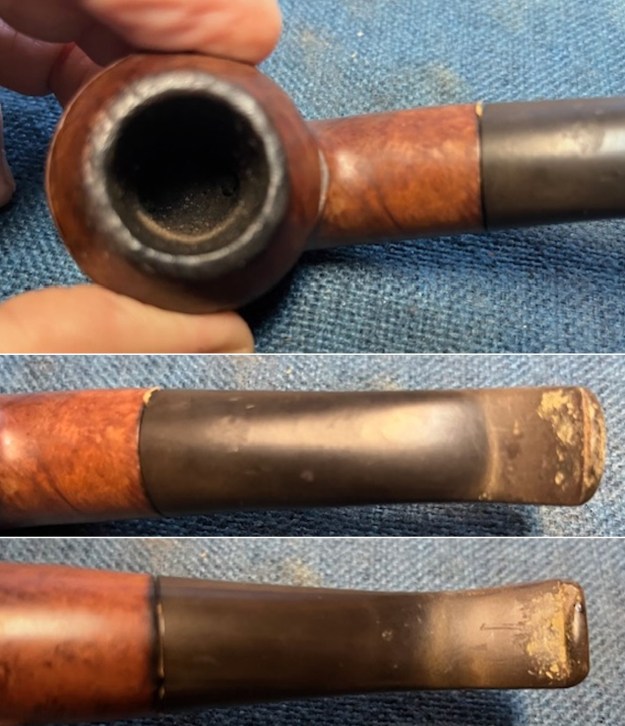
This richly stained Bent Billiard is a beautiful pipe. The grain around the bowl is highlighted by the stain and really stands out. Jeff picked the pipe up on 08/06/22 from an online auction in Manorville, New York, USA. He purchased it along with its brother, another Thorobred that was sandblast. I have restored it already and there are many similarities. Here is the link to the blog on the restoration (https://rebornpipes.com/2022/08/14/restoring-an-old-wdc-sandblast-thorobred-kerly-briar-broken-in/). It is stamped on the left side of the shank and reads WDC in a triangle followed by Thorobred [over] Broken In. The grain follows the flow of the carved briar. The finish is stained with rich colours – a mix of browns that give depth to its finish. It was filthy with dust and debris ground into the sides of the bowl. The rim top has a heavy lava overflow on the top and edges coming from a thick cake in the bowl. The tapered hard rubber stem has a red triangle WDC logo inset on the topside. It was lightly oxidized and calcified with tooth marks and chatter on both sides ahead of the button. Jeff took photos of the pipe before he started working on it. It really is a beauty. He took photos of the rim top and the stem to show the condition. You can see the thick cake in the bowl and overflow of lava on the rim top. The photos of the stem show the tooth marks and damage in the hard rubber on the top and underside ahead of the button. Jeff took photos of the finish around the bowl sides to show flow of the grain around the bowl. You can also see the dust and debris in the finish. Jeff took photos of the stamping on the left side of the shank to capture it. It was clear and readable as noted above. He also captured the red triangle WDC logo on the top of the stem.I turned to the blog, mentioned above on the restoration of the sandblast partner of this pipe and reread the history of the brand that I had gathered when working on it. I have included that information below for ease of reference.

I have included a quick history of the brand from Pipedia that is interesting and is helpful (https://pipedia.org/wiki/William_Demuth_Company).

William Demuth. (Wilhelm C. Demuth, 1835-1911), a native of Germany, entered the United States at the age of 16 as a penniless immigrant. After a series of odd jobs he found work as a clerk in the import business of a tobacco tradesman in New York City. In 1862 William established his own company. The William Demuth Company specialized in pipes, smoker’s requisites, cigar-store figures, canes and other carved objects.
The Demuth Company is probably well known for the famous trademark, WDC in an inverted equilateral triangle. William commissioned the figurative meerschaum Presidential series, 29 precision-carved likenesses of John Adams, the second president of the United States (1797-1801) to Herbert Hoover, the 30th president (1929-1933), and “Columbus Landing in America,” a 32-inch-long centennial meerschaum masterpiece that took two years to complete and was exhibited at the World’s Columbian Exposition in Chicago in 1893…

…In 1897 Ferdinand Feuerbach joined the Demuth company and by 1903 had become the production manager. Feuerbach is credited with developing Demuth’s popular Royal Demuth and Hesson Guard Milano pipelines. He left in 1919, when Sam Frank Sr. needed an experienced pipe man to run his pipe factory, located at 168 Southern Blvd., in the Bronx. Feuerbach and Frank had been close friends since Frank started his own business in 1900 and was closely associated with the sales staff of WDC, selling their line of pipes…
In early 1937, the City of New York notified S.M. Frank & Co. of their intent to take by eminent domain, part of the land on which the companies pipe factory was located. This was being done to widen two of the adjacent streets. As a result of this, Frank entered into negotiations to purchase the Wm. Demuth Co.’s pipe factory in the Richmond Hill section of Queens. It was agreed upon that Demuth would become a subsidiary of S.M. Frank and all pipe production of the two companies would be moved to DeMuth factory. New Corporate offices were located at 133 Fifth Avenue, NYC.
Demuth pipes continued to be made at the Richmond Hill plant till December 31. 1972. Then the Wm. Demuth Company met its official end as a subsidiary company by liquidation. Demuth’s mainstay pipe, the Wellington continued to be offered in the S.M. Frank catalog until 1976. In the mid-80’s, the Wellington even made a brief return as a direct to the consumer offer.

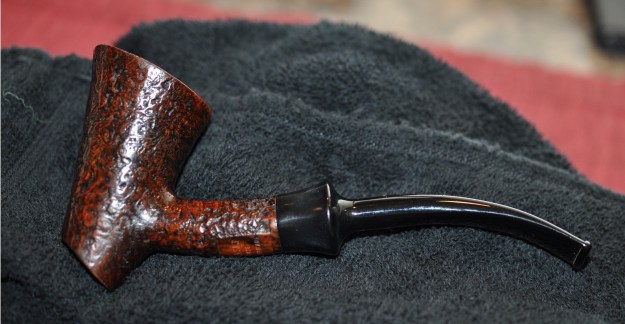
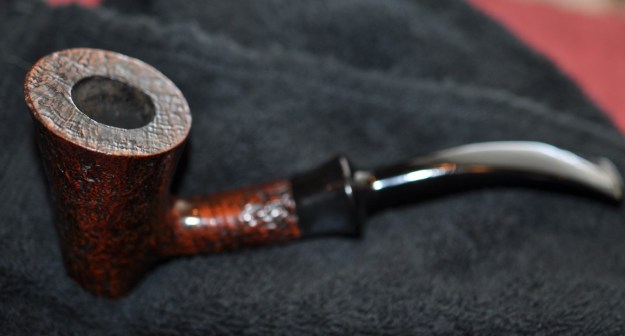
I also have included a photo of a Billiard with the same stamping as the pipe I working on though on a sandblast or Kerly Briar. The rest of the stamping on the pipe is the same as what is on mine.When I received it from Jeff it did not look like the same pipe. It was clean and the finish had life. He reamed it with a PipNet pipe reamer and got rid of the cake. He cleaned up the reaming with a Savinelli Fitsall Pipe Knife so that we could see the walls of the bowl and assess for damage. It was in good condition. He cleaned the internals of the shank and stem with cotton swabs, pipe cleaners and alcohol. He scrubbed the exterior with undiluted Murphy’s Oil Soap and a tooth brush. He rinsed the pipe under warm water. He dried it off with a cloth and then let it air dry. He scrubbed the stem with Soft Scrub and soaked it in Briarville’s Stem Deoxidizer. He rinsed it with warm water and dried it off with a soft cloth. It came out looking very good. The finish on the bowl and the rim top cleaned up nicely. I took pictures of the pipe to show how it looked when I brought it to the table. I took some photos of the rim top and stem to show the condition of them both when the pipe arrived. The rim top had some damage to the inner edge of the bowl and some marks on the top surface. Overall it looked very good. The oxidation on the stem had come off very well and the tooth marks chatter in the surface of the stem were visible.  I took a photo of the stamping on the underside of the shank. It was clear and readable as noted above. I removed the stem from the shank and took a photo of the appearance of the parts. It is a beauty.I started my work on the pipe by addressing the issues on the top and the inner edge of the rim. I used a folded piece of 220 grit sandpaper to smooth out the roughness. It looked much better at this point in the process.I sanded the briar rim top and the sides of the bowl with 320-3500 grit sanding pads. I wiped the bowl down with a damp cloth after each pad. By the time I finished with the 3500 grit pad the briar had taken on a rich glow. I polished the briar bowl and shank with micromesh sanding pads – dry sanding with 1500-12000 grit sanding pads. I wiped it down with a damp cloth after each pad to remove the debris. The bowl took on a rich glow. I rubbed the bowl down with Before & After Restoration Balm. I worked it into the surface of the briar with my fingertips to clean, enliven and protect it. I let the balm sit for 10 minutes and then buffed with a cotton cloth to raise the shine. Mark Hoover’s Balm is a product that I have come to appreciate and one I use on every pipe I have been working on. I set the bowl aside and turned my attention to the stem. I “painted” the surface of the stem with the flame of a Bic lighter to lift the tooth marks and scratches. The heat did little to raise the marks at all. I wonder if hard rubber is unlike vulcanite in terms of memory. I used black super glue to fill in the deep tooth marks in the surface. I flattened out the repairs with small files. I sanded the stem with 220 grit sandpaper to smooth out the repairs and begin to blend them into the surface. I sanded the stem with 320-3500 grit sanding pads to further blend them in and smooth out the surface of the stem.I polished the stem with micromesh sanding pads – dry sanding with 1500-12000 grit pads. I wiped the stem down after each pad with some Obsidian Oil. I finished hand polishing it with Before & After Pipe Stem Polish – Fine and Extra Fine. I rubbed it down with another coat of Obsidian Oil and let it dry. The stem really was beginning to look very good. This is a beautiful WDC Thorobred Broken In Bent Billiard with a thick hard rubber, black stem. It has a great look and feel. The flat bottom makes it a sitter that is well balanced. The shape fits well in the hand with the curve of the bowl and bend of the shank making a great pipe to hold. I polished stem with Blue Diamond polish on the buffing wheel. I gave the sandblast bowl and plateau on the rim top and shank end multiple coats of Conservator’s Wax. I gave the stem multiple coats of carnauba wax. I buffed the pipe with a clean buffing pad to raise the shine. I hand buffed it with a microfiber cloth to deepen the shine. The pipe polished up pretty nicely. The rich combination of black and dark brown stains gave the sandblast a sense of depth. The pipe took on life with the buffing. The rich colour of the briar works well with the polished stem. Have a look at it with the photos below. The shape, finish and flow of the pipe and stem are very well done. The dimensions are Length: 5 inches, Height: 1 ½ inches, Outside diameter of the bowl: 1 1/8 inch, Chamber diameter: ¾ of an inch. The weight of the pipe is 42 grams/ 1.55 ounces. This American Made Bent Billiard is a real beauty. Thanks for walking through the restoration with me as I worked over another beautiful pipe. This one will be going on the rebornpipes store in the American Pipe Makers Section shortly if you would like to add it to your collection. Thanks for your time.