Tag Archives: fitting a stem

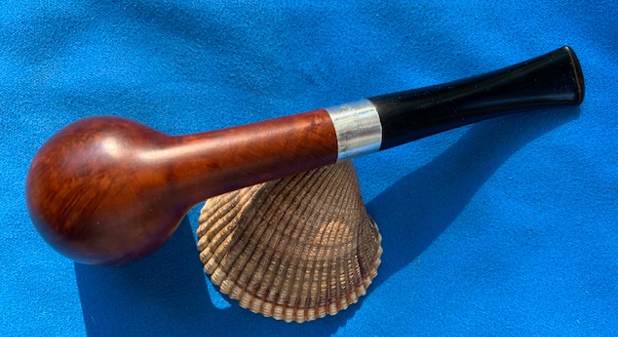
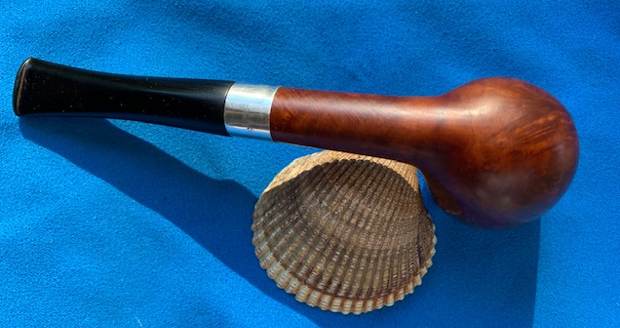
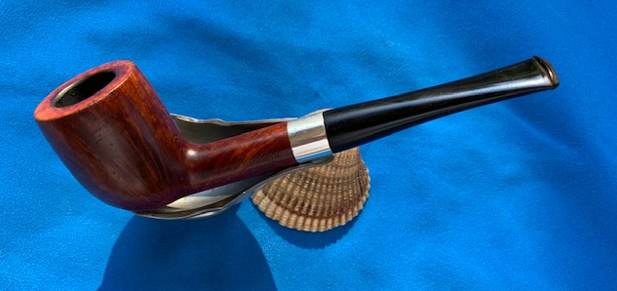
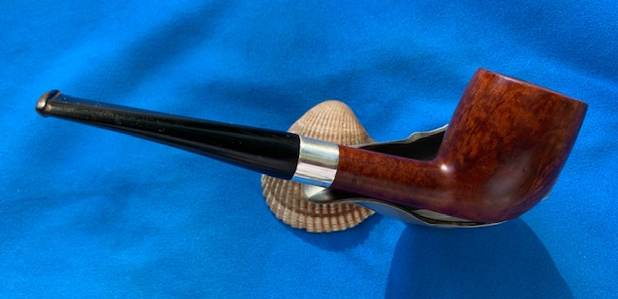
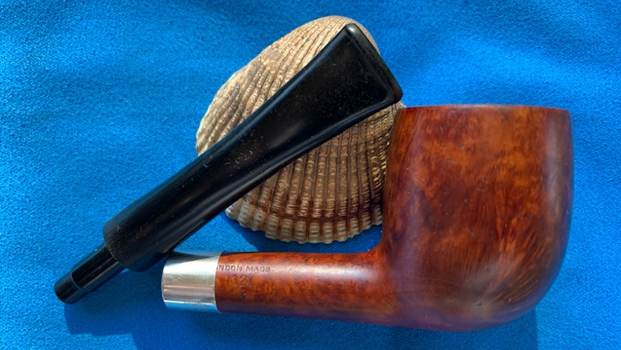
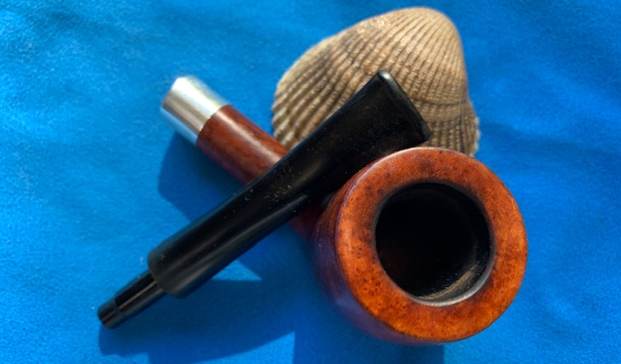
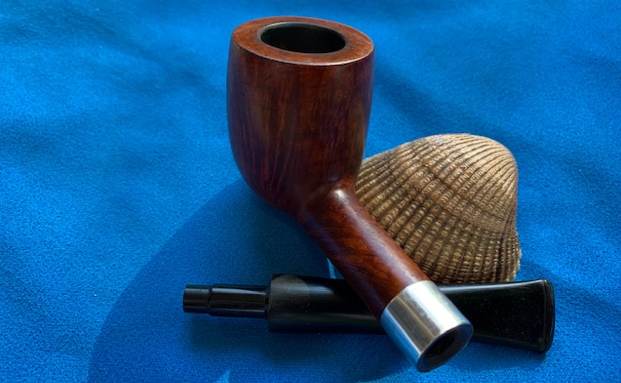
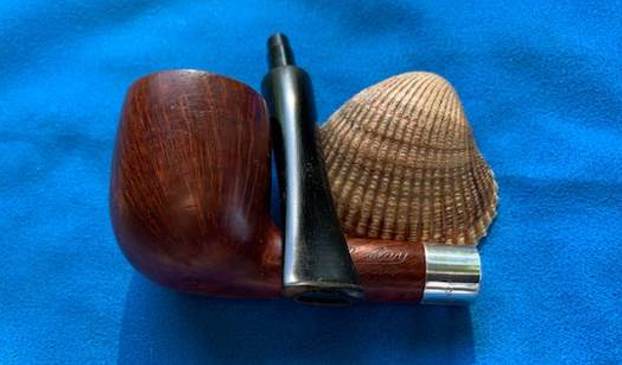
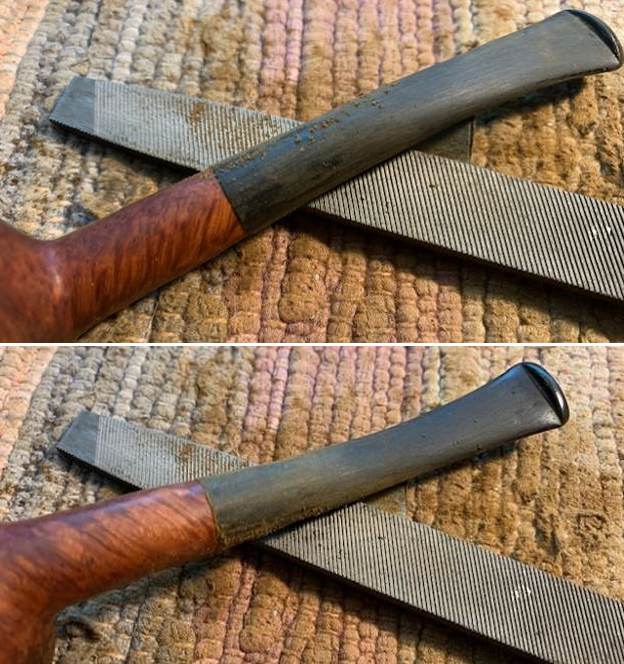
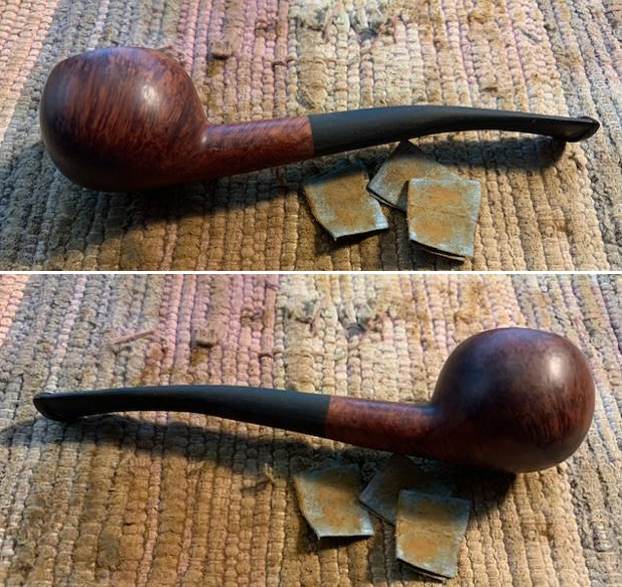
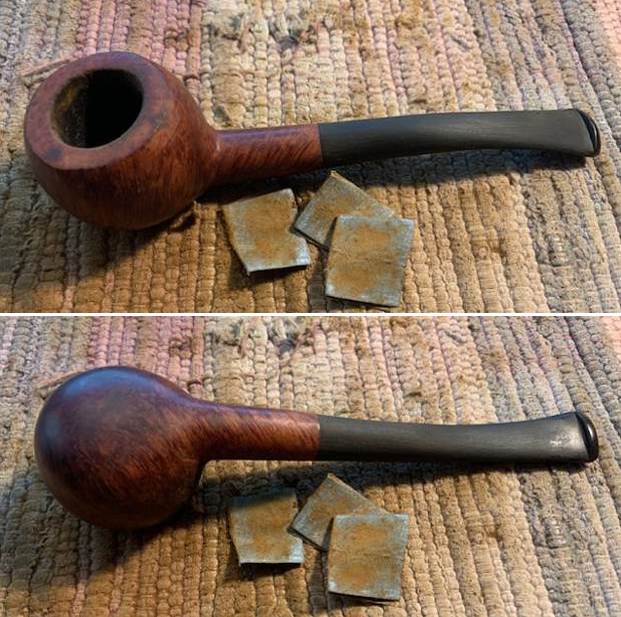
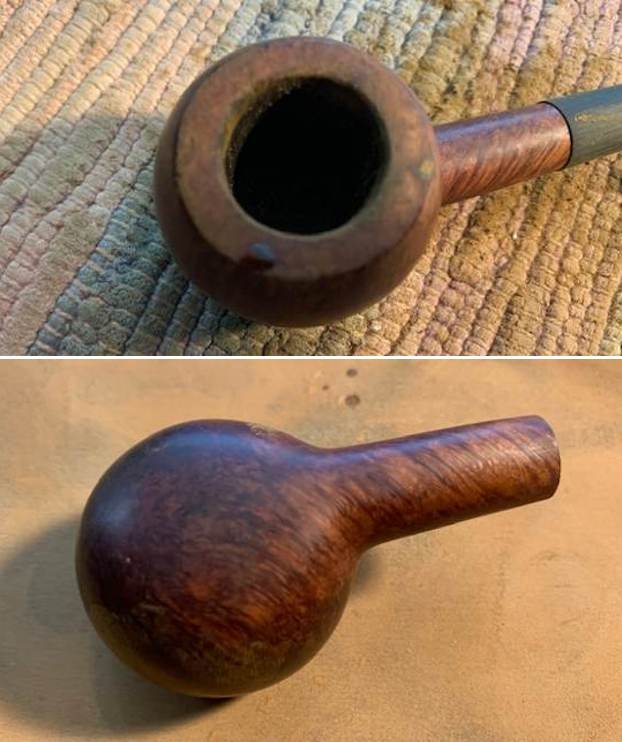
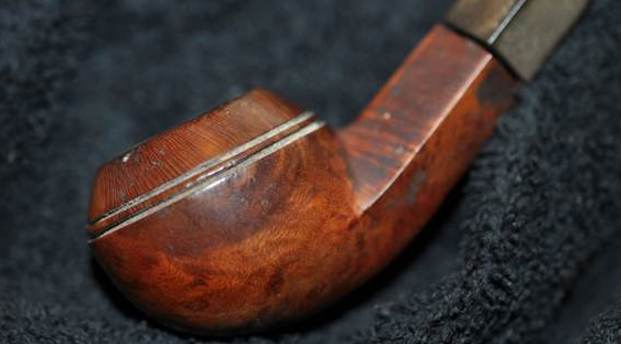
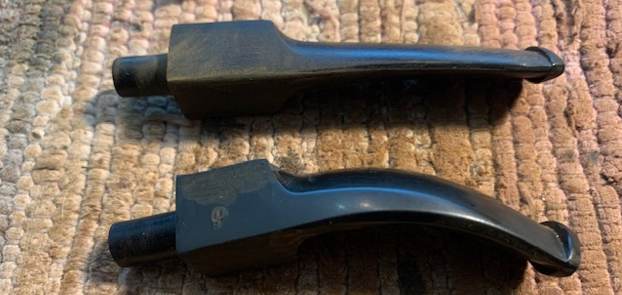
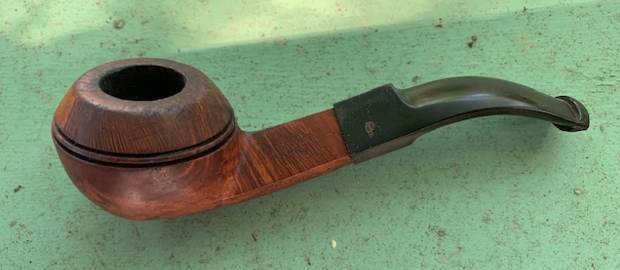
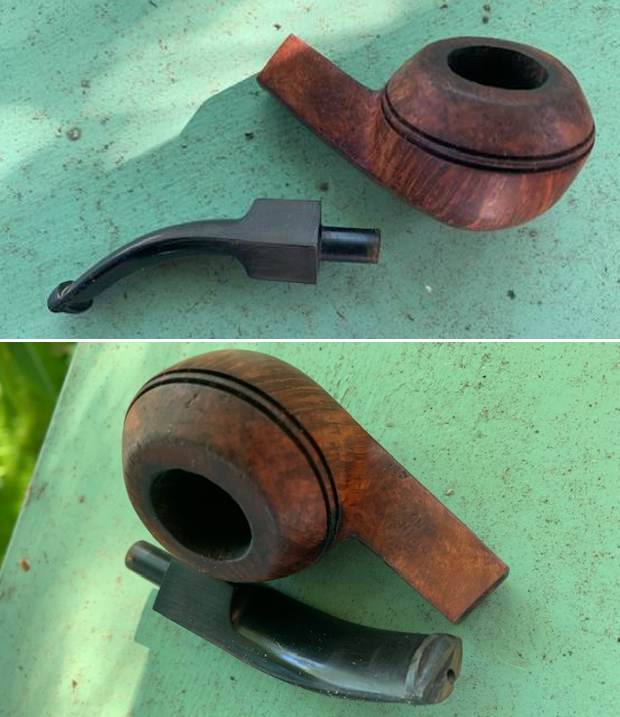
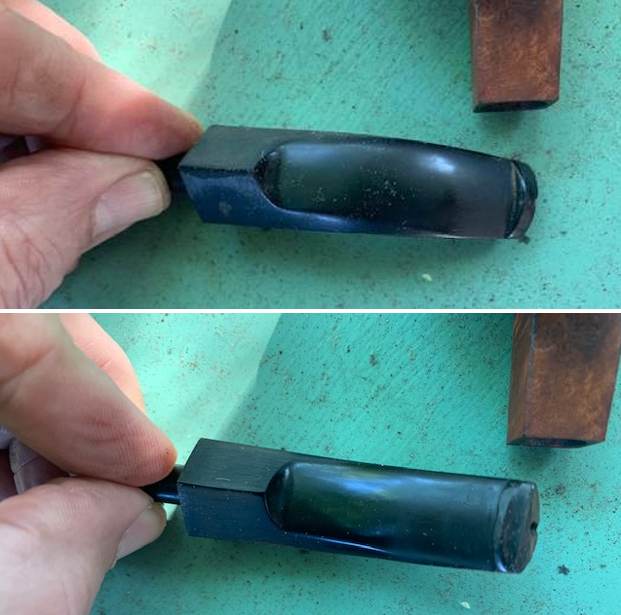
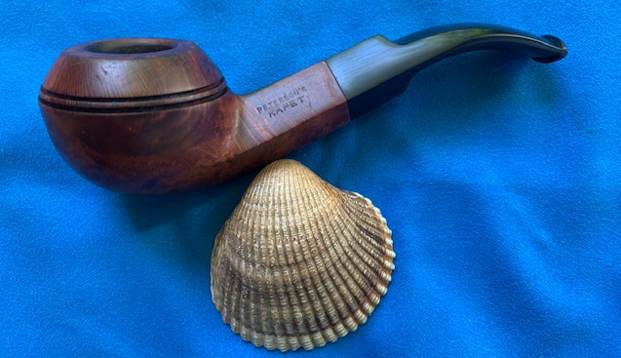
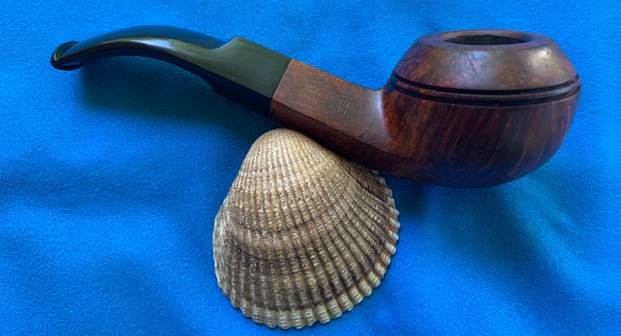
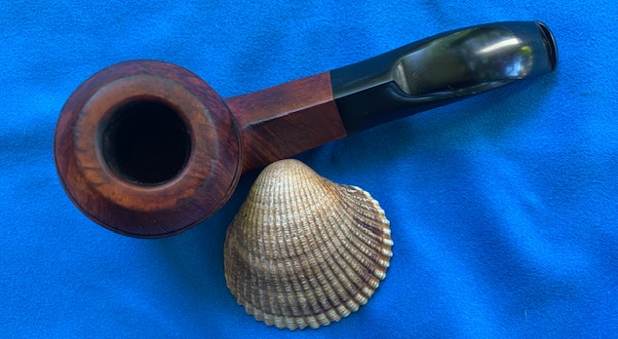
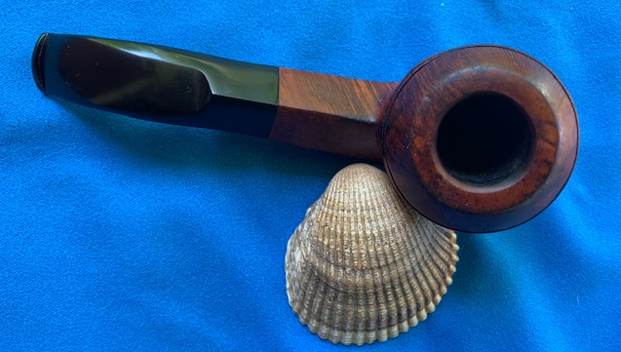
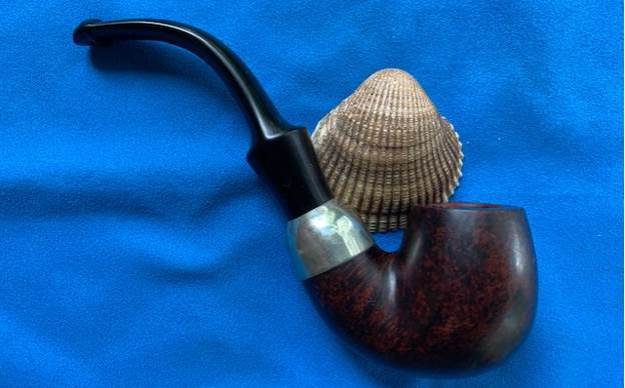
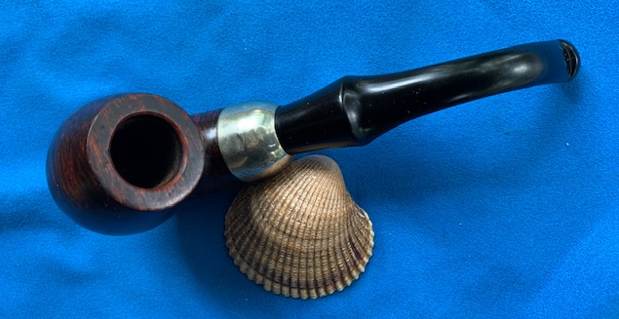
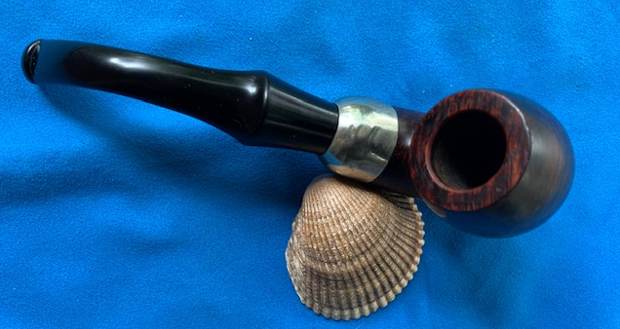
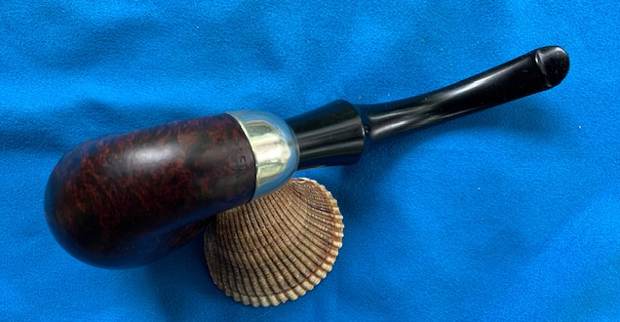
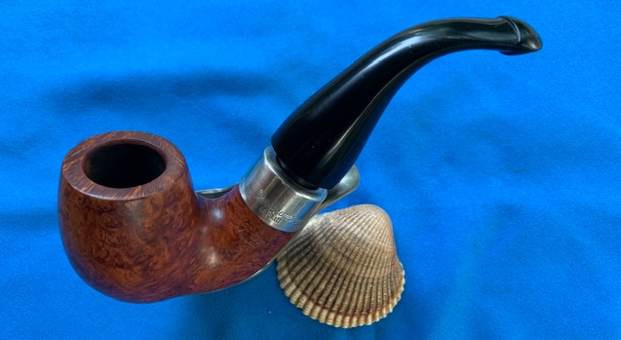
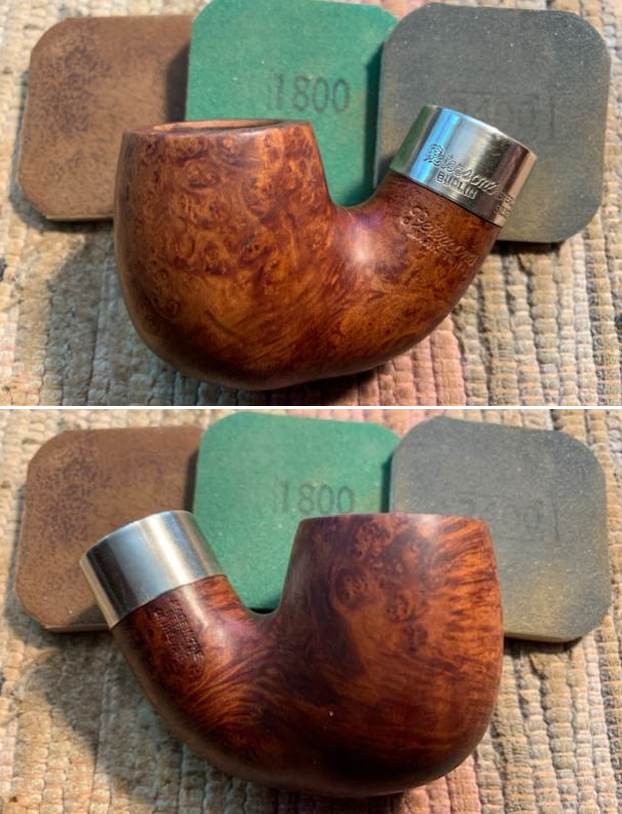
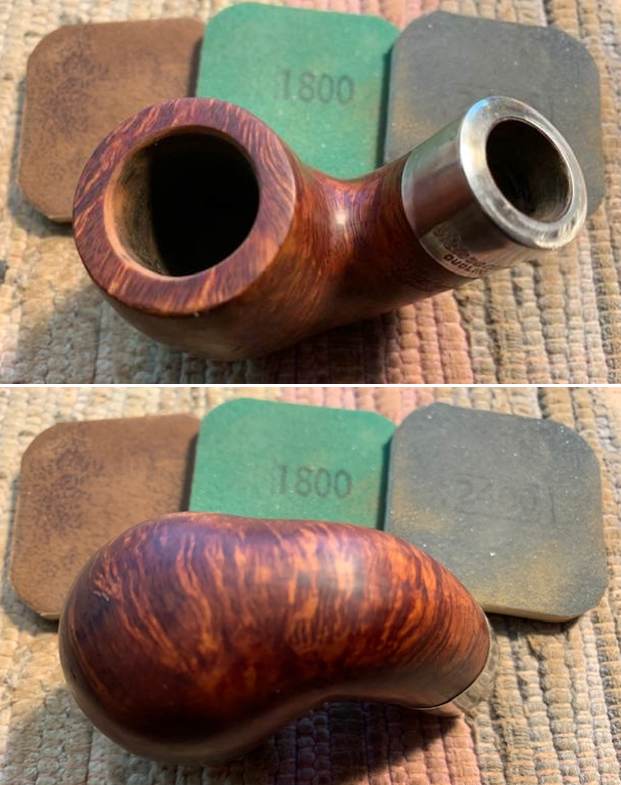
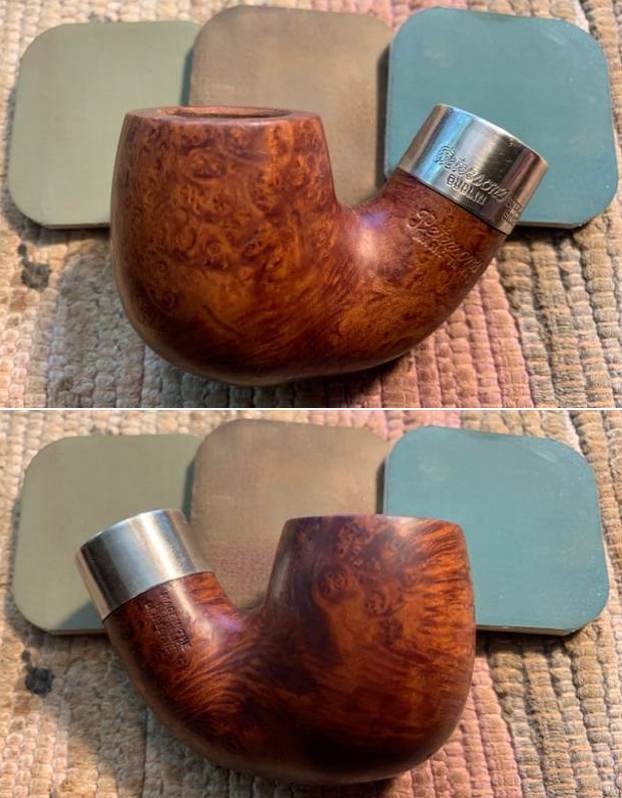
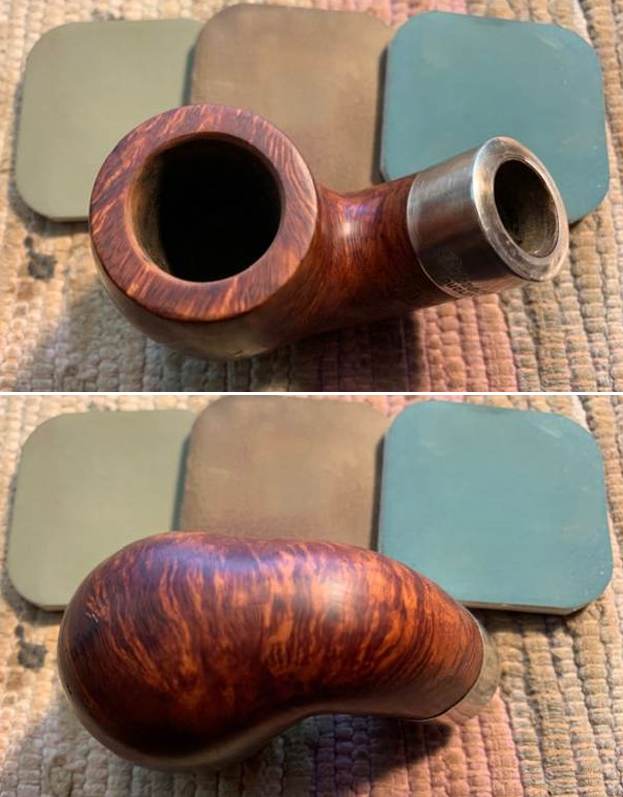
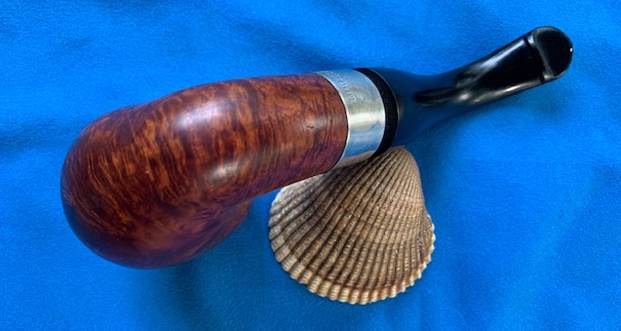
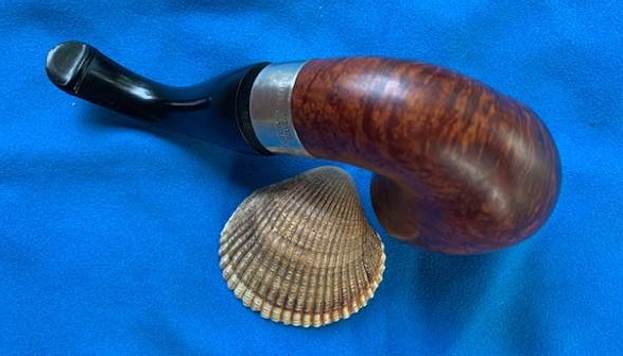
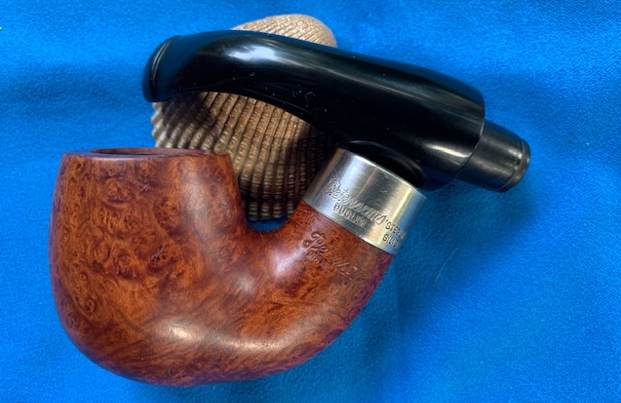
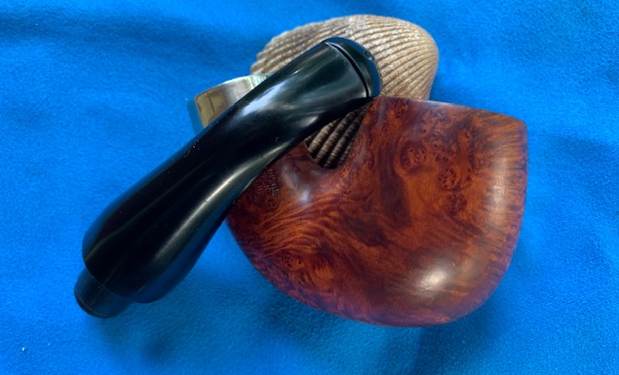
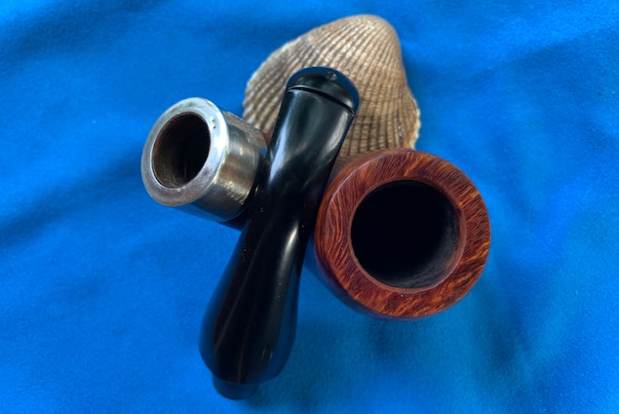
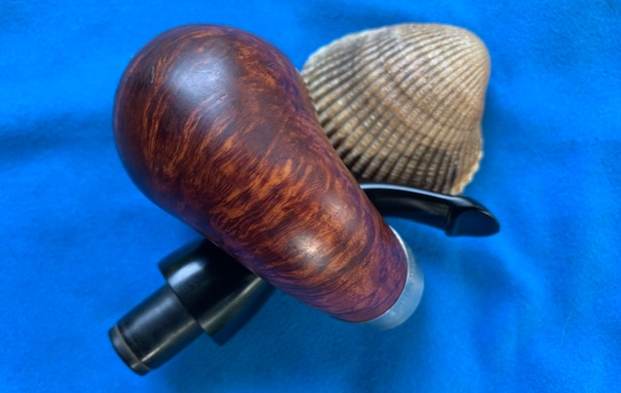
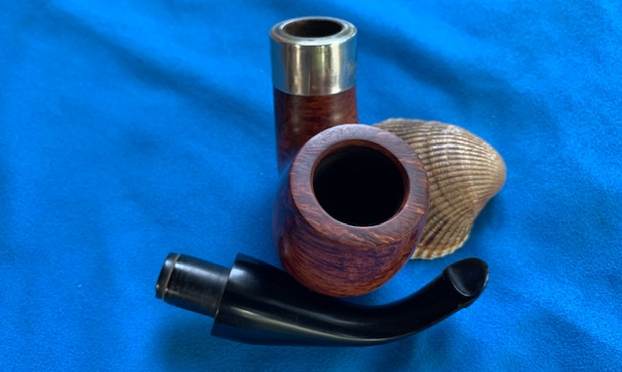
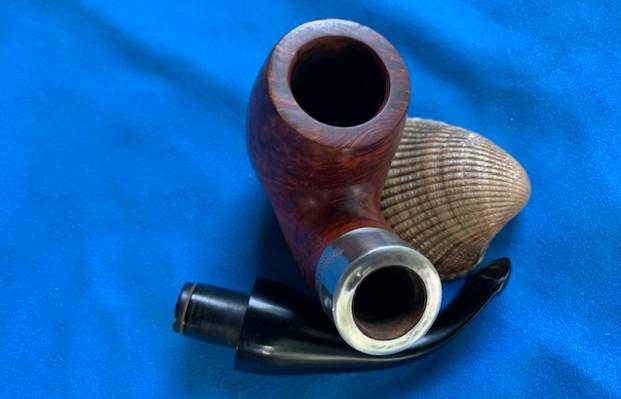
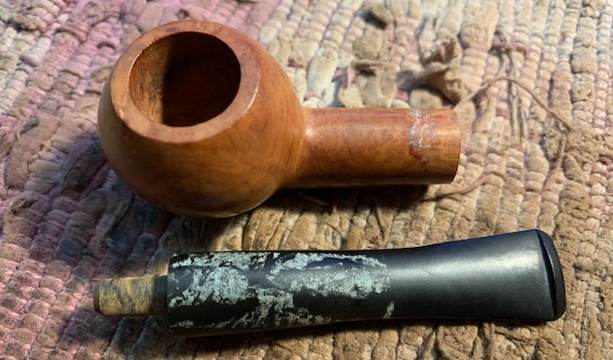
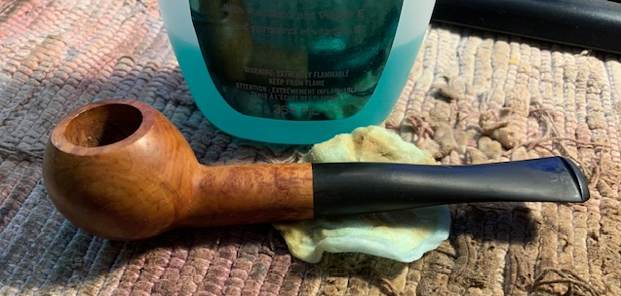
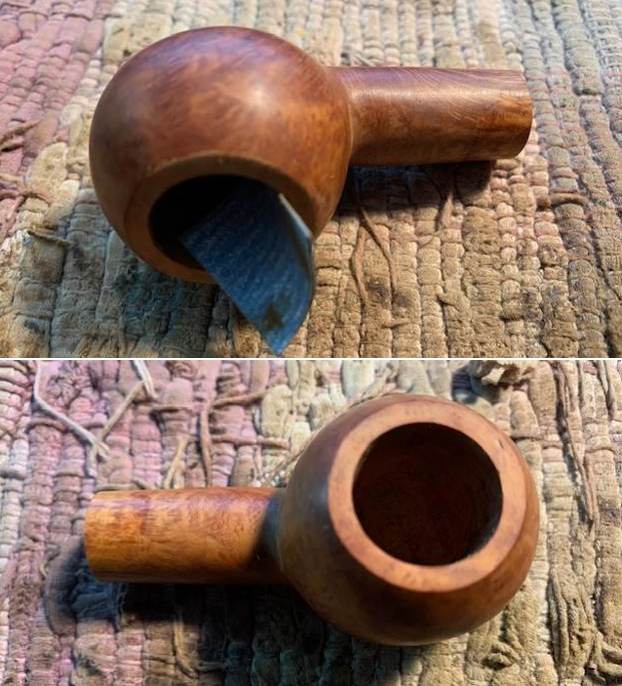
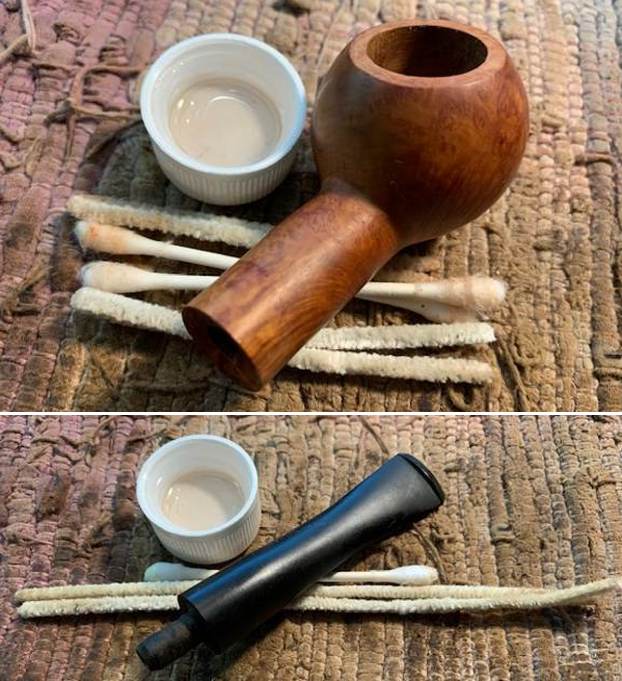
Restoring and Restemming a Made in Ireland Peterson’s Dublin & London 36 Liverpool


Blog by Steve Laug

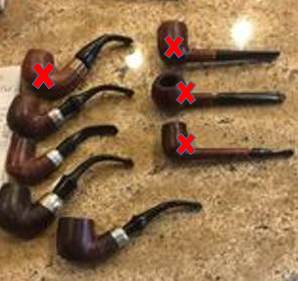
Jeff and I often purchase pipe bowl/stummels of brands that we like and want to restore. These have included a lot of different bowls. If you have followed us for long you know that some of these have included Peterson’s, Dunhill’s, and a wide range of Danish and English pipes. Awhile ago Jeff and I were sorting through the bowls in our collection and pulled out eight Peterson’s bowls that were dirty and stemless. A friend referred us to a contact named Silas Walls, of Walls Pipe Repair in Wallace, Idaho, USA as he seems to have a good supply of original Peterson’s stems. Our friend has had him fit stems for some of his Petes and was very happy with the work. We made contact with him and sent him eight bowls for restemming.

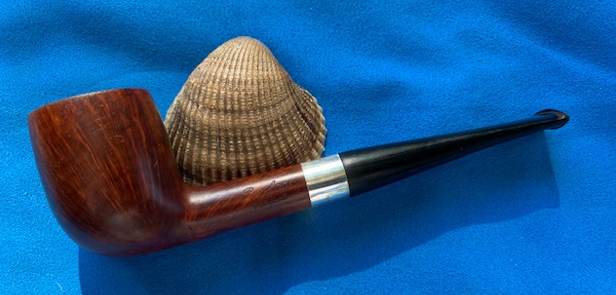
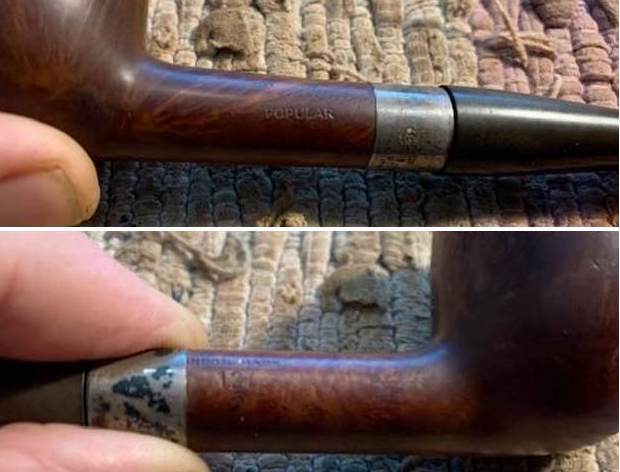
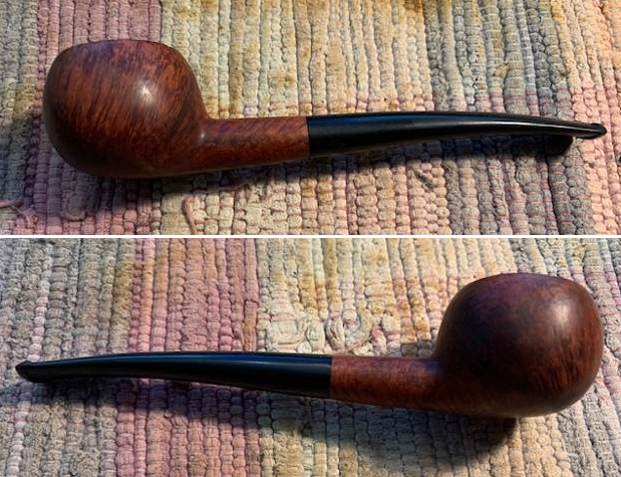
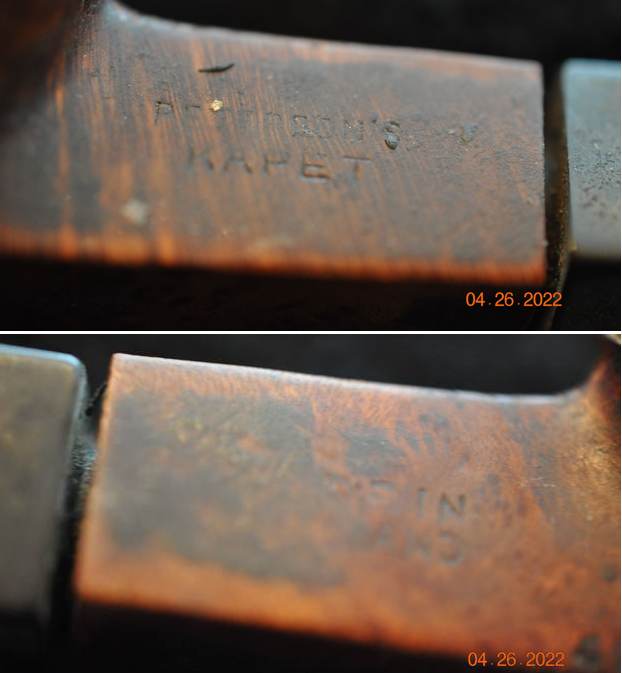
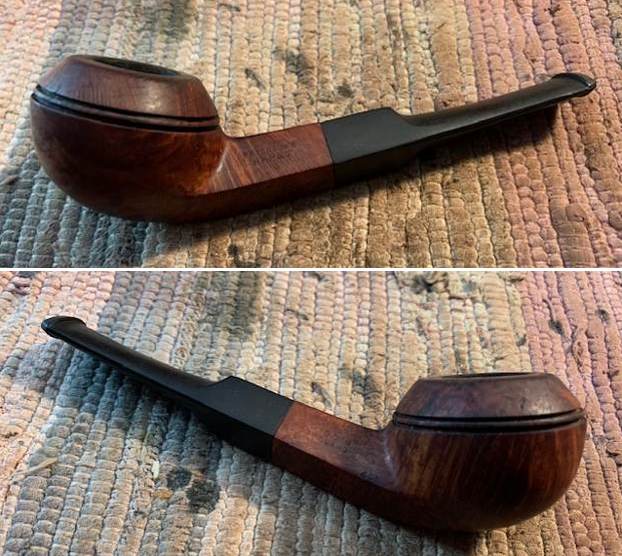
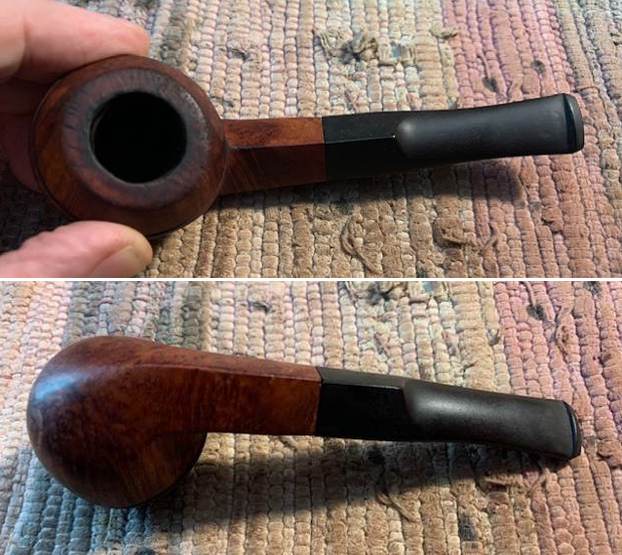
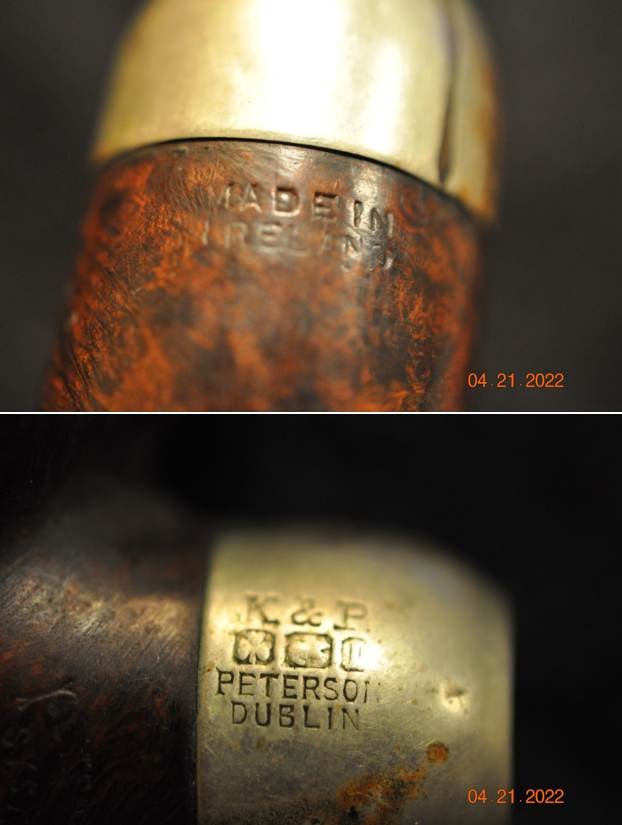
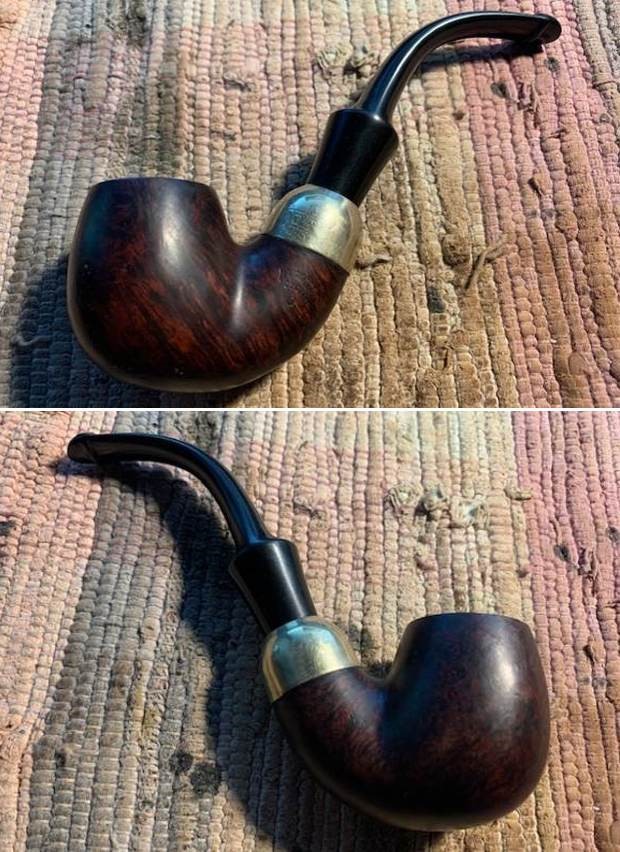
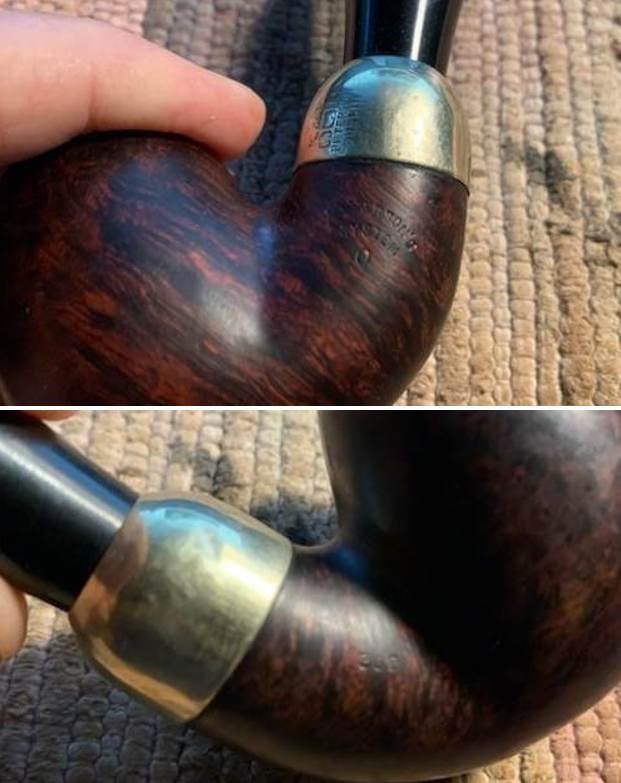
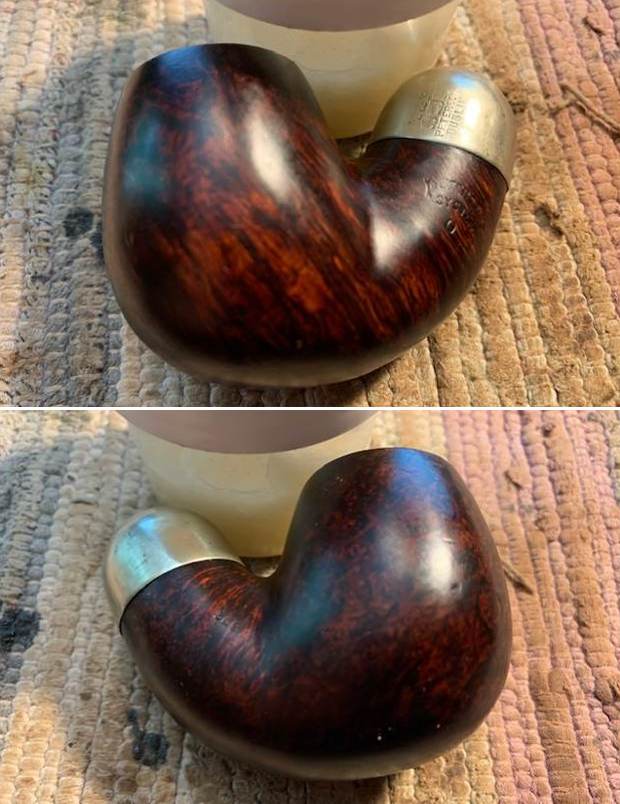
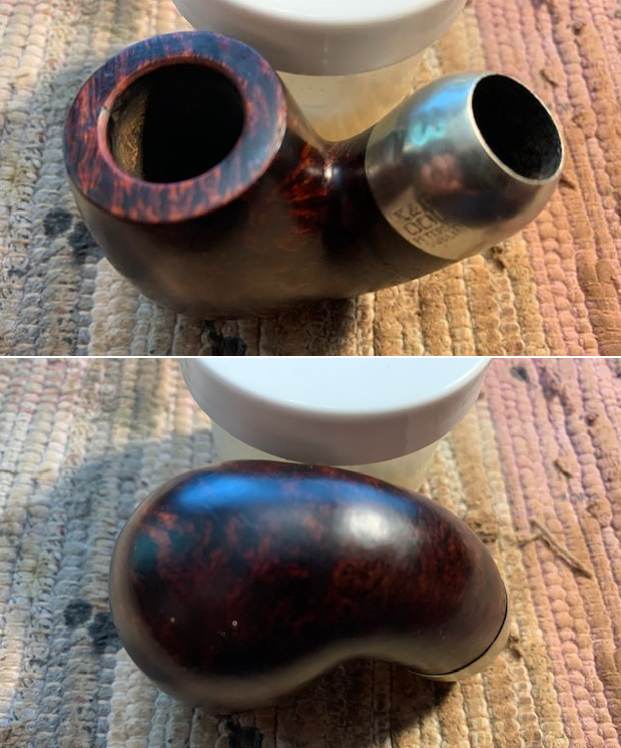
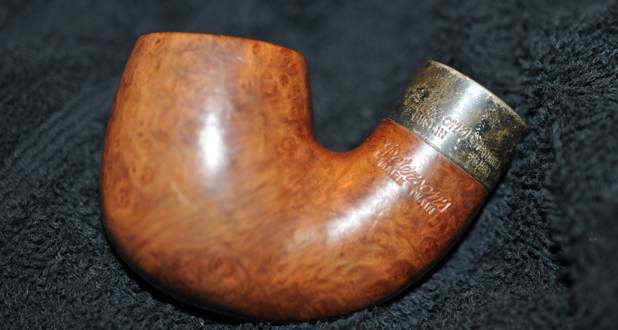
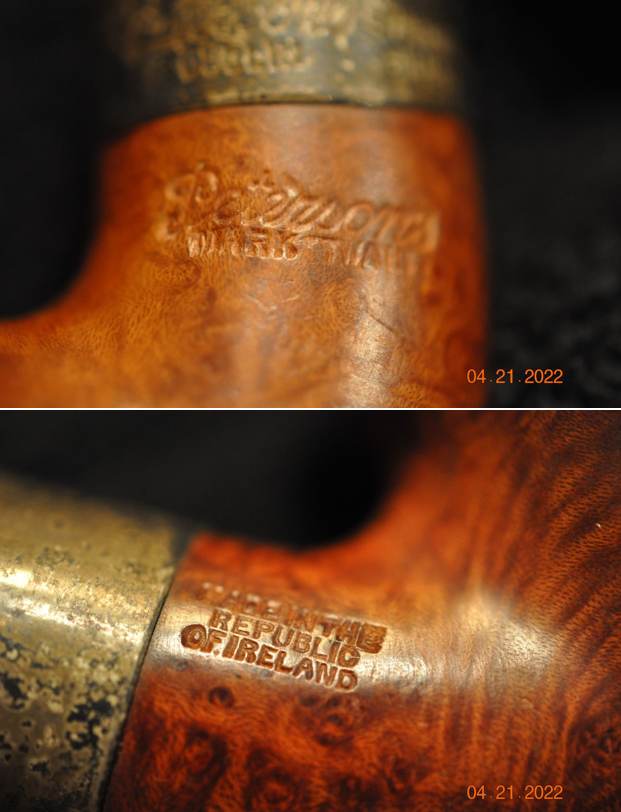
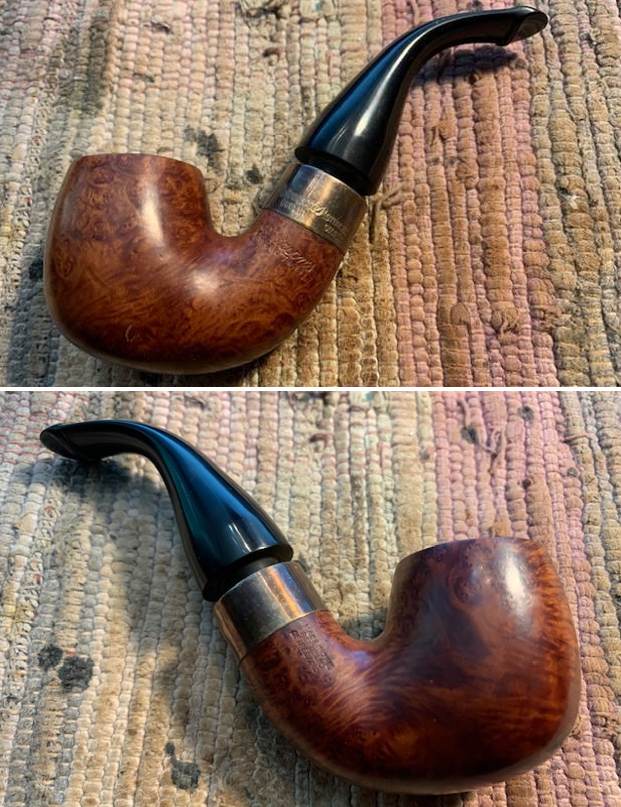
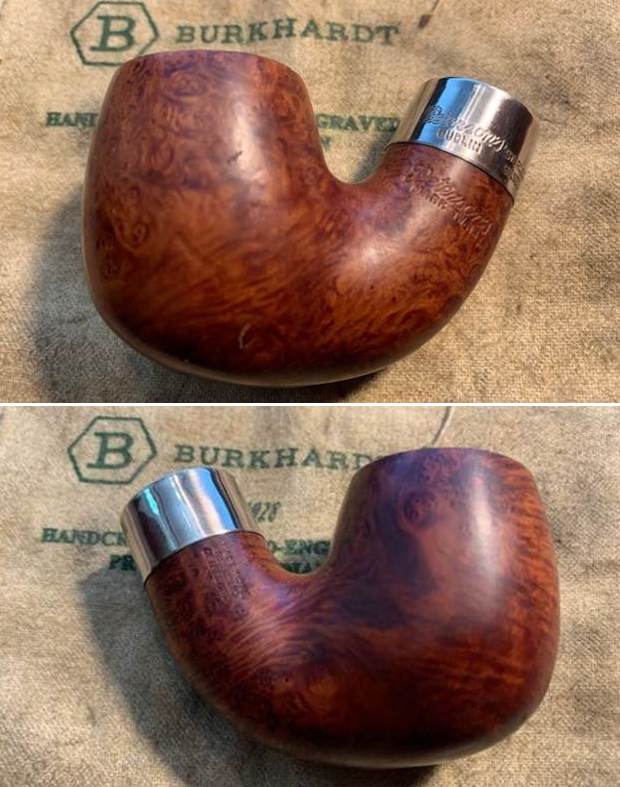
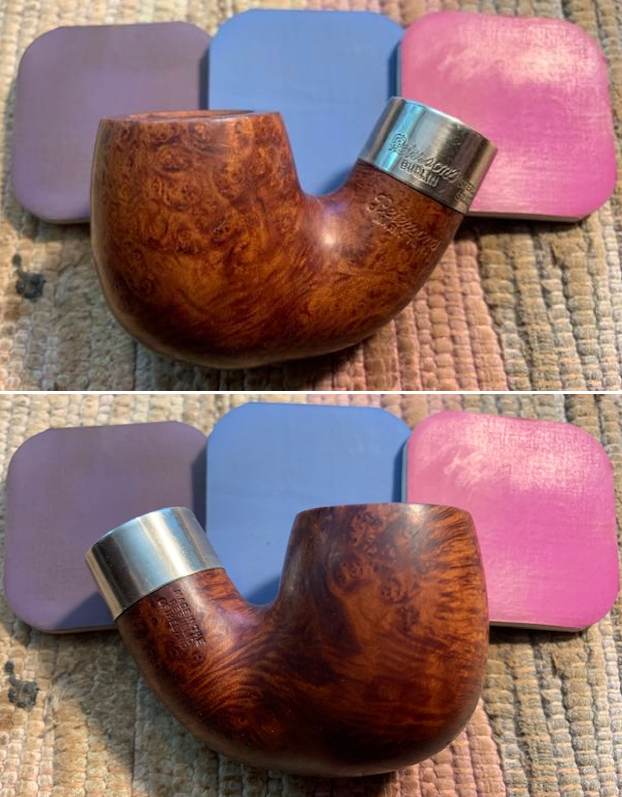
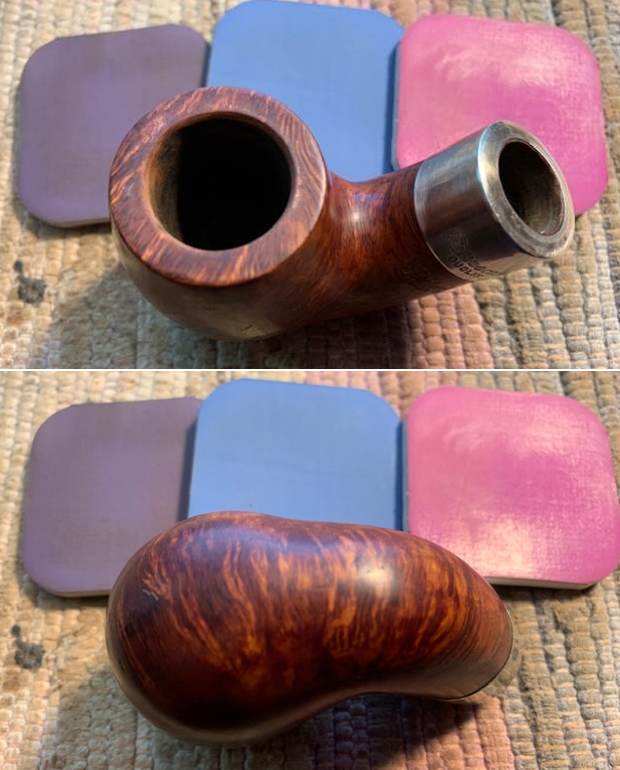
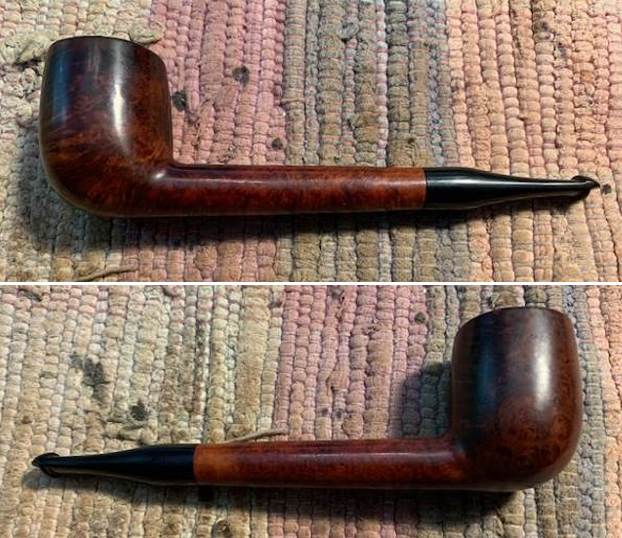
This third of those pipes that we cleaned up before mailing them out was a Petite, Pencil Shank Liverpool shaped bowl that we purchased on 05/22/21 from Facebook Marketplace. It came from Fruitland, Idaho. It is stamped on the left side of the shank and reads Peterson’s [over] Dublin & London. On the right side of the shank there is a number 36 stamped next to the bowl/shank junction followed by (faint stamp) Made in [over] Ireland stamp in two lines mid shank. The bowl was dirty with lava on the rim top and a thick cake in the bowl.  There was some damage to the inner edge and top with the bowl slightly out of round. The finish had a lot of grime ground into the surface of the finish but some nice grain peeked through. Jeff took photos of the bowl before he did his cleanup work in preparation for sending them to Walls Pipe Repair for their new stem. The images were corrupted on Jeff’s camera so we have no photos of the pipe before his clean up work.

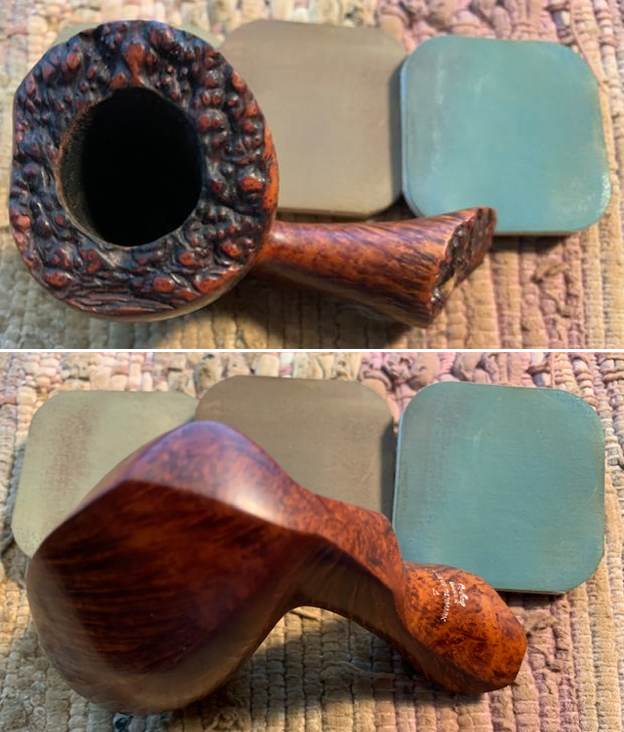
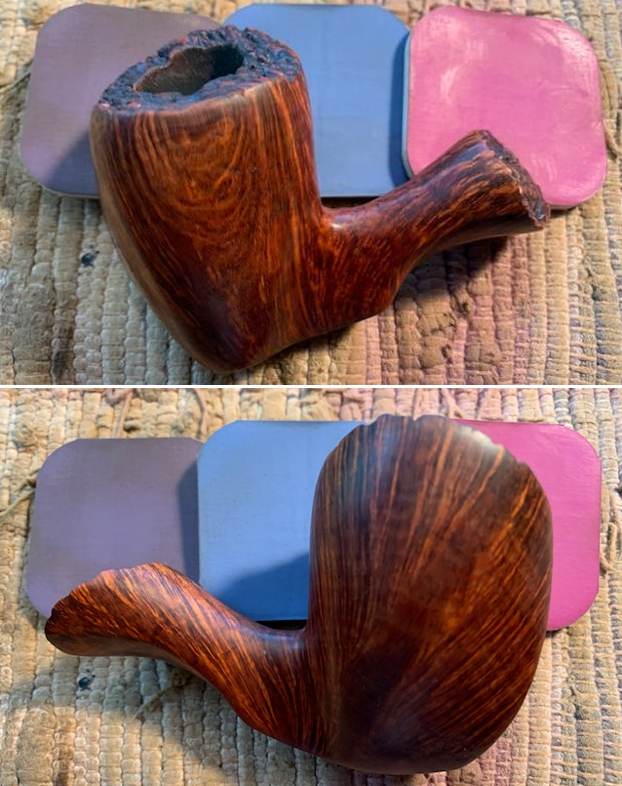
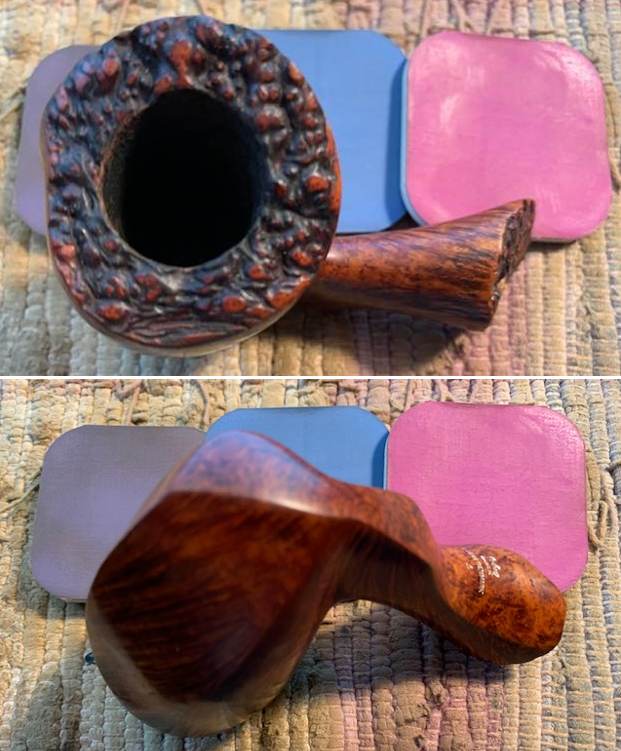
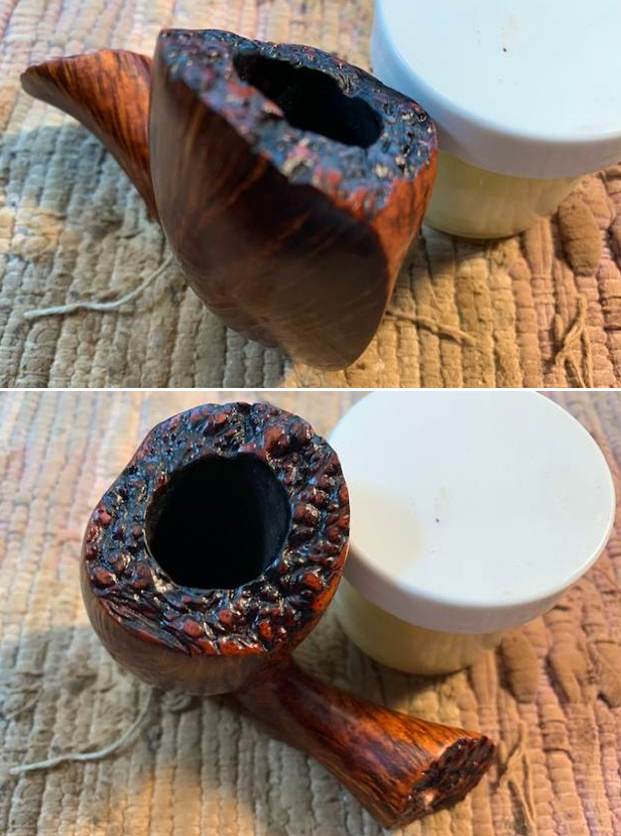
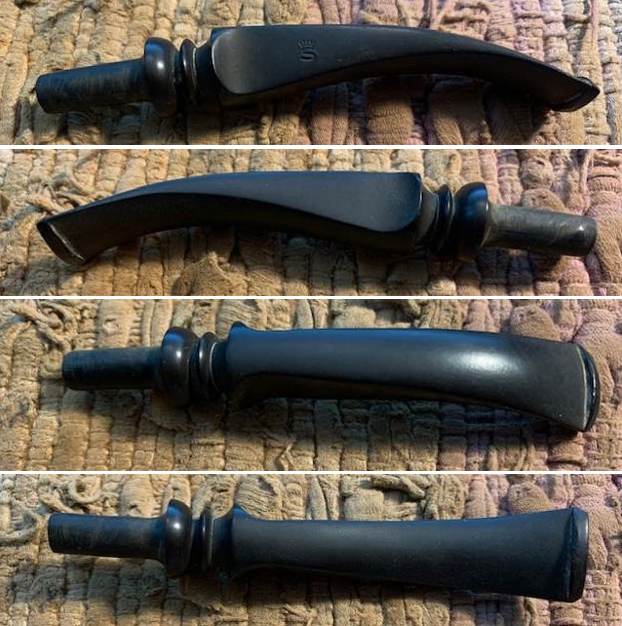
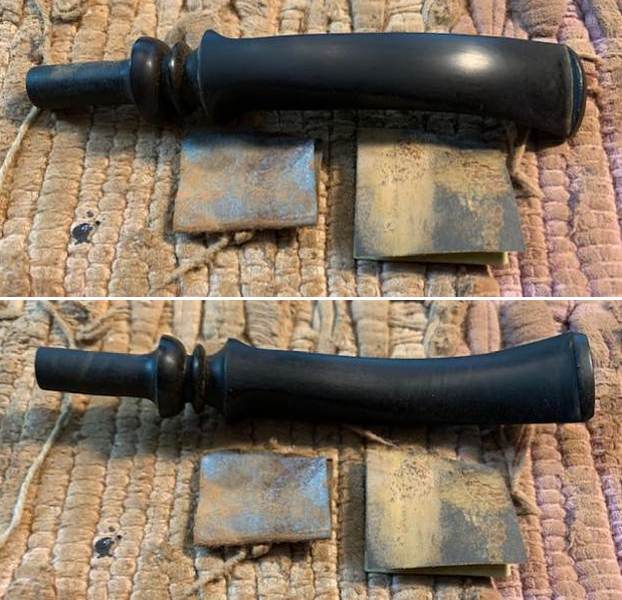
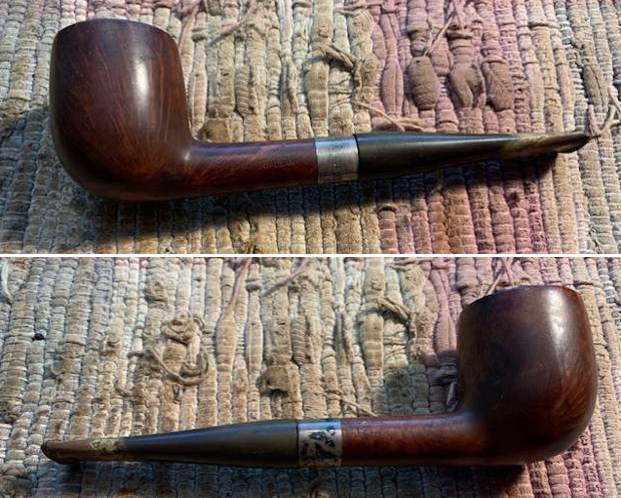
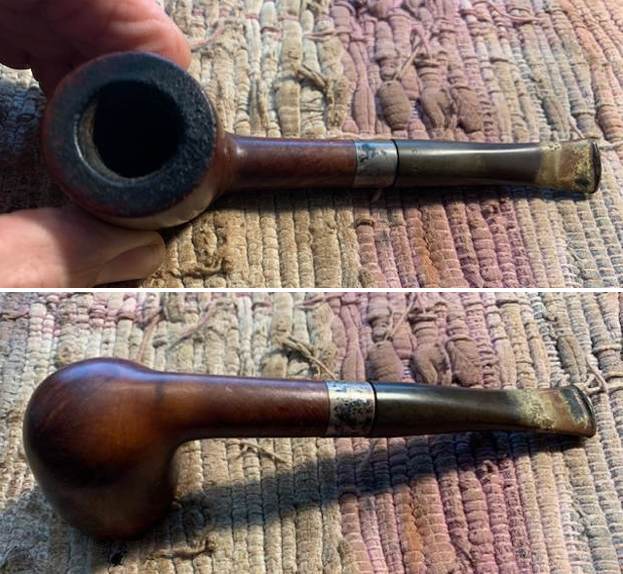
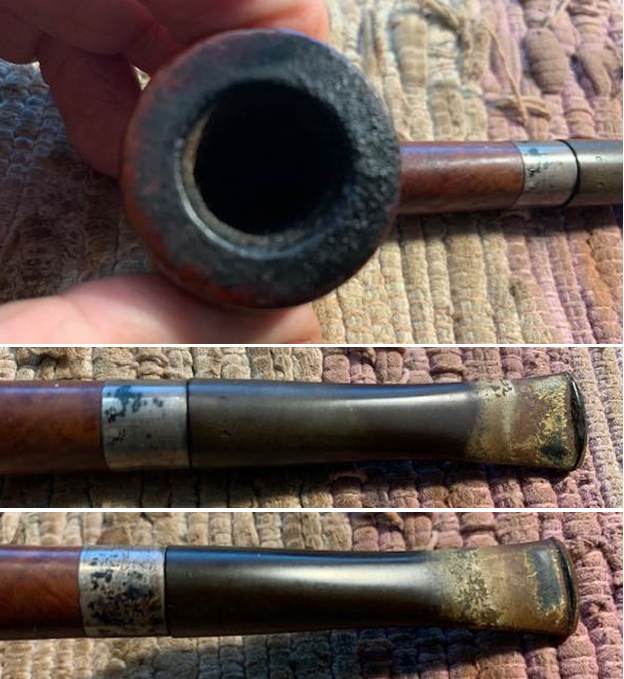
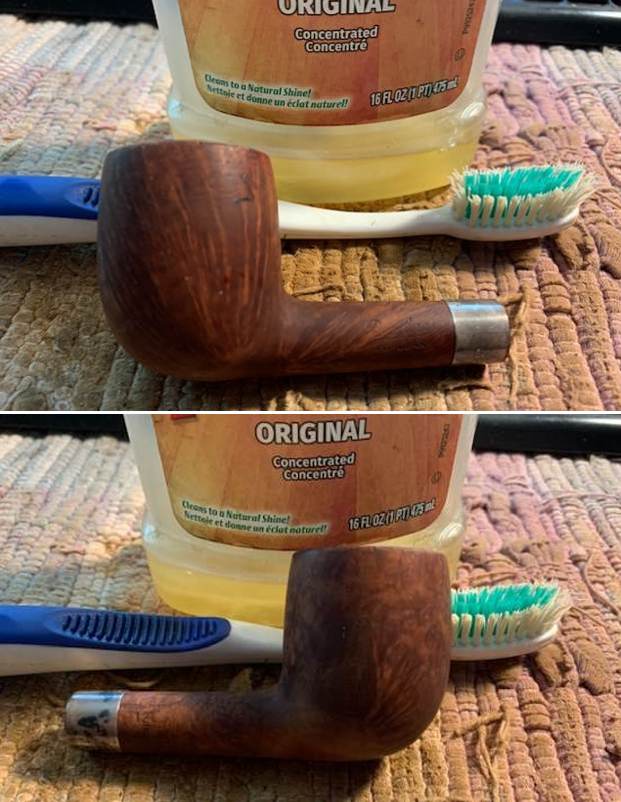
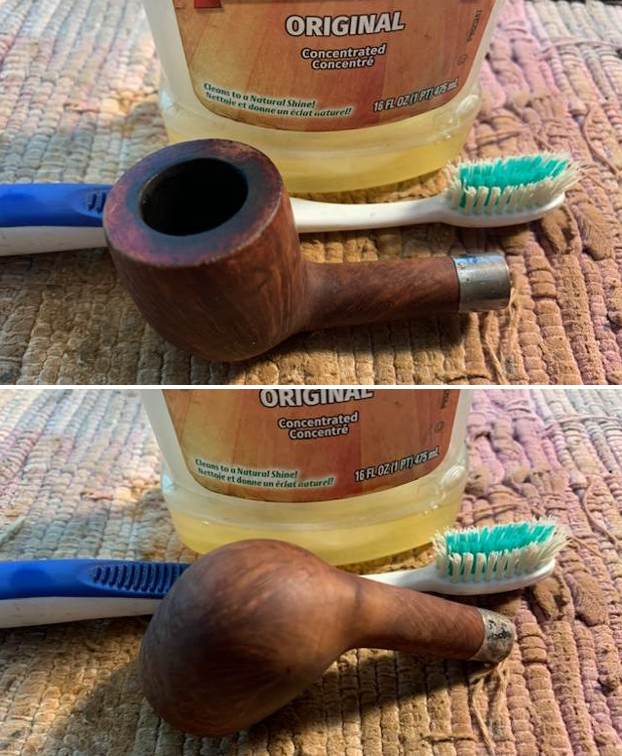
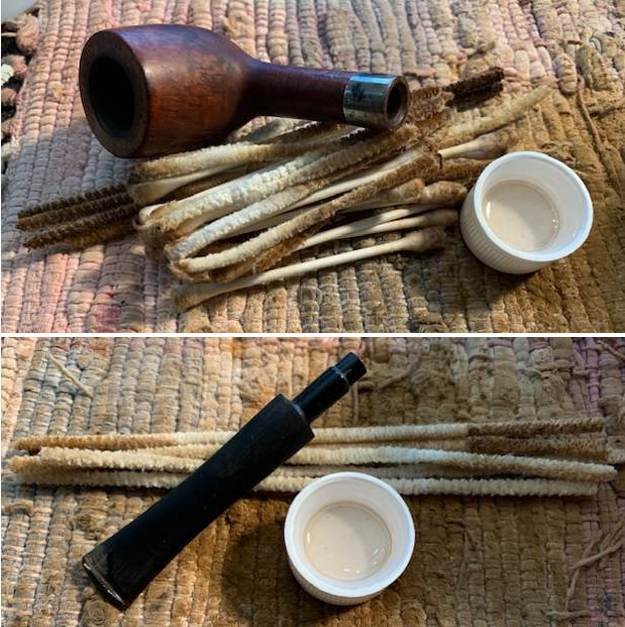
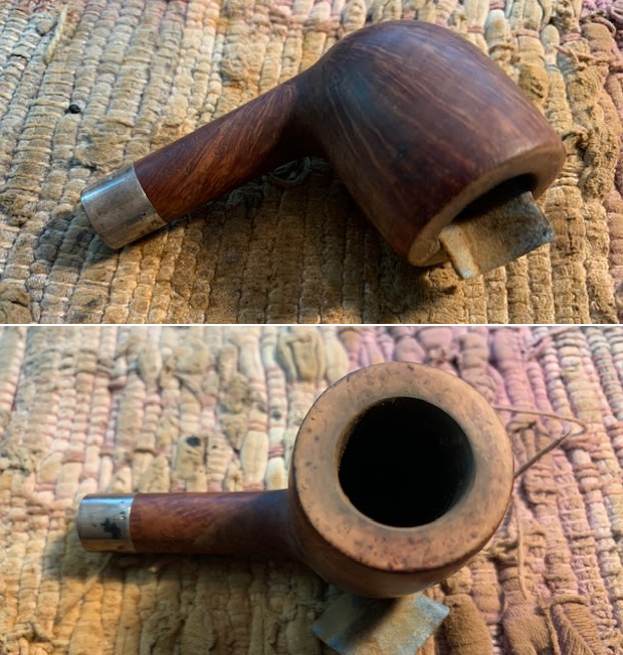
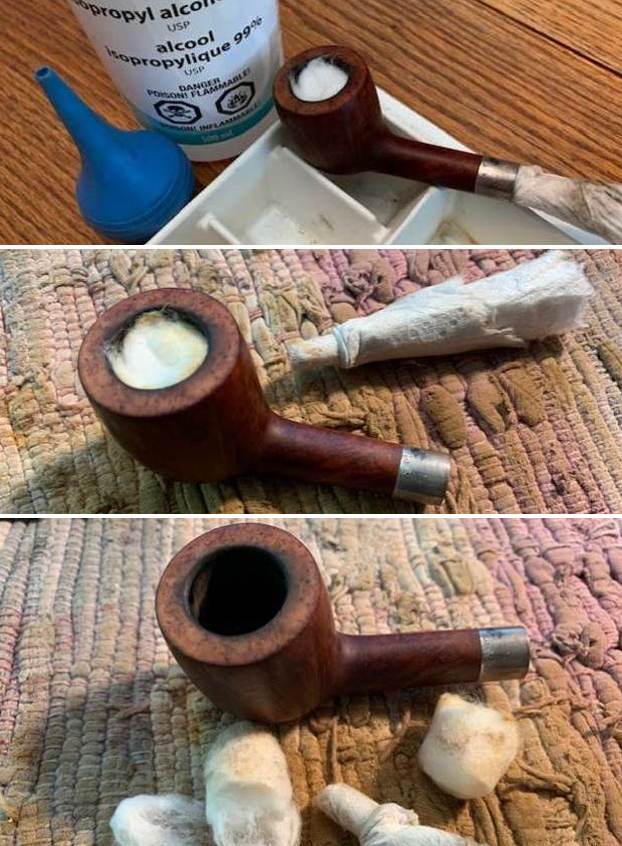
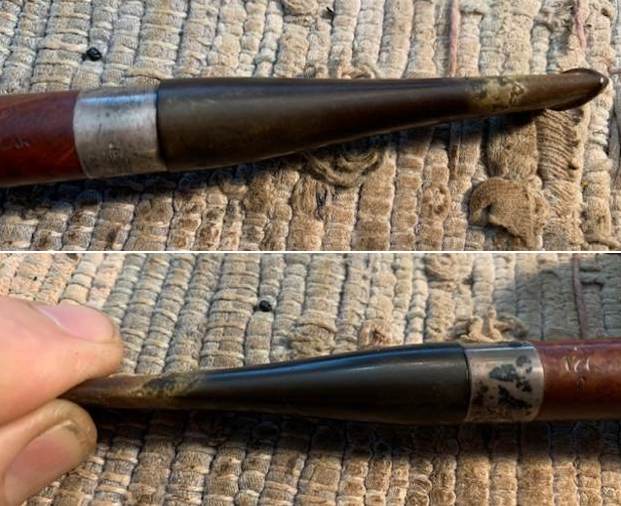
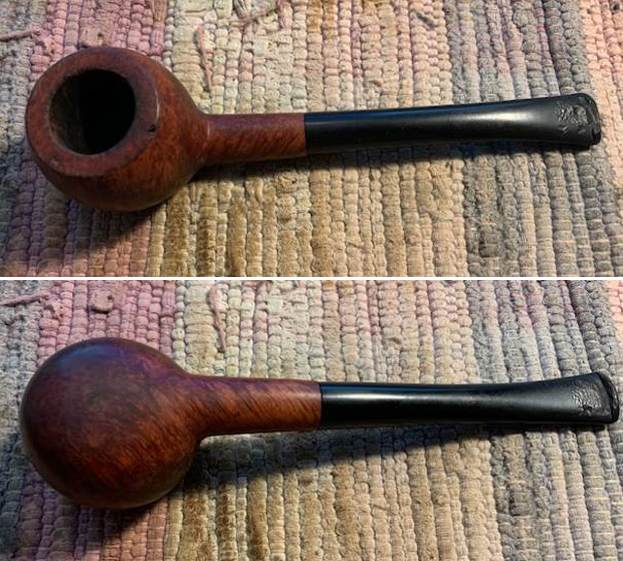
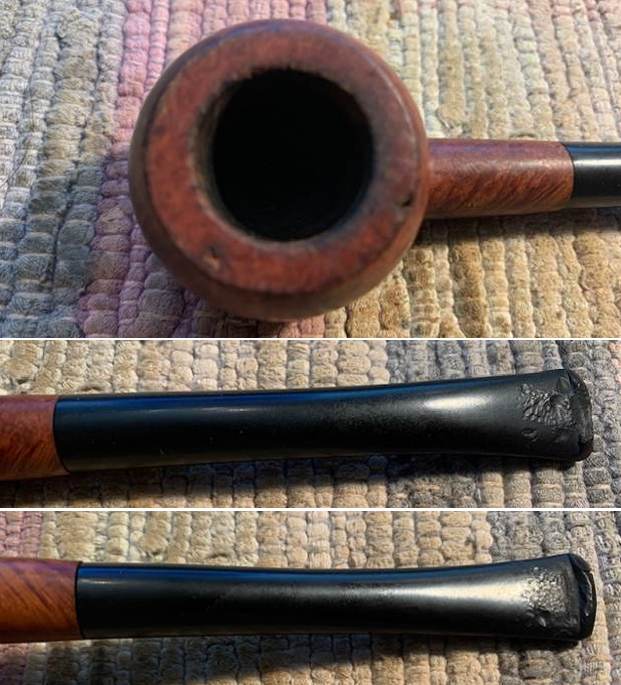
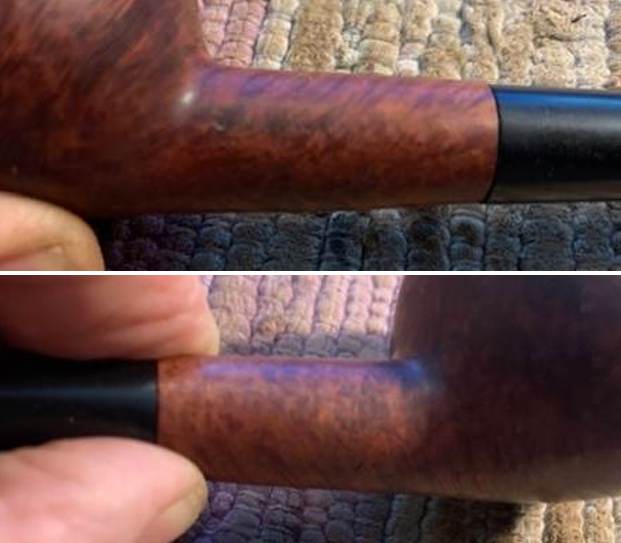
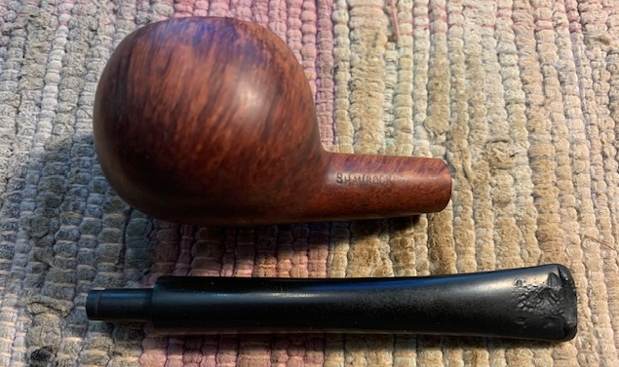
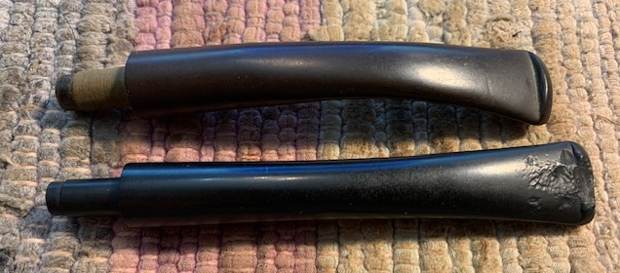
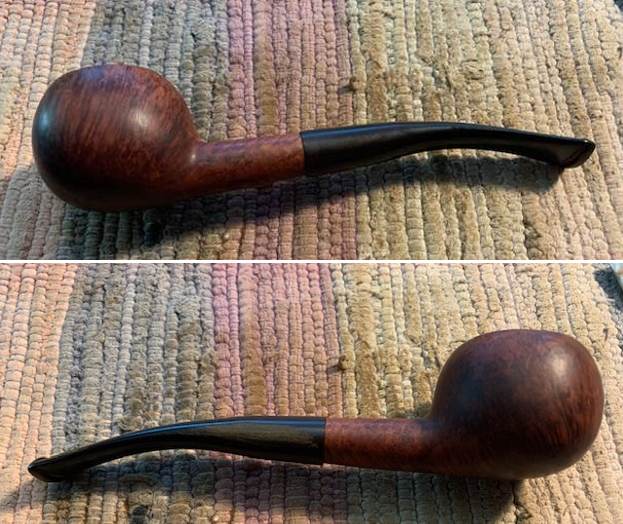
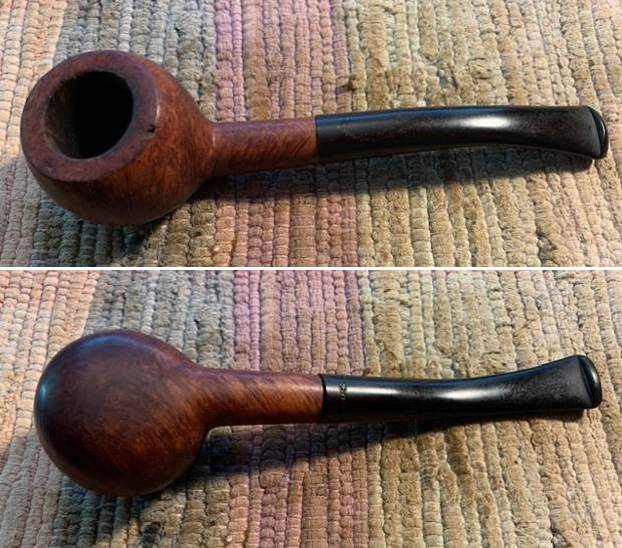
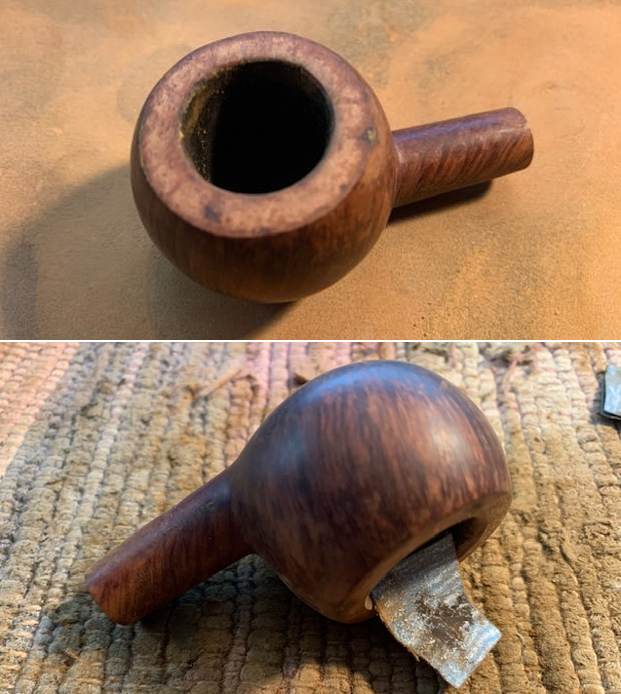
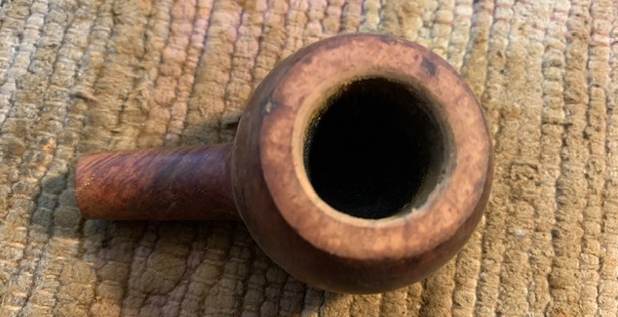
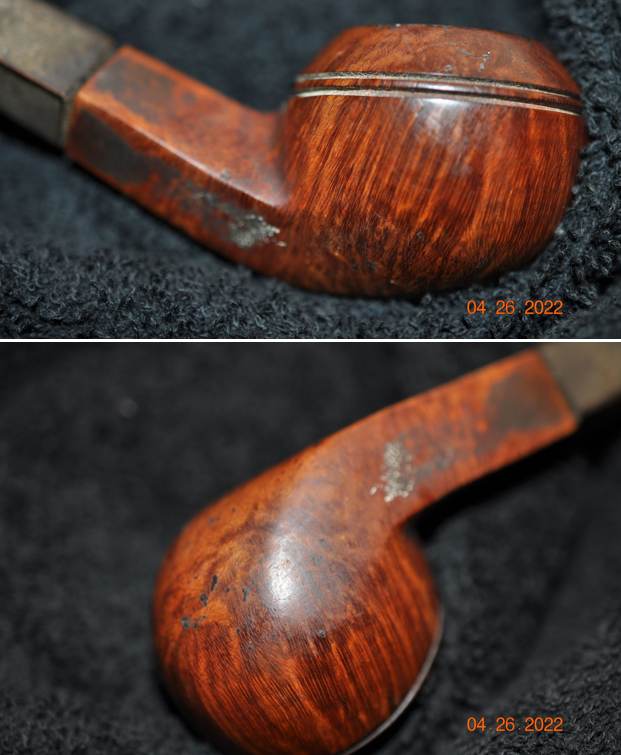
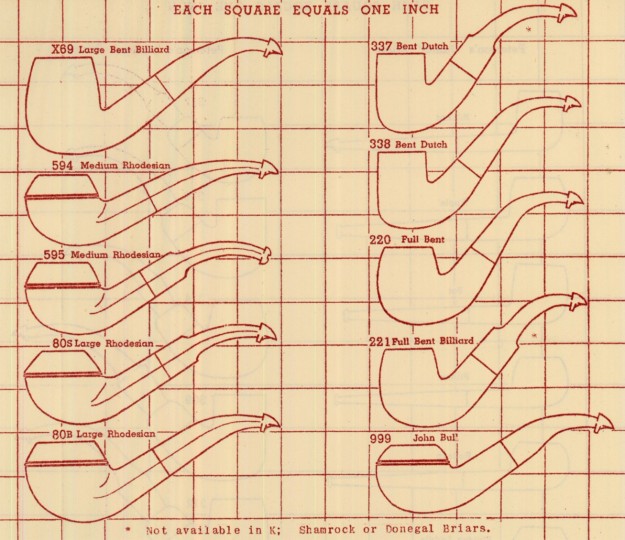
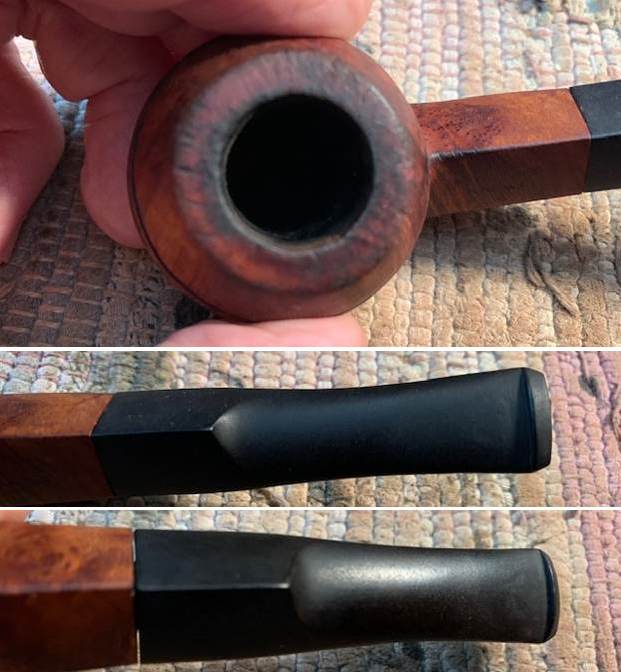
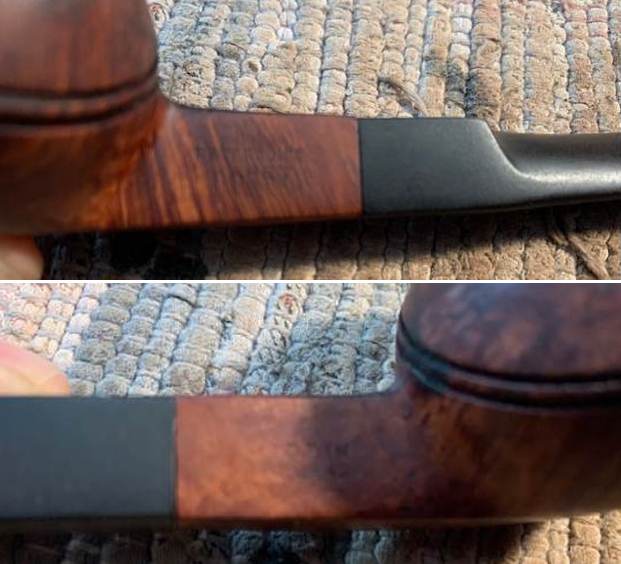
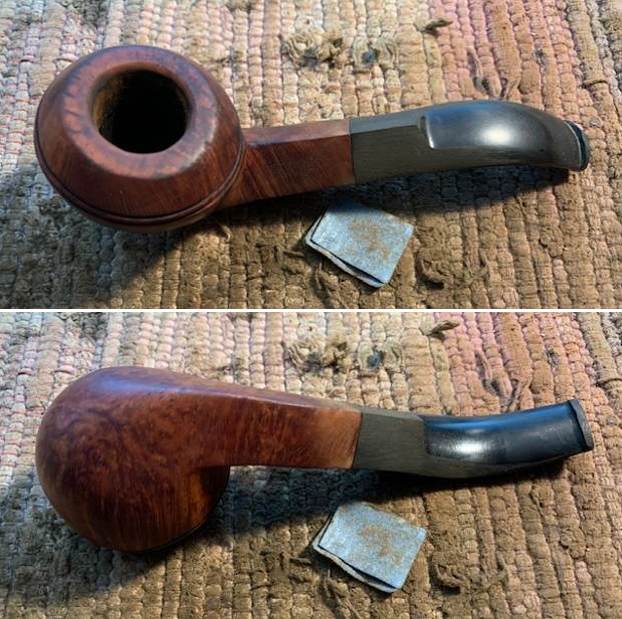
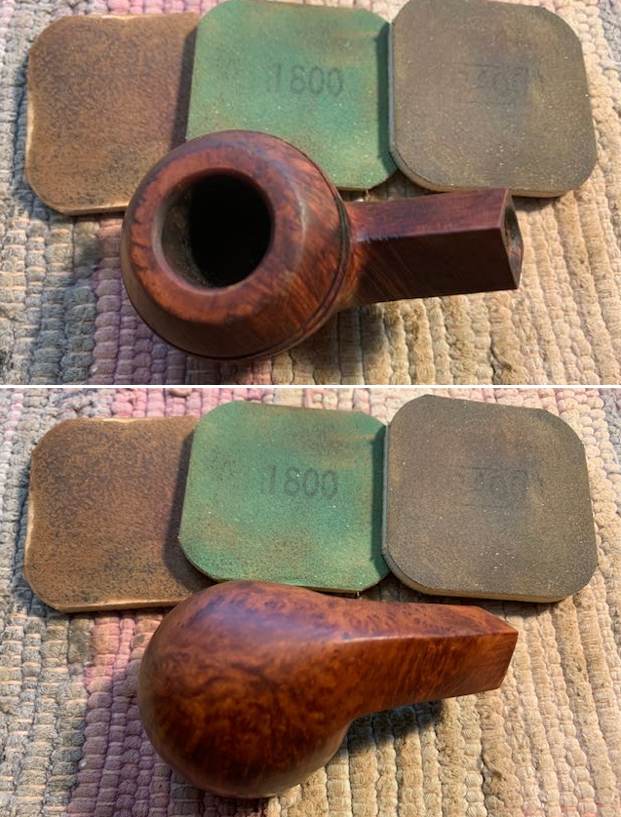
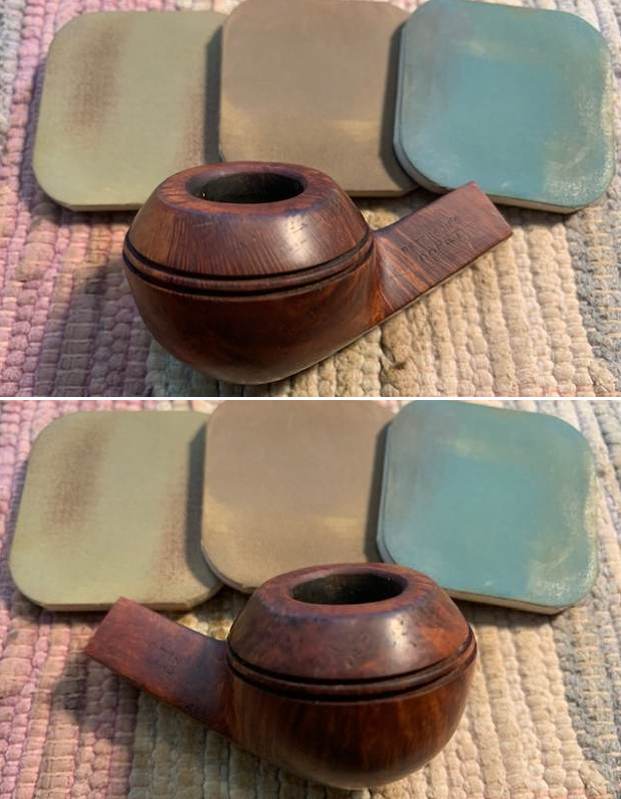
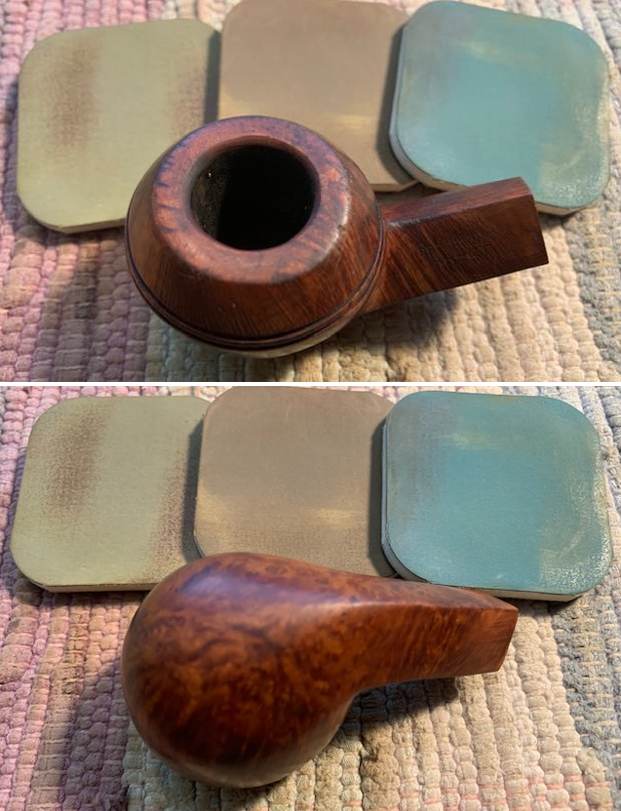
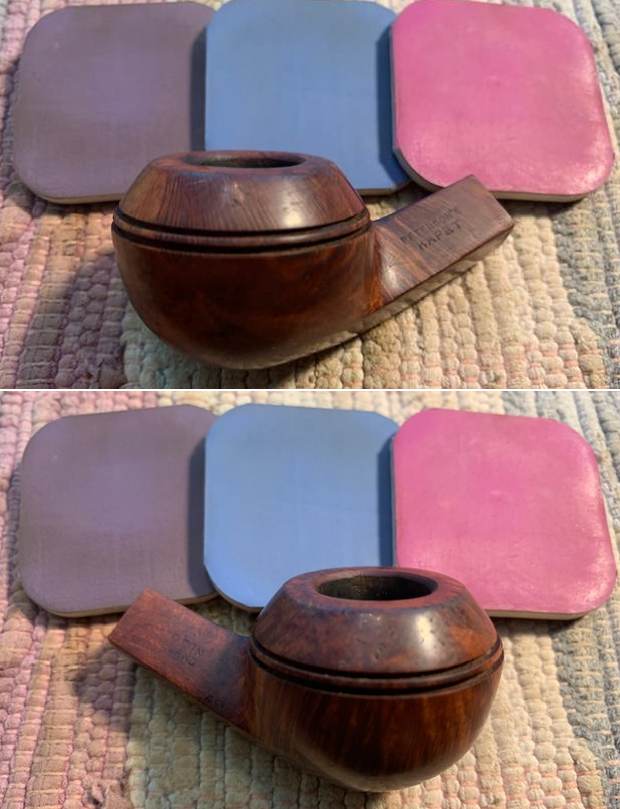
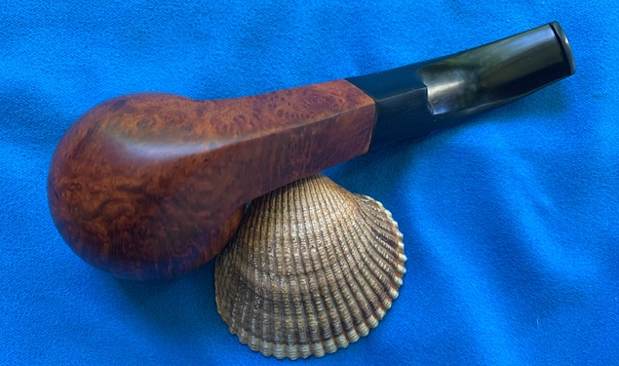
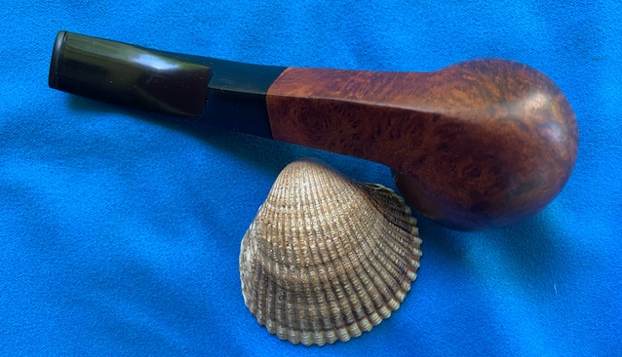
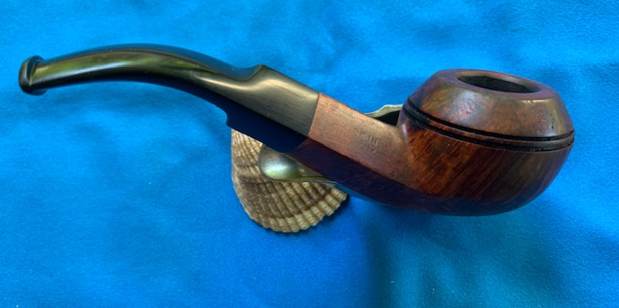
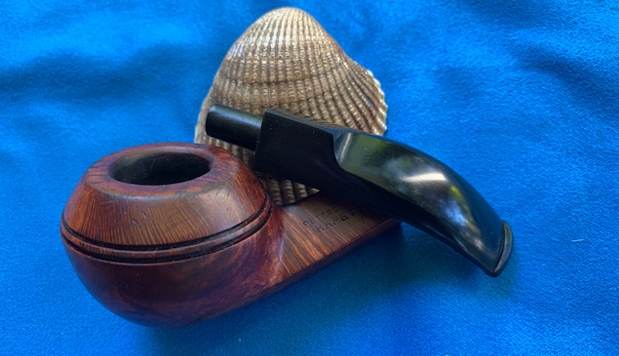
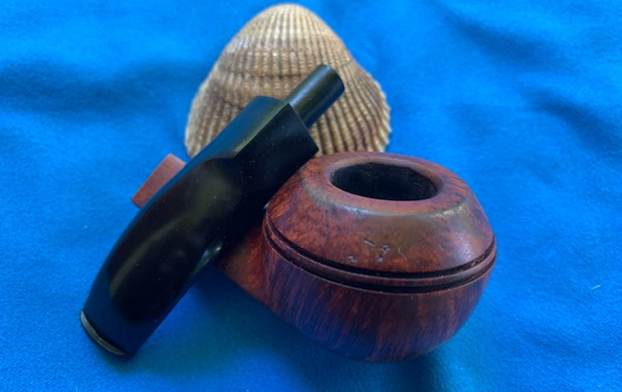
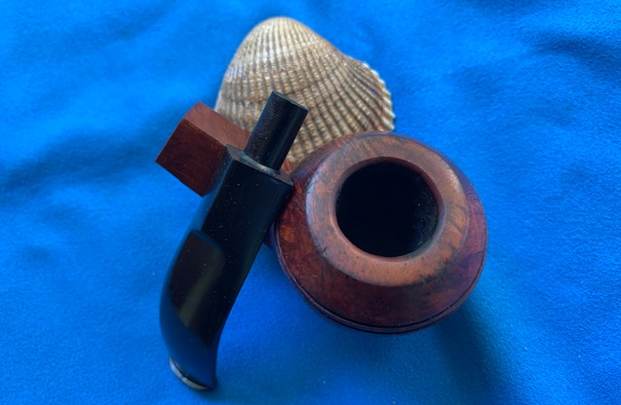
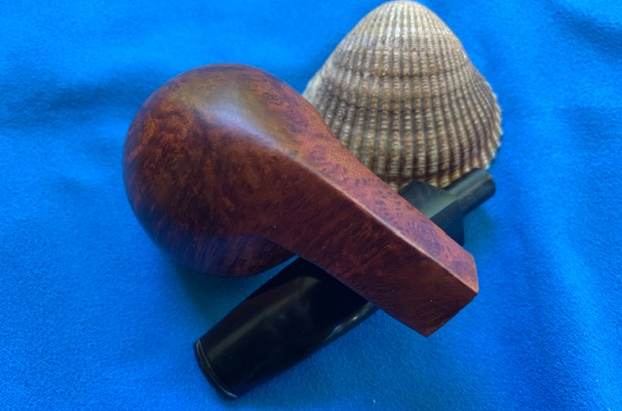
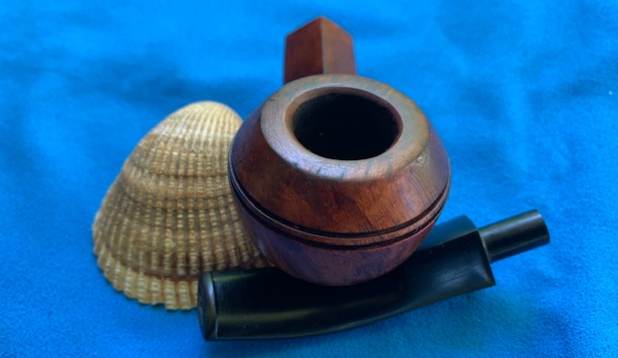
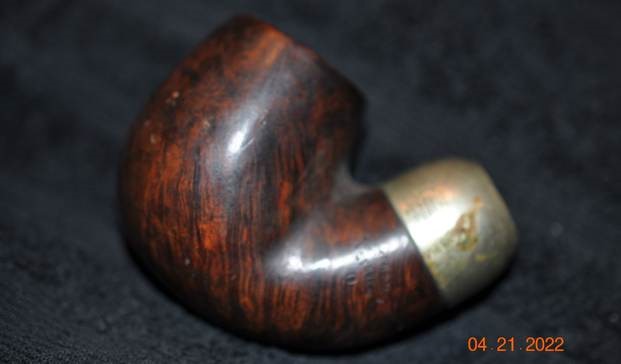
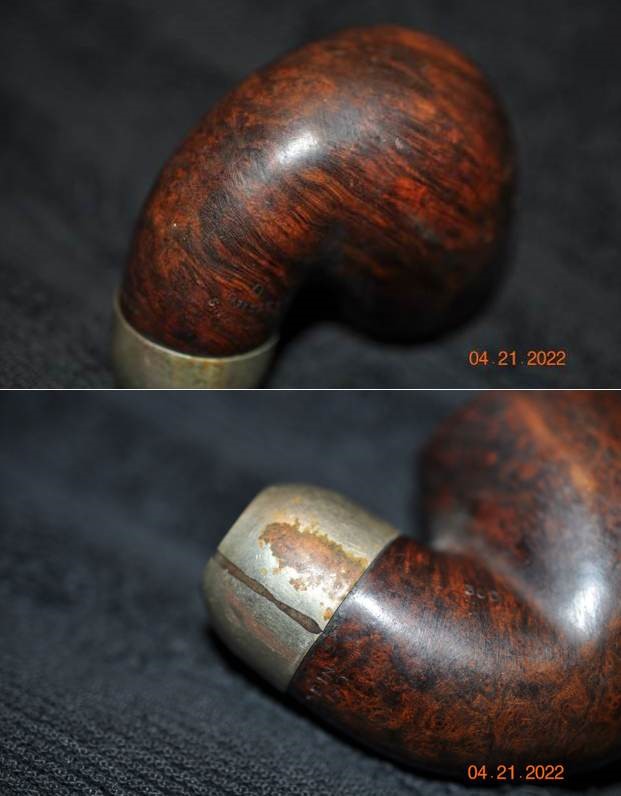
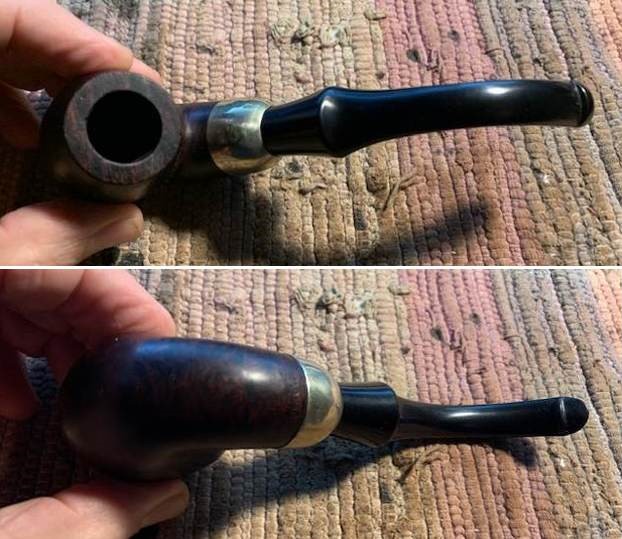
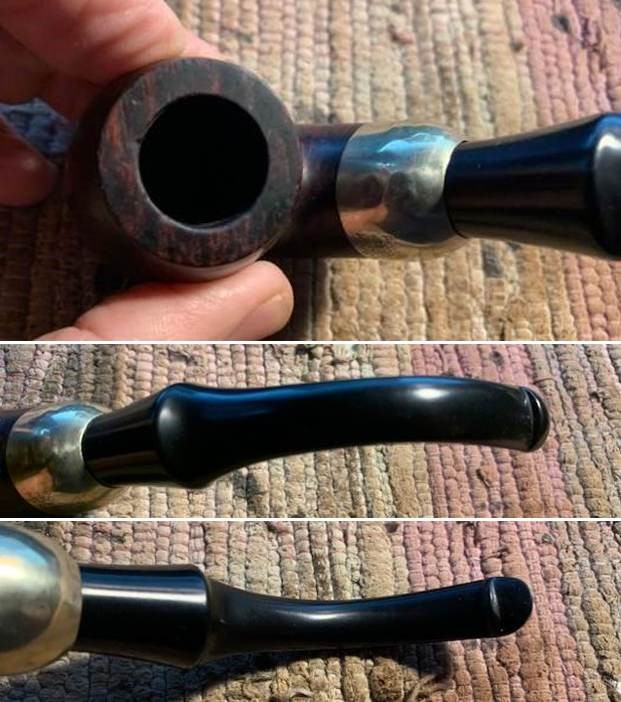
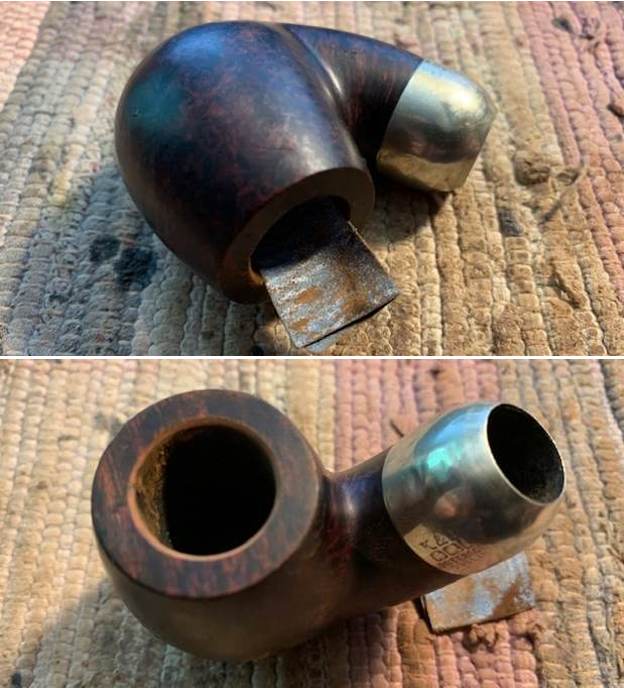
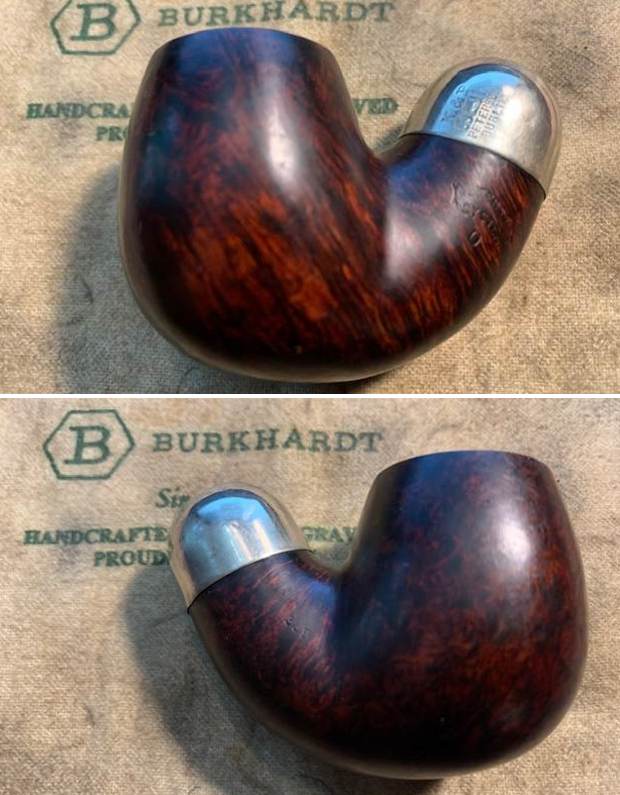
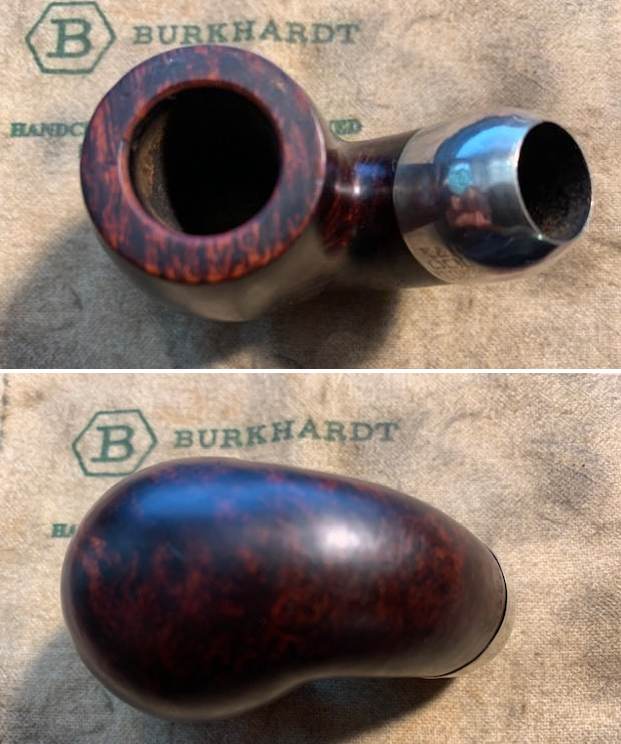
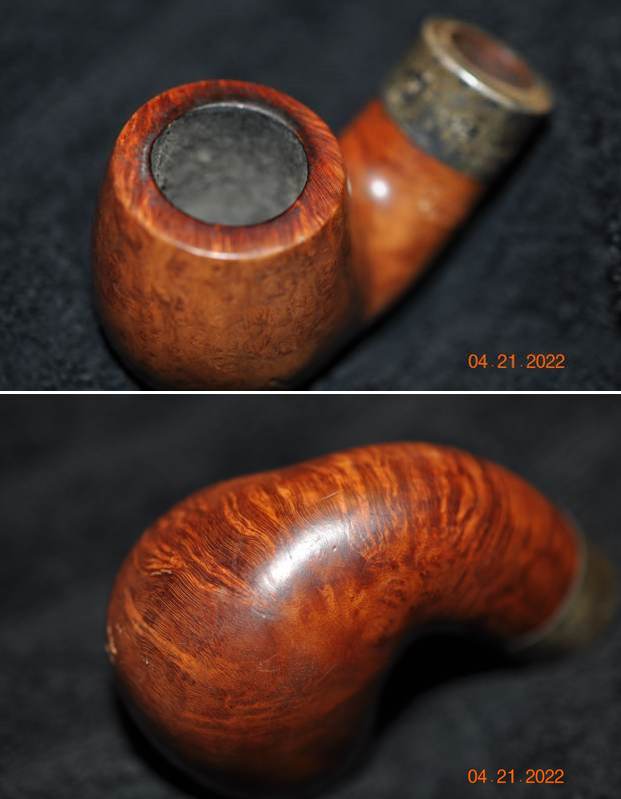
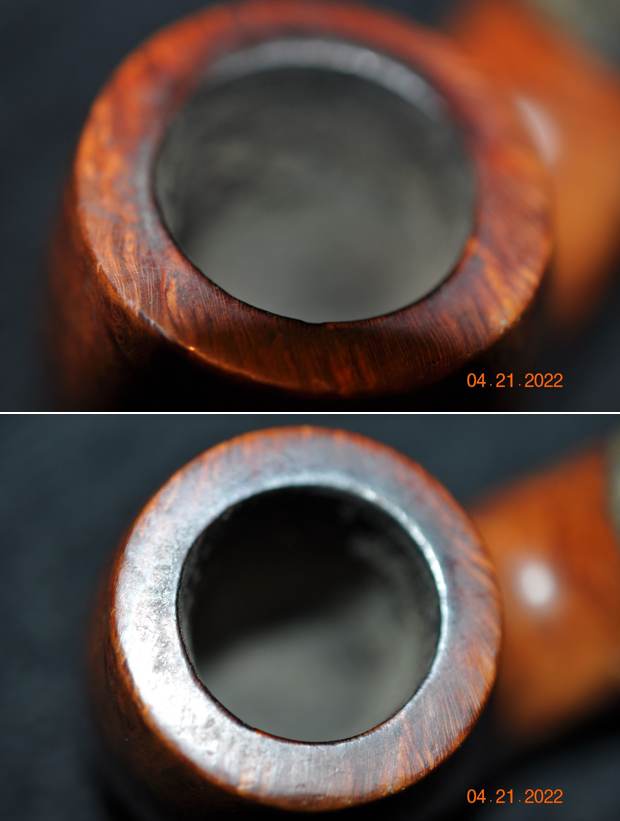
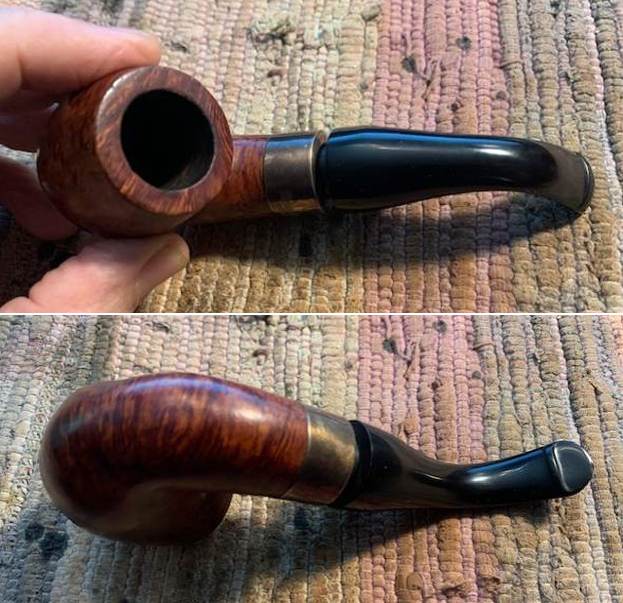
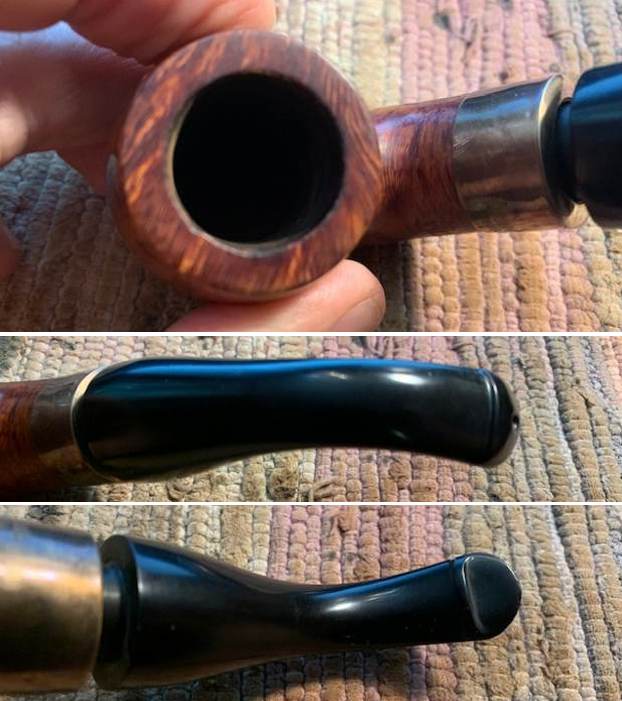
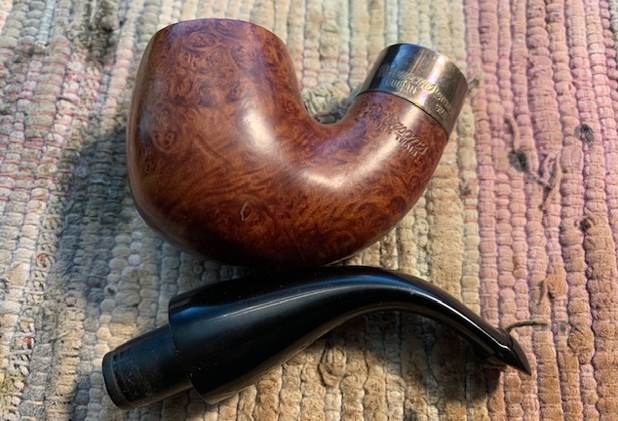
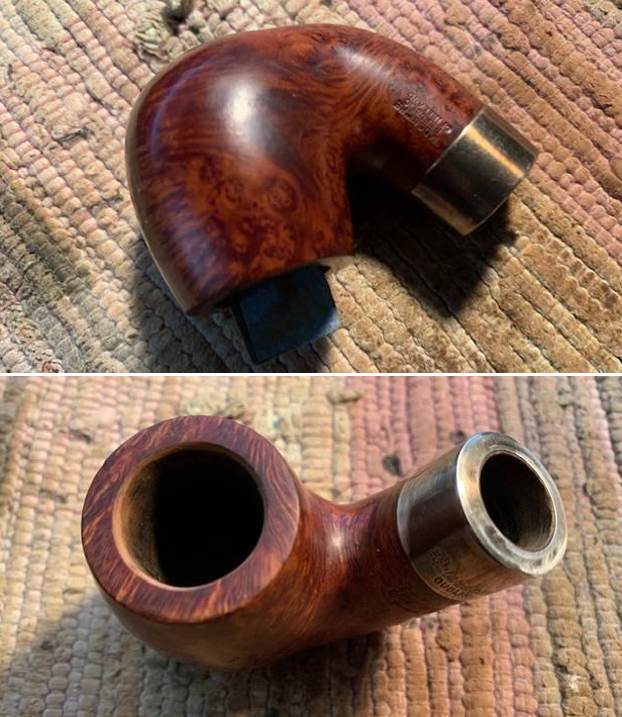
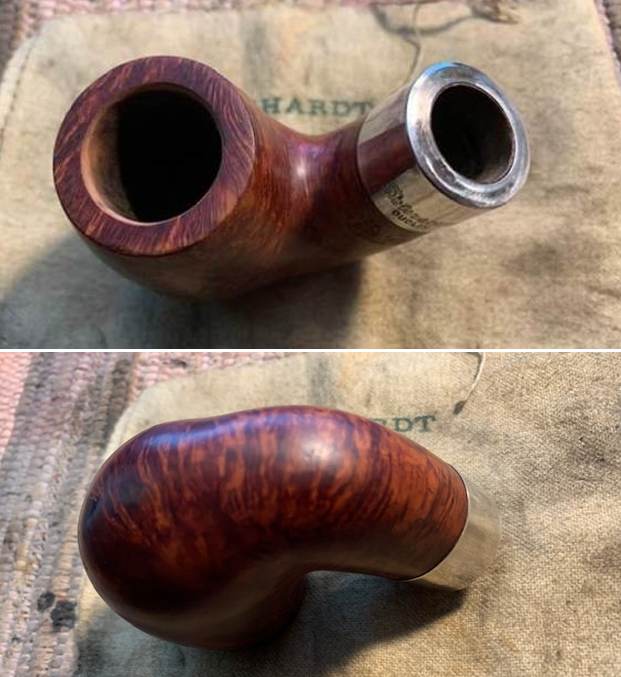
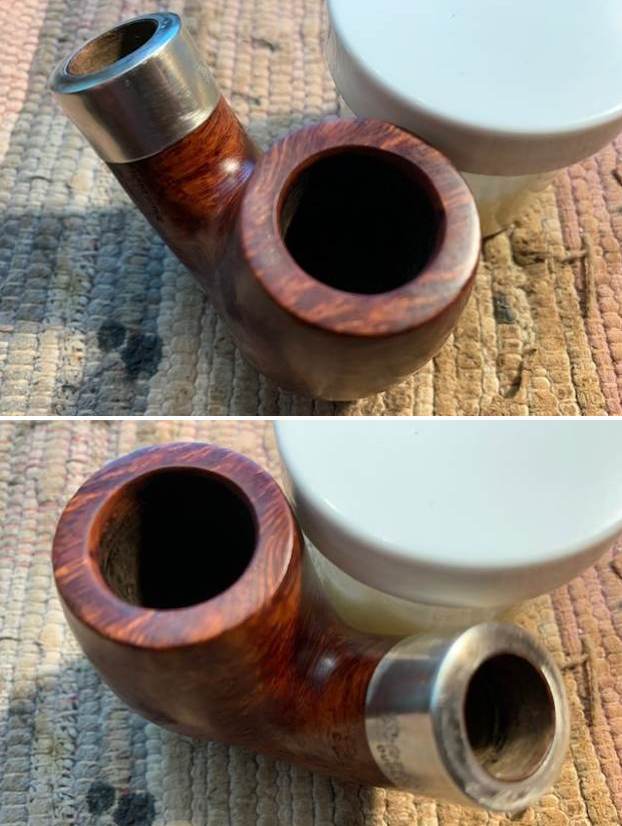
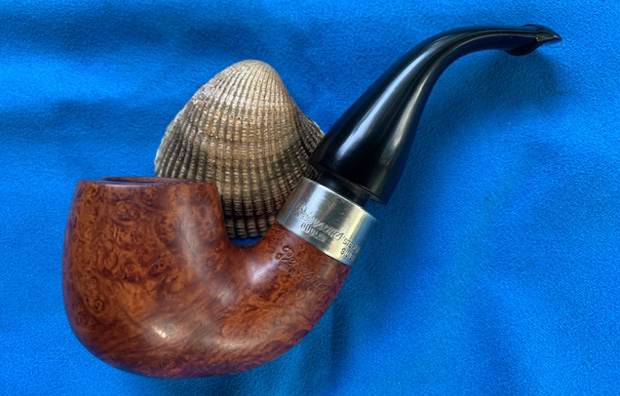
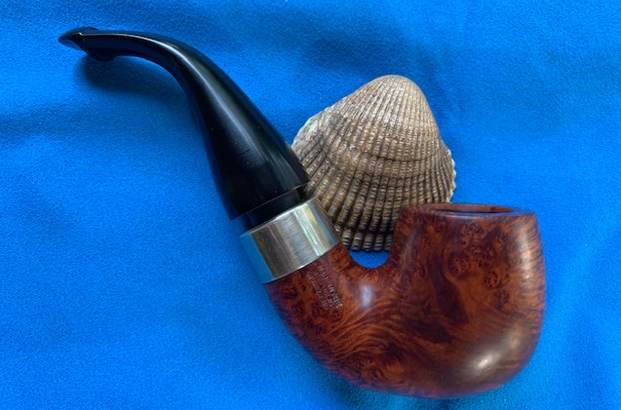
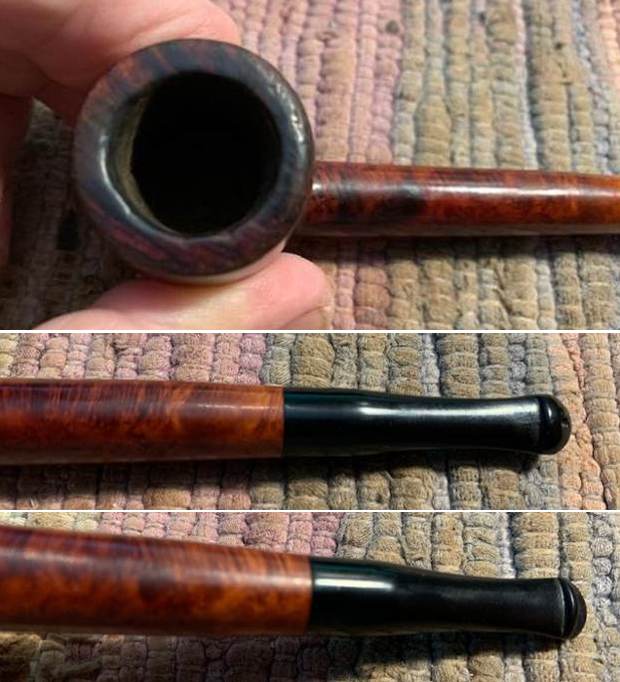
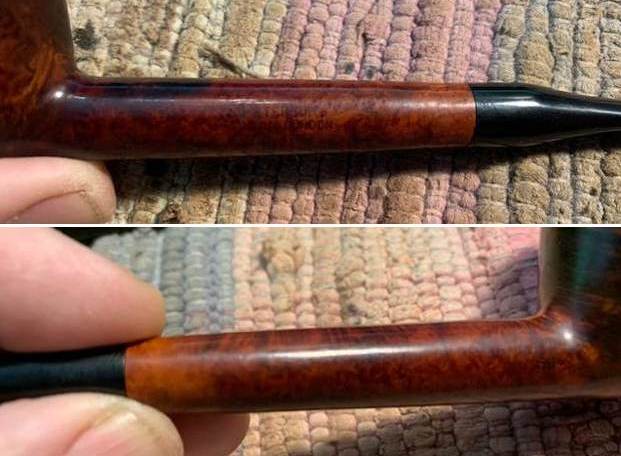
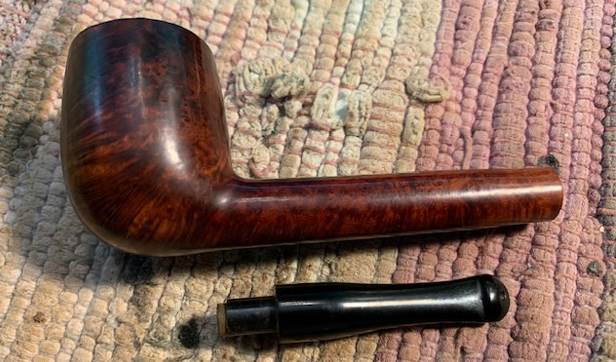
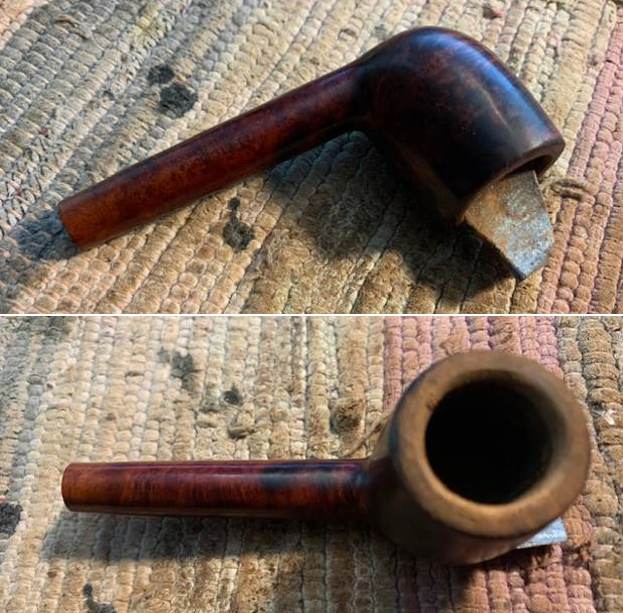
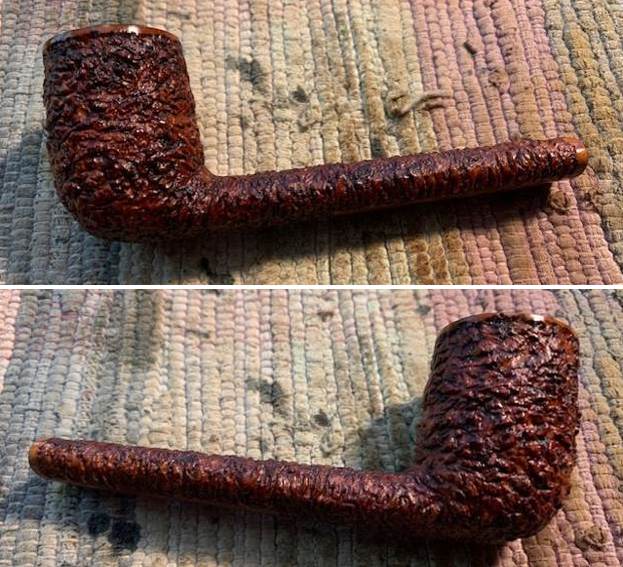
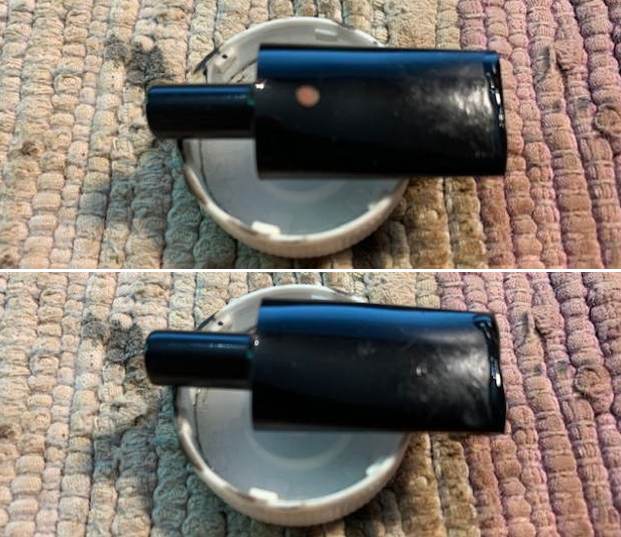
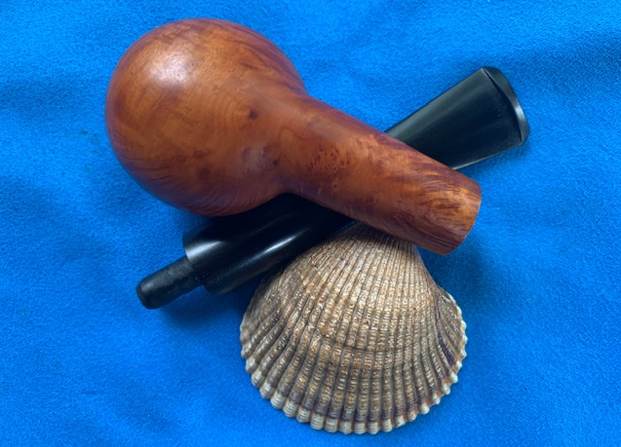
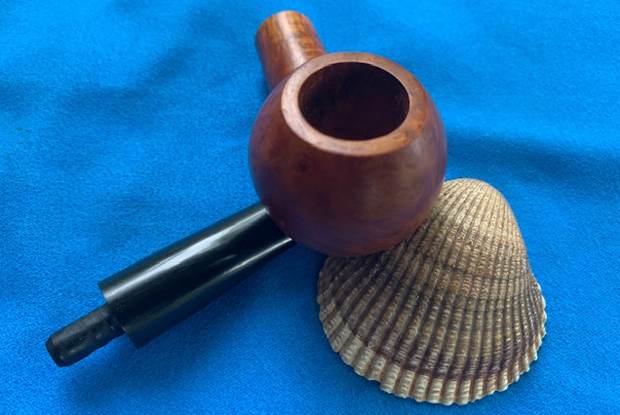
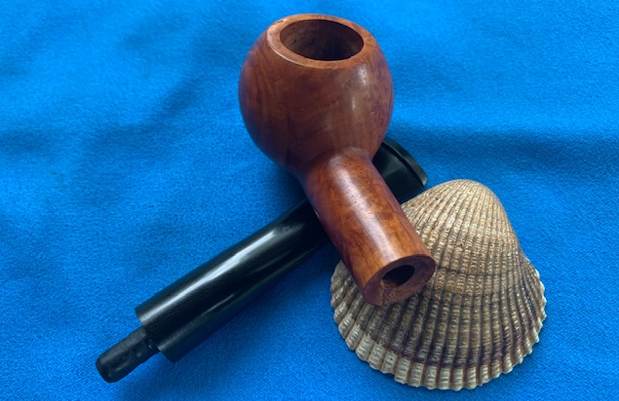
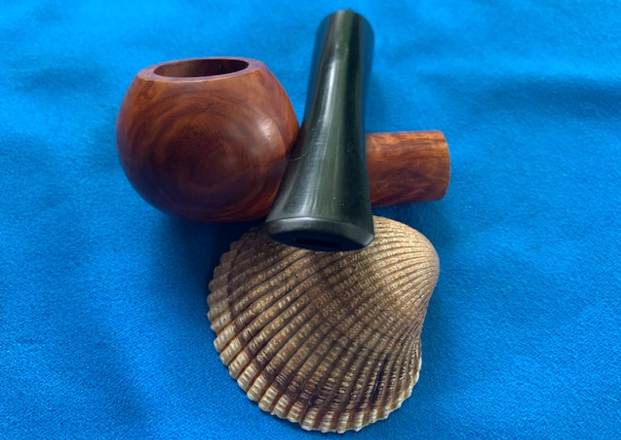
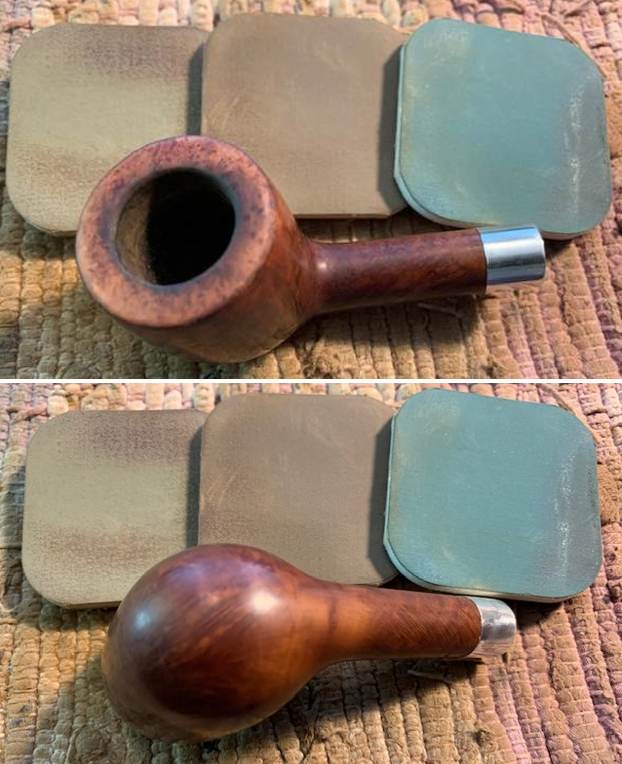
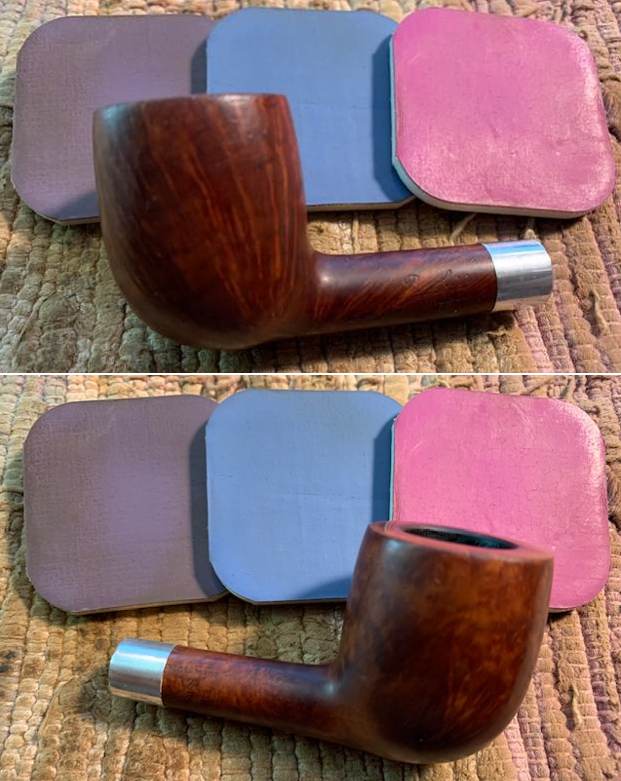
The next photos I have included below are of the pipe when it arrived in Vancouver with its new stem. Jeff had done a great job cleaning up the pipe as usual. He reamed the pipe with a PipNet reamer and cut the cake back to the bare briar. He cleaned up the walls with a Savinelli Fitsall Pipe Knife. He scrubbed the interior of the bowl and shank with pipe cleaners, cotton swabs and alcohol to remove the tars and oils. He scrubbed the exterior of the pipe with Murphy’s Oil Soap and a tooth brush to remove the grime from the finish. He worked on the rim top lava and darkening with the soap and tooth brush. When the pipes came back to Jeff with their new stems they looked great. I took some close up photos of the rim top and also of the stem surface. I wanted to show how well it had cleaned up. The rim top had some darkening and damage on the top. The inner edge was out of round and had some damage on the front and the back of the bowl. It appears that the shank is slightly tapered toward the stem end. I don’t know if this is original or from a previous repair. It should clean up really well. I also took close up photos of the new stem to show how well it was fit to the shank. It is a tiny looking stem and thin shank! Thanks to Walls Pipe Repair!! I took photos of the stamping on the sides of the shank. It is faint but readable with a light and lens you can see that it is stamped as noted above. I removed the stem and took a photo of the pipe to have a look at the parts and overall look. The new stem looked really good with the bowl. I am impressed by how the stem was shaped to fit the stem. I have restored a few Peterson’s Dublin & London in the past so I turned to my blog to have a look at the background information that I included in those blogs. I found the following link to a one of those pipes (https://rebornpipes.com/2021/02/24/restoring-a-made-in-ireland-petersons-dublin-london-999-rhodesian/). I also am including the background information I had gathered on the line from the previous blog. I quote:

I am including the link to the Pipedia’s article on Peterson pipes. It is a great read in terms of the history of the brand (https://pipedia.org/wiki/Peterson).

I turned to “The Peterson Pipe” by Mark Irwin and Gary Malmberg to get some background on the Peterson’s Dublin & London Pipe. On page 298 it had the following information.

Dublin & London (c1940-97, 2016-) First mentioned in a 1940 brochure, but probably not widely distributed until ’45, Dublin & London was the highest quality line (aside from the Supreme, introduced in ’53) until about ’86. P-lip or fishtail mouthpiece, polished finish, although sandblast described in ’70 Iwan Ries & Co. catalog. COMs include MADE IN over IRELAND (1940-80) and MADE IN THE over REPUBLIC over OF IRELAND (c1980-97).

Judging from the description above, the pipe I am working on is stamped with the stamp noted in red above. It reads Made in Ireland which narrows the date to between approximately 1940-1980. It was also one of the highest quality lines available by Peterson when it was made. Now it was time to work on the pipe.

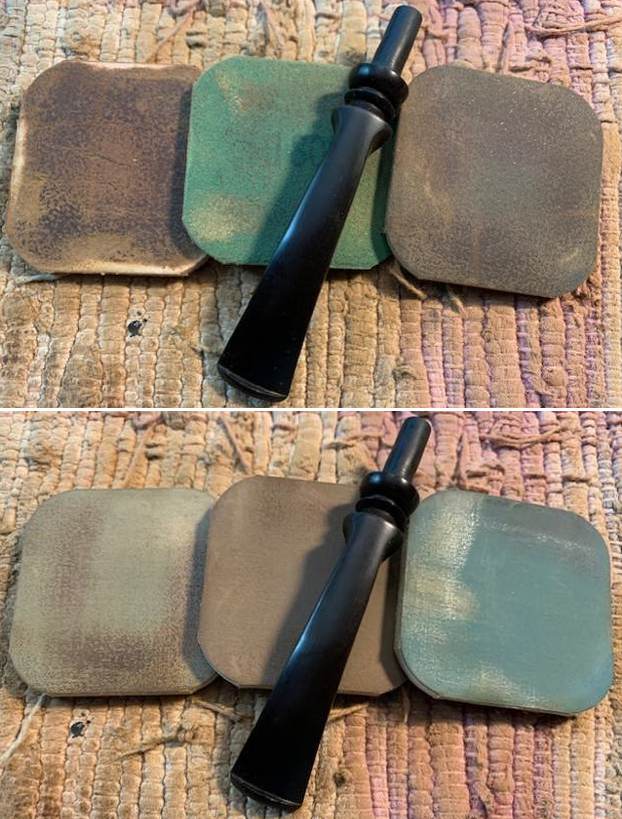
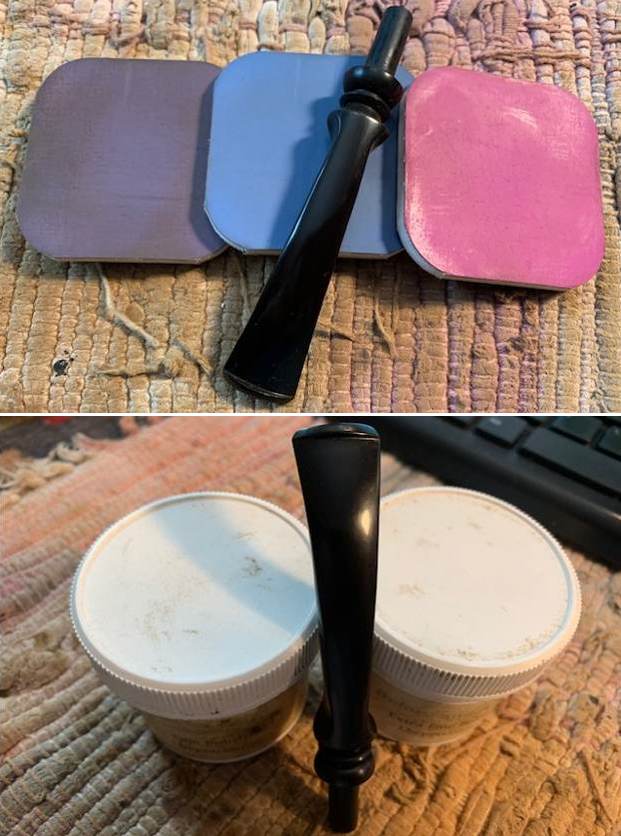
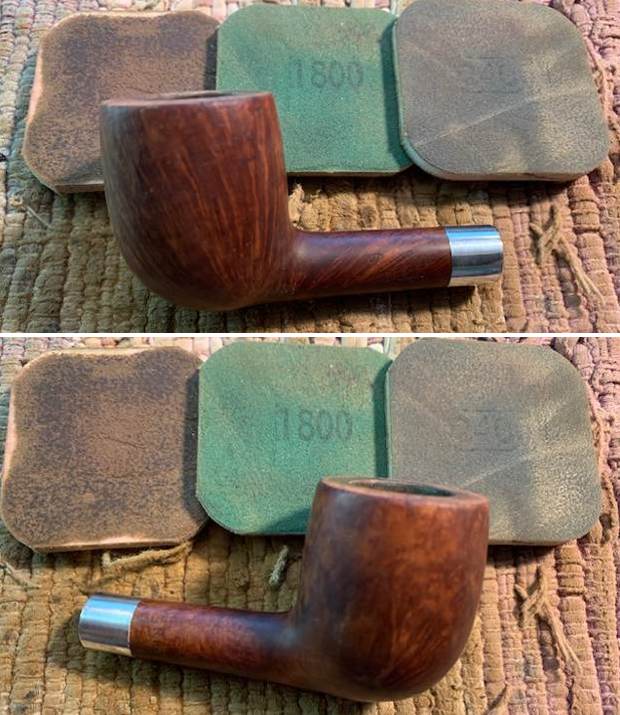
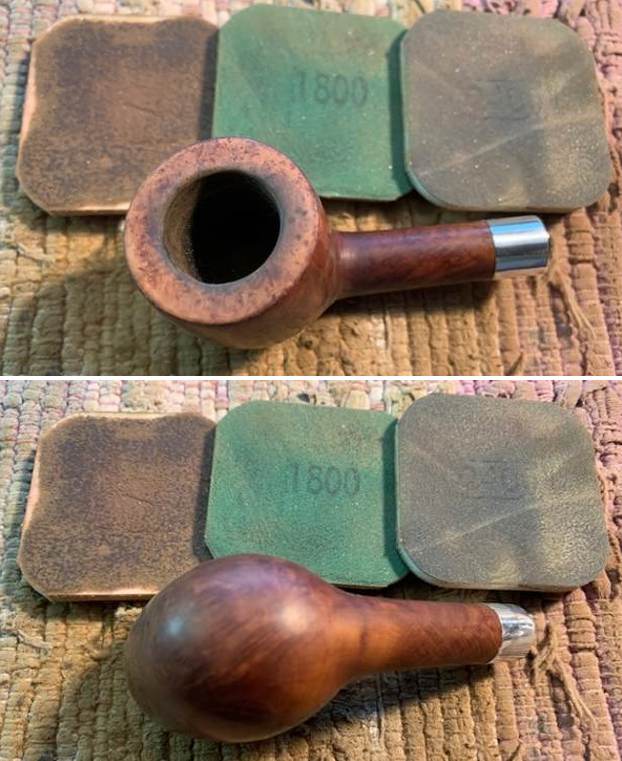
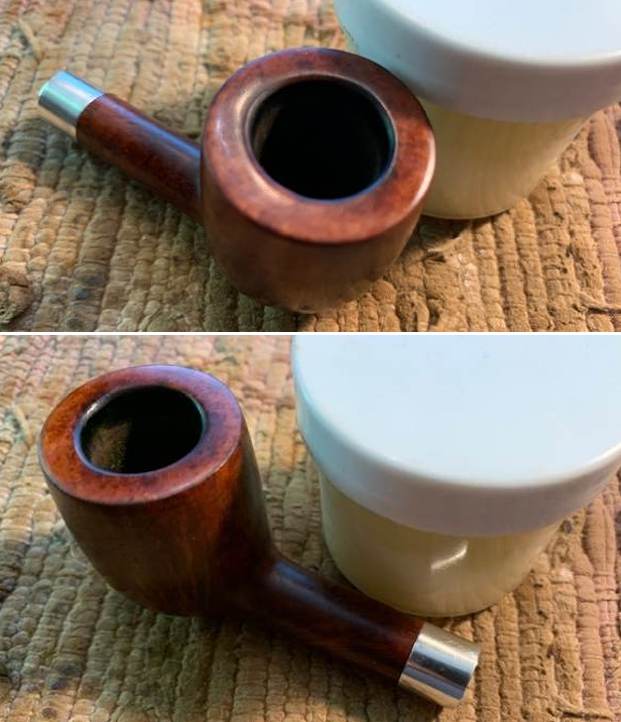
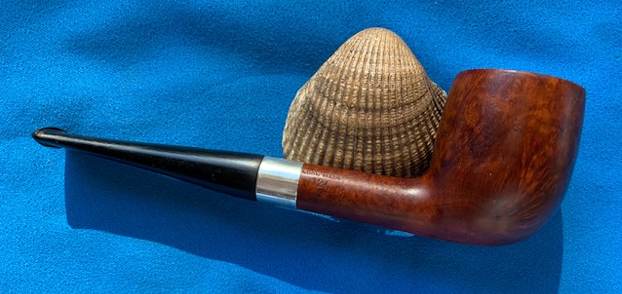
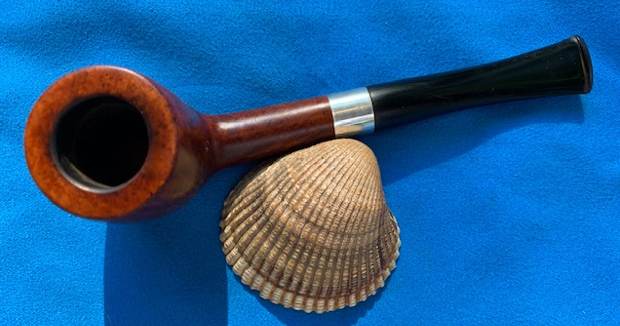
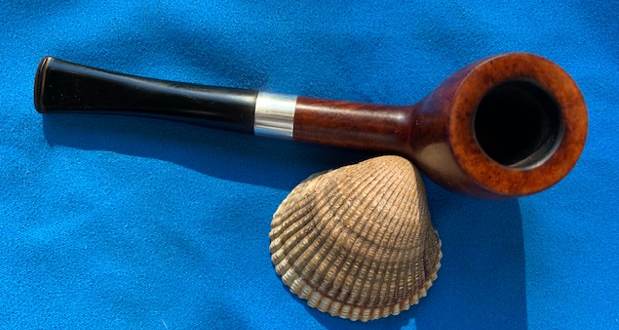
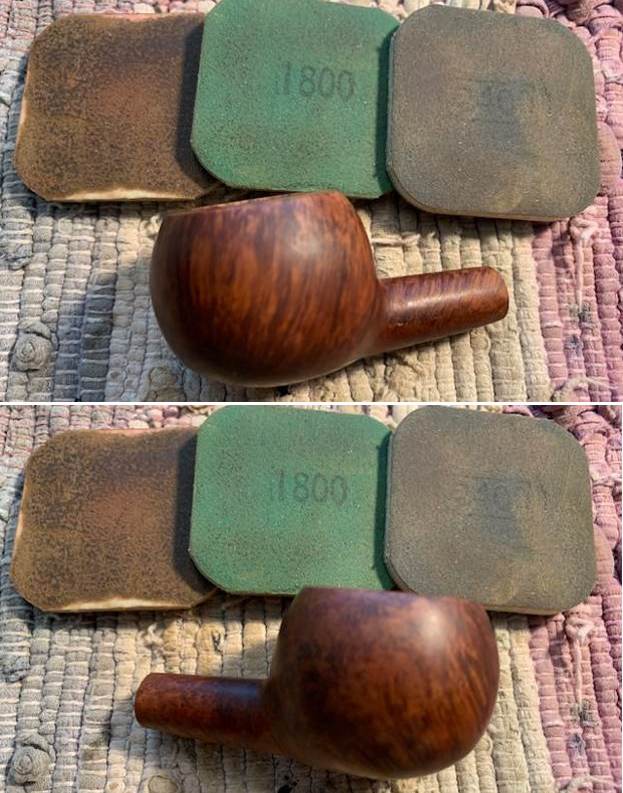
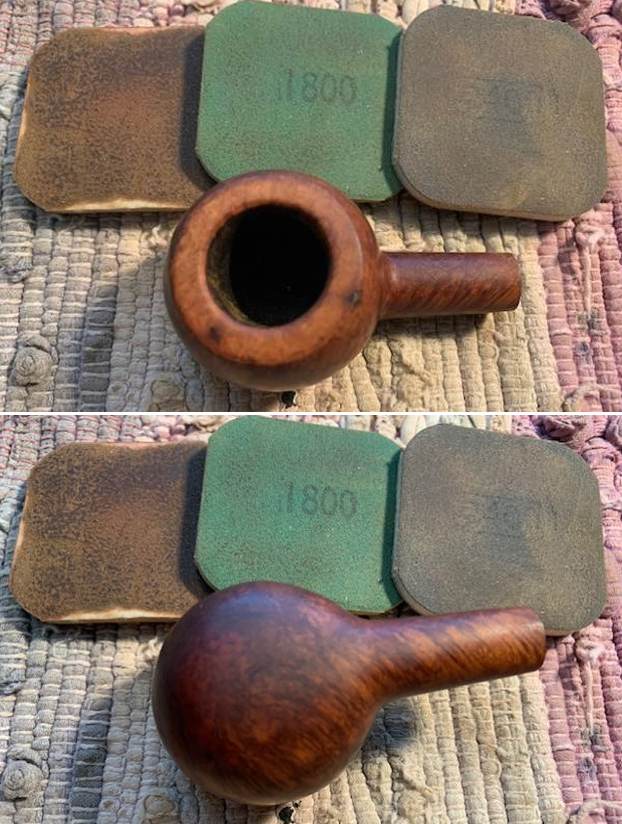
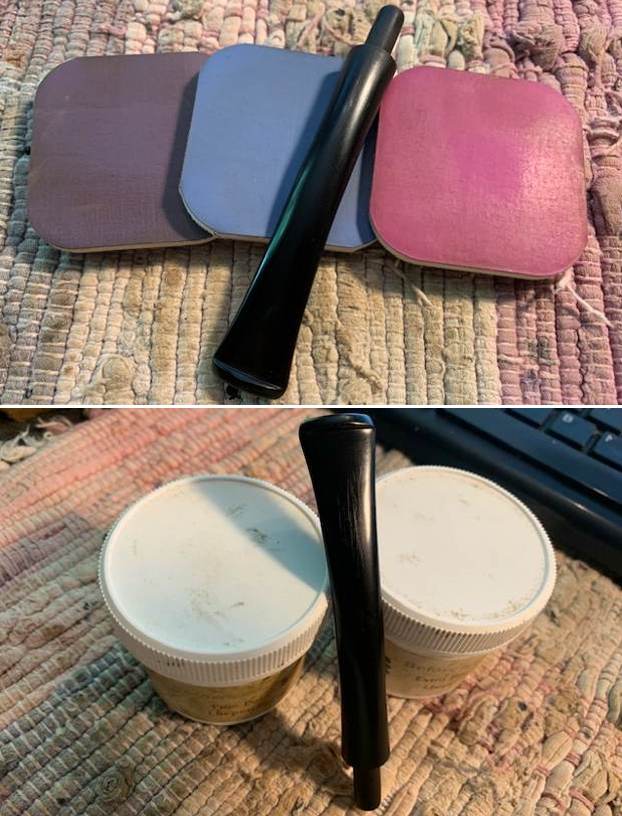
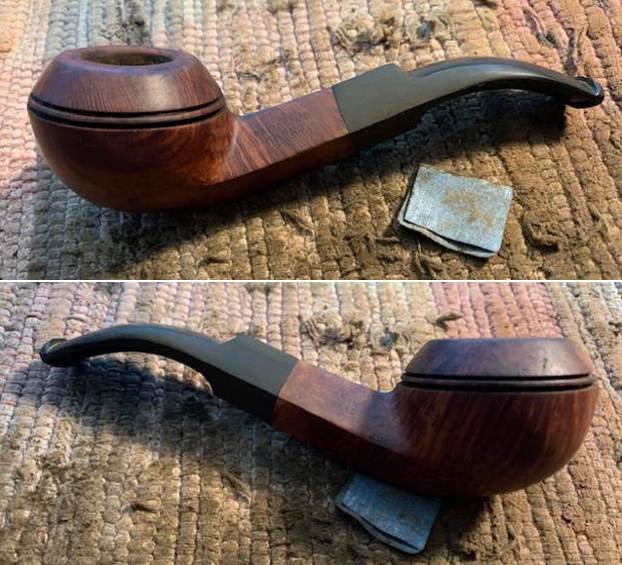
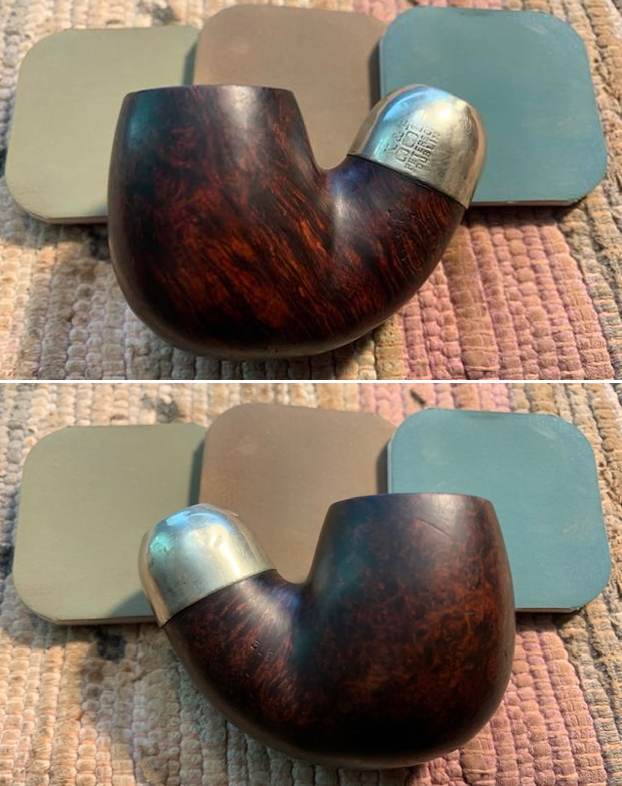
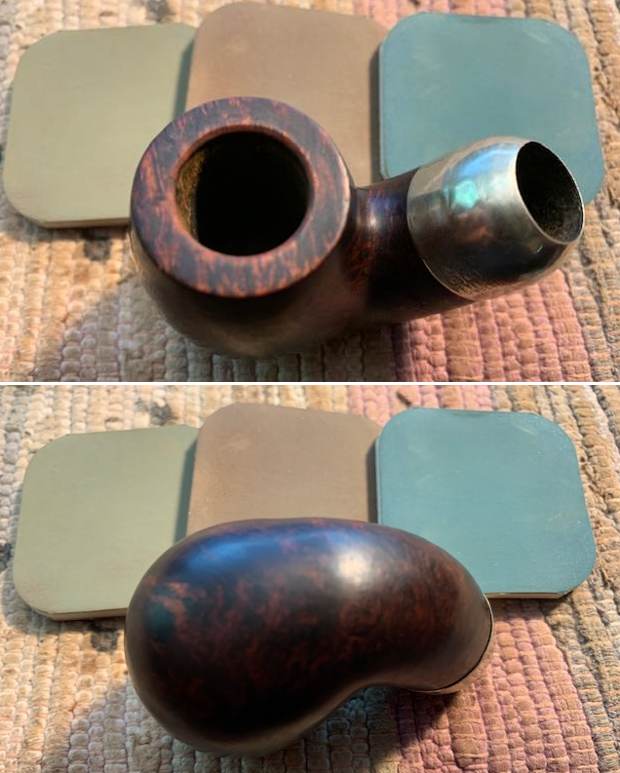
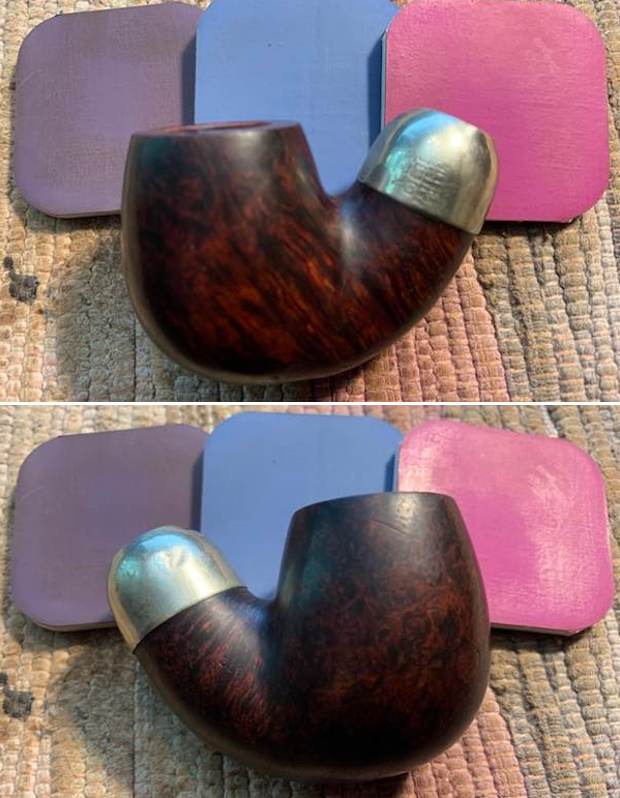
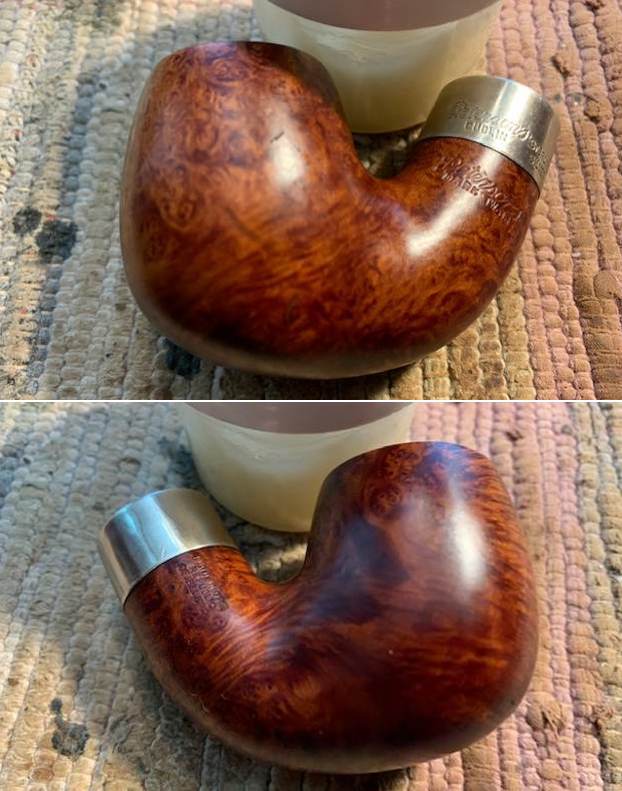
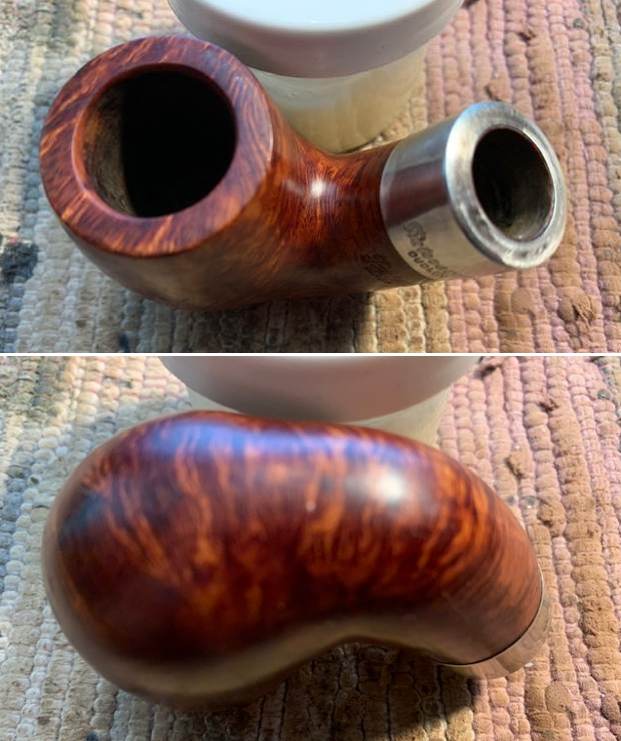
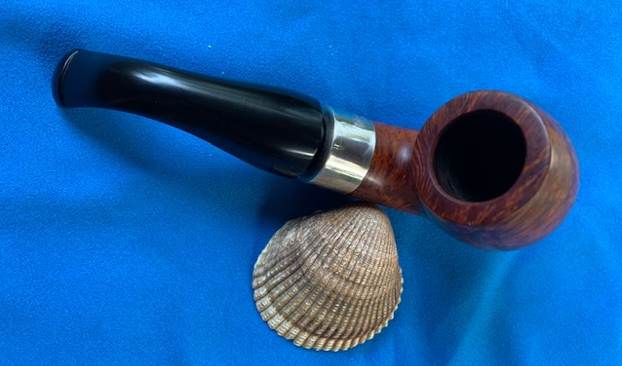
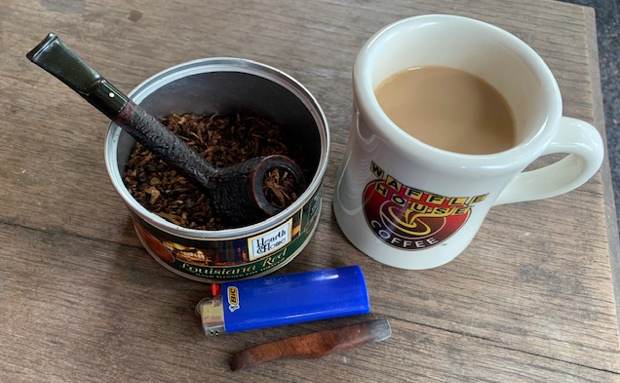
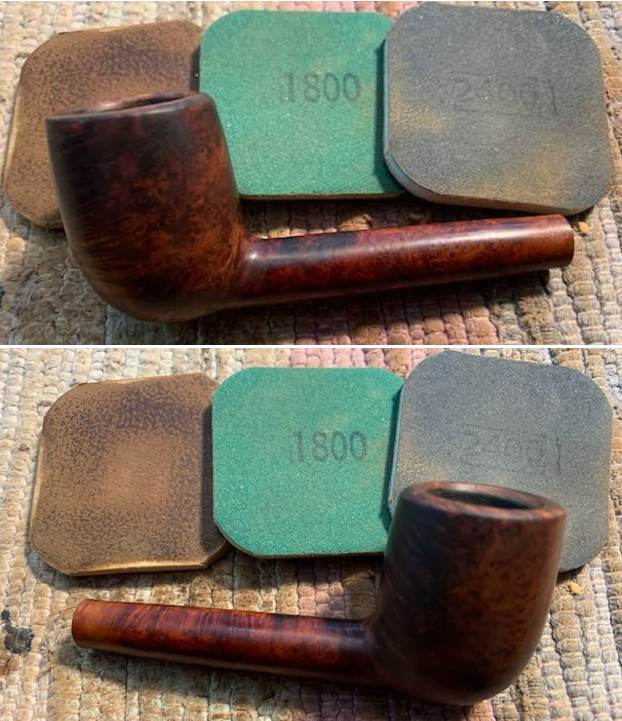
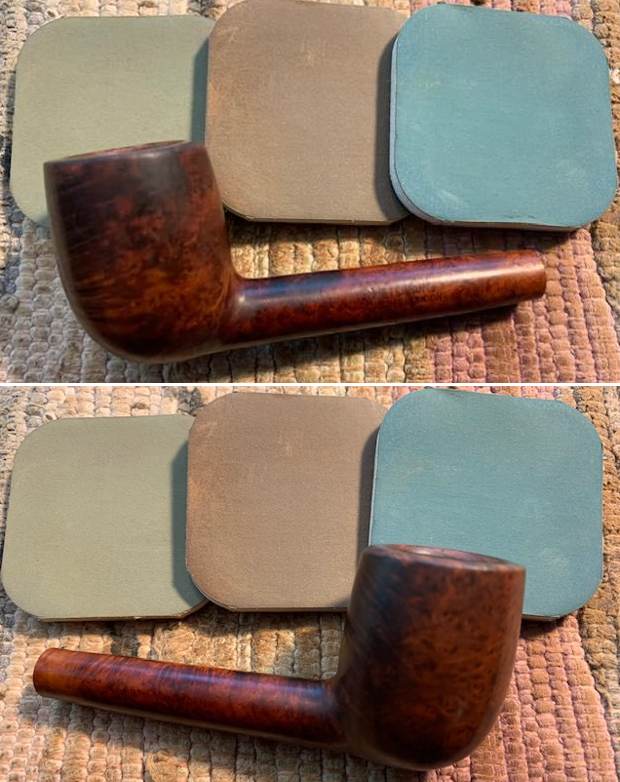
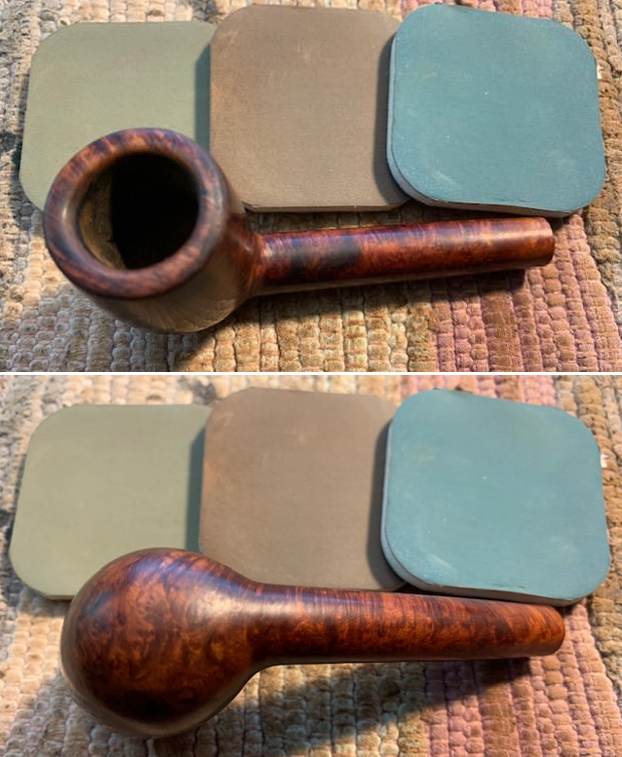
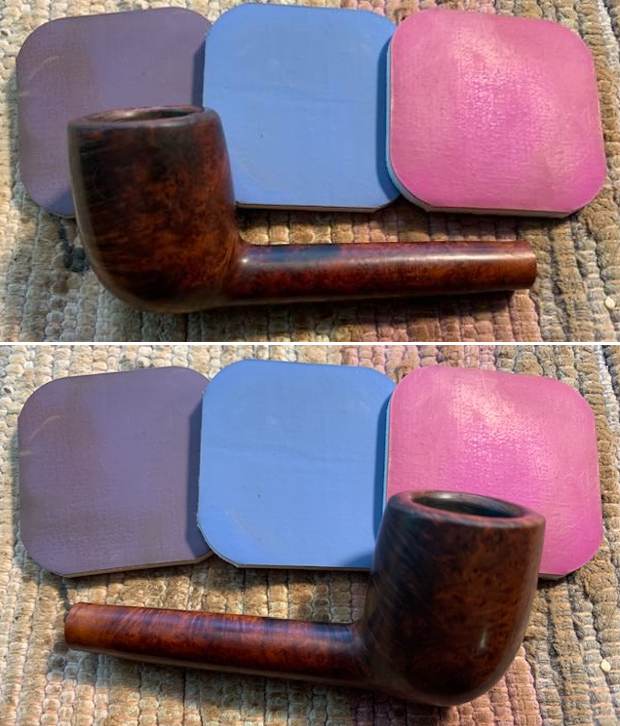
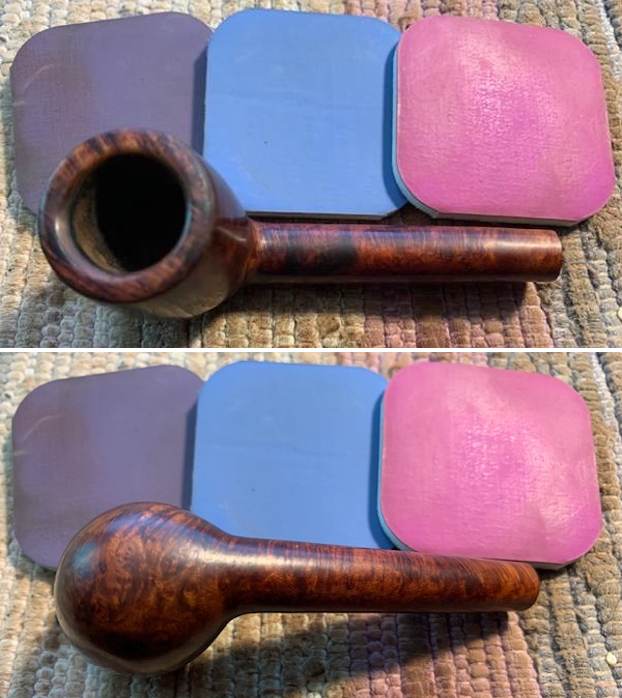
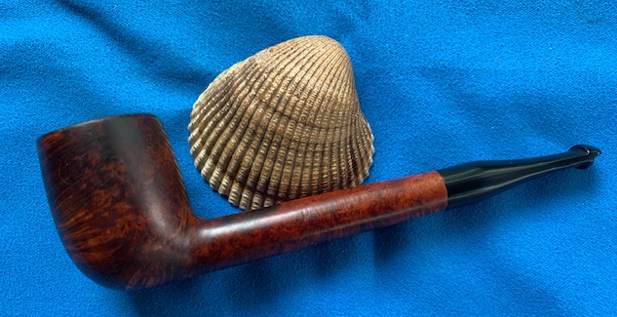
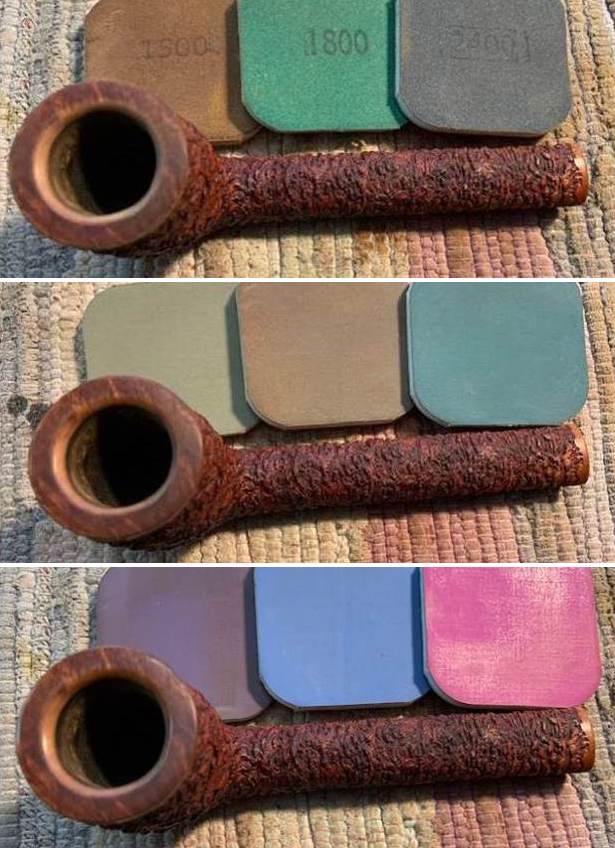
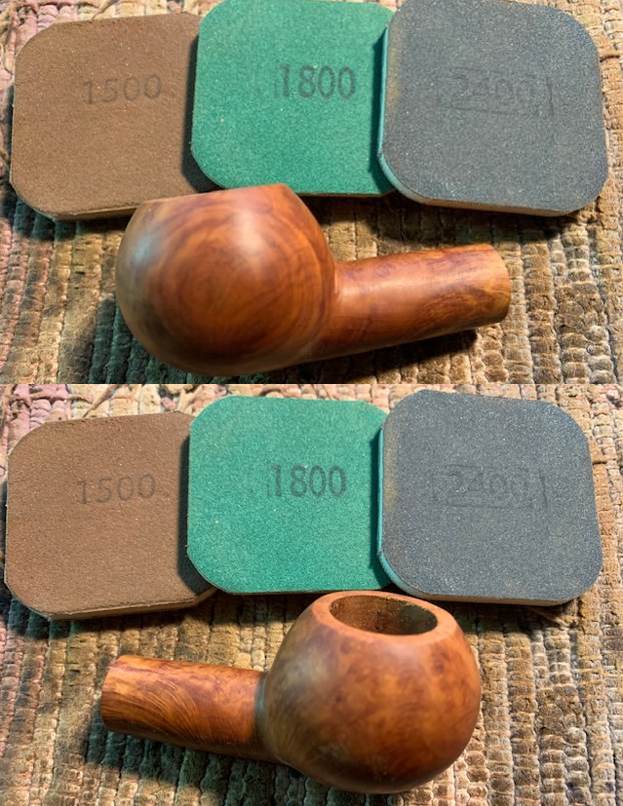
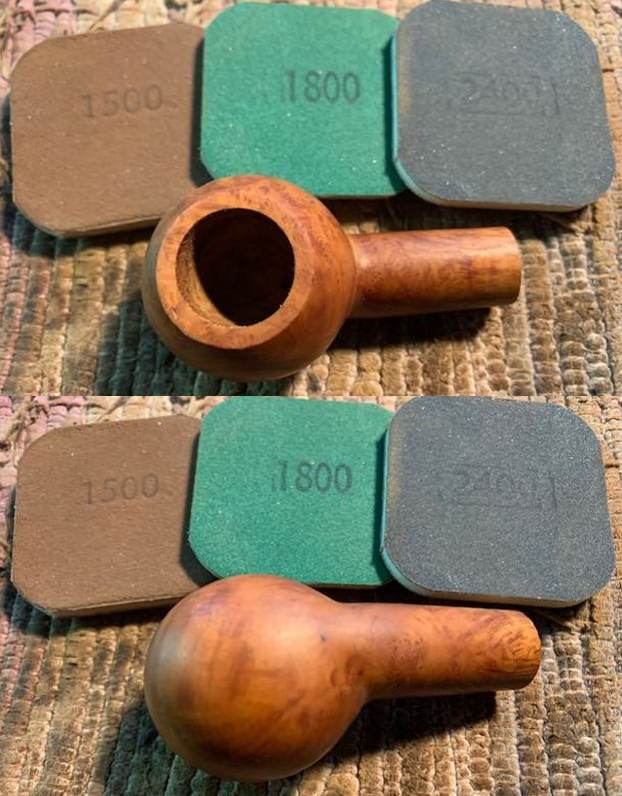
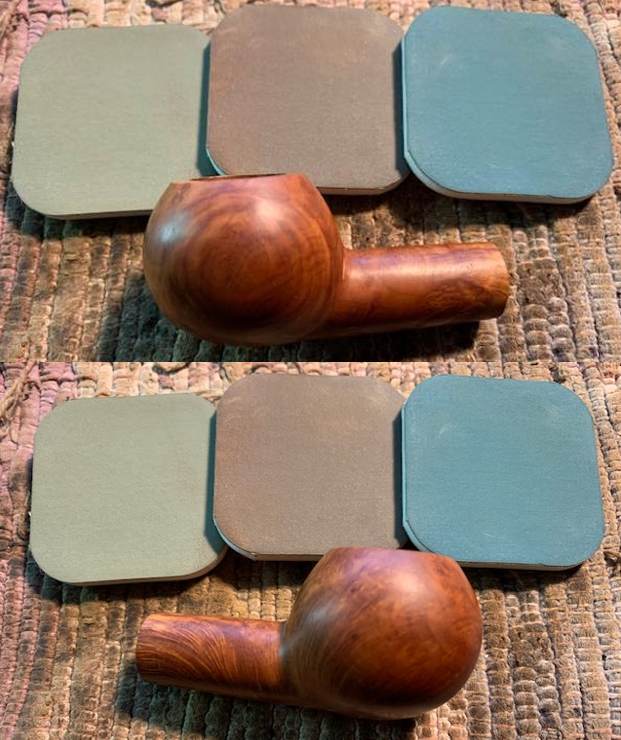
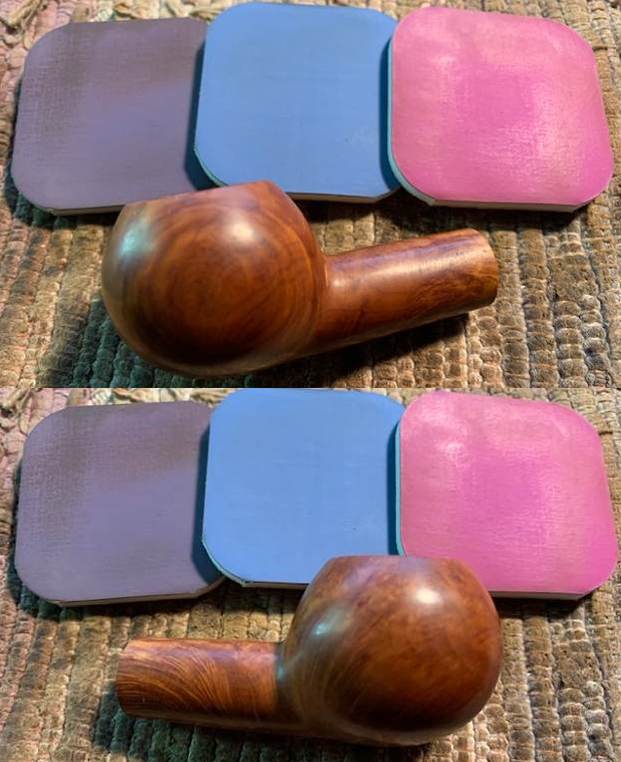
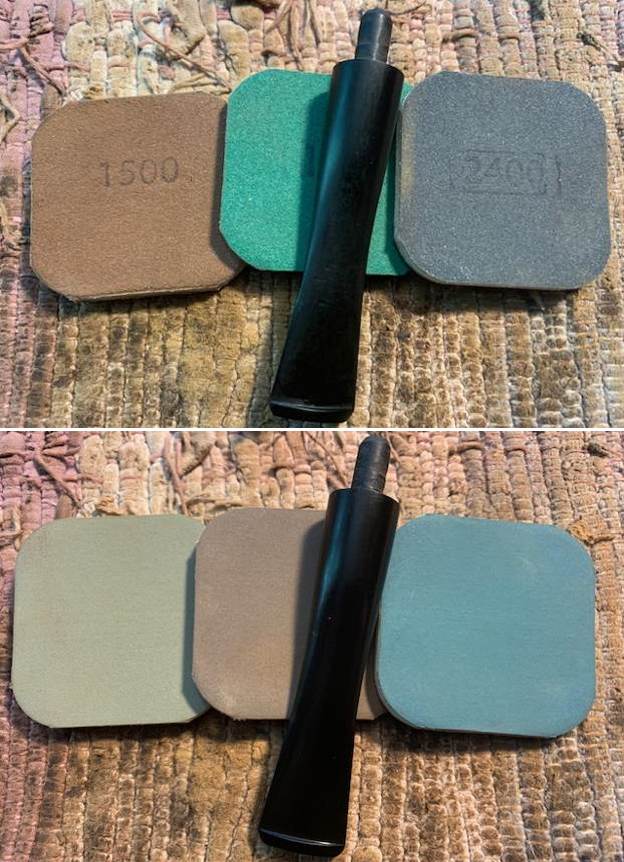
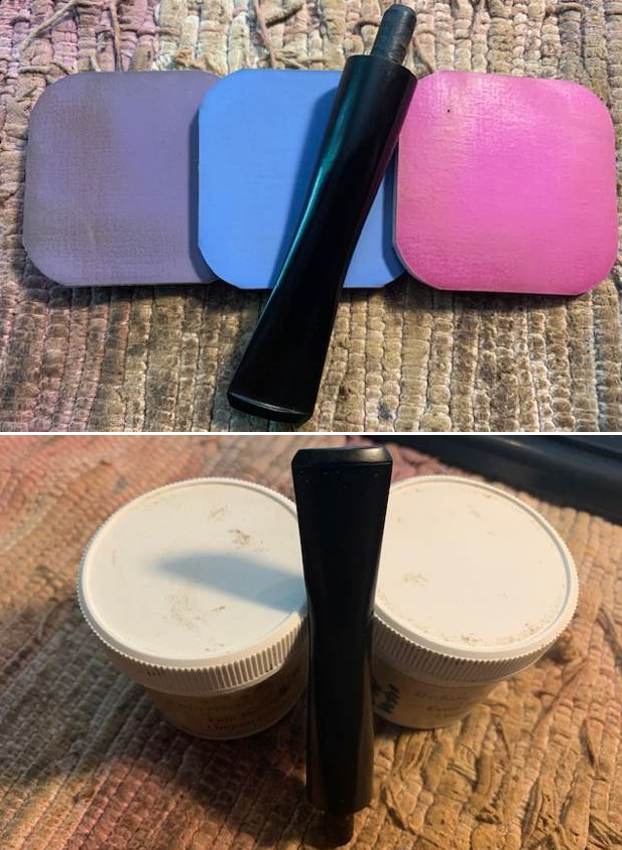
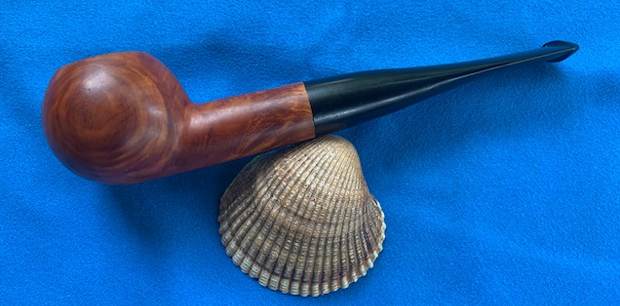
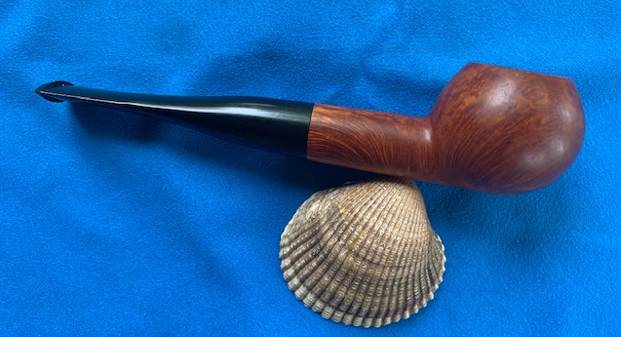
Before I started working on the pipe I took the little Dunhill Shell Briar Lovat for its inaugural smoke on the porch. I took a cup of fresh ground Honduran Medium Roast Coffee and a tin of Hearth and Home Louisiana Red with me. I loaded the bowl and sat watching the “world” walk by while I enjoyed the smoke. I finished the bowl and enjoyed a visit with Alex before getting back to the pipe. It is a great pipe and it was a great smoke.When I finally started to work on the pipe again I set the stem aside as it was in perfect condition and turned to work on the bowl. I decided to address the damage to the inner edge of the bowl and the rim top first. I used a folded piece of 220 grit sandpaper to give the inner edge of the bowl a slight bevel to minimize the darkening and damage and blend it into the surrounding briar.I polished the briar with micromesh sanding pads – dry sanding with 1500-12000 grit sanding pads. I wiped the bowl down with a damp cloth after each sanding pad. There was a dark spot on the top of the shank toward the bowl that appears to be a deep stain rather than a burn mark. It is solid and makes me wonder if the was just a spot on the briar that took the dark understain more deeply than the rest. The polishing of the rim top and inner edge brought the rim top colour to match the rest of the bowl. I did not need to stain the rim at all. I worked some Before & After Restoration Balm into the surface of the briar with my fingertips to clean, enliven and protect the briar. I let the balm sit for 15 minutes and then buffed with a cotton cloth to raise the shine. The photos show the bowl at this point in the restoration process. Since the stem was new condition the pipe was basically finished. I am excited to put the final touches on this newly restemmed Made in Ireland Peterson’s Dublin & London 36 Liverpool. I put the pipe back together and buffed it with Blue Diamond on the buffing wheel. I gave the bowl and the stem multiple coats of carnauba wax. I hand buffed the pipe with a clean buffing pad to raise the shine. It is fun to see what the polished bowl looks like with beautiful mixed grain all around it. Added to that the polished black vulcanite stem combined with the bowl and made a stunning pipe. This smooth Classic Older Peterson’s Liverpool 36 is great looking and the pipe feels great in my hand. It is light and well balanced. Have a look at it with the photos below. The dimensions are Length: 5 ½ inches, Height: 1 ½ inches, Outside diameter of the bowl: 1 1/8 inches, Chamber diameter: ¾ of an inch. The weight of the pipe is 39 grams/1.38 ounces. It is a beautiful pipe that I will soon be putting on the rebornpipes store in the Irish Pipe Makers section. If you are interested in adding it to your collection send me an email or a message. Thanks for walking through the restoration with me as I worked over this pipe. Thanks to each of you who are reading this blog.
Restoring and Reworking a Stem on a Ser Jacopo Maxima R2 Canadian


Blog by Steve Laug

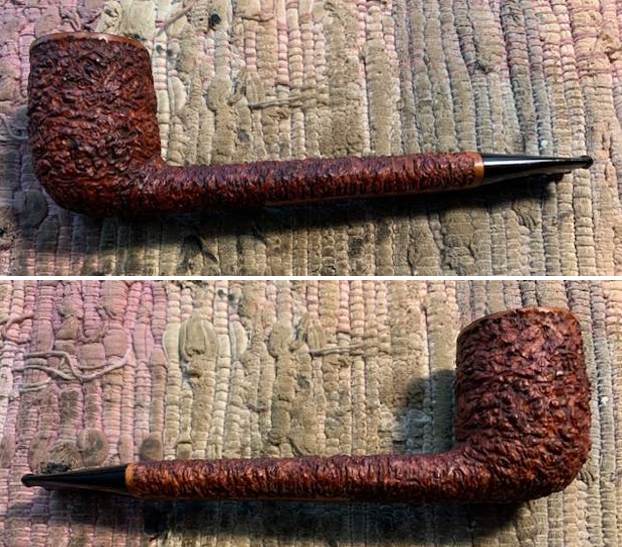
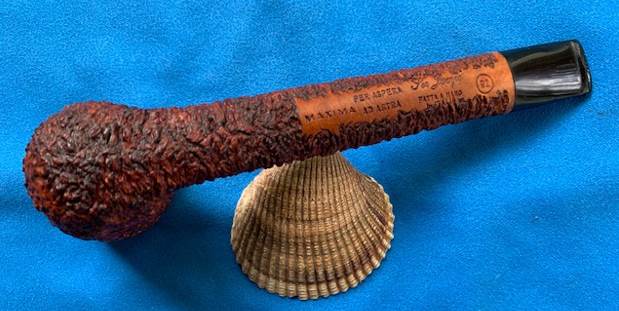
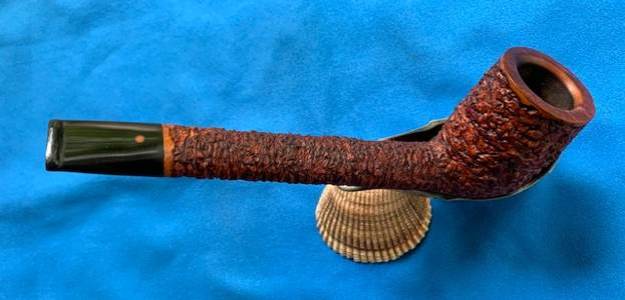
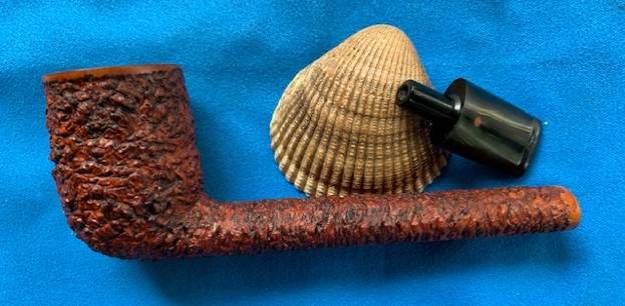
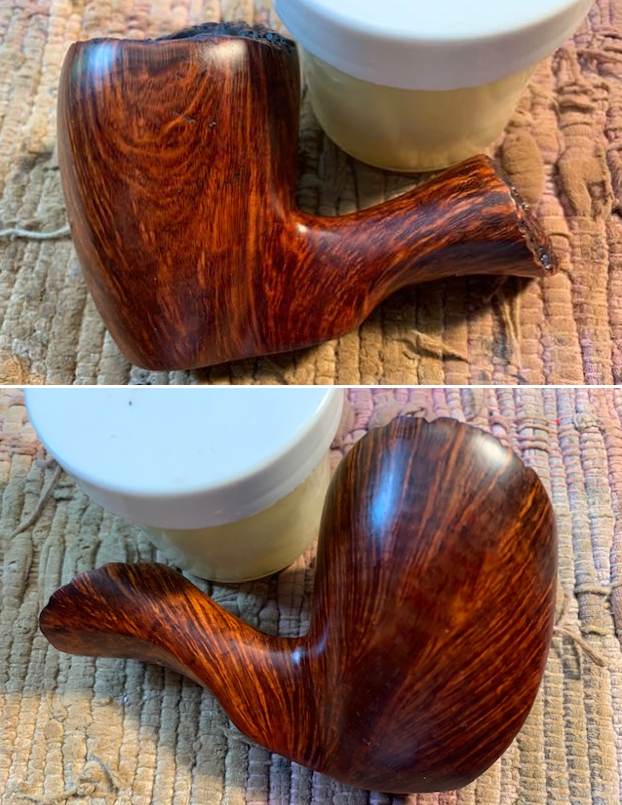
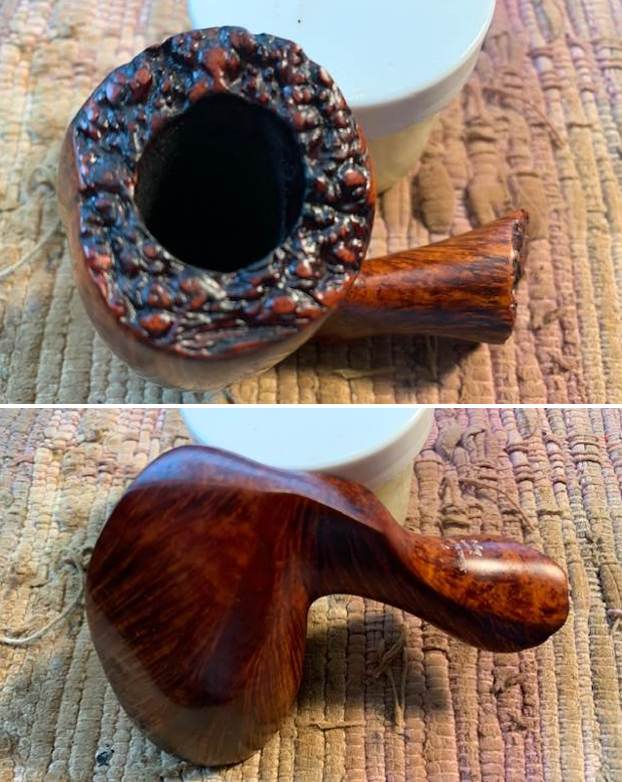
The next pipe on the table is a Rusticated Ser Jacopo Canadian that is proportionally well done. Jeff and I purchased a group of pipes on 04/26/2022 from a woman who contacted us from Cleveland, Ohio, USA. They had belonged to her husband’s father. We spent time chatting with her and arrived at a price and she sent the pipes to Jeff. It included 28+ pipes including this one.

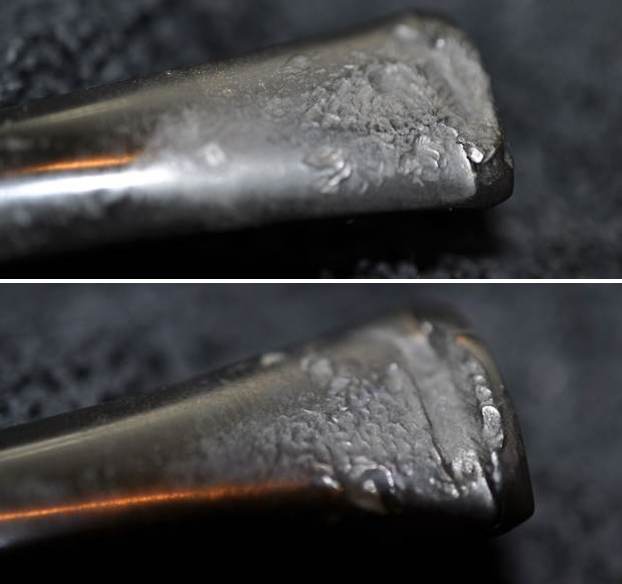
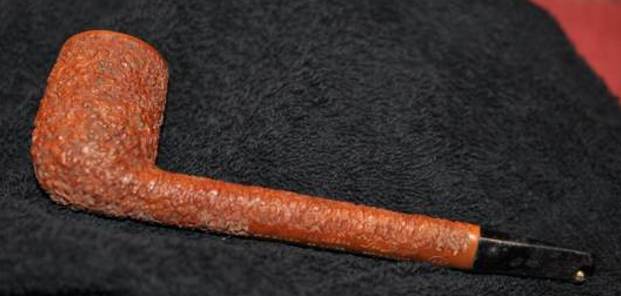
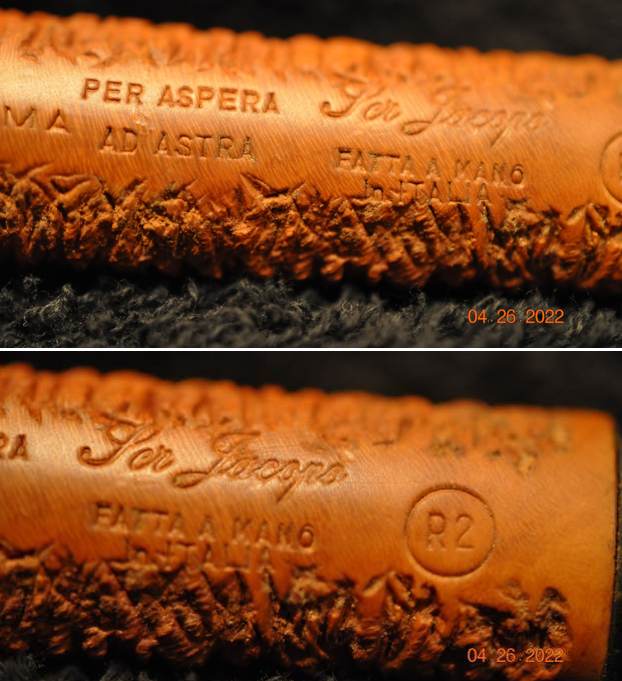
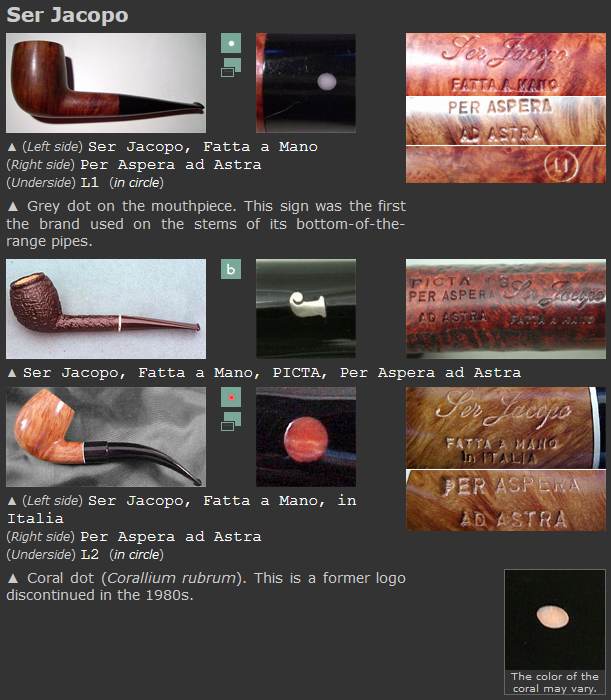
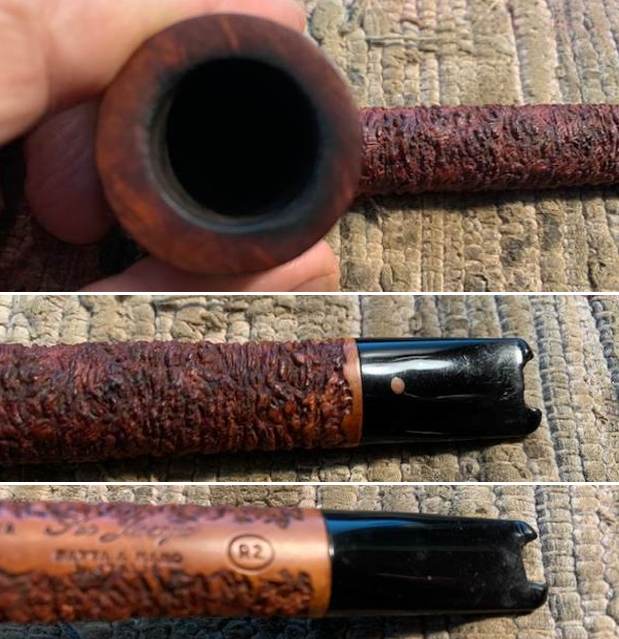
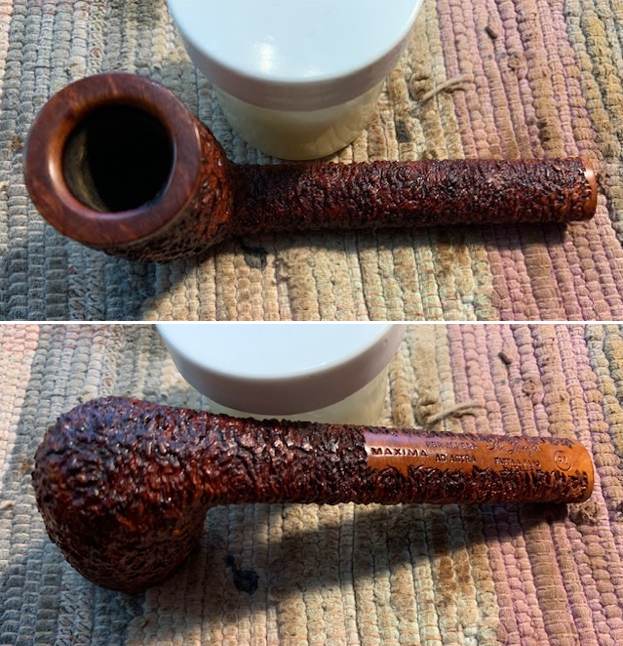
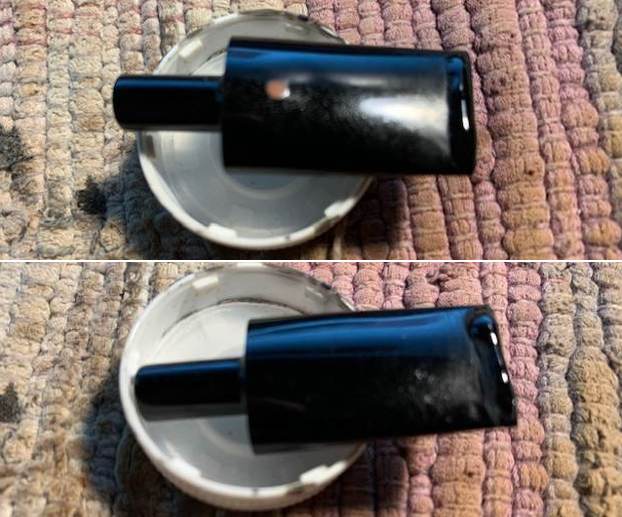
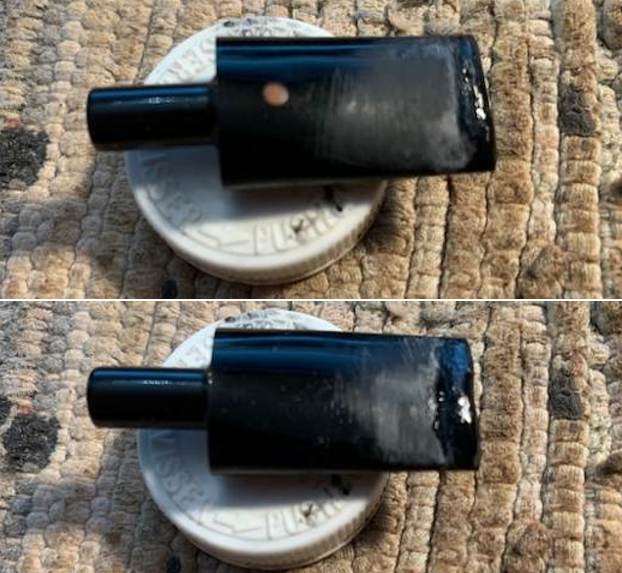
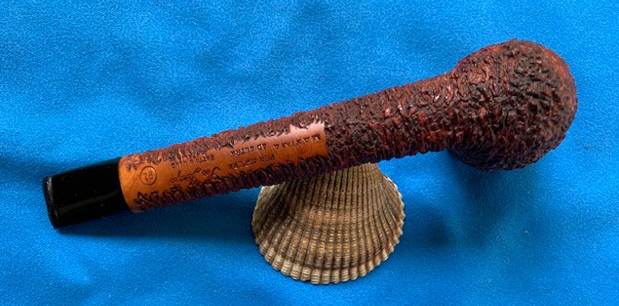
This Ser Jacopo Canadian is stamped on the underside and Maxima followed by Per Aspera [over] Ad Astra. That is followed by Ser Jacopo [over] Fatta A Mano [over] Italia. A circle R2 follows that next to the bowl/shank junction. On the top of the stem is a single coral dot. The finish was very dirty with spots of grime and debris ground into the rustication. The bowl had a thick cake in the bowl and heavy lava overflowing onto the rim top. The rim top appeared to have some burn damage on the inner edge of the bowl. The outer edges looked good. The acrylic stem was a disaster. It was gnawed off with only two points remaining on either side. The externals were filthy with calcification, oxidation and tooth marks and chatter on both sides ahead of what remained of the ruined button. Jeff took photos of the pipe before he started his clean up work on it. He took photos of the bowl and rim top to show the condition. You can see the thick cake in the bowl and rim top and edges. The lava is so thick that is hard to know what the edges and top look like underneath. The stem was heavily oxidized, calcified and the end of the stem and most of the button had been gnawed off. Overall the pipe is a real mess. Jeff took photos of the rusticated finish around the bowl sides and heel. It was nice looking if you can see through the grime ground into the surface. He took photos of the stamping on the underside of the shank. The stamping is clear and readable. It reads as noted above. I turned to Pipephil (http://pipephil.eu/logos/en/logo-s5.html) to remind myself of the background of the brand. I also wanted to see what the single Coral dot meant on the stem. I knew that the Coral dot was on the older pipes but that was all I knew. I include a screen capture of the section on the brand below. The third photo below shows a similar Coral dot on the stem.I am also including the information that I found there in the sidebar on PipePhil. I quote that below. I have highlighted the R2 designation below in red.

Founder of the brand in 1982: Giancarlo Guidi (1943 – †2012). Production (2006): ~ 6000 pipes/year. Ser Jacopo seconds: Gepetto.

Finish mark: Rusticated pipes: R1 (dark brown) R2 (light brown); Sandblasted pipes: S (black), S1 (dark brown), S2 (light brown), S3 (tanshell); Smooth pipes: L (red), L1 (acceptable grain), L2 (nice grain), L3 (exceptional grain).

I then turned to Pipedia (https://pipedia.org/wiki/Ser_Jacopo) to read some more about the brand and see if there were more details regarding the single Coral dot. I quote below.

Ser Jacopo (provided by Marble Arch Ltd., US importer and distributor of Ser Jacopo)

Smokingpipes.com has an excellent concise history available on their website Ser Jacopo History at Smoking Pipes.com

Ser Jacopo, better to say Ser Jacopo dalla Gemma, was started by Giancarlo Guidi in 1982 upon leaving Mastro de Paja.

Giancarlo Guidi and Bruto Sordini broke away from Mastro de Paja in 1981 in pursuit of their own company. Ser Jacopo was named after an Italian nobleman. Guidi and Sordini, having taken part in creating the now infamous Pesaro “school” of pipe making, wanted to expand further. To accomplish this, Ser Jacopo focused their efforts on the pairing of the briar with a seemingly endless variety of mounts. Through the use of precious metals and stones, horn, and exotic woods Ser Jacopo pipes are given unique characters that many collectors find quite aesthetically pleasing. Although Ser Jacopo pipes borrow heavily from classical shapes, they are indeed quite unique in style.

In addition to creative mountings, Ser Jacopo is also well known for making themed pipes, and the most famous of these themes is perhaps the Picta Series, where pipes are modeled after pipes seen in pictures by and of famous artists, such as Vincent Van Gough.

Ser Jacopo makes multiple grades of pipes, with the “entry” level being the Geppetto brand, and the highest grade being the “Gem” series.

The small Ser Jacopo shop produces approximately 6000 pipes per year. The pipes are known for using outstanding Italian briar, which is well seasoned. The pipes have earned a well-deserved reputation for having excellent smoking qualities, equal or better than any other fine Italian pipe maker (or, for that matter, any other pipe maker in the world).

Giancarlo Guidi passed away on August 6, 2012, leaving behind a great legacy. He was 64 years old.

Nomenclature – the section on the nomenclature helps understand the stamping on the underside of the shank. It is helpful and really quite interesting.

The standard nomenclature found on Ser Jacopo pipes is as follows:

Ser Jacopo Fatta A Mano In Italia Per Aspera Ad Astra  – Fatta A Mano translates to “Made By Hand”. Per Aspera Ad Astra is a Latin phrase found on Ser Jacopo pipes and is the Ser Jacopo motto. It translates to “To the Stars Through Travails”, meaning that success comes through hard work. In the Summer 1997 Pipes and Tobaccos article Giancarlo Guidi translated this as “through a difficult way until the stars are reached”.

Ser Jacopo Pipes are generally found in one of three finishes (rusticated, sandblast, smooth) designated by a letter and number code:

R1: Rusticated, dark brown or plum finish.

R2: Rusticated, light brown finish.

S:  Sandblast, black

S1: Sandblast, dark brown

S2: Sandblast, light brown

S3: Sandblast, tanshell

L:  Smooth, red, usually with silver trim

L1: Smooth, flame grain, various finishes

L2: Smooth, straight grain, various finishes

L3: Smooth, straight grain extra, discontinued

Dating Pipes

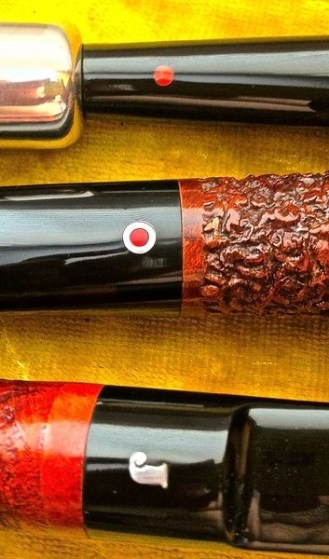
In the photo to the left you can see the development of the stem inserts on the pipes.

Top: Early Red Coral Logo Middle: Coral Logo with Silver Ring Bottom: Modern Day Silver J Logo – Courtesy of Mike Ahmadi

Ser Jacopo pipes is somewhat difficult, because Ser Jacopo does not generally use date codes (the exception being the Diamond Gemma series pipes, which are dated coded). Early pipes (from 1983 to 1997) featured a red coral dot on the mouthpiece, sometimes found encircled in a silver ring. This was discontinued and changed to a sterling silver letter “J”. On the Gemma series of pipes, the mouthpiece logo is a precious stone surrounded by an 18k gold ring.

The pipe I am working on is one of the early pipes (1983-1997). It is a lovely pipe with a deep and unique rustication. Now it is time to work on the pipe and bring it back to life.

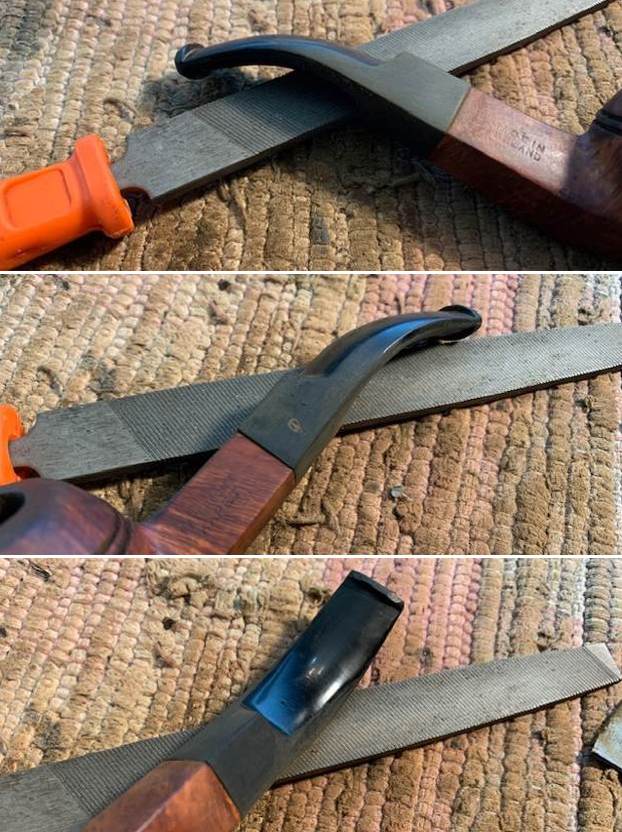
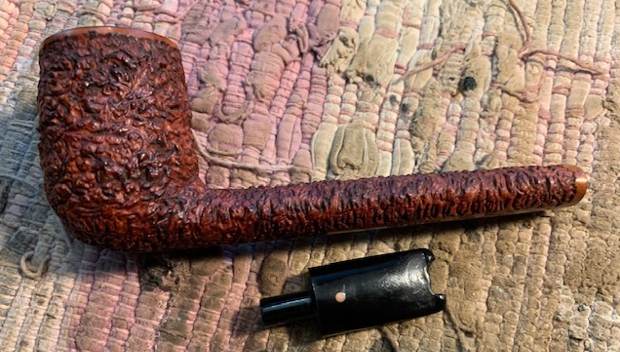
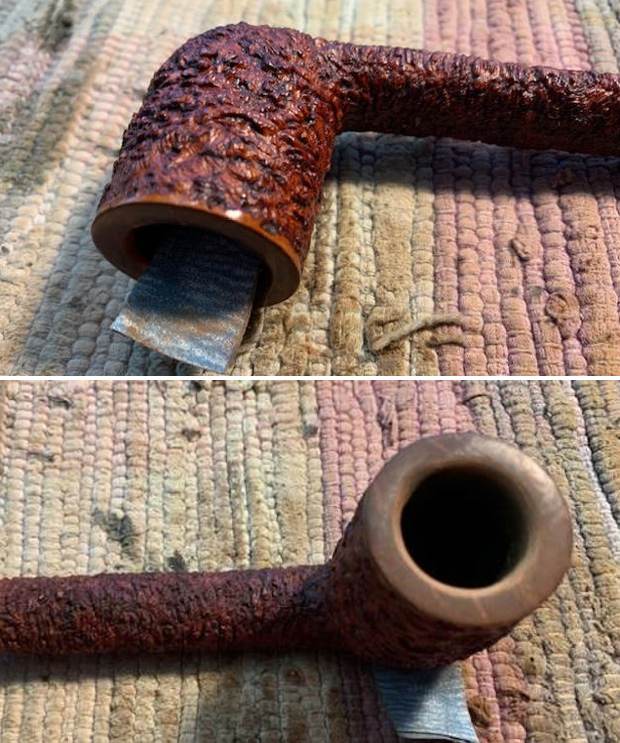
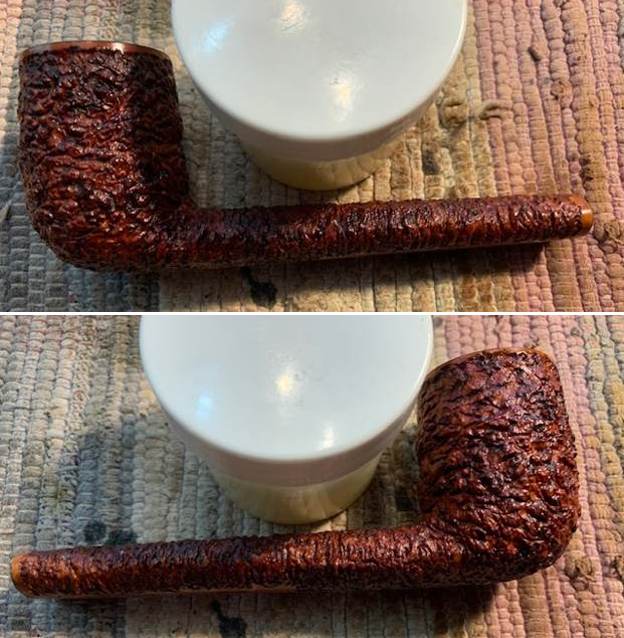
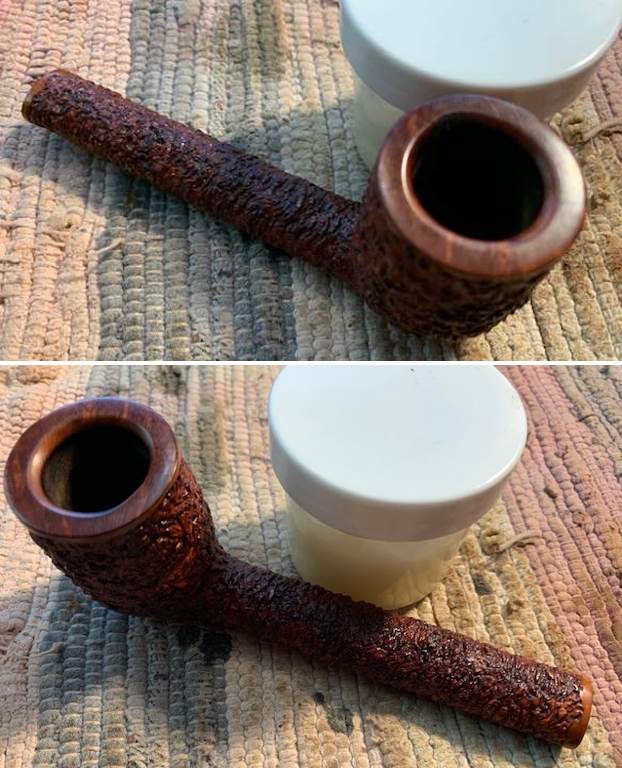
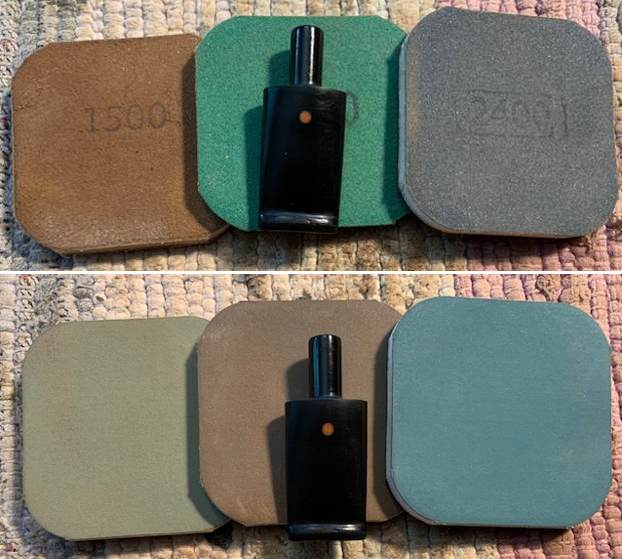
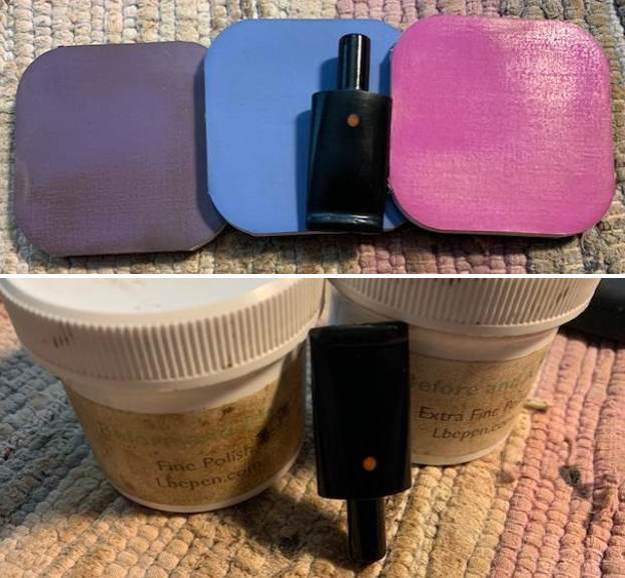
Armed with that information I turned to work on the pipe itself. Before he sent it to me, Jeff had done an amazing job cleaning the pipe. It almost looked like a different pipe after his work. He reamed the pipe with a PipNet pipe reamer and removed the rest of the cake with a Savinelli Fitsall Pipe Knife.  He scrubbed the bowl with undiluted Murphy’s Oil Soap and a tooth brush. He rinsed it under running warm water to remove the soap and grime. The finish looked very good and the rugged finish felt good in the hand. He cleaned out the inside of the shank and the airway in the stem with isopropyl alcohol, cotton swabs and pipe cleaners. He soaked the stem in Briarville’s Pipe Stem Deoxidizer and then rinsed it off with warm water. He scrubbed the stem with Soft Scrub and a tooth brush and rinsed it off with warm water. It looked amazing when I took it out of the package of pipes he shipped me. I took photos of the pipe before I started my part of the restoration work.   The rim top was cleaner and the inner edge of the bowl showed burn damage on the front right and back left. There was some chipping and damage around entire edge. The rim top and outer edge actually looked to be in good condition. The bowl was slightly out of round. The stem surface looked good with the oxidation gone and large chunk of the button missing. It was odd in that it was an even break on both sides and almost like a slot had been cut leaving behind two small thin posts on each side.I took a photo of the stamping on the underside of the shank. It is faint but is still readable as noted above.I took the stem off the shank and took a photo of the parts of the pipe. The overall look of the pipe is quite nice. The stem is quite stubby and short so that gave me an idea that I would explore later in the restoration.I started my portion of the work on this pipe by addressing the damage to the rim top and the inner edge of the bowl. I worked over the rim top with 220 grit sandpaper to remove the damage and the darkening. I used a folded piece of 220 grit sandpaper to smooth out the inner edge and give it a slight bevel to deal with the chipping and cutting that was present. It cleaned up remarkably well. With polishing and buffing it would look even better.I polished the smooth rim top with micromesh sanding pads – dry sanding with 1500-12000 grit sanding pads. I wiped the briar down with a damp cloth after each pad to remove the debris and sanding dust.The bowl looked very good at this point so I rubbed it down with Before & After Restoration Balm. I worked it into the surface of the bowl and shank with my fingertips and a horse hair shoe brush to clean, enliven and protect the briar. I let the balm sit for about 10-15 minutes and buffed with a cotton cloth to raise the shine. I buffed the bowl with a shoe brush to raise the shine on the bowl. It is a really nice looking pipe with a finish that has a look like cut glass to me. The rich brown of the stain vary through the layers of the rustication. It is very nicely done. I set the bowl aside and turned my attention to the stem. I cut of the two pegs that remained of the button and flattened the end of the stem against a topping board and 220 grit sandpaper. Surprisingly, it did not shorten the stem significantly. I did not feel that the pegs provided enough body to support a repair so I opted on shortening the stem and rebuilding the button with rubberized black super glue. I layered the repair on slowly, letting each layer cure before adding the next one. Once the repair cured I would need to reshape the button with files. I reshaped the button and the edge with a small file. The repaired button was beginning to look good at this point. I touched up the edge surface with CA glue to smooth and fill it in. Once the glue cured I sanded it with 220 grit sandpaper to continue the shaping. I repaired and resanded until I was happy with it. I started the polishing process with 400 grit wet dry sandpaper. I used a small pottery shaping saw to cut the slot in the end of the stem and shape it. It is getting closer and closer to being finished.I sanded the button surface some more with 220 grit sandpaper to further shape it. I filled in the air-pockets with superglue and let it cure until dry. Once it cured I started the polishing with micromesh sanding pads – dry sanding with 1500-12000 grit pads. I wiped the stem down after each pad with some Obsidian Oil. I polished it further with Before & After Stem Polish – both Fine and Extra Fine. I wiped it down a further time with Obsidian Oil and let it cure. This Beautiful Rusticated Ser Jacopo Maxima R2 Canadian with a Coral Dot is a great looking pipe now that it has been restored. The rich and unique rusticated works well with the polished, repaired and rebuilt vulcanite stem. I put the stem back on the bowl and carefully buffed the pipe with Blue Diamond on the buffing wheel using a light touch on the briar. I gave the bowl multiple coats of Conservator’s Wax and the stem multiple coats of carnauba wax on the buffing wheel and followed that by buffing the entire pipe with a clean buffing pad. I hand buffed the pipe with a microfiber cloth to deepen the shine. The finished Ser Jacopo Maxima Canadian is a large pipe that I am sure will be a great smoker. Give the finished pipe a look in the photos below. The dimensions of the pipe are Length: 6 ¼ inches, Height: 1 ¾ inches, Outside diameter of the bowl: 1 ¼ inches, Chamber diameter: ¾ of an inch. The weight of the pipe is 43 grams/1.52 ounces. I will be holding on to this one for awhile to test out the durability of the button rebuild. I take a moment to remind myself and each of us that we are trustees of pipes that will outlive us and the lives of many other pipe men and women who carry on the trust of their care and use. Thanks for reading this blog and my reflections on the pipe while I worked on it.

An Interesting Flea Market Find – an unsmoked, no name straight Apple


Blog by Steve Laug

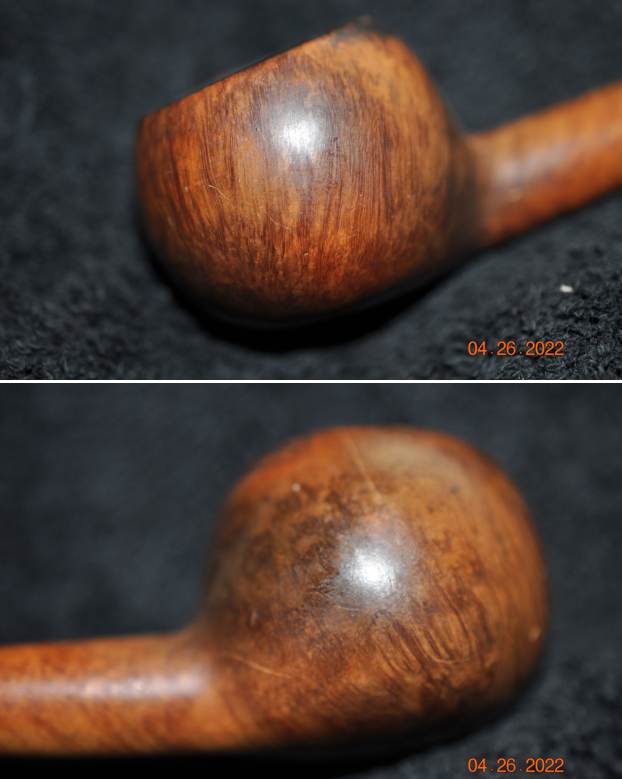
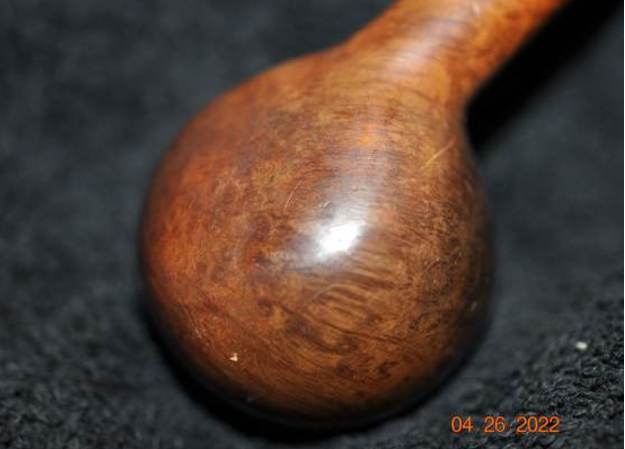
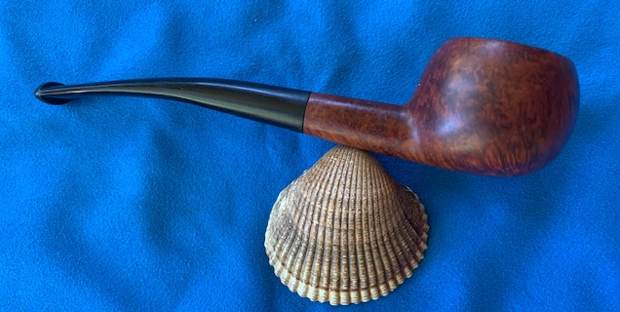
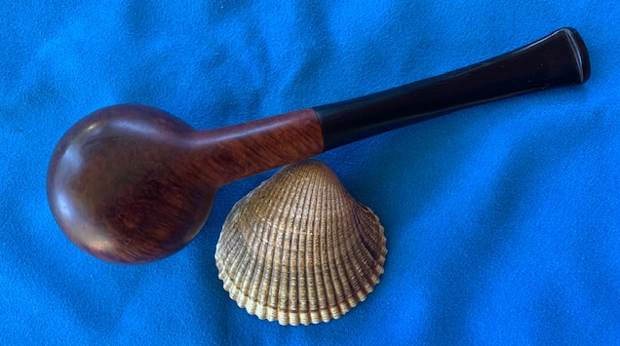
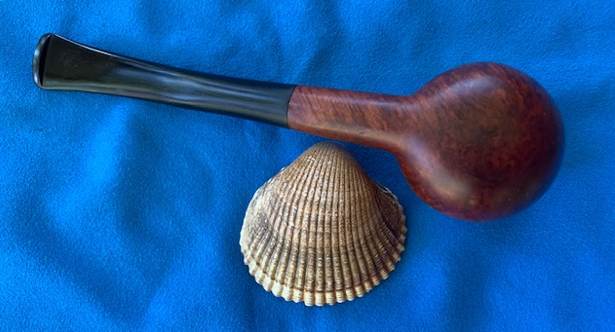
The next pipe I am working on is one that I found yesterday when my wife and daughters and I went for a walk about at the Vancouver Flea Market. It is a weekend tradition here in Vancouver and has a lot of interesting “treasures” among the detritus of very large warehouse garage sale. We make the trek through the place several times a year looking for the various things that we each collect. For me it always pipes and tobacciana. Yesterday I was not disappointed for there among all the normal Chinese made pipes with metal bowls, cobs and poorly made Meerschaum figurals I came across this little unsmoked straight Apple. It had no stamping on the sides of the shank. It is a nice piece of briar with lots of variations in the grain patterns around the bowl and stem sides. The rim top had a small nick on the left front top and outer edge. The bowl itself was clean, raw briar that had not been smoked. The airway drilling from the shank was centered and at the bottom of the bowl. The exterior of the bowl was dusty and there was gummed adhesive stuck on the shank and stem surface that had dried and hardened. The was protected somewhat by this so it was only lightly oxidized and there were no tooth marks on chatter on either side. It was tight in the shank and when twisted free the tenon and shank were very dusty. I took pictures of the pipe when I brought it home. I took photos of the bowl to show the overall condition of the bowl and rim top. You can see it is quite clean and unsmoked and you can see the chip out right front of the rim top. The stem was covered with the adhesive from labels somewhere along it journey.I carefully twisted the stem off the shank. It was very tight in the shank and once removed the tenon was covered with a dusty debris. It is a nice looking pipe and should clean up nicely.I used a cotton pad and some acetone to remove the stick adhesive on the stem and the shank. I wiped the bowl and stem down until it was clean and the stuff was removed. It looked better.I used a folded piece of 220 grit sandpaper to smooth out the chipped and damaged top and edge on the front left side of the rim top. It looked much better when I had finished.I cleaned out the inside of the shank and the airway to the bowl and in the stem with isopropyl alcohol, cotton swabs and pipe cleaners. It was dusty from sitting and there was some light stain that came off the inside of the mortise.I polished the briar with micromesh sanding pads to clean up the finish and give it a shine. I wet sanded with 1500-12000 grit pads and wiped the bowl down after each pad with a damp cotton cloth. The photos tell the story. I worked some Before & After Restoration Balm into the surface of the briar with my fingertips to clean, enliven and protect it. I let the balm sit for ten minutes and then buffed with a cotton cloth to raise the shine. I set the bowl aside and polished the vulcanite with micromesh sanding pads – 1500-12000 grit pads. I wiped it down with Obsidian Oil after each sanding pad. I used Before & After Pipe Polish – both Fine and Extra Fine to further polish the stem. I gave it a final coat of Obsidian Oil and set it aside to dry. With both parts of this Unsmoked No Name Straight Apple finished, I polished the bowl and the stem with Blue Diamond polish on the buffing wheel. I gave the bowl and the stem multiple coats of carnauba wax. I buffed the pipe with a clean buffing pad to raise the shine. I hand buffed it with a microfiber cloth to deepen the shine. The pipe polished up pretty nicely. The mix of grain on the bowl came alive with the buffing. The finish on the briar works well with the polished black vulcanite stem. The finished pipe is a well-proportioned mixed grain No Name Apple. Have a look at it with the photos below. The dimensions are Length: 5 ¾ inches, Height: 1 ½ inches, Outside diameter of the bowl: 1 ¼ inches, Chamber diameter: ¾ of an inch. This unsmoked pipe weighs 36 grams/1.31 ounces. This NOS Unsmoked Apple is yours to load with a favourite tobacco and break it in as you like. I will be putting this interestingly made Freehand in the American Pipe Maker Section of the rebornpipes store very soon. If you would like to purchase it and carry on the legacy of the previous pipe smoke send a message or an email to me. Thanks for walking through the restoration with me on this great looking little straight Apple.

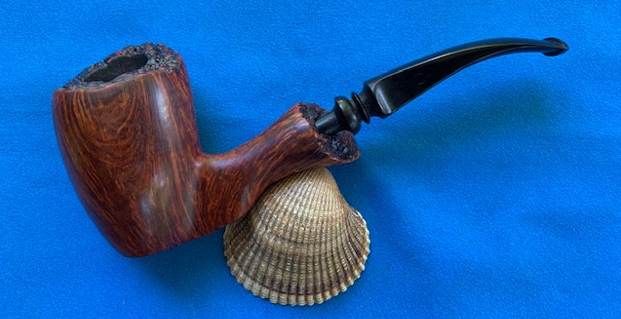
Restoring and Restemming a Burl King Freehand Bowl


Blog by Steve Laug

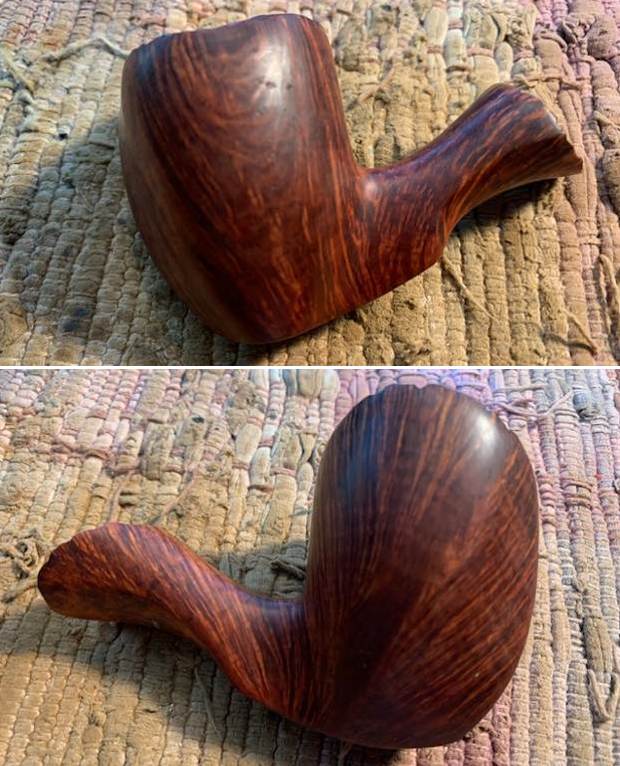
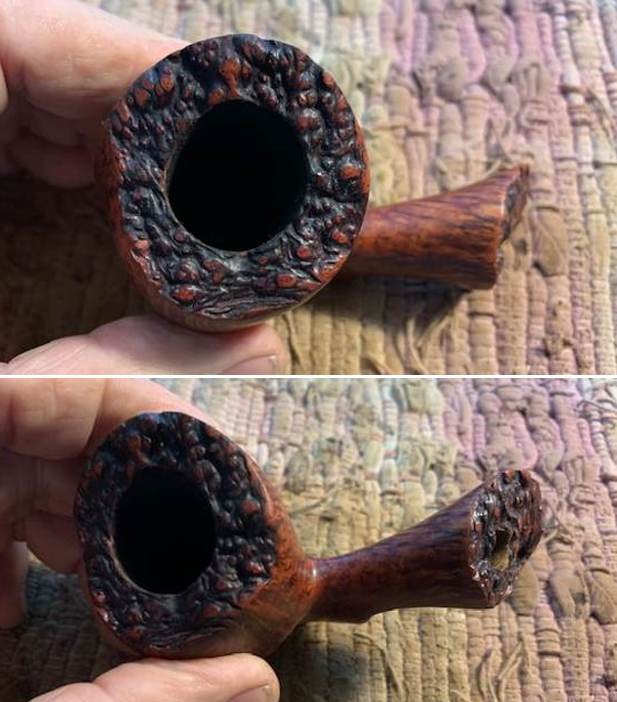
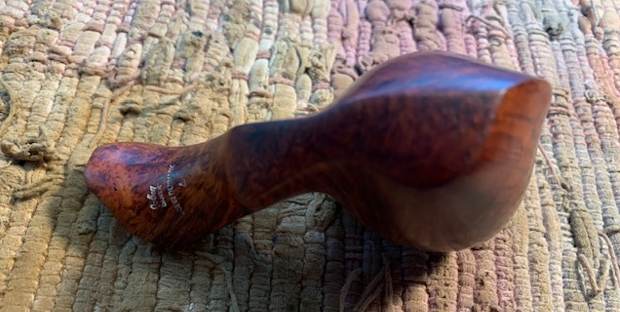
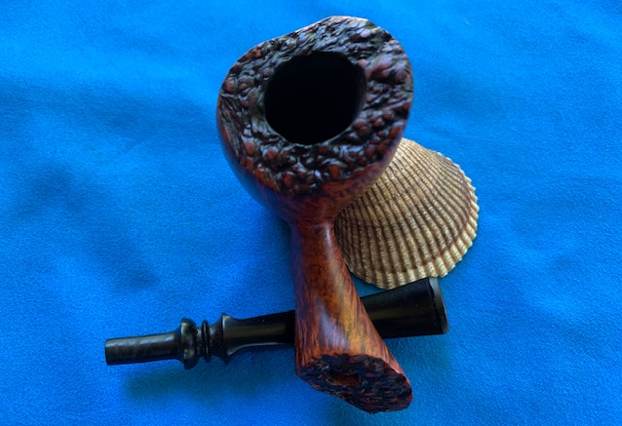
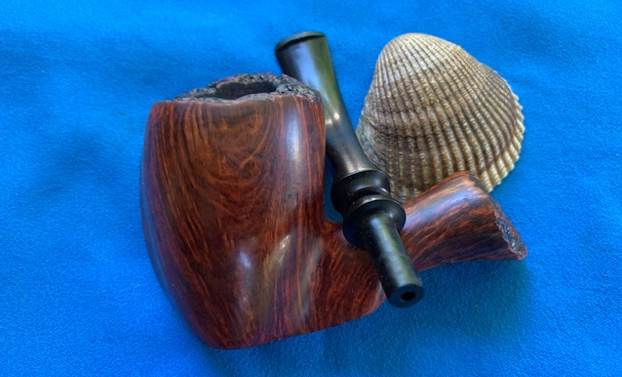
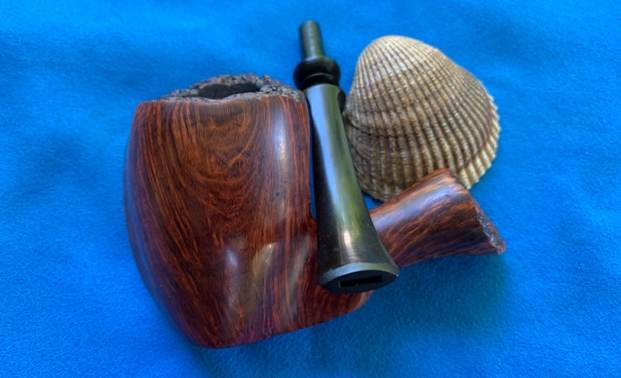
The next pipe in the queue came to us in August, 2020 from an Antique Mall in Logan, Utah, USA.  It is an interesting Freehand bowl that has a bridge over the top of the shank that forms a hole for the thumb when smoking. It has a smooth finish with a plateau on the top of the shank and bowl. I would need to find a fancy turned stem that would work with the bowl. The pipe is stamped on the left corner of the shank and clearly reads Burl King. On the underside of the shank it is stamped Israel. I think that this will be another nice looking piece once it is cleaned up and restemmed. The bowl is thickly caked with an overflow of lava on the rim top. The right side of the bowl toward the front and the heel were sandblasted. The top and edges of the bowl look good but I would be more certain once I reamed and cleaned it. The exterior of the briar was dirty with grime and dust. Jeff took photos of the pipe before my cleanup work. They tell the story and give a glimpse of the promise that we see in this pipe. He took photos of the plateau rim top to show the cake in the bowl, the lava on the rim top and the inner edge. He took photos of the stamping on the left corner of the shank and the underside. It is faint in spots but readable as noted above.Before working on the pipe I wanted to remind myself of the history and background of the brand. I remembered that I had restemmed and restored a Burl King stummel previously so I turned to the blog I had written. Here is the link to the previous blog and the pipe I had restored and restemmed (https://rebornpipes.com/2020/09/20/restemming-and-rebirthing-a-burl-king-freehand-bowl/).

From the blog I quote the following information on the brand and who made it. I find it interesting to note the various companies included in the manufacture and distribution of the pipe.

I turned to Pipedia to read about Burl King pipes (https://pipedia.org/wiki/Burl_King). I quote the entirety of the article and have included the advertisement that connects the pipe to Borkum Riff tobacco.

We need more information about Burl King. We can confirm that it was at one time a pipe used for promotion of Borkum Riff tobacco, as reported by Bob Taylor of the Seattle Pipe Club, who mailed in a coupon and received the pipe with a Postmark of Jan. 11, ’78, and a return address of Sparta, N. C., which indicates it may have come from the Dr. Grabow/Sparta Industries plant.

Bob recently noticed his “Burl King” was also marked, made in Israel, so it was likely made by the Shalom Pipe Factory, though apparently distributed through Sparta Industries. The box shipped for 50 cents and the return address said “After 5 days return to P. O. Box 21882 Greensboro, N. CC. 27240.” So apparently these pipes were made by Shalom, but distributed for Borkum Riff by Sparta Industries.

Others have indicated Burl King pipes were also made by Wally Frank.

I love the description as it truly captures the shape and beauty of this freehand pipe. The article above stated that the pipe is handcrafted by artists so that each one is a unique piece. It is cut from the plateau to leave that exposed on the top of the rim and down the shank to the end. It has a thumb hole cut for comfort in holding it while smoking. It is suggested that pipe sold for $60. Now to work on the pipe.

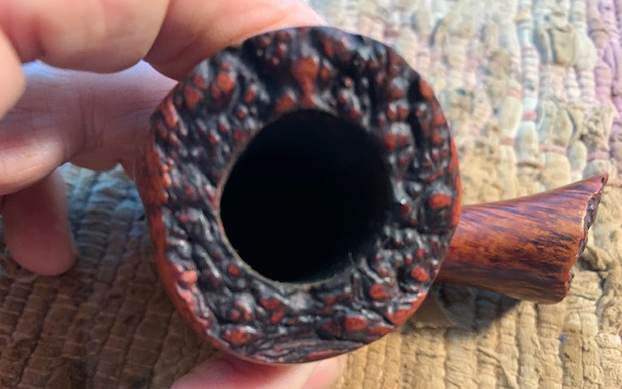
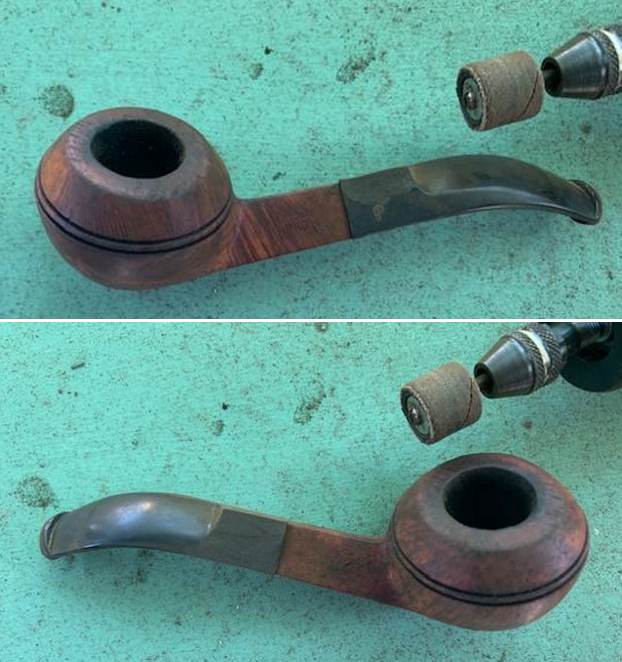
Jeff had cleaned up the pipe with his normal methods. He reamed the pipe with a PipNet pipe reamer and removed the rest of cake with a Savinelli Fitsall Pipe Knife.  He scrubbed the bowl with undiluted Murphy’s Oil Soap with a tooth brush. He rinsed it under running warm water to remove the soap and grime. He cleaned out the inside of the shank and the airway into the bowl with alcohol, cotton swabs and pipe cleaners. I took photos of the pipe once I received it. I took a close up photo of the rim top to show the general condition. You can see the darkening around the inner edge and some remaining lava in the crevices of the plateau but otherwise it looks good. The plateau extends all the way down the shank bridge and ends at the mortise end.I took photos of the stamping and though they are faint in spots in the pictures they are readable as noted above.I found a turned stem in my stem can that was a potential candidate for the pipe. The tenon on it was just a little bit to big in diameter and would need to be shaped to sit in the mortise properly. I used my Dremel and sanding drum to take off a little bit of the diameter until the fit was snug in the shank. Once I had the tenon adjusted I inserted it in the mortise and took photos of the pipe at this point. I set the stem aside and turned my attention to the bowl.I cleaned up the residual lava on the rim top with a brass bristle wire brush. I worked over the crevices in the plateau carefully to remove the debris. I used a folded piece of 220 grit sandpaper to sand the inner edge of the bowl and smooth it out. I polished the briar with micromesh sanding pads to clean up the finish and give it a shine. I wet sanded with 1500-12000 grit pads and wiped the bowl down after each pad with a damp cotton cloth. The photos tell the story. I worked some Before & After Restoration Balm into the surface of the briar with my fingertips and a horse hair shoe brush to clean, enliven and protect it. I let the balm sit for a little while and then buffed with a cotton cloth to raise the shine. I shaped the tenon end with 220 grit sandpaper to fine tune the fit in the shank. I still needed to polish it with 400 grit wet dry sandpaper to smooth out the marks left behind by the Dremel but it was getting there. I polished the vulcanite with micromesh sanding pads – 1500-12000 grit pads. I wiped it down with Obsidian Oil after each sanding pad. I used Before & After Pipe Polish – both Fine and Extra Fine to further polish the stem. With both parts of this unique Burl King Freehand finished, I polished the bowl and the stem with Blue Diamond polish on the buffing wheel. I gave the bowl and the stem multiple coats of carnauba wax. I buffed the pipe with a clean buffing pad to raise the shine. I hand buffed it with a microfiber cloth to deepen the shine. The pipe polished up pretty nicely. The mix of grain on the bowl came alive with the buffing. The finish on the briar works well with the polished black vulcanite stem. The finished pipe is a well-proportioned, nicely grained Burl King Freehand. Have a look at it with the photos below. The dimensions are Length: 7 ½ inches, Height: 3 inches, Outside diameter of the bowl: 1 ¾ inches, Chamber diameter: ¾ of an inch. This is a large pipe and weighs 102 grams/3.60 ounces. I will be putting this interestingly made Freehand in the American Pipe Maker Section of the rebornpipes store very soon. If you would like to purchase it and carry on the legacy of the previous pipe smoke send a message or an email to me. Thanks for walking through the restoration with me on this older Freehand collaboration between Shalom Pipe Factory, Israel, Borkum Riff Tobacco and Dr. Grabow.

Restemming and Restoring a Medico Varsity Italian Made Apple


Blog by Steve Laug

While I am not taking on new work as a general rule I am still doing repairs for a couple of the local pipe and cigar shops. That works well as it trickles in slowly and folks do not see to be in too much of a hurry to get the pipes back. It has made for some interesting repairs ranging from stems for cobs to replacement tenons for higher end pipes. I never know when they will come but they do come. I received a series of emails from a fellow referred to me by the local shop asking about a replacement stem/repair for his pipe. I asked for pictures of the pipe and a description of what he wanted done. He sent me  a few photos of the condition of the pipe. I have included them below for you to see and assess what is needed. If you assessed that it called for a new stem you were absolutely correct. The stem on the pipe was broken off from both directions. It was missing almost a ¼ inch of the stem length and the entirety of the button. It is obviously a Medico pipe with a filter – in this case a charcoal one. The last of his photos shows the bowl side and the stamping on the shank. It reads Medico [over] Varsity [over] Select Briar [over] Italy. The finish on the bowl looks pretty good – shiny with its thick varnish coat. I have no idea what the bowl and rim top look like at this point but I knew it needed a stem and that he wanted a filter stem. I told him to stop by and drop off his pipe as I probably had a stem that would work on it in my collection of stems. He was pretty pumped.

This afternoon a fellow dropped off the pipe and we talked for a bit about it. I would clean it and restore it for him. He liked the shiny coat so I would leave that intact depending on what was under the thick lava coat on the rim top. I would ream and refurbish the pipe for him. I had my mandate and he left the pipe with me. I took some photos of the pipe to show what it looked like when I received it. What do you think of it? It has a great apple shape and looks very Italian to me which the stamping confirms. I took a picture of the rim top to give you an idea of the thickness of the cake and the lava buildup on the rim top. While the rest of the pipe is shiny this is a mess. I captured the stem surface as well to show the damage to the stem. It is a definite stem replacement.I tried to capture the stamping on the shank side. It reads as noted above and there is a V logo on the side of the stem. The new stem will not have the logo.I took a photo of the pipe with the stem removed to get a sense of the proportions and look of it. I actually quite like the shape.I went through my can of stems to see what I could find that would fit the shank. I had several Medico stems but I chose this relatively new looking stem that fit quite well and had the same diameter as the old one and had the aluminum spacer. I fit the stem on the bowl and took photos of the look of the pipe with the new stem. It worked perfectly. I took the stem off the bowl and set it aside. I reamed the bowl with a Pipnet pipe reamer and took the cake back to bare walls. I cleaned up the reaming with a Savinelli Fitsall Pipe Knife. I sanded the bowl walls with 220 grit sandpaper wrapped around a dowel. The walls were in good condition. I cleaned out the internals of the mortise/shank/ and airway in the shank and stem with pipe cleaners, cotton swabs and isopropyl alcohol.  I have several boxes of Dr. Grabow and Medico Filters. I pulled out a new charcoal filter made by Grabow to replace the one that was in the old stem.I rubbed the bowl down with Before & After Restoration Balm. I worked it into the briar with my finger tips. It works to clean, enliven and preserve the briar. I let it sit on the pipe for 10 minutes and then buffed it off with a clean cloth. The bowl has a rich look to it now and the rim top is clean. I set the bowl aside and turned my attention to the new stem. It was in great condition so it just needed to be polished. I polished the stem with micromesh sanding pads – wet sanding with 1500-12000 grit sanding pads. I wiped it down after each sanding pad with Obsidian Oil. I polished it with Before & After Pipe Stem Polish – both Fine and Extra Fine and wiped it down with Obsidian Oil one more time. I am glad to finish this Italian Made Medico Varsity Apple. I put the pipe back together and buffed it with Blue Diamond on the buffing wheel. I gave the bowl and the stem multiple coats of carnauba wax. I hand buffed the pipe with a clean buffing pad to raise the shine. It is fun to see what the polished bowl looks like with beautiful mixed grain all around it. The polished grain on the pipe looks great with the black taper stem. This smooth Medico Varsity Apple is great looking and the pipe feels great in my hand. It is light and well balanced. Have a look at it with the photos below. The dimensions are Length: 5 ½ inches, Height: 1 ½ inches, Outside diameter of the bowl: 1 ¼ inches, Chamber diameter: ¾ of an inch. The weight of the pipe is 39 grams/1.38 ounces. It turned out to be a beautiful pipe. I have called the pipeman who owns it and he will be picking it up on the weekend. Thanks for your time reading this blog and as Paresh says each time – Stay Safe.  
New Life for a BBB Tortoise 403S Straight Bulldog


Blog by Steve Laug

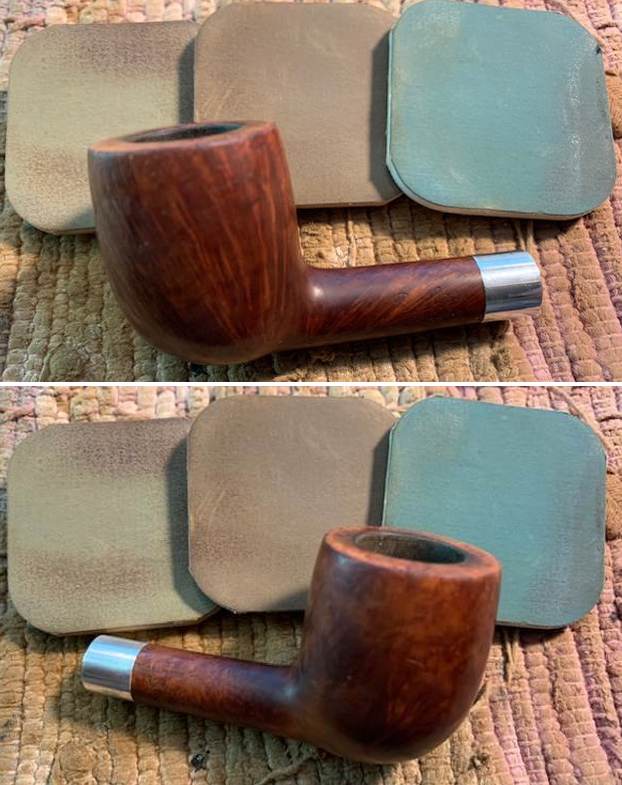
It was time to work on one of the pipes that was purchased off EBay back in 06/05/2016 from a seller in Frederiksberg, Denmark. This one is a straight Bulldog with a diamond shank and a saddle stem. The rim topped is worn and dirty and had darkening and burn damage on the front rim top and bowl. It also has some darkening on the lower part of the bowl on both sides. It is stamped on the left side of the shank BBB in a diamond [over] Tortoise followed by RJ. On the right side it is stamped London, England and the shape number 403S. The stem has a BBB Diamond medallion on the topside of the saddle. The pipe was very dirty with a thick cake in the bowl and some lava overflowing on to the rim top. It was hard to know what the inner edge of the rim looked like because of the lava and cake. From the photos there seemed to be some damage to the inner edge at the front of the bowl but I could not be sure. The shank was quite dirty so the tenon did not seat in the shank. The stem was pearlized white. There was light tooth chatter and tooth marks on both sides of the stem at the button. Jeff took the following photos before he started his cleanup.  He took photos of the rim top to show the thick cake in the bowl and the overflow of lava. The cake is thick and hard and the lava overflow is a thick band around the bowl. The bowl is a real mess. This must have been a great smoking pipe. There were not photos of the stem surface to include as we did not take photos of that at this point in time.Jeff took photos of the stamping to capture the clarity of it even under the grime. The brand and the shape number are very readable. He also took a photo of the BBB Diamond Medallion on the stem top.I turned to Pipephil (http://pipephil.eu/logos/en/logo-bbb.html) to see what I could learn about the BBB Tortoise Model. The pipes that came with a pearlized stem that almost looked like it was made of abalone. It was acrylic of some sort but has the softness of vulcanite. It is remarkable material. I have included a screen capture of the section on the Tortoise.I turned to address the pipe itself. Jeff had cleaned up the pipe for me. He reamed the bowl with a PipNet pipe reamer and cleaned it up with a Savinelli Fitsall Pipe Knife. He scrubbed the exterior with Murphy’s Oil Soap and a tooth brush to clean off the grime off the finish and the heavy overflow of lava on the rim top. He cleaned up the internals of the shank, mortise and stem with pipe cleaners, cotton swabs and alcohol to remove all of the oils and tars in the pipe. He scrubbed the stem Soft Scrub to clean off the grime and grit. When it arrived here in Vancouver it was a clean pipe and I knew what I had to work with. I took photos of it before I started my part of the restoration.  I took photos of the rim top and the stem to show their condition. Jeff was able to clean up the incredibly thick cake and lava overflow that was shown in the rim and bowl photos above. He was also able to get rid of the grime and grit in the surface of the briar. There was some burn damage on the rim top and the inner and outer edge toward the front of the bowl. There was also some darkening on the rest of the rim top. The stem was much cleaner than before. There was some staining just ahead of the button.I took photos of the stamping on the sides of the shank and stem. They are a bit faint but are readable as noted above.I removed the stem and took a photo of the pipe to show the parts and the size of the stem compared to the shank and bowl. It is a well made pipe.I decided to address the bowl first. I worked on both the rim damage and try to minimize the burn damage on the front top and on the inner and outer edges. I worked on the inner edge of the rim first using a folded piece of 220 grit sandpaper smooth out the damage and give a light bevel to the inner edge. I next tried to lightly top the bowl with a medium sanding sponge to see if I could minimize it further. While it was better I was not happy with it at this point. The rim top has a slight dip where the burn had been and the top was not flat. I decided to do a more radical topping on the topping board with 180 grit sandpaper. I took off a minimal amount just to flatten the rim top. I would need to clean up the inner edge again but I liked the look the pipe was beginning to have.I polished the briar, including the inner edge of the bowl with micromesh sanding pads – dry sanding with 1500-12000 grit pads. I wiped the bowl down after each pad with a damp cloth. I rubbed the bowl and shank down with Before & After Restoration Balm to deep clean the finish on the bowl and shank. The product works to clean, enliven and protect the briar. I worked it in with my fingers to get it into the briar. After it sat for a little while I wiped it off and buffed it with a soft cloth. The briar really began to have a rich shine. I took some photos of the bowl at this point to mark the progress in the restoration. It is a beautiful bowl and even the burn damage it not too intrusive – it is present but not too distracting as it is now just darkening. With the exterior cleaned and polished I looked down the shank with a light and saw that the shank was still quite oily looking. I cleaned it and the airway into the bowl with alcohol, pipe cleaners and cotton swabs. I cleaned out the airway in the stem and removed the dark tars and material that was on the internal of the slot and V into the airway. It took time and some extra work but I was able to clean both well.  I set the bowl aside and worked on the externals of the stem at this point in the process. I polished it with micromesh sanding pads – dry sanding with 1500-12000 grit pads. I wiped the stem down after each pad with Obsidian Oil to enliven and protect the stem material. I used the Before & After Pipe Polish to remove the small minute scratches left in the pearlized stem even after the micromesh regimen. I finished by wiping the stem down with a final coat of Obsidian Oil and set it aside to dry.  I put the stem back on the pipe and took the pipe to the buffer. I worked it over with Blue Diamond to polish out the remaining small scratches. I gave the bowl and the stem several coats of carnauba wax and buffed the pipe with a clean buffing pad to raise the shine. I hand buffed it with a microfiber cloth to deepen the shine. The pipe polished up really well and even the newly beveled rim top looked good. I was happy with the results of the reworking of the rim. The finished pipe is shown in the photos below. The unique BBB 403S Straight Bulldog Tortoise shape and look of the pipe is a beauty which epitomizes the BBB Tortoise pipes that I have restored. It is a very stunning looking pipe with the mixed grain and the pearlized stem. The polished stem looks really good with the browns of the briar. The dimensions of the pipe are Length: 5 ½ inches, Height: 1 ¾ inches, Outside diameter of the bowl: 1 ¼ inches, Chamber diameter: ¾ of an inch. The weight of the pipe is 1.06 ounces/30 grams. This is another pipe that I will be putting it on the rebornpipes online store in the British Pipe Makers Section shortly, if you are interested in adding it to your collection. Thanks for walking through the restoration with me on this beauty!

Restoring and Restemming a Bari Pearl 7075 with a Bamboo Shank


Blog by Steve Laug

Jeff and I went through all the bowls that we had in boxes at his place recently. We wanted to consolidate them into one place and clean them all up. We sorted them as we went through them all. Many ended up being junk while a large number went into a box to be sent to me for restemming. One of those which caught my attention was an interesting bowl with a well coloured bamboo shank. It had a vulcanite spacer between the briar and the one knuckle piece of bamboo and another one at the shank end. It was a nice Brandy shape pipe with some great grain around the sides and shank. The bowl had been smoked and the top had some darkening and slight damage on the flat top and inner edge. The bamboo had a nice patina to it that showed that it had been someone’s favourite and had been well smoked. The shank end was smooth so a tight fit would be easy to do. It was stamped on the underside of the shank and read BARI [over] Pearl [over] Made In [over] Denmark [over] 7075 which is the shape number. Jeff had reamed and cleaned it before he sent it to me so it was in good shape when it arrived today. When I unpacked the box of bowls this one caught my eye. I wanted to restem it so I pulled it out to work on next. I took a photo of the rim top and edges to show the condition. You can see that it is damaged on the top and both edges. There is some darkening on the top and edges and there are some rough spots around the bowl top and edges. I took a photo of the stamping on the underside of the shank. It reads as noted above. It is clear and readable though faint in spots.I turned to Pipephil to see if I could find information on the Pearl model but there was nothing there on the model (http://pipephil.eu/logos/en/logo-b1.html). I quote from the sidebar below and also have included a screen capture of the information.

Brand founded by Viggo Nielsen in 1950 and sold to Van Eicken Tobaccos in 1978. At this time Age Bogelund managed Bari’s production. The company has been bought in 1993 by Helmer Thomsen. Bari’s second: Don, Proctus.  I then turned to Pipedia for some history of the brand and also to see if there as information on the Pearl model (https://pipedia.org/wiki/Bari). I have included the history below. There was also a photo that was done by Smoking Pipes.com and had a copy right so I did not include it. It did help me determine the kind of stem to use on the pipe.

Bari Piber was founded by Viggo Nielsen in Kolding around the turn of 1950/51. Viggo’s sons Kai Nielsen and Jørgen Nielsen both grew into their father’s business from a very young age and worked there till 1975.

Bari had very successfully adapted the new Danish Design that had been started mainly by Stanwell for it’s own models. When Viggo Nielsen sold Bari in 1978 to Joh. Wilh. von Eicken GmbH in Hamburg Bari counted 33 employees.

From 1978 to 1993 Åge Bogelund and Helmer Thomsen headed Bari’s pipe production. Thomson bought the company in 1993 re-naming it to Bari Piber Helmer Thomsen. The workshop moved to more convenient buildings in Vejen. Bogelund, who created very respectable freehands of his own during the time at Bari got lost somehow after 1993.

Bari’s basic conception fundamentally stayed the same for decades: series pipes pre-worked by machines and carefully finished by hand. Thus no spectacular highgrades but solid, reliable every day’s companions.

The most famous series are the smooth “Classic Diamond” and the blasted “Wiking”.

I did a quick Google search for the Bari Pearl pipe and found that Smokingpipes.com had quite a few different shapes of the model. It was interesting that all of them had a single knuckle like the one that I was working on and that the bamboo had been shaped and tapered on the front toward the bowl and toward the shank end. All of them had a vulcanite space on both ends of the bamboo. They were pretty pipes.

With that it was time to work on the pipe. I went through my cans of stems and found three possibilities. Two of them were short saddle stems and one was a longer taper stem. I tried all three of them and my daughters and I decided to use the tapered longer one. It is similar in shape to several of the ones I saw in the photos of the Pearl on Google.

I then turned to Pipedia for some history of the brand and also to see if there as information on the Pearl model (https://pipedia.org/wiki/Bari). I have included the history below. There was also a photo that was done by Smoking Pipes.com and had a copy right so I did not include it. It did help me determine the kind of stem to use on the pipe.

Bari Piber was founded by Viggo Nielsen in Kolding around the turn of 1950/51. Viggo’s sons Kai Nielsen and Jørgen Nielsen both grew into their father’s business from a very young age and worked there till 1975.

Bari had very successfully adapted the new Danish Design that had been started mainly by Stanwell for it’s own models. When Viggo Nielsen sold Bari in 1978 to Joh. Wilh. von Eicken GmbH in Hamburg Bari counted 33 employees.

From 1978 to 1993 Åge Bogelund and Helmer Thomsen headed Bari’s pipe production. Thomson bought the company in 1993 re-naming it to Bari Piber Helmer Thomsen. The workshop moved to more convenient buildings in Vejen. Bogelund, who created very respectable freehands of his own during the time at Bari got lost somehow after 1993.

Bari’s basic conception fundamentally stayed the same for decades: series pipes pre-worked by machines and carefully finished by hand. Thus no spectacular highgrades but solid, reliable every day’s companions.

The most famous series are the smooth “Classic Diamond” and the blasted “Wiking”.

I did a quick Google search for the Bari Pearl pipe and found that Smokingpipes.com had quite a few different shapes of the model. It was interesting that all of them had a single knuckle like the one that I was working on and that the bamboo had been shaped and tapered on the front toward the bowl and toward the shank end. All of them had a vulcanite space on both ends of the bamboo. They were pretty pipes.

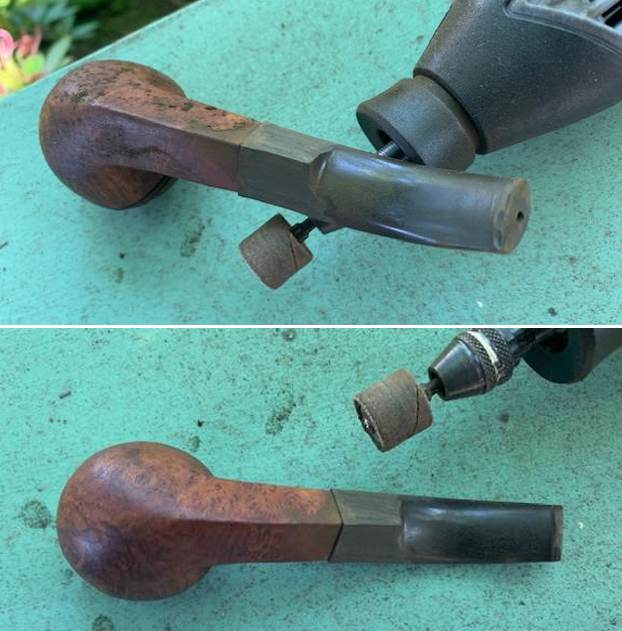
With that it was time to work on the pipe. I went through my cans of stems and found three possibilities. Two of them were short saddle stems and one was a longer taper stem. I tried all three of them and my daughters and I decided to use the tapered longer one. It is similar in shape to several of the ones I saw in the photos of the Pearl on Google. I lightly sanded the shank end of the stem and the tenon and fit it in the shank of the pipe. I took photos of it to give a sense of the look. The fit against the shank is very good. I reshaped the shank end to make the transition between the shank space and the stem smooth with my Dremel and a sanding drum. I need to fine tune the fit but the look is very good.I filled in some pits on the shank end and on the top of the stem surface ahead of the button using black super glue. I also filled in some damaged spots on the shank end of the stem with the glue. I flattened the repaired areas with a flat file to smooth them out and blend them into the surface. I started sanding the surface smooth with 220 grit sandpaper. I heated some water in a coffee mug and dipped the stem into the boiling water to soften it. Once it was pliable I gave it a slight bend to adjust the look of the shank and stem.I had some more sanding to do at the stem shank transition and the repaired area on the topside of the stem near the button but the fit and shape of the pipe and stem was starting to look very nice. I took photos of the pipe at this point in the process. I set the stem aside for awhile and turned my attention to the bowl. I worked over the rim top and edges of the bowl with 220 grit sandpaper. I smoothed out the nicks on the top and edges and reshaped the inner edge. The rim top and edges looked much better at this point.I polished the briar with micromesh sanding pads – dry sanding with 1500-12000 grit pads. After each pad I wiped the bowl down with a damp cloth to remove the sanding debris. It really took on a shine by the last three sanding pads. I rubbed the bowl down with Before & After Restoration Balm. I worked it into the surface of the briar where it works to clean, restore and preserve the briar. I let it do its magic for 15 minutes then buffed it off with a cotton cloth. The pipe looks incredibly good at this point in the process. With that the bowl had come a long way from when I started working on it. I set it aside and turned my attention to the stem. I sanded the stem surface with a folded piece of 220 grit sandpaper to finish removing the scratch a marks. I started the polishing with 400 grit wet dry sandpaper.I continued to polish the stem with micromesh sanding pads – wet sanding with 1500-12000 grit sanding pads. I wiped it down after each sanding pad with Obsidian Oil. I polished it with Before & After Pipe Stem Polish – both Fine and Extra Fine and wiped it down with Obsidian Oil one more time. I am excited to finish the restemming and restoration of this Bari Pearl 7075 Bamboo Shank Brandy. I put the pipe back together and buffed it with Blue Diamond on the buffing wheel. I gave the bowl and the stem multiple coats of carnauba wax. I hand buffed the pipe with a clean buffing pad to raise the shine. It is fun to see what the polished bowl looks like with beautiful mixed grain all around it. The polished grain on the pipe looks great with the black vulcanite stem. This smooth Bari Pearl Bamboo Shank Brandy is great looking and the pipe feels great in my hand. It is light and well balanced. Have a look at it with the photos below. The dimensions are Length: 7 inches, Height: 1 ½ inches, Outside diameter of the bowl: 1 inch, Chamber diameter: ¾ of an inch. The weight of the pipe is 46 grams/ 1.62 ounces. It turned out to be a beautiful pipe. I will be putting it on the rebornpipes store in the Danish Pipemakers Section soon. If you would like to add it to your collection let me know by email or message. Thanks for your time reading this blog and as Paresh says each time – Stay Safe.
Good to know I can fix my foul ups! Replacing a Broken Tenon on a Ronson Centenary Bulldog


Blog by Steve Laug

I went back and revisited the blog/review I wrote on this pipe back in 2013. I am including the link (https://rebornpipes.com/2013/02/15/review-of-a-ronson-centenary-bulldog/) and the first paragraph of the review below.

I picked this pipe up for a really cheap price on EBay. It came in a beautiful handmade wooden box lined with dark blue velvet on the inside of the box and the lid. The lid also has the golden Ronson logo. Ronson is famous for the lighters that they make but after receiving and smoking this beauty I would also say they make a fine pipe. The pipe came with a leather pipe sock and a certificate of authentication for the Centenary version of the pipe. The workmanship on this pipe is very nice. I have smoked it quite a bit since that time and it is a great smoke. Since I had the day off today I decided to also write a review on this one. The length of the pipe is 5.8 inches and the bowl height is 2 inches. The chamber diameter is .8 inches and depth is 1.8 inches. It is a large pipe but weighs 78 grams. It is a good fit in the hand. The overall shape is something like a bent bulldog. There is a sterling silver band on the shank with sheaves of laurels. The stamping is on the sides and the bottom of the triangular shank. It is stamped on the left side Ronson using the Ronson logo type and on the right side 47. On the underside of the shank it is stamped RONSON over CENTENARY over 1896-1996 and surrounded by Laurels. That dates the pipe to 1996. It came to me unsmoked.

I am including several photos of the pipe from the review blog. The first is the pipe in its case with the certificate. The second shows what I saw when I took it out of the case. It really is a nice looking pipe. From the title of the blog you can surmise that the pipe and I had a mishap that left the acrylic tenon snapped off in the shank. You can probably imagine the sick feeling I had when I figured out that it had happened. It was resting safely in its box and bag so I figured all was fine. I went to move it when we had our basement flood two weeks ago and the box slipped out of my hands and hit the floor. I figured that the box and bag would have protected the pipe so I did not even check it. I retrieved it and carried it upstairs to my temporary work table in our dining room. I was oblivious to any issues at this point. I let it sit for about a week and then thought I might list it on the store as I just do not smoke it enough. I opened the box and the bag to inspect it. I remembered that I had cleaned it before putting it away and it was pristine. When I opened the bag the pipe came out in two parts in my hand. The tenon had snapped off in the shank with almost a clean break. I was sick to my stomach when I saw what I had done.I took out the handy drywall screw that I keep at my work table for just this kind of extraction work. I carefully turned the screw into the airway of the broken tenon in the shank and said a quick prayer and wiggled the tenon out of the shank! Whew! I was thankful that it was not stuck in the shank. Now the work could begin. I went through my can of Delrin tenons and found one that was a proper fit. I would need to adapt it to fit the stem but the fit in the shank was perfect. I took some photos with the tenon in the shank to show the fit. I used my Dremel and sanding drum to remove the ridge in the middle of the tenon and set it in the shank. I also flattened the broken tenon face on the stem. I was able to smooth it out so the first step in fitting the new tenon was complete. The shank portion was complete. Now I would need to drill out the airway in the stem to receive the new tenon and then reduce the diameter of the tenon to fit the newly drilled airway.I set up my cordless drill to open the airway. I started with a bit slightly larger than the existing airway and drilled it ½ inch into the stem. I did not want  to go too far and come out on the top of the stem. I worked through several bits, moving through them until I got to the largest that would safely work in this stem – 11/64 of an inch. Drilling a stem this way requires carefully moving forward so as not to angle the drill bit. I use the existing airway as the path and rigorously hold to that with each new bit.Once the path was open to the diameter I could safely drill in the stem I turned my attention to reducing the diameter of the portion of the new tenon that would fit in the airway. I used the Dremel and sanding drum to carefully take down the diameter. I took a photo of the shaped tenon with a new unshaped tenon so you can get a feel for what I had to do for the fit. I know it would be much cleaner if I had a lathe but I don’t so I use what I have. I cleaned up the shape with a small file and repeatedly checked it in the airway. I wanted to have a snug fit but I also needed to account for the addition of the glue. Once all was aligned I checked the fit of the stem against the shank end. I wanted to make sure that all was lined up. I marked the top of the tenon once I had the fit correct. I removed it from the stem and slid a pipe cleaner in the stem and tenon to make sure the glue did not seep into the airway. I painted the surface with black super glue and pushed it into the stem. I was careful to line my mark up on the top of the new tenon so the fit would be correct.I wiped excess glue off the stem end and checked the fit of the stem to the shank. I like the way it lined up. I took some photos of the fit and then removed the stem and set it aside to allow the glue to cure. I made a few minor adjustments to the tenon so the fit was better and then polished the saddle portion of the stem with micromesh sanding pads. I dry sanded it with 1500-12000 grit pads and wiped it down after each pad with an Obsidian Oil impregnated cloth. I gave it a deeper polish with Before & After stem polish – both Fine and Extra Fine. I gave it a final wipe down with Obsidian Oil and set it aside to dry. I was finished with the repair and put the pipe back together. It actually looked very good and the repair was a perfect fit against the shank. I was pleased with the fit. I buffed the stem with a microfiber cloth to give it a rich shine. I buffed the bowl the same way and took photos of the finished pipe that I have included below. The tenon repair went very well and the pipe is back to being fully functional. Thanks for walking through the tenon replacement with me.

Replacing a Broken Tenon on a New, Unsmoked L’Anatra dalle Uova d’ Oro Fiammata 1 Egg Grade Hand Made in Italy Freehand


Blog by Steve Laug

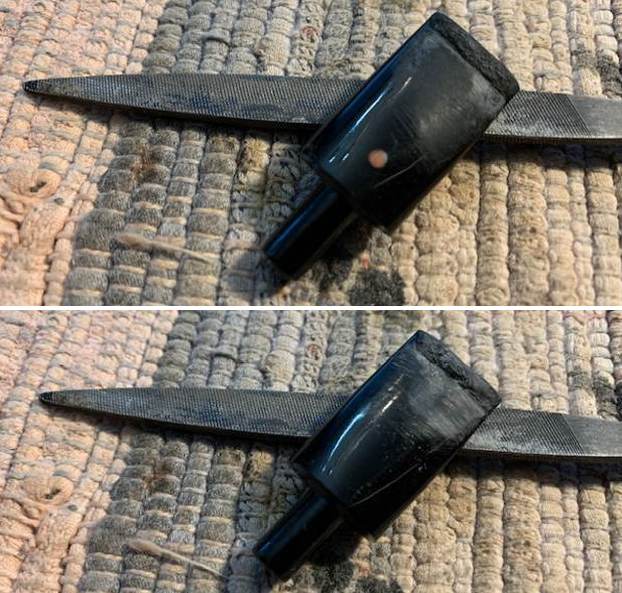
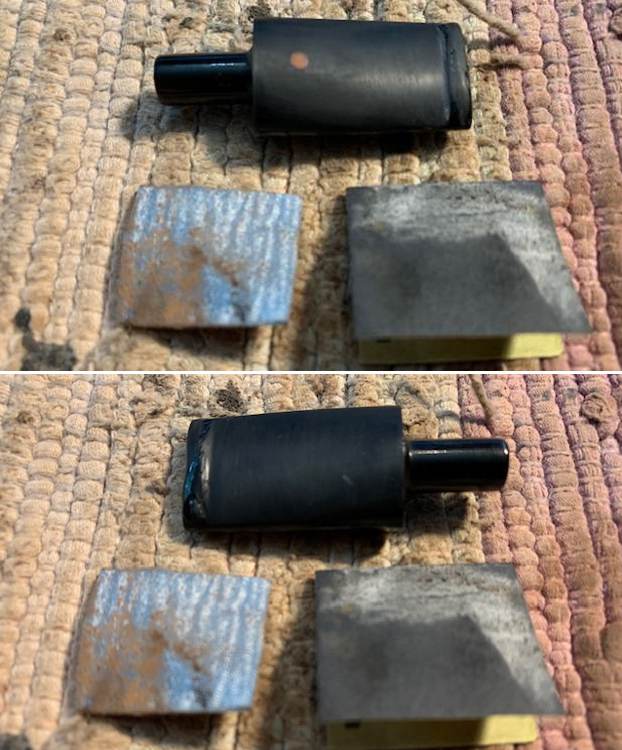
Last week I received a call from a local Vancouver Pipe Shop that I do repairs for regularly. The Fellow on the line said he needed my help with a Brand New Pipe he had in hand. He had taken the pipe out of its package and turned the stem to have the tenon snap in the shank. He was very shaken as I could hear from his voice. He said that the pipe was a beautiful L’Anatra Freehand with a plateau rim top. The pipe was stamped on the underside of the shank and read L’Anatra [over] dalle Uova d’Oro [over] Fiammata followed by a single egg. Underneath that it was stamped Hand Made In Italy. He said he would courier the pipe over to me so I could replace the tenon. I have included photos of the pipe when it arrived so you could see what I was going to deal with. It is truly a stunning piece of briar. I had to laugh as he had sent it in a Dunhill pipe box and included the original price tag on the pipe. The price was high enough to sufficiently spook me but then again I have worked on quite few pipes like this. I took photos of the rim top to show the clean bowl and the pretty plateau rim top. The egg shaped look of the rim top from the top was quite beautiful. I also took photos of the stem to show that the tenon had snapped off almost flush against the end of the stem.I rotated the bowl and took photos of the stamping on the shank. It was clear and readable as noted above.I decided to start my work on the pipe by pulling the tenon. The first two photos show the snapped tenon. The first shows that it snapped very close to the end of the stem. The second shows the broken tenon firmly stuck in the shank. All my normal methods for pulling a broken tenon did not work – it was stuck fast. I put the bowl in the freezer while I had a coffee. When I finished the coffee I tried to pull the tenon again with the screw and it came out very easily. I used a Dremel and sanding drum to remove the fragments of the broken tenon on the stem face. I went through my tenons and found one that would fit the shank. I put the tenon in the shank and took some photos of the fit. It was looking very good. Now it was time to work on replacing the broken tenon. I drilled out the smoothed face of the stem with a cordless drill and a bit roughly the size of the airway in the stem. I find that this helps to center the drilling. I worked my way through 3 drill bits up to 15/64s which is the largest size drill bit that I could safely use on this stem.I reduced the diameter of the portion of the replacement tenon to fit the newly drilled airway. I started with the Dremel and sanding drum and cleaned up the fit with a pair of files. Once I was finished the fit in the new opening on the stem was snug. I shortened the length of the tenon to fit the stem depth. I took a photo of the newly shaped tenon along with a new one. You can see the difference in the length and in the stepped down portion that will go in the stem.
I turned it into the stem and took photos to show the fit in the stem. It looks really good. Still polishing to do at this point as well as gluing the tenon in the stem.
I fit a pipe cleaner in the stem and then coated the shaped tenon end with black CA glue and pressed it into the drilled airway in the stem. I set it aside to let the glue harden.The bowl was in excellent new condition and did not need any attention. I think it has a thin coat of shellac or varnish so it still had its new pipe shine. I polished the newly fit tenon with micromesh sanding pads to smooth it out and give it a shine. It really is a nice looking pipe. This Italian Hand Made L’Anatra dalle Uova d’ Oro Fiammata 1 Egg Grade Freehand turned out to be a beautiful pipe. The finish on the briar is beautiful and the grain is quite stunning around the bowl and shank. I put the pipe back together and buffed it lightly with some carnauba wax. I buffed the pipe with a clean buffing pad to raise the shine and hand buffed it with a microfibre cloth to deepen the shine. It is fun to see what the polished bowl looks like with the polished black acrylic stem. This classic looking Freehand L’Anatra dalle Uova d’ Oro Freehand feels great in my hand. It is light and well balanced. Have a look at it with the photos below. The dimensions are Length: 6 ½ inches, Height: 2 inches, Outside diameter of the bowl: 1 5/8 inches wide x 2 ¼ inches long, Chamber diameter: ¾ of an inch. The weight of the pipe is 77 grams/2.72 oz. It is a beautiful pipe and another one that will be heading back to the Vancouver Pipe Shop after replacing the broken tenon.Thanks for walking through the tenon replacement with me as I worked over this pipe. Thanks to each of you who are reading this blog. 

Restoring A Beautiful Older Butz-Choquin ‘A Metz’ Pipe


Blog by Paresh Deshpande

The next project that I selected to work on is a beautiful Horn shaped pipe with a horn stem and nickel ferrule. This pipe came to be in my possession as a part of 40 odd estate pipes that I had purchased from a French Seller a few years ago. Unfortunately, I had neither chronicled nor taken pictures of this lot when it reached us, as at that point in time I had no intention of passing these restored pipes in to the trust (as my Mentor Steve points out) of fellow Pipers.

This beautiful elegantly shaped pipe on my work table has stunning cross grains and swirls over the sides and back of the stummel while the front and lower surface boasts of distinct bird’s eye grains. It is stamped as “BUTZ- CHOQUIN” over “A” over “METZ”. The nickel ferrule bears three faux hallmark stampings and a rhombus with two letters. All these markings on the ferrule are severely worn out and do not contribute in any which way in establishing the provenance of this pipe.I have previously worked on Butz- Choquin pipes with A METZ stamping and from what I recollect; this stamp was used when BC pipes were made out of the French town of A Metz, i.e. prior to 1950s. To refresh my memory, I visited the write up that I had posted on rebornpipes. Here is the link to the write up (https://rebornpipes.com/2020/10/19/restoring-an-early-butz-choquin-a-metz-no-2/).

I have reproduced some of the information from the write up and also arrive at an approximate date based on this information.

I searched pipedia.org to see if it contained the details that I sought. The site has very scant information about the brand with lots of pictures, but what is available makes it an interesting read and I quote;

“The pipe, from Metz to Saint-Claude. Jean-Baptiste Choquin of Metz started out as a tobacconist. This enterprise was prosperous; he had several employees. Among those, there was a certain Gustave Butz who was its first workman and who became his son-in-law by marrying Choquin’s daughter Marie in 1858.

In 1858 Jean-Baptiste Choquin created, in collaboration with Gustave Butz, the Choquin pipe. This bent pipe with a flat-bottomed bowl was finished with an albatross-bone mouthpiece, fixed with silver rings. (The above describes the CHOQUIN A METZ pipe I had worked on earlier dating it to 1858)

In 1858, still in Metz, Gustave Butz built an establishment for the manufacture of the Choquin pipe which took the name of Butz-Choquin. In 1951, the Berrod-Regad company bought the trademark, continuing manufacture until 2002. Departing from Metz, the workshop was relocated to Saint-Claude, then also called “the world capital of the briar pipe,” under the Berrod-Regad group. The Berrod-Regad group would go on to completely rebuild the network of representatives until finally entering the export market in 1960 and has since won several prizes, as well as the Gold Cup of French good taste.

In a few years, the brand’s collection increased from ten to seventy series. 135 years after it was founded, the pipe is still well-known not only in France but throughout the world. In 2002, the Berrod family, wishing to preserve manufacture of pipes in Saint-Claude, handed over the company to Fabien Guichon, a native of the area, who will continue to develop the brand during the 21st century.”

From the above reading, this pipe is pre-1951 when Berrod- Regad purchased the trademark and relocated the workshop to Saint- Claude. The stampings of A METZ is the proof pointing towards pre-1951, the birth town of Butz- Choquin pipes. Secondly, the horn stem with the round orifice points towards the early 1920s when vulcanite was the preferred choice of material for making stems. However, it is equally true that during World War II, since rubber was an essential war material and was difficult to obtain it for making stems, horns/ bone stem came in to favor again till the end of the Great War. Thus I think that this pipe is either from the period 1939 to 1945 (higher probability) or from between the era 1910 to 1920s.

Initial Visual Inspection
The pipe currently on my work table is an excellent example of quality craftsmanship using equally high quality briar wood. It appears that the carver followed the grains in the briar to decide on the shape and not the other way round. There is a thin layer of cake in the chamber with no overflowing lava over the rim top, in fact, the rim top is clean. The stummel surface is dull and lackluster and would benefit from a nice cleaning and polishing regime. The cross grains and the bird’s eye grains will come to the fore once the stummel is polished. The inner rim edge is beveled and is smooth and even. The outer rim edge is uneven with a couple of deeper dents and dings along the edge. The tapered horn stem has bite marks on both surfaces in the bite zone. The seating of the longish wood tenon in to the mortise is loose but otherwise in good condition. The nickel band is oxidized and sans any damage. Below are pictures of the pipe before I started my restoration work. Detailed Inspection
The chamber has a very thin layer of even and crumbly cake. It seems that the chamber was reamed prior to the pipe being put away. The rim top surface is clean with no signs of lava overflow or charring. The inner edge has a slight bevel which I think is not original to the pipe. However it has been well carved and does not detract from the beauty of the pipe. The outer rim edge has a number of dents and ding most likely caused due to striking the rim edge against a hard edge. The rim top surface has circular scratches akin to sanding marks left behind after topping the surface. The chamber has very little odor and the little ghost smells that remain will be eliminated once the stummel internals are cleaned. The stummel is covered in oils that have attracted dust and grime and the stummel appears dull and lackluster. The cross grains and bird’s eye and swirls across the briar surface that can be seen through from under all the grime. The stummel surface does show a few scratches, noticeably to the front and foot of the stummel. There is a small chip off from the upper shank surface near the nickel band. The mortise shows remnants of old oils, tars and ash, but not stinking stuff!! The nickel shank band itself is oxidized and all the faux markings are well rubbed and worn out. I am especially not too worried about the worn out stampings of the band as these are just for decorative purpose only. The tapered horn stem has tooth marks on both the upper and lower surface of the stem in the bite zone. The button lips, however, are sans any damage. I was unsure, from the appearance, if the tenon was a bone or made of wood. To confirm, I ran a sharp thin blade over the surface. The movement was smooth and easy without any bite. This confirmed that the hard surface could only be bone!! The round slot and tenon end opening has old residual oils and tars. The seating of the stem in to the mortise is not flush and very loose. The Process
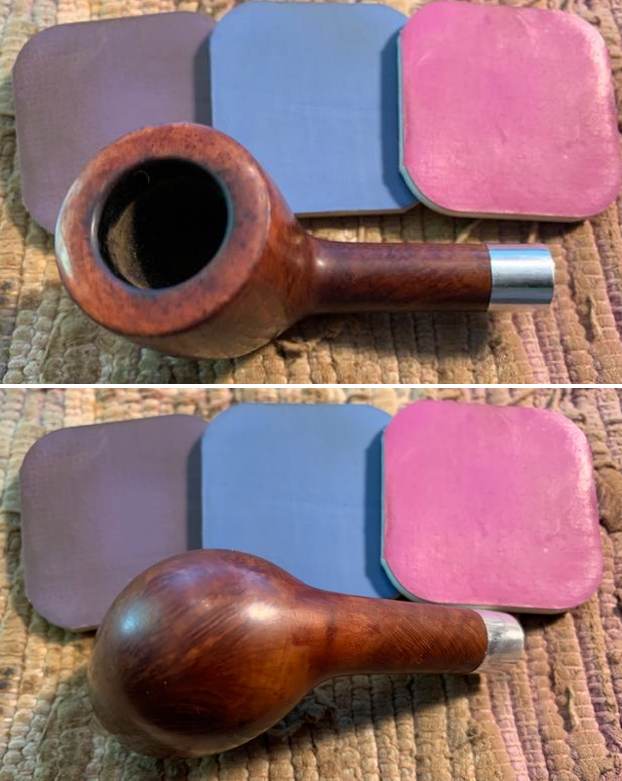
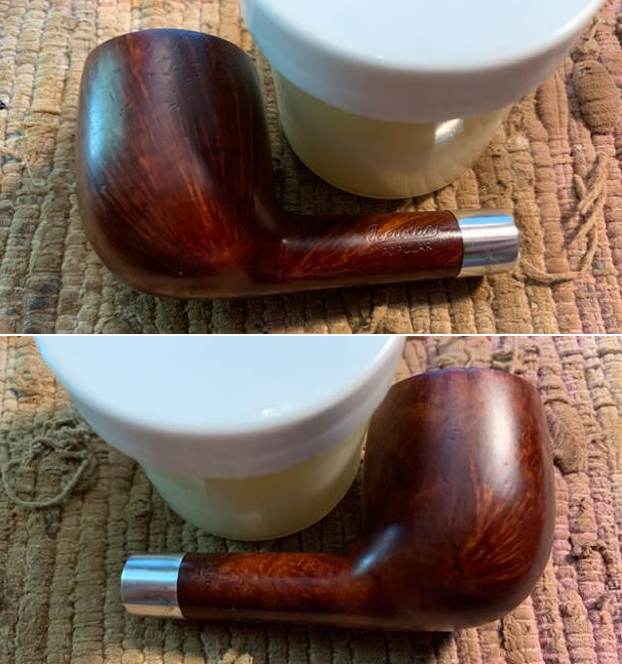
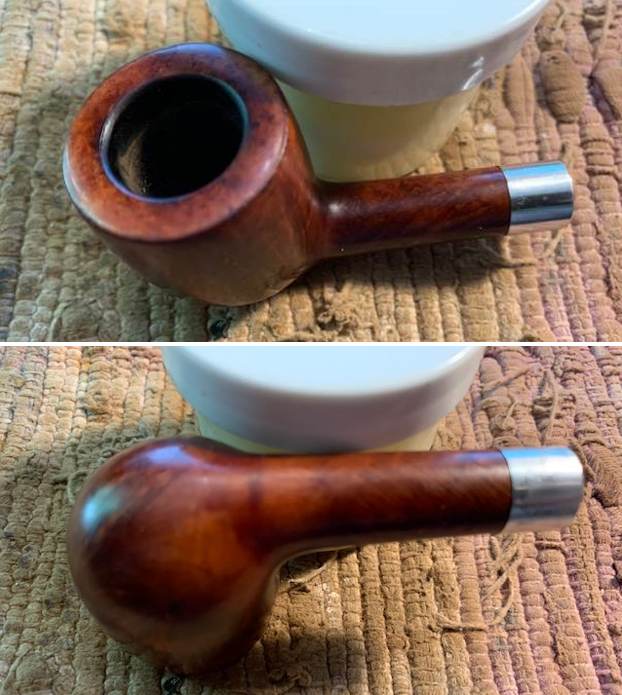
I started the process of refurbishing by reaming the chamber first. Using reamer head sizes from 1 to 3 of the PipeNet pipe reamer, I took the cake down to the bare briar. The amount of carbon that was dislodged from the chamber was really surprising as I had appreciated a thin layer of carbon and the quantity of carbon that was removed was anything but a thin layer. With my fabricated knife, I removed all the cake and took it down to the bare briar. I further sand the chamber wall with a folded piece of 180 grit sandpaper to smooth out the wall and remove the last bit of stubborn carbon that remained stuck to the chamber. To finish the reaming process, I wiped the chamber walls with a cotton swab dipped in alcohol to clean the last traces of residual carbon dust. I was happy to note a clean and well seasoned solid chamber. Next I cleaned out the shank internals. Early on, I realized that I could not pass a pipe cleaner trough the draught hole due to blockages in the shank airway. I used the drill bit of a Kleen Ream reamer to dislodge this block of dried oils and gunk. I further scraped out all the dried and crumbly oils and tars from the walls of the mortise with my fabricated tool. I cleaned out the mortise and shank walls with q-tips and pipe cleaners dipped in alcohol. I shall continue further cleaning of the shank and mortise while going through the other processes.I kept the stummel aside and cleaned the internals of the stem with a thin shank brush and anti-oil dish washing soap. This ensures a thorough cleaning of the stem airway while saving me number of pipe cleaners, elbow grease and most importantly, time. With the stem internals cleaned, I scrubbed the external surface with the dish soap and Scotch Brit pad. I was particularly careful while cleaning the tenon surface as the old residual oils and tars were deeply embedded in to the surface. I rinsed the stem under warm running water and wiped it with a paper napkin to dry it.I addressed the tooth chatter in the bite zone by sanding the bite zone with a folded piece of 150 grit sand paper followed by 220 grit sand paper. I could have filled the tooth indentation with clear superglue, sanded and polished the stem, but decided against this since the stem was thick and the tooth chatter was superficial enough to be addressed just by sanding it out.Next, I cleaned the exterior of the stummel. I used a hard bristled tooth brush, Scotch Brit pad and Murphy’s Oil soap to scrub the stummel. After the scrub with oil soap, I washed the stummel, stem and shank extension under running warm water with anti oil dish washing detergent till the surface was clean and dried it using paper towels and soft cotton cloth. I simultaneously cleaned the internals of the shank with the detergent and hard bristled shank brush and set the stummel aside to dry out naturally. The stummel surface has cleaned up nicely with the beautiful grain patterns on full display. Following the external clean up of the stummel, I spot filled the small chipped off surface from the shank’s upper surface near the nickel band and also the dings that were seen over the outer edge of the rim with CA superglue. I set the stummel aside for the glue to cure.While the stummel repair was curing, I dry sand the horn stem with 220, 320, 400 and 600 grit sandpapers followed by wet sanding with 800 and 1000 grit sandpapers. I applied a small quantity of EVO to the stem and set it aside to be absorbed by surface.With the stem set aside, using a flat head needle file, I sand the repairs over the upper shank surface and the outer rim edge to achieve a rough match with the rest of the stummel surface. I further blend in the repairs by sanding the entire stummel surface with 220 grit sandpaper.To bring a nice shine and eliminate the scratch marks left behind by the abrasive sandpaper, I wet sand the entire stummel with 1500 to 12000 grit micromesh pads, wiping frequently with a moist cloth to check the progress. I rubbed a small quantity of “Before and After Restoration Balm” deep in to the briar with my finger tips and let it rest for a few minutes. The balm almost immediately works its magic and the briar now has a nice vibrant appearance with the beautiful grain patterns displayed in their complete splendor. I further buffed it with a horse hair brush. The contrast of the dark browns of the grains with the natural patina of the rest of the stummel adds an interesting dimension to the appearance of the stummel. I completed the mundane but equally important task of polishing the nickel band. I used a local product that is available only in India to polish the band. The liquid polish was applied to the band and wiped it out after a few seconds. The polish completely removed the oxidation and gave a nice shine to the band by polishing it with a jeweler’s cloth.This brings me to the most important process indicating the completion of this restoration which is imparting a high gloss finish to the pipe by polishing. I mounted a cotton cloth buffing wheel onto my hand held rotary tool and polished the stummel and stem with Blue Diamond compound. This compound helps to remove the minor scratch marks that remain from the sanding. Next, I mounted another cotton buffing wheel that I have earmarked for carnauba wax and applied several coats of the wax. I mounted a clean cotton cloth buffing wheel and gave the entire pipe a once over buff. I finished the restoration by giving the entire pipe a rigorous hand buffing using a microfiber cloth to raise the shine further. The finished pipe with the aged patina to the briar looks amazingly beautiful. P.S.: Astute readers must have noticed that there were two issues that I had brought out during my detailed visual inspection, first was the loose seating of the stem in to the shank and the second was that this seating was not flush, but does not find a mention in the entire process of repairs/ restoration. Well, truth be told, I had not addressed these issues specifically. However, somewhere along the way these issues resolved themselves.
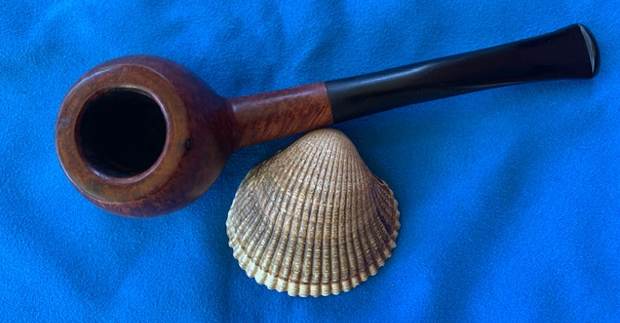
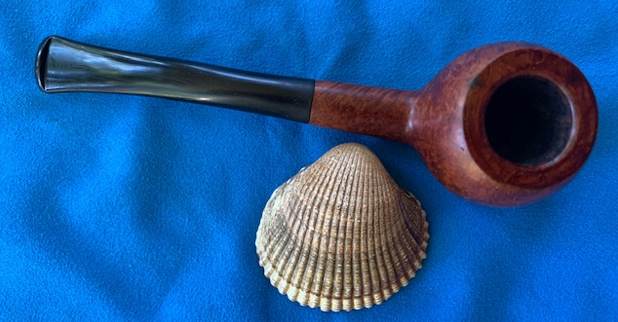
Let me explain. The reason for loose seating of the stem in to the mortise was primarily due to drying up of the briar wood and the bone tenon from years of disuse. When the internal and external surfaces of the stummel were cleaned and rinsed using warm water, the briar absorbed some moisture causing the briar to swell and ultimately resulting in a snug fit of the stem in to the mortise.

The reason for the stem face not seating flush with the shank face was the old oils and gunk that had accumulated in the mortise and along the shank walls. Once the mortise and shank internals were thoroughly cleaned and the shank briar wood was adequately moistened, the seating was flush and snug.

This pipe had caught the fancy of a fellow piper here in India and has now reached him. I wish him many happy and blissful smokes in the years ahead.

I wish to thank all esteemed readers for your time in reading through the write up and being a part of this project. Looking forward to your comments…