Tag Archives: fitting a stem

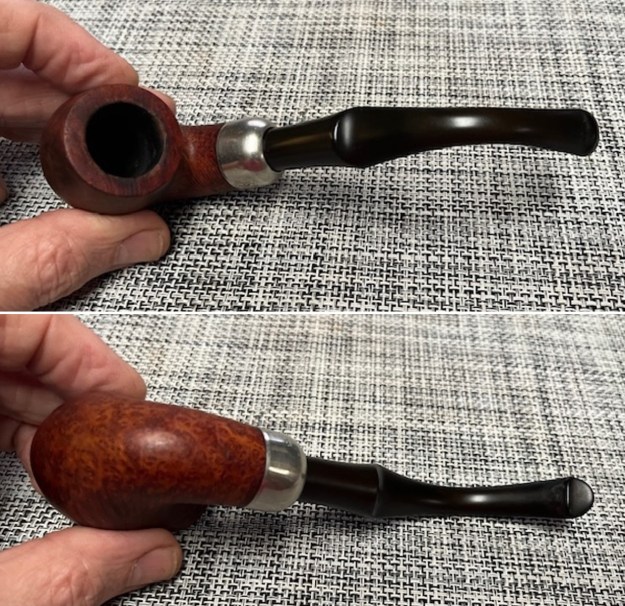
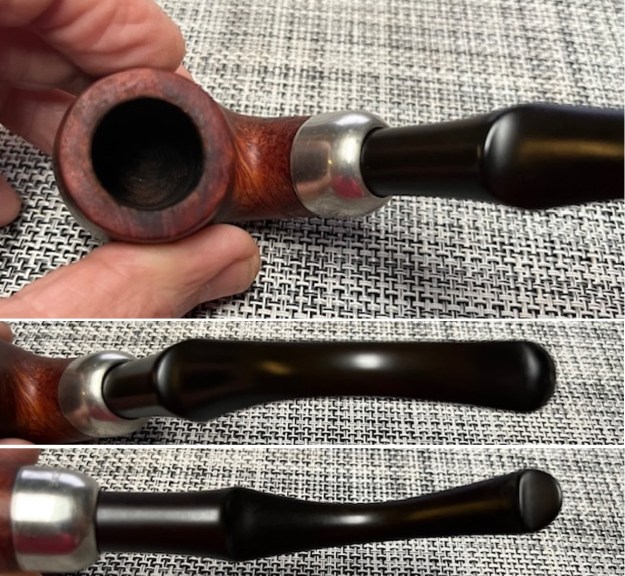
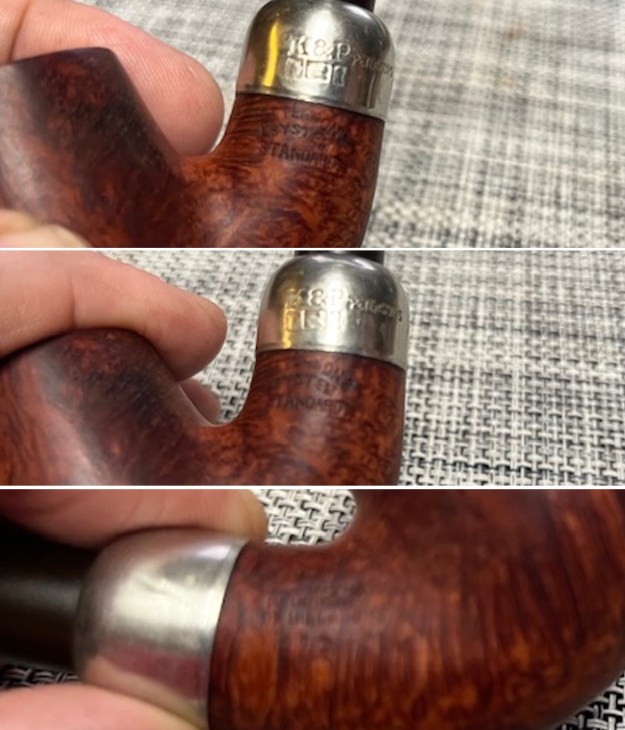
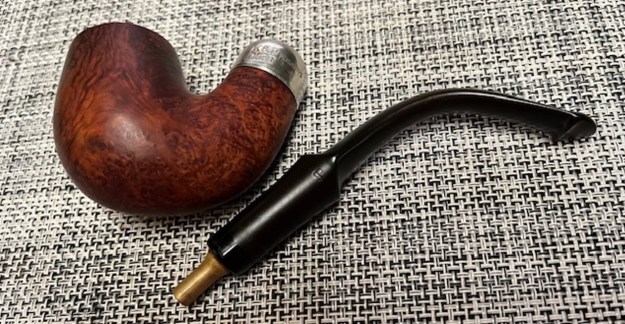
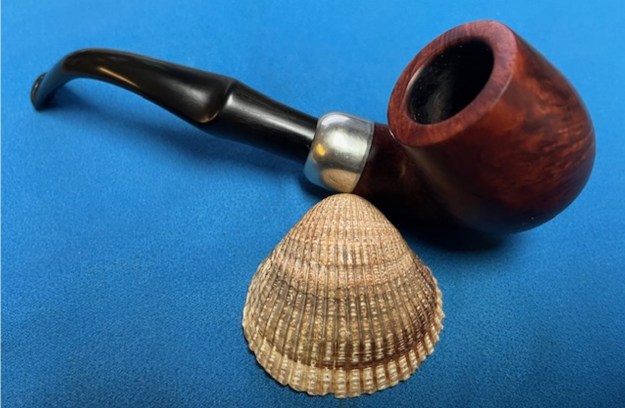
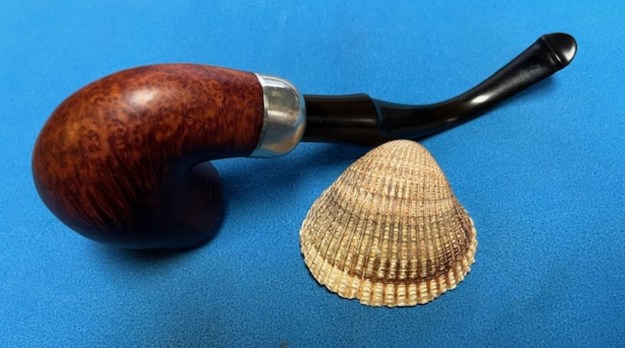
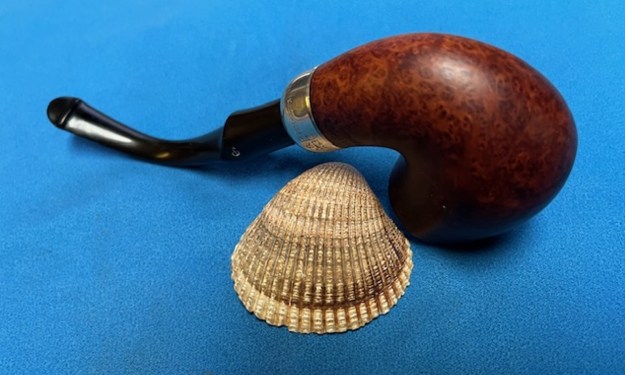
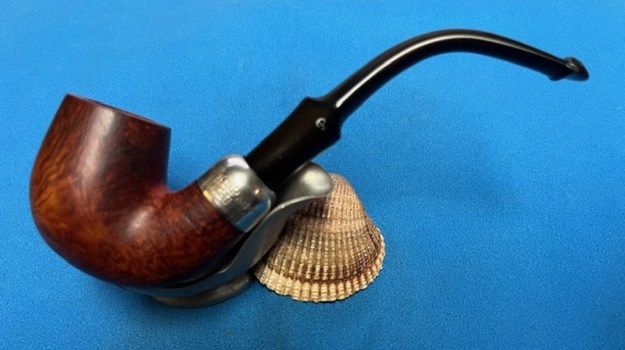
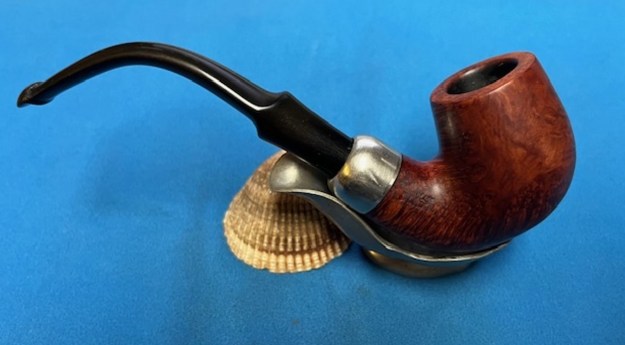
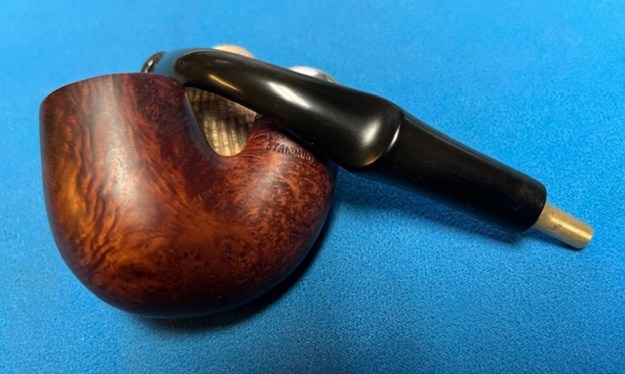
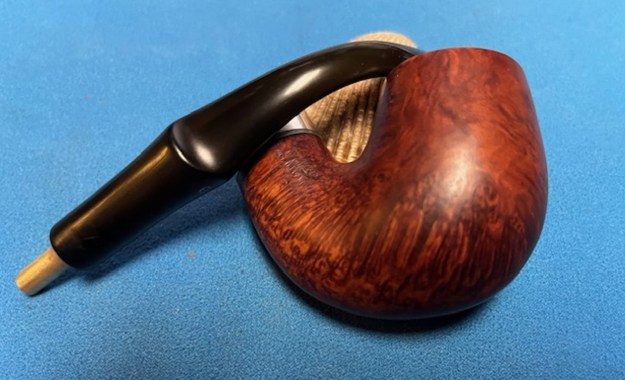
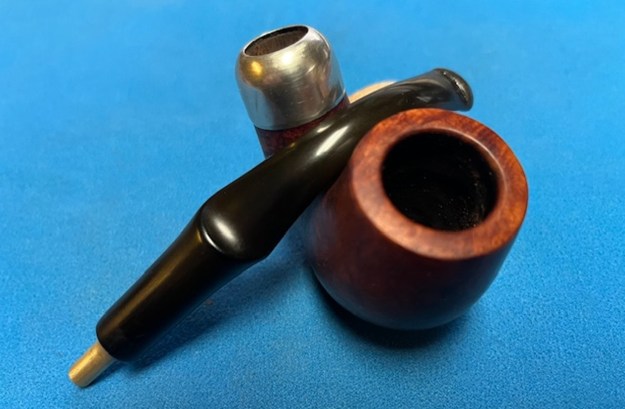
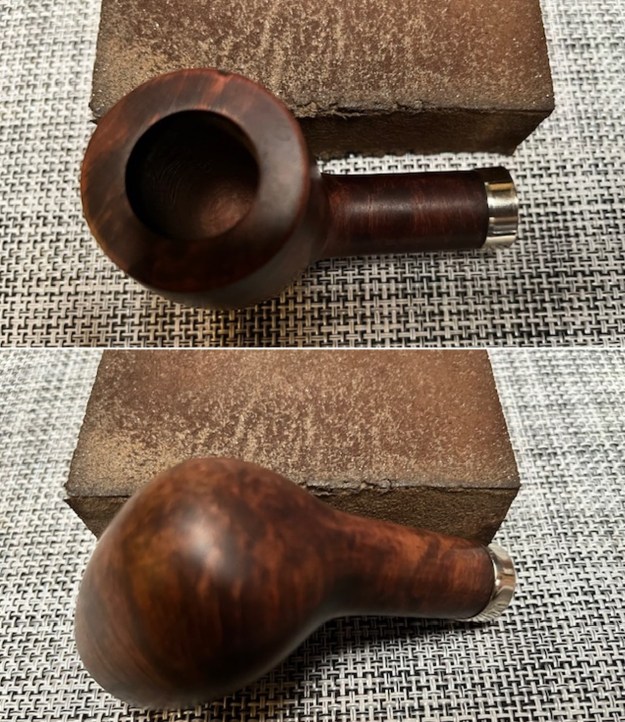
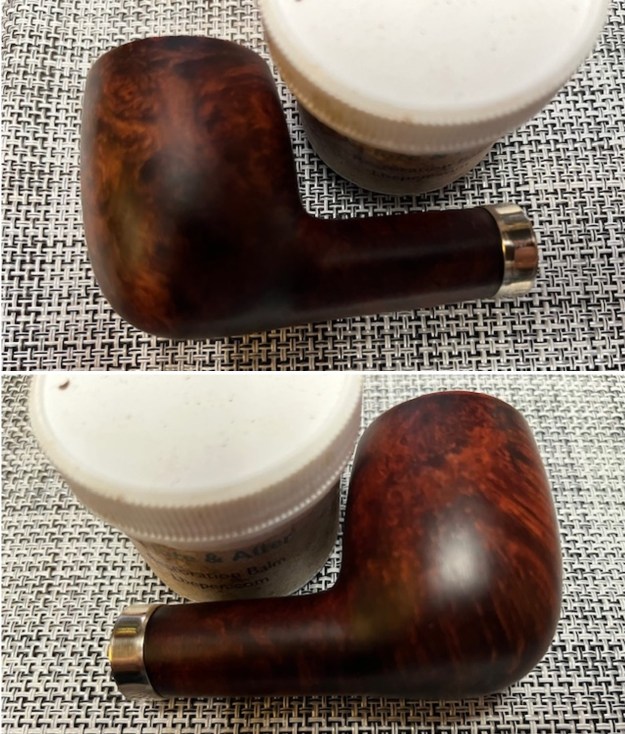
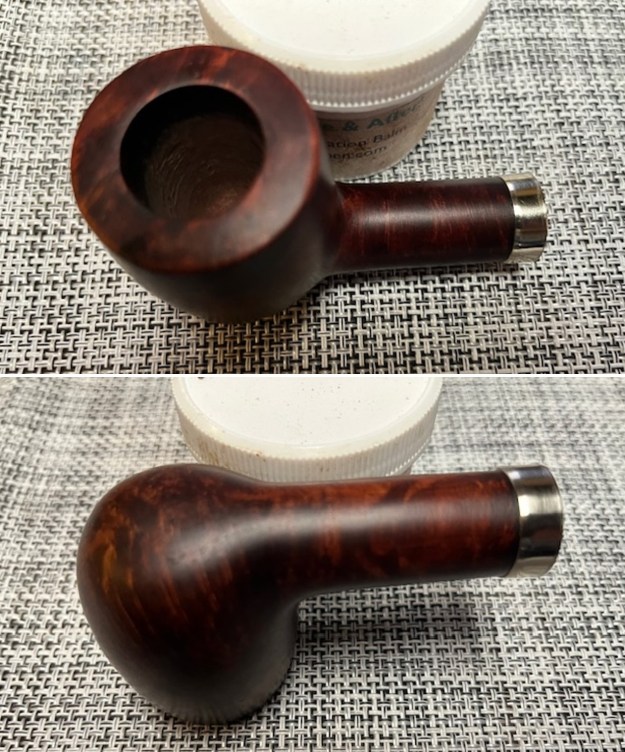
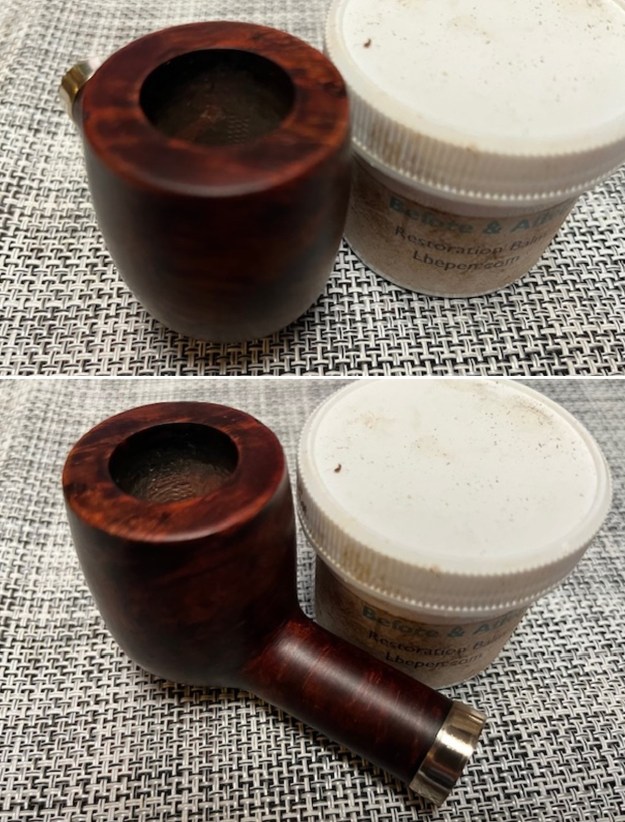
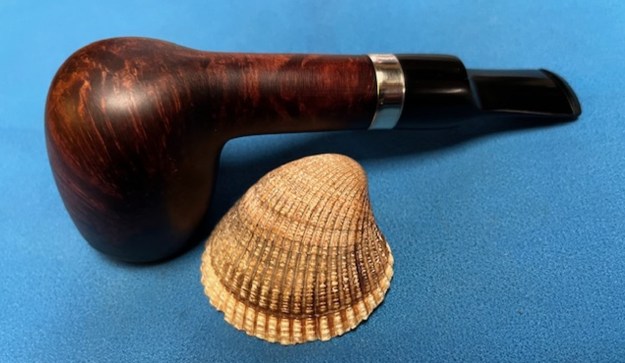
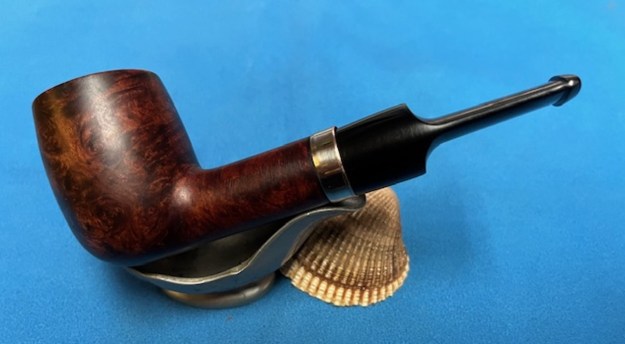
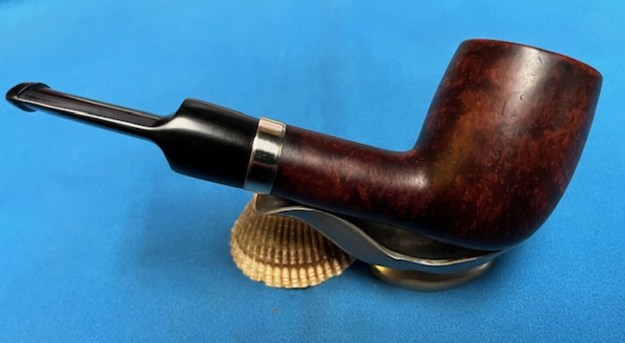
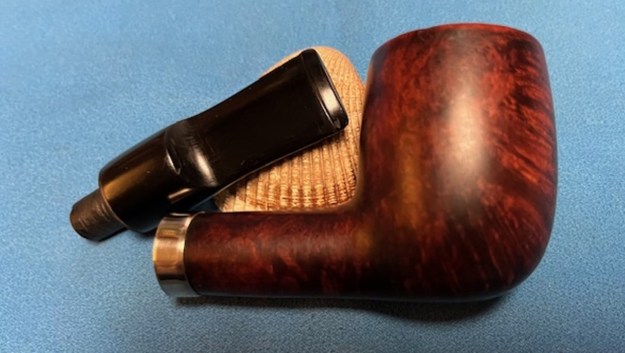
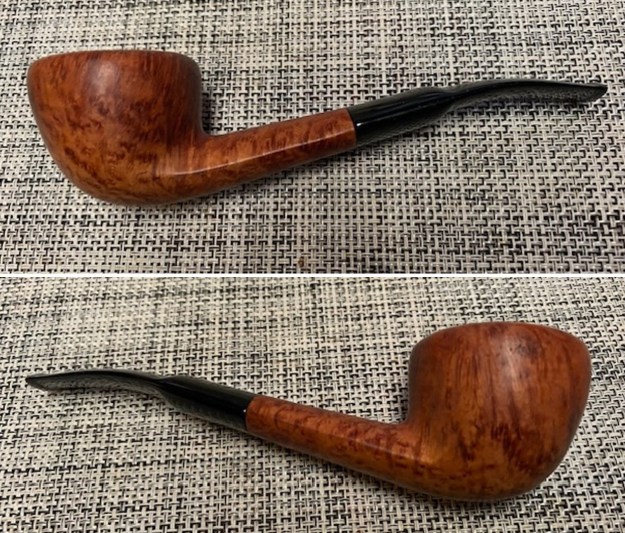
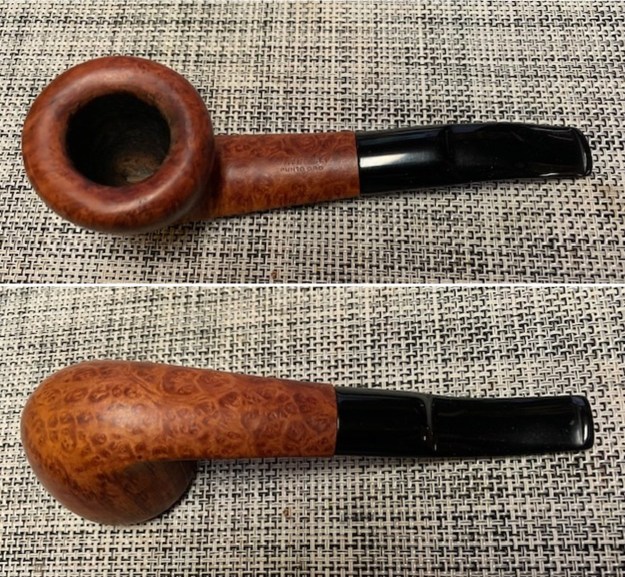
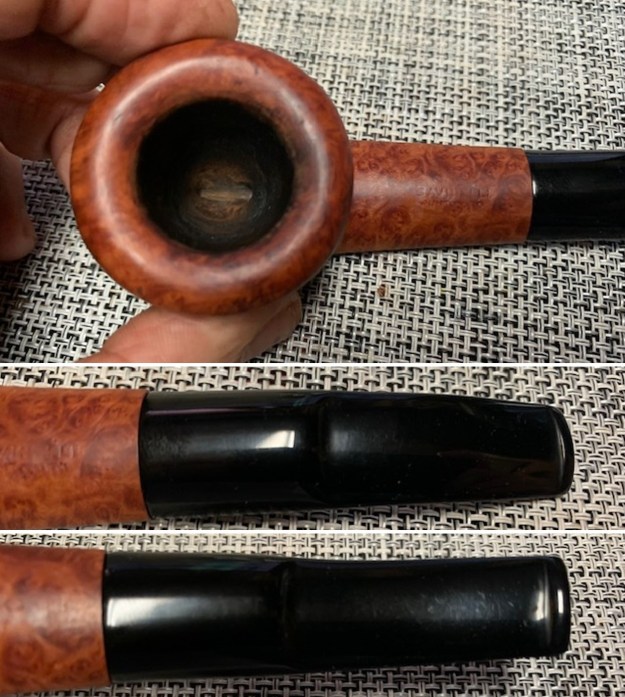
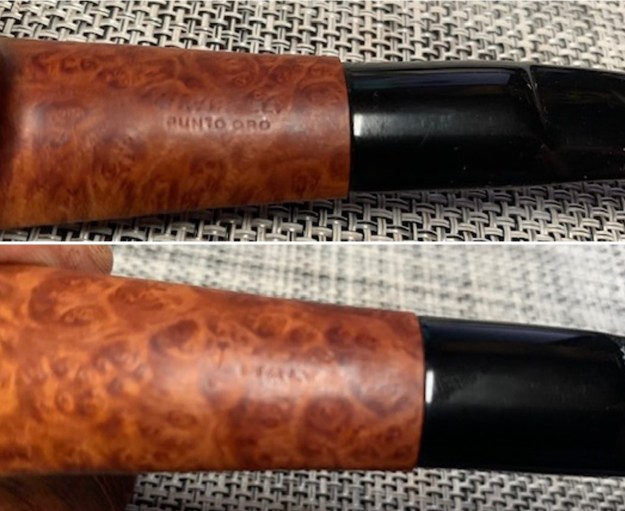
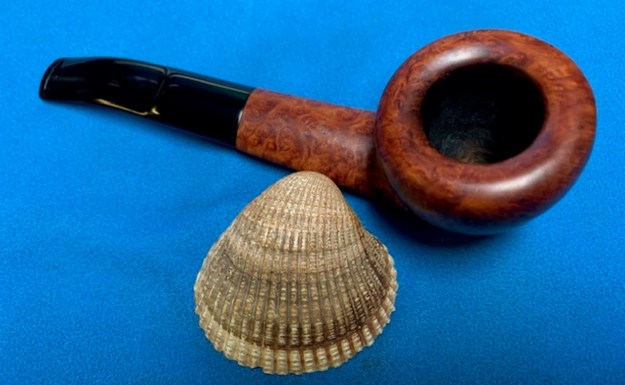
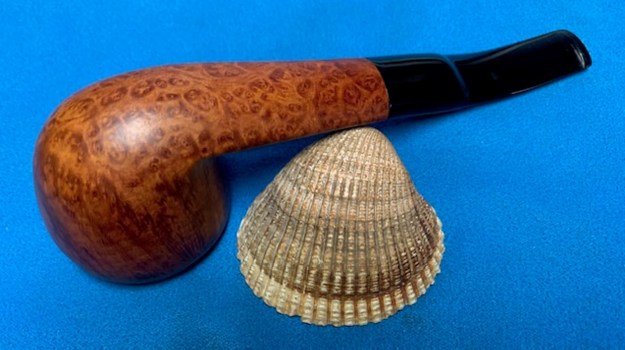
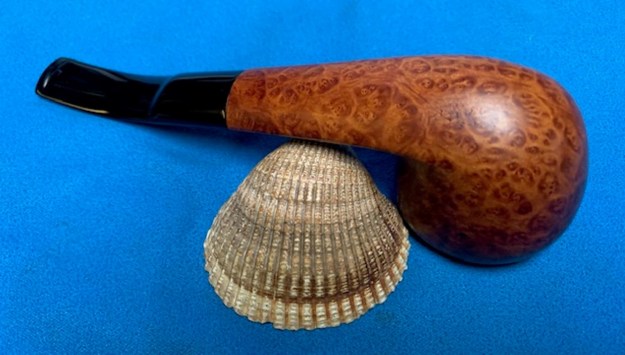
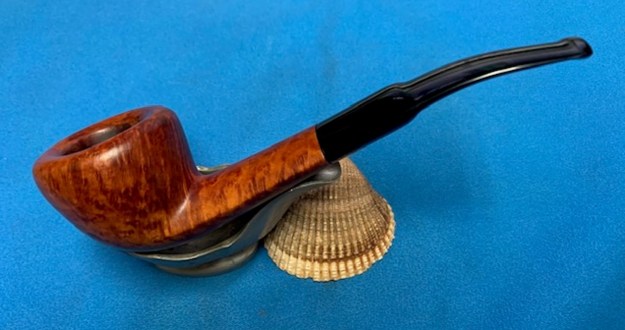
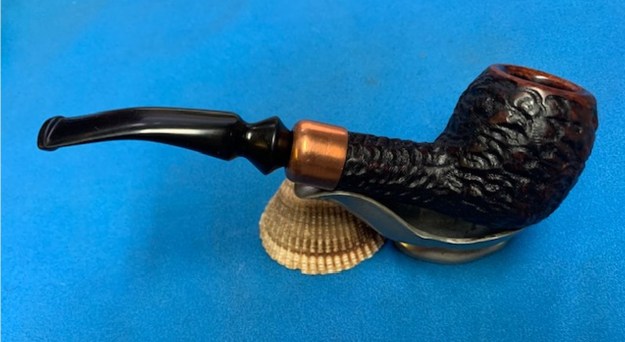
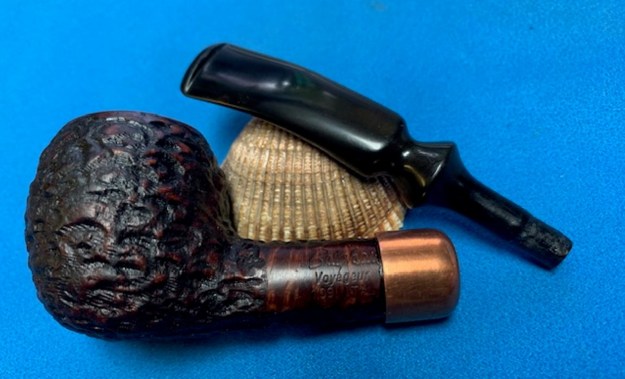
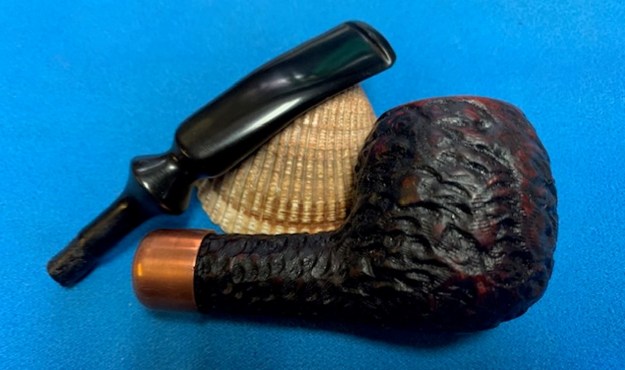
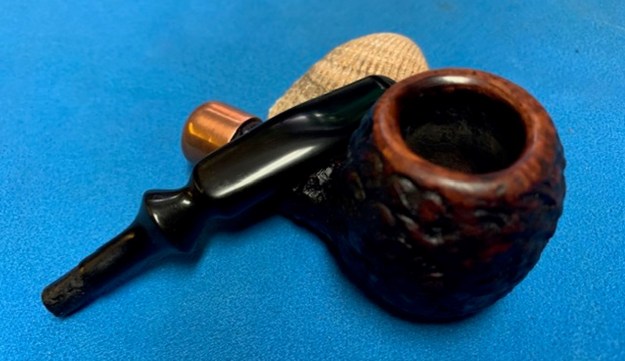
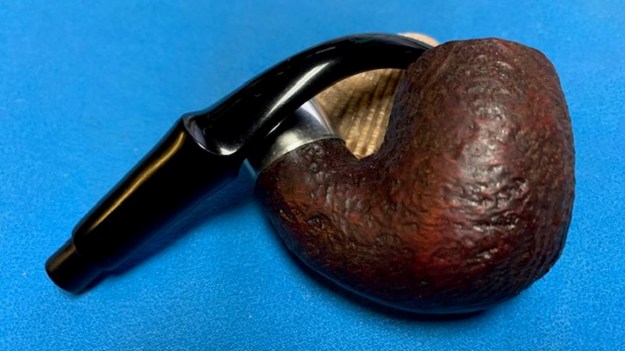
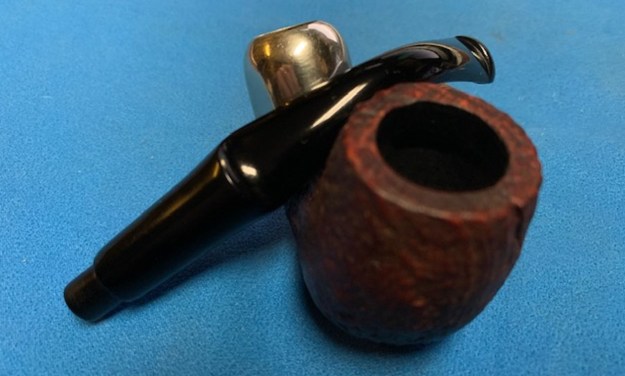
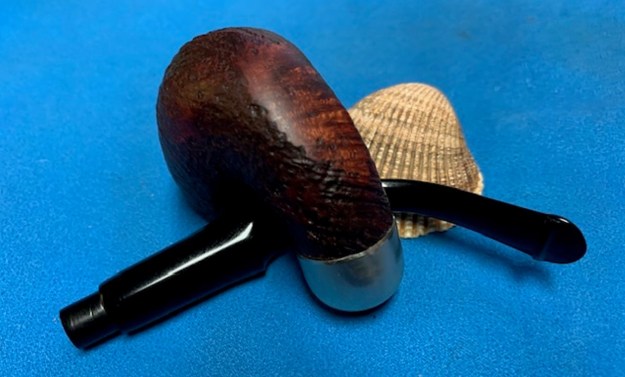
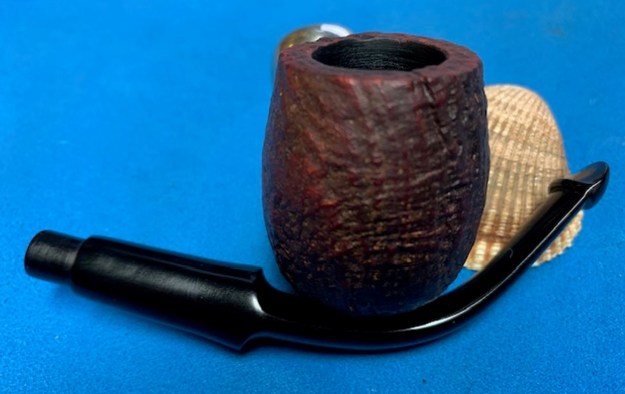
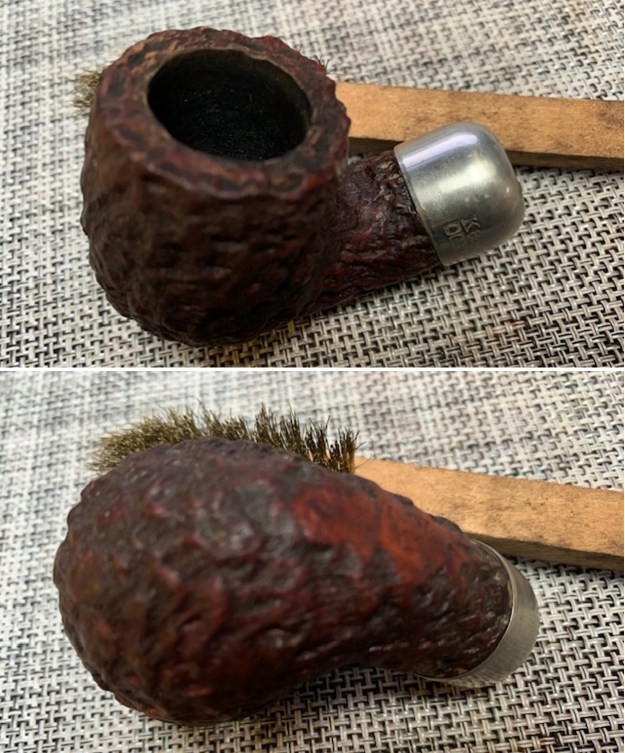
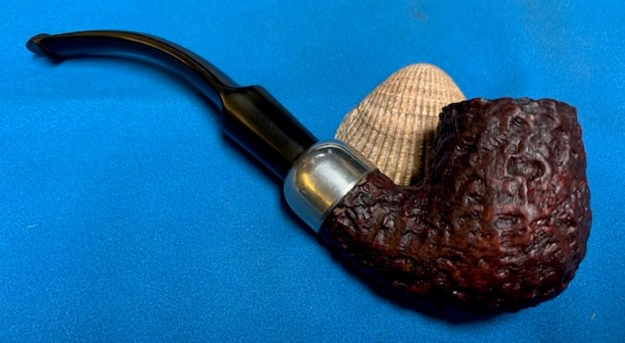
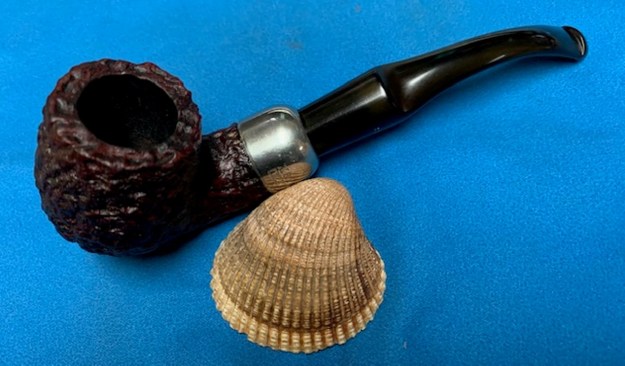
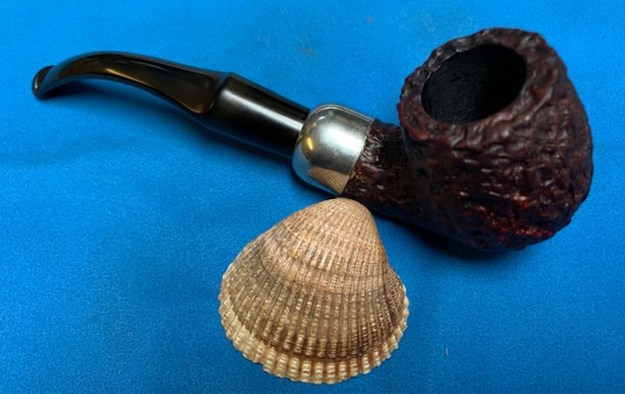
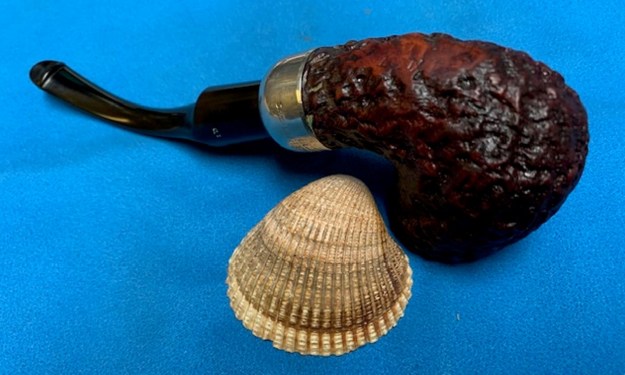
Restoring a Unique “Malaga” Custom Carved Fluted Bent Egg


Blog by Steve Laug

Jeff and I have been picking up Malaga pipes for a very long time. It does not seem that long ago that we picked them up for $4 – $5USD each. We purchased an estate of more than 30+ Malaga pipes. It was not long before the brand had our attention. The pipes are very well made and all are oil cured with a “secret” recipe and process.

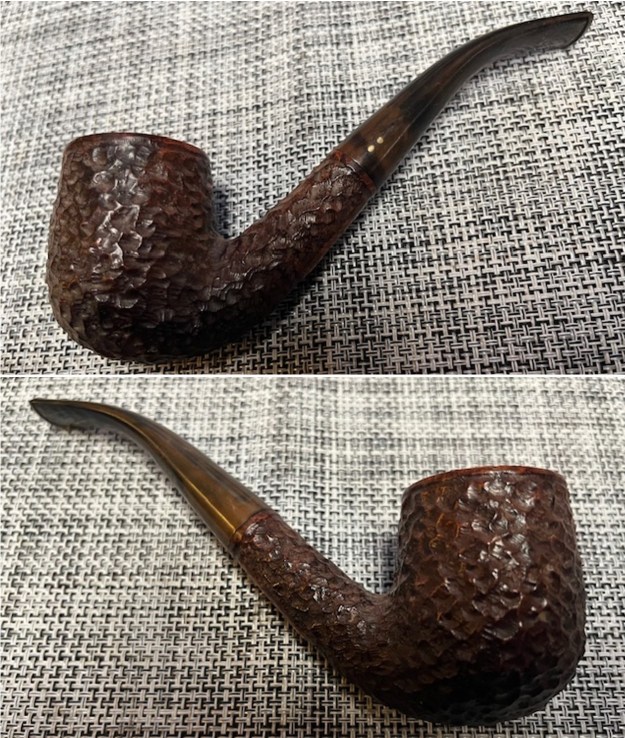
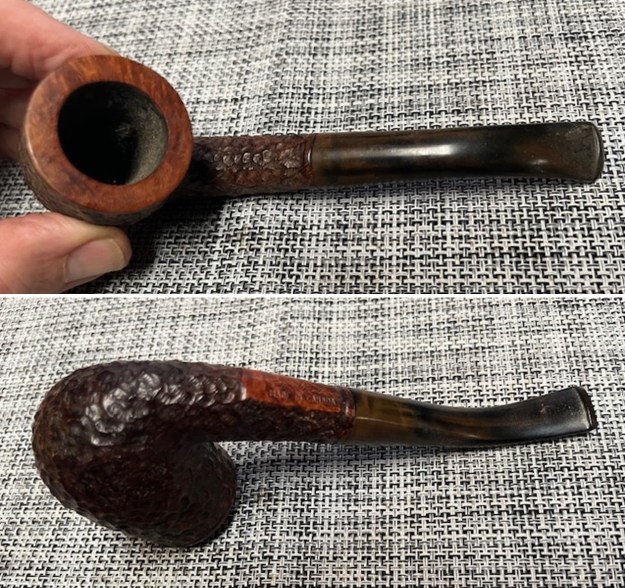
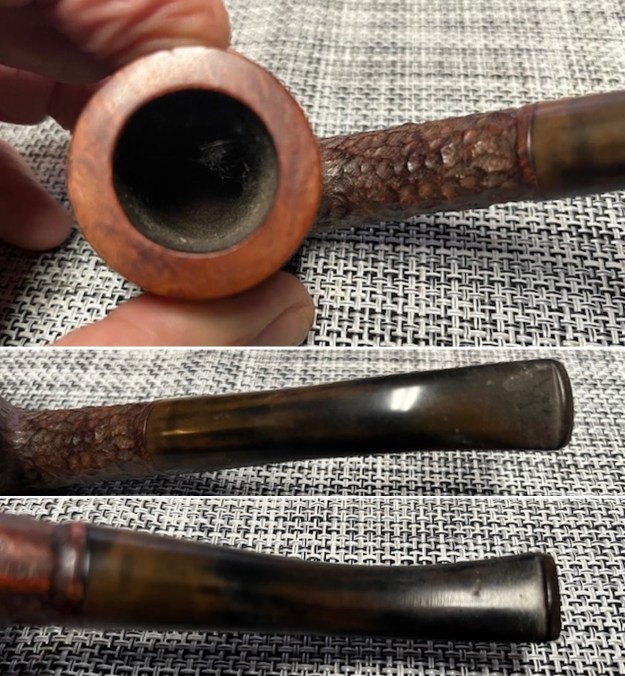
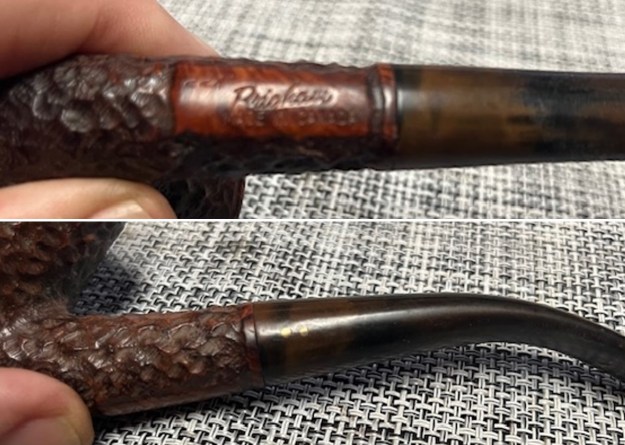
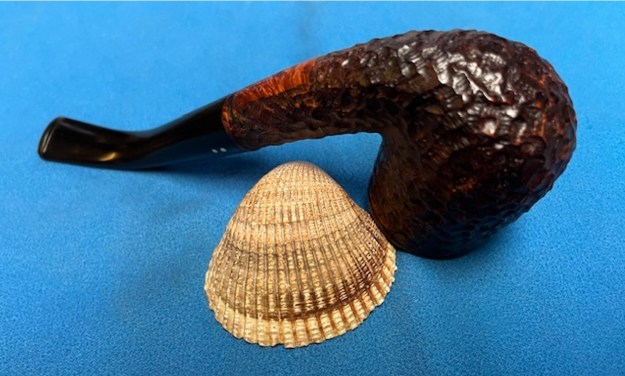
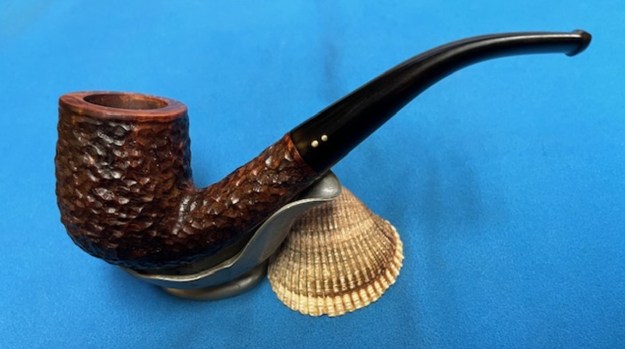
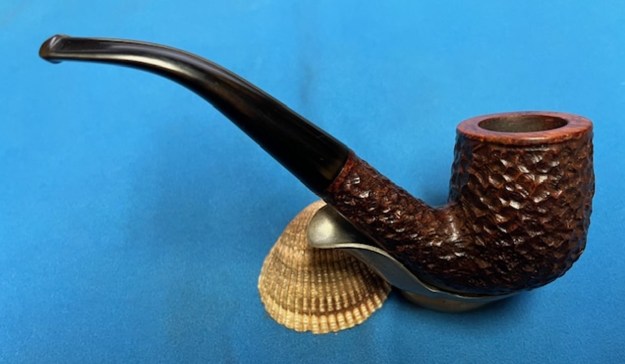
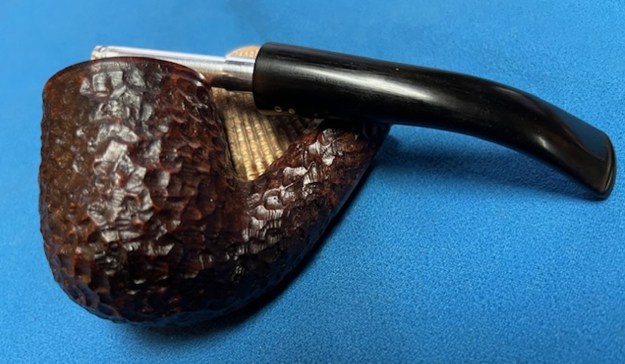
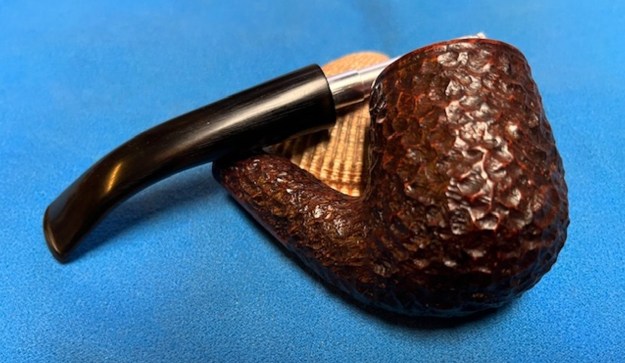
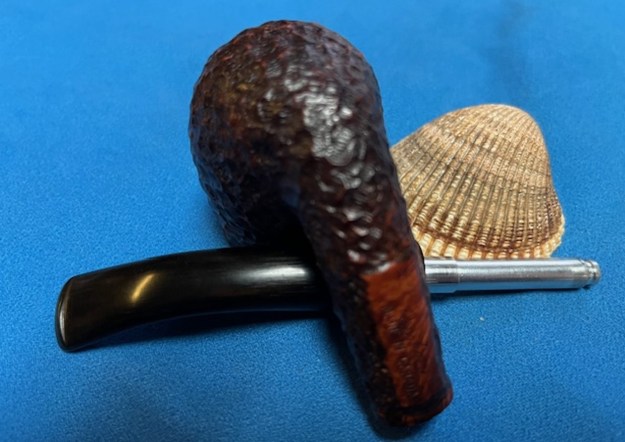
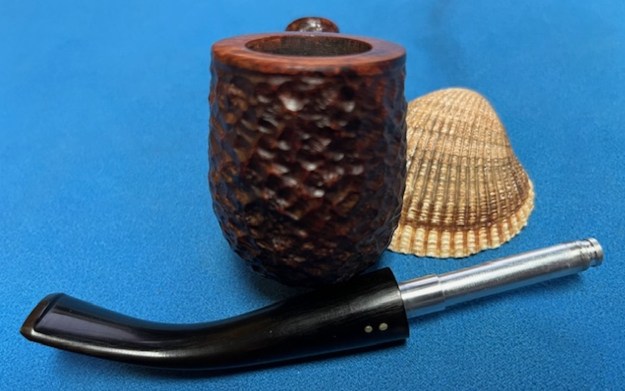
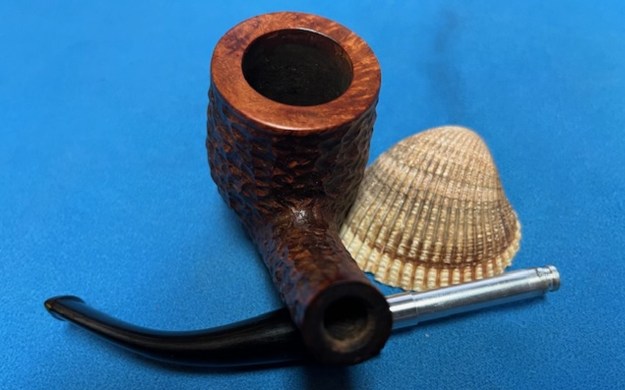
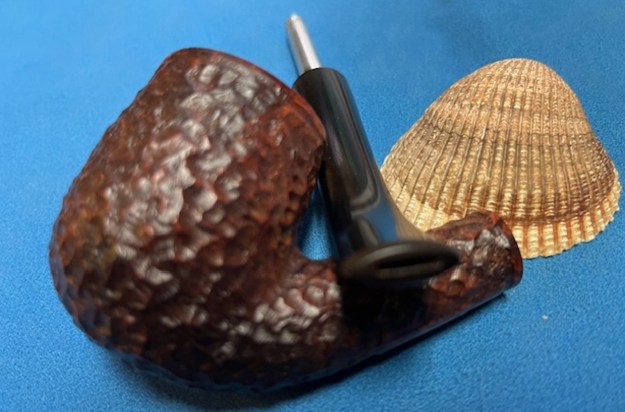
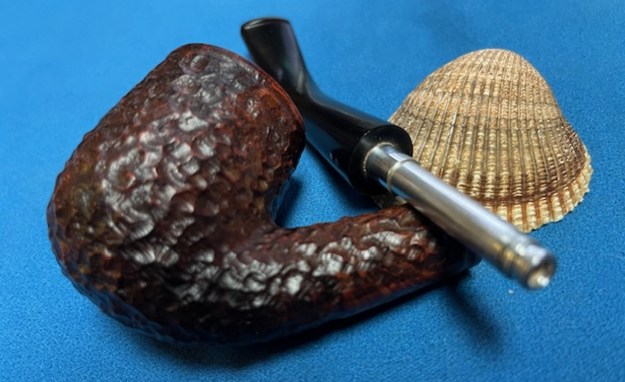
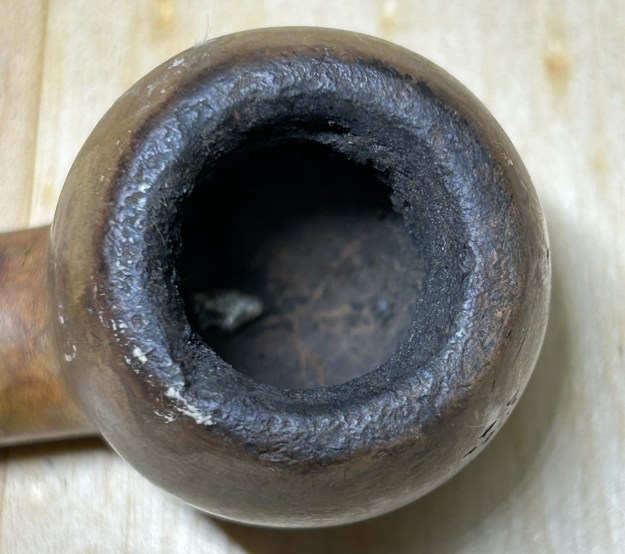
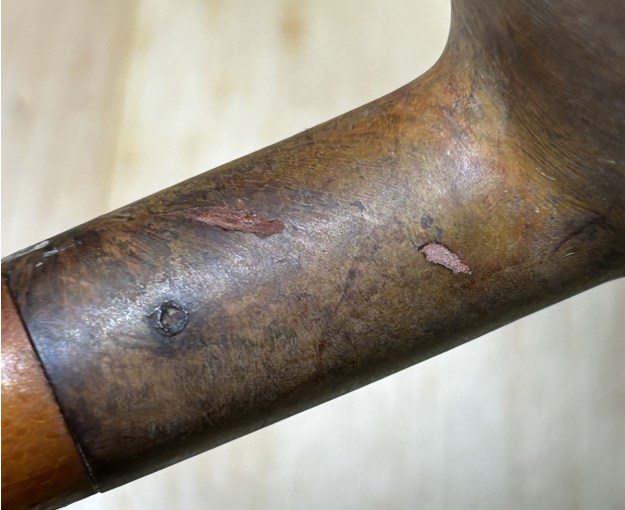
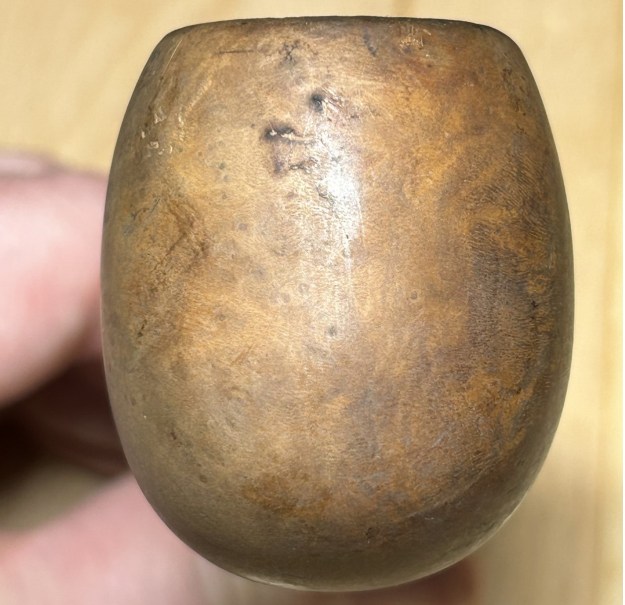
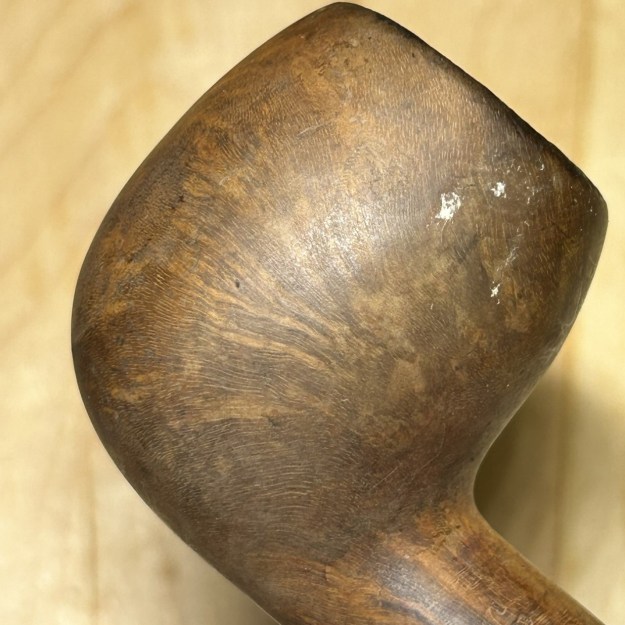
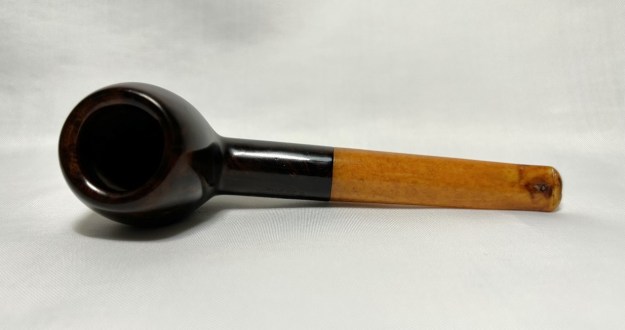
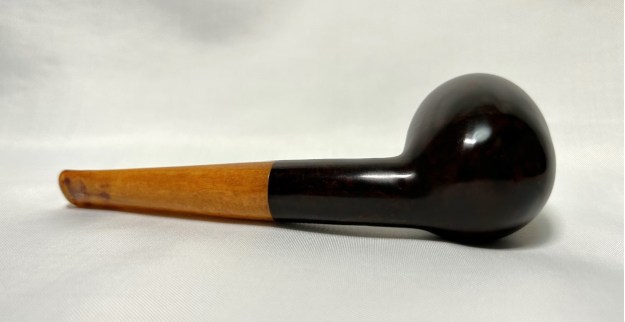
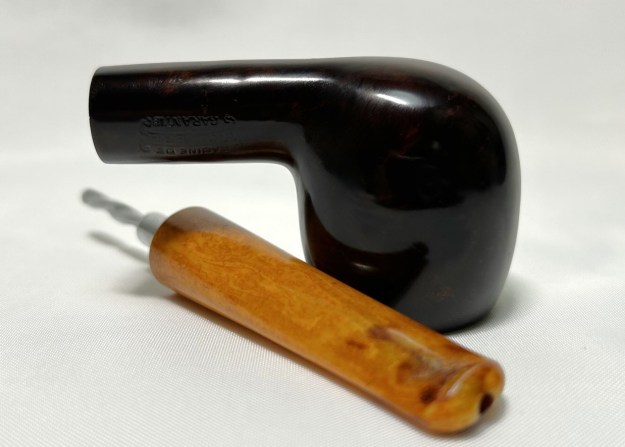
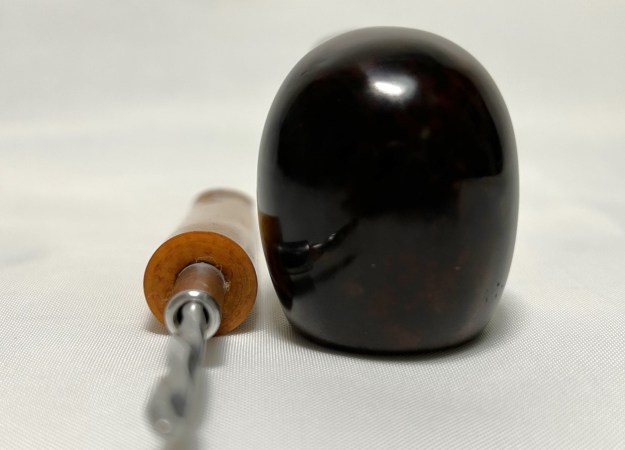
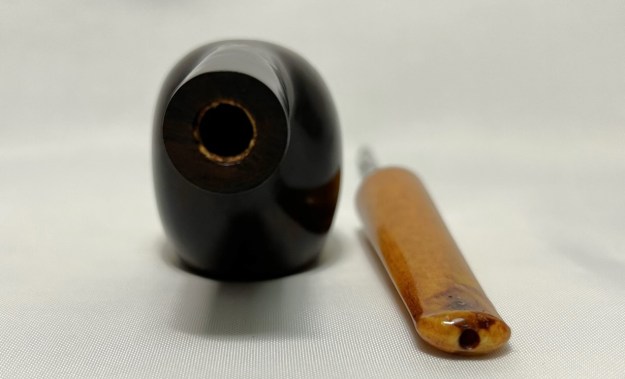
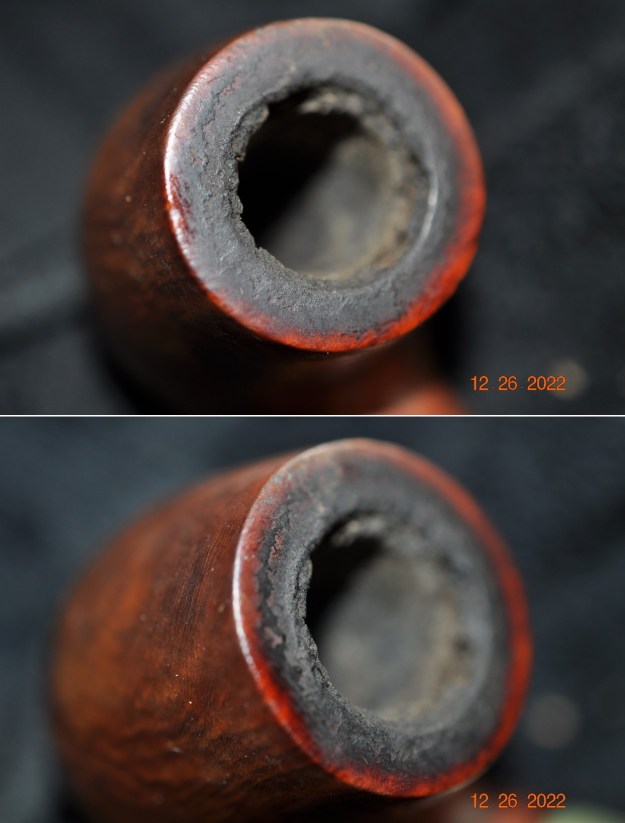
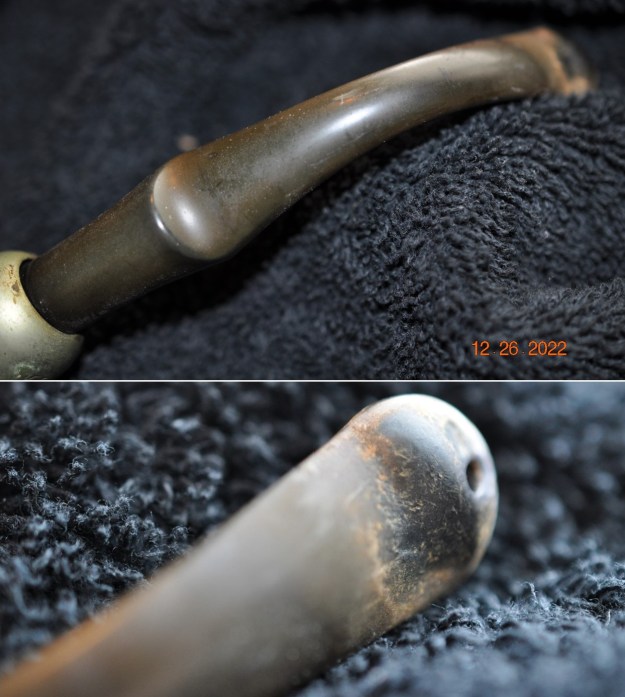
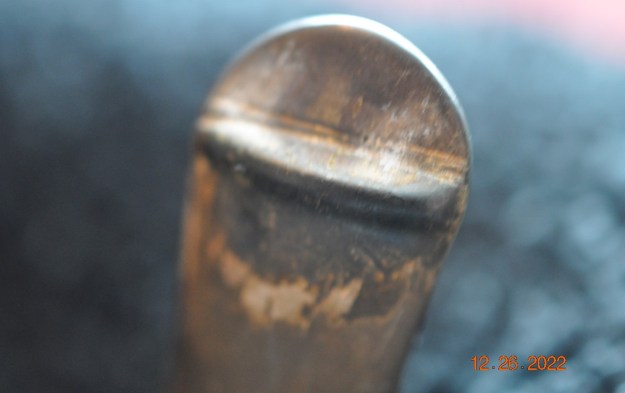
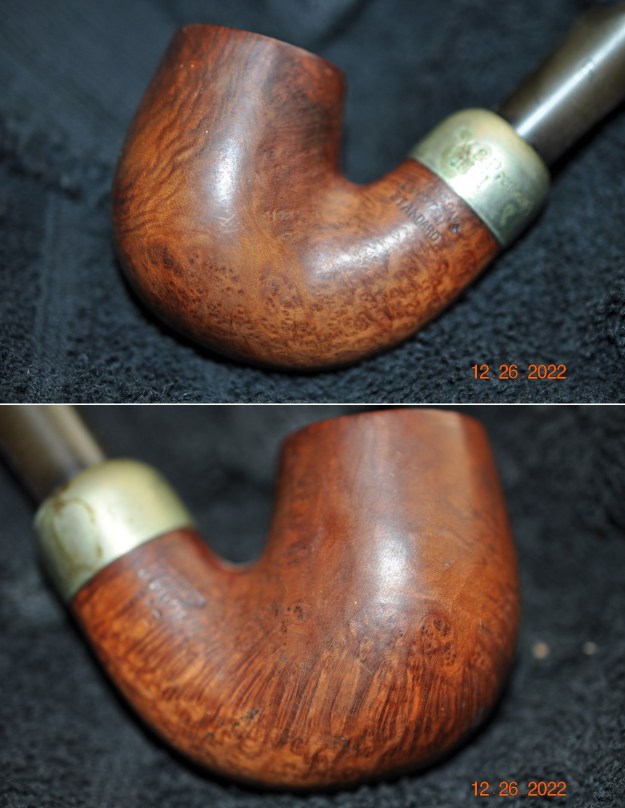
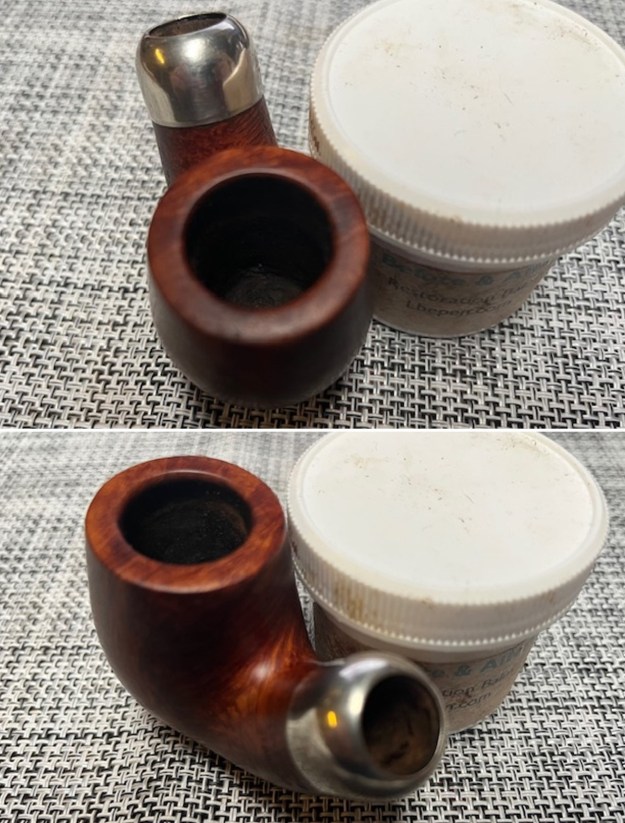
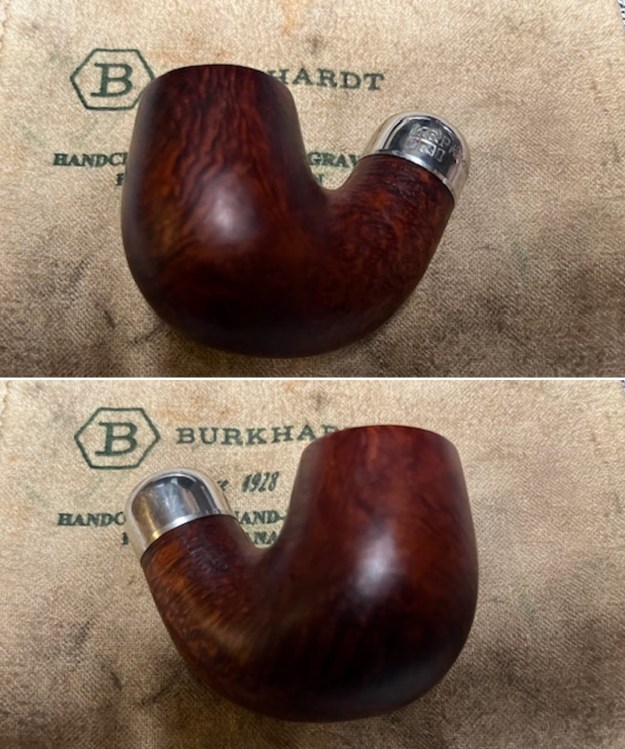
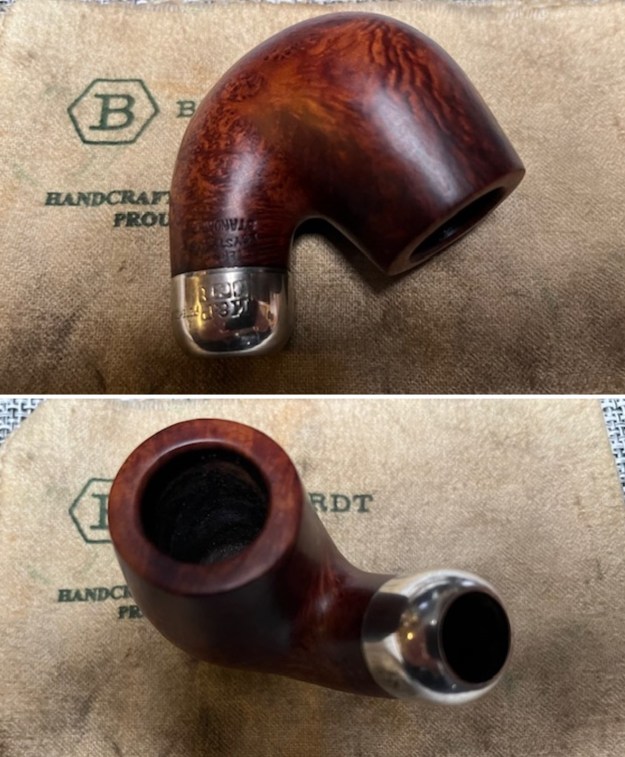
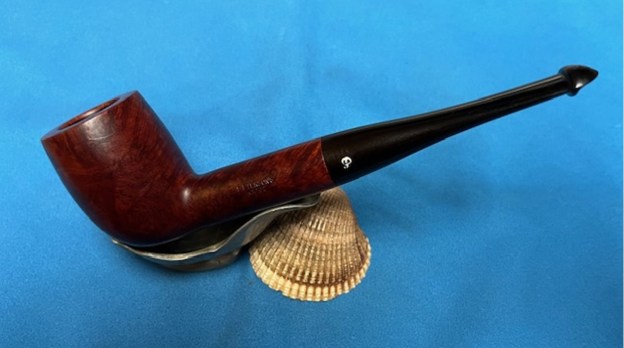
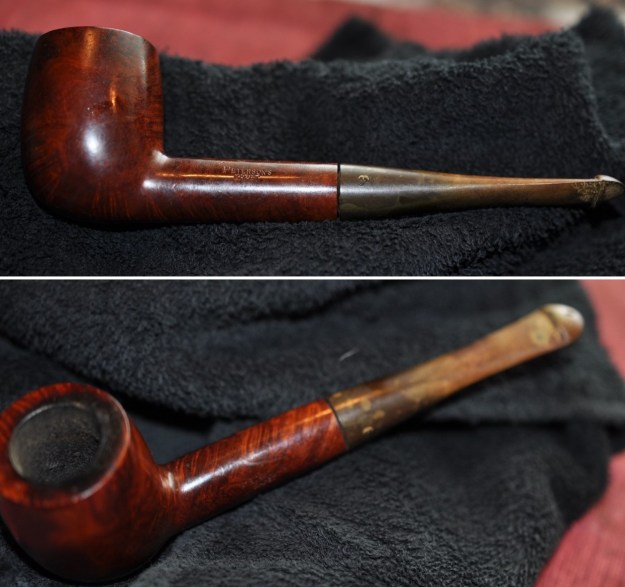
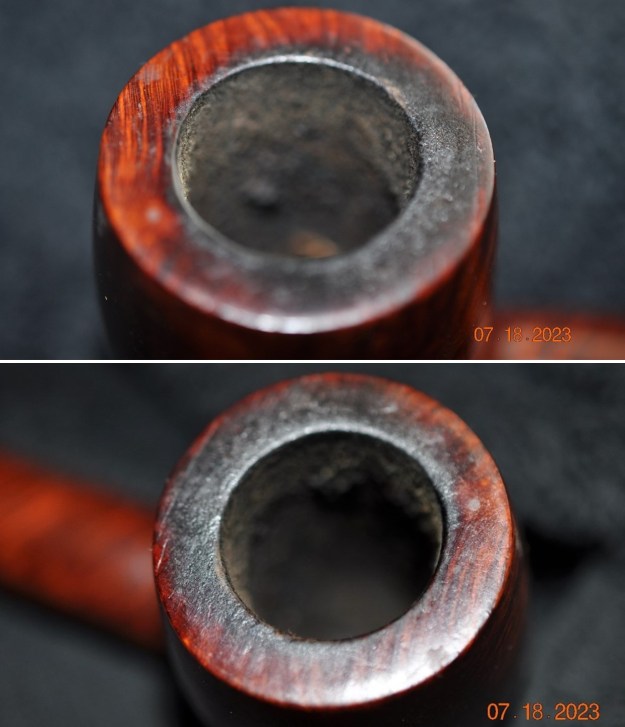
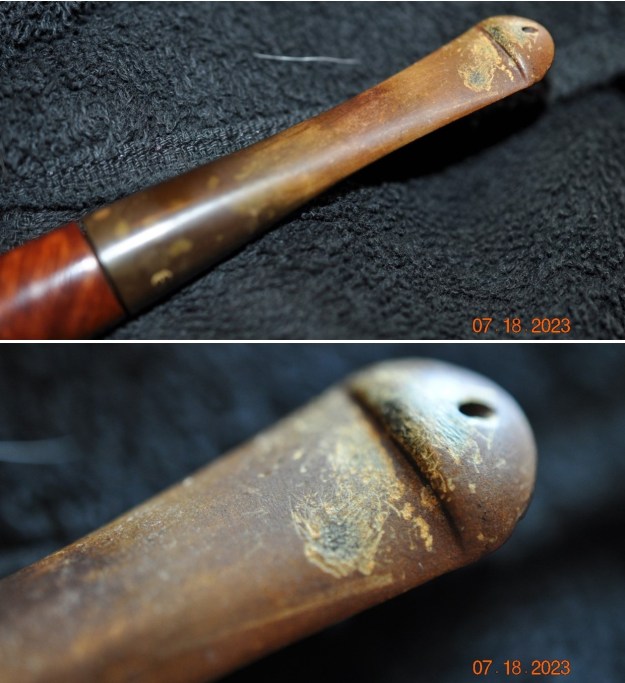
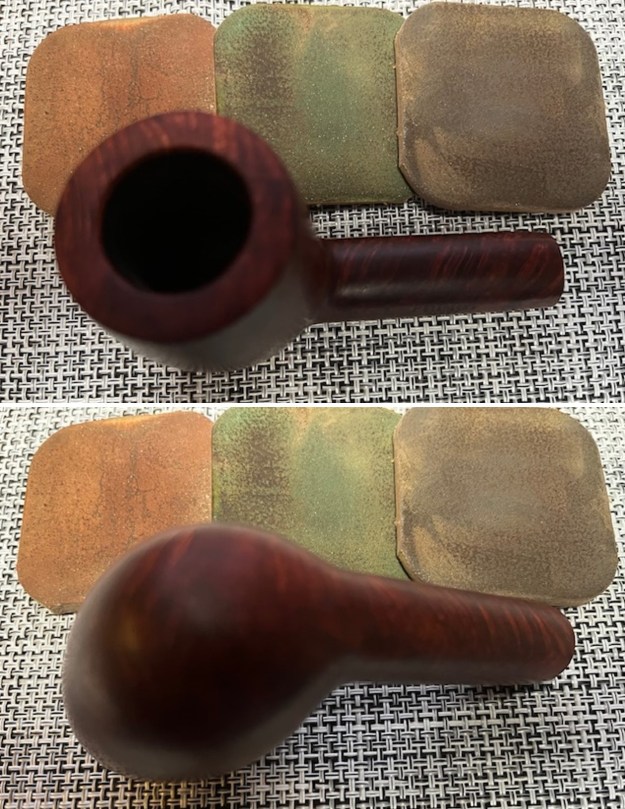
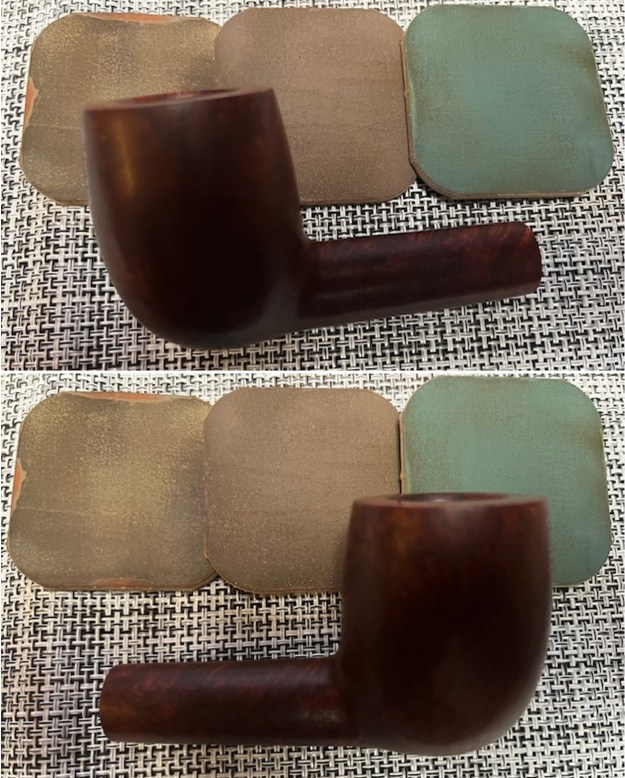
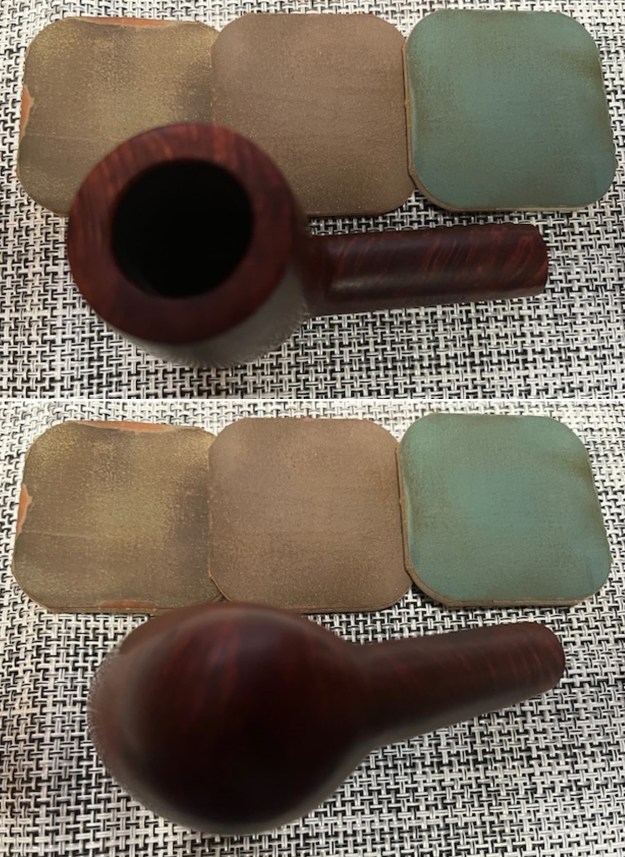
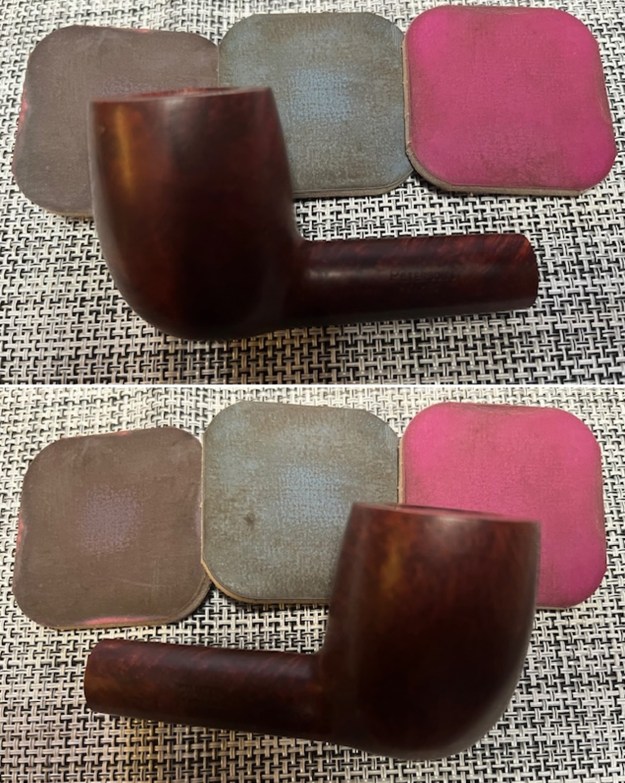
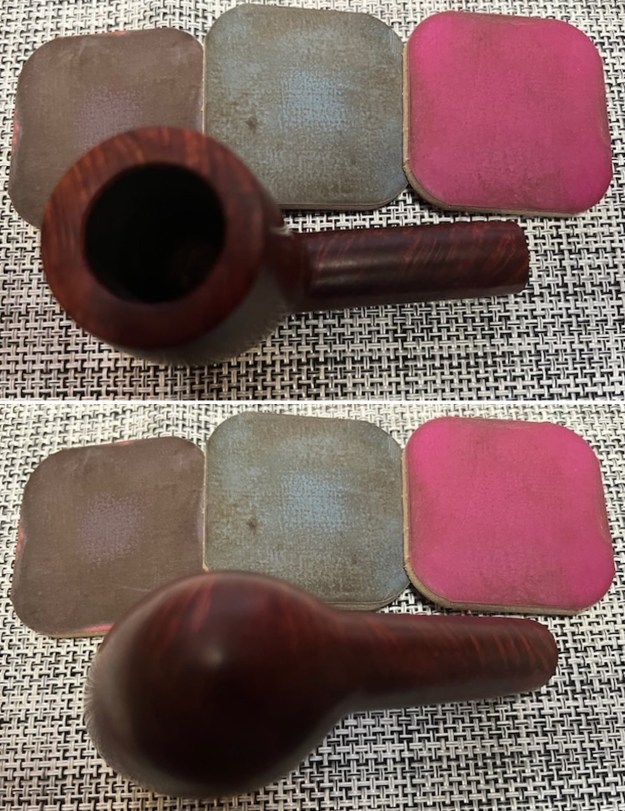
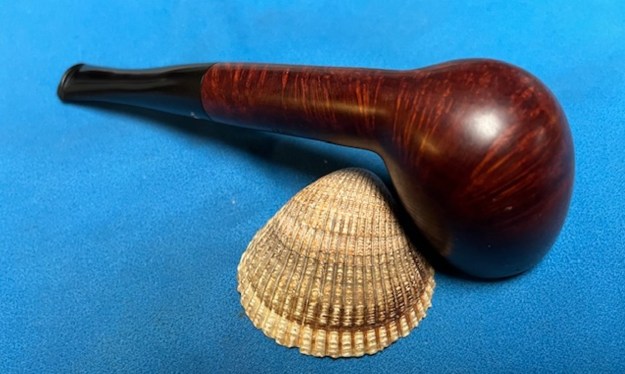
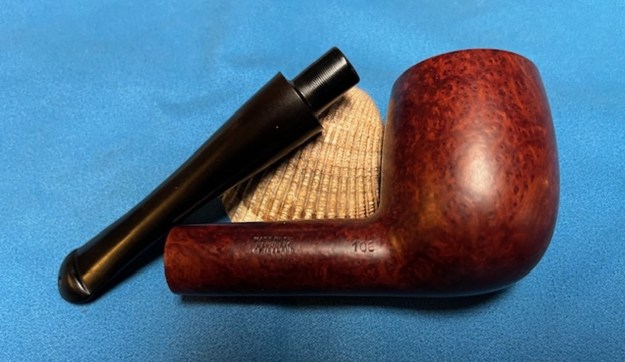
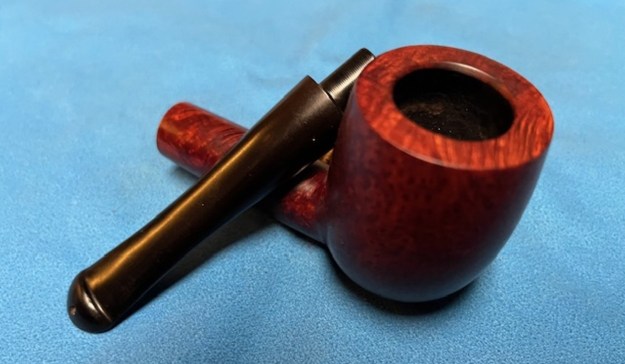
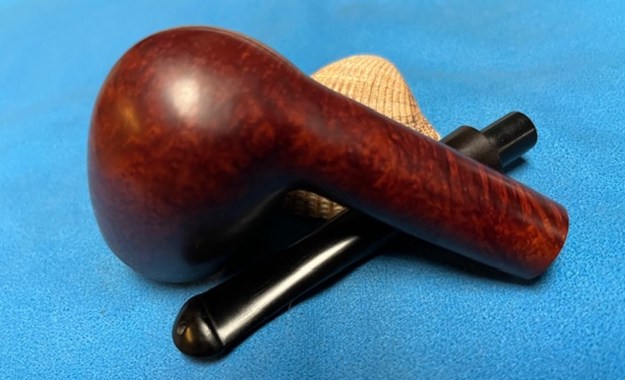
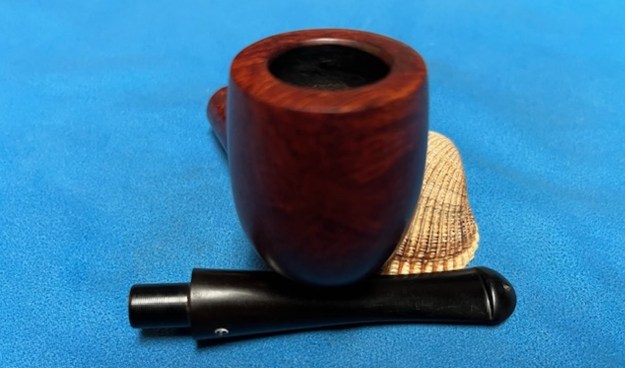
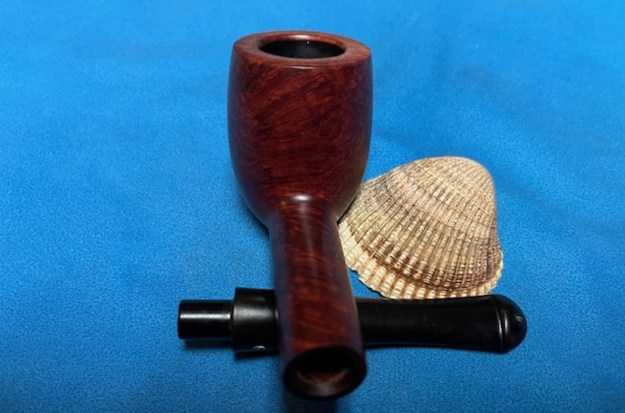
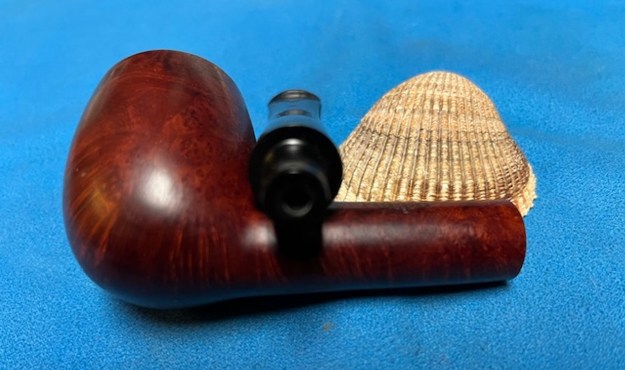
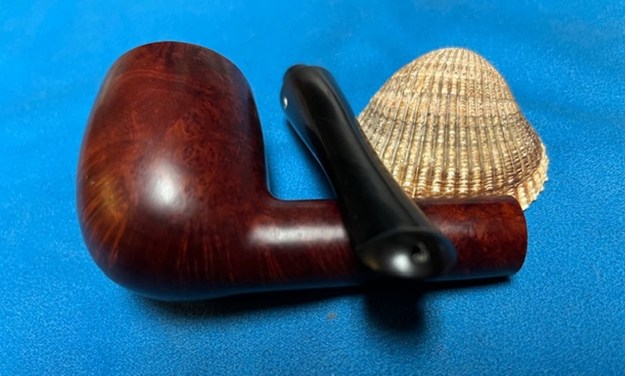
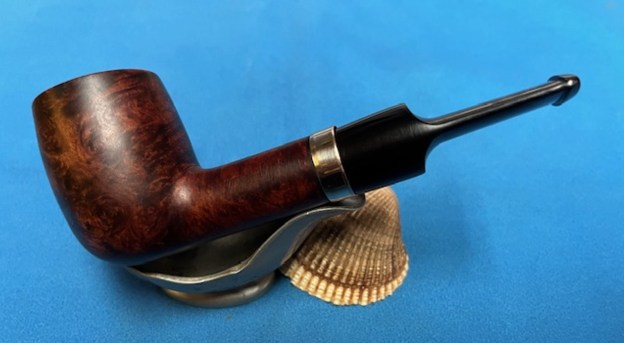
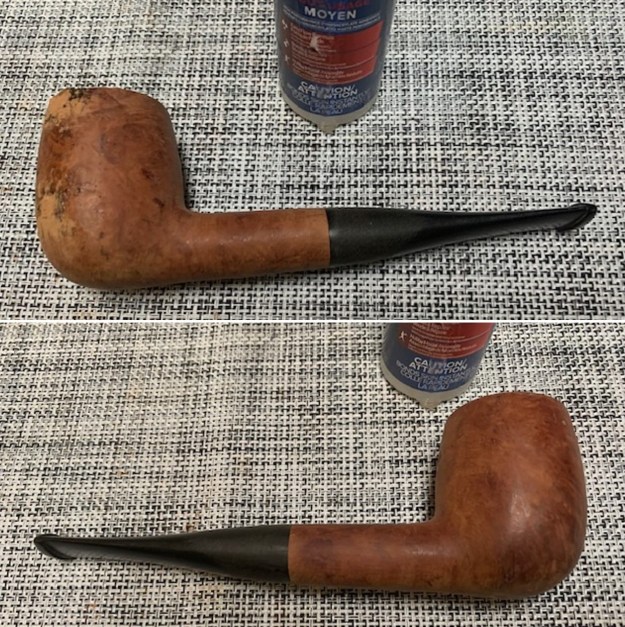
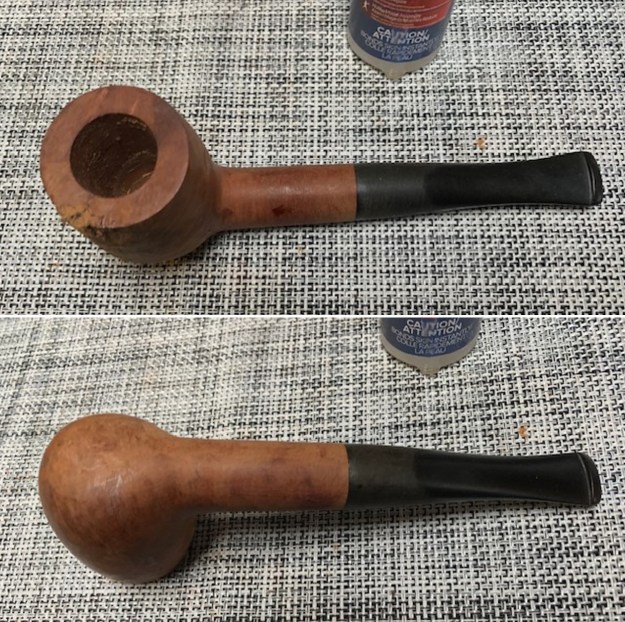
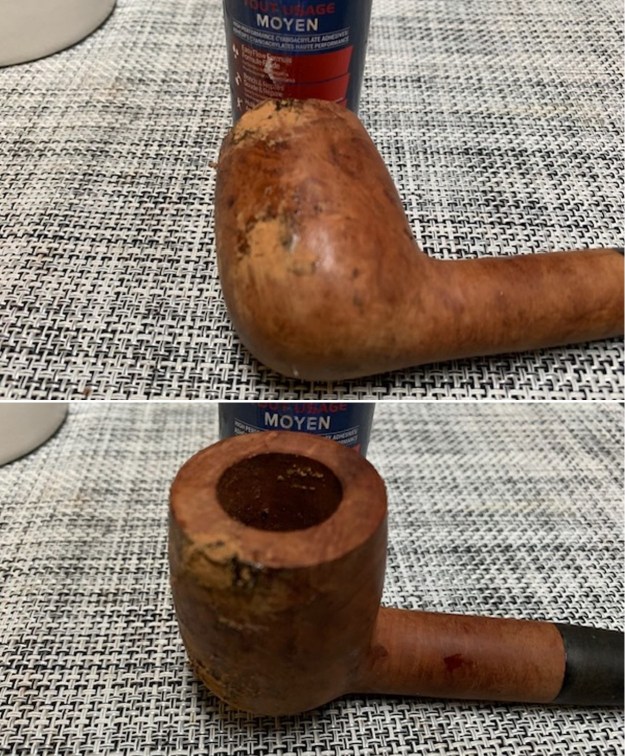
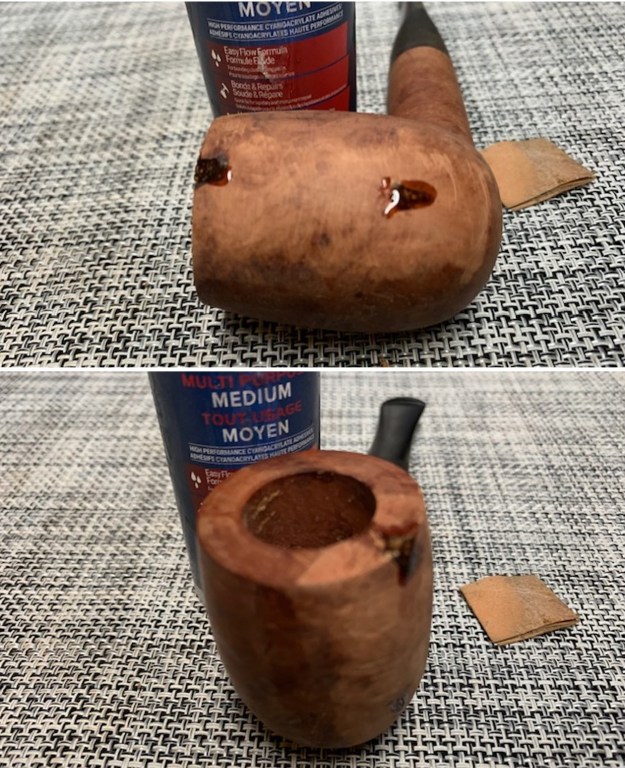
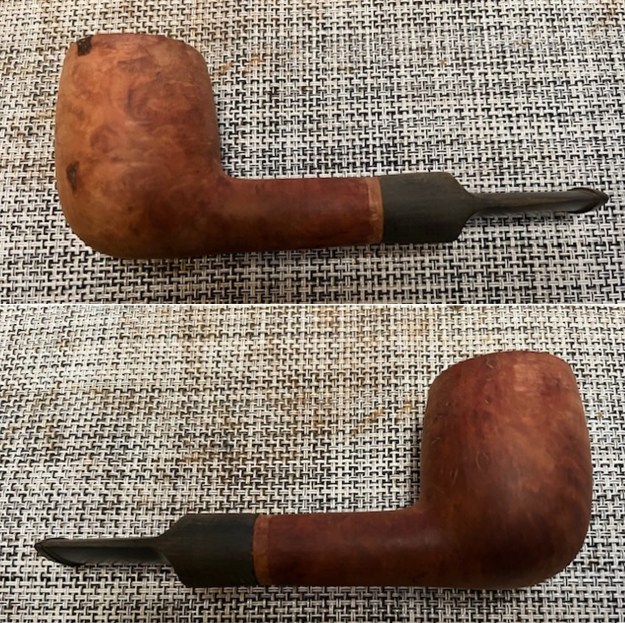
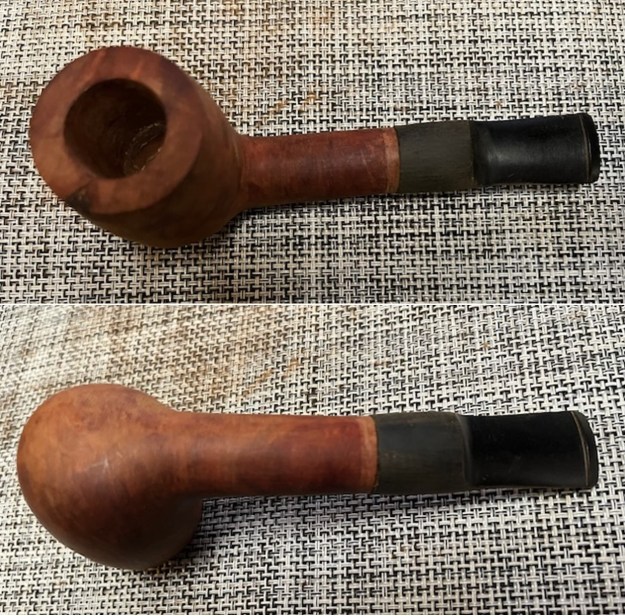
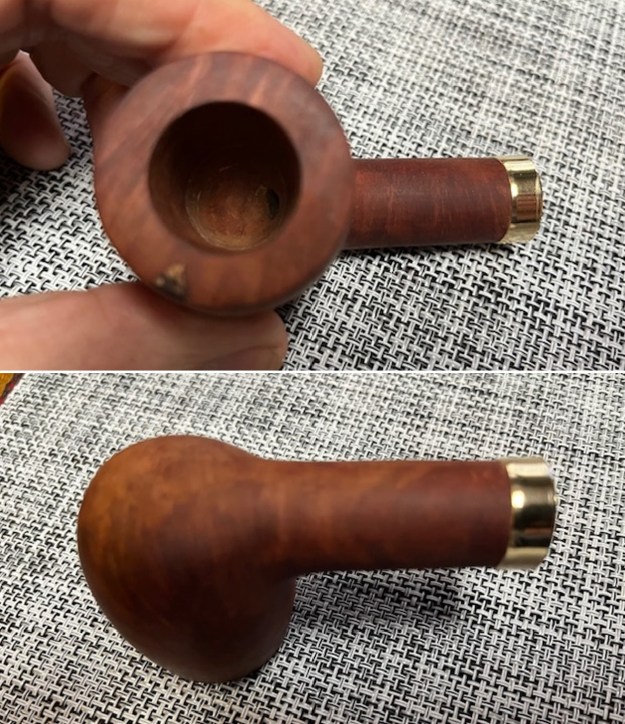
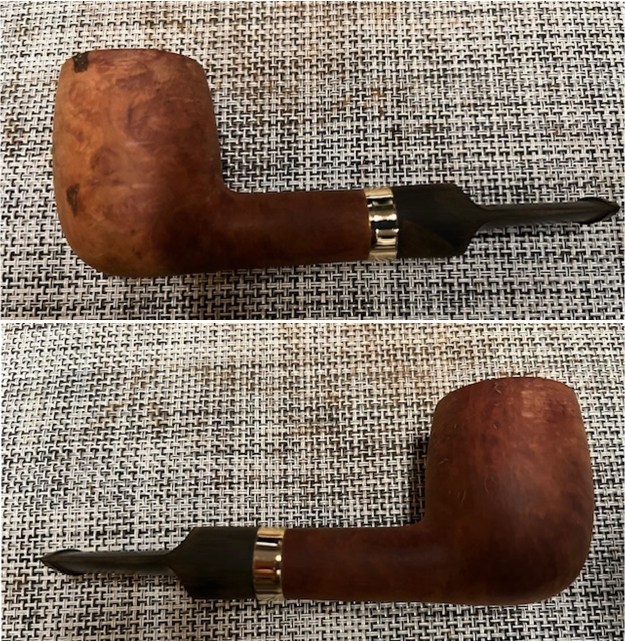
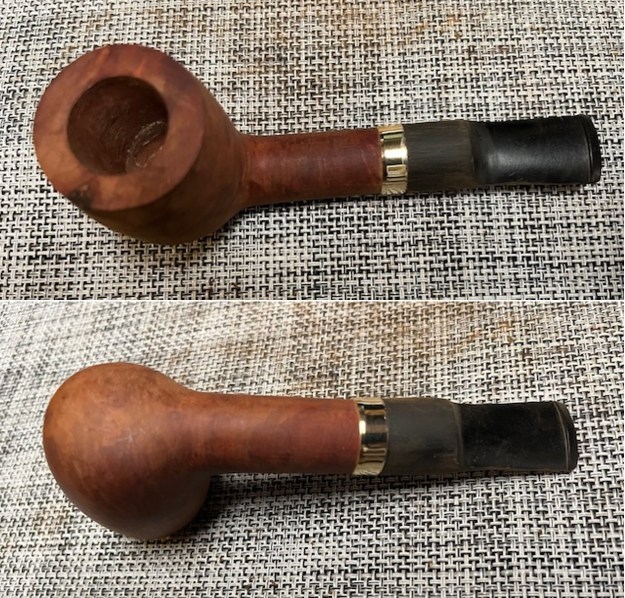
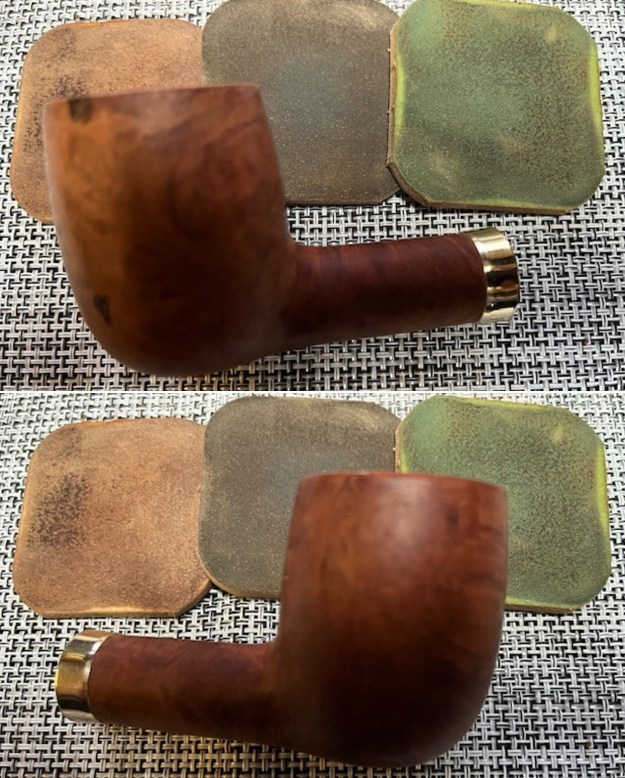
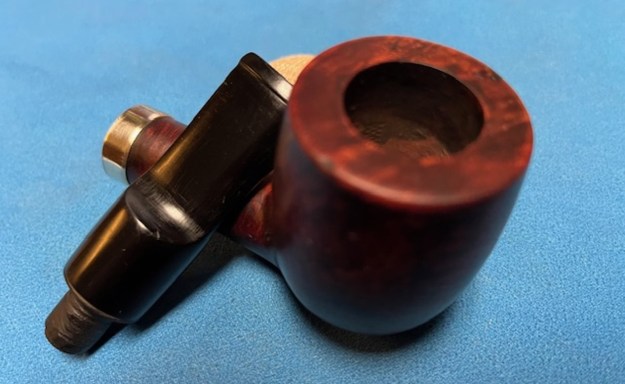
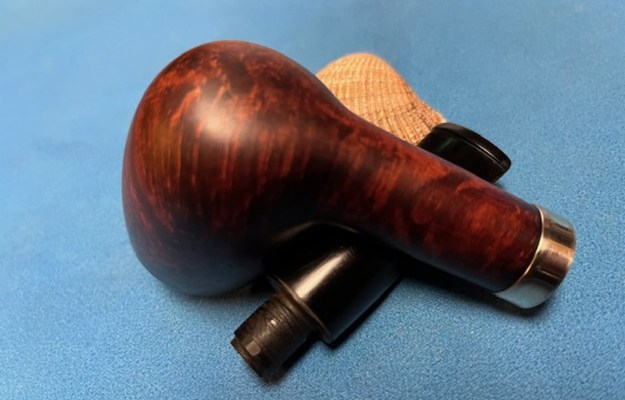
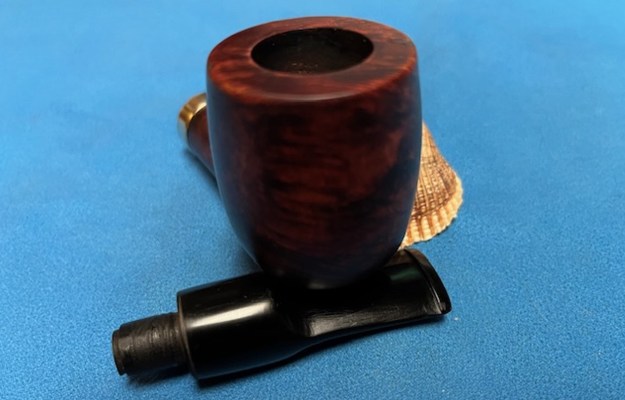
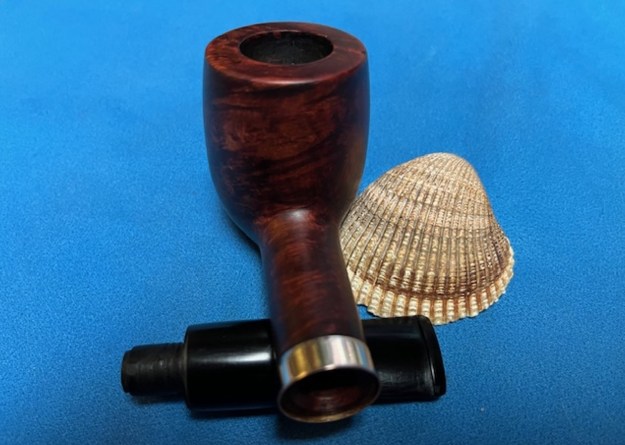
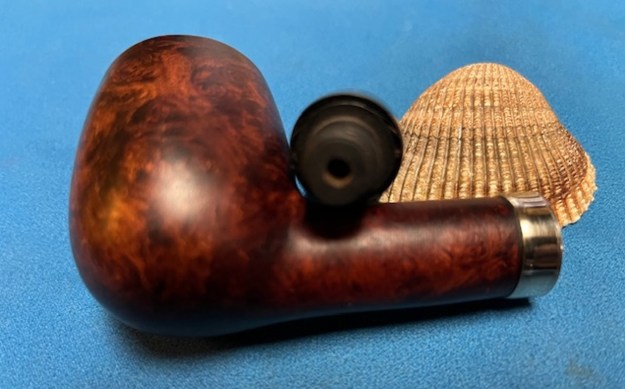
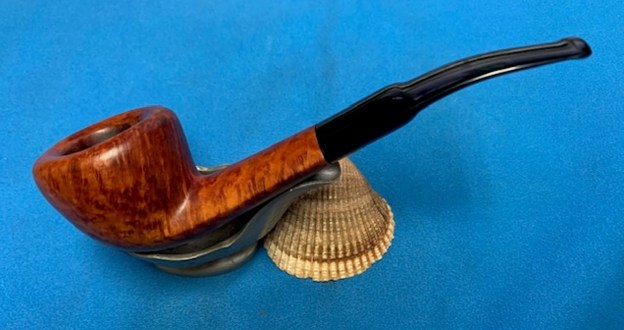
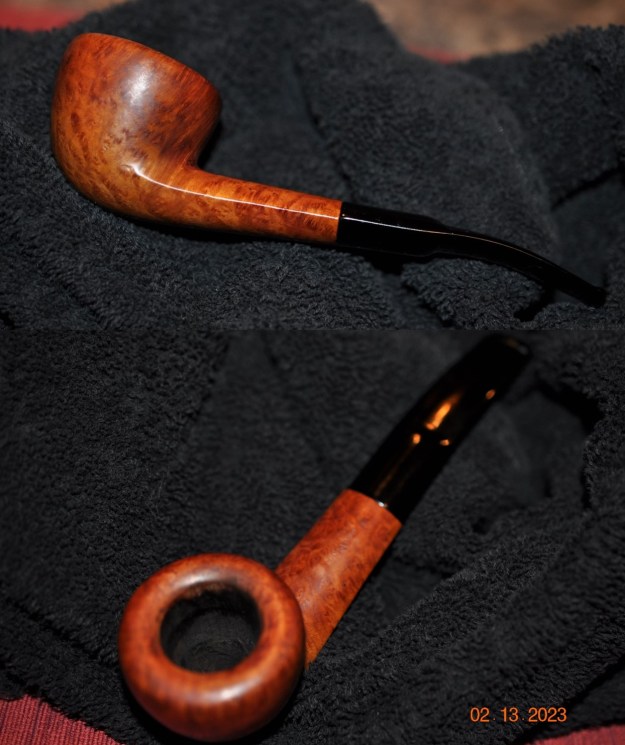
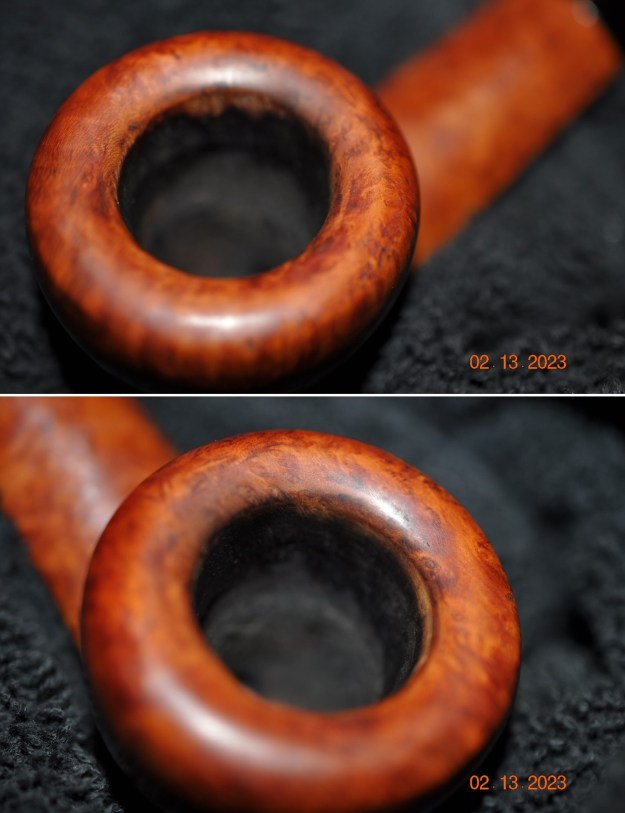
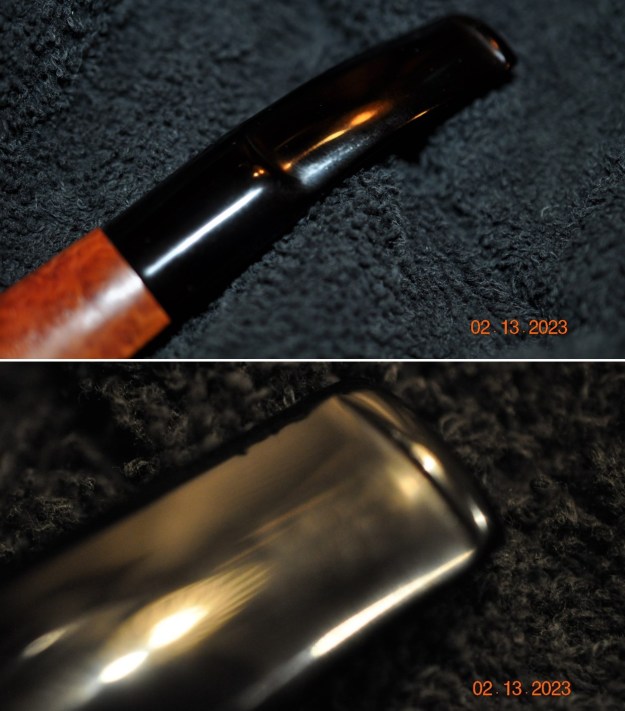
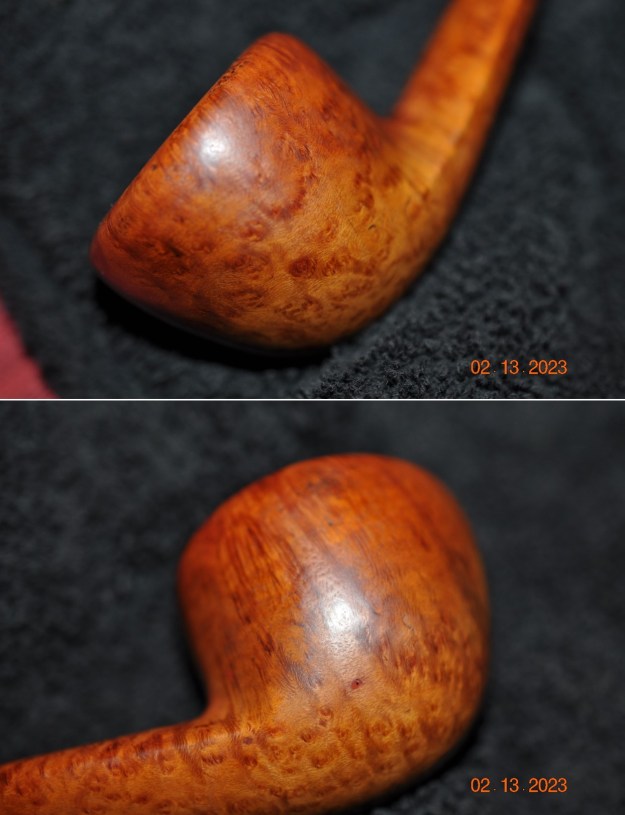
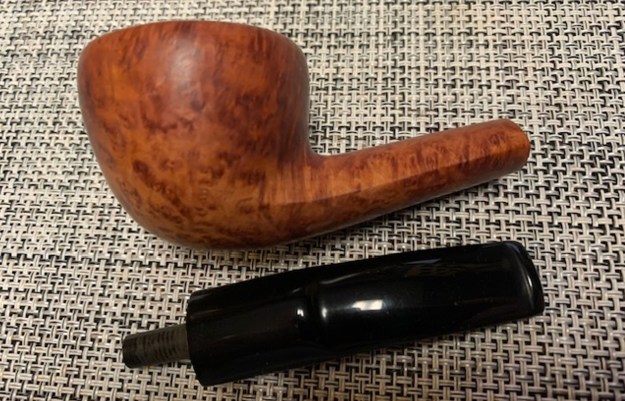
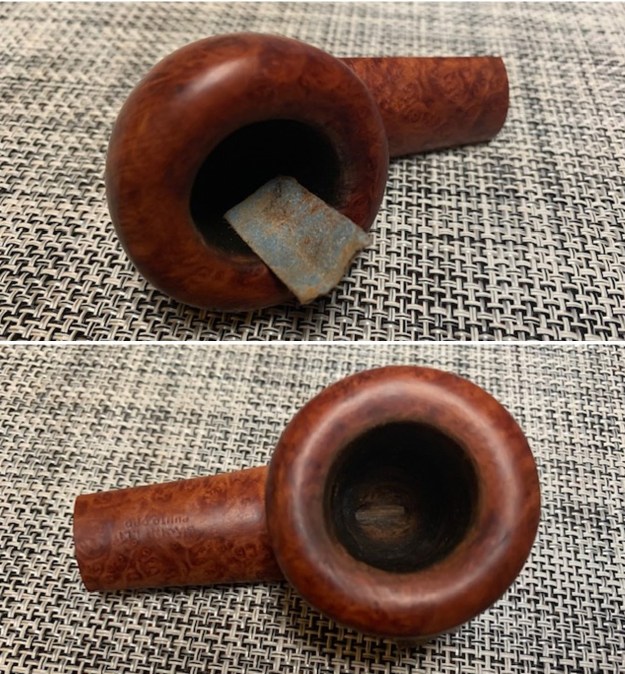
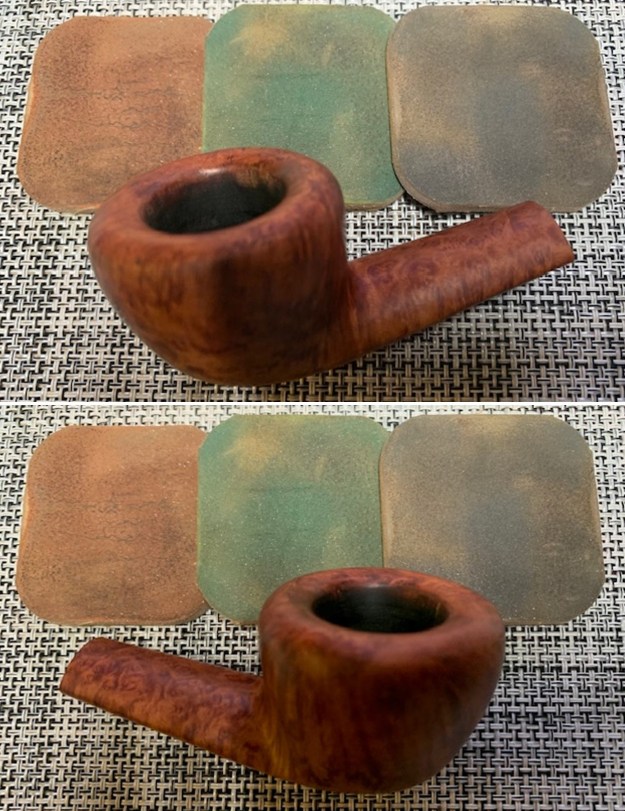
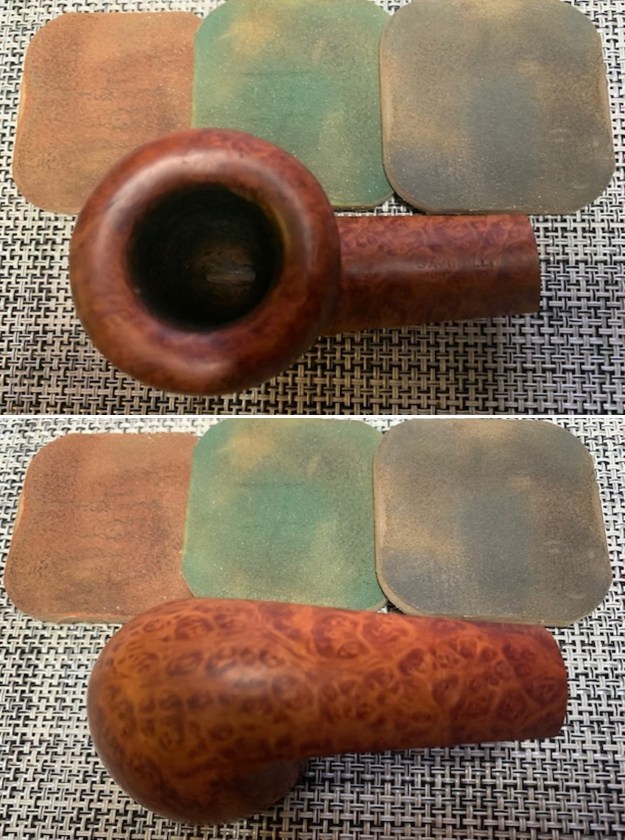
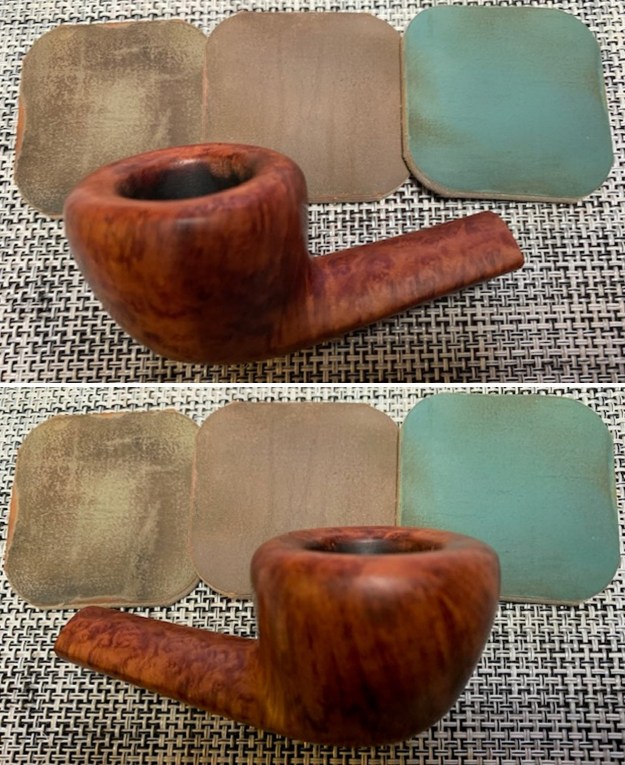
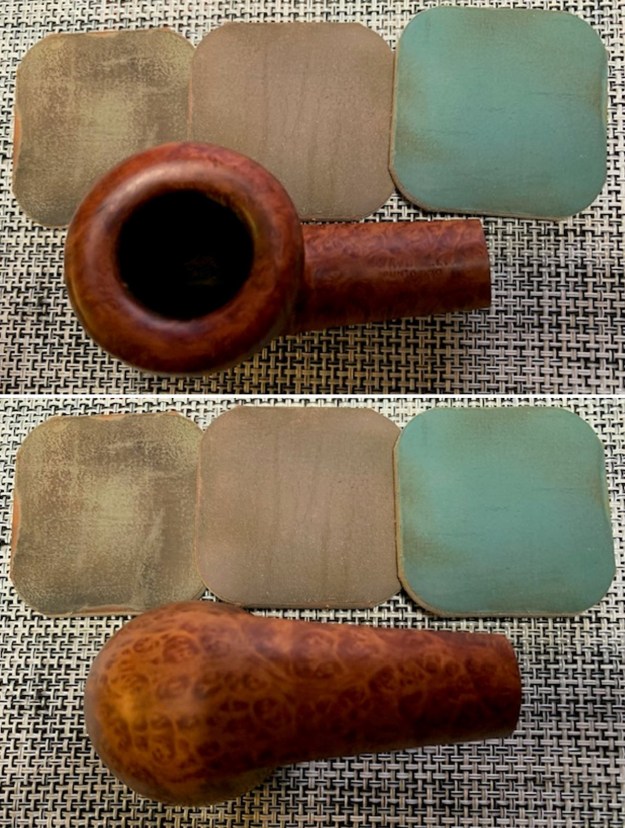
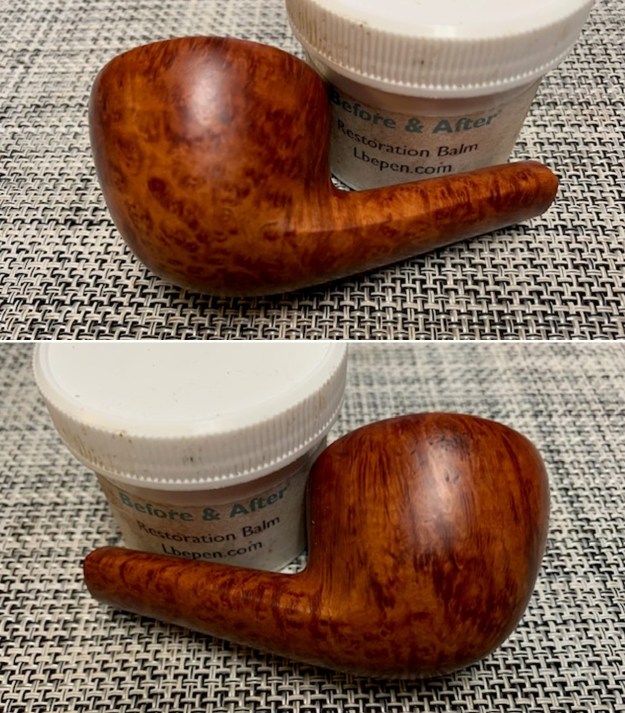
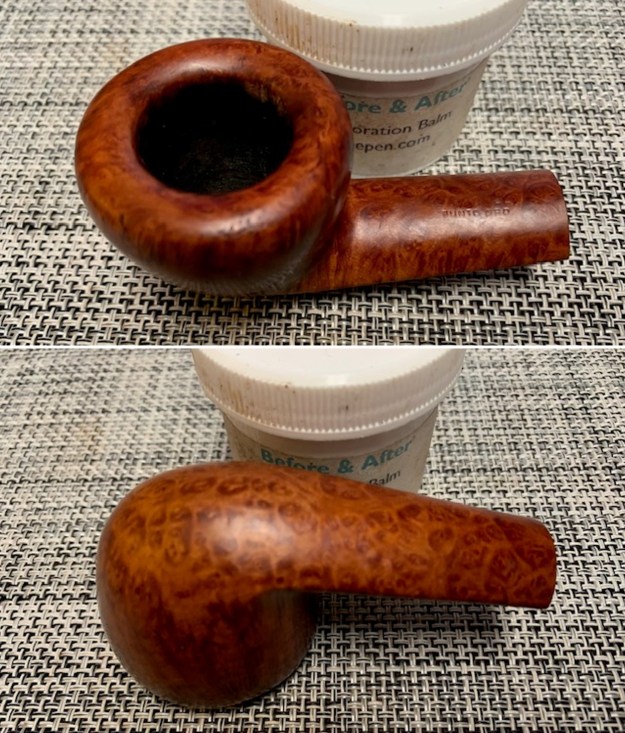
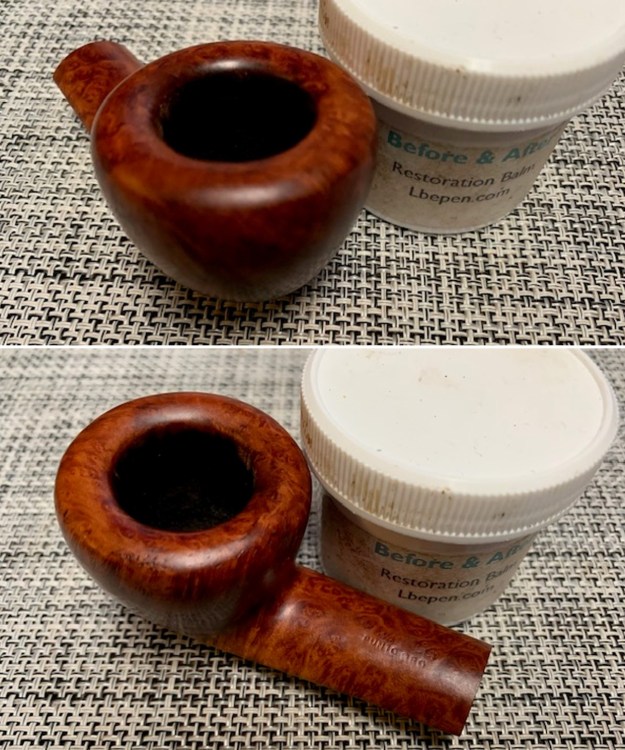
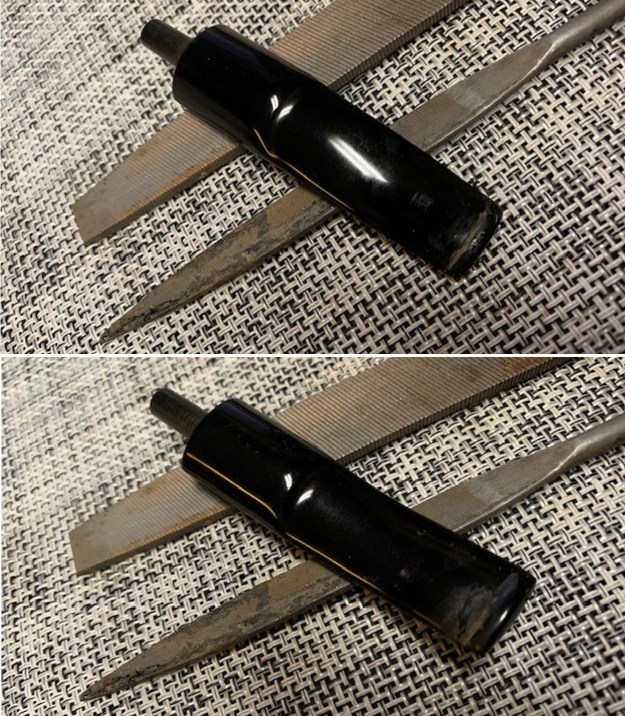
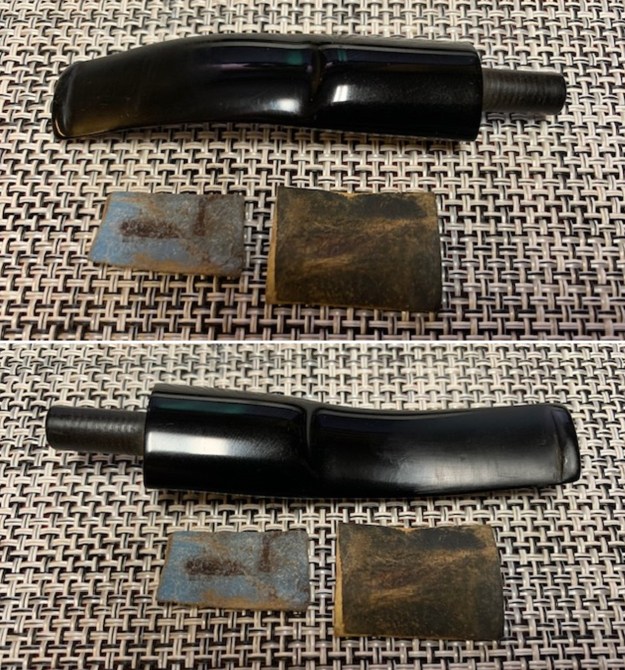
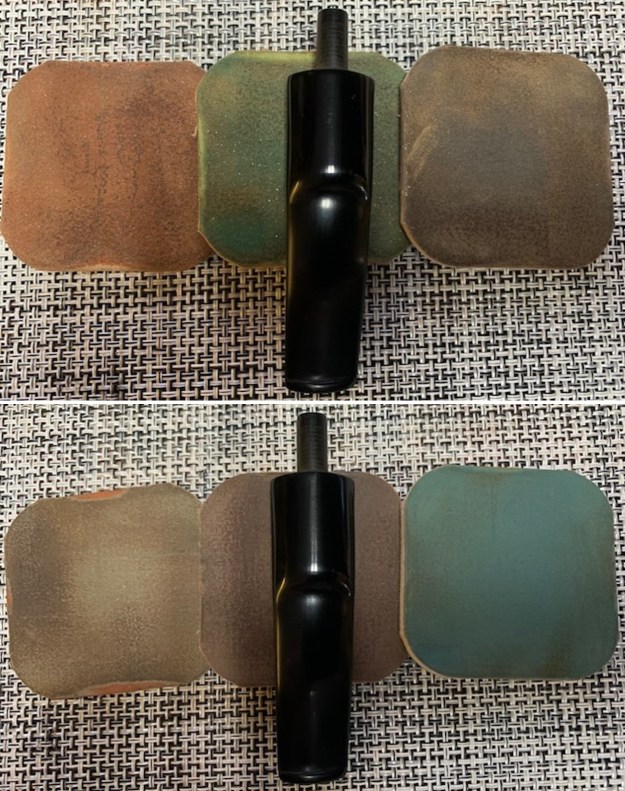
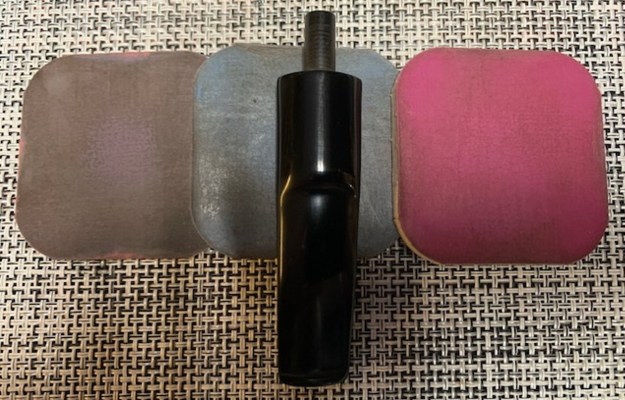
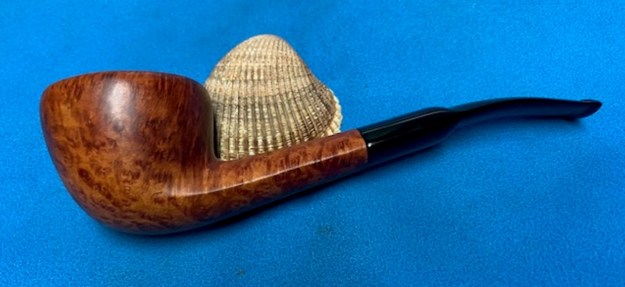
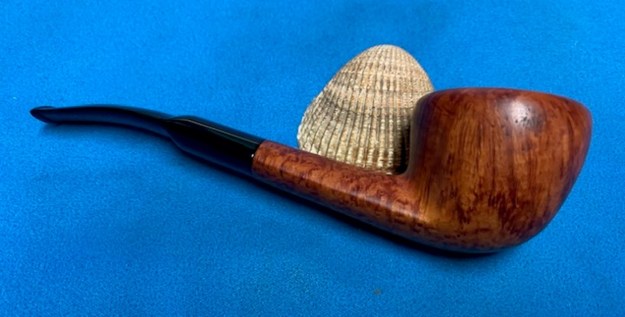
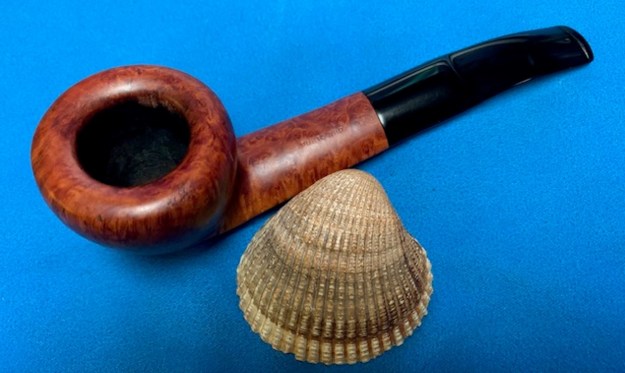
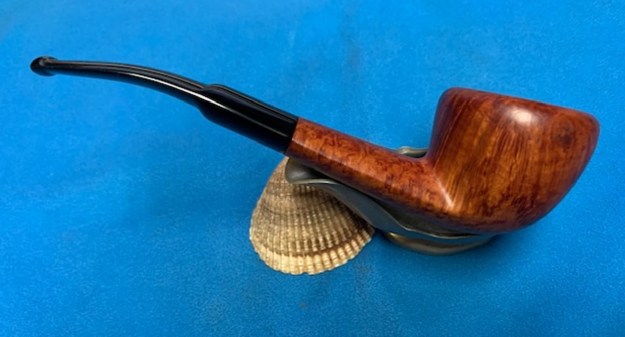
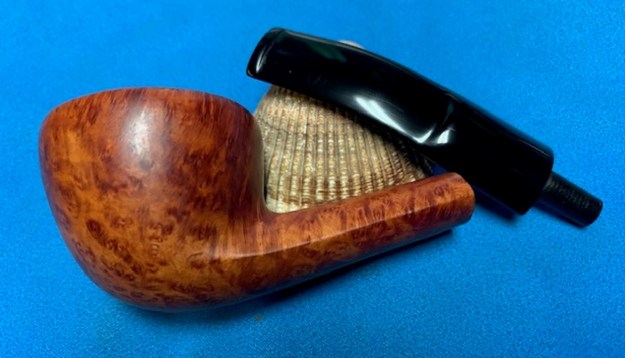
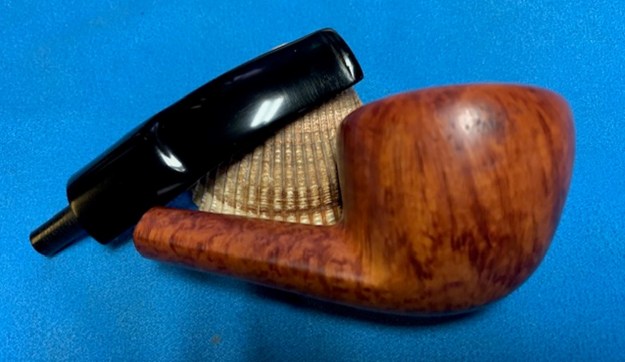
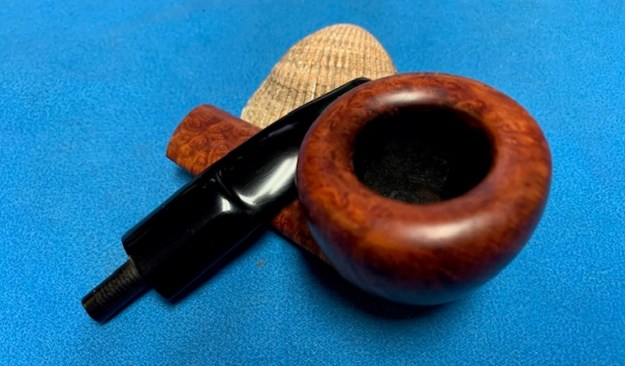
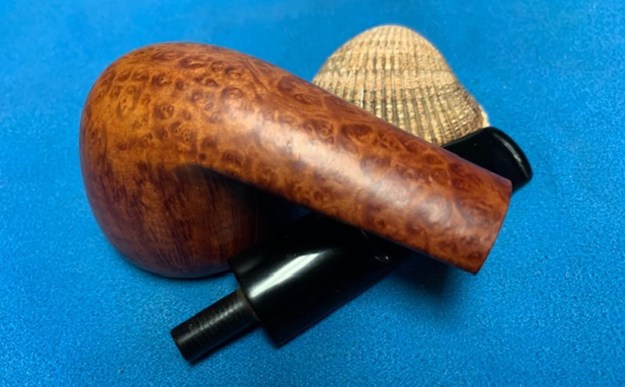
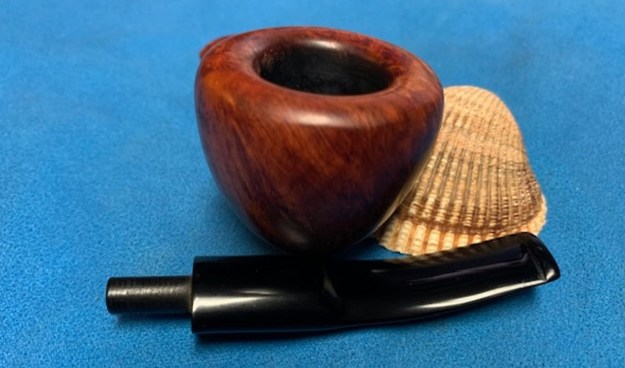
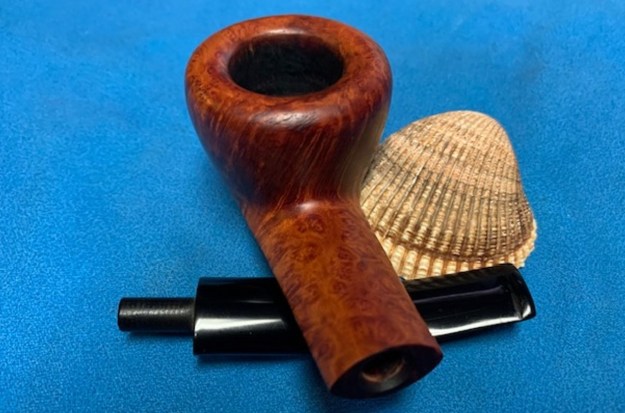
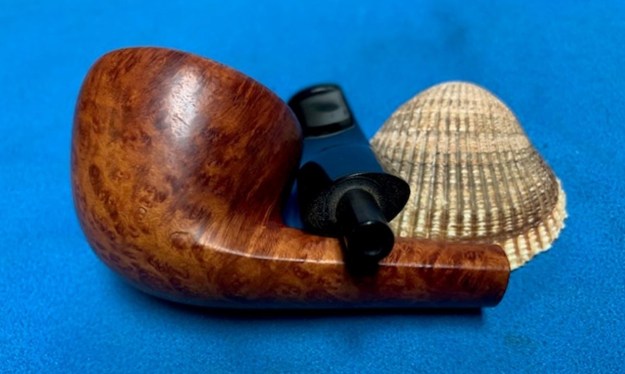
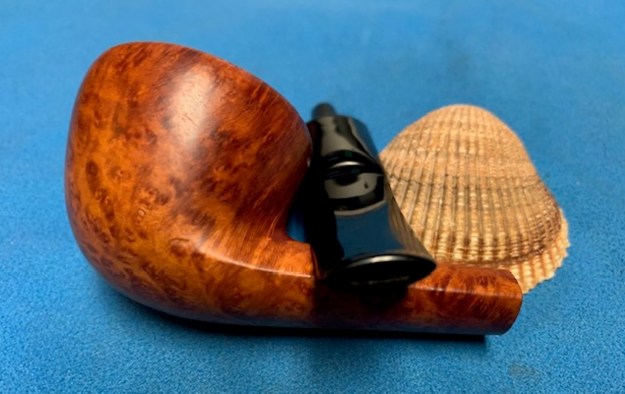
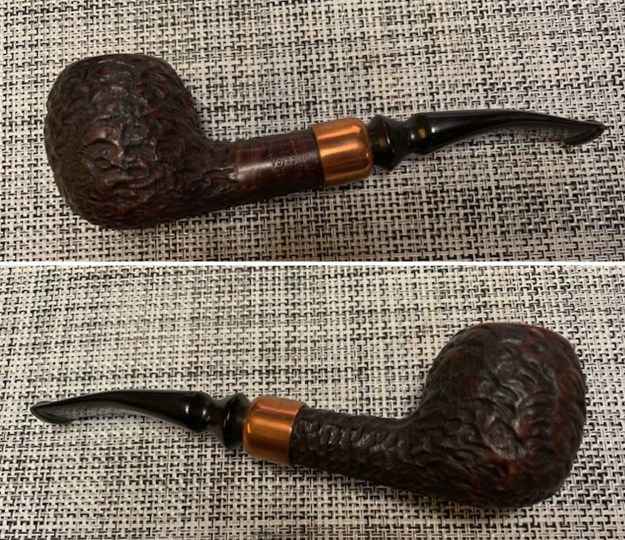
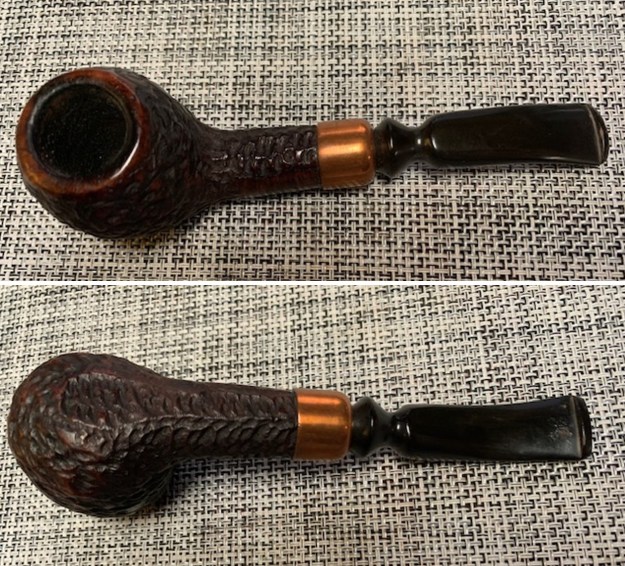
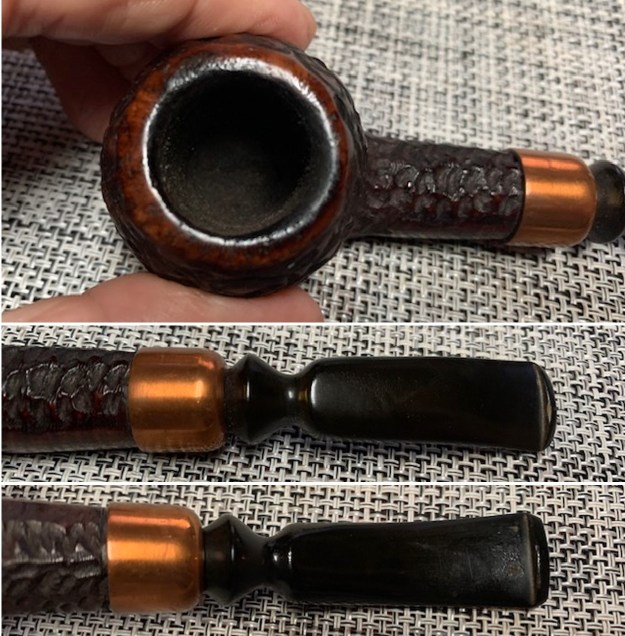
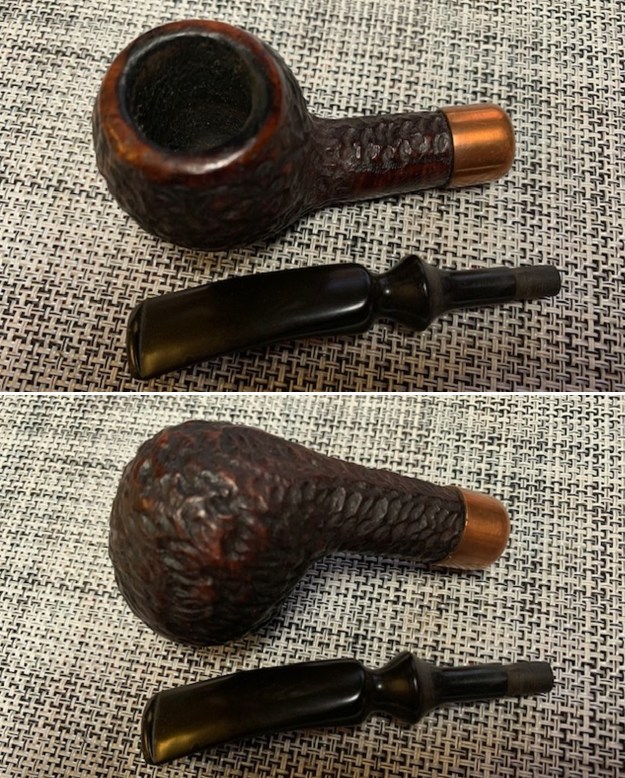
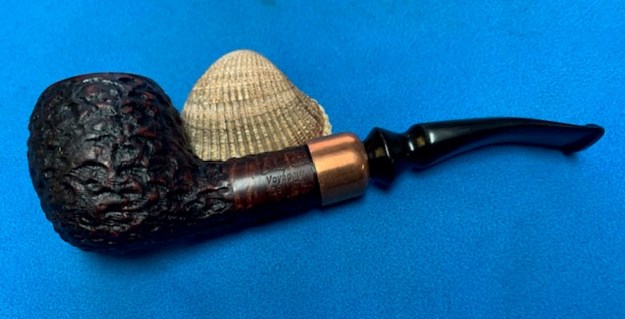
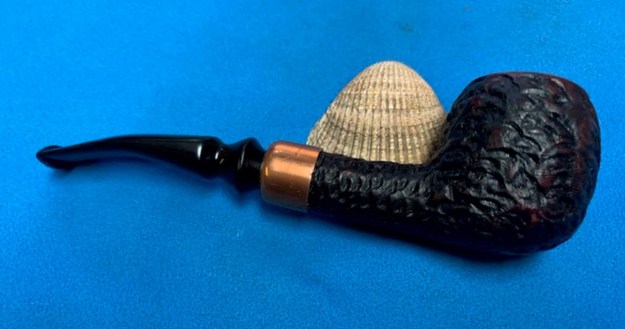
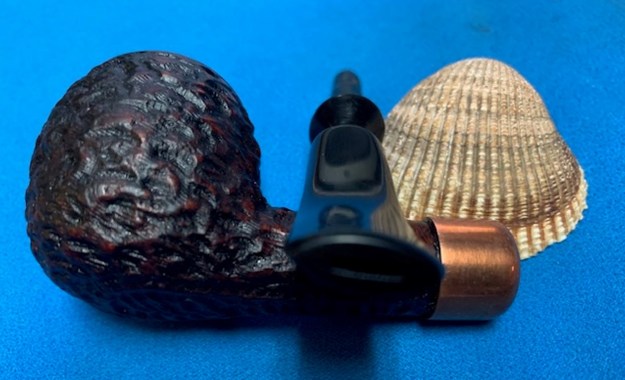
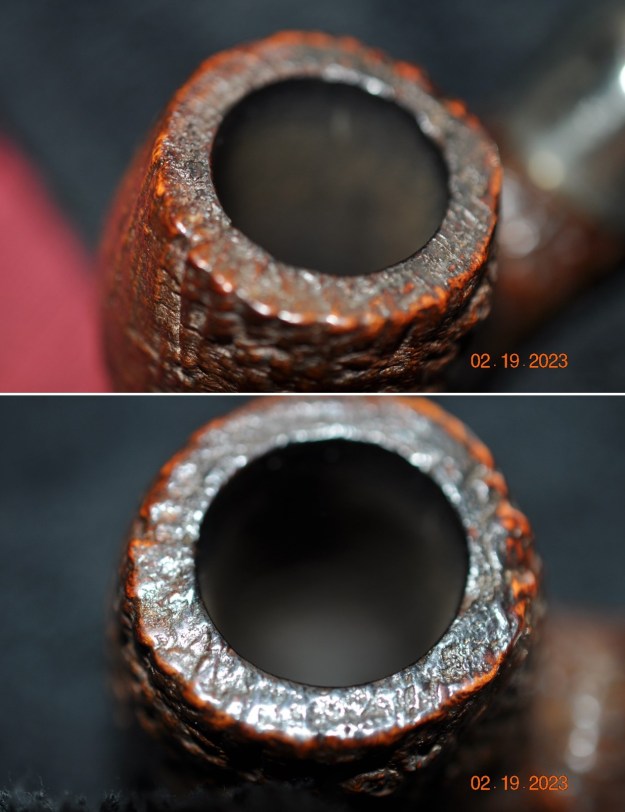
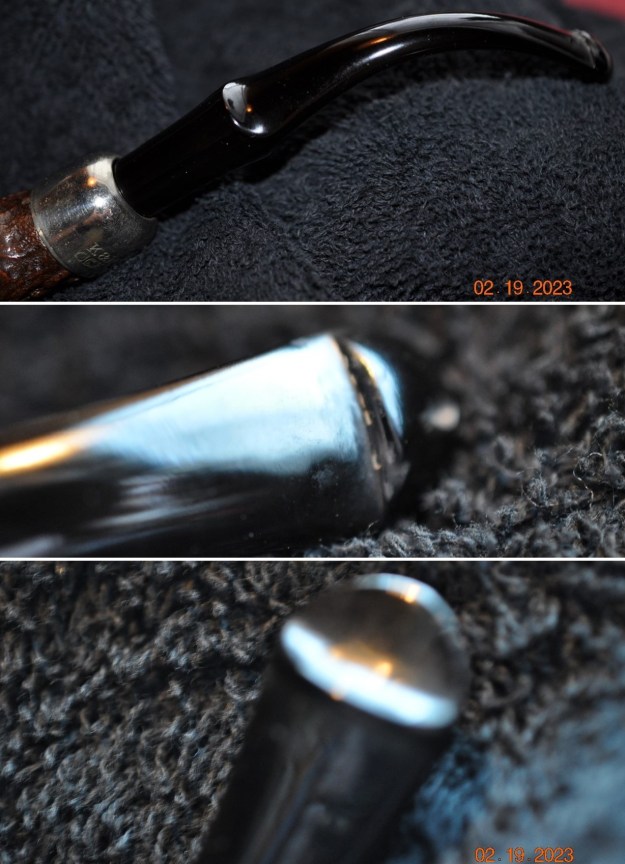
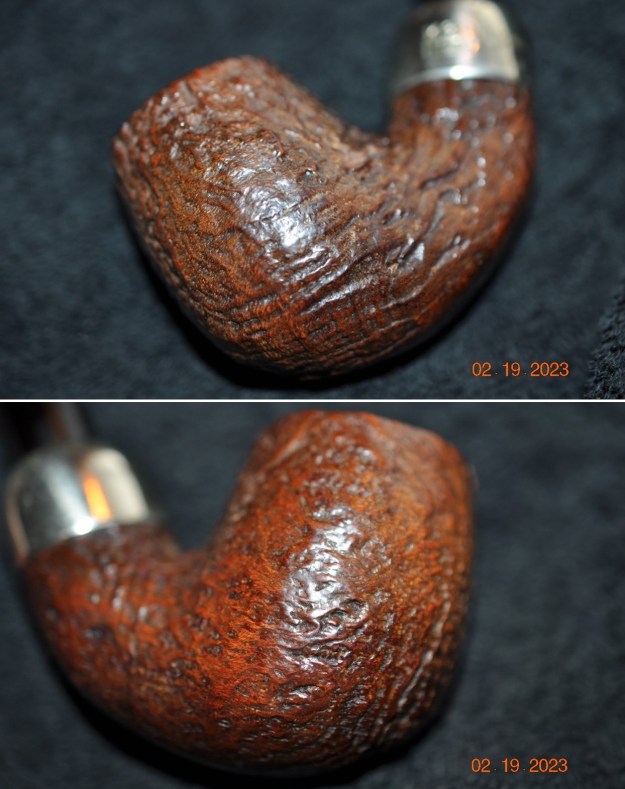
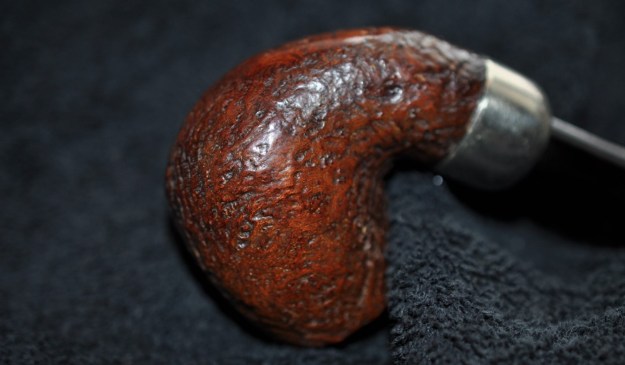
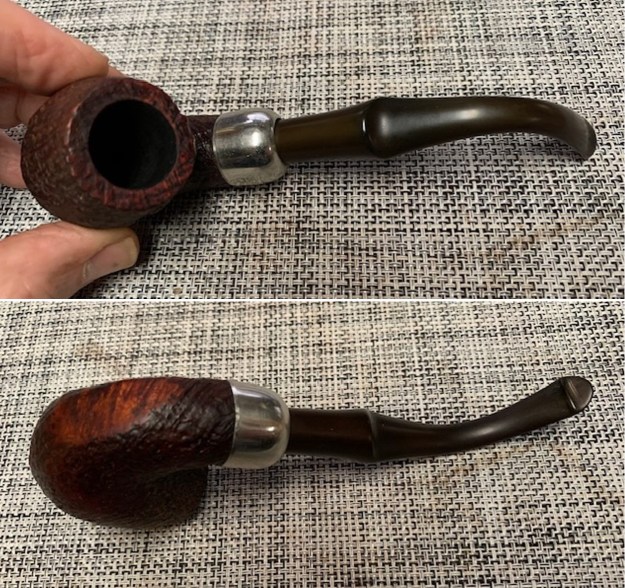
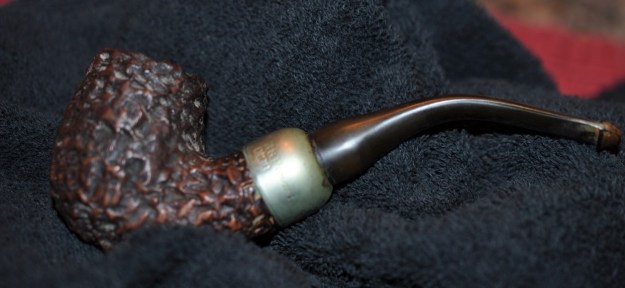
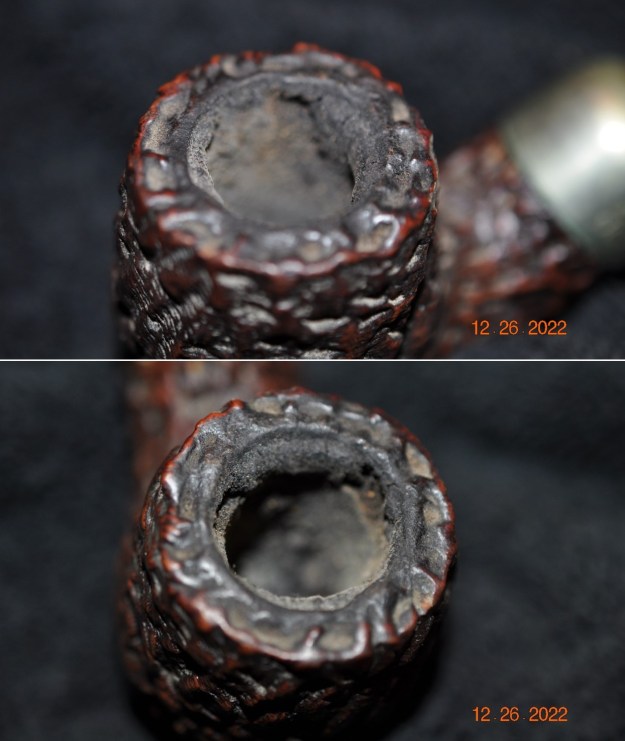
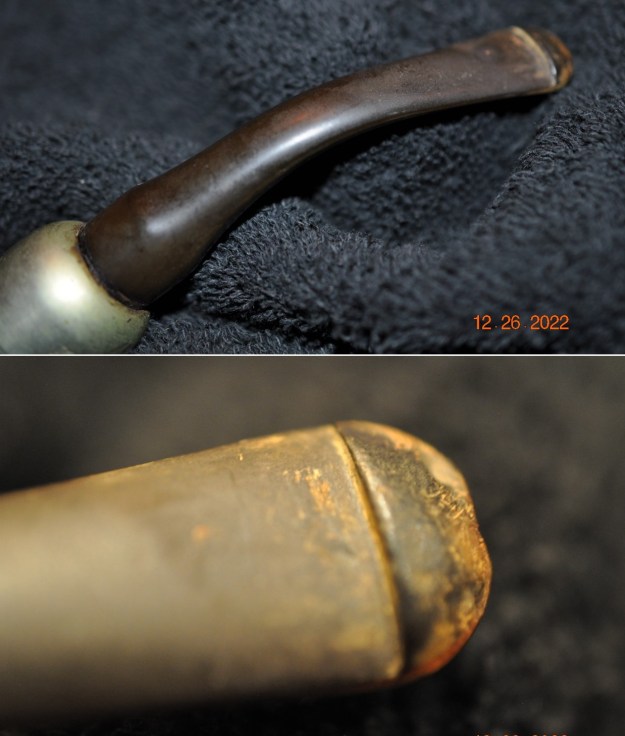
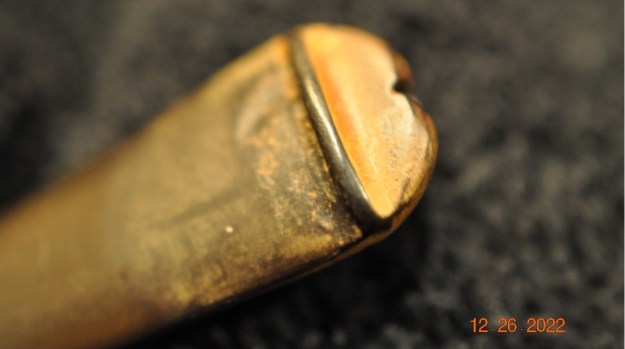
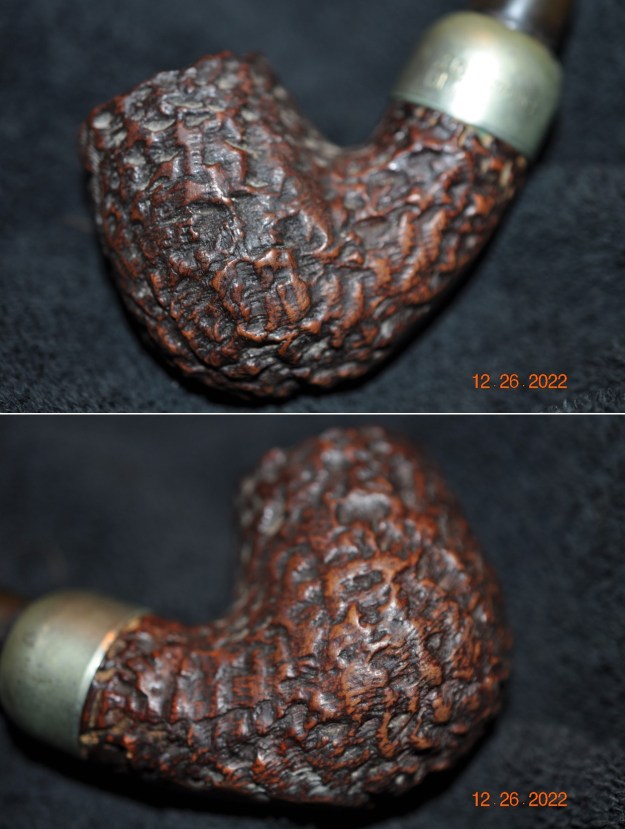
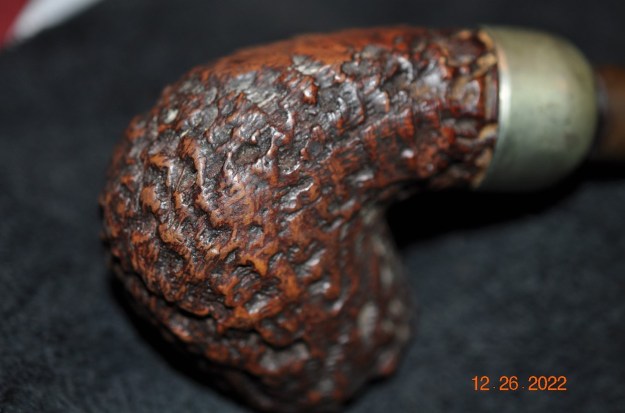
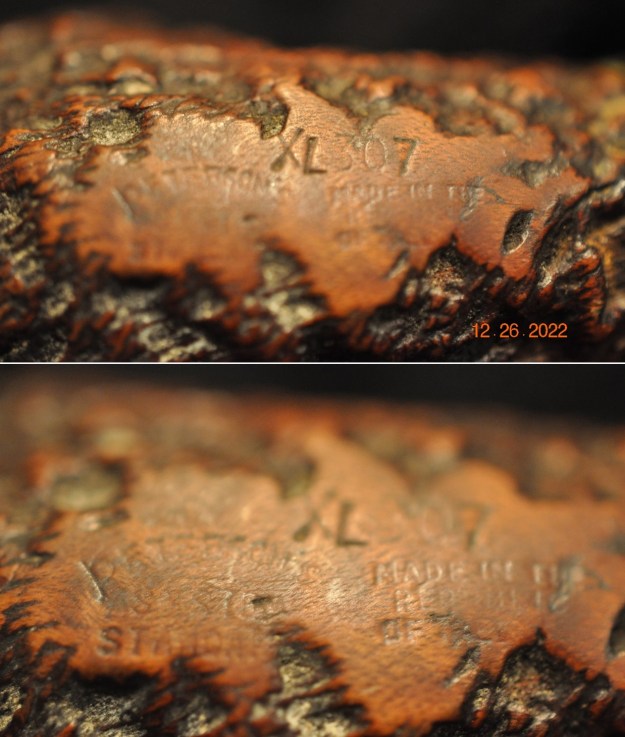
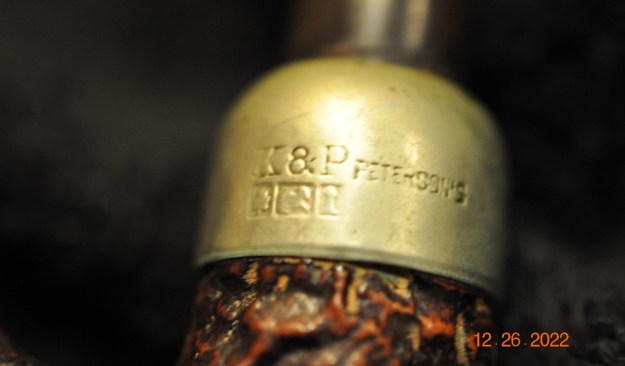
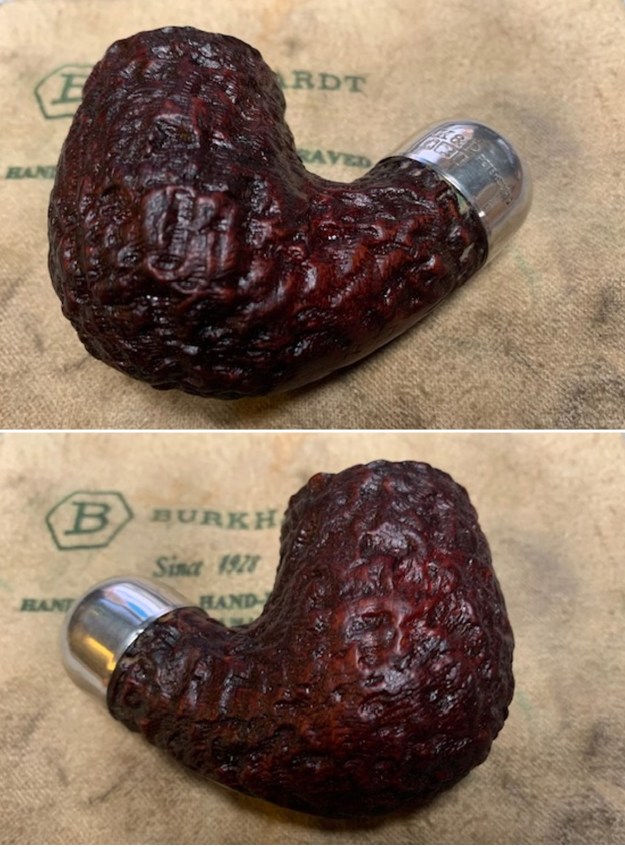
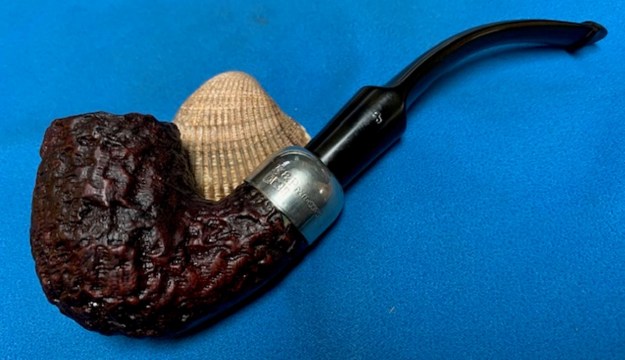
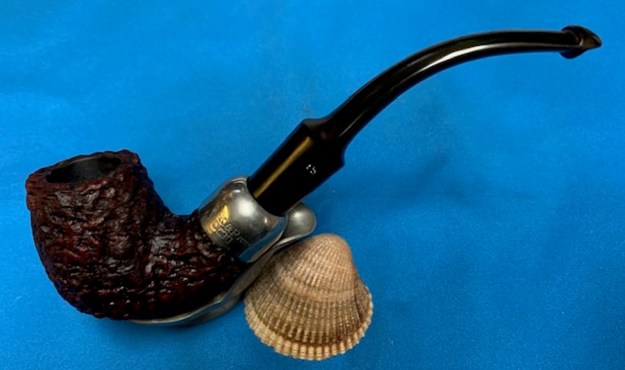
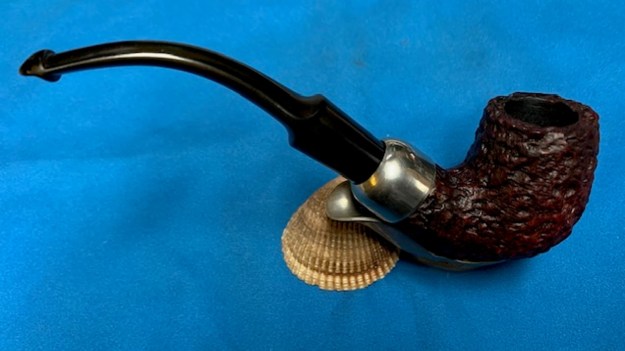
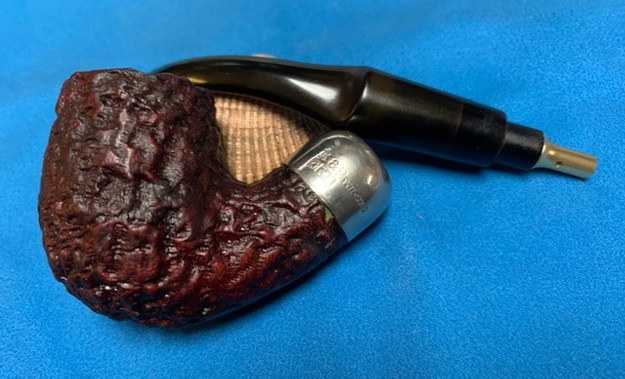
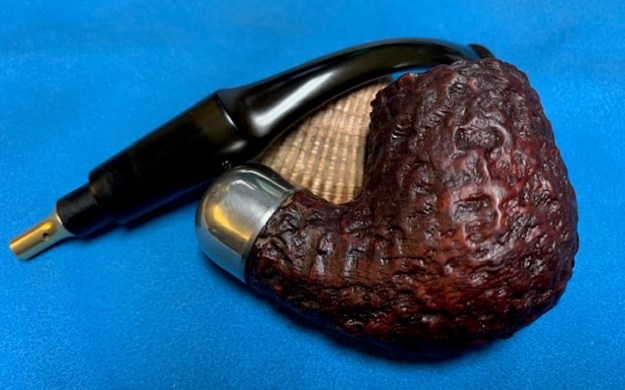
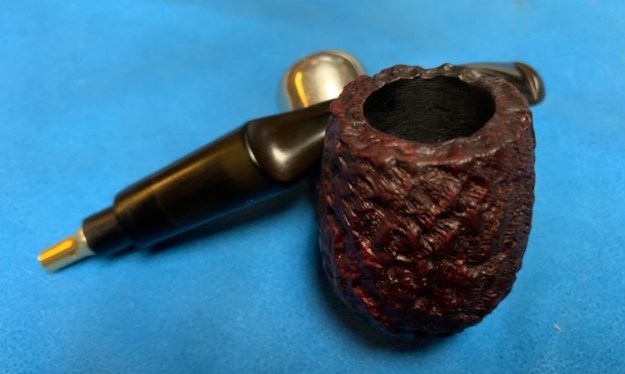
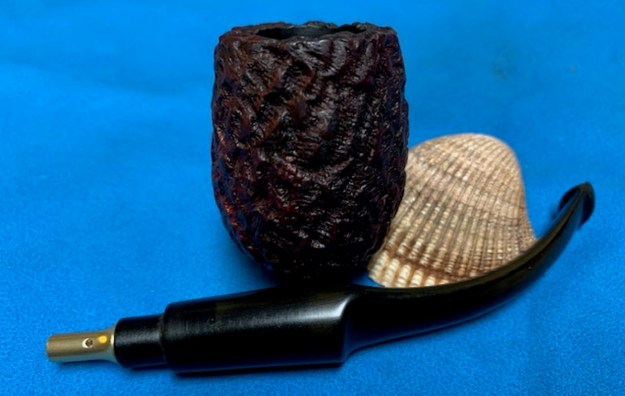
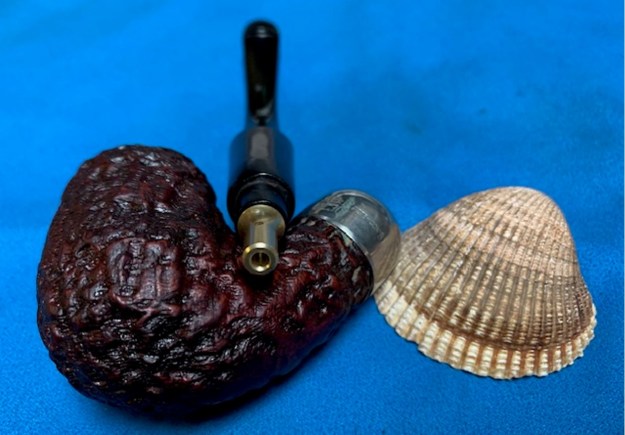
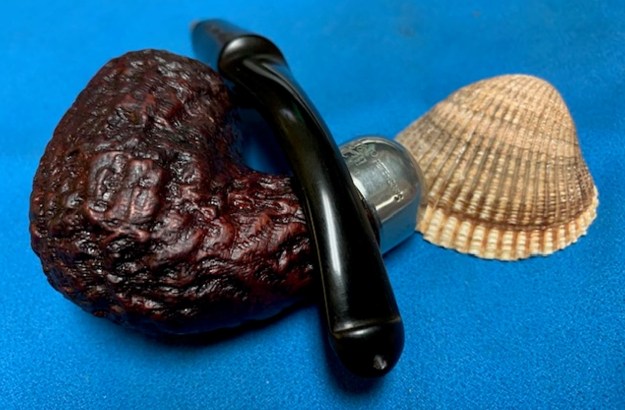
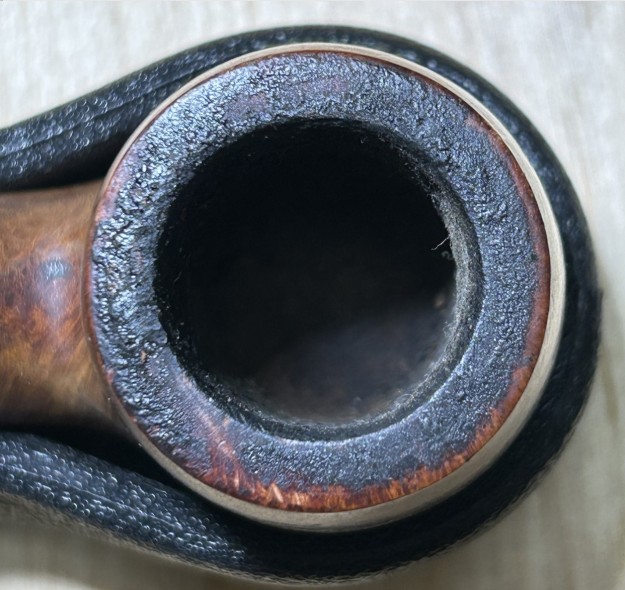
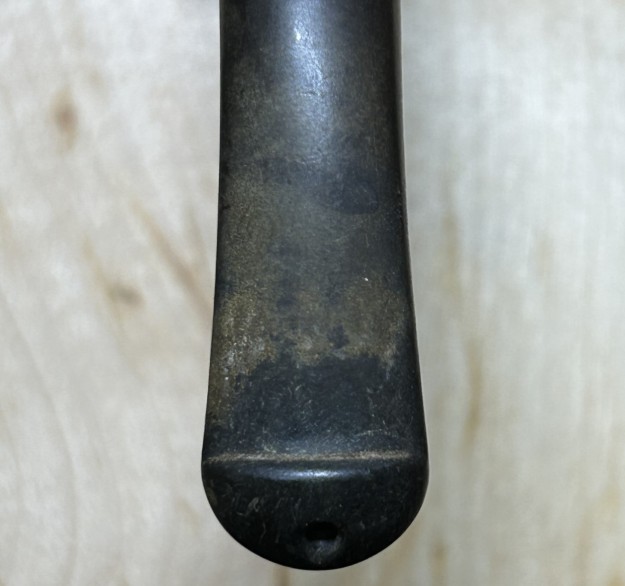
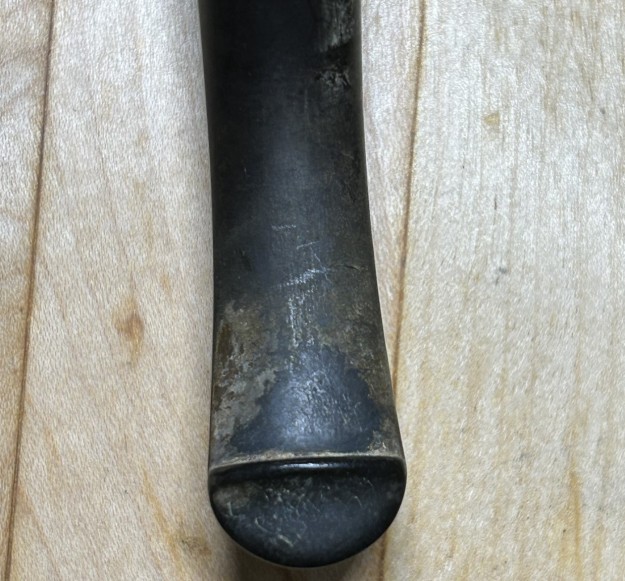
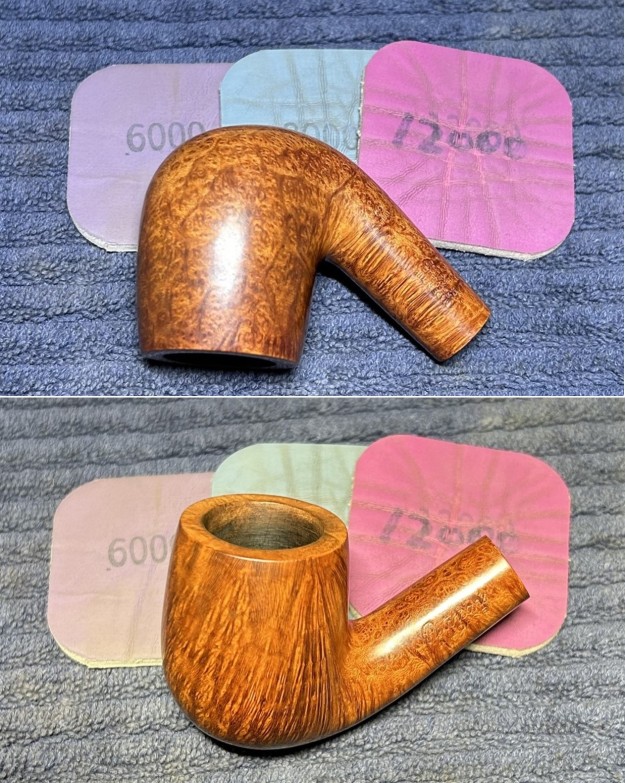
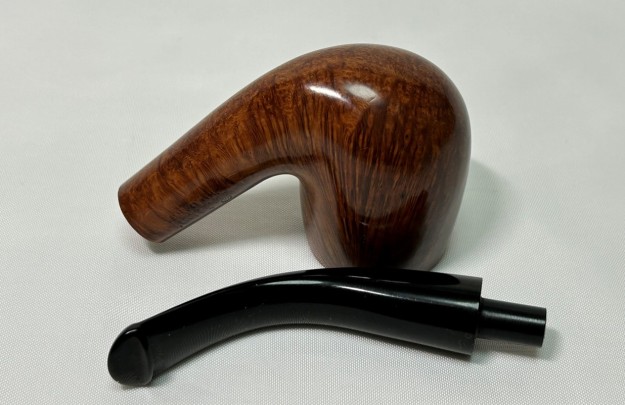
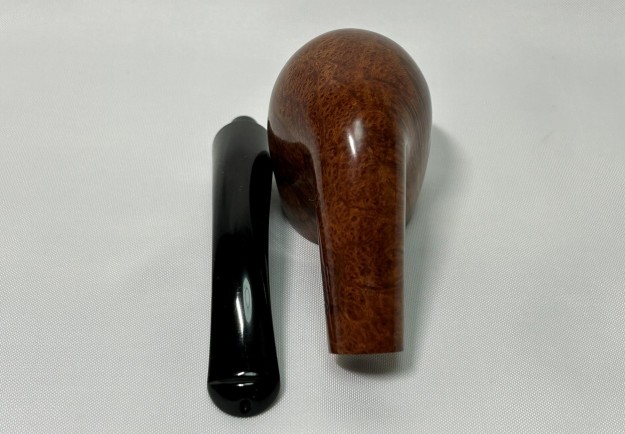
The next pipe on the table is a “Malaga” pipe that is made in a shape that I would define as a Twisted Bent Egg. We picked it up from a seller on eBay in Bristol, Indiana, USA. It has some great cross and birdseye grain and a tapered vulcanite bent stem. The grain around the bowl and shank combined with the stem make it a stunning pipe. The carver did a great job of uniquely shaping the pipe to follow the grain on the briar. The twists and turns in the bowl are well done and almost seem to be carved for fingers to fit against the bowl either left or right handed. The bowl had a thick cake that overflowed with lava onto the rim and there were scratches and nicks on the top and edges under the grime. The sides of the bowl and shank are very dirty with grime and oils from prolonged use. The stamping on the left side of the shank read “MALAGA” in quotations. On the right side it is stamped in script and reads CUSTOM CARVED. The vulcanite stem had light tooth dents and chatter on the top and the underside of the stem. The button was worn on both sides. Jeff took these photos before he started the cleanup work on the pipe.Jeff took a closeup photo of the bowl and rim to capture the condition of the pipe before he started his cleanup work. The rim top had some lava overflow and darkening on the back of the bowl. There are nicks around the inner outer edges of the bowl and rim top. The stem is oxidized and dirty and there is tooth marks (dents) and chatter on the button edges and surfaces ahead of the button. The shank was too dirty for the stem to fit snugly and it looks like it is poorly fit. I will know more once I have it in hand. He also took photos of the sides and bottom of the bowl and shank to show the beautiful grain around the bowl. The photos show the general condition of the bowl and wear on the finish. It is very dirty but this is another beautiful pipe. Jeff took a photo to capture the stamping on the shank. The photos show the stamping “MALAGA” on the left side of the shank and CUSTOM CARVED on the right side. The stamping is very readable.I am including the link to a blog that I wrote that gives some of the history of the Malaga brand and the Malaga Pipe Shop in Royal Oak, Michigan in the USA. I have written an earlier blog to give a little history of the Malaga Brand and the pipemaker, George Khoubesser. Here is the link – (https://rebornpipes.com/2013/02/09/george-khoubesser-and-malaga-pipes/). That blog also includes a catalogue and the history of the pipemaker George Khoubesser. Follow the link to get a feel for the brand and the pipemaker.

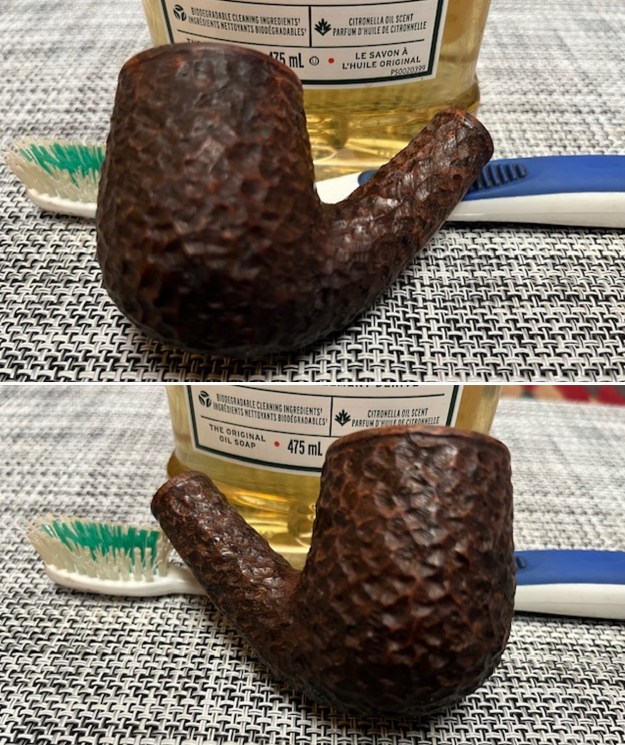
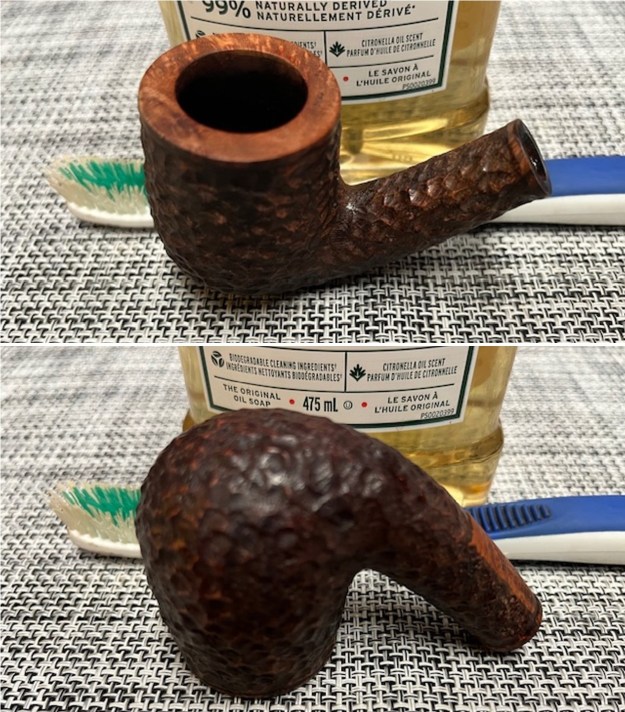
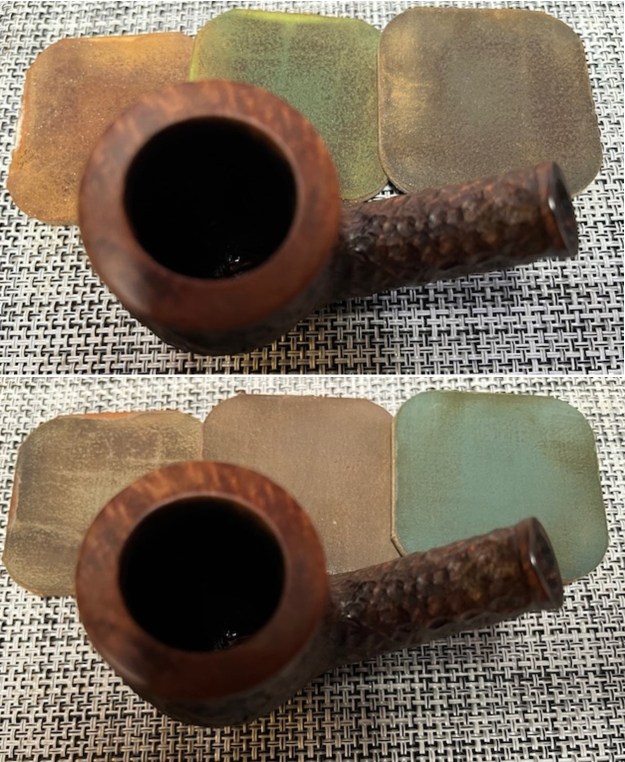
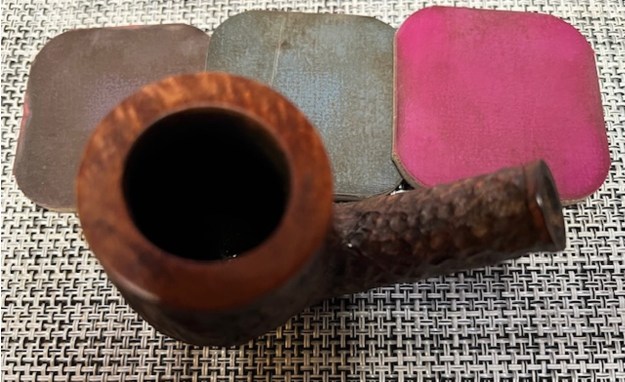
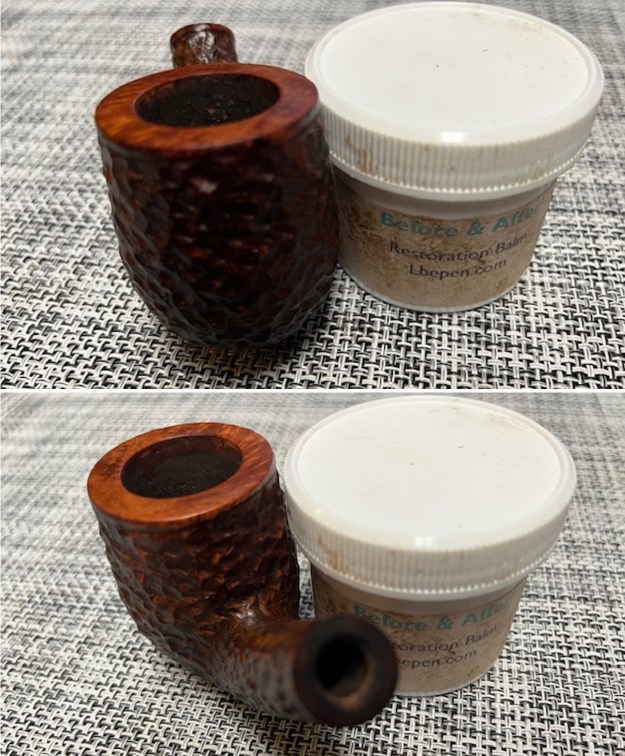
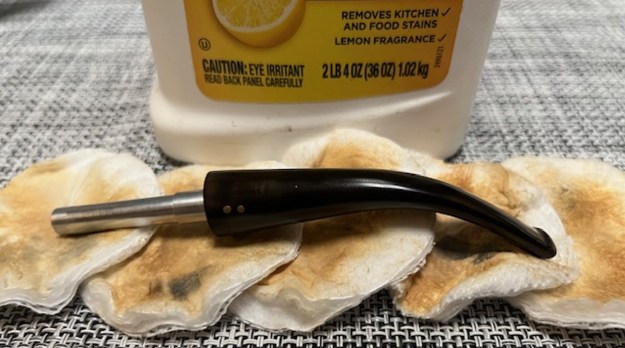
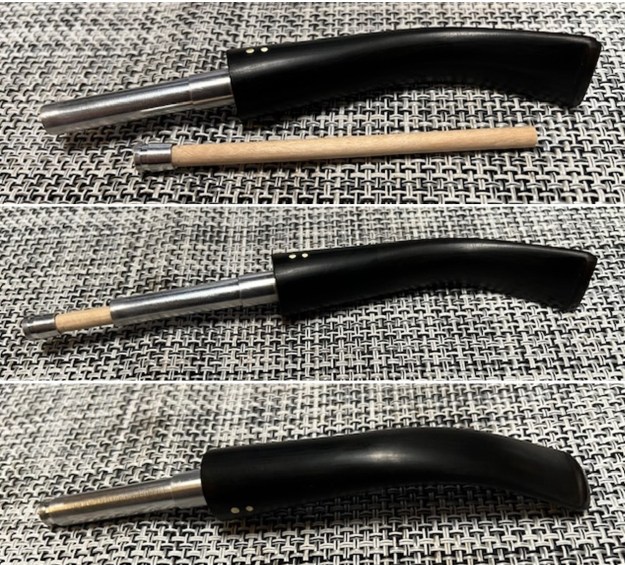
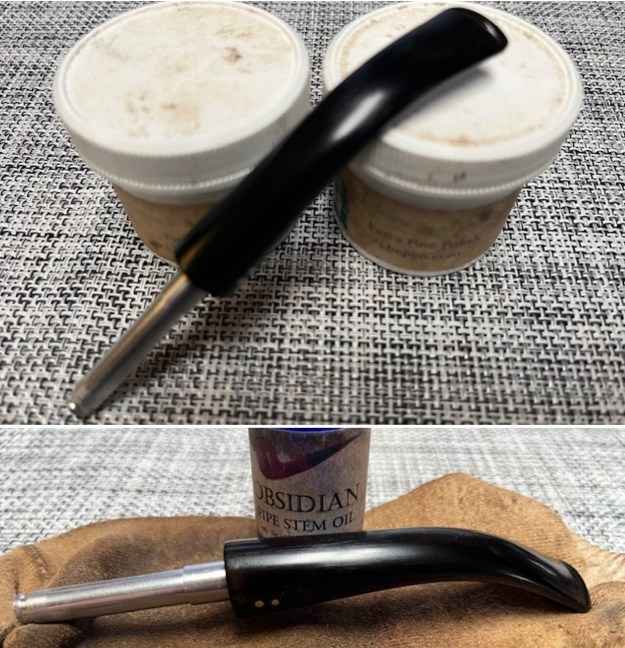
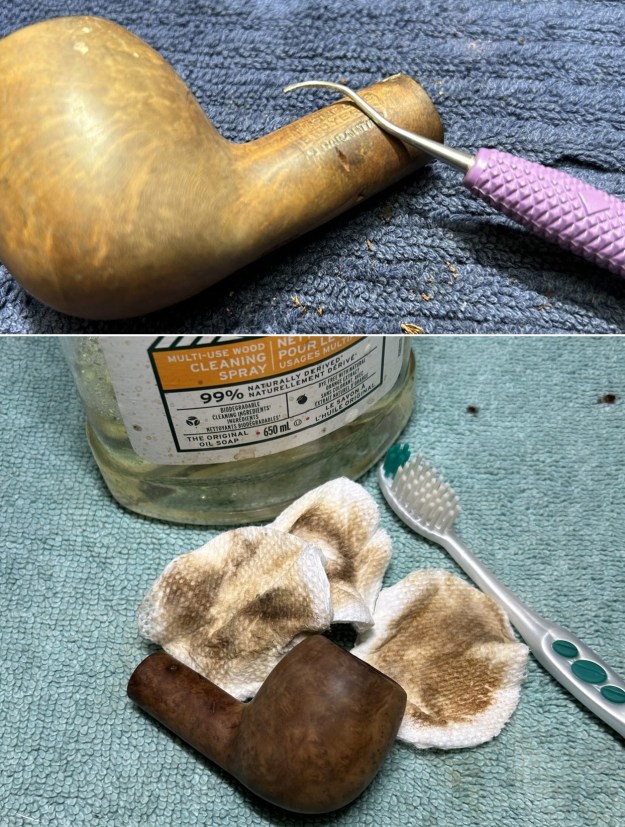
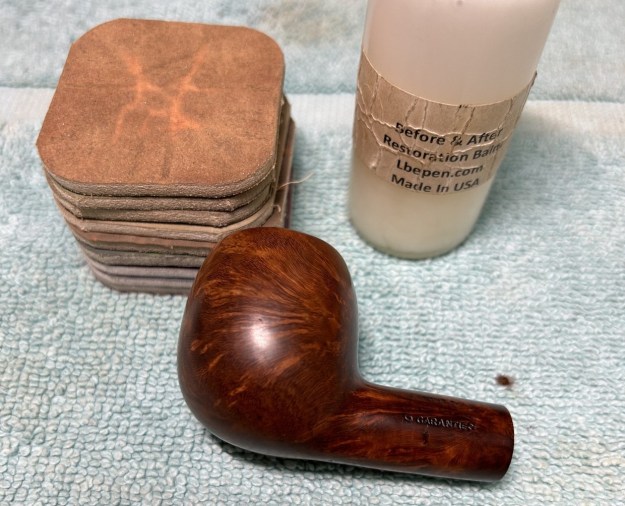
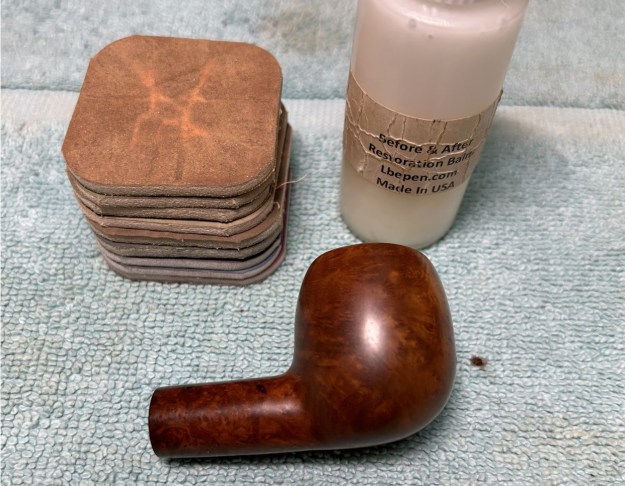
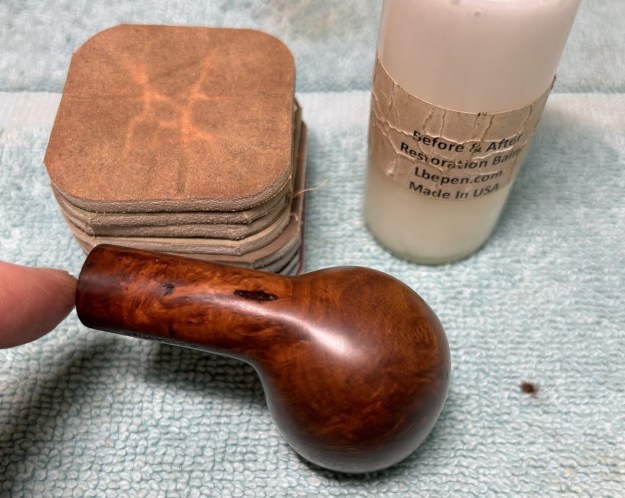
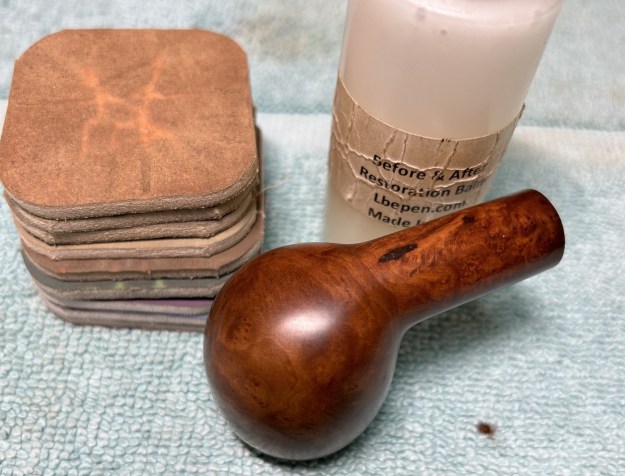
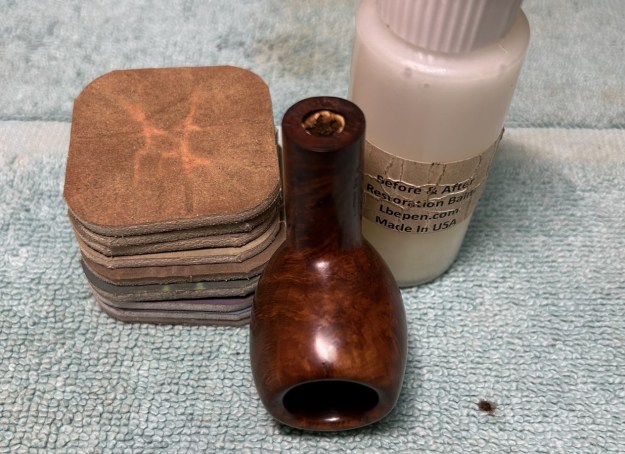
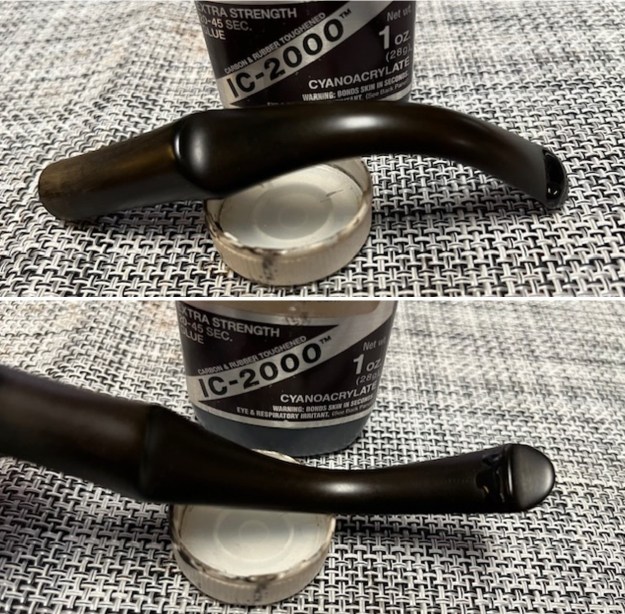
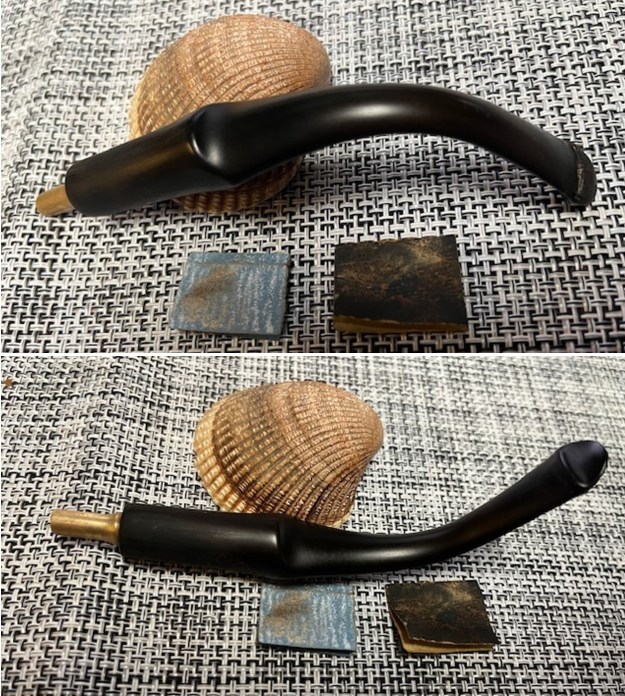
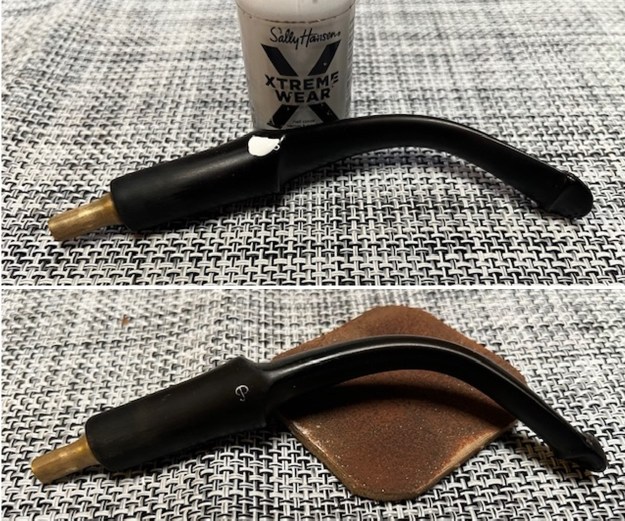
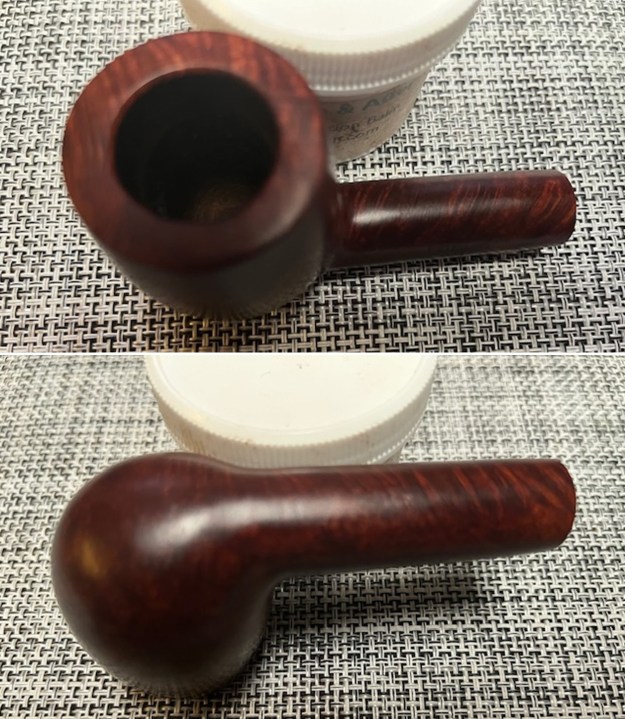
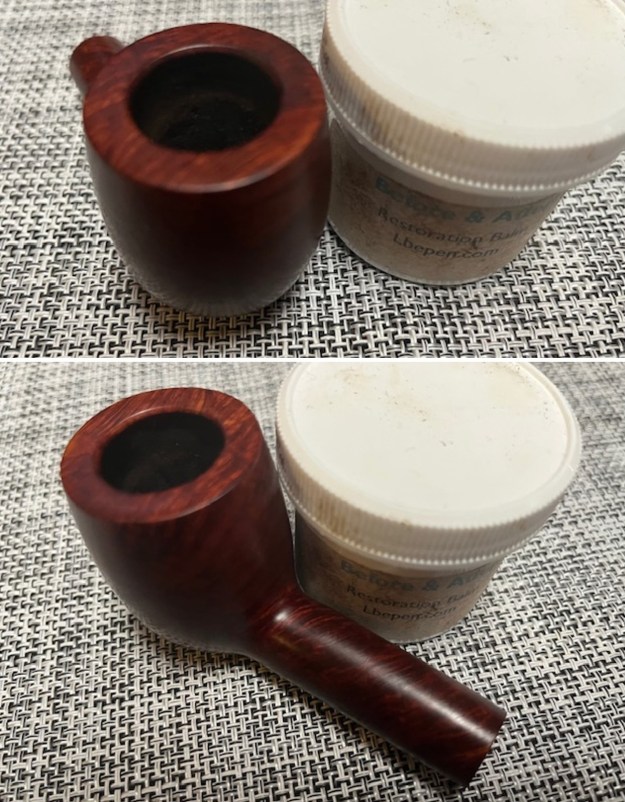
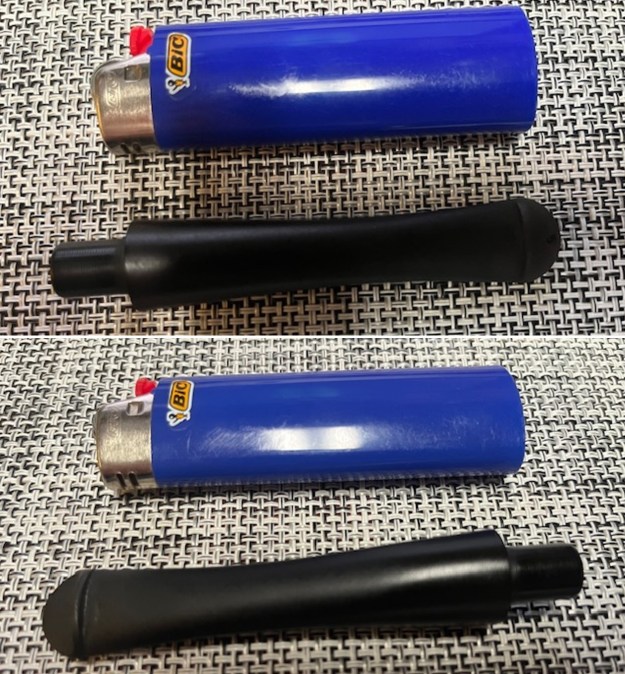
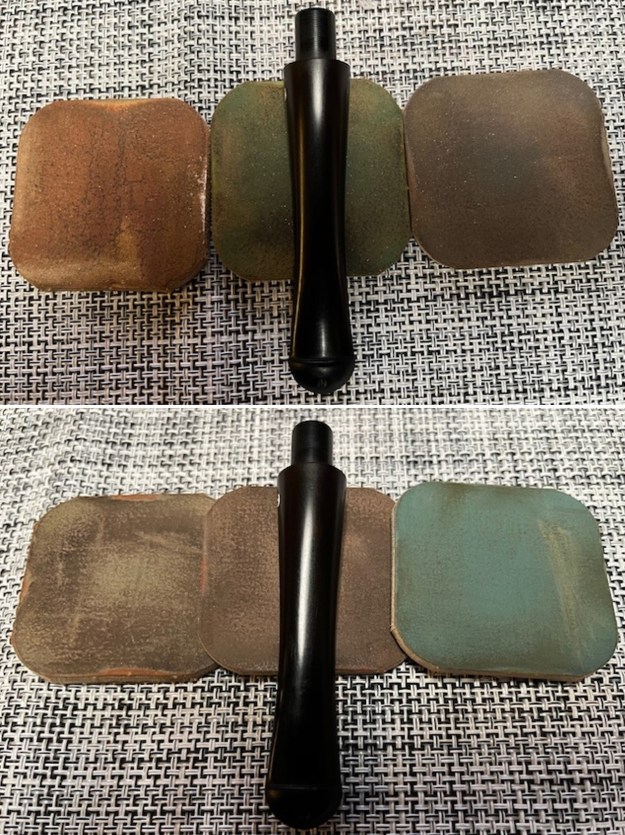
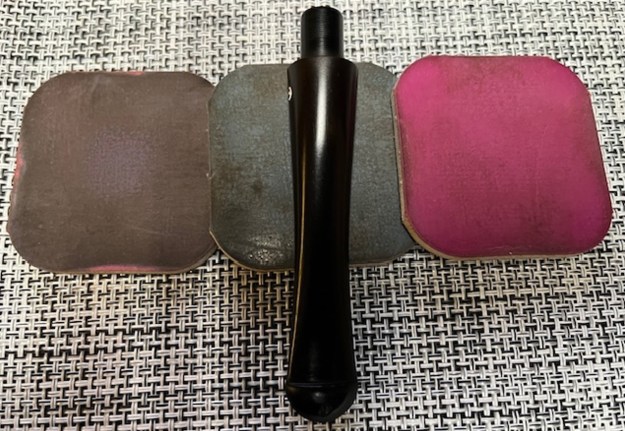
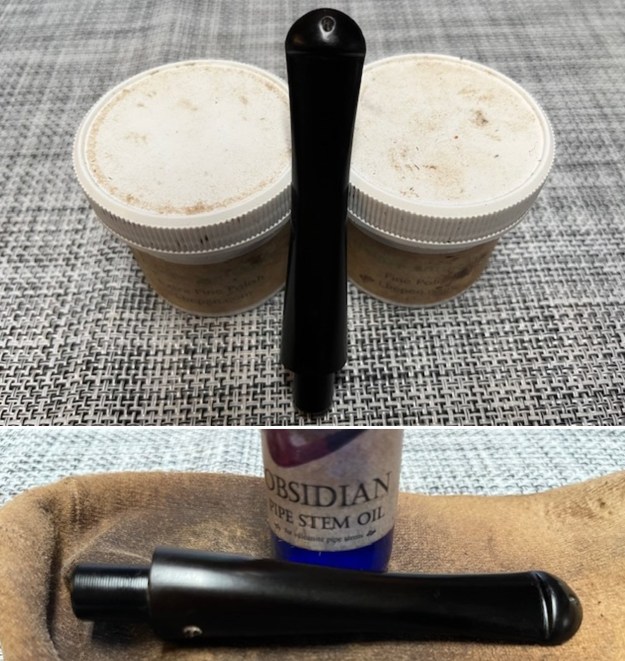
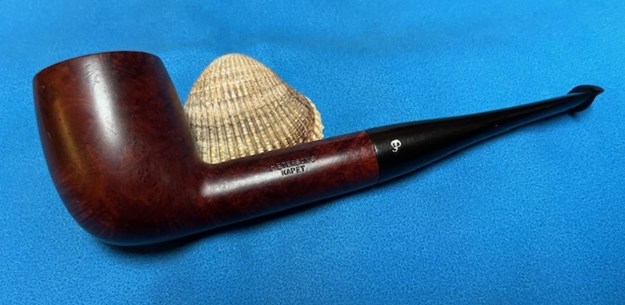
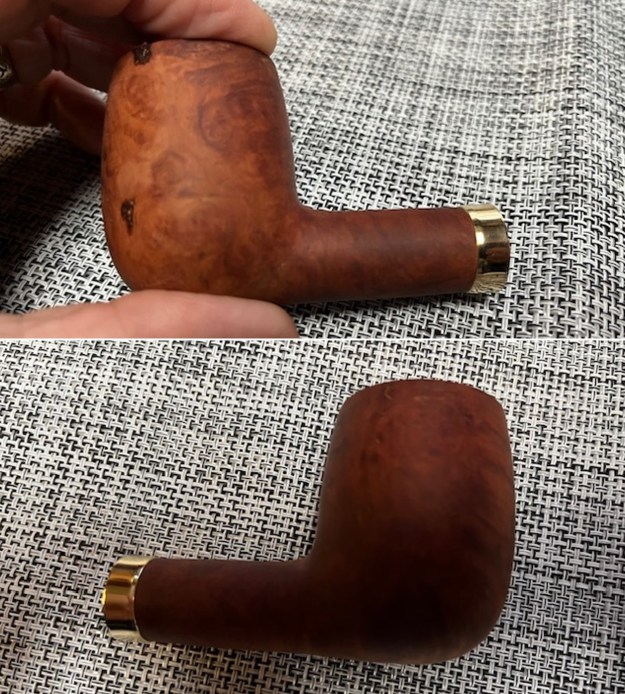
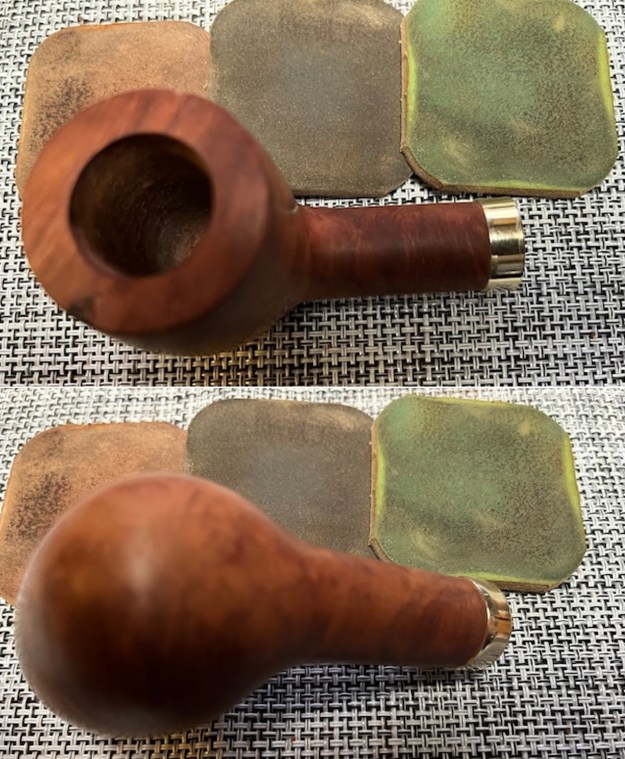
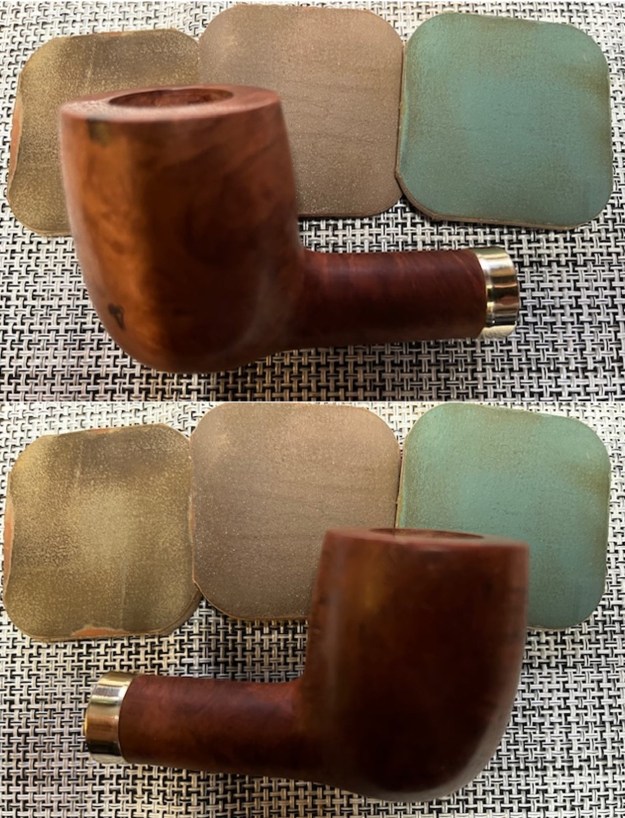
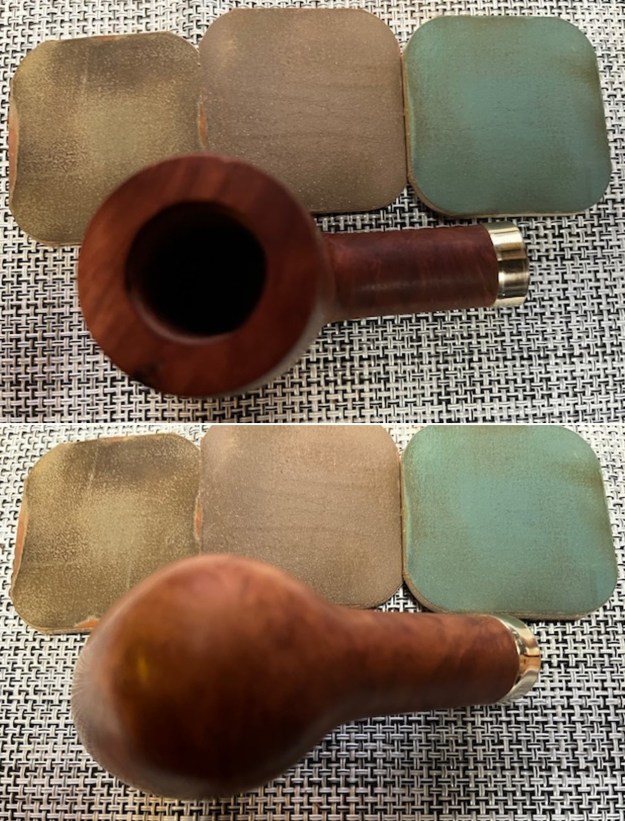
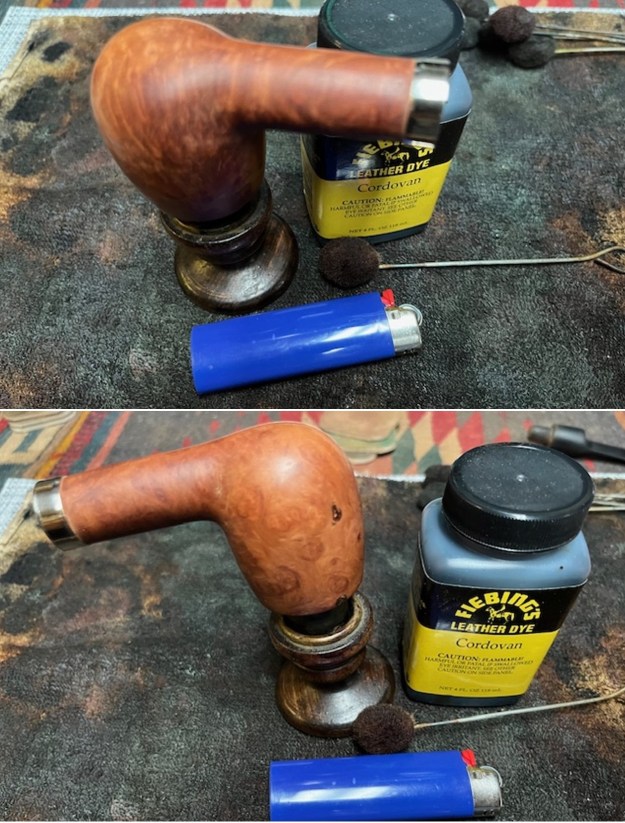
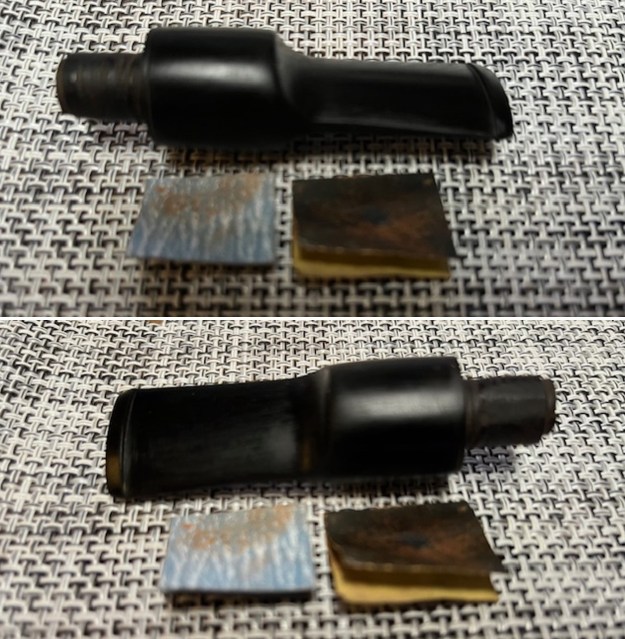
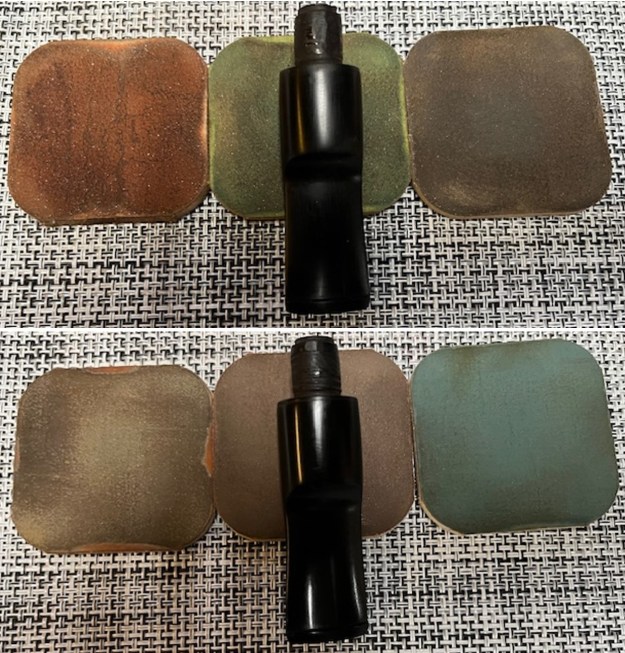
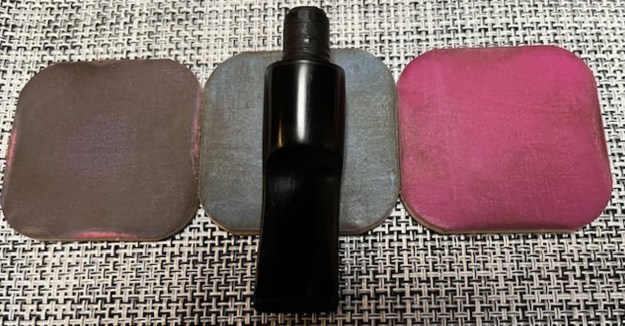
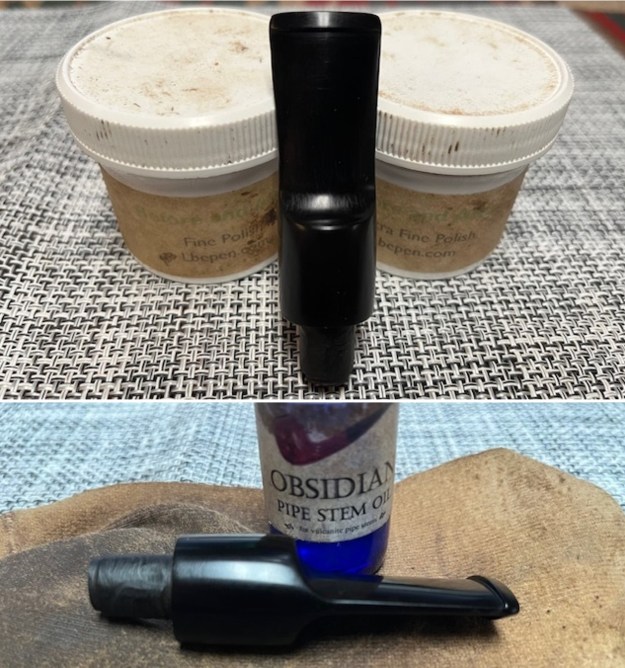
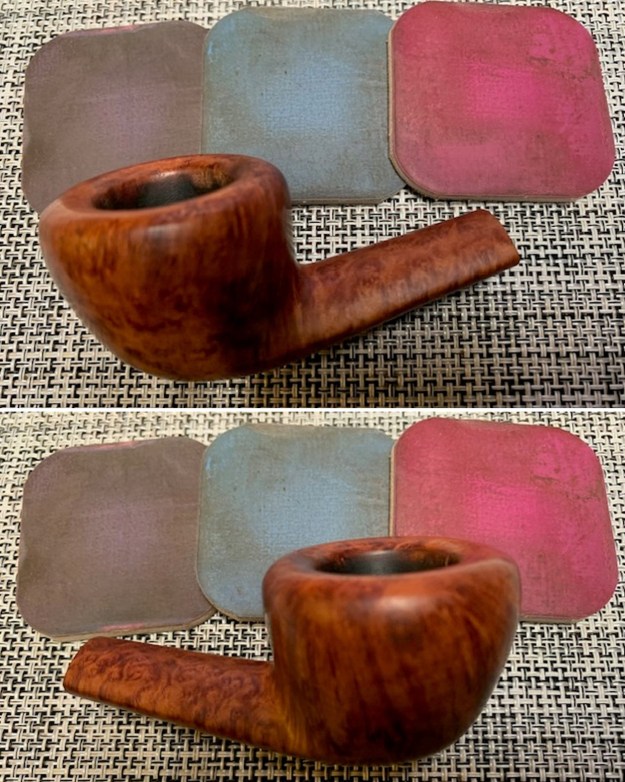
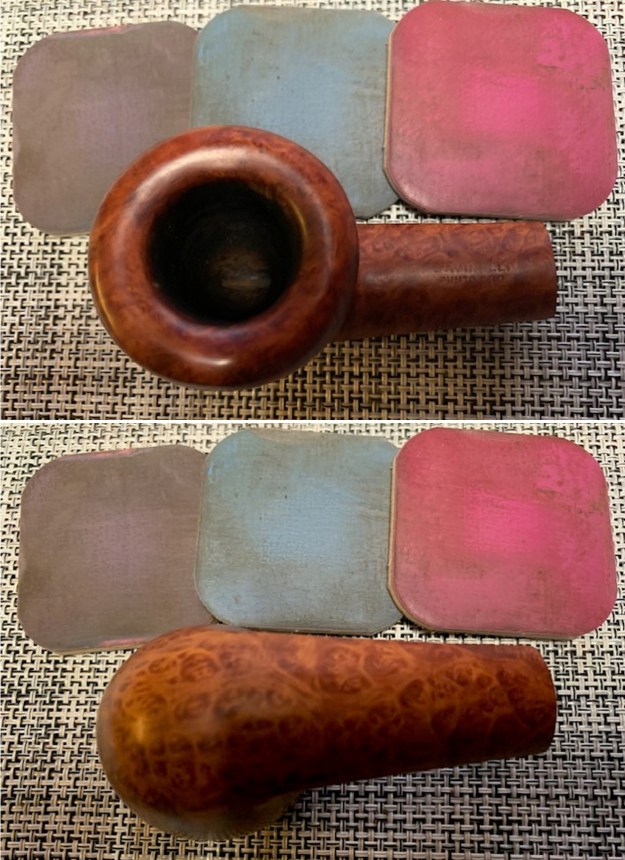
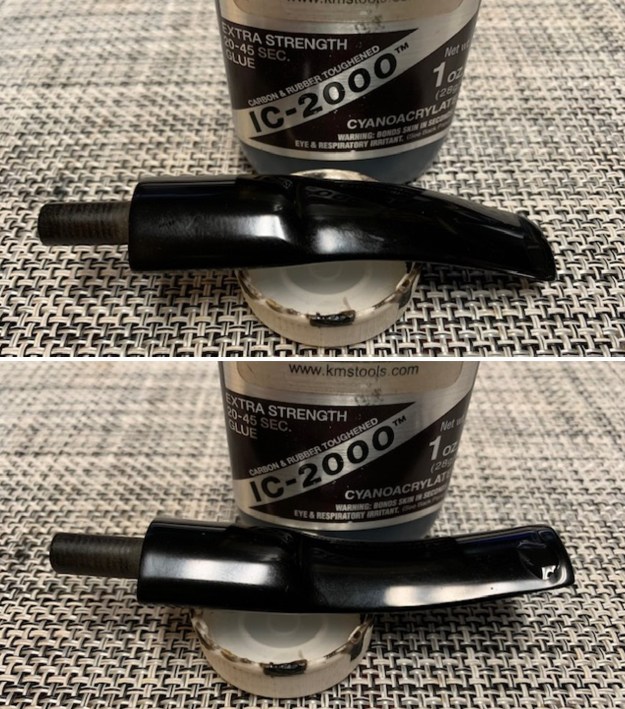
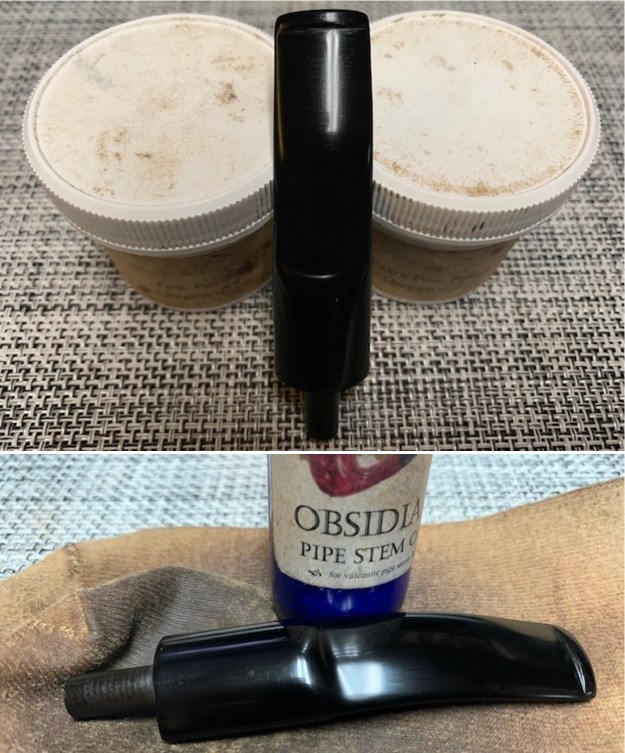
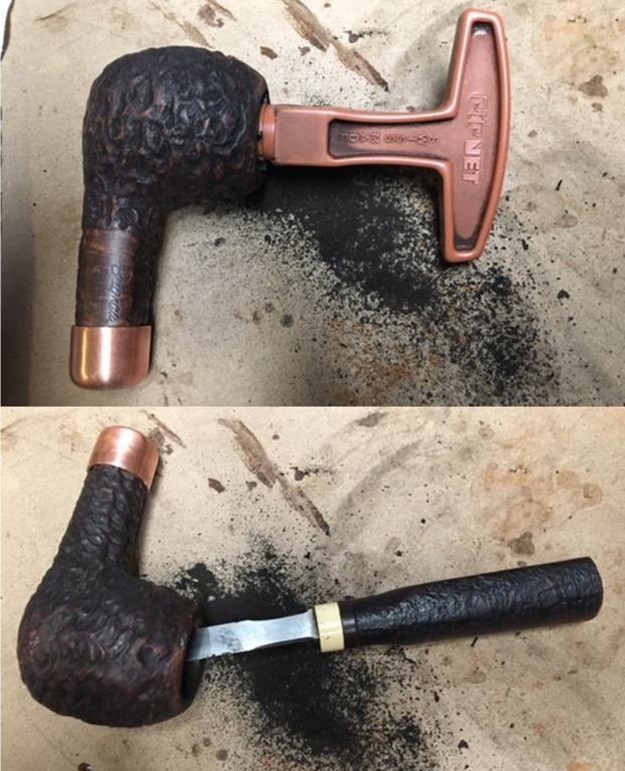
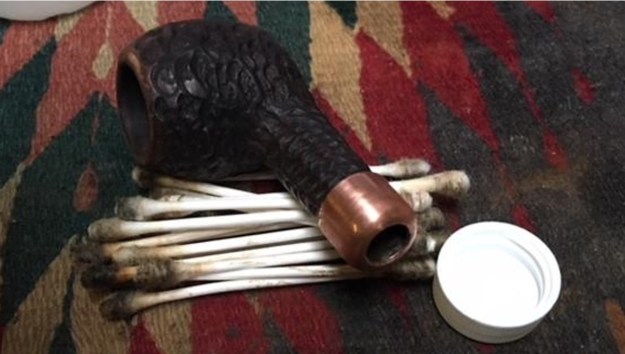
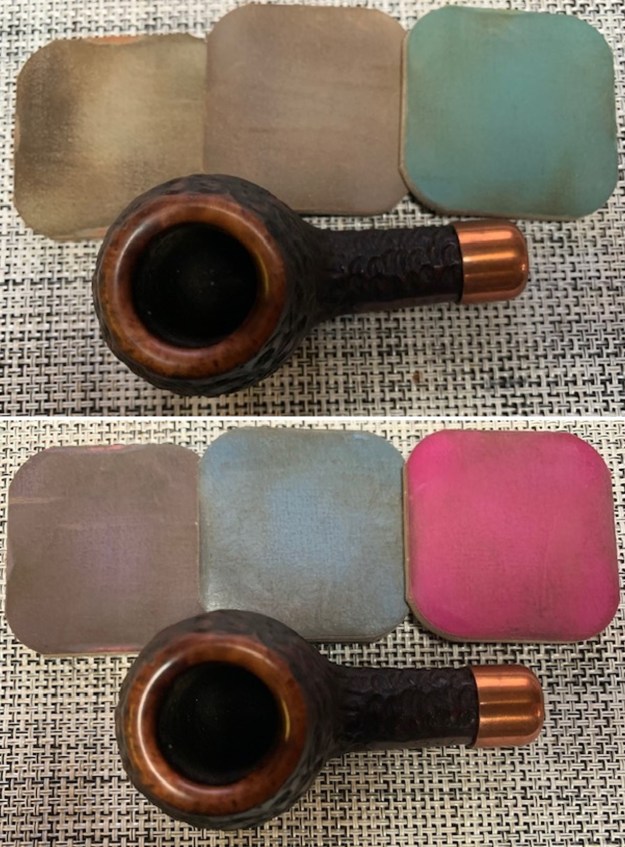
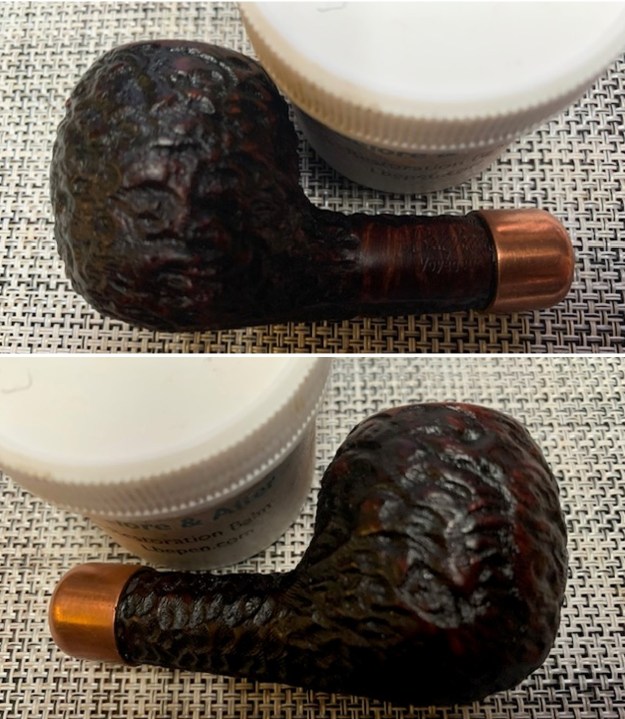
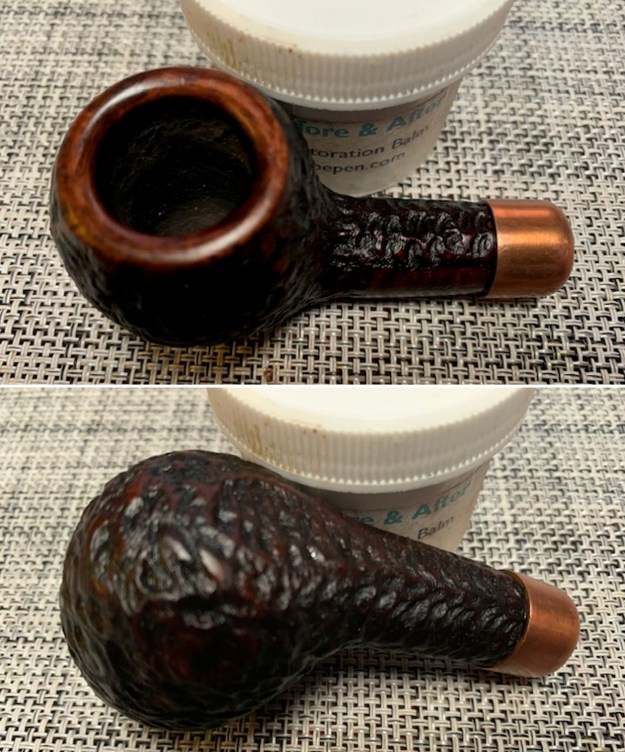
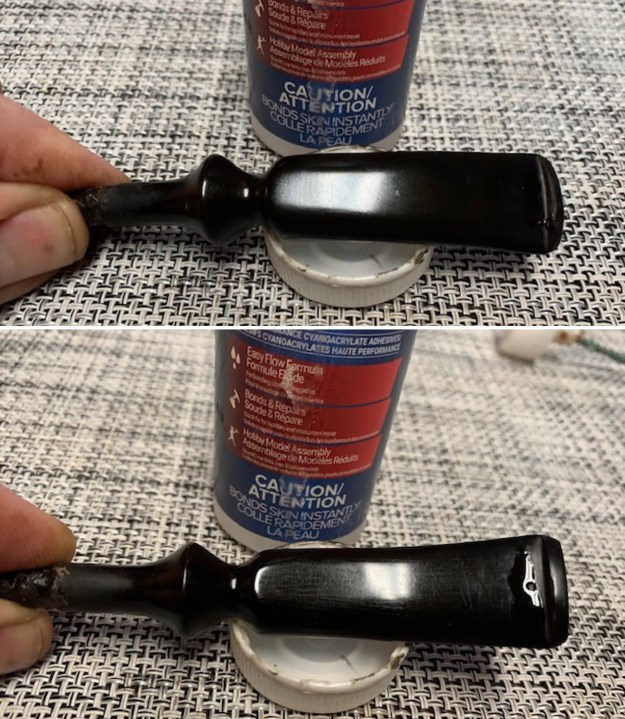
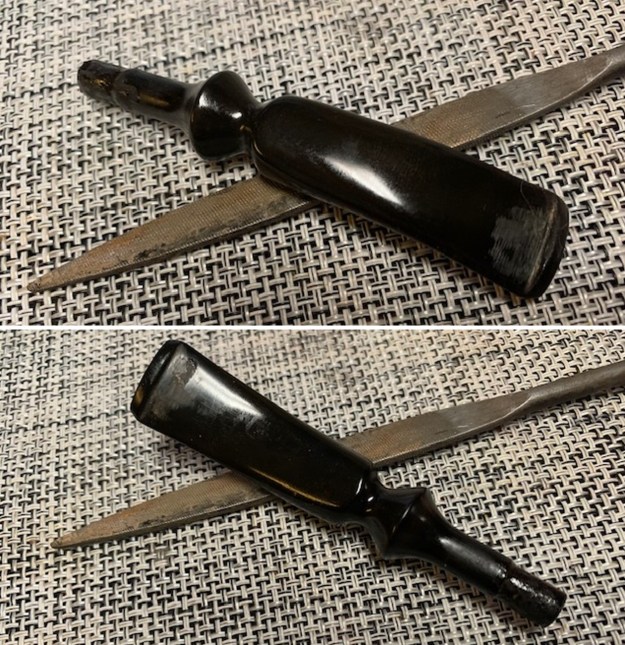
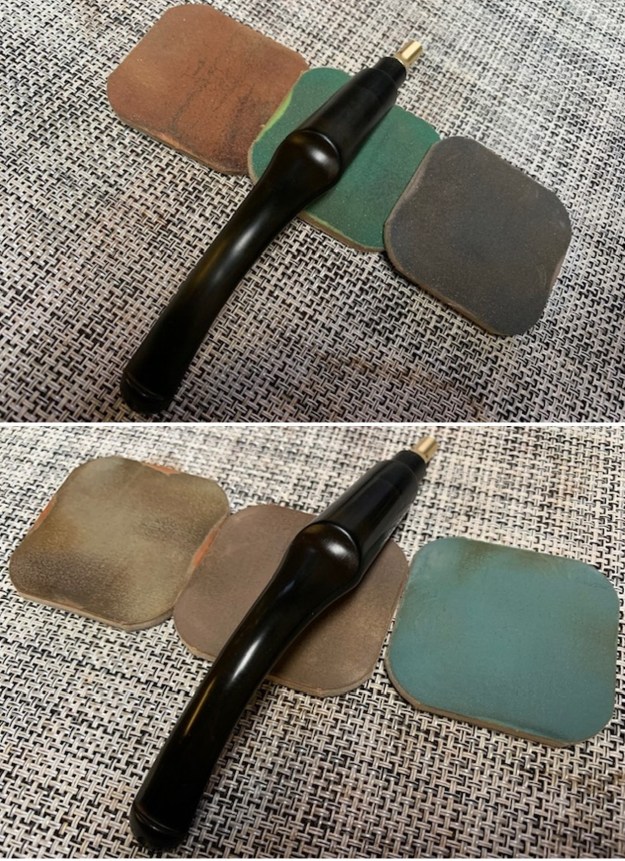
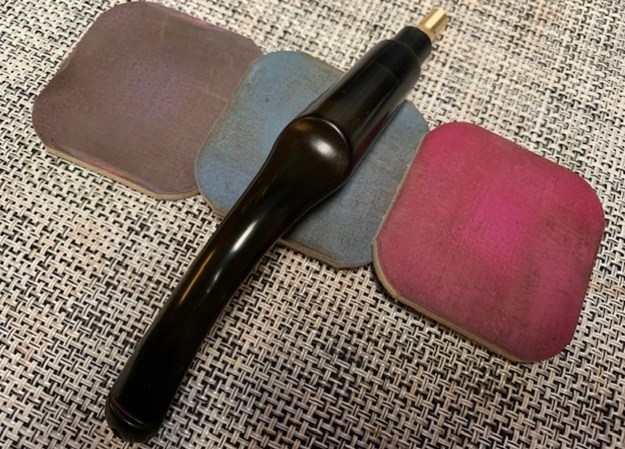
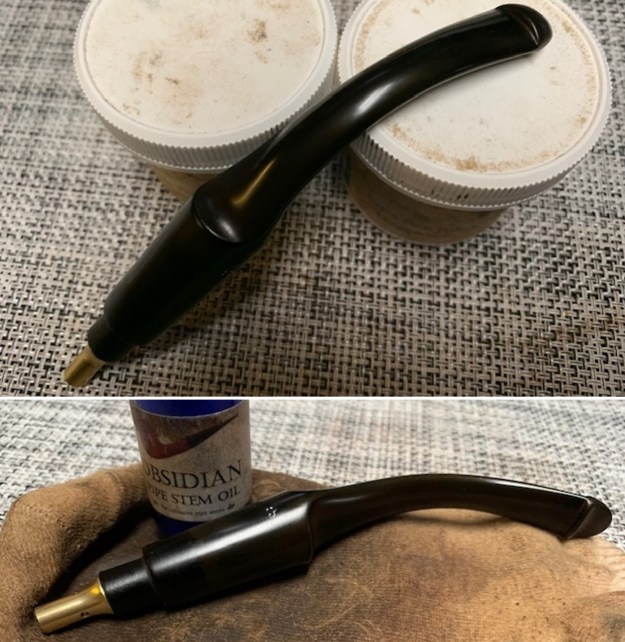
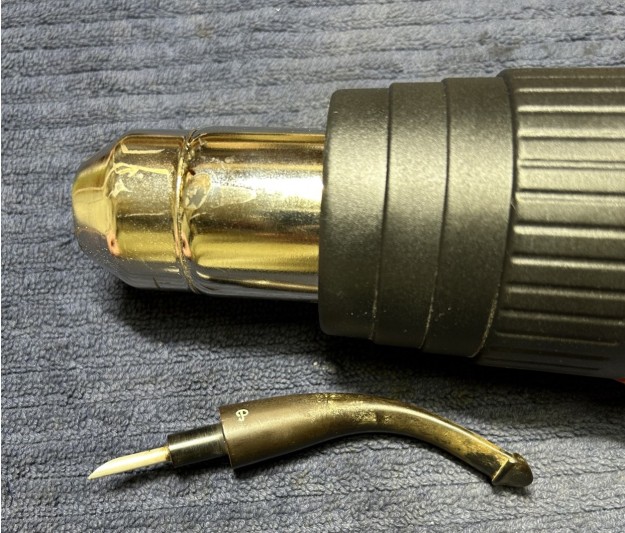
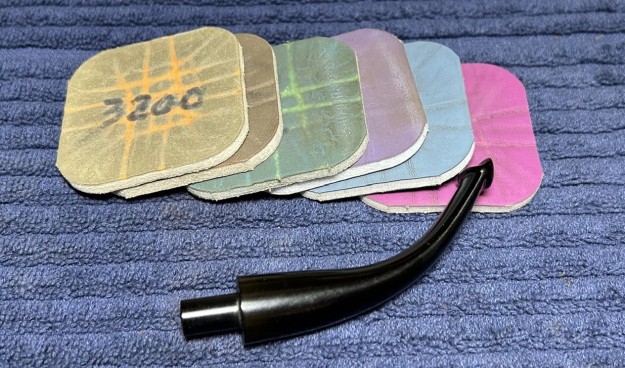
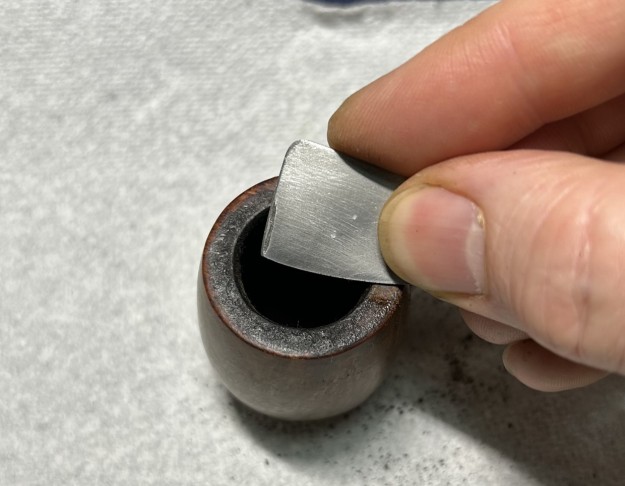
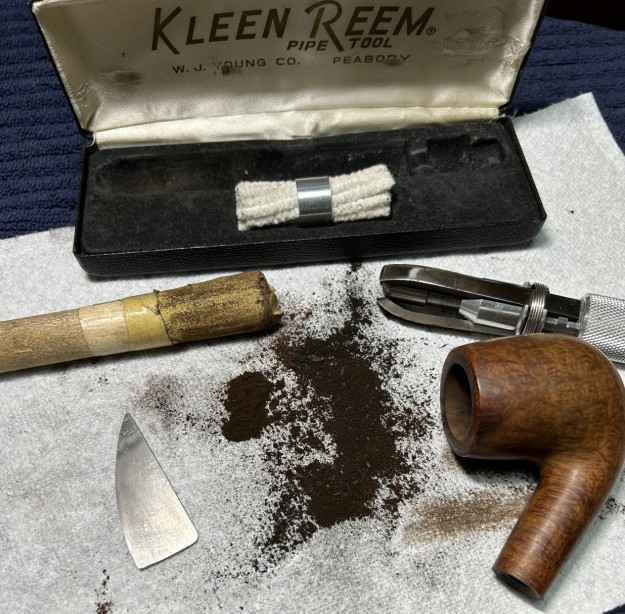
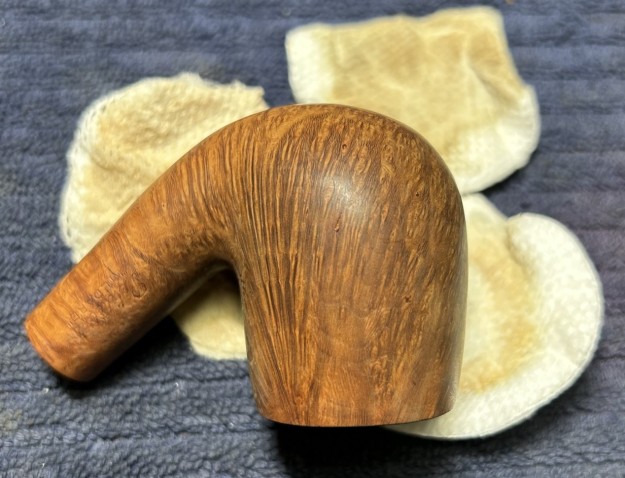
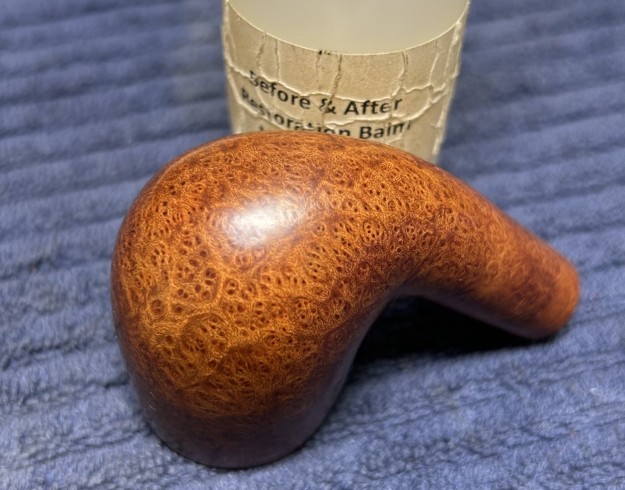
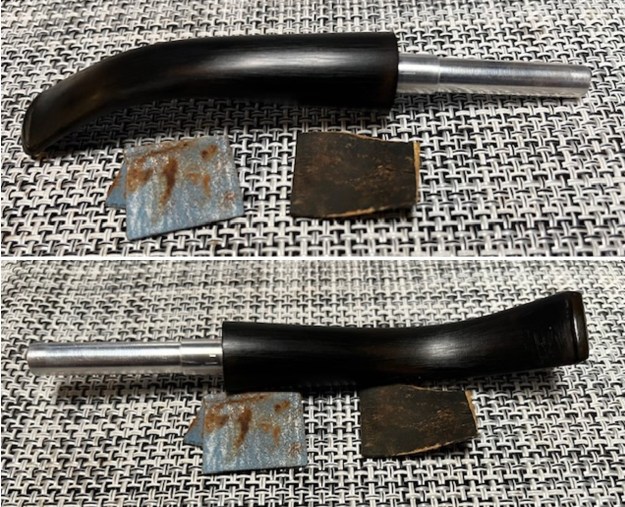
Jeff reamed the bowl with a PipNet pipe reamer and followed up with a Savinelli Fitsall pipe knife to remove the cake. He scrubbed out the mortise and the airway in the shank and the stem with alcohol, cotton swabs and pipe cleaners. He scrubbed the exterior of the bowl, rim, shank and stem with a tooth brush and Murphy’s Oil Soap to remove the oils and tars on the rim and the grime on the finish of the bowl. He rinsed it under running water. He dried it off with a soft cloth. He was able to remove the lava build up on the rim top and the flat surface of the rim looked very good. The inner edge of the rim has some serious burn damage on the front inner edge. The outer edge looked very good. He soaked the stem in Before & After Deoxidizer and rinsed it with hot water. I took photos of the pipe to show its condition before I started my work on it. Note that I will need to bend the stem slightly to fit the bend of the shank.  I took close up photos of the bowl and rim top as well as the stem. You can see the condition of the rim top and bowl in the first photo. Jeff was able to remove all of the tar and oils but you can now see the on the rim top and edges. The vulcanite stem had tooth chatter on both sides near and on the button surface.I took a photo of the stamping on the shank to show how good the condition is. It shows the “MALAGA” stamp on the left side and CUSTOM CARVED on the right side. The stamping is very legible. I took a photo of the pipe with the stem removed to give a clear picture of the character of the pipe. I started my work on the pipe by addressing the darkening on the inner edge of the bowl and the scratching and nicks on the rim top. It looked much better than when I started.I polished the rim top and the briar with micromesh sanding pads. I wet sanded the bowl with 1500-2400 grit sanding pads to prepare the rim top for staining. I wiped the bowl down after each pad with a damp cloth to remove the sanding dust. I worked some Before & After Restoration Balm into the surface of the briar with my fingertips to clean, enliven and protect it. I let the balm sit for a little while and then buffed with a cotton cloth to raise the shine. The following photos show the bowl at this point in the restoration process. I am very happy with the results. I turned to the stem to address the issues on the surface of both sides at the button. I painted the surface of the stem with the flame of a lighter to lift the tooth marks from the surface. I was able to lift them to some degree but they would need to be repaired. I also heated the stem with the flame to soften the vulcanite and bend the stem to match the angles on the bowl. I filled in the tooth marks in the top and underside of the stem with black rubberized CA glue. I set it aside to cure. Once it cured I use a small file to flatten the repairs and blend them into the stem surface. I sanded the stem surface with 220 grit sandpaper to flatten the repairs and blend them into the surface. I started the polishing with 600 grit wet dry sandpaper. I also cleaned up the tenon for a better fit to the shank. I polished the stem with micromesh sanding pads – wet sanding with 1500-2400 grit pads and dry sanding with 3200-12000 grit pads. I wiped the stem down after each pad with Obsidian Oil. I finished the hand polishing of the stem with Before & After Pipe Polish – both the Fine and Extra Fine polishes. I gave it a final coat of Obsidian oil and set it aside to dry.This Malaga Custom Carved Twisted Fluted/twisted Bent Egg with a vulcanite tapered stem turned out to be a real beauty. It has great grain around the bowl and the carver really maximized that with the shape of the pipe. Everything about the pipe – the shape of the bowl, the thin flat rim top and the cut of the briar work well to highlight the grain around the bowl sides. I polished stem and the bowl with Blue Diamond polish on the buffing wheel and the grain just popped and came alive. I gave the bowl and the stem multiple coats of carnauba wax. I buffed the pipe with a clean buffing pad to raise the shine. I hand buffed it with a microfiber cloth to deepen the shine. The pipe polished up pretty nicely. The grain took on life with the buffing. The rich oil cured colour works well with the polished vulcanite stem. The finished Malaga Custom Carved Fluted Bent Egg has a rich look that is quite catching. Have a look at it with the photos below. The shape, finish and flow of the pipe and stem are very well done. The dimensions are Length: 6 inches, Height: 2 inches, Outside diameter of the bowl: 1 ¼ inches, Chamber diameter: ¾ of an inch. I will be adding the pipe to the rebornpipes store in the American Pipemakers Section shortly. If you are interested in adding this pipe to your rack send me an email or message on Facebook. Thanks for walking through the restoration with me as I worked over another estate pipe.
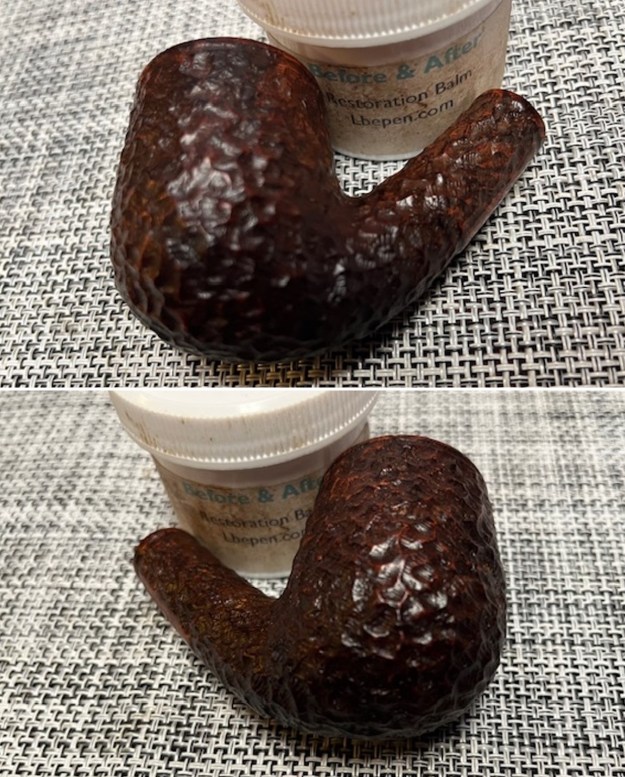
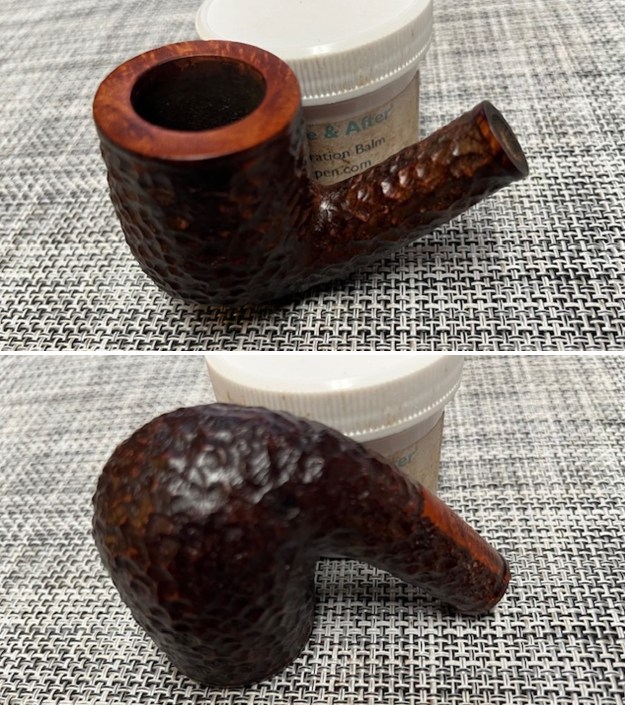
As always, I encourage your questions and comments as you read the blog. Thanks to each of you who are reading this blog. Remember we are not pipe owners; we are pipe men and women who hold our pipes in trust until they pass on into the trust of those who follow us.

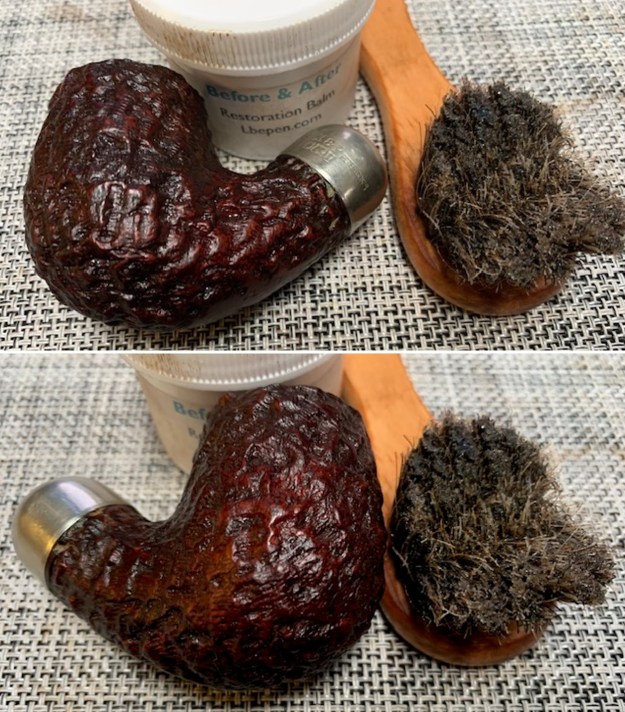
A Welcome Mysterious Change of Pace – An Older Pipe with a Metal Cap and Horn stem


Blog by Steve Laug

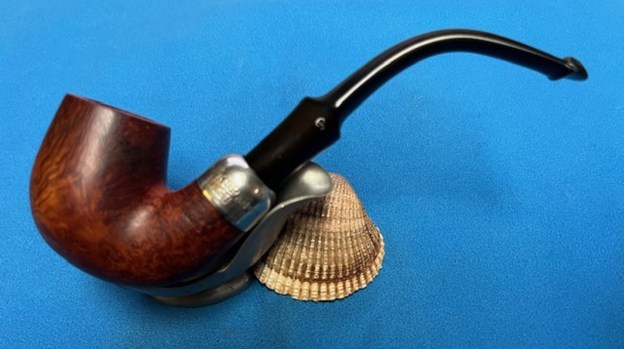
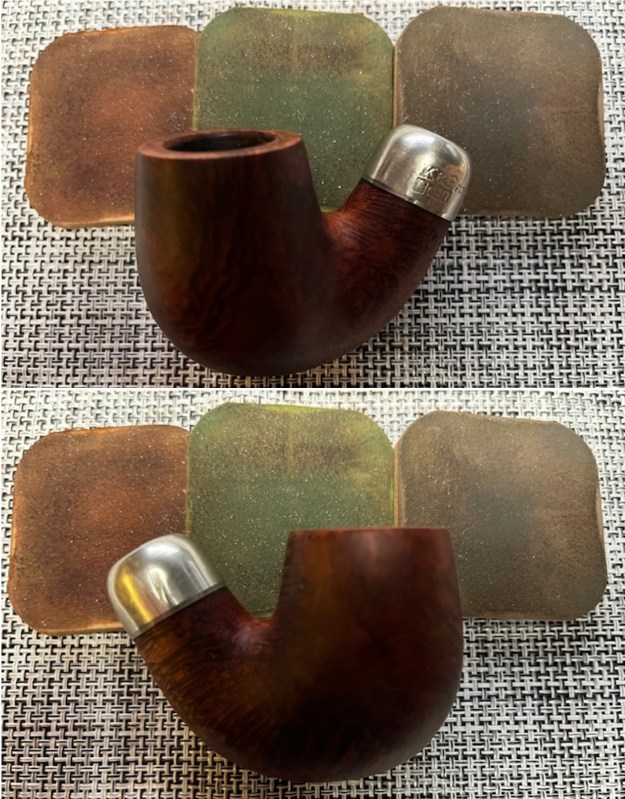
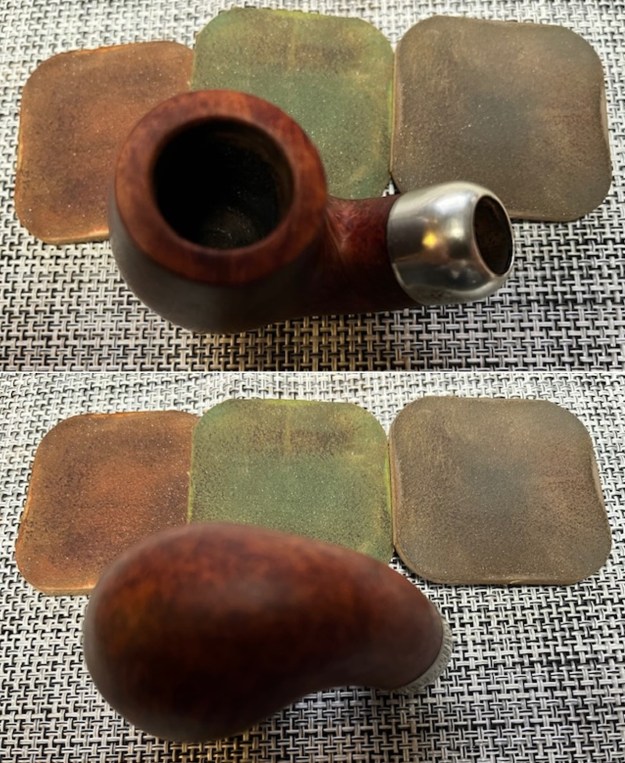
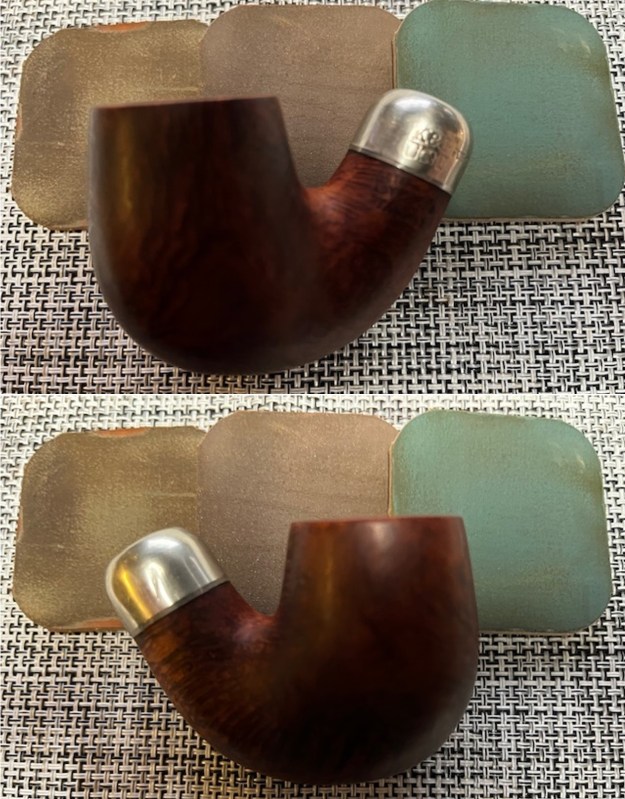
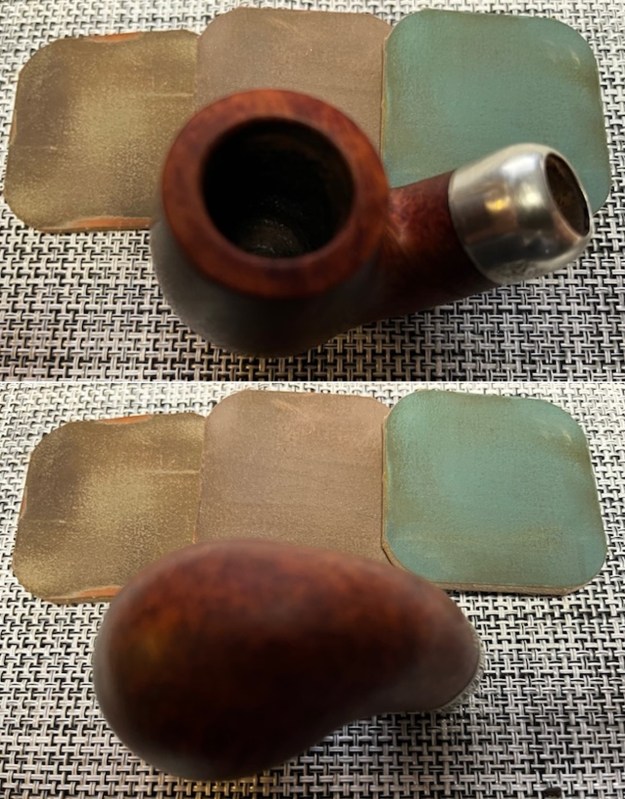
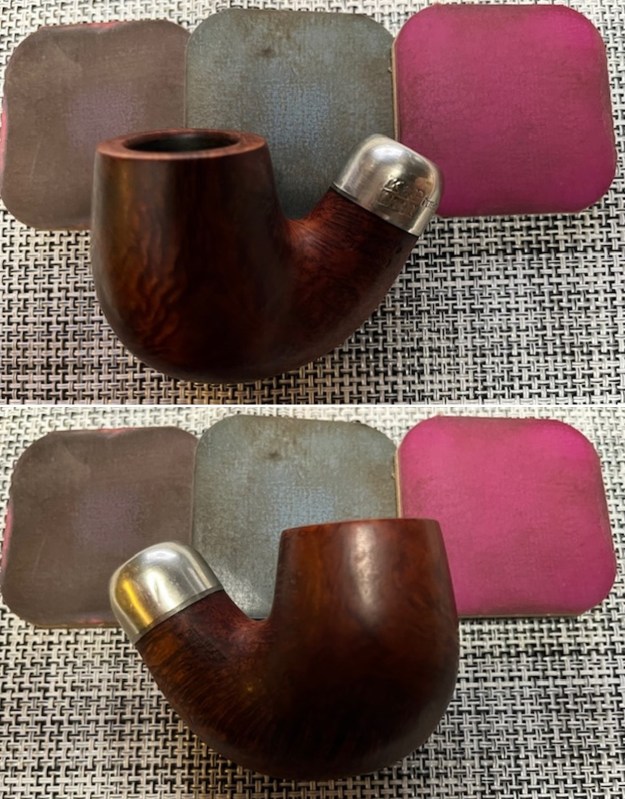
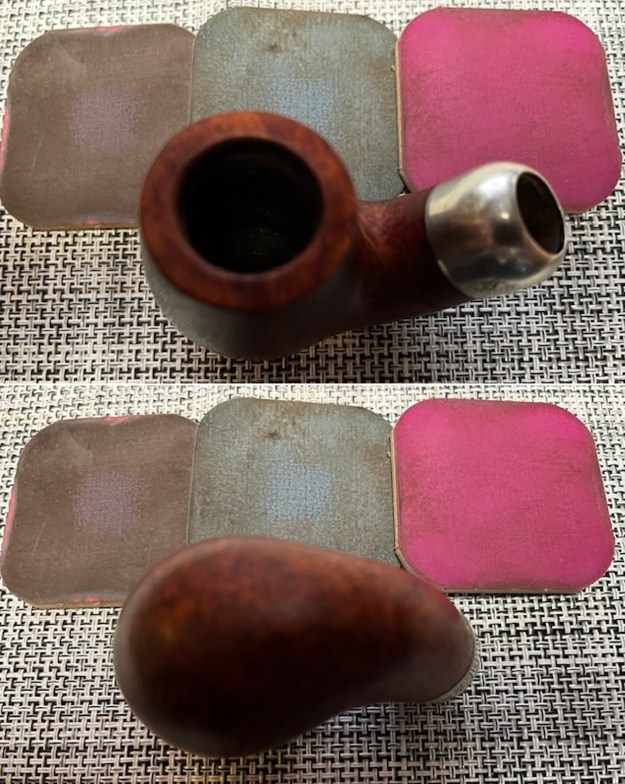
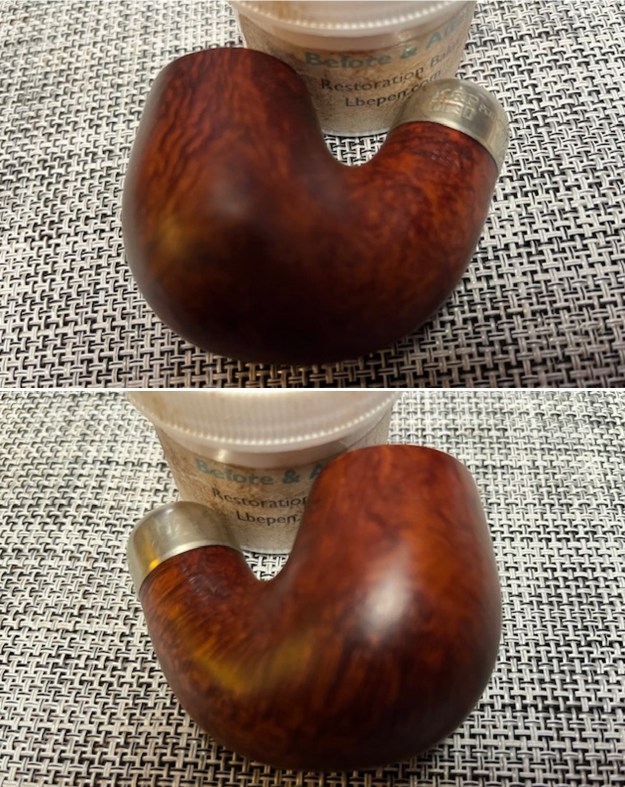
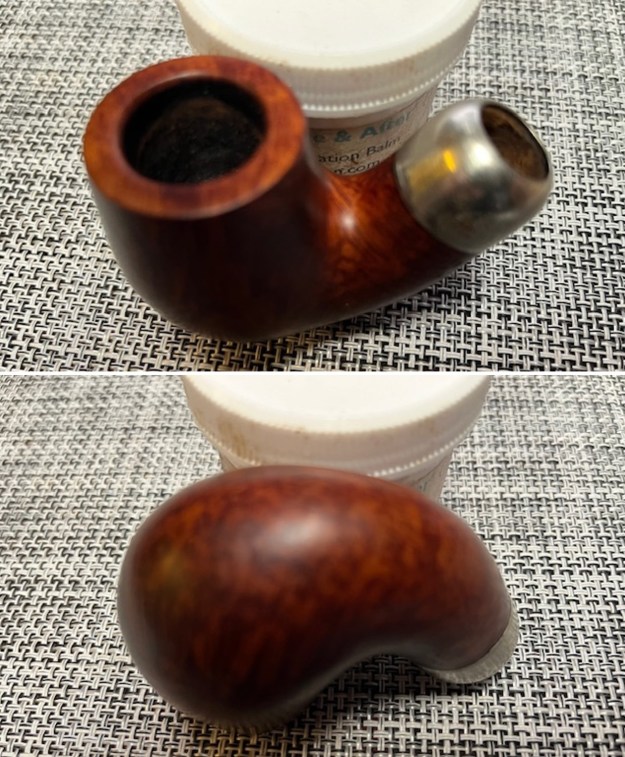
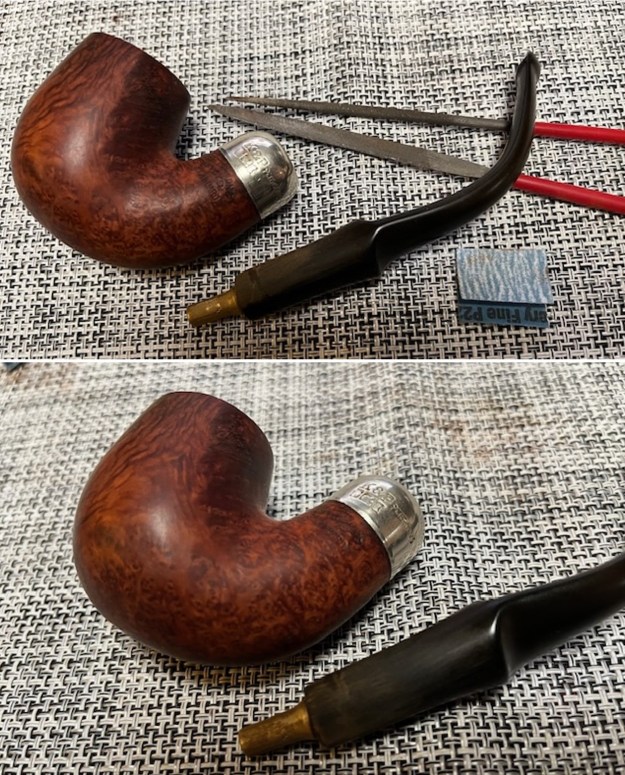
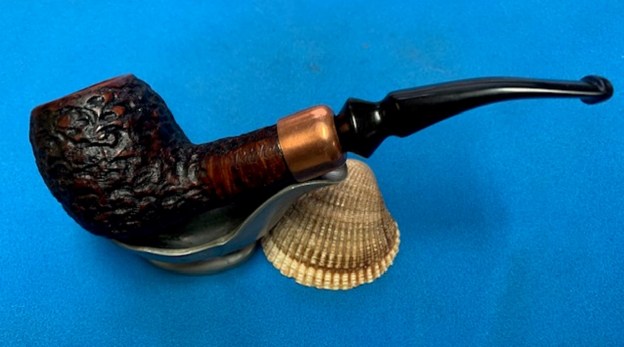
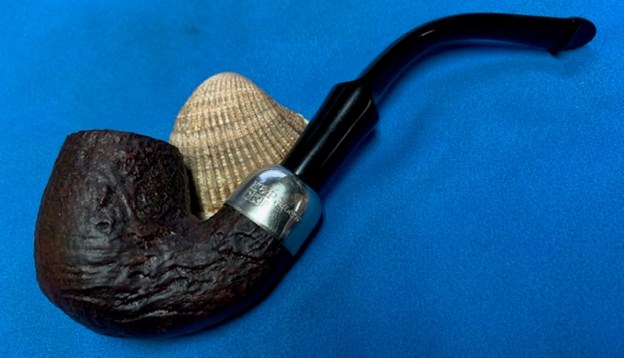
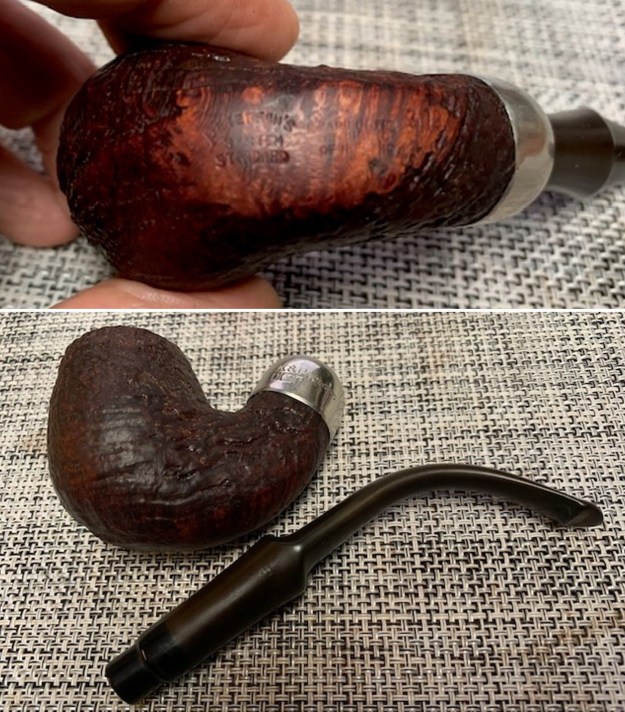
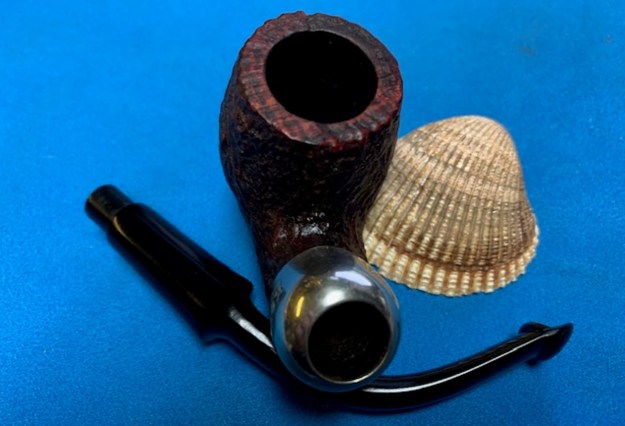
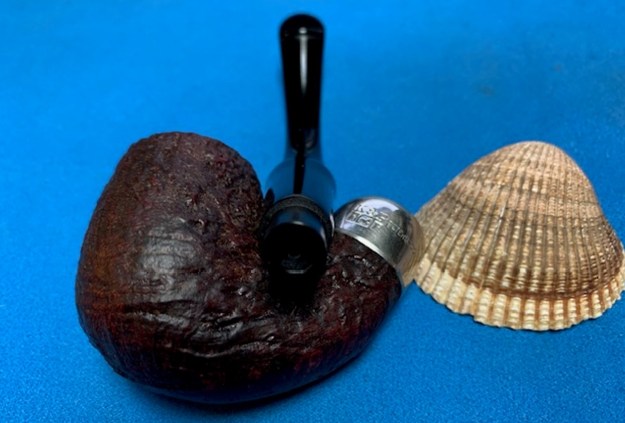
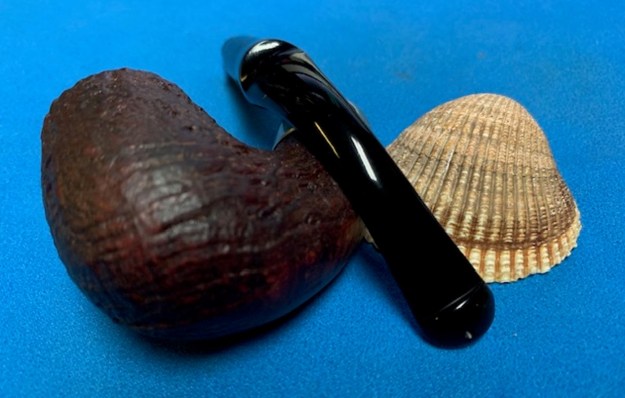
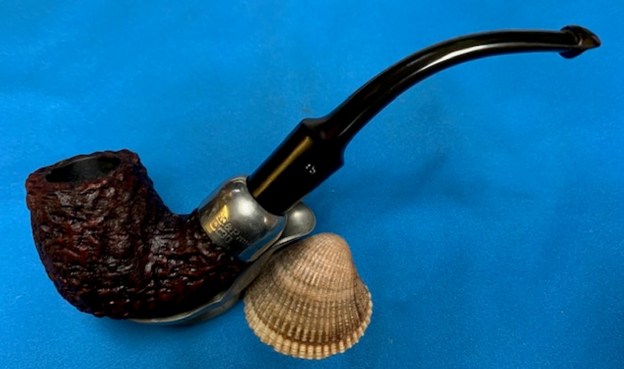
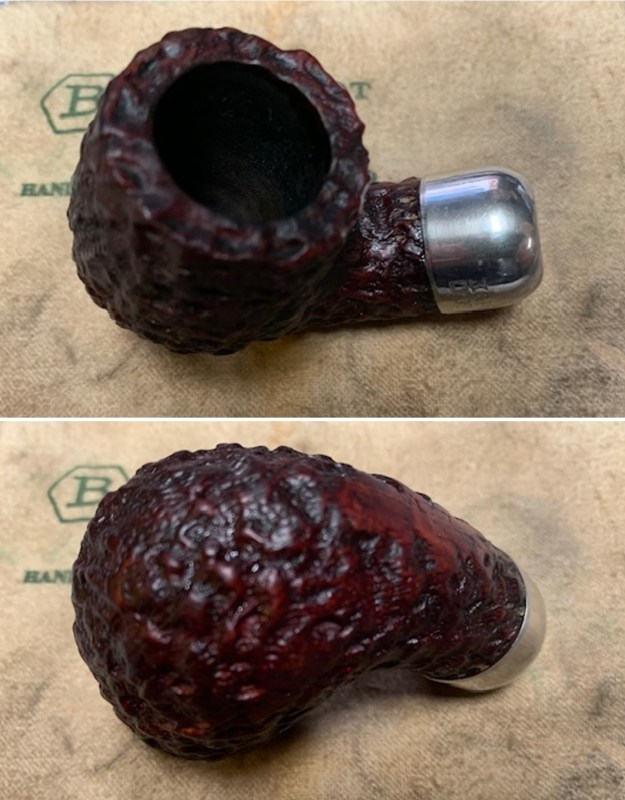
I decided I needed a change of pace in my restoration/clean up work. I went through my pipes waiting in the queue and chose pone from a group of four pipes that were given to us by a woman in Columbus, Ohio, USA. It had belonged to her Grandfather who lived from 1882 to 1977. There were four pipes that she sent us from his estate – the metal bowled apple, a cased meerschaum with a broken shank and an amber stem, a Whitehall rusticated apple and a BBB Glokar Fraternity Pipe.I chose the metal cap one because it seemed to call out to me with a voice of mystery. It is a very unique pipe with a briar base and silver rim cap. There seems to be a metal bowl insert under the inside lip of the cap. The bowl has five holes in the bottom of the bowl. The pipe has a silver ferrule on the shank end. It covers some of the stamping on the shank but what remains is readable. The partial stamp on the left side of the shank read… MID [over] LOND….The rest is covered by the ferrule. The stamp on the right side read BK4. The pipe was dirty and well used. The finish on the bowl was spotty showing damage to the varnish coat. The bowl had tobacco debris in it but little cake. The silver cap and ferrule were very tarnished. The stem was dark horn and there were some nicks in the edge where it sat against the ferrule. There was no button on the stem but was tapered down to a orific opening in the end of the stem. Jeff took photos of the pipe before he started his cleanup work.Jeff took photos of the rim top and bowl to show the condition. You can see the tarnish on the silver and some scratching in the rim top. The bowl is almost copper coloured but it is not entirely clear at this point. The horn stem is quite clean and polished. There were scratches on the button end of the stem and some nicks on the shank end. Jeff took photos of the sides and heel of the bowl to show the composition of the pipe. You can see the damage to the varnish and the tarnish on the silver rim cap. He took photos of the stamping on the shank sides. You can see what is readable and what has been cut off by the placement of the ferrule on both sides. It is clear and reads as noted above.He took a photo of the chip out the end of the tenon end of the stem where it is inserted into the silver ferrule.When the pipe arrived in Vancouver it was very clean. The briar, the metal bowl insert and the rim cap/top and silver ferrule were spotless and shiny. The silver shone in both places. The horn stem looked very good. There was a small chipped area where it fit in the ferrule but otherwise it was clean and tooth marks and chatter were absent. He had cleaned out the bowl, base and the airway in the stem and shank with pipe cleaners, cotton swabs and alcohol. He scrubbed the exterior of the bowl and shank with Murphy’s Oil Soap (undiluted) and a tooth brush. He rinsed the exterior with warm running water and dried. He polished the silver, bowl and stem with a small drop of olive oil. The pipe really looked very good. It was going to be a fun one to work on for my part.  I took photos of the pipe when I brought it to the table for my work. I took photos of the bowl and the polished metal insert and cap. It is clean and it is beautiful silver work. The bowl is very clean and there are small dents and nicks in the surface of the rim cap and bowl sides. The horn stem is in great condition. It is fascinating to me that there were no button edges but the stem just ran flush to the end. There were no tooth marks or chatter on the stem surface on either side. I tried to take photos of the shank sides to capture the stamping on the briar. It is faint but it is still readable. I took a photo of the bowl and shank separated to show the condition of the pipe. It really is a great looking pipe. I started my work on the pipe by wiping down the briar with alcohol and a cotton pad. I was able to remove the spotty remnants of the finish from the bowl. I was able to remove all of the remnants of the varnish and it really looked much better without it. The grain shown through really nicely. With the polished silver the briar looks really good! I polished the briar with micromesh sanding pads – 1500-12000 grit pads. I dry sanded the briar and then progressively brought a shine to the pipe. It looked really amazing – the combination of the silver and reddish briar. It is a beauty!   I rubbed the bowl down with Before & After Restoration Balm. I worked it into the finish with my fingertips. The product works to clean, preserve and protect the briar. I let it sit and absorb for 10 minutes. I buffed it off with a soft cloth and then gave it a rigorous buff to raise the shine. It looks good at this point. I set the bowl aside and turned my attention to the stem. I decided to give the stem a thinner profile and give it a button. I used needle files to shape the stem surface and give it a thin button. I like the new look for the stem.I sanded the filed areas and the area at the top of the stem near the tenon. I sanded it smooth with 220 grit sandpaper. I started the polishing of the stem by sanding it with 600 grit wet dry sandpaper. It is starting to look much better.I polished out the chatter and marks on the stem surface with micromesh sanding pads – dry sanding with 1500-12000 grit sanding pads. I wiped it down with Obsidian Oil on a cloth after the sanding pads. I finished the hand polishing of the stem with Before & After Pipe Polish – both the Fine and Extra Fine polishes. I gave it a final coat of Obsidian oil and set it aside to dry.I am really happy with the way that this Mystery Metal Insert Bowl with a Silver Cap and Ferrule and a Horn stem turned out. It really is a beautiful looking pipe with a great shape and smooth finished on the lower half of the bowl and silver rim cap. The original horn taper stem is really nice. The polished dark horn stem works well with the briar and the silver cap and ferrule. The briar really came alive with the buffing. The rich brown stains of the finish gave the pipe a sense of depth with the polishing and waxing. I put the stem back on the bowl and carefully buffed the pipe with Blue Diamond on the buffing wheel using a light touch on the briar. I gave the bowl and the stem multiple coats of carnauba wax on the buffing wheel. I buffed the pipe with a clean buffing pad to raise the shine. I hand buffed the pipe with a microfiber cloth to deepen the shine. The finished Silver Capped Mid…London BK4 Apple really is a beauty and feels great in the hand and looks very good. Give the finished pipe a look in the photos below. The dimensions of the pipe are Length: 5 inches, Height: 1 ½ inches, Outside diameter of the bowl: 1 ¼ inches, Chamber diameter: ¾ of an inch. The weight of the pipe is 31 grams/ 1.09 ounces. The pipe will be staying with me and joining my collection of older pipes. The horn stem, silver ferrule and rim cap look great with older dark briar. Thanks for reading this blog and my reflections on the pipe while I worked on it. It was a fun one to work on!

As always, I encourage your questions and comments as you read the blog. Thanks to each of you who are reading this blog. Remember we are not pipe owners; we are pipe men and women who hold our pipes in trust until they pass on into the trust of those who follow us.

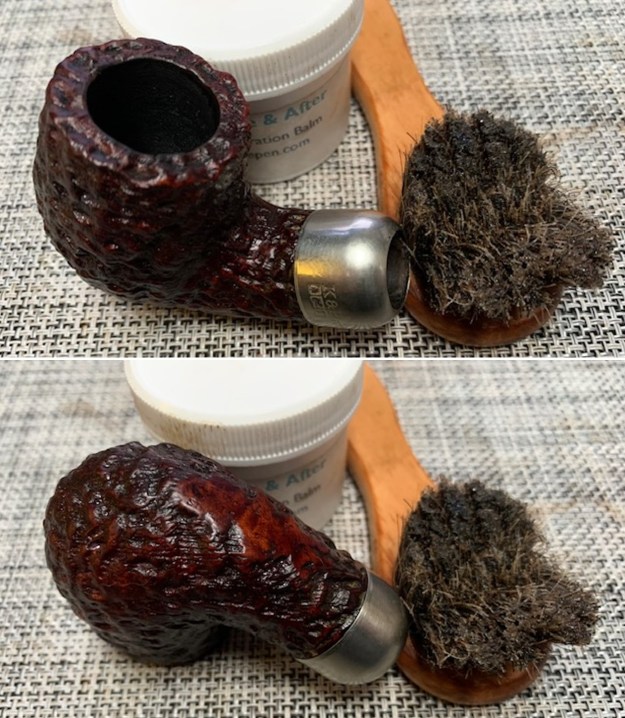
Replacing a broken tenon and restoring a Stanwell de Luxe


Blog by Steve Laug

Earlier in July I received an email from Peter, a fellow in California regarding a pipe repair he needed. He wrote as follows.

Hi, I’m just wondering if you can repair a Stanwell pipe for me? The stem broke off inside the pipe. Thanks for your time, Peter.

I wrote him back asking for photos so I could have a look at it. I figured he meant that the tenon snapped off inside the shank but I wanted to be certain. He replied

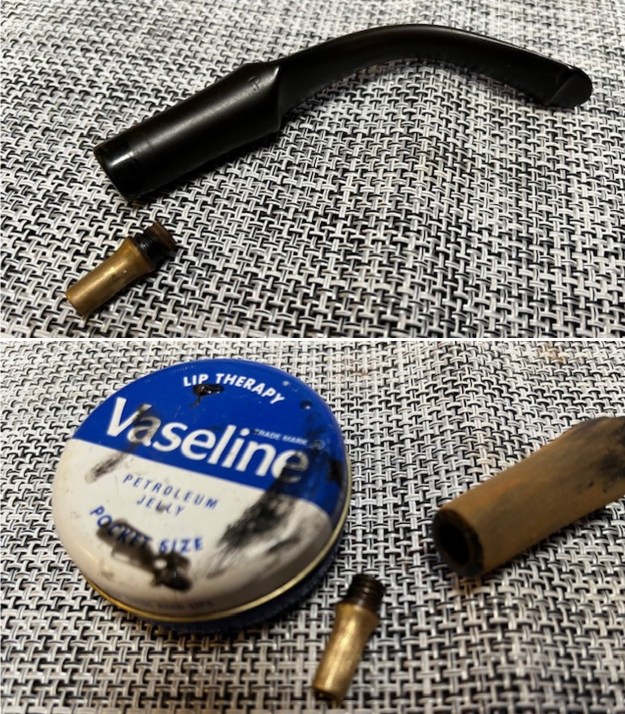
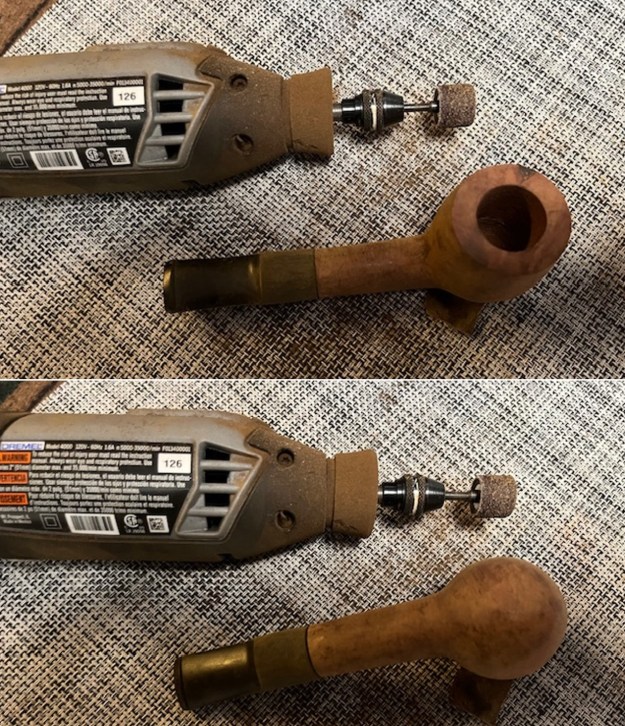
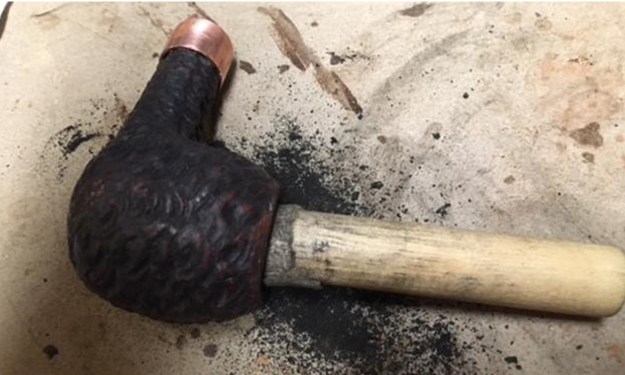
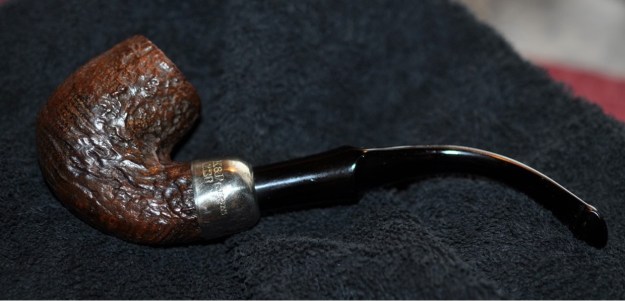
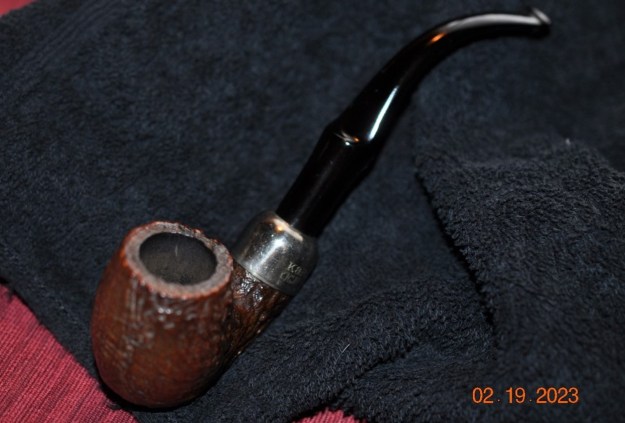
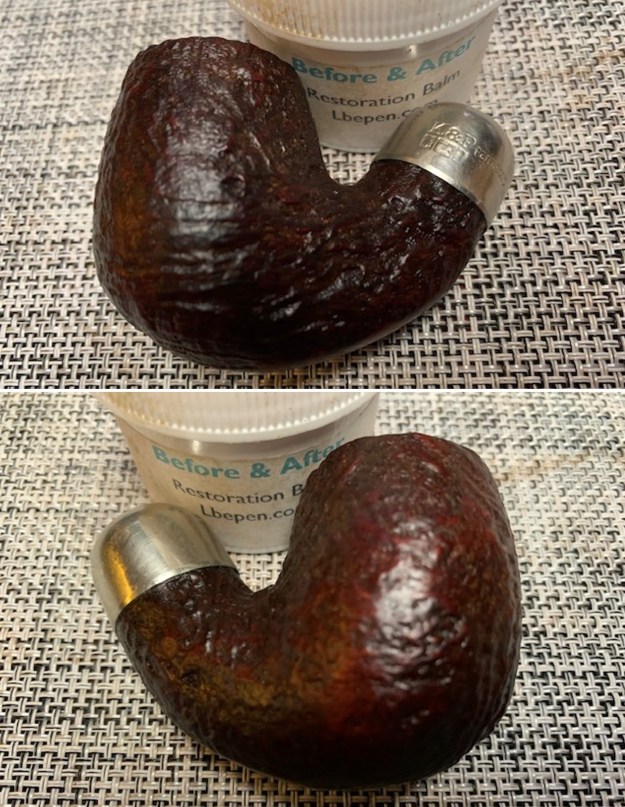
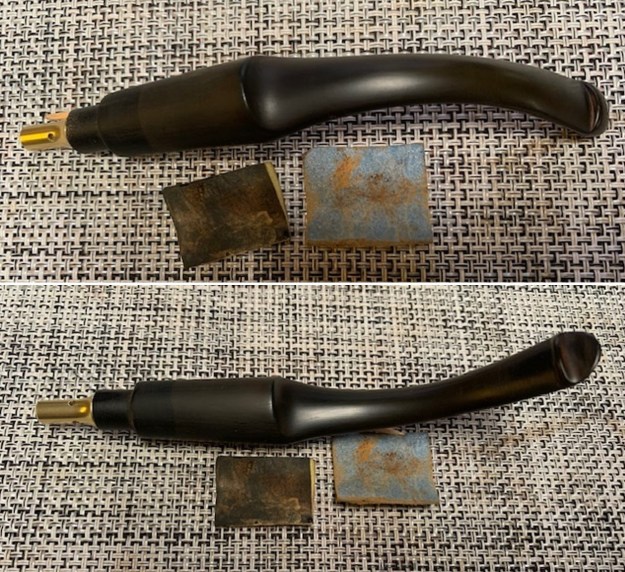
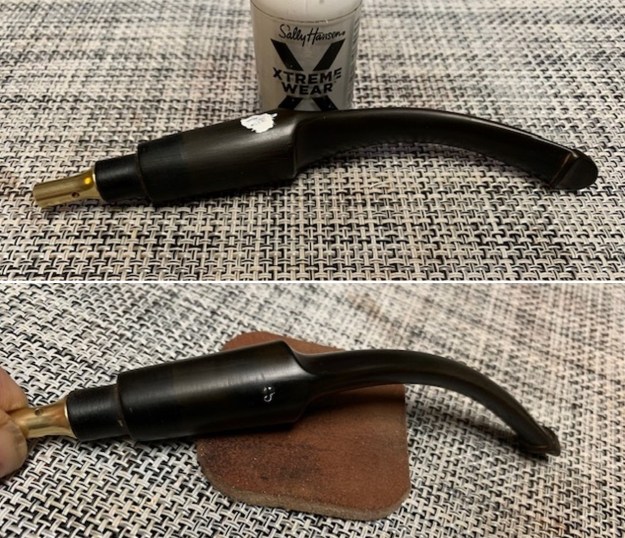
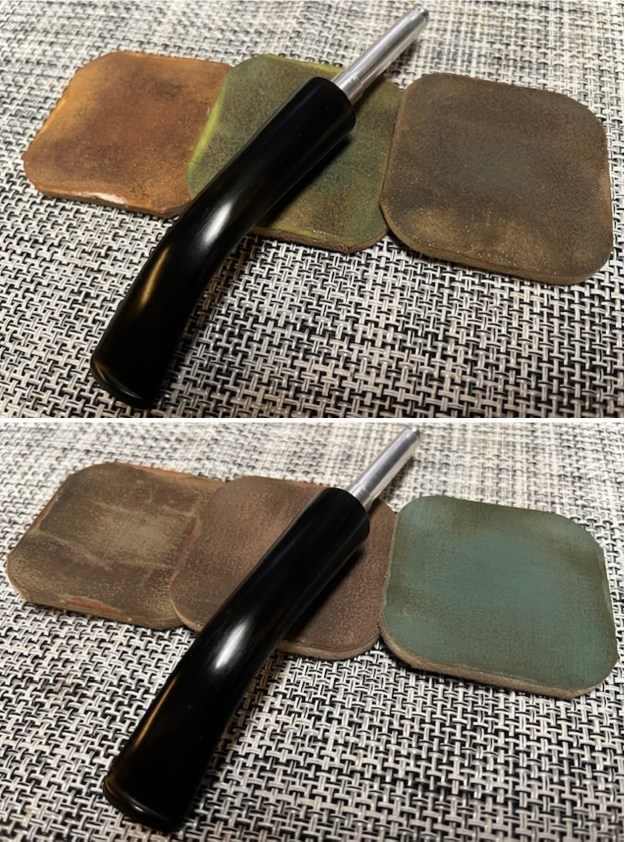
Thanks so much for your very fast response. Pictures are below. Best wishes, Peter We chatted back and forth a bit and Peter decided to send the pipe to me. I received it yesterday and here is what I saw once I unwrapped it. The photos tell the story but here is my review of it. The finish was dirty and worn. The bowl had a thick cake and there was lava buildup flowing along the inner edge and into the plateau on the rim top. The stem was snapped off leaving the tenon in the shank. Fortunately, there was no damage to the shank itself. It did not have any cracks in the sides. The shank end showed a lot of tar buildup. The tenon was still in the shank. The snap at the stem was fairly clean and would just need to be flattened. The stem itself showed a lot of oxidation, calcification and light tooth marks and chatter on both sides ahead of the button. The pipe was stamped on the left side and read Stanwell [over] de Luxe. I could not see any other stamping on the shank. There was a gold crown S on the left side of the saddle stem. This was going to be fun to bring back to life. I decided to begin working on the pipe by trying to pull the broken tenon with my usual methods. I put the bowl in the freezer for 30 minutes, then inserted a screw into the airway in the shank. I wiggled the screw and tried to break it free. It was no use. I used a qtip to dribble alcohol around the edges of the broken tenon in the shank. I repeated that several times and let it sit. I was still unable to remove the broken tenon in the shank. It was stuck and nothing seemed to loosen it. With the tenon being stuck in the shank I stepped up the process and drilled it out. I started with a drill bit slightly larger than the airway. I have had good success in drilling and in the process having the tenon come out on the drill bit. In this case I worked through four drill bits until I used one that was slightly small than the mortise. I then scraped out the remainder of the bits of vulcanite in the shank with a small pen knife until the walls were clear. I took a photo of the pipe at this point in the process – the tenon drilled out, a replacement tenon and the stem. Now it is ready for the next part of my work. I set the stem and tenon aside so that I could work on the bowl and shank. I reamed the bowl with a PipNet pipe reamer. I took the cake back to bare walls so I could check out the walls for damage or checking. It looked very good. I scraped out the remnants of the cake with a Savinelli Fitsall Pipe Knife and then sanded it with a piece of 220 grit sandpaper wrapped around a piece of dowel to smooth out the walls of the bowl. I worked on the buildup in the plateau surface of the rim top with a brass bristle wire brush. I was able to remove the heaviest part of the lava in the grooves of the plateau surface. It looked better but would need to be scrubbed. I scrubbed the exterior of the bowl with a tooth brush and undiluted Murphy’s Oil Soap. I scoured the surface of the briar and rinsed and repeated the process until the bowl was clean and the rim top looking very good. I cleaned up the darkening on the smooth bevelled portion of the inner rim edge next. I used a folded piece of 220 grit sandpaper to remove the damage and also smooth it out. I touched up the deep grooves in the plateau with a black Sharpie pen. The rim top and edge look very good.I polished the smooth rim top portions and the exterior of the pipe with micromesh sanding pads – dry sanding with 1500-12000 grit sanding pads. I wiped the bowl down after each sanding pad with a damp cloth to remove the sanding dust and debris. By the last pad it was looking very good with a shine in the briar that highlights the grain. I cleaned out the shank and mortise with alcohol, cotton swabs and pipe cleaners. I wanted to remove the oils and tars so that I would have a clean surface for the new tenon that I was fitting in the shank. It cleaned up and certainly smelled better once cleaned.I worked some Before & After Restoration Balm into the surface of the briar with my fingertips and a horsehair shoe brush to get into the plateau top. The product works to clean, preserve and protect the briar. I let it sit and work into the briar for 10 minutes then wiped it off with a cotton cloth. I buffed the briar with a clean cloth. The bowl is starting to look beautiful and there is a shine developing. At this point the bowl was finished until I finished with the new tenon insertion. I set the bowl aside and took a photo of the new tenon and the tools for reducing the diameter to fit in the shank. I used the Dremel and a sanding drum to reduce the diameter. I cleaned up the work with a file and then 220 grit sandpaper to get it to a point where the tenon fit in the shank.I put the stem in a bath of Briarville’s Pipe Stem Deoxidizer and set it aside while I worked on the tenon fit. I left it in the bath for three hours and then removed it and rubbed off the bath with a paper towel. The surface of the stem looked significantly better at this point. The oxidation was greatly reduced, the calcification was gone and the stem showed improvement. The tooth marks would still need to be worked on but there was progress.I cleaned out the airway in the stem with pipe cleaners and alcohol the drilled the airway to match the diameter of the new tenon insertion. I started with a drill bit the same size as the airway and gradually increased the bit size until it matched the outside diameter of the tenon. I took a photo of the newly drilled end of the stem. I cleaned up the airway once again in preparation for gluing the new tenon in place. I wiped the tenon end down with black CA glue and then aligned the tenon and the mortise. I pressed the tenon in place in the stem and set it aside to cure. Once it cured I took a photo of the stem and new tenon with the bowl before putting them back together. Once the glue cured I fit the stem in the shank. As seems to be very usual when I do this kind of thing the fit against the shank was not perfect. I would need to shape the stem and shank to make the fit and flow perfect. I took photos of the pipe at this point. The fit is not far off but just enough to be noticeable in the photos on the top and underside and slightly on the right and left sides. I sanded the shank and the stem to match and make the transition smooth all the way around the junction. I used 220 grit sandpaper and sanded it in place on the shank. I had to remove briar and vulcanite on the sides of the shank according to the transition. When finished it looked much better. I polished the sanded areas with micromesh sanding pads to make them smooth. I used an Oak stain pen to touch up the sanded areas and blend them into the rest of the bowl and shank. It blends in very well.I rubbed it down once again with Before & After Restoration Balm. I worked it into the surface of the briar and let it sit for 10 minutes then buffed it off with a soft cloth. I polished the bowl with a cotton cloth and set it aside. I set the bowl aside and turned my attention to finishing the work on the stem. I “painted” the stem surface with the flame of a lighter to lift the tooth marks. I was able to lift them significantly. I filled in what remained with black CA glue. Once the repair cured I used files to smooth out the surface of the repair. I sanded it with 220 grit sandpaper to blend them into the surface of the stem. I started the polishing of the stem with 600 grit wet dry sandpaper. I polished the stem with micromesh sanding pads – dry sanding with 1500-12000 grit pads. I wiped the stem down after each sanding pad with Obsidian Oil. I finished polishing the stem with Before & After Pipe Stem Polish – Fine and Extra Fine. I rubbed it into the surface of the stem and buffed it off with a cloth and buffed it to a shine. I am really happy with the way that this Stanwell Danish Made de Luxe Freehand turned out. It really is a beautiful looking pipe with a great shape and smooth finished bowl and plateau on the rim top. The original vulcanite saddle stem is cleaned up nicely. The polished black of the stem works well with the briar and the plateau portions. The briar really came alive with the buffing. The rich brown stains of the finish gave the pipe a sense of depth with the polishing and waxing. I put the stem back on the bowl and carefully buffed the pipe with Blue Diamond on the buffing wheel using a light touch on the briar. I gave the bowl and the stem multiple coats of carnauba wax on the buffing wheel. I buffed the pipe with a clean buffing pad to raise the shine. I hand buffed the pipe with a microfiber cloth to deepen the shine. The finished Stanwell de Luxe really is a beauty and feels great in the hand and looks very good. Give the finished pipe a look in the photos below. The dimensions of the pipe are Length: 6 inches, Height: 2 ¼ inches, Outside diameter of the bowl: 1 ¾ inches, Chamber diameter: ¾ of an inch. The weight of the pipe is 56 grams/1.98 oz. The pipe will be going back to Peter very soon. I look forward to hearing what he thinks about it. Thanks for reading this blog and my reflections on the pipe while I worked on it. It was a fun one to work on!
As always, I encourage your questions and comments as you read the blog. Thanks to each of you who are reading this blog. Remember we are not pipe owners; we are pipe men and women who hold our pipes in trust until they pass on into the trust of those who follow us.
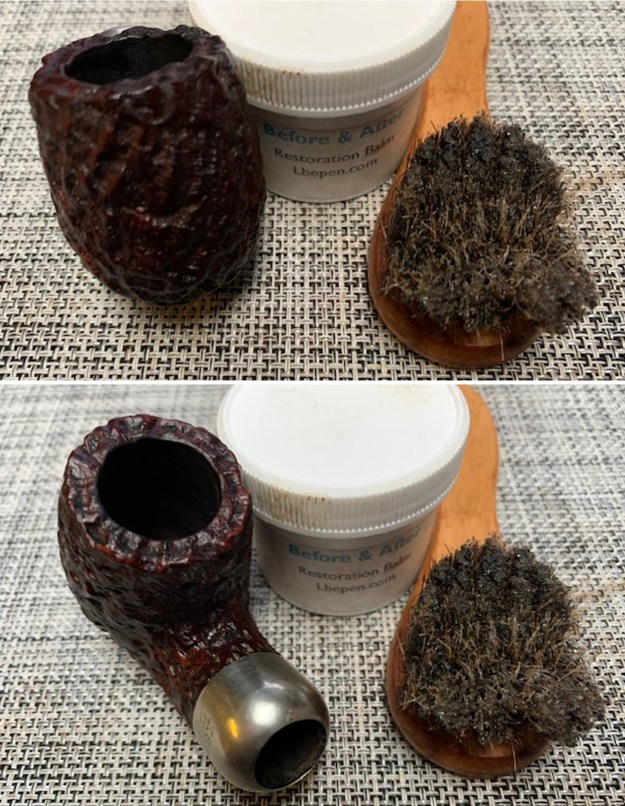
New Life for a “Giant” Maestro de Paja Pesaro Ciocco Gigante Bent Bulldog Rusticated


Blog Steve Laug

A few weeks ago I was contacted from a fellow in Montana who was selling his pipes as they had not been used for quite a few years. I asked him for a picture and he sent me the one to the left. It included the following brands (from the top to the bottom of the photo): Savinelli Autograph 5 Freehand, Mastro de Paja Ciocco 0C Bulldog, Mastro de Paja Media 1B Bent Billiard, Ser Jacopo Delecta Octagonal Bent Billiard, Caminetto Business KS 118 Canadian, Radici Rind Rhodesian, Dunhill Bruyere ODA 836 Panel Billiard, Barontini Straight Grain B3 Freehand and a Ben Wade Martinique Hand Made in Denmark Freehand.

Almost all of them were higher end pipes and all were hand made pipes. They were a mix of finishes – smooth, sandblast and also rusticated. They were a mix of shapes as well and the majority of them were Italian Made other than the Dunhill and the Ben Wade Martinique. They were beautiful pipes and after exchanging quite a few photos of the pipes from various angles to get a sense of what was there we struck a deal. We sent him the payment and the pipes arrived in Idaho a few days after I left for Vancouver.

Jeff cleaned them all and this week I received them in Vancouver. I am impressed with the way they cleaned up and the beauty of the brands. They truly are some beautiful pipes. I just need to put the final touches on each of them and address minor issues on the bowl rims and the stems and they should be good to go. I am really looking forward to working on each of them in the days ahead.

This evening after work I decided to continue working on the lot. I chose to work on the rusticated Mastro de Paja Pesaro Ciocco Gigante 0C Large Bulldog. It has a classic Large Bent Bulldog shape with an Italian twist. The rustication is extremely rugged and tactile. The crowned rim top, the briar around the twin rings on the cap are smooth.  There is also a smooth band around the shank end just ahead of a silver ferrule. The pipe is stamped on a smooth panel on the left underside of the diamond shank. It has a sun logo that is followed by Mastro de Paja [over] Fatta A Mano (made by hand). Under that it is Persaro [over] Ciocco. Next that just in front of the ferrule is stamped with a 0C in a circle [over] Gigante. The silver ferrule is stamped on the top left side and reads Mastro [over] De Paja [over] Ciocco. There is a Mastro de Paja metal circular disc logo is on top left side of the stem and on the left underside it is stamped with the sun logo. The stamping is clear and readable. The finish was very dirty with grime ground into the grooves of the rustication. The bowl had a thick cake and the crowned rim top/inner edge had a thick coat of lava flowing up from the bowl. The inner edge of the bowl was covered with a thick cake so it was hard to know its condition with certainty. The stem is black acrylic fancy saddle stem and was dirty with tooth marks and chatter on both sides ahead of the button. Jeff took photos of the pipe before he started his clean up work on it. Jeff took photos of the bowl and rim top to show what they looked like before the clean up. You can see the thick cake in the bowl overflowing on the inner edge/crowned rim top. He also took some photos of the stem to show the condition of both sides. You can see the tooth marks and chatter on the top and underside next to the button. The photos of the sides and heel of the bowl show the deep rusticated finish around the bowl and shank. The stain adds depth finish on the pipe. Even under the grime it is a real beauty.The stamping on the underside of the shank and on the silver ferrule is shown in the photos below. It is clear and readable as noted above. There is also a stamping reading Italia on the lower right side on the smooth band on the shank end ahead of the silver. Before moving on to the clean up I wanted to build my knowledge of background on the brand. I have looked at them quite often and perhaps worked on a few in past years but I have no memory of the brand. I turned first to Pipephil’s site (http://www.pipephil.eu/logos/en/logo-m3.html). I have included a screen capture of the information on the site as well as some side bars notes below the photo. The last pipe pictured shows the circle 1B stamp as well as the one Sun logo which is noted as the grading stamp. That was information it did not have before.Brand founded in 1972 by Giancarlo Guidi. He left it for Ser Jacopo in 1982. Alberto Montini became the owner of the brand in 1995. Production (2010): ~ 5000 pipes/year. Seconds: Calibano, Montini,

That led me to the Mastro de Paja website (https://www.mastrodepaja.it/en/pipes-and-accessories.html). There was a lot of information on the brand and the quality of the briar and craftsmanship of the pipes. I quote below:

Mastro de Paja are formed by the expert and highly capable hands of craftsmen – famous pipes with the unmistakable sun brand, known and appreciated by connoisseurs throughout the world. Unique and inimitable because they are unrepeatable encounter of precious Mediterranean briars, with the sensitivity of the craftsman who, using art and inspiration, models them individually. And, in the modelling process, brings to light the most concealed and valuable qualities of the briar. Varied designs, original lines and a deriberately (sic) limited productions make Mastro de Paja pipes objects destined for the most demanding and refined collectionists. Beautiful and loved, they are also excellent pipes because they are worked with care by those who know them: a successful synthesis of formal beauty and functionality. Rigorous controls and selections give Mastro de Paja pipes, right from the first smoke, that rounded taste which is then maintained intact for the whole of its long and extraordinary life.

The site also had a video entitled “How to make a Smoking Pipe by Hand – Mastro de Paja”. I have included the youtube link as well as the code for embedding.

https://youtu.be/xx24a-NpljM

I turned to Pipedia for more information on the brand (https://pipedia.org/wiki/Mastro_de_Paja). The site is full of information on the brand and the philosophy behind the carving of the hand made pipes. I am including the information on the site listed as the Elite Collection that listed the stamping information. I have highlighted pertinent information on this particular pipe in red in the list below.

Mastro de Paja “ELITE COLLECTION”

It is the production of pipes made entirely by hand, even they are unique but of regular production.

On all “Mastro de Paja” pipes you can see fire stamped all the information for tracing the value of each creation.

RUSTICATED

  • 0B: Completely rusticated
  • 0B Unica: Completely rusticated with some smooth sections

SANDBLASTED

  • 1B: Dark brown or black sandblasted
  • 1B + 1 Sun: Light brown sandblasted

PARTIALLY RUSTICATED

  • 2D: Smooth with small sections rusticated
  • 2D + 1 Sun: Smooth straight grain with small sections rusticated

SMOOTH WITH COLORED FINISH

  • Ruber: Smooth with red stain
  • Castanea: Smooth with brown stain
  • 3A: Smooth with brown-orange stain
  • 3A + 1 Sun: Smooth good grain with brown-orange stain
  • 3A + 2 Sun: Smooth straight grain with brown-orange stain

SMOOTH WITH NATURAL FINISH

  • 3B: Smooth with a good grain and a natural finish
  • 3B + 1 Sun: Smooth excellent grain with natural finish
  • 3B + 2 Sun: Perfect grain
  • 3C: Good grain
  • 3C + 1 Sun: Excellent grain
  • 3C + 2 Sun: Perfect grain
  • F: Straight grain
  • F + 1 Sun: Good straight grain
  • F + 2 Sun: Excellent straight grain
  • F + 3 Sun: Perfect straight grain

Sometimes “Mastro de Paja Pipes” are enhanched with sterling silver, gold, precious stones and/or fine wood and are further classified and fire stamped on each pipe.

  • Stamp “P” : “Personal” with fine ornamentation.
  • Stamp “N” : “Normal” with basic sterling silver.
  • Stamp “L” : “Lavorata” with more complex sterling silver.
  • Stamp “S” : “Special” with elaborate sterling silver and specially worked.
  • Stamp “G” : “Gold” with special gold ornamentation.
  • Media : Medium size pipe
  • Gigante: Giant pipe

From that information I knew that the pipe I was working on was a Rusticated Pipe and a  Sun which made it a completely rusticated. It also is stamped Gigante which makes it a Giant pipe. It is a beauty and now it is time to look at it up close and personal.

Jeff had done an amazing job in removing all of the cake and the lava on the rim top. He had reamed the bowl with a PipNet Pipe Reamer and cleaned up the remnants with a Savinelli Fitsall Pipe Knife. He took the cake back to bare briar so we could check the walls for damage. He scrubbed the exterior of the bowl with Murphy’s Oil Soap and a tooth brush to remove the grime on the bowl and rim and was able to remove the lava and dirt. He cleaned out the interior of the bowl and shank with pipe cleaners, cotton swabs and alcohol until they came out clean. He cleaned the stem with Soft Scrub to remove the grime on the exterior and cleaned out the airway with alcohol, cotton swabs and pipe cleaners. I took photos of the pipe before I started my part of the restoration. I took close up photos of both the rim top and the stem. Jeff had been able to get the grime and lava off of the rim top and it looked good. There was some burn damage and darkening on the right front of the crowned rim top and beveled inner edge. The stem looked very clean. The tooth marks and chatter were predominantly near the button. They should be easy to remove. The stamping on the left underside of the diamond shank was readable as noted above. The stamping on the silver ferrule is also very readable as noted. I also took a photo with the stem removed to give an idea of the perspective and design of the pipe. I started my work on the pipe by addressing the burn damage and darkening on the right front of the rim top with a folded piece of 220 grit sandpaper. Fortunately the burn damage was not deep but mainly surface. I was ale to remove and minimize it without changing the shape of the rim top. I also worked on the darkening on the inner bevel and removed it as well. I polished it with 1200-3200 micromesh sanding pads and then restained the rim top and edge with a Oak Stain Pen to match the rest of the bowl. Over all the rim top and edges looked much better. The bowl and shank were very clean and the rim top finished. I worked some Before & After Restoration Balm into the finish of the bowl and shank with my fingers and a horsehair shoe brush. I want the product to go deep into the finish because it works to clean, enliven and protect the briar. Once I was confident that it was deeply worked into the finish I wiped it off and buffed it with a soft cloth to polish it. The pipe really began to have a rich shine. I took some photos of the bowl at this point to mark the progress in the restoration. The rusticated finish on the pipe is beautiful and shows depth in the photos below. I set the bowl aside and turned to work on the stem. I filled in the deep tooth marks with black CA glue and set it aside to cure. Once cured I flattened them out with a small file and then sanded the smooth with 220 grit sandpaper. I started polishing it with 600 grit wet dry sandpaper. I touched up the Sun logo on the left underside of the diamond shaped stem with some Rub’n Buff Antique Gold. It picks up the Sun shaped stamp very well. I polished the acrylic stem with micromesh sanding pads – wet sanding it with 1500-12000 grit pads. I wiped it down with Obsidian Oil after each sanding pad because I find that the oil provides a great surface for polishing with the micromesh pads. I finished polishing it with Before & After Pipe Polish – both the Fine and Extra Fine polishes. I gave it a final coat of oil and set it aside to dry. This Mastro de Paja Pesaro Ciocco Gigante Rusticated 0C Bent Bulldog is a real beauty with a deep and tactile rustication and a silver ferrule. I put the bowl and stem back together again and buffed the bowl and the stem with Blue Diamond on the buffing wheel. I used a soft touch on the bowl so as not to fill it in with the polishing product. I gave the bowl several coats of Conservator’s Wax and the stem several coats of carnauba wax. I carefully buffed the entire pipe with a clean buffing pad to raise the shine. I polished the silver ferrule with a jewelers cloth to protect and shine. I finished buffing with a microfiber cloth to deepen the shine. The finished pipe looks very good. It is comfortable and light weight. The finished Mastro de Paja Ciocco Gigante Bent Bulldog is shown in the photos below. The dimensions of the pipe are Length: 6 inches, Height: 2 ½ inches, Outside diameter of the bowl: 1 ¼ inches, Chamber diameter: ¾ of an inch. The weight of the pipe is 78 grams/2.75 ounces. This great looking rusticated Bulldog turned out very well. It should be a great pipe. It will be going on the rebornpipes store in the Italian Pipemakers Section shortly if you are interested in adding it to your collection. Email me at slaug@uniserve.com

As always, I encourage your questions and comments as you read the blog. Thanks to each of you who are reading this blog. Remember we are not pipe owners; we are pipe men and women who hold our pipes in trust until they pass on into the trust of those who follow us.
Breathing Life into a Beautiful Stanwell Maron 32 Straight Bulldog


Blog by Steve Laug

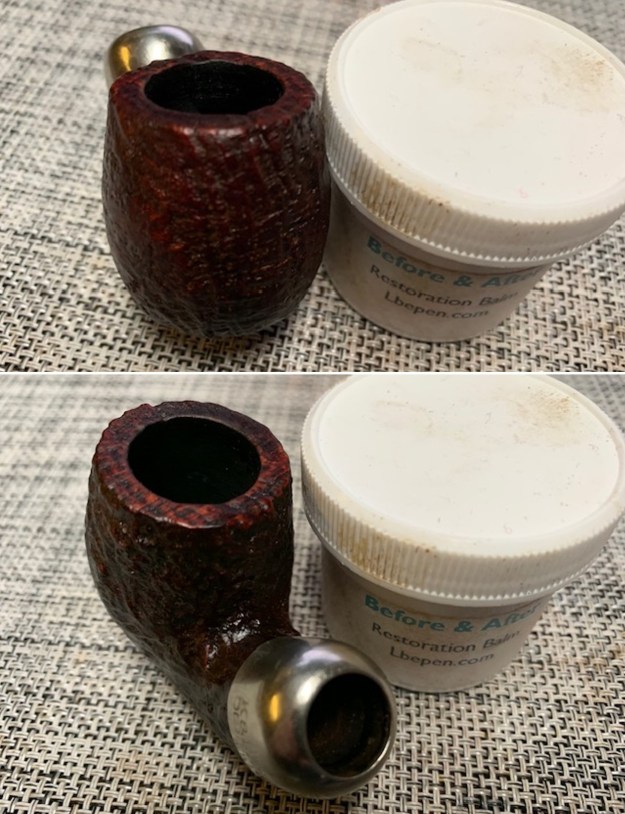
Another hot day in Vancouver so I decided to go to the basement and work on another one that was purchased on 01/26/2023 in a lot of pipes that came to us from Copenhagen, Denmark. It included a group of Danish Made Stanwell pipes that are quite beautiful. The grain around the bowl and shank of this Bulldog has a mix of cross, birdseye and flame grain. The pipe is stamped on the left underside of the diamond shank and reads STANWELL 32 [over] Maron [over] Made in Denmark. The pipe was a well used pipe when Jeff received it. There was dust and grime ground into the finish. It is finished in the warm stain of the Maron finish, with some nice grain around the bowl and shank under the dirt. The bowl was moderately caked and there was an overflow of lava on the rim top. The inner edge shows some darkening around the bowl and on the rim top. There is a band on the shank. It has two brass bands with an orange piece of acrylic sandwiched between them both. The stem is acrylic and was dirty with light tooth marks and chatter on both sides ahead of the button and on the button itself. There is no brass/gold crown S logo inlaid on the left side of the saddle stem. Jeff took photos of the pipe before he started his clean up work on it. Jeff took photos of the bowl and rim top to show what they looked like before the clean up. You can see the darkening and light lava on the inner edge and top of the rim. He also took some photos of the stem to show the condition of both sides. You can see the light marks on the top and underside next to the button. The photos of the sides and heel of the bowl show the grain around the bowl and shank. The stain adds depth finish on the pipe. Even under the grime it is a real beauty. The stamping on the lower left side the diamond shank is shown in the photo below. It is clear and readable as noted above. Jeff had cleaned up the pipe with his usual penchant for thoroughness. He reamed the pipe with a PipNet Pipe Reamer and cleaned up the remnants with a Savinelli Fitsall Pipe Knife.  He scrubbed the bowl with undiluted Murphy’s Oil Soap with a tooth brush. He rinsed it under running warm water to remove the soap and grime. He cleaned out the inside of the shank and the airway in the stem with alcohol, cotton swabs and pipe cleaners. He soaked the stem in Before & After Deoxidizer and rinsed it off with warm water. It came in Stanwell Pipe Sock. I removed it from the sock and took photos of the pipe once I received it.   I took close up photos of both the rim top and the stem. Jeff had been able to get the grime and lava off of the rim top and it looked pretty incredible. There was some darkening and marks on the rim top on the right side and the back of the bowl. The stem looked very clean. The tooth marks and chatter were minimal and should be easy to remove.The stamping on the shank side was readable as noted above. I also took a photo with the stem removed to give an idea of the perspective and design of the pipe.I started my work on the pipe by addressing the damage to the inner edge and the rim top with a folded piece of 220 grit sandpaper to bring the edge back into round and it looked much better. Over all the rim top and edges looked much better. Now it was time to do my work on the pipe. I polished the bowl and rim top with micromesh sanding pads using 1500-12000 grit sanding pads and wiping it down after each sanding pad with a damp cloth to remove the sanding dust and debris. I worked some Before & After Restoration Balm into the finish of the bowl and shank with my fingers. I want the product to go deep into the finish because it works to clean, enliven and protect the briar. Once I was confident that it was deeply worked into the finish I wiped it off and buffed it with a soft cloth to polish it. The pipe really began to have a rich shine. I took some photos of the bowl at this point to mark the progress in the restoration. The grain really stands out on the pipe in the photos below. I set the bowl aside and turned to work on the stem. I polished the acrylic stem with micromesh sanding pads – wet sanding it with 1500-12000 grit pads. I wiped it down with Obsidian Oil after each sanding pad. I polished it with Before & After Pipe Polish – both the Fine and Extra Fine polishes. I gave it a final coat of oil and set it aside to dry. This Stanwell Maron 32 Straight Bulldog with an acrylic taper stem is a great looking pipe now that it has been restored. The beautiful finish really highlights the grain and the polished finish is stunning. The triple layer brass and orange acrylic shank extension is also a great addition. I put the stem back on the bowl and carefully buffed the pipe with Blue Diamond on the buffing wheel. I gave the bowl and the stem multiple coats of carnauba wax on the buffing wheel and followed that by buffing the entire pipe with a clean buffing pad. I hand buffed the pipe with a microfiber cloth to deepen the shine. The finished Stanwell Maron Bulldog fits nicely in the hand and feels great. Give the finished pipe a look in the photos below. The dimensions of the pipe are Length: 5 inches, Height: 1 ¾ inches, Outside diameter of the bowl: 1 ¼ inches, Chamber diameter: ¾ of an inch. The weight of the pipe is 38 grams /1.34 ounces. I will be adding the pipe to the Danish Pipe Makers Section of the rebornpipes store. If you are interested in purchasing this pipe send me a message or an email. Thanks for reading this blog and my reflections on the pipe while I worked on it.

As always, I encourage your questions and comments as you read the blog. Thanks to each of you who are reading this blog. Remember we are not pipe owners; we are pipe men and women who hold our pipes in trust until they pass on into the trust of those who follow us.
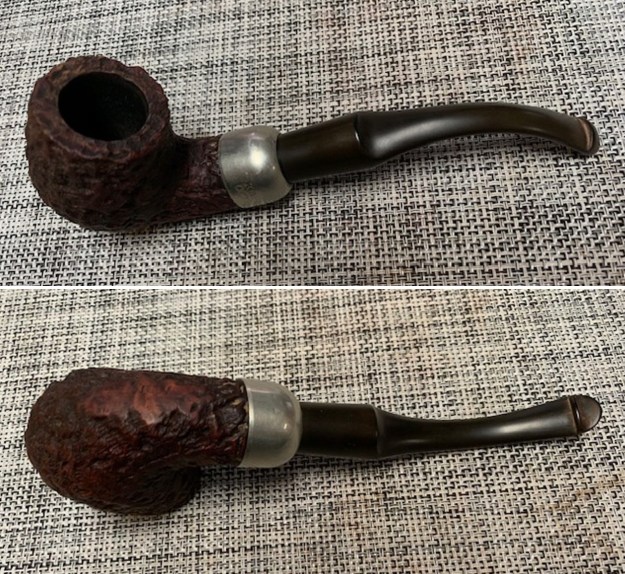
Restoring a Beautiful Stanwell Pot with a Bamboo Shank and an acrylic taper stem


Blog by Steve Laug

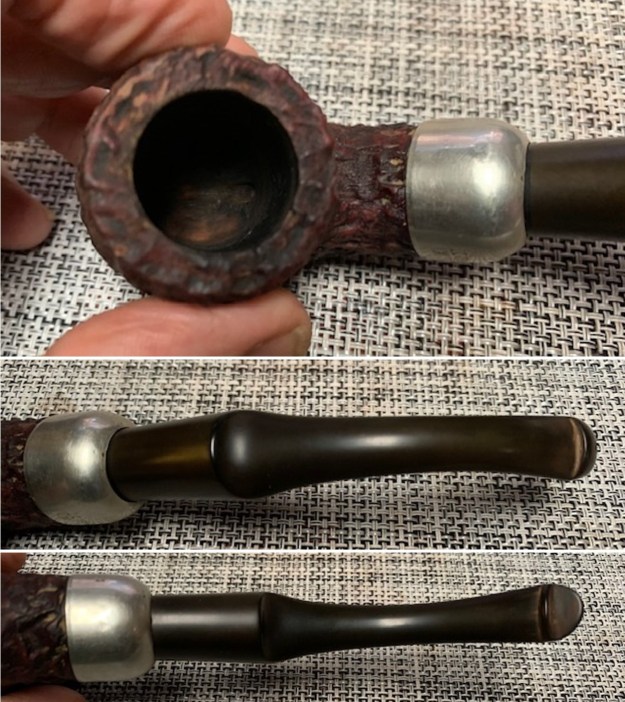
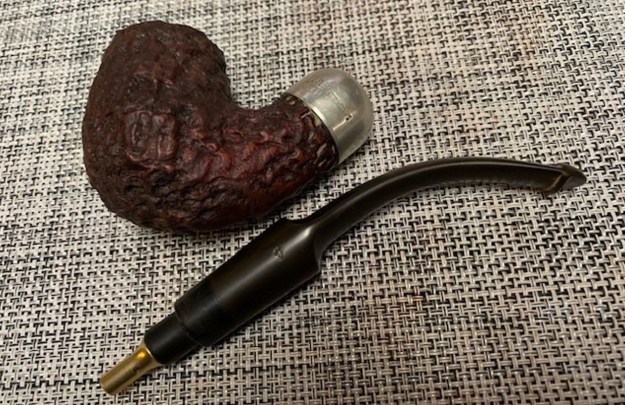
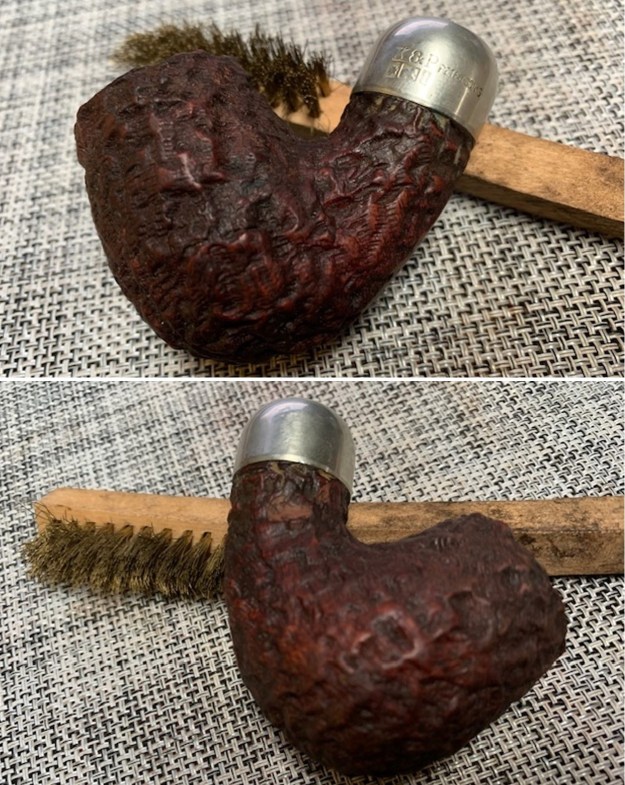
It is a hot day here in Vancouver so I decided to head to the basement where it is cool and work on another pipe. This one was purchased on 11/14/2022 in a lot of pipes that came to us from a seller in Copenhagen, Denmark. It included a group of Stanwell Bamboo pipe that are quite beautiful, combining a briar bowl, a bamboo shank and in this case an acrylic stem. The pipe is a nice looking pot shape. The grain around the bowl and short briar portion of the shank has a mix of cross and birdseye grain. The pipe is stamped on the left side of the bamboo and reads STANWELL vertically between the knuckles. The pipe was a well used pipe when Jeff received it. Someone had given it a coat of varnish so it was quite shiny but there was grime underneath. The mixture of brown stains highlights some beautiful grain under the dirt. The bowl had been reamed and it was clean.  There was some darkening and some nicks on the crowned rim top and one burn mark on the left rear. The inner edge had some darkening and some nicks around the edges. The outer edge on the front of the bowl had been damaged and someone had repaired it somewhere along the journey. It had been sanded smooth and changed the profile of the crowned rim at that point. I would need to rework that area. The stem is acrylic and was dirty with some deep tooth marks on both sides ahead of the button and on the button itself. There is a brass/gold crown S logo inlaid on the left side of the taper stem. I took photos of the pipe before I started the clean up work on it. I took photos of the bowl and rim top to show what they looked like before the clean up. You can see the darkening on the inner edge and top of the rim. It is hard to see but there is damage that is well hidden at this point on the front outer edge of the bowl. I took some of the stem to show the condition of both sides. You can see the deep tooth marks on the top and underside next to the button. They will take some work.The photos of the sides and heel of the bowl show the uniquely stained grain around the bowl and shank. The mixture of black and brown stains adds depth finish on the pipe. Even under the grime it is a real beauty. The two knuckle bamboo shank has a nice patina on it that will only get better with time. It had a black acrylic spacer between the shank and the bamboo and the stem and the bamboo.The stamping on the left side the bamboo is shown in the photo below. It is clear and readable as noted above. It also shows the gold crown S on the stem side. I removed the stem from the shank and took a photo of the pipe to show the flow and cut o the pipe. It is a beauty.I turned to several of the previous blogs that I have written on other Stanwell Bamboos that I have restored. I have included the information from those blogs on the line. I turned to Pipephil to get a quick review of the brand (http://pipephil.eu/logos/en/logo-stanwell.html). The Brass Crowned S inlaid logo on the stem is shown in the photo below. I have included a screen capture of the brand info there.I then turned to Pipedia (https://pipedia.org/wiki/Stanwell) for more information. The article is great and gives a lot of history on the brand. There were also links to catalogues at the bottom of the page. I am including a page from a catalogue on the site below that gives a bit of a glimpse into the brand. Here is the link (http://www.axeljeske.de/Pfeifen/Stanwell_Amager.pdf). The catalogue page gives a great description of the Bamboo line. It reads as follows: Top quality bowls perfectly fitted with porous bamboo shanks for casual elegance.

Armed with that information about the pipe it was time to work on the pipe. I scraped out the cake remnants with a Savinelli Fitsall Pipe Knife and sanded the bowl walls with 220 grit sandpaper wrapped around a piece of dowel. I scrubbed out the internals with 99% isopropyl alcohol, cotton swabs and pipe cleaners to remove the oils and tars. While the pipe was fairly clean I was able to remove the remaining oils. I started my work on the pipe by addressing the damage to the inner edge and the rim top with a folded piece of 220 grit sandpaper to bring the edge back into round and it looked much better. I worked over the burn mark on the back left outer edge and top and smoothed it out. I also worked on the previously repaired damage to the front of the bowl outer edge. It had been knocked against something hard and then smoothed out. I reshaped the crown on the outer edge of the bowl. Over all the rim top and edges looked much better.In order to clean up the grime under the varnish coat on the bowl I washed it down with acetone on a cotton pad. I was able to remove the shiny coat and remove the grime in the finish. Once the shiny coat was gone the pipe cleaned up very well. The photos below show the look of the pipe once it was cleaned. I polished the briar with micromesh sanding pads – dry sanding with 1500-12000 grit pads. I wiped the bowl down after each pad to remove the grit. The bowl began to take on a rich shine. It is a beauty. I rubbed the bowl down with Before & After Restoration Balm. I worked it into the briar with my finger tips and into the bamboo with a horsehair shoe brush. I let it sit for 10 minutes and the Balm did its magic. It enlivens, cleans and preserves the briar. It certainly brought this bowl back to life. I buffed it off with a clean cloth and took the following photos. I set the stem aside and turned my attention to the stem. The acrylic stem had deep tooth marks on both sides ahead of the button. Heat would not lift them so they would need to be filled in with black rubberized CA glue. I filled them in and spread the repair with a dental spatula. Once the repair cured I used a small file to recut the button edge and to flatten out the repairs. I used 220 grit sandpaper to blend them into the stem surface and started the polishing with 600 grit wet dry sandpaper. I polished the stem with micromesh sanding pads – 1500-12000 grit pads. I wiped it down with a damp cloth after each sanding pad. I used Before & After Pipe Polish – both Fine and Extra Fine to further polish the stem. I polished it with Before & After Pipe Polish – both the Fine and Extra Fine polishes. I gave it a final coat of oil and set it aside to dry.This Stanwell Bamboo Pot with an acrylic taper stem is a great looking pipe now that it has been restored. The beautiful finish really highlights the grain and the polished finish is stunning. I put the stem back on the bowl and carefully buffed the pipe with Blue Diamond on the buffing wheel. I gave the bowl and the stem multiple coats of carnauba wax on the buffing wheel and followed that by buffing the entire pipe with a clean buffing pad. I hand buffed the pipe with a microfiber cloth to deepen the shine. The finished Stanwell Bamboo Pot fits nicely in the hand and feels great. Give the finished pipe a look in the photos below. The dimensions of the pipe are Length: 5 ½ inches, Height: 1 ½ inches, Outside diameter of the bowl: 1 ¼ inches, Chamber diameter: ¾ of an inch. The weight of the pipe is 37 grams /1.31 ounces. I will be adding the pipe to the Danish Pipe Makers Section of the rebornpipes store. If you are interested in purchasing this pipe send me a message or an email. Thanks for reading this blog and my reflections on the pipe while I worked on it.

Breathing Life into an Older Choquin A Metz Egg with a Wing Bone Shank Extension and Horn Stem


Blog by Steve Laug

The next pipe on the table was in a box of Danish pipes that Jeff and I had put aside. I actually had no idea (nor did Jeff) why we had put it in that box. The stamping was completely worn off and unreadable. I could make out a faint ghost of a stamp. But the shape reminded me of a Choquin A Metz Origine made by the company that came to be known as Butz-Choquin. The pipe was in rough condition. The finish on the bowl and shank were worn and dirty with spotty grime spots on the surface all around the bowl sides. There was a large, solid fill on the left side toward the bottom of the bowl. Under the tars the rim top and inner and outer edges of the bowl had darkening and light burn damage. The shank end had a metal shank cap that was tarnished looking and I was not sure what the metal was underneath. Inserted in the shank cap was a tube that was made of an albatross wing bone. It fit in the shank cap and was discoloured for the first half inch. The other end of the shank tube was also darkened for the same distance ahead of end cap that was attached to the horn stem. The metal had the same pattern as the previous one. The stem and cap fit snug on the wing bone extension. The horn stem was dirty and had tooth marks and chatter on both sides ahead of the orific button. I took photos of the pipe before I started my clean up work on it to give a clear photo of the condition of the pipe before I started my work. I took a photo of the bowl and the rim top. The bowl had a thick cake on the bowl walls and there was tobacco debris in the bottom of the bowl. The rim top was dirty and had darkening and some burn damage on the inner edge of the bowl. The shank cap and stem cap were tarnished and dirty. The horn stem shows the tooth marks and chatter on both sides ahead of the button as mentioned above. It had promise but it was dirty!I took photos of the shank sides to try to capture the faint stamping on the briar. If you look closely you can see something there. It is unreadable as it is so faint but on the left side it looks like it possibly reads Choquin [over] A Metz [over] Origine. Because I expected this I can faintly see it. The stamping on the right side is not readable at all.I was able to remove the stem from the albatross bone shank extension. I set it aside and dribble some alcohol with a pipe cleaner on the shank cap that held the other end of the extension tightly in place. It took a little work but I was able to wiggle it free. I took a photo of the parts of the pipe to show the overall size and ratio of the parts. It is going to be a pretty pipe!I had worked on two of the Second Generation A Metz Origine in the past. These had an acrylic stem and an acrylic shank extension. I have included the links to those blogs below for your information and for a quick review of the shape and the differences with the one I have in hand now.

https://rebornpipes.com/2020/04/13/new-life-for-a-second-generation-butz-choquin-a-metz-origine/

https://rebornpipes.com/2021/05/28/what-an-interesting-sandblast-butz-choquin-2nd-generation-a-metz-origine/

Back in 2018 I had worked with Paresh on Facetime on a First Generation Choquin A Metz. It was very different than the previous two. It had a horn stem and an albatross wing bone as a shank extension (https://rebornpipes.com/2018/11/17/a-challenging-restoration-of-vintage-era-first-choquin-a-metz/). Given that information, I knew that I was looking at another First Generation A Metz. It had the horn stem and the albatross wing bone shank extension. The pipe on my worktable brings back a lot of fond memories for me. I remember walking through the restoration of Paresh’s Grandfather’s A Metz Origine with him. We chatted on Facetime many times during this particular restoration. Paresh had determined that this pipe was very old. I quote below and also have included a photo:

From all the input that I have gathered, the flat bottom bowl, the stamping, the sterling silver adornments, the bone shank extension and horn stem, I can safely place this piece as being one of the first A Metz pipes from the 1858 era! That was the first memory of Paresh’s A Metz Origine. The second memory is also one I cherish. On a trip to India to visit Paresh and Abha and their daughters Mudra and Pavni in 2019, Jeff and I had the privilege of not only seeing this pipe up close but I also was the first one to smoke it since the restoration. What a privilege to be able to smoke Paresh’s Grandfather’s pipe. It was so light weight in hand and it was an amazing smoke. It was cool and dry to the end of the bowl. I cannot thank Paresh enough for letting me fire up this old timer. Dal wrote about this in a great blog about the trip called West meets East in India (https://rebornpipes.com/2019/05/30/west-meets-east-in-india-to-restore-a-grandsons-treasure-an-1846-bbb/). I quote Dal as he so ably described this experience and have also included a photo panel from the blog:

As we had planned, in celebration of the completion of the restoration together we smoked 3 unbelievable vintage pipes with albatross shank extensions and horn stems – all from the 1800s.  Oh my…. We each thoughtfully packed our bowls with our choice of blends and lit up and, well….  What a treat for Paresh to share the treasure trove of pipes left to him by his grandfather.  Jeff did the honor of commemorating this event with pictures. (Photo from Dal)I had written a previous blog on a restoration of a second generation Butz-Choquin A Metz Origine (https://rebornpipes.com/2020/04/13/new-life-for-a-second-generation-butz-choquin-a-metz-origine/). It was a smooth briar pipe but the information that I included was helpful and applicable. I am including some of that below.

I turned to Pipephil (www.pipephil.eu/logos/en/logo-butzchoquin.html) to get a bit of background on the brand and found this write up and photo of the second or the modern version of the Origine pipe. I have included a screen capture of the pertinent section below. (Interestingly the notes below the photo speak of the one that I have in hand.)On the GQ Tobaccos site I found some interesting information about the brand and this particular pipe. The link is: http://www.gqtobaccos.com/pipes/butz-choquin-origine-sandblasted/. I quote in full from the website.

The Butz Choquin Origine pipes represent one of the first designs created by Jean-Baptiste Choquin and Gustave Butz in the mid 1800’s. The Original Origine made use of an albatross wing bone, for the long, extended stem. The deep billiard style bowl, sports a slight foot on the base and is finished sandblasted with a brown stain. The stem extender is made from Acrylic (faux bone effect) and fitted with a nickel spigot and matching band near the mouthpiece. The black acrylic mouthpiece is curved, making this demi warden/reading pipe ideal for hands free smoking. The spigot fitting makes the use of the common 9mm filter impossible, but it can be used without easily.

Butz Choquin started life back as a tobacconist in Metz, during 1850’s run by Jean-Baptiste Choquin. One of Jeans longest serving members of staff was a young Gustave Butz who had a desire to not only sell pipes, but also create them. In 1858 Gustave married Jeans eldest Daughter Marie and become an actual part of the family.

The pair set about creating a unique and distinct pipe, the now world famous “BC Origine” was first created in same year. This flat bottomed bowl was fitted with a long albatross bone shank and dual silver rings. To this day this pipe is one of the most iconic from Butz Choquin range, although sadly it no longer has the natural shank, replaced with acrylic.

Over the years the pair created a large range of pipes which not only sold within their own, but exported all over Europe and further field. The popularity of the pairs pipes grew and grew and by the 1951 the Berrod-Regad company brought out the family company. Production continued in Metz until 2002 when the whole operation was shifted to the mountain community St Claude. This picturesque village had been the centre of the worlds Briar trade for generations and the local craftsmen continued to produce high quality pipes.

To this day Butz Choquin are renowned for their desire of making more interesting and left field colour schemes. Using high quality briar, original equipment and colourful dyes/acrylic rods.

With that information I turned to work on the pipe. Looking at the bowl it is very different from the photos of the ones that I have seen online. The extension is not the white acrylic and the plumbing for holding it all together is very different from the current photos. It makes me wonder the age of the pipe. We purchased it from the fellow in Denmark that we have purchased many pipes from.

I started my work by reaming the bowl with a Savinelli Fitsall Pipe Knife. I scraped the bowl walls back to bare briar so that I could examine the walls for damage. I followed that by sanding the walls of the bowl until they were smooth with 220 grit sandpaper wrapped around a piece of dowel. The bowl walls showed no checking or cracking which is remarkable.I cleaned out the airway and mortise in the shank, the airway in the wing bone tube and the airway in the horn stem. I used 99% isopropyl alcohol, pipe cleaners and cotton swabs to remove the tars and oils. It was extremely dirty and once cleaned smelled and looked better.I cleaned up the rim top and the inner and outer edge of the bowl with a folded piece of 220 grit sandpaper. Once finished it looked much better. The finish would need to be removed to deal with the grime and the large fill on the left side of the bowl. (Note I had also used some worn sandpaper to remove some of the tarnish on the band).I stripped off the finish with acetone on cotton pads. I wiped it down repeatedly until the shiny finish was removed and the briar was clear and clean. I polished the briar and the albatross wing bone shank extension with micromesh sanding pads – dry sanding with 1500-12000 grit pads. After each pad I wiped the bowl down with a damp cloth to remove the sanding debris. It really took on a shine by the last three sanding pads. The fill is still visible but it is solid. I decided to polish it out and leave it. I rubbed the bowl and wing bone shank down with Before & After Restoration Balm. I worked it into the surface of the briar and the bone where it works to clean, restore and preserve them. I let it do its magic for 15 minutes then buffed it off with a cotton cloth. I put the wing bone tube back on the shank after polishing. The pipe looks incredibly good at this point in the process. I filled in the deep tooth marks on the top and underside of the horn stem with clear CA glue. I set it aside to cure. Once the repairs cured I flattened out the repairs with a small needle file to blend them into the stem surface. I continued the process by sanding it with 220 grit sandpaper and started polishing it with 600 grit wet dry sandpaper. It looked very good at this point. I set the bowl aside at this point and turned my attention to the stem. I polished the stem and cap with micromesh sanding pads – 1500-12000 grit sanding pads and water to wet sand the stem. I wiped it down after each sanding pad with Obsidian Oil on a cotton rag after each sanding pads. I find that Obsidian Oil does two things for all stems – first it gives some protection to the stem from buildup and second it gives the sanding pads bite in the polishing process. I have found that Before & After Fine and Extra Fine stem polish works well to remove the fine scratches in the horn stems. I rub the Fine Polish on the stem and wipe it off with a paper towel and then repeat the process with the Extra Fine polish. I finish the polishing of the stem down with a final coat of Obsidian Oil and set the stem aside to let the oil absorb. This process gives the stem a shine and also a bit of protection. I am excited to finish restoration of this late 19th/early 20th century, First Generation Choquin A Metz Egg. I put the pipe back together and buffed it with Blue Diamond on the buffing wheel. I gave the bowl and the stem multiple coats of carnauba wax. I hand buffed the pipe with a clean buffing pad to raise the shine. It is fun to see what the polished bowl looks like with beautiful mixed grain all around it. I decided to leave the filled flaw on the left side intact as it is a real part of the story of the pipe. I love the look of the polished grain on the pipe with the bone shank extension and horn stem.  This smooth Older Choquin A Metz Egg with an Albatross Wing Bone shank extension and a horn stem is great looking and the pipe feels great in my hand. It is light and well balanced. Have a look at it with the photos below. The dimensions are Length: 7 inches, Height: 2 ¼ inches, Outside diameter of the bowl: 1 1/8 inch, Chamber diameter: ¾ of an inch. The weight of the pipe is 38 grams/ 1.34 ounces. It turned out to be a beautiful pipe. I will be adding this to my collection of older pipes. Thanks for your time reading this blog. If you have any questions or insights into the pipe and its age and making please feel free to ask.

Restoring a ¾ Bent Bari Pearl 7075 with a Bamboo Shank


Blog by Steve Laug

When I visited my Father a few weeks ago I also visited with Jeff and his wife. I went through the pipes that we had boxed there and pulled out several Bamboo shank pipes. I have worked on quite a few over the past week and this is another one. It was a ¾ Bent Apple with a patinaed Bamboo shank. It had a vulcanite spacer between the briar and the one knuckle piece of bamboo and another one at the shank end. It was a nice Apple shaped pipe with some great grain around the sides and shank. I had a thick coat of varnish on the bowl that made it very shiny. The bowl was dirty and the top had some darkening and slight damage on the thin top and inner edge. The bowl had a moderate cake in it and the pipe smelled dirty. There was some grime and grit ground into the sides and bottom of the bowl. It was hard to know whether it was over or under the varnish coat. Under light the shininess had some dull spots in it. The pipe was stamped on the left side of the shank and read BARI [over] PEARL. On the right side it was stamped Made In [over] Denmark and on the under side it was stamped with the shape number 7075. The bamboo had a nice patina to it that showed that it had been someone’s favourite and had been well smoked. The shank end was smooth and had a tight fit. The stem had some oxidation, calcification and some light tooth chatter on both sides. I took photos of the pipe when I brought it to the work table. I took a photo of the rim top and edges to show the condition. You can see that it is darkening on thin top and edges. You can also see the shiny cake in the bowl. The stem looks good with light chatter on both sides ahead of the button.I took a photo of the stamping on the sides of the shank. It read as noted above. It is clear and readable under the varnish coat. I also removed the stem from the shank and took a photo of the parts to give a sense of the flow of the pipe. It is truly a unique pipe and the grain shows well in the photo. I turned to Pipephil to see if I could find information on the Pearl model but there was nothing there on the model (http://pipephil.eu/logos/en/logo-b1.html). I quote from the sidebar below and also have included a screen capture of the information.

Brand founded by Viggo Nielsen in 1950 and sold to Van Eicken Tobaccos in 1978. At this time Age Bogelund managed Bari’s production. The company has been bought in 1993 by Helmer Thomsen. Bari’s second: Don, Proctus.  I then turned to Pipedia for some history of the brand and also to see if there as information on the Pearl model (https://pipedia.org/wiki/Bari). I have included the history below. There was also a photo that was done by Smoking Pipes.com and had a copyright so I did not include it. It did help me determine the kind of stem to use on the pipe.
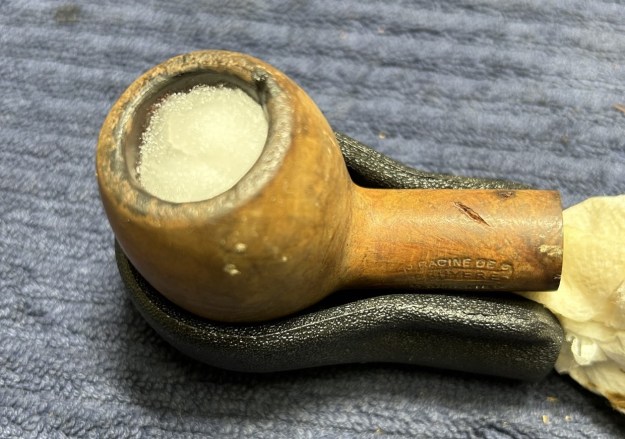
Bari Piber was founded by Viggo Nielsen in Kolding around the turn of 1950/51. Viggo’s sons Kai Nielsen and Jørgen Nielsen both grew into their father’s business from a very young age and worked there till 1975.

Bari had very successfully adapted the new Danish Design that had been started mainly by Stanwell for it’s own models. When Viggo Nielsen sold Bari in 1978 to Joh. Wilh. von Eicken GmbH in Hamburg Bari counted 33 employees.
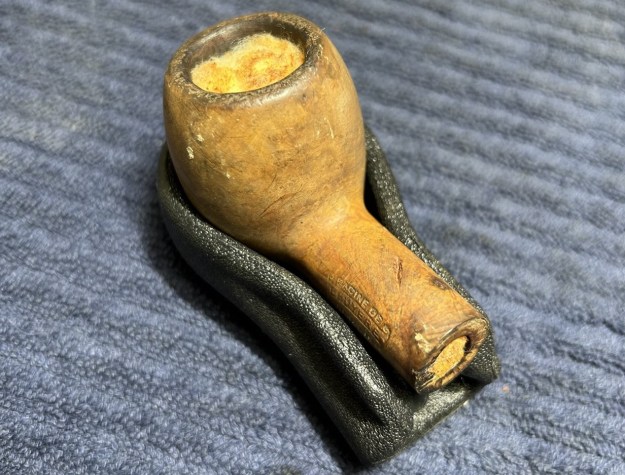
From 1978 to 1993 Åge Bogelund and Helmer Thomsen headed Bari’s pipe production. Thomson bought the company in 1993 re-naming it to Bari Piber Helmer Thomsen. The workshop moved to more convenient buildings in Vejen. Bogelund, who created very respectable freehands of his own during the time at Bari got lost somehow after 1993.
Bari’s basic conception fundamentally stayed the same for decades: series pipes pre-worked by machines and carefully finished by hand. Thus no spectacular highgrades but solid, reliable every day’s companions.

The most famous series are the smooth “Classic Diamond” and the blasted “Wiking”.

With that information reviewed, it was time to work on the pipe. I decided to remove the shiny finish from the bowl with acetone and cotton pads. I wanted to remove the surface coat and also the grim that was both under and over the varnish coat.  I used a Savinelli Fitsall Pipe Knife to scrape the cake out of the bowl. I took it back to bare briar. I sanded the bowl walls with 220 grit sandpaper wrapped around a piece of dowel.I cleaned out the internals of the pipe – the airway in the shank, the mortise and the airway in the stem. The shank was quite dirty and many pipe cleaners, cotton swabs and 99% isopropyl alcohol removed the dirt and oils and left the pipe smelling clean and fresh.I polished the briar with micromesh sanding pads – dry sanding with 1500-12000 grit pads. After each pad I wiped the bowl down with a damp cloth to remove the sanding debris. It really took on a shine by the last three sanding pads. I rubbed the bowl down with Before & After Restoration Balm. I worked it into the surface of the briar where it works to clean, restore and preserve the briar. I let it do its magic for 15 minutes then buffed it off with a cotton cloth. The pipe looks incredibly good at this point in the process. I set the bowl aside at this point and turned my attention to the stem. I polished the stem with micromesh sanding pads – 1500-12000 grit sanding pads and water to wet sand the stem. I wiped it down after each sanding pad with Obsidian Oil on a cotton rag after each sanding pads. I know that many say Obsidian Oil does nothing for acrylic stems, but I find it does two things – first it gives some protection to the stem from buildup and second it gives the sanding pads bite in the polishing process.I have found that Before & After Fine and Extra Fine stem polish works well to remove the fine scratches in the vulcanite. I rub the Fine Polish on the stem and wipe it off with a paper towel and then repeat the process with the Extra Fine polish. I finish the polishing of the stem down with a final coat of Obsidian Oil and set the stem aside to let the oil absorb. This process gives the stem a shine and also a bit of protection. I am excited to finish restoration of this Bari Pearl 7075 Bamboo Shank ¾ Bent Apple. I put the pipe back together and buffed it with Blue Diamond on the buffing wheel. I gave the bowl and the stem multiple coats of carnauba wax. I hand buffed the pipe with a clean buffing pad to raise the shine. It is fun to see what the polished bowl looks like with beautiful mixed grain all around it. The polished grain on the pipe looks great with the black vulcanite stem. This smooth Bari Pearl Bamboo Shank Bent Apple is great looking and the pipe feels great in my hand. It is light and well balanced. Have a look at it with the photos below. The dimensions are Length: 5 ½ inches, Height: 1 ½ inches, Outside diameter of the bowl: 1 inch, Chamber diameter: ¾ of an inch. The weight of the pipe is 39 grams/ 1.38 ounces. It turned out to be a beautiful pipe. I will be putting it on the rebornpipes store in the Danish Pipemakers Section soon. If you would like to add it to your collection let me know by email or message. Thanks for your time reading this blog  and as usual feel free to ask any questions in the comments below.

Pipe Gods Smiled And I Got Not One But Three Les Wood Pipes….Restoring Second Of The Three Les Wood Pipes; A Bark Silver Spigot


Blog by Paresh Deshpande

I had purchased three Les Wood pipes from a gentleman and had restored the first of the three pipes and have added it to my personal collection. Given below is the link to the write up posted on rebornpipes and is a recommended read to know how I came to be in possession of this lot and brief research on husband wife duo of Leslie Wood and Dolly and the pipes they make.

https://rebornpipes.com/2022/08/05/pipe-gods-smiled-and-i-got-not-one-but-three-les-wood-pipes-restoring-a-les-wood-poker/

The second pipe that is now on my work table is a beautifully rusticated paneled Apple Half bent Silver Spigot. It is stamped on the bottom smooth surface of the shank as “FR LOUIS HESTON” over “FERNDOWN” in a slight arc over “BARK”. The sterling silver ferrule at the shank end bears the stamp “L & JS” in a rectangular cartouche over “.925”. The sterling silver mounting at the tenon end of the stem also bears similar stampings as seen on the ferrule. The vulcanite stem is stamped on the left side as “L J S”. Now this stamping varies significantly from the one that I had worked on earlier in that this pipe does not bear the stamping LES WOOD, HAND MADE IN ENGLAND and star (*) marking to denote the size. I referred back to pipedia.org to understand the variation in stamping. Here is what I found out and also the link to the write up is given below.

https://pipedia.org/wiki/Ferndown

Due to the vagaries of international trademark law, he sold his earlier pipes as ” L.&J.S Briars”, “Ellwood”, “Les Wood” or “L. Wood”. Until recently, an average of 1500 – 2000 pipes a year were sold as “Ferndown” — named for the mansion he lives in — in the UK and US, but as “L. Wood” pipes in Germany.

From the above, I assume that this pipe is from the recent past while the poker was from the earlier period. Truth be told, I am not 100% convinced on this and would really appreciate input, clarifications and detailed information on this variation in stampings observed from learned readers of rebornpipes.

There was not much that I could find about Fr. Louis Heston. An internet search of the name threw up data about Rev. Edward Louis Heston who left for heavenly abode in 1973. This period definitely does not coincide with the time period when Leslie Wood started making pipes under the FERNDOWN! Well, this too then is a grey area and would request readers to fill us all on this name and establish a relation between the name Fr. Louis Heston and this Les Wood pipe.

Initial Inspection
As observed with the Les Wood Poker that I last restored, this half bent Apple Silver Spigot too is in excellent condition. There is an even layer of cake of medium thickness in the chamber that is very hard and completely dry. The smooth rim top is sans any crusting of lava over flow but darkened towards the front. The eight panelled rusticated stummel appears in good condition with no signs of hot spots or cracked surfaces. The stummel has a lot of dirt, dust and grime grounded in to the crevices of the rusticated surface. The black and dark brown stain is faded at places giving the stummel is dull appearance. The fishtail vulcanite stem is deeply oxidized with some tooth chatter on either surface of the stem in the bite zone. The stampings on the shank, silver spigot and stem are all crisp and easily readable. The following pictures will provide a visual description to supplement the description given above. I like the feel and heft of this large stummel in my hand. The rusticated panelled surface with it prominent ridges feels tactile in the hand and very comfortable to hold. There is a lot of dirt, dust and grime trapped in to the crevices of rusticated surface giving it a dirty grayish appearance. The entire stummel looks dull, dirty and lifeless. Heavy accumulation of dried oils, tars and gunk is seen clogging the mortise. The dark stain has faded in couple of spots further adding to the sorry appearance of the stummel. The sterling silver ferrule is oxidized and dull looking. However, once the stummel surface is cleaned up and rejuvenated, this will be one beautiful looking pipe. I like the feel and heft of this large stummel in my hand. The rusticated paneled surface with it prominent ridges feels tactile in the hand and very comfortable to hold. There is a lot of dirt, dust and grime trapped in to the crevices of rusticated surface giving it a dirty grayish appearance. The entire stummel looks dull, dirty and lifeless. Heavy accumulation of dried oils, tars and gunk is seen clogging the mortise. The dark stain has faded in couple of spots further adding to the sorry appearance of the stummel. The sterling silver ferrule is oxidized and dull looking. However, once the stummel surface is cleaned up and rejuvenated, this will be one beautiful looking pipe. The beautiful sterling silver mounted vulcanite stem is hand cut and oozes very high quality of material use and also craftsmanship of highest quality. The stem is heavily oxidized to an extent that it appears dirty green. Dark coloration and calcification is seen on either surfaces of the stem in the bite zone from prolonged use of rubber bit. Very minor tooth chatter and bite marks can be seen in the bite zone on both the upper and lower surfaces of the stem. These tooth chatter and tooth indentation should be easily addressed by heating the affected areas to raise the vulcanite and thereafter sanding it down to match the rest of the stem surface. The tenon end and the horizontal slot end shows accumulation of dried gunk and grime. The sterling silver mount is oxidized but shows no signs of any damage whatsoever.The Process
I started the refurbishing of this Les Wood by working the stem first. Since there were other stems that were ready to be put into the stem deoxidizer solution, I decided to clean the internals of this stem first so that it could be put in the solution with other stems. I cleaned the stem airway with a thin shank brush and anti oil soap. It took considerable time and elbow grease to get the stem airway clean. I used a sharp dental tool to clean the horizontal slot and further cleaned the internals with regular and bristled pipe cleaners dipped in alcohol.The stem was immersed in the Deoxidizer solution, a product that has been developed by Mark Hoover. This solution raises the oxidation to the stem surface and helps in easy removal and imparting a nice shine to the stem after polishing. The pipe is indicated with a red arrow. The stem is allowed to soak into this solution overnight.Now it was time for me to work on the stummel. I did this by first reaming the chamber with size 2 followed by size 3 and 4 PipNet reamer heads. I further scraped the chamber walls with my fabricated knife to remove the remaining carbon deposits where the reamer head could not reach. Once the cake was reamed back to the bare briar, I used a 220 grit sand paper to remove all the traces of remaining cake and also to smooth out the inner walls of the chamber surface. Finally, to remove the residual carbon dust, I wiped the chamber with a cotton pad wetted with 99.9% pure isopropyl alcohol. The huge pile of carbon dust that was reamed out is an indication enough to the amount of carbon that had accumulated in the chamber. The chamber walls are solid without any heat lines or fissures. However, the hard cake was getting increasingly difficult to dislodge. I shall try and remove residual the hard cake after it has been moistened during the salt and alcohol soak. I further cleaned the mortise by scrapping out the dried gunk with a dental tool. I ran a few pipe cleaners dipped in alcohol to moisten the dried gunk and assist in its removal. I shall further continue the internal cleaning of the chamber and mortise with cotton and alcohol soak.I continued the cleaning of the chamber and shank internals with a salt and alcohol bath. I use cotton balls which is an at par substitute to Kosher salt as I have realized over the years. I draw out a wick from the cotton and along with a folded regular pipe cleaner; insert it in to the mortise and through the draught hole in to the chamber. Thereafter, I packed the chamber with cotton balls to about quarter of an inch below the inner rim edge and soaked the cotton balls with isopropyl alcohol up to the brim. About half an hour later, the level of alcohol had gone down, having being absorbed by the cotton. I topped it up once again and set it aside overnight. By next morning, the cotton and alcohol had drawn out all the remaining oils and tars from the chamber and mortise, fulfilling its intended task. I removed the cotton balls and ran pipe cleaners through the mortise to clean out all the loosened tars and gunk and further cleaned it with alcohol and q-tips.The cotton and alcohol soak had softened the hard and stubborn cake in the chamber and the mortise. Using my fabricated tool, I scrapped out all the hardened cake from the chamber and gunk from the mortise. The chamber now smells clean and fresh.Once the internals of the shank were cleaned, I cleaned the external surface of the stummel with Murphy’s Oil soap and cotton swabs followed by scrubbing the rusticated surface with a toothbrush and dish washing soap. This rid the nooks and crevices of all the accumulated dust, dirt and grime from the rusticated stummel. With a copper soft wired brush, I cleaned the rim top surface of all the crud that had accumulated over it. I wiped the stummel with a soft cotton cloth and set the stummel aside to dry out naturally. The charred inner rim edge (encircled in red) is now clearly visible and would need to be addressed. I simultaneously cleaned the shank internals with dish washing soap and shank brush.Next, I decided to address the issue of charred inner rim edge and getting the chamber back to round. I topped the rim top over a 220 grit sandpaper to reduce the charred surface. I checked the progress frequently to ensure that the topping is just adequate. I addressed the darkened inner edge by running a folded piece of 220 grit sandpaper pinched between my thumb and index finger along the inner edge and crated a smart bevel. This bevel also helped to get the chamber back to round.I polished the smooth rim top surface by dry sanding with 1500 to 12000 grit micromesh pads.The polished rim top looks much lighter than the rest of the stummel because of the topping process to remove the charred rim edge. To match the dark browns and black stains over rest of the stummel surface, I decided to re-stain the rim top surface using dark brown stain pen. I applied a coat of brown stain using a stain pen and set it aside for some time. I wiped the rim top using a soft cotton cloth to check the stain color and found it to be a bit lighter. I repeated the process till I had requisite color match and set it aside for the stain to set in.I rubbed a small quantity of “Before and After Restoration Balm” into the briar with my finger tips and let it rest for a few minutes. The balm almost immediately works it’s magic and the briar now had a nice vibrant appearance with the beautiful rustication patterns on full display. I have been using this balm ever since I embarked on this journey and it is this part of restoration that I always look forward to. I further buffed it with a horse hair shoe brush. This pipe really oozes of a very high quality, in fact similar to the Les Wood Poker that I had worked on earlier. The consistent quality is awesome, to say the least. The rim top appears lighter hued, but that’s due to the lighting when I took pictures. Now that the stummel refurbishing was nearly done and also the stem had now been soaking for more than 24 hours, I removed the stem from the solution. I first scrubbed the stem surface with a Scotch Brite pad, always being mindful of the stem logo on the left side. I followed this scrubbing with a nice cleaning of the surface using a 0000 grade steel wool. I rinsed the stem under running water to rid the stem of the thick deoxidizer solution. I ran a couple of pipe cleaners to remove the deoxidizer solution from the airway. The beauty of a high quality vulcanite hand cut stem in shining black can now be appreciated once the heavy oxidation has been eliminated. There are spots/ areas where oxidation is still visible, but that will be eliminated once the stem is subjected to sanding and polishing using sand papers and micromesh pads. The beauty of this stem will be enhanced once it has been all polished and waxed. A polish by wet sanding using all 9 micromesh pads (1500 to 12000 grit pads) brought out the deep black shine of the vulcanite. I rubbed a small quantity of EVO to hydrate the stem and deepen the shine.This was followed by removing oxidation from over the sterling silverware seen on the pipe using a locally made compound that Abha, my wife, uses to polish her silver and gold jewellery and silver cutlery. This compound is a very fine powder and is least abrasive with fantastic results. The silver ferrule at the shank end and the silver spigot are now nice shining pieces of silver and provides a nice contrast to the shining black stem and the dark brown and black stummel. I painted the stem logo L J S using a Gold paint glitter pen and wiped off the excess paint. The stem logo is now nice and prominently visible.I have reached that stage in this project which can be considered as the home run. I polished the rim top and the entire stem with blue diamond using a cotton wheel mounted on to my hand held rotary tool. The blue diamond compound helps to eliminate the minor scratches that remain after the use of micromesh pads. I completed this project by hand polishing the stummel with Halcyon II wax. I rubbed this polish deep into the rustications and after a couple of minutes, vigorously hand buffed the stummel with a microfiber cloth to a deep shine. I polished the stem with carnauba wax using my hand held rotary tool. This is a gorgeous looking spigot and I consider myself fortunate to have the opportunity to work on this beauty and, as my Guru Steve says, carry forward the trust in this pipe till it is time to pass it on to the next pipeman or pipewoman. Here are a few pictures of the completed pipe for you to appreciate while I take the opportunity to thank you each of you for sparing your valuable time in joining me on this journey.

Restoring a Carved Bamboo Lovat stamped UNX UNT Quality Pipe


Blog by Steve Laug

The next pipe on my work table is an interesting Bamboo style Lovat. It is a single piece rather than one joined with a shank extension. The stamping on the heel of the bowl reads UNX UNT over Quality Pipe. The pipe has some unique and interesting grain around the bowl and shank that makes we wonder what the wood is. Is it possible that it is Bamboo? The bottom of the bowl and a portion of the two knuckle bamboo style shank are rusticated with a great pattern and are stained with a dark brown stain. The stem is fit in the shank end snugly and there is no gap. The airway in the shank is the same diameter from the shank end to its entry into the bowl. The draught on the pipe is open and unhindered. The design is definitely made to create a very cool smoke. The bowl had a moderate cake and there was lava and darkening on the rim top and inner edge toward the back of the bowl.  The airway and mortise are full of tars and oils both in the shank and stem. It was dirty. The stem is oxidized, calcified and has some deep tooth marks on the top and underside of the stem ahead of the button. I am including photos of the pipe to show what it looked like when I brought it to the work table. I took photos of the rim top and stem. You can see the cake in the bowl and the darkening on the rim top and on the back inner edge of the bowl. The stem had some tooth marks and chatter on both sides ahead of the button. It was oxidized and there was some calcification on the surface. I took a photo of the stamping on the heel of the bowl. It is clear and readable as noted above. I also removed the stem from the shank and took a photo of the part to give a sense of the flow of the pipe. It is truly a unique pipe and the grain shows well in the photo.The bowl is quite small so I scraped it out with a Savinelli Fitsall Pipe Knife to remove the cake. I sanded the bowl walls with 220 grit sandpaper wrapped around my finger. I took the cake back to smooth bowl walls. I cleaned out the mortise and the airway in the shank and the stem with alcohol, pipe cleaners and cotton swabs. It was quite dirty but once cleaned smelled better.I worked on the darkening on the back inner edge of the rim top and on the top itself. I was able to sand it out with 220 grit sandpaper and give it a slight inward bevel. I scrubbed the exterior of the bowl and shank with undiluted Murphy’s Oil Soap and a tooth brush. I rinsed it off with warm running water to remove the grime and debris in the finish of the rustication and on the smooth portions. I worked over the sanded rim top at the same time. I polished the smooth portions of the bowl with micromesh sanding pads – dry sanding with 1500-12000 grit sanding pads. I wiped the bowl down after each sanding pad with a damp cloth to remove the sanding debris. The bowl began to take on a rich glow. I rubbed down the bowl and shank with Before & After Restoration Balm. It is a paste/balm that is rubbed into the surface of the bowl and shank. The product works to deep clean the finish, enliven and protect the wood. I worked it into the surface with my finger tips. I let it sit for 10 minutes then wiped it off with a soft cloth then buffed it with a cotton cloth. The bowl really began to have a deep shine and the grain shines through. The photos I took of the bowl at this point mark the progress in the restoration. It is a gorgeous pipe. I took photos of the grain on the rim top and around the bowl and shank to get a clear picture of the wood that was used. The small straight birdseye style pattern on the rim top reminds me of the pattern in Bamboo. The flow of the grain around the bowl sides and the shank sides looks also a lot like Bamboo. The shank end also shows the same birdseye pattern as the rim top. I set the bowl aside at this point and turned my attention to the stem. I cleaned up the deep tooth marks and filled them in with black CA glue. I used a small file to flatten the repairs to the stem. I sanded repairs on the button surface and on both sides of the stem ahead of the button with 220 grit sandpaper. I also sanded the rest of the stem to remove the oxidation that was present. I started polishing the stem with 600 grit wet dry sandpaper. I polished the stem with micromesh sanding pads – 1500-12000 grit sanding pads and water to wet sand the stem. I wiped it down after each sanding pad with Obsidian Oil on a cotton rag after each sanding pads. I know that many say Obsidian Oil does nothing for acrylic stems, but I find it does two things – first it gives some protection to the stem from buildup and second it give the sanding pads bite in the polishing process. I have found that Before & After Fine and Extra Fine stem polish works well to remove the fine scratches in the vulcanite. I rub the Fine Polish on the stem and wipe it off with a paper towel and then repeat the process with the Extra Fine polish. I finish the polishing of the stem down with a final coat of Obsidian Oil and set the stem aside to let the oil absorb. This process gives the stem a shine and also a bit of protection. The final steps in my process involve using the buffer. I buffed the bowl and stem with Blue Diamond to polish out the light scratches in the wood and the remaining surface oxidation in the stem. I gave the bowl and the stem multiple coats of carnauba wax. I have found that I can get a deeper shine if I follow up the wax buff with a buff with a clean buffing pad. It works to raise the shine and then I hand buff with a microfiber cloth to deepen the shine. It is always fun for me to see what the polished bowl looks like with the polished stem. It turned out to be a nice pipe. The interesting tight grain around the bowl sides and shank looks great. The vulcanite saddle stem polished very well and looks good with the bowl. The UNX UNT Quality Pipe Bamboo Lovat feels great in my hand. It is a well-balanced pipe. Have a look at it with the photos below. The dimensions are Length: 5 ½ inches, Height: 1 ¾ inches, Outside diameter of the bowl: 1 inch, Chamber diameter: 5/8 of an inch. The weight of the pipe is .74 ounces/21 grams. It is a very unique pipe and no information can be found on the stamping. Once again can any of you help me out with some identification advice on this one? It would be much appreciated. Thank you.

As always, I encourage your questions and comments as you read the blog. Thanks to each of you who are reading this blog. Remember we are not pipe owners; we are pipe men and women who hold our pipes in trust until they pass on into the trust of those who follow us.