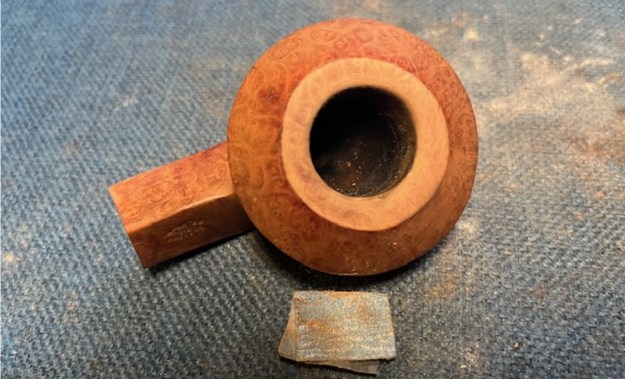
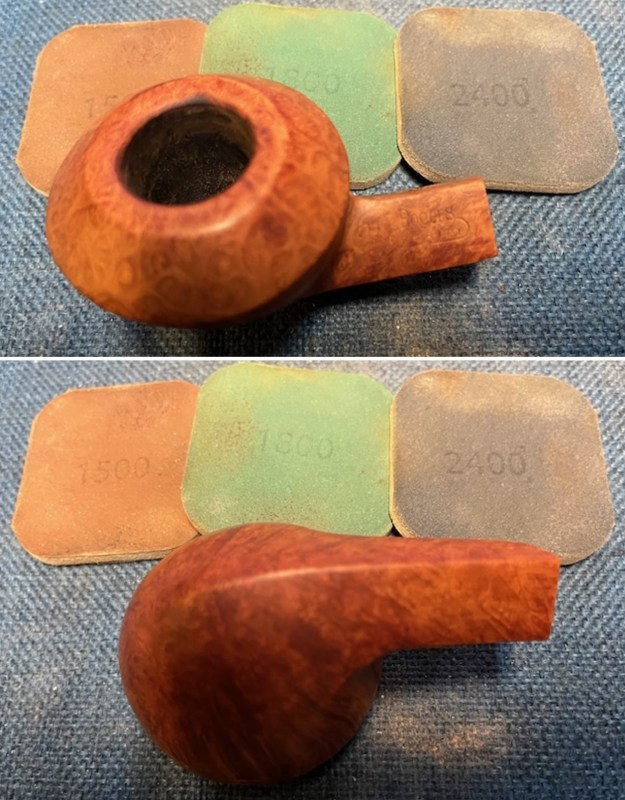
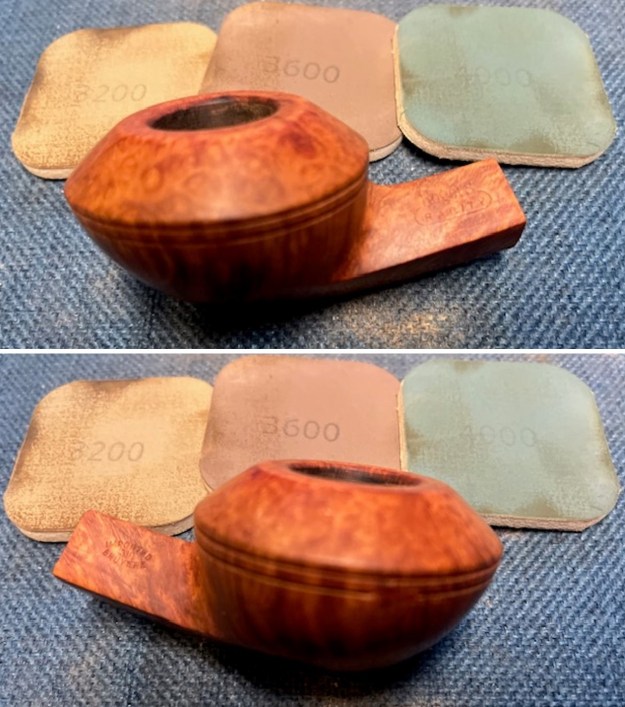
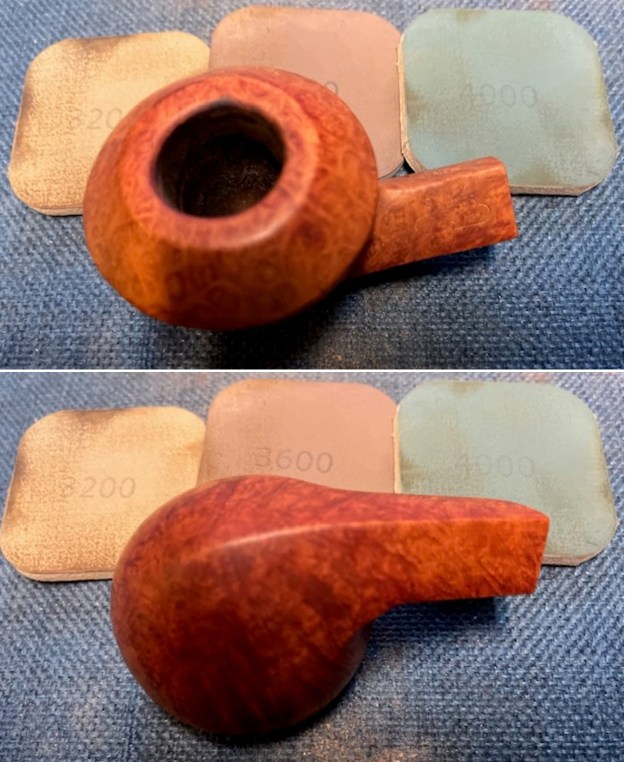
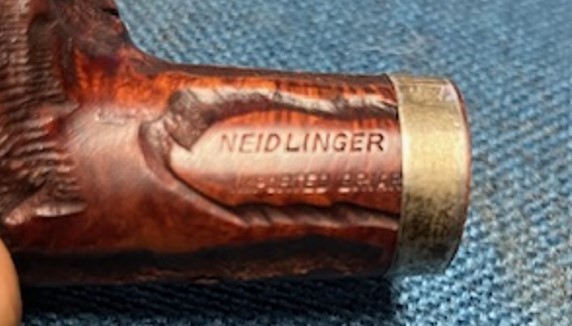
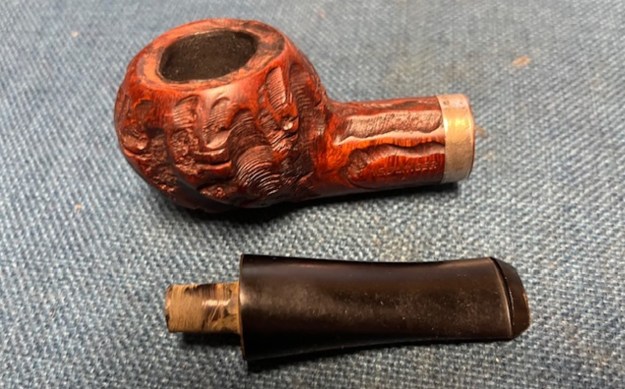
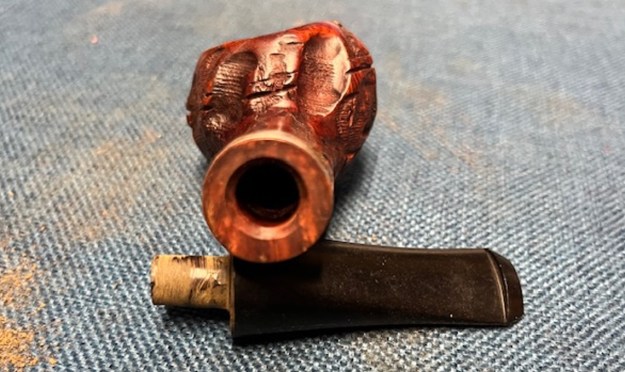
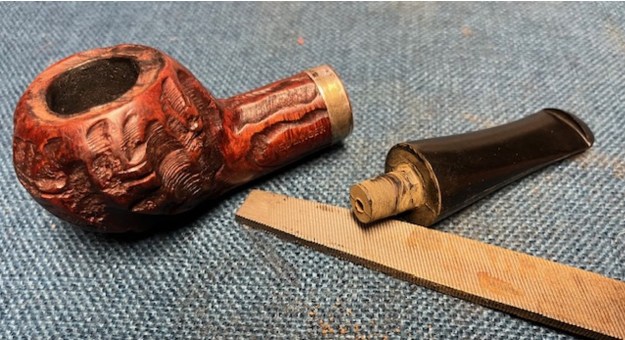
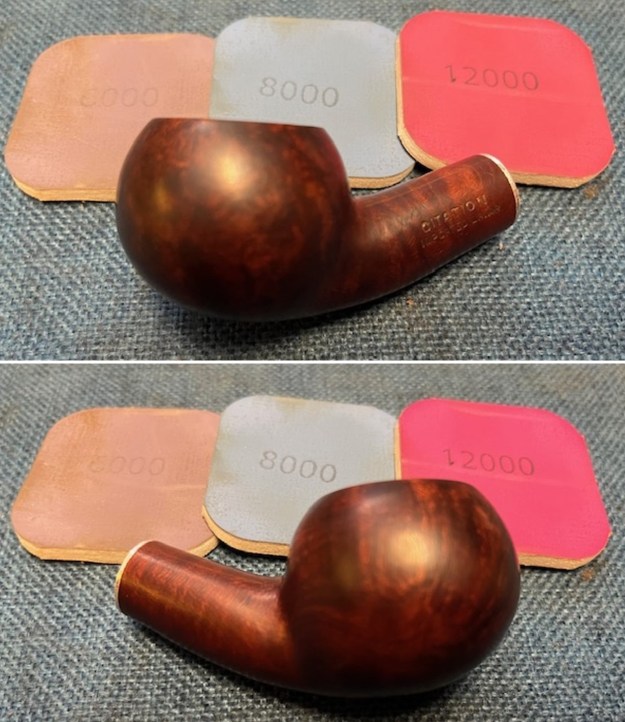
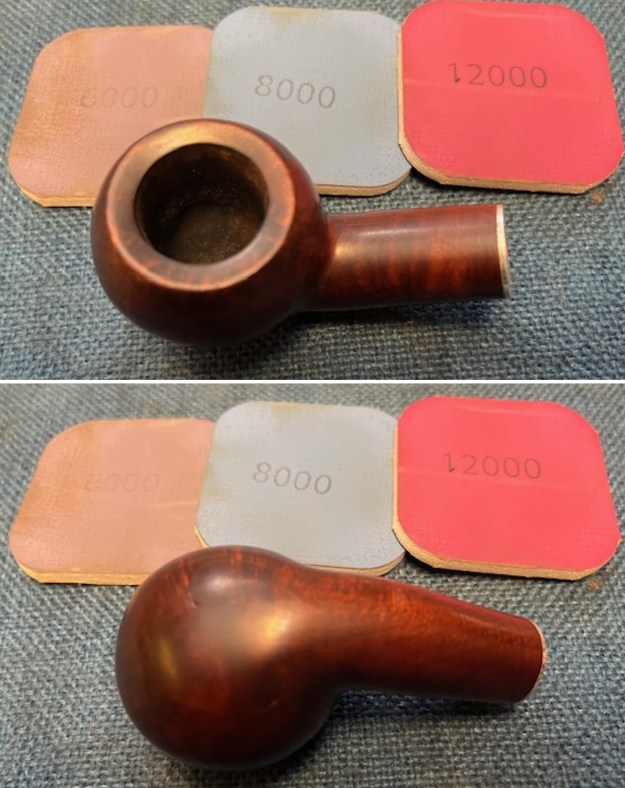
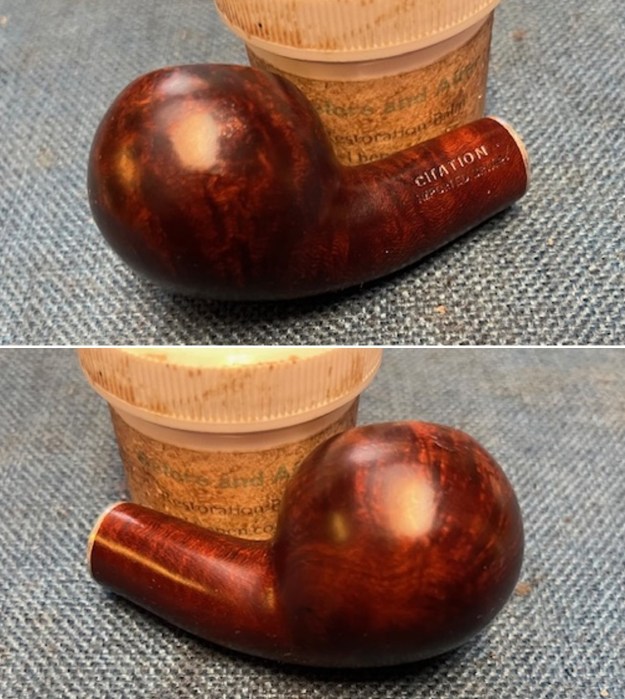
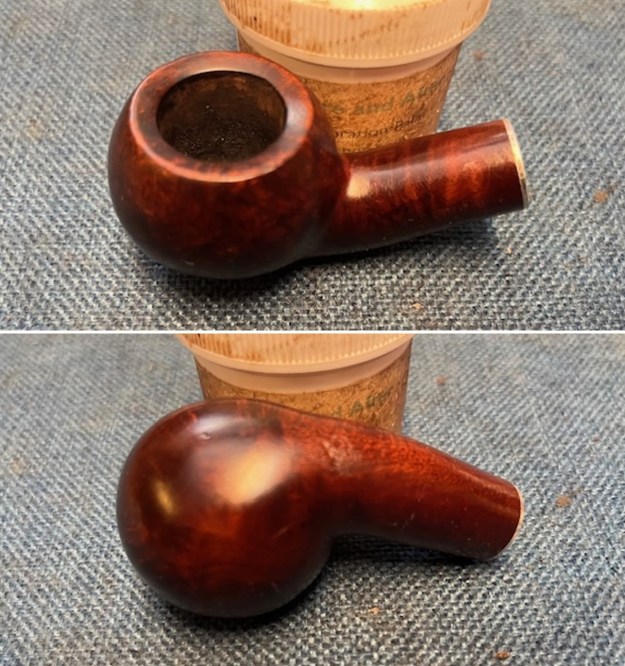
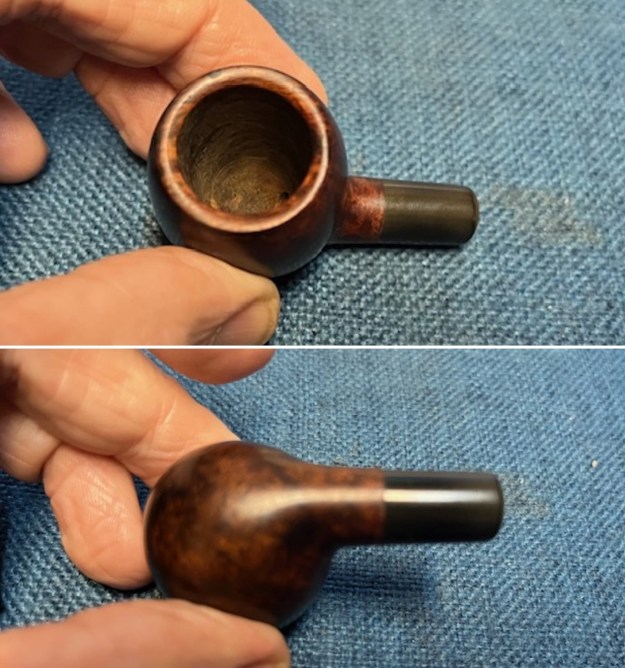
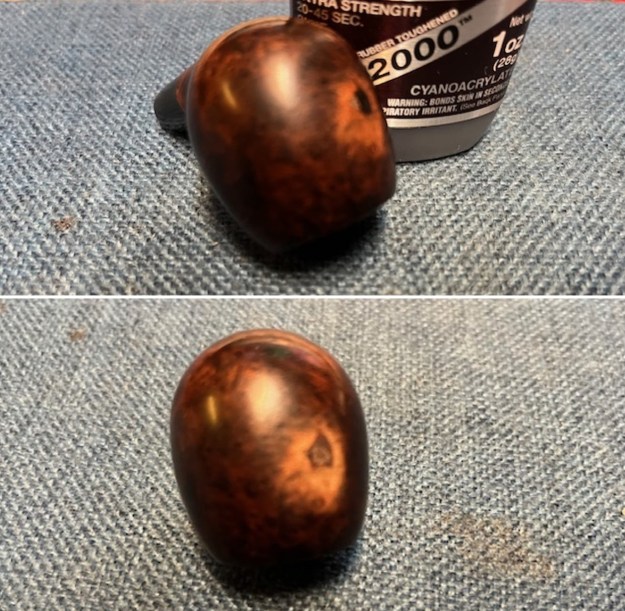
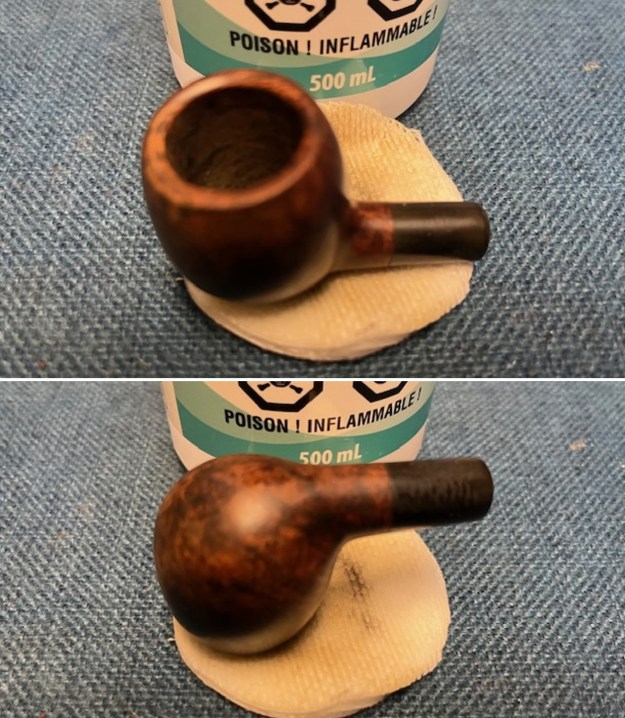
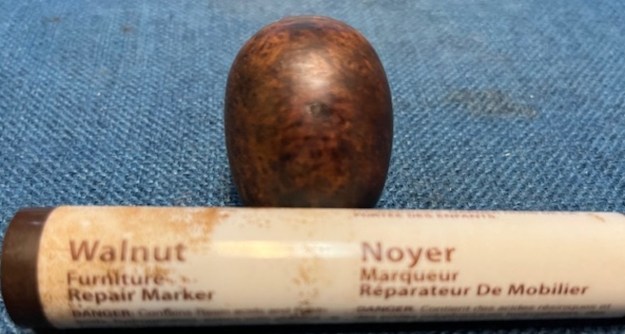
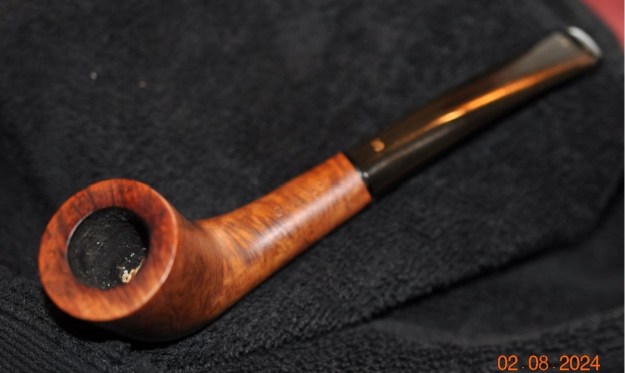
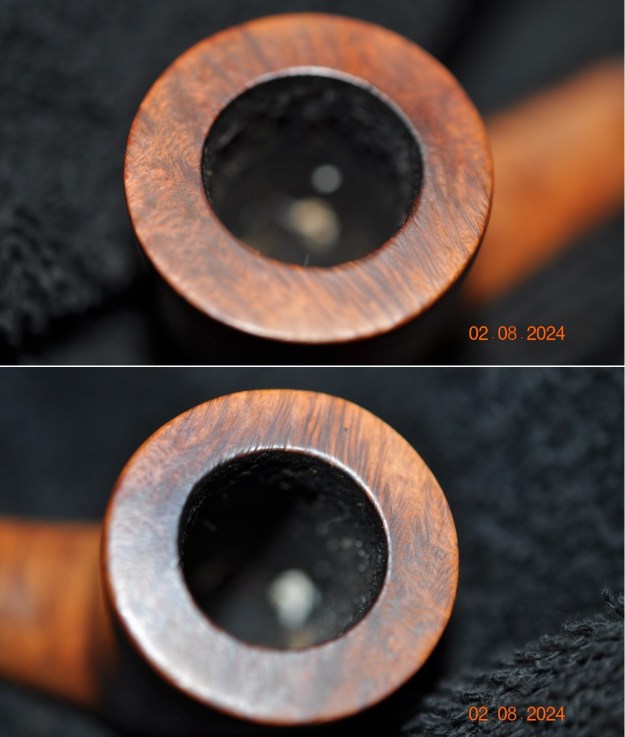
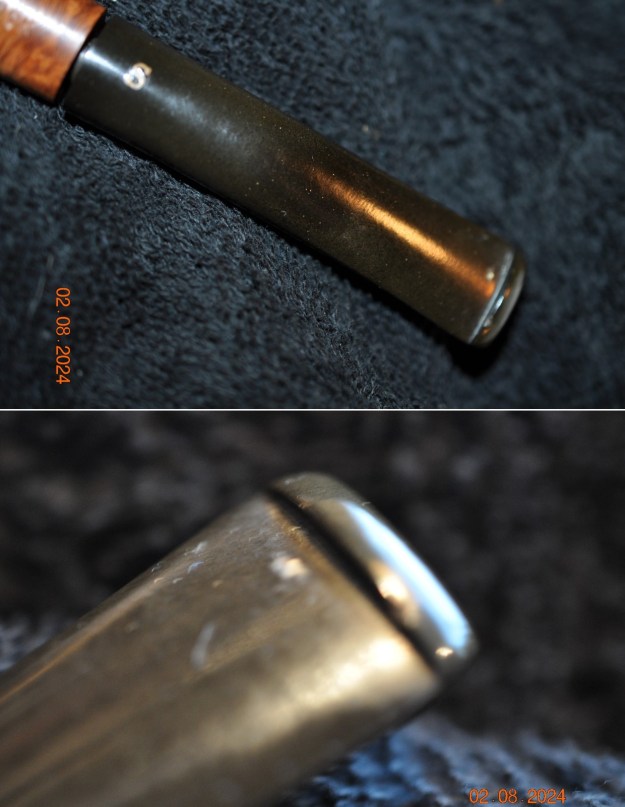
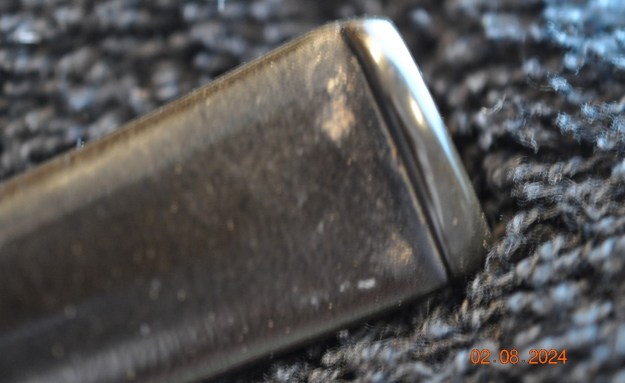
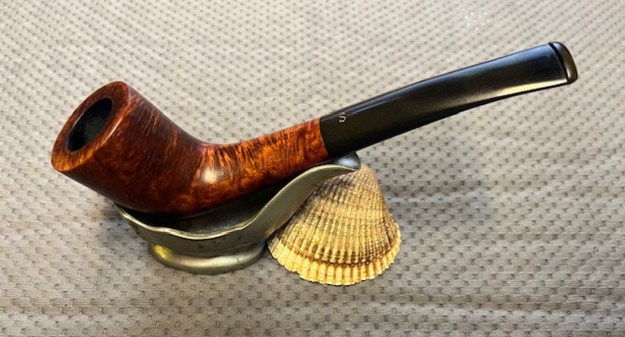
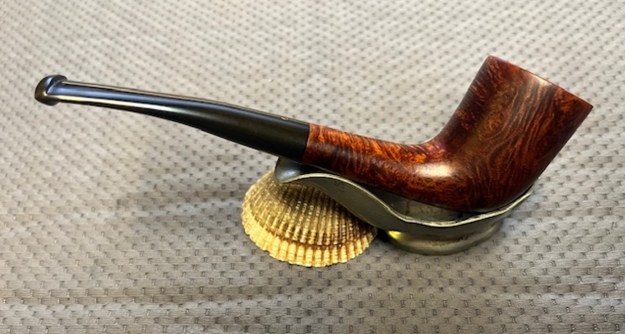
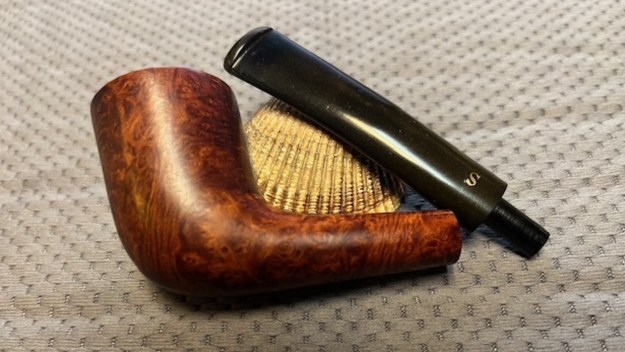
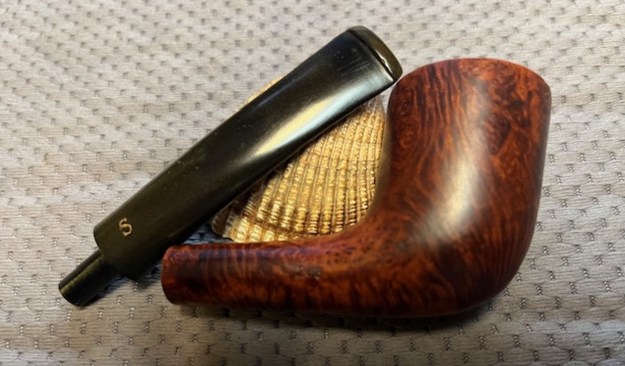
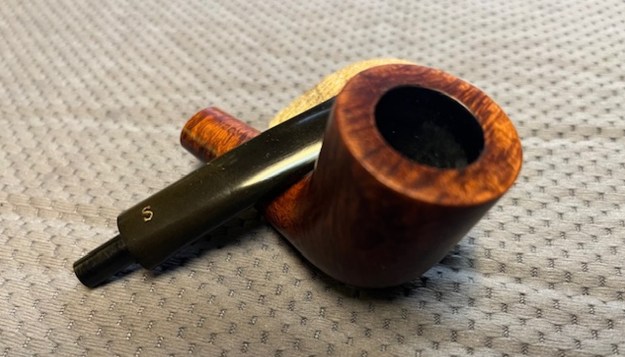
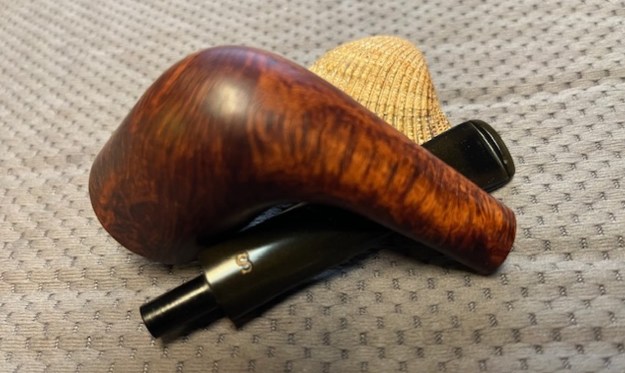
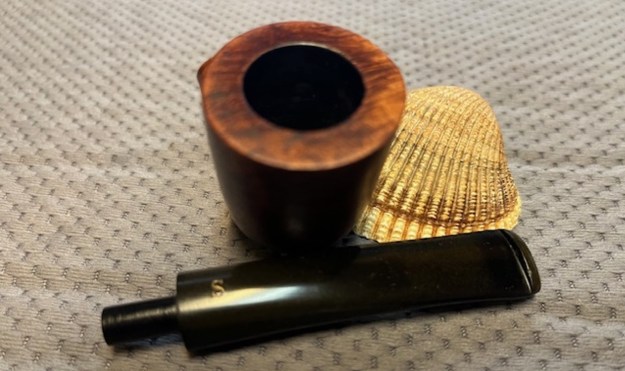
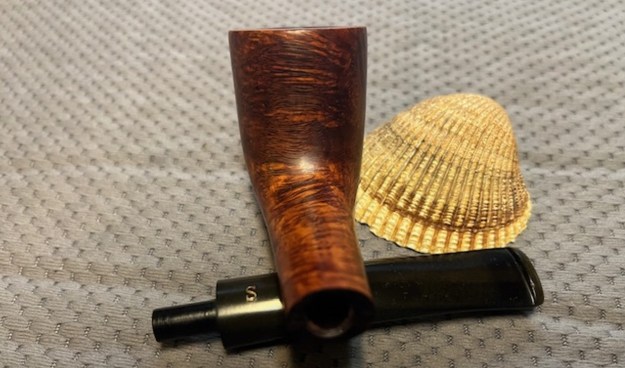
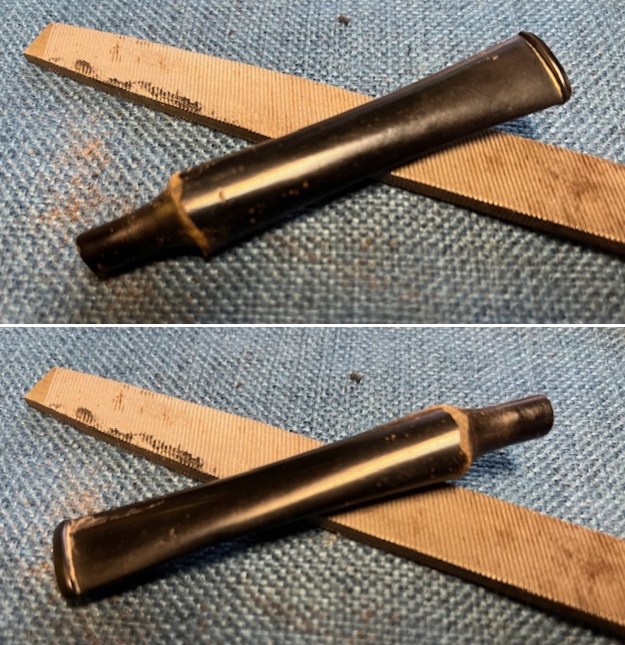
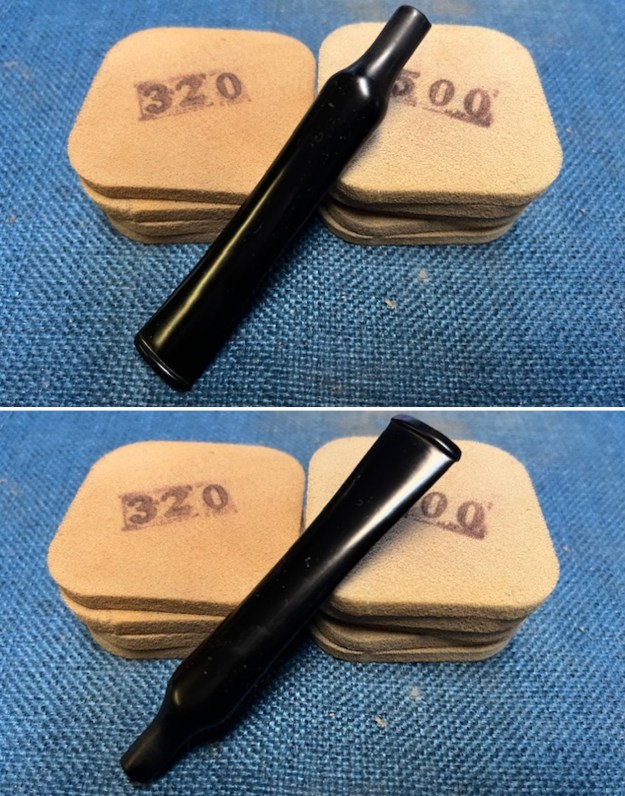
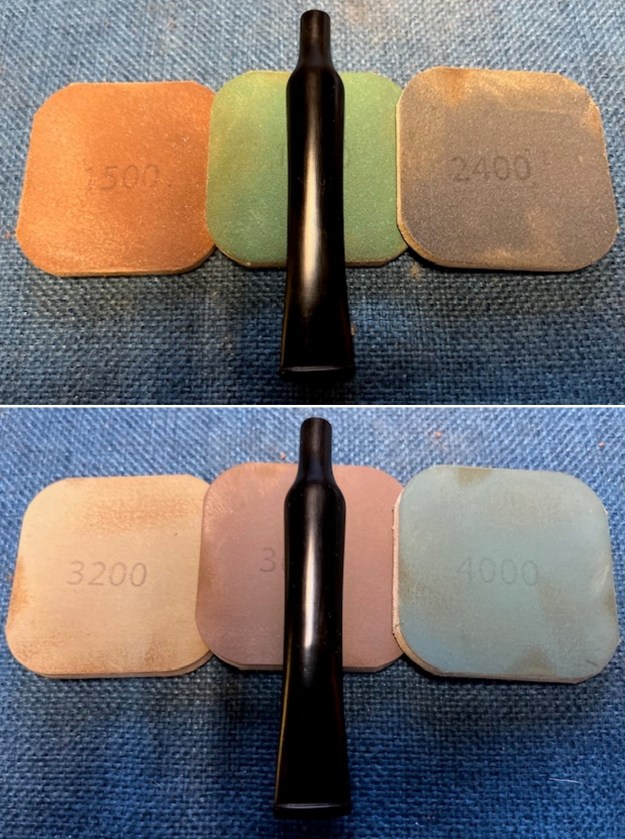
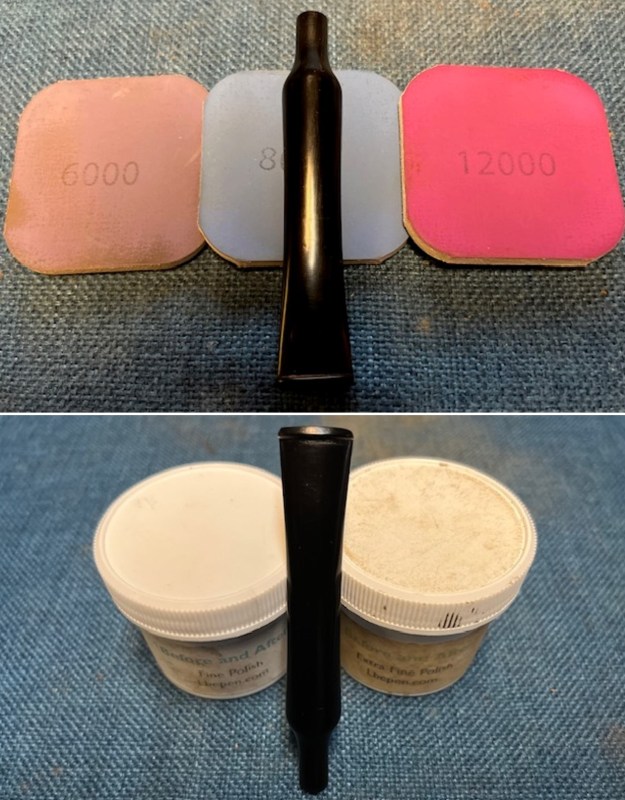
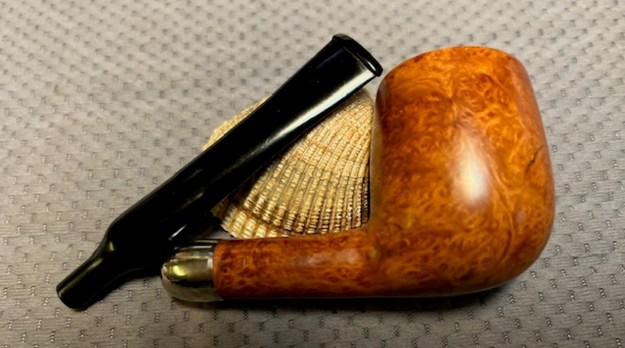
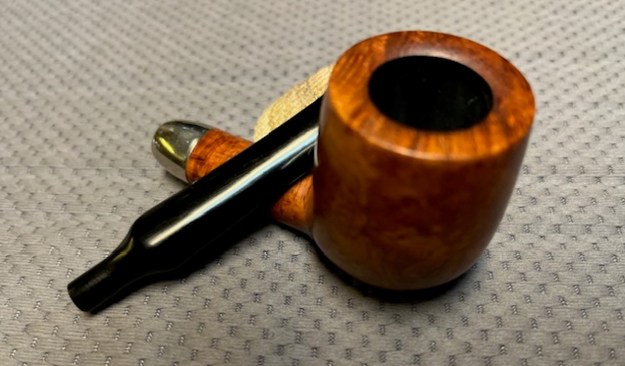
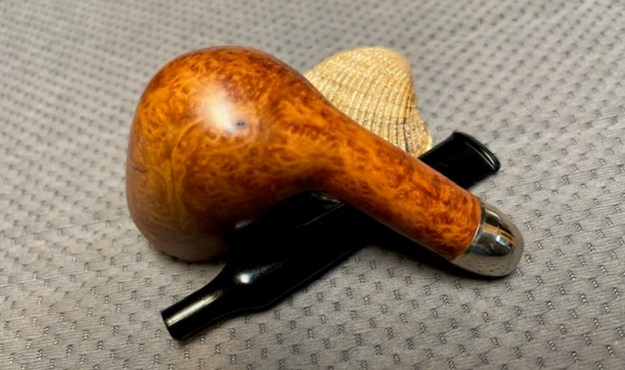
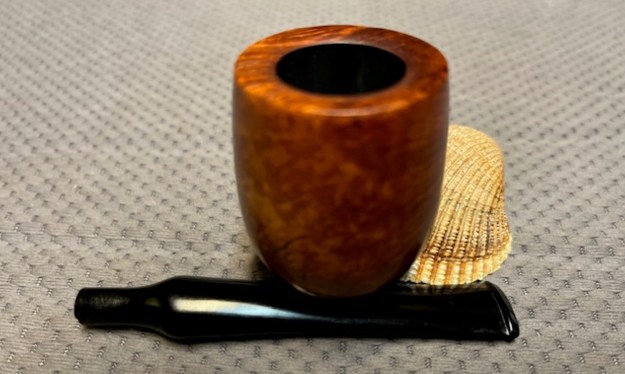
Tag Archives: fitting a new stem

Restemming a Beautiful, Sandblast WDC Milano Ripple Briar Hesson Apple


by Steve Laug

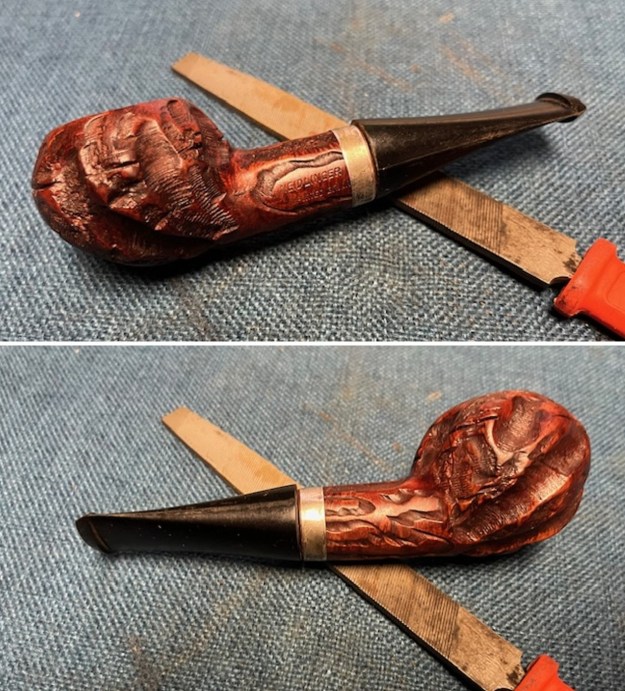
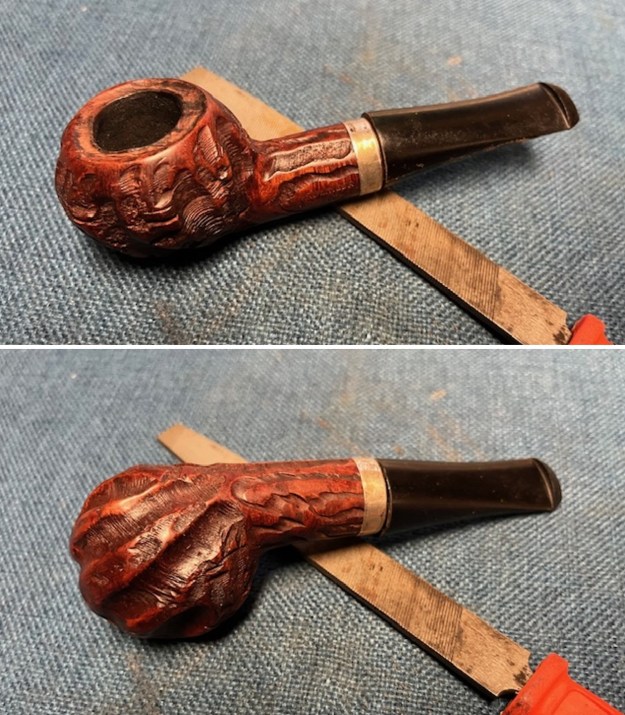
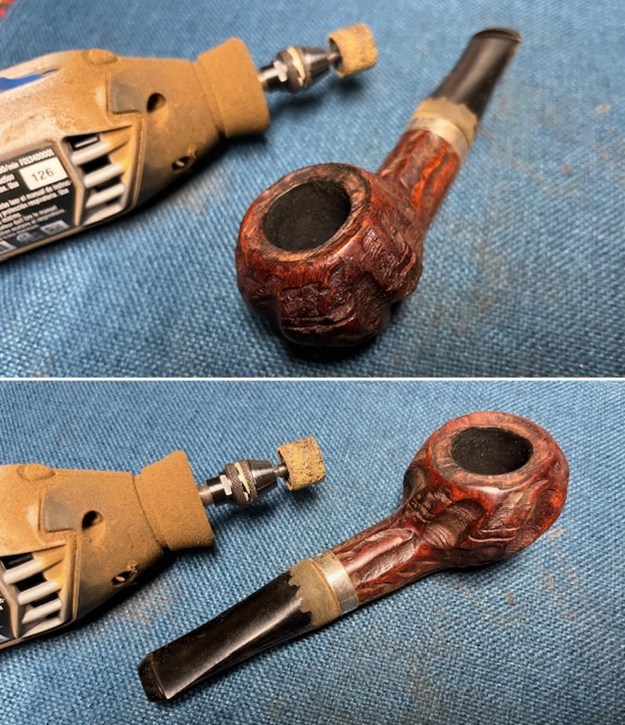
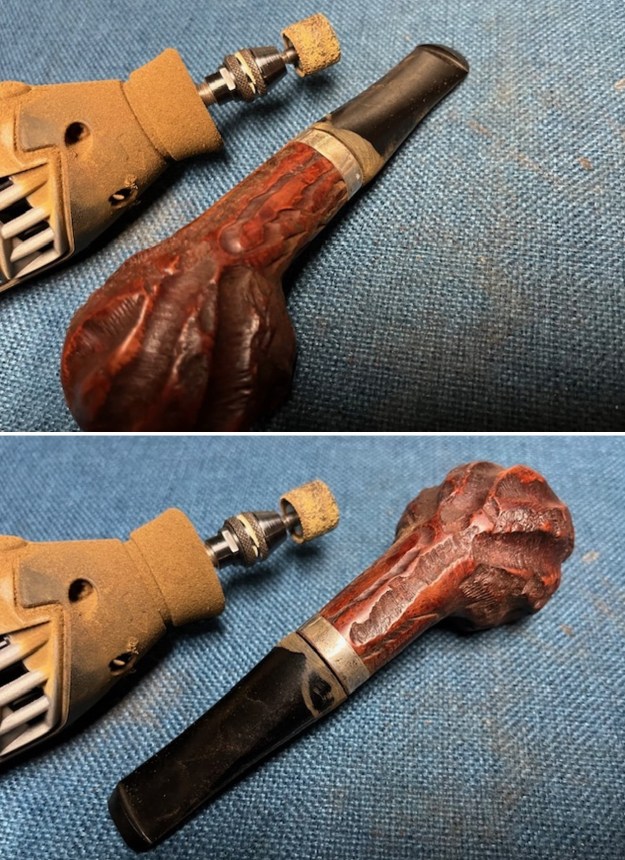
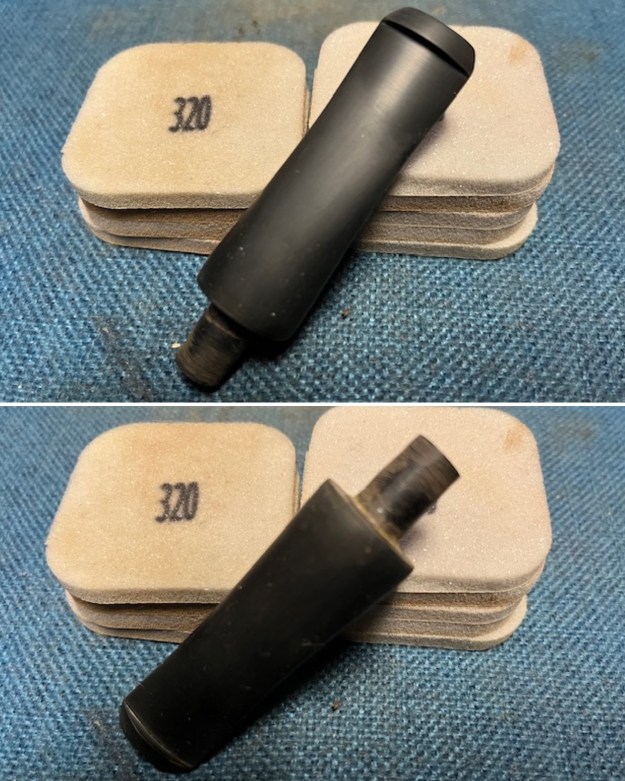
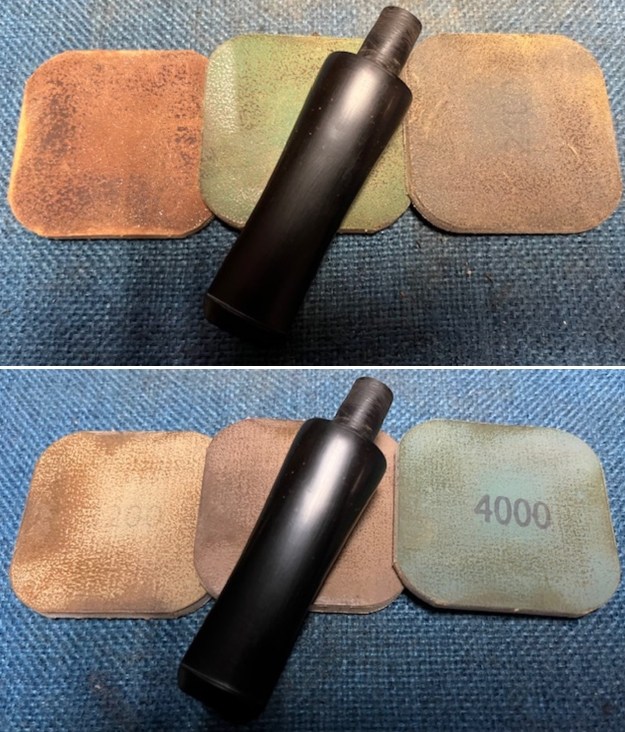
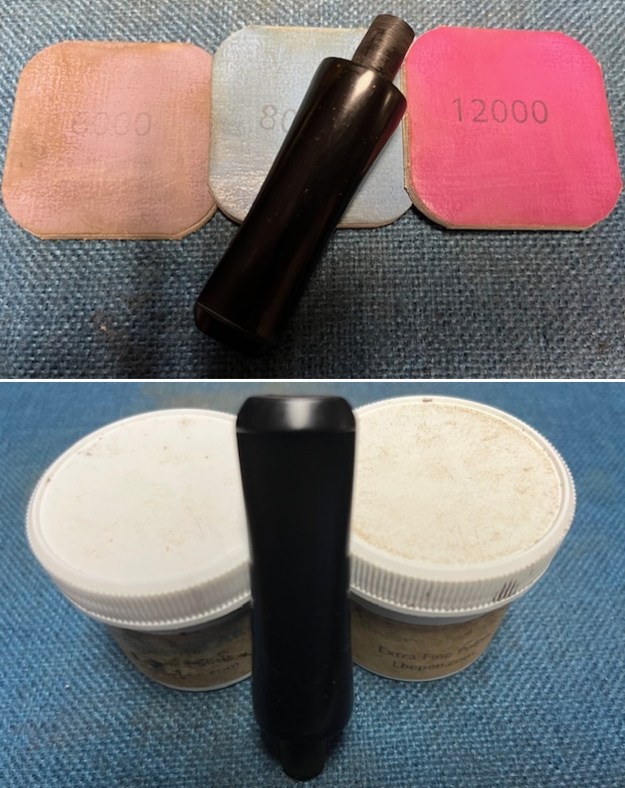
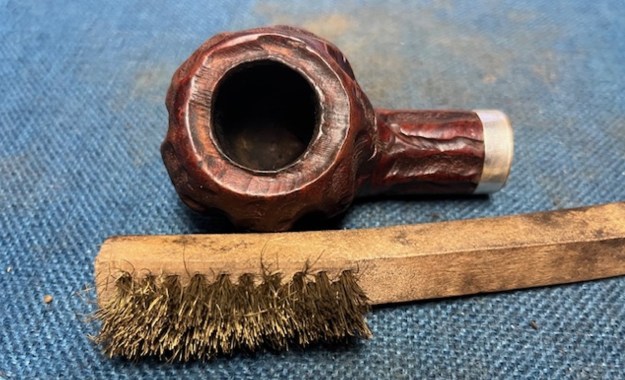
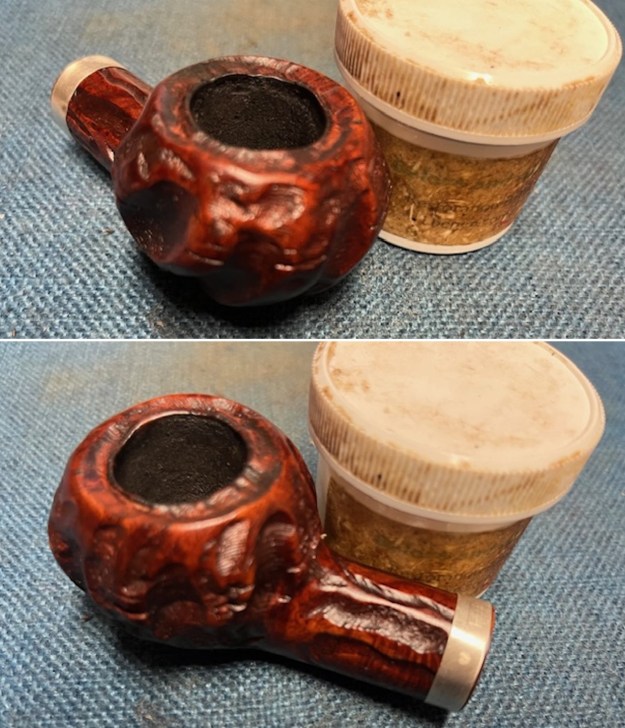
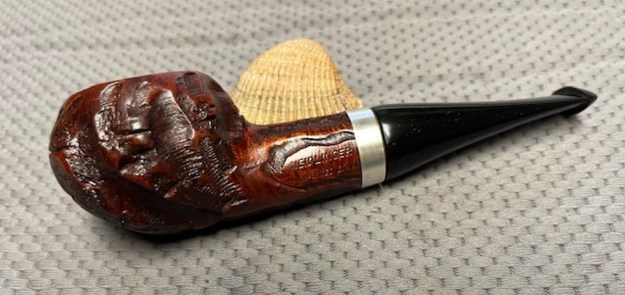
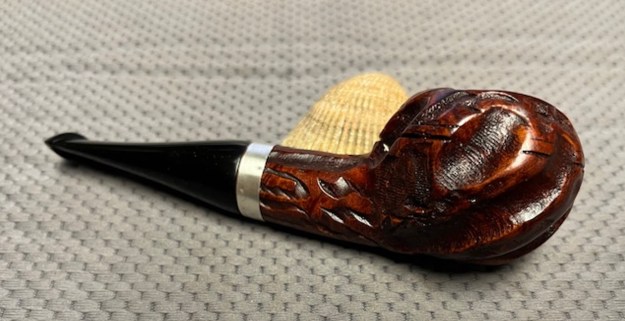
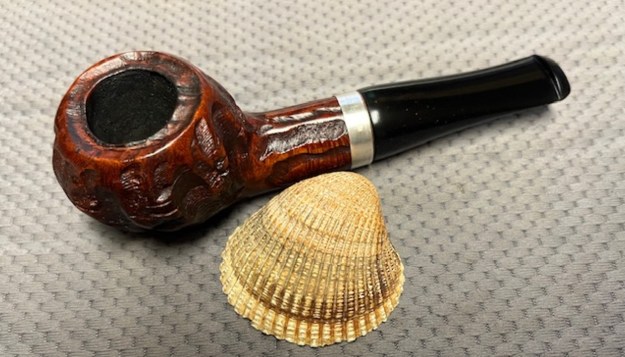
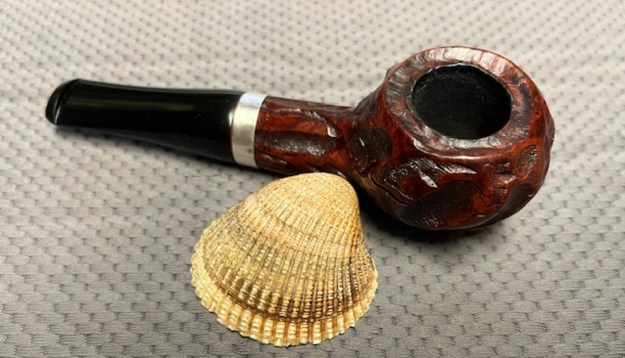
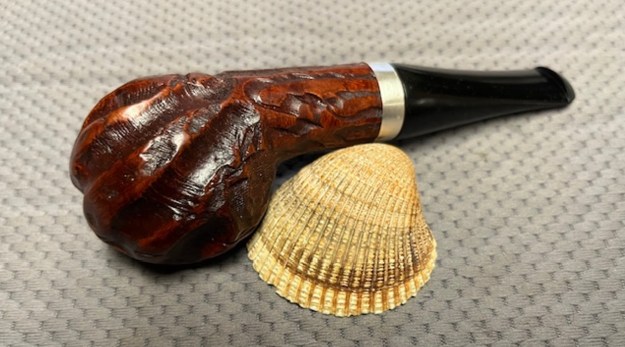
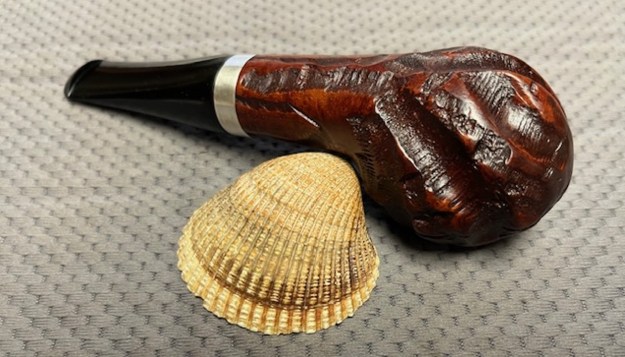
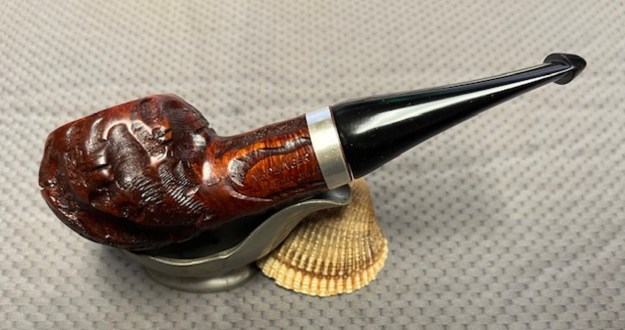
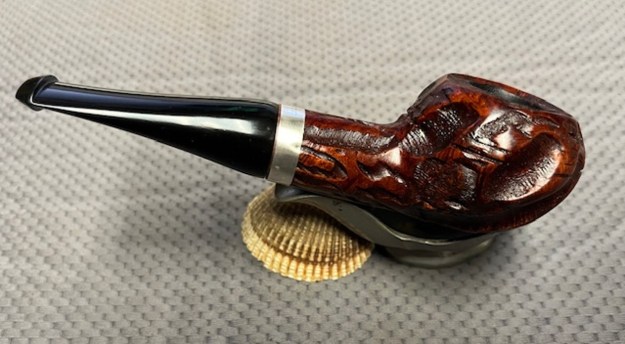
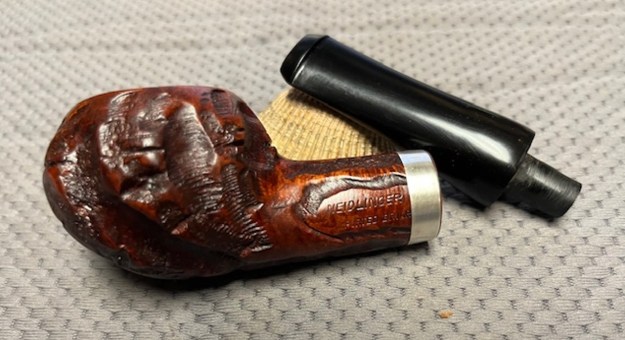
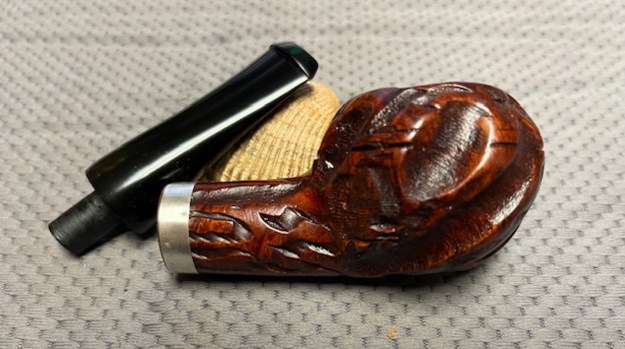
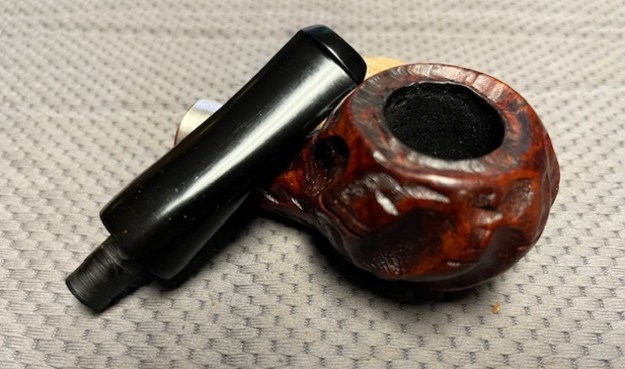
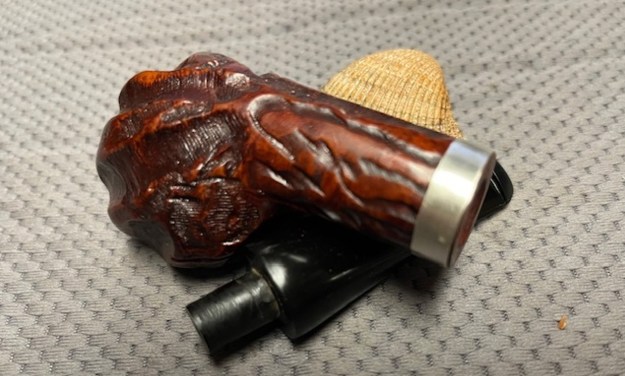
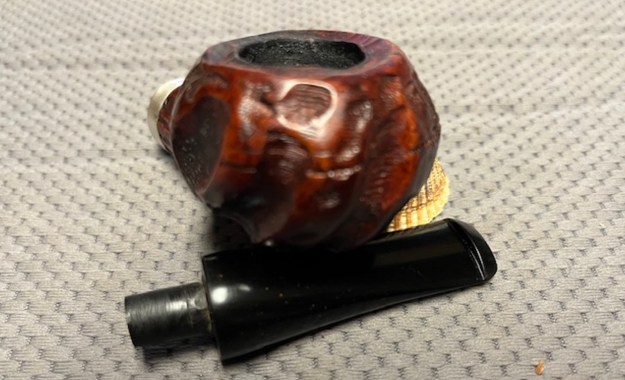
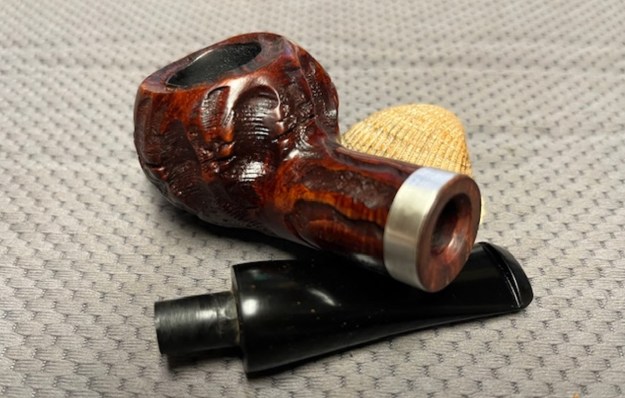
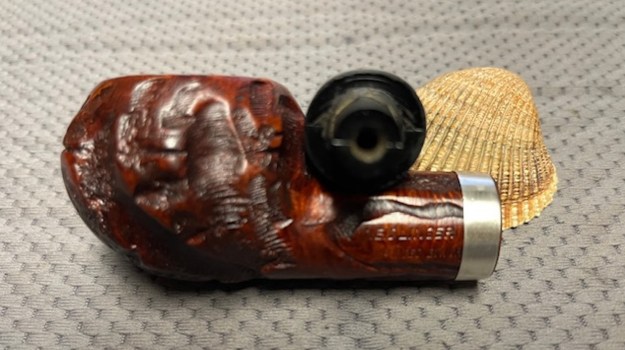
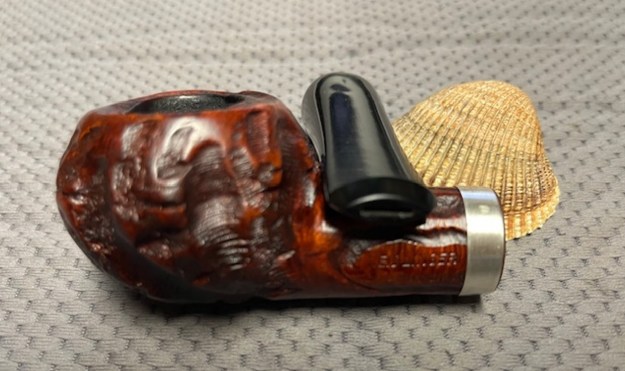
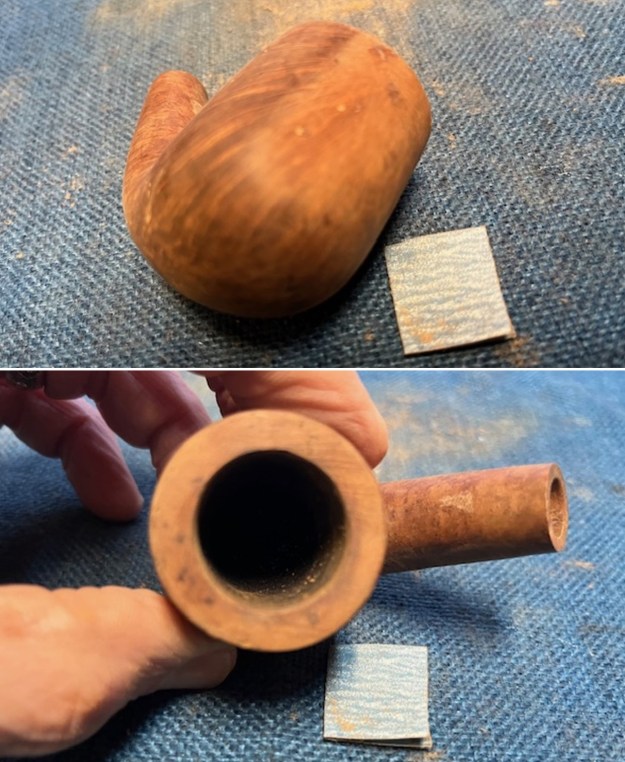
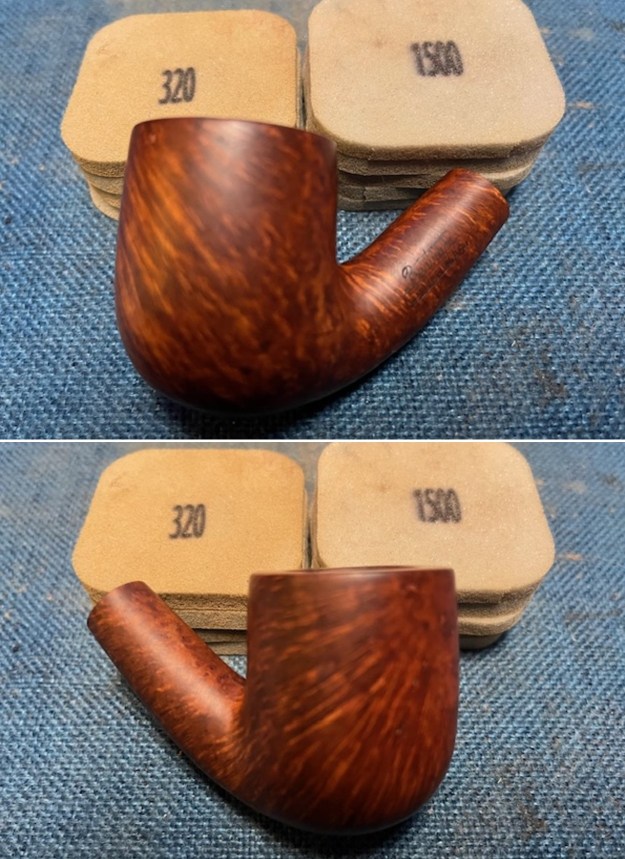
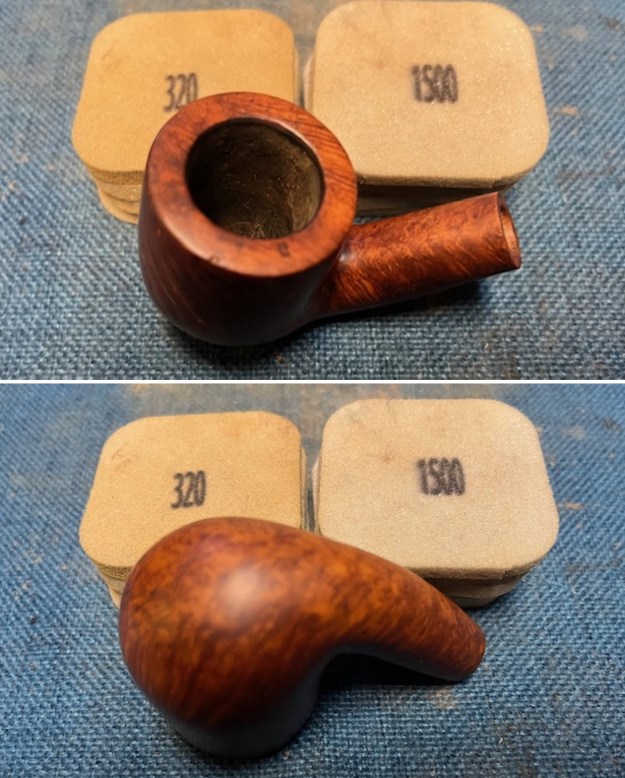
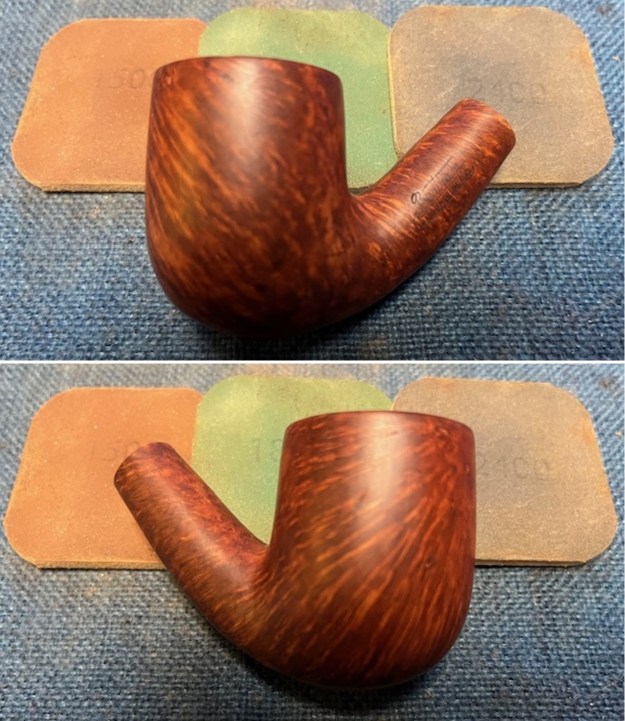
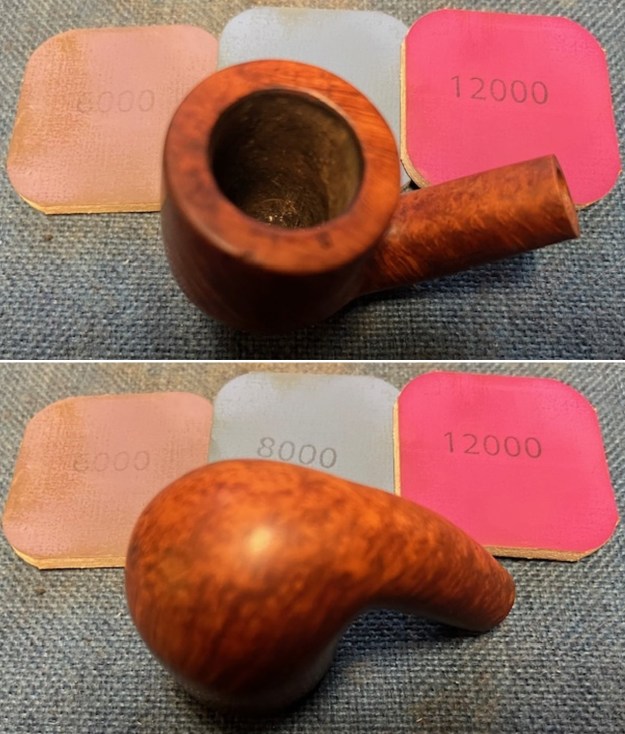
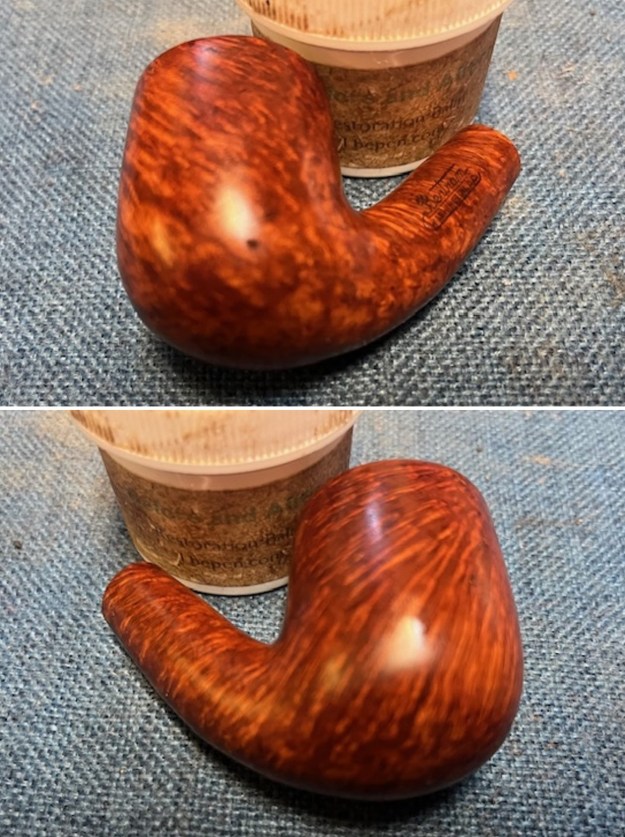
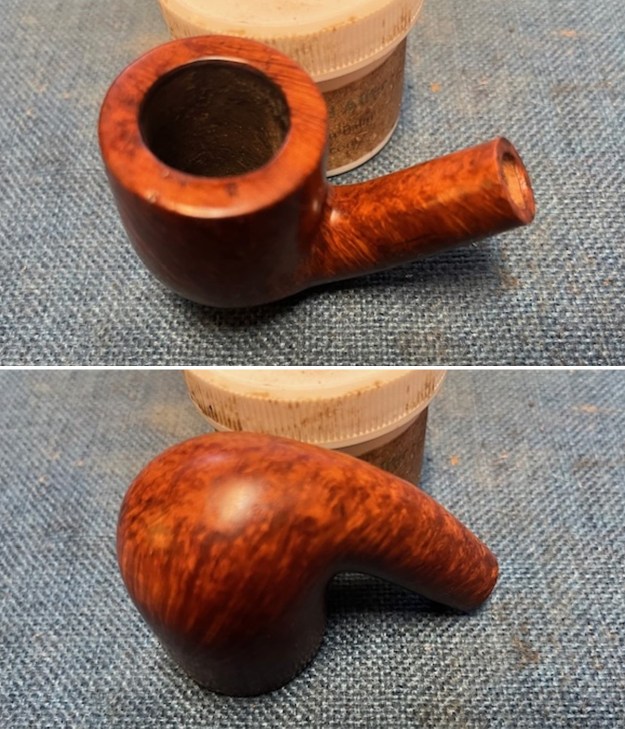
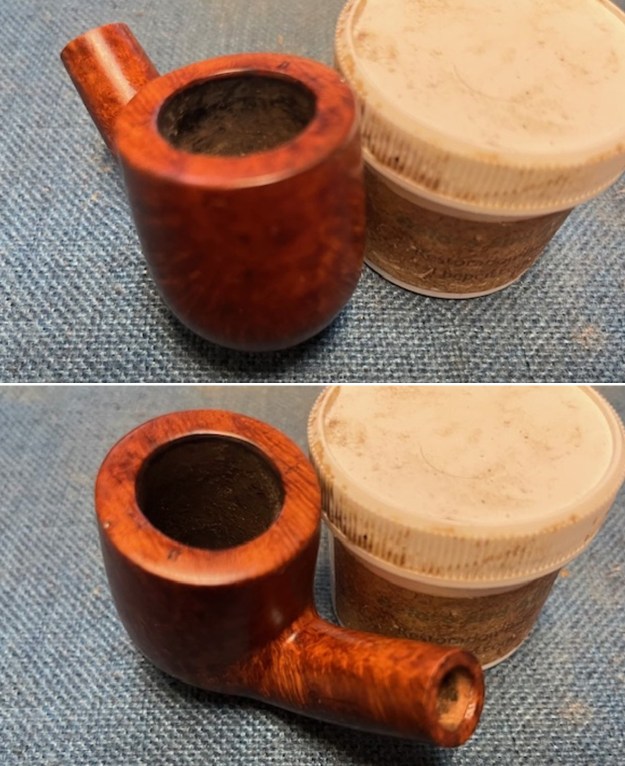
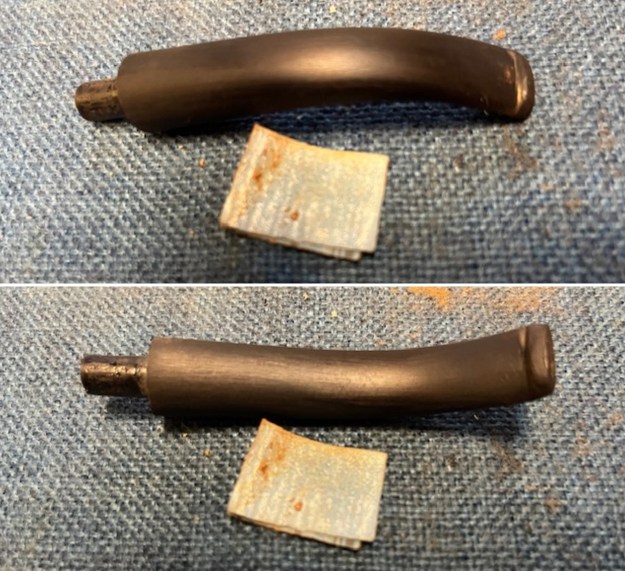
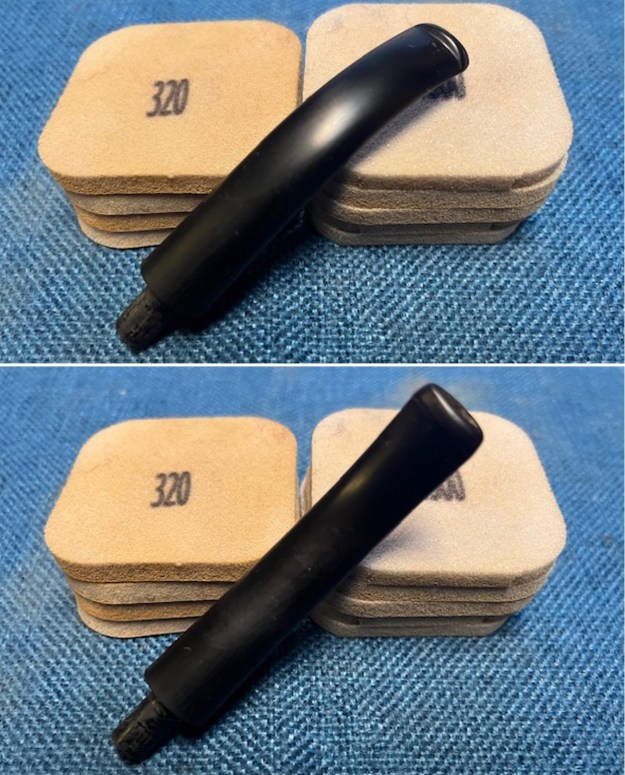
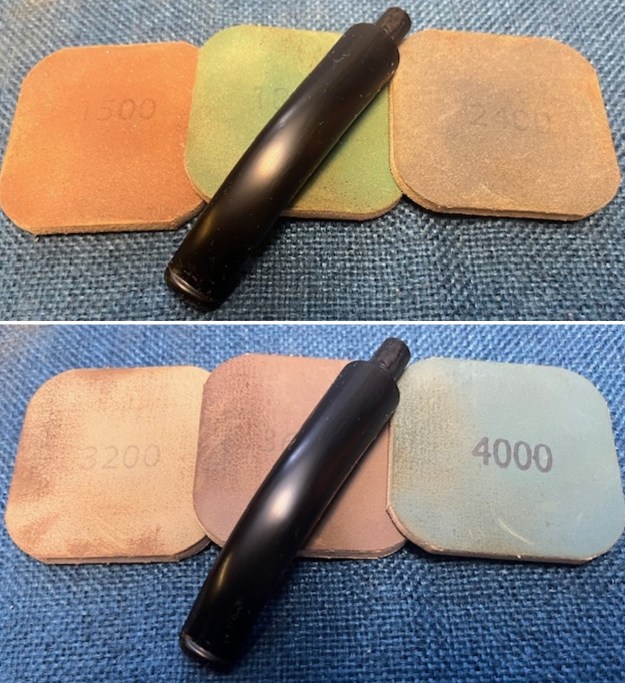
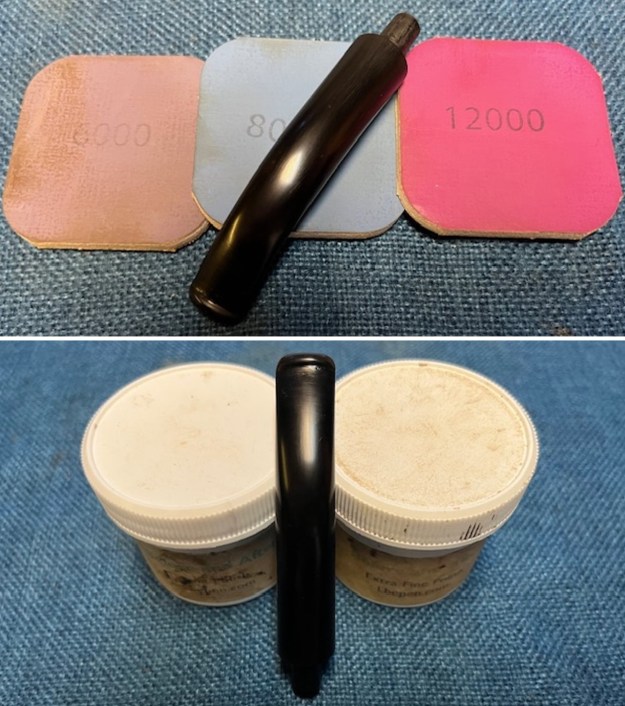
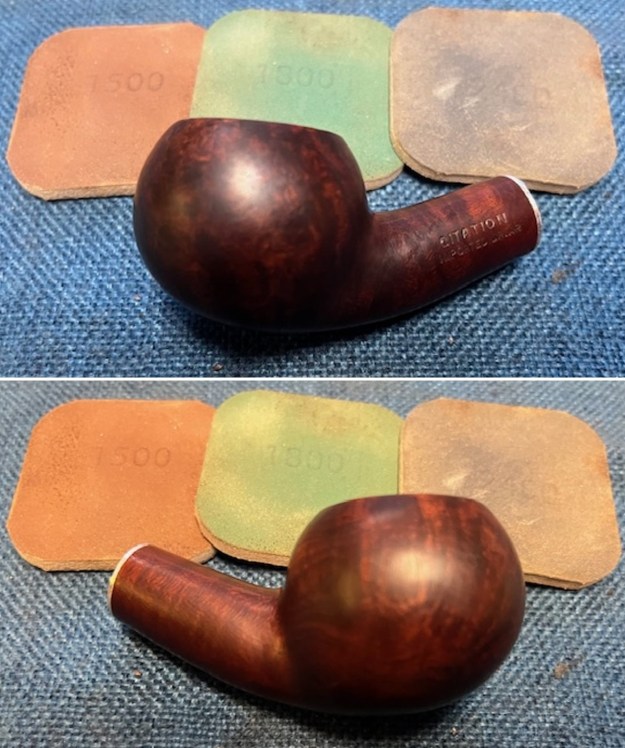
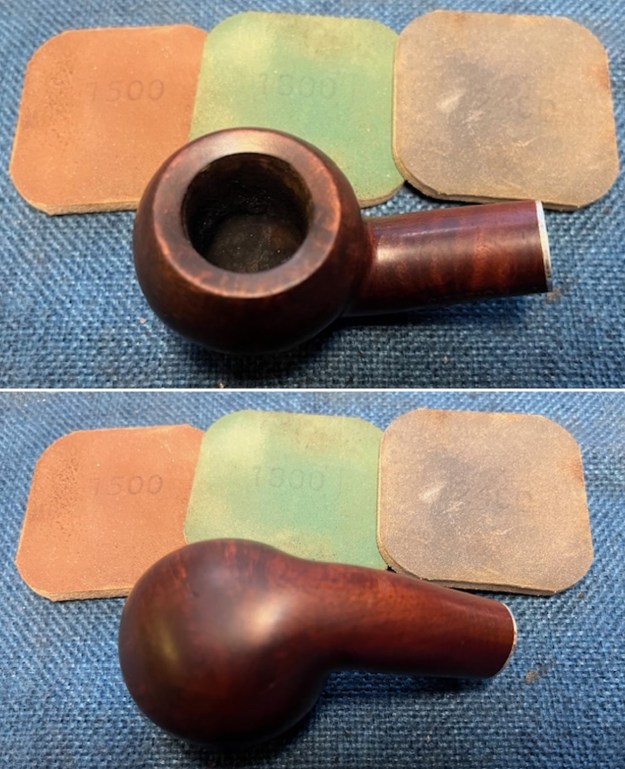
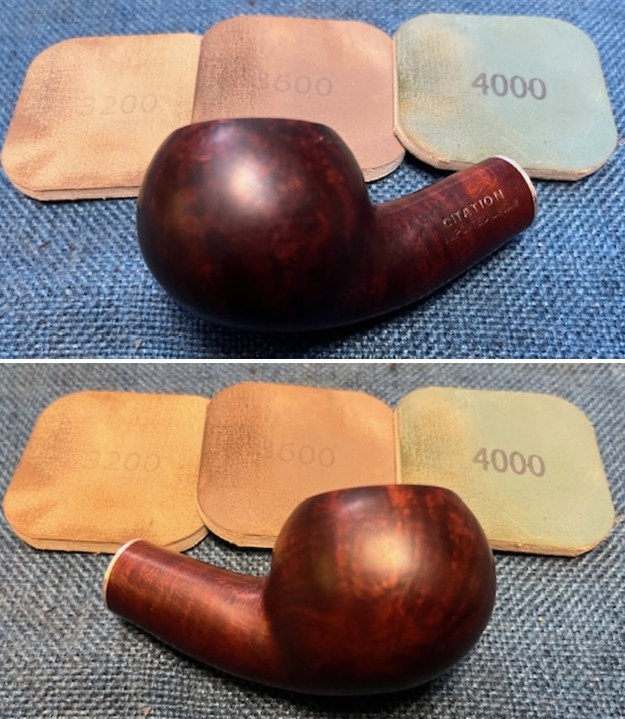
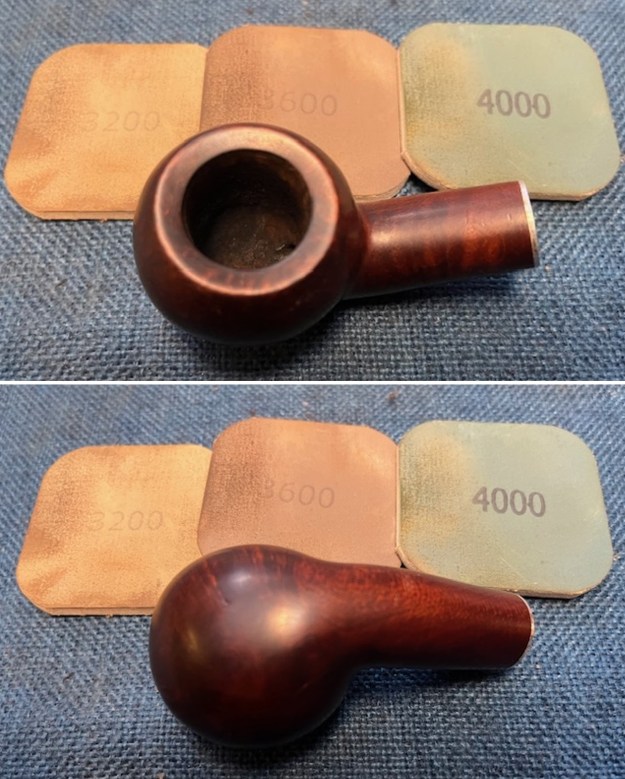
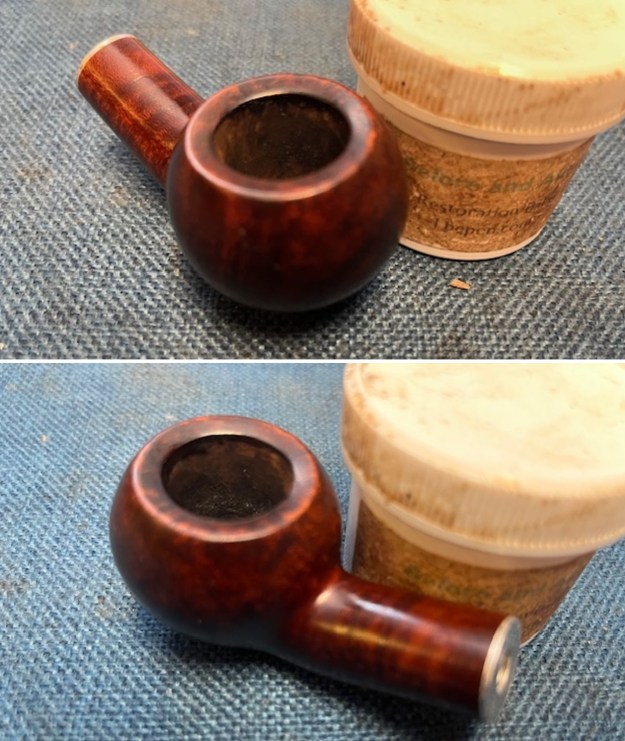
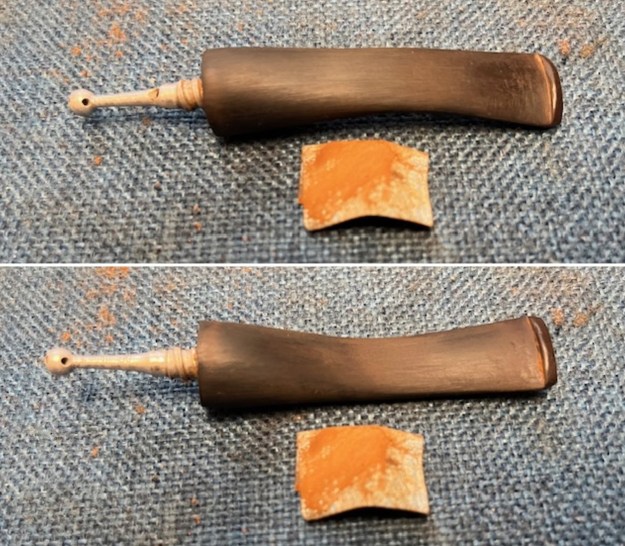
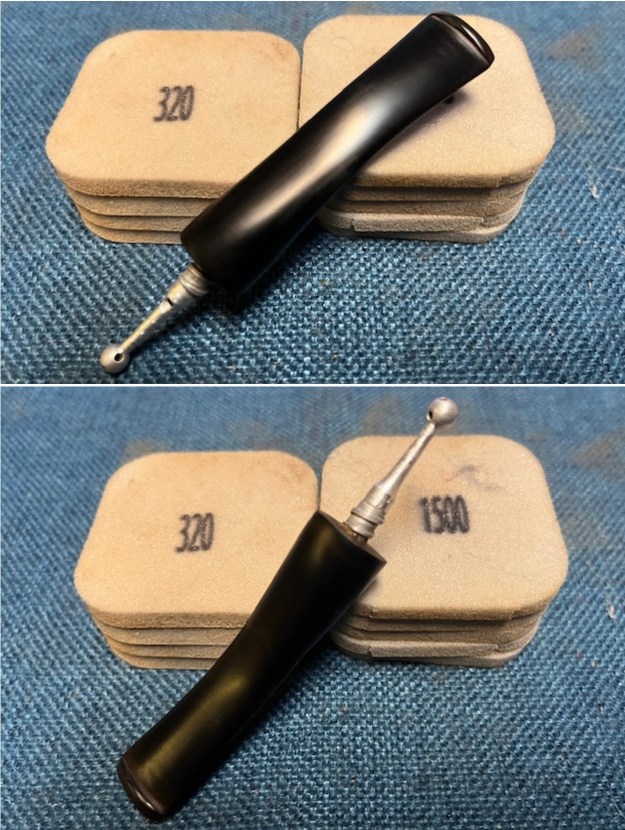
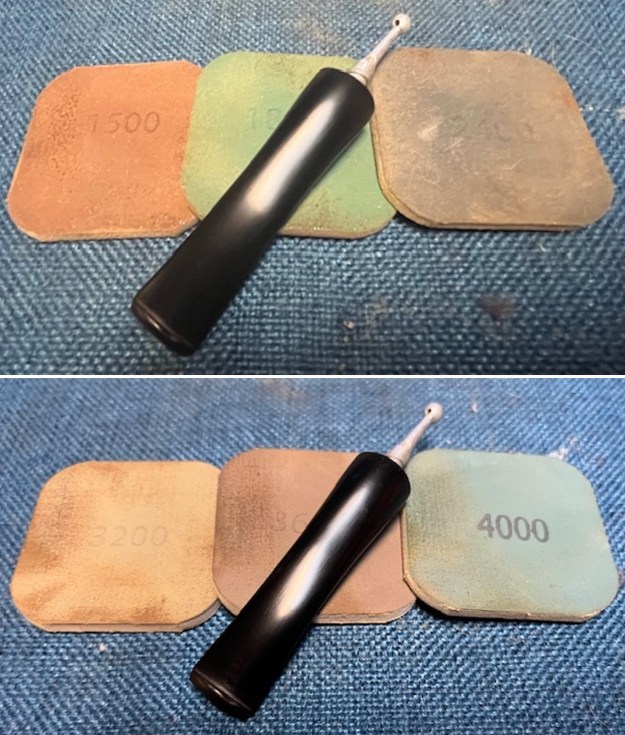
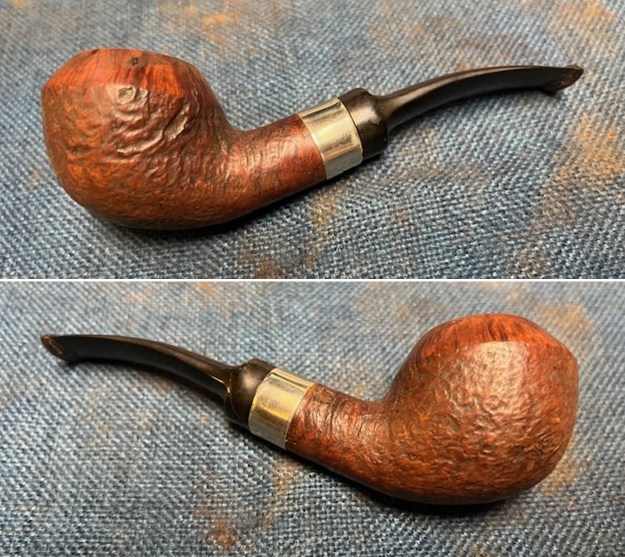
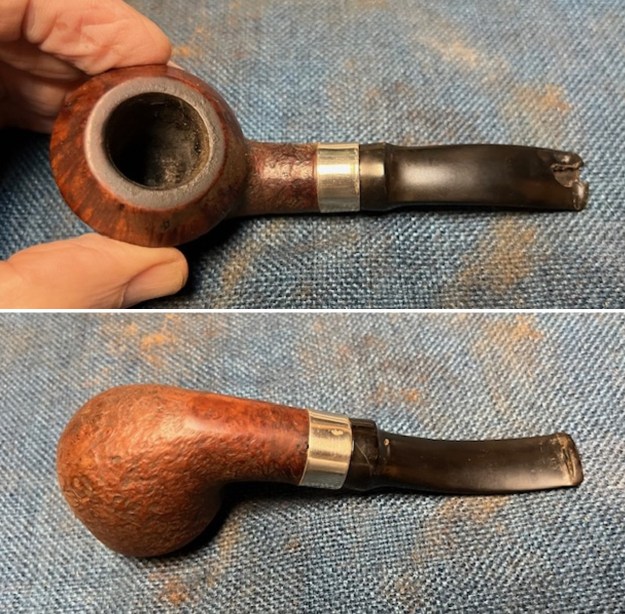
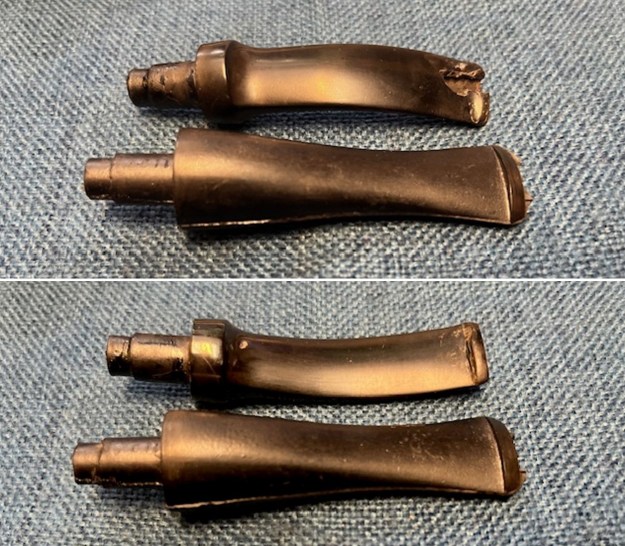
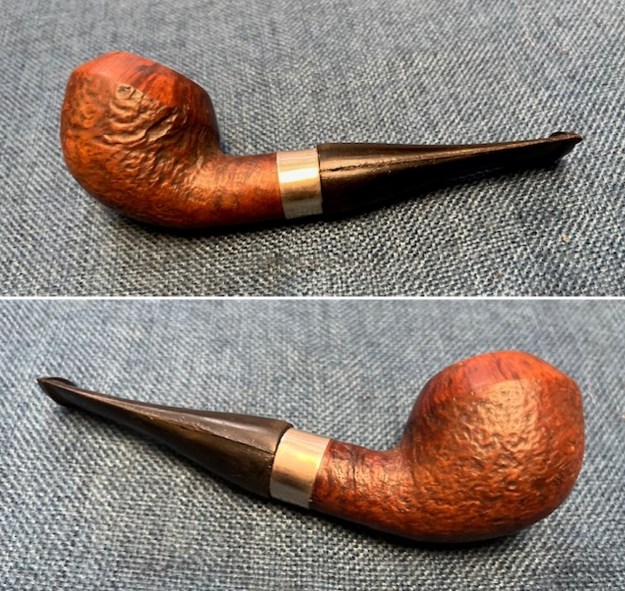
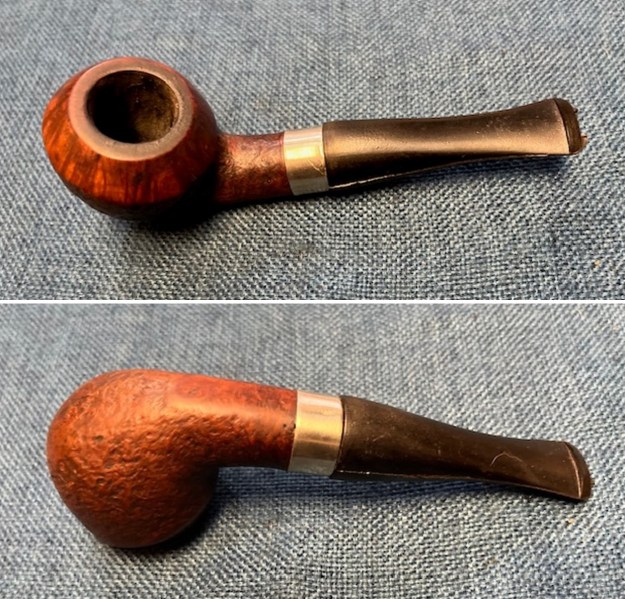
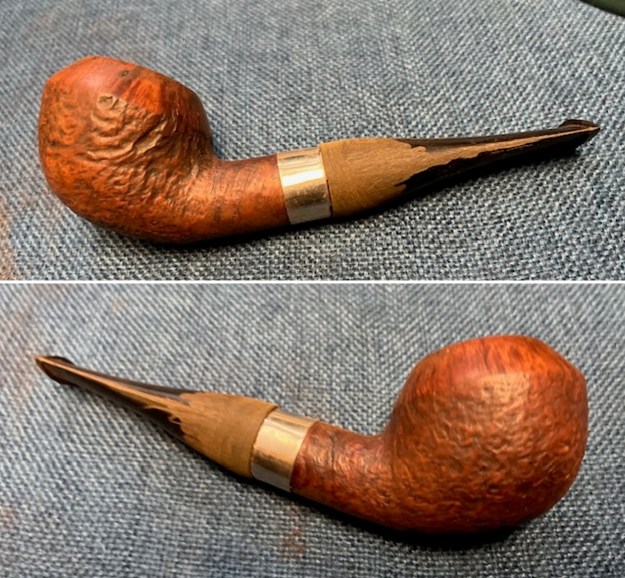
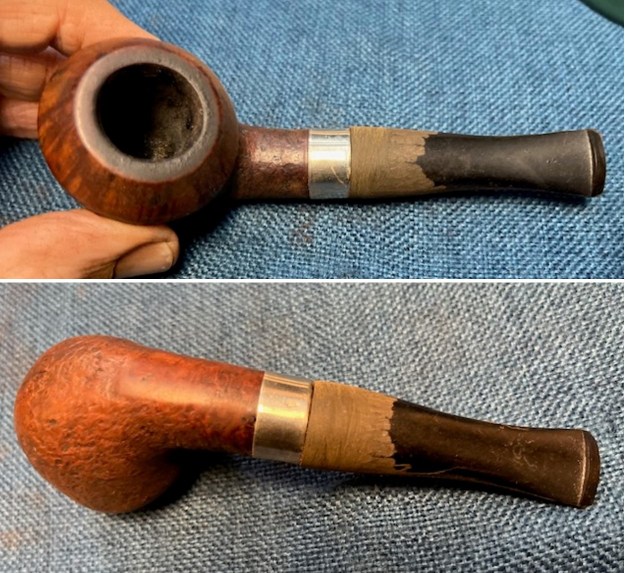
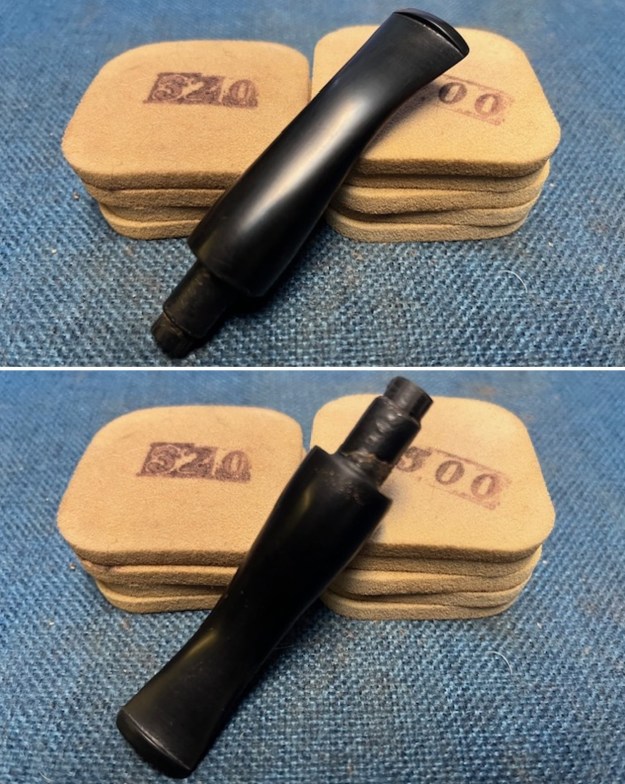
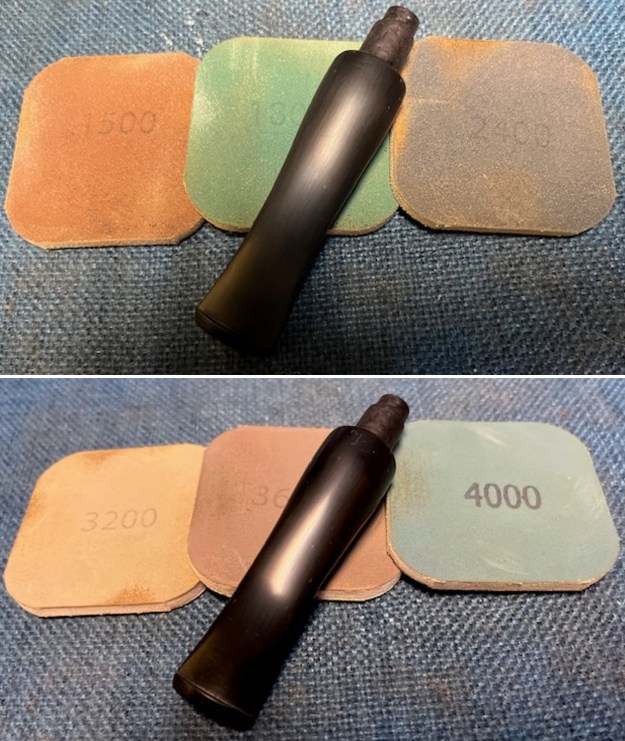
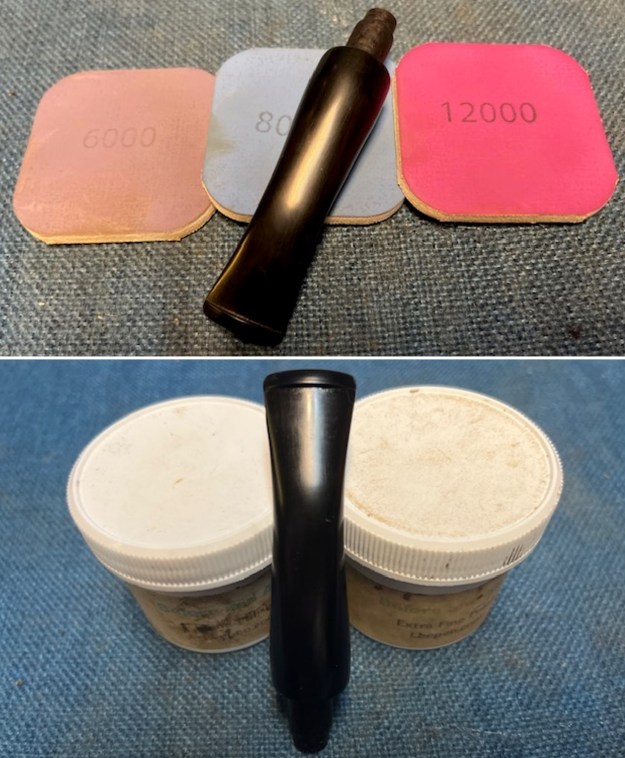
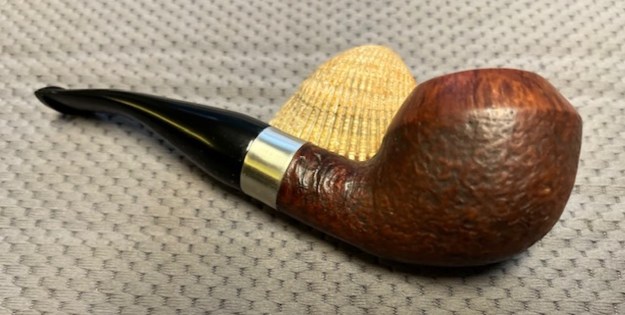
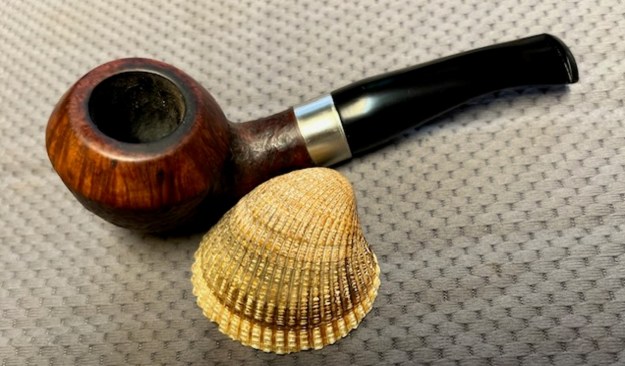
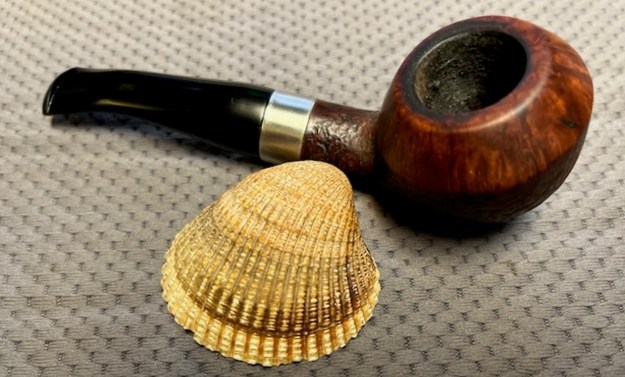
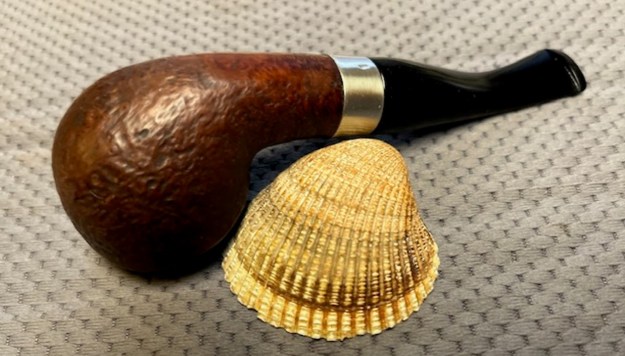
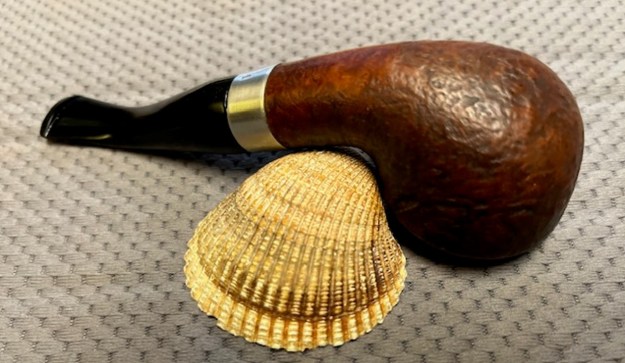
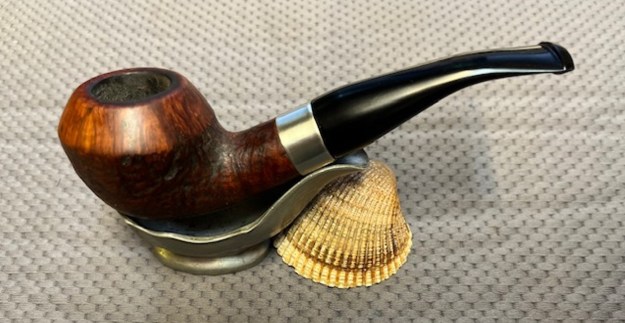
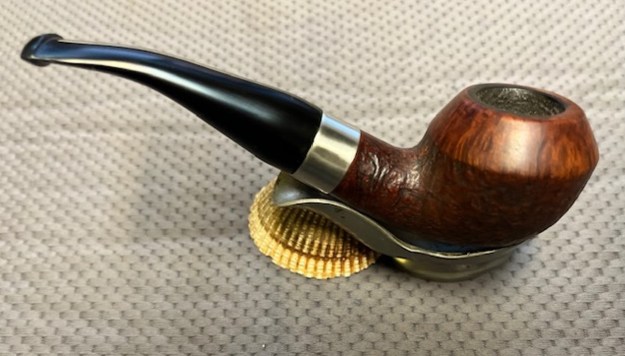
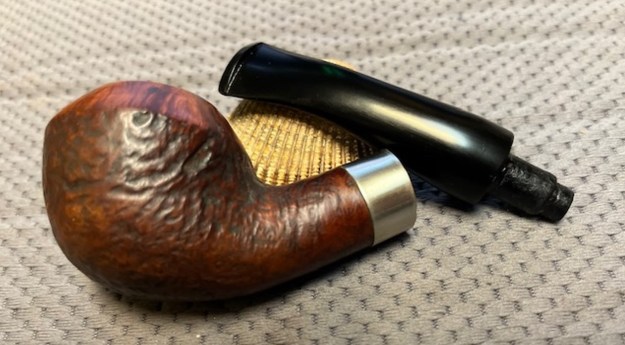
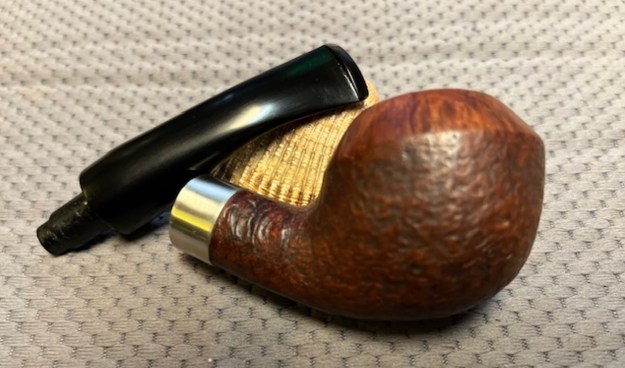
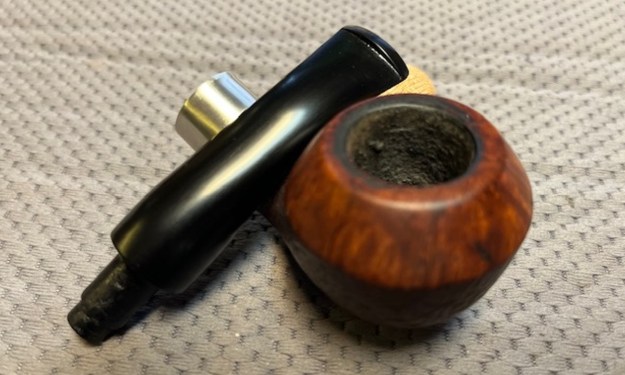
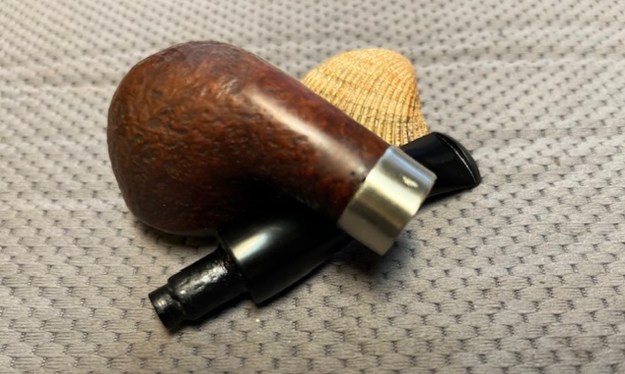
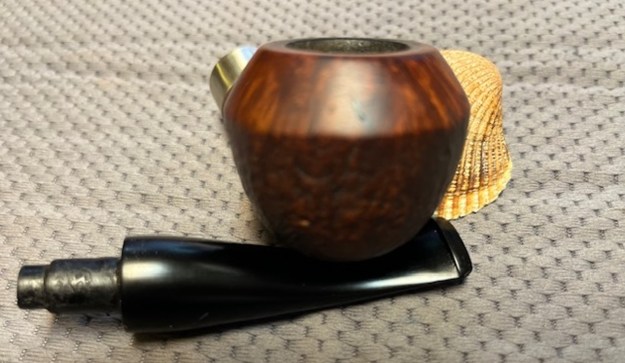
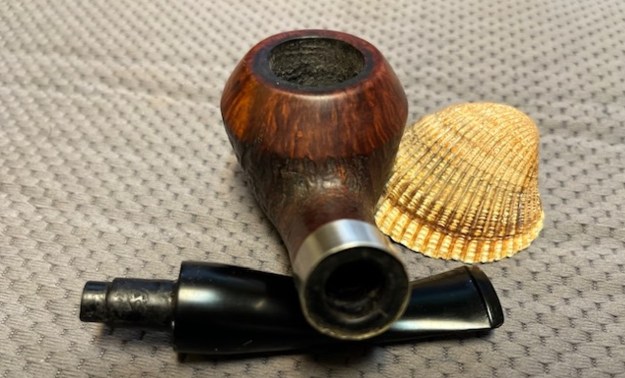
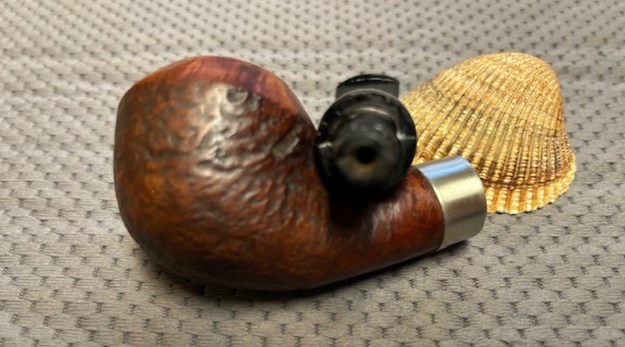
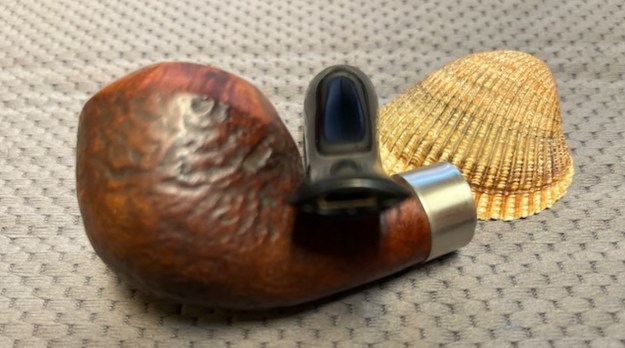
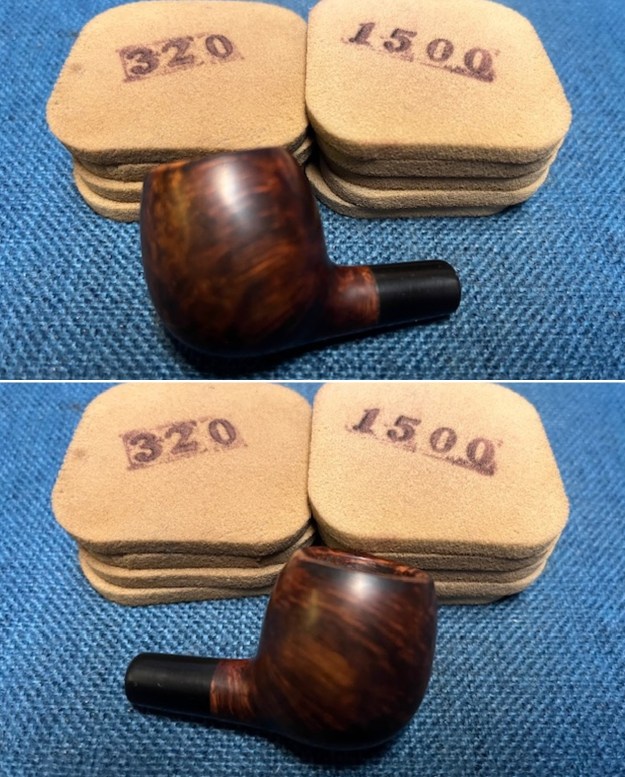
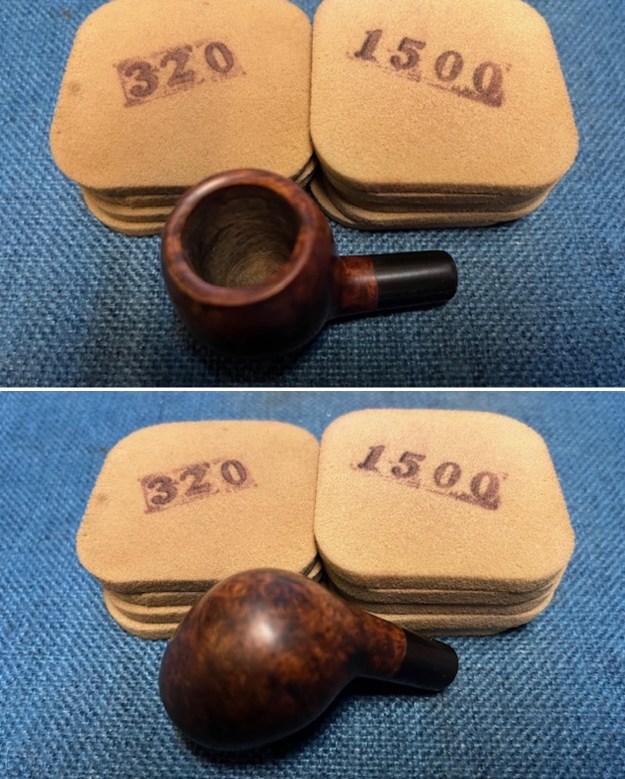
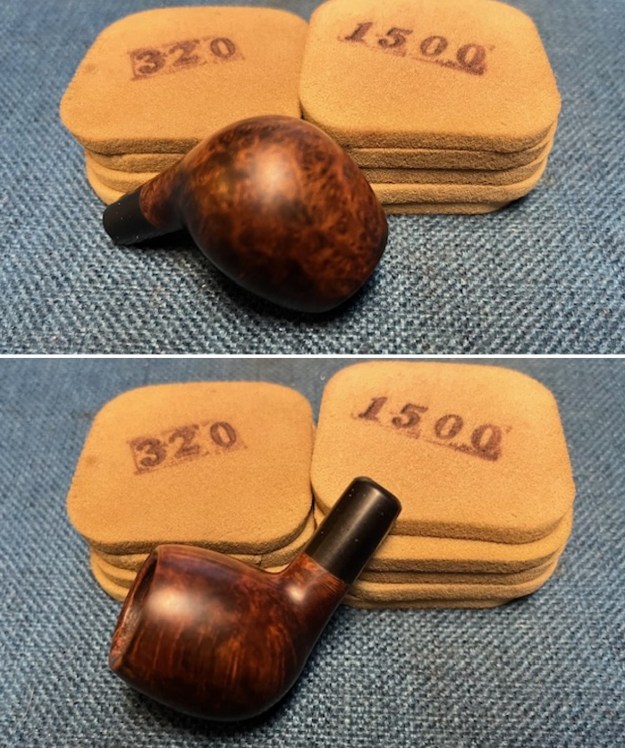
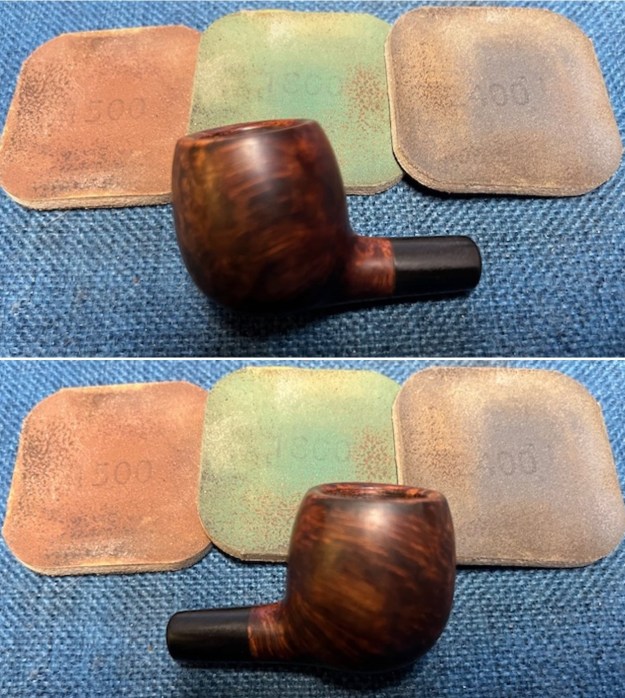
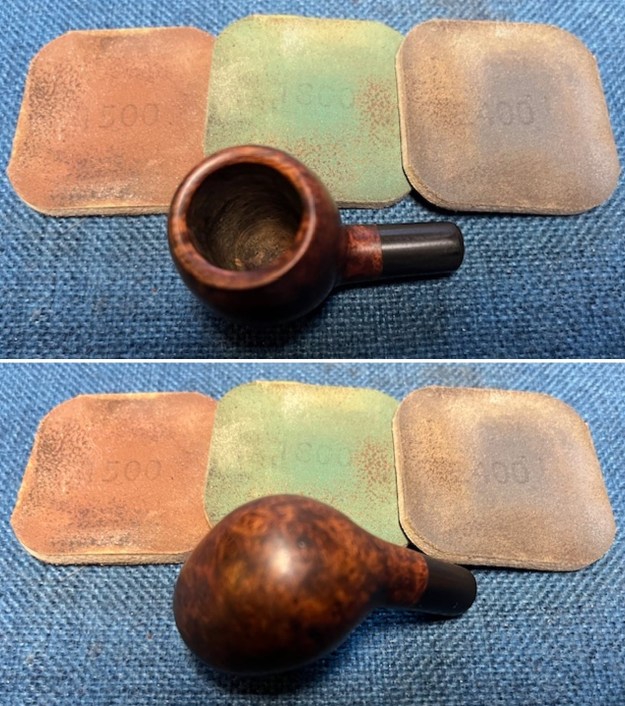
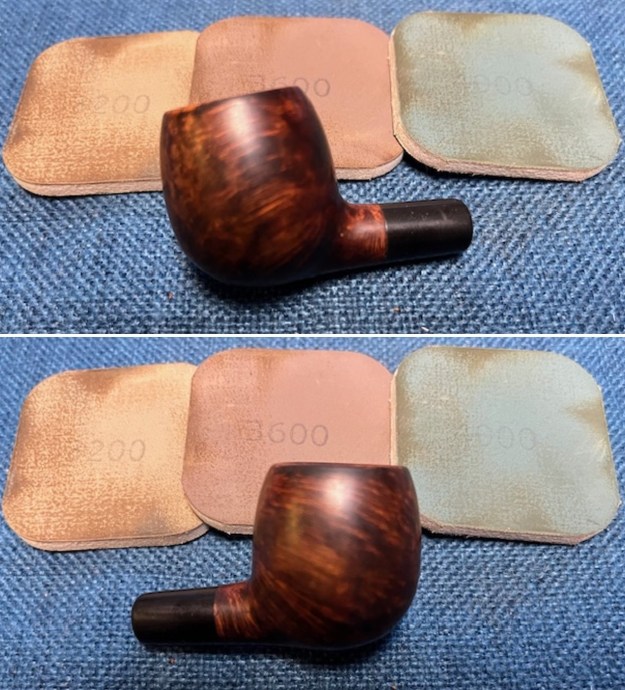
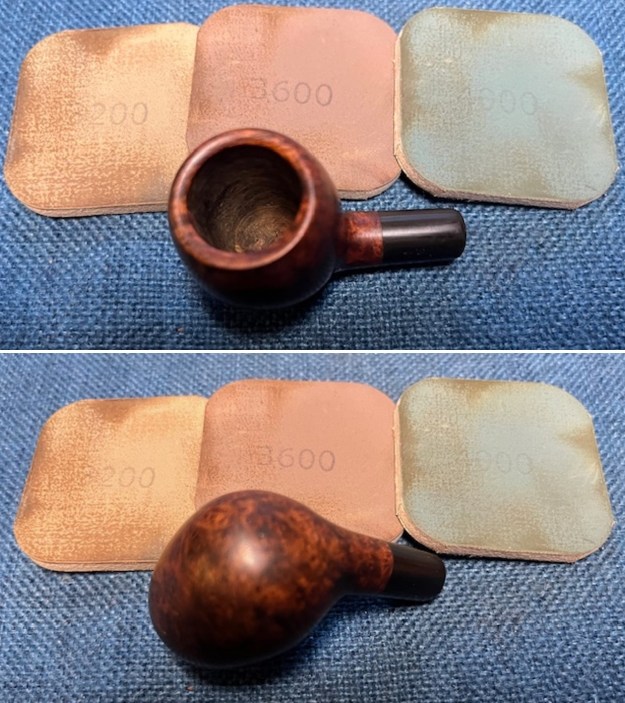
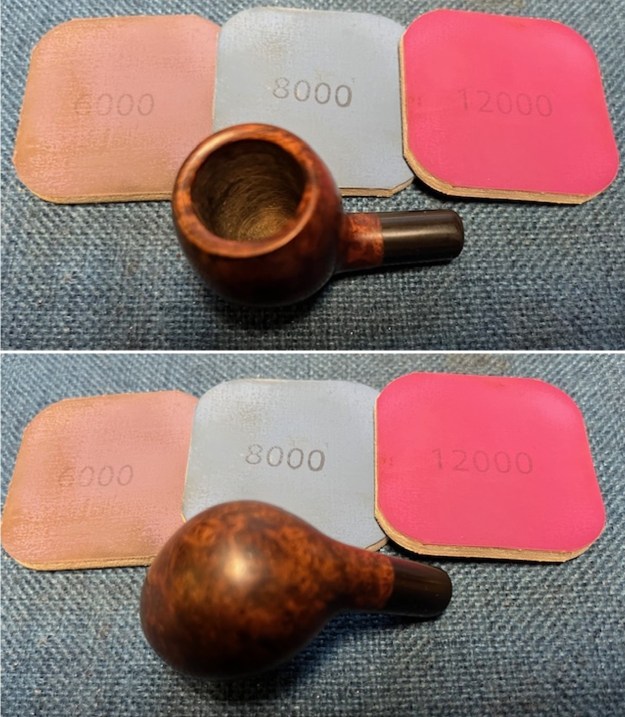
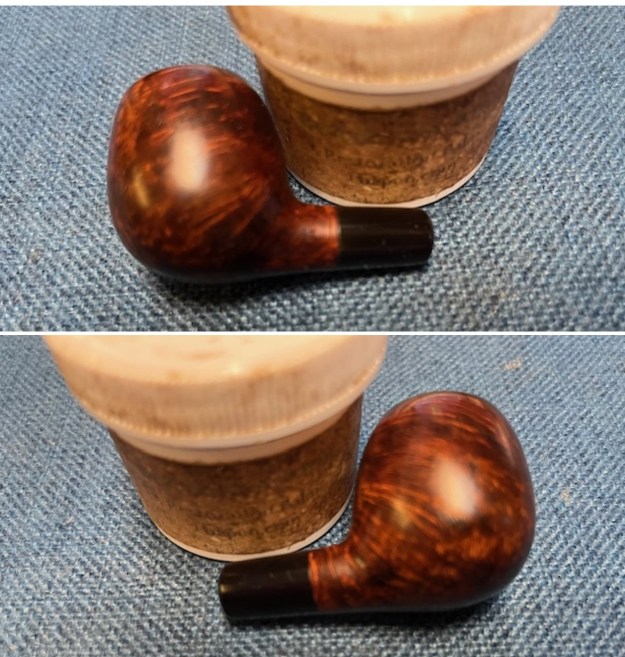
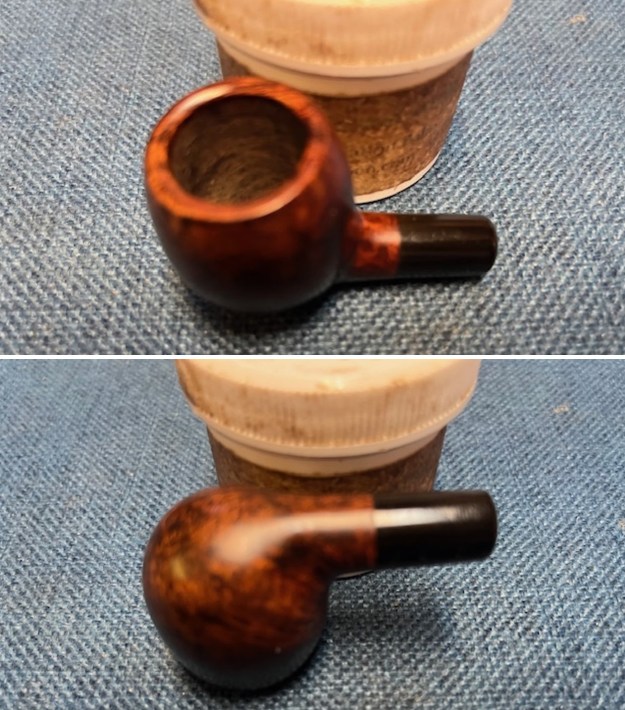
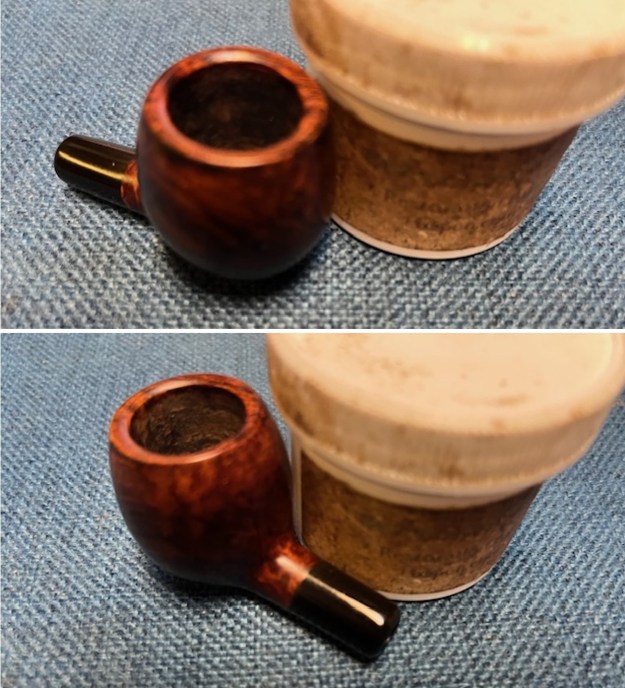
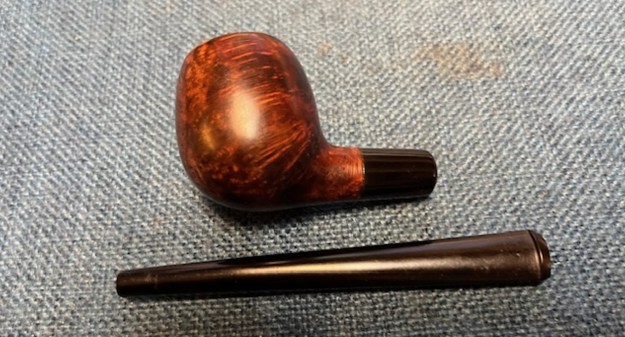
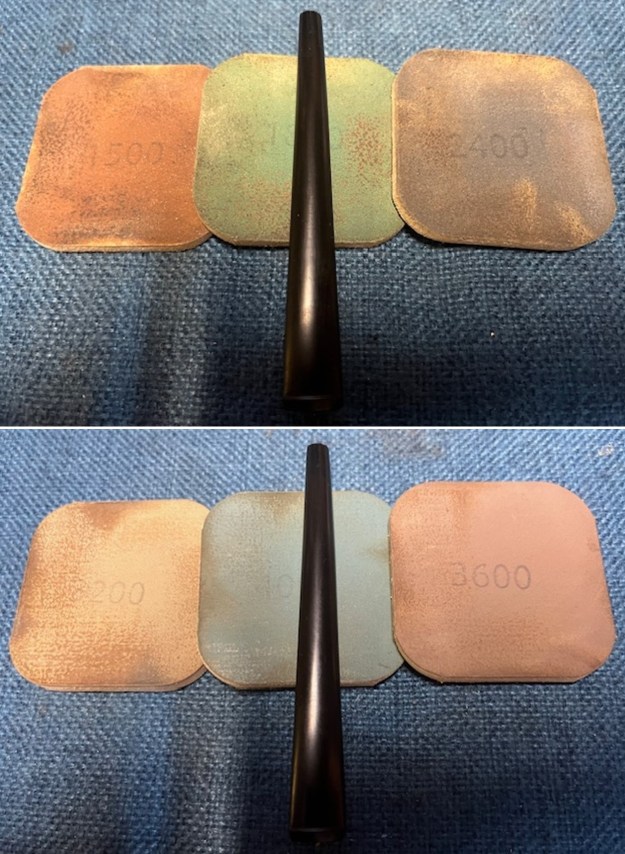
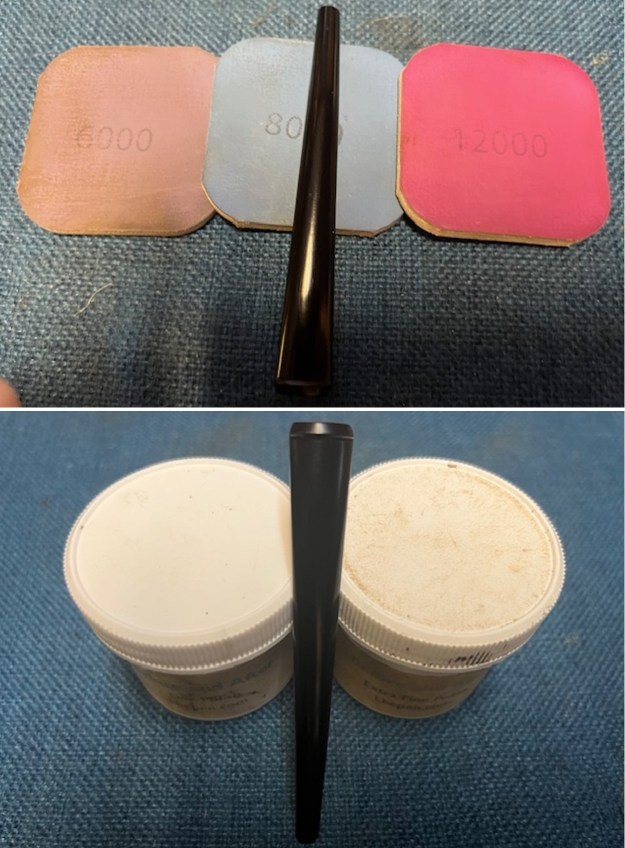
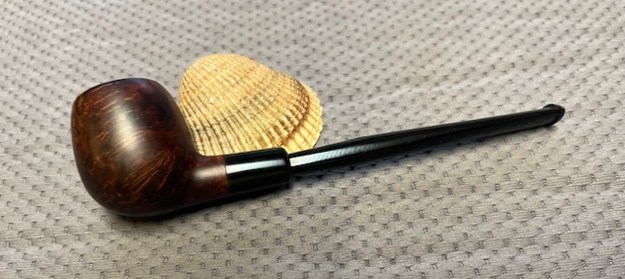
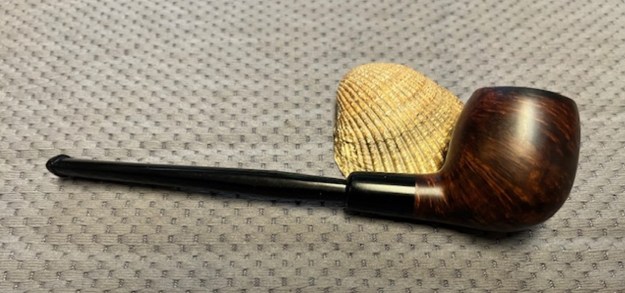
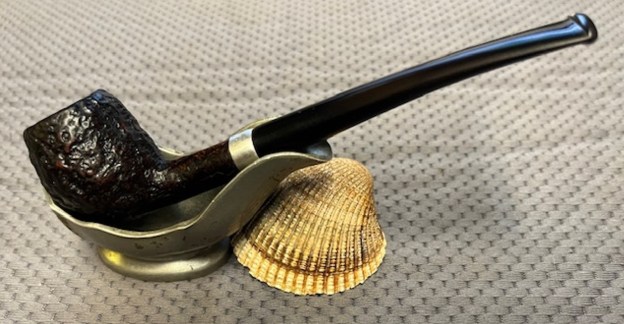
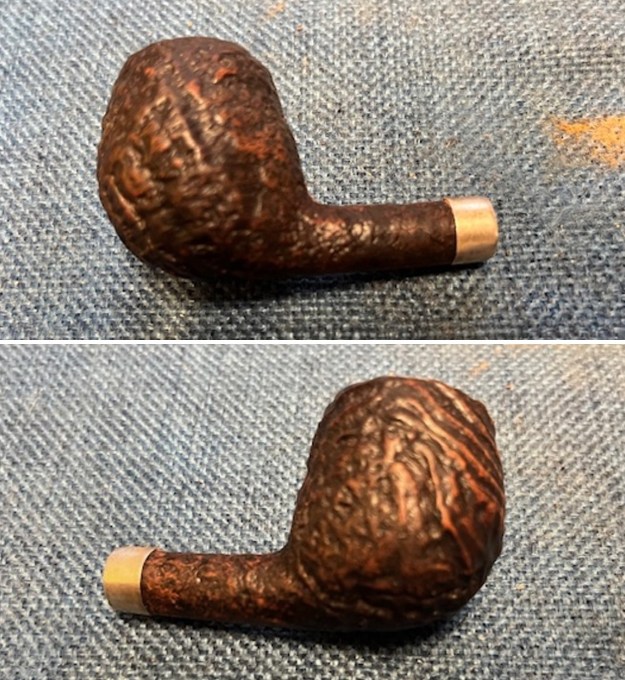
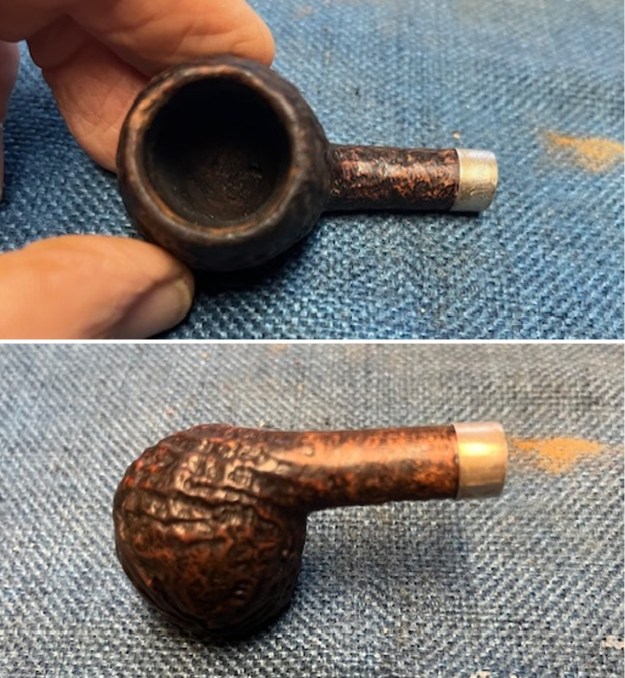
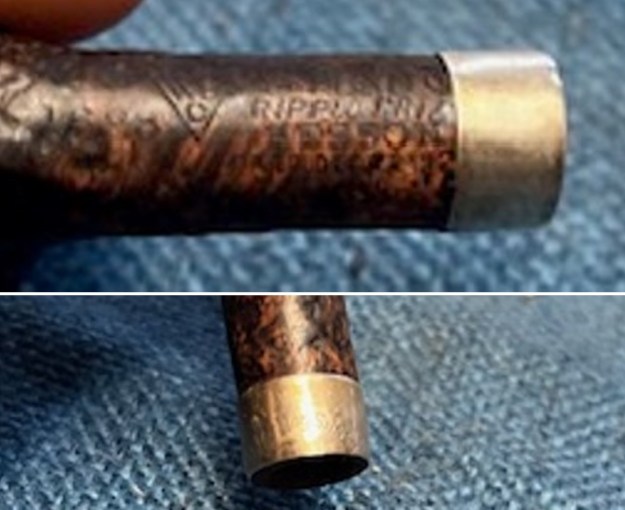
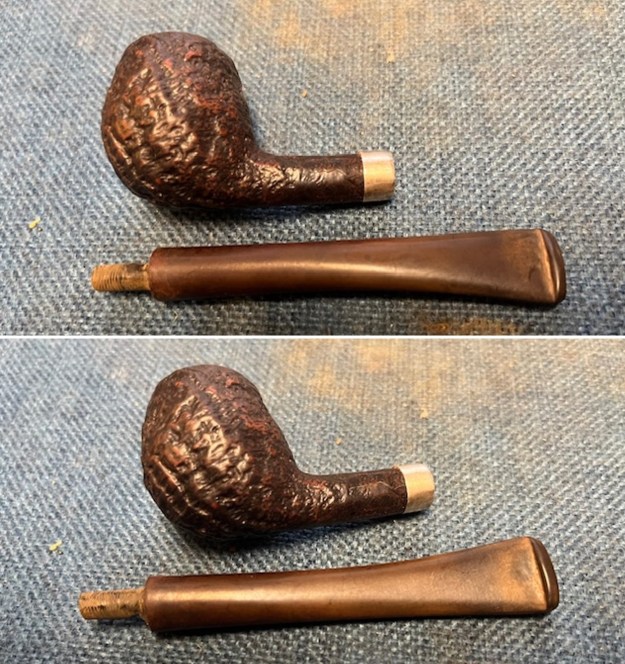
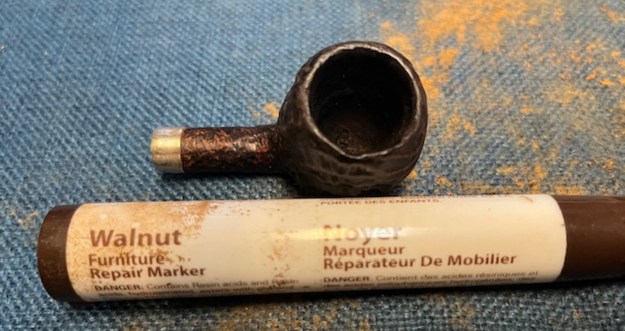
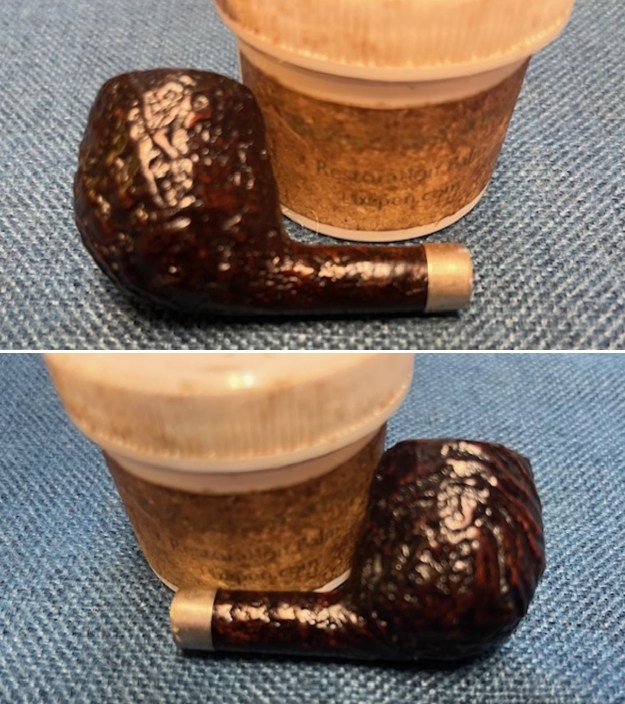
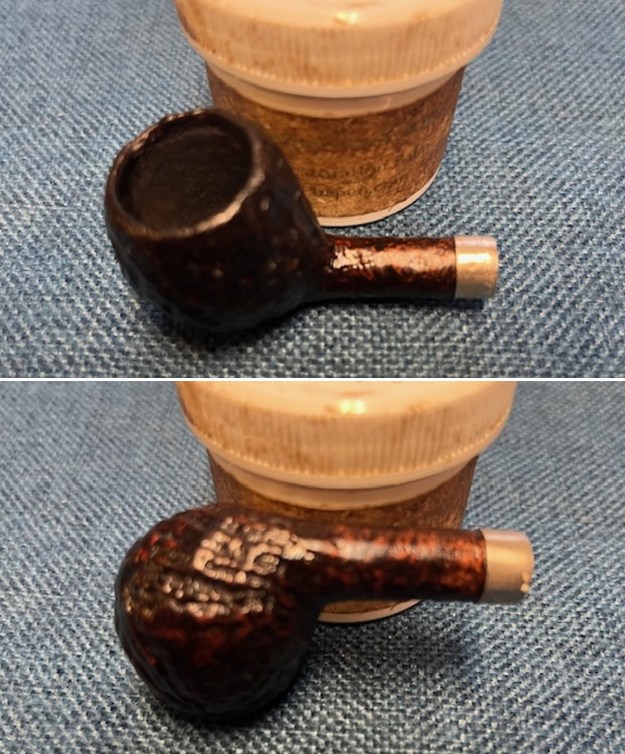
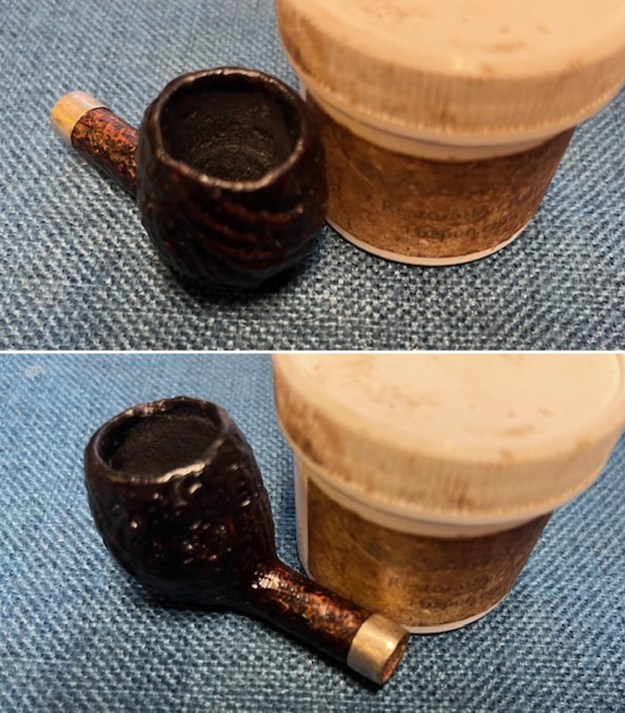
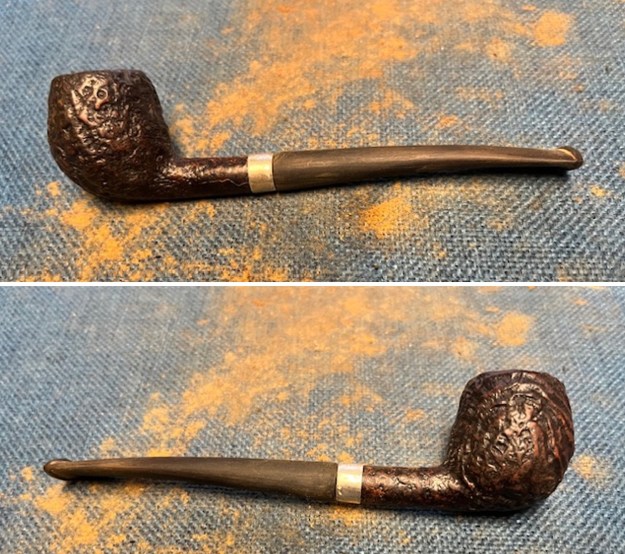
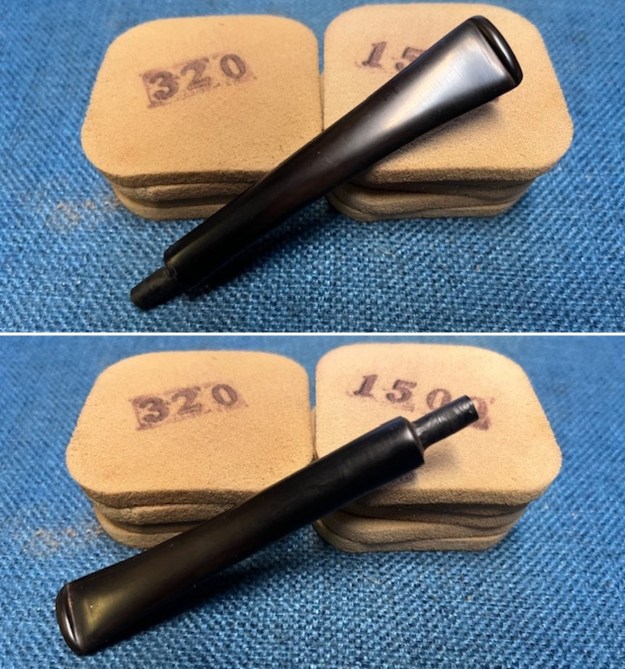
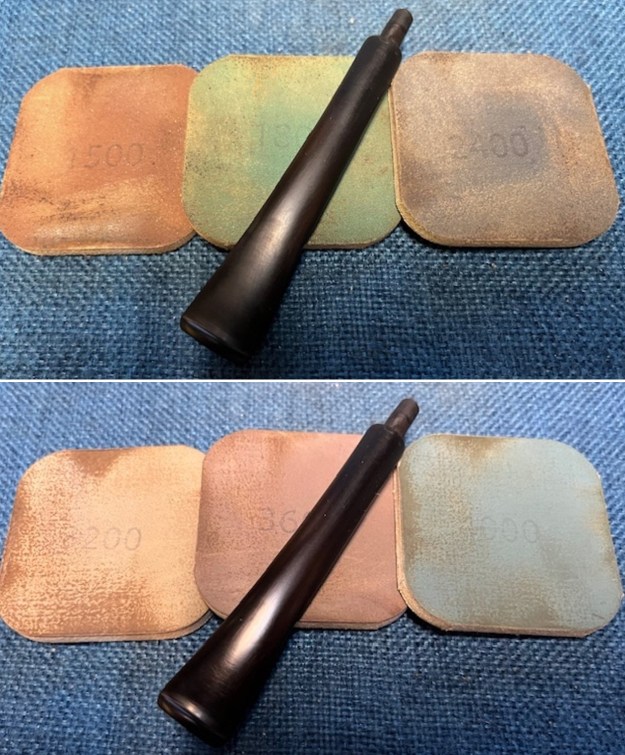
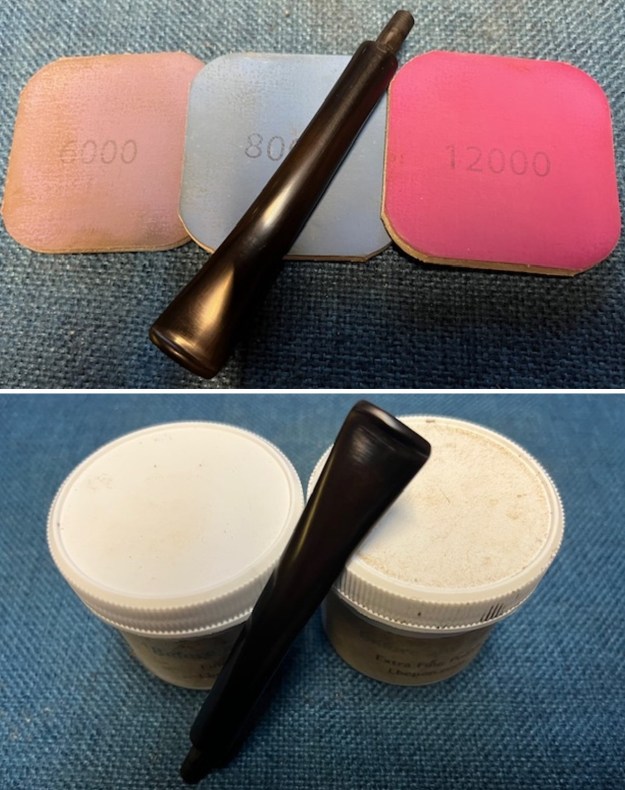
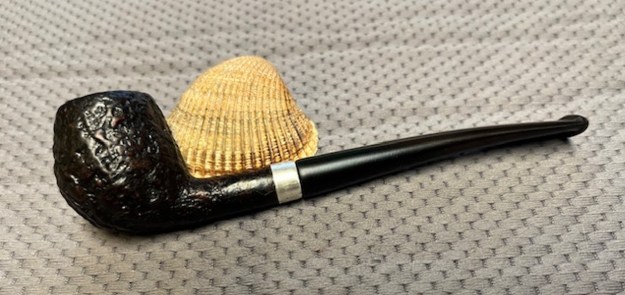
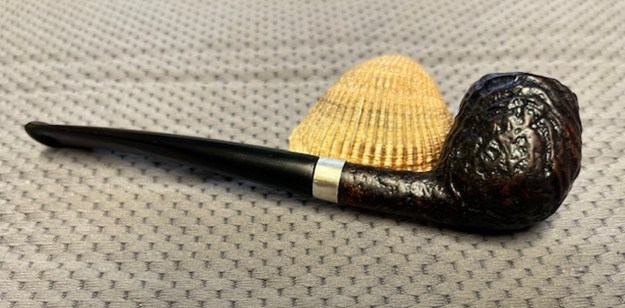
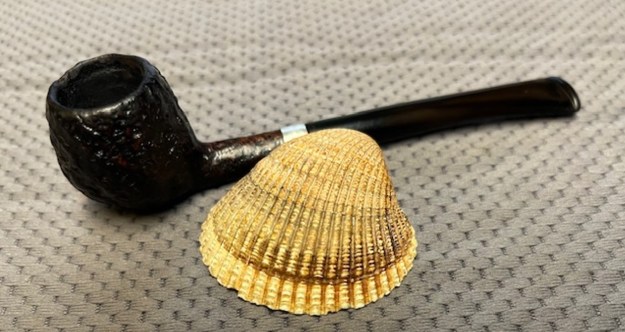
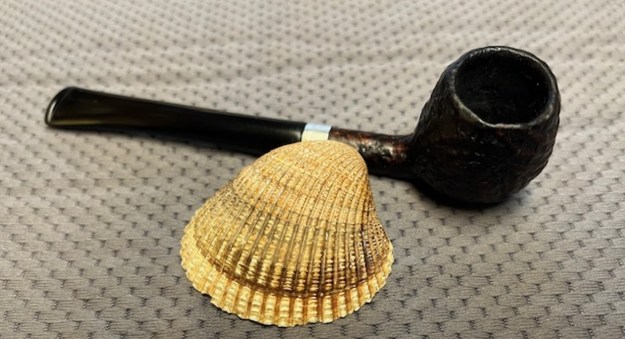
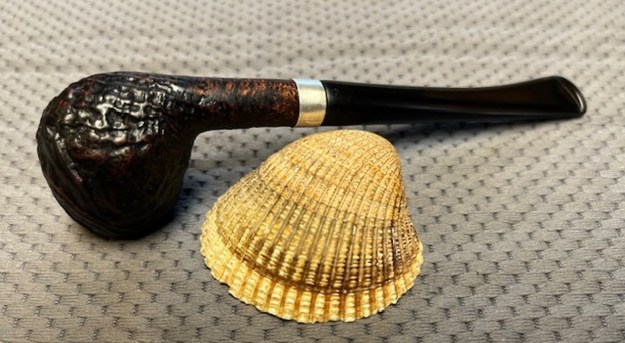
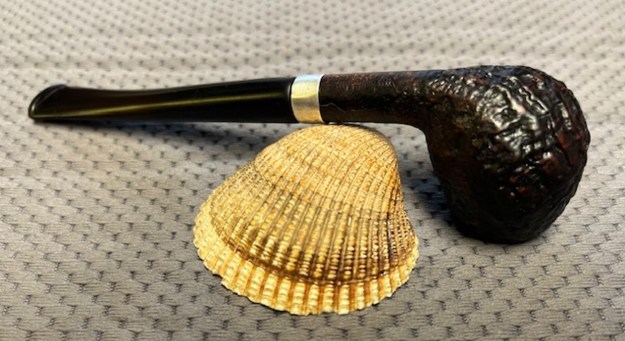
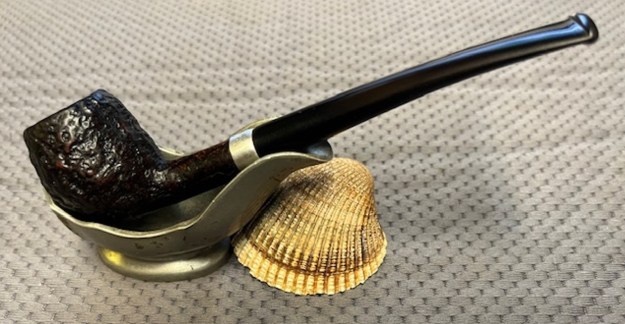
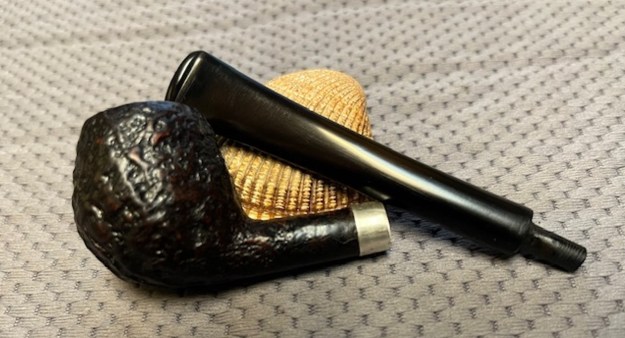
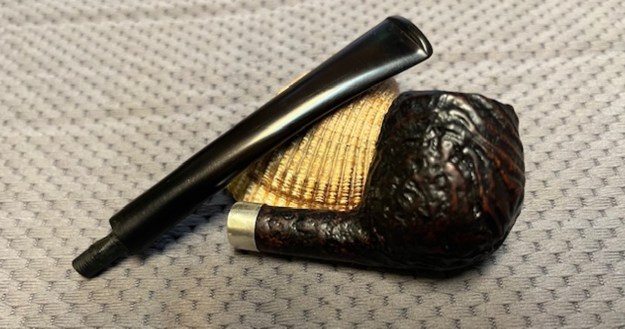
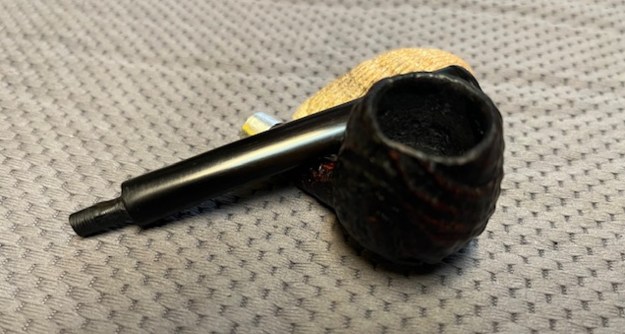
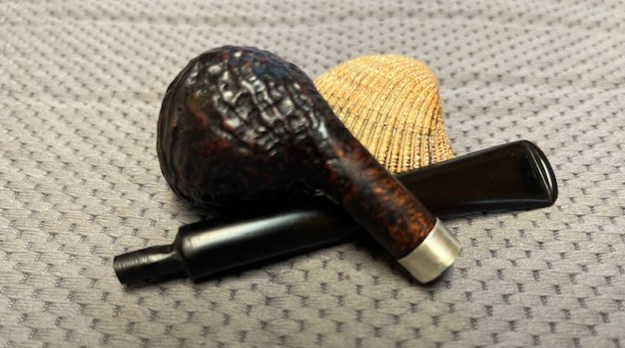
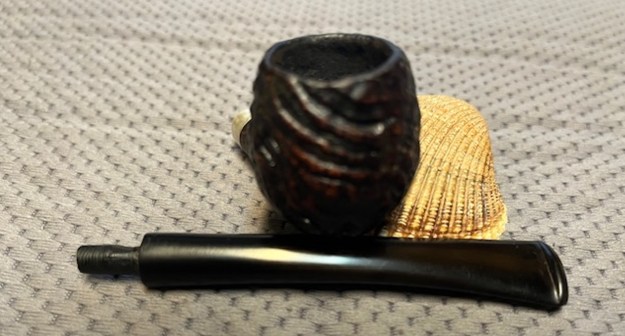
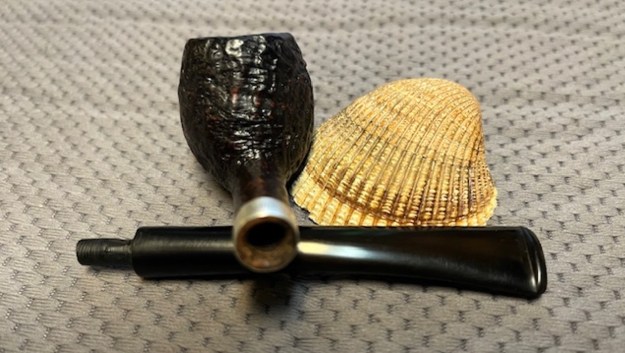
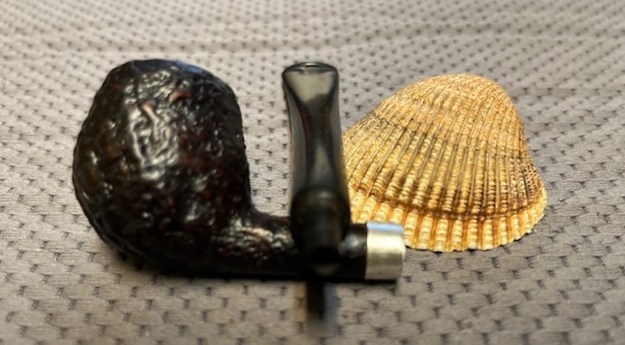
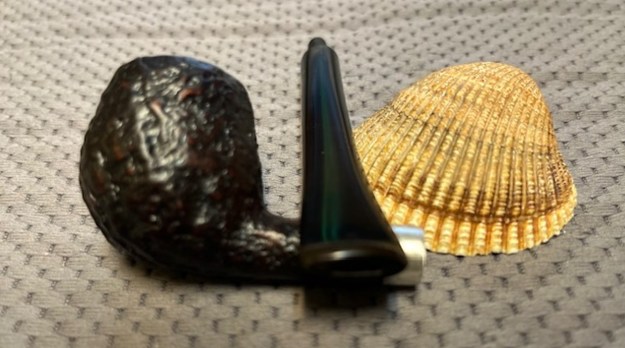
Time for another break from the repairs that I am working on for Rob. I had a couple of bowls in my box that needed to be restemmed. I chose to work on the first of them which is a beautifully sandblasted Apple bowl. The blast is very deep the rim top is thin and flows directly down the sides. The pipe was stamped on the underside of the shank and read WDC in a triangle followed by Milano [over] Ripple Briar [over] Hesson [over] Patd. Dec. 22, 192(6?). The last digit of the date is covered with a Sterling Silver band on the well repaired shank that is cracked on the left side. The bowl had been reamed and cleaned and was in great shape. There were a few worn spots on the top of the rim on the front and the right side. The shank on the left side had a long crack that had been repaired and banded with a sterling silver band. The band was clean with just a few scratches and the words Sterling curved on the topside. The shank was threaded but the threads were worn and it was missing a stem so I needed to find another one. I took photos of the bowl and have included them below. It shows the pipe before I started my work on it. I took a photo of the underside of the shank to show the stamping. It is quite clear and readable as noted above. I also tried to capture the Sterling Silver stamp o the band.I went through my stems and found one that was close to the right diameter to the shank and had a small diameter tenon. It would need some adjusting but it would fit very well. I took photos of it showing the look with the bowl.I started work on this pipe by polishing the bowl. The bowl was very clean and had little wear on it. The cracked shank had been banded and repaired somewhere in its journey. The silver band was very clean with some small scratches in the surface. It was in great condition so I started by staining the rim top faded and marks spots with a Walnut stain pen to blend them in and clean up the damage. It looked very good.After the touch up stain cured, I rubbed the bowl down with Before & After Restoration Balm. It is a paste/balm that works to deep clean the finish, enliven and protect the briar. I worked it into the briar with my finger tips to make sure that it covered every square inch of the pipe. I set it aside for 10 minutes to let it do its work. I buffed it with a cotton cloth. The briar really began to have a deep shine. The photos I took of the bowl at this point mark the progress in the restoration. I set the bowl aside and turned my attention to the stem I had chosen for the pipe. I cleaned up the tenon and shortened it slightly to fit the shank of the pipe. I sanded the diameter with a folded piece of 220 grit sandpaper to fully match the shank diameter. I sanded out the tooth marks and chatter on both sides of the stem.I put the stem on the shank and took photos of the fit of the stem to the bowl and the new look of this deeply sandblast pipe. I am liking the looks of the new stem. I removed the stem from the shank and sanded it further with 320-3500 grit sanding pads. I wiped the stem down after each pad with an Obsidian Oil impregnated cloth. By the time I finished with the 3500 grit pad the stem really looked good. I also sanded out the rough spot on the underside of the silver band to smooth it out.I polished the stem with 1500-12000 grit micromesh sanding pads – dry sanding with each pad. I wiped the stem down after each pad with an Obsidian Oil cloth. I polished it further with Before & After Pipe Stem Polish and wiped it down a final time with the oil cloth. The finished WDC Milano Ripple Briar Hession Apple looks great with its new stem. The taper stem brings out the contrast of the silver band and dark nooks and crannies of the sandblast. I buffed the pipe with a light coat of White Diamond on the buffing wheel and then gave the bowl multiple coats of Conservator’s Wax and the stem multiple coats of Carnauba Wax. I buffed the pipe with a clean buffing wheel and it is a real beauty. The dimensions of this WCD Milano Ripple Briar Apple are length: 5 ½ inches, height: 1 ½ inches, outside bowl diameter: 1 inch, chamber diameter: ¾ of an inch. The weight of the pipe is .67 ounces/19 grams. This is a beauty that will be going on the American Pipemakers Section of the rebornpipes store shortly. If you are interested in adding it to your collection let me know. Thanks for giving the blog a read.

As always, I encourage your questions and comments as you read the blog. Thanks to each of you who are reading this blog. Remember we are not pipe owners; we are pipe men and women who hold our pipes in trust until they pass on into the trust of those who follow us.

Restemming and Restoring a Duncan Hill Aerosphere Smooth Pot – another of the 12 Pipes


by Steve Laug

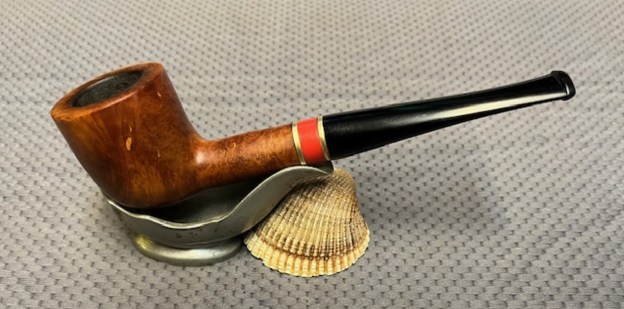
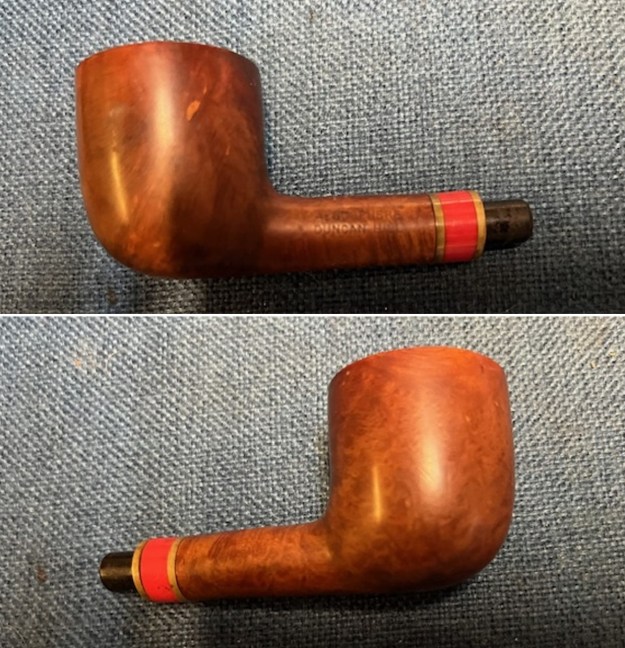
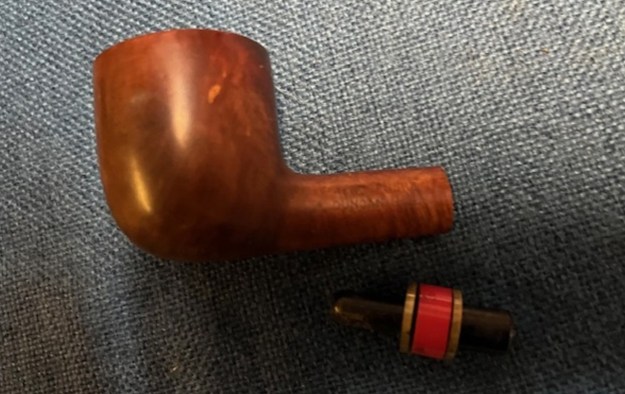
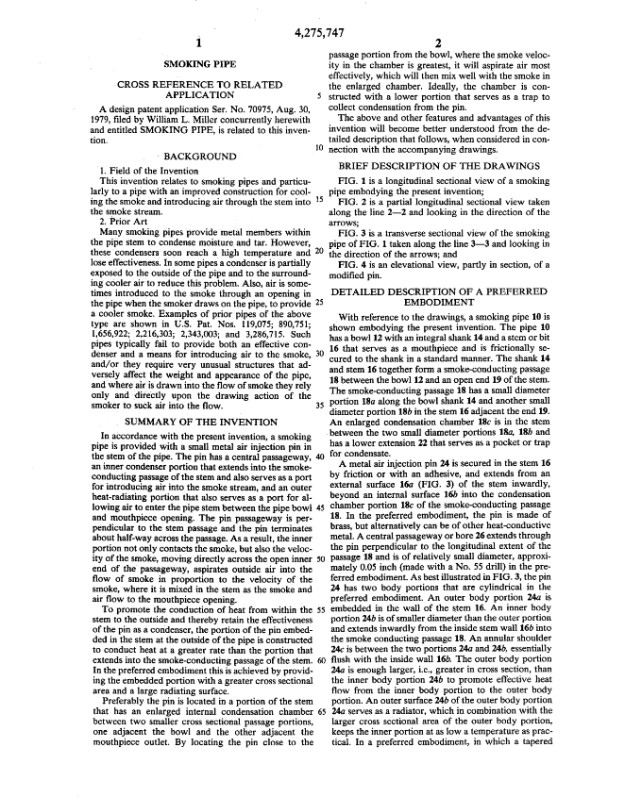
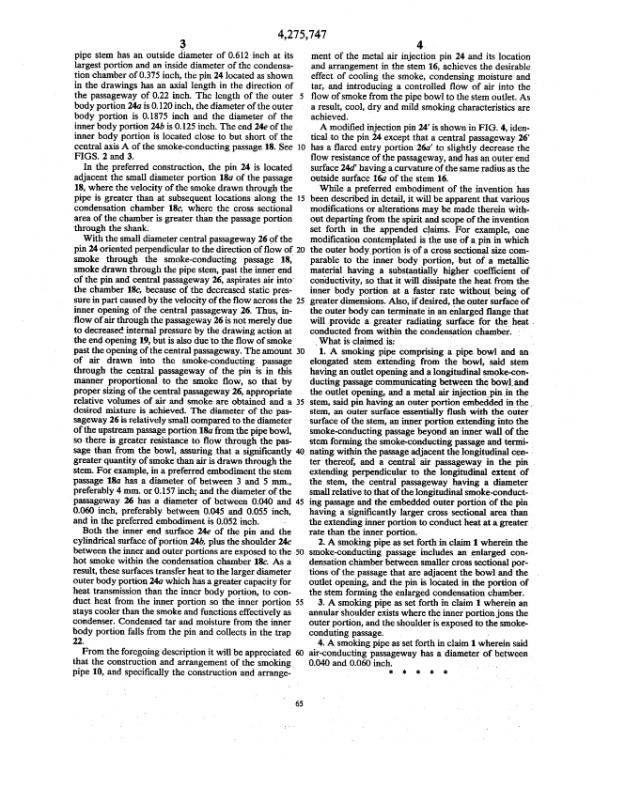
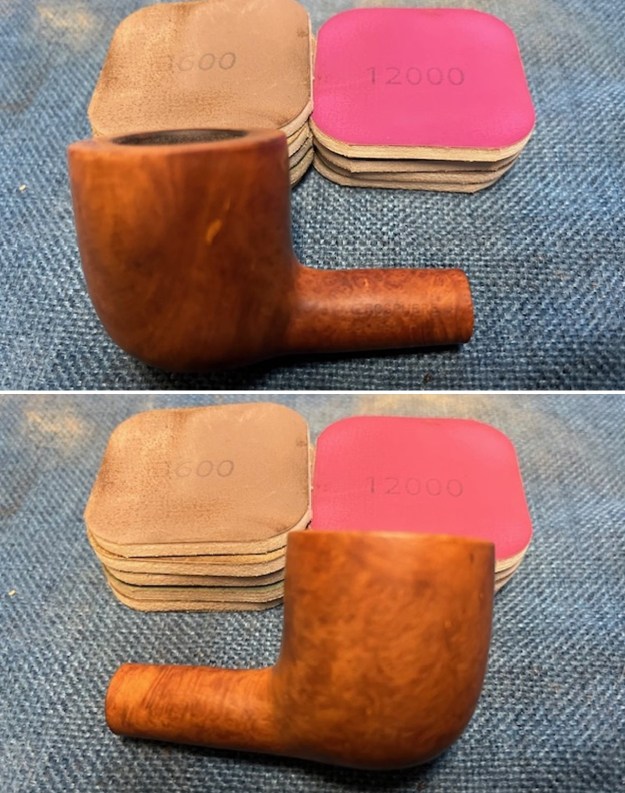
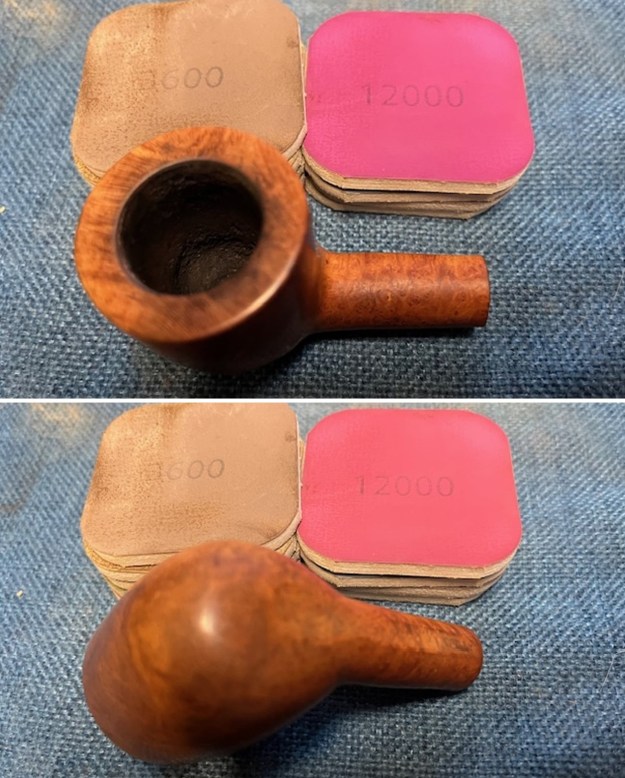
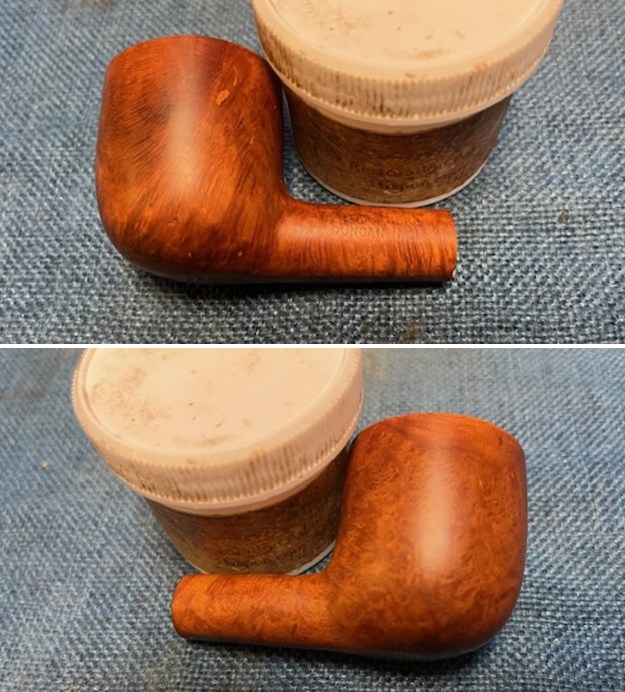
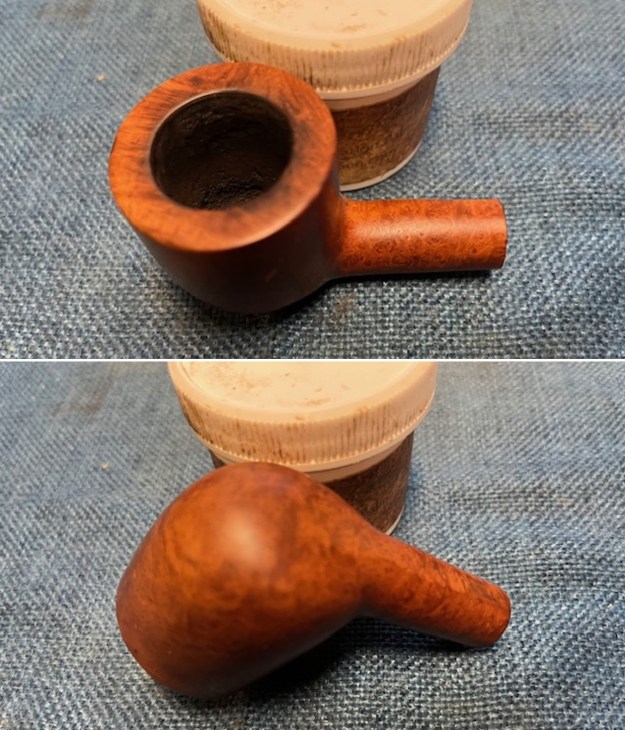
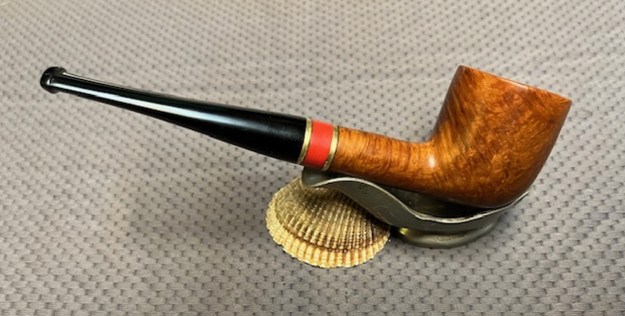
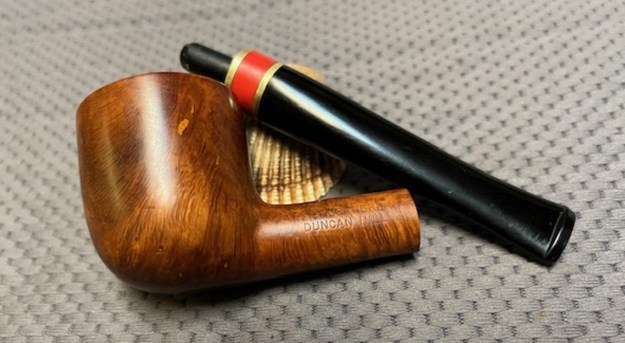
Back in January I received an email from Robert with a group 12 pipes that needed to be restored in various ways from cleanup to restemming. I chose to work on the Duncan Hill Aerosphere bowl next. It is a nice-looking smooth bowled Pot. The bowl and shank were in good condition. The bowl had been reamed at some time so there was no cake in it. The rim top was clean but had some darkening around the top and the inner edge. The finish on the bowl was dirty with some visible fills on the left side of the bowl. The pipe was stamped on the left side of the shank and read Duncan Hill [over] Aerosphere. There was a tenon in the shank and three rings on mortise end of the tenon. There was an orange acrylic ring sandwiched between two brass rings. The bowl came without a stem and I would need to either find an Aerosphere stem or fit the tenon on an existing stem. I took some photos of the pipe to show its condition before I started my work on it. The tenon was removable and I turned it out of the bowl. The sandwiched triple ring fitting on the tenon was also removable.Before I started work on fitting a new stem to the shank I did a bit of work on the brand itself. I Googled Duncan Hill Aerosphere and the first bit I found was from a Google group for ASP. There I found the following quote. I have the reference link placed at the end of the quote if you want to follow up on the information:

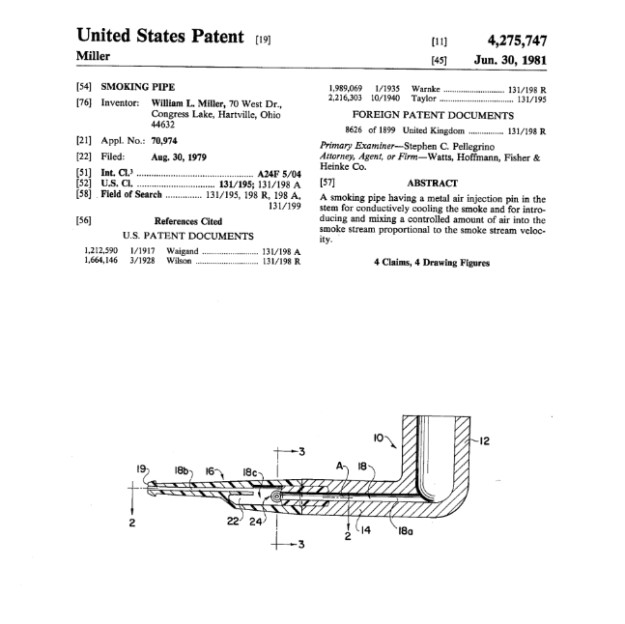
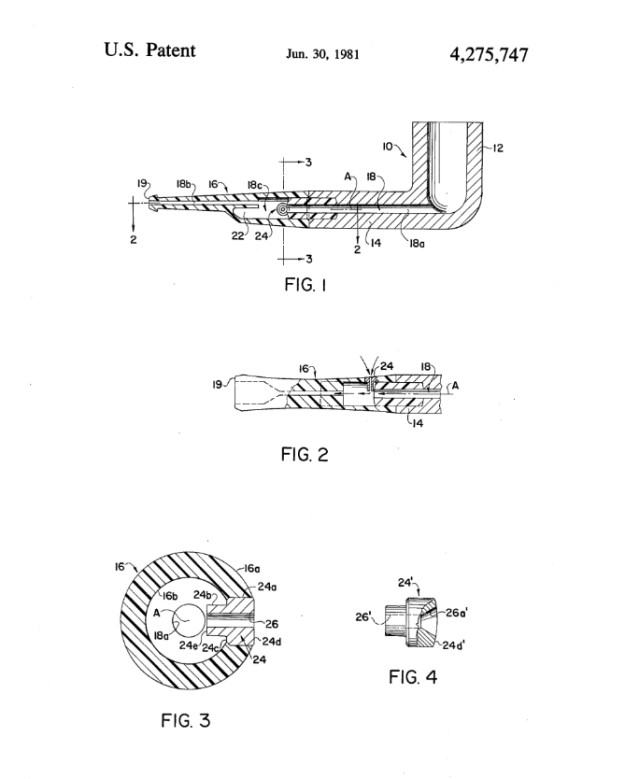
“The Duncan Hill Aerosphere smoking system (U.S. patent #4,275,747) utilizes the same principle of physics as the manometer. The Aerosphere, visible as the brass pin on the side of the mouthpiece, brings a scientifically measured amount of air into the stem with each puff. The control of the amount of air and the velocity of the air produces two effects that result in superior smoking pipe performance.” https://groups.google.com/forum/#!topic/alt.smokers.pipes/GUxdN5Dus4Q

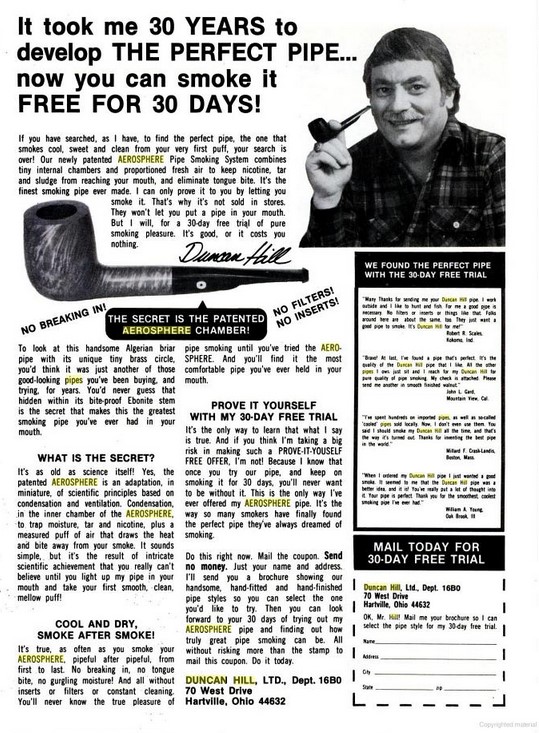
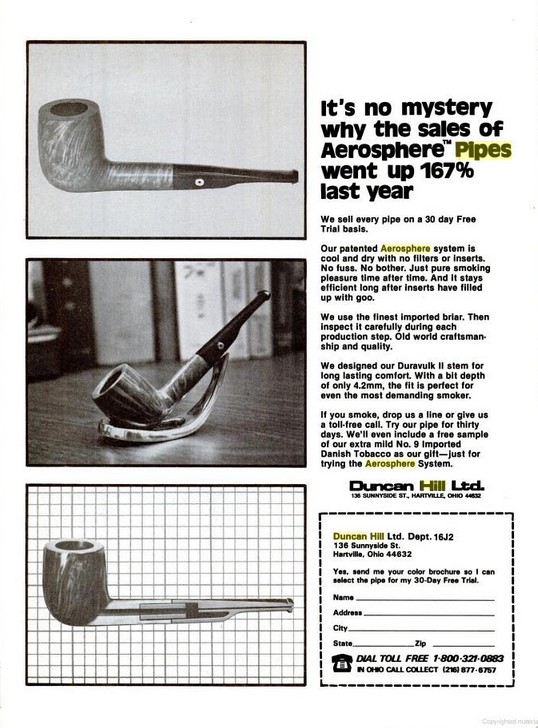
I also found a link to an advertisement for the brand featuring the designer in Popular Mechanics Magazine, February 1980, pg. 31 on Google books. Here is the link:
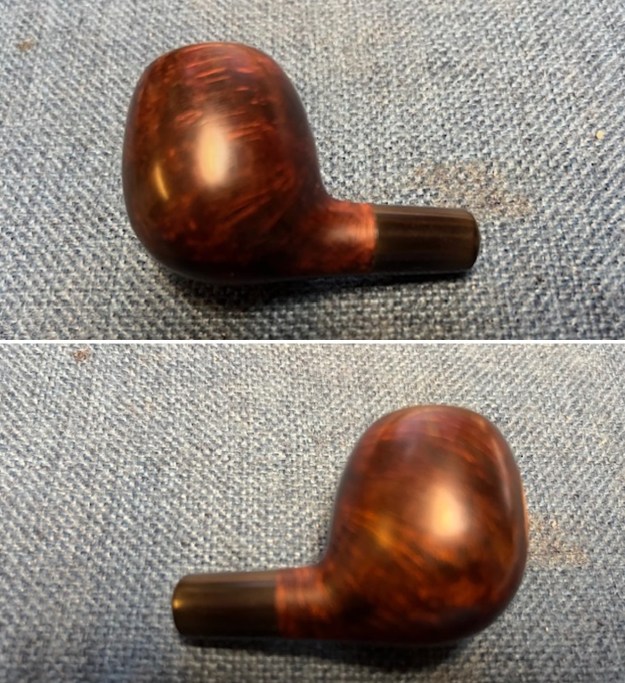
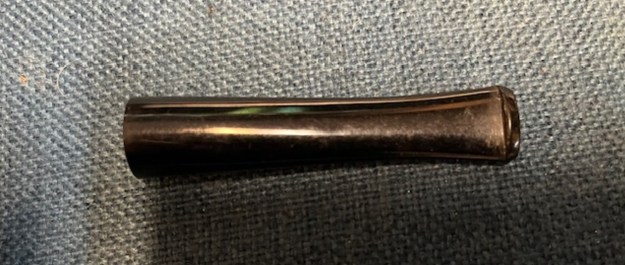
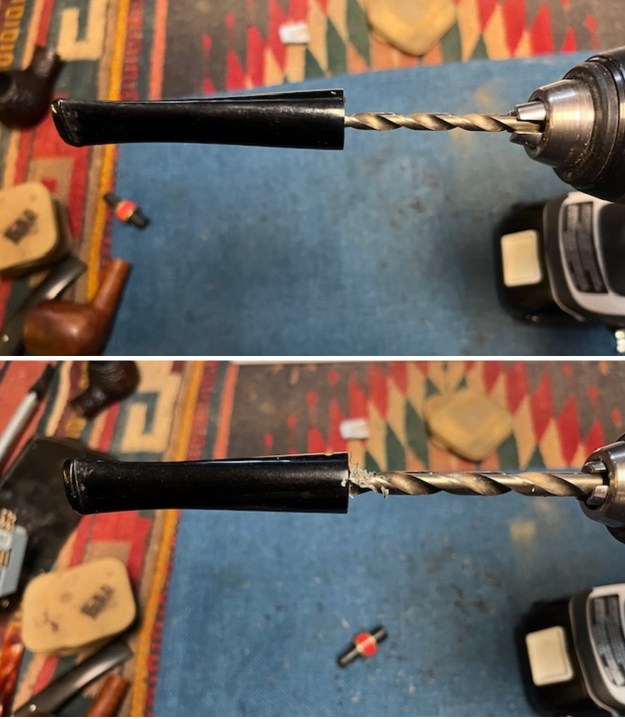
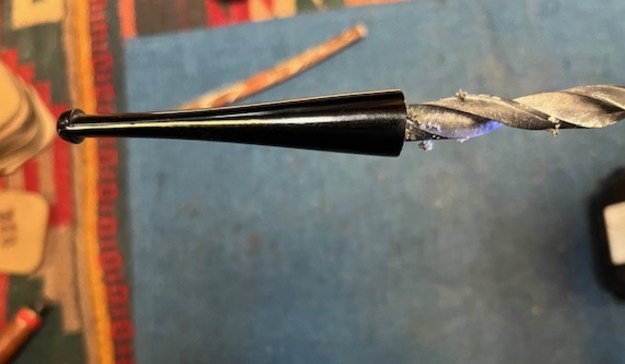
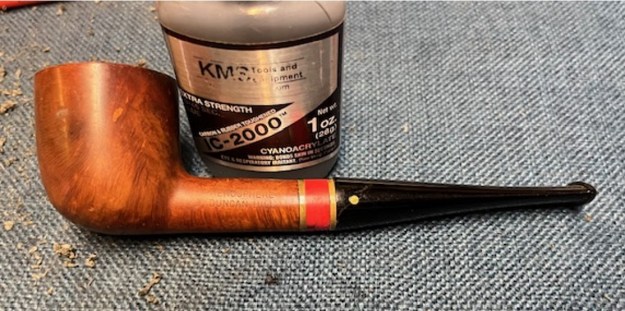
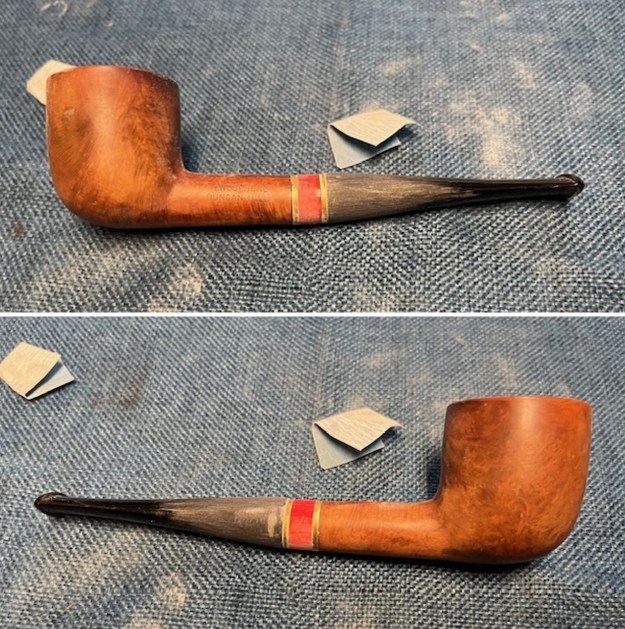
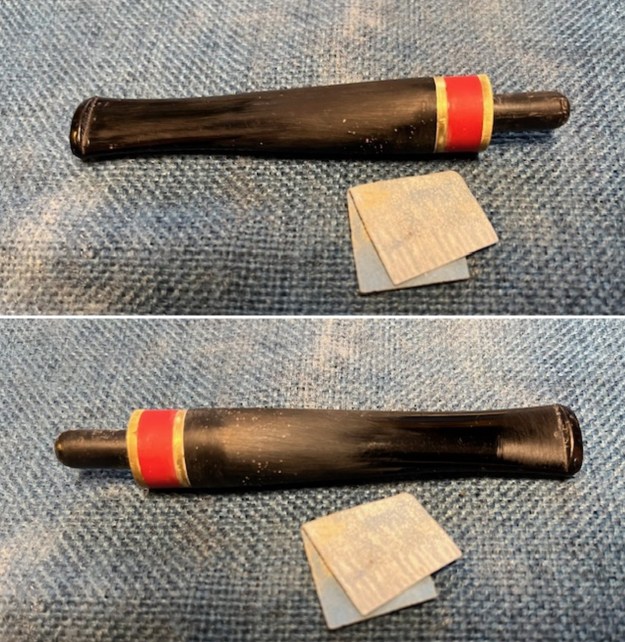
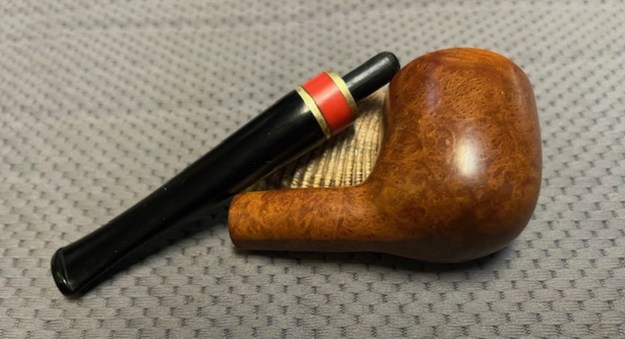
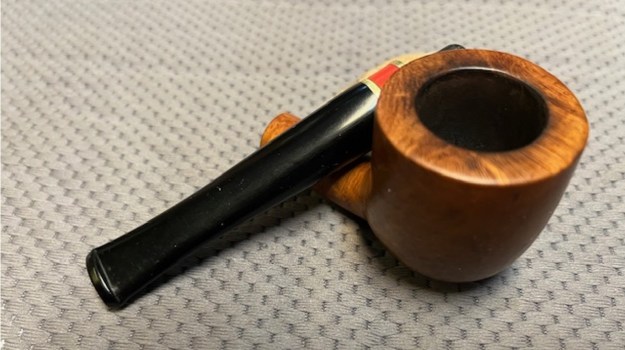
https://books.google.ca/books?id=m9UDAAAAMBAJ&pg=PA31&lpg=PA31&dq=Duncan+Hill+Aerosphere+Pipes&source=bl&ots=tR4egGI0ig&sig=XeACE0-Vh19-1JNcA0kAgS87kRI&hl=en&sa=X&ei=p1QbVbPTEpLvoATEpoLoCQ&ved=0CBwQ6AEwADgU#v=onepage&q=Duncan%20Hill%20Aerosphere%20Pipes&f=false Next is an advertisement from Popular Mechanics Magazine, September 1982, pg. 216 on google books. Here is the link. https://books.google.ca/books?id=f9kDAAAAMBAJ&pg=PA216&lpg=PA216&dq=Duncan+Hill+Aerosphere+Pipes&source=bl&ots=fsZtVqD0z9&sig=Kl3wI-76NJqpFxAg8SPndnnWyqM&hl=en&sa=X&ei=owEcVdGGKdj9oQSD_4L4Bw&ved=0CCgQ6AEwAjgo#v=onepage&q=Duncan%20Hill%20Aerosphere%20Pipes&f=falseFinally using the patent number in the ASP quote I was able to find the patent documents for the pipe on the US Patent Office site. I have included the documents from the US Patent Office here. There are four pages – 2 of drawings and two of description. I love finding this old information and reading about the persistent search for the dryer cooler smoking pipe that has led to many creative solutions. It lends some colour to the work of my refurbishing to be able to read about the design ideas and the inventors themselves as I work on the pipes. Armed with new information it was time to work out a new stem for the pipe. I went through my collection of stems and did not have an Aerosphere stem to replace it with. I did find a nice looking acrylic black stem that would work very well. It did not have a tenon and would need to be drilled out to receive the Duncan Hill tenon I had. The beauty was that the diameter of the shank was very close to the diameter of the stem.I drilled out the airway in the stem with increasingly larger drill bits until I had it open enough to fit the tenon. Once I had it drilled out I checked the fit of the tenon in the shank and in the newly drilled out stem. The fit was perfect in the stem. I painted the tenon end that fit in the stem with black rubberized CA glue. I pressed it in place in the stem and set it aside until the glue cured and the new tenon was solid.With the tenon cured I put the stem on the shank and took a photo of the new stem. Though it did not have the Duncan Hill carburettor on the left side of the stem the fit was good and airflow was perfect. With a few adjustments of the diameter of the stem to match the bands the look was very good and it would provide a great smoke. I started the adjustments to the diameter with a folded piece of 220 grit sandpaper. It took a lot of sanding to get the flow of the stem and band correct but it was starting to look very good. I removed the stem and fine tuned the flow of the decorative band on the stem with 220 grit sandpaper. It was really beginning to look very good at this point.I sanded the stem with 320-3500 grit sanding pads. I wiped the stem down after each sanding pad with a damp cloth to remove the sanding debris. The stem began to take on a rich shine.I polished the stem with micromesh sanding pads – dry sanding it with 1500-12000 grit pads. I wiped it down after each sanding pad with a cloth impregnated with Obsidian Oil. The stem looked very good. Before I turned to work on the bowl as a whole I took time to clean out the shank, mortise and the airway in both the shank and the new stem. The shank was very dirty and the airway was clogged. I used a straightened paper clip to poke through the clog and break it up. The airflow is great now.I now turned my attention to the bowl. I wiped down the bowl with acetone to remove the shine varnish coat from the surface. It looked much better and with sanding and polishing would look very good. I used a folded piece of 220 grit sandpaper to clean up the inner edge of the rim and to sand out the darkening on the rim top. It looked better but there was more to be done.I sanded the bowl with 320-3500 grit sanding pads to further smooth it out and remove the nicks and scratches in the briar. The bowl was progressing in smoothness and beauty. I polished the briar with the nine micromesh sanding pads – dry sanding with 1500-12000 grit pads. I wiped the bowl down with a damp cloth after each pad. The bowl took on a rich shine. I rubbed the bowl down with Before & After Restoration Balm. It is a paste/balm that works to deep clean the finish, enliven and protect the briar. I worked it into the briar with my finger tips to make sure that it covered every square inch of the pipe. I set it aside for 10 minutes to let it do its work. I buffed it with a cotton cloth. The briar really began to have a deep shine. The photos I took of the bowl at this point mark the progress in the restoration. I put the Duncan Hill Aerosphere Pot Bowl and the new stem together. I polished the bowl and stem with Blue Diamond to polish the briar and the vulcanite. I gave the bowl multiple coats of Conservator’s Wax and the stem multiple coats of carnauba wax. I buffed the pipe with a clean buffing pad to raise the shine. I hand buffed it with a microfiber cloth to deepen the shine. The pipe polished up pretty nicely. The original brown stains worked amazingly well with the polished vulcanite taper stem. The grain around the bowl and shank and looks quite remarkable. This is truly a beautiful Duncan Hill Aerosphere. The finished pipe is shown in the photos below. The dimensions of the pipe are Length: 6 inches, Height: 1 ½ inches, Outside diameter of the bowl: 1 ½ inches, Chamber diameter: 7/8 of an inch. The weight of the pipe is 1.52 ounces/42 grams. This is such a unique shape that I am going to enjoy it for awhile before deciding what to do with it. Thanks for walking through the restoration with me. Cheers.

As always, I encourage your questions and comments as you read the blog. Thanks to each of you who are reading this blog. Remember we are not pipe owners; we are pipe men and women who hold our pipes in trust until they pass on into the trust of those who follow us.

Restemming and Restoring a Rogers Rarity Imported Bruyere 310 Bulldog


by Steve Laug

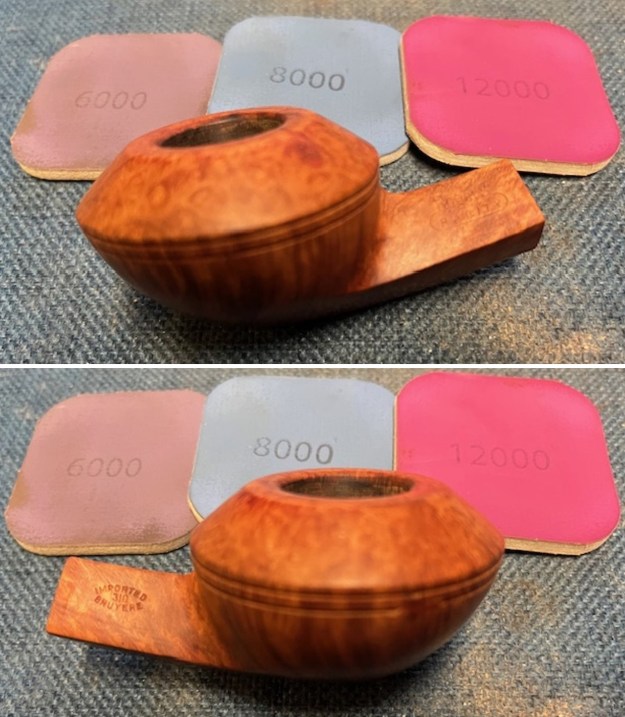
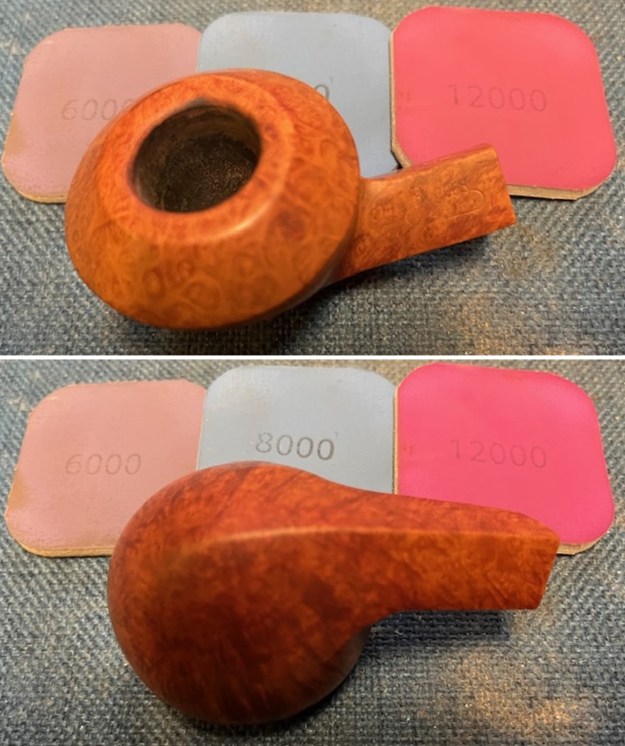
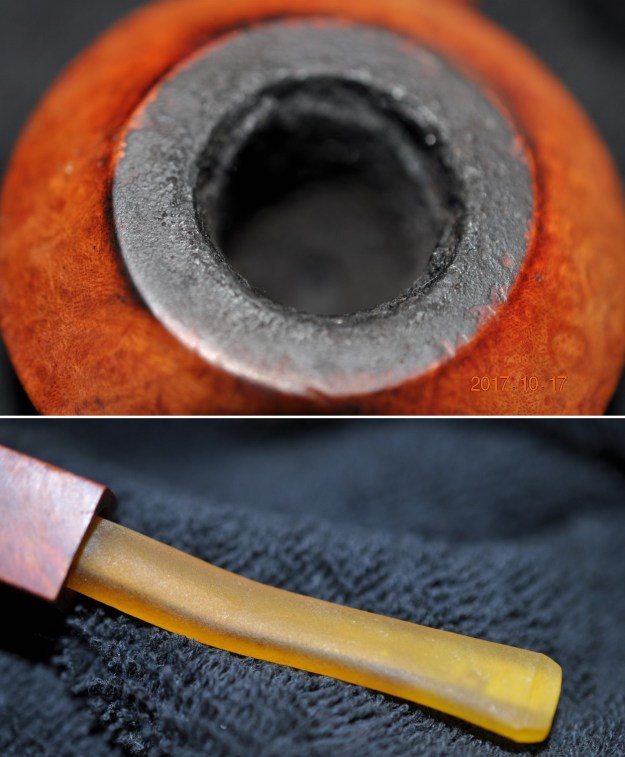
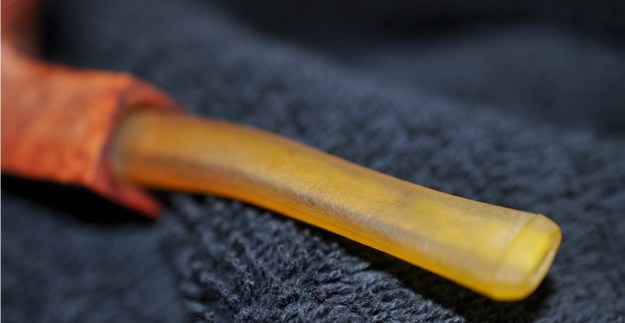
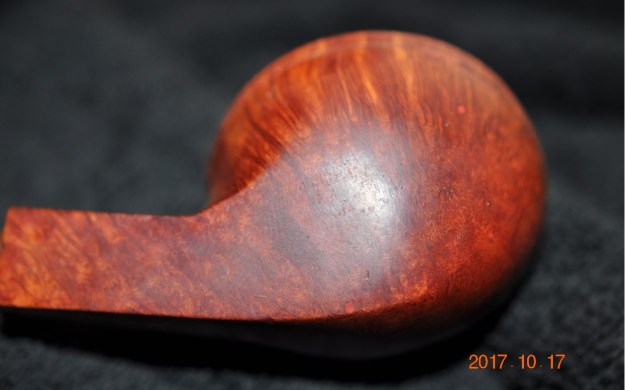
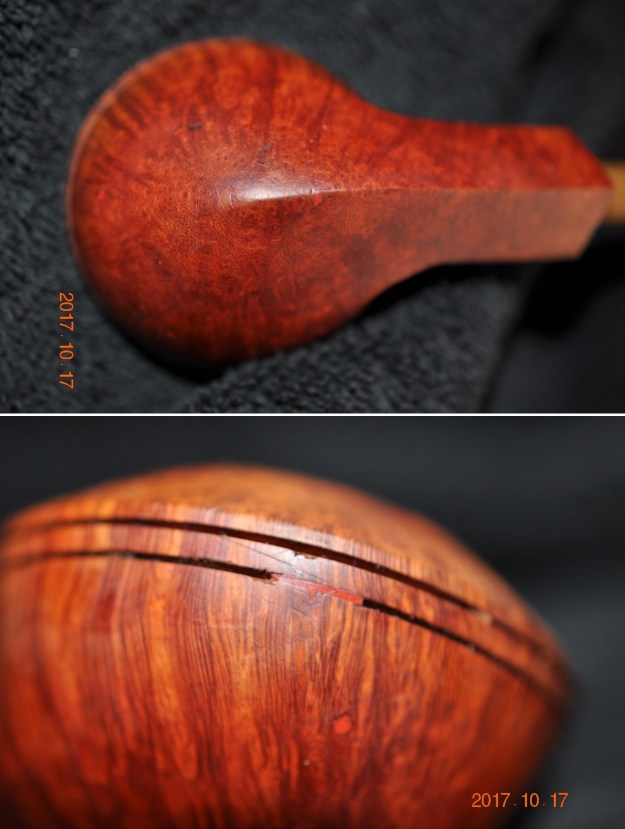
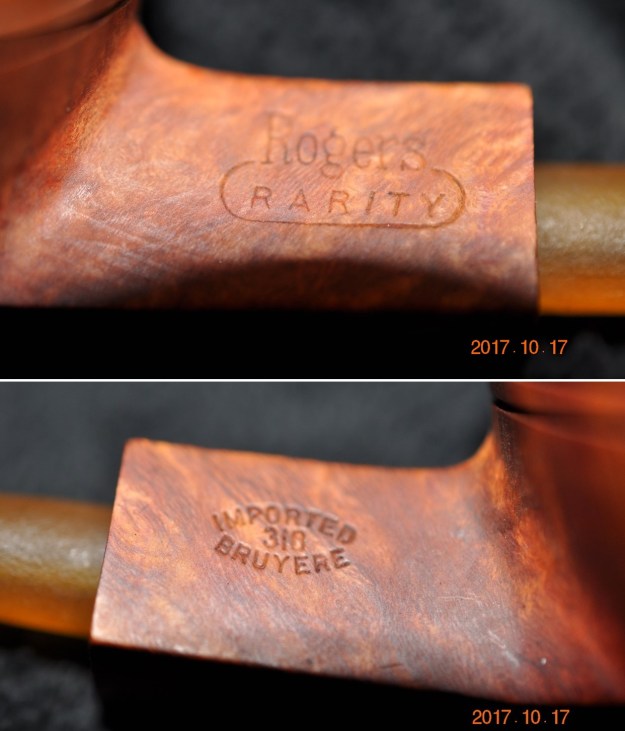
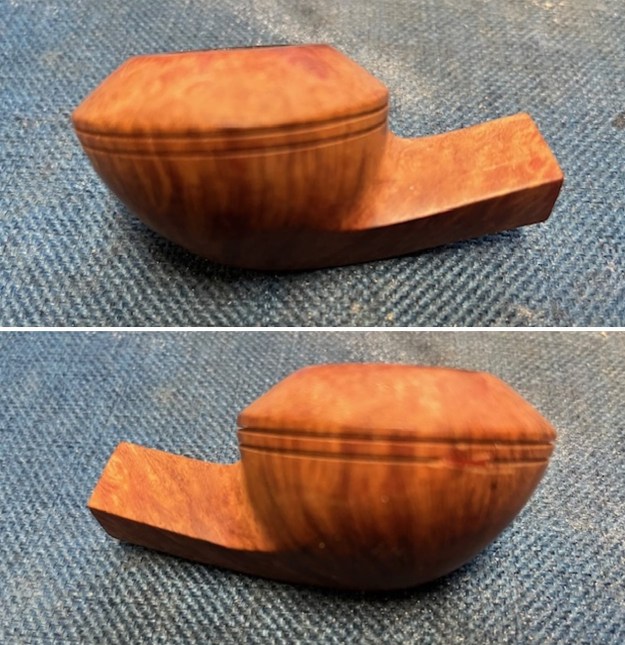
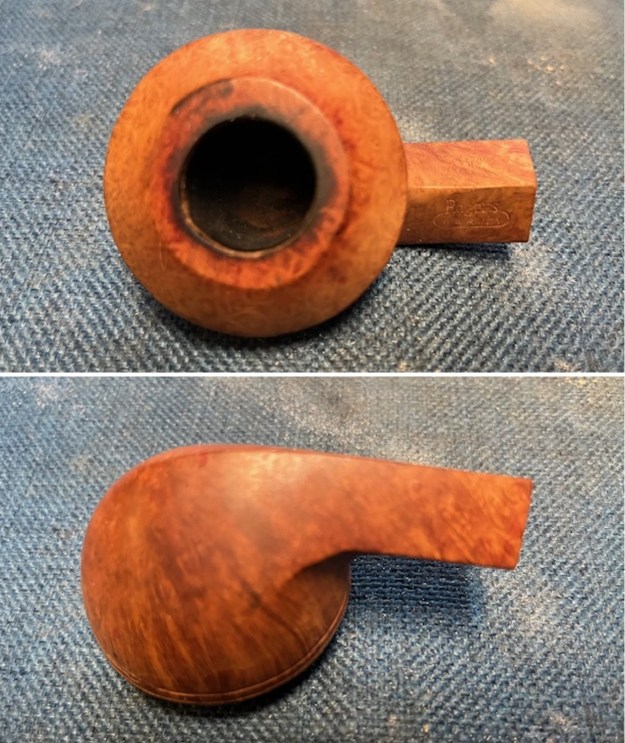
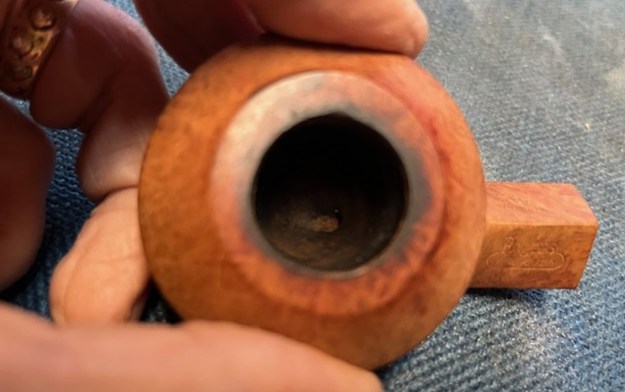
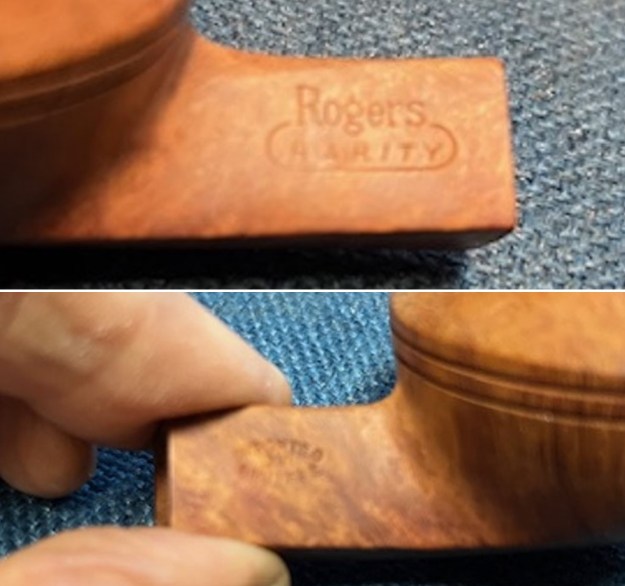
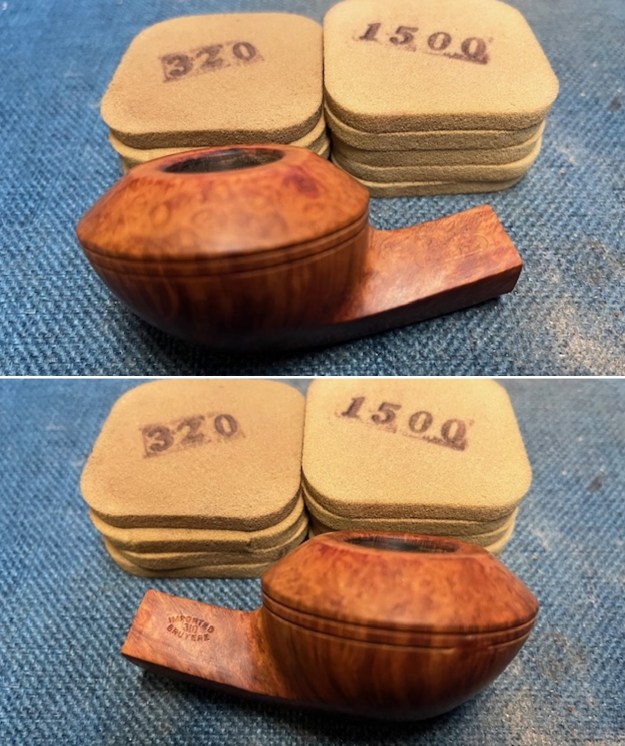
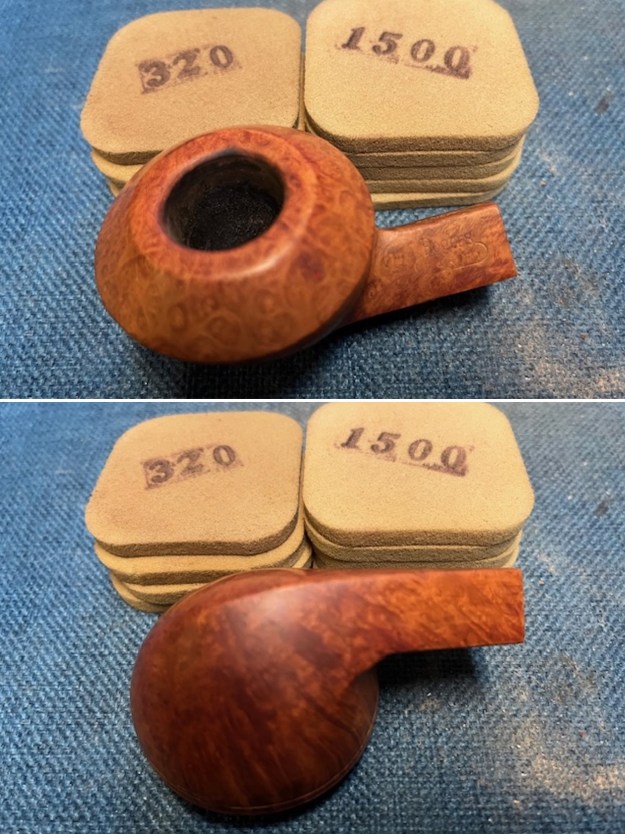
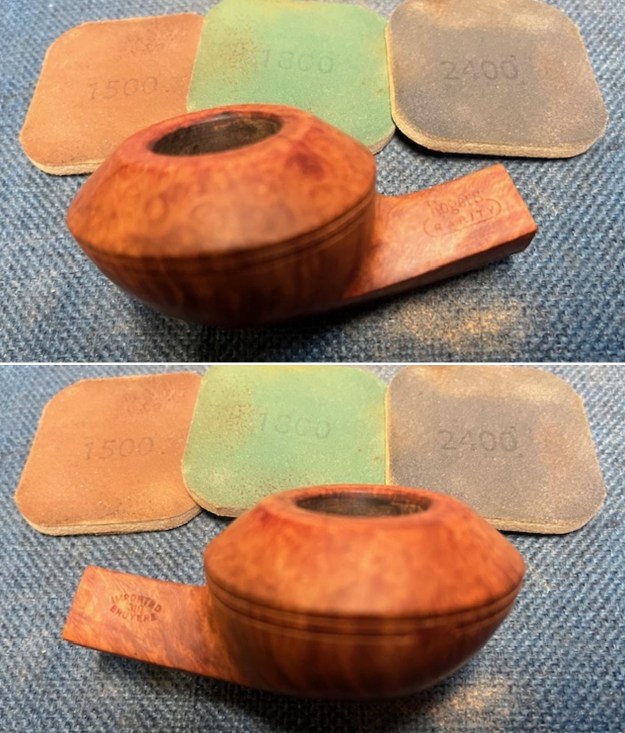
I decided to restem another bowl that I had here in the box. Jeff and I purchased on 10/17/2017 from am antique shop in Pocatello, Idaho, USA. It is a nicely grained bowl that came with some odd stem stuck in the shank. It was obviously the wrong one so it would have to go. The left side of the shank is stamped and reads Rogers [over] Rarity in an oval. The right side is stamped Imported [arched over] the shape number 310 and underneath was arched Bruyere. The bowl had a thick cake and lava overflow on the rim top and inner edge. The briar is oily and dirty with some lava coming down the outer edge of the rim top onto the bullcap. There was some great grain hidden by the grime. Jeff took some photos of the pipe before he started his work on cleaning it up. He included photos of the stem that came on it when we purchased it.He captured the cake in the bowl and the thick eruption of lava on the rim top and edges exceptionally well in the next photo. It was very clear that the pipe had not been seriously cleaned in a very long time. But it is also very clear that it was an exceptional smoker! The incorrect stem is oxidized and dull with tooth marks and chatter on both sides ahead of the button. It was going to be replaced but I always find it interesting to see what pipesmokers do to make a pipe remain usable. Jeff somehow captured some of the beauty of the shape and the grain in the next photos. You can certainly see what lies beneath the grime on the briar. You can also see a few small fills in the bowl and along the twin rings of the bullcap. He took photos of the stamping on the top left and right of the shank. It is clear and readable as noted above.From reading Bill Unger’s book on Custom-Bilt Pipes I remember “Rogers Rarity” was made by the same company as one of its non-sculptured or rusticated pipes. I did a Google search to see if I could confirm that online. I found a pipe labeled Rogers Rarity for sale on Worthpoint, an online sales site (https://www.worthpoint.com/worthopedia/rogers-rarity-custombilt-large-briar-1821532853). In the description they made the link to Custombilt. I quote:
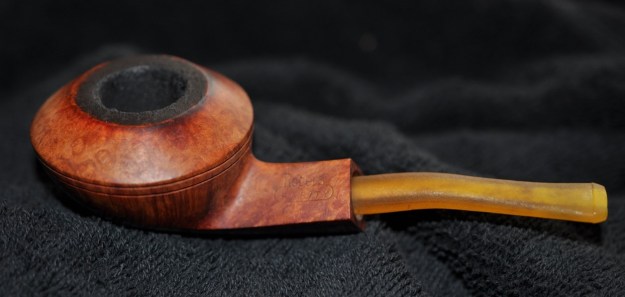
Rogers Rarity briar pipes were made by Custombilt, and show all the beauty and originality of the brand.

I searched further and found a conversation asking about the brand on Pipesmagazine online forum. There was a great conversation about the brand.

(https://pipesmagazine.com/forums/threads/help-with-dating-a-pipe.62314/). I found a particular response by Jon Guss of the Seattle Pipe Club particularly helpful. I quote from Jon in full.

First, “Rodgers” is a misspelling; it was always spelled “Rogers”. Three generations of the Rogers family ran one of the leading importers of pipes (including Petersons for a number of years) and resellers of pipes and smokers articles; they also did a bit of manufacturing. The name of the company was Rogers Imports, Inc.

Second, for several reasons I also believe that Rogers Rarity pipes were made for Rogers Imports by CustomBilt.

The Rogers Rarity line was introduced by the company in late 1945. The advertising copy from the spring of 1946 described Rogers Rarity pipes as “The height of pipe luxury and enjoyment”, and claimed that they were “Carved by hand of Algerian bruyere over 150 years old”. Was it true? I would guess not, but age fabrication regarding the briar from which pipes were made was a kind of industry trope for generations. While most of the Rarity pipes apparently sold for $5, the listed price range stated various models cost from $5-25. The $5 pipes were available in natural and grain finishes; there was also a $10 version called the Rogers Rarity Deluxe that was sterling banded and meerschaum lined.

I can’t be sure when the line ceased production, but believe it was by the end of 1949. Certainly Rogers Rarity pipes are no longer listed in the RTDA Almanac from 1950 on, and mentions of the pipe in advertisements to consumers become thin on the ground. More tellingly newspaper ads from 1951 show the pipe heavily discounted, suggesting that excess inventory of an obsolete line was being flushed through the channel…

Now I knew that my memory was correct. The pipe was made by CustomBilt for Rogers Imports. I also knew that it was made between 1945-1949 when the line was no longer made. It was a bit of an old timer… Now it was time to work on the pipe.

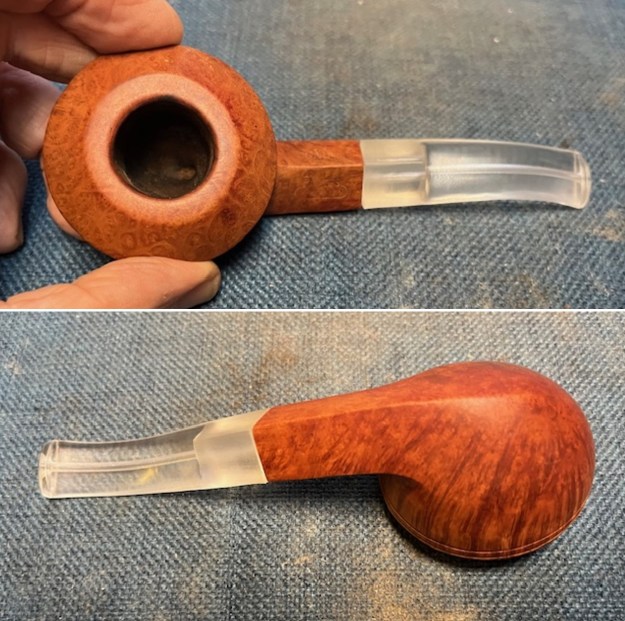
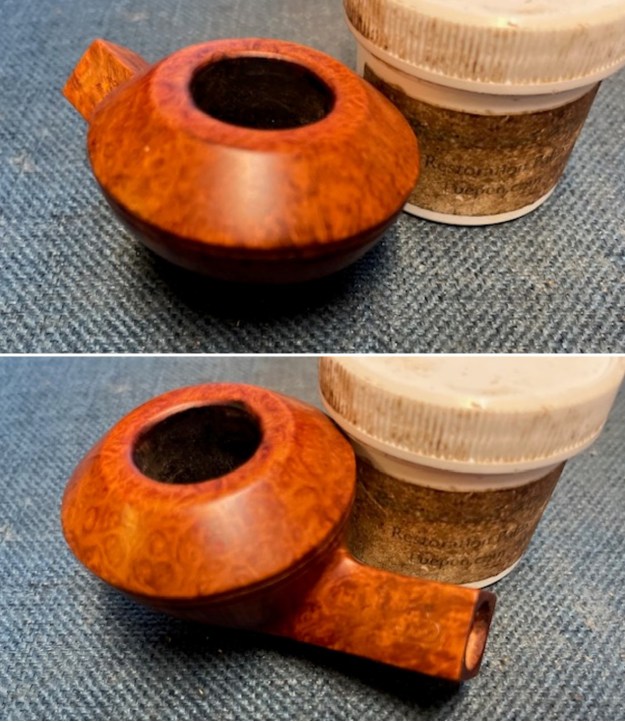
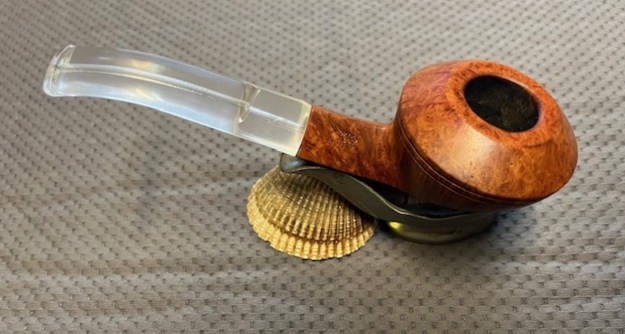
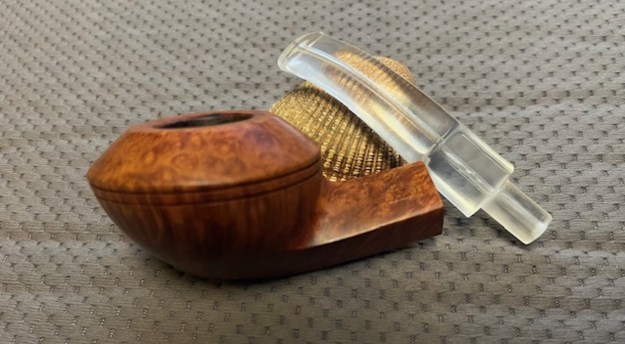
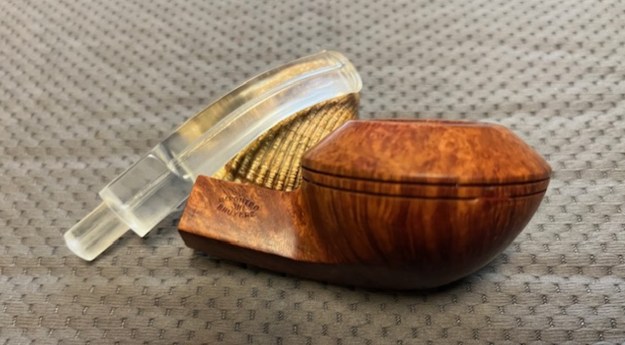
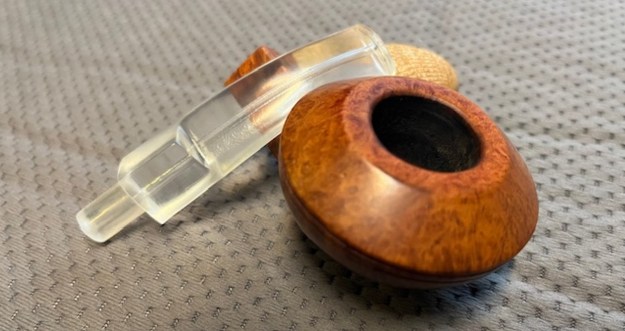
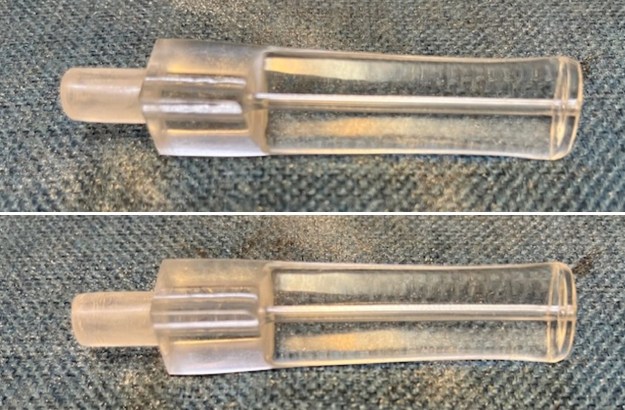
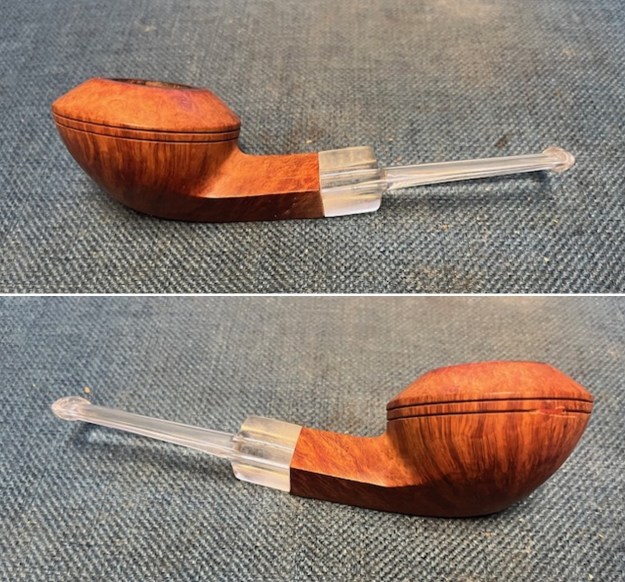
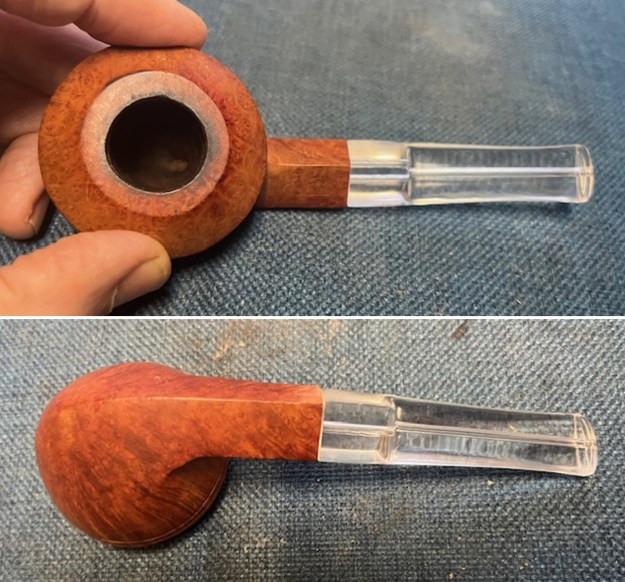
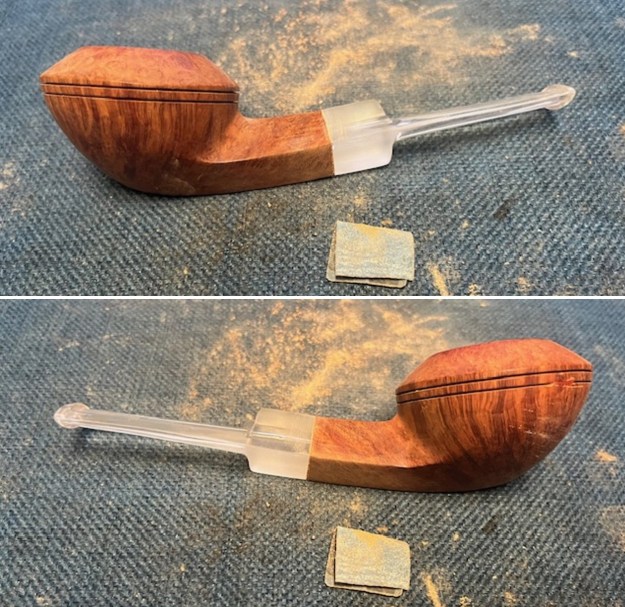
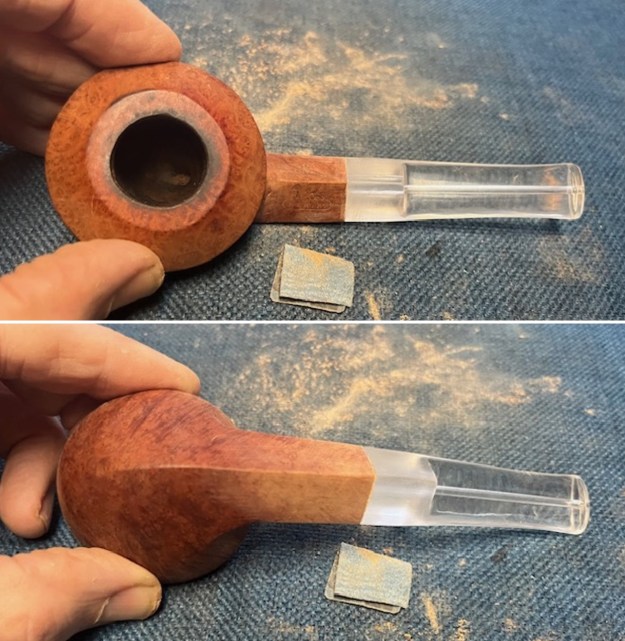
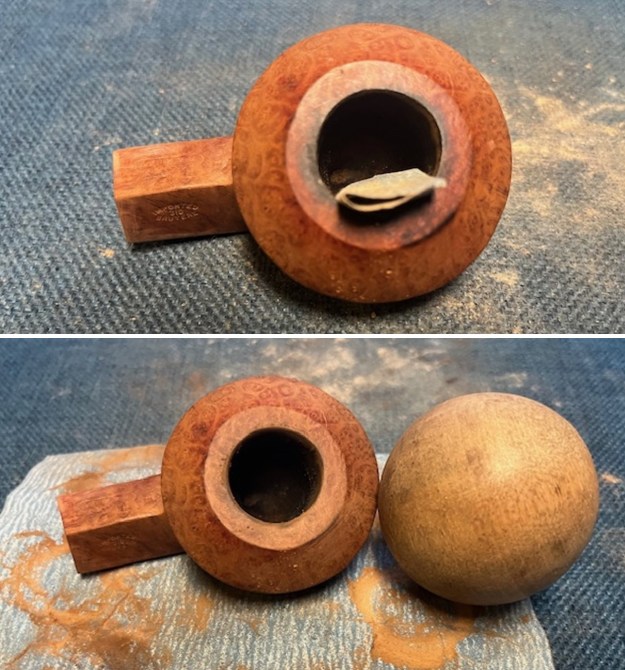
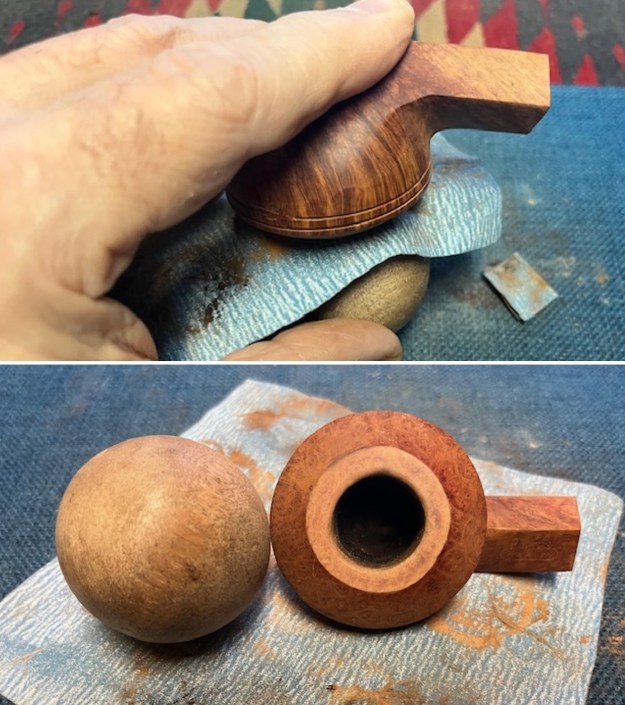
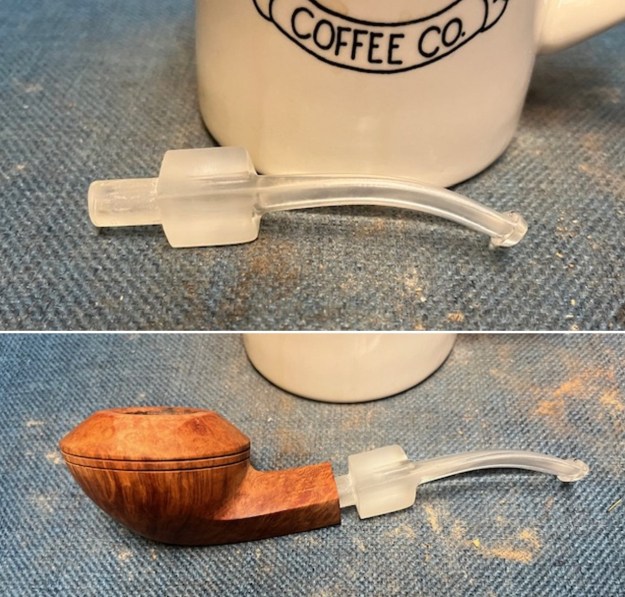
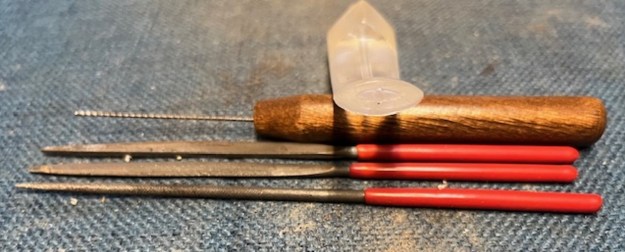
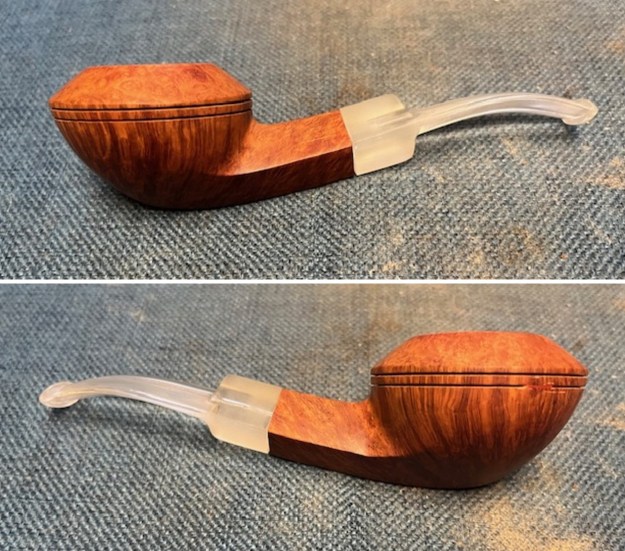
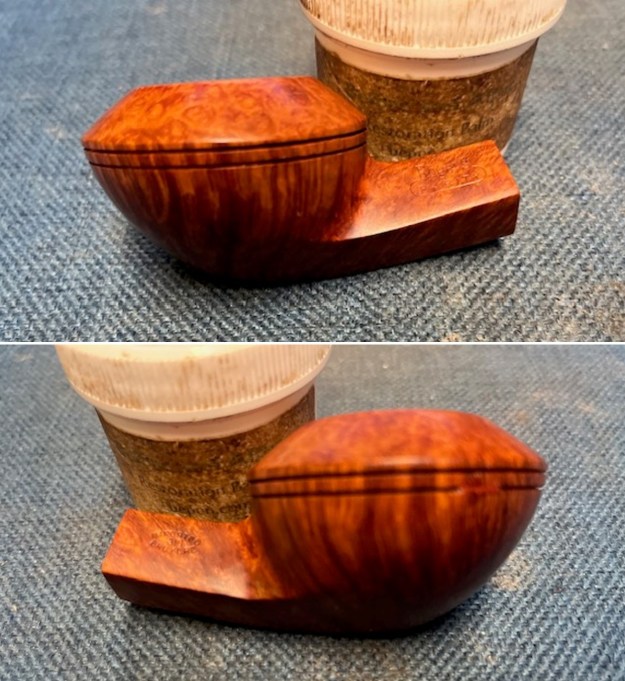
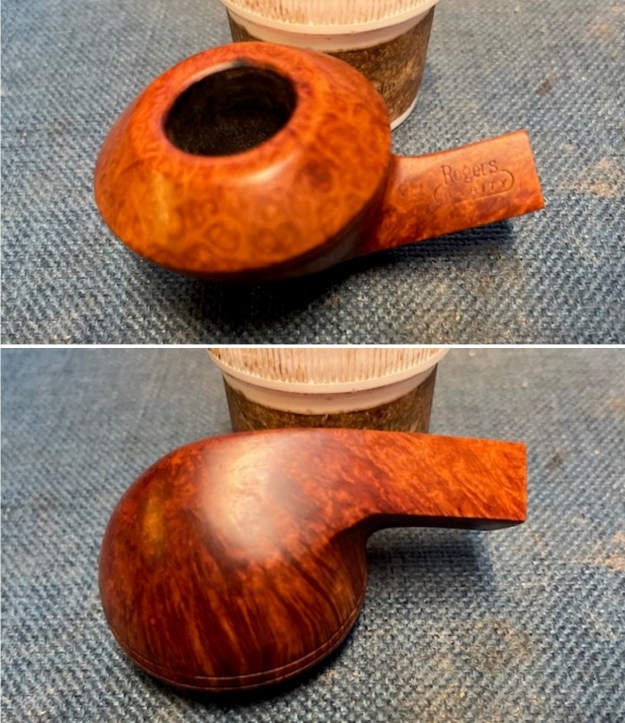
I was amazed at how clean and new the pipe looked when I took it out of the box. It is really a beautiful piece. Jeff had done a great cleanup on the pipe. He reamed the bowl with a PipNet pipe reamer and followed up with a Savinelli Fitsall pipe knife to remove the cake. He scrubbed out the mortise and the airway in the shank and the stem with alcohol, cotton swabs and pipe cleaners. He scrubbed the bowl exterior with a tooth brush and Murphy’s Oil Soap to remove the grime on the finish of the bowl and the lava from the rim top. He rinsed it under running water. One of the benefits of this scrub is that it also tends to lift some of the scratches and nicks in the surface of the briar. He dried it off with a soft cloth. We put the stem in our stem can. I took photos of the pipe bowl as I saw it when I put it on the table. I took photos of the rim top to show the condition. The rim top had some darkening on the top and outer edge but did not look deeply damaged. The inner edge of the bowl showed some damage and was slightly out of round.The stamping on the top left and right sides of the diamond shaped shank are clear and readable as noted above.I started my work on this pipe by fitting a new stem to the shank. Once I had that done I would move on to cleaning up the bowl. I had a stem picked out that was a clear/Perspex style acrylic that would look great on this pipe. I first adjusted the fit of the tenon to the shank with my Dremel, files and sandpaper. Once I had a fit I took some photos. I think the stem would work very well with this pipe. As is usual with pipes the shank was not a true diamond and I needed to adjust the facets of the diamond shank to properly match those of the shank. I did this by hand using a folded piece of 220 grit sandpaper. I was fortunate that the top facets lined up well so I could avoid the stamping on them. I set the stem aside and dealt with the damage to the inner edge of the bowl. I used a folded piece of 220 grit sandpaper to smooth out the inner edge and give it form once again. It worked quite well. Then I used a wooden sphere and a piece of 220 grit sandpaper to lightly bevel the inner edge of the rim to remove the burn damage. The result was actually quite good. I sanded the bowl with 320-3500 grit sanding pads. I worked over the rim top, bowl sides, shank (carefully avoiding the stamping). I wiped it down with a damp cloth after each sanding pad. The briar began to look very good and the grain richly shone. I polished the briar with 1200-1500 micromesh sanding pads and wiping it down with damp cloth after each sanding pad. As I worked through the cycle of pads the shine developed with each change of pad. The pipe looks very good. Now it was time to bend the stem. I have had better luck bending acrylic/Perspex stems with boiling water than a heat gun. I boiled some water in the microwave and put the stem in the hot water. I repeated it several times to soften the acrylic. I bent it over a pill bottle to give it a correct bend. I set the bend with cool water. I put it partially in the shank to check the bend. I and happy with the way it turned out. It had a nice smooth bend.The button had a small round opening. I used a slot saw and three different files to shape an oval slot in the shank. It was a well-shaped slot that I smoothed out. With the bend in the stem and new slot it was very workable. I fit the stem in shank and took photos of the new look to the slightly bent bulldog. The Perspex stem fit well and looked very good. I removed the stem and rubbed the bowl and shank down with Before & After Restoration Balm. I worked it into the surface of the bowl sides and shank with my fingertips to clean, enliven and protect the briar. I let the balm sit for 10 minutes, then buffed with a cotton cloth to raise the shine. The Balm did its magic and the grain stood out on the briar. I set the bowl aside and turned my attention to polishing the stem. I sanded it with 320-3500 grit sanding pads. I wiped it down between pads with a Obsidian Oil impregnated cloth. It was looking much better.I polished the stem with micromesh sanding pads – dry sanding with 1500-12000 grit sanding pads. I wiped it down after each sanding pad with Obsidian Oil. I polished it with Before & After Pipe Stem Polish – both Fine and Extra Fine. I wiped down again with Obsidian Oil and set it aside while I worked on the stem. This Chubby 1945-49 Rogers Rarity 310 Bent Bulldog with an Acrylic/Perspex saddle stem is a well grained pipe with a flowing shape that looks great. The rich browns of the darkened natural finish make the grain come alive with the polishing and waxing. I put the stem back on the bowl and carefully buffed the pipe with Blue Diamond on the buffing wheel using a light touch on the briar. I gave the bowl and the stem multiple coats of carnauba wax on the buffing wheel and followed that by buffing the entire pipe with a clean buffing pad. I hand buffed the pipe with a microfiber cloth to deepen the shine. The finished Rogers Rarity Bent Bulldog really is a beauty and fits nicely in the hand and looks very good. Give the finished pipe a look in the photos below. The dimensions of the pipe are Length: 6 inches, Height: 1 ¾ inches, Outside diameter of the bowl: 2 ¼ inches, Chamber diameter: ¾ of an inch. The weight of the pipe is 1.90 ounces/54 grams. This old timer will soon be on the American Pipe Makers Section of the rebornpipes store if you would like to add it to your collection. Thanks for reading this blog and my reflections on the pipe while I worked on it.
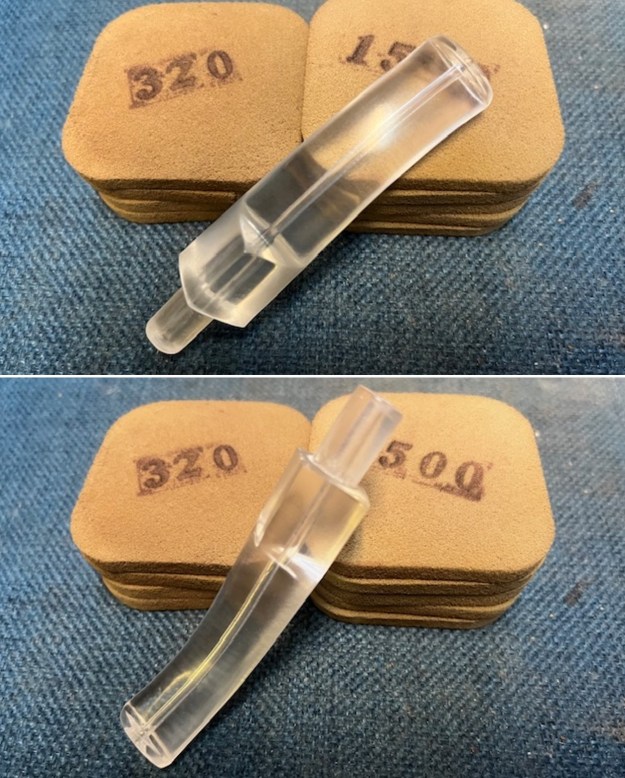
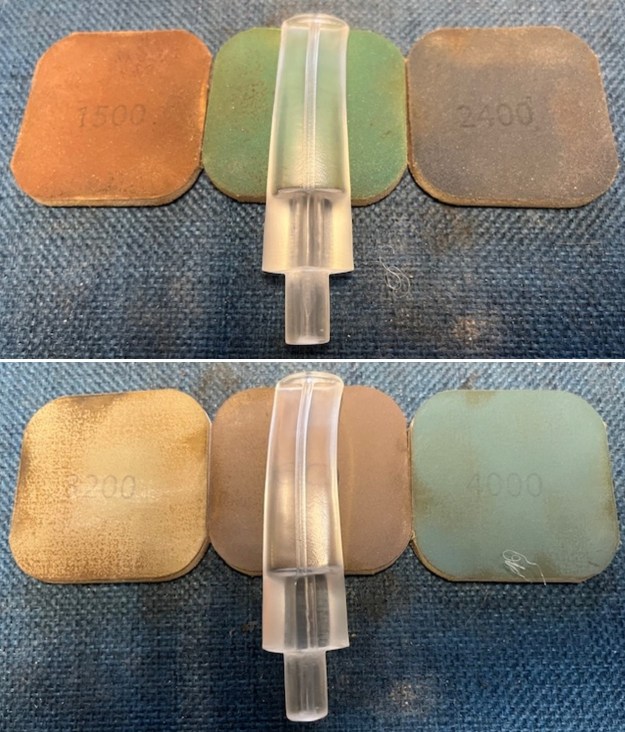
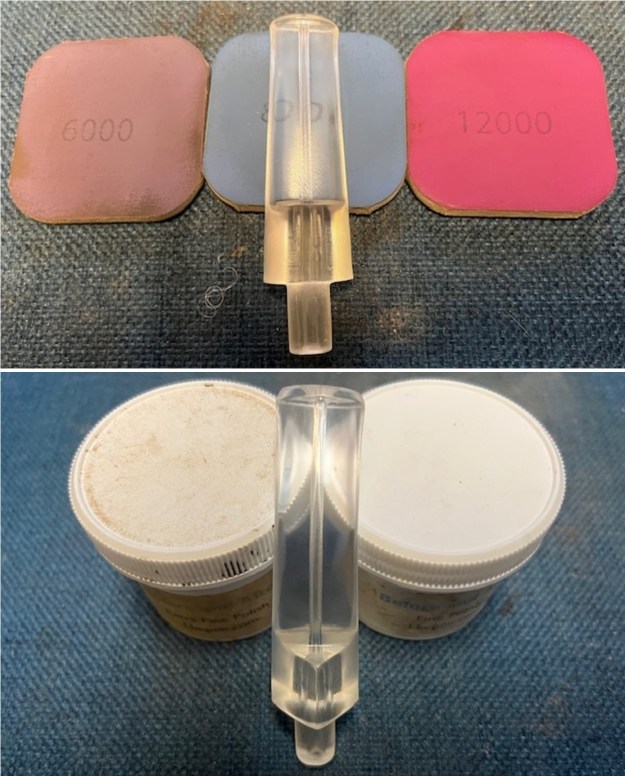
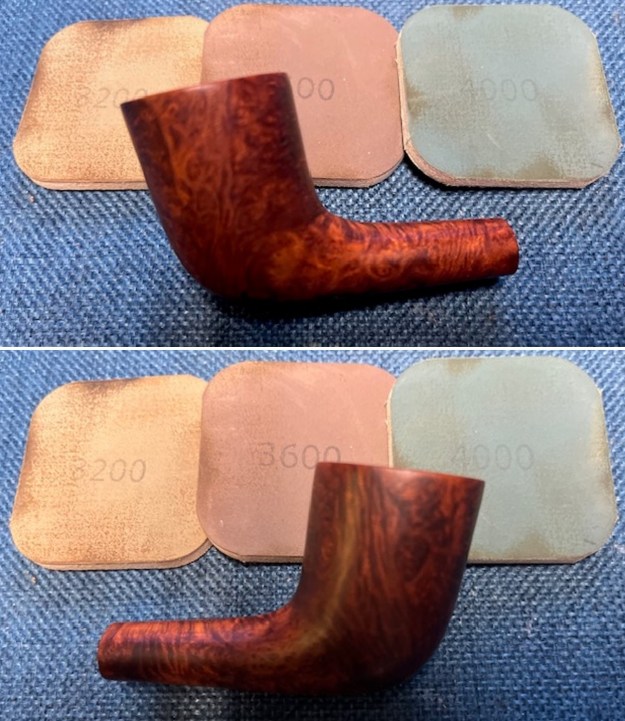
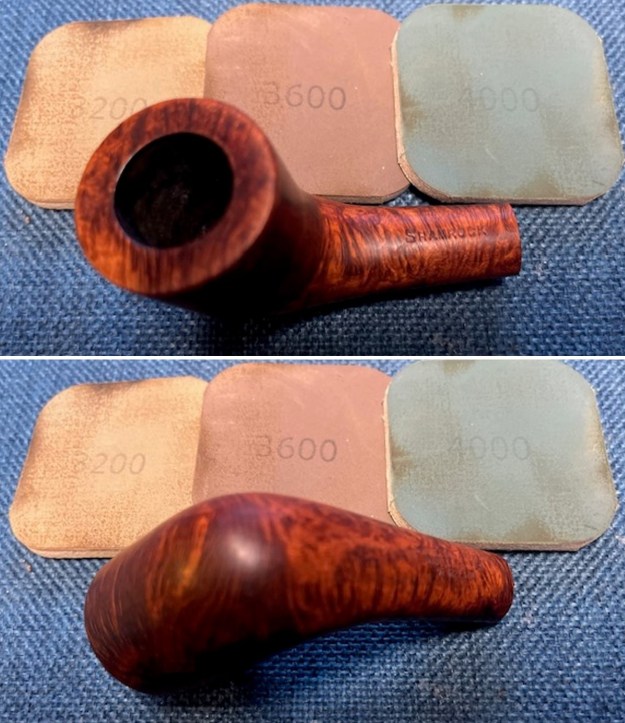
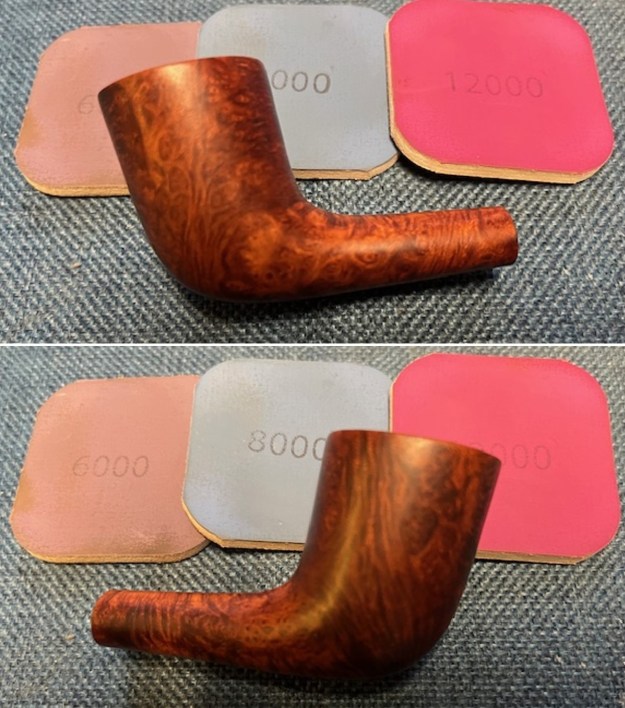
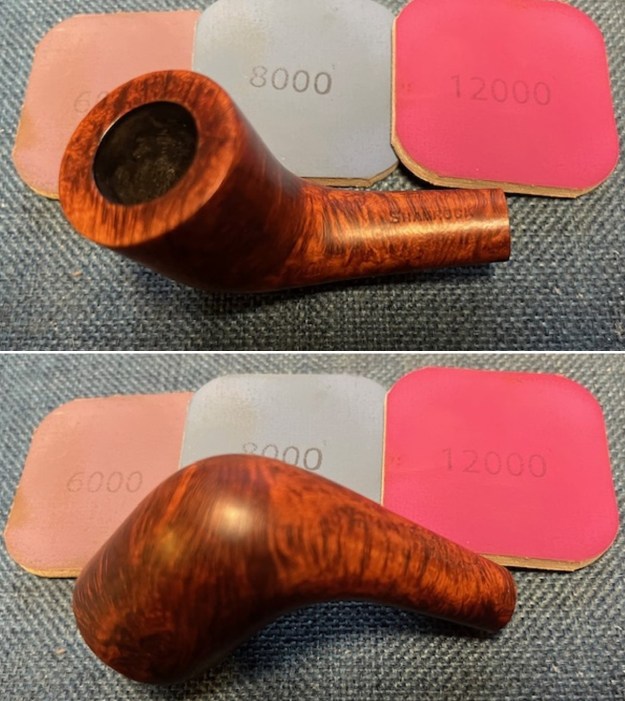
Restoring “A Peterson’s Product” Made in the Rep. of Ireland Shamrock 268 Zulu


by Steve Laug

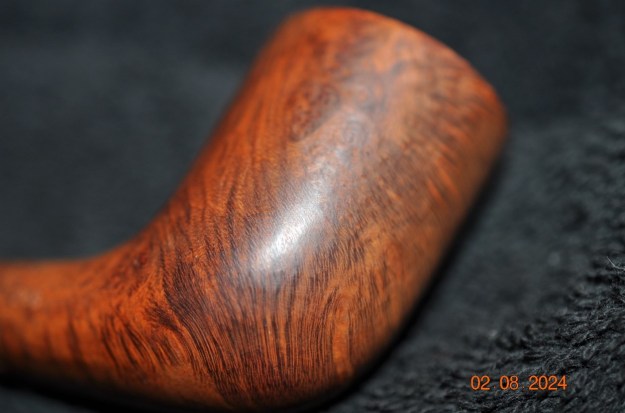
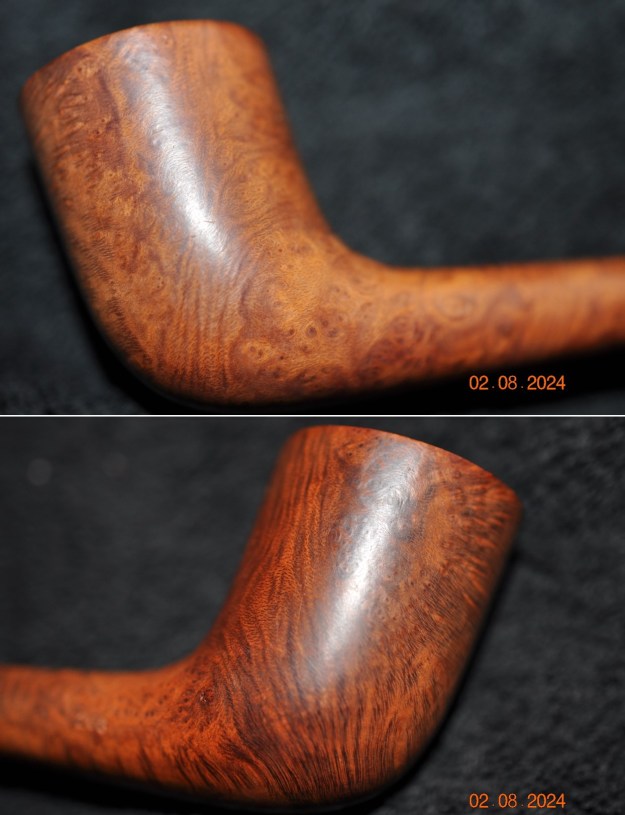
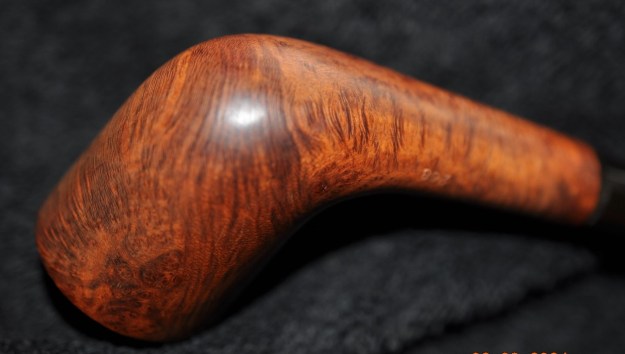
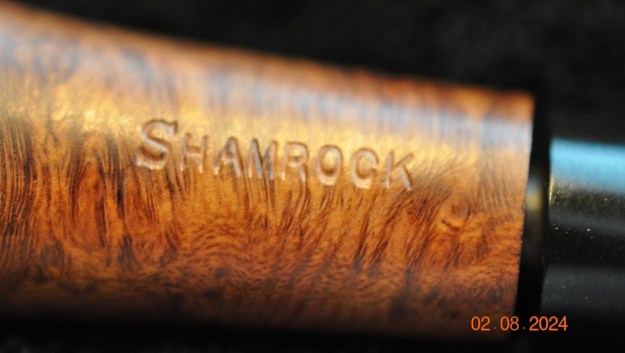
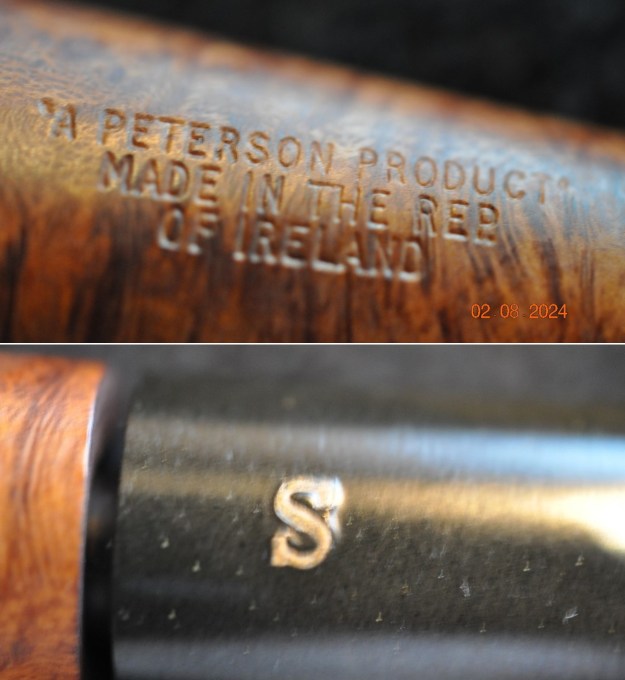
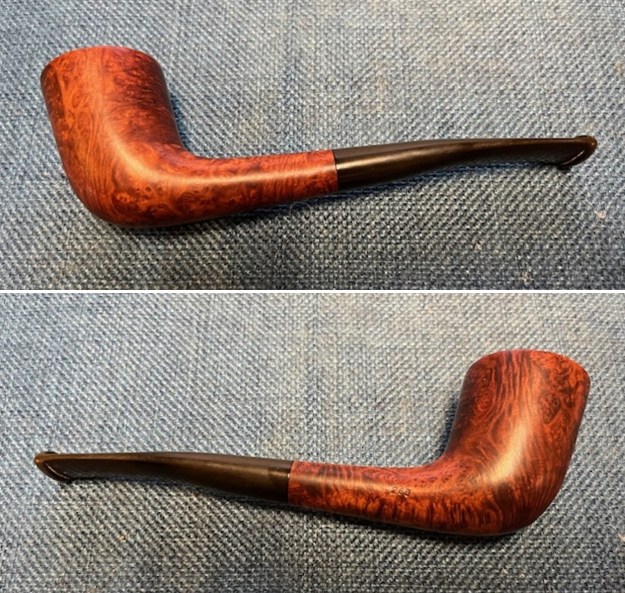
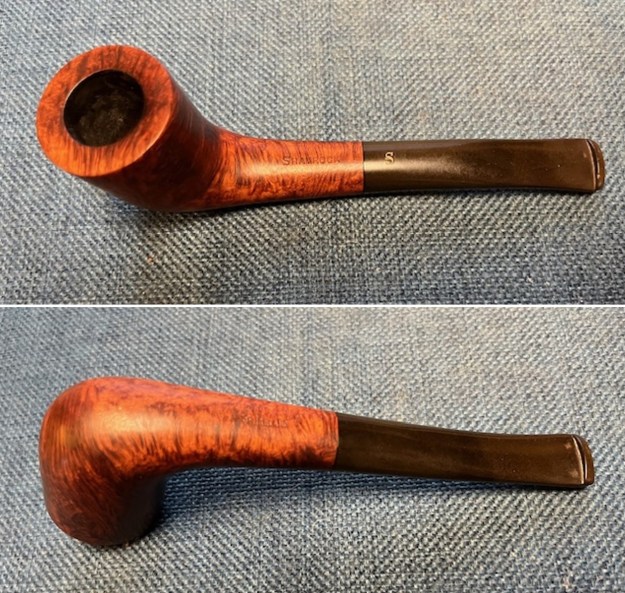
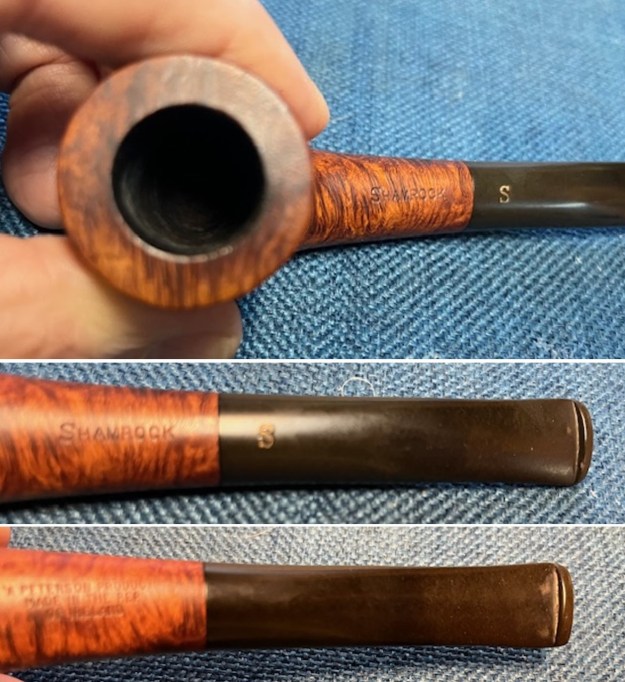
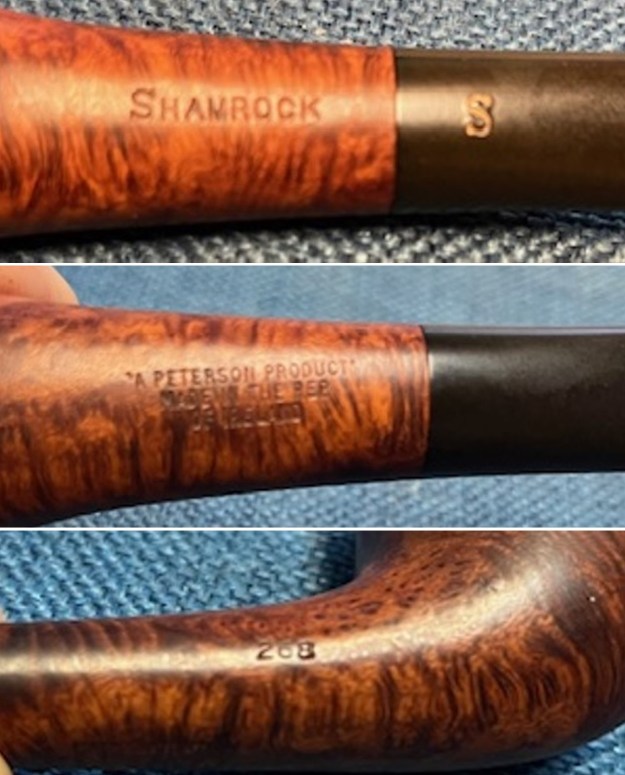
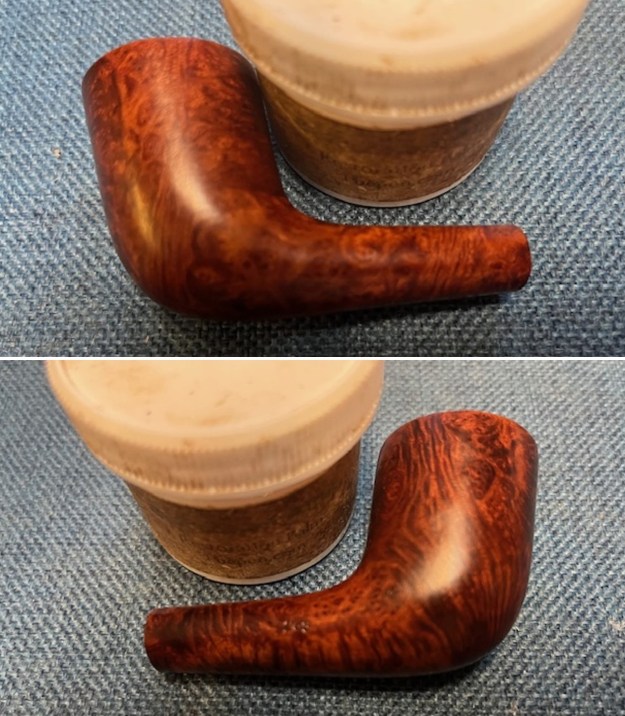
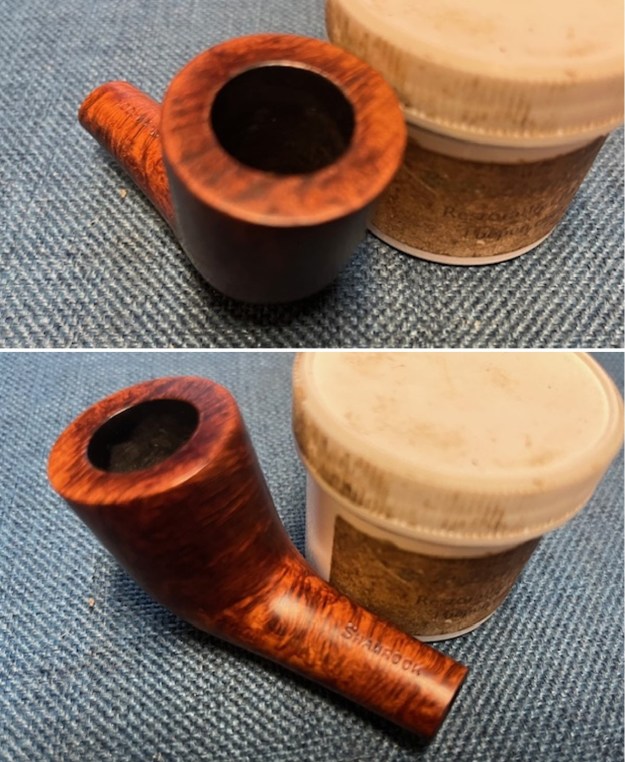
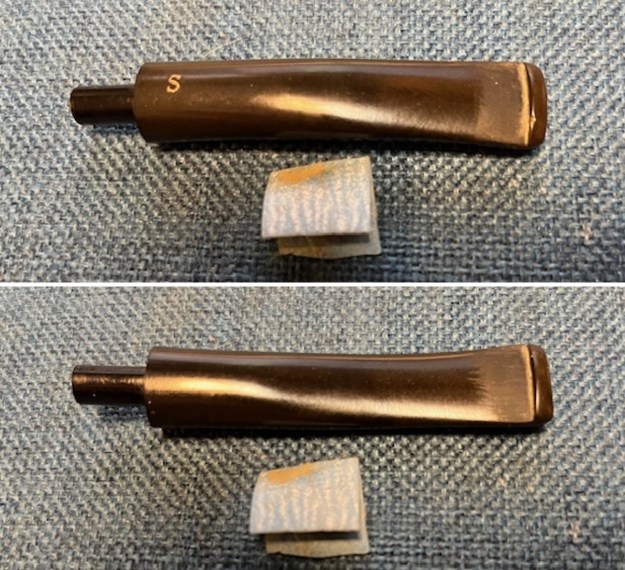
The next pipe was a pipe that was in surprisingly good condition. The finish on the bowl and rim top looked very good other than being dirty. This old pipe is a smooth Zulu that has a rich coloured finish around the bowl sides and shank under the grit and grime of years. It was purchased from our contact in Copenhagen, Denmark on 01/08/2024. It was stamped on the top side of the shank and read SHAMROCK. It was stamped to the underside of the shank and reads “A Peterson’s Product” [over] Made in the Rep. [over] of Ireland. The shape number 268 was on the right side of the shank next to the bowl. It was dirty when Jeff brought it to the table. There was a thick cake in the bowl and the inner edge but there was no lava on the rim top. The taper fishtail vulcanite stem was lightly oxidized and there was tooth chatter ahead of the button. There was also a Shamrock “S” logo on the topside of the stem. Jeff took photos of the pipe before his cleanup work. Jeff took photos of the rim top and stem to show the general condition of the pipe. The bowl is heavily caked so it is hard to know the condition of the edges under the lava overflow. The stem looked surprisingly good. Jeff took photos of the bowl sides and heel to show the grain that was around this bowl. You can see the grime but the grain around the bowl is beautiful. Even so, it is a nice looking pipe. He took photos of the top and underside of the shank to show the stamping. The stamping is clear and readable in the photos below as noted above. He did not capture the shape number stamp on the right side of the shank. The “S” logo on the top of the stem looks very good. I am including the link to the Pipedia’s article on Peterson pipes. It is a great read in terms of the history of the brand (https://pipedia.org/wiki/Peterson).

I turned to “The Peterson Pipe” by Mark Irwin and Gary Malmberg to get some background on the Peterson’s Shamrock Pipe. On page 312 it had the following information.

Shamrock (c1941-2009) Originally stamped SHAMROCK with no brand name, an inexpensive line first described in George Yale (New York) mail order booklet in 1941, imported by Rogers Import. The line was actively promoted beginning in ’45, aggressively promoted in US by Rogers from early ‘50s when they registered the Shamrock logo with US Patent Office, claiming propriety since ’38. Over the years offered with P-lip or fishtail mouthpiece, with or without nickel band, with or without Shamrock logo on the band, with or without S stamped in white or later in gold on mouthpiece. Appearing in 2008 as unstained smooth and rustic, fishtail mouthpiece with gold impressed P on the stem. COMS of MADE IN over IRELAND (C1945-1965), MADE IN IRELAND forming a circle (c1945-1965), “A PETERSON’S PRODUCT” over MADE IN IRELAND (c1945-1965), MADE IN THE over REPUBLIC over OF IRELAND (c1948-1998). Model is always difficult or impossible to date.

Judging from the description above, the pipe I am working on is stamped with the stamp noted in red above. The stamping Made in the Rep. of Ireland narrows the date to approximately 1948-1998. It is just stamped SHAMROCK with no brand name and the S stamping on the stem.

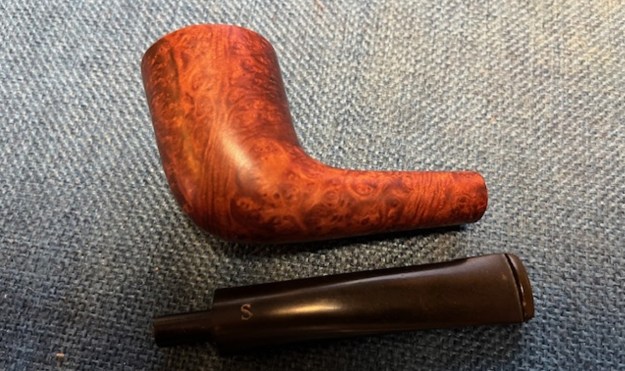
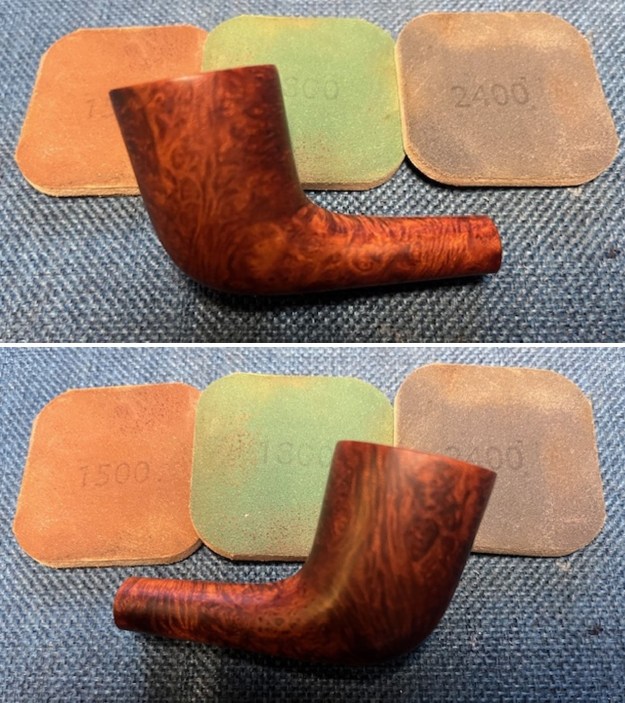
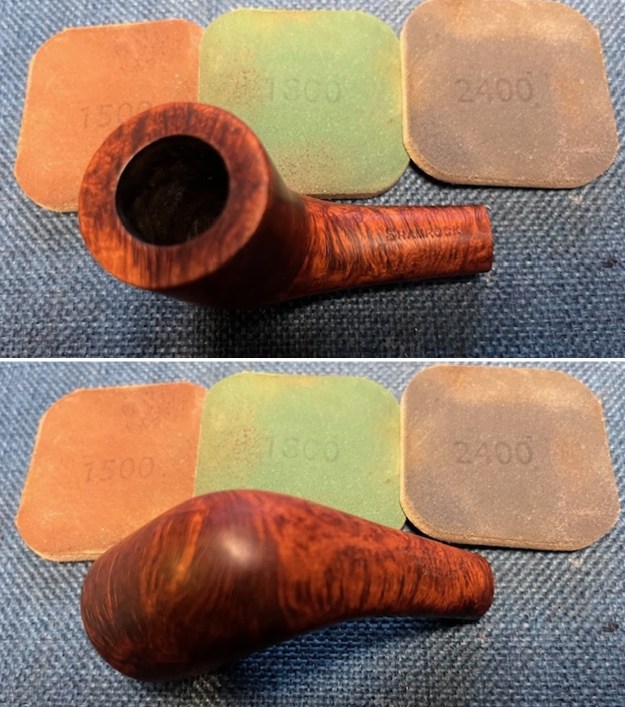
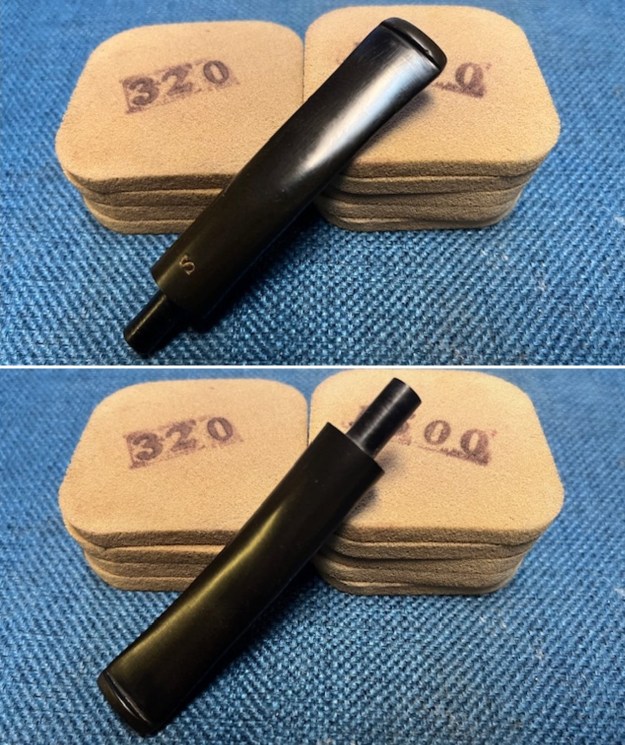
Jeff had done a great job cleaning up the pipe as usual. He reamed the pipe with a PipNet reamer and cut back the cake back to the bare briar. He cleaned up the walls with a Savinelli Fitsall Pipe Knife. Surprisingly the walls looked unscathed from the heavy cake. He scrubbed the interior of the bowl and shank with pipe cleaners, cotton swabs and alcohol to remove the tars and oils. He scrubbed the exterior of the pipe with Murphy’s Oil Soap and a tooth brush to remove the grime from the finish. He scrubbed the inside of the stem with alcohol and pipe cleaners. He scrubbed the exterior of the stem with Soft Scrub and then soaked it in Briarville’s Deoxidizer. He washed it off with warm water to remove the Deoxidizer. When I examined the stem, it looked very good. The pipe looked far better when it arrived. I took some close up photos of the rim top and edges to show how well it had cleaned up and the edges around the bowl. I also took close up photos of the stem to show the light tooth chatter on the surface ahead of the button on both sides. I took photos of the stamping on the sides of the shank. It is clear and readable as noted above. I removed the stem and took a photo of the pipe to have a look at the parts and overall look. I polished the briar with micromesh sanding pads – dry sanding with 1500-12000 grit sanding pads. I wiped the bowl down with a damp cloth after each sanding pad. The grain really began to sing. I worked some Before & After Restoration Balm into the surface of the briar with my fingertips to clean, enliven and protect the briar. I let the balm sit for 15 minutes and then buffed with a cotton cloth to raise the shine. The photos show the bowl at this point in the restoration process. I set the bowl aside and sanded out the chatter on both sides of the stem ahead of the button with 220 grit sandpaper.I sanded the stem surface with 320-3500 grit sanding pads. The chatter was gone on both sides ahead of the button looked very good. The stem began to shine.I polished the stem with micromesh sanding pads – dry sanding with 1500-12000 grit sanding pads. I wiped it down after each sanding pad with Obsidian Oil. I polished it with Before & After Pipe Stem Polish – both Fine and Extra Fine. I am excited to finish this “Peterson’s Product” Made in the Rep. of Ireland Shamrock 268 Zulu. I put the pipe back together and buffed it with Blue Diamond on the buffing wheel. I gave the bowl and the stem multiple coats of carnauba wax. I hand buffed the pipe with a clean buffing pad to raise the shine. It is fun to see what the polished bowl looks like with beautiful mixed grain all around it, looks great with the polished black vulcanite stem. This smooth Classic Shamrock 268 Zulu is great looking and the pipe feels great in my hand. It is light and well balanced. Have a look at it with the photos below. The dimensions are Length: 5 ½ inches, Height: 1 ¾ inches, Outside diameter of the bowl: 1 ¼ inches, Chamber diameter: ¾ of an inch. The weight of the pipe is 32 grams/1.13 ounces. It turned out to be a beautiful pipe. I will be putting on the rebornpipes store in the Irish Pipe Makers Section. Let me know if you are interested in adding it to your collection. Thanks for your time as I walked through the restoration.

Decided to work on a carving kit today and see what I could do with it


by Steve Laug

When Kenneth and I visited a fellow pipe repair guy near Vancouver, Washington this past Fall he gave us a bunch of pipe parts and some pre-drilled partially shaped pipe kits that needed a lot of work to finish. Mind you, the shaping was roughed in and the drilling was finished. Some of them it was not too bad and some were drilled high or off to the side of the bowl bottom. Anyway you looked at it they would be fun to fiddle with. Kenneth and I both took several of them to add to the “to do list”.

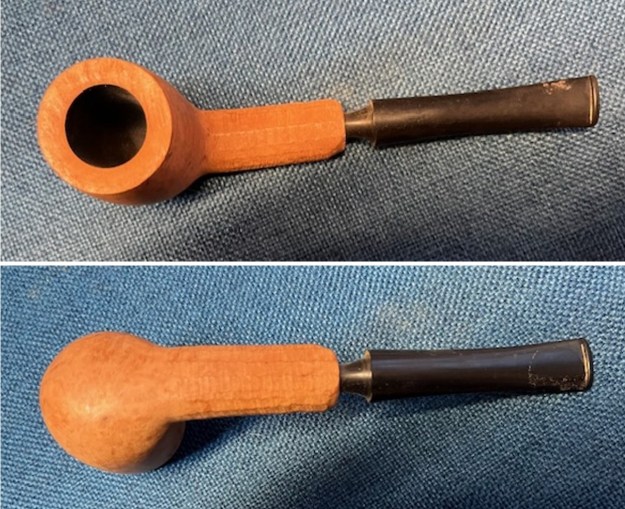
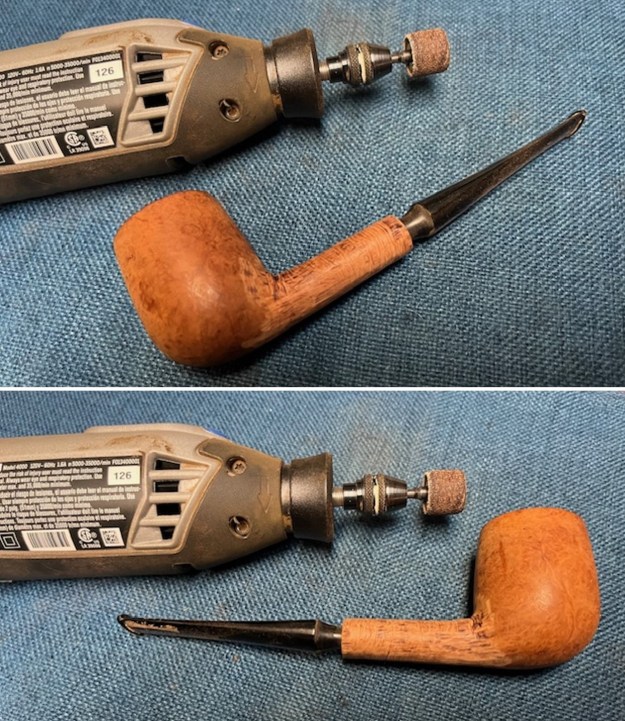
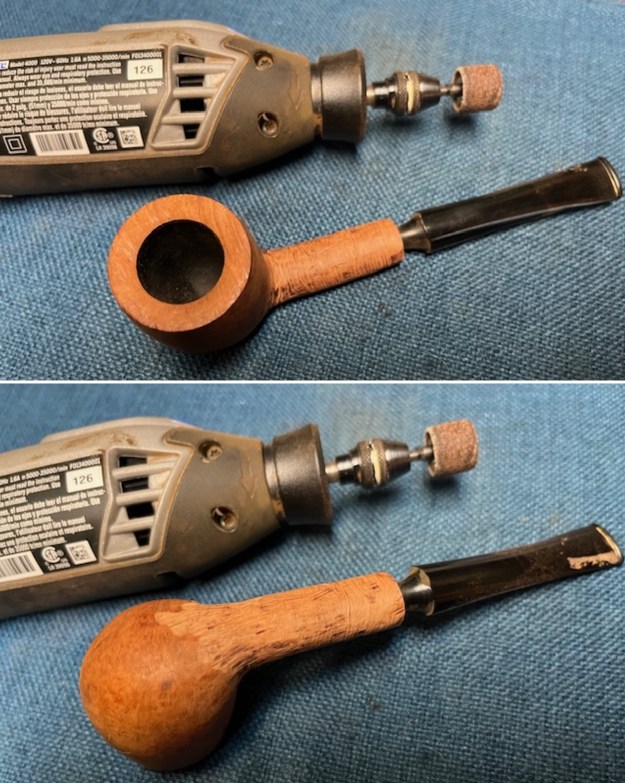
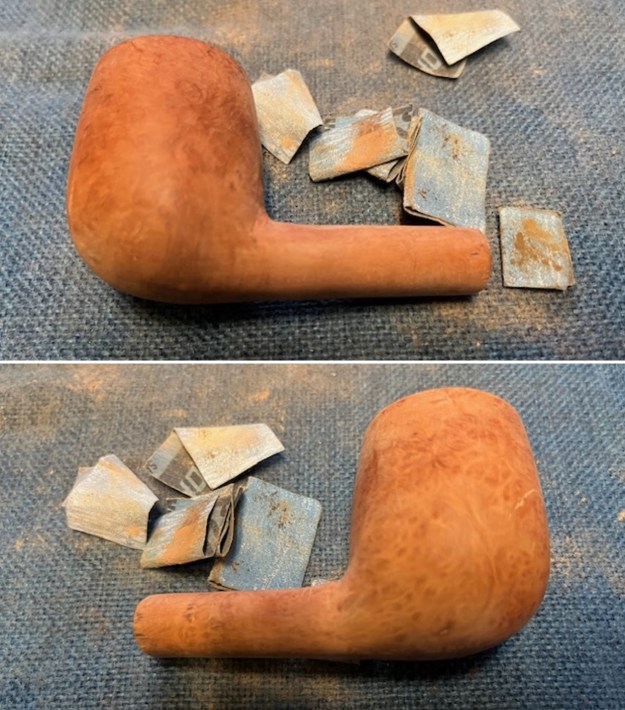
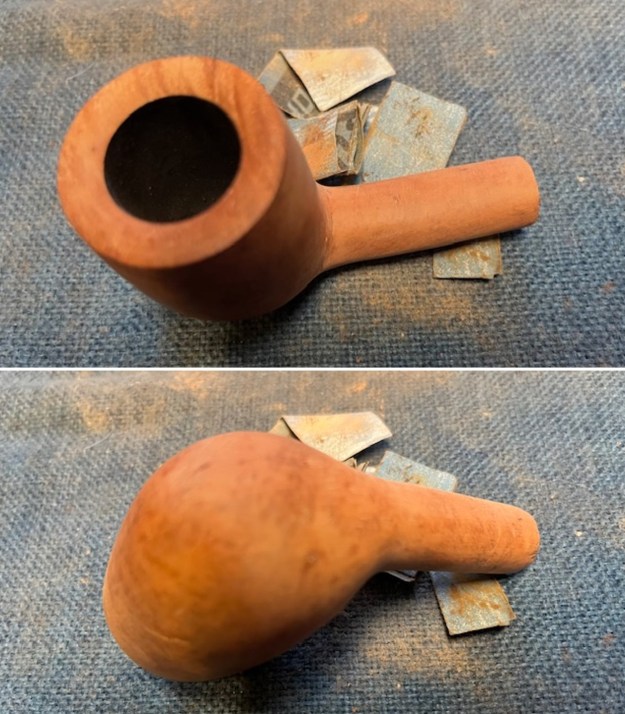
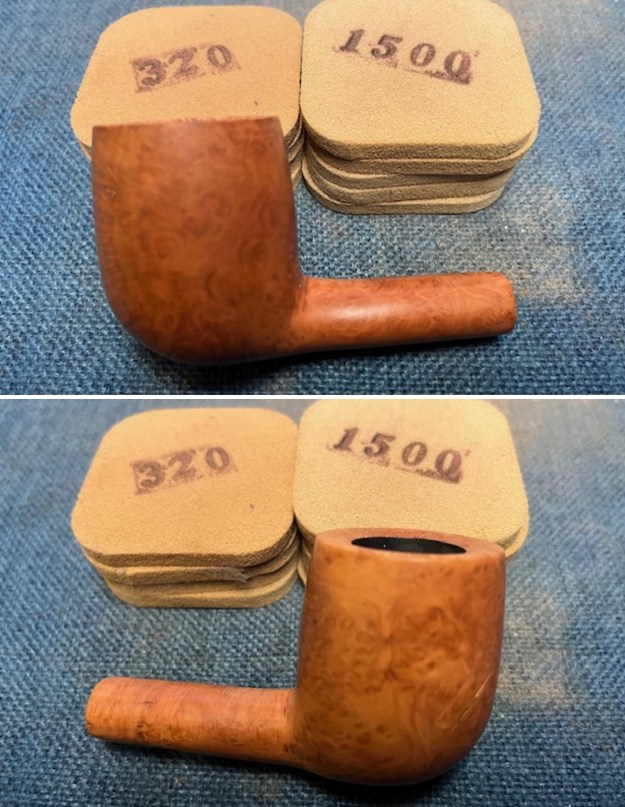
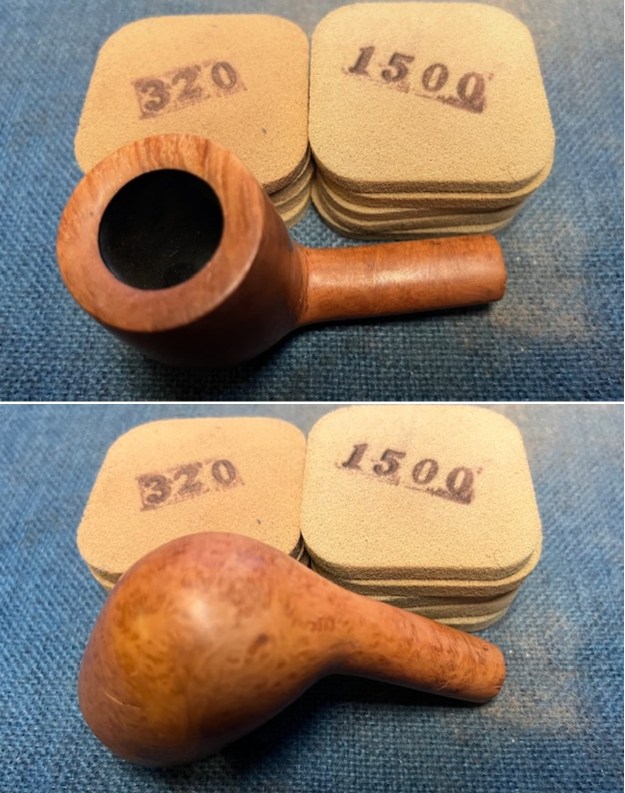
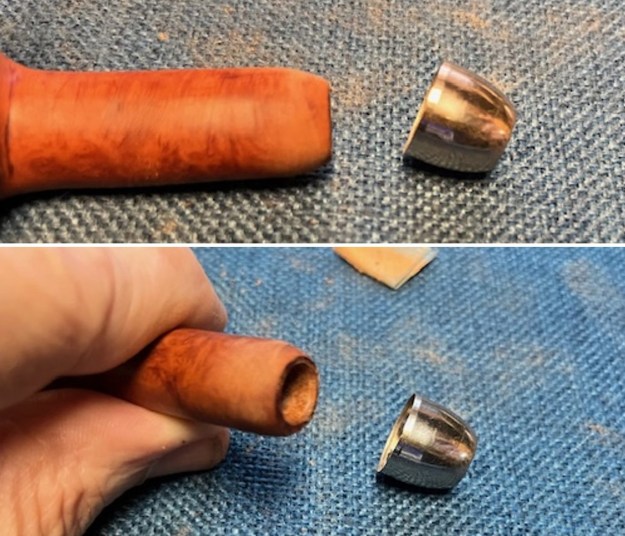
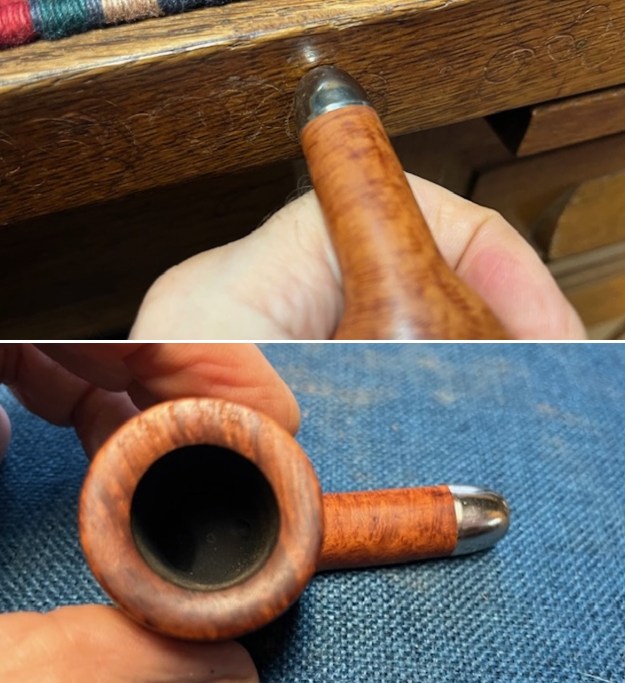
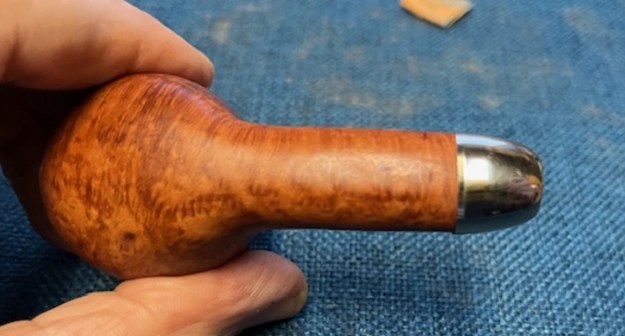
This afternoon I chose a block to work on as the internet was giving me fits with poor connections. It was making blog writing downright frustrating. I was not in the mood for an unshaped block so I chose a partially shaped Billiard with a stem made to give a hint of a military bit. The bowl was smooth externally with one small flaw on the right-side mid bowl toward the front. The inside of the bowl had a dark bowl coating – maybe water glass. The shank had been roughly shaped with a file and knives. The shape of it pointed toward being oval. The shank was not long enough to be a Canadian so I called it a Billiard. The corners of the shank end had been knocked off or partially rounded and the stem was an oval taper to help the person who took on the project go the right direction with it. I liked the inward bevel of the rim top and the grain on it was nice. The bowl looked good. The shank would need a lot of work no matter which direction I went with it. Here are some photos of the kit when I started this afternoon. I brought out the big guns this afternoon instead of fiddling around with files. I put a sanding drum on the Dremel and headed out to the front porch. It was chilly here today so I bundled up accordingly with a warm coat and a toque and took the tool and the block to the porch. I plugged in and worked over the shank with the Dremel and sanding drum. I had an idea in my minds eye that I was aiming for. I shaped and rounded the shank to make a rounder oval than perhaps the block cutter had imagined. I flattened out the knocked off corners and carried the shank straight through to the end. I was thinking that I might fit a ferrule on the shank end and reshape the stem to truly be a military style stick bit. Like most of these projects you have to have some idea in mind but hold it loosely while shaping it. You never know what is going to show up as you shape the briar. I have heard carvers speak of briar having a mind of its own so I truly hold my idea loosely and work away at it. By the time I had it rough shaped the way I wanted I was chilled so I packed it in and headed back to my basement desk top. I took some photos of the pipe at this point in the process. I had removed a lot of briar but still a lot more remained to be shaped and moved. Have a look. Now it was time for a cup of tea and a lot of sanding. First I made the tea and then I removed the stem from the shank. I used many pieces of 220 grit sandpaper to smooth out the Dremel marks and remaining file marks on the shank and the transition between the shank and the bowl. It took a lot of sanding and several cups of tea. But it was getting there. I sanded the bowl and shank with 320-3500 grit sanding pads. I wiped the bowl down after each sanding pad with a cloth and a drop of olive oil to remove the debris. It certainly is beginning to look quite good at this point. I rounded the shank end with my Dremel and sanding drum and a folded piece of 220 grit sandpaper. I wanted to have the curves on the shank match the nickel ferrule. Once I had the fit correct I pressed it in place on the shank end. There were two flaws in the briar – one on the left side toward the top and one mid bowl on the right side. I filled them in with briar dust and clear CA glue. Once it cured I flattened out the repair with a small file. I sanded it with 220 grit sandpaper to blend it into the surface of the briar. It began to look very good. I polished the briar with micromesh sanding pads – dry sanding with 1500-12000 grit sanding pads. I wiped it down after each sanding pad with a drop of olive oil and a paper towel. The briar began to take on a rich glow and the grain began to stand out. The briar was in looking good at this point in the process. I rubbed the bowl and shank down with Before & After Restoration Balm. I worked it into the surface of the bowl sides and shank with my fingertips to clean, enliven and protect the briar. I let the balm sit for a little while and then buffed with a cotton cloth to raise the shine. I set the bowl aside and turned to work on the stem that came with it. I used a file to flatten out the sharp edges on the shank end. I wanted it to be more or a flowing military style bit.I shaped it with 220 grit sandpaper a bit more then switched to 320-3500 grit sanding pads. I wiped the stem down after each pad with some Obsidian Oil. By the end the shape was right and the fit was perfect. It began to take on a shine.I polished the vulcanite stem with micromesh sanding pads – 1500-12000 grit pads. I wiped it down with a damp cloth after each sanding pad. I used Before & After Pipe Polish – both Fine and Extra Fine to further polish the stem. I finished carving my Pipe Kit Billiard this afternoon. The shape came out looking very good and the polished nickel ferrule works well with the pipe. I oiled the bowl with another coat of EVO (Extra Virgin Olive Oil). The oil brought the grain out very well and the oil gave it a rich reddish brown look. I put the stem back on the bowl and carefully buffed the pipe with Blue Diamond on the buffing wheel using a light touch on the briar. I gave the bowl and the stem multiple coats of carnauba wax on the buffing wheel and followed that by buffing the entire pipe with a clean buffing pad. I hand buffed the pipe with a microfiber cloth to deepen the shine. The finished Pipe Kit Billiard is a beauty and fits nicely in the hand and looks very good. Give the finished pipe a look in the photos below. The dimensions of the pipe are Length: 6 inches, Height: 1 ¾ inches, Outside diameter of the bowl: 1 ¼ inch, Chamber diameter: ¾ of an inch. The weight of the pipe is 44 grams/1.55 ounces. This was a fun one to carve for me. I like how it turned out and look forward to enjoying a bowl in it very soon. Thanks for reading this blog and my reflections on the pipe while I worked on it.

Restemming and Restoring a Well Used Republic Era Peterson’s Kildare 408 Apple


by Steve Laug

In January Jeff found out about an estate sale in Pocatello, Idaho, USA. It turned out that the sale was for a fellow Jeff and I had purchased pipes from in the past, Gene. He had been the owner of Outwest Tobacco in Pocatello (long closed now) and I bought tobacco and other smoking items from him in the past. As I think about it now, it seems that I had known Gene for over 30 years Jeff and I had been to his home and enjoyed coffee and a few pipes together. I have no idea how many pipes we bought on those visits as well as to the antique shop of his daughter. I know that there were many pipes. When we heard that it was Gene’s personal collection that was for sale and that he had passed away we decided for Jeff to go to the house and have a look. He went on January 25, 2024 to scope it out as we had seen his personal collection of pipes and there were definitely some among those well smoked old warriors that would be great to pick up. Perhaps there would even be one that could join my own collection in memory of Gene.

Jeff went to the house and looked through the racks, pipe bags, tobacco both bulk and tinned as well as a variety of pipes. All the pipes were well smoked and needed serious cleaning. One the pipes he picked up was this Peterson’s Kildare 408 Apple with a black vulcanite replacement fishtail stem. It was very dirty and was a natural coloured pipe when it started. The smooth finish around the bowl was dirty and had hand oils ground into the grooves. The bowl had a thick cake that overflowed in lava onto the rim edge and top of the bowl. The stem was a replacement vulcanite one that was very dirty and had the marks of a rubber Softee Bit on the end. It had become discoloured and there was a line where the debris from smoking had accumulated along the edge and under the bit protector. The good news was that there were no tooth marks or chatter. The rest of the stem was dirty and had lost the characteristic shine. I really did not matter as I would be replacing it with a P-lip stem. The pipe was stamped on the left side of the shank and read Peterson’s [over] Kildare and on the right side it read Made in the [over] Republic [over] of Ireland (in three lines) and next to that was the shape number 408 next to the shank/bowl joint. Jeff took photos of the pipe so I could have a sense of what it looked like before he started his work on it.Jeff took photos of the stem surfaces and the bowl and rim to give a sense of condition of the pipe. You can see the thick cake in bowl and the lava overflow on the edges and rim top of the bowl. It is had to know if there is any damage as the cake and lava is quite thick. The stem surface is very dirty and you can see the area on the end of the stem where the Softee Bit had protected it from chewing but had left it dirty and discoloured. He also took photos of the sides of the bowl and the heel to show the interesting grain that went around the bowl. The grain is beautiful. You can see the oils and debris ground into the finish of the bowl. He took photos of the stamping on the sides of the shank. It is faint but still is readable as noted above. I reread Pipedia’s article on Peterson pipes. It is a great read in terms of the history of the brand (https://pipedia.org/wiki/Peterson). I am quoting nothing specifically from that article but recommend you take time to read it.

I turned to “The Peterson Pipe” by Mark Irwin and Gary Malmberg to get some background on the Peterson’s Kildare Line. It has become my go to any time I want information on the brand. On page 314 it had the following information on the Kildare Line.

Kildare (1965-) First issue of line with matte-finish in Classic Range shapes, P-Lip and fishtail mouthpiece. Second issue C.1979 as Kildare Patch, with rusticated patches on pipe surface. Third issue 2010, matte-brown, P-Lip or fishtail mouthpiece, no band. Fourth issue 2011-, burgundy sandblast finish, nickel army mount, fishtail mouthpiece, exclusive to smokingpipes.com.

The information given above identifies the pipe as a First Issue of the line with a matte-finish. It would have been issued between 1965 and 1979. This line was issued is a brown finish with either a P-lip or a fishtail mouthpiece. This means that the pipe is an older issue Kildare. The 408 shape number is attached to a ¼ bent Apple.

Now it was my turn to work on the pipe. Jeff had done an amazing cleanup of the pipe. It was a real mess and I wondered what it would look like after his work. He reamed the heavy cake with a PipNet reamer and cleaned up that with a Savinelli Fitsall Pipe Knife. He scrubbed the internals of the bowl and stem with alcohol, cotton swabs, shank brushes and pipe cleaners. He scrubbed the externals with undiluted Murphy’s Oil Soap and rinsed the bowl off with running water. He soaked the stem in Briarville’s Pipe stem Deoxidizer and once it had soaked rinsed it off with warm water to remove the residual solution. He dried it off and rubbed it down to remove any oxidation that was still on the stem. The scratches in the briar stood out once clean. There were some on the left side toward the top of the bowl that appear in the first photo below. Overall the pipe looked good when I received it. I took a photo of the rim top to show the condition. You can see the clean bowl. The bowl is in excellent condition and the rim top shows some darkening and some damage on the inner edge of the bowl and the outer edge as well. The misfit stem came out looking quite good, but since I would replace it in the restoration process I will add it to my cans of stems once I fit a new one to this pipe. I took photos of the sides of the shank to show the stamping. The photo clearly shows the faint stamping though it is actually more readable in person. I removed the stem from the shank and took a photo of the pipe parts to show what I was working with. The very short tenon is visible in the photo and was only one of the issues with this replacement stem. I set aside the bowl and turned my attention to the stem. I had decided to replace the stem so I went through my stems for fine one. I wanted a straight P-lip style stem for the Peterson’s Apple. I went through my many stems and did not find one that would work with the diameter of the shank. I contacted Kenneth with the dimensions of the shank and he found several that were close. He graciously dropped them by on Sunday afternoon. In the bag he brought were several new Peterson replacement P-lip stems. I chose the taper stem below as my first choice. It had the right diameter and after the tenon was turned should work well. You can see the casting marks on the button area and tenon showing it as new stock.I have a tenon turning tool here that I often use to do this job. But for this one I decided to use the Dremel and a sanding drum to reduce the diameter of the tenon. It actually worked very well and I cleaned up the tenon with a file to remove the ridges of the sanding drum. The diameter was correct and the fit to the shank was perfect. Once the fit in the shank was right I used a lighter to heat the stem to give it the proper bend for the angle of the shank on this apple.I fit the stem on the shank and took photos of the new stem to give a sense of the new look. Personally, I like doing this as it gives me a chance to see it apart from a lens or on my desk top and assess the bend and the fit. I was happy with what I say. Now I needed to sand and shape the stem. I worked on the stem to remove the casting marks from the sides and the P-lip end with 220 grit sandpaper. I also removed some of the excess diameter on the top and underside of the stem to make the transition smooth. It definitely looked better at this point. Still lots to do.I started the polishing process on the pipe by sanding the stem and tenon with 320-3500 grit sanding pads. Each successive pad brought smoother shape and definition to the stem and tenon surface. It was starting to look very good.I polished the stem with micromesh sanding pads – 1500-12000 grit pads. I wiped them down with Obsidian Oil after each sanding pad. I used Before & After Pipe Polish – both Fine and Extra Fine to further polish the stem. I gave it another coat of Obsidian Oil and set aside for the product to absorb into the vulcanite. I set the stem aside finished with all but the buffing and turned my attention to the bowl. I cleaned up the inner edge bevel with a folded piece of 220 grit sandpaper. I lightly topped the bowl on a topping board with 220 grit sandpaper to minimize the damage on the top and outer edge of the bowl. Once finished it definitely looked better. I wiped the bowl down with cotton pads and acetone to remove the darkening on the bowl sides and begin the process of cleaning the surface in my check for damage and cracks to the bowl. It actually looked very good. I used a Cherry stain pen to restain the inner edge and rim top to match the rest of the briar before I started sanding it. Once it had been sanded the match should be perfect.I sanded the bowl with 320-3500 grit sanding pads to remove the scratching and marks on the bowl surface and top and underside of the shank. I wiped it down after each pad with a damp cloth and by the end the bowl really began to show some promise. I carefully avoided the stamping on the shank sides. I polished the briar with micromesh sanding pads. I dry sanded it with 1500-12000 grit sanding pads and wiped the bowl down after each pad with a damp cloth. By the final pads the briar really had a shine. I rubbed the briar down with Before & After Restoration Balm. I worked it into the briar with my fingertips to work it into the finish. The product works to clean, enliven and preserve the briar. I let it sit for 10 minutes then I buffed it with a cotton cloth to deepen the shine. The briar really comes alive with the balm. I decided at the last minute to add a cosmetic thin brass band to the shank end. There was no need to do this in terms of damage to the stem or shank end. I just thought it would add a touch of bling to the pipe and give it a good interruption between the briar and the vulcanite. I heated the band and pressed it in place on the shank.It was great to finish this older (1965-79) Republic Era Peterson’s 408 Apple. I put the bowl and the newly fit stem together and buffed it with Blue Diamond on the buffing wheel. I gave the bowl and the stem multiple coats of carnauba wax. I buffed the pipe with a clean buffing pad to raise the shine. I hand buffed the pipe with a microfiber cloth to deepen the shine. It is fun to see what the polished bowl looks like with deep sandblast all around it. Added to that the polished black vulcanite stem was beautiful. This Peterson’s Kildare 408 Apple is great looking and the pipe feels great in my hand. It is light and well balanced. Have a look at it with the photos below. The dimensions are Length: 5 ¾ inches, Height: 1 ¾ inches, Outside diameter of the bowl: 1 ¼ inches, Chamber diameter: 7/8 of an inch. The weight of the pipe is 56 grams/1.98 ounces. It is a beautiful pipe and one that will soon be on the rebornpipes store in the Irish Pipe Makers Section of the store. If you want to add it to your collection let me know. Thanks for walking through the restoration with me as I worked over this pipe. Thanks to each of you who are reading this blog.

Restemming an Unsmoked Stanwell Made in Denmark 7451 Tiny Stack


by Steve Laug

I had this tiny Stanwell sandblast pipe in my box of bowls to be restemmed as the stem on it was snapped off at the end at an angle. It appeared to be unsmoked and if not, it was very clean. I wonder if it was one of the early Ladies Pipes that many companies made to cater to what they assumed the female market wanted. The pipe was a beautiful sandblast with a smooth panel on the underside of the stem that was stamped and read Stanwell by the shape number 7541 [over] Made in Denmark. The stamping was clear and readable. The stem had an S stamp (without the crown) on the side and it looked like the button and stem had been snapped when someone grabbed the end of it and tried to turn it to remove the stem. It also had a small brass band that was held on the tenon of the pipe. It was inlaid with cut glass beads. The stem would need to be replaced and the band with beads installed on the new one. I took photos of the pipe before I started working on it. I took a photo of the rim top and bowl to show the condition of the bowl when I started working on it. It was clean and appeared to be unused/unsmoked. I did not bother taking photo of the stem as its condition was obvious in the above photos and I would need to replace it. I also took a photo of the bowl without the stem to give a sense of what the pipe looked like. It is also clear that the band with glass “jewels” was on the tenon not the shank.I went through the can of stems here and found a thin stem that was a saddle stem with a flared blade in a fishtail style. The tenon actually was very close to the original and would take very little adjusting to get a solid fit.I used a Dremel and sanding drum to reduce the diameter of the saddle to fit the diameter of the shank. I also used a flat file to further shape and reduce the fit to the shank size. I fit it to the shank to do the work on the fit. It did not take too much work to get the fit correct. The slot in the stem was small and thin. I sued a flair and an oval needle file to open the slot. I also used a slot saw to give it angle /Y shaped slot opening. When I was finished a pipe cleaner easily slid in and out.I sanded the saddle portion of the stem with 220 grit sandpaper to smooth out the file and Dremel marks on the saddle and also to remove the casting marks on the sides of the stem blade. I slid the brass/jewelled band on the tenon so that it fit against the saddle. I put the stem on the shank and took a photo of the look of the newly restemmed pipe. I took the stem off the shank and turned my attention to the bowl. I rubbed the stem down with Before & After Restoration Balm. I worked it into the sandblast surface of the bowl with my fingertips and a shoebrush. The product works to clean, enliven and preserve the briar. I let it sit for 15 minutes then I buffed it with a cotton cloth to deepen the shine. The briar really comes alive with the balm. The bowl was finished and now I needed to go back to polishing the stem. I sanded it with 320-3500 grit sanding pads. I dry sanded it and wiped it down with Obsidian Oil to protect and clean it. I sanded out the casting marks and the scratches in the surface. It looked much better with each sanding pad.I polished the stem with micromesh sanding pads – wet sanding it 1500-12000 pads. I wiped it down with a damp cloth after each pad to remove the dust and polishing debris. I polished it with Before & After Pipe Polish – both Fine and Extra Fine. I placed the brass ring with the inlaid glass gems on the tenon. It was made to slide on the tenon easily and stopped against the saddle of the stem. I took photos before and after.I am really happy with the way that this Small Sandblast Stanwell 7451 Tiny Stack turned out. It really is a beautiful looking pipe with a great shape sandblast finished bowl and rim. The new vulcanite saddle stem is really nice. The brass band on the tenon is inlaid with cut glass jewels. The briar really came alive with the buffing. The rich dark brown stains of the finish gave the pipe a sense of depth with the polishing and waxing. I put the stem back on the bowl and carefully buffed the pipe with Blue Diamond on the buffing wheel using a light touch on the briar. I gave the bowl and the stem multiple coats of carnauba wax on the buffing wheel. I buffed the pipe with a clean buffing pad to raise the shine. I hand buffed the pipe with a microfiber cloth to deepen the shine. The finished Stanwell 7451 Lady’s Pipe really is a beauty and feels great in the hand and looks very good. Give the finished pipe a look in the photos below. The dimensions of the pipe are Length: 5 ¼ inches, Height: 1 ½ inches, Outside diameter of the bowl: ¾ of an inch, Chamber diameter: ½ of an inch. The weight of the pipe is 17 grams/.56 of an ounce. The pipe will be going on the rebornpipes store soon. It will be in the section on Danish Pipe Makers if you would like to add it to your collection. Thanks for reading this blog and my reflections on the pipe while I worked on it. It was a fun one to work on!
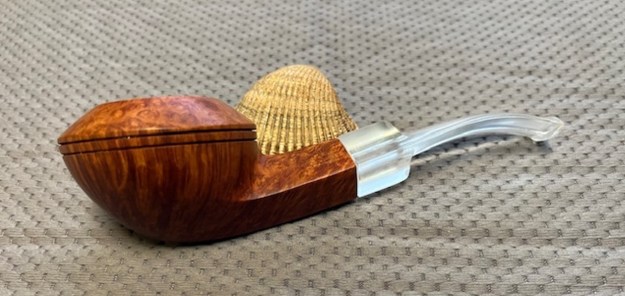
Getting Creative with this Weber Golden Walnut Imported Briar Apple


by Steve Laug

The next bowl on the table is a classic shaped Apple. It has been sitting here and I have looked at it over and over again and today I decided to restem it. I wanted to try something a little different with this restem and see if I could come up with an interesting restem. I think when you see it you will either love it or hate it! But there you go. Here is what I did! I cleaned up the bowl and matched a stem with briar bowl. It is a cleanup and restore and is a break from my work on the Freehand pipes. The bowl is dirty and somewhere in its life before it came to us the stem was lost. The finish was coated with varnish that left it shiny even under the grime. It showed promise under the grit and grime of the years. It was stamped on the left side of the shank and read Weber in an oval [over] Golden Walnut. The right side of the shank it is stamped Imported Briar. The bowl had a thick cake and a thick lava overflow on the rim top. There was some lava and tars coming down the bowl sides from the top. It is a pretty pipe with some great grain under the grime. I am hoping to match a nice stem to it. I took some photos of the bowl before I started my work on it. I took a close up photo of the rim top and bowl to give more of a sense of what I see and noted above. It is a dirty pipe but seems to have no damage on the rim top or edges.I took a photo of the snapped tenon in the shank end. The end of the tenon is quite smooth so it was a clean snap. I will need to pull it before I can fit a new stem to it.I took a photo of the stamping on the left and right side of the shank. The stamping looks blurry and double stamped in the photos but in person it is clear and readable. Recently I picked up some unused acrylic stems. There was an acrylic amber/orange variegated saddle stem in the lot. It was drilled for a new tenon and was clean. This stem had a close diameter to the shank end of the Weber and would work well I think.I put the bowl in the freezer for 30 minutes then used a drywall screw to pull out the broken tenon. I screwed it into the tenon and wiggled it free from the shank. I used the tenon piece to fit a new tenon in the shank end.I fit the new tenon in the shank end and it was a little tight. I used a Dremel and sanding drum to reduce the diameter just enough for a snug fit. I painted the threaded tenon with black CA glue and turned it into the end of the new stem. The fit was good. I set it aside and let the glue cure. I put it in the shank and the fit against the shank end was slightly off. I used a file to make the transition between the shank and the saddle portion of the stem very smooth. I liked the look of the variegated orange acrylic stem with the browns of the briar bowl. I cleaned up the file marks on the shank and avoided the stamping on both sides with a folded piece of 220 grit sandpaper. Once finished the transition and both the briar and the acrylic were smooth. I set aside the stem and turned my attention to reaming the pipe. I used a PipNet Reamer with the first and second cutting heads to take back the heavy cake to bare briar. I cleaned up the reaming with a Savinelli Fitsall Pipe Knife and finally sanded the bowl walls with 220 grit sandpaper wrapped around a dowel. I like to remove all the cake to examine the walls for damage and checking. Great news is that this one is free of any damage. With the bowl reamed it was time to work on the rim top. The lava was hard and thick. I started the process with a topping board and 220 grit sandpaper. Once I had smoothed off the top outer edges it was clear that the inner edge of the rim top was slightly bevelled inward. I used a wooden half sphere and 220 grit sandpaper to clean up the bevel and remove the damage to that portion of the rim top and edges. I cleaned up a few spots with a folded piece of 220 grit sandpaper. To remove the shiny varnish coat on the bowl and to use the stain on the bowl to colour the rim top and sanded shank end I wiped the bowl and shank down with acetone. I used cotton pads with the acetone and was able to easily remove the varnish and move some of the stain to the sanded portions of the shank and rim. I would need to restain but it definitely looked much better. I matched the stain on the bowl and shank with a Maple Stain Pen. I put it on the smooth sanded rim top and shank end. I wanted it to start matched before I started sanding the bowl and shank with sanding pads. I was very happy with the match. I worked on polishing out the sanding marks with 320-3500 grit sanding pads. I worked particularly on the transition between the shank and the stem surface. I also worked over the briar of the bowl and rim top at the same time. The bowl and stem looked very good once I finished. I took the stem off the shank and turned to the bowl first. I polished the briar with micromesh sanding pads – dry sanding with 1500-12000 grit pads. After each sanding pad I wiped the bowl down with a damp cloth to remove the sanding debris and dust. It began to take on a deep shine. I rubbed down the briar Before & After Restoration Balm. I worked it into the surface with my fingertips. The product works to clean, enliven and preserve the briar. I let it sit for 15 minutes then I buffed it with a cotton cloth to deepen the shine. The briar really comes alive with the balm. I polished the stem with micromesh sanding pads – 1500-12000 grit pads to remove them. I wiped the stem down with Obsidian Oil after each sanding pad. I used Before & After Pipe Polish – both Fine and Extra Fine to further polish the stem. I rubbed it down with a final coat of Obsidian Oil and let it dry. This is another pipe that I am really happy about the finished restoration. This reborn Weber Golden Walnut with a newly fitted golden acrylic variegated stem turned out really well to my eye. After restemming I think that it is unique and beautiful looking classic apple with a twist. The bowl is a classic Bent Billiard and the “new” horn stem is a great match. The polished horn stem works well with the briar and the nickel ferrule. The briar really came alive with the buffing. The rich reddish brown stains of the finish make the grain really pop with the polishing and waxing. I put the stem back on the bowl and buffed the pipe with Blue Diamond on the buffing wheel. I gave the bowl and the stem multiple coats of carnauba wax on the buffing wheel. I buffed the pipe with a clean buffing pad to raise the shine. I hand buffed the pipe with a microfiber cloth to deepen the shine. The finished Weber Golden Walnut Apple really has a unique beauty and feels great in the hand. It looks very good. Give the finished pipe a look in the photos below. The dimensions of the pipe are Length: 6 inches, Height: 1 ½ inches, Outside diameter of the bowl: 1 ½ inches, Chamber diameter: ¾ of an inch. The weight of the pipe is 45 grams/1.62 ounces. The pipe will be going on the rebornpipes store soon. It will be in the American Pipemakers Section if you would like to add it to your collection. Thanks for reading this blog and my reflections on the pipe while I worked on it. It was a fun one to work on!
Cleaning up and Restemming a Sandy London Made Sandblast Billiard


by Steve Laug

Once again, I dipped into my box of bowls to restem and came out with this interesting sandblast straight billiard. It is stained with a rich combination of brown stains that highlight the highs and lows of the blast. The finish is scratched and dirty but still interesting. The pipe is stamped on a smooth panel on the underside of the shank and reads 2 [followed by] Sandy [over] London Made. The bowl has a thick cake with some lava overflow on the rim top. There is something interesting about this little billiard bowl that makes me choose it next. Here are some photos for you to have a look. I took a close up photo of the rim top and bowl to give a sense of the thickness of the cake and the lava in the sandblast on the rim. It was a mess but obviously a well loved pipe. I took a photo of the stamping on the underside of the shank. There is a numeral 2 toward the heel of the bowl and the rest is centered in the shank in two lines as noted above.I took a photo of the stem I had chosen for the pipe next to the bowl so you can see the overall look of the stem and shank. It is slightly larger in diameter than the shank so that will need to be adjusted. The tenon is also slightly larger.I used a flat needle file to reduce the diameter of the tenon so that it would fit the shank of the pipe. It did not take too much to do and once it was removed it looked very good.I heated the stem with the flame of a Bic lighter to soften the vulcanite. Once it was soft enough I was able to straighten the stem to the angle that I wanted.I fit the stem to the shank and used a rasp to reduce the diameter of the stem. I wanted it to be a smooth transition from the shank to the stem. It was looking much better. I sanded the reduced stem diameter with 200 grit sandpaper to remove the file marks and smooth out the scratches. The transition began to really look good and it was smooth to the touch.I sanded out the scratches in the vulcanite with 320-3500 grit sanding pads. I wiped the stem down after each sanding pad with a cloth impregnated with Obsidian Oil. It started to take on a deep shine.I polished the stem with micromesh sanding pads – 1500-12000 grit pads to remove them. I wiped the stem down with Obsidian Oil after each sanding pad. I used Before & After Pipe Polish – both Fine and Extra Fine to further polish the stem. I rubbed it down with a final coat of Obsidian Oil and let it dry. I turned my attention to the bowl. I used a PipNet Reamer with the first and second cutting heads to take back the heavy cake to bare briar. I cleaned up the reaming with a Savinelli Fitsall Pipe Knife and finally sanded the bowl walls with 220 grit sandpaper wrapped around a dowel. I like to remove all the cake to examine the walls for damage and checking. Great news is that this one is free of any damage! I used a brass bristle wire brush to work over the sandblast rim top and edges. The inner edge and the top looked to be undamaged.I used alcohol, cotton swabs and pipe cleaners to clean out the internals of the shank and the new stem. Once finished the pipe smelled as clean as it looked.I scrubbed the bowl with a tooth brush and undiluted Murphy’s Oil Soap to remove the debris from the sandblast finish. I rinsed the bowl off with warm running water and dried it with a soft towel. It looked much better at this point. I restained the faded spots on the bowl sides and heel with a Mahogany and a Cherry stain pen to blend the colours into the sandblast finish. It looked much better at this point. I rubbed down the briar Before & After Restoration Balm. I worked it into the surface with my fingertips. I used a shoe brush to work the balm into crevices of the sandblast. The product works to clean, enliven and preserve the briar. I let it sit for 15 minutes then I buffed it with a cotton cloth to deepen the shine. The briar really comes alive with the balm. This is another pipe that I am really happy about the finished restoration. This reborn Sandy 2 London Made Sandblast Billiard turned out really well. I used a vulcanite stem I had here to fit the pipe with a new stem. After restemming I think that it really is a great looking pipe with a great shape and grain. The bowl is a classic English Billiard that looks excellent with the new vulcanite stem. The polished black of the stem works well with the briar. The briar really came alive with the buffing. The rich brown and mahogany stains of the finish make the blast really pop with the polishing and waxing. I put the stem back on the bowl and buffed the pipe with Blue Diamond on the buffing wheel. I gave the bowl and the stem multiple coats of carnauba wax on the buffing wheel. I buffed the pipe with a clean buffing pad to raise the shine. I hand buffed the pipe with a microfiber cloth to deepen the shine. The finished Sandy 2 London Made Billiard really has a unique beauty and feels great in the hand. It looks very good. Give the finished pipe a look in the photos below. The dimensions of the pipe are Length: 5 ½ inches, Height: 1 ½ inches, Outside diameter of the bowl: 1 ¼ inches, Chamber diameter: ¾ of an inch. The weight of the pipe is 28 grams/.99 ounces. The pipe will be going on the rebornpipes store soon. It will be in the British Pipemakers Section if you would like to add it to your collection. Thanks for reading this blog and my reflections on the pipe while I worked on it. It was a fun one to work on!
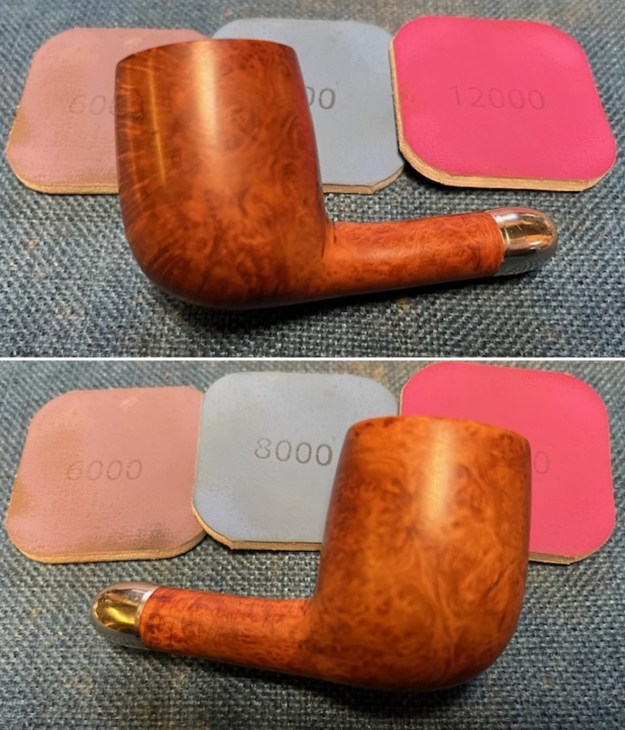
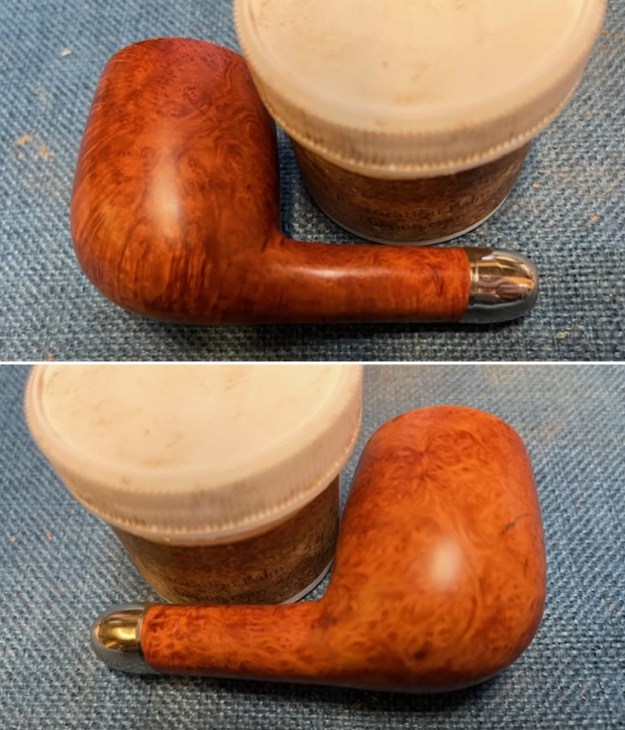
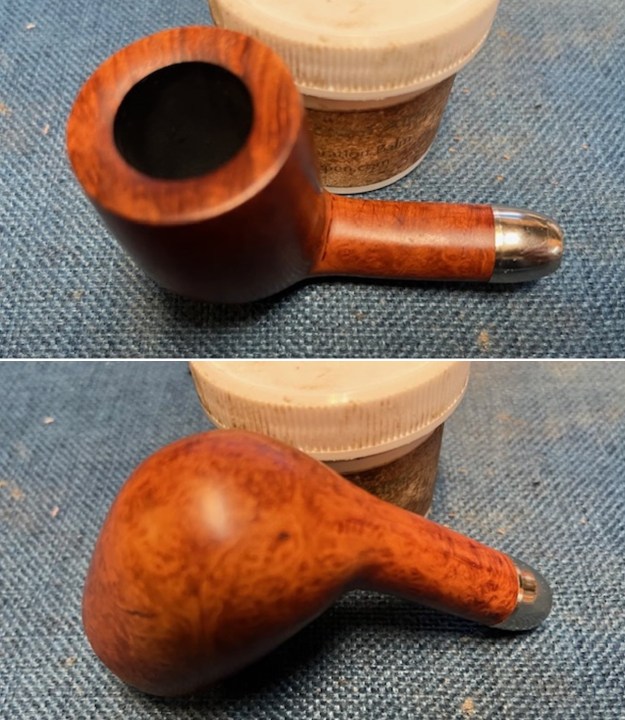
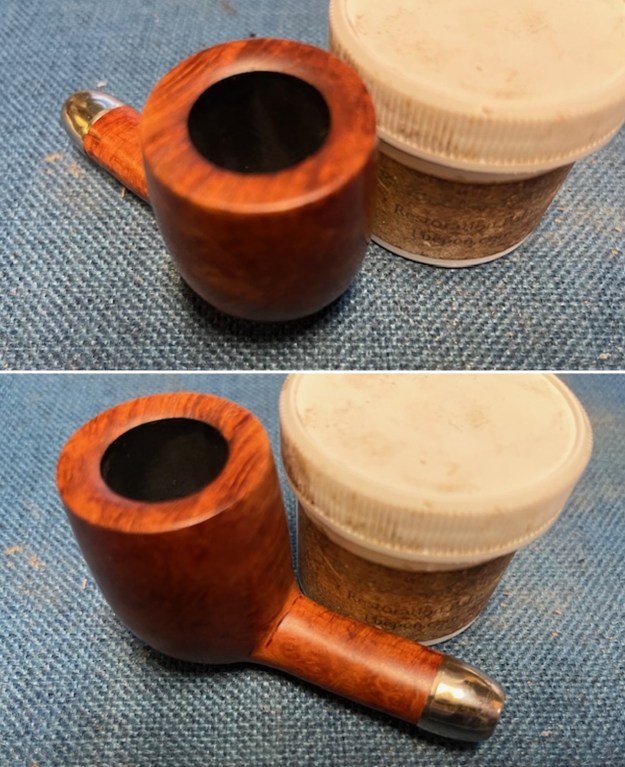
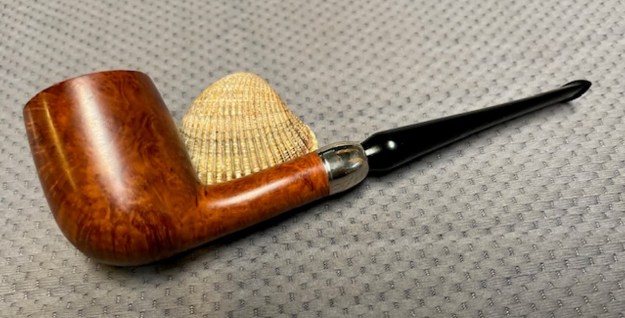
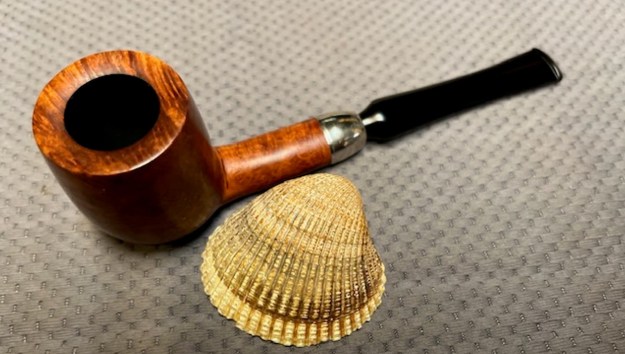
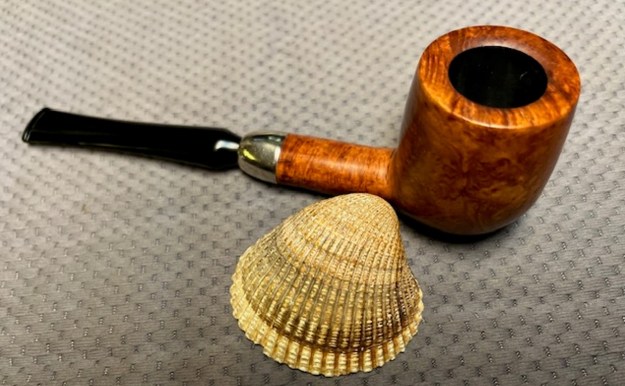
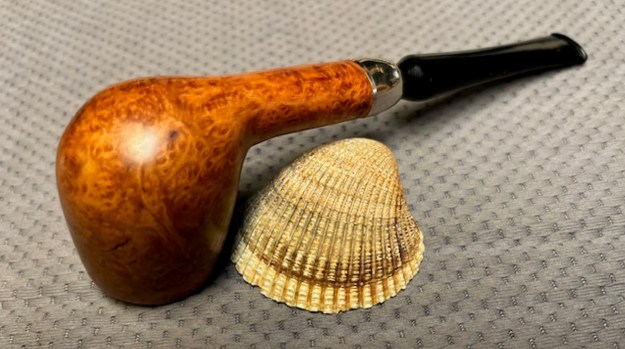
Restemming and Reclaiming an Anonymous Bent Billiard with a Bent Horn Stem


by Steve Laug

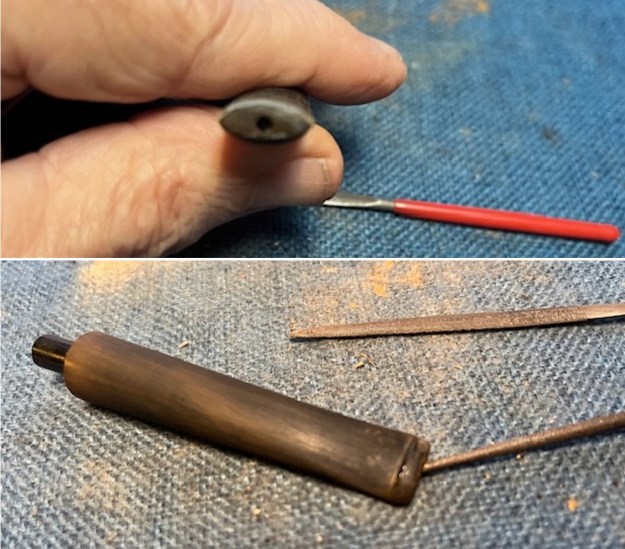
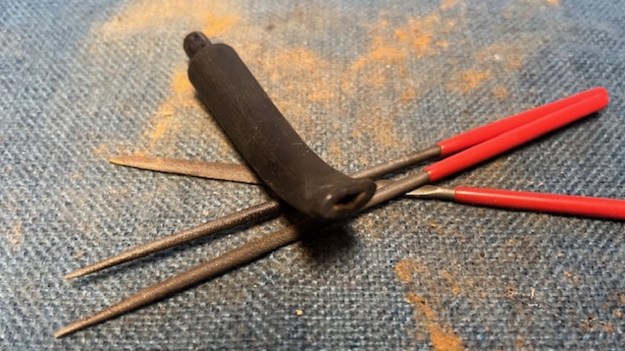
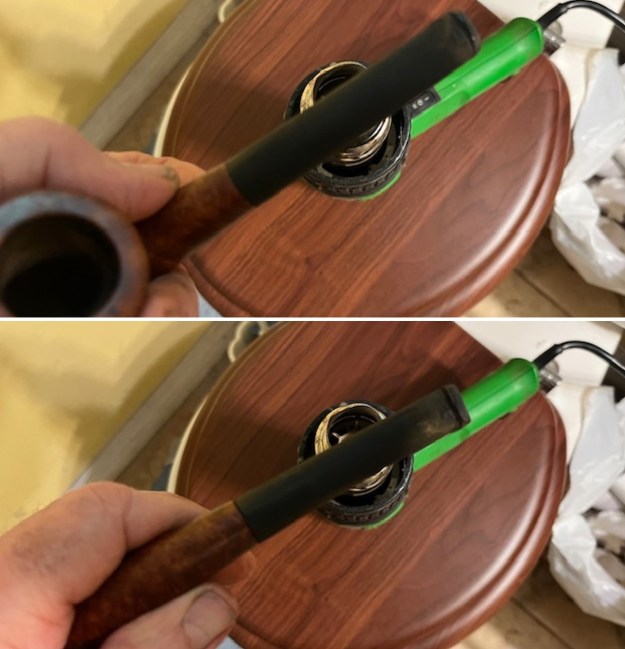
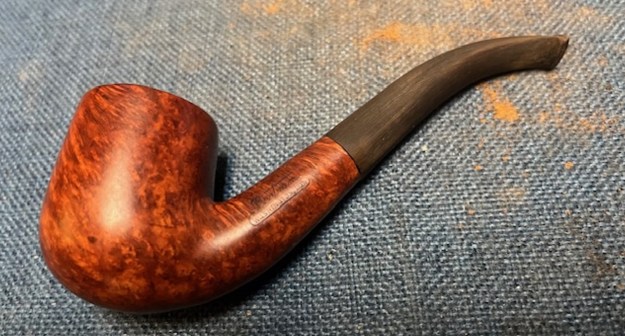
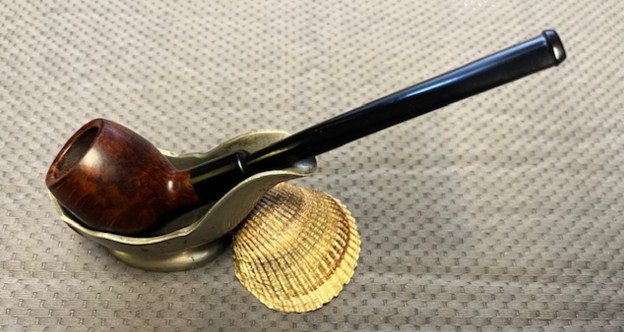
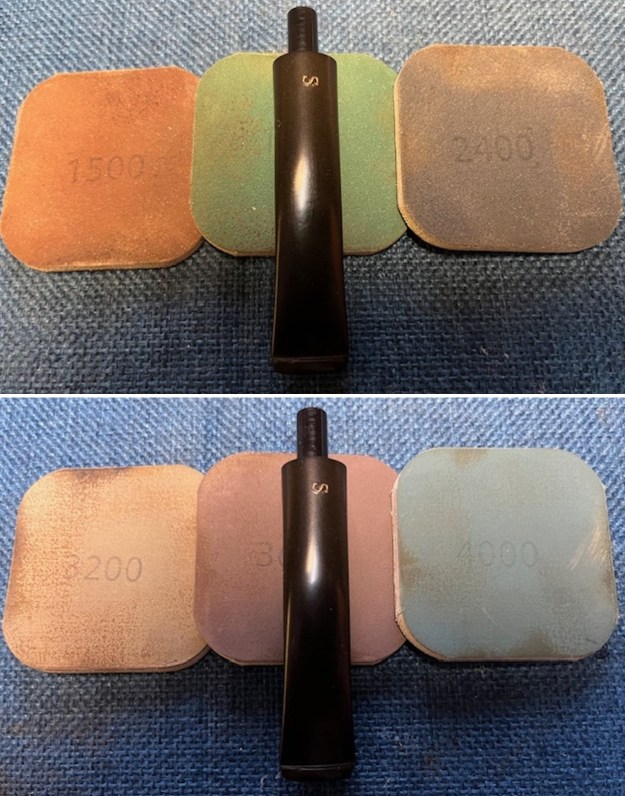
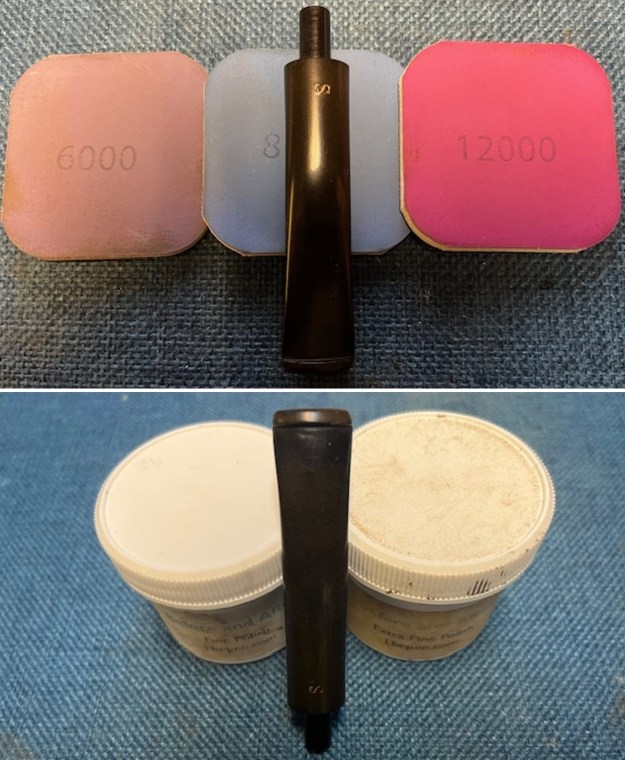
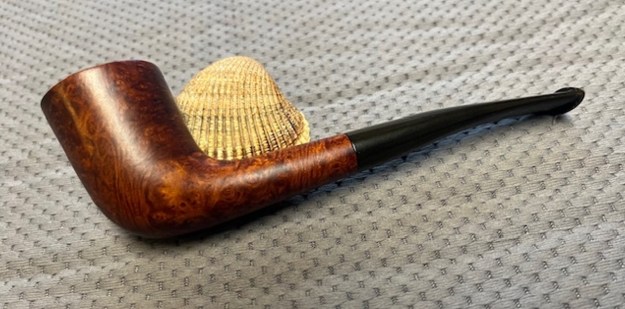
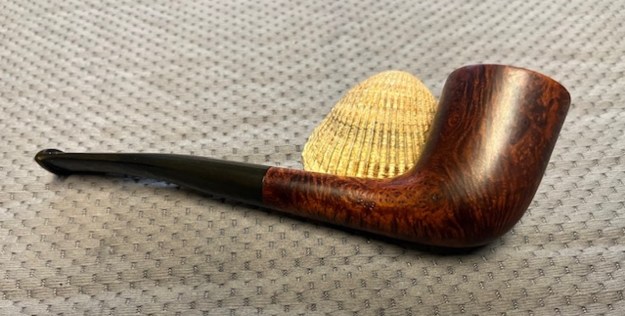
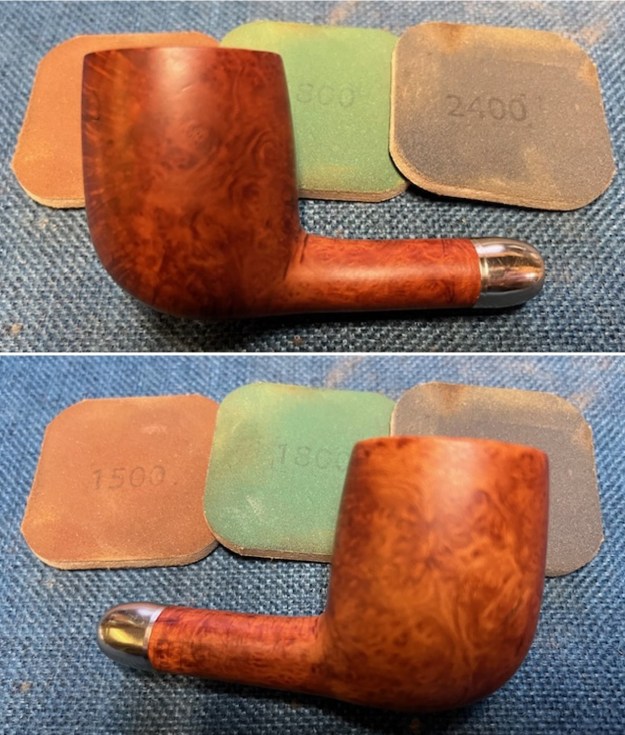
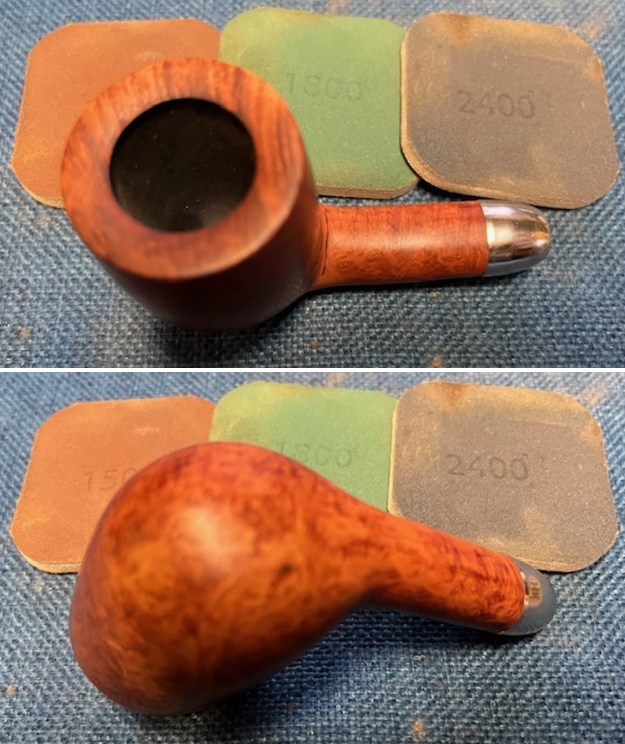
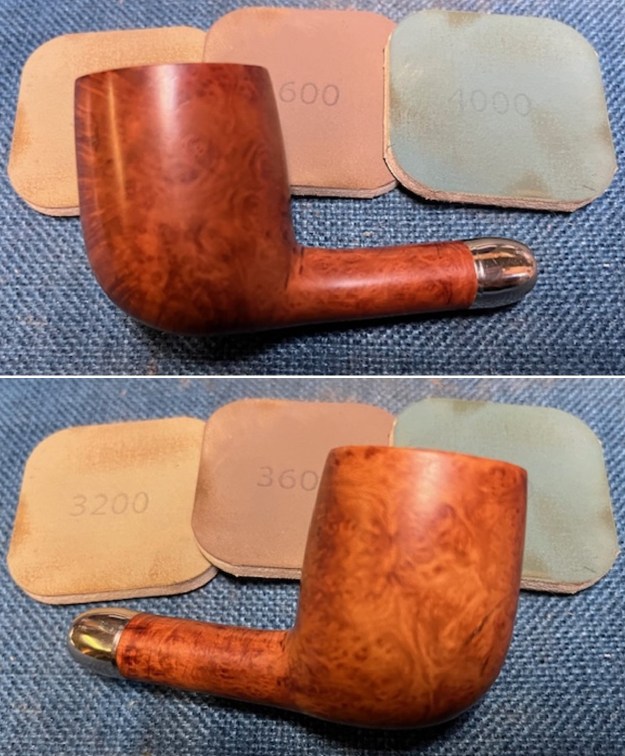
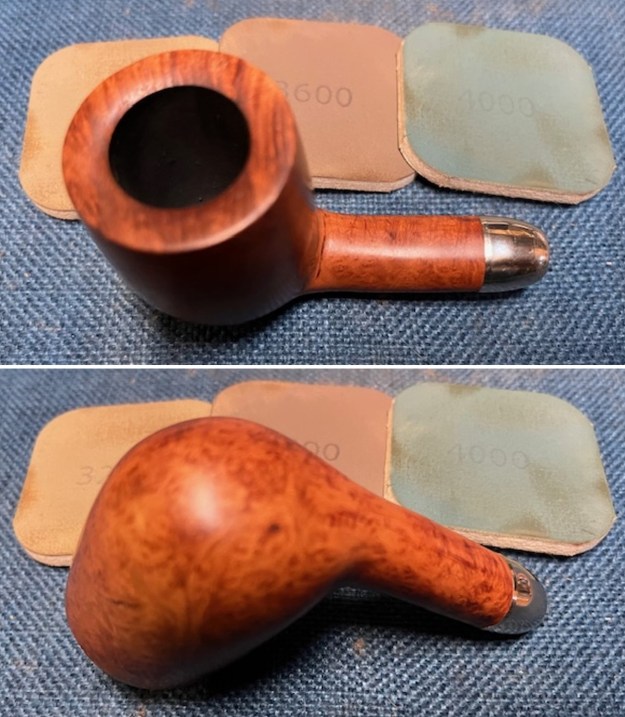
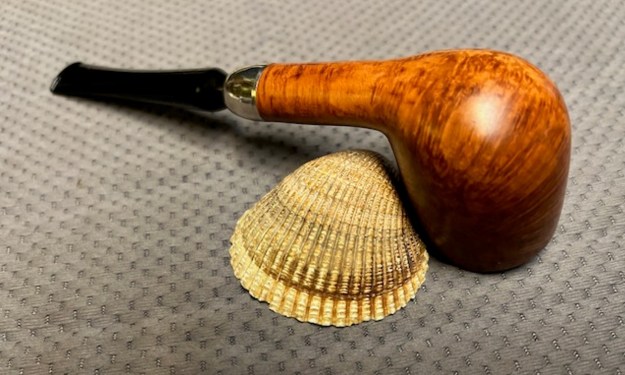
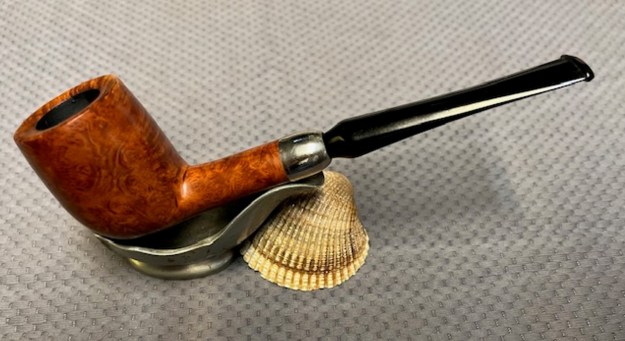
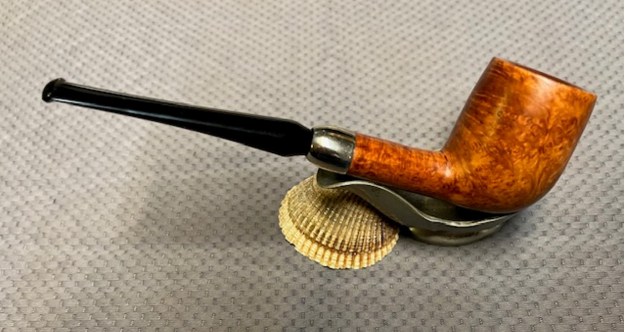
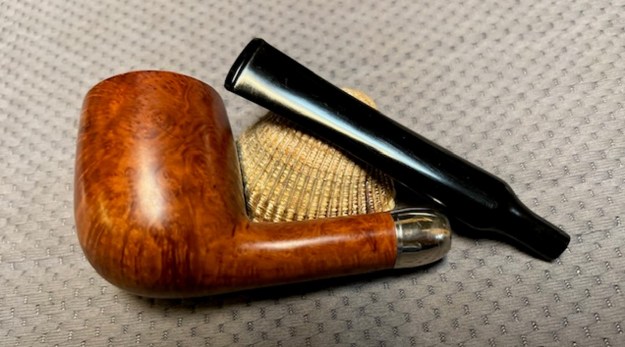
The next bowl on the table is a classic Peterson style Bent Billiard that has a sump in the mortise of the shank. It has been sitting here and I have looked at it over and over again and today I decided to restem it. I cleaned up the bowl and matched a stem with briar bowl. It is a cleanup and restore and is a break from the routine of my other work on pipes. The bowl is dirty and somewhere in its life before it came to us the stem was lost. The finish was coated with varnish that left it shiny even under the grime. It showed promise under the grit and grime of the years. It no stamping on the shank. The right side of the nickel ferrule is stamped with a triangle with an EP in the centre for Electroplating. Underneath that it had three Old English style letters in shields that look like DWF. The bowl had a thick cake and some lava overflow on the rim top. There were a few small nicks in the briar. It is a pretty pipe with some great grain and I am hoping to match a nice stem to it. I took some photos of the bowl before I started my work on it. I took a close up photo of the rim top and bowl to give more of a sense of what I see and noted above. It is a dirty pipe but seems to have no damage on the rim top or edges.I took a photo of the stamping on the left side of the ferrule on the shank. It is hard to capture with the letters with the reflection of the light.I found a stem in my cans of stems that would work well with the pipe. It is a great looking bent horn stem. The tenon was polished horn and was threaded into the end of the stem. The look of the stem and bowl was going work very well.I sanded down the diameter of the shank end of the stem so that it would fit well inside the ferrule. I used a folded piece of 220 grit sandpaper to smooth out the stem surface and to reduce the size of the stem. Once finished it fit well. I set it aside and went to work on the bowl.
I began my work on this pipe by reaming the pipe. I used a PipNet Reamer with the first and second cutting heads to take back the heavy cake to bare briar. I cleaned up the reaming with a Savinelli Fitsall Pipe Knife and finally sanded the bowl walls with 220 grit sandpaper wrapped around a dowel. I like to remove all the cake to examine the walls for damage and checking. Great news is that this one is free of any damage! I scraped off the rim top and edge of the bowl with the Savinelli Fitsall knife. The inner edge and the top looked to be undamaged.I used alcohol, cotton swabs and pipe cleaners to clean out the internals of the shank and the new horn stem. Once finished the pipe smelled as clean as it looked.I cleaned off the shiny coat of varnish on the bowl and shank with a cotton pad and acetone. Once finished it looked better. It is a great looking bowl with some nice grain around the sides and rimtop. I sanded the bowl to blend in the remaining fills to the surface of the bowl and to continue to clean up the rim top and remove any remnants of varnish. I used 320-3500 grit sanding pads and wiped the bowl down after each pad with a damp cloth to check on the progress. It came out looking much better. I polished the briar bowl with micromesh sanding pads – dry sanding with 1500-12000 grit sanding pads. I wiped it down with a damp cloth after each pad to remove the debris. The bowl and the band took on a rich glow. I paused the polishing and stained the rim top with an Oak Stain pen to match the rest of the briar. I finished the polishing with 6000-12000 grit pads. I wiped the briar down with a damp cloth to remove the sanding debris. But the bowl looked better and better. I rubbed down the briar Before & After Restoration Balm. I worked it into the surface with my fingertips. I used a shoe brush to work the balm into the twin rings around the cap. The product works to clean, enliven and preserve the briar. I let it sit for 15 minutes then I buffed it with a cotton cloth to deepen the shine. The briar really comes alive with the balm. I set the bowl aside and turned my attention back to the horn stem. I sanded out the scratches in the horn with 320-3500 grit sanding pads. I wiped the stem down after each sanding pad with a cloth impregnated with Obsidian Oil. It started to take on a deep shine.I polished the stem with micromesh sanding pads – 1500-12000 grit pads to remove them. I wiped the stem down with Obsidian Oil after each sanding pad. I used Before & After Pipe Polish – both Fine and Extra Fine to further polish the stem. I rubbed it down with a final coat of Obsidian Oil and let it dry. This is another pipe that I am really happy about the finished restoration. This reborn Anonymous Bent Billiard with a horn stem turned out really well. I used a horn stem I had here to fit the pipe with a new stem. After restemming I think that it really is a great looking pipe with a great shape and grain. The bowl is a classic Bent Billiard and the “new” horn stem is a great match. The polished horn stem works well with the briar and the nickel ferrule. The briar really came alive with the buffing. The rich brown stains of the finish make the grain really pop with the polishing and waxing. I put the stem back on the bowl and buffed the pipe with Blue Diamond on the buffing wheel. I gave the bowl and the stem multiple coats of carnauba wax on the buffing wheel. I buffed the pipe with a clean buffing pad to raise the shine. I hand buffed the pipe with a microfiber cloth to deepen the shine. The finished Bent Billiard with a Horn Stem really has a unique beauty and feels great in the hand. It looks very good. Give the finished pipe a look in the photos below. The dimensions of the pipe are Length: 6 inches, Height: 1 ¾ inches, Outside diameter of the bowl: 1 ¼ inches, Chamber diameter: ¾ of an inch. The weight of the pipe is 54 grams/1.90 ounces. This one will stay with me for awhile to enjoy. Thanks for reading this blog and my reflections on the pipe while I worked on it. It was a fun one to work on!