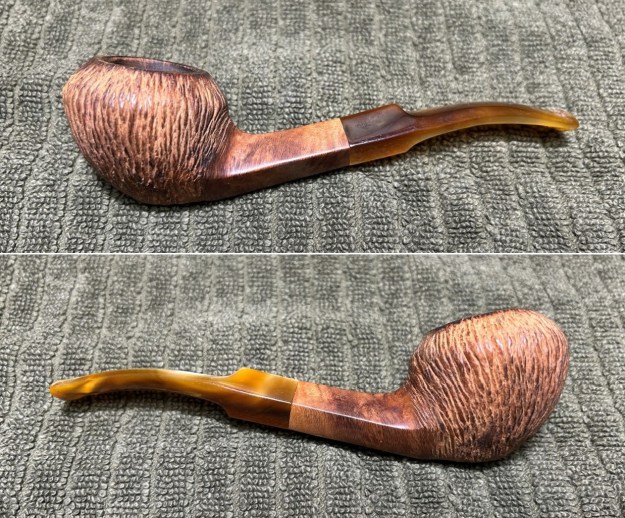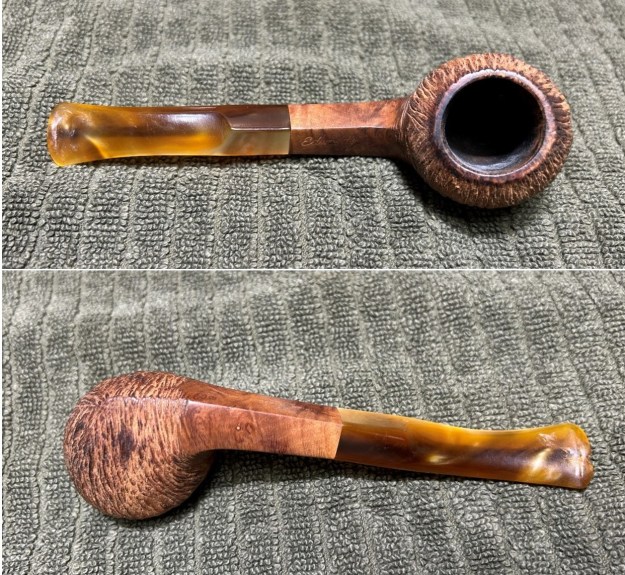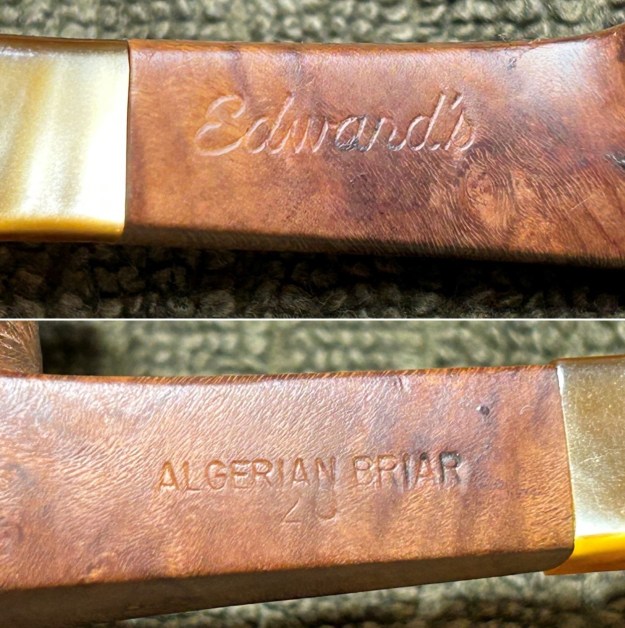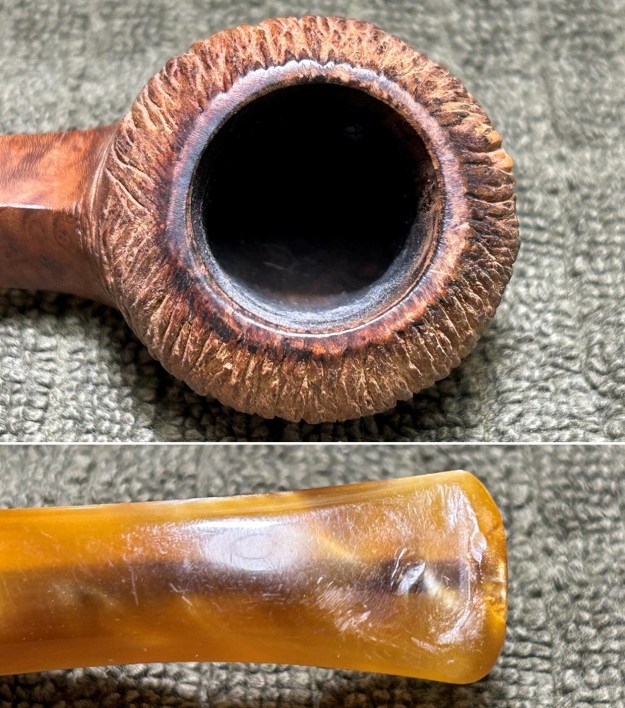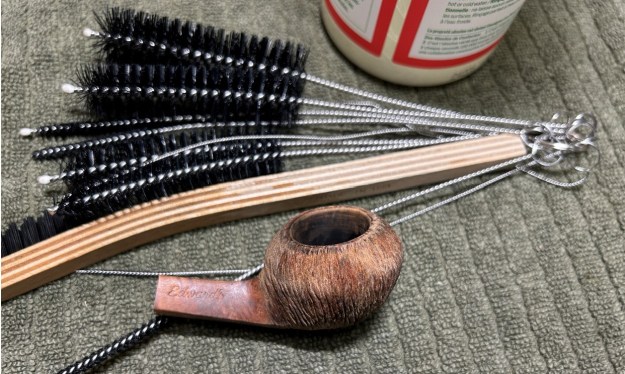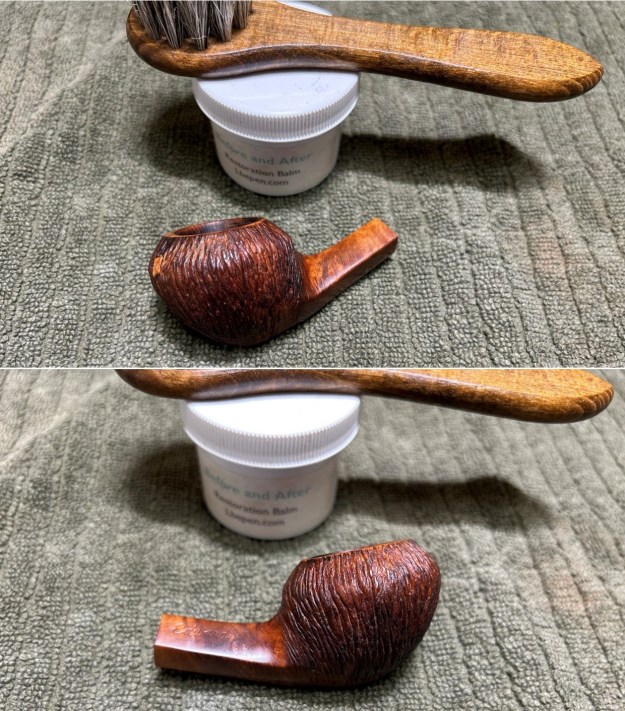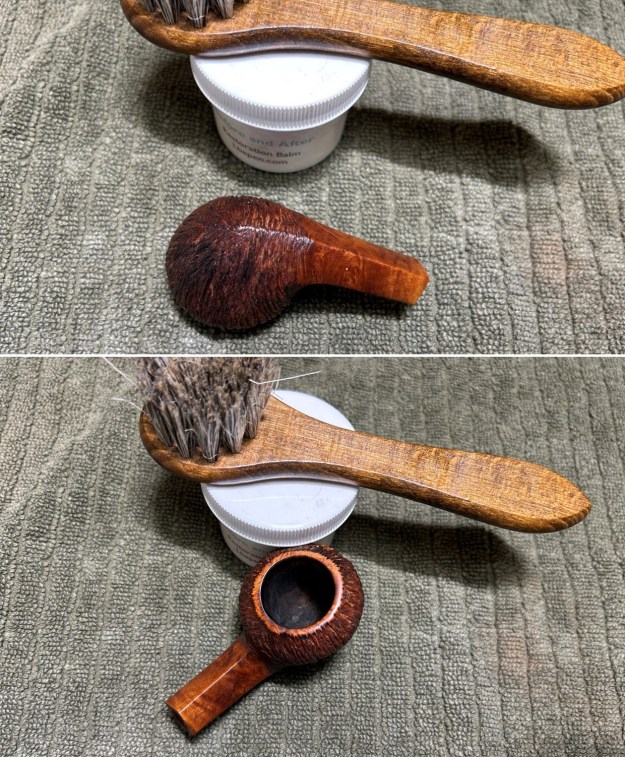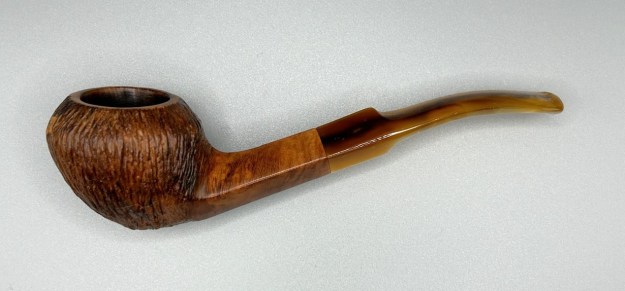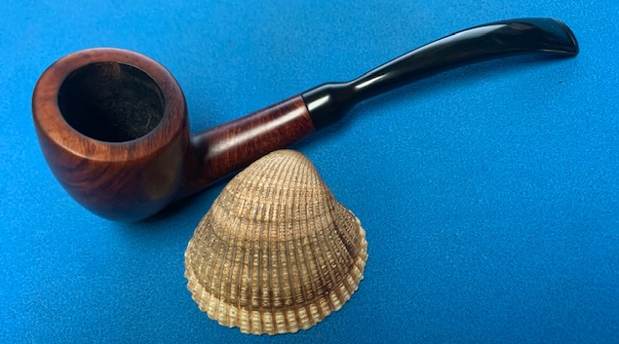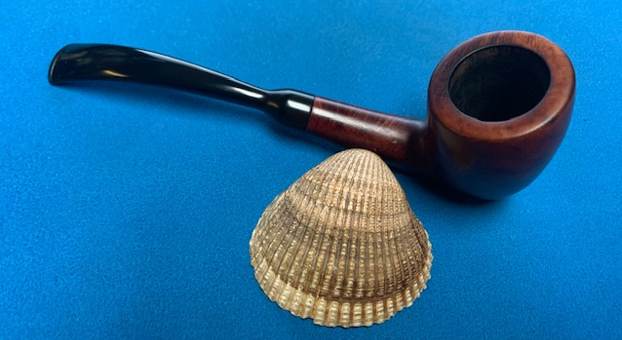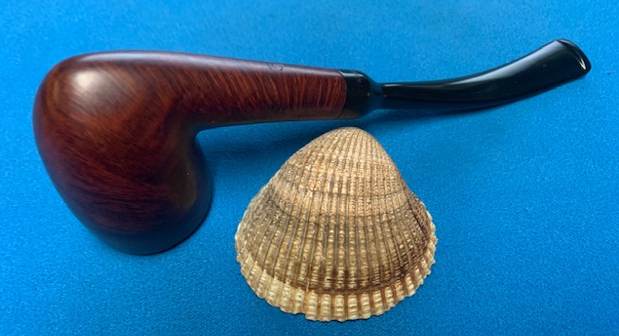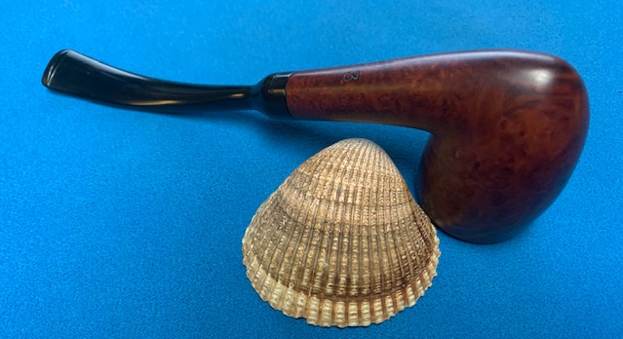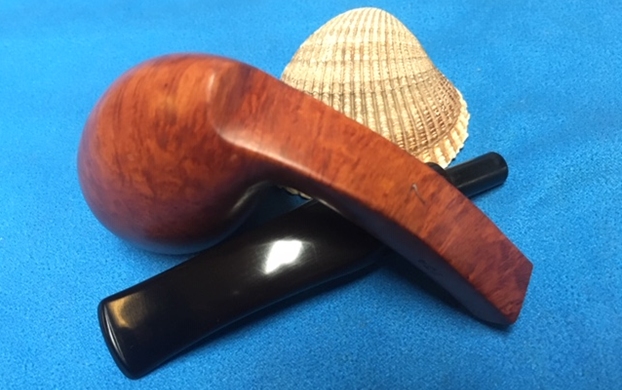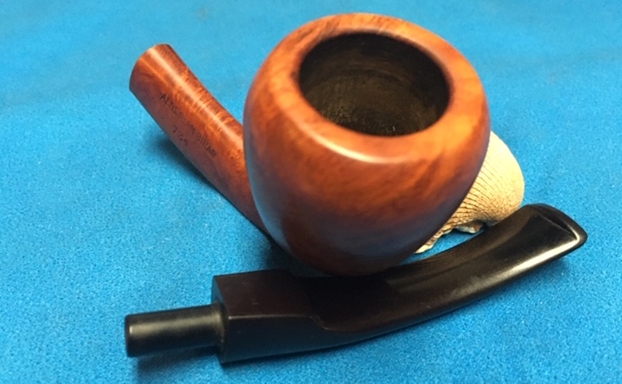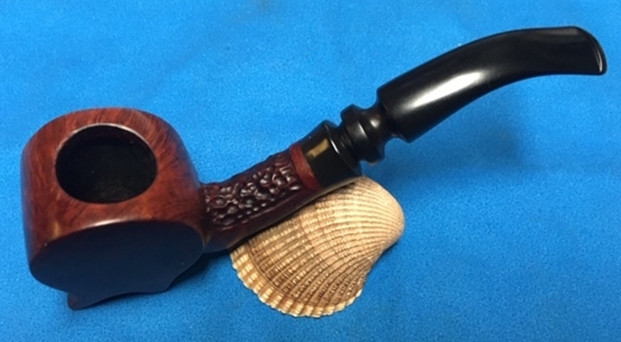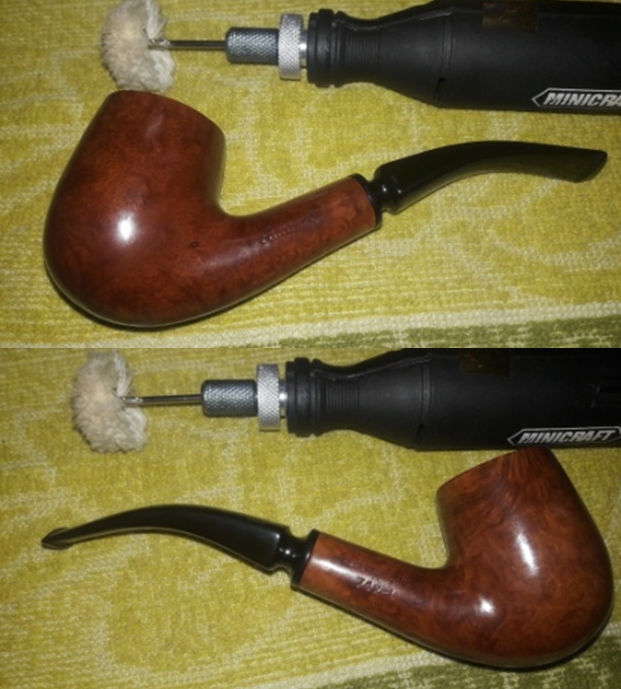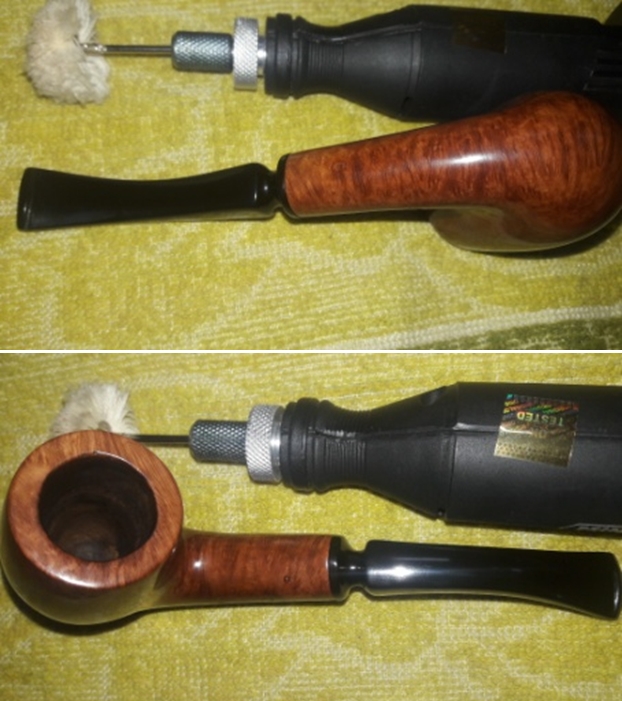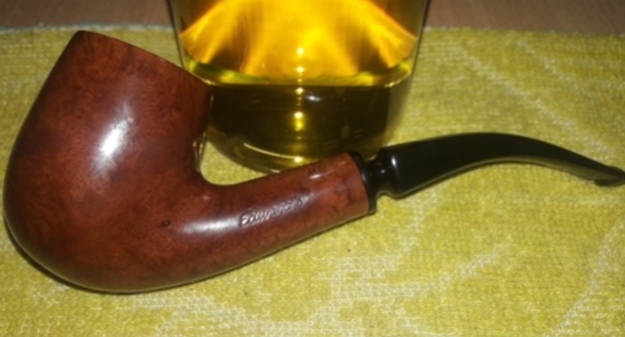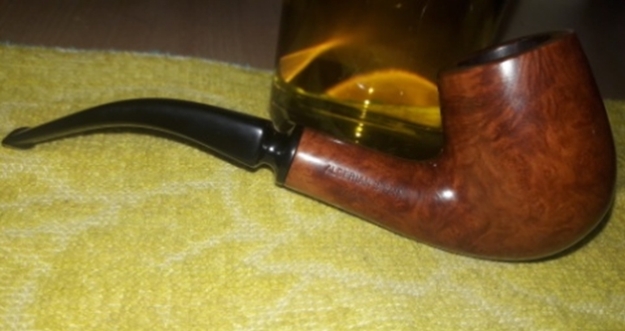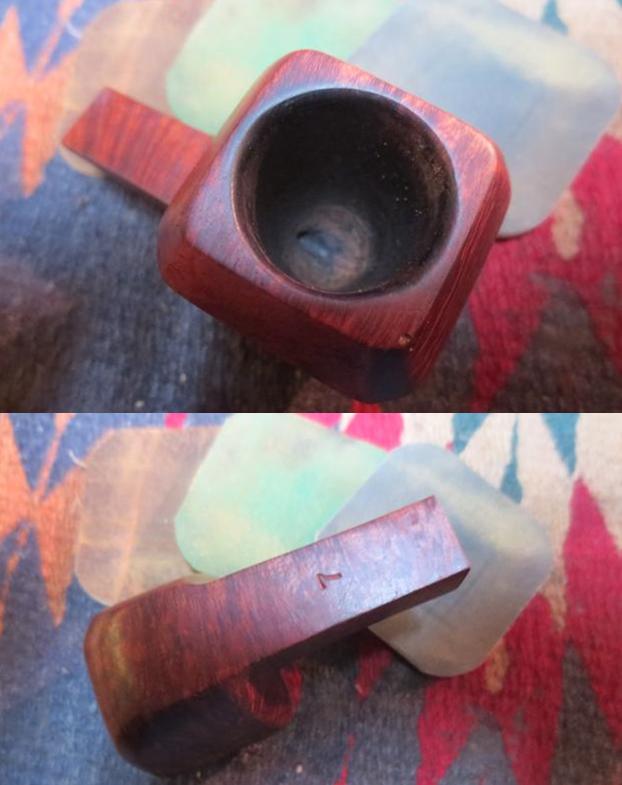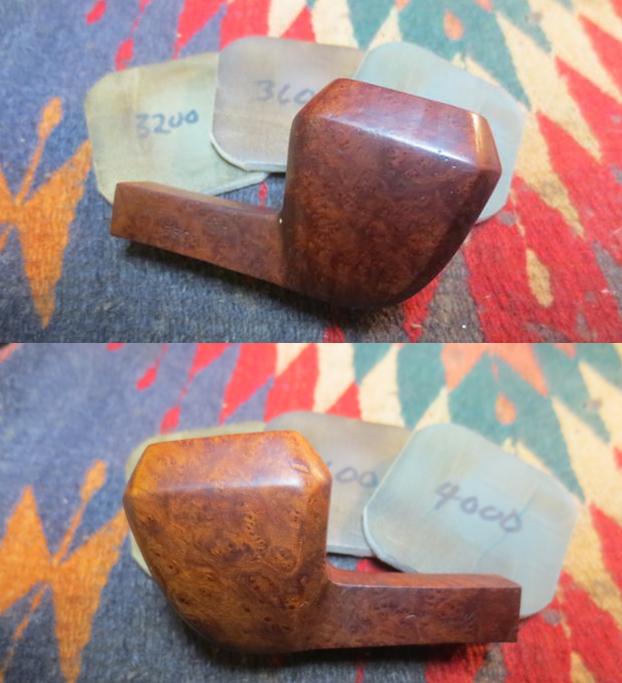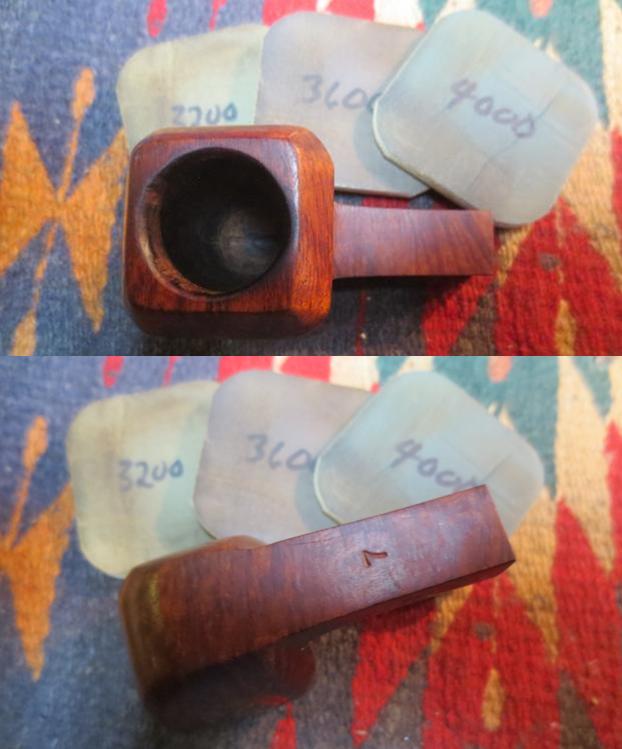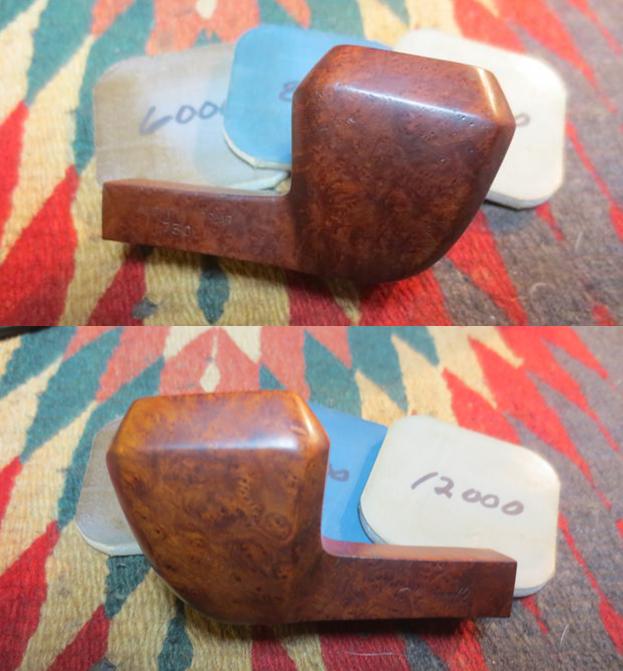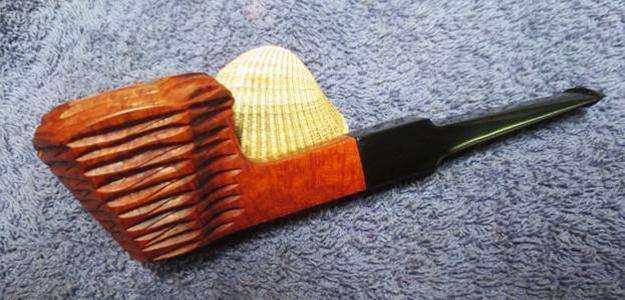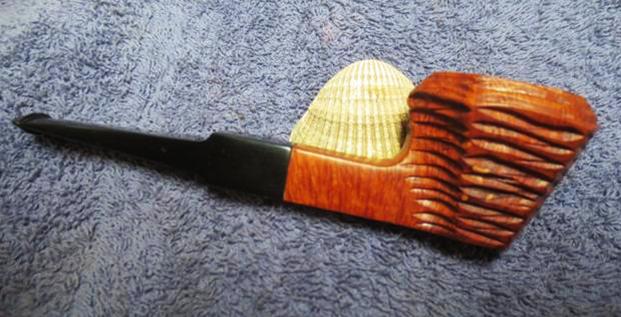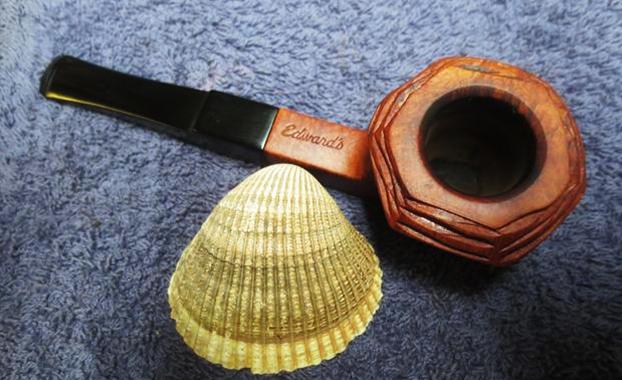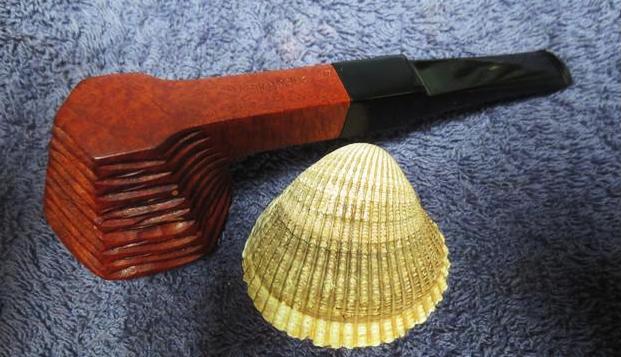
Tag Archives: Edwards Pipes

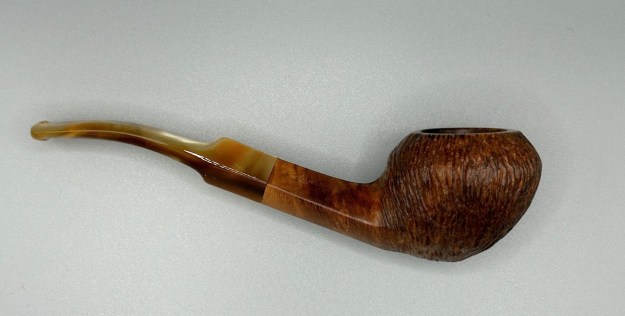
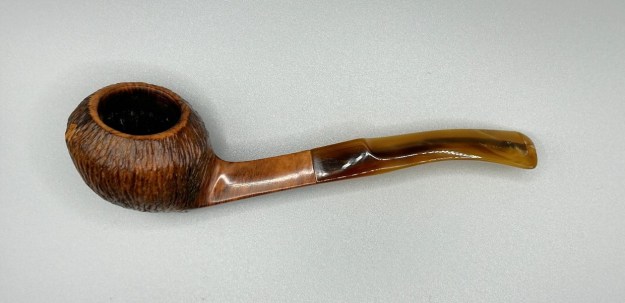
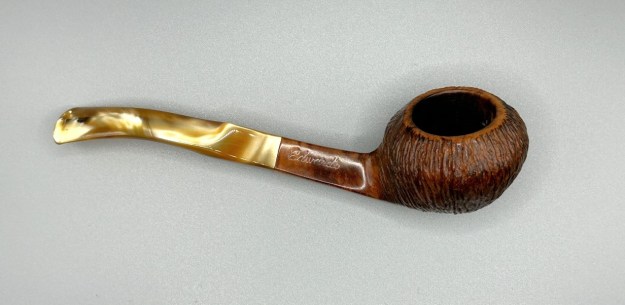
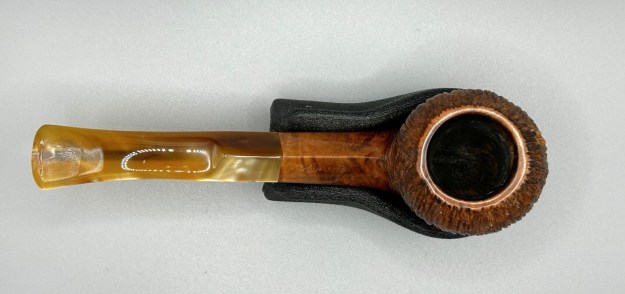
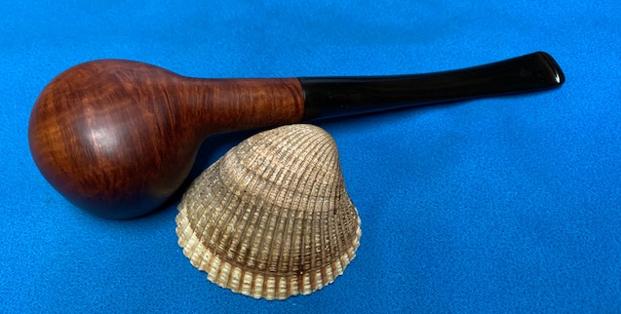
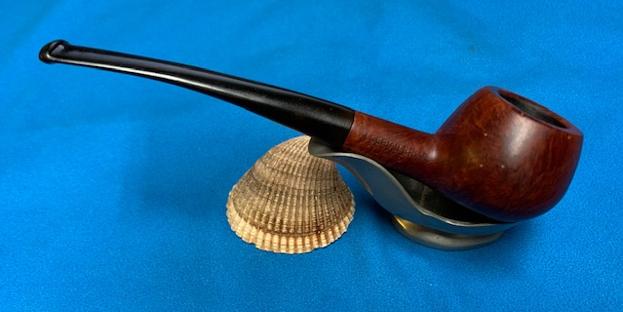
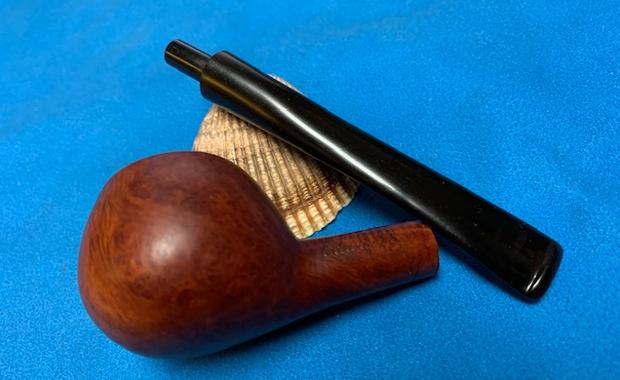
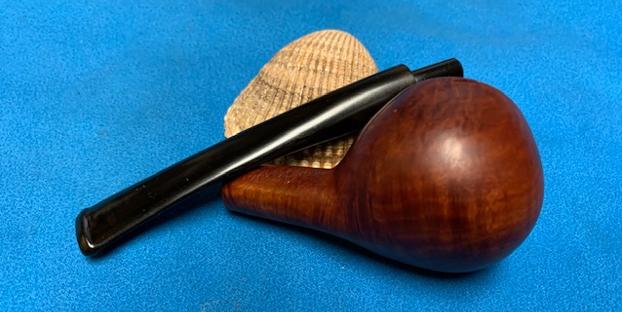
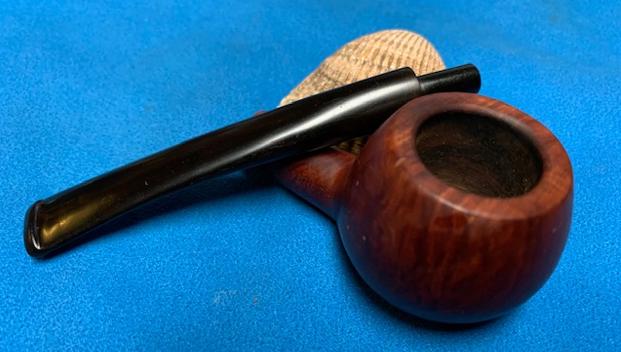
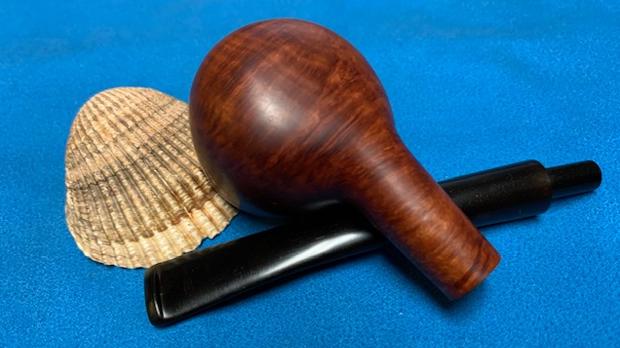
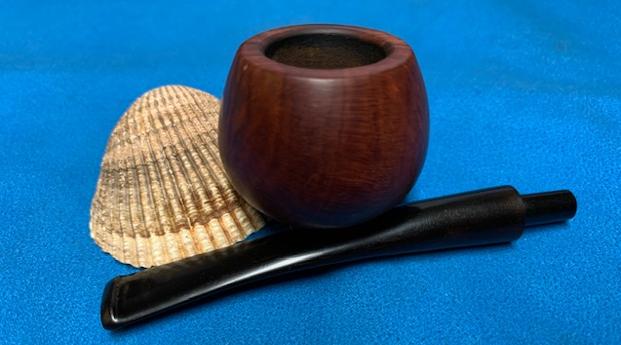
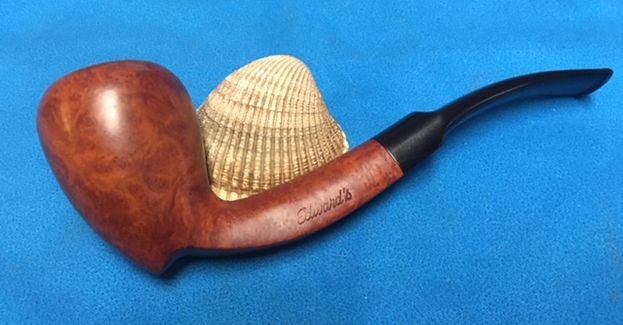
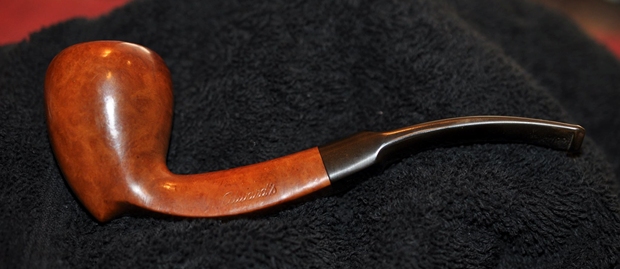
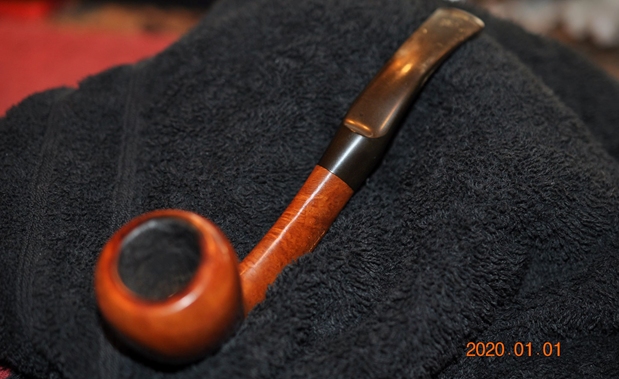
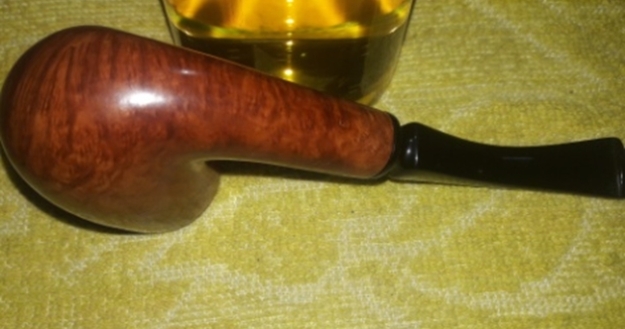
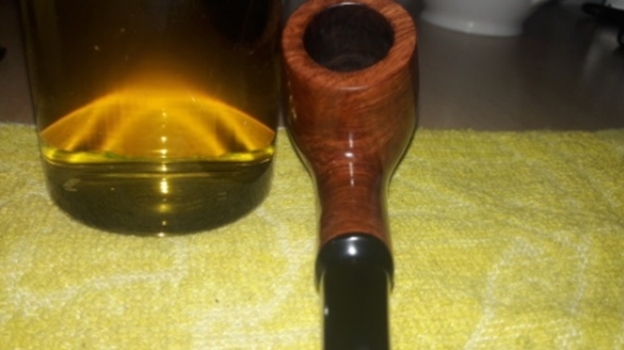
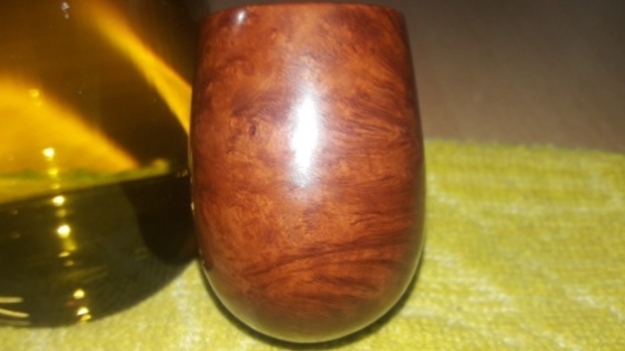
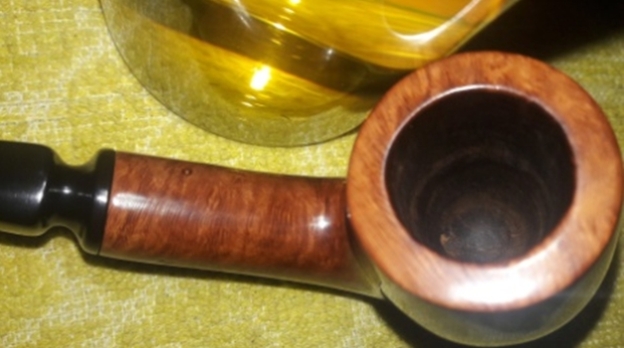
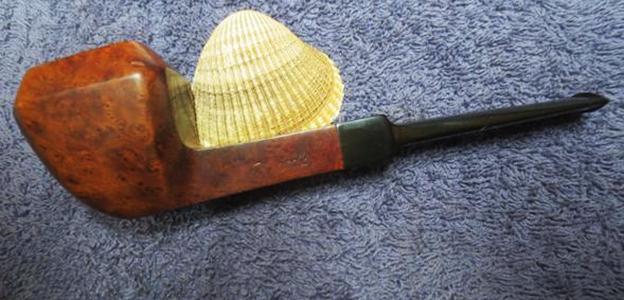
Restoring a Danish Looking Edwards Algerian Briar 770 Acorn


Blog by Steve Laug

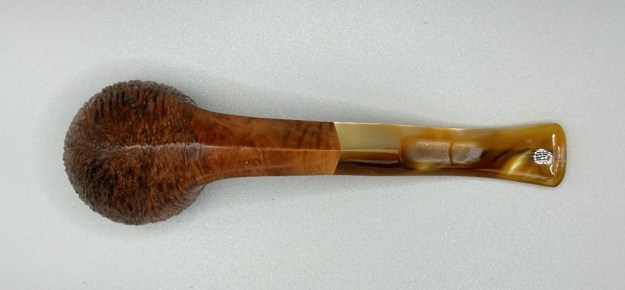
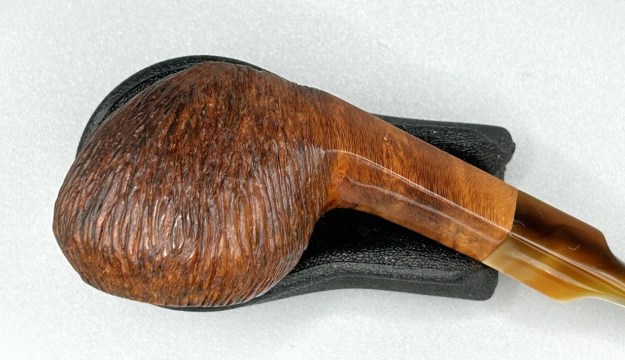
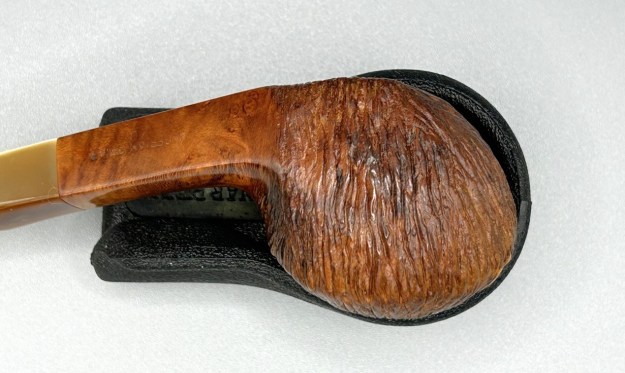
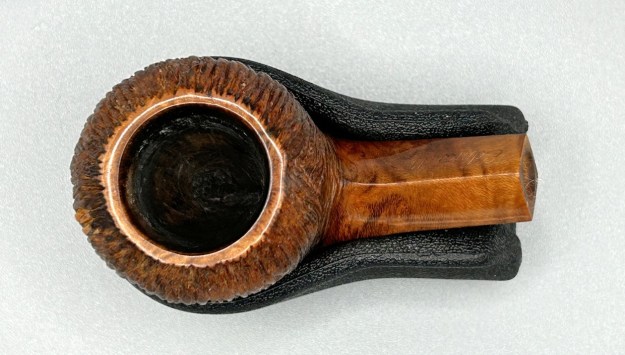
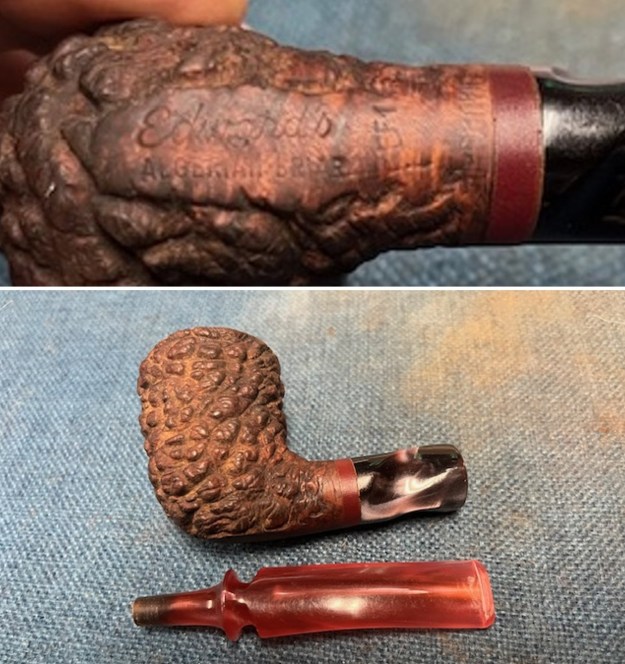
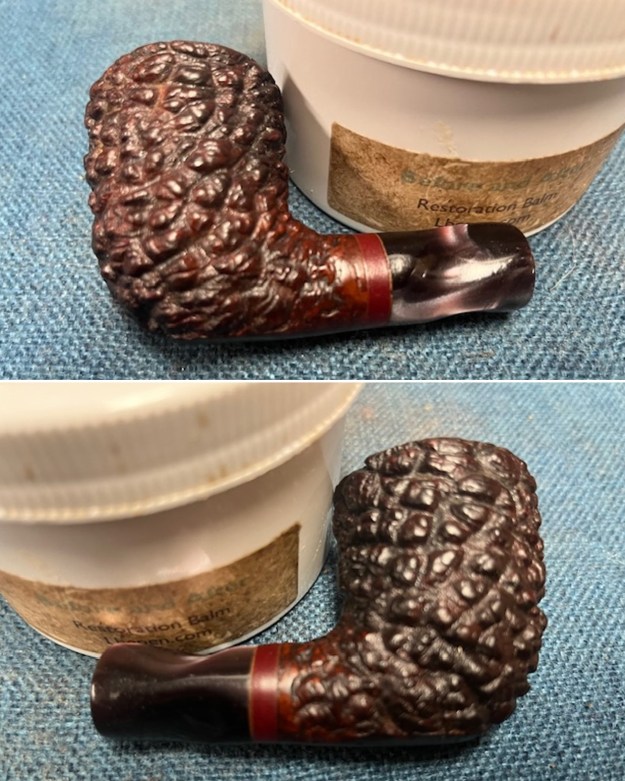
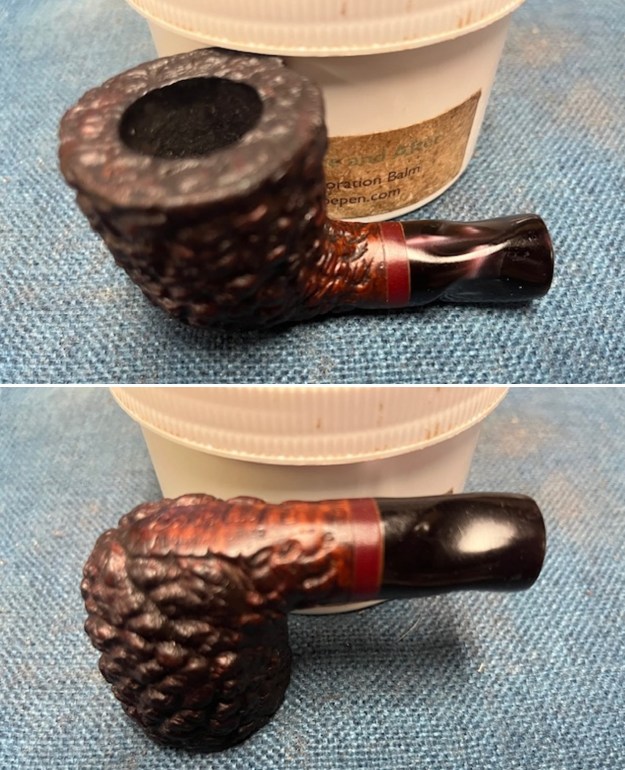
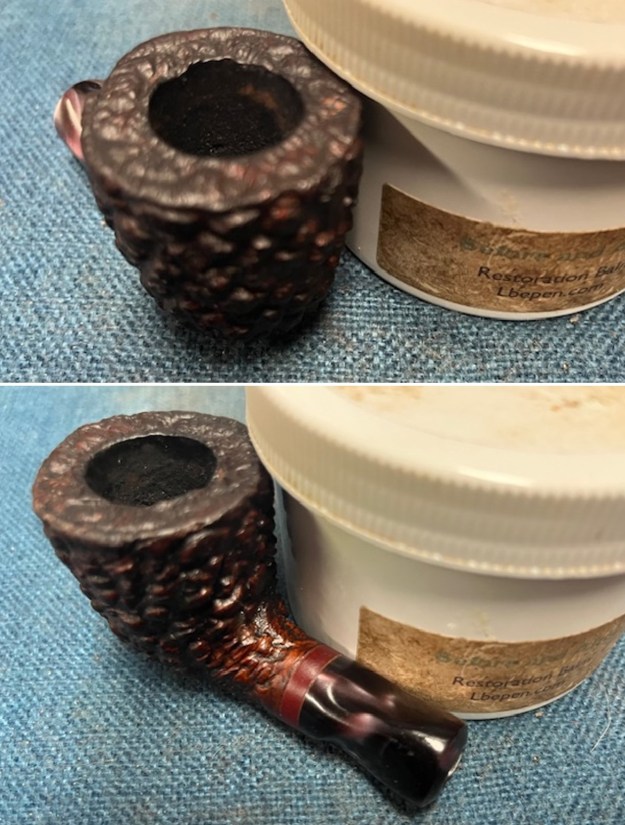
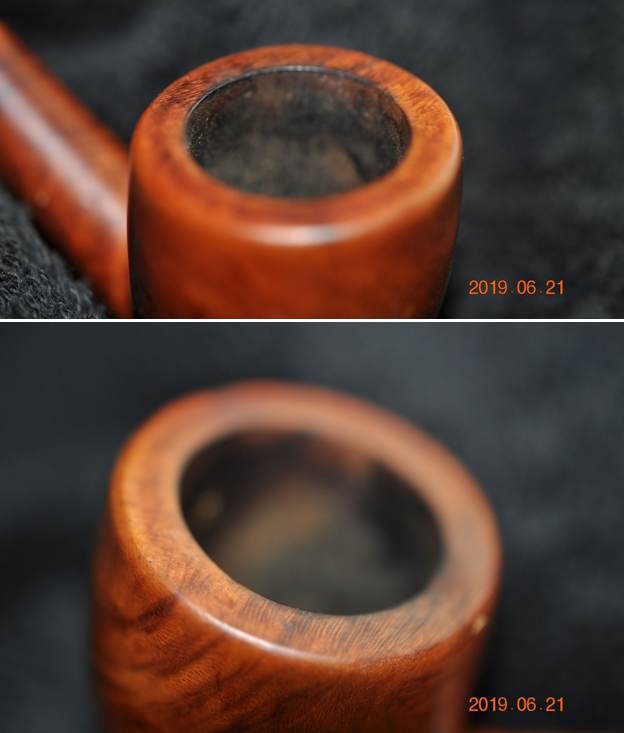
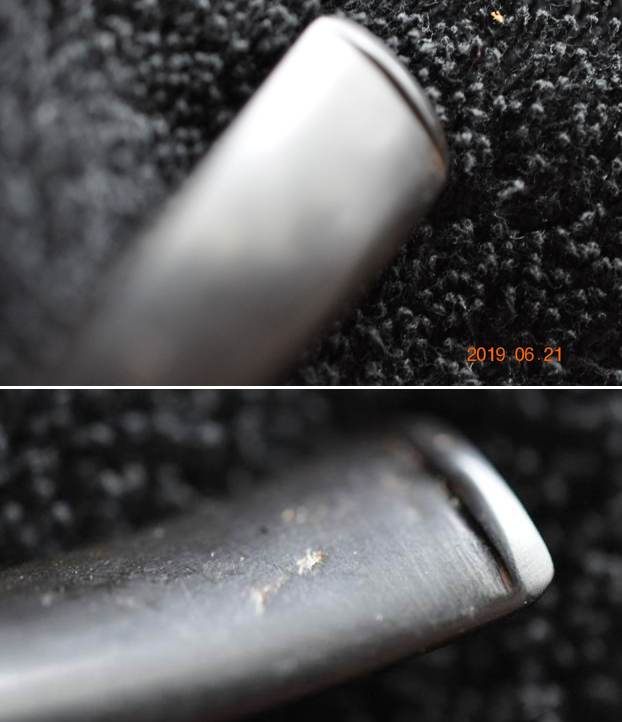
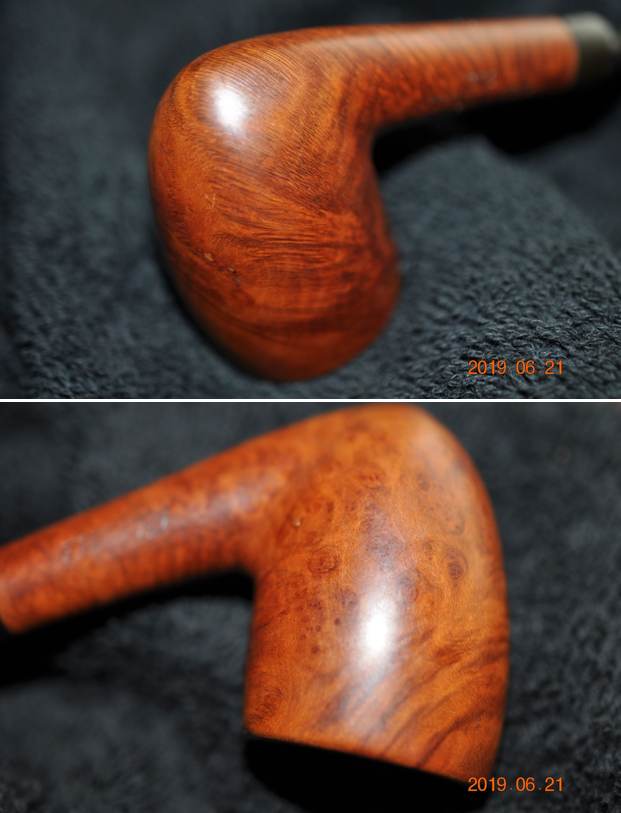
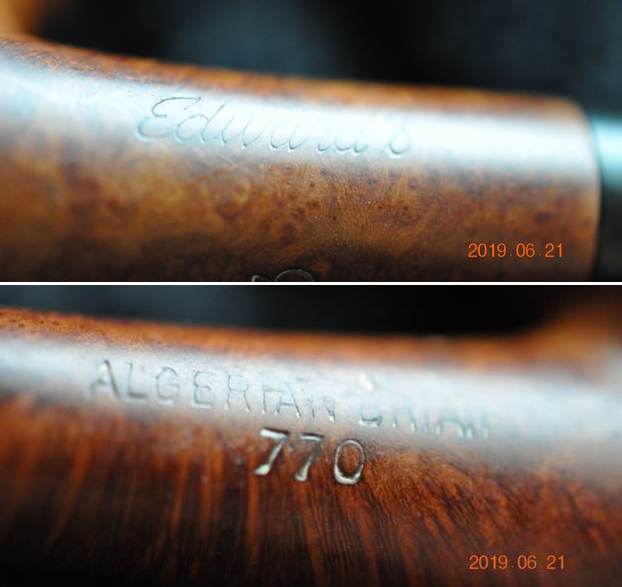
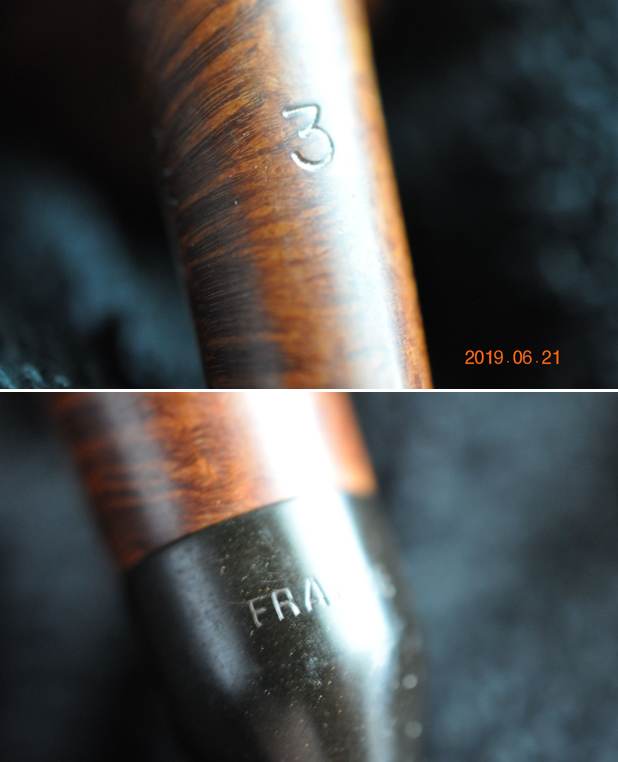
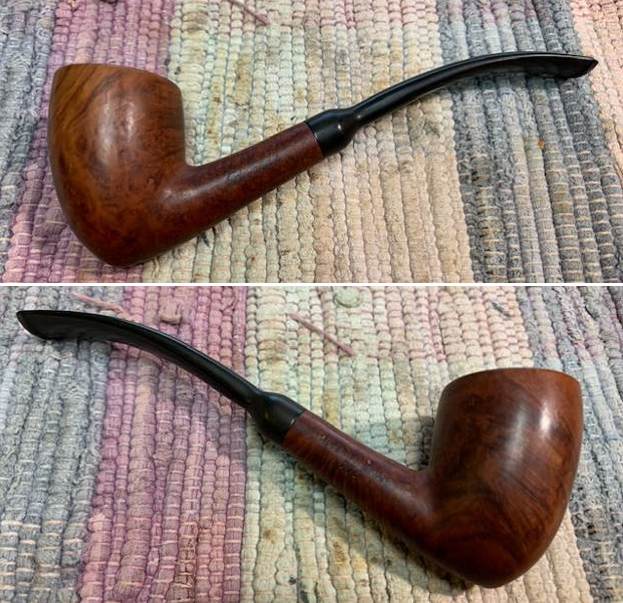
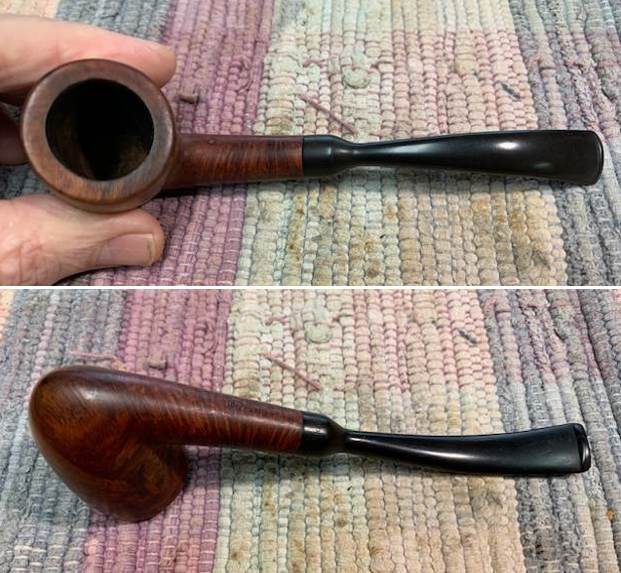
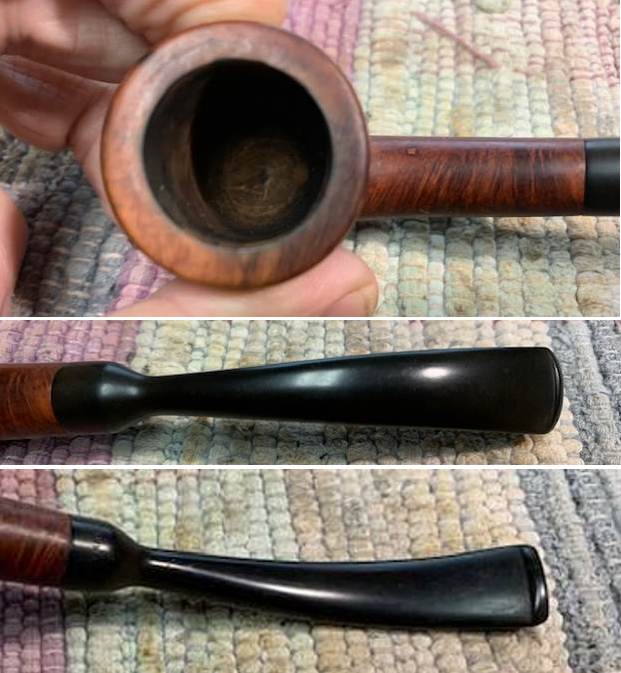
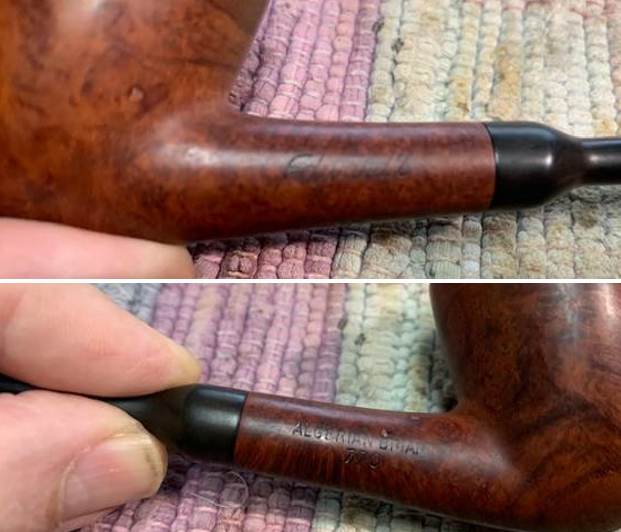
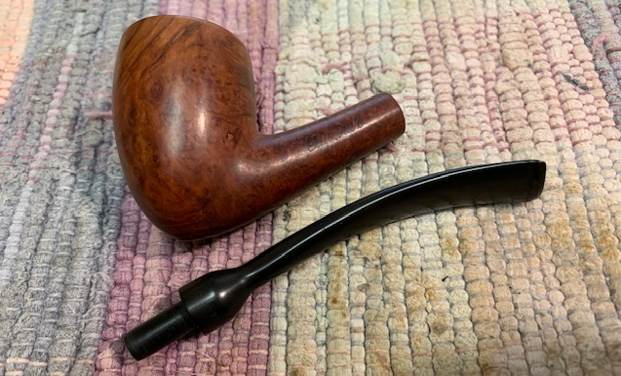
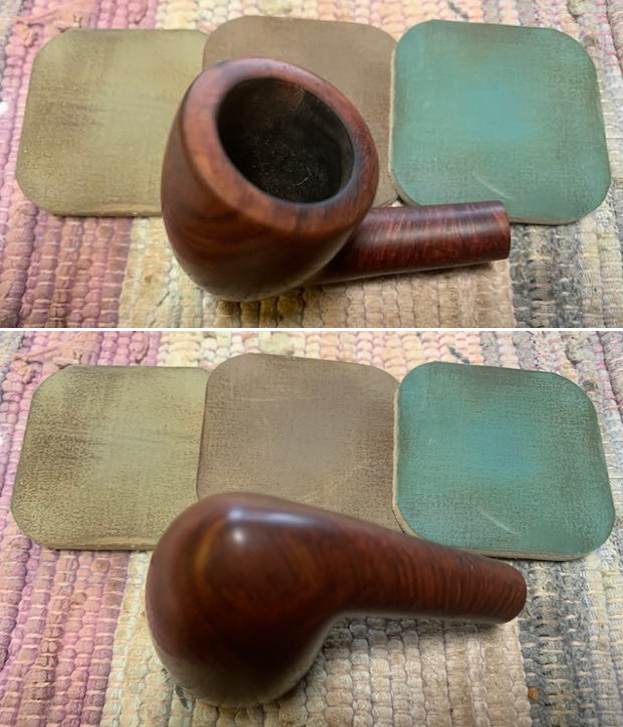
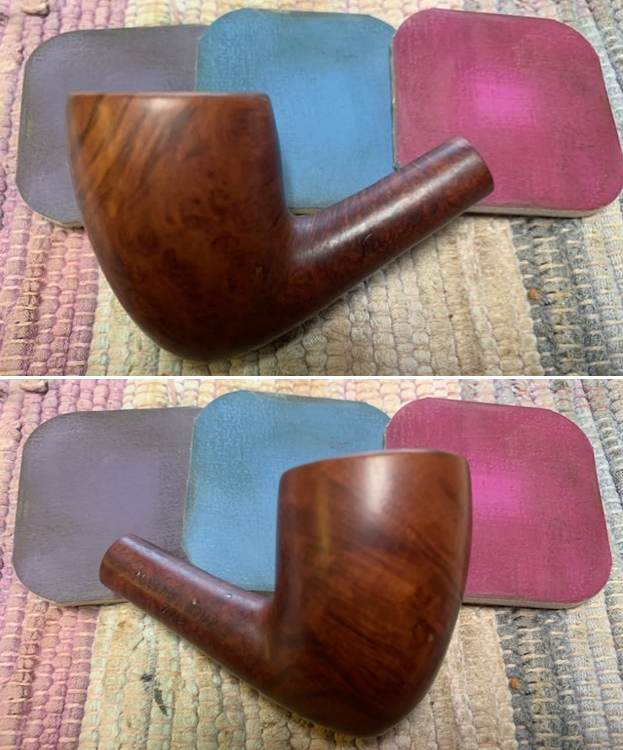
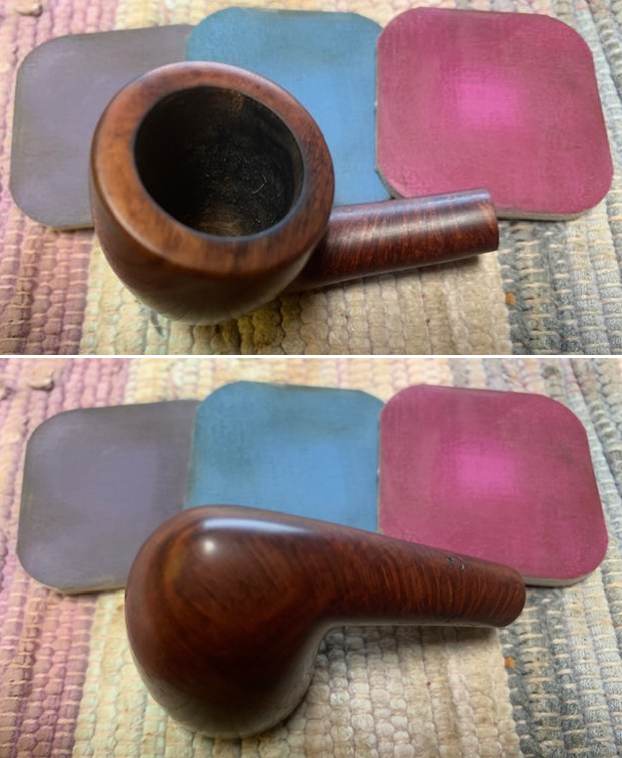
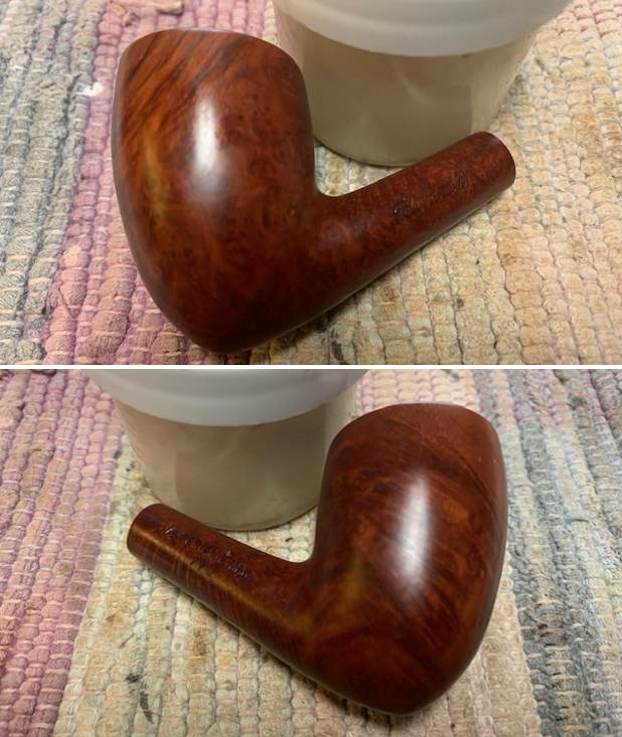
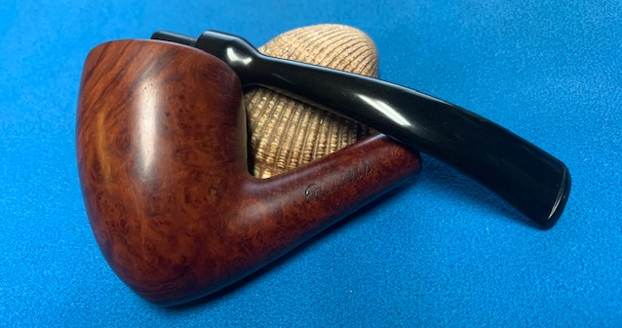
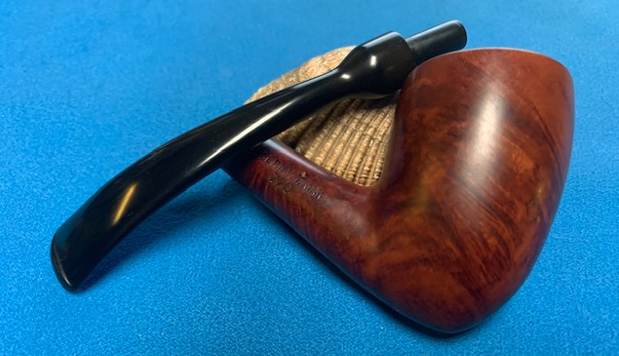
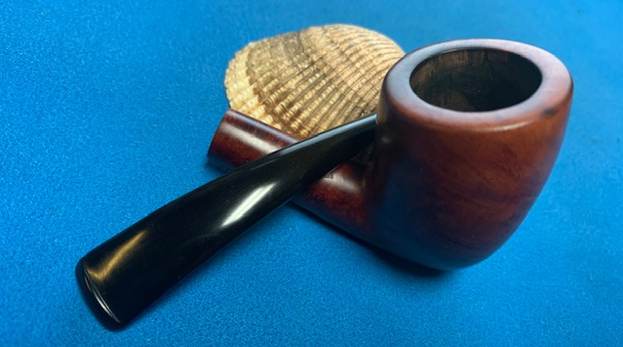
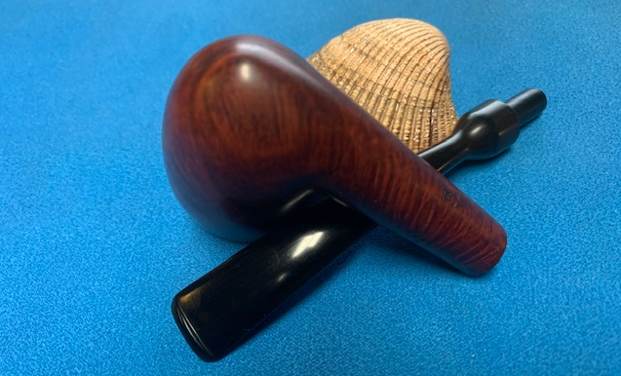
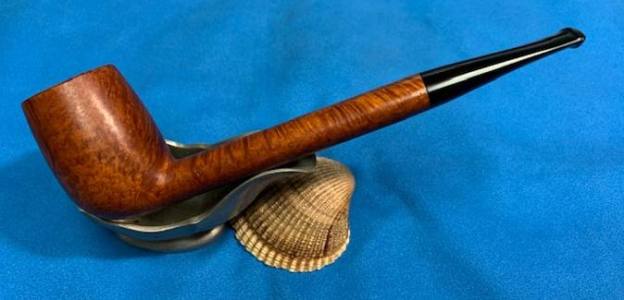
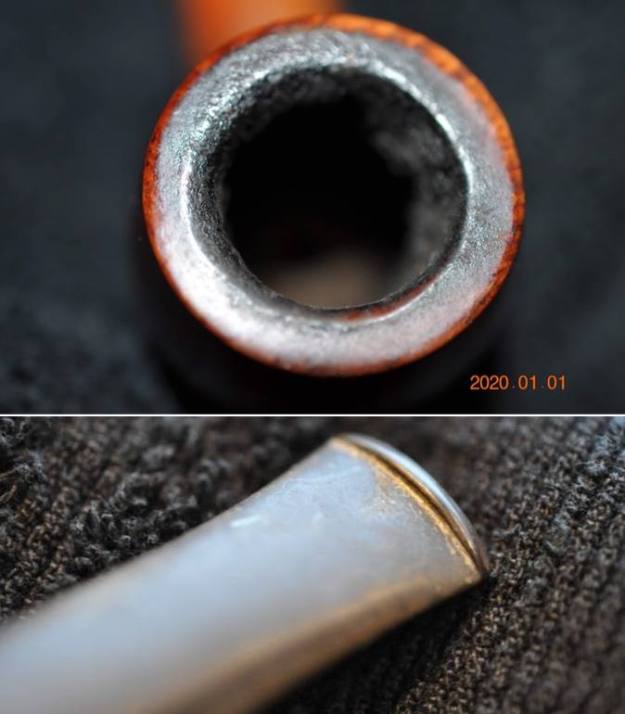
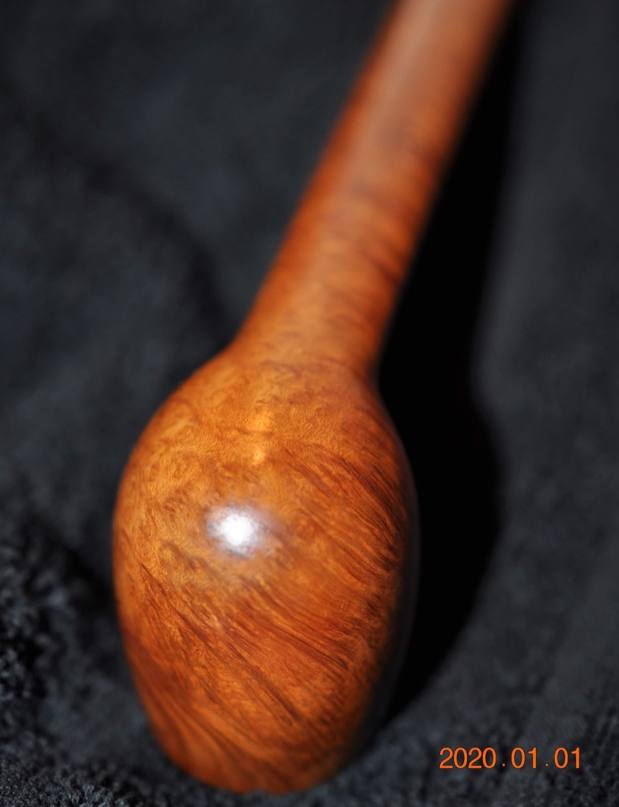
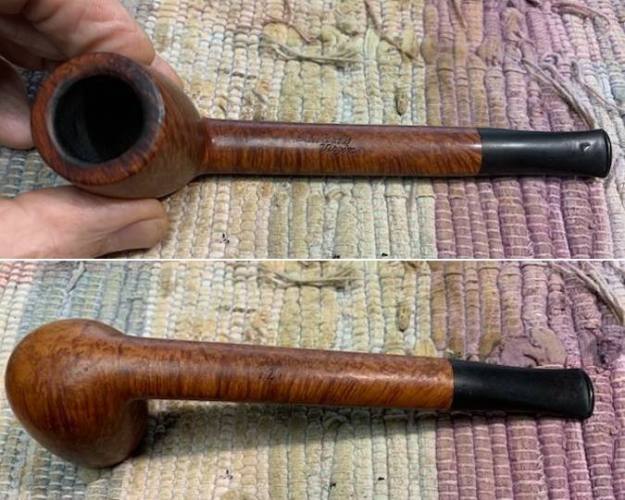
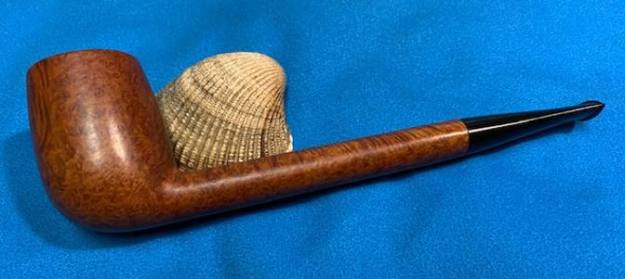
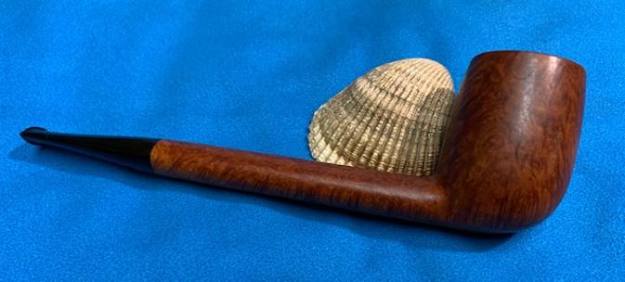
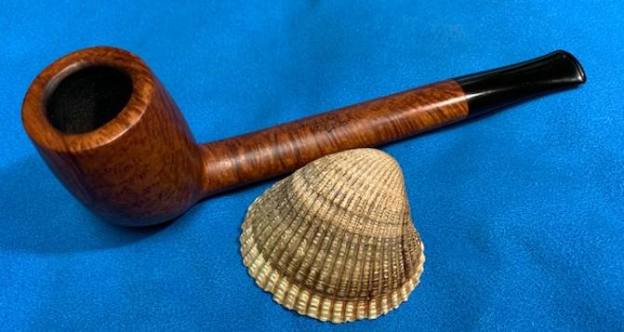
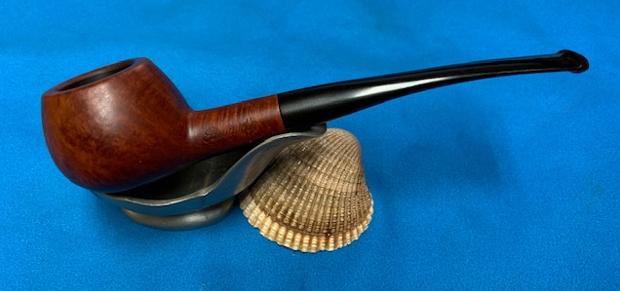
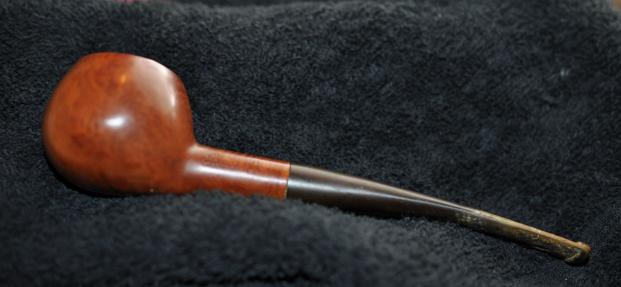
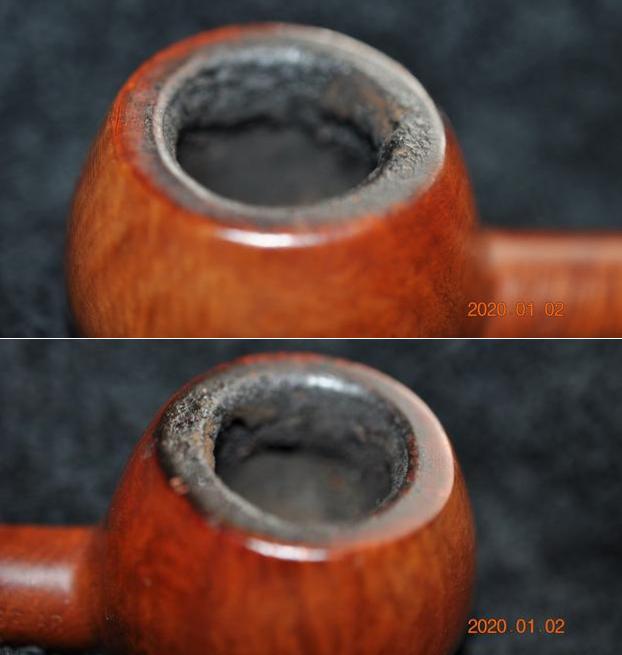
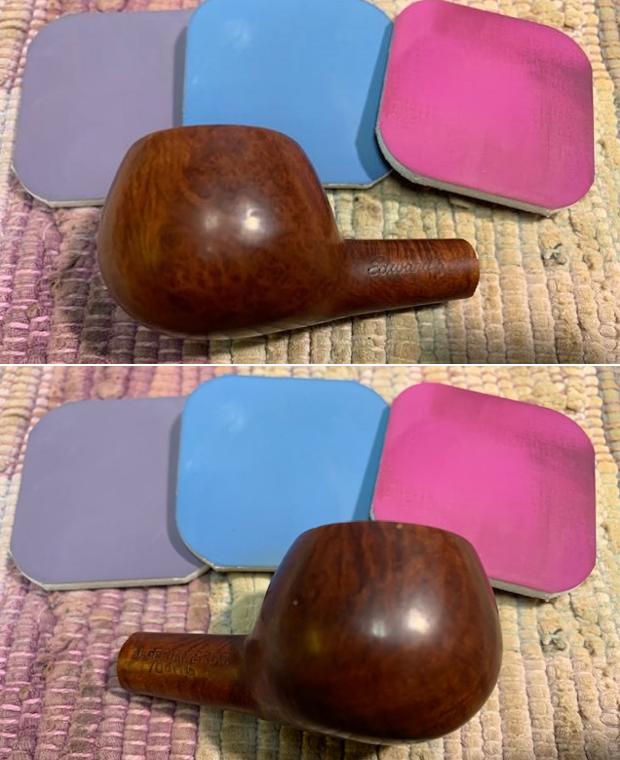
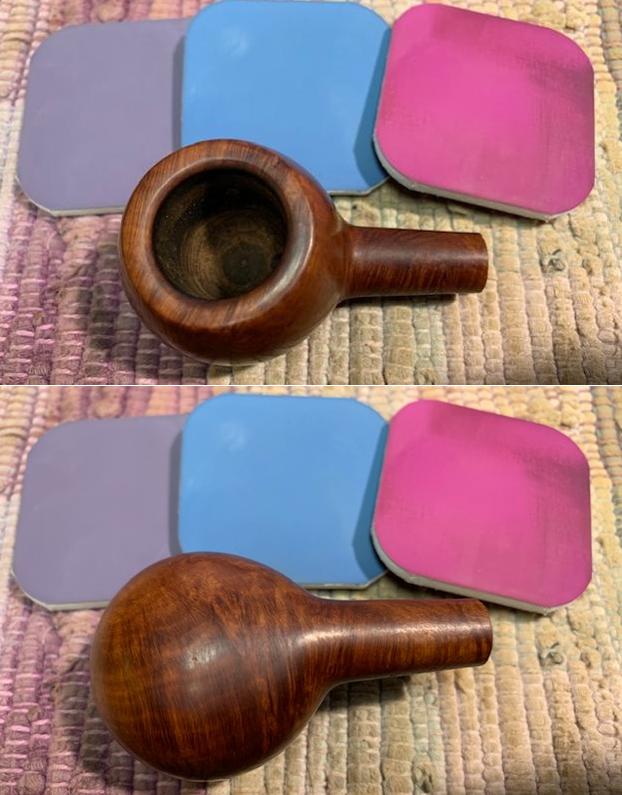
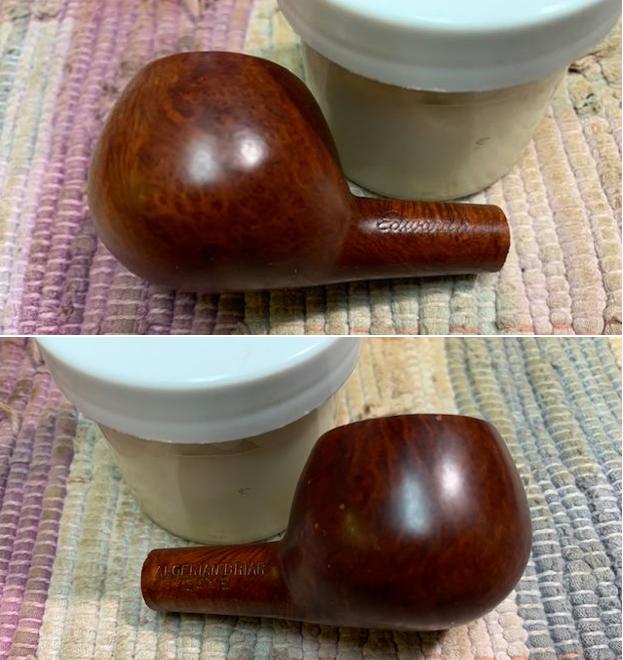
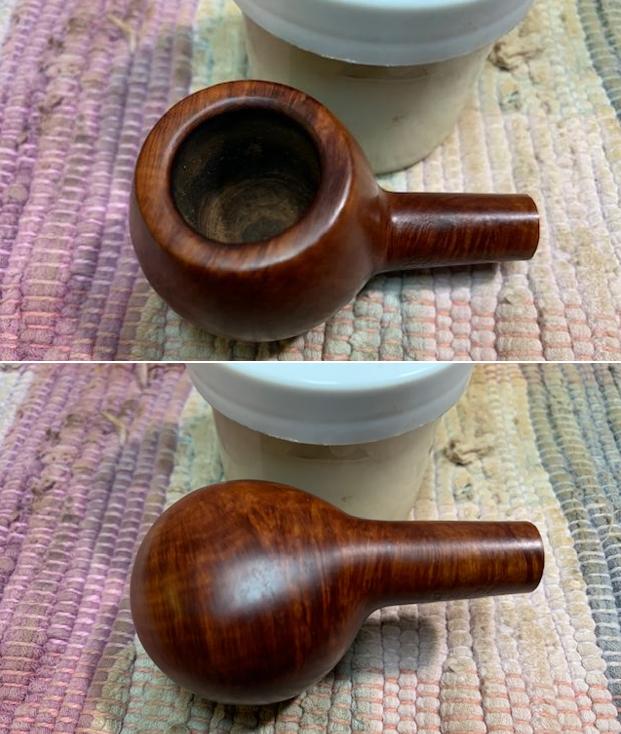
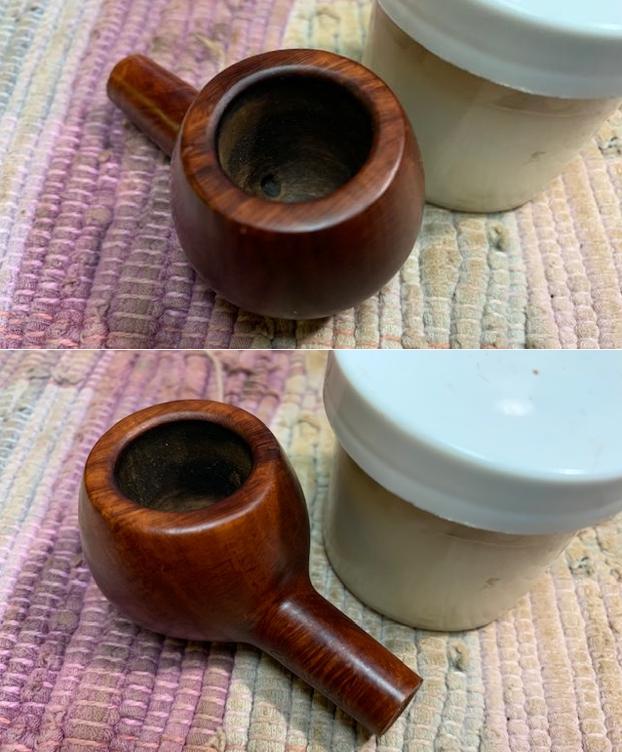
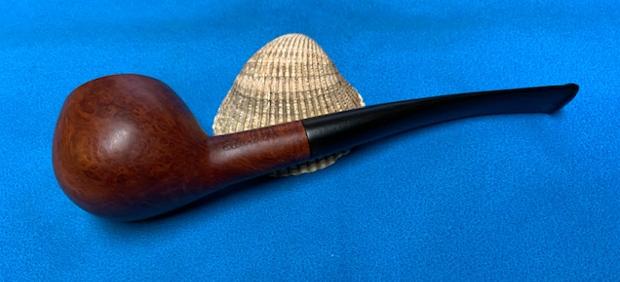
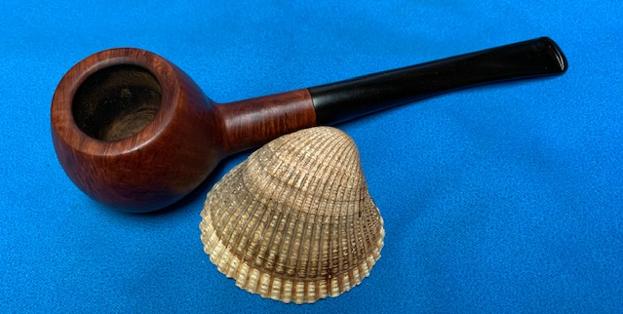
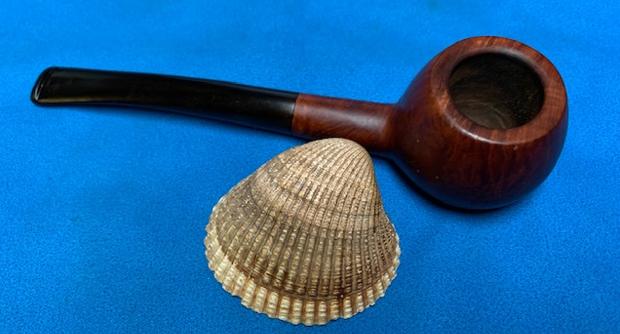
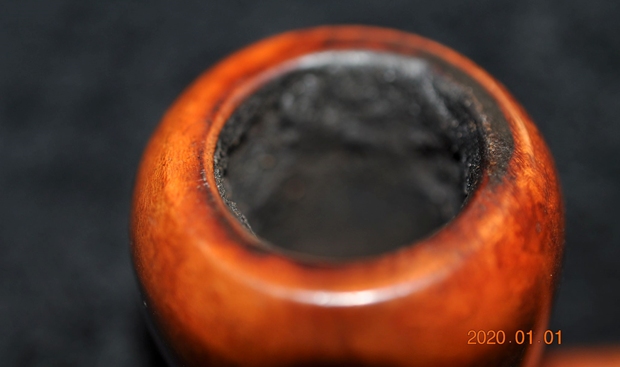
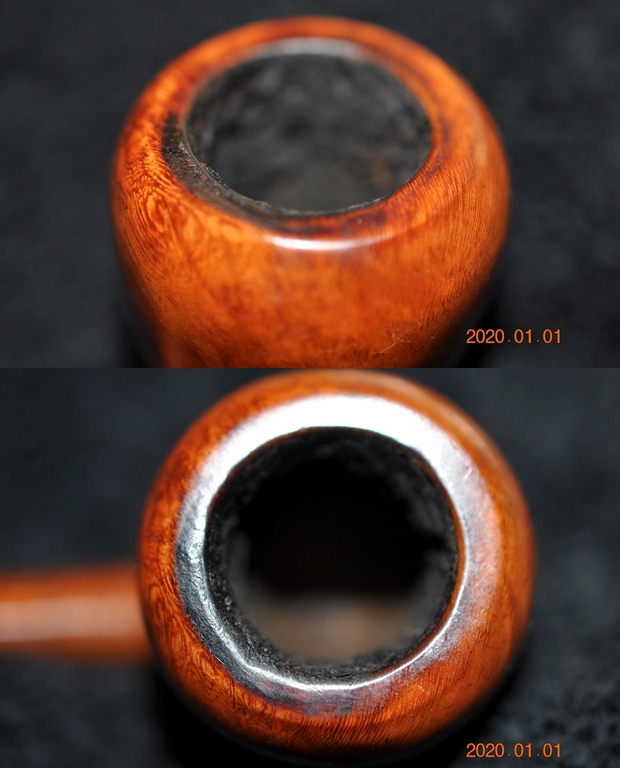
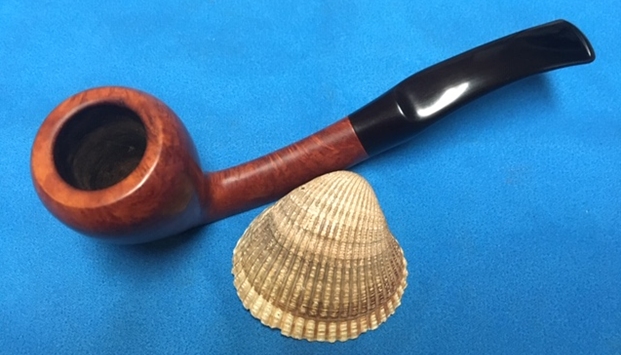
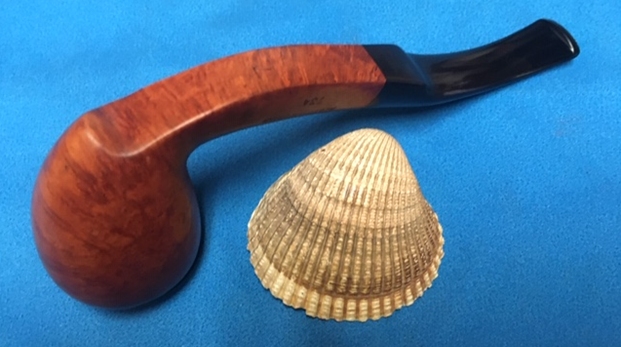
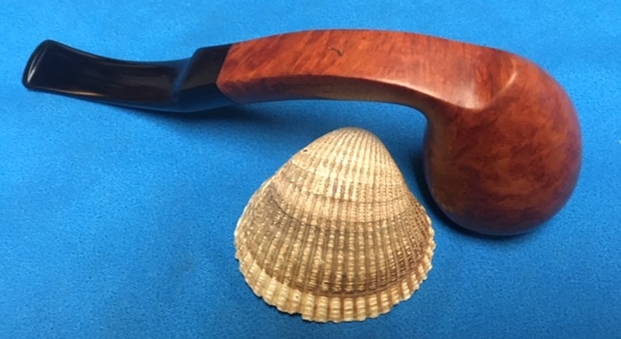
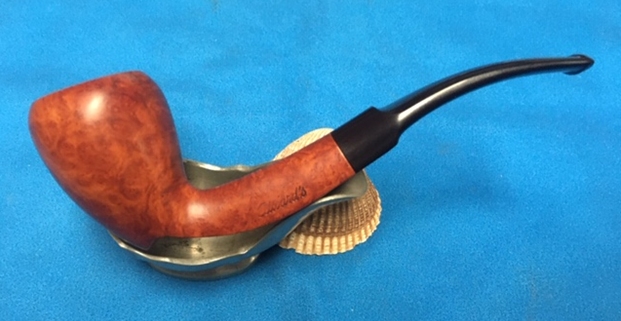
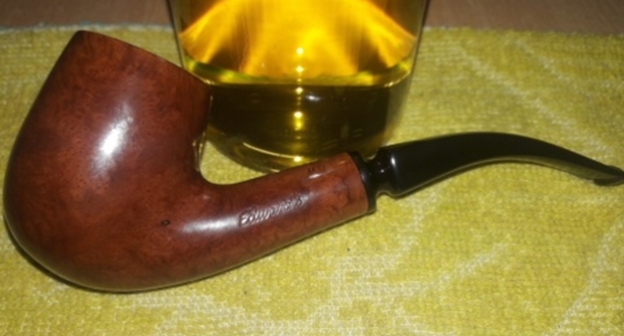
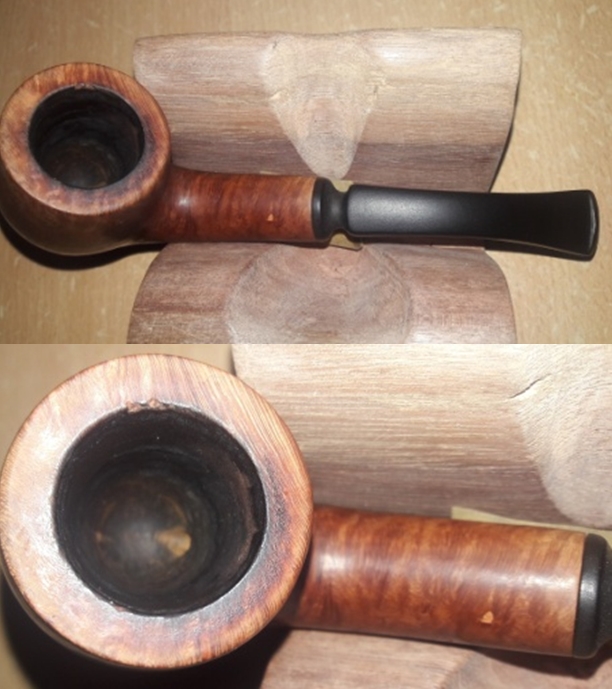
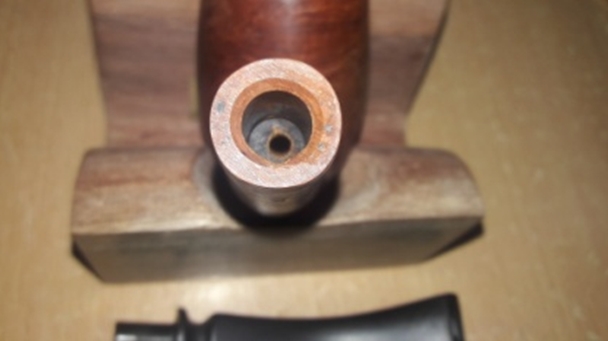
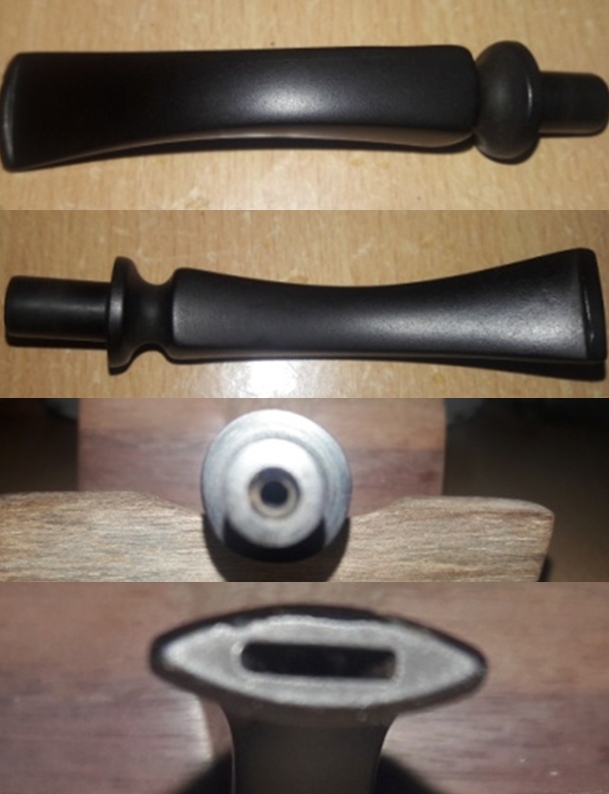
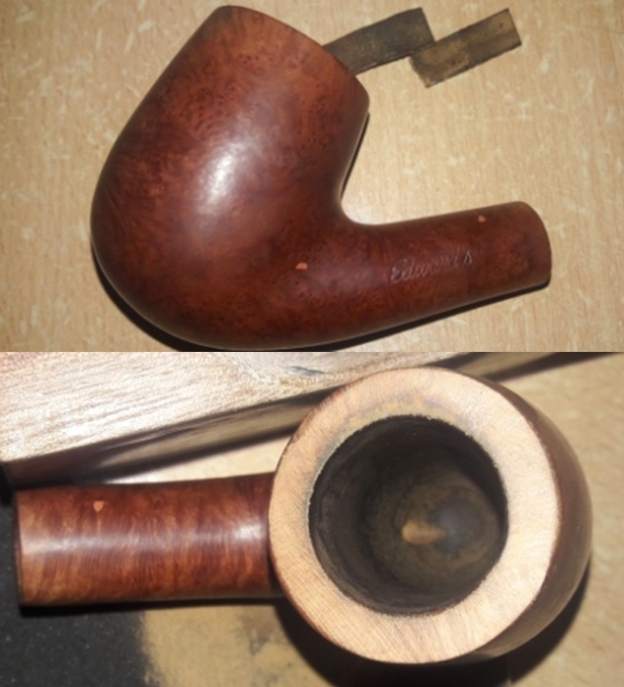
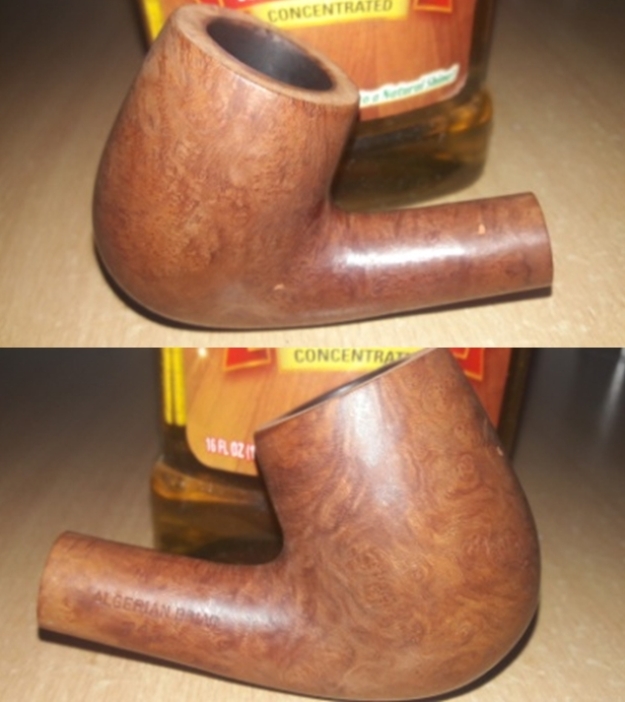
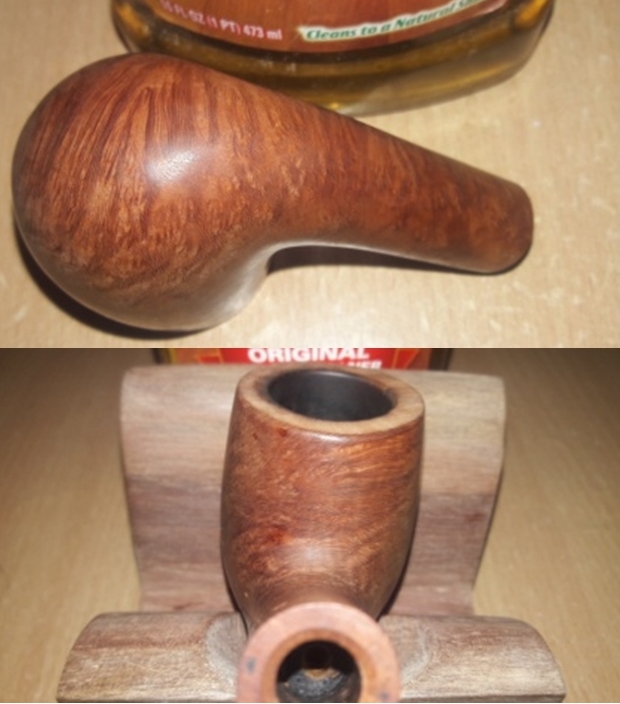
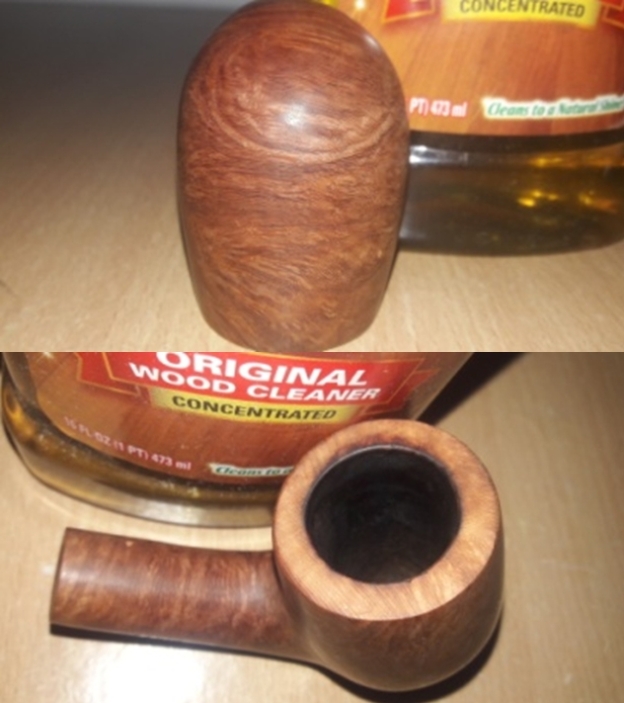
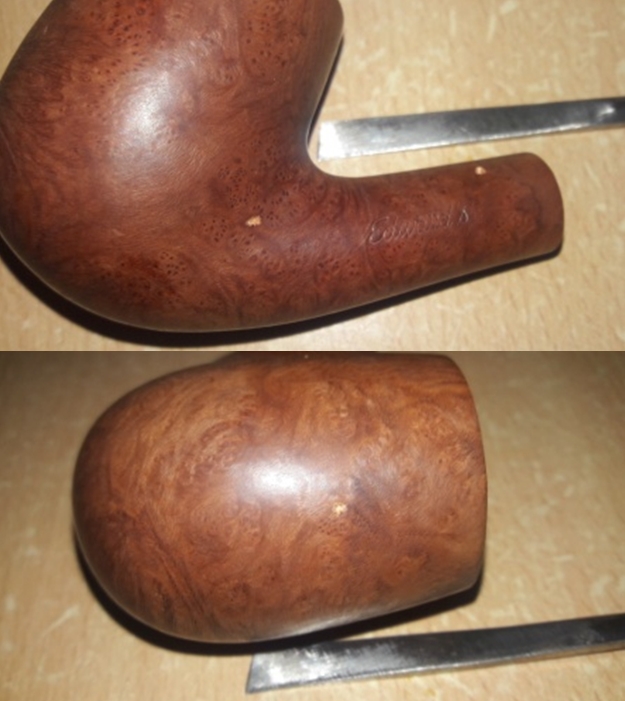
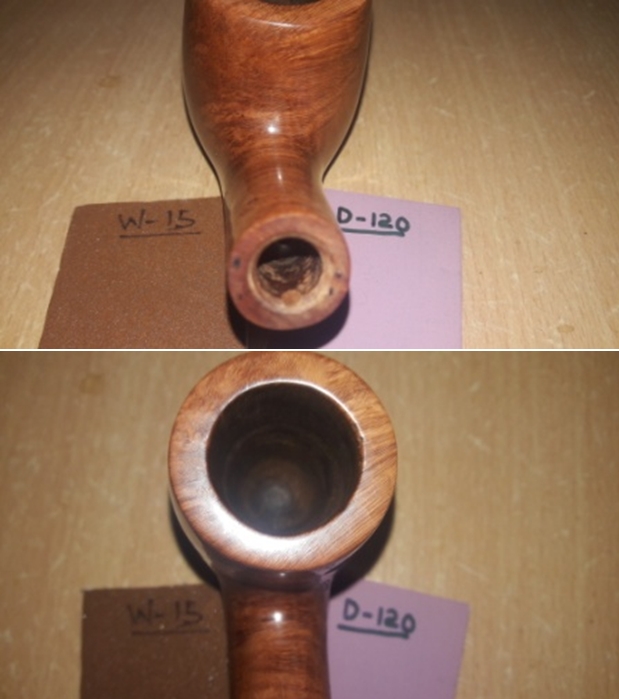
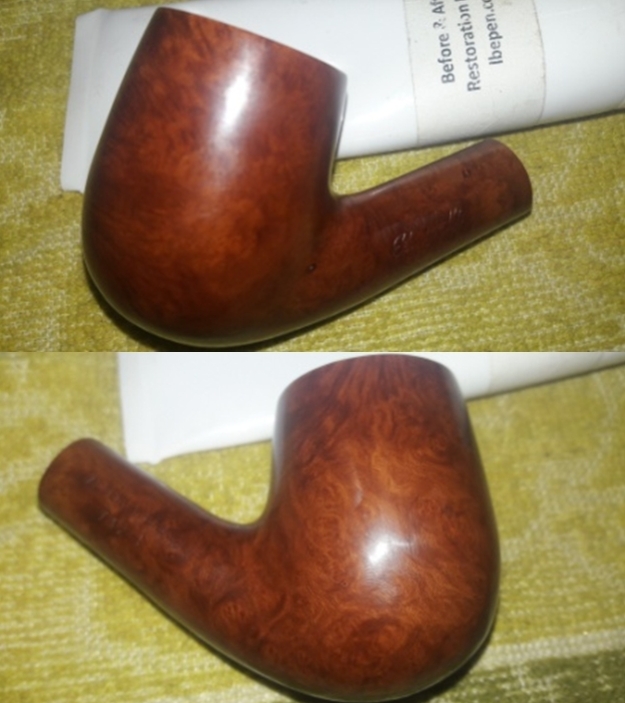
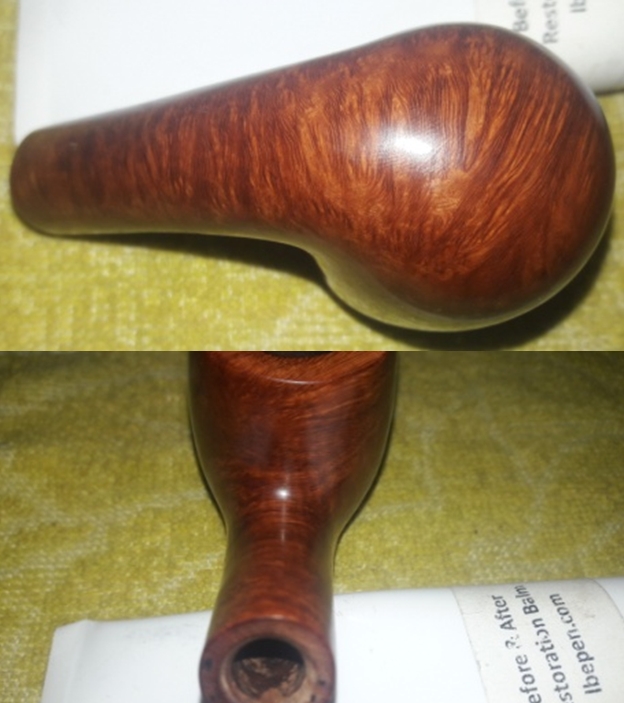
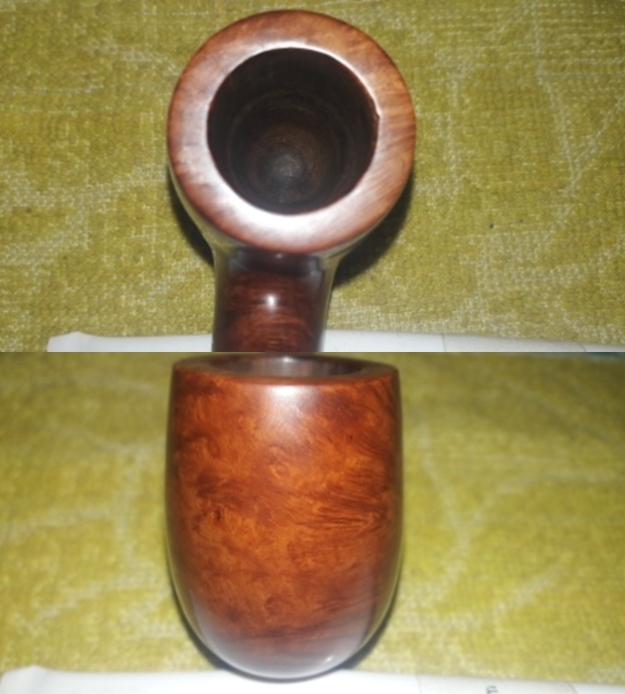
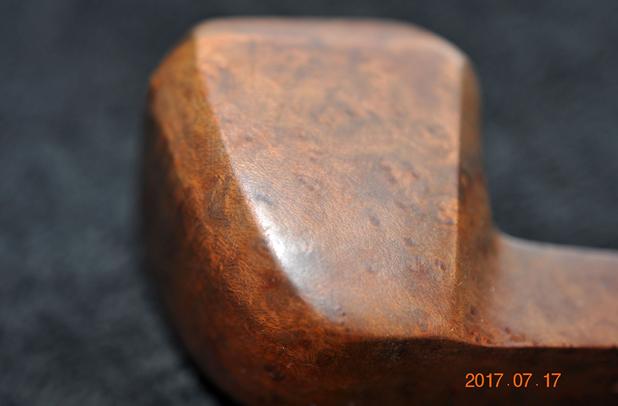
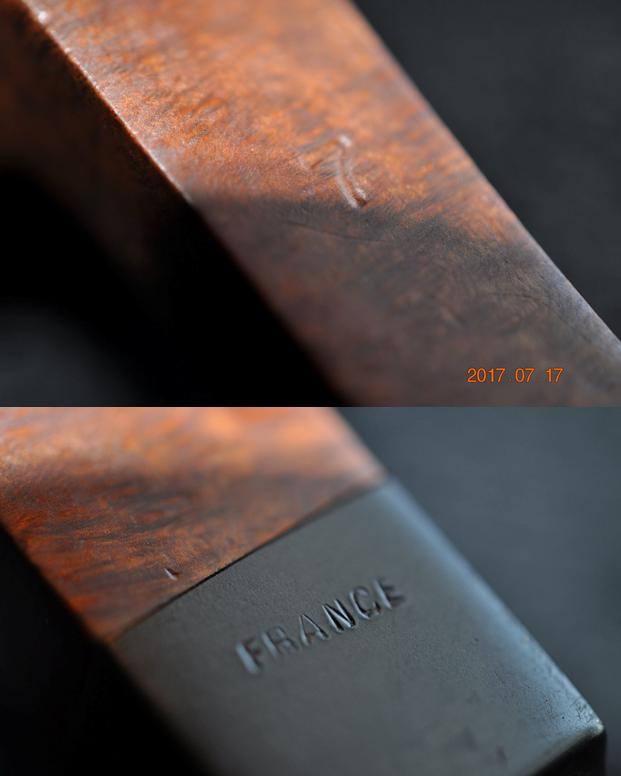
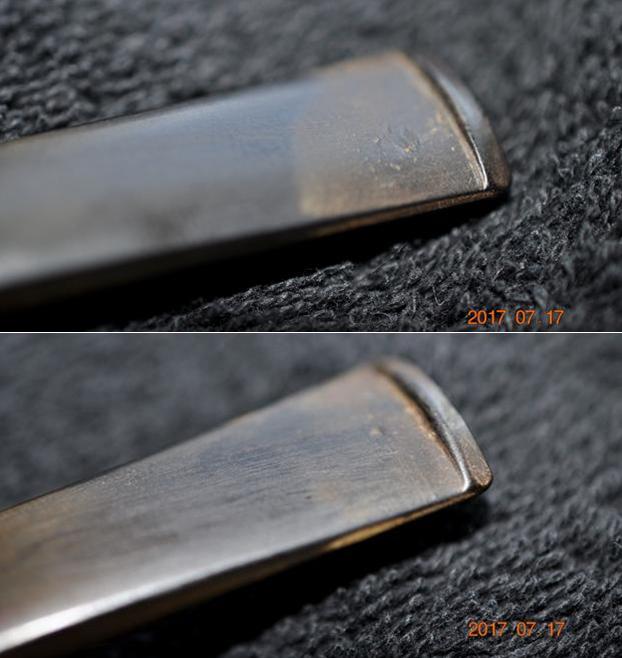
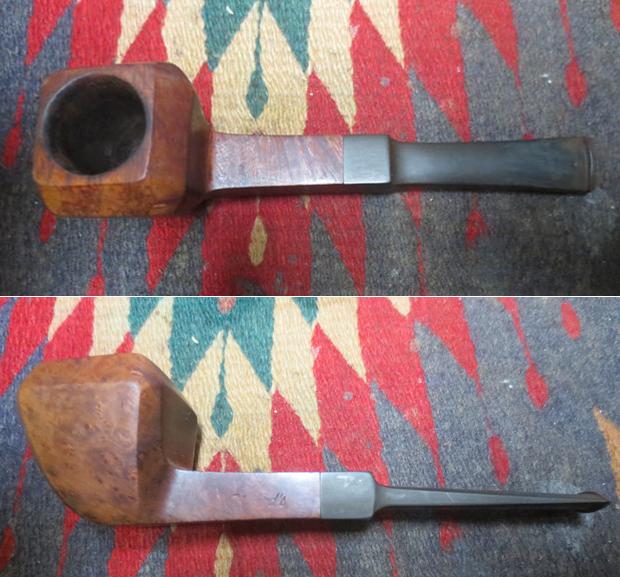
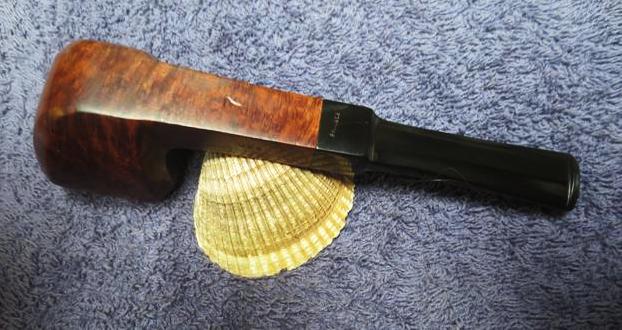
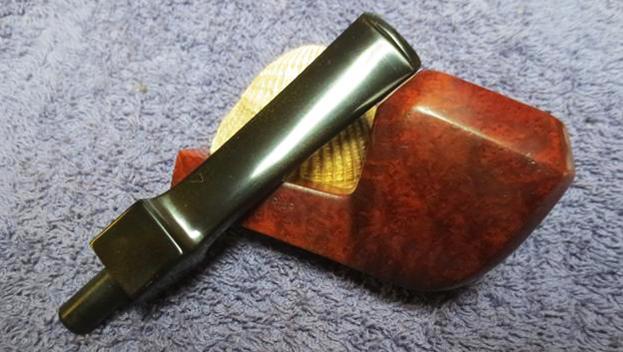
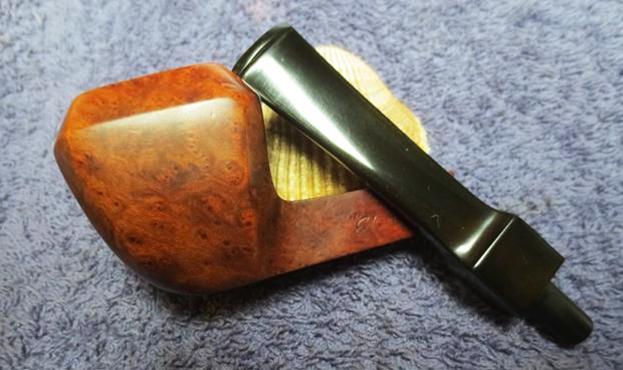
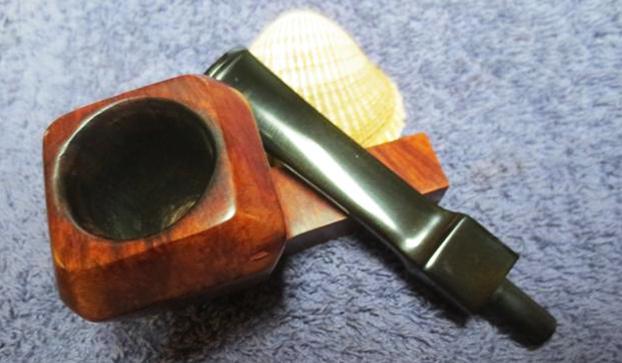
The next pipe on my work table a Danish looking Edwards Acorn shaped pipe. It is stamped Edwards in script on the left side of the shank. On the underside of the shank it is stamped with a 3. On the right side of the shank it is stamped Algerian Briar over the shape number 770 mid shank. The fancy saddle stem is stamped FRANCE on the underside of the saddle. The briar has a mix grain around the bowl and shank. There are a few small fills in the briar toward the front of the bowl on both sides. This pipe was bought from an online auction on March of 2019 in Wilkes Barre, Pennsylvania, USA. The finish was dirty but the grain shone through well. The rim top was clean but there was some darkening on the inner edge. There was a moderate cake in the bowl and some tobacco debris. The shank and stem airway was very dirty. The stem was lightly oxidized, calcified and had light tooth marks and chatter on both sides ahead of the button. Jeff took photos of the pipe before he started his clean up. He took photos of the rim top and bowl to show the cake in the bowl, the darkening on the inner edge and the light lava on the rim top. The stem photos show the oxidation, calcification and tooth chatter and marks very well. Jeff took photos of the sides of the bowl to highlight the grain around the bowl sides and base.He captured the stamping on the shank sides in the next photos. They are clean and readable as noted above. I have worked on quite a few Edwards Algerian Briar pipes in the past so I turned to a blog on one of them to read the background on the brand and remind myself how to understand the stamping on the shank. Here is the link (https://rebornpipes.com/2020/03/21/refurbishing-an-edwards-unique-i-have-no-idea-what-to-call-the-shape/). I quote from the blog below rather than redo the research.

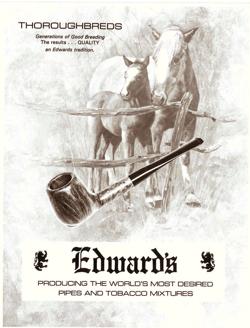
Across the board they were all Algerian Briar and all were unstained waxed or oiled briar. I remember reading that actually oil curing was a feature of their pipes. I did a quick look on Pipedia (https://pipedia.org/wiki/Edward’s) and found that I was correct. I quote:

Edward’s pipes were originally produced in St. Claude France when France actually was a world-class pipe maker with longstanding business & political connections to Colonial Algeria that allowed them to obtain the finest briar.

During the tumultuous 1960’s, Edward’s created a business model to offer the finest briar available in both Classic and Freehand shapes – all at a fair price. They bought the company & equipment and cornered the market on the finest, choice Algerian Briar just before the supply vanished in political turmoil of Algeria’s independence. Edward’s packed up both machinery and briar-treasure to America, safely caching the essentials to create a new pipe-making dynasty. This was a coup, for the 70’s and 80’s were grim years for pipe smokers as quality briar all but disappeared.

All of Edward’s pipes are Algerian Briar – a fact very few pipe companies can claim, and all are oil-cured utilizing natural finishes – no strange concoctions are used to interfere in your tastebud’s dance with the briar. Algerian, Calabrian, Sardinian, Corsican – take your pick, but Algerian Briar is generally considered the finest smoking briar ever used. When combined with oil-curing, Algerian takes on a magical quality that even Alfred Dunhill recognized as far back as 1918 as the choice for both his Bruyere and Shell.
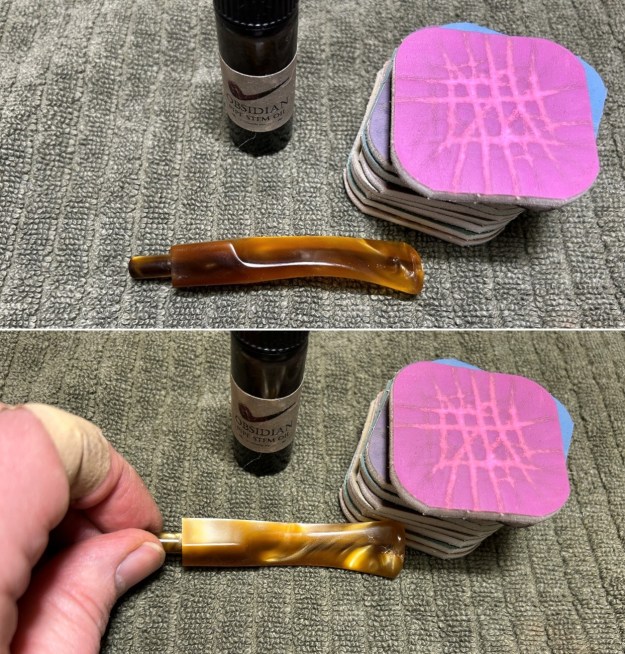
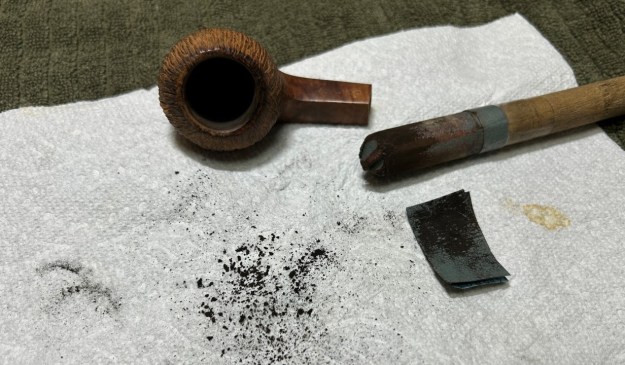
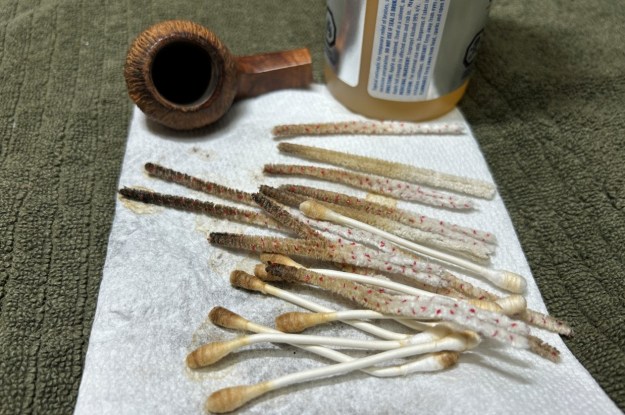
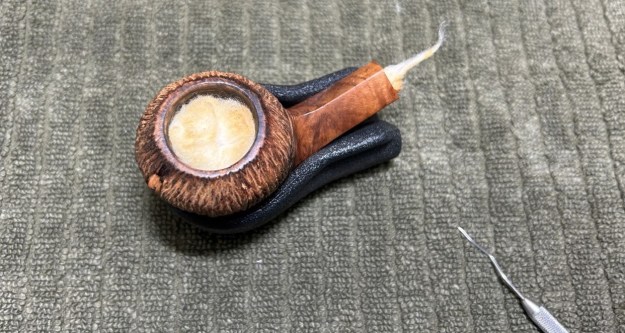
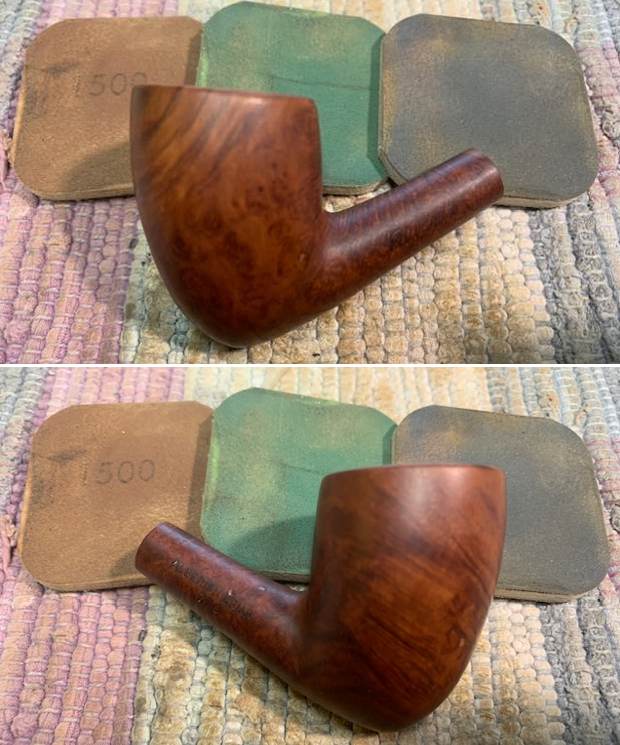
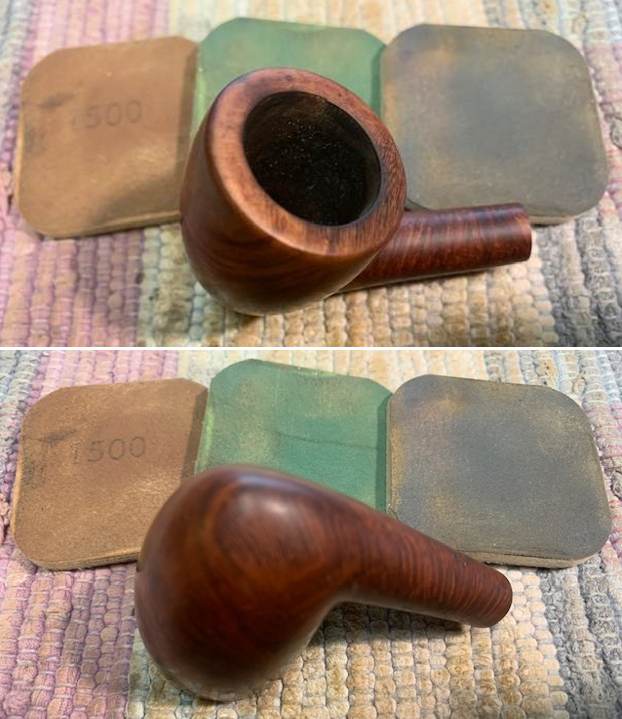
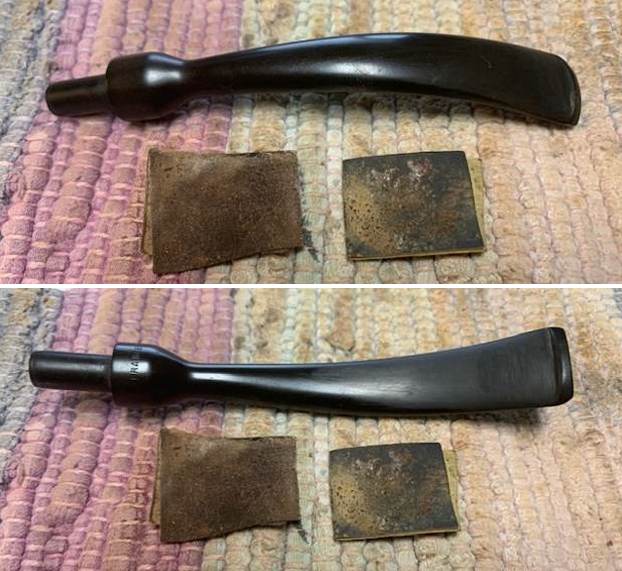
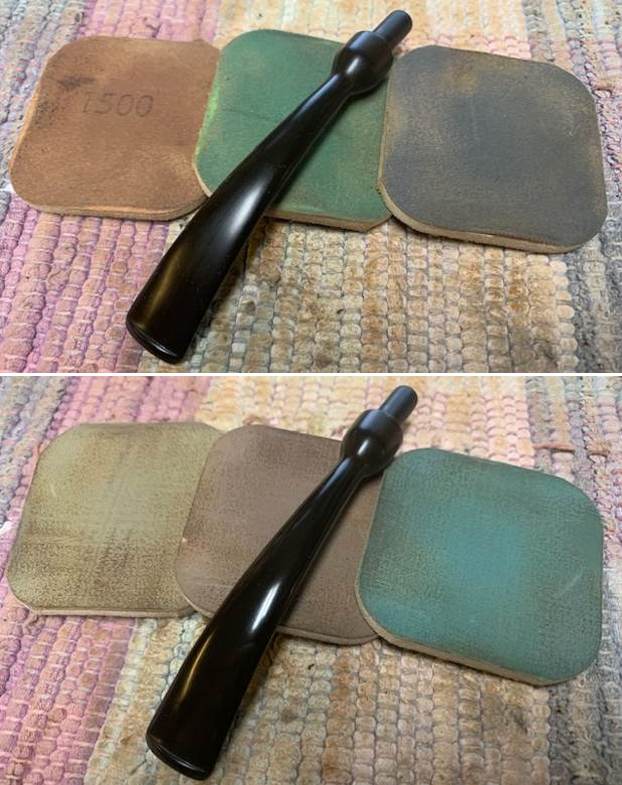
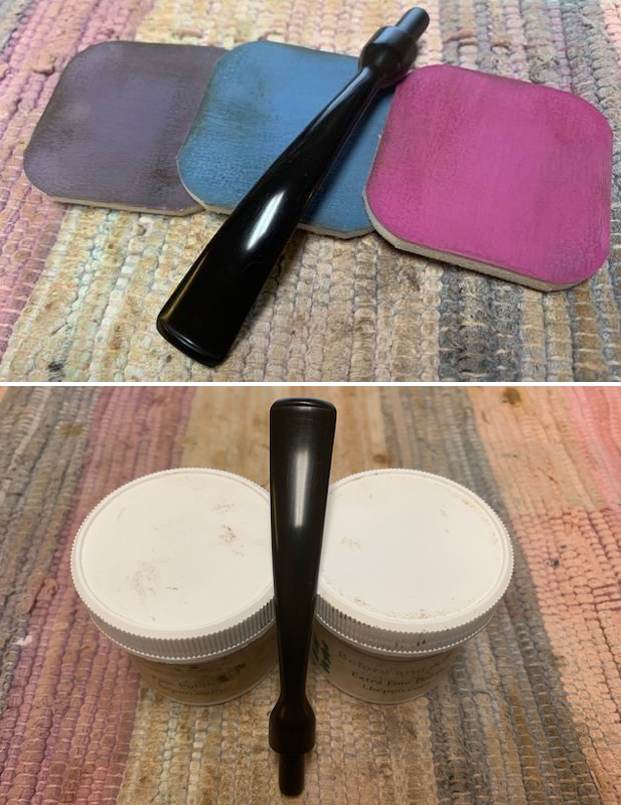
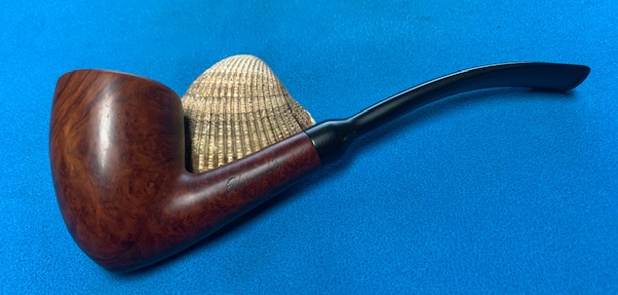
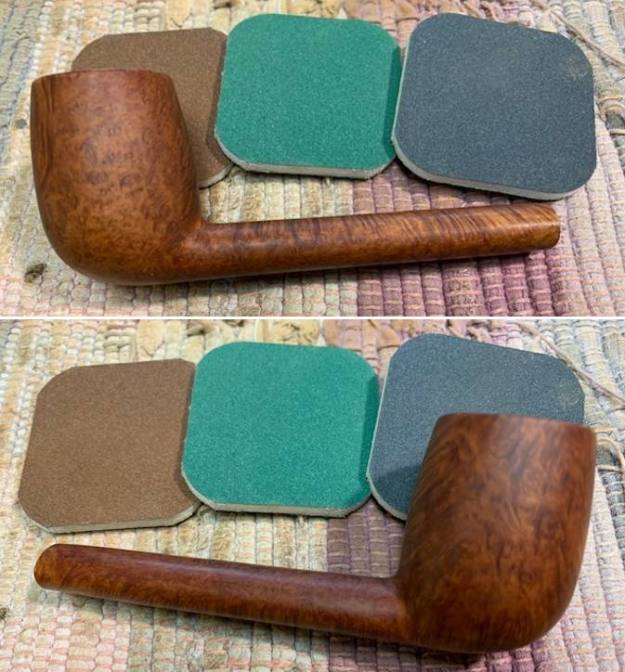
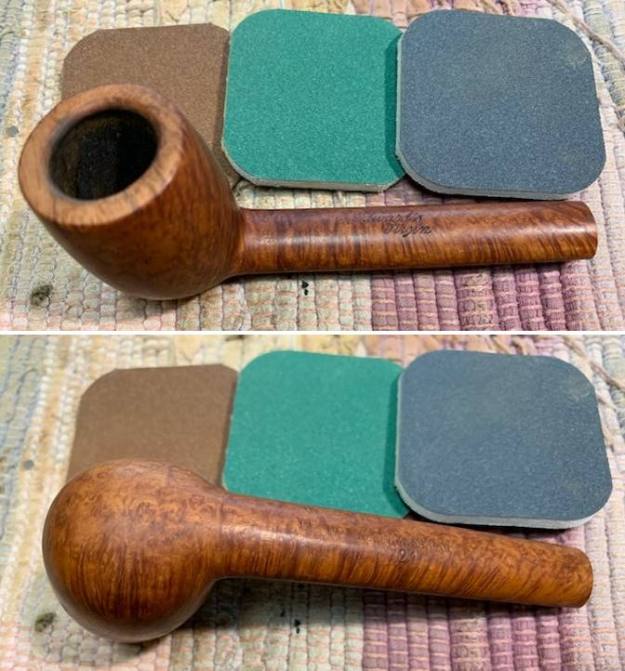
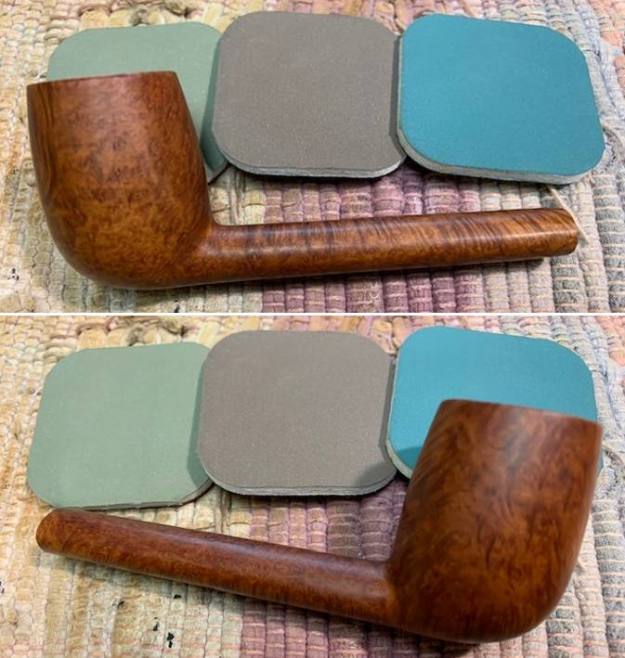
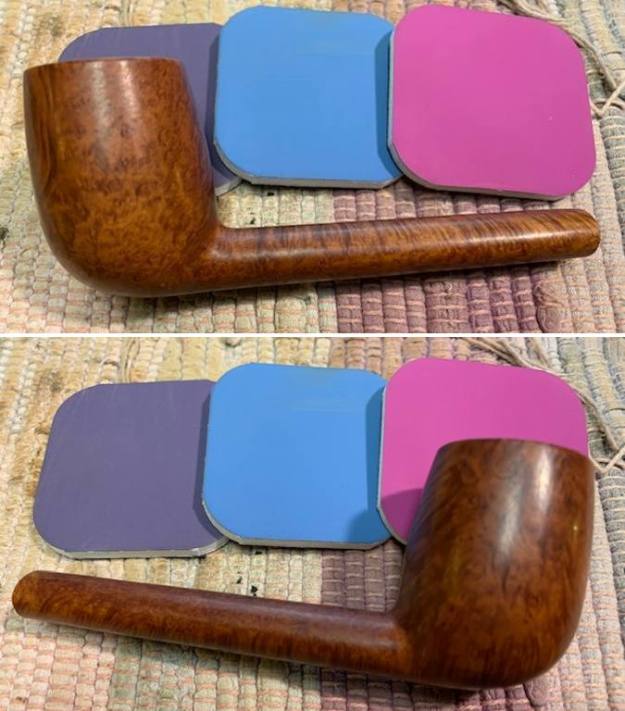
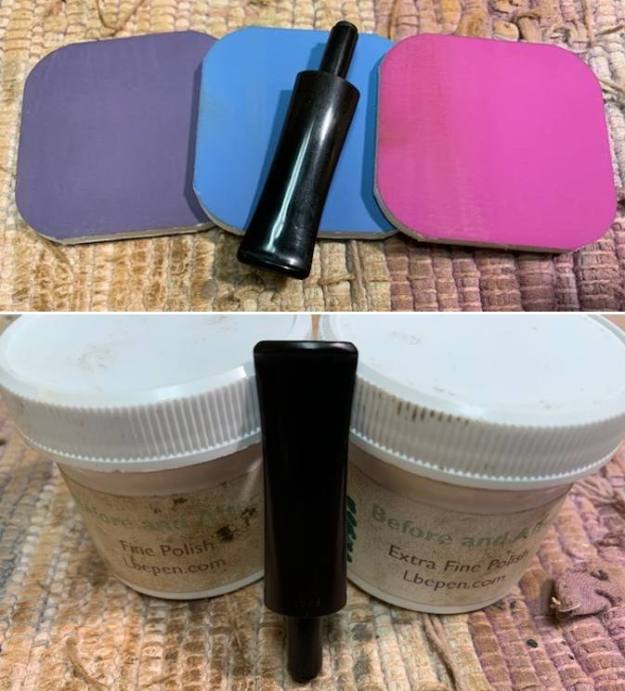
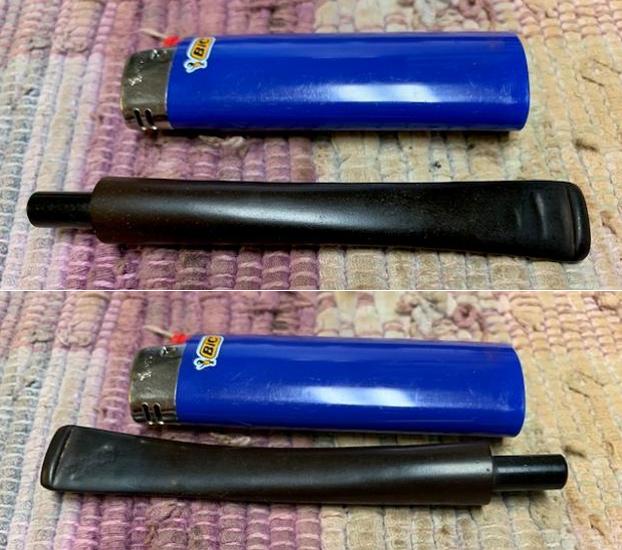
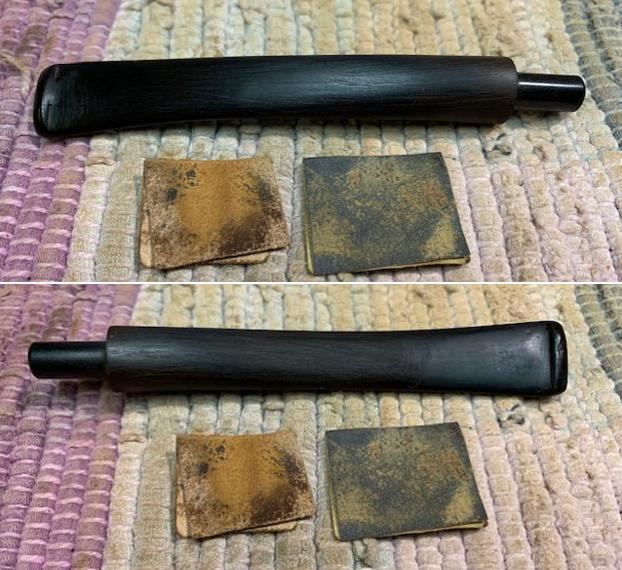
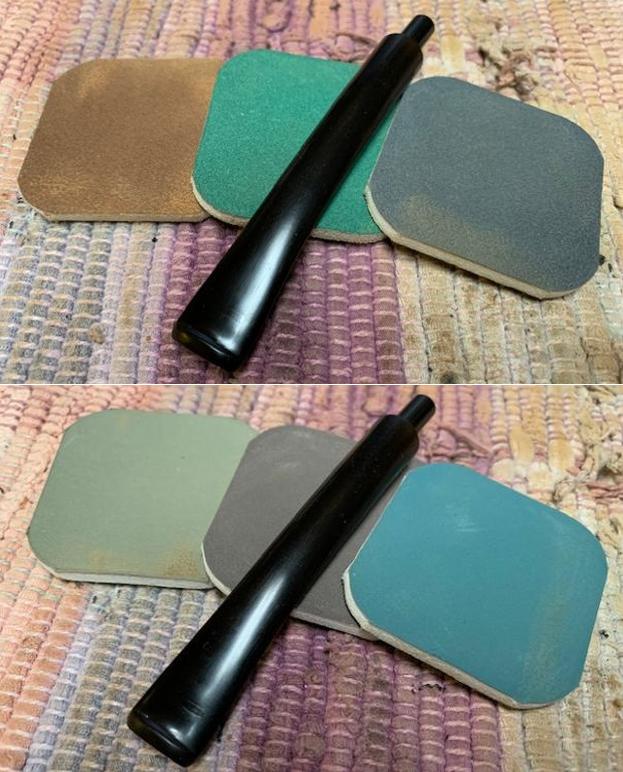
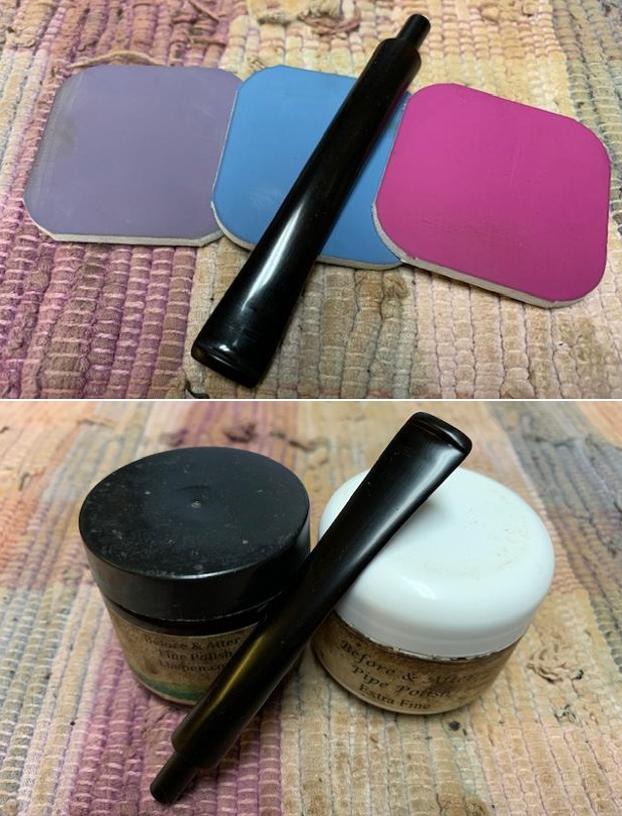
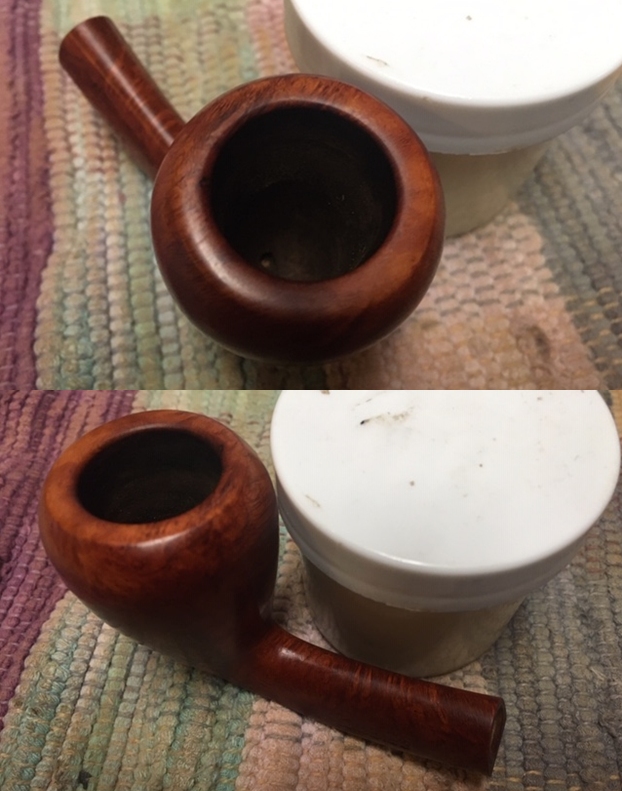
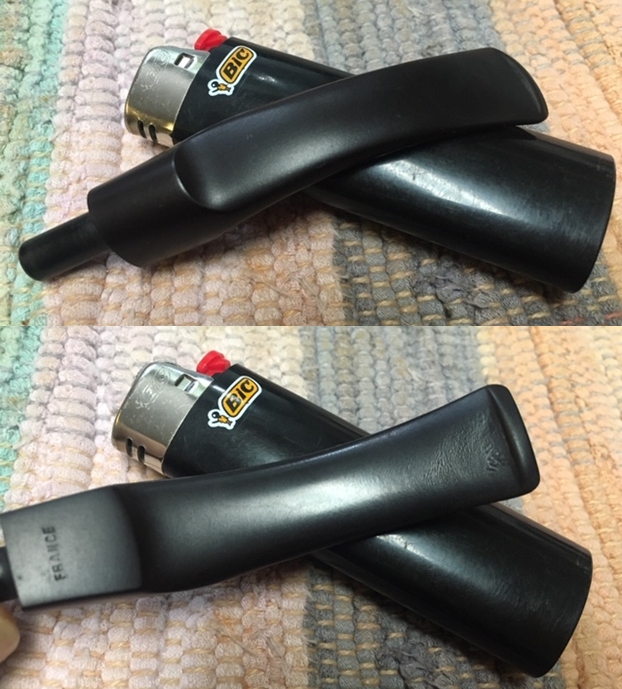
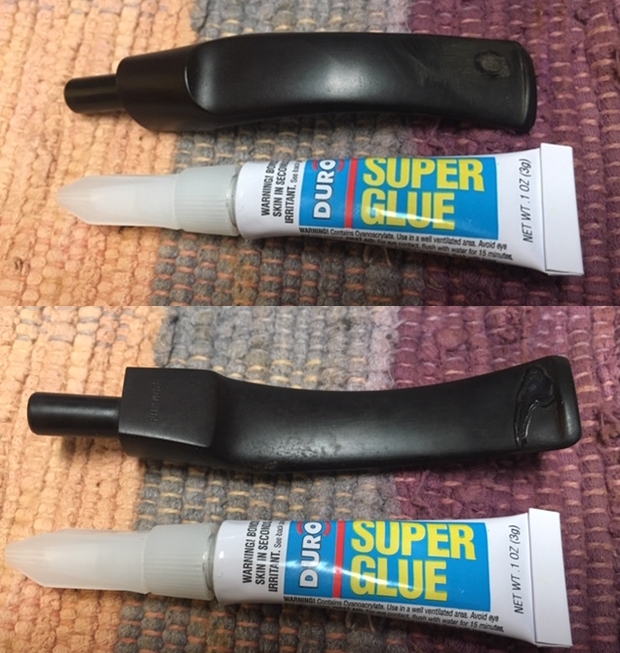
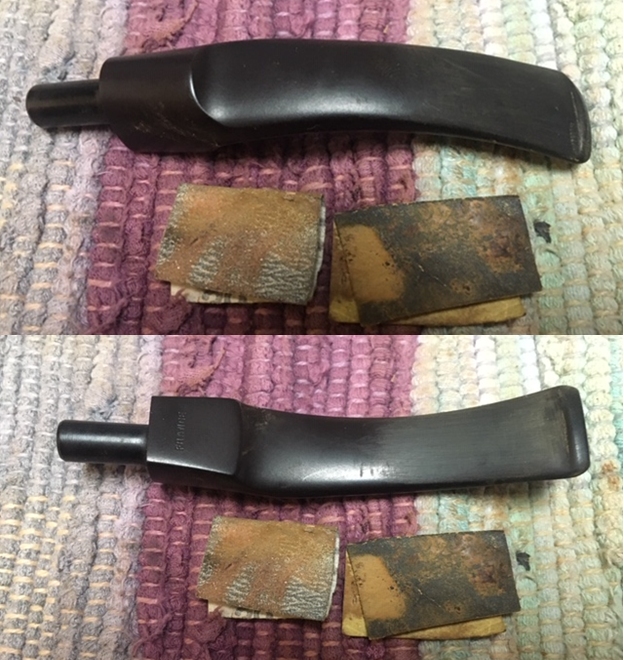
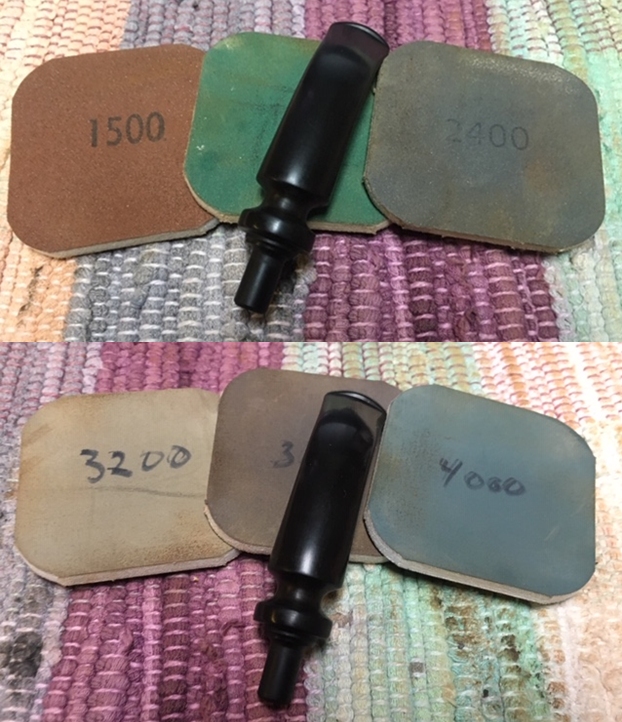
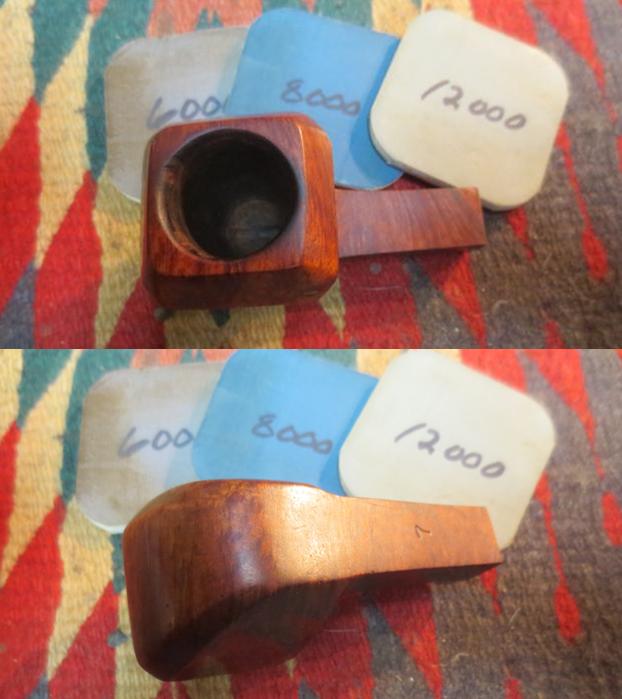
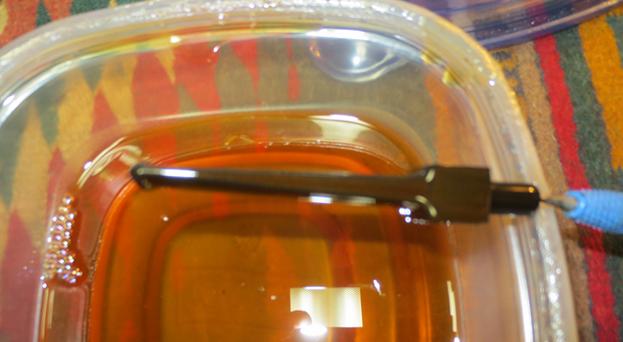
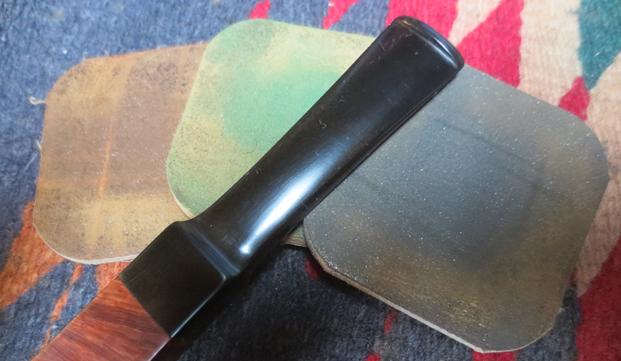
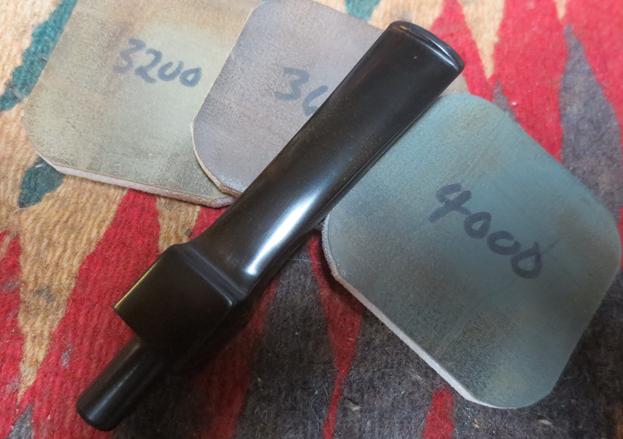
Jeff cleaned up the pipes with his usual thoroughness – reaming the bowl with a PipNet pipe reamer and cleaning up the reaming with a Savinelli Fitsall Pipe Knife. He scrubbed the internals of the shank and the stem with alcohol, cotton swabs and pipe cleaners. He scrubbed the exterior with Murphy’s Oil Soap to clean off the dust and grime on the finish. When he sent it the pipe was ready to restore. I could not believe how good the rim top looked in comparison to what it was when he started. I took photos of the pipe when I unpacked it. The briar was clean and the grain quite stunning. The finish looked dull and lifeless. I took a close up photo of the bowl and rim top after Jeff had cleaned it up. The look of the rim top and edges is very good. He had been able to remove the cake and the lava very well. The bowl was spotless. The stem is also shown and was very clean. He had scrubbed it with Soft Scrub and then soaked it in Mark’s Before & After Deoxidizer. There was light tooth chatter and marks still remaining.I took some photos of the stamping on the shank sides. The first photo shows the Edwards cursive script stamp on the left side shank. The second shows the Algerian Briar [over] the shape number 770 on the right side.  On the underside it is stamped with the number 3. All stamping is clear and readable.I removed the stem from the shank and took a photo of the pipe to show the look of the pipe. It is a real beauty.I polished the briar with micromesh sanding pads – dry sanding (carefully avoiding the stamping on the shank sides) with 1500-12000 grit pads. I wiped the bowl down with a damp cloth between each pad. The grain to take on a shine. I rubbed the briar down with Before & After Restoration Balm. I worked it into the briar with my fingertips and let it do its magic. The product cleans, enlivens and preserves the briar. I let it sit for 10 minutes and then buffed it off with a cotton cloth. The bowl really is looking good at this point. I set the bowl aside and turned my attention to the stem. I “painted” the tooth marks with the flame of a Bic Lighter. I was able to raise most of them. Those that remained I filled in with clear CA glue. I set the stem aside to let the repairs cure. I smoothed out the repairs with a folded piece of 220 grit sandpaper. I started polishing it with 400 grit wet dry sandpaper.I polished the stem with micromesh sanding pads – dry sanding with 1500-12000 grit pads. I wiped the stem down after each pad with a cloth impregnated with Obsidian Oil. I polished it with Before & After Stem Polish – both Fine and Extra Fine then gave it a final coat of Obsidian Oil and set it aside to dry. This is another beautiful pipe – this one is an Edwards Algerian Briar 770 Acorn 3. The oil cured Algerian Briar is very light weight and from my experience with other Edwards pipes, smokes very well. The grain on the pipe is quite nice and the few small fills are hidden in the finish. I put the stem on the shank and buffed the pipe with Blue Diamond on the wheel (being careful of the stamping so as not to damage that). I gave the bowl and stem multiple coats of carnauba wax and buffed the pipe with a clean buffing pad to raise the shine. I hand buffed it with a microfiber cloth to deepen the shine. The dimensions of this pipe are – Length: 6 inches, Height: 2 inches, Outside diameter of the bowl: 1 ¼ inches, Chamber diameter: ¾ of an inch. The weight of the pipe is 1.16 ounces/33 grams. It is a great looking pipe and one that will be going on the rebornpipes store in the American Pipe Makers section. If you want to add it to your collection let me know via email to slaug@uniserve.com or by message. Thanks for walking through the restoration with me.

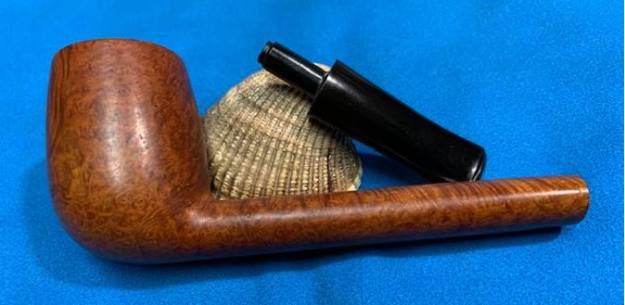
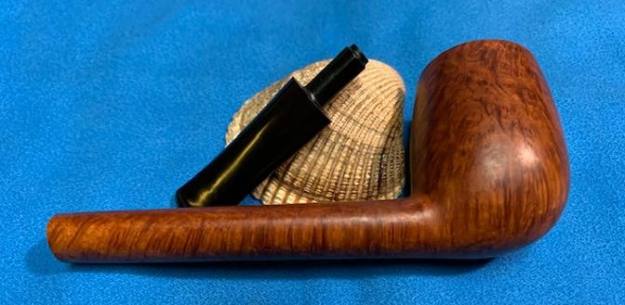
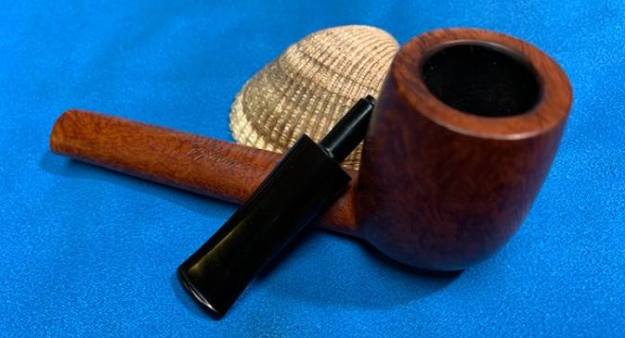
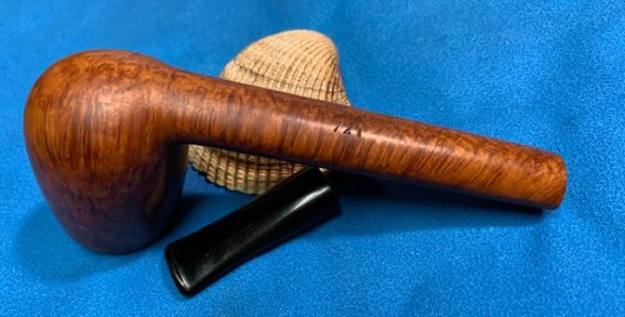
Next on the table is an Edward’s Virgin Algerian Briar 721 Canadian


Blog by Steve Laug

Photo, Courtesy of Doug Valitchka

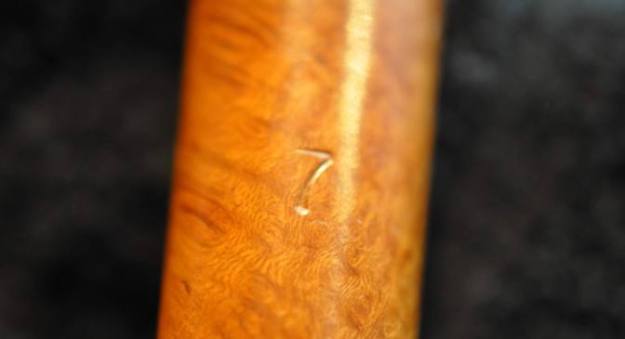
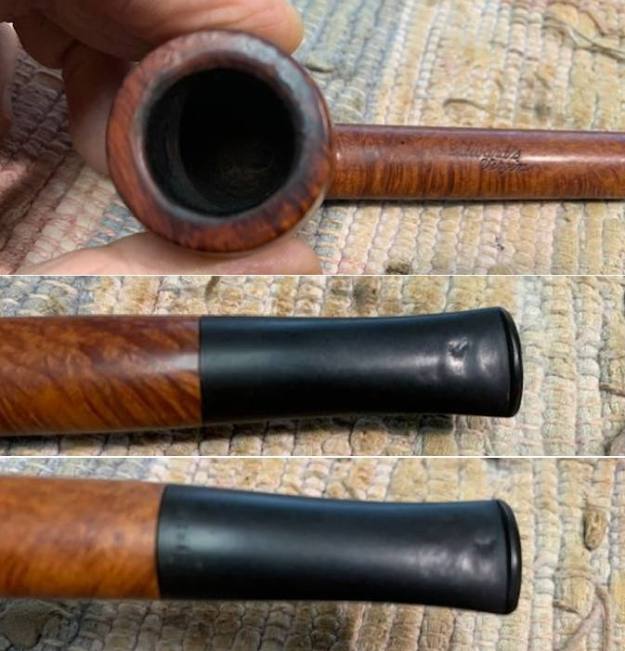
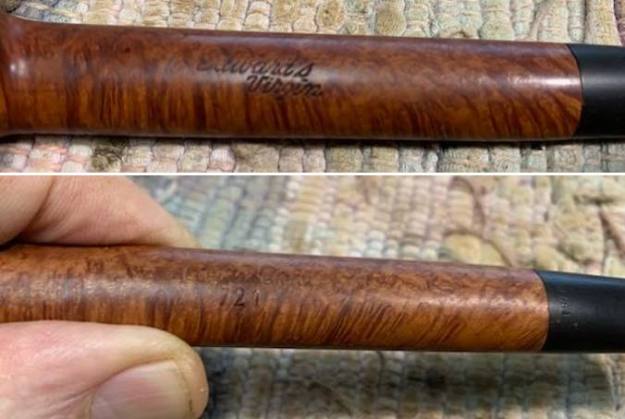
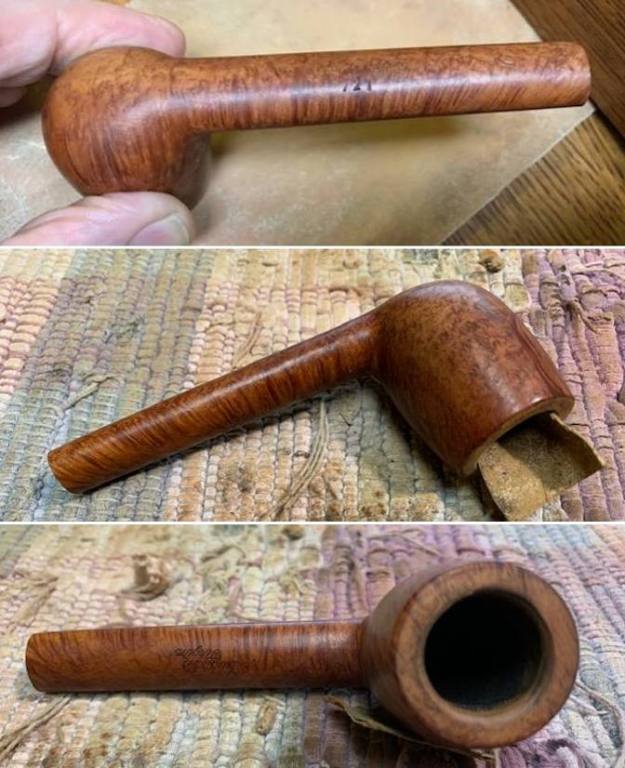
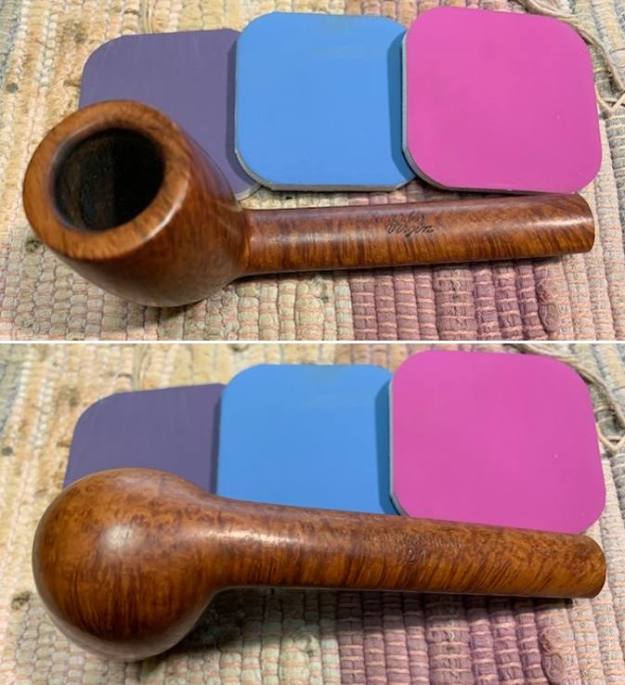
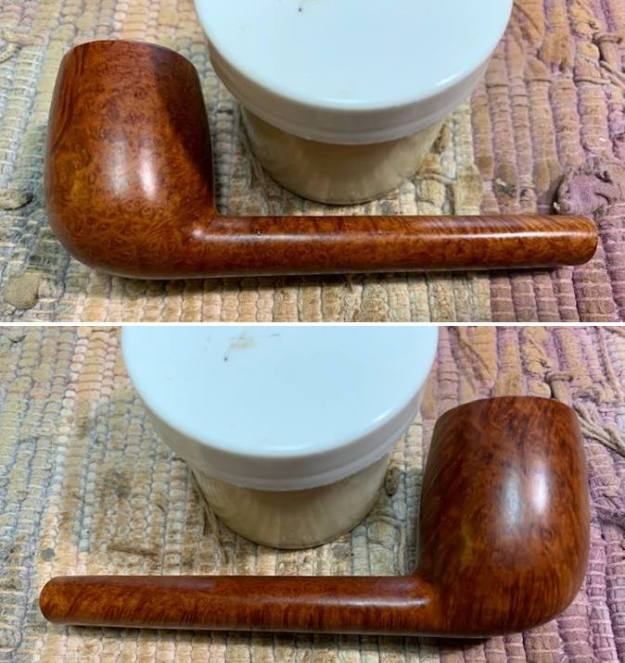
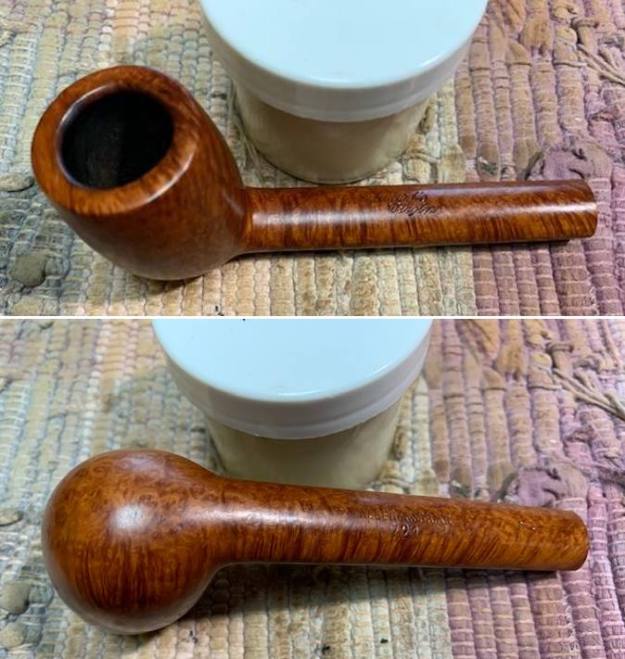
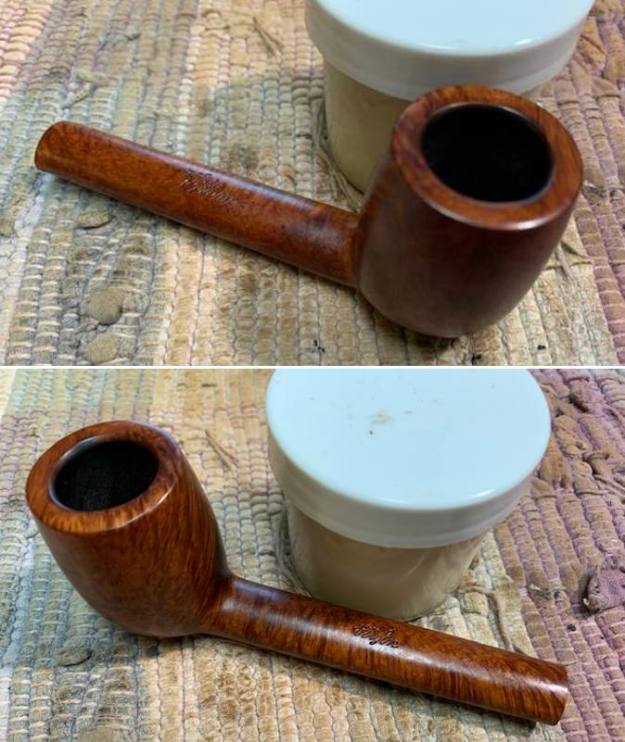
The next pipe on the work table is an Edward’s pipe that we bought in a group of pipes from a fellow in Los Angeles, California, USA. It is a classic looking Canadian in terms of the flow of the stem and shank. The bowl had a thick cake and lava overflow on the rim. It was hard to estimate the condition of the rim top and the edges of the bowl with the cake and lava coat but I was hoping it had been protected from damage. The bowl was smooth and a natural finish. The finish was dusty and tired but had some nice grain under the grime and the finish appeared to be in good condition. The pipe was stamped on the top of the shank and read Edwards [over] Virgin. On the underside it was stamped Algerian Briar [over] the shape number 721. On the underside near the shank end it is vertically stamped with the number 7. I am guessing this is a quality or grade stamp. A lot would be revealed once Jeff had worked his magic on it. The stem was dirty, oxidized, calcified and had some tooth chatter and deep tooth marks near the button on both sides. Jeff took photos of the pipe before he started his cleanup work. Jeff captured the condition of the bowl and rim top with the next series of photos. You can see the work that is ahead of us in the photos. The cake is very thick and heavy. The rim looked like it might have some damage on the back inner edge of the bowl. The last two photos of the stem show the top and underside of the stem. It is oxidized and calcified an you can see the tooth marks and chatter on the surface of both sides. Jeff took some great photos of the sides of the bowl and heel showing what is underneath the grime and debris of time and use. You can see the fills in briar on the right side. It will be interesting to see what happens as the pipe is cleaned and restored. He captured the stamping on the top and underside of the shank. They are clear and readable as  noted above. I turned first to Pipephil’s site for a quick review of the brand (http://pipephil.eu/logos/en/logo-e1.html). I did a screen capture of the information that was there.I also am including the sidebar information below.

Edward’s Pipes, headquartered in Tampa, FL, got its start importing pipes from France and continued to do so from 1958 to 1963 when it started producing pipes in Florida from prime Algerian Briar, a practice they continue to this day (2010). Randy Wiley, pipe carver in the USA, got his start at Edward’s.

The Edwards Canadian I am working on bears a stamp on the underside of the stem that reads FRANCE which makes sense with the information given above. It also helps to date the pipe to the time period of 1958-1963.

I the turned to Pipedia to have a look at a bit of history on the brand and gain more information on the pipe line (https://pipedia.org/wiki/Edward%27s). I quote the article in full below.

Edward’s pipes were originally produced in Saint-Claude, France when France actually was a world-class pipe maker with longstanding business & political connections to Colonial Algeria that allowed them to obtain the finest briar.

During the tumultuous 1960’s, Edward’s created a business model to offer the finest briar available in both Classic and Freehand shapes – all at a fair price. They bought the company & equipment and cornered the market on the finest, choice Algerian Briar just before the supply vanished in political turmoil of Algeria’s independence. Edward’s packed up both machinery and briar-treasure to America, safely caching the essentials to create a new pipe-making dynasty. This was a coup, for the 70’s and 80’s were grim years for pipe smokers as quality briar all but disappeared.

Edward’s Design Philosophy is hard to pin down, think of their style as the “American Charatan” with unique & clever twists all their own. Today, they fashion pipes in several locations across the USA. All of Edward’s pipes are Algerian Briar – a fact very few pipe companies can claim, and all are oil-cured utilizing natural finishes – no strange concoctions are used to interfere in your tastebud’s dance with the briar. Algerian, Calabrian, Sardinian, Corsican – take your pick, but Algerian Briar is generally considered the finest smoking briar ever used. When combined with oil-curing, Algerian takes on a magical quality that even Alfred Dunhill recognized as far back as 1918 as the choice for both his Bruyere and Shell.

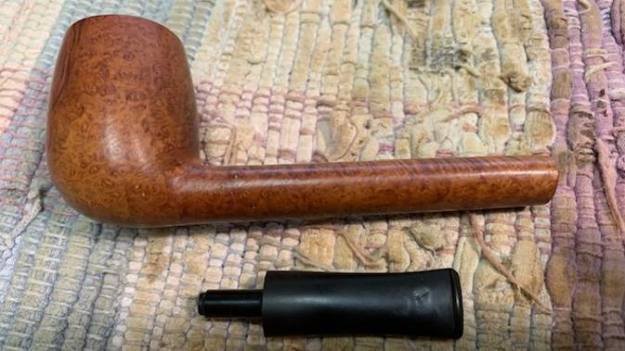
Now it was time to work on the pipe. I took it out of the box of pipe and looked it over. It was amazingly clean and looked like a different pipe. Jeff reamed it with a PipNet pipe reamer and cleaned up the reaming with a Savinelli Fitsall Pipe Knife. He scrubbed out the internals with alcohol, pipe cleaners and cotton swabs until the pipe was clean. He scrubbed the exterior of the bowl with Murphy’s Oil Soap and a tooth brush to remove the grime and grit on the briar and the lava on the rim top. The bowl looked very good. He scrubbed the stem with Soft Scrub to remove the grime and soaked it in Before & After Deoxidizer. When he took it out of the soak it came out looking far better. I took photos before I started my part of the work. I took some photos of the rim top and stem. The rim top is clean but there is damage to the inner edge on the front, back and right half of the bowl. The bowl itself looks very clean. The close up photos of the stem shows that is it very clean and the deep tooth marks are very visible. I took photos of the stampings on the shank because they had cleaned up very well. I missed a clear photo of the 7 on the shank near the stem. If you look closely you can see FRANCE on the stem in the second photo.I removed the stem from the shank and took a photo of the bowl and to give a sense of the proportion of the pipe. It is a classic looking Canadian for sure.I decided to take care of the damage on the rim top and inner edge first. I lightly topped the bowl on a topping board with 220 grit sandpaper. I worked over the inner edge with a folded piece of 220 grit sandpaper and cleaned up the existing bevel. Once I had finished the bowl looked very good. I polished the briar and the shank with micromesh sanding pads – dry sanding with 1500-12000 grit pads. I was able to blend in the repairs into the side of the bowl. I wiped the bowl down after each pad with a damp cloth. The grain really began to stand out and the finish took on a shine by the last sanding pad. The photos tell the story! I worked some Before & After Restoration Balm into the surface of the smooth briar with my fingertips. The product works to clean, enliven and protect the briar. I let the balm sit for about twenty minutes and then buffed with a cotton cloth to raise the shine. The photos show the bowl at this point in the restoration process. I set the bowl aside and turned to deal with the stem. I “painted” the surface of the stem with the flame of a Bic lighter to lift the tooth marks. I was able to lift most of them significantly. The few that remained I filled in with clear CA glue. Once it had hardened I flattened the repairs with a file. I sanded smooth with 220 grit sandpaper to blend them into the surrounding surface of the vulcanite. I then sanded it with 400 grit wet dry sandpaper to further blend it into the vulcanite. I polished the vulcanite stem with micromesh sanding pads – dry sanding with 1500-12000 grit sanding pads. I wiped it down after each sanding pad with a cloth containing some Obsidian Oil. I finished polishing it with Before & After Pipe Stem Polish – both Fine and Extra Fine and buffed it off with a cotton cloth. This oil cured Edward’s Virgin Algerian Briar 721 Canadian was another fun pipe to work on and I really was looking forward to seeing it come back together again. With the grime and debris gone from the finish it was a beauty and the grain just pops at this point. I put the stem back on the bowl and buffed the pipe with Blue Diamond on the buffing wheel. I carefully avoided the stamping on the shank during the process. I gave the bowl and the stem multiple coats of carnauba wax on the buffing wheel and followed that by buffing it with a clean buffing pad on the buffer. I hand buffed the pipe with a microfiber cloth to deepen the shine. The rich natural finish on the bowl looks really good with the polished black vulcanite stem. It is very well done. Give the finished pipe a look in the photos below. I can only tell you that it is much prettier in person than the photos capture. The dimensions of the pipe are Length: 6 inches, Height: 1  ¾ inches, Outside diameter of the bowl: 1 1/8 inches, Chamber diameter: ¾ of an inch. The weight of the pipe is 35grams/1.23oz. This is truly a great looking Edward’s. Thanks for walking through the restoration with me as I worked over another beautiful pipe. I will be adding it to the American Pipe Makers section of the rebornpipes store soon. If you want to add it to your collection send me an email or a message! Thanks for your time.

Next on the table is an Edward’s Algerian Briar 706M5 Prince


Blog by Steve Laug

Courtesy Doug Valitchka

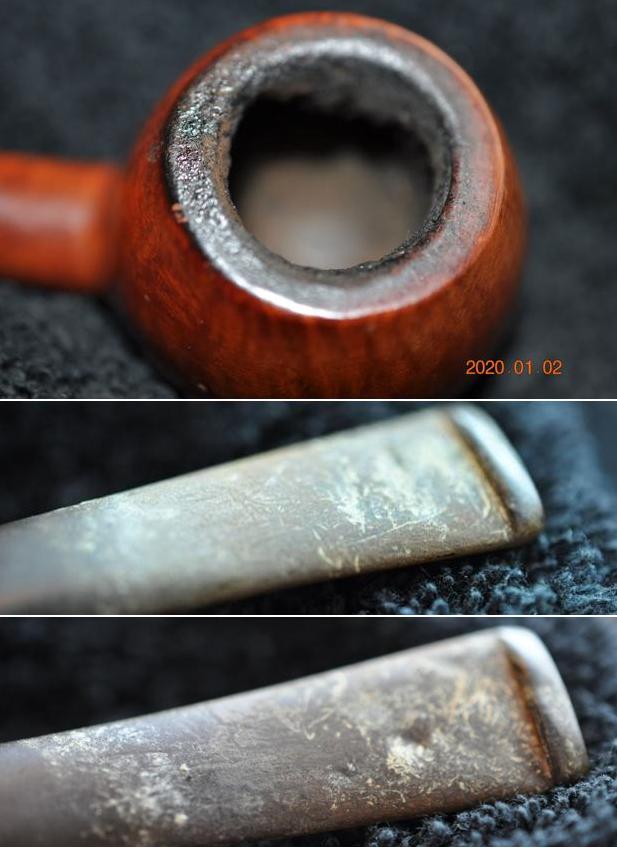
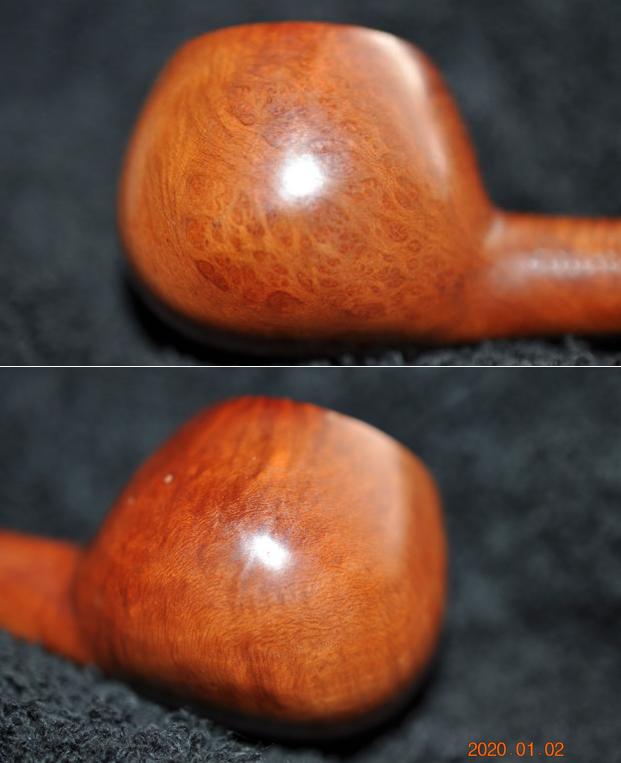
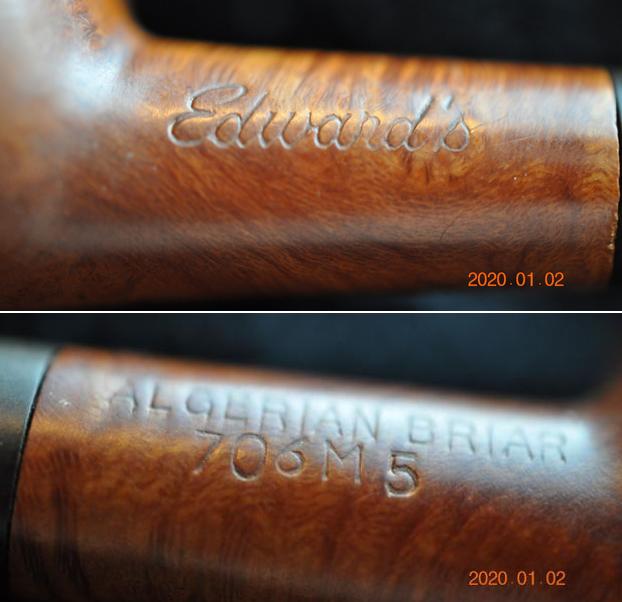
The next pipe on the work table is an Edward’s pipe that we bought from a fellow in Los Angeles, California, USA. It is a classic Prince in terms of the flow of the stem and shank. The bowl had a thick cake and lava overflow on the rim. It was hard to estimate the condition of the rim top with the cake and lava coat but I was hoping it had been protected from damage. The bowl was smooth and a natural finish. The finish was dusty and tired but had some nice grain under the grime and the finish appeared to be in good condition. There were small fills all around the right side of the bowl. A lot would be revealed once Jeff had worked his magic on it. The stem was dirty but came with tooth chatter and deep tooth marks near the button on both sides. Jeff took photos of the pipe before he started his cleanup work. Jeff captured the condition of the bowl and rim top with the next series of photos. You can see the work that is ahead of us in the photos. The cake is very thick and heavy. The rim looked like it might have some damage on the back inner edge of the bowl. The next two photos of the stem show the top and underside of the stem. It is oxidized and calcified an you can see the tooth marks and chatter on the surface of both sides. Jeff took some great photos of the sides of the bowl and heel showing what is underneath the grime and debris of time and use. You can see the fills in briar on the right side. It will be interesting to see what happens as the pipe is cleaned and restored. He captured the stamping on the sides of the shank. They are clear and readable. The left side reads Edwards. On the right side it reads Algerian Briar 706M5.I turned to Pipedia to have a look at a bit of history on the brand and refresh my memory of the pipe line (https://pipedia.org/wiki/Edward%27s). I quote the article in full below.

Edward’s pipes were originally produced in Saint-Claude, France when Francais actually was a world-class pipe maker with longstanding business & political connections to Colonial Algeria that allowed them to obtain the finest briar.

During the tumultuous 1960’s, Edward’s created a business model to offer the finest briar available in both Classic and Freehand shapes – all at a fair price. They bought the company & equipment and cornered the market on the finest, choice Algerian Briar just before the supply vanished in political turmoil of Algeria’s independence. Edward’s packed up both machinery and briar-treasure to America, safely caching the essentials to create a new pipe-making dynasty. This was a coup, for the 70’s and 80’s were grim years for pipe smokers as quality briar all but disappeared.

Edward’s Design Philosophy is hard to pin down, think of their style as the “American Charatan” with unique & clever twists all their own. Today, they fashion pipes in several locations across the USA. All of Edward’s pipes are Algerian Briar – a fact very few pipe companies can claim, and all are oil-cured utilizing natural finishes – no strange concoctions are used to interfere in your tastebud’s dance with the briar. Algerian, Calabrian, Sardinian, Corsican – take your pick, but Algerian Briar is generally considered the finest smoking briar ever used. When combined with oil-curing, Algerian takes on a magical quality that even Alfred Dunhill recognized as far back as 1918 as the choice for both his Bruyere and Shell.

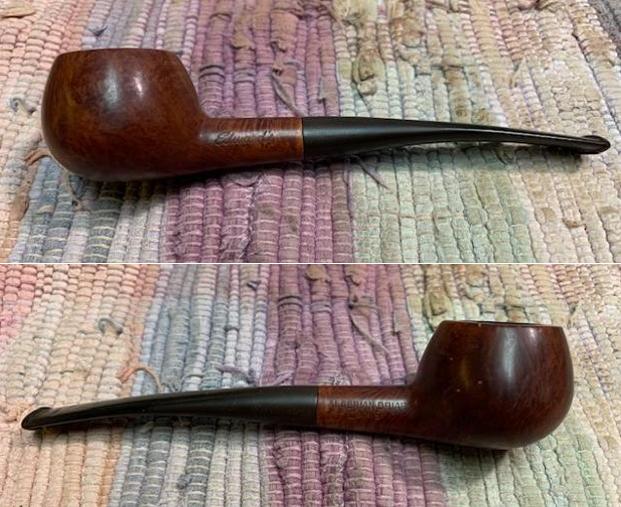
Now it was time to work on the pipe. I took it out of the box from Jeff and looked it over. It was amazingly clean and looked like a different pipe. He reamed it with a PipNet pipe reamer and cleaned up the reaming with a Savinelli Fitsall Pipe Knife. He scrubbed out the internals with alcohol, pipe cleaners and cotton swabs until the pipe was clean. He scrubbed the exterior of the bowl with Murphy’s Oil Soap and a tooth brush to remove the grime and grit on the briar and the lava on the rim top. The bowl looked very good. Jeff scrubbed the stem with Soft Scrub to remove the grime and soaked it in Before & After Deoxidizer. When he took it out of the soak it came out looking far better. I took photos before I started my part of the work. I took some photos of the rim top and stem. The rim top is clean but there is a lot of damage to the inner edge on the front half of the bowl. The bowl itself looks very clean. The close up photos of the stem shows that is it very clean and the deep tooth marks are very visible. It almost looks as if the  previous owner had lightly carved grooves to emulate a dental bit on the top of the stem.I took photos of the stamping because they had cleaned up very well.I removed the stem from the shank and took a photo of the bowl and to give a sense of the proportion of the pipe. It is a classic Prince for sure.I decided to take care of the damage on the rim top and inner edge first. I worked over the inner edge with a folded piece of 220 grit sandpaper and repaired the existing bevel to obscure the damage to the edge. Once I had finished the bowl was round and the edge looked very good.I polished the briar and the shank with micromesh sanding pads – dry sanding with 1500-12000 grit pads. I was able to blend in the repairs into the side of the bowl. I wiped the bowl down after each pad with a damp cloth. The grain really began to stand out and the finish took on a shine by the last sanding pad. The photos tell the story! I worked some Before & After Restoration Balm into the surface of the smooth briar with my fingertips. The product works to clean, enliven and protect the briar. I let the balm sit for about twenty minutes and then buffed with a cotton cloth to raise the shine. The photos show the bowl at this point in the restoration process. I set the bowl aside and turned to deal with the stem. I “painted” the surface of the stem with the flame of a Bic lighter to lift the tooth marks on the underside and grooves on the top side. I was able to lift most of them significantly. The few that remained I filled in with Loctite 380 CA glue. Once it had hardened I sanded it with 220 grit sandpaper and 400 grit wet dry sandpaper to blend it into the surface of the vulcanite. I polished the vulcanite stem with micromesh sanding pads – dry sanding with 1500-12000 grit sanding pads. I wiped it down after each sanding pad with a cloth containing some Obsidian Oil. I finished polishing it with Before & After Pipe Stem Polish – both Fine and Extra Fine and buffed it off with a cotton cloth. One irritation for me is that the repairs of the grooves on the topside with the Loctite 380 CA glue are not quite the same black as the stem surface. Because of that the grooves in the stem show even though they are smooth too the touch!! Arghhh. This oil cured Edward’s Algerian Briar 706M5 Prince was another fun pipe to work on and I really was looking forward to seeing it come back together again. With the grime and debris gone from the finish it was a beauty and the grain just pops at this point. I put the stem back on the bowl and buffed the pipe with Blue Diamond on the buffing wheel. I carefully avoided the stamping on the shank during the process. I gave the bowl and the stem multiple coats of carnauba wax on the buffing wheel and followed that by buffing it with a clean buffing pad on the buffer. I hand buffed the pipe with a microfiber cloth to deepen the shine. The rich natural finish on the bowl looks really good with the polished black vulcanite stem. It is very well done. Give the finished pipe a look in the photos below. I can only tell you that it is much prettier in person than the photos capture. The dimensions of the pipe are Length: 6 inches, Height: 1  ¼ inches, Outside diameter of the bowl: 1 ¼ inches, Chamber diameter: ¾ of an inch. The weight of the pipe is 35grams/1.23oz. This is truly a great looking Edward’s. Thanks for walking through the restoration with me as I worked over another beautiful pipe. I will be adding it to the American Pipe Makers section of the rebornpipes store soon. If you want to add it to your collection send me an email or a message! Thanks for your time.

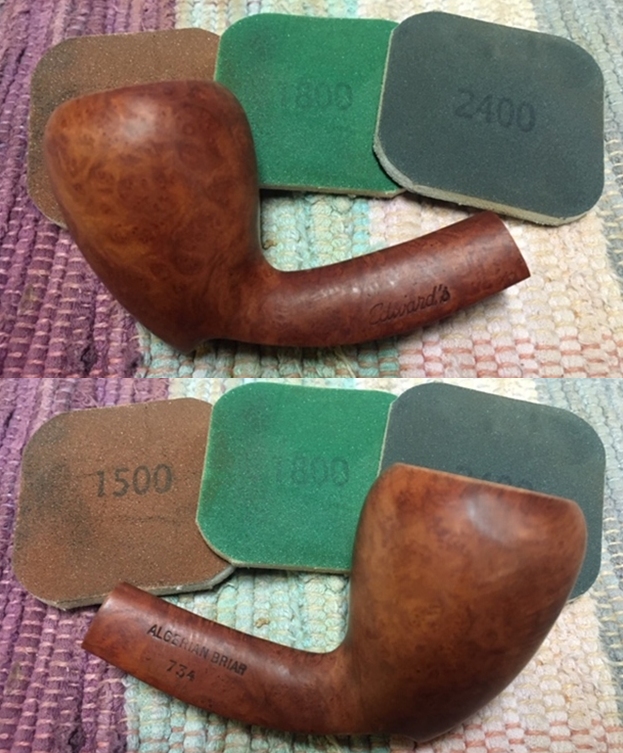
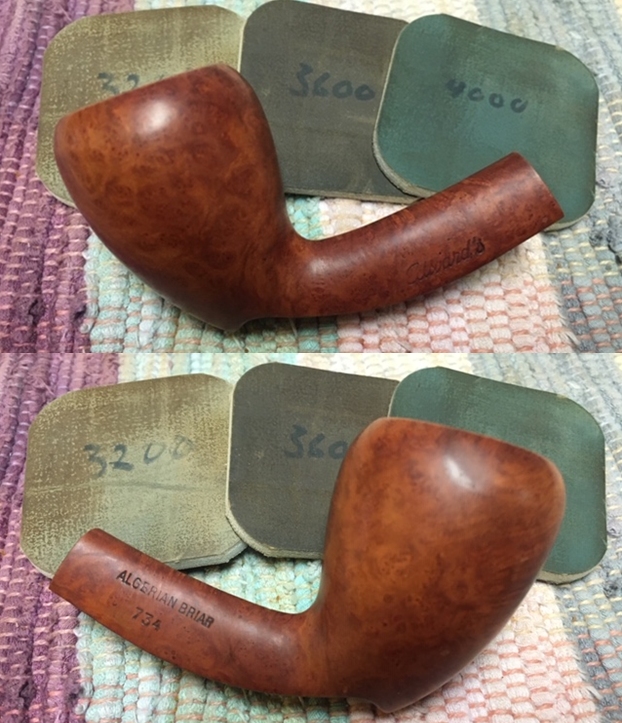
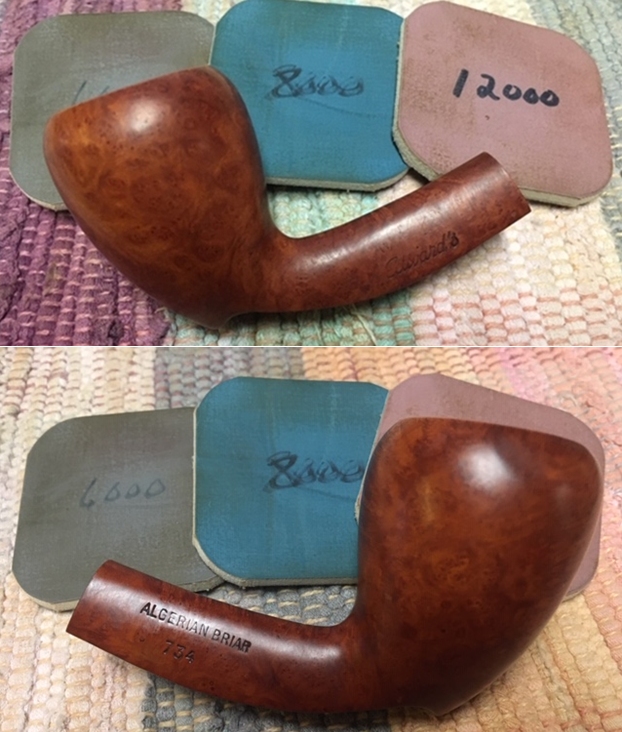
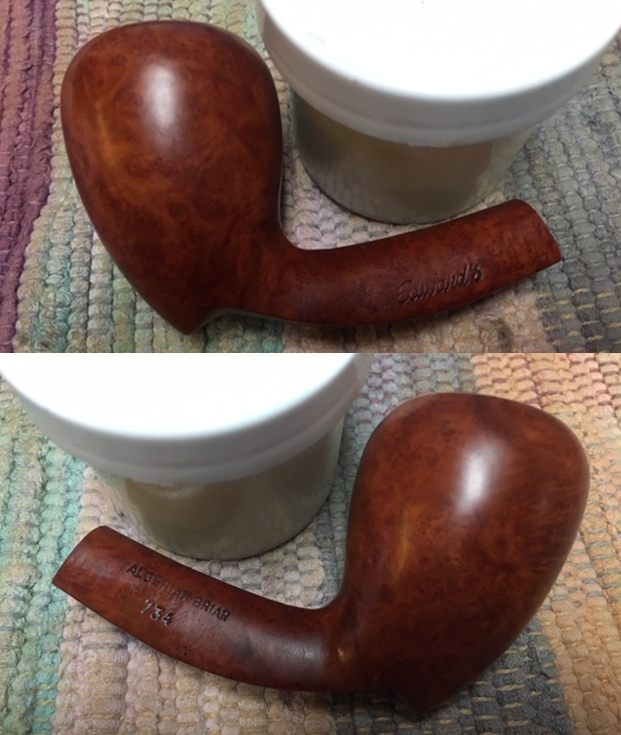
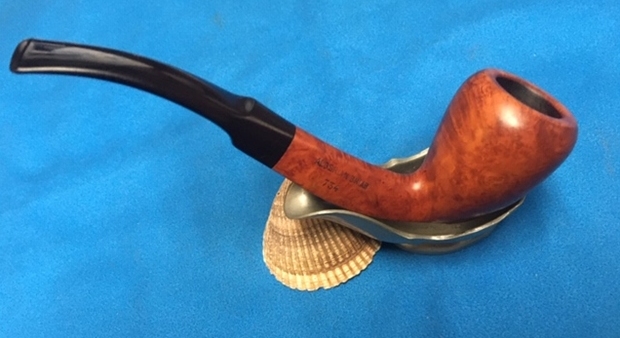
Next on the table is a very unique Edward’s Algerian Briar 734


Blog by Steve Laug

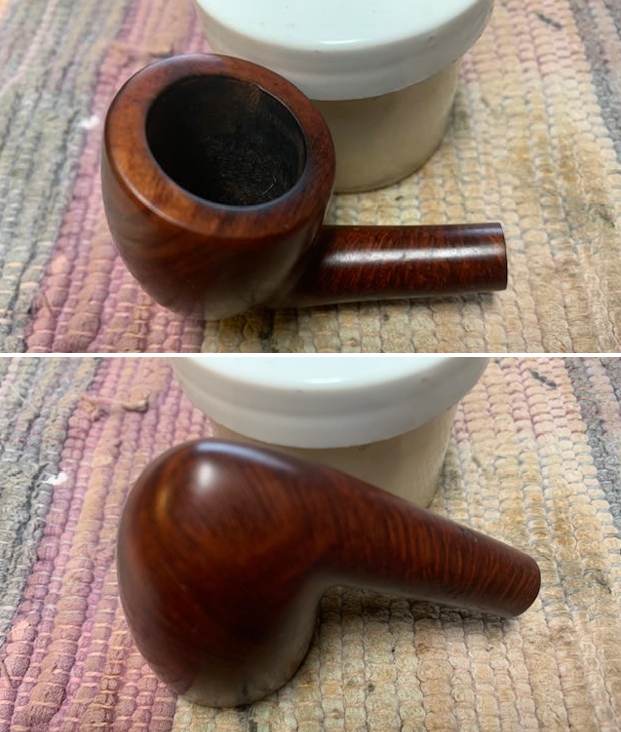
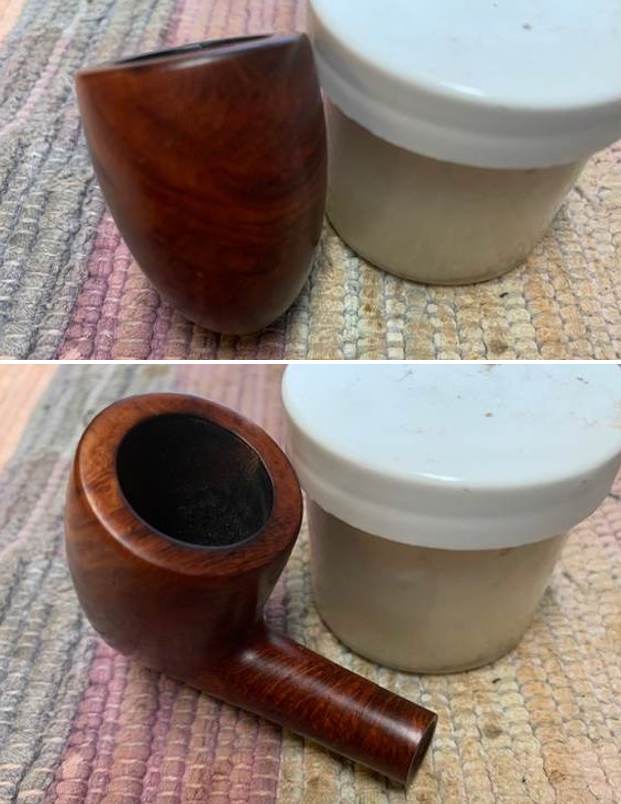
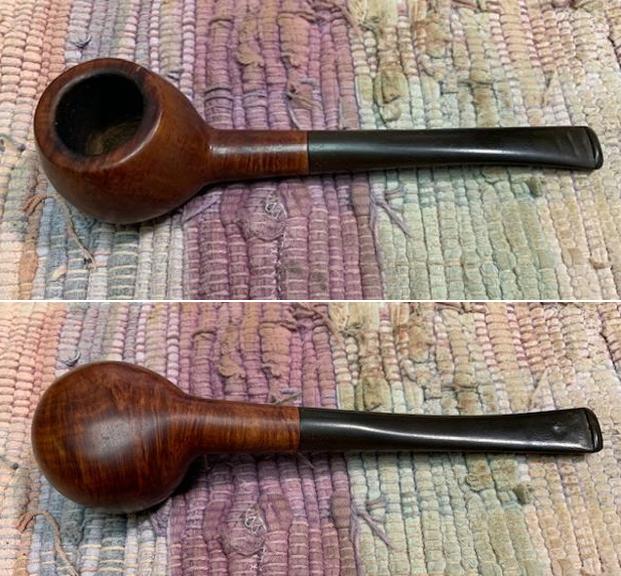
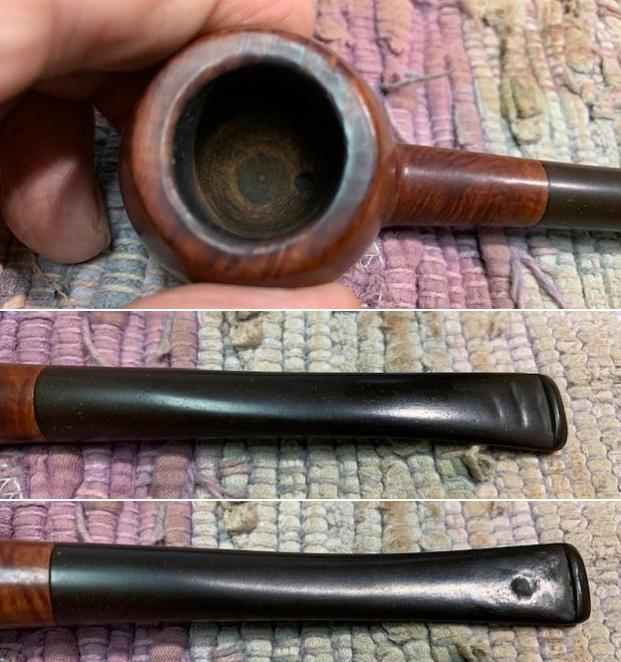
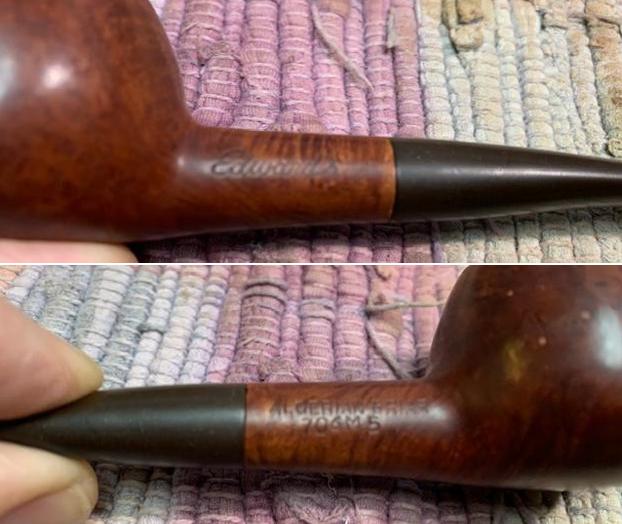
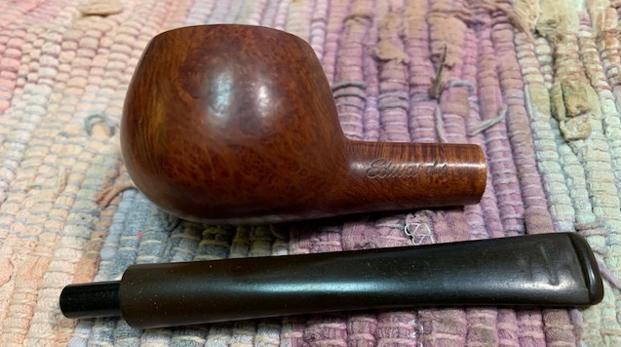
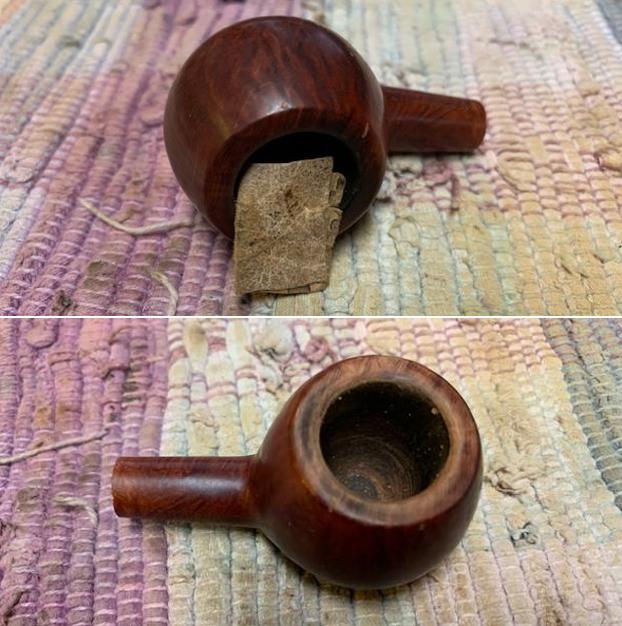
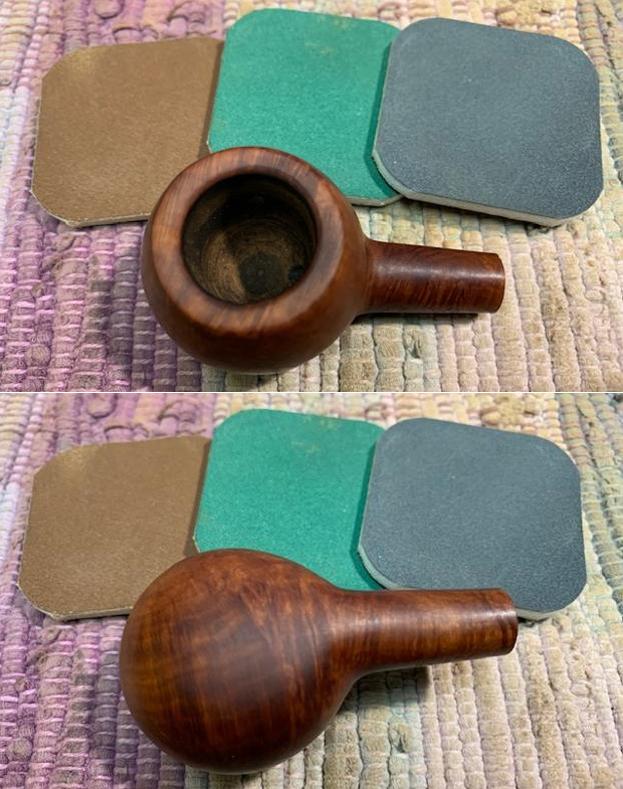
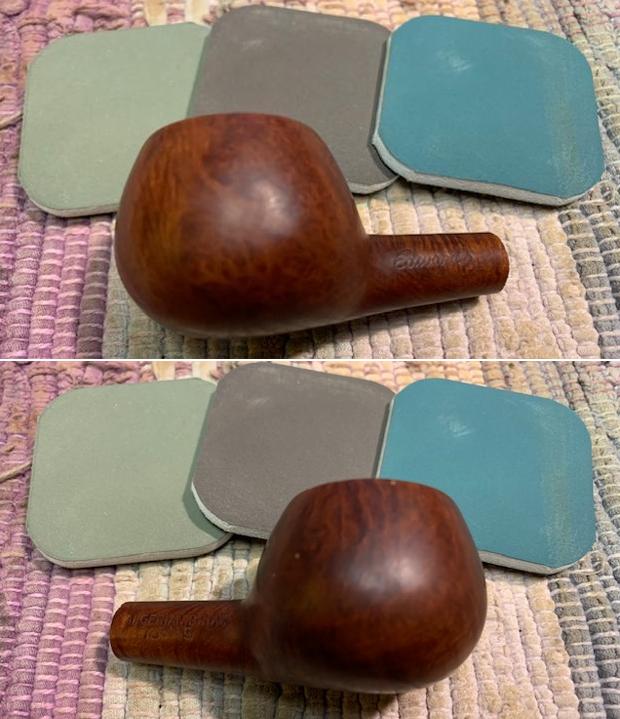
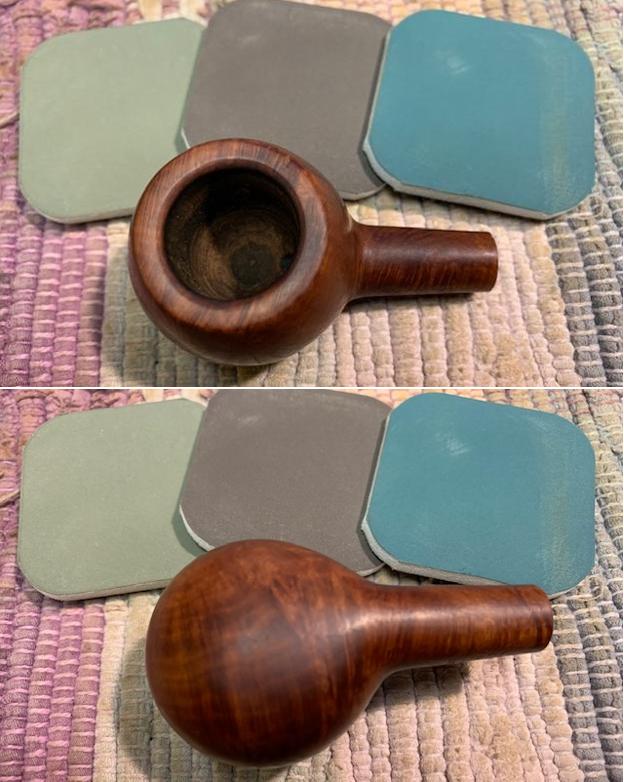
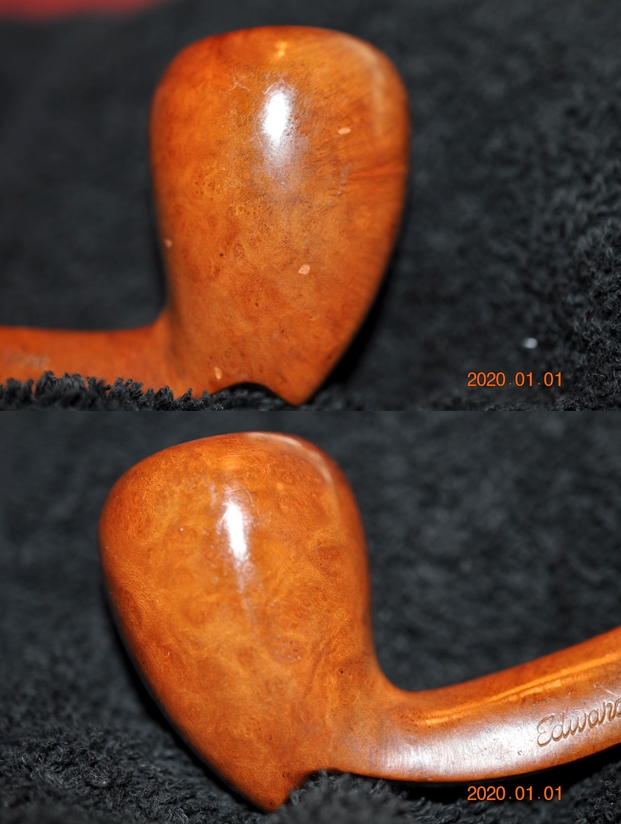
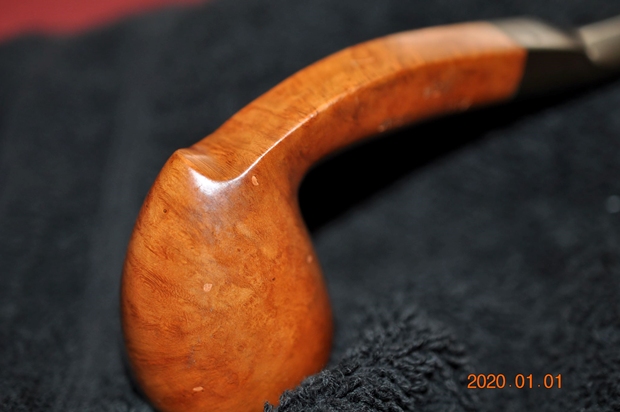
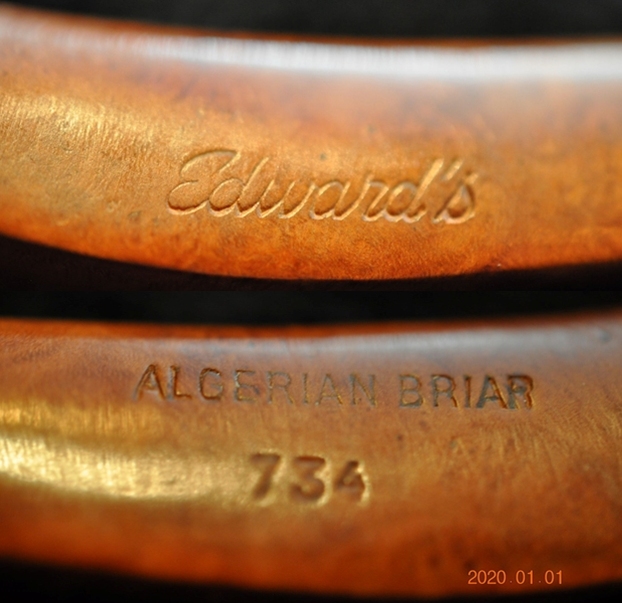
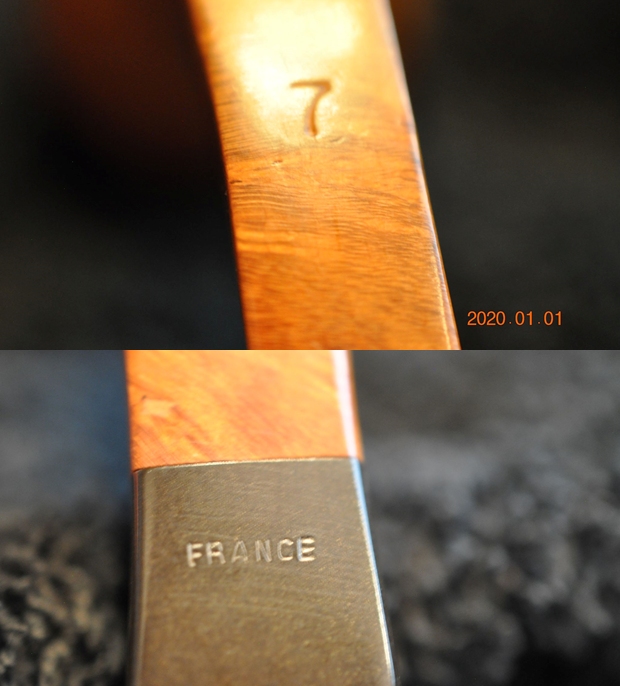
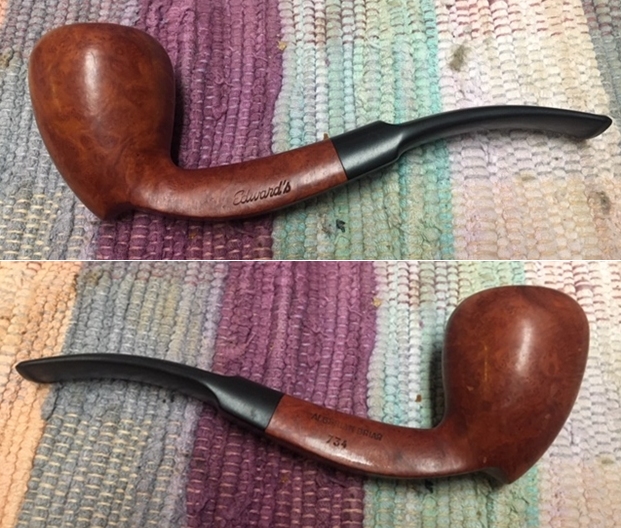
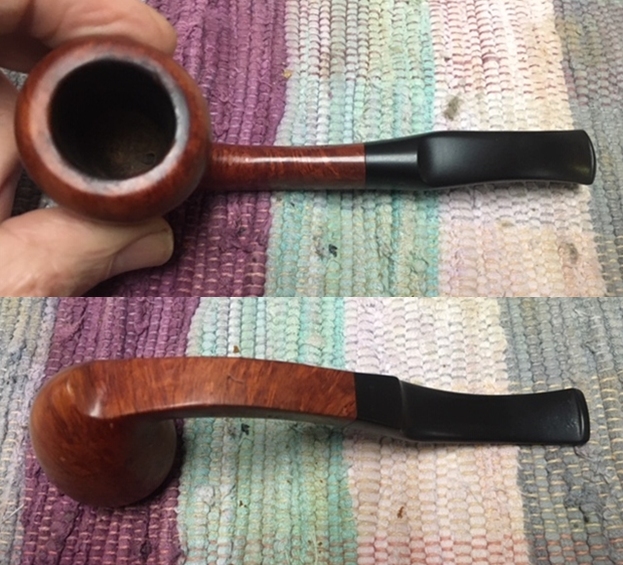
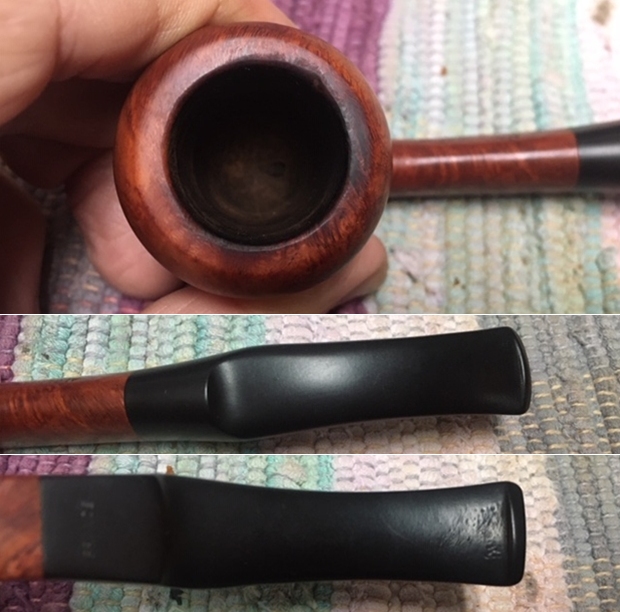
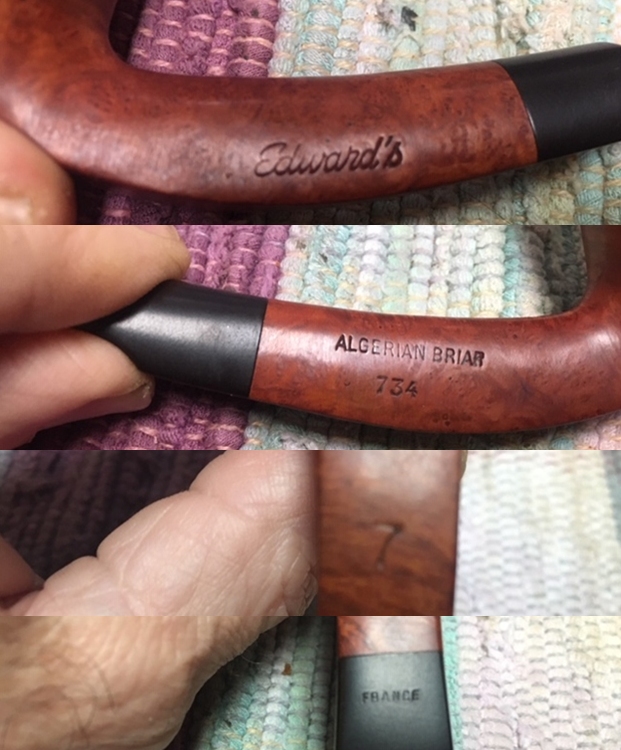
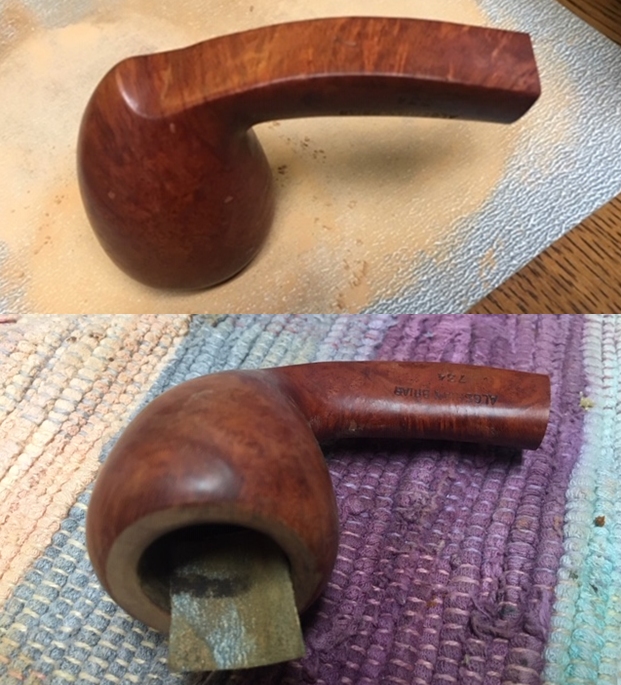
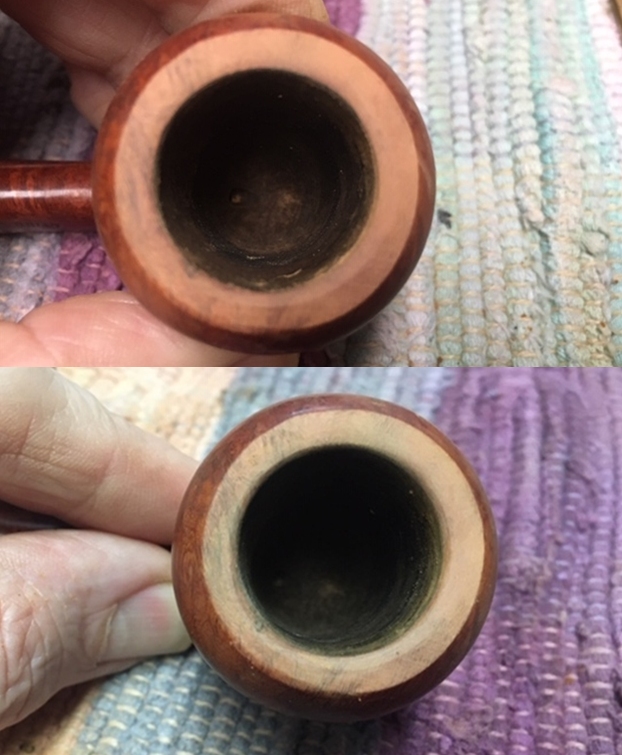
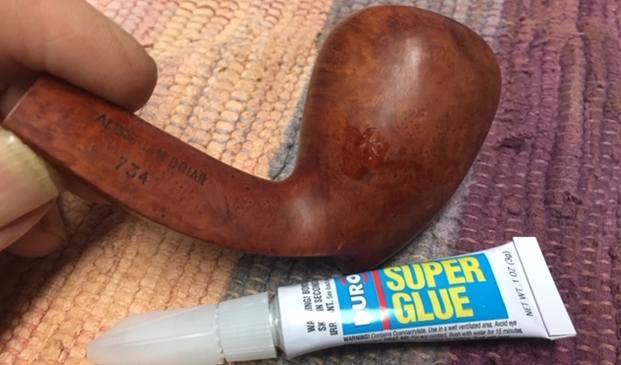
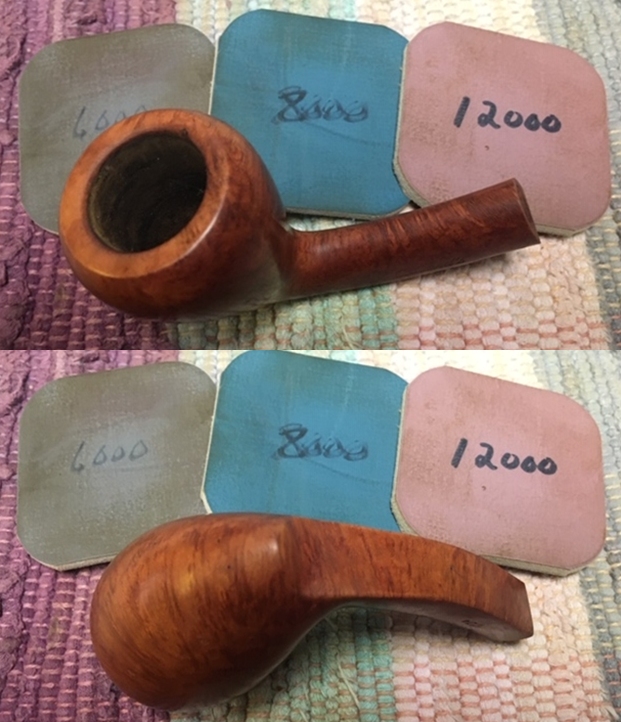
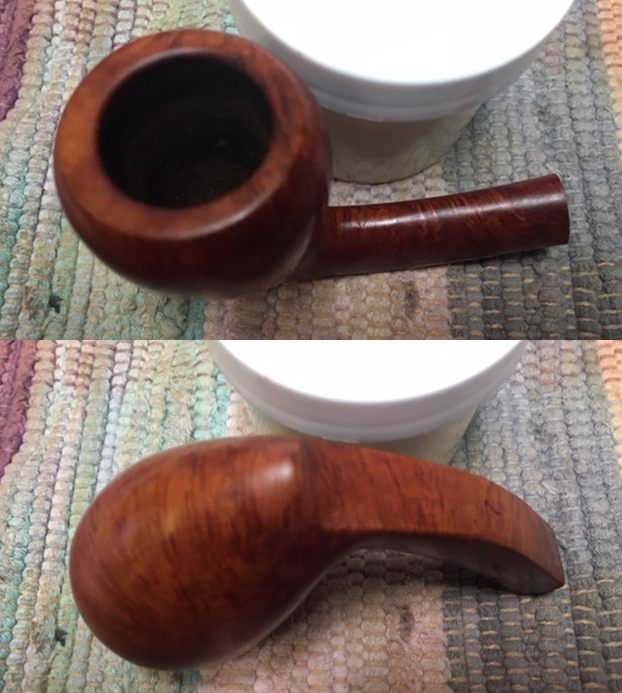
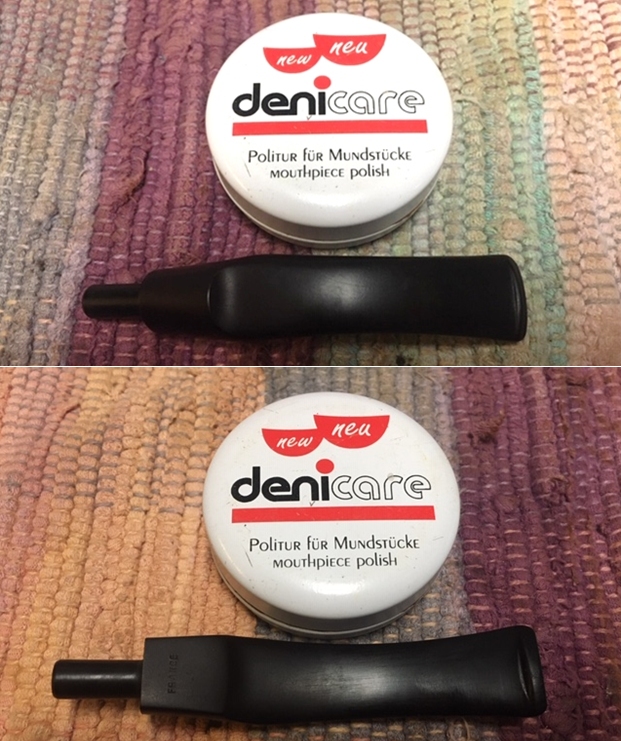
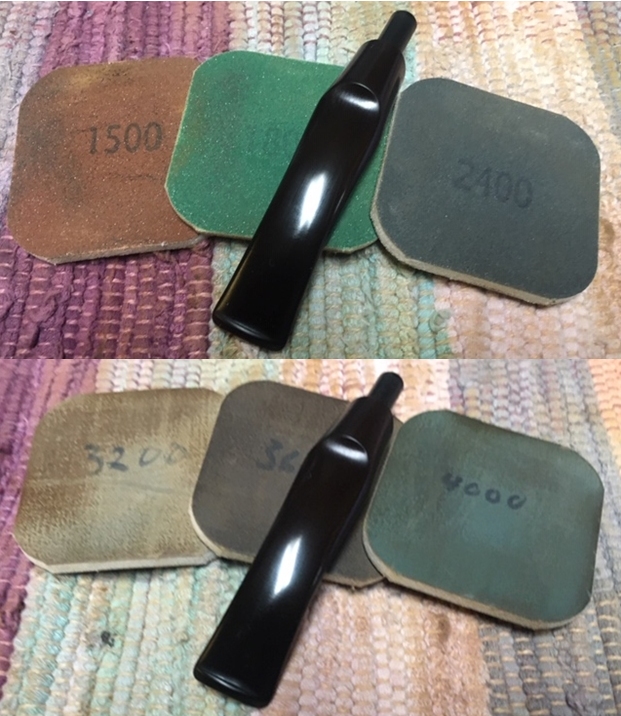
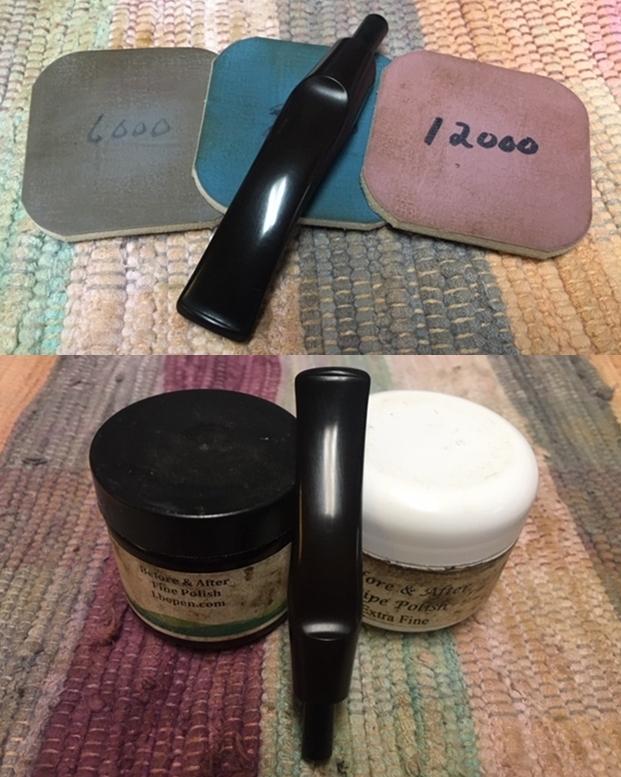
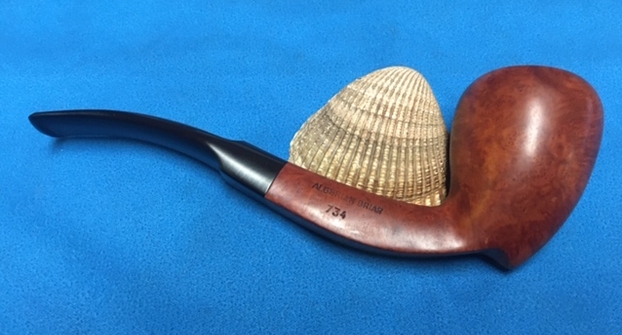
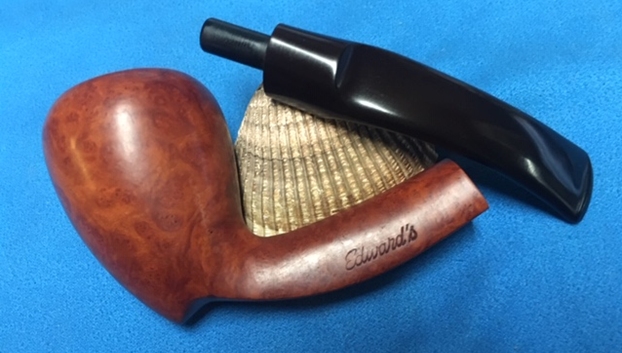
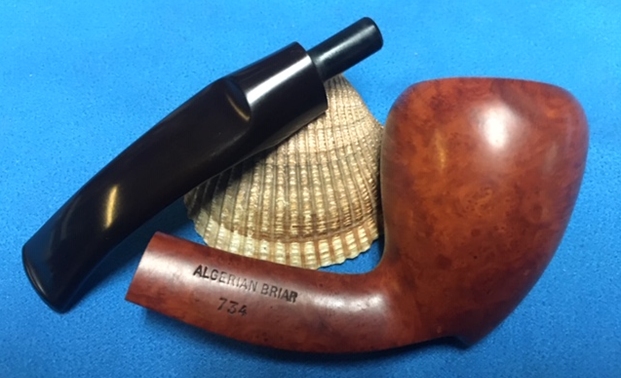
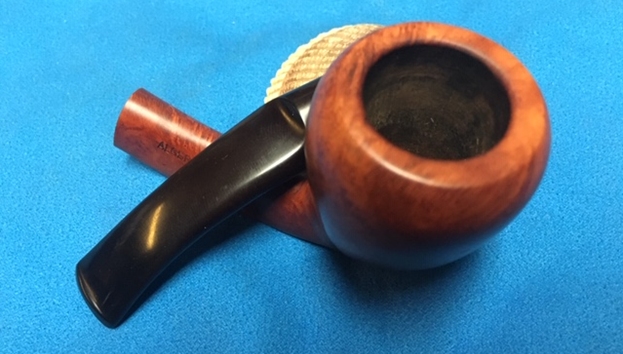
The next pipe on the work table is another unique one that I chose out of my boxes of pipes to restore. I am not even sure what to call the shape. It has an acorn shaped bowl. The shank is domed shape with flat bottom. The graceful curves of the shank and bowl give it a very unique shape. The bowl had a thick cake and lava overflow on the rim. The rim top was crowned with small thin flat top. The bowl was smooth and a natural finish. The finish was dusty and tired but there seemed to be a shiny coat of something on the finish – perhaps shellac. The bowl had some nice grain under the grime and the finish appeared to be in good condition. There were a few fills on the right side of the bowl and some sandpits as well. A lot would be revealed once Jeff had worked his magic on it. The stem was dirty but came with tooth chatter and marks near the button on both sides. Jeff took photos of the pipe before he started his cleanup work. Jeff captured the condition of the bowl and rim top with the next series of photos. You can see the work that is ahead of us in the photos. The cake is very thick and heavy. The rim looked like it might have some damage on the back inner edge of the bowl. Jeff took some great photos of the sides of the bowl and heel showing what is underneath the grime and debris of time and use. You can see the fills in briar on the right side. They really stand out in the first photo. It will be interesting to see what happens as the pipe is cleaned and restored. He captured the stamping on the sides of the shank and the underside of the saddle stem. They are clear and readable. The left side reads Edwards. On the right side it reads Algerian Briar 734. On the underside of the stem it is stamped France. The next two photos of the stem show the top and underside of the stem. You can see the tooth marks and chatter on the surface of both sides.I took it out of the box from Jeff and looked it over. He cleaned the pipe with his usual penchant for thoroughness. When I took it out of the box I was amazed at how good it looked it really looked like a different pipe. He reamed it with a PipNet pipe reamer and cleaned up the reaming with a Savinelli Fitsall Pipe Knife. He scrubbed out the internals with alcohol, pipe cleaners and cotton swabs until the pipe was clean. He scrubbed the exterior of the bowl with Murphy’s Oil Soap and a tooth brush to remove the grime and grit on the briar and the lava on the rim top. The bowl looked very good. Jeff scrubbed the stem with Soft Scrub to remove the grime and soaked it in Before & After Deoxidizer. When he took it out of the soak it came out looking far better. I took photos before I started my part of the work. I took some photos of the rim top and stem. The rim top is clean but there is a lot of damage to the inner edge and top on the back right side. The bowl itself looks very clean. The rest of the inner edge is a little rough but not damaged. The close up photos of the stem shows that is it very clean and other than being dull it looks very good.I took photos of the stamping because they had cleaned up very well.I decided to take care of the damage on the rim top and inner edge first. I topped the bowl on a topping board with 220 grit sandpaper. I then cleaned up the inner edge with a folded piece of 220 grit sandpaper and gave it a slight bevel. I filled in the small pits on the right side of the bowl with clear super glue. Once the repair was cured I sanded smooth with a folded piece of 220 grit sandpaper to smooth it out.I polished the briar and the shank with micromesh sanding pads – dry sanding with 1500-12000 grit pads. I was able to blend in the repairs into the side of the bowl. I wiped the bowl down after each pad with a damp cloth. The grain really began to stand out and the finish took on a shine by the last sanding pad. The photos tell the story! I worked some Before & After Restoration Balm into the surface of the smooth briar with my fingertips. The product works to clean, enliven and protect the briar. I let the balm sit for about twenty minutes and then buffed with a cotton cloth to raise the shine. The photos show the bowl at this point in the restoration process. I set the bowl aside and turned to deal with the stem. I “painted” the surface of the stem with the flame of a Bic lighter to lift the tooth marks. I was able to lift them a lot.I filled in the remaining tooth marks on the surface of the stem with clear super glue. I sprayed it with an accelerator to harden it. Once it had hardened I sanded it with 220 grit sandpaper and 400 grit wet dry sandpaper to blend it into the surface of the vulcanite. I polished the stem with some Denicare Mouthpiece polish – a red gritty paste that feels a lot like the texture of red Tripoli. It works well to polish out some of the scratches. I find that it does a great job preparing the stem for polishing with micromesh sanding pads.I polished the vulcanite stem with micromesh sanding pads – dry sanding with 1500-12000 grit sanding pads. I wiped it down after each sanding pad with a cloth containing some Obsidian Oil. I finished polishing it with Before & After Pipe Stem Polish – both Fine and Extra Fine and buffed it off with a cotton cloth. This Edward’s Unique Algerian Briar was another fun pipe to work on and I really was looking forward to seeing it come back together again. With the grime and debris gone from the finish it was a beauty and the grain just pops at this point. I put the stem back on the bowl and buffed the pipe with Blue Diamond on the buffing wheel. I carefully avoided the stamping on the shank during the process. I gave the bowl and the stem multiple coats of carnauba wax on the buffing wheel and followed that by buffing it with a clean buffing pad on the buffer. I hand buffed the pipe with a microfiber cloth to deepen the shine. The rich natural finish on the bowl looks really good with the polished black vulcanite stem. It is very well done. Give the finished pipe a look in the photos below. I can only tell you that it is much prettier in person than the photos capture. The dimensions of the pipe are Length: 6 inches, Height: 2 inches, Outside diameter of the bowl: 1 ½ inches, Chamber diameter: ¾ of an inch. The Edward’s pipes I have worked on always have had a creative flair. This is truly another unique looking Edward’s. Thanks for walking through the restoration with me as I worked over another beautiful pipe. I will be adding it to the rebornpipes store soon. If you want to add it to your collection send me an email or a message! Thanks for your time.

Refurbishing an Edwards Unique – I have no idea what to call the shape


Blog by Steve Laug

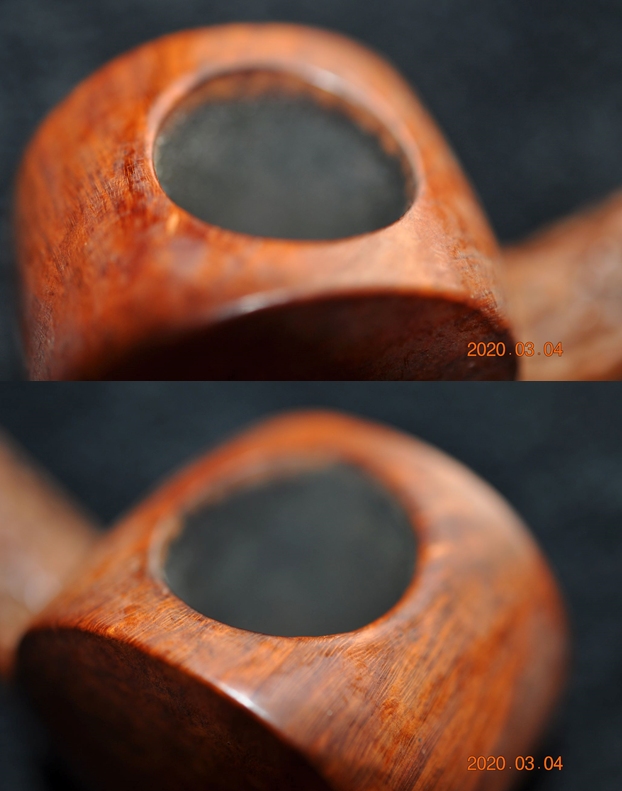
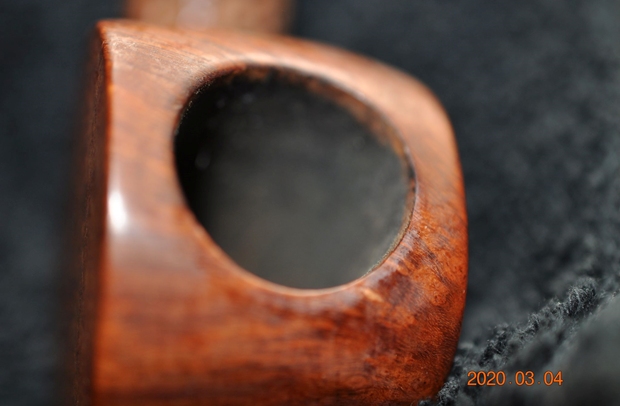
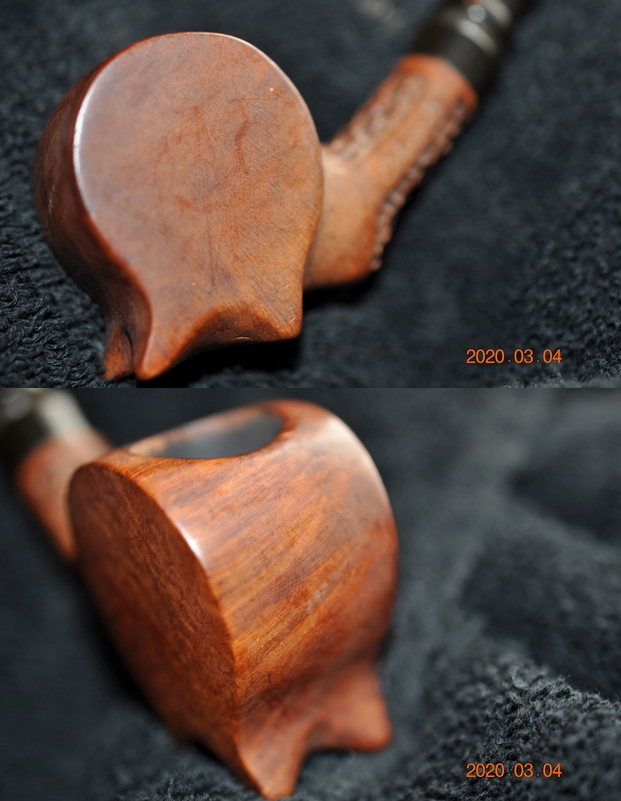
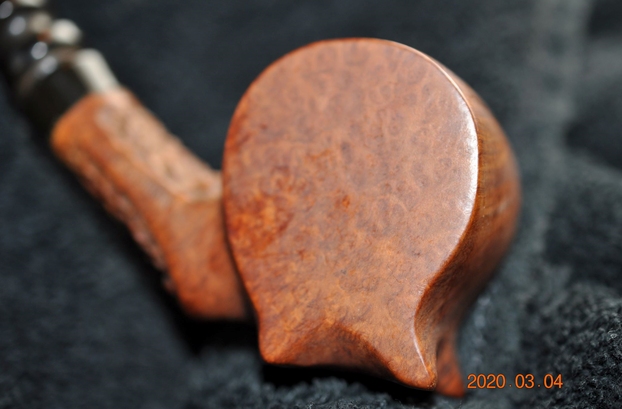
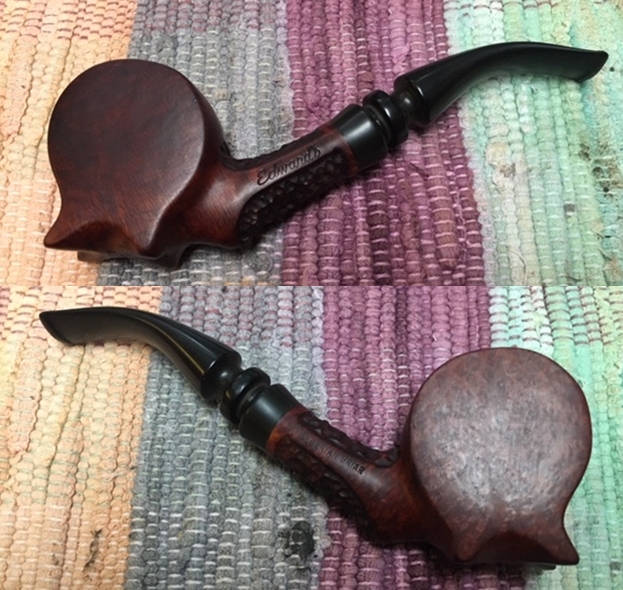
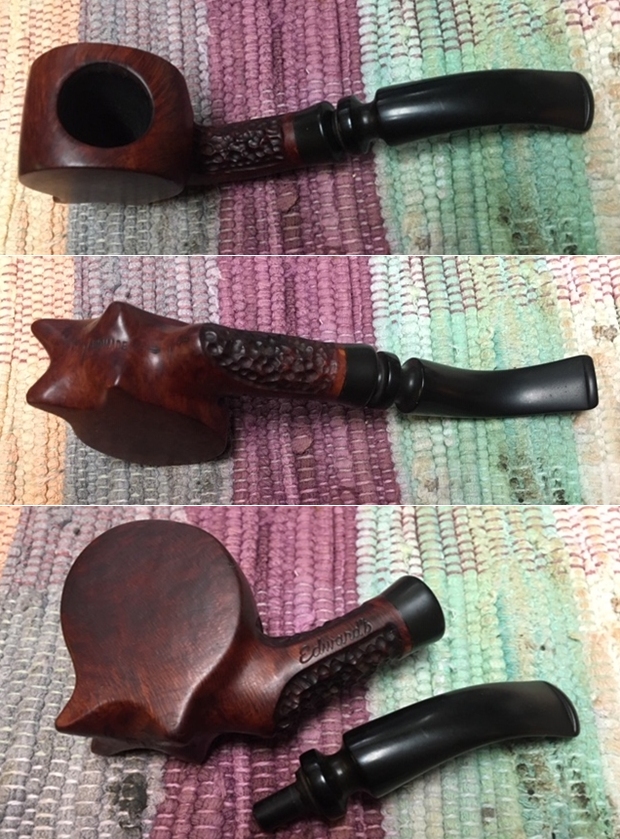
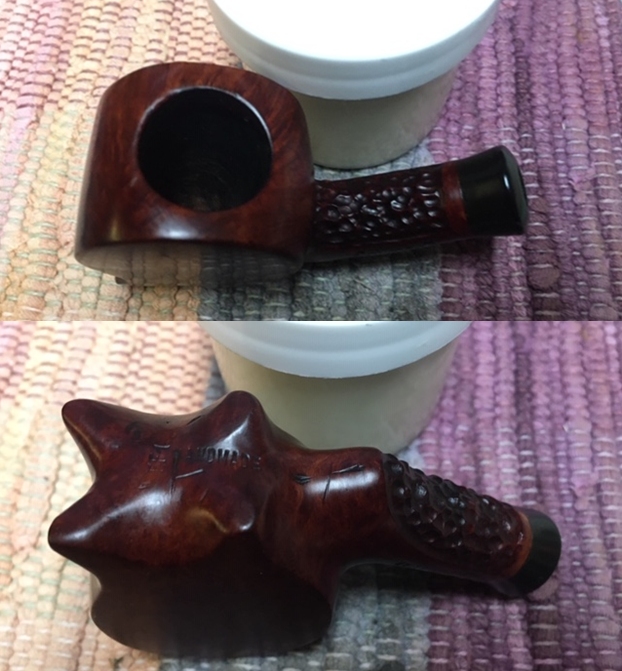
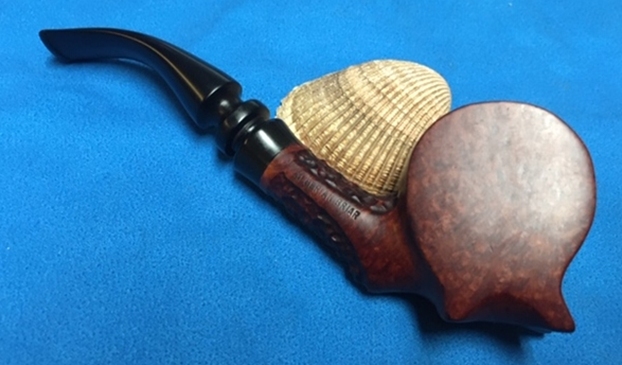
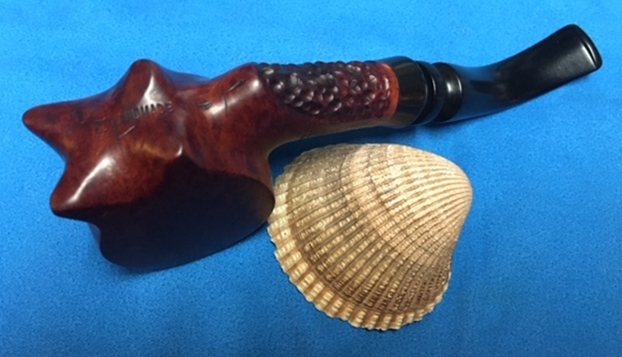
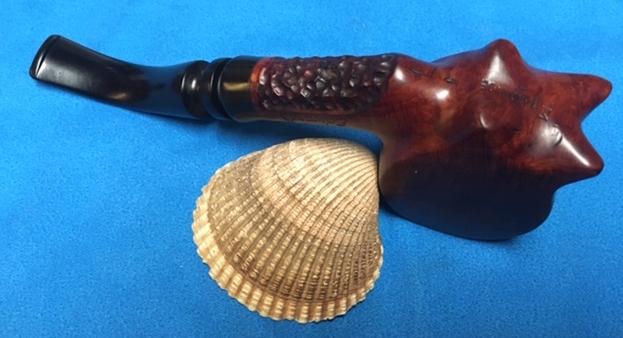
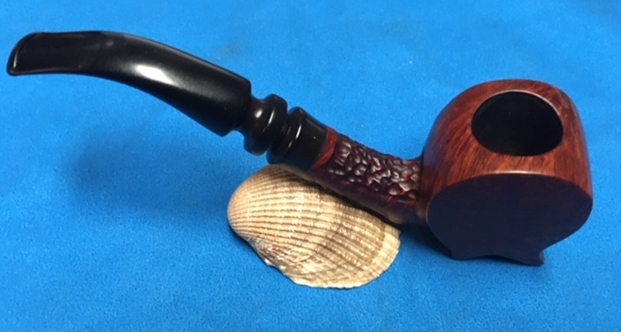
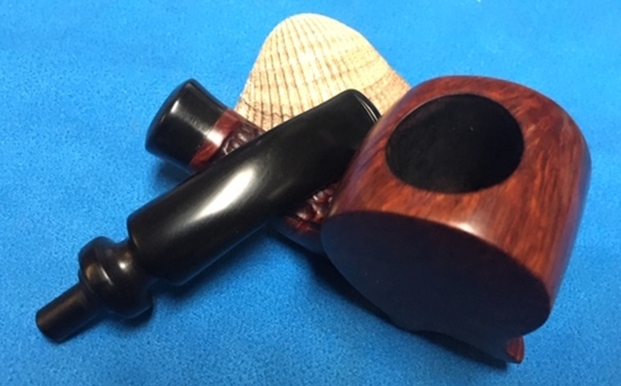
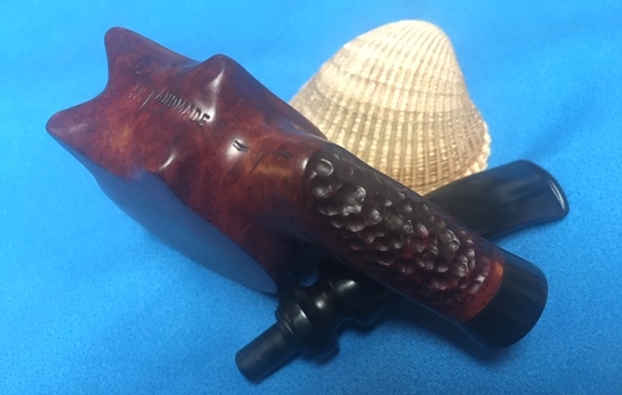
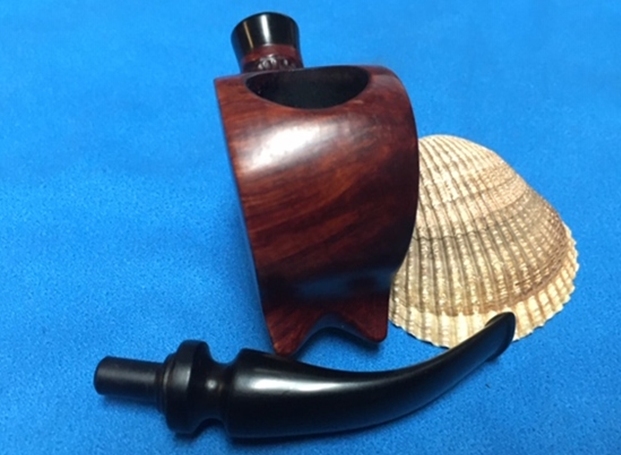
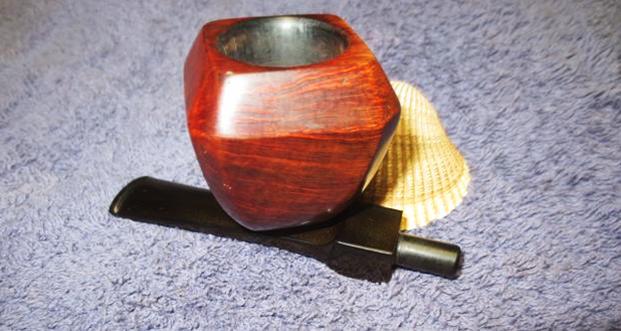
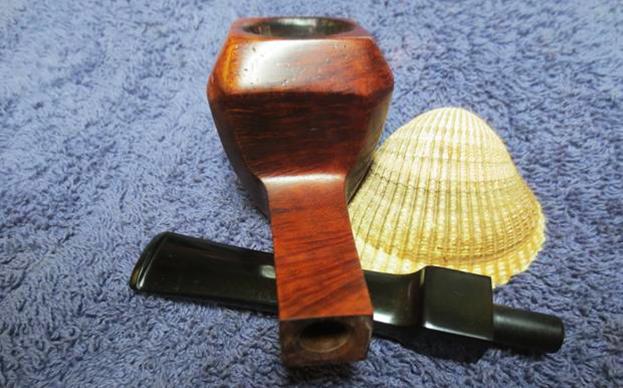
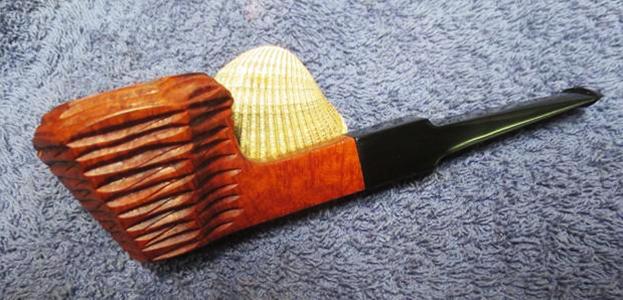
The next pipe on the work table is a really uniquely shaped Edwards. It is even hard to describe what the shape is – a snail, a tooth, a blowfish with legs??? I have no idea what to call it. I reread one of the blogs I wrote on an Edwards I restored and there is a very appropriate quote there describing this pipe (https://rebornpipes.com/2016/10/18/my-latest-refurb-an-edwards-algerian-briar-771-is-not-a-shape-ive-seen-before/). I quote:

…The available shapes that the pipes came out it spoke of a very fluid design philosophy. Pipedia says that “Edward’s Design Philosophy is hard to pin down, think of their style as the “American Charatan” with unique & clever twists all their own.”

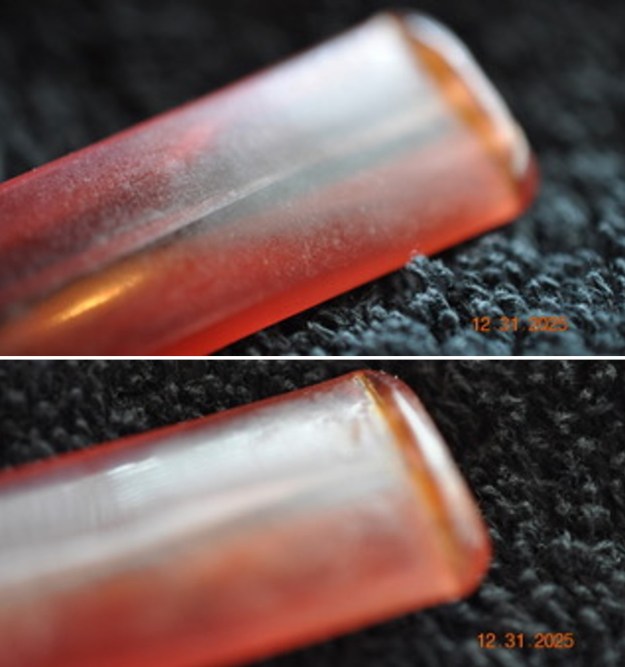
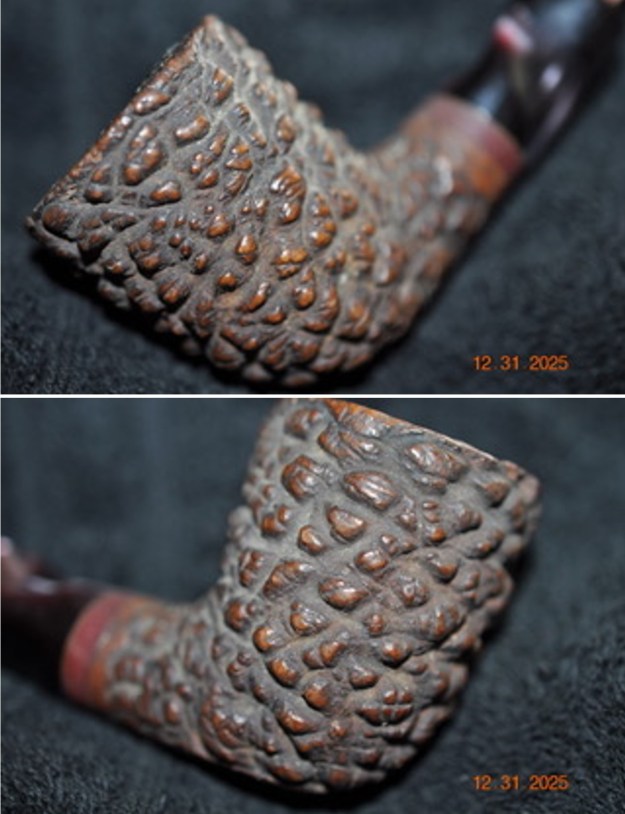
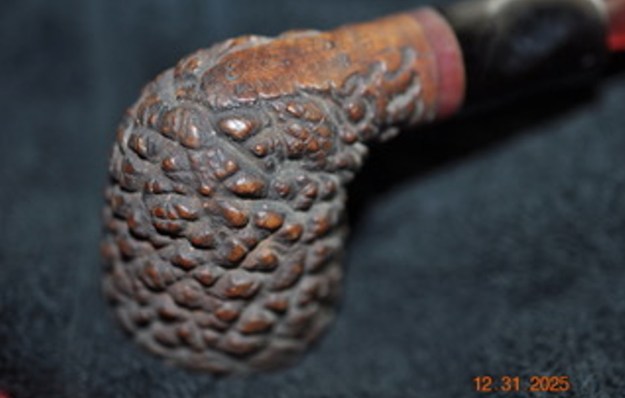
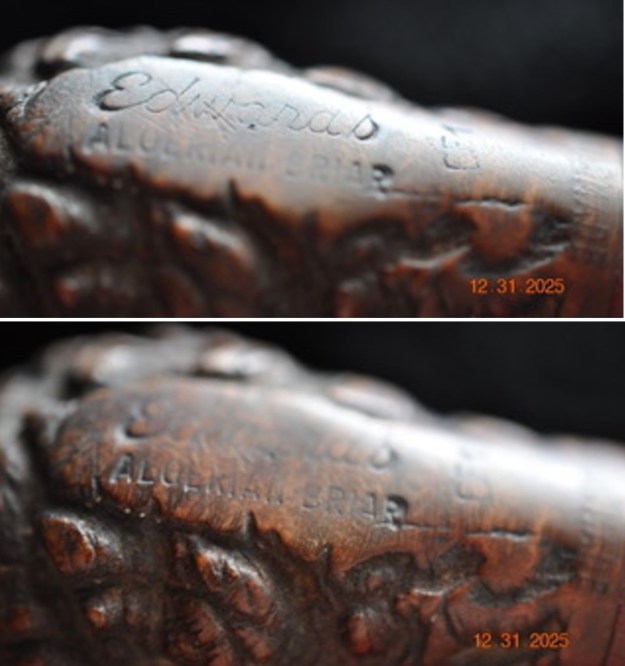
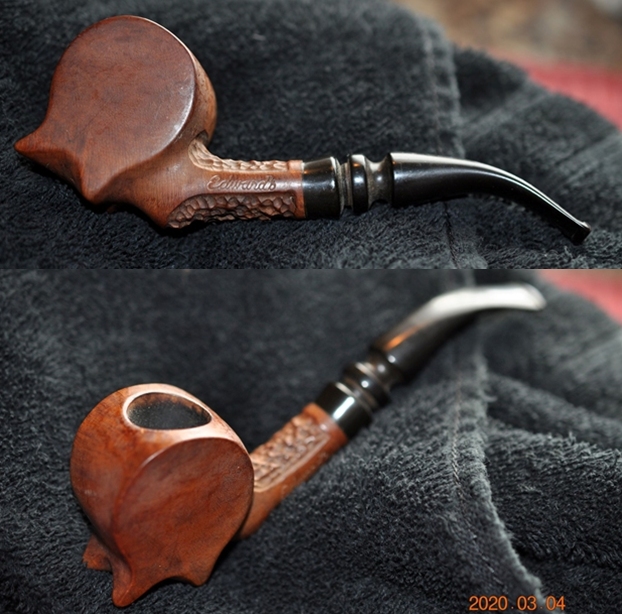
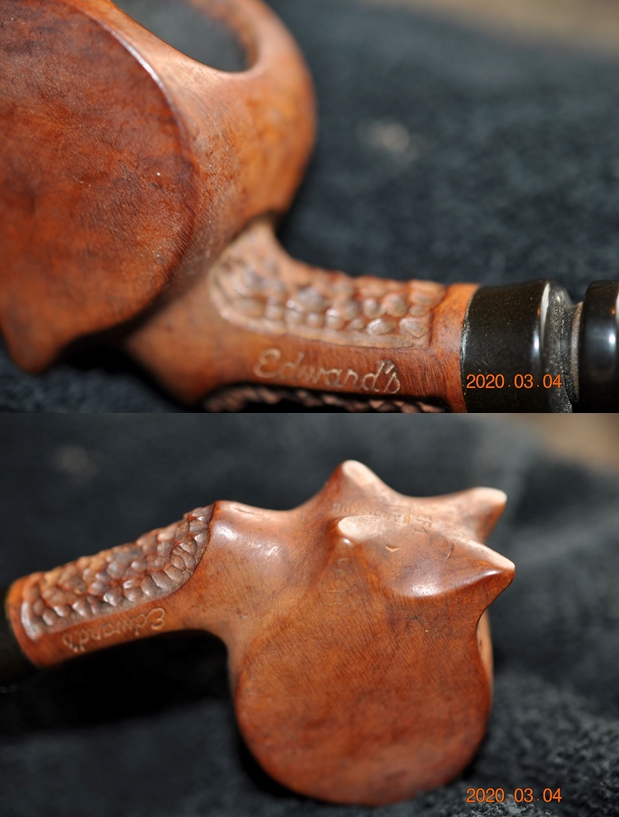
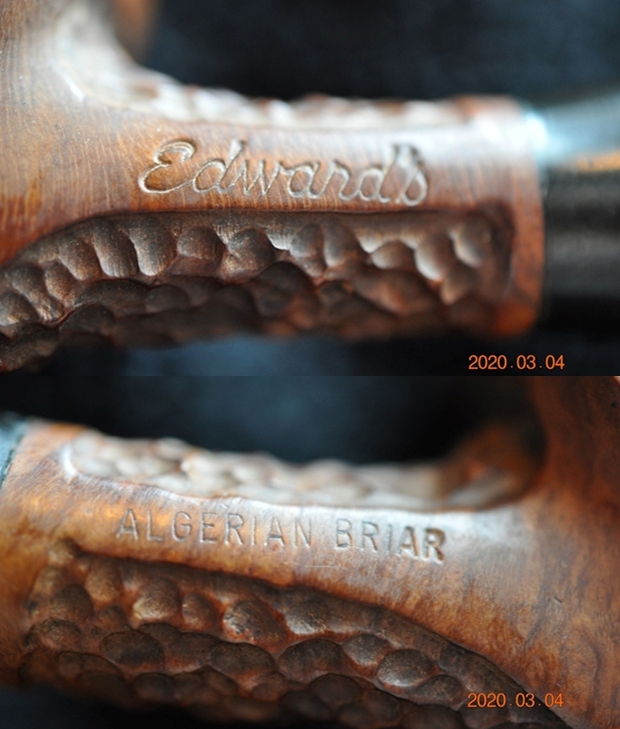
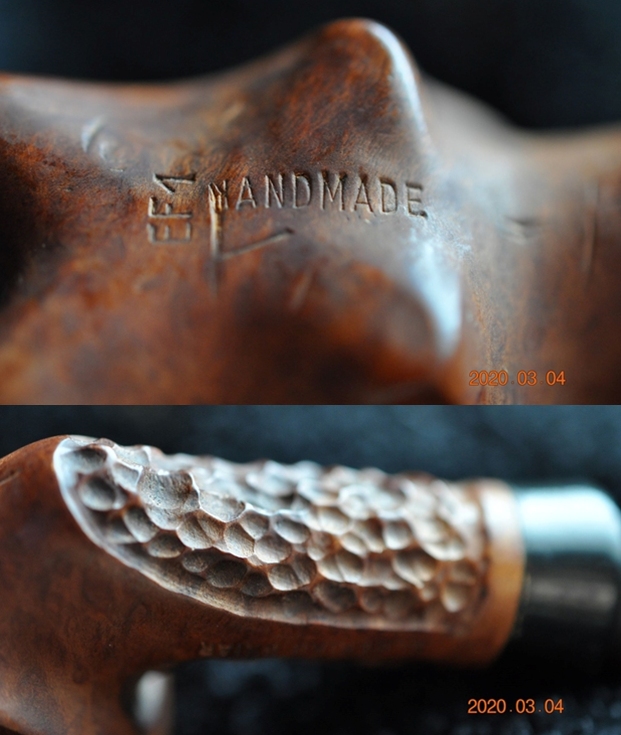
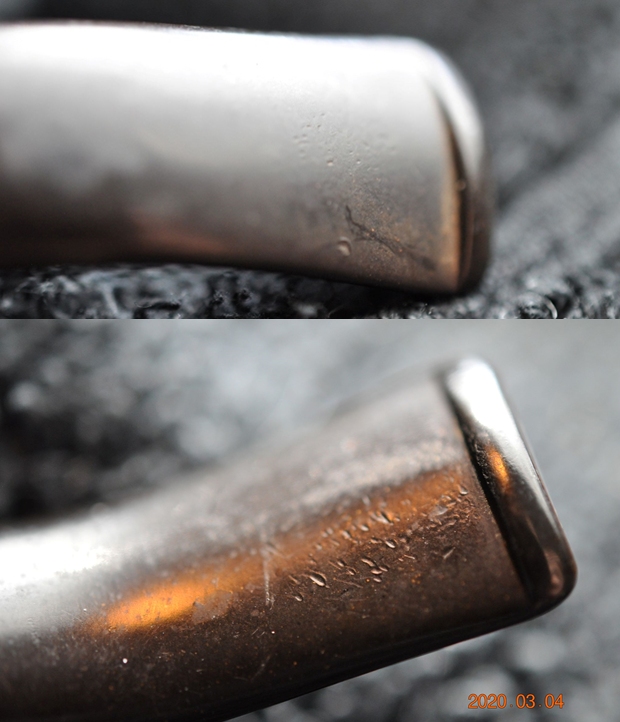
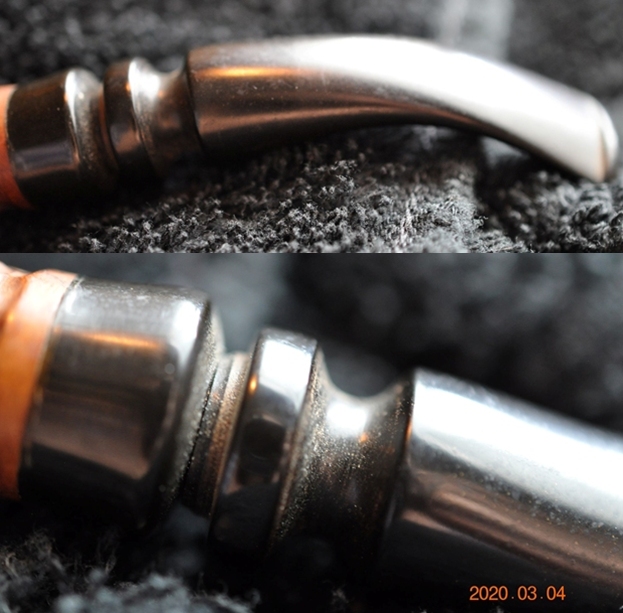
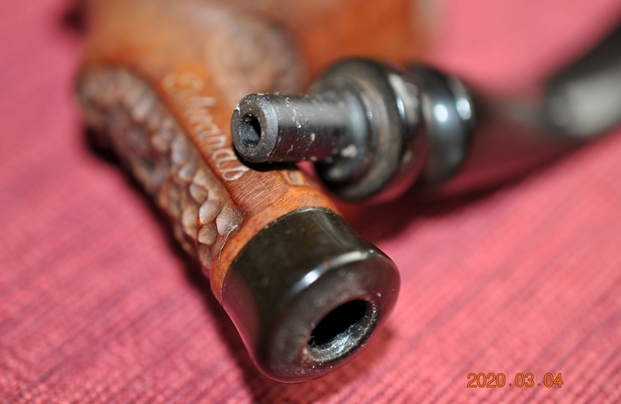
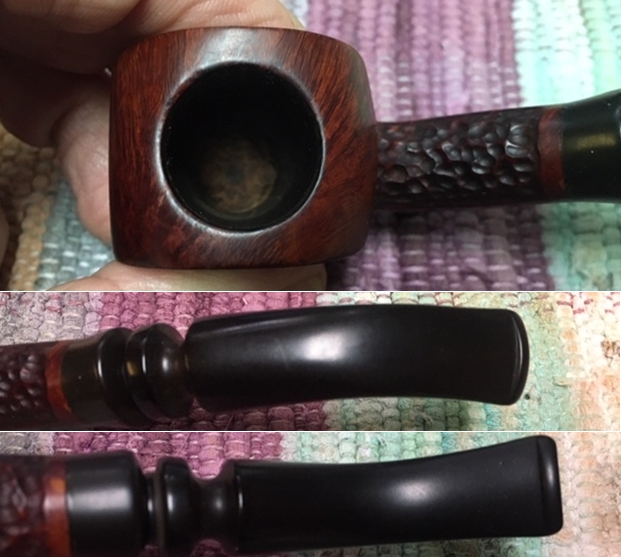
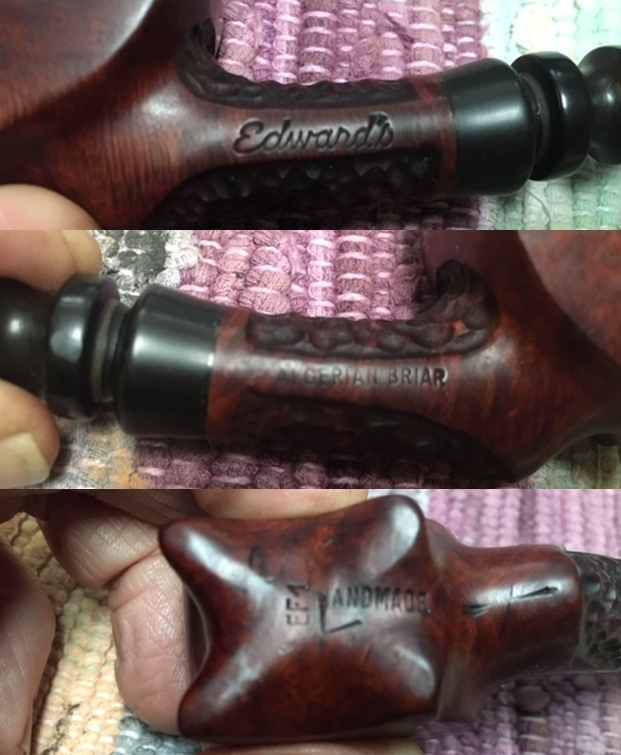
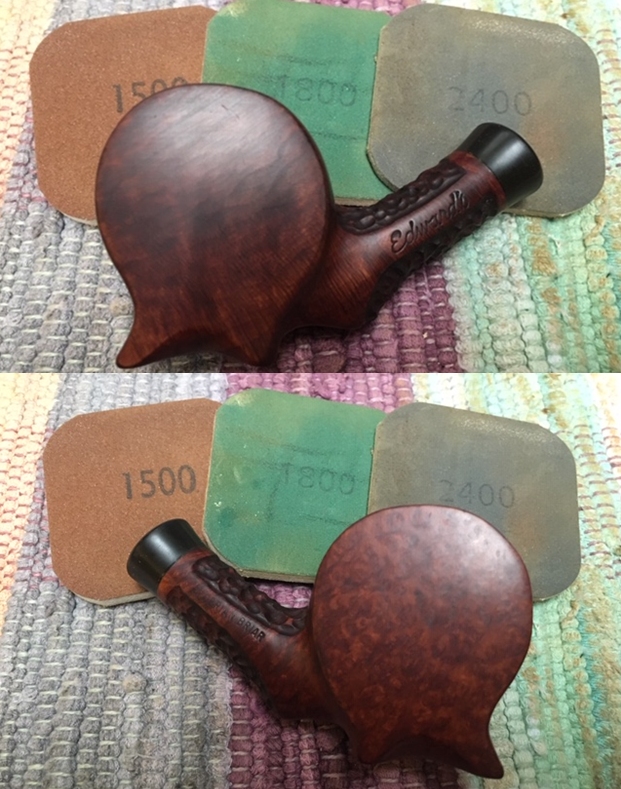
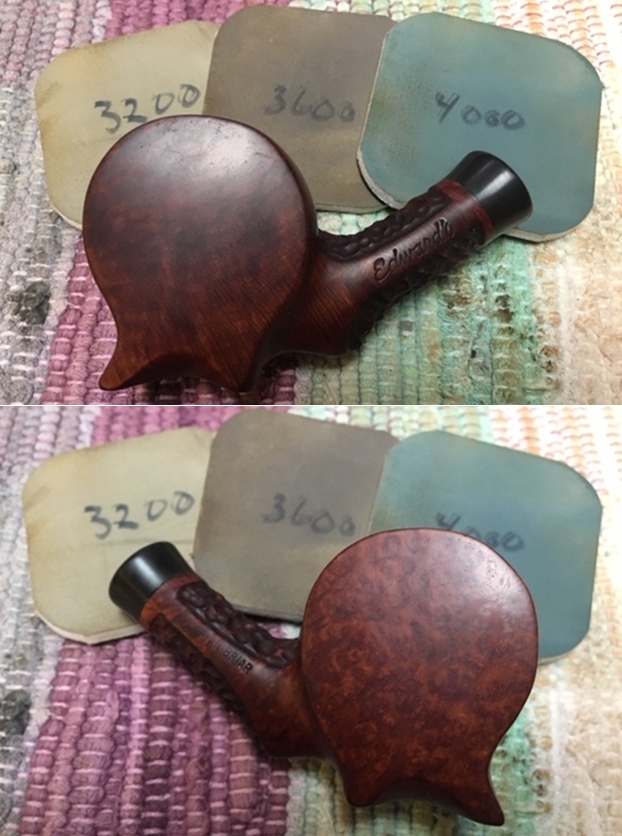
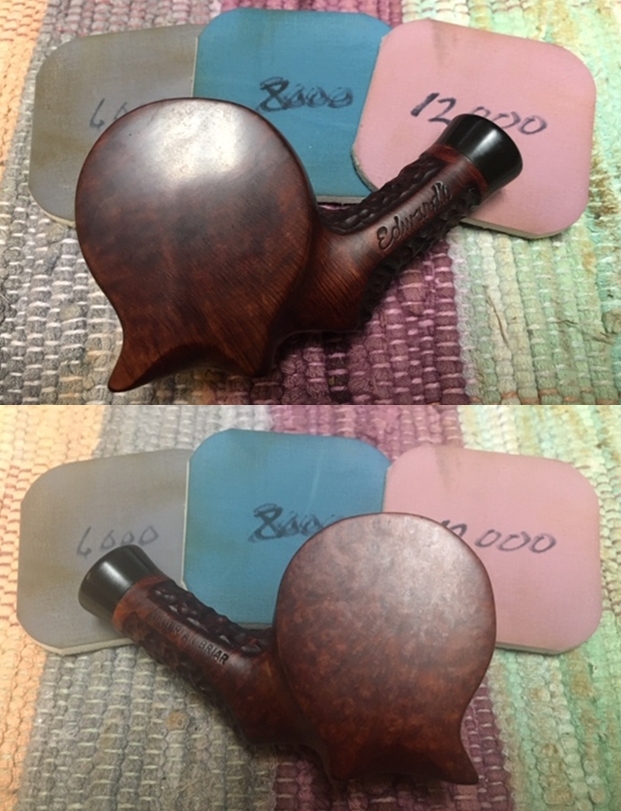
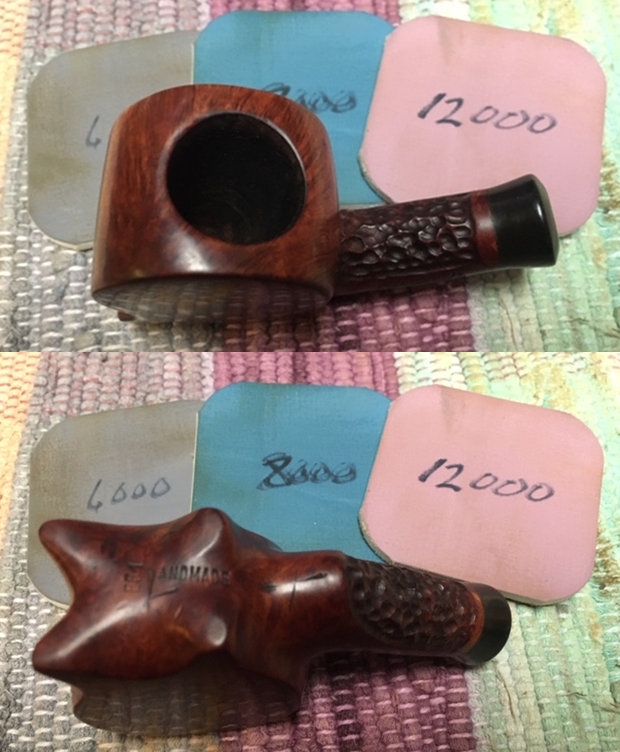
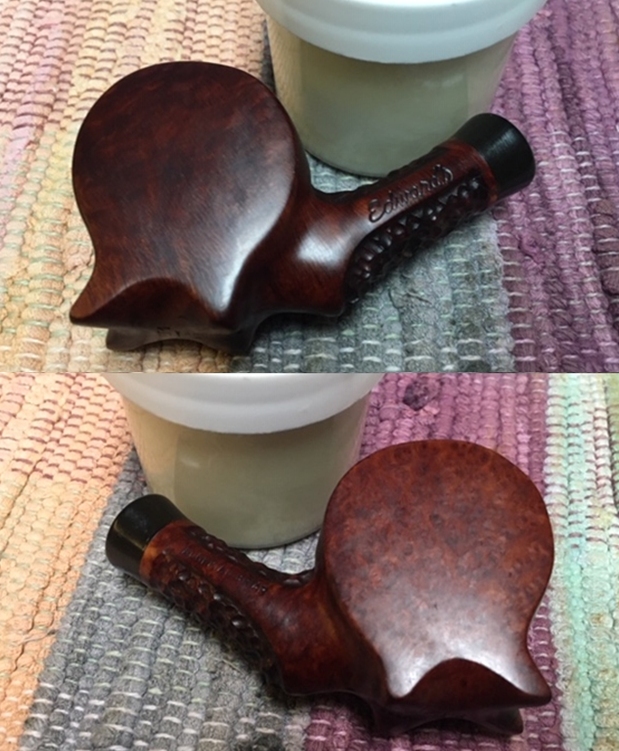
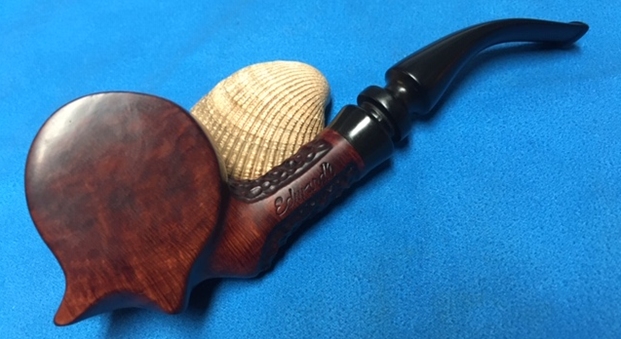
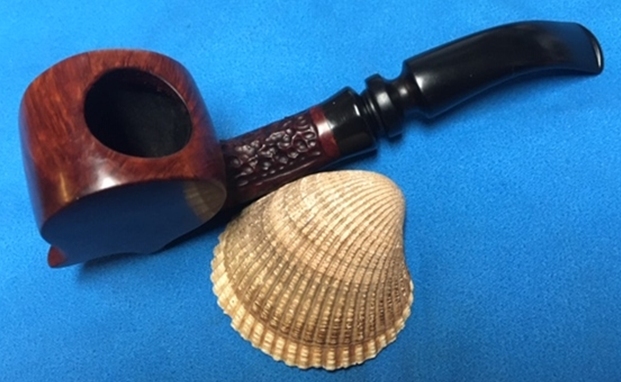
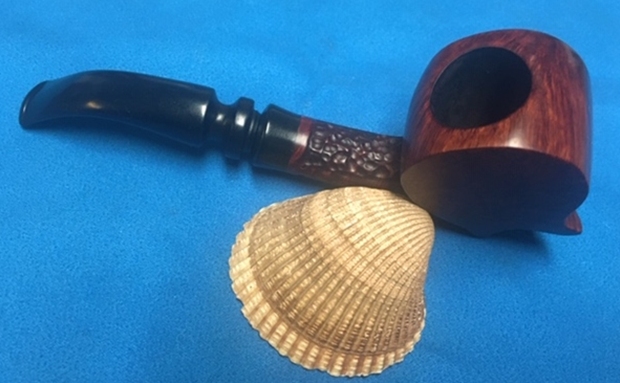
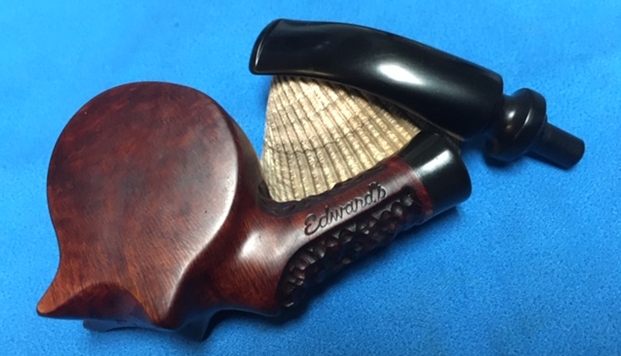
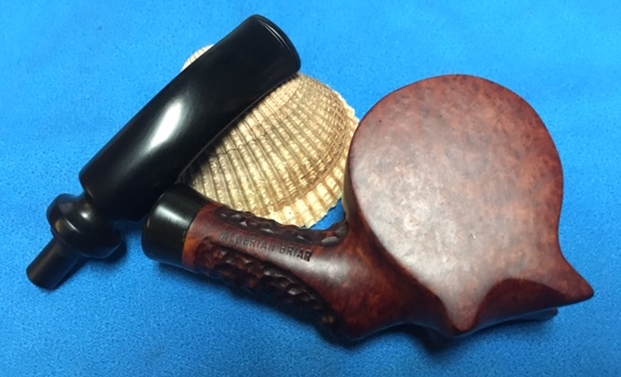
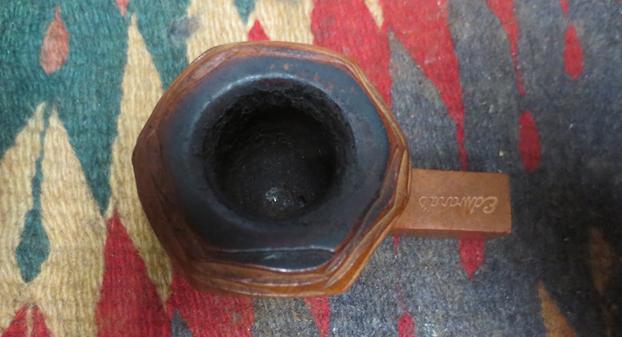
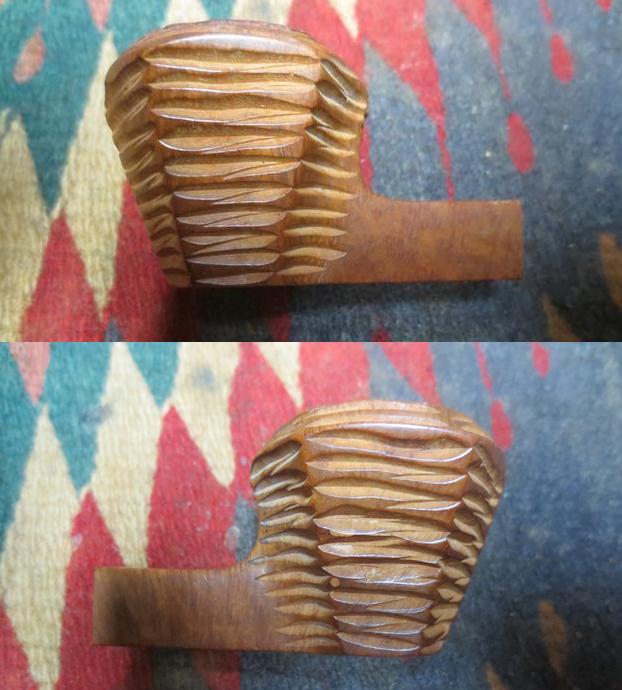
Jeff picked Edwards in an auction in Oklahoma. It caught his eye and as he watched the auction he decided it was meant to be ours. Neither of us has ever seen one like this. The finish was very dull and seemed to have remnants of shellac on the surface in spots. The smooth sides, front, back, heel and rim top work well with the unique rustication on the shank bottom and top. There is a vulcanite shank extension on the end of the shank. The shape is flat on both sides of the bowl and rounded on the top, front and back. The bottom has four feet on it. The stamping on the left side of the shank reads Edward’s in script. On the right side of the shank it is stamped Algerian Briar. On the heel of the bowl it is stamped EF1 over Handmade. The bowl was lightly smoked with no cake. There was no lava overflow and the rim edges were in great condition. The stem and shank extension were lightly oxidized. There was light tooth chatter and tooth marks on the top and underside of the stem near the button. He took some photos of the rim top and bowl from various angles to give me a clear picture of the condition of the rim top and bowl. You can see the minimal cake in the bowl and the clean rim top. It looked like a pipe that had hardly been used. It must have been sitting in someone’s cupboard for a long time to accumulate the dust and debris in the bowl and in the rusticated portions. Jeff took some photos of the sides and heel of the bowl to show the condition of the finish on the pipe. The shellac coat appears to have gone cloudy on the surface of the briar. The photos show mixed grain on the sides, heel and rim of the pipe. Under the cloudiness of the finish it was a nice looking bowl. The shape pretty well follows the flow of the grain. Jeff took two close-up photos of the rustication on the shank top and bottom. It is almost like scales it is very well done and interesting looking. It is very tactile.He took some photos of the stamping on the shank. The stamping was readable and clear. On the left side you can see Edward’ stamped in a smooth band. On the right side it is stamped Algerian Briar.  On the heel of the bowl is stamped EF1 and Handmade.  I wonder if EF1 is a designation for Edwards Freehand pipes. There is also a smooth band of briar between the vulcanite shank extension and the shank.  He also included a photo of the rustication on the bottom of the shank to show its uniqueness. The next two photos show the top and underside of the stem. It is dirty and has calcification on both sides at the button. There is also some tooth chatter and some light tooth marks. The third photo shows the curve of the full stem. The final photo shows the fancy turning of the chair-leg style stem. Jeff took a photo of the stem removed from the shank to show the shank extension and tenon of the pipe. You can see the dust and debris in the turns of the stem and shank in the photo.Across the board they were all Algerian Briar and all were unstained waxed or oiled briar. I remember reading that actually oil curing was a feature of their pipes. I did a quick look on Pipedia (https://pipedia.org/wiki/Edward’s) and found that I was correct. I quote:

Edward’s pipes were originally produced in St. Claude France when France actually was a world-class pipe maker with longstanding business & political connections to Colonial Algeria that allowed them to obtain the finest briar.

During the tumultuous 1960’s, Edward’s created a business model to offer the finest briar available in both Classic and Freehand shapes – all at a fair price. They bought the company & equipment and cornered the market on the finest, choice Algerian Briar just before the supply vanished in political turmoil of Algeria’s independence. Edward’s packed up both machinery and briar-treasure to America, safely caching the essentials to create a new pipe-making dynasty. This was a coup, for the 70’s and 80’s were grim years for pipe smokers as quality briar all but disappeared.

All of Edward’s pipes are Algerian Briar – a fact very few pipe companies can claim, and all are oil-cured utilizing natural finishes – no strange concoctions are used to interfere in your tastebud’s dance with the briar. Algerian, Calabrian, Sardinian, Corsican – take your pick, but Algerian Briar is generally considered the finest smoking briar ever used. When combined with oil-curing, Algerian takes on a magical quality that even Alfred Dunhill recognized as far back as 1918 as the choice for both his Bruyere and Shell.

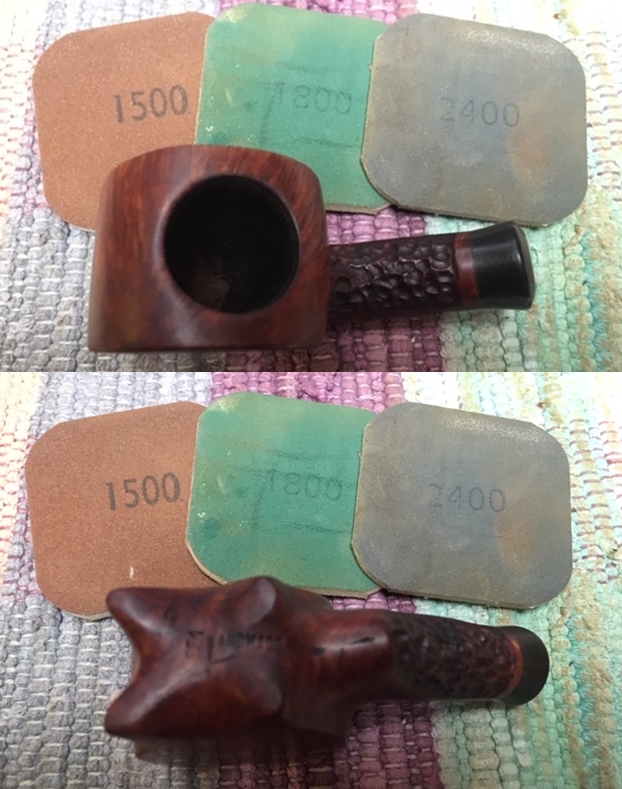
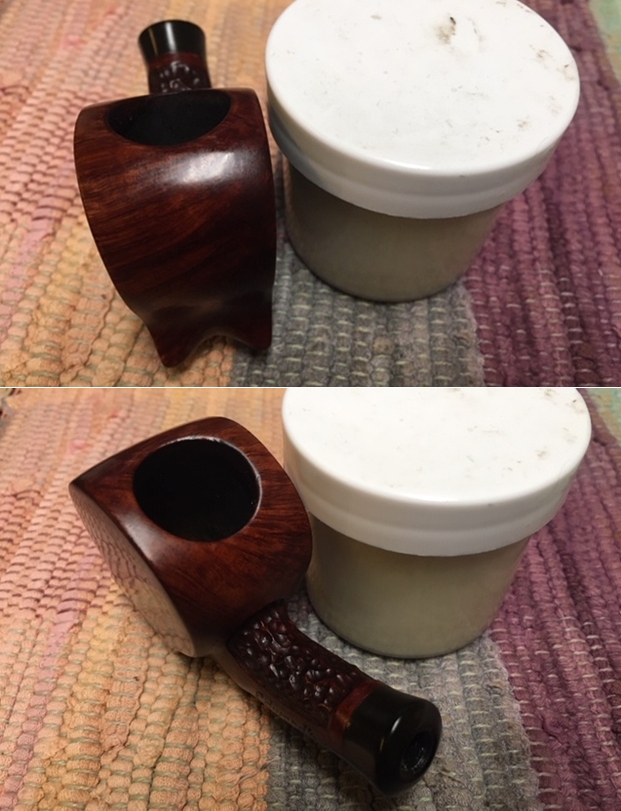
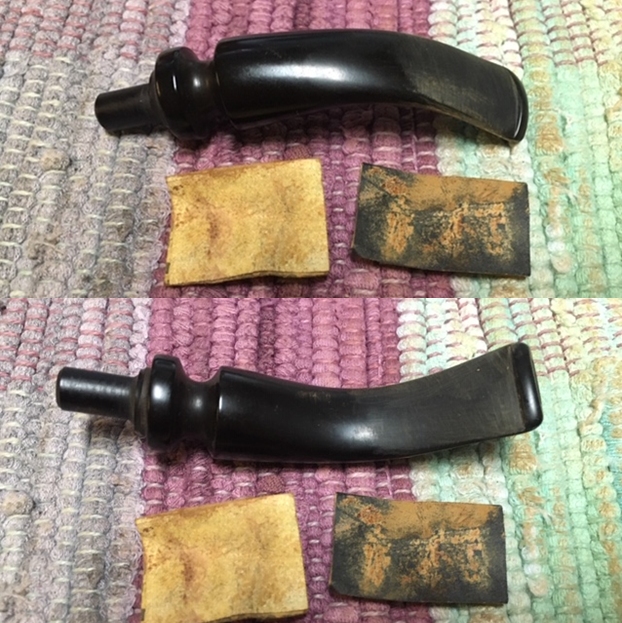
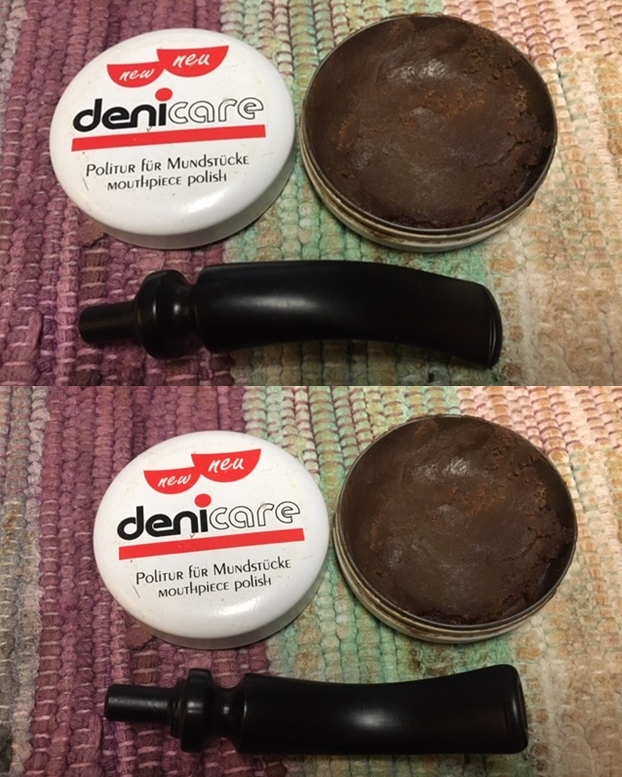
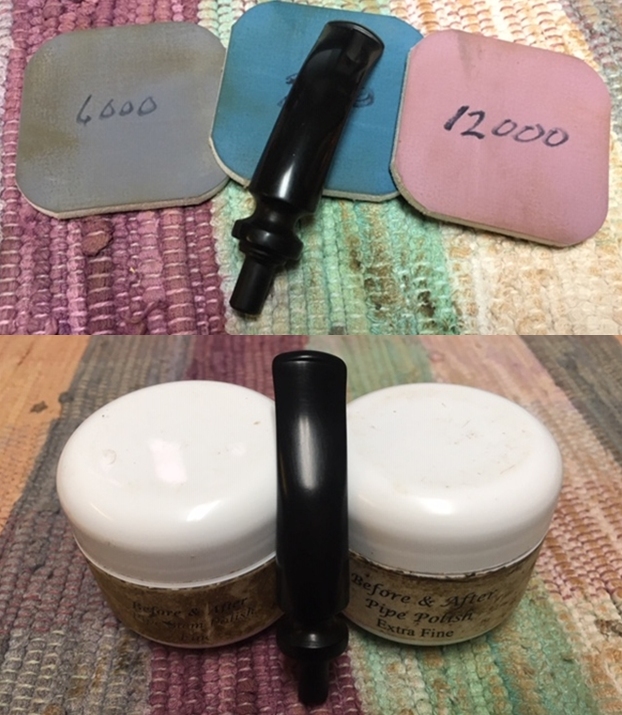
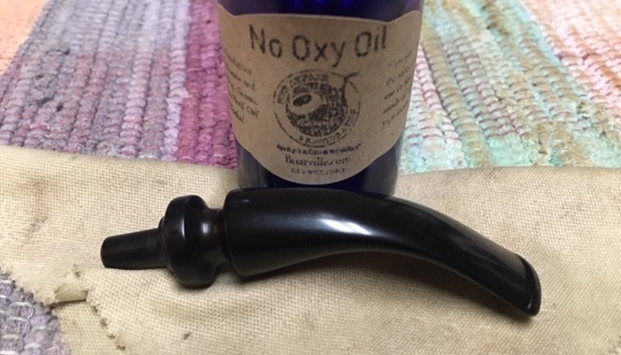
With that information on the brand in hand I turned to the pipe. Jeff had done his usual thorough job cleaning the pipe which I really appreciate because of the freedom it gives me in dealing with pipes. He reamed it with a PipNet pipe reamer and got rid of the cake. He cleaned up the reaming with a Savinelli Fitsall Pipe Knife so that we could see the walls of the bowl and assess for damage. He cleaned the internals of the shank and stem with alcohol, pipe cleaners and alcohol. He wiped down the surface with acetone to remove the shellac coat. He scrubbed the exterior with undiluted Murphy’s Oil Soap and a tooth brush. He rinsed the pipe under warm water. He dried it off with a cloth and then let it air dry. The stem was scrubbed with Soft Scrub and had a soak in Before & After Deoxidizer to remove the oxidation. One it was rinsed off, it came out looking very good. The finish on the bowl and the rim top cleaned up nicely. I took pictures of the pipe to show how it looked when I unpacked it. I took a close up photo of the rim top to show how clean it was. You can see that it has a few small nicks but otherwise the rim top looks flawless. The stem looked good just some light tooth chatter and marks near the button. Overall the pipe is a beautiful looking piece. I took photos of the stamping on the sides of the shank. It read as noted above. It is very clear and readable.Because the pipe was in such good condition there was little rehabilitative work to do on the bowl or rim. I started my work immediately by polishing the briar with micromesh sanding pads – wet sanding with 1500-12000 grit pads and wiping down the briar after each sanding pad with a damp cloth. The briar began to shine. I worked some Before & After Restoration Balm into the briar with my finger tips and a horsehair shoe brush. The product is a great addition to the restoration work. It enlivens, enriches and protects the briar while giving it a deep glow. It is a product I use on every pipe I restore. I set the bowl aside and worked on the stem. I sanded out the light tooth marks and chatter with 220 grit sandpaper and polished the stem with 400 grit wet dry sandpaper.I polished the stem with Denicare Mouthpiece Polish from a tin of it I have in the drawer here. It is a gritty red paste that I rub on with my finger tips and work it into the surface of the stem and button and buff it off with a cotton pad. It gives me a bit of a head start on the polishing work.I polished the stem with micromesh sanding pads – wet sanding with 1500-12000 grit sanding pads. I wiped it down after each sanding pad with Obsidian Oil. I polished it with Before & After Pipe Stem Polish – both Fine and Extra Fine. I buffed the stem with a soft cloth to raise the shine. I gave it a final wipe down with Briarville’s No Oxy Oil to protect the stem from UV and slow down future oxidation.  I don’t know what it is about finishing a restoration but I have to tell you that it is my favourite part of the process. It is the moment when everything that I have been working on comes together. I can compare it to where I started and there is always the satisfaction that it does indeed look better than when Jeff and I picked it up. As always I put the pipe back together and carefully buffed it with Blue Diamond on the buffing wheel. I gave the bowl and the stem multiple coats of carnauba wax. I buffed the pipe with a clean buffing pad and hand buffed it to raise the shine. It is fun to see what the polished uniquely shaped Edward’s Freehand looks like along with the polished fancy vulcanite stem. This is nice looking pipe and I am sure that it will be comfortable in hand when smoking as it is light and well balanced for a pipe of this size. Have a look at it with the photos below. The dimensions are Length: 5 ¾ inches, Height: 1 7/8 inches, Outside diameter of the bowl: 1 ¼ inches, Chamber diameter: ¾ of an inch. It is another beautiful pipe and one that will be staying with me in my collection. I have worked on a lot of Edward’s pipes over the years but I have never seen one shaped like this one.Thanks for walking through the restoration with me as I worked over this pipe. Thanks to each of you who are reading this blog.           

Restoring a Beautiful “Edwards #712- L”


Blog by Paresh Deshpande

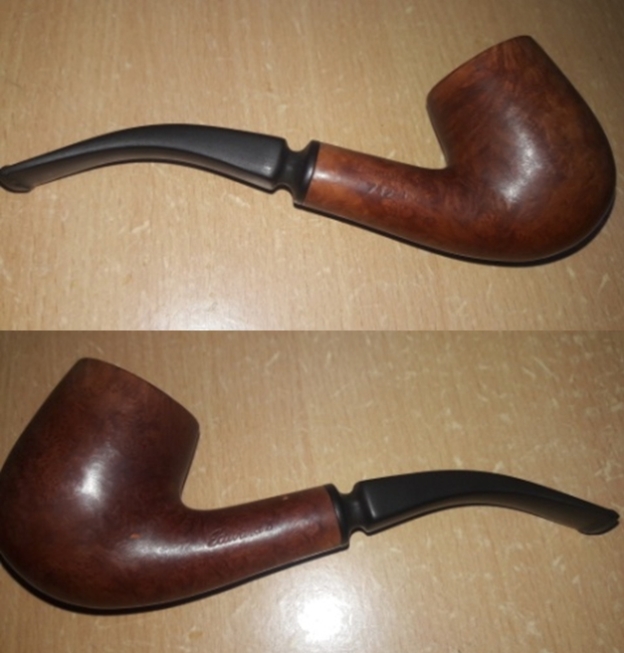
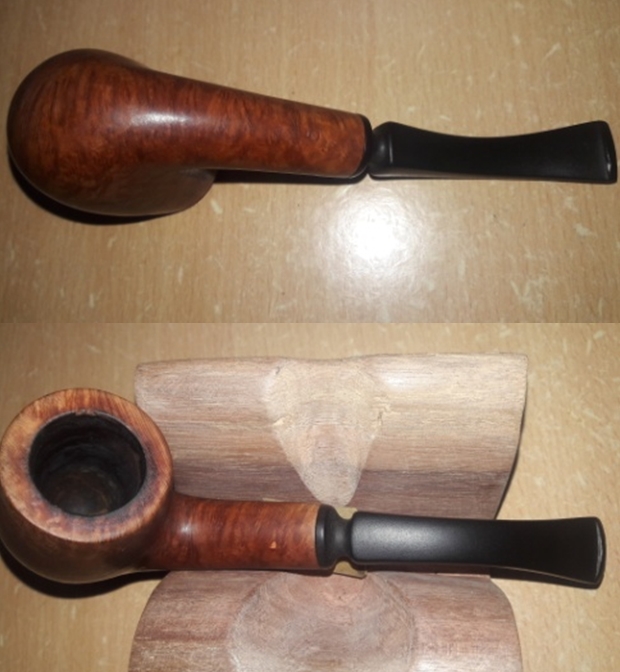
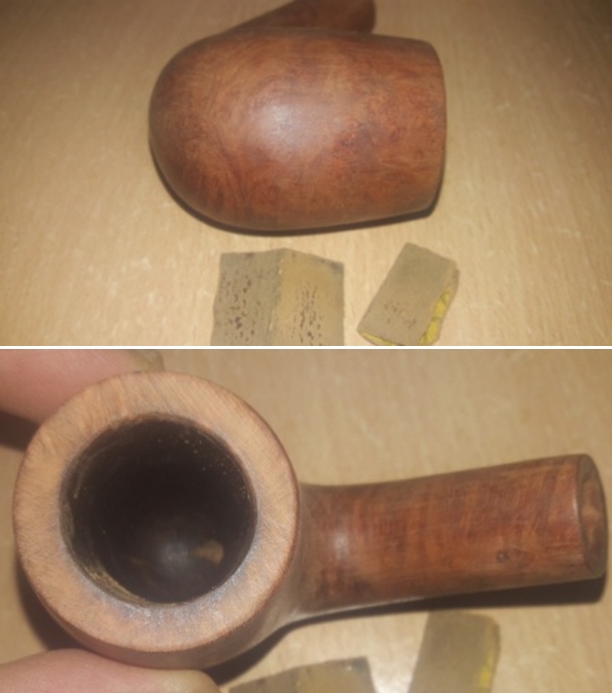
One of the first restorations that I had undertaken was an Edward’s # 784 quarter bent Zulu. It was a very clean pipe to begin with and only required cleaning and shining of the stem and the stummel. There was not a single fill on that pipe and the feel of the stummel in the hand, briar, the grains and the stem oozed superior quality. I really liked that Zulu. The next pipe on my work table is an Edward’s # 712-L. This large sized bent billiard has a fantastic heft to it and fills the palm nicely, and I do have fairly large hands!! There are two minute fills on this huge stummel but, nevertheless, it is one handsome and robust looking pipe!!

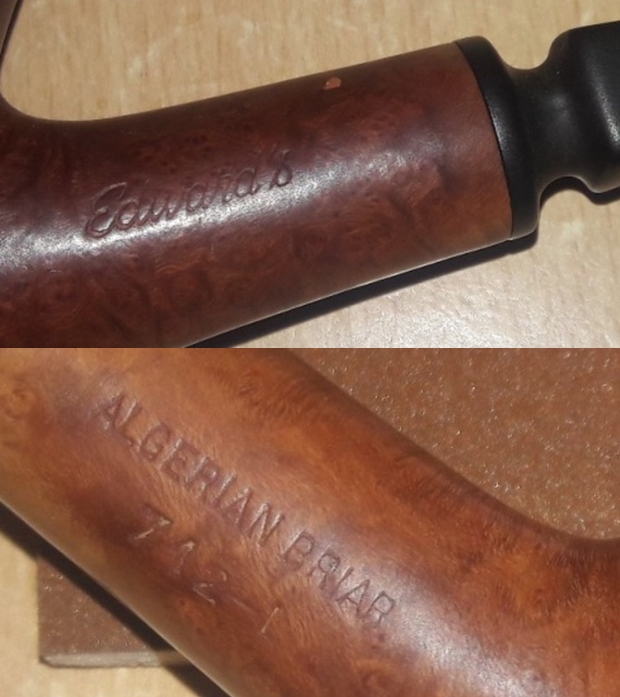
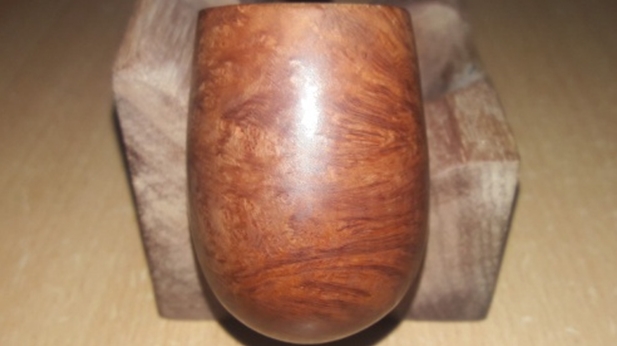
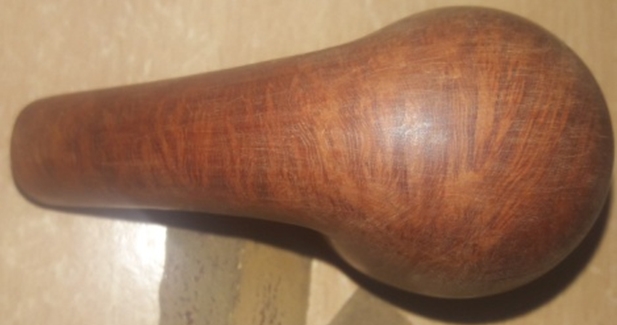
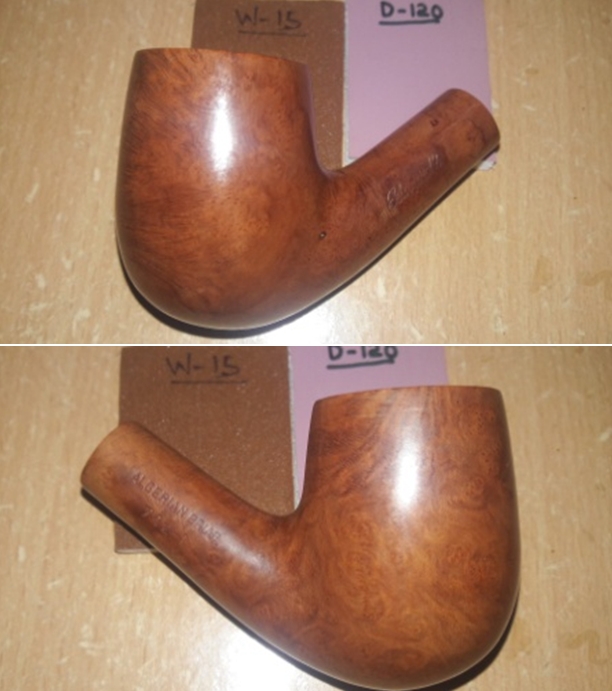
The stummel surface boasts of beautiful swirls of grains interspersed with bird’s eye along the sides of the stummel, while cross grains adorn the top and bottom of the shank extending to the back of the stummel. The left hand of the shank is stamped as “Edward’s” in cursive hand. The right side of the shank is stamped as “ALGERIAN BRIAR” in block letters over “712- L” which probably is the shape and the letter denoting the large size. The bottom of the shank bears “# 7” near the shank end which in all probability is the model number. The fancy stem bears no stampings.I searched pipedia.org for information and background of this brand and also attempt to date. I did not get the complete details that I was looking for, however the interesting information that I collected from this site was enough to convince me that the pipe I am currently working on is a no-push-over and can hold itself against some of the more known brands commanding a premium!! Here is the link to the information on pipedia.org (https://pipedia.org/wiki/Edward%27s).  For those who prefer immediate results without wasting time, here is an important piece of information from the website:-

“All of Edward’s pipes are Algerian Briar – a fact very few pipe companies can claim, and all are oil-cured utilizing natural finishes – no strange concoctions are used to interfere in your tastebud’s dance with the briar. Algerian, Calabrian, Sardinian, Corsican – take your pick, but Algerian Briar is generally considered the finest smoking briar ever used. When combined with oil-curing, Algerian takes on a magical quality that even Alfred Dunhill recognized as far back as 1918 as the choice for both his Bruyere and Shell.”  

I searched pipephil.eu in my attempt at dating this large handsome dude. Though I did not succeed in my endeavor, but I did get some interesting information like that Randy Wiley got his start at Edward’s!!!!!! Here is the link for those interested (http://www.pipephil.eu/logos/en/logo-e1.html). Even though this may not be a vintage pipe, but it definitely is of high quality and capable of holding itself up against some of the best in business!!!

INITIAL VISUAL INSPECTION
As I had noted earlier, this large bent billiard pipe was in great condition when I started restoring it. There were only two small fills on the shank, one on the left side near the bowl and shank joint and the other on the top surface of the shank, about an inch from the shank end. There is a small superficial chip in front of the bowl on the right side. The stummel is free of any spilled oils, tars or grime from the chamber. However, the briar is dull and lifeless and has taken on a layer of aged patina, through which one can make out the beautiful grains all round. This one should clean up nicely. The pipe appears to have been smoked a few times and there is a very thin layer of cake in the chamber. The chamber walls are nice and thick with no apparent damage. There is a minuscule amount of lava overflow on the rim surface. There are two small dents on the inner rim edge in 3 o’clock direction. The outer rim edge is slightly damaged in 12 o’clock direction, the result of likely being banged against a hard surface. The mortise is as clean as can be and the airflow through it is free and smooth. These issues should be a breeze to address. The vulcanite stem is without any bite marks or tooth chatter. There are small bite marks on the lower and upper lip edges. It is nice and dark, but not smooth. The roughness is due to oxidation of the top surface. These issues should not be a major headache to address. The tenon is clean and flow of air through the airway is full and smooth.THE PROCESS
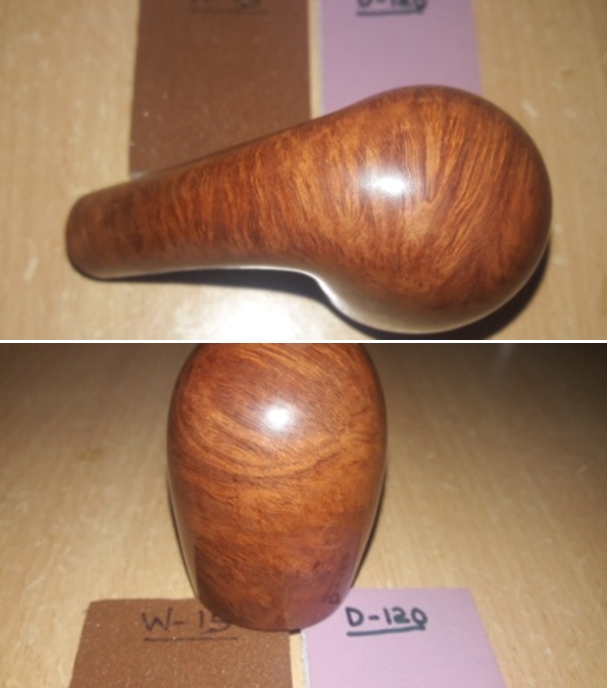
I started this project by cleaning the chamber. Since there was a very thin layer of carbon, I used a 220 grit sand paper, pinched between my thumb and forefinger, to sand the inner walls of the chamber. Once I had reached the bare briar, I wiped the chamber with a cotton pad dipped in isopropyl alcohol. This removed all the residual carbon dust and also rid the chamber of all ghost smells. I worked on the inner edge of the rim and on the rim surface with a 220 grit sand paper. I realized that the nicks to the inner edge were larger than anticipated and also the rim surface had some blackened surfaces. I addressed these issues by topping the rim on a 220 grit sand paper. This addressed all the issues on the rim, including the damage to the outer edge of the rim.Now, it was the turn of the stummel to get cleaned up. Using a hard bristled tooth brush dipped in undiluted Murphy’s oil soap, I very deliberately scrubbed the stummel, cleaning the surface thoroughly. I cleaned the rim too. The stummel and rim top was dried using paper napkins and soft cotton cloth. I gouged out the old fills on the shank and the chipped portion on the front of the bowl with a pointed knife and wiped the area clean with a cotton swab dipped in isopropyl alcohol. I spot filled these with clear CA superglue and set it aside to cure. While the stummel was drying, I worked the stem. I sharpened the lip edges using a needle file. I sand the entire stem with 220 followed by 400 and 800 grit sand paper. This helps to reduce the sanding marks left behind by the more abrasive 220 grit paper. To bring a deep shine to the vulcanite stem, I went through the complete set of micromesh pads, wet sanding with 1500 to 2400 grit pads and dry sanding with 3200 to 12000 grit pads. I wiped the stem with alcohol after each pad and rubbed it down with Extra Virgin Olive oil. The internals of the stem was cleaned out using alcohol and pipe cleaners. The pictures of the process and final results are shown below. The fills on the stummel had cured. Using a 220 grit sand paper, pinched between my thumb and forefinger, I sand the fills and the entire stummel to match each other. I wanted to highlight the grains seen and further blend all the repairs carried out to the stummel. To achieve this aim, I sand down the stummel and rim top using micromesh pads, wet sanding with 1500 to 2400 grit pads and dry sanding with 3200 to 12000 grit pads. The stummel now has a deep shine with grains popping out with magnificent contrast. I rub a small quantity of “Before and After Restoration Balm” in to briar and let it rest for a few minutes. The balm almost immediately works its magic and the briar now has a nice vibrant appearance. I further buff it with a horse hair shoe brush. To finish, I re-attach the stem with the stummel. I mount a cotton cloth buffing wheel on to the Dremel (actually it is not the brand machine, but a local machine which is similar).  I set the speed at about half of the full power and applied White Diamond compound to the entire pipe. I wiped/ buffed the pipe with a soft cotton cloth to clear it of any leftover compound dust. I then mounted another cotton cloth wheel on to the polishing machine and applied several coats of carnauba wax. I finished the restoration by giving the entire pipe a rigorous hand buffing using a microfiber cloth to raise the shine further. The completed pipe, with the dark brown hues of the stummel contrasting with the shiny black stem, looks lovely, fresh and vibrant; the photographs speak for themselves. The beauty, size and shape of this pipe compel me to wonder how anyone could let go of such a robust and beautiful looking pipe! If only the pipe could tell the story of its journey till date…………… Cheers!

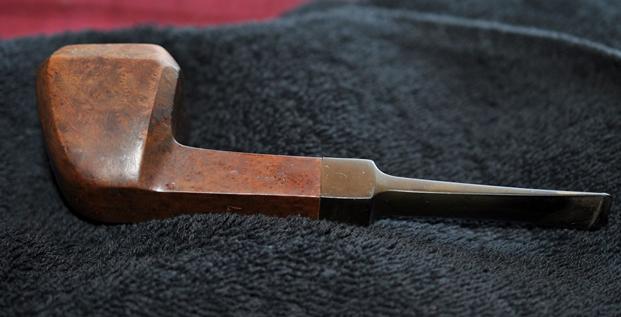
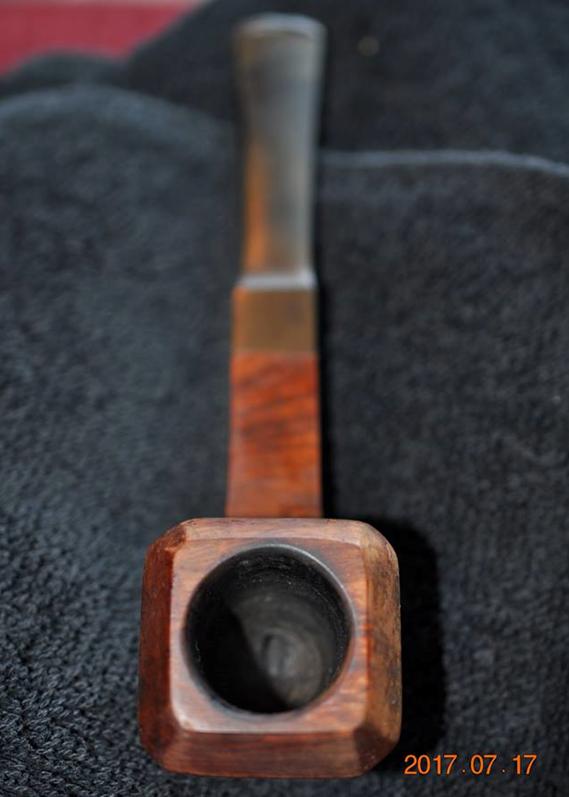
Restoring an Edwards 730 – 4 Panel Rhodesian with a Square Shank


Blog by Steve Laug

When my brother sent me this Edwards Panel Rhodesian (at least that is what I would call it), I immediately thought of William and wondered if he would be interested in it. He had earlier purchased an Edwards paneled pipe from me so it was not a far stretch to wonder if he might be interested in this one as well. I set it aside and pretty much forgot about my initial thought. However, not long afterward, William wrote about a pipe he wanted to send me to clean up for him. He sent the package to me and when it arrived, I opened it to find an Edwards Octagon shaped paneled Dublin that he wanted reworked. When I saw that, I remembered the other pipe I had that might interested him. I wrote and sent him photos of this pipe to see if he had any interest in adding it to his collection. He wrote back and said he was definitely interested in it. I figured I would restore it the same time I worked on his other pipe and could save postage by mailing them both back to him in the same package. With that in mind, I worked on the pair at the same time. I have already written about the restemming and the restoration of his Octagon shaped pipe (https://rebornpipes.com/2017/10/17/restoring-an-edwards-hexagon-dublin-sitter-97/).

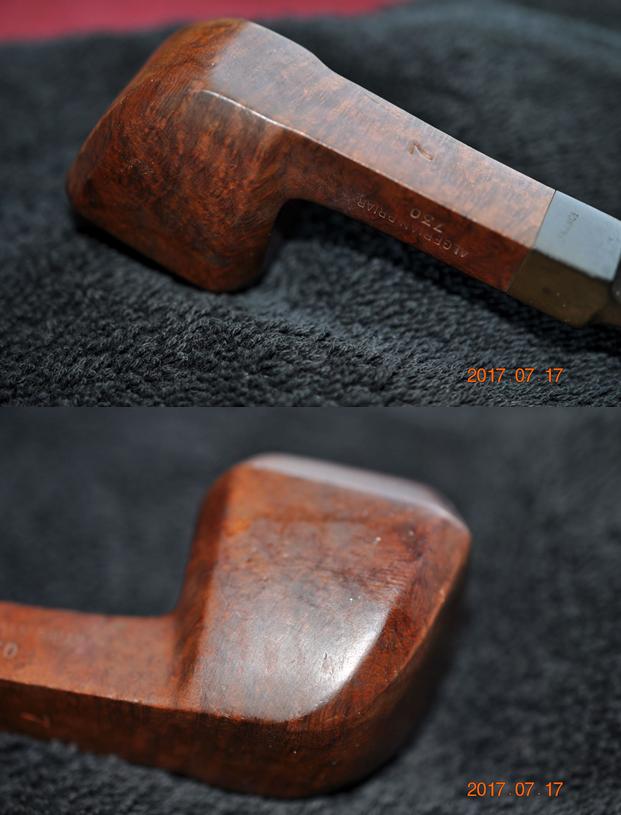
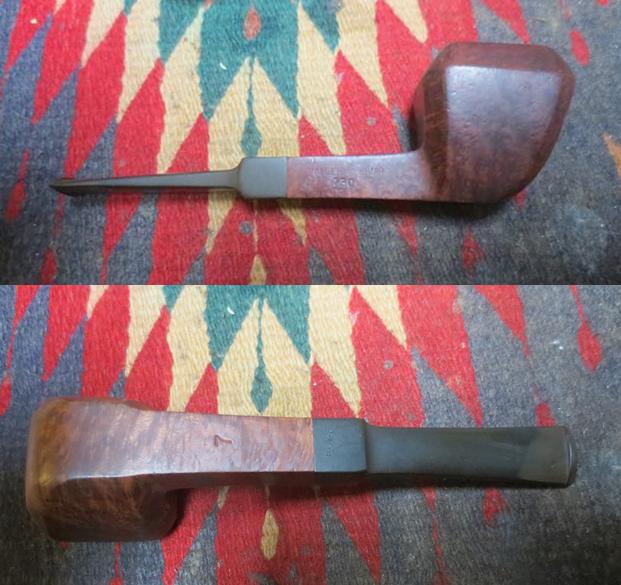
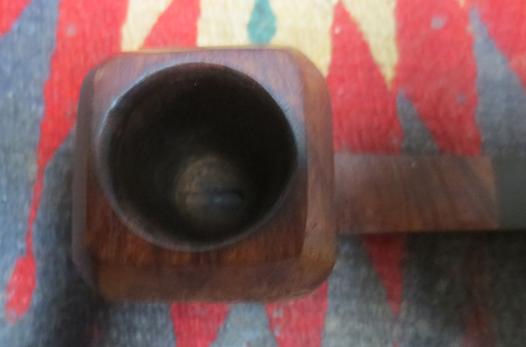
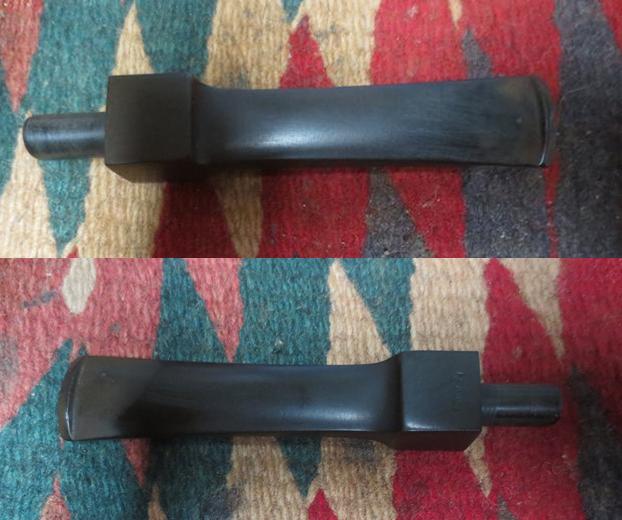
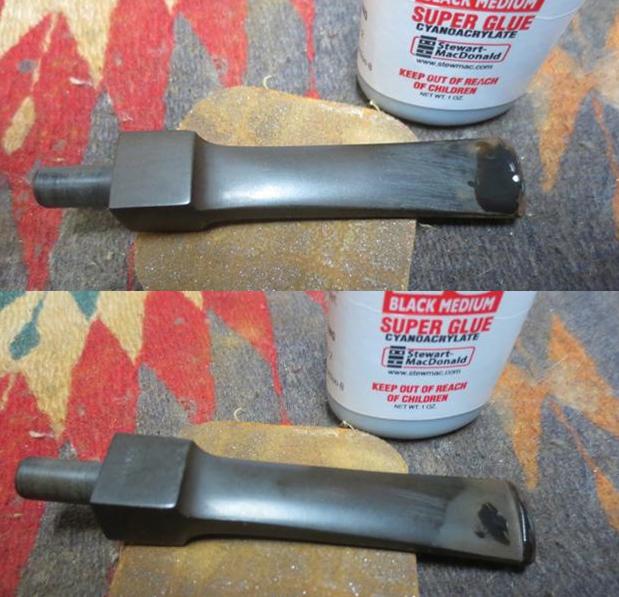
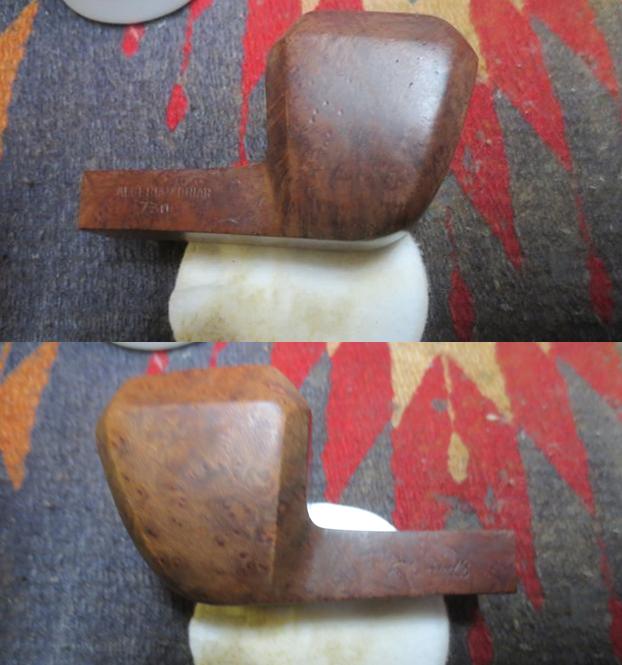
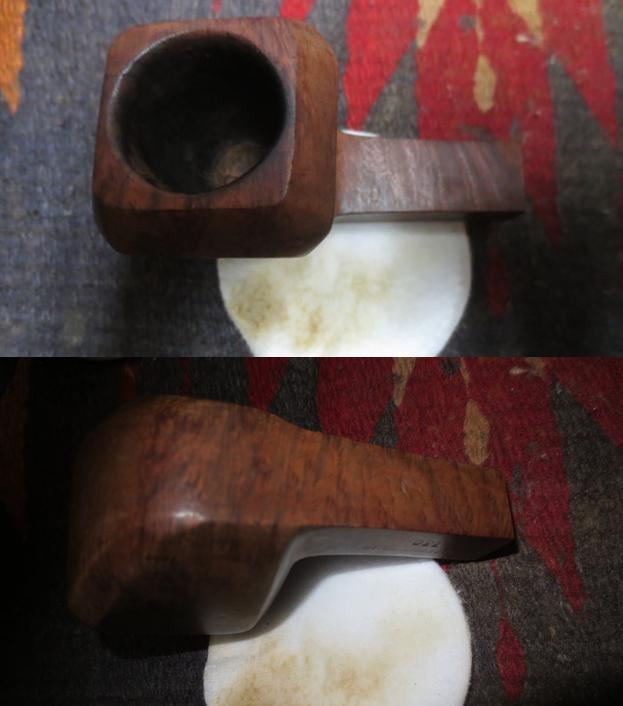
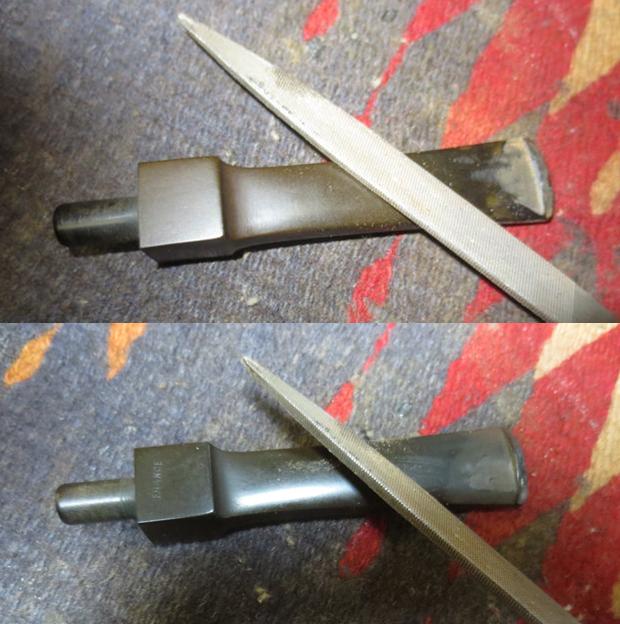
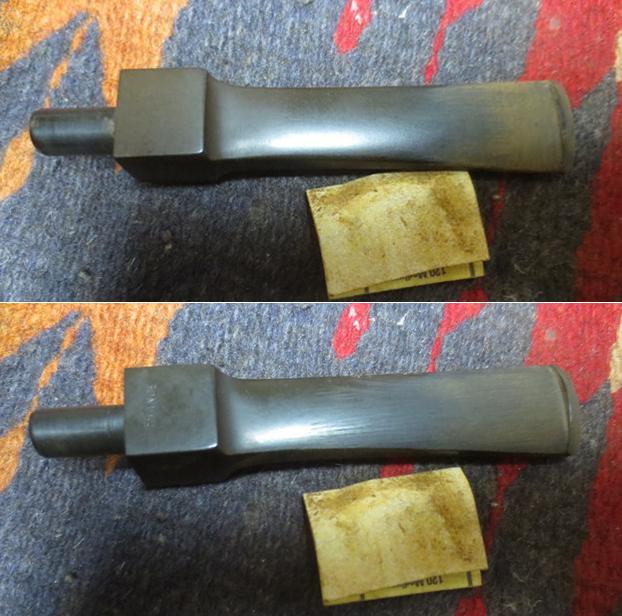
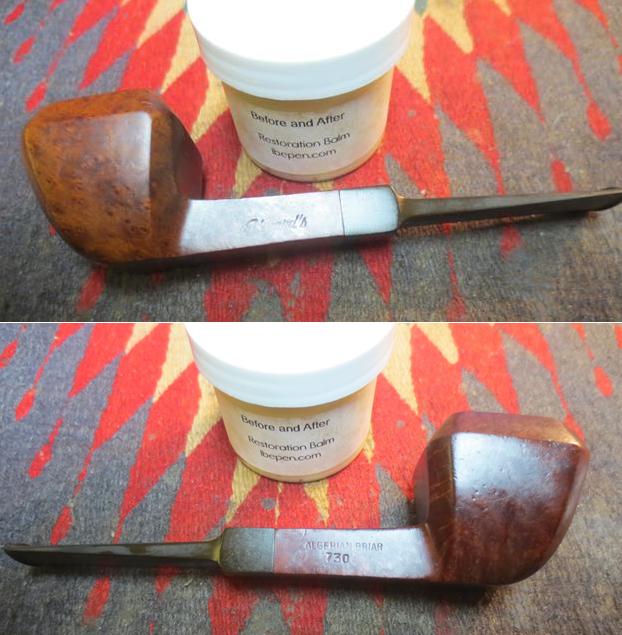
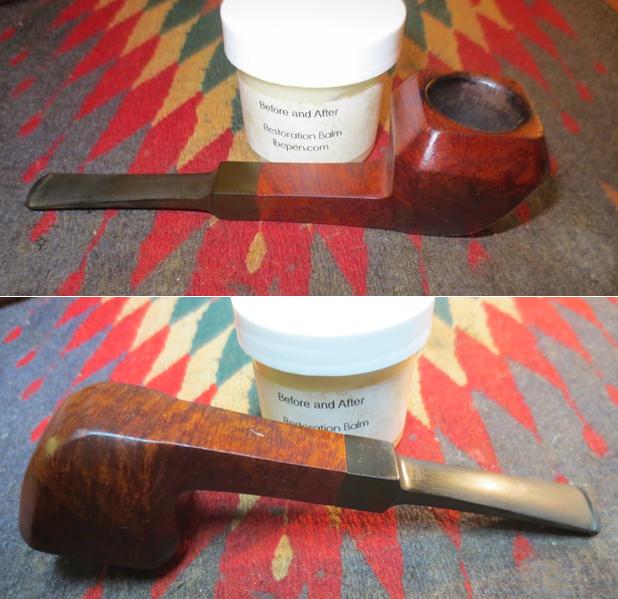
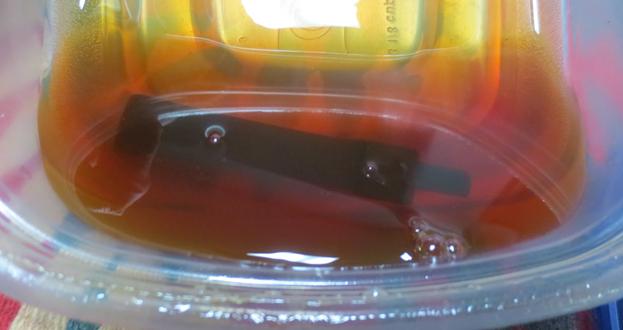
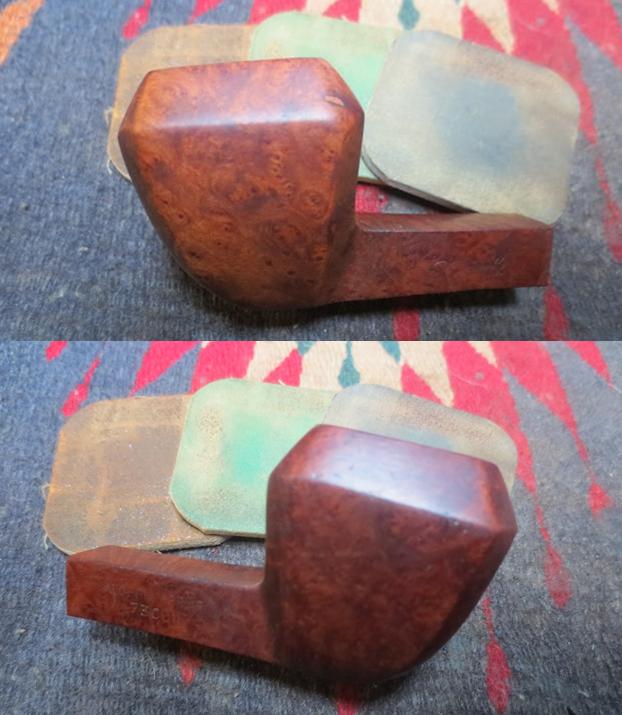
The pipe is stamped Edwards on the left side of the shank and on the right it reads Algerian Briar over the shape number 730. The underside of the shank bears as a large number 7. The Edwards stamp while readable was faint in the middle. The pipe was in pretty decent shape for an estate. There was a light cake in the bowl and some darkening on the rim top but nothing thick or horrible. Even the inner beveled edge of the bowl was in good shape. The finish has some nicks and scratches on the sides and front of the bowl. There were a few small fills in the briar on the rim cap but the pipe was in very god condition. The next series of photos show the condition of the finish on the bowl. The old oiled finish that Edwards put on their pipes was worn but the grain still showed through. There was a mix of grains on the sides and bottom of the bowl and shank – cross grain, birdseye and mixed. The next photos show the stamping on the shank of the pipe. All of it is readable. The last picture shows the France stamp on the underside of the saddle stem. The stem was oxidized and had tooth chatter and tooth marks on both sides near the button. There was some damage to the top edge of the button as well from being chomped.Jeff did his usual impeccable job cleaning off the debris and grime on this old bowl. He reamed the light cake from the bowl with a PipNet reamer and smoothed the walls of the bowl with a Savinelli Fitsall pipe knife. He scrubbed out the mortise and the airway in the shank and the stem with alcohol, cotton swabs and pipe cleaners. He scrubbed the exterior of the bowl, rim and shank with a tooth brush and Murphy’s Oil Soap to the oils and tars on the bowl, rim and shank. He rinsed it under running water. He dried it off with a soft cloth. Once the grime was removed the finish underneath was in decent condition. The rich patina on the grain of the older briar really stood out after the pipe was cleaned. I took photos of the bowl to show its condition before I started my work on it. The condition of the bowl and rim was good. There was a little damage on front right of the inner edge that I had not seen before that would need to be address but otherwise it was clean.The stem had some oxidation around the saddle portion of the stem and the tooth chatter and marks would need to be addressed.I decided to start working on the stem first. I lightly sanded the tooth chatter and marks out of the surface of the stem on both sides at the button. I heated the stem with a lighter to try to raise the marks. While many of them responded well to the heat some of them remained. I have found that if the marks are dents they respond well to heat and typically return to a flat condition. If however, they have any sharp edges on then the heat only works minimally well. I filled in the larger tooth mark and the damage to the top edge of the button with black super glue. I also filled in the lighter, smaller mark on the underside at the same time.While the stem repair was drying I worked on the bowl itself. I wiped down the surface with acetone on cotton pads to remove any remnants of debris and grime that had escaped my brother’s attention or had been picked up in the shipping wrappers. I lightly sanded the inner edge of the bowl to take care of the light damage on the front right edge. By this time the repair on the stem was dry. I recut and reshaped the button with a needle file and smoothed out the surface repairs. I sanded the stem with 220 grit sandpaper to blend the repairs into the rest of the stem. I sanded the stem to remove the oxidation that is visible in the next photos. I put the stem on the bowl and rubbed the bowl down with Before & After Restoration Balm. As part of my ongoing experiment I thought it would be good to use it on an oil finished bowl and this one was a prime candidate. I rubbed it in (using the stem for a handle) and wiped it off with a cotton pad. I removed the stem and dropped it in a bath of Before & After Pipe Stem Deoxidizer to attack the oxidation. My bath is getting older and it is not as effective as it was when I first started using it but it would help minimize the work on the stem for me. (I am waiting for a new jar of the deoxidizer to replace this one. I have cleaned between 80-90 stems with the product so it is tired.) I put the lid on the bath and left it to soak until morning.Before calling it a night I worked on the finish on the bowl some more. I lightly buffed the bowl with red Tripoli to remove as many of the surface scratches and nicks as I could. Doing that got rid of a lot of them and polishing it with micromesh would minimize what remained. I hand polished the briar with micromesh sanding pads – wet sanding with 1500-2400 grit pads and dry sanding with 3200-12000 grit pads. I worked on the beveled inner edge of the bowl to clean it up the damage and the darkening a bit more. I wiped the bowl down with a damp cloth after each pad. I hand buffed it with a microfibre cloth after the 12000 grit pad. The pictures below show the progress of the polishing on the briar. In the morning I took the stem out of the bath and let the excess product drain off into the bath before wiping it down with a cotton pad to remove the oxidation that was attached to the product. I ran a pipe cleaner through the airway with alcohol to remove the remnants of the bath. The stem looked good but more work would need to be done before the final black gleam was back. I buffed the stem with red Tripoli to remove the remaining oxidation. I polished the stem with micromesh sanding pads – wet sanding it with 1500-2400 grit pads and wiping it down after each pad with Obsidian Oil to give the next pad more bite when I sanded. I dry sanded it with 3200-12000 grit pads and again wiped it down with the oil after each pad. After the final pad I wiped it a final time with the oil and set it aside to dry. I put the stem back on the bowl and buffed the entire pipe with Blue Diamond on the buffing wheel to polish the stem and the bowl. I used a soft touch around the stamped areas as I did not want to flatten them or polish them away. I buffed stem hard to work over the remaining scratches in the rubber. It took some work but they are smoothed out. I gave the bowl and the stem multiple coats of carnauba wax buffed it with a clean buffing pad to raise a shine. I hand buffed the pipe with a microfiber cloth to deepen the shine. The four panel Rhodesian shaped bowl, and the square shank and saddle stem combine to present a beautiful pipe. I find these interesting shaped Edwards four sided, six sided and eight sided Dublin shaped pipe a real pleasant variation on the normal classic shapes. The combination of grains and the natural oil finish give the pipe a rich patina that is highlighted by the black of the polished vulcanite stem. The finished pipe is shown in the photos below. I think William is going to really like this new pair of Edwards pipes. They are both ready to pack up and head back to him in the mail. Thanks for looking.

Restoring an Edwards Hexagon Dublin Sitter 97


Blog by Steve Laug

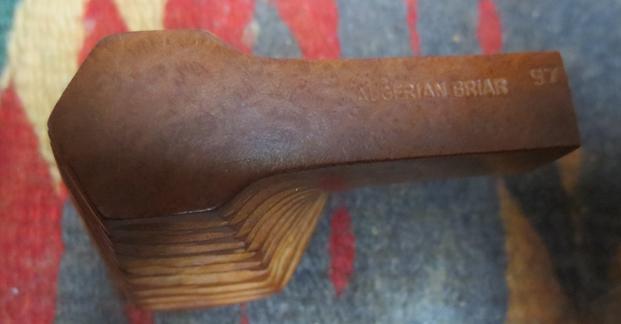
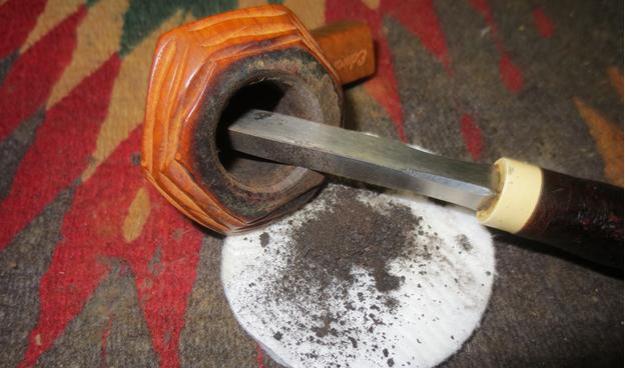
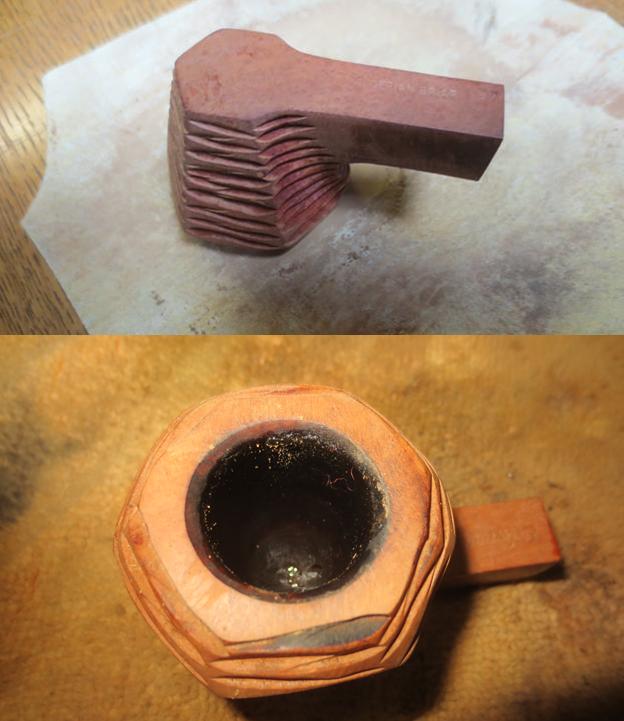
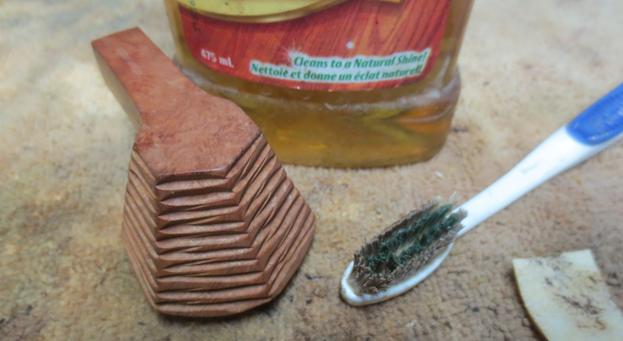
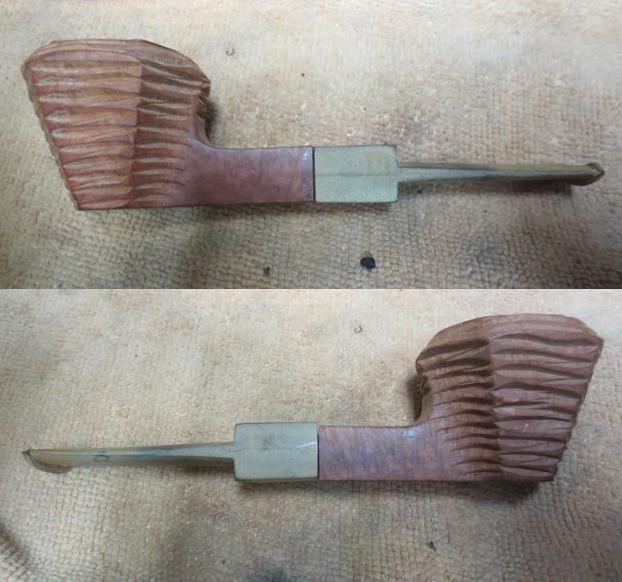
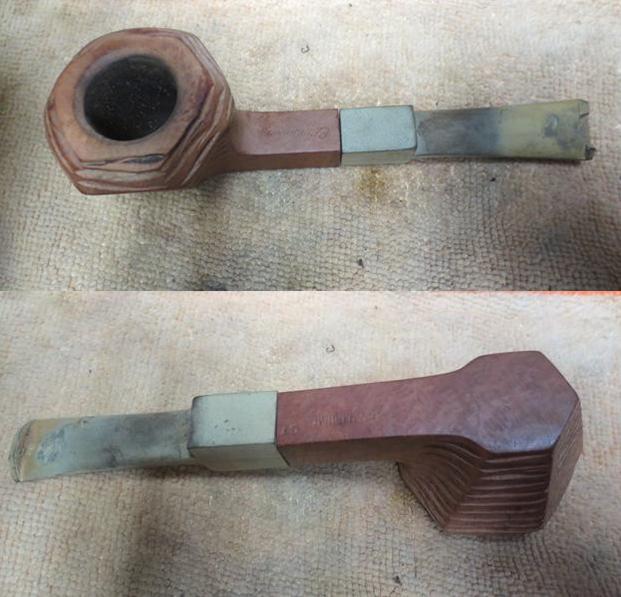
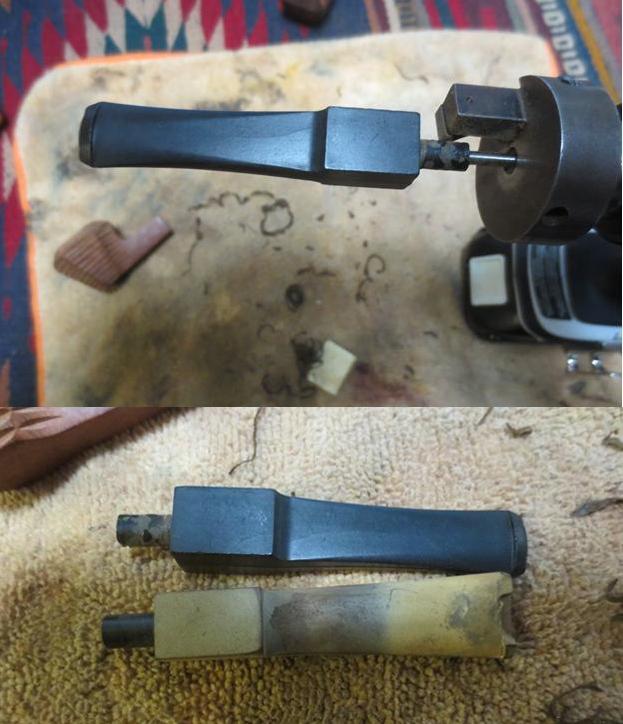
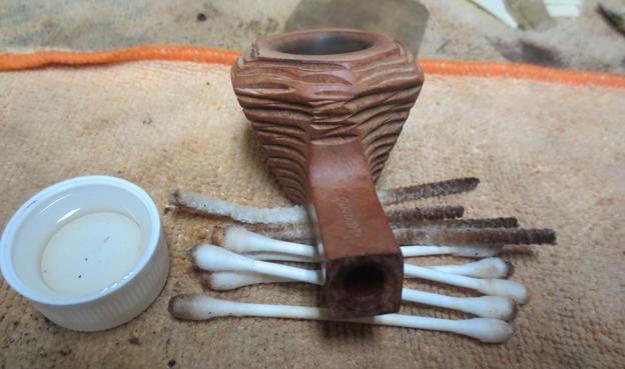
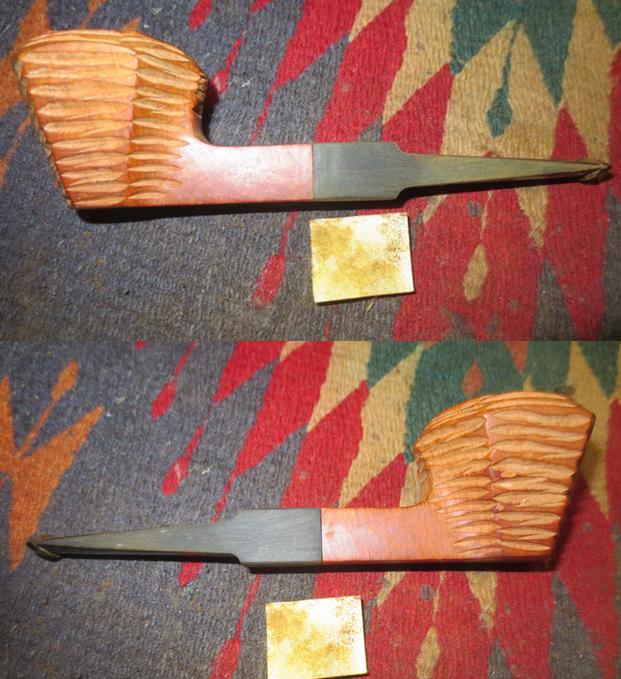
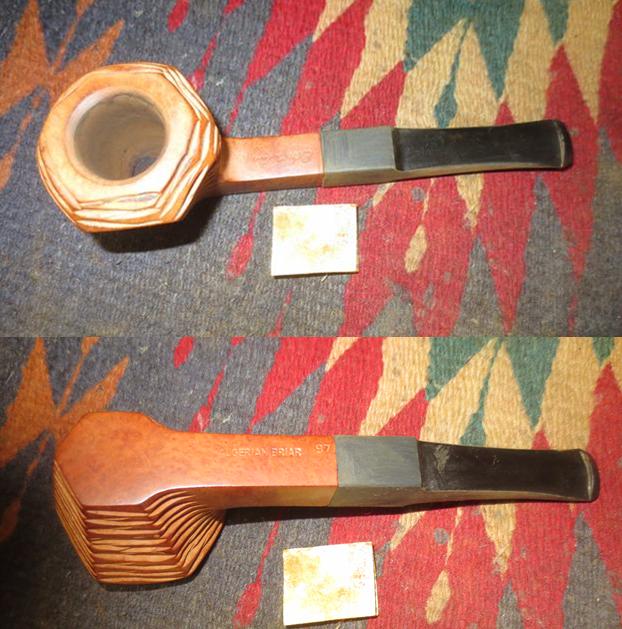
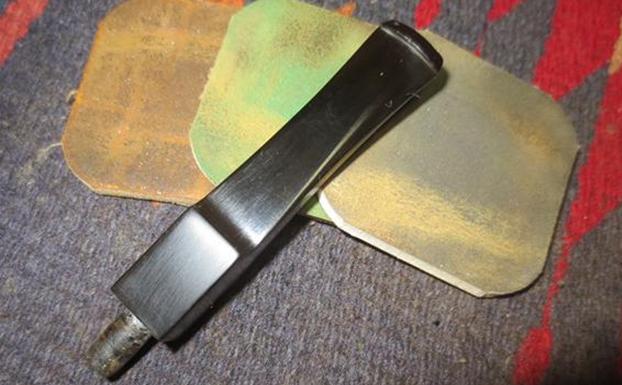
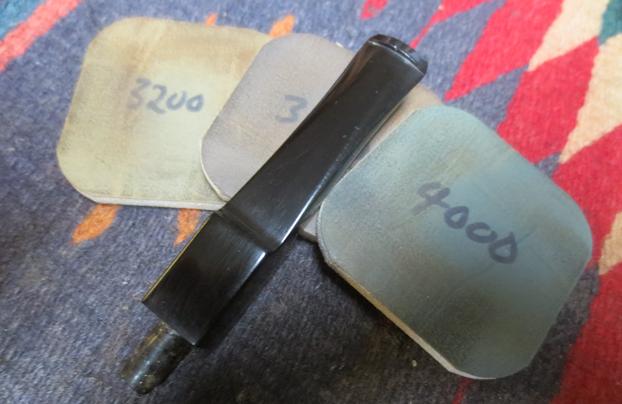
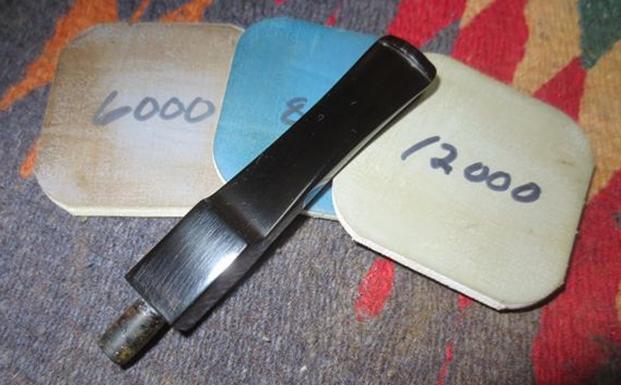
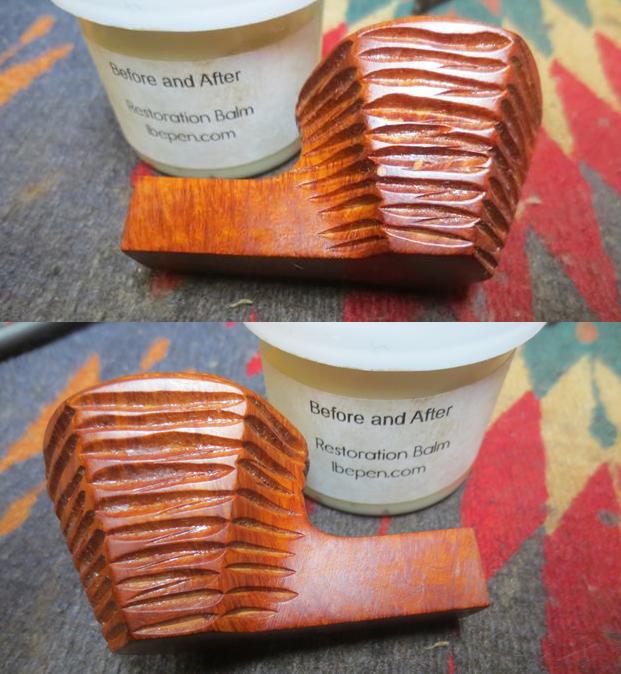
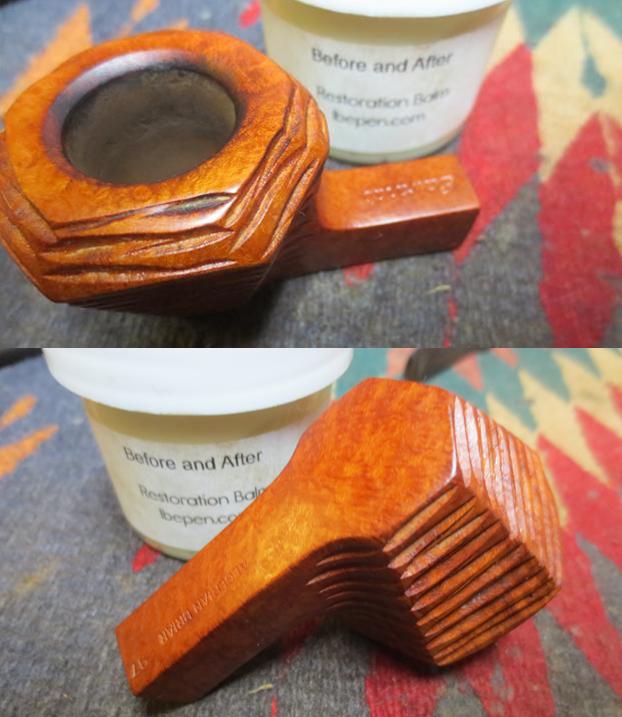
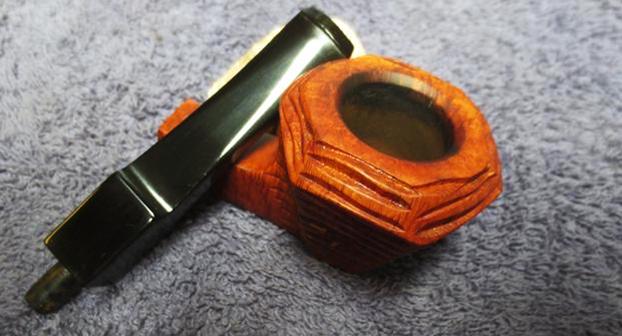
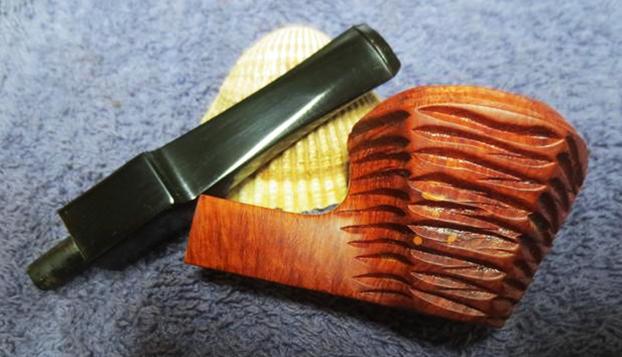
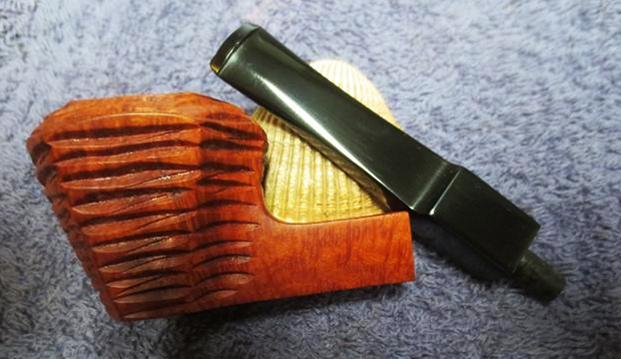
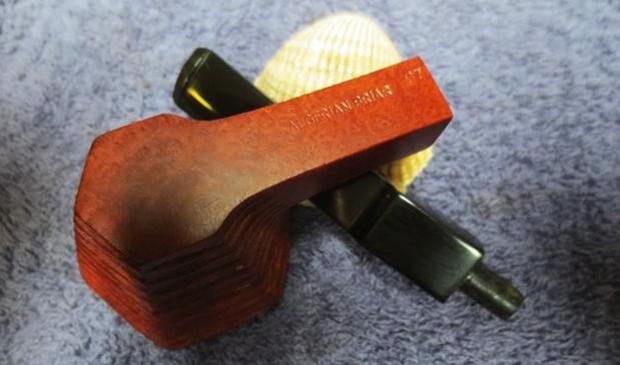
I got an email a while back from a friend who wanted me to work over an old Edwards that he had picked up. He had bought one from me in the past and had now found another one. It was a Hexagonal Dublin that had carved grooves on the sides of the bowl from the rim down to the base. The shank is square sided and is smooth. It is stamped Edwards on the top side of the shank. On the underside of the shank it is stamped Algerian Briar followed by the shape number 97. He had found it in a local antique shop I think. It had a thick cake in the bowl and the lava flowed over the top of the rim and down to the second layer of the carving on the rim. The shank was dirty and also filled with tars. The stem was a heavily oxidized replacement stem with the entire underside of the button broken off. Because it was a replacement I decided to put another replacement stem on the shank. I pulled the stem off the shank and took photos of the bowl. The grooves in the carving were dirty and the natural finish was dirty and damaged. I forgot to put the stem back on the shank and take photos. I was intent on cleaning up the bowl. I scraped out the carbon cake in the bowl and off the rim top with a Savinelli Fitsall Pipe Knife. I carefully removed the lava from the rim of the bowl.I lightly topped the bowl on the topping board with 220 grit sandpaper to remove the thick lava coat on the rim. I did not want to take off too much of the briar as it looks like an interesting stack of briar sheets from the top down.I scrubbed the bowl and rim with Murphy’s Oil Soap and a tooth brush to get all of the grit and dust out of all of the grooves and edges of the briar stack. I rinsed the pipe with running water to rinse off the dust and the soap and scrubbed it under the running water to leave behind a clean bowl. I dried it off with a clean cloth. Then I remembered I had not taken photos of the pipe with the old stem in place so I slid the stem into the shank and took the next series of photos. Not only was the replacement stem badly oxidized it also had a large chip out of the button across the top side of the stem. It was poorly fit to the shank as well. You can see from the photos that it is larger in diameter than the shank itself. It was definitely going to be replaced. I put aside the damaged replacement stem and took a new square stem blank out of my box of stems. I turned the tenon on the PIMO tenon turning tool on my cordless drill to take down the tenon to fit the shank of the Edwards pipe. Once I had the tenon turned I wiped it down with a damp cloth and took a picture of the new stem next to the one I was replacing.I put the new stem on the shank to see how it fit against the shank end. I needed to do quite a bit of sanding on the sides of the stem to get the flow along the sides, top and bottom smooth and even.I cleaned out the internals of the pipe – the mortise and the airway in the shank using alcohol, cotton swabs and pipe cleaners to remove all of the oils and tars that collect there. I cleaned out the airway in the new stem to remove the dust from turning tenon.I sanded the stem to reduce the size on all sides with 220 grit sandpaper. When I got close I put it on the shank and carefully sanded it until the transition between the shank and the stem was smooth. I sanded out the casting marks and scratches on the stem with 220 grit sandpaper. There were quite a few scratches left behind by the work I did to fit it to the shank. Once I had the majority of deep scratches sanded out, it was time to work on it with micromesh sanding pads. I used the micromesh sanding pads to polish the stem. I wet sanded it with 1500-2400 grit pads and wiped it down after each pad with Obsidian Oil to give the next pad more bite when I sanded. I dry sanded it with 3200-12000 grit pads and again wiped it down with the oil after each pad. After the final pad I wiped it down with a final coat of oil and set it aside to dry. In the last photo of the three below you can still see some light scratches in the vulcanite on the saddle part of the stem. These would need to be buffed out on the wheel. (I polished the tenon as well as can be seen in the photos below. Each photo shows it progressively getting a shine.) With the stem almost finished I took it off the shank and used the Mark Hoover’s Before & After Restoration Balm on the briar. I rubbed it into the grooves on the bowl sides with my finger and a cotton swab. I wanted it to go deep in the grooves to further test the effectiveness of the product. This would be a good test as it is a totally different finish than any of the other pipes I have worked on with the product.  Mark had said that the product can be used on briar or stems – whether vulcanite, acrylic or horn. He said it was designed to pull the dirt off of the briar as well as polish it. He added some anti-oxidants to keep the briar from getting damaged from both UV rays and water. Once I had all the grooves and surfaces of the bowl covered I worked it into the finish with a cotton pad to see if it pulled out the dirt. It seemed to work very well and I took the following photos to show the results. So far the product seems to be delivering as promised. I will continue using it for a while and see how it works in a variety of settings before I give an opinion of the product. I put the stem back on the bowl and buffed the entire pipe with Blue Diamond on the buffing wheel to polish the stem and the bowl. I used a soft touch around the stamped areas as I did not want to flatten them or polish them away. I buffed stem hard to work over the remaining scratches in the rubber. It took some work but they are smoothed out. I gave the stem multiple coats of carnauba wax buffed it with a clean buffing pad to raise a shine. I gave the bowl multiple coats of Conservator’s Wax and rubbed it into the sandblast and the plateau areas. I buffed it with a shoe brush and then with a clean buffing pad to raise the shine. I hand buffed the pipe with a microfiber cloth to deepen the shine. The interesting carved finish on the bowl with its natural oil finish and the new stem combine to present a beautiful pipe. The pipe has been given a total makeover and the new stem fits the shape very well. The finished pipe is shown in the photos below. I think William is going to really like the new look and feel of this pipe. I have one more of his to finish up and then the pair will go back to him in the mail. Thanks for looking.

My Latest Refurb, an Edwards Algerian Briar 771 is not a shape I’ve seen before


Blog by Steve Laug.

Over the years I have had many Edwards pipes cross my work table. I have kept a few and sold many. I have also repaired many of them. The available shapes that the pipes came out it spoke of a very fluid design philosophy. Pipedia says that “Edward’s Design Philosophy is hard to pin down, think of their style as the “American Charatan” with unique & clever twists all their own.” Across the board they were all Algerian Briar and all were unstained waxed or oiled briar. I remember reading that actually oil curing was a feature of their pipes. I did a quick look on Pipedia  https://pipedia.org/wiki/Edward’s and found that I was correct. I quote: “All of Edward’s pipes are Algerian Briar – a fact very few pipe companies can claim, and all are oil-cured utilizing natural finishes – no strange concoctions are used to interfere in your tastebud’s dance with the briar. Algerian, Calabrian, Sardinian, Corsican – take your pick, but Algerian Briar is generally considered the finest smoking briar ever used. When combined with oil-curing, Algerian takes on a magical quality that even Alfred Dunhill recognized as far back as 1918 as the choice for both his Bruyere and Shell.”

The pipe is stamped Edwards on the left side of the shank and Algerian Briar over shape number 771 on the right side of the shank. The pipe is a large group 5 sized bowl. The stem was lightly oxidized but does not have any tooth or chatter marks. Push in tenon fits tight. The dimensions are: length 6 inches, height 2 1/4 inches, chamber width 13/16, chamber depth 2 inches. The following photos were taken by my brother before he cleaned the pipe. It is obvious it is in pretty decent shape. The rim has a little tar and darkening on the rounded back edge but the rest is pretty clean. The finish is quite nice and has some rubbed in grime that will come off with scrubbing. The photos tell the story on this pipe.ed1My brother took some close up photos of the rim, the bottom of the bowl and the stampng on the sides of the shank. You can see from the photos that the pipe is in great shape except for the slight buildup on the back edge of the rim. There is a light cake in the bowl and the bottom third of the bowl appears to be raw briar that has not been darkened by smoking. I would call the pipe lightly smoked.ed2 ed3My brother scrubbed the pipe with his usual mix of a tooth brush and Murphy’s Oil Soap. He rinsed it with water. The scrubbing removed all of the grime and oils on the bowl and removed the build up on the rim as well. The stem was lightly oxidized and there were some scratches around the circumference of the saddle portion of the stem. My brother also cleaned the interior of the airways in the stem and shank and the mortise area. I took some photos of the pipe when it arrived here. ed4 ed5I took a close up photo of the rim to show how well it cleaned up after Jeff had scrubbed it. There is a shine to the rim that is unblemished by scratches or dents. I also took some photos of the stem to show the light oxidation and the absence of tooth marks or chatter. The stem is stamped on the underside horizontally across the saddle with the word France.ed6 ed7I worked over the stem with micromesh sanding pads – wet sanding it with 1500-2400 grit pads and dry sanding with 3200-12000 grit pads. I rubbed the stem down with Obsidian Oil between each set of three pads. After the final micromesh pad I gave it a last coat of Obsidian Oil and set it aside to dry.ed8 ed9 ed10I rubbed the bowl down with a light coat of olive oil to bring the grain to the surface. It also brought life to the briar. I buffed the pipe with Blue Diamond on the wheel and then gave it several coats of carnauba wax. I buffed it with a clean buffing pad. The finished pipe is shown in the photos below. It is a beautiful piece of briar, lightweight and well grained.ed11 ed12 ed13 ed14 ed15 ed16 ed17
Restoring and Restemming a Large Edward’s Bent Billiard with a Vulcanite Ferrule


Blog by Steve Laug

Label Logo_medium The last of the foursome of Edward’s pipes that I cleaned up for the fund raiser on Smoker’s Forums is a large Billiard with a vulcanite ferrule. It came to me without a stem so I would need to go through my stem can and see if I had any stem that would work with this bowl. The pipe is stamped Edward’s in script on the right side of the shank. On the left side it is stamped Algerian Briar in block letters. On the underside of the stem there is a large + sign and the shape number 42 near the ferrule. The bowl was in rough shape. The finish was dirty and there are some large and small fills along the shank from the bowl shank union to the ferrule. The ferrule was oxidized. The internals of the bowl and shank were dirty. The bowl was caked with the same heavy soft cake as the other Edward’s pipes. The tars had flowed over the beveled inner rim of the pipe and hardened into a dark hard cake. The briar itself was quite beautiful under the grime so a good cleaning would reveal some excellent grain as it had in the other three pipes.
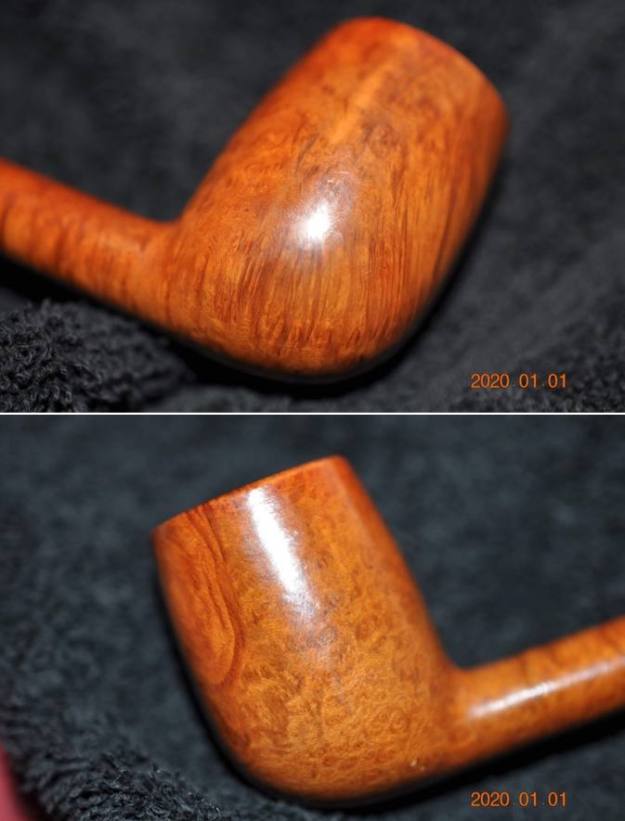
I found a stem in my stem can that fit the shank well and looked pretty decent. It would need to be bent slightly and the roughness of the stem would need to be sanded down to make the fit right but I took photos of the pipe with this stem to get an idea of how it would look. At this point the pipe has not been cleaned up or reamed.Free1

Free2

Free3

Free4 I took one close-up photo of the bowl to show the state of the rim and the cake in the bowl. It would take some work to clean off the lava and bring the finish back to pristine.Free5 I reamed the bowl with the PipNet reamer and took it back to bare wood to remove the crumbling, soft cake in the bowl.Free6

Free7 Once I had the bowl reamed I took a photo of the stem and then took it to the heat gun to soften and rebend it to fit the bend of the pipe. There was a slight wave in the top of the stem that needed to be straightened as a part of the new bend.Free8

Free9 I heated it until the vulcanite was pliable and then straightened it before rebending it to match the curve of the bowl and when held in the mouth was horizontal with the top of the bowl.Free10

Free11

Free12

Free13 I liked the look of the stem with the new bend so I set it aside and went to work on the bowl. I used 0000 steel wool on the rim to remove the lava overflow and repolish the rim. I am finding that this works really well as Troy shared in various blog posts he has done here and on his own site. There is always something new to learn and add to the refurbishing skill set.Free14 With the rim cleaned up I wiped down the bowl with acetone on a cotton pad to remove the grime in the finish and refresh the briar.Free15

Free16

Free17

Free18 I cleaned out the bowl, shank and the airway in the stem with pipe cleaners, cotton swabs and alcohol. It was pretty clean which is amazing when you consider the condition of the rim and the cake.Free19

Free20 I sanded the stem with 220 grit sandpaper to clean up the shape and smooth out the angles and make the sides proportionally the same when the stem was in the mortise. I finished by sanding it with a medium and fine grit sanding sponge to smooth out the scratch marks left behind by the sandpaper.Free21

Free22 I lightly sanded the bowl and the rim with micromesh sanding pads – wet sanding with 1500-2400 and dry sanding with 3200-4000. I also sanded the vulcanite ferrule at the same time to remove the oxidation.Free23 I sanded the stem with the micromesh sanding pads as well – wet sanding with 1500-2400 grit pads and then rubbing it down with Obsidian Oil. I also used the oil on the ferrule. I dry sanded with 3200-4000 grit pads and rubbed it down again with the oil.Free24

Free25 I buffed the stem with Tripoli and White Diamond before sanding it with the final grits of micromesh pads. I finished with 6000-12000 grit pads and then gave the stem and ferrule a final rub down with the Obsidian Oil. I let it soak in and dry before taking it to the buffer.Free26 I gave the bowl a light coat of olive oil to bring life back into the briar and then gave it a buff with Blue Diamond on the buffing wheel. I gave the bowl and stem multiple coats of carnauba wax and then buffed it with a clean flannel buff. I finished by hand buffing it with a microfibre cloth to bring depth to the shine. The finished pipe is shown below. The first photo is of the pipe with the Edward’s large apple to give a sense of the size of the pipe. It is a large piece of briar.Free27

Free28

Free29

Free30

Free31

Free32

Free33