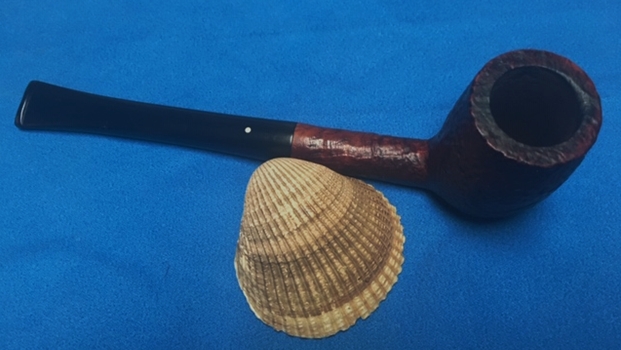
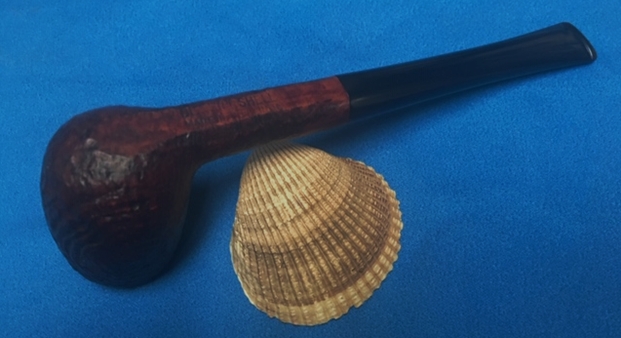
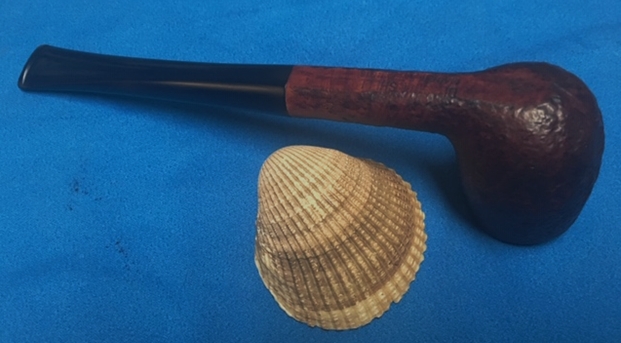
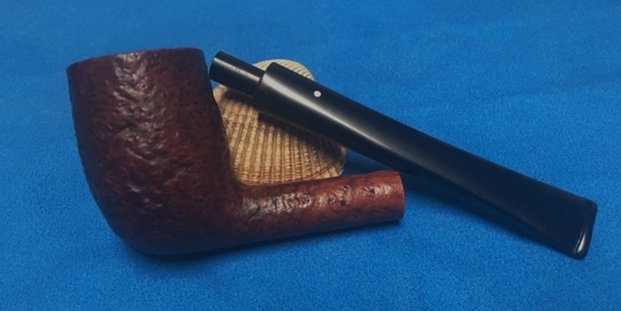
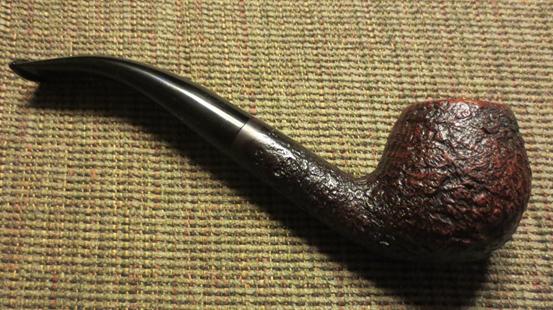
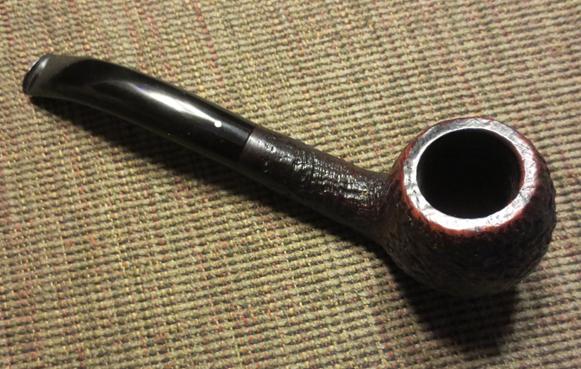
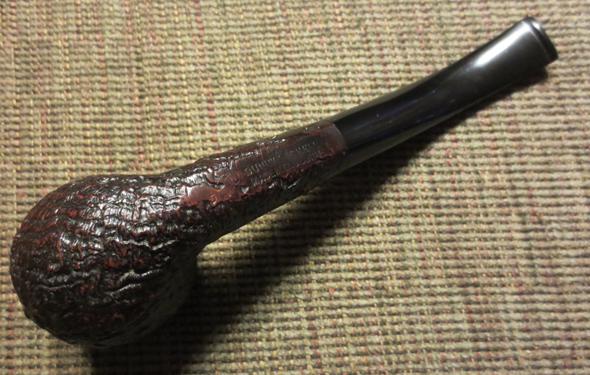
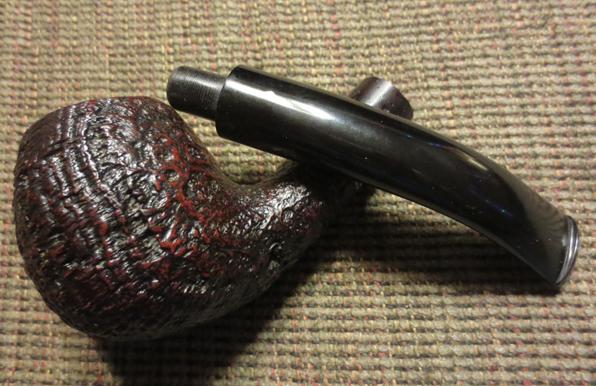
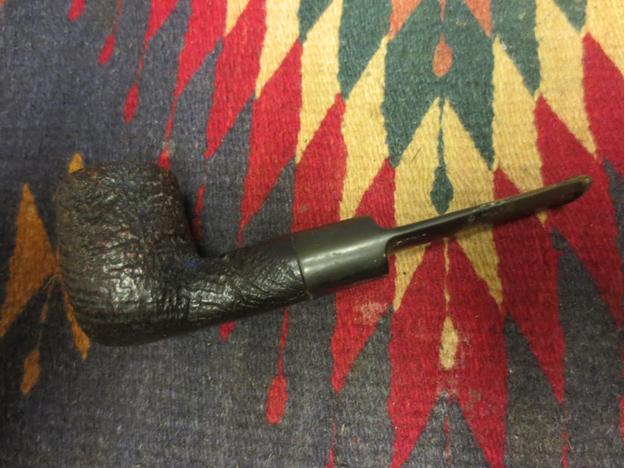
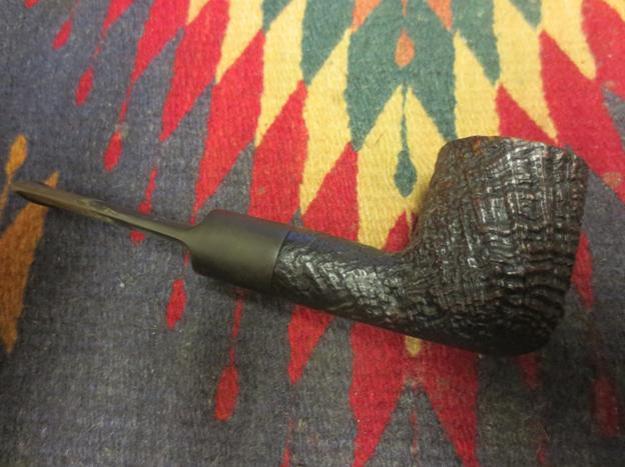
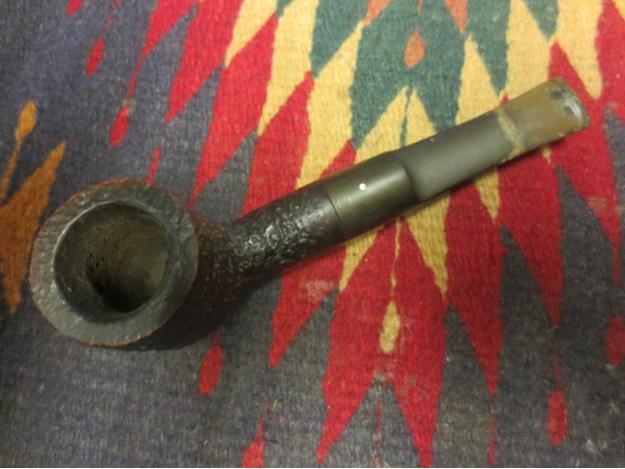
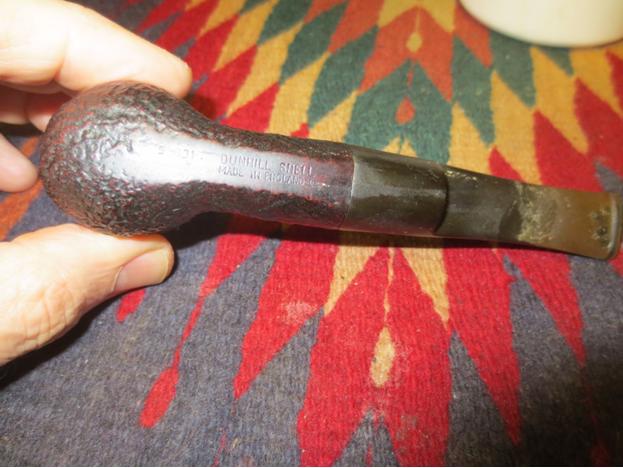
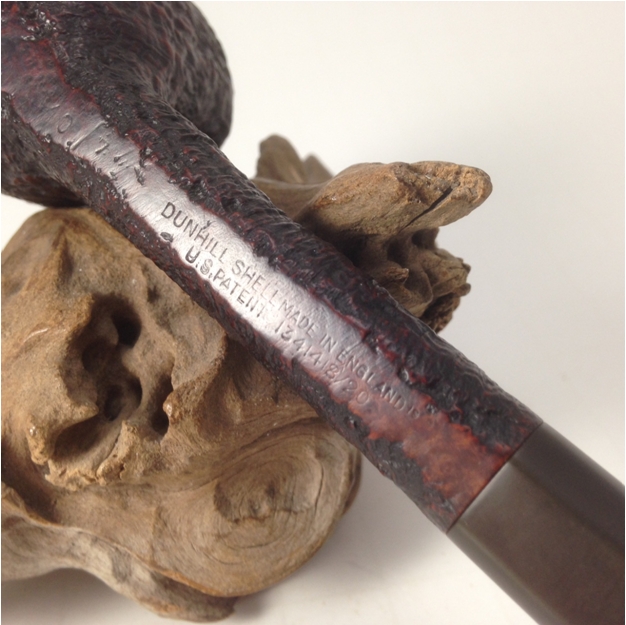
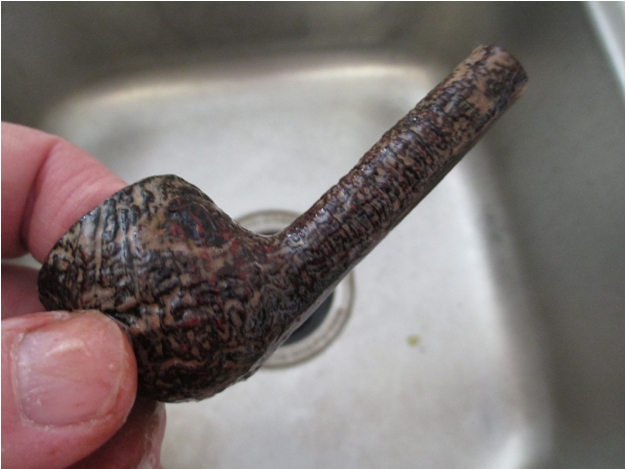
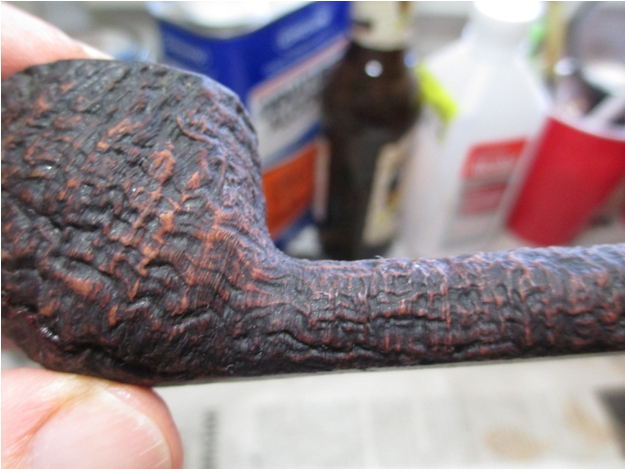
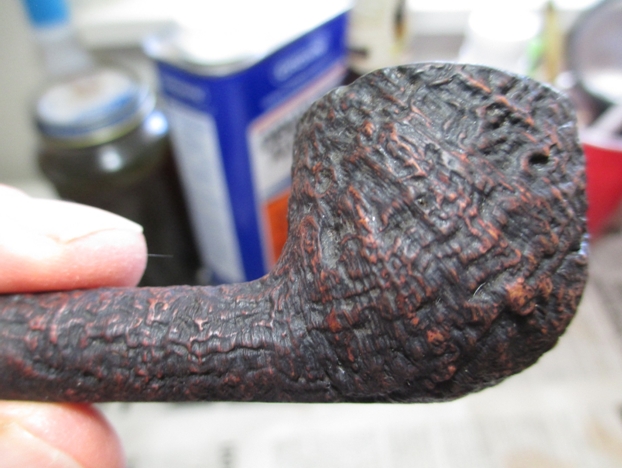
Tag Archives: Dunhill Shell Pipes

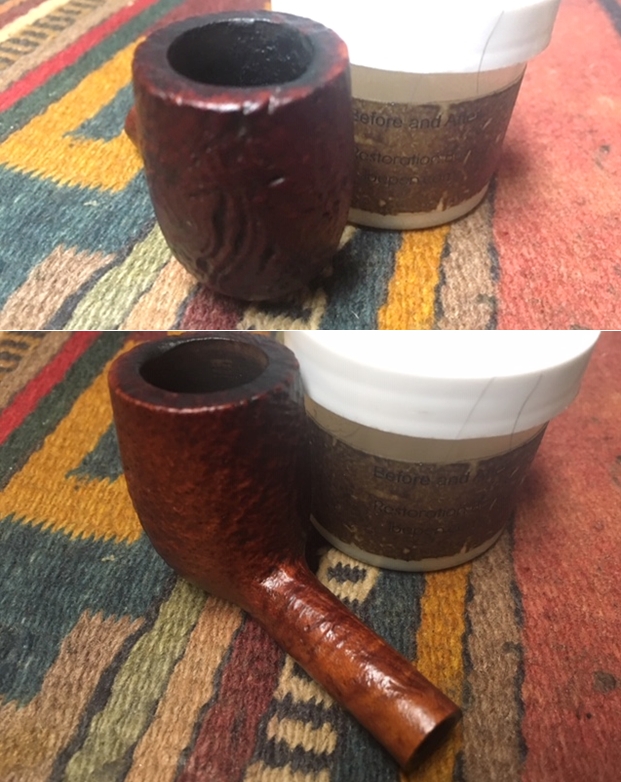
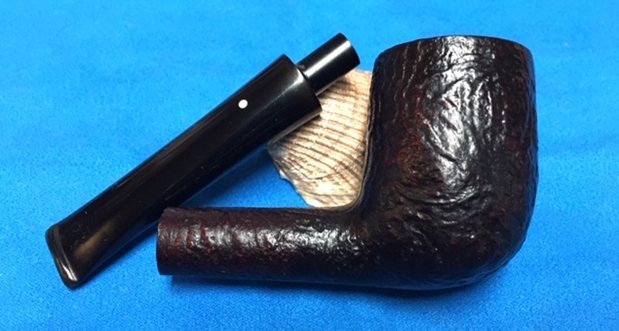
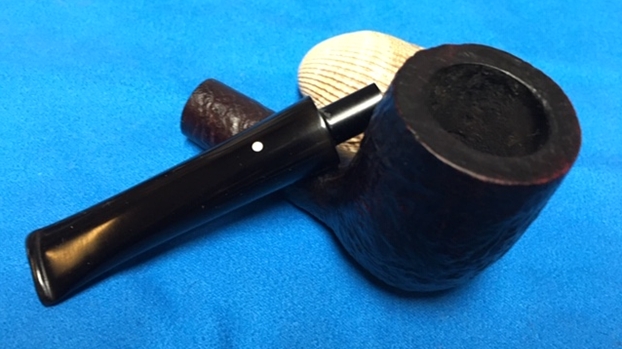
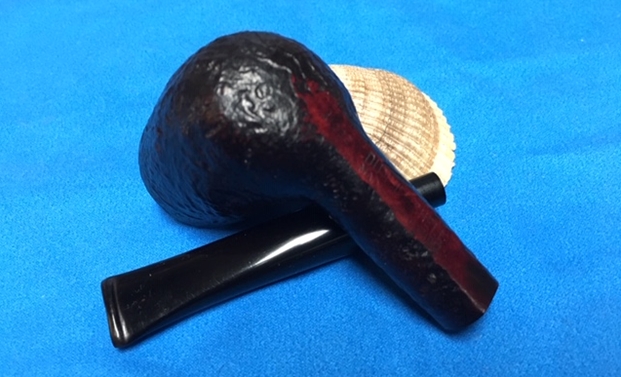
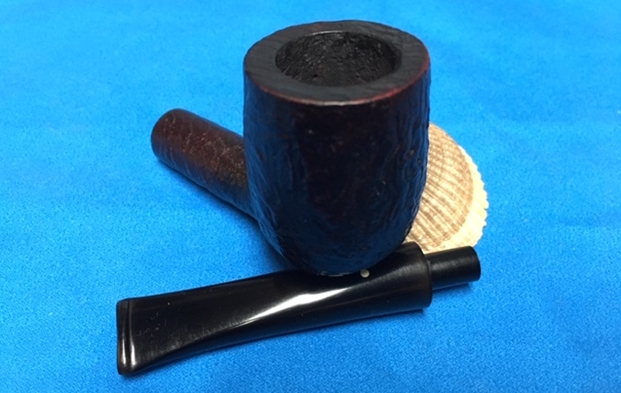
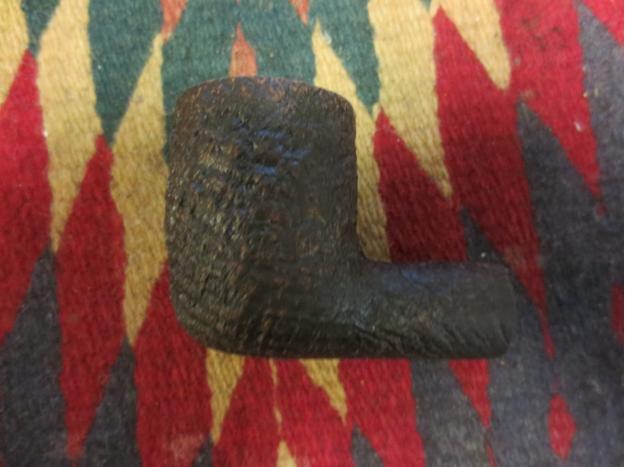
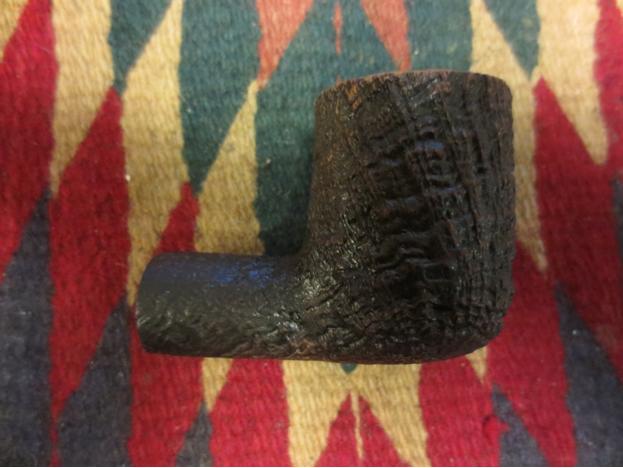
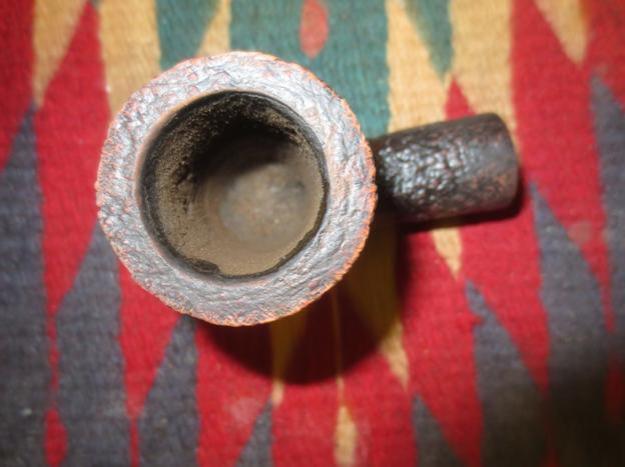
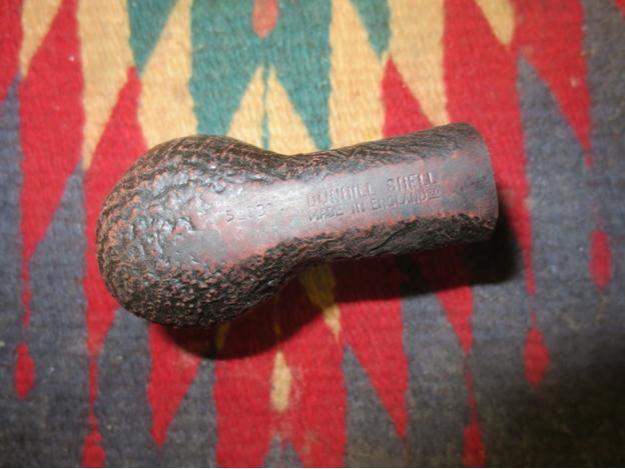
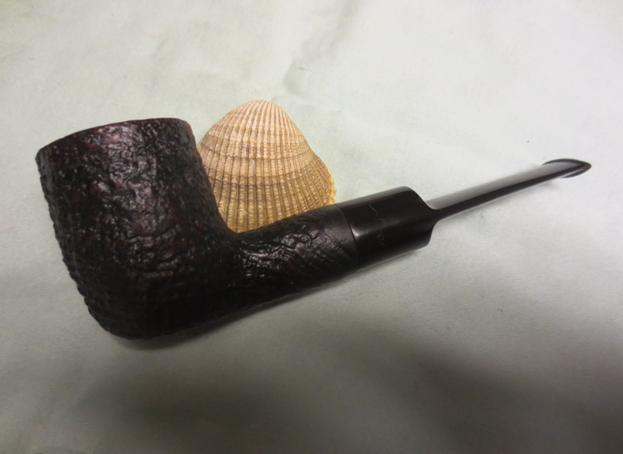
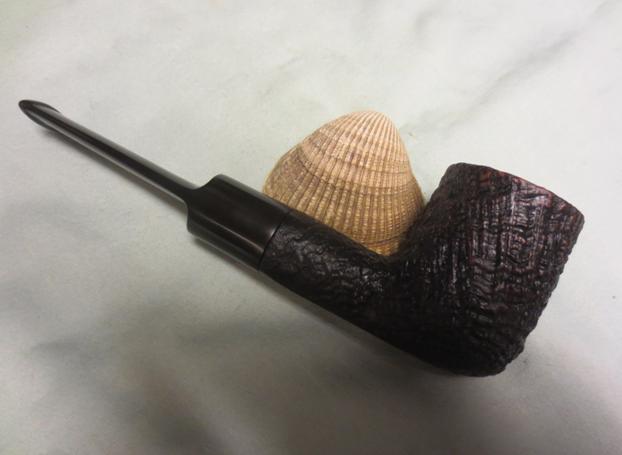
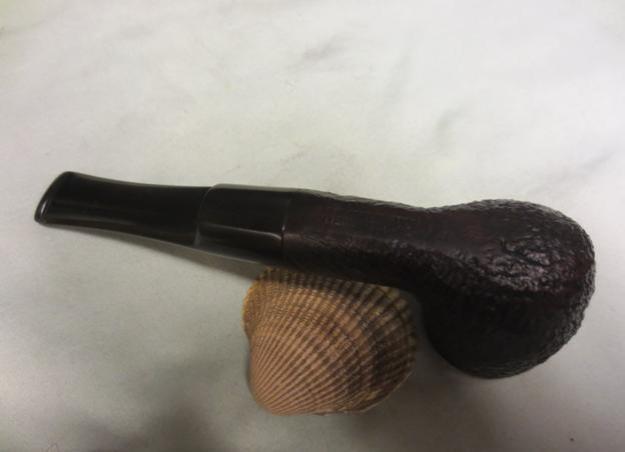
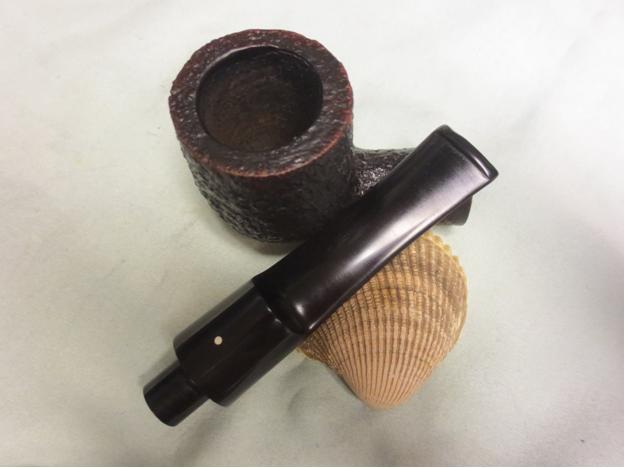
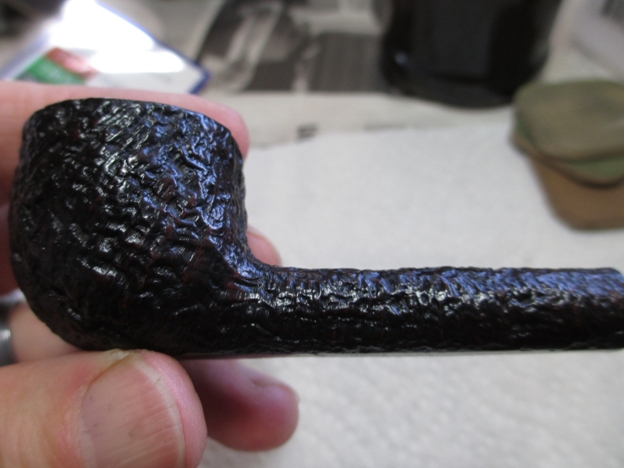
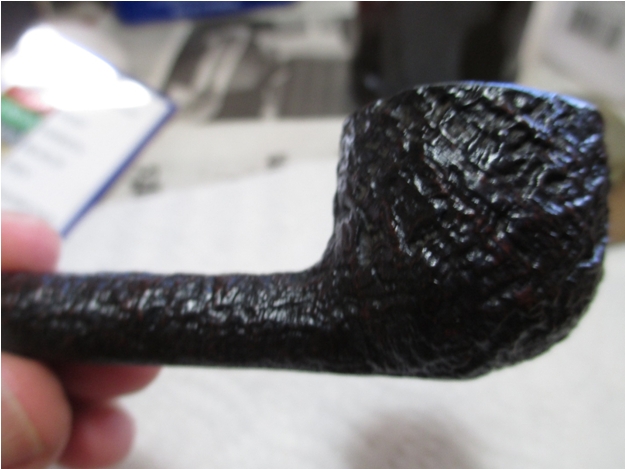
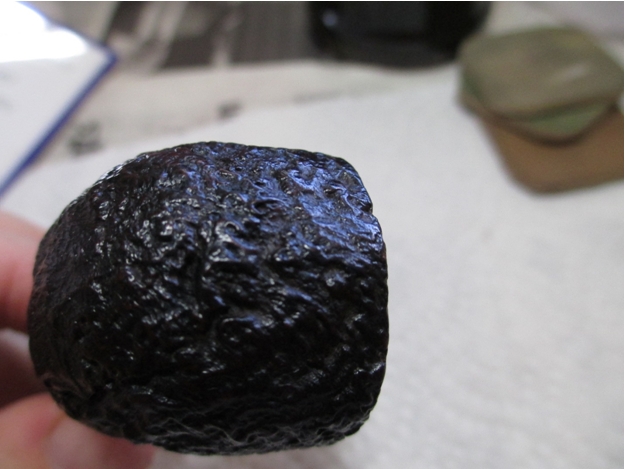
Restoring the 8th Pipe from Bob Kerr’s Estate – A Dunhill Shell Briar 433 Billiard


Blog by Steve Laug

I am finally getting around to working on Bob Kerr’s Estate. His son-in-law, Brian contacted me a few months ago saying that the family needed to clean out the estate as they were getting the family home ready to move. He asked if I would be interested in restoring and selling the pipes for them. He brought what originally he said was a few pipes over to show me. When I opened the door Brian was there with a few flats of pipes. There were Dunhills, Petersons, Comoy’s Barlings and a lot of other pipes – a total of 125 pipes and a box of parts. That is the largest estate I had the opportunity to work on. I put together a spread sheet of the pipes and stampings to create an invoice. I was taking on what would take me a fair amount of time to clean up. I could not pass up the opportunity to work on these pipes though. They were just too tempting.

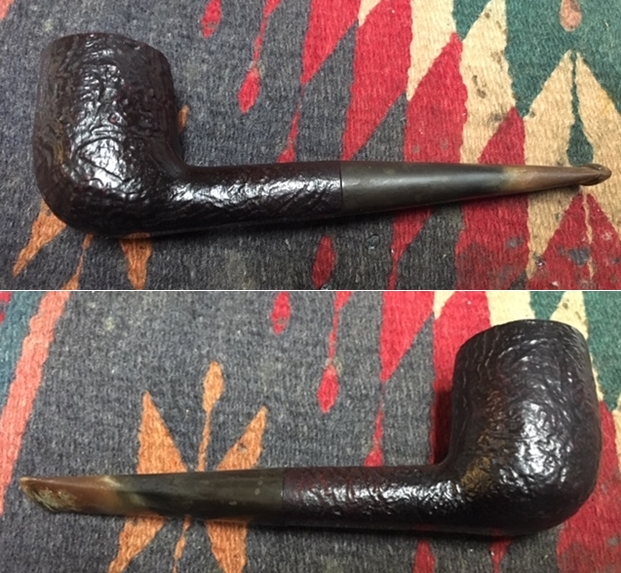
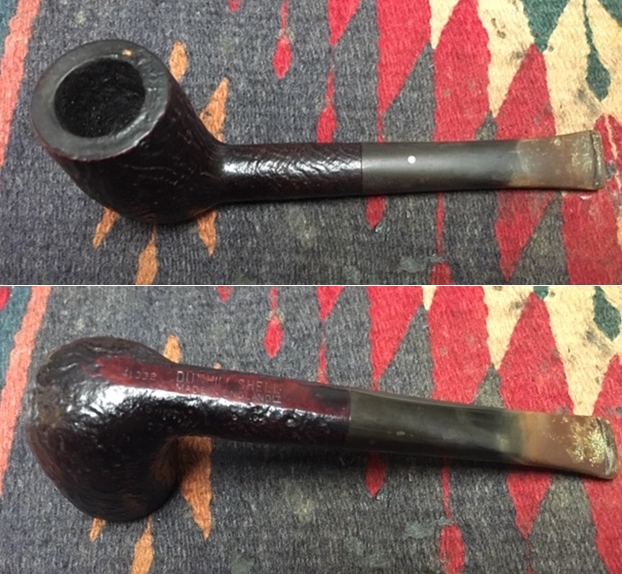
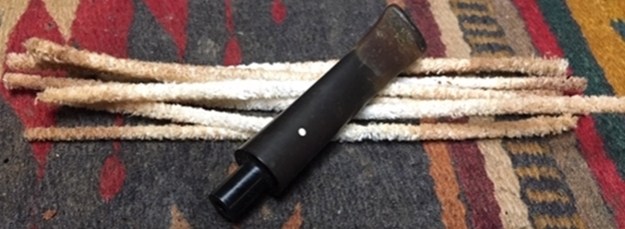
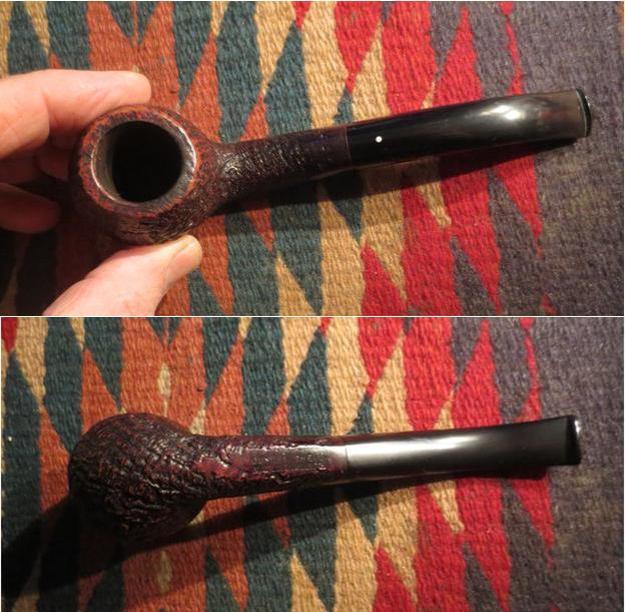
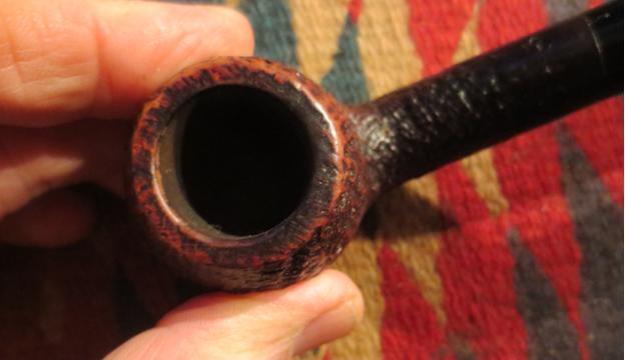
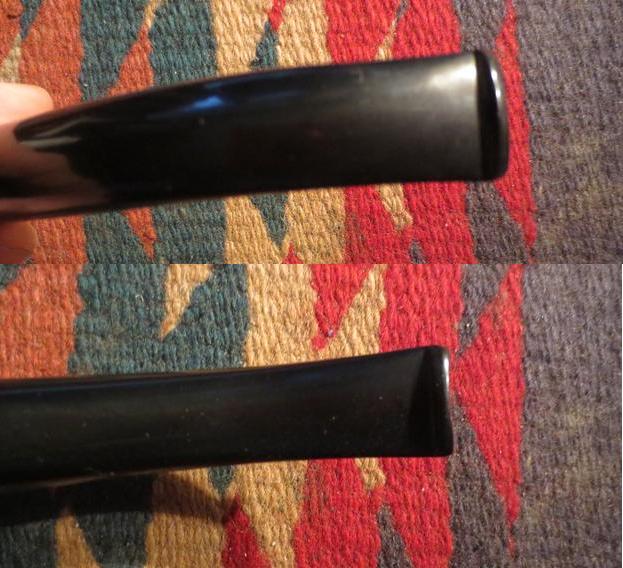
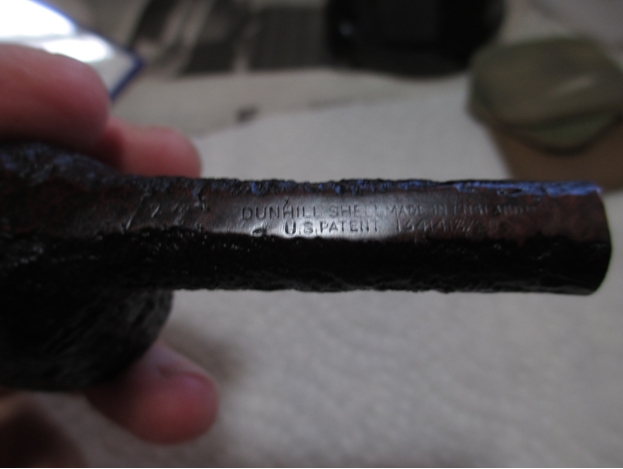
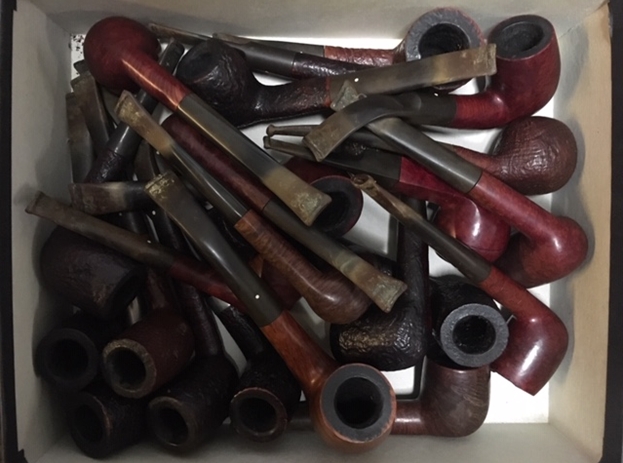
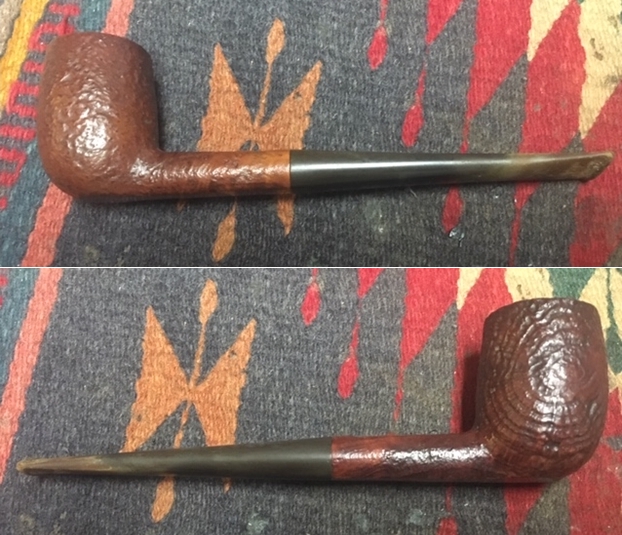
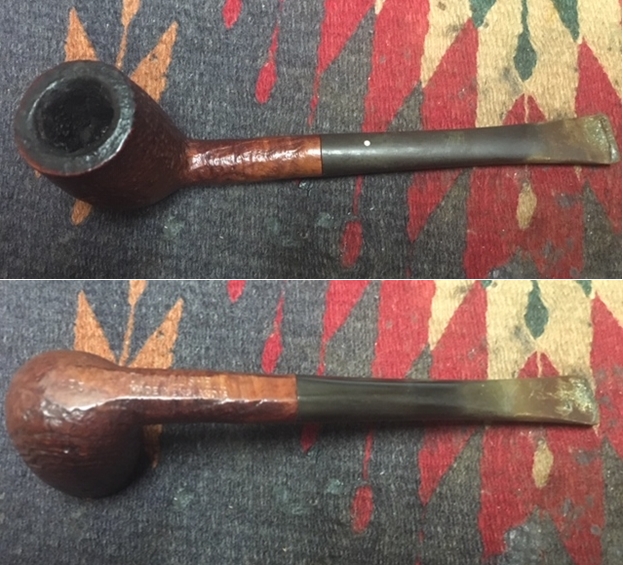
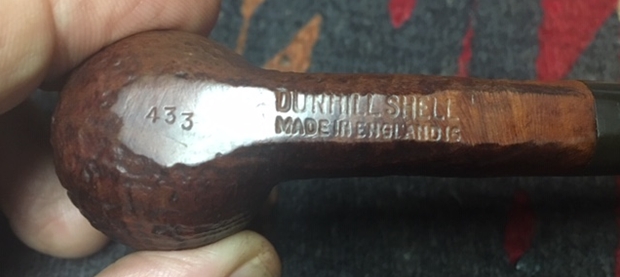
I sorted the pipes into groups of the various brands and had a box of 25 different Dunhill pipes in different shapes, styles and sizes. I decided to work on the Dunhills first. It was a great chance to see the shape variety up close and personal. The photo below shows the box of Dunhill pipes.I went through the box of Dunhills shown above and chose the 8th pipe to work on – a Group 4 sandblast long stem Billiard. It is stamped on the heel and the underside of the shank with the shape number 433 followed by Dunhill Shell over Made in England 16 which dates it as being made in 1967. It is yet another Dunhill Billiard but with a shape number I have not seen in the rest of the lot. The round shank of the Billiard flows into a long tapered stem that is oxidized and has tooth marks and chatter near the button. There is some calcification on the first inch of the stem ahead of the button and there is some light damage to the button. The finish is significantly lighter in colour than the other Shell Briars I have been working on. It is dirty with grime and tars filling in much of the craggy finish. The bowl had a thick cake and lava overflowed on the rim top. The inner edge of the rim had damage on the front from a burn mark and it makes the bowl out of round.  The bowl had tobacco stuck in the lava on the walls of the bowl like the other pipes from this estate. With a little work this pipe would look good once again. I took pictures of the pipe before I started working on it. I took some close up photos of the rim top and stem to show what I was dealing with. Judging from the condition this Billiard was in I think I can safely say that it was another one of Bob’s favourite pipes. The cake in the bowl is another thick one and the lava on the rim top is also very thick. You can see the cake and tobacco in the bowl. You can also see that the inner edge of the bowl is out of round in the mid front. It appears to have been burned by repeated lighting in the same place with a lighter or match. I am assuming from the way Bob cared for his other pipes that this one came to him in that condition and it was one he used when working in his shop. The fishtail stem was dirty, oxidized, calcified and had a lot of tooth chatter on the top and underside for about an inch ahead of the button. The button surface was also marked with tooth chatter. The sharp edge defining the button was worn down and almost smoothed out. It will be an interesting challenge to bring back to life.I took a photo of the stamping on the underside of the bowl and shank. It should be easier to read once I get it cleaned up a bit.I am sure if you have read the restoration work on the previous four pipes you have already read what I included about Bob Kerr, the pipeman who held these pipes in trust before I came to work on them. Also, if you have followed the blog for long you will already know that I like to include background information on the pipeman whose pipes I am restoring. For me, when I am working on an estate I really like to have a sense of the person who held the pipes in trust before I worked on them. It gives me another dimension of the restoration work. I asked Brian if he or his wife would like to write a brief biographical tribute to her father, Bob. His daughter worked on it and I received the following short write up on him and some pictures to go along with the words. Thank you Brian and tell your wife thank you as well.
I am delighted to pass on these beloved pipes of my father’s. I hope each user gets many hours of contemplative pleasure as he did. I remember the aroma of tobacco in the rec room, as he put up his feet on his lazy boy. He’d be first at the paper then, no one could touch it before him. Maybe there would be a movie on with an actor smoking a pipe. He would have very definite opinions on whether the performer was a ‘real’ smoker or not, a distinction which I could never see but it would be very clear to him. He worked by day as a sales manager of a paper products company, a job he hated. What he longed for was the life of an artist, so on the weekends and sometimes mid-week evenings he would journey to his workshop and come out with wood sculptures, all of which he declared as crap but every one of them treasured by my sister and myself. Enjoy the pipes, and maybe a little of his creative spirit will enter you!

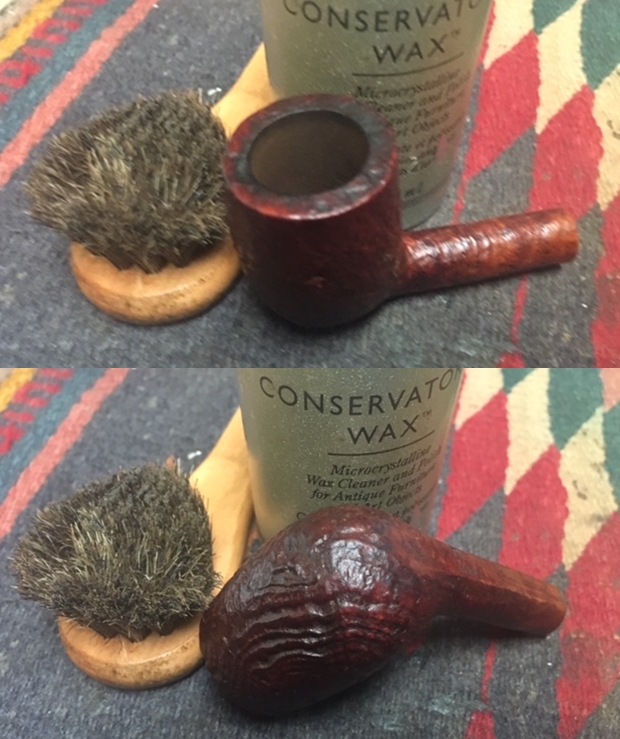
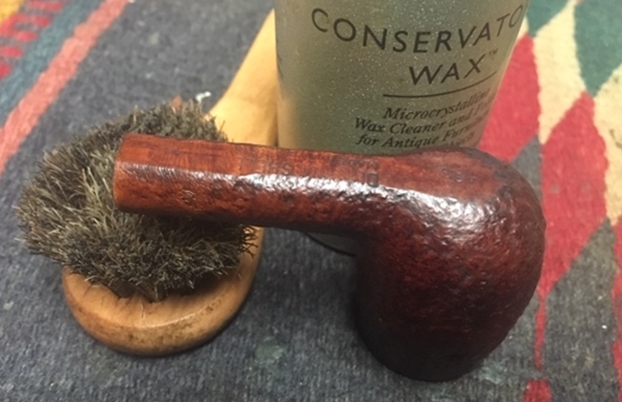
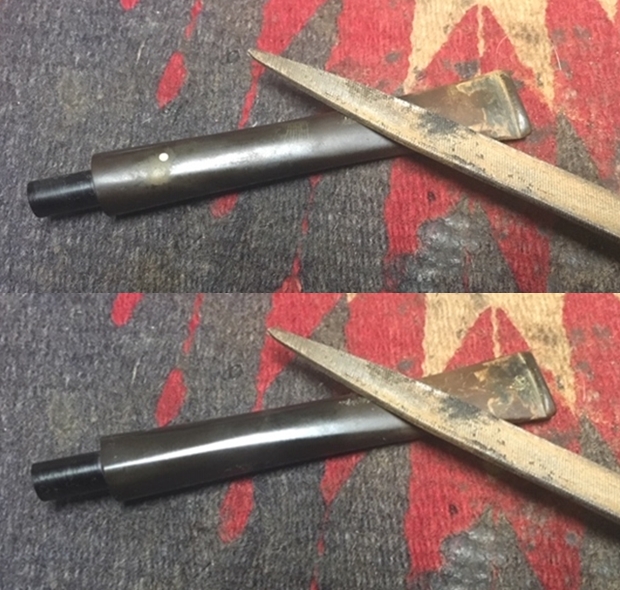
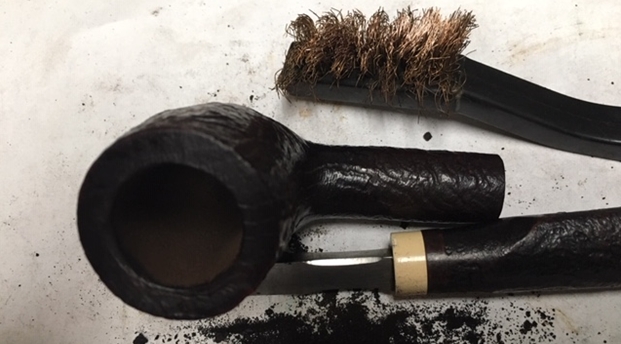
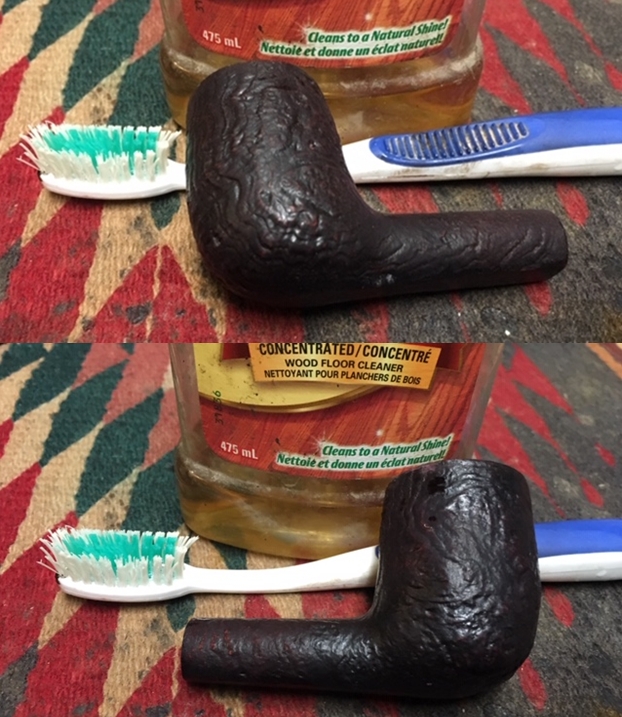
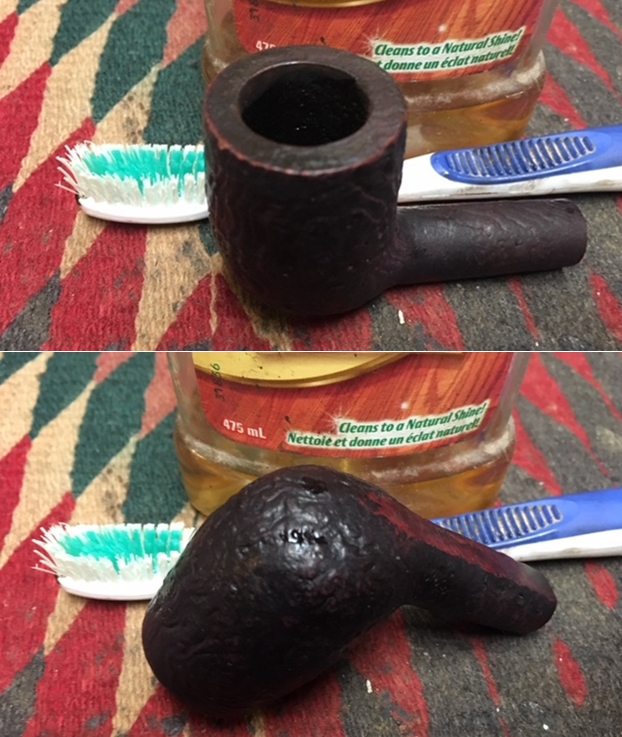
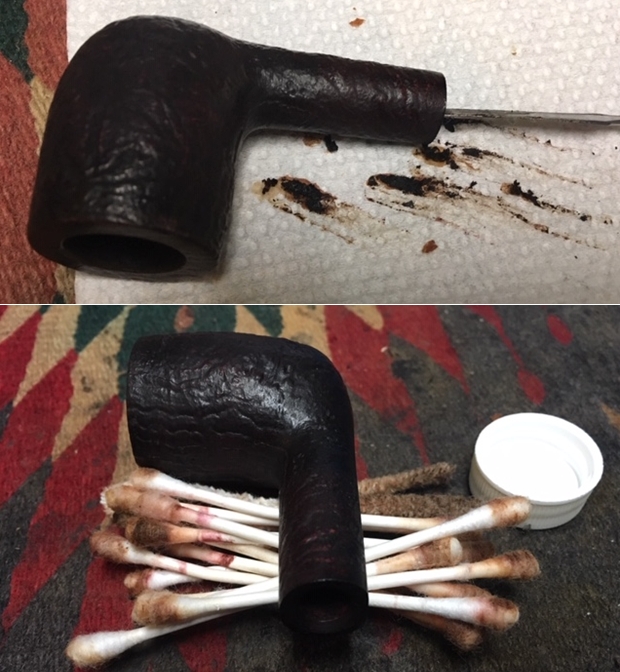
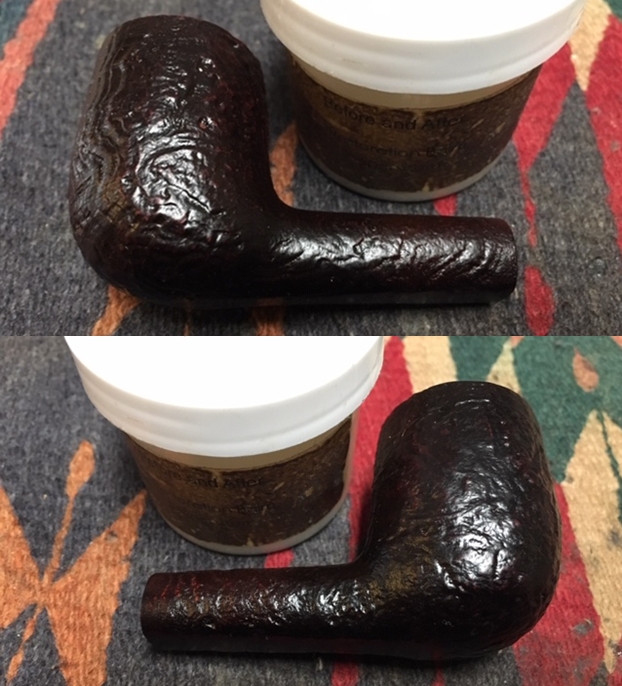
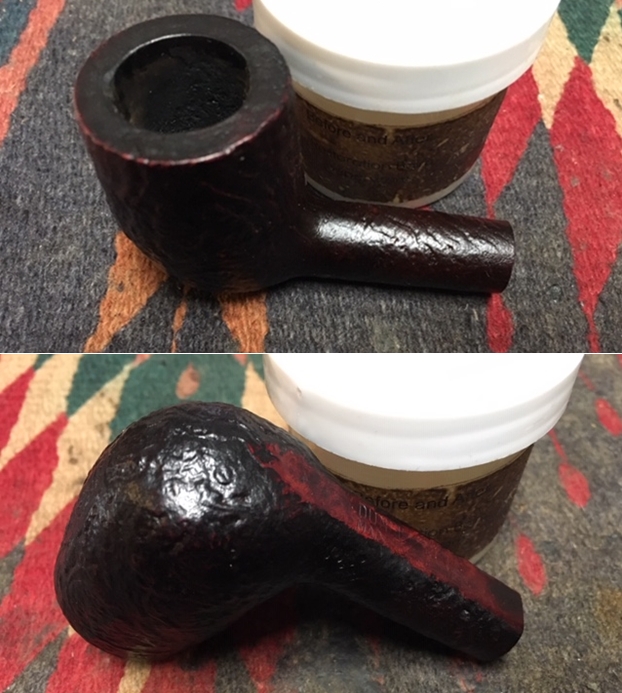
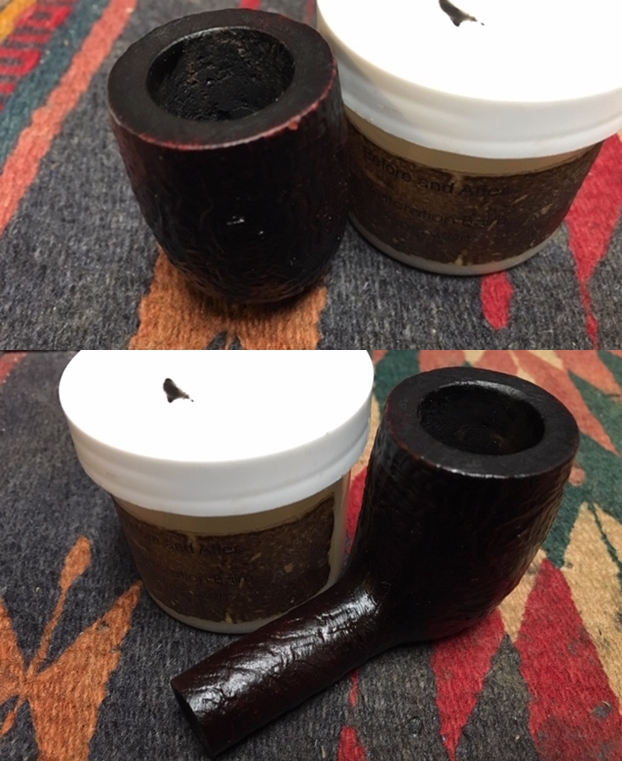
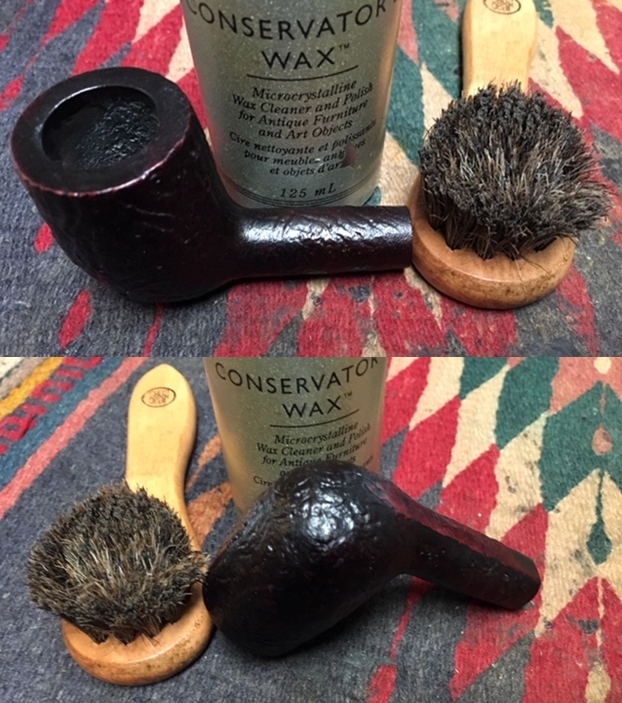
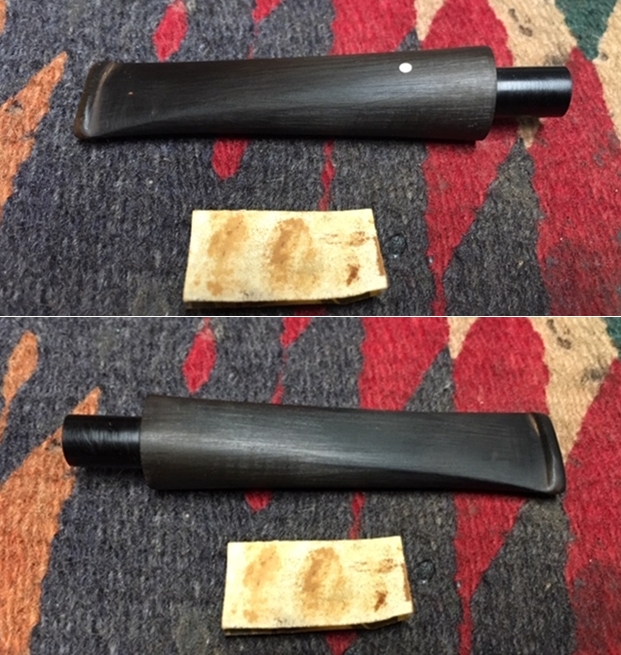
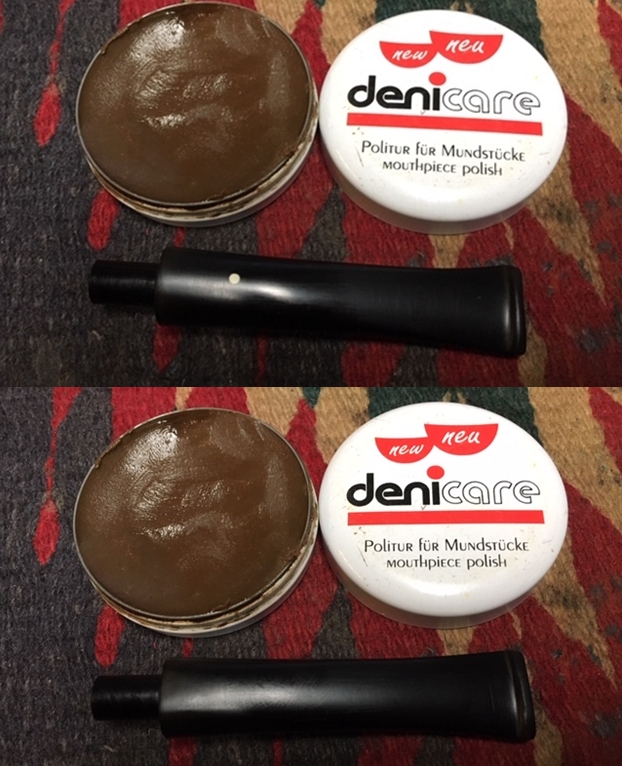
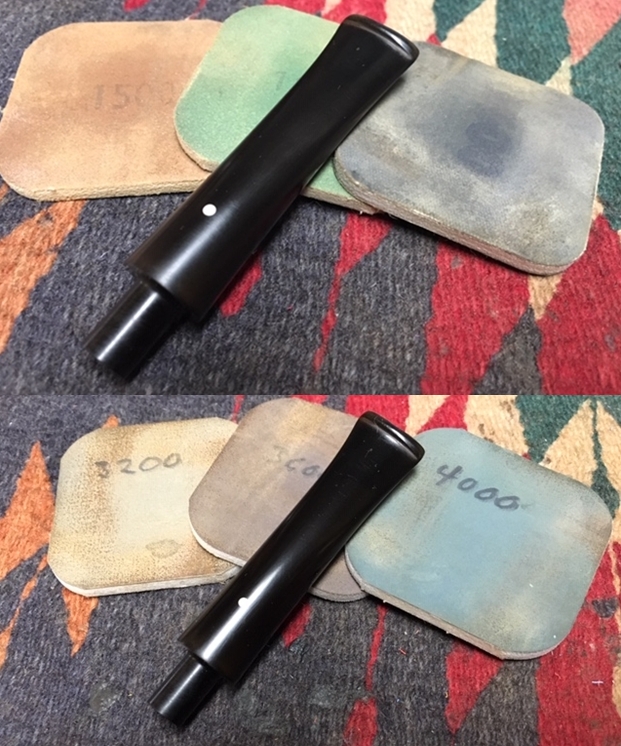
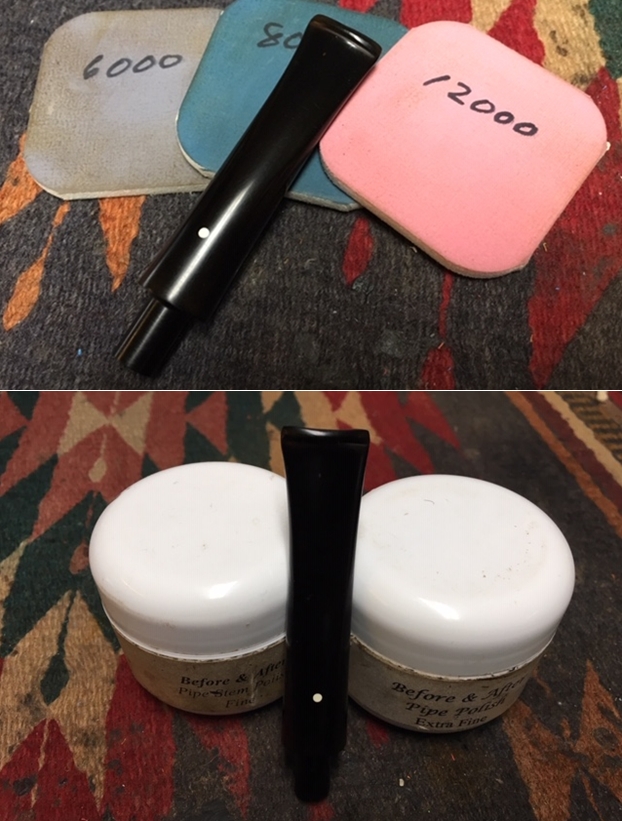
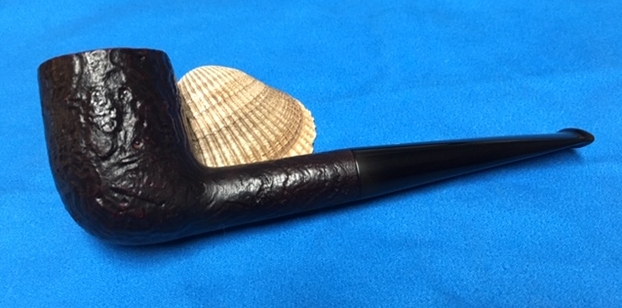
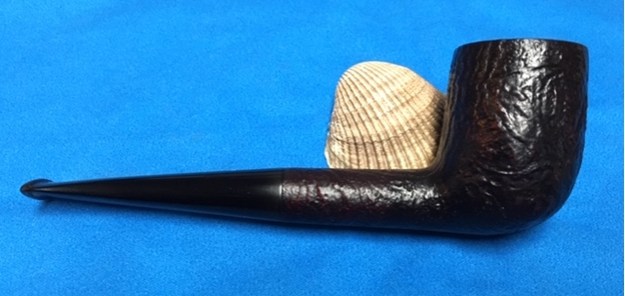
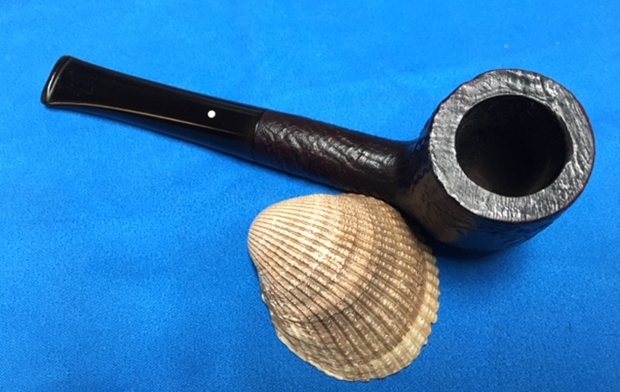
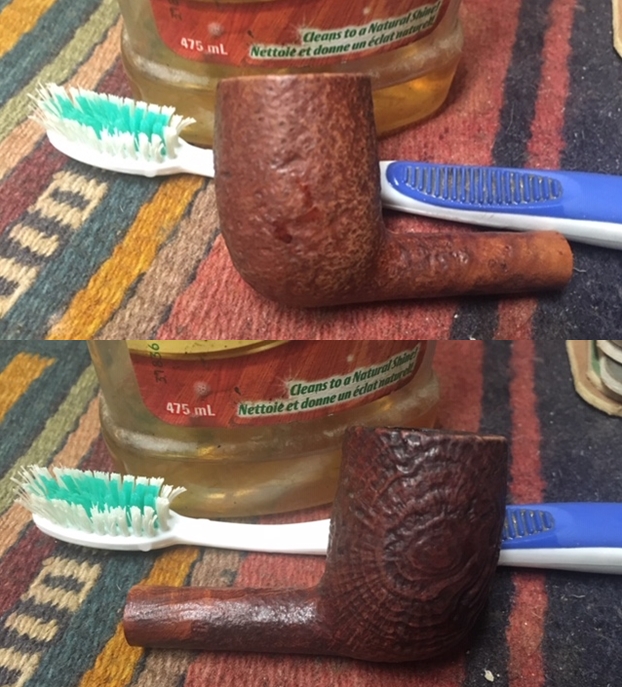
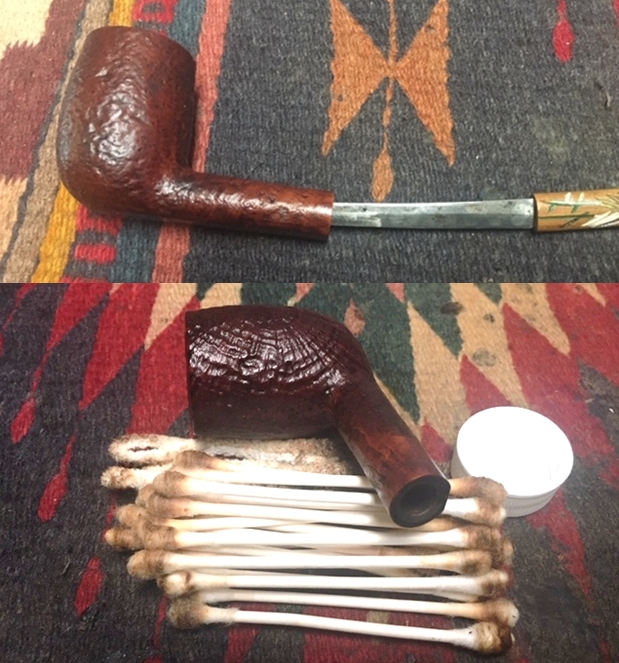
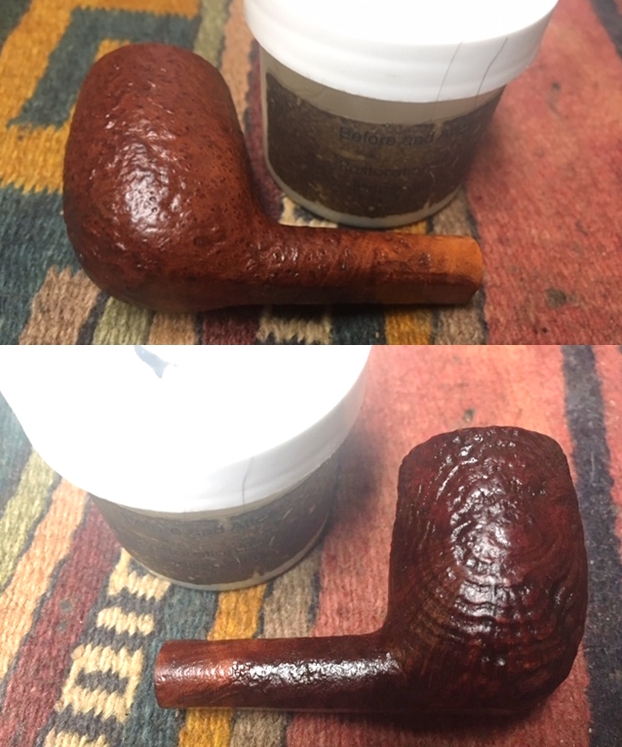
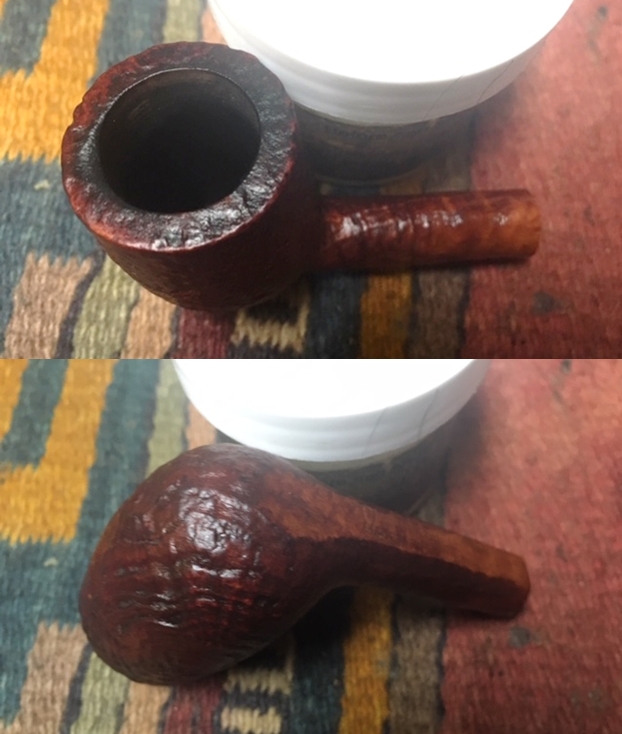
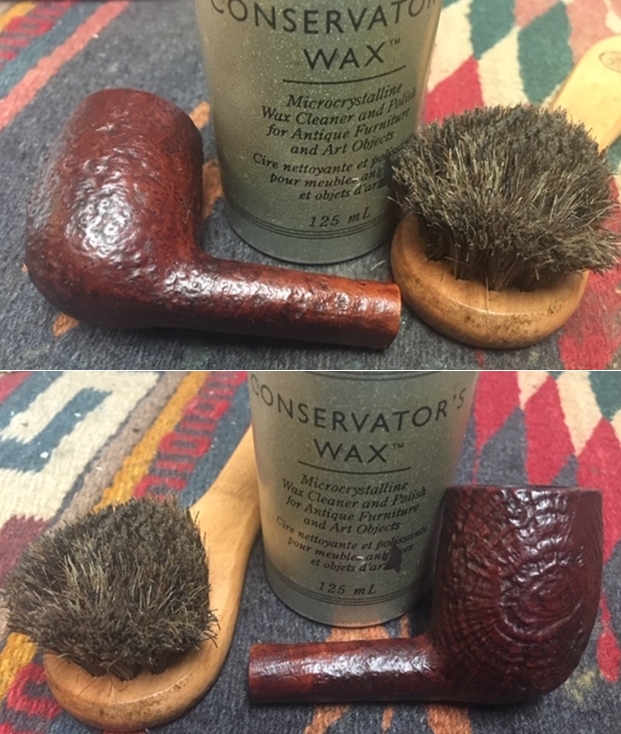
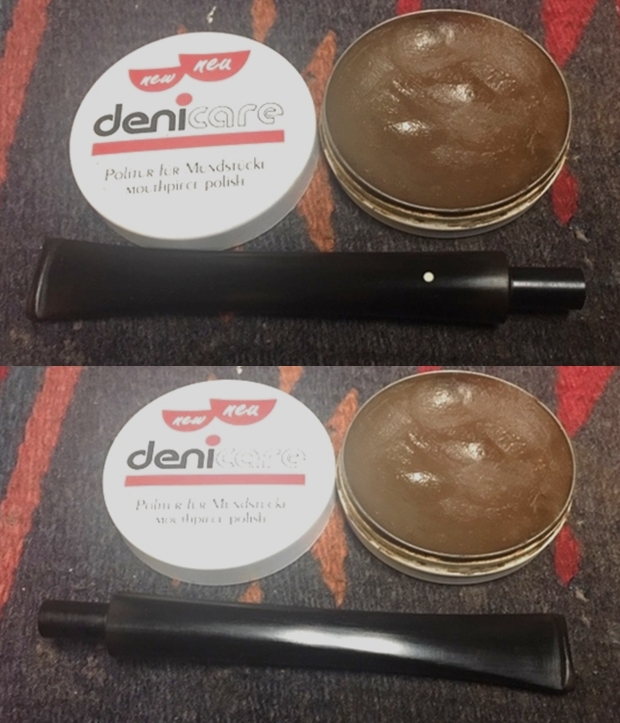
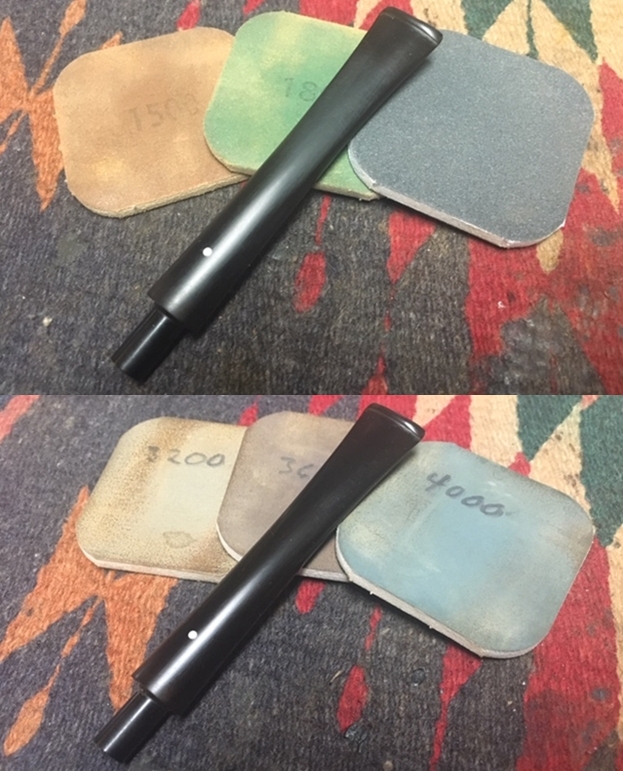
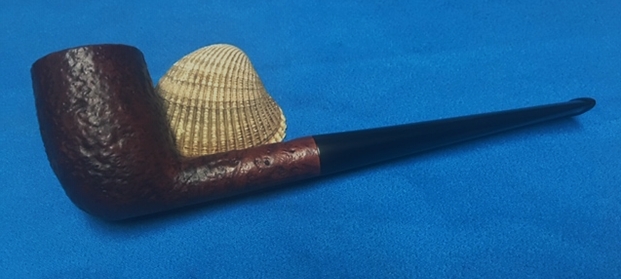
I have included one of Bob’s wood carvings to give you an idea of what he daughter wrote about above. You can see his artistry in the carving that is patterned after British Columbia’s Coastal First Nations people. To me this is a sea otter but perhaps a reader may enlighten us.Having already worked on 7 other pipes from Bob’s estate I was beginning to get a feel for how he used and viewed his pipes. Even with these I eight I could tell which ones were pipes he favoured and which were his work horses. I could get a sense of the ones that accompanied him into his carving shop. In many ways it was as if he was standing over my shoulder while I cleaned up his pipes. With that in mind I turned to work on the eighth of his pipes. I reamed the bowl to remove the cake on the walls and the debris of tobacco shards that still remained. I used a PipNet pipe reamer to start the process. I followed that with a Savinelli Fitsall Pipe Knife to clean up the remaining cake in the conical bottom of the bowl. I sanded the bowl with 220 grit sandpaper wrapped around a piece of dowel. It smooths out the walls and also helps bring the inner edges back to round. With the bowl reamed it was time to work on the rim top and remove the thick lava coat in the blast of the rim. I used the Savinelli Fitsall knife to scrape away the high spots of lava and a brass bristle tire brush to work on the rim top and remove the buildup there.With the bowl reamed and rim top cleaned I scrubbed the sandblast finish. This is pretty much my process in cleaning either sandblast or rusticated finishes. I scrubbed it with undiluted Murphy’s Oil Soap and a tooth brush to remove the grime from the grooves and canyons of the blast. I worked over the tarry lava overflow on the rim with the tooth brush and a brass brush. I rinsed the pipe under running water to remove the grime. I dried it off with a soft towel. The pictures below show the finish after scrubbing and rinsing. I scraped out the inside of the mortise with a small pen knife to break away the tarry buildup on the walls of the shank. I cleaned out the internals of the bowl, shank and the airway in the shank and the stem with alcohol, pipe cleaners and cotton swabs until they came out clean. It was very dirty in the shank and stem but now it not only looks clean but smells clean.  I worked some Before & After Restoration Balm into the briar on the bowl and the rim top. I worked it into the nooks and crannies of the sandblast surface with my fingertips to clean, enliven and protect the wood. I let the balm sit for about 20 minutes and buffed it off with a soft cotton cloth and then polished it with a horsehair shoe brush. I took photos of the pipe at this point in the process to show what the bowl looked like at this point. I gave the bowl several coats of Conservator’s Wax and buffed it with a shoe brush to raise the shine. The bowl looks really good at this point. The sandblast grain just shines and is showing all of the layers of colour that make up a Shell finish. I set the bowl aside and turned my attention to the stem. I used a needle file to recut the sharp edge of the button and give it back its definition on the stem. I sanded out the marks and tooth chatter on the surface of the vulcanite with a folded piece of 220 grit sandpaper. I followed the 220 grit sandpaper with 400 grit wet dry sandpaper to minimize the scratching. The two papers combined did a pretty decent job of getting rid of the tooth marks and chatter as well as the oxidation and calcification.I polished the stem with Denicare Mouthpiece Polish to take out the oxidation at the button edge and on the end of the mouthpiece. I also worked hard to scrub it from the surface of the stem at the tenon end. I polished out the scratches with micromesh sanding pads – wet sanding with 1500-2400 grit pads and dry sanding with 3200-12000 grit pads. I wiped the stem down after each sanding pad with Obsidian Oil. I polished it with Before & After Pipe Stem Polish – both Fine and Extra Fine. Once I had finished the polishing I gave it a final coat of oil and set it aside to dry. I put the bowl and stem back together. I polished the bowl and stem with Blue Diamond to polish out the scratches in the briar and the vulcanite. I gave the bowl multiple coats of Conservator’s Wax and the stem multiple coats of carnauba wax. I buffed the pipe with a clean buffing pad to raise the shine. I hand buffed it with a microfiber cloth to deepen the shine. The pipe polished up pretty nicely. The contrast of colours that show up in the sandblast of the Shell briar bowl looked good with the polished black vulcanite. The swirled grain “target” on the right side of the bowl is quite stunning. This 1967 Dunhill Shell 433 Billiard turned out really well and I was able to minimize the burn damage on the front inner edge of the rim. It really has that classic Dunhill Billiard look that catches the eye. The finished pipe is shown in the photos below. The dimensions of the pipe are Length: 6 ¼ inches, Height: 1 7/8 inches, Outside diameter of the bowl: 1 1/4 inches, Chamber diameter: 3/4 of an inch. This is the eighth Dunhill Shell from the many pipes that will be coming onto the work table and eventually be posted on the rebornpipes store if you are interested in adding it to your collection. Thanks for reading this blog and my reflections on the pipe while I worked on it. I am having fun working on this estate.  


Restoring the 6th Pipe from Bob Kerr’s Estate – A Dunhill Shell 41032 Billiard


Blog by Steve Laug

I am finally getting around to working on Bob Kerr’s Estate. His son-in-law, Brian contacted me a few months ago saying that the family needed to clean out the estate as they were getting the family home ready to move. He asked if I would be interested in restoring and selling the pipes for them. He brought what originally he said was a few pipes over to show me. When I opened the door Brian was there with a few flats of pipes. There were Dunhills, Petersons, Comoy’s Barlings and a lot of other pipes – a total of 125 pipes and a box of parts. That is the largest estate I had the opportunity to work on. I put together a spread sheet of the pipes and stampings to create an invoice. I was taking on what would take me a fair amount of time to clean up. I could not pass up the opportunity to work on these pipes though. They were just too tempting.

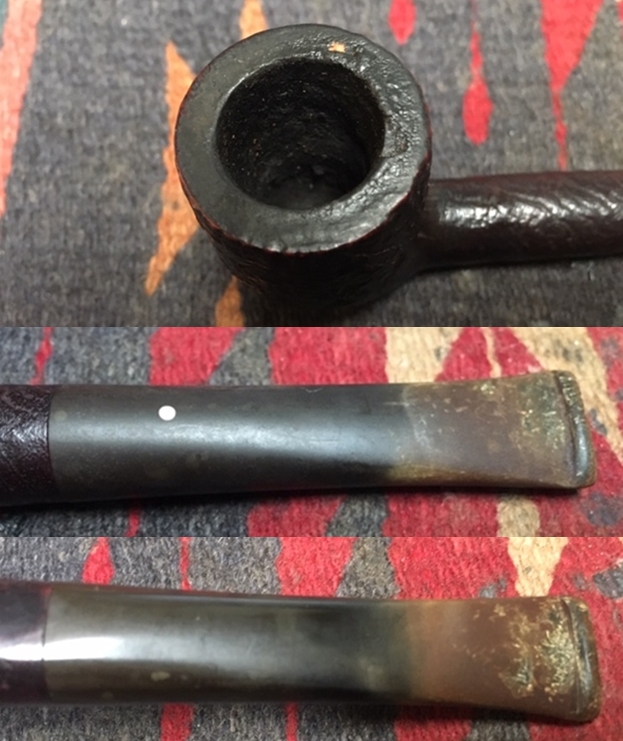
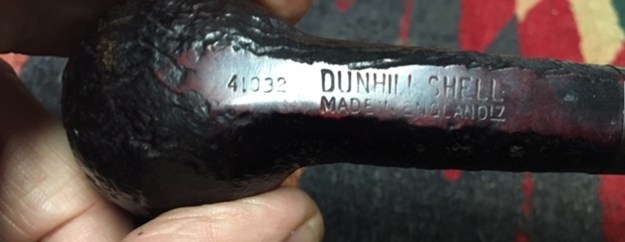
I sorted the pipes into groups of the various brands and had a box of 25 different Dunhill pipes in different shapes, styles and sizes. I decided to work on the Dunhills first. It was a great chance to see the shape variety up close and personal. The photo below shows the box of Dunhill pipes.I went through the box of Dunhills shown above and chose the sixth pipe to work on – a Group 4 sandblast Billiard. It is stamped on the flat panel on the underside of the bowl and shank as follows. On the heel of the bowl is the shape number 41032 followed by Dunhill Shell over Made in England 17 that gave the date of manufacture as 1978. It is a newer Shell than the others that I have worked on. It has the 5 digit shape number. The round shank flows into a nice tapered stem that is oxidized and has tooth marks and chatter near the button. There is some calcification on the first inch of the stem ahead of the button and there is some light damage to the button. The finish is dirty, but still shiny. The bowl was caked and lava overflowed on the rim top. The sandblast on the rim was not deep and craggy like others in the estate but it had an overflow lava like the others. Once again like the other pipes from this estate that I have worked on there was still tobacco in the bowl that was stuck in the cake on the walls. The inner edge of the bowl looked very good. With a little work this pipe would show a beauty that shined forth once it was clean. I took pictures of the pipe before I started working on it. I took some close up photos of the rim top and stem to show what I was dealing with. You can see the cake and tobacco in the bowl. Like Bob’s other pipes I have worked on so far, it looks like he was in the habit of laying down his pipe after just finishing a bowl with the intention of picking it up and continuing later. The rim top shows a lighter buildup of lava over the entire surface of the rim. The stem was dirty, oxidized, calcified and had a lot of tooth chatter on the top and underside for about an inch ahead of the button. The button surface was also marked with tooth chatter.I took a photo of the stamping on the underside of the bowl and shank. It should be easier to read once I get it cleaned up a bit.I am sure if you have read the restoration work on the previous four pipes you have already read what I included about Bob Kerr, the pipeman who held these pipes in trust before I came to work on them. Also, if you have followed the blog for long you will already know that I like to include background information on the pipeman whose pipes I am restoring. For me, when I am working on an estate I really like to have a sense of the person who held the pipes in trust before I worked on them. It gives me another dimension of the restoration work. I asked Brian if he or his wife would like to write a brief biographical tribute to her father, Bob. His daughter worked on it and I received the following short write up on him and some pictures to go along with the words. Thank you Brian and tell your wife thank you as well.
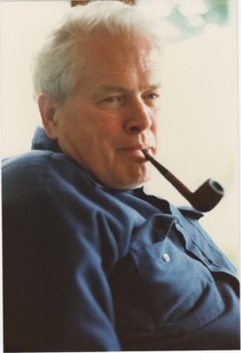
I am delighted to pass on these beloved pipes of my father’s. I hope each user gets many hours of contemplative pleasure as he did. I remember the aroma of tobacco in the rec room, as he put up his feet on his lazy boy. He’d be first at the paper then, no one could touch it before him. Maybe there would be a movie on with an actor smoking a pipe. He would have very definite opinions on whether the performer was a ‘real’ smoker or not, a distinction which I could never see but it would be very clear to him. He worked by day as a sales manager of a paper products company, a job he hated. What he longed for was the life of an artist, so on the weekends and sometimes mid-week evenings he would journey to his workshop and come out with wood sculptures, all of which he declared as crap but every one of them treasured by my sister and myself. Enjoy the pipes, and maybe a little of his creative spirit will enter you!

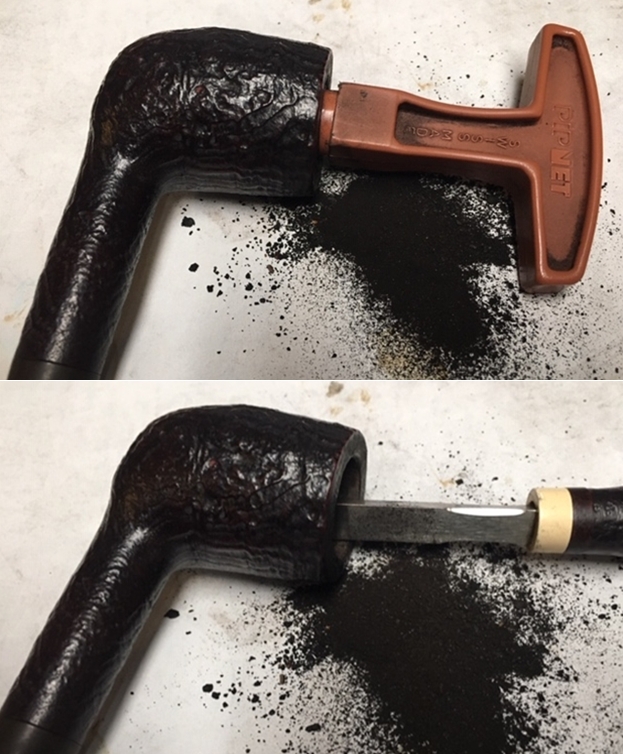
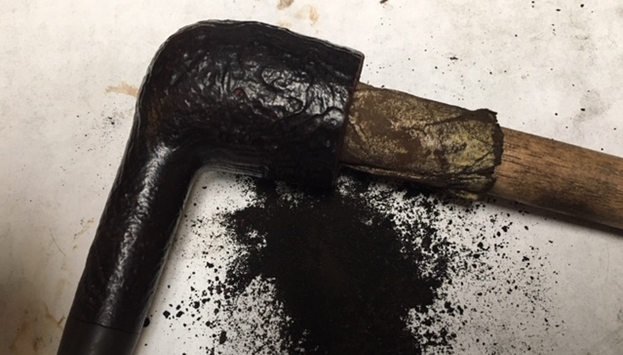
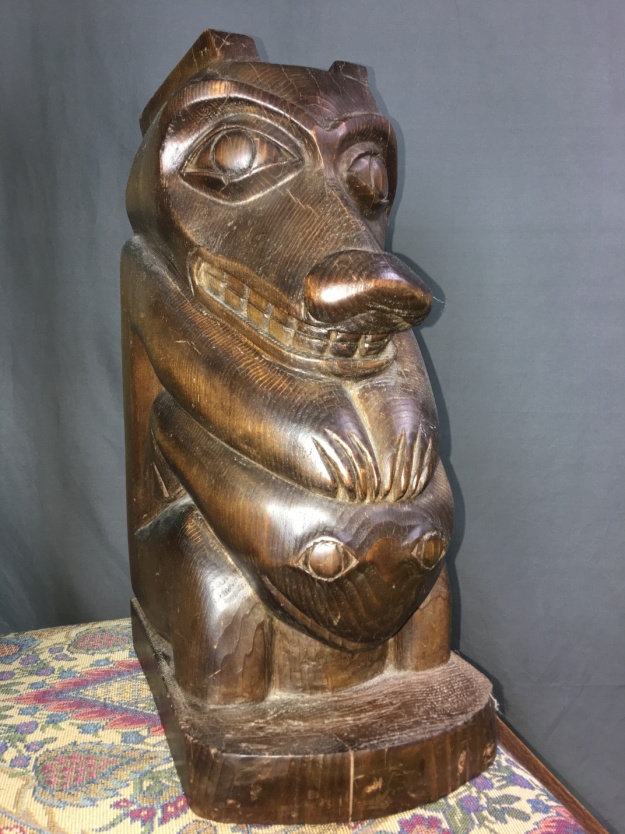
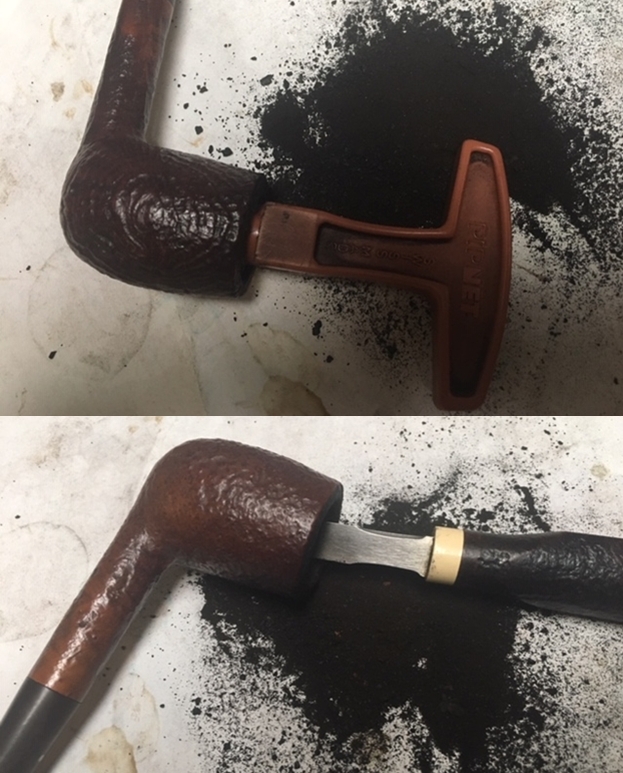
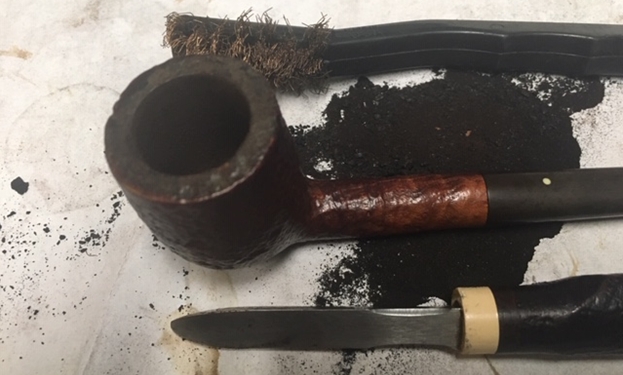
I have included one of Bob’s wood carvings to give you an idea of what he daughter wrote about above. You can see his artistry in the carving that is patterned after British Columbia’s Coastal First Nations people. To me this is a sea otter but perhaps a reader may enlighten us.Now that I had a sense of Bob’s spirit in my mind, I could work on his estate with a sense of his presence with me. I turned to work on the sixth of his pipes. I reamed the bowl to remove the cake on the walls and the debris of tobacco shards that still remained. I used a PipNet pipe reamer to start the process. I followed that with a Savinelli Fitsall Pipe Knife to clean up the remaining cake in the conical bottom of the bowl. I sanded the bowl with 220 grit sandpaper wrapped around a piece of dowel. It smooths out the walls and also helps bring the inner edges back to round. With the bowl reamed it was time to work on the rim top and remove the thick lava coat in the blast of the rim. I used the Savinelli Fitsall knife to scrape away the high spots of lava and a brass bristle tire brush to work on the rim top and remove the buildup there.With the bowl reamed and rim top cleaned I scrubbed the sandblast finish. This is pretty much my process in cleaning either sandblast or rusticated finishes. I scrubbed it with undiluted Murphy’s Oil Soap and a tooth brush to remove the grime from the grooves and canyons of the blast. I worked over the tarry lava overflow on the rim with the tooth brush and a brass brush. I rinsed the pipe under running water to remove the grime. I dried it off with a soft towel. The pictures below show the finish after scrubbing and rinsing. I scraped out the inside of the mortise with a small pen knife to break away the tarry buildup on the walls of the shank. I cleaned out the internals of the bowl, shank and the airway in the shank and the stem with alcohol, pipe cleaners and cotton swabs until they came out clean. It was very dirty in the shank and stem but now it not only looks clean but smells clean.   I worked some Before & After Restoration Balm into the briar on the bowl and the rim top. I worked it into the nooks and crannies of the sandblast surface with my fingertips to clean, enliven and protect the wood. I let the balm sit for about 20 minutes and buffed it off with a soft cotton cloth and then polished it with a horsehair shoe brush. I took photos of the pipe at this point in the process to show what the bowl looked like at this point. I gave the bowl several coats of Conservator’s Wax and buffed it with a shoe brush to raise the shine. The bowl looks really good at this point. The sandblast grain just shines and is showing all of the layers of colour that make up a Shell finish.I set the bowl aside and turned my attention to the stem. I sanded out the marks and tooth chatter on the surface of the vulcanite with a folded piece of 220 grit sandpaper. Generally I find that these older Dunhill stems are made of very high quality vulcanite, but this one the sanding dust was brown from the oxidation. I polished the stem with Denicare Mouthpiece Polish to take out the oxidation at the button edge and on the end of the mouthpiece. I also worked hard to scrub it from the surface of the stem at the tenon end. I polished out the scratches with micromesh sanding pads – wet sanding with 1500-2400 grit pads and dry sanding with 3200-12000 grit pads. I wiped the stem down after each sanding pad with Obsidian Oil. I polished it with Before & After Pipe Stem Polish – both Fine and Extra Fine. Once I had finished the polishing I gave it a final coat of oil and set it aside to dry. I put the bowl and stem back together. I polished the bowl and stem with Blue Diamond to polish out the scratches in the briar and the vulcanite. I gave the bowl multiple coats of Conservator’s Wax and the stem multiple coats of carnauba wax. I buffed the pipe with a clean buffing pad to raise the shine. I hand buffed it with a microfiber cloth to deepen the shine. The pipe polished up pretty nicely. The contrast of colours that show up in the sandblast of the Shell briar bowl looked good with the polished black vulcanite. The Dunhill Shell 41032 Billiard turned out really well. I am astonished that in this collection of 25 most of the lot are billiards and over half of them are Shell Briars. I have yet to find a repeat shape number – just slight variations on size, shape and length. To me it is fascinating to see so many variations on the Billiard shape in one collection. Once again this pipe has that classic Dunhill look that catches the eye. The finished pipe is shown in the photos below. The dimensions of the pipe are Length: 5 1/2 inches, Height: 1 7/8 inches, Outside diameter of the bowl: 1 1/4 inches, Chamber diameter: 3/4 of an inch. This is the sixth Dunhill Shell from the many pipes that will be coming onto the work table and eventually be posted on the rebornpipes store if you are interested in adding it to your collection. Thanks for reading this blog and my reflections on the pipe while I worked on it. I am having fun working on this estate.  
Dunhill 1949 Patent 120 FrankenStem


Blog by Henry Ramirez

Cruising Ebay for a pipe to play with I came across a Shell bent which, as stated in the listing, had the stem bit completely chewed off. I’d been trying a mold technique to reconstruct the stem button with limited success, very limited. Anyway, this pipe’s stem had been chewed to the point where no pipe cleaner could negotiate the airway and tobacco dottle was packed in tight. Here is a photo of the listing.Dang me, the previous owner had a heck of an oral fixation!  This stem was exactly what I was looking for.While the stem soaked in the Oxyclean bath, I evaluated the briar. The cake in the chamber was so thick you could shake a stick at it but after removal proved to be the protection connection because the inner bowl was pristine. I don’t know what it is about old tobaccos but the cake is dry and pumice-like with a delightfully transporting aroma to another time. The bowl’s rim was likewise protected by the lava of cake and tar. When I use my augers and drill bits, it’s either by holding the bit by hand or using an electric drill to hold the spade bit and turning the pipe itself. I’m listening for the crunching sound of cake being cleaved rather than the squeaky sound of metal on briar. Full rotations are usually not possible until the very end.

The stain and finish on the briar had that great oxblood highlight color that I love but was tarnished with a river of muck. I decided to try using my micro etcher to preserve the blast on the rim but knowing that I would later have to re-stain. I didn’t want to use Murphy’s Oil Soap because it diminishes the intensity of the stain somewhat.  Regarding the River o” Muck, I tried using my steamer which has a gun for accurate aiming and a boiler which keeps up the psi.  This muck was visible in the blast’s valleys as a white deposit. I fished out the stem from the Oxyclean bath, scrubbed it with blue shop paper towels to remove the slimy coating and polished it with flour of pumice, green, red, white diamond and Bendix on the lathe with individual rag wheels.

When the stem airway is too congested or crimped to allow passage of even a bristle pipe cleaner, I use a base “E” guitar string. It has a stiff central core wire which is later wound with another thicker resilient wire to poke on through.  My intent is not to mechanically open the airway but to remove any remaining tobacco chattel that the steamer couldn’t dislodge.

Next, I want to straighten the stem in my Wife’s oven. Of course I do this when she’s not around and so far she has turned a blind eye towards this practice.  But if there is residual tobacco burnt in her oven, I don’t want to be around to explain! The vulcanite has a memory of its initial pre-bent and pre-chewed state which will allow ease of cleaning and repair. The only bugaboo is that tenon-mortise margin can open. I was fortunate to have that happen because I have an adjustment technique to fix that which I want to try out. Importantly, don’t forget to trace the initial outline of the bent stem on a piece of paper for a reference when re-bending.

The pipe stem is positioned on a sheet of aluminum foil on the middle shelf where it is easy access and can be well illuminated by the oven’s light, I have tried to use an aluminum pie plate but the higher sides obscure my viewing the stem. I set the temperature to 247 degrees using the Bake Convection mode. This oven is electric and if yours is gas, you may want to let it get up to temperature first before placing your stem. Gadzooks!  The tenon on the stem opened like a blunderbuss barrel and the stem won’t fully seat. More fun!

The cross section on either side of the air way seemed meaty enough for some pins and channeling to create a ferrule of composite resin. I made a silicone putty impression of an unsmoked stem which approximated the same size and shape of this pipe. I made sure to capture the airway’s interior.I then plugged the stem’s airway with wax; micro etched the exterior surface and bonded the composite. I’d gotten a black resin colorant online but found that it either accelerated the mix to a very short working time or inhibited the mix to not fully curing. To blacken my next mix I’m going back to activated charcoal. But although this bit is ivory colored, it is very strong and decently shaped so I decided to simply slather it with a coating of black CA.
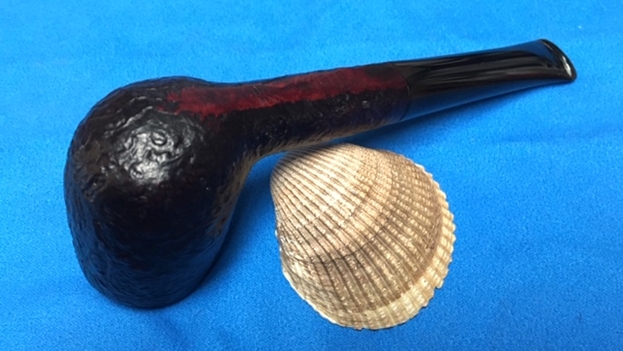
When I placed the pipe back in the oven to re-bend it, I found that some of the CA had over heated and was bubbled up like road tar. Note to self, keep CA out of the oven. I had seen this happen with an infrared light in a previous experiment but thought the temp was sufficiently lower to prevent a recurrence. Oh well, just more fussin’.
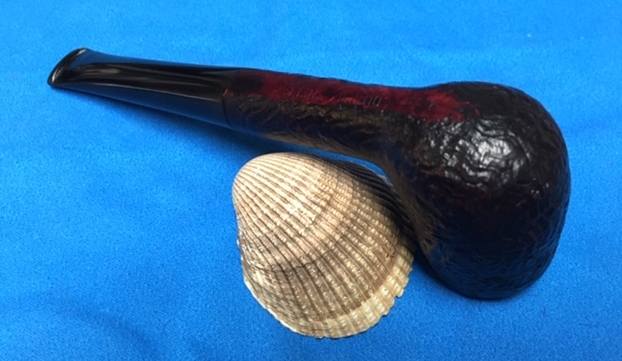
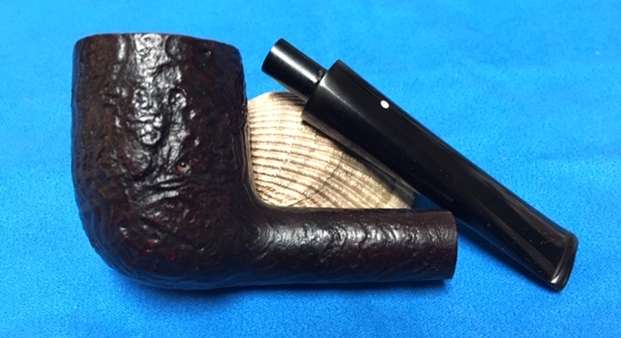
By the way, when re-bending the stem I never seem to be able to wait long enough and go through several attempts before getting it right. If it doesn’t fully bend to the proper contour, you have to wait until it re-straightens itself and then some. If you get greedy you can snap stem in half. I’m looking forward to my next stem bending because I plan to chronicle the ideal temperature using my laser thermometer.Returning to the bowl’s rim, I stained it with a light brown, got the stem to fit better but haven’t yet dialed it in and polished the pipe.I noticed that the preliminary outline of the stem displayed the additional length that the new bit added.Here’s the semi-final result and I wonder if any of these projects are truly ended because to aspire to the superb craftsmanship of these old Dunhill artisans is a journey rather than an endpoint.


An Unsullied (once the paint was removed) Dunhill 5113 Bent Apple


Blog by Steve Laug

Wikus mentioned in his comment on the post I did on the latest Stanwell Copenhagen Calabash (https://rebornpipes.com/2016/12/17/a-gold-banded-stanwell-copenhagen-calabash/comment-page-1/#comment-19995) that my brother was the MVP of pipe finders. I have to tell you that you all don’t know the half of it. In all the years I have been pipe hunting and sorting and digging through old pipes I have never had the kind of luck or fortune or whatever you want to call it as he does. He has found a total of three Dunhill pipes, a Castello, some great Barlings, a batch of astonishingly beautiful Stanwells and a lot of other amazing pipes in his hunts. The pipe I am working on now at the work table is one he picked up at a St Vincent De Paul Thrift Store in Boise, Idaho on a recent trip to visit an estate sale that had some promising pipes. The amazing thing is he picked up this paint speckled Dunhill for only $9.99. Now that is some great hunting fortune. I can hardly believe the photos that he sends me sometimes.

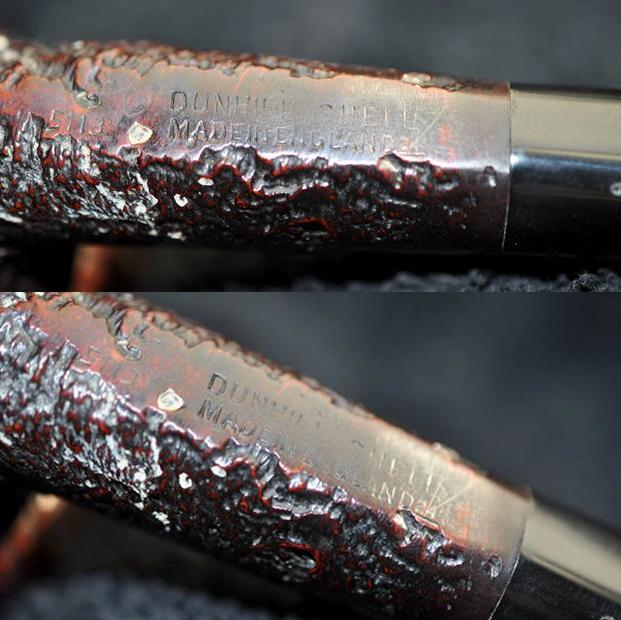
The next group of photos show the pipe as it was when he picked up. There was a lot of debris and grim in the deep blast grooves and on top of that quite a bit of white house paint on the left side of the bowl and spattered around the shank and a bit on the right side of the bowl. It makes me wonder who paints their house smoking a Dunhill pipe. The first three photos show the overall look and condition of the pipe.dunhill1 dunhill2Jeff also took some closer photos of the right side of the bowl and the rim. These were done to give a clear picture of the great sandblast finish that was on the pipe. It really has some deep and craggy looking grooves and ridges. The second photo shows the cake in the bowl and the overall clean look of the rim. The pipe had not been smoked that often and it certainly had not been oversmoked.dunhill3The stamping on the bowl is readable and clear. It reads Dunhill Shell over Made in England with a superscript underlined 24 following the D of England. To the left of the paint spot on the underside of the shank is the four digit shape number 5113. On the Pipephil Logos and Stamping website there is a helpful key to interpreting the shape stamps on Dunhill. Here is the link: http://www.pipephil.eu/logos/en/dunhill/shapes.html. He writes:

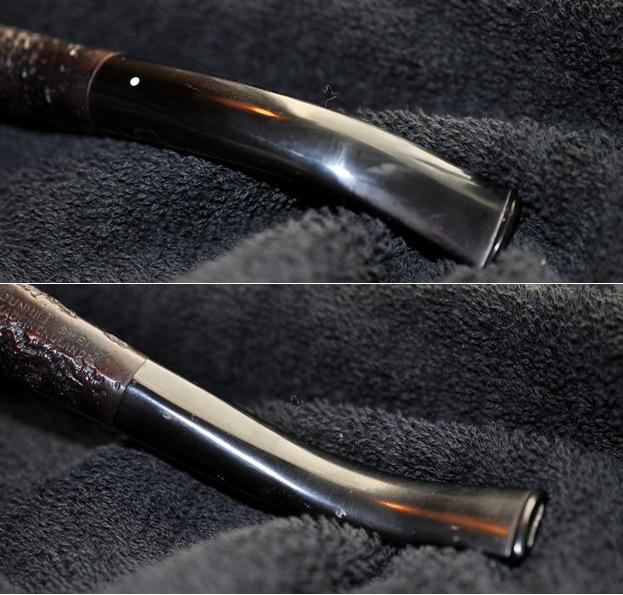
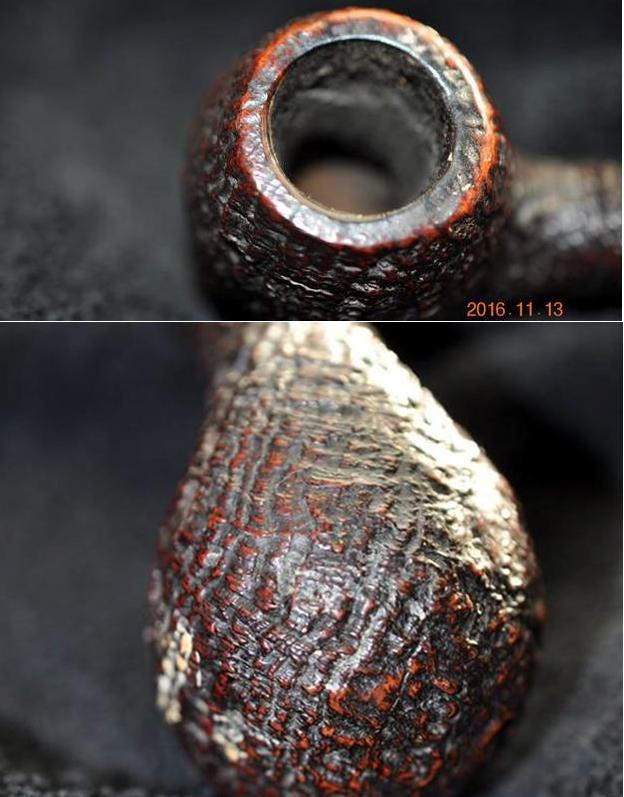
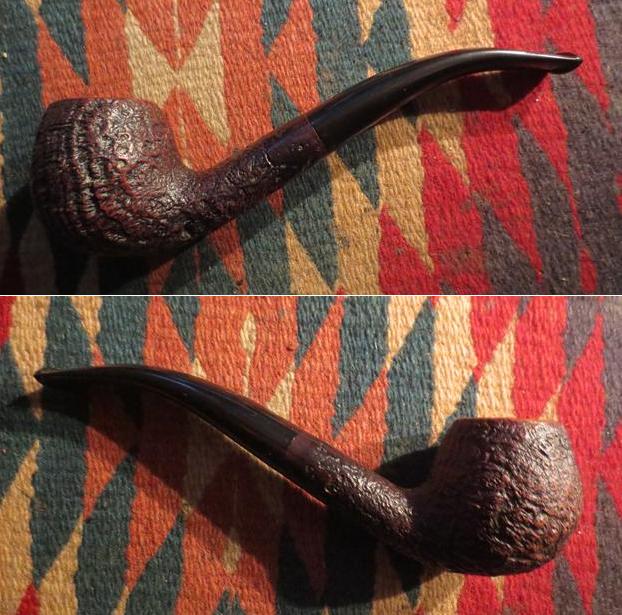
Dunhill pipes are stamped with a four digit code. Digit 1: (from 1 to 6) denotes the size of the pipe (the group). Digit 2: denotes the style of the mouthpiece (0, 1=tapered, 2=saddle). Digit 3 and 4: denote the generic pipe shape. Thus 5113 can be interpreted this way: (5 = size | 1 = tapered stem | 13 = Bent Apple. The dating on these four digit pipes can be determined by starting with the base date of 1960 and adding the superscript underlined number after the D of England. Thus 1960+24 makes this a 1984 pipe. The next two photos show the stamping from a lightly different angle accentuating the year stamp in the second photo.dunhill4The stem was in absolutely perfect shape though there were a few paint flecks on the surface. Underneath those the stem was flawless. There were no tooth marks or chatter at all and no oxidizing either. Along with the condition of the bowl (unsmoked briar at the bottom half of the bowl and a clear briar mortise with no darkening) this stem points to a pipe that was hardly used.dunhill5The next two closeup photos show the rim top with some of the tars and paint flecks in the grooves of the blast and the paint flecks on the bowl side on the left of the second photo of the underside view.dunhill6My brother did a miracle job cleaning up the paint that was all over this beautiful Dunhill. He was able to get it out of all of the deep crevices and crags of the sandblast without damaging the Shell finish. The rim grime and build up also came off and the flecks of paint on the stem came off without oxidizing the stem. He reamed the bowl and cleaned out the internals in the stem and the mortise and shank with alcohol, cotton swabs and pipe cleaners. The pipe smelled clean and was clean. It came to me and looked like the four photos below.dunhill8 dunhill9I took a photo of the rim top to show how clean it was when I received it.dunhill10The stem looks to be in great shape. The surface was very smooth and clean. The internals were also clean. I ran a pipe cleaner through the airway in the stem and the shank as well as the mortise. They were spotless.dunhill11I gave the bowl several coats of Conservator’s Wax and the buffed the stem with Blue Diamond on the buffing wheel and gave it several coats of carnauba wax. I buffed the pipe with a clean buffing pad to raise the shine. I hand buffed the pipe with a microfibre cloth to deepen the shine. The finished pipe is shown in the photos below. It was an easy clean up in terms of many of the pipes that cross my table but the finished pipe is quite stunning. This certainly was quite an amazing find and an incredible purchase for a little under $10. My brother certainly has luck and a good eye for pipes. Thanks for looking.dunhill12 dunhill13 dunhill14 dunhill15 dunhill16 dunhill17 dunhill18 dunhill19

A Surprise Find – A 1980 Dunhill Shell Group 5 Saddle Billiard


Blog by Steve Laug

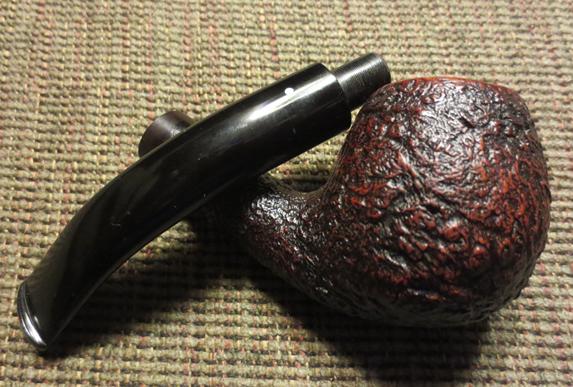
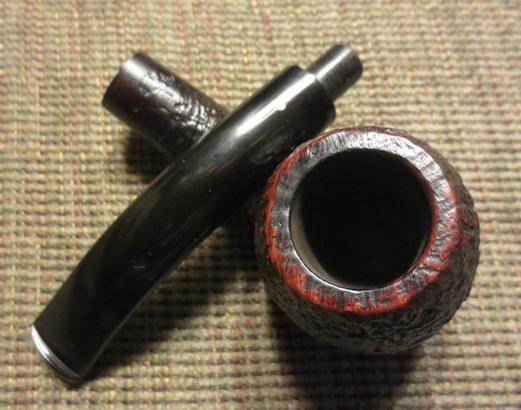
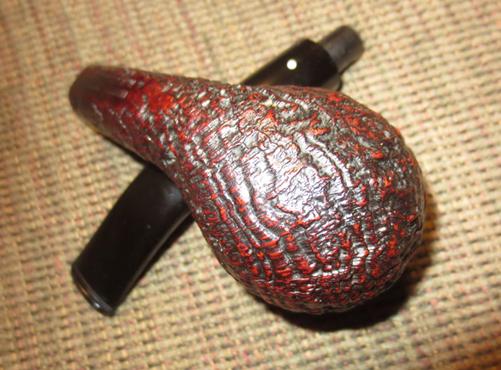
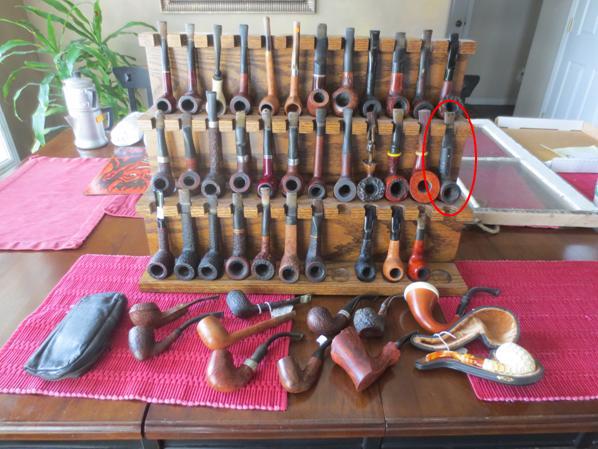
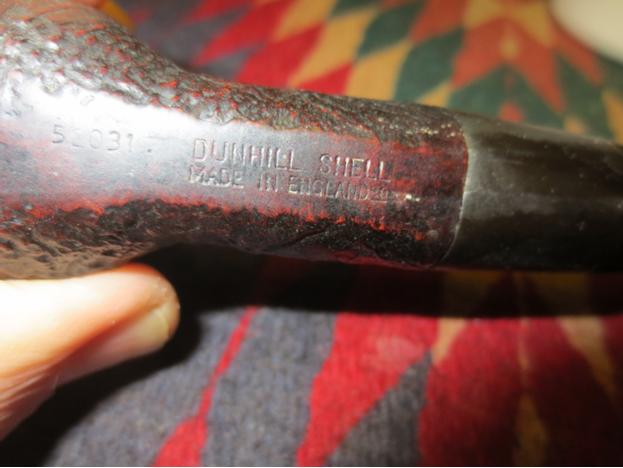
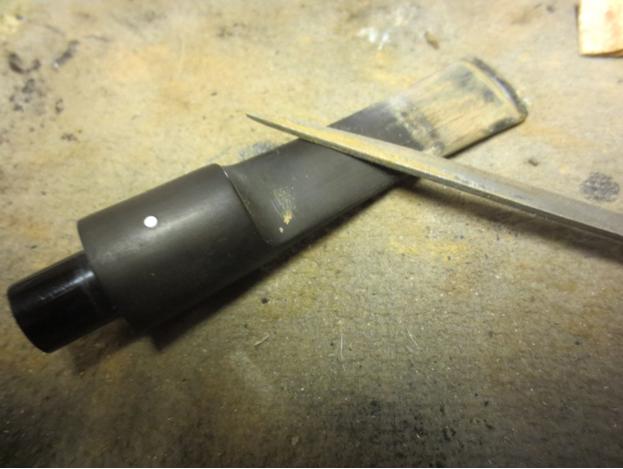
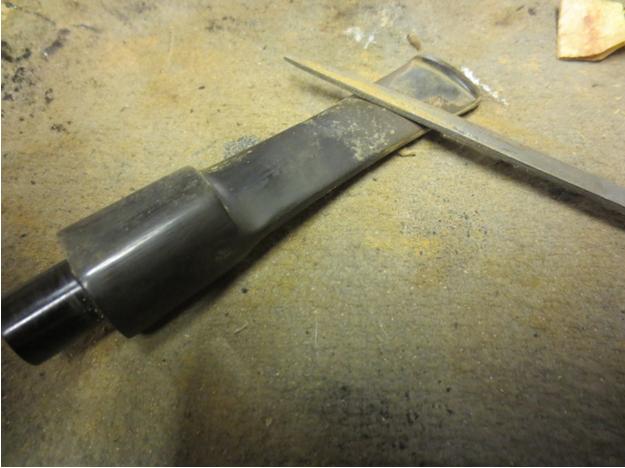
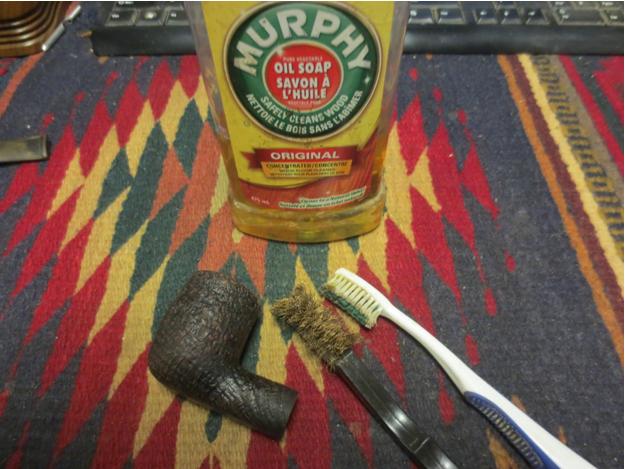
When my brother and I went to visit the “older than me” pipeman on a recent trip to Idaho to buy estate pipes from him he had this rack of pipes on his counter top. I picked through them and my attention was caught by the White Spot stem that shows up on the right side of the rack in the photo below circled in red. It was a large pipe and when I picked it up and examined the underside of the shank it was stamped 52031 followed by Dunhill Shell over Made in England with a superscript 20 next to the d of England. That told me I was dealing with a pipe from 1980. The blast on it was quite stunning and the finish was in decent shape. The bowl was caked with a thick aromatic cake and smelled exactly like the pipe the man was smoking while we were there – Lane 1Q. There was lava spilled over the back side of the rim top and inner edge but the edges of the bowl were still in round. The bowl had a bit of an odd shape to it – kind of asymmetrical. That may be because of the sandblast. It has a good thick bowl and the shank is quite large. The saddle stem was oxidized and had some calcification on the back-end near the button from a rubber softee bit. There were some tooth marks and chatter on both sides of the stem. The slot in the button was half clogged with debris. The fit of the stem against the shank was snug but the underside where it had been flattened to match the bowl was slightly off. The finish was good so I would not touch that area but it was interesting to note. I did know that under the grime and dirt there was a beautiful large Dunhill residing that with just a little effort would come to light.Dunhill1I took some photos of the pipe once I got home to Canada and was going to work on it. You can see the beautiful grain in the blast and the state of the stem and finish in the photos.Dunhill2 Dunhill3 Dunhill4 Dunhill5I took some close-up photos of the bottom of the shank to show the stamping and of the rim to show what the overflow looked like. Most of the blast on the rim was filled in with lava and the cake was uneven in the bowl. Dunhill6 Dunhill7I used a needle file to clean up and sharpen the edge of the button and to remove the tooth marks on the stem.Dunhill8 Dunhill9I had field reamed the pipe in Idaho using a PipNet Reamer to remove the majority of the cake. When I worked on it in Vancouver I scraped out the bowl with the Savinelli Pipe Knife and took the remaining cake back to bare briar.Dunhill10To clean up the oxidation and calcification on the stem I used some Meguiar’s Scratch x2.0 and scrubbed the stem with cotton pads. It took the majority of the oxidation off and removed the calcification around the button.Dunhill11 Dunhill12I scrubbed the briar with Murphy’s Oil Soap and a tooth brush to clean out the grooves in the blast finish. I also used a brass bristle brush to scrub the rim surface and remove the lava. I had to use a dental pick to clean out the deeper grooves after the bristle brush.Dunhill13I rinsed and dried off the bowl with a cotton towel. The dried and dull pipe is shown in the photos below. It is clean on the outside and the rim is “lava-less”.Dunhill14 Dunhill15 Dunhill16 Dunhill17I used a dark brown stain pen to touch up the edges of the rim and blend it in with the rest of the bowl. I scrubbed the airway and mortise in the bowl and the airway and slot with alcohol, cotton swabs and pipe cleaners. I picked out the slot with a dental pick and ran pipe cleaners through the grooves to clean out the debris.Dunhill18 Dunhill19I wetsanded the stem with 1500-2400 grit micromesh sanding pads as is usual and then dry sanded with 3200-12000 grit pads. I rubbed the stem down with Obsidian Oil between each set of three pads. When I finished sanding I gave it a final coat of the oil and let it soak into the rubber.Dunhill20 Dunhill21 Dunhill22I buffed the stem with Blue Diamond and then gave it multiple coats of carnauba wax. I hand applied some Conservator’s Wax to the bowl and then hand buffed it with a shoe brush. I finished buffing with a clean buffing pad and a microfibre cloth to raise the final shine on the bowl and stem. The finished pipe is shown in the photos below. If you are interested in this one it will be for sale on the blog soon. Contact me and it can be yours. Thanks for looking.Dunhill23 Dunhill24 Dunhill25 Dunhill26 Dunhill27 Dunhill28 Dunhill29
Restoring a 1935 Dunhill Shell – Andrew Selking


Blog by Andrew Selking

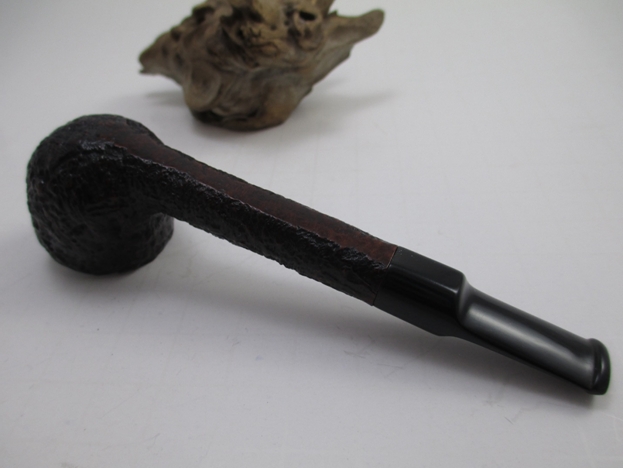
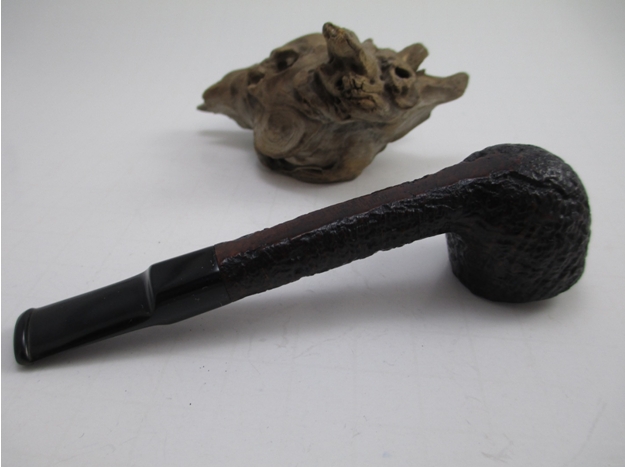
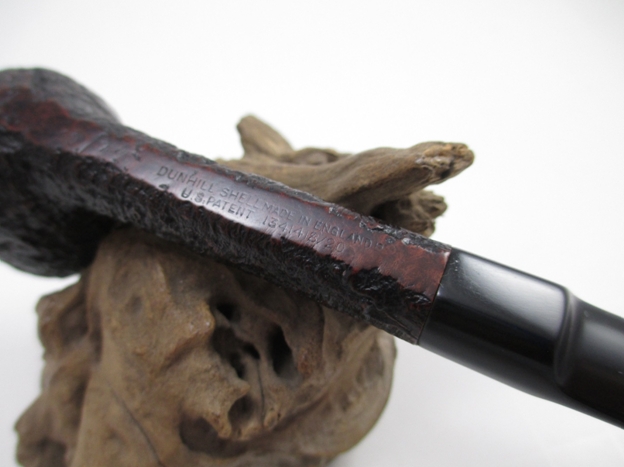
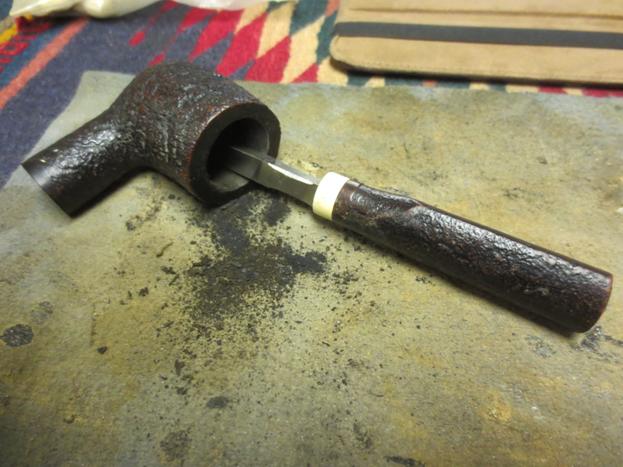
This is my second Dunhill Shell, but like everything it has been a learning experience. I saw this orphan about to expire on eBay without a single bid. As they say, a little knowledge can be a dangerous thing. I knew that it was a desirable patent-era Shell and from the markings it was made in 1935. I should have taken the time to look at a Dunhill shape chart, this pipe had been seriously topped. The good news is, I didn’t pay too much for it and it’s a handy little pipe, 4 15/16 inches long and .7 of an ounce! No wonder the stem didn’t have any tooth marks.

So here’s what the pipe looked like before the restoration.Dun1

Dun2

Dun3 The one thing that I really like about the Dunhill Shell pipes is the finish. The combination of deep reddish brown and darker brown/black is very pleasing to look at. That is why I treat rough finish pipes (rusticated, blast, fine line) differently than smooth finish pipes. I took a tip from Steve and use Murphy’s Oil Soap, which is made from vegetable oils and specifically formulated for wood. I took a small amount of the soap and applied it directly with a toothbrush.Dun4

Dun5 As you can see the Murphy’s Oil Soap did remove some of the finish, but not nearly as much as the alcohol bath would have. The soap also removed the decades of accumulated grime. If you don’t take care to clean the outside of the pipe no amount of wax will make it shine.Dun6

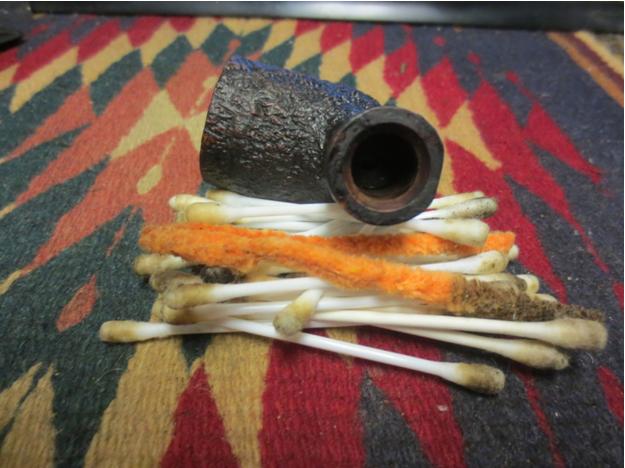
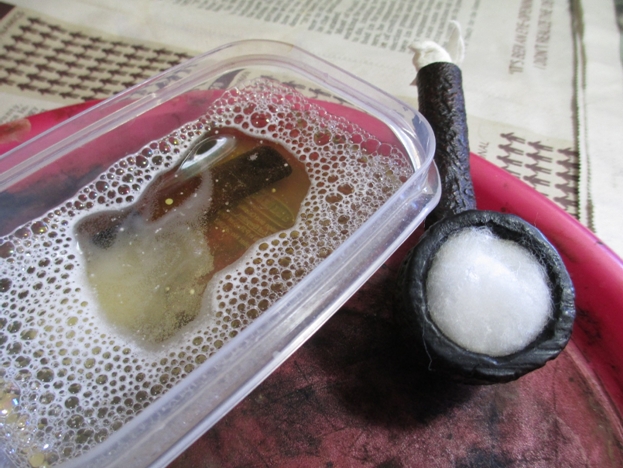
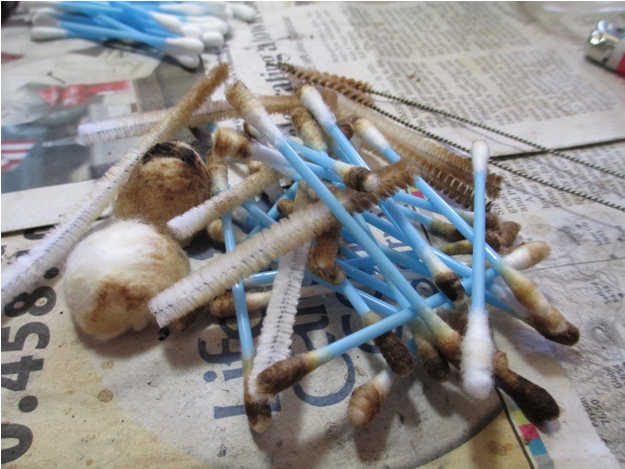
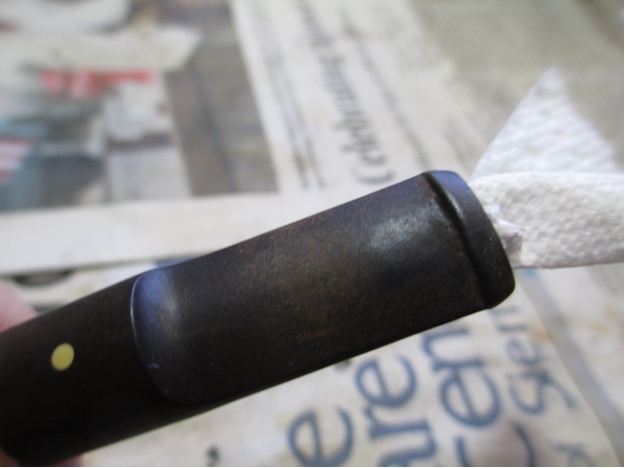
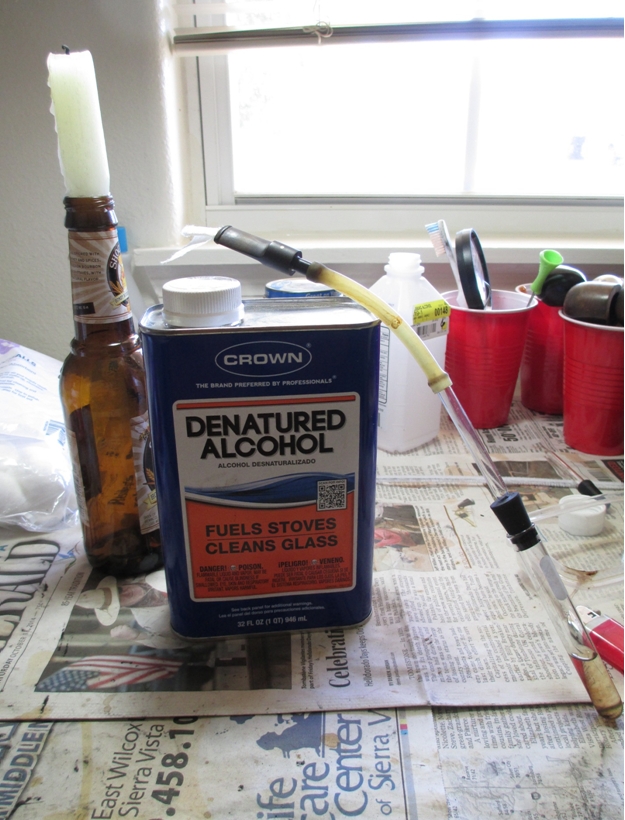
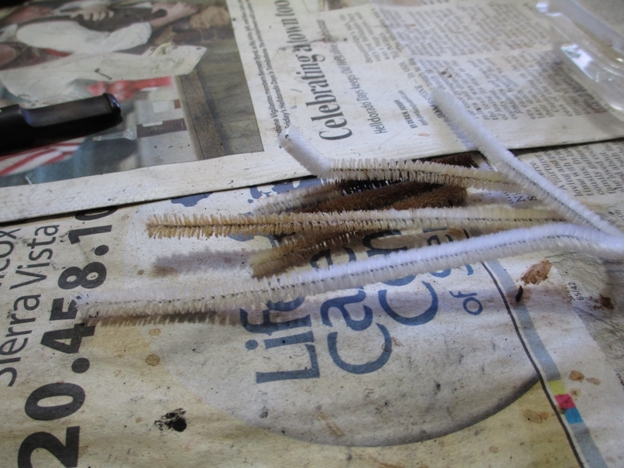
Dun7 My next step was to start the stem soaking in Oxyclean and soak the bowl with denatured alcohol. I packed the bowl with cotton balls, plugged the shank with some rolled up paper towel, and used an eye dropper to soak the cotton.Dun8 After the cake loosened up, I reamed the bowl. This bowl is huge, I used my two largest reaming heads to clean it out.Instead of doing the retort multiple times, I used q-tips dipped in denatured alcohol followed by pipe cleaners. (I don’t technically use pipe cleaners. I use “fuzzy sticks”. That’s the innocuous name given to pipe cleaners used for crafts.) To maximize each cleaner, I used scissors to cut the dirty section off. As you can see I ended up with a decent size pile of q-tips and fuzzy sticks.Dun12 Next I turned my attention to the stem. I did the retort first, then used pipe cleaners to finish the job. Fortunately since the stem is so short, it didn’t take long to clean. You will notice that I packed some paper towel into the end of the stem. Occasionally when you use the retort, the alcohol will boil over and spray everywhere. That does not endear you or your eccentric hobbies to your significant other, especially when the resulting mess makes the wall look like a Jackson Pollock painting.Dun13

Dun14

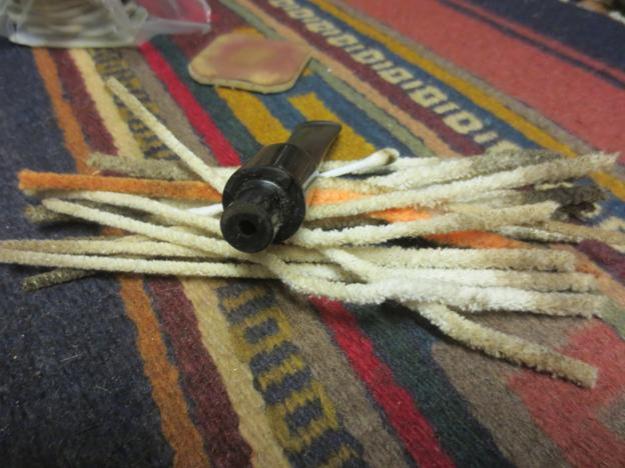
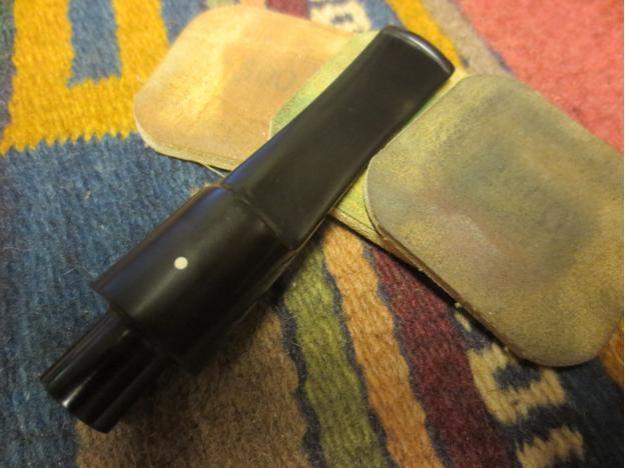
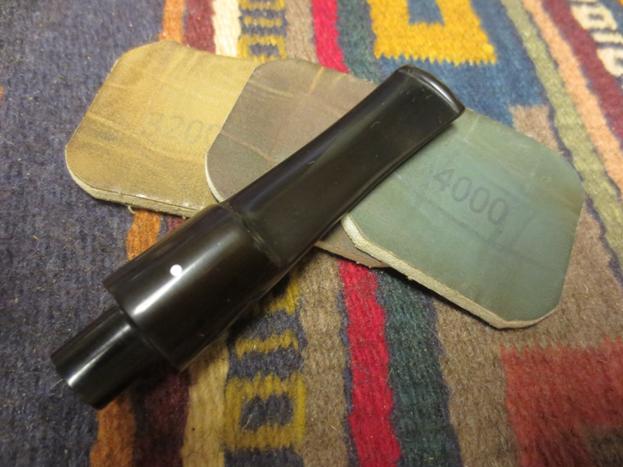
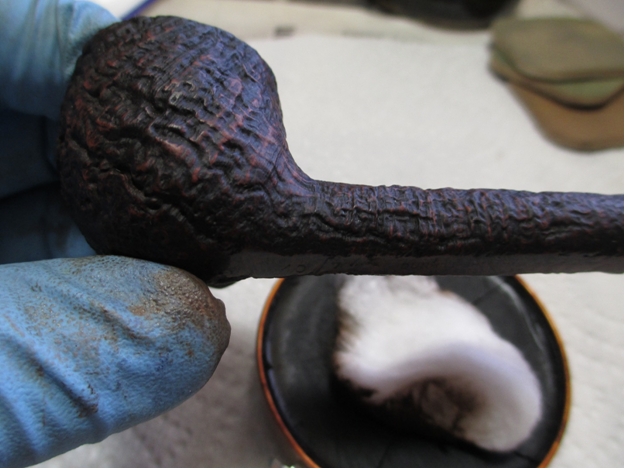
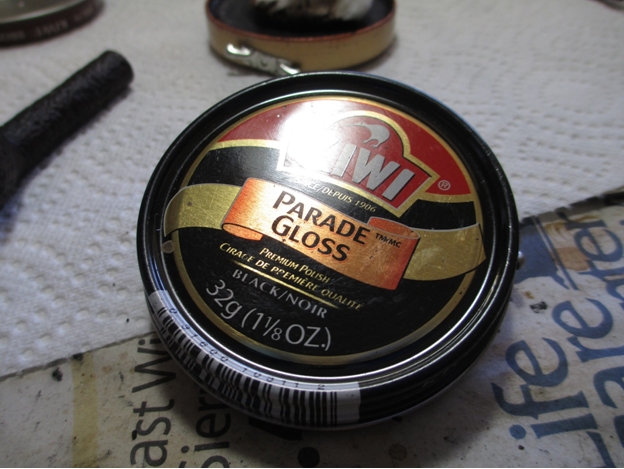
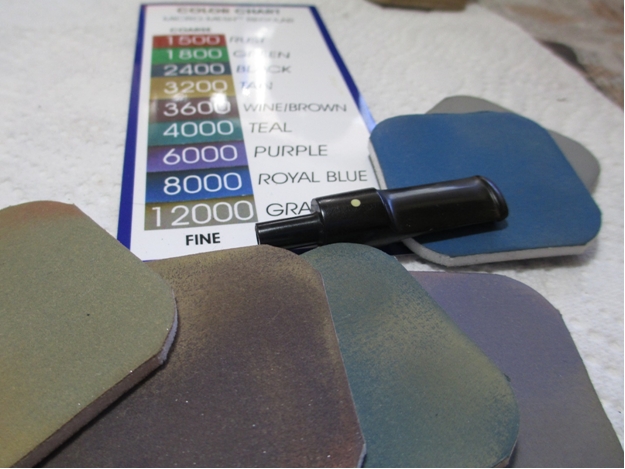
Dun15 I usually take extra time on stems as nice as this one. Instead of using 400 grit wet/dry I started out with 1000 grit wet/dry and water. It takes longer, but the last thing I want to do is change the profile of the stem or damage any of the details by using a lower grit sand paper. After the 1000 grit I used 1500-2400 grit micro mesh pads with water.Dun16 While the stem dried, I began the staining/waxing process. In an attempt to replicate the Dunhill finish, I used the brown shoe polish followed by a thin layer of black shoe polish. The heat gun helps melt the wax so that it gets into all of the crevices and the brush brings out a nice shine.Dun17

Dun18

Dun19 Here is what the bowl looked like after the application of the second coat of wax and buffing with the brush.Dun20

Dun21

Dun22

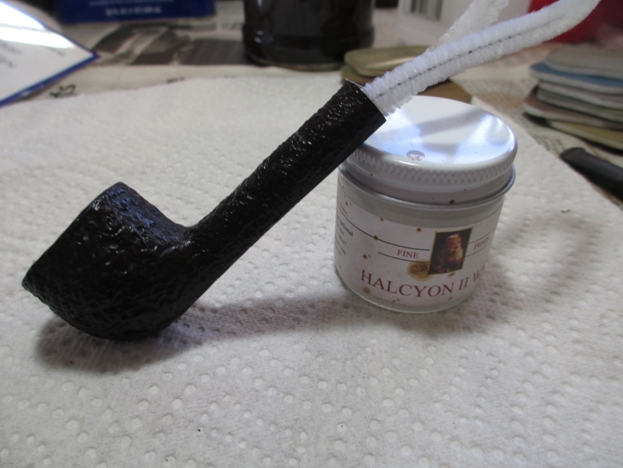
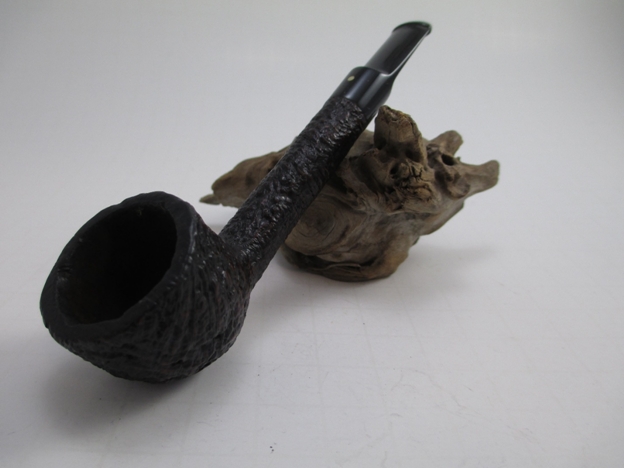
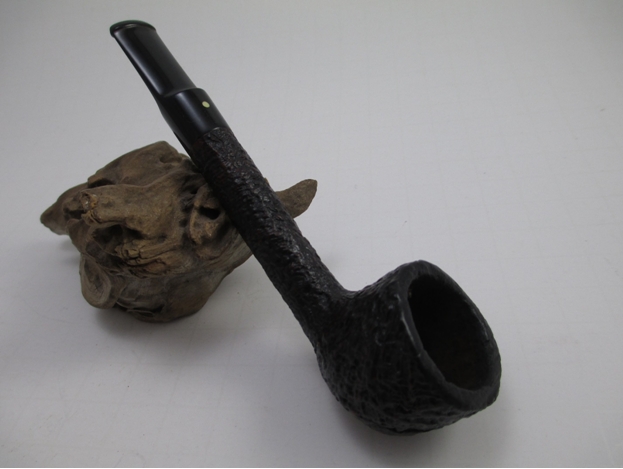
Dun23 Since shoe polish is a soft wax, I protect all of my rough finish pips with Halcyon II wax. I applied the wax with my finger tip (a little goes a long way) and let it dry for about 10 minutes. After the wax dried, I buffed it out with a soft cloth and applied a second coat. (The pipe cleaner is so I can hang the bowl up to dry.)Dun24 Finally I finished sanding the stem, using a progression of micro mesh pads from 3200-12000 grit followed by a quick spin on the buffing wheel with some carnauba wax.Dun25 Here is the finished pipe.Dun26

Dun27

Dun28

Dun29

Dun30

Dun31