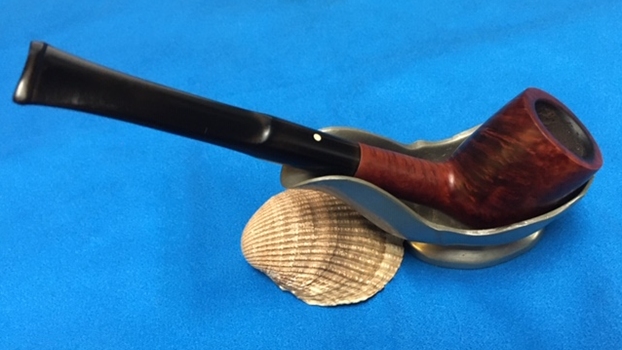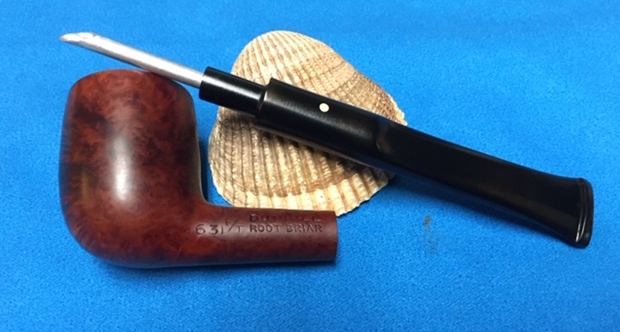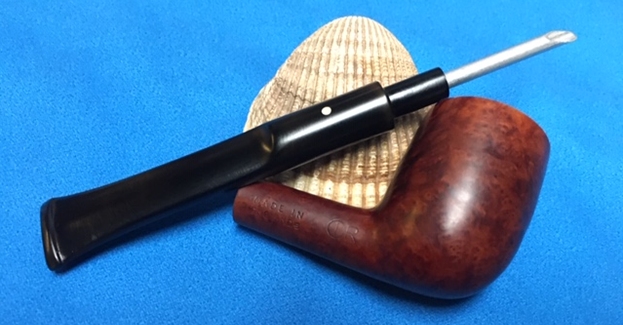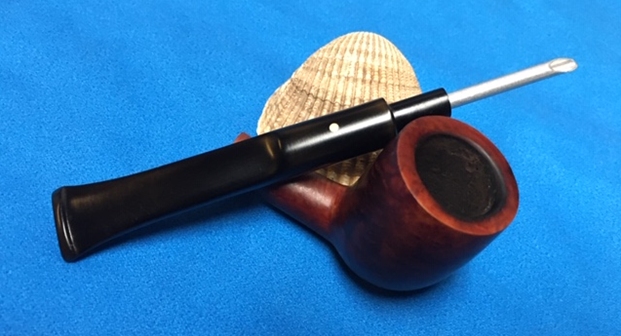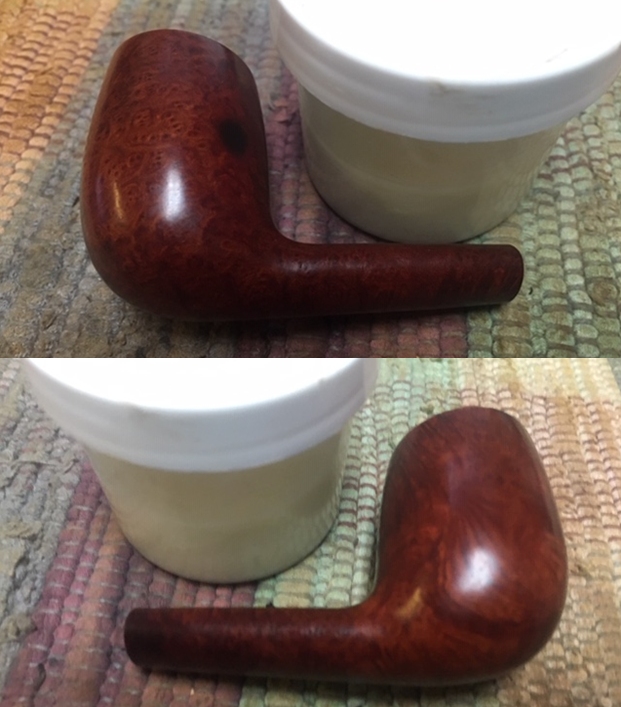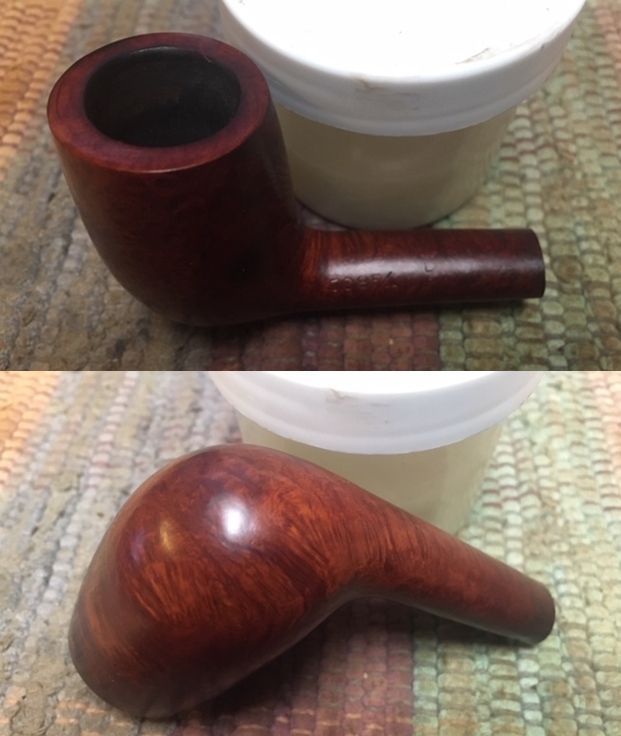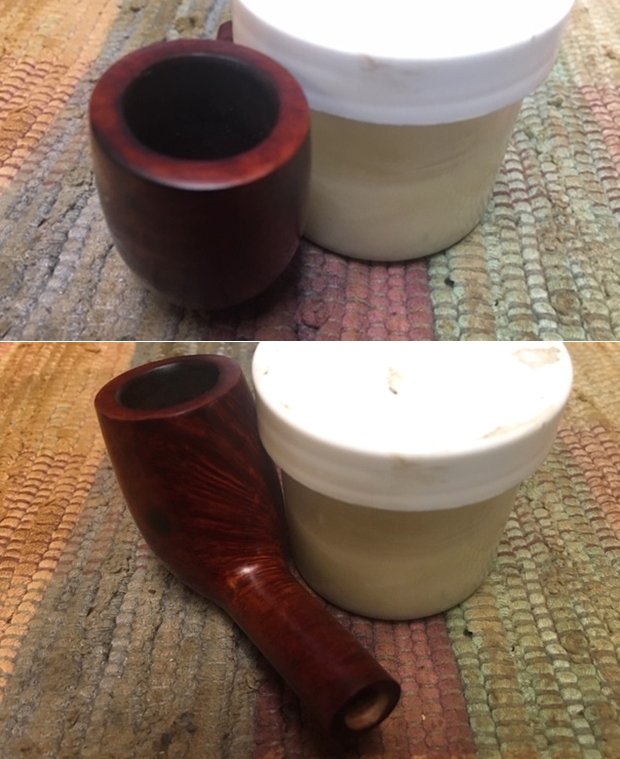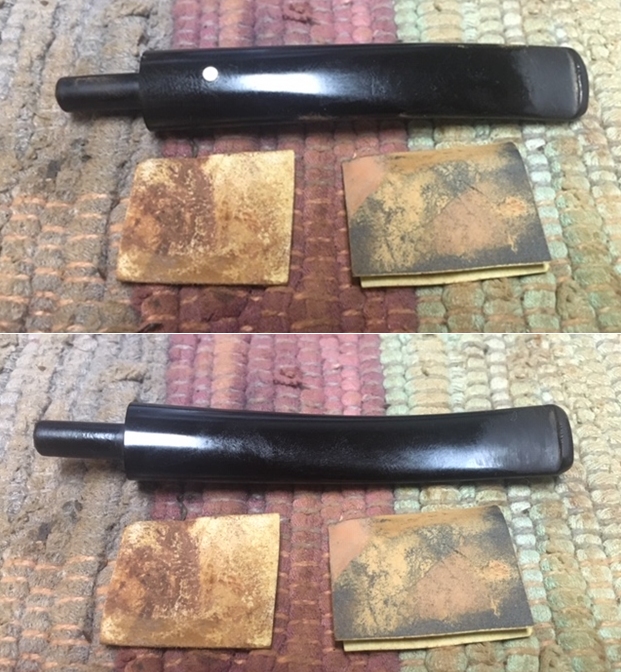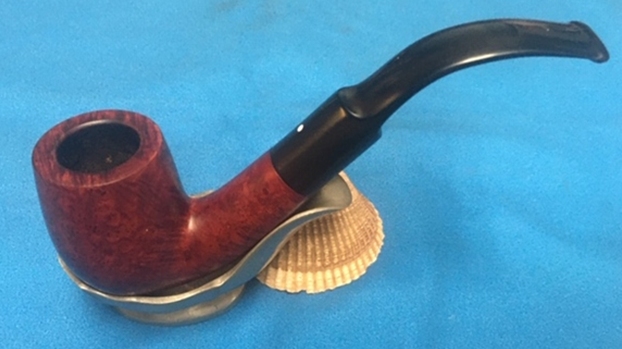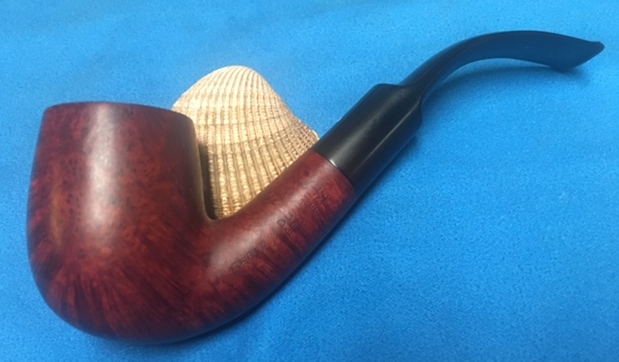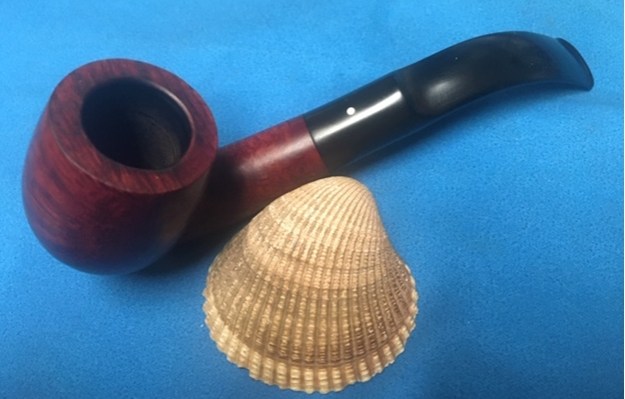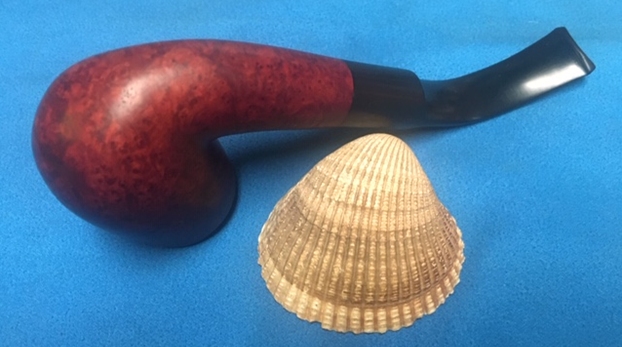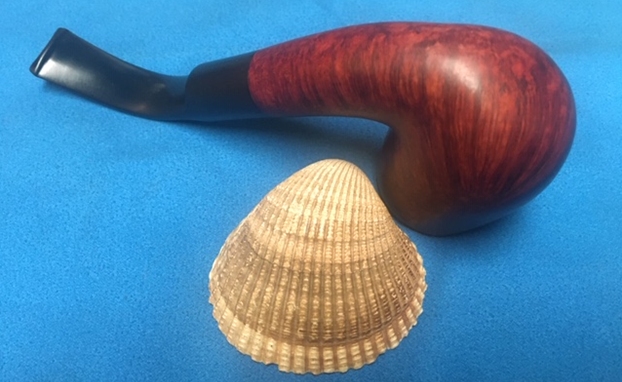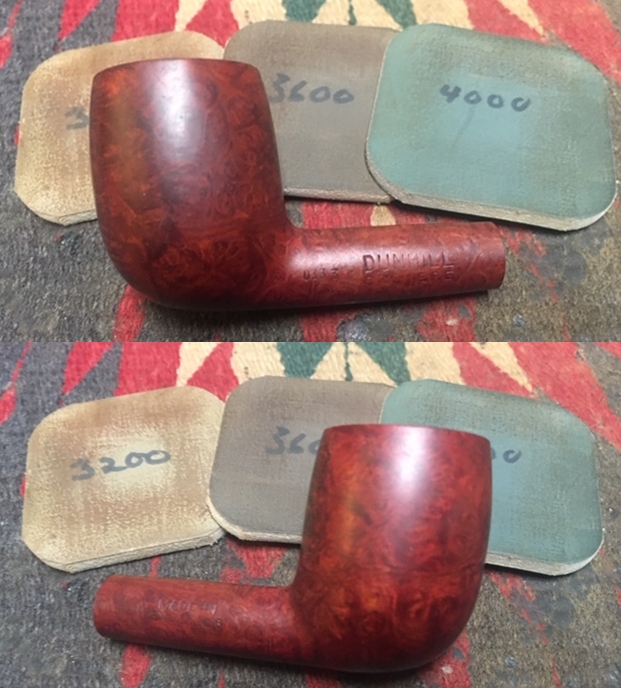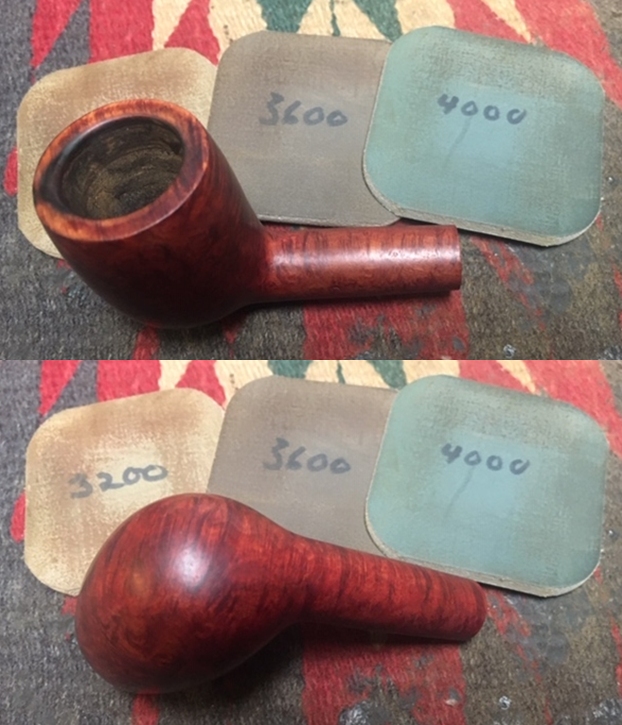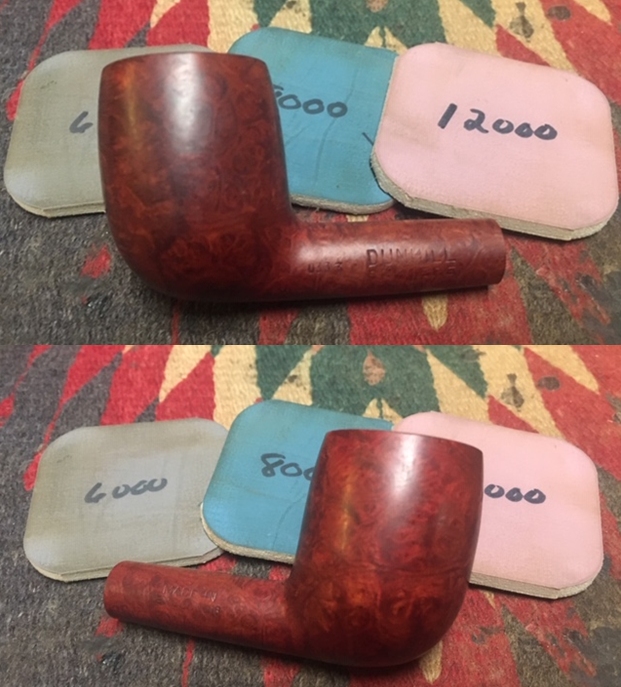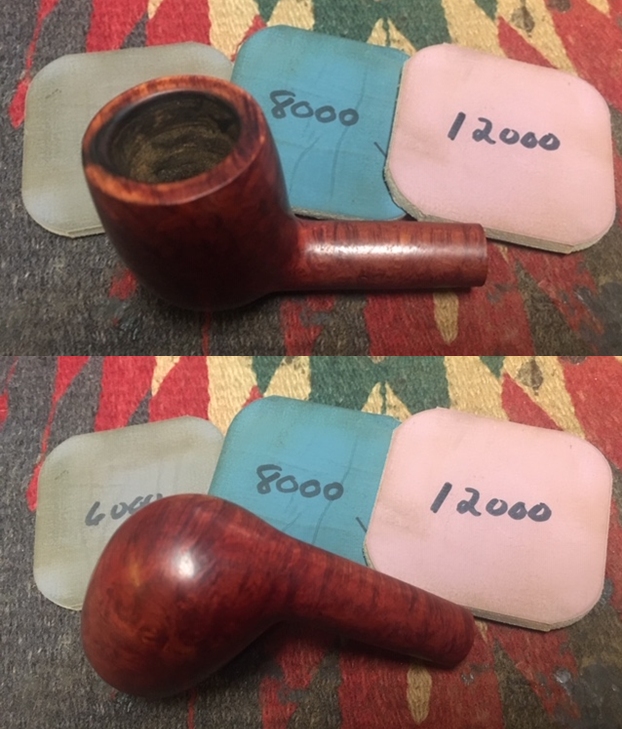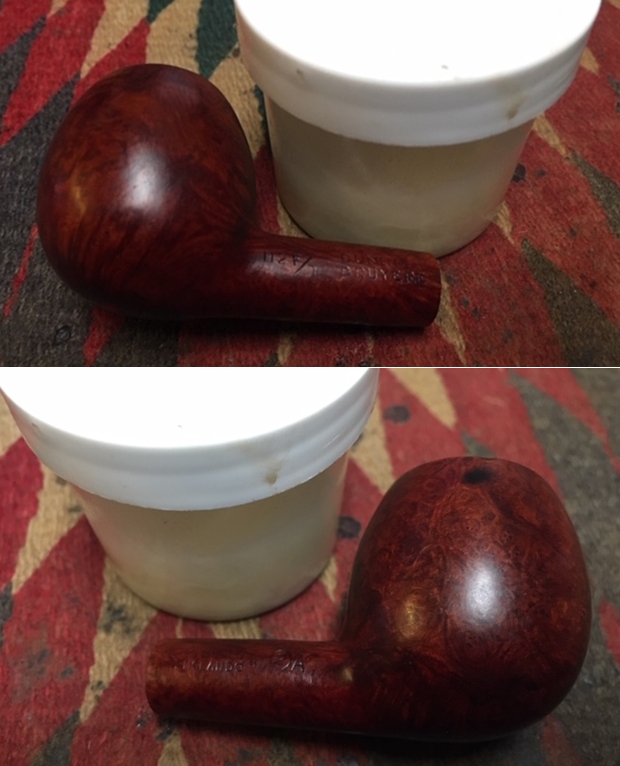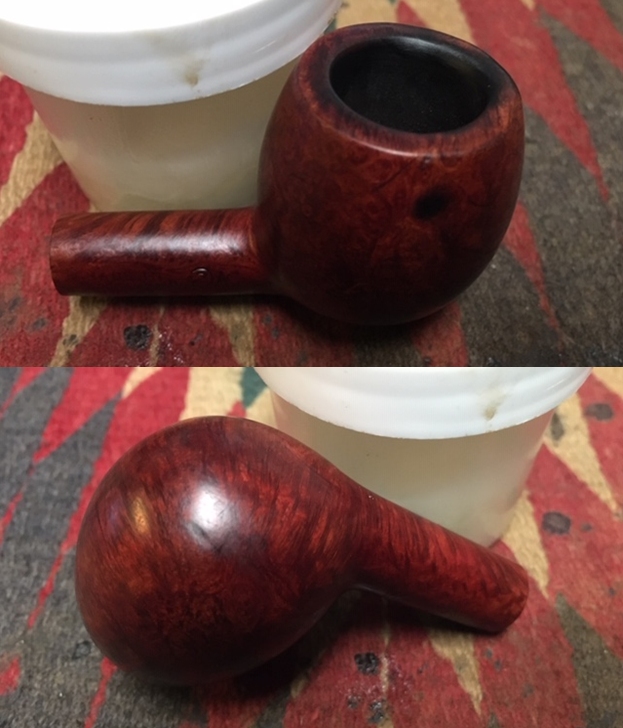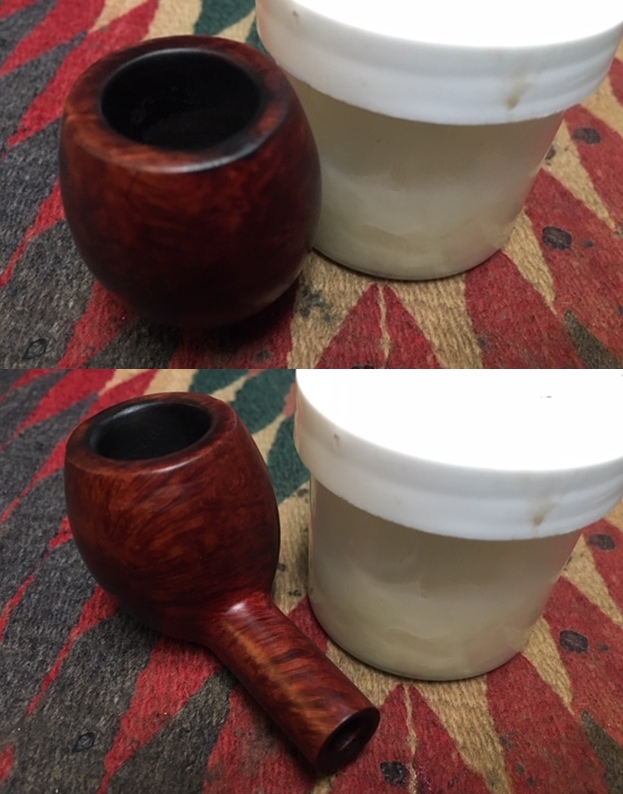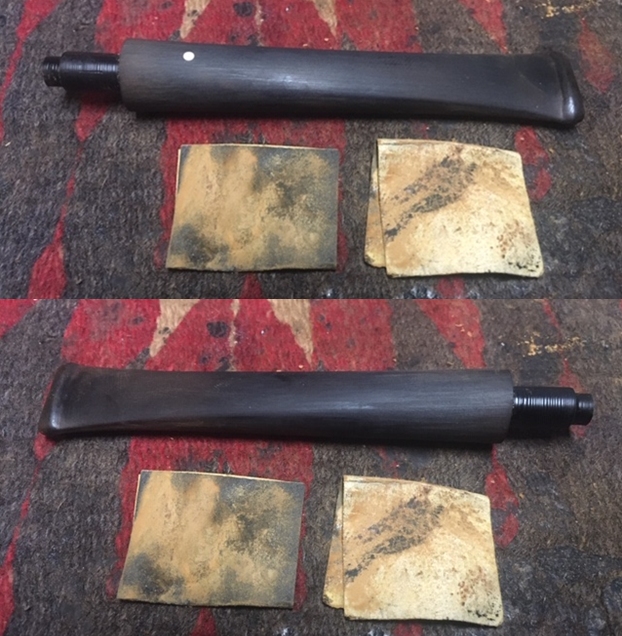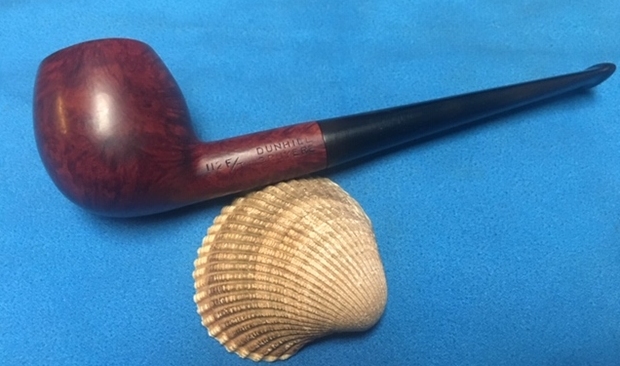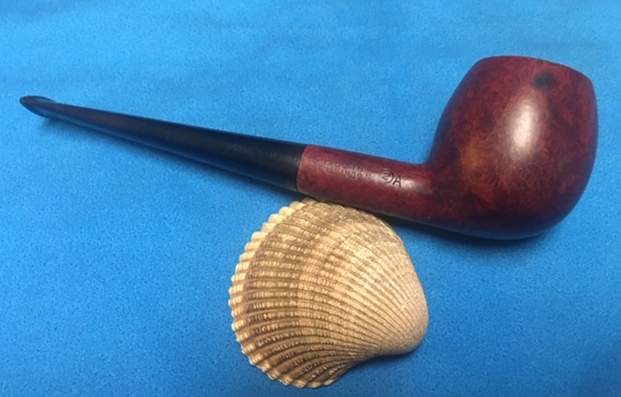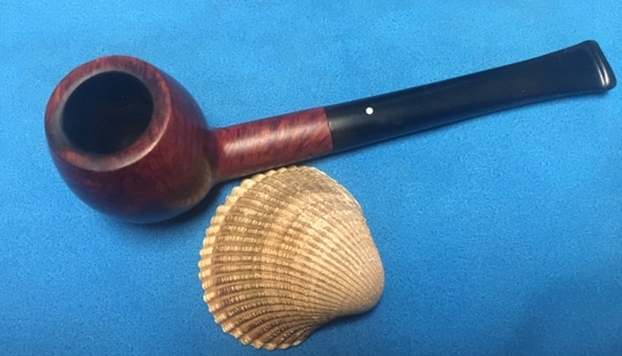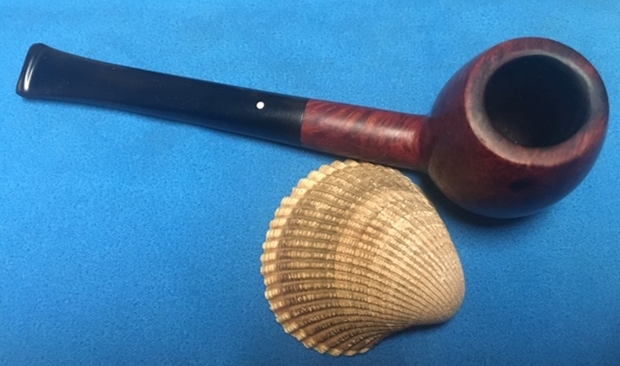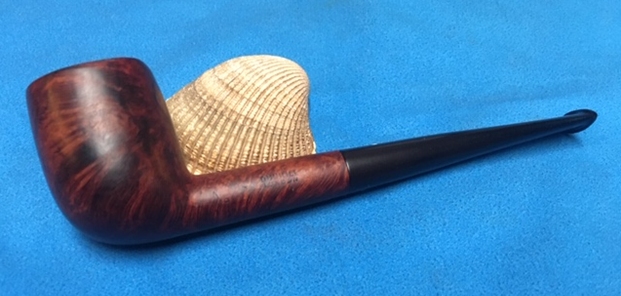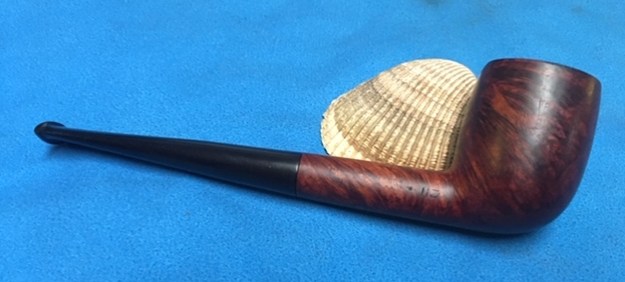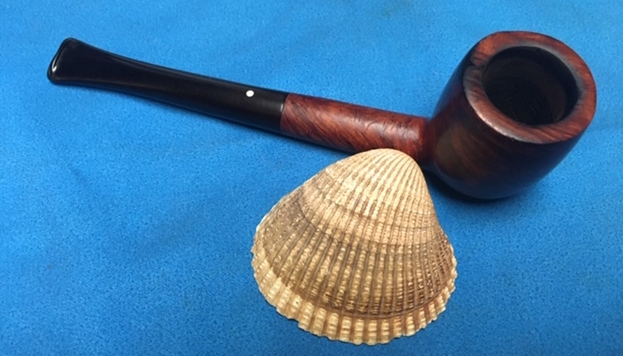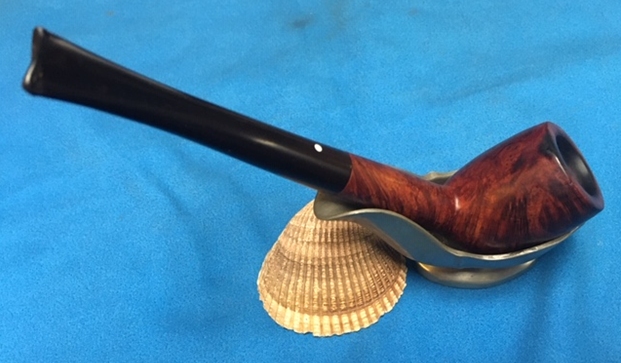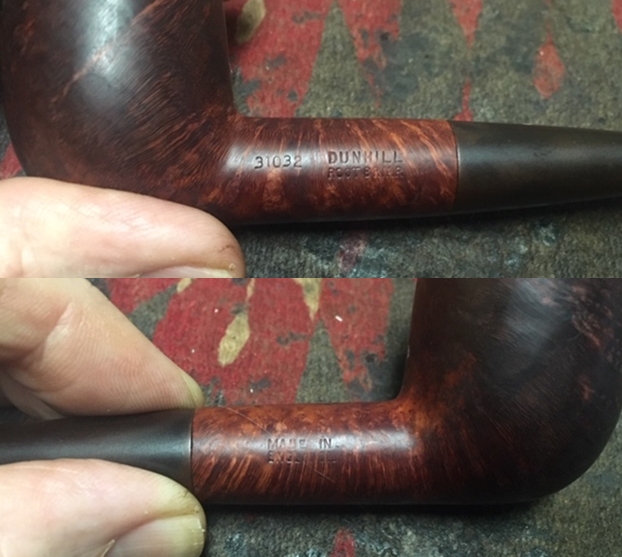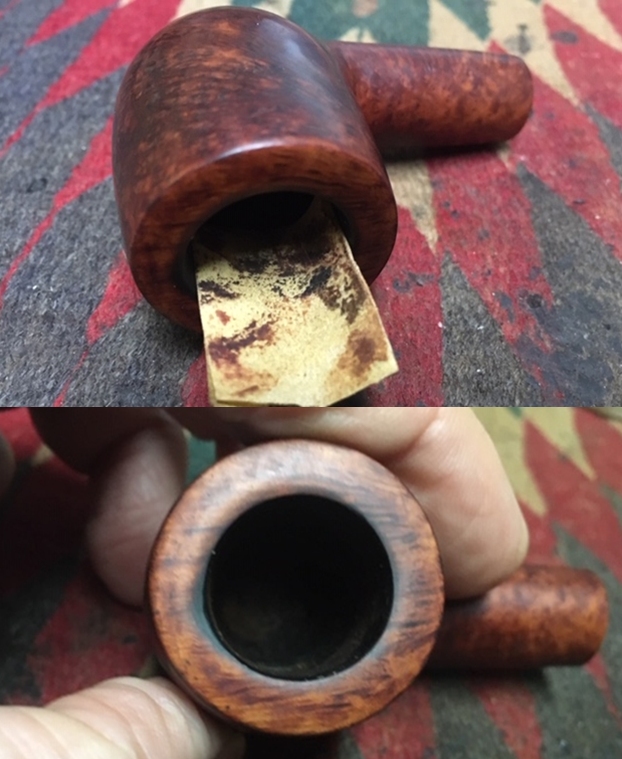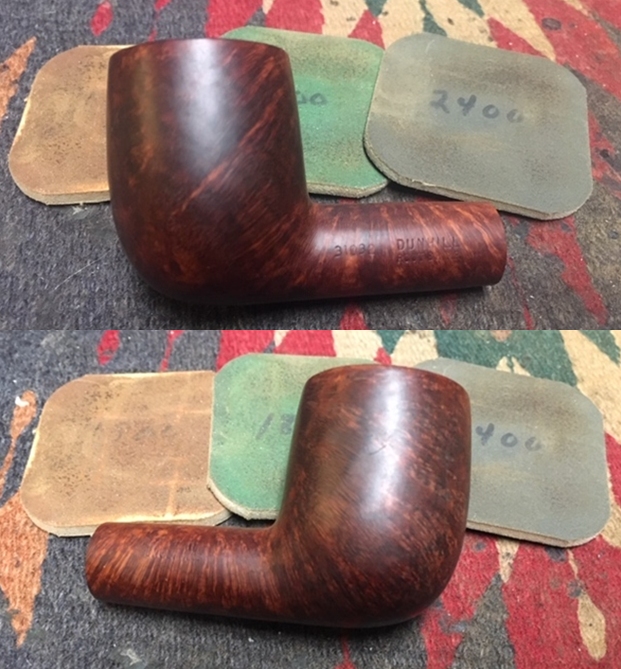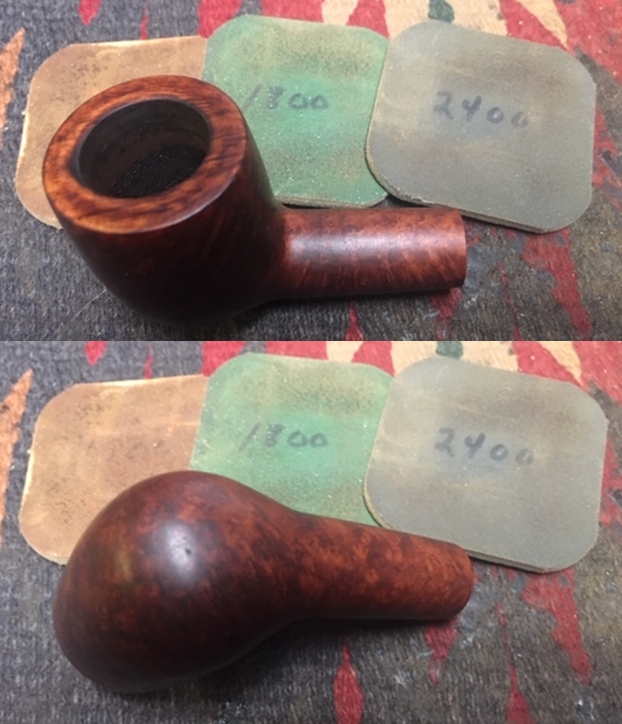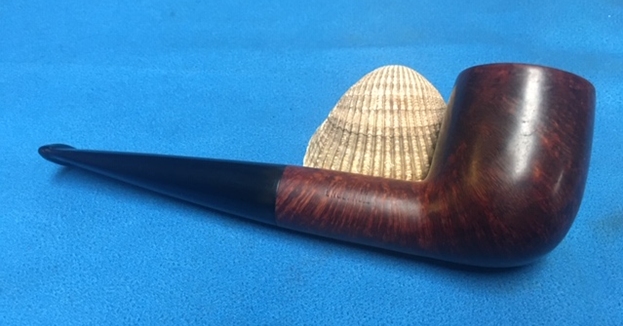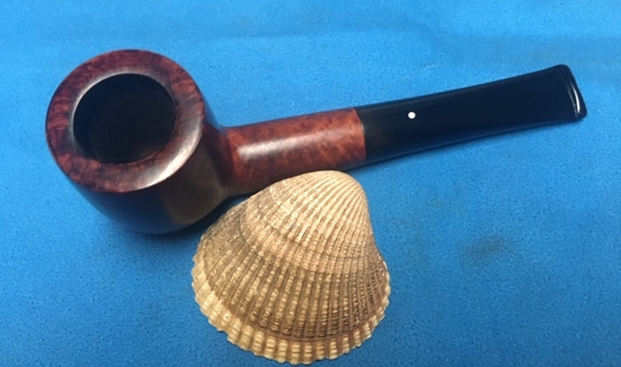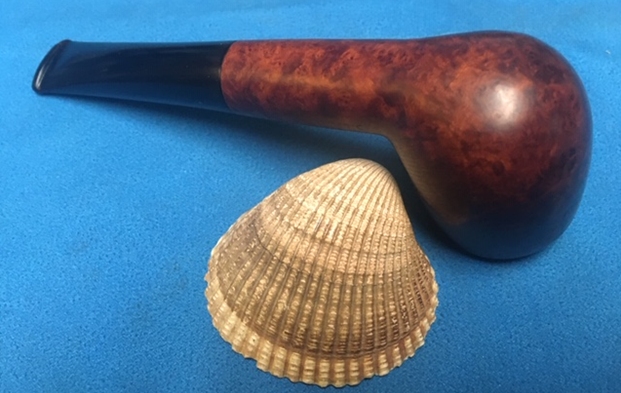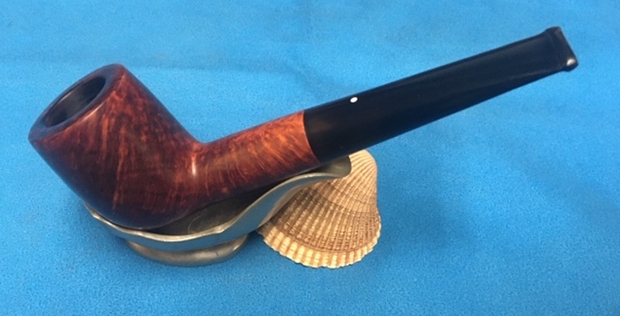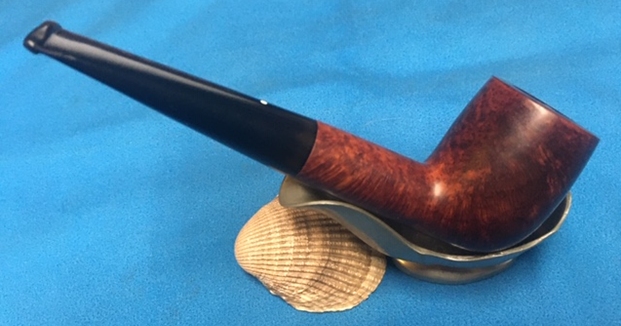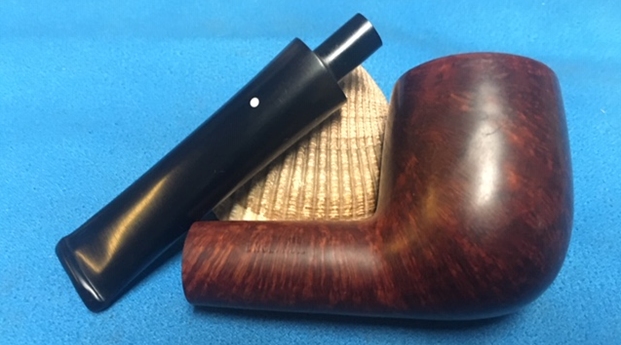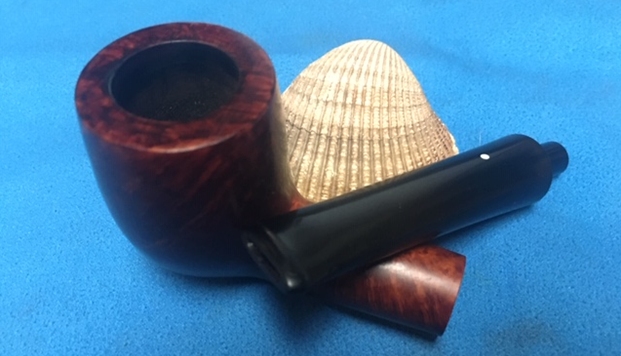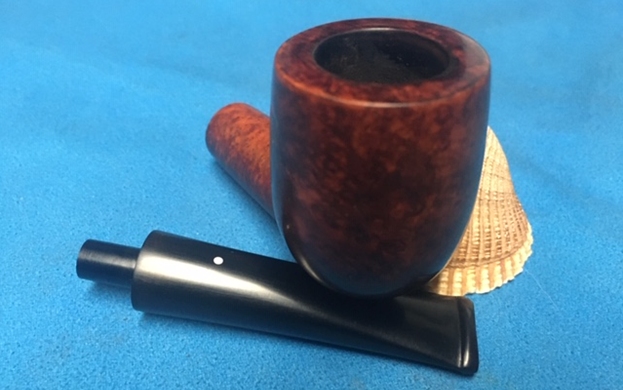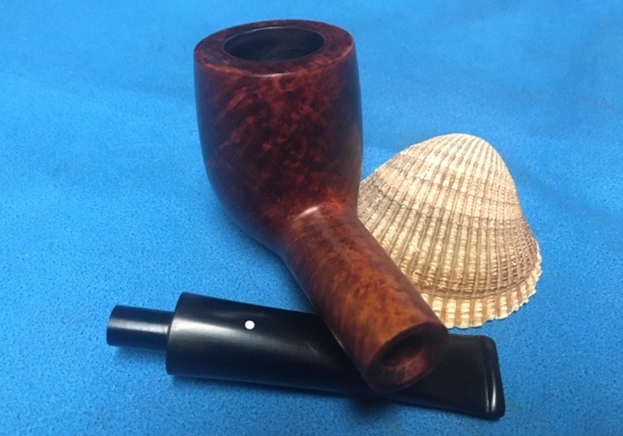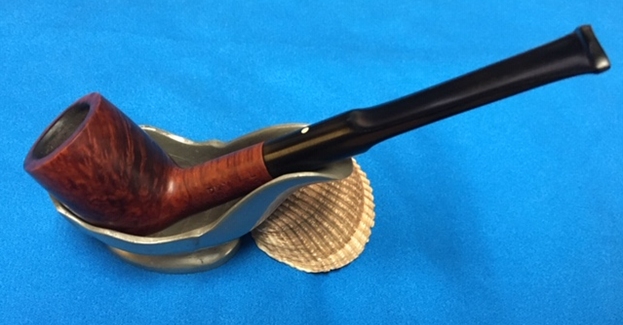
Tag Archives: Dunhill Pipes

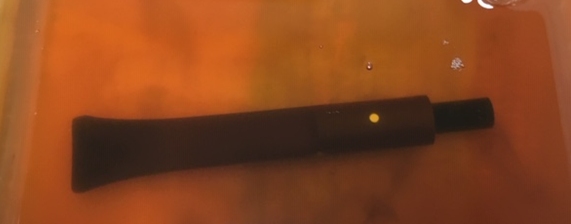
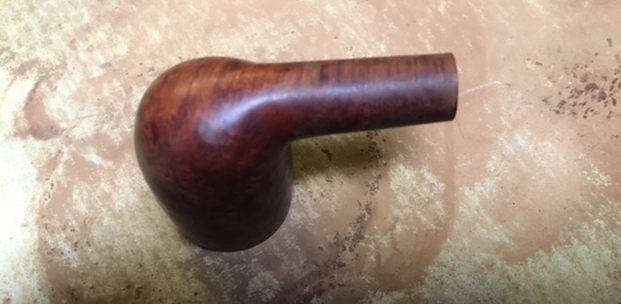
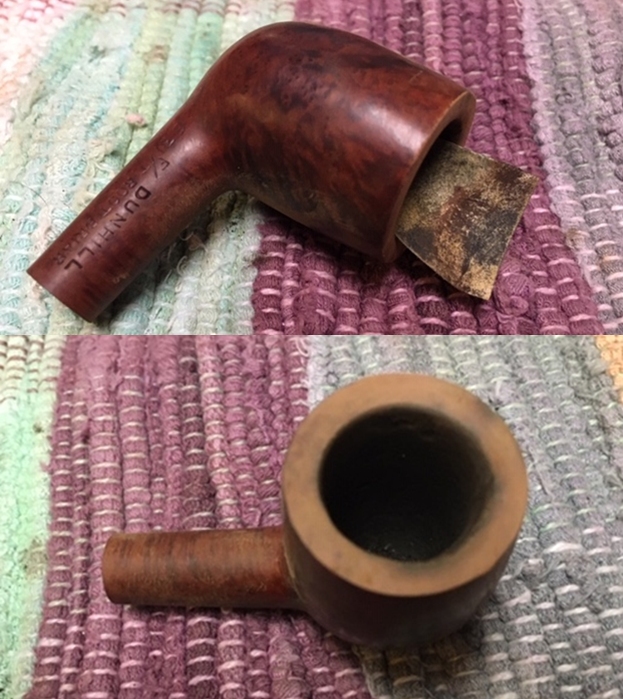
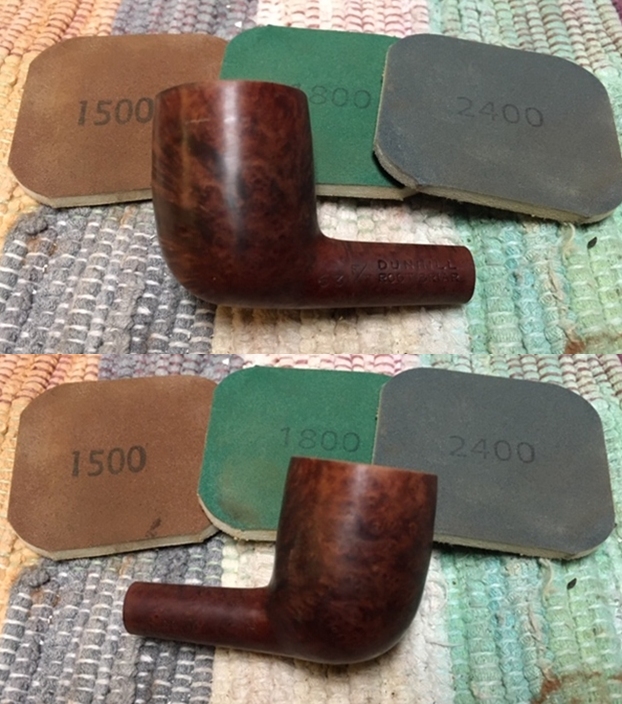
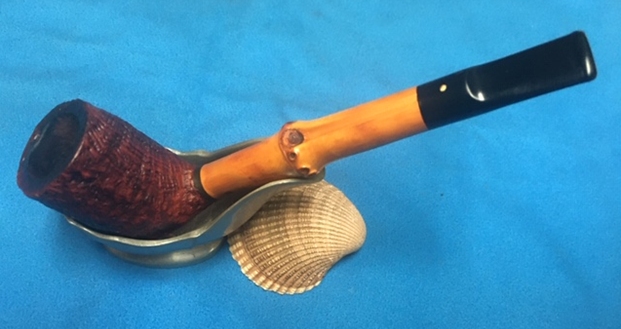
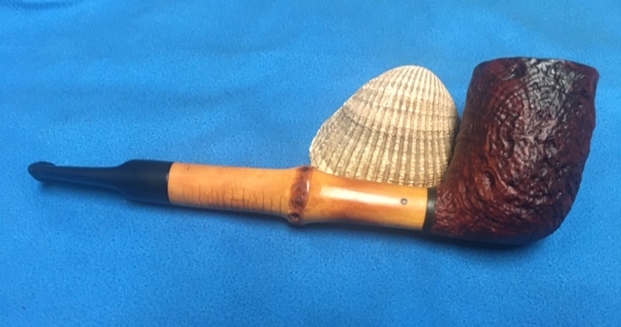
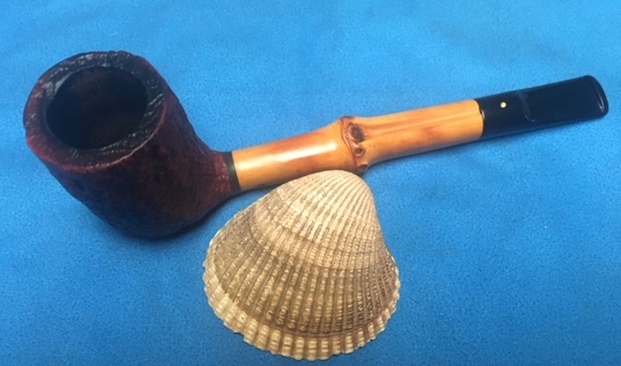
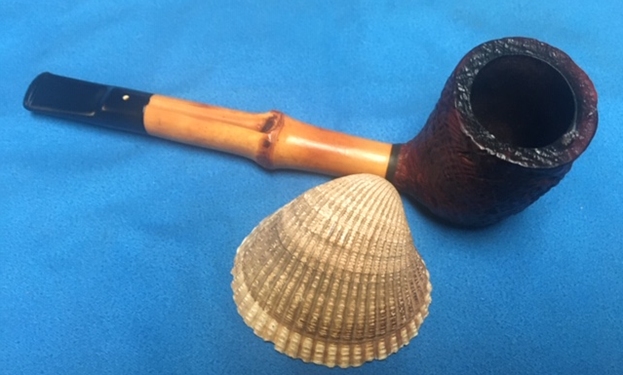
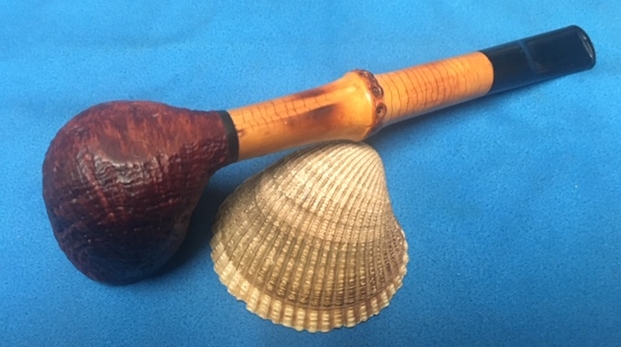
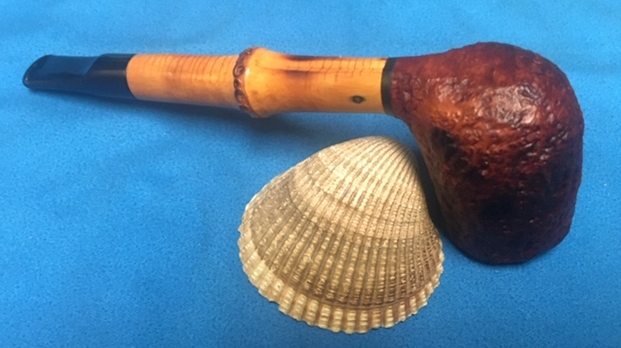
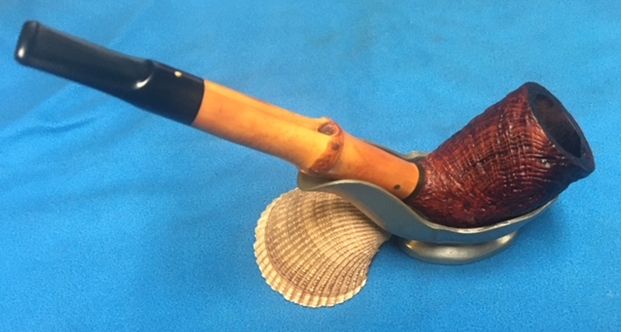
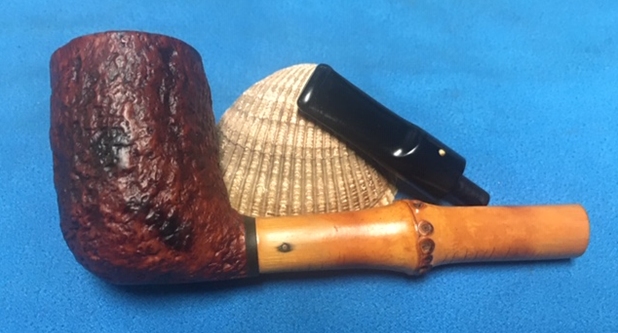
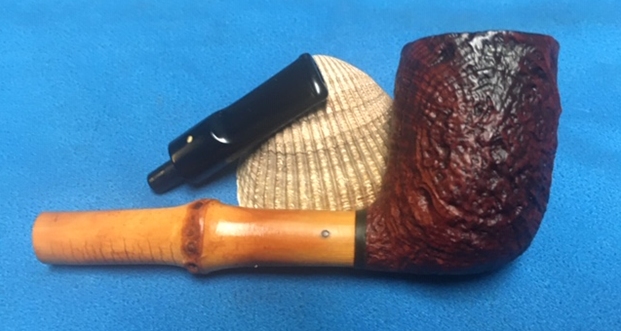
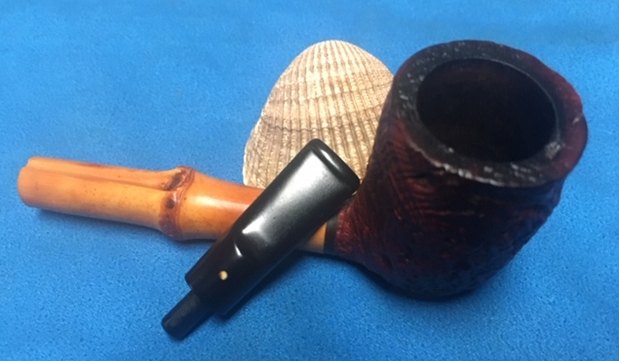
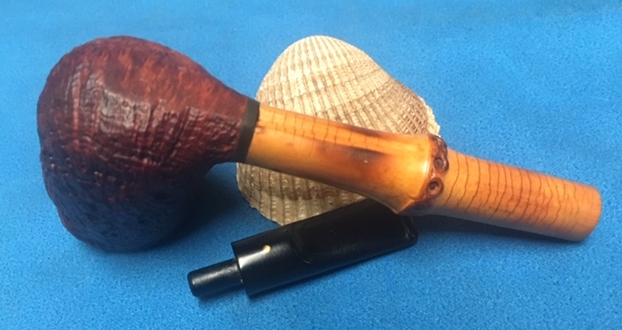
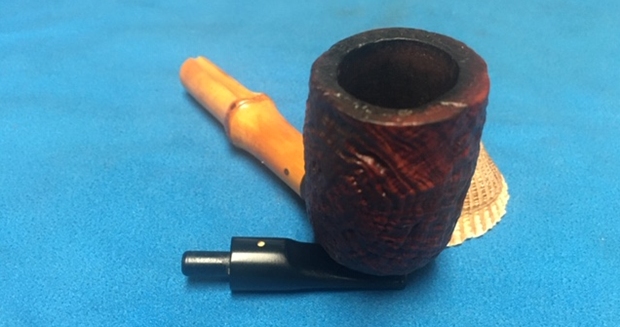
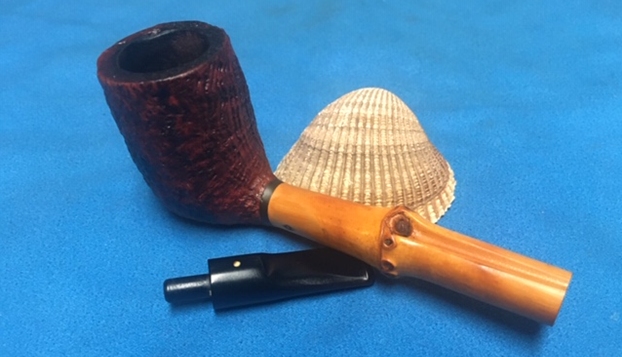
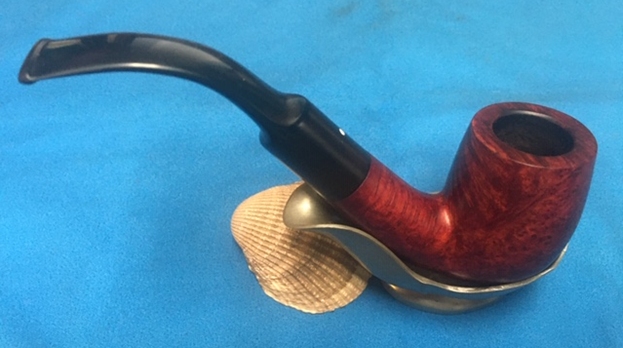
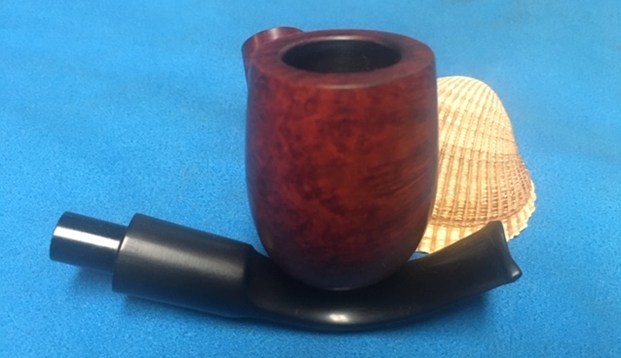
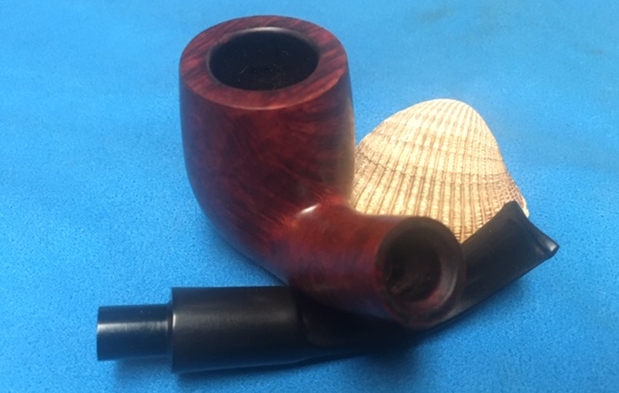
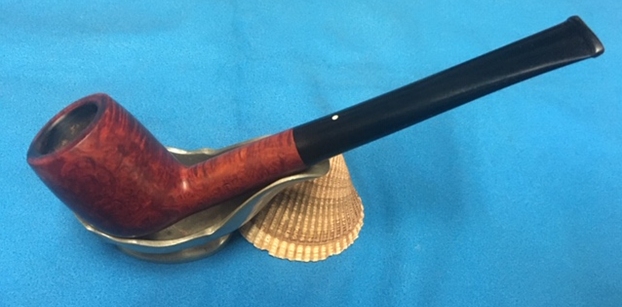
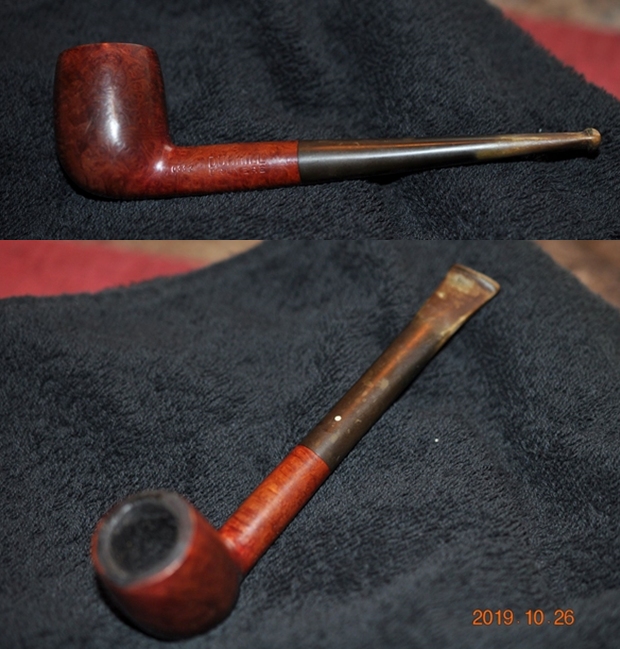
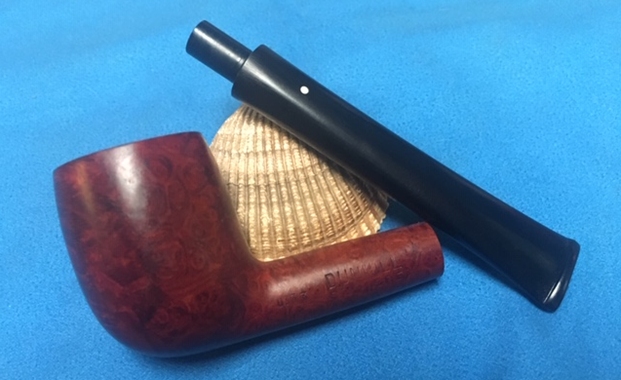
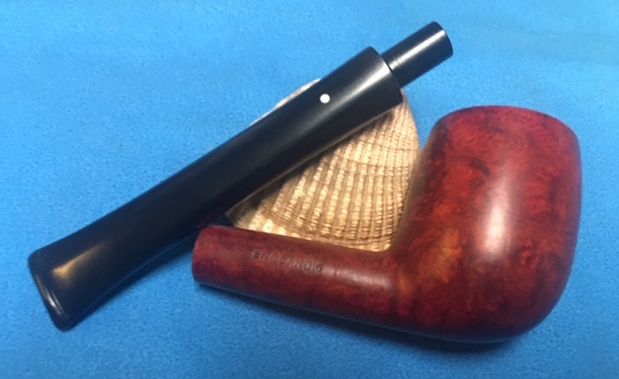
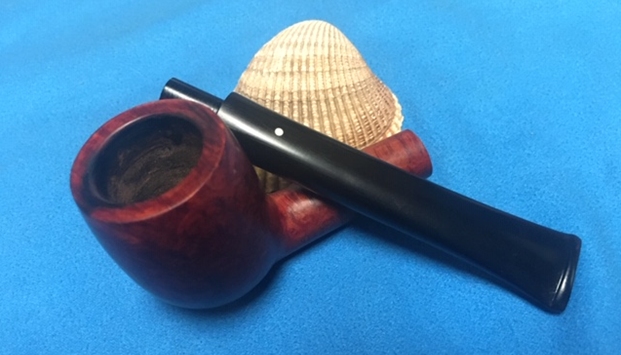
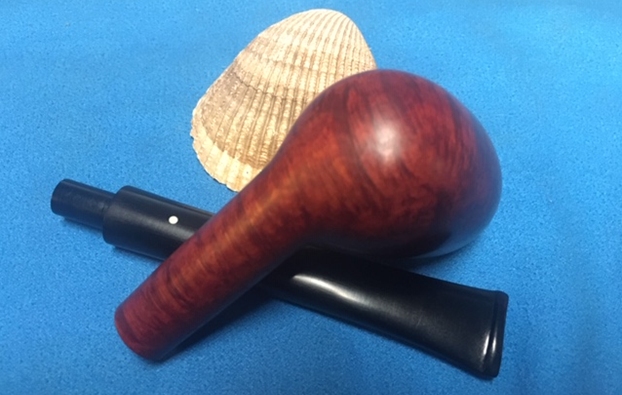
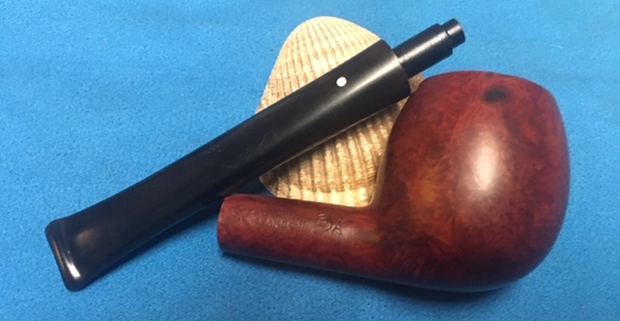
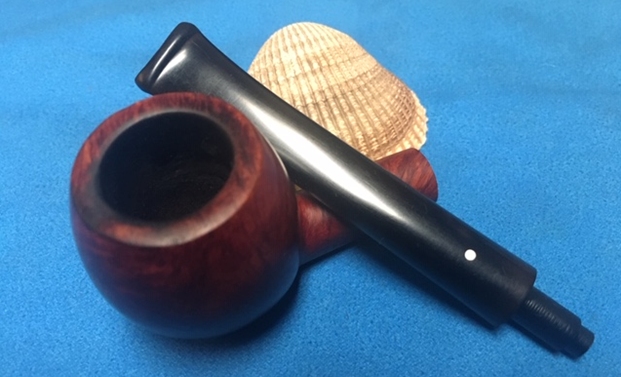
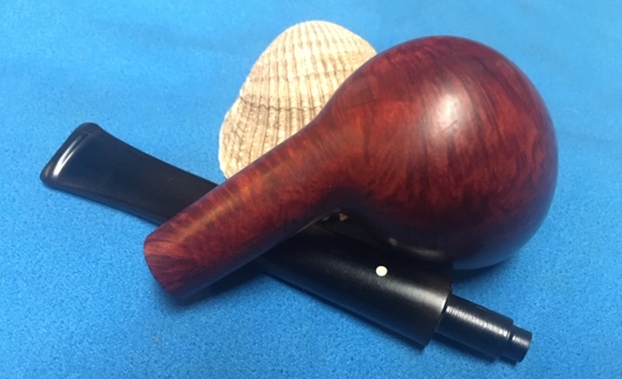
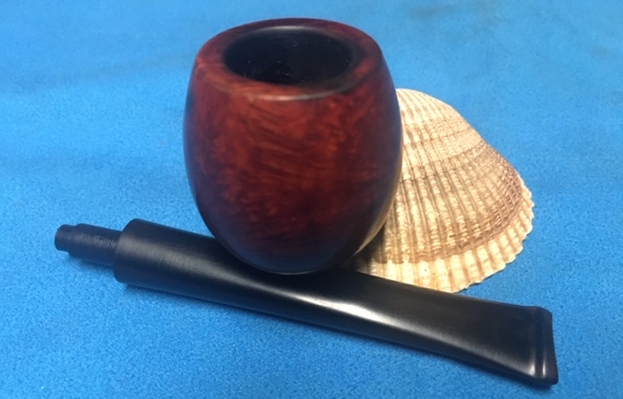
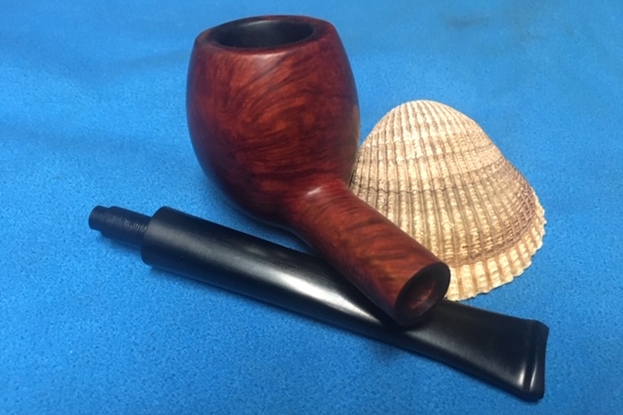
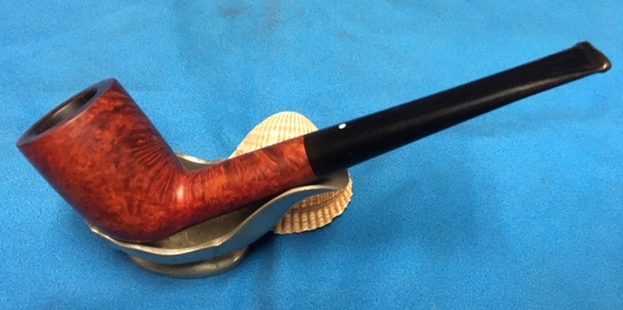
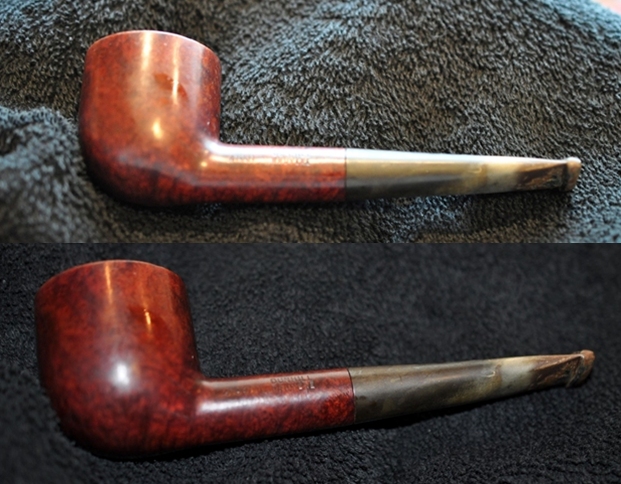
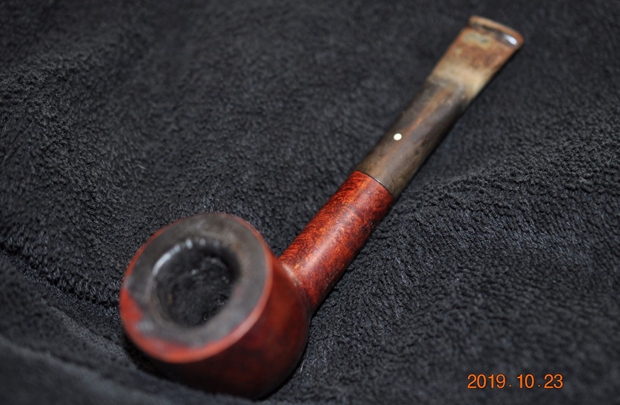
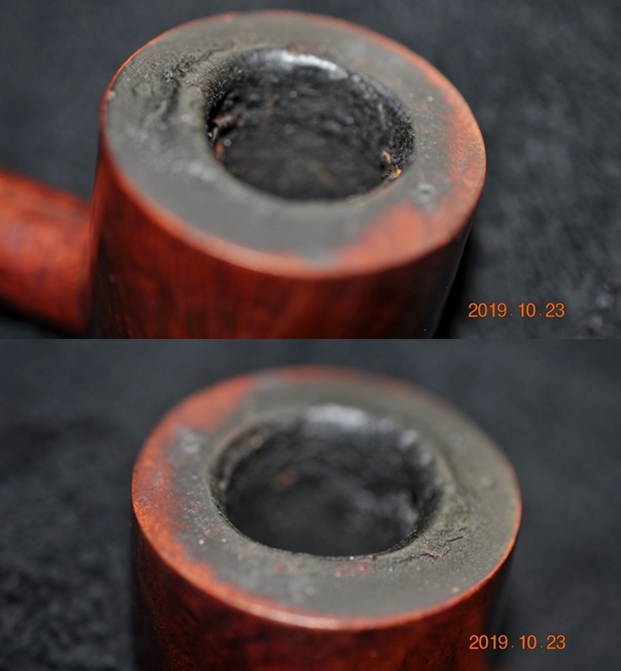
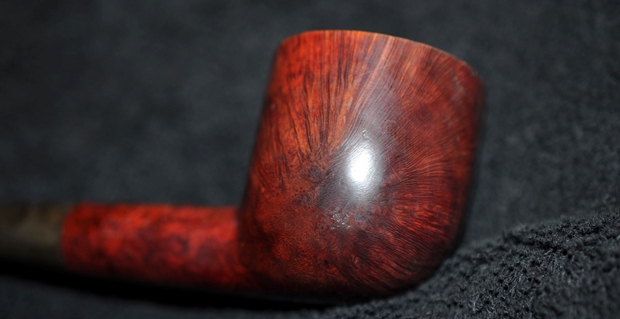
Refreshing a Dunhill Tanshell W60 (T) (1962)Bamboo Lovat for Alex


Blog by Steve Laug

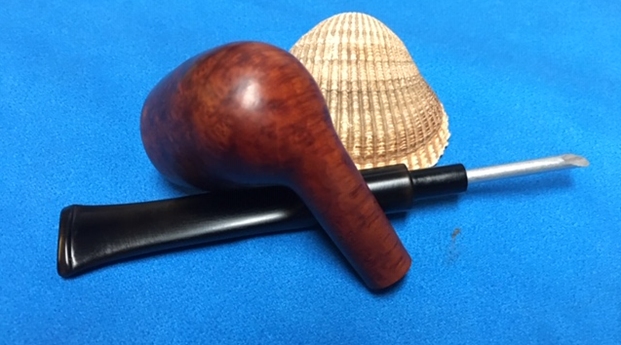
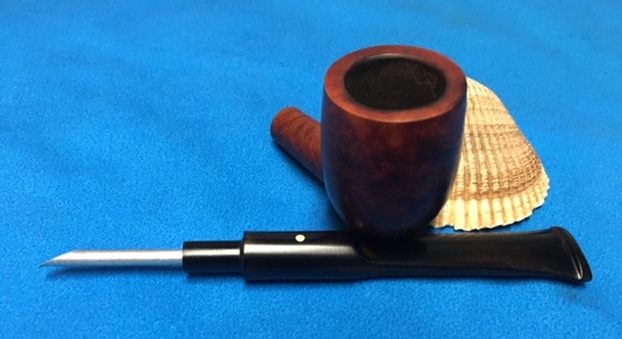
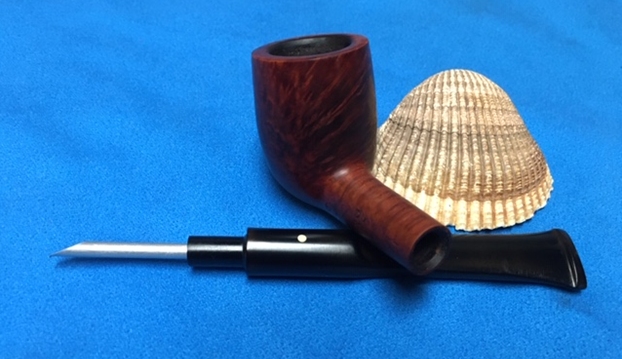
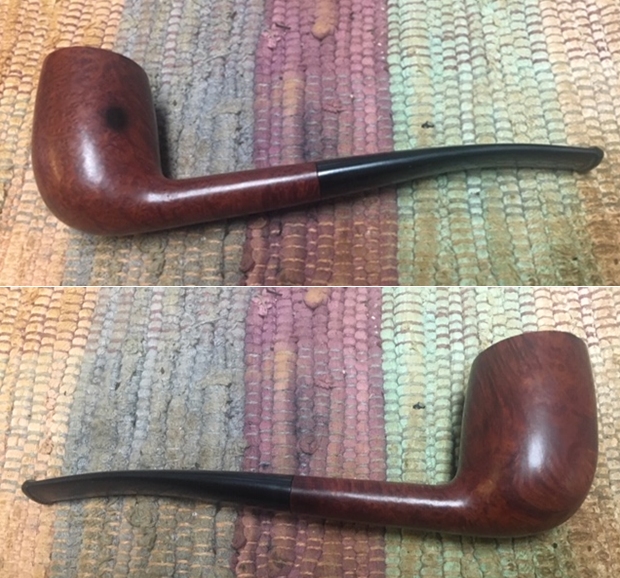
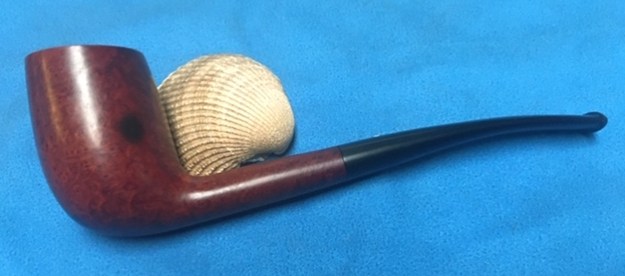
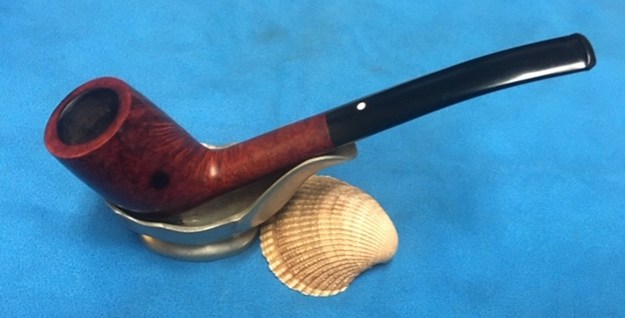
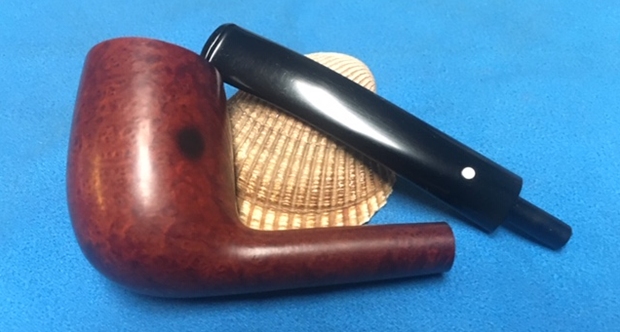
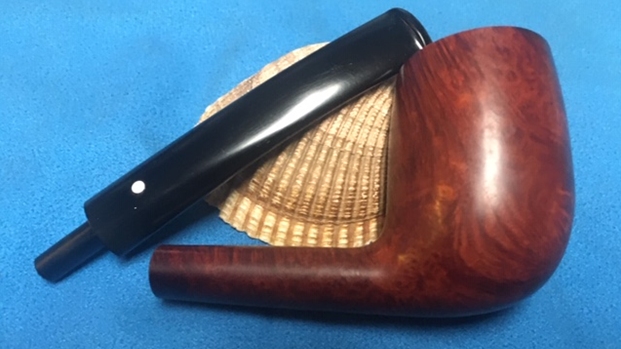
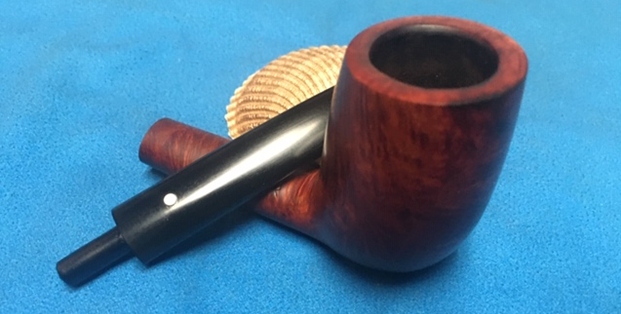
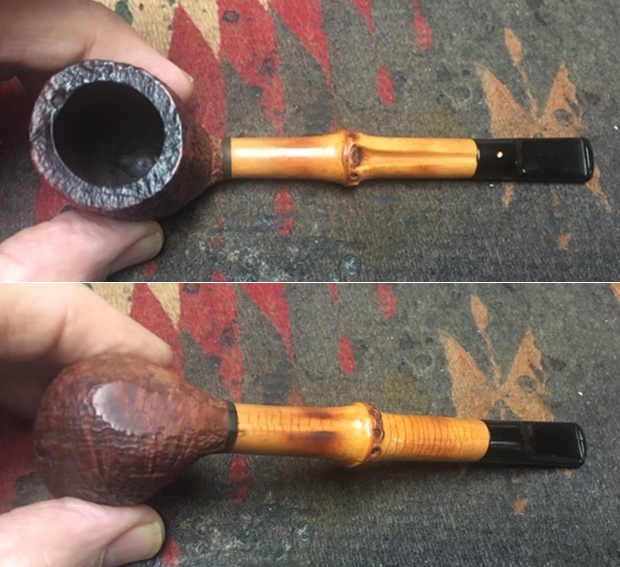
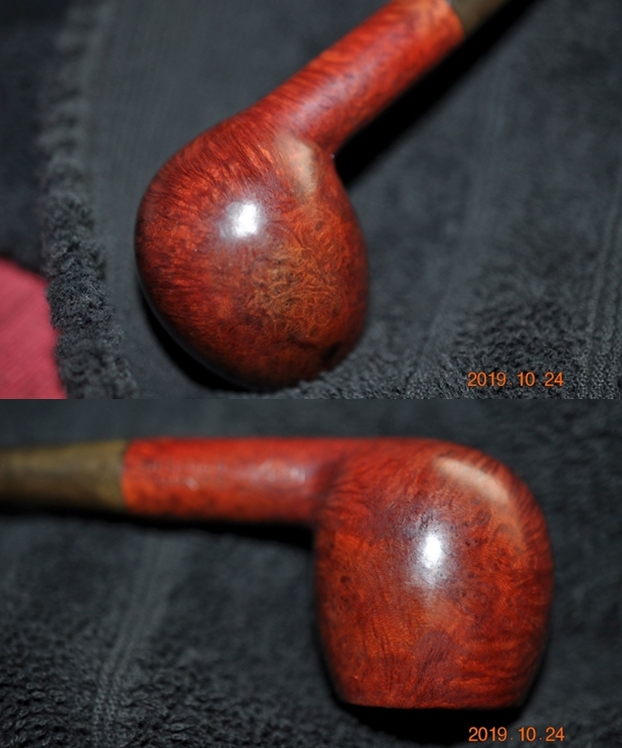
Around Christmas time I got together with Alex to enjoy some great hot cocoa, smoke our pipes and talk about all things pipes. I always have a great time when we get together and this time was no exception. He greeted me at the door with slippers and an old smoking jacket. I took my seat in the living room among his latest pipe finds and was handed a great cup of cocoa. I set it down and we both loaded out pipes with some new Perretti’s tobacco that he had picked up. We touched the flame of the lighter to the tobacco and sat back and blissfully enjoyed the flavour. As we did Alex walked me through his latest finds. There were some amazing pipes to look at and savour. He had one that caught my eye when I had arrived. It was a Dunhill Bamboo Shank Lovat that was a Tanshell finish with a lot of nice colour happening around the bowl.

I carefully took it in my hands and examined it. While I have several Stanwell Bamboo pipes and older KBB Yello Bole Bamboos this is the first Dunhill that I had seen up close and personal. Alex told me that these bamboo-adorned pieces were referred to as “Whangee” pipes. I learned later that the term comes from the Mandarin word for bamboo, huáng lí and was used to describe canes and umbrellas with bamboo handles throughout the early to mid-1900s before being attributed to pipes — Dunhill’s in particular. I learned from reading on line that bamboo came to into use in pipemaking during the briar shortage that accompanied and followed WWII. As a means of saving on briar, pipemakers would extend the shank with bamboo.

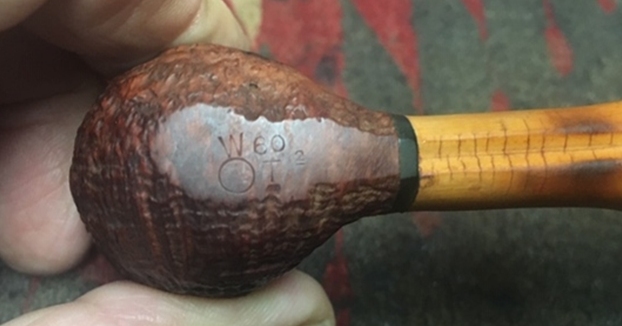
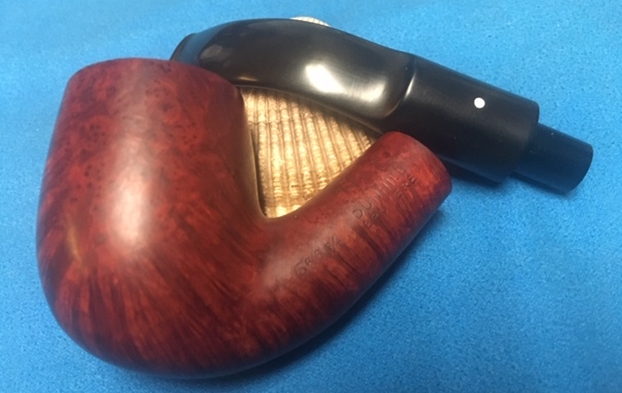
The pipe was stamped on the heel of the bowl with the following nomenclature: W60 over a circle with a T next to it. T is the designation for Tanshell pipes. I assume that the circle with what looked like a 4 faintly in the center which was the size designation. Next to that is a superscript underlined 2 which I believe designates the year of manufacture – 1962. So now I knew the date on this interesting Bamboo.

Alex had reamed the pipe and cleaned it up very well. He had already enjoyed smoking it and was hooked on it. I even offered to buy it from him and he gently declined! He asked if I could take it home with me and see what I could do about the finish on the bowl. I told him I would take it home and have a go at it.

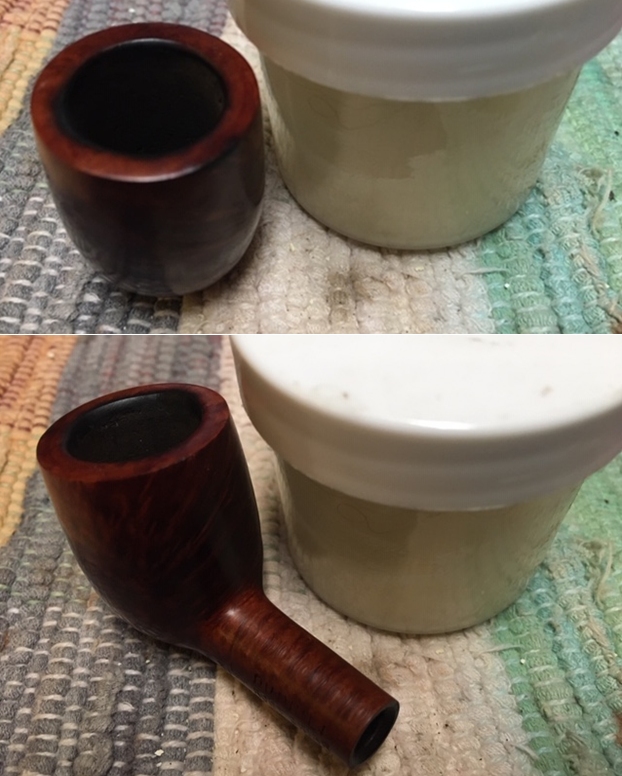
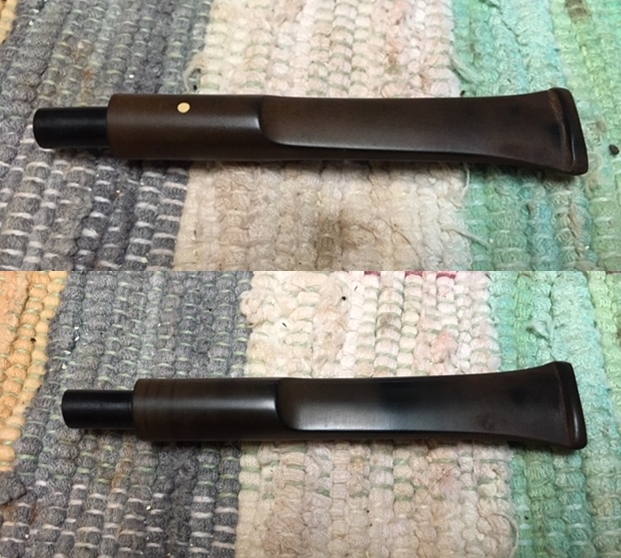
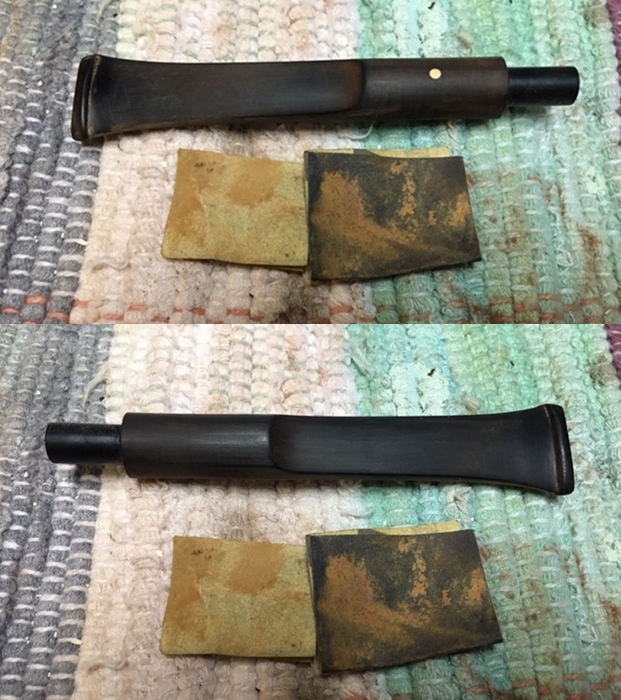
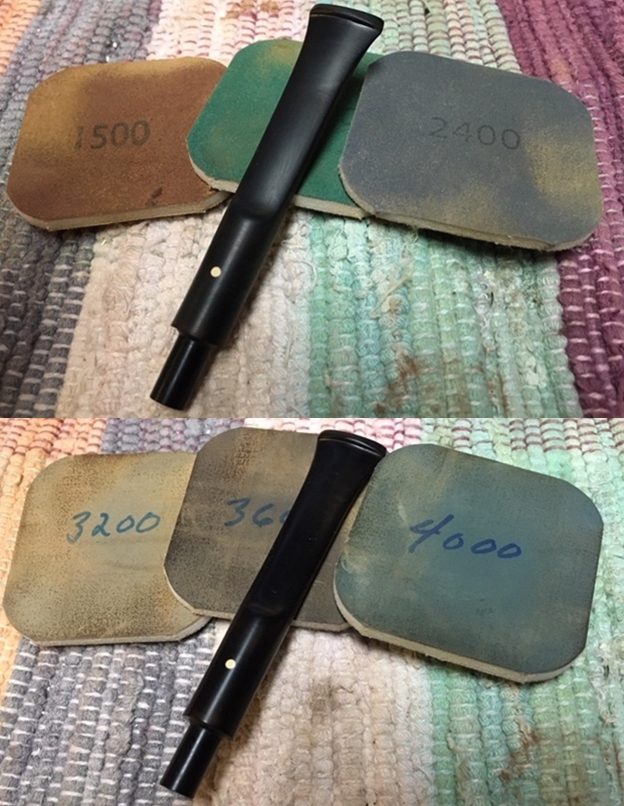
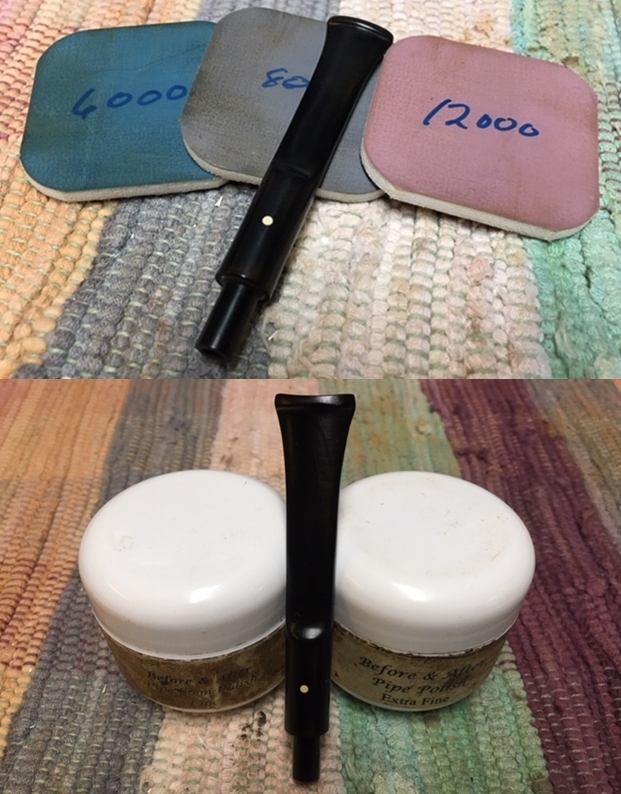
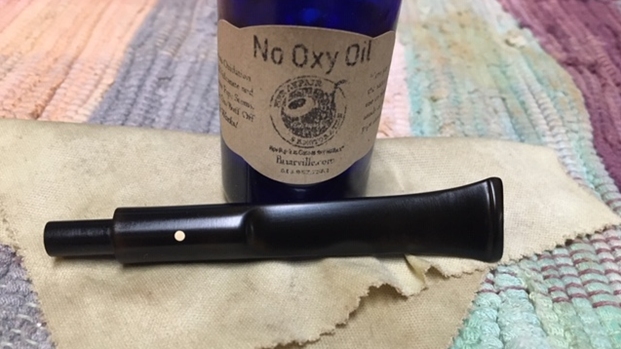
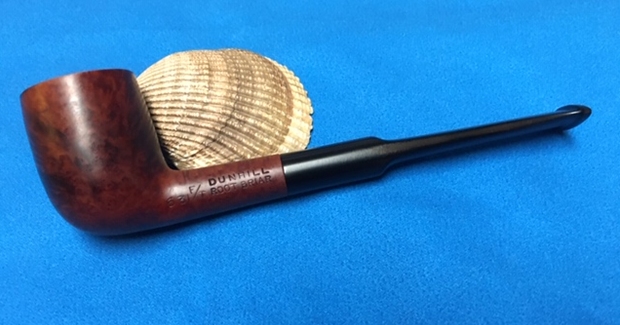
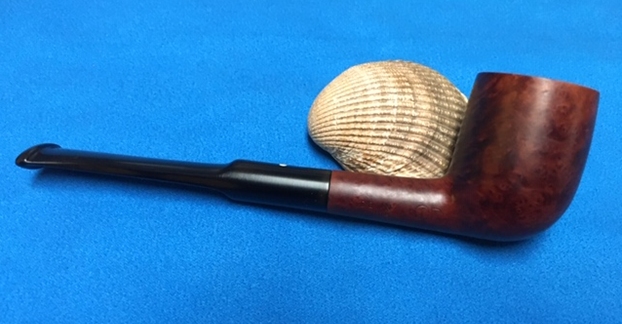
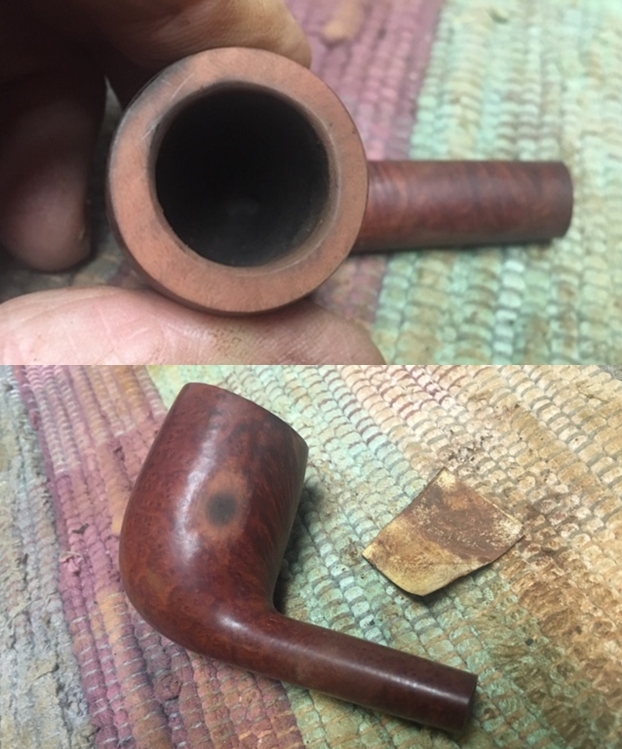
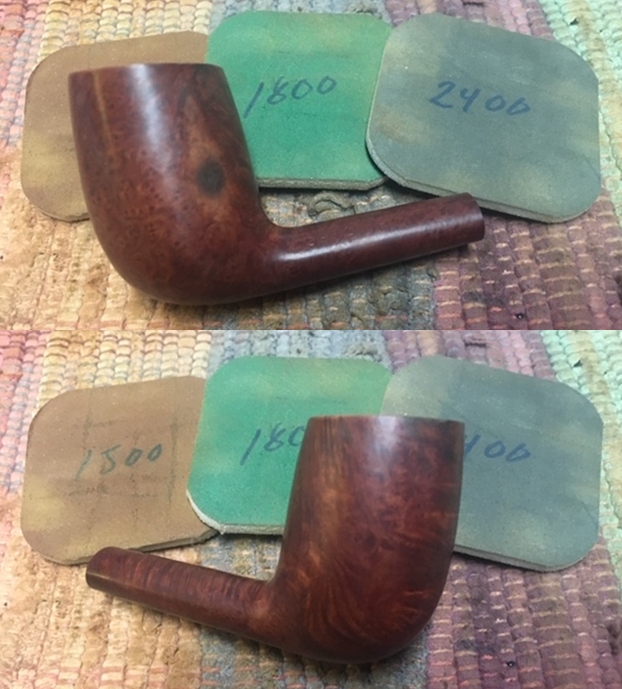
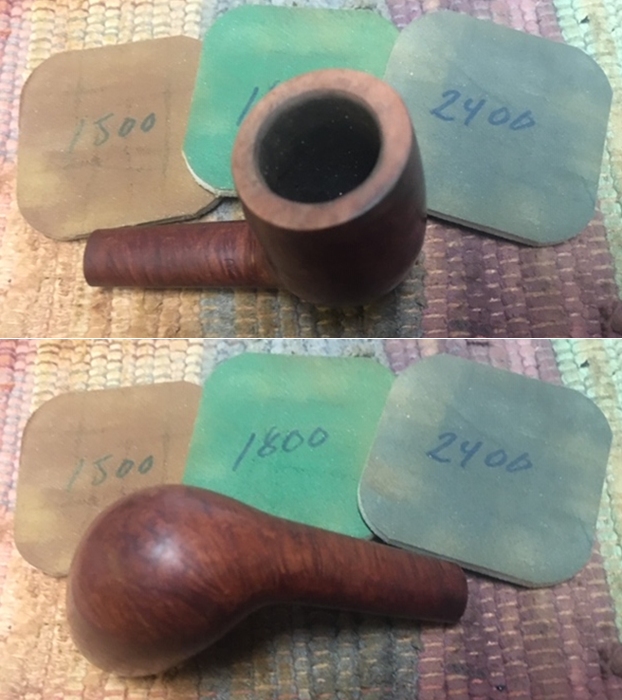
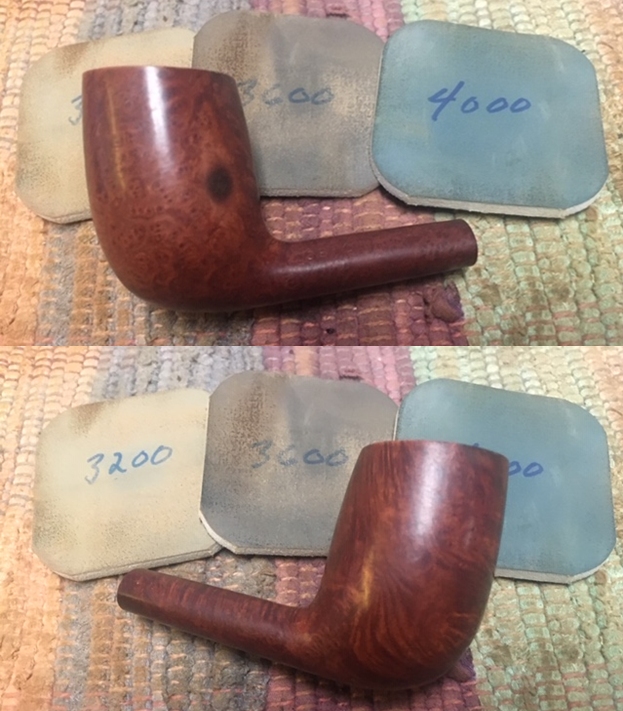
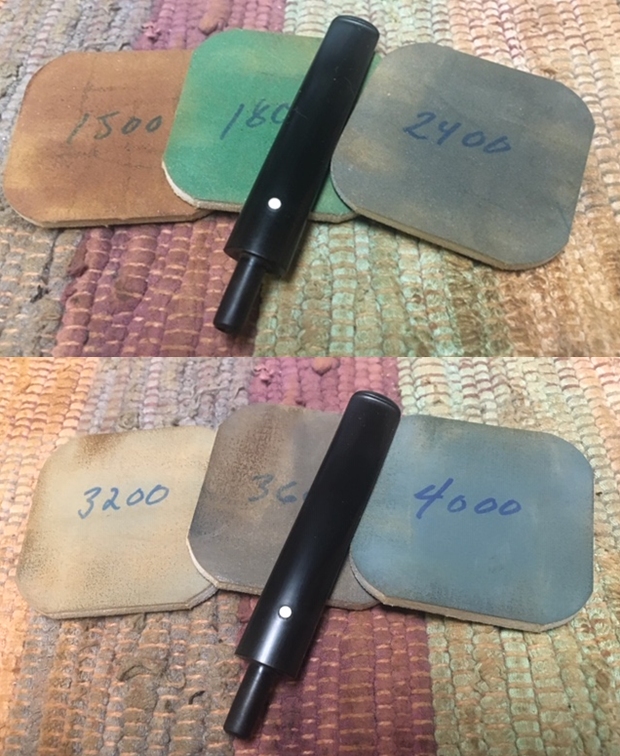
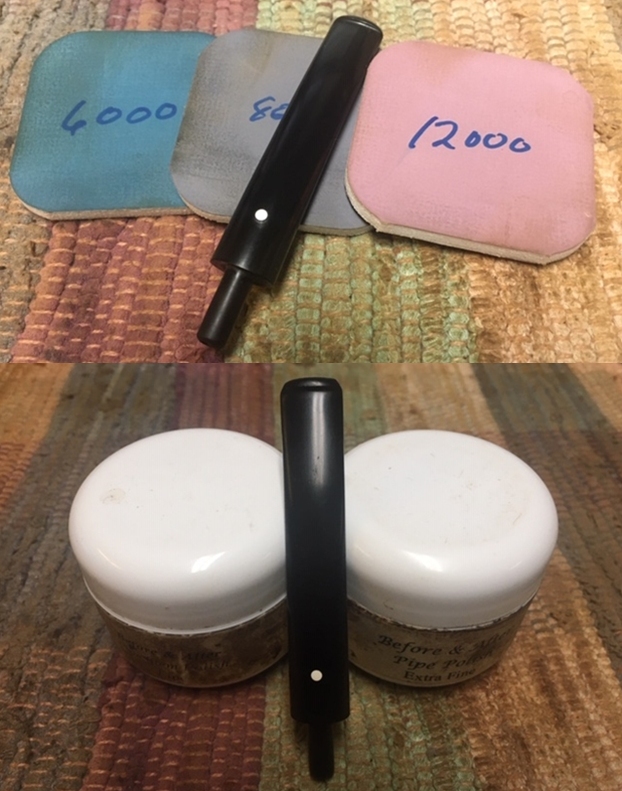
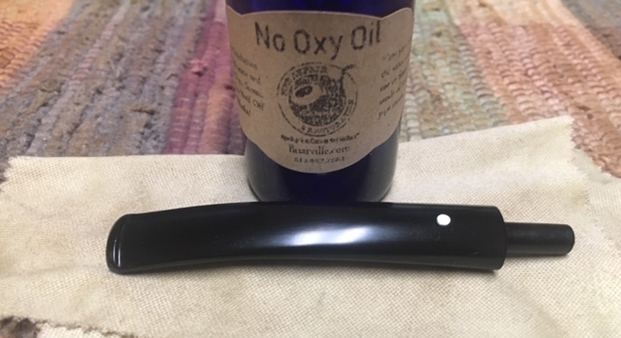
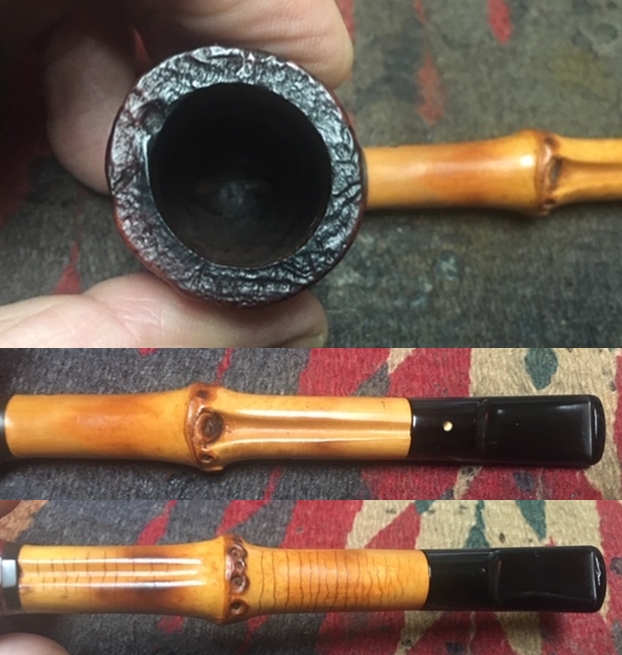
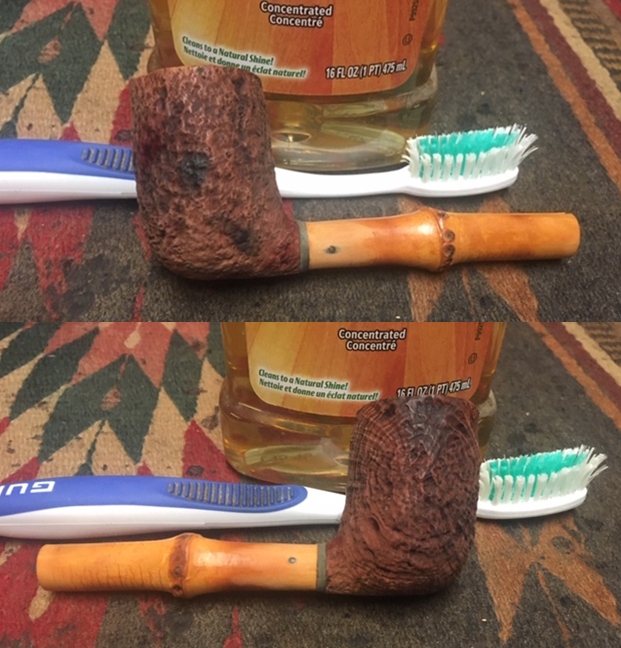
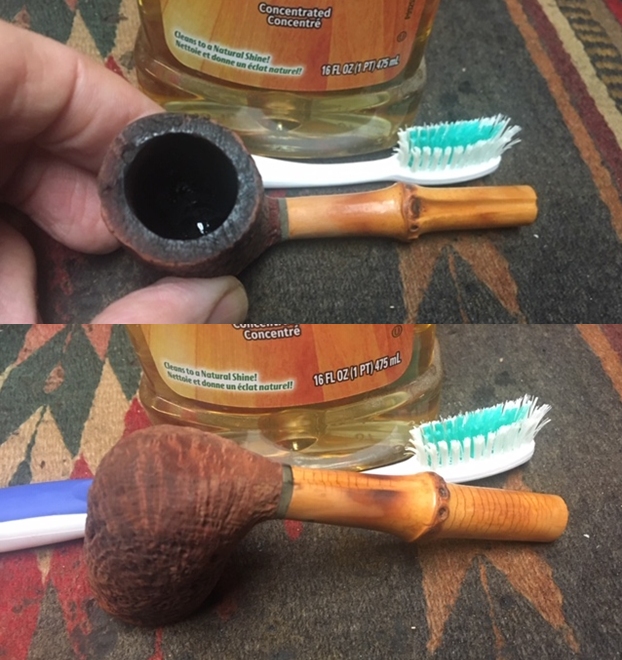
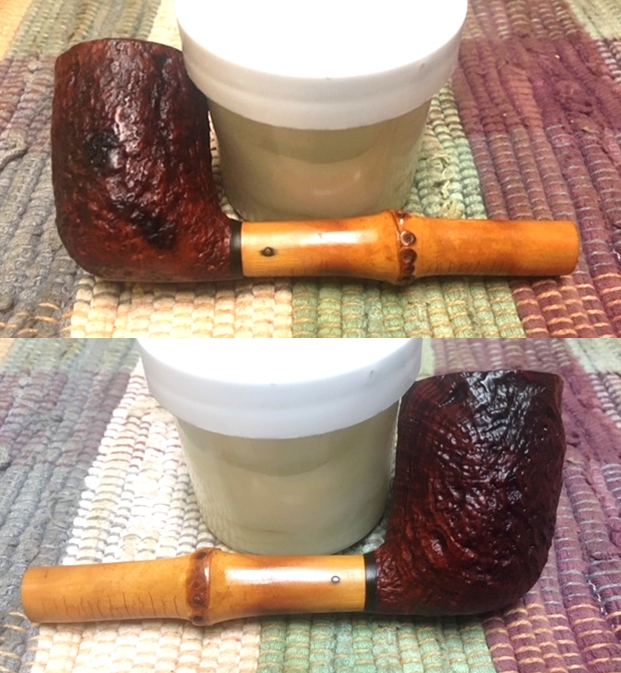
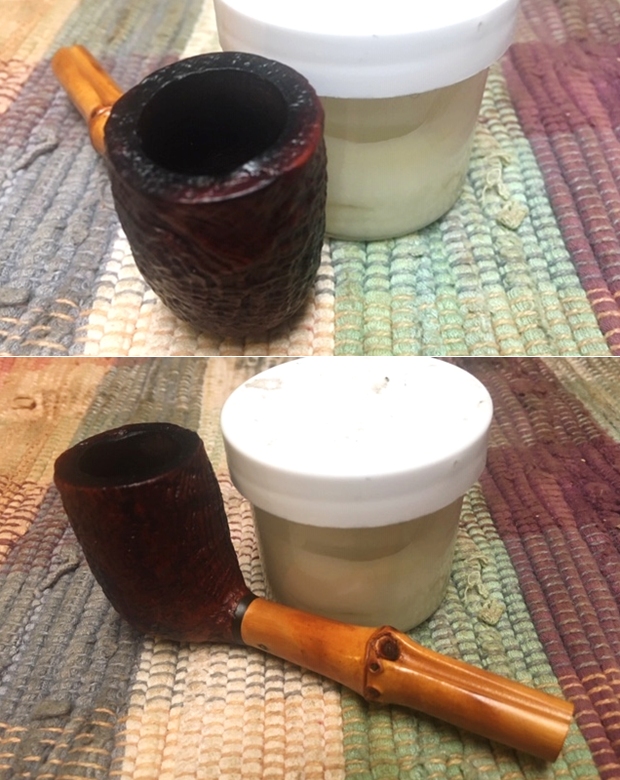
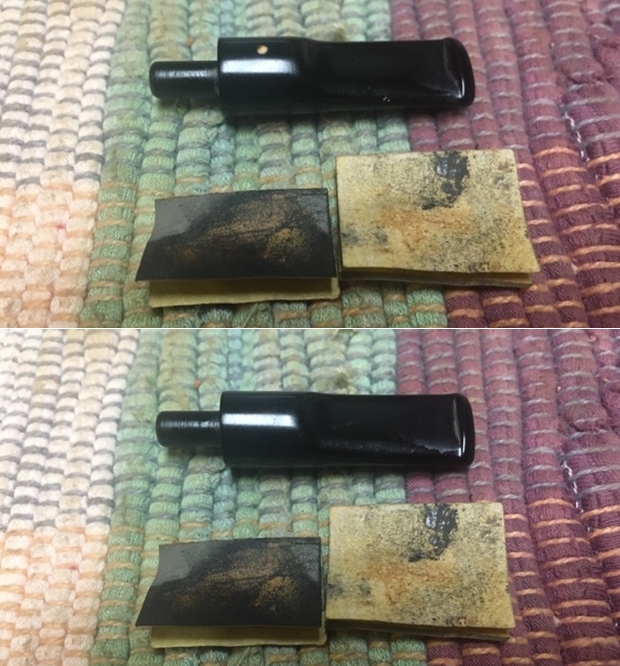
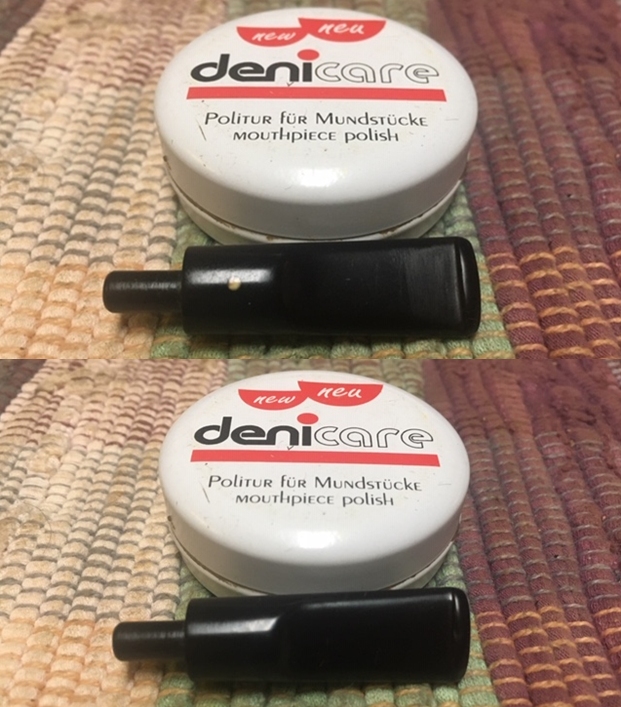
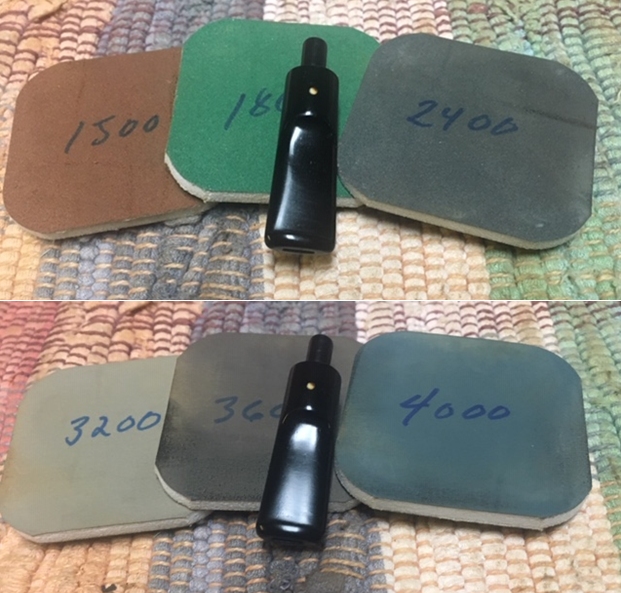
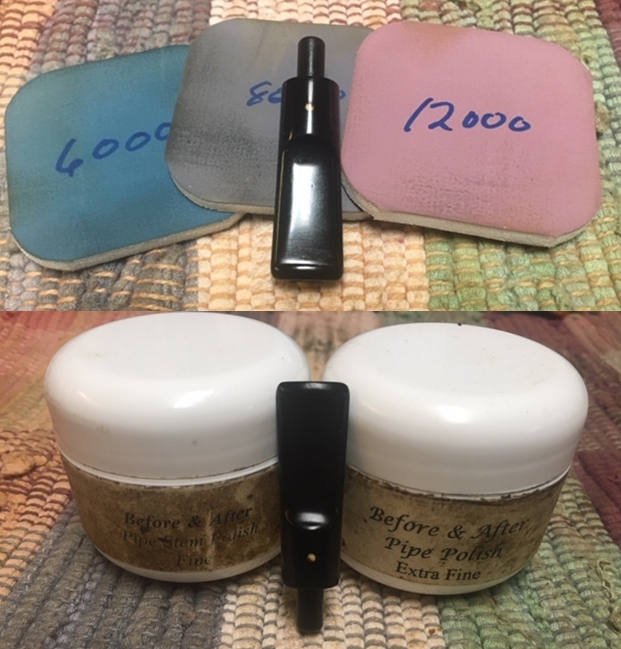
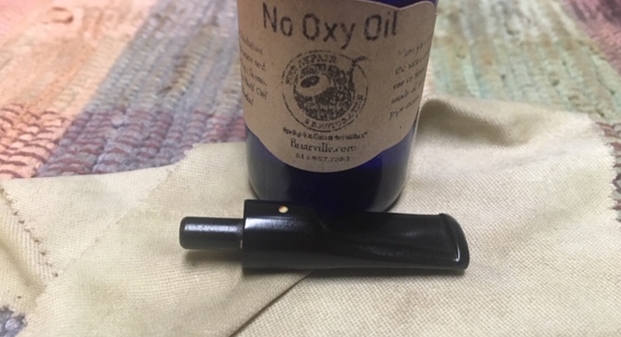
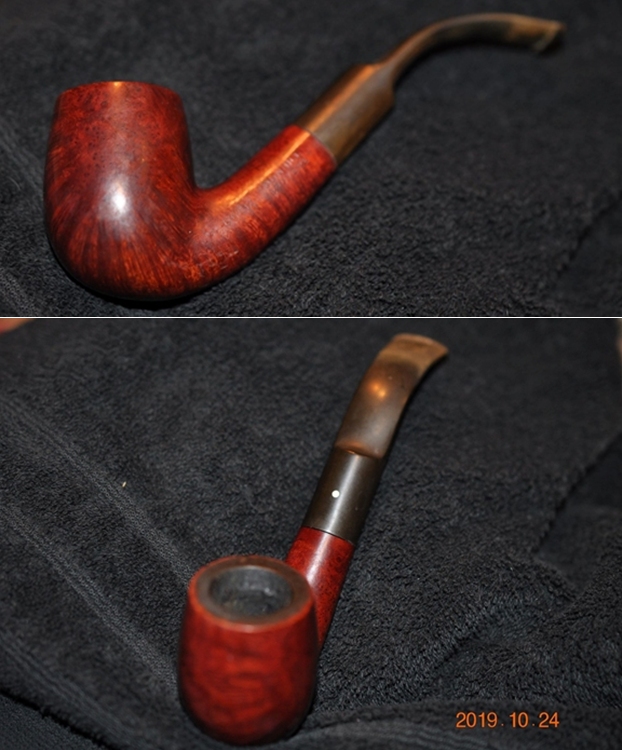
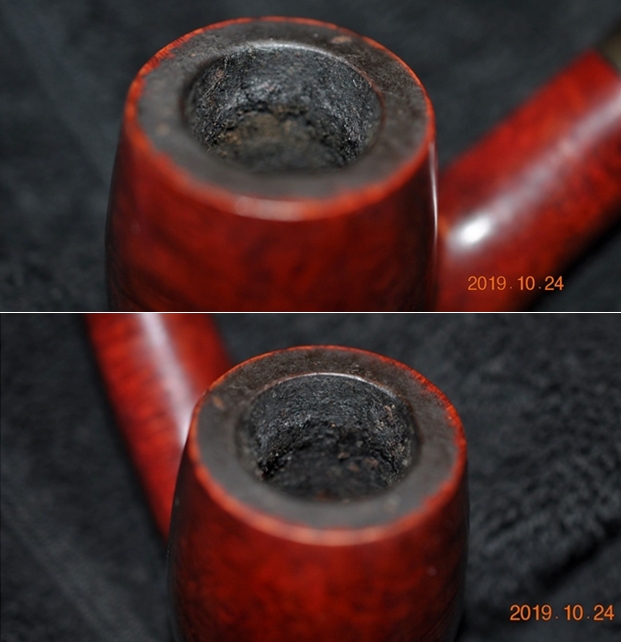
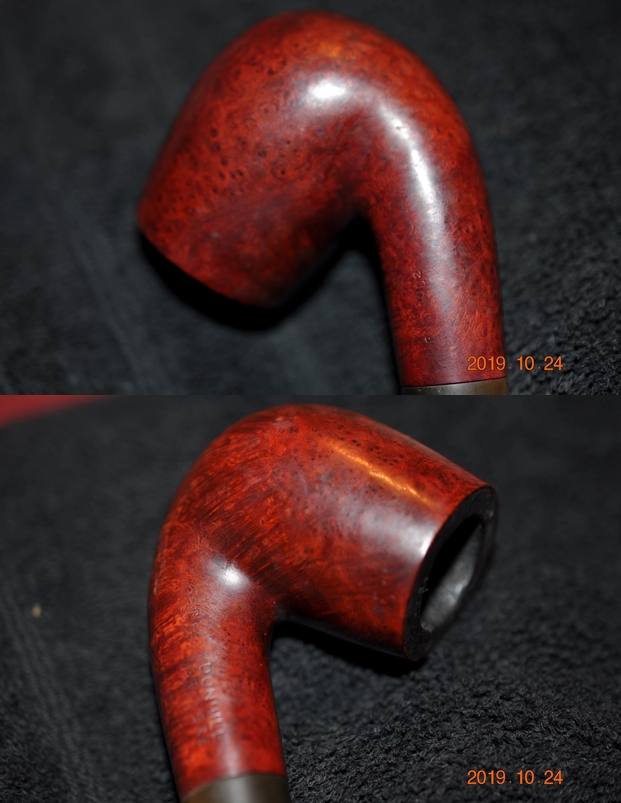
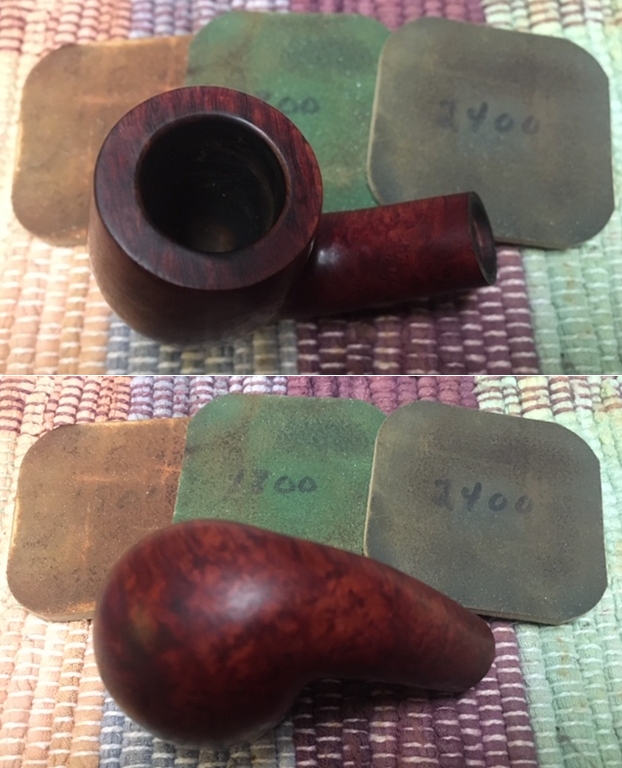
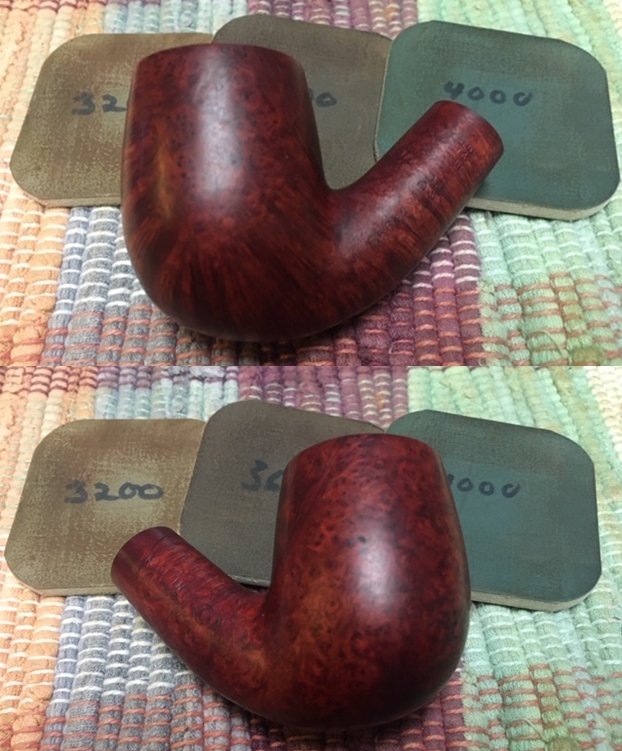
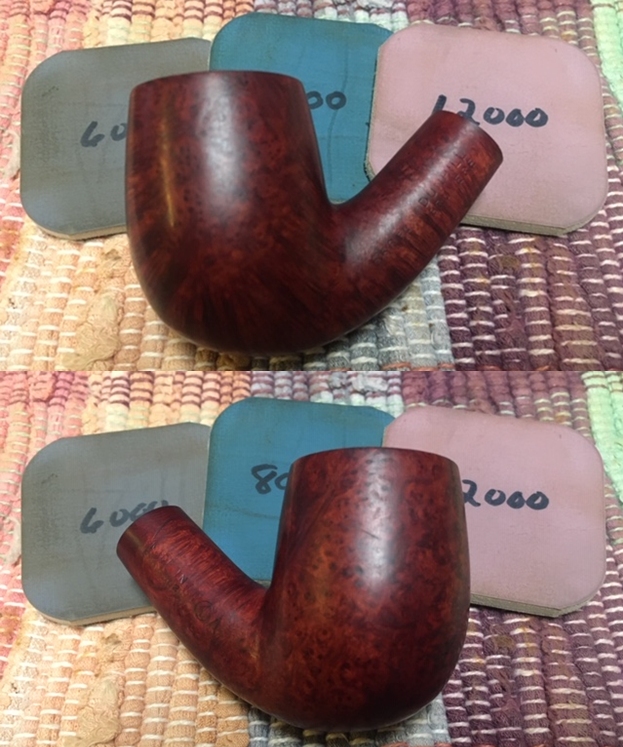
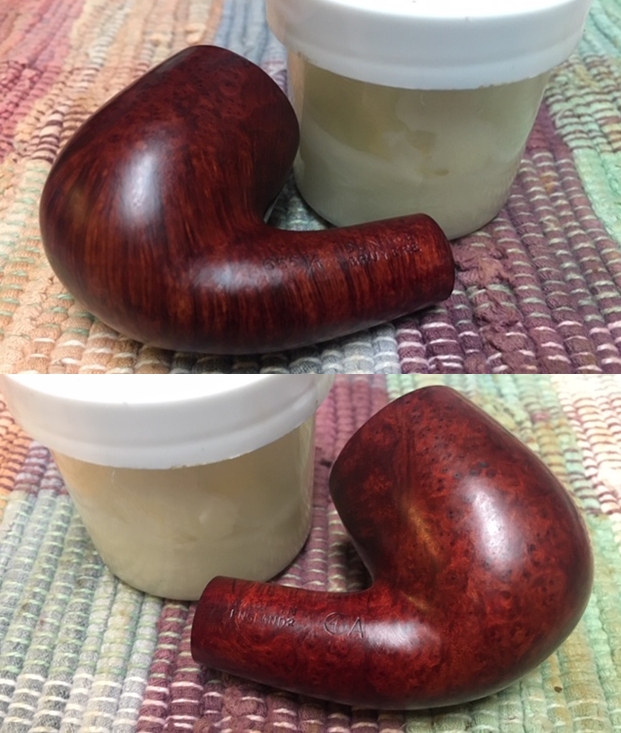
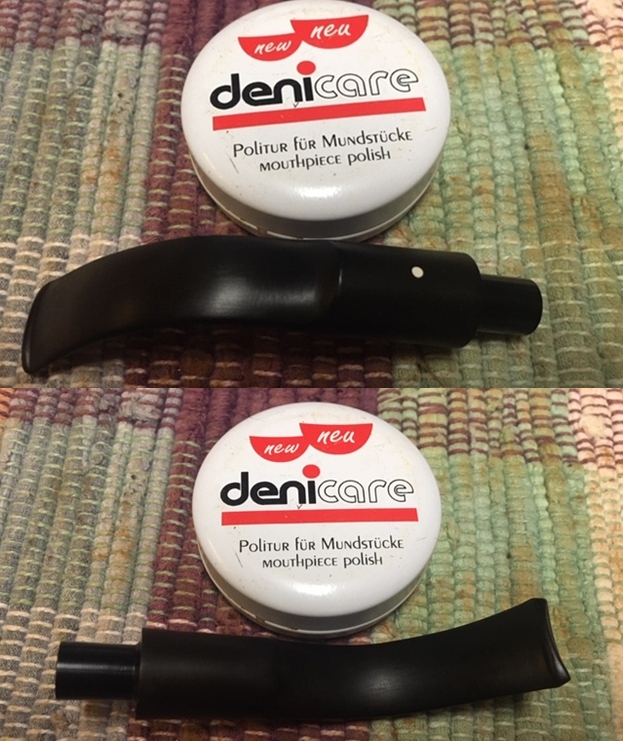
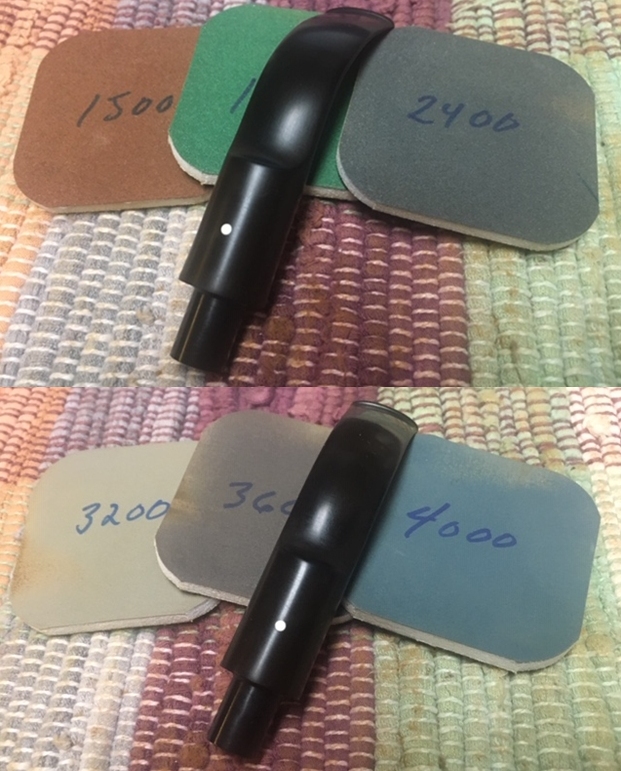
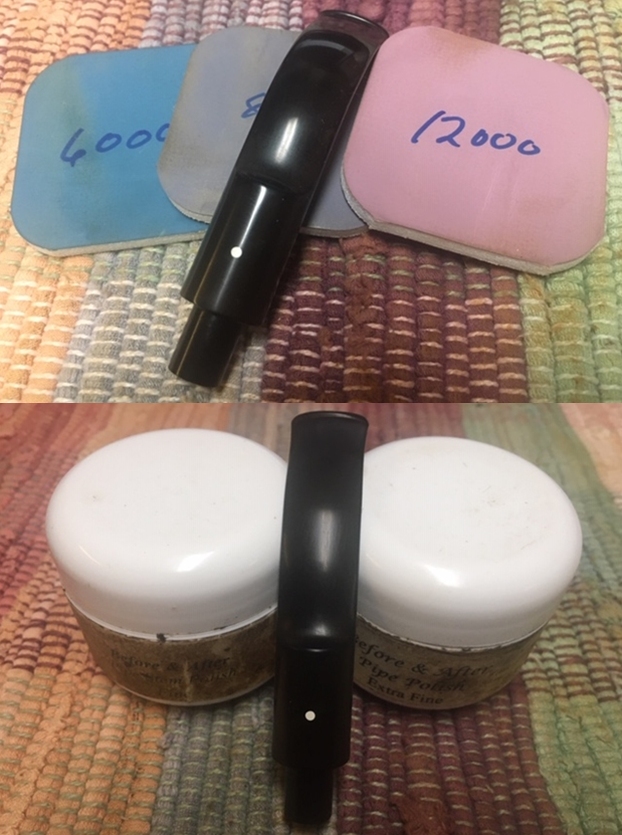
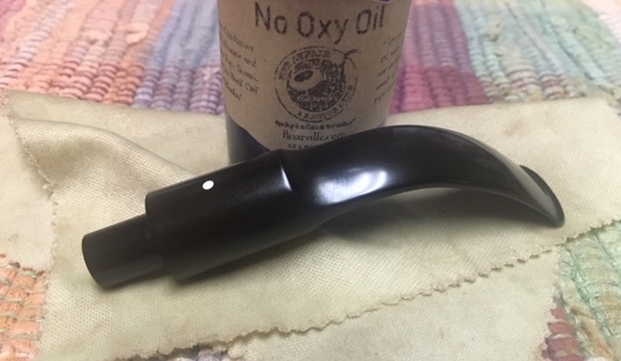
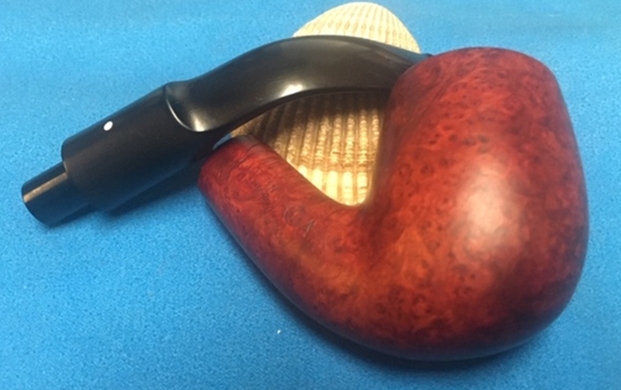
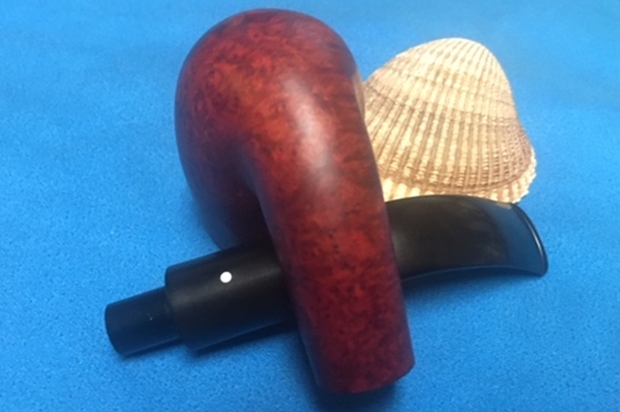
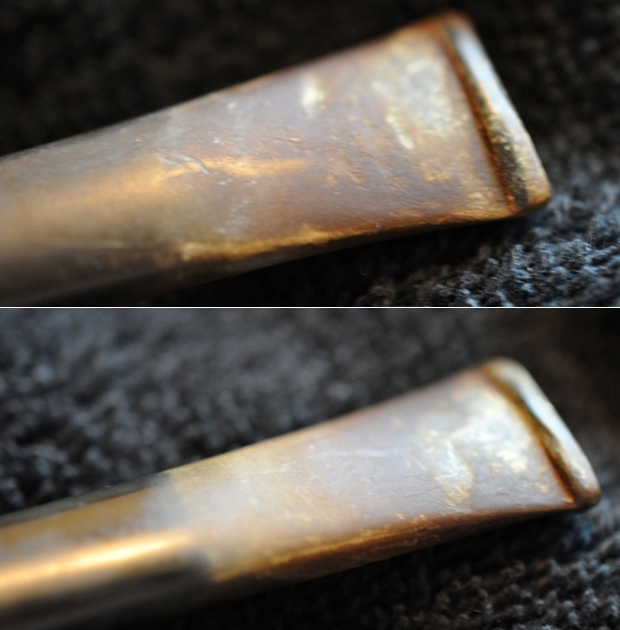
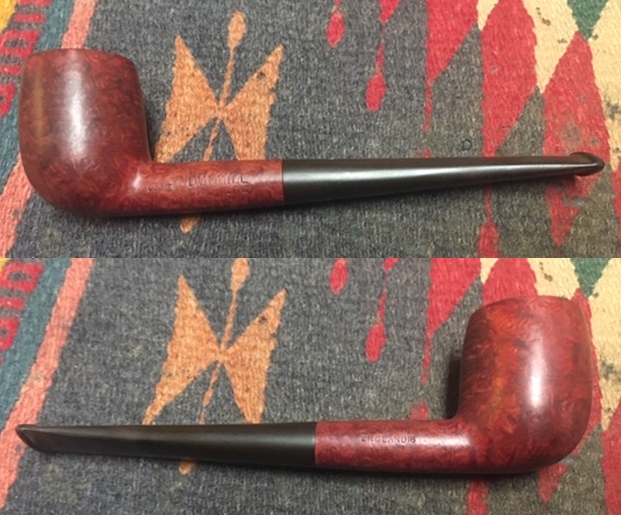
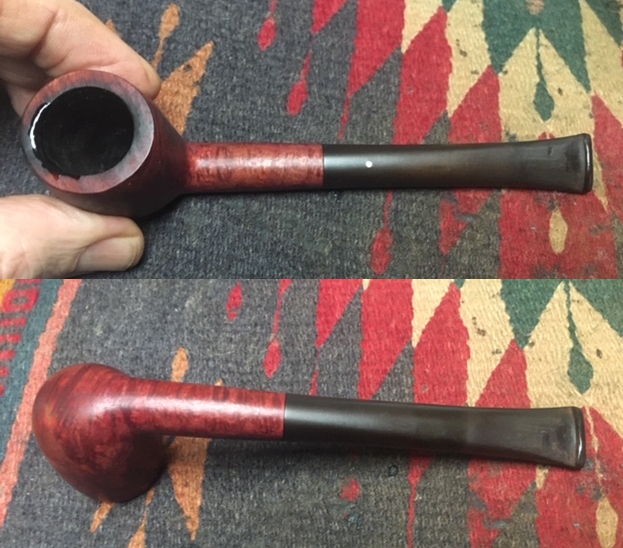
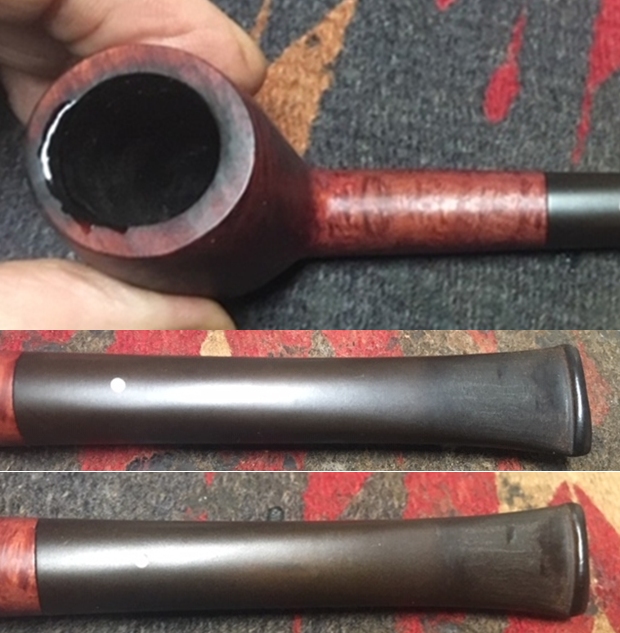
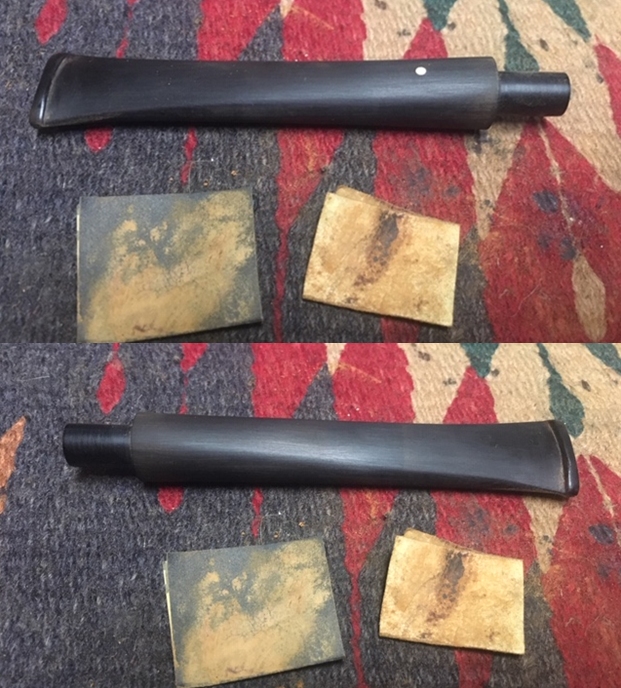
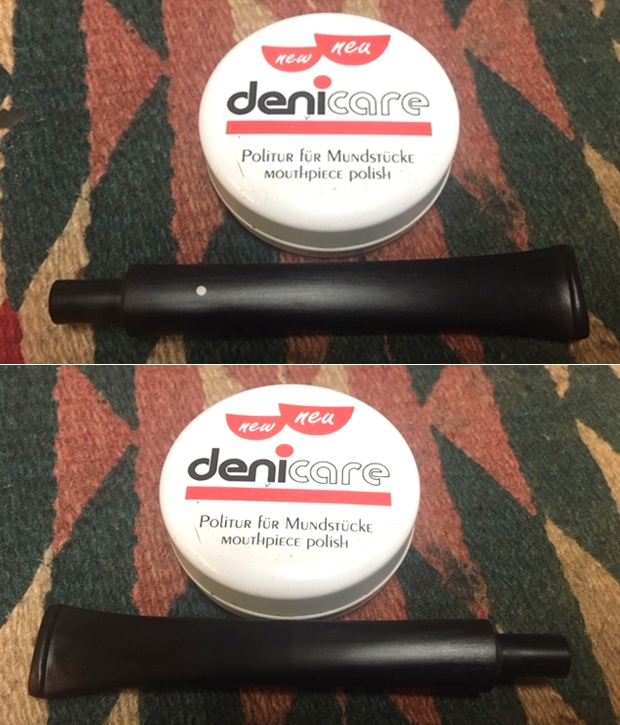
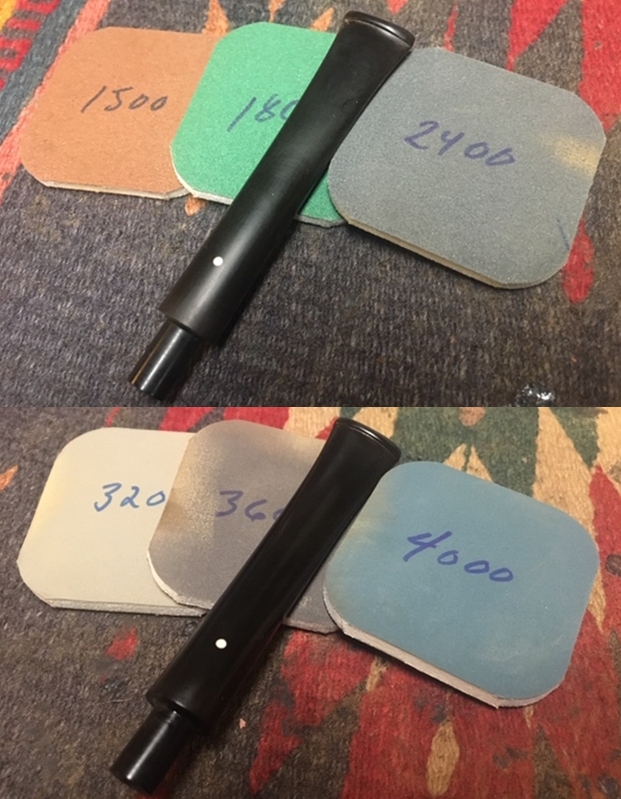
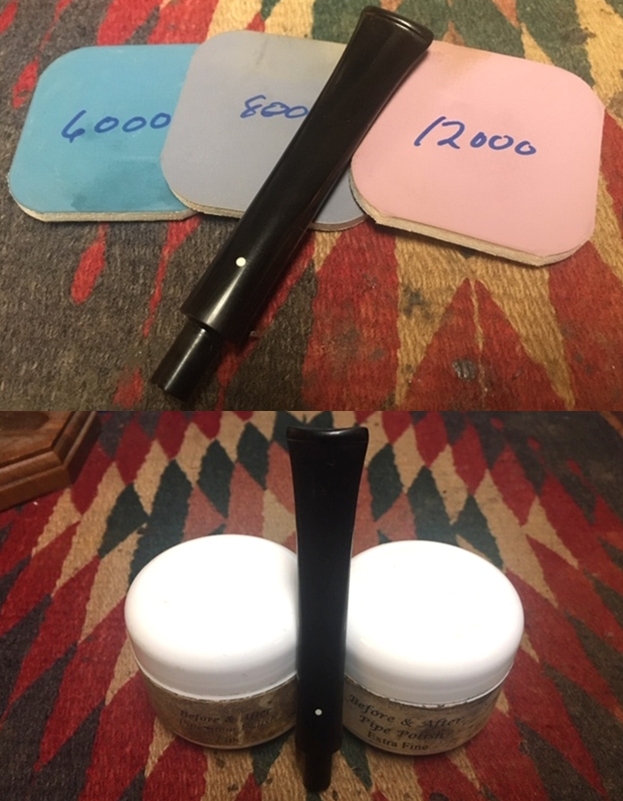
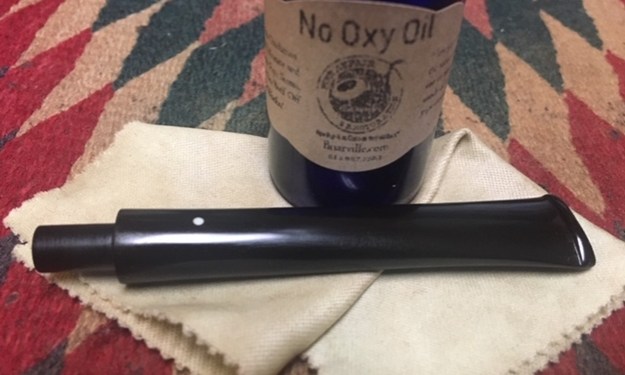
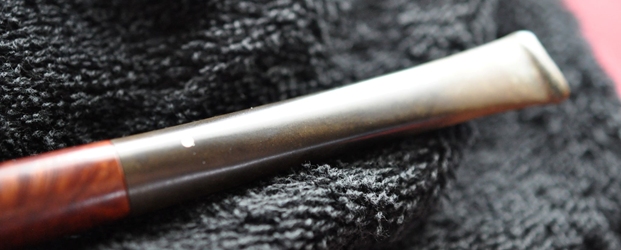
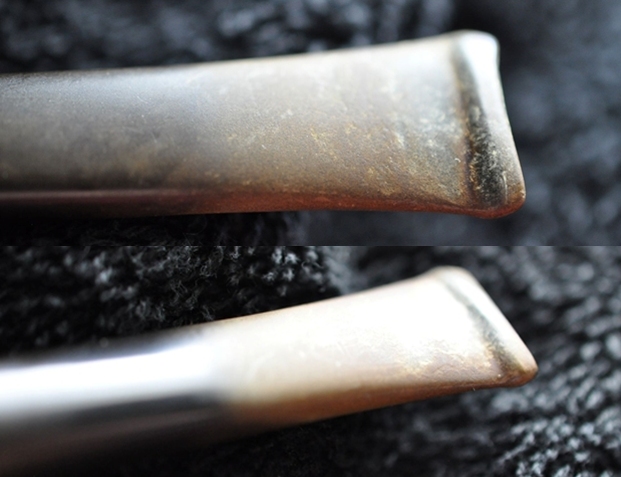
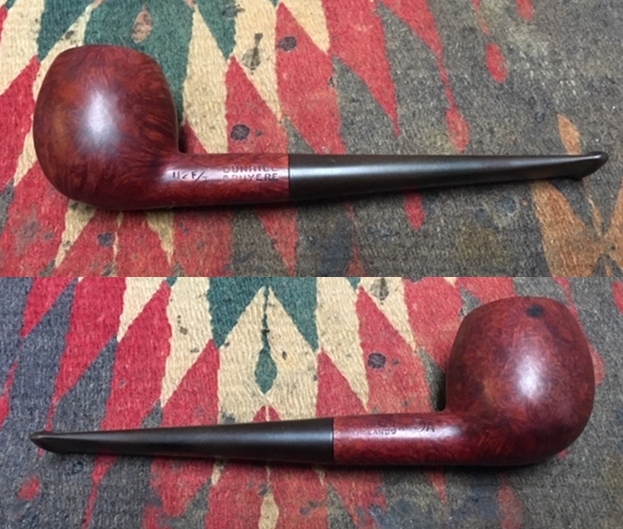
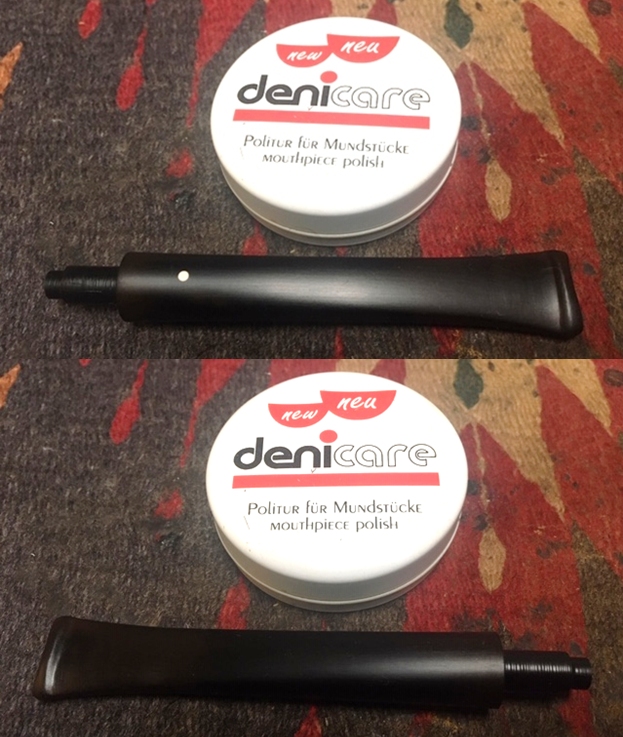
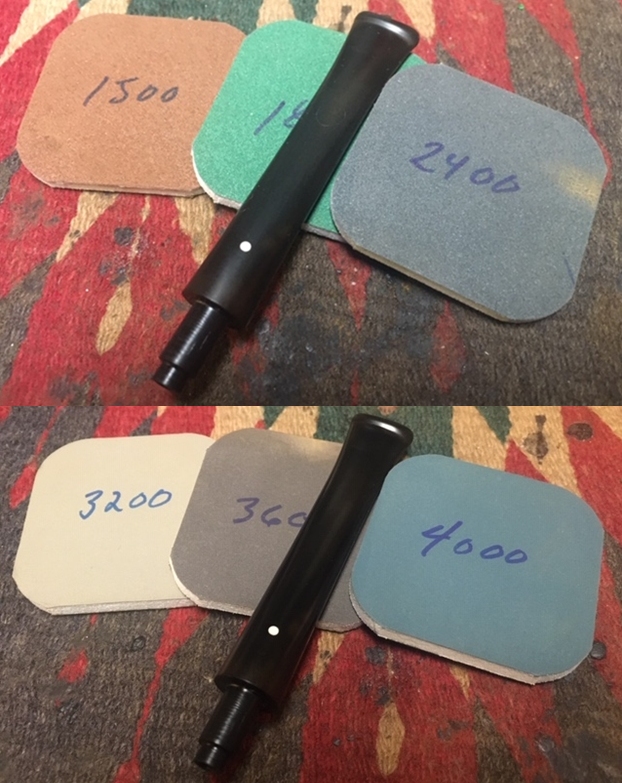
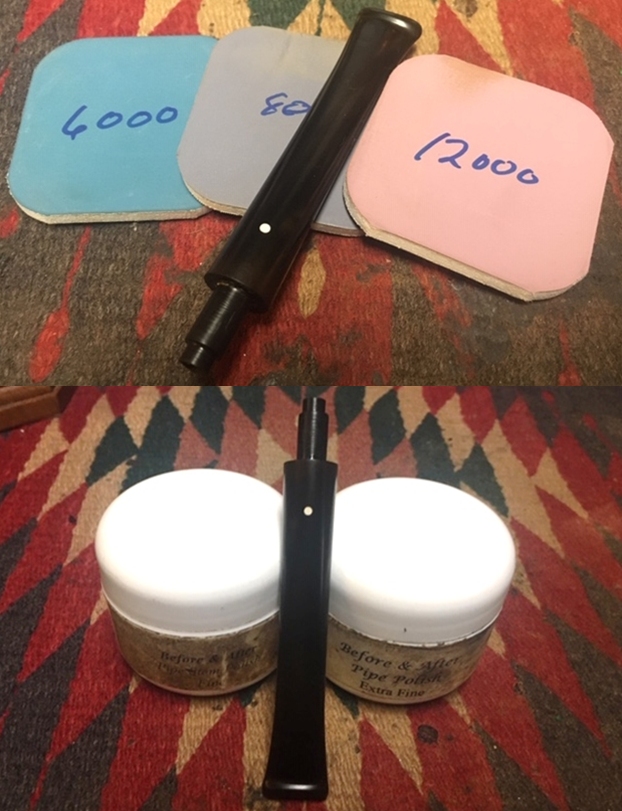
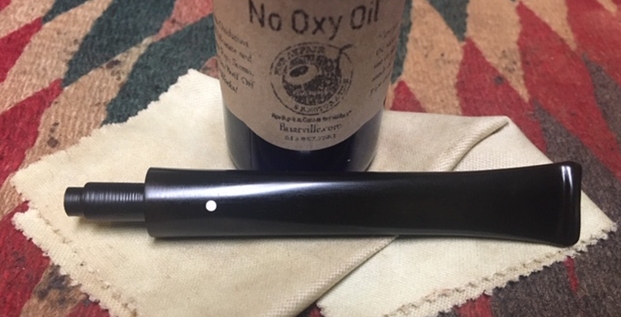
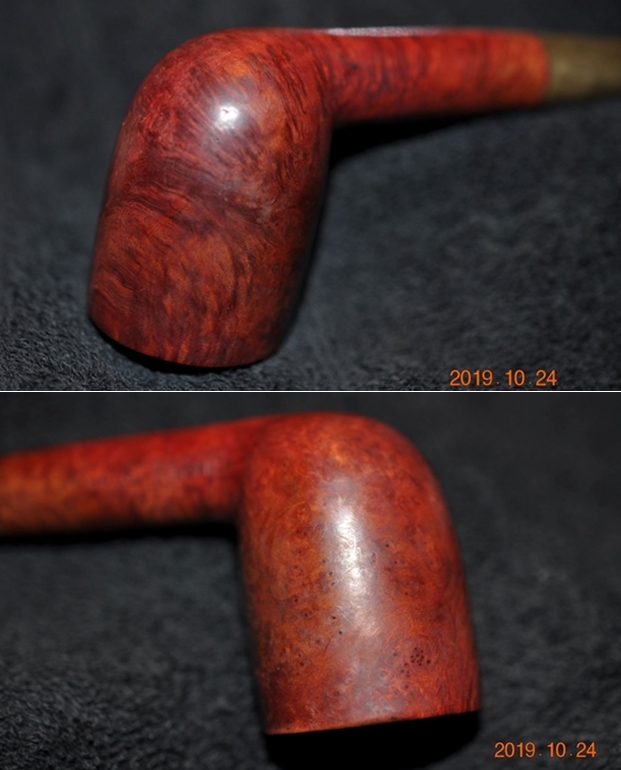
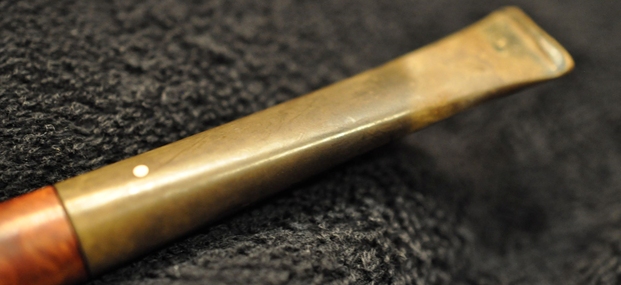
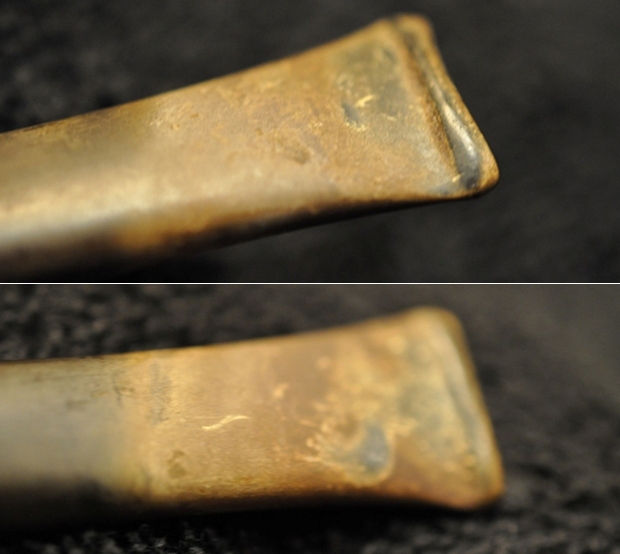
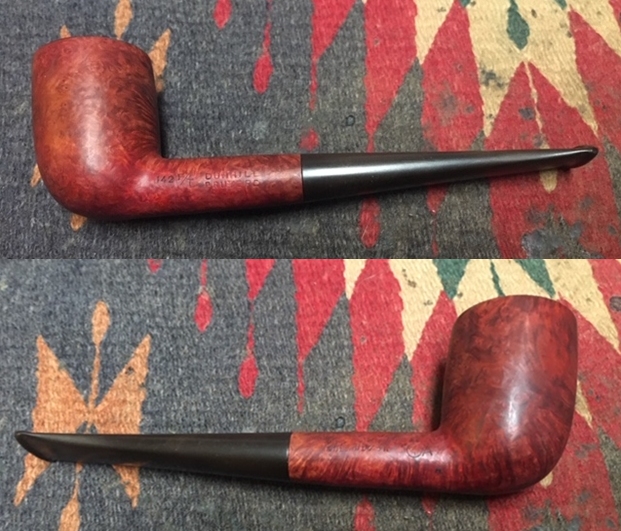
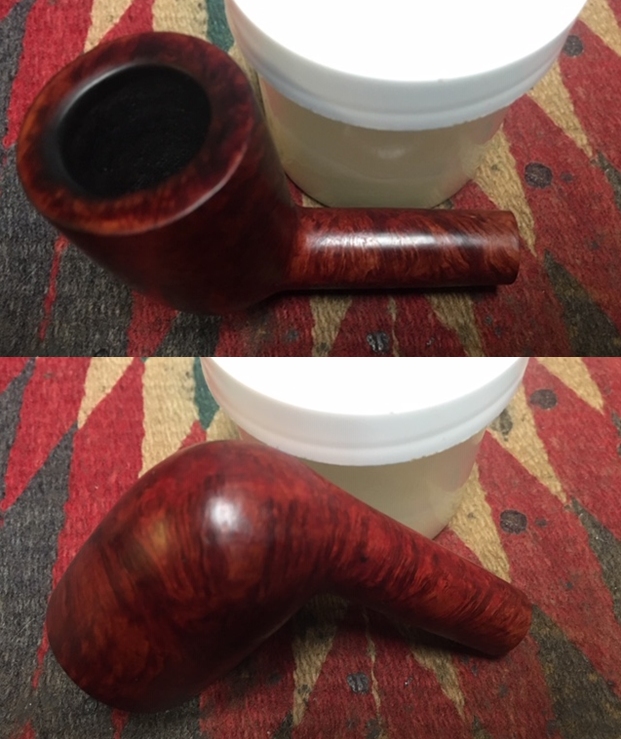
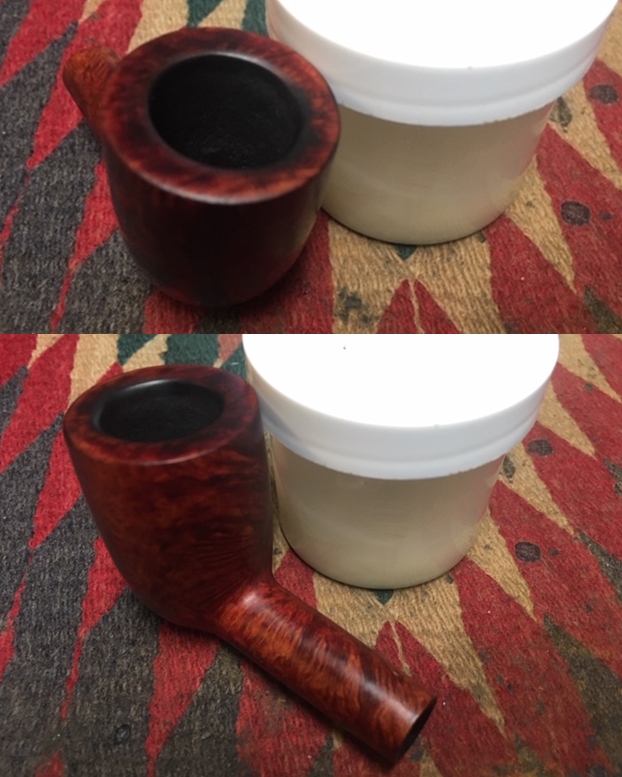
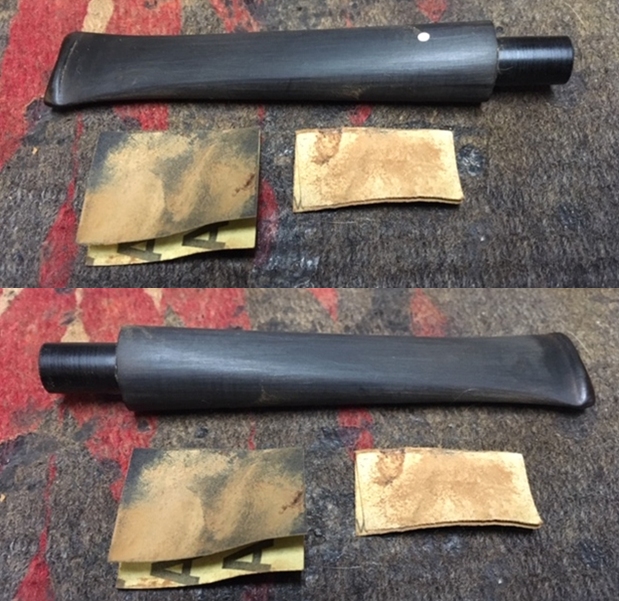
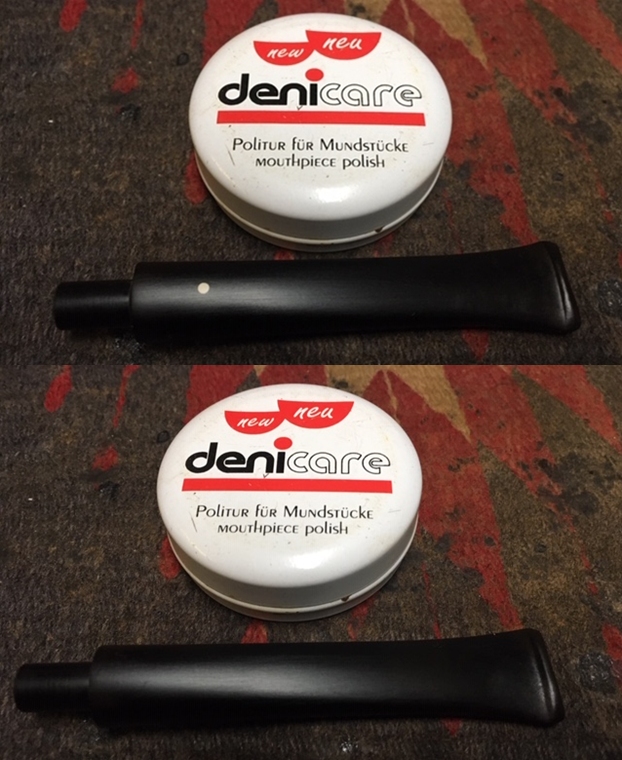
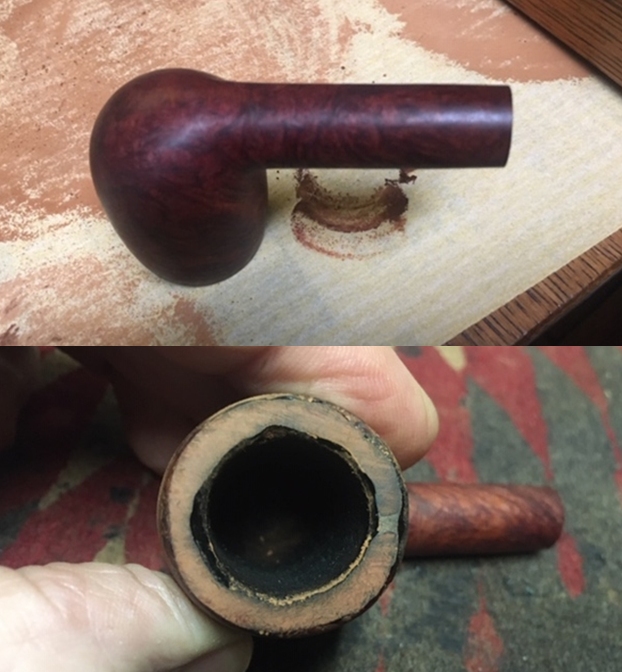
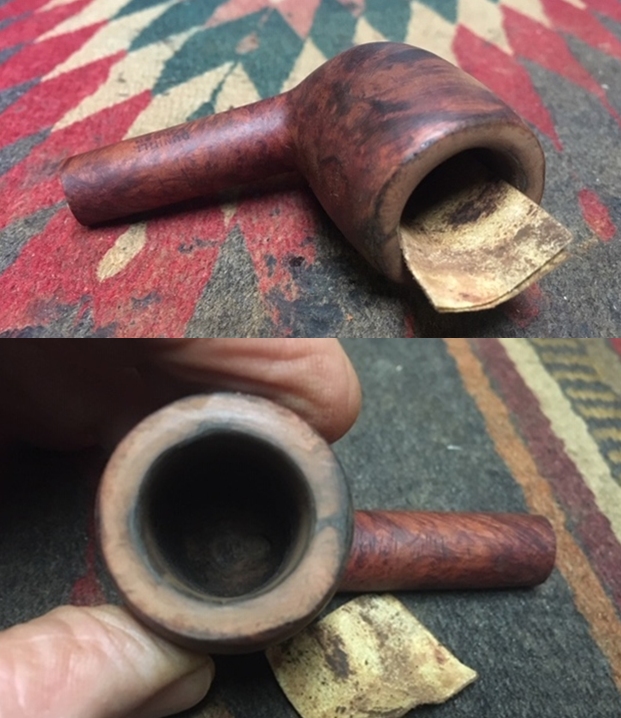
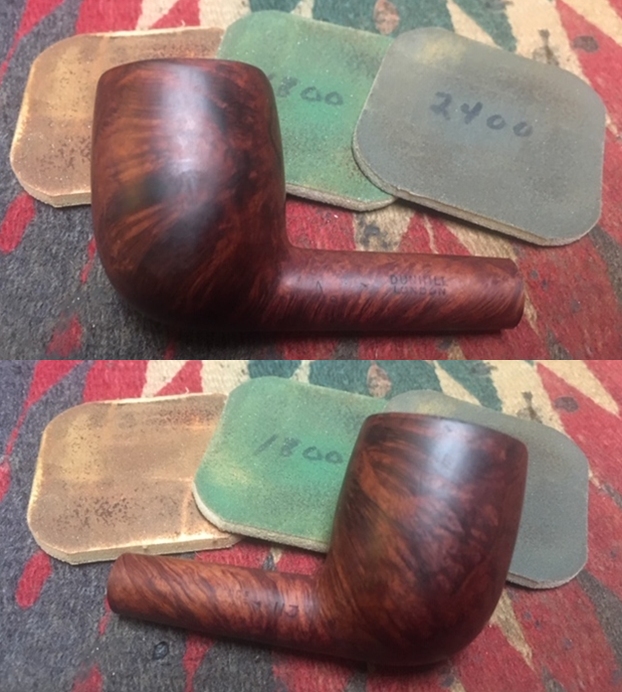
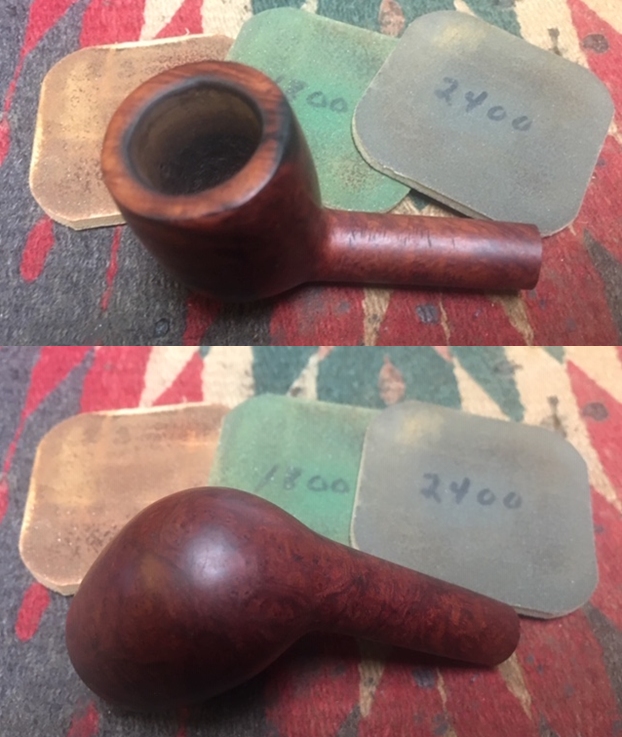
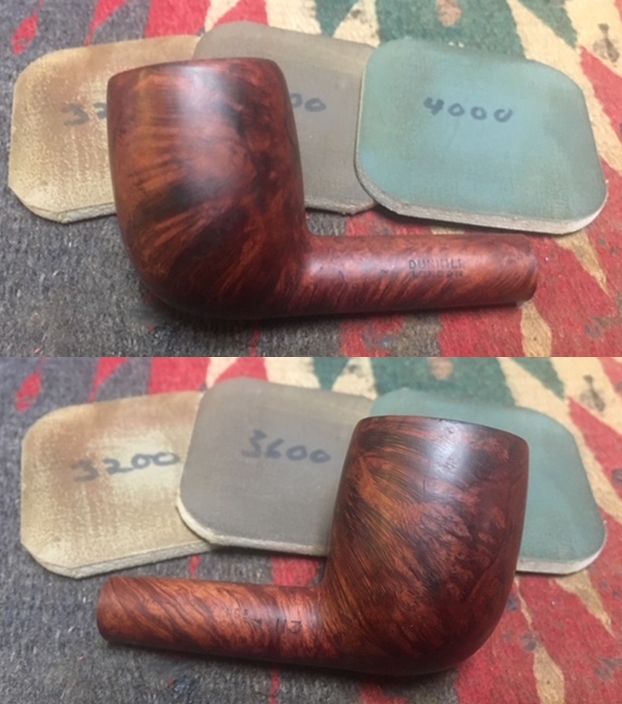
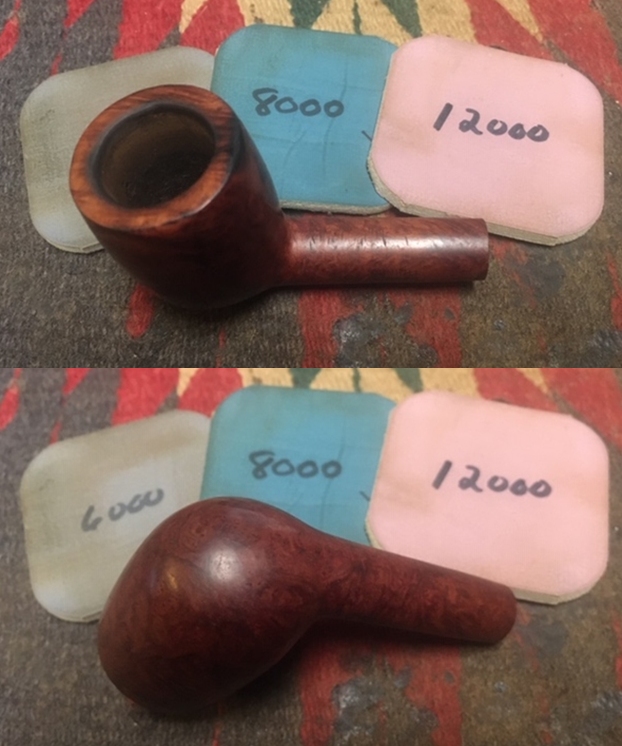
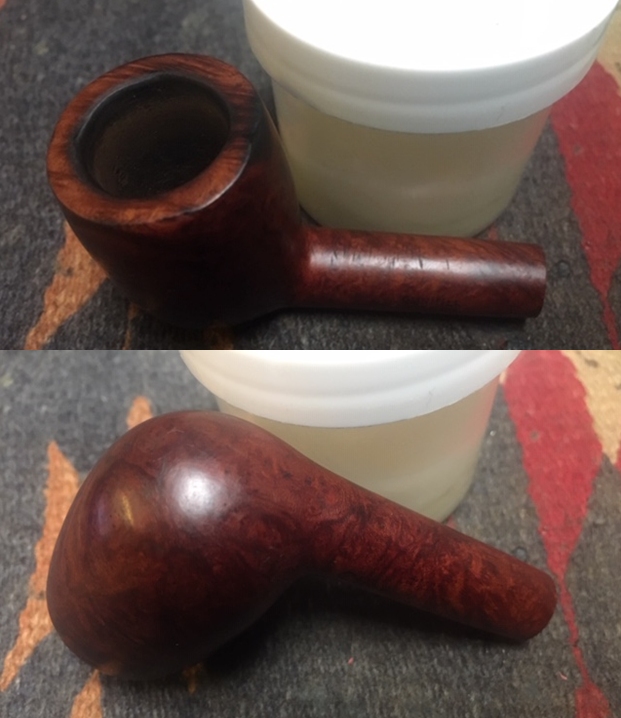
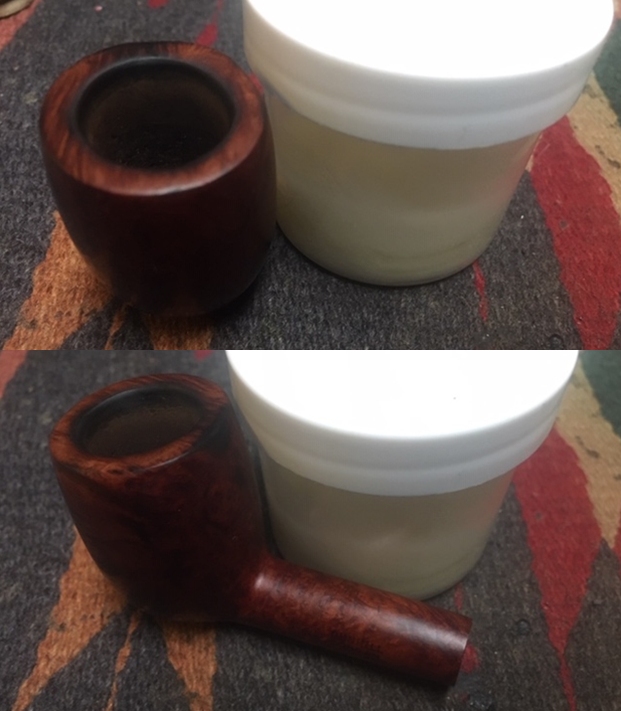
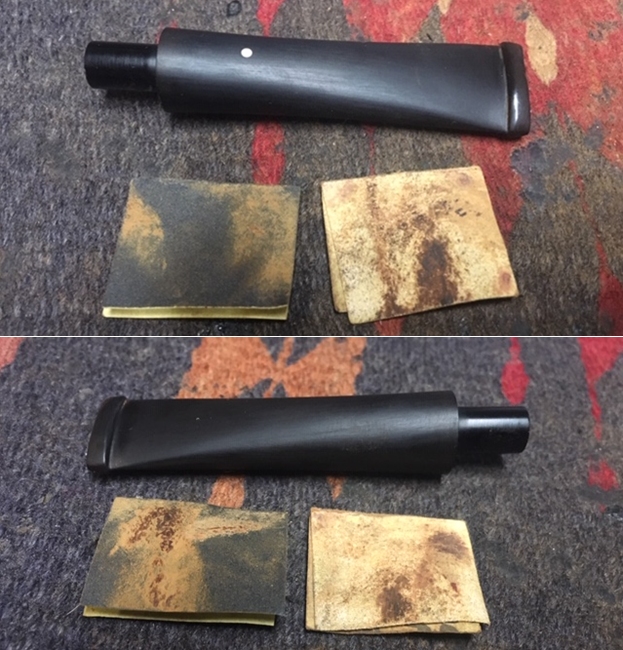
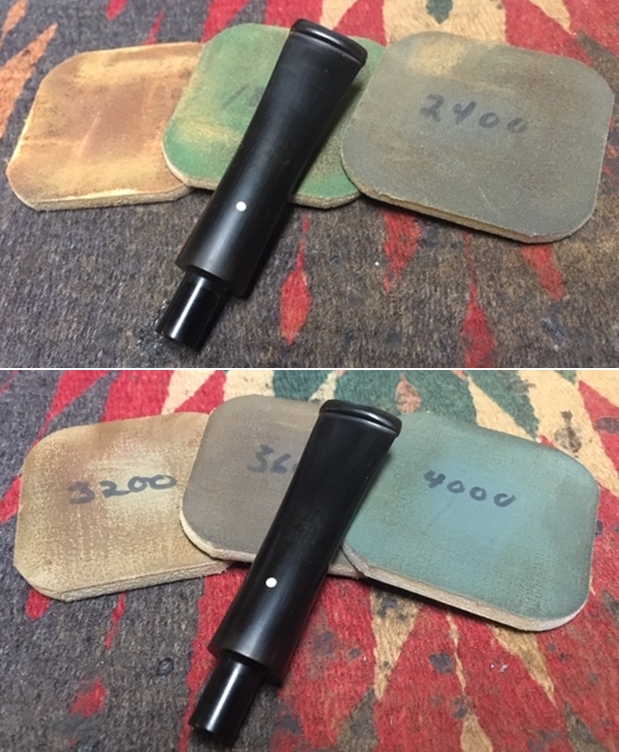
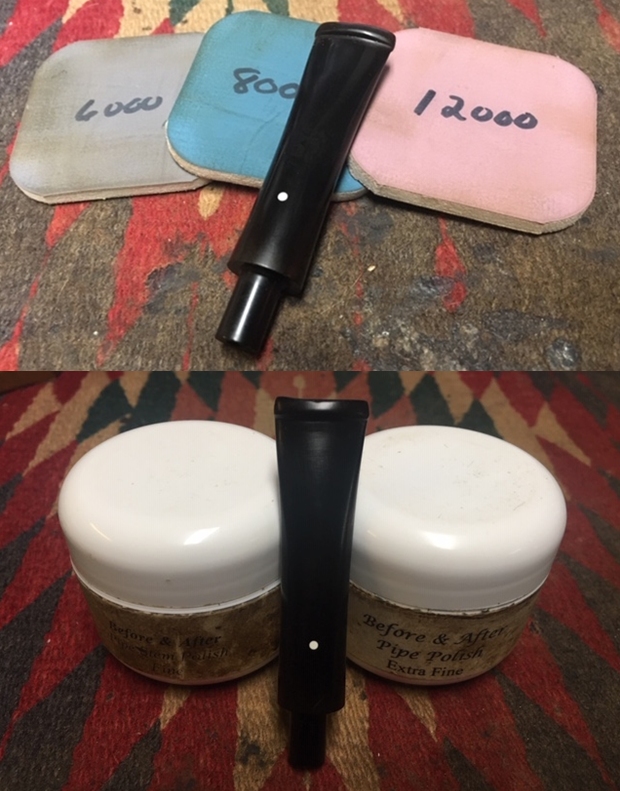
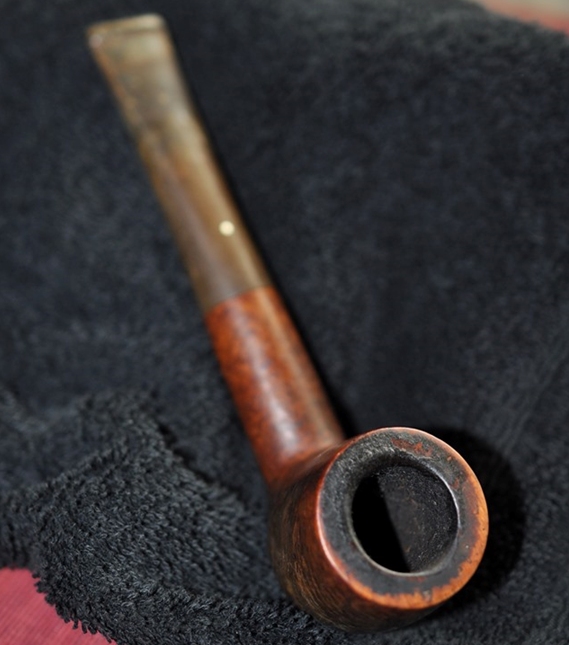
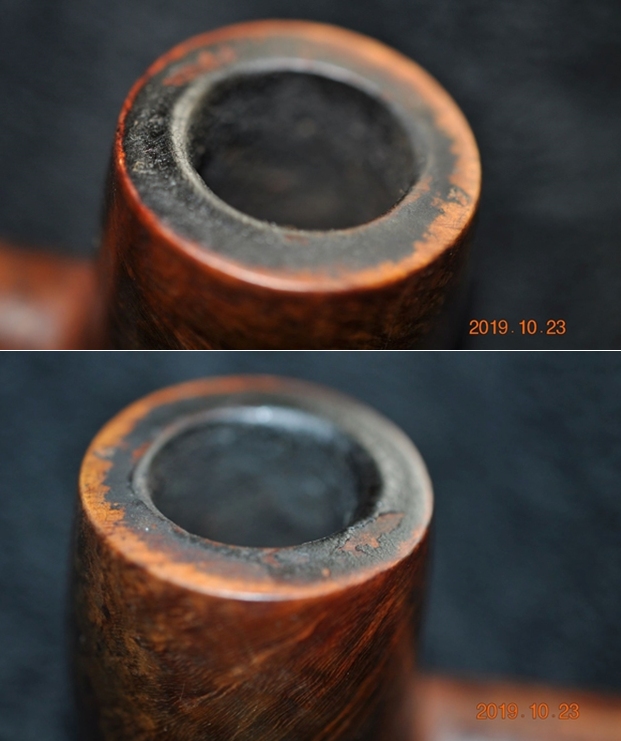
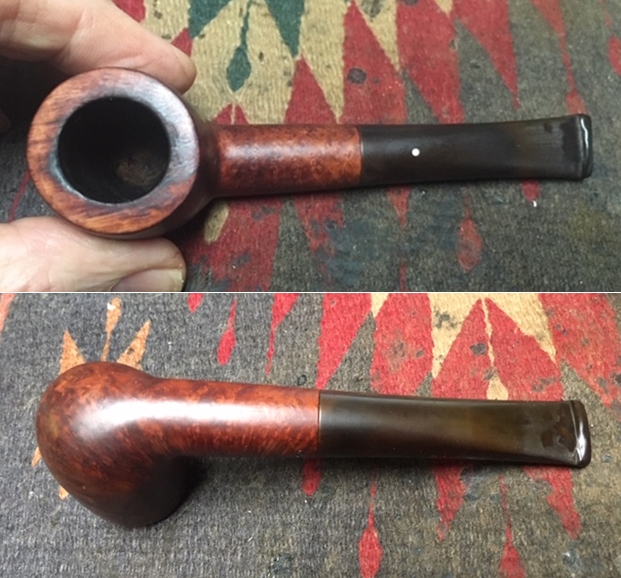
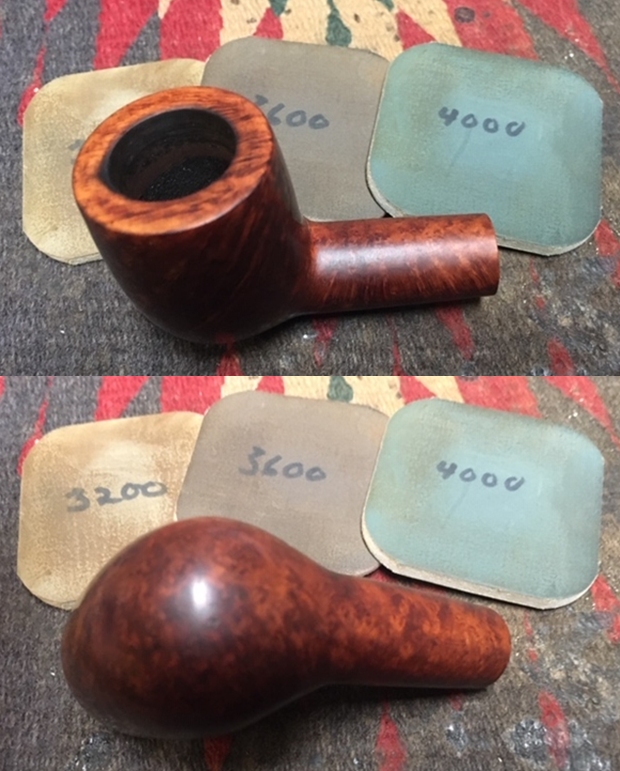
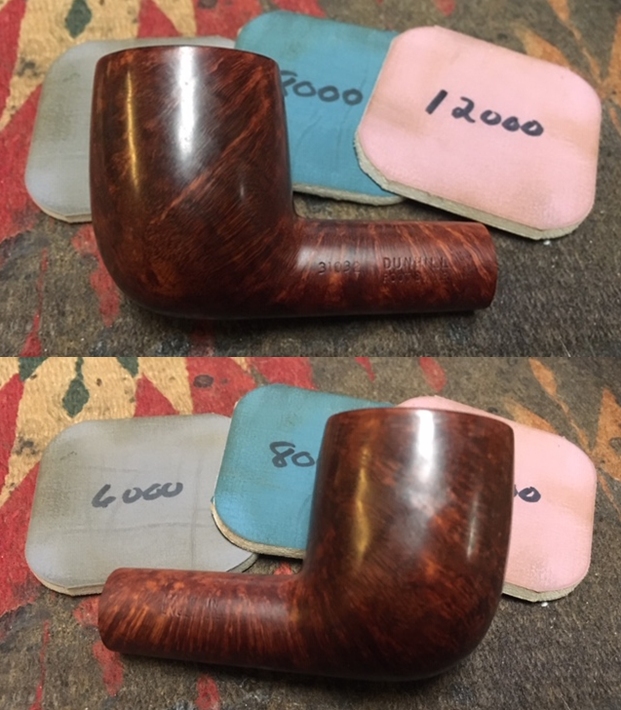
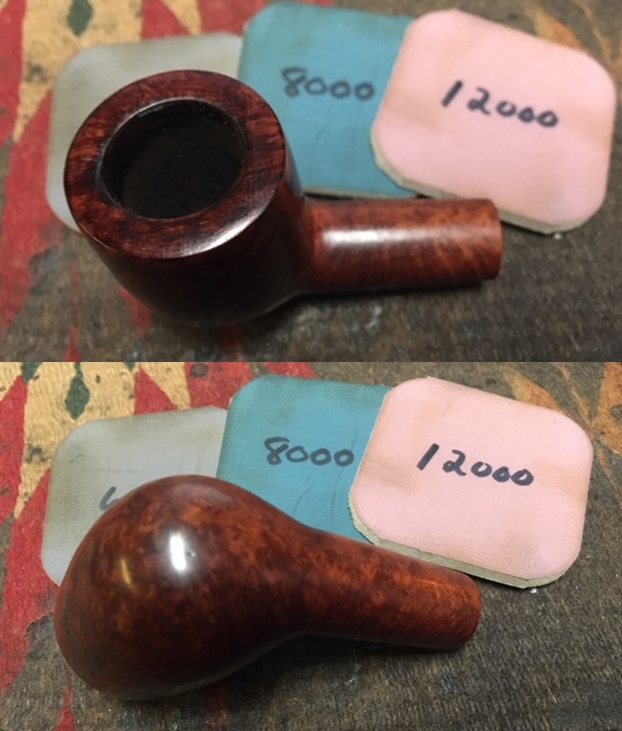
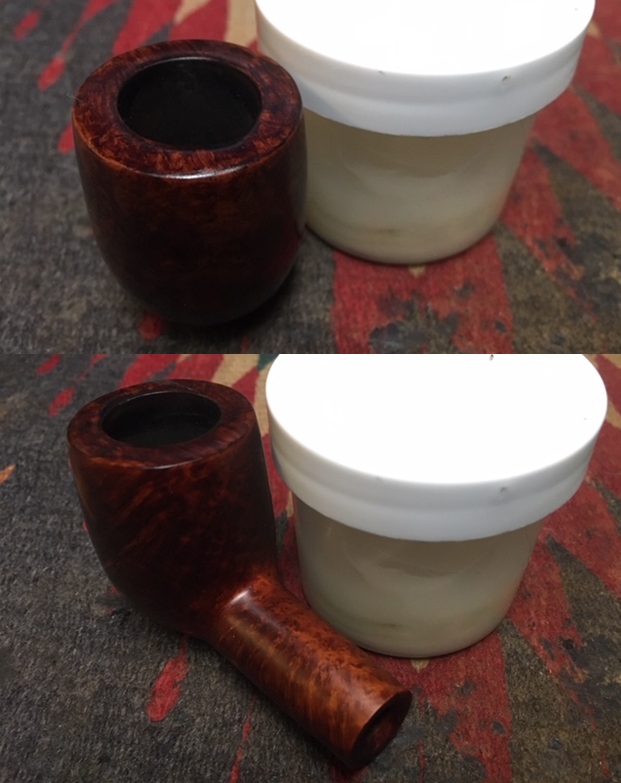
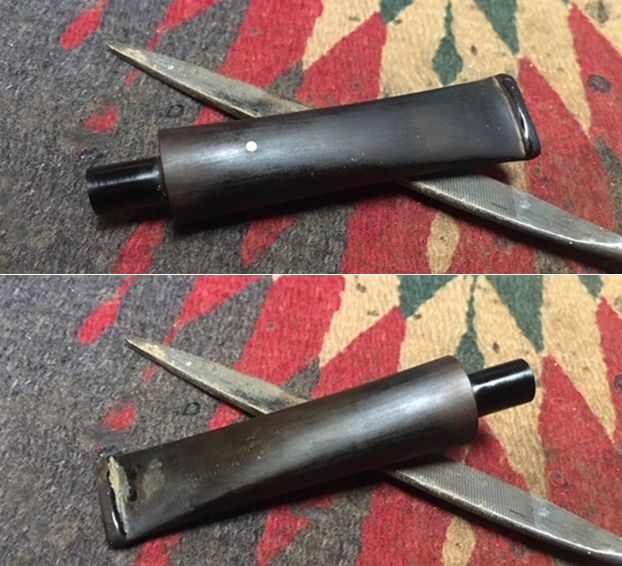
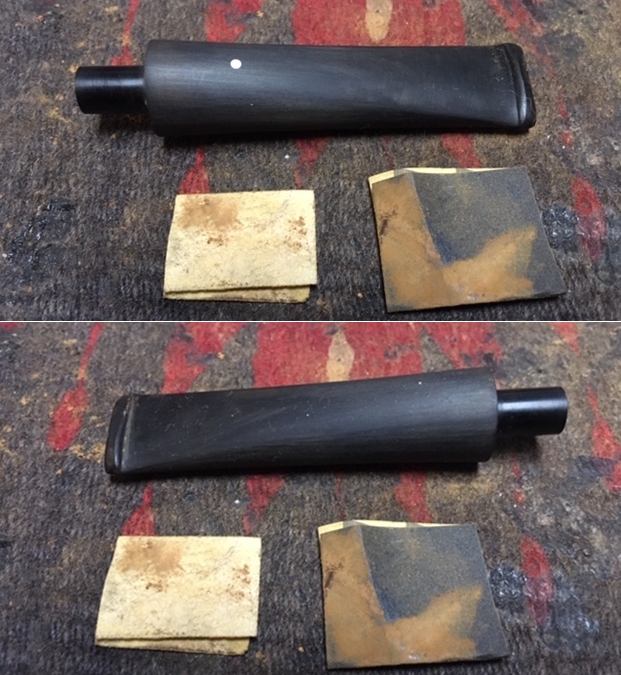
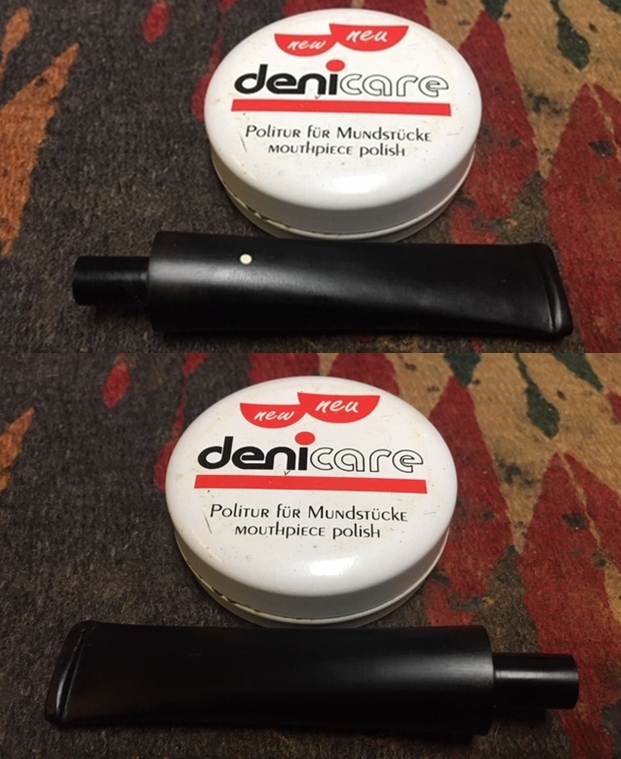
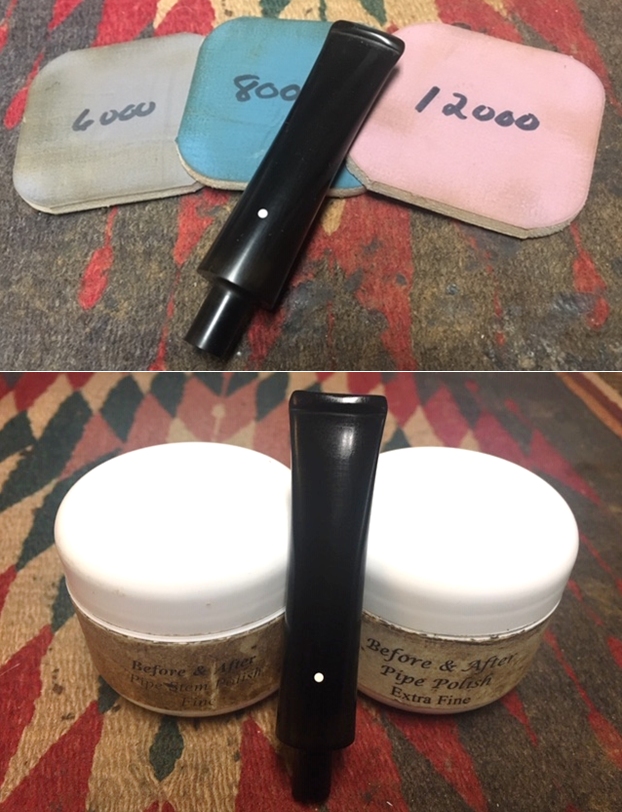
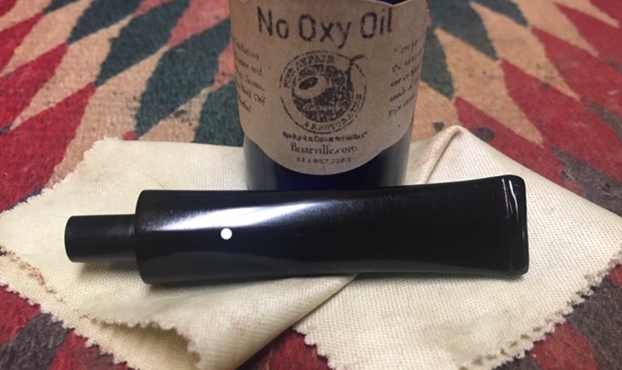
When I got home I laid it aside and tonight took it up to work on it. I examined the pipe to see what I was working with and took some photos. You can see from the first photo below that there were some dark spots on the left side of the bowl. They were cosmetic burn marks in the finish but not too deep. It was like the pipe had been laid down in an ashtray. The right side of the bowl had some darkening toward the top of the bowl and the rim top had significant darkening and there appeared to be some debris in the sandblast finish. The vulcanite spacer between the bowl and the bamboo shank was also oxidized. The Bamboo shank had some great patina and the characteristic crackling in the finish. It was quite stunning. The stem was in good condition other than a few small tooth marks on both sides just ahead of the button. Overall the pipe was in good condition. I took a close up photo of the rim top. It is an interesting sandblast in that there is quite a large pit on the right front rim top. It is part of the blast and thus part of the story. The rim top is a little dirty close up as there is some dust in the crevices. There is some darkening to the original finish of the rim but no burn damage. The inner and outer edges of the rim look very good. I took photos of the shank and stem as well. The vulcanite space between the bowl and the shank was lightly oxidized. The stem looked pretty good. There were small tooth marks on the top and underside of the stem near the button. Otherwise the stem was in very good condition.I took a photo of the stamping on the underside of the bowl. You can see that it reads as noted above.I have had good success in removing stains and oils on briar using Murphy’s Oil Soap. I scrubbed the briar with the soap using both a tooth brush and a brass bristle brush. I rinsed it off under running water and dried it off with a cotton cloth. I was able to remove most of the staining on the right side of the bowl near the top and to lighten the burn marks slightly on the left side of the bowl. The rim top cleaned up nicely with some significant lightening of the top and edges. I worked carefully around the bamboo as I did not want to damage the patina on it. Overall the cleanup left behind a beautiful looking sandblast that was very clean and defined. With the finish cleaned I rubbed it down with Before and After Restoration Balm. It is a product developed by Mark Hoover to clean, enliven and protect briar. I worked it into the briar with my finger tips and a horse hair shoe brush. I also worked it into the bamboo and the vulcanite spacer to clean up the oxidation around that thin ring. I let it sit for about 10 minutes and buffed it off with a cotton cloth. You can see the results below. I set the bowl aside and turned to address the tooth marks and chatter on the stem surface. The stem was in excellent condition other than that so it did not take a lot of work. I used a folded piece of 220 grit sandpaper to sand out the tooth marks and then started the polishing with 400 grit sandpaper. I left the rest of the stem alone with this process.I polished it further with Denicare Mouthpiece Polish – a red paste that does a great job in removing the oxidation remnants in the crease of the button and also polish out some of the lighter tooth chatter.I finished the stem with micromesh sanding pads – wet sanding it with 1500-12000 grit pads and wiping it down after each pad with a damp cotton pad to remove the dust. I polished it with Before and After Pipe Polish – both fine and extra fine. I finished by wiping the stem down with some No Oxy Oil that  received from Briarville Pipe Repair to experiment with. Once I finished I put the stem back on the shank and carefully buffed the pipe with Blue Diamond polish using a lightly loaded pad and a soft touch. I wanted the shine but not the grit filling in the crevices of the sandblast bowl. I used even a gentler touch on the bamboo. I gave the stem a vigorous polish being careful around the white spot. I gave the bowl and bamboo several coats of Conservator’s Wax and the stem several coats of carnauba. I buffed the pipe with a clean buffing pad and hand buffed it with a microfiber cloth. The finished pipe is shown in the photos below. It is a great piece of pipe history and looks better than when I began the process. The dimensions of the pipe are Length: 5 ¾ inches, Height: 1 7/8 inches, Outer Bowl Diameter: 1 ¼ inches, Chamber Diameter: ¾ of an inch. The pipe will soon be heading back to Alex so he can continue to enjoy it. I have told him that if he ever wants to part with it I get the right of first refusal. Thanks for walking with me through the restoration.

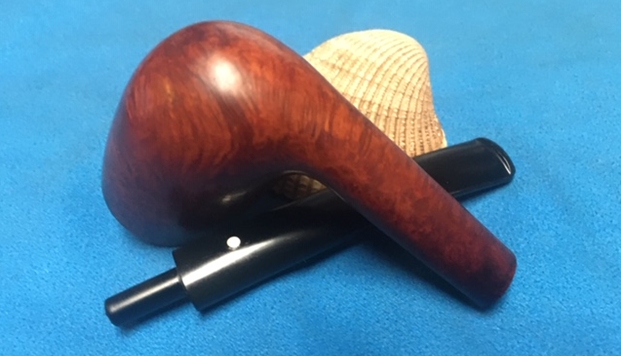
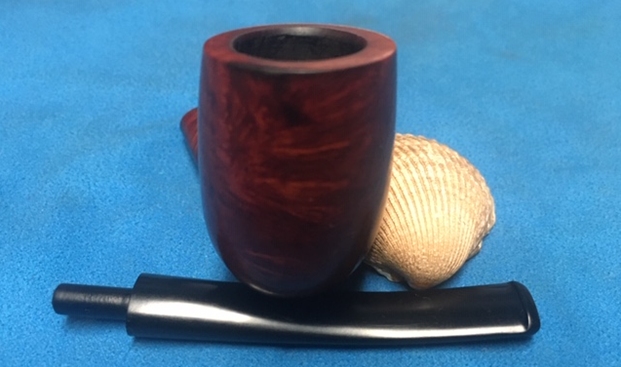
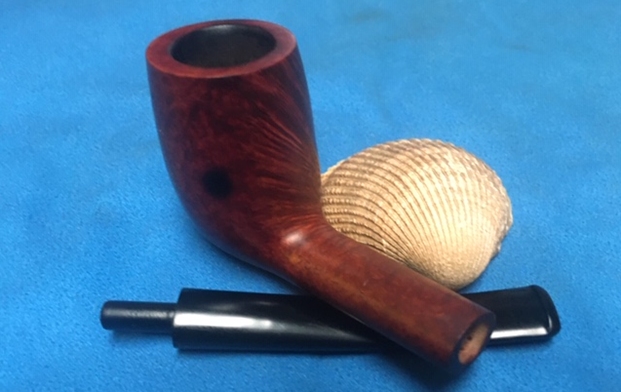
Restoring the Last of Bob Kerr’s Dunhills – a 1962 Dunhill Bruyere 656 F/T Bent Billiard


Blog by Steve Laug

As I continue to work through the pipes in Bob Kerr’s Estate I am enjoying choosing different brands that he had to focus on for a bit. I had eight more from his Dunhill collection that I decided to go back to and finish working my way through that sub collection of the estate. Out of the 8 pipes six were Bruyere finished pipes, one was a Made in London (turns out it is also a Bruyere finished pipe), and one was a Root Briar. What follows is a list of what I saw when I examined the 8 pipes. As I finish the pipes I will include the link to the blog on that particular pipe for easy reference. I have already restored 16 pipes from this subgroup so you can do a quick search to read about the work on the Shell Briars and Tanshell Briars that were in that part of the collection.

  1. Bruyere 656 F/T Made in England 2 Circle 4A – Group 4 size Bruyere made in 1962. Saddle stem is oxidized, tooth marks and chatter near the button, some calcification with damage to the button. Finish is dirty, bowl caked and lava overflow on the rim top. Bowl is out of round, damaged edge. Appears to have a tenon made for a 9mm filter.
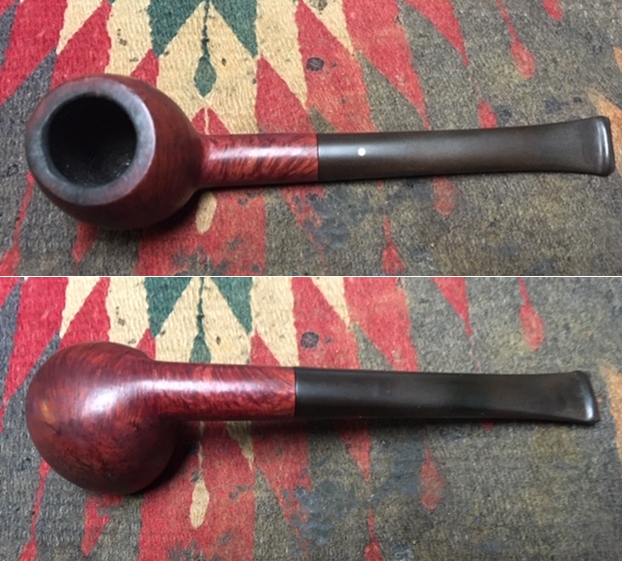
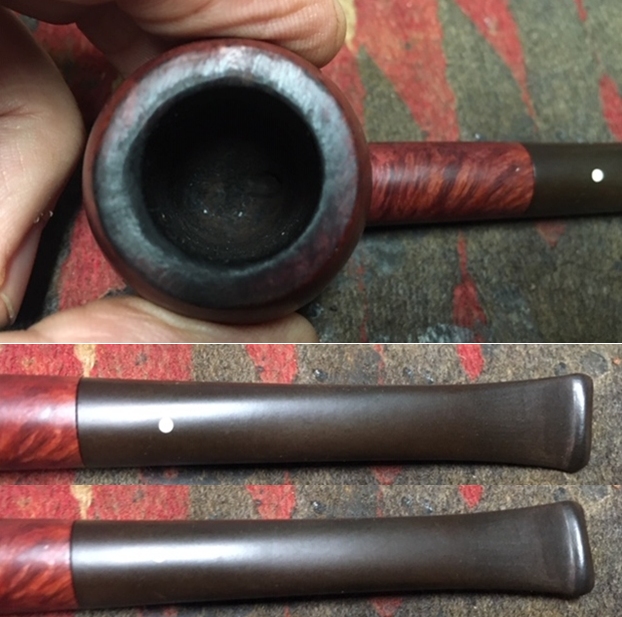
  2. Bruyere 112 F/T Made in England 9/11 Circle 2A – Group 2 size Bruyere made in 1969 and sold in 1971. Stem is oxidized, tooth marks and chatter near the button, some calcification with damage to the button. Finish is dirty, bowl caked and lava overflow on the rim top. Bowl is out of round, damaged edge. I finished the restoration on it. Here is the link to the blog – (https://rebornpipes.com/2019/12/28/restoring-a-1969-dunhill-bruyere-112-f-t-apple-from-bob-kerrs-estate/).
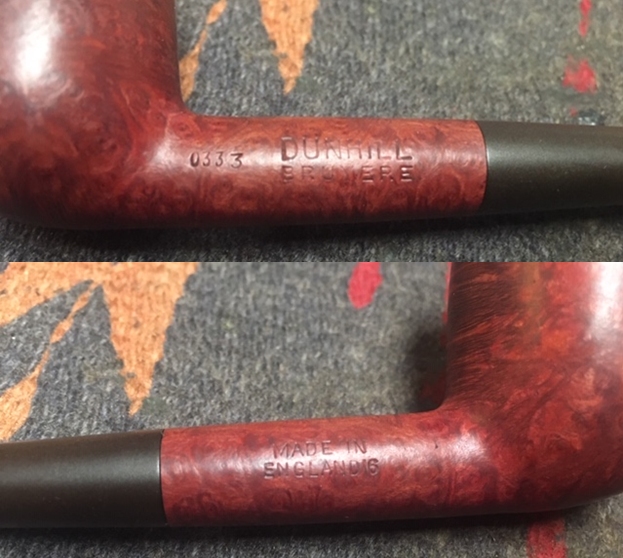
  3. Bruyere 0333 Made in England 16 made in 1976. Stem is oxidized, tooth marks and chatter near the button, some calcification with damage to the button. Finish is dirty, bowl caked and lava overflow on the rim top. Bowl is out of round, damaged edge. I finished the restoration on it. Here is the link to the blog – (https://rebornpipes.com/2019/12/29/restoring-a-1976-dunhill-bruyere-0333-billiard-from-bob-kerrs-estate/).
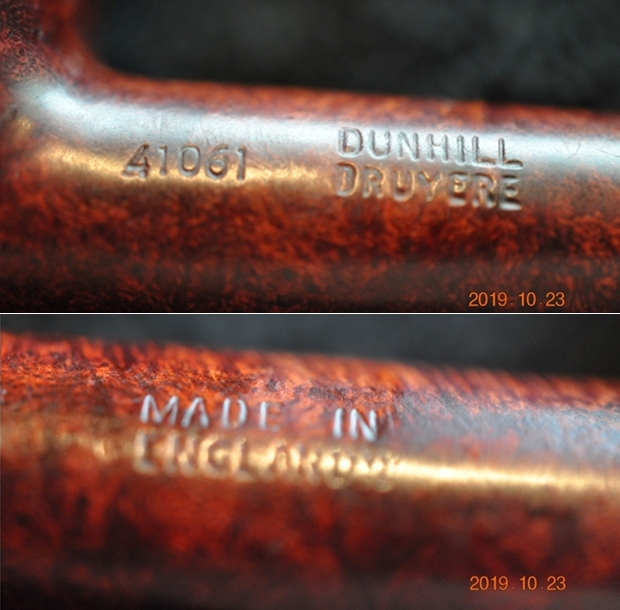
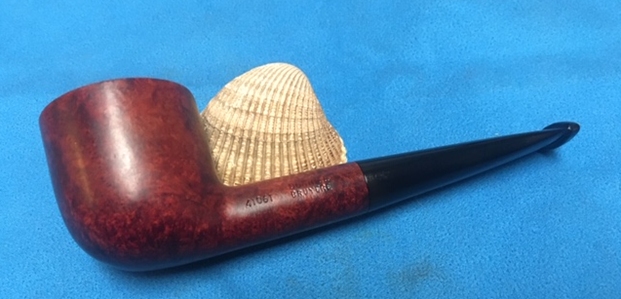
  4. Bruyere 41061 Made in England 18 made in 1978. Stem is oxidized, tooth marks and chatter near the button, some calcification with damage to the button. Finish is dirty, bowl caked and lava overflow on the rim top. Bowl is out of round, damaged edge. I finished the restoration on it. Here is the link to the blog – (https://rebornpipes.com/2019/12/24/restoring-a-1978-dunhill-bruyere-41061-from-bob-kerrs-estate/).
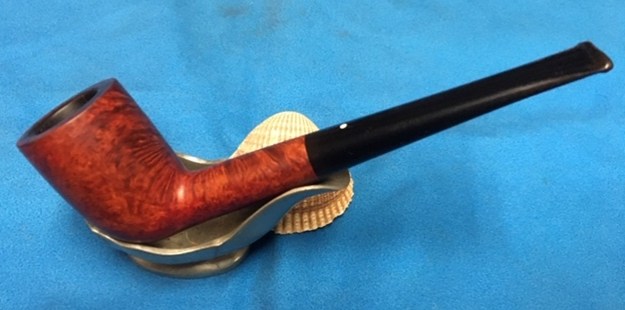
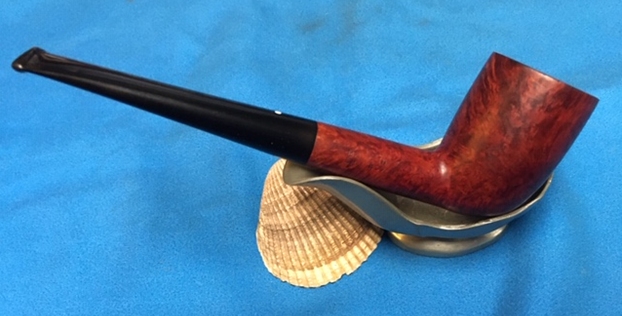
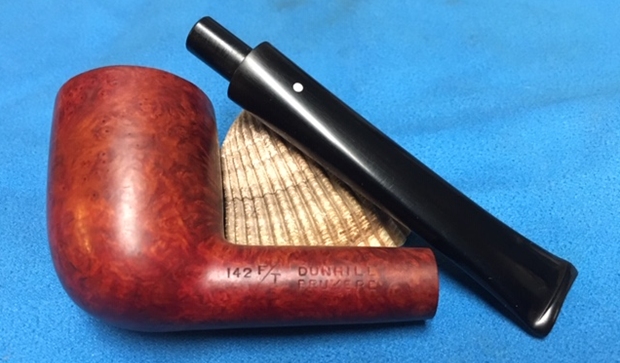
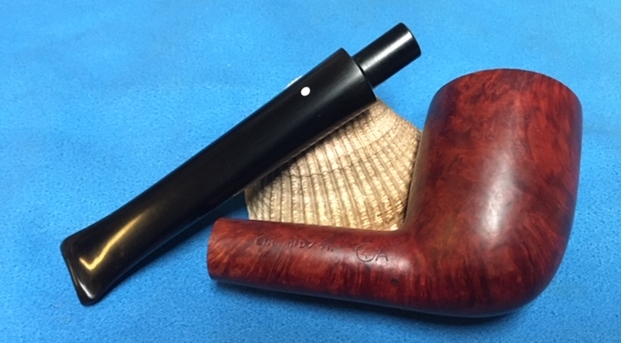
  5. Bruyere 142 F/T Made in England 7/9/11 Circle 4A – Group for size Bruyere made in 1967 and sent out in 1969 or 1971. Stem is oxidized, tooth marks and chatter near the button, some calcification with damage to the button. Finish is dirty, bowl caked and lava overflow on the rim top. Bowl is out of round, damaged edge. I finished the restoration on it. Here is the link to the blog – https://rebornpipes.com/2019/12/27/restoring-a-1967-dunhill-bruyere-142-f-t-billiard-from-bob-kerrs-estate/
  6. (A) Dunill London Inner Tube PAT N°5861/12 Shape 34. Stem is oxidized, tooth marks and chatter near the button, some calcification with damage to the button. Finish is dirty, bowl caked and lava overflow on the rim top. Bowl is out of round, damaged edge. I finished the restoration on it. Here is the link to the blog – (https://rebornpipes.com/2019/12/26/restoring-a-1913-a-dunhill-london-34-billiard-from-bob-kerrs-estate/).
  7. (Ao) Dunhill London 113 Made in England 5 PAT N°158709/14. Stem is oxidized, tooth marks and chatter near the button, some calcification with damage to the button. Finish is dirty, bowl caked and lava overflow on the rim top. Bowl is out of round, damaged rim edges. I finished the restoration on it. Here is the link to the blog – (https://rebornpipes.com/2019/12/25/restoring-a-1925-ao-dunhill-london-113-billiard-from-bob-kerrs-estate/).
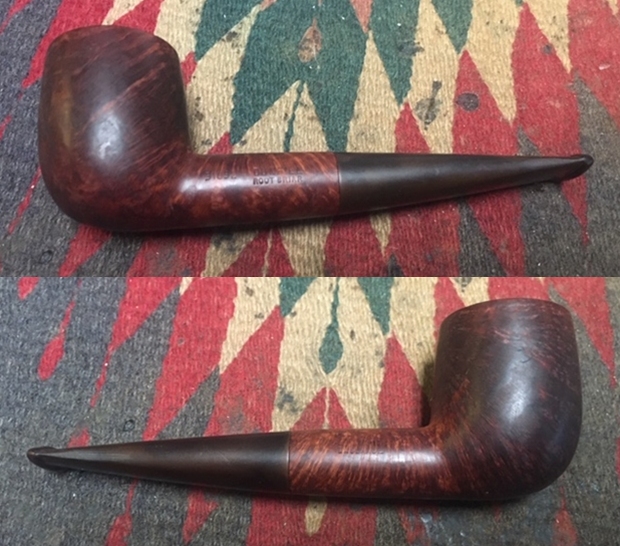
  8. Root Briar 31032 Made in England 18 – made in 1978. Stem is oxidized, tooth marks and chatter near the button, some calcification with damage to the button. Finish is dirty, bowl caked and lava overflow on the rim top. Bowl is out of round, damaged edge. I finished the restoration on it. Here is the link to the blog – (https://rebornpipes.com/2019/12/23/restoring-a-1978-dunhill-root-briar-31032-billiard-from-bob-kerrs-estate/).

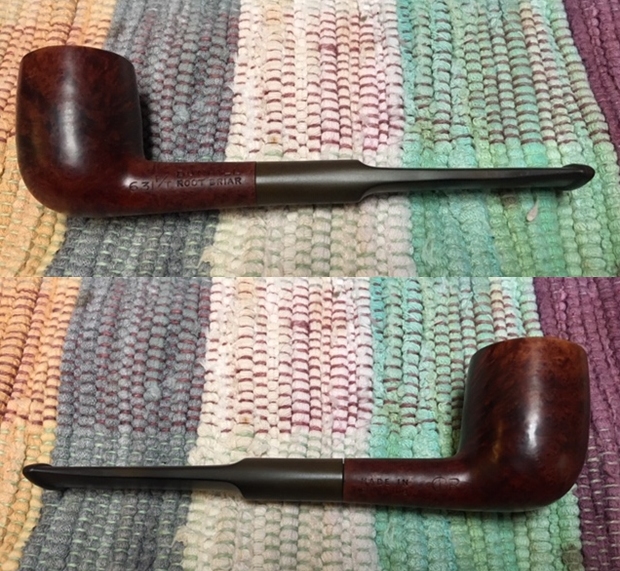
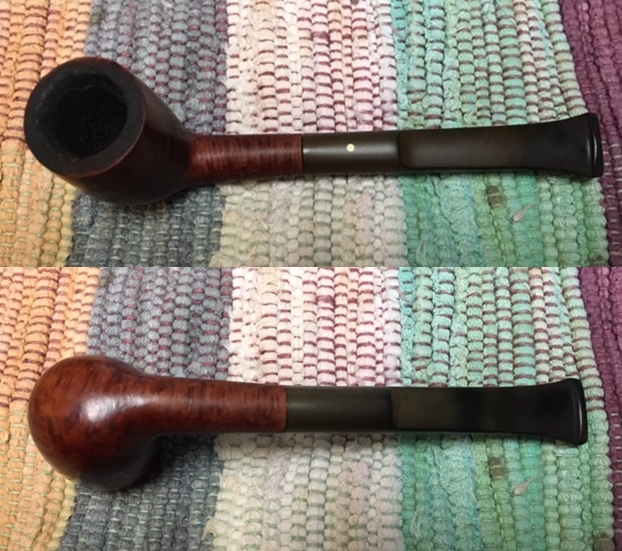
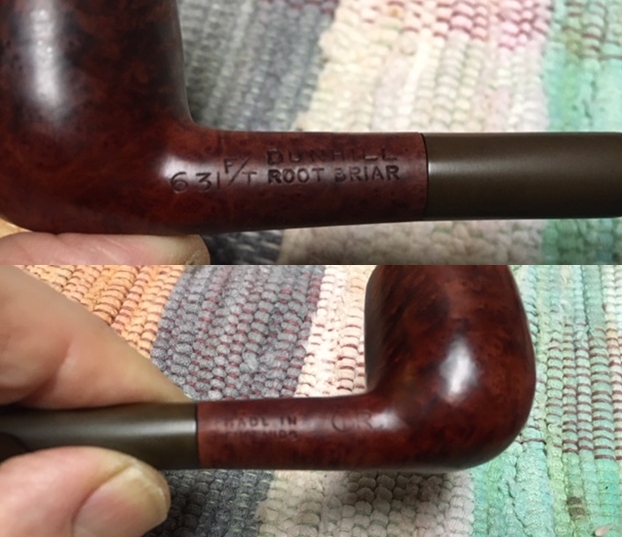
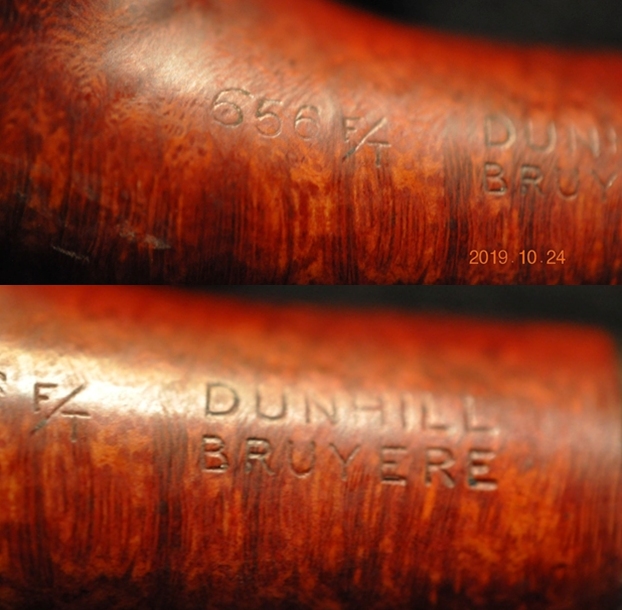
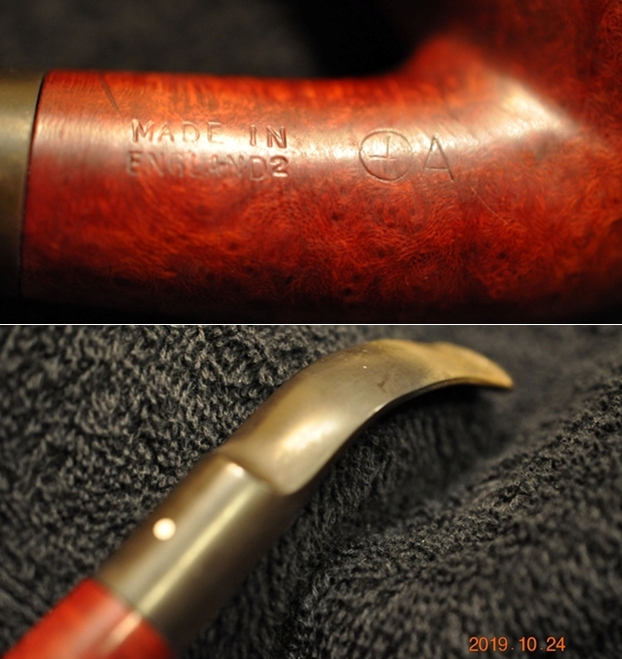
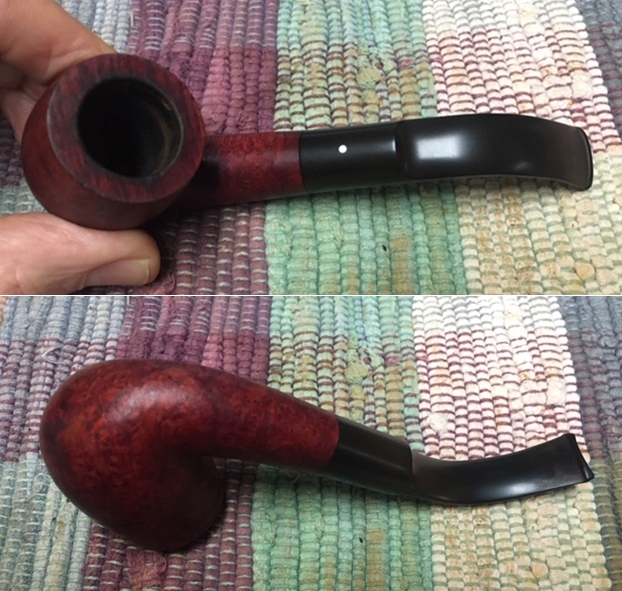
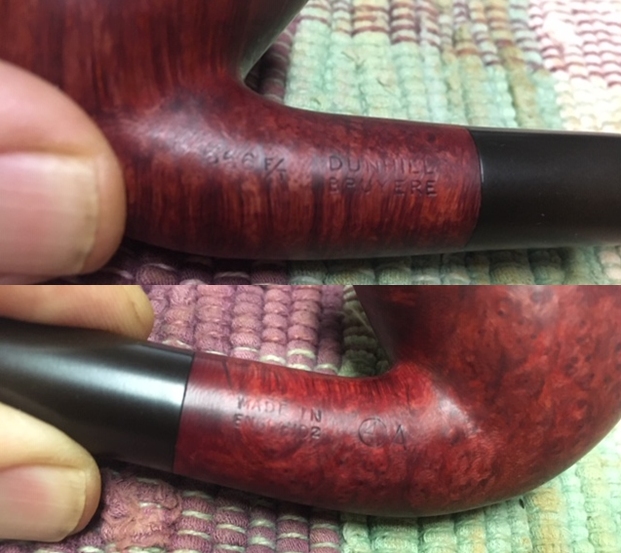
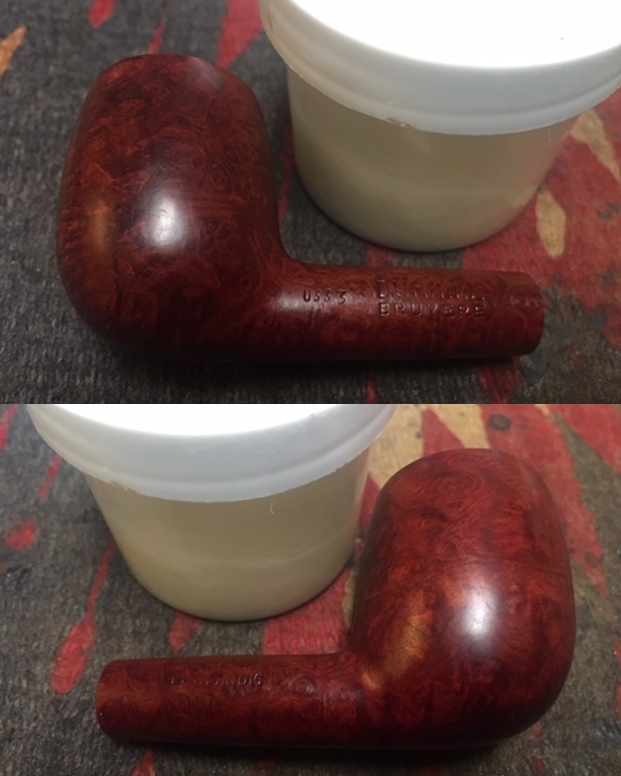
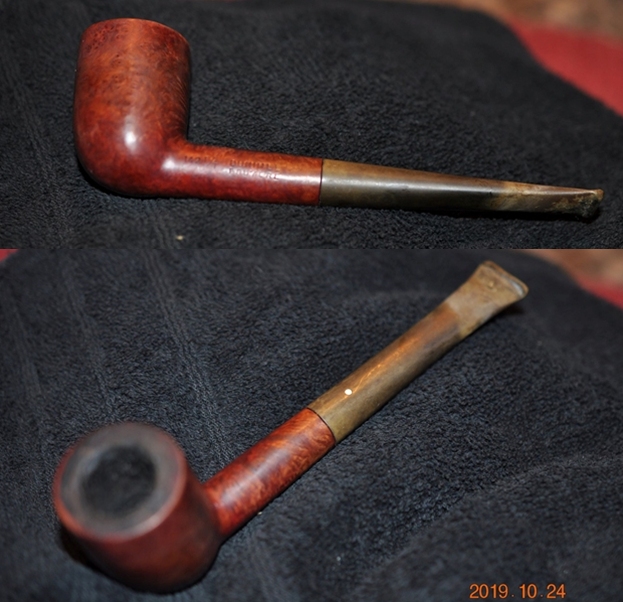
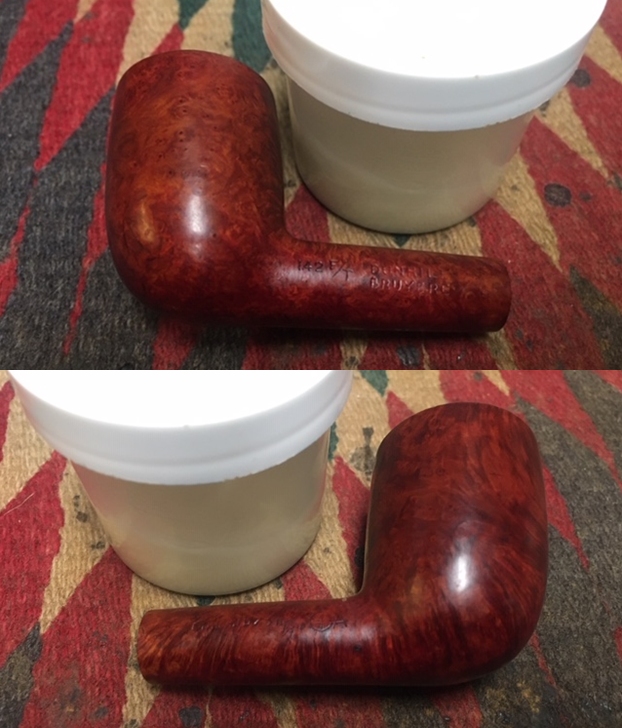
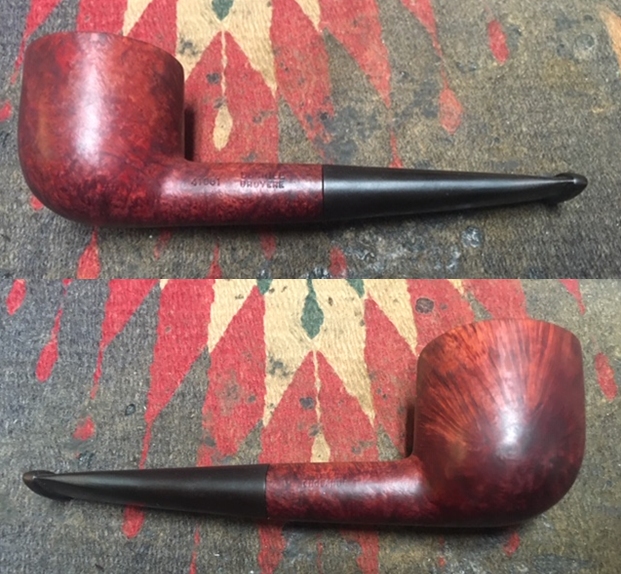
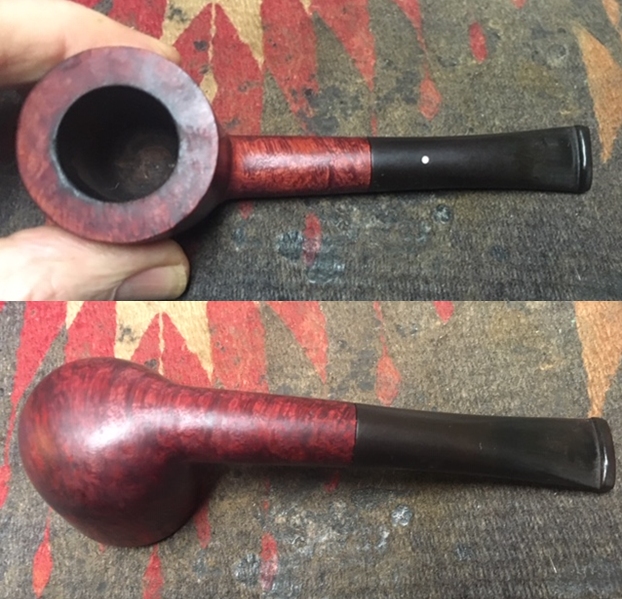
I finished work on #2, #3, #4, #5, #6, #7 & #8 and turned my attention to sole remaining Dunhill in Bob’s Collection #1, another heavily used pipe but this time a Bent Billiard shaped pipe with a saddle stem. The pipe was stamped on the left side of the shank with the shape number 656 F/T next to the bowl/shank junction. That is followed by Dunhill over Bruyere. On the right side of the shank it is stamped Made in England 2 followed by circle 4A. It appears that the pipe stamped as this one is was made in 1962. The 656 F/T is a Bent Billiard with a fish tail (F/T) saddle stem. The circle 4 is the group/size of the pipe and A is the designation for Bruyere. This is the last pipe that I have to work on from the Dunhill collection.

I am once again including Chuck Stanion’s eloquent description of the Bruyere on the smokingpipes.com site as follows (https://www.smokingpipes.com/pipes/new/dunhill/moreinfo.cfm?product_id=346421):

The Bruyere was Alfred Dunhill’s original finish upon launching his brand of premium pipes and smoking accessories and was the only Dunhill finish from 1910 until 1917. Even after the addition of other finishes, the Bruyere maintained a high level of popularity, becoming synonymous with what is thought of, even today, as the quintessential pipe. To achieve the iconic, ruby hue and saturation, a skilled craftsman painstakingly layers particular stains in a precise manner, then meticulously polishes the pipe to a high luster. The final result is, simply put, timeless.

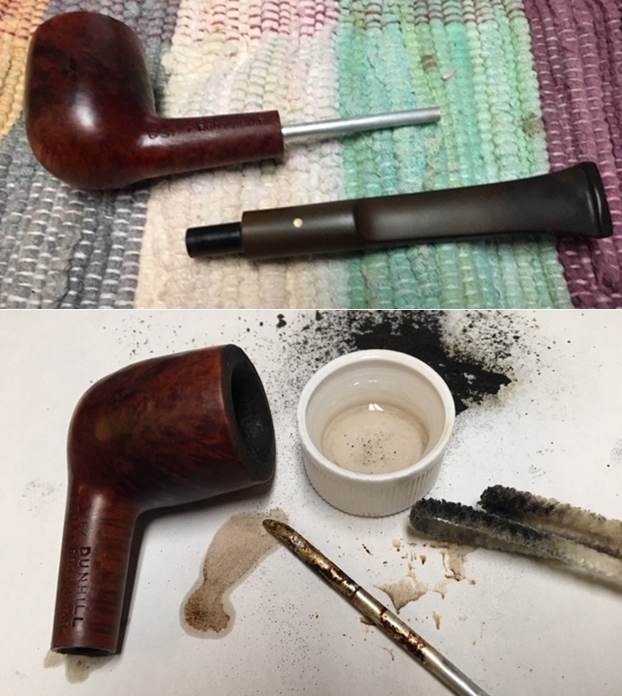
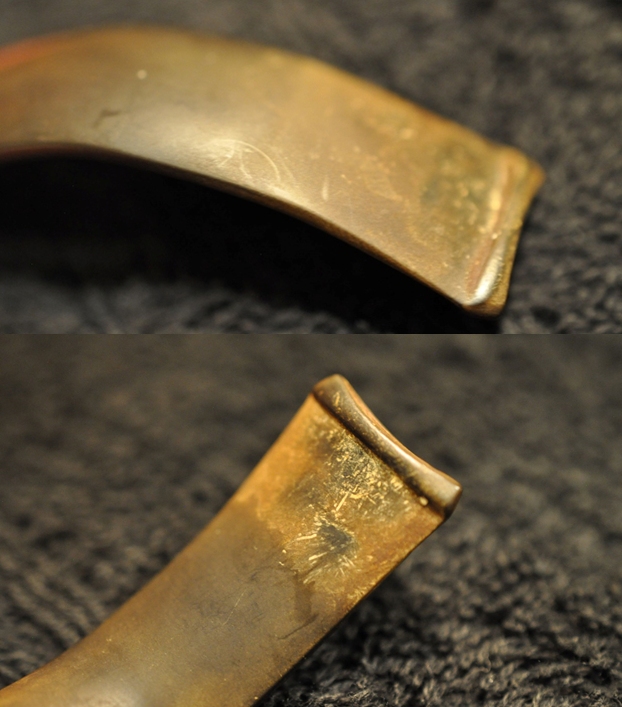
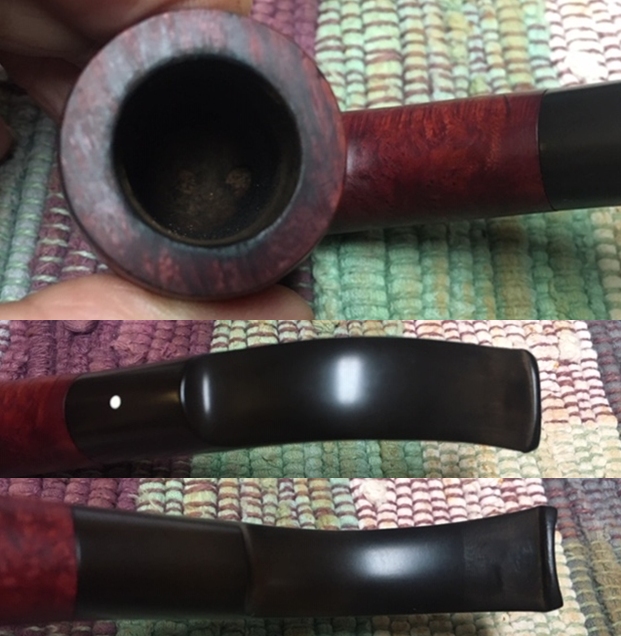
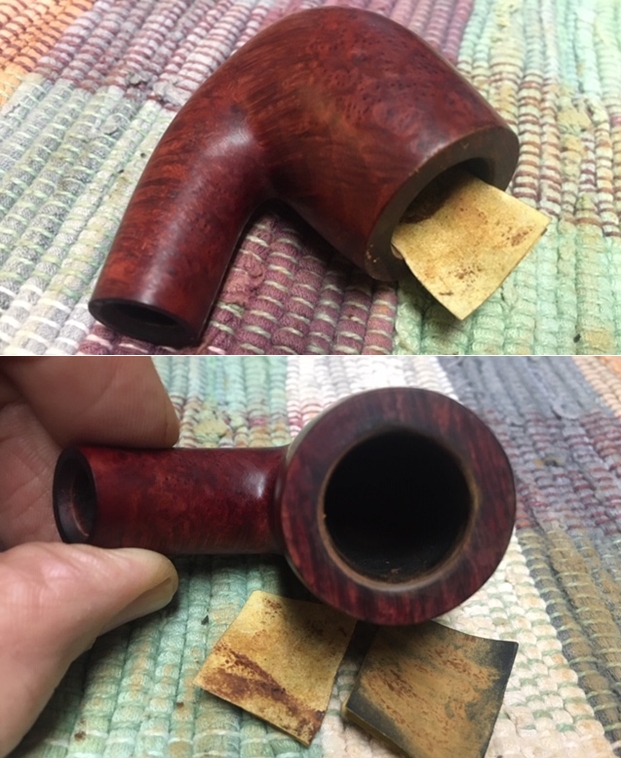
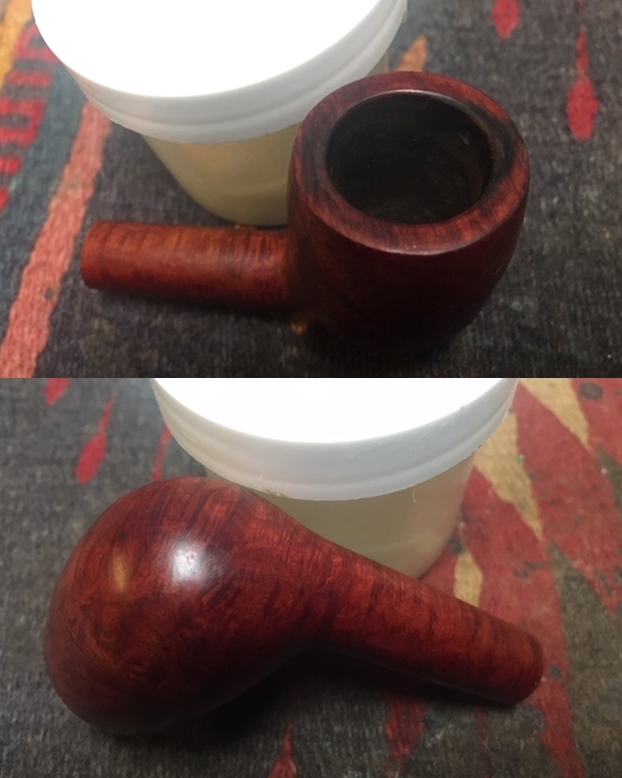
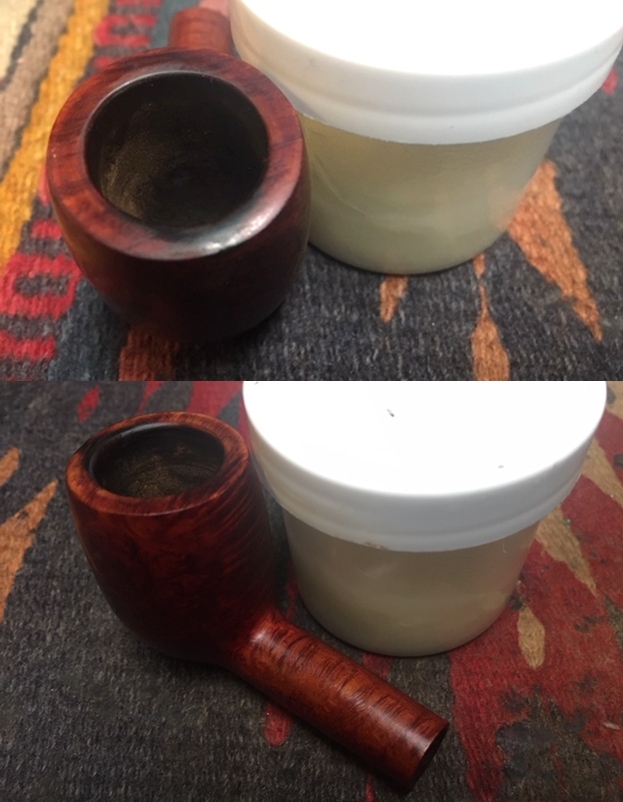
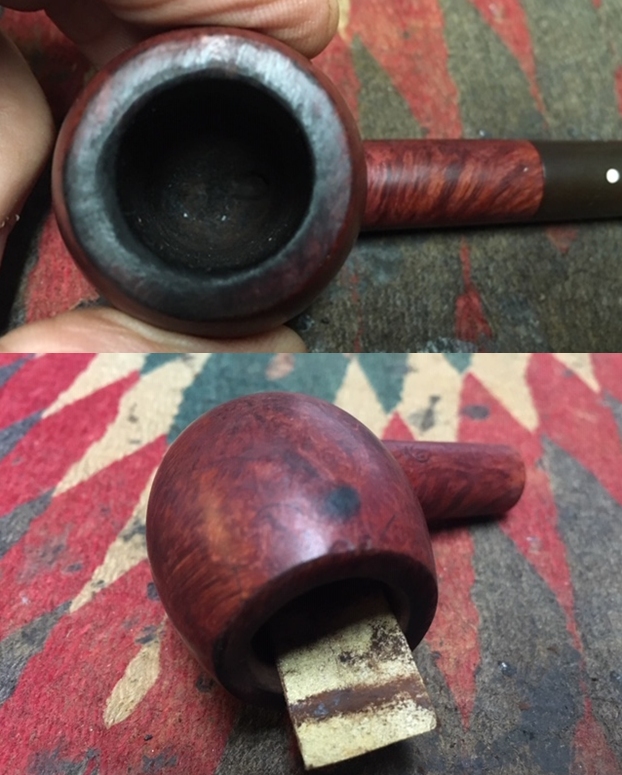
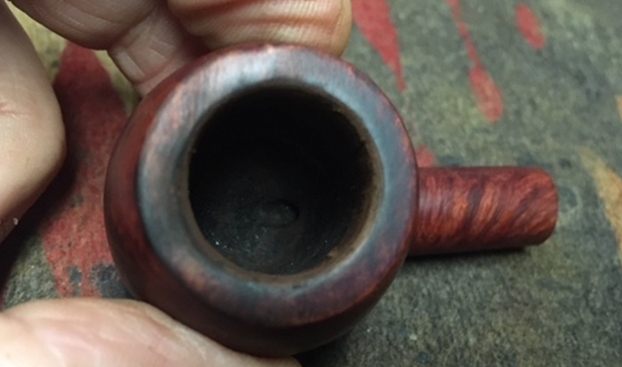
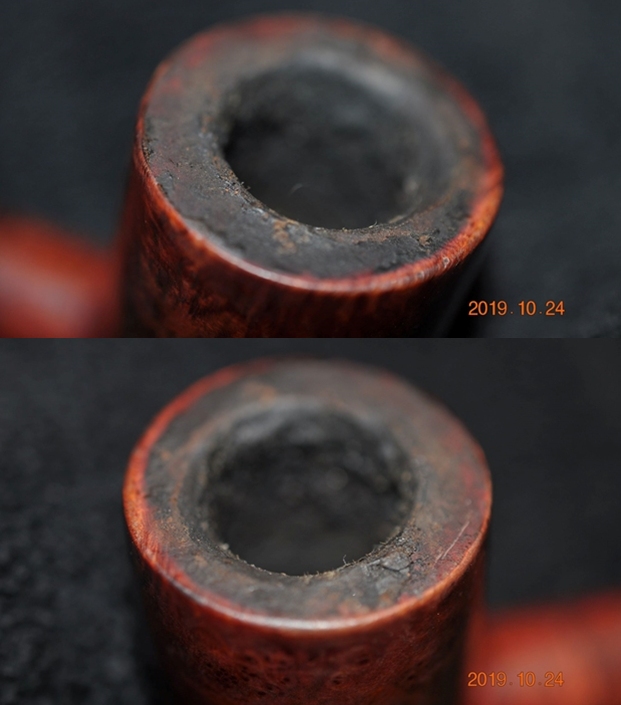
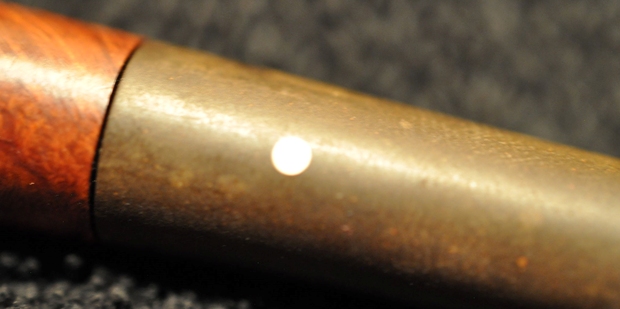
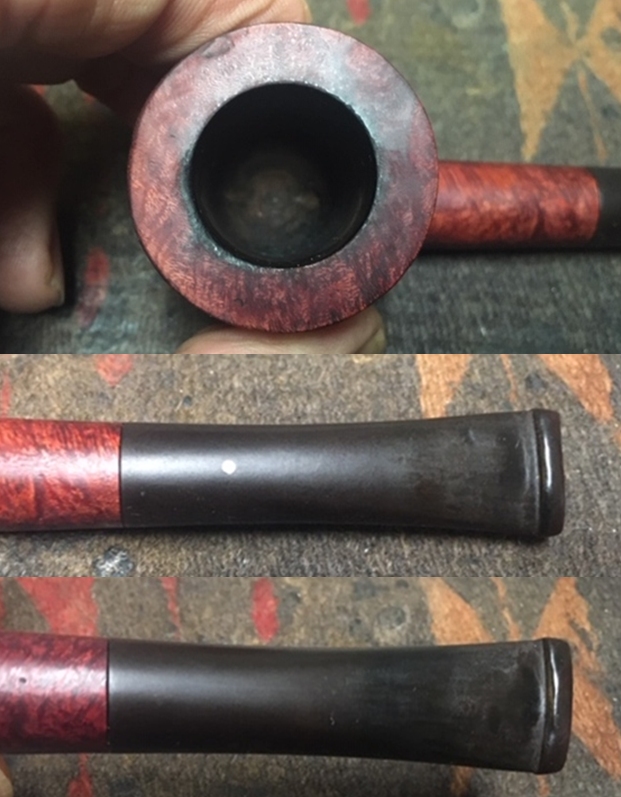
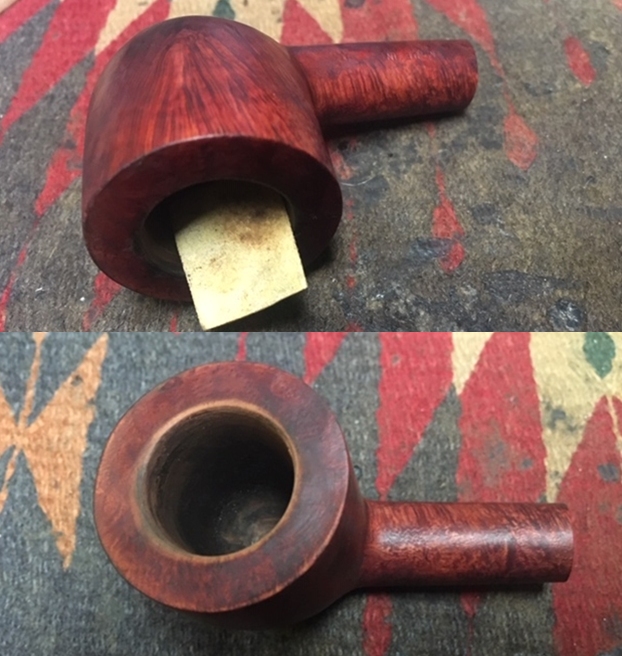
Like Bob’s other Dunhill pipe this one also had a thick cake in the bowl with remnants of tobacco stuck on the walls. There was a thick lava overflow on the rim so it was hard to know what kind of damage lay beneath the covering. Once it was cleaned I would have a better idea of the condition of the rim top. The grain that is poking through the grime and oils appears to be quite beautiful – birdseye grain on the bowl sides and cross grain on the front and back as well as the heel of the bowl. The stem was oxidized and calcified toward the end with some tooth chatter. There were also some tooth marks on both sides of the stem ahead of the button and on the button itself. There was the classic White Spot on the top of the stem. Jeff took photos of the pipe before he started his cleanup work on it.  Jeff took photos of the bowl and rim top to show the thick, hard cake in the bowl with remnants of tobacco stuck on the walls of the bowl. There was a thick lava build up on the smooth rim top and the edges of the bowl. The rim top and inner edges looked pretty good but it was hard to know for sure. The outer edges looked to be okay.   Jeff took photos of the sides and heel of the bowl to show the condition of the finish. You can see the beautiful grain patterns around the sides of the bowl and shank. Even under the dirt and debris of the years it looked very good.     The stamping is very readable. On the left side of the shank you can see 656 F/T which is the shape number. Next to that it is stamped Dunhill over Bruyere. On the right side it reads Made in England2 and a circle 4A. Jeff included a pic of the White Spot on the stem.     Jeff took photos of the top and underside of the stem showing the tooth chatter, scratching, calcification and oxidation on the stem surface and wear on the edges of the button.      I can’t begin tell you how great it feels to have Jeff’s help on cleaning up the pipes from Bob’s estate as the 125+ pipes were taking me a long time to do alone. In fact I doubt if I would have as many finished as I do now. Together we have restored over 60 pipes and Jeff has cleaned all of the remaining pipes for me. He cleaned this filthy pipe with his usual penchant for thoroughness that I really appreciate. This one was a real mess and I was looking forward to seeing what he had done with this one when I took it out of his box. It looked amazing and CLEAN. He reamed it with a PipNet pipe reamer and cleaned up the reaming with a Savinelli Fitsall Pipe Knife. He scrubbed out the internals with alcohol, pipe cleaners and cotton swabs until the pipe was clean. He scrubbed the exterior of the bowl with Murphy’s Oil Soap and a tooth brush to remove the grime and grit on the briar and the lava on the rim top. The finish looks good with great looking grain around the bowl and shank. The rim top looked better on this pipe. The condition of the inner and outer edges was not too bad. The stem looked a lot better. Jeff soaked the stem in Before & After Deoxidizer to remove the oxidation on the rubber. The pipe was ready for me to carry on the next part of the process. I took some close up photos of the rim top and also of the stem surface. I wanted to show how well it had cleaned up and what needed to be done. The rim top was in remarkable condition. It was probably the best preserved rim top of the last 9 pipes I have worked on. There was some darkening all around the top of the bowl and on the inner edge. There was some burn damage on the left side of the inner edge but it was in good condition. The outer edge looked very good.  I also took close up photos of the stem to show the tooth marks and chatter on the stem surface.  The stamping appeared to be as clear as it was before the cleanup work. This is just one of the things I appreciate about Jeff’s cleanup is that he works to protect and preserve the nomenclature on the shank of the pipes that he works on. I took some photos to show the stamping. Bob loved his Dunhill pipes and it was obvious that he enjoyed smoking them. Some appeared to be daily smokes while others he seemed to reserve for special occasions. Some seemed like they must have hung in his mouth while he did his carving while others were smoked in his chair. Having worked on over 60 of his pipes so far I am getting a feel for them. This one is in rough condition and I suppose it might well have been before Bob took up the trust. I suppose I won’t ever know for sure but it certainly has a long and interesting story if it could only tell it.

I am sure that many of you have read at least some of the other restoration work that I have done on previous pipes. You have also read what I have included about Bob Kerr, the pipeman who held these pipes in trust before I came to work on them (see photo to the left). Also, if you have followed the blog for long you will already know that I like to include background information on the pipeman whose pipes I am restoring. For me, when I am working on an estate I really like to have a sense of the person who held the pipes in trust before I worked on them. It gives me another dimension of the restoration work. Bob’s daughter wrote a short tribute to her father. I thank you Brian and tell your wife thank you as well.

I am delighted to pass on these beloved pipes of my father’s. I hope each user gets many hours of contemplative pleasure as he did. I remember the aroma of tobacco in the rec room, as he put up his feet on his lazy boy. He’d be first at the paper then, no one could touch it before him. Maybe there would be a movie on with an actor smoking a pipe. He would have very definite opinions on whether the performer was a ‘real’ smoker or not, a distinction which I could never see but it would be very clear to him. He worked by day as a sales manager of a paper products company, a job he hated. What he longed for was the life of an artist, so on the weekends and sometimes mid-week evenings he would journey to his workshop and come out with wood sculptures, all of which he declared as crap but every one of them treasured by my sister and myself. Enjoy the pipes, and maybe a little of his creative spirit will enter you!

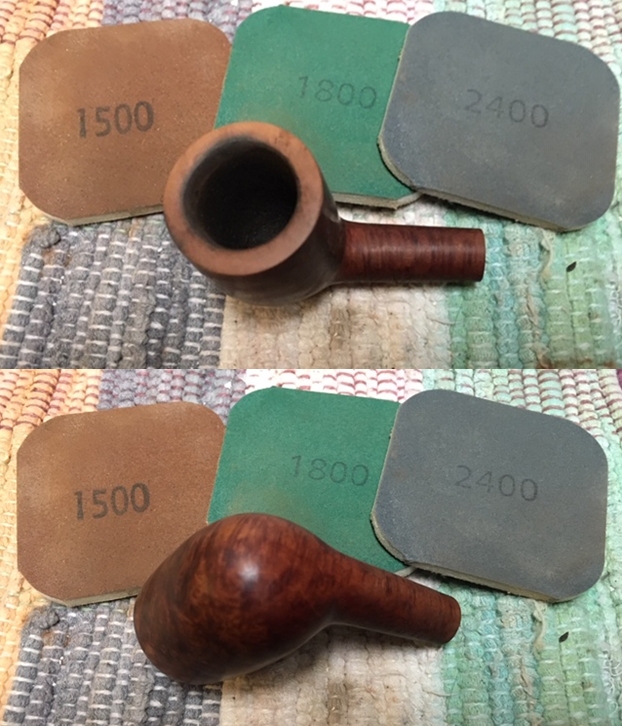
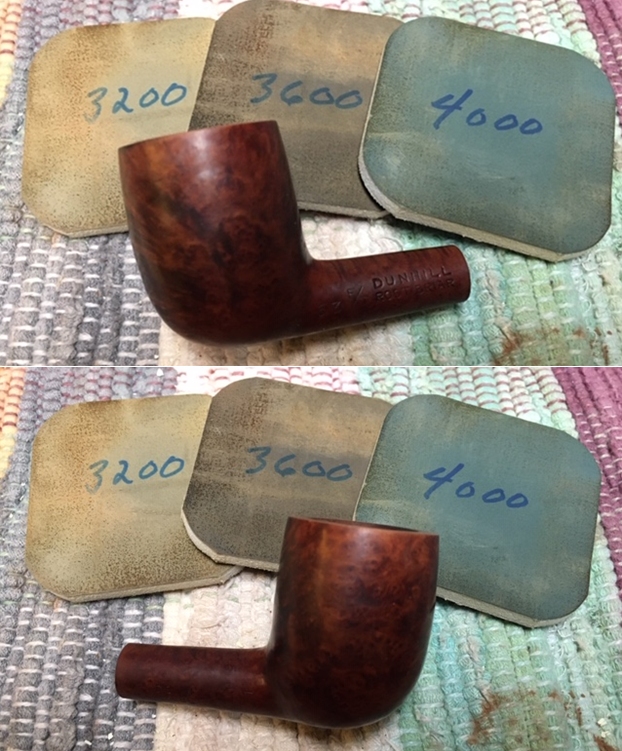
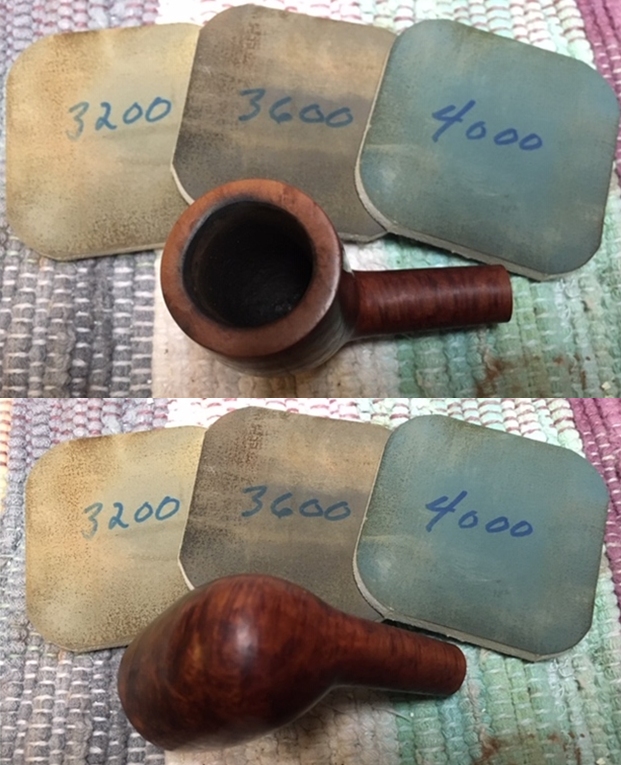
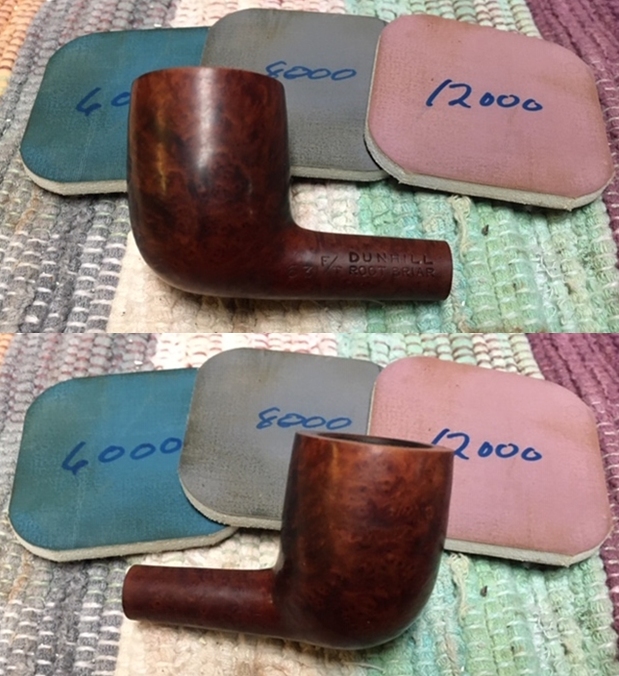
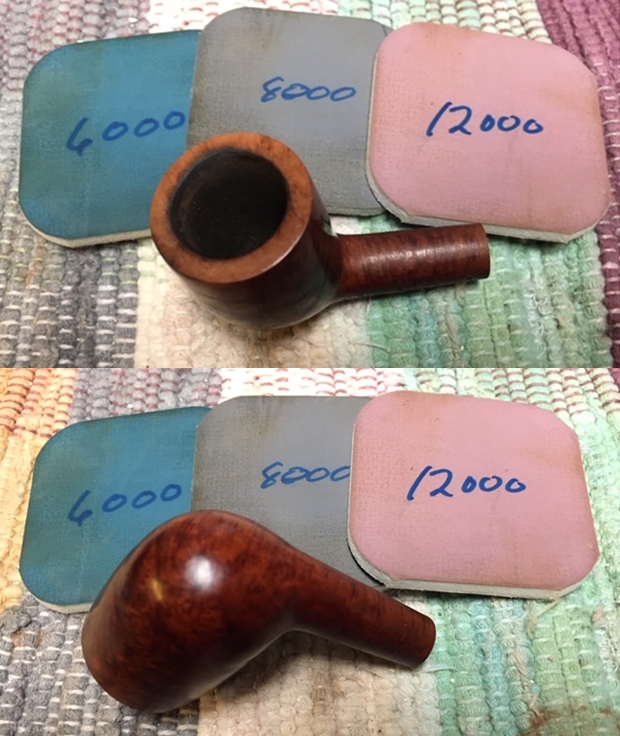
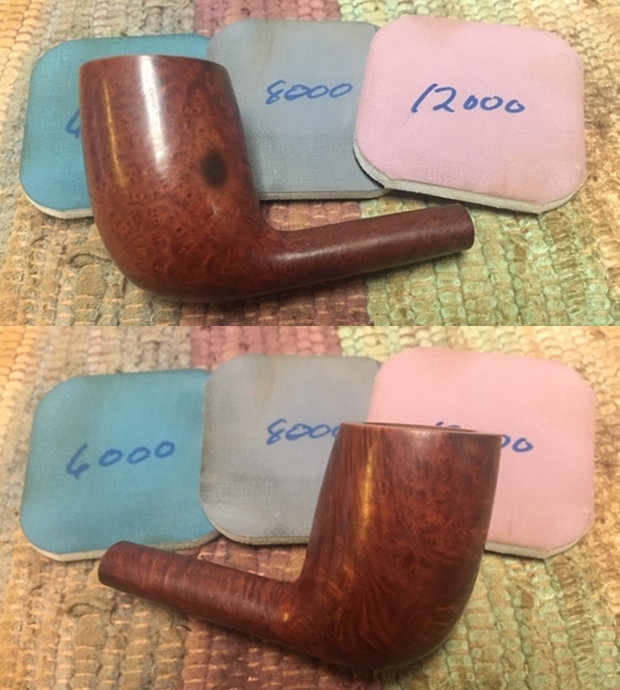
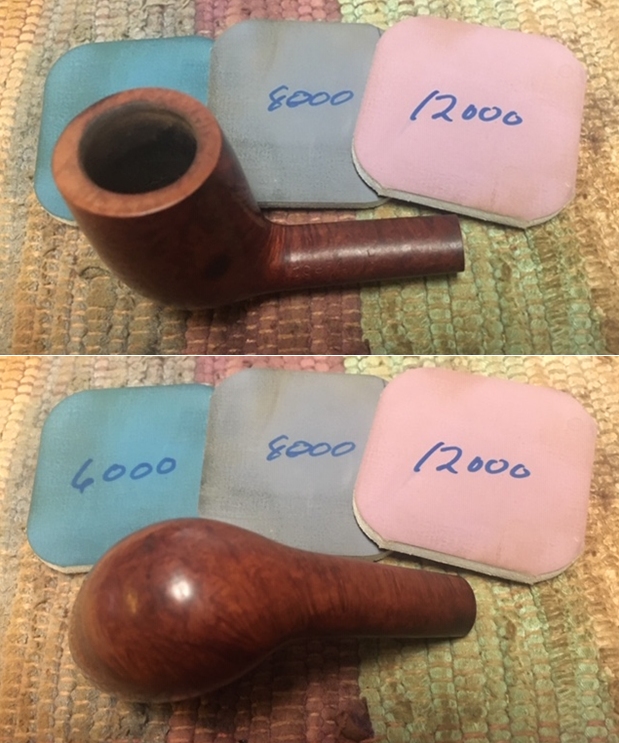
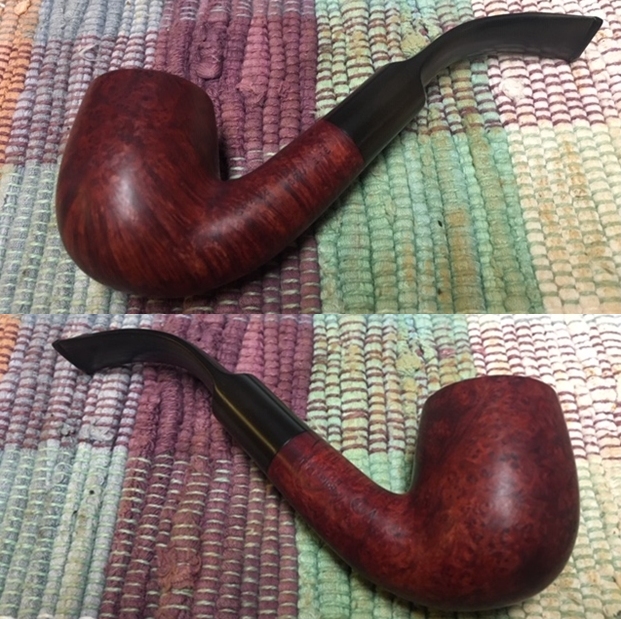
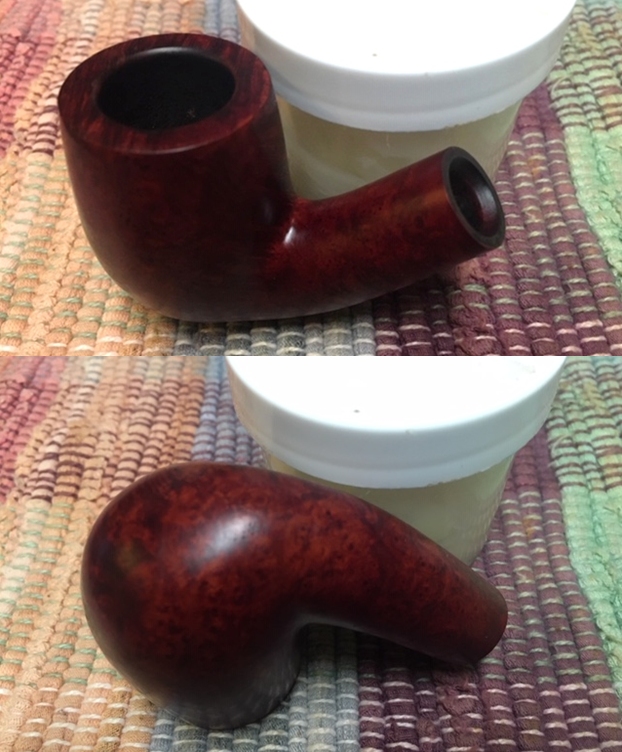
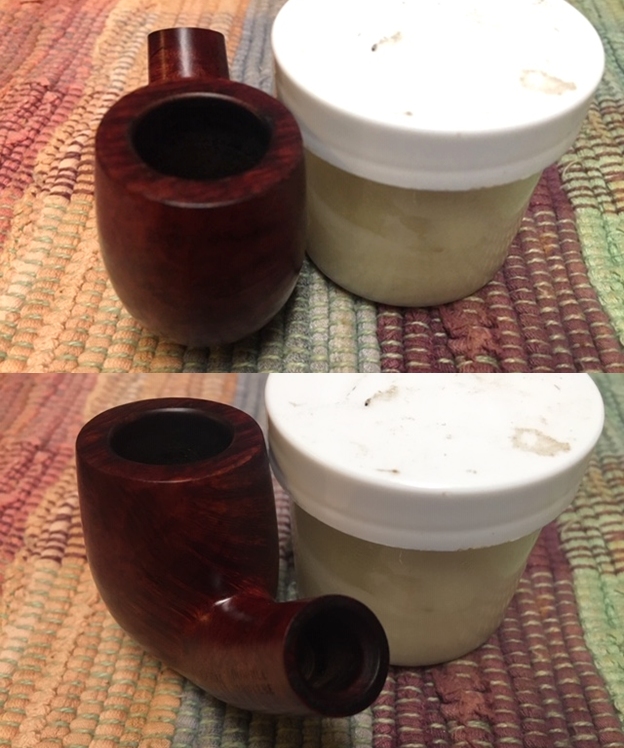
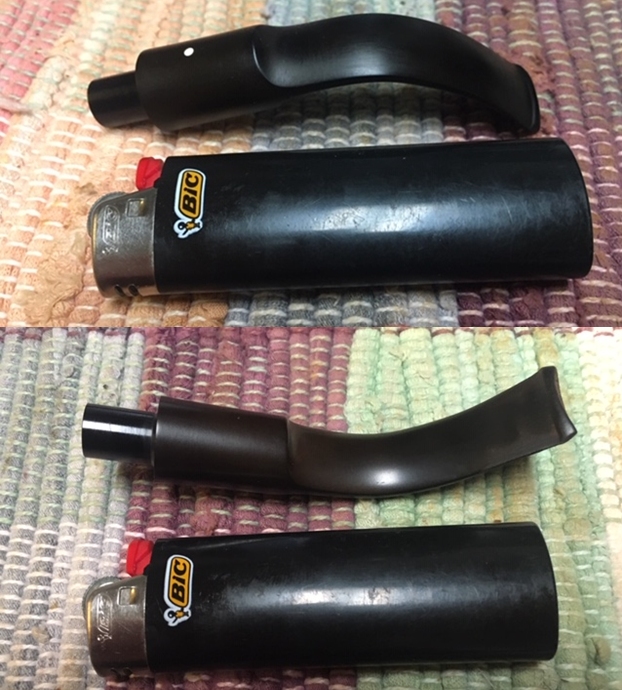
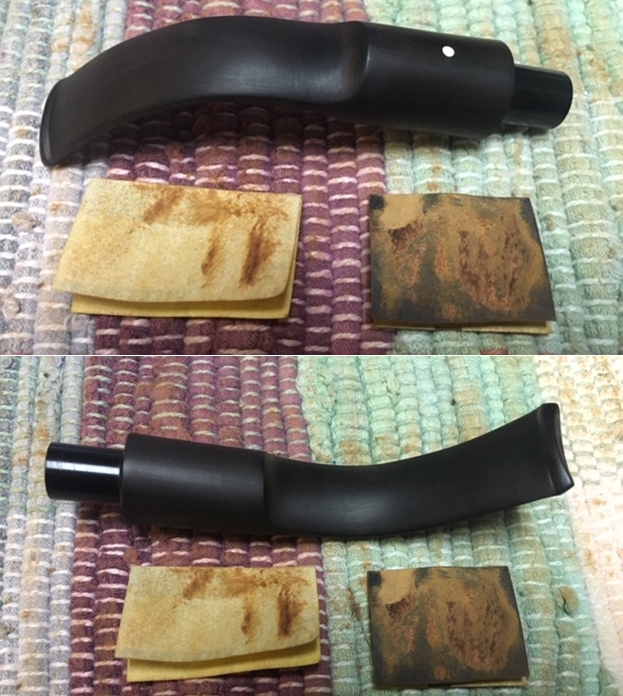
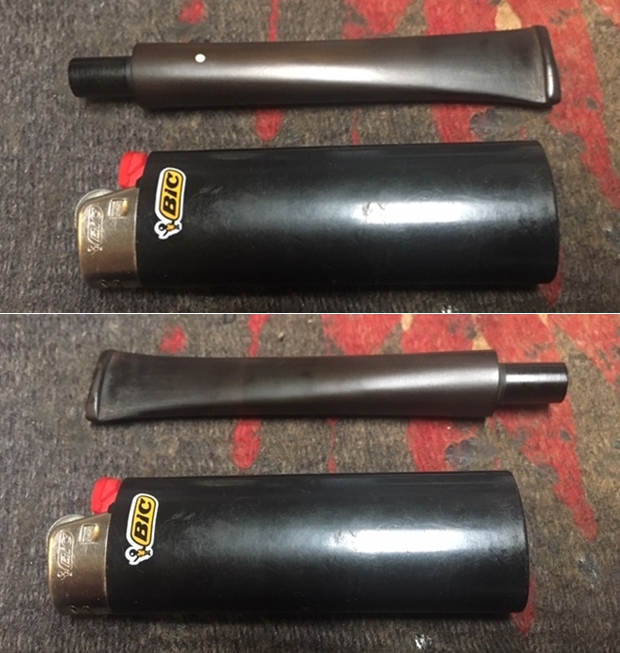
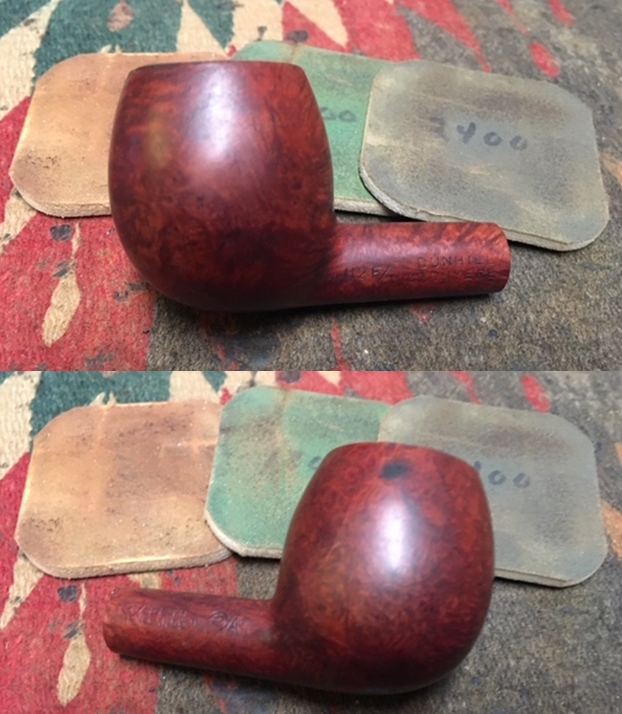
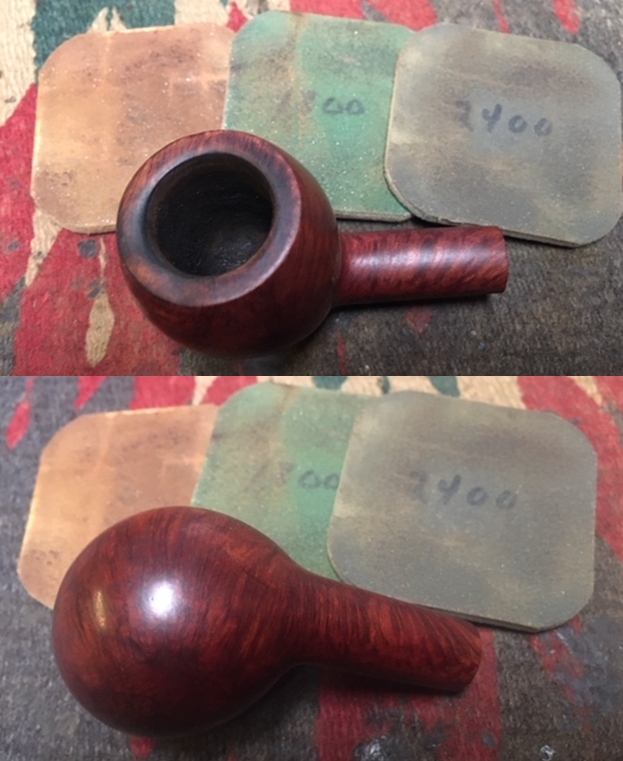
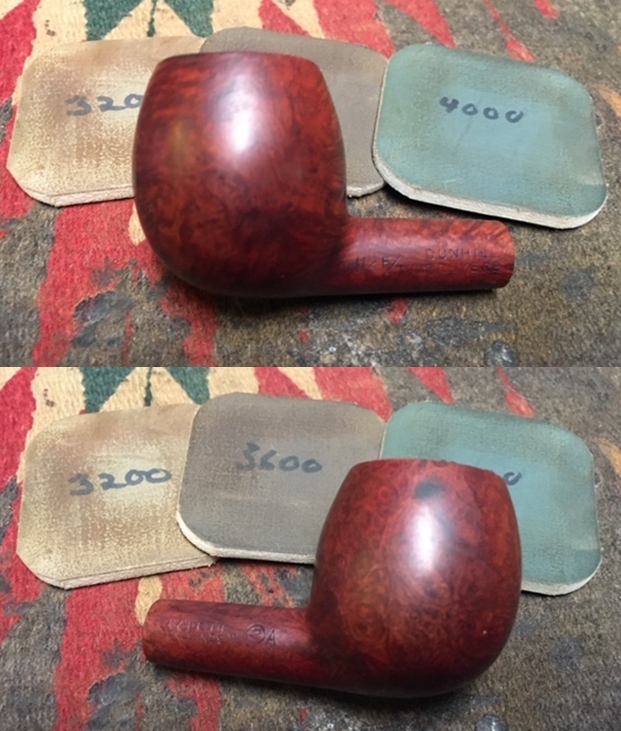
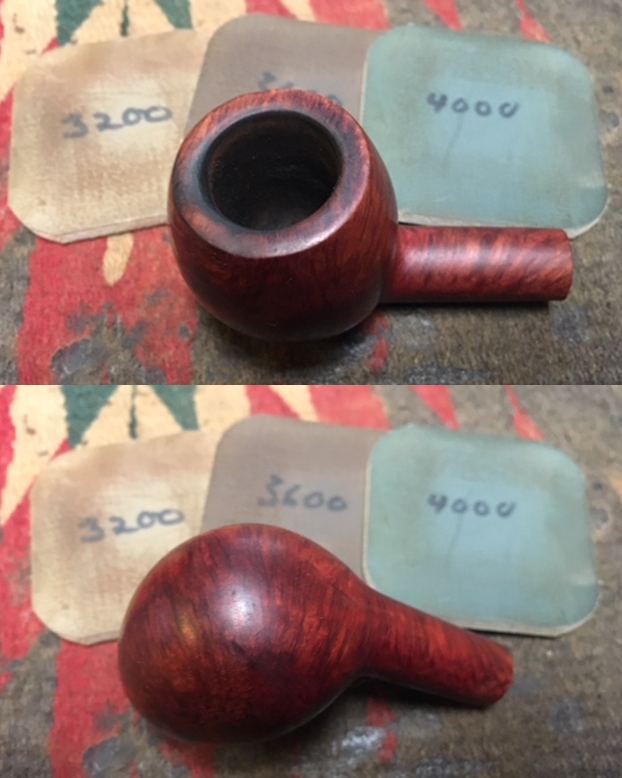
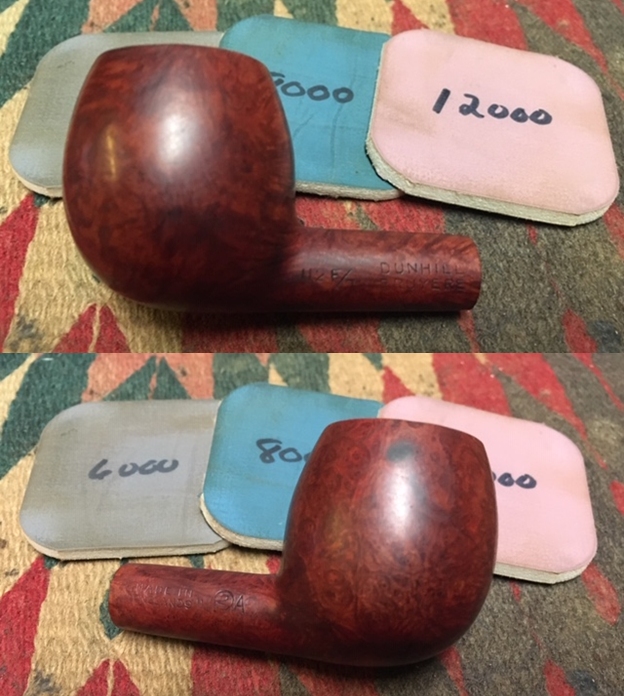
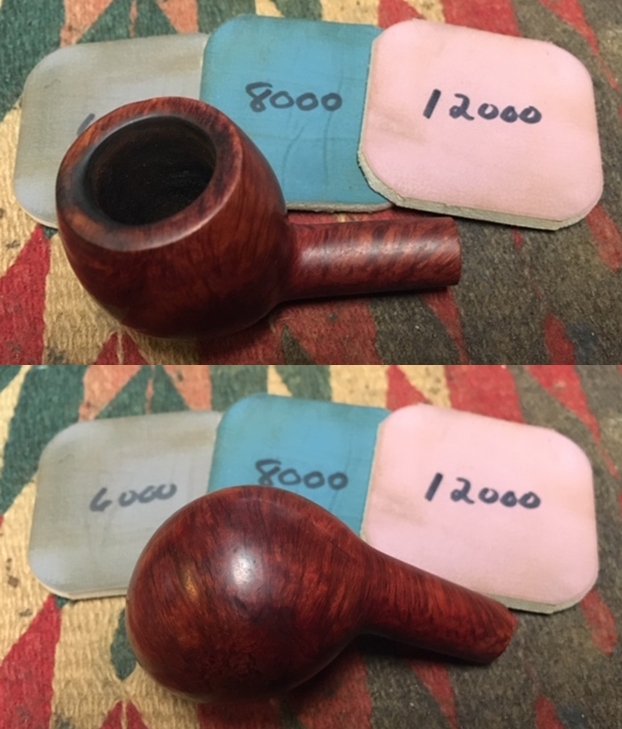
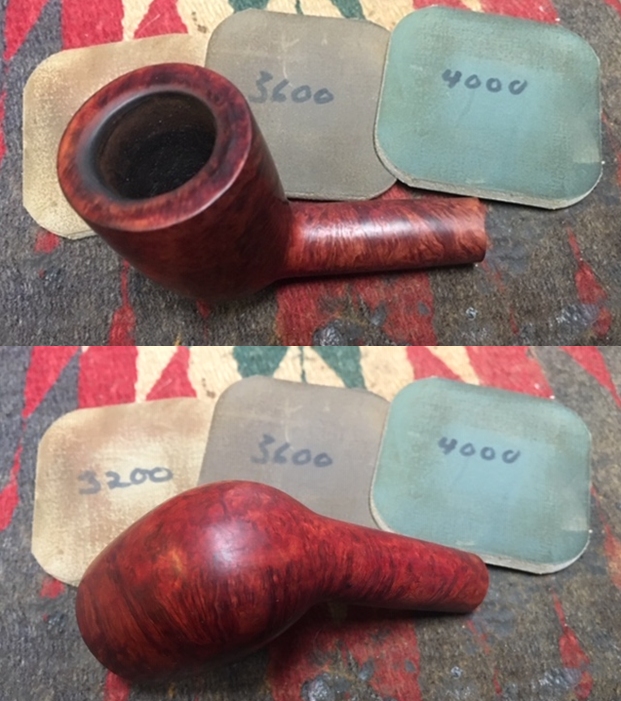
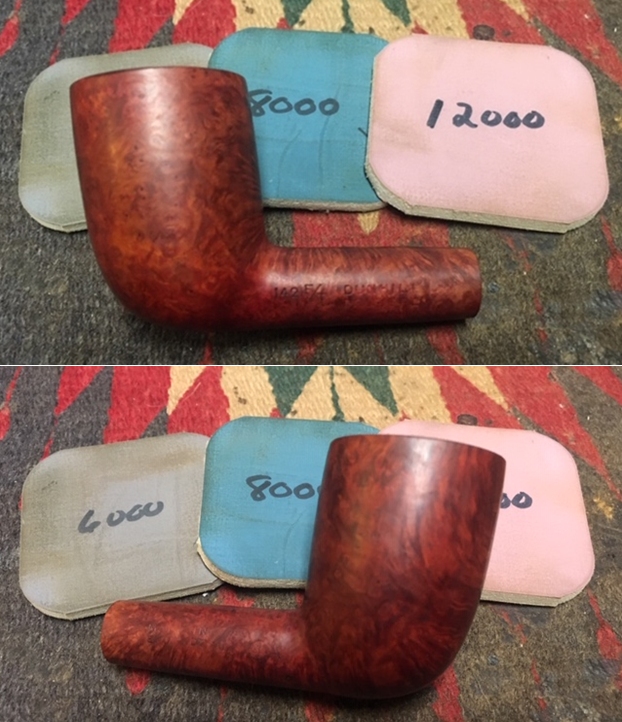
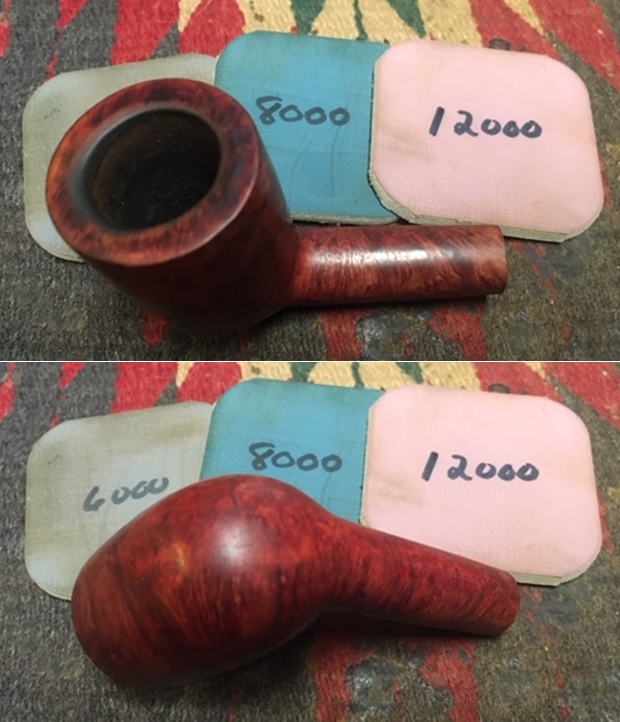
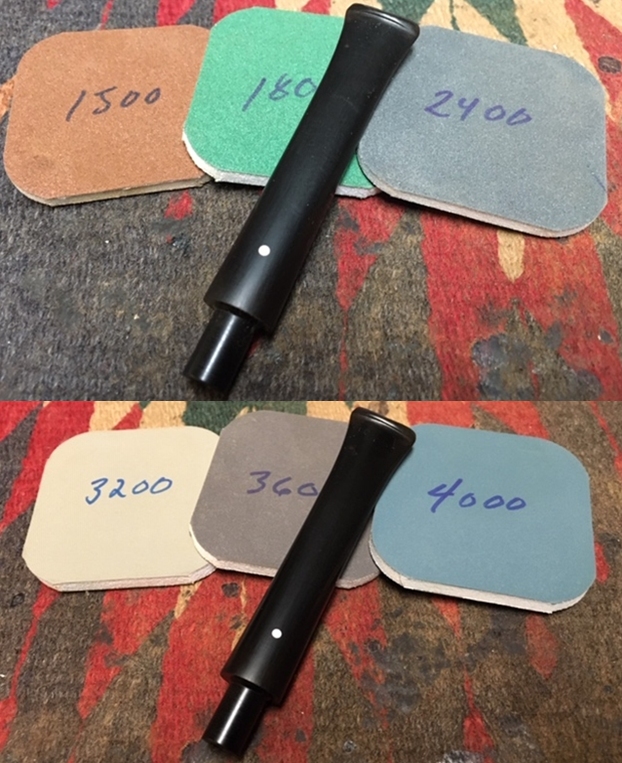
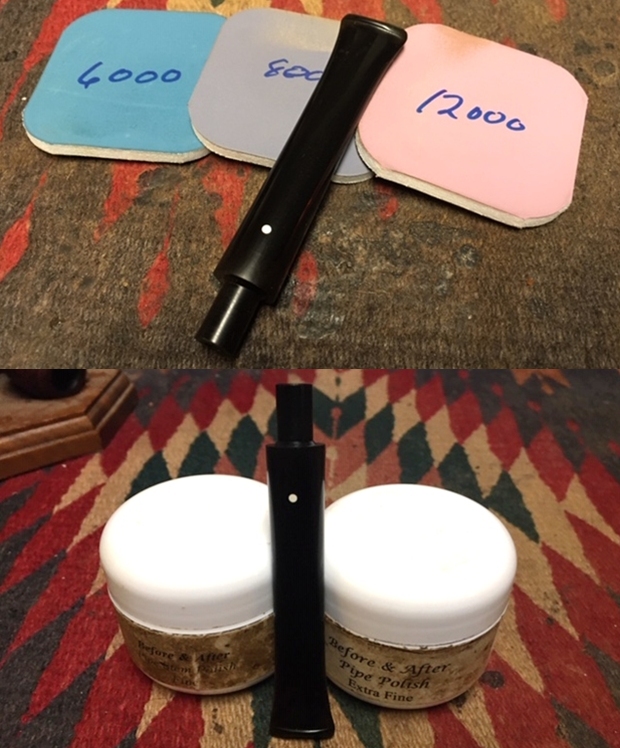
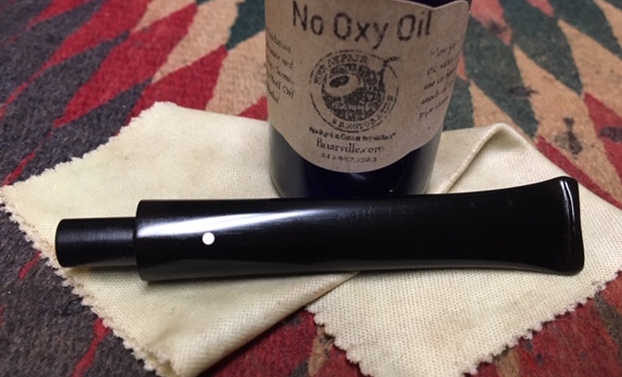
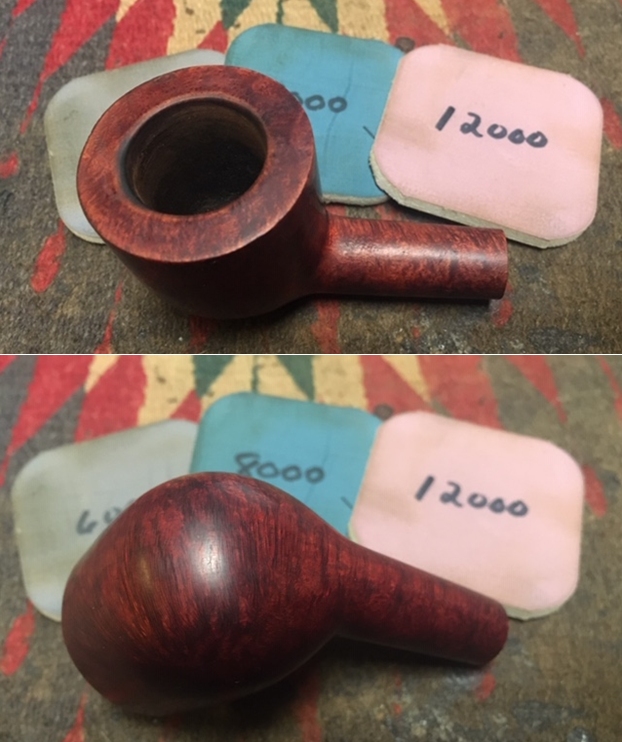
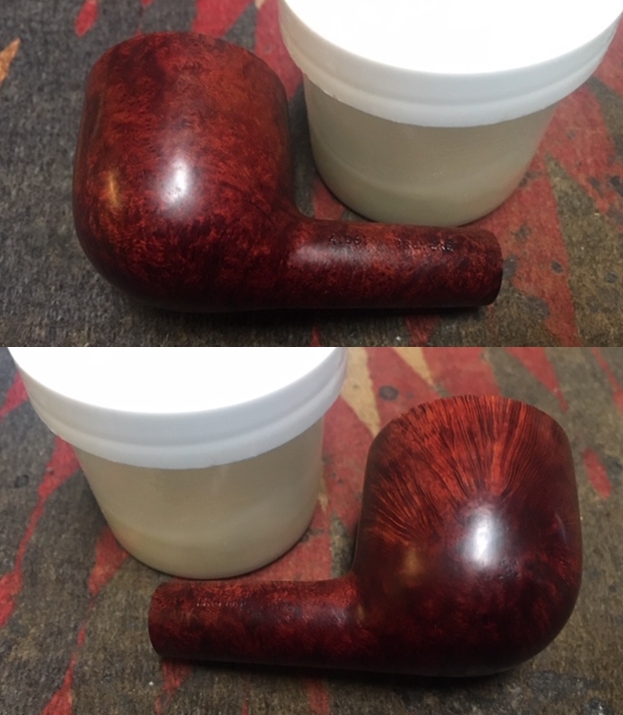
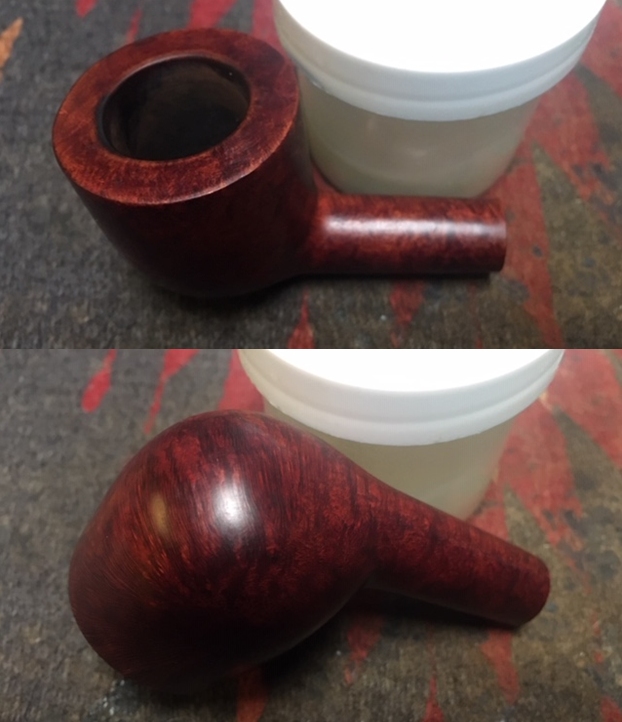
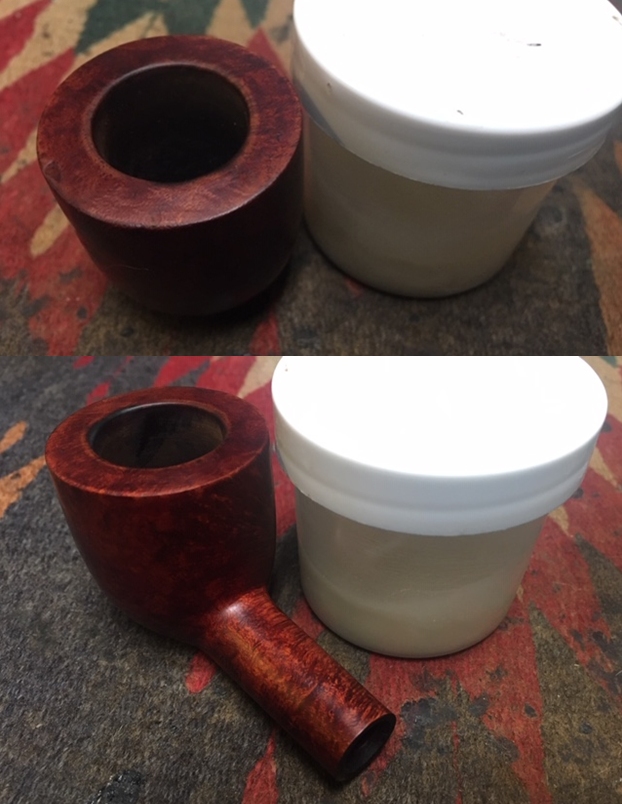
It was time to get on with the restoration of this Dunhill Bruyere 656 F/T Bent Billiard. It is not only the last of the Dunhill pipes from Bob’s Estate but it was the only bent Bruyere in the collection. I want to send a shout out to Jeff for the hard cleanup work that he does on each of these pipes. They were a real mess when I sent them to Jeff and I have to tell you it was great that I can start my part of the process with a clean pipe. I decided to start the process by dealing with the the burn damage to the left inner edge of the bowl. I generally try to minimize the intrusiveness of the work on the rim and the inner edge. It was burned on the edge of the left side. I use a folded piece of 220 grit sandpaper to carefully bevel the inner rim with a slight bevel all the way around. The second photo shows the rim edge after the work of beveling the inner edge has been completed. I polished it lightly with 400 grit wet dry sandpaper.  I polished the briar on the rim top and bowl with worn micromesh sanding pads – wet sanding it with 1500-12000 grit micromesh sanding pads. I wiped it down after each pad with a damp cloth. I find that the worn pads do a great job polishing and still retain the original patina of the pipe.   I rubbed the bowl and rim down with Before & After Restoration Balm. I worked it into the surface of the briar with my fingertips to clean, enliven and protect it. I let the balm sit for a little while and then buffed the pipe with a cotton cloth to raise the shine. I really like watching the Balm do its magic and bring the briar alive.     With the bowl done it was time to address the stem. I was a little surprised as not only was this the last of Bob’s  Dunhill’s but it was also the only one that had a tenon made to accommodate a 9mm filter. The dents in the top and underside were the right depth for me to lift them. I “painted” the surface with the flame of a Bic lighter to lift the dents and it worked exceptionally well.    I sanded the surface of the stem with 220 grit sandpaper to remove the light chatter in the stem surface and the remaining oxidation in the vulcanite. I polished it with 400 grit wet dry sand paper.  I rubbed the stem down with Denicare Mouthpiece Polish. I have a few tins of this laying around so I am trying to use them up. I have found it is a great pre-polish for my use as it shows me areas that I need to work on with the micromesh sanding pads.  I polished the stem with micromesh sanding pads – wet sanding with 1500-12000 grit sanding pads. I wiped it down after each pad with a damp cloth to remove the sanding dust. I polished it further with Before & After Pipe Polish – both Fine and Extra Fine. I finished by rubbing the stem down with some “No Oxy Oil” to protect the vulcanite. I am experimenting with the product from Briarville and tracking how it works so I can write a review of it. Finishing this pipe is a perfect way to end my restorations for 2019. It is the last of Bob Kerr’s Estate Dunhill Collection. It is a beautiful Dunhill Bruyere 656F/T Bent Billiard made in 1962. Like each of the pipes in Bob’s estate I really look forward to this point in the process when it is put back together, polished and waxed. I put the bowl and stem back together. I polished the bowl and stem with Blue Diamond to polish out the scratches in the briar and the vulcanite. I gave the bowl and the stem multiple coats of carnauba wax. I buffed the pipe with a clean buffing pad to raise the shine. I hand buffed it with a microfiber cloth to deepen the shine. The pipe polished up pretty nicely. The grain around the bowl and shank really came alive with the wax and polish. The black of the saddle vulcanite White Spot stem is a beautiful contrast to the reds and browns of the finished bowl and shank. This was another Dunhill that was a lot of fun to work on thanks to Jeff’s cleanup work. The pipe is comfortable pipe to hold in the hand. The finished pipe is shown in the photos below. The dimensions of the pipe are Length: 5 ¾ inches, Height: 2 inches, Outside diameter of the bowl: 1 ¼ inches, Chamber diameter: ¾ of an inch. This 1962 Bruyere Bent Billiard is a beauty should last for many more years. It is one that will be on the rebornpipes store very soon. If you are interested let me know. I have a lot more of Bob’s estate to work on of various brands. Perhaps one of those will catch your attention. Thanks for reading this blog and my reflections on the pipe while I worked on it. This is an interesting estate to bring back to life.

Restoring a 1976 Dunhill Bruyere 0333 Billiard from Bob Kerr’s Estate


Blog by Steve Laug

As I continue to work through the pipes in Bob Kerr’s Estate I am enjoying choosing different brands that he had to focus on for a bit. I had eight more from his Dunhill collection that I decided to go back to and finish working my way through that sub collection of the estate. Out of the 8 pipes six were Bruyere finished pipes, one was a Made in London (turns out it is also a Bruyere finished pipe), and one was a Root Briar. What follows is a list of what I saw when I examined the 8 pipes. As I finish the pipes I will include the link to the blog on that particular pipe for easy reference. I have already restored 16 pipes from this subgroup so you can do a quick search to read about the work on the Shell Briars and Tanshell Briars that were in that part of the collection.

  1. Bruyere 656 F/T Made in England 2 Circle 4A – Group 4 size Bruyere made in 1962. Stem is oxidized, tooth marks and chatter near the button, some calcification with damage to the button. Finish is dirty, bowl caked and lava overflow on the rim top. Bowl is out of round, damaged edge.
  2. Bruyere 112 F/T Made in England 9/11 Circle 2A – Group 2 size Bruyere made in 1969 and sold in 1971. Stem is oxidized, tooth marks and chatter near the button, some calcification with damage to the button. Finish is dirty, bowl caked and lava overflow on the rim top. Bowl is out of round, damaged edge. I finished the restoration on it. Here is the link to the blog – (https://rebornpipes.com/2019/12/28/restoring-a-1969-dunhill-bruyere-112-f-t-apple-from-bob-kerrs-estate/).
  3. Bruyere 0333 Made in England 16 made in 1976. Stem is oxidized, tooth marks and chatter near the button, some calcification with damage to the button. Finish is dirty, bowl caked and lava overflow on the rim top. Bowl is out of round, damaged edge.
  4. Bruyere 41061 Made in England 18 made in 1978. Stem is oxidized, tooth marks and chatter near the button, some calcification with damage to the button. Finish is dirty, bowl caked and lava overflow on the rim top. Bowl is out of round, damaged edge. I finished the restoration on it. Here is the link to the blog – (https://rebornpipes.com/2019/12/24/restoring-a-1978-dunhill-bruyere-41061-from-bob-kerrs-estate/).
  5. Bruyere 142 F/T Made in England 7/9/11 Circle 4A – Group for size Bruyere made in 1967 and sent out in 1969 or 1971. Stem is oxidized, tooth marks and chatter near the button, some calcification with damage to the button. Finish is dirty, bowl caked and lava overflow on the rim top. Bowl is out of round, damaged edge. I finished the restoration on it. Here is the link to the blog – https://rebornpipes.com/2019/12/27/restoring-a-1967-dunhill-bruyere-142-f-t-billiard-from-bob-kerrs-estate/
  6. (A) Dunill London Inner Tube PAT N°5861/12 Shape 34. Stem is oxidized, tooth marks and chatter near the button, some calcification with damage to the button. Finish is dirty, bowl caked and lava overflow on the rim top. Bowl is out of round, damaged edge. I finished the restoration on it. Here is the link to the blog – (https://rebornpipes.com/2019/12/26/restoring-a-1913-a-dunhill-london-34-billiard-from-bob-kerrs-estate/).
  7. (Ao) Dunhill London 113 Made in England 5 PAT N°158709/14. Stem is oxidized, tooth marks and chatter near the button, some calcification with damage to the button. Finish is dirty, bowl caked and lava overflow on the rim top. Bowl is out of round, damaged rim edges. I finished the restoration on it. Here is the link to the blog – (https://rebornpipes.com/2019/12/25/restoring-a-1925-ao-dunhill-london-113-billiard-from-bob-kerrs-estate/).
  8. Root Briar 31032 Made in England 18 – made in 1978. Stem is oxidized, tooth marks and chatter near the button, some calcification with damage to the button. Finish is dirty, bowl caked and lava overflow on the rim top. Bowl is out of round, damaged edge. I finished the restoration on it. Here is the link to the blog – (https://rebornpipes.com/2019/12/23/restoring-a-1978-dunhill-root-briar-31032-billiard-from-bob-kerrs-estate/).

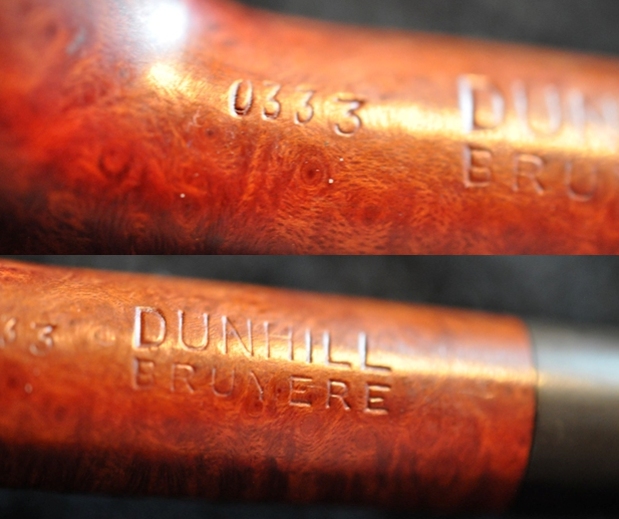
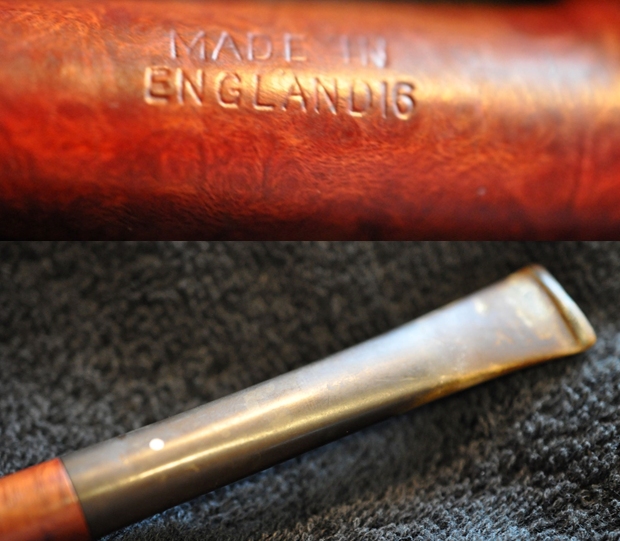
I finished work on #2, #4, #5, #6, #7 & #8 and turned my attention to #3, another heavily used pipe but this time an Apple shaped pipe with a tapered stem. The pipe was stamped on the left side of the shank with the shape number 0333 next to the bowl/shank junction. That is followed by Dunhill over Bruyere. On the right side of the shank it is stamped Made in England 16. It appears that the pipe stamped as this one is was made in 1976. The 0333 is a Billiard with a fish tail (F/T) tapered stem. This is the last billiard that I have to work on from the Dunhill collection.

I am once again including Chuck Stanion’s eloquent description of the Bruyere on the smokingpipes.com site as follows (https://www.smokingpipes.com/pipes/new/dunhill/moreinfo.cfm?product_id=346421):

The Bruyere was Alfred Dunhill’s original finish upon launching his brand of premium pipes and smoking accessories and was the only Dunhill finish from 1910 until 1917. Even after the addition of other finishes, the Bruyere maintained a high level of popularity, becoming synonymous with what is thought of, even today, as the quintessential pipe. To achieve the iconic, ruby hue and saturation, a skilled craftsman painstakingly layers particular stains in a precise manner, then meticulously polishes the pipe to a high luster. The final result is, simply put, timeless.

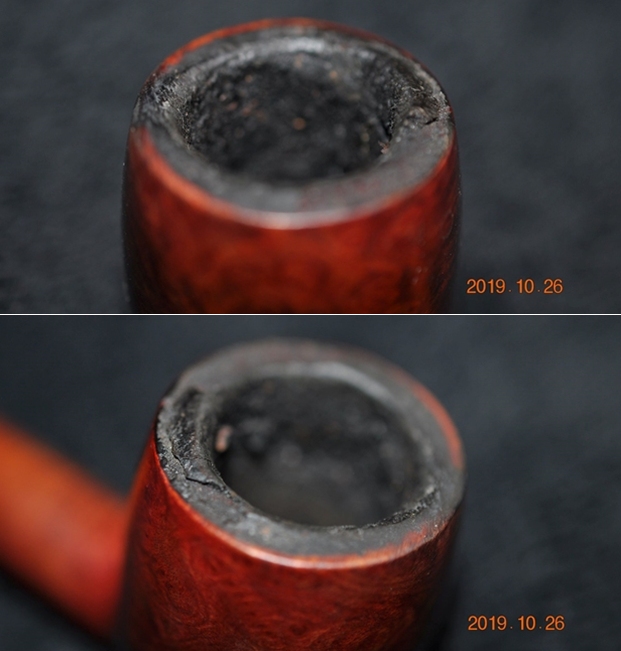
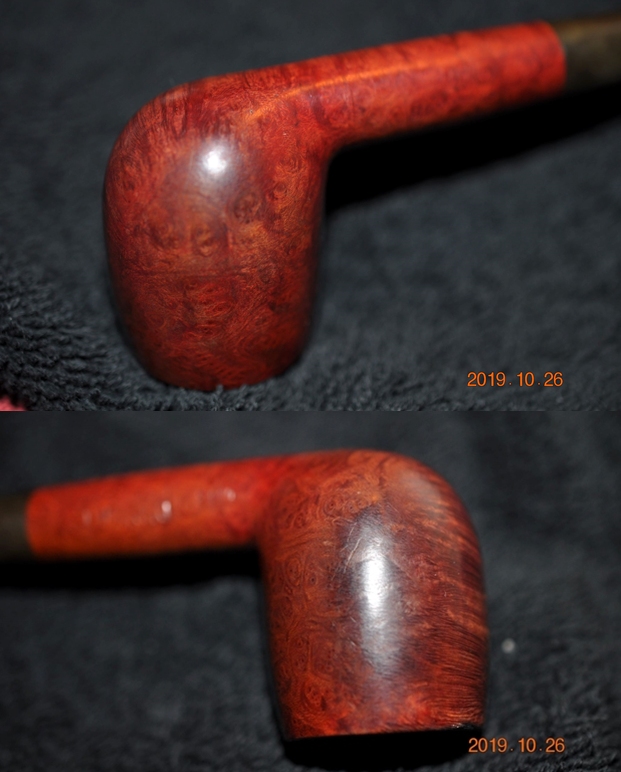
Like Bob’s other Dunhill pipe this one also had a thick cake in the bowl with remnants of tobacco stuck on the walls. There was a thick lava overflow on the rim so it was hard to know what kind of damage lay beneath the covering. Once it was cleaned I would have a better idea of the condition of the rim top. I could see however that there was definitely damage to the front inner edge of the bowl. The grain that is poking through the grime and oils appears to be quite beautiful – birdseye grain on the bowl sides and cross grain on the front and back as well as the heel of the bowl. The stem was oxidized and calcified toward the end with some tooth chatter. There were also some tooth marks on both sides of the stem ahead of the button and on the button itself. There was the classic White Spot on the top of the stem. Jeff took photos of the pipe before he started his cleanup work on it.  Jeff took photos of the bowl and rim top to show the thick, hard cake in the bowl with remnants of tobacco stuck on the walls of the bowl. There was a thick lava build up on the smooth rim top and the edges of the bowl. The rim top looked pretty good but it was hard to know for sure. It appeared that there was damage on the front inner edge. The outer edges looked to be okay other than a few small nicks on the sides.    Jeff took photos of the sides and heel of the bowl to show the condition of the finish. You can see the beautiful grain patterns around the sides of the bowl and shank. Even under the dirt and debris of the years it looked very good. The stamping is very readable. On the left side of the shank you can see 0333 which is the shape number. Next to that it is stamped Dunhill over Bruyere. On the right side it reads Made in England16. Jeff included a pic of the White Spot on the stem.    Jeff took photos of the top and underside of the stem showing the tooth chatter, scratching, calcification and oxidation on the stem surface and wear on the edges of the button.  I can’t begin tell you how great it feels to have Jeff’s help on cleaning up the pipes from Bob’s estate as the 125+ pipes were taking me a long time to do alone. He cleaned this filthy pipe with his usual penchant for thoroughness that I really appreciate. This one was a real mess and I was looking forward to seeing what he had done with this one when I took it out of his box. It looked amazing and CLEAN. He reamed it with a PipNet pipe reamer and cleaned up the reaming with a Savinelli Fitsall Pipe Knife. He scrubbed out the internals with alcohol, pipe cleaners and cotton swabs until the pipe was clean. He scrubbed the exterior of the bowl with Murphy’s Oil Soap and a tooth brush to remove the grime and grit on the briar and the lava on the rim top. The finish looks good with great looking grain around the bowl and shank. The rim top looked better on this pipe. The condition of the inner and outer edges was not too bad. The stem looked a lot better. Jeff soaked the stem in Before & After Deoxidizer to remove the oxidation on the rubber. The pipe was ready for me to carry on the next part of the process. I took some close up photos of the rim top and also of the stem surface. I wanted to show how well it had cleaned up and what needed to be done. The rim top had a worn and burned area on the front of the inner edge. It made the bowl out of round and made that section thin at the rim top. I wet the bowl rim down with saliva to show the damaged areas. There was also a significant slope to that part of the rim. There was darkening and nicks all around the top of the bowl and on the inner edge. The outer edge looked good.  I also took close up photos of the stem to show the tooth marks and chatter on the stem surface. The stamping appeared to be as clear as it was before the cleanup work. This is just one of the things I appreciate about Jeff’s cleanup is that he works to protect and preserve the nomenclature on the shank of the pipes that he works on. I took some photos to show the stamping. Bob loved his Dunhill pipes and it was obvious that he enjoyed smoking them. Some appeared to be daily smokes while others he seemed to reserve for special occasions. Some seemed like they must have hung in his mouth while he did his carving while others were smoked in his chair. Having worked on over 60 of his pipes so far I am getting a feel for them. This one is in rough condition and I suppose it might well have been before Bob took up the trust. I suppose I won’t ever know for sure but it certainly has a long and interesting story if it could only tell it.

I am sure that many of you have read at least some of the other restoration work that I have done on previous pipes. You have also read what I have included about Bob Kerr, the pipeman who held these pipes in trust before I came to work on them (see photo to the left). Also, if you have followed the blog for long you will already know that I like to include background information on the pipeman whose pipes I am restoring. For me, when I am working on an estate I really like to have a sense of the person who held the pipes in trust before I worked on them. It gives me another dimension of the restoration work. Bob’s daughter wrote a short tribute to her father. I thank you Brian and tell your wife thank you as well.

I am delighted to pass on these beloved pipes of my father’s. I hope each user gets many hours of contemplative pleasure as he did. I remember the aroma of tobacco in the rec room, as he put up his feet on his lazy boy. He’d be first at the paper then, no one could touch it before him. Maybe there would be a movie on with an actor smoking a pipe. He would have very definite opinions on whether the performer was a ‘real’ smoker or not, a distinction which I could never see but it would be very clear to him. He worked by day as a sales manager of a paper products company, a job he hated. What he longed for was the life of an artist, so on the weekends and sometimes mid-week evenings he would journey to his workshop and come out with wood sculptures, all of which he declared as crap but every one of them treasured by my sister and myself. Enjoy the pipes, and maybe a little of his creative spirit will enter you!

It was time to get on with the restoration of this Dunhill Bruyere 0333 Billiard. It was a change of pace from the last bunch of billiards that I had worked on because of the issues with the rim. I really need to send a shout out to Jeff for the hard cleanup work that he does on each of these pipes. They were a real mess when I sent them to Jeff and I have to tell you it was great that I can start my part of the process with a clean pipe.

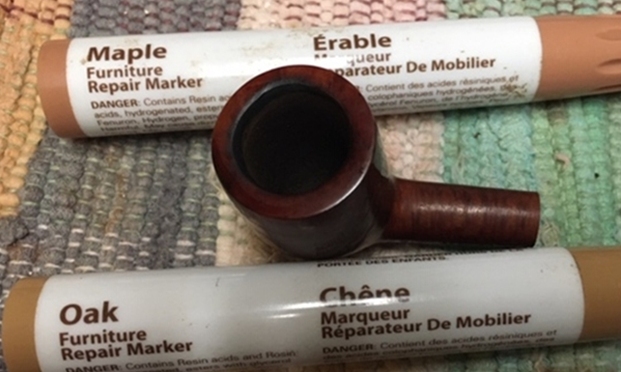
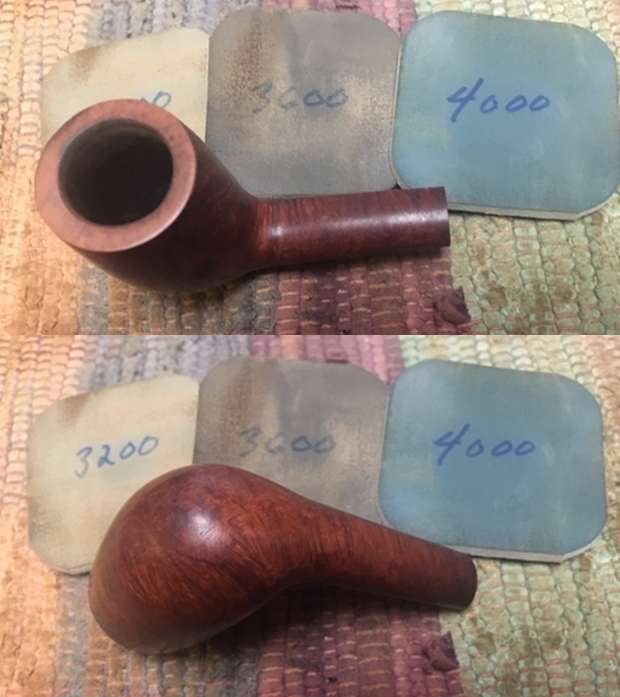
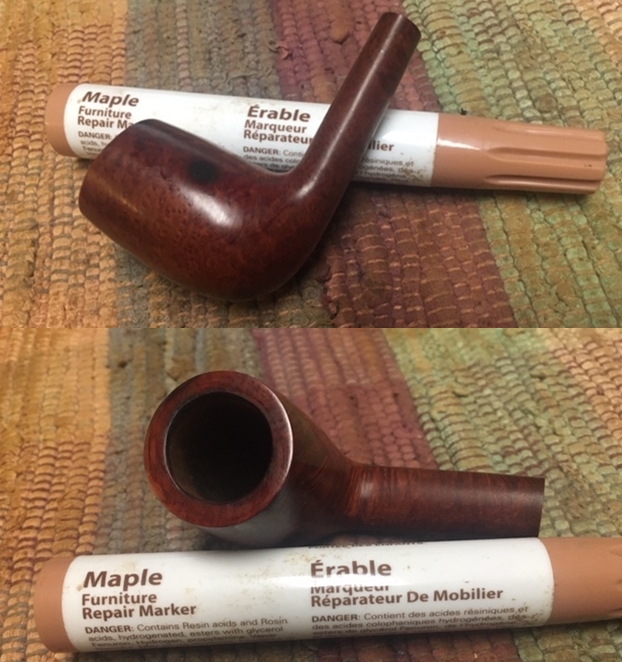
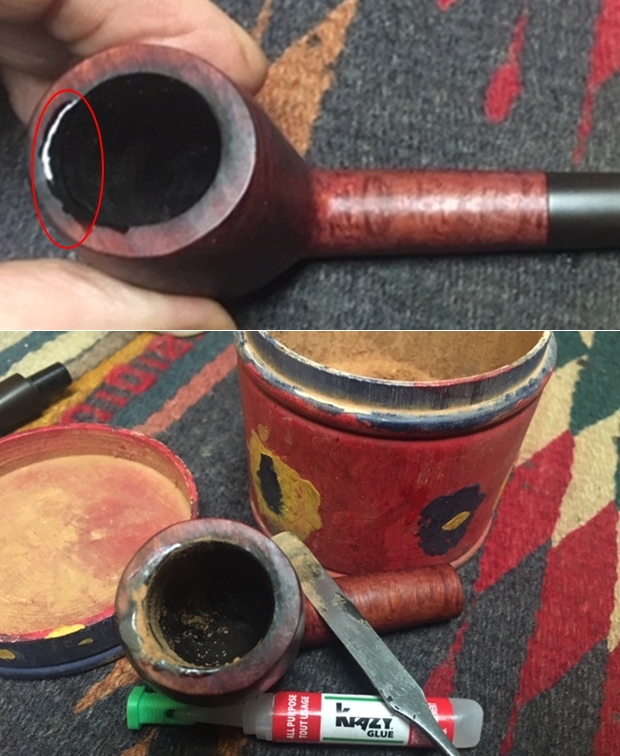
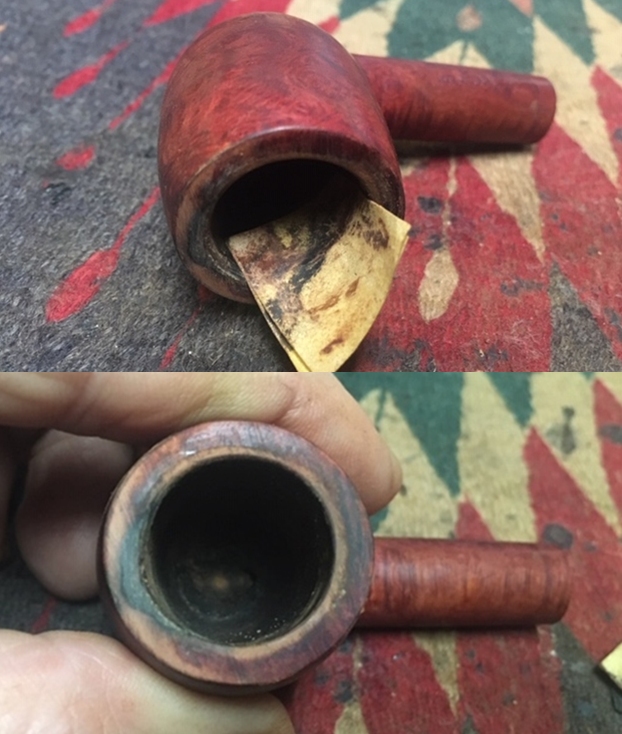
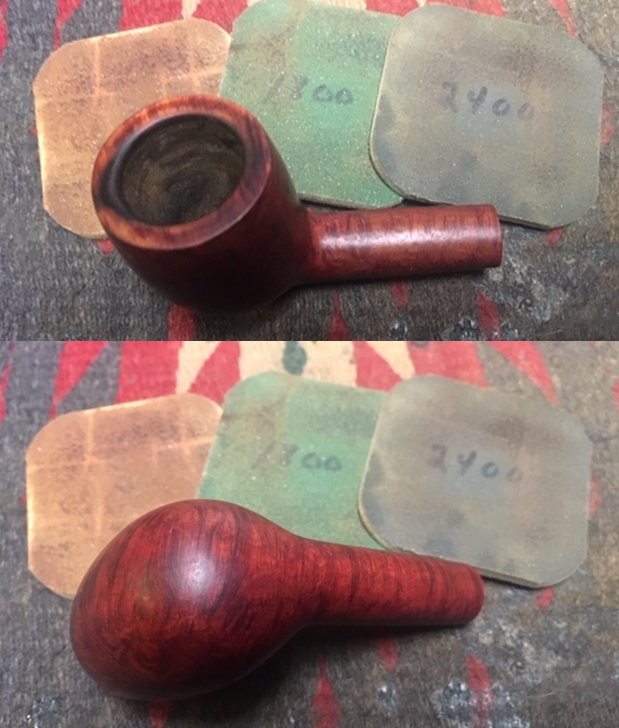
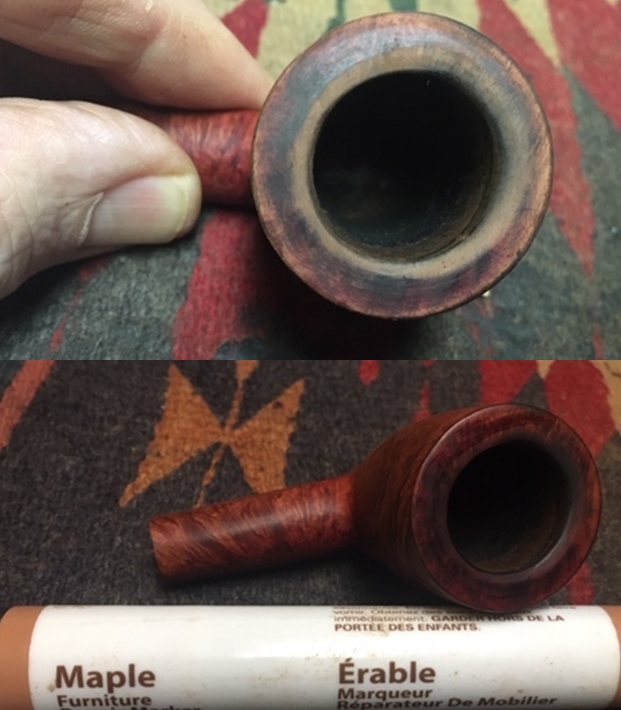
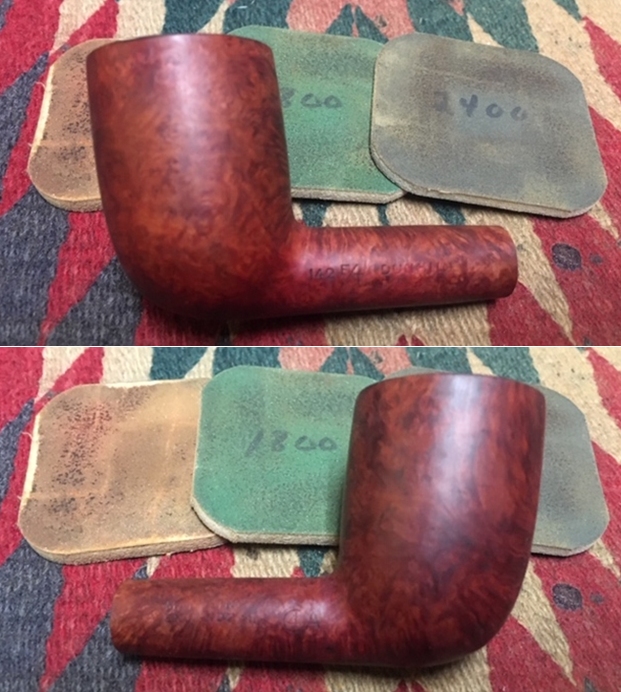
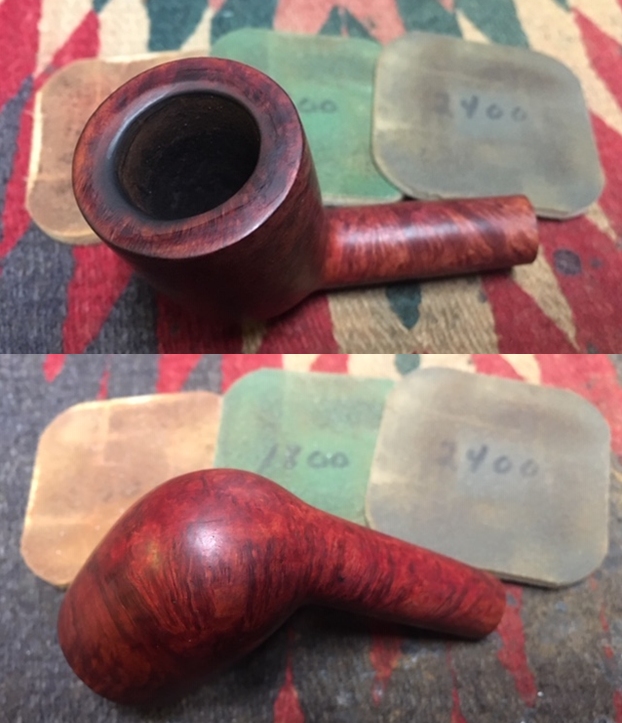
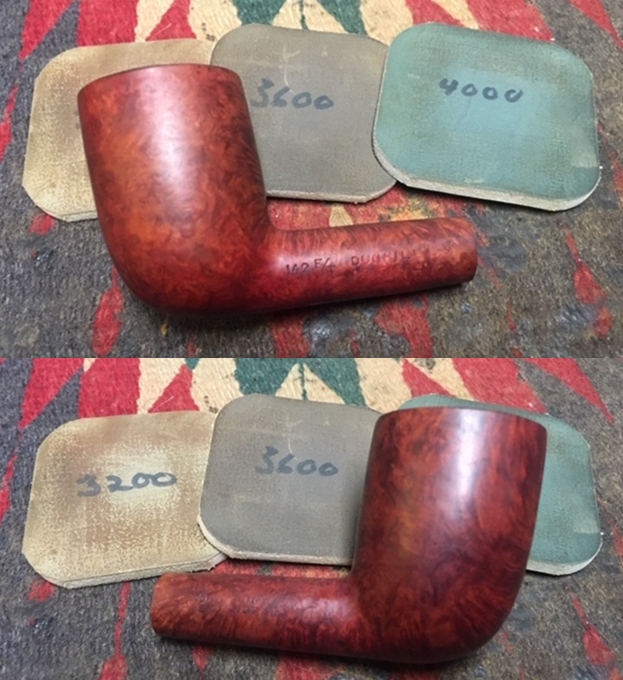
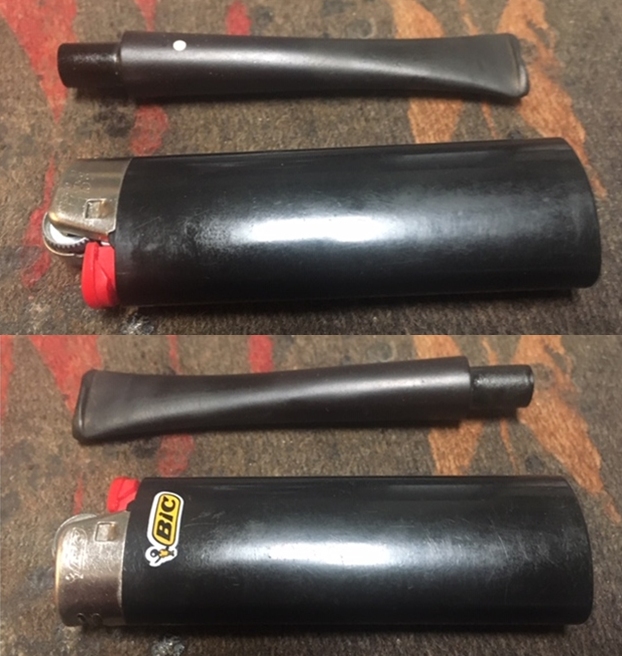
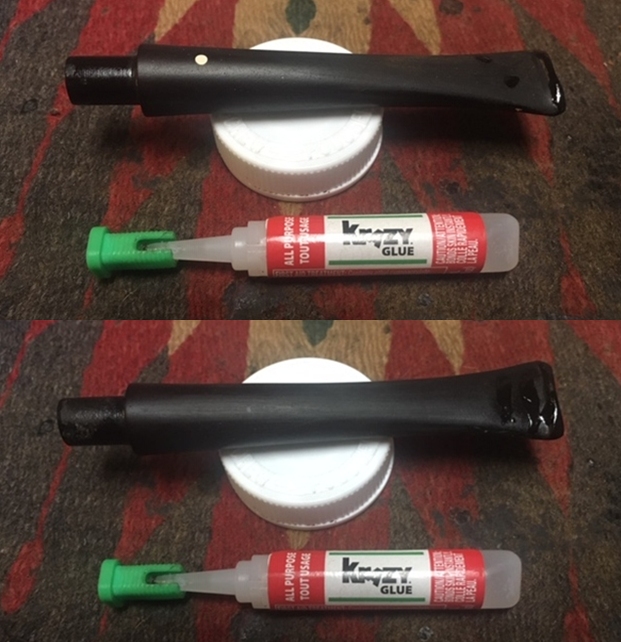
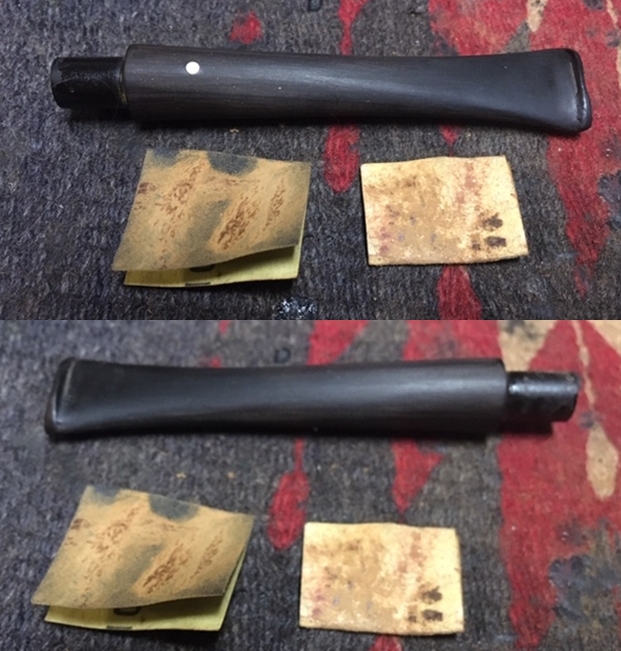
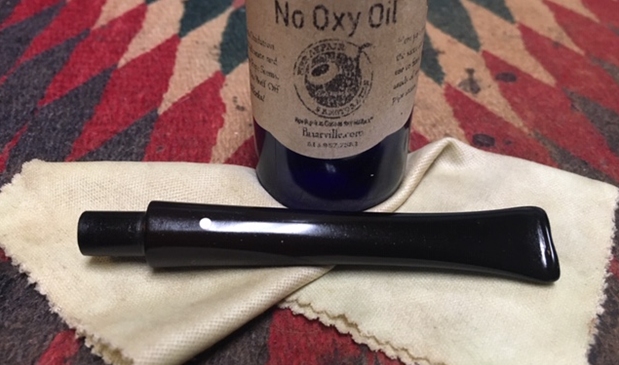
I decided to start the process by dealing with the the damage to the inner edge of the bowl. Usually I want to minimize the intrusiveness of the work on the rim and focus just on the rim edge. But the front inner edge on this pipe was in very rough condition. It was burned and thin and also at a steep bevel. It did not go deep into the bowl so I was good there. The remaining wood was solid. I have circled the damaged area in Photo 1 below. I cleaned the edge with alcohol on a cotton swab and gave it a light coat of clear Krazy Glue to fill in the taper a bit. I used a dental spatula to fill that glue in with briar dust. Photo 2 shows the repair at this point in the process. Once the repair cured I sanded the area smooth with 220 grit sandpaper carefully focusing on the rim top to flatten the repaired area and giving the inner rim a slight bevel all the way around. Photo 3 shows that work. Photo 4 shows the rim top after the work of beveling the inner edge and smoothing the flat surface has been completed. I polished it lightly with 400 grit wet dry sandpaper. You can see the extent of the repaired area in that photo. Once I had it smoothed out I stained the rim top with a Maple stain pen to match the colour of the rest of the rim top and hide the blackened areas a bit. Photo 5 below shows the rim top at this point in the process. Now it needs to be polished with the rest of the bowl and waxed. I polished the briar on the rim top and bowl with worn micromesh sanding pads – wet sanding it with 1500-12000 grit micromesh sanding pads. I wiped it down after each pad with a damp cloth. I find that the worn pads do a great job polishing and still retain the original patina of the pipe. I rubbed the bowl and rim down with Before & After Restoration Balm. I worked it into the surface of the briar with my fingertips to clean, enliven and protect it. I let the balm sit for a little while and then buffed the pipe with a cotton cloth to raise the shine. I really like watching the Balm do its magic and bring the briar alive.    With the bowl done it was time to address the stem. The dents in the top and underside were the right depth for me to lift them. I “painted” the surface with the flame of a Bic lighter to lift the dents and it worked exceptionally well.    I sanded the surface of the stem with 220 grit sandpaper to remove the light chatter in the stem surface and the remaining oxidation in the vulcanite. I polished it with 400 grit wet dry sand paper.  I rubbed the stem down with Denicare Mouthpiece Polish. I have a few tins of this laying around so I am trying to use them up. I have found it is a great pre-polish for my use as it shows me areas that I need to work on with the micromesh sanding pads.  I polished the stem with micromesh sanding pads – wet sanding with 1500-12000 grit sanding pads. I wiped it down after each pad with a damp cloth to remove the sanding dust. I polished it further with Before & After Pipe Polish – both Fine and Extra Fine. I finished by rubbing the stem down with some “No Oxy Oil” to protect the vulcanite. I am experimenting with the product from Briarville and tracking how it works so I can write a review of it. Once again at this point in the restoration process I am excited to be on the homestretch. This is the seventh of the Dunhill smooth pipes in Bob’s estate that I am working on. It is a beautiful Dunhill Bruyere 0333 Billiard made in 1976. Like each of the pipes in Bob’s estate I really look forward to this point in the process when it is put back together, polished and waxed. I put the bowl and stem back together. I polished the bowl and stem with Blue Diamond to polish out the scratches in the briar and the vulcanite. The rim top looked significantly better. The repair looks like darkening on the front of the top but the bowl is round and to me is in better condition. I gave the bowl and the stem multiple coats of carnauba wax. I buffed the pipe with a clean buffing pad to raise the shine. I hand buffed it with a microfiber cloth to deepen the shine. The pipe polished up pretty nicely. The grain around the bowl and shank really came alive with the wax and polish. The black of the tapered vulcanite White Spot stem is a beautiful contrast to the reds and browns of the finished bowl and shank. This was another Dunhill that was a lot of fun to work on thanks to Jeff’s cleanup work. The pipe is comfortable pipe to hold in the hand. The finished pipe is shown in the photos below. The dimensions of the pipe are Length: 6 inches, Height: 1 ¾ inches, Outside diameter of the bowl: 1 ¼ inches, Chamber diameter: ¾ of an inch. This 1976 Bruyere Billiard is a beauty should last for many more years. It is one that will be on the rebornpipes store very soon. If you are interested let me know. I have a lot more of Bob’s estate to work on of various brands. Perhaps one of those will catch your attention. Thanks for reading this blog and my reflections on the pipe while I worked on it. This is an interesting estate to bring back to life.

Restoring a 1969 Dunhill Bruyere 112 F/T Apple from Bob Kerr’s Estate


Blog by Steve Laug

As I continue to work through the pipes in Bob Kerr’s Estate I am enjoying choosing different brands that he had to focus on for a bit. I had eight more from his Dunhill collection that I decided to go back to and finish working my way through that sub collection of the estate. Out of the 8 pipes six were Bruyere finished pipes, one was a Made in London (turns out it is also a Bruyere finished pipe), and one was a Root Briar. What follows is a list of what I saw when I examined the 8 pipes. As I finish the pipes I will include the link to the blog on that particular pipe for easy reference. I have already restored 16 pipes from this subgroup so you can do a quick search to read about the work on the Shell Briars and Tanshell Briars that were in that part of the collection.

  1. Bruyere 656 F/T Made in England 2 Circle 4A – Group 4 size Bruyere made in 1962. Stem is oxidized, tooth marks and chatter near the button, some calcification with damage to the button. Finish is dirty, bowl caked and lava overflow on the rim top. Bowl is out of round, damaged edge.
  2. Bruyere 112 F/T Made in England 9/11 Circle 2A – Group 2 size Bruyere made in 1969 and sold in 1971. Stem is oxidized, tooth marks and chatter near the button, some calcification with damage to the button. Finish is dirty, bowl caked and lava overflow on the rim top. Bowl is out of round, damaged edge.
  3. Bruyere 0333 Made in England 16 made in 1976. Stem is oxidized, tooth marks and chatter near the button, some calcification with damage to the button. Finish is dirty, bowl caked and lava overflow on the rim top. Bowl is out of round, damaged edge.
  4. Bruyere 41061 Made in England 18 made in 1978. Stem is oxidized, tooth marks and chatter near the button, some calcification with damage to the button. Finish is dirty, bowl caked and lava overflow on the rim top. Bowl is out of round, damaged edge. I finished the restoration on it. Here is the link to the blog – (https://rebornpipes.com/2019/12/24/restoring-a-1978-dunhill-bruyere-41061-from-bob-kerrs-estate/).
  5. Bruyere 142 F/T Made in England 7/9/11 Circle 4A – Group for size Bruyere made in 1967 and sent out in 1969 or 1971. Stem is oxidized, tooth marks and chatter near the button, some calcification with damage to the button. Finish is dirty, bowl caked and lava overflow on the rim top. Bowl is out of round, damaged edge. I finished the restoration on it. Here is the link to the blog – https://rebornpipes.com/2019/12/27/restoring-a-1967-dunhill-bruyere-142-f-t-billiard-from-bob-kerrs-estate/
  6. (A) Dunill London Inner Tube PAT N°5861/12 Shape 34. Stem is oxidized, tooth marks and chatter near the button, some calcification with damage to the button. Finish is dirty, bowl caked and lava overflow on the rim top. Bowl is out of round, damaged edge. I finished the restoration on it. Here is the link to the blog – (https://rebornpipes.com/2019/12/26/restoring-a-1913-a-dunhill-london-34-billiard-from-bob-kerrs-estate/).
  7. (Ao) Dunhill London 113 Made in England 5 PAT N°158709/14. Stem is oxidized, tooth marks and chatter near the button, some calcification with damage to the button. Finish is dirty, bowl caked and lava overflow on the rim top. Bowl is out of round, damaged rim edges. I finished the restoration on it. Here is the link to the blog – (https://rebornpipes.com/2019/12/25/restoring-a-1925-ao-dunhill-london-113-billiard-from-bob-kerrs-estate/).
  8. Root Briar 31032 Made in England 18 – made in 1978. Stem is oxidized, tooth marks and chatter near the button, some calcification with damage to the button. Finish is dirty, bowl caked and lava overflow on the rim top. Bowl is out of round, damaged edge. I finished the restoration on it. Here is the link to the blog – (https://rebornpipes.com/2019/12/23/restoring-a-1978-dunhill-root-briar-31032-billiard-from-bob-kerrs-estate/).

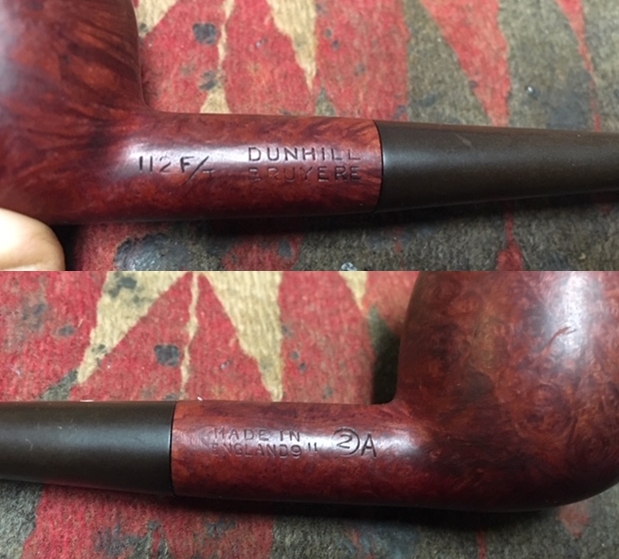
I finished work on #4, #5, #6, #7 & #8 and turned my attention to #2, another heavily used pipe but this time an Apple shaped pipe with a tapered stem. The pipe was stamped on the left side of the shank with the shape number 112 F/T next to the bowl/shank junction. That is followed by Dunhill over Bruyere. On the right side of the shank it is stamped Made in England 9 with a slightly superscript 11 with a Circle 2A. It appears that the pipe stamped as this one is was made in 1969 and shipped or sold in 1971. The 112 F/T is an Apple with a fish tail (F/T) tapered stem. The 2A stamp gives the Group or size number which in this case is a 2. The A stamp denotes a Bruyere pipe. Working on this is a change after the group of billiards I have worked on so far.

I am once again including Chuck Stanion’s eloquent description of the Bruyere on the smokingpipes.com site as follows (https://www.smokingpipes.com/pipes/new/dunhill/moreinfo.cfm?product_id=346421):

The Bruyere was Alfred Dunhill’s original finish upon launching his brand of premium pipes and smoking accessories and was the only Dunhill finish from 1910 until 1917. Even after the addition of other finishes, the Bruyere maintained a high level of popularity, becoming synonymous with what is thought of, even today, as the quintessential pipe. To achieve the iconic, ruby hue and saturation, a skilled craftsman painstakingly layers particular stains in a precise manner, then meticulously polishes the pipe to a high luster. The final result is, simply put, timeless.

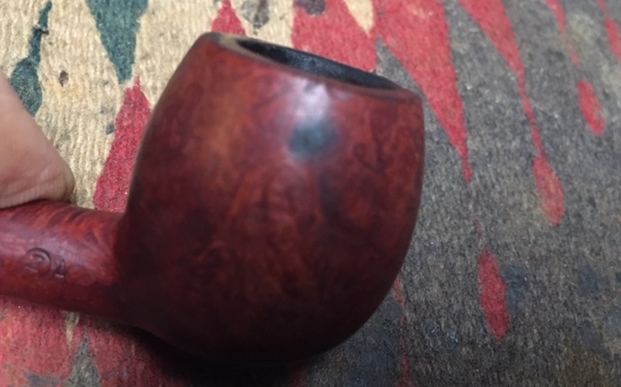
Like Bob’s other Dunhill pipe this one also had a thick cake in the bowl with remnants of tobacco stuck on the walls. There was a lava overflow on the rim so it was hard to know what kind of damage lay beneath the thick covering. Once it was cleaned I would have a better idea of the condition of the rim top. I could see however that there was definitely damage to the front inner edge of the bowl. The grain that is poking through the grime and oils appears to be quite beautiful – birdseye grain on the bowl sides and cross grain on the front and back as well as the heel of the bowl. The stem was oxidized and calcified toward the end with some tooth chatter. There were also some tooth marks on both sides of the stem ahead of the button and on the button itself. There was the classic White Spot on the top of the stem. Jeff took photos of the pipe before he started his cleanup work on it.  Jeff took photos of the bowl and rim top to show the thick, hard cake in the bowl with remnants of tobacco stuck on the walls of the bowl. There was a lava build up on the smooth rim top and the edges of the bowl. The rim top looked pretty good but it was hard to know for sure. It appeared that there was damage on the inner edge. The outer edges looked to be okay other than a few small nicks on the sides.  There was a burn mark on the right side of the bowl from where the pipe had been laid down in an ashtray. It was not deep but it was permanent.Jeff took photos of the sides and heel of the bowl to show the condition of the finish. You can see the beautiful grain patterns around the sides of the bowl and shank. Even under the dirt and debris of the years it looked very good.   The stamping is very readable. On the left side of the shank you can see 112 F/T which is the shape number followed by the F/T for a Fish tail stem. Next to that it is stamped Dunhill over Bruyere. On the right side it reads Made in England 9/11 followed by Circle 2A. Jeff included a pic of the White Spot on the stem.  Jeff took photos of the top and underside of the stem showing the tooth chatter, scratching, calcification and oxidation on the stem surface and wear on the edges of the button.    I can’t begin tell you how great it feels to have Jeff’s help on cleaning up the pipes from Bob’s estate as the 125+ pipes were taking me a long time to do alone. He cleaned this filthy pipe with his usual penchant for thoroughness that I really appreciate. This one was a real mess and I was looking forward to seeing what he had done with this one when I took it out of his box. It looked amazing and CLEAN. He reamed it with a PipNet pipe reamer and cleaned up the reaming with a Savinelli Fitsall Pipe Knife. He scrubbed out the internals with alcohol, pipe cleaners and cotton swabs until the pipe was clean. He scrubbed the exterior of the bowl with Murphy’s Oil Soap and a tooth brush to remove the grime and grit on the briar and the lava on the rim top. The finish looks good with great looking grain around the bowl and shank. The rim top looked better on this pipe. The condition of the inner and outer edges was not too bad. The stem looked a lot better. Jeff soaked the stem in Before & After Deoxidizer to remove the oxidation on the rubber. The pipe was ready for me to carry on the next part of the process. I took some close up photos of the rim top and also of the stem surface. I wanted to show how well it had cleaned up and what needed to be done. The rim top had a worn and burned area on the left front of the inner edge. There was darkening and nicks all around the top of the bowl and on the inner edge. The outer edge looked good.  I also took close up photos of the stem to show the tooth marks and chatter on the stem surface.  I also took a close up photo of the burn mark on the right side of the bowl. The stamping appeared to be as clear as it was before the cleanup work. This is just one of the things I appreciate about Jeff’s cleanup is that he works to protect and preserve the nomenclature on the shank of the pipes that he works on. I took some photos to show the stamping. Bob loved his Dunhill pipes and it was obvious that he enjoyed smoking them. Some appeared to be daily smokes while others he seemed to reserve for special occasions. Some seemed like they must have hung in his mouth while he did his carving while others were smoked in his chair. Having worked on over 60 of his pipes so far I am getting a feel for them. This one is in rough condition and I suppose it might well have been before Bob took up the trust. I suppose I won’t ever know for sure but it certainly has a long and interesting story if it could only tell it.

I am sure that many of you have read at least some of the other restoration work that I have done on previous pipes. You have also read what I have included about Bob Kerr, the pipeman who held these pipes in trust before I came to work on them (see photo to the left). Also, if you have followed the blog for long you will already know that I like to include background information on the pipeman whose pipes I am restoring. For me, when I am working on an estate I really like to have a sense of the person who held the pipes in trust before I worked on them. It gives me another dimension of the restoration work. Bob’s daughter wrote a short tribute to her father. I thank you Brian and tell your wife thank you as well.

I am delighted to pass on these beloved pipes of my father’s. I hope each user gets many hours of contemplative pleasure as he did. I remember the aroma of tobacco in the rec room, as he put up his feet on his lazy boy. He’d be first at the paper then, no one could touch it before him. Maybe there would be a movie on with an actor smoking a pipe. He would have very definite opinions on whether the performer was a ‘real’ smoker or not, a distinction which I could never see but it would be very clear to him. He worked by day as a sales manager of a paper products company, a job he hated. What he longed for was the life of an artist, so on the weekends and sometimes mid-week evenings he would journey to his workshop and come out with wood sculptures, all of which he declared as crap but every one of them treasured by my sister and myself. Enjoy the pipes, and maybe a little of his creative spirit will enter you!

It was time to get on with the restoration of this Dunhill Bruyere 112F/T Apple. It was a bit of a change of pace from the last bunch of billiards that I had worked on. I really need to send a shout out to Jeff for the hard cleanup work that Jeff does on each of these pipes. They were a real mess when I sent them to Jeff and I have to tell you it was great that I can start my part of the process with a clean pipe. I decided to start the process by dealing with the the damage to the inner edge of the bowl. I wanted to minimize the intrusiveness of the work on the rim and focus just on the rim edge. I carefully worked on the inner edge with a folded piece of 220 grit sandpaper and gave it a very slight bevel. I was able to remove much of the darkening and damage. The first photo shows the damaged inner edges of the bowl and the darkening around the full bowl. The second photo below shows the process I used with the folded sandpaper. The third photo shows the rim top and edges after my work on them…though not perfect I think it is an improvement. I polished the briar on the rim top and bowl with worn micromesh sanding pads – wet sanding it with 1500-12000 grit micromesh sanding pads. I wiped it down after each pad with a damp cloth. I find that the worn pads do a great job polishing and still retain the original patina of the pipe. I rubbed the bowl and rim down with Before & After Restoration Balm. I worked it into the surface of the briar with my fingertips to clean, enliven and protect it. I let the balm sit for a little while and then buffed the pipe with a cotton cloth to raise the shine. I really like watching the Balm do its magic and bring the briar alive. With the bowl done it was time to address the stem. The dents in the top and underside were the right depth for me to lift them. I sanded the surface of the stem with 220 grit sandpaper to remove the remaining oxidation in the vulcanite. I polished it with 400 grit wet dry sand paper.  I rubbed the stem down with Denicare Mouthpiece Polish. I have a few tins of this laying around so I am trying to use them up. It does a pretty good job polishing the stem.  I polished the stem with micromesh sanding pads – wet sanding with 1500-12000 grit sanding pads. I wiped it down after each pad with a damp cloth to remove the sanding dust. I polished it further with Before & After Pipe Polish – both Fine and Extra Fine. I finished by rubbing the stem down with some “No Oxy Oil” to protect the vulcanite. I am experimenting with the product from Briarville and tracking how it works so I can write a review of it.   Once again at this point in the restoration process I am excited to be on the homestretch. This is the sixth of the Dunhill smooth pipes in Bob’s estate that I am working on. It is a beautiful Dunhill Bruyere 112 F/T Apple made in 1969 and shipped or sold in 1971. Like each of the pipes in Bob’s estate I really look forward to this point in the process when it is put back together, polished and waxed. I put the bowl and stem back together. I polished the bowl and stem with Blue Diamond to polish out the scratches in the briar and the vulcanite. The nicks on the right outer rim edge and the small burn mark look better – minimized a bit. I gave the bowl and the stem multiple coats of carnauba wax. I buffed the pipe with a clean buffing pad to raise the shine. I hand buffed it with a microfiber cloth to deepen the shine. The pipe polished up pretty nicely. The grain around the bowl and shank really came alive with the wax and polish. The black of the tapered vulcanite White Spot stem is a beautiful contrast to the reds and browns of the finished bowl and shank. This was another Dunhill that was a lot of fun to work on thanks to Jeff’s cleanup work. The pipe is comfortable pipe to hold in the hand. The finished pipe is shown in the photos below. The dimensions of the pipe are Length: 5 ¾ inches, Height: 1 ½ inches, Outside diameter of the bowl: 1 ¼ inches, Chamber diameter: ¾ of an inch. This 1969 Bruyere Apple is a beauty should last for many more years. It is one that will be on the rebornpipes store very soon. If you are interested let me know. I have a lot more of Bob’s estate to work on of various brands. Perhaps one of those will catch your attention. Thanks for reading this blog and my reflections on the pipe while I worked on it. This is an interesting estate to bring back to life.

Restoring a 1967 Dunhill Bruyere 142 F/T Billiard from Bob Kerr’s Estate


Blog by Steve Laug

As I continue to work through the pipes in Bob Kerr’s Estate I am enjoying choosing different brands that he had to focus on for a bit. I had eight more from his Dunhill collection that I decided to go back to and finish working my way through that sub collection of the estate. Out of the 8 pipes six were Bruyere finished pipes, one was a Made in London (turns out it is also a Bruyere finished pipe), and one was a Root Briar. What follows is a list of what I saw when I examined the 8 pipes. As I finish the pipes I will include the link to the blog on that particular pipe for easy reference. I have already restored 16 pipes from this subgroup so you can do a quick search to read about the work on the Shell Briars and Tanshell Briars that were in that part of the collection.

  1. Bruyere 656 F/T Made in England 2 Circle 4A – Group 4 size Bruyere made in 1962. Stem is oxidized, tooth marks and chatter near the button, some calcification with damage to the button. Finish is dirty, bowl caked and lava overflow on the rim top. Bowl is out of round, damaged edge.
  2. Bruyere 112 F/T Made in England 9/11 Circle 2A – Group 2 size Bruyere made in 1969 and sold in 1971. Stem is oxidized, tooth marks and chatter near the button, some calcification with damage to the button. Finish is dirty, bowl caked and lava overflow on the rim top. Bowl is out of round, damaged edge.
  3. Bruyere 0333 Made in England 16 made in 1976. Stem is oxidized, tooth marks and chatter near the button, some calcification with damage to the button. Finish is dirty, bowl caked and lava overflow on the rim top. Bowl is out of round, damaged edge.
  4. Bruyere 41061 Made in England 18 made in 1978. Stem is oxidized, tooth marks and chatter near the button, some calcification with damage to the button. Finish is dirty, bowl caked and lava overflow on the rim top. Bowl is out of round, damaged edge. I finished the restoration on it. Here is the link to the blog – (https://rebornpipes.com/2019/12/24/restoring-a-1978-dunhill-bruyere-41061-from-bob-kerrs-estate/).
  5. Bruyere 142 F/T Made in England 7/9/11 Circle 4A – Group for size Bruyere made in 1967 and sent out in 1969 or 1971. Stem is oxidized, tooth marks and chatter near the button, some calcification with damage to the button. Finish is dirty, bowl caked and lava overflow on the rim top. Bowl is out of round, damaged edge.
  6. (A) Dunill London Inner Tube PAT N°5861/12 Shape 34. Stem is oxidized, tooth marks and chatter near the button, some calcification with damage to the button. Finish is dirty, bowl caked and lava overflow on the rim top. Bowl is out of round, damaged edge. I finished the restoration on it. Here is the link to the blog – (https://rebornpipes.com/2019/12/26/restoring-a-1913-a-dunhill-london-34-billiard-from-bob-kerrs-estate/).
  7. (Ao) Dunhill London 113 Made in England 5 PAT N°158709/14. Stem is oxidized, tooth marks and chatter near the button, some calcification with damage to the button. Finish is dirty, bowl caked and lava overflow on the rim top. Bowl is out of round, damaged rim edges. I finished the restoration on it. Here is the link to the blog – (https://rebornpipes.com/2019/12/25/restoring-a-1925-ao-dunhill-london-113-billiard-from-bob-kerrs-estate/).
  8. Root Briar 31032 Made in England 18 – made in 1978. Stem is oxidized, tooth marks and chatter near the button, some calcification with damage to the button. Finish is dirty, bowl caked and lava overflow on the rim top. Bowl is out of round, damaged edge. I finished the restoration on it. Here is the link to the blog – (https://rebornpipes.com/2019/12/23/restoring-a-1978-dunhill-root-briar-31032-billiard-from-bob-kerrs-estate/).

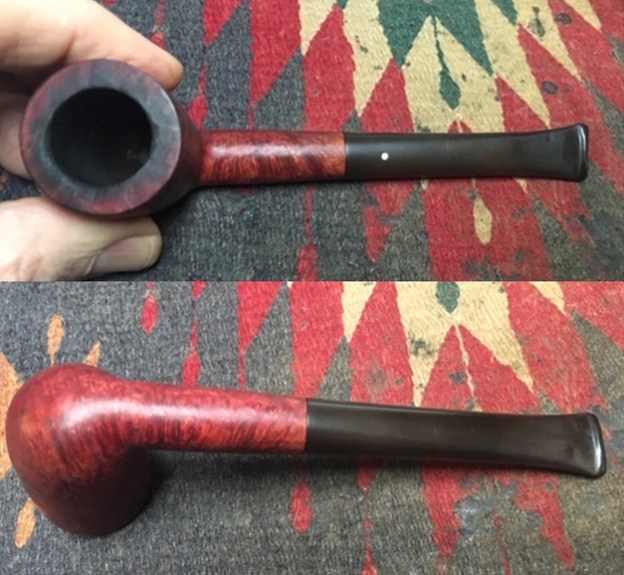
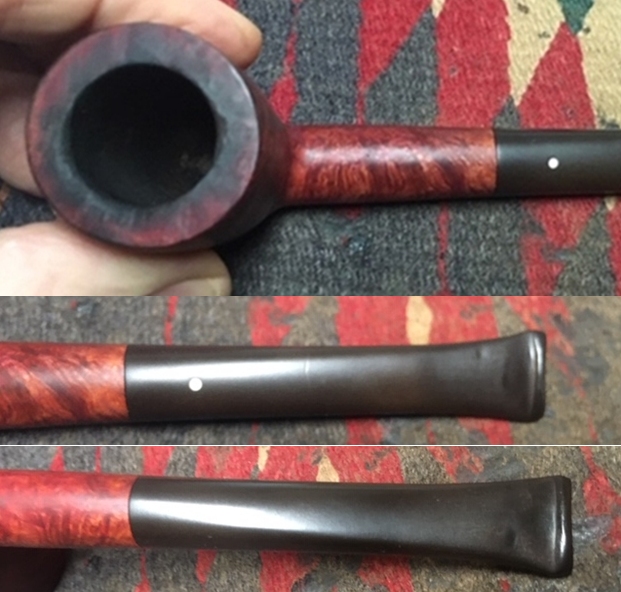
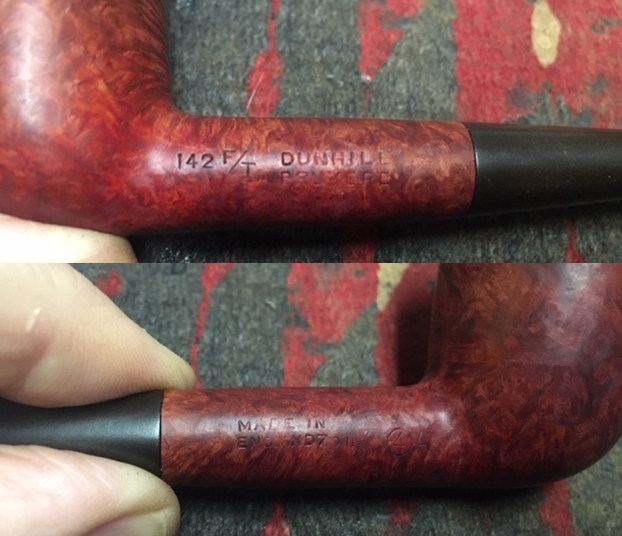
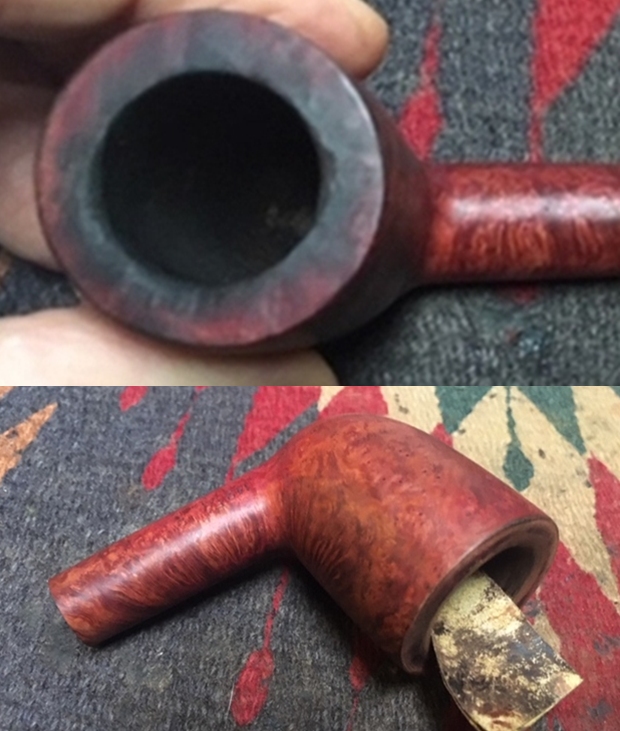
I finished work on #4, #6, #7 & #8 and turned my attention to #5, another heavily used Billiard with a tapered stem. The pipe was stamped on the left side of the shank with the shape number 142 F/T next to the bowl/shank junction. That is followed by Dunhill over Bruyere. On the right side of the shank it is stamped Made in England 7/9/11 with a Circle 4A. It appears that the pipe stamped as this one is was made in 1967 and shipped or sold in 1969 or 1971. The 142 is a Billiard with a tapered stem. The 4A stamp gives the Group or size number which in this case is a 4. The A stamp denotes a Bruyere pipe. Working on this is a change after the two old timers.

I am once again including Chuck Stanion’s eloquent description of the Bruyere on the smokingpipes.com site as follows (https://www.smokingpipes.com/pipes/new/dunhill/moreinfo.cfm?product_id=346421):

The Bruyere was Alfred Dunhill’s original finish upon launching his brand of premium pipes and smoking accessories and was the only Dunhill finish from 1910 until 1917. Even after the addition of other finishes, the Bruyere maintained a high level of popularity, becoming synonymous with what is thought of, even today, as the quintessential pipe. To achieve the iconic, ruby hue and saturation, a skilled craftsman painstakingly layers particular stains in a precise manner, then meticulously polishes the pipe to a high luster. The final result is, simply put, timeless.

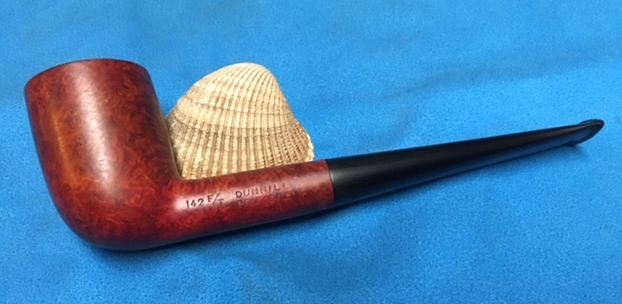
Like Bob’s other  Dunhill pipe this one also had a thick cake in the bowl with remnants of tobacco stuck on the walls. There was a lava overflow on the rim so it was hard to know what kind of damage lay beneath the thick covering. Once it was cleaned I would have a better idea of the condition of the rim top. I could see however that there was definitely damage to the front inner edge of the bowl. The grain that is poking through the grime and oils appears to be quite beautiful – birdseye grain on the bowl sides and cross grain on the front and back as well as the heel of the bowl. The stem was oxidized and calcified toward the end with some tooth chatter. There were also some tooth marks on both sides of the stem ahead of the button and on the button itself. There was the classic White Spot on the top of the stem. Jeff took photos of the pipe before he started his cleanup work on it.     Jeff took photos of the bowl and rim top to show the thick, hard cake in the bowl with remnants of tobacco stuck on the walls of the bowl. There was a lava build up on the smooth rim top and the edges of the bowl. The rim top looked pretty good but it was hard to know for sure. It appeared that there was damage on the inner edge. The outer edges looked to be okay other than a few small nicks on the sides.    Jeff took photos of the sides and heel of the bowl to show the condition of the finish. You can see the beautiful grain patterns around the sides of the bowl and shank. Even under the dirt and debris of the years it looked very good. The stamping is very readable. On the left side of the shank you can see 142 F/T which is the shape number followed by the F/T for a Fishtail stem. Next to that it is stamped Dunhill over Bruyere. On the right side it reads Made in England 7 9 11 followed by Circle 4A. He included a pic of the White Spot on the stem.  Jeff took photos of the top and underside of the stem showing the tooth chatter, scratching, calcification and oxidation on the stem surface and wear on the edges of the button.    I am really happy to have Jeff’s help on cleaning up the pipes from Bob’s estate as the 125+ pipes were taking me a long time to do alone. He cleaned this filthy pipe with his usual penchant for thoroughness that I really appreciate. This one was a real mess and I was looking forward to seeing what he had done with this one when I took it out of his box. It looked amazing and CLEAN. He reamed it with a PipNet pipe reamer and cleaned up the reaming with a Savinelli Fitsall Pipe Knife. He scrubbed out the internals with alcohol, pipe cleaners and cotton swabs until the pipe was clean. He scrubbed the exterior of the bowl with Murphy’s Oil Soap and a tooth brush to remove the grime and grit on the briar and the lava on the rim top. The finish looks good with great looking grain around the bowl and shank. The rim top looked better on this pipe. The condition of the inner and outer edges was not too bad. The stem looked a lot better. Jeff soaked the stem in Before & After Deoxidizer to remove the oxidation on the rubber. The pipe was ready for me to carry on the next part of the process. I took some close up photos of the rim top and also of the stem surface. I wanted to show how well it had cleaned up and what needed to be done. The rim top had a small area toward the left front of the inner edge that was worn or burned. There was darkening and nicks all around the top of the bowl and on the inner edge. The outer edge looked good.  I also took close up photos of the stem to show the tooth marks and chatter on the stem surface.  The stamping appeared to be as clear as it was before the cleanup work. This is just one of the things I appreciate about Jeff’s cleanup is that he works to protect and preserve the nomenclature on the shank of the pipes that he works on. I took some photos to show the stamping. Bob loved his Dunhill pipes and it was obvious that he enjoyed smoking them. Some appeared to be daily smokes while others he seemed to reserve for special occasions. Some seemed like they must have hung in his mouth while he did his carving while others were smoked in his chair. Having worked on over 60 of his pipes so far I am getting a feel for them. This one is in rough condition and I suppose it might well have been before Bob took up the trust. I suppose I won’t ever know for sure but it certainly has a long and interesting story if it could only tell it.

I am sure that many of you have read at least some of the other restoration work that I have done on previous pipes. You have also read what I have included about Bob Kerr, the pipeman who held these pipes in trust before I came to work on them (see photo to the left). Also, if you have followed the blog for long you will already know that I like to include background information on the pipeman whose pipes I am restoring. For me, when I am working on an estate I really like to have a sense of the person who held the pipes in trust before I worked on them. It gives me another dimension of the restoration work. Bob’s daughter wrote a short tribute to her father. I thank you Brian and tell your wife thank you as well.

I am delighted to pass on these beloved pipes of my father’s. I hope each user gets many hours of contemplative pleasure as he did. I remember the aroma of tobacco in the rec room, as he put up his feet on his lazy boy. He’d be first at the paper then, no one could touch it before him. Maybe there would be a movie on with an actor smoking a pipe. He would have very definite opinions on whether the performer was a ‘real’ smoker or not, a distinction which I could never see but it would be very clear to him. He worked by day as a sales manager of a paper products company, a job he hated. What he longed for was the life of an artist, so on the weekends and sometimes mid-week evenings he would journey to his workshop and come out with wood sculptures, all of which he declared as crap but every one of them treasured by my sister and myself. Enjoy the pipes, and maybe a little of his creative spirit will enter you!

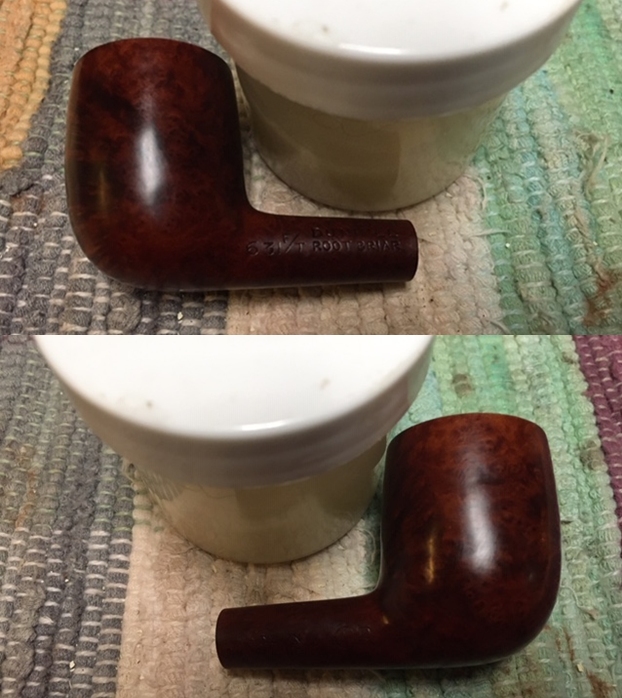
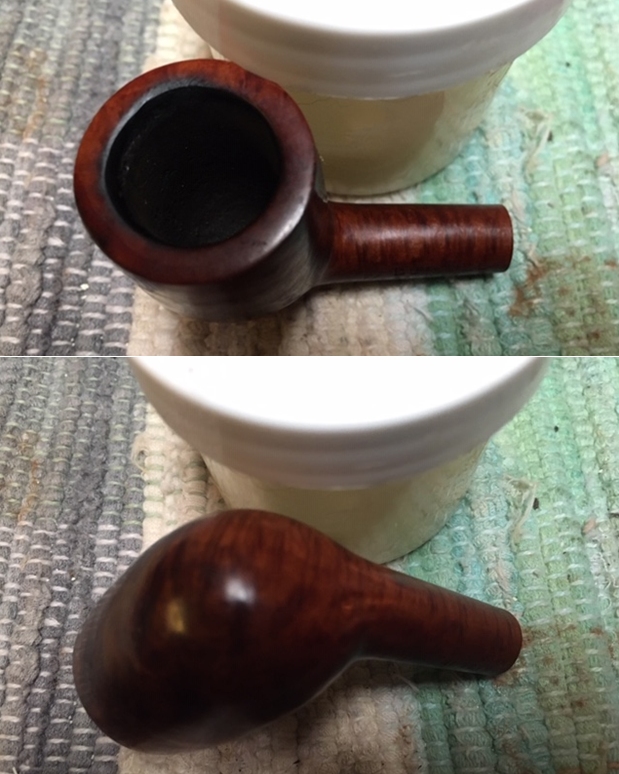
It was time to get on with the restoration of this beautiful Bruyere 142F/T Billiard. I really appreciate the hard cleanup work that Jeff did on each of these pipes. They were a real mess when I sent them to Jeff and I have to tell you it was great that I did not need to clean this pipe. I decided to start the process by dealing with the the damage to the inner edge of the bowl. I worked on the inner edge with a folded piece of 220 grit sandpaper and gave it a very slight bevel. I was able to remove much of the darkening and damage. The first photo shows the damaged inner edges of the bowl and the darkening around the full bowl. The second photo below shows the process I used with the folded sandpaper. The third photo shows the rim top and edges after my work on them…though not perfect I think it is an improvement. I gave the rim top a quick polish with 400 grit wet dry paper and 1500-2400 grit micromesh sanding pads and it brought back some of life to the rim top. I used a Maple stain pen to touch up the edge of the bowl and took a photo to show the work. I polished the briar on the rim top and bowl with worn micromesh sanding pads – wet sanding it with 1500-12000 grit micromesh sanding pads. I wiped it down after each pad with a damp cloth. I find that the worn pads do a great job polishing and still retain the original patina of the pipe.   I rubbed the bowl and rim down with Before & After Restoration Balm. I worked it into the surface of the briar with my fingertips to clean, enliven and protect it. I let the balm sit for a little while and then buffed the pipe with a cotton cloth to raise the shine. I really like watching the Balm do its magic and bring the briar alive.     With the bowl done it was time to address the stem. The dents in the top and underside were the right depth for me to lift them. I sanded the surface of the stem with 220 grit sandpaper to remove the remaining oxidation in the vulcanite. I polished it with 400 grit wet dry sand paper. I rubbed the stem down with Denicare Mouthpiece Polish. I have a few tins of this laying around so I am trying to use them up. It does a pretty good job polishing the stem.  I polished the stem with micromesh sanding pads – wet sanding with 1500-12000 grit sanding pads. I wiped it down after each pad with a damp cloth to remove the sanding dust. I polished it further with Before & After Pipe Polish – both Fine and Extra Fine. I finished by rubbing the stem down with some “No Oxy Oil” to protect the vulcanite. I am experimenting with the product from Briarville and tracking how it works so I can write a review of it. Once again at this point in the restoration process I am excited to be on the homestretch. This is the fifth of the Dunhill smooth pipes in Bob’s estate that I am working on. It is a beautiful Dunhill Bruyere 142 F/T Billiard made in 1967 and shipped or sold in 1969 and/or 1971. Like each of the pipes in Bob’s estate I really look forward to this point in the process when it is put back together, polished and waxed. I put the bowl and stem back together. I polished the bowl and stem with Blue Diamond to polish out the scratches in the briar and the vulcanite. I gave the bowl and the stem multiple coats of carnauba wax. I buffed the pipe with a clean buffing pad to raise the shine. I hand buffed it with a microfiber cloth to deepen the shine. The pipe polished up pretty nicely. The grain around the bowl and shank really came alive with the wax and polish. The black of the tapered vulcanite White Spot stem is a beautiful contrast to the reds and browns of the finished bowl and shank. This was another Dunhill that was a lot of fun to work on thanks to Jeff’s cleanup work. The pipe is comfortable pipe to hold in the hand. The finished pipe is shown in the photos below. The dimensions of the pipe are Length: 6 inches, Height: 1 ¾ inches, Outside diameter of the bowl: 1 ¼ inches, Chamber diameter: ¾ of an inch. This 1967 Bruyere Billiard is a beauty should be able to last for many more years. It is one that will be on the rebornpipes store very soon. If you are interested let me know. I have a lot more of Bob’s estate to work on of various brands. Perhaps one of those will catch your attention. Thanks for reading this blog and my reflections on the pipe while I worked on it. This is an interesting estate to bring back to life.

Restoring a 1925 “Ao” Dunhill London 113 Billiard from Bob Kerr’s Estate


Blog by Steve Laug

As I continue to work through the pipes in Bob Kerr’s Estate I am enjoying choosing different brands that he had to focus on for a bit. I had eight more from his Dunhill collection that I decided to go back to and finish working my way through that sub collection of the estate. Out of the 8 pipes six were Bruyere finished pipes, one was a Made in London (turns out it is also a Bruyere finished pipe), and one was a Root Briar. What follows is a list of what I saw when I examined the 8 pipes. As I finish the pipes I will include the link to the blog on that particular pipe for easy reference. I have already restored 16 pipes from this subgroup so you can do a quick search to read about the work on the Shell Briars and Tanshell Briars that were in that part of the collection.

  1. Bruyere 656 F/T Made in England 2 Circle 4A – Group 4 size Bruyere made in 1962. Stem is oxidized, tooth marks and chatter near the button, some calcification with damage to the button. Finish is dirty, bowl caked and lava overflow on the rim top. Bowl is out of round, damaged edge.
  2. Bruyere 112 F/T Made in England 9/11 Circle 2A – Group 2 size Bruyere made in 1969 and sold in 1971. Stem is oxidized, tooth marks and chatter near the button, some calcification with damage to the button. Finish is dirty, bowl caked and lava overflow on the rim top. Bowl is out of round, damaged edge.
  3. Bruyere 0333 Made in England 16 made in 1976. Stem is oxidized, tooth marks and chatter near the button, some calcification with damage to the button. Finish is dirty, bowl caked and lava overflow on the rim top. Bowl is out of round, damaged edge.
  4. Bruyere 41061 Made in England 18 made in 1978. Stem is oxidized, tooth marks and chatter near the button, some calcification with damage to the button. Finish is dirty, bowl caked and lava overflow on the rim top. Bowl is out of round, damaged edge. I finished the restoration on it. Here is the link to the blog – (https://rebornpipes.com/2019/12/24/restoring-a-1978-dunhill-bruyere-41061-from-bob-kerrs-estate/).
  5. Bruyere 142 F/T Made in England 7/9/11 Circle 4A – Group for size Bruyere made in 1967 and sent out in 1969 or 1971. Stem is oxidized, tooth marks and chatter near the button, some calcification with damage to the button. Finish is dirty, bowl caked and lava overflow on the rim top. Bowl is out of round, damaged edge.
  6. Bruyere A Inner Tube Patent No. 5831412 Shape 34. Stem is oxidized, tooth marks and chatter near the button, some calcification with damage to the button. Finish is dirty, bowl caked and lava overflow on the rim top. Bowl is out of round, damaged edge. Missing the inner tube.
  7. (Ao) London 113 Made in England 5 PAT N°158709/14. Stem is oxidized, tooth marks and chatter near the button, some calcification with damage to the button. Finish is dirty, bowl caked and lava overflow on the rim top. Bowl is out of round, damaged rim edges.
  8. Root Briar 31032 Made in England 18 – made in 1978. Stem is oxidized, tooth marks and chatter near the button, some calcification with damage to the button. Finish is dirty, bowl caked and lava overflow on the rim top. Bowl is out of round, damaged edge. I finished the restoration on it. Here is the link to the blog – (https://rebornpipes.com/2019/12/23/restoring-a-1978-dunhill-root-briar-31032-billiard-from-bob-kerrs-estate/).

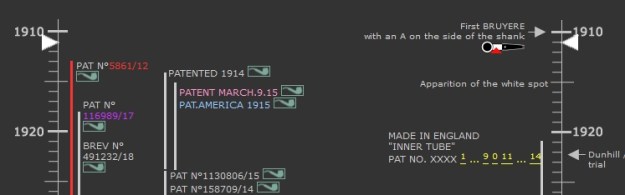
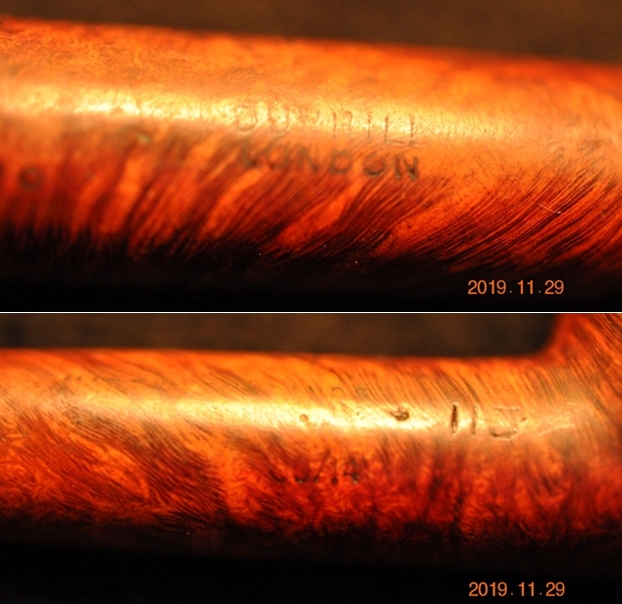
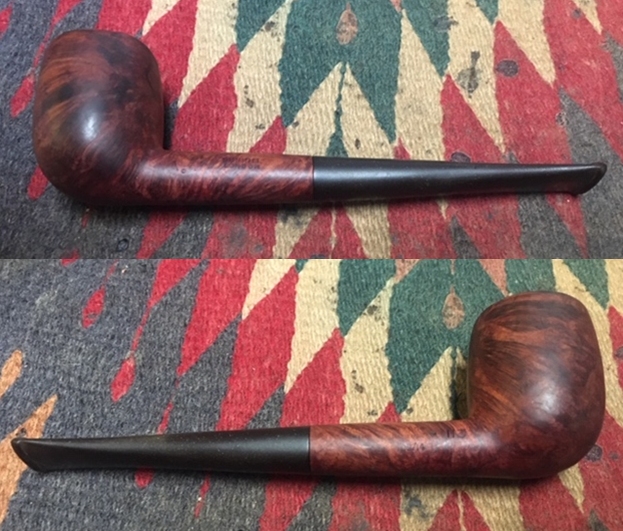
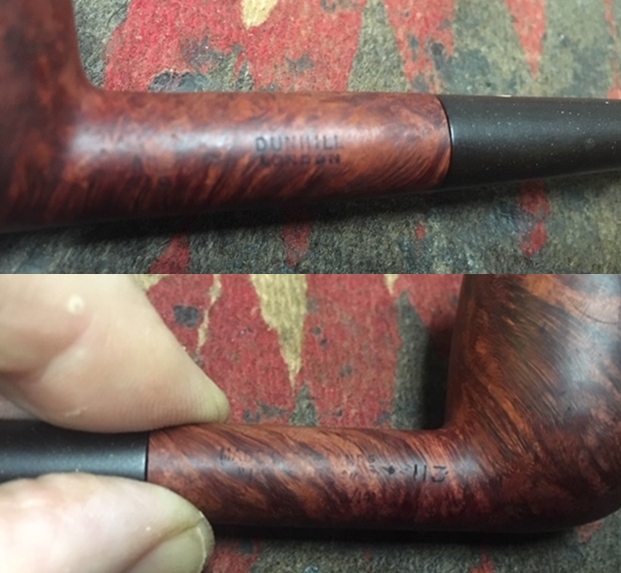
I finished work on #8 and turned my attention to #7 a heavily abused Billiard with a tapered stem. The pipe was stamped on the left side of the shank with the Ao number next to the bowl/shank junction. That is followed by Dunhill over London. On the right side of the shank it is stamped Made in England 5 with “Inner Tube” underneath that with PAT N°158709/14 underneath. I turned to the PipePhil website to see if I could pin down the time from for the entrance of the inner tube and also see if I could clear up the date of the patent number on the pipe (http://www.pipephil.eu/logos/en/dunhill/root-bru-guide.html). I did a screen capture of the pertinent info on that below.It appears that the pipe stamped as this one is with the Made in England 5 with “Inner Tube” over Pat. No. places this pipe as a 1925 Pipe. I went on to a separate page on the site to see if I could identify the Ao stamp (http://www.pipephil.eu/logos/en/dunhill/bruyere1.html). From there is appears that the stamp means that the pipe is a Bruyere from 1925and that also is attested by the “DUNHILL over LONDON” marking.

Chuck Stanion eloquently describes the Bruyere on the Smokingpipes.com site as follows (https://www.smokingpipes.com/pipes/new/dunhill/moreinfo.cfm?product_id=346421):

The Bruyere was Alfred Dunhill’s original finish upon launching his brand of premium pipes and smoking accessories and was the only Dunhill finish from 1910 until 1917. Even after the addition of other finishes, the Bruyere maintained a high level of popularity, becoming synonymous with what is thought of, even today, as the quintessential pipe. To achieve the iconic, ruby hue and saturation, a skilled craftsman painstakingly layers particular stains in a precise manner, then meticulously polishes the pipe to a high luster. The final result is, simply put, timeless.

On rebornpipes I have a blog by Eric Boehm on Dunhill shape numbers and I turned to that to help identify the shape number on this pipe. Eric notes that the shape number 113 designates a Billiard with a tapered stem. (https://rebornpipes.com/2012/11/01/dunhill-pipe-shapes-collated-by-eric-w-boehm/).

Now I knew I was dealing with one of Bob’s oldest Dunhill pipes. It was a 1925 Dunhill Bruyere with a patent number and stamping that established the date for me. It was time to turn to the pipe. There was a thick cake in the bowl with remnants of tobacco stuck on the walls. There was a lava overflow on the rim that filled in all of the damage to the surface of the rim top and edges. Once it was cleaned I would have a better idea of the condition of the rim top. I could see however that there was definitely damage to both the inner and the outer edge of the bowl. The grain that is poking through the grime and oils appears to be quite beautiful – diagonal or flame grain and some birdseye grain on the heel of the bowl. The stem was oxidized and calcified toward the end with some tooth chatter. There were also some tooth marks on both sides of the stem ahead of the button and on the button itself. There was the classic White Spot on the top of the stem. Jeff took photos of the pipe before he started his cleanup work on it.  Jeff took photos of the bowl and rim top to show the thick, hard cake in the bowl with remnants of tobacco stuck on the walls of the bowl. There was a lava build up on the smooth rim top and the edges of the bowl. The rim top looked pretty good but it was hard to know for sure. It appeared that there was damage at the back and the front of the inner edge. The outer edges looked good.    Jeff took photos of the sides and heel of the bowl to show the condition of the finish. You can see the beautiful grain patterns around the sides of the bowl and shank. Even under the dirt and debris of the years it looked very good.   The stamping is readable with a lens and a bright light. On the left side of the shank you can see Ao (which turns out to be the designation for a Bruyere finish) followed by Dunhill over London. On the right side it reads Made In England with the date stamp 5 after the D in England underneath that it is stamped “Inner Tube” over PAT N°158709/14. He included a pic of the White Spot on the stem.  Jeff took photos of the top and underside of the stem showing the tooth chatter, scratching, calcification and oxidation on the stem surface and wear on the edges of the button.   I am really happy to have Jeff’s help on cleaning up the pipes from Bob’s estate as the 125+ pipes were taking me a long time to do alone. He cleaned this filthy pipe with his usual penchant for thoroughness that I really appreciate. This one was a real mess and I was looking forward to seeing what he had done with this one when I took it out of his box. It looked amazing and CLEAN. He reamed it with a PipNet pipe reamer and cleaned up the reaming with a Savinelli Fitsall Pipe Knife. He scrubbed out the internals with alcohol, pipe cleaners and cotton swabs until the pipe was clean. He scrubbed the exterior of the bowl with Murphy’s Oil Soap and a tooth brush to remove the grime and grit on the briar and the lava on the rim top. The finish looks very good with great looking grain around the bowl and shank. The rim top was the biggest issue with this pipe. The inner and outer edges were really quite rough and that would need to be dealt with. The stem looked a lot better. Jeff soaked the stem in Before & After Deoxidizer to remove the oxidation on the rubber. The pipe was ready for me to carry on the next part of the process. I took some close up photos of the rim top and also of the stem surface. I wanted to show how well it had cleaned up and what needed to be done. The rim top had a dent on the right outer edge and some darkening toward the back of the bowl and on the inner edge. There was also some burn damage on the front inner edge of the bowl. The outer edge looked very good.  I also took close up photos of the stem to show the tooth marks and chatter on the stem surface.The stamping appeared to be as clear as it was before the cleanup work. This is just one of the things I appreciate about Jeff’s cleanup is that he works to protect and preserve the nomenclature on the shank of the pipes that he works on. I took some photos to show the stamping. Bob loved his Dunhill pipes and it was obvious that he enjoyed smoking them. Some appeared to be daily smokes while others he seemed to reserve for special occasions. Some seemed like they must have hung in his mouth while he did his carving while others were smoked in his chair. Having worked on over 60 of his pipes so far I am getting a feel for them. This one is in rough condition and I suppose it might well have been before Bob took up the trust. I suppose I won’t ever know for sure but it certainly has a long and interesting story if it could only tell it.

I am sure that many of you have read at least some of the other restoration work that I have done on previous pipes. You have also read what I have included about Bob Kerr, the pipeman who held these pipes in trust before I came to work on them (see photo to the left). Also, if you have followed the blog for long you will already know that I like to include background information on the pipeman whose pipes I am restoring. For me, when I am working on an estate I really like to have a sense of the person who held the pipes in trust before I worked on them. It gives me another dimension of the restoration work. Bob’s daughter wrote a short tribute to her father. I thank you Brian and tell your wife thank you as well.

I am delighted to pass on these beloved pipes of my father’s. I hope each user gets many hours of contemplative pleasure as he did. I remember the aroma of tobacco in the rec room, as he put up his feet on his lazy boy. He’d be first at the paper then, no one could touch it before him. Maybe there would be a movie on with an actor smoking a pipe. He would have very definite opinions on whether the performer was a ‘real’ smoker or not, a distinction which I could never see but it would be very clear to him. He worked by day as a sales manager of a paper products company, a job he hated. What he longed for was the life of an artist, so on the weekends and sometimes mid-week evenings he would journey to his workshop and come out with wood sculptures, all of which he declared as crap but every one of them treasured by my sister and myself. Enjoy the pipes, and maybe a little of his creative spirit will enter you!

It was time to get on with the restoration of this old and worn 1925 Dunhill Bruyere Billiard. I really appreciate the hard cleanup work that Jeff did on these pipes. They were a real mess when I sent them to Jeff and I have to tell you it was great that I did not need to clean this pipe. I decided to start the process by dealing with the the damage to the edges and the rim top of the bowl. I used some clear Krazy Glue to stabilize the ragged edges of the rim top. You can see the cuts and gouges but there are also some areas that looked like splintering. I spread the glue on the rim top to smooth and bind it all together. Once it cured I lightly topped the bowl to get a flat surface to work with. It looked good once it was cleaned up. It looks like a more radical topping than it actually is. I know some of you would have left it as it stood, but I decided to address the roughness. I was afraid it would splinter out and cause more damage so I chose to minimize the damage as much as possible without radically changing the profile. The inner edge of the rim looked bad at this point. Hacked and carved up. It would take a bit of work to reduce it. The outer edge also had some issues that would need to be addressed. I worked on the inner edge with a folded piece of 220 grit sandpaper and gave it a very slight bevel. I was able to remove much of the damage. I used a folded piece of 220 grit sandpaper to smooth out the damage on the outer edge of the bowl as well.  The second photo below shows the rim top and edges after my work on them…though not perfect I think it is an improvement. I was hoping that polishing the rim top and briar would help to blend to the top with the bowl enough that I would not need to stain it. Remember I said that I gently topped it. When I wet the briar it actually looked very close! Here is hoping! I polished the briar on the rim top and bowl with worn micromesh sanding pads – wet sanding it with 1500-12000 grit micromesh sanding pads. I wiped it down after each pad with a damp cloth. I find that the worn pads do a great job polishing and still retain the original patina of the pipe.  By the time I was finished the rim top was looking very close in colour to the rest of the bowl. I was not going to have to stain it.    I rubbed the bowl and rim down with Before & After Restoration Balm. I worked it into the surface of the briar with my fingertips to clean, enliven and protect it. I let the balm sit for a little while and then buffed the pipe with a cotton cloth to raise the shine. I really like watching the Balm do its magic and bring the briar alive.    With the bowl done it was time to address the stem. The dents in the top and underside were the right depth for me to lift them. I “painted” the surface of the stem with the flame of a Bic lighter to raise the dents in the surface. I was able to lift most of them to the point that a repair would be less complex.   I filled in the damaged areas on the top and bottom button edges and the small remaining dents on both sides of the stem with clear Krazy Glue. I sanded the surface of the stem with 220 grit sandpaper to remove the remaining oxidation in the vulcanite. I polished it with 400 grit wet dry sand paper.    I rubbed the stem down with Denicare Mouthpiece Polish. I have a few tins of this laying around so I am trying to use them up. It does a pretty good job polishing the stem.  I polished the stem with micromesh sanding pads – wet sanding with 1500-12000 grit sanding pads. I wiped it down after each pad with a damp cloth to remove the sanding dust. I polished it further with Before & After Pipe Polish – both Fine and Extra Fine. I finished by rubbing the stem down with some “No Oxy Oil” to protect the vulcanite. I am experimenting with the product from Briarville and tracking how it works so I can write a review of it. Once again at this point in the restoration process I am excited to be on the homestretch. This is the third of the Dunhill smooth pipes in Bob’s estate that I am working on. It is another one that turned out to be a beautiful 1925 Bruyere Billiard. It was in really rough condition so I really was looking forward to this point in the process when it is put back together, polished and waxed. I put the bowl and stem back together. I polished the bowl and stem with Blue Diamond to polish out the scratches in the briar and the vulcanite. I gave the bowl and the stem multiple coats of carnauba wax. I buffed the pipe with a clean buffing pad to raise the shine. I hand buffed it with a microfiber cloth to deepen the shine. The pipe polished up pretty nicely. The grain around the bowl and shank really came alive with the wax and polish. The black of the tapered vulcanite White Spot stem is a beautiful contrast to the reds and browns of the finished bowl and shank. This was another older Dunhill that was a lot of fun to work on thanks to Jeff’s cleanup work. The pipe is comfortable pipe to hold in the hand. The finished pipe is shown in the photos below. The dimensions of the pipe are Length: 5 ½ inches, Height: 1 ¾ inches, Outside diameter of the bowl: 1 ¼ inches, Chamber diameter: ¾ of an inch. This 1925 Bruyere Billiard is a beauty should be able to last beyond the life of the next pipeman or women who carries on the trust. I have a lot more of Bob’s estate to work on of various brands. Perhaps one of those will catch your attention. Thanks for reading this blog and my reflections on the pipe while I worked on it. This is an interesting estate to bring back to life.

Restoring a 1978 Dunhill Bruyere 41061 from Bob Kerr’s Estate


Blog by Steve Laug

As I continue to work through the pipes in Bob Kerr’s Estate I am enjoying choosing different brands that he had to focus on for a bit. I had eight more from his Dunhill collection that I decided to go back to and finish working my way through that sub collection of the estate. Out of the 8 pipes six were Bruyere finished pipes, one was a Made in London, and one was a Root Briar. What follows is a list of what I saw when I examined the 8 pipes. As I finish the pipes I will include the link to the blog on that particular pipe for easy reference. I have already restored 16 pipes from this subgroup so you can do a quick search to read about the work on the Shell Briars and Tanshell Briars that were in that part of the collection.

  1. Bruyere 656 F/T Made in England 2 Circle 4A – Group 4 size Bruyere made in 1962. Stem is oxidized, tooth marks and chatter near the button, some calcification with damage to the button. Finish is dirty, bowl caked and lava overflow on the rim top. Bowl is out of round, damaged edge.
  2. Bruyere 112 F/T Made in England 9/11 Circle 2A – Group 2 size Bruyere made in 1969 and sold in 1971. Stem is oxidized, tooth marks and chatter near the button, some calcification with damage to the button. Finish is dirty, bowl caked and lava overflow on the rim top. Bowl is out of round, damaged edge.
  3. Bruyere 0333 Made in England 16 made in 1976. Stem is oxidized, tooth marks and chatter near the button, some calcification with damage to the button. Finish is dirty, bowl caked and lava overflow on the rim top. Bowl is out of round, damaged edge.
  4. Bruyere 41061 Made in England 18 made in 1978. Stem is oxidized, tooth marks and chatter near the button, some calcification with damage to the button. Finish is dirty, bowl caked and lava overflow on the rim top. Bowl is out of round, damaged edge.
  5. Bruyere 142 F/T Made in England 7/9/11 Circle 4A – Group for size Bruyere made in 1967 and sent out in 1969 or 1971. Stem is oxidized, tooth marks and chatter near the button, some calcification with damage to the button. Finish is dirty, bowl caked and lava overflow on the rim top. Bowl is out of round, damaged edge.
  6. Bruyere A Inner Tube Patent No. 5831412 Shape 34. Stem is oxidized, tooth marks and chatter near the button, some calcification with damage to the button. Finish is dirty, bowl caked and lava overflow on the rim top. Bowl is out of round, damaged edge. Missing the inner tube.
  7. Made in London 113 539/14. Stem is oxidized, tooth marks and chatter near the button, some calcification with damage to the button. Finish is dirty, bowl caked and lava overflow on the rim top. Bowl is out of round, damaged rim edges.
  8. Root Briar 31032 Made in England 18 – made in 1978. Stem is oxidized, tooth marks and chatter near the button, some calcification with damage to the button. Finish is dirty, bowl caked and lava overflow on the rim top. Bowl is out of round, damaged edge. I finished the restoration on it. Here is the link to the blog – (https://rebornpipes.com/2019/12/23/restoring-a-1978-dunhill-root-briar-31032-billiard-from-bob-kerrs-estate/).

I finished work on #8 and turned my attention to #4 a Bruyere 41061 Pot with a tapered stem.     Chuck Stanion eloquently describes the brand on the Smokingpipes.com site as follows (https://www.smokingpipes.com/pipes/new/dunhill/moreinfo.cfm?product_id=346421):

The Bruyere was Alfred Dunhill’s original finish upon launching his brand of premium pipes and smoking accessories and was the only Dunhill finish from 1910 until 1917. Even after the addition of other finishes, the Bruyere maintained a high level of popularity, becoming synonymous with what is thought of, even today, as the quintessential pipe. To achieve the iconic, ruby hue and saturation, a skilled craftsman painstakingly layers particular stains in a precise manner, then meticulously polishes the pipe to a high luster. The final result is, simply put, timeless.

The pipe was stamped on the left side of the shank with the five digit shape number next to the bowl/shank junction. It read 41061. That is followed by Dunhill over Bruyere. On the right side of the shank it is stamped Made in England 18 which would make it a pipe made in 1978. The shape number code can be broken down to give a lot of information. Typically Dunhill pipes are stamped with a four digit code. The first digit (1-6) denotes the group size of the pipe. In this case it is a Group 4 sized pipe. The second digit denotes the style of the mouthpiece (0,1=tapered, 2=saddle). In this case it is a 1 which matches the tapered stem on the shank. The third and fourth digits give the generic shape in the chart below. I have captured part of the chart to identify this pipe as a 06 or a straight Pot. When 5 digits occur, the meaning of the 4 first remains the same (http://www.pipephil.eu/logos/en/dunhill/shapes.html). There was a thick cake in the bowl with remnants of tobacco stuck on the walls. There was a lava overflow on the rim. The top and edges of the rim appear to be in good condition though there appears to be a little burn damage on the left front inner edge of the bowl. The outer edge looks very good. The grain on this is beautiful – diagonal or flame grain and some cross grain on the heel of the bowl. I think that there is a beautiful pipe underneath all of the buildup of years of use. The sides of the bowl had some darkening from oils and tars. The stem was oxidized and calcified toward the end with some tooth chatter. There were also some tooth marks on both sides of the stem ahead of the button and on the button itself. There was the classic White Spot on the top of the stem. Jeff took photos of the pipe before he started his cleanup work on it.  Jeff took photos of the bowl and rim top to show the thick, hard cake in the bowl with remnants of tobacco stuck on the walls of the bowl. There was a lava build up on the smooth rim top and the edges of the bowl. The rim top looked pretty good but it was hard to know for sure. It appeared that there was damage at the back and the front of the inner edge. The outer edges looked good.    Jeff took a photo of the side and heel of the bowl to show the condition of the finish. You can see the beautiful grain patterns around the sides of the bowl and shank. Even under the dirt and debris of the years it looked very good.The stamping is readable and on the left side of the shank you can see the shape number 41061 as noted above followed by Dunhill over Bruyere. On the right side it reads Made In England with the date stamp 18 after the D in England. He included a pic of the White Spot on the stem. Jeff took photos of the top and underside of the stem showing the tooth chatter, scratching, calcification and oxidation on the stem surface and wear on the edges of the button. I am really happy to have Jeff’s help on cleaning up the pipes from Bob’s estate as the 125+ pipes were taking me a long time to do alone. He cleaned this filthy pipe with his usual penchant for thoroughness that I really appreciate. This one was a real mess and I was looking forward to seeing what he had done with this one when I took it out of his box. It looked amazing and CLEAN. He reamed it with a PipNet pipe reamer and cleaned up the reaming with a Savinelli Fitsall Pipe Knife. He scrubbed out the internals with alcohol, pipe cleaners and cotton swabs until the pipe was clean. He scrubbed the exterior of the bowl with Murphy’s Oil Soap and a tooth brush to remove the grime and grit on the briar and the lava on the rim top. The finish looks very good with great looking grain around the bowl and shank. It looked like there were some dents in the briar on the right side of the bowl that would need to be dealt with. The stem looked a lot better. Jeff soaked the stem in Before & After Deoxidizer to remove the oxidation on the rubber. The pipe was ready for me to carry on the next part of the process. I took some close up photos of the rim top and also of the stem surface. I wanted to show how well it had cleaned up and what needed to be done. The rim top had a dent on the right outer edge and some darkening toward the back of the bowl and on the inner edge. There was also some burn damage on the front inner edge of the bowl. The outer edge looked very good.  I also took close up photos of the stem to show the tooth marks and chatter on the stem surface.The stamping appeared to be as clear as ever on the shank sides. This is just one of the things I appreciate about Jeff’s cleanup is that he works to protect and preserve the nomenclature on the shank of the pipes that he works on. I took some photos to show the stamping. Bob loved his Dunhill pipes and it was obvious that he enjoyed smoking them. Some appeared to be daily smokes while others he seemed to reserve for special occasions. Some seemed like they must have hung in his mouth while he did his carving while others were smoked in his chair. Having worked on over 60 of his pipes so far I am getting a feel for them.

I am sure that many of you have read at least some of the other restoration work that I have done on previous pipes. You have also read what I have included about Bob Kerr, the pipeman who held these pipes in trust before I came to work on them (see photo to the left). Also, if you have followed the blog for long you will already know that I like to include background information on the pipeman whose pipes I am restoring. For me, when I am working on an estate I really like to have a sense of the person who held the pipes in trust before I worked on them. It gives me another dimension of the restoration work. Bob’s daughter wrote a short tribute to her father. I thank you Brian and tell your wife thank you as well.

I am delighted to pass on these beloved pipes of my father’s. I hope each user gets many hours of contemplative pleasure as he did. I remember the aroma of tobacco in the rec room, as he put up his feet on his lazy boy. He’d be first at the paper then, no one could touch it before him. Maybe there would be a movie on with an actor smoking a pipe. He would have very definite opinions on whether the performer was a ‘real’ smoker or not, a distinction which I could never see but it would be very clear to him. He worked by day as a sales manager of a paper products company, a job he hated. What he longed for was the life of an artist, so on the weekends and sometimes mid-week evenings he would journey to his workshop and come out with wood sculptures, all of which he declared as crap but every one of them treasured by my sister and myself. Enjoy the pipes, and maybe a little of his creative spirit will enter you!

It was time to get on with the restoration of this beautiful and worn Dunhill Bruyere Pot. I really appreciate the hard cleanup work that Jeff did on these pipes. They were a real mess when I sent them to Jeff and I have to tell you it was great that I did not need to clean this pipe. I decided to start the process by dealing with the the damage to the inner edge of the bowl. I worked on the inner edge with a folded piece of 220 grit sandpaper and gave it a very slight bevel. I was able to remove much of the damage. I gave the freshly beveled edge a stain coat with a walnut stain pen to blend the edge into the rim top finish. There was a large dent in the rim top near the outer edge that I wanted to deal with. You can see on it in the first picture below. I have used a red arrow to clearly identify the issue that I wanted to address. It looks almost like a fill but it is not – just a deep dent.  I set up my wife’s steam iron on the kitchen counter top. I put a damp cloth next over the dent and applied the steam iron to the surface. It took several attempts but the dent raise to the surface.   I polished the briar on the rim top and bowl with worn micromesh sanding pads – wet sanding it with 1500-12000 grit micromesh sanding pads. I wiped it down after each pad with a damp cloth. I find that the worn pads do a great job polishing and still retain the original patina of the pipe.   I rubbed the bowl and rim down with Before & After Restoration Balm. I worked it into the surface of the briar with my fingertips to clean, enliven and protect it. I let the balm sit for a little while and then buffed the pipe with a cotton cloth to raise the shine. I really like watching the Balm do its magic and bring the briar alive.    With the bowl finished I turned my attention to the stem. I sanded the surface of the stem with 220 grit sandpaper to remove the remaining oxidation in the vulcanite. I polished it with 400 grit wet dry sand paper.  I polished the stem with micromesh sanding pads – wet sanding with 1500-12000 grit sanding pads. I wiped it down after each pad with a damp cloth to remove the sanding dust. I polished it further with Before & After Pipe Polish – both Fine and Extra Fine. I finished by rubbing the stem down with some “No Oxy Oil” to protect the vulcanite. I am experimenting with the product from Briarville and tracking how it works so I can write a review of it.  Once again at this point in the restoration process I am excited to be on the homestretch. This is the second of the Dunhill smooth pipes in Bob’s estate that I am working on. It is a beautiful Bruyere 41061 Pot. I always look forward to this point in the process when it is put back together, polished and waxed. I put the bowl and stem back together. I polished the bowl and stem with Blue Diamond to polish out the scratches in the briar and the vulcanite. I gave the bowl and the stem multiple coats of carnauba wax. I buffed the pipe with a clean buffing pad to raise the shine. I hand buffed it with a microfiber cloth to deepen the shine. The pipe polished up pretty nicely. The grain around the bowl and shank really came alive with the wax and polish. The black of the tapered vulcanite White Spot stem is a beautiful contrast to the reds and browns of the finished bowl and shank. This Dunhill was a lot of fun to work on thanks to Jeff’s cleanup work. The pipe is comfortable pipe to hold in the hand. The finished pipe is shown in the photos below. The dimensions of the pipe are Length: 5 ¼ inches, Height: 1 ¾ inches, Outside diameter of the bowl: 1 ½ inches, Chamber diameter: ¾ of an inch. This 78 Bruyere Pot is a beauty that is already spoken for by fellow in the US. I have a lot more of Bob’s estate to work on of various brands. Perhaps one of those will catch your attention. Thanks for reading this blog and my reflections on the pipe while I worked on it. This is an interesting estate to bring back to life.

Restoring a 1978 Dunhill Root Briar 31032 Billiard from Bob Kerr’s Estate


Blog by Steve Laug

As I continue to work through the pipes in Bob Kerr’s Estate I am enjoying choosing different brands that he had to focus on for a bit. I had eight more from his Dunhill collection that I decided to go back to and finish working my way through that sub collection of the estate. Out of the 8 pipes six were Bruyere finished pipes, one was a Made in London, and one was a Root Briar. What follows is a list of what I saw when I examined the 8 pipes. As I finish the pipes I will include the link to the blog on that particular pipe for easy reference. I have already restored 16 pipes from this subgroup so you can do a quick search to read about the work on the Shell Briars and Tanshell Briars that were in that part of the collection.

  1. Bruyere 656 F/T Made in England 2 Circle 4A – Group 4 size Bruyere made in 1962. Stem is oxidized, tooth marks and chatter near the button, some calcification with damage to the button. Finish is dirty, bowl caked and lava overflow on the rim top. Bowl is out of round, damaged edge.
  2. Bruyere 112 F/T Made in England 9/11 Circle 2A – Group 2 size Bruyere made in 1969 and sold in 1971. Stem is oxidized, tooth marks and chatter near the button, some calcification with damage to the button. Finish is dirty, bowl caked and lava overflow on the rim top. Bowl is out of round, damaged edge.
  3. Bruyere 0333 Made in England 16 made in 1976. Stem is oxidized, tooth marks and chatter near the button, some calcification with damage to the button. Finish is dirty, bowl caked and lava overflow on the rim top. Bowl is out of round, damaged edge.
  4. Bruyere 41061 Made in England 18 made in 1978. Stem is oxidized, tooth marks and chatter near the button, some calcification with damage to the button. Finish is dirty, bowl caked and lava overflow on the rim top. Bowl is out of round, damaged edge.
  5. Bruyere 142 F/T Made in England 7/9/11 Circle 4A – Group for size Bruyere made in 1967 and sent out in 1969 or 1971. Stem is oxidized, tooth marks and chatter near the button, some calcification with damage to the button. Finish is dirty, bowl caked and lava overflow on the rim top. Bowl is out of round, damaged edge.
  6. Bruyere A Inner Tube Patent No. 5831412 Shape 34. Stem is oxidized, tooth marks and chatter near the button, some calcification with damage to the button. Finish is dirty, bowl caked and lava overflow on the rim top. Bowl is out of round, damaged edge. Missing the inner tube.
  7. Made in London 113 539/14. Stem is oxidized, tooth marks and chatter near the button, some calcification with damage to the button. Finish is dirty, bowl caked and lava overflow on the rim top. Bowl is out of round, damaged rim edges.
  8. Root Briar 31032 Made in England 18 – made in 1978. Stem is oxidized, tooth marks and chatter near the button, some calcification with damage to the button. Finish is dirty, bowl caked and lava overflow on the rim top. Bowl is out of round, damaged edge.

I chose to work on #8 next, the sole Root Briar pipe remaining in the collection. Paresh had picked up an earlier one that I had finished to add to his collection in India. The highest honor for a Dunhill pipe is to receive the prestigious Root Briar appellation. Root Briars have been coveted by pipesmokers ever since they first debuted in 1931, due to the fact that each pipe must boast briar completely free of even the most minor of blemishes. Dunhill has the strictest of standards and expectations for quality with all of their pipes, and so any block of briar that comes to bear the Root Briar stamp must indeed be superlative.

The pipe was stamped on the left side of the shank with the five digit shape number next to the bowl/shank junction. It read 31032. That is followed by Dunhill over Root Briar. On the right side of the shank it is stamped Made in England 18 which would make it a pipe made in 1978. The shape number code can be broken down to give a lot of information. Typically Dunhill pipes are stamped with a four digit code. The first digit (1-6) denotes the group size of the pipe. In this case it is a Group 3 sized pipe. The second digit denotes the style of the mouthpiece (0,1=tapered, 2=saddle). In this case it is a 1 which matches the tapered stem on the shank. The third and fourth digits give the generic shape in the chart below. I have captured part of the chart to identify this pipe as a 03 or a straight Billiard. When 5 digits occur, the meaning of the 4 first remains the same (http://www.pipephil.eu/logos/en/dunhill/shapes.html). There was a thick cake in the bowl with remnants of tobacco stuck on the walls. There was a lava overflow on the rim. The top and edges of the rim appear to be in good condition though there appears to be a little burn damage on the left front inner edge of the bowl. The outer edge looks very good. The grain on this is beautiful – diagonal or flame grain and some birdseye on the heel of the bowl. I think that there is a beautiful pipe underneath all of the buildup of years of use. The sides of the bowl had some darkening from oils and tars. The stem was oxidized and calcified toward the end with some tooth chatter. There were also some tooth marks on both sides of the stem ahead of the button and on the button itself. There was the classic White Spot on the top of the stem. Jeff took photos of the pipe before he started his cleanup work on it. Jeff took photos of the bowl and rim top to show the thick, hard cake in the bowl with remnants of tobacco stuck on the walls of the bowl. There was a lava build up on the smooth rim top and the edges of the bowl. The rim top looked pretty good but it was hard to know for sure. It appeared that there was damage at the back and the front of the inner edge. The outer edges looked good.    Jeff took photos of the side and heel of the bowl to show the condition of the finish. You can see the beautiful grain patterns around the sides of the bowl and shank. Even under the dirt and debris of the years it looked very good.The stamping is readable and on the left side of the shank you can see the shape number 31032 as noted above followed by Dunhill over Root Briar. On the right side it reads Made In England with the date stamp 18 after the D in England. He included a pic of the White Spot on the stem. Jeff took photos of the top and underside of the stem showing the tooth chatter, scratching and oxidation on the stem surface and wear on the edges of the button.I am really happy to have Jeff’s help on cleaning up the pipes from Bob’s estate as the 125+ pipes were taking me a long time to do alone. He cleaned this filthy pipe with his usual penchant for thoroughness that I really appreciate. This one was a real mess and I was looking forward to seeing what he had done with this one when I took it out of his box. It looked amazing and CLEAN. He reamed it with a PipNet pipe reamer and cleaned up the reaming with a Savinelli Fitsall Pipe Knife. He scrubbed out the internals with alcohol, pipe cleaners and cotton swabs until the pipe was clean. He scrubbed the exterior of the bowl with Murphy’s Oil Soap and a tooth brush to remove the grime and grit on the briar and the lava on the rim top. The finish looks very good with great looking grain around the bowl and shank. It looked like there were some dents in the briar on the right side of the bowl that would need to be dealt with. The stem looked a lot better. Jeff soaked the stem in Before & After Deoxidizer to remove the oxidation on the rubber. The pipe was ready for me to carry on the next part of the process. I took some close up photos of the rim top and also of the stem surface. I wanted to show how well it had cleaned up and what needed to be done. The rim top had some darkening toward the back of the bowl and on the inner edge. There was also some burn damage on the front inner edge of the bowl. The outer edge looked very good.  I also took close up photos of the stem to show the tooth marks and chatter on the stem surface.   The stamping appeared to be as clear as ever on the shank sides. This is just one of the things I appreciate about Jeff’s cleanup is that he works to protect and preserve the nomenclature on the shank of the pipes that he works on. I took some photos to show the stamping. Bob loved his Dunhill pipes and it was obvious that he enjoyed smoking them. Some appeared to be daily smokes while others he seemed to reserve for special occasions. Some seemed like they must have hung in his mouth while he did his carving while others were smoked in his chair. Having worked on over 60 of his pipes so far I am getting a feel for them.

I am sure that many of you have read at least some of the other restoration work that I have done on previous pipes. You have also read what I have included about Bob Kerr, the pipeman who held these pipes in trust before I came to work on them (see photo to the left). Also, if you have followed the blog for long you will already know that I like to include background information on the pipeman whose pipes I am restoring. For me, when I am working on an estate I really like to have a sense of the person who held the pipes in trust before I worked on them. It gives me another dimension of the restoration work. Bob’s daughter wrote a short tribute to her father. I thank you Brian and tell your wife thank you as well.

I am delighted to pass on these beloved pipes of my father’s. I hope each user gets many hours of contemplative pleasure as he did. I remember the aroma of tobacco in the rec room, as he put up his feet on his lazy boy. He’d be first at the paper then, no one could touch it before him. Maybe there would be a movie on with an actor smoking a pipe. He would have very definite opinions on whether the performer was a ‘real’ smoker or not, a distinction which I could never see but it would be very clear to him. He worked by day as a sales manager of a paper products company, a job he hated. What he longed for was the life of an artist, so on the weekends and sometimes mid-week evenings he would journey to his workshop and come out with wood sculptures, all of which he declared as crap but every one of them treasured by my sister and myself. Enjoy the pipes, and maybe a little of his creative spirit will enter you!

It was time to get on with the restoration of this beautiful and worn Dunhill Root Briar Billiard. I really appreciate the hard cleanup work that Jeff did on these pipes. They were a real mess when I sent them to Jeff and I have to tell you it was great that I did not need to clean this pipe. I decided to start the process by dealing with the dents in the briar on both sides of the bowl. I heated a knife with the flame on our gas stove and dampened a cloth. I put the cloth over the dents and applied the hot knife to the surface. The heat generated steam and lifted the dents. I applied the knife several times before I was happy with the look of the bowl. I then went on to address the damage to the inner edge of the bowl. I worked on the inner edge with a folded piece of 220 grit sandpaper and gave it a very slight bevel. I was able to remove much of the damage. There was still a slight “dip” in the edge at the front. The photos show the progress.   I polished the briar on the rim top with micromesh sanding pads – wet sanding it with 1500-4000 grit pads and I wiped the bowl down after each sanding pad with a damp cloth.  The grain progressively stood out as I polished the pipe with the pads.   I paused the polishing to restain the rim top to match the rest of the pipe. I used a walnut stain pen and was able to get the match. The rim top would need to be polished but the colour was right so time would tell.I continued to polish the bowl with 6000-12000 grit micromesh sanding pads. I wiped it down after each pad with a damp cloth.   I rubbed the bowl and rim down with Before & After Restoration Balm. I worked it into the surface of the briar with my fingertips to clean, enliven and protect it. I let the balm sit for a little while and then buffed the pipe with a cotton cloth to raise the shine. I really like watching the Balm do its magic and bring the briar alive.    With the bowl done it was time to address the stem. The dents in the top and underside were the right depth for me to lift them. I “painted” the surface of the stem with the flame of a Bic lighter to raise the dents in the surface. I was able to lift most of them to the point that a repair would be less complex.   I filled in the damaged areas on the button edge and the small remaining dents in the underside of the stem with clear Krazy Glue. Once the repair had cured I used a flat needle file to reshape the button and edges. The stem is starting to take shape.  I sanded the surface of the stem with 220 grit sandpaper to remove the remaining oxidation in the vulcanite. I polished it with 400 grit wet dry sand paper.    I rubbed the stem down with Denicare Mouthpiece Polish. I have a few tins of this laying around so I am trying to use them up. It does a pretty good job polishing the stem.  I polished the stem with micromesh sanding pads – wet sanding with 1500-12000 grit sanding pads. I wiped it down after each pad with a damp cloth to remove the sanding dust. I polished it further with Before & After Pipe Polish – both Fine and Extra Fine. I finished by rubbing the stem down with some “No Oxy Oil” to protect the vulcanite. I am experimenting with the product from Briarville and tracking how it works so I can write a review of it.  Once again at this point in the restoration process I am excited to be on the homestretch. This is the first of the Dunhill smooth pipes in Bob’s estate that I am working on. It is a beautiful Root Briar 31032 Billiard. I always look forward to this point in the process when it is put back together, polished and waxed. I put the bowl and stem back together. I polished the bowl and stem with Blue Diamond to polish out the scratches in the briar and the vulcanite. I gave the bowl and the stem multiple coats of carnauba wax. I buffed the pipe with a clean buffing pad to raise the shine. I hand buffed it with a microfiber cloth to deepen the shine. The pipe polished up pretty nicely. The grain around the bowl and shank really came alive with the wax and polish. The black of the tapered vulcanite White Spot stem is a beautiful contrast to the browns of the finished bowl and shank. This is Dunhill was a lot of fun to work on thanks to Jeff’s cleanup work. The pipe is comfortable pipe to hold in the hand. The finished pipe is shown in the photos below. The dimensions of the pipe are Length: 5 ¼ inches, Height: 1 ¾ inches, Outside diameter of the bowl: 1 ¼ inches, Chamber diameter: ¾ of an inch. This 78 Root Briar Billiard is a beauty that I am still trying to figure out whether to sell it or buy it. It will take a bit of time and once I decide I will either enjoy it or it will be going on the rebornpipes store. I have a lot more of Bob’s estate to work on of various brands. Perhaps one of those will catch your attention. Thanks for reading this blog and my reflections on the pipe while I worked on it. This is an interesting estate to bring back to life.

A Project  Close to My Heart;  Restoring a Dunhill from Farida’s Dad’s Collection


Blog by Paresh Deshpande

The next pipe that I have selected as my new project is a very special pipe for the following reasons:-

(a) Firstly, this pipe was in the trust of an adventurer who has been on expeditions to Antarctica, the Arctic and loved Dunhill pipes (and I happen to carry forward that trust with one of his Dunhill pipes).

(b) Secondly, is the reason why and how this pipe came to me. During one of the many Face Time chats with Steve more than a year ago, I remarked that in spite of the huge collection of British, American and Danish pipes that I had inherited, there was not a single Dunhill pipe in it and that how expensive it was to own one. Steve had then only recently acquired an estate lot that contained, amongst other pipes, seven Dunhills. We discussed each of the Dunhill and I zeroed in on one. A few days later, I received a parcel from Steve that contained the Dunhill pipe that I had selected and along with it came another Dunhill in classic Billiard shape. A call to Steve confirmed that the second pipe was not an error, but a surprise for me. He conveyed that should I decide to and thereafter be able to restore it; I could keep it!!

(c) Thirdly and most importantly, I treat this restoration as a tribute to the daughter who loves her father and desired to share that love and those memories with other pipers who wished to carry forward her father’s trust.

Well, with this as a background, the pipe on my work table once belonged to Late Mr. John Barber. His daughter, Farida had requested Steve to restore her Dad’s pipe and pass them on to others for her. Here is the link to the pipe that I had selected for carrying forward the trust of John Barber:-

https://rebornpipes.com/2018/07/07/faridas-dads-pipes-5-restoring-a-dunhill-root-briar-56-bent-billiard/

The above blog makes for a very interesting read to know the personality of Late Mr. John Barber and his adventures as conveyed by his daughter, Farida. The below picture has been picked from the above blog which Steve had done and the pipe that I had selected from Farida’s Dad collection (indicated with a yellow arrow) and the one now on my work table has been marked in blue circle.As with few other pipes from John Barber’s collection, this pipe too has very worn out and faint stampings. Under magnifying glass and bright light one is able to make out the very faint stamping on the left of the shank as “# 197” followed by “DUNHILL” over “BRUYERE”. On the right side the very faint stamping that is visible is “ENGLAND” and a circled “4” followed by the letter “A”. The high quality vulcanite stem bears the trademark Dunhill white dot.To be very honest, I am not very keen to ascertain the vintage of this pipe and lack of stampings don’t help either, since I know that all the pipes that belonged to Farida’s father are from 1950s to 1970s. Having worked on eight Dunhill pipes from my Mumbai Bonanza and researched each one, I roughly know that a Dunhill Billiard with long tapered bit with shape code # 197, similar to what I have on my work table, is from the period 1950 and 1969. This corresponds with other pipes that Steve had worked on from this collection.

I now move ahead with my initial visual inspection as it helps me chalk out a rough path or sequence that I would follow during restoration and also the processes that I would have to employ at each stage of restoration.

INITIAL VISUAL INSPECTION
This is indeed one pipe which I would have not have selected and worked on in the first place, even though it is a Dunhill, but for the provenance of this pipe and for the reasons mentioned above. The stummel is covered in dirt and grime of decades of uncared for use and storage. The stummel is very sticky to the touch and appears to be smothered in some kind of lard, could it be whale fat or fish oils from the Arctic or Antarctic expeditions that it had accompanied the previous owner? I would not know, but it is all prevalent over the stummel surface. Underneath all this lard, dirt and grime, the highest quality of the briar and solid feel in hand for which Dunhill pipes are renowned, can be seen and be felt. Beautiful cross grains along the shank bottom, front and back of the stummel await to be revealed in all their glory. Similarly, lovely bird’s eye grains on both the sides of the stummel should show up nicely when the surface is cleaned. A distinct patch on the left and right side of the stummel is prominently seen which could have been caused due melting of the lard (?) from the warmth and holding of the stummel while smoking. There is a prominent crack on either sides of the stummel extending downwards from the rim outer edge towards the heel for a few millimeters and is marked in red circle. The front and foot of the stummel is peppered with dents and dings. These should be addressed to a great extent when I sand the stummel surface to get rid of all the sticky substance and grime. Coming on to the assessment of the rim top surface and the chamber, it is immediately apparent that this is where the maximum damage lies!!!! There is an even layer of thick cake and appears to have been partially reamed before being stowed away. The rim top surface also appears to have been topped to address the severe charring to the inner edge of the rim at 6 o’clock and 12 o’clock direction (marked in red circle) and at the outer edge towards the front and back end of the stummel (marked in green semi circle). The inner edge is completely out of round and is at its thinnest in the 6 o’clock direction and along the left side of the chamber. A crack (marked with yellow arrow) is clearly visible on the left side atop the rim top surface in 9 o’clock direction which extend in to the chamber as well as to the outside as described in stummel condition above. The topped rim surface is considerably darkened and appears to have absorbed copious amounts of oils and tars. I plan to extract these oils through a salt and alcohol soaking of the chamber. The condition of the inner walls of the chamber will be ascertained only after the cake has been taken down to the bare briar. However, I envisage heat lines and fissures all over the inner walls what with the pipe being subjected to some serious use! And the smell of St. Bruno tobacco, Farida’s Dad’s favorite tobacco, is all pervading and super strong. The shank and mortise is completely clogged with accumulated oils, tars and grime and air flow is laborious to say the least. The edges of the shank end are out of round resulting in shouldering effect once the stem is seated in to the shank. The seating of the stem also appears to be a bit skewed towards the right side by a minuscule margin though not easily noticeable.The vulcanite stem has calcium depositions on either sides about an inch and a half from the button edge towards the tenon end. There are deeper bite marks on the upper and lower stem surface near the buttons in the bite zone. However, the buttons on either surface is undamaged. The tenon and horizontal slot show heavy deposition of dirt, oils and tars, adversely affecting the air flow.THE PROCESS
The restoration process started with sanding the bite zone of the stem with a folded piece of 220 grit sand paper to remove the calcium deposition and followed by internal cleaning of the tenon, stem air way and the slot with pipe cleaners and isopropyl alcohol. This was followed by cleaning the stem surface of all the oxidation by immersing the stem in “Before and After Stem Deoxidizer” bath overnight. This solution developed by Mark, pulls all the oxidation to the surface and makes the subsequent cleaning a breeze.The next morning, Abha my wife, took the stem out and cleaned all the thick sticky solution from the surface under running warm water. She blew out the solution that had clogged the airway and scrubbed out the raised oxidation with cotton pads and a piece of 0000 grade steel wool. She applied a little quantity of Extra Virgin Olive oil in to the stem to hydrate the vulcanite and set it aside. The initial sanding with a folded piece of 220 grit sand paper had evened out the minor tooth chatter and now that the stem is free of the heavy oxidation, I have a clear understanding of the damage that needs to be addressed, which by the way, is very minimal. I am pleased with the stem appearance at this stage.To raise the deeper bite marks from the upper and lower surface of the stem, I flamed the surface with a lighter flame. I went ahead and sand the raised bite mark with a 220 grit sand paper and sharpened the button edges. With a cotton swab and isopropyl alcohol, I wiped the stem surface to clean it of all the dust. I mixed superglue and activated charcoal powder and filled the bite marks and set it aside to cure. While the stem fill was set aside to cure, I worked the stummel and reamed the chamber with size 3 blade head of PipNet pipe reamer. Using my smaller sized fabricated knife, I removed all the cake from the areas which could not be reached by the reamer head. Very carefully, I removed all the charred briar from the outer and inner edges till I reached solid briar wood. With a folded piece of 220 grit sand paper, I sand the chamber walls to remove the last remaining traces of cake and wiped it with a cotton swab dipped in isopropyl alcohol. I am not very enthusiastic about the way the chamber appears at this stage. The inner edge at the rear has been pushed back significantly thinning the rim top surface. Also, the walls are peppered with numerous minor heat fissures/ lines making a web pattern. The crack, it is now clear, extends in to the chamber over the rim surface and on to the outer stummel surface. Another crack is now evident on the right side of the rim surface, but it’s superficial and not deep. Here is how the chamber appears at this stage, though not very encouraging, I say. Continuing with internal cleaning, I cleaned out the mortise, first by scrapping out the entire dried accumulated gunk with a dental tool. I further cleaned the shank internals with hard and regular pipe cleaners dipped in alcohol. Even after removing the cake from the chamber and cleaning the shank internals, the smells in the chamber are still very strong; in fact, my entire room smells of it!!Before I moved to the next stage in the process, I wanted to access the extent of charring over the outer rim edge. I gently scraped the charred briar from the outer rim edge with a sharp knife. Again not a very encouraging sight as the gaping saddle that was formed at the front and back of the stummel was anything that could be addressed by simply creating a bevel over the outer rim edge. Sad!! I have the option of addressing this issue either by topping the rim top surface or by the way of rebuilding the outer rim edge. I shall decide on the best course of action when I reach that stage.Next I decided to address the copious amounts of oils and tars that have been absorbed by the stummel giving it a considerably darkened appearance and a sticky feel in the hand. I stretched a cotton ball into a thick wick, wound it around a folded pipe cleaner and inserted it in to the shank and pushed it till it came out of the draught hole and packed the chamber, just below the rim, with Kosher salt. I topped the bowl with isopropyl alcohol using a syringe. I topped the bowl with alcohol again after 20 minutes when the alcohol level had gone down and set it aside overnight for the salt and alcohol to do its intended job. The next morning, the salt had turned a dirty and smelly brown and so was the wick and pipe cleaner in the shank. The ghost smells, the rim top dark coloration and the stickiness in the surface were still strong and hence I decided to give it a second salt and alcohol bath. This time around I used cotton balls in place of Kosher salt what with Kosher salt being more expensive and not readily available. I repeated the entire process described above and set the bowl aside overnight. By the next afternoon, the alcohol had drawn out maximum of the remaining oils and tars from the stummel surface and trapped it in the cotton balls. I am satisfied with the condition of the bowl internals with this cleaning.With the internals of the pipe cleaned and sorted, it was time to move to the external cleaning of the stummel. Using a hard bristled tooth brush dipped in undiluted Murphy’s oil soap, I very deliberately scrubbed the stummel, cleaning the surface thoroughly. I was very deliberate on the surface areas which were covered in fat-like sticky substance over which dirt and grime had accumulated over the years. I also cleaned the mortise with a shank brush and dish washing soap. I scrubbed the surface with a pad of Scotch-Brite to rid the surface of the slime. I was surprised to observe the stummel turning greasy white. This would need resorting to some heavy duty and abrasive methods to get rid of this grease from the stummel surface. Here is how the stummel appeared at this stage. I am happy that the salt and alcohol treatment had drawn out all the oils from the pores of the briar as can be seen from the cleaned up rim top surface. Next, I decided to stabilize the cracks that were observed prominently on either sides of the stummel extending downwards from the rim outer edge for a few millimeters. Under a magnifying glass, I marked the end point of the cracks and using a 1 mm drill bit, I drilled a counter hole at the base of the crack taking care that I did not drill a through hole. This ensures that the crack is stabilized and does not spread any further. With a heat gun, I warm the stummel and this expands the crack minutely. I fill this crack with clear CA superglue and firmly press the sides together. Once the superglue had sufficiently hardened, I apply a little superglue along the entire crack (rim top and side of the stummel) and press briar dust over it. This further stabilizes, strengthens and masks the fill in the cracks. I had reached that point in restoration where I had to decide on the way ahead for rim repairs. I could either top the bowl till I had a perfectly even round rim top, compromising on the shape and size or I could go for a complete rebuild. I decided on the latter as topping would significantly reduce the bowl size. Using a worn out piece of 150 grit sand paper, I completely remove the charred briar from the outer and inner rim edges in preparation for rebuilding the rim top. Using the layering technique (layer of glue followed by briar dust pressed on to this layer and repeating till the fill is over and above the intact rim surface), I completely rebuild the rim top and set the stummel aside for the fills to harden. While the rim top rebuild was curing, I decided to address the stem repairs. The stem fills had cured nicely and using a flat head needle file, I sand the fill to achieve a rough match with the surrounding stem surface. I further sand the stem surface with a folded piece of 220 and 320 grit sand papers to further blend in the repairs. However, a minor air pocket was revealed on the lower surface of the stem and I spot filled it with clear superglue and set it aside to cure and turned my attention to the stummel repairs again.The rim rebuilt surface had cured nicely. I could now proceed with reshaping the rim top and the inner rim edge to an even round. I mount a coarse 150 grit sanding drum on to my hand held rotary tool and setting a speed at half, I carefully sand off the excess fill from the rim top surface and the rim inner edge till I had achieved a rough match with the intact portion of the rim top and inner edge. I further top the rim on a 220 grit sand paper to achieve a seamless rim top surface. With a folded piece of 220 grit sand paper, I worked the inner rim to a crisp and perfectly rounded edge. I am very pleased with the rim surface rebuild at this stage in restoration. Staying with the stummel, I next decide to address the greasy white coating of whale fat or blubber or whatever fats that covered the stummel surface (remember all the Arctic and Antarctic expeditions on which this pipe must have accompanied Late Mr. John Barber!!). I sand the entire stummel surface with a piece of 180 grit sand paper. I frequently wiped the stummel with a cloth wetted in hot water to get rid of the loosened fat coating. A lot of elbow grease and few grueling hours later, beautiful bird’s eye grains and swirls began to make an appearance over the stummel surface. With renewed vigor, I completely remove the greasy white coat of fat from the stummel. I was careful not to sand the sides of the shank, but only wiping with hot water in an attempt to preserve the worn out stampings on this pipe. Though the surface has been cleaned up nicely, it appears dry and lackluster. I rub a small quantity of Extra Virgin Olive oil in to stummel to hydrate the briar and set it aside for the oil to be absorbed by the briar. The grains in the stummel now pop out and appear resplendent in their beauty. All the hard work up to this stage was well worth the effort and much more. The following pictures speak for themselves! To further smooth out the rim top, I topped the rim surface over piece of 320 grit followed by 420, 600 and 800 grit sand papers. Even though the cracks have now been exposed as a result of this topping, I am not overly worried as I am confident that the cracks have been solidly filled and stabilized.At this point I decided to work on the inner walls of the chamber. There are heat lines seen on the walls of the chamber and add to that the rebuilt inner edge using superglue and briar dust. To protect the walls and prevent the superglue and briar dust from coming in to direct contact with the burning tobacco, I plan to first coat the rebuilt part and the heat lined surface of the chamber walls with J B Weld followed by a second coat of activated charcoal and yogurt to the entire chamber which would assist in faster cake formation. J B Weld is a two-part epoxy Cold Weld that consists of two parts; hardener and steel which are mixed in two equal parts (ratio of 1:1) with hardening time of 5-6 minutes and complete curing time of 6-8 hours. I poured the contents of the two tubes and mixed it well. With a flat bamboo frond, I applied this mix, as evenly as possible, over the intended areas. I worked fast to ensure an even coat over the chamber walls before the weld could harden. I set the stummel aside for the application to harden and cure overnight. By next afternoon when I got back to working on this pipe, the J B Weld coat had completely cured and hardened considerably. With a folded piece of 150 grit sandpaper, I sand the weld coating to a smooth surface and continued till I had as thin a coat as was essential to protect and insulate the walls from the direct heat of the burning tobacco. Here are pictures of the process and the progress at this stage. Wanting a change, I decided to now tackle the stem fill which had been left curing for the last couple of days. Little did I know at this point that I was still some days away from completing the stem repairs!! I followed the golden rule of pipe restoration; “Less is more” and move ahead with sanding the fill with a piece of 220 grit sand paper without first using a flat head needle file. I followed it up with sanding the entire stem surface with 400, 600 and 800 grit sand papers. I finished the sanding regime with a 0000 grade steel wool. It was at this stage that I noticed the same dreaded air pocket and the fill was peeling out. With a dental pick, I completely removed the old fill and refilled it with a fresh mix of activated charcoal and superglue. I set the stem aside to cure overnight, third fill for the same spot!! With time still on my side before I hit the bed for the night, I decided to work on the stummel which had been set aside to absorb the olive oil. I thoroughly wiped the bowl with an absorbent paper towel to remove all the excess oils from the bowl surface. I polished the stummel, including the newly rebuilt rim top surface, wet sanding with 1500 to 12000 grit micromesh pads. I wiped the surface with a moist cloth to remove all the sanding dust left behind by the pads. I was very careful with the stamping as I desired to preserve as much of the worn out stampings as was possible. Though the rebuilt rim surface and outer rim edges stand out as sore thumb at this stage, I intend to mask the same with a dark stain. The stummel surface appears promising and I am absolutely in love the bird’s eye grains on this pipe. Next, I rub a small quantity of “Before and After Restoration Balm” in to the briar with my finger tips and let it rest for a few minutes. The balm almost immediately works its magic and the briar now has a nice vibrant appearance with the beautiful darkened grain patterns on full display. I further buff it with a horse hair shoe brush. While the stummel was set aside for the balm to be absorbed, I worked the stem fill which had cured over 24 hours. I sand the fill with a used and worn piece of 180 grits sandpaper and followed it with wet sanding the entire stem with 1500 to 12000 grade micromesh pads. I wiped the stem with a moist cloth to remove the dust and monitor the progress being made after every three grit pads. The stem polished up nicely and has a rich deep black shine to it. I applied a little Extra Virgin Olive oil to rehydrate the vulcanite and set the stem aside.Though the stummel had cleaned up nicely with a deep color to the briar, it was nowhere near the deep reddish brown coloration associated with the Bruyere line of Dunhill pipes; in fact it was much lighter. While restoring a Dunhill Bruyere from my Mumbai Bonanza (https://rebornpipes.com/2019/03/13/reconstructing-a-broken-stem-on-dunhill-bruyere-51671/), I had stained the stummel in cherry red stain and though the end results were great, it was not the original color associated with a Bruyere. The comments and suggestions received from esteemed readers of the write up pointed me in the direction of achieving this color!!! I decided to first apply a coat of DB followed by a final coat of red stain. However, when I went through my stains, I realized that I did not have Dark brown stain; the Feibing’s stain bottle had mysteriously dried out!!!!! The next best option available was the Cordovan. I consulted Steve and though he was not sure about the color, he encouraged me to go ahead and that is exactly what I did. I heated the stummel surface with my heat gun to open up the pores on the stummel so that the stain is well set while being careful that I do not overheat the fill, a lesson learned while restoring Steve’s Alexander Zavvos pipe. I dipped a folded pipe cleaner in Feibing’s Cordovan leather dye and liberally applied it over the heated surface of the stummel, flaming it with a lighter as I progressed. This helps in the setting of the stain in the grain of the briar. I set the stummel aside overnight for the stain to set. The next afternoon, I mounted a felt cloth buffing wheel on to my hand held rotary tool and proceed, as my dear friend Dal Stanton likes to say “unwrap the coat of stain to reveal the grains” on the stummel surface. Alas, there was no revelation of any sorts!! All that I saw was a dark stummel. You must understand my disappointment at this stage. I realized that the stain coat was too thick. I needed to lighten it up a bit and hence, with a cotton swab wetted in isopropyl alcohol, I wiped the entire stummel surface. Though the stain has lightened a bit, it was not the result that I desired. Here is how the stummel appeared at this stage. To further lighten the stain and “reveal” the stummel grains, I dry sand the entire stummel with 1500 to 12000 grit micromesh pads. The grains are now clearly visible. However, the trademark color of Bruyere line is still an illusion……it was browner than the reddish brown stain that I was looking for. I decided on giving the stummel a stain wash with a Cherry Red stain as suggested by Steve. I diluted the Cherry Red stain powder in 99.9% isopropyl alcohol in approx ratio of 1:4. With a cotton swab, I dabbed the diluted stain over the stummel surface, letting it set for a few moments and thereafter wiping it off with a dry clean cotton swab. I repeated the process till I had achieved the desired coloration. I am pleased with the color of the stummel which is as close as I could achieve, to the original Bruyere color. This time around, even the fills had absorbed the stain and blended in nicely with the rest of the stummel. To complete the restoration, I reattach the stem with the stummel. I mount a cotton cloth buffing wheel on to my hand held rotary tool and applied several coats of carnauba wax. I finished the restoration by giving the entire pipe a rigorous hand buffing using a microfiber cloth to raise the shine further. This dude has definitely come a long way from the condition it was in at the start.Now that the cosmetic aspects of this pipe have dealt with, all that remained was the functional aspect that needs to be taken care of. The minor heat lines and the J B Weld coated surface needs to be protected from the direct heat of the burning tobacco and for this; I coat the complete chamber walls with a mix of activated charcoal and yogurt and set it aside to harden naturally.I shared a few pictures of the pipe with my mentor, Steve, expecting some hearty praises on this restoration!! However, his keen eyes noticed an issue which had missed mine. He very gently pointed that a sterling silver band at the shank end would mask the shouldering that was inadvertently created!! This remark of his left me shocked!! Not at the remark as such, but at the fact that I had shouldered the shank end during the restoration process. Still smarting at being chided by my teacher, I revisited all the pictures and true enough, this issue already existed and I had missed out mentioning it in my initial inspection in the write up and hence missed it out during the entire process. I made necessary amendments to the post and had to keep the pipe aside till I reached back home during my leave where my local silversmith would fabricate one such ring for me.

I revisited the small, dingy and unsophisticated shop with rudimentary tools where the craftsman had built me a Sterling Silver ring for an Alfred Massin Meerschaum cutty that I had restored two months ago (https://rebornpipes.com/2019/10/09/complicating-a-simple-restoration-of-a-cutty-meerschaum/). The craftsman at the shop made me a perfect ring for the Dunhill shank end. This ring not only masks the shouldering, it also adds a touch of class while breaking the monotony of the pipe. I refreshed the bowl coating with activated charcoal yogurt mix and completed this project with a vigorous hand buffing with a microfiber cloth. How I wish I had carried my hand held rotary tool and some carnauba wax for a final polish while on leave!!! Nevertheless, the finished pipe has received a fresh lease on life and is now all set to stay with me for the rest of my time on this earth as part of my Dunhill rotation. The repairs are solid and blended in well with the surrounding surfaces. All that now remains is to load a nice English blend and enjoy a quite peaceful smoke… P.S. This perhaps would be the longest write up that I ever have posted on rebornpipes.com!! Apart from the Alfred Massin Meerschaum pipe that I have mentioned above, this project extended over a period of two months, just for the want of sterling silver band. Nonetheless, it was one project that I enjoyed working on and hope that my Guru and mentor Steve gives me passing marks on this test project (remember that it was a sort of test put forth by Steve for me!).

The most important aspect of this restoration was being able to live up to the belief and faith that Farida had entrusted in Steve and through him, in me, to carry forth the trust of her Father. It is while working on this project that I fully comprehend and understand what and why Dal Stanton calls himself Pipe Steward!! A perfect term coined by this well read gentleman, I say.

Farida, if at all you read this write up, I wish to let you know that it has been a privilege to have been afforded an opportunity to carry forward the trust of your father. As I puffed on this Dunhill, I could conjure up images of your father and his dogs amidst all the snow and loneliness…. A MAN, HIS FAITHFUL PIPE AND HIS BELOVED DOGS!! Thank you Steve and Farida…… and the pipe has a new friend!!

New Life for a 1964 Dunhill Shell Briar 250F/T 2S Billiard


Blog by Steve Laug

Not too long ago I received an email from a fellow in California who I have repaired a few pipes for over the years. He said he was sending me a couple of pipes to work on. The box arrived a few weeks ago and when I opened it I found this message in the box.

Hi Steve — Here are the two pipes as promised. The Dunhill Shell should be an easy resto, but the Barling’s Fossil is another story…. Would like to keep the original finish on the stummels and shanks of both if possible… thanks — Scott

I decided to take a break from Bob Kerr’s Estate for a bit and work on Scott’s pipes. I took the Dunhill out first. I looked it over to check out its condition and what needed to be done with it. The finish was dirty but in decent condition. The edges of the rim top were in good condition though the top itself was caked in lava overflow from the bowl. The bowl had a thick cake inside and remnants of tobacco stuck to the walls. The stem looked good – not a tooth mark of note and only a bit of tooth chatter. There was some calcification on the first inch of the stem on both sides. The stem was also oxidized and dirty. The slot in the button was almost clogged up with tars and debris. I took photos of the pipe before I started my cleanup work. I took some close up photos of the rim top and also of the stem surface. I wanted to show the condition of the bowl and rim before I started working on it. The rim top looks pretty good. There is some thick lava filling in the sandblast of the rim but the edges look very good. The cake in the bowl is quite thick and hard so the bowl walls should be in good condition. I also took close up photos of the stem surface before I did the cleanup.    The stamping on the underside of the shank is in great shape. It reads 250F/T on the heel of the bowl. That is followed by DUNHILL over SHELL BRIAR. That is followed by Made in England with the superscript 4 and a Circle 2S.Using the information on pipephil’s site I was able to interpret the stamping on the underside of the pipe (http://pipephil.eu/logos/en/dunhill/shell-briar1.html). The 250 F/T stamp tells me the pipe is a shape number 250 while the F/T tells me that the stem is a fish tail stem. The Shell Briar stamp refers to the sandblast finish. The number 4 following the Made in England stamp identifies the date as 1964. The circled 2 is the Group bowl size. The S is the stamping for the Shell Briar finish. http://pipephil.eu/logos/en/dunhill/shell-briar1.html

With that in mind I turned to work on this pipe. I reamed the bowl to remove the cake on the walls and the debris of tobacco shards that still remained. I used a PipNet pipe reamer with the first two cutting heads to start the process. I followed that with a Savinelli Fitsall Pipe Knife to clean up the remaining cake in the bottom portion of the bowl and near the entry of the airway into the chamber. I sanded the bowl with 220 grit sandpaper wrapped around a piece of dowel. It smooths out the walls and also cleans up any light damage to the inner edge of the bowl. The bowl surface was dirty so I decided to clean the briar with Mark Hoover’s Before & After Briar Cleaner to remove the debris in the finish and the lava in the grooves of the blast on the rim top. I rubbed it into the surface of the briar and let it sit for 10 minutes. I rinsed the bowl off with warm running water to remove the product and the grime. The grain really began to stand out clearly. It was a beautiful piece of briar. I used a brass bristle wire brush to clean off the debris that was still in the grain on the rim top. Once I had it clean I wiped it off with alcohol on a cotton pad. I used a Walnut stain pen to touch up the stain on the worn outer edges of the bowl and the rim top. I mixed in some black Sharpie pen to blend it to match the bowl colour.I worked some Before & After Restoration Balm into the finish of the bowl and the rim top. I worked it into the surface with my fingertips and a horsehair shoe brush to clean, enliven and protect the wood. I let the balm sit for about 10 minutes and buffed it off with a soft cotton cloth. I took photos of the pipe at this point in the process to show what the bowl looked like at this point. I am happy with the blend of the stain on the right side and the overall look of the bowl at this point. Now the bowl was finished except for the final polishing. Once the externals of the stem were cleaned I turned my attention to the internals. I cleaned out the mortise and airway to the bowl and in the stem with 99% isopropyl alcohol, cotton swabs and pipe cleaners. I cleaned both until the cleaners came out white. It was a dirty pipe. I set the bowl aside and turned my attention back to the stem. I also sanded out the tooth marks and chatter on the surface of the vulcanite and removed the rest of the oxidation on the vulcanite with a folded piece of 220 grit sandpaper. I followed the 220 grit sandpaper with 400 grit wet dry sandpaper to minimize the scratching.    I polished the stem with Denicare Mouthpiece Polish to take out the oxidation at the button edge and on the end of the mouthpiece. I buffed the stem with a microfiber cloth.I polished out the scratches with micromesh sanding pads – wet sanding with 1500-12000 grit pads. I wiped the stem down after each sanding pad with Obsidian Oil. I polished it with Before & After Pipe Stem Polish – both Fine and Extra Fine. Once I had finished the polishing I gave it final coat of oil and set it aside to dry. Scott was correct in his note that this was a straight forward restoration. Even so, I am finally on the homestretch with this pipe and I really look forward to the final look when it is put back together and polished and waxed. I put the bowl and stem back together. I polished the bowl and stem with Blue Diamond to polish to begin the shine. I gave the bowl multiple coats of Conservator’s Wax and the stem multiple coats of carnauba wax. I buffed the pipe with a clean buffing pad to raise the shine. I hand buffed it with a microfiber cloth to deepen the shine. The pipe polished up pretty nicely. The cross grain and birdseye grain that show up in the polished sandblasted bowl looked good with the polished black vulcanite. This 1964 Dunhill Shell Briar  250F/T Straight Group 2 Size Billiard was a fun pipe to work on. It really has that classic Dunhill Billiard look in a Shell Briar finish that catches the eye. The combination of red and black stains really makes the pipe look attractive. It is a comfortable pipe to hold in the hand and I think that as it heats with smoking that over time the finish will darken and look even better. The finished pipe is shown in the photos below. The dimensions of the pipe are Length: 5 ¾ inches, Height: 1 5/8 inches, Outside diameter of the bowl: 1 1/8 inches, Chamber diameter: ¾ of an inch. I look forward to hearing what Scott thinks of it once he receives it. I have one more of his pipes to finish before I mail them to him. Thanks for reading this blog and my reflections on the pipe while I worked on it. This is an interesting estate to bring back to life.