Tag Archives: Danmore pipes

Can this Danmore 3090 Be Brought Back to Life?


Blog by Steve Laug

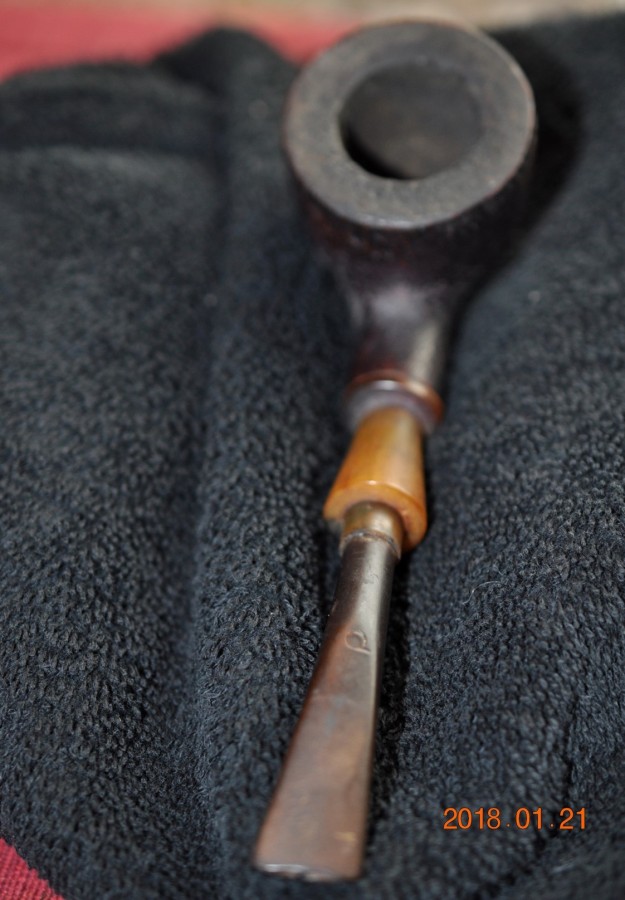
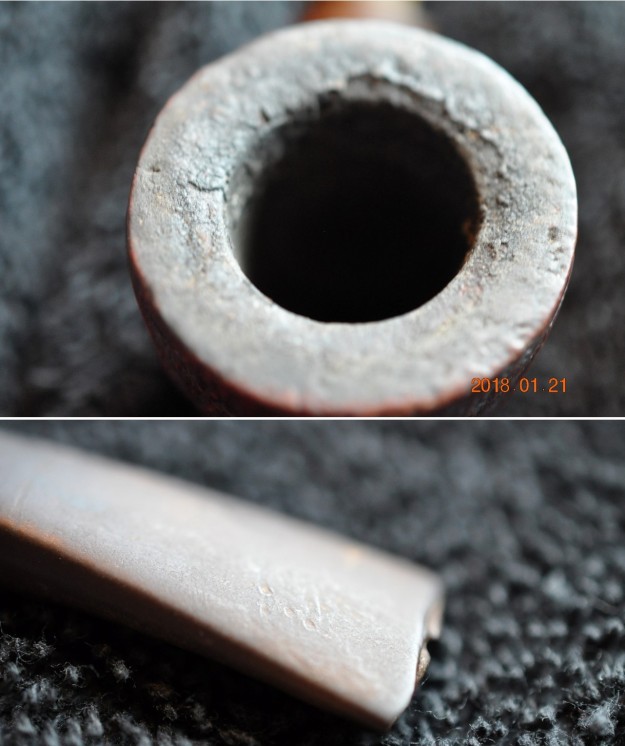
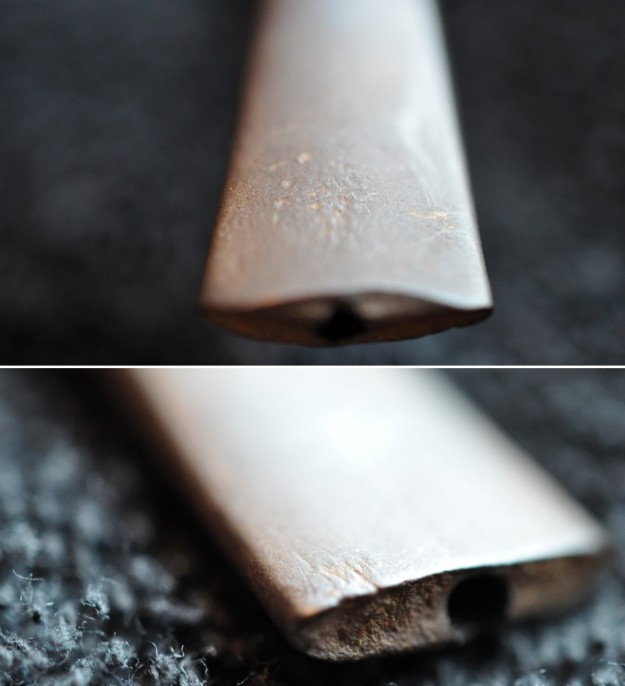
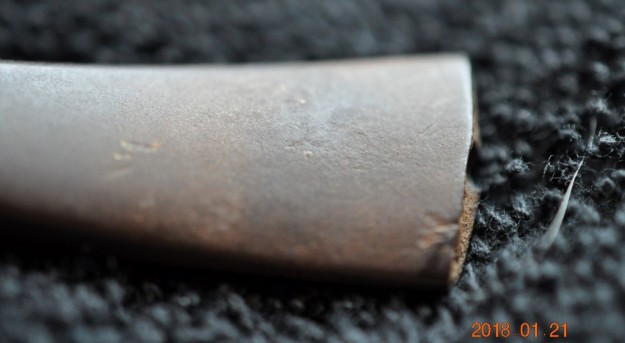
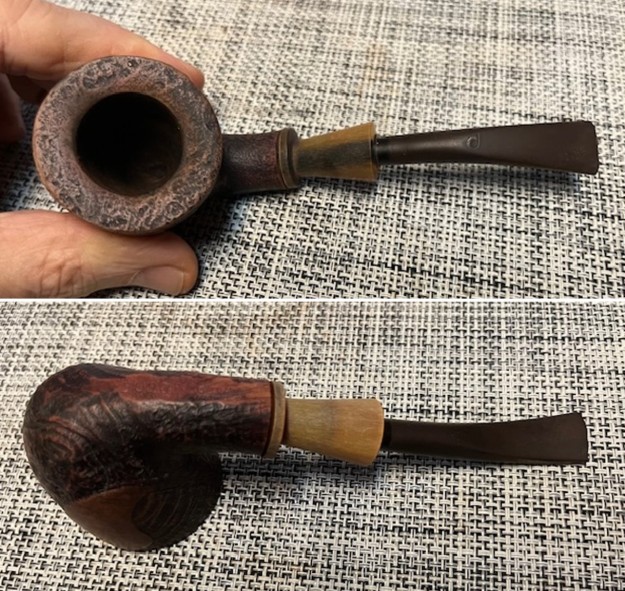
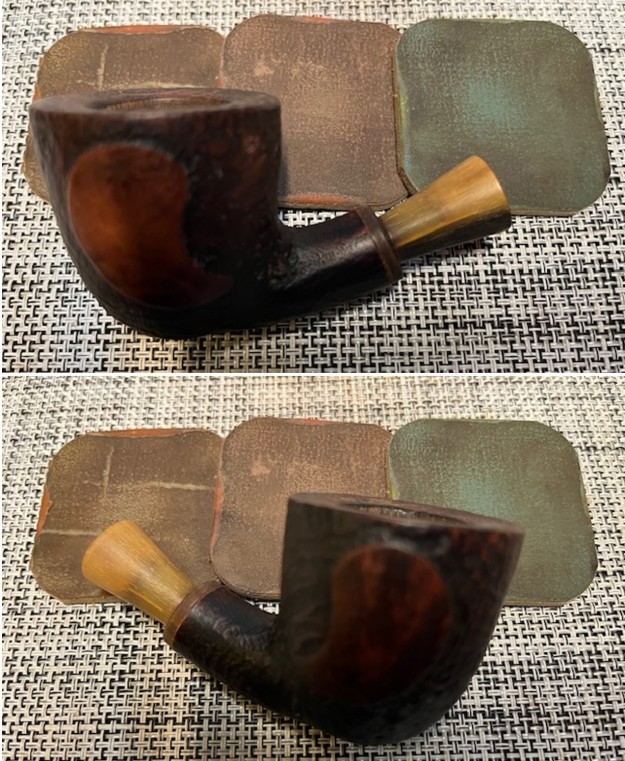
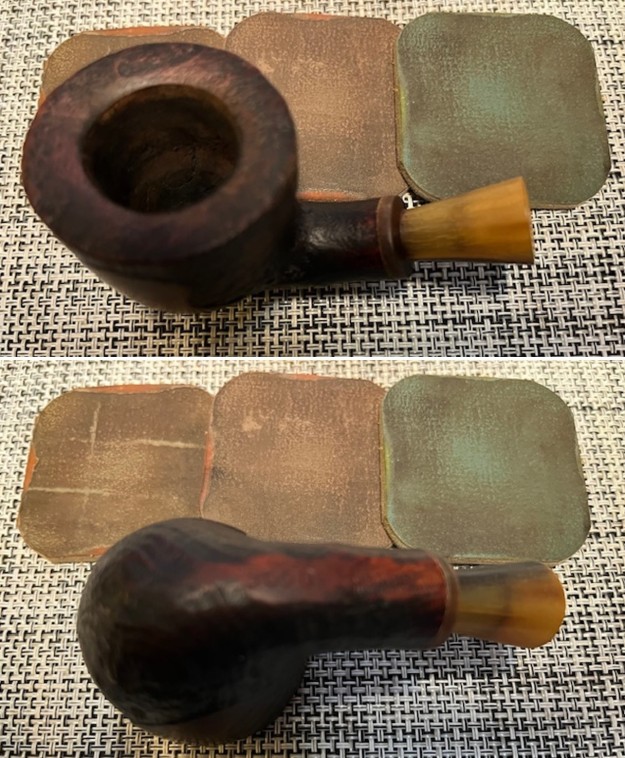
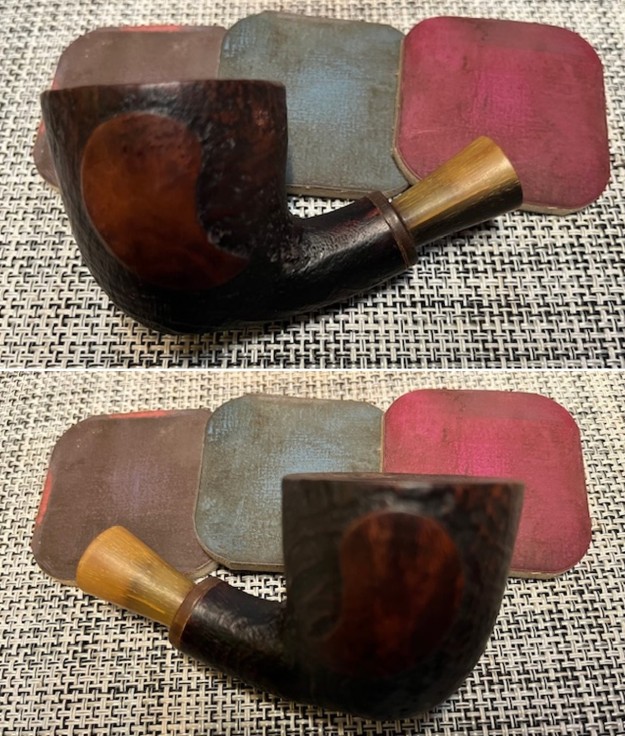
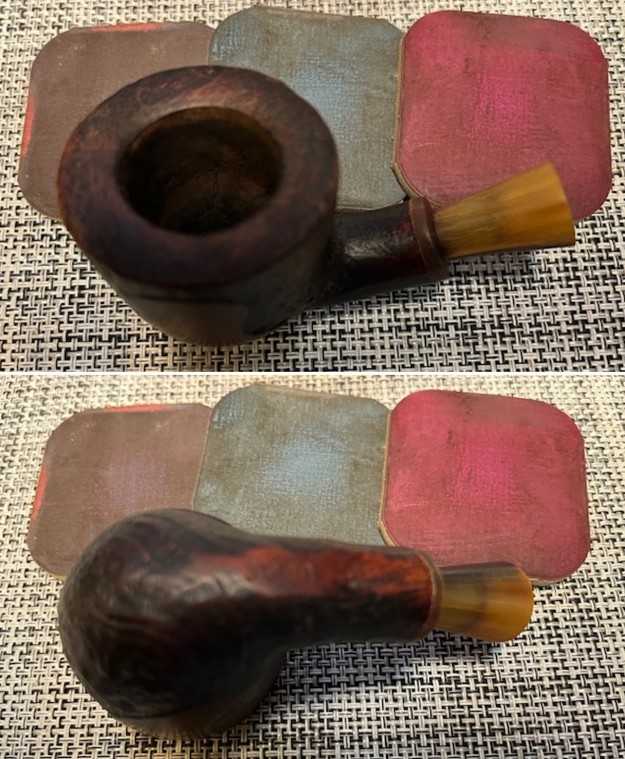
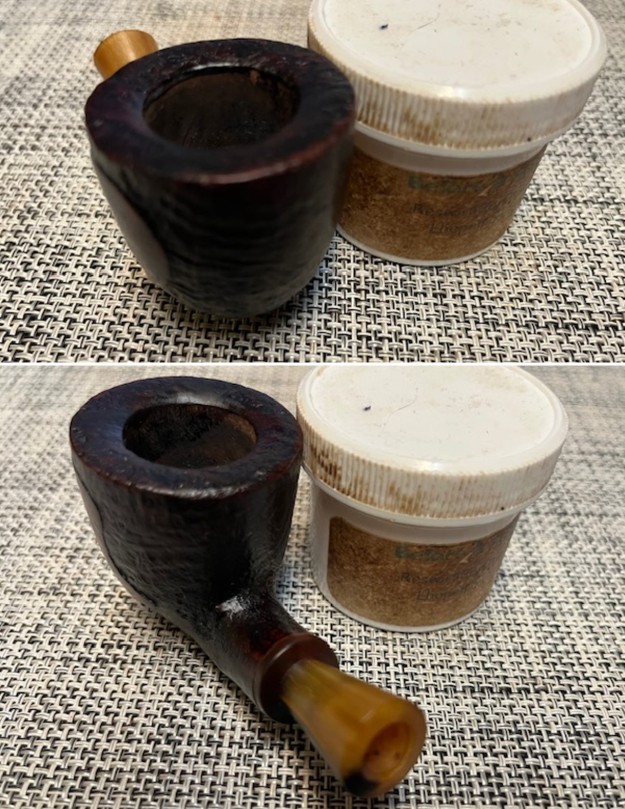
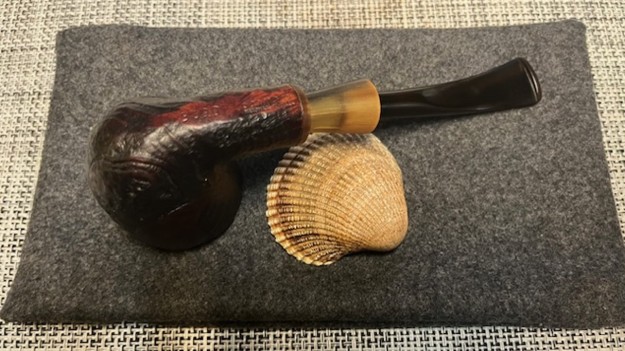
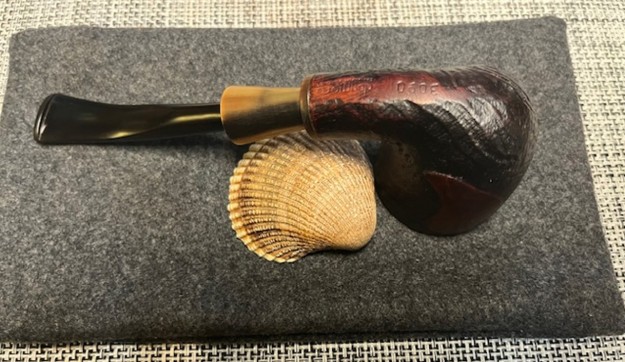
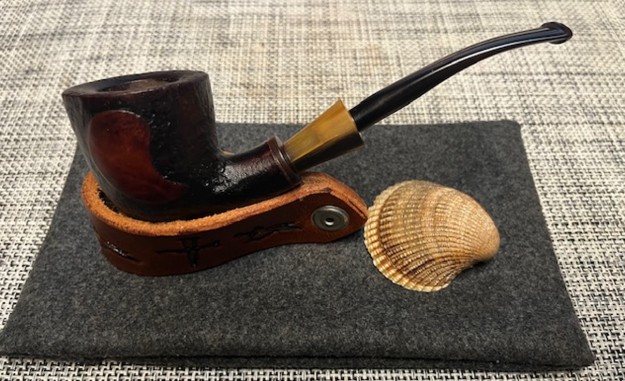
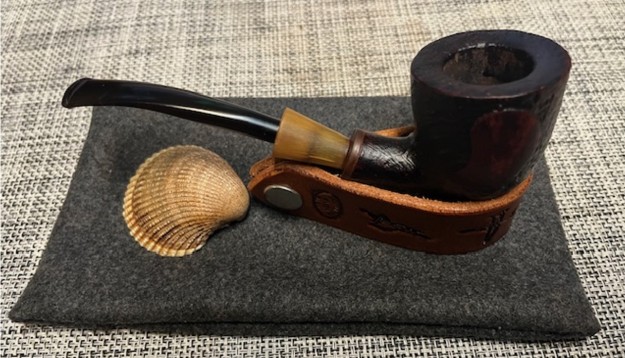
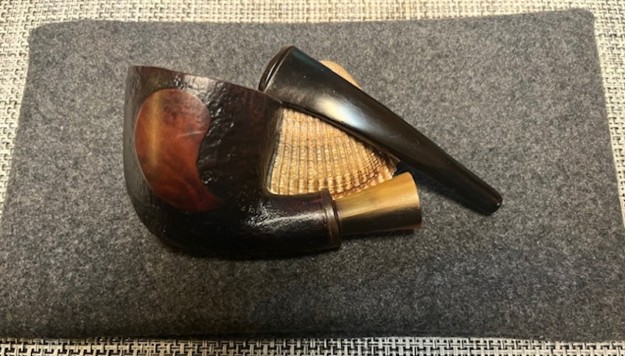
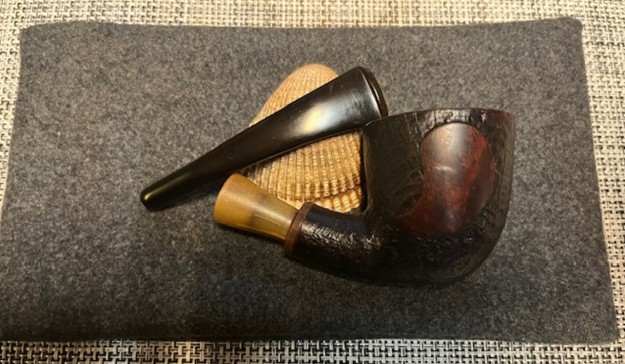
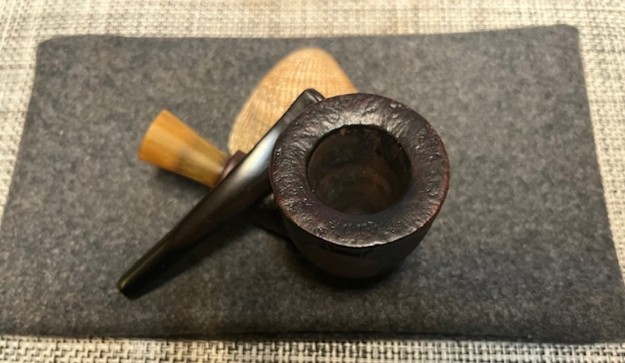
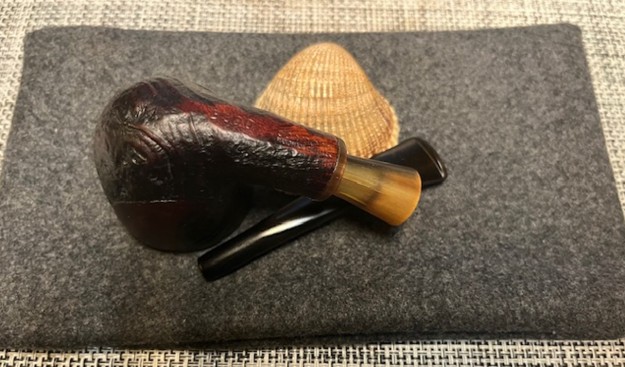
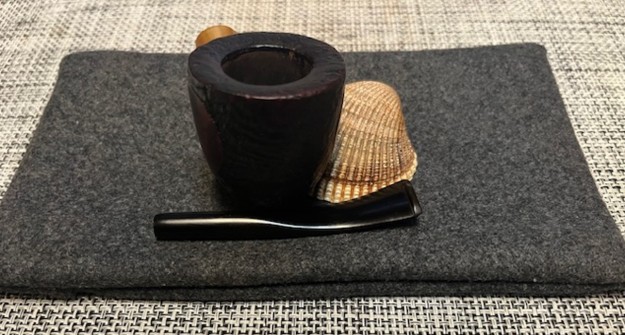
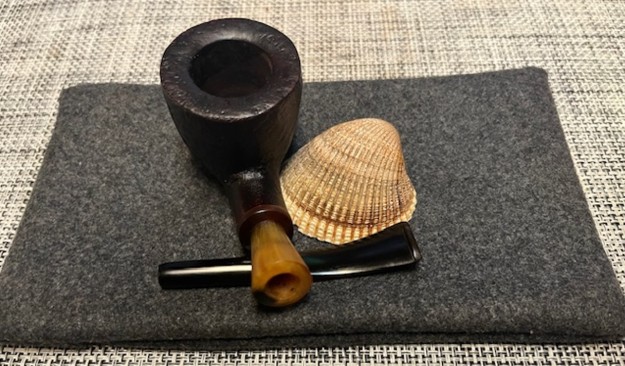
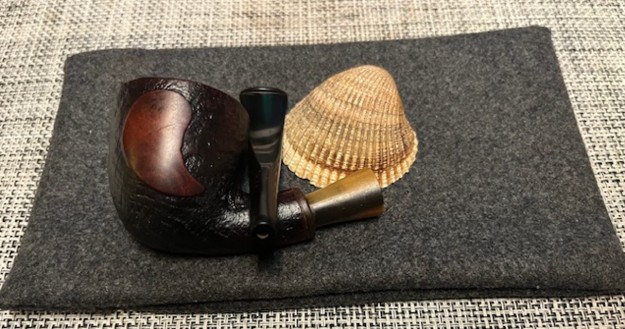
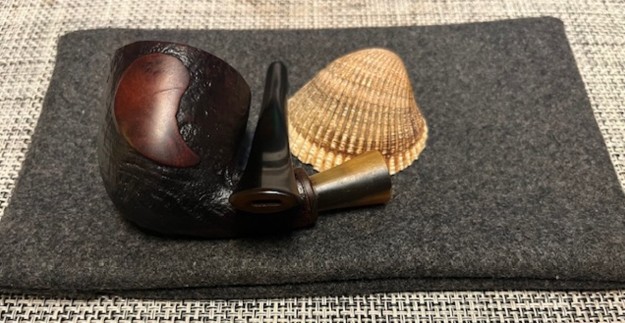
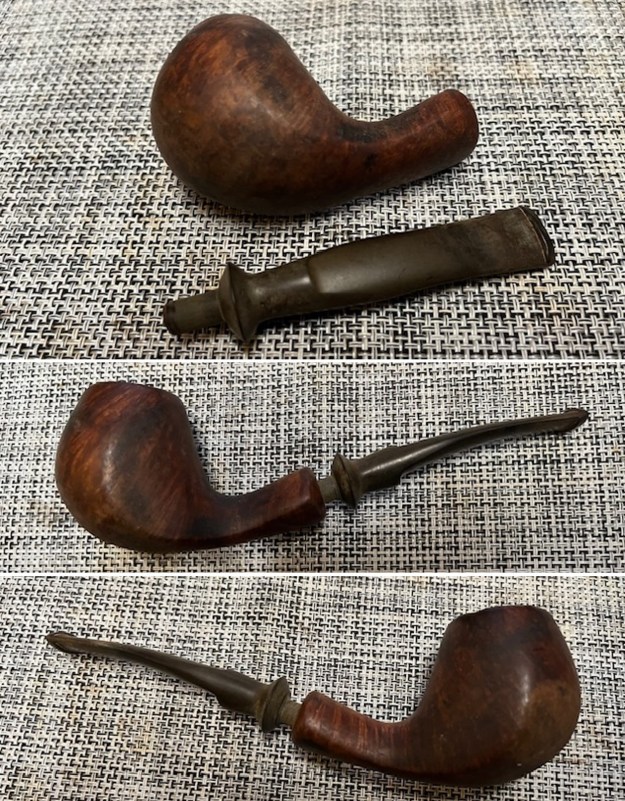
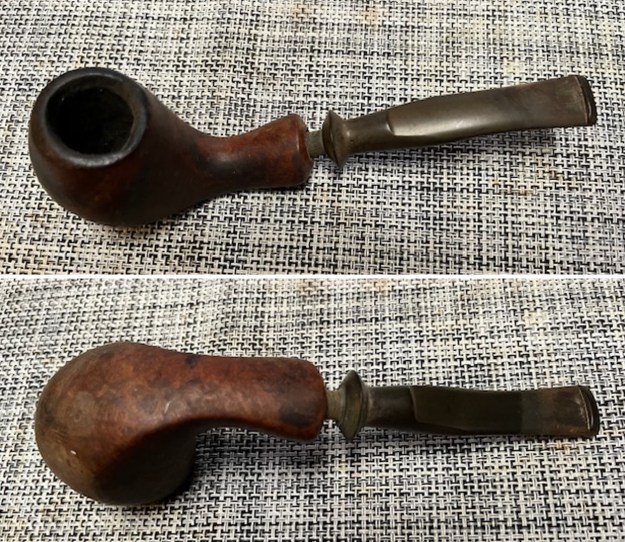
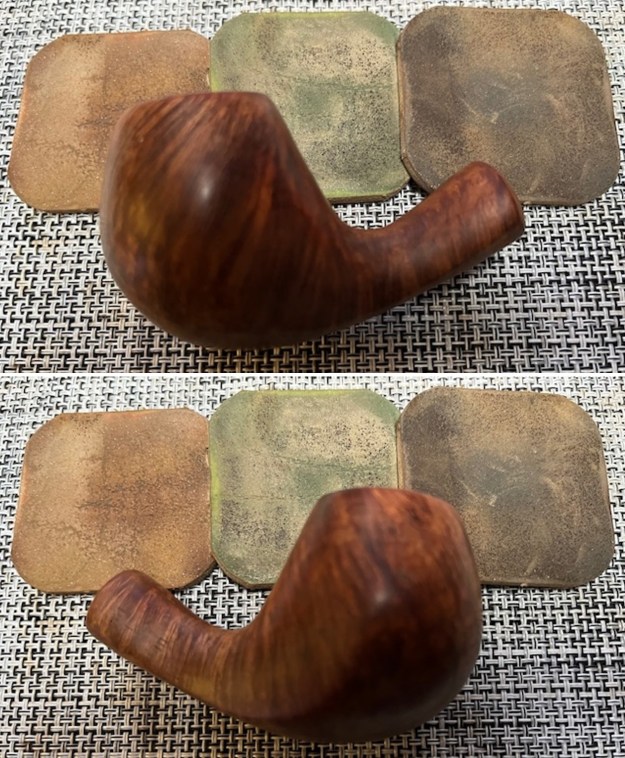
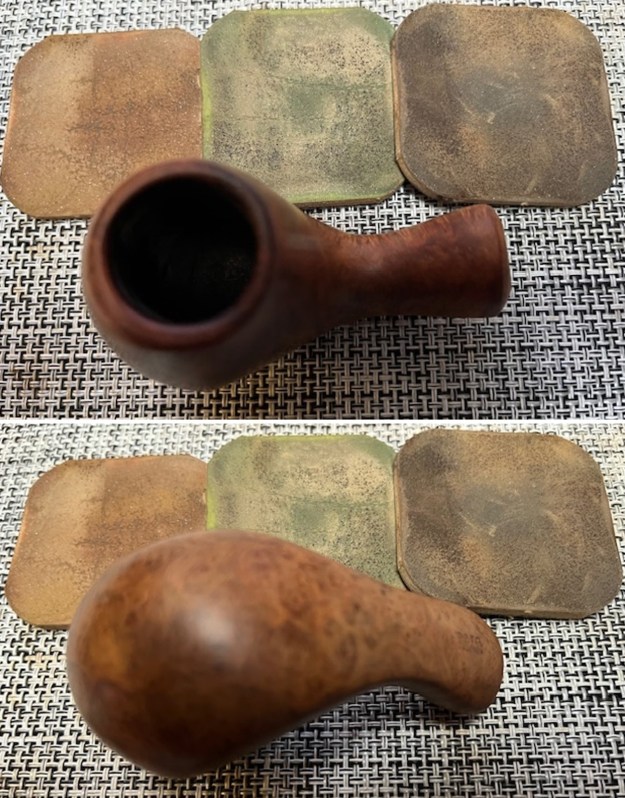
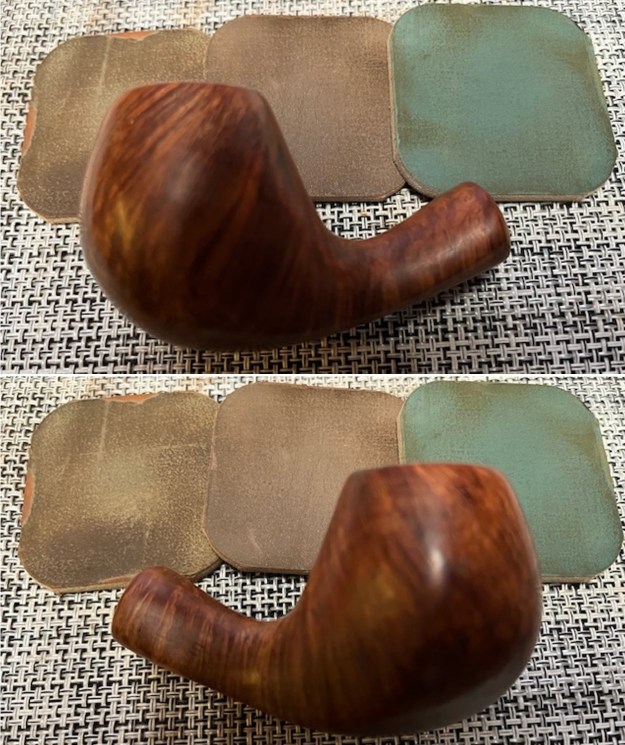
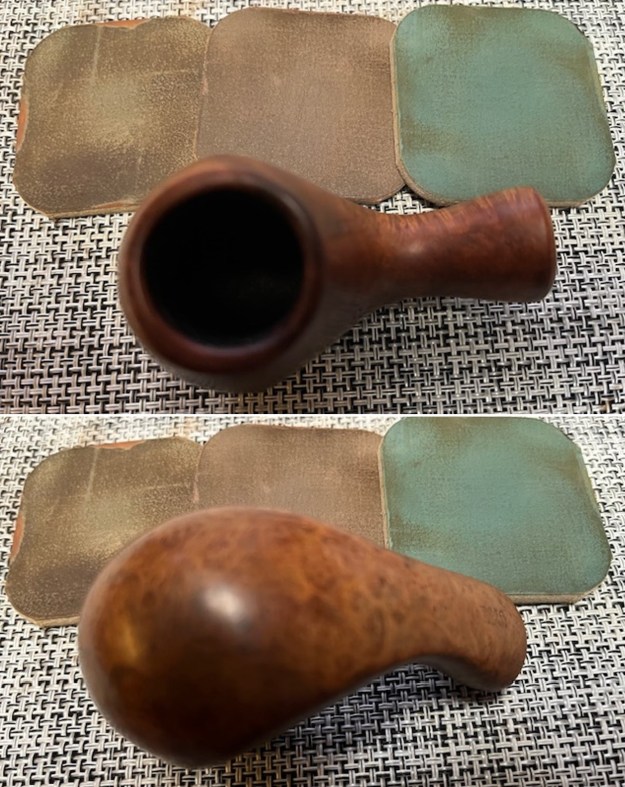
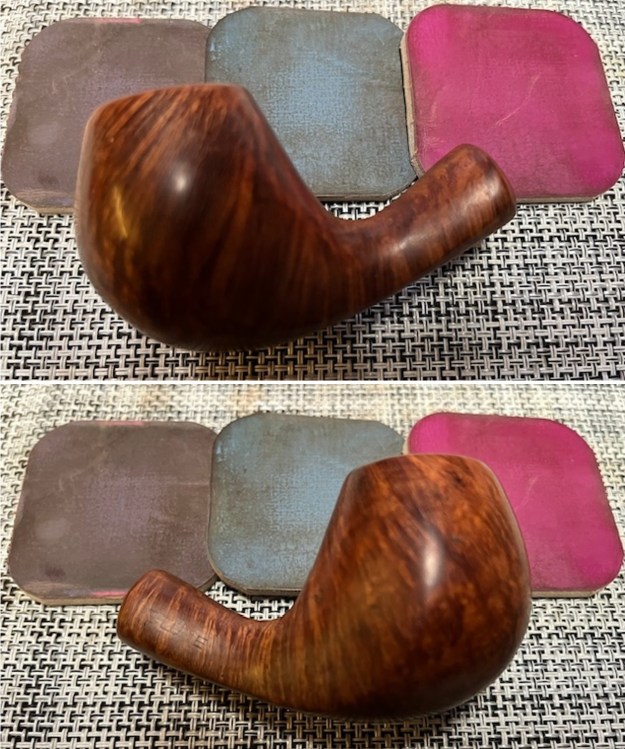
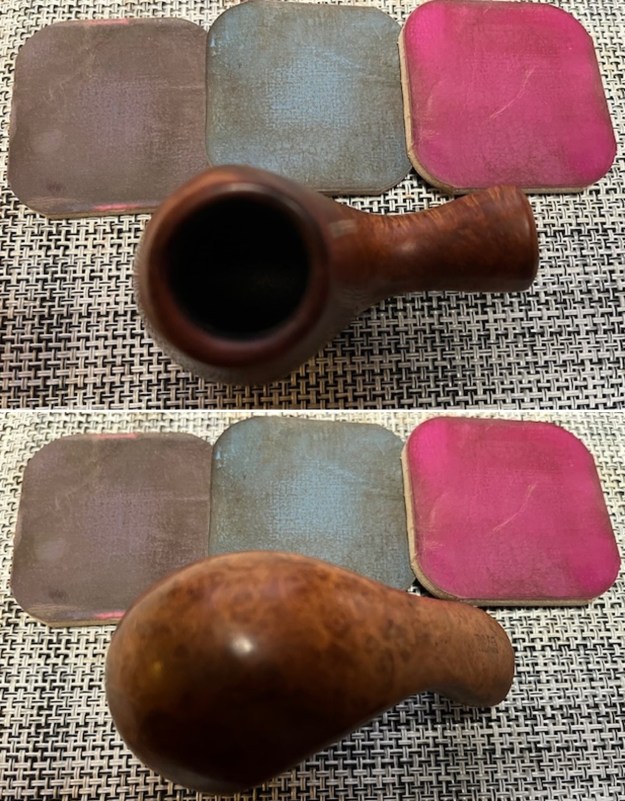
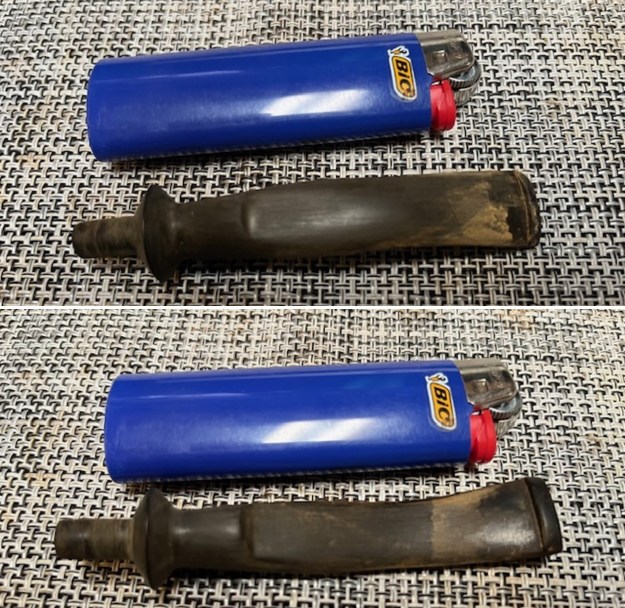
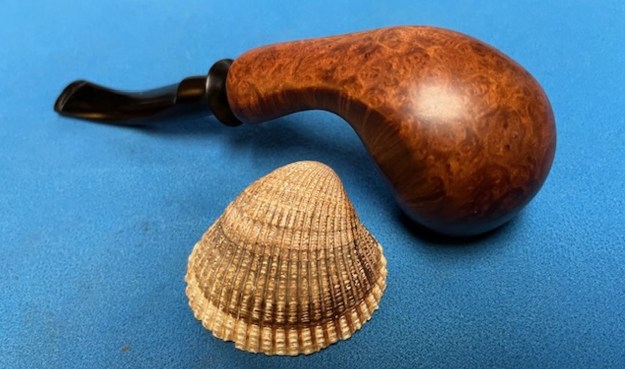
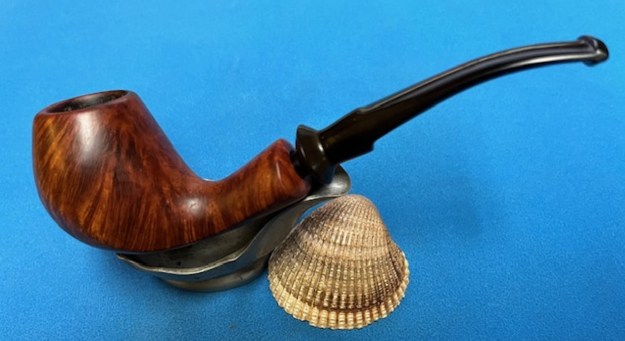
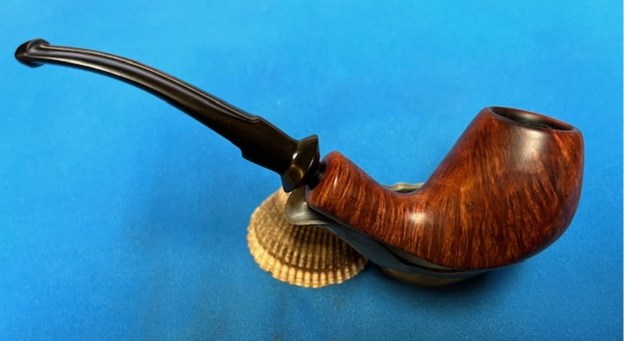
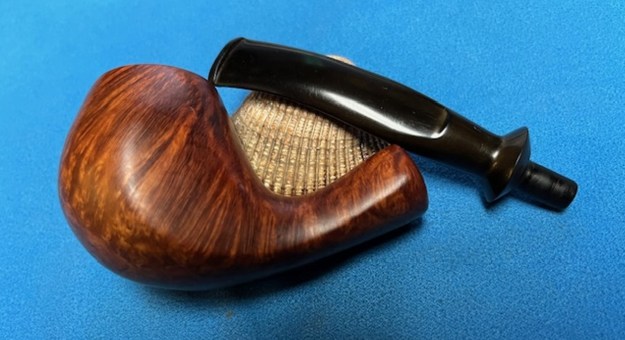
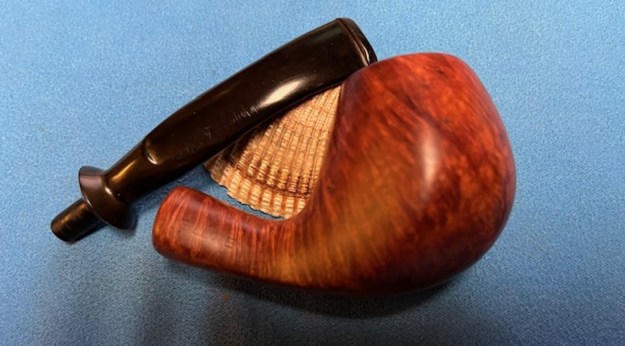
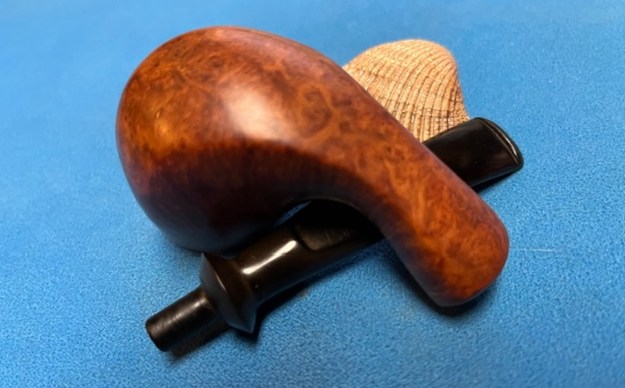
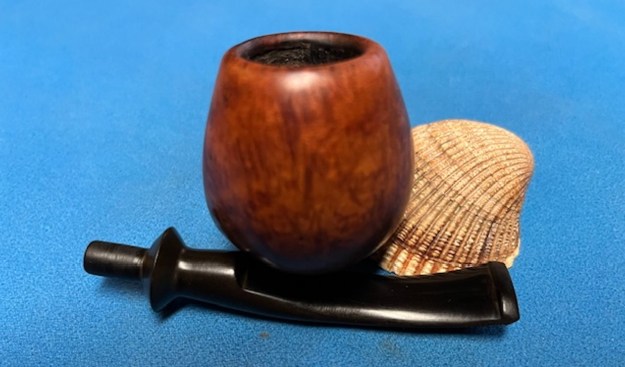
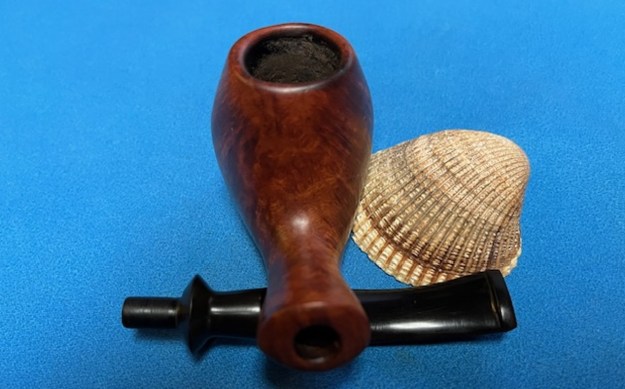
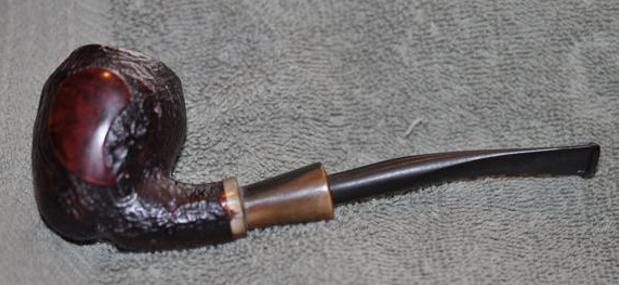
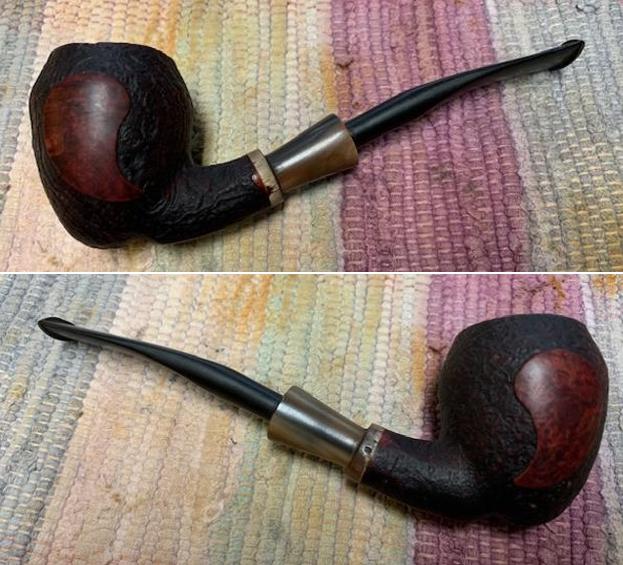
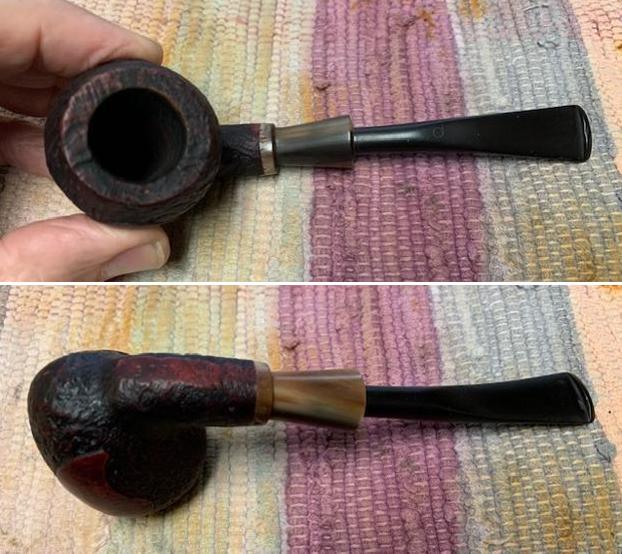
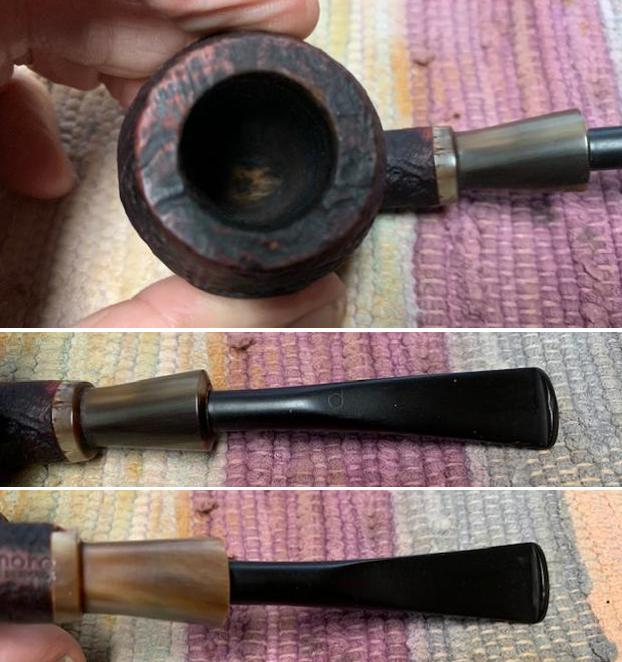
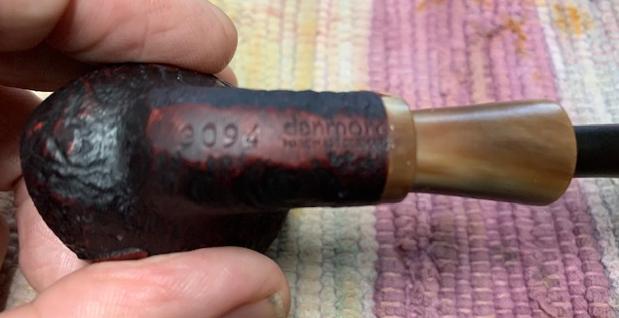
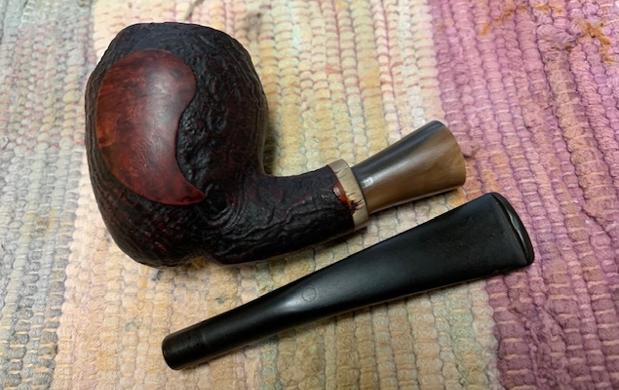
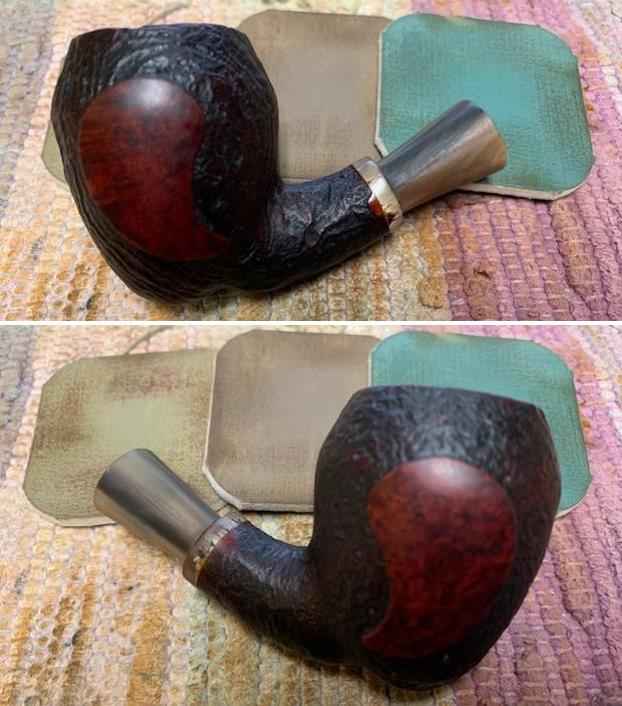
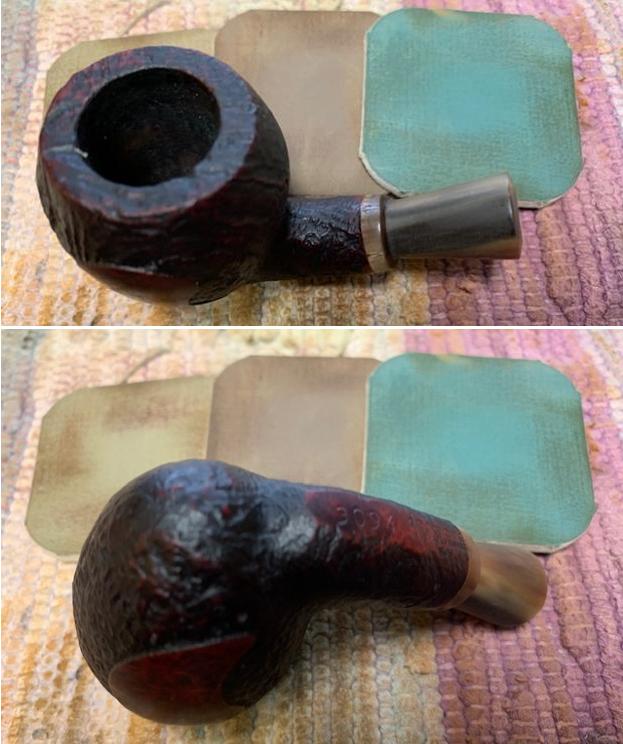
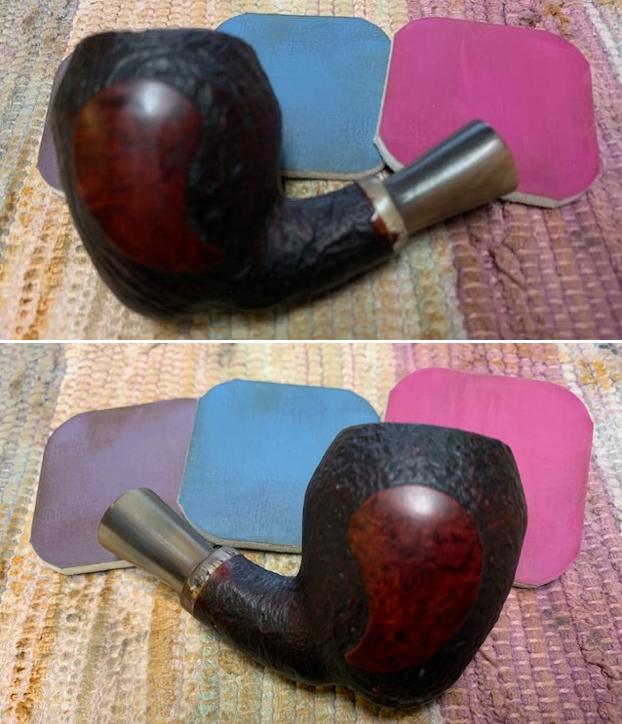
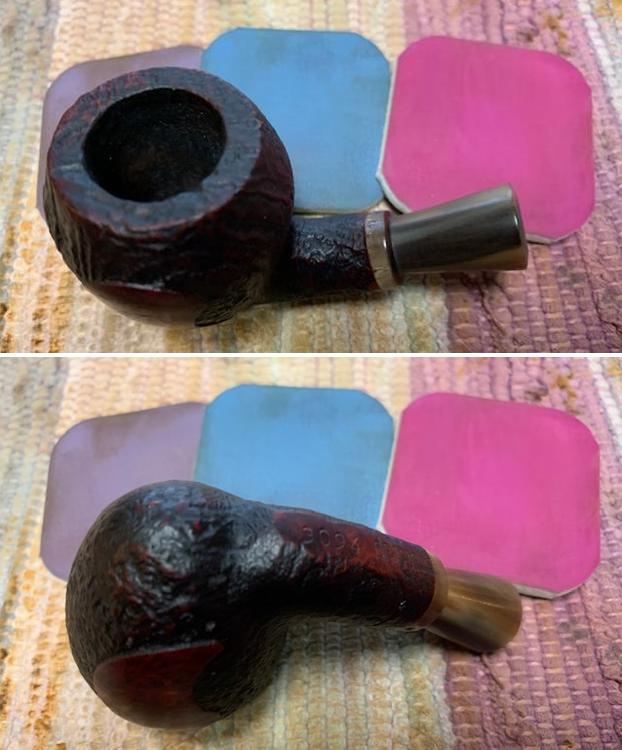
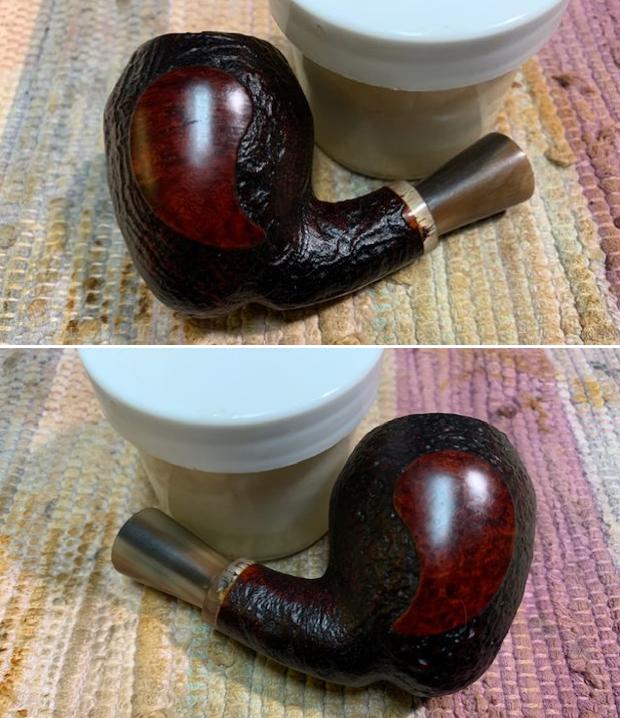
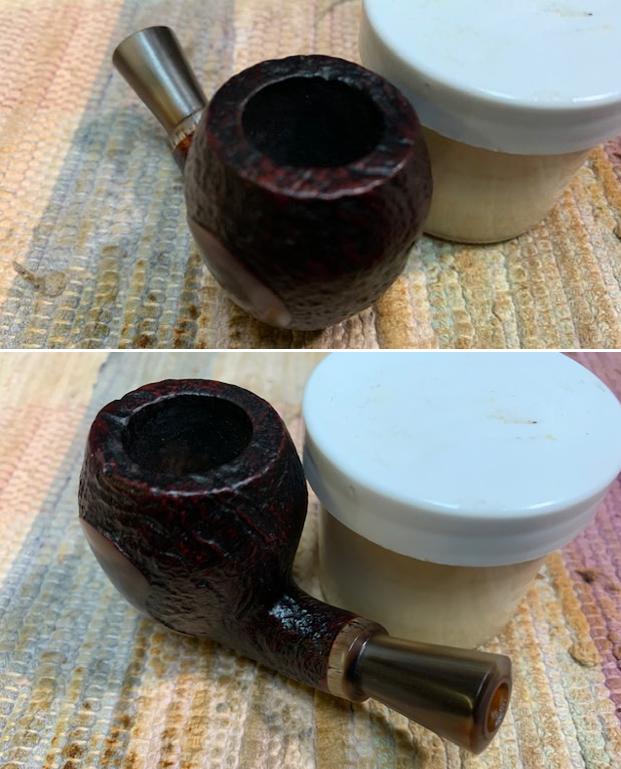
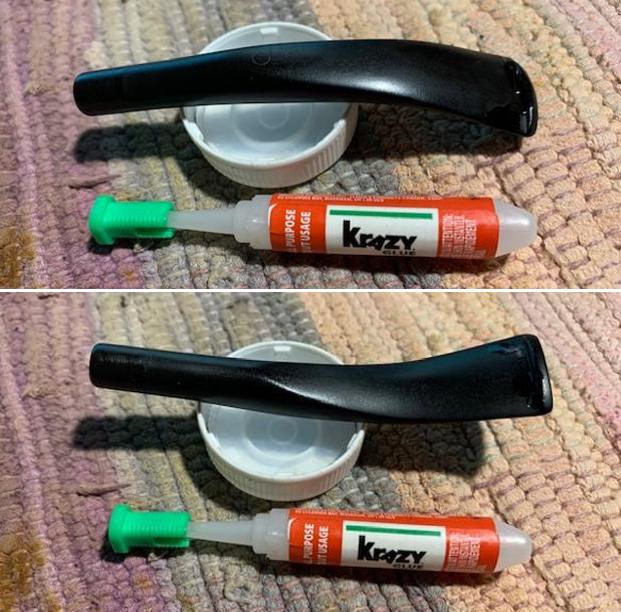
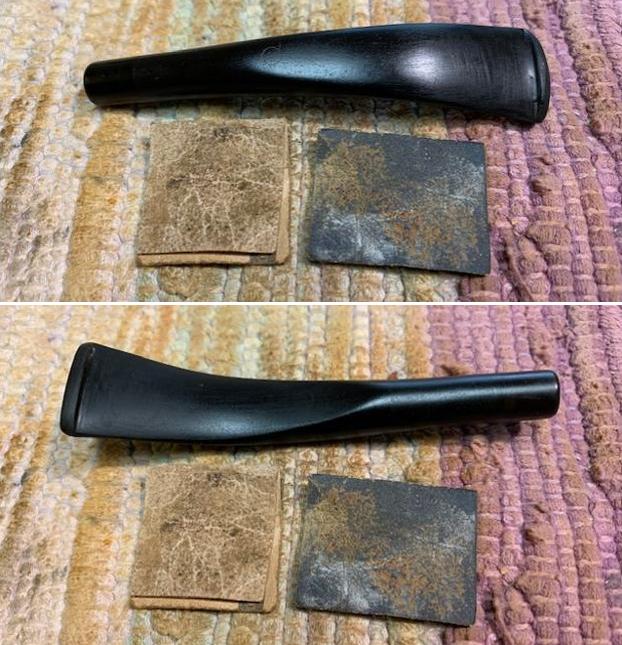
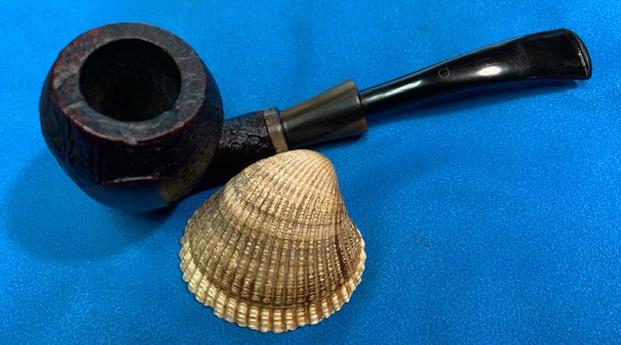
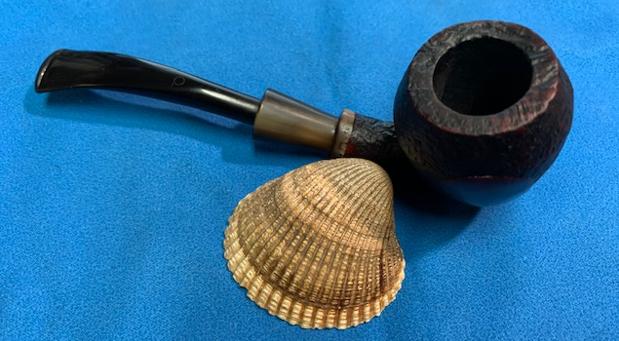
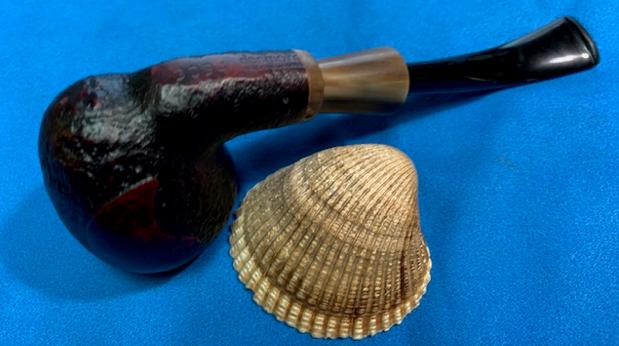
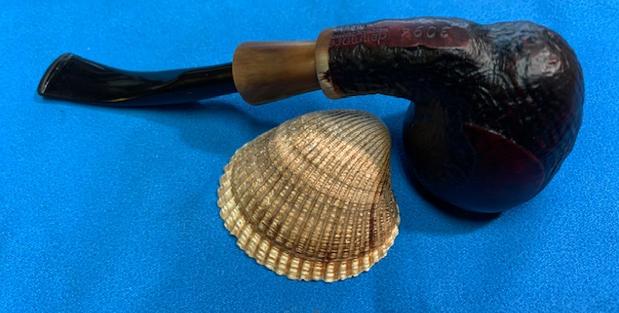
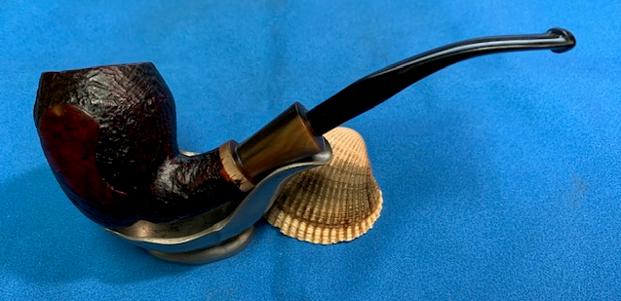
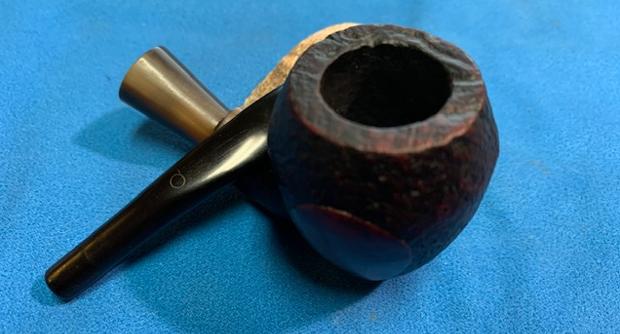
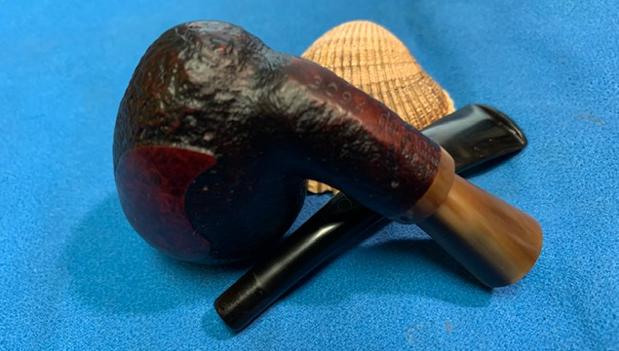
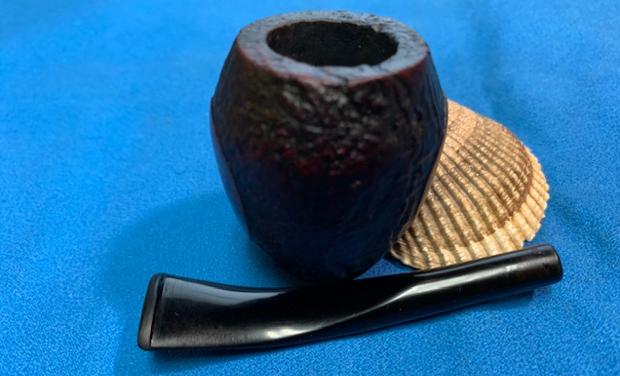
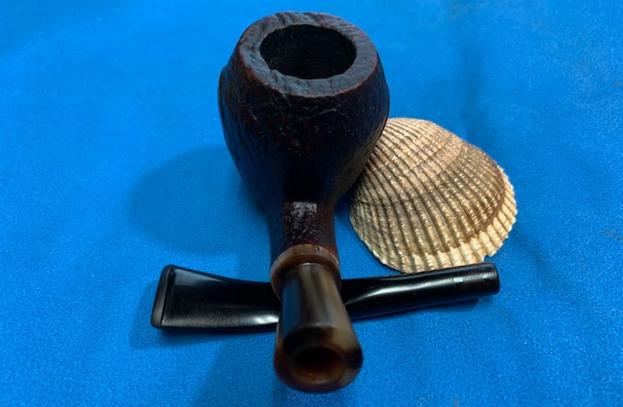
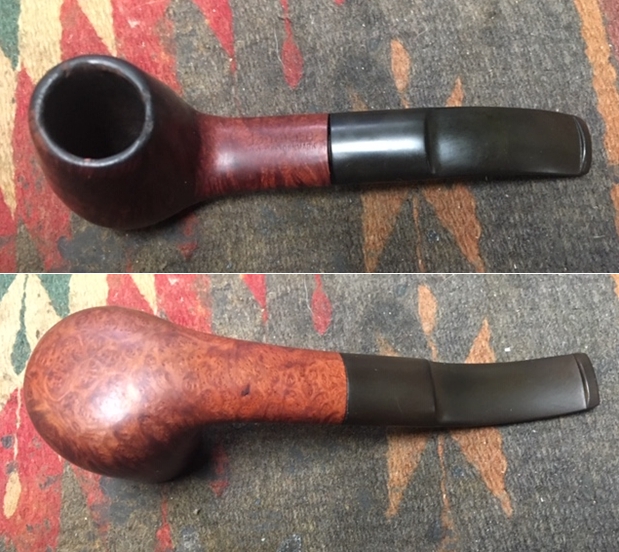
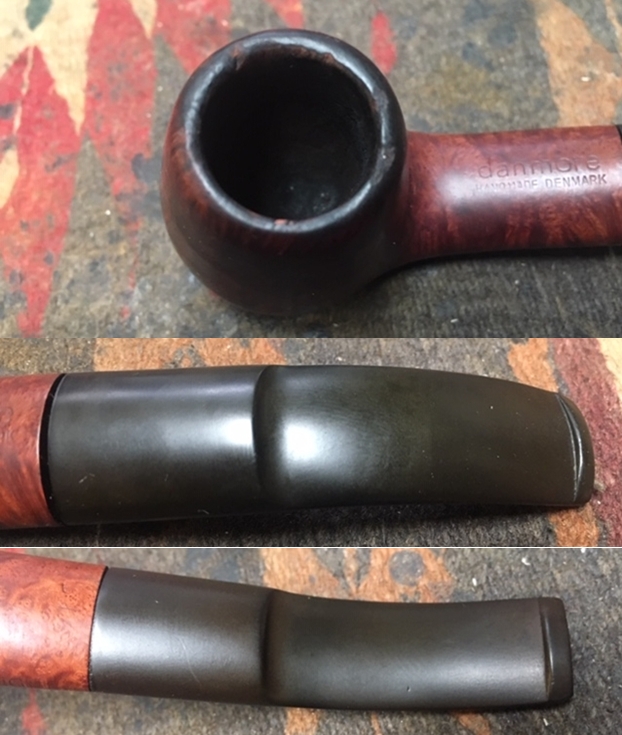
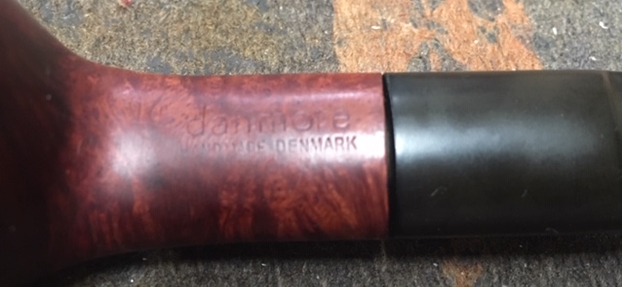
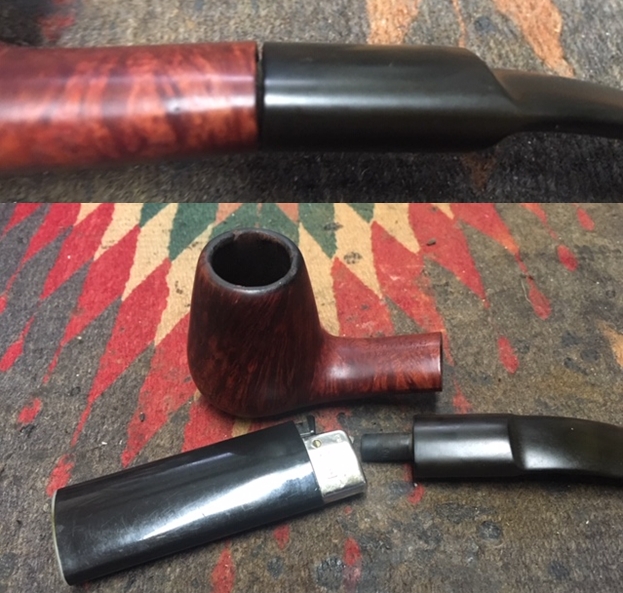
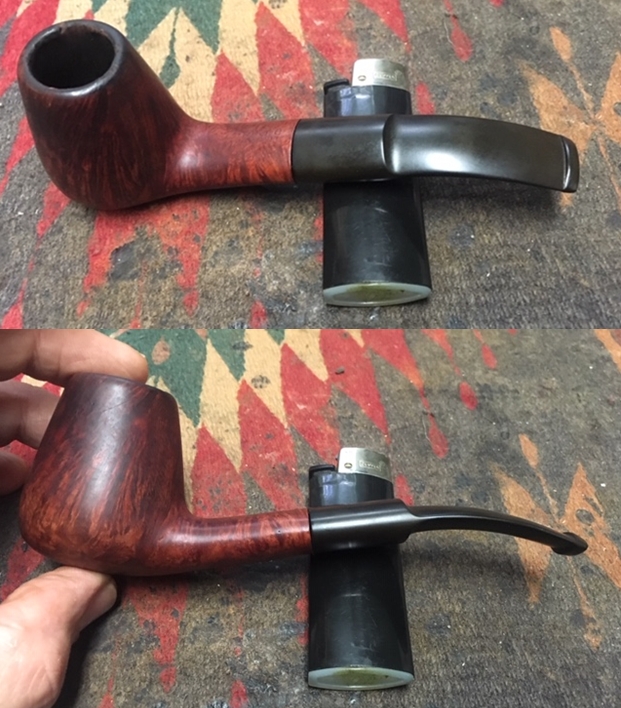
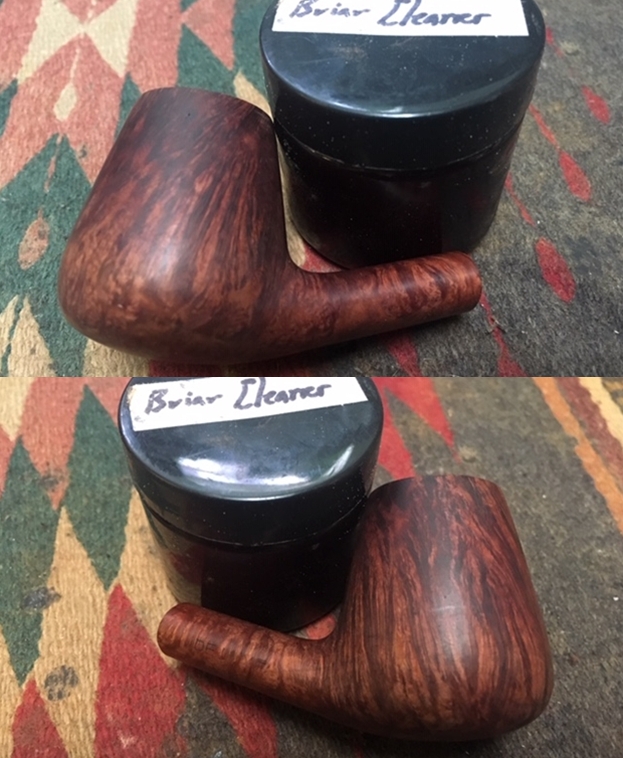
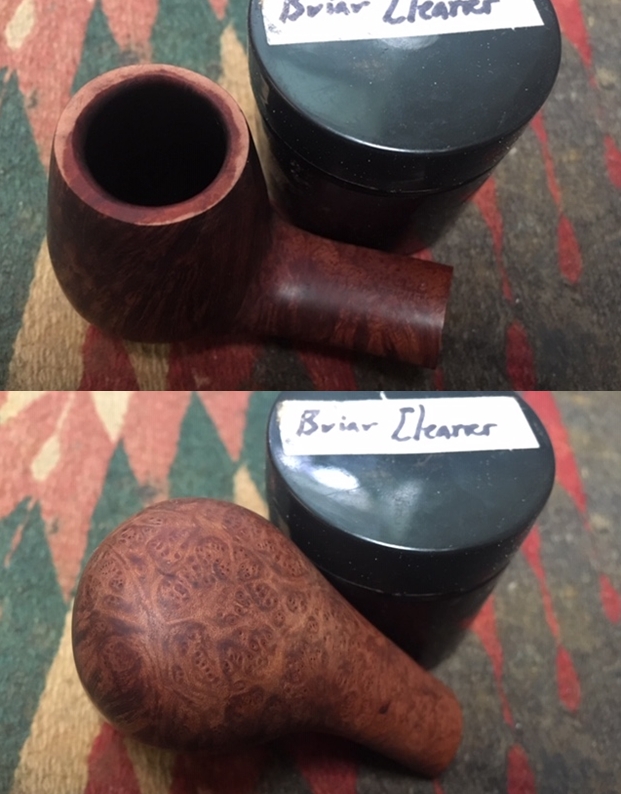
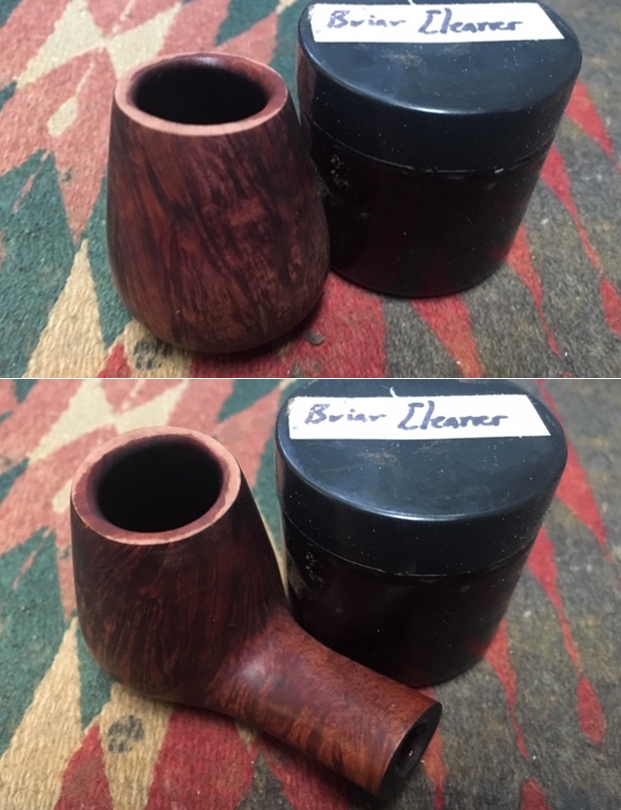
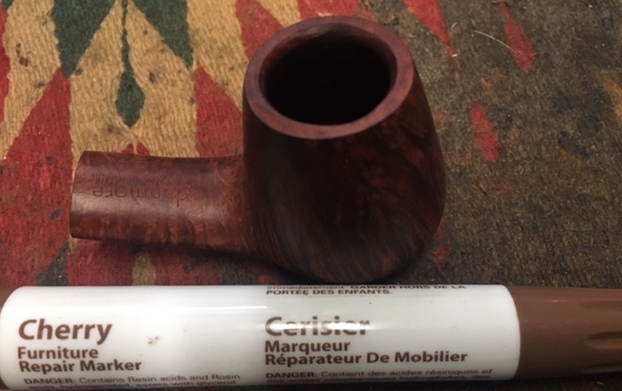
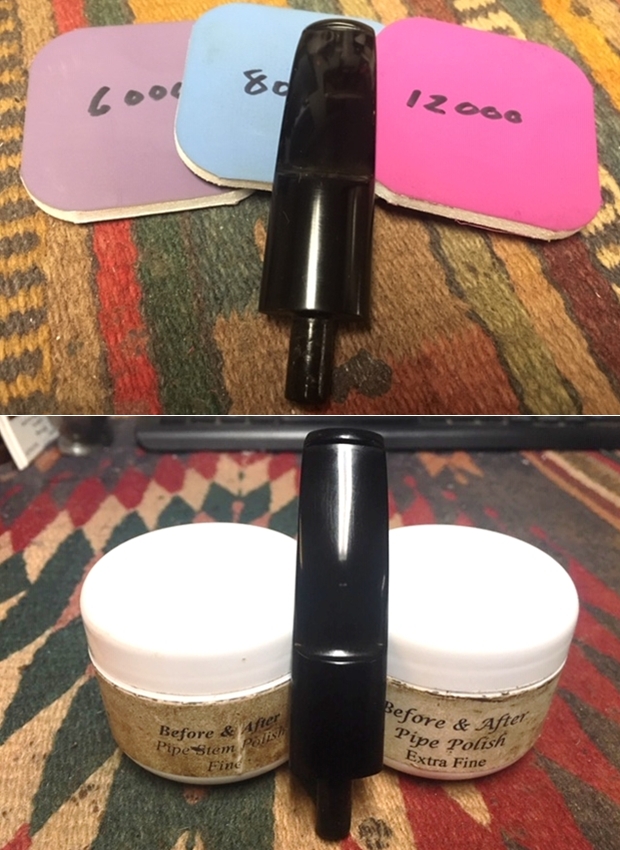
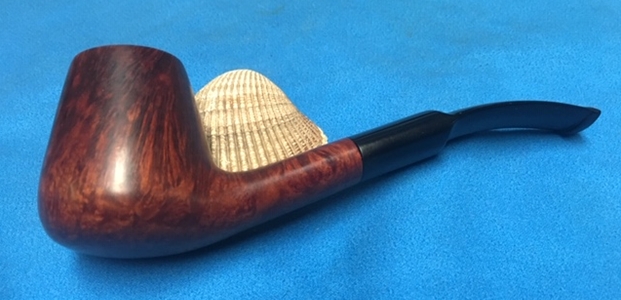
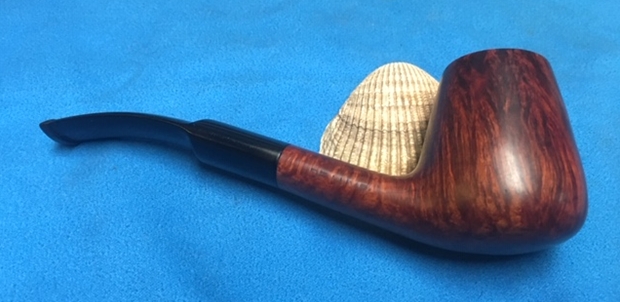
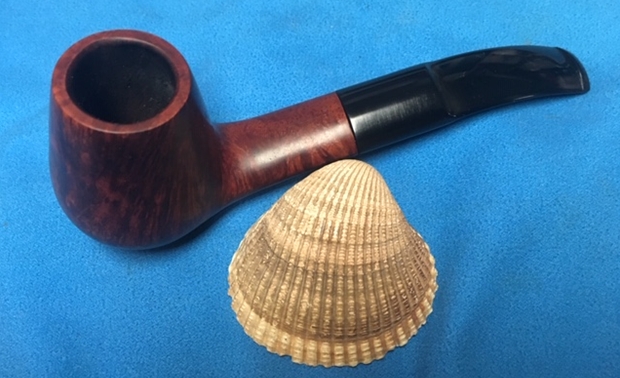
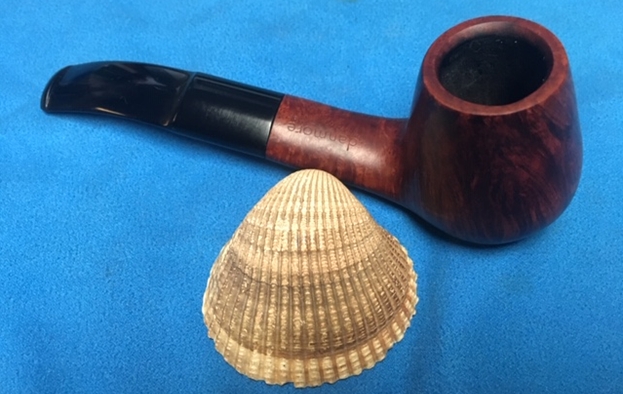
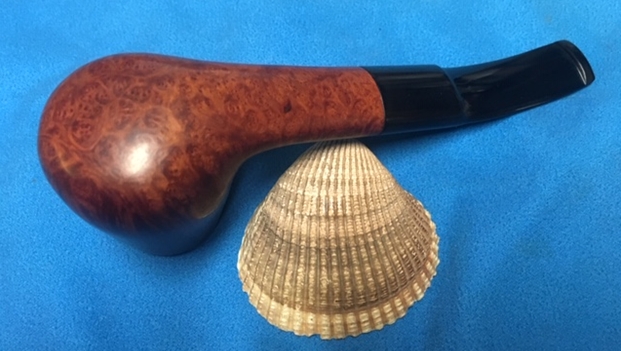
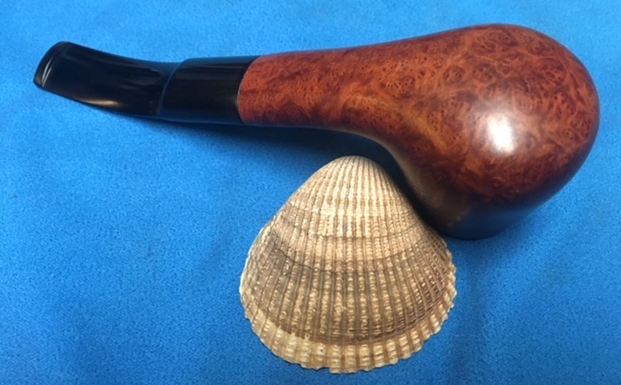
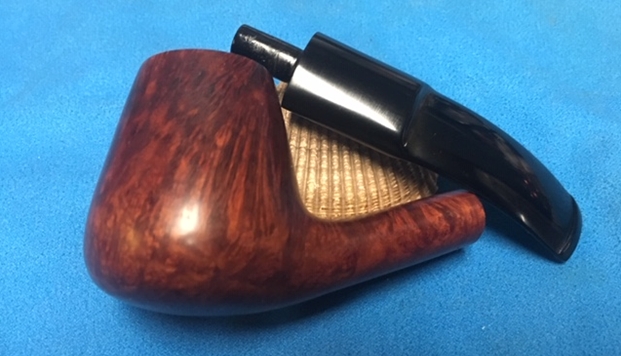
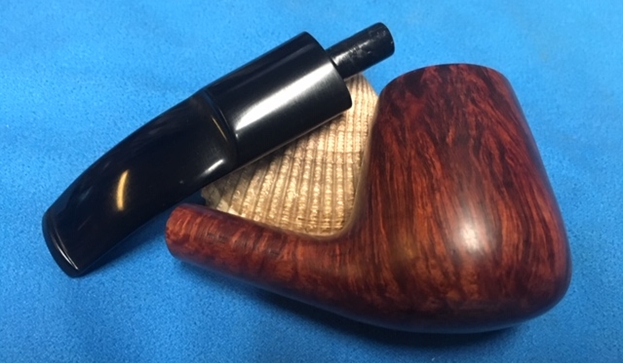
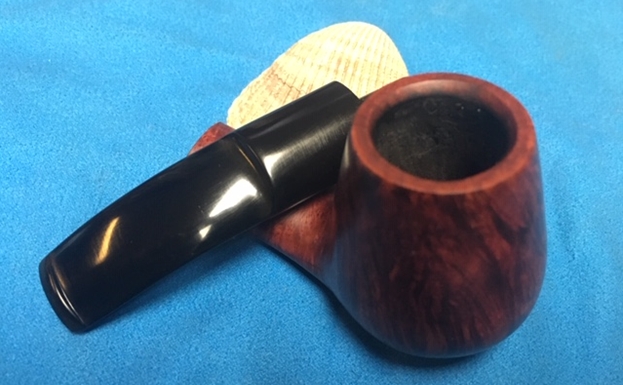
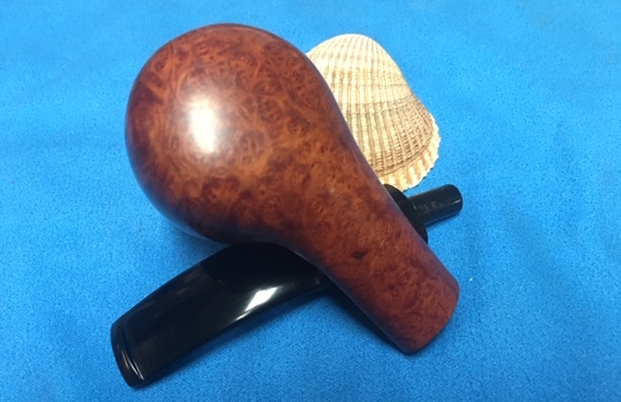
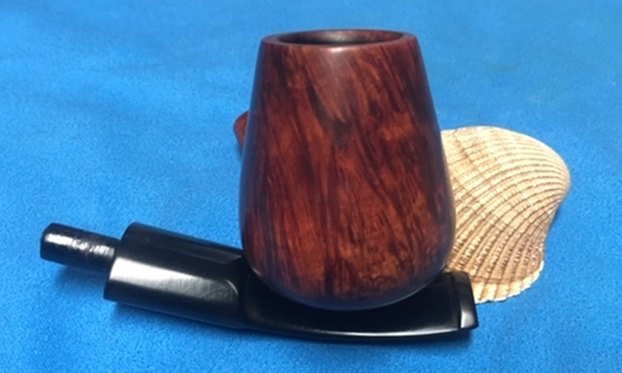
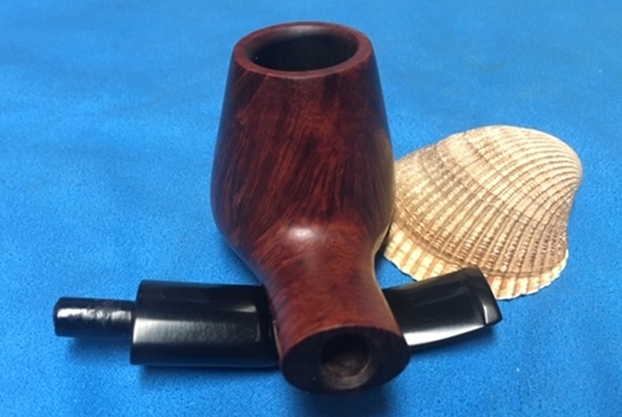
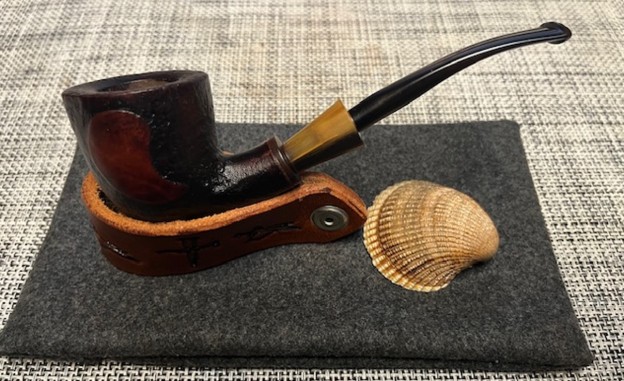
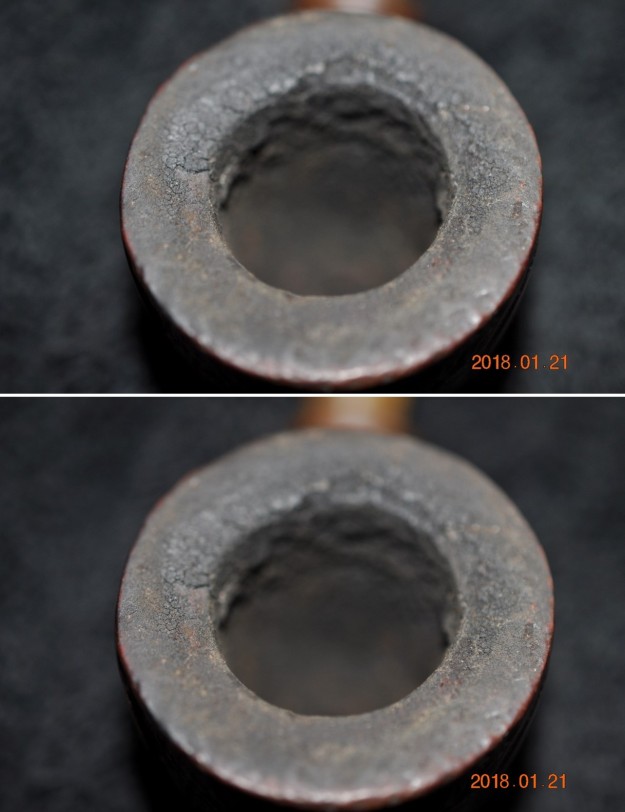
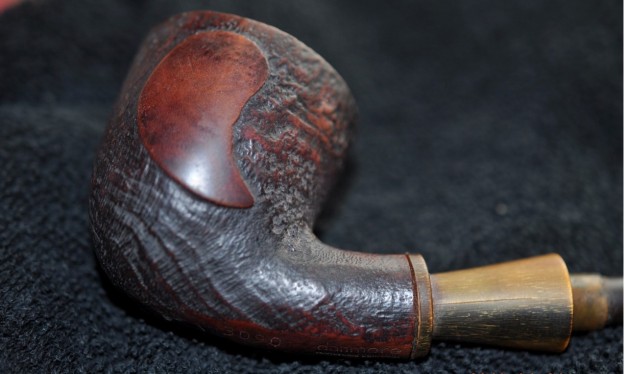
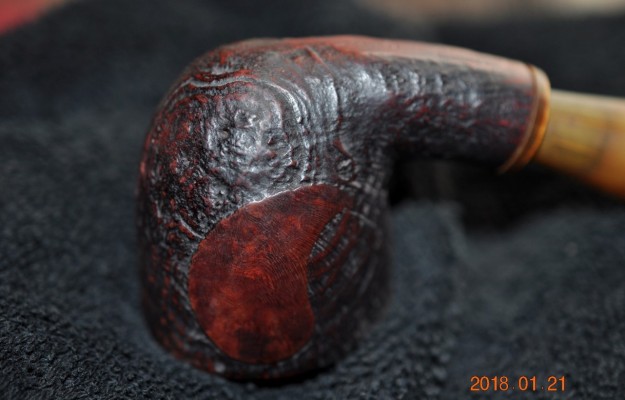
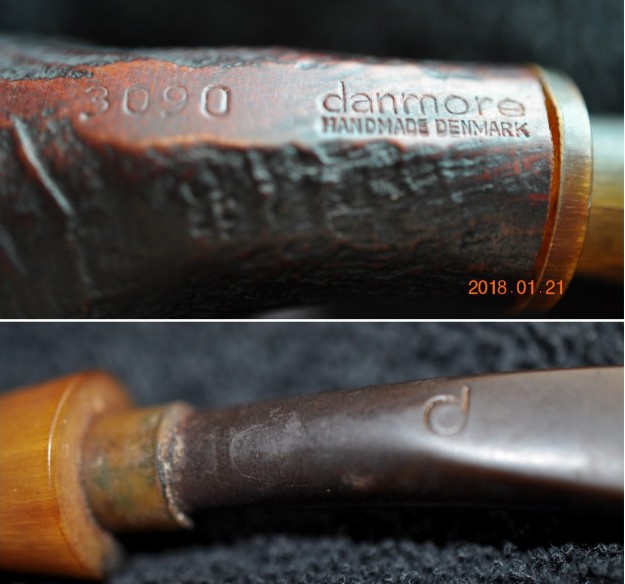
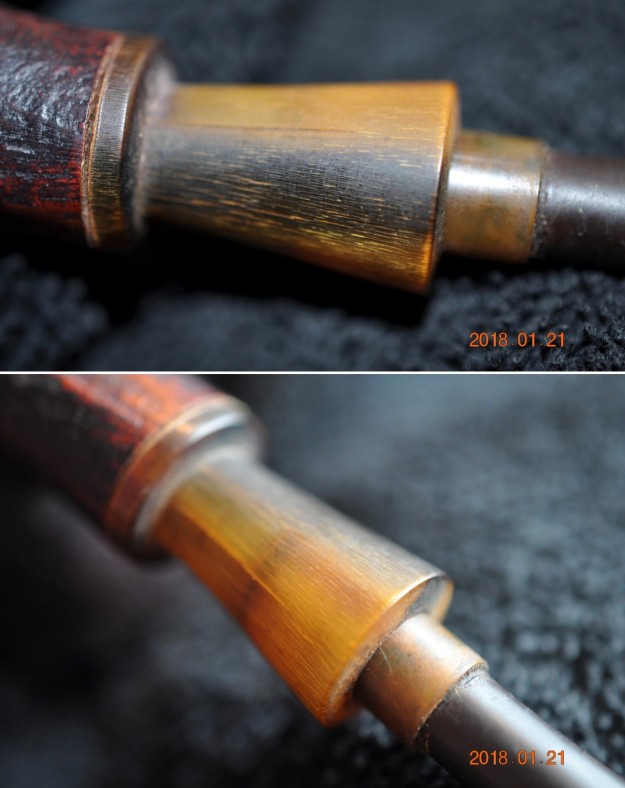
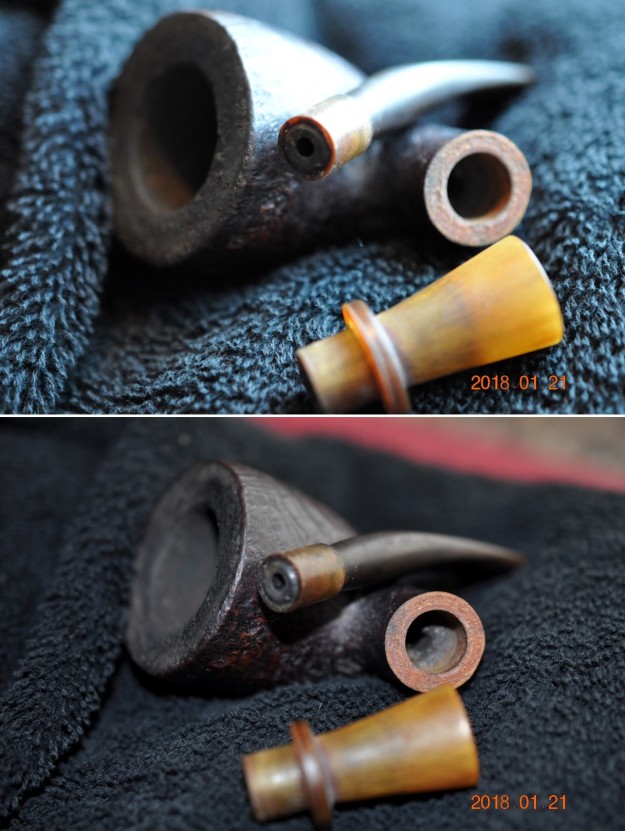
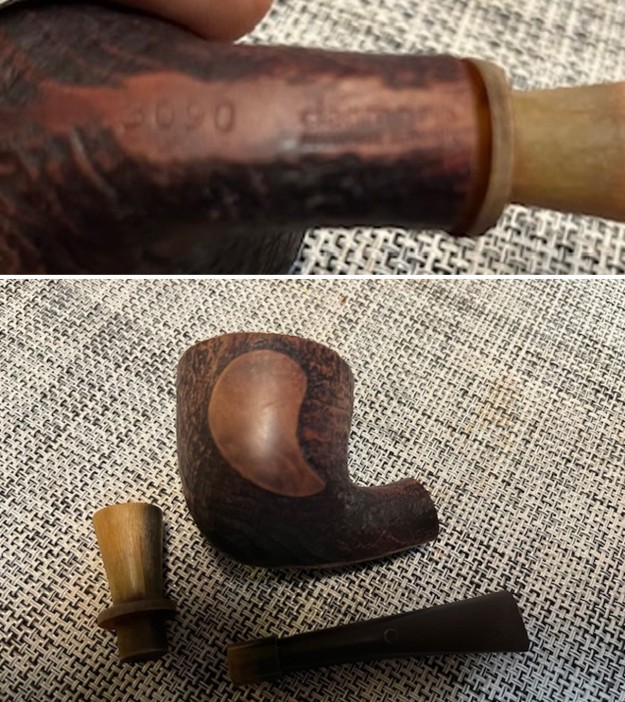
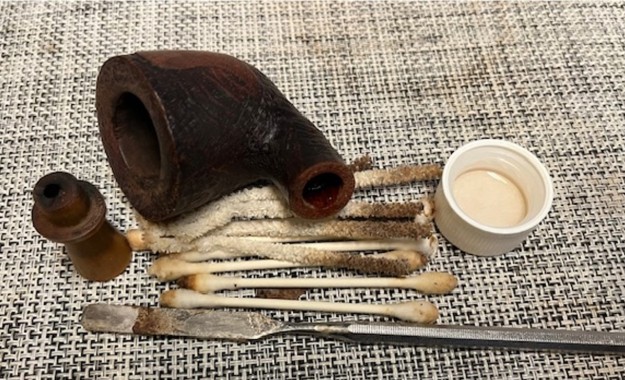
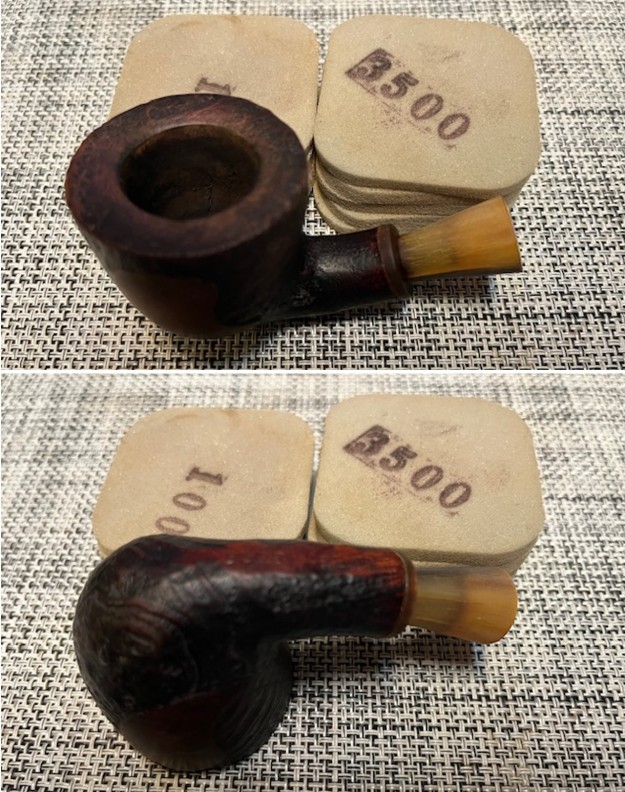
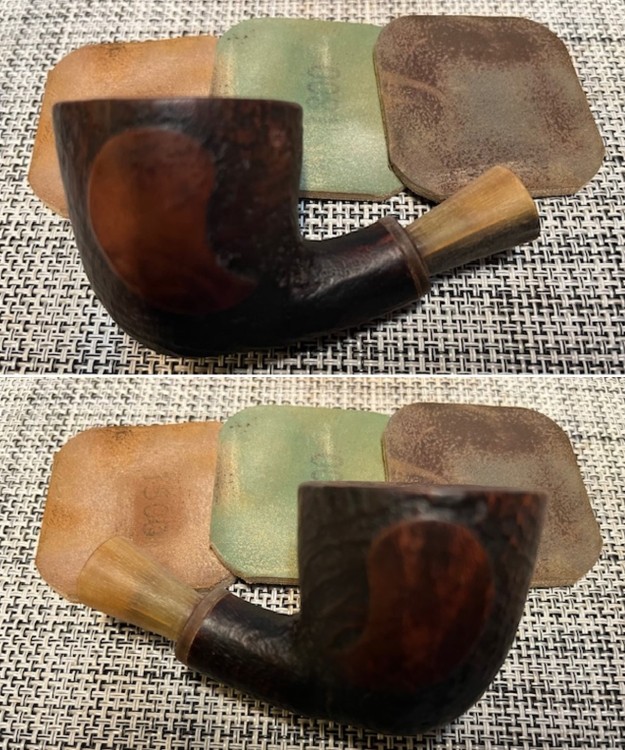
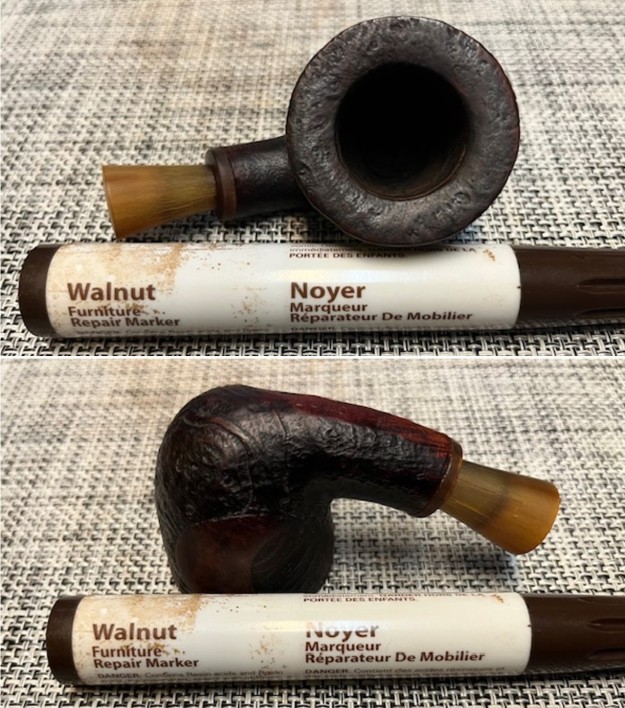
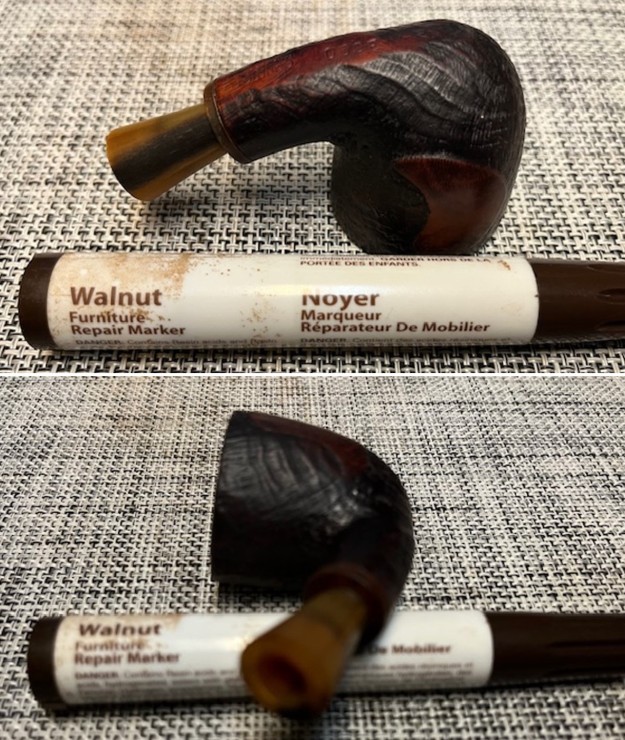
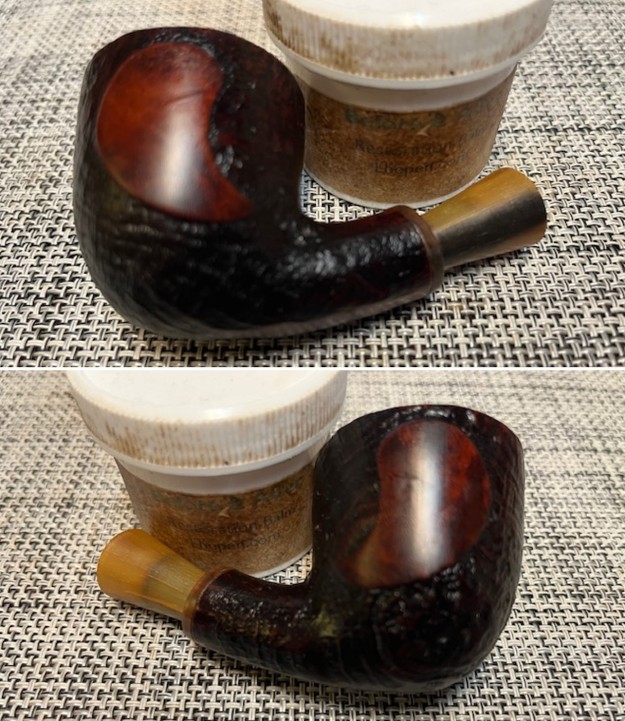
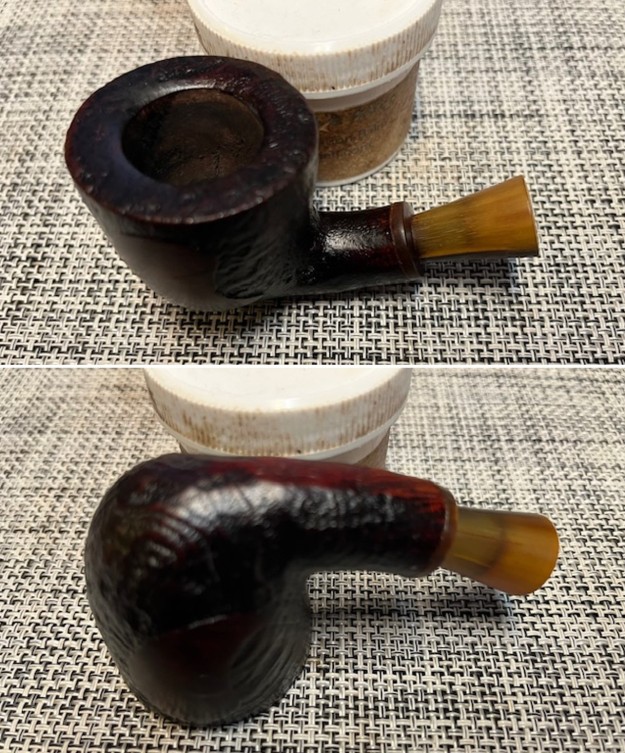
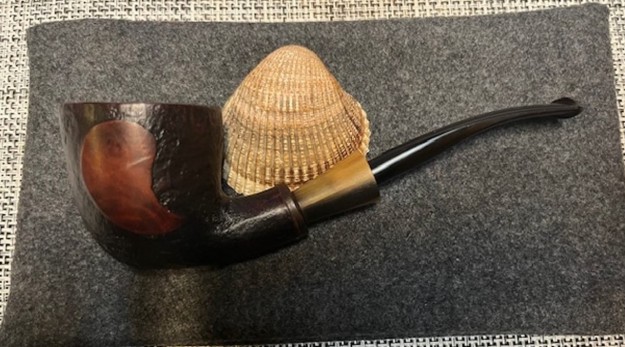
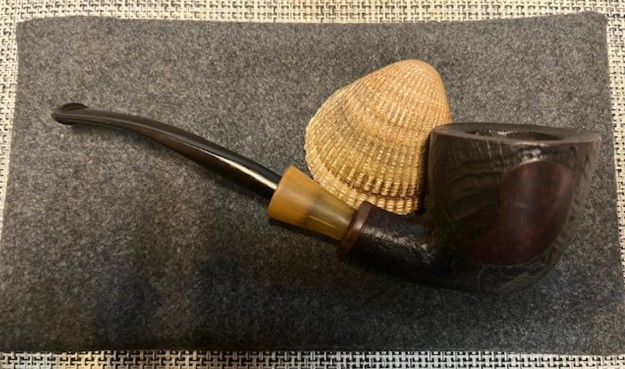
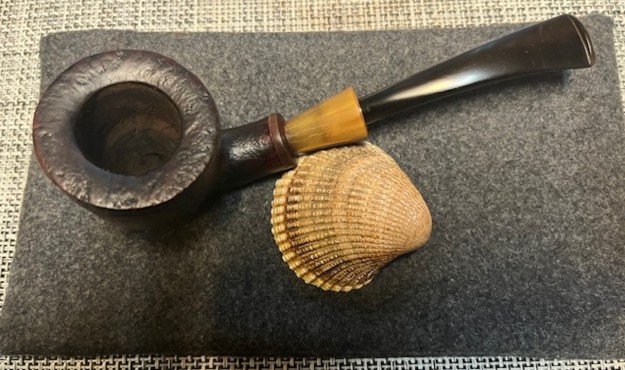
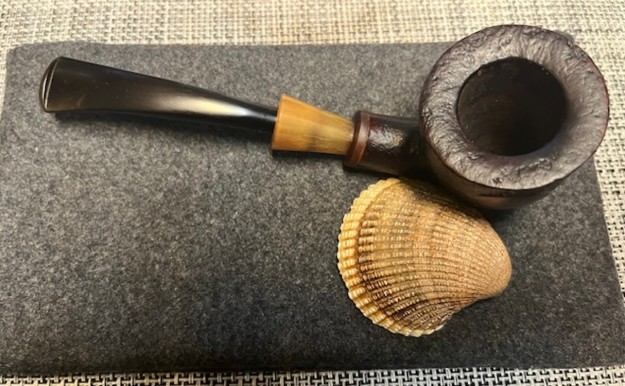
Sometimes I look at a pipe we purchased and wonder what we were thinking when we went for it. That was the case with this Danmore 3090 freehand. We purchased it from an online auction in Los Fresnos, Texas, USA on 01/10/2018. You can see from the fact that it has been sitting here in a bag since 2018. When Jeff received it, the pipe was in pieces and he put it together for these photos. The bowl was intact with no cracks or serious nicks. The horn shank extension had come unglued and looked like it might have some delaminating happening on the long portion that held the stem. The pipe was stamped on the underside of the shank with the shape number 3090 followed by Danmore [over] Handmade Denmark. The stem had a rubber tube fit on the end that had originally been in the shank extension but was now stuck on the stem. The stem itself had been chewed or broken off and was probably missing at least ½ inch of its length. It still had the Danmore Logo on the top of the taper but that was all it had going for it. The bowl was thickly cake and there was a thick lava coat on the rim top obscuring the edges of the bowl. It had obviously been someone’s favourite pipe and had been smoked to death. The finish was filthy with grime and hand oils ground into the smooth panels and the sandblast making it all almost smooth to touch. It was impossible to know if the rim top was smooth or sandblast as there was so much tar on it. The inside of the shank that held the extension was filled with tars and oils and the inside of the horn shank extension was the same. Jeff got some good photos of the pipe before he did his clean up work and I have to hand it to him it looked pretty interesting. The question in my mind really was whether it was redeemable. The bones were nice but what was underneath once it was cleaned remained a haunting question. He took photos of the rim top and bowl and you can see what I mean by the thickness of the cake in the bowl and the lava on the rim top. It is so thick that it is flaking off in chunks only to reveal another layer! You can also see the broken off/chewed off condition of the stem in the photos he included. He included photos of the sides of the bowl and the contrasting patches on the bowl sides along with an interesting sandblast. The only thing that can be said is that the stamping on the underside of the shank is clear and readable as noted above and the Danmore D logo is very readable on the chewed off stem. You can also see the separation of the horn shank extension for the shank end in these photos. Lots of work to be done in the resurrection.The horn shank extension was originally lined with a Delrin or rubber liner to stabilize the horn from the inside. It would have been glued in place in the horn and not moved when the stem was removed. In the photo above and those that follow you can see that the liner piece has crept up the stem to where there is very little that is actually in the horn itself. I am hoping that once it is here I can work it off the stem and reinsert it in the horn again. We shall see.Jeff let the pipe fall back into its parts and took photos of it. You can see the bowl and its filthiness, the stem with the creeping rubber insert from the horn and the tired looking horn extension. In the second photo you can see the filth in the inside of the horn and into the shank itself… lots of work in cleaning it and not making things worse.I knew that the pipe was a Danish Made pipe but it has been awhile since I worked on a Danmore pipe. I turned first to Pipephil’s site (http://www.pipephil.eu/logos/en/logo-d2.html). There was a very short clip there with one photo of a pipe very different from the one I am working on. It simply states that the factory is closed and that the pipes are made by third parties. Not too much helpful information there that is for sure.I then turned to Pipedia (https://pipedia.org/wiki/Danmore) and was much more successful. The article is short and succinct but very helpful. I have included it below for ease of reference.

Danmore was founded by Hans Sørensen in the early 1970s, and produced pipes from that time until the early 1980s, at one point having up to 30 employees. The pipes were sold in the first Dan Pipe catalog. In the early 1980’s, however, production ceased in Denmark due to labor costs, and the company’s production was outsourced to Italy and Spain, and they began to also make pipecleaners and smokers articles.

Sørensen focused on the pipecleaner side of the concern, and eventually bought a share in the factory in the Far East making them. Today the company, owned by Hans’ sons Jesper and Lars Sørensen, no longer makes pipes, and instead makes only pipe cleaners under the name Danmore Hobby Aps, selling only to hobby and craftshops in Denmark and Scandinavia.

Hans Sørensen passed away in 2012. The Sørensen family continues to own the trademarks for the use of the Danmore name in relation to pipes, matches, and tobacco.

Now I knew that the pipe was made by Hans Sorensen and was made between the early 1970s and early 1980s when production ceased in Denmark due to labor costs. From that point on the pipes were outsourced to Italy and Spain. So, I guess the pipe was made during the 10 year or so window when the pipes were handmade in Denmark. All of that info makes me a bit more interested in resurrecting this pipe.

When it arrived here it was in a plastic sandwich bag and I promptly put it aside in a drawer of pipes to work on. Periodically I would take the bag out and dump out the parts and look it over. Everytime other than today I have just put it back in the drawer, shaking my head. I think it could be fixed but did I want to was the serious question that haunted me each time I looked at it. From 2018-2024 my answer was categorically, NOT INTERESTED! So, what changed today? Got me! Last evening, I took it out of the baggie and looked it over, put the pieces together and took some photos. Something about it caught my eye this time around and I wanted to see if I could bring it back to life. I sent Jeff a note and he sent me the photos above.

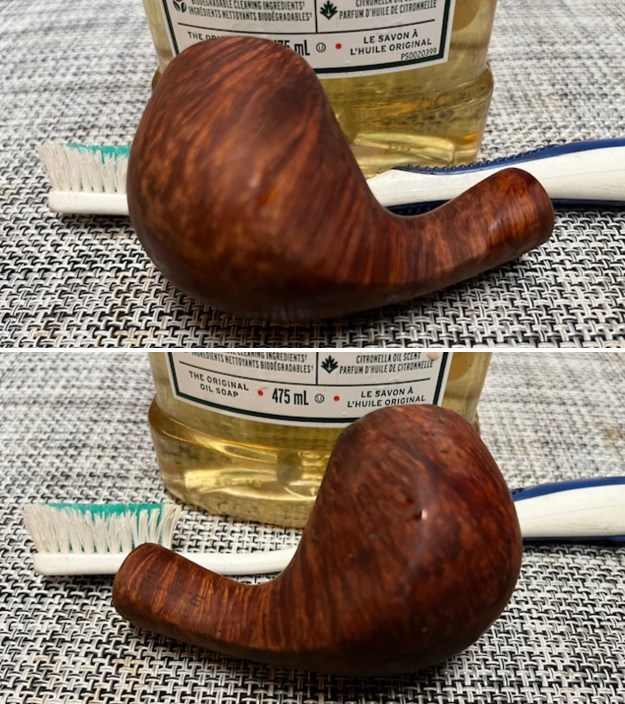
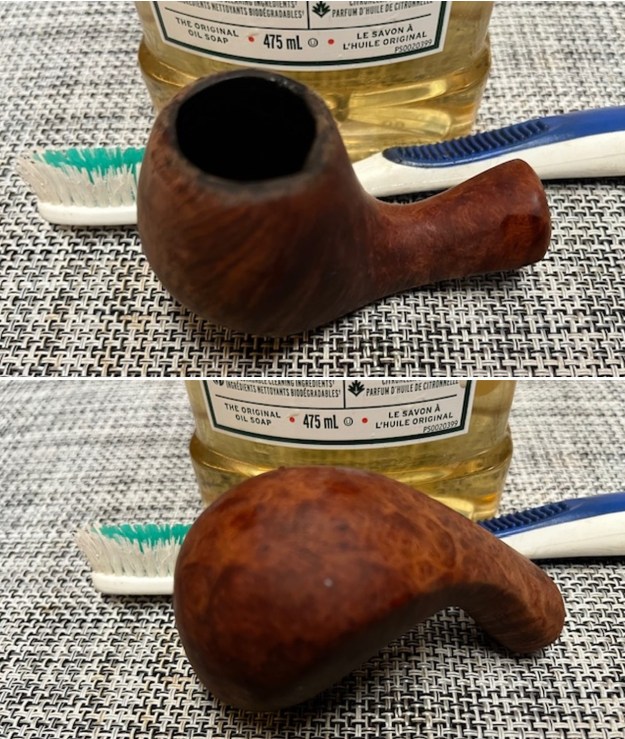
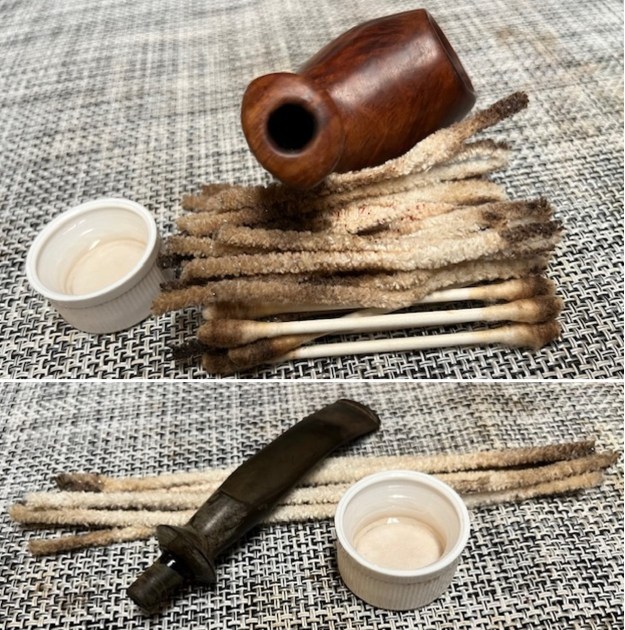
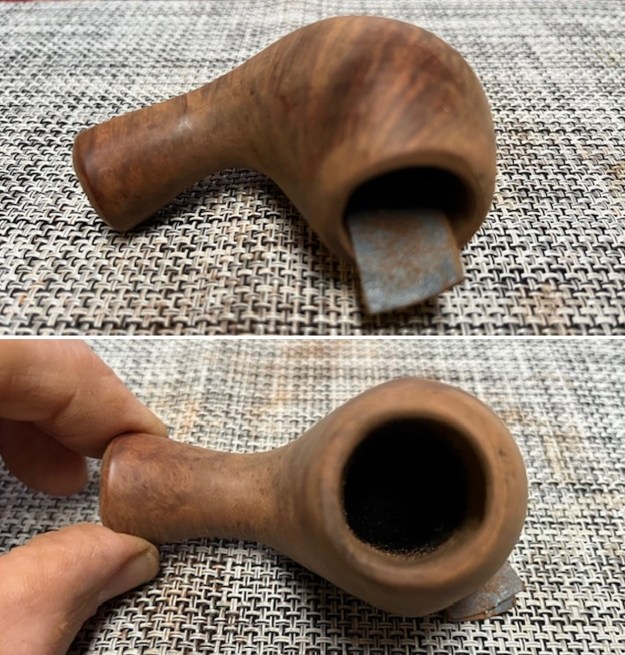
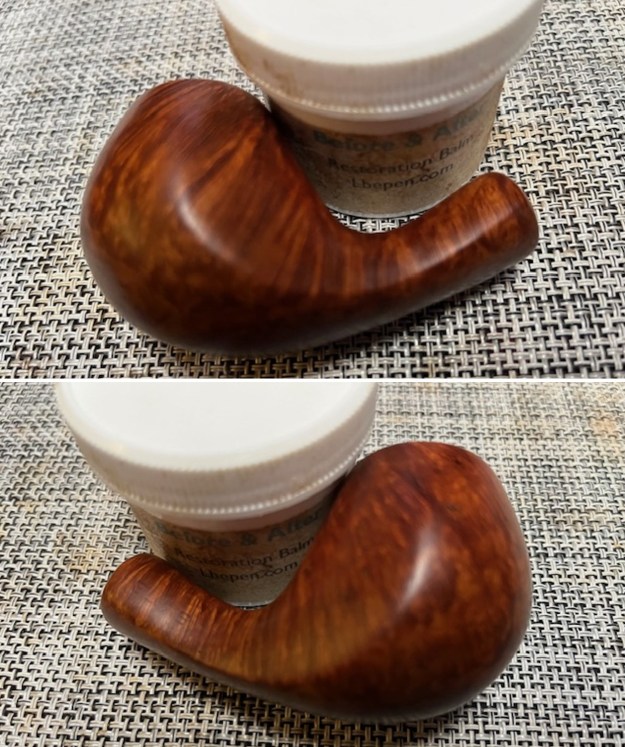
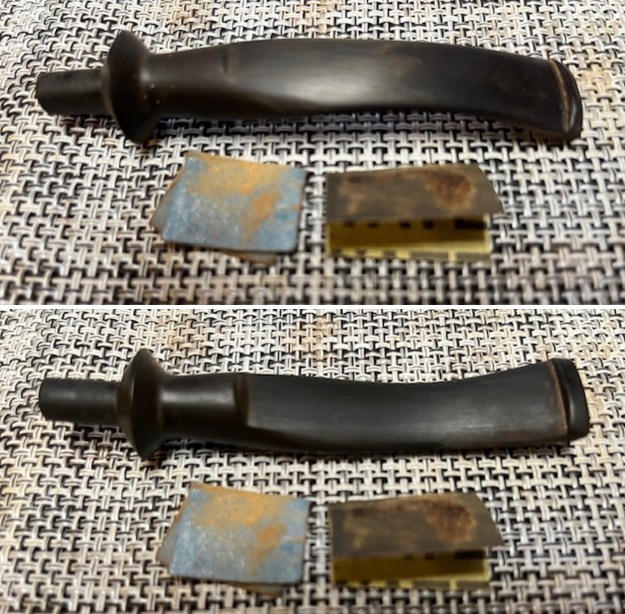
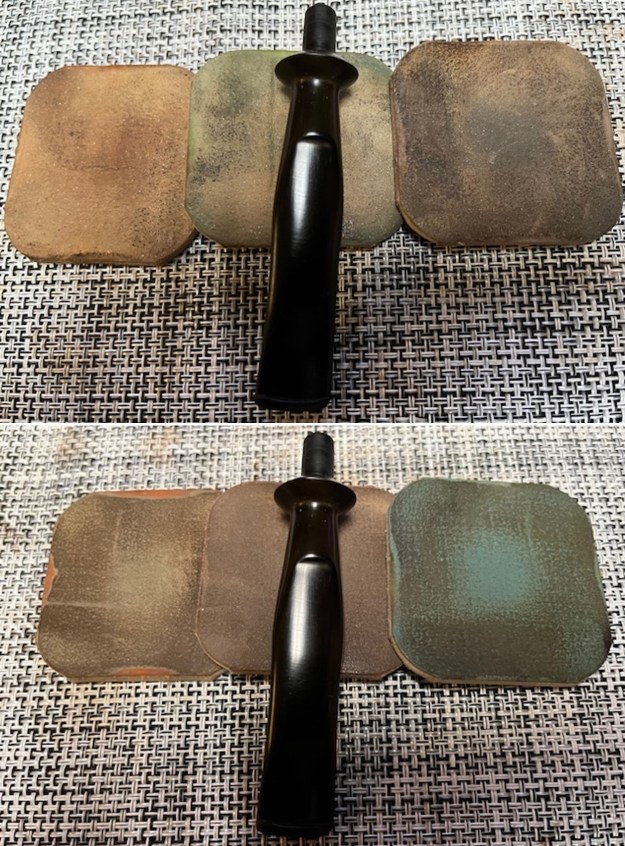
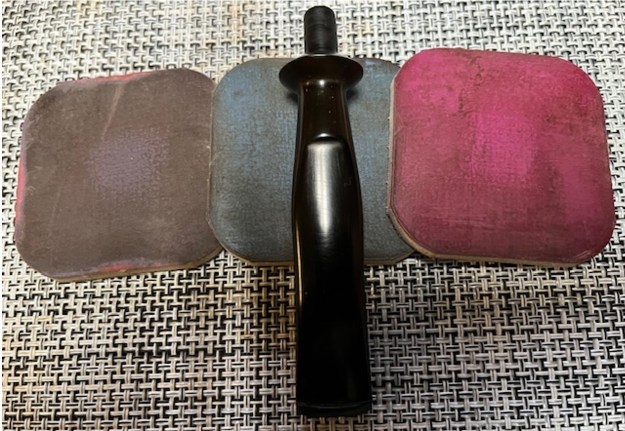
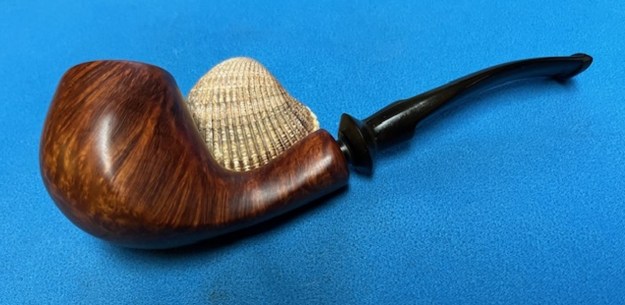
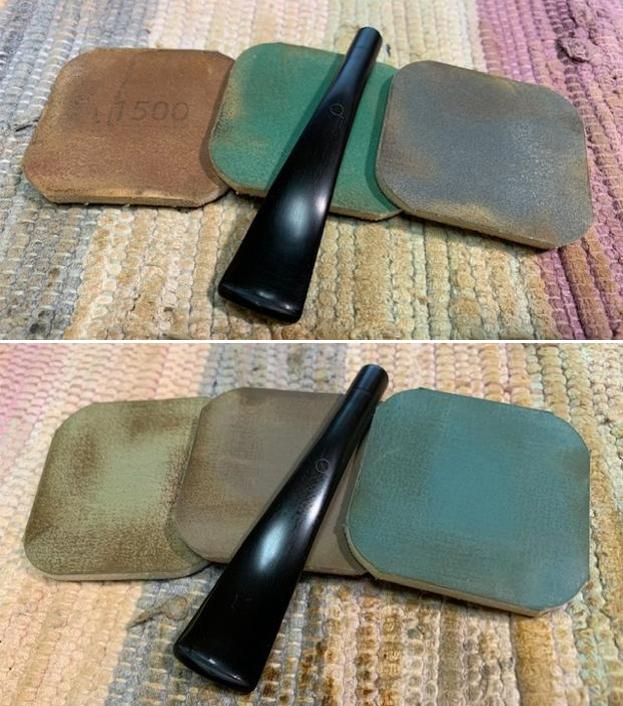
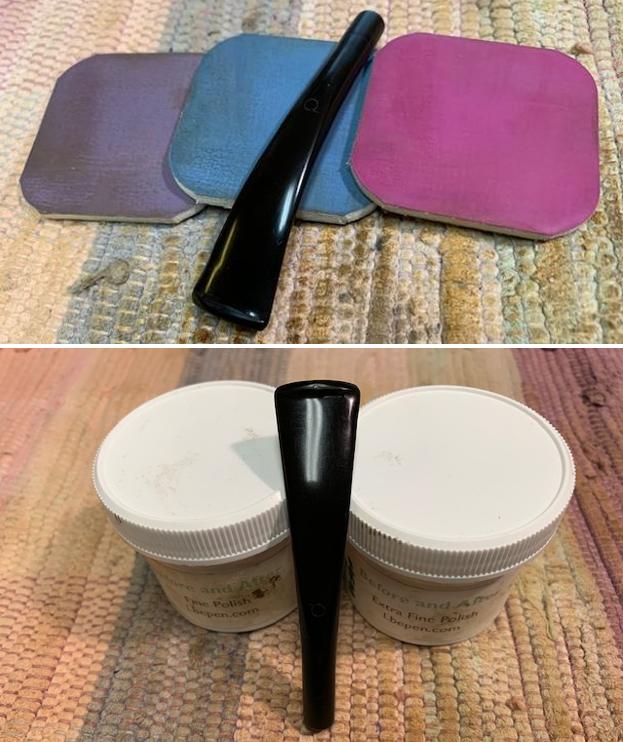
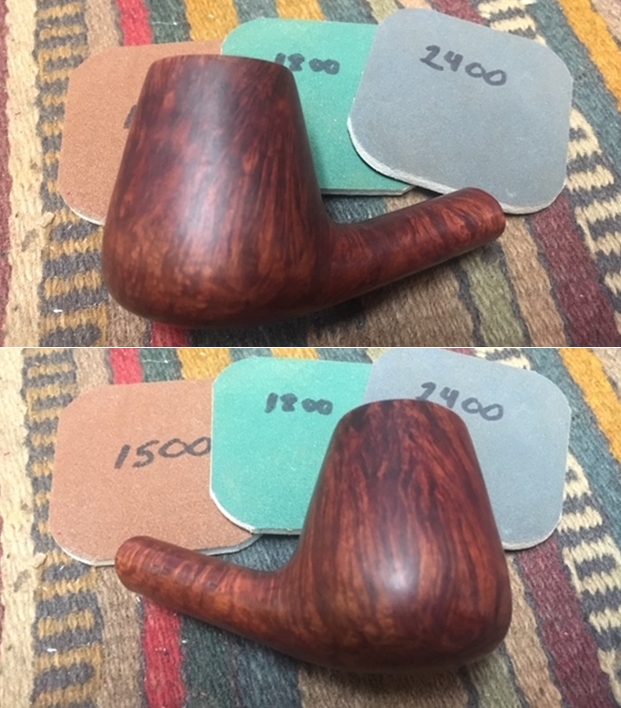
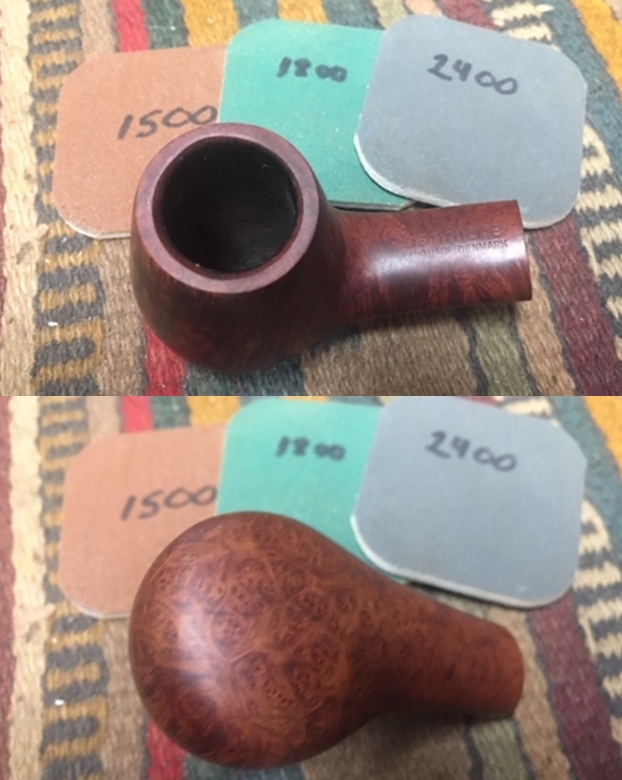
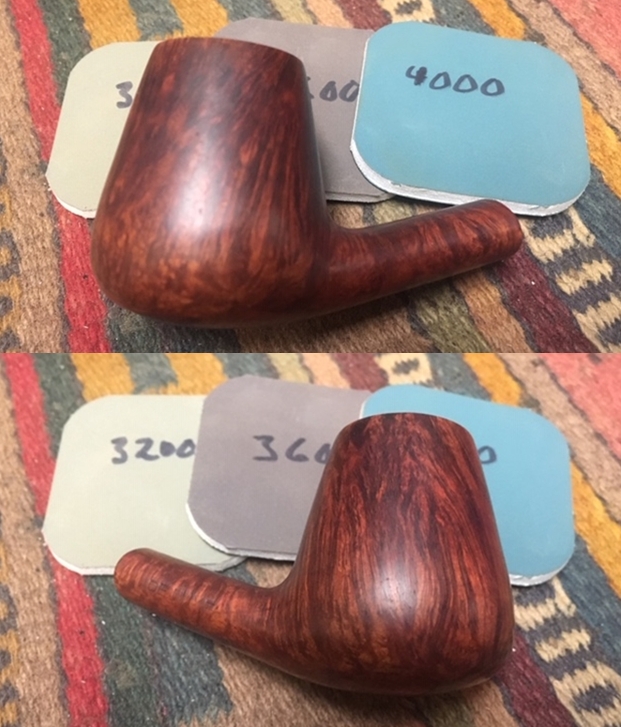
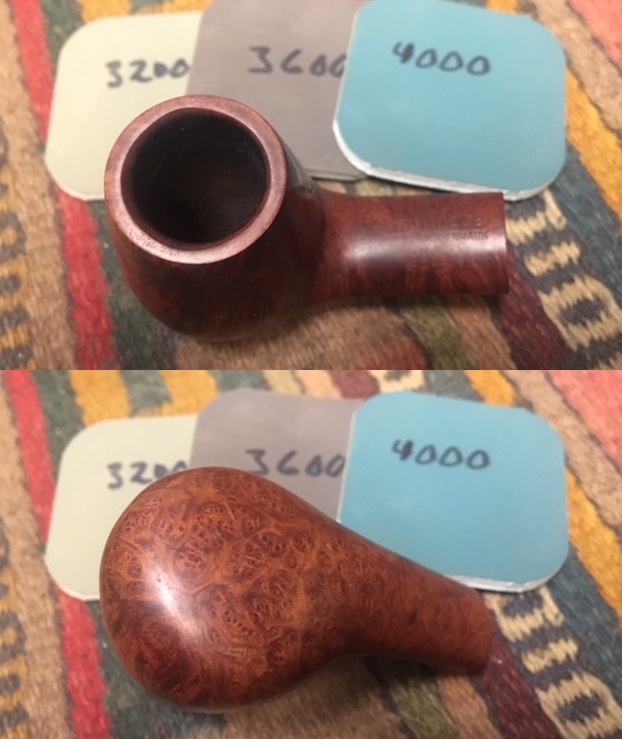
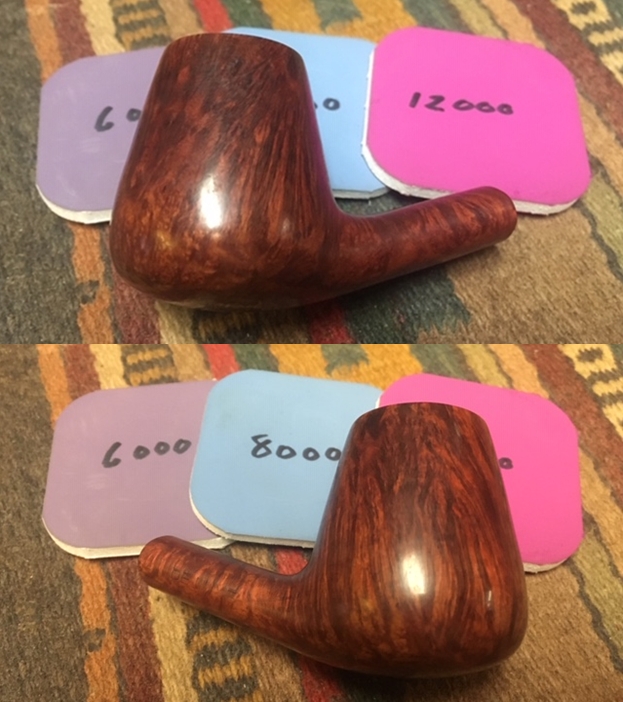
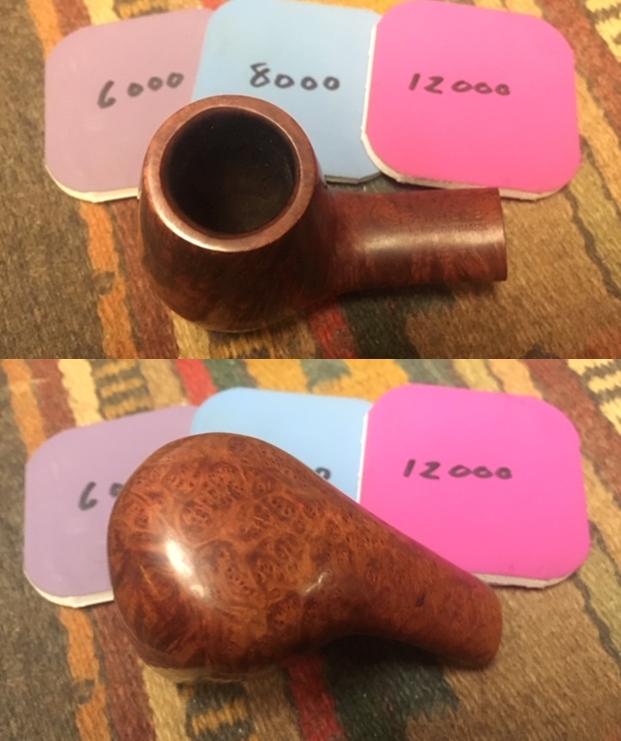
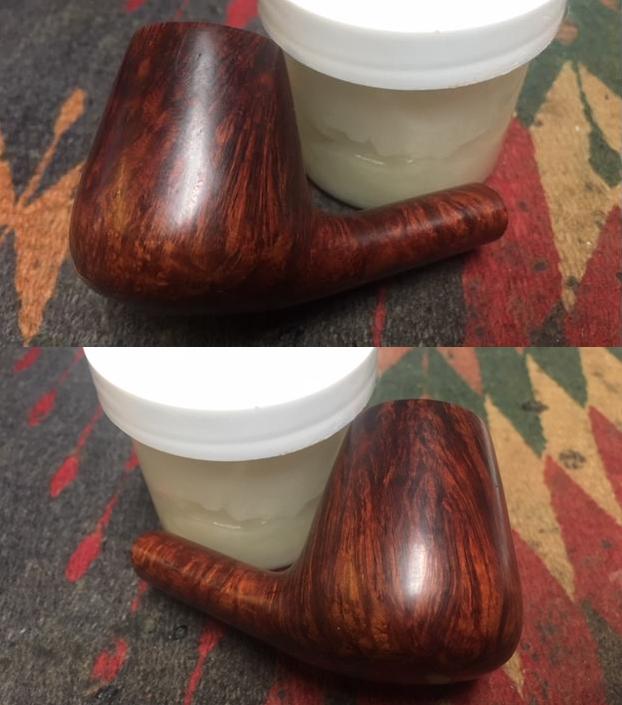
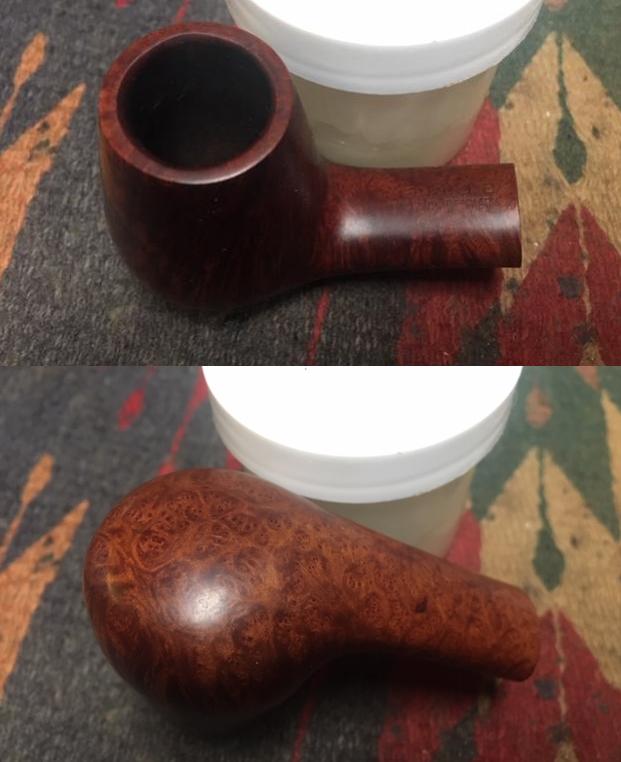
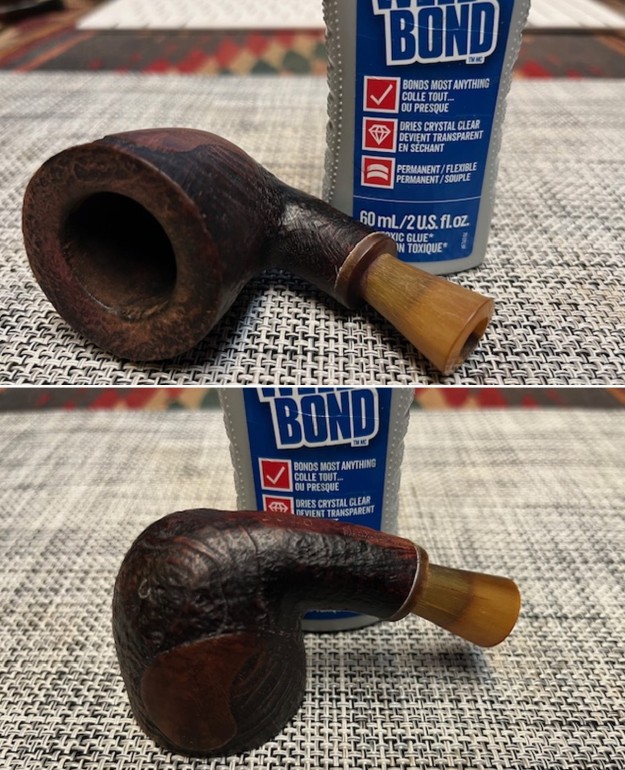
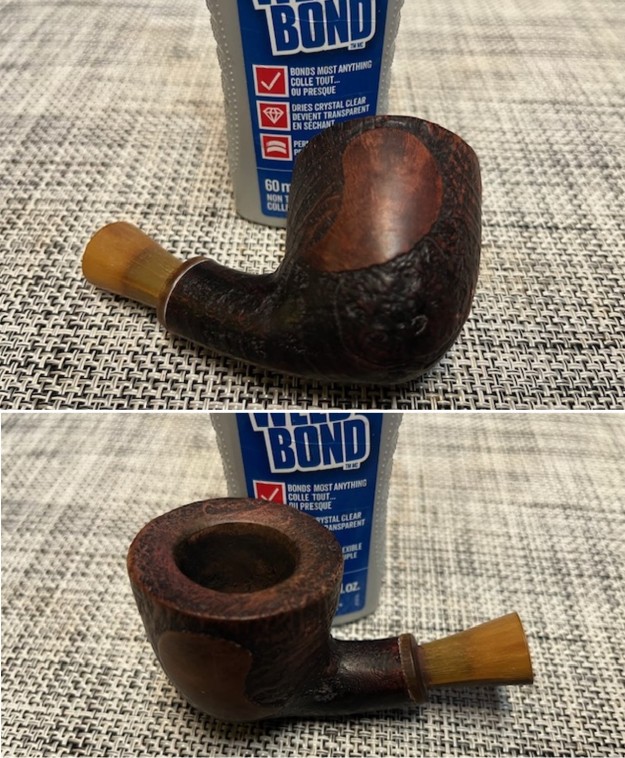
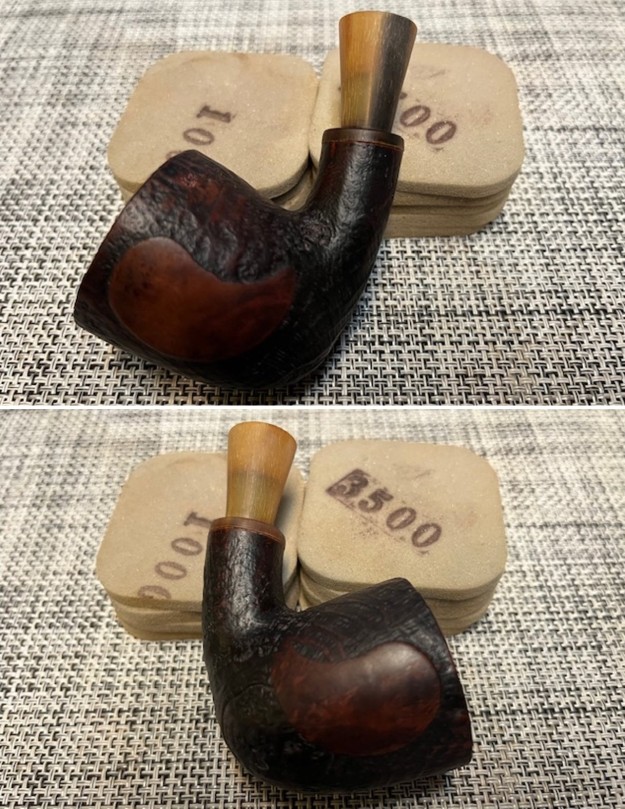
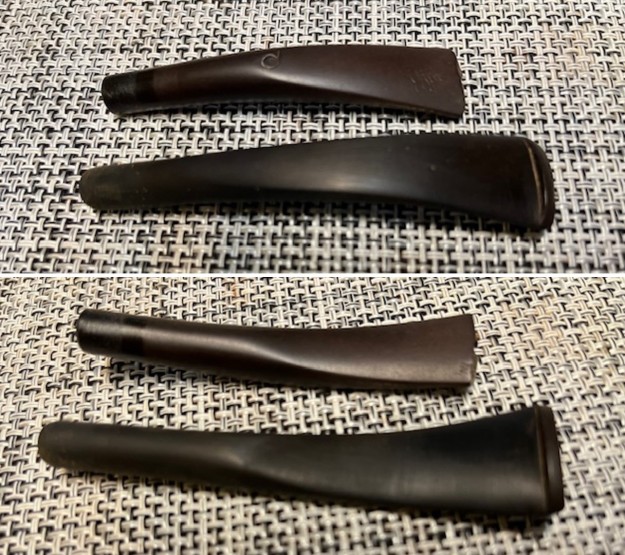
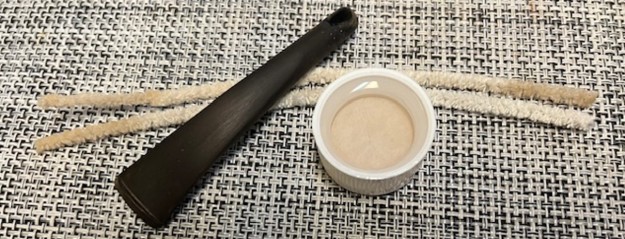
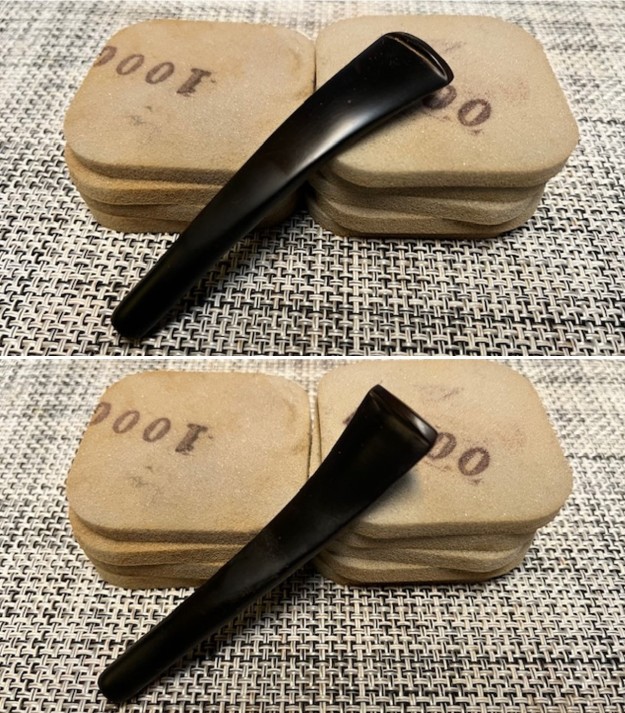
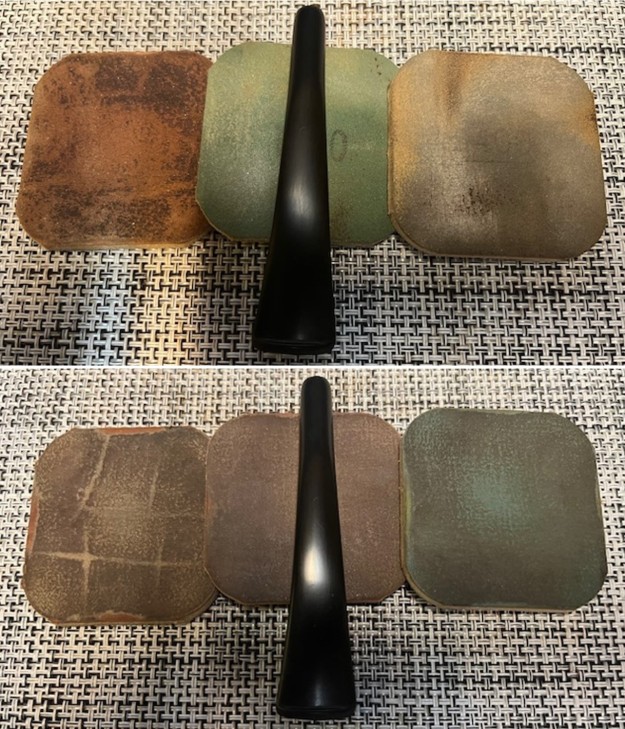
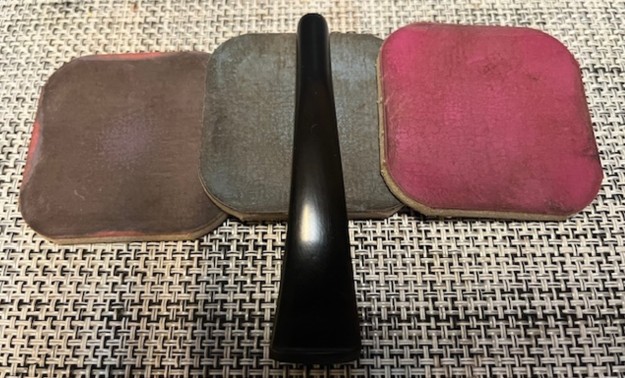
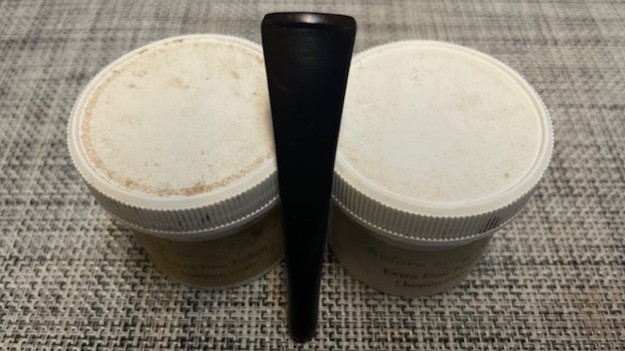
Jeff had done a great job cleaning up the pipe as usual. He reamed the pipe with a PipNet reamer and cut back the cake back to the bare briar. He cleaned up the walls with a Savinelli Fitsall Pipe Knife. He scrubbed the interior of the bowl and shank with pipe cleaners, cotton swabs and alcohol to remove the tars and oils. He scrubbed the exterior of the pipe with Murphy’s Oil Soap and a tooth brush to remove the grime from the finish. He worked on the rim top lava and darkening with the soap and tooth brush. He scrubbed the inside of the horn shank extension and the stem with alcohol and pipe cleaners. He scrubbed the exterior of the stem with Soft Scrub and then soaked it in Before & After Pipe Stem Deoxidizer. He washed it off with warm water to remove the Deoxidizer. The pipe looked far better when it arrived. I took a photo of the bowl and rim top to show how good it looked. The sandblast rim top was clean and the inner edges aw also in good condition. The stain had faded some but it would not be too much to bring it back. The shank extension was very loose with nothing holding it in place in the shank. The stem was another story. The end had been either gnawed off or broken off and still smoked that way. It cleaned up well for sure – looked much better. It would need to be replaced.Though the photo below is a bit blurry the stamping is very clear on the underside of the shank. I removed the stem from the shank end and took a photo of the pipe and extension with the stem below to get a sense of what was there now.Now it was time to put the pieces back together again. For me this is the challenge that I enjoy. Will I be able to reconstruct the pipe back to functionality without changing the plan that crafted it originally? I love that challenge. In this case I decided to start with regluing and rebuilding the shank extension. I am very thankful that it was not delaminating. The horn was dry but still very stable which took away a very time-consuming part of the work. I worked on removing the old glue from the shank end and the tenon of the extension. I used a dental spatula and small blade to scrape the surfaces and then scrubbed them with 99% isopropyl alcohol and cotton swabs and pipe cleaners. I also worked on the airway in the mortise of the briar so that the extension would have a very clean surface to bond with.Once the mortise was dried out I used some all-purpose white glue and painted the inside of the mortise and the tenon on the extension with it. I pressed the parts together and held them with pressure until the glue cured. Once it had hardened sufficiently to take the pressure off and wiped off the excess glue that had squeezed out with a damp cotton pad. I took photos of the pipe at this point. I cleaned up the Delrin/rubber ring that fit in the shank end and gave it a thin coat of all-purpose glue. I pressed it into the shank extension end and set it aside to cure. Once the glue hardened I polished the joint of the horn extension and the briar with 320-3500 grit sanding pads. I wiped the horn down after each sanding pad with a cloth impregnated with Obsidian Oil. The horn began to take on a shine. I polished the smooth panels on the bowl sides and the horn shank extension with micromesh sanding pads – dry sanding with 1500-12000 grit sanding pads. I wiped the horn down after each sanding pads with Obsidian Oil. It began to take on a shine as I worked through the pads. I used a Walnut Stain Pen to touch up the spotty finish around the bowl and shank and on the faded rim top. It looked significantly better once the stain cured. The colour looked much better. I rubbed the briar down with Before & After Restoration Balm. I worked it into the briar with my fingertips and a horsehair shoe brush. The product works to clean, enliven and preserve the briar. I let it sit for 10 minutes while I worked on the stem. After the time passed I buffed it with a cotton cloth to deepen the shine. The briar really comes alive with the balm. I went through my collection of stems to find one that would work on the pipe. The one I found is identical to the broken one. It has the same shape as the broken one with the fishtail button. It was about ½ inch longer that accommodated the broken portion of the stem. It would need to be cleaned up and polished but it was a good match.I cleaned out the internals of the stem with alcohol and pipe cleaners. It smelled and looked much better.I started working on polishing the stem with my 320-2500 grit sanding pads. I was able to remove the scratches and light tooth marks and chatter on both sides ahead of the button. It looked much better at this point in the process.  I polished the stem with micromesh sanding pads – dry sanding with 1500-12000 grit pads. I wiped the stem down after each sanding pad with Obsidian Oil. I polished it with Before & After Pipe Stem Polish – both Fine and Extra Fine. I gave it a coat of Obsidian Pipe Stem Oil. It works to protect the stem from oxidizing. I set it aside to dry. This beautiful sandblast Danmore 3090 Freehand with a horn shank extension and a military mount stem turned out very nice. It came together amazingly well – far better than when I began. The mix of brown stains highlights the grain around the bowl sides and bottom. The rim top and edges look very good. The finish on the pipe is in excellent condition. I put the stem back on the bowl and carefully buffed the pipe with Blue Diamond on the buffing wheel. I gave the bowl and stem multiple coats of carnauba wax on the buffing wheel and followed that by buffing the entire pipe with a clean buffing pad. I hand buffed the pipe with a microfiber cloth to deepen the shine. The finished Danmore 3090 Freehand is very nice and feels great in the hand. Give the finished pipe a look in the photos below. It is a nice pipe whose dimensions are Length: 6 inches, Height: 1 ¾ inches, Outside diameter of the bowl: 1 ¾ inches, Chamber diameter: 1 inch. The weight of the pipe is 48 grams/1.69 ounces. Thanks for walking through the restoration with me as I worked over another beautiful pipe. This one will be going on the rebornpipes store, in the Danish Pipe Makers Section shortly. If you are interested in adding it to your collection let me know by message or by email to slaug@uniserve.com. Thanks for your time.
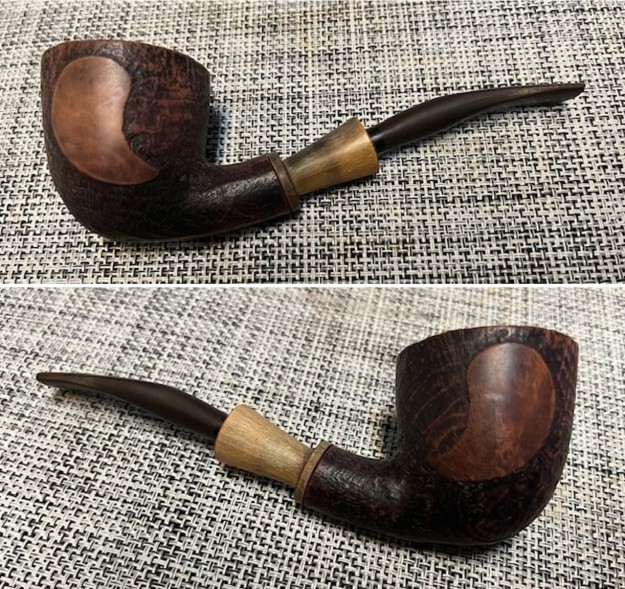
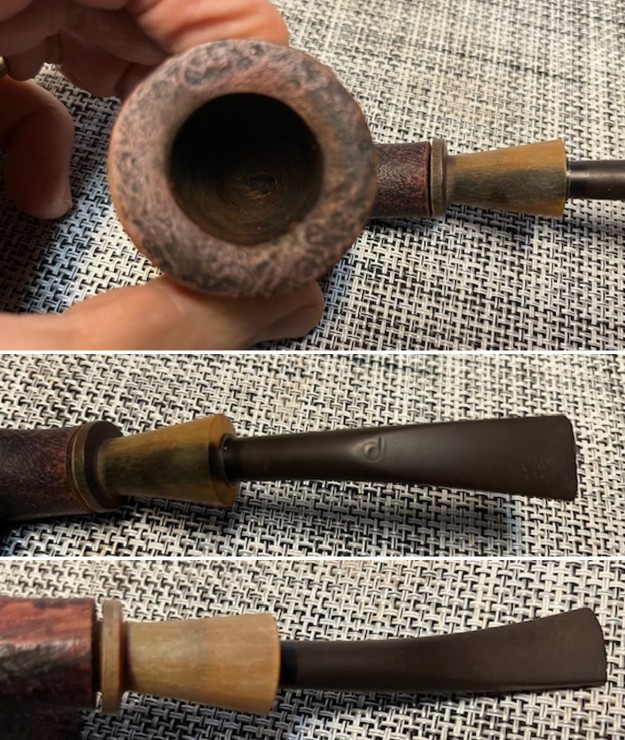
As always, I encourage your questions and comments as you read the blog. Thanks to each of you who are reading this blog. Remember we are not pipe owners; we are pipe men and women who hold our pipes in trust until they pass on into the trust of those who follow us.
Re-stemming and Restoring a Danmore De Luxe Made in Denmark Scoop


Blog by Steve Laug

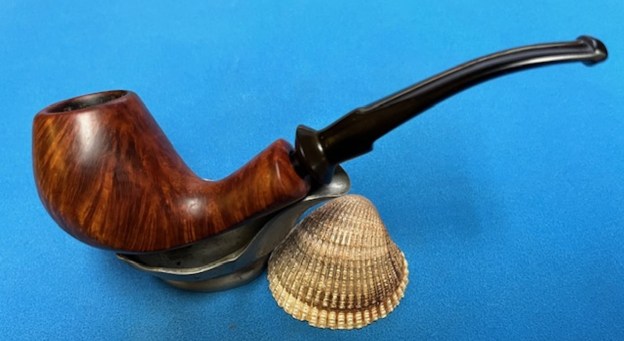
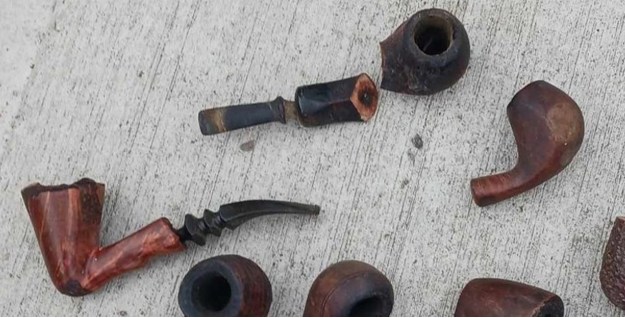
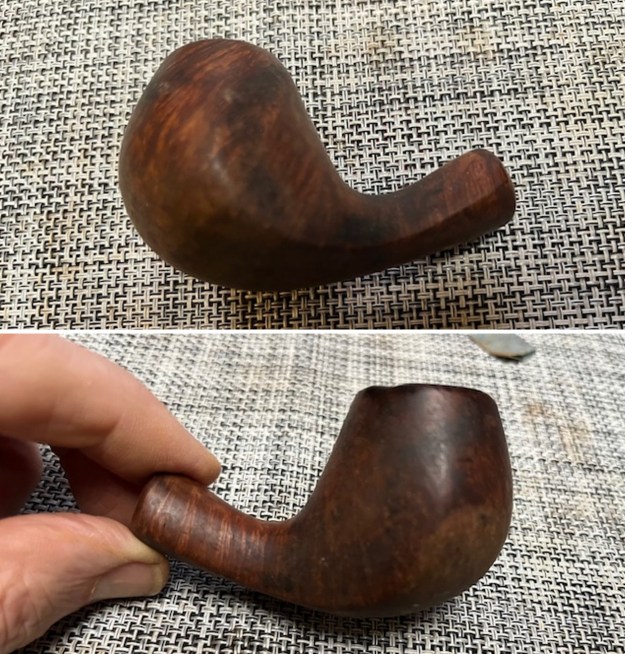
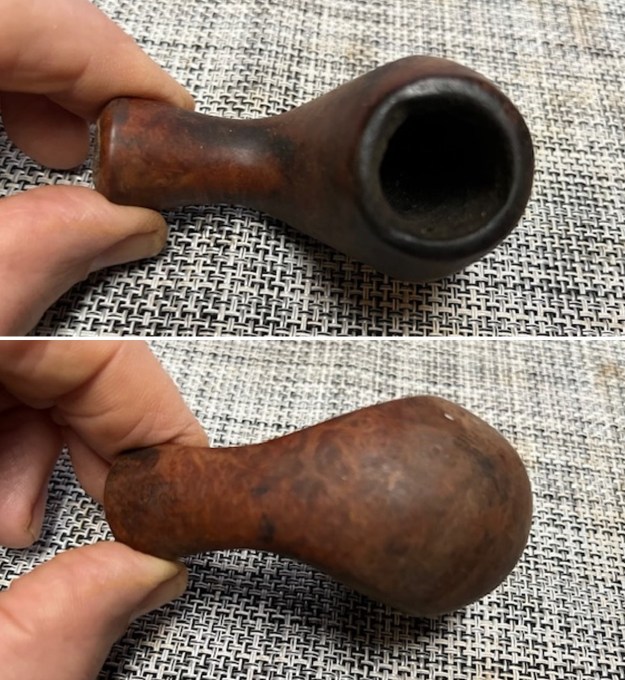
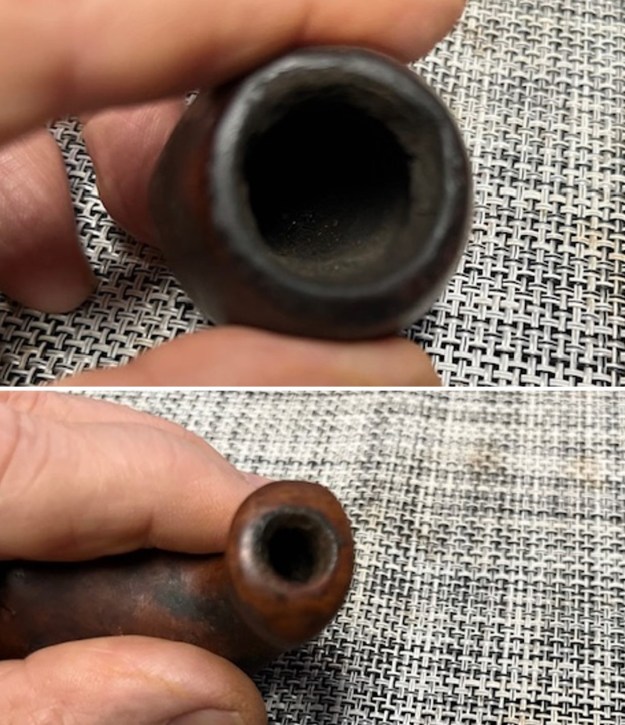
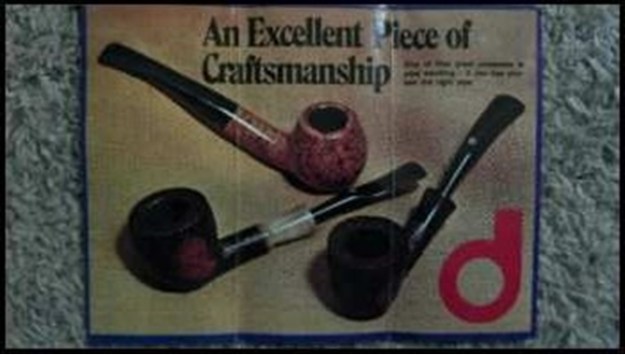
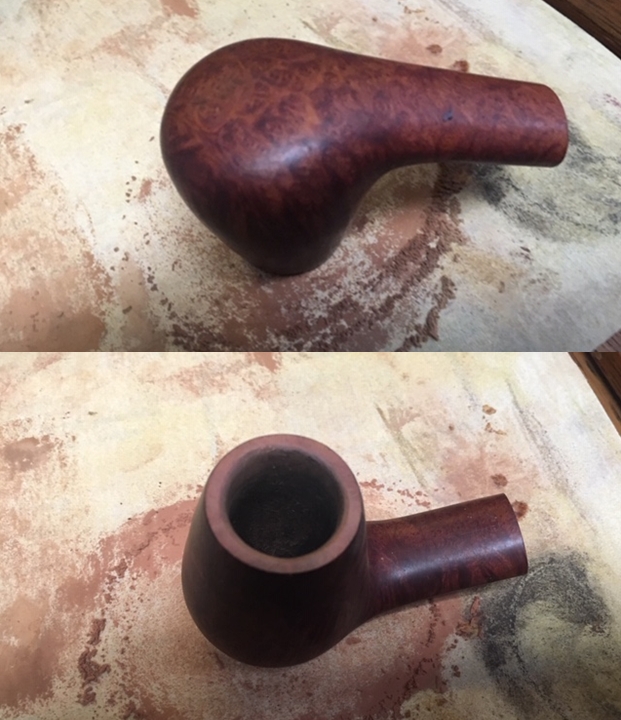
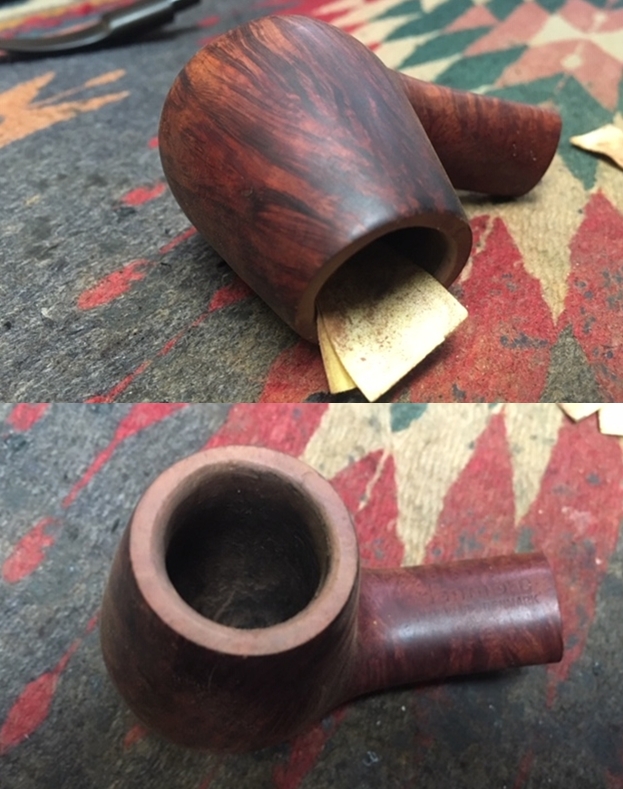
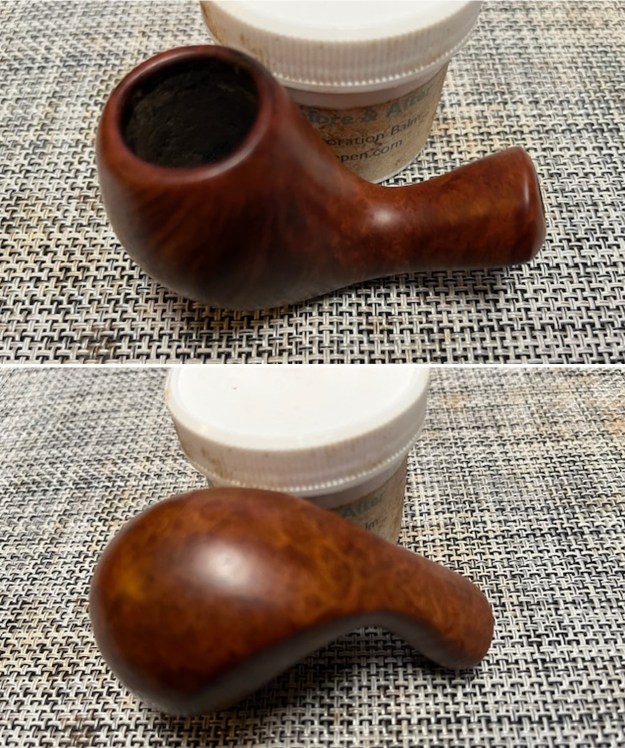
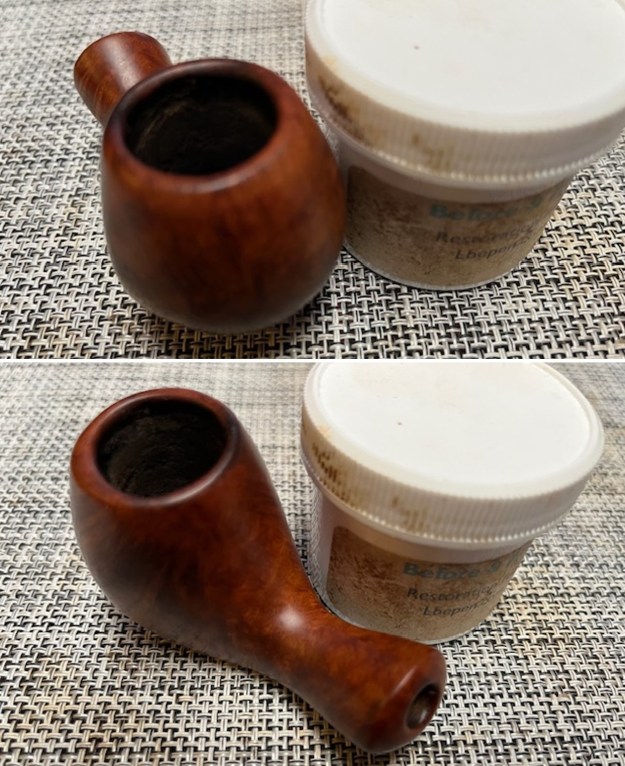
The next pipe I chose to work on came from a lot of 11 pipes I purchased from a lady in Regina, Saskatchewan. She had found them in a house she bought and wanted to know if I wanted them. We struck a deal, I paid for the pipes and shipping and the box arrived while I was traveling in Europe. In the box were 4 Stanwells, 1 Soren Freehand, 1 Calabash with a Briar Bowl, 1 Nording Freehand, 1 Italian Made Bertenetti, 1 Rhodesian with a banded cracked shank, 1 Danmore bowl, and 1 Brigham. I have restored the Nording, the snapped Stanwell, the Brigham and the Gourd Calabash with the briar bowl. There are blogs on each restoration available.The next pipe on the table is the scoop shaped bowl without a stem at the top of the photo above. It is stamped on the underside of the shank and reads Danmore [over] Made in Denmark. On the right side of the shank it is stamped De Luxe. There is no visible shape number stamped on the pipe. There was a thick cake in the bowl, cobwebs in the bottom and on the bowl walls and some remnants of tobacco. The airway was plugged and there was no draught on the pipe. There was a lava overflow on the rim top. The inner edges of the bowl were damaged and the outer edge had been knocked about and damaged on the front side. The finish was dirty and dusty and there was lava on the sides and heel of the bowl. The pipe did not come with a stem so I would have to go through my collection of stems here to find one that fit well. I took photos of the pipe before I started my cleanup work on it. I took a photo of the bowl and rim top to show the cake in the bowl and the lava build up and the damage on the edges of the bowl. The cake was thick and hard and I am hoping that at some level it protected the edges from damage. You can see the nicks in the inner edge and the damage on the rim top. I also took a photo of the shank end. You can see the tars and build up around the opening.I turned to Pipedia to read about the Danmore brand (https://pipedia.org/wiki/Danmore). There was a brief article there that I quote below.

Danmore was founded by Hans Sørensen in the early 1970s, and produced pipes from that time until the early 1980s, at one point having up to 30 employees. The pipes were sold in the first Dan Pipe catalog. In the early 1980’s, however, production ceased in Denmark due to labor costs, and the company’s production was outsourced to Italy and Spain, and they began to also make pipecleaners and smokers articles.

Sørensen focused on the pipecleaner side of the concern, and eventually bought a share in the factory in the Far East making them. Today the company, owned by Hans’ sons Jesper and Lars Sørensen, no longer makes pipes, and instead makes only pipe cleaners under the name Danmore Hobby Aps, selling only to hobby and craftshops in Denmark and Scandinavia.

Hans Sørensen passed away in 2012. The Sørensen family continues to own the trademarks for the use of the Danmore name in relation to pipes, matches, and tobacco.

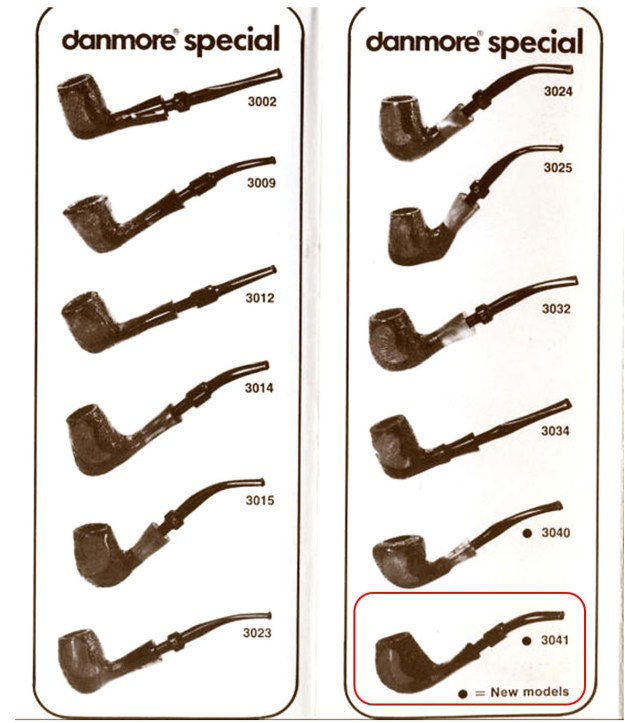
There was also a shape chart on the site that I have included. The shape was a 3041 which I have drawn a red box around.With that I turned to work on the pipe. I went through my can of stems and found one that would work well with the bowl. It is a uniquely carved saddle stem with a twist of a freehand. I sanded the tenon now slightly to allow it to fit the shank. I put it in the shank and took photos of the pipe. I like the looks of the one I chose over the original! I set the stem aside and turned to the bowl clean up. I reamed the bowl with a PipNet pipe reamer using the second and the third cutting head to take the cake back to bare briar. I cleaned up the reaming with a Savinelli Fitsall Pipe Knife. I sanded the walls with a piece of 220 grit sandpaper wrapped around a dowel to smooth them out. I scrubbed the exterior of the briar with a tooth brush and undiluted Murphy’s Oil Soap. It looked much better and the dust and debris was gone. I dried it with a cotton towel. I scrubbed out the internals of the pipe with 99% isopropyl alcohol, pipe cleaners and cotton swabs. I cleaned out the airway in the stem as well. I worked on these areas repeatedly until the shank and the airway in all the parts was clean.I worked over the damage on the inner edge of the bowl and the rim top. I also smoothed out the damage on the outer edge with a folded piece of 220 grit sandpaper. It looked much better after I sanded the damaged areas smooth.I polished the briar with 1500-12000 grit micromesh sanding pads. I wiped it down with a damp cloth after each pad. The briar took on a deep shine that highlighted the grain. I worked some Before & After Restoration Balm into the surface of the briar with my fingertips to clean, enliven and protect the briar. I let the balm sit for 15 minutes and then buffed with a cotton cloth to raise the shine. The photos show the bowl at this point in the restoration process. With that done, the bowl was finished other than the final buffing. I set it aside and turned my attention to the stem. I “painted” the surface of the stem with the flame of a lighter to lift the tooth marks. I sanded out what remained with 220 grit sandpaper and started polishing the stem with 600 grit wet dry sandpaper. I polished the stem with micromesh sanding pads – wet sanding with 1500-12000 grit sanding pads. I wiped it down after each sanding pad with Obsidian Oil. I finished polishing the stem with Before & After Pipe Stem polish (both Fine and Extra Fine) then wiped the stem down with another coat of Obsidian Oil.I am excited to finish this restemmed Danmore De Luxe 3041 Made in Denmark Scoop. I put the pipe back together and buffed it with Blue Diamond on the buffing wheel. I gave the bowl and the stem multiple coats of carnauba wax. I buffed the pipe with a clean buffing pad to raise the shine and hand buffed it with microfiber cloth to deepen the shine. It is fun to see what the polished bowl looks like with the rusticated gourd and the polished black, fancy turned vulcanite stem was beautiful. This Danmore De Luxe 3041 Scoop is nice looking and the pipe feels great in my hand. It is light and well balanced. Have a look at it with the photos below. The dimensions are Length: 6 inches, Height: 1 ¾ inches, Outside diameter of the bowl: 1 inch, Chamber diameter: ¾ of an inch. The weight of the pipe is 1.66 ounces/48 grams. It is a beautiful pipe and one that I will be putting in the Danish Pipemaker Section on the rebornpipes store. Thanks for walking through the cleanup with me as I worked over this pipe.

As always, I encourage your questions and comments as you read the blog. Thanks to each of you who are reading this blog. Remember we are not pipe owners; we are pipe men and women who hold our pipes in trust until they pass on into the trust of those who follow us.
This Mixed Finish Danmore 3094 Acorn is a Unique Piece


Blog by Steve Laug

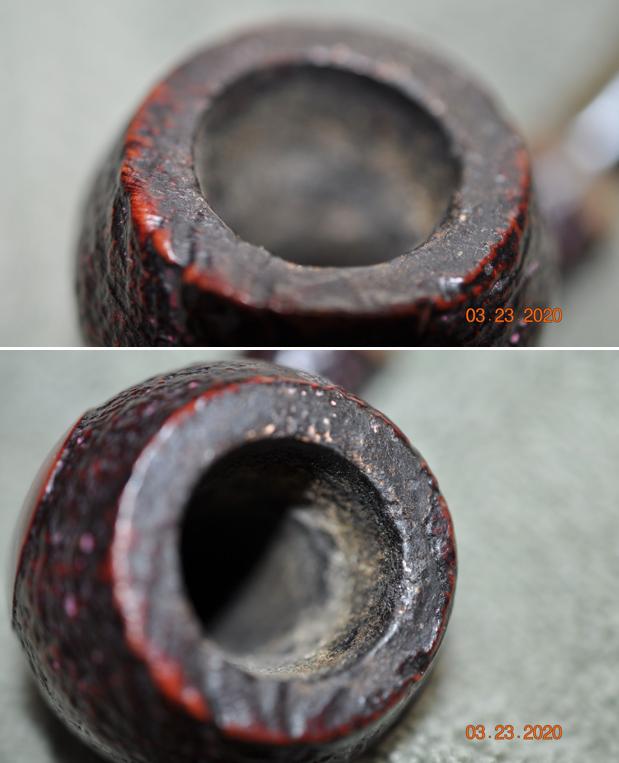
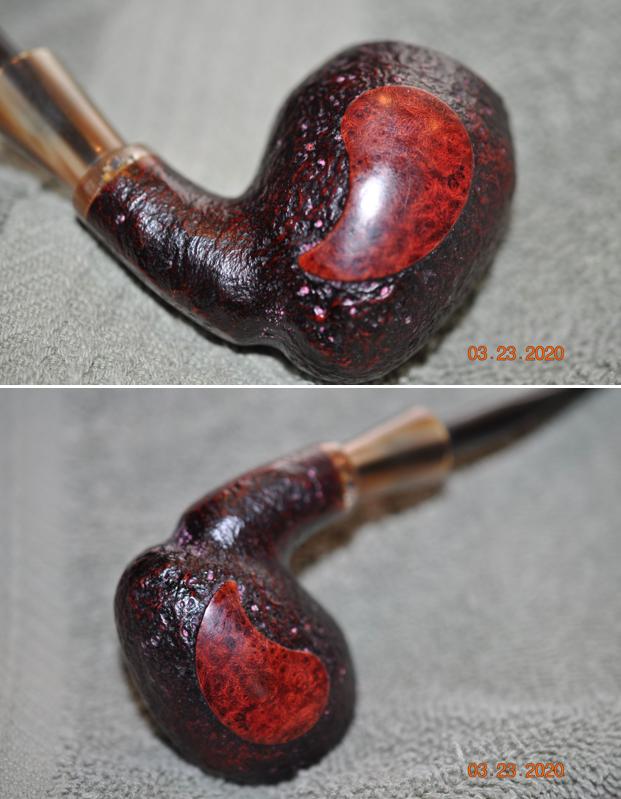
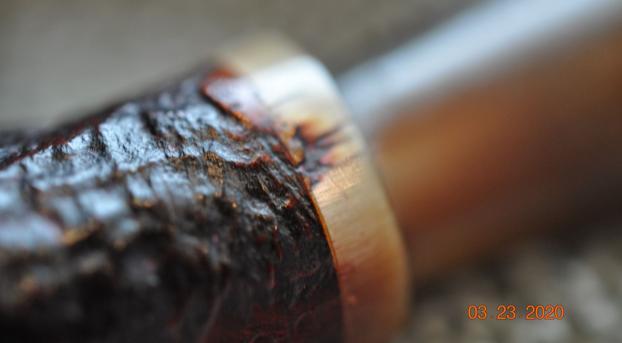
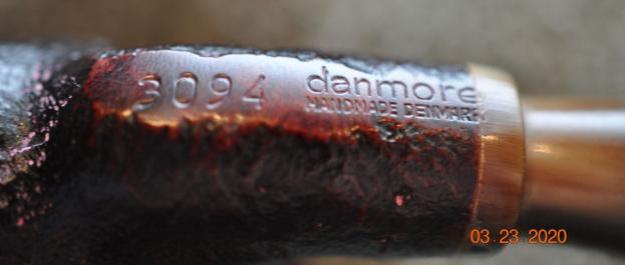
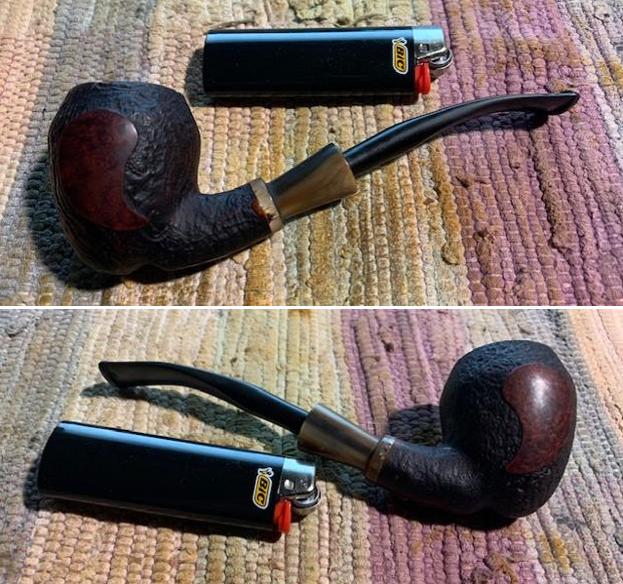
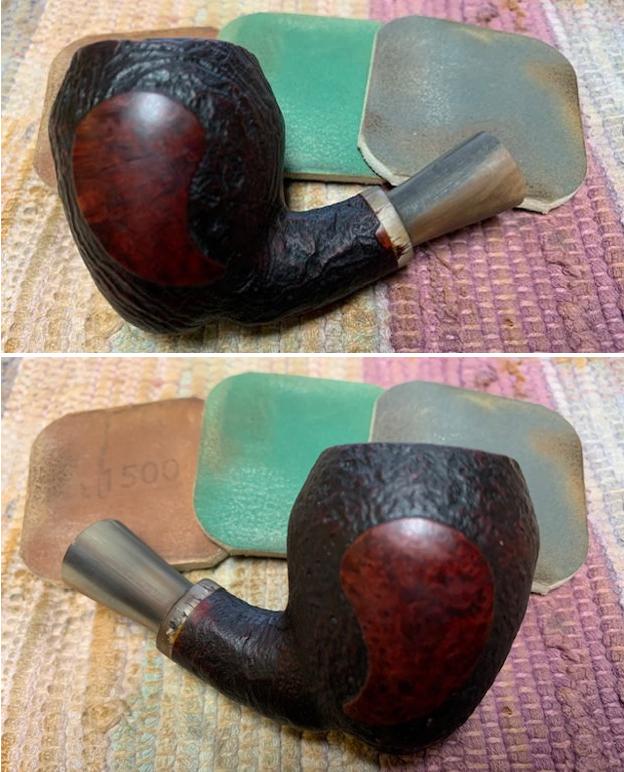
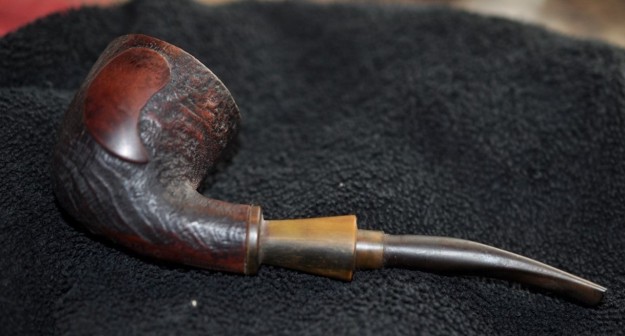
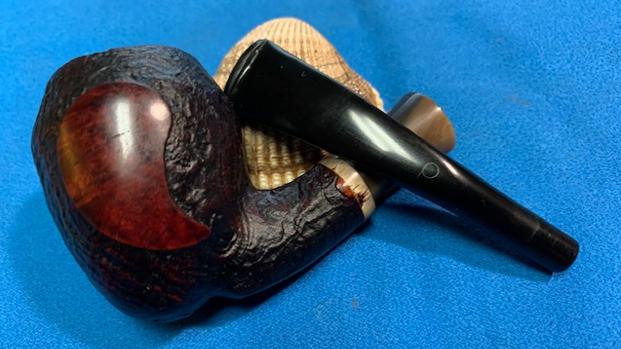
I am enjoying an evening free to work on a few pipes. The next pipe on the table came from an antique mall in Logan, Utah, USA in March of 2021. Even though the finish was a dirty and worn it had an interesting mixed finished bowl with smooth patches on the sides of the bowl and a nice sandblast showing through the grit and grime of the years. On the underside of the shank it was stamped with the shape number 3094 followed by Danmore [over] Hand Made in Denmark. The pipe is an acorn shaped bowl with a horn shank extension. The finish is filthy with grime and oil ground into the briar of the bowl and shank sides. The bowl had a thick cake and there was an overflow of lava on the top and edges of the rim. The horn shank extension had some nicks and chips in the band next to the sandblast. The stem was a vulcanite military bit stem that fit snugly in the horn shank extension. There was the faint remnant of stamping on the topside of the stem. The vulcanite was oxidized, calcified and had tooth marks and chatter on both sides ahead of the button. The bend in the stem had also straightened over time. Jeff took some photos of the pipe to show its overall condition before he started his cleanup work. He took photos of the rim top and bowl to give a clear picture of the thickness of the cake and the lava and dust ground into the finish of the rim top and edges. There is dust and debris stuck to the walls of the bowl clearly visible in the photos. He also took photos of the top and underside of the stem to show the oxidation, chatter and tooth marks.Jeff took photos of the sides and heel of the bowl to give a picture of what the briar around the pipe looked like. There was some definite wear on the red and brown stains on the pipe as well as scratches and marks on the smooth portions. There is a nice sandblast grain under the grime and thick debris. The horn ring around the shank end had been sand blasted along with the briar and had some marks showing the blast in the horn.He took a photo of the stamping on the side of the shank. It clearly reads as noted above.I turned to Pipephil to learn who made Danmore pipes (http://www.pipephil.eu/logos/en/logo-d2.html). I have included a screen capture of the pertinent section on the site. It links the pipe to Kriswill. The pipe pictured below is a similar in style to the one that I am working on. The stem and horn shank extension are different but the stamping is very similar. I turned to Pipedia (https://pipedia.org/wiki/Danmore) for further information about the brand. I quote the article in full below.
Danmore was founded by Hans Sørensen in the early 1970s, and produced pipes from that time until the early 1980s, at one point having up to 30 employees. The pipes were sold in the first Dan Pipe catalog. In the early 1980’s, however, production ceased in Denmark due to labor costs, and the company’s production was outsourced to Italy and Spain, and they began to also make pipecleaners and smokers articles.

Sørensen focused on the pipecleaner side of the concern, and eventually bought a share in the factory in the Far East making them. Today the company, owned by Hans’ sons Jesper and Lars Sørensen, no longer makes pipes, and instead makes only pipe cleaners under the name Danmore Hobby Aps, selling only to hobby and craftshops in Denmark and Scandinavia.

Hans Sørensen passed away in 2012. The Sørensen family continues to own the trademarks for the use of the Danmore name in relation to pipes, matches, and tobacco.

I knew that I was working on a pipe made by Hans Sørensen between early 1970s and the early 1980s.Production ceased in Denmark at that time and moved to Italy and Spain. The pipe I am working on is stamped Hand Made in Denmark that leads me to that conclusion. Now it was time to work on the pipe.

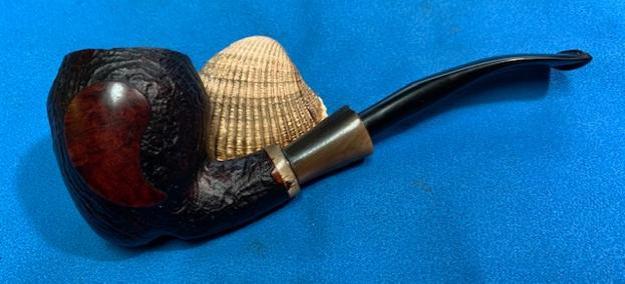
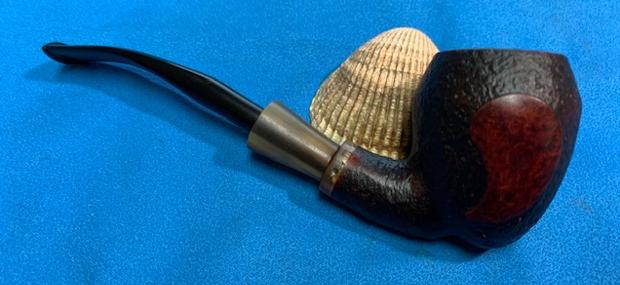
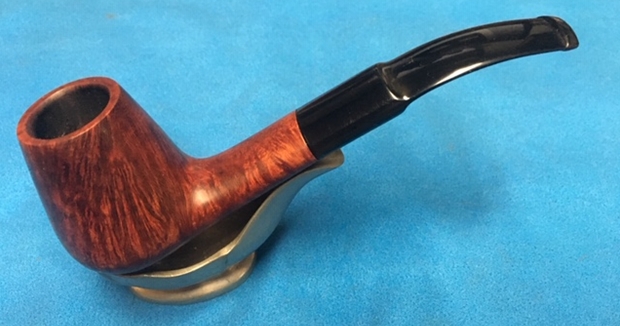
Jeff had reamed the bowl with a PipNet Pipe Reamer and cleaned up the remnants with a Savinelli Fitsall Pipe Knife. He scrubbed the exterior of the bowl with undiluted Murphy’s Oil Soap with a tooth brush. He worked over the debris on the rim top and was able to remove it. He rinsed it under running warm water to remove the soap and grime. He scrubbed the horn shank extension at the same time. He cleaned out the inside of the shank and the airway in the stem with alcohol, cotton swabs and pipe cleaners. He soaked the stem in Briarville’s Pipe Stem Deoxidizer and rinsed it off with warm water. He scrubbed the stem with Soft Scrub and cotton pads to remove remaining oxidation on the stem. He rinsed it with warm water and dried it off. I took photos of the pipe once I received it. It really looked good and the bowl was in excellent condition.    The rim top and the inner edge of the rim looked very good. The stem had a few tooth marks and chatter on both sides near the button.I took a photo of the stamping on the underside of the shank. It was clear and read as noted above. I removed the stem and took a photo of the pipe to give a sense of the whole. I “painted” the stem with the flame of a Bic lighter to soften the vulcanite and give the stem a bend that matched the flow of the bowl. It looked much better once I had given it a slight bend.I polished the smooth panels on the bowl sides and the horn shank extension and band with micromesh sanding pads. Dry sanding it with 1500-12000 grit pads and wiping it down after each pad with Obsidian Oil. I rubbed the bowl and shank down with Before & After Restoration Balm. I worked it into the surface of the bowl sides and shank with my fingertips. The product works to clean, enliven and protect the briar. I let the balm sit for 15 minutes and then buffed with a cotton cloth to raise the shine.I filled in the deep tooth marks on the stem surface with clear CA glue and set it aside to cure. Once it had hardened I sanded the surface smooth with 220 grit sandpaper and started polishing the stem with 400 grit wet dry sandpaper. I polished the vulcanite stem with micromesh sanding pads – 1500-12000 grit pads. I wiped it down with a damp cloth after each sanding pad. I used Before & After Pipe Polish – both Fine and Extra Fine to further polish the stem. This beautiful Mixed Finish – Sandblast/Smooth panel Danmore 3094 Acorn with a horn shank extension and a military vulcanite stem is a great looking pipe now that it has been restored. I put the stem back on the bowl and carefully buffed the pipe with Blue Diamond on the buffing wheel using a light touch on the briar. I gave the bowl and the stem multiple coats of carnauba wax on the buffing wheel and followed that by buffing the entire pipe with a clean buffing pad. I hand buffed the pipe with a microfiber cloth to deepen the shine. The finished Danmore 3094 Acorn fits nicely in the hand and the tactile finish feels great. Give the finished pipe a look in the photos below. The dimensions of the pipe are Length: 6 inches, Height: 2 inches, Outside diameter of the bowl: 1 ¼ inches, Chamber diameter: ¾ of an inch. The weight of the pipe is 45grams/1.59oz. I will be adding it to the rebornpipes store shortly in the Danish Pipe Makers Section. Thanks for reading this blog and my reflections on the pipe while I worked on it. There are many more to come!

Restoring a Danmore Deluxe Volcano from Bob Kerr’s Estate


Blog by Steve Laug

The next pipe I chose to work on from Bob Kerr’s estate is part of his collection of Danish made pipes. I have worked on the restoration of others in this collection including a Stanwell Jubilee Shape 118 (https://rebornpipes.com/2019/08/11/another-bob-kerr-estate-a-stanwell-jubilee-1942-1982-shape-118/); a Stanwell de Luxe Shape 812 (https://rebornpipes.com/2019/08/10/back-to-bob-kerrs-estate-changing-up-and-working-on-a-danish-made-stanwell-de-luxe-812-billiard-regd-no-969-48/); a WO Larsen (https://rebornpipes.com/2019/01/13/restoring-pipe-17-from-bob-kerrs-estate-a-w-o-larsen-super-15-bent-stack/) and a Danish Sovereign Bulldog variation (https://rebornpipes.com/2019/08/11/another-bob-kerr-estate-a-danish-sovereign-305-bulldog-variant/).

To this list of Danish pipes I am adding the next  – a Danmore Handmade in Denmark Deluxe Volcano. Like the others it is part of Bob’s estate that the family asked me to clean up and move out to others who will carry on the trust that began with Bob. In the collection there were BBBs, Peterson’s, Dunhills, Comoy’s and Barlings as well many others – a total of 125 pipes. This is the largest estate that I have had the opportunity to work on. I created a spread sheet to track the pipes, restoration and sales. This job would take a fair amount of time to clean up. I could not pass up the opportunity to work on these pipes and help the family.

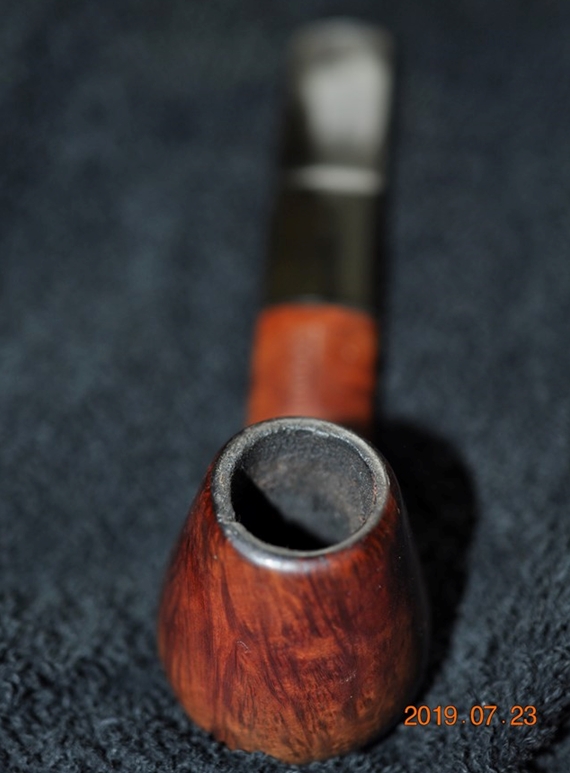
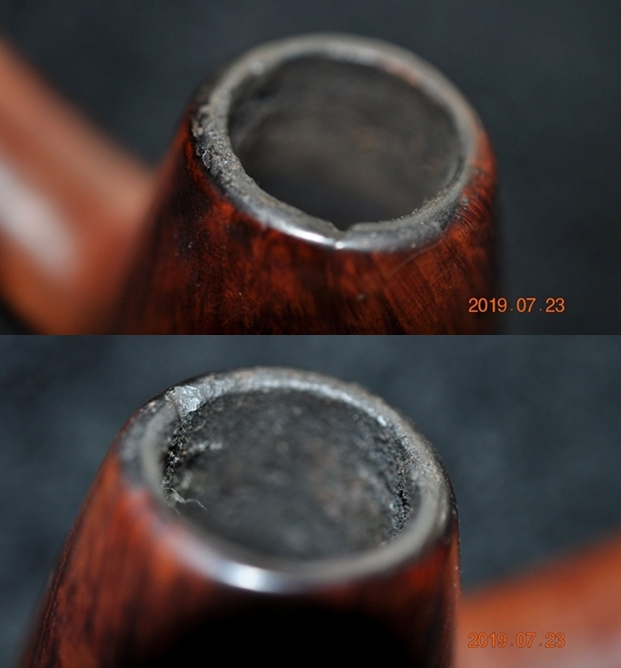
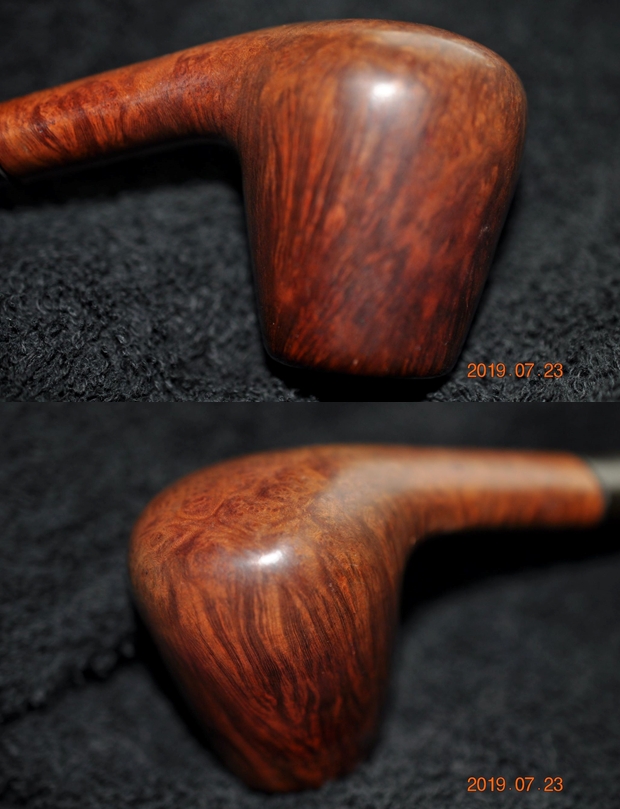
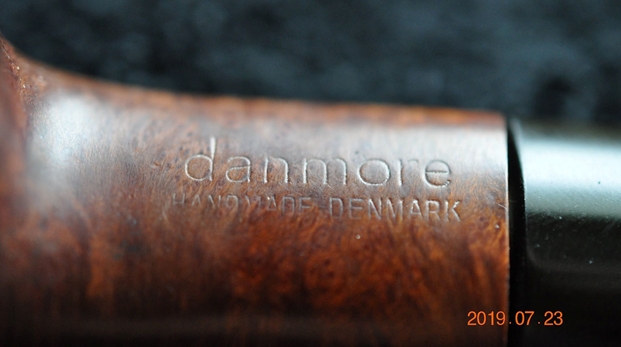
When I took the Danmore out of the box of cleaned up pipes that Jeff sent back I could see that it was stamped Danmore Handmade Denmark on the topside of the shank and Deluxe on the right side of the shank. It has straight and flame grain around the bowl and the oval shank and birdseye on the heel of the bowl and shank. The finish was dirty like the rest of the pipes in this estate. There was a thick cake in the bowl with remnants of tobacco stuck on the walls. There was an overflow of lava on the rim. The top and edges of the rim were dirty and there appears to be a deep chip on the front of the bowl edge. I could see a beautiful pipe underneath all of the grime and buildup of years of use. The stem was oxidized with tooth chatter on both sides. Surprisingly it had none of the deep tooth marks that I have come to expect from Bob’s pipes. Jeff took photos of the pipe before he started his cleanup work on it. Jeff took photos of the bowl and rim top to show the thick, hard cake in the bowl and the lava build up on the top of the rim and the edges of the bowl. You can see the chip on the rim top and inner edge of the bowl on the right side. There is some lava flowing down the outside of the bowl.   Jeff took photos of the sides and heel of the bowl to show the condition of the finish. You can see the beautiful mix of straight, flame and birdseye grain underneath the dirt and debris of the years. The birdseye grain on the heel was beautiful.    Jeff took photos of the stamping on both sides of the bowl and shank. The stamping on the topside was readable as you can see from the photos. It read danmore over Handmade Denmark. The stamp on the right side read Deluxe but Jeff did not take a photo of that stamp. You can see that the fit of the stem in the shank is off which tells me that the tenon is bent. Jeff took photos of the top and underside of the stem showing the tooth chatter, scratching and oxidation on the stem surface and wear on the edges of the button.    I turned first to Pipephil’s site to remind myself of the background of the Danmore brand. There was little information to be found there other than the factory was closed and third parties were making the pipes. I then turned to Pipedia’s article on the brand to see what I could garner from that information (https://pipedia.org/wiki/Danmore). I quote from there in full:

Danmore was founded by Hans Sørensen in the early 1970s, and produced pipes from that time until the early 1980s, at one point having up to 30 employees. The pipes were sold in the first Dan Pipe catalog. In the early 1980’s, however, production ceased in Denmark due to labor costs, and the company’s production was outsourced to Italy and Spain, and they began to also make pipecleaners and smokers articles.

Sørensen focused on the pipecleaner side of the concern, and eventually bought a share in the factory in the Far East making them. Today the company, owned by Hans’ sons Jesper and Lars Sørensen, no longer makes pipes, and instead makes only pipe cleaners under the name Danmore Hobby Aps, selling only to hobby and craftshops in Denmark and Scandinavia.

Hans Sørensen passed away in 2012. The Sørensen family continues to own the trademarks for the use of the Danmore name in relation to pipes, matches, and tobacco.

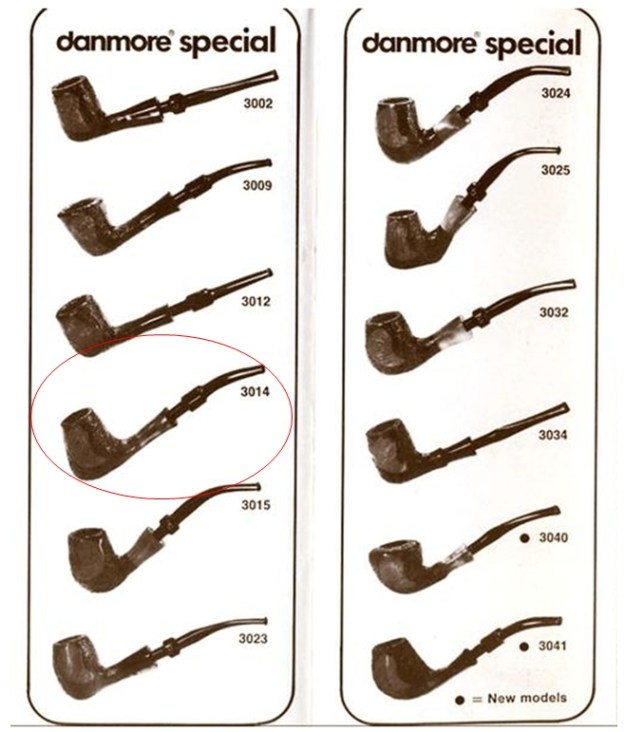
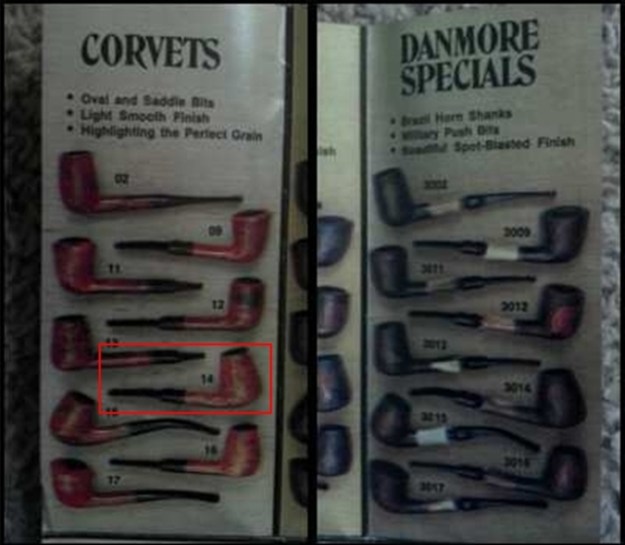
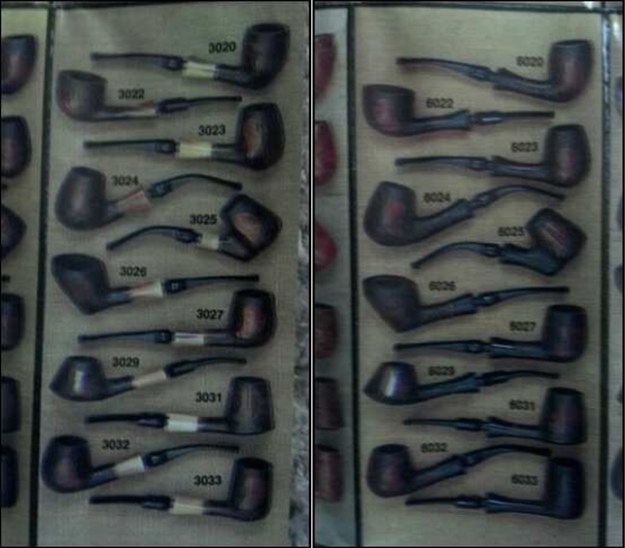
The article also included a Shape Chart that was courtesy of Doug Valitchka. I include that below as well. The shape of the pipe that I am working on is a variation on the 3014. It has a classic oval saddle stem rather than the more freehand looking one below. It also does not have the shank extension (https://pipedia.org/wiki/File:DanmoreCat.jpg). I have circled the shape in red to show which one is similar.I did a bit more searching online and found a copy of a brochure that was included in a box with a Danmore pipe on Redit in the archives. I was able to copy the photos of the pages of the brochure and have included them below. Have a look (https://www.reddit.com/r/PipeTobacco/comments/vclaj/does_anyone_know_much_about_danmore_pipes/). The Danmore I am working on is on the page labeled CORVETS. I have boxed in the pipe in red that I am working on. With that information in hand I knew what I was dealing with in terms of the stamping on the pipe. The pipe I have is the same shape as the one boxed in red – shape number 14 under section labeled CORVETS. The pipe was made for just a ten year period between early 1970s and the early 1980s. It seems that they have also been made since then by a third party. I believe this pipe was one from the original 10 year period by Hans Sørensen. Now it was time to work on the pipe.

With over 125 pipes to clean from Bob’s estate I am very glad for Jeff’s help cleaning them. He cleaned this filthy pipe with his usual penchant for thoroughness that I really appreciate. This one was a mess and I did not know what to expect when I unwrapped it from his box. He reamed it with a PipNet pipe reamer and cleaned up the reaming with a Savinelli Fitsall Pipe Knife. He scrubbed out the internals with alcohol, pipe cleaners and cotton swabs until the pipe was clean. He scrubbed the exterior of the bowl with Murphy’s Oil Soap and a tooth brush to remove the grime and grit on the briar and the lava on the rim top. The finish looks very good with great looking grain around the bowl and shank. Jeff soaked the stem in Before & After Deoxidizer to remove the oxidation on the rubber. When the pipe arrived here in Vancouver for the second stop of its restoration tour I was amazed it looked so good. I took photos before I started my part of the work.   I took some close up photos of the rim top and also of the stem surface. I wanted to show what an amazing job Jeff did in the cleanup of the rim top. I also wanted to show that the damage to the rim top was more extensive than I had originally thought. The thin rim top was burned and darkened with a few large nicks on the top and inner edge. The rim top was a nightmare of issues. I also took close up photos of the stem to show the lack of tooth marks and the light oxidation on the stem surface. You can also see gap between the stem and the shank end due to a bent tenon.        One of the things I appreciate about Jeff’s cleanup is that he works to protect and preserve the nomenclature on the shank of the pipes that he works on. The stamping on this one was very faint to start with so I was worried that it would disappear altogether with the cleanup. He was not only able to preserve it but it is clearer than shown in the earlier photos. I took some photos to show the clarity of the stamping. I have noticed that many restorers are not careful to protect the stamping in their cleaning process and often by the end of the restoration the nomenclature is almost destroyed. I would like to encourage all of us to be careful in our work to preserve this as it is a critical piece of pipe restoration! Since this is another pipe Bob’s estate I am sure that some of you have read at least some of the other restoration work that has been done on the previous pipes. You have also read what I have included about Bob Kerr, the pipeman who held these pipes in trust before I came to work on them (see photo to the left). Also, if you have followed the blog for long you will already know that I like to include background information on the pipeman whose pipes I am restoring. For me, when I am working on an estate I really like to have a sense of the person who held the pipes in trust before I worked on them. It gives me another dimension of the restoration work. I asked Brian if he or his wife would like to write a brief biographical tribute to her father, Bob. His daughter worked on it and I received the following short write up on him and some pictures to go along with the words including one of Bob’s carvings. Once again I thank you Brian and tell your wife thank you as well.

I am delighted to pass on these beloved pipes of my father’s. I hope each user gets many hours of contemplative pleasure as he did. I remember the aroma of tobacco in the rec room, as he put up his feet on his lazy boy. He’d be first at the paper then, no one could touch it before him. Maybe there would be a movie on with an actor smoking a pipe. He would have very definite opinions on whether the performer was a ‘real’ smoker or not, a distinction which I could never see but it would be very clear to him. He worked by day as a sales manager of a paper products company, a job he hated. What he longed for was the life of an artist, so on the weekends and sometimes mid-week evenings he would journey to his workshop and come out with wood sculptures, all of which he declared as crap but every one of them treasured by my sister and myself. Enjoy the pipes, and maybe a little of his creative spirit will enter you!

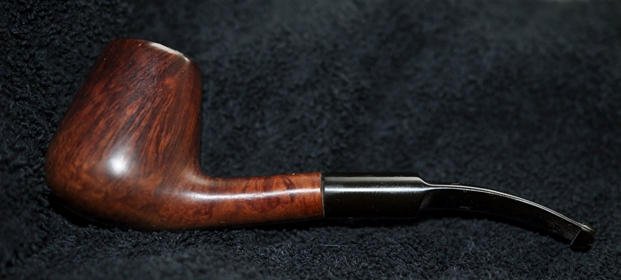
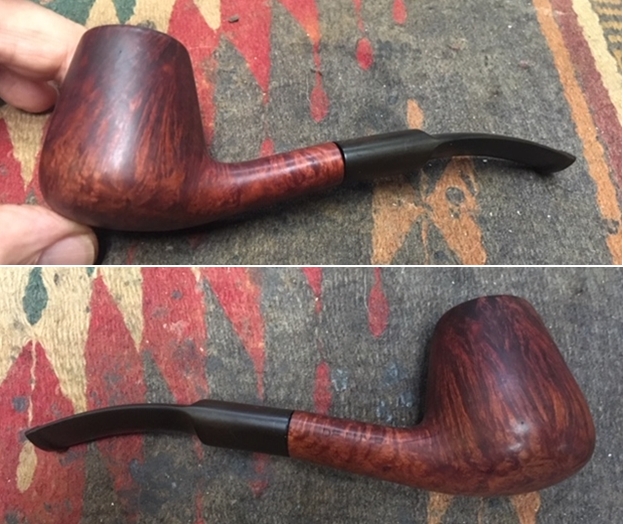
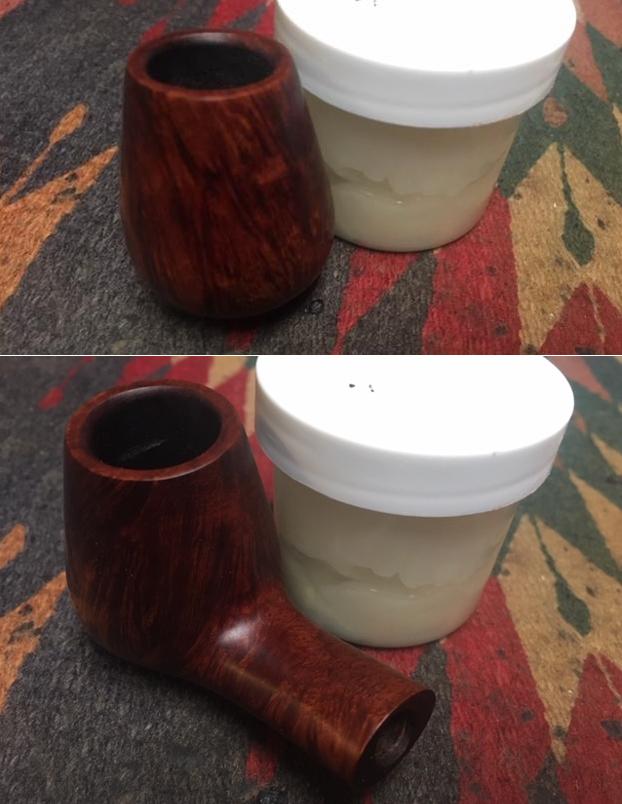
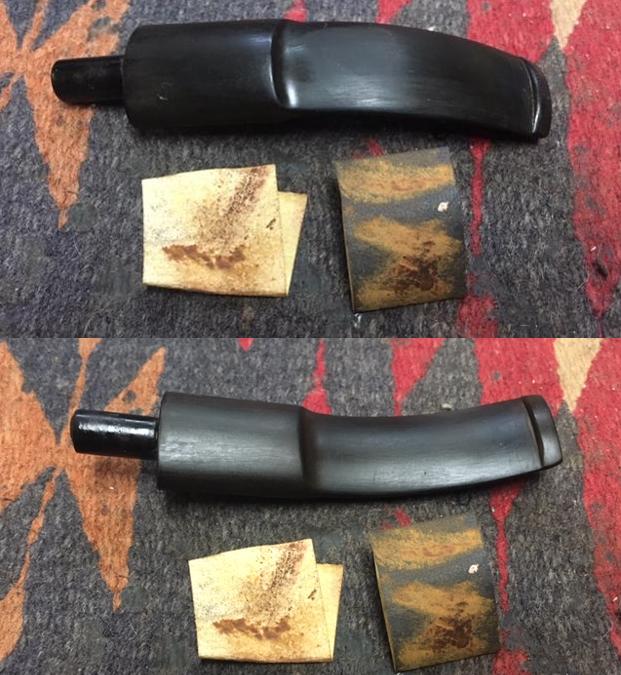
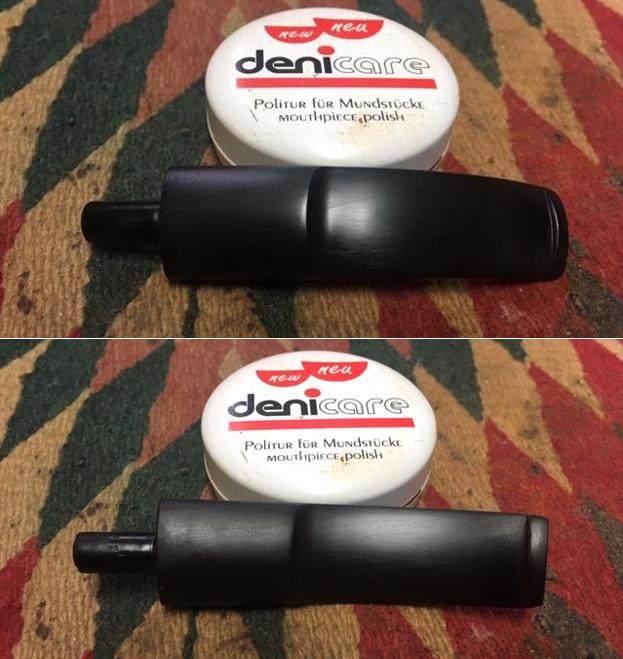
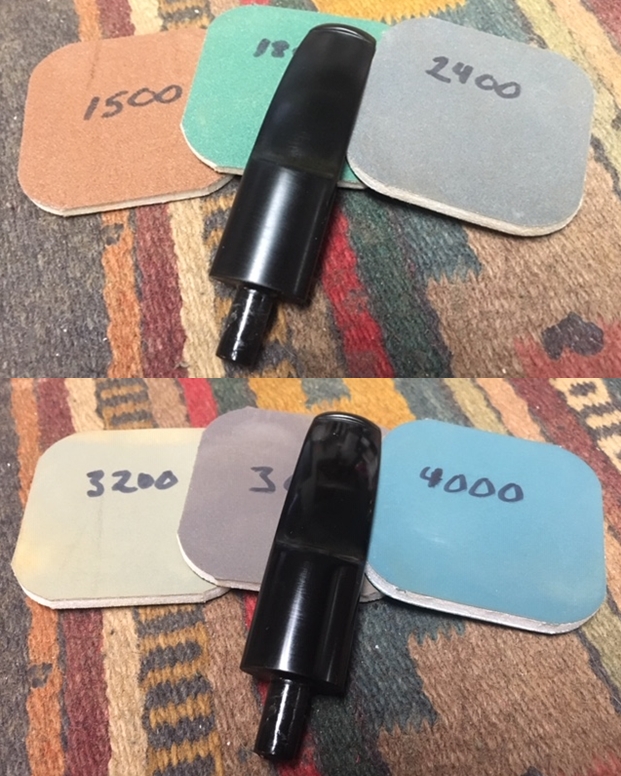
Now, on to the rest of the restoration of this beautifully grained Danmore Deluxe Volcano/Brandy. It was great that I did not need to clean the pipe. I decided to start the restoration process by addressing the poorly seated tenon. The first photo below shows the gap. I could see that the tenon itself had been bent and that caused the gap between the shank end and the face of the stem. I heated the tenon with a Bic lighter until the rubber was slightly flexible and then carefully inserted it in the mortise and adjusted the bend and fit. I held it in place until it cooled down. The fit was perfect. I took photos of the stem from the top and the side to show the repair.  I took the newly repaired stem off the shank and worked on the damage to rim top and the inner edge. From the extent of damage to the inner edge of the rim and the top of the bowl I decided I would need to top the bowl to remove as much of this damage as possible to restore the rim top back to a more pristine condition and bring the bowl back to round. I topped it on a topping board using 220 grit sandpaper. The photos show the topping process and the rim top after I had topped it to an acceptable point where the condition of the top and edges was good.  With the top cleaned up and repaired I moved on to address the inner edge surface itself. I used a folded piece of 220 grit sandpaper to bevel the edge inward to take care of the damage and thin the rim edge to its earlier dimensions. I followed that by sanding the rim top and edge with 400 grit wet dry sandpaper.I cleaned the briar with Mark Hoover’s Before & After Briar Cleaner to remove the debris left behind by the sanding of the rim top and to blend the repairs into the briar. I rubbed it into the surface of the briar and let it sit for 10 minutes. I rinsed the bowl off with warm running water to remove the product and the grime. The grain really began to stand out clearly. It was a beautiful piece of briar.  I stained the rim top and edges with a Cherry Stain pen to match the colour of the stain on the bowl. Once it was polished with micromesh sanding pads and Before & After Balm the stain would blend perfectly.I polished the briar with micromesh sanding pads to blend in the stain and to polish the briar and remove the scratches in the surface of the bowl, heel and shank. I wet sanded with 1500-12000 grit pads and wiped the bowl down between each pad with a damp cloth. I rubbed down the bowl with Before & After Restoration Balm. I worked it into the surface of the briar with my fingertips to clean, enliven and protect it. I let the balm sit for a little while and then buffed with a cotton cloth to raise the shine. Mark Hoover’s Balm is a product that I have come to appreciate and one I use on every pipe I have been working on. I set the bowl aside and worked on the stem. I sanded the stem with 220 grit sandpaper to break up the remaining oxidation and smooth out the file marks. I started the polishing with 400 grit wet dry sandpaper to remove the scratching. It is starting to look good.I have been using Denicare Mouthpiece Polish after sanding with 400 grit wet dry sandpaper for a while now as the grittiness of the product works to polish out the minor scratches in the vulcanite. I also have a few of these tins knocking around that I want to use up so it works for me to use it at this point.I polished the stem with micromesh sanding pads – wet sanding with 1500-12000 grit pads. I wiped the stem down after each sanding pad with Obsidian Oil. I polished it with Before & After Pipe Stem Polish – both Fine and Extra Fine. Once I had finished the polishing I gave it final coat of oil and set it aside to dry.   As usual at this point in the restoration process I am excited to be on the homestretch. I look forward to the final look when it is put back together, polished and waxed. I put the bowl and stem back together. I polished the bowl and stem with Blue Diamond to polish out the scratches in the briar and the vulcanite. I gave the bowl and the stem multiple coats of carnauba wax. I buffed the pipe with a clean buffing pad to raise the shine. I hand buffed it with a microfiber cloth to deepen the shine. The pipe polished up pretty nicely. The straight and flame grain really pop with the wax and polish. The shiny black vulcanite saddle stem is a beautiful contrast to the browns of the bowl. This Danmore Deluxe Volcano was another fun pipe to work on thanks to Jeff’s cleanup work. The pipemaker followed the grain in laying out this pipe to maximize the glory of the briar. The flow and feel of the pipe is appealing. The finished pipe is shown in the photos below. The dimensions of the pipe are Length: 5 ¾ inches, Height: 1 7/8 inches, Outside diameter of the bowl: 1 inch, Chamber diameter: ¾ of an inch. This beautiful pipe will be going on the rebornpipes store if you would like to add it to your collection and carry on Bob’s legacy. If not, I have a lot more of Bob’s estate to work on of various brands. Perhaps one of those will catch your attention. Thanks for reading this blog and my reflections on the pipe while I worked on it. This is an interesting estate to bring back to life.