Tag Archives: contrast staining

A Brigham One Dot Dublin with a Back Story


Blog by Steve Laug

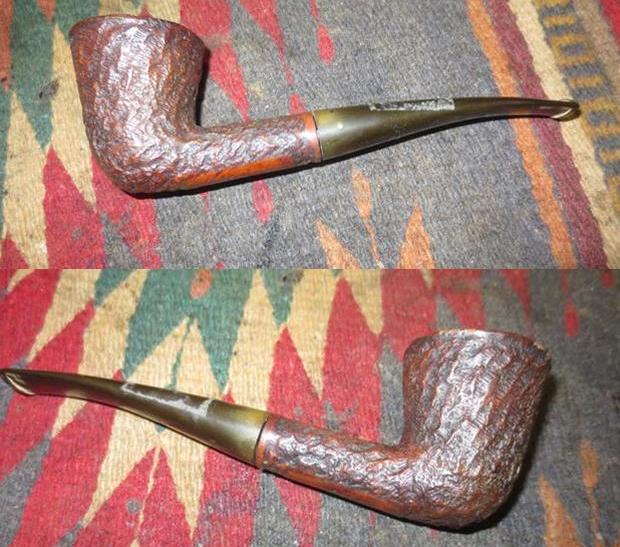
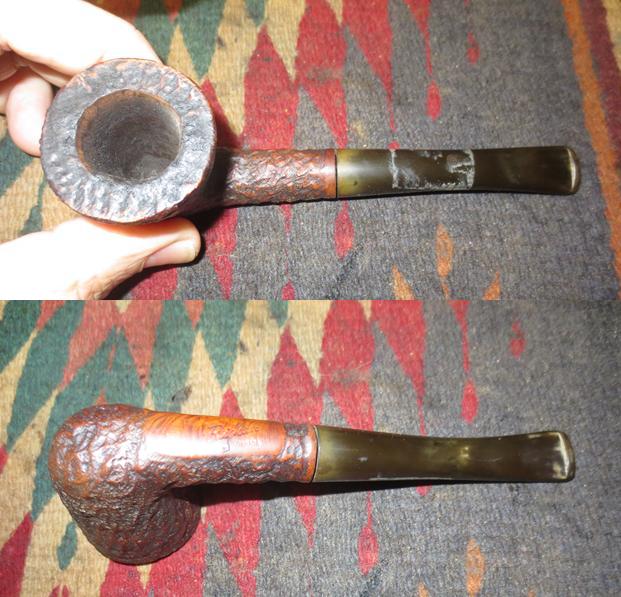
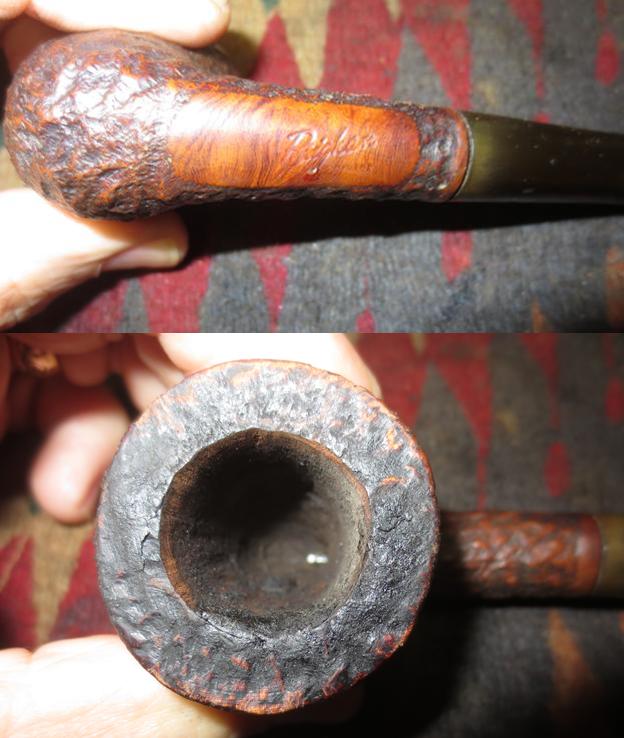
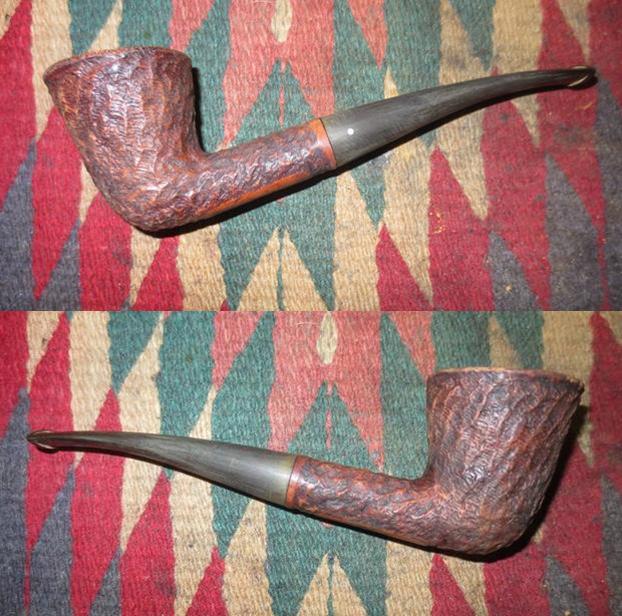
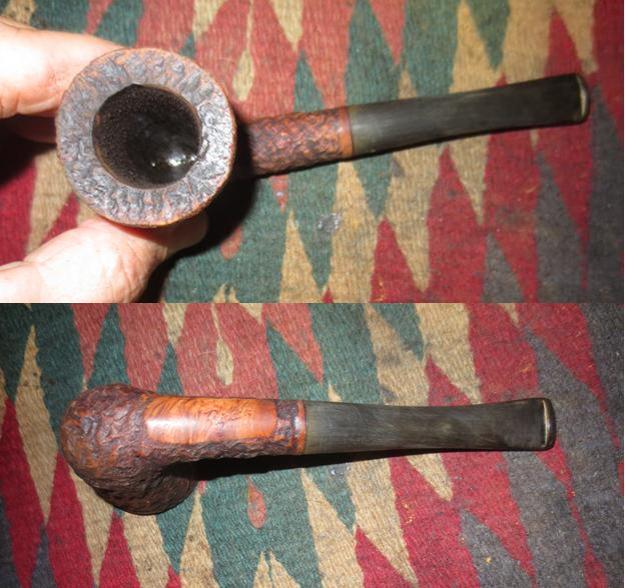
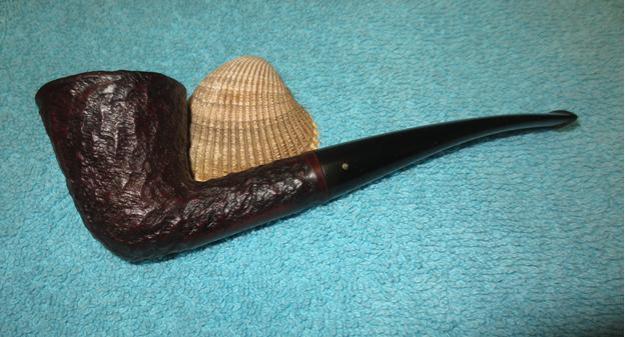
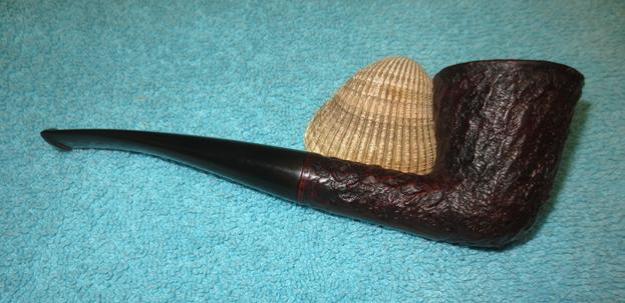
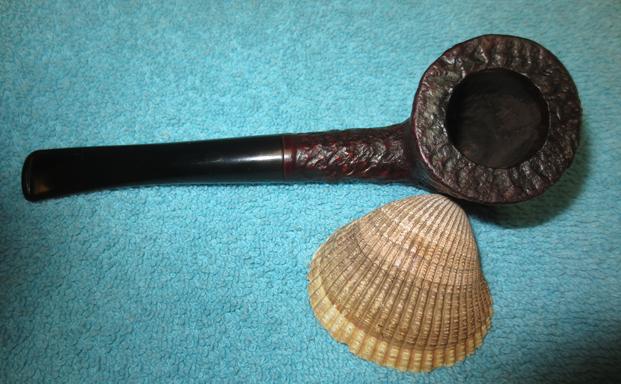
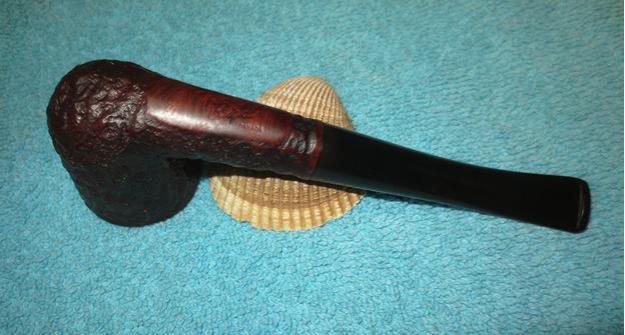
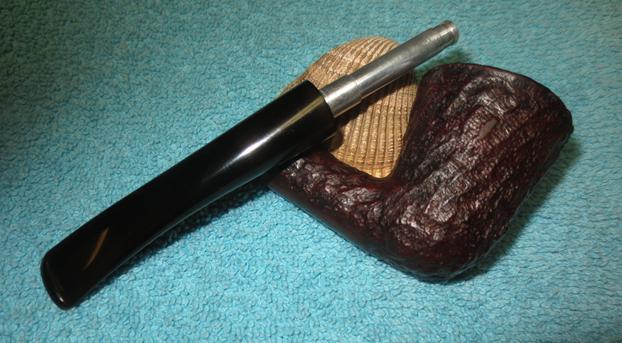
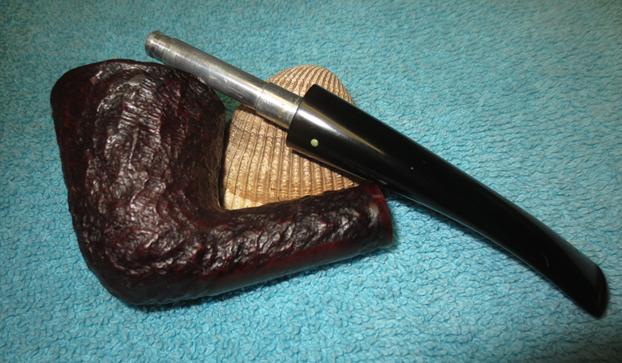
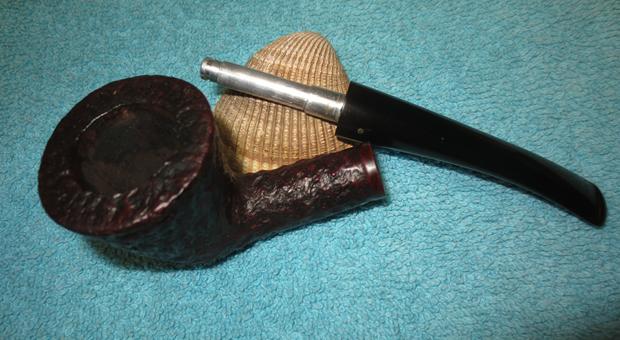
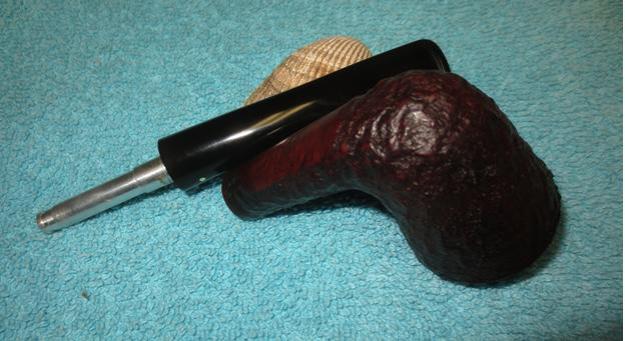
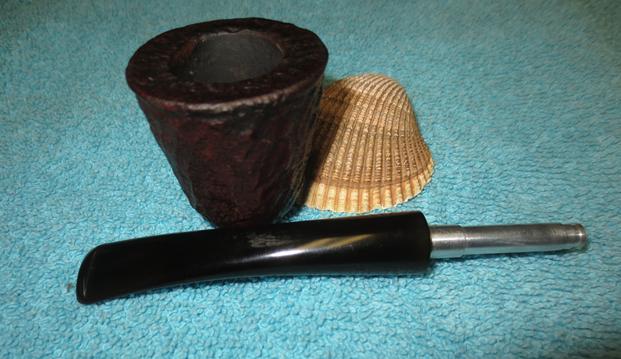
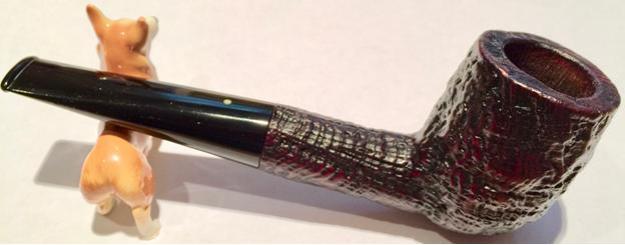
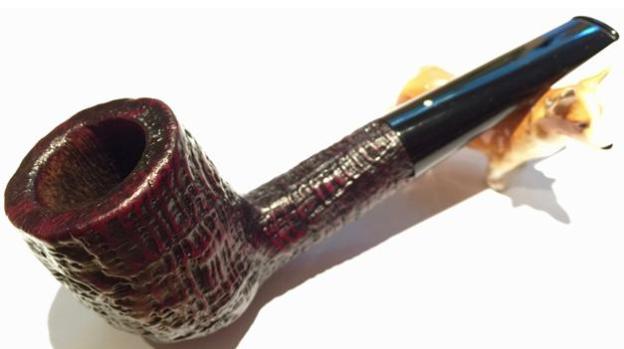
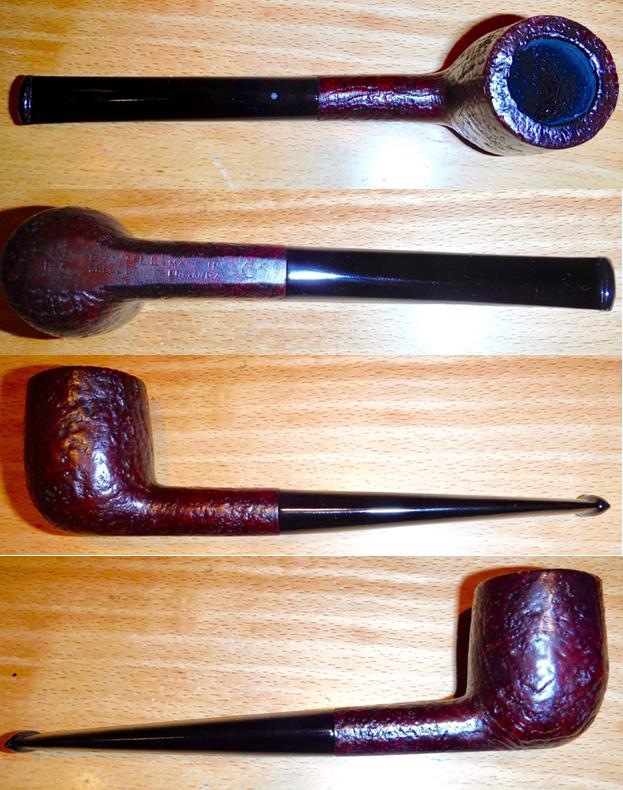
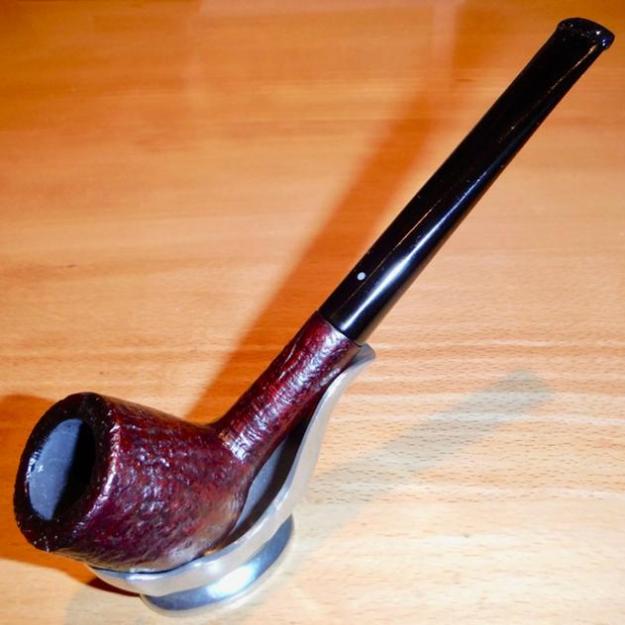
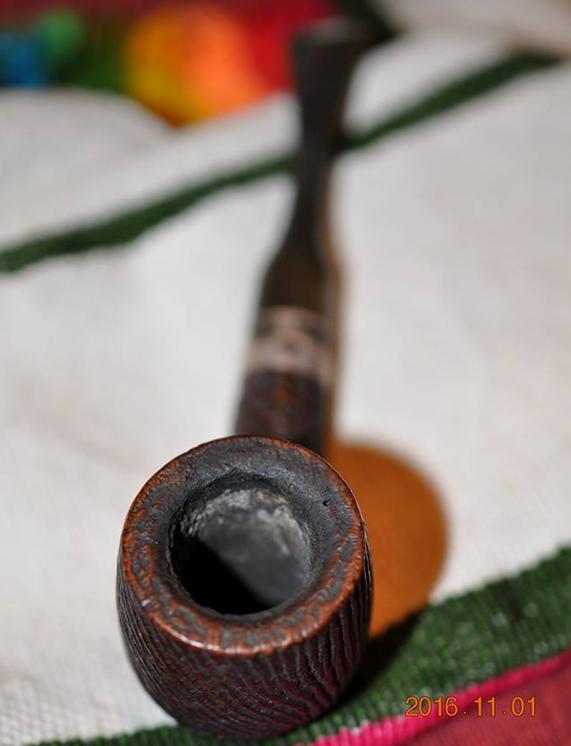
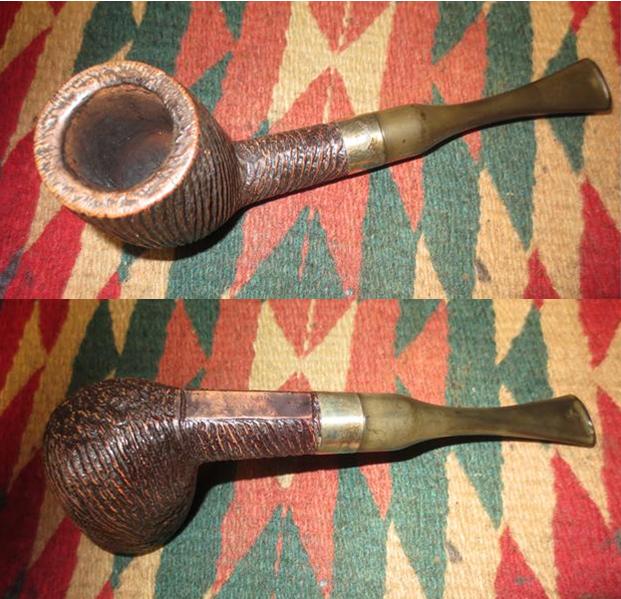
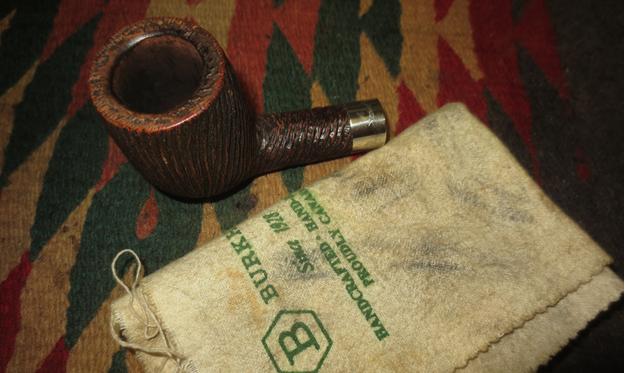
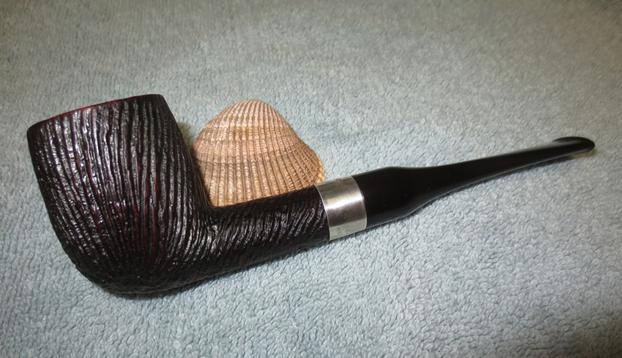
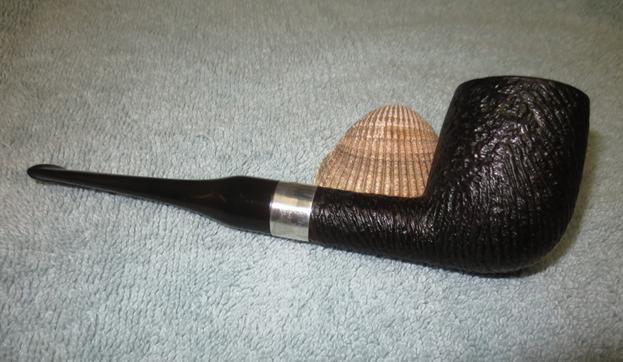
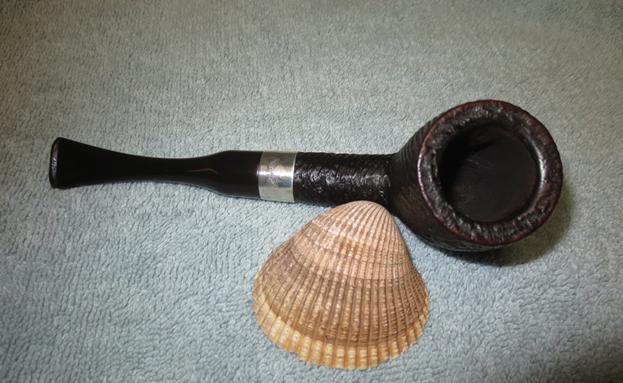
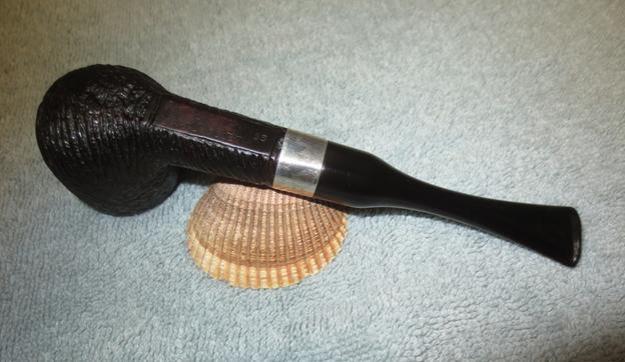
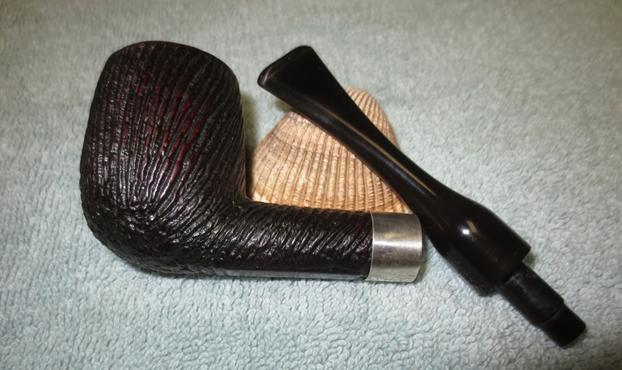
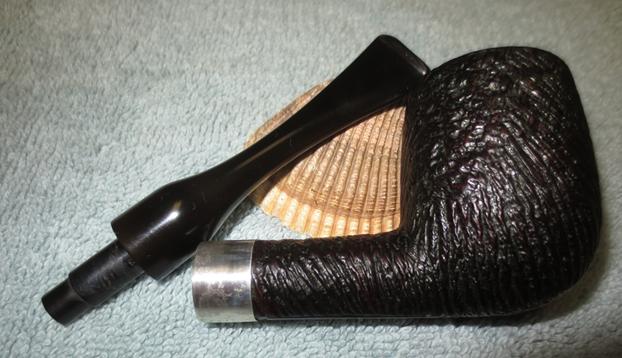
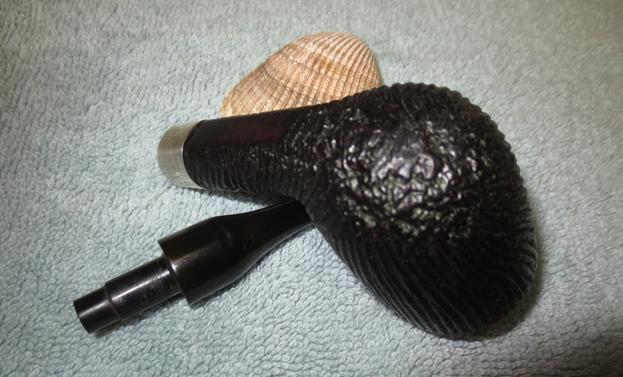
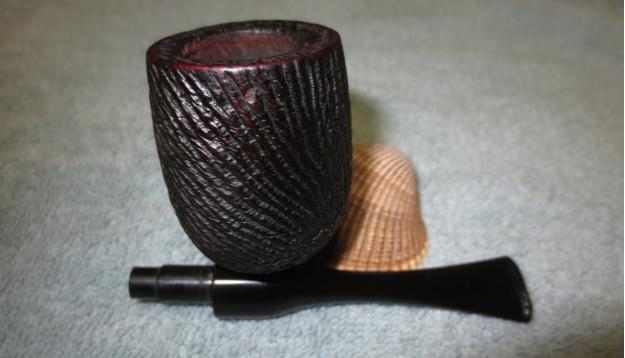
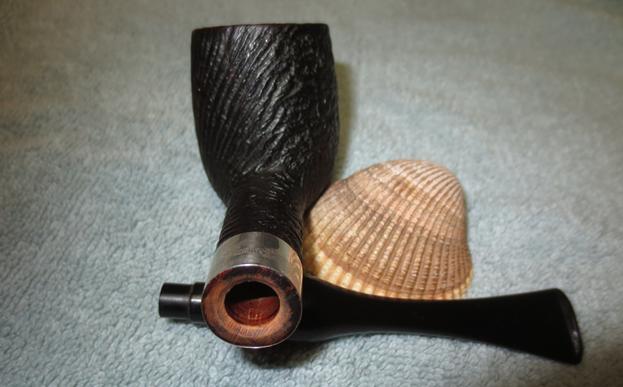
This old Brigham was the next pipe I brought to my work table. I got a message from Greg on Facebook saying he had been reading one of my posts about a box of estate pipes I had received and he was interested in adding this one to his rack. The pipe was a Brigham One Dot Dublin with a slight bend in the stem. It was an older one made before the manufacture of the pipes was moved to Italy. It has the standard aluminum tenon and filter mechanism of the Canadian made pipes. The finish is rusticated with the classic Brigham rustication on the bowl, rim top and shank. It has one smooth patch on the underside of the shank that is stamped Brigham in script over Canada. There is no shape number or other stamping on the shank.

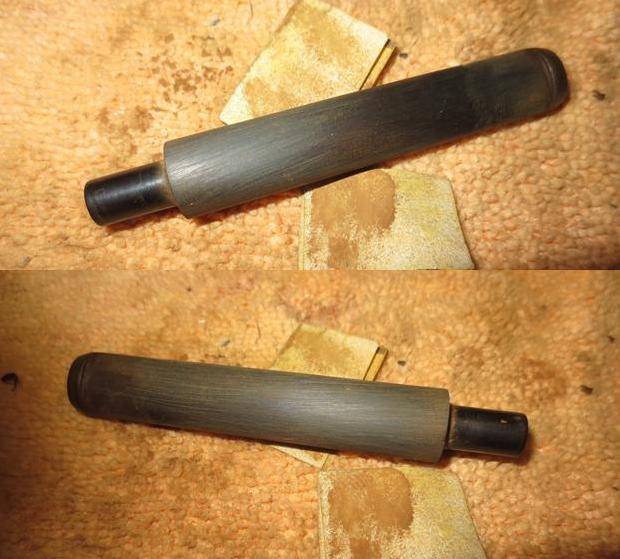
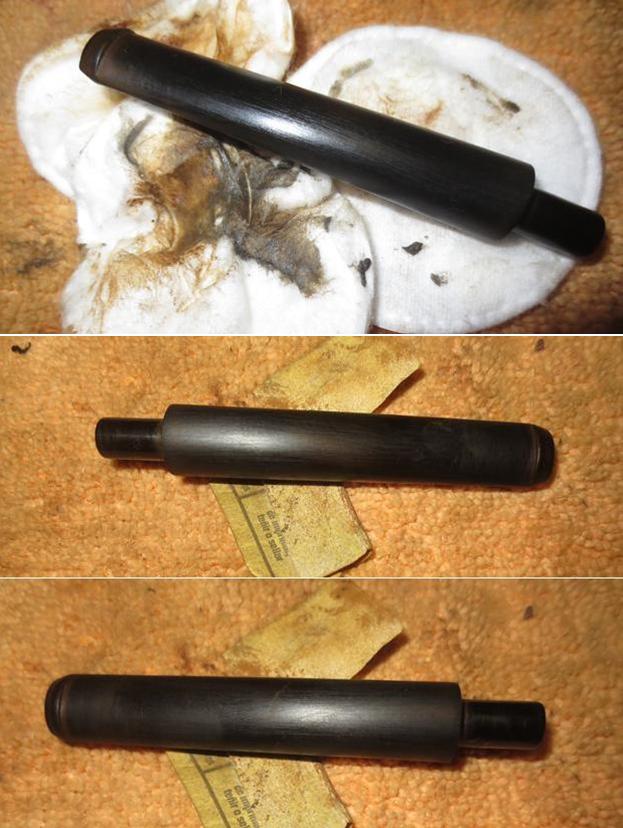
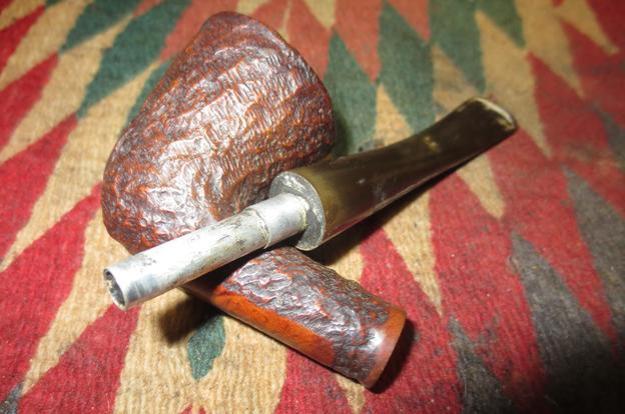
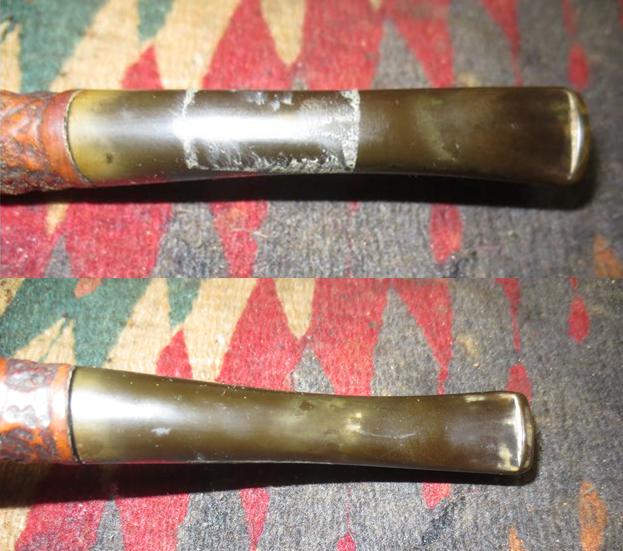
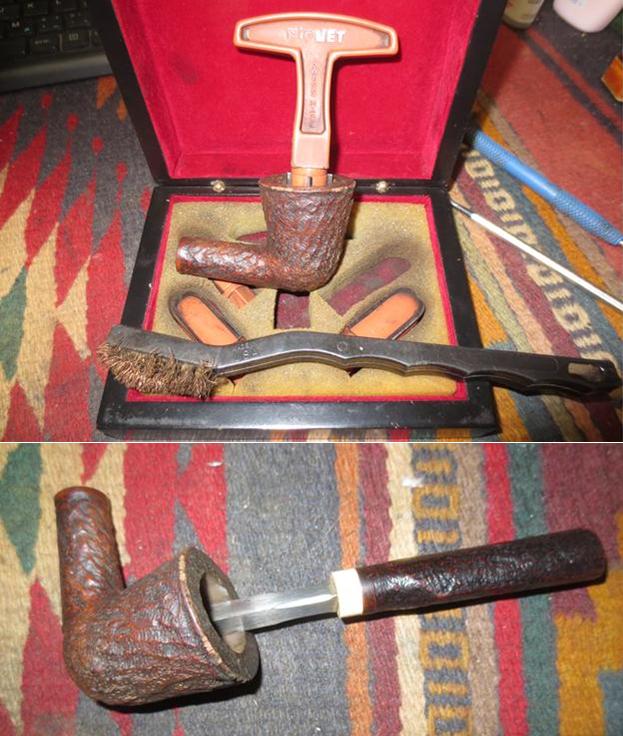
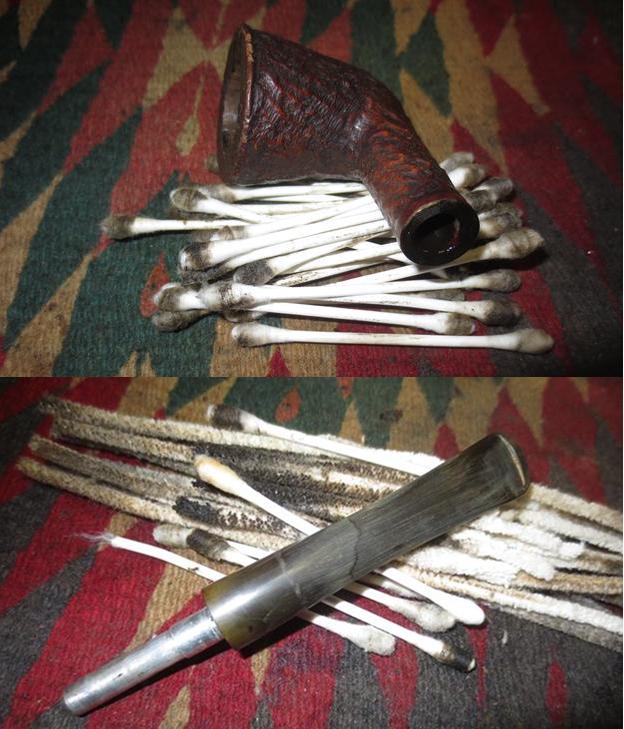
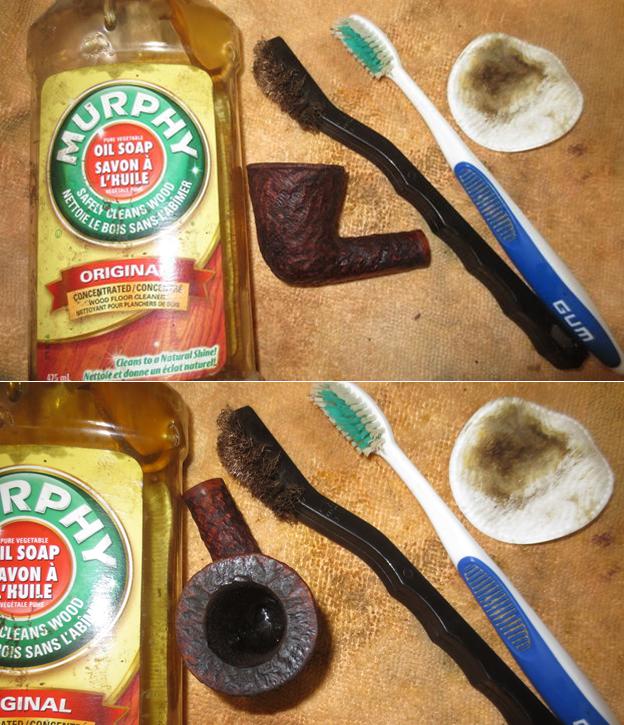
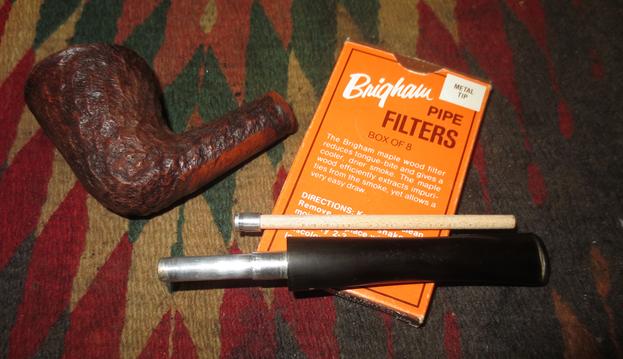
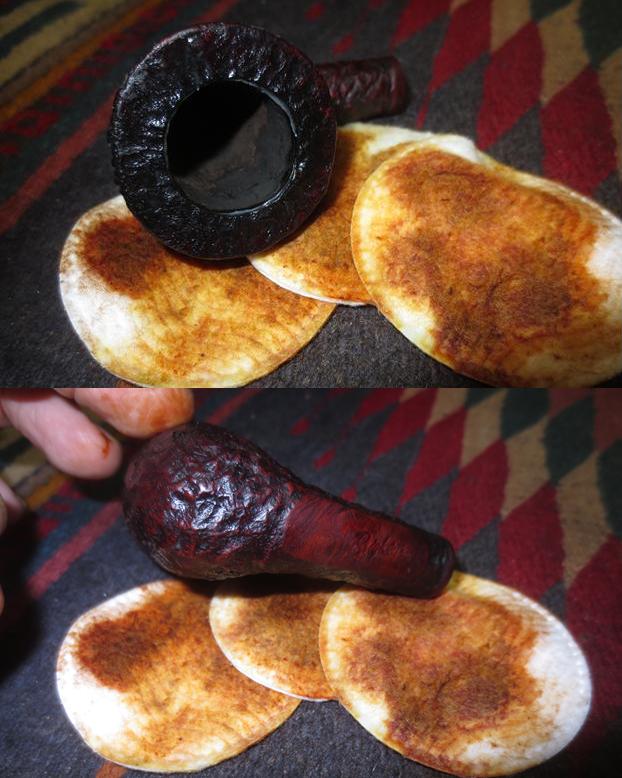
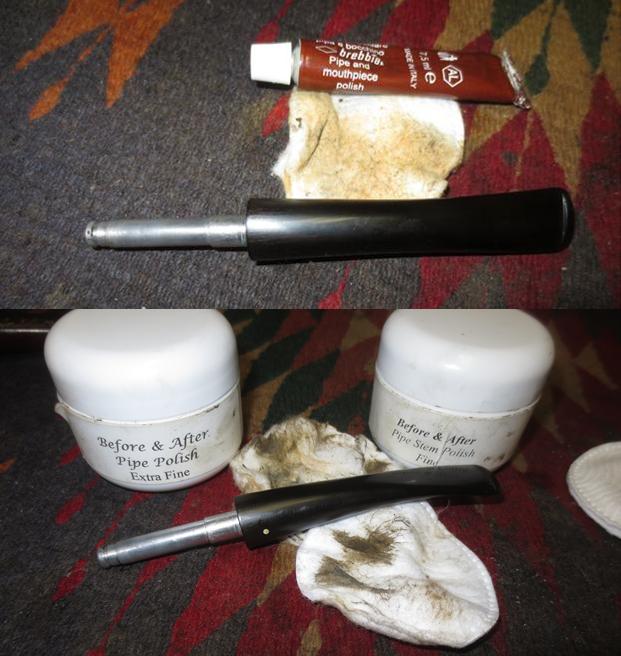
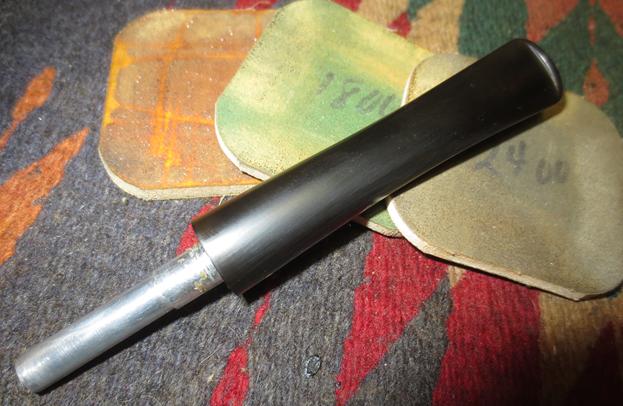
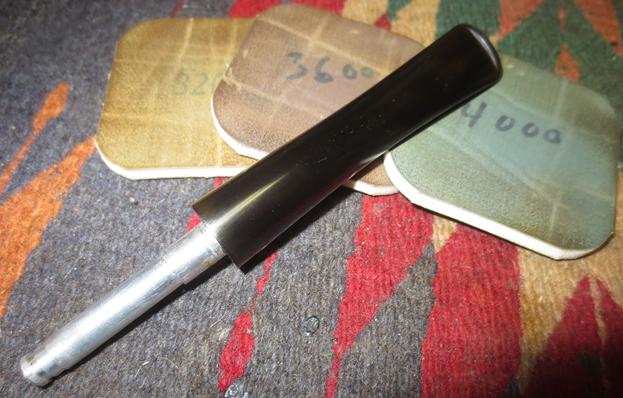
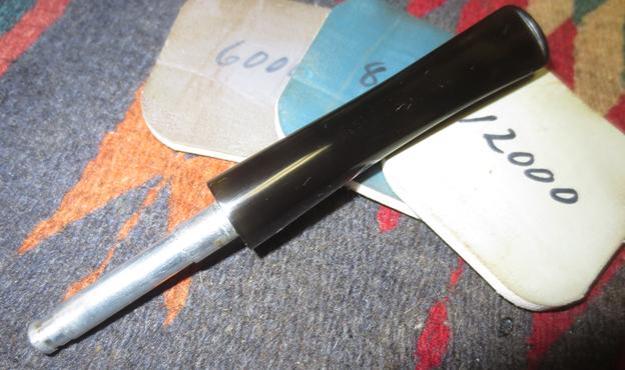
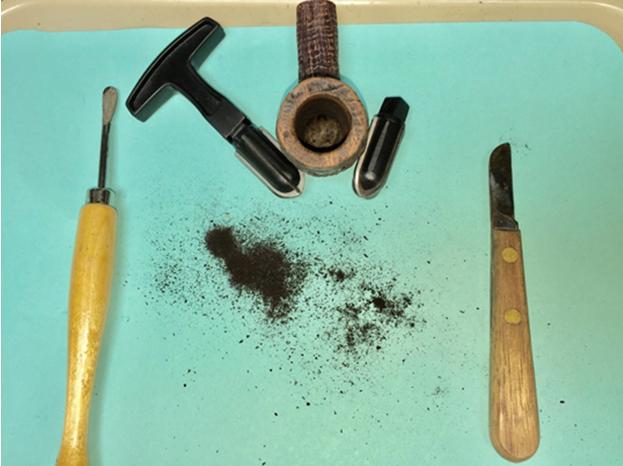
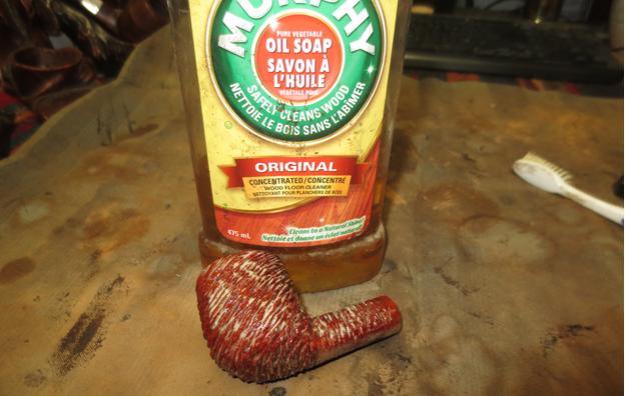
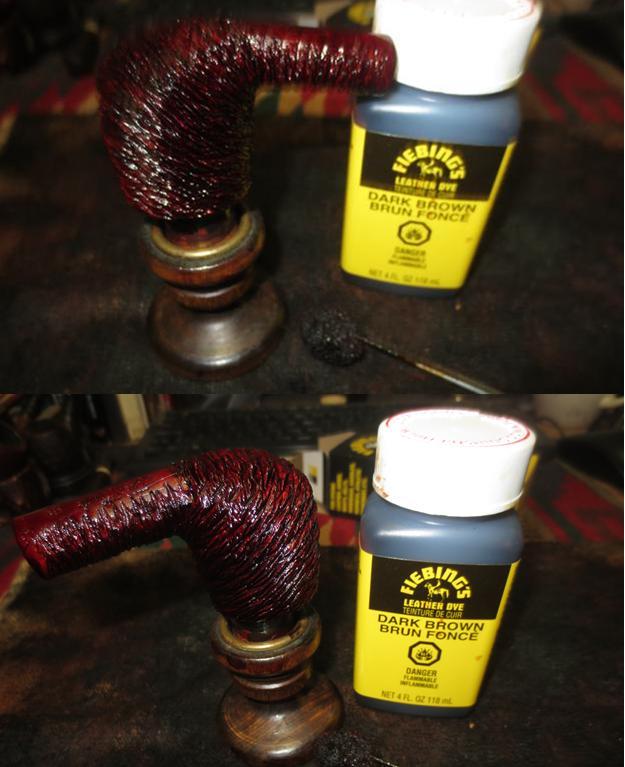
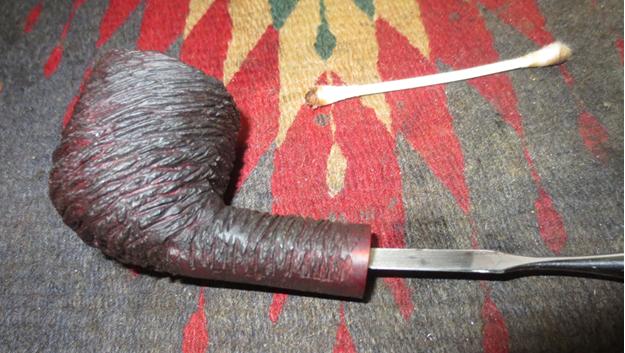
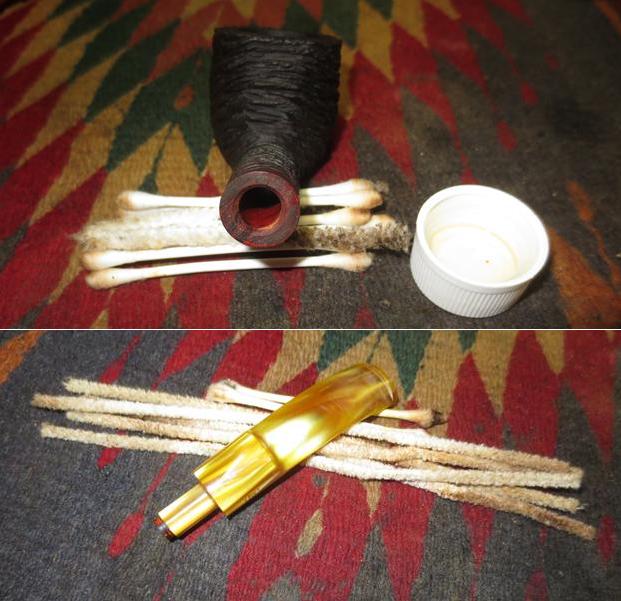
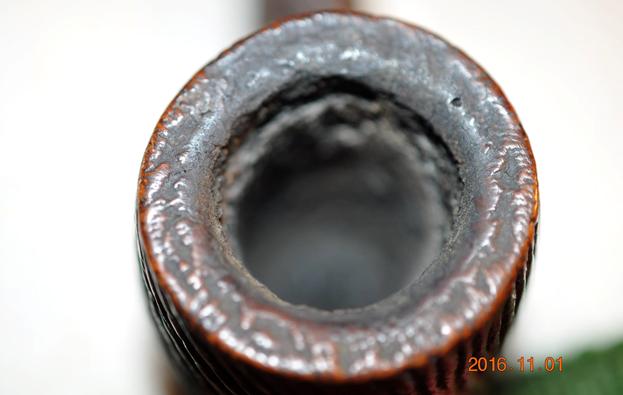
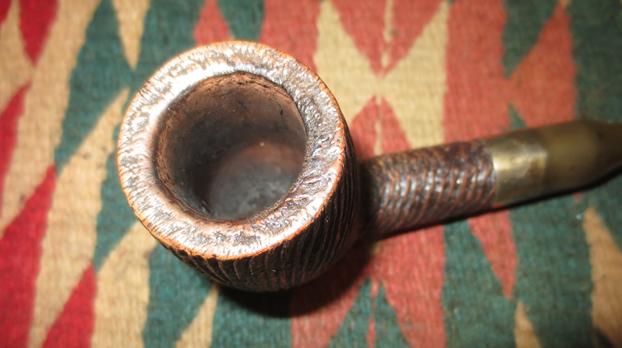
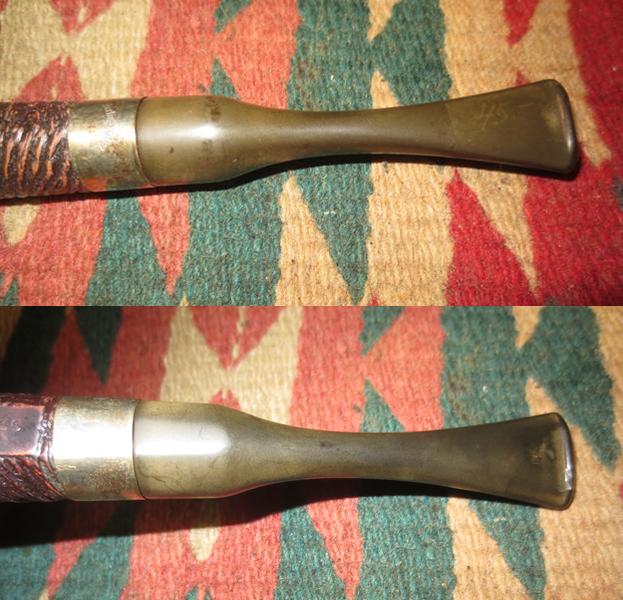
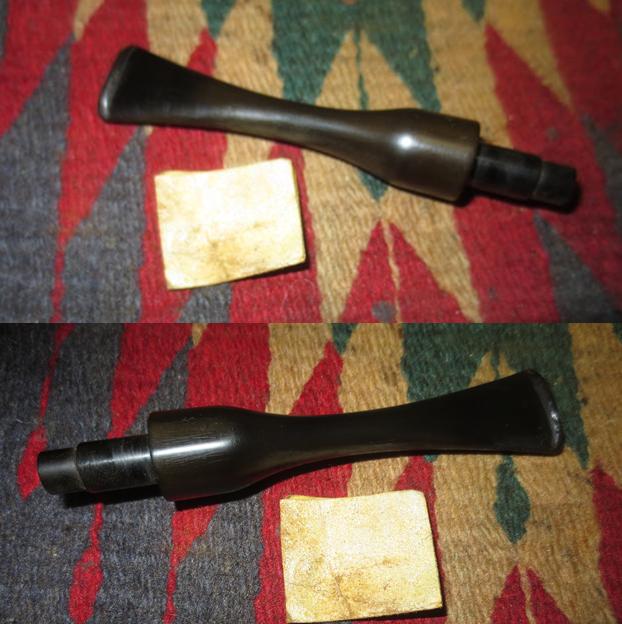
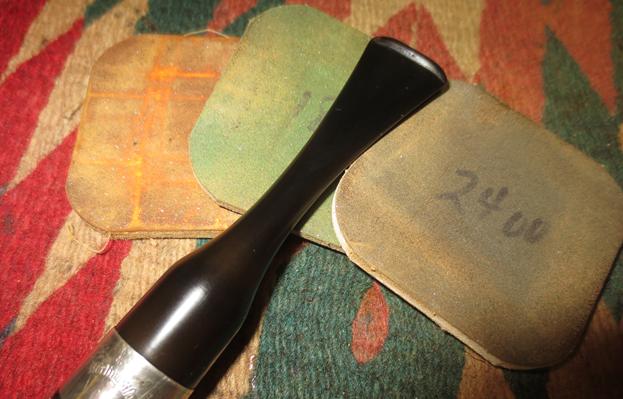
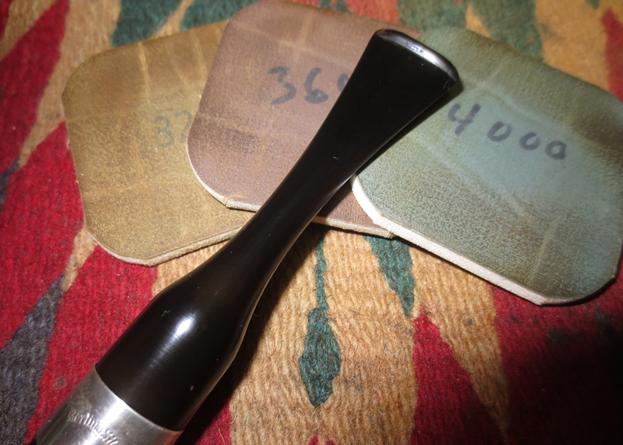
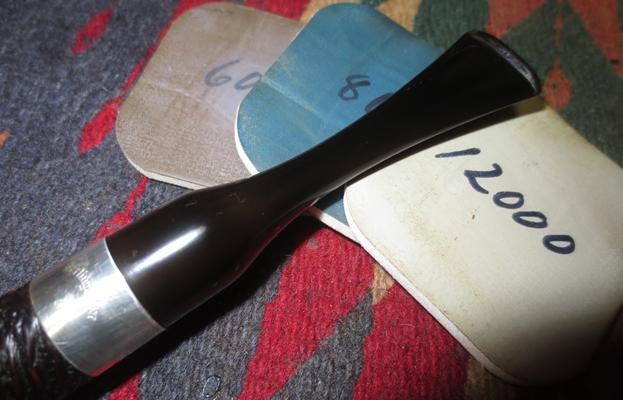
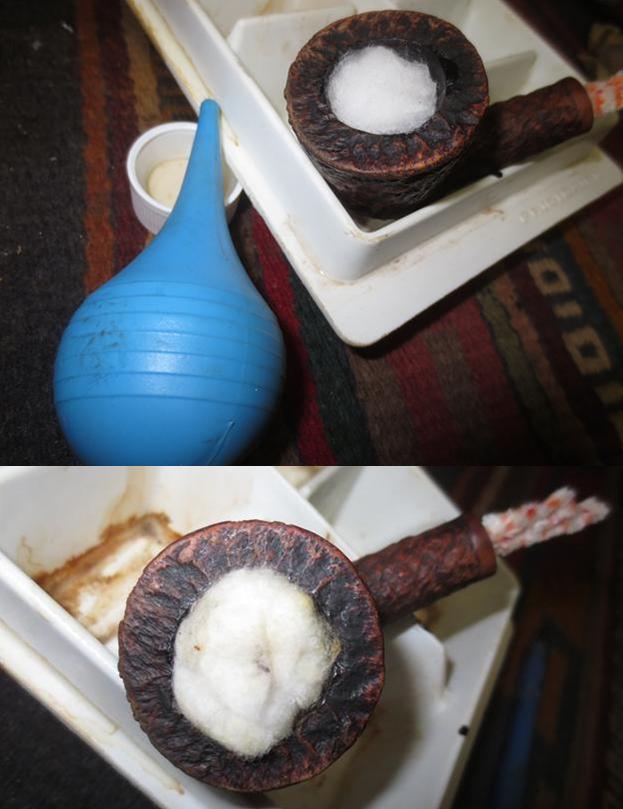
The pipe came to me in a box of pipes that I inherited from a friend in Ontario. He was an old Anglican priest and we had shared a lot about pipes and mutual calling over the 15 years that I knew him. I repaired, restored and sold many pipes for him and have a few of his previous pipes in my current collection. He was a great guy and he is alive in my memory each time I smoke one of his pipes. When the box came I found that there were 70+ pipes in the box and his daughter included a note that said her dad wanted me to restore them pass some of them on to others. This is the first from that lot that I have restored.The finish was very worn and the outer edges of the rim showed wear and damage. The inner edge worn as well but the bowl was still in round. The rim had a thick buildup of tars and oils that filled in the grooves and ridges of the rim top. The rim had some darkening of the finish as well. The stem was oxidized and had a sticky residue left behind by a price sticker. There were no tooth marks on the stem surface on either side next to the button.The stamping on the underside of the shank was clear but slightly worn. It reads Brigham in script at an angle from left to right and block letters, CANADA underneath. Charles Lemon of Dadspipes has written a helpful blog about dating Brigham Pipes by the style of the stamping on the shank. I turned to that blog to look up information on this particular pipe and see if I could identify the time period. Here is the link; https://dadspipes.com/2016/10/03/brigham-pipes-a-closer-look-at-dots-dates-and-markings//. According to that info this pipe comes from the late Canadian Era 1980-2000. The second close up photo below shows the rim and the cake in the bowl. The end of the Brigham system can be seen poking out of the airway in the photo as well.The next photo shows the tenon and system tube. It was incredibly dirty with a lot of tar and oil on the inside. The pipe had been smoked a long time without the filter in place and there was a lot of buildup in the tube and stem. The shank was also very dirty.The next two photos show the condition of the stem. The oxidation pattern and the sticky label gum on the surface are very visible on the stem. The stem is also clear of tooth marks or chatter on the surface near the button.I reamed back the cake with a PipNet reamer and a Savinelli Fitsall pipe knife. I used a brass bristle brush to knock off the tarry buildup on the rim top and clean out the crevices and grooves in the rustication.I decided to clean out the interior of the mortise, shank and airway in the shank and stem before going any further with the exterior. I used alcohol, pipe cleaners and cotton swabs to scrub out those areas and scrubbed until the pipe was clean. I wiped down the surface of the stem to remove the sticky gum left behind by a label on the top side of the stem.I scrubbed the surface of the briar with Murphy’s Oil Soap, toothbrush and a brass bristle brush to clean out the grooves and cleaning off the dirt, oil and debris on the briar. The bowl and the rim looked significantly better once I had rinsed it off with running water. It was dry and the stain was lightened but it was clean. I decided to work on the stem first so while I did I stuffed the bowl with cotton balls and used an ear syringe to fill the bowl with alcohol. I folded a pipe cleaner and plugged the airway so that the alcohol could draw out the oils in the briar. The second photo shows the cotton after it had been sitting for four hours. When I took the cotton balls out at the 6 hour mark they were exactly as they looked at the 4 hour mark. I was a bit surprised that they were not darker. But then again my old friend smoked primarily Virginias – in fact I don’t think he ever smoked aromatics in the time I knew him.I took out a new maple wood Brigham filter for the system and took a photo of the pipe at this point in the process. I still need to stain the bowl but it was looking better and it smelled and looked clean.I stained the bowl with a dark brown aniline stain and flamed it to set it in the grain. The characteristic blue flame that burns the alcohol out of the stain setting it deep in the grain is a beautiful site to my eyes. I repeated the process several times until the coverage was correct.I wiped the bowl down with alcohol on cotton pads to make a bit more transparent. I wanted the contrast that had originally been on these old Brighams to show through. There was enough dark stain in the deep grooves of the finish to contrast nicely with the new stain coats I gave the pipe. I rubbed the stem down with Brebbia Pipe and Mouthpiece Polish and some Before & After Pipe Stem Polish to remove the oxidation in the vulcanite. It lifted a lot of the oxidation and what was left behind was minor.I polished the stem with micromesh sanding pads – wet sanding with 1500-2400 grit pads and dry sanding with 3200-12000 grit pads. I rubbed the stem down with Obsidian Oil after each pad and gave it a final coat of oil after the 12000 grit pad. I set the stem aside to dry. When I finished there still appeared to be a little oxidation at the tenon end of the stem. I was not sure if it was the light from the flash or reality so I took it to the buffer and buffed that area with red Tripoli and repeated the last three micromesh pad grits. I buffed the pipe and stem with Blue Diamond to further polish it. I buffed the stem with carnauba wax and gave the bowl multiple coats of Conservator’s Wax. I buffed the pipe with a clean buffing pad to raise the shine and with a microfibre cloth to deepen it. The finished pipe is shown in the photos below. It is a beautiful pipe and even better in person. Thanks for looking.
 

Dent Steaming a 1932 PATENT DUNHILL T197 Billiard with a VERNON STEM


Blog by Henry Ramirez

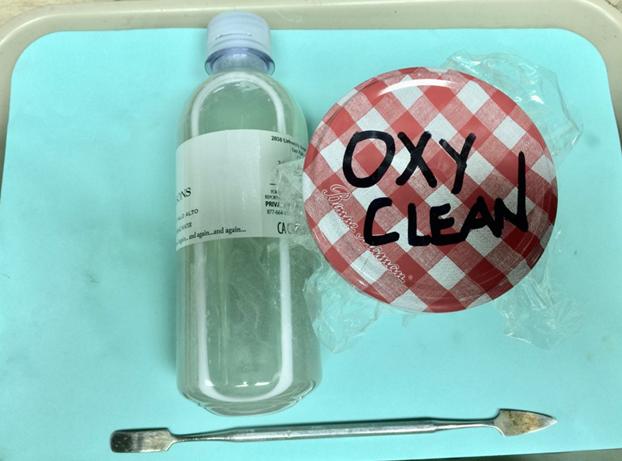
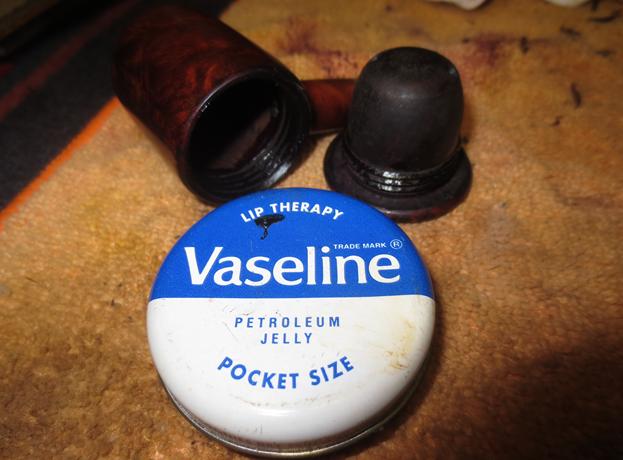
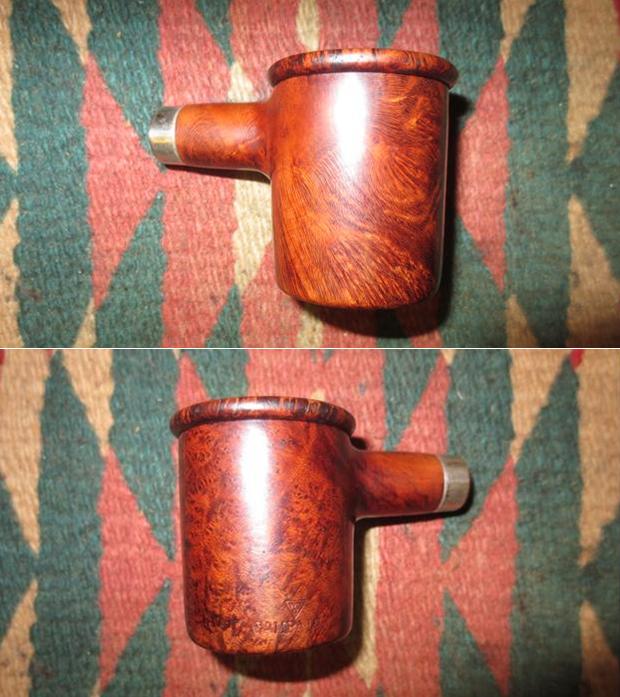
Saw this mousey looking pipe with a clicker stem on EBay.  Nobody seemed to want it so I took it home to practice my dent steaming.  The stem attaches with a loud click and some research told me it was named after Vernon Dunhill, who was responsible for the fitment’s design.  It was designed  to allow the stem to be separated from the bowl even when the pipe was hot from recent smoking.  It had the earlier square tip tube rather than the later angled tip. The stem had a funky downward cant before the button and it strongly resembled my Kaywoodie Allbriars.  Boy they nailed that briar stain to the oxidized Cumberland stem color! The bowl rim was dented/chipped and the surface scratched. The stem and the button were in fine shape so the usual soak in Oxyclean to remove the smegma followed by a trip to the oven to allow the stem to straighten itself.The metal tube is removable from the keeper which is part of the stem.  I have seen examples of the opposite where the keeper is integral to the shank.  These pipes seem to have been mostly billiard Cumberlands but some exceptions exist.  Both the tube and the keeper were polished with fine brass wool.  I did reface the tube with a carborundum disk.The shank stampings were crisp but there seemed to be personalized script on the bottom long polished off.The dent on the bowl’s rim was the major distracting feature.  I didn’t want to top the bowl and the briar dust/CA mixtures never seemed seamless to me.  So I tried to fatten up the cellulose fibers with hot steam using my hand held steamer.  This worked somewhat and had the advantage of pin pointing the area to be steamed. Not satisfied, I decided to fall back on the hot iron on a wet kitchen towel technique.  This did a better job, I think because it affected a larger area.  The problem then became one of restaining this larger area to match the rest of the pipe.
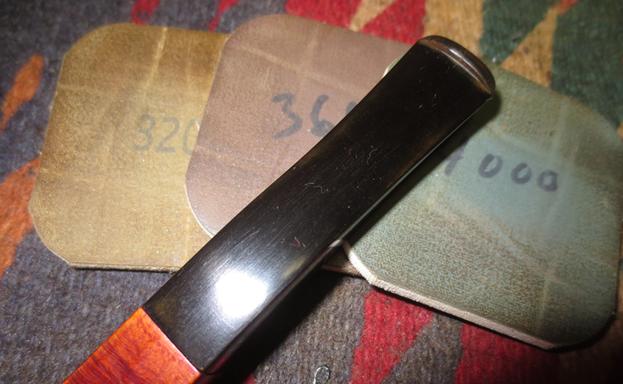
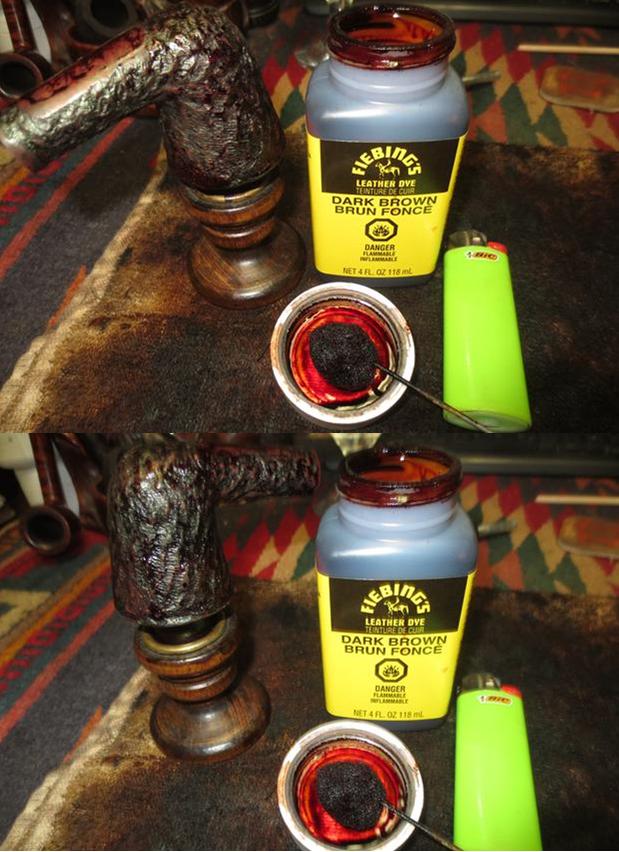
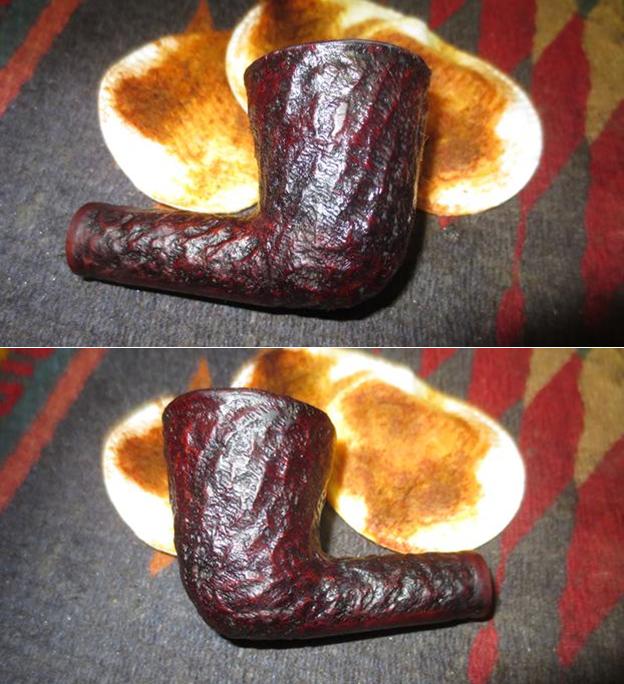
Restaining the pipe became somewhat of a chase your tail love’s labor, trying light brown, medium brown and the finally dark brown in various concentrations followed by isopropyl alcohol on a gauze sponge scrubbings.

So, I think I’m going to someday re-stain the whole pipe dark brown to try to better match the Cumberland stem while learning to love the residual dent on the rim.  The only home run here was the straightening of the stem to its original straight shape.  Thanks for looking, regards, Henry.

Stem Button TIME SAVER on a 1940’s Dunhill LB


Blog by Henry Ramirez

I was ghosting through Ebay listings looking for a cracked shank to experiment with when this old classic appeared.  The auction was won for a song because in addition to a cracked shank, the year stamping had been buffed off the shank. The usual whole lotta cake and dented stem story.I started with the stem, which was really in great shape.  I have come to love the stumpy profile of the patent LB’s with their constricted contour button.  An Oxyclean bath was followed by an isopropyl alcohol scrubbing with a shank brush and pipe cleaners. I wanted to use heat to raise the bite marks as much as possible to not only decrease my work load but to minimize the inclusion of foreign filler. To this end I also wanted to learn the proper temperature needed to reproduce my results consistently.

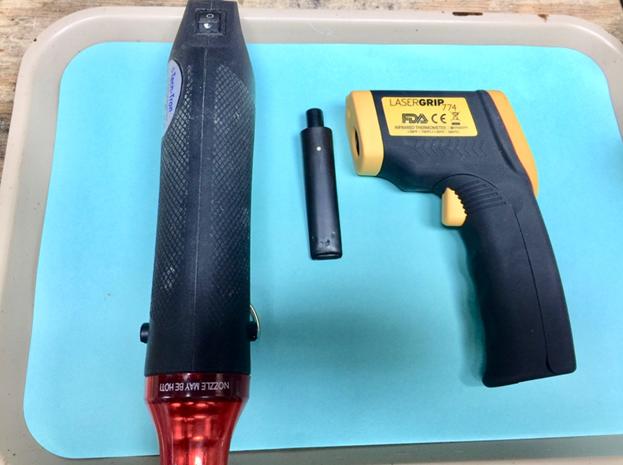
Using a heat gun, I took my time and warmed up the vulcanite until my nose told me it was getting close to burning.  If that happens the surface becomes a porous charred stinky mess!  I quickly used a laser temperature gun to obtain a surface reading of 275 degrees F.  Amazing how quickly the surface cooled off once the heat was removed.I was not impressed by the amount of rebound and it looked like filling and filing was in my future.

Having nothing to lose, I pressed my wife’s oven into service, knowing that I could set the temperature substantially higher than previous attempts without fear of ruination. I set the oven temperature at 265 degrees F to have a 10 degree safety zone and watched as the whole stem “stretched out”.  This was more like it! The dents were now depressions that needed the light to shine just so to be seen.  Little CA and polishing was needed.

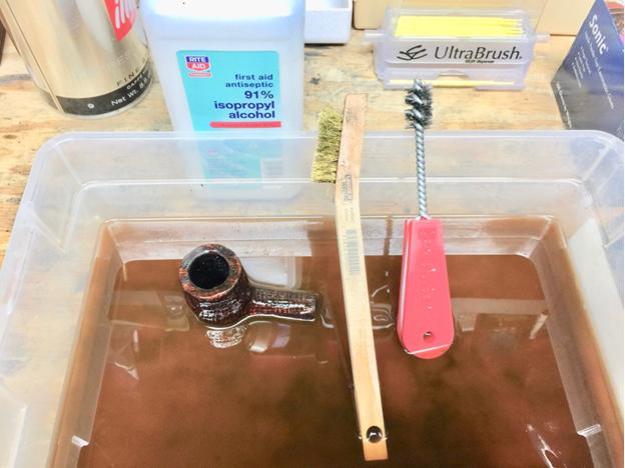
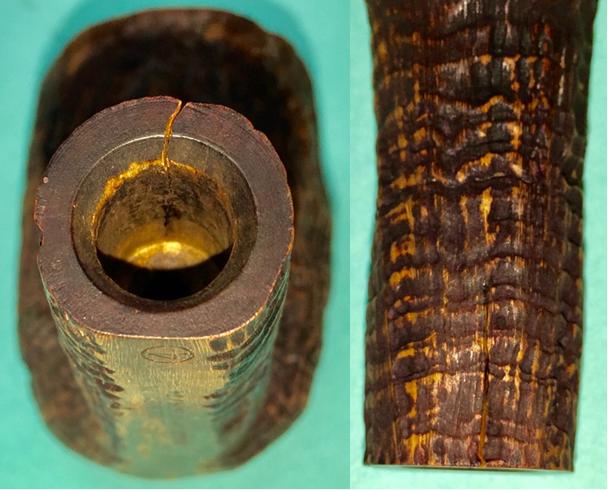
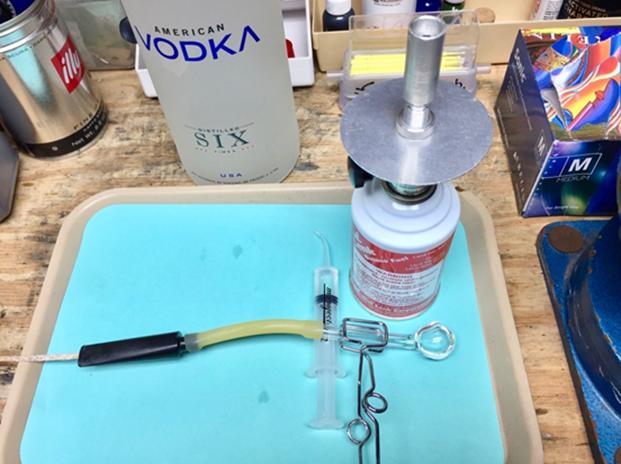
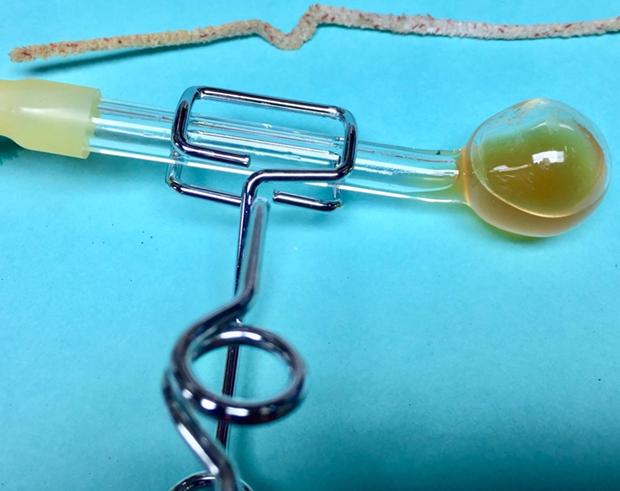
I should mention that these values are for older Dunhill vulcanite only.  The composition of vulcanite has changed over the years, according to some posts I’ve read, and I’ve noticed it in the depth of polish ability.Now it was the time to clean and evaluate the briar. While I ream the mortise and bowl I am wishing that I had Steve’s magical Savinelli Pipe knife. Boy, those things are rarer than hen’s teeth and this old cake is super hard. That is followed by total immersion in an isopropyl bath with various scrub brushes stripping the briar. I couldn’t save the original finish because the shank crack needed to be clean and open as much as possible for the bonding. One of the perks of the alcohol bath is that after the bowl dries out, if there is any residual cake stuck to the chamber walls, it shrivels up and is easily removed.The shank crack was now very evident but the year stamping was not.Getting back to the stem, I wanted to know if the alcohol retort was worth the hassle.  I had been as meticulous as possible with the pipe cleaners and cold alcohol.  The color of the used alcohol in the distillation flask tells the story, close but no banana! I could now address the cracked shank.  I had previously repaired such a problem using a micro-screw and bonded dental composite resin.  I was concerned that threading the screw into old dry briar could start micro-fractures and crazing.

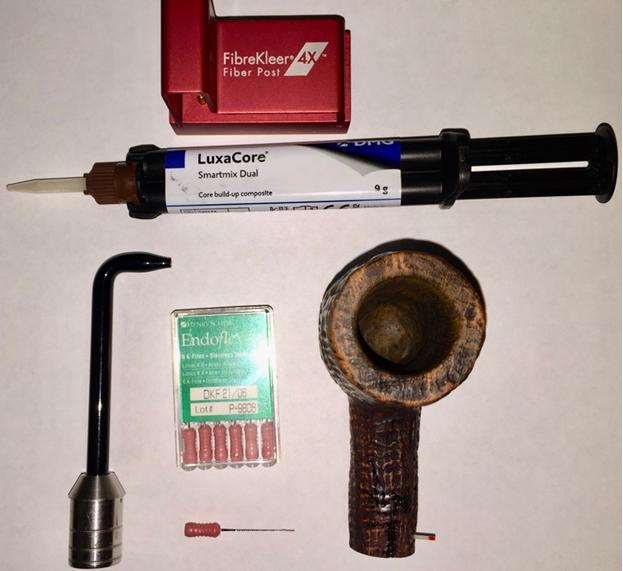
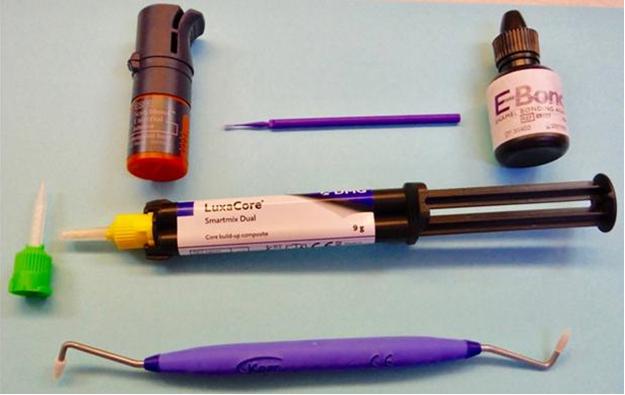
This time I elected to drill a channel spanning the crack and passively bond a post fabricated from longitudinal glass fibers encompassed in a strong composite resin matrix.  This would also provide some flex in the repair to accommodate the dimensional changes that briar goes through because of temperature changes during smoking.

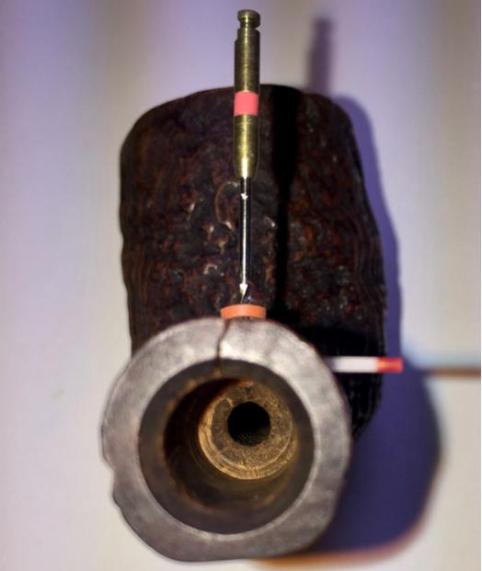
At this time I also drilled a post hole at the end of the crack to prevent further spidering.  Because the crack was significantly wide I made sure to introduce my resin with a size 06 endodontic file.  I had planned to use a C clamp to close the gap but I chickened out when finger pressure did nothing.  Not sure how to make briar temporarily more flexible….

After filling the post hole and cementing the fiber post with dual cure composite resin, I trimmed off the post and blacked out the white resin with black CA.

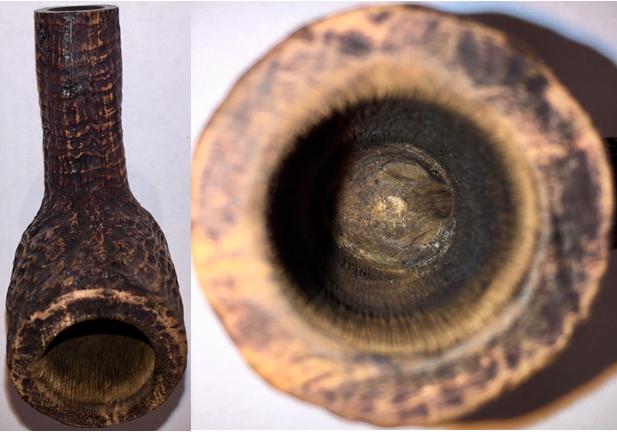
Before beginning to start the staining process I wanted to open the pores of the cellulose to not only gain greater absorption of the dye but also improve the briar’s capacity to absorb tars for a sweeter smoke.  I had noticed such a phenomenon with the Missouri Meerschaum corn cob pipes.

I found that this particular wheel had already been invented by the folks who refinish wooden decks.  I tracked down some relatively non-toxic materials which did the job and whose run off wouldn’t hurt plants.

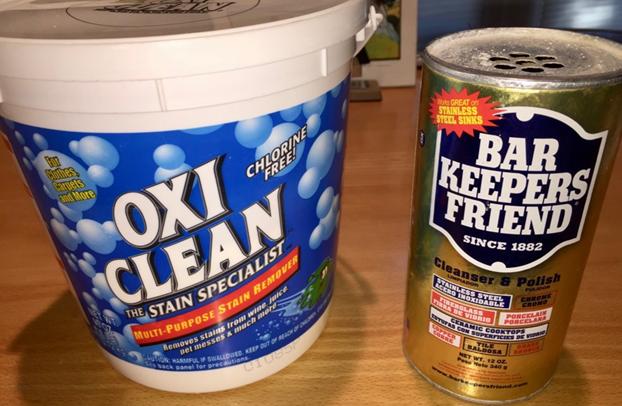
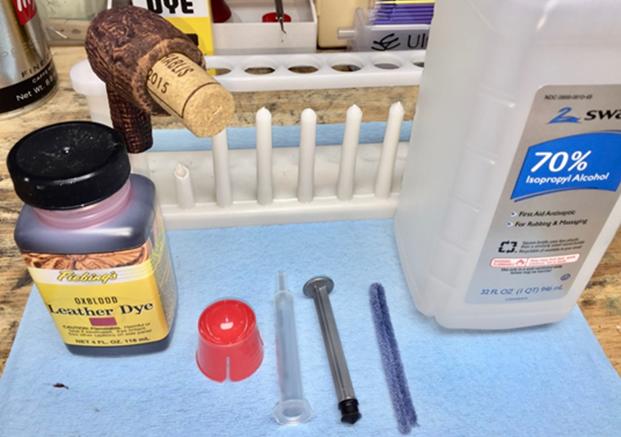
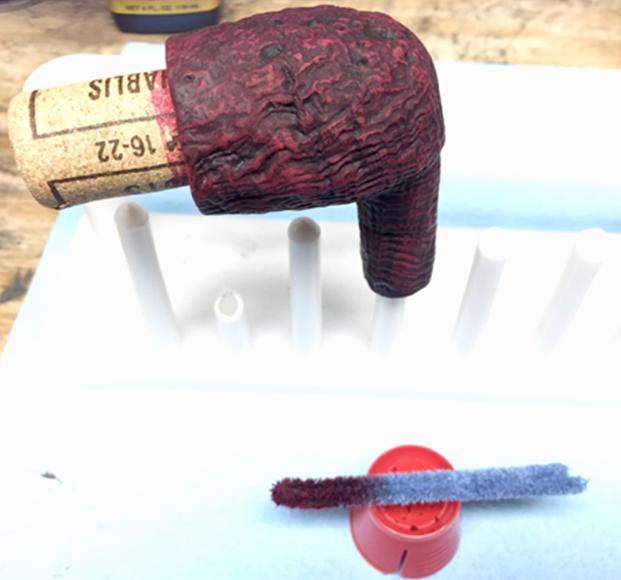
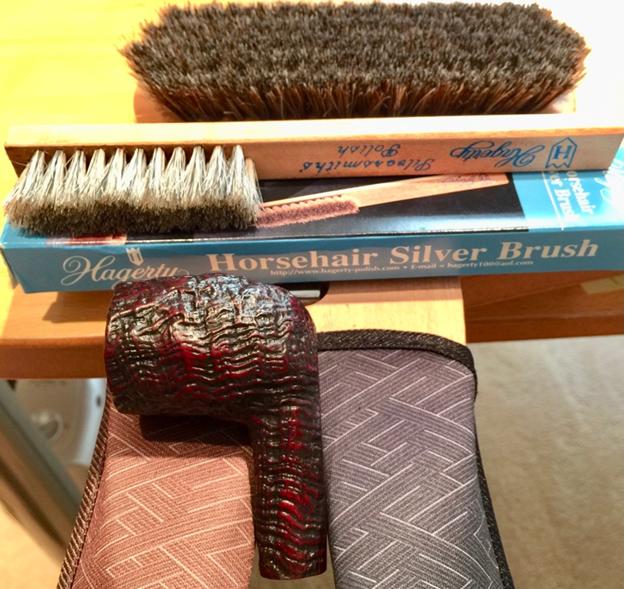
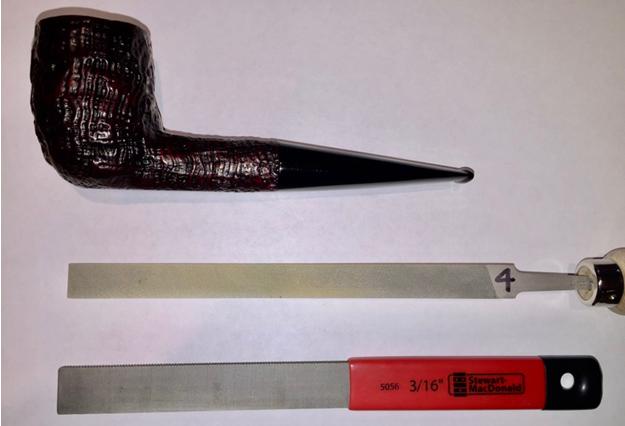
Sodium percarbonate does the cleaning and oxalic acid removes the smear layer, thus opening up the wood’s pores.  Looking around online for a source I realized that I already had both chemicals in the laundry room!  Oxyclean is the percarbonate and states on the container that it’s great for wood decks, siding and lawn furniture.  Bar Keeper’s Friend has oxalic acid as its active ingredient and states on the container that it works on teak wood.Indeed after scrubbing with both and rinsing with water, I noticed that the chamber’s surface looked and felt less dense.Now it was time to stain the briar with Oxblood diluted 50% with isopropyl alcohol in two coats, both flamed with the micro-torch.I was lucky that the original black stain in the depths of the blast remained.An overlay stain of light brown was applied in 2 coats.After a rub down with an old t-shirt to remove any xs dye, I applied 2 coats of Halcyon wax.  A quick buff on the lathe and then a hand strapping with a shoe bristle brush brought the shine up.  I want to mention that my wife gifted me her silver brush which is narrow and has long soft bristles which easily accesses the crotch of the pipe without fear of collision. This has proved most useful on bent pipes.Another very helpful tip came from a pipe maker’s blog about dead-faced files to add crispness to the button area.  They are the dead faced nut seating file by Stewart MacDonald, a luthier’s supply house and the pillar files which have the dead side on the edge from OttoFrei, a clock makers source.Well I’m now satisfied with the pipe but not finished. They say we abandon these projects because we reach a point where better becomes an enemy of good. Boy that was fun and I hope to share more adventures with these fabulous old pipes!  Regards, Henry


Refurbishing an Yves St. Claude Glacier 80 Bent Billiard


Blog by Steve Laug

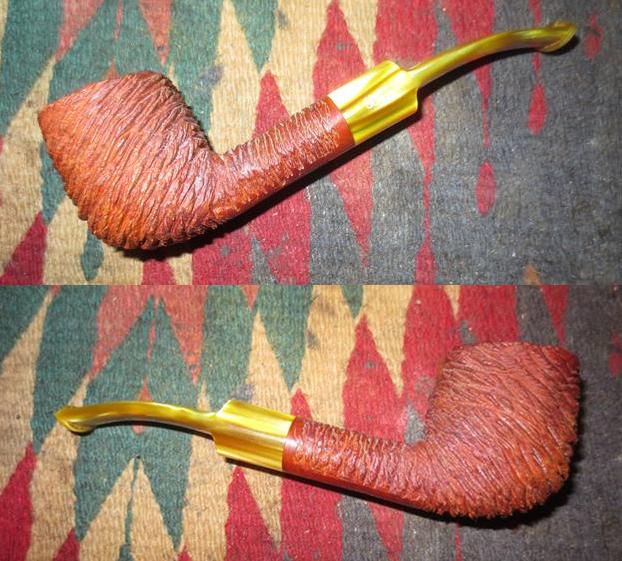
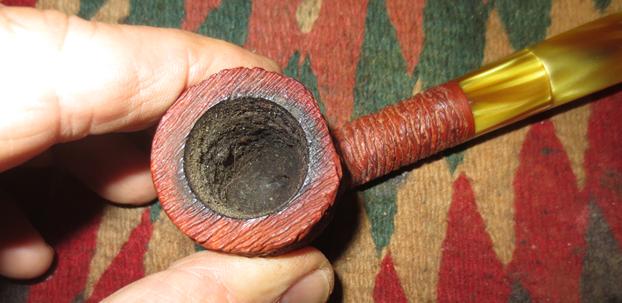
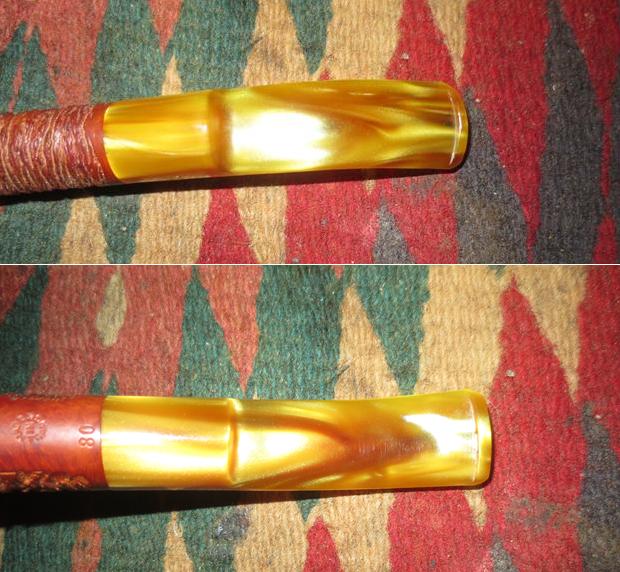
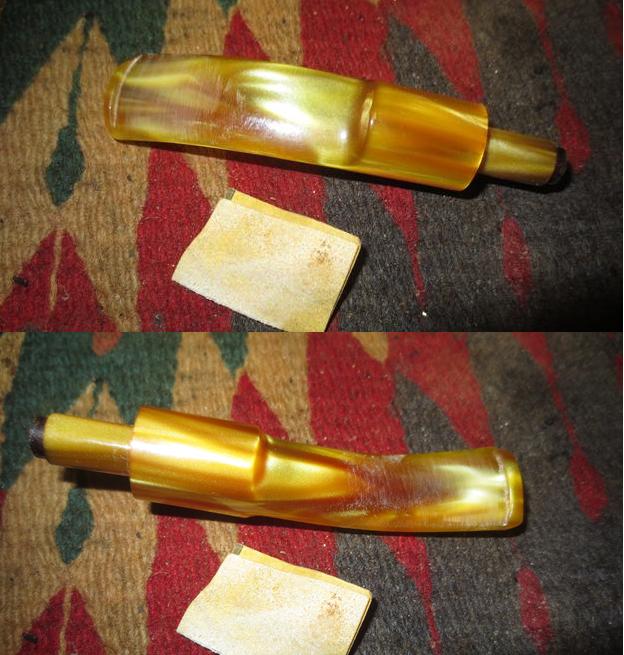
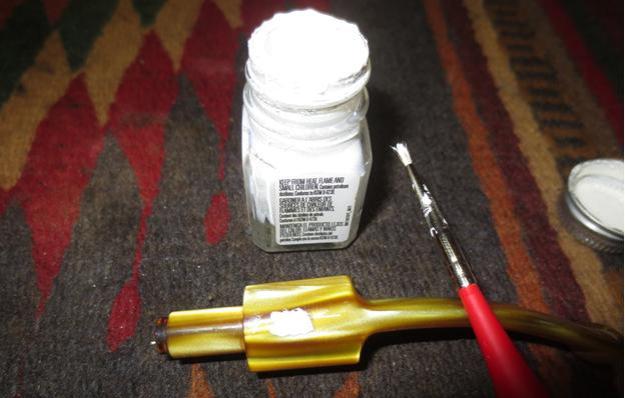
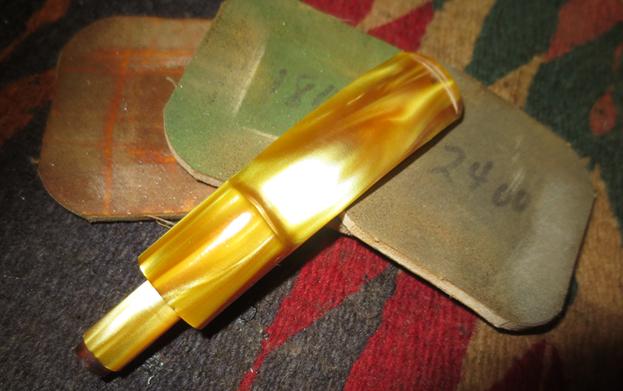
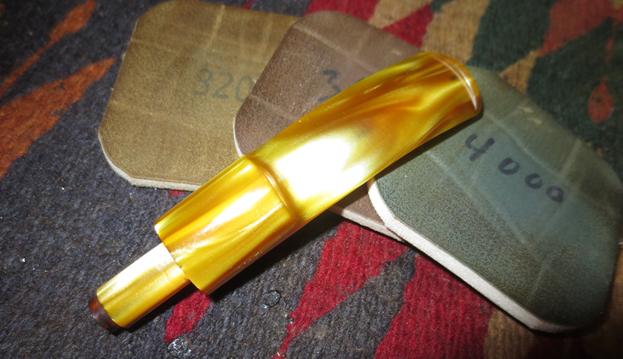
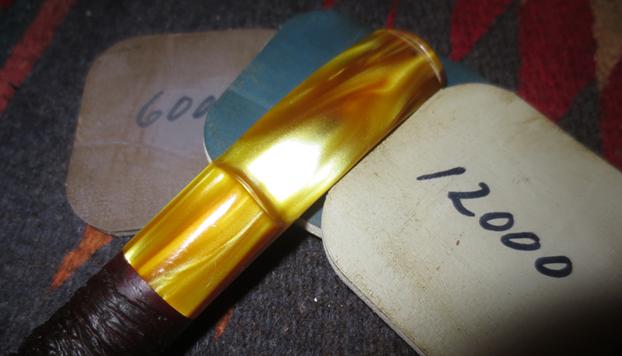
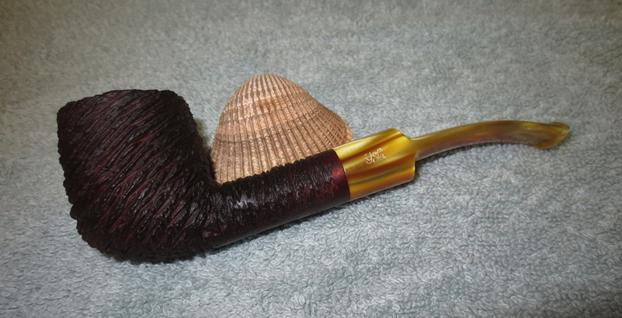
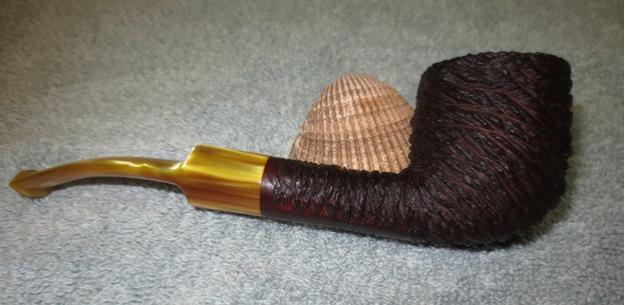
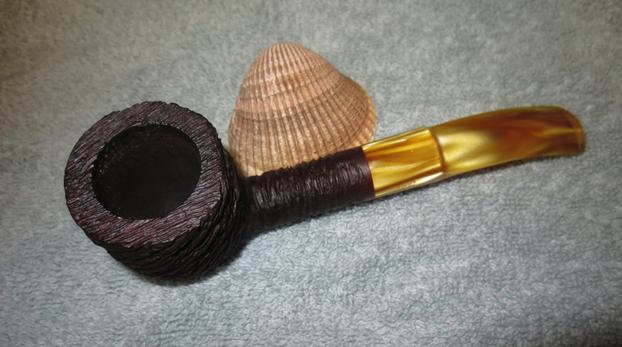
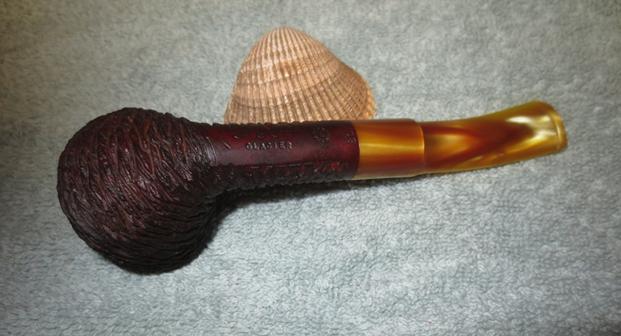
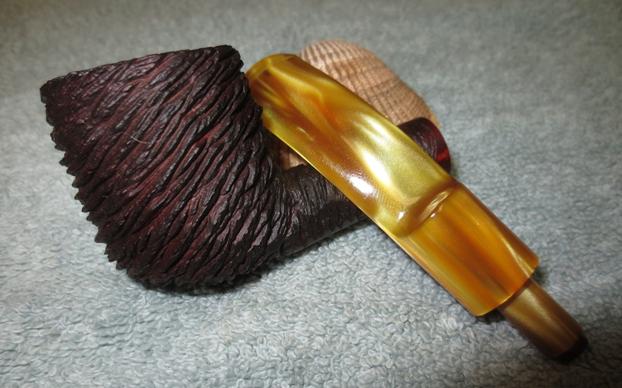
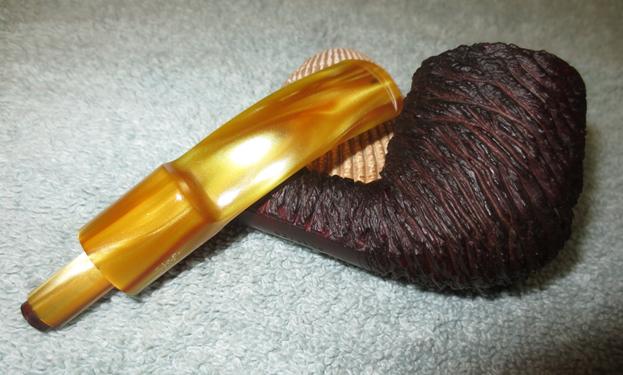
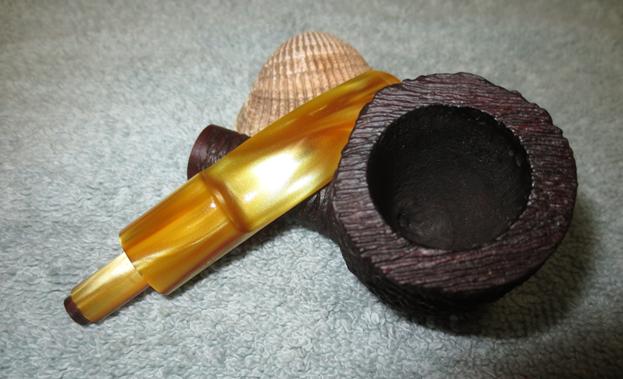
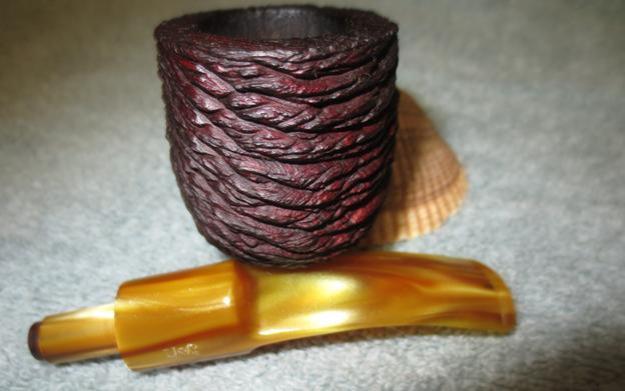
The next pipe I chose to work on today was one that came from the friend of mine who has the pipe shop. He had been given a large number of pipes from a customer’s estate to sell and he had given them to me to clean up. This one is a rusticated billiard that has a slight upward bend to the shank and a Lucite stem with a ¼ bend. It was stamped on the underside of the shank Yves St. Claude in script over Glacier. Next to that it was stamped with a COM circle that read Made in France. At the end of the shank near the stem/shank junction it is stamped with the shape number 80. The finish was very dirty and almost lifeless looking. The striated rustication was well done but the grooves were all filled with grit and grime. The bowl had a light cake and the rim had some darkening and tar on the back side. The stem had some light tooth chatter but no deep tooth marks. The variegated yellow/gold stem went well with the rustication.In searching the web I found several references to Yves Grenard, trained in Comoy’s England factory, purchasing the Chacom plant in St. Claude. He managed the factory and it passed on to his son afterward. I am pretty certain that this Yves St. Claude pipes was made by Chacom in France with the stamping bearing Yves name.I took a close up photo from the top looking into the bowl to show the light cake in the bowl and the darkening to the back side of the rim. The rim top is a bit oddly shaped in that the back outer edge of the bowl slightly flattened and then rusticated over the top of the shape. I also took photos of the chatter on both sides of the stem at the button. I sanded out the tooth chatter with 220 grit sandpaper and it did not take much to smooth out the marks. There were also some marks left behind from when the stem had originally been bent that sanded out quite easily.I scrubbed the bowl with undiluted Murphy’s Oil Soap and a tooth brush to remove the grime. I used a brass bristle brush with the soap on the rim surface to remove the darkening and tars. I rinsed the bowl under warm water to remove the soap and grime. I took photos of the cleaned bowl and included them below. I decided to use a dark brown aniline stain thinned with isopropyl by 50% to make it more of a translucent medium brown. The colour once it was dried, buffed and polished would really look good with the yellow stem. I applied the stain, flamed it and repeated the process until I was happy with the coverage.There were some thick, hard tars on the inside of the mortise walls so I scraped them out with a dental spatula. Afterwards I cleaned out the mortise and the airway in the shank and stem with alcohol, cotton swabs and pipe cleaners. I worked on the stepped tenon with alcohol and cotton swabs to remove the darkening at that point. I wiped down the outside of the stem with a damp pad. I used white acrylic paint to fill in the YSC stamp on the left side of the saddle. Once the paint dried I scraped the excess off and polished it with 1500-2400 grit micromesh sanding pads.I polished the Lucite stem with micromesh sanding pads – wet sanding with 1500-2400 grit pads and dry sanding with 3200-12000 grit pads. I wiped the stem down with the damp pad between each set of three pads. I put the stem on the pipe before taking the photo of the stem after I had finished sanding with the last three pads. The new stain looked really good with the yellow Lucite stem. The contrast worked really well on my opinion.I buffed the stem and bowl lightly with Blue Diamond polish on the buffer. I gave the bowl multiple coats of Conservator’s Wax and buffed it with a shoe brush. I gave the stem multiple coats of carnauba wax. I buffed the entire pipe with a clean buffing pad to raise a shine and finished by hand buffing it with a microfibre cloth to deepen the shine. The finished pipe is shown in the photos below. The dimensions of the pipe are, Length: 5 ½ inches, Height: 1 5/8 inches, Outer bowl diameter: 1 3/8 inches, Chamber diameter: 7/8 inches. The pipe has been thoroughly cleaned and prepared for the next pipeman who wants to add it to their rack. I will be putting on the rebornpipes store shortly but if you want it email me at slaug@uniserve.com or send me a message on Facebook. Thanks for looking.


1967 DUNHILL 197 SHELL BRIAR Clean-up


Blog by Henry Ramirez

When surfing Ebay I noticed a very well smoked Shell billiard whose stem had lost its White Dot. It looked like it could be cleaned up to present an elegant addition to my collection. I anxiously awaited its arrival and immediately dunked the stem in an Oxyclean bath for a nite.

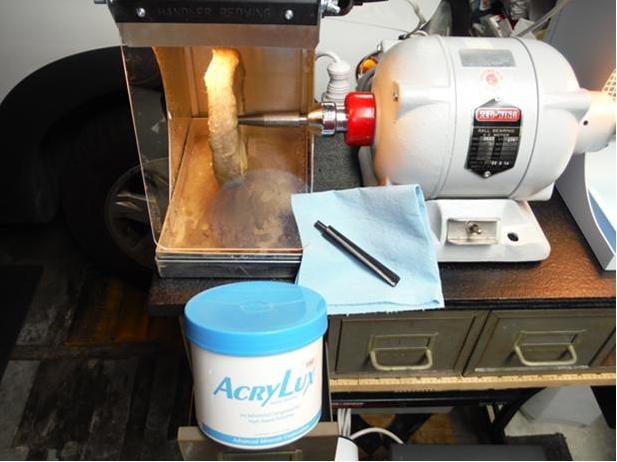
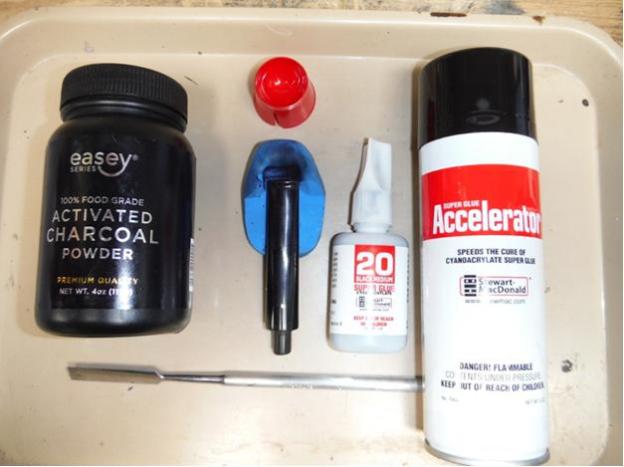
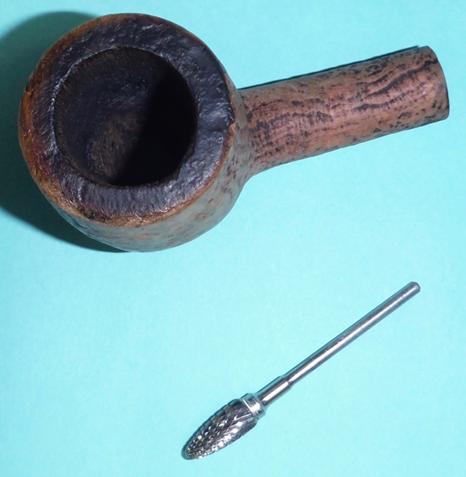
The next morning I pulled it out of the bath and wiped off the smegma for my first real look at the stem. The divots reminded me of a deflated balloon. Just what I was hoping for! Off to the buffer I went to buff off the sulfur discoloration with a wet rag wheel and pumice. Knowing what I know now, I should have popped this baby in the oven to raise the dents but instead I got to cleaning the stem’s airway and tenon. I bonded some shade A2 dental composite in the hole for the White Spot and was dismayed that it refracted the surrounding black vulcanite. Note to self, next time place a layer of opaque before the bulk fill. Luckily, when researching the earlier White Spots I came across examples of dots so dark they were black. I had made a silicone impression of a new pipe’s stem and used that as a mold to create a refurbishment of the button. What a mess! Next time I’ll mix the charcoal in with the composite resin rather than CA. I ended up recreating the button the way Steve has posted here on Reborn Pipes. OK, so now it’s the bowl’s turn. My armamentarium and procedure is pretty routine for cake and gunk removal. The rim’s blast was scorched but luckily, the rest of the pipe’s blast was vestigial. This was an opportunity to try out emulating a blast through rustication. Plus, since the pipe was stained rather darkly, it would help hide a myriad of sins. When polishing the chamber I noticed some alligatoring of the briar. Today I would probably schmeer some JB Weld into the cracks but what I did was a coating of Structural Sour Cream and charcoal. I played around with the button’s internals, polished with the usual green, red and white compounds (thanks Tim West), threw on some wax and called it a day! Thanks for looking, regards, Henry

Sasieni Fantail Wire Rusticated Patent Billiard


Blog by Steve Laug

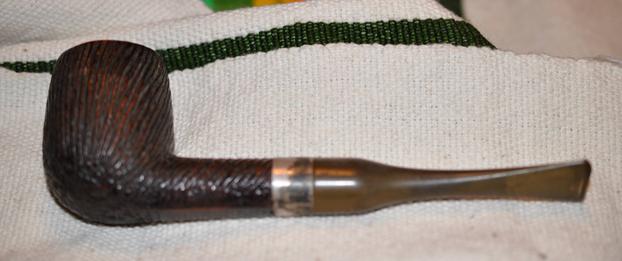
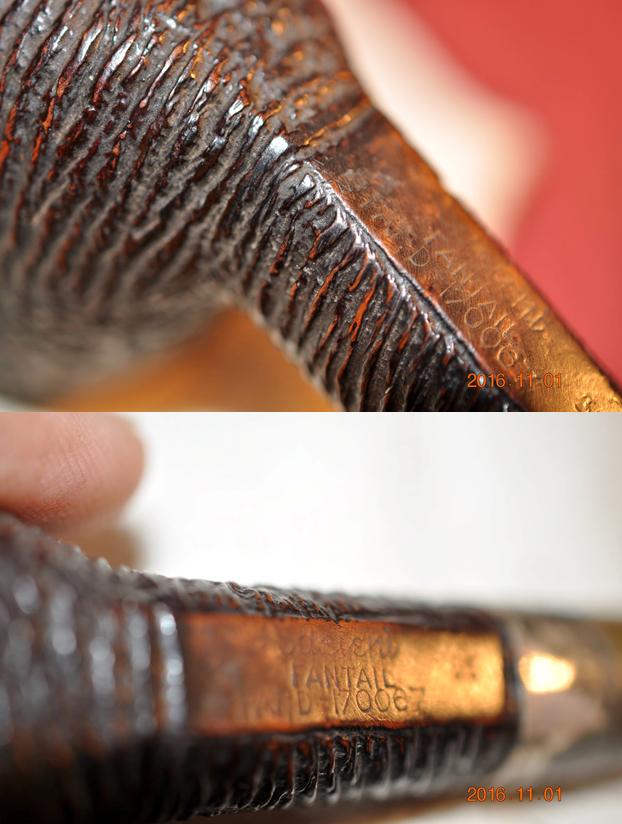
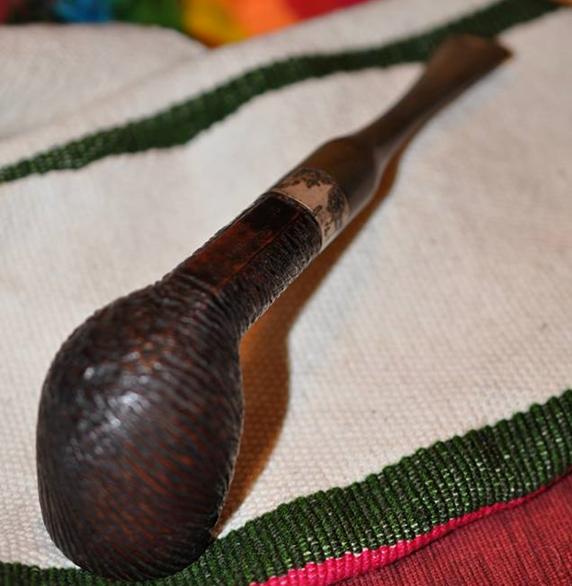
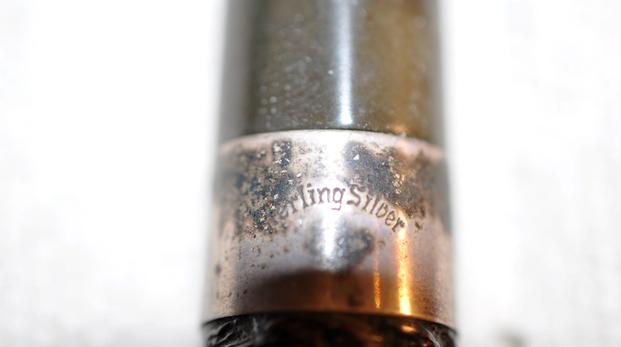
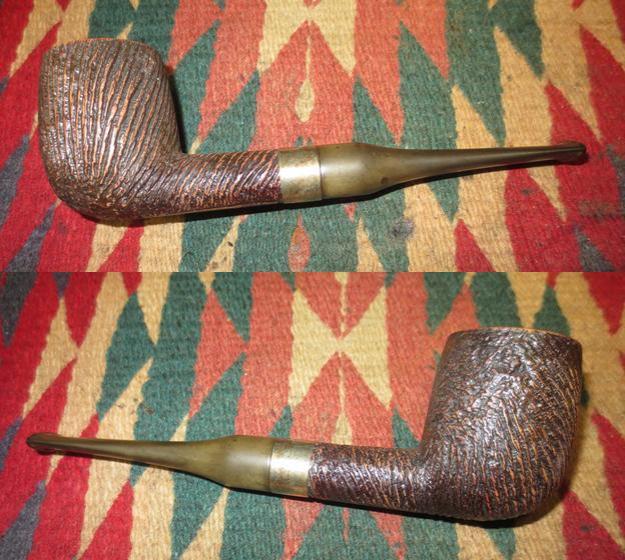
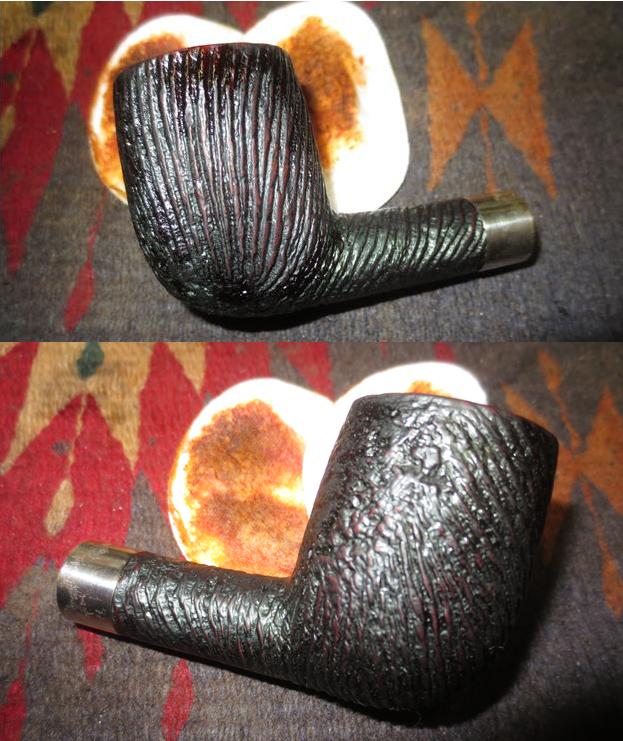
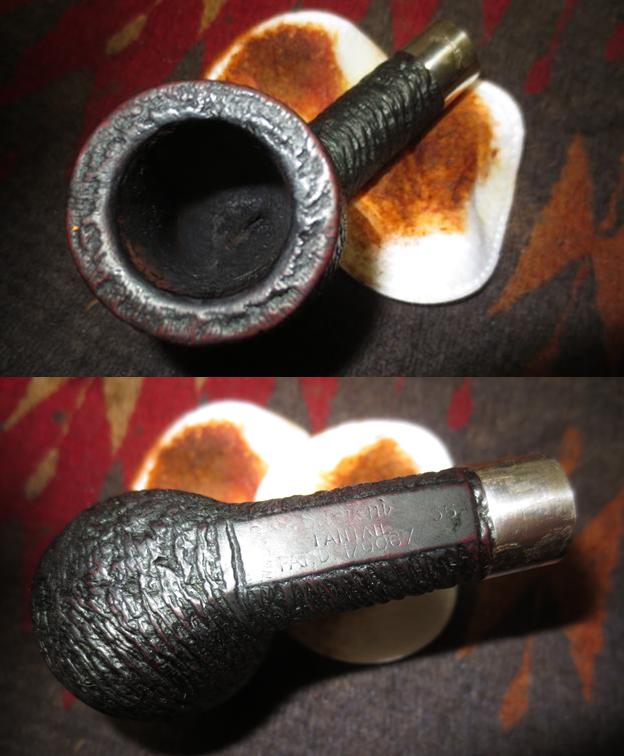
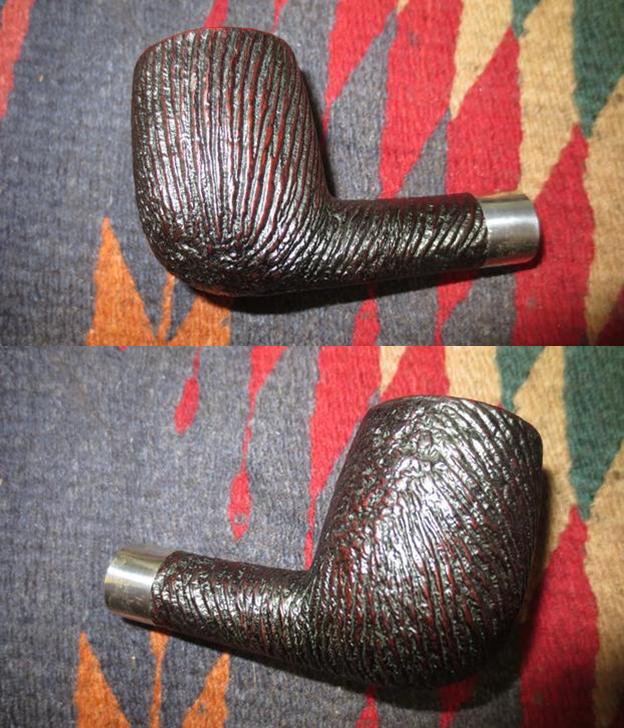
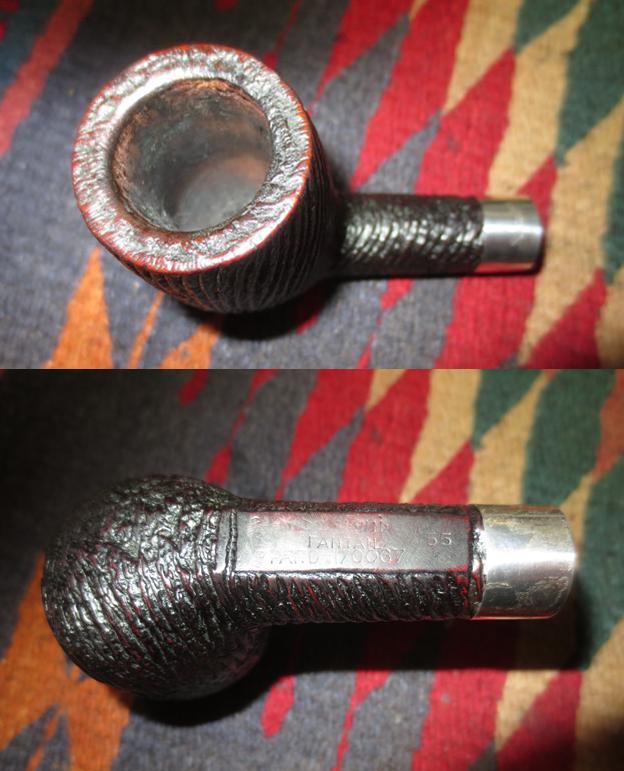
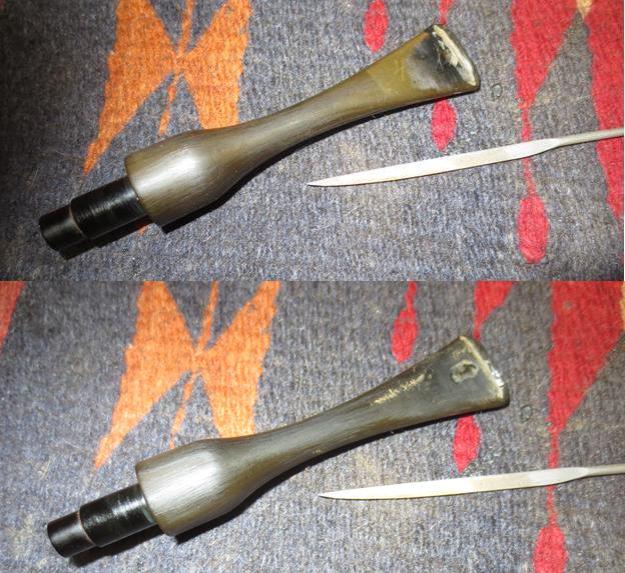
My brother Jeff found this old Sasieni on one of his gallivants to the Oregon Coast. He stopped by an antique shop and picked up a few nice ones. This wire rusticated Sasieni billiard with a Sterling Silver band is unique to my eyes. I have not cleaned one up before or repaired one for someone else. It has a Fantail or Fish Tail stem that is unique. It is stamped on the underside of the shank and the stamping is faint but readable. In bright light I can read that at the bowl end it is stamped England in an arch. Flowing from the arched England it reads Sasieni in the newer script over FANTAIL over Pat. D-170067. The last stamping is the shape number 55. I am pretty certain that this is a Family Era pipe made somewhere between 1946 – 1979. The change of “Sasieni” script without the fish-tail initiated by Alfred Sasieni occurred after second world war. This puts the date of the pipe between 1946 and 1979 – a large spread.The Sterling Silver band looks like it could have been original with the pipe when it left the factory but I am not certain. Sasieni is a brand that I am not as familiar with so I do not know all of the ins and outs of the shapes and finishes.

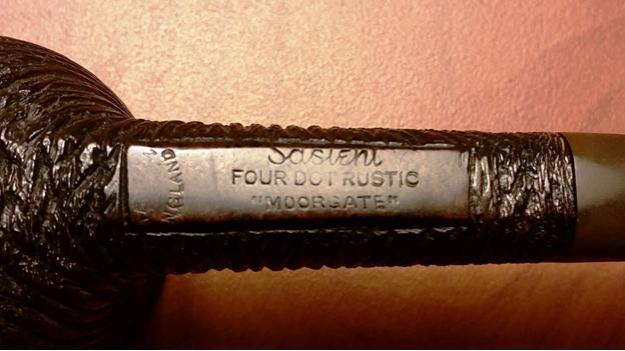
I remembered that Al Jones had worked on a Sasieni pipe with a similar finish and stamping. His was a Moorgate Pot. Here is the link: https://rebornpipes.com/2015/02/28/sasieni-moorgate-rustic-restored/ I quote a section of Al’s blog regarding this pipe, “This Sasieni “Moorgate” shape in Rustic finish is the second pipe from the shop in Albany and part of the General Electric executives estate. The nomenclature shows that the pipe is from the “Family Era” and made between 1946 and 1979. The “Rustic” finish is a hand carved, rusticated finish done completely by hand. This work must have been painstakingly slow with the carving following the briar grain lines.”

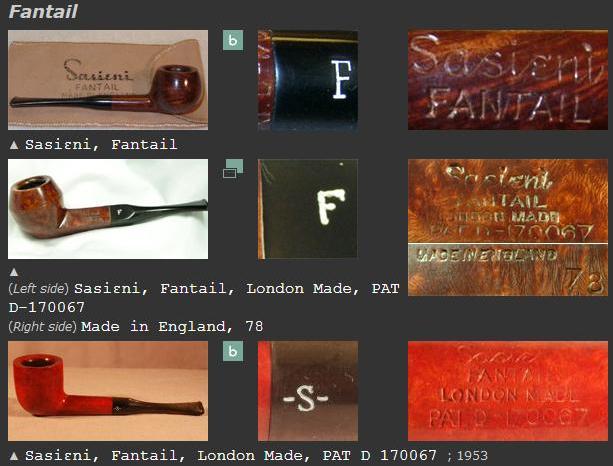
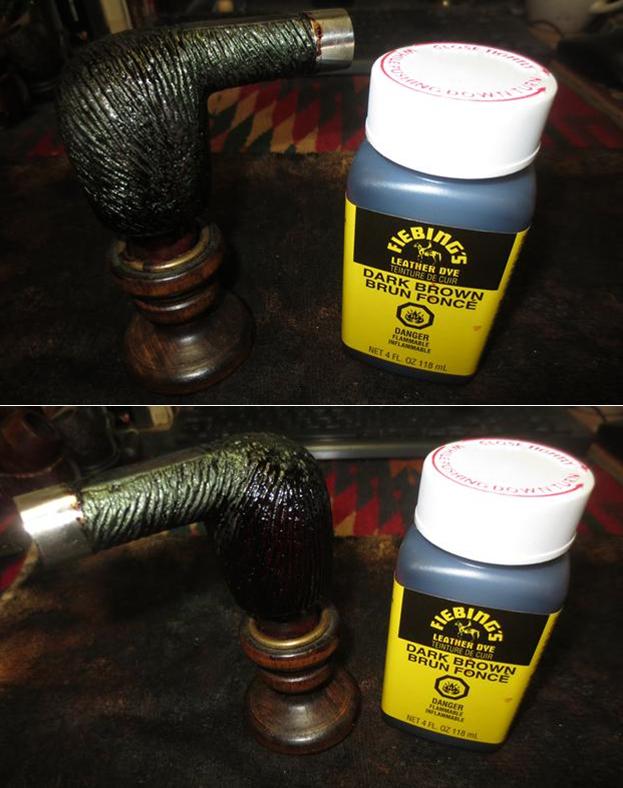
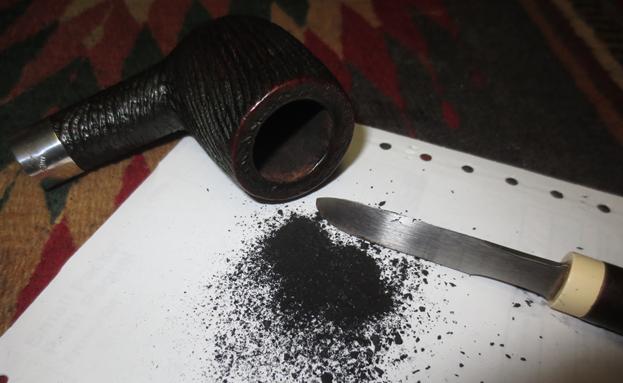
I have included a photo of the stamping on the underside of the Moorgate shank from Al’s blog post as it is very close to the stamping on the one I am working on. Mine is not stamped Four Dot Rustic over “Moorgate” but rather FANTAIL where the Rustic stamp is and where Moorgate is mine has a Patent number. The finish on Al’s was more horizontal than the one I am working on. The striations run vertically on the bowl sides but the shank is the same style. I have included the photos of the bottom of the shank on the one I am working on below. I also included a screen capture of the pertinent section of PipePhil’s Logos and Stamping website and included the link should you want to look at on the site. http://www.pipephil.eu/logos/en/logo-sasieni2.html From what I can see through the oxidation on the stem there may well be a letter “F” on the left side of the stem. Jeff included photos of the pipe from a variety of angles to show the condition of the bowl, rim and finish on the pipe. It was worn and tired. Fortunately there were no chips or cracks in the briar and other than just being dirty and worn it was in good shape. Jeff sent along a photo of the cake in the bowl and the lava that had flowed over the top of the rim. The outer edges of the rim looked pretty decent with no wear or tear from tapping it out against hard objects. The cake in the bowl was hard and quite this. The lava on the top filled in most of the grooves in the rustication on the back half of the bowl.The Sterling Silver band was heavily tarnished but it appeared to be sound underneath the tarnish. It had an arched Sterling Silver stamped into the topside of the band.The stem had deep tooth marks and the button was worn away from use. There were no bite throughs or cracks in the stem. The middle portion on both sides of the stem near the button was in the worst condition with the edges being quite clean. The stem was oxidized. The photos below show the tooth marks and chatter on the stem surfaces.Jeff reamed the bowl with the PipNet reamer and took out all of the cake. It was then clear that the inner edge was also undamaged. He scrubbed out the inside of the mortise and the airway in the shank and the stem with alcohol, pipe cleaners and cotton swabs until it was spotless. He scrubbed the exterior of the bowl and the lava on the rim with a tooth brush and Murphy’s Oil Soap and was able to remove all of the grim and build up in the grooves of the finish. The stain lightened considerably with the cleaning but it would not be hard to restain it to match the colour of the original. I took the next photos to show the condition of the pipe when it arrived in Vancouver. The cleanup on the rim was stellar in my opinion. The grime and lava are gone and the grooves of the rustication are clean and visible.I took photos of both sides of the stem to document the oxidation and the tooth marks located on the top and underside.I sanded the tooth chatter out of the vulcanite and cleaned up the area with a cotton swab and alcohol. I used black super glue to fill in the tooth dents that were too large to raise by applying heat to the stem. I set the stem aside while the glue dried. After the photo I used a little more glue to build up the area around the sharp edge of the button. Once it is dried I will recut that area with a needle file.I cleaned and polished the tarnished Sterling Silver band with a jeweler’s cloth. The tarnish came off quite easily and I buffed it with the cloth to make it shine.I restained the bowl with a dark brown aniline stain cut by 50% with isopropyl alcohol. I applied it and flamed it with a lighter. I repeated the process until the coverage was good on the briar. Once it was dry I wiped down the bowl with cotton pads and alcohol to lighten it even more and bring it closer to the finish that had originally been on the bowl. I buffed the pipe with Blue Diamond on the buffing wheel carefully avoiding the stamping on the underside of the shank. It was light enough already and I did not want to damage it further. I hand buffed the area with a microfibre cloth. The bowl was looking very good at this point. I took the following photos to show where what the pipe looked like at this point. I decided to clean up a bit of extra cake that clung to the bowl walls toward the bottom of the bowl with the Savinelli Fitsall Reamer. It did not take too much to knock off the small remnants of cake toward the bottom of the bowl.Once the repair had cured I used a needle file to recut the sharp edge of the button. I also used the file on the flat surface of the repairs to blend them into the rest of the stem. I sanded the stem with 220 grit sandpaper to remove the oxidation and blend in the repairs with the surface of the stem. I sanded it so as to remove the oxidation but not change the profile of the stem. I examined the left side of the stem for the “F” stamp and all that was present was a very faint mark. If you did not know it was supposed to be there you would not see it. I polished the stem with micromesh sanding pads – wet sanding it with 1500-2400 grit pads and rubbing it down with Obsidian Oil. I dry sanded it with 3200-4000 grit pads. I buffed it with red Tripoli and gave it another coat of oil. I dry sanded it with 6000-12000 grit pads and rubbed it down between each pad with a coat of oil. I set aside the stem to let the oil dry. I put the stem back in place in the shank and buffed the bowl and stem lightly with Blue Diamond on the buffing wheel. I gave the stem multiple coats of carnauba wax and the bowl several coats of Conservator’s Wax. I buffed the pipe and stem with a clean buffing pad to raise the shine. I hand buffed the bowl with a shoe brush and then with a microfibre cloth to deepen the shine. The finished pipe is shown in the photos below. The dimensions of the pipe are Length: 6 inches, Height: 2 inches, Outer diameter of the bowl: 1 3/8 inches, Chamber diameter: 7/8 inches. The contrast of the dark brown and a medium brown that shines through give the finish a rich patina. The bowl has been cleaned and the entire pipe is ready to smoke. The stem is in great shape. The tooth marks have been removed though there is slight scratching on the vulcanite. It is a beautiful pipe, just a little big for my liking or I would hang on to it. I will be putting it on the rebornpipes store soon. If you are interested in adding it to your collection email me at slaug@uniserve.com or send me a message on Facebook. Thanks for looking.

Dunhill 1949 Patent 120 FrankenStem


Blog by Henry Ramirez

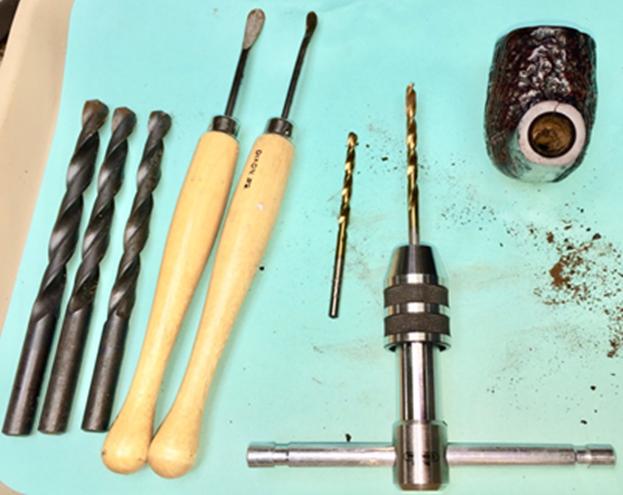
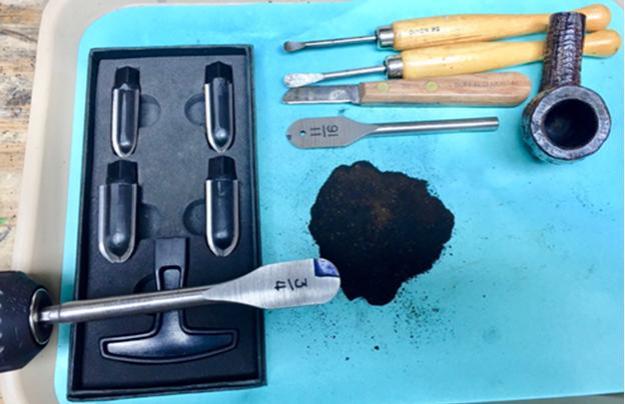
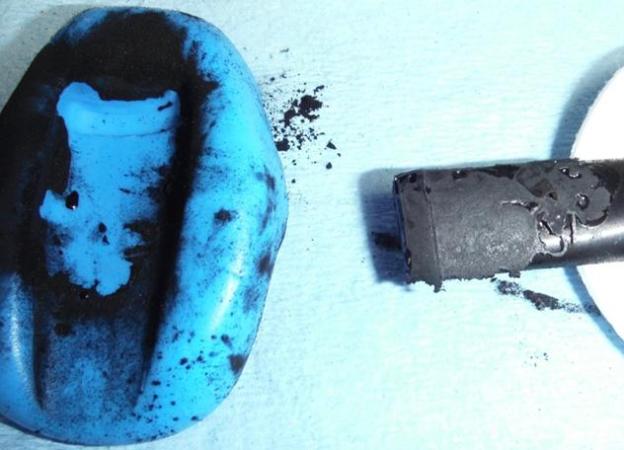
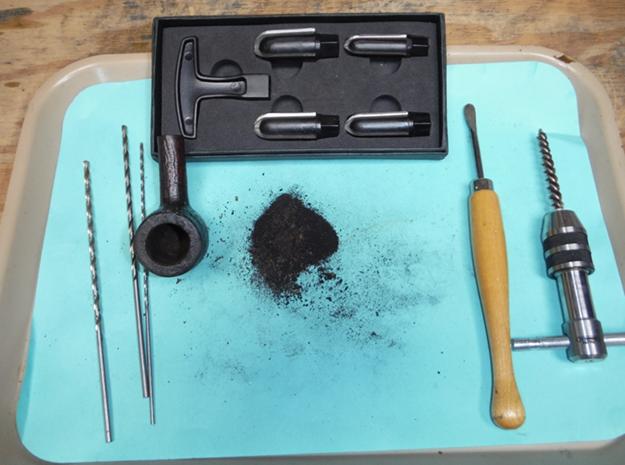
Cruising Ebay for a pipe to play with I came across a Shell bent which, as stated in the listing, had the stem bit completely chewed off. I’d been trying a mold technique to reconstruct the stem button with limited success, very limited. Anyway, this pipe’s stem had been chewed to the point where no pipe cleaner could negotiate the airway and tobacco dottle was packed in tight. Here is a photo of the listing.Dang me, the previous owner had a heck of an oral fixation!  This stem was exactly what I was looking for.While the stem soaked in the Oxyclean bath, I evaluated the briar. The cake in the chamber was so thick you could shake a stick at it but after removal proved to be the protection connection because the inner bowl was pristine. I don’t know what it is about old tobaccos but the cake is dry and pumice-like with a delightfully transporting aroma to another time. The bowl’s rim was likewise protected by the lava of cake and tar. When I use my augers and drill bits, it’s either by holding the bit by hand or using an electric drill to hold the spade bit and turning the pipe itself. I’m listening for the crunching sound of cake being cleaved rather than the squeaky sound of metal on briar. Full rotations are usually not possible until the very end.

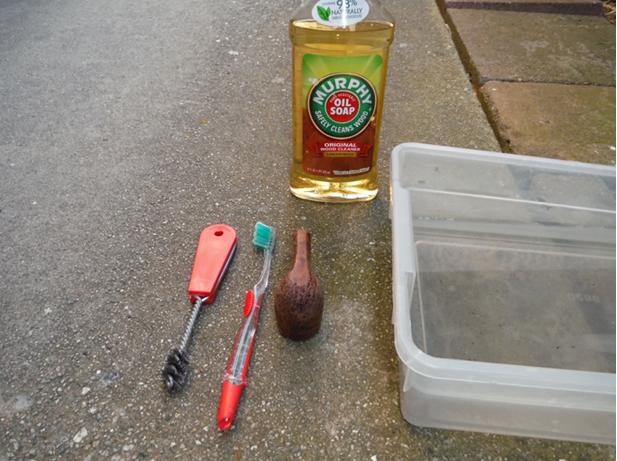
The stain and finish on the briar had that great oxblood highlight color that I love but was tarnished with a river of muck. I decided to try using my micro etcher to preserve the blast on the rim but knowing that I would later have to re-stain. I didn’t want to use Murphy’s Oil Soap because it diminishes the intensity of the stain somewhat.  Regarding the River o” Muck, I tried using my steamer which has a gun for accurate aiming and a boiler which keeps up the psi.  This muck was visible in the blast’s valleys as a white deposit. I fished out the stem from the Oxyclean bath, scrubbed it with blue shop paper towels to remove the slimy coating and polished it with flour of pumice, green, red, white diamond and Bendix on the lathe with individual rag wheels.

When the stem airway is too congested or crimped to allow passage of even a bristle pipe cleaner, I use a base “E” guitar string. It has a stiff central core wire which is later wound with another thicker resilient wire to poke on through.  My intent is not to mechanically open the airway but to remove any remaining tobacco chattel that the steamer couldn’t dislodge.

Next, I want to straighten the stem in my Wife’s oven. Of course I do this when she’s not around and so far she has turned a blind eye towards this practice.  But if there is residual tobacco burnt in her oven, I don’t want to be around to explain! The vulcanite has a memory of its initial pre-bent and pre-chewed state which will allow ease of cleaning and repair. The only bugaboo is that tenon-mortise margin can open. I was fortunate to have that happen because I have an adjustment technique to fix that which I want to try out. Importantly, don’t forget to trace the initial outline of the bent stem on a piece of paper for a reference when re-bending.

The pipe stem is positioned on a sheet of aluminum foil on the middle shelf where it is easy access and can be well illuminated by the oven’s light, I have tried to use an aluminum pie plate but the higher sides obscure my viewing the stem. I set the temperature to 247 degrees using the Bake Convection mode. This oven is electric and if yours is gas, you may want to let it get up to temperature first before placing your stem. Gadzooks!  The tenon on the stem opened like a blunderbuss barrel and the stem won’t fully seat. More fun!

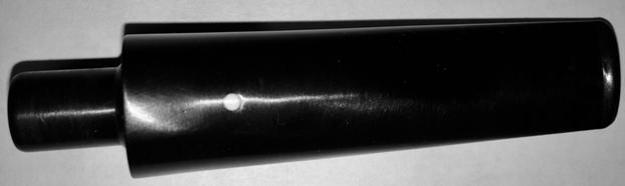
The cross section on either side of the air way seemed meaty enough for some pins and channeling to create a ferrule of composite resin. I made a silicone putty impression of an unsmoked stem which approximated the same size and shape of this pipe. I made sure to capture the airway’s interior.I then plugged the stem’s airway with wax; micro etched the exterior surface and bonded the composite. I’d gotten a black resin colorant online but found that it either accelerated the mix to a very short working time or inhibited the mix to not fully curing. To blacken my next mix I’m going back to activated charcoal. But although this bit is ivory colored, it is very strong and decently shaped so I decided to simply slather it with a coating of black CA.

When I placed the pipe back in the oven to re-bend it, I found that some of the CA had over heated and was bubbled up like road tar. Note to self, keep CA out of the oven. I had seen this happen with an infrared light in a previous experiment but thought the temp was sufficiently lower to prevent a recurrence. Oh well, just more fussin’.

By the way, when re-bending the stem I never seem to be able to wait long enough and go through several attempts before getting it right. If it doesn’t fully bend to the proper contour, you have to wait until it re-straightens itself and then some. If you get greedy you can snap stem in half. I’m looking forward to my next stem bending because I plan to chronicle the ideal temperature using my laser thermometer.Returning to the bowl’s rim, I stained it with a light brown, got the stem to fit better but haven’t yet dialed it in and polished the pipe.I noticed that the preliminary outline of the stem displayed the additional length that the new bit added.Here’s the semi-final result and I wonder if any of these projects are truly ended because to aspire to the superb craftsmanship of these old Dunhill artisans is a journey rather than an endpoint.


Jen’s Trove #1: A Kaywoodie Author


Blog by Dal Stanton

Jenny has laid the groundwork for a pipe restorer’s dream job!  Jenny has been working with us here in Sofia, Bulgaria, as an intern for the last few years and she will be transitioning back to the US at the end of the summer.  She’ll be working with international students at what she considers her home territory at the University of Tennessee – Knoxville.  We’ll miss her, but she has created a bittersweet gauntlet for me!  She has gone through my baskets and boxes of ‘pipes-in-waiting for help’ that I have culled and collected to create a gift trove for the special men in her life when she returns to the US – brothers, brothers-in-laws, father….  She knows that the pipes I restore benefit our work with the Daughters of Bulgaria, women/girls who have been sexually exploited and trafficked throughout Europe.  She wants to support the Daughters but also communicate this to her loved-ones in the US by gifting them pipes restored by The Pipe Steward – me 😊.   Since the proceeds benefit the Daughters, the agreement we have is that after each pipe is restored from her trove, I will determine a price and she will then decide if she would like to ratify the purchase – a win/win/win all around – for her, her special men and for the Daughters.  As Jen poked and prodded through my pipes, I learned that she was seeking a variety shapes and sizes so that each gift would be unique.  I hope that I can run the gauntlet well by providing her precious gifts AND finish on time!!!

The first pipe I chose randomly out of the ‘Jen’s Trove Basket’ is a Kaywoodie Author shape.  I saw this pipe on eBay and was attracted to the solid shape of the Kaywoodie ‘Ball’ shape that was advertised by the eBay seller in New Hampshire.  Here is what I saw:When I looked at Pipedia’s Shape Chart put together by Bill Burney, I saw that the Ball and Author shapes are very similar, but Bill’s description of “The Author as a beefed-up prince, featuring a flattened ball-shaped bowl and a heavy 1/8 to 1/4 bent stem” caused me to classify this Kaywoodie as an Author.  With the pipe now on my work table, I take more pictures to fill the gaps. This is the first Kaywoodie I’ve worked on.  A plethora of information is available online about America’s oldest pipe making manufacturer.  Kaywoodie’s website is informative:

The history of S. M. Frank & Co. spans nearly a century and half of pipe making, supporting our claim as the “oldest pipe house in America.” S. M. Frank, as it exists today, is a combination of some of the biggest names in pipe making from the early part of the 20th. century. The pipe names Kaywoodie, Yello-Bole, Reiss-Premier, DeMuth, Medico, Heritage and Frank are familiar to generations of pipe smokers.

The article describes how in 1919 the Kaufman Brothers & Bondy Company (KBB) produced the Kaywoodie and Dinwoodie pipe lines.  By 1924 the Dinwoodie line fell by the wayside and the primary name of Kaywoodie was the mainstay pipe line and the company came to be known by that name.  Little is known about the early activities of the KBB Company which started in 1851 by the German born Kaufman brothers.  The company had several locations but was centered in the New York City region throughout its production history.  The expansion of the KKB Company following the gold rush I find fascinating:

When one of the men from the New York office got “gold fever”, he carried a large supply of pipes with him to California that he sold along the way. This early “national distribution” did much to build the reputation of KBB. By the late 1800’s, branches of KBB were opened in Chicago, Atlanta, San Francisco and St. Louis with family and friends acting as agents. The trademarks, for the inlaid cloverleaf and the cloverleaf with the KBB initials inside, were issued in 1881. 

In 1935, KBB boasted of being the largest pipe making facility in the world with 500 employees and a production of 10,000 pipes per day from their facility in West New York, New Jersey.  In 1955, Kaywoodie was acquired by S. M. Frank & Co. (See Link) and continues to the present with well-known names Yello-BoleReiss-PremierWilliam Demuth CompanyMedico, Heritage (Heritage Pipes Inc.), along with Kaywoodie (Link).

It is difficult to date the Kaywoodie before me.  The only identifying marker is the traditional white shamrock on the stem.  There are no other markings that I see.  To the left, a 1964-65 Kaywoodie Dealer Catalog from Pipepages.com shows a remarkable likeness to the Connoisseur line and the Author before me with the stem shamrock on the side rather than on the top as in a 1955 Kaywoodie catalogue (See LINK).  There is no clear indicator for dating the Kaywoodie Author, but this catalog may put me in the ballpark.
With a better understanding of the Kaywoodie name, I take a closer look at the Author.  The good news is that the stem is in good shape with little tooth chatter.  The classic Kaywoodie patented Synchro-Stem which boasts that “metal-to-metal contact prevents binding and sticking” from a 1955 catalogue.  The stummel, however, is a different story.  The rim is beat up significantly, and I detect what might be cracks in the stummel.  Looking back at the eBay pictures provided by the seller, it made it very difficult to see what I seen now.  There appear to be two cracks, across from each other on the front and on the back of the rim.  I take a few closeups.

At this point, I’m not sure what I’m seeing.  Are the cracks superficial or do the run deeply into the briar.  It’s curious also that they seem to be opposites – perhaps part of the same trauma or what?  I will need to clean the chamber and rim to see more clearly the depth of the problem.  After spreading paper towel to minimize cleanup, I use the Pipnet Reaming Kit to work on the fire chamber.  I use 2 or the 4 blades available, starting first with the smallest.  I fine tune the reaming job with the Savinelli pipe knife then sand the chamber with coarse 120 grade sanding paper then 240 grade.  I wipe the chamber with a cotton pad wetted with isopropyl 95% to clean the carbon dust.  I take some close-ups of the chamber revealing some heat fissures and evidence that the crack seems to run through the bowl – especially the crack on the back-side of the bowl.  I continue with the external cleaning using Murphy’s Oil Soap and cotton pads.  I also employ a brass bristle brush to work on the rim which is really beat up and scorched.  The cleaning reveals more of the damage to the rim as well as the cracks I will need to address.  I’m guessing that the stummel cracks were caused by excessive heating of the briar.  I decide to clean the internals of the stummel using cotton swabs and pipe cleaners dipped in isopropyl 95%.  I also employ a straight needle file to scrape the walls of the mortise to dig out the gunk and tar.  I like to take care of the dirty work before continuing with the externals.  This also gives me time to think about how to approach the stummel repair.  The pictures show the progress which is slow – the internals are really gummed up. 

The day is coming to an end so I decide to employ a kosher salt and alcohol soak to make progress with the internals – while I sleep!  I use kosher salt so not to leave an iodine after-taste.  I stretch and twist a cotton ball to create a thinner ‘string’ of cotton to stuff down the narrow mortise opening through the metal plate of the Kaywoodie.  This cotton string will act as a wick to draw out the oils.  I then fill the bowl with kosher salt and cover the opening with my palm and give it a shake to displace the salt.  Using a large eyedropper, I introduce isopropyl 95% to the bowl until it surfaces over the salt.  I leave the stummel in an egg crate and turn the lights out – another day is done.  The next morning, the salt/alcohol soak has done the job.  The salt has discolored as well as the cotton wick.  I dump the used salt into the waste basket, thumping the stummel on my palm.  I wipe the chamber out with paper towel and using a long-bristled brush remove the excess salt from the internals.   I then return to using cotton swabs dipped in isopropyl 95% to complete the cleaning.  The pictures show the progress.

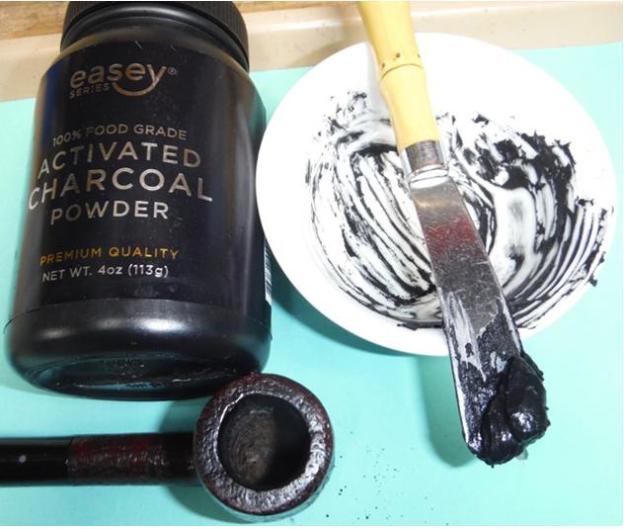
After sending an email off to Steve to get some advice on the stummel cracks and the stinger/tenon system of this older Kaywoodie, I put the stummel aside to work on the stem.  I wasn’t exactly sure how the stinger on the stem which screws into the metal shank plate comes off – and off it must come if one is to adequately clean the stem – and keep it cleaned!  Steve’s email was helpful with the question whether the stinger had 3 holes or 4 – 4 would indicate an older system according to Steve.  Ok, another clue to the age of this old boy. I look and discover 4 holes on the end ball of the stinger which indicated to Steve that the stinger may be threaded and screws into the metal tenon.  Taking a closer look, there does appear to be a seam marking the tenon and stinger contact point.  Steve’s advice was to heat the tenon and twisting the stinger to release it.  I take a couple of pictures to show what I’m seeing.Holding the stinger over a lit candle, after a few tests to twist, the entire tenon unscrewed from the stem.  By the appearance of the seam, I’m thinking that the stinger will separate from the tenon and needs to be removed for ease of cleaning.  With another quick note off to Steve, I’m cautious because I don’t want to damage the tenon and Steve has seen a few more of these than I!  I clean the tenon with alcohol and a cotton pad and then follow this with 0000 steel wool to finish cleaning the tenon/stinger. To work on the oxidation of the stem I drop the stem into an OxiClean bath to let it soak for several hours.  The pictures show the progress. After several hours, I retrieve the stem from the OxiClean bath.  The stem shows little oxidation after the soak.  Using 0000 steel wool I clear the layer raised by the OxiClean bath.  Then, using pipe cleaners and long-bristled brushes, dipped on isopropyl 95%, I clean the internals of the stem.  The airway is tight and I resort to the long-bristled brushes to push through the airway.  After cleaning the airway, I want to alleviate some of the tightness of the airway by expanding the slot area.  I use a pointed needle file and insert the point into the slot and carefully apply abrasive pressure to the edges of the slot.  The pictures show the progress. The upper bit shows latent bite dents – the lower as well but much less.  I use the heating technique to expand the vulcanite.  With a lighted candle, I pass the end of the stem over the flame – in a back and forth motion, not allowing the stem to cook by holding it stationary over the flame.  After a few passes, the idea came to my mind that while the vulcanite is pliable to insert a pipe cleaner in the airway to expand it a bit allowing pipe cleaners to pass through without as much fuss.  The effort seems to work – both for expanding the vulcanite and the airway.  There remains a ‘footprint’ of the bite dent, but not as much.  Using 240 grit sanding paper I work the dents out on the upper and lower bit.  Following the 240 grit paper, I use 600 grit and then finishing with 0000 steel wool.  I reattach the tenon/stinger to the stem and clock it so that the stem tightens at the correct angle.  I tighten the tenon one full turn less to make it easier to remove and therefore, much easier to clean the airway.  I like the results – good progress on this nice-looking KW Author.  The pictures show the progress. I turn my attention back to the stummel, and take a few more up-close pictures.  The burn damage is significant and the chamber is out of round.  Heat fissures are evident in the chamber and I’ve already noted the cracks in the stummel which track over the rim into the chamber.  I can say with little doubt, this pipe was loved and used much by its former steward.  Yet, he’s taken quite a beating.  My plan is to fill the heat fissures in the fire chamber with a coat of J. B. Weld.  With Steve’s input, I’ll drill back-holes at the terminus points of both fore and aft cracks to prevent further crack creep.  I will fill each hole with CA glue as well as apply a penetration layer of CA glue over the path of the crack to seal the cracks.  Before I start these repairs, I work on the external rim area with the goal of cleaning up the damage, re-balancing the stummel’s look as much as I can through a combination of topping and sanding.  When the stummel starts looking human again, if this is possible, I will then again assess the cracks and their needs.  All in all, the stummel’s undamaged briar is quite attractive – nice grain.  I hope I can return this Kaywoodie up to specs so that Jen can be proud to gift this old boy to her men-folk! I start with a coarse sanding sponge to see what progress can be made.  I follow by gently topping the stummel with 240 grit paper on a chopping board and then again return to the coarse sanding sponge to ‘reduce’ the edge of the topped stummel.  What develops is a technique of gradually reshaping the rim area to give the stummel a more uniform look.  I cycled through a light topping and then returning to the coarse sanding sponge several times.  The pictures show the process. As the rim starts taking shape, the fact that the bowl is out of round becomes even more distinctive.  To shape incrementally a truer ‘round’ I use a coarse 120 grit sanding paper rolled up and I sand the internal bowl at the point where the rounding was needed.  I gradually work around the internal chamber wall careful not to lean to aggressively into beveling an angle on the internal rim at this point.  I want to address first the unevenness in the walls of the fire chamber.  After doing this, I move more toward the top of the chamber and then create an inner bevel which gradually helps to round out the rim.  As I work on the internal sanding, I recycle as before, doing a gentle topping followed by the coarse sanding sponge to even and balance the whole.  The pictures show this gradual process starting with the ‘unrounded’ bowl. While the completed shaping is not perfect, I’m pleased that the stummel has regained proportion with the removal of the damaged briar and the gradual shaping through sanding and topping.  Looking very good at this point!Before I move forward finishing the stummel, I need to do the crack repairs.  The first thing I do, with the aid of a magnifying glass is mark the terminus points of the forward and aft cracks on the stummel.  The mark is made by creating a dimple using sharp dental probe.  This helps to guide the drill point when I create the ‘back hole’.  Using a 1mm sized drill bit mounted on the Dremel, I drill holes at the terminus points of the cracks.  With a somewhat steady hand, the work is successful. With the ‘back-holes’ drilled I drop-fill the holes with CA glue using a toothpick, and sprinkle briar over the hole.  I also apply a line of CA glue over the crack itself to strengthen the repair and seal the cracks.  The CA glue I use is extra thin and will seep into the cracks – hopefully.  I put the stummel aside for the night for the patches to cure.  The pictures show the patch process.The next day, the patches have fully cured and I use a rounded and flat needle files to work on the ‘forward and aft’ cracks where the back-holes were drilled. When I bring the CA glue patch mound down to briar surface level, I use 240 grit sanding paper to smooth it further and to blend with the briar.  Once this is completed, I again use the coarse sanding sponge and do a light topping to freshen the lines of the rim after the repair work.  I then roll a piece of 240 grit paper and again freshen the rim’s internal bevel.  The pictures show the progress. I proceed to smooth and blend the stummel by using a medium grade sanding sponge followed by a light grade sanding sponge.  The picture shows these last two stages and I take pictures of the finished crack repairs.  During the staining, I’ll seek to blend these further – especially the aft crack. At this juncture, I repair the fire chamber before continuing to the external stummel surface. Earlier I describe using J. B. Weld to coat the fire chamber, filling the heat fissures that had developed over years of use.  The J. B. Weld compound will also provide a protective barrier against the heat.  Later, I will coat the chamber with ‘pipe mud’ to provide a foundation for a new cake to develop to protect the chamber walls.  The few times I’ve used J. B. Weld, I always mixed too much.  I’ll try to moderate this time around.  After cleaning the chamber with a cotton pad wetted with isopropyl 95%, I place equal parts of the J. B. Weld components on an index card – hardener and steel.  The directions state that after mixing the two, one has about four minutes before they start setting.  I insert a pipe clean into the draft hole to prevent the Weld mixture to plug the airway.  I mix the components with a tooth pick then I place a dollop of the compound into the chamber walls.  I use my pinky finger to spread the mixture evenly and pull out excess.  After a bit, the mixture is setting up.  I rotate the pipe cleaner out when the tackiness of the mixture has firmed up enough that it will remain in place.  I set the stummel upright in an egg carton and let it cure overnight.  The pictures show the process. Turning now to the stem restoration, I utilize a plastic disc I fabricated to protect the shoulders of the stem during the micromesh process.  Using micromesh pads 1500 to 2400 I wet sand the stem, then follow with dry sanding with pads 3200 to 4000 then 6000 to 12000.  After each cycle of three I apply a coat of Obsidian oil to the stem to revitalize the vulcanite.  The stem looks good.  The pictures show the progress. A new day has arrived in Bulgaria and I turn again to the stummel.  All the major repair work is completed and I begin to prepare the stummel’s surface for a stain finish.  Using 1500 to 2400 micromesh pads I wet sand the stummel.  Amazingly, after this first cycle, I see what I did not see before – Kaywoodie [over] Standard nomenclature on the left side of the shank and what appears to be 13B on the right side.  I take a picture to mark this – unfortunately, I did not see it sooner to avoid sanding in that area.  Checking again with Pipedia’s Collector’s Guide to Kaywoodie Pipes, 13B is the shape number identifying this as an Apple.  Looking at the catalogs in the same article, with the stem shamrock on the side, I’m feeling pretty confident identifying this pipe from the 1960s. I follow this by dry sanding using pads 3200 to 4000 and then 6000 to 12000.  I never grow tired of seeing the grain emerge as the micromesh cycles do their magic.  The pictures show the process. To encourage better blending by hiding the cracks and repairs, I use a mixture of Fiebing’s Dark and Light Brown Leather Dyes.  I use 2 parts light to 1 part dark.  I don’t want to go too dark and hide the beautiful grain that has emerged.  When I look at the original hue of the Kaywoodie (the 1960s catalogs above I think is a pretty good guess regarding the age of this KW) leveraged toward the lighter hues – yet, I do want to mask the cracks. After mixing the dyes, I heat the stummel using a hot air gun to open the briar making it more receptive to the dye.  With the stummel heated, using a cork in the bowl as a handle, I liberally apply the dye over the stummel surface.  Following this, I fire the wet dye with a lit candle and the alcohol immediately ‘flames’ and burns off setting the stain.  I repeat the same process a few minutes later.  After the second firing, I put the stummel aside for several hours.  The pictures show the staining process. Some hours later, I’m ready to ‘unwrap’ the fired layer to discover what the briar has done with the dye.  Using a felt buffing wheel, I mount it on the Dremel and set the speed to the slowest.  After purging the buffing wheel on the edge of the metal tightening wrench, using Tripoli compound I methodically begin removing the fired layer by not applying much downward pressure, and allowing the RPMs and the compound to do the work. When I complete the removal of the fired layer with Tripoli, I take a cotton pad wetted with isopropyl 95% and wipe down the stummel.  I do this not only to blend the dye but also to lighten it.  I then move to Blue Diamond compound.  I use a cotton cloth buffing wheel mounted on the Dremel, increase the speed by one notch, and move in circular motions over the entire stummel – again, as with the Tripoli compound, I do not apply a lot of downward pressure on the buffing wheel but allow the RPMs and compound to buff up the surface.  When completed with the Blue Diamond, I use a felt cloth to hand buff the stummel to remove compound dust before moving to the wax phase.  The pictures show the compound process. Before finishing the external surface with carnauba wax, I apply a layer of ‘pipe mud’ in the fire chamber.  This creates a layer to encourage the development of a carbon cake in the bowl.  I use a mixture of sour cream and two 260mg capsules of activated charcoal powder. I mix the sour cream and charcoal powder with a wooden stick and then, after inserting a pipe cleaner through the draft hole, apply a dollop of pipe mud mix in the chamber.  I then use my pinky finger to spread the mud evenly and draw out the excess.  When finished, I put the stummel aside to let the pipe mud set up.  The pictures show the mud process. With pipe mud set, I reattach stem and stummel.  I mount a cotton cloth buffing wheel to the Dremel, set at speed 2, with the fastest being 5, and apply carnauba wax to the stem and stummel.  After applying several coats, I switch the Dremel to a clean cotton cloth buffing tool and again buff the pipe.  I do this to work in pockets of wax that were missed and to raise the shine.  Following this, I hand buff the pipe with a micromesh cloth to raise the shine more.
This Kaywoodie Standard Author has turned out in classic form.  I’m very pleased with results of the rim repair and the rich, ‘smoking jacket’ finish that masks the crack repairs.  The Author has a solid presence in the hand as I hold it – a classic shape that will provide a new steward with several more years of service.  As I mentioned before, Jen’s purchase of this Kaywoodie Standard Author benefits the work we do here in Bulgaria with women who have been sexually exploited and trafficked, the Daughters of Bulgaria.  If you would like more information about my restorations check out The Pipe Steward.  Thanks for joining me!


Cleaning up a Uniquely Shaped Savinelli Oscar Aged Briar 316KS


Blog by Steve Laug

Two pipes left to clean up from the estate sale pipe lot that my brother picked up. The first of them is a beautiful Savinelli. It is stamped on a smooth spot on the bottom of the bowl with the words – Oscar in script over Aged Briar. Next to that is the Savinelli S shield followed by 316KS over Italy. Looking at the pipe I am not quite sure what to call it in terms of the shape. It is an incredibly unique shape to Savinelli. The walls are flared like a Dublin, bowl short like a Pot and highly beveled and polished rim, this shape is beautiful. The rusticated finish on the Aged Briar is a lot like it is sandblasted over the top of the rustication. I looked up a similar pipe on smokingpipe.com and found the description there helpful. I quote it in full: “Somewhere in between a Pear, Dublin, and a Pot, there’s Savinelli’s signature “316” shape. It features a wide chamber perfect for enjoying the intricacies of more complex blends. Presented here in the rugged rustication of the Oscar Aged Briar line, it’s a handsome composition for a price that simply can’t be beat.” http://www.smokingpipes.com/pipes/estate/italy/moreinfo.cfm?product_id=183082 I looked up the Savinelli Shape Chart and copied it below. I circled the shape in red in the chart below. You can see it in the second column.Jeff took the first photo and the remaining ones on the black background. They show the condition of the pipe before my brother cleaned it.The top of the rim was in rough shape. The cake in the bowl had overflowed in lava on the rim top. It was thick and hard. It would be interesting to see what would be underneath once the bowl was reamed the rim top cleaned. The finish on the rest of the bowl was in excellent condition as can be seen in the second photo below. The next photos show the stamping on the bowl bottom as noted in the opening paragraph of the blog. The stamping was sharp and readable. The third photo shows the stamping on the top of the stem. It is the classic Savinelli Oscar shooting star. The stem showed the now familiar tooth chatter and marks that were on each of the pipes in this estate lot. There was some light oxidation on the surface of the stem as well.My brother did a stellar job of cleaning up the pipe. He reamed the bowl with the PipNet pipe reamer and took the cake back to briar. He scrubbed the rim top and the finish with Murphy’s Oil Soap and a tooth brush to clean out the debris and dust in the grooves of the finish. He was able to remove the buildup on the rim top and leave the finish intact. The stem was soaked in Oxyclean and the oxidation came to the surface. He cleaned out the inside of the mortise and the airway in the shank and stem with alcohol, pipe cleaners and cotton swabs. When I got the pipe it was clean. I took the following photos to show the condition of the pipe before I restored it. The next photo shows the crowned rim top. It was amazingly clean with no residue left behind from the lava build up that had been present before he cleaned it.I took close up photos of the stem surface on both sides. The tooth chatter and marks are more distinct on the underside of the stem at the button than those on the topside.I sanded the stem with 220 grit sandpaper to remove the oxidation and the tooth marks and chatter. It did not take too much sanding to remove all the damage and oxidation. I worked on it until it was clean. I rubbed the stem down with Obsidian Oil and let it soak in. I wiped down the area around the shooting star stamp with alcohol on a cotton pad and touched up the stamp with white acrylic paint. Once the paint dried I rubbed off the excess paint and left only the paint in the stamp itself.I polished the stem with micromesh sanding pads – wet sanding it with 1500-2400 grit pads. I rubbed it down with oil between each of the pads. I dry sanded it with 3200-4000 grit pads and rubbed it down with oil after each pad. I buffed the stem with red Tripoli on the buffing wheel and then finished polishing it with 6000-12000 grit pads.  I gave it a final coat of Obsidian Oil after the 12000 grit pad and set it aside to dry. I put the stem back in place in the shank and buffed the bowl and stem lightly with Blue Diamond on the buffing wheel. I gave the stem multiple coats of carnauba wax and the bowl several coats of Conservator’s Wax. I buffed the pipe and stem with a clean buffing pad to raise the shine. I hand buffed the bowl with a shoe brush and then with a microfibre cloth to deepen the shine. The finished pipe is shown in the photos below. The dimensions of the pipe are Length: 6 inches, Height: 1 ½ inches, Outer diameter of the bowl: 1 ¾ inches, Chamber diameter: 7/8 inches. This contrast between the smooth, crowned bowl rim and the patch on the underside of the bowl are reddish brown and the contrast of the dark brown/black top coat over the reddish brown showing through give the pipe an intriguing contrast look. The bowl has been cleaned and the entire pipe is ready to smoke. I will be putting it on the rebornpipes store soon. If you are interested in adding it to your collection email me at slaug@uniserve.com or send me a message on Facebook. Thanks for looking.
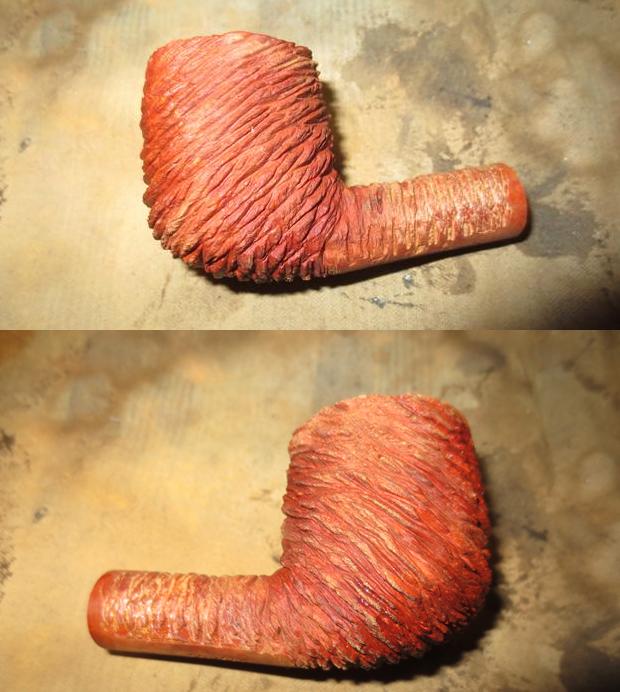
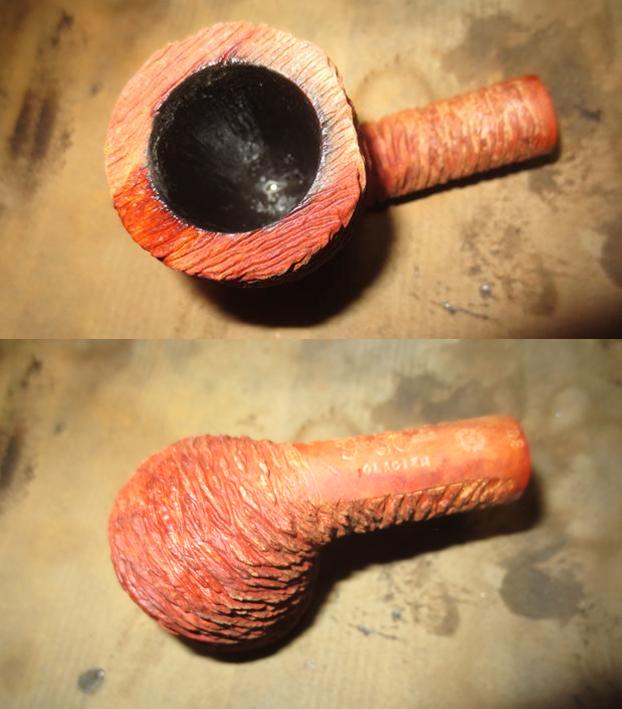


Refurbishing an Iwan Ries Savinelli Made Black Knight 207


Blog by Steve Laug

The next pipe from the estate sale that I chose to work on is a sandblast apple with a contrast black and brown stain. It is stamped on the underside of the shank in a smooth portion starting at the bottom of the bowl. It reads Iwan Ries over Black Knight. Next to that is the shape number 207 over Italy. Lastly there is a capital C. It is a Savinelli shape number. The finish was very dirty with dust and grime in the grooves and it seemed to be sticky. The cake in the bowl was quite thick and the lava had flowed over the rim top. The stem had a light IRC stamped on the left side of the taper and was lightly oxidized. The now characteristic tooth marks and chatter were on the top and underside of the stem near the button and the button surface itself had chatter and wear. The next four photos show the condition of the pipe when my brother Jeff brought it home from the sale and before he started to work on cleaning it up.He took a photo of the bowl from the top to show the cake in the bowl and the tarry build up on the rim top. The second photo below shows the sandblast on the left side of the bowl which is birdseye. The right side shows more of the ring grain but it will show up in later photos. The next photos show the clear and sharp stamping on the bottom of the bowl and the IRC stamp on the left side of the stem. It looks more deeply stamped than it appeared once it arrived in Vancouver.The stem shows the now characteristic tooth marks and chatter on both sides and the wear on the button surface as well, just as the rest of the pipes in the lot did.My brother scrubbed the bowl exterior with a tooth brush and Murphy’s Oil Soap to remove the sticky buildup and the grime in the grooves. He rinsed it with warm water to remove the soap and the dust. He reamed the bowl and scrubbed the rim top with the soap and tooth brush. He cleaned out the mortise and the airway in the shank and stem. He cleaned the stem with a short soak in Oxyclean. The soak brought the oxidation to the surface. I took the next four photos of the pipe when it arrived in Vancouver. The grain shows through the blast – birdseye on the left side and ring grain on the right side. I took a photo of the rim top and the inside of the bowl to show the condition. Like several other pipes in the estate lot this one still had raw briar at the bottom third of the bowl.The next two photos show the condition of the stem. The tooth marks and chatter are visible in the photo. The ones on the underside of the stem were deeper than the ones on the top side.I sanded the stem with 220 grit sandpaper to remove the tooth marks and chatter. I worked over the entire stem to break up the oxidation.I rubbed the bowl down with a light coat of olive oil on a soft towel. I took the following photos of the pipe after I had wiped it down. The shine on the sandblast revealed the contrast stains that had been used on the bowl – both a dark brown and black. I touched up the rim top with a dark brown stain pen to blend the rim into the rest of the bowl colour. The dark brown stain worked well on the high area and the black filled in the grooves of the blast.I set the bowl aside and worked on the stem. I wet sanded it with 1500-2400 grit micromesh sanding pads and gave it a rub down with Obsidian Oil. I dry sanded it with 3200-4000 grit pads and gave it another coat of oil. I let the oil dry and then buffed the stem with red Tripoli and Blue Diamond on the buffing wheel. I brought it back to the work table and finished polishing it with 6000-12000 grit micromesh pads. I gave it a final coat of Obsidian Oil and set it aside to dry. I put the stem back on the bowl and buffed the bowl lightly with Blue Diamond and more intently on the stem. The Blue Diamond polishes out the minute scratches in the vulcanite and gives the material more shine. I gave the stem multiple coats of carnauba wax and hand waxed the bowl with Conservator’s Wax. I buffed the pipe with a clean buffing pad to raise the shine. I hand buffed it with a microfibre cloth to deepen the shine. The finished pipe is shown in the photos below. The dimensions of the pipe are Length: 5 ¾ inches, Height: 1 1/8 inches, Outer diameter of the bowl: 1 ¼ inches, Chamber diameter: ¾ inches. The pipe is the kind of shape that feels great in the hand, it is light weight and comfortable. The look of the finished pipe is quite attractive and the contrast between the brown of the high spots on the briar and black in the crevices contrast well with the polished vulcanite stem. This one will soon be on the rebornpipes store. If you are interested in adding it to your rack email me at slaug@uniserve.com or send me a message on Facebook. Thanks for looking.