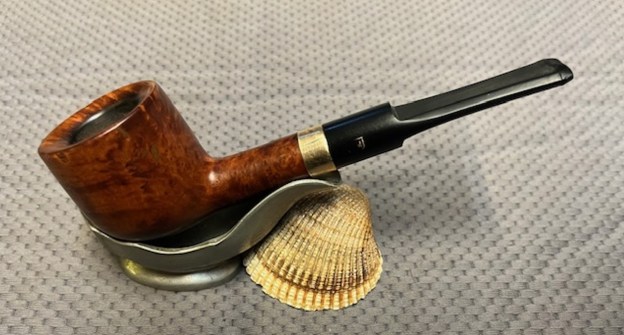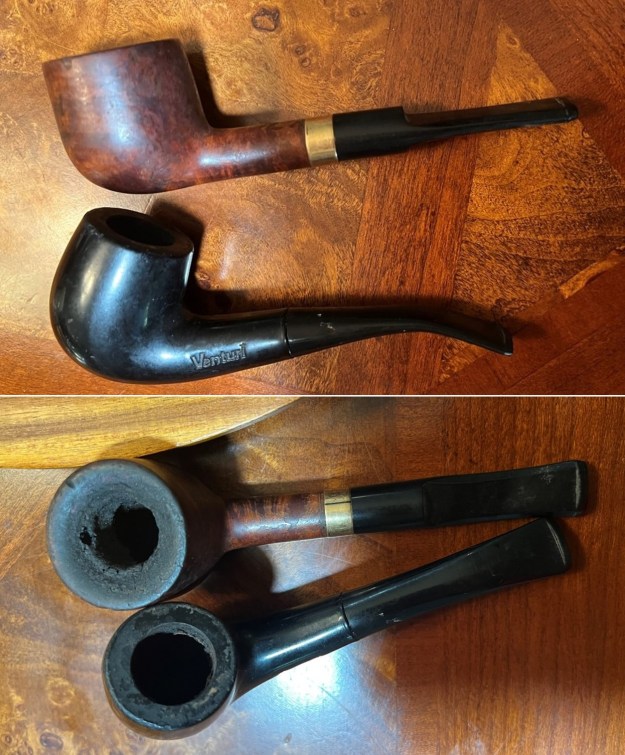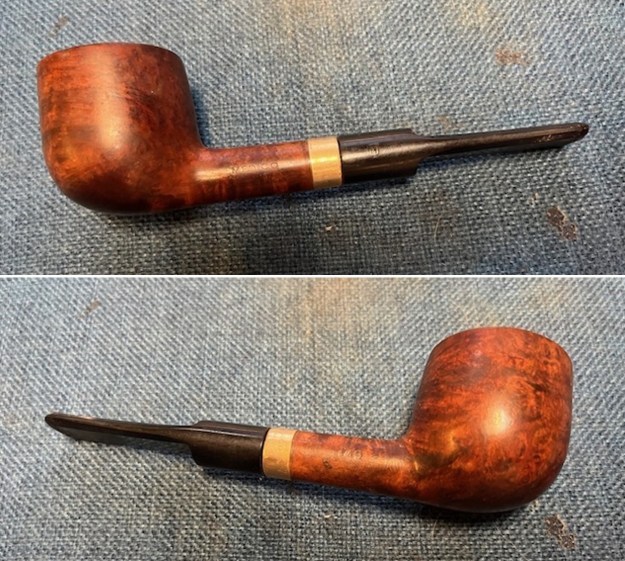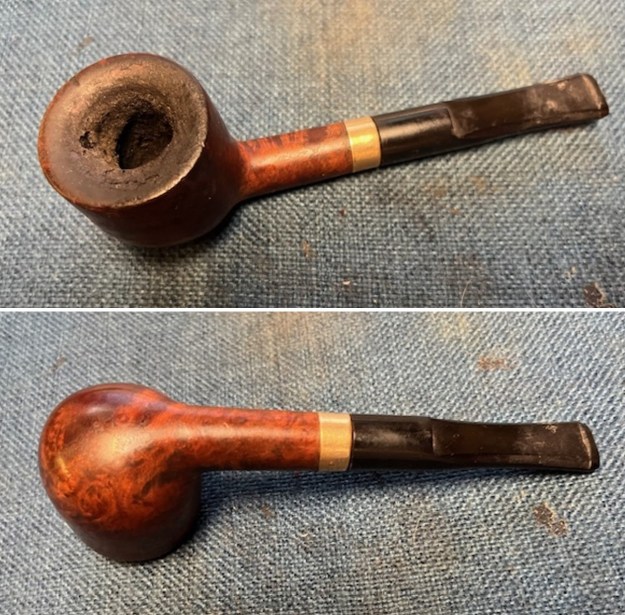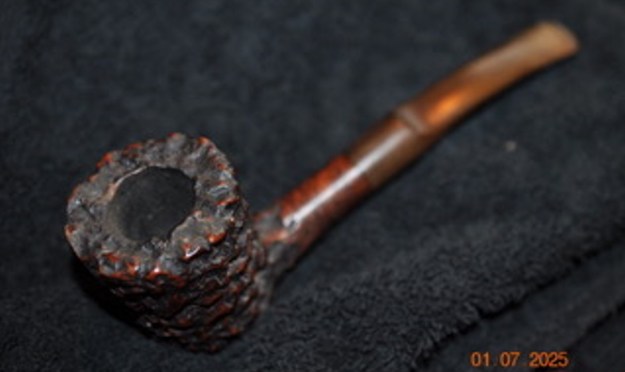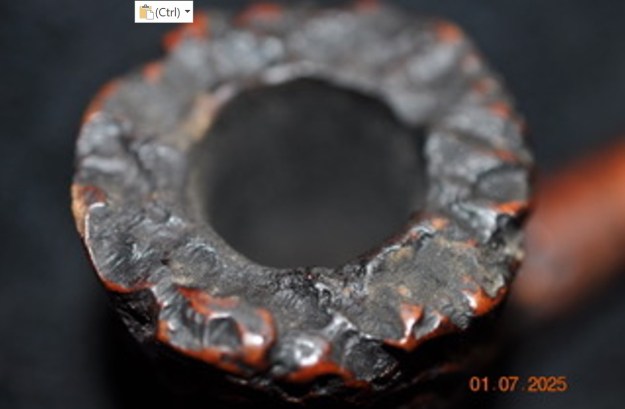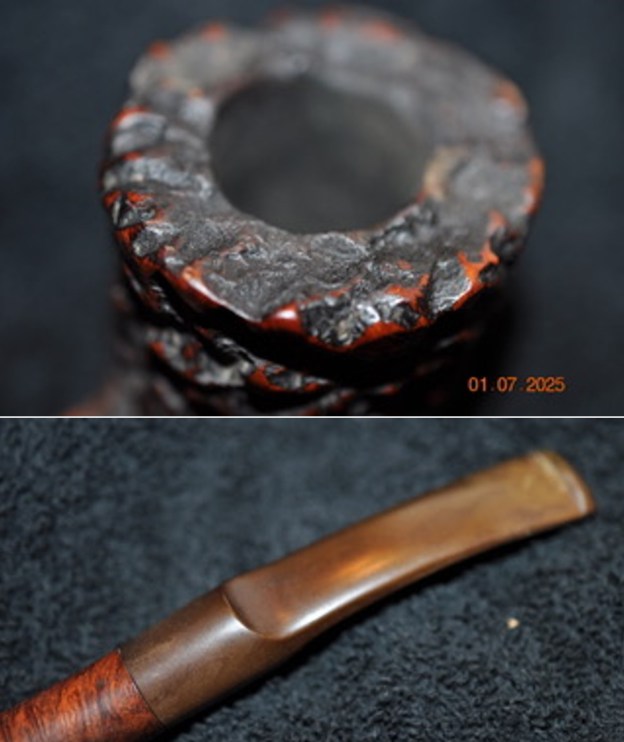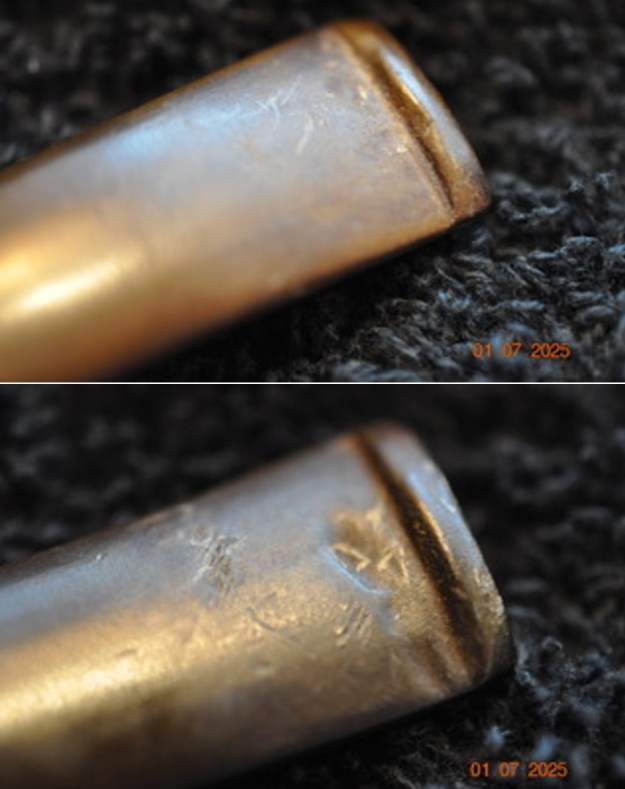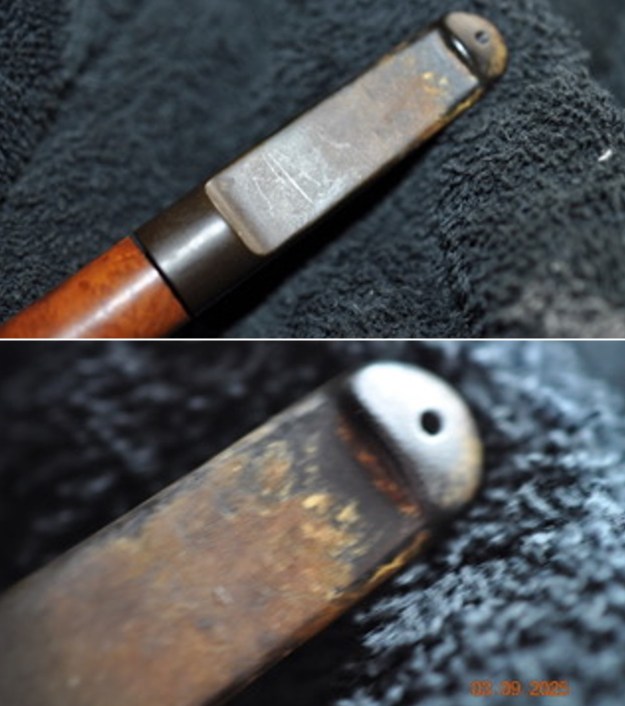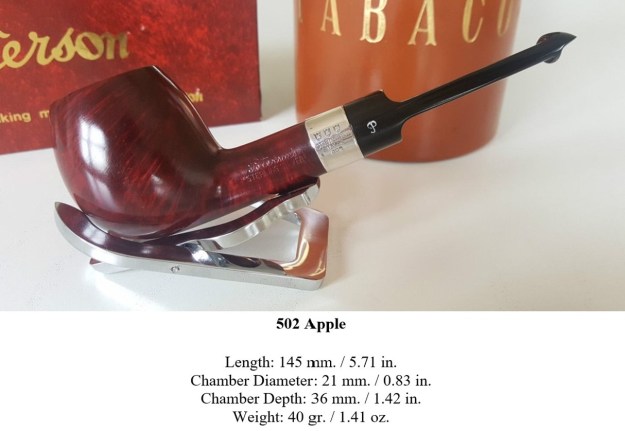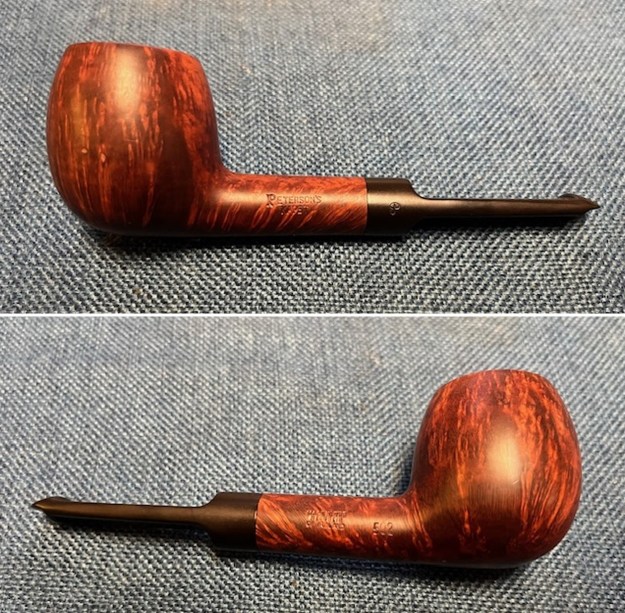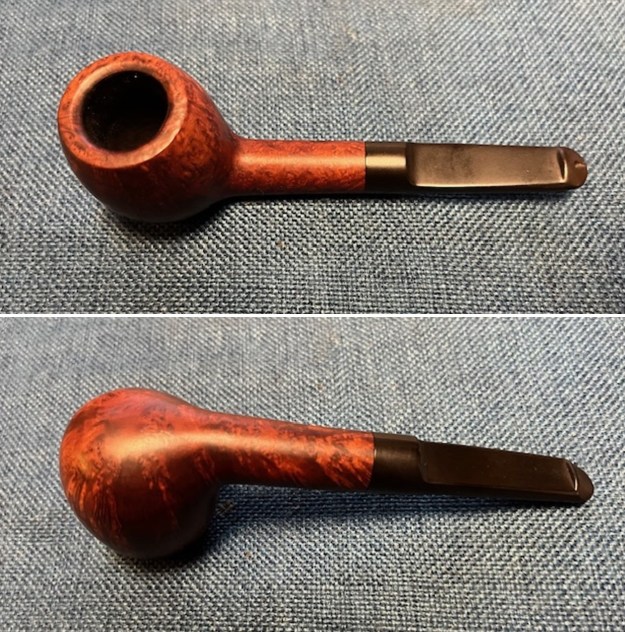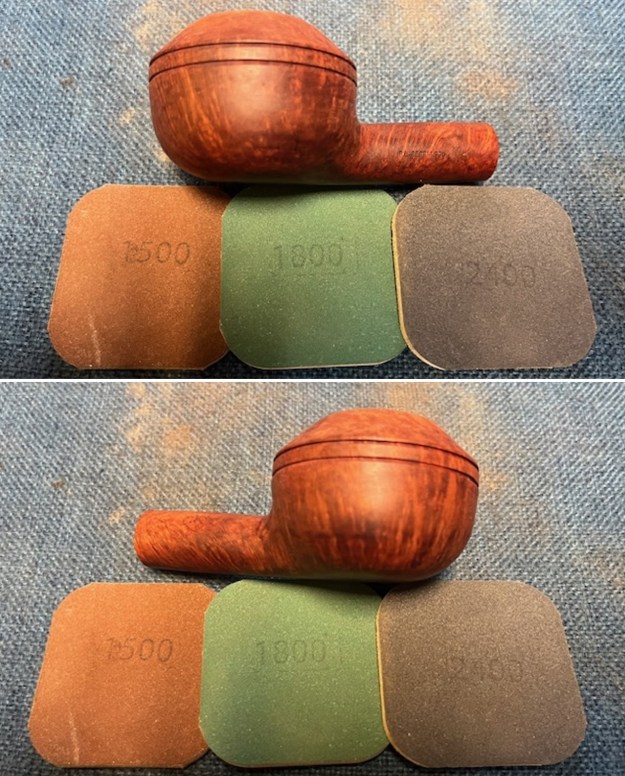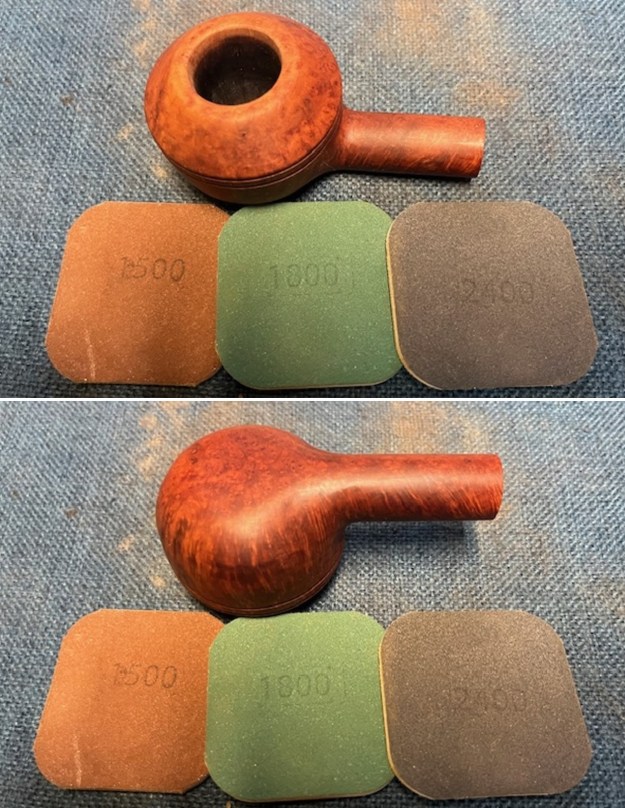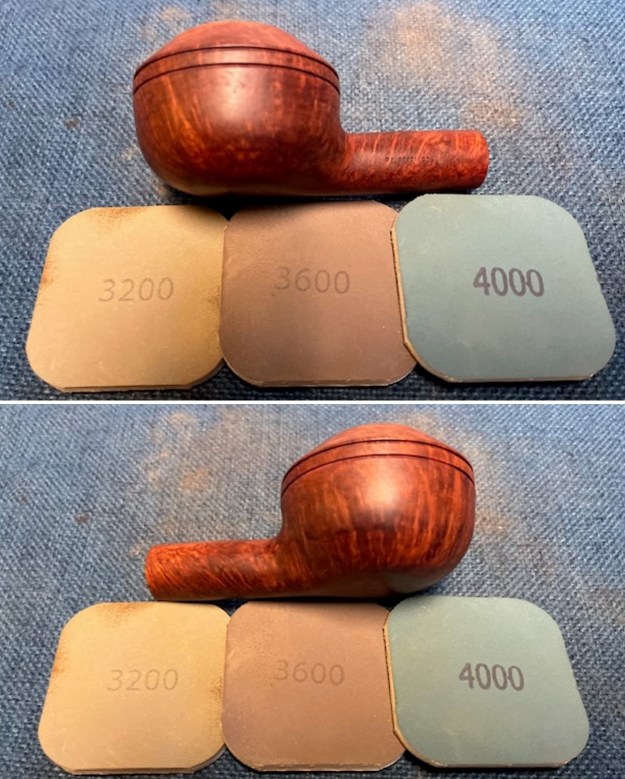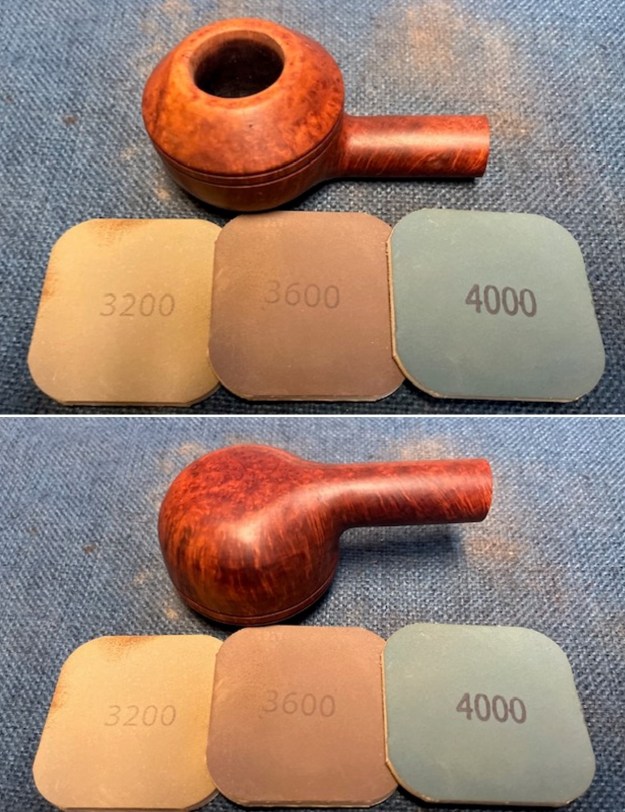
Tag Archives: contrast staining

Breathing Life into an S&R Sandblast Oom Paul


by Steve Laug

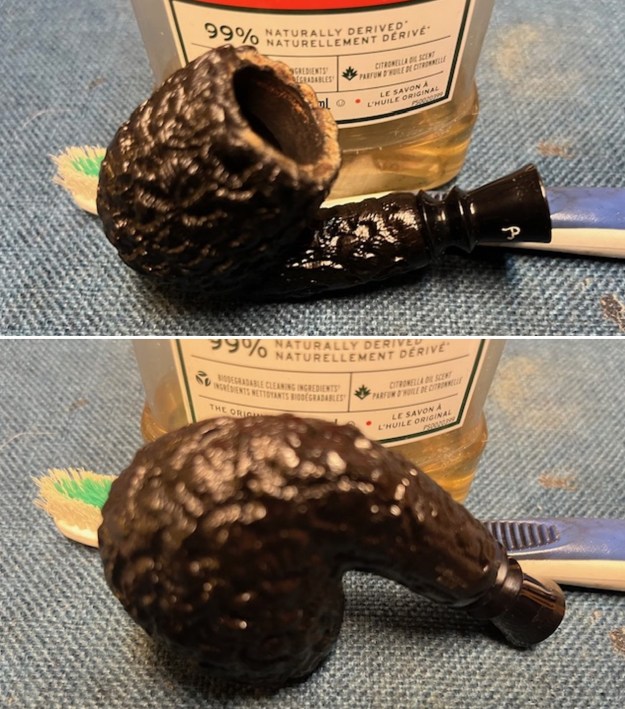
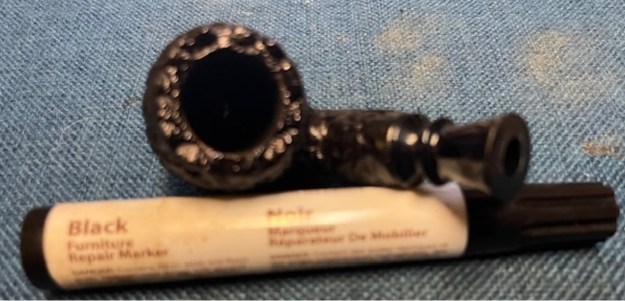
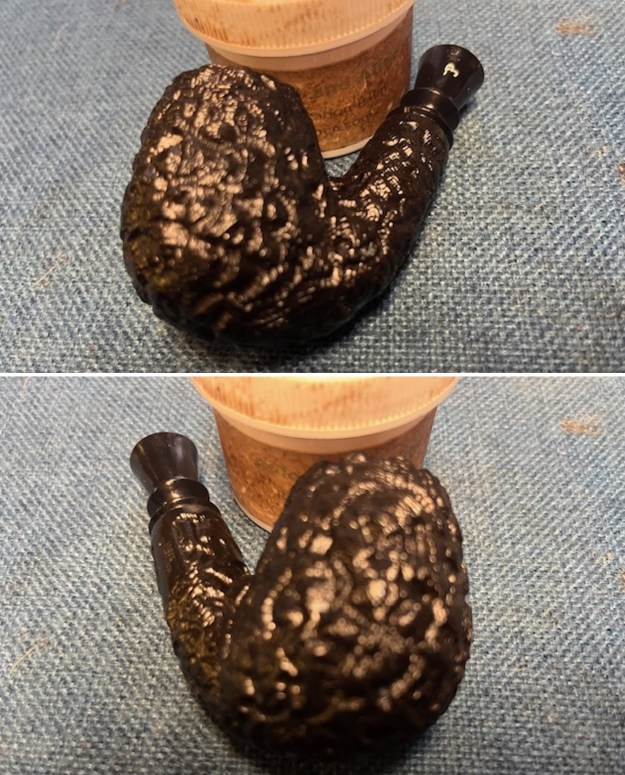
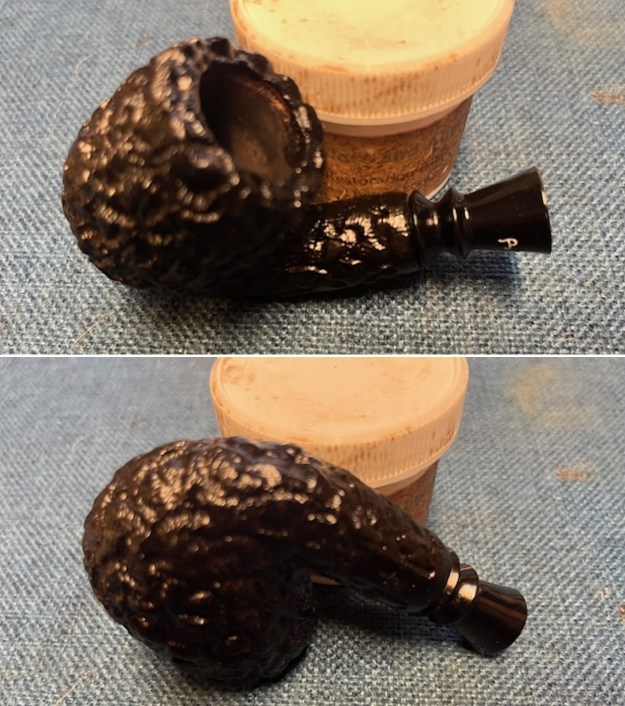
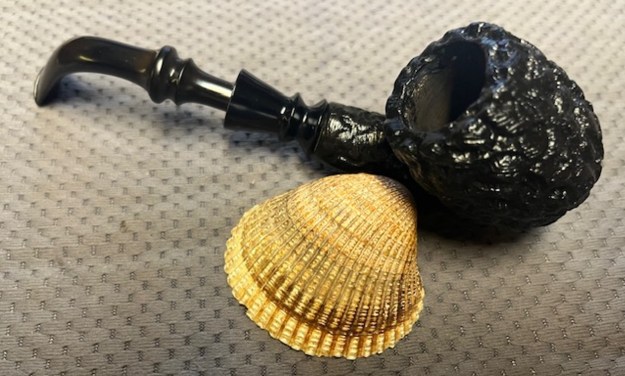
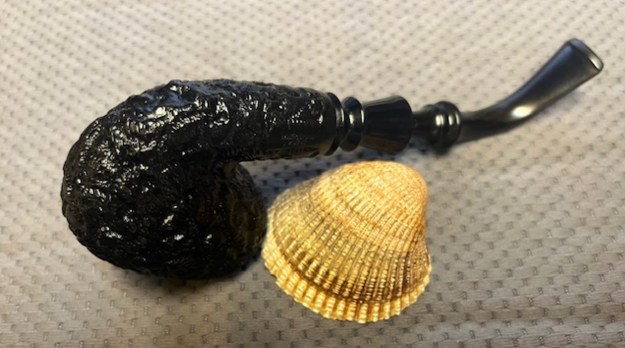
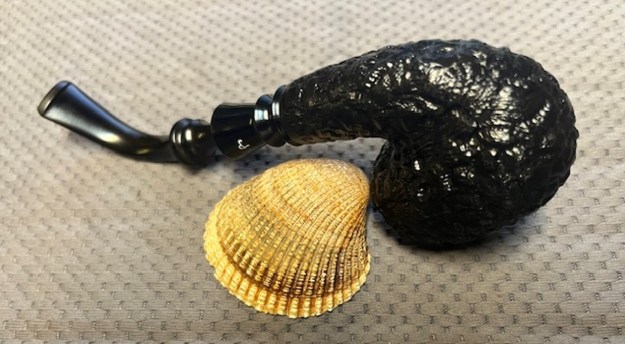
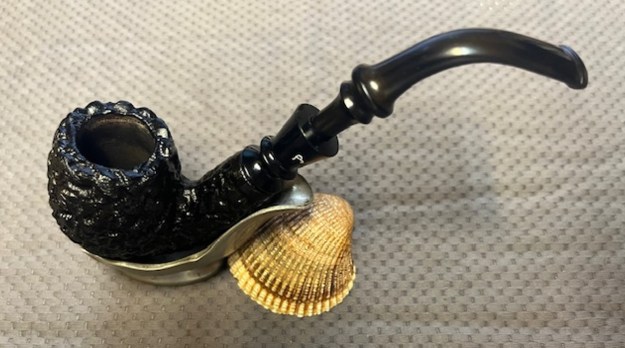
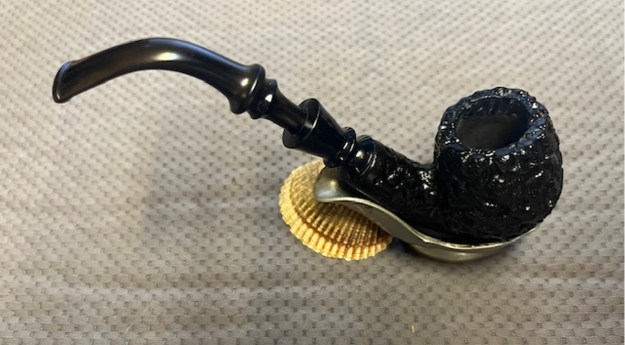
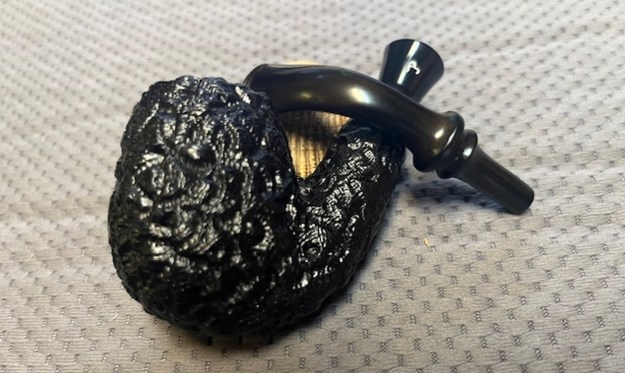
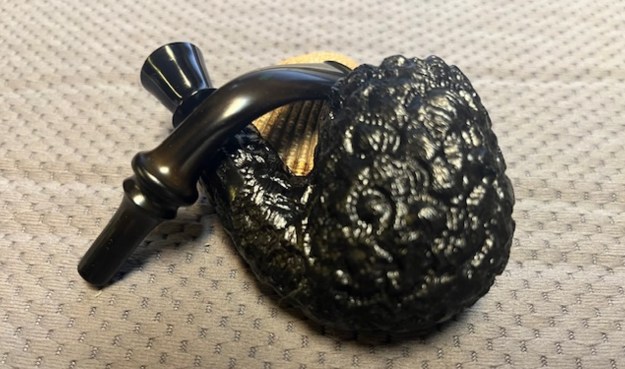
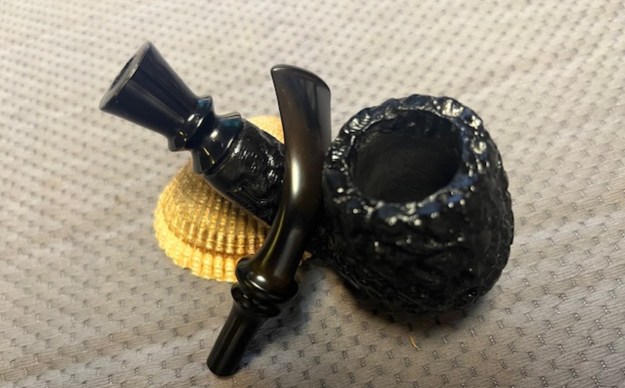
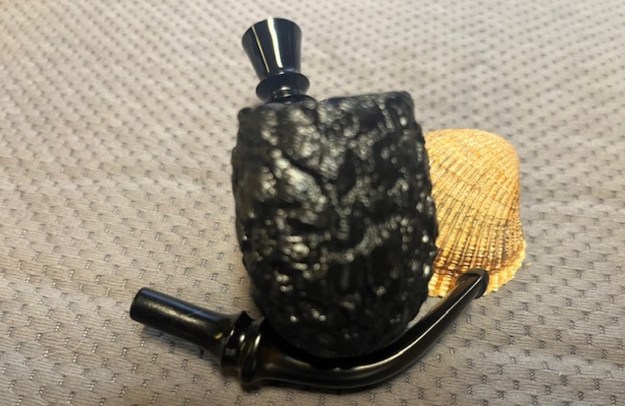
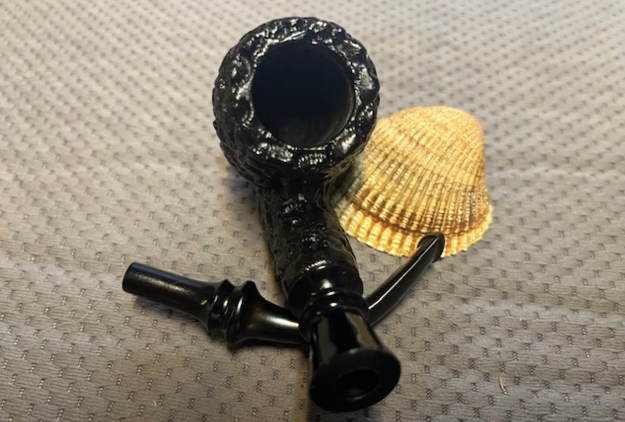
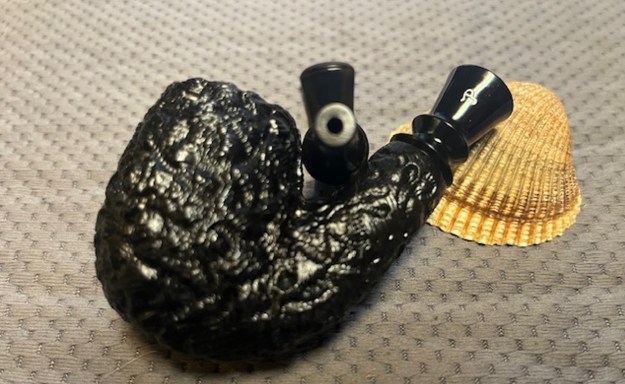
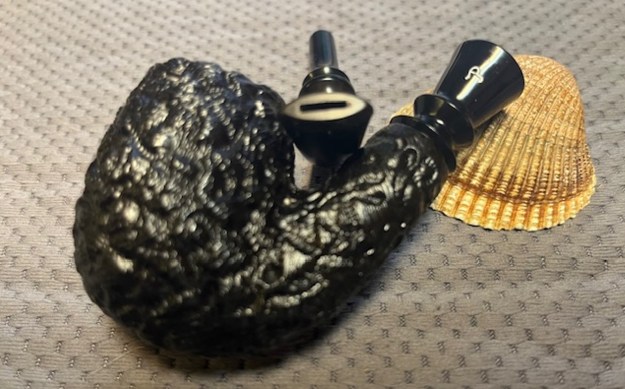
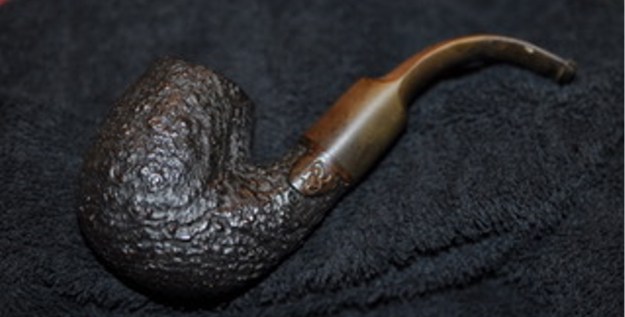
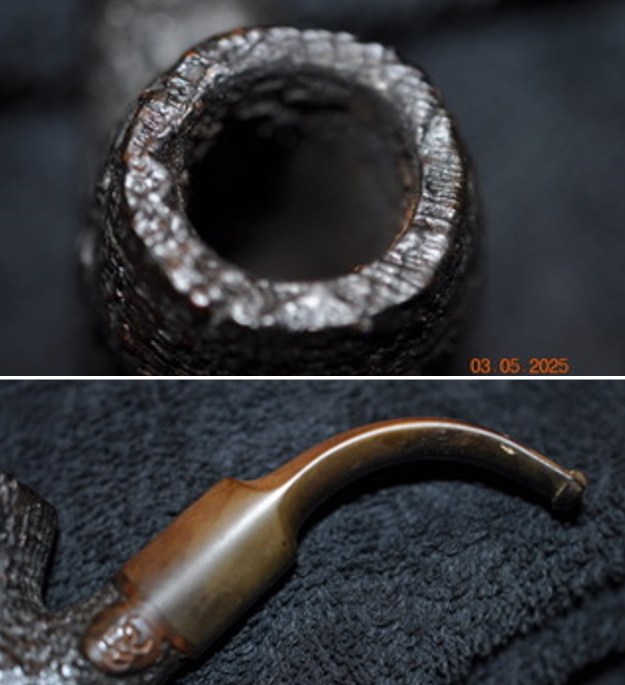
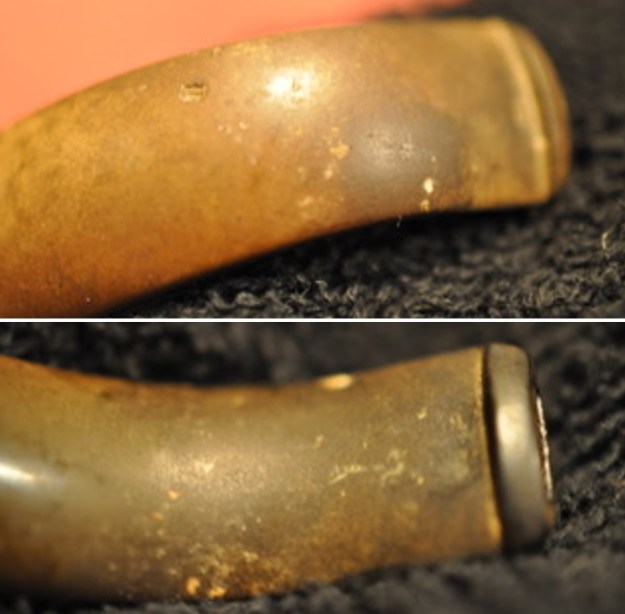
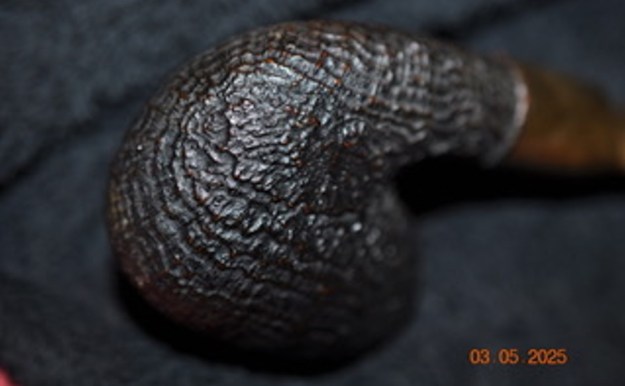
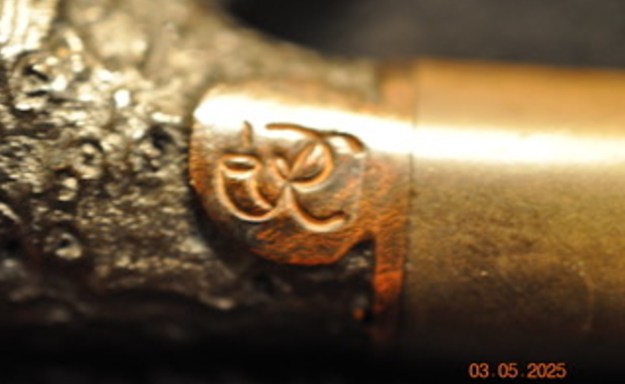
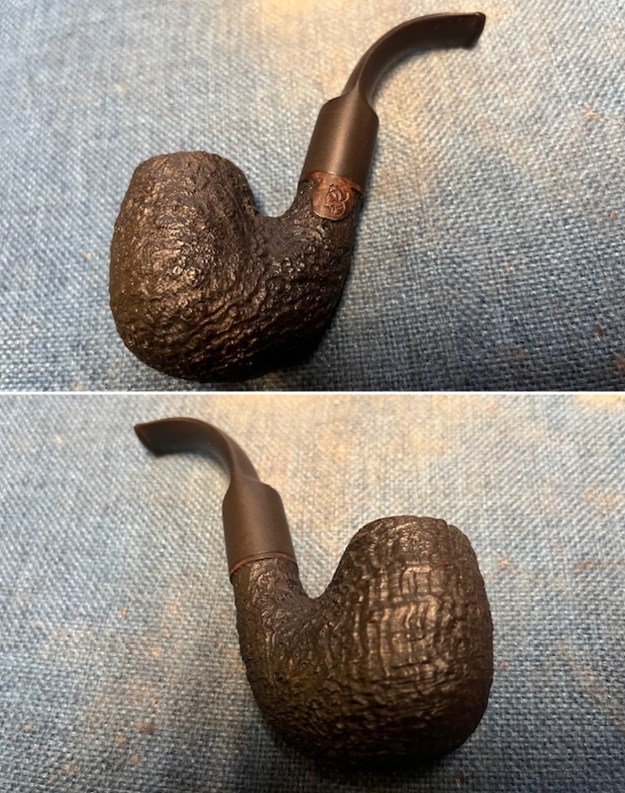
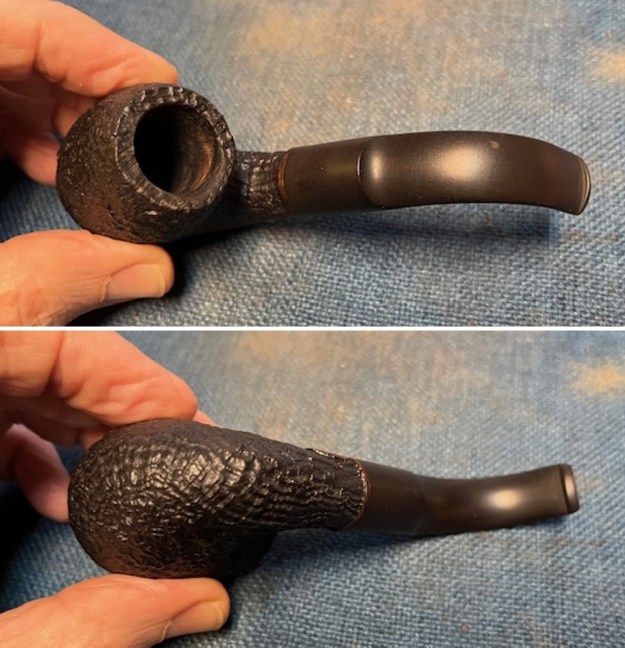
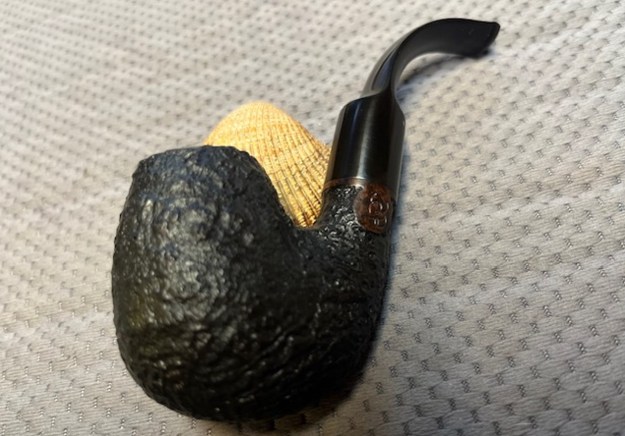
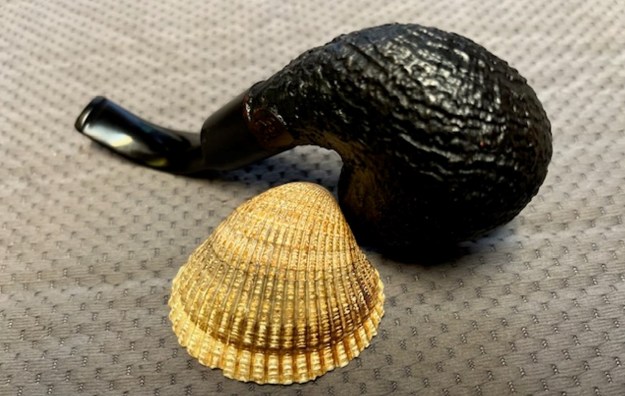
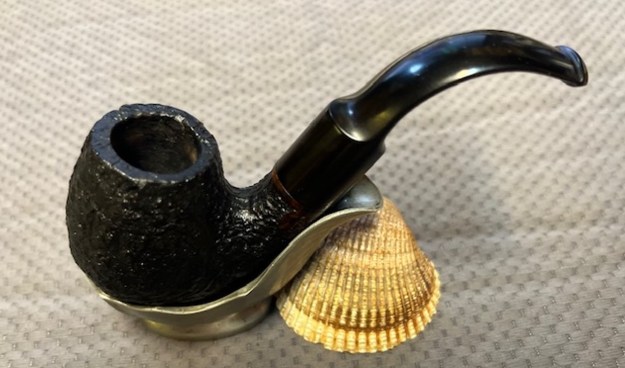
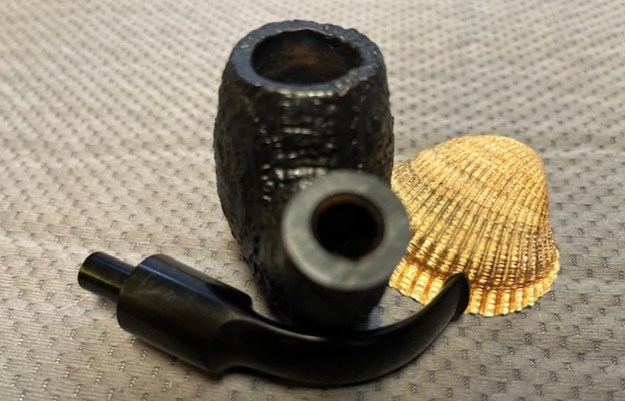
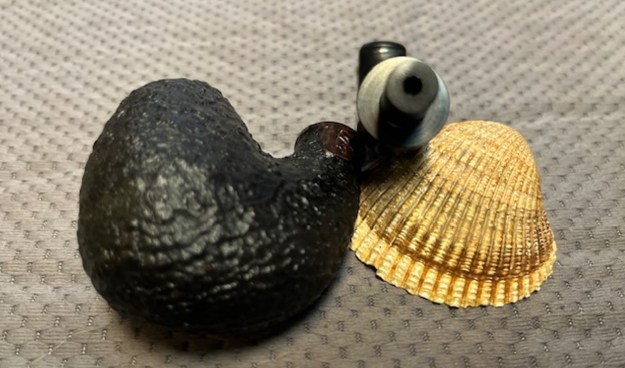
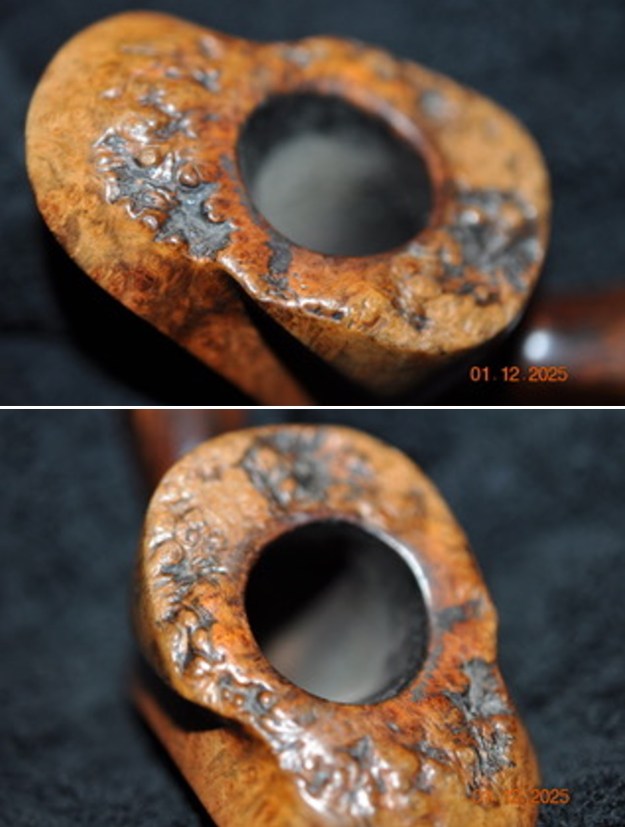
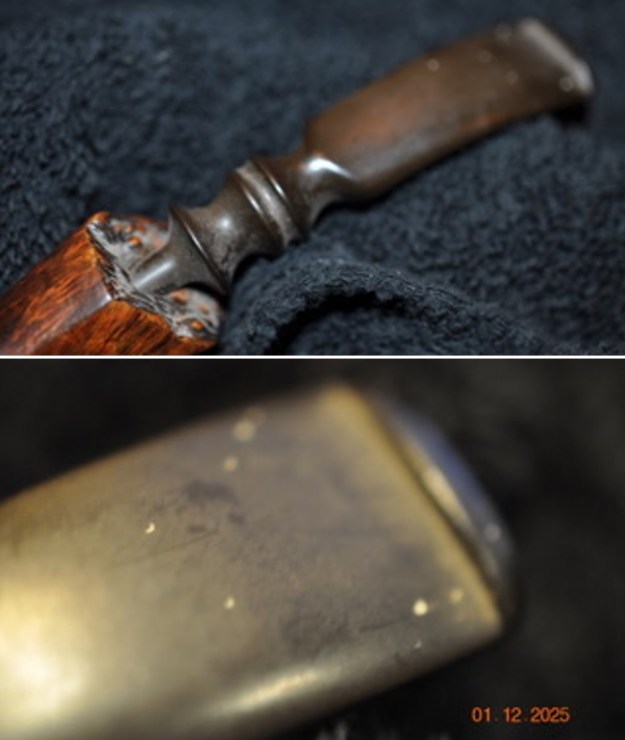
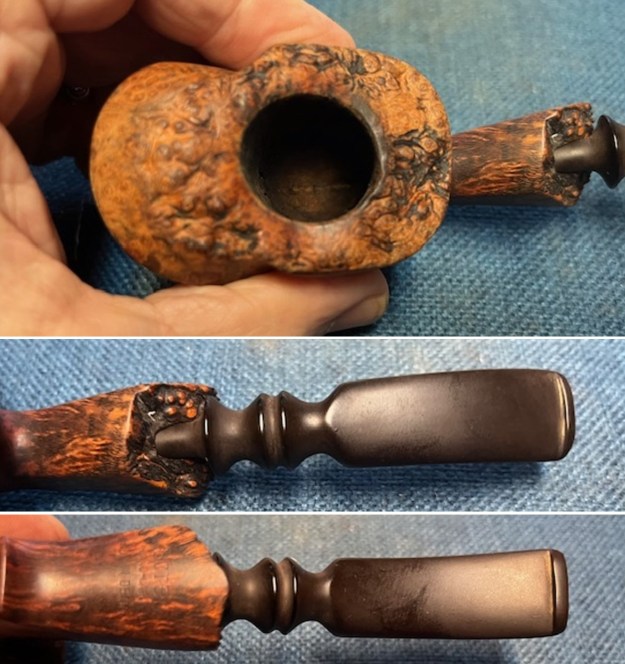
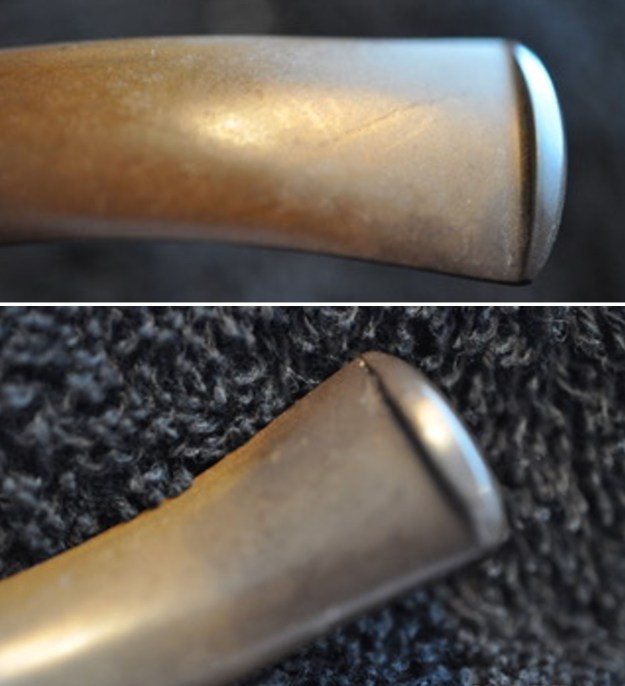
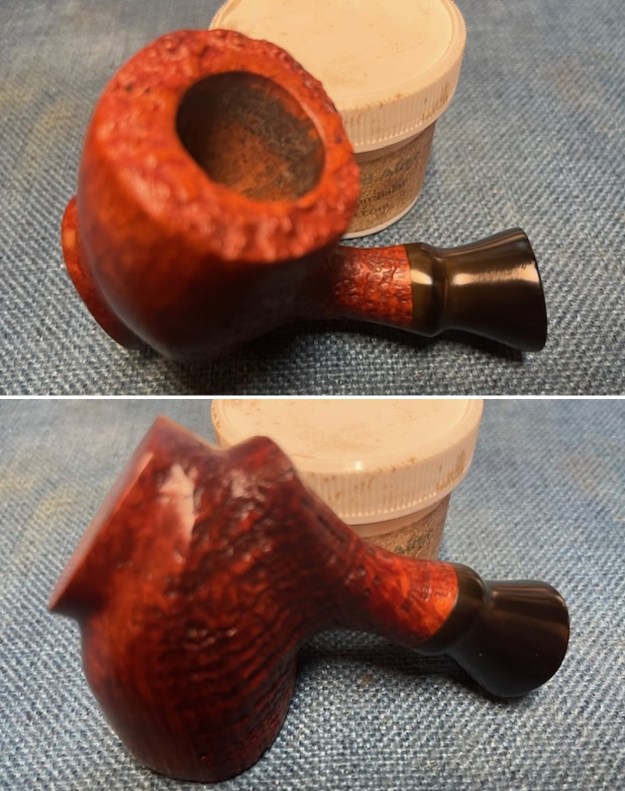
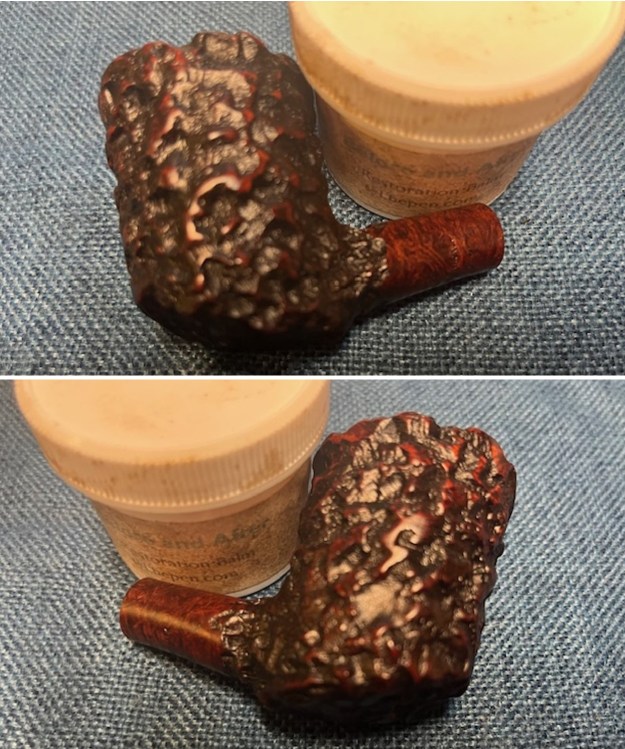
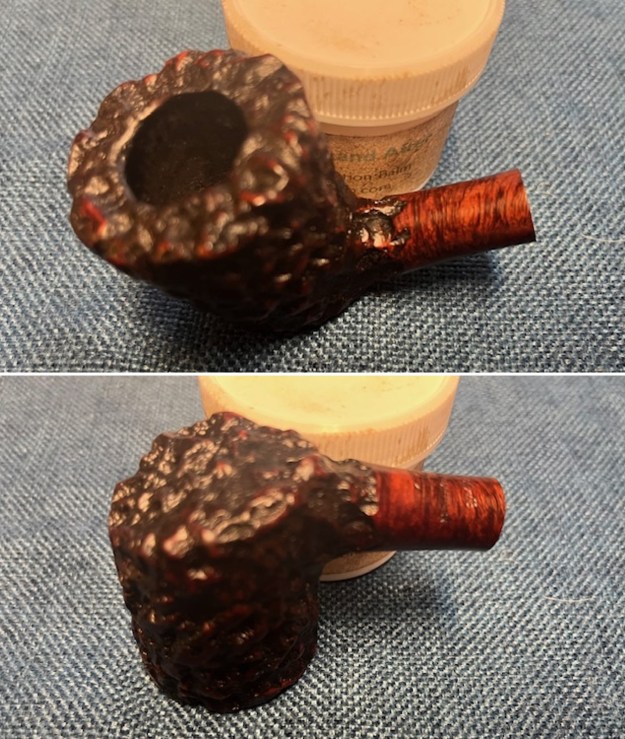
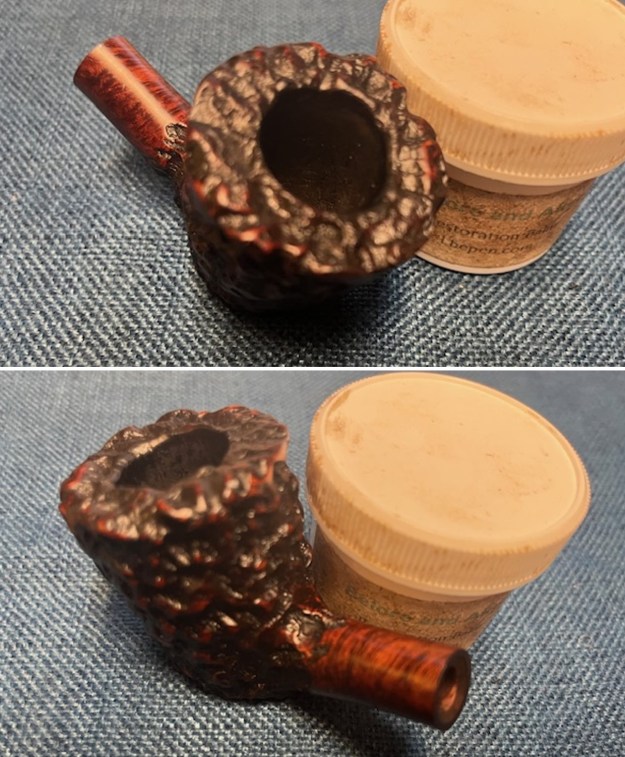
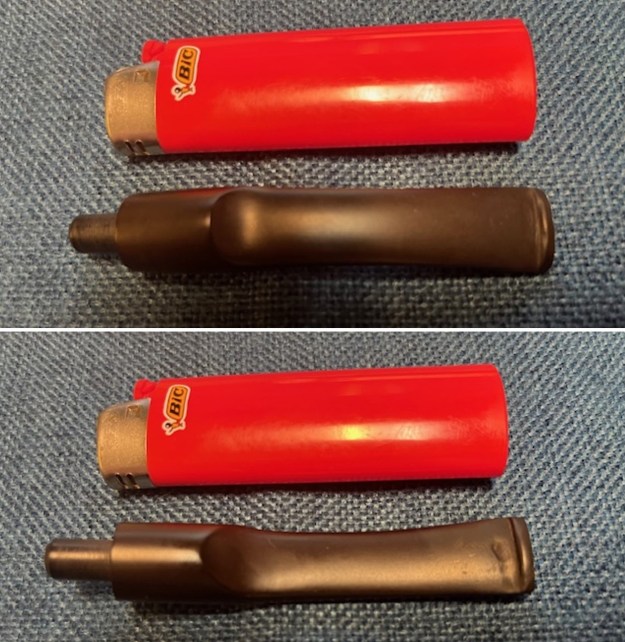
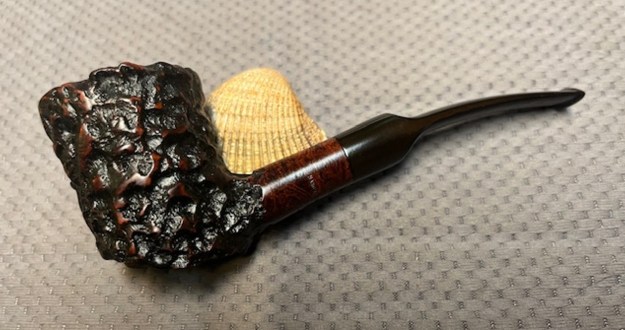
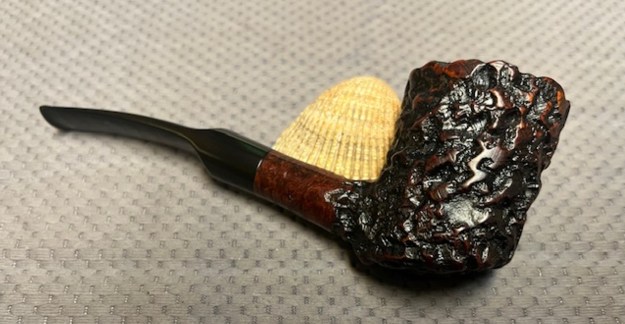
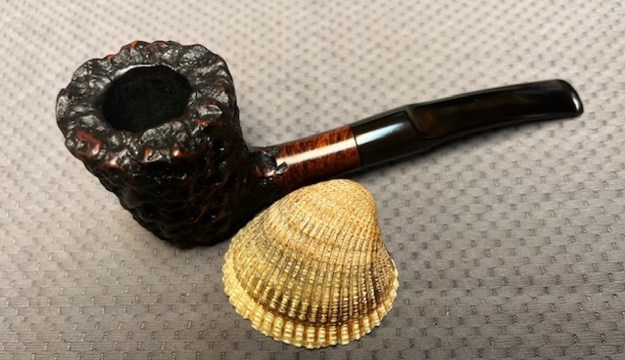
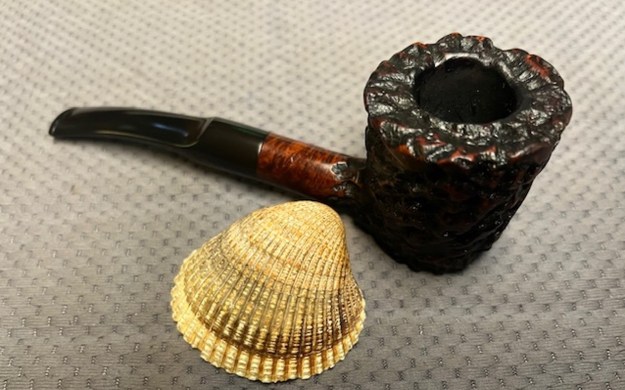
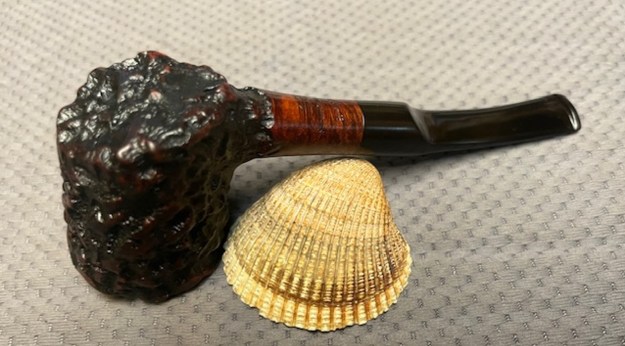
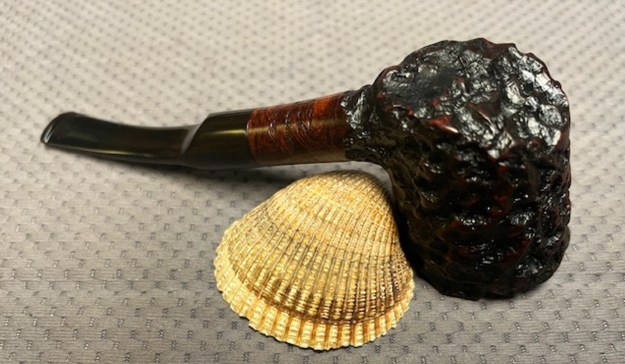
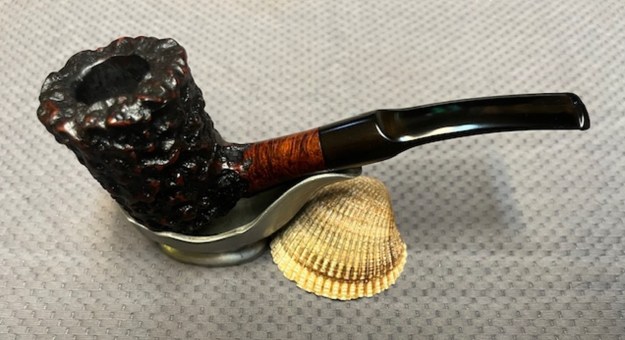
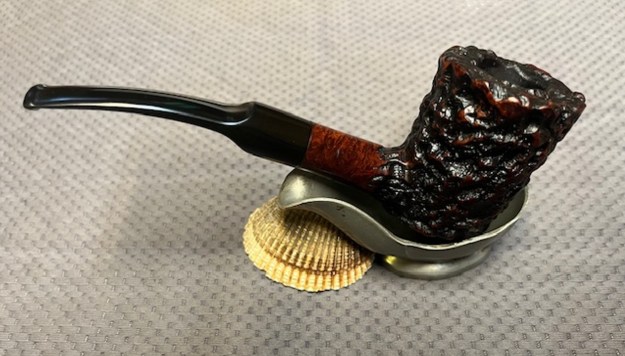
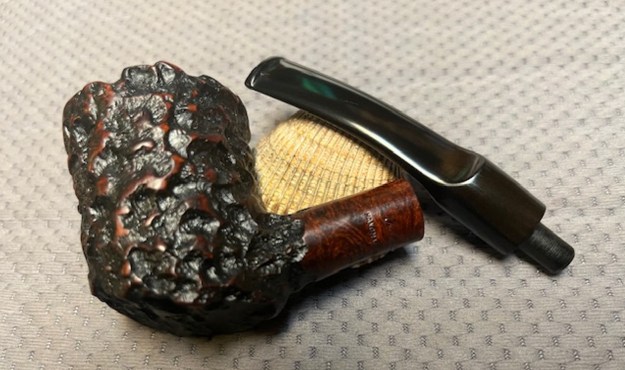
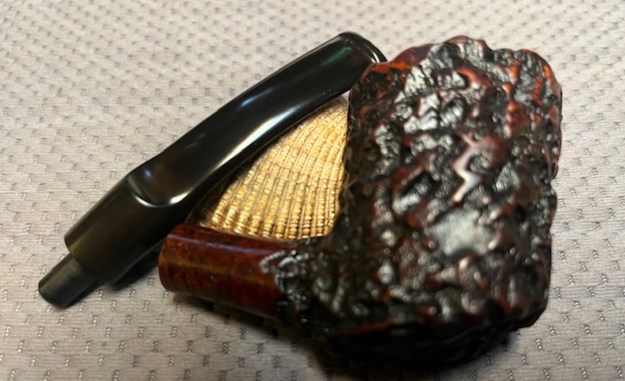
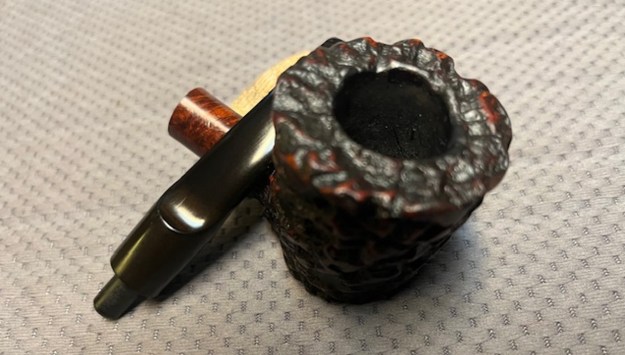
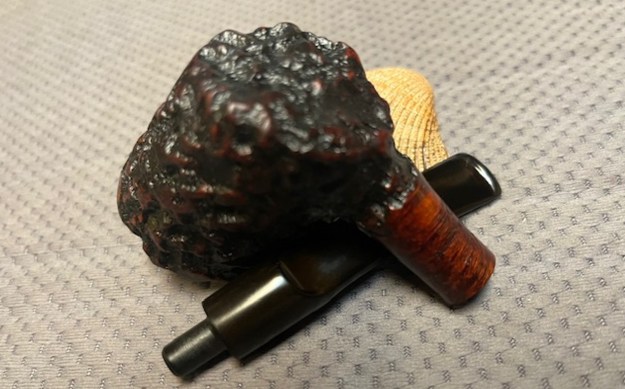
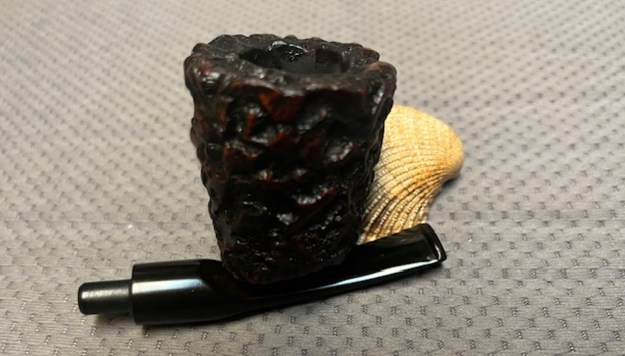
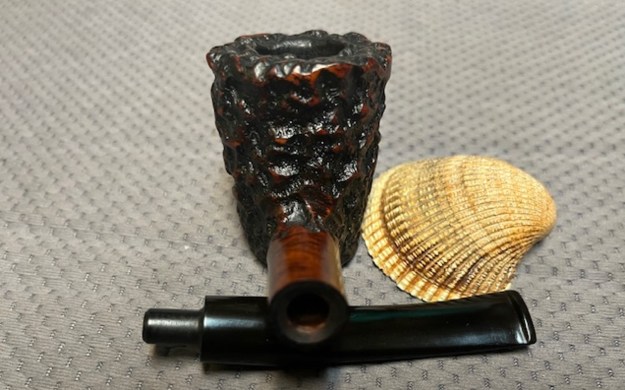
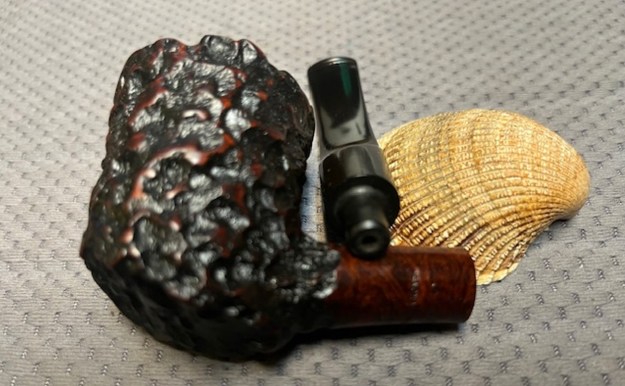
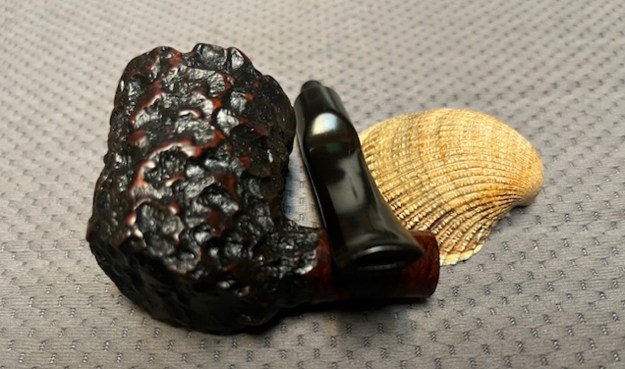
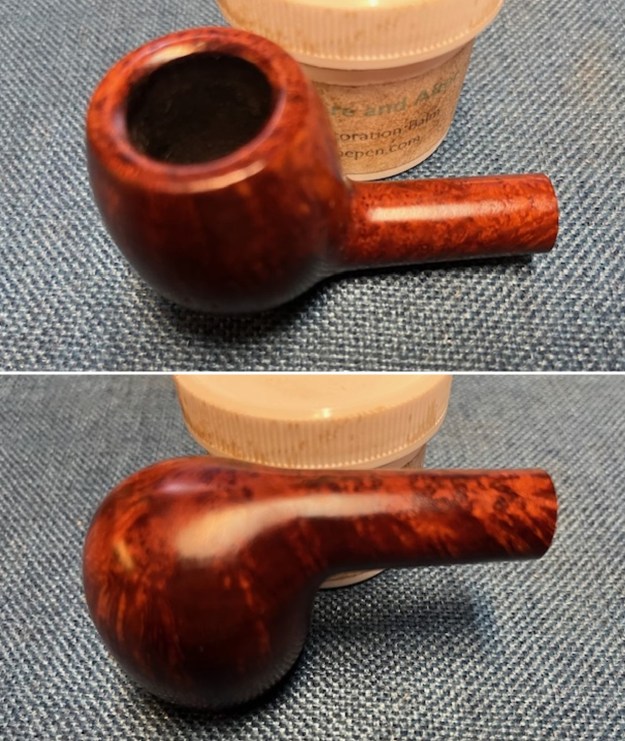
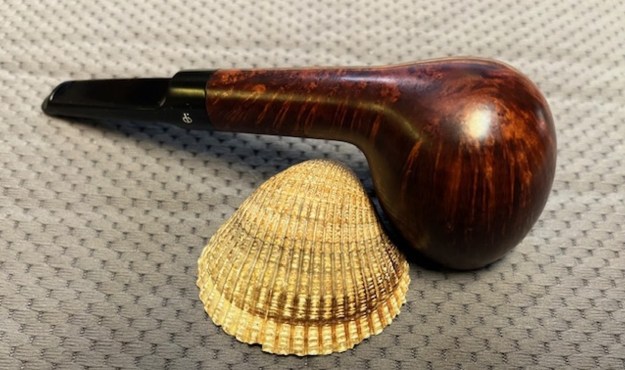
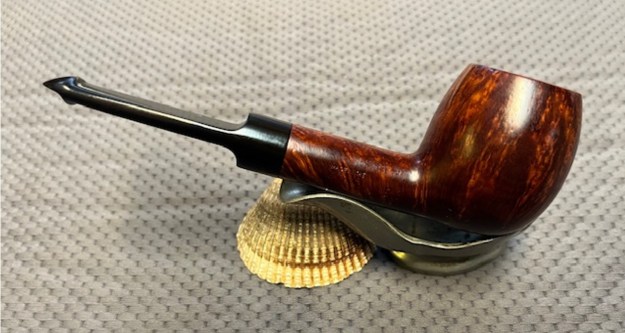
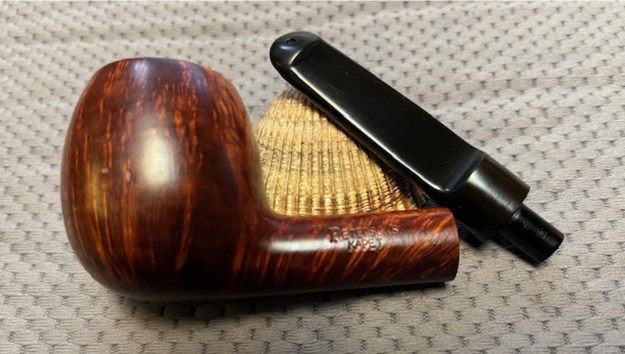
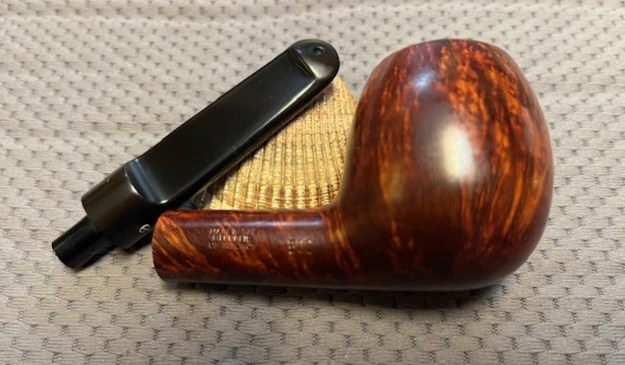
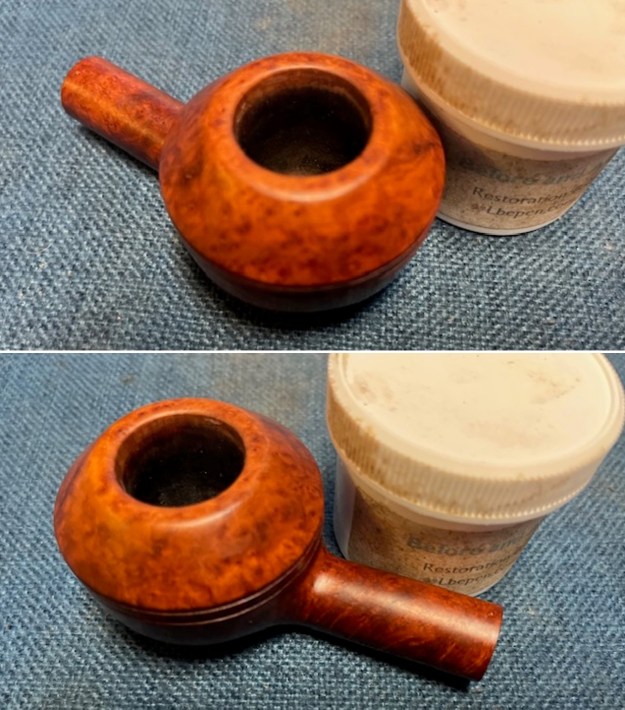
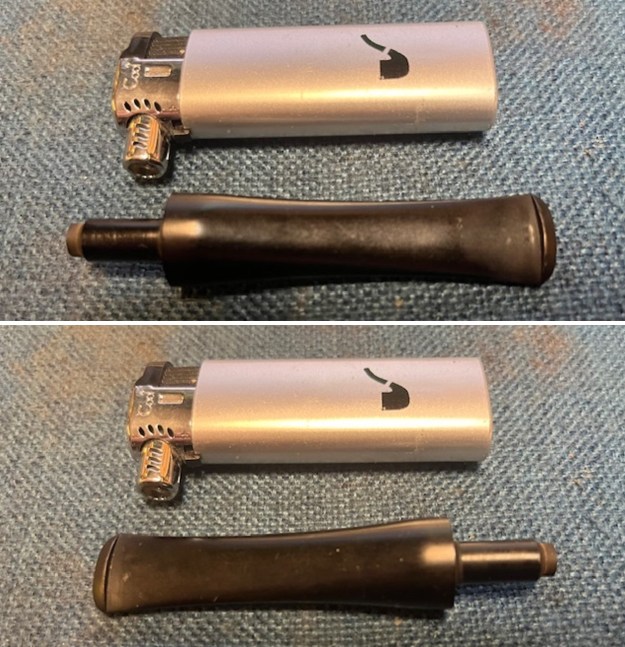
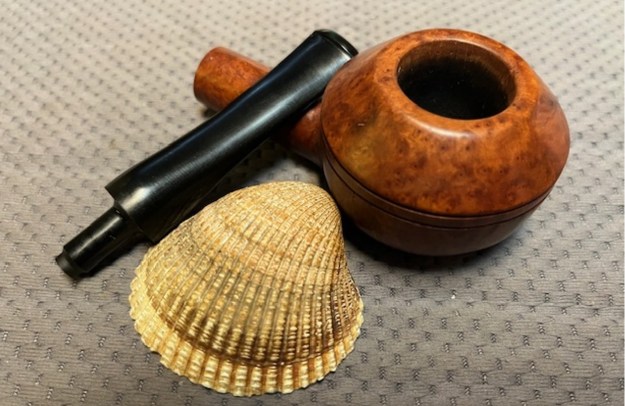
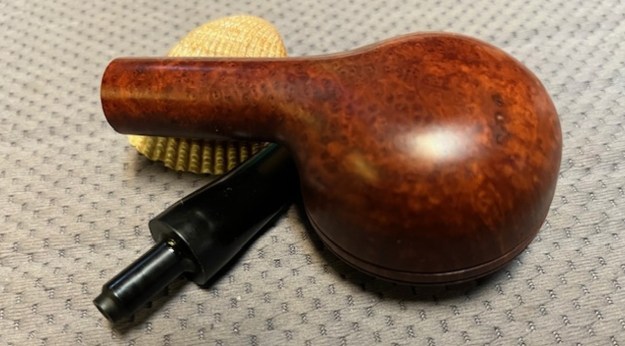
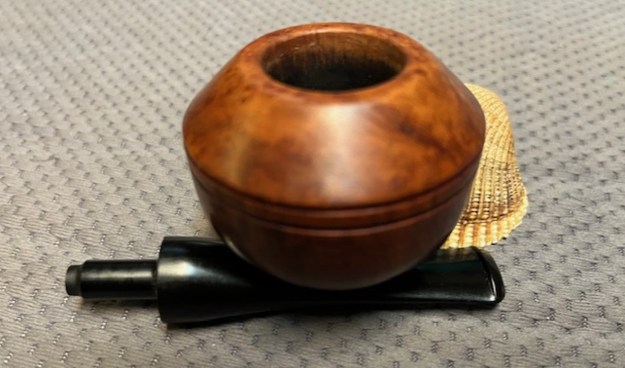
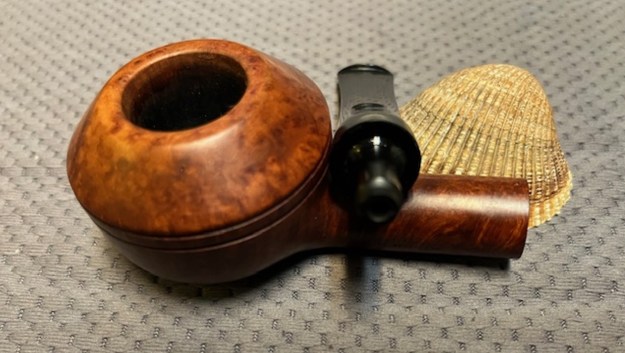
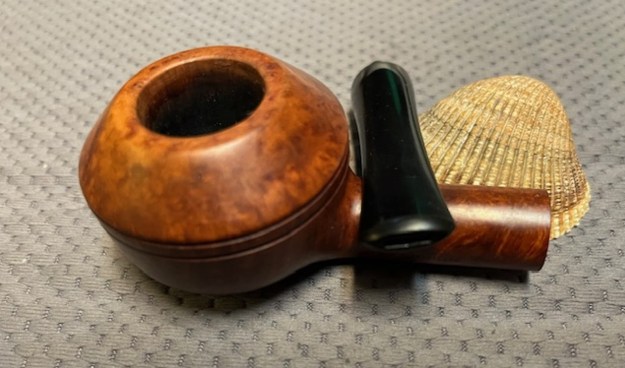
Years ago, I met Steve and Roswitha of S&R pipes at the Chicago Pipe Show. I cannot even remember the year but I remember having a good conversation with them. I was not able to pick up one of their pipes at that time but I was amazed at the beauty and style of pipes that the two of them were creating in their shop, Pipes & Pleasures in Columbus, Ohio. This pipe came to us from a seller in Memphis, Tennessee, USA on 08/27/2024. Jeff took some photos of the pipe when he received it to show the general condition. I have included the photos of the S&R pipe. The sandblast finish was dirty and dusty looking. There was a moderate cake in the bowl and surprisingly no lava overflow on the rim top. The sandblast follows the grain of the bowl and shank. The stamping is very clear and shows the interlocked SR with a pipe on the left side of the shank. The sandblast is quite deep and really shows the grain and is nicely done. The saddle stem is vulcanite and oxidized. There are tooth marks and chatter on both sides of the stem ahead of the button and some scratching on the stem surface. The photos below tell the story and give a glimpse of the Oom Paul shape.Here is a close up of the bowl and rim top. You can see the light lava coat. The inner edge of the rim looks good. There is a moderate cake in the bowl that is hard and rough. The photos of the stem show the scratching, oxidation and tooth marks in the stem at the button. Jeff took photos of the sides of the bowl to show the interesting grain in the sandblast. The swirls and depths of the sandblast are intricate and quite beautiful. Jeff took a photo of the S&R logo on the left side of the shank. It is a unique interlocked S&R stamp with the pipe. It is clear and legible.I decided to take some time to review my knowledge of the brand. I turned to Pipedia and read the article that was included there (https://pipedia.org/wiki/S%26R_Pipes). I quote in full below:

Stephen and Roswitha Anderson of S&R Pipes, also known as S&R Woodcrafters, have become pipe makers renowned throughout the world as talented carvers of high-grade briar pipes. They have been featured in several trade publications and magazines such as Pipes and Tobaccos and PipeSmoker, and have several pieces on display in museums in Europe and the United States.

They are the first American pipe carvers honored with induction into the Conferee of Pipe Makers of St. Claude, France; the very place where the carving of briar pipes became a world-wide industry. Sadly, Steve passed away in March of 2009. Roswitha is still carving S&R pipes and carrying on with the shop with help from her “guys” David, Marty, and Tony.

Steve and Roswitha began carving pipes in the 1960’s. They travelled to pipe shows and arts and crafts shows throughout the country and Europe selling their pipes and built up quite an extensive loyal customer base. Eventually, it became time to offer their pipes to the retail fraternity of pipe smokers.

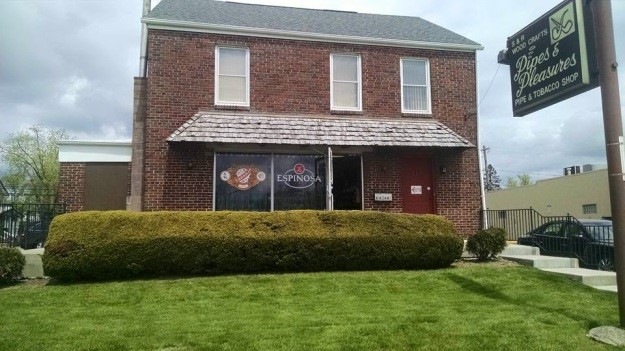
Pipes & Pleasures had its grand opening in a distinct red brick house on Main Street in Columbus, Ohio in 1977. The front section of the house was converted into a traditional tobacco shop selling pipe tobacco, cigars, and pipes manufactured by well known companies such as Dunhill, Charatan, and Savinelli as well as the high-grade S&R pipes that Steve and Roswitha carved. A workshop was set up in the back section of the house.

When the cigar boom hit in the ’90’s, the shop was expanded by building a large computer controlled walk-in humidor. It’s no secret throughout the country that Pipes & Pleasures has the best maintained cigars in the Columbus area as well as the best selection of premium cigars available in the area including the much sought-after Davidoff line.

Soon after the boom began, Steve and Roswitha moved their pipe making workshop to their farm and converted that space into a large smoking lounge for their many customers. The lounge features comfortable easy chairs, a television set, a stereo, a library of books and magazines about every aspect of tobacciana, a chess table, and a couple of card tables. The lounge is populated daily with long-time loyal customers and newcomers to the enjoyment and relaxation of cigar and pipe smoking. It’s also the room where several cigar tastings and samplings are held every year by representatives from cigar companies such as Davidoff and La Flor Dominicana.

I captured a photo of the shop from the Pipedia article to include below. It is a great looking shop.

The Pipes & Pleasures shop, home of S&R Woodcrafters

I also turned to the Pipes & Pleasures website and copied the “About Us” section. Here is the link to the site (https://www.pipesandpleasures.biz/maintenance). I quote in part.

Pipes & Pleasures proprietors Stephen and Roswitha Anderson have become pipe makers renowned throughout the world as talented carvers of high-grade briar pipes. They have been featured in several trade publications and magazines such as Pipes and Tobaccos and PipeSmoker, and have several pieces on display in museums in Europe and the United States. They are the first American pipe carvers honored with induction into the Conferee of Pipe Makers of St. Claude, France; the very place where the carving of briar pipes became a world-wide industry.

Steve and Roswitha began carving pipes in the 1960’s. They travelled to pipe shows and arts and crafts shows throughout the country and Europe selling their pipes and built up quite an extensive loyal customer base. Eventually, it became time to offer their pipes to the retail fraternity of pipe smokers…

…Sadly, Steve passed away in March of 2009. Roswitha is still carving S&R pipes and carrying on with the shop with help from her “guys” David, Marty, and Tony, who welcome you to this website.

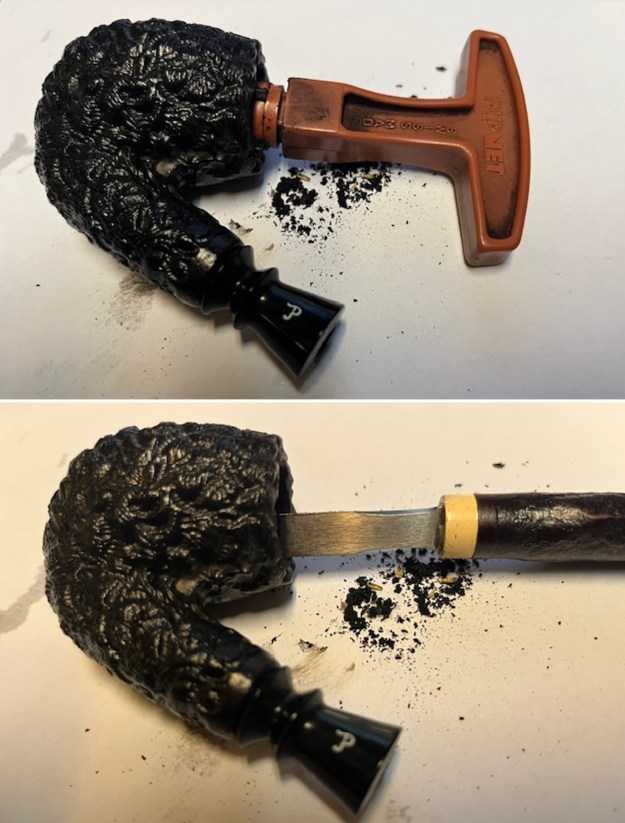
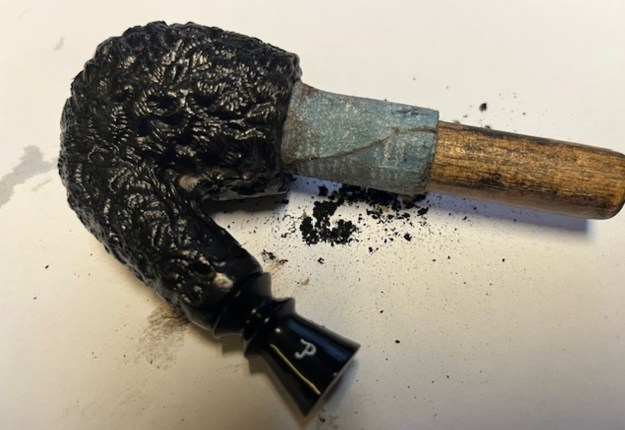
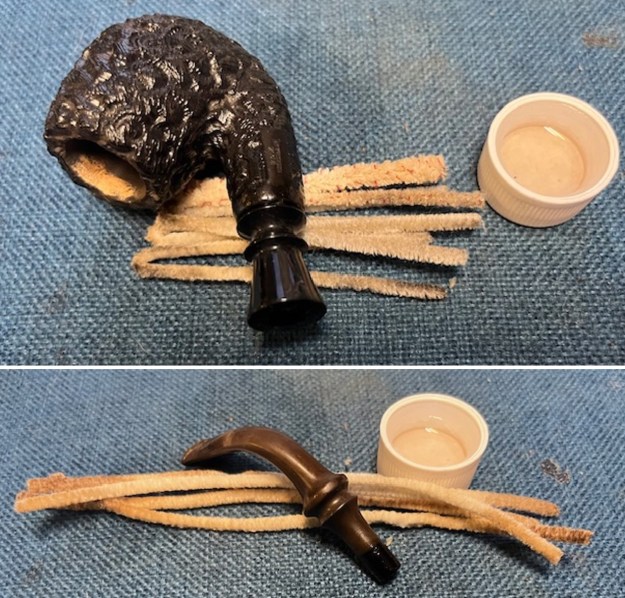
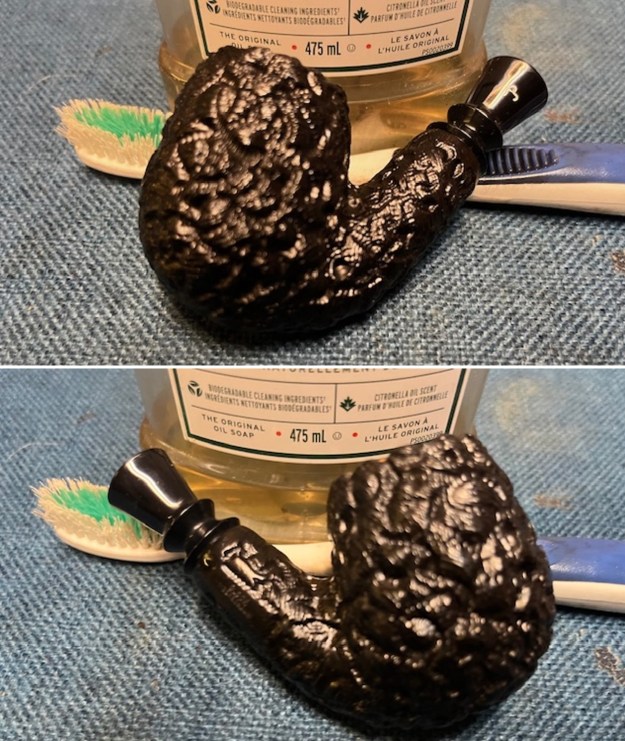
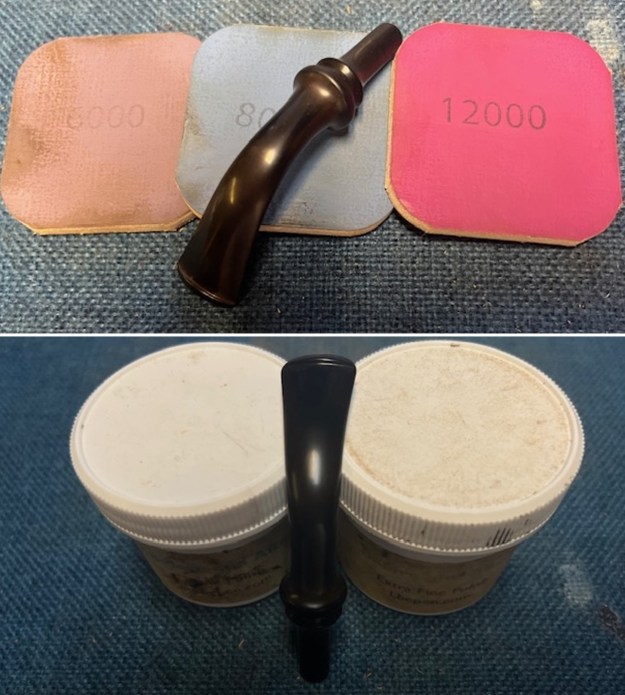
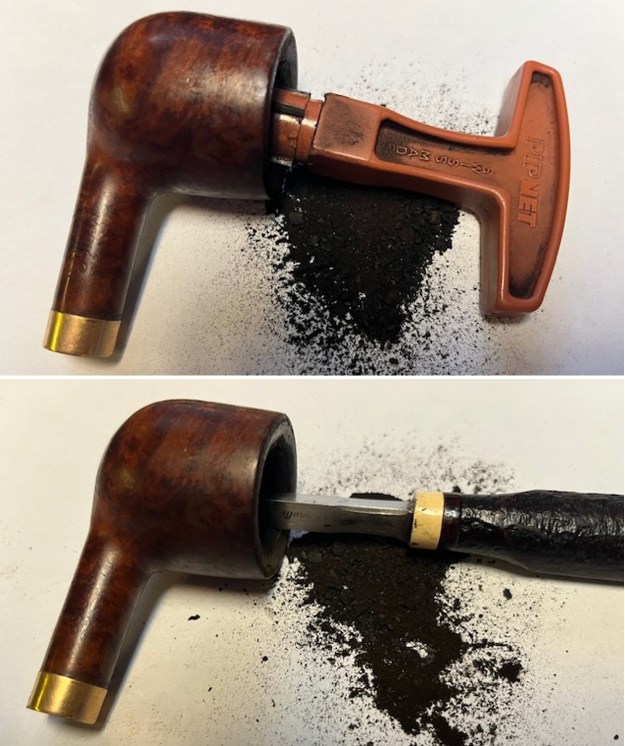
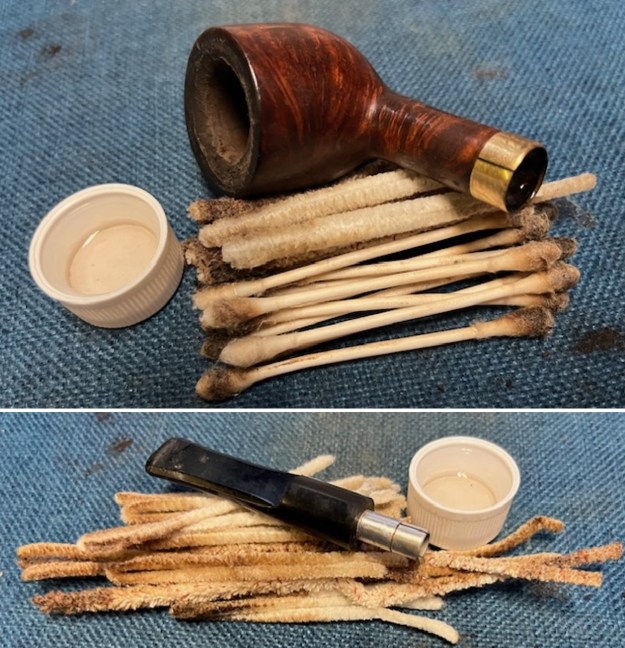
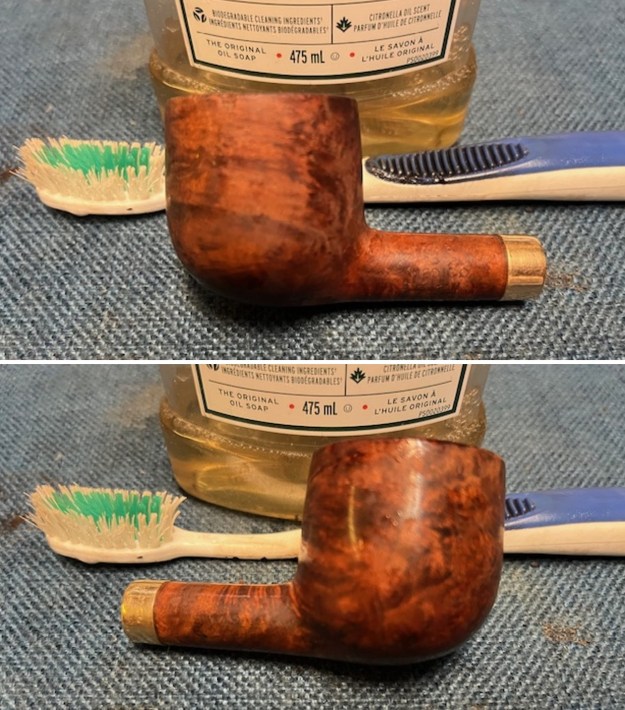
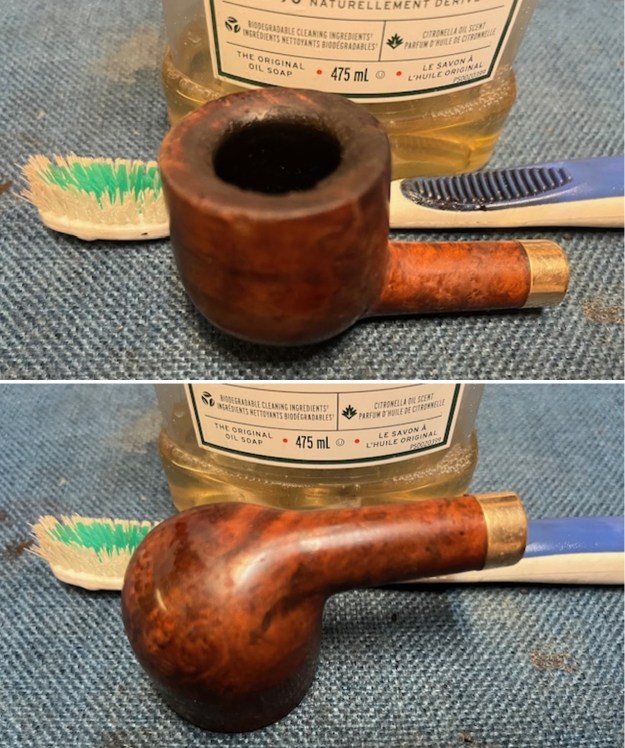
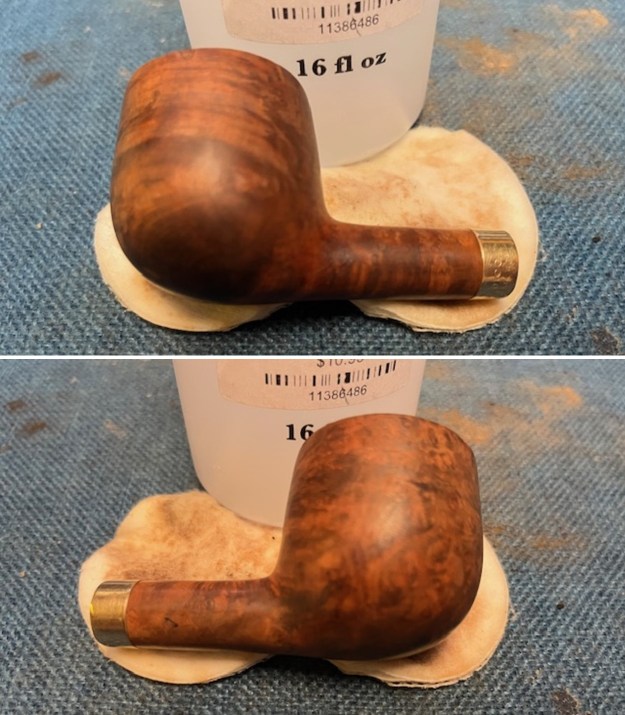
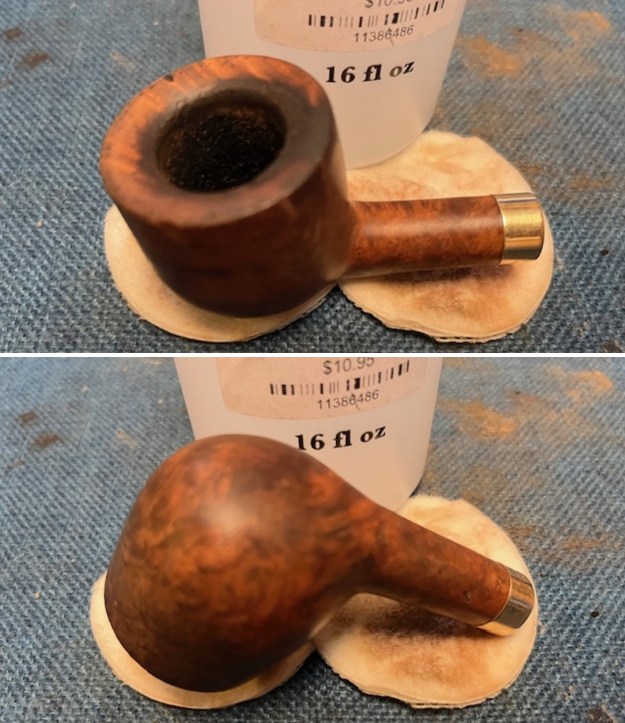
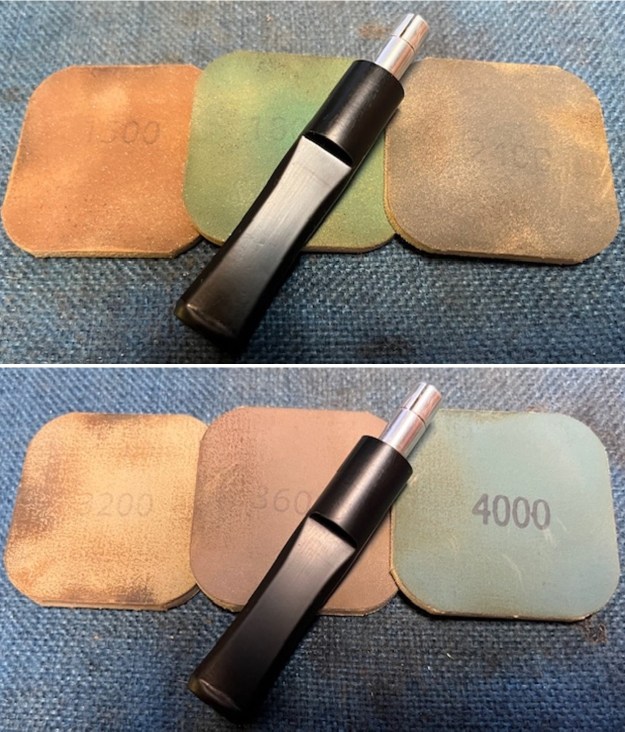
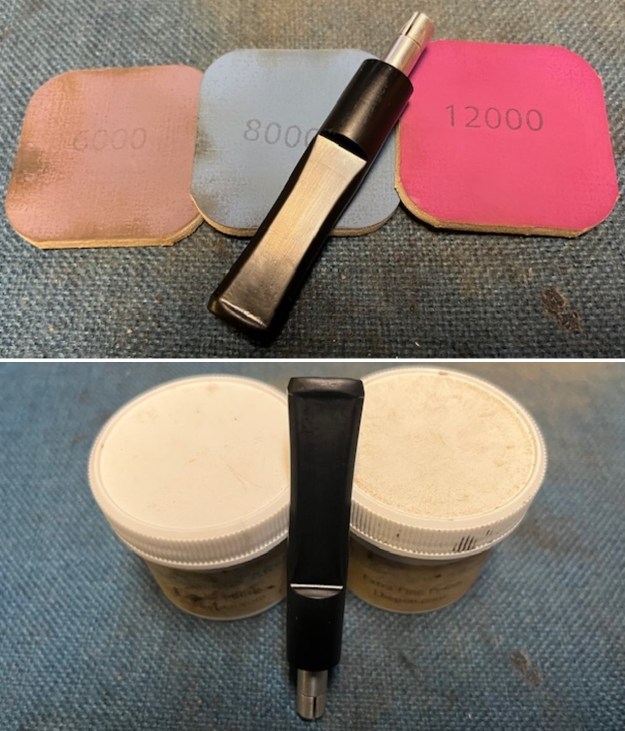
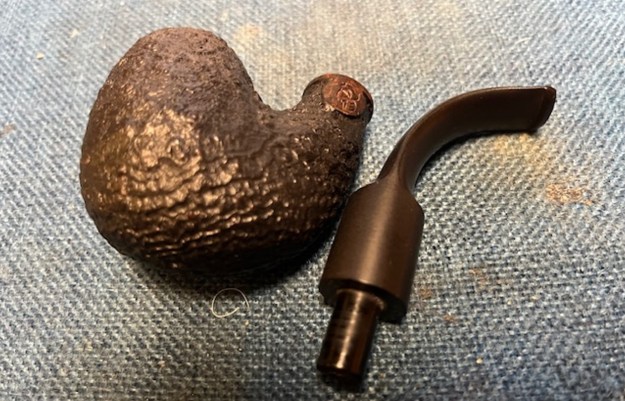
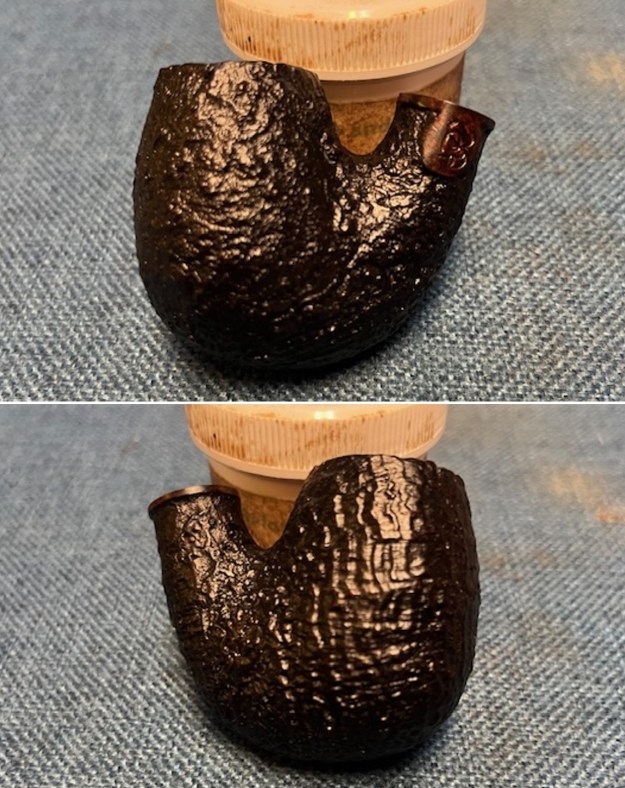
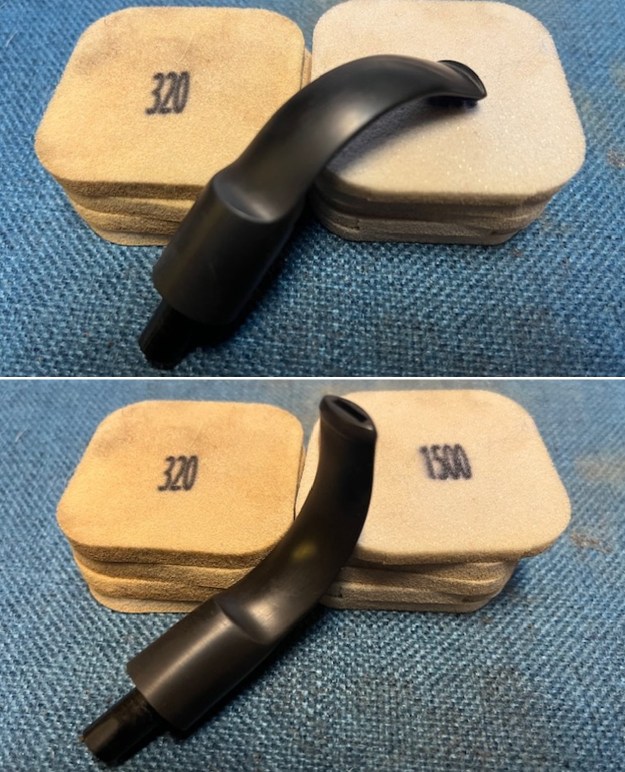
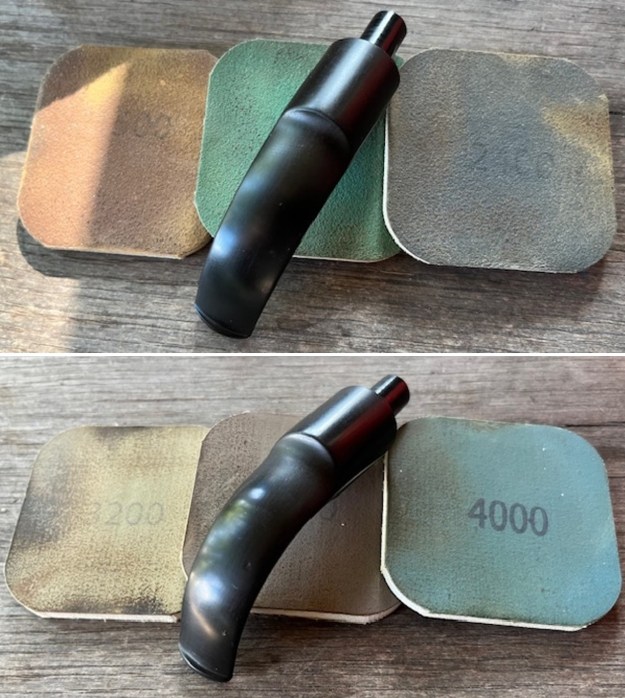
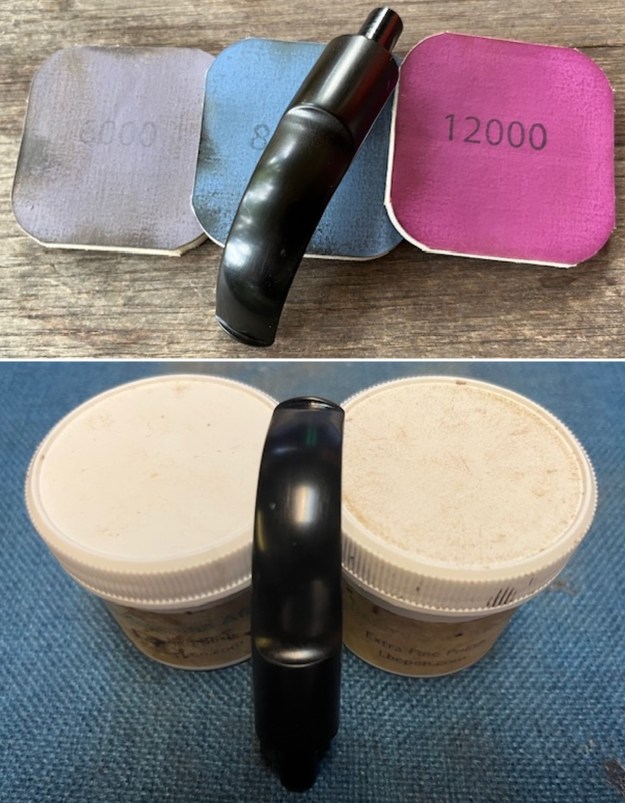
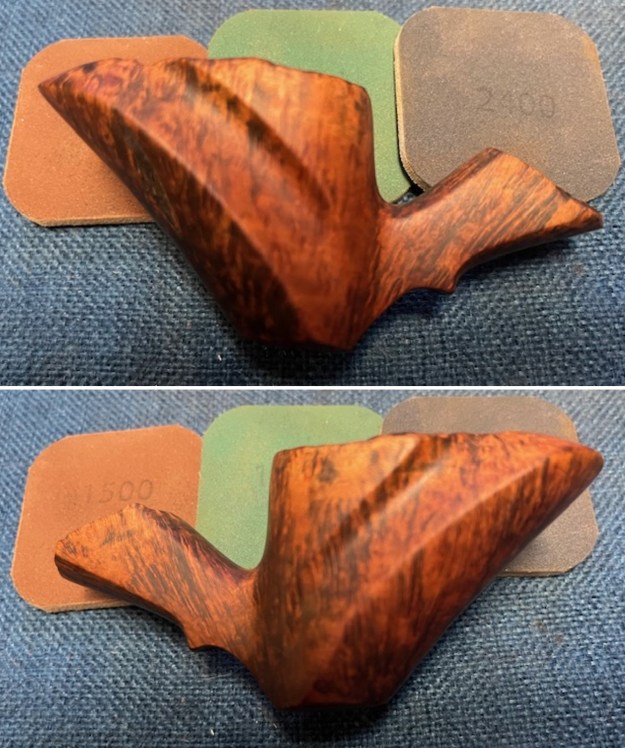
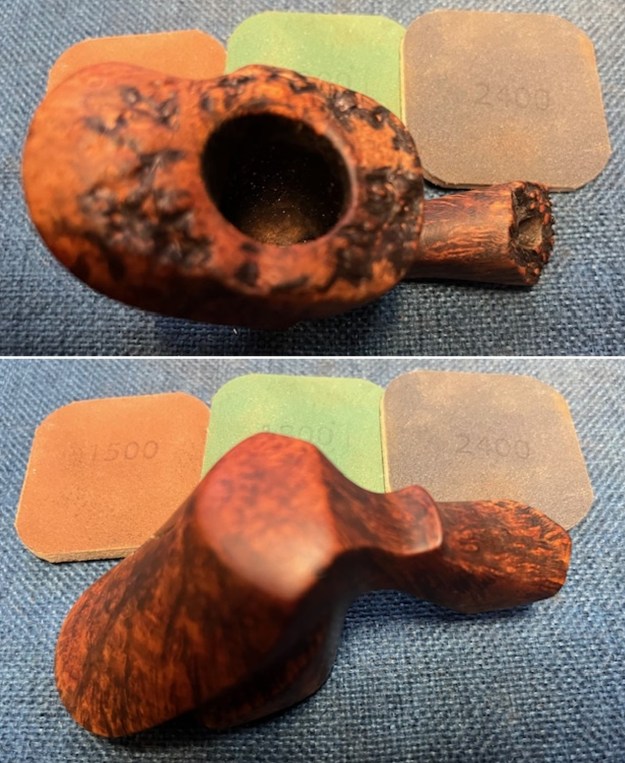
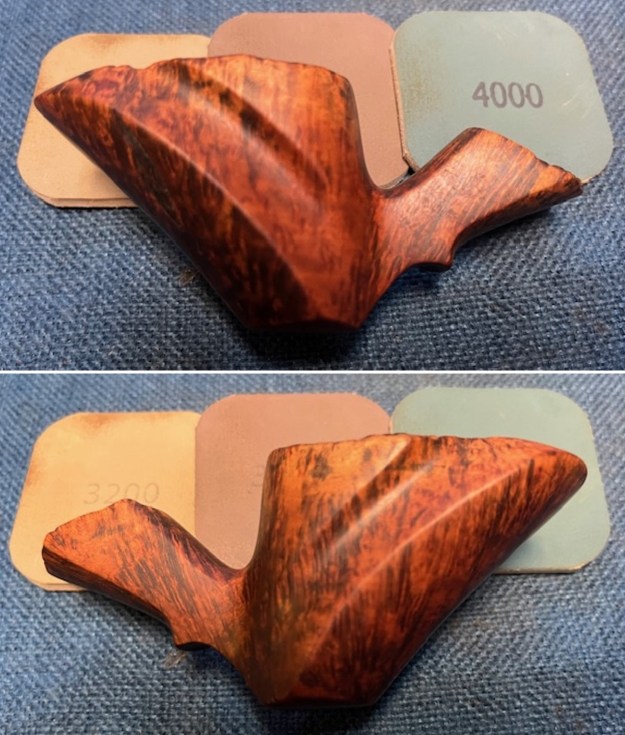
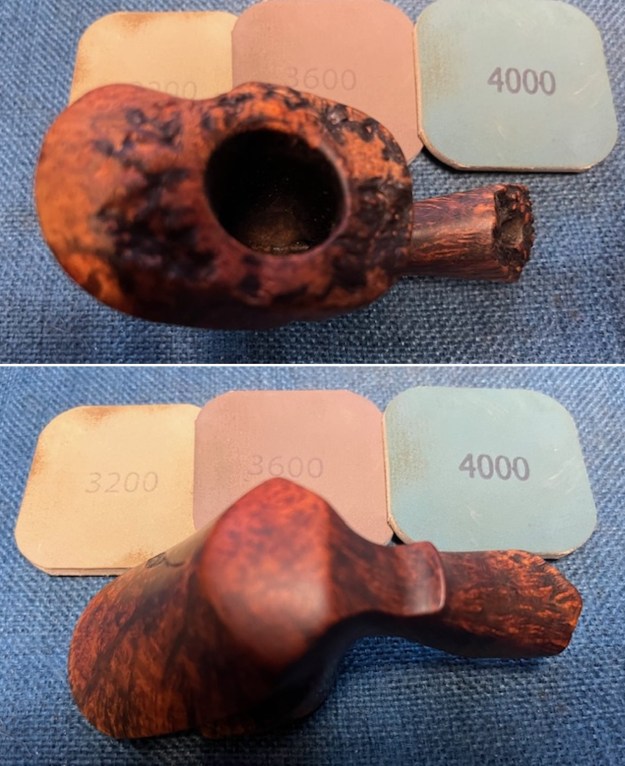
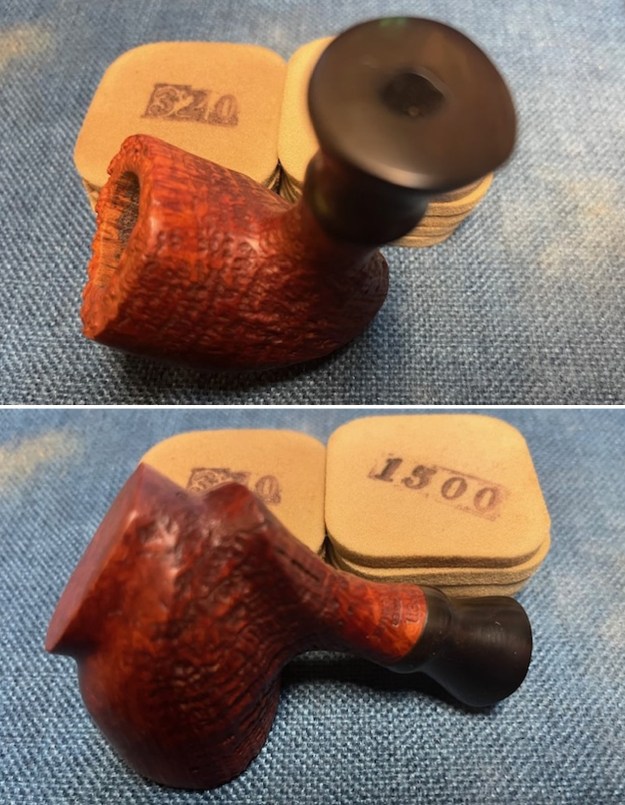
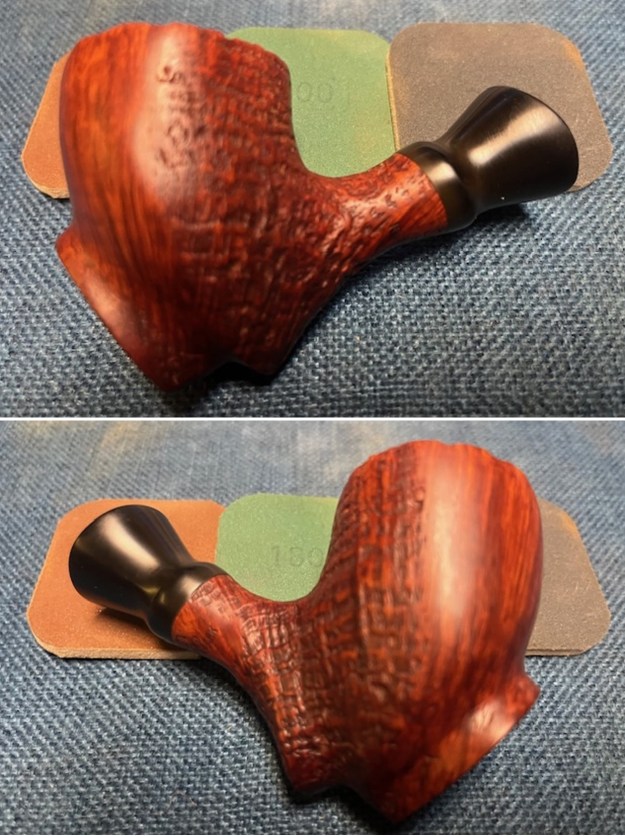
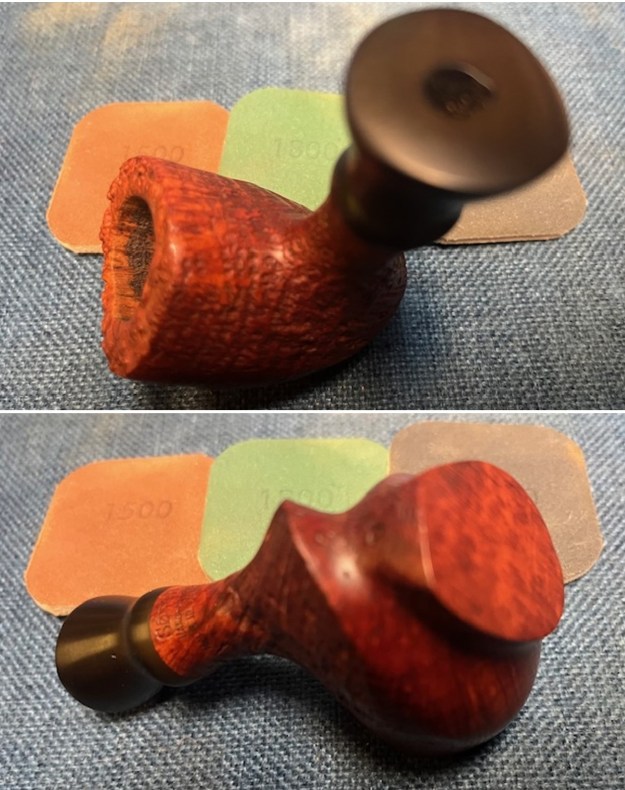
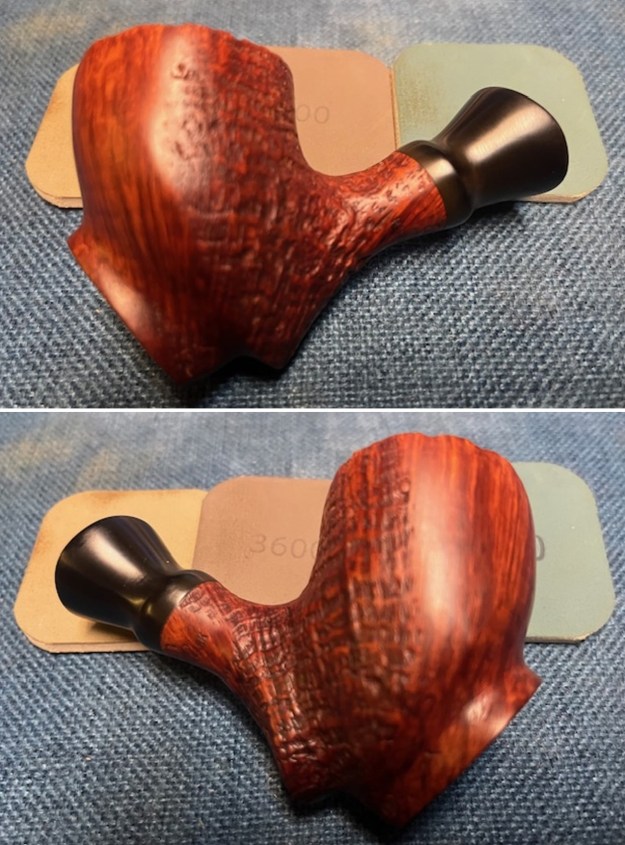
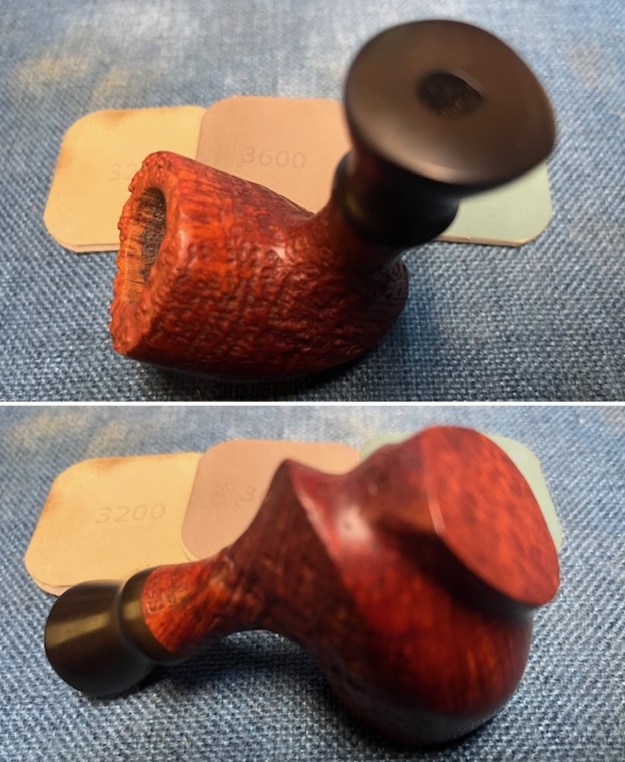
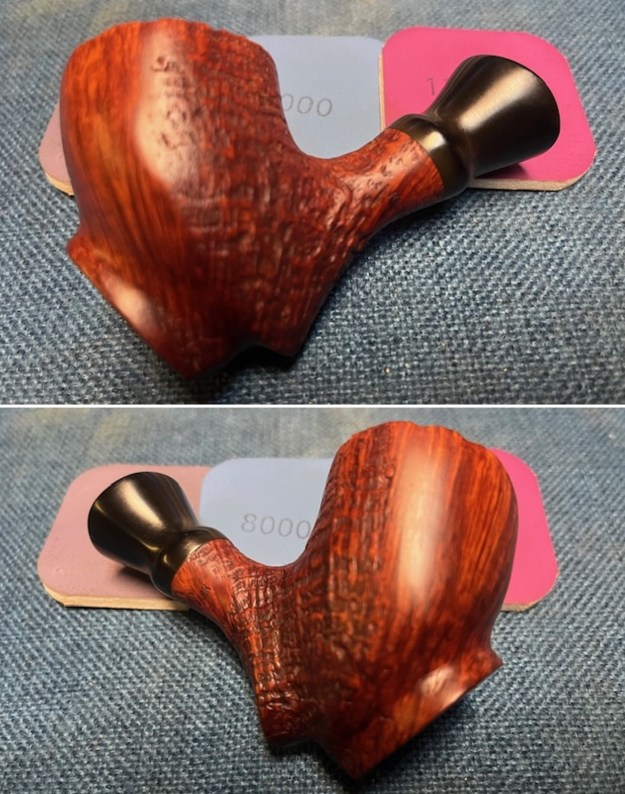
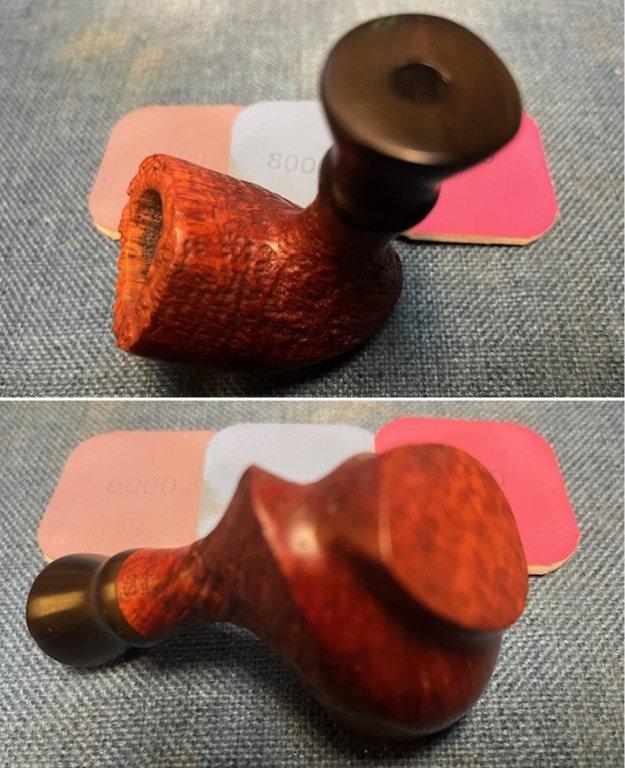
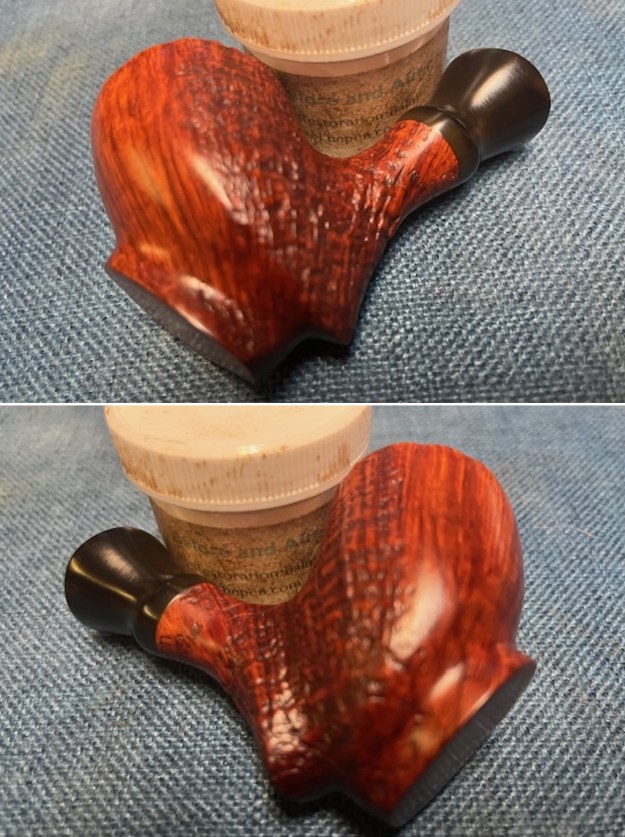
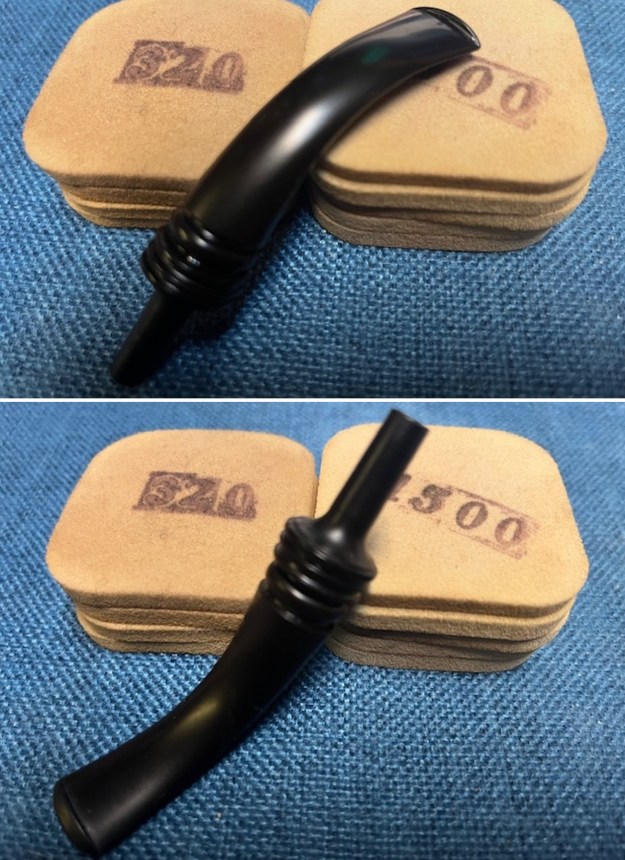
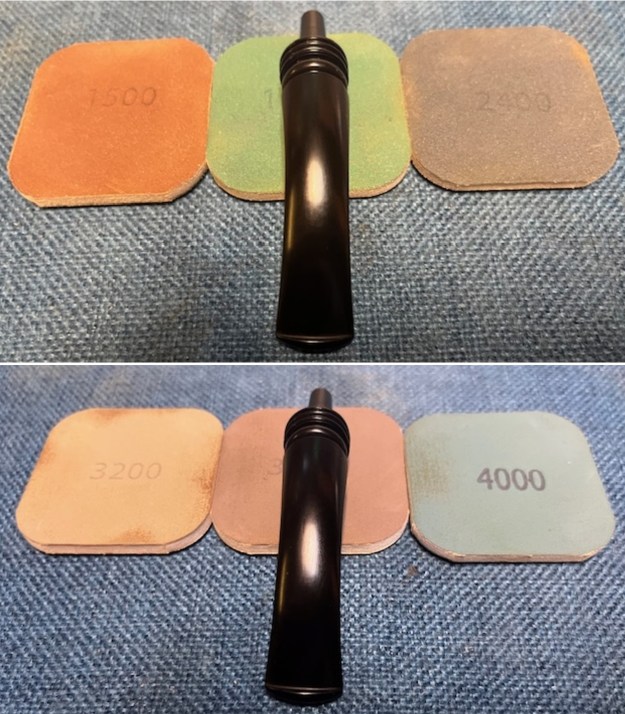
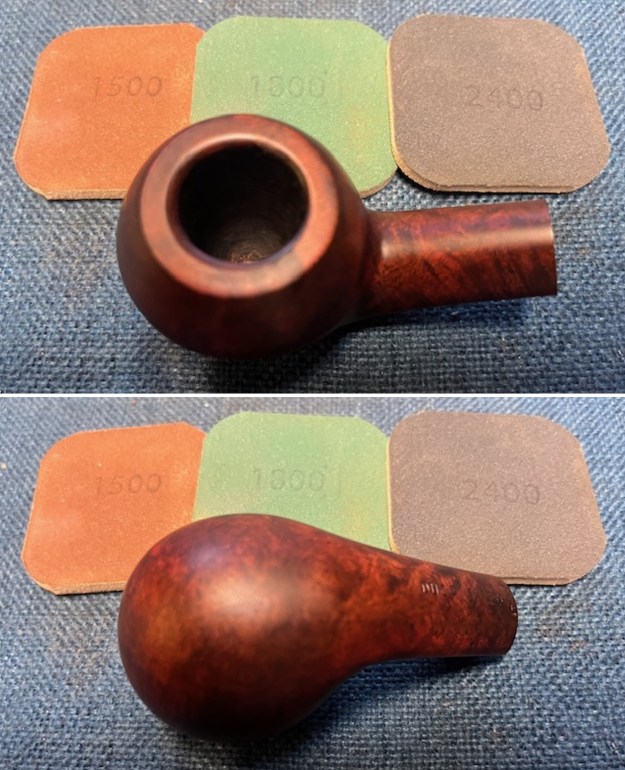
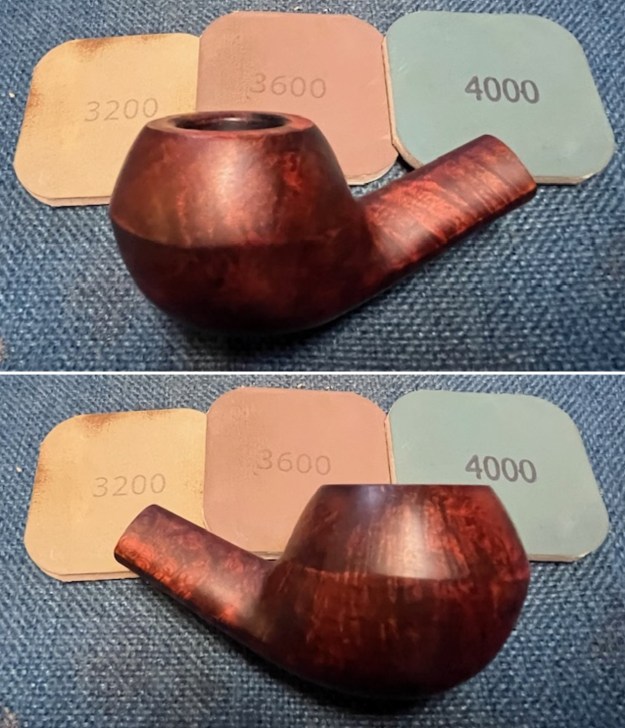
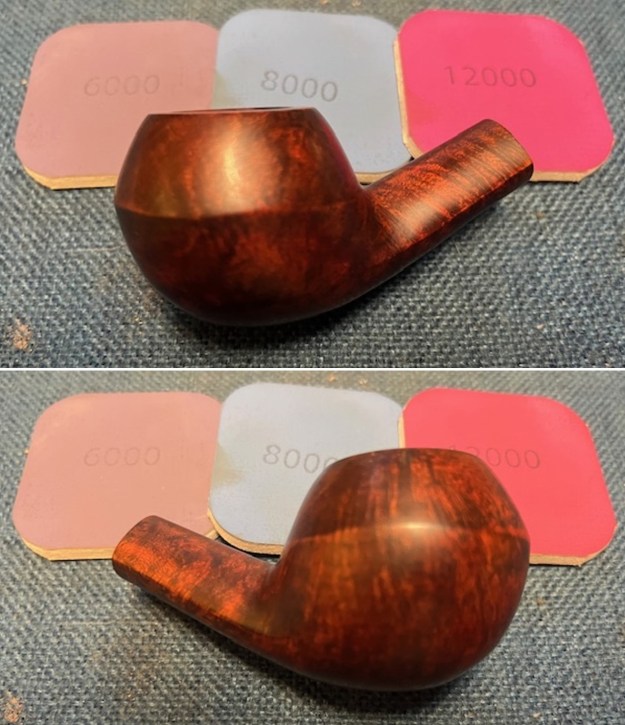
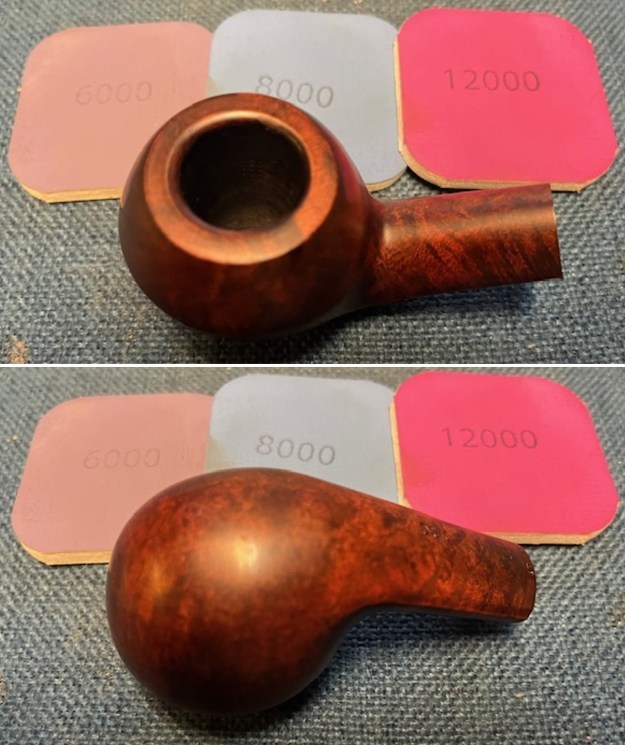
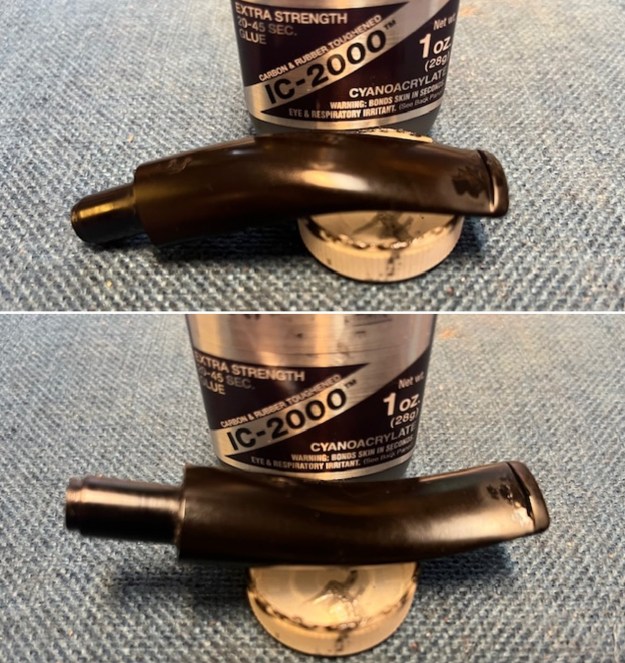
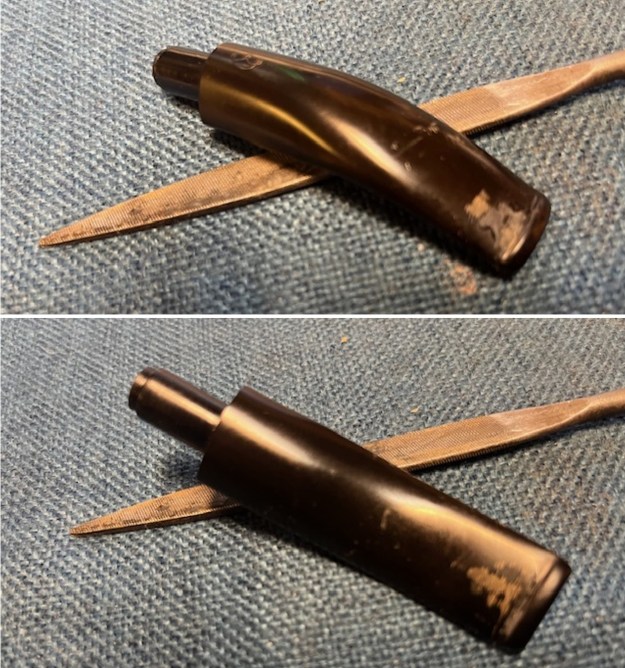
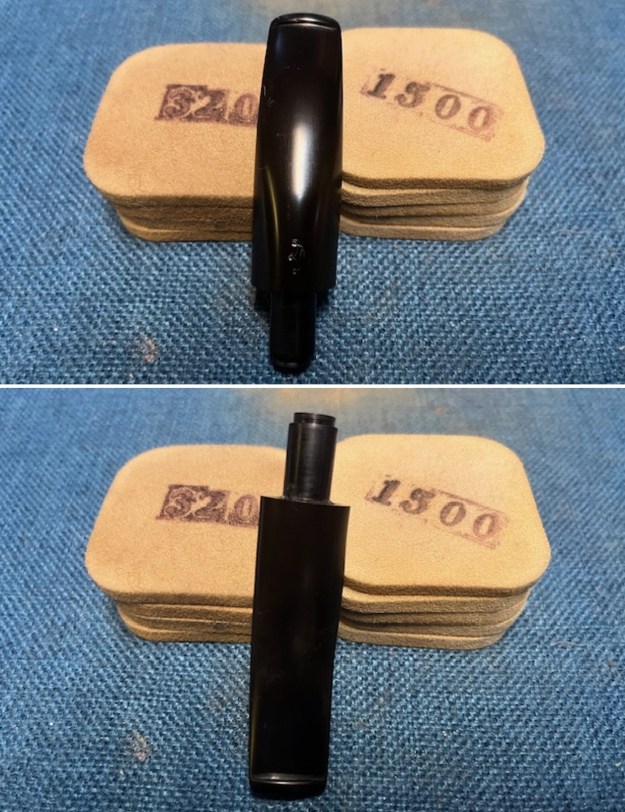
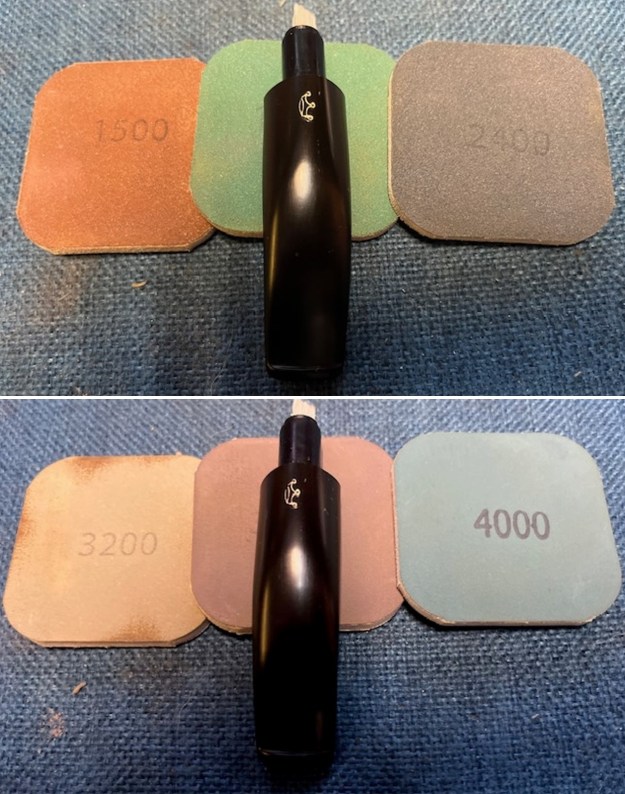
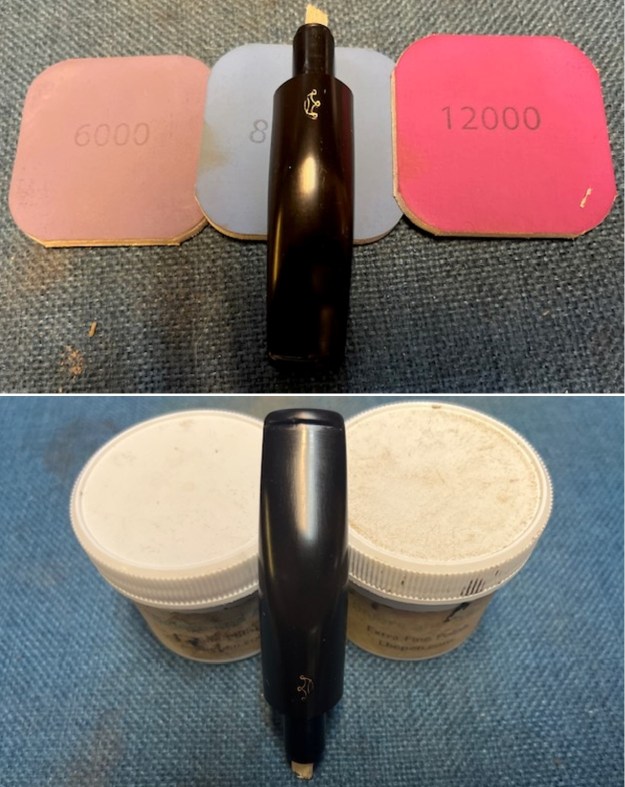
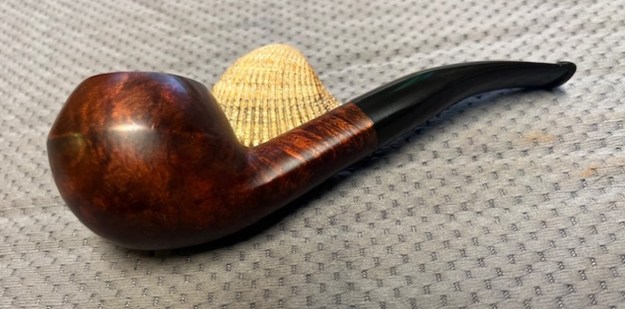
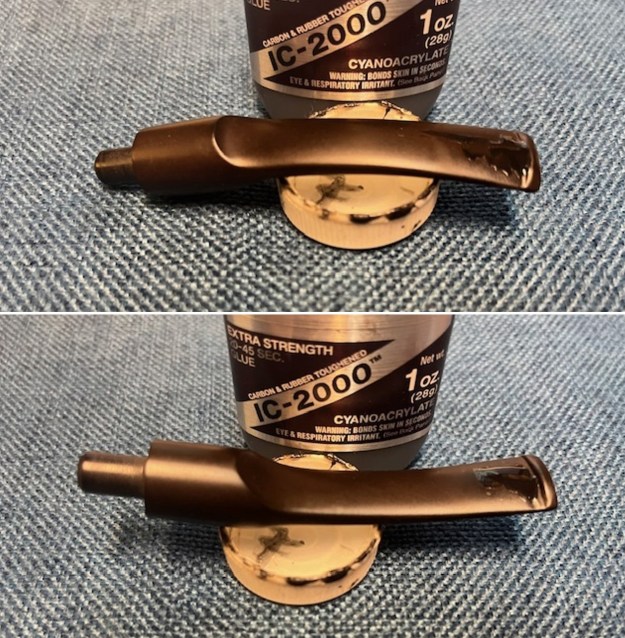
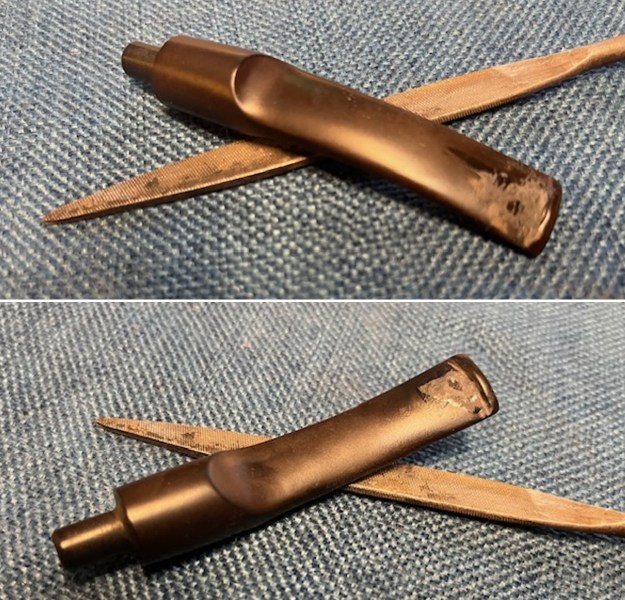
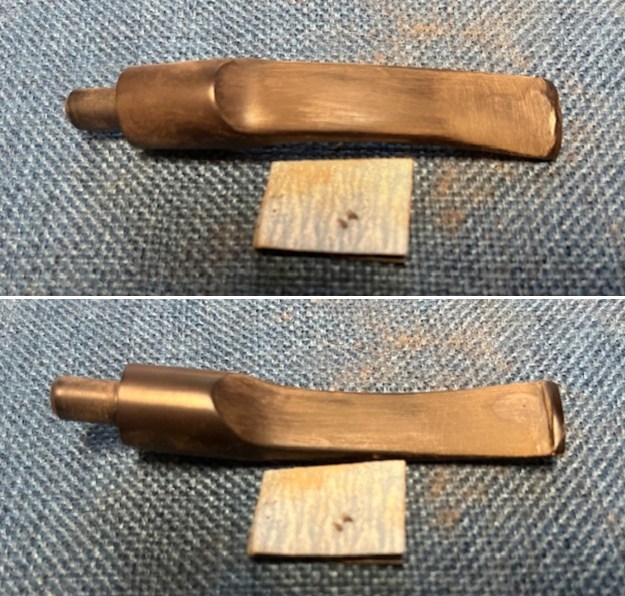
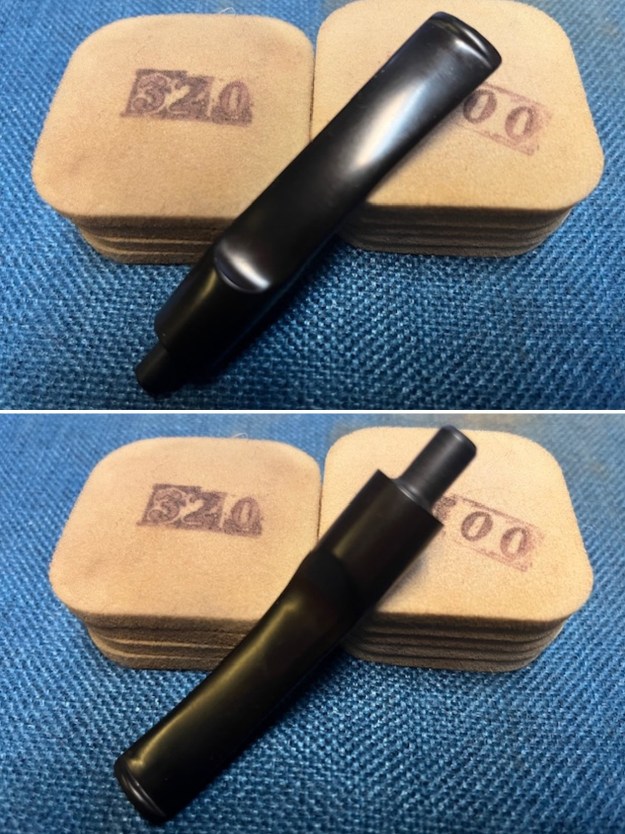
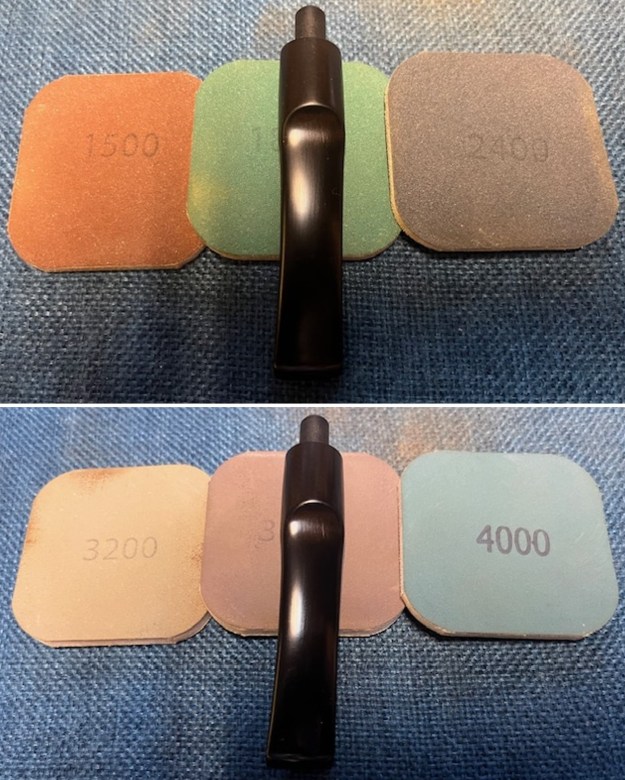
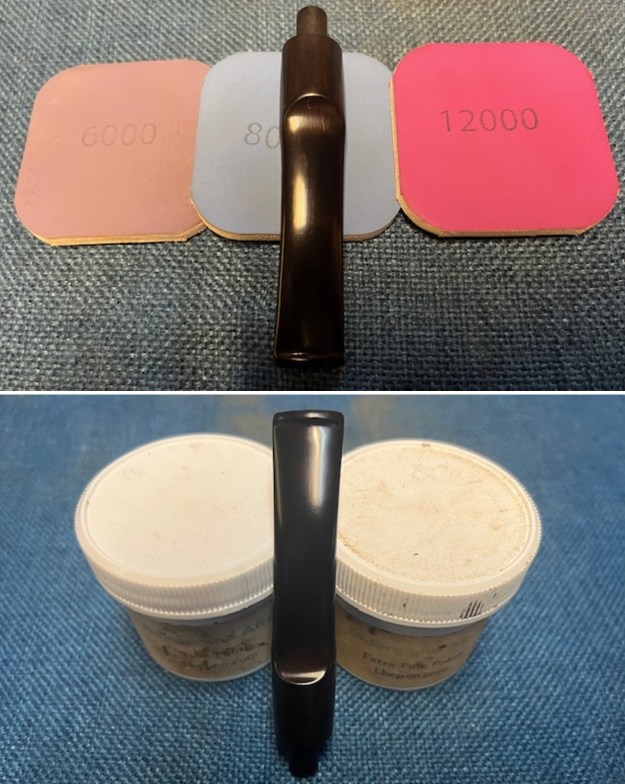
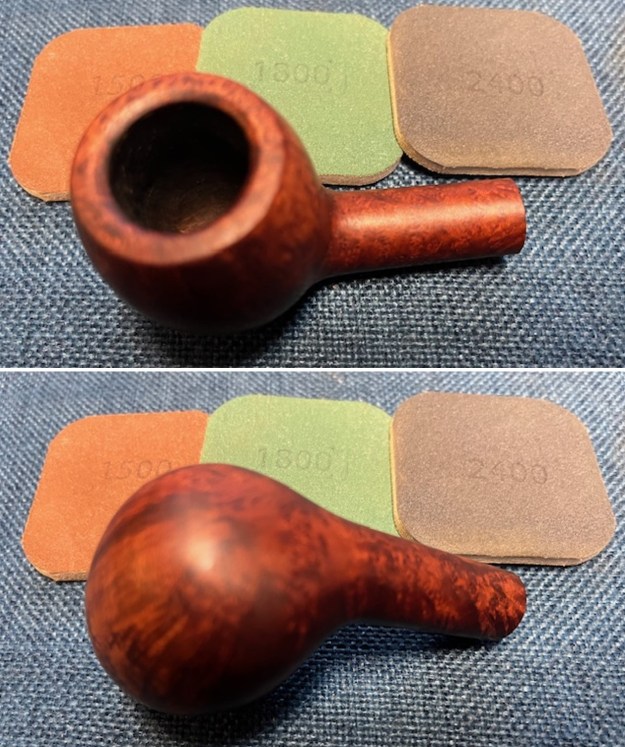
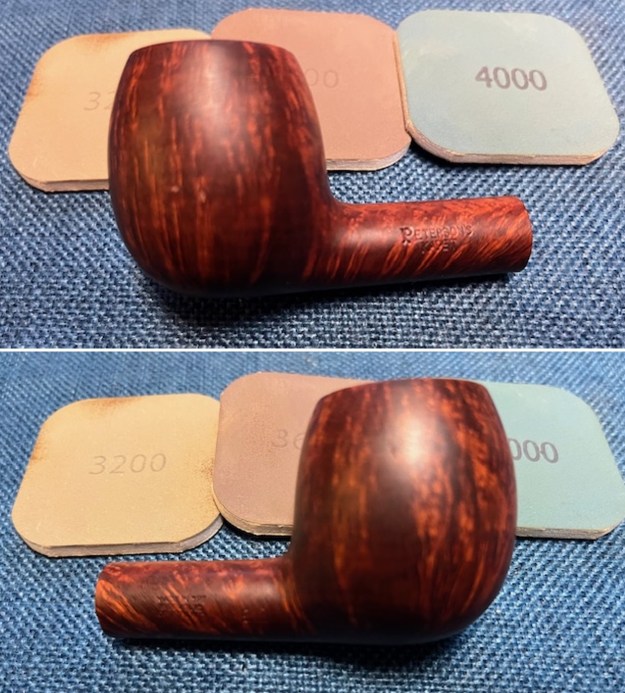
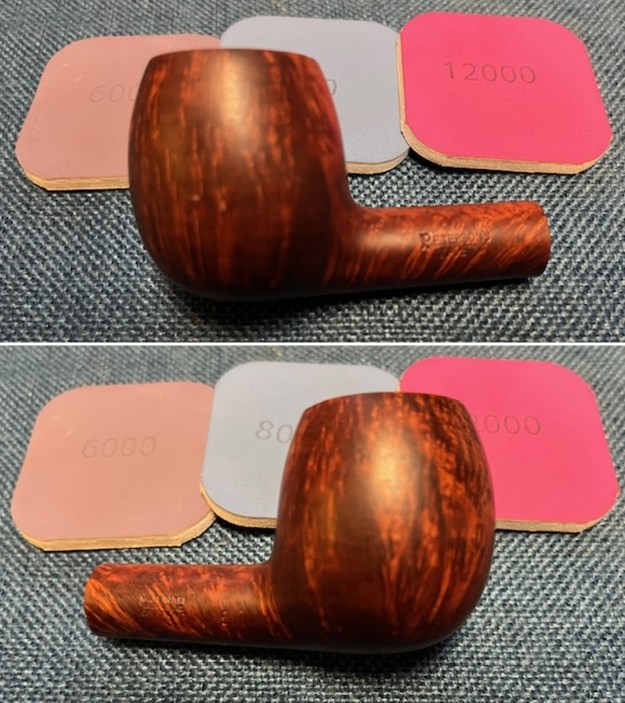
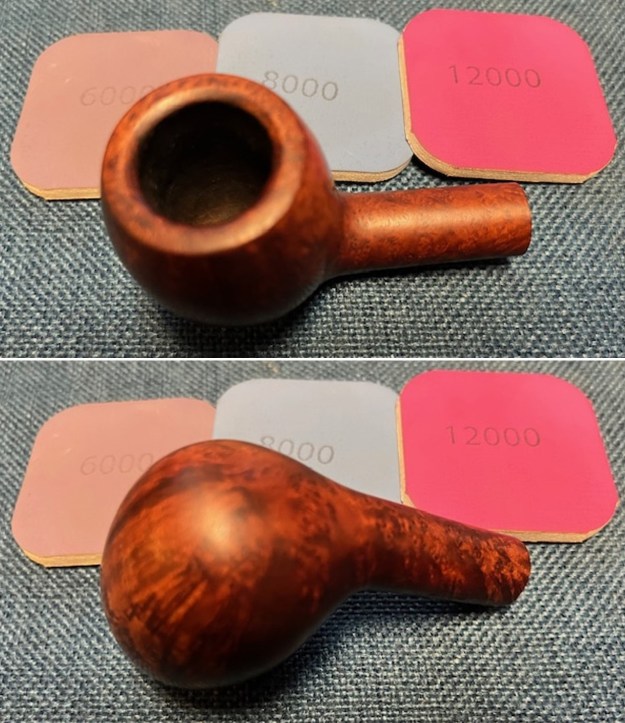
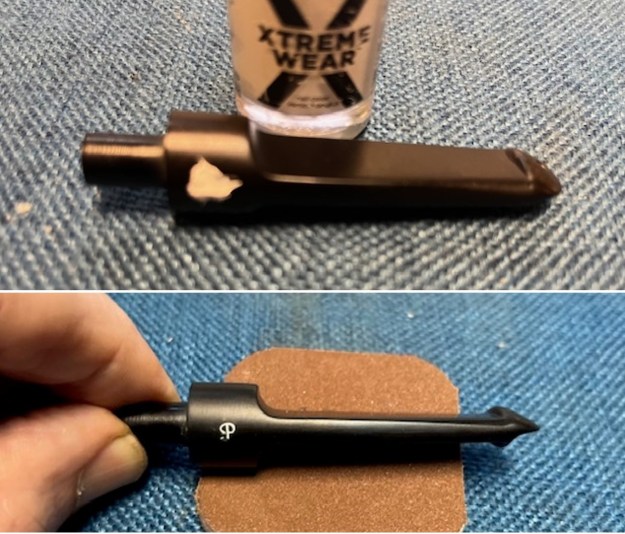
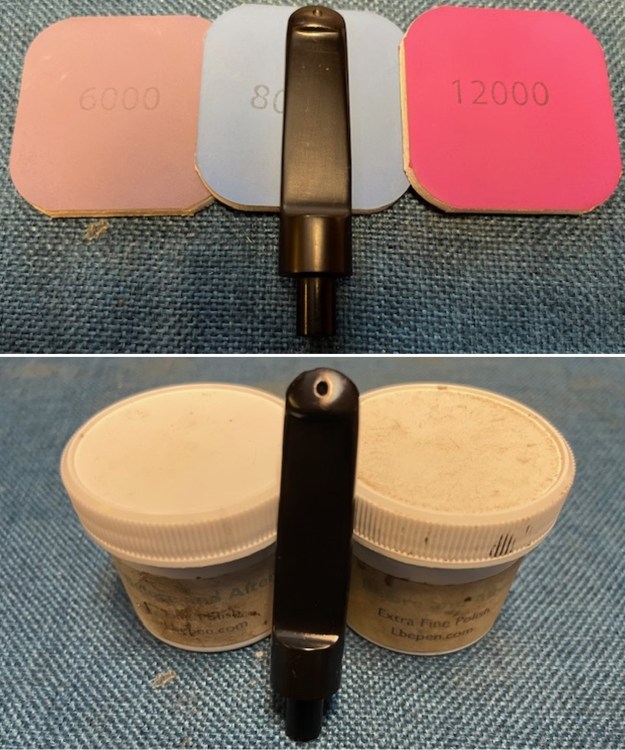
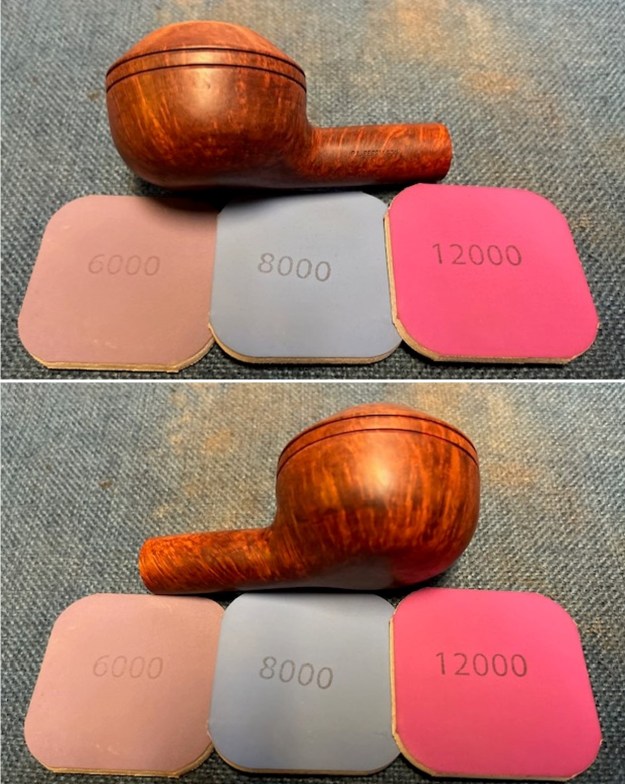
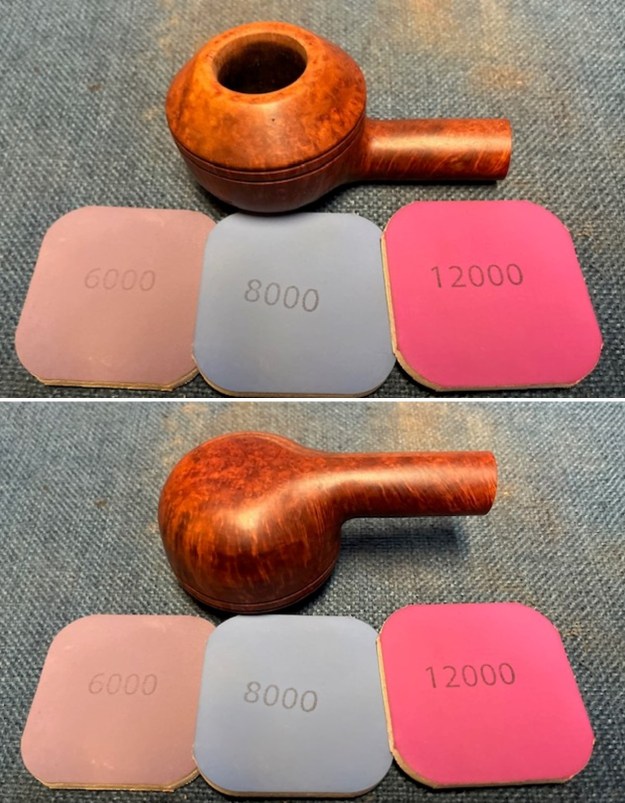
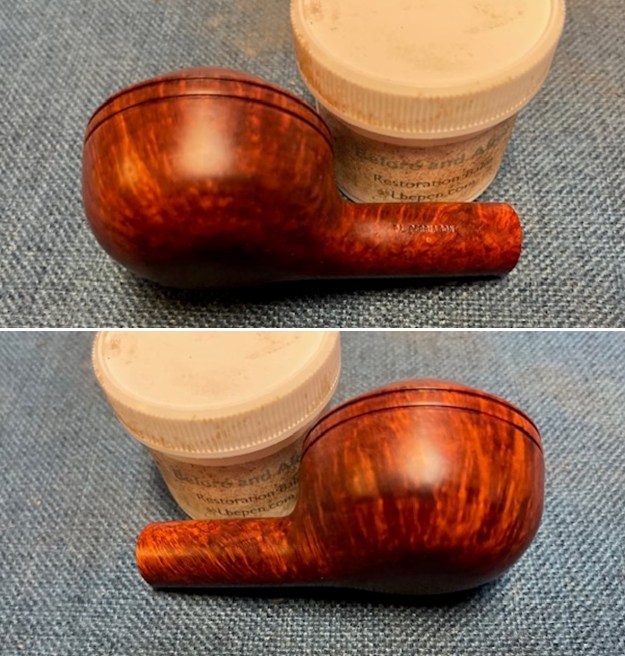
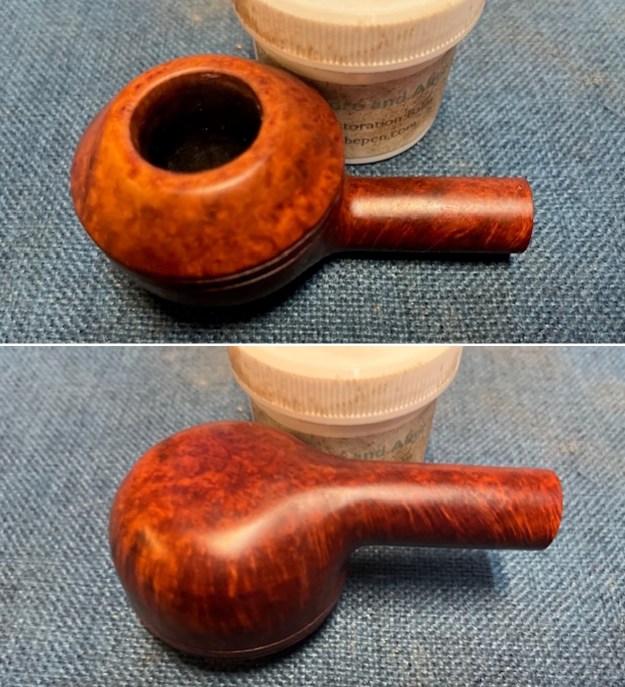
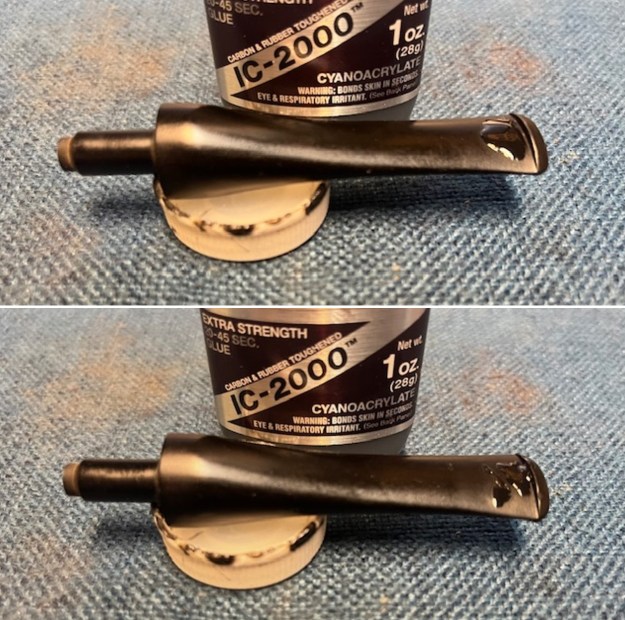
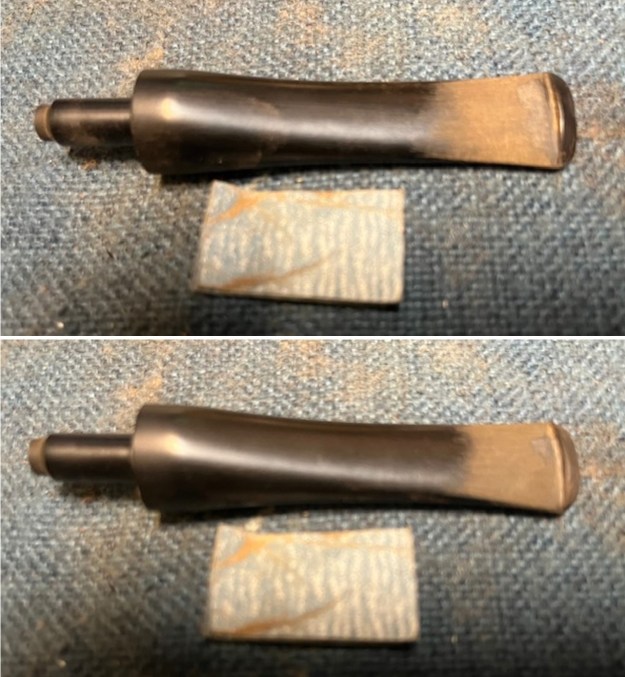
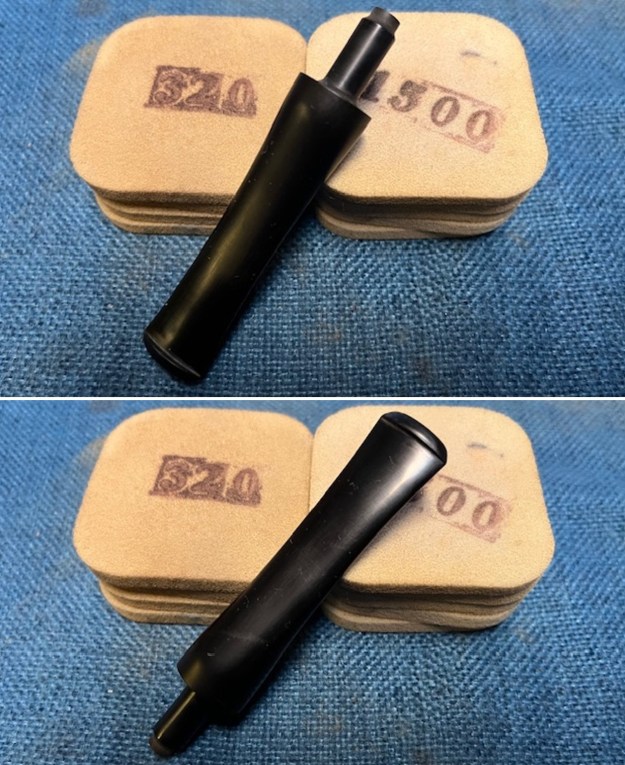
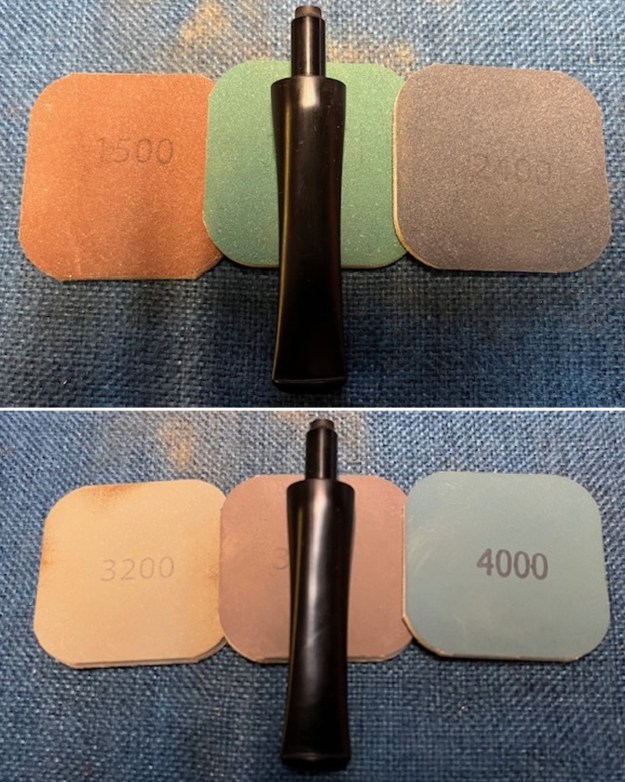
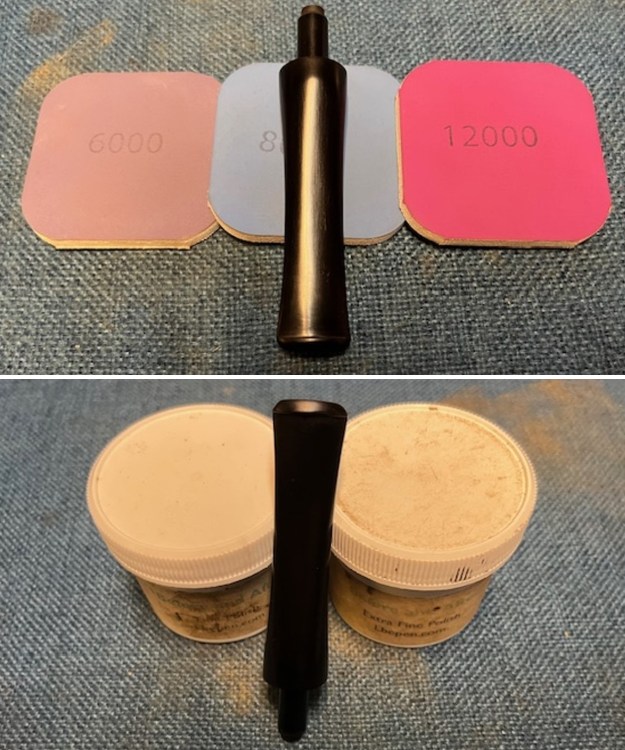
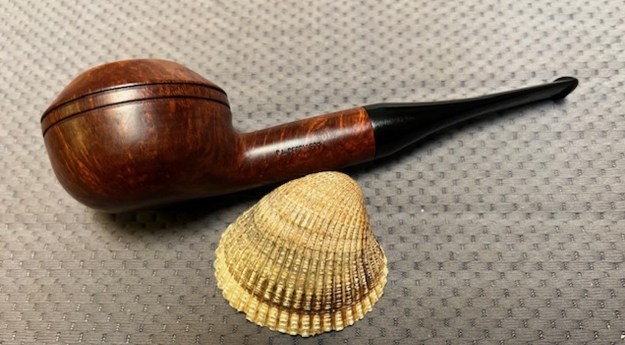
Jeff reamed the bowl with a PipNet pipe reamer and followed up with a Savinelli Fitsall pipe knife to remove the cake. He scrubbed out the mortise and the airway in the shank and the stem with alcohol, cotton swabs and pipe cleaners. He scrubbed the exterior of the bowl, rim, shank and stem with a tooth brush and Murphy’s Oil Soap to remove the oils and tars on the rim and the grime on the finish of the bowl of the pipe. He rinsed it off under running water. He dried it off with a soft cloth. He was able to remove most of the lava build up on the rim top of the pipe leaving a clean rim with some debris in the sandblast. I took photos of the pipe to show its condition before I started my work. I took a close up photo of the rim top to show the condition of the sandblast finish of the rim. The inner and outer edge of the bowl looks really good. The stem photos show the light tooth marks and pit on the top surface.I removed the stem and took a photo of the parts of the pipe to give a sense of the proportion of the parts to the whole. It is a well designed and crafted pipe.I worked some Before & After Restoration Balm into the surface of the briar with my fingertips to clean, enliven and protect it. I let the balm sit for a little while and then buffed with a cotton cloth to raise the shine. The photos show the bowl at this point in the restoration process. With the bowl finished I set it aside and turned my attention to the stem. I filled in the pit on the top of the stem mid stem right side and the tooth damage at the button edge on the underside of the stem with Extra Strength Rubberized Black CA glue. I set it aside to let the repairs cure for morning. After work today I smoothed out the fills with a folded piece of 220 grit sandpaper to blend them into the surface. I sanded the stem surface further with 320-3500 grit sanding pads to finish smoothing out the repairs and removing residual oxidation. I wiped the stem down after each pad with a cloth impregnated with Obsidian Oil. It began to look very good.I polished the stem with micromesh sanding pads – wet sanding it with 1500-2400 grit pads and dry sanding it with 3200-12000 grit pads. I wiped the stem down with Obsidian Oil after each pad. I polished it with some Before & After Pipe Polish – both Fine and Extra to deepen the shine. I wiped it down with a final coat of Obsidian Oil and set it aside to dry. This S&R Sandblast Oom Paul is a beauty. It is a stunning example of Steve & Roswitha’s craft – the sandblast finish and the dark stain is very well done. I polished the stem with Blue Diamond polish on the buffing wheel. I gave the bowl multiple coats of Conservator’s Wax and the stem multiple coats of carnauba wax. I buffed the pipe with a clean buffing pad to raise the shine. I hand buffed it with a microfiber cloth to deepen the shine. The pipe polished up pretty nicely. The contrasting finishes came alive with the buffing. The rich, contrasting dark stain work well with the polished black vulcanite stem. The finished pipe is a beauty and feels great in the hand. Have a look at it with the photos below. The dimensions are Length: 5 inches, Height: 2 inches, Outside diameter of the bowl: 1 inch, Chamber diameter: ¾ of an inch. The weight of the pipe is 47 grams/1.66 ounces. I will be putting this beautiful S&R Oom Paul on the rebornpipes online store soon. It may well the kind of unique pipe you have been looking for so have a look. Thanks for walking through the restoration of this pipe with me. It was a fun one to work on.
Reborn Soren Hand Carved Made in Denmark Freehand Sitter


by Steve Laug

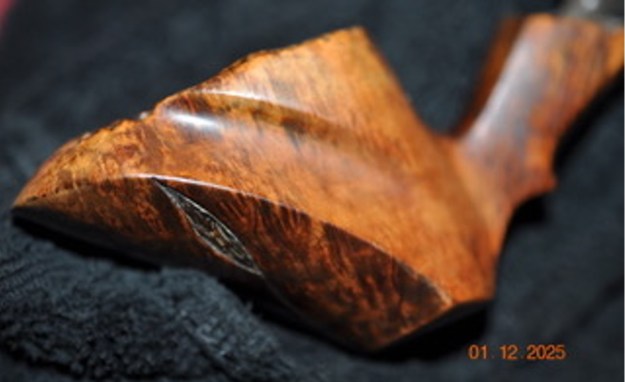
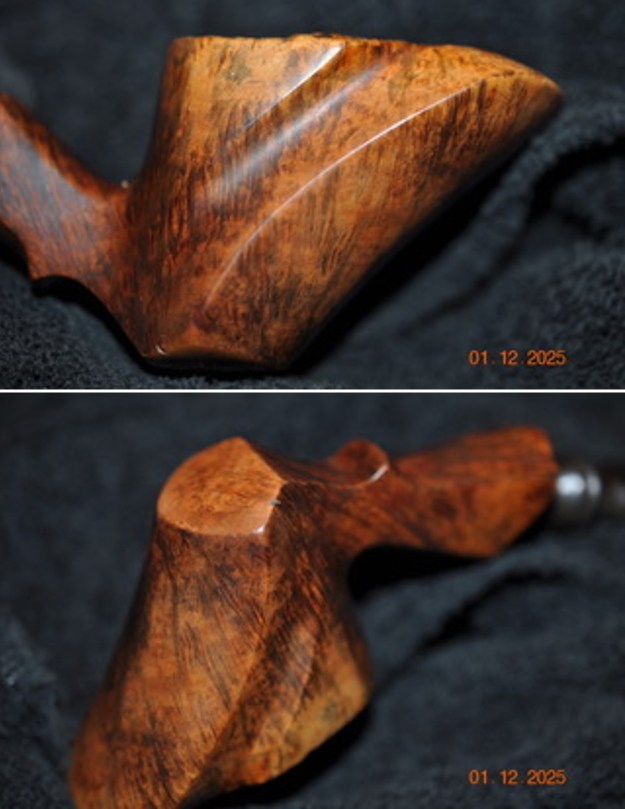
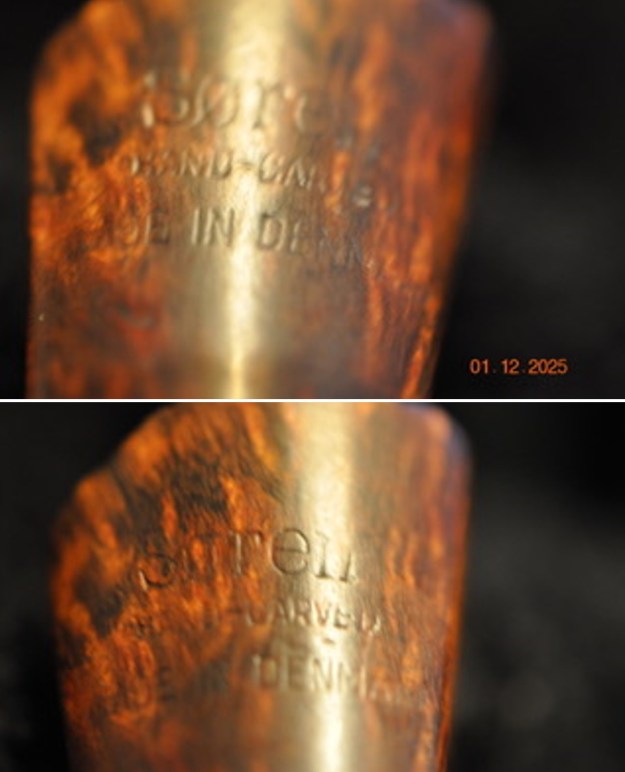
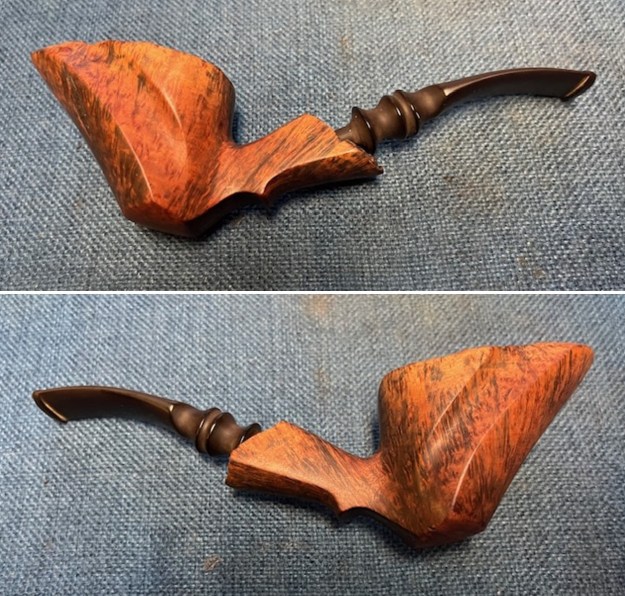
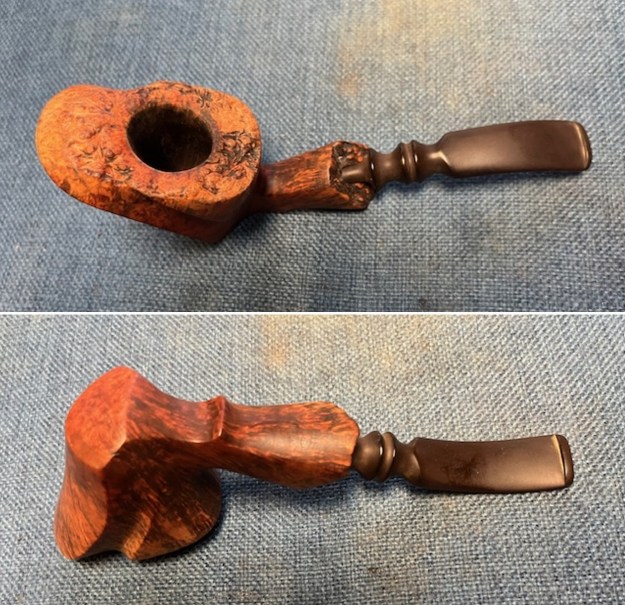
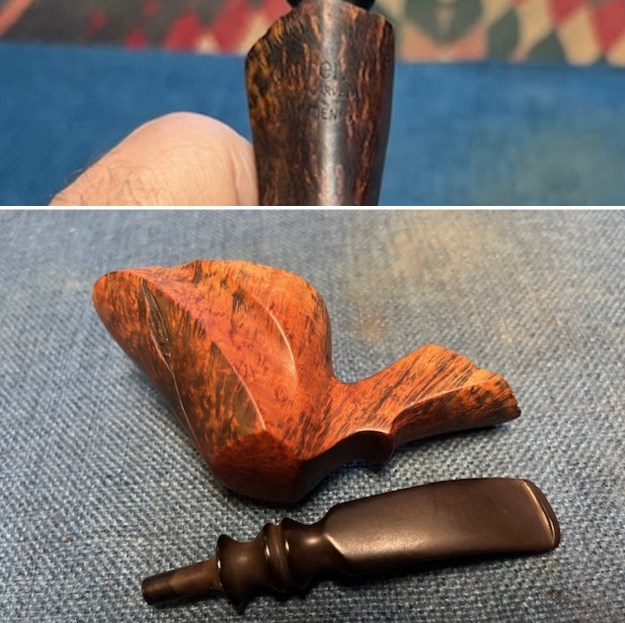
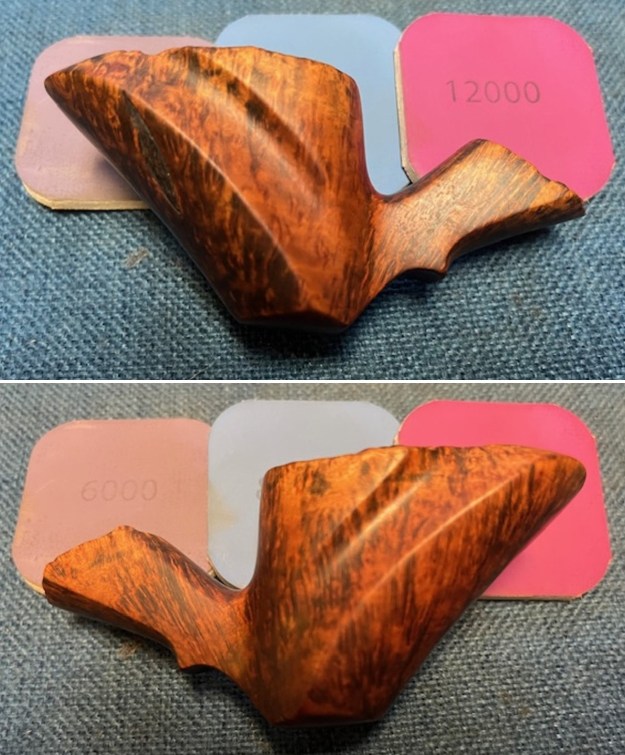
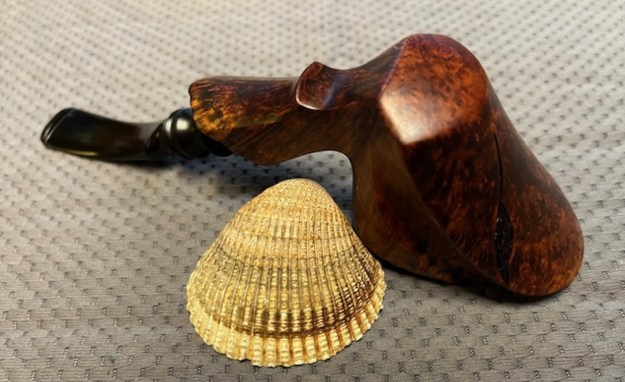
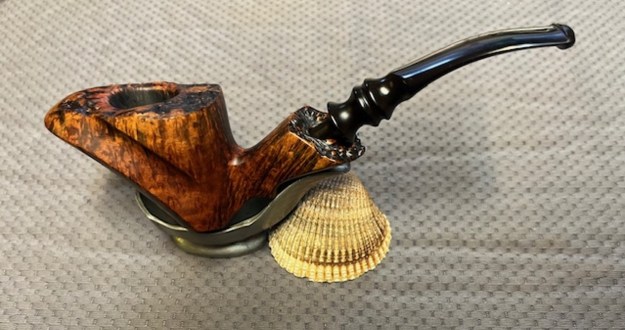
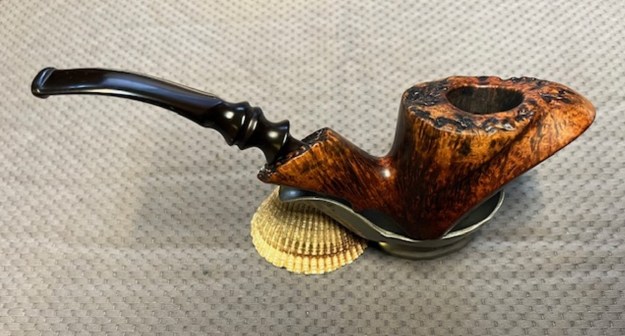
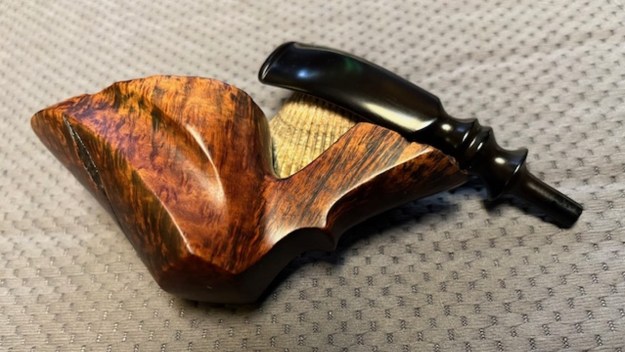
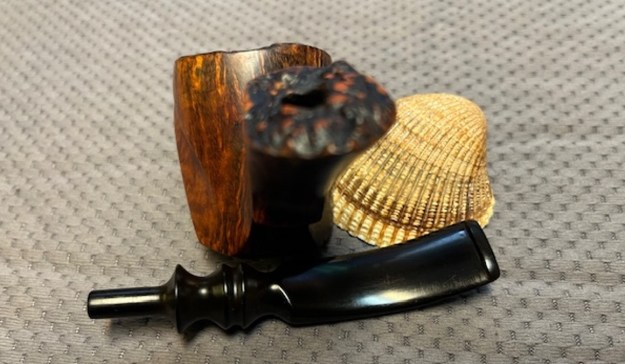
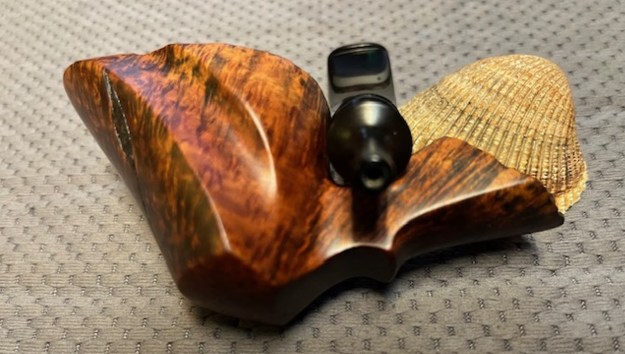
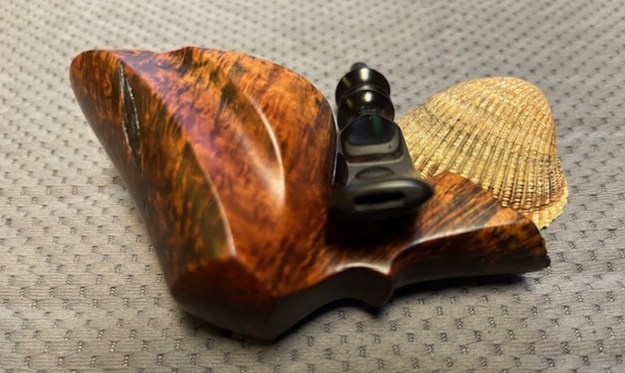
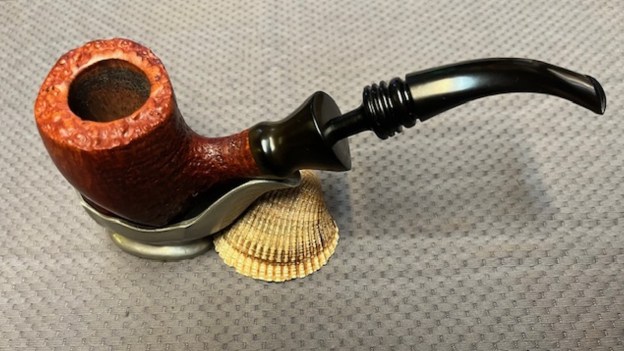
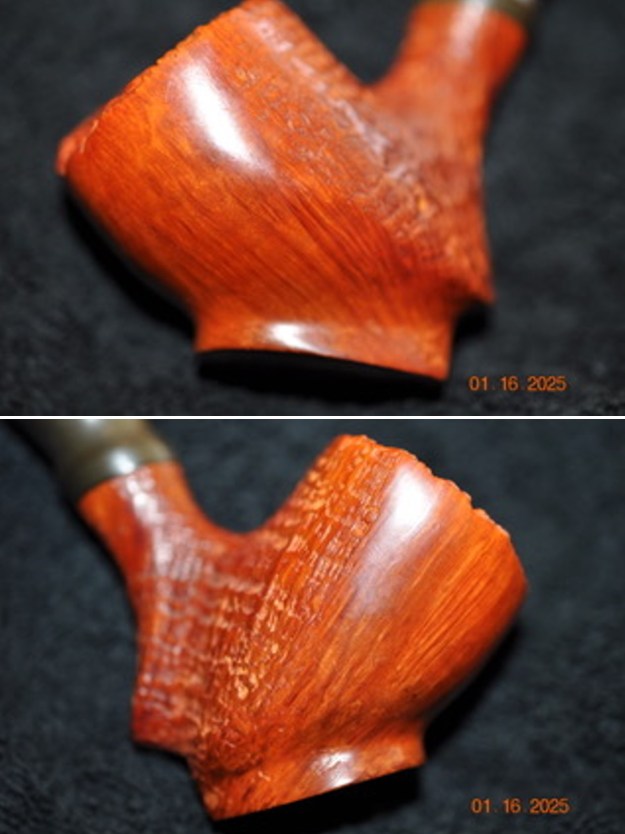
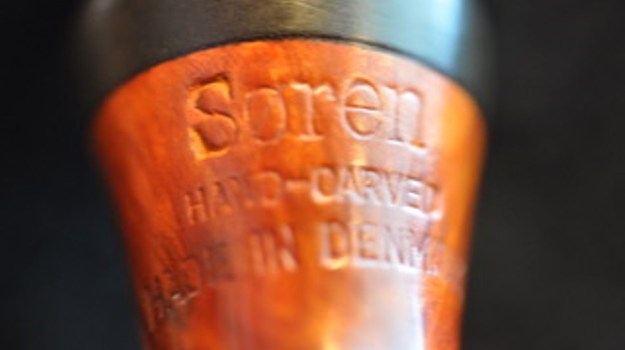
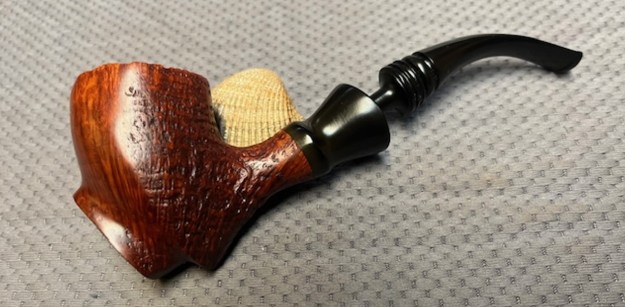
This particular Freehand pipe was purchased from seller in Holden Barr, Missouri, USA on 04/20/2021. It really is a Freehand pipe that combines a plateau rim top and shank end with a flat bottom making it a sitter. The bowl is smooth with fluted sides and a few carved feathers on the bowl sides. It is stamped on the underside of the shank and reads Soren [over] Hand-Carved [over] Made in Denmark. The finish is dirty but does not hide the beautiful grain around the bowl and shank. There is a vulcanite shank extension. The pipe had a moderate cake in the bowl some light lava on the rim top and inner edge of the bowl. There is some dust in some of the plateau. There was grime ground into the finish and dust and debris in the carved feathers and the plateau valleys. The fancy vulcanite saddle stem was oxidized and had light tooth marks and chatter on both sides near the button. Jeff took photos of the pipe before he started his work on it. Jeff took photos of the rim top and the stem to show the condition of the pipe when we received it. You can see the moderate cake in the bowl and the dust and lava in the plateau rim top and inner edge of the bowl. The turned vulcanite stem was oxidized, dirty and had light chatter and tooth marks on both sides near the button. He took photos of the sides and the heel to give an idea of the shape and the condition of the briar around the bowl. It really is a uniquely shaped pipe with the fluted sides on the bowl. The next photos Jeff took shows the stamping on the underside of the shank. It is clear but faint in spots and read as noted above.I went to a previous Soren restoration blog and reread what I had written to reconnect the dots for me https://rebornpipes.com/2016/09/12/repairing-and-rejuvenating-a-soren-danish-freehand/. I quote from that blog post:

I looked up the brand on Pipephil (http://www.pipephil.eu/logos/en/logo-s10.html) and found that the brand was carved by Søren Refbjerg Rasmussen. Pipes that he made for the European market were mostly stamped “Refbjerg” while those made for the US market were stamped “Soren”. Thus, I knew that one I was working on was imported into the US market.

I was once again working on a pipe made by Soren Refbjerg Rasmussen for the US market as it was stamped Soren. I continued to do reading on another of my go to websites, Pipedia. Here is the link for the article there. https://pipedia.org/wiki/Refbjerg. I quote some of the more pertinent information.

Søren Refbjerg Rasmussen founded a company in 1969, which employed an average of 8 – 12 craftsmen in the 1970’s. The semi-freehands they produced were traded under his prename Søren. Rasmussen himself finished only the very best pipes. So, his way of pipemaking closely resembled the ways of Preben Holm, Karl Erik Ottendahl or Erik Nørding. Altogether more than 1,000,000 pipes were sold.

From that I knew that the pipe in my hands came from the 1970s. It bears the Soren signature stamp which also says that it was made for sale in the American pipe market. Armed with that information I turned my attention to restoring the pipe.

Jeff had cleaned up the pipe following his normal cleaning process. In short, he cleaned up the reaming with a Savinelli Fitsall Pipe Knife.  He scrubbed the bowl with undiluted Murphy’s Oil Soap with a tooth brush. He worked over the lava and debris on the plateau rim top and shank end and was able to remove it. He rinsed it under running warm water to remove the soap and grime. He cleaned out the inside of the shank and the airway in the stem with alcohol, cotton swabs, shank brushes and pipe cleaners. He scrubbed the stem with Soft Scrub and cotton pads to remove the debris and oils on the stem. He soaked it in Briarville’s Pipe Stem Deoxidizer. He rinsed it with warm water and dried it off. The pipe looked very good and I was excited to start working on it. I took pictures of the pipe to show how it looked when I brought it to the worktable. I took some photos of the rim top and stem to show the condition of them both when the pipe arrived. It looked very good. The stem had some light chatter and tooth marks ahead of the button on both sides. I took a photo of the stamping on the heel of the bowl. It is readable and in great condition. I removed the stem from the shank and took a photo of the pipe to show the look of the pipe.I sanded the darkening on the smooth portions of the rim top and the bevelled inner edge of the bowl with a folded piece of 220 grit sandpaper to remove it. The process worked very well and the rim top looked much better.I touched up the valleys in the plateau with a black Sharpie pen to match the other valleys in the finish. It looked very good with the touch up. I polished the smooth portions of the bowl and the high points in the rustication and plateau with micromesh sanding pads – dry sanding with 1500-12000 grit pads. I wiped the briar down after each pad with a damp cloth. The bowl is starting to look very good. I worked some Before & After Restoration Balm into the surface of the briar with my fingertips and into the plateau rim top and shank end with a horsehair shoe brush to clean, enliven and protect it. I let the balm sit for a little while and then buffed with a cotton cloth to raise the shine. The photos show the bowl at this point in the restoration process. I set the bowl aside and turned my attention to the stem. I sanded it with 320-3500 grit sanding pads. I wiped the stem down with an Obsidian Oil cloth after each sanding pad. Once I was finished it looked much better.I polished the stem with micromesh sanding pads – wet sanding with 1500-12000 grit sanding pads. I wiped it down after each sanding pad with some Obsidian Oil. I finished polishing it with Before & After Pipe Stem Polish – both Fine and Extra Fine and buffed it off with a cotton cloth. This is a beautiful Soren Hand Carved Freehand with a fancy saddle stem. It has a great look and feel. The shape of the bowl, the mix of plateau, smooth and rusticated finishes and the cut of the briar work well to highlight the grain around the bowl sides. I polished stem and the bowl with Blue Diamond polish on the buffing wheel. I gave the bowl and the stem multiple coats of carnauba wax. I buffed the pipe with a clean buffing pad to raise the shine. I hand buffed it with a microfiber cloth to deepen the shine. The Soren Hand Carved Freehand polished up pretty nicely. The grain took on life with the buffing. The rich stains work well with the polished vulcanite stem. The finished pipe has a rich look that is quite catching. Have a look at it with the photos below. The shape, finish and flow of the pipe and stem are very well done. The dimensions are Length: 6 ½ inches, Height: 2 ¼ inches, Outside diameter of the bowl: 2 ½ inches x 1 ½ inches, Chamber diameter: ¾ of an inch. The weight of the pipe is 2.15 ounces/61 grams. It is a beautiful pipe. I will be putting it on the rebornpipes store shortly in the Danish Pipemakers Section if you are interested in adding it to your collection. Thanks for walking with me through the restoration.
Restoring a Soren Hand Carved Made in Denmark Freehand Sitter


by Steve Laug

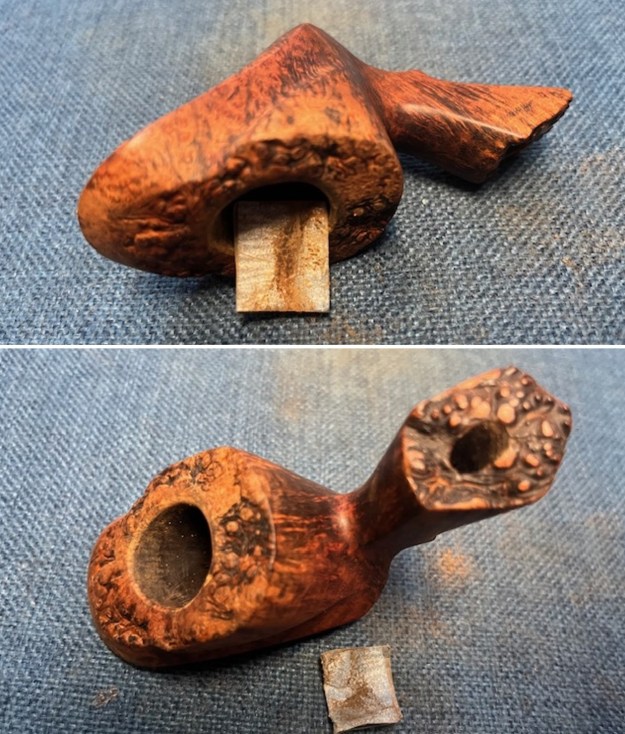
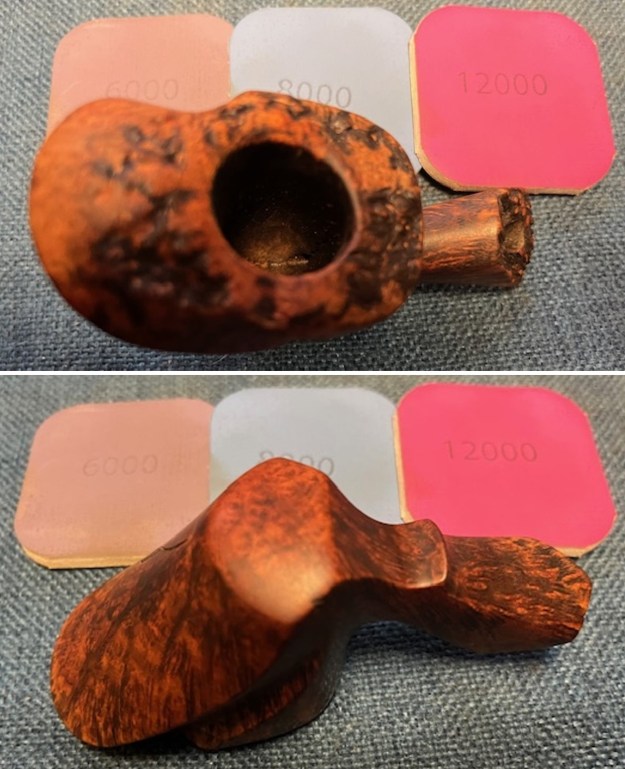
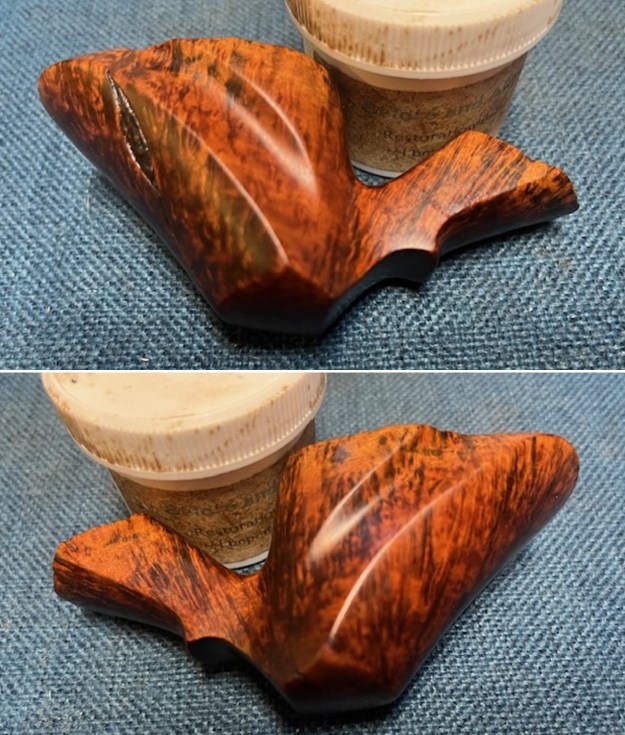
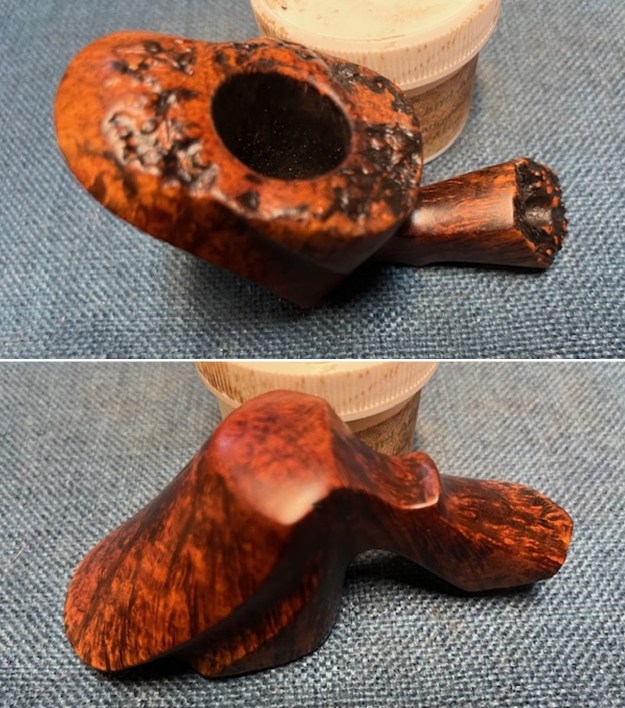
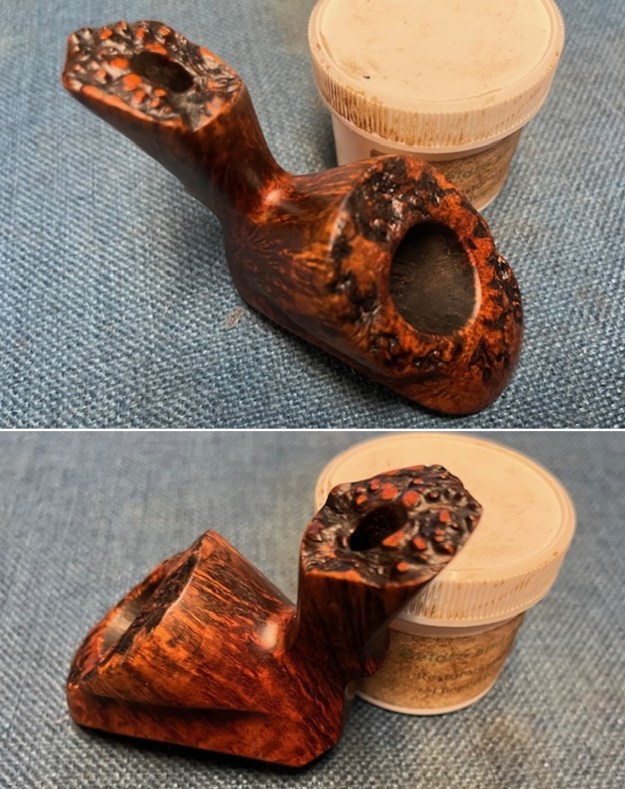
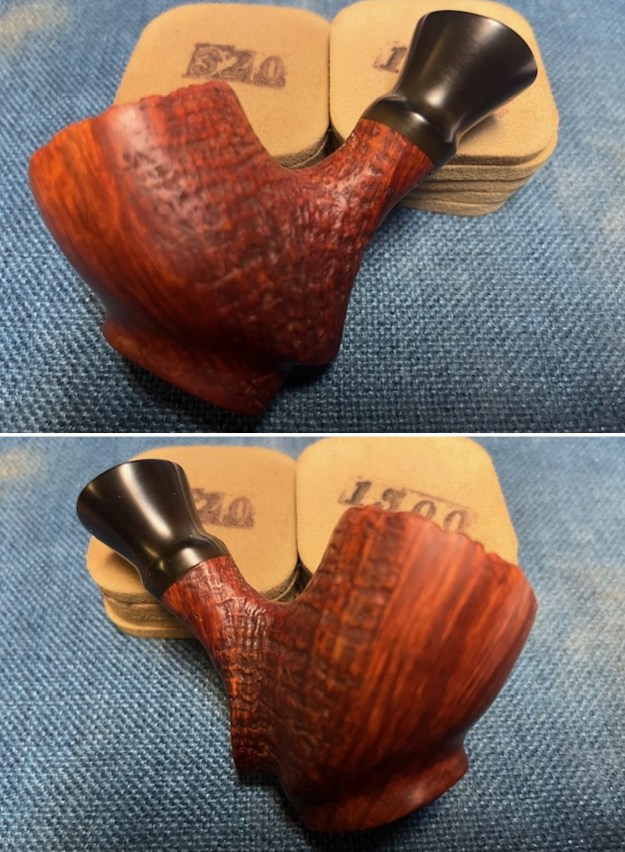
This particular Freehand pipe was purchased as part of a lot from seller in Wilkes Barre, Pennsylvania, USA on 09/26/2018. It really is a Freehand pipe that combines a plateau rim top and shank end with feet like the fins of a rocket on the bottom making it a sitter. The front of the bowl is smooth and the back is sandblast. The blast carries through the shank as well. It is stamped on a smooth panel on underside of the shank and reads Soren [over] Hand-Carved [over] Made in Denmark. The finish is dirty but does not hide the beautiful grain around the bowl and shank. There is a vulcanite shank extension. The pipe had a moderate cake in the bowl but the rim top and inner edge of the bowl looked good. There is some dust in some of the plateau. It is heavier toward the back half of the bowl. There was grime ground into the sandblast finish and dust and debris in the plateau valleys. The fancy vulcanite shank extension and the saddle stem was oxidized and had light tooth marks and chatter on both sides near the button.  Jeff took photos of the pipe before he started his work on it. Jeff took photos of the rim top and the stem to show the condition of the pipe when we received it. You can see the moderate cake in the bowl and the dust and debris in the plateau rim top and inner edge of the bowl. The turned vulcanite stem was oxidized, dirty and had light chatter and tooth marks on both sides near the button. He took photos of the sides and the heel to give an idea of the shape and the condition of the briar around the bowl. It really is a uniquely shaped pipe with the pedestal base on the bottom front of the bowl.The next photos Jeff took shows the stamping on the underside of the shank. It is clear but faint in spots and read as noted above. I went to a previous Soren restoration blog and reread what I had written to reconnect the dots for me https://rebornpipes.com/2016/09/12/repairing-and-rejuvenating-a-soren-danish-freehand/. I quote from that blog post:

I looked up the brand on Pipephil (http://www.pipephil.eu/logos/en/logo-s10.html) and found that the brand was carved by Søren Refbjerg Rasmussen. Pipes that he made for the European market were mostly stamped “Refbjerg” while those made for the US market were stamped “Soren”. Thus, I knew that one I was working on was imported into the US market.

I was once again working on a pipe made by Soren Refbjerg Rasmussen for the US market as it was stamped Soren. I continued to do reading on another of my go to websites, Pipedia. Here is the link for the article there. https://pipedia.org/wiki/Refbjerg. I quote some of the more pertinent information.
Søren Refbjerg Rasmussen founded a company in 1969, which employed an average of 8 – 12 craftsmen in the 1970’s. The semi-freehands they produced were traded under his prename Søren. Rasmussen himself finished only the very best pipes. So, his way of pipemaking closely resembled the ways of Preben Holm, Karl Erik Ottendahl or Erik Nørding. Altogether more than 1,000,000 pipes were sold.

From that I knew that the pipe in my hands came from the 1970s. It bears the Soren signature stamp which also says that it was made for sale in the American pipe market. Armed with that information I turned my attention to restoring the pipe.

Jeff had cleaned up the pipe following his normal cleaning process. In short, he cleaned up the reaming with a Savinelli Fitsall Pipe Knife.  He scrubbed the bowl with undiluted Murphy’s Oil Soap with a tooth brush. He worked over the lava and debris on the plateau rim top and shank end and was able to remove it. He rinsed it under running warm water to remove the soap and grime. He cleaned out the inside of the shank and the airway in the stem with alcohol, cotton swabs, shank brushes and pipe cleaners. He scrubbed the stem with Soft Scrub and cotton pads to remove the debris and oils on the stem. He soaked it in Briarville’s Pipe Stem Deoxidizer. He rinsed it with warm water and dried it off. The pipe looked very good and I was excited to start working on it. I forgot to take my usual photos of the pipe.

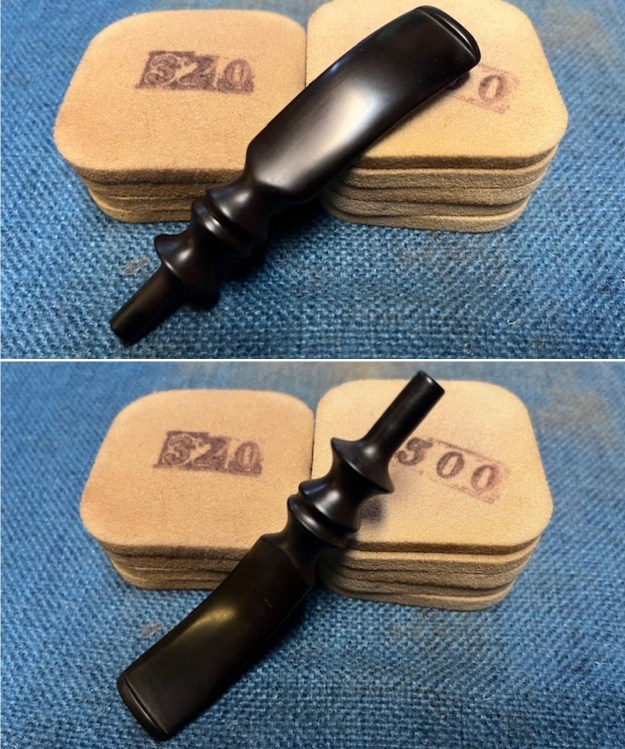
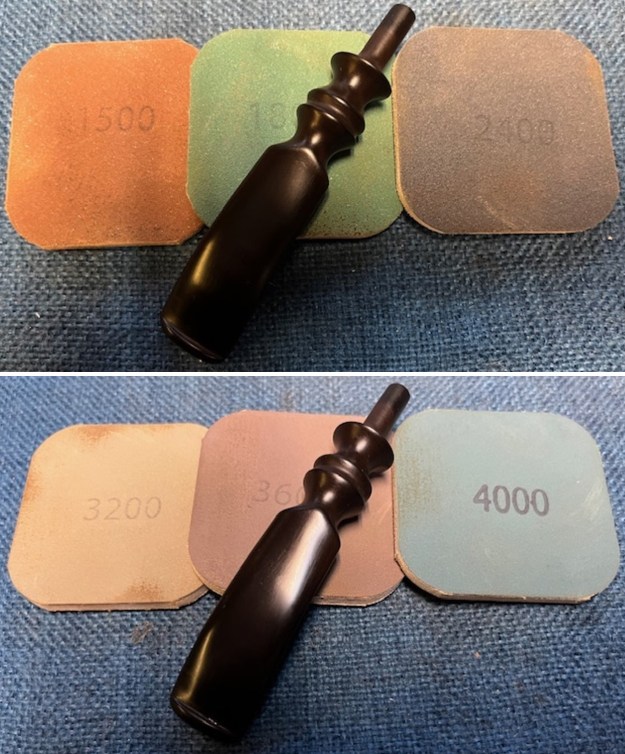
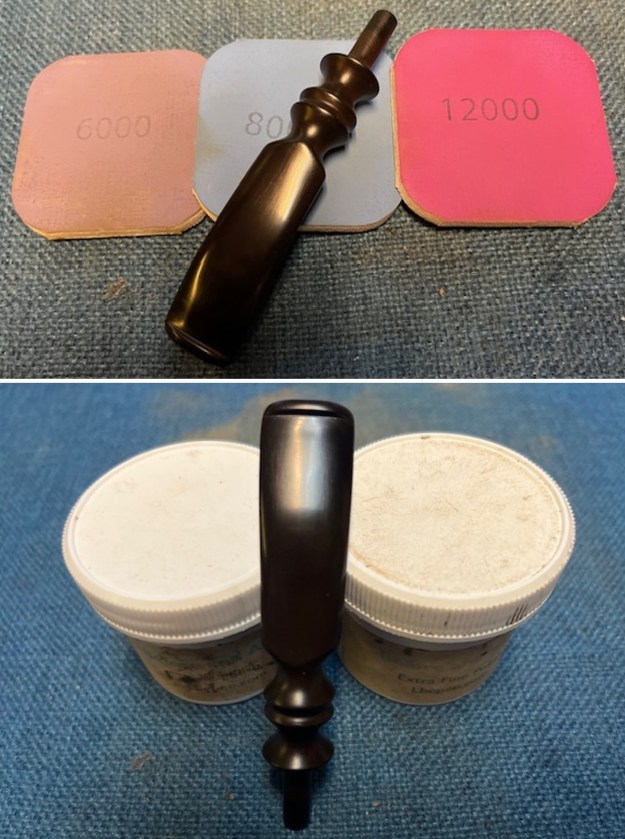
I started my work on the pipe by sanding the vulcanite shank extension with 320-3500 grit sanding pads to remove the residual oxidation that remained. I was able to remove it for the most part and what remained would come off with the micromesh pads and the Before and After Pipe Stem polish. It was a pretty pipe. I polished the vulcanite shank extension and the smooth portions of the bowl on the front and heel. I dry sanded it with 1500-12000 grit sanding pads. I wiped the sanded portions of the bowl off with a damp cloth to remove the sanding debris. I wiped down the shank extension with an Obsidian Oil cloth. I worked some Before & After Restoration Balm into the surface of the briar with my fingertips and a horsehair shoe brush to get into the plateau and the sandblast. The product works to clean, enliven and protect it. I let the balm sit for a little while and then buffed with a cotton cloth to raise the shine. The following photos show the bowl at this point in the restoration process. I am very happy with the results. I set the bowl aside and turned to the stem. I used 320-3500 grit sanding pads to smooth out the roughness on the surface of the vulcanite and remove the tooth marks and chatter. I wiped the stem down with an Obsidian Oil cloth after each sanding pad.I polished the stem with micromesh sanding pads – wet sanding with 1500-12000 grit sanding pads. I wiped it down after each sanding pad Obsidian Oil. I finished by polishing it with Before & After Pipe Stem Polish both fine and extra Fine and then wiped it down with a final coat of Obsidian Oil. This is a beautiful Soren Hand Carved Freehand Sitter with a vulcanite shank extension and a fancy saddle stem. It has a great look and feel. The shape of the bowl, the mix of sandblast and smooth finishes and the cut of the briar work well to highlight the grain around the bowl sides. I polished stem and the bowl with Blue Diamond polish on the buffing wheel. I gave the bowl and the stem multiple coats of carnauba wax. I buffed the pipe with a clean buffing pad to raise the shine. I hand buffed it with a microfiber cloth to deepen the shine. The Soren Hand Carved Freehand polished up pretty nicely. The grain took on life with the buffing. The rich stains work well with the polished vulcanite stem. The finished pipe has a rich look that is quite catching. Have a look at it with the photos below. The shape, finish and flow of the pipe and stem are very well done. The dimensions are Length: 6 ½ inches, Height: 2 ¼ inches, Outside diameter of the bowl: 1 ½ inches, Chamber diameter: 7/8 of an inch. The weight of the pipe is 2.43 ounces/69 grams. It is a beautiful pipe. I will be putting it on the rebornpipes store shortly in the Danish Pipemakers Section if you are interested in adding it to your collection. Thanks for walking with me through the restoration.
Restoring a Duca Carlo Italy Bent Rhodesian


by Steve Laug

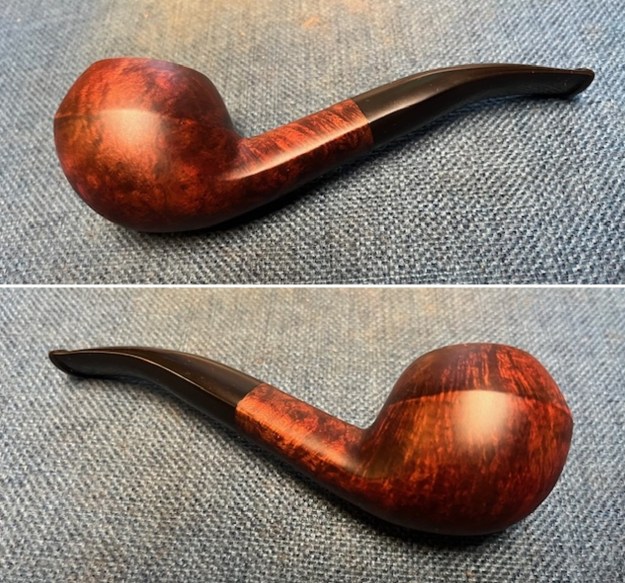
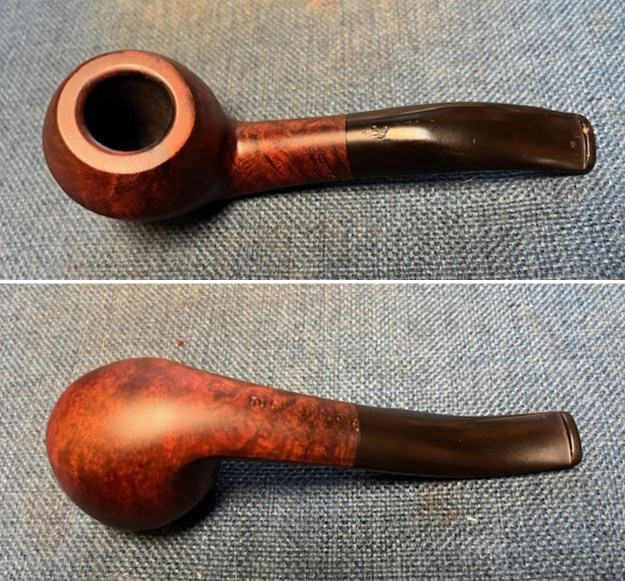
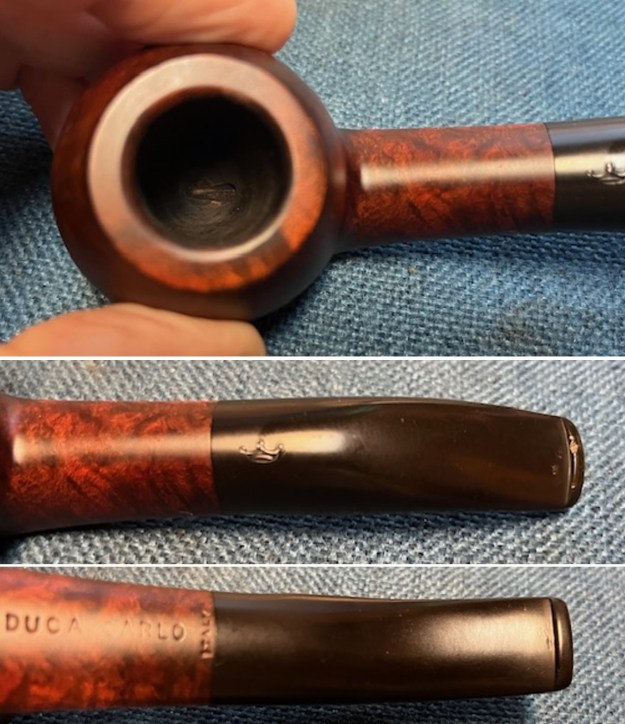
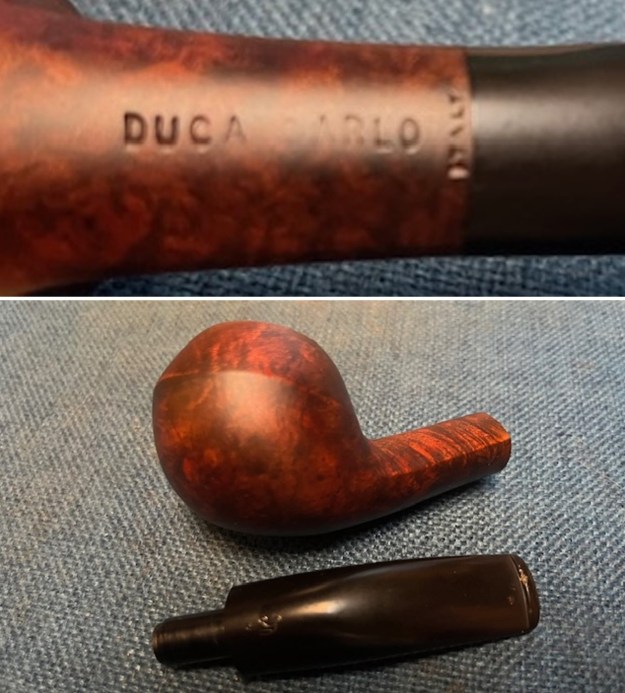
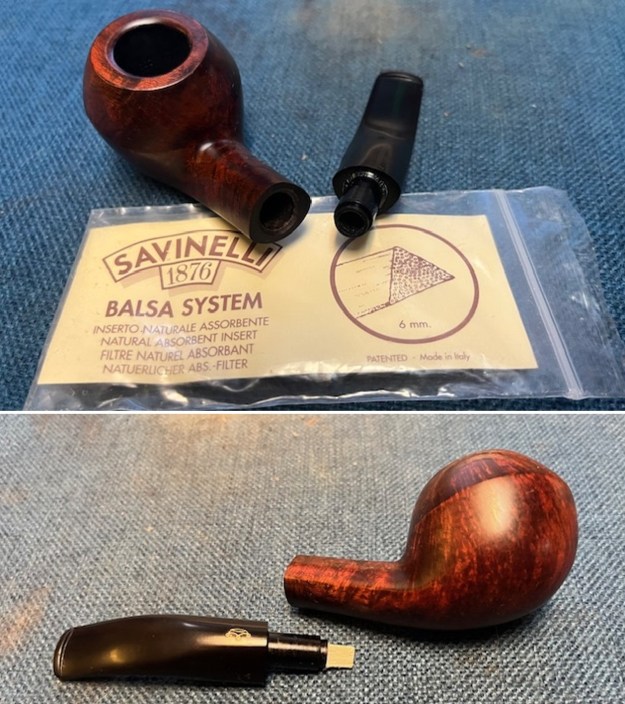
The next pipe on the table is an interesting Bulldog or Rhodesian without the rings and with a triangle shaped taper stem. Jeff purchased this pipe from an antique mall Ogden, Utah, USA on 03/25/2021. There was a moderate cake in bowl and the rim top looked amazingly good. The rim top and the inner edge were not damaged and showed no nicks or lava buildup. The finish was dull and had grime ground into the surface of the briar. Though hard to see there are a few fills in the bowl, but the stain and finish may be hiding them at this point in the process. The pipe is stamped on the underside of the shank and reads DUCA CARLO and at the shank/stem union it is stamped ITALY. I remembered that the pipe was a Savinelli made pipe but I could not remember much more than that about connection. I would need to check the blog to see what I had found when I worked on other Duca Carlo pipes. The stem was made for a 6mm Savinelli Balsa filter. It was lightly oxidized and had light tooth marks and chatter on both sides at the stem – both on the stem surface and on the button itself. Jeff took photos of the pipe before he started his clean up work. I like to have an idea of how the pipe was smoked before we got it and what the bowl and rim top looked like. Jeff always takes some photos of the bowl and rim from various angles to show what it looked like. The stem looked very good under the oxidation. The was a gold crown logo on the topside of the stem. He took photos of the sides and heel of the bowl to give a sense of the grain on the pipe. You can also see the fills on the right side of the bowl. The next two photos show the stamping on the underside of the shank. It is faint in spots but otherwise clear and readable as noted above. The gold crown on the stem top is in good shape.I did a quick scan of the rebornpipes blog and found a link to the Duca Carlo pipe that Dal Stanton had restored (https://thepipesteward.com/2021/05/04/liberating-the-grain-of-a-candy-apple-finish-a-savinelli-duca-carlo-poker-of-italy/). I always appreciate the research that Dal does when he works on pipes because it is what I like doing when I am restoring the pipes on my table. I quote from the portion of the blog that gives the background information on the brand. (Thanks Dal for the leg work on this one!)
Whenever I work on a pipe, I’m always interested to know something of the pipe.  My first stop at Pipedia reveals that the Duca Carlo is a second of Savinelli, the well-known Italian pipe manufacturer. Savinelli’s history as an Italian pipe maker goes back to 1876 – a rich history and tradition which can be read in Pipedia’s Savinelli articleThe Duca Carlo is listed in the main Savinelli article within an extensive listing of “Savinelli made sub-brands, seconds & order productions”.  The Duca (Duke) Carlo is listed with the Duca di Milano and Duca di Paolo giving the impression that Savinelli produced these as special lines commemorating these historical figures.  With a quick internet search brings me to a Wikipedia article.  Duca Carlo reveals an interesting story of a child that died of smallpox at age 3 (See: Carlo, Duke of Calabria):

Carlo of Naples and Sicily (Italian: Carlo Tito Francesco Giuseppe; 4 January 1775 – 17 December 1778) was Duke of Calabria as heir to Naples and Sicily. Born at the Caserta Palace near Naples, he was known as the Duke of Calabria at birth as the heir apparent to his father’s throne. His mother was a daughter of Empress Maria Theresa and thus sister of Marie Antoinette.

A member of the House of Bourbon, he was a prince of Naples and Sicily by birth. He was the hereditary prince of Naples. His birth allowed his mother to have a place in the Council of State, pursuant to his parents’ marriage contract.

Carlo died of smallpox[1] aged 3. Six of his younger siblings would die of smallpox also: Princess Maria Anna (in 1780), Prince Giuseppe (in 1783), Prince Gennaro (in 1789), Prince Carlo Gennaro (also in 1789), Princess Maria Clotilde (in 1792) and Princess Maria Enricheta (also in 1792).  He was buried at the Church of Santa Chiara in Naples.

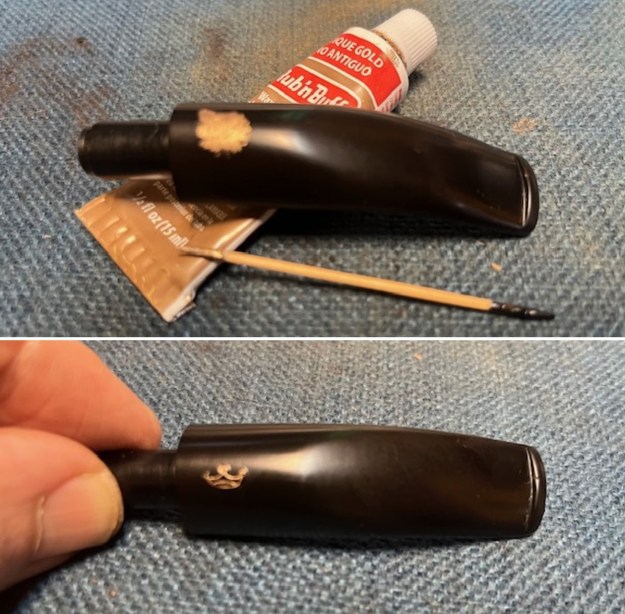
The only other reference to the Duca series in the Savinelli Pipedia article comes from a photo that does not mention a name, but the stem stamping is clearly from the Duca series of pipes listed.  No dating on the picture can be seen. The Savinelli Duca line is confirmed by my next stop. Pipephil (http://pipephil.eu/logos/en/logo-d9.html) gives two examples of Savinelli Ducas – a Duca Carlo and Duca Eraldo.  Consistent between each example is the crown stem stamping. Armed with the information that I had gleaned from Dal’s blog, I turned my attention to the pipe itself. Jeff had done a great cleanup on the pipe. He reamed the bowl with a PipNet pipe reamer and followed up with a Savinelli Fitsall pipe knife to remove the cake. He scrubbed out the mortise and the airway in the shank and the stem with alcohol, cotton swabs, shank brushes and pipe cleaners. He scrubbed the bowl exterior with a tooth brush and undiluted Murphy’s Oil Soap to remove the grime on the finish of the bowl and the rim top. He rinsed it under running water. One of the benefits of this scrub is that it also tends to lift some of the scratches and nicks in the surface of the briar. He dried it off with a soft cloth. He cleaned the internals and externals of the stem with alcohol, pipe cleaners and cotton swabs. He soaked the stem in Briarville’s Pipe Stem Deoxidizer and rinsed it off with warm water and cleaned out the airway in the stem with alcohol. When I received it the pipe looked very good. I took a photo of the rim top and stem to show the condition. The rim top and the inner edge of the bowl were in good condition. The stem was vulcanite and there were some tooth marks and chatter on both sides ahead of the button and on the button surface. The gold crown had lost some of its lustre in the clean up and would need to be touched up.The stamping on the pipe is faint in spots but still is clear and readable as noted above. I removed the stem from the shank and took a photo of the pipe to give a sense of the whole.I polished the briar with micromesh sanding pads – dry sanding with 1500-12000 grit sanding pads. I wiped the bowl down with a damp cloth after each sanding pad. I worked some Before & After Restoration Balm into the surface of the briar with my fingertips. It works to clean, enliven and protect the briar. I let it sit for 15 minutes then buffed it off with a soft cloth and raised the shine. The bowl looks great at this point. I set the bowl aside and turned my attention to the stem. I “painted” the tooth marks and chatter on the stem and was able to raise most of it. I filled in what remained with black, rubberized CA glue. Once it hardened I flattened the repairs with a flat file. I cleaned up the repairs and blended them into the surface of the stem with 220 grit sandpaper. I sanded the stem with 320-3500 grit sandpaper to further blend in the repairs on the surface. I wiped the stem down with an Obsidian Oil cloth after each sanding pad. It began to look very good.I touched up the Crown logo stamp on the topside of the triangle taper stem with Rub’n Buff Antique Gold. I worked it into the stamp with a toothpick. I buffed off the excess with a paper towel and polished the stem with some Obsidian Oil.I polished it with micromesh sanding pads – 1500-12000 grit pads. I wiped it down with Obsidian Oil after each sanding pad. I used Before & After Pipe Polish – both Fine and Extra Fine to further polish the stem. The photos below show the polished stem. I fit the stem with a Savinelli 6mm Balsa System filter. The fit was perfect and the draw seems remarkably open.This Savinelli Made Duca Carlo Italian Bent Rhodesian with a vulcanite saddle stem is a great looking pipe now that it has been restored. The rich browns and blacks of the contrasting stains came alive with the polishing and waxing. I put the stem back on the bowl and carefully buffed the pipe with Blue Diamond on the buffing wheel using a light touch on the briar. I gave the bowl and the stem multiple coats of carnauba wax on the buffing wheel and followed that by buffing the entire pipe with a clean buffing pad. I hand buffed the pipe with a microfiber cloth to deepen the shine. The finished Duca Carlo Rhodesian is a beauty and fits nicely in the hand and looks very good. Give the finished pipe a look in the photos below. The dimensions of the pipe are Length: 5 ½ inches, Height: 1 ¾ inches, Outside diameter of the bowl: 1 ¼ inches, Chamber diameter: ¾ of an inch. The weight of the pipe is 1.87 ounces/53 grams. This beauty will be going on the rebornpipes store in the Italian Pipe Makers section. Let me know if you are interested in adding it to your collection. Thanks for reading this blog and my reflections on the pipe while I worked on it. There are many more to come!

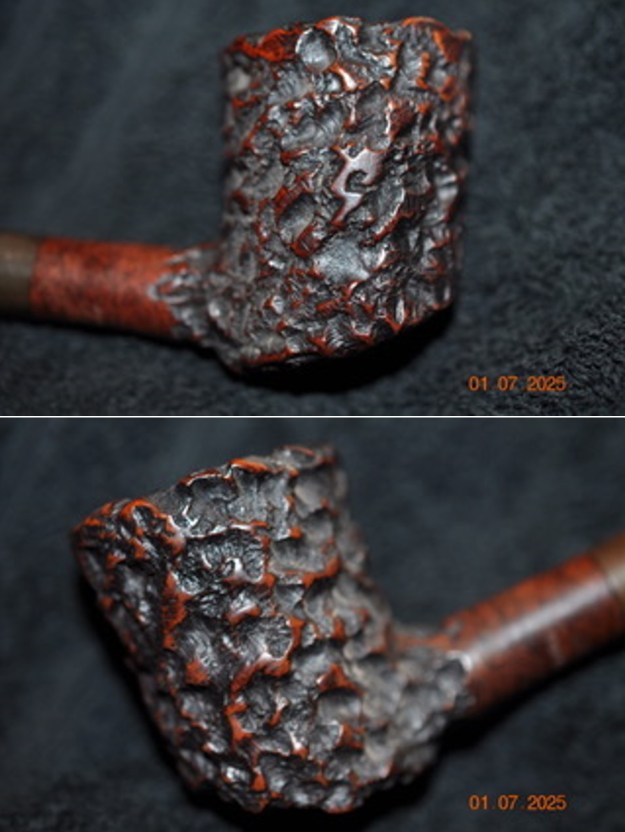
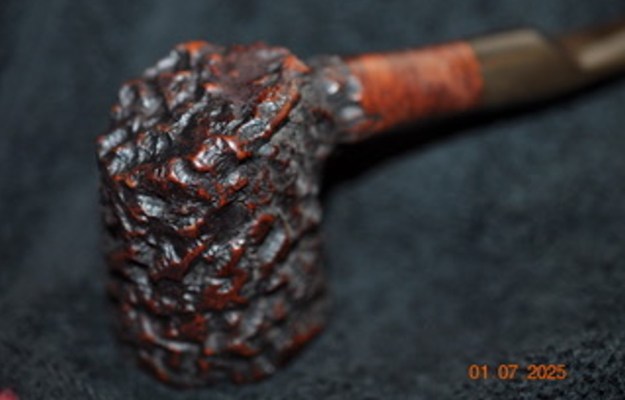
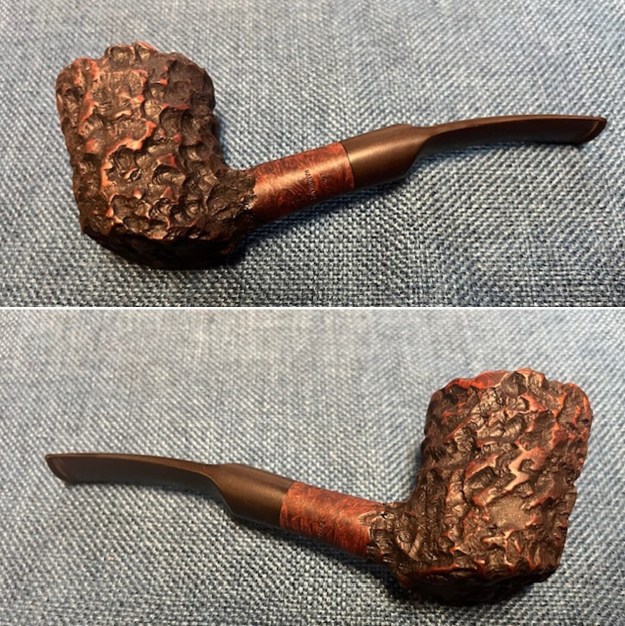
Karl Erik Handmade in Denmark 225 Rusticated Poker


by Steve Laug

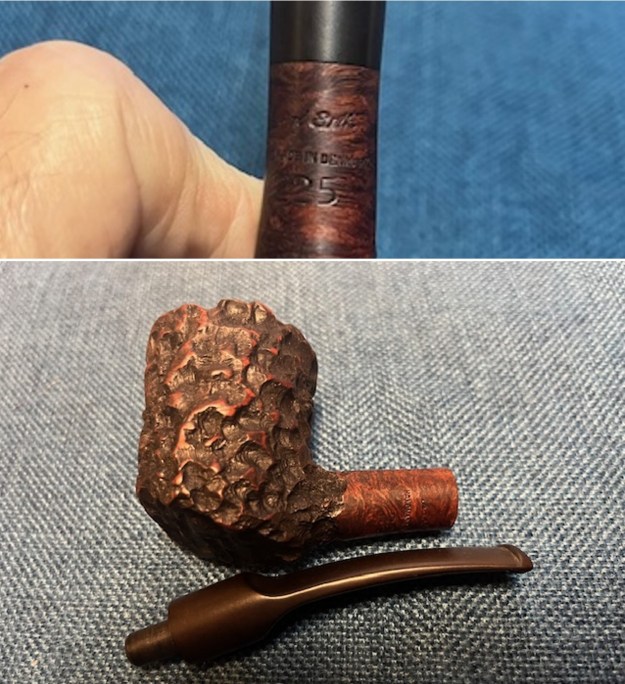
The next pipe on the table is one that we picked up from a seller in Ogden, Utah, USA on 12/21/2024. It is deep and uniquely rusticated Pot with a saddle stem. It is stamped on the underside of the shank and reads Karl Erik [over] Handmade in Denmark [over] the shape number 225. The stamping is clear and readable as noted above. The pipe has some grime and oils ground into the rustication around the bowl and shank. The bowl had a thick cake and there was thick lava in the deep rustication on the rim top and edges. The inner and outer edges appeared to be undamaged. Cleaning would make that clear. The vulcanite saddle stem was oxidized and dirty with deep tooth marks and chatter ahead of the button. Jeff took photos of the pipe to show what it looked like before he started working on it. Jeff took a photo of the bowl and rim top to show the cake in the bowl, lava overflow and the general condition of the pipe. The photos of the stem to show the condition of both sides of the stem as noted above. He took photos of the sides of the bowl and the heel to show the interestingly textured rustication around the bowl and shank. It really is a beautifully rusticated piece of briar. The finish is nice but it also dirty with dust ground into the deeper portions of the finish. Jeff took a photo of the stamping on the underside of the shank. It is clear and readable as noted above. If you have been following the blog for any length of time you have come to know that when I am working on interesting old pipes (even sometimes those not so interesting) I like to know a bit about the background of the brand. I like to “meet” the carver to get a feel for their work and style.

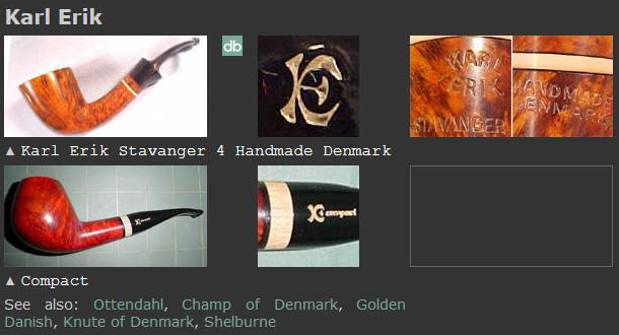
I turned to Pipephil’s site (http://pipephil.eu/logos/en/logo-k1.html) to see what I could find. I did a screen capture of the entry there and have included the side bar information below the photo. Brand created in 1965-66 by Karl Erik Ottendahl (1942 – 2004 †). In the best years he employed up to 15 craftsmen among which Bent Nielsen (see Benner) and Peder Christian Jeppesen. Former grading (ascending): from 4 to 1, and “Ekstravagant” (entirely hand made)

I turned to Pipedia (https://pipedia.org/wiki/Karl_Erik) and reread the history of the brand. Give the article a read.

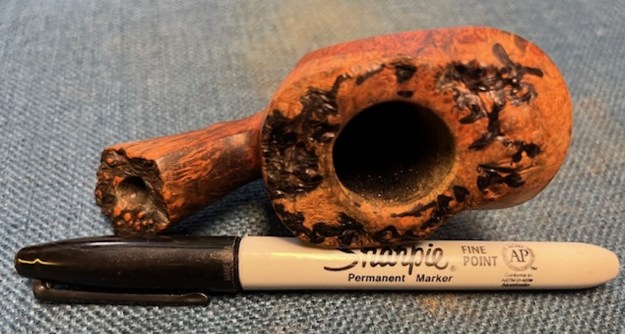
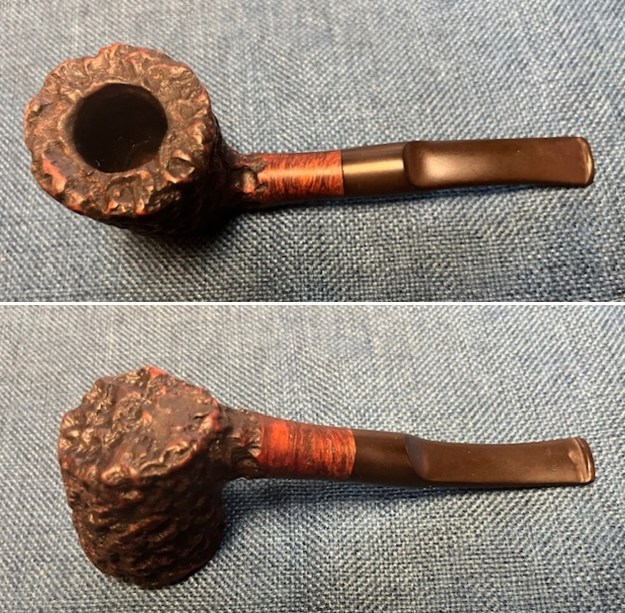
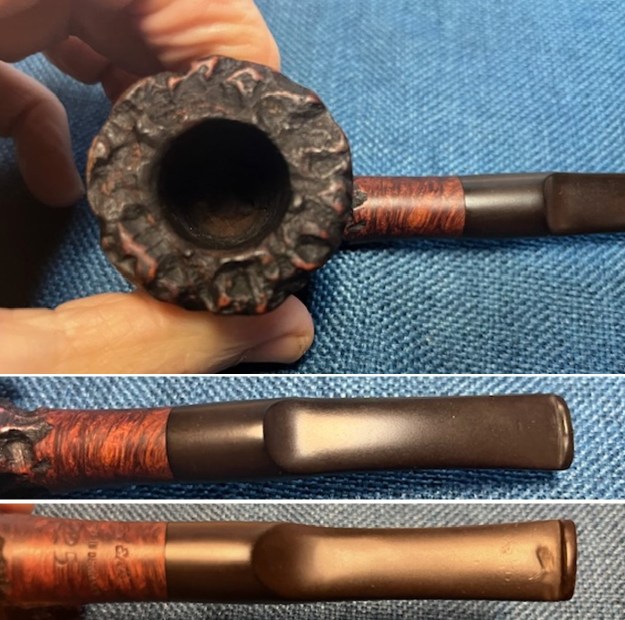
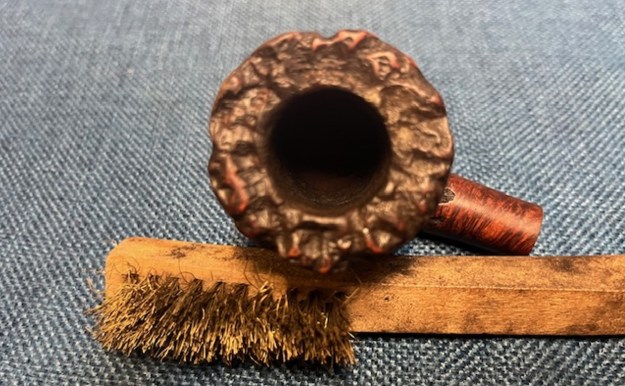
Armed with that information I turned to work on the pipe itself. Jeff had done a great job cleaning up the pipe as usual. He cleaned up the inside of the bowl with a PipNet reamer and a Savinelli Fitsall Pipe Knife. The bowl walls looked very good. He scrubbed the interior of the bowl and shank with pipe cleaners, shank brushes, cotton swabs and alcohol to remove the tars and oils. He scrubbed the exterior of the pipe with undiluted Murphy’s Oil Soap and a tooth brush to remove the grime from the finish. He worked on the rim top lava and darkening with the soap and tooth brush. He scrubbed the inside of the stem with alcohol and pipe cleaners. He scrubbed the exterior with Soft Scrub and then soaked it in Briarville’s Pipe Stem Deoxidizer. He washed it off with warm water to remove the deoxidizer. The pipe looked far better. I took photos of the pipe when I received it before I started working on it.    I took photos of the bowl and rim top to show how clean it was. The top and the inner edge of the rim look very good. There is a little darkening on the top that I will address and see if I can lessen. The stem looks clean of debris and grime. There is tooth chatter on the stem surface on both sides but otherwise it looks good.I took a photo of the stamping on the underside of the shank of the pipe. The stamping is clear and readable. I took a photo of the pipe with the stem removed to show the overall look of stem, tenon and profile of the pipe.I worked over the rusticated rim top with a brass bristle wire brush to clean out the remnants of the debris. It looked much better. The bowl was very clean so I worked some Before & After Restoration Balm into the briar with my finger tips and into the deep rustication with a shoe brush. I let it sit on the bowl for 10 minutes and then buffed it off with a paper towel and soft cloth. The product is a great addition to the restoration work. It enlivens, enriches and protects the briar while giving it a deep glow. It is a product I use on every pipe I restore. I set the bowl aside and turned my attention to the stem. I “painted” the surface of the stem with the flame of a lighter to lift the tooth marks and had mixed success. All of the marks on the topside were lifted. The one remaining on the back I filled in with some rubberized black CA glue. Once the repairs cured I used a flat file to blend them into the surface and followed that with some 220 grit sandpaper. It looked better. Polishing would finish the work. I continued the sanding process with 320-3500 grit sanding pads. After each pad I wiped the stem down with some Obsidian Oil to clearly show me the scratches and areas that still needed work. It was really looking good.I polished the stem with micromesh sanding pads – dry sanding with 1500-12000 grit pads. Once again, I wiped it down between each pad with Obsidian Oil. I further polished it with Before and After Stem Polish – both Fine and Extra Fine. I gave it another rub down with Obsidian Oil. It looked very good. I am really happy with the way that this Heavily Rusticated Karl Erik Bent Poker/ Cherrywood with a saddle stem turned out. It really is a beautiful looking pipe with a unique shape and deep rustication completed by a vulcanite saddle stem. The briar really came alive with the buffing. The rich brown stains of the finish gave the pipe a sense of depth with the polishing and waxing. I carefully buffed the pipe with Blue Diamond on the buffing wheel using a light touch on the briar. I gave the bowl multiple coats of Conservator’s Wax and the stem multiple coats of carnauba wax on the buffing wheel. I buffed the pipe with a clean buffing pad to raise the shine. I hand buffed the pipe with a microfiber cloth to deepen the shine. The finished Karl Erik Rusticated Cherrywood really is a beauty and feels great in the hand and looks very good. Give the finished pipe a look in the photos below. The dimensions of the pipe are Length: 6 inches, Height: 2 inches, Outside diameter of the bowl: 1 ½ inches, Chamber diameter: ¾ of an inch. The weight of the pipe is 52 grams/1.83 ounces. I will be putting the pipe on the rebornpipes store in the Danish Pipe Makers Section. If you would like to add it to your collection let me know. It should be a great smoking pipe.

As always, I encourage your questions and comments as you read the blog. Thanks to each of you who are reading this blog. Remember we are not pipe owners; we are pipe men and women who hold our pipes in trust until they pass on into the trust of those who come after us.

Restoring a Peterson’s Kapet Made in the Republic of Ireland 502


by Steve Laug

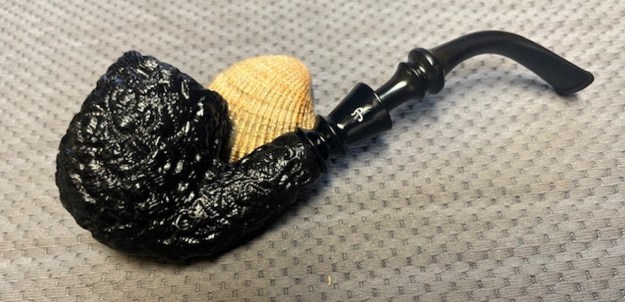
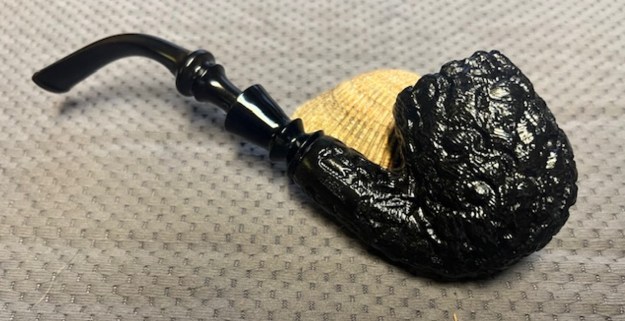
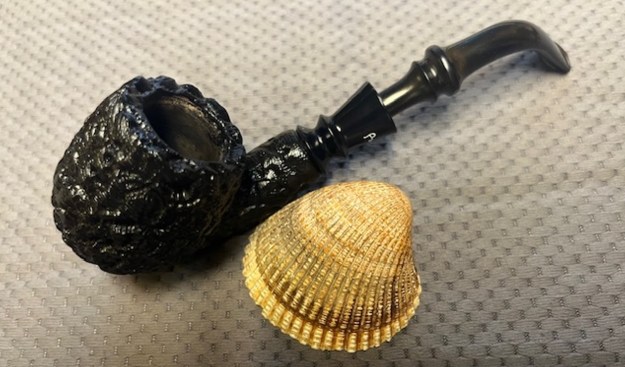
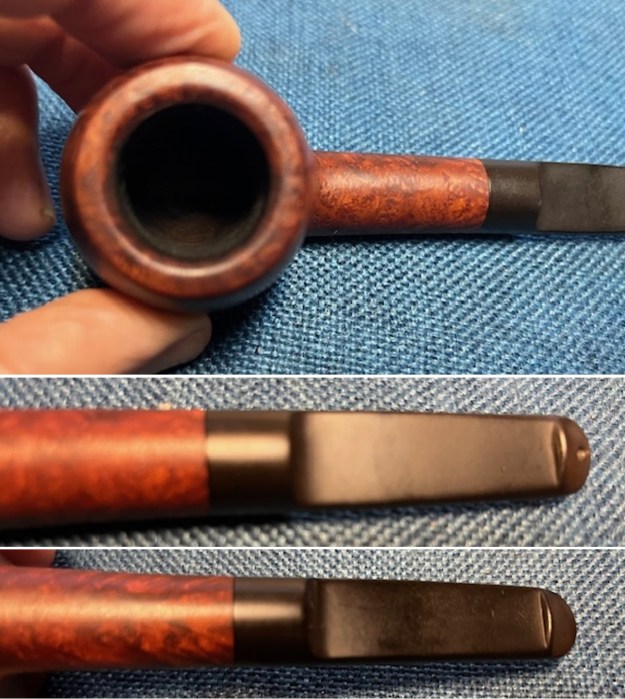
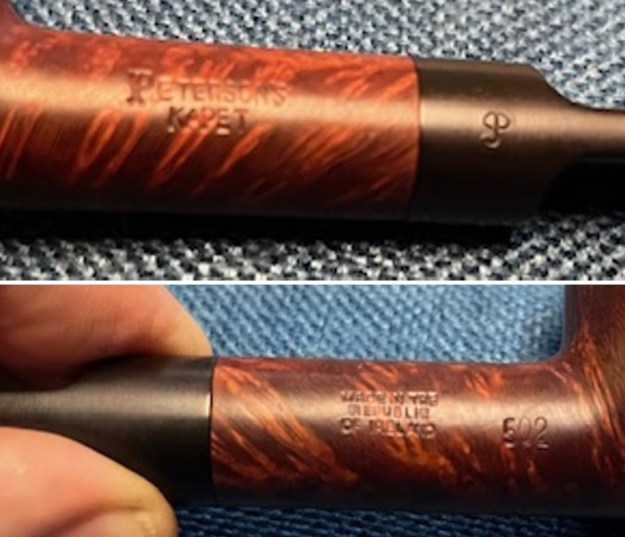
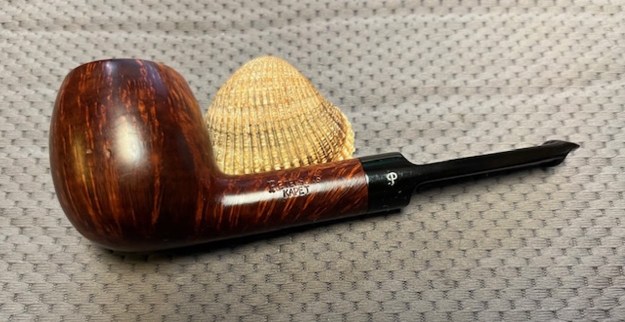
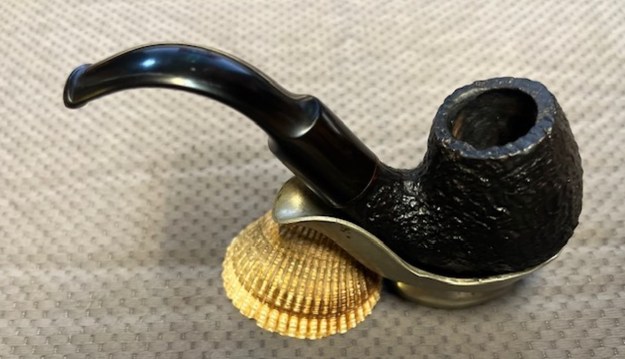
This beautifully grained briar pipe was purchased on 08/27/2024 from an auction on eBay from a seller in Memphis, Tennessee, USA. It is stamped on the left side of the shank and clearly reads Peterson’s [over] Kapet. On the right side it is stamped Made in the Republic of Ireland [three lines]. The shape number 502 is stamped to the right of that next to the bowl/shank junction. The bowl had a thick cake on the walls and an overflow of lava onto the rim top and edges. The smooth finish is dirty with debris and oils. The vulcanite saddle stem has a “P” stamped on the left side of the saddle. It was oxidized, calcified and has light tooth marks and chatter on both sides near the button. It was a beautiful looking pipe even through the grime in the finish. Jeff took photos of the pipe before he started cleaning it up. Have a look. Jeff took close up photos of the bowl and rim top to show the condition of the bowl and the rim top. You can also see the lava on the rim top, inner edge and the cake in the bowl. He also took close up photos of the stem to show its condition as mentioned above. He also took photos of the tooth marks and chatter on both sides of the stem. He took photos of the bowl sides and heel to show the grain around the bowl. There are small fills on the left side mid bowl. The grain is beautiful straight or flame grain. Jeff also took photos of the stamping on the sides of the shank. It is clear and readable as noted above.I am including the link to the Pipedia’s article on Peterson pipes. It is a great read in terms of the history of the brand (https://pipedia.org/wiki/Peterson). There was a short note toward the bottom of the page about the series. It is definitely referring to the newer line that came out later. I quote:

I turned to Pipedia (https://pipedia.org/wiki/Peterson) to first pin down a date that the pipe was made. I knew that the Made in Ireland stamp would give me that. I quote:

As usual when trying to get accurate facts in regard to Peterson history, something will jump up and get in the way. They are missing many of their records. The following is the best that we can do for a guide to the myriad markings during the period 1922 – 1949. Prior to 1920 it was rare for a country of origin to be stamped on the pipe, just Peterson’s Dublin on the band. After 1921/22, if it is stamped “MADE IN IRELAND” and the “Made in” is stacked over “Ireland” or “MADE IN EIRE” or several other forms, it was made between 1922 and 1938. A considerable number of Peterson pipes were stamped “Irish Free State”. From about 1930 to 1949, most of the pipes (those which were stamped) were stamped “Made in Ireland”.” If the stamp reads “MADE IN IRELAND” in a circle, the pipe was made between 1939 and 1948. These are all “Pre-Republic” pipes. I can tell you that the mark “Irish Free State” was adopted in 1922; and replaced by “Eire” in 1937 and then by “Republic of Ireland” in 1949.

That gave me a date for the pipe – it was made after 1949 as can be proved by the Made in the Republic of Ireland stamp on the right side of the shank.

I turned to “The Peterson Pipe” by Mark Irwin and Gary Malmberg to get some background on the Peterson’s Kapet Line. On page 305 it had the following information.
Kapet (1925-87) Line first described in 1925 brochure and featured in occasional catalogs through 1987. Early specimens will be stamped IRISH over FREE STATE. Described in 1937 catalog as available in dark plum or natural finish. Featured an aluminum “inner tube” or stinger until 1945.  Mid-century specimens may be stamped Made In over Ireland. Specimens from 1970 on may have mounts with hallmarks.

Judging from the Made in the Republic of Ireland stamp, the pipe I am working on is probably made after 1945 when the stinger or inner tube was removed. Those dates work also for the Kapet information above. The stem has the original P stamp on the saddle side and no stinger.

To help clarify the stamping on the shank more, I did some digging and found a blog on Mark Irwin’s Site that had information on the 500 shapes and specifically the 502 shape and it did indeed have a saddle stem (https://petersonpipenotes.org/tag/peterson-502/). That also move the date forward to post 1980.

The 500 shapes aren’t documented in the Peterson ephemera, which is an important reason to stop and let everyone know they’re available just now. They’re big, XL shapes, mostly bulldogs and Rhodesians, and appeared around 1980 in a red stain in the Spigot, Sterling Silver and  Kapet lines (from high to low), but also in standard brown stain in the lower Kildare and K Briar entry-grade lines. I’ve also seen a Supreme on the internet.

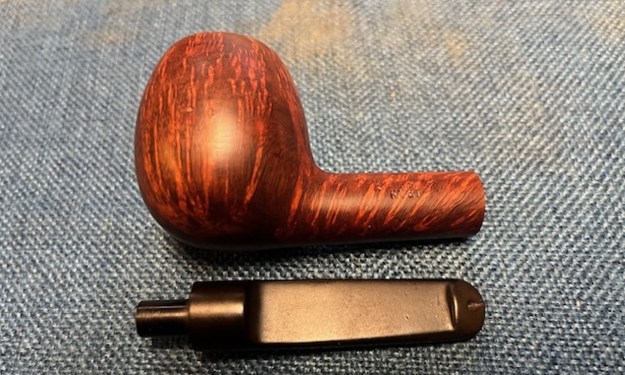
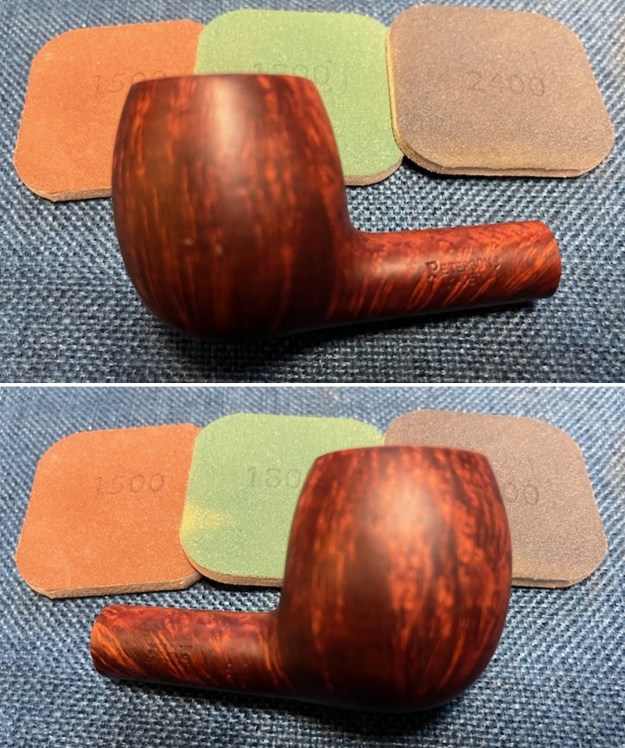
The 1980s were a difficult period in the company’s history, as we recount in The Peterson Pipe: The Story of Kapp & Peterson. Global pipe sales had plummeted to an all-time low and Peterson, like many other companies, was retrenching.  While we have a good record of the company’s offerings in the 1970s and 80s, the 500 shapes are nowhere to be seen. They’re big pipes, which made me think they might have been made designed for the U.S. market, were it not for the fact that some of them accommodate a 6mm filter, which is usually a sign that they were destined for the German market.Armed with the information above, I turned my attention to the pipe itself. Jeff had cleaned the pipe with his usual penchant for thoroughness that I really appreciate. He reamed it with a PipNet pipe reamer and cleaned up the reaming with a Savinelli Fitsall Pipe Knife. He scrubbed out the internals with alcohol, pipe cleaners, shank brushes and cotton swabs until the pipe was clean. He scrubbed the exterior of the bowl with Murphy’s Oil Soap and a tooth brush to remove the grime and grit on the briar and the lava on the rim top. The finish looks very good with good looking grain around the bowl and shank. Jeff soaked the stem in Before & After Deoxidizer to remove the oxidation on the rubber. When the pipe arrived here in Vancouver for the second stop of its restoration tour it looked very good. I took photos before I started my part of the work. I took close up photos of the bowl, rim top and stem to show how clean the pipe was. The bowl was clean and the rim top and the inner edge look beautiful. The stem was clean and did not show either tooth marks or chatter.I took photos of the stamping on the sides of the shank. It is very clear and readable and read as noted above. I also removed the stem from the shank and took photos of the pipe to show the look of the parts. I started by sanding the exterior of the bowl with 1500-12000 grit micromesh sanding pads. I dry sanded it with each pad and wiped the briar down with a damp cloth to remove the sanding- debris. I worked some Before & After Restoration Balm into the briar with my finger tips. I let it sit on the bowl and shank for 10 minutes and then buffed it off with a paper towel and soft cloth. The product is a great addition to the restoration work. It enlivens, enriches and protects the briar while giving it a deep glow. It is a product I use on every pipe I restore. I set the bowl aside and touched up the “P” stamp on the left side of the saddle with some white acrylic nail polish. I let it cure then scraped off the excess and sanded the remnant off with a 1500 grit sanding pad.I polished the stem with micromesh sanding pads – dry sanding with 1500-12000 grit pads. Once again, I wiped it down between each pad with Obsidian Oil. I further polished it with Before and After Stem Polish – both Fine and Extra Fine. It looked very good.I am excited to finish this beautifully grained, Peterson’s Kapet 502 Saddle Stem Apple. I put the pipe back together and buffed it with Blue Diamond on the buffing wheel. I gave the bowl and the stem multiple coats of carnauba wax. I hand buffed the pipe with a clean buffing pad to raise the shine. It is fun to see what the polished bowl looks like with beautiful mixed grain all around it. The straight apple looks great with the black vulcanite saddle stem. This smooth Classic Peterson’s Kapet 502 Apple is great looking and the pipe feels great in my hand. It is light and well balanced. Have a look at it with the photos below. The dimensions are Length: 5 ½ inches, Height: 1 ¾ inches, Outside diameter of the bowl: 1 ¼ inches, Chamber diameter: ¾ of an inch. The weight of the pipe is 45 grams/1.62 ounces. It turned out to be a beautiful pipe. I will be putting on the rebornpipes store in the Irish Pipe Makers Section. If you would like to add it to your collection let me know. It is a real beauty. Thanks for walking through the restoration as I brought the pipe back to life.
Restoring a P.L. Perri & Son flat bottom Rhodesian


by Steve Laug

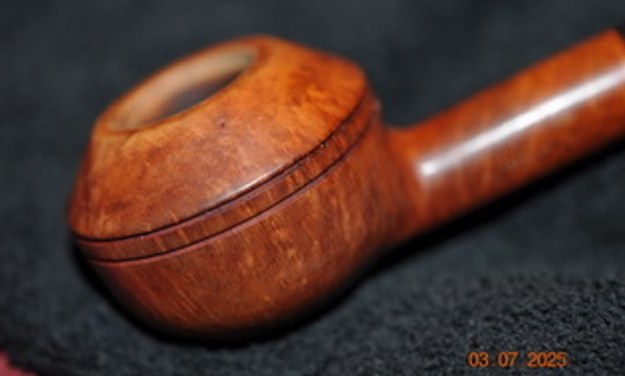
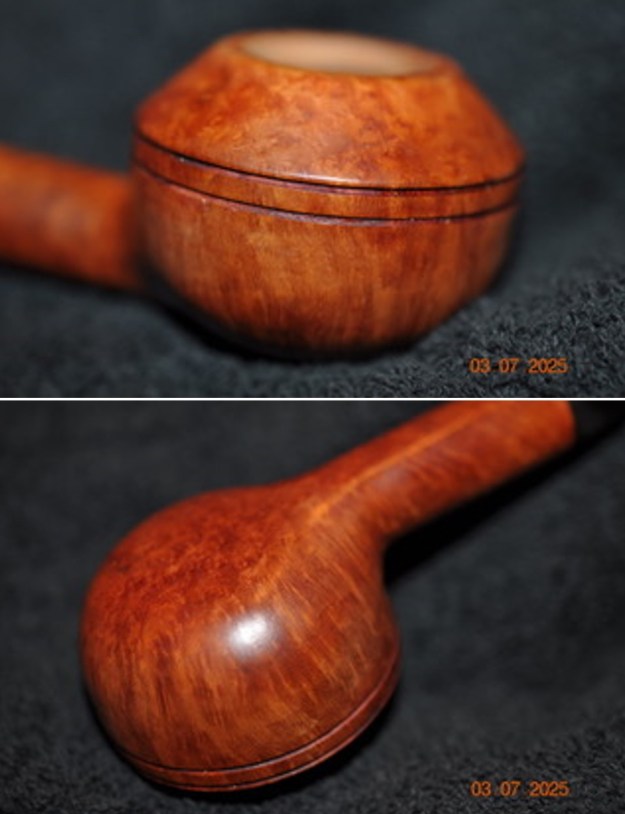
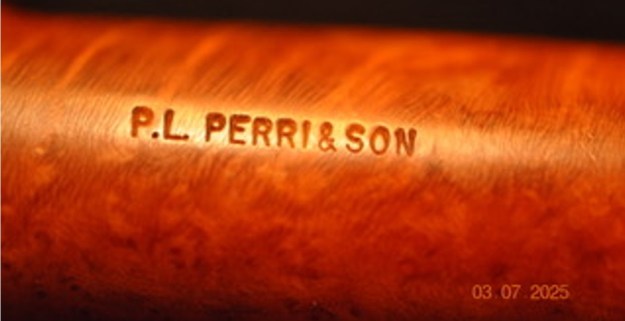
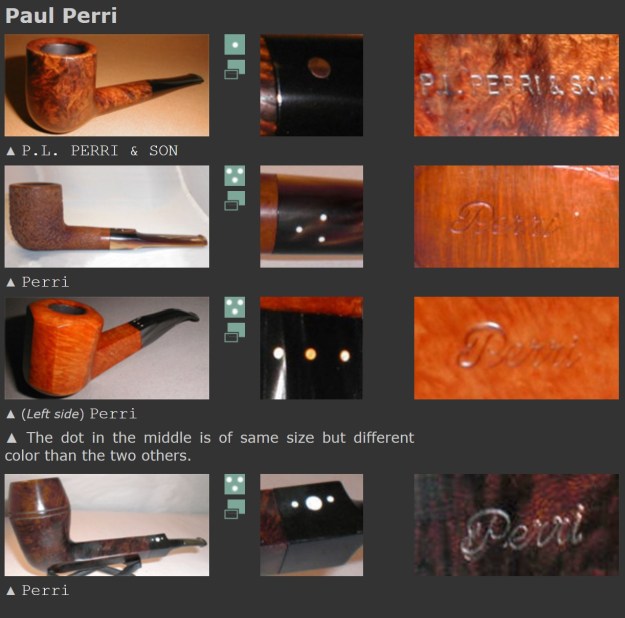
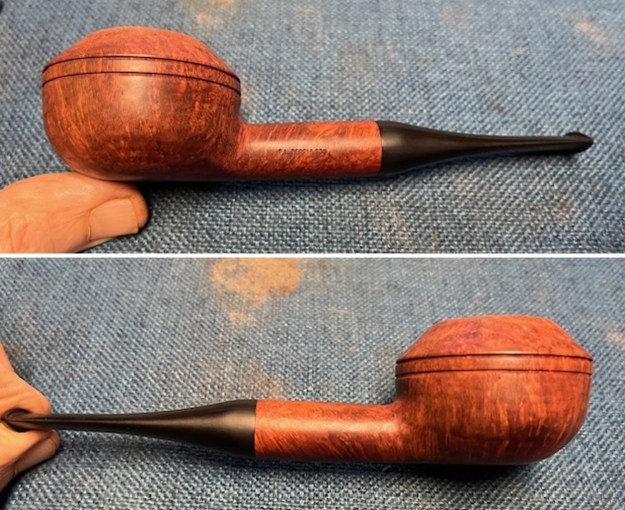
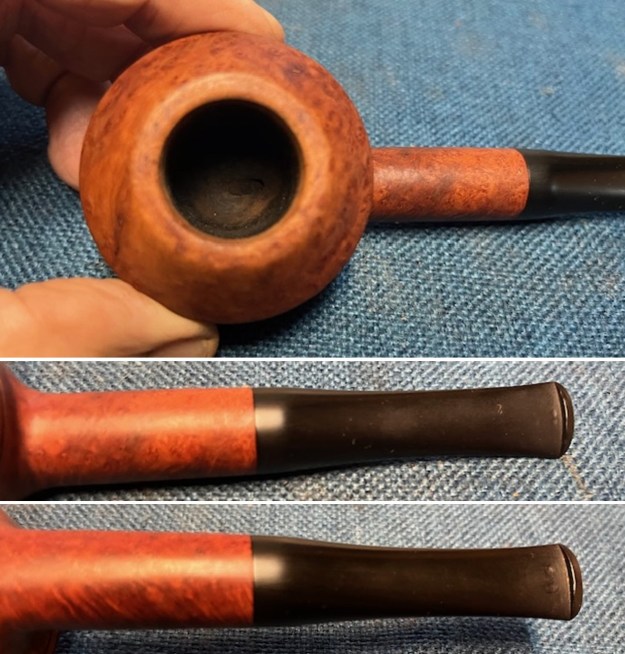
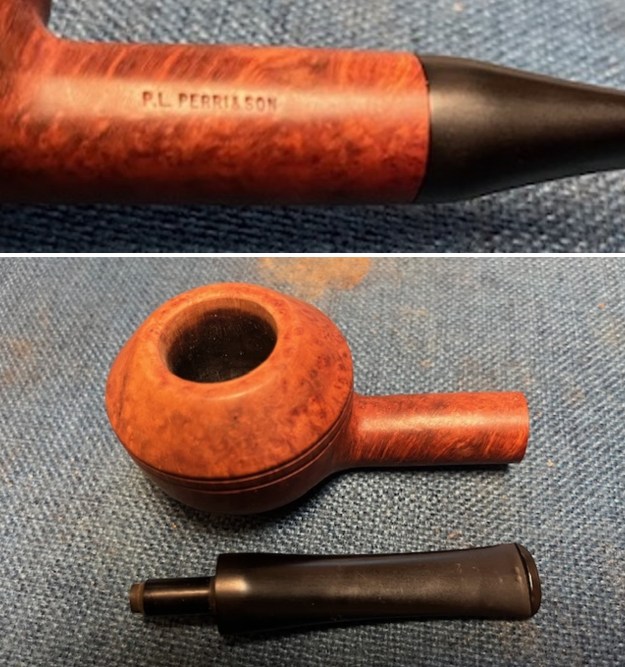
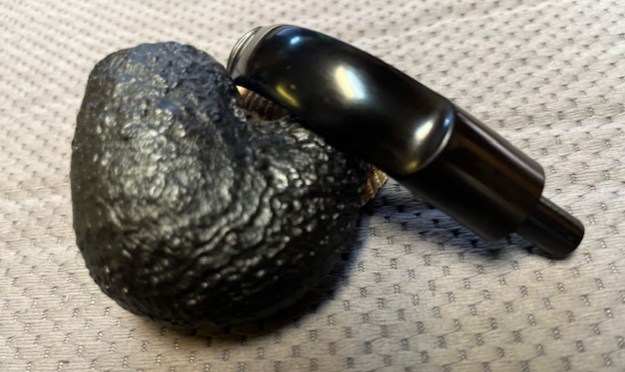
The next pipe I have chosen is a beautifully grained and smooth finished Rhodesian sitter with a briar cap and twin rings around the cap like a well made Rhodesian. It has a well shaped taper vulcanite stem. It came to us on August 22, 2024 from a friend in Barrington, Rhode Island, USA. The contrast of the brown stains makes the grain stand out. It was stamped left side of the shank and read P.L. Perri & Son. There was no other stamping on the shank sides of bottom. The pipe was quite clean. It had obviously been reamed recently. The bowl was clean and the smooth rim top was dirty a few spots of lava on the surface. The black vulcanite taper stem was in good condition other than being a bit dirty. The stem surface had some chatter and tooth marks on both sides of the stem ahead of the button. There was no logo on the stem that identifies it as a Perri pipe. Other than that, the stem was in good shape. Jeff took photos of the pipe before his cleanup work. They tell the story and give a glimpse of the pipe. Jeff took photos of the rim top and stem to show the general condition of the pipe. The bowl is clean though it appeared that there were some spots of lava on the top and inner edge of the bowl. The stem is oxidized, calcified and grimy with light tooth chatter and marks on both sides ahead of the button. Jeff took photos of the bowl sides and heel to show the grain that was around this bowl. The grain is quite beautiful around the sides of the bowl and shank. It is a nice looking pipe. He took a photo of the left side of the shank to show the stamping. The stamping is readable in the photo below and is as noted above.Before I started my work on the pipe I wanted to gain background information. I remember meeting Paul many years ago now at Chicago and had good memories of that meeting but I wanted to learn more about his pipes. I turned first to Pipephil’s site to see what he had in summary about the brand (http://www.pipephil.eu/logos/en/logo-p1.html#paulperri), I did a screen capture of the information and quoted the side bar as well. The stamping shown in the first photo below is the same as the one I am working on.Artisan: Paul Perri (retired 1997 in Hawai). He was the first mentor of Trever Talbert.
From there I turned to Pipedia for some more details (https://pipedia.org/wiki/Perri). I quote below.

Denoted as Paul L. Perri & Son, pipemakers, Manhattan Beach, CA. Paul was still making when he reached 100 years of age, and may have been the oldest living pipe maker. He passed away just short of his 101st birthday in December of 2021.

Paul was well known in California, but less so in other parts of the country and the world. He was a formative influence on a number of American pipe makers, including Trever Talbert. The sandblasted lovat shown bellow typifies Paul’s work, which consists of larger classic shapes with slight twists here and there.

Chance Whittamore, a well respected pipe restorer who was fortunate enough to spend time with him believes “…nobody, living or dead, had the combination of pipe knowledge, depth and breadth, that Paul did.”

There was also a reference to a beautiful piece that Marty Pulvers wrote celebrating Paul’s life and work. I am including that link as well (https://www.pulverspriorbriar.com/my-life-in-pipes/dytn7osvvwmecilhpf11fx7nu420gp?rq=Paul%20Perri).

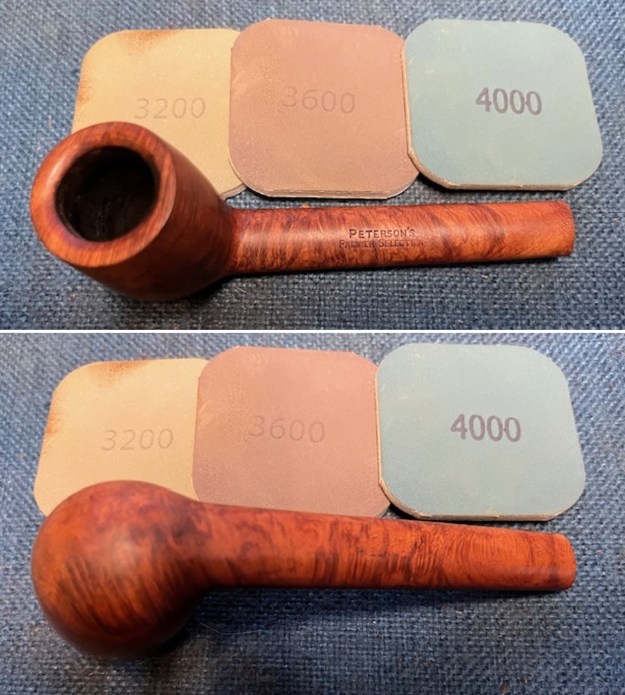
Now it was time to work on the pipe. Jeff had done a great job cleaning up the pipe as usual. He reamed the pipe with a PipNet reamer and cut back the cake back to the bare briar. He cleaned up the walls with a Savinelli Fitsall Pipe Knife. Surprisingly the walls looked unscathed from the cake. He scrubbed the interior of the bowl and shank with pipe cleaners, shank brushes, cotton swabs and alcohol to remove the tars and oils. He scrubbed the exterior of the pipe with undiluted Murphy’s Oil Soap and a tooth brush to remove the grime from the finish. He worked on the rim top lava and darkening with the soap and tooth brush. He cleaned the inside and outside of the stem and soaked it in Briarville’s Pipe Stem Deoxidizer. He rinsed of the residue and buffed it up with a towel. I took photos of the pipe when it arrived. I took a close-up photo of the rim top to show the condition of the bowl and inner edge of the bowl and the stem. The bowl is clean and the lava on the rim top and edges cleaned up very well. The stem photos show that it also cleaned up very well. The tooth marks and chatter are visible and I will need to deal with them.I took a photo of the stamping on the side of the shank. It is clear and readable as noted above. I removed the stem and took a photo of the parts of the pipe. It is a large and quite unique pipe.I polished the bowl with micromesh sanding pads – dry sanding with 1500-12000 grit sanding pads. I wiped it down between pads with a damp cloth. It really began to take on a deep shine. The exterior of the bowl looks better after polishing. I worked some Before & After Restoration Balm into the briar with my finger tips. I let it sit on the bowl for 10 minutes and then buffed it off with a paper towel and soft cloth. The product is a great addition to the restoration work. It enlivens, enriches and protects the briar while giving it a deep glow. It is a product I use on every pipe I restore. I set the bowl aside and turned my attention to the stem. I “painted” it with the flame of a lighter to try and lift the tooth marks. I was able to lift the majority of them. The deeper ones that remained came up some but I filled them in with some rubberized Black CA glue. Once the repairs cured I flattened them and recut the button edge with a small file. I sanded the stem surface smooth with 220 grit sandpaper. I sanded the stem further with 320-3500 grit sanding pads. I wiped the stem down after each pad with a damp cloth to remove the debris. The stem really began to look good.I polished the stem with micromesh sanding pads – dry sanding with 1500-12000 grit pads. I wiped the stem down after each sanding pad with Obsidian Oil to further protect the vulcanite surface. I finished the polishing with Before & After Pipe Stem Polish – Fine and Extra Fine. I wiped the stem down a final time with Obsidian Oil and a cloth. It really looks very good. I am excited to finish this beautifully grained, Perri & Son Rhodesian Sitter. I put the pipe back together and buffed it with Blue Diamond on the buffing wheel. I gave the bowl and the stem multiple coats of carnauba wax. I hand buffed the pipe with a clean buffing pad to raise the shine. It is fun to see what the polished bowl looks like with beautiful mixed grain all around it. The pipe looks great with the black vulcanite stem. This smooth Perri & Son Rhodesian is great looking and the pipe feels great in my hand. It is light and well balanced. Have a look at it with the photos below. The dimensions are Length: 6 inches, Height: 1 ½ inches, Outside diameter of the bowl: 2 inches, Chamber diameter: 7/8 of an inch. The weight of the pipe is 57 grams/2.05 ounces. It turned out to be a beautiful pipe. I will be putting it on the rebornpipes store shortly in the American Pipe Makers Section if you are interested in it. Thanks for walking through the restoration with me as I worked over this pipe. Thanks to each of you who are reading this blog.

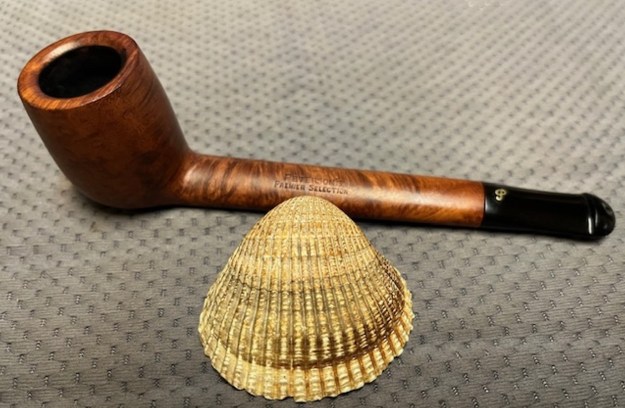
Restoring a Peterson’s Premier Selection Made in Ireland Canadian


by Steve Laug

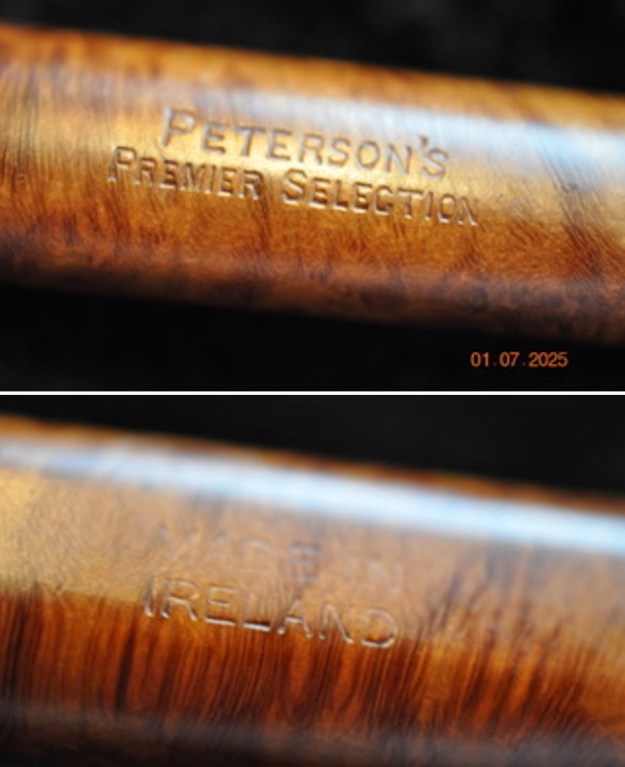
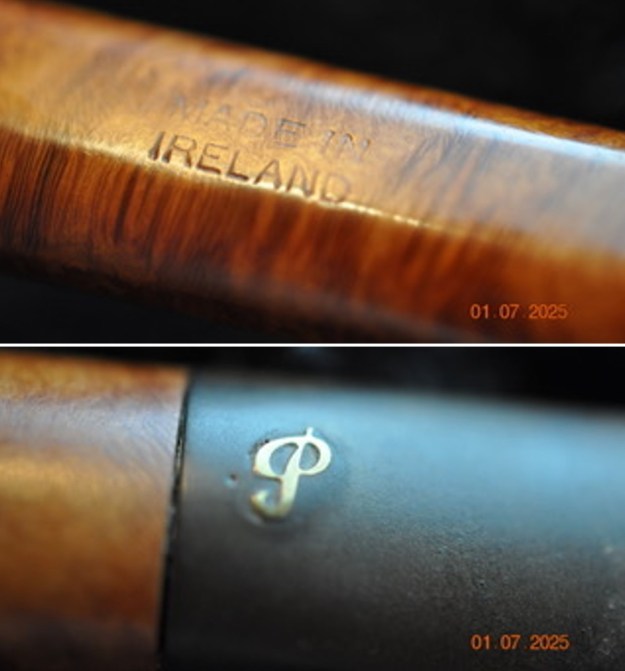
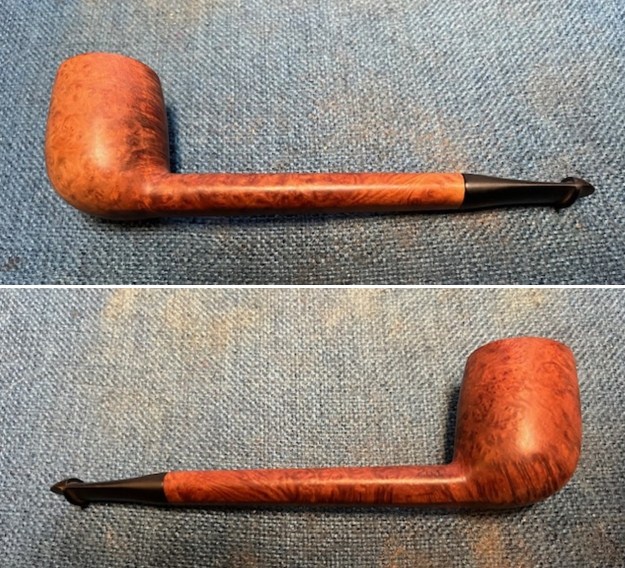
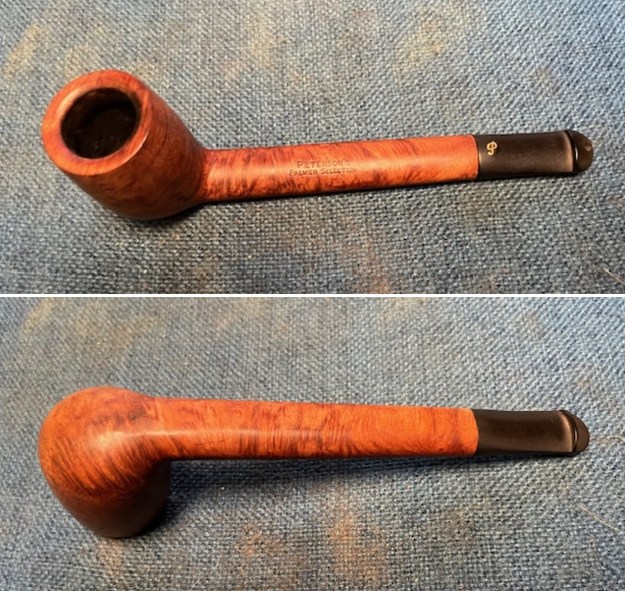
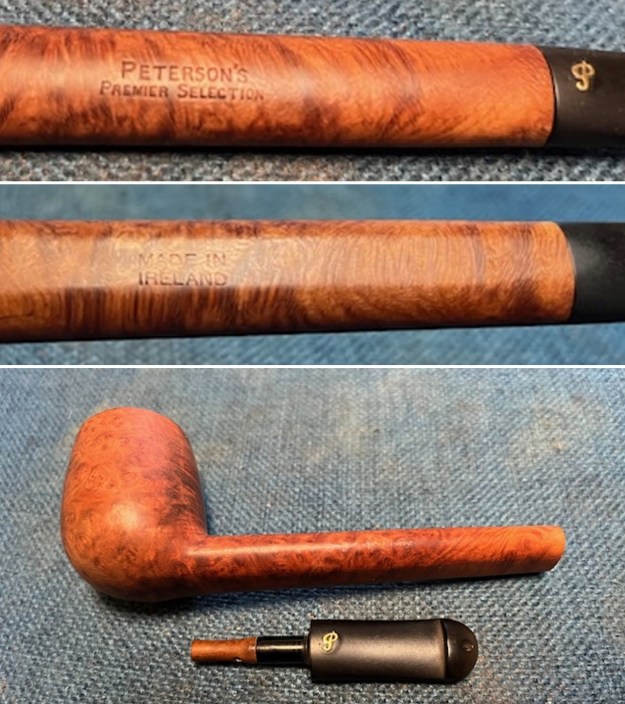
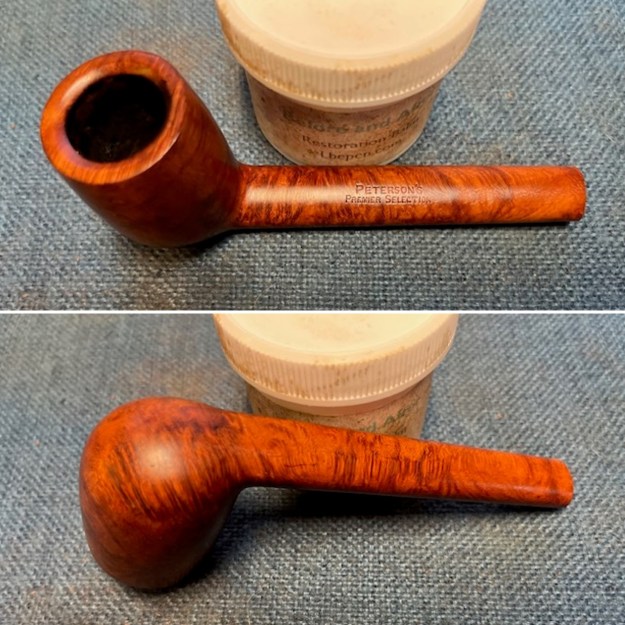
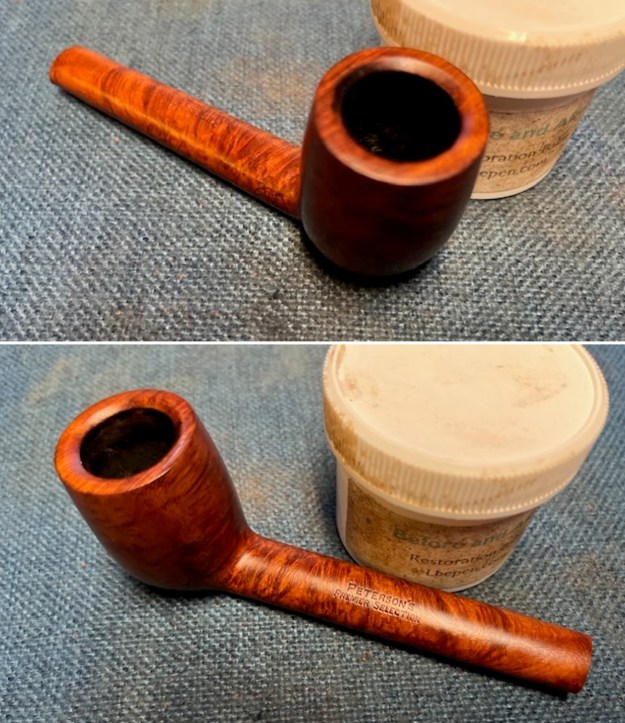
The next pipe on the table is one that we picked up in the lot from a fellow in Odgen, Utah, USA on 12/12/2024. The Peterson’s stamping caught our eye. It is stamped on the topside of the shank and reads Peterson’s [over] Premier Selection. On the underside it is stamped Made in [over] Ireland. On the right side of the shank it is stamped with the shape number 263 near the bowl/shank junction. The shape is a Canadian with a short taper P-lip stem with a bone chimney in the tenon end. The stem also bears a gold coloured brass P logo on the topside. The bowl and shank have a smooth finish that is stained brown that highlights the beautiful grain around the sides. Both go well with the short P-lip taper stem. The bowl is moderately caked and the inner edge and the top show some lava overflow and darkening. The vulcanite stem is dirty, oxidized and there are light tooth marks and chatter on the top and underside ahead of the button. Jeff took some photos of the pipe to show the general condition of the pipe before he started his clean up. Jeff took photos of the rim top and stem to show the general condition of the pipe. The bowl is moderately caked and there was a lava overflow on the rim top and the inner bevelled edge. The stem is oxidized, calcified and grimy with light tooth chatter and marks on both sides ahead of the button. Jeff took a photo of the bone chimney in the end of the tenon. It slightly darkened but is undamaged and should clean up well.Jeff took photos of the bowl sides and heel to show the grain that was around this bowl. The grain is quite beautiful around the sides of the bowl and shank. It is a nice looking pipe. He took photos of the sides of the shank to show the stamping. The stamping is readable in the photos below and is as noted above. He did not photo the shank side showing the shape number but it is very clear. The brass/gold P logo on the top of the stem is tarnished but in good condition. I am including the link to the Pipedia’s article on Peterson pipes. It is a great read in terms of the history of the brand (https://pipedia.org/wiki/Peterson). There was a short note toward the bottom of the page about the series. I quote:
Pipedia (https://pipedia.org/wiki/Peterson) helped me pin down a date that the pipe was made. I knew that the Made in Ireland stamp would give me that. I quote:

As usual when trying to get accurate facts in regard to Peterson history, something will jump up and get in the way. They are missing many of their records. The following is the best that we can do for a guide to the myriad markings during the period 1922 –1949. Prior to 1920 it was rare for a country of origin to be stamped on the pipe, just Peterson’s Dublin on the band. After 1921/22, if it is stamped “MADE IN IRELAND” and the “Made in” is stacked over “Ireland” or “MADE IN EIRE” or several other forms, it was made between 1922 and 1938. A considerable number of Peterson pipes were stamped “Irish Free State”. From about 1930 to 1949, most of the pipes (those which were stamped) were stamped “Made in Ireland”.” If the stamp reads “MADE IN IRELAND” in a circle, the pipe was made between 1939 and 1948. These are all “pre-Republic” pipes. I can tell you that the mark “Irish Free State” was adopted in 1922; and replaced by “Eire” in 1937 and then by “Republic of Ireland” in 1949.

That gave me a potential date for the pipe – it was made between 1922 and 1938 as can be proved by the Made in Ireland stamp on the underside of the shank.

To tune it in even further I turned to “The Peterson Pipe” by Mark Irwin and Gary Malmberg to get some background on the Peterson’s Premier Selection Pipe. On page 310 it had the following information.

Premier on the shank (c. 1953- c. 1981) A high grade line of Classic Range shapes for the US market introduced by Rogers Imports in their 1953 catalog. Offered in smooth or sandblast finish, a P-lip mouthpiece with an aluminum P. The first occurrence of this logo in the ephemera. The Tan Bark Premier appeared in the ’69 Iwan Ries catalog. COM of Made in over Ireland, a PREMIER stamp also appears over SELECTION and will be distinguished by an inset brass P on the mouthpiece. See system for SYSTEM over PREMIER stamp.

** Judging from the Made in Ireland stamp, the pipe I am working on is probably made between 1922-38. The contrary piece of the puzzle is that the second red highlight above dates it to between 1953 and 1981. It has the original stem and is distinguished by the inset brass P on the topside. So once more we enter the realm of Peterson’s mysteries. Anyone have any ideas on this one.

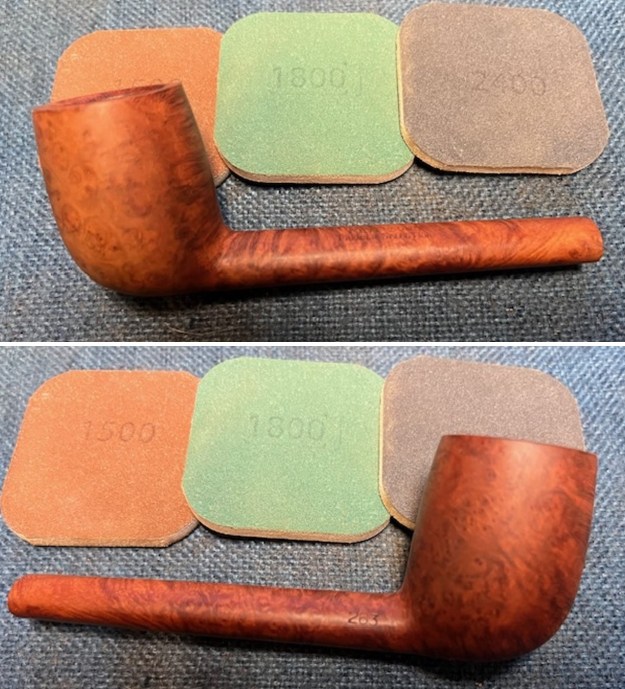
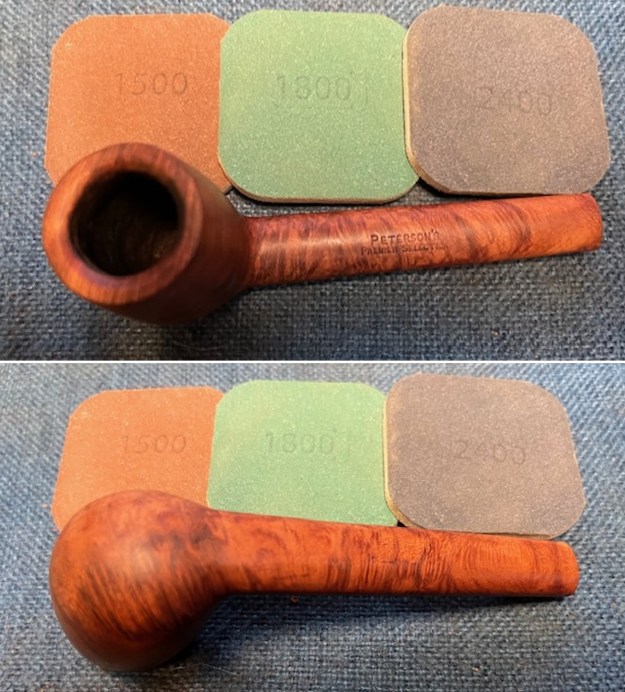
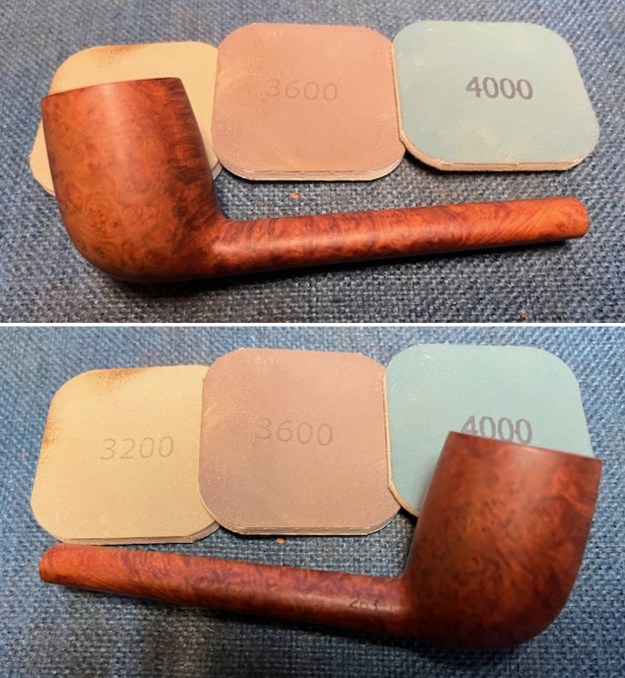
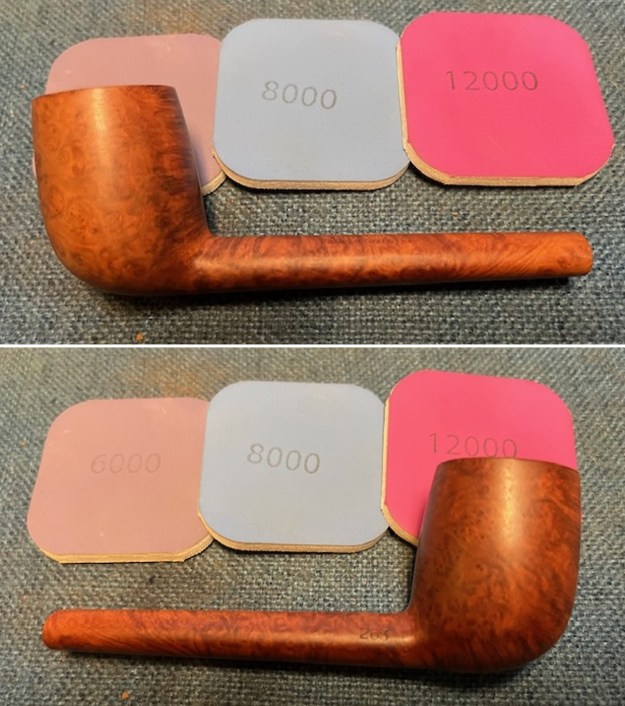
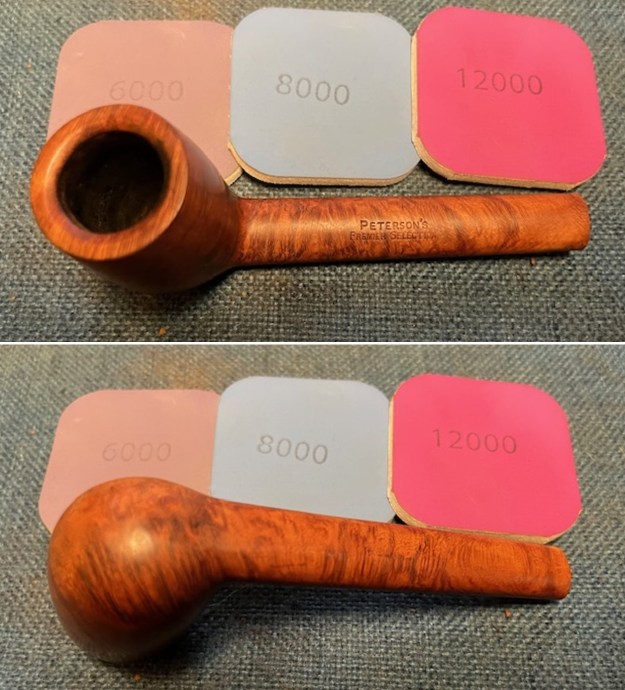
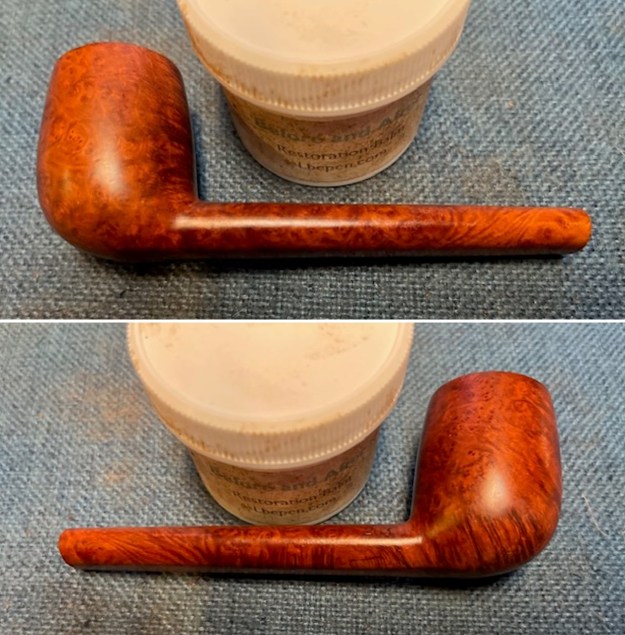
I was utterly surprised when I took this pipe out of the box and compared it to the before photos. Jeff had done a great job cleaning up the pipe as usual. He reamed the pipe with a PipNet reamer and cut back the cake back to the bare briar. He cleaned up the walls with a Savinelli Fitsall Pipe Knife. Surprisingly the walls looked unscathed from the cake. He scrubbed the interior of the bowl and shank with pipe cleaners, shank brushes, cotton swabs and alcohol to remove the tars and oils. He scrubbed the exterior of the pipe with undiluted Murphy’s Oil Soap and a tooth brush to remove the grime from the finish. He worked on the rim top lava and darkening with the soap and tooth brush. He cleaned the inside and outside of the stem and soaked it in Briarville’s Pipe Stem Deoxidizer. He rinsed of the residue and buffed it up with a towel. I took photos of the pipe when it arrived. I took a close-up photo of the rim top to show the condition of the bowl and inner edge of the bowl and the stem. The bowl is clean and the lava on the rim top and edges cleaned up very well. The stem photos show that it also cleaned up very well. The light tooth marks and chatter are very minor.I took a photo of the stamping on the sides of the shank. It is clear and readable as noted above. I removed the stem and took a photo of the parts of the pipe. It is a pretty little pipe.I polished the bowl with micromesh sanding pads – dry sanding with 1500-12000 grit sanding pads. I wiped it down between pads with a damp cloth. It really began to take on a deep shine. The exterior of the bowl looks better after polishing. I worked some Before & After Restoration Balm into the briar with my finger tips. I let it sit on the bowl for 10 minutes and then buffed it off with a paper towel and soft cloth. The product is a great addition to the restoration work. It enlivens, enriches and protects the briar while giving it a deep glow. It is a product I use on every pipe I restore. I polished the stem with micromesh sanding pads – dry sanding with 1500-12000 grit pads. I wiped the stem down after each sanding pad with Obsidian Oil to further protect the vulcanite surface. I finished the polishing with Before & After Pipe Stem Polish – Fine and Extra Fine. I wiped the stem down a final time with Obsidian Oil and a cloth. It really looks very good. I am excited to finish this beautifully grained, Peterson’s Premier Selection Made in Ireland 263 Canadian. I put the pipe back together and buffed it with Blue Diamond on the buffing wheel. I gave the bowl and the stem multiple coats of carnauba wax. I hand buffed the pipe with a clean buffing pad to raise the shine. It is fun to see what the polished bowl looks like with beautiful mixed grain all around it. The Canadian looks great with the black vulcanite stem. This smooth Classic Peterson’s Premier Selection Canadian is great looking and the pipe feels great in my hand. It is light and well balanced. Have a look at it with the photos below. The dimensions are Length: 5 ¾ inches, Height: 1 ½ inches, Outside diameter of the bowl: 1 ¼ inches, Chamber diameter: ¾ of an inch. The weight of the pipe is 38 grams/1.34 ounces. It turned out to be a beautiful pipe. I will be putting it on the rebornpipes store shortly in the Irish Pipe Makers Section if you are interested in it. Thanks for walking through the restoration with me as I worked over this pipe. Thanks to each of you who are reading this blog.

Restoring a Zettervig Kolding Bamboo Shank Scoop


By Steve Laug

The next pipe on the table is one that we picked up in the lot from our contact in Copenhagen, Denmark on 02/16/2023. The shape/size, grain, finish and the bamboo caught our eye. It is stamped on the underside of the shank and reads Zettervig [over] Kolding. The shape is a scoop with a two knuckle bamboo shank extension. It is capped on both ends with a black acrylic spacer. The bowl has a smooth finish that is stained reddish/brown that highlights the beautiful grain around the bowl and short shank. Both go well with the acrylic saddle stem. The bowl is conical and the airway enters at the bottom. It appears to be moderately caked and the inner edge and the top show some lava overflow and damage. The acrylic stem is dirty and there are light tooth marks and chatter on the top and underside ahead of the button. There is no stamping or logos on the stem. Jeff took some photos of the pipe to show the general condition of the pipe before he started his clean up. He took some photos of the rim top and bowl from various angles to give me a clear picture of the condition of the rim top and bowl. You can see the lava and damage on the rim top and inner edge of the bowl. The cake is visible as well but is thicker on the top half of the bowl. He included photos that show the top and underside of the stem. It is as described above. Jeff took some photos of the sides and heel of the bowl to show the condition of the finish on the pipe. The photos showed some great grain around the bowl and shank under the dirt and grime of use. It is a great looking piece of briar. He took a photo of the stamping on the underside of the shank. The stamping was clear and readable as noted above.I turned to Pipedia to see what I could find out about this stamping. It is a very short article and I have included the link and the article in its totality (https://pipedia.org/wiki/Zettervig).

In the 1960s and into the early 1970s Ole Zettervig had a shop in Copenhagen, Denmark where he was carving high quality pipes equal to Stanwell, Jørgen Larsen, Anne Julie, Bjørn Thurmann, Bang and others. These early pipes were marked “Copenhagen” and are very collectible. He sold his shop at some point in the 1970s and moved to Kolding and continued to produce pipes as a hobby, but the quality of briar and workmanship is said to not equal the early production. The later pipes he now marked as Kobenhaven rather than Copenhagen, and these were sold by Ole at flea markets throughout Europe.

The stamping on the pipe told me it came from the shop that Ole started in Kolding and was one that he had produced as a hobby. However, that being said it is a beautiful pipe nonetheless.

Armed with that information I turned to work on the pipe itself. Jeff had done a great job cleaning up the pipe as usual. He cleaned up the inside of the bowl with a PipNet reamer and a Savinelli Fitsall Pipe Knife. The rim top and the inner edge of the bowl look much better. The damage on the inner edge and top are visible. The bowl walls looked very good. The conical bowl is clean. He scrubbed the interior of the bowl and shank with pipe cleaners, shank brushes, cotton swabs and alcohol to remove the tars and oils. He scrubbed the exterior of the pipe with undiluted Murphy’s Oil Soap and a tooth brush to remove the grime from the finish. He worked on the rim top lava and darkening with the soap and tooth brush. He scrubbed the inside of the stem with alcohol and pipe cleaners. He scrubbed the exterior with Soft Scrub and then soaked it in Briarville’s Pipe Stem Deoxidizer. He washed it off with warm water to remove the deoxidizer. The stem looked good with only light chatter on both sides ahead of the button. I took photos of the pipe when I received it before I started working on it. I took close up photos of the bowl, rim top and stem to show how clean the pipe was. The bowl was clean and the rim top and the inner edge show some damage. The inner edge is rough and the top has some marking that need to be cleaned up. The stem was clean and the light tooth marks and chatter can be seen in the photos.I took a photo of the stamping on the underside of the shank. It is very clear and readable for the most part. The last letters of the Zettervig are faint as are those of Kolding. However, it clearly read as noted above. I also removed the stem from the shank and took photos of the pipe to show the look of the parts.I started my work on the pipe sanding the bowl and rim top with 320-3500 grit sanding pads. I wiped the bowl down after each pad with a damp cloth. The pipe cleaned up very well with the sanding and the grain began to stand out. I polished the briar with micromesh sanding pads – dry sanding with 1500-12000 grit pads. I wiped the bowl down between pads and was happy with the rich shine. The exterior of the bowl look better after the polishing with micromesh. I worked some Before & After Restoration Balm into the briar and the bamboo with my finger tips. I let it sit on the bowl for 10 minutes and then buffed it off with a paper towel and soft cloth. The product is a great addition to the restoration work. It enlivens, enriches and protects the briar while giving it a deep glow. It is a product I use on every pipe I restore. It set the bowl aside and turned to the stem. I really like Zettervig’s stems as they are comfortable and thin to my liking – not chunky as can often be the case with acrylic stems. I polished it with micromesh sanding pads – dry sanding with 1500-12000 grit pads and wiping the surface down with Obsidian Oil after each sanding pad. It is really shining. I polished it further with Before & After Stem Polish – both Fine and Extra Fine. I gave it another coat of Obsidian Oil to finish this step. I put the Zettervig Kolding Bamboo Shank Scoop back together and worked the pipe over on the buffing wheel using Blue Diamond to lightly polish the stem. I buffed the bowl with a light touch so as not to get any of the buffing compounds in the grooves of the bamboo. I buffed the stem to raise the gloss on the acrylic. I gave the bowl and the stem multiple coats of carnauba wax. I buffed the entire pipe with a clean buffing pad to raise the shine. I hand buffed it with a microfiber cloth to deepen the shine. The finished Zettervig Bamboo Scoop looked beautiful with the briar, the bamboo and the black of the acrylic stem. The dimensions of the pipe are: Length: 6 inches, Height: 1 ¾ inches, Outside Diameter: 1 ¼ inches, Diameter of the chamber: ¾ inches. The weight of the pipe is 1.20 ounces/34 grams. This on will be joining the other Danish Made pipes in the Danish Pipe Makers Section of the rebornpipes store. If you want to add it to your collection let me know. Thanks for walking through the restoration with me.

As always, I encourage your questions and comments as you read the blog. Thanks to each of you who are reading this blog. Remember we are not pipe owners; we are pipe men and women who hold our pipes in trust until they pass on into the trust of those who follow us.

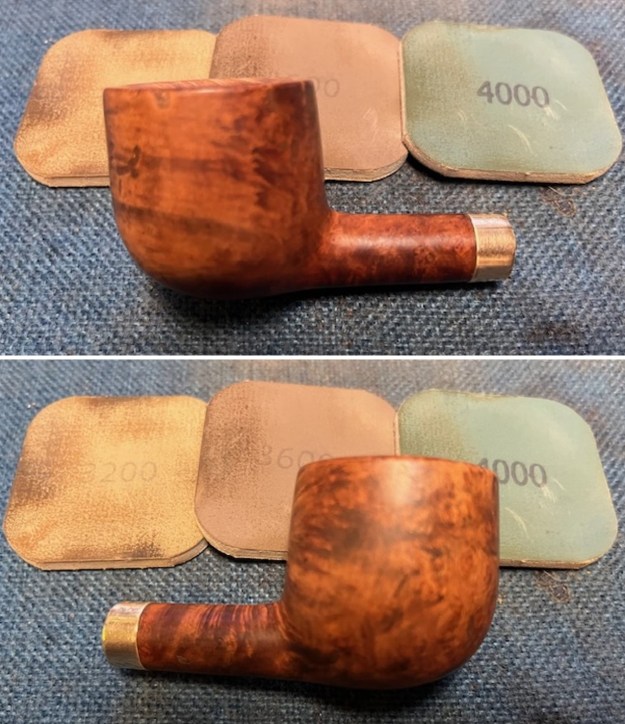
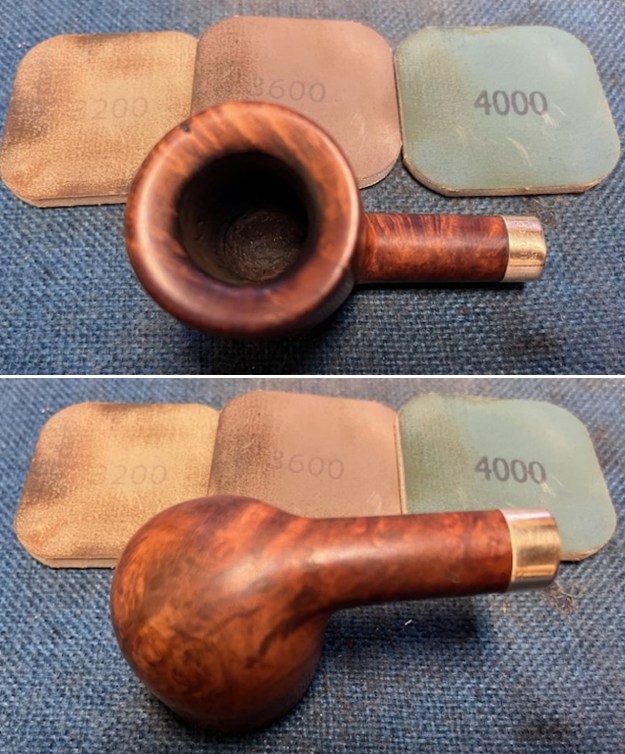
Restoring a 1979 Comoy’s Virgin Straight Grain 66 Large Liverpool with a silver band


by Steve Laug

The next pipe on the table is one that we picked up in the lot from a good friend in Barrington, Rhode Island, USA on 08/22/2024. The smooth finish on this English made pipe and the Comoy’s stamping are what caught our eye. It is stamped on the left side of the shank and reads Comoy’s [over] Virgin [over] Straight Grain. On the right side it is Made in London in a circle [over] England. It is stamped with the shape number 66 near the bowl shank joint. There is an uppercase G on the underside of the shank ahead of the silver band. It has a classic Walnut Brown stain on the smooth finish that is a stark contrast to ornate silver band and vulcanite stem. The silver band gives the shank a length that added to the taper stem makes for a Liverpool shaped pipe. The bowl was lightly caked, though it also seems to have been recently reamed. The inner edge and the top look good though there is some darkening and some spots of lava on the top. The stem was lightly oxidized and had tooth chatter on both sides ahead of the button. The Comoy’s C logo looks to be one piece and was inset on the left side of the stem and looks to be in good condition. Jeff took some photos of the pipe to show the general condition of the pipe before he started his clean up. He took some photos of the rim top and bowl from various angles to give me a clear picture of the condition of the rim top and bowl. It is quite clean and the inside of the bowl is lightly caked. He included photos that show the top and underside of the stem. It is as described above. Jeff took some photos of the sides and heel of the bowl to show the condition of the finish on the pipe. The photos showed some great grain around the bowl and shank even with the grime in the finish. It is a great looking piece of briar. He took photos of the stamping on the sides of the shank. It was clear and readable as noted above. He did not capture a photo of the G stamp on the underside of the shank. He also captured the stamping on the silver band on the shank end. It is also clear. The silver is hallmarked which should help with dating this pipe. I looked on Pipephil’s site for information on the Comoy’s Virgin Straight Grain line and found the following information on pipes stamped Virgin Briar. I have included a screen capture below (http://www.pipephil.eu/logos/en/logo-comoy.html). It is interesting that the Virgin Briar originally came out in 1933 and by 1965 was no longer listed in the Comoy’s catalogues. It is different from the one I have as it is not stamped Virgin Briar and the Comoy’s is not arched but the C on the stem is similar in terms of thinness.I also went to the the Comoy’s article on Pipedia and found nothing in the great historical article that was pertinent. I did find a shape chart that listed the 66 as a Large Liverpool. I have included a screen capture of the page that included that shape number. I have outlined it in red in the photo included below(https://pipedia.org/images/d/d7/Shape_Chart_1975_1.jpg).I turned to the article on Pipedia about dating Comoy’s pipes but the style of the stamping (https://pipedia.org/index.php?title=Comoy%27s_Dating_Guide#1917_to_the_end_of_the_1930.27s_.28at_least_1938.29). I have included the section in the screen capture below that date this pipe to the 1930s.

From the 1950s – Now the Comoy’s stamp can be found in three variants:

  1. A simple block-letter style without serifs but with the C larger than the other letters and the apostrophe before the “S”.
  2. A return to the slightly more fancy block letters with serifs and the apostrophe. (It seems that some grades carried different stamps, or at least that the stamping changed in different years for some grades.)
  3. A simple block-letter style without serifs and without the apostrophe and with the “C” the same size as the rest of the letters. This stamp was probably not used very long.
  4. A simple block-letter style without serifs but with the apostrophe before the “S” and with the “C” the same size as the rest of the letter

Made in London England

Appears in two versions. This is again stamped in a circle with “MADE” at the top, “IN” in the middle, and “LONDON” at the bottom, with “ENGLAND” in a straight line beneath. It can be assumed that this stamp was first used in the export drive in the early 1950s. On a Bulldog Sandblast from the early 50s the Comoy name no. 2 above was used together with “MADE IN LONDON” over “ENGLAND”. There are no known examples of pre-WW II Comoy’s stamped in this way. The second version is the same as above but in a “rugby ball ” shape. This shape is verified on Comoy´s “Extraordinaire” pipes.

 That article gave me some helpful information. I knew that the pipe the stamping on the shank of the pipe dated as post 1950. The 1950s stamping of the Comoy’s stamp was as noted above. The 66 shape number was tied to a Large Liverpool with a taper stem. I still needed to check on the Silver hallmarks but so far I had some progress.

Now to look at the silver hallmarks. The hallmarking system in England comprises a series of symbols and numbers, including letters, numbers, and symbols that indicate the silver’s purity, the date of manufacture, and the location where the item was hallmarked. Each hallmark includes several symbols, such as the maker’s mark, standard mark, assay office mark, and date letter. The first on this silver band is the Rampant Lion which signifies the quality of the Sterling Silver in the band. The second is a leopard’s head which signifies the city of London, England as the location of the assay office. The third hallmark is the letter E in an italicized cursive style script that helps establish the date of the silver. The HC in the box above the hallmarks is the silversmith’s initials and in this case are those of Henri Comoy.

I turned to a blog on Historic Hallmarks – London 1678-2019 to determine the date of this pipe (https://huntvintage.co/blog/how-to-identify-silver-marks). I drew a red box around the date on this one – it is from 1979 as the hallmark matches the style of the E below.Since Jeff always follows the same pattern of work in his cleanup we do not include photos but rather just a simple summary. Jeff reamed the bowl with a PipNet pipe reamer and followed up with a Savinelli Fitsall pipe knife to remove the cake. He scrubbed out the mortise and the airway in the shank and the stem with alcohol, cotton swabs and pipe cleaners. He scrubbed the exterior of the bowl, rim, shank and stem with a tooth brush and Murphy’s Oil Soap to remove the oils and tars on the rim and the grime on the finish of the bowl. He rinsed it under running water. He dried it off with a soft cloth. He was able to remove the lava build up on the rim top and you could see the damages to the top and edges of the rim. I think this pipe may well been before we worked with Mark Hoover’s Before & After Deoxidizer so he cleaned the internals and externals. The stem was clean but lightly oxidized. I took photos of what the pipe looked like when I brought to my worktable. I took close up photos of the bowl, rim top and stem to show how clean the pipe was. The bowl was clean and the rim top and the inner edge look beautiful. The stem was clean and the tooth marks on the topside are visible. The chatter is light and hardly visible.I took photos of the stamping on the sides of the shank. It is very clear and readable and read as noted above. I also removed the stem from the shank and took photos of the pipe to show the look of the parts.I polished the bowl and shank with 1500-12000 grit micromesh sanding pad – dry sanding it with the pads. I wiped the bowl down with a damp cloth after each pad. It began to take on a deep shine. The exterior of the bowl look better after sanding. I worked some Before & After Restoration Balm into the briar with my finger tips. I let it sit on the bowl for 10 minutes and then buffed it off with a paper towel and soft cloth. The product is a great addition to the restoration work. It enlivens, enriches and protects the briar while giving it a deep glow. It is a product I use on every pipe I restore. I polished the silver band with a jeweller’s cloth to remove the tarnish and protect the silver from further tarnishing. It really took on a rich shine. I set the bowl aside and turned to the stem. I sanded the it with 320-3500 grit sanding pads and wiped the stem down after each pad with some Obsidian Oil on a cloth. The shine is coming back beautifully.I polished it with micromesh sanding pads – dry sanding with 1500-12000 grit pads and wiping the surface down with Obsidian Oil after each sanding pad. It is really shining. I polished it further with Before & After Stem Polish – both Fine and Extra Fine. I gave it another coat of Obsidian Oil to finish this step. This Comoy’s Virgin Straight Grain 66 Liverpool with a vulcanite taper stem is a great looking pipe now that it has been restored. The beautifully grained finish really works well with the shape and the polished finish is stunning. I put the stem back on the bowl and carefully buffed the bowl and the stem with Blue Diamond on the buffing wheel. I gave the bowl and the stem multiple coats of carnauba wax on the buffing wheel and followed that by buffing the entire pipe with a clean buffing pad. I hand buffed the pipe with a microfiber cloth to deepen the shine. I wiped down the Sterling Silver band with a jeweller’s cloth to protect and polish it. The finished 1979 Comoy’s Virgin Straight Grain Liverpool fits nicely in the hand and feels great. Give the finished pipe a look in the photos below. The dimensions of the pipe are Length: 6 inches, Height: 1 ¾ inches, Outside diameter of the bowl: 1 ¼ inches, Chamber diameter: ¾ of an inch. The weight of the pipe is 36 grams /1.23 ounces. I will be putting it on the rebornpipes store in the British Pipe Makers Section shortly. Let me know via email or a message if you are interested in adding this pipe to your collection.

As always, I encourage your questions and comments as you read the blog. Thanks to each of you who are reading this blog. Remember we are not pipe owners; we are pipe men and women who hold our pipes in trust until they pass on into the trust of those who follow us.