Tag Archives: Brigham Sportsman Pipe

Cleaning Up a Fascinating Brigham Sportsman/Norseman Freehand


by Kenneth Lieblich

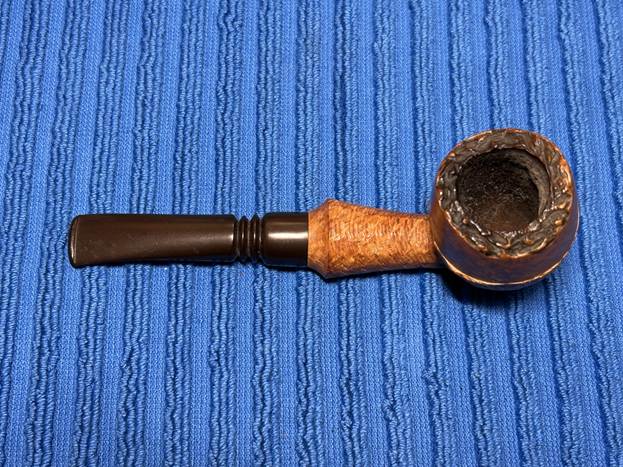
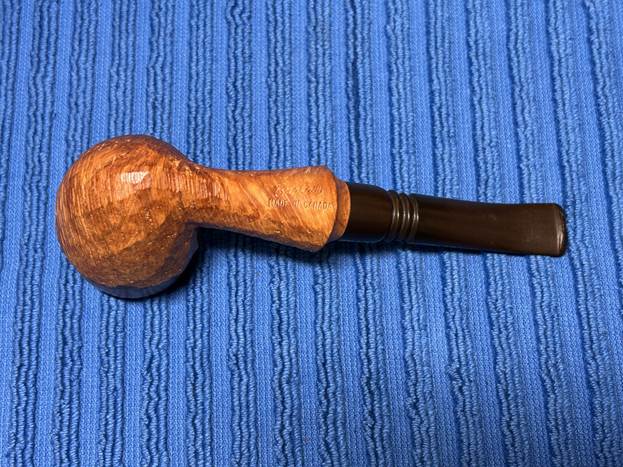
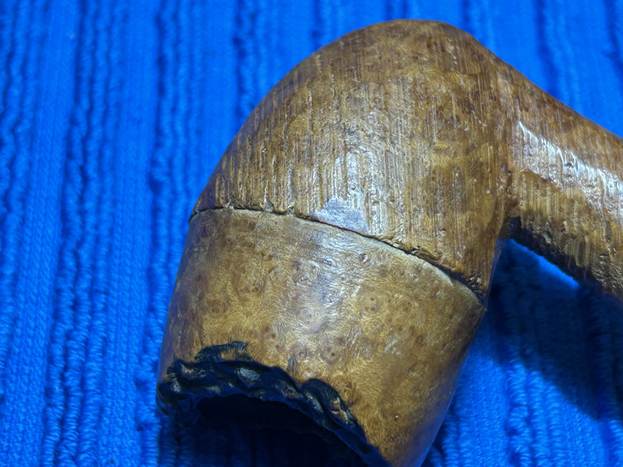
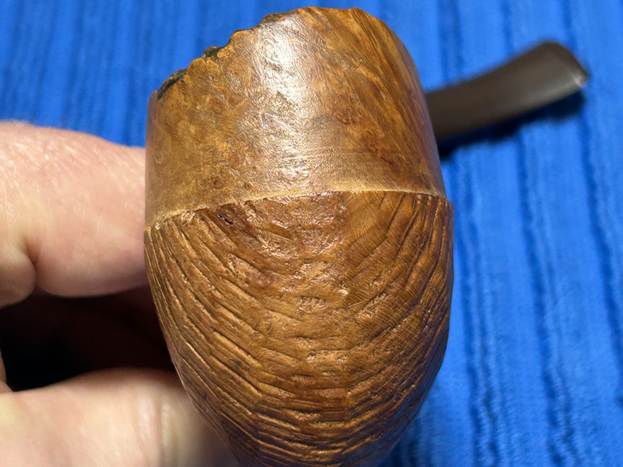
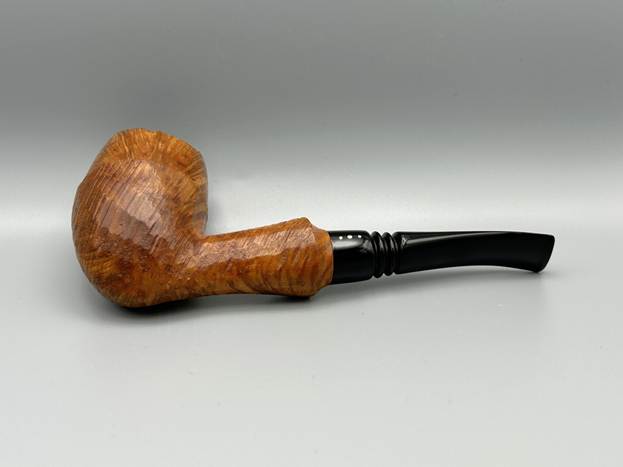
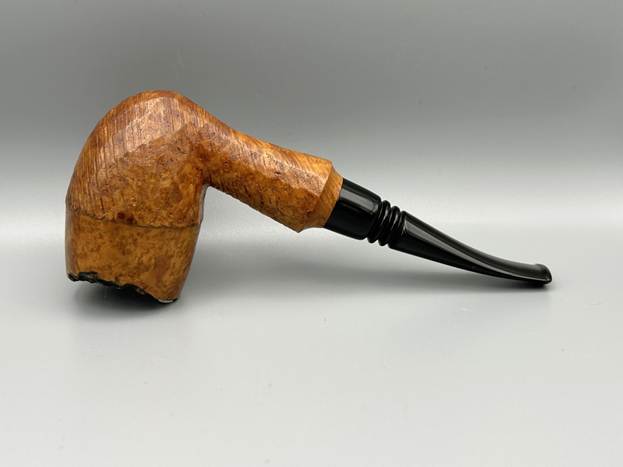
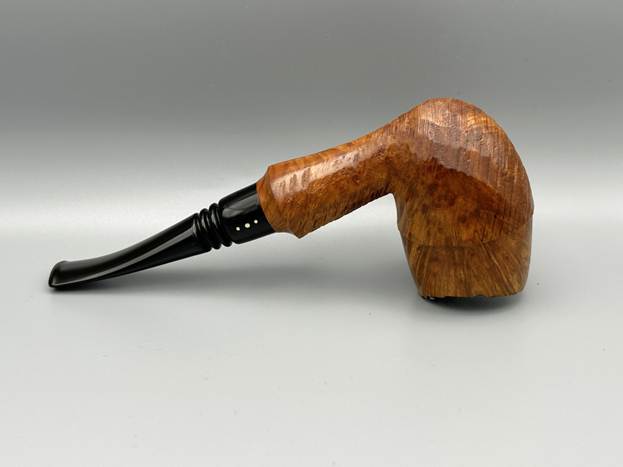
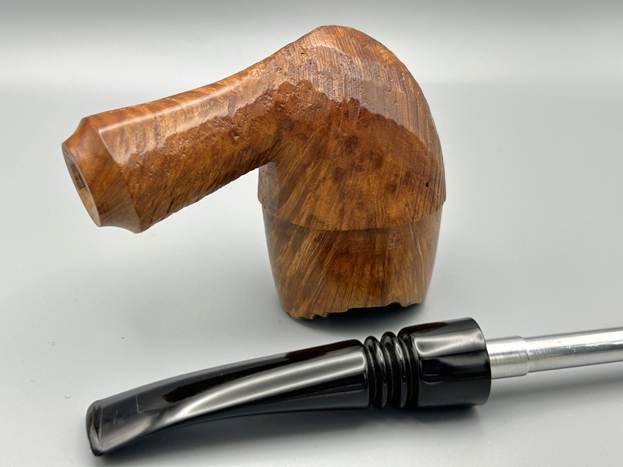
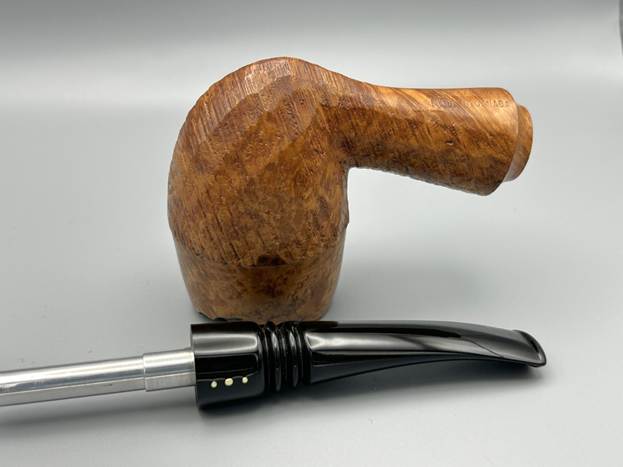
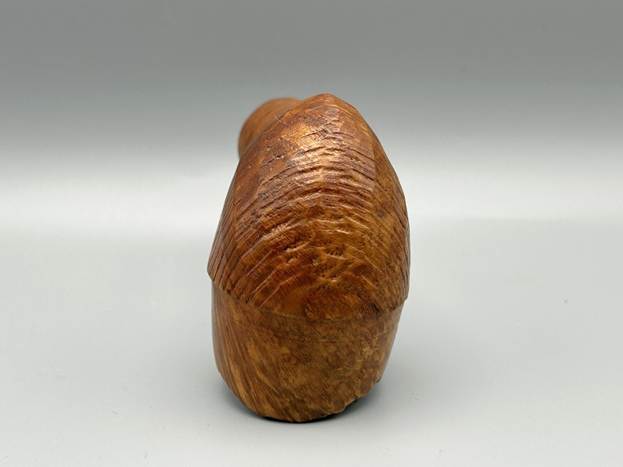
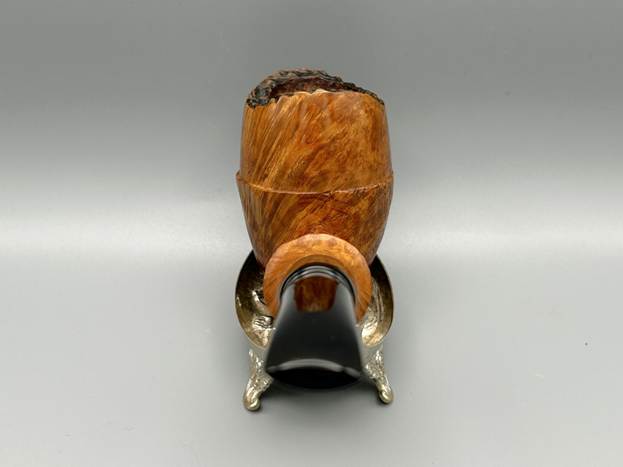
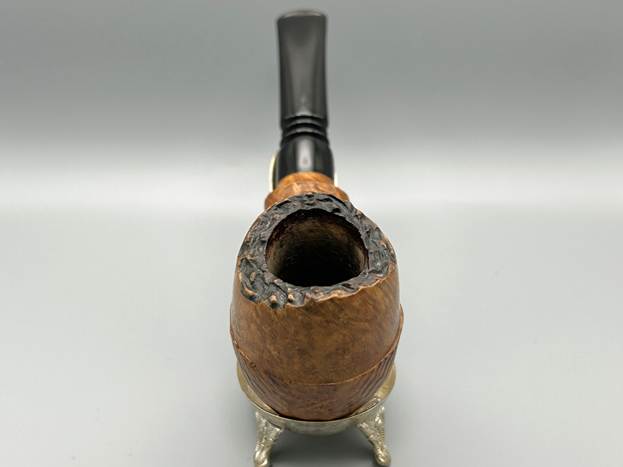
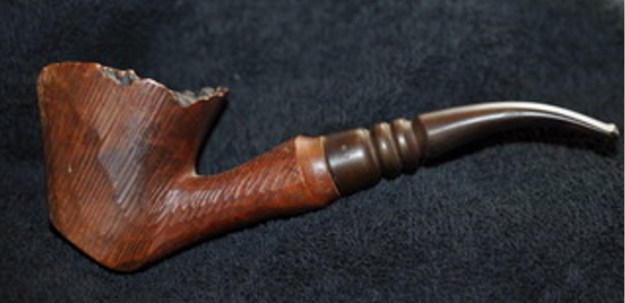
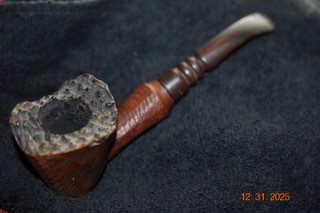
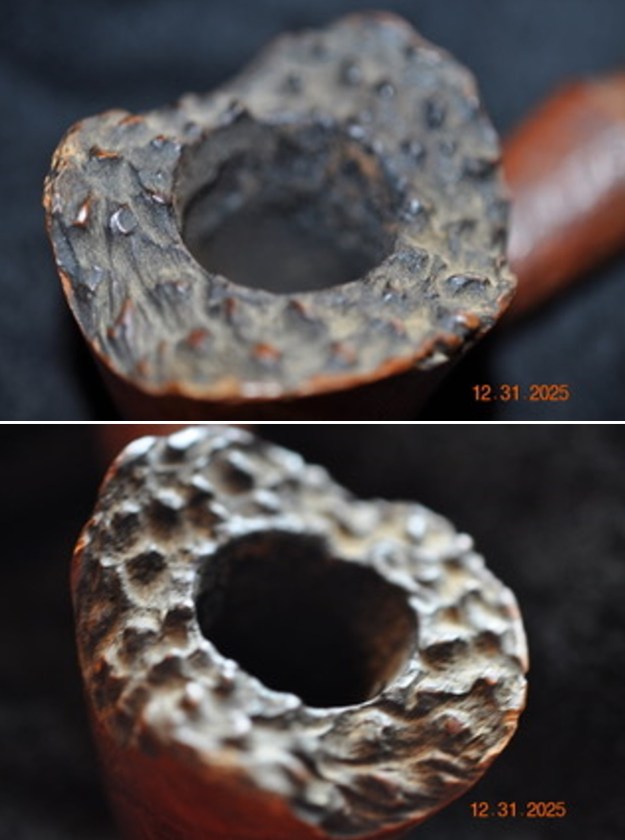
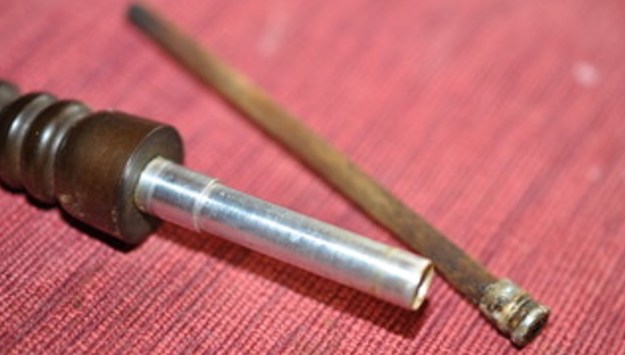
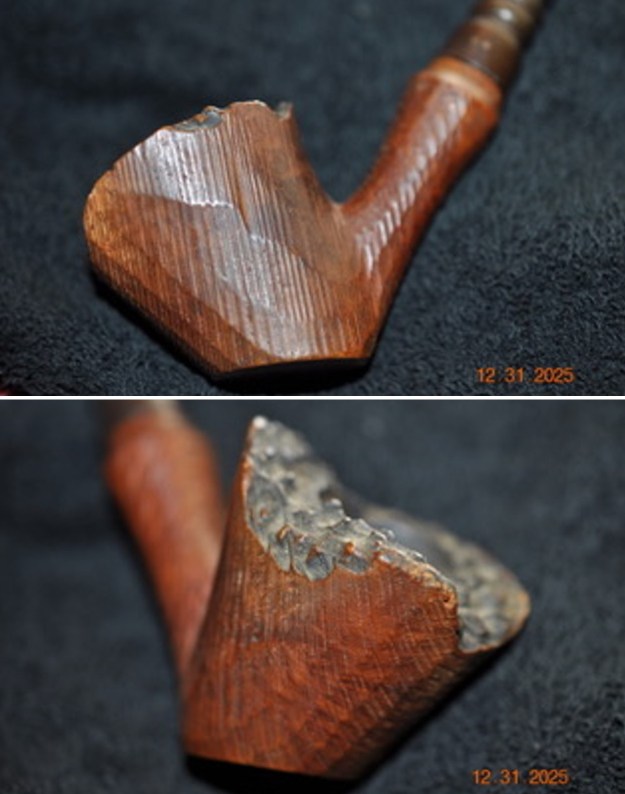
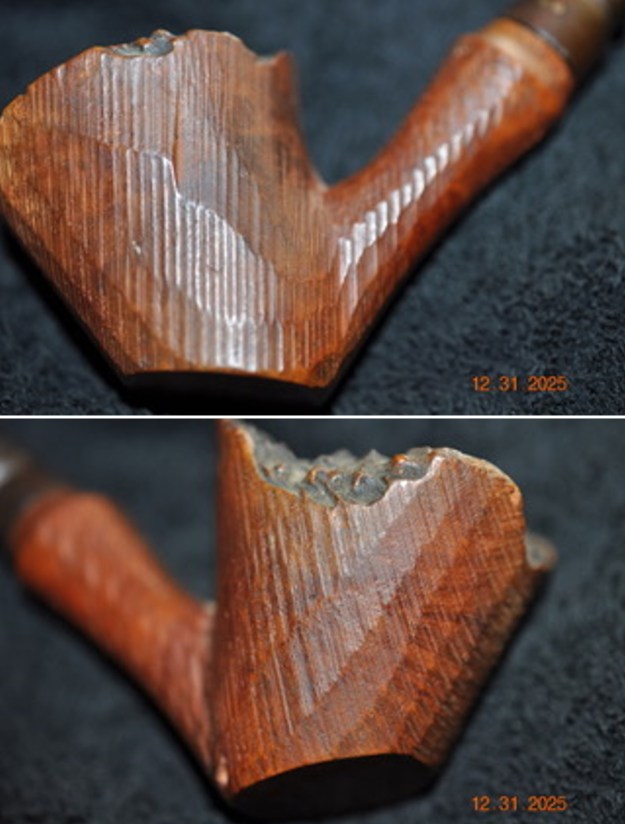
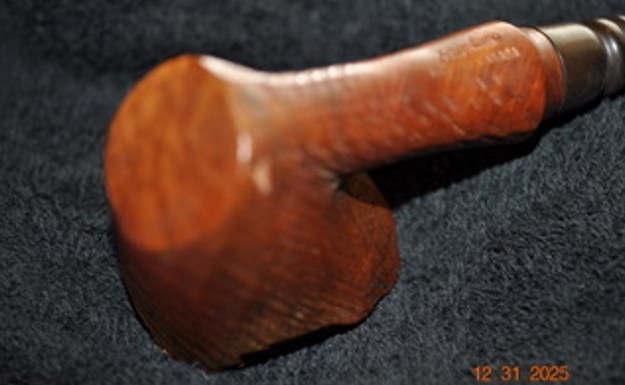
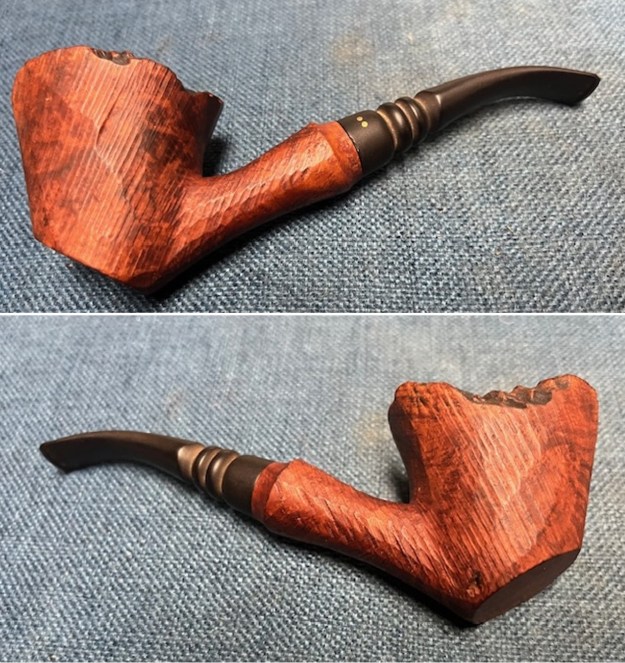
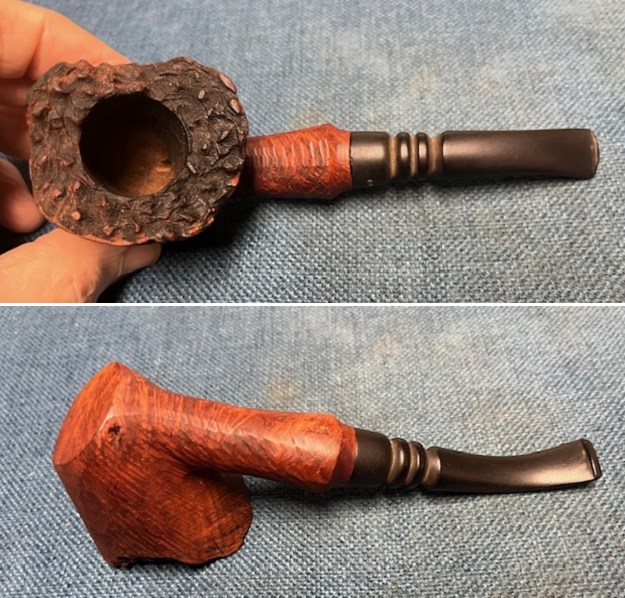
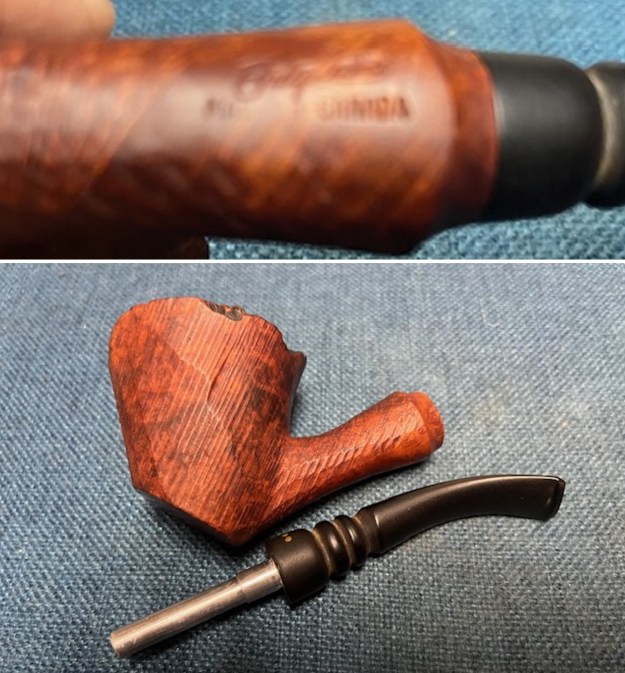
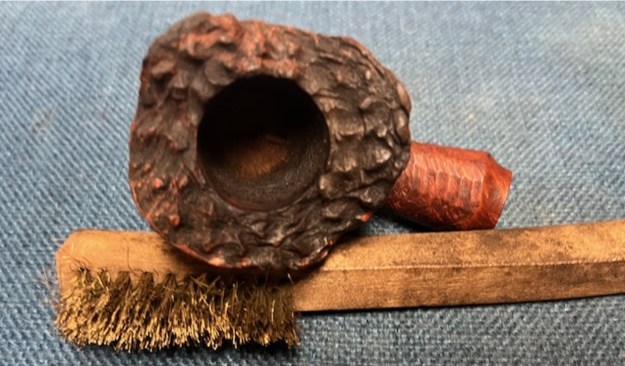
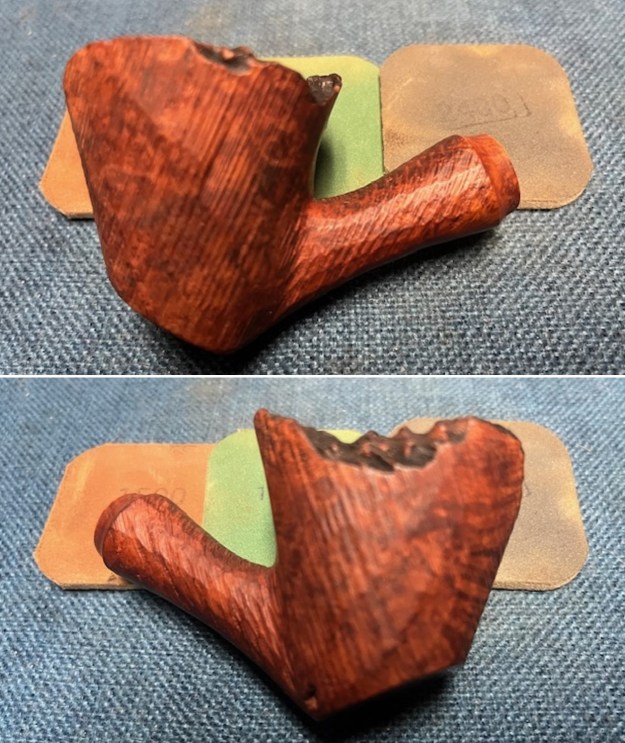
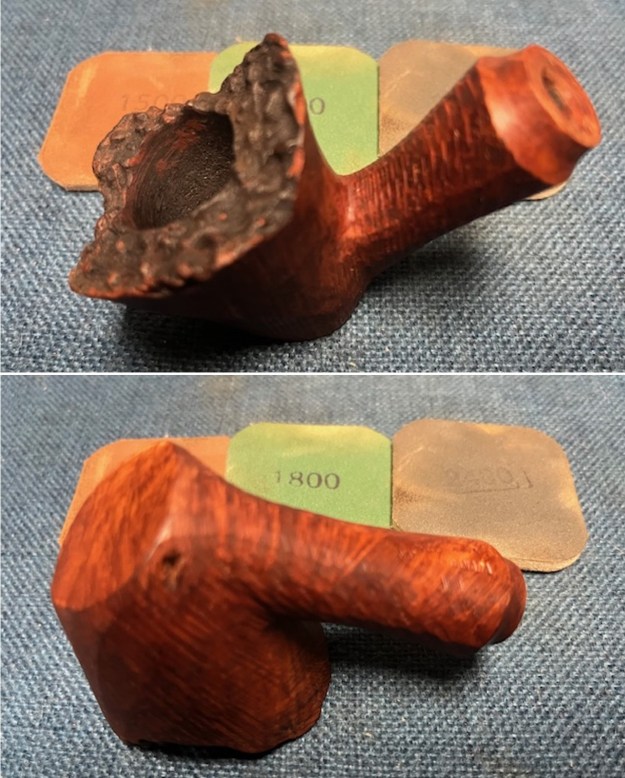
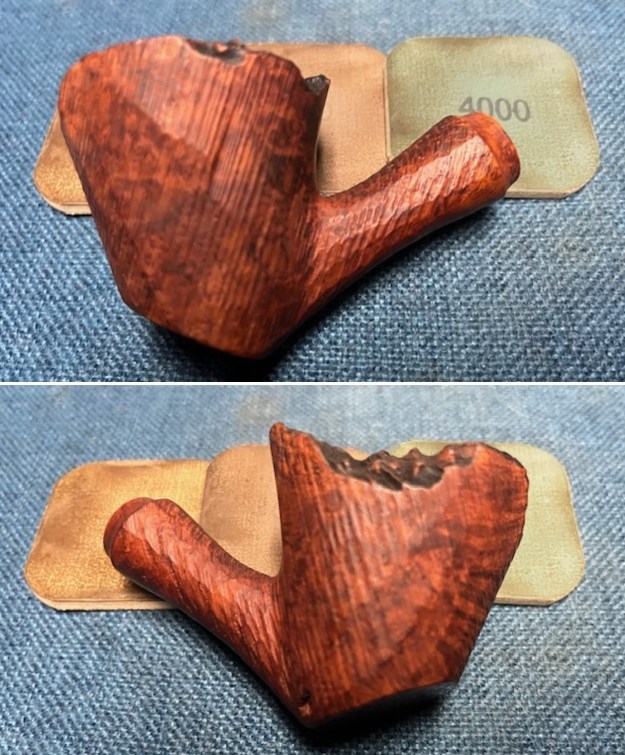
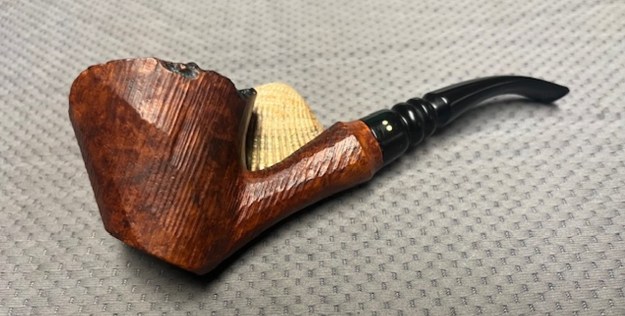
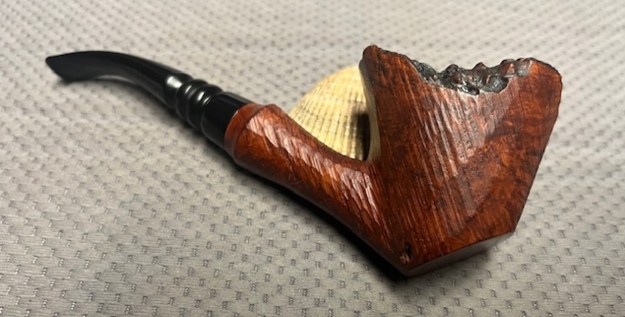
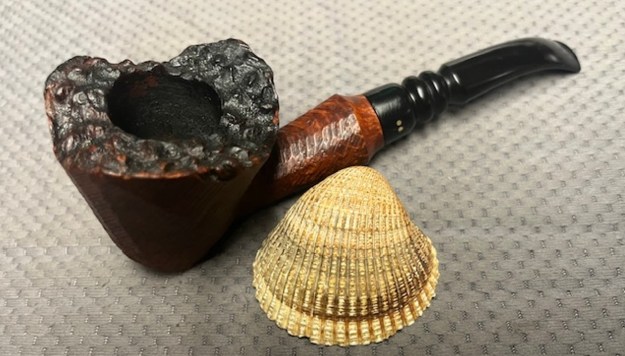
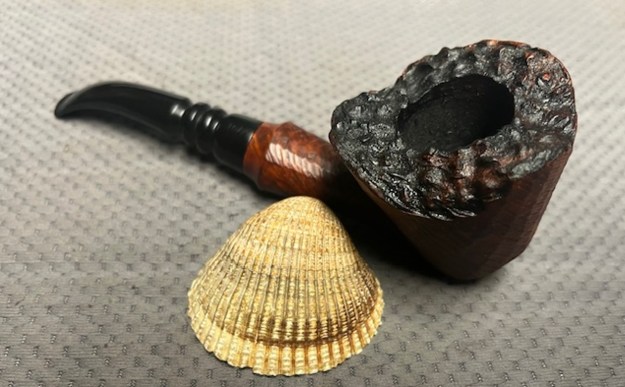
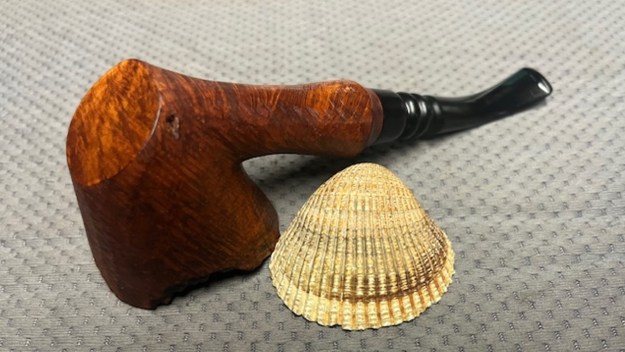
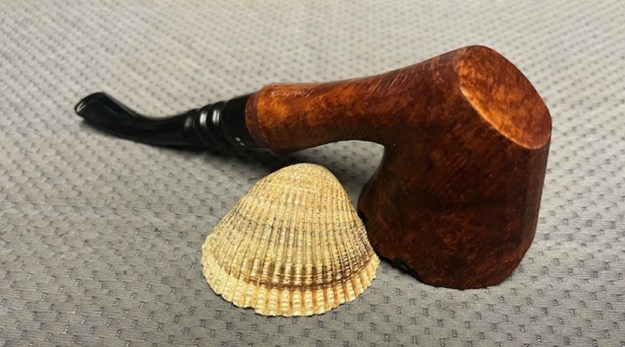
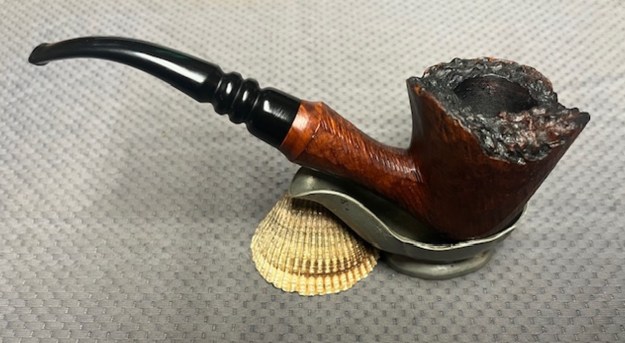
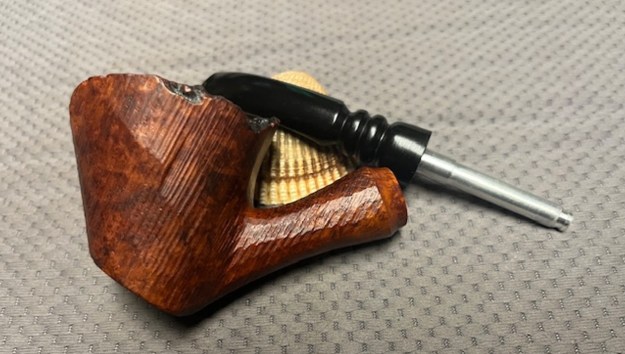
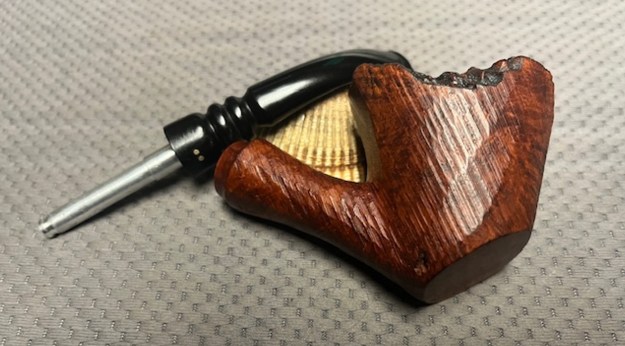
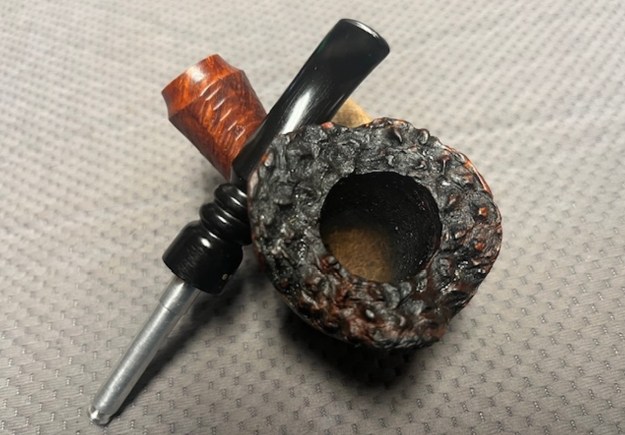
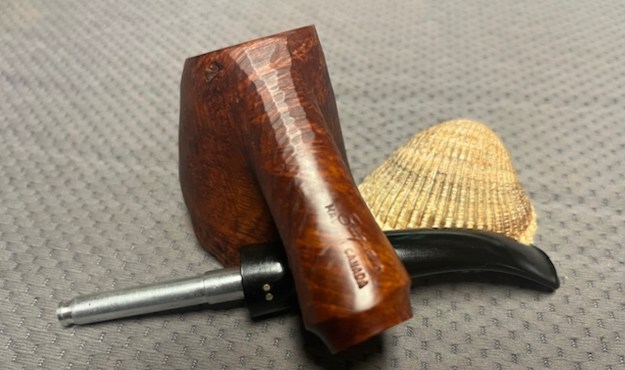
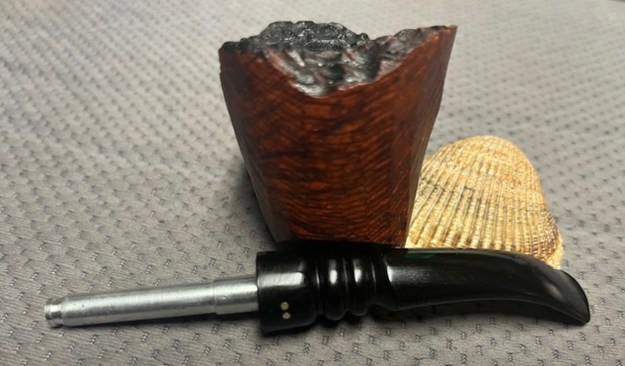
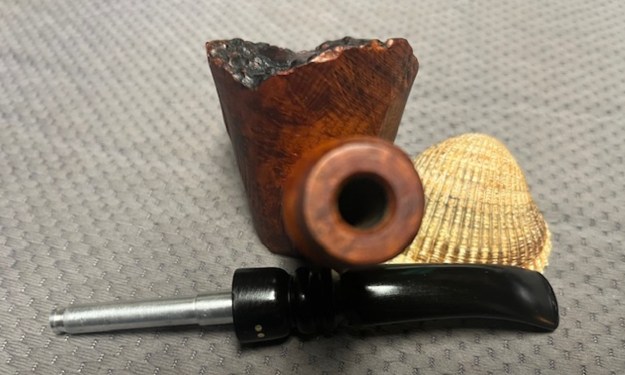
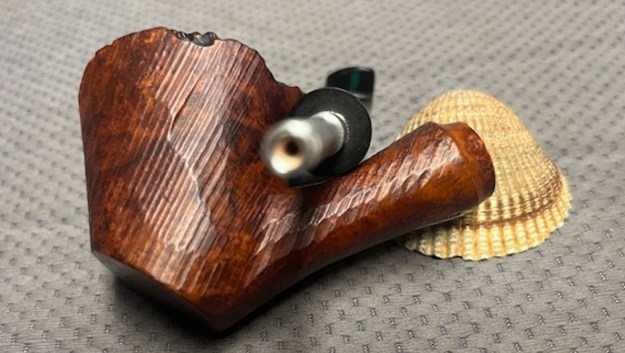
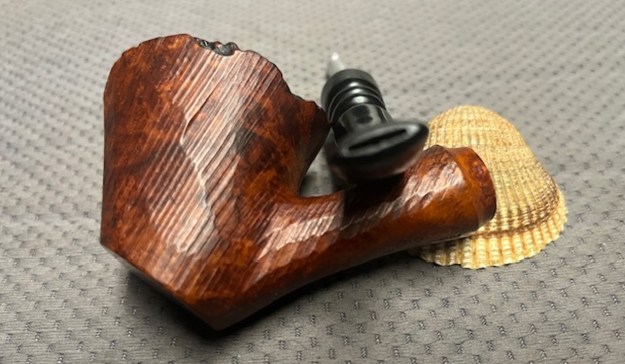
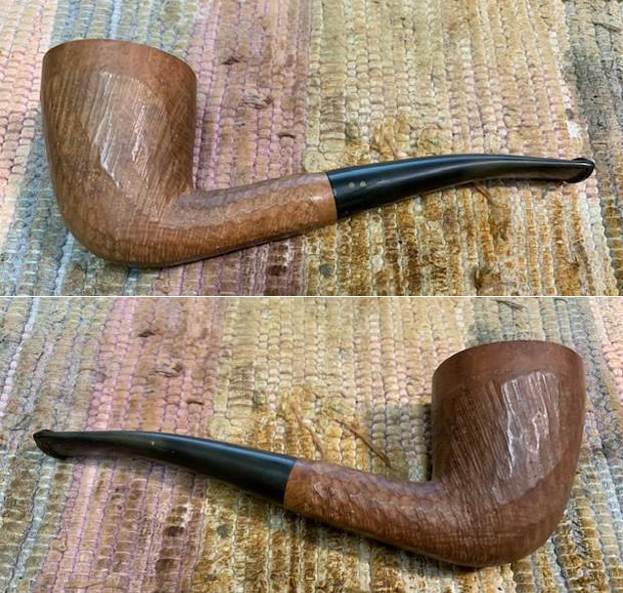
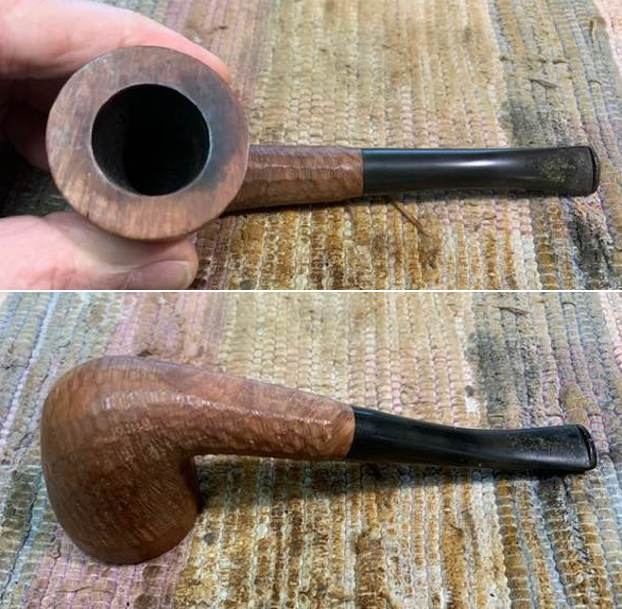
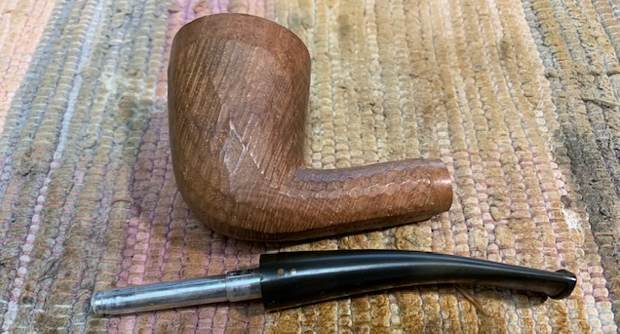
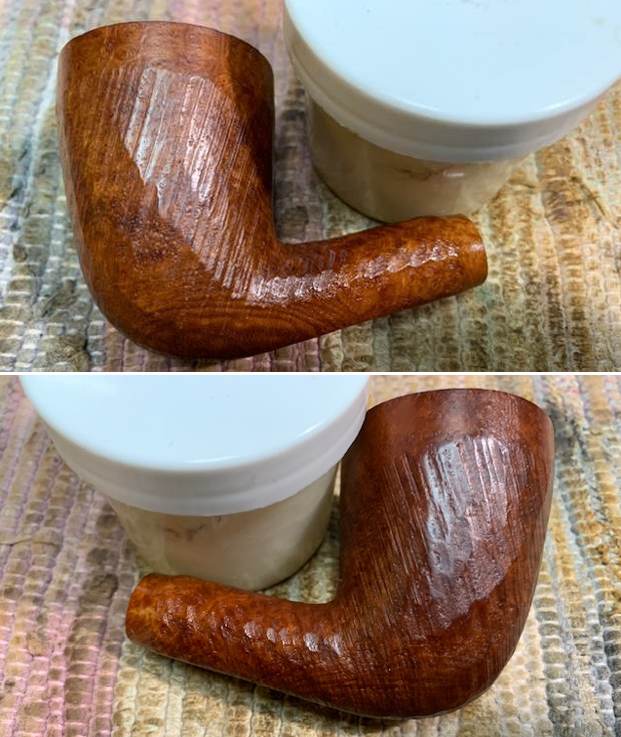
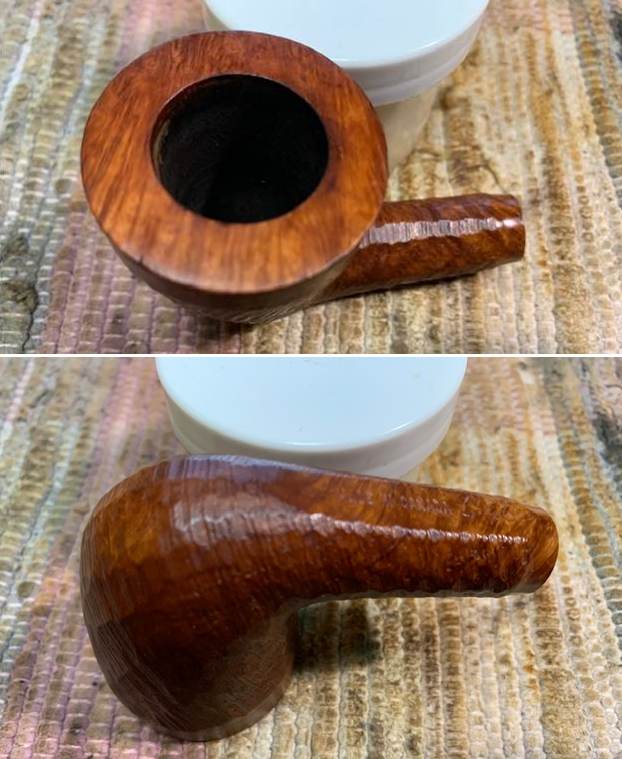
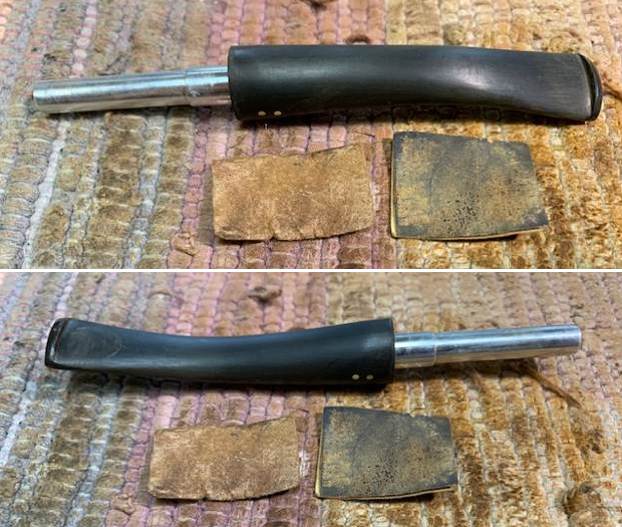
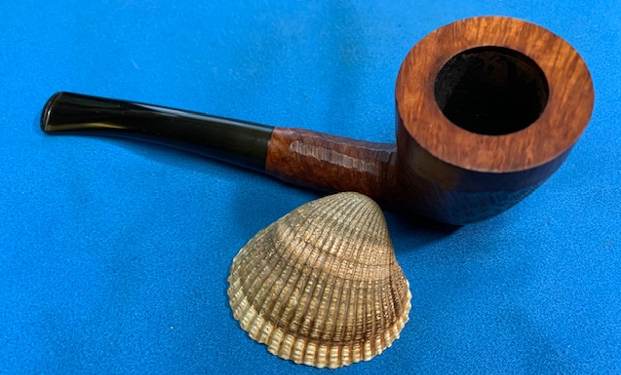
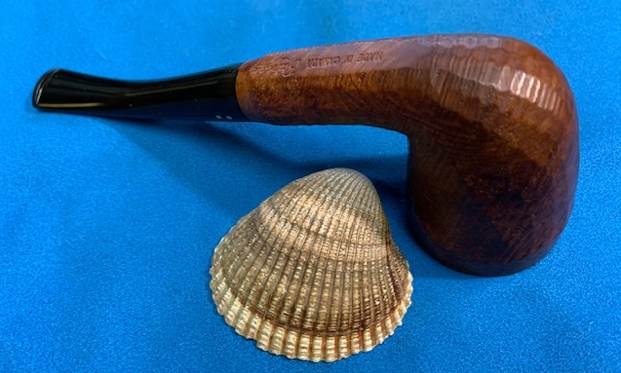
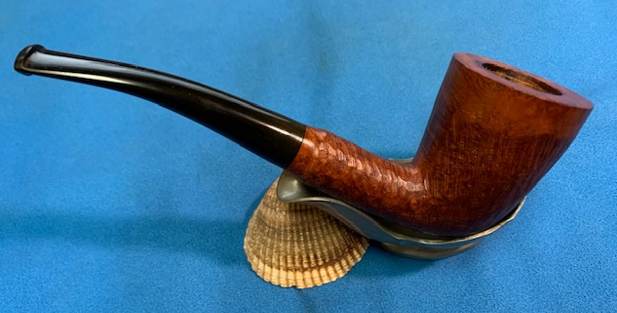
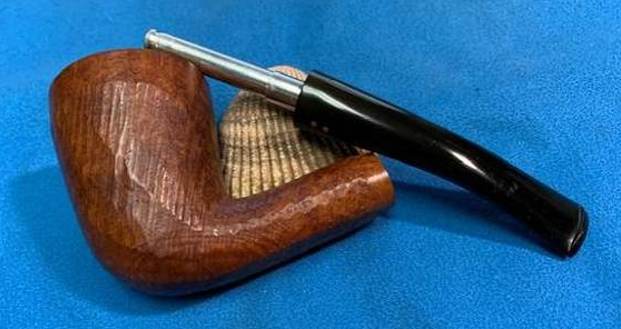
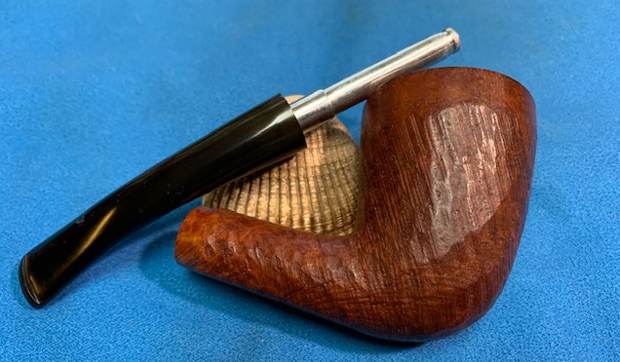
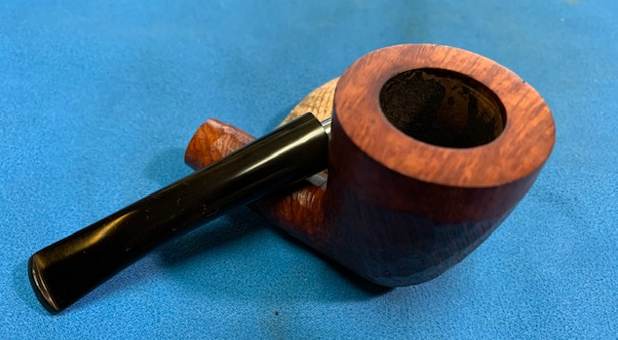
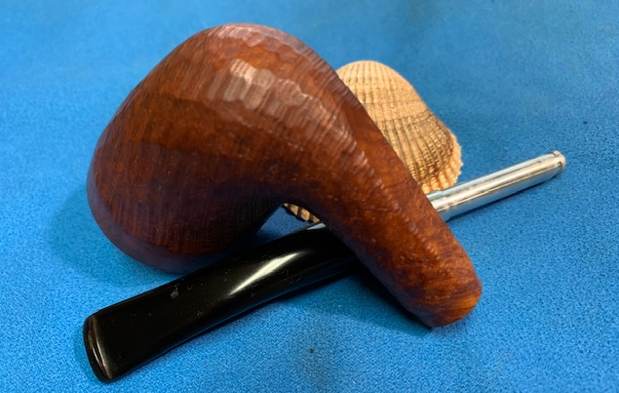
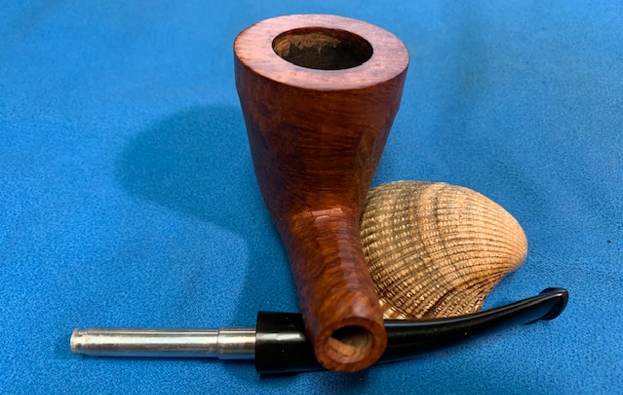
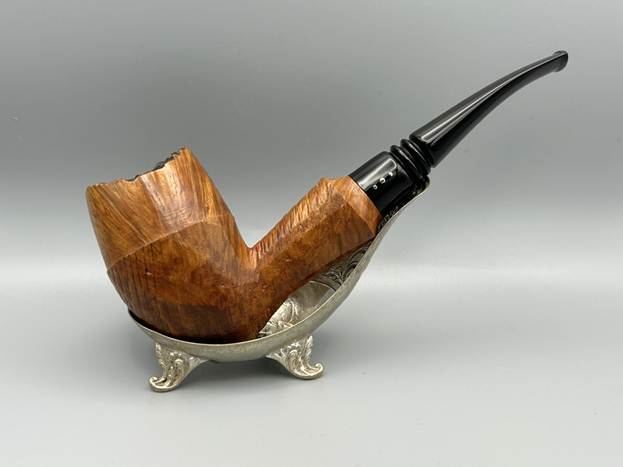
Is it a Brigham Sportsman? Yes. Is it a freehand? Yes. Is it a Brigham Norseman? Sort of. Is it a Brigham NorseSportsMan? Ok, I made that one up. This is a really interesting – and possibly experimental – Brigham pipe that was commissioned by a gentleman in Ontario. The light-coloured briar is quite attractive and has that distinctive rustication, typical of the Sportsman line. The tenon (which holds the maple distillator) on this pipe is made of aluminum – so it’s an older one. It’s been sitting in one of my boxes for a while and I’ve always had an eye on it. Its time in the spotlight is finally here.
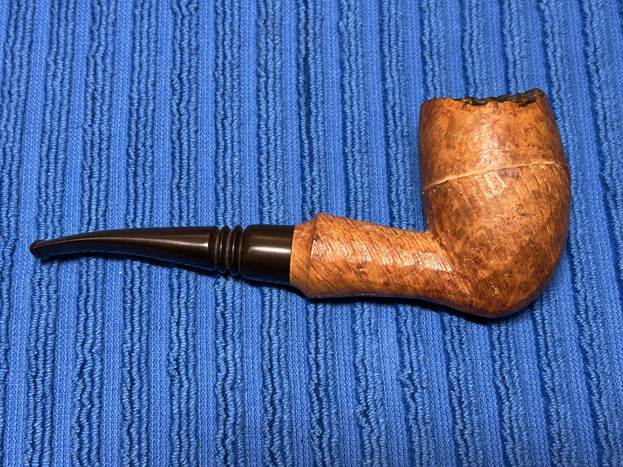
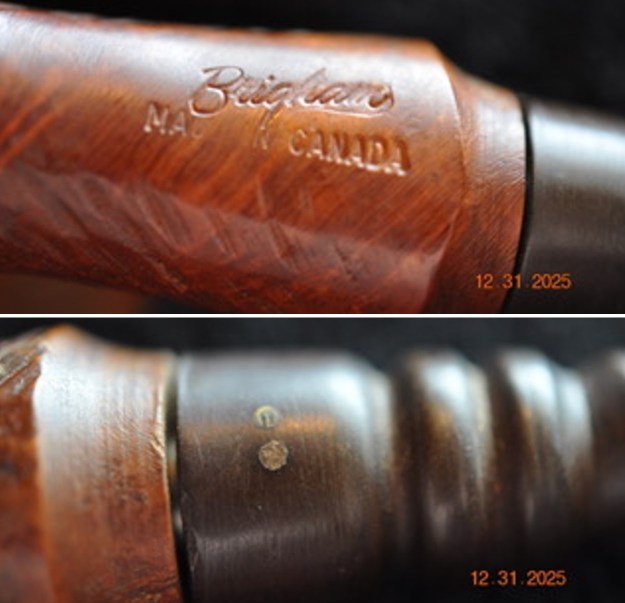
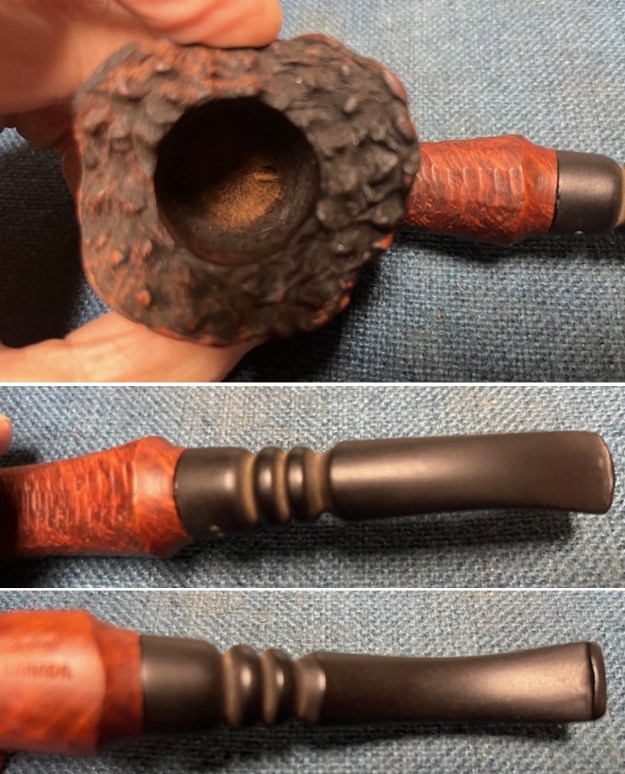
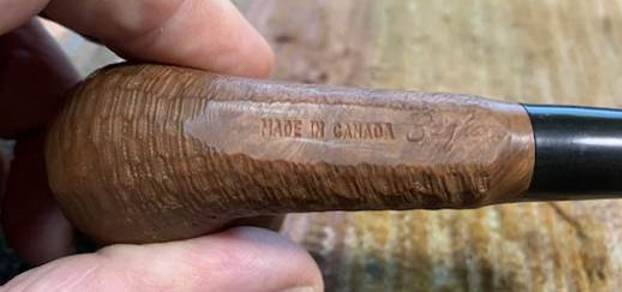
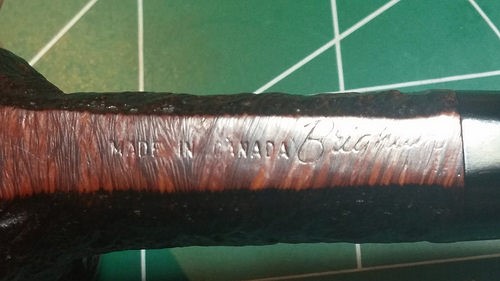
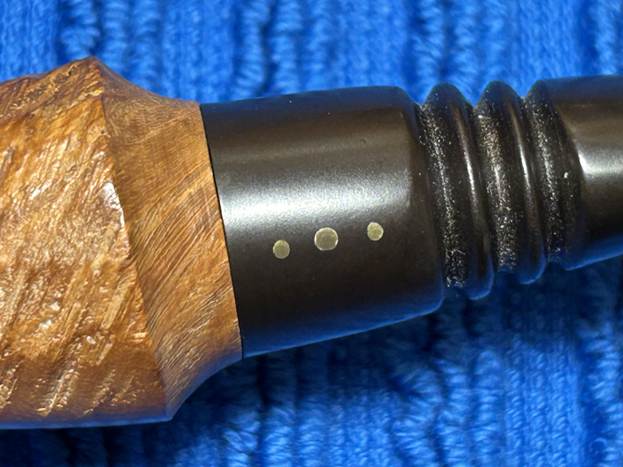
Let’s have a look at the marks on this pipe. On the underside of the shank, we read Brigham [over] Made in Canada. Of course, how those words are marked is what matters in dating Brigham pipes. I’ll get back to that. There are also three brass pins on the stem (a larger pin, flanked by two smaller pins) – typical of Brigham’s ranking system.
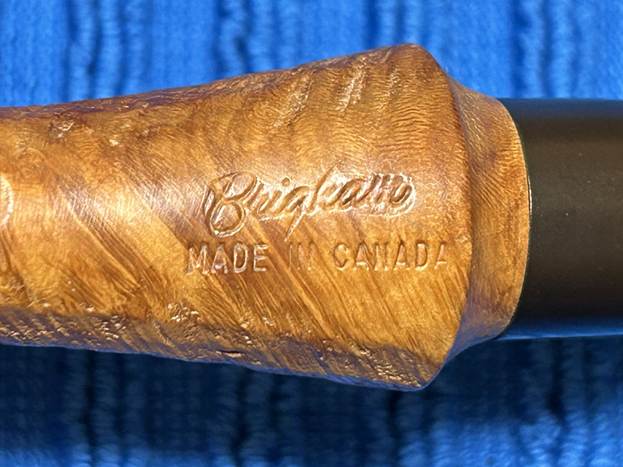
Thanks to Charles Lemon’s book, Brigham Pipes: A Century of Canadian Briar, dating this pipe was quite straightforward. Lemon writes,

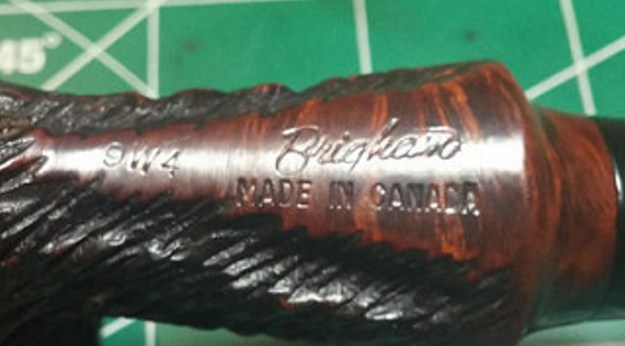
With the expiry of the Brigham Patent in 1955, the CAN PAT stamp could no longer be used. Instead, pipes made between 1956 and roughly 1969 are marked with “MADE IN CANADA” in block letters. The Brigham logo was modernized, moving to a thinner script and losing the tail on the “m”.

Based on Lemon’s book, I can date this pipe to between 1956 and 1969. I looked thoroughly in the book’s Unofficial Brigham Shape Chart and this pipe was identical in shape to the Norseman 9W2. However, no hybrid Sportsman-Norseman was listed. I know that Brigham experimented with many shapes and styles over the years, so this might have been one of those.

A quick word about the Sportsman line. Later in Lemon’s book, we learn the following about the Sportsman:

The Sportsman pipes were essentially semi-shaped (or half finished) briar bowls with vulcanite stems, complete with the Brigham System. The smoking characteristics of Sportsman models were identical to regular Brigham pipes, and the rough exterior and simple wax finish gave the series a rugged, outdoorsy appearance that many pipe smokers found appealing.

So, what about the three pins? What do they mean in a Brigham context. Again, Lemon’s book provides the answer:

In the late 1950s or early 1960s Brigham expanded its regular pipe lineup to six quality levels introducing the “VIP” grade, pinned with yet another three-Dot pattern consisting of three pins in a horizontal line with the centre Dot larger than the two outside Dots – essentially the Brigham Executive grade pinning turned ninety degrees.

This pipe clearly has a Norseman shape, so here is a word about the Norseman line of pipes:

Norseman pipes were fully rusticated and pinned with the Brigham VIP 3 Dot horizontally aligned pattern, with the middle Dot larger than the other two. They were stamped with “9Wx”, where “x” indicated the shape number.

So, what does all this tell us? I think this pipe was some sort of experiment. It dates from 1956 to 1969. It has a Sportsman finish to be sure. It has the brass pins and shape of a Norseman, but does not have the rusticated finish of the Norseman. It is some sort of Sportsman-Norseman hybrid, or, as I joked earlier: a Brigham NorseSportsMan.

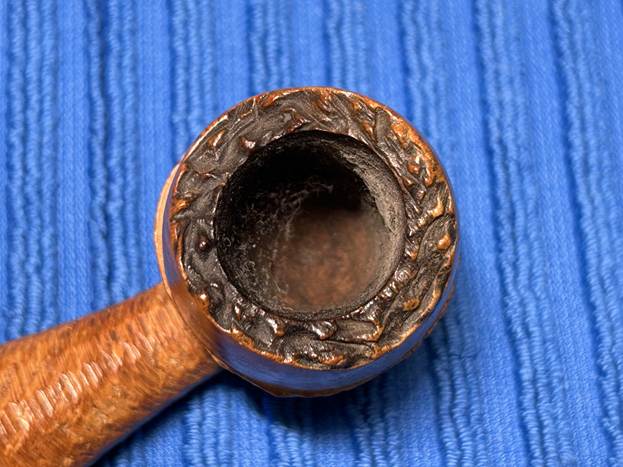
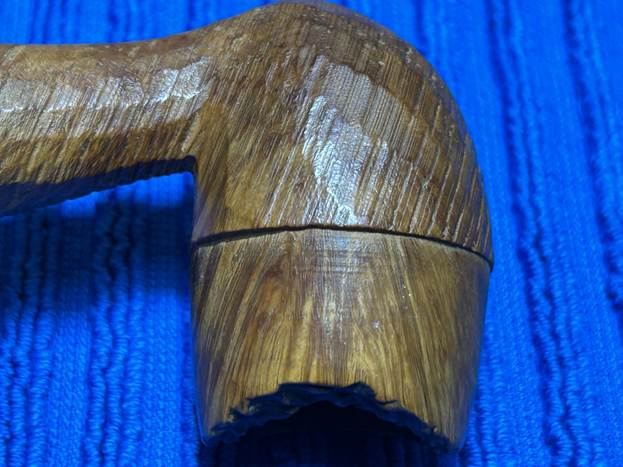
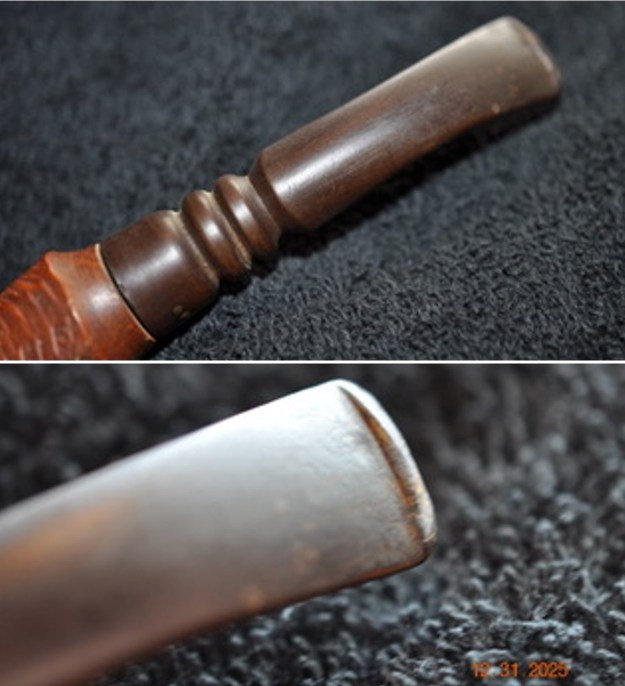
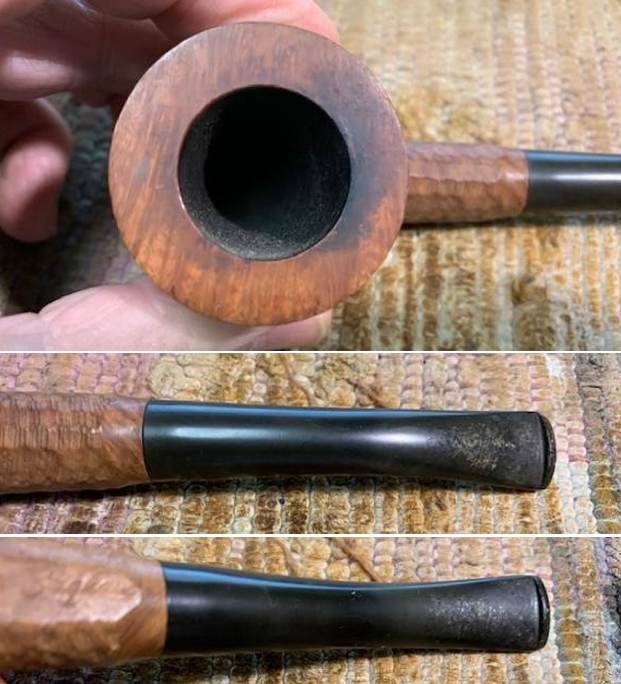
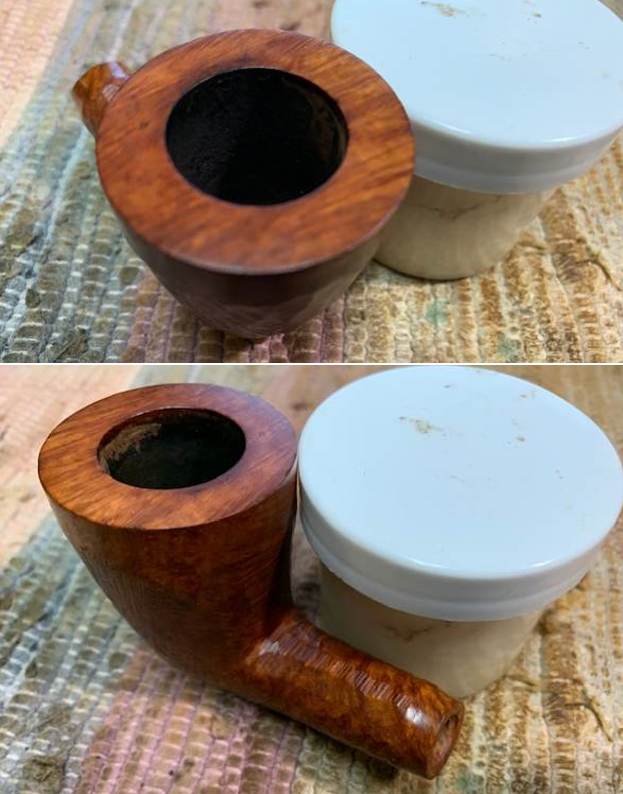
Let’s get on with the pipe. The first thing I noticed is that the pipe was obviously seldom smoked. That’s a bonus for me and a bonus for my customer. The stem has gathered some oxidation over the years and a couple of minor tooth marks, but nothing to worry about. The stummel is also in good shape. There is very little filth either inside or outside the bowl. All good news.
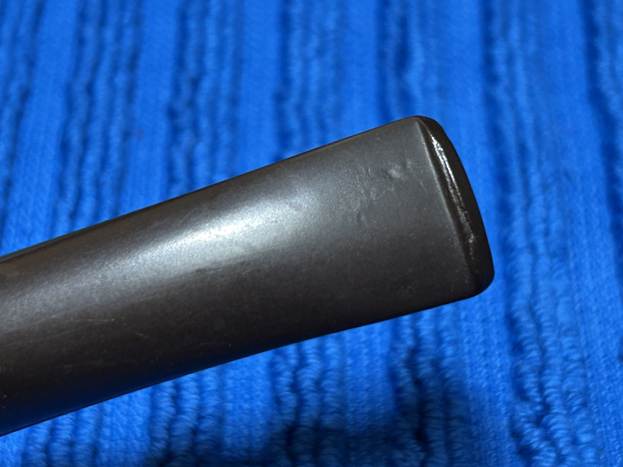
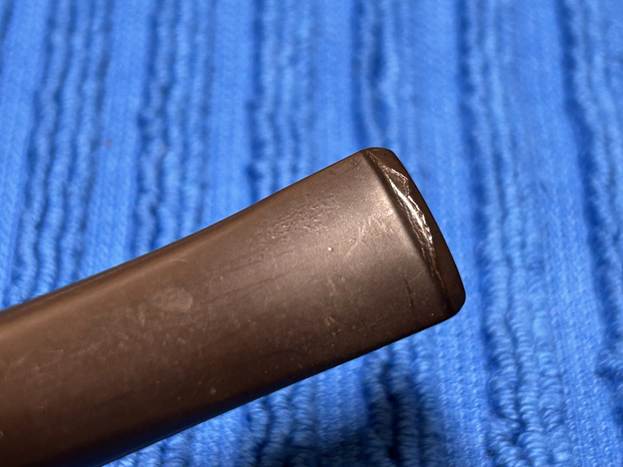
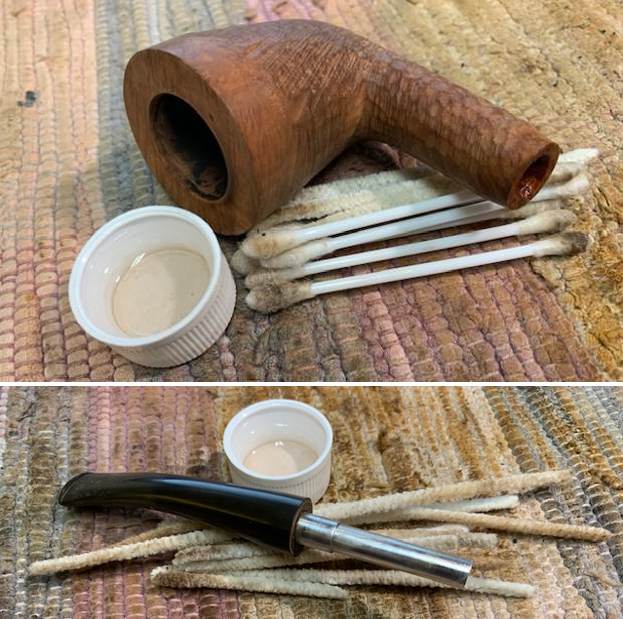
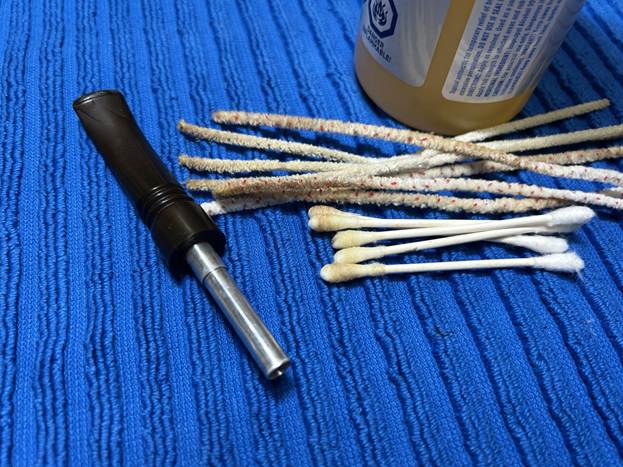
I used isopropyl alcohol on a few cotton rounds and wiped down the stem to provide an initial cleaning of filth before moving on to the next steps. The primary cleaning came next. I disinfected the inside of the stem with both pipe cleaners and cotton swabs dipped in lemon-infused 99% isopropyl alcohol.
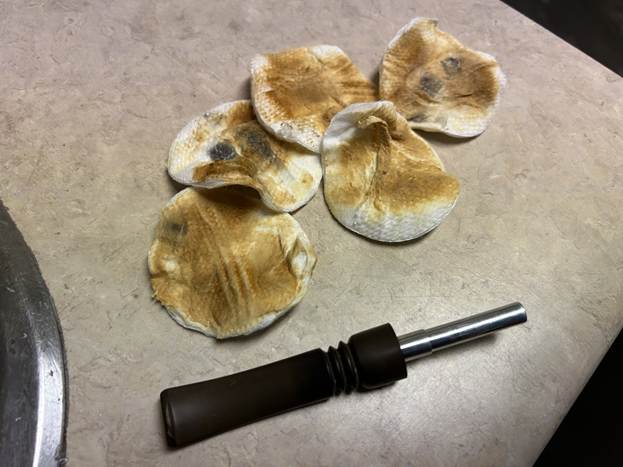
The goal of the next step is the removal (or minimization) of oxidation. Going to my sink, I used cream cleanser, cotton rounds, and a toothbrush, and scoured the stem to remove as much surface oxidation as possible. As the photos show, the result was a hideous, ochre-coloured mess – but better off the stem than on it.
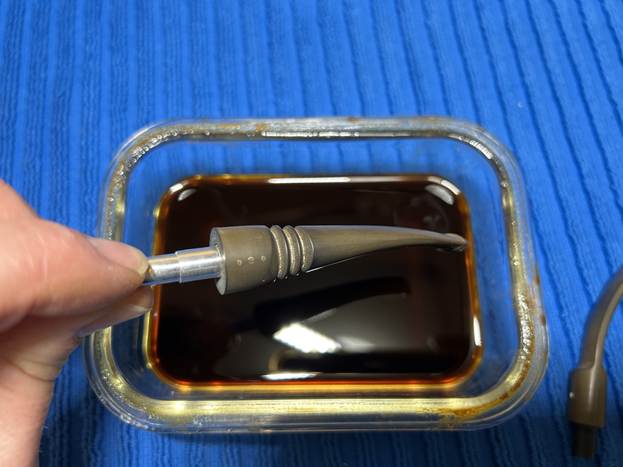
Once the stem was reasonably clean, I soaked it overnight in some Briarville Stem Oxidation Remover. This solution works to draw oxidation in the stem to the surface of the vulcanite. This is a major aid and an important step in ensuring a clean stem. The following day, I drew out the stem from its bath and scrubbed the lingering fluid with a toothbrush.
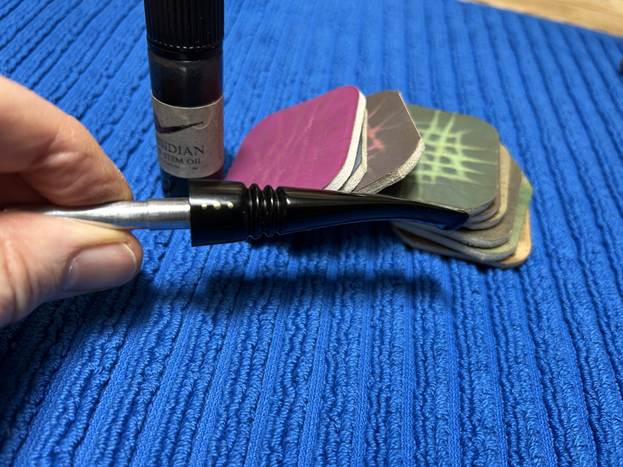
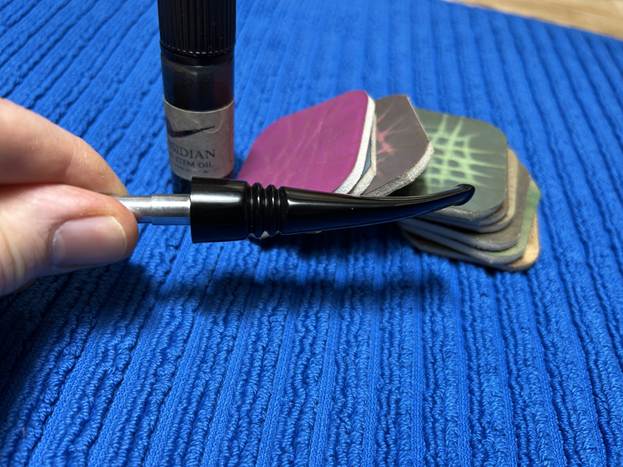
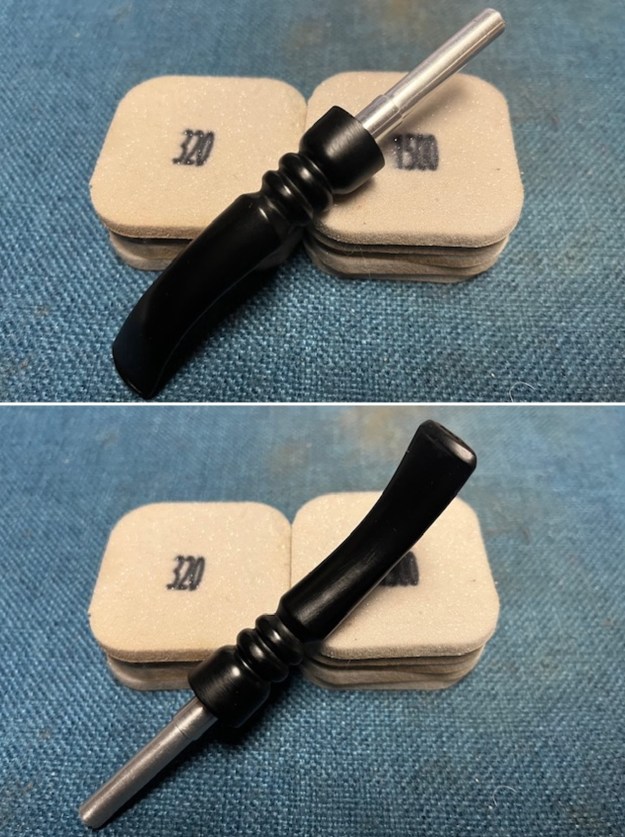
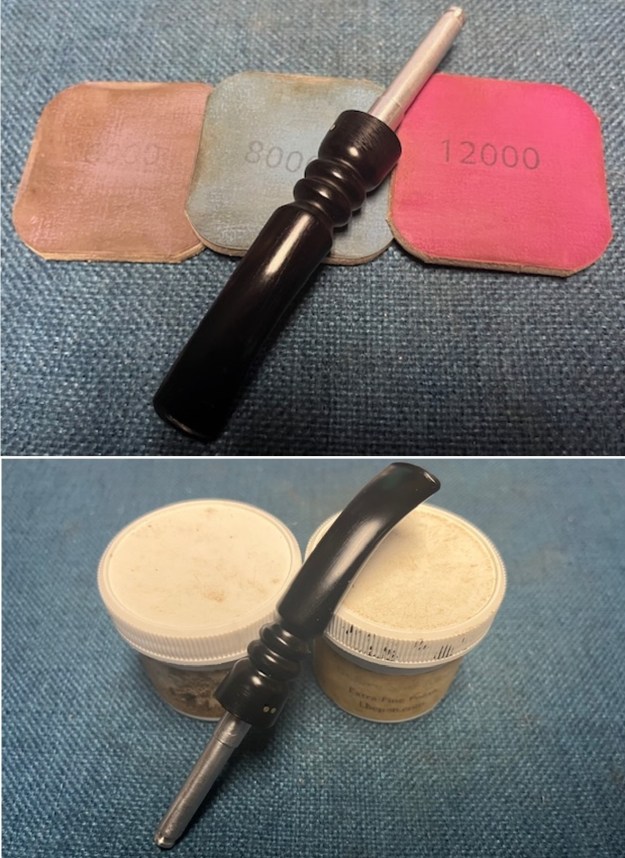
The penultimate step for the stem is sanding. I used all nine of the micromesh sanding pads (1,500 through 12,000 grit) to sand out flaws, even out the vulcanite, and provide gentle polishing of the finished surface. I also applied pipe-stem oil while using the last five micromesh pads. There was a wonderful, deep black shine to the stem when I was done.
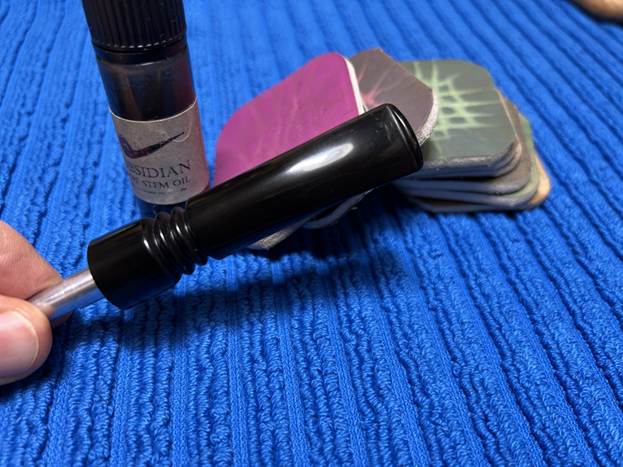
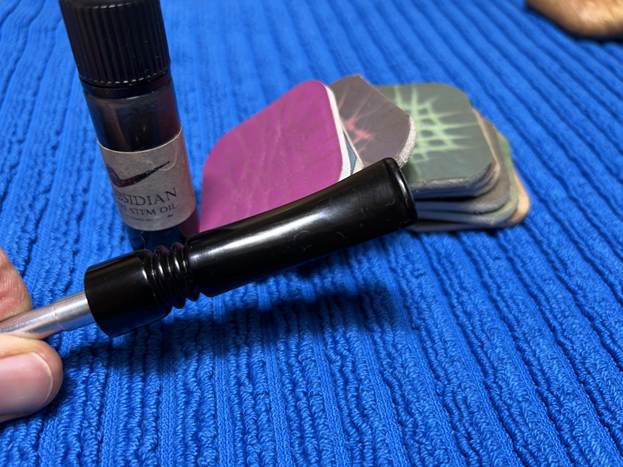
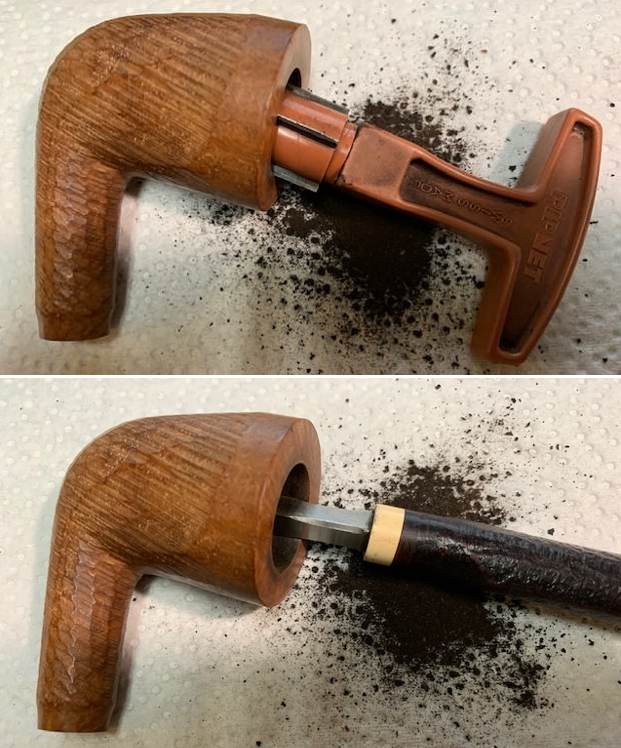
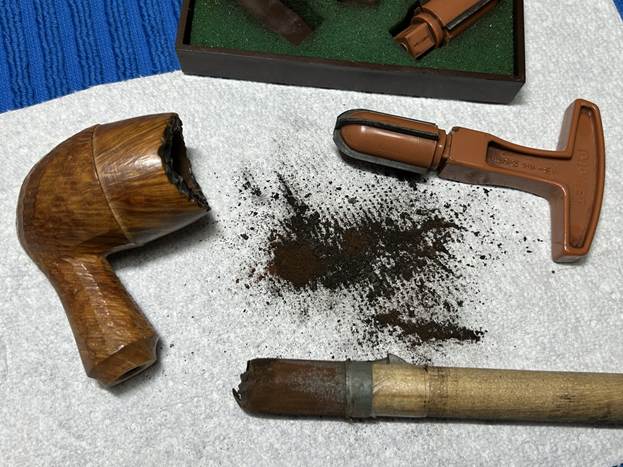
As the stem was (nearly) complete, I moved on to the stummel. The first step was to ream out the bowl – that is to say, remove all the cake inside the bowl. This accomplished a couple of things. First (and most obviously), it cleaned the bowl and provided a refurbished chamber for future smoking. Second, when the old cake was removed, I could inspect the interior walls of the bowl and determine if there was damage or not. I used a reamer, a pipe knife, and a piece of sandpaper taped to a wooden dowel. Collectively, these ensured that all the debris was removed. I’m pleased to report that there wasn’t much.
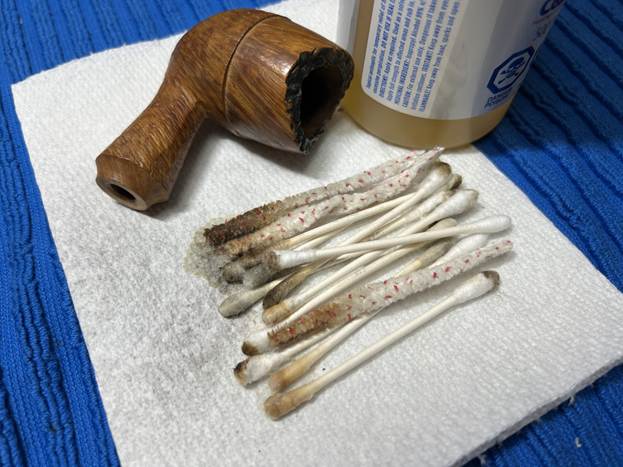
Similar to the stem, I then cleaned the stummel with both pipe cleaners and cotton swabs dipped in lemon-infused 99% isopropyl alcohol.
I then decided to ‘de-ghost’ the pipe – that is to say, exorcize the remaining filth from the briar. I filled the bowl and the shank with cotton balls, then saturated them with 99% isopropyl alcohol. I let the stummel sit overnight. This caused the remaining oils, tars and smells to leach out into the cotton.
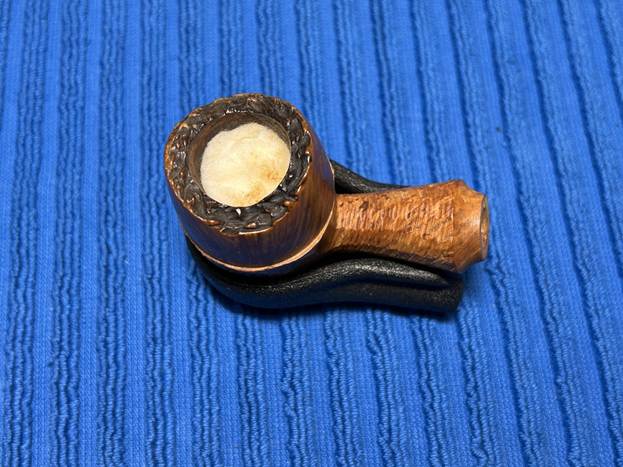
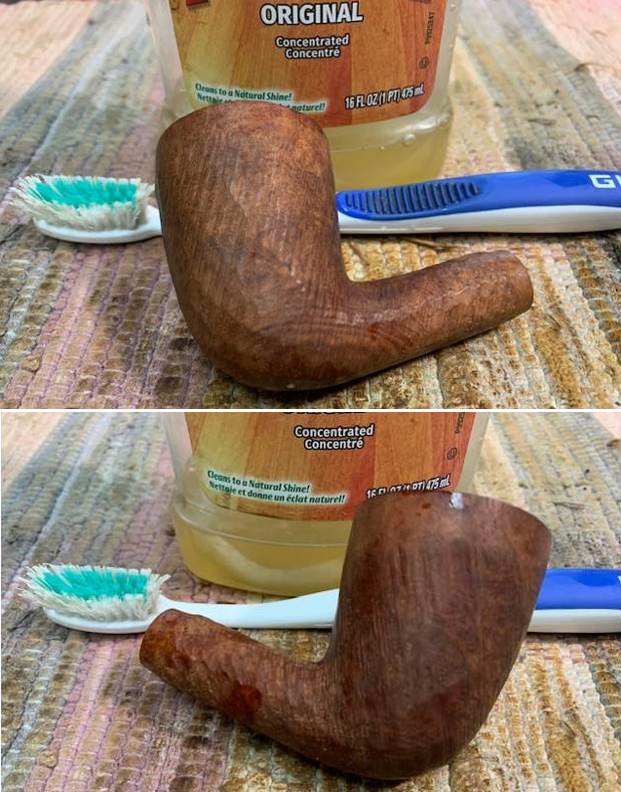
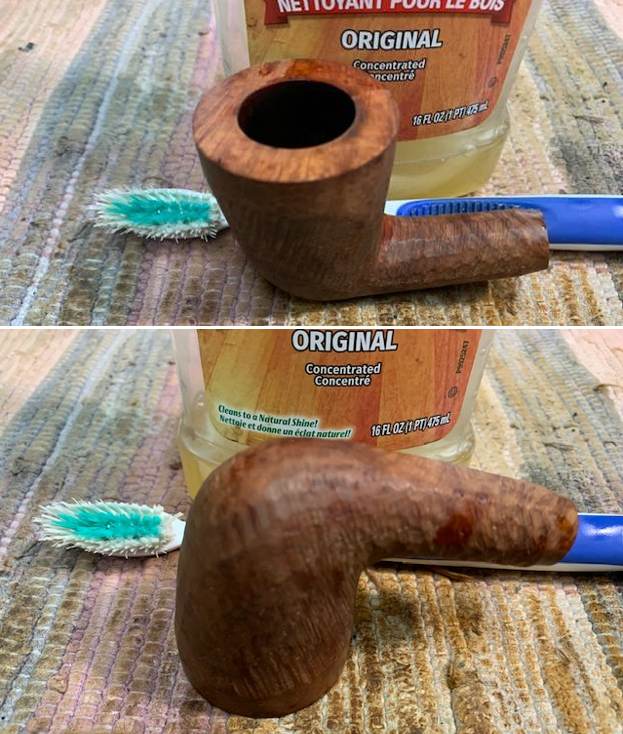
To tidy up the briar, I wiped down the outside, using a solution of a pH-neutral detergent and some distilled water, with cotton rounds. I also used a toothbrush in the crevices. This did a good job of cleaning any latent dirt on the surface of the briar. The last step of the cleaning process was to scour the inside of the stummel with the same mild detergent and tube brushes. This was the culmination of a lot of hard work in getting the pipe clean.
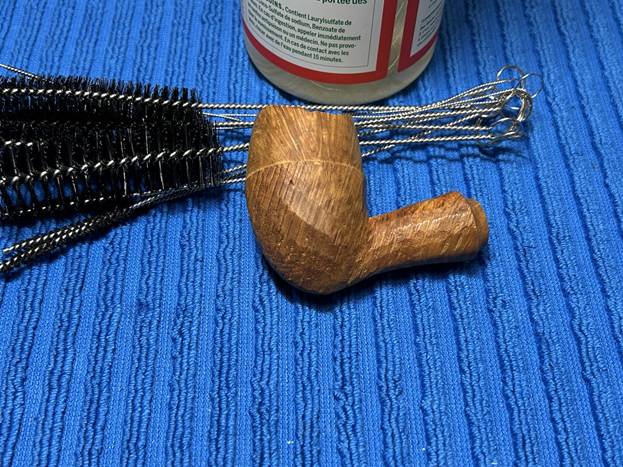
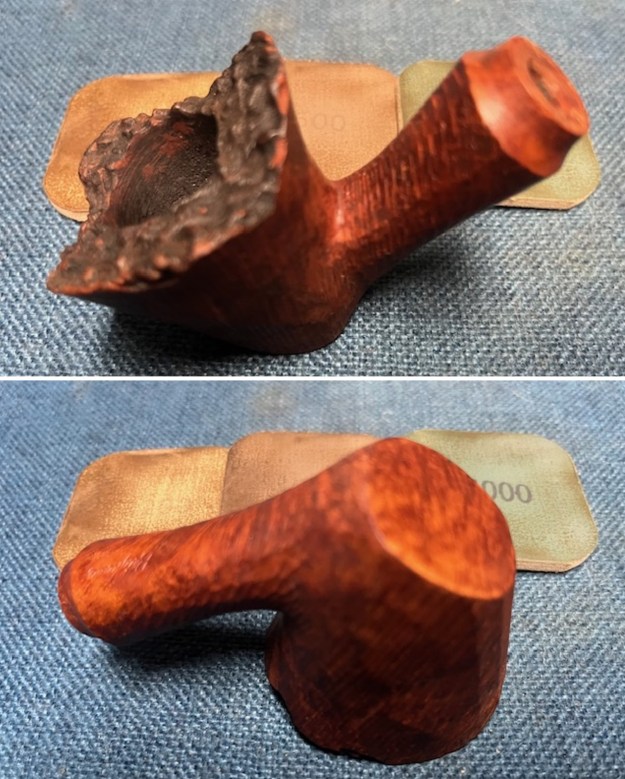
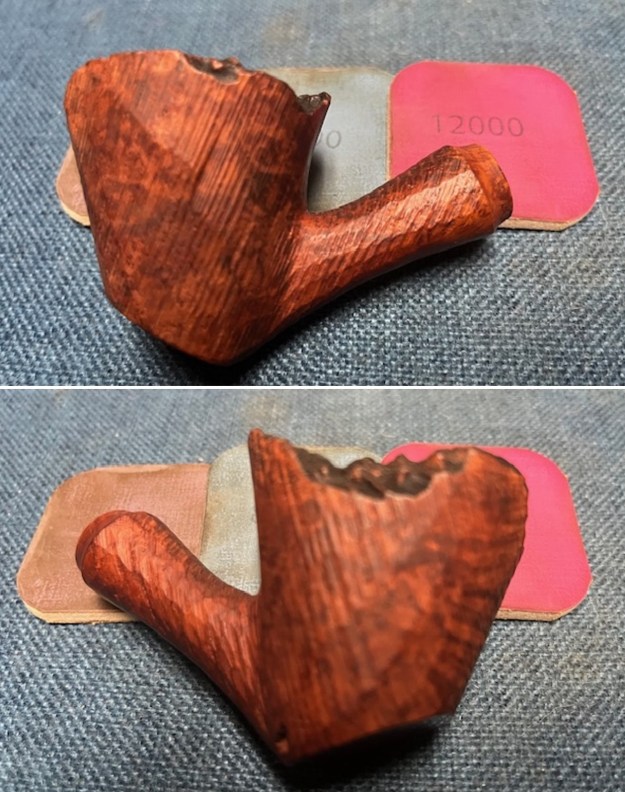
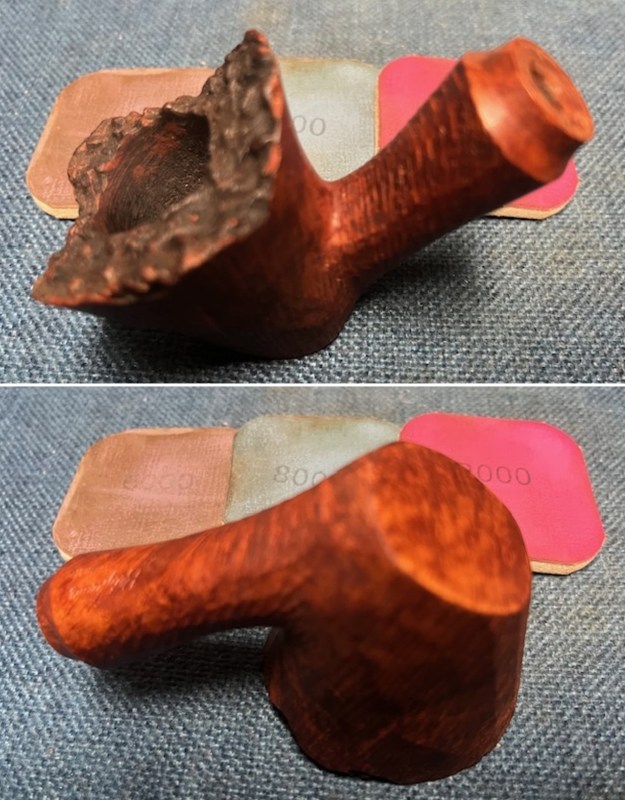
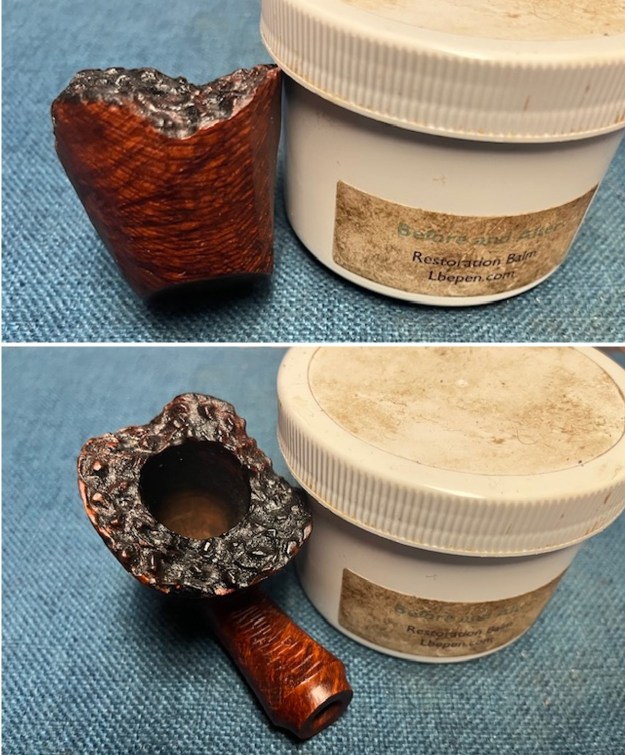
I used all nine micromesh pads (1,500 through 12,000 grit) to sand only the smooth parts of the stummel and finish it off. This sanding minimizes flaws in the briar and provides a beautiful smoothness to the wood. I rubbed some LBE Before & After Restoration Balm into the briar and let it sit for an hour or so. The balm moisturizes the wood and gives a beautiful depth to the briar. I then buffed the stummel with a microfibre cloth.
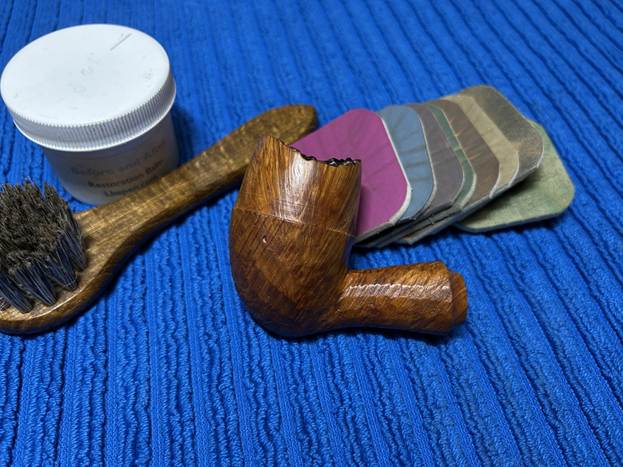
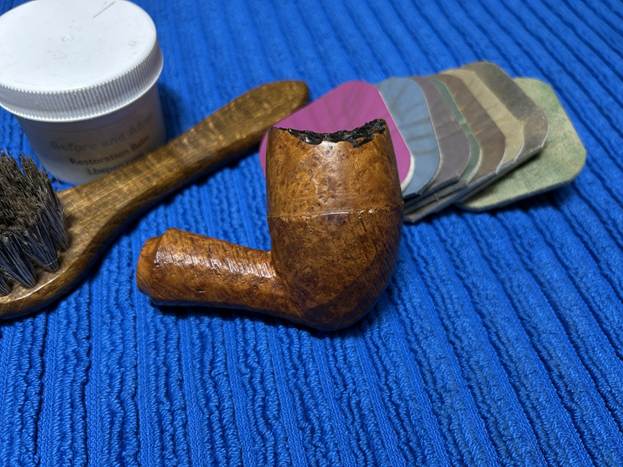
For the final step, I took the pipe to my bench polisher and carefully buffed it – first with a blue diamond compound, then with some carnauba wax. This procedure makes the pipe look its best – the stummel sings and the stem glows.

All done! This Cleaning Up a Fascinating Brigham Sportsman/Norseman freehand looks fantastic again and I am delighted with the results. I’m sure the gentleman in Ontario will be too. The approximate dimensions of the pipe are as follows: length 6 in. (154 mm); height 2¼ in. (58 mm); bowl diameter 1⅔ in. (41 mm); chamber diameter ⅞ in. (22 mm). The weight of the pipe is 2⅛ oz. (60 g). I hope you enjoyed reading the story of this pipe’s restoration as much as I enjoyed restoring it. If you are interested in more of my work, please follow me here on Steve’s website or send me an email at kenneth@knightsofthepipe.com. Thank you very much for reading and, as always, I welcome and encourage your comments.
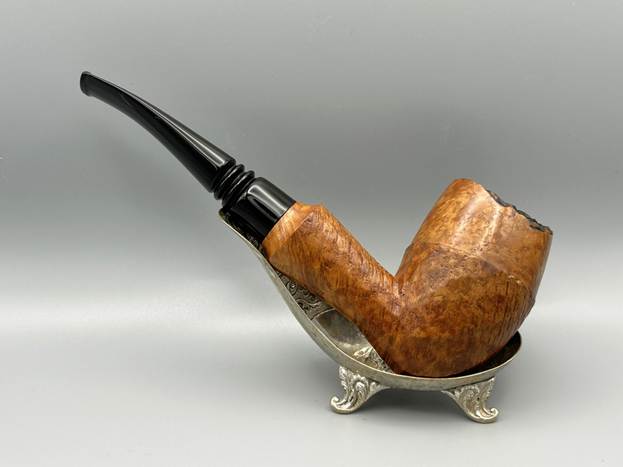
What an Interesting Brigham Sportsman 2 Dot Freehand Sitter


by Steve Laug

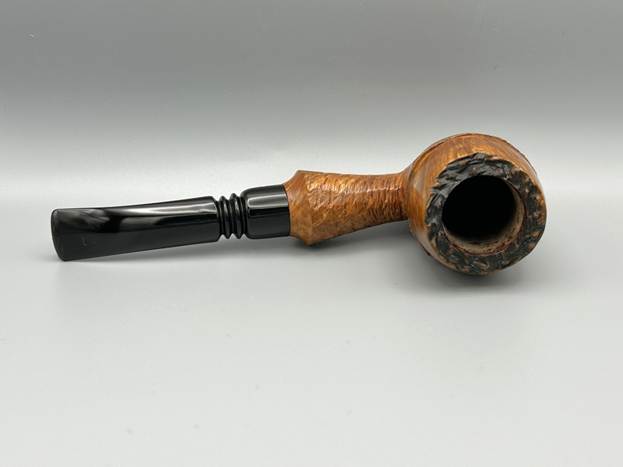
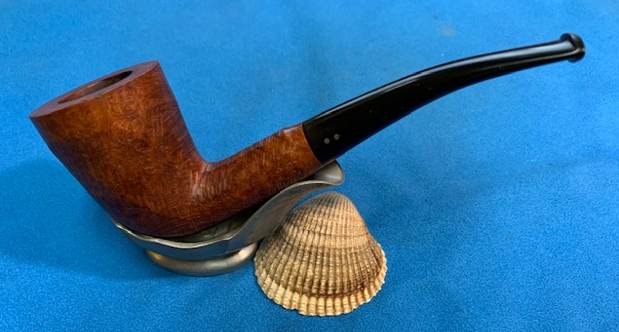
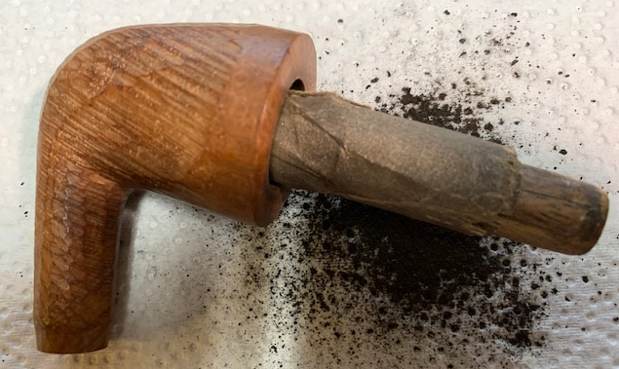
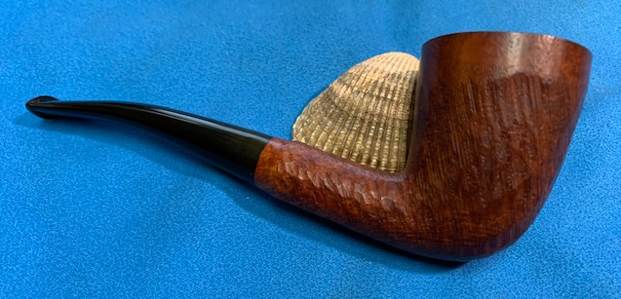
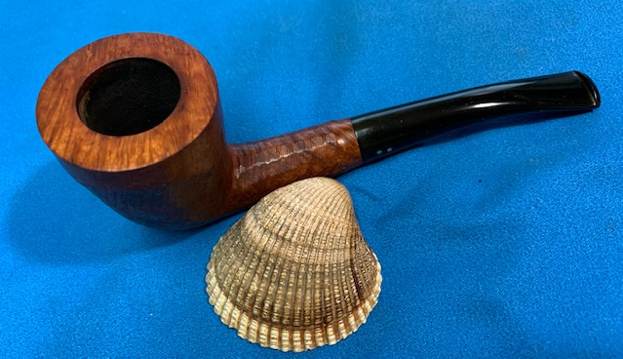
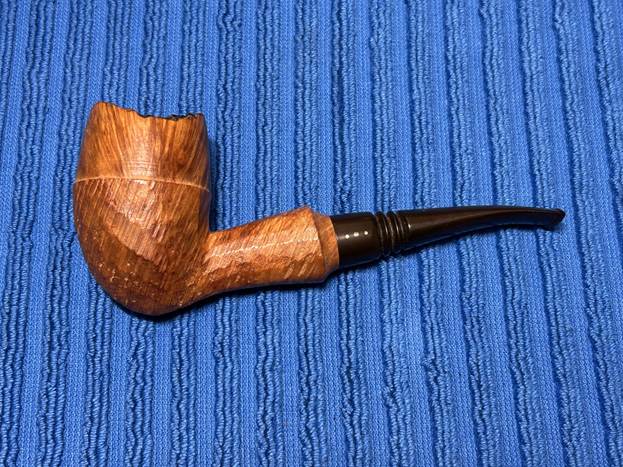
The next pipe I have chosen to work on is a nice looking rusticated Bent Dublin Sitter with a carved/plateau black vulcanite stem. We picked it up from a seller in Valley, Nova Scotia, Canada on 01/31/2023. The stamping on the underside of the shank reads Brigham in script [over] MADE IN CANADA. The fancy, turned vulcanite stem has two brass dots inserted on the left side of the saddle. The pipe is a nice looking pipe with rusticated finish with carved lines and a medium brown finish that highlights the grain under the rustication. The finish is very dirty with oils and grime ground into the finish. The rustication/plateau on the rim top is filled in with lava and grime. There is a thick cake in the bowl and on the inner edge of the rim. The turned bent vulcanite stem works very well with the bowl. It is light weight and comfortable pipe to hold. Jeff sent me the following photos of the pipe to show the condition it was in before he worked on it. Jeff took close up photos so that I could have a clearer picture of the condition of the bowl, rim edges and top. The rim top photos confirm my assessment above. The cake in the bowl is thick – covering the walls of the bowl. The rim top has thick lava coat and has some darkening on the inner edge and is heavier toward the back of the bowl. The inner edge looks like it might be damaged. This is what I look for when assessing a pipe. I look forward to viewing it in person after the clean up work. Jeff removed the stem from the shank and took photos of the distillator aluminum tenon. There was no maple filter in the tenon so the tube was filled up with tars and oils. The outside of the tube is also covered with tars as well. Instead of telling you what I see in the next photos of the sides of the bowl and the heel I want to hear from you. Tell me what you see? What does the finish look like to you? Are there any visible problems or issues that stand out to you? Are the cracks or scratches in rusticated finish of the bowl? Are there visible flaws or fissures in the briar? What does the finish look like? Is there a pattern to it? Any visible issues on the heel of the bowl? These questions should help you to see what I am looking for when I see these photos. He took photos of the stamping on the underside of the shank. It reads Brigham [over] Made in Canada. It is stamped on a smooth panel on the underside. The stem show two brass dots on the left side of the saddle. For historical background for those unfamiliar with the brand I am including the information from Pipedia on Brigham pipes. It is a great read in terms of the history and background on the pipes (https://pipedia.org/wiki/Brigham_Pipes). Charles Lemon (Dadspipes) is currently working on a book on the history of the brand. Until that is complete this article is a good summary. I have included it below.
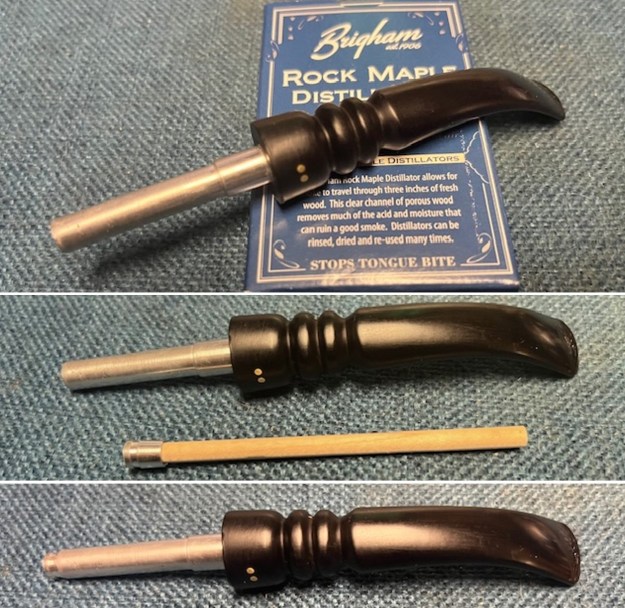
Roy Brigham, after serving an apprenticeship under an Austrian pipesmith, started his own pipe repair shop in Toronto, in 1906. By 1918 the business had grown to include five other craftsmen and had developed a reputation across Canada for the high quality of workmanship. After repairing many different brands of pipes over the years, Roy noted certain recurring complaints by pipe smokers, the most common referred to as “tongue bite”. Tongue bite is a burning sensation on the smoker’s tongue, previously thought to be due to the heat of the smoke (i.e. a “hot smoking pipe”).

He soon began manufacturing his own pipes, which were lightweight, yet featured a more rugged construction, strengthening the weak points observed in other pipes. The problem of tongue bite intrigued him, and he decided to make overcoming it a future goal.

About 1938, Roy’s son Herb joined him to assist in the business. The business barely survived the great depression because pipes were considered to be a luxury, not a necessity, and selling pipes was difficult indeed. In approximately 1937 [1], after some experimentation, Roy and Herb discovered that tongue bite was in fact a form of mild chemical burn to the tongue, caused by tars and acids in the smoke. They found that by filtering the smoke, it was possible to retain the flavour of the tobacco and yet remove these impurities and thereby stop the tongue bite.

Just as Thomas Edison had searched far and wide for the perfect material from which to make the first electric light bulb filaments, Roy & Herb began experimenting with many materials, both common and exotic, in the quest for the perfect pipe filter. Results varied wildly. Most of the materials didn’t work at all and some actually imparted their own flavour into the smoke. They eventually found just two materials that were satisfactory in pipes: bamboo and rock maple. As bamboo was obviously not as readily available, rock maple then became the logical choice.

They were able to manufacture a replaceable hollow wooden tube made from rock maple dowelling, which when inserted into a specially made pipe, caused absolutely no restriction to the draw of the pipe, yet extracted many of the impurities which had caused tongue bite. The result was indeed a truly better smoking pipe…

I remembered that Charles had done a blog on a pair of Brigham Sportsman pipes for his Dadspipes Blog. I looked that up to get a bit of background on this series of pipes so I could understand it better (https://dadspipes.com/2017/05/04/a-bevy-of-brighams-part-iii-a-pair-of-unsmoked-3-dot-sportsman-pipes/).  I quote a section of the blog below:

For those unfamiliar with this series, the Sportsman pipes were roughly shaped, semi-finished and sold each year at the Toronto Sportsman’s Show as rugged, rough-and-ready pipes suitable for bringing along to the cottage, hunt camp, fishing lodge or campground. The briar blocks were factory drilled, had the top half or so of the bowl machine-turned, and were fitted with a stem containing the Brigham filter system. The bottom half of the bowl and the shank were left roughly carved. Many of the Sportsman pipes were graded at a 3 Dot level, though I believe they were available in 3, 4 and 5 Dot grades.

Interestingly, the pipe I have in hand is another 2 Dot grade but very well done. It is stamped Made in Canada under the Brigham logo.

Charles Lemon has also written a great article on the stampings and marking on the Brigham pipes that fit into a time line that he has drafted. It is well worth a read and is fascinating. (https://pipedia.org/wiki/Brigham_Pipes_%E2%80%93_A_Closer_Look_at_Dots,_Dates_and_Markings). I quote from the pertinent section on the time frame for this pipe.     The patent on the Brigham filter system expired in 1955, ushering in the Post-Patent Era (1956 – roughly 1969). The “CAN PAT” stamp was replaced by a “Made in Canada” stamp in block letters. The 1960s saw the introduction of new product lines, including the Norsemen and Valhalla series of rusticated and smooth (respectively) freehand-style pipes created to capitalize on the growing demand for Danish pipe shapes.

This solidly places the pipe I am working on in the period of Brigham production that Charles calls the Post-Patent Era (1956-1969). It is a great looking pipe with the Sportsman style of finish.

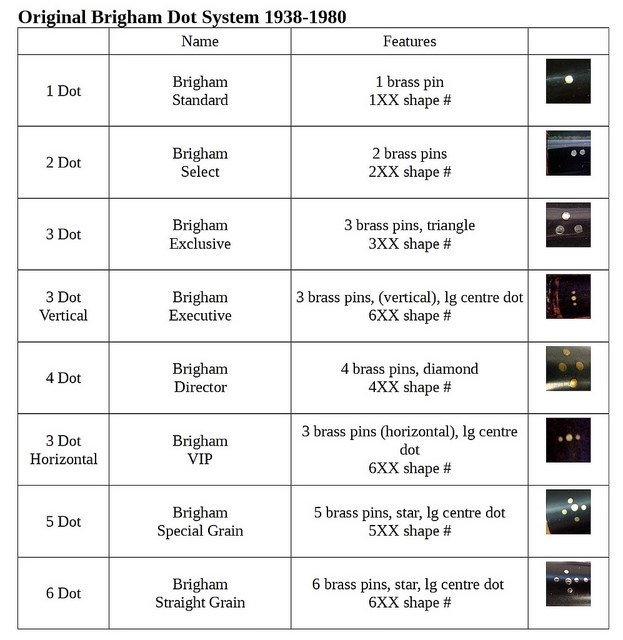
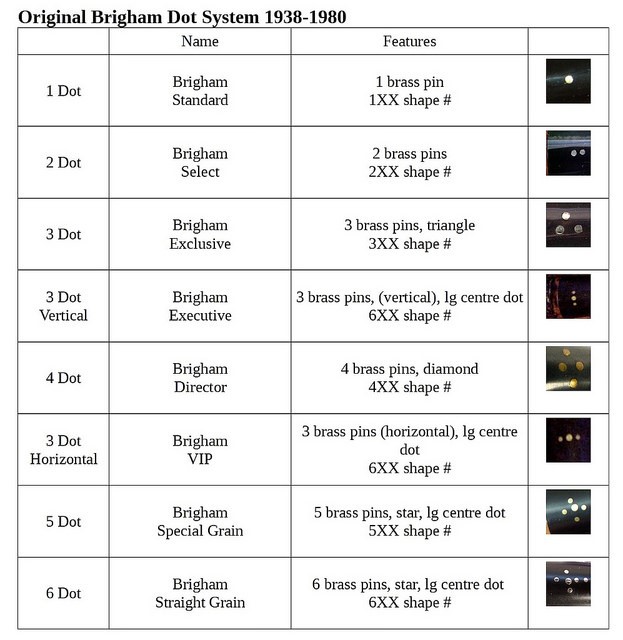
The Original Brigham Dot System 1938 – 1980

Brigham pipes are reknown in the pipe world for their famous “Brigham Dots”, a system of brass pins inset in the stem to denote the grade of each pipe. The original 8-grade pinning system, used for 42 years between 1938 and 1978 (spanning the Patent, Post-Patent and Canadian Eras) looked like this:I knew that I was dealing with a pipe made between 1956-1969 from the Post-Patent Era. It sports 2 dot making it Brigham Select pipe but the fact that it is a Sportsman Series pipe I am not sure that the dot information applies. There is not a shape number on the pipe. Now to do a bit of spiffing with the pipe itself.

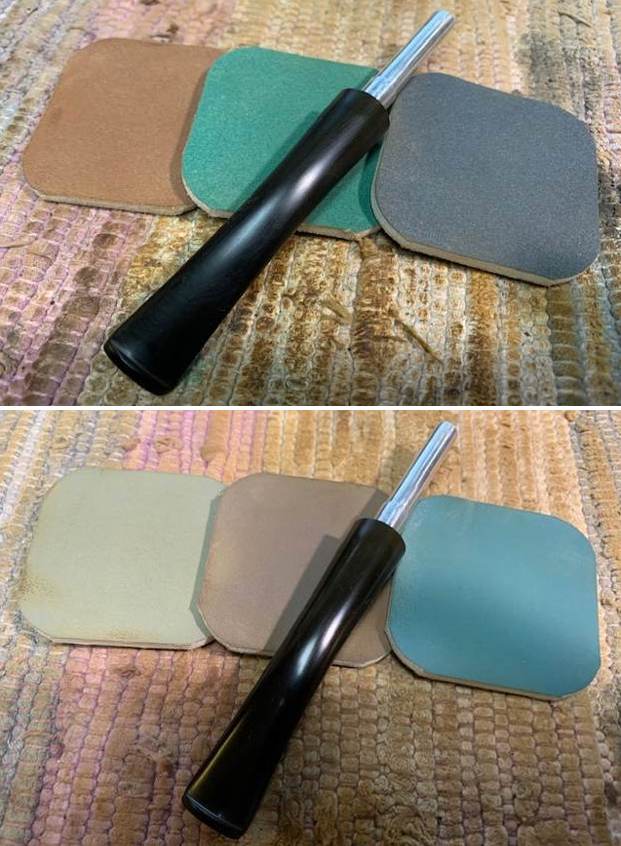
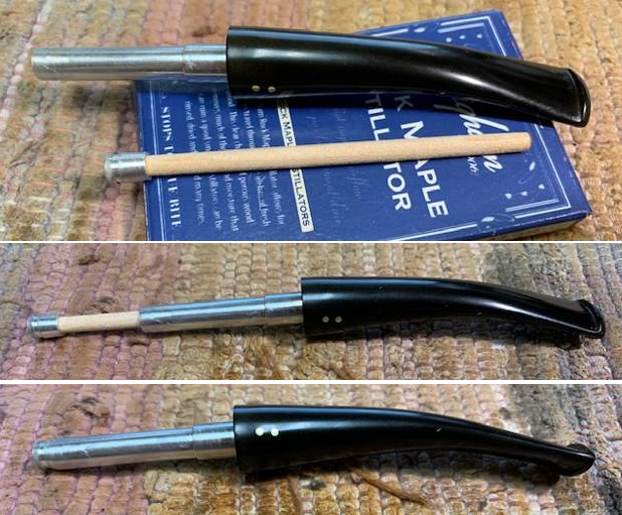
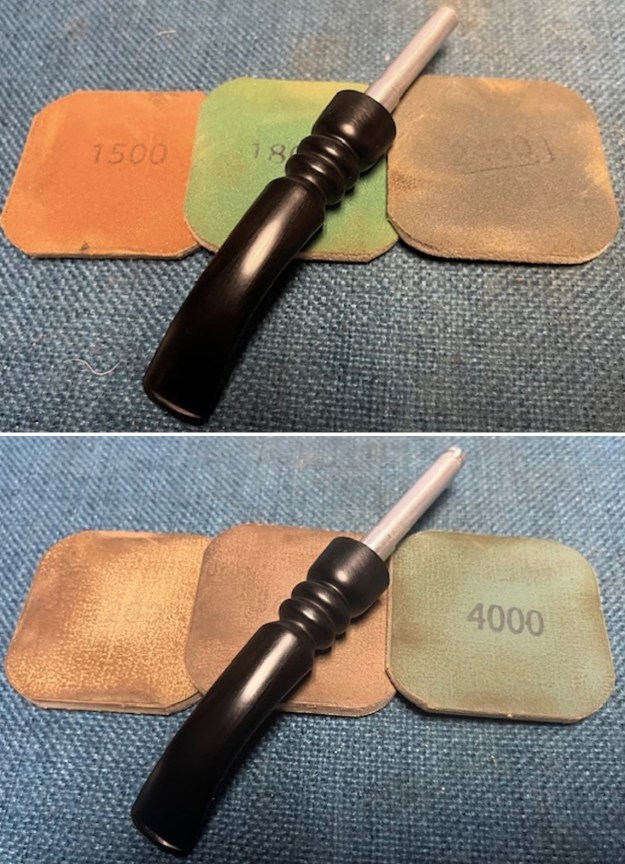
Now it was my turn to work on the pipe. Jeff had done an amazing cleanup of the pipe. He reamed the light cake with a PipNet reamer and cleaned up that with a Savinelli Fitsall Pipe Knife. He scrubbed the internals of the bowl and stem with alcohol, cotton swabs and pipe cleaners. He scrubbed the externals with undiluted Murphy’s Oil Soap and rinsed the bowl off with running water. He soaked the stem in Briarville’s Pipe stem Deoxidizer and once it had soaked rinsed it off with warm water to remove the residual solution. He dried it off and rubbed it down to remove any oxidation that was still on the stem. The pipe looked very good when I received it. I took a photo of the rim top to show the condition. You can see the clean bowl. The bowl is in excellent condition and the rim top looks very good. There is a little darkening on the back topside of the rim but otherwise it is excellent. The stem came out looking quite good. It only needed to be polished. I took a photo of the underside and the right side of the shank to show the stamping. The photos clearly show the stamping and is actually more readable in person. I removed the stem from the shank and took a photo of the pipe parts to show what I was working with. I also took photos of the tenon end to show the 9MM filter tenon. It is a nice looking pipe.I worked over the rustication and plateau on the rim top with a brass bristle wire brush. I was able to knock off any remaining debris.The pipe had cleaned up so well that I turned to polish the briar with micromesh sanding pads. I dry sanded it with 1500-12000 grit sanding pads and wiped the bowl down after each pad with a damp cloth. By the final pads the briar really had a shine. I rubbed the bowl down with some Before & After Restoration Balm. I worked it into the briar with my fingertips and into the rugged rim top with a shoe brush. The product works to clean, renew and protect briar. I let it do its work for 15 minutes then buffed it off with a soft cloth. The pipe is really quite a beauty.I set the bowl aside and turned my attention to the stem. I sanded out the light tooth marks and chatter on both sides with 32903599 grit 2×2 inch sanding pads and wiped it down between pads with an Obsidian Oil cloth. The shine really came alive.I fit the clean and polished stem with the Brigham Rock Maple Distillator and took photos to show what it looked like. This is in essence a hollow Maple wood tube that serves to filter out the moisture and deliver a clean and flavourful smoke.I polished out the surface of the stem ahead of the button on both sides using micromesh sanding pads. I dry sanded the stem with the 1500-12000 grit pads, then wiped it down with a cloth impregnated with Obsidian Oil. I finished polishing it with Before & After stem polish – both Fine and Extra Fine. I gave it a final coat of Obsidian Oil and set it aside to dry. I am excited to finish this 1956-1969 Post-Patent Era Brigham Sportsman 2 Dot Freehand Sitter. I put the pipe back together and buffed it with Blue Diamond on the buffing wheel. I gave the bowl and the stem multiple coats of carnauba wax. I buffed the pipe with a clean buffing pad to raise the shine and hand buffed it with microfiber cloth to deepen the shine. It is fun to see what the polished bowl looks like with the rustic finish. Added to that the polished black vulcanite stem with the shining brass pins was beautiful. This mixed grain on the rustic Brigham Sportsman 2 Dot Freehand is nice looking and the pipe feels great in my hand. It is light and well balanced. Have a look at it with the photos below. The dimensions are Length: 6 ½ inches, Height: 2 inches, Outside diameter of the bowl: 2 inches, Chamber diameter: 7/8 of an inch. The weight of the pipe is 2.22 ounces/63 grams. It is a beautiful pipe and one that will be on the rebornpipes store in the Canadian Pipe Makers Section soon. If you are interested in adding it to your collection let me know. Thanks for walking through the cleanup with me as I worked over this pipe. Thanks to each of you who are reading this blog. Remember we are not pipe owners; we are pipemen and women who hold our pipes in trust until they pass on into the trust of those who follow us.

Restoring a Made in Canada Brigham (2 Dot) Sportsman Bent Dublin


Blog by Steve Laug

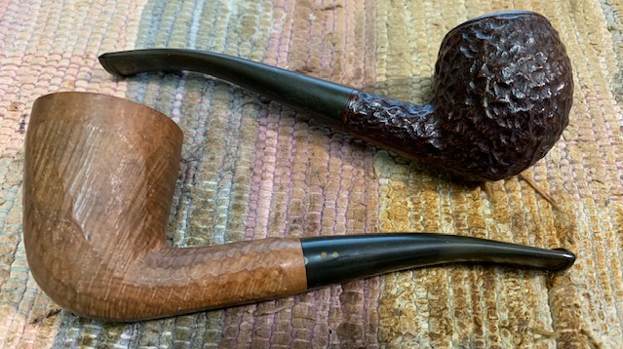
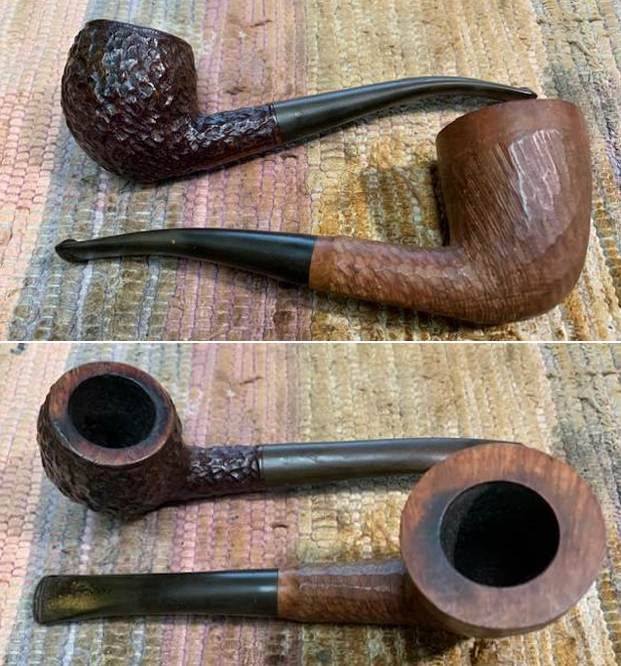
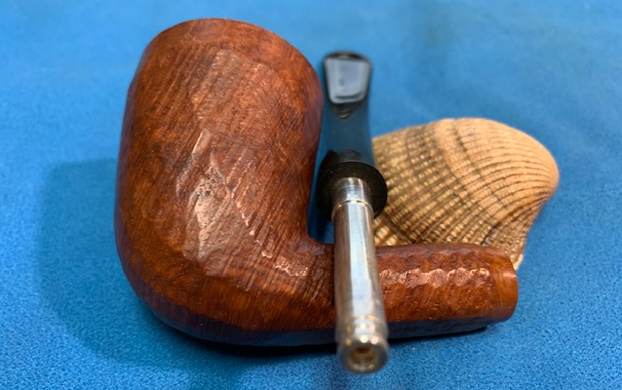
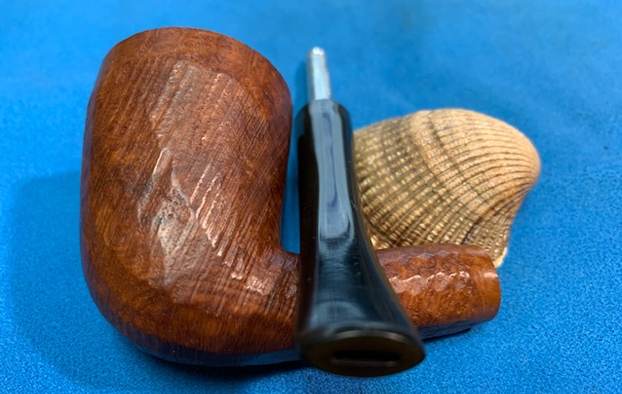
Not too long ago my wife and I had dinner with some good friends here in Vancouver – first time since COVID-19 so it was good to see them. At the beginning of the meal he handed me a box that he said was for me. In it were some pipes that he was giving to me and a bunch of cigars. The pipes included to Brigham rusticated pipes that I have included photos of below. The two pipes in the photo were clean but well smoked. The bowls had light cake and some lava and darkening on the rim top. The stems were lightly oxidized and had tooth chatter on both sides ahead of the button. I decided I would work on them next. I turned to the first of them, a Brigham 2 Dot Sportsman Dublin from Brigham’s unfinished line. It is well carved but the finish is partially unfinished and there is no stain or topping coat on it. It is stamped on the underside and reads Made in Canada followed by the Brigham logo. There were two dots on the stem side and tooth chatter and oxidation. It was going to be a beauty once cleaned up. I took photos of the pipe when it arrived. There was a light cake in the bowl in the bowl with lava overflowing into the rim top. The shank and airways seem to be dirty with tars and oil. The finish was dirty and would need scrubbing. I was hoping to bring it back to the natural finish. It had a clean Hard Rock Maple filter in the tenon and the pipe smelled surprisingly clean. The stem was lightly oxidized and there was some light tooth chatter to the top or underside of the stem. The button had no damage. Overall the pipe looked good even though it was a dirty one. I took photos of the rim top and the bowl to show the condition. The rim top was smooth and covered in lava at the back of the bowl. The inner and outer edges of the bowl looked very good. I also took photos of both sides of the stem to show the tooth marks and chatter. Over all the pipe was in okay condition.I took a photo of the stamping on the underside of the shank. It is faint but it reads as noted above.I took a photo of the pipe with the stem removed to give an overall picture of the pipe. It really is quite beautiful.For historical background for those unfamiliar with the brand I am including the information from Pipedia on Brigham pipes. It is a great read in terms of the history and background on the pipes (https://pipedia.org/wiki/Brigham_Pipes). Charles Lemon (Dadspipes) is currently working on a book on the history of the brand. Until that is complete this article is a good summary. I have included it below.

Roy Brigham, after serving an apprenticeship under an Austrian pipesmith, started his own pipe repair shop in Toronto, in 1906. By 1918 the business had grown to include five other craftsmen and had developed a reputation across Canada for the high quality of workmanship. After repairing many different brands of pipes over the years, Roy noted certain recurring complaints by pipe smokers, the most common referred to as “tongue bite”. Tongue bite is a burning sensation on the smoker’s tongue, previously thought to be due to the heat of the smoke (i.e. a “hot smoking pipe”).

He soon began manufacturing his own pipes, which were lightweight, yet featured a more rugged construction, strengthening the weak points observed in other pipes. The problem of tongue bite intrigued him, and he decided to make overcoming it a future goal.

About 1938, Roy’s son Herb joined him to assist in the business. The business barely survived the great depression because pipes were considered to be a luxury, not a necessity, and selling pipes was difficult indeed. In approximately 1937 [1], after some experimentation, Roy and Herb discovered that tongue bite was in fact a form of mild chemical burn to the tongue, caused by tars and acids in the smoke. They found that by filtering the smoke, it was possible to retain the flavour of the tobacco and yet remove these impurities and thereby stop the tongue bite.

Just as Thomas Edison had searched far and wide for the perfect material from which to make the first electric light bulb filaments, Roy & Herb began experimenting with many materials, both common and exotic, in the quest for the perfect pipe filter. Results varied wildly. Most of the materials didn’t work at all and some actually imparted their own flavour into the smoke. They eventually found just two materials that were satisfactory in pipes: bamboo and rock maple. As bamboo was obviously not as readily available, rock maple then became the logical choice.

They were able to manufacture a replaceable hollow wooden tube made from rock maple dowelling, which when inserted into a specially made pipe, caused absolutely no restriction to the draw of the pipe, yet extracted many of the impurities which had caused tongue bite. The result was indeed a truly better smoking pipe…

I remembered that Charles had done a blog on a pair of Brigham Sportsman pipes for his Dadspipes Blog. I looked that up to get a bit of background on this series of pipes so I could understand it better (https://dadspipes.com/2017/05/04/a-bevy-of-brighams-part-iii-a-pair-of-unsmoked-3-dot-sportsman-pipes/).  I quote a section of the blog below:

For those unfamiliar with this series, the Sportsman pipes were roughly shaped, semi-finished and sold each year at the Toronto Sportsman’s Show as rugged, rough-and-ready pipes suitable for bringing along to the cottage, hunt camp, fishing lodge or campground. The briar blocks were factory drilled, had the top half or so of the bowl machine-turned, and were fitted with a stem containing the Brigham filter system. The bottom half of the bowl and the shank were left roughly carved. Many of the Sportsman pipes were graded at a 3 Dot level, though I believe they were available in 3, 4 and 5 Dot grades.

Interestingly the pipe I have in hand is a 2 Dot grade but very well done. It is stamped Made in Canada followed by the Brigham logo.

Charles Lemon has also written a great article on the stampings and marking on the Brigham pipes that fit into a time line that he has drafted. It is well worth a read and is fascinating. (https://pipedia.org/wiki/Brigham_Pipes_%E2%80%93_A_Closer_Look_at_Dots,_Dates_and_Markings). I quote from the pertinent section on the time frame for this pipe.

The patent on the Brigham filter system expired in 1955, ushering in the Post-Patent Era (1956 – roughly 1969). The “CAN PAT” stamp was replaced by a “Made in Canada” stamp in block letters. The 1960s saw the introduction of new product lines, including the Norsemen and Valhalla series of rusticated and smooth (respectively) freehand-style pipes created to capitalize on the growing demand for Danish pipe shapes.

This solidly places the pipe I am working on in the period of Brigham production that Charles calls the Post-Patent Era (1956-1969). It is a great looking pipe with the Sportsman style of finish.

The Original Brigham Dot System 1938 – 1980

Brigham pipes are reknown in the pipe world for their famous “Brigham Dots”, a system of brass pins inset in the stem to denote the grade of each pipe. The original 8-grade pinning system, used for 42 years between 1938 and 1978 (spanning the Patent, Post-Patent and Canadian Eras) looked like this:I knew that I was dealing with a pipe made between 1956-1969 from the Post-Patent Era. It sports 2 dot making it Brigham Select pipe but the fact that it is a Sportsman Series pipe I am not sure that the dot information applies. There is not a shape number on the pipe. Now to do a bit of spiffing with the pipe itself.

I reamed the pipe with a PipNet pipe reamer to remove the light cake from the bowl walls. It was uneven and needed to be removed so I took it back to bare briar. I cleaned up the reaming with a Savinelli Fitsall Pipe Knife and then sanded the bowl with a dowel wrapped with 220 grit sandpaper to smooth out the walls. I scrubbed the exterior of the pipe with a tooth brush with undiluted Murphy’s Oil Soap. I scrubbed it to remove the build up on the rim top. I rinsed it with warm water and dried it off with a soft cloth.I cleaned out the internals with alcohol, cotton swabs and pipe cleaners to remove the debris and the oils from the shank and tenon as well as the airway into the stem and bowl. I rubbed the bowl down with some Before & After Restoration Balm. I worked it into the briar with my fingertips. The product works to clean, renew and protect briar. I let it do its work for 15 minutes then buffed it off with a soft cloth. The pipe is really quite a beauty. I set the bowl aside and turned my attention to the stem. I sanded out the tooth marks and chatter on both sides with 220 and then started the polishing with 400 grit wet dry sandpaper. I polished out the surface of the stem ahead of the button on both sides using micromesh sanding pads. I dry sanded the stem with the 1500-12000 grit pads, then wiped it down with a cloth impregnated with Obsidian Oil. I finished polishing it with Before & After stem polish – both Fine and Extra Fine. I gave it a final coat of Obsidian Oil and set it aside to dry. I fit the clean and polished stem with the Brigham Rock Maple Distillator and took photos to show what it looked like. This is in essence a hollow Maple wood tube that serves to filter out the moisture and deliver a clean and flavourful smoke. I am excited to finish this 1956-1969 Post-Patent Era Brigham Sportsman 2 Dot Dublin. I put the pipe back together and buffed it with Blue Diamond on the buffing wheel. I gave the bowl and the stem multiple coats of carnauba wax. I buffed the pipe with a clean buffing pad to raise the shine and hand buffed it with microfiber cloth to deepen the shine. It is fun to see what the polished bowl looks like with the rustic finish. Added to that the polished black vulcanite stem with the shining brass pins was beautiful. This mixed grain on the rustic Brigham Sportsman 2 Dot Dublin is nice looking and the pipe feels great in my hand. It is light and well balanced. Have a look at it with the photos below. The dimensions are Length: 6 inches, Height: 2 ¼ inches, Outside diameter of the bowl: 1 ¾ inches, Chamber diameter: 7/8 of an inch. The weight of the pipe is 1.90 ounces/54 grams. It is a beautiful pipe and one that will be on the rebornpipes store in the Canadian Pipe Makers Section soon. If you are interested in adding it to your collection let me know. Thanks for walking through the cleanup with me as I worked over this pipe. Thanks to each of you who are reading this blog. Remember we are not pipe owners; we are pipemen and women who hold our pipes in trust until they pass on into the trust of those who follow us.