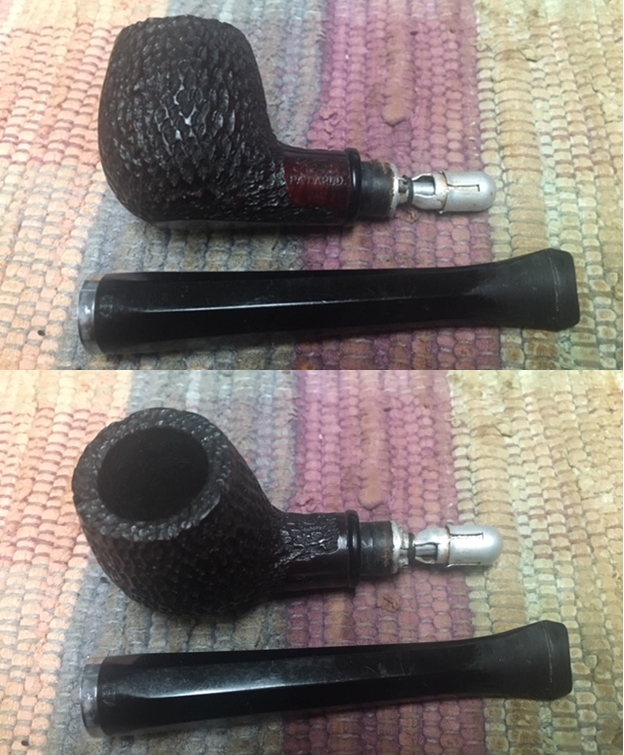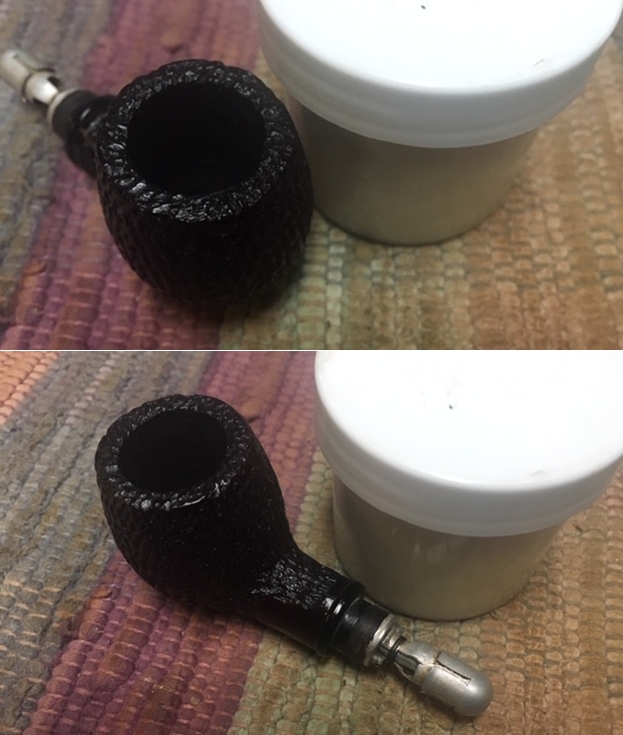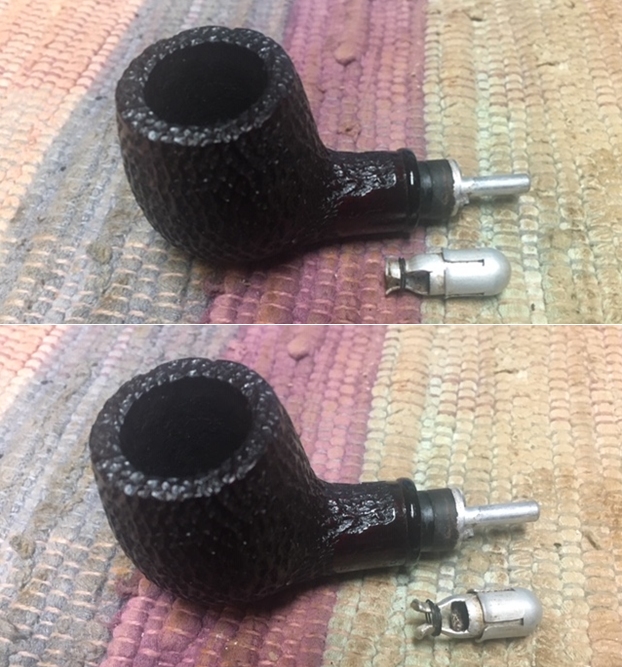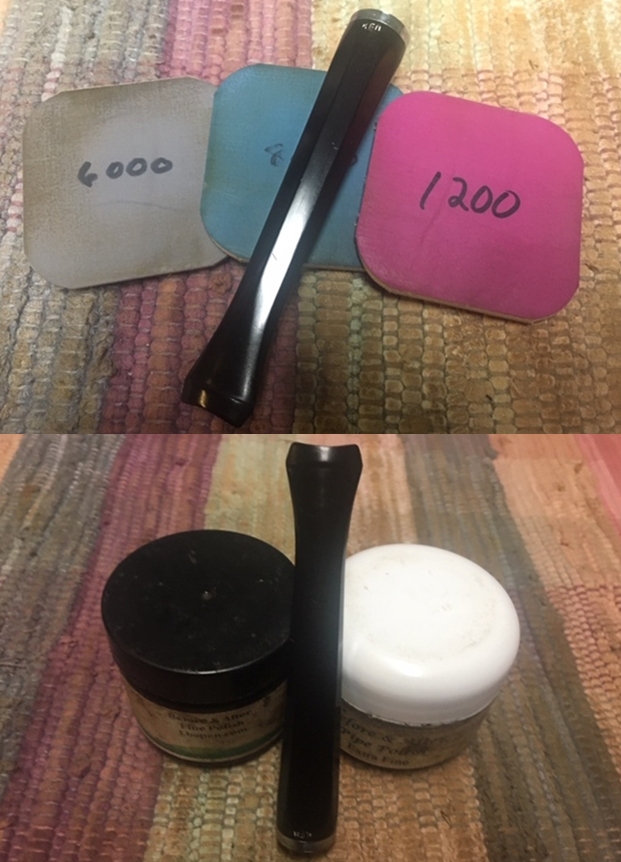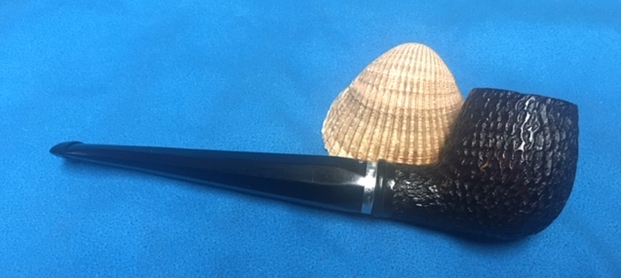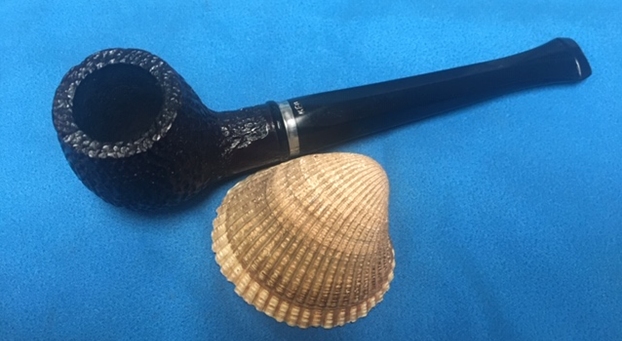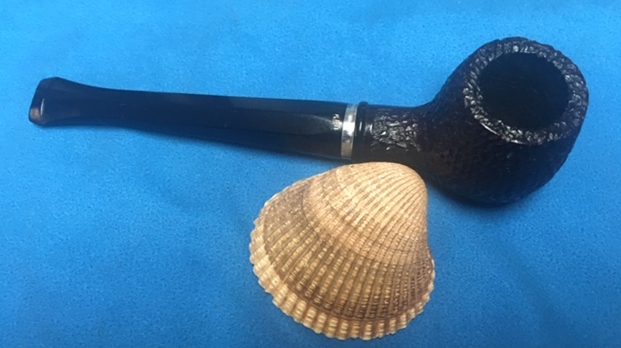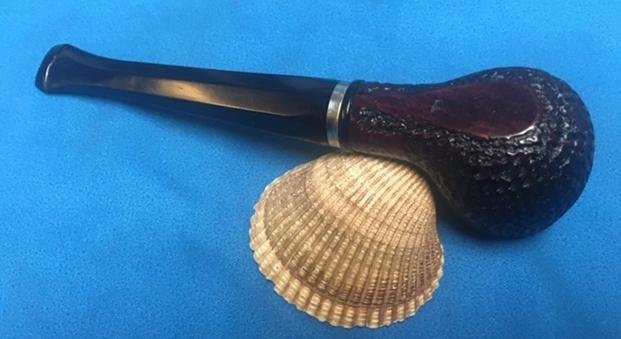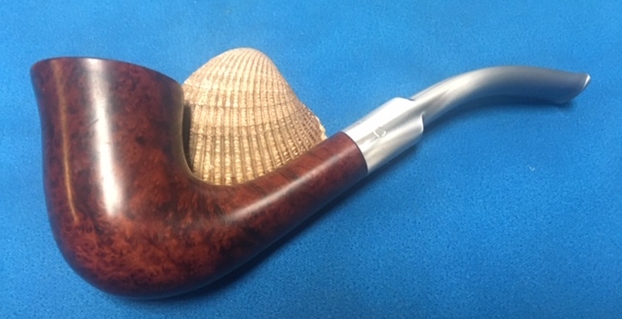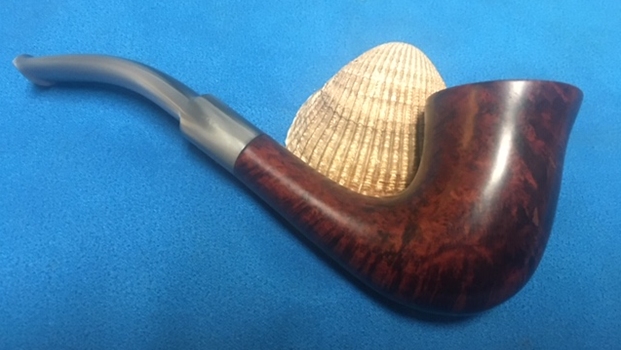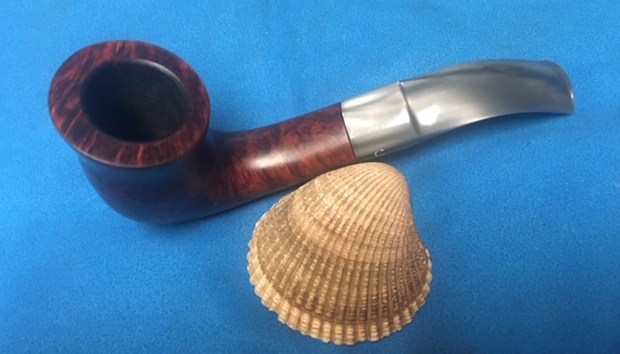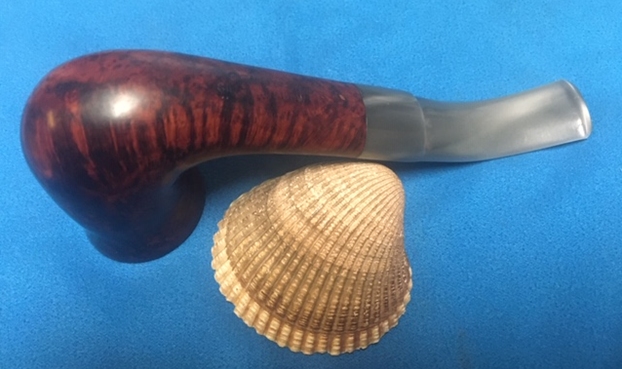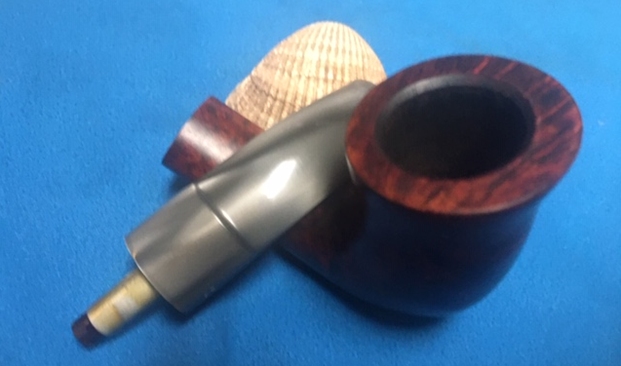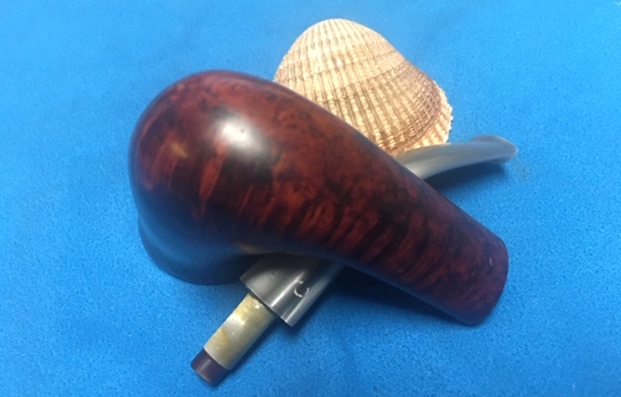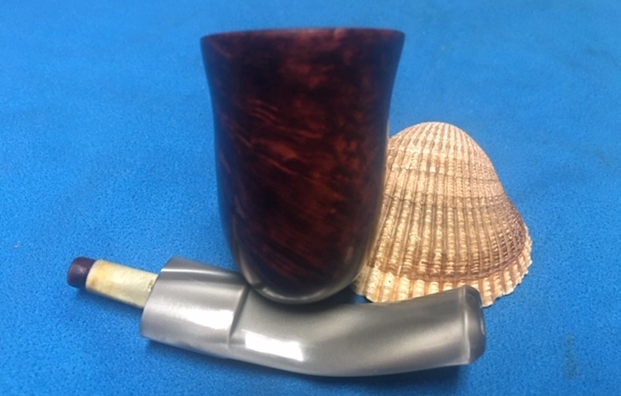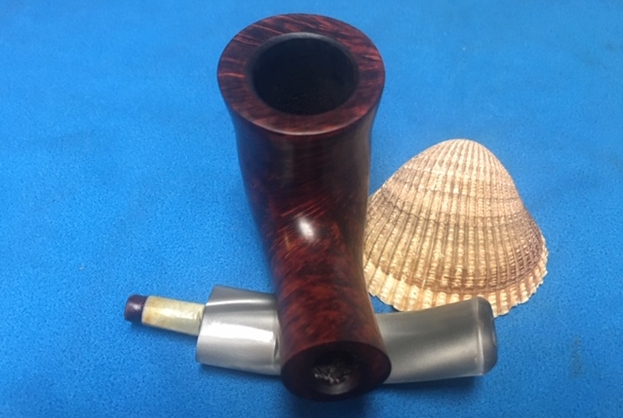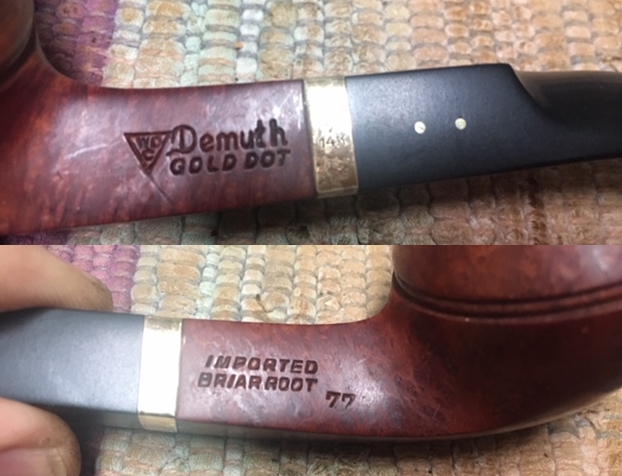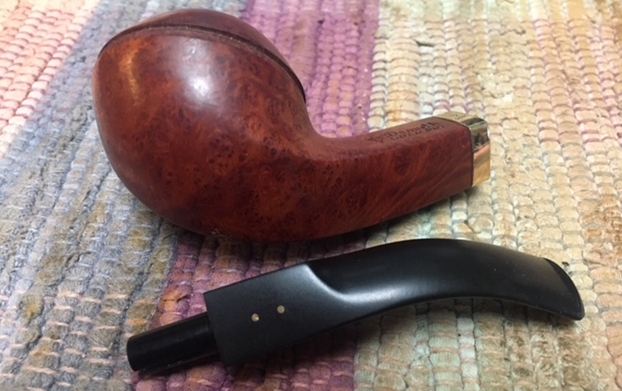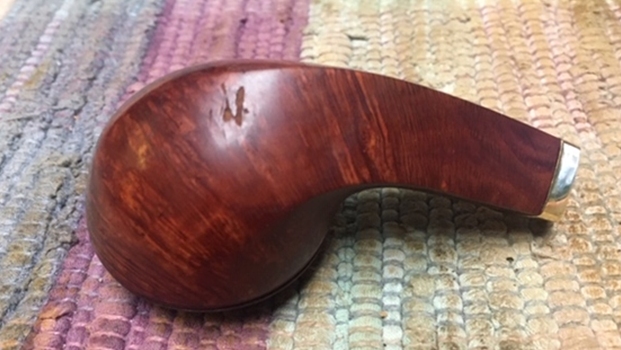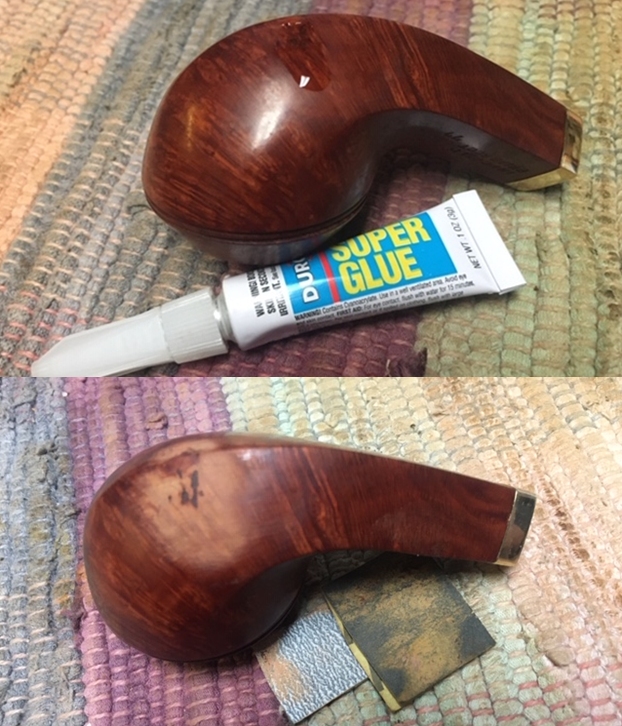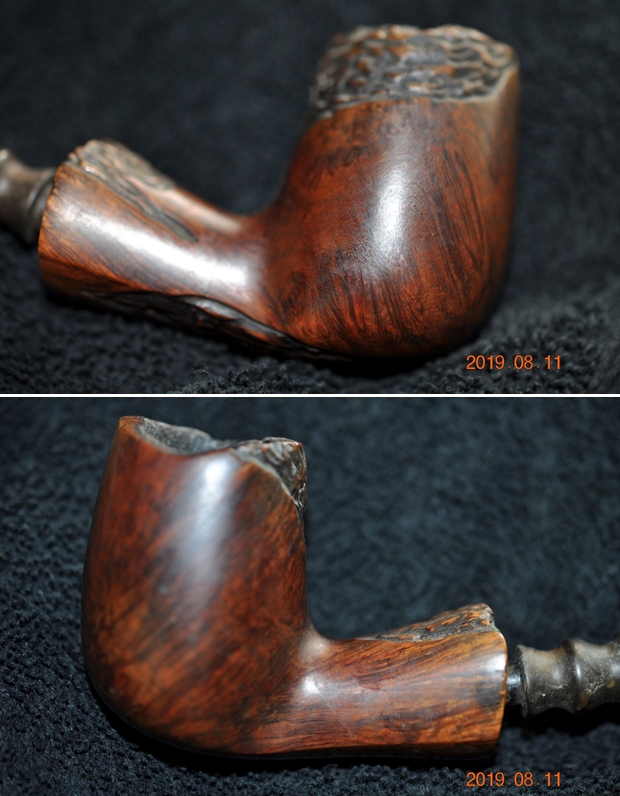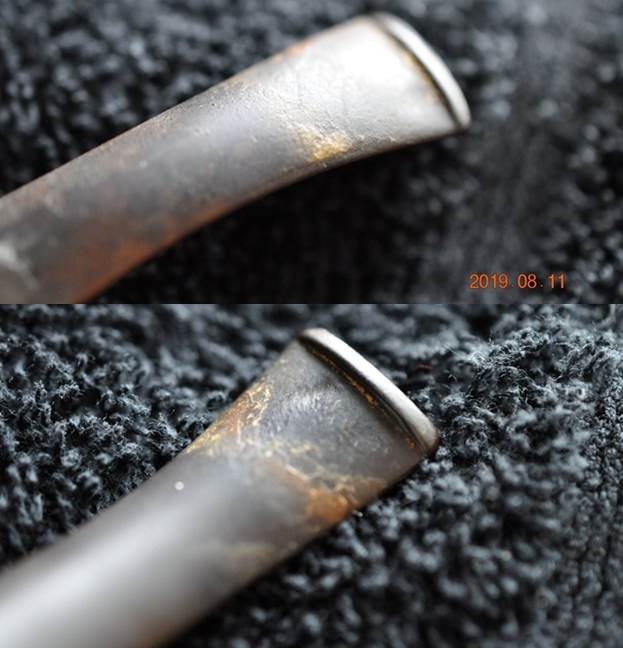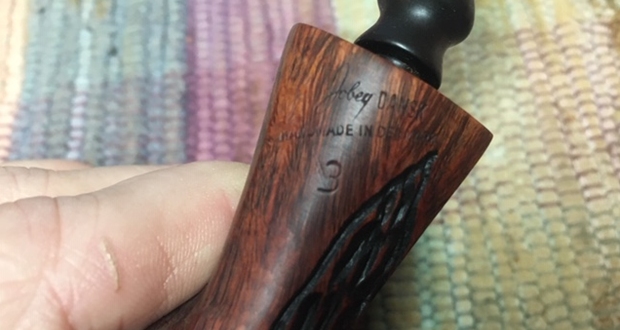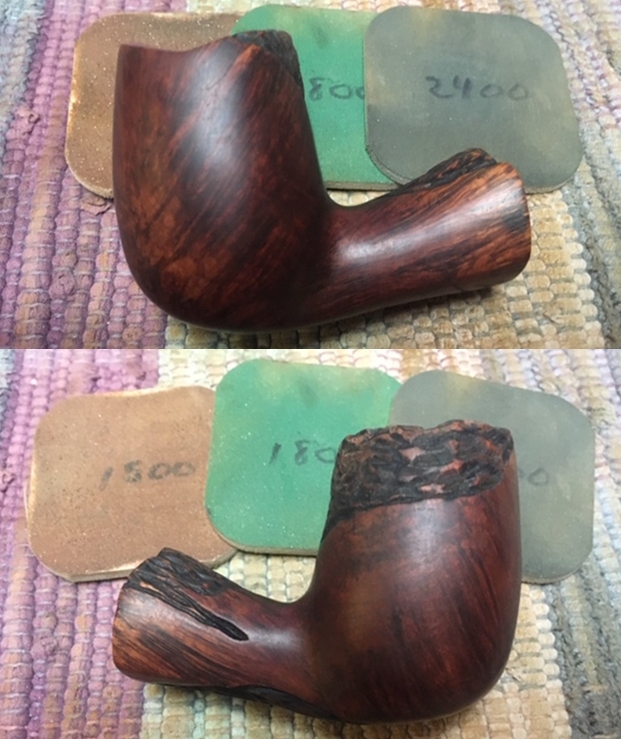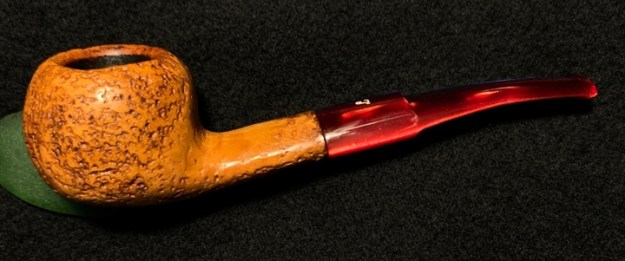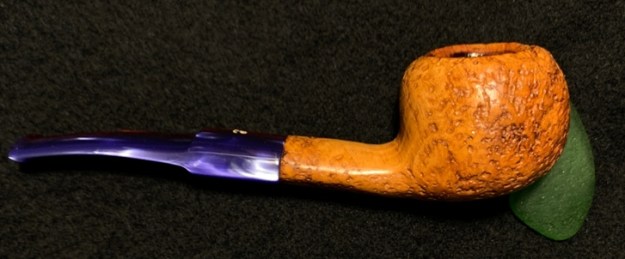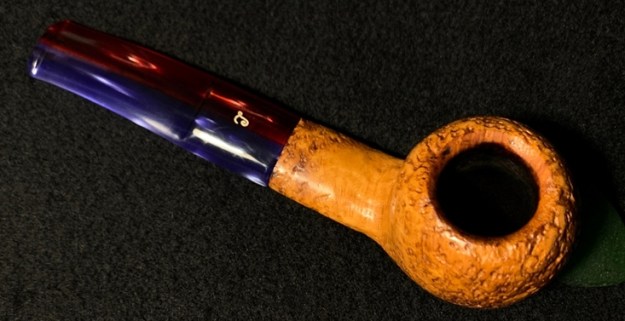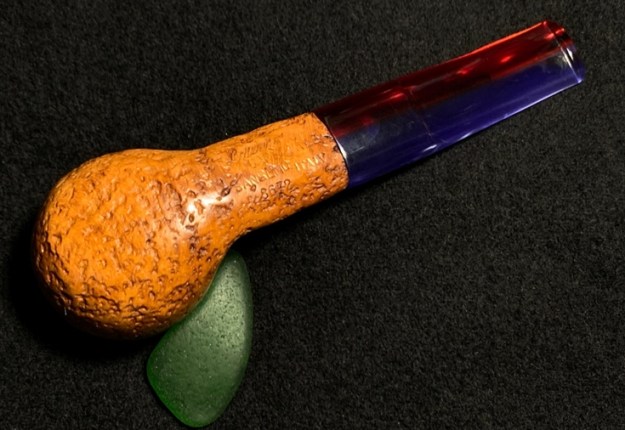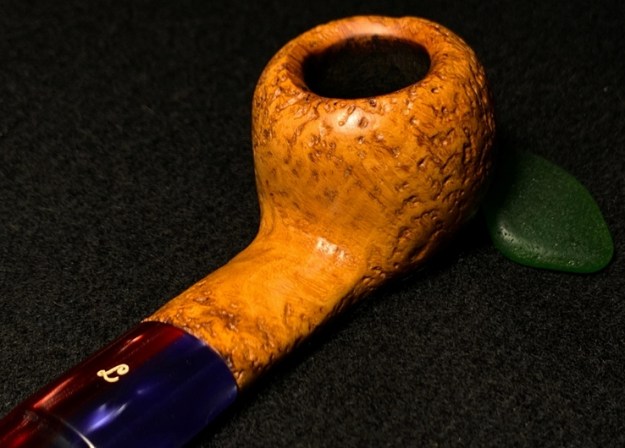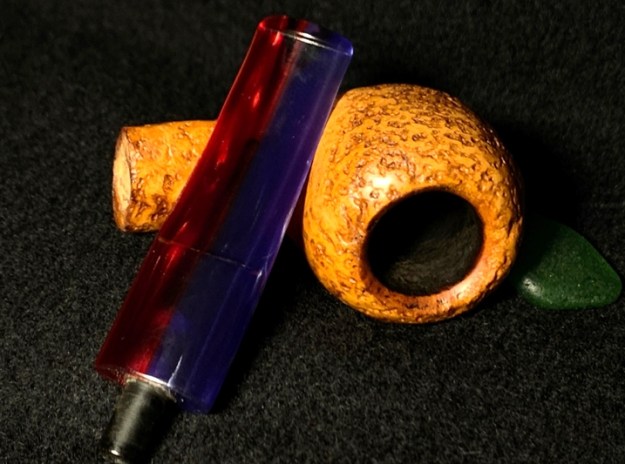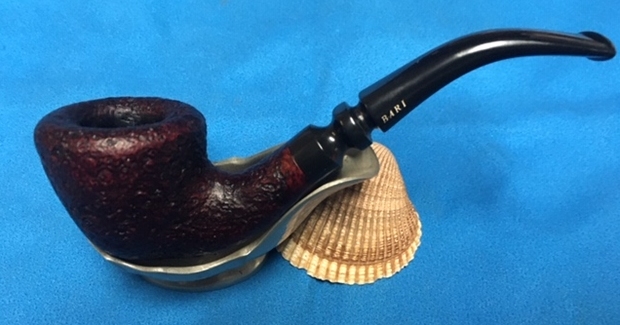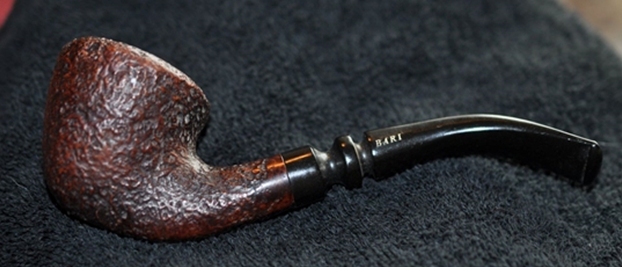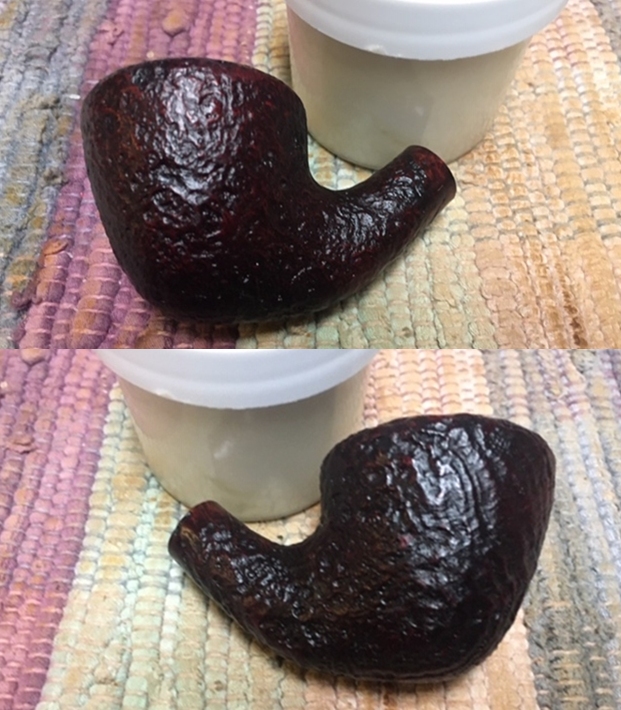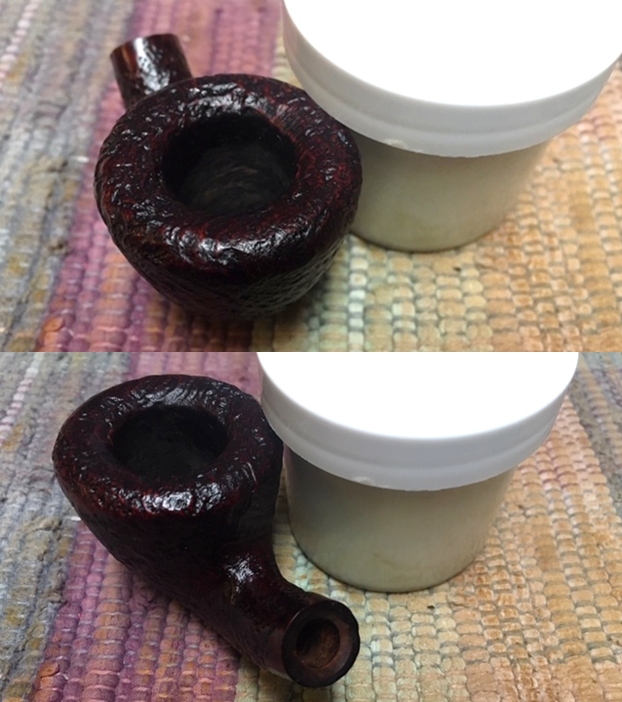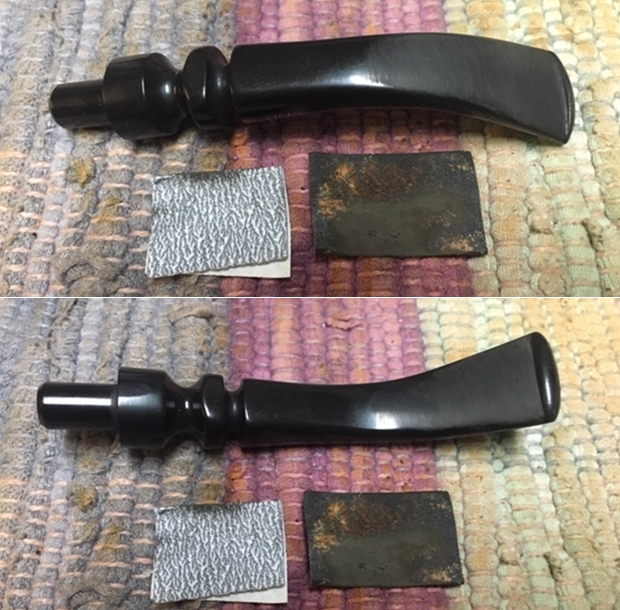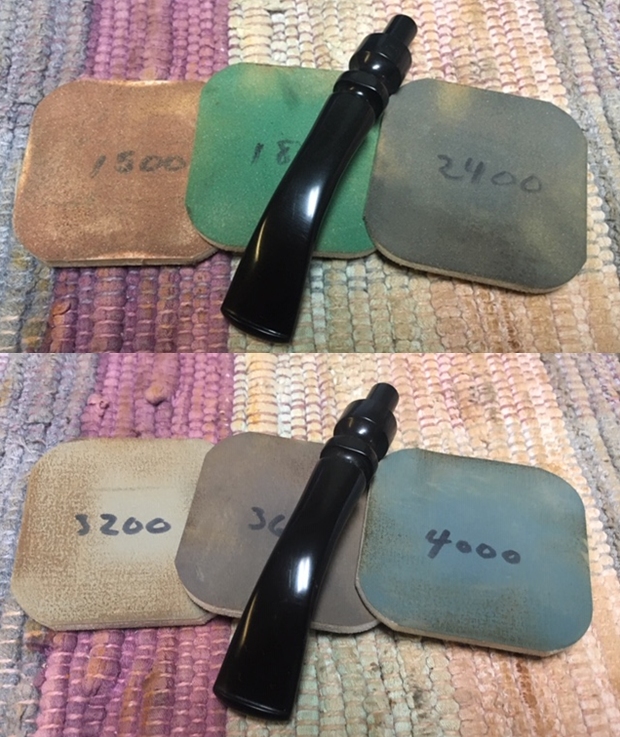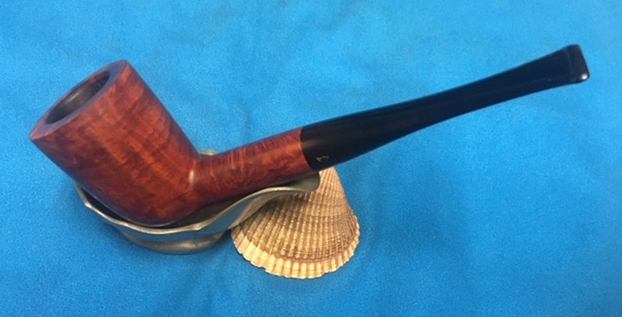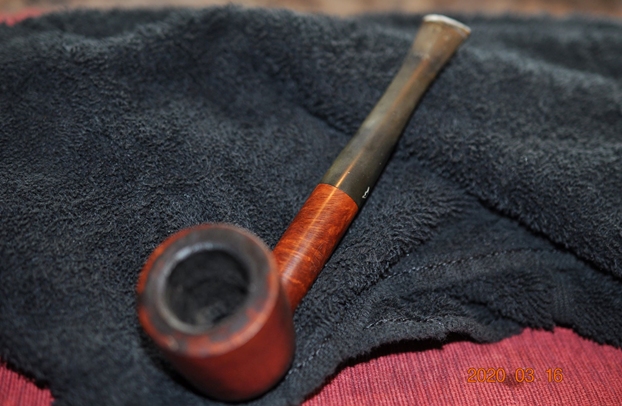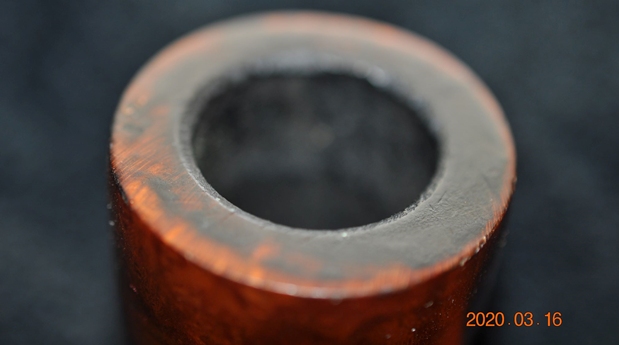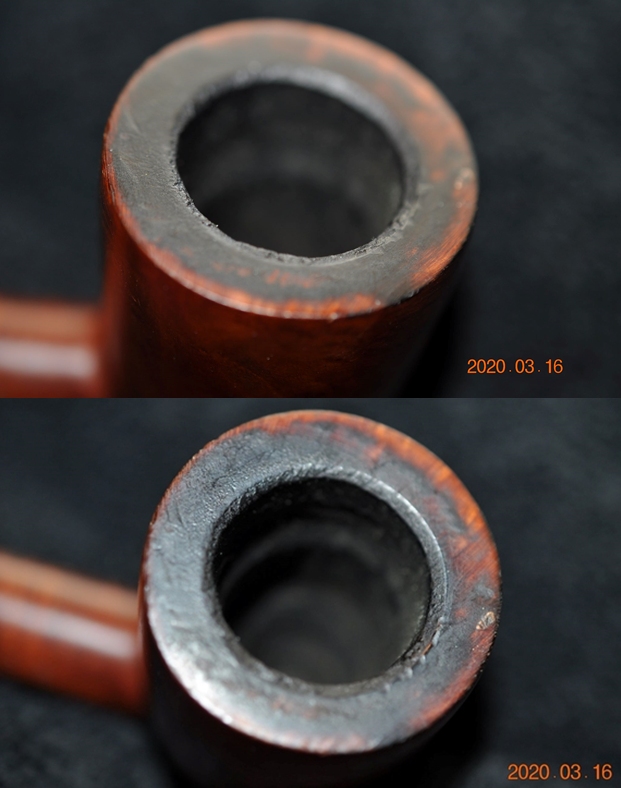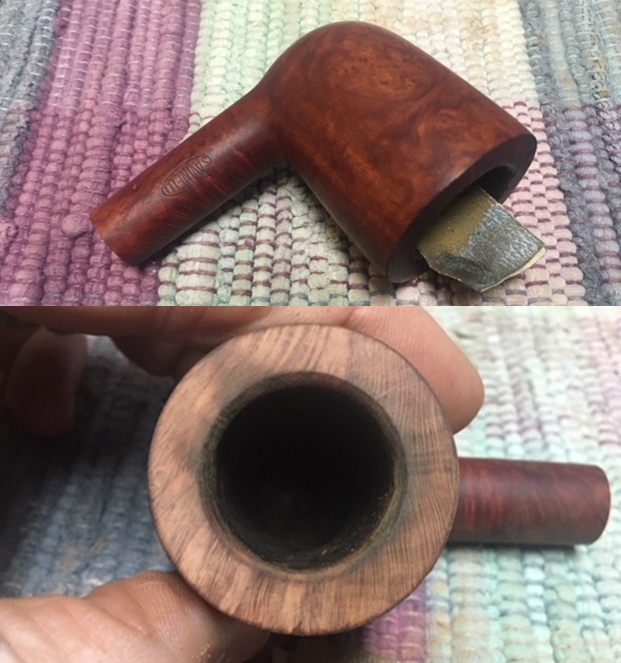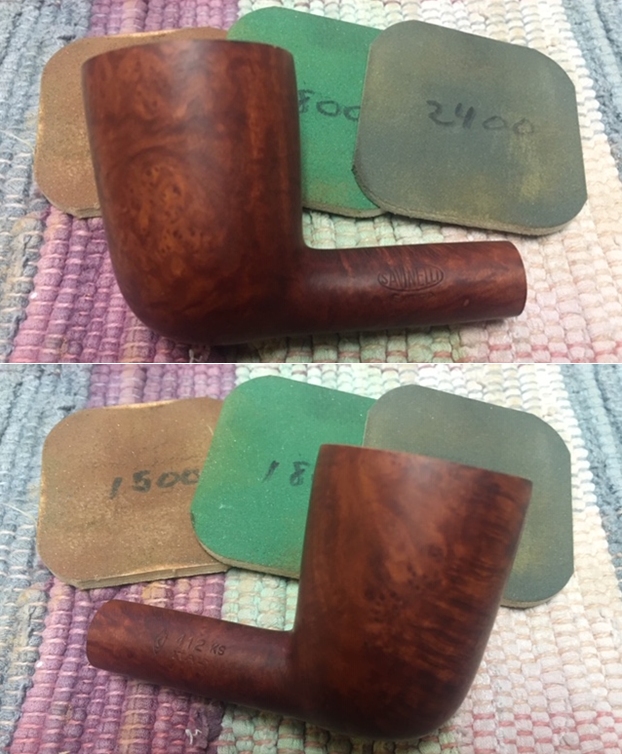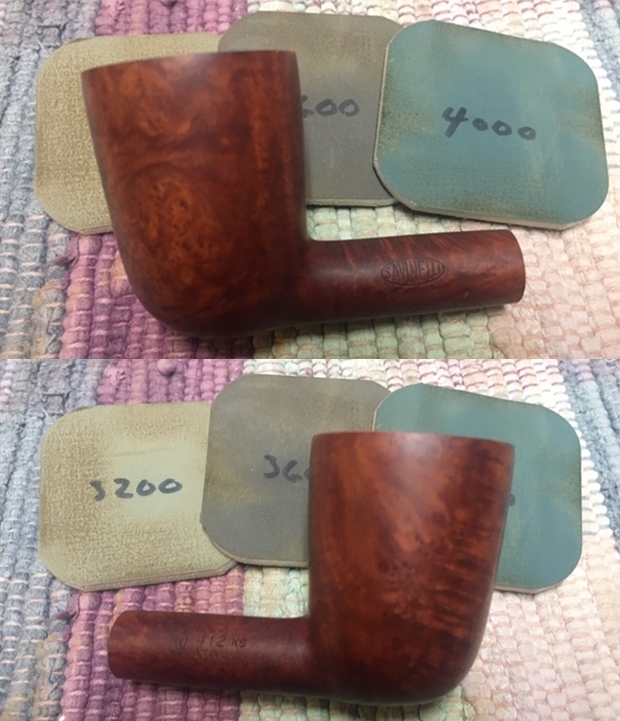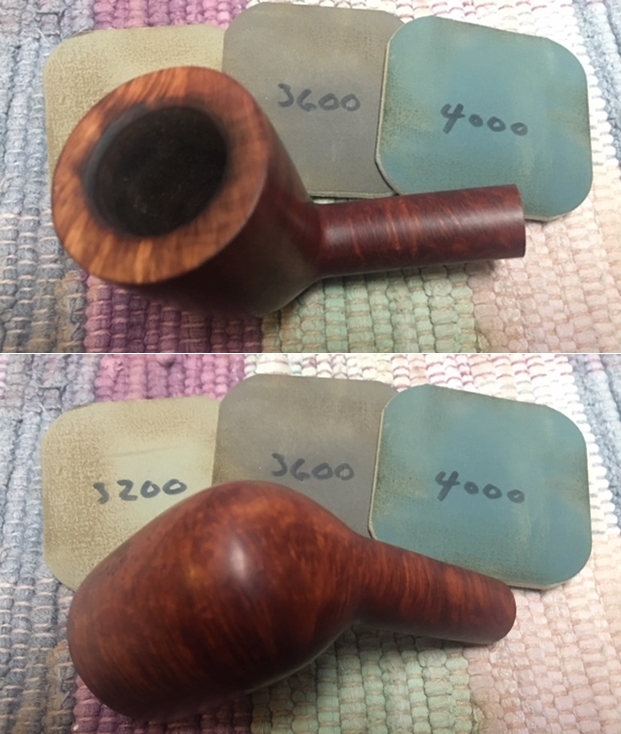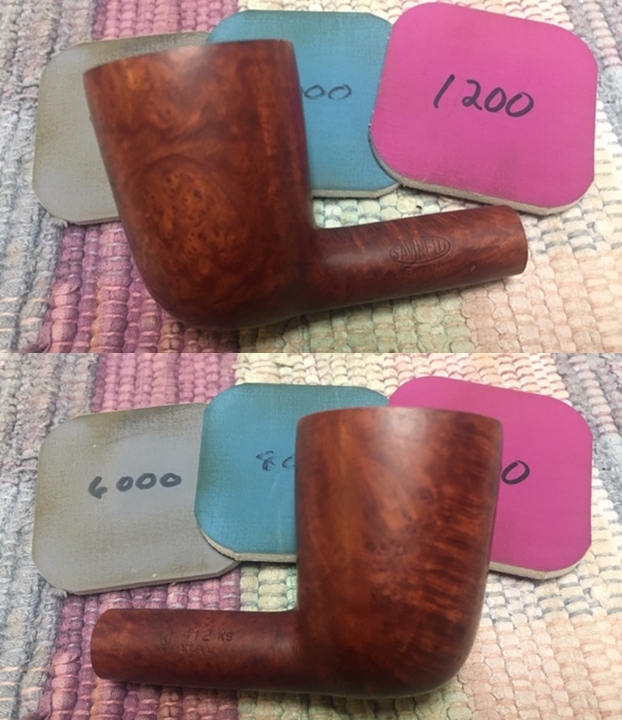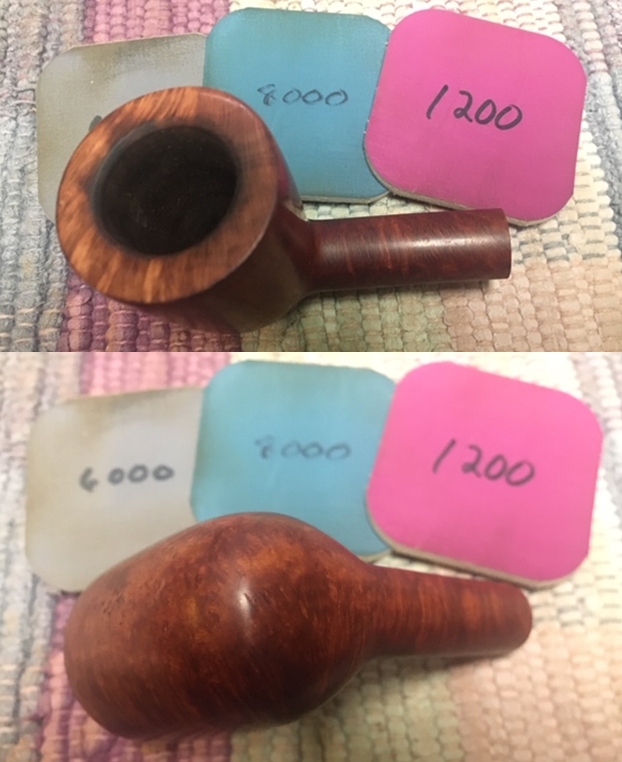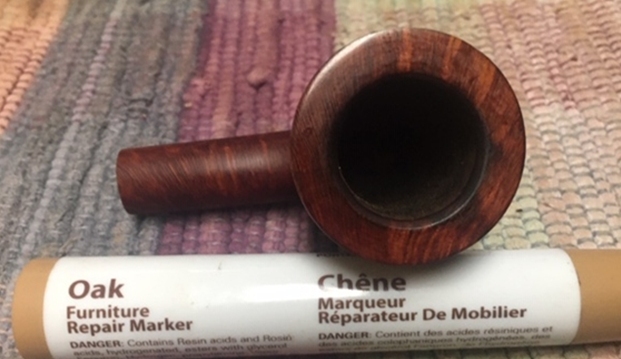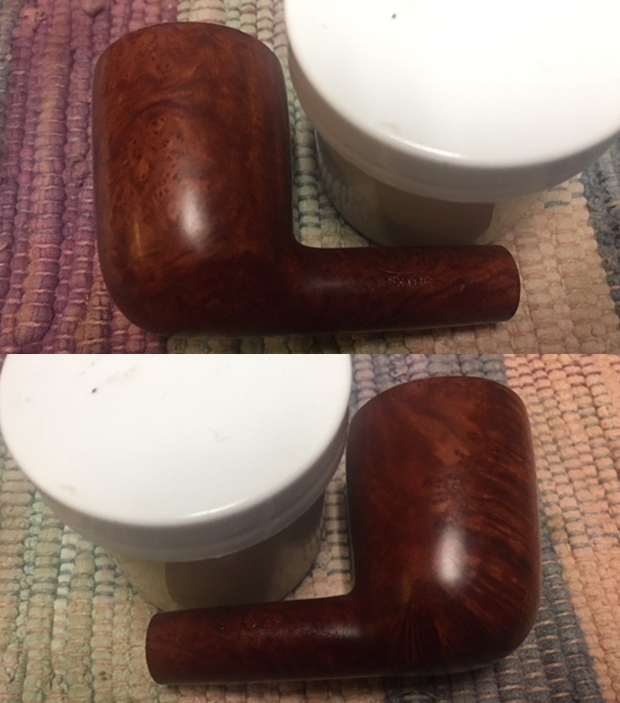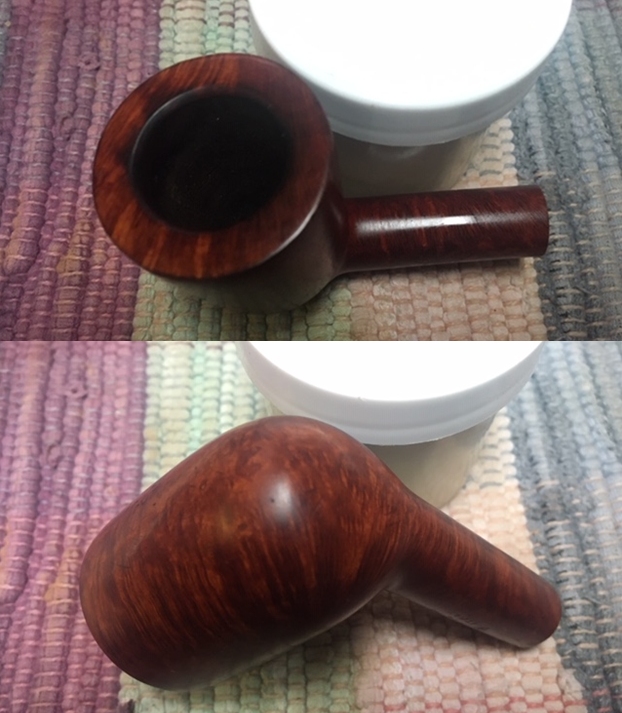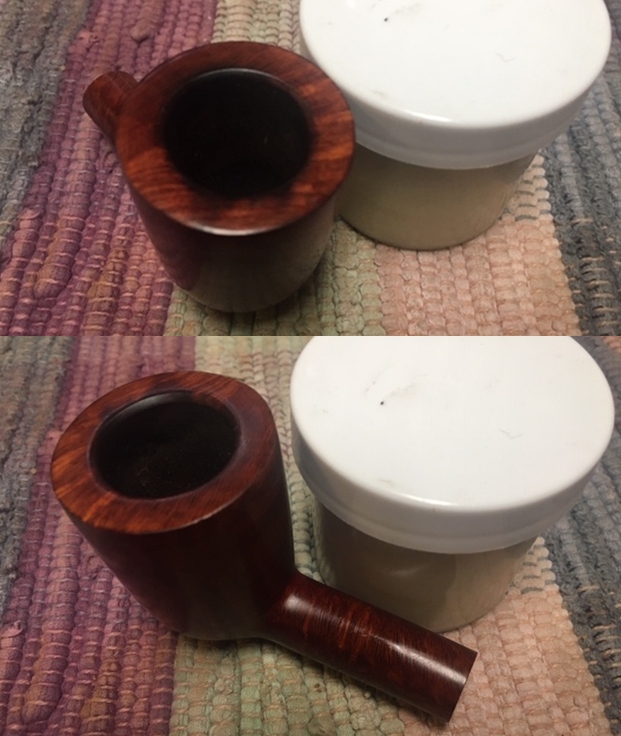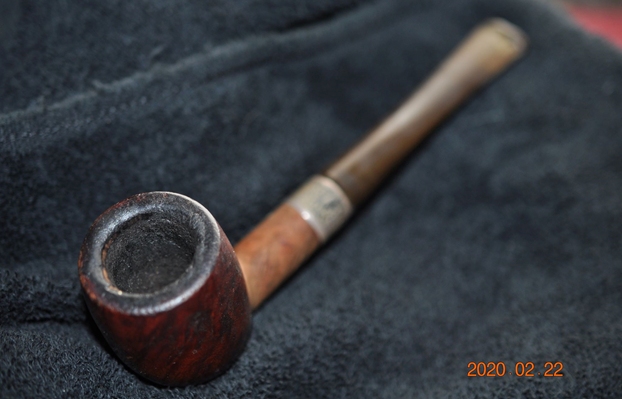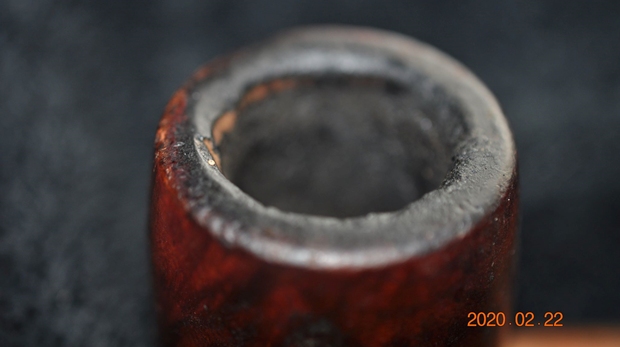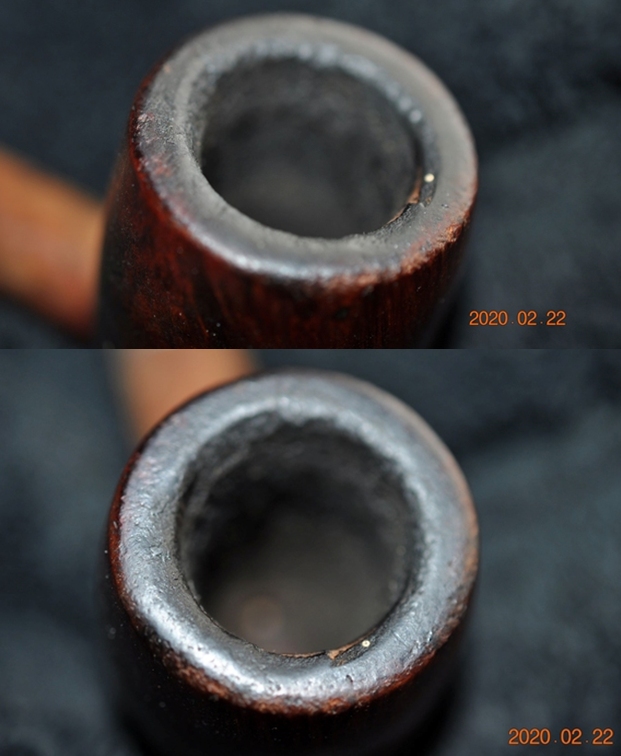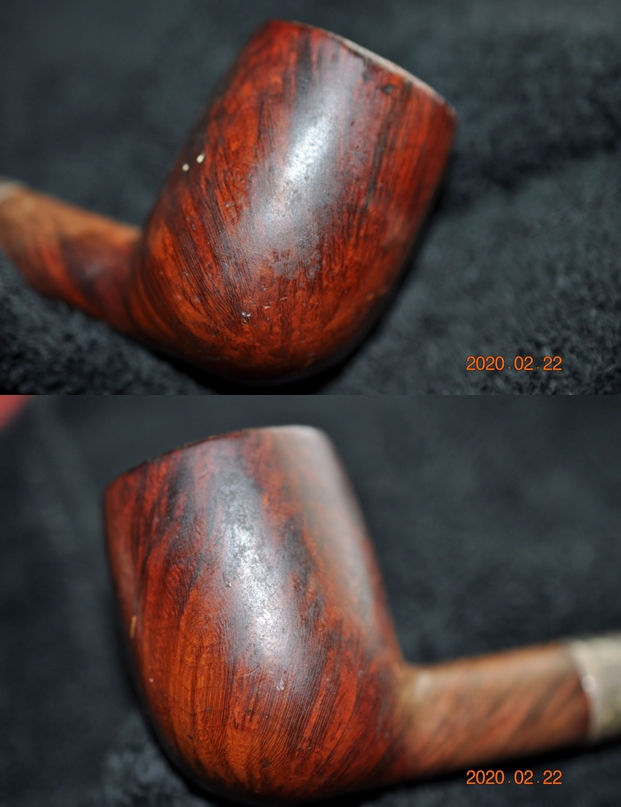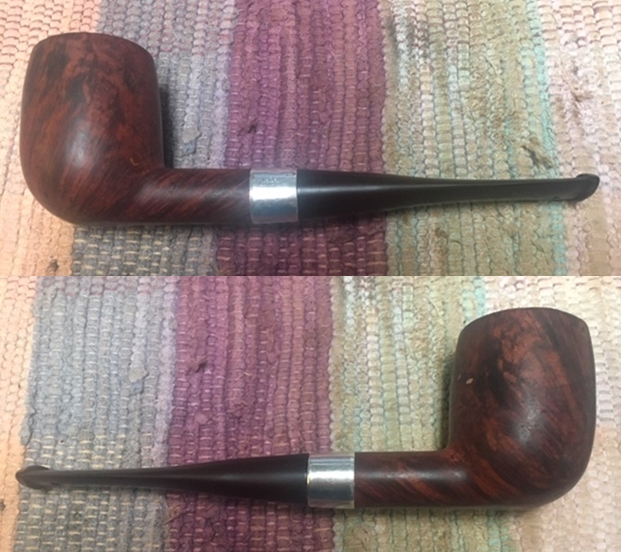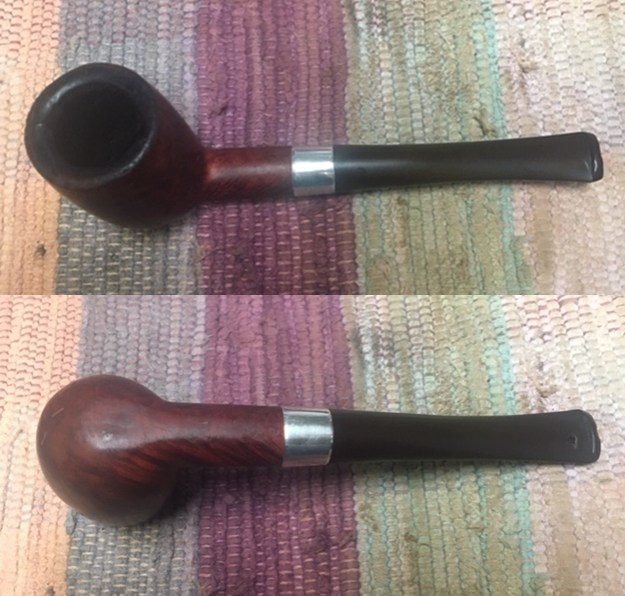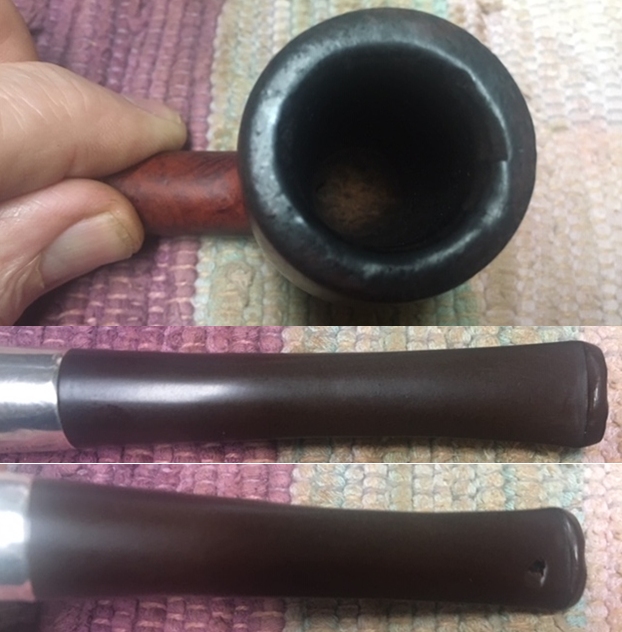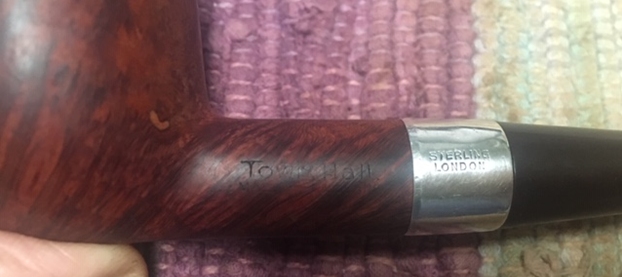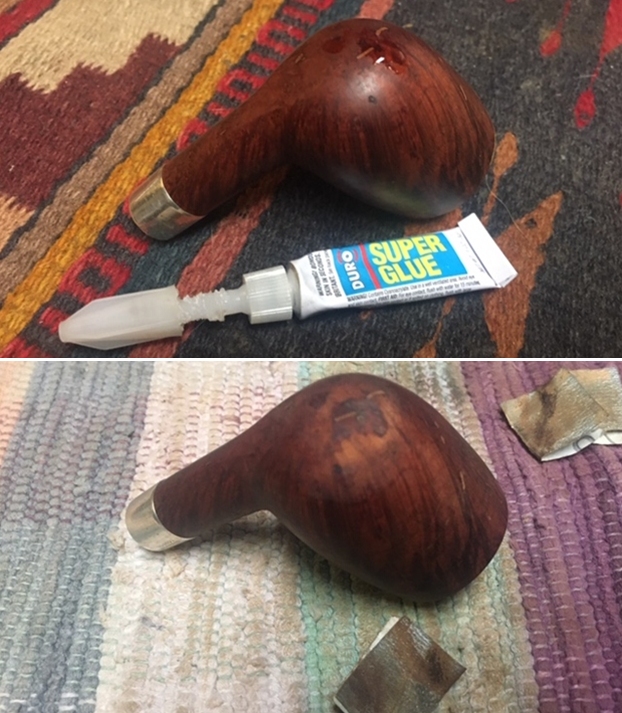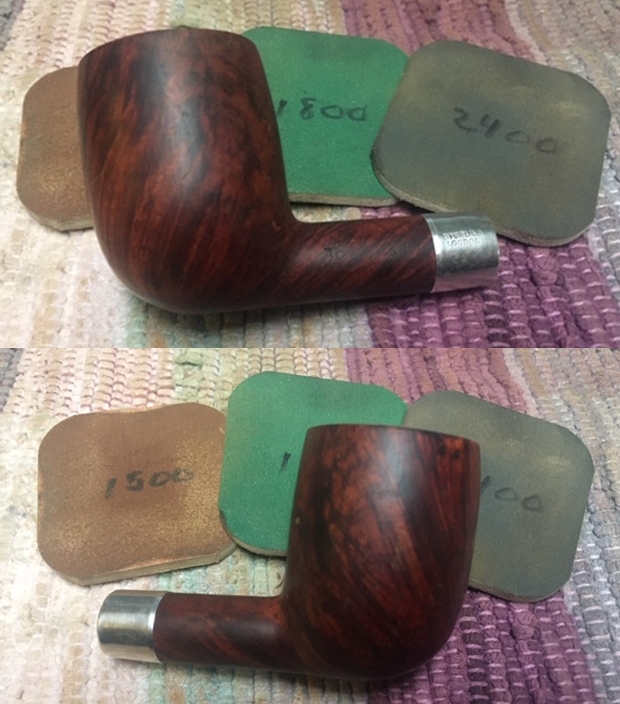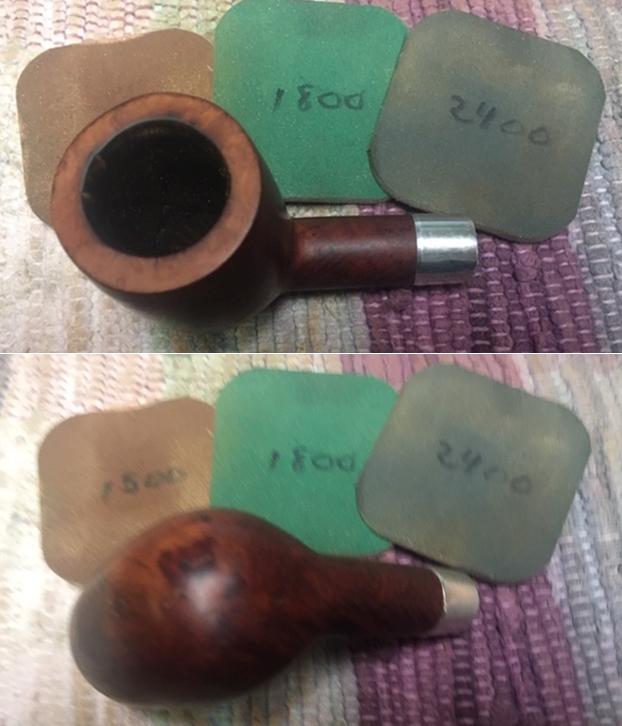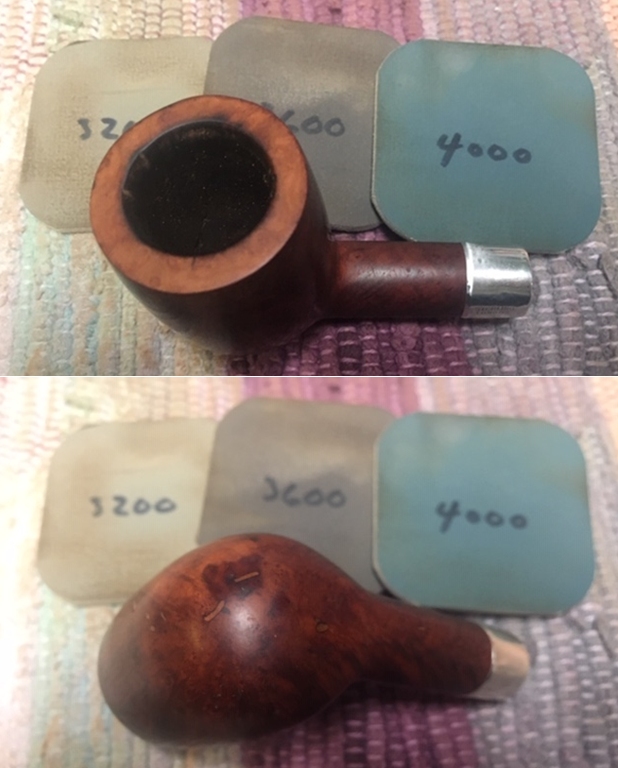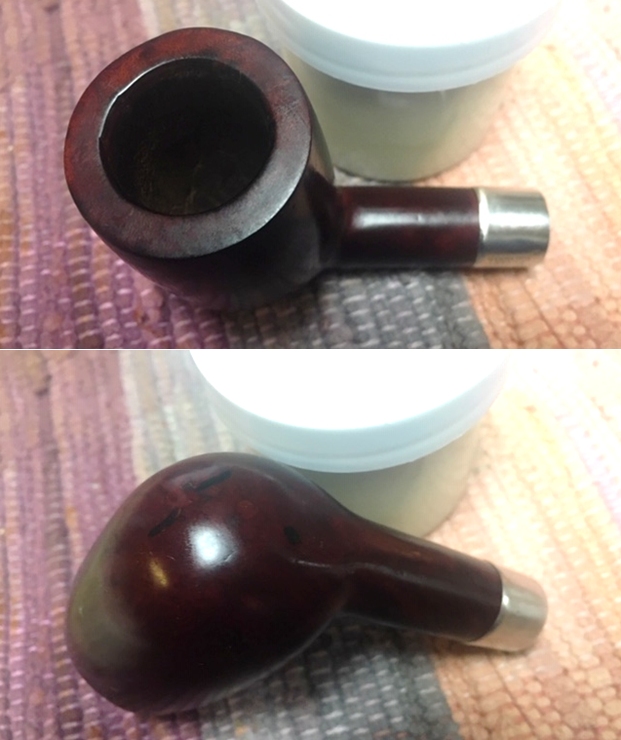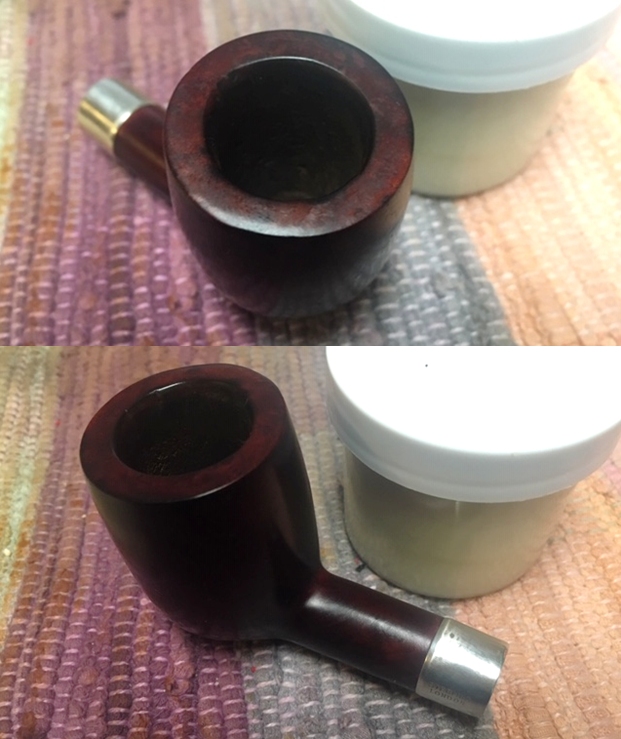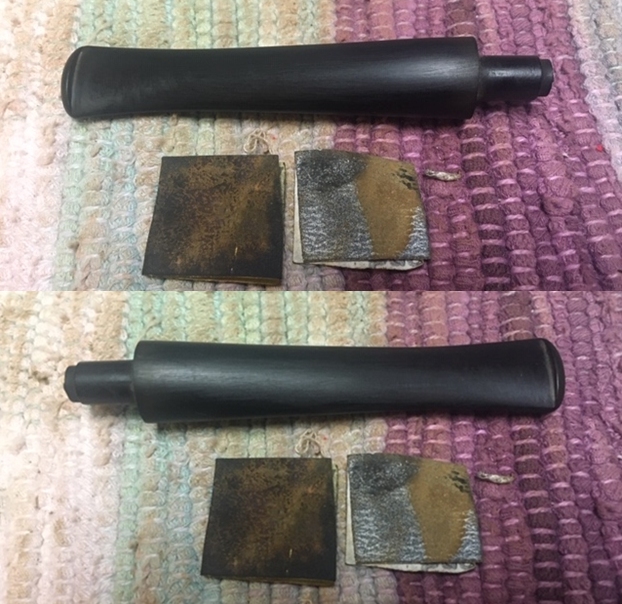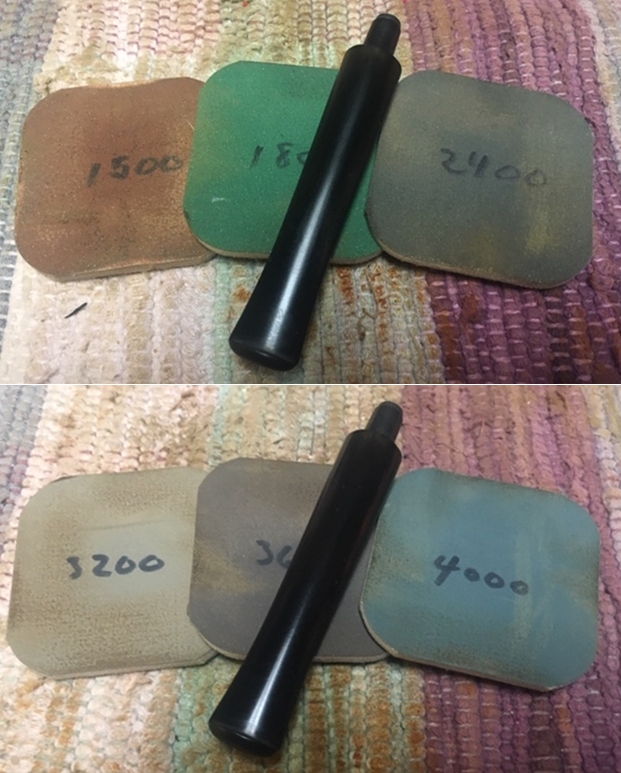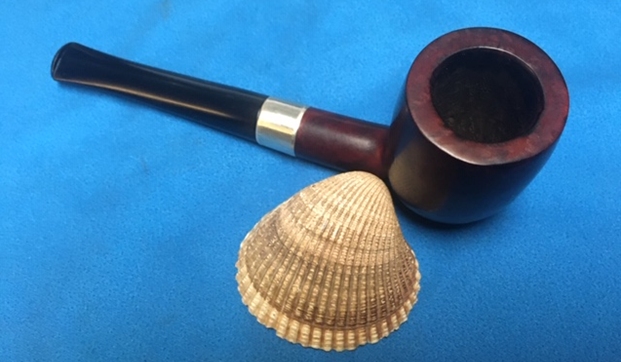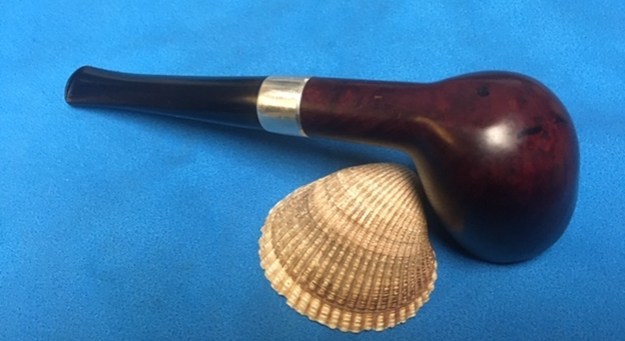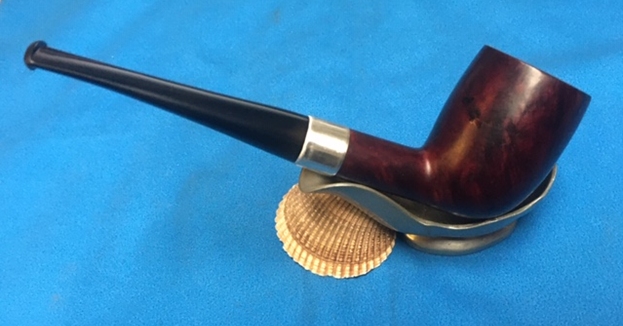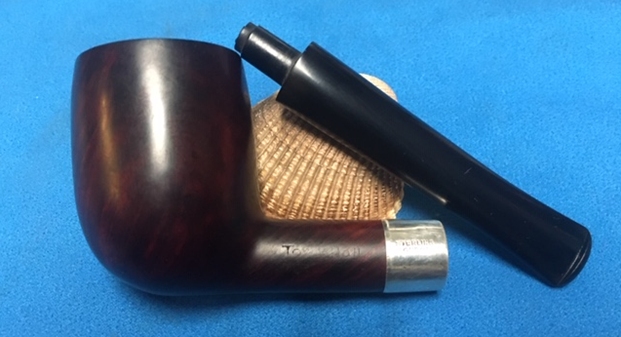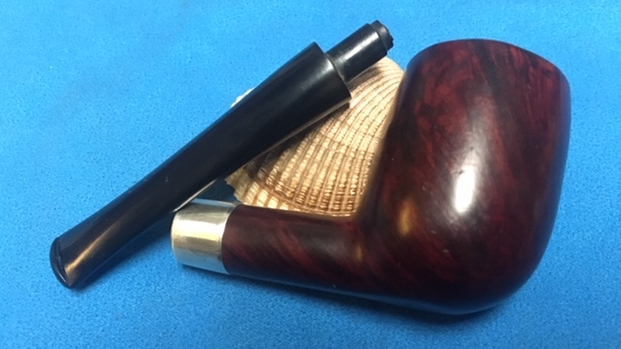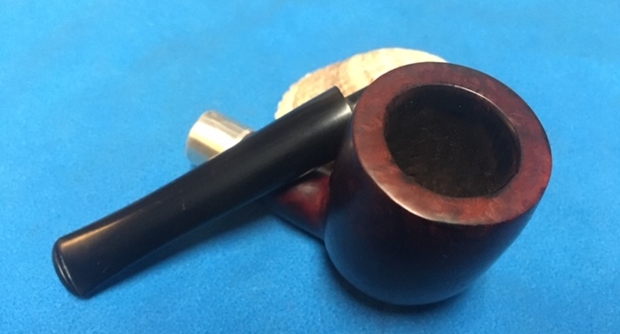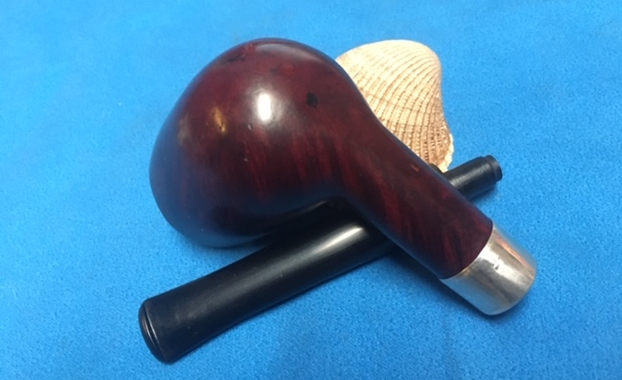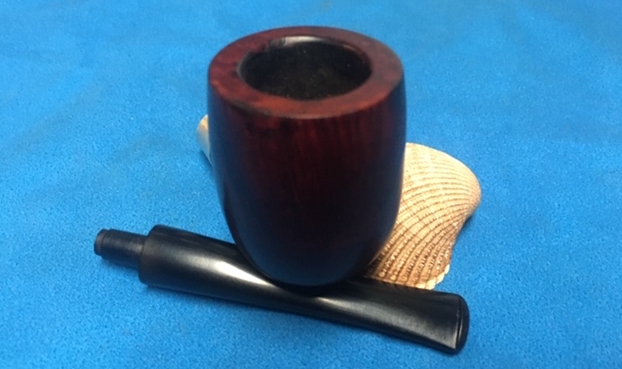
Tag Archives: Bowls – refinishing

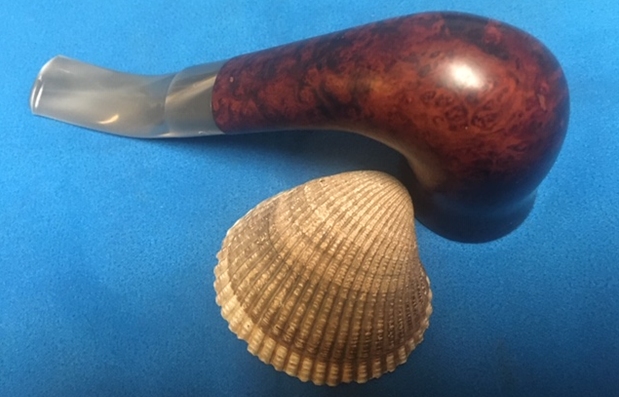
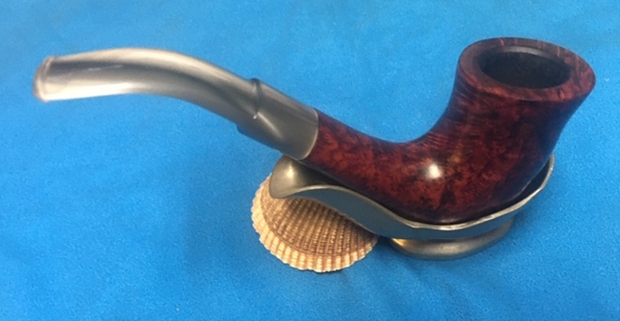
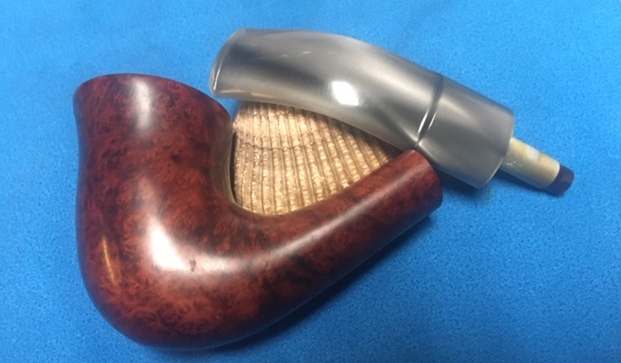
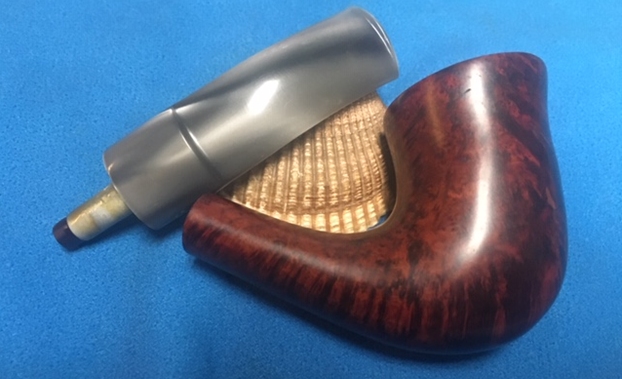
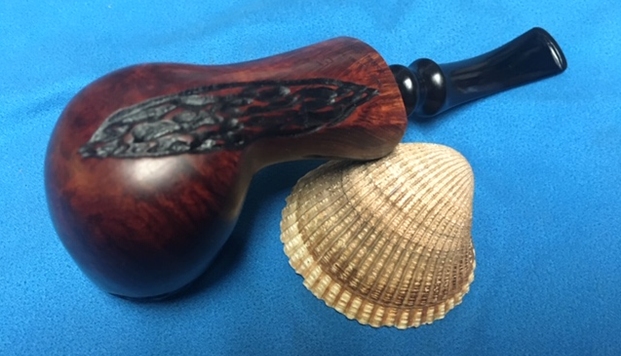
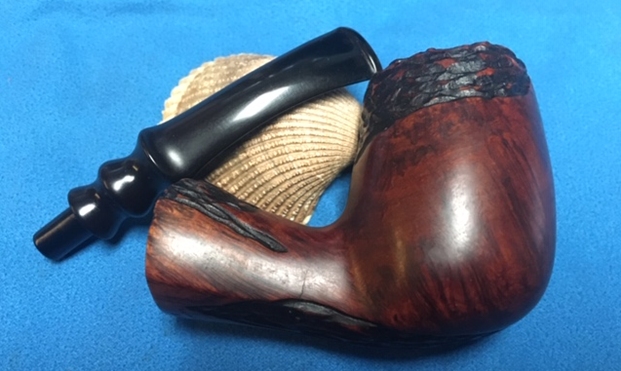
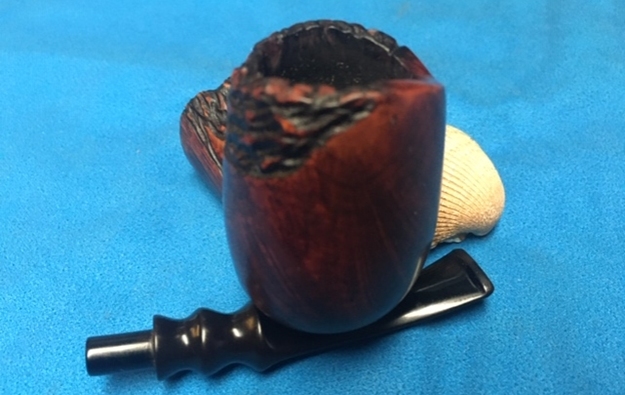
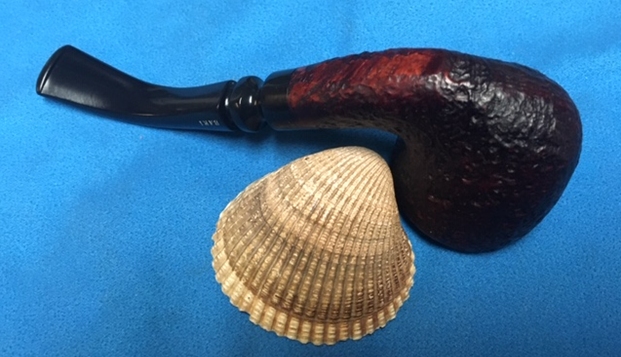
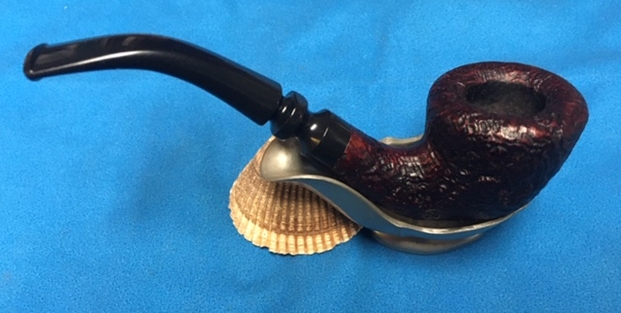
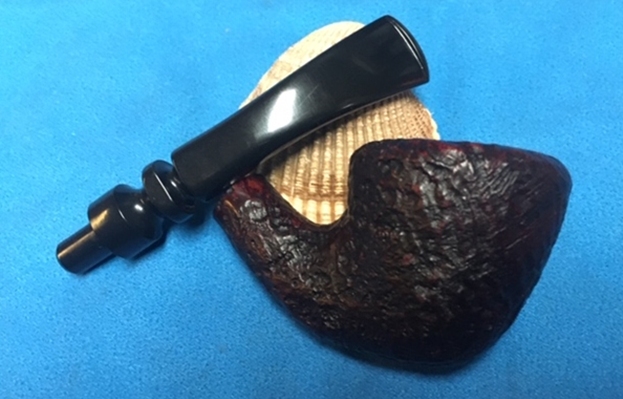
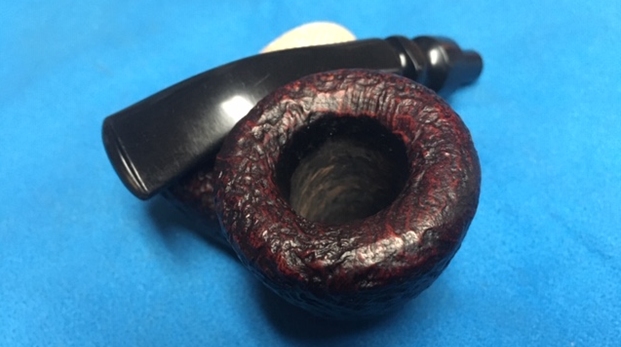
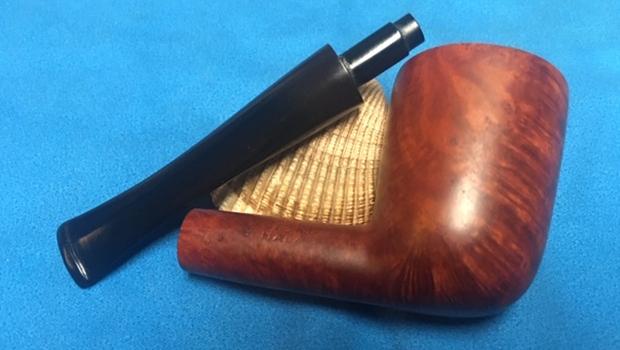
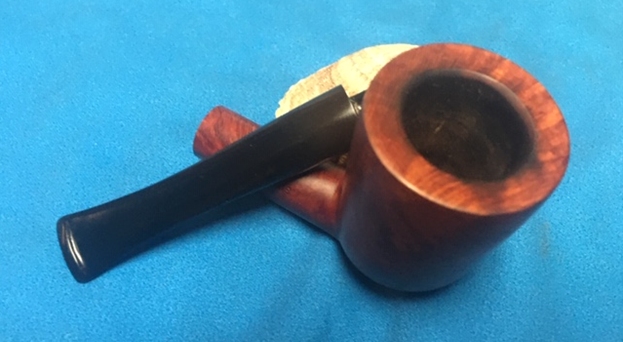
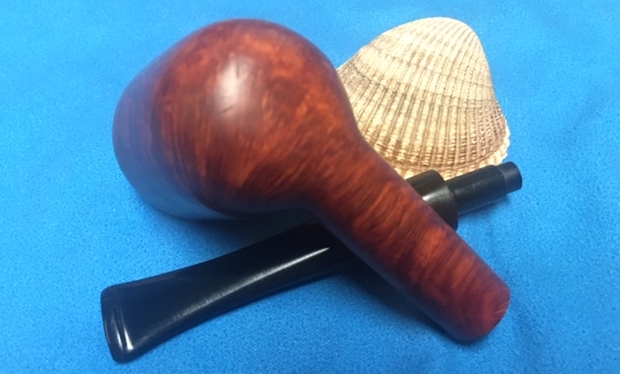
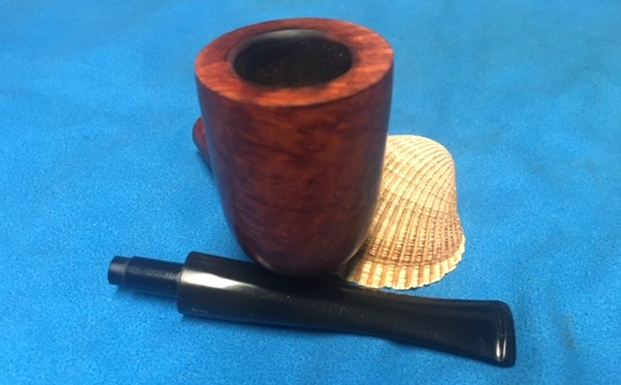
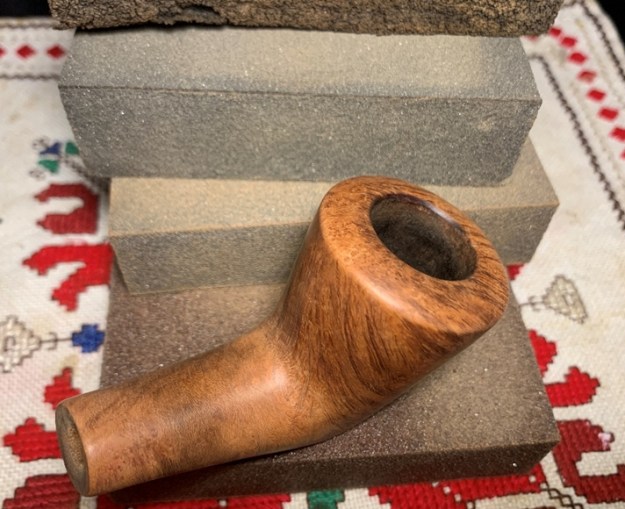
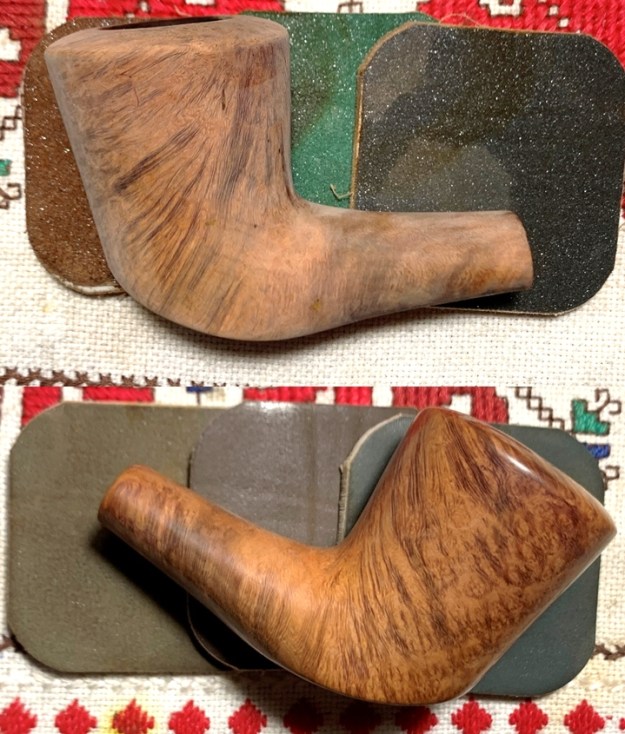
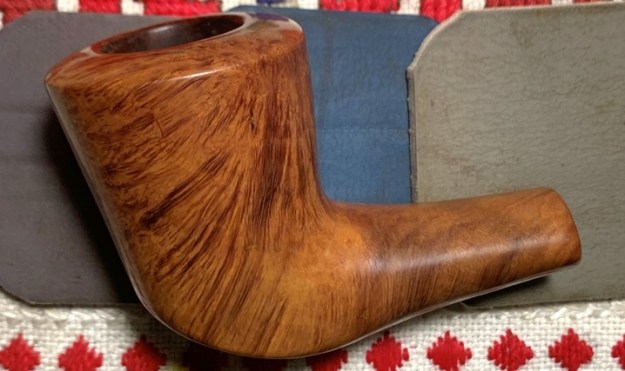
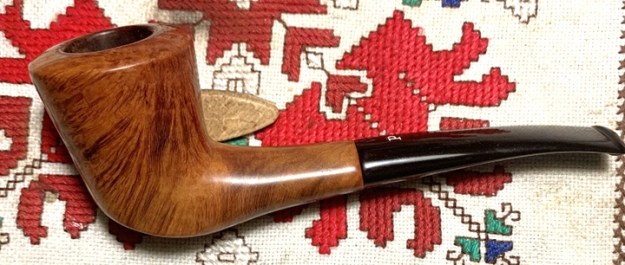
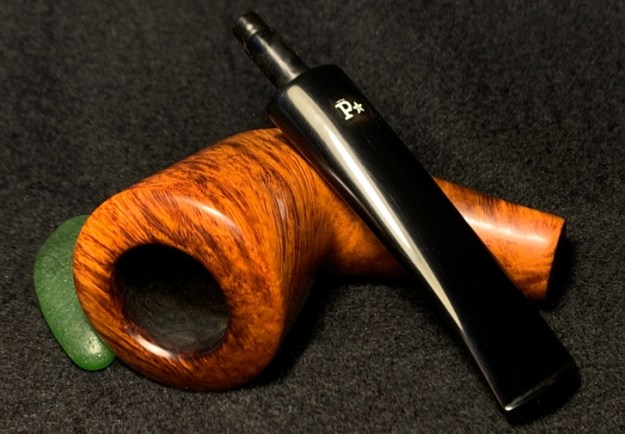
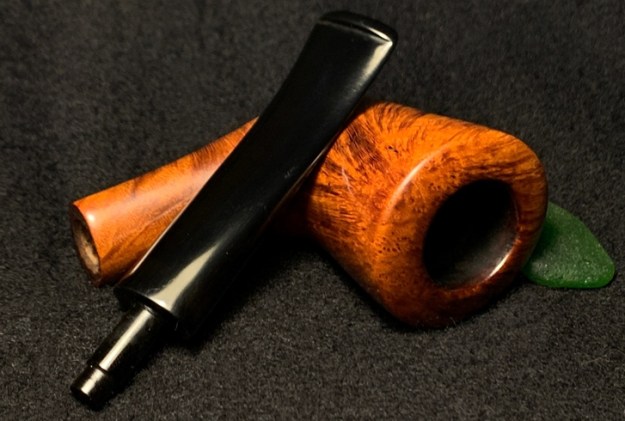
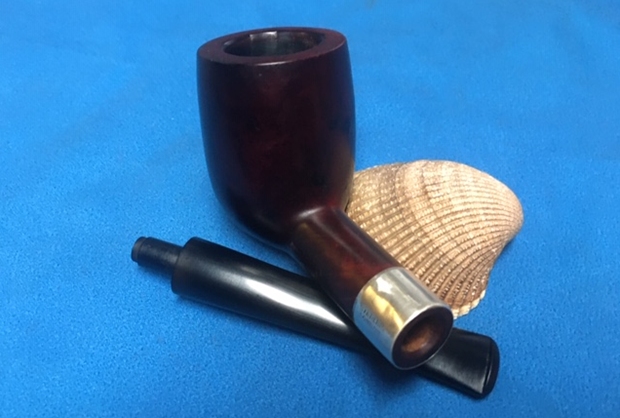
My Future Daughter-in-Law Commissions a Sculpted Bent Billiard as a Gift for Her Father


Blog by Dal Stanton

When your son brings home (to Bulgaria!) a young woman for you to meet, you know it’s serious.  That’s what happened this past Christmas!  Our son, Josiah, who lives in St. Louis, Missouri, brought Katie, who lives in Chattanooga, Tennessee, to Sofia to meet Mom and Dad – no pressure on her!  They met in college and after graduation, they stayed in touch as friends, Josiah ending up in St. Louis where he finished his master’s degree and is now a counselor.  Katie stayed in Chattanooga and works on staff with youth in a church.  Our daughter and husband also made the trip to Sofia from Nashville for a quintessential Bulgarian Christmas.  The family was together at the Sofia Airport when Josiah (center) and Katie (flowers 😊) arrived from the US.  Johanna and Niko had arrived a few days earlier – ready to celebrate Christmas!

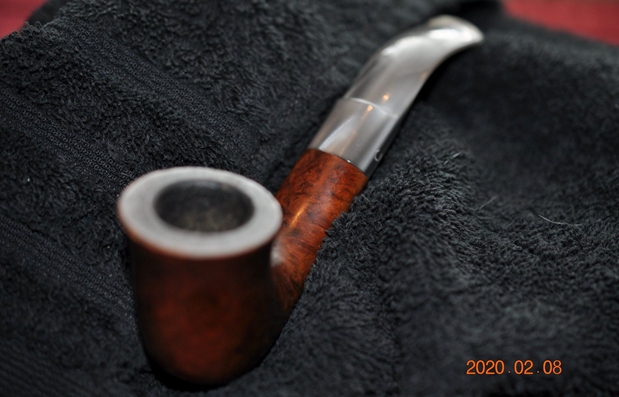
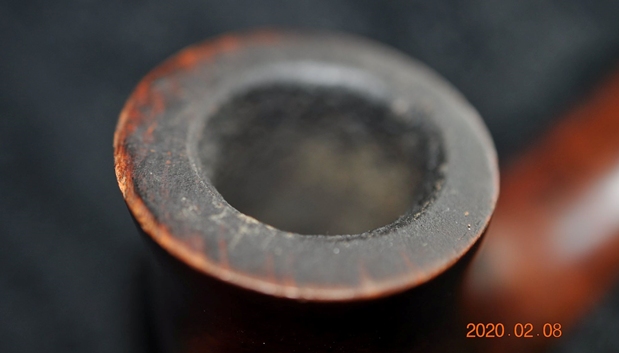
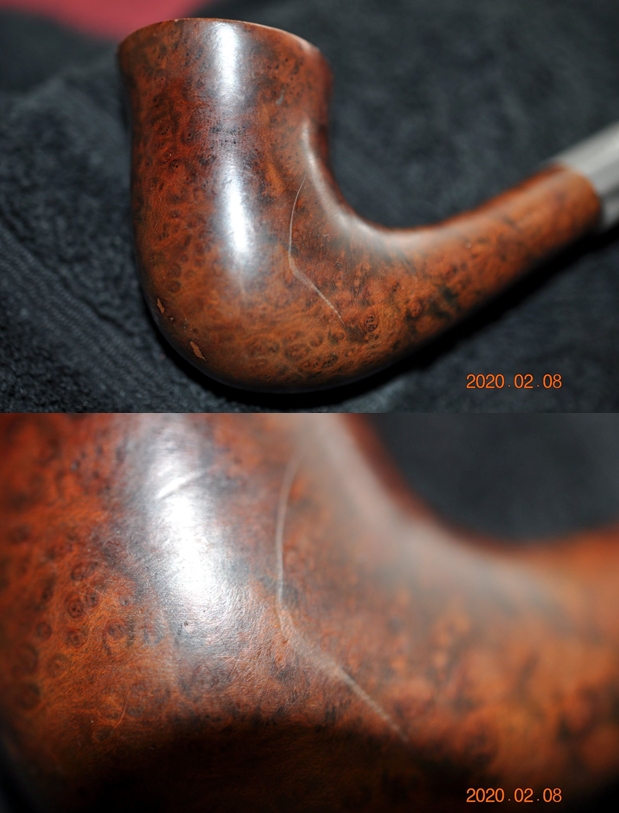
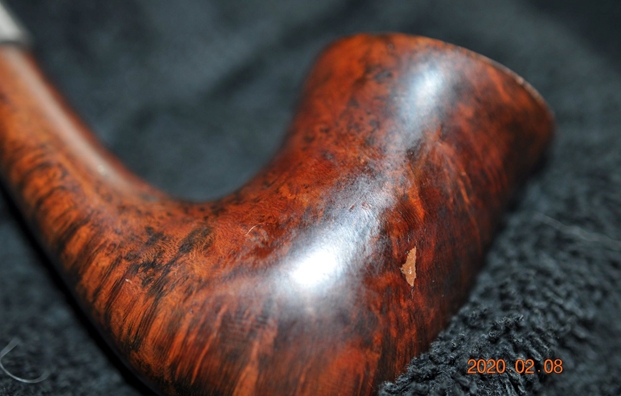
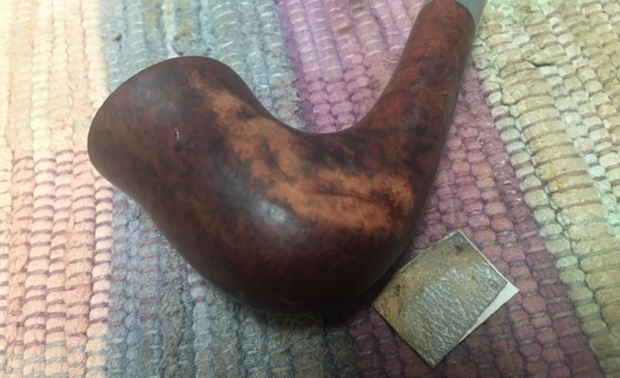
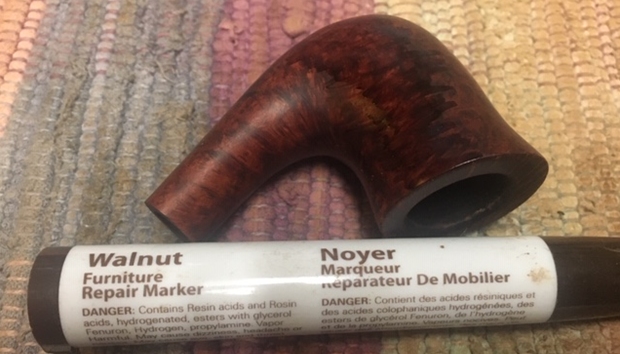
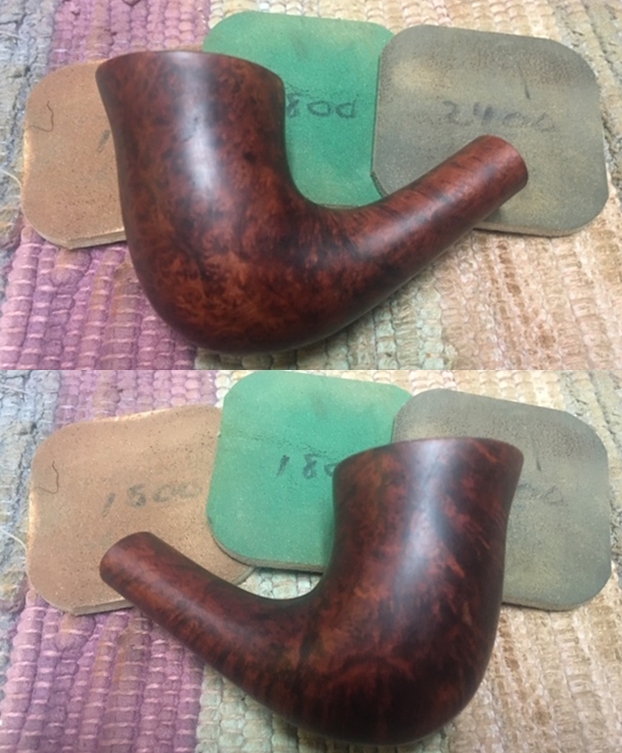
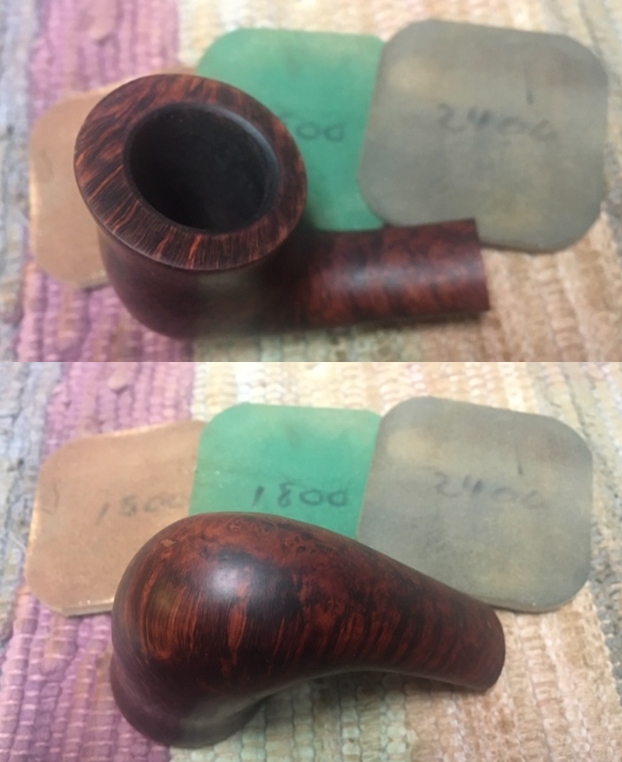
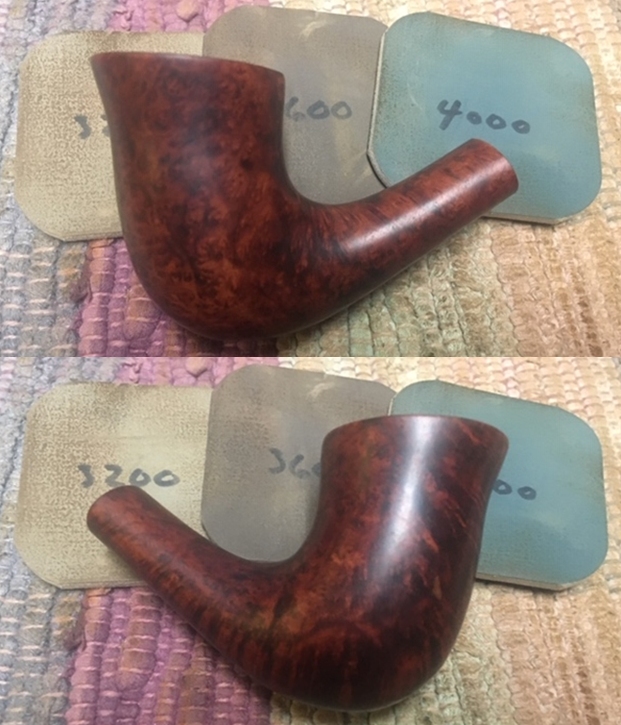
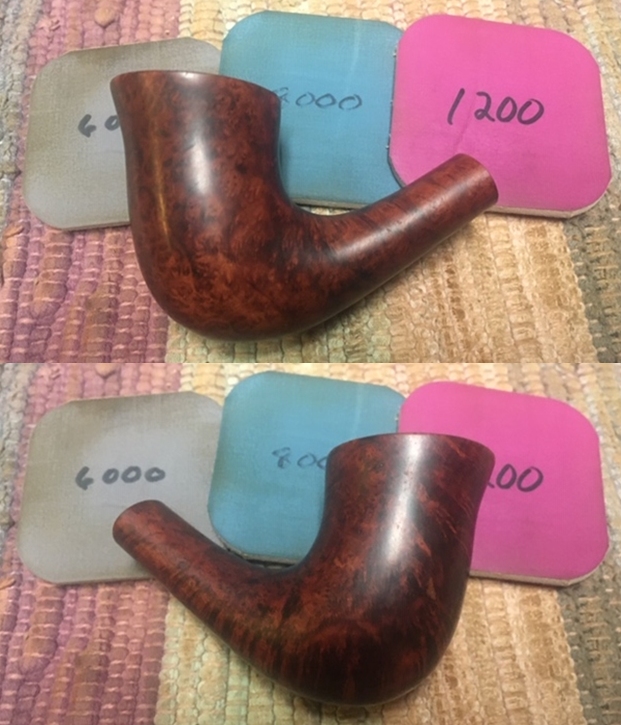
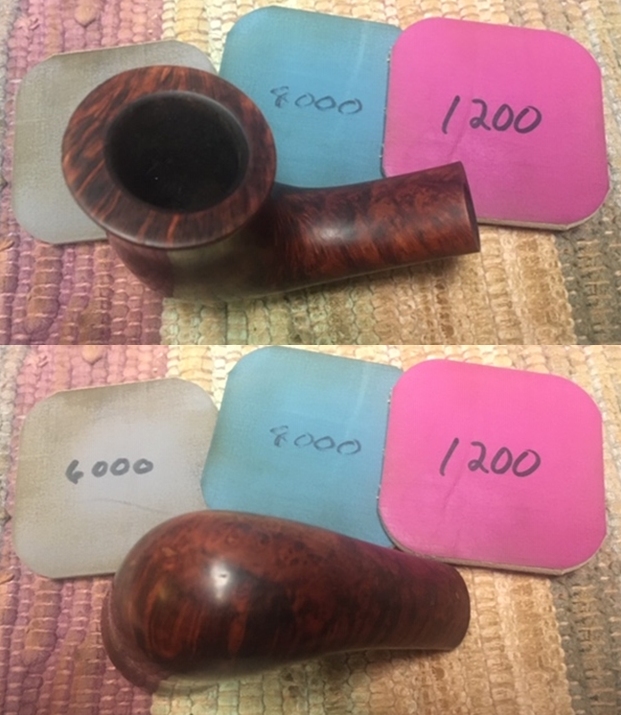
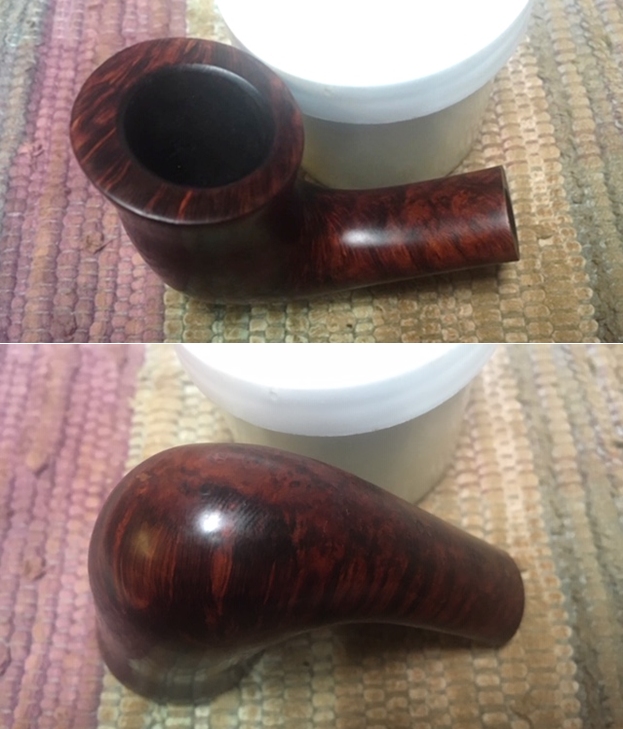
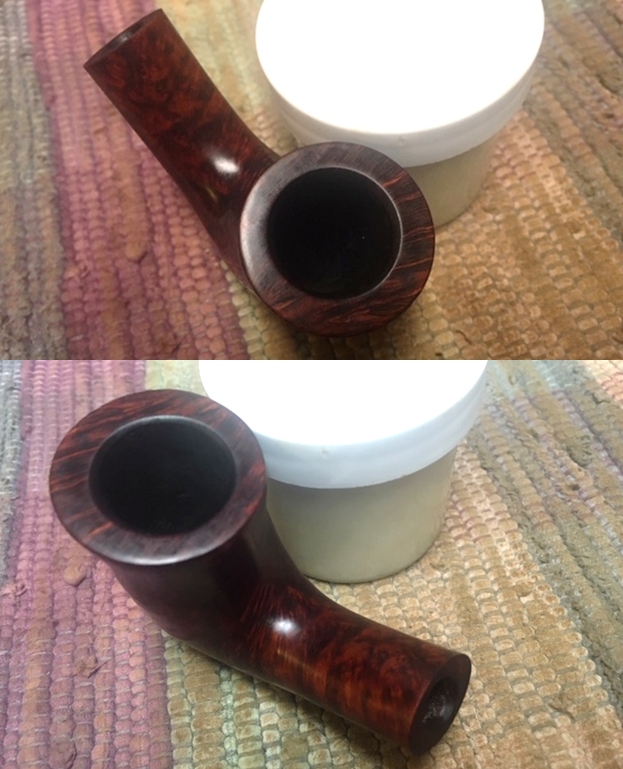
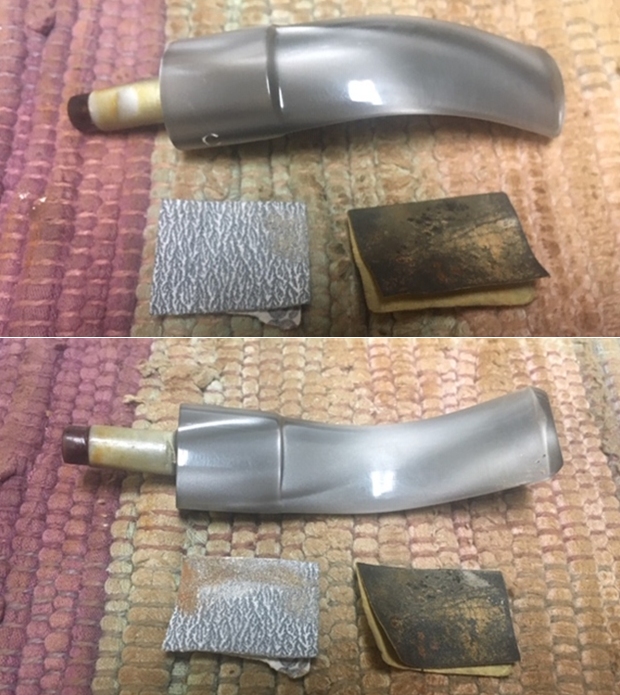
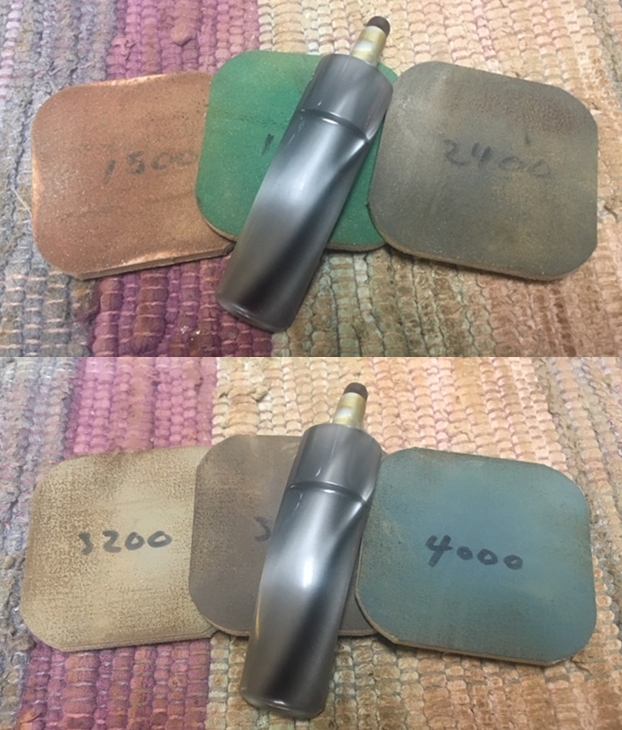
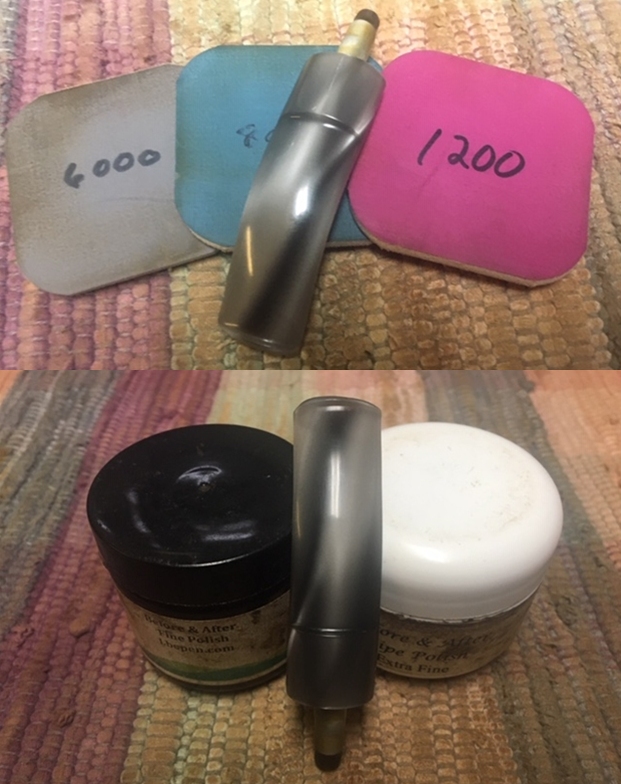
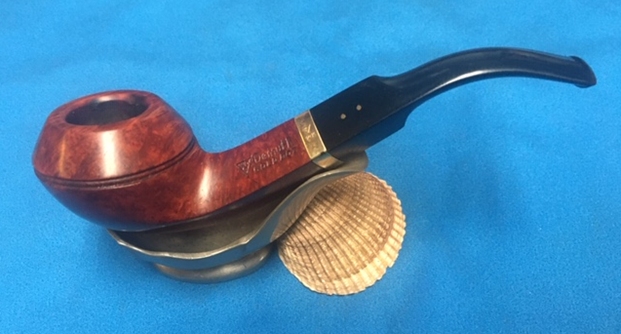
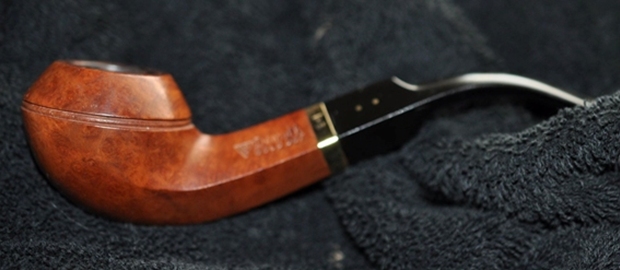
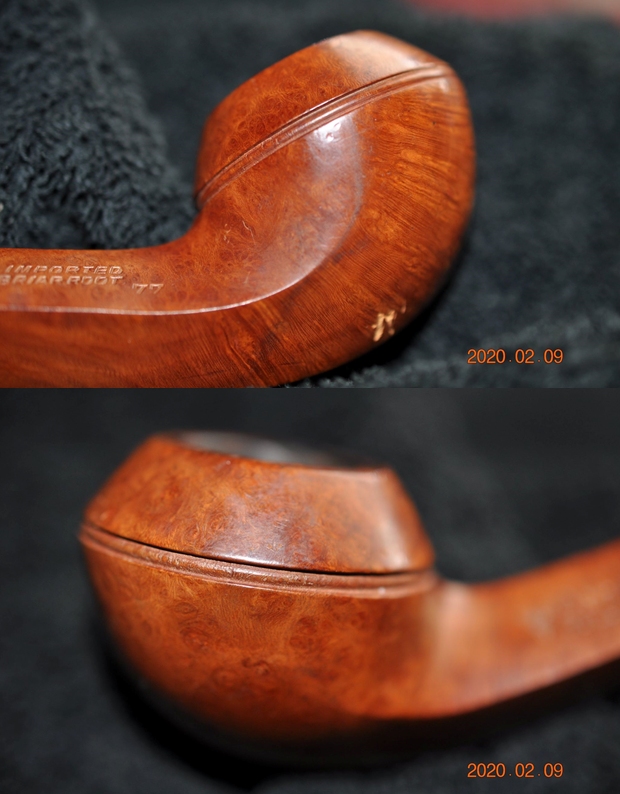
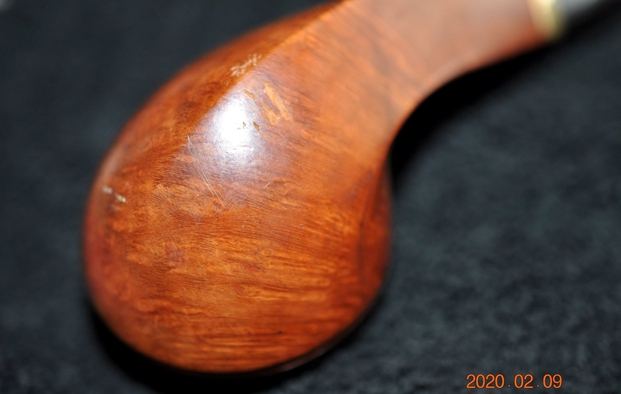
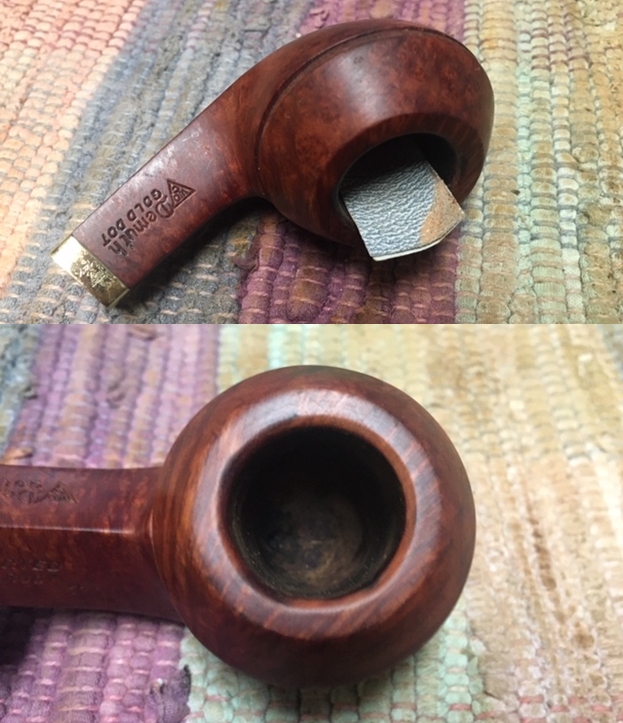
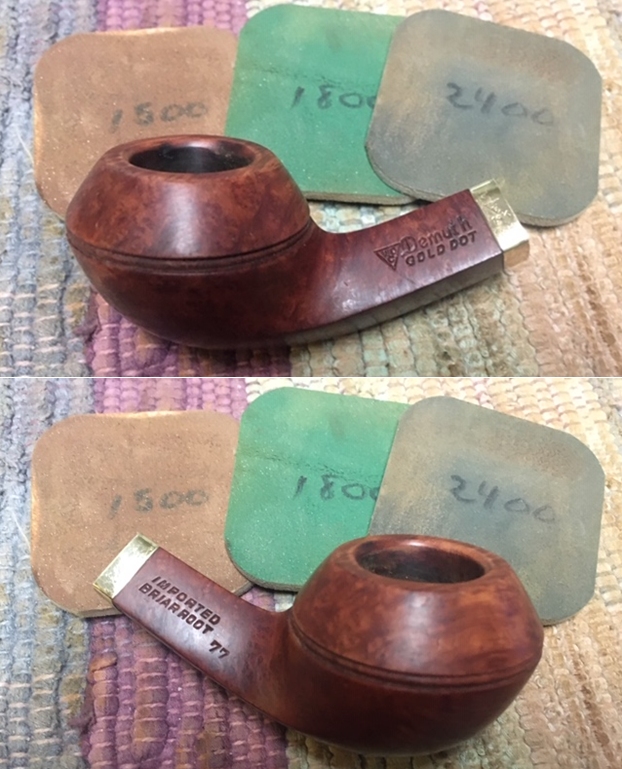
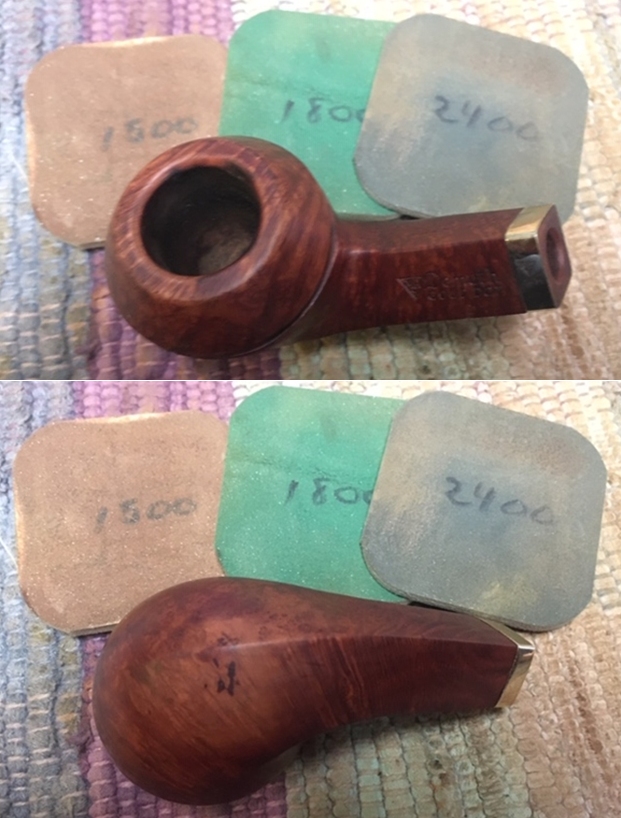
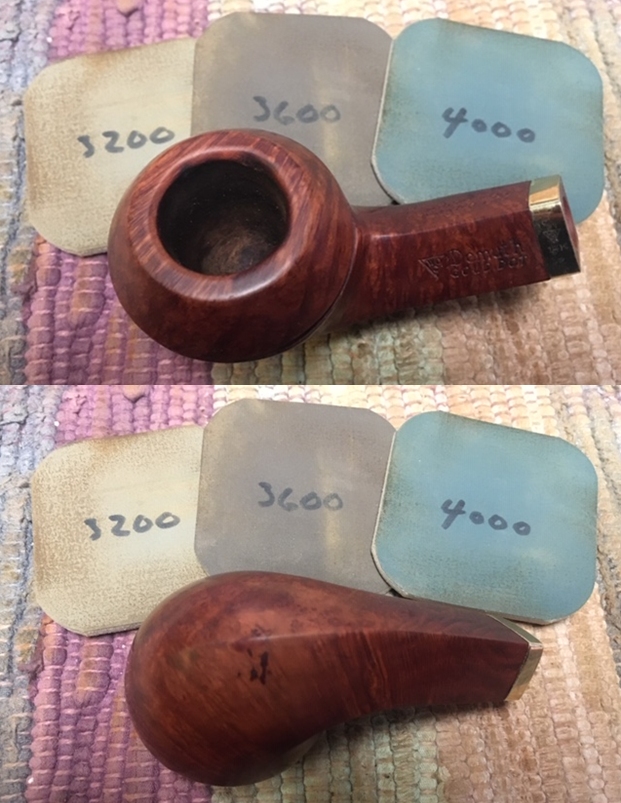
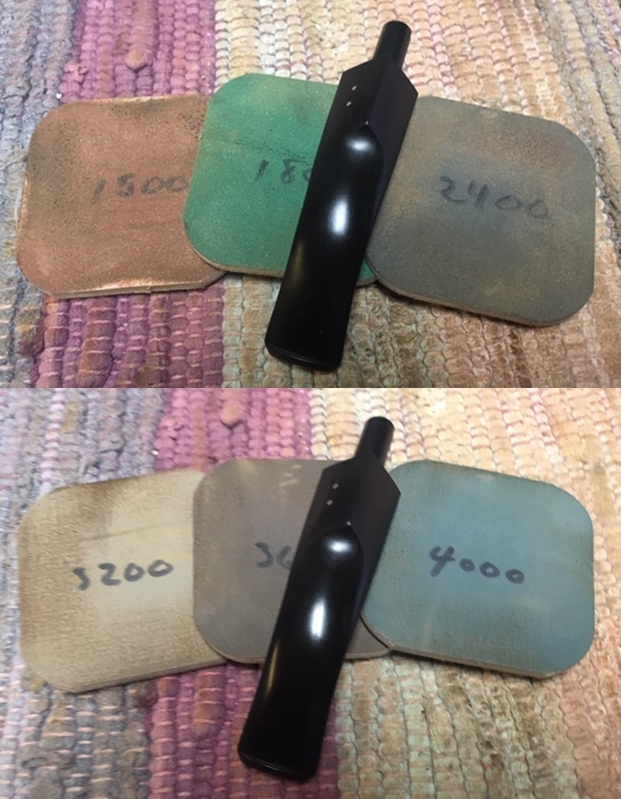
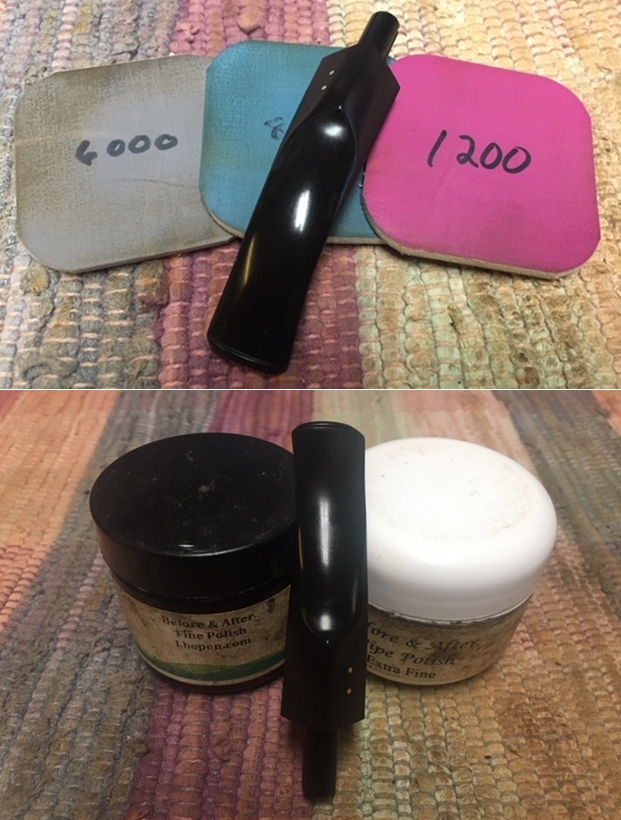
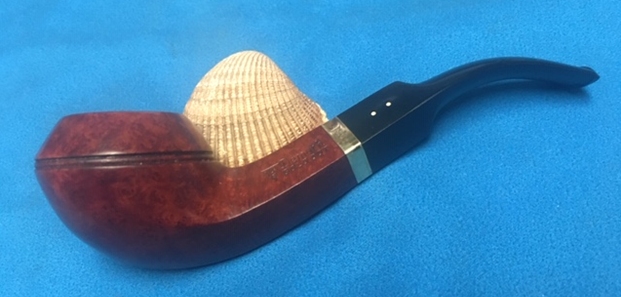
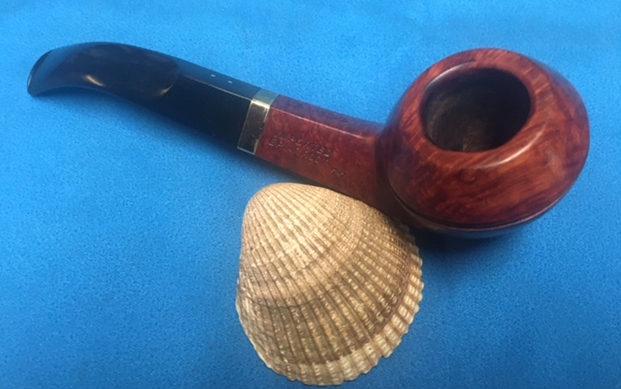
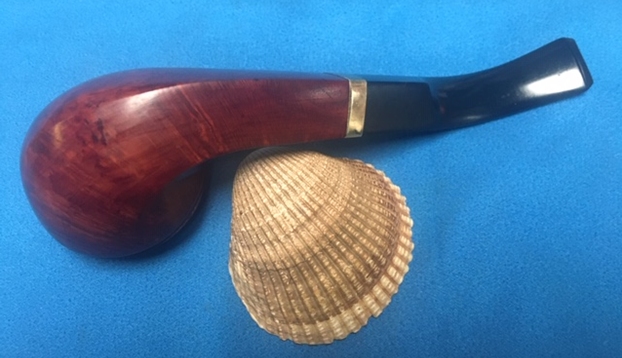
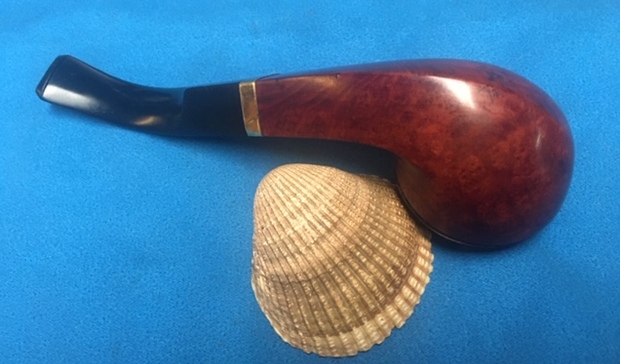
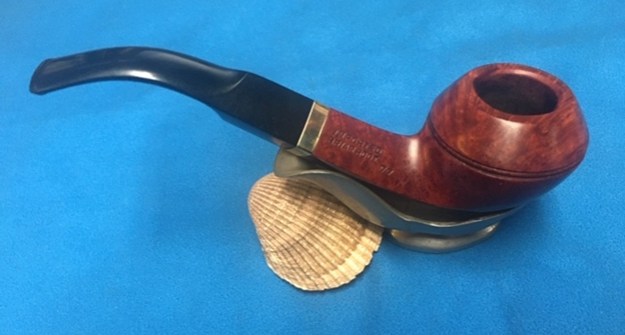
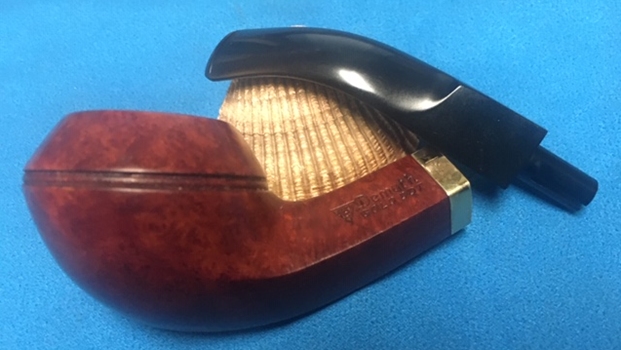
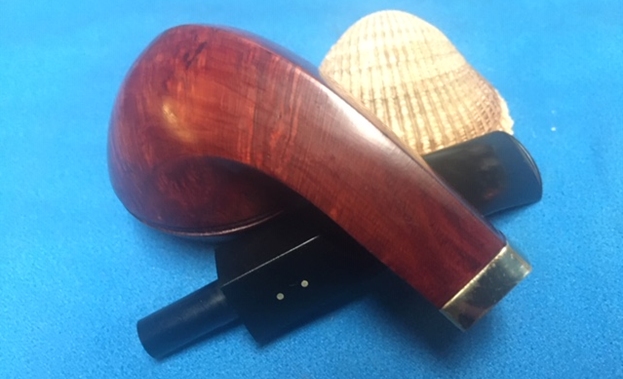
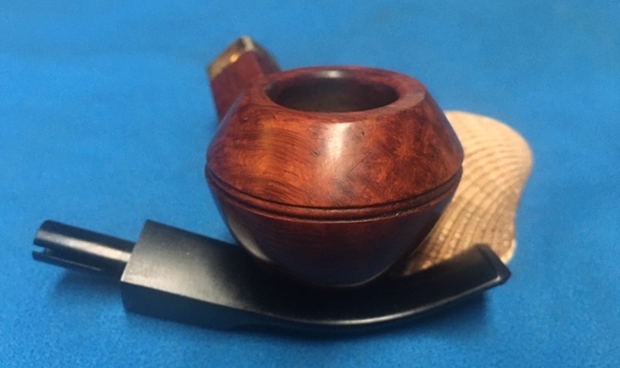
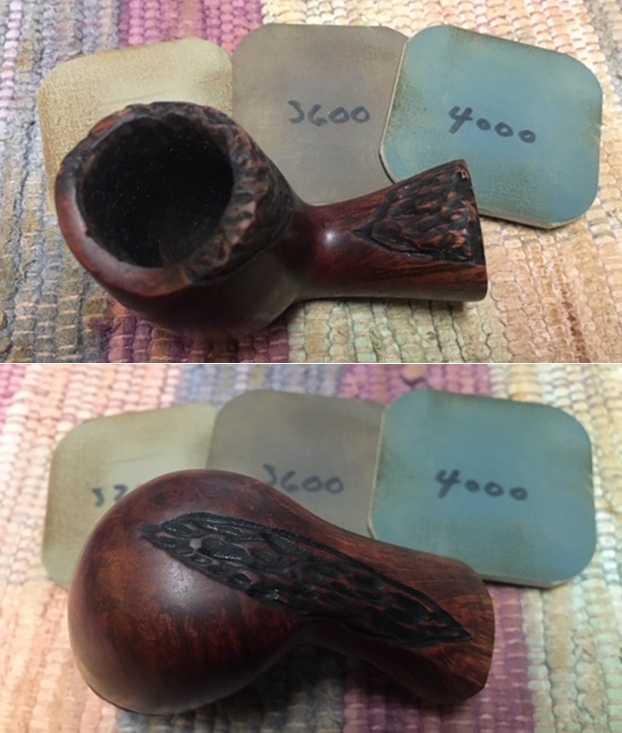
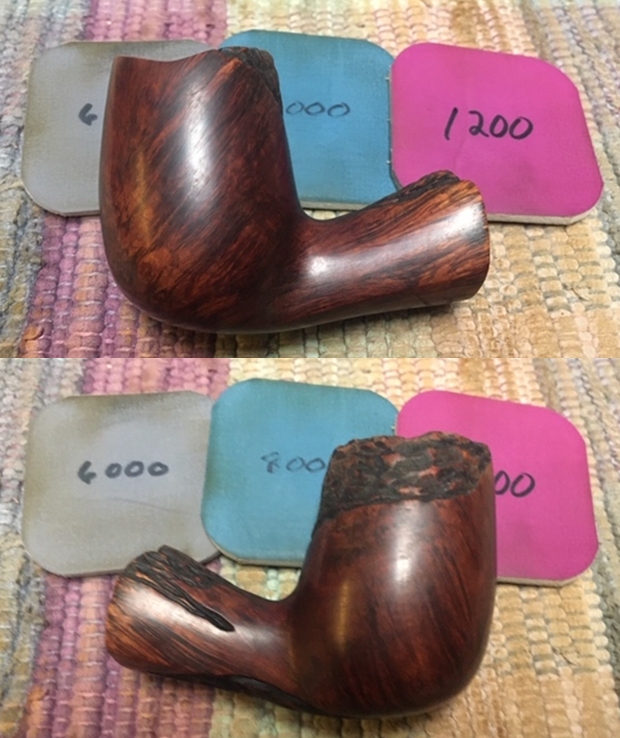
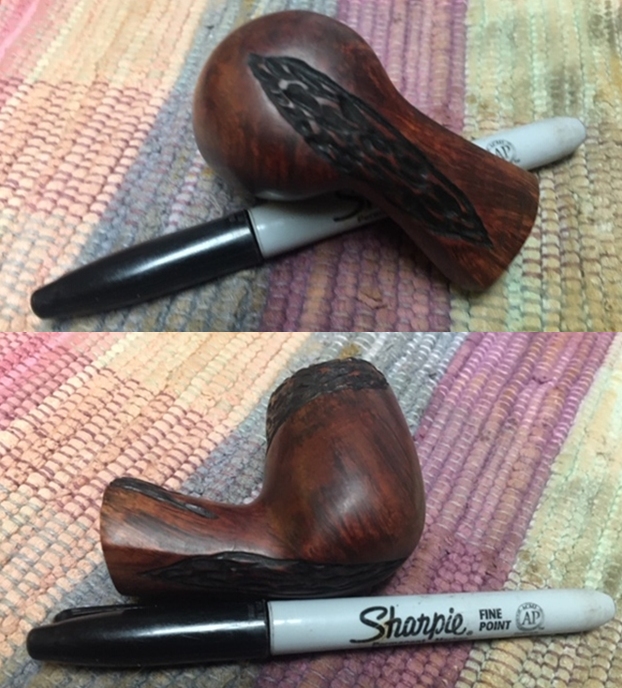
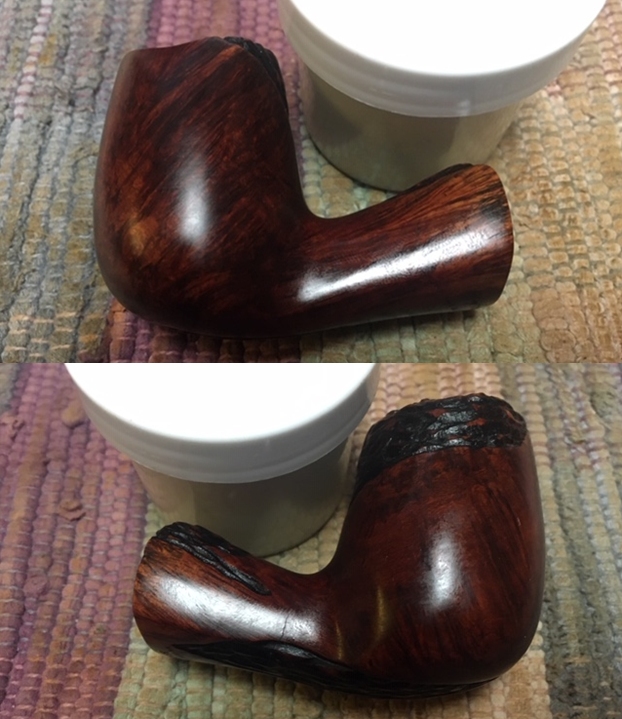
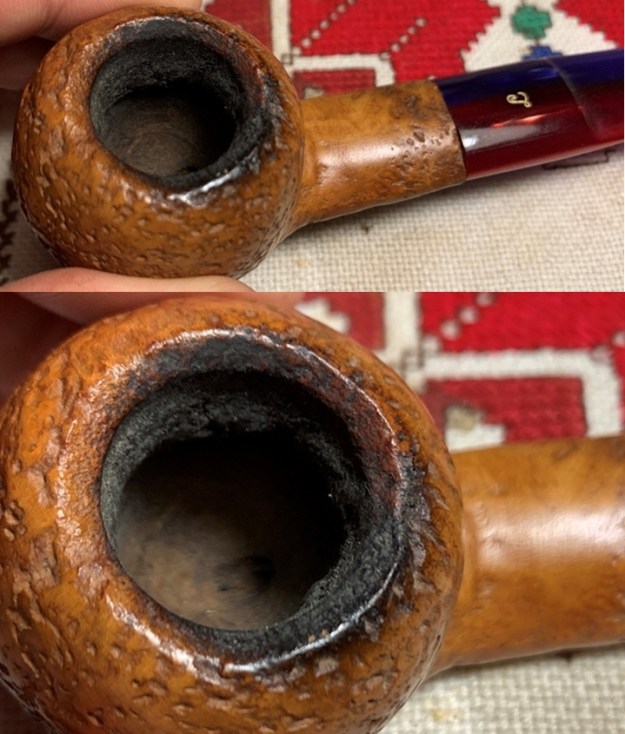
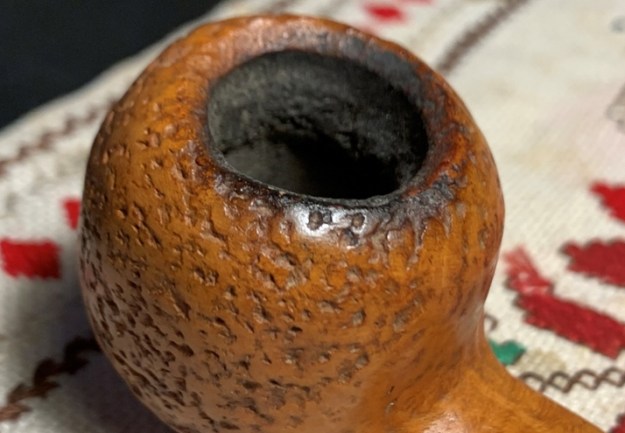
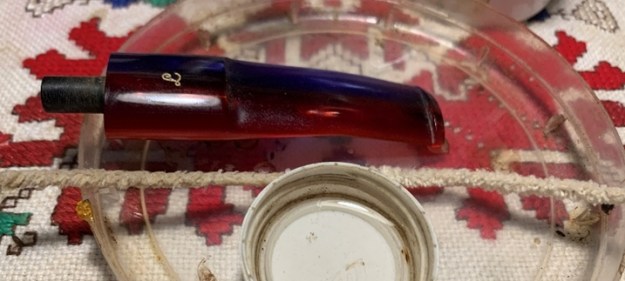
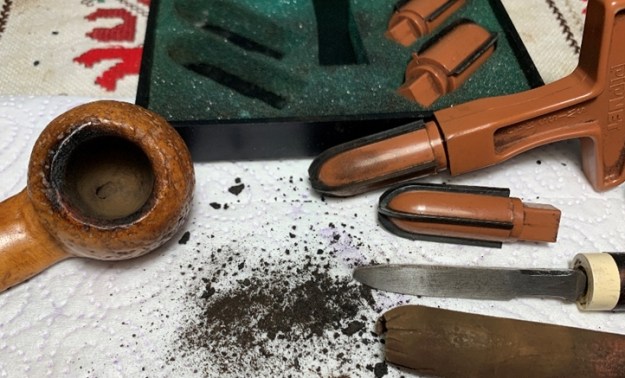
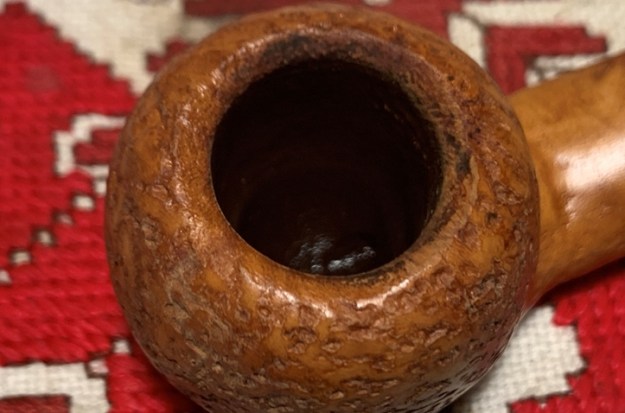
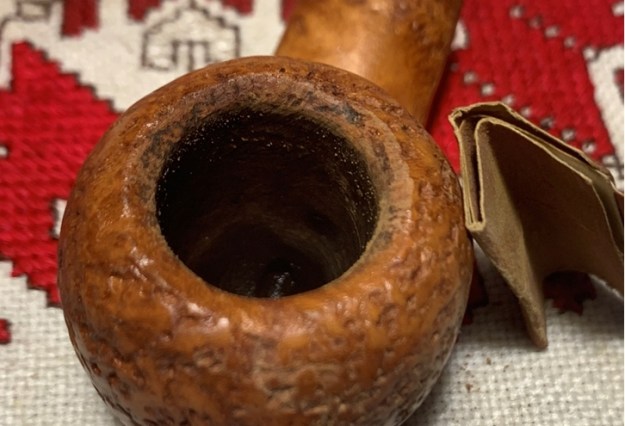
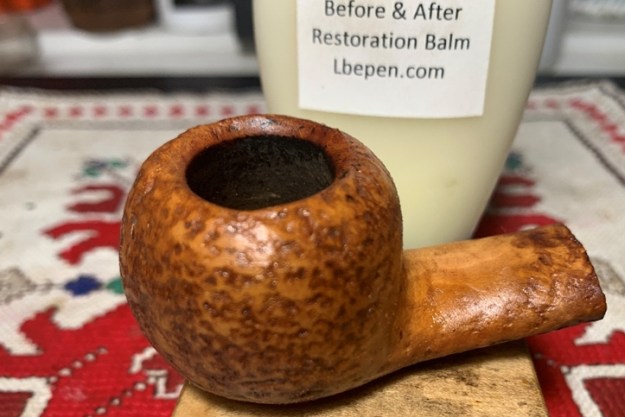
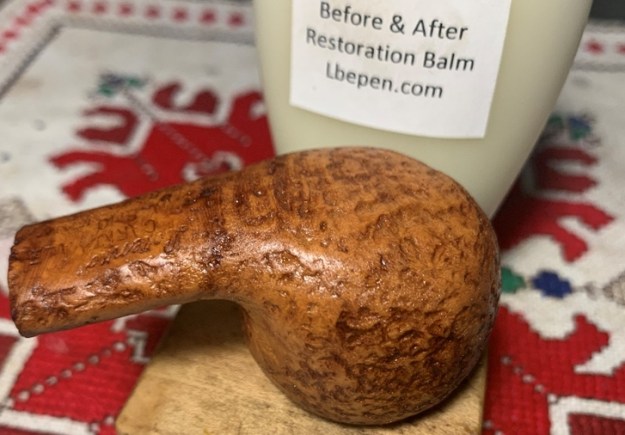
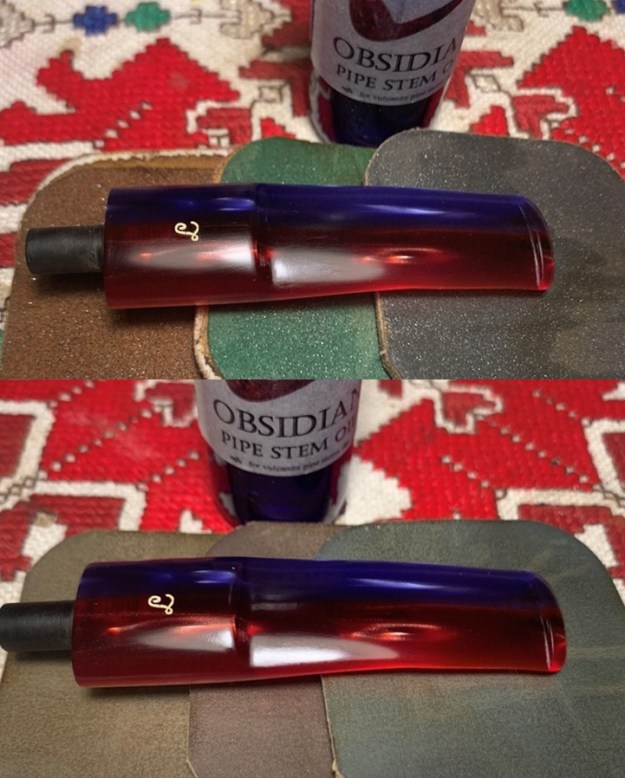
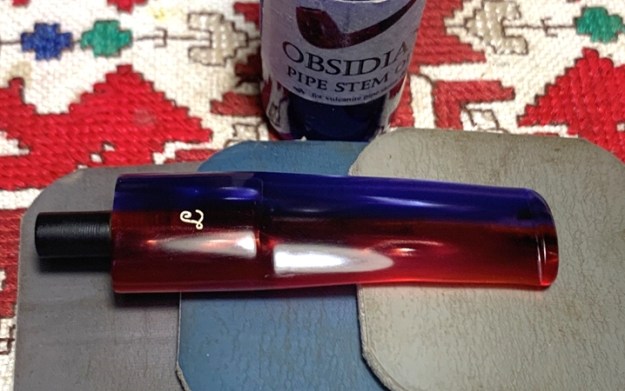
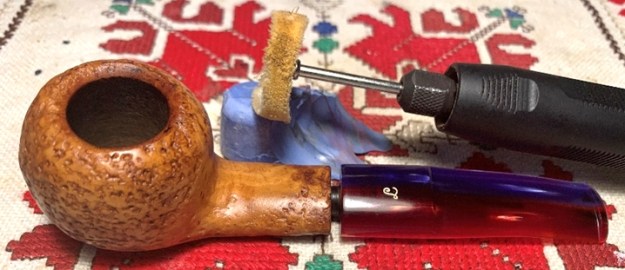
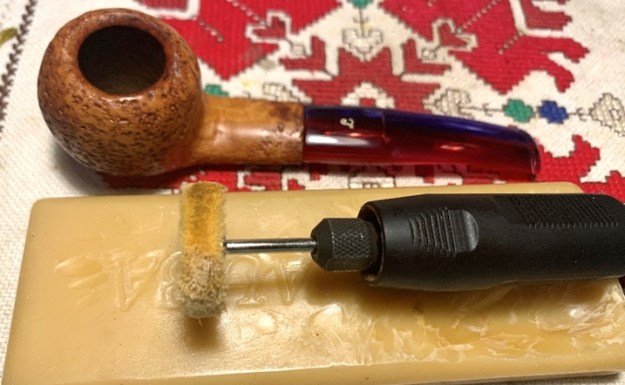
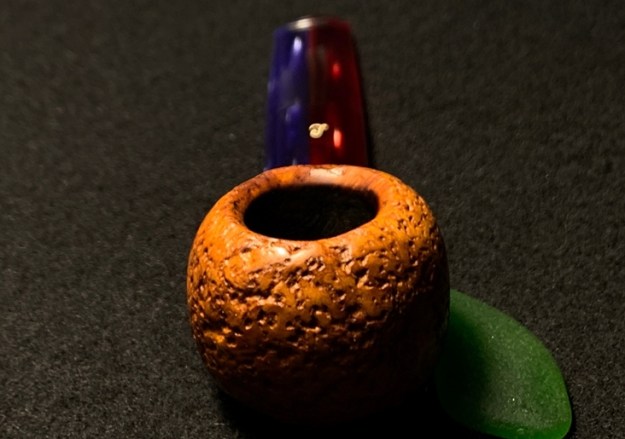
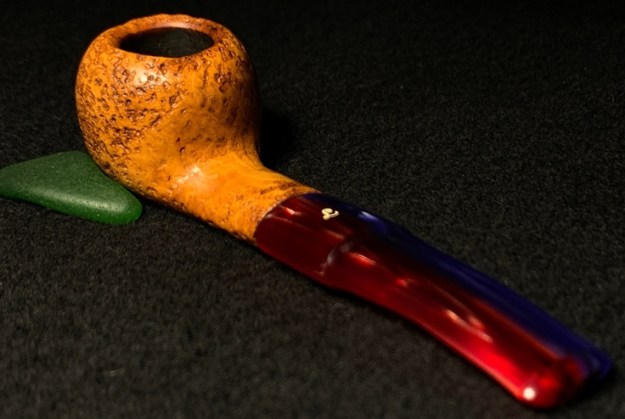
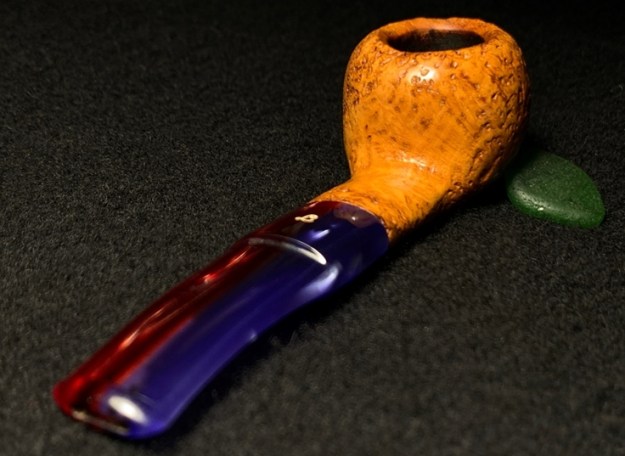
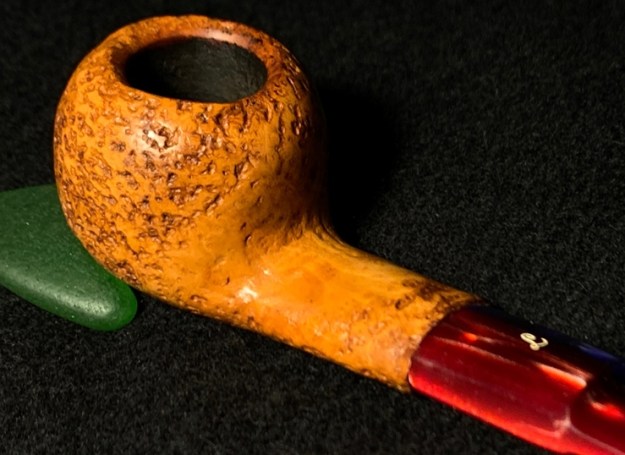
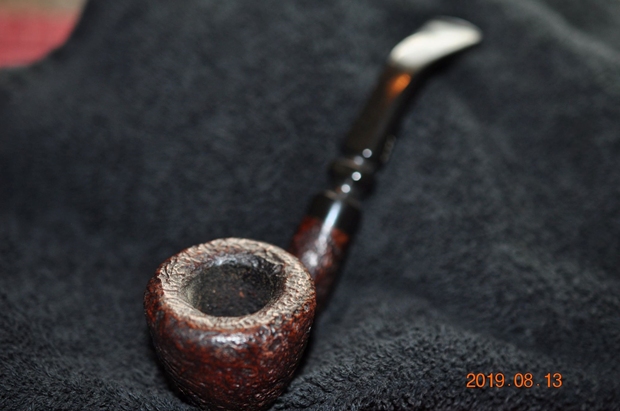
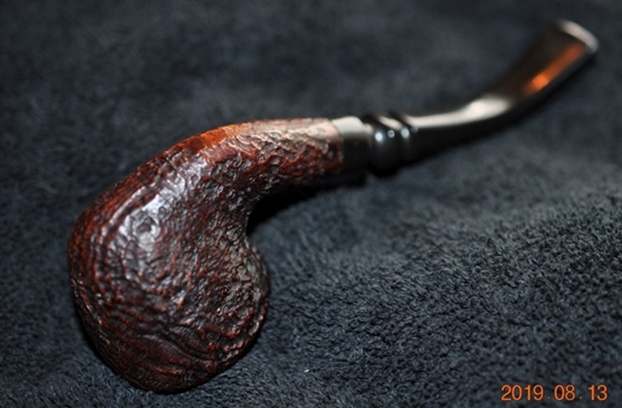
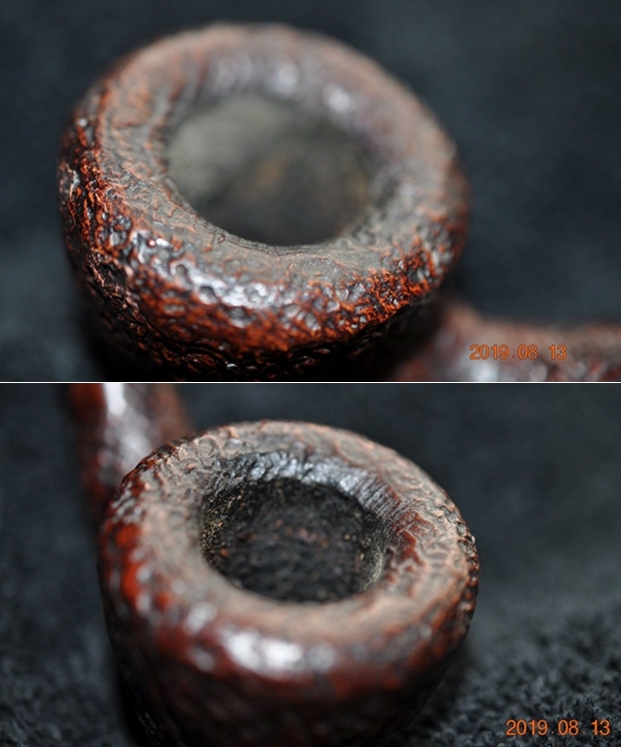
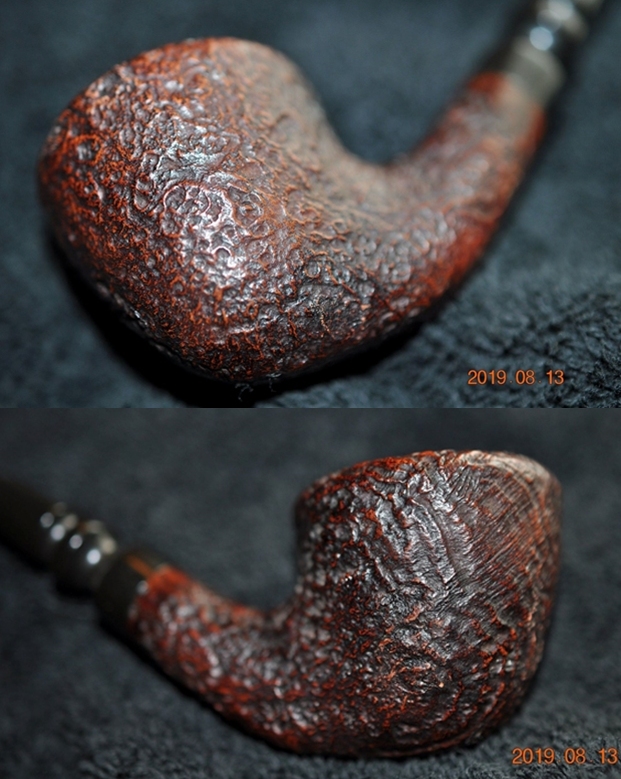
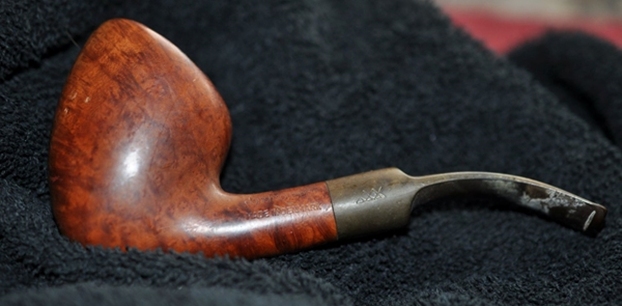
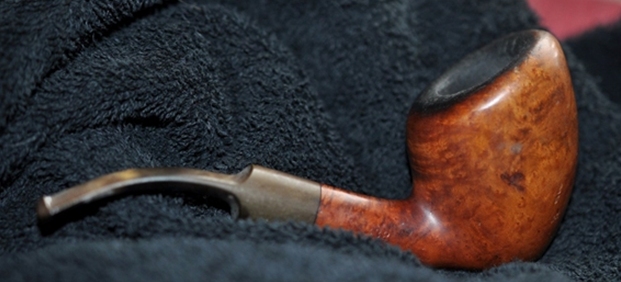
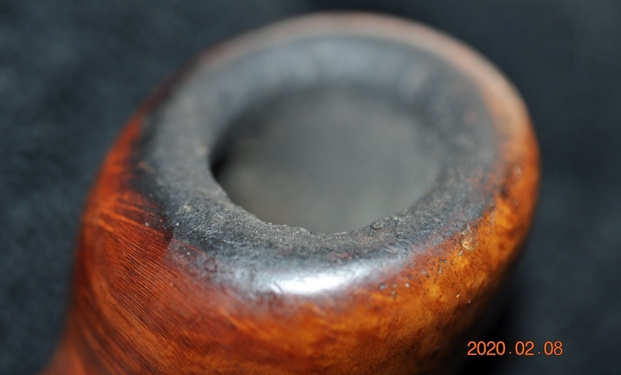
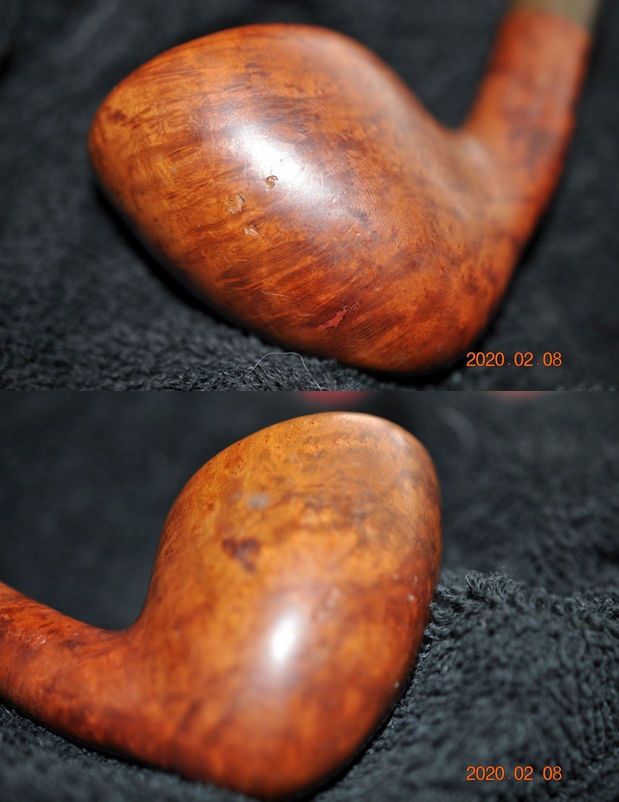
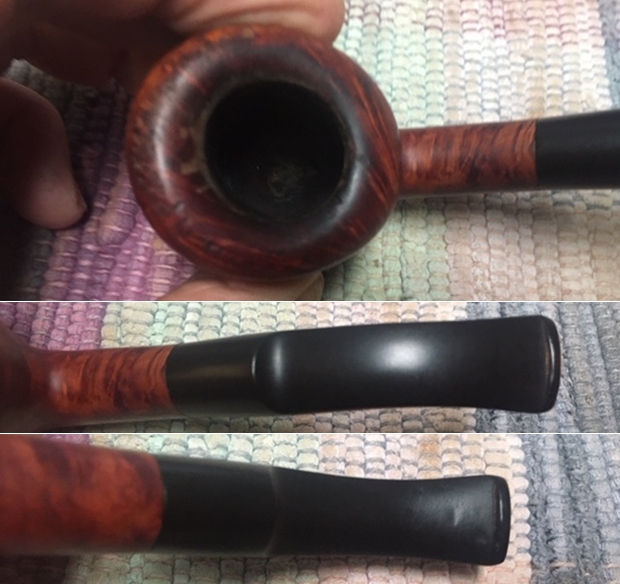
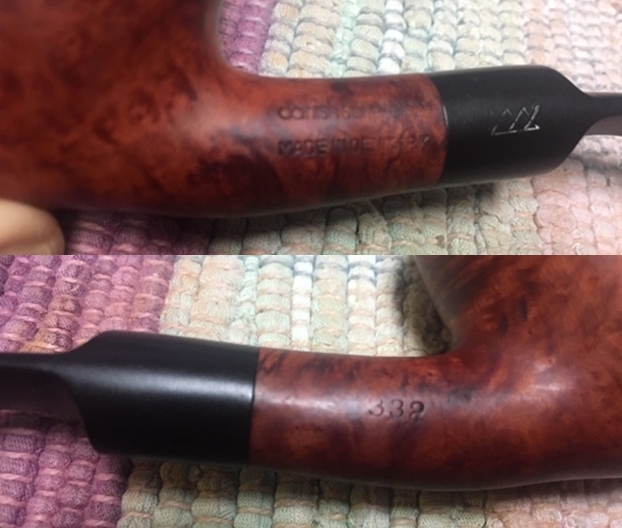
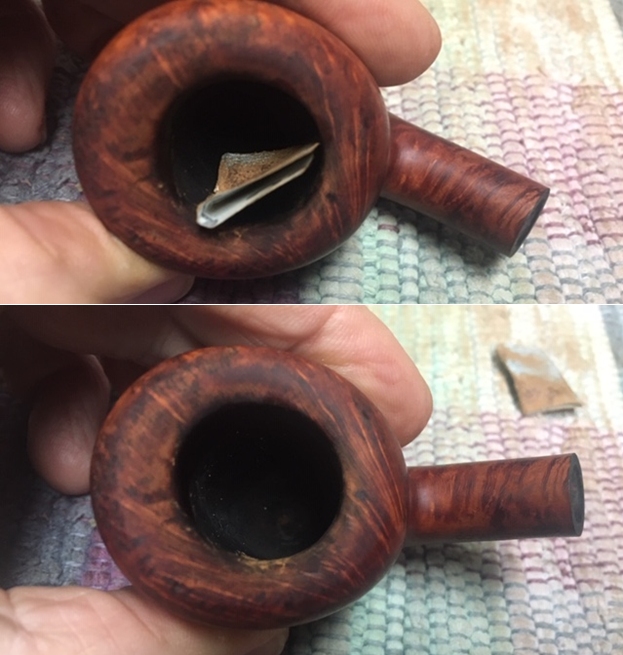
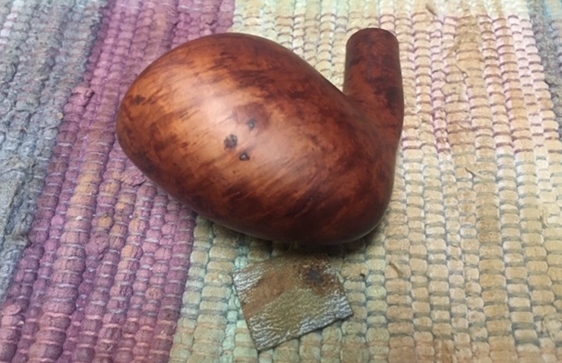
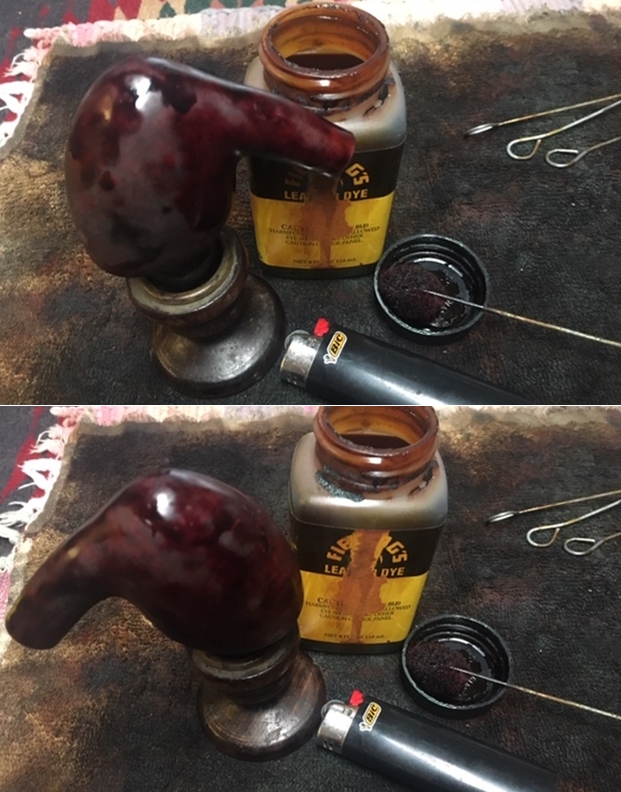
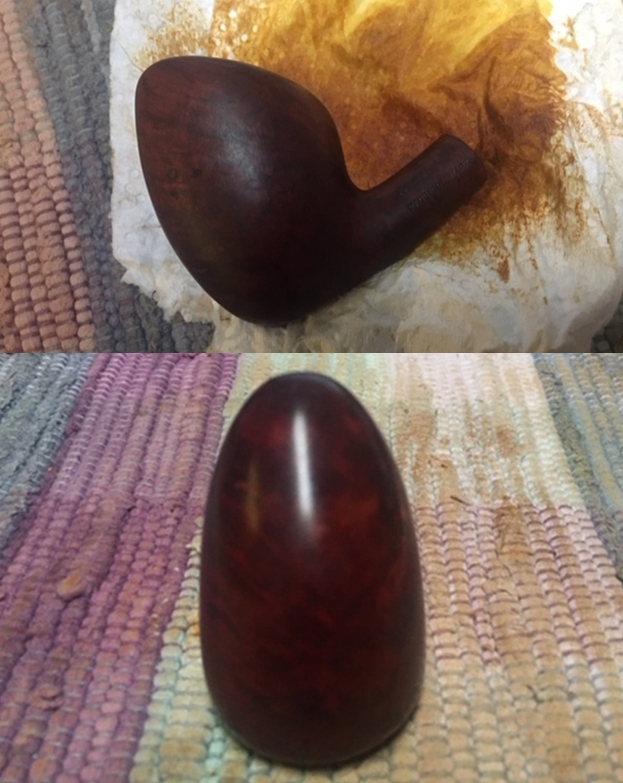
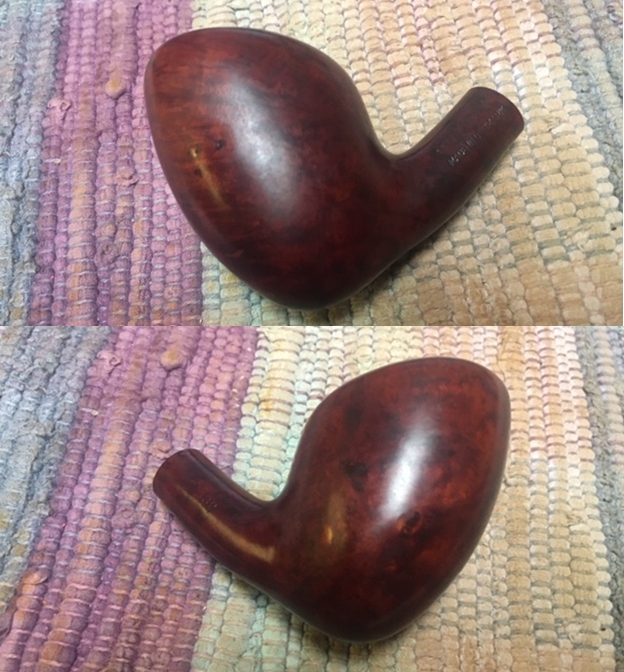
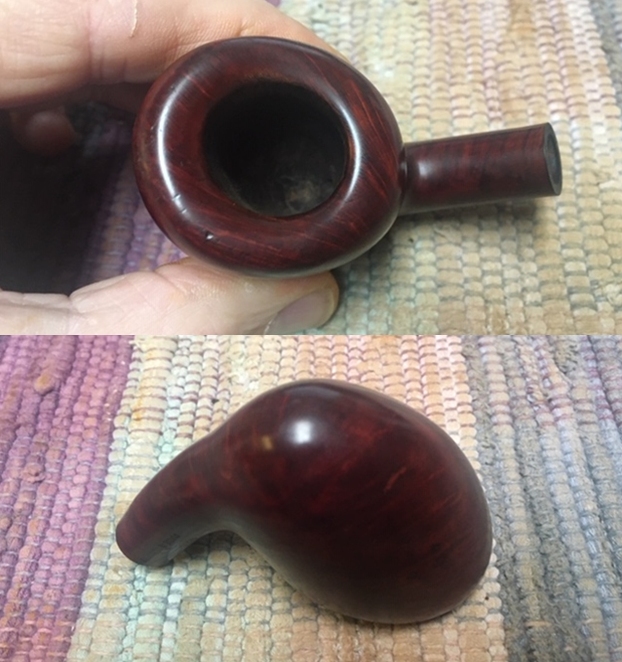
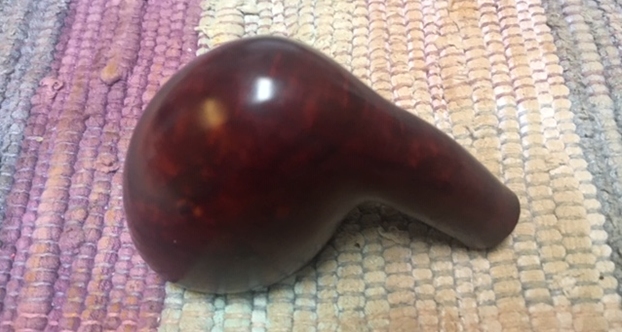
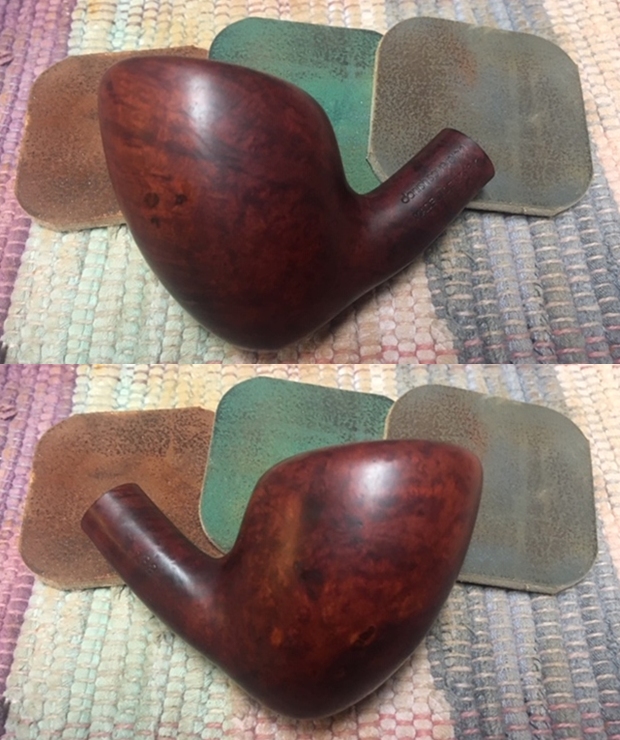
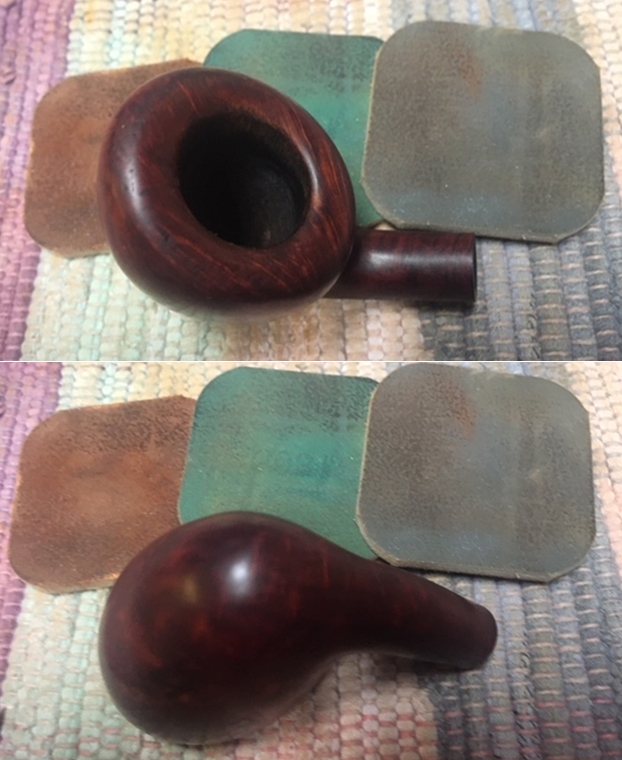
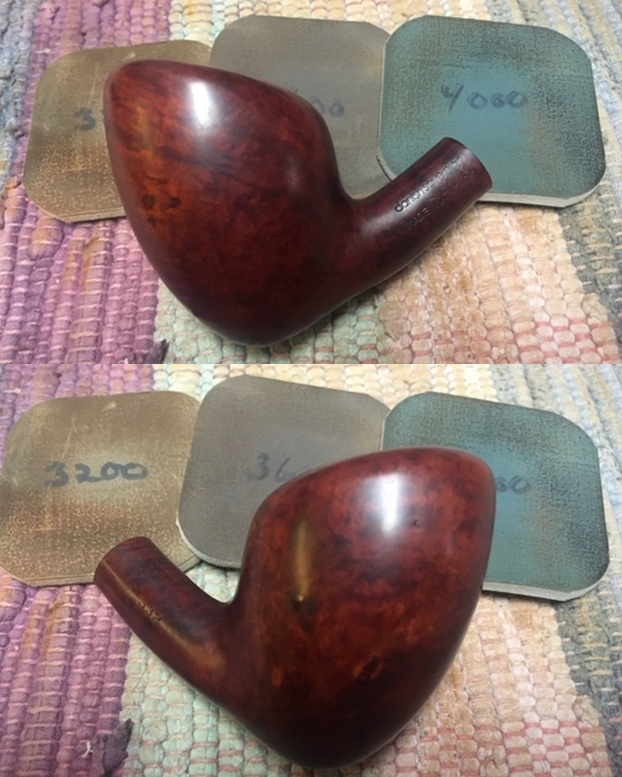
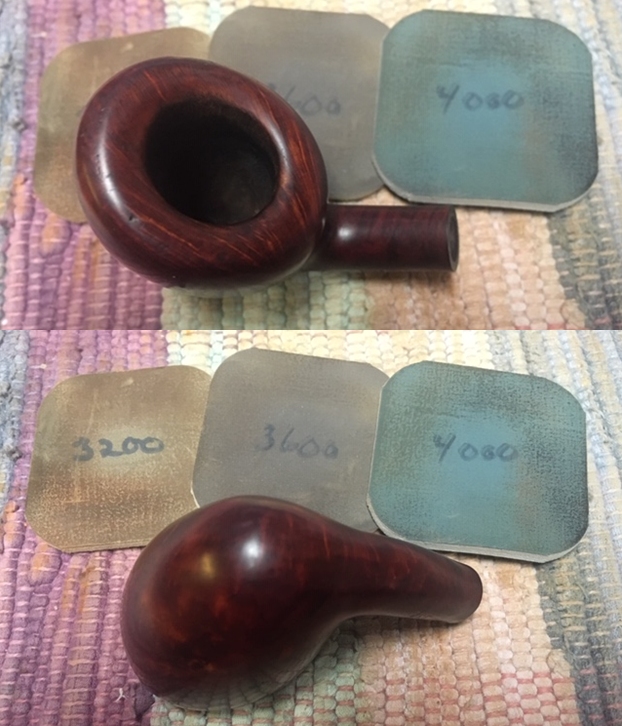
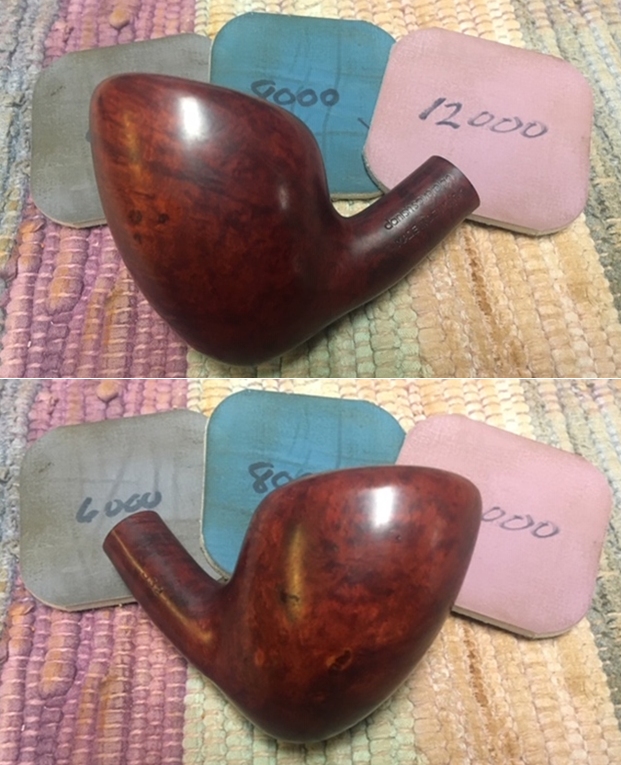
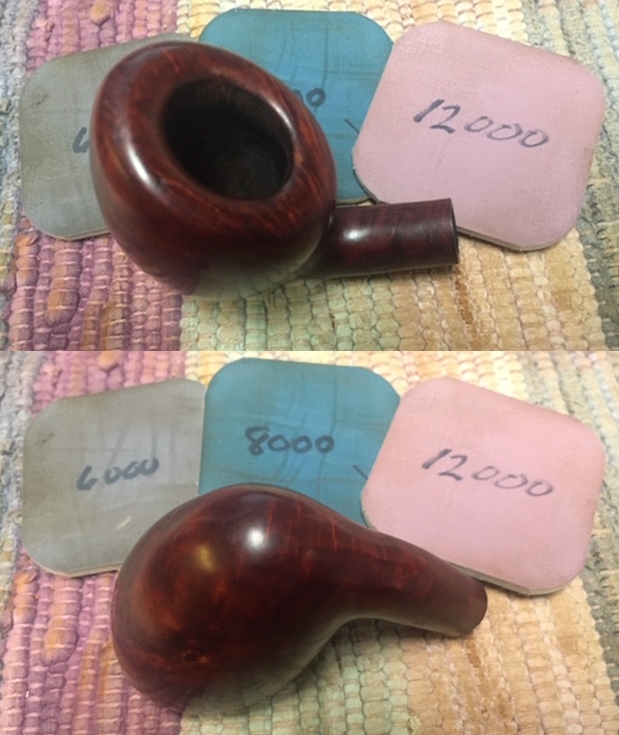
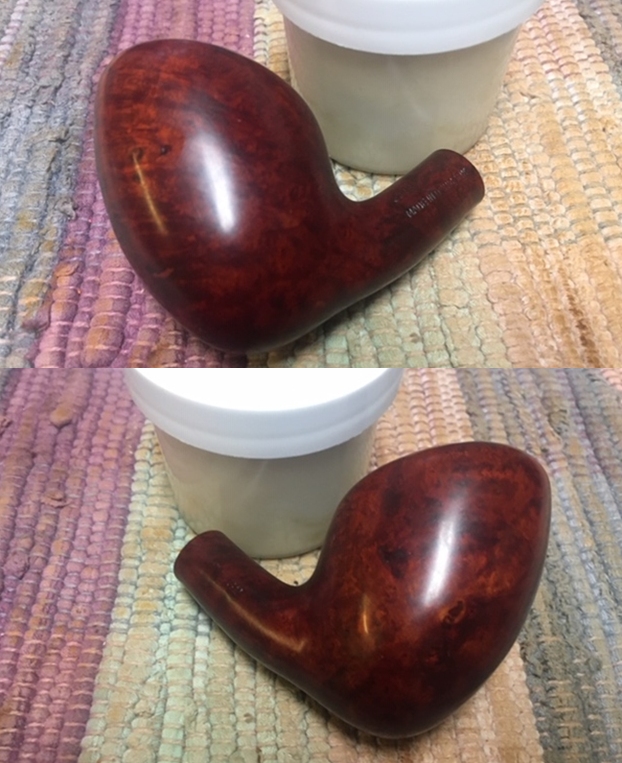
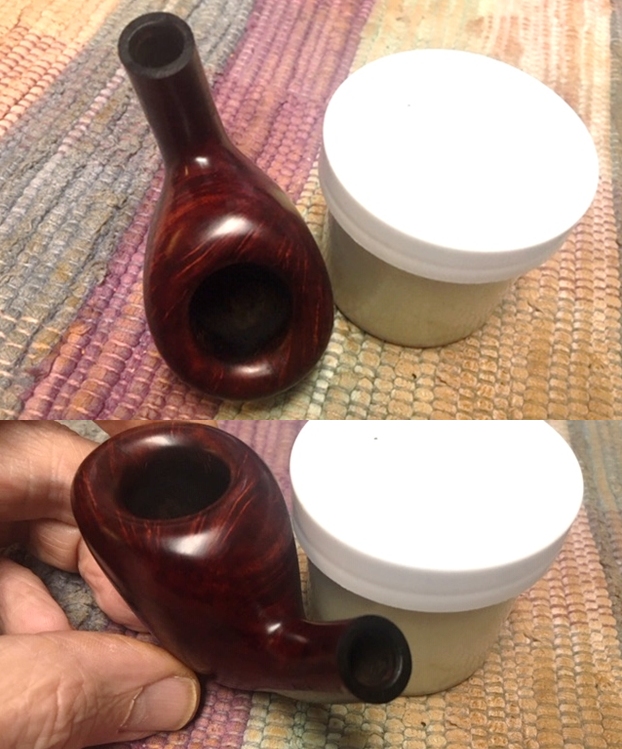
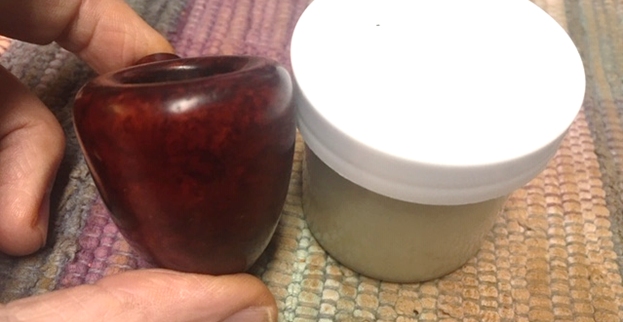
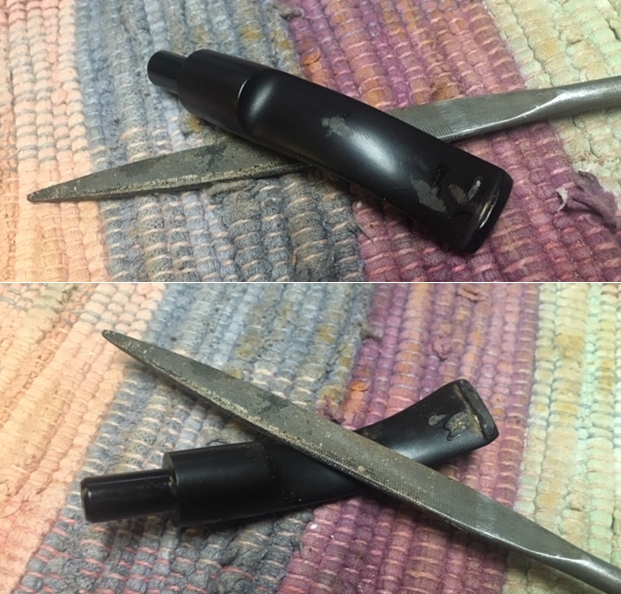
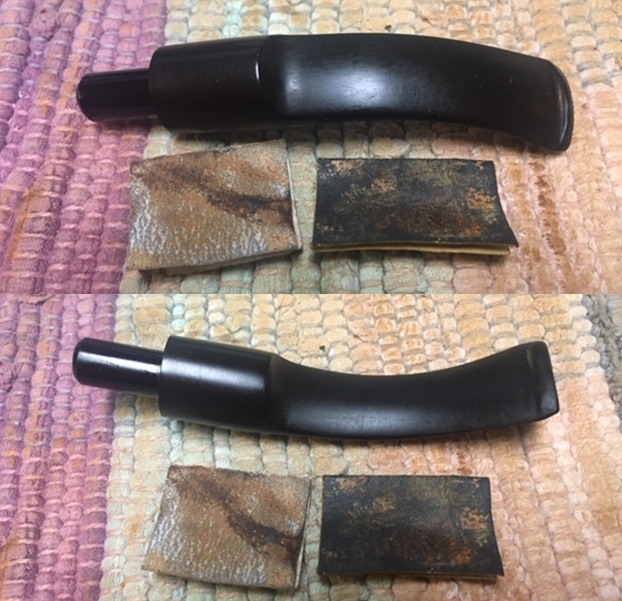
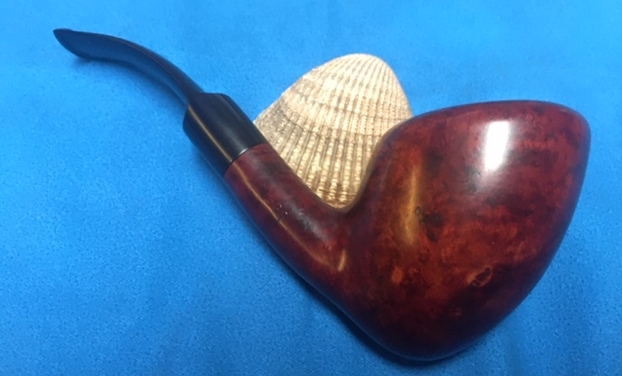
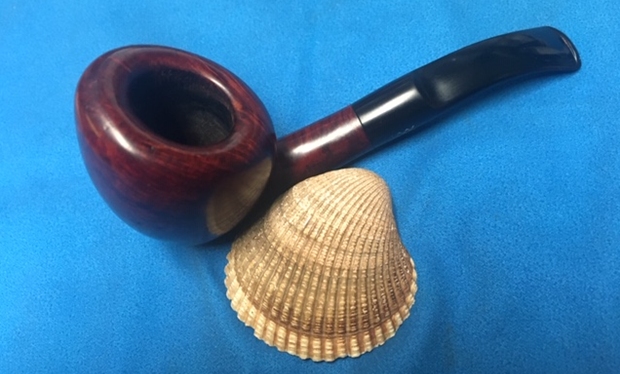
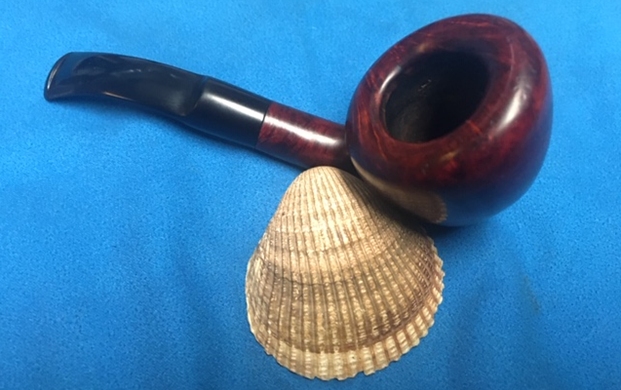
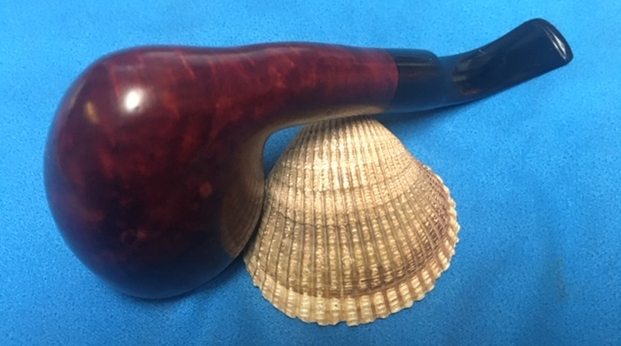
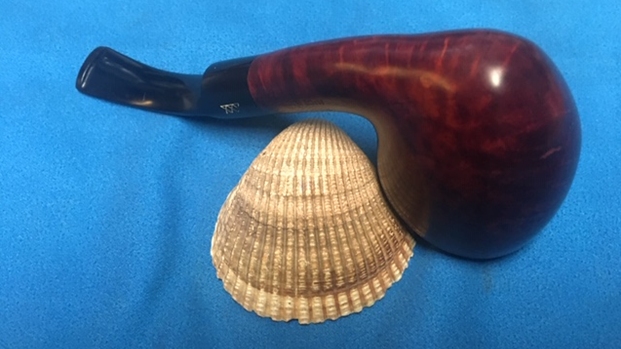
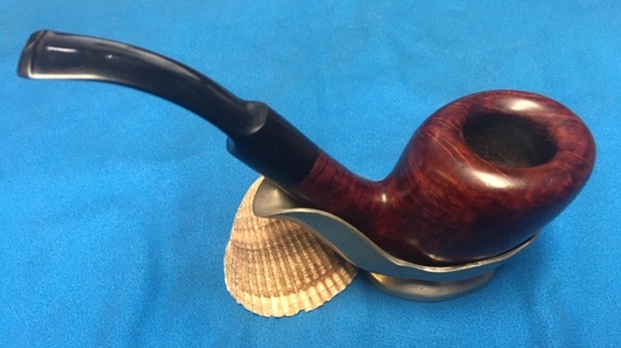
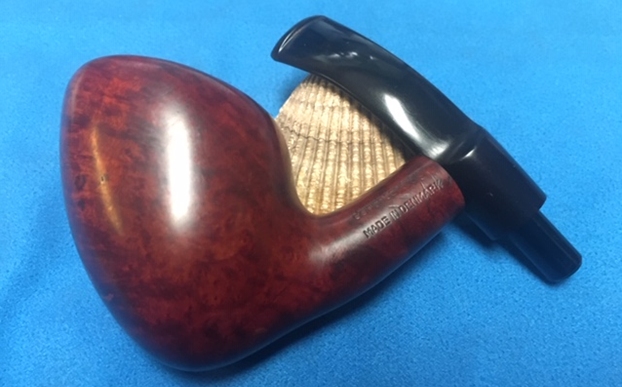
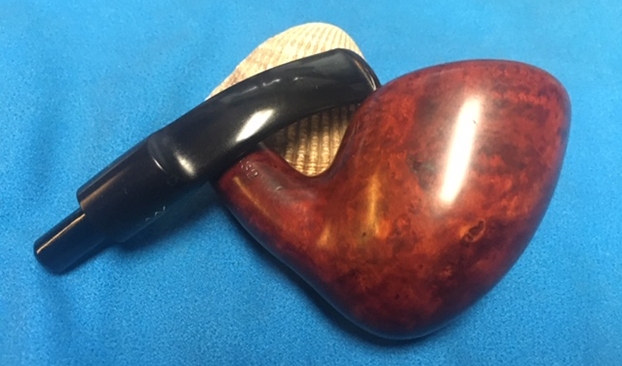
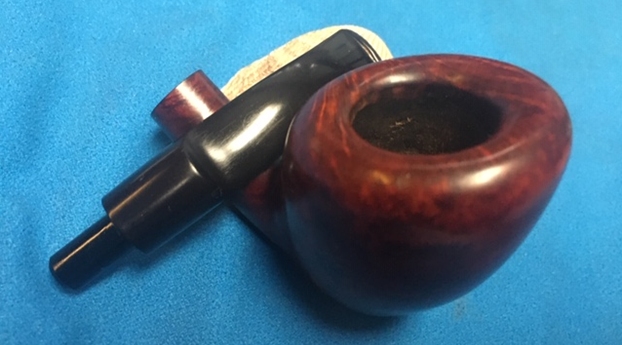
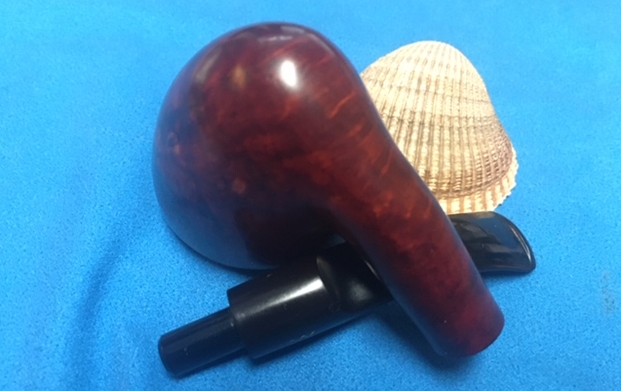
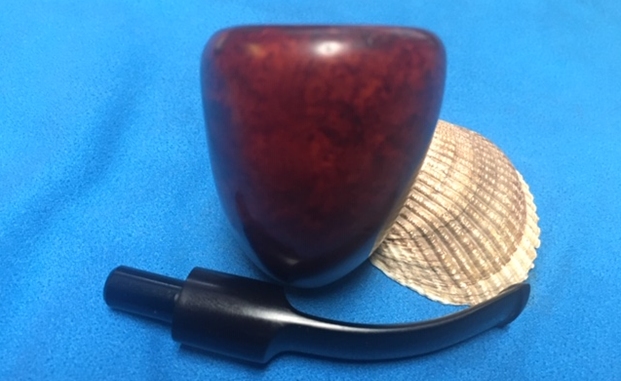
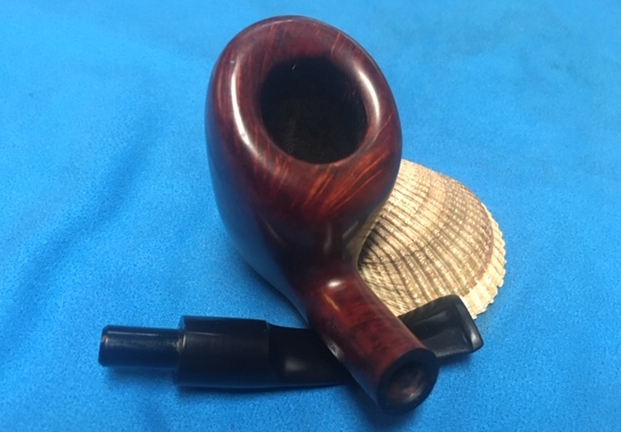
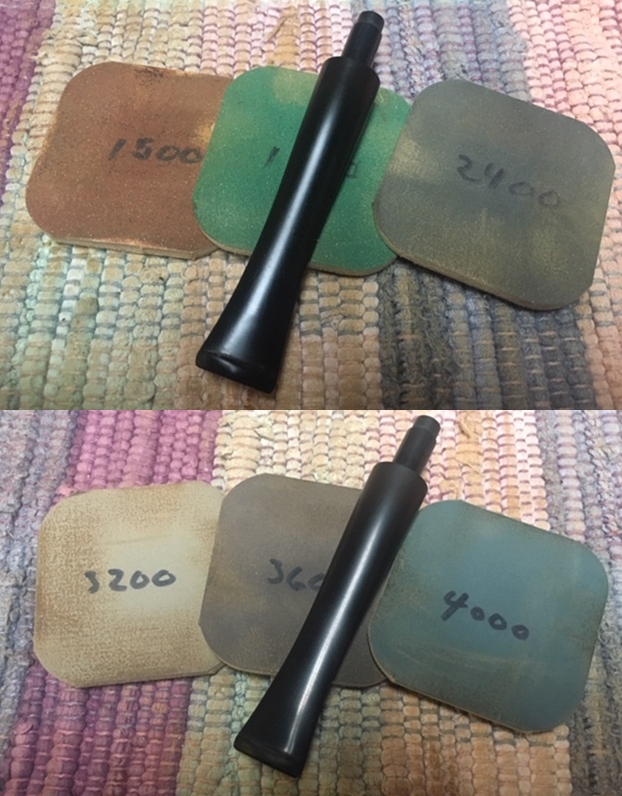
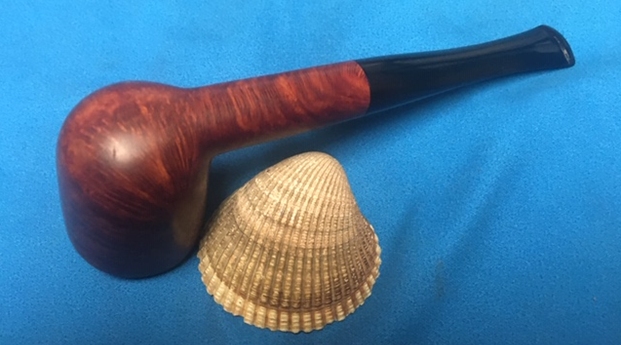
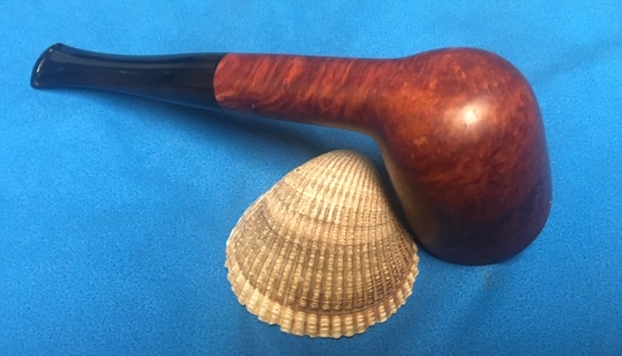
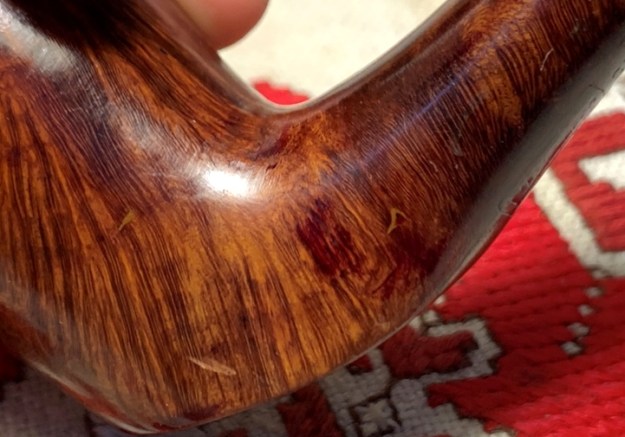
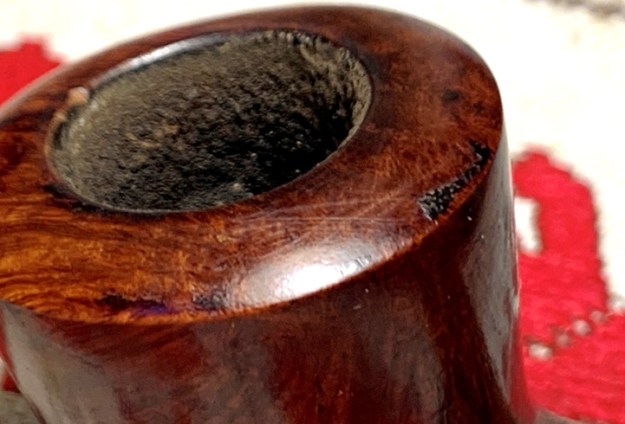
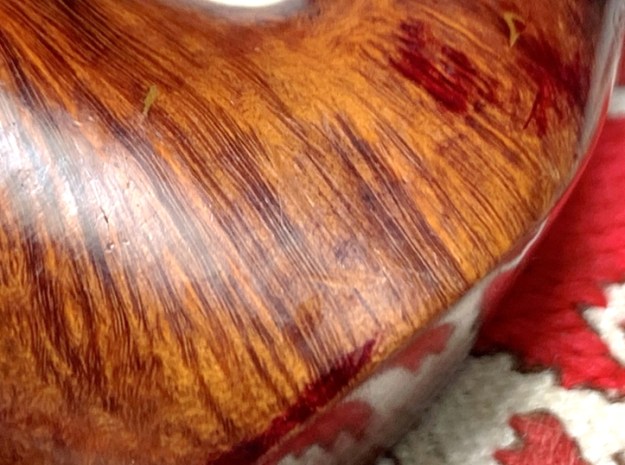
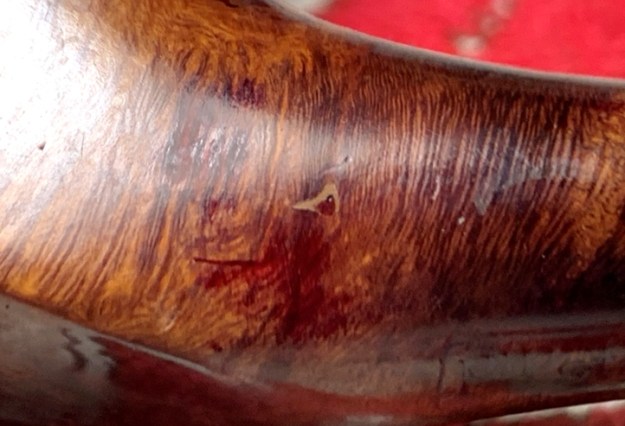
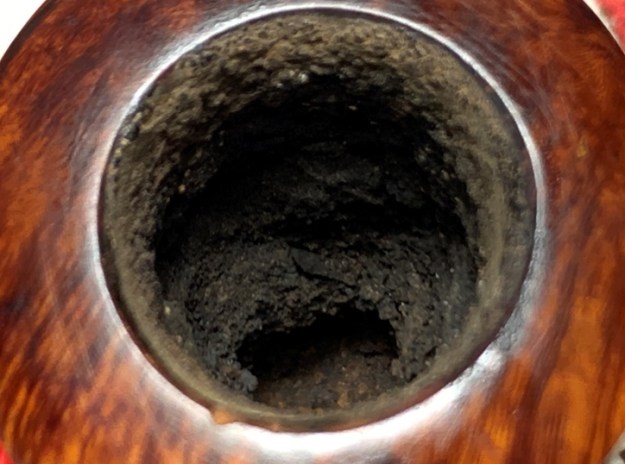
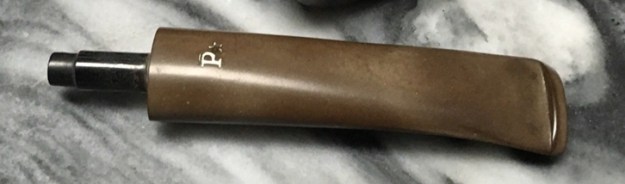
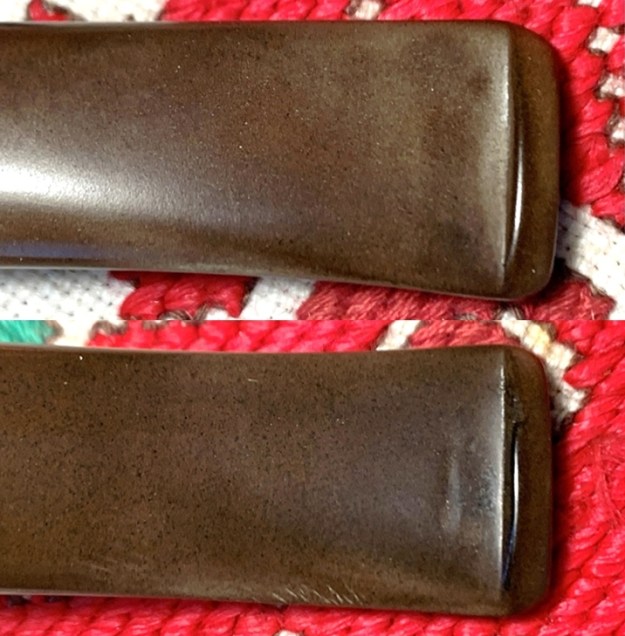
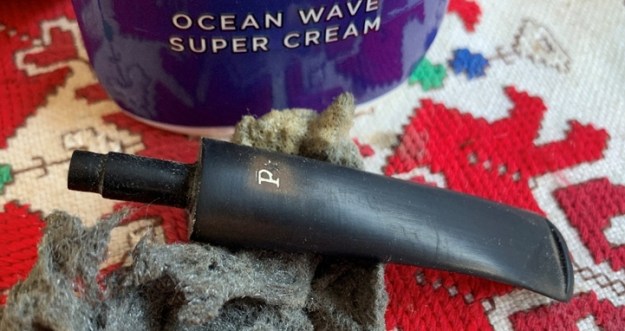
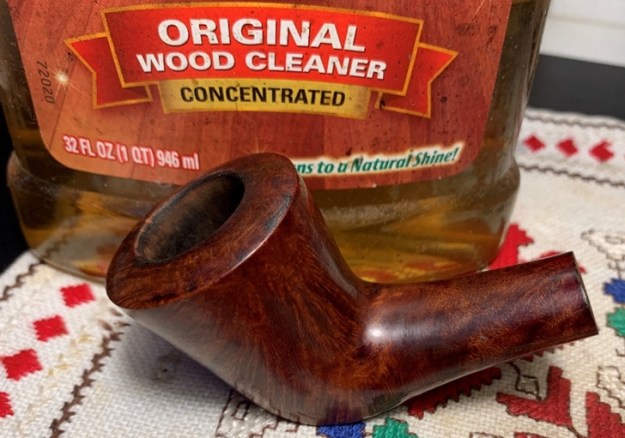
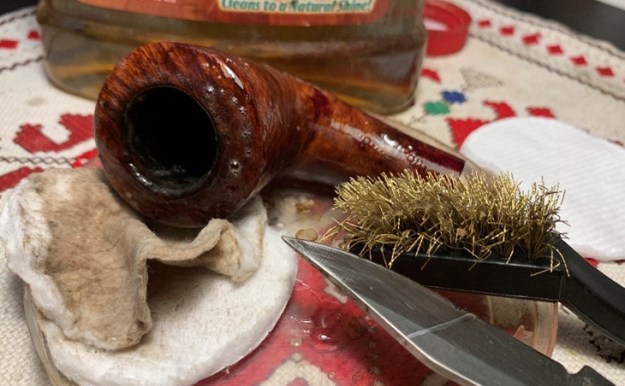
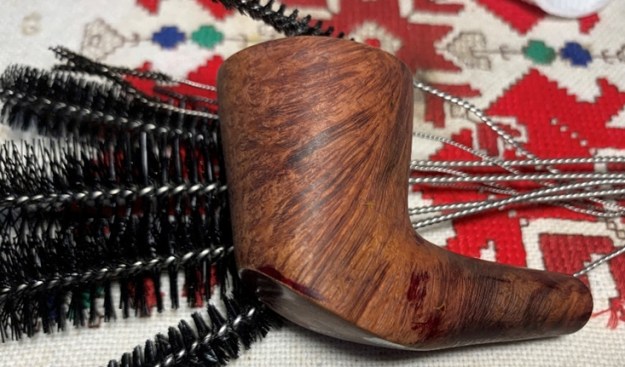
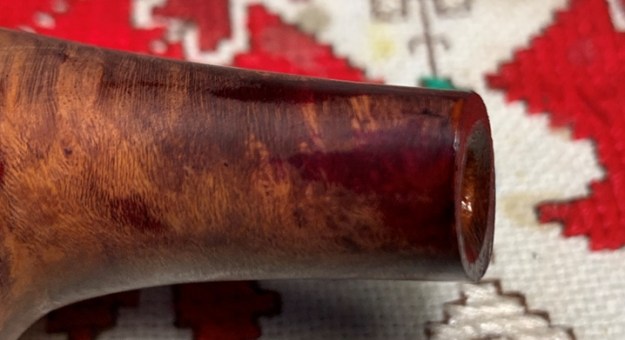
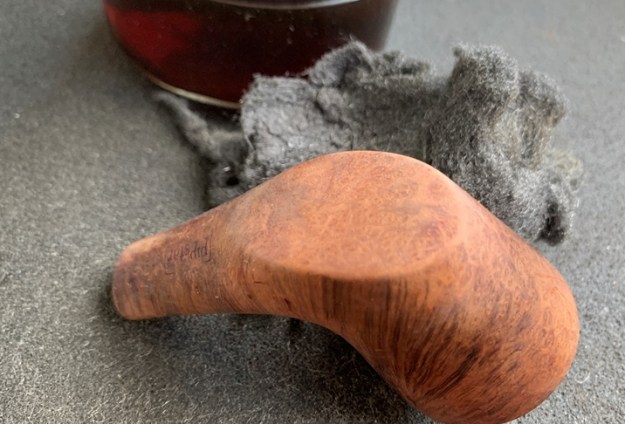
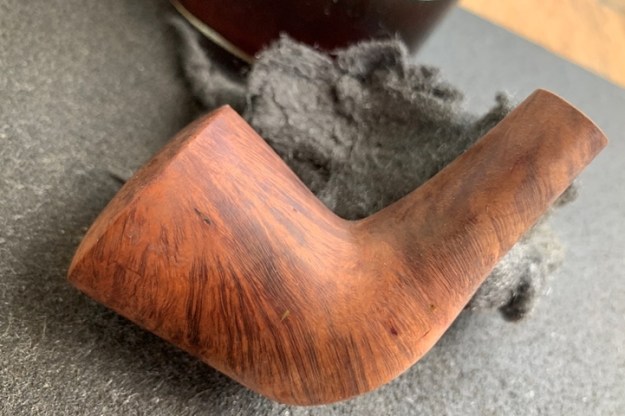
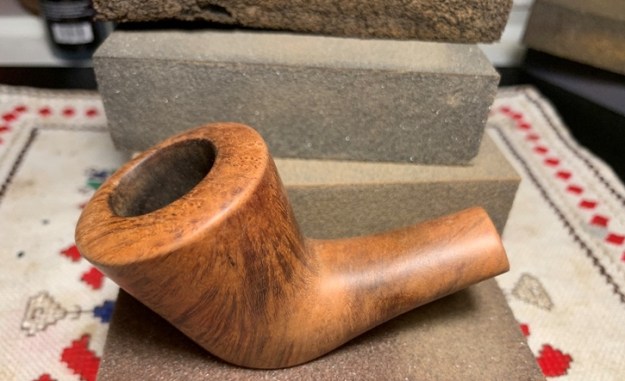
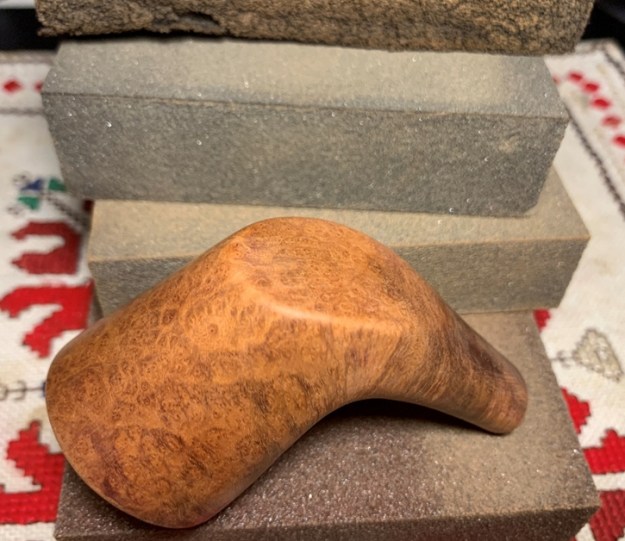
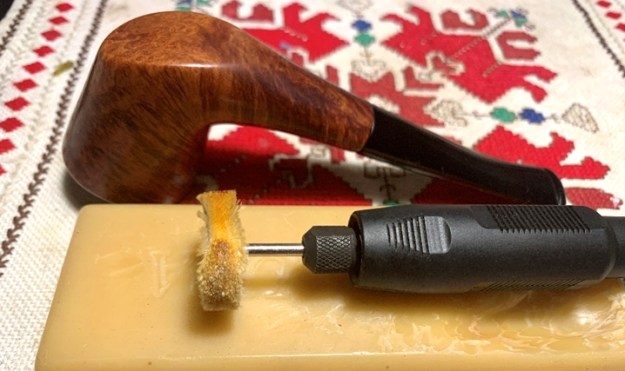
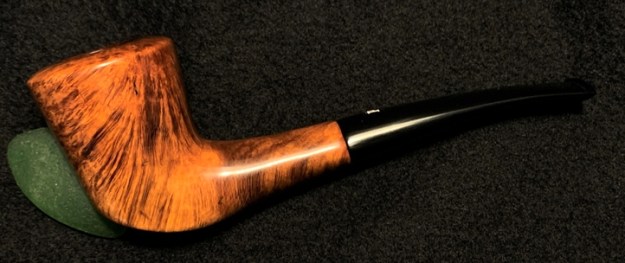
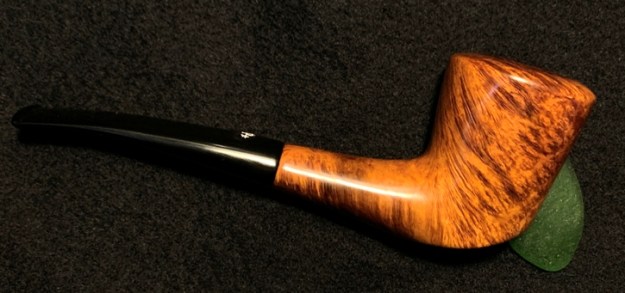
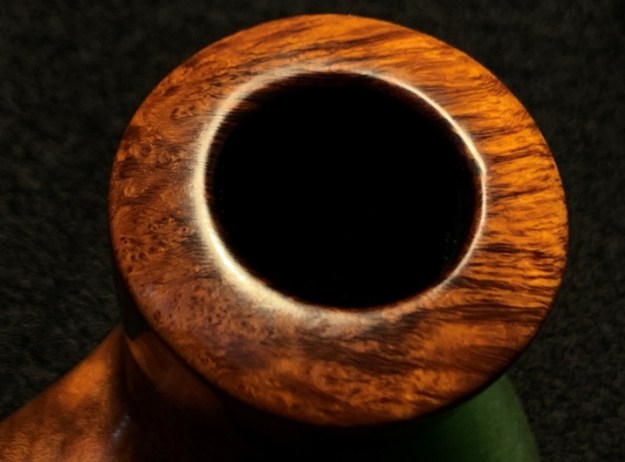
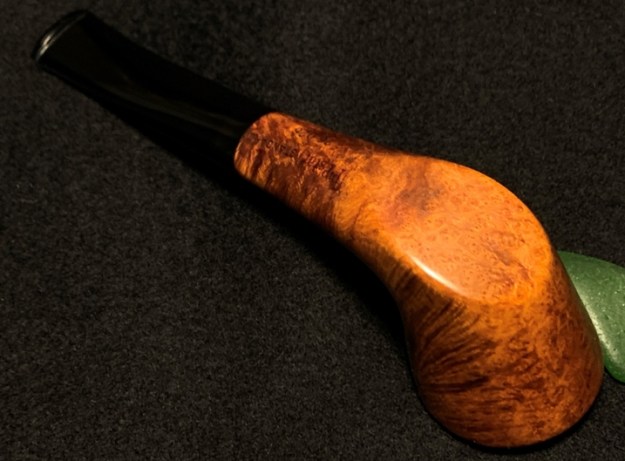
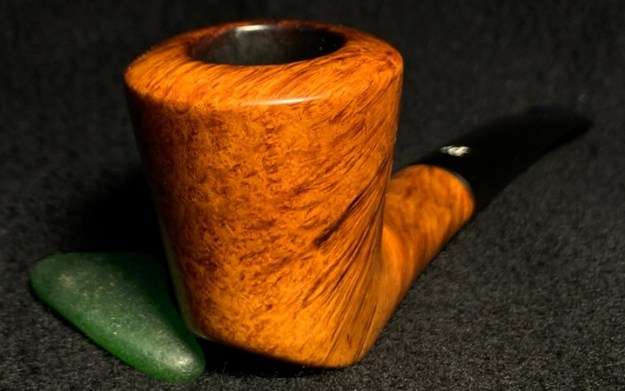
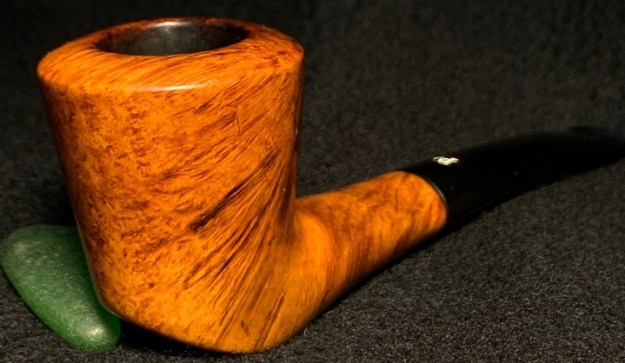
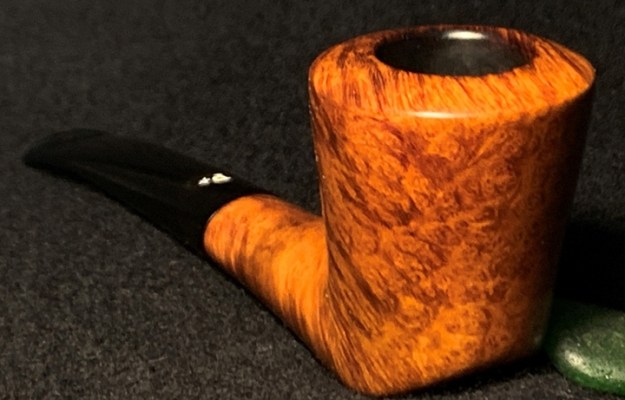
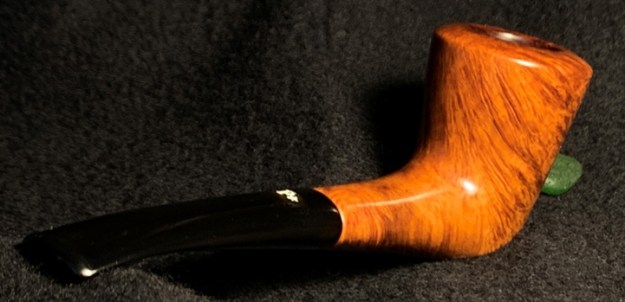
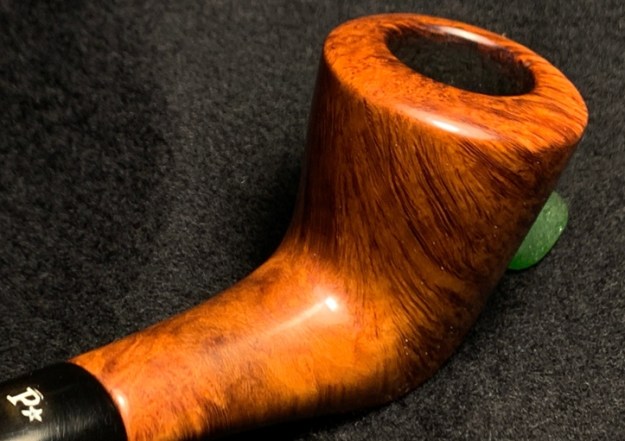
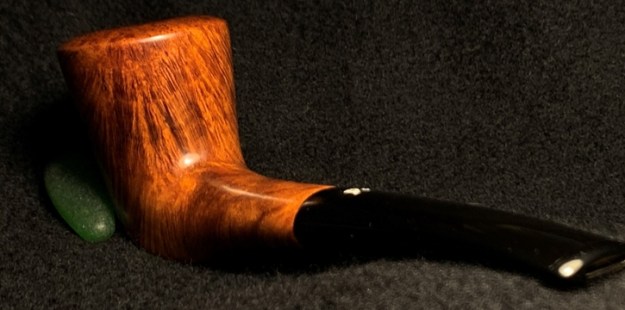
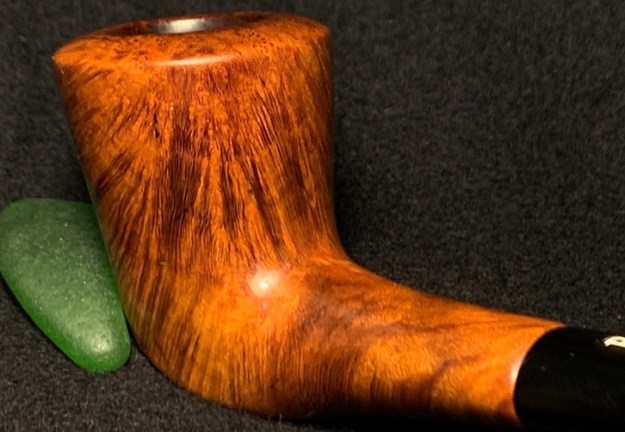
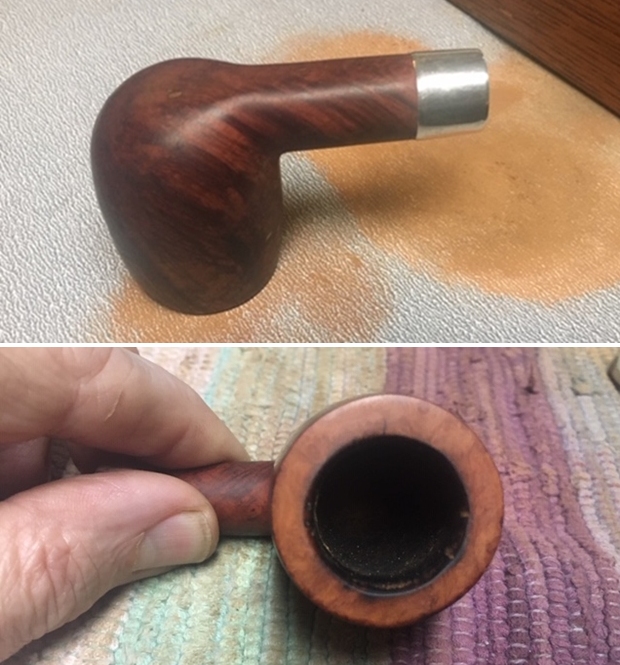
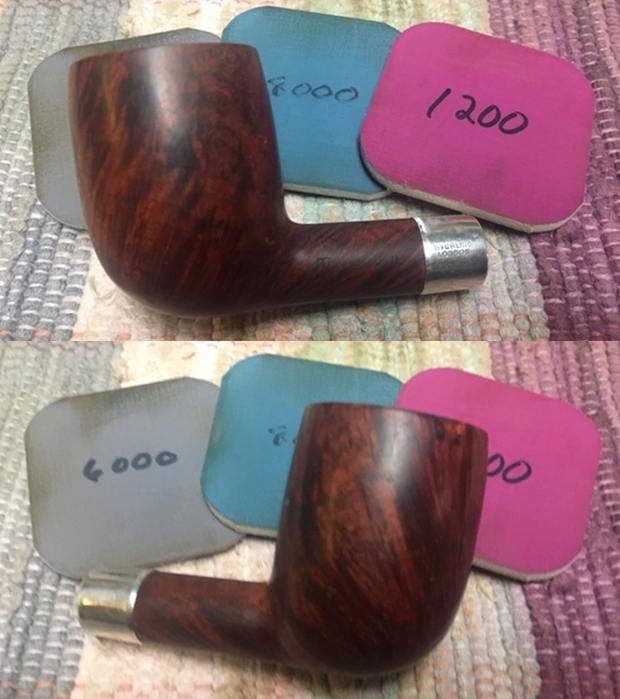
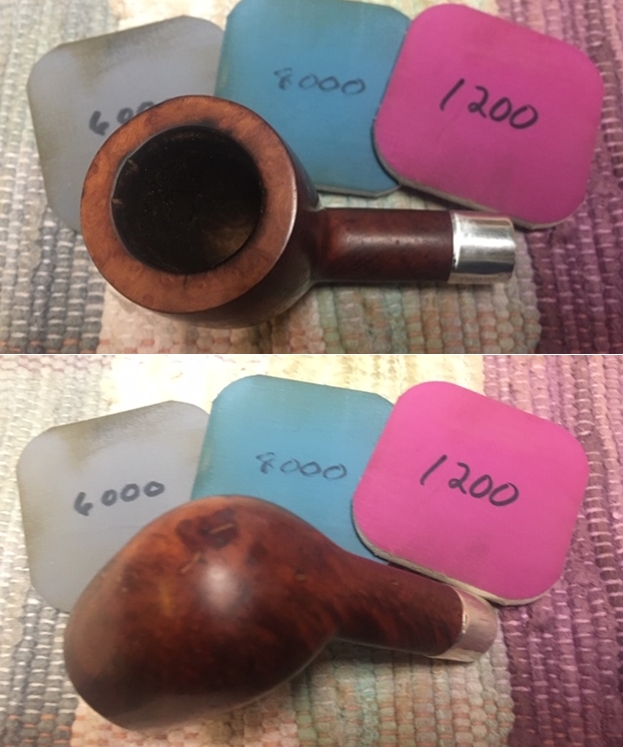
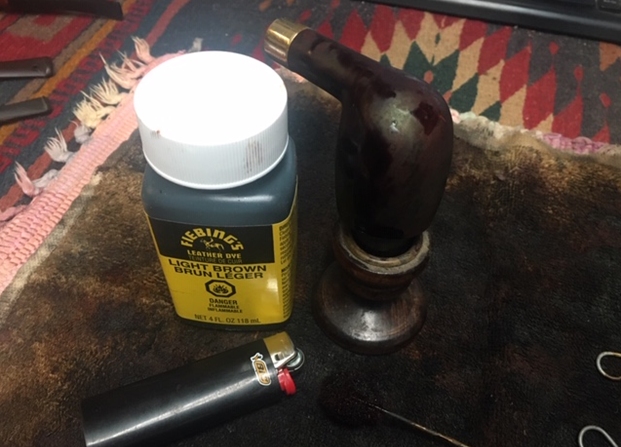
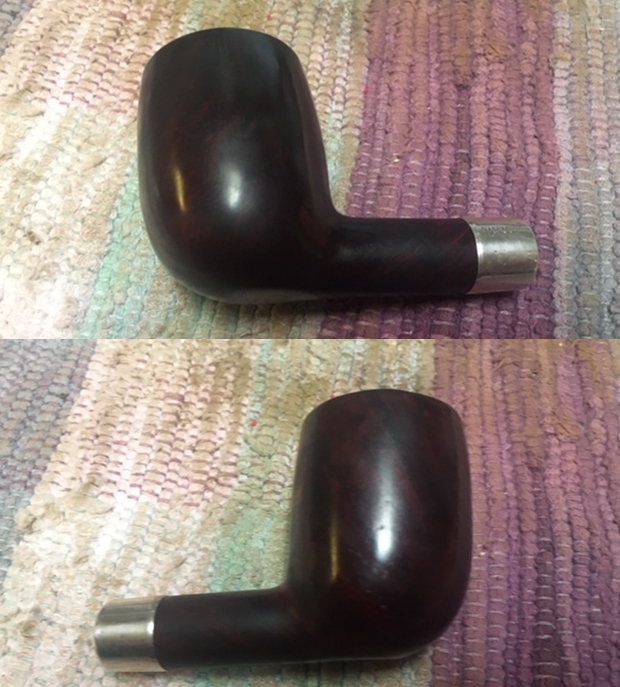
As you would expect, we had limited time with our kids, and we packed it as full as we could!  What Christmas celebration would be complete without including snow, riding gondolas and skiing in Bulgaria’s beautiful Pirin Mountains and spending time together as a family AND getting to know the young women who would become our future daughter-in-law in August.  The time with our kids went too quickly, but before they left, Katie’s future father-in-law was an interesting character with the moniker, The Pipe Steward, and she was interested in finding a special pipe she could commission from The Pipe Steward to give to her father as a gift for his birthday.  Unlike most people who go through the virtual ‘Help me!’ baskets in the online collection I call, For “Pipe Dreamers” Only!, Katie was able to go through the physical boxes of my inventory to find the perfect pipe that called her name for her father.  What added to the experience was that Katie knew that the pipe she chose would benefit the Daughters of Bulgaria!  The pipe that got Katie’s attention after listening to many, many pipes, was a very hopeful Sculpted 3/4 Bent Billiard with only the marking, ‘IMPORTED Briar’ on the left shank flank which I had acquired from the Lot of 66 – a huge Lot of pipes that came from a non-profit in Georgetown, Texas, called the Caring Place.  Here are some of the original pictures I took when the Lot of 66 arrived. Christmas is now, long gone, our world has changed by the covid-19 pandemic, the kids are in the US navigating life, and  Katie’s pipe for her father is now on my worktable.  I take a closer look at the Sculpted Bent Billiard with some pictures.  There is genuinely nice briar grain lurking beneath the darkened, tired finish – many bird’s eye formations draw my attention.  The upper bowl surface is darkened in comparison to the other briar landscape indicating potential overheating problems which may be revealed when the chamber is cleared of the cake.The rim is in rough shape with thick lava flow and nicks and skinned edges – it’s been a well-used pipe!The picture doesn’t show the thick carbon cake buildup that I can see with the eye.  The chamber closes and narrows as you move toward the chamber floor.The mortise is too loose so that the tenon has no grab.  This needs to be addressed and tightened.The stem has deep oxidation and calcium buildup on the bit area. The button needs refreshing.The nomenclature is thin with only ‘Imported Briar’ on the shank.  The spelling of briar probably indicates this to be a US manufactured pipe.  To begin the restoration of Katie’s pipe, the stem’s airway is cleaned with a pipe cleaner wetted in isopropyl 95%.With the oxidation being so deep and with the calcium buildup, I get a head start on removing the oxidation using 000 grade steel wool along with a ‘Soft Scrub-like’ product I can get here in Bulgaria. This helps with the cleaning before putting the stem into the soak.The next step is to give the stem a soak in Before & After Deoxidizer that does an adequate job of removing oxidation that isn’t too deep.  The stem joins other stems and pipes in the queue.  I let it soak for several hours.After removing the stem from the Deoxidizer, I let the liquid drain and I squeegee the stem with my fingers.  I then use cotton pads wetted with isopropyl 95% to wipe the stem removing raised oxidation.  I clear the fluid from the airway with a few pipe cleaners also wetted with isopropyl 95%.To help condition the vulcanite stem, paraffin oil is applied with a cotton pad.  Paraffin Oil is a mineral oil.  I then put the stem aside to give time for the oil to be absorbed.Next, turning to the bowl, I use the Pipnet Reaming Kit to start clearing the hard, thick carbon cake from the chamber. I use 3 of the 4 blade heads available in the kit to ream the bowl.  I follow the reaming tool by scraping the chamber wall with the Savinelli Fitsall Tool.  I finish by sanding the chamber with 240 paper wrapped around a Sharpie Pen. After wiping the chamber with a cotton pad wetted with alcohol, I discover what appears to be some heating damage on the upper backside of the chamber – behind the sculpting.  There is a hole with a crevasse cutting to the left from the deep pit.  This will need attention after the cleaning of the stummel is completed.Next, I continue with the cleaning of the external surface using undiluted Murphy’s Oil Soap on a cotton pad.  I also utilize a brass bristled brush to work on the lava covered rim.  Brass does not damage the briar and adds some cleaning power.  I transport the pipe to the kitchen sink and continue the cleaning using shank brushes and anti-oil dish soap. With the brushes the mortise is scrubbed.  After a thorough rinsing, the bowl is back on the worktable.The rim cleaned up revealing the internal edge burn damage from lighting practices on the right side of the bowl.  This will be addressed later.The bigger surprise comes after inspection of the sculpted area.  The center of the sculpting is a filler.  The question is, was the sculpting used to hide an imperfection in the briar itself or to blend a repair possibly caused by a burn-through?  I don’t believe it’s a burn through, but the fill corresponds to the hole in the chamber.Using a dental probe, it doesn’t take much to clean the hole and to complete the tunnel passageway to the chamber.  Daylight is now visible looking from the inside.  Ugh. There appears to be a lateral crack that the sculpting has incorporated.  This pipe falls into the ‘Dreamer’ category but is not beyond hope!  The briar surface is nice, and this challenge I hope does not create too much of an obstacle. Continuing with the cleaning regimen, I return to cleaning the internals using cotton buds and pipe cleaners wetted with isopropyl 95%.  I discover that a couple pipe cleaners and one cotton bud are all that is needed.  The internals are clean.My approach to repairing the hole in the stummel is to first start with applying briar dust putty to the external briar side.  I don’t push the putty through into the chamber but leave a gap that will be filled with JB Weld on the internal fire side. Using burrs with the Dremel, I’ll ‘re-sculpt’ the external surface to blend the patch. Working on a plastic disk as a mixing palette, scotch tape helps with an easy cleanup. After cleaning the area with alcohol, I begin by mixing briar dust with BSI Extra Thick Maxi-Cure CA glue using a toothpick.  I draw briar dust into the puddle of glue until the thickness is that of molasses.  I then use the toothpick to trowel the putty to the hole.  I press the putty into the hole partially to fill it.  I use an accelerator to quicken the curing and to hold the patch in place. After the briar dust putty is fully cured, the next step is to apply JB Weld to the internal fracture and crevasse.  JB Weld is heat resistant and works well has a chamber repair.  I mix equal parts of the ‘Steel Resin’ and the ‘Hardener’ and then mix with a toothpick.  The mixed epoxy begins to harden in about 4 minutes giving plenty of time to apply the Weld to the hole and to the crevasse running from it.  After applied, I set the stummel aside for some hours for the patch to cure. Switching my focus now to the stem, to expand the tooth compressions on the upper and lower bit, I first use the heating method.  Using a Bic lighter, I paint the bit with the flame thereby warming and expanding the rubber compound, vulcanite.  I take before and after pictures to show the comparison on the upper and lower. The heating method may have helped some, but not enough to avoid using Black CA glue to spot drop patches on the upper and lower bit.  After applying the CA glue, I put the stem aside for the patches to cure.With the stem on the side curing, I turn again to the stummel. The JB Weld patch has fully cured. To remove the excess epoxy and to smooth the chamber wall, I mount a sanding drum to the Dremel.  It does a quick and good job. I then sand and smooth the chamber patch using 240 grade paper wrapped around a Sharpie Pen.  The patch looks good conforming exactly to the hole and crevasse it filled. The rim has sustained a good bit of damage on the right inner edge.  My first thought was to top the stummel at this point to remove the damage.  After a second thought, this would remove a good bit of briar real estate from the rim.  Instead, I decide to rebuild the inner edge using briar dust putty then after the patch cures to top and sand the rim. I first remove all the residual carbon from the surface from the lighting damage that caused the problems.  I brush the area with the brass wired brush as well as sand it with 240 paper getting down to fresh briar.This picture shows the damage to the rim well and the area needing to be rebuilt.I mix briar dust with Extra Thick CA glue by gradually pulling briar dust into the puddle until it reaches the thickness of molasses.  Then the briar putty is applied with the toothpick to the inside of the lip to build up toward the rim and in toward the chamber.  I use an accelerator to quicken the curing process. Allowing the rim patch to thoroughly cure, I turn back to the stem filing and sanding the black CA glue patches on the upper and lower bit.  I use the file to refresh and redefine the button.  The sanding is expanded to the entire stem to remove vestiges of oxidation.Following the 240 sanding paper, the stem is wet sanded with 600 grade paper followed by applying 000 grade steel wool.  The stem is shaping up nicely.The rim briar dust putty rebuild is fully cured and using the sanding drum mounted onto the Dremel, I begin removing the excess patch material on the internal chamber wall.  The goal is to restore a rounded chamber. Next, the excess patch material is removed from the rim top.I also smooth out the external hole path in the sculpted area. With the excess patch material removed from the rim, I then take the stummel to the topping board.  I removed the excess first so that the topping will be more balanced and not get pushed off or out of balance because of the different level of surface. I start first with 240 sanding paper on the chopping board. After some rotations on the board, the ‘roundness’ or lack of, of the chamber becomes more distinct. I return to the sanding drum on the Dremel to continue to round the chamber wall and rim edge.  This goes slowly to make sure not to take too much off!  I also use 240 sanding paper rolled to clean the outer and inner edges of the rim.   It’s looking good.After changing the topping board to 600 grade paper, the stummel is rotated several more times.  I like what I see.  The rim rebuild patch looks good and the rim’s balance has been restored without great loss of briar off the top of the bowl.Before continuing with sanding the stummel, I attach a burr to the stummel to shape the sculpting.  I try to match some swings and swirls but dipping in and out with the burr is pretty random.  At the end, I think it looks good.I plan to apply a light brown dye to the stummel.  To clean the surface and to help to lighten the dark spots caused by heating, especially near the rim, I apply sanding sponges. I usually use 3 sanding sponges – coarse, medium and light to finish.  I add a coarser sponge to this regimen with a total of 4 sanding cycles. The grain has started to emerge.  I continue by using the full regimen of micromesh pads.  Starting with pads 1500 to 2400 I wet sand.  Following this, dry sanding with pads 3200 to 4000 and 6000 to 12000 bring out the latent grain in the briar.  I’m liking the appearance of several bird’s eye swirls. The grain is lively and expressive. The stummel still shows darkened areas from charring and heating. This is especially on the rim and near the top of the bowl.  I decided early on with the repairs and the briar blemishes, that I would apply Fiebing’s Light Brown Leather Dye to the briar surface.  I assemble the dying module on my work desk.I begin by heating the stummel with a hot air gun.  The gun heats and expands the briar helping it to be more receptive to the dye.  I then paint the stummel with the aniline dye using a folded pipe cleaner and with each section, I ‘flame it’ by lighting it with the lit candle with the result that the alcohol in the dye combusts leaving behind the dye pigment.I thoroughly apply the dye and fire it making sure the entire stummel has been covered.  The stummel is then set aside for several hours to ‘rest’.  This allows the new dye to be absorbed into the briar grain.With the stummel resting, I turn again to the stem.  I apply the full regiment of micromesh pads by wet sanding with pads 1500 to 2400 and dry sanding with pads 3200 to 4000 and 6000 to 12000.  Between each set of 3 pads, Obsidian Oil is applied to help condition the stem and to protect from oxidation. The newly dyed stummel has been resting for several hours and it’s time to ‘unwrap’ the fire crusted shell.  I use a felt buffing wheel mounted on the Dremel at the lowest speed.  Using the felt wheel Tripoli compound is applied to the stummel surface.Next, I wipe the stummel with a cotton pad wetted with alcohol not so much to lighten but to remove excess dye ‘clumped up’ that was missed through the buffing process.Next, I reunite stem and stummel and apply (stem attachment not shown!) and apply Blue Diamond compound.  With a cotton buffing wheel attached to the Dremel, the speed is set at approximately 40% full power and the compound is applied to pipe.  After applying the compound, a felt cloth is used to wipe/buff the pipe to remove any compound dust in preparation for adding wax.I had observed earlier that the stem was loose.  There is too much play with the mortise fitting.  To remedy this, I use the smooth end of a drill bit, one-step larger than the airway diameter.  I then heat the mortise carefully with a Bic lighter to warm the vulcanite making it more supple.  As the mortise heats, I gently insert the larger drill bit into the airway expanding the diameter of the tenon as I go. The procedure works well.  The mortise-tenon fit is snugger as it should be.Next, just to help guard against dye leeching when the pipe is first put into service, I reheat the stummel and wipe it well with a cotton cloth.  This emulates the heating when the pipe is first put into service.  Sometimes, newly dyed stummels will leech the dye when they are first used coloring the new steward’s fingers – in this case, Katie’s father!  I don’t want this to happen!With the repair having been done to the upper chamber with the filling of the hole with JB Weld, a protective coating of natural Bulgarian yogurt and activated charcoal will help initiate a layer for a carbon cake to develop.  The normal healthy cake width for a chamber is the width of a US dime.  Not much, but this helps to guard the briar in the fire chamber.  I add the charcoal to a small amount of natural yogurt.  Sour cream can also be used.I add charcoal until the mud mixture will not drip off the pipe nail but remains firm.After putting a pipe cleaner in the airway to guard the draft hole from being obstructed, I then trowel the mud into the chamber and cover the chamber wall thoroughly.  The hour is late, so I put the stummel aside for the mud to dry through the night. The next day, after rejoining stem and stummel, carnauba wax is applied to the entire pipe.  Another cotton cloth buffing wheel is mounted on the Dremel for this purpose and the speed is maintained at 40% full power.  After the application of a few coats of wax, the pipe is given a rigorous hand buffing with a microfiber cloth to remove any excess wax and to raise the shine.Wow!  This Sculpted 3/4 Bent Billiard had some issues to work through.  The hole repair and the rim were the largest challenges and I’m pleased with how these repairs turned out.  The briar grain is fun and expressive and really made an appearance through the dying and buffing process.  I’m pleased and I trust that my future daughter-in-law, Katie, will be pleased as well as she gives this pipe to her father as a gift for his birthday.  What makes this gift even more valuable is that this pipe benefits the Daughters of Bulgaria – women and girls who have been trafficked and sexually exploited.  Thanks for joining me!

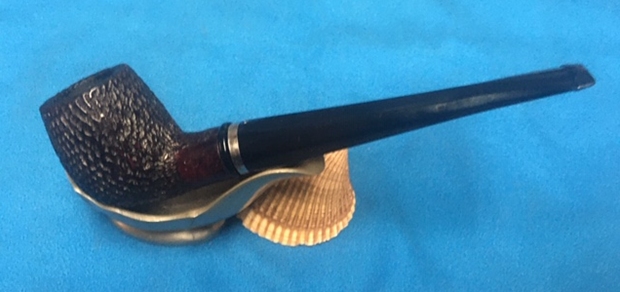
A Savinelli Sherwood Rock Briar 316KS Bent Dublin


Blog by Steve Laug

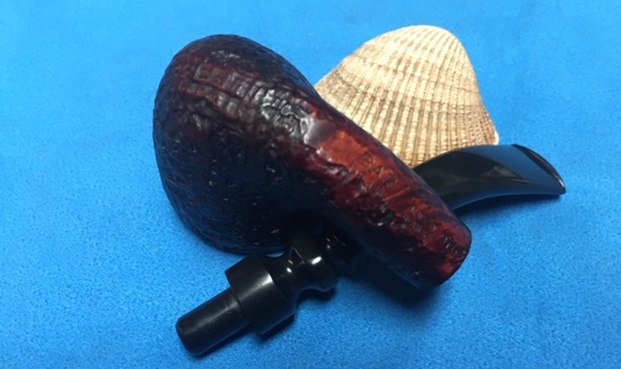
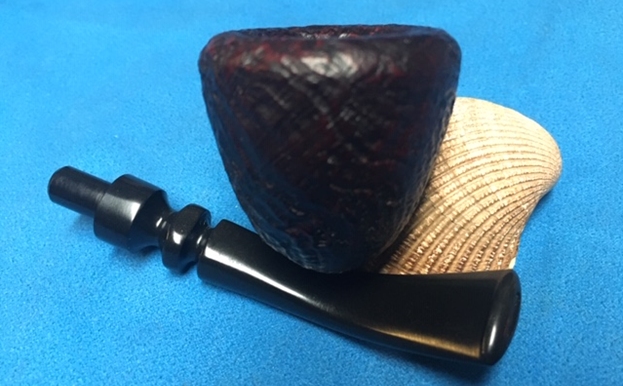
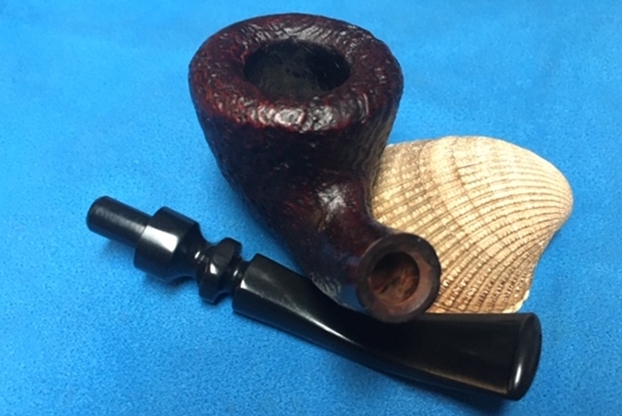
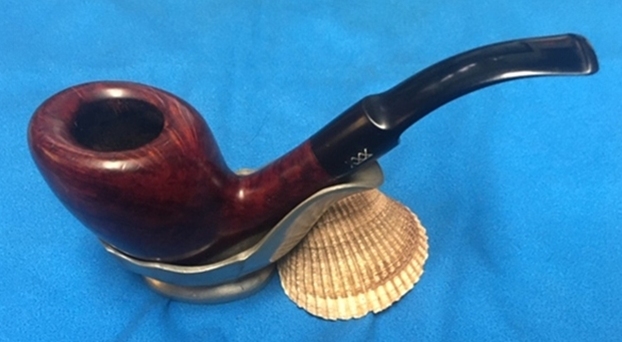
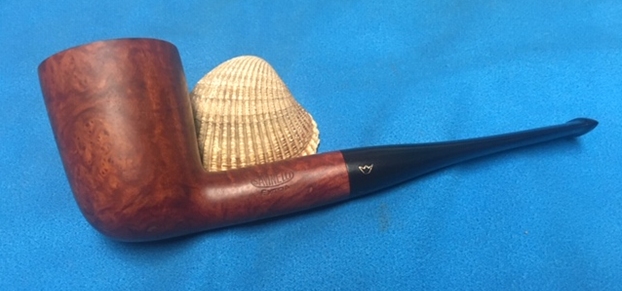
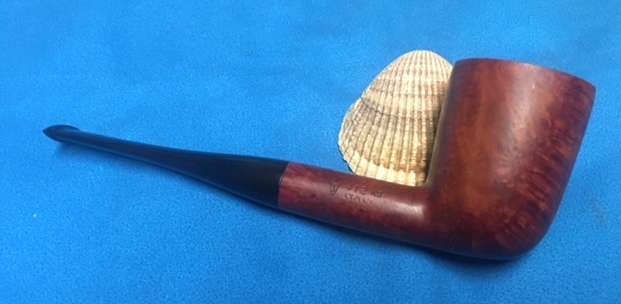
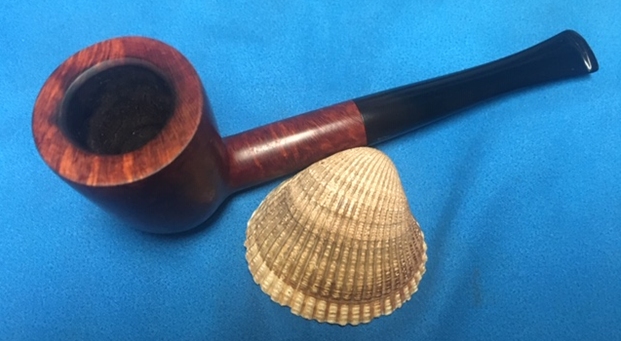
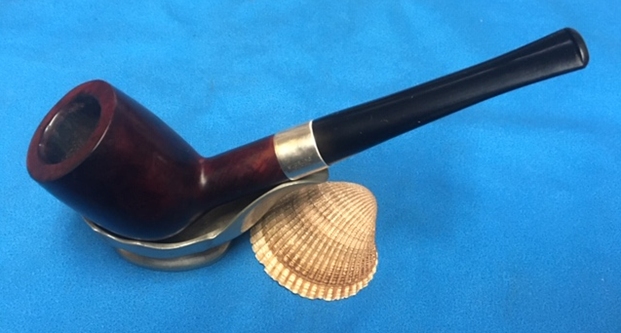
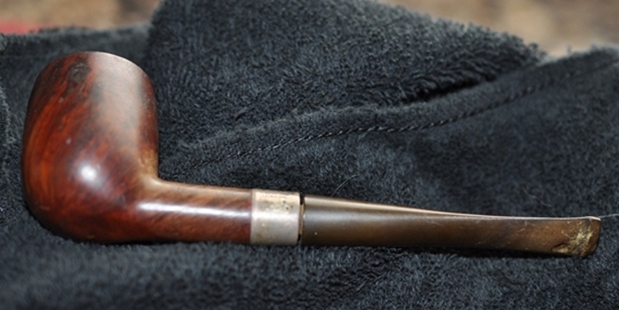
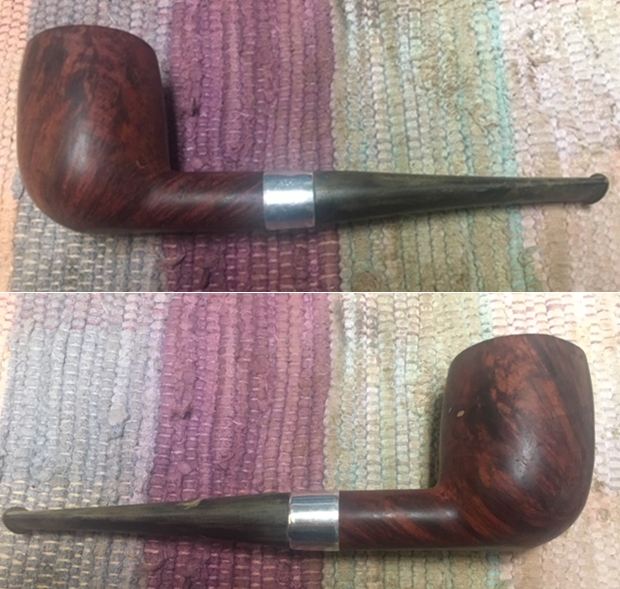
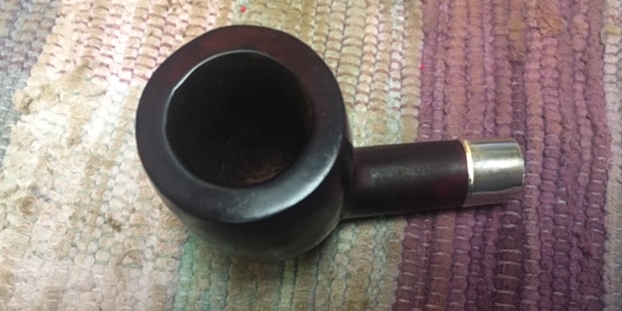
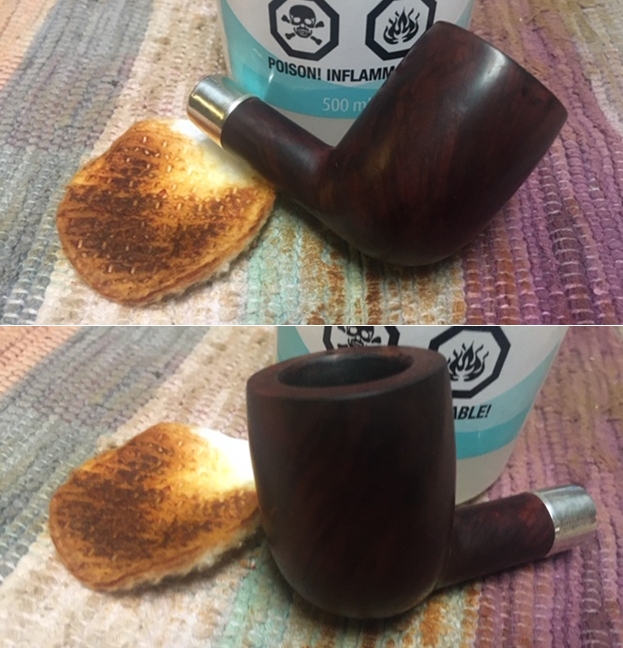
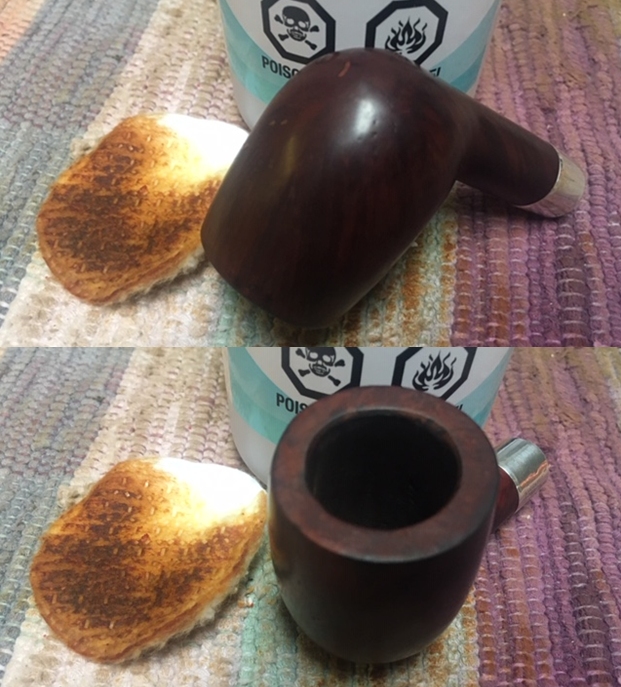
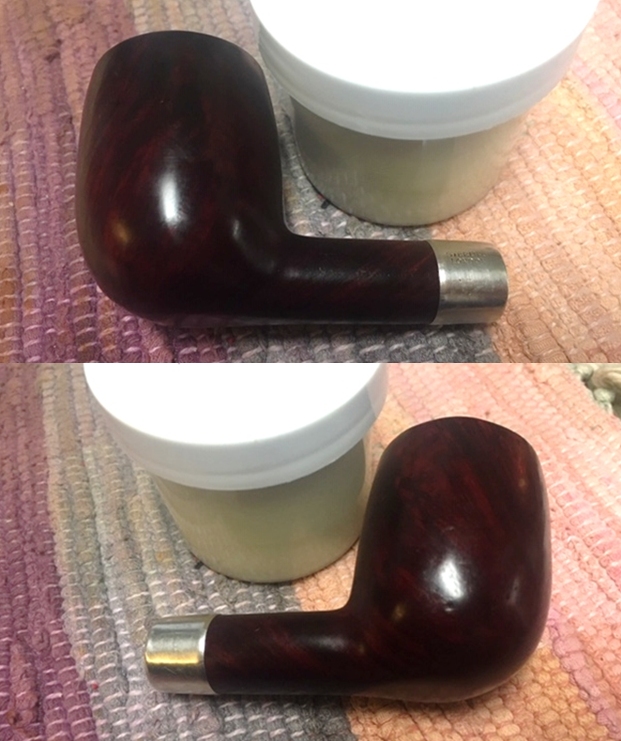
The next pipe on the table came to us from one of Jeff’s pipe hunts. It is a interestingly rusticated saddle stem Bent Dublin with a smooth crowned rim top and darkening around the rim edge. It is stamped with Sherwood over Rock Briar on the heel of the bowl followed by the Savinelli “S” shield and the shape number 316KS over Italy on the shank. The stamping is clear and readable though the shape number is hidden slightly by the nickel repair band. The pipe has a combination of brown stains and the worm trail rustication is not only tactile but also a purposefully pattern to the finish. The finish was very dirty with grime ground into the bowl. The bowl had a thick but even cake in the bowl and a heavy lava overflow on the inner edge of the top toward the back of the bowl. There was darkening on the briar around the inner edge and the top of the rim. The stem was oxidized and there were tooth marks and chatter on both sides and on the top and bottom edges of the button. there were some hash marks on the left side of the stem about an inch from the button. Jeff took photos of the pipe before he cleaned it up. Jeff took photos of the rim top to show the thick cake in the bowl and the lava overflow on the inner edge of the crowned rim.  Jeff took some photos of the bowl sides and heel to show the “worm trail” rustication around the bowl and the great looking grain as well. It is actually a nice looking pipe.  The stamping on each side of the shank is shown in the photos below. They look very good and readable. The shooting star logo on the stem side is clear but faint. I am hoping that it can be repainted once it is clean. It all depends on how deep the stamping on the stem side is.The stem was a very good fit to the shank. It was oxidized, calcified and had debris stuck to the surface of the vulcanite. It also shows the tooth marks on the stem and on the button surface.  I turned to Pipephil (http://www.pipephil.eu/logos/en/logo-savinelli3.html) to read about the Sherwood Rock Briar. It is a smooth pipe with the worm trail carving around the bowl. Sometimes I wonder if it was Savinelli’s answer to the Custombilt Craze or what Lorenzo was selling that was similar. This is definitely tamer! I have included the screen capture from the site below.From what I could find there were several things about the pipe on my table that did not add up to what I was seeing in the various photos. I found a picture of the same pipe on Worthpoint (https://www.worthpoint.com/worthopedia/wow-savinelli-sherwood-rock-briar-143136918). It has a long slender tapered stem on the shank and no band. I was pretty certain before I saw this picture that the pipe I was working on had a replacement stem – it was a saddle stem and was poorly fit to the shank. I was also confident that the band was for a cracked shank repair and was not original. It also covered the stamped KS portion of the shape number. I think both were added at the same time to repair a break that happened which cracked the shank and broke the stem. The photos I was seeing confirmed my suspicions about the pipe in hand.Armed with that information and a clearer picture of the original pipe I turned to work on the pipe on my work table. Jeff had done a great job cleaning up the pipe as usual. He reamed the pipe with a PipNet reamer and cut back the cake back to the bare briar. He cleaned up the walls with a Savinelli Fitsall Pipe Knife. He scrubbed the interior of the bowl and shank with pipe cleaners, cotton swabs and alcohol to remove the tars and oils. He scrubbed the exterior of the pipe with Murphy’s Oil Soap and a tooth brush to remove the grime from the finish. He worked on the rim top lava and darkening with the soap and tooth brush. He scrubbed the inside of the stem with alcohol and pipe cleaners. He scrubbed the exterior with Soft Scrub and then soaked it in Before & After Deoxidizer. He washed it off with warm water to remove the deoxidizer. The pipe looked far better. I took photos of the pipe when I received it before I started working on it. I took photos of the bowl and rim top as well as the stem to show how clean they were. You can see the darkening on the inner edge and the top at the back of the bowl. The stem looks clean of oxidation and the tooth marks and chatter are very clear in the photos. However one of the issues that I saw in looking at the fit of the shank to the stem was that whoever had done the replacement stem had rounded the edges of the saddle so the fit against the band was not smooth but slightly hipped.  You can see that on the fit of the stem to the shank in the photos below. There are bulges on the sides and underside.     I took a photo of the stamping on the underside of the bowl and shank. The stamping is clear and readable as noted above. I took a photo of the pipe with the stem removed to show the overall look of stem, tenon and profile of the pipe.I decided to start my work on the pipe by addressing the darkening on the rim top and the inner edge. I used a folded piece of 220 grit sandpaper to work on the edge to remove the darkening. It took a bit of work but I was able to remove the majority of it and the end product looked much better. I did not sand the rim top as I figured that polishing it with micromesh pads would take care of the rim top for me. I polished the bowl and rim with micromesh sanding pads – wet sanding with 1500-12000 grit pads. I worked over the rim top and edge of the bowl with the pads. I wiped the bowl down with a damp cloth after each pad to remove the sanding debris. Because the bowl and rim top looked so good I decided to move on to rubbing the briar down with Before & After Restoration Balm. I worked it into the briar with my fingertips and a horse hair shoe brush to get it into the crevices. The product works to clean, enliven and preserve the briar. I let it sit for 10 minutes while I worked on the stem. After the time passed I buffed it with a cotton cloth to deepen the shine. The briar really comes alive with the balm. I set the bowl aside and turned my attention to the stem. I decided to address the diameter of the saddle portion of the stem and remove some of the rounding on the edge. I also wanted to get rid of the “hips” on the sides and underside of the stem. I sanded the saddle with a folded piece of 220 grit sandpaper and repeatedly checked the fit to the shank and band. When I finally had removed the majority of the issues it was time to move on. I polished it with a piece of 440 grit wet dry sandpaper. I rubbed the stem down with Denicare Mouthpiece Polish – a red, gritty Tripoli like substance that is a paste. I rubbed it into the surface of the stem and polished it off with a cotton pad. It helped to remove the transition between where the Softee Bit had covered the stem and the rest of the stem surface. I have found that is a great intermediary step before polishing with micromesh pads. I am not sure what I will use once the final tin I have is gone!   I polished the vulcanite with micromesh sanding pads – 1500-12000 grit pads. I wiped it down with Obsidian Oil after each sanding pad. I used Before & After Pipe Polish – both Fine and Extra Fine to further polish the stem.   This Savinelli Sherwood Rock Briar 316KS Dublin is an interesting looking pipe. The mix of brown stains highlights the smooth briar between the rusticated patterns around the bowl sides, top and bottom. The finish on the pipe is in excellent condition and the contrasting stains work well with the polished black vulcanite saddle stem. The replacement stem and nickel band look good with the bowl and stem. I put the stem back on the bowl and carefully buffed the pipe with Blue Diamond on the buffing wheel using a light touch on the briar. I gave the bowl and stem multiple coats of carnauba wax on the buffing wheel and followed that by buffing the entire pipe with a clean buffing pad. I hand buffed the pipe with a microfiber cloth to deepen the shine. The finished Sherwood Rock Briar 316KS Dublin is quite nice and feels great in the hand. Give the finished pipe a look in the photos below. The dimensions of the pipe are Length: 5 ½ inches, Height: 1 ½  inches, Outside diameter of the bowl: 1 ¾ inches, Chamber diameter: 7/8 of an inch. Thanks for walking through the restoration with me as I worked over another beautiful pipe. This pipe will be added to the Italian Pipe Makers section of the rebornpipes store soon. If you want to add it to your collection send me an email or a message! Thanks for your time.
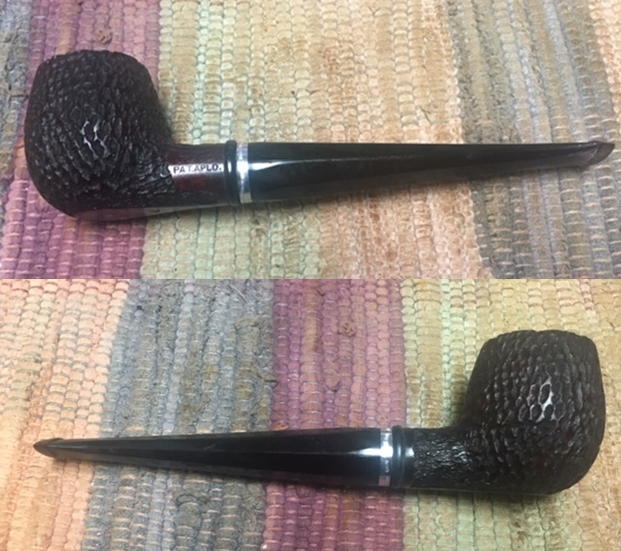
Back To Inherited Pipes And Restoring A 1912 W H Gourd Calabash


Blog by Paresh Deshpande

It’s been a while since I have worked on one of my inherited pipes as I have been busy with pipes from the estate pipe lots that have reached me from various sellers. Though these pipes had been fun to work on, I, at times, have a desire to work on inherited pipes.

The next pipe that has caught my attention is a gourd calabash and the only one to date, which was in one of the three very large boxes of pipes that I have inherited. Working on these old pipes is what I love the most because of the intrinsic connection I have with these pipes and the fact that once I pass away, these will be passed on to my kids as remembrance that their father had worked on restoring each of these vintage and priceless collection of pipes.

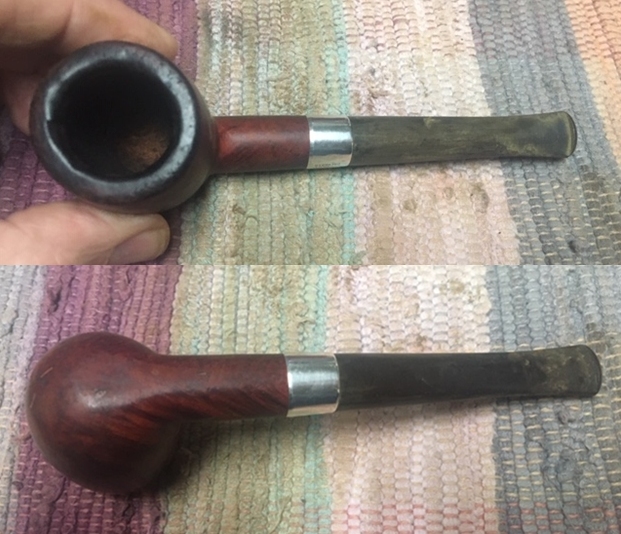
This gourd calabash is not very large in size, but big enough to have a great feel in the hand. The gourd has colored beautifully and has taken on a nice deep reddish brown color. The bowl sits flush with the gourd top and is covered in a Sterling Silver cap that is stamped as “W. H.” in a semi-circle followed by three sterling hallmarks, each in a cartouche. There is an anchor, a lion, and the lower case letter “n”. The anchor identifies the city of the manufacture of the silver to be Birmingham, England. The lion is the mark for 0.925 Sterling Silver and the letter “n” is the date stamp. A similar set of stampings are also seen on the sterling silver band at the shank end. The stampings are all crisp and prominent.The hallmarked sterling silver band and cap helps in the dating with great accuracy and the first site that I visit is www.silvercollection.it

I browsed through the alphabetical listing of maker’s mark for W.H. in a semi circle and narrowed it down to William Harrison Active in London: various Harrison’s marks in Chester Assay Office were registered by Imperial Tobacco Co between 1907 and 1916. It is also known a fact that his marks are registered with the Birmingham Assay Office.Next I followed the link to the dating guide of the Birmingham Assay Office to date this pipe. I have included a hallmark chart for dating the pipe. I put a red rectangle around the letter for 1912. It is the same style of “n” and the cartouche that holds the letter stamp, matches the photo as well.Another source of information on William Harrison is reproduced below from the site  https://www.silvermakersmarks.co.uk/Makers/Chester-WD-WH.html#WH

Thus, from the above, the pipe that I am now dealing with is from the tobacconist/ pipe maker/ pipe mounter William Harrison and dates to 1912!! This pipe is nearly 108 years old. With the provenance of the pipe now established, I move ahead with initial inspection of this old pipe.

Initial Visual Inspection
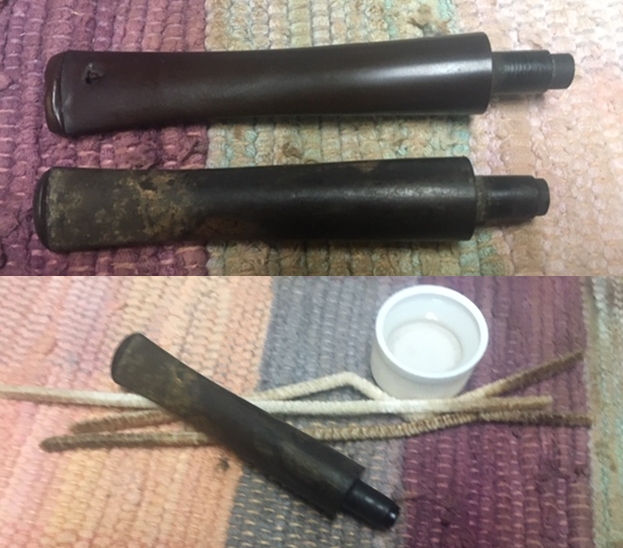
The pipe, as it sits on my work table, presents itself as a simple and straight forward refurbishing project. The gourd has developed a nice patina and taken on a deep red brown golden color. There is no damage to the gourd. This pipe should polish up nicely. The sterling silver rim cap and shank band have numerous dents and dings. A straight split to the silver shank band is seen on the right side. This split can be welded by my silversmith, but that can happen only after the lockdown and social distancing norms have relaxed somewhat. The vulcanite stem does not seat completely into the shank. This issue should be addressed once the mortise has been thoroughly cleaned. Here is how the pipe appears at this stage. The bowl on this calabash is flush with the gourd rim top. Native South African calabashes imported to the UK had bowl linings of gypsum pressed into the gourd. Since the rims of a gypsum bowls were somewhat inelegant, retailers fit them with sterling rim covers– a practice they continued even after they began to employ meerschaum for the bowl linings. Given the vintage of this pipe, the bowl could either be clay or gypsum or even a meerschaum. There is a decent layer of dried and crusted cake in the chamber. The draught hole is at the bottom, dead center and somewhat constricted by the cake. The bowl is held in place by a Sterling Silver rim cap that is riveted in to the gourd and unmovable without damaging the gourd. The sterling rim cap is tarnished and has numerous dents and dings and a light overflow of lava over the surface. The stampings on the rim cap are crisp and easily readable but with the beginnings of wearing off at the ends. I need to be careful with my polishing of the sterling cap. The gourd surface has beautiful color and it will be my endeavor to preserve the patina that has developed on the surface due to smoking. The surface is covered in old oils, tars, grime and dirt from all these years. There is no damage to the gourd surface and that’s a big relief. This piece of gourd will look stunningly beautiful and rich once it has been cleaned and polished. The bowl is fixed to the gourd with sterling rim cap and is riveted in place. These rivets have a little play but still have many years of careful use ahead. The mortise and the gourd internals are filthy to say the least and no surprises here. Heavy accumulation of oils, tars and grime are seen within the mortise and also within the gourd. This is adversely affecting the seating of the stem in to the mortise. Cleaning the internals of a calabash is always challenging and this one more so, as the bowl is permanently fixed to the gourd.The tapered vulcanite stem is heavily oxidized. Deep tooth indentations are seen in the bite zone on either surfaces of the stem. The round orifice is correct for the vintage of this pipe and shows accumulated oils and tars. The button edges need to be sharpened. The tenon is also covered in oils, tars and grime. The air way is clogged and will need to be cleaned. The Process
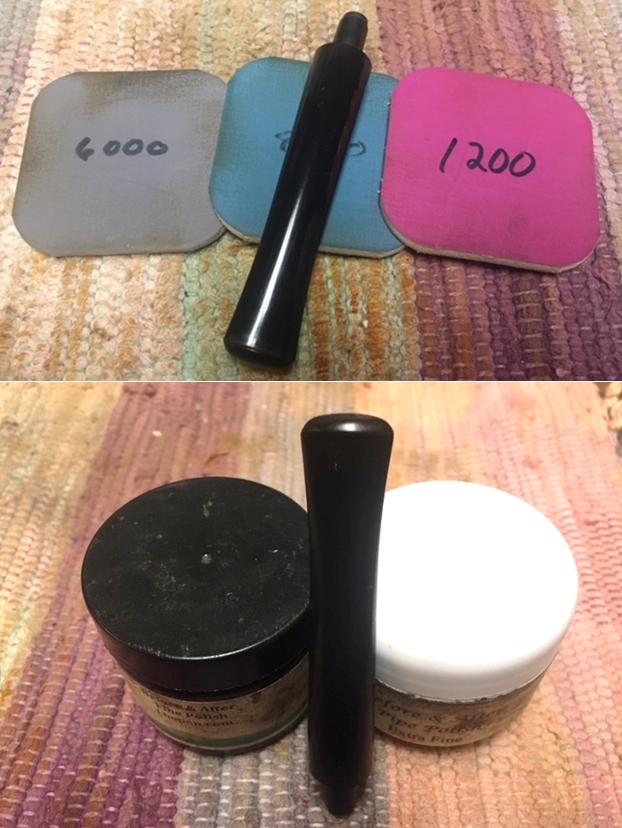
The process of refurbishing this pipe started with the cleaning of the stem. Abha, my wife, cleaned the stem air way with regular and bristled pipe cleaners dipped in 99.9% pure isopropyl alcohol. She further cleaned the stem internals with thin shank brushes and dish soap to remove the stubborn and thick gunk from within the airway. The heap of pipe cleaners and their appearance tells a sordid story. With my sharp fabricated knife, she scraped off all the dried tars and gunk from the tenon end.Once the stem internals had been cleaned, I gently sand the stem surface with a used piece of 220 grit sand paper and immersed it in “Before and After Deoxidizer” solution along with the stem of other pipes in line for restoration. It has been our experience that before immersing the stem in to the stem deoxidizer, light sanding of the stem with a folded piece of 220 grit sand paper loosens the oxidation a bit and helps get fantastic end results.Simultaneously while Abha was working on the stem, I reamed the bowl with my fabricated knife to clean up the chamber. I used a 220 grit sand paper, pinched between my thumb and forefinger, to sand the inner walls of the chamber of the pipe. Once I had reached the bare walls, I wiped the chamber with a cotton pad dipped in isopropyl alcohol. This removed all the residual carbon dust and also rid the chamber of all ghost smells. The walls of the chamber are nice and solid with no signs of heat fissures or cracks. I ran a couple of hard bristled pipe cleaners dipped in isopropyl alcohol through the draught hole and thoroughly cleaned it.The next morning, Abha removed the stems that had been soaking in the deoxidizer solution overnight. She cleaned the stem under running warm water and scrubbed the raised oxidation from the stem surface using a Scotch Brite pad. She further removed the oxidation by scrubbing the stem with 0000 grade steel wool and applied a little olive oil to rehydrate the stem.The deep tooth indentations are now clearly visible and I decided to address these issues at this stage. Since I did not have a lighter (I generally prefer to use it for this purpose), I used a lit candle instead. The result is equally good; however, one has to be doubly careful as the heat from a candle flame is more intense as compared to a lighter. These tooth indentations were raised to the surface to some extent due to the heating; however, it would require a fill to complete the repairs.I prepared a mix of CA superglue and activated charcoal and carefully applied it over the damaged bite zone on both surfaces and lip and set it aside for curing over night. I had applied this mix in sufficient thickness which would help during the filing and sanding to match the fills with the stem surface and shaping the button.Using a flat head needle file, I reshaped the button and followed it up by sanding the stem with a folded piece of 220 grit sand papers. I followed it up by further sanding the stem with 320, 600 and 800 grit sand papers. Once I was satisfied that the fills had perfectly matched with the rest of the stem surface, using micromesh pads, I completed the polishing cycle by wet sanding the surface with 1500 and 2000 grit sand papers and further dry sanding with 3200 to 12000 grit pads. The stem looks great with the fills nicely matched with the rest of the surface. I rub a little quantity of Extra Virgin Olive oil into the stem surface. While I was working on the stem repairs and subsequent polishing, Abha cleaned out the mortise and gourd internals using pipe cleaners, q-tips and alcohol. She scraped out the accumulated dried oils, tars and gunk from the mortise using fabricated tool. The mortise was finally declared clean by Abha after a few hours and lots of elbow grease, the pile of pipe cleaners and the chunks of grime removed from the mortise are a standing testimony to the filth in the pipe. The pipe now smells clean and fresh. At this point in time, the internal cleaning of the stem, mortise and gourd is completed. The stem repairs and polishing is also completed. Next I decided to clean and polish the gourd. I cleaned the external surface of the gourd with Murphy’s Oil soap on cotton swabs. I wiped the surface with a moist cloth and set the gourd aside to dry out completely. After the gourd had dried out, I polished the gourd surface with micromesh pads. There was a small twist though! The 1500 to 2400 grit micromesh pads in the set that were left behind at home (remember that my home and work place are at different corners of the country!) have completely worn down. Since most of my material and equipment that I use for pipe restoration is at my work place, I substituted the 1500 to 2400 grit pads with 1500 and 2000 grit wet or dry sand paper. I find that these work just fine. I wanted to preserve the patina and deep coloration that has developed on the gourd surface, I dry sand the stummel surface with 1500 (sand paper) to 12000 grit micromesh pads. This is starting to look really nice. With Colgate tooth powder, I cleaned the sterling silver rim cap and shank band to a nice shine and yes, I avoided rubbing the powder over the stampings and hallmarks to prevent them from wearing down.Next, I rub a small quantity of “Before and After Restoration Balm” in to the gourd with my finger tips and let it rest for a few minutes. The balm almost immediately works its magic and the gourd now has a nice vibrant appearance with the beautiful darkened colors on full display. I further buff it with a horse hair shoe brush. To apply the finishing touches, I mount a cotton cloth buffing wheel on to my hand held rotary tool and apply a coat of Blue Diamond to the stummel and the stem to polish out the minor scratches. With a cotton buffing wheel that I use for carnauba wax, I apply a coat of carnauba wax and continue to work on it till the complete coat of wax had been polished out. I mount a clean cotton cloth buffing wheel and give the entire pipe a once over buff. I finish the restoration by giving the entire pipe a rigorous hand buffing using a microfiber cloth to raise the shine further. The finished pipe looks beautiful and is ready to be added to my restored pipe collection. When, or if at all I will, smoke this pipe only time will tell!! Here are the pictures of the refurbished pipe.

Rebirthing a Schoenleber Hand Made – A #3 Apple


Blog by Steve Laug

The next pipe in the queue is another one that Jeff picked up – this one is a Schoenleber Hand Made – a straight shank Apple with some beautiful grain around what appears to be an oil cured bowl and shank. The entire pipe has some beautiful mixed birdseye, cross and swirled grain around the bowl and shank. But it is under a thick coat of oils, grime and dirt. The carver did a great job utilizing the block of briar to maximize the grain. The pipe is stamped on the left side of the shank. It reads Schoenleber over Hand Made. On the right side of the shank it is stamped Imported Briar with a number 3 which is either a shape number or size designation. The saddle stem is vulcanite and has a single small blue dot on the top side. I think that this will be another nice looking piece once it is cleaned up. The bowl is thickly caked with a thick overflow of lava on the crowned rim top. The exterior of the briar was dirty with grime and dust. The stem has light tooth marks and chatter on both sides. It is lightly oxidized and has some calcification. Jeff took photos of the pipe before his cleanup work They tell the story and give a glimpse of the promise that we see in this pipe. Jeff took photos of the rim top to show the thick cake in the bowl and the lava overflow on the crowned rim top and inner edge. Jeff took some photos of the bowl sides and heel to show grain that was around this bowl. It is a nice looking pipe. He took photos of the sides of the shank to show the stamping. The stamping is faint but readable in the photos below and is as noted above – on the left side it reads Schoenleber Hand Made. He did not take a photo of the right side but it reads Imported Briar and the number 3 at the shank/bowl junction on the right side. The stem has a light blue dot on the top of the saddle. The stem was a very good fit to the shank. It was oxidized, calcified and had debris stuck to the surface of the vulcanite. It also shows the tooth marks on the stem and on the button surface.  When I worked on a Schoenleber pipe for Alex in the past I had done the research on the brand. I knew that the pipe had been made for a shop in New Jersey but went back and reread the previous blog I had written on the brand. I have included the information from Pipedia that I included before. I quote the article in full (https://pipedia.org/wiki/Schoenleber).

Louis Schoenleber lived in North Arlington N.J. and was an Austrian immigrant and skilled artisan in pipe making. His hand carved pipes were available in his shop, ‘Schoenleber’s Newark Pipe Shop’, at 26 Branford Pl., Newark NJ, thought to open in the 1920’s. Schoenleber’s carried a full line of tobaccos as well as related pipe smoking accessories. It’s thought the shop operated until the late 1960’s, and Louis Schoenleber died in 1976. It’s also fairly certain they may have sold to other brands such as Jelling, also in Newark and are very similar in design and finish.

There was also an advertising card on the site that I have included below. It speaks to my assumptions about the curing process and the finishing process on the pipe. It also connects the pipe to Schoenleber’s Newark Pipe Shop in Newark, N.J. It also has a comment on the fact that pipes were made to order.Armed with those reminders about the brand I turned to work on the pipe itself. Jeff had done a great job cleaning up the pipe as usual. He reamed the pipe with a PipNet reamer and cut back the cake back to the bare briar. He cleaned up the walls with a Savinelli Fitsall Pipe Knife. He scrubbed the interior of the bowl and shank with pipe cleaners, cotton swabs and alcohol to remove the tars and oils. He scrubbed the exterior of the pipe with Murphy’s Oil Soap and a tooth brush to remove the grime from the finish. He worked on the rim top lava and darkening with the soap and tooth brush. He scrubbed the inside of the stem with alcohol and pipe cleaners. He scrubbed the exterior with Soft Scrub and then soaked it in Before & After Deoxidizer. He washed it off with warm water to remove the deoxidizer. The pipe looked far better. The stamping on the side of the stem was very light and the white that had remained was gone. I took photos of the bowl and rim top as well as the stem to show how clean they were. You can see some damage and darkening on the inner edge and crown of the bowl.  The stem looks clean of oxidation and the tooth marks and chatter are almost invisible in the photos.  I took photos of the stamping on the sides of the shank. The stamping is faint but readable as noted above.  I took a photo of the pipe with the stem removed to show the overall look of stem, tenon and profile of the pipe.I started my part of the restoration by polishing the bowl and rim with micromesh sanding pads – wet sanding with 1500-12000 grit pads. I worked over the rim top and edge of the bowl with the pads. I wiped the bowl down with a damp cloth after each pad to remove the sanding debris. I worked some Before & After Restoration Balm into the surface of the briar with my fingertips to clean, enliven and protect it. I let the balm sit for a little while and then buffed with a cotton cloth to raise the shine. I set the bowl aside and turned my attention to the stem. I sanded it with 220 grit sandpaper to remove the oxidation and tooth chatter on both sides of the stem. I started the polishing of the surface with 400 grit wet dry sandpaper. I rubbed the stem down with Denicare Mouthpiece Polish – a red, gritty Tripoli like substance that is a paste. I rubbed it into the surface of the stem and polished it off with a cotton pad. I have found that is a great intermediary step before polishing with micromesh pads. I am not sure what I will use once the final tin I have is gone!  I polished the vulcanite with micromesh sanding pads – 1500-12000 grit pads. I wiped it down with Obsidian Oil after each sanding pad. I used Before & After Pipe Polish – both Fine and Extra Fine to further polish the stem.   With both parts of the pipe finished, I polished the bowl and the stem with Blue Diamond polish on the buffing wheel. I gave the bowl and the stem multiple coats of carnauba wax. I buffed the pipe with a clean buffing pad to raise the shine. I hand buffed it with a microfiber cloth to deepen the shine. The pipe polished up pretty nicely. The rich oil cured finish and the grain came alive with the buffing. The finish on the briar works well with the polished black vulcanite stem. The finished pipe is a well-proportioned, nicely grained Schoenleber Apple. Have a look at it with the photos below. The dimensions are Length: 5 ¼ inches, Height: 1 ½ inches, Outside diameter of the bowl: 1 ¼ inches, Chamber diameter: ¾ of an inch. This Schoenleber Hand Made Straight Apple will be going on the rebornpipes store in the American Pipe Makers shortly. Thanks for walking through the restoration with me on this older American Made pipe.

A Norm Thompson Catalogue Store English Made 15 Billiard


Blog by Steve Laug

The next pipe on the table came to us from one of Jeff’s pipe hunts and turns out to be a catalogue pipe from Norm Thompson in Portland, Oregon. It is a Norm Thompson Billiard that is in decent condition. It is stamped with a Ram’s Head logo over Norm Thompson on the top left side of the shank. On the right side it is stamped Made in England. That is followed by the shape number 15. The stamping is clear and readable. The pipe has a medium brown finish and overall some nice grain that the shape follows well. The finish had a shellac or varnish coat and it was very dirty with grime ground into the shiny finish of the bowl. The bowl had a thick but even cake in the bowl and some light lava overflow on the beveled inner edge of the top. There was darkening on the briar around the inner beveled edge and the top of the rim. The stem was in surprisingly good condition. There was not a tooth mark and there was no chatter to be found on the stem. Jeff took photos of the pipe before he cleaned it up. Jeff took photos of the rim top to show the thick cake in the bowl and the lava overflow on the beveled inner edge of the rim. The photos show the dark spots on the rim top.Jeff took some photos of the bowl sides and heel to show the nice grain that was on this bowl. It is a nice looking pipe. The stamping on each side of the shank is shown in the photos below. They look very good and readable.   The stem was a very good fit to the shank. It was oxidized, calcified and had debris stuck to the surface of the vulcanite. It was otherwise free of damage.   I found a discussion on Pipesmagazine.com about the brand and one of the responders gave some helpful information on the brand (https://pipesmagazine.com/forums/threads/thompson-pipes.72989/). I quote the section:

A USA Norm Tompson was started in Portland, Oregon. Here’s a brief history:

The company was founded by namesake Norman Anchor Thompson, Sr. in 1949 as a way to sell his homemade flies for fly-fishing.[6][7] An immigrant from Britain, he had settled in Salt Lake City before fighting for Canada in World War I.[7] After the war he lived briefly in Los Angeles before settling in Portland where he owned seven pipe shops and later two nightclubs during World War II.[7] Thompson retired after the war as owner of the nightclubs and tobacco shops.[6]

He started the new business as a mail order only business by placing an advertisement in Field & Stream,[8] and around 1951 handed it over to Peter Alport, his son-in-law.[6][7] Alport was in advertising in New York City where he owned Parma Advertising.[6] He worked to expand the company’s product offerings beyond fly-fishing items and into clothing and other outdoor merchandise, plus he developed the company’s slogan of Escape from the ordinary.[6] During his tenure, Norm Thompson opened its first retail store in 1959, located in Northwest Portland.[6] Namesake Norm Thompson died in 1968 from complications related to his exposure to mustard gas during his World War I military service in Europe.[7]

A unique pipe with lots of history!

From there I turned to search the company on the net and found a long article on the brand on Wikipedia (https://en.wikipedia.org/wiki/Norm_Thompson_Outfitters). I quote a part of the article below.

Norm Thompson Outfitters is a privately owned catalog and internet retailer based in Middleton, Massachusetts [3] that was previously based in Hillsboro, Oregon, United States until September 2016.[4] The Norm Thompson offices were closed and consolidated due to Bluestem’s acquisition of their parent company, Orchard Brands, in July 2015.[5] Founded in 1949 by Norman A. (Norm) Thompson as a mail order business, it grew to annual sales of $200 million before it was sold to Golden Gate Capital Partners in 2006. The company sells clothing, gadgets, furniture, kitchen items, and gift items from its namesake catalog as well as from its Solutions and Sahalie brands. John Difrancesco serves as president and chief executive of the 500 employee company.

I followed another link to an article on the brand that identified the company with seven pipe shops in the Portland area (https://alchetron.com/Norm-Thompson-Outfitters). I quote:

The company was founded by namesake Norman Anchor Thompson, Sr. in 1949 as a way to sell his homemade flies for fly-fishing. An immigrant from Britain, he had settled in Salt Lake City before fighting for Canada in World War I. After the war he lived briefly in Los Angeles before settling in Portland where he owned seven pipe shops and later two nightclubs during World War II. Thompson retired after the war as owner of the nightclubs and tobacco shops.

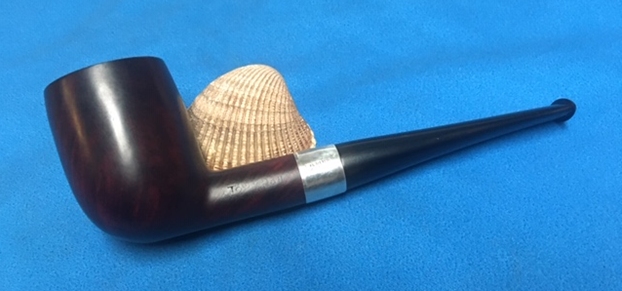
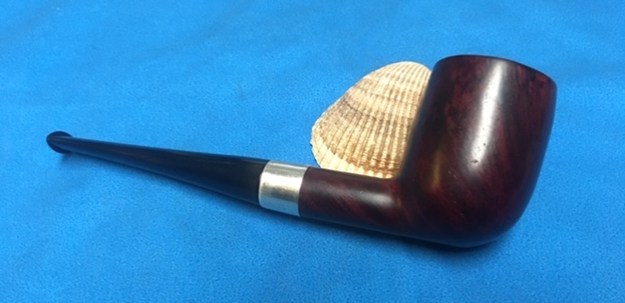
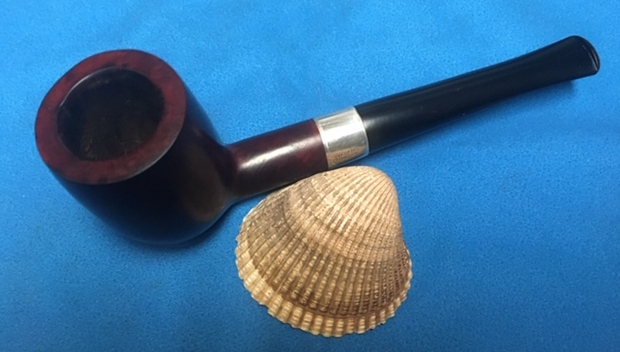
I knew that I was dealing with a Norm Thompson 15 Billiard that was specially made for the Outfitters by a pipemaker in England. It is not clear who made the pipes for them. I turned to work on the pipe itself. Jeff had done a great job cleaning up the pipe as usual. He reamed the pipe with a PipNet reamer and cut back the cake back to the bare briar. He cleaned up the walls with a Savinelli Fitsall Pipe Knife. He scrubbed the interior of the bowl and shank with pipe cleaners, cotton swabs and alcohol to remove the tars and oils. He scrubbed the exterior of the pipe with Murphy’s Oil Soap and a tooth brush to remove the grime from the finish. He worked on the rim top lava and darkening with the soap and tooth brush. He was able to remove the varnish or shellac coat in his clean up of the bowl. He scrubbed the inside of the stem with alcohol and pipe cleaners. He scrubbed the exterior with Soft Scrub and then soaked it in Before & After Deoxidizer. He washed it off with warm water to remove the deoxidizer. The pipe looked far better. I took photos of the pipe when I received it before I started working on it. I took photos of the bowl and rim top as well as the stem to show how clean they were. You can see the darkening on the inner edge of the rim and the top on both sides.  The stem looks clean of oxidation and the tooth marks and chatter are very clear in the photos.I took photos of the stamping on the sides of the shank. The stamping is clear and readable as noted above.   I took a photo of the pipe with the stem removed to show the overall look of stem, tenon and profile of the pipe.I decided to start my work on the pipe by addressing the darkening on the rim top and beveled inner edge. I used a folded piece of 220 grit sandpaper to work on the finish to remove the darkening on both. It took a bit of work but I was able to remove the majority of it and the end product looked much better.   I polished the briar with micromesh sanding pads – dry sanding with 1500-12000 grit pads and wiping the bowl down with a damp cloth after each pad. I rubbed the briar down with Before & After Restoration Balm. I worked it into the briar with my fingertips. The product works to clean, enliven and preserve the briar. I let it sit for 10 minutes while I worked on the stem. After the time passed I buffed it with a cotton cloth to deepen the shine. The briar really comes alive with the balm.    I set the bowl aside and turned my attention to the stem. I polished the vulcanite with micromesh sanding pads – 1500-12000 grit pads. I wiped it down with Obsidian Oil after each sanding pad. I used Before & After Pipe Polish – both Fine and Extra Fine to further polish the stem.     This Norm Thompson 15 English Made Billiard is a nice looking pipe. The Medium Brown stain highlights some mixed grain around the bowl sides and the heel. The finish on the pipe is in excellent condition and the contrasting stains work well to highlight the grain on the pipe. The polished black vulcanite taper stem adds to the mix. With the grime and debris gone from the finish and the bowl it is eye-catching. I put the stem back on the bowl and buffed the pipe with Blue Diamond on the buffing wheel. I gave the bowl and the stem multiple coats of carnauba wax on the buffing wheel and followed that by buffing it with a clean buffing pad. I hand buffed the pipe with a microfiber cloth to deepen the shine. The finished Norm Thompson 15 Billiard is quite nice and feels great in the hand. It is also a sitter with a flat bottom. Give the finished pipe a look in the photos below. The dimensions of the pipe are Length: 5 ¾ inches, Height: 2 inches, Outside diameter of the bowl: 1 ¼ inches, Chamber diameter: 7/8 of an inch. Thanks for walking through the restoration with me as I worked over another beautiful pipe. This pipe will be added to the British Pipe Makers section of the rebornpipes store soon. If you want to add it to your collection send me an email or a message! Thanks for your time.
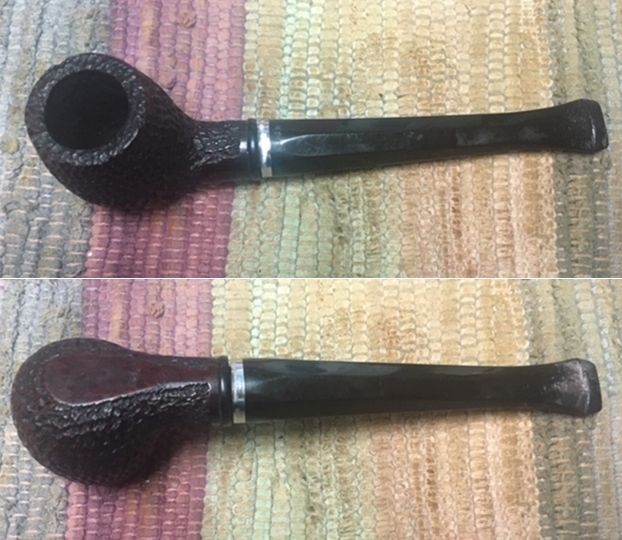
Breathing Life into a 1957 (or is it a 1967) Dunhill Root Briar 251 EX606 Billiard


Blog by Steve Laug

The next pipe on the table came to us from one of Jeff’s pipe hunts on the Oregon Coast. It is a Dunhill Root Briar Billiard that is in decent condition. It is stamped EX606 over 251 which is the shape number followed by Dunhill over Root Briar on the left side of the shank. On the right side it is stamped with the 3R (which is the Group size and the R for Root Briar) and to the left is reads Made in England with what looks like a 7 superscript to me and 0 which gives the date the pipe was made. The stamping is clear and readable. The pipe has a medium brown finish and some amazing grain that the shape follows well. The finish was very dirty with grime ground into the grain around bowl sides. The bowl had a thick cake in the bowl and a heavy lava overflow on the top and the inner edge of the top. There was a burn mark on the left outer edge of the bowl. It was hard to know the overall condition of the rim top and edges because of the grime. The stem was dirty, oxidized and had some calcification around the button. There was light tooth chatter and marks on the stem near the button on both sides. The stem has the Dunhill White Spot logo on the top of the taper stem. Jeff took photos of the pipe to show what it looked like before he cleaned it up. Jeff took photos of the rim top to show the thick cake in the bowl and the lava overflow on the top and damage to the outer edge of the rim. The photos show the rim top and bowl from various angles.Jeff took some photos of the bowl sides and heel to show the nice grain that was on this bowl. It is a quite beautifully grained pipe. The stamping on each side of the shank is shown in the photos below. They look very good and readable. Here is where the question comes in on the date – is the 7 after the D in England on the third photo below a superscript or is it the same as the D. To me it is a superscript. You can also see the White Spot on the top of the taper stem in the last of the four photos below. The stem was a very good fit to the shank. It was oxidized, calcified and had debris stuck to the surface of the vulcanite. There was tooth chatter and marks on both sides of the stem and on the button surface.    I turned to Pipedia’s section on Dunhill Root Briar to get a bit of background on this particular Duhill finish (https://pipedia.org/wiki/Dunhill#Root_Briar). I quote:

Introduced in 1931 and highly prized because the grain is more pronounced in this finish (usually made using Corsican briar). The Root Briar finish requires a perfectly clean bowl with excellent graining. Therefore, it is the most expensive of the Dunhill pipes. Corsican briar was most often used for the Root finish since it was generally more finely grained. This is a rare finish, due to the scarcity of briar suitable to achieve it. These pipes are normally only available at Company stores, or at Principle Pipe Dealers. Straight grained pipes were formerly graded A through H, but are now only “Dr’s” and graded with one to six stars, with the letters G and H still used for the very finest pieces.

The article also cited a section from John Loring confirming the above information and giving a bit more colour to the information.

“Dunhill introduced its third major finish, the Root finish, in 1931. Corsican mountain briar is characteristically beautifully grained and the Root was made exclusively from that briar into the 1960s. The pipe was finished with a light natural stain to allow the beauty of the graining to show through. Although always available with a traditional black vulcanite bit, the Root was introduced in either 1930 or more likely 1931 and fitted with a marble brown dark and light grained vulcanite bit that has since become known as the ‘bowling ball’ bit because of the similarity in appearance between the bit’s finish and that of some bowling balls of the time. With the war, however, the bowling ball bit was dropped from production. Through 1954 (and after) the Root pipe nomenclature (including shape numbers) was identical to that of the Bruyere except that instead of the “A” of the Bruyere, the Root was stamped with an “R”. In 1952 when the finish rather than LONDON was placed under DUNHILL, ROOT BRIAR rather than BRUYERE was used for the Root.” Loring, J. C., The Dunhill Briar Pipe, The Patent Years and After (self-published, Chicago, 1998).

I have also included a chart from the site from Dunhill spelling out the Standard Pipe Finishes and giving short information and a timeline.

I also wanted to understand the additional stamps on the shank. There were two I wanted to clarify. One the left side there was the EX606 over the shape number. On the right side there was the superscript Date code and a second number – an underlined 0. I continued to search the connected pages on Dunhill. There was a specific page or section on the Dunhill Additional Stamps that helped some (https://pipedia.org/wiki/Dunhill_Additional_Stamps).

“The reason for dating a pipe was due to a one-year-guarantee offered by Dunhill, that they would replace a pipe if it had any issues in its first year. Sometimes, a pipe would be made and stamped, yet wouldn’t leave the factory until the next year or even later, when it would then receive a current extra date-code. Due to this, there are several examples of pipes with double, triple, or even quadruple date-codes stamped onto them.” Steven Snyder.

These additional codes were added by the retail stores – that’s why they were not uniform. For example, situations that the pipes were not sold in the same year of production, it was a way to establish a new warranty period. In cases where the customer requested a F/T stem (for example) or some minor cosmetic issue was found, the pipe returned to the factory and, in some cases, received a new coverage date. In these situations the extra date-code is uniform.

“It might have been added by the point-of-sales (shop, when the pipe was actually sold, so the guarantee period was easier to identify.” Hener, K. S., Product Line Director – The White Spot Smoker’s Accessory Division and Walthamstow site.

There is a bit of question as to the date on this pipe. I have had people on the various groups on Facebook say it is a 1957 sold in 1960 pipe and others say it is a 1967 sold in 1970 pipe.  All of the dating is dependent on how you see the 7 after the D in England. I turned to Pipephil (http://www.pipephil.eu/logos/en/dunhill/cledat-en1a.html) to see what I could find out. Here is the chart I used and I have drawn a red box around the portion I used.I also captured the stamping on two separate pipes to show my conclusion. The first one shows the stamp on a 1967 pipe with the 7 being essentially the same size as the D in England. The second one is a 1958 pipe with a smaller superscript that is in the same placement as the 7 on the pipe that I have in hand. So I am pretty confident that the double date stamp was the year the pipe was made and the year that it sold. In this case it was a 1957 pipe that sold in 1960.

I turned to Eric Boehm’s part of the article on the Pipedia section on the Dunhill shapes. I found the listing for the Billiard that I was working on but still no information on the EX 606 number above it (https://pipedia.org/wiki/Dunhill_Shapes_List). I quote:

251 Billiard, tapered bit (Relief bit) 3 5¾” 1950 3

That fits this pipe perfectly – a billiard with a tapered stem with a length of 5 ¾ inches. First used in 1950 in a Group 3 size.

I posted a question on the stamping on the Tobacco Pipe Restorers Group on Facebook and got this response from Alfredo Baquerizo:

This is a Root Briar from 1957 shape 251, group 3 and the R is for root. It’s an EX an exchange pipe by warranty Dunhill system. The 606 I think that is the exchange pipe number, I’m not sure.

I also posted on the Vintage Dunhill Pipes Group on Facebook and enjoyed the responses. One of the posters there, Jean-Paul Varon gave this information.

Ex606 = exchange of a pipe under guarantee.

That was the extent of the information that I could find at this point. It seems likely that the EX is the Dunhill Exchange Warranty system and the 606 could well be the Exchange pipe number. Is it possible that the EX606 could also include a date code in it? Possibly being the year 1960 and the sixth pipe of the year that was a replacement?

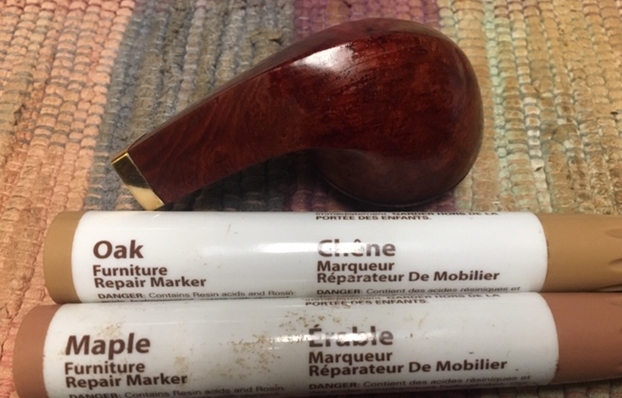
I turned to work on the pipe itself. Jeff had done a great job cleaning up the pipe as usual. He reamed the pipe with a PipNet reamer and cut back the cake back to the bare briar. He cleaned up the walls with a Savinelli Fitsall Pipe Knife. He scrubbed the interior of the bowl and shank with pipe cleaners, cotton swabs and alcohol to remove the tars and oils. He scrubbed the exterior of the pipe with Murphy’s Oil Soap and a tooth brush to remove the grime from the finish. He worked on the rim top lava and darkening with the soap and tooth brush. He scrubbed the inside of the stem with alcohol and pipe cleaners. He scrubbed the exterior with Soft Scrub and then soaked it in Before & After Deoxidizer. He washed it off with warm water to remove the deoxidizer. The pipe looked far better. I took photos of the pipe when I received it before I started working on it. I took photos of the bowl and rim top as well as the stem to show their condition. You can see the damage to the rim topo and inner edge. There a nicks and chip on the edge and top there is a burned area on the rear left outer edge. There is generally some heavy darkening on the top.  The stem on the other hand looks very good in the photos. I took photos of the stamping on the sides of the shank. The stamping is clear and readable as noted above.   I took a photo of the pipe with the stem removed to show the overall look of stem, tenon and profile of the pipe.I decided to start my work on the pipe by addressing the darkening and damage on the rim top and edges of the top. I lightly topped the bowl to remove the damage on the top and the inner edge of the rim. It also helped with the damage to the outer edge as well. I used a folded piece of 220 grit sandpaper to work on the inner edge a bit more. It took work but I was able to remove the majority of it. There was still one spot of burn damage on the left rear outer edge but it was smaller than when I had started.   I polished the briar with micromesh sanding pads – dry sanding with 1500-12000 grit pads and wiping the bowl down with a damp cloth after each pad.   I stained the polished rim top with the lightest coloured stain pen I have – Oak and was able to blend it into the overall colour of the bowl. The rim top looked amazingly better than when I started and has some great grain that is parallel to that on the heel of the bowl.I rubbed the briar down with Before & After Restoration Balm. I worked it into the briar with my fingertips. The product works to clean, enliven and preserve the briar. I let it sit for 10 minutes while I worked on the stem. After the time passed I buffed it with a cotton cloth to deepen the shine. The briar really comes alive with the balm.  I set the bowl aside and turned my attention to the stem. Because it was in such good condition I polished the vulcanite with micromesh sanding pads – 1500-12000 grit pads. I wiped it down with Obsidian Oil after each sanding pad. I used Before & After Pipe Polish – both Fine and Extra Fine to further polish the stem.   I decided to pause and go sit in the yard in the shade and enjoy a bowl of MacBarens HH Old Dark Fired in my Downie Pipe before I polished the Dunhill. Need a bit of a break!This uniquely stamped Dunhill Root Briar 251 Billiard is a piece of Dunhill’s Warranty History – made in 1957 and sold or exchanged in 1960 at least that is my call though others have seen it as made in 1967 and sold in 1970. It is a great looking pipe in spite of the remaining burn mark on the rim. The Light Brown stain highlights some great grain around the bowl sides and the heel. It has some of the most stunning birdseye grain I have seen in a while on the right side of the bowl. The finish on the pipe is in excellent condition and the stain works well to highlight the grain. The polished black vulcanite taper stem adds to the mix. With the grime and debris gone from the finish and the bowl it was a beauty and is eye-catching. I put the stem back on the bowl and buffed the pipe with Blue Diamond on the buffing wheel being careful to not buff the stamping. I gave the bowl and the stem multiple coats of carnauba wax on the buffing wheel and followed that by buffing it with a clean buffing pad. I hand buffed the pipe with a microfiber cloth to deepen the shine. The finished 251 Billiard is quite nice and feels great in the hand. Give the finished pipe a look in the photos below. I can only tell you that like the other pipes I am working that it is much prettier in person than the photos capture. The dimensions of the pipe are Length: 5 ¾ inches, Height: 1 ¾ inches, Outside diameter of the bowl: 1 ¼ inches, Chamber diameter: ¾ of an inch. Thanks for walking through the restoration with me as I worked over another beautiful pipe. This pipe will be added to the British Pipe Makers section of the rebornpipes store soon. If you want to add it to your collection send me an email or a message! Thanks for your time.

Life for a Comoy’s Christmas 1983 Bent 409 Bulldog


Blog by Steve Laug

The next pipe on the table came to us from one of Jeff’s pipe hunts not far from where he is located. It is a Comoy’s 409 Bulldog that is in decent condition. It is stamped Comoy’s Christmas 1983 on the top left side of the diamond shank. On the right side it is stamped with the Comoy’s circular COM stamp Made in London in a circle over England. That is followed by the shape number 409. On the right underside it is stamped with the letter E near the stem/shank junction. The stamping is clear and readable. The pipe has a medium brown finish and some amazing grain that the shape follows well. The finish was very dirty with grime ground into the grain around bowl sides. The bowl had a thick cake in the bowl and some lava overflow on the top and the beveled inner edge of the top. There was darkening on the briar around the inner beveled edge of the rim. The stem was dirty, oxidized and calcified. There was light tooth chatter and marks on the stem near the button on both sides. The stem has the inset C logo of Comoy’s on the top left side of the diamond saddle stem. Jeff took photos of the pipe before he cleaned it up. Jeff took photos of the rim top to show the thick cake in the bowl and the lava overflow on the top and beveled inner edge of the rim. The photos show the rim top and bowl from various angles. Jeff took some photos of the bowl sides and heel to show the nice grain that was on this bowl. It is a quite beautifully grained pipe. The stamping on each side of the diamond shank is shown in the photos below. They look very good and readable. You can also see the inset C logo on the top left side of the diamond stem. The stem was a very good fit to the shank. It was oxidized, calcified and had debris stuck to the surface of the vulcanite. There was tooth chatter and marks on both sides of the stem and on the button surface.  I knew that I was dealing with a 1983 Comoy’s 409 Bulldog that was specially made as a Christmas Pipe. I turned to work on the pipe itself. Jeff had done a great job cleaning up the pipe as usual. He reamed the pipe with a PipNet reamer and cut back the cake back to the bare briar. He cleaned up the walls with a Savinelli Fitsall Pipe Knife. He scrubbed the interior of the bowl and shank with pipe cleaners, cotton swabs and alcohol to remove the tars and oils. He scrubbed the exterior of the pipe with Murphy’s Oil Soap and a tooth brush to remove the grime from the finish. He worked on the rim top lava and darkening with the soap and tooth brush. He scrubbed the inside of the stem with alcohol and pipe cleaners. He scrubbed the exterior with Soft Scrub and then soaked it in Before & After Deoxidizer. He washed it off with warm water to remove the deoxidizer. The pipe looked far better. I took photos of the pipe when I received it before I started working on it. I took photos of the bowl and rim top as well as the stem to show how clean they were. You can see the darkening on the inner edge of the rim and the top.  The stem looks clean of oxidation and the tooth marks and chatter are very clear in the photos.I took photos of the stamping on the sides of the shank. The stamping is clear and readable as noted above.   I took a photo of the pipe with the stem removed to show the overall look of stem, tenon and profile of the pipe.I decided to start my work on the pipe by addressing the darkening on the rim top and beveled inner edge. I used a folded piece of 220 grit sandpaper to work on the finish to remove the darkening on both. It took a bit of work but I was able to remove the majority of it and the end product looked much better.   I polished the briar with micromesh sanding pads – dry sanding with 1500-12000 grit pads and wiping the bowl down with a damp cloth after each pad. I rubbed the briar down with Before & After Restoration Balm. I worked it into the briar with my fingertips. The product works to clean, enliven and preserve the briar. I let it sit for 10 minutes while I worked on the stem. After the time passed I buffed it with a cotton cloth to deepen the shine. The briar really comes alive with the balm.  I set the bowl aside and turned my attention to the stem. Some of the tooth marks were deep – fortunately small but deep on both sides. I filled in the divots with clear super glue and set the stem aside to dry while I took my dog for a walk. When I got back I used a needle file to sharpen the edge of the button and flatten the repairs. I sanded out the repairs on both sides of the button surface and stem with 220 grit sandpaper to blend them into the surface. I began polishing the stem with 400 grit wet dry sandpaper.I polished the vulcanite with micromesh sanding pads – 1500-12000 grit pads. I wiped it down with Obsidian Oil after each sanding pad. I used Before & After Pipe Polish – both Fine and Extra Fine to further polish the stem.   This Comoy’s Christmas 1983 Bulldog is a real beauty. The Medium Brown stain highlights some great grain around the bowl sides and the heel. The finish on the pipe is in excellent condition and the contrasting stains work well to highlight the grain on the pipe. The polished black vulcanite saddle stem adds to the mix. With the grime and debris gone from the finish and the bowl it was a beauty and is eye-catching. I put the stem back on the bowl and buffed the pipe with Blue Diamond on the buffing wheel. I gave the bowl and the stem multiple coats of carnauba wax on the buffing wheel and followed that by buffing it with a clean buffing pad. I hand buffed the pipe with a microfiber cloth to deepen the shine. The finished Bent Bulldog 409 is quite nice and feels great in the hand. Give the finished pipe a look in the photos below. I can only tell you that like the other pipes I am working that it is much prettier in person than the photos capture. The dimensions of the pipe are Length: 5 ¼ inches, Height: 1 ½ inches, Outside diameter of the bowl: 1 ½ inches, Chamber diameter: ¾ of an inch. Thanks for walking through the restoration with me as I worked over another beautiful pipe. This pipe will be added to the British Pipe Makers section of the rebornpipes store soon. If you want to add it to your collection send me an email or a message! Thanks for your time.

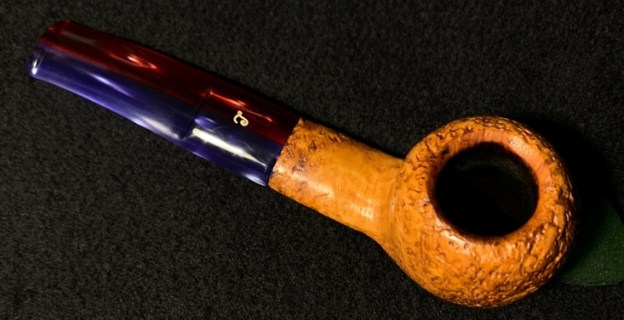
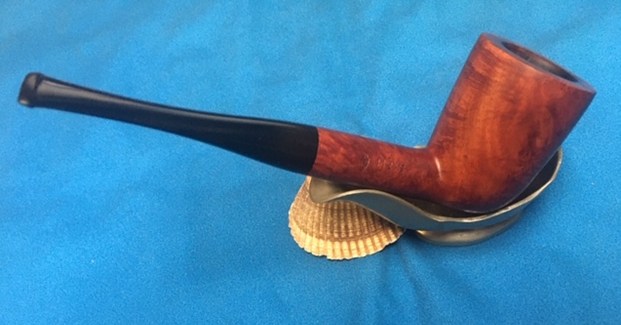
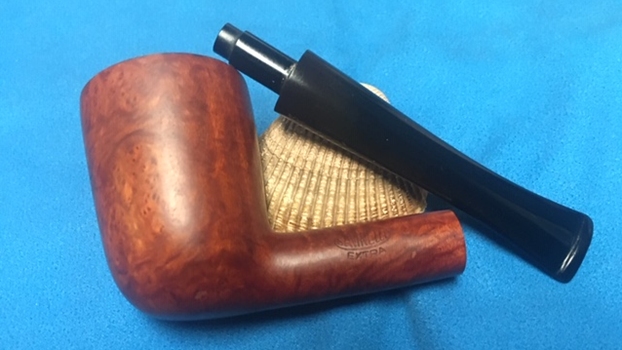
I am not sure I would call this AFG III Freehand pipe anything other than ODD


Blog by Steve Laug

Jeff picked up this pipe sometime in 2016 and I have had it in a box of bowls since he sent it to me. I have looked at it several times but it never called my name. It is a strange pipe. The upwardly curved portion of the shank is joined to the bowl and straight shank about mid shank. The grain is quite nice though there is a large pit on the left side of the shank. The pipe is a sitter with a strange notched rim top. The notches have a faux plateau pattern in the groove on the front and back of the bowl. The top of the rim is almost calabash like with a wide flat top. The curve of the shank made the drilling of the bent portion a mystery until you turn the pipe over and see the screw that is inset in the back of the shank where it is parallel with the airway in the straight portion. It was lightly smoked and dirty. The shank is stamped AFG III on the left side of the upper portion. The stem was pirated from a WDC Wellington and made to fit in the shank. The shank end was out of round and the mortise was quite large. The end was not flat so fitting any stem would be a trick. Maybe that is why the Wellington stem was used. The stem had deep tooth marks in the surface and really did not work with the bowl to me. Jeff took the following photos before he did his clean up on the pipe. Jeff took photos of the bowl top to show the condition of the bowl and rim top and edges. The pipe has almost a floral look to it from this angle. It is a dirty pipe and the interior of the bowl has some roughness on the right side. He took a photo of the screw in the underside of the shank. It looks like a brass wood screw that has been inset in the shank.He took photos of the sides of the bowl and the heel to give a clear look at the grain on the briar. It is actually a nice looking piece of briar that some how the shape follows in a strange way all its own. The stamping on the left side of the shank reads AFG III which is not a brand I can find listed anywhere on the net so I have no information on the maker.The stem that had been made to fit is a WDC Wellington P-lip knockoff. It really did not fit in the shank and it was pretty chewed up. I would need to replace it.Today when I was sorting through my box of bowls without stems that I have and pitching out the worst of them I picked this bowl up and was drawn to seeing what I could do with it. I took it to my worktable and looked it over. Jeff had done a great job cleaning up the pipe as I have come to expect after 4 years of working on pipes. He reamed the pipe with a PipNet reamer and cut back the cake back to the bare briar. He cleaned up the walls with a Savinelli Fitsall Pipe Knife. He scrubbed the interior of the bowl and shank with pipe cleaners, cotton swabs and alcohol to remove the tars and oils. He scrubbed the exterior of the pipe with Murphy’s Oil Soap and a tooth brush to remove the grime from the finish. He scrubbed the inside of the stem with alcohol and pipe cleaners. Since the stem was not going to be used he did a quick clean up on it and sent it along. I had long since thrown it in the bottom of the box of bowls. The pipe was indeed an odd one. I took photos of the pipe when I received it before I started working on it. I took a photo of the wood screw in the shank and the flaw in the briar on the topside of the shank. You can also see the joint of the bowl and shank with the upward turned shank extension in the photos below. I drew a red box around then in the photos below. I went through my cans of stems to find one that would work with the diameter of the shank. I would need to turn the tenon to make it fit and also adjust the shank end and face it to make the taper stem fit.I took a photo of the shank end to show its condition. It was not flat and it was not round. The thickness of the shank around the mortise was also different on each side. The second photo below shows that angle of the shank end.I went through my brass bands to find one that would fit the end of the shank. I smoothed out rounded end on a topping board to smooth it. I also used my Dremel and sanding drum to bring the shank end back to round. I heated the band and pressed it onto the end of the shank. It looked good and it provided a straight flat edge on the shank end that would work well with the newly turned stem. I unscrewed the wood screw from the shank and found that it actually cut off the flow of air through the shank. When it was in place it extended into the airway. I used the Dremel and a grinding stone to take the screw down so that it would end at the wall of the airway. I used some all purpose glue to anchor the screw in the shank. It could be removed with a screw driver but it also was air tight.I filled in the flaw on the left side of the shank with briar dust and super glue. When the repair cured I sanded the repair smooth again with 220 grit sandpaper and started the polishing with 400 grit sandpaper. I used the PIMO tenon turning tool on my cordless drill to reduce the diameter of the tenon and face the stem surface for a good fit on the shank.Once I had the fit right to the shank I used a heat gun to give the end a bend that matched the flow of the bowl.  I may bend it a bit more but I like it at the moment. I polished the briar with micromesh sanding pads – dry sanding with 1500-12000 grit pads and wiping the bowl down with a damp cloth after each pad. I worked over the repaired spot on the shank to blend it in more. I touched up the stain around the band edge and the repaired pit on the shank using a blend of Oak and Maple stain pens. The colour matched well and once it was buffed would be perfect.I rubbed the briar down with Before & After Restoration Balm. I worked it into the briar with my fingertips. The product works to clean, enliven and preserve the briar. I let it sit for 10 minutes while I worked on the stem. After the time passed I buffed it with a cotton cloth to deepen the shine. The briar really comes alive with the balm. I set the bowl aside and turned my attention to the newly fit stem. I did some fine tuning of the diameter of the stem at the shank/stem junction with 220 grit sandpaper and began the polishing with 400 grit wet dry sandpaper. I rubbed the stem down with Denicare Mouthpiece Polish – a red, gritty Tripoli like substance that is a paste. I rubbed it into the surface of the stem and polished it off with a cotton pad. I have found that is a great intermediary step before polishing with micromesh pads. I am not sure what I will use once the final tin I have is gone!I polished the vulcanite with micromesh sanding pads – 1500-12000 grit pads. I wiped it down with Obsidian Oil after each sanding pad. I used Before & After Pipe Polish – both Fine and Extra Fine to further polish the stem.  This oddly shaped handmade briar pipe is strange enough to actually be quite interesting. From the shape of the extended shank to the flair of the bowl sides to the different looking top with the smooth top on the sides and the “dips” in the front and rear that are rusticated to look a bit like plateau. The mix of brown stains that the maker used really highlights some great grain around the bowl sides and the heel. The finish on the pipe is in excellent condition and the contrasting stains work well to highlight the grain on the pipe. The band and the newly shaped vulcanite stem seem to work well with the pipe. The pipe is a beauty and really eye-catching in its own way. I put the stem back on the bowl and buffed the pipe with Blue Diamond on the buffing wheel. I gave the bowl and the stem multiple coats of carnauba wax on the buffing wheel and followed that by buffing it with a clean buffing pad. I hand buffed the pipe with a microfiber cloth to deepen the shine. The finished Freehand is quite nice and feels great in the hand and is a sitter as well. Give the finished pipe a look in the photos below. This is not a pipe for everyone but someone is bound to love it. The dimensions of the pipe are Length: 6 inches, Height: 1 7/8 inches, Outside diameter of the bowl: 1 ¾ inches, Chamber diameter: ¾ of an inch. Thanks for walking through the restoration with me as I worked over another beautiful pipe. This pipe will be added to the American Pipe Makers section of the rebornpipes store soon. If you want to add it to your collection send me an email or a message! Thanks for your time.
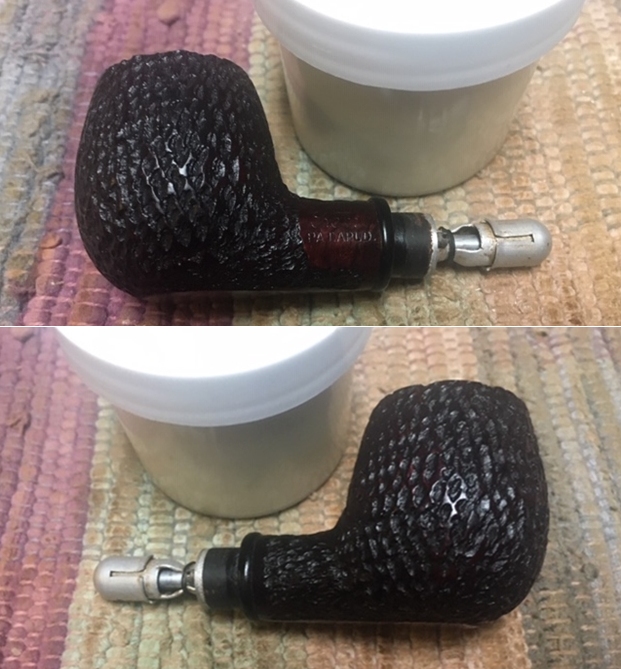
Restoring a Beautifully Grained Smooth Savinelli Punto Oro 114KS Saddle Stem Billiard


Blog by Steve Laug

The next pipe on the table came to us from one of Jeff’s pipe hunts not far from where he is located. It is another Savinelli Billiard with a really rich red finish. The pipe has some amazing grain that the shape follows well. The finish was very dirty with grime ground into the grain around bowl sides. The bowl had a thick cake in the bowl and a some lava overflow on the inner edge of the top. There was darkening on the briar around the inner beveled edge of the rim. The pipe is stamped on the left side of the shank and reads Savinelli over Punto Oro. It is stamped on the right side and has a Savinelli S Shield over Italy followed by the 114KS shape number. The stamping is clear and readable. The stem was dirty, oxidized and calcified. There was light tooth chatter and marks on the stem near the button on both sides. The stem has a brass dot of the Punto Oro on the top of the saddle stem. Jeff took photos of the pipe before he cleaned it up. Jeff took photos of the rim top to show the thick cake in the bowl and the lava overflow on the inner edge of the rim top. The photos show the rim top and bowl from various angles. Jeff took some photos of the bowl sides and heel to show the nice grain that was on this bowl. It is a quite beautifully grained pipe. The stamping and logo are on the underside of the shank and are as noted above. They look very good even though some of each line is stamped in the blast portion not just on the smooth panel.The stem was a very good fit to the shank. It was oxidized, calcified and had debris stuck to the surface of the vulcanite. There was tooth chatter and marks on both sides of the stem and on the button surface.I turned to Pipephil’s site to get a feel for the Punto Oro line. All of the previous Punto Oro pipes that I have worked on were smooth finish with great grain. This was a great smooth finished pipe in the rich Mahogany finish. Here is the link (http://www.pipephil.eu/logos/en/logo-savinelli3.html). I have included a screen capture of the pertinent information on the line below.I turned to Pipedia to look at what information they had on the brand. I found a catalogue page on the Punto Oro which confirmed what I had surmised about the line having both smooth and sandblast finished pipe (https://pipedia.org/images/d/db/Sav_Punto_Oro.jpg). I have included a screen capture of the page below. It says that the line was available in 2 distinct finishes – a rich Mahogany smooth finish and a genuine sandblast. The current pipe on the table is a rich Mahogany smooth pie.The Savinelli shape number was 114KS so I turned to the Savinelli Shape Chart on Pipedia and included a screen capture (https://pipedia.org/images/4/41/Sav_Shape_Chart_2017.jpg). I have circled the 114KS shape in blue in the photo below.Armed with that information I turned to work on the pipe itself. Jeff had done a great job cleaning up the pipe as usual. He reamed the pipe with a PipNet reamer and cut back the cake back to the bare briar. He cleaned up the walls with a Savinelli Fitsall Pipe Knife. He scrubbed the interior of the bowl and shank with pipe cleaners, cotton swabs and alcohol to remove the tars and oils. He scrubbed the exterior of the pipe with Murphy’s Oil Soap and a tooth brush to remove the grime from the finish. He worked on the rim top lava and darkening with the soap and tooth brush. He scrubbed the inside of the stem with alcohol and pipe cleaners. He scrubbed the exterior with Soft Scrub and then soaked it in Before & After Deoxidizer. He washed it off with warm water to remove the deoxidizer. The pipe looked far better. I took photos of the pipe when I received it before I started working on it. I took photos of the bowl and rim top to show how clean it was. You can see the darkening on the inner edge of the rim and the top.  The stem looks clean of oxidation and the tooth marks and chatter are very clear in the photos.I took photos of the stamping on the sides of the shank. The stamping is clear and readable. It reads as noted above.I took a photo of the pipe with the stem removed to show the overall look of stem, tenon and profile of the pipe.I polished the briar with micromesh sanding pads – dry sanding with 1500-12000 grit pads and wiping the bowl down with a damp cloth after each pad. I rubbed the briar down with Before & After Restoration Balm. I worked it into the briar with my fingertips. The product works to clean, enliven and preserve the briar. I let it sit for 10 minutes while I worked on the stem. After the time passed I buffed it with a cotton cloth to deepen the shine. The briar really comes alive with the balm. I set the bowl aside and turned my attention to the stem. I sanded out the tooth marks and chatter on both sides of the button surface and stem with 220 grit sandpaper and began the polishing with 400 grit wet dry sandpaper.I rubbed the stem down with Denicare Mouthpiece Polish – a red, gritty Tripoli like substance that is a paste. I rubbed it into the surface of the stem and polished it off with a cotton pad. I have found that is a great intermediary step before polishing with micromesh pads. I am not sure what I will use once the final tin I have is gone!I polished the vulcanite with micromesh sanding pads – 1500-12000 grit pads. I wiped it down with Obsidian Oil after each sanding pad. I used Before & After Pipe Polish – both Fine and Extra Fine to further polish the stem.   This Savinelli Punto Oro Smooth Mahogany Finish Billiard is a real beauty. The Mahogany stain highlights some great grain around the bowl sides and the heel. The finish on the pipe is in excellent condition and the contrasting stains work well to highlight the grain on the pipe. The polished black vulcanite saddle stem adds to the mix. With the grime and debris gone from the finish and the bowl it was a beauty and the blast really is eye-catching. I put the stem back on the bowl and buffed the pipe with Blue Diamond on the buffing wheel. I gave the bowl and the stem multiple coats of carnauba wax on the buffing wheel and followed that by buffing it with a clean buffing pad. I hand buffed the pipe with a microfiber cloth to deepen the shine. The finished Billiard is quite nice and feels great in the hand. Give the finished pipe a look in the photos below. I can only tell you that like the other pipes I am working that it is much prettier in person than the photos capture. The dimensions of the pipe are Length: 5 ¾ inches, Height: 2 inches, Outside diameter of the bowl: 1 ½ inches, Chamber diameter: ¾ of an inch. Thanks for walking through the restoration with me as I worked over another beautiful pipe. This pipe will be added to the Italian Pipe Makers section of the rebornpipes store soon. If you want to add it to your collection send me an email or a message! Thanks for your time.
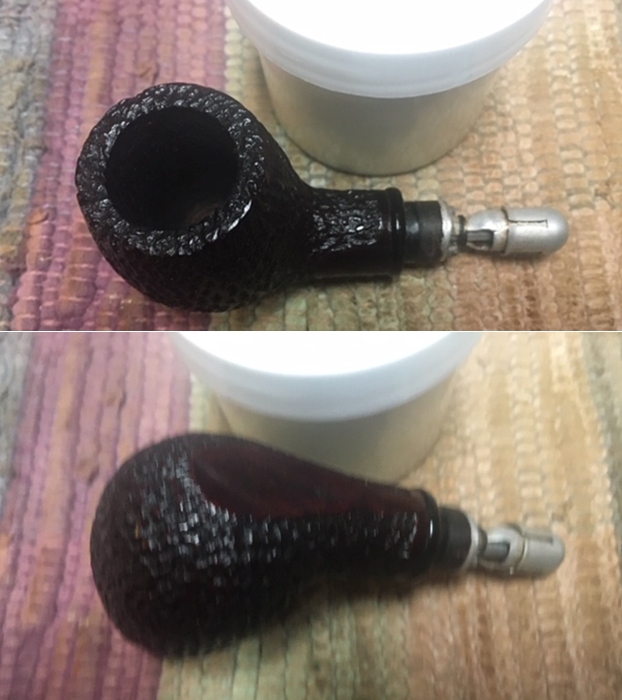
New Life for a Peterson’s Republic Era Kildare 87 Apple


Blog by Steve Laug

The next pipe on the table came to us from one of Jeff’s pipe hunts or auctions. It is a beautifully grained Peterson’s “Kildare” 87 Apple. The shape follows the grain around the bowl which is a combination of cross grain and birdseye. The finish was very dirty but the grain shone through the grime. The bowl had a thick cake in the bowl and a lava overflow on the inner edge of the rim top. There was darkening on the briar around the inner edge of the rim. The pipe is stamped on the left side of the shank and reads Peterson’s “Kildare”. On the right side of the shank In the Republic of Ireland followed by the shape number 87. The stamping is clear and readable on both sides. The stem was dirty and oxidized. There were tooth marks and chatter on the stem near the button on both sides and some on the surface of the button as well. There was the Peterson’s “P” on the left side of the taper stem. Jeff took photos of the pipe before he cleaned it up. Jeff took photos of the rim top to show the thick cake in the bowl and the lava overflow on the rim edge. The photos show the rim top and bowl from various angles. Jeff took some photos of the bowl sides and heel to show the nice grain that was on this bowl. It is a quite beautifully grained pipe. The stamping on the sides of the shank read as noted above. The photos show that they are very clear and readable. The P on the left side of the stem is in good condition. The stem was a very good fit to the shank. It was oxidized, calcified and had debris stuck to the surface of the vulcanite. There was light tooth chatter and marks on both sides of the stem and on the button surface. I am including the information from Pipedia’s article on Peterson pipes. It is a great read in terms of the history of the brand (https://pipedia.org/wiki/Peterson). I have included a bit of the pertinent history here.

1950 – 1989 The Republic Era  – From 1950 to the present time, the stamp for this era is “Made in the Republic of Ireland” in a block format generally in three lines but two lines have been used with or without Republic being abbreviated.

During the 1950’s and 60’s the Kapp & Peterson company was still in the ownership of the Kapp family. However 1964 saw the retiral of the company Managing Director Frederick Henry(Harry) Kapp.

With that information in hand I knew what I was dealing with in terms of the stamping and the age of this pipe. I knew from the information that the pipe was made during the Republic Era between 1950 and 1989. Now it was time to work on the pipe.

Armed with that information I turned to work on the pipe itself. Jeff had done a great job cleaning up the pipe as usual. He reamed the pipe with a PipNet reamer and cut back the cake back to the bare briar. He cleaned up the walls with a Savinelli Fitsall Pipe Knife. He scrubbed the interior of the bowl and shank with pipe cleaners, cotton swabs and alcohol to remove the tars and oils. He scrubbed the exterior of the pipe with Murphy’s Oil Soap and a tooth brush to remove the grime from the finish. He worked on the rim top lava and darkening with the soap and tooth brush. He scrubbed the inside of the stem with alcohol and pipe cleaners. He scrubbed the exterior with Soft Scrub and then soaked it in Before & After Deoxidizer. He washed it off with warm water to remove the deoxidizer. The pipe looked far better. I took photos of the pipe when I received it before I started working on it. I took photos of the bowl and rim top to show how clean it was. The rim top and edges look very good. The stem looks clean of oxidation other than a little around the P-lip. There is also light tooth marks and chatter on both sides of the stem.I took photos of the stamping on both sides of the shank. It is very clear and readable.I took a photo of the pipe with the stem removed to show the overall look of stem, tenon and profile of the pipe. It also shows the aluminum tube in the tenon end. It extends into the bottom of the bowl.I polished the briar with micromesh sanding pads – sanding it with 1500-12000 grit pads and I wiped the bowl down after each sanding pad with a damp cloth. The bowl began to take on a shine. I rubbed the briar down with Before & After Restoration Balm. I worked it into the briar with my fingertips. The product works to clean, enliven and preserve the briar. I let it sit for 10 minutes while I worked on the stem. After the time passed I buffed it with a cotton cloth to deepen the shine. The briar came alive with the balm. I set the bowl aside and turned my attention to the stem. It was in great condition so I polished out the tooth chatter and remaining oxidation on the vulcanite with micromesh sanding pads – 1500-12000 grit pads. I wiped it down with Obsidian Oil after each sanding pad. I used Before & After Pipe Polish – both Fine and Extra Fine to further polish the stem. This Republic Era Peterson “Kildare” 87 Straight Apple is a beautiful pipe. The grain around the bowl sides and shank really stand out with the polishing. The finish on the pipe is in excellent condition and the contrasting stains work well to highlight the grain on the pipe. The polished black vulcanite P-lip taper stem adds to the mix. With the grime and debris gone from the finish and the bowl it is really is eye-catching. I put the stem back on the bowl and buffed the pipe with Blue Diamond on the buffing wheel, carefully avoiding the stamping on the shank during the process. I gave the bowl and the stem multiple coats of carnauba wax on the buffing wheel and followed that by buffing it with a clean buffing pad. I hand buffed the pipe with a microfiber cloth to deepen the shine. The finished Straight Apple is quite nice and feels great in the hand. Give the finished pipe a look in the photos below. I can only tell you that like the other pipes I am working that it is much prettier in person than the photos capture. The dimensions of the pipe are Length: 5 ¾ inches, Height: 1 ¾ inches, Outside diameter of the bowl: 1 ¼ inches, Chamber diameter: ¾ of an inch. Thanks for walking through the restoration with me as I worked over another interesting pipe. This Peterson’s “Kildare” will be added to the Irish Pipe Makers section of the rebornpipes store soon. If you want to add it to your collection send me an email or a message! Thanks for your time.