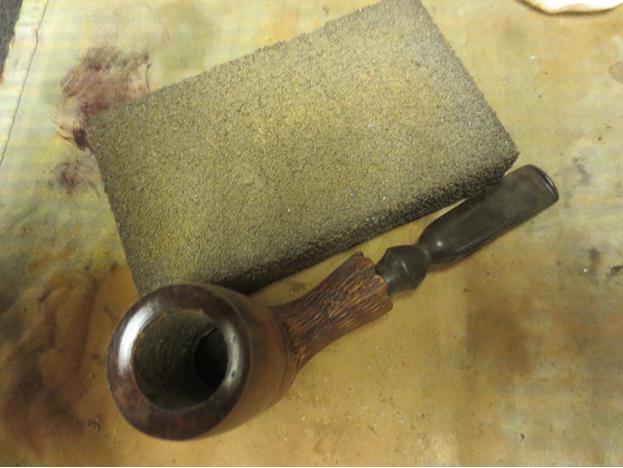
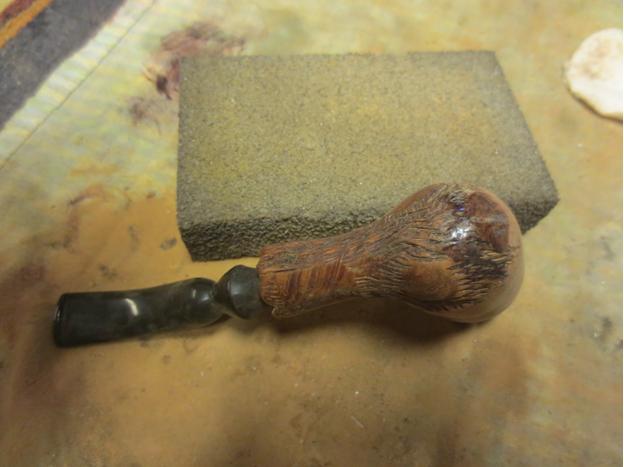
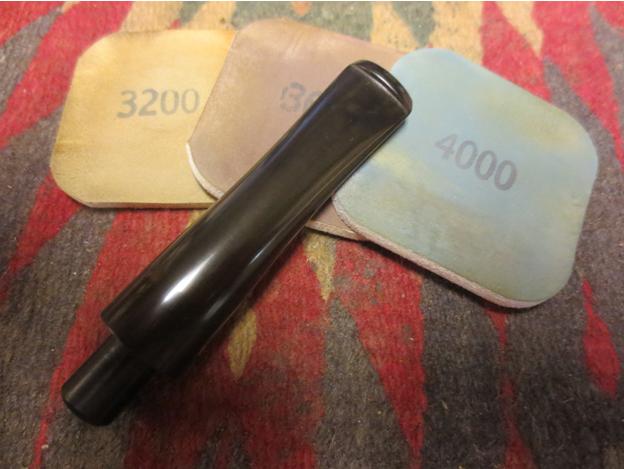
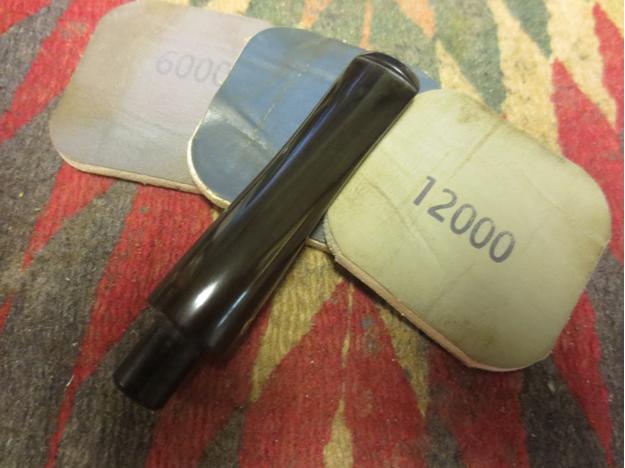
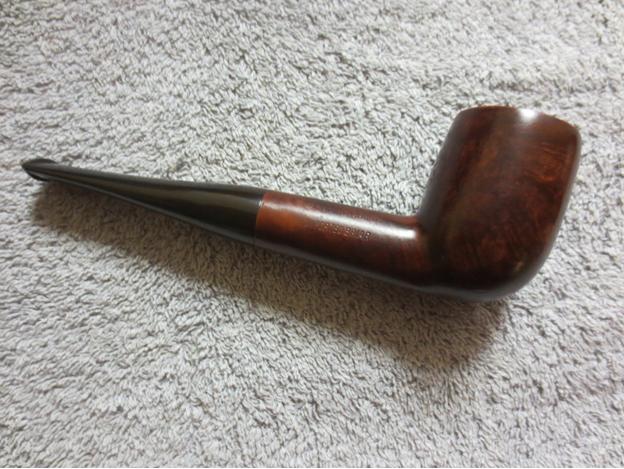
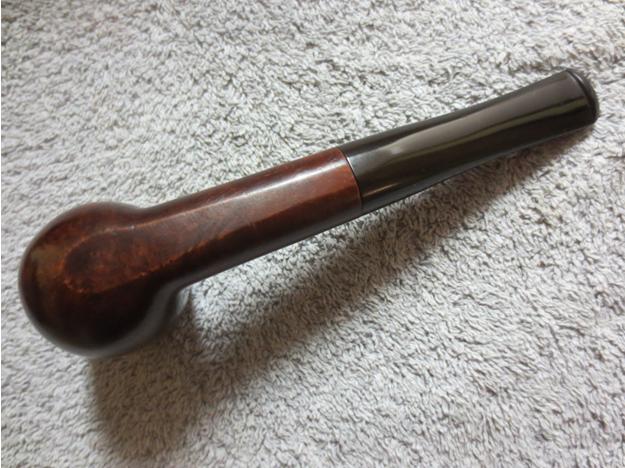
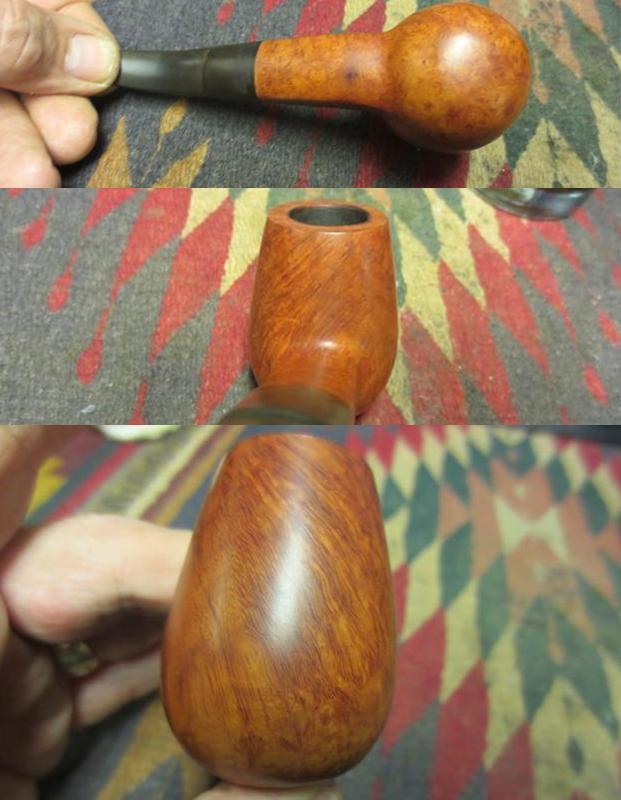
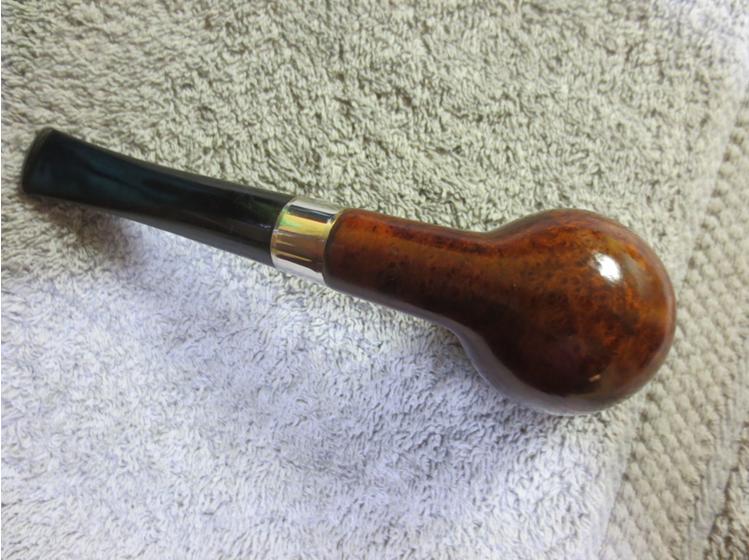
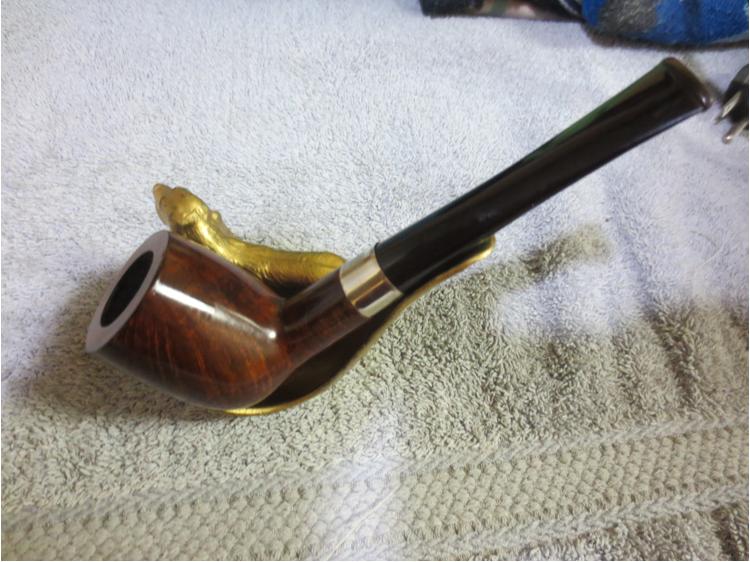
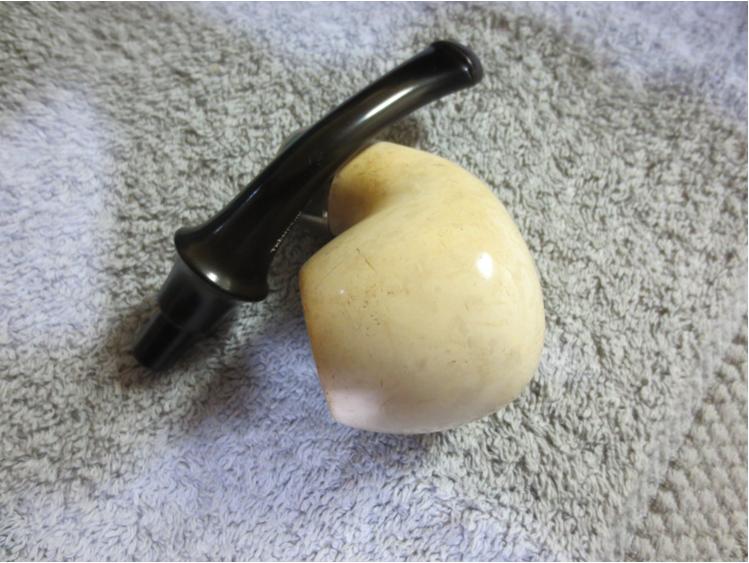
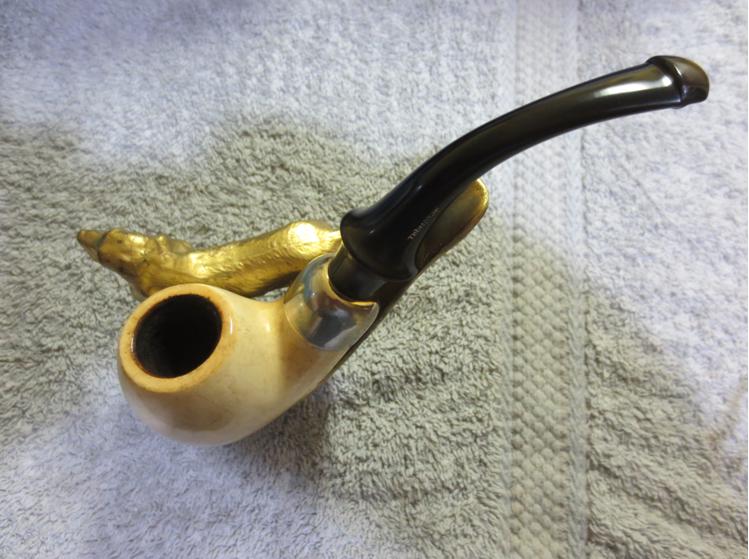
Tag Archives: bowl topping

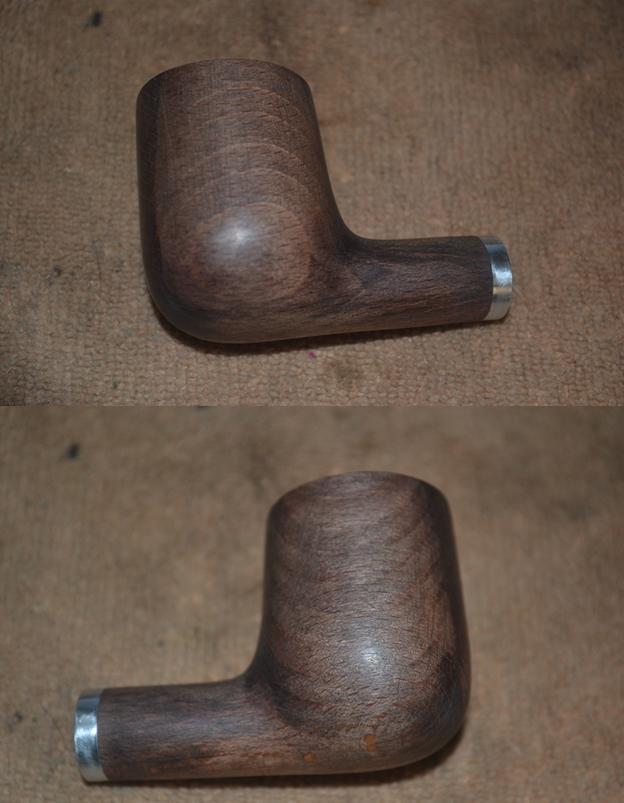
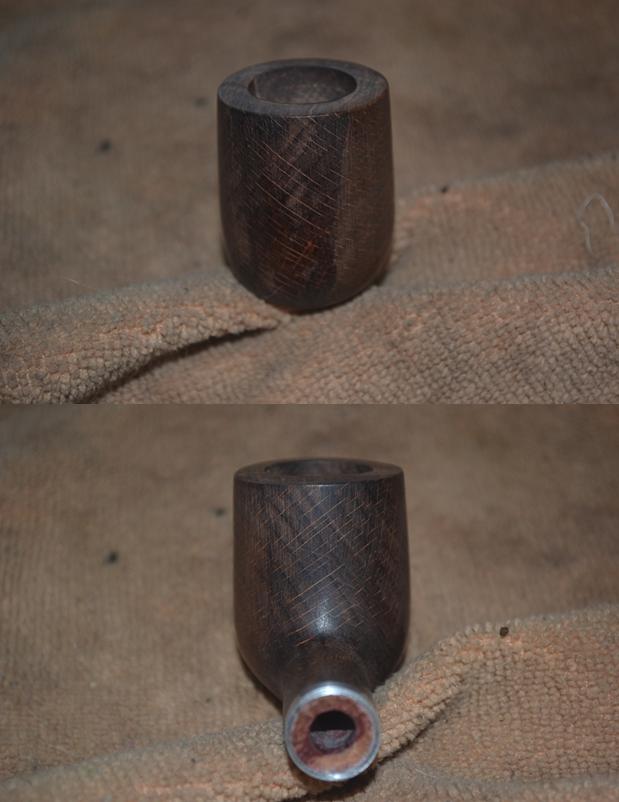
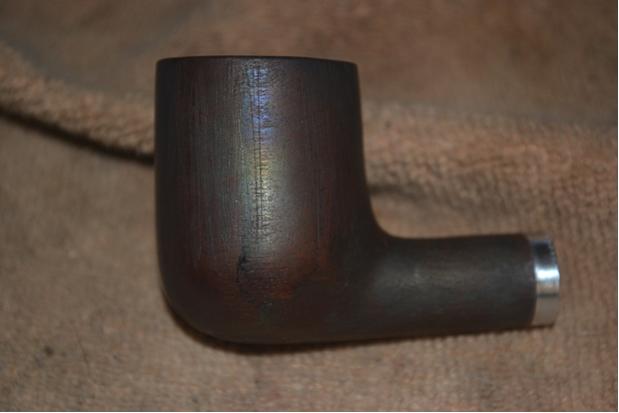
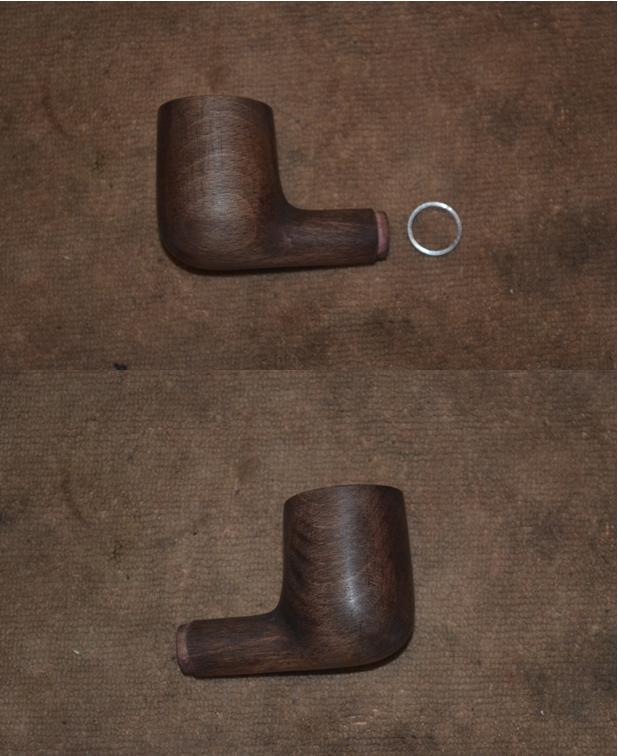
Bringing New Life to a Gift Pipe – a Gasparini MGM Elegante Brandy


Blog by Steve Laug

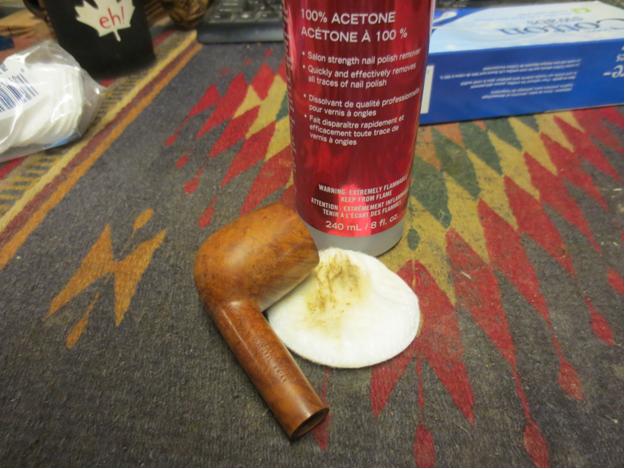
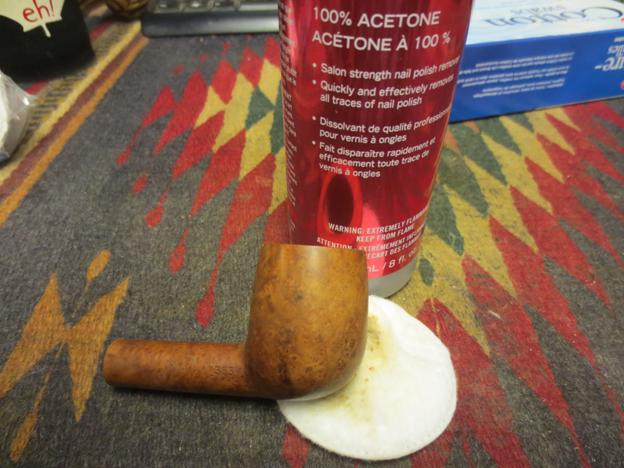
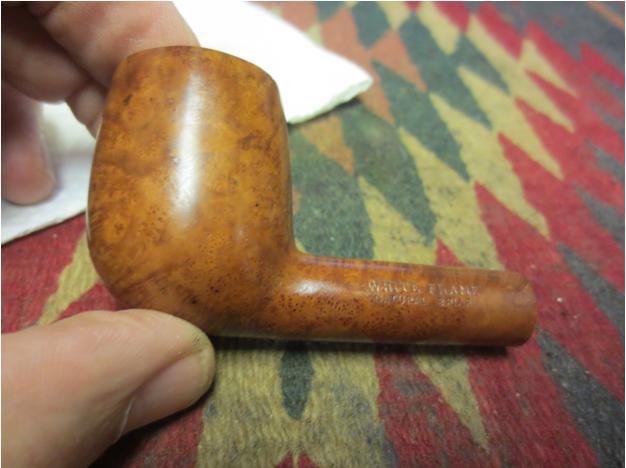
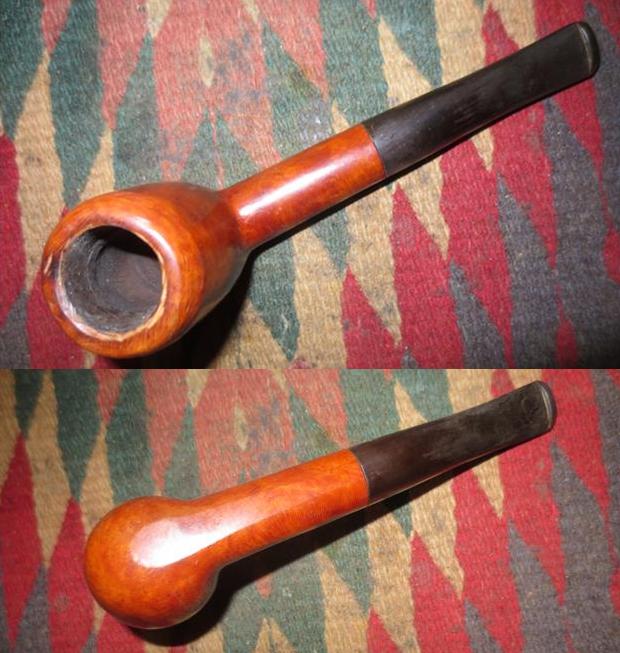
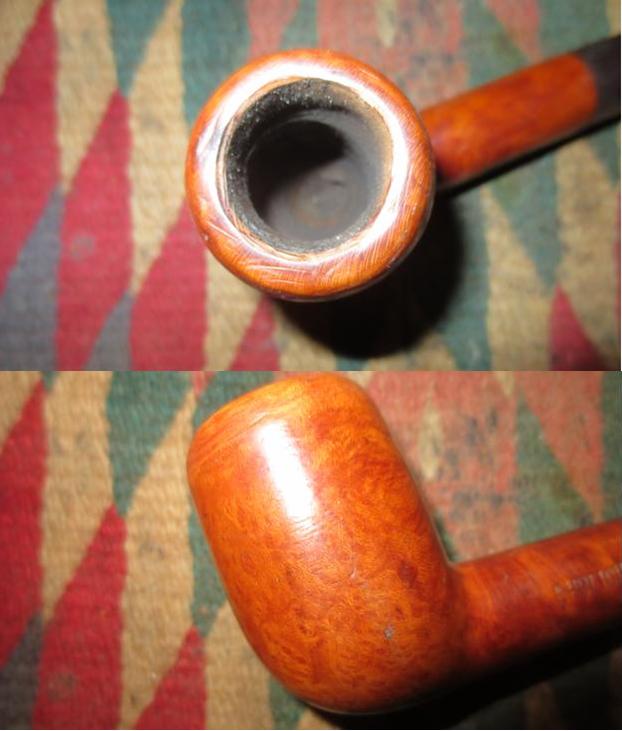
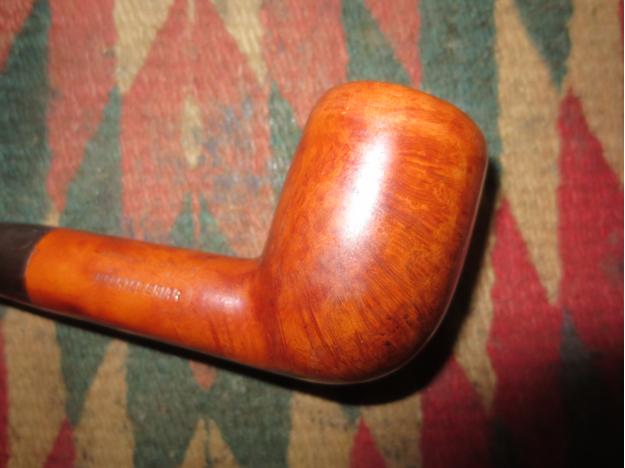
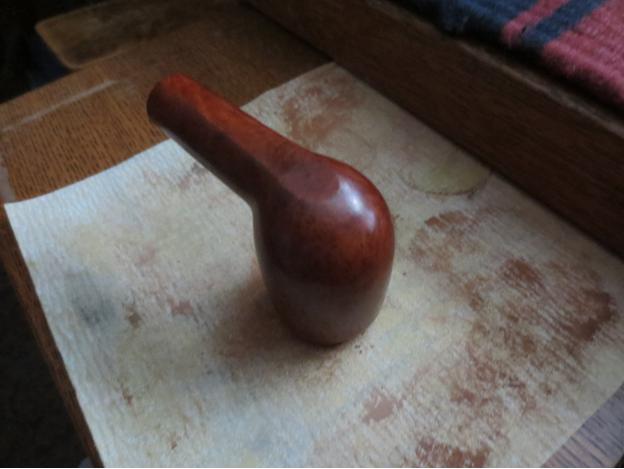
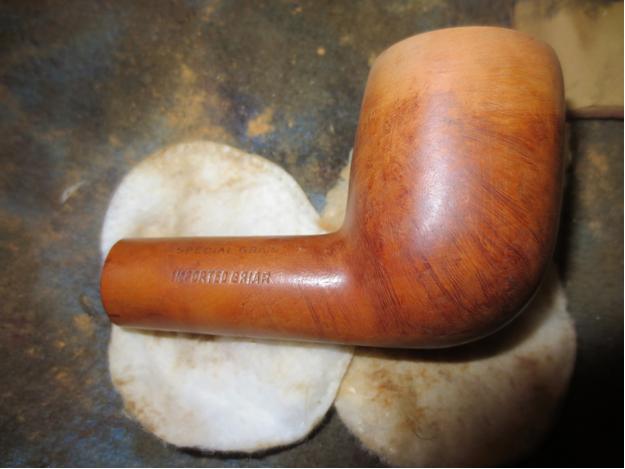
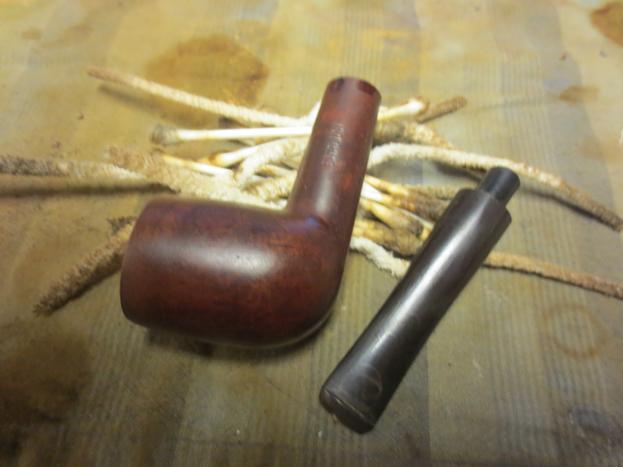
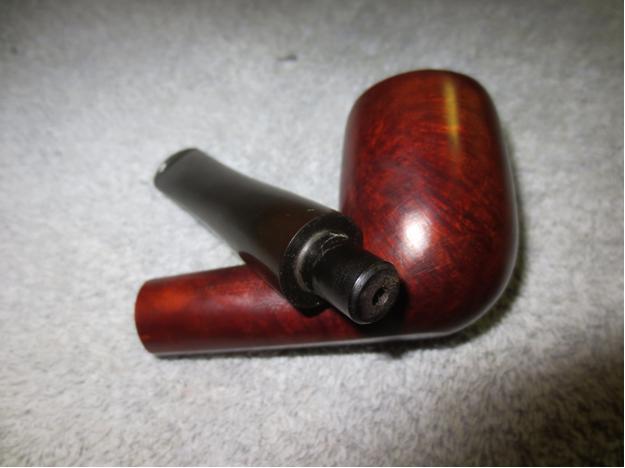
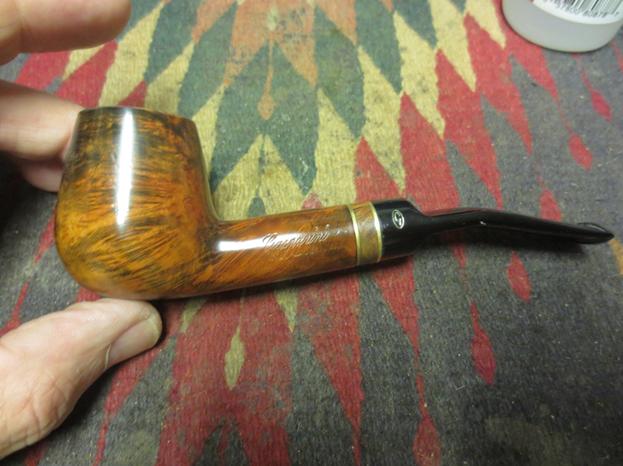
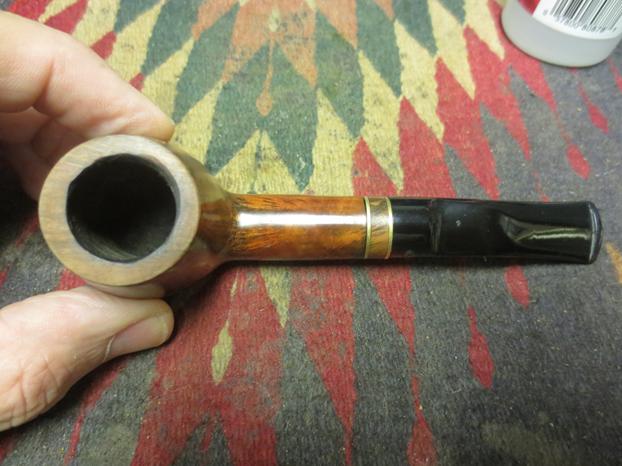
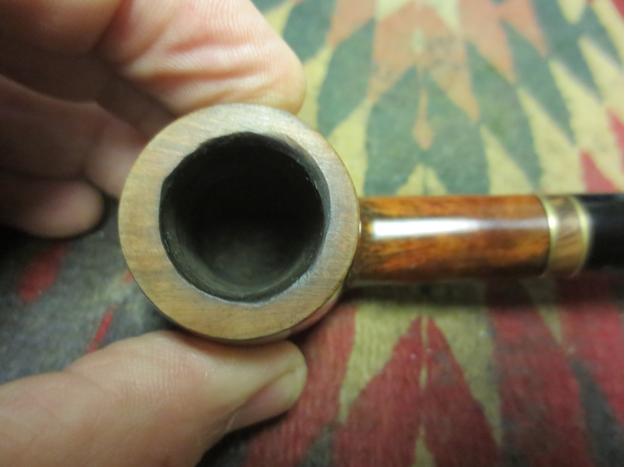
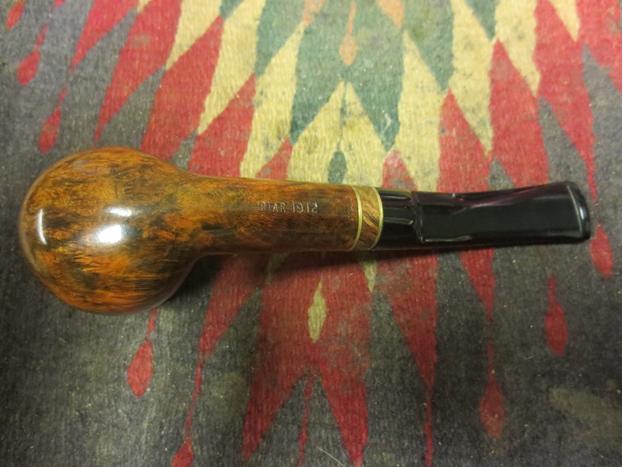
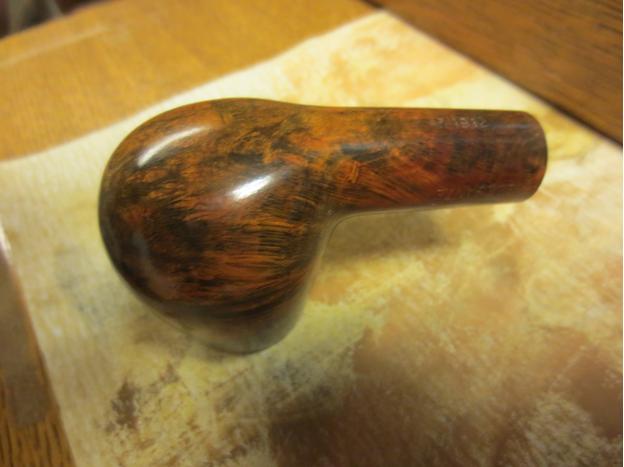
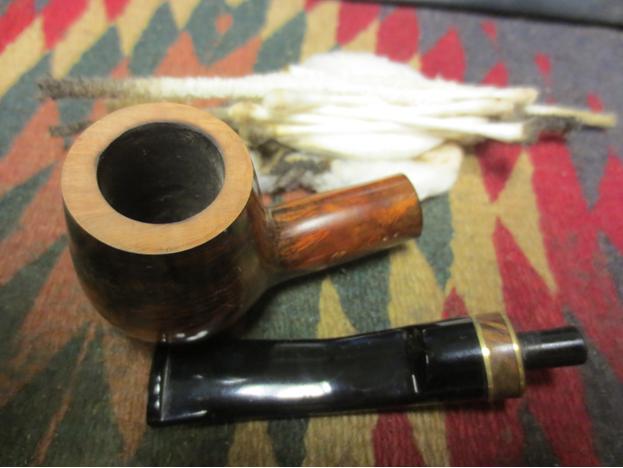
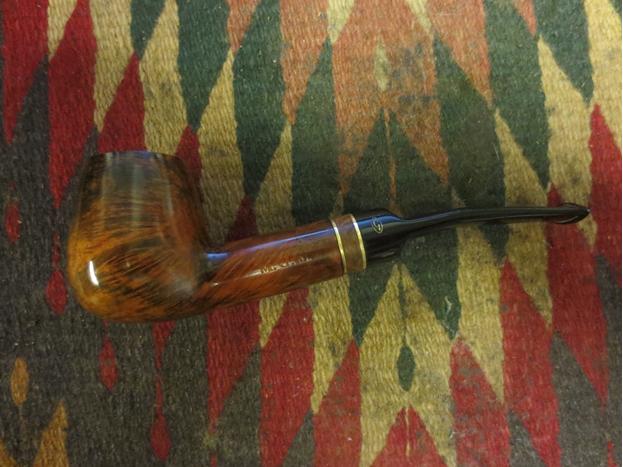
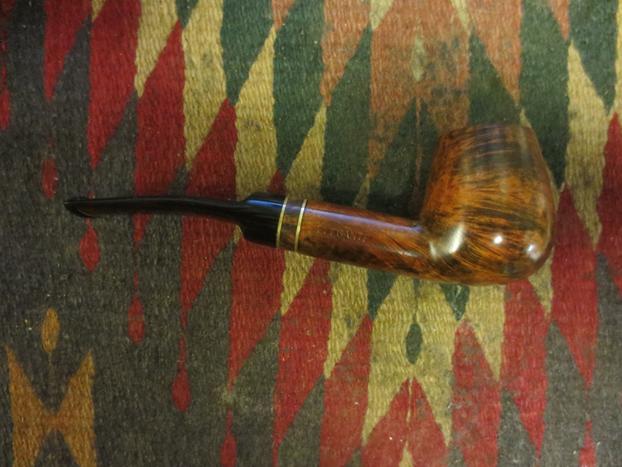
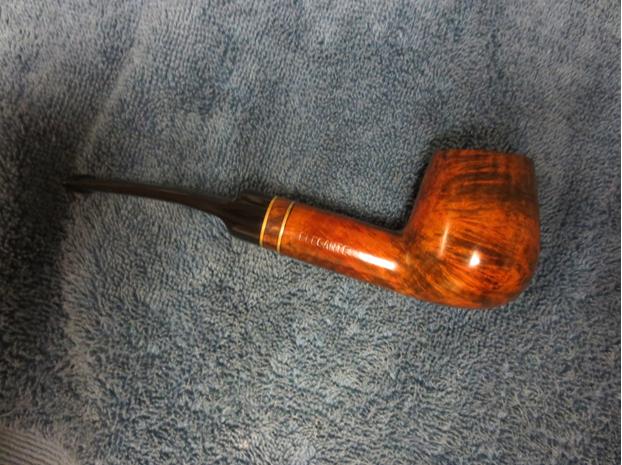
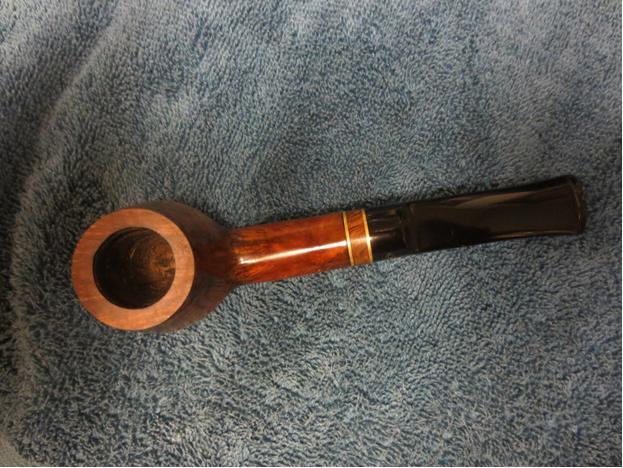
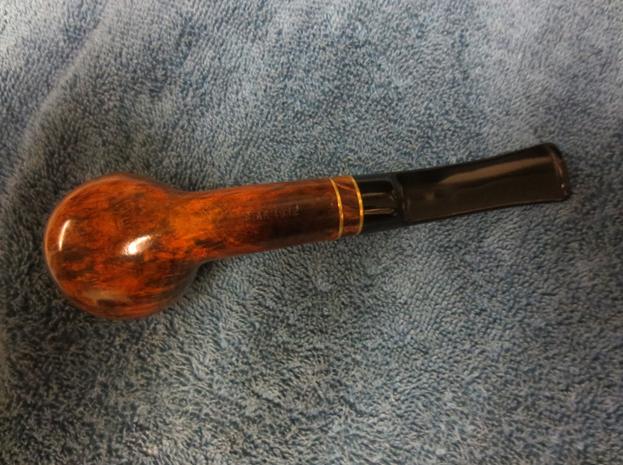
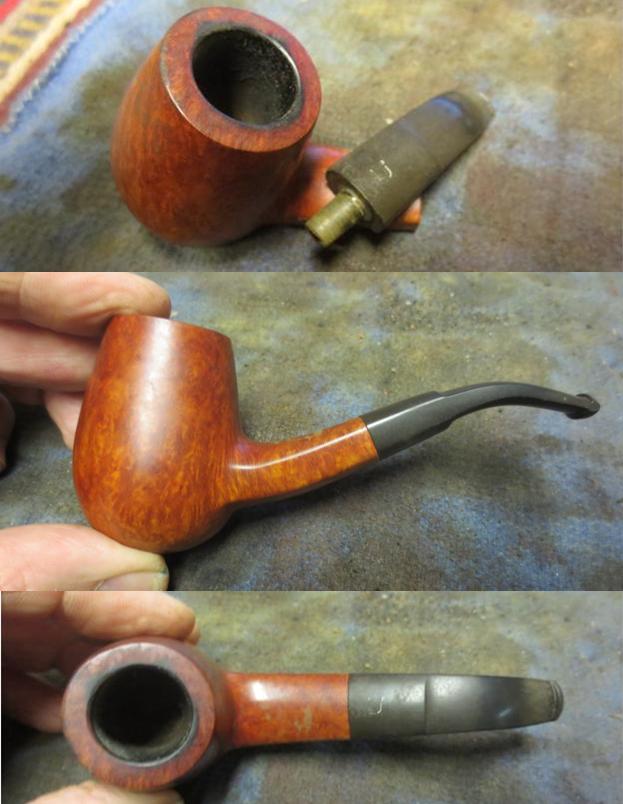
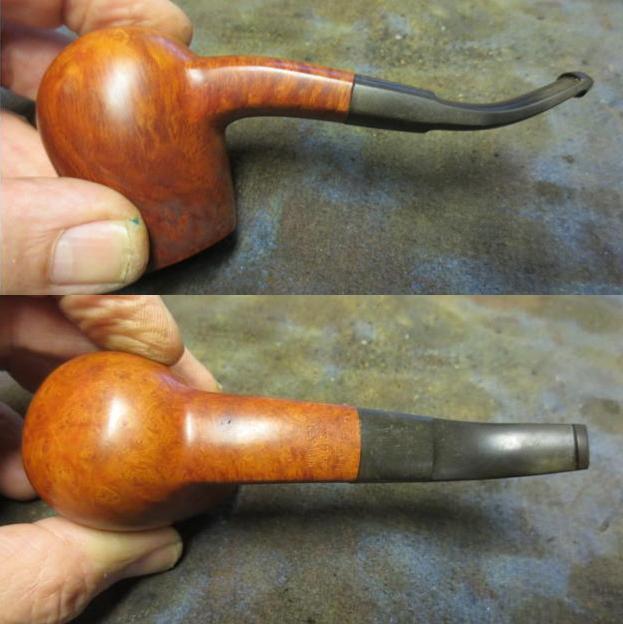
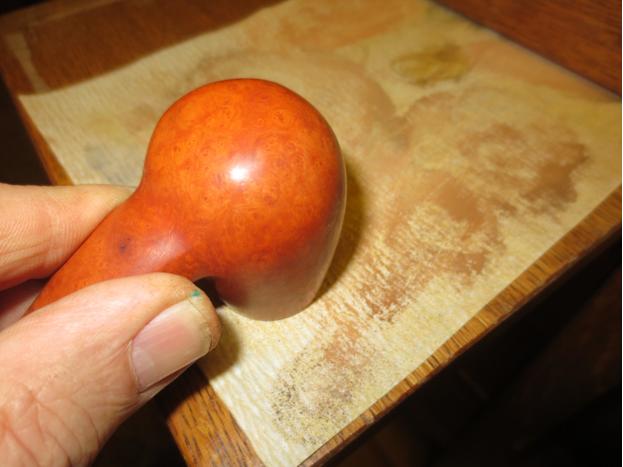
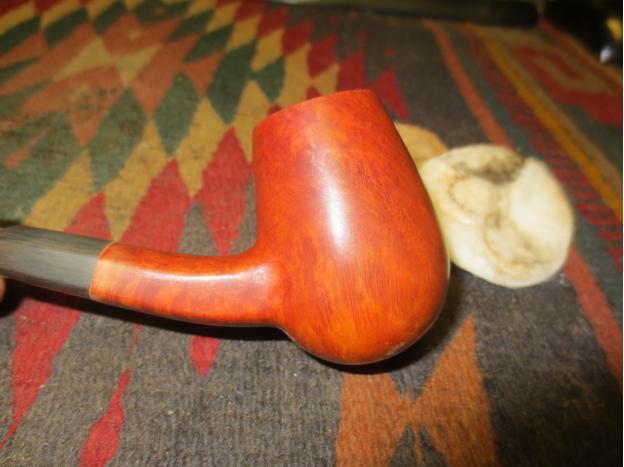
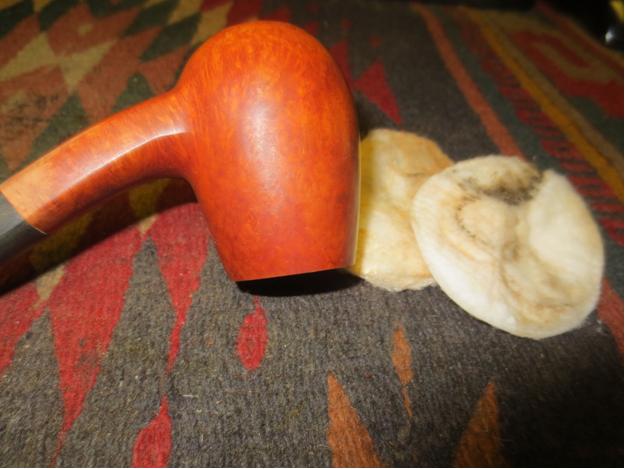
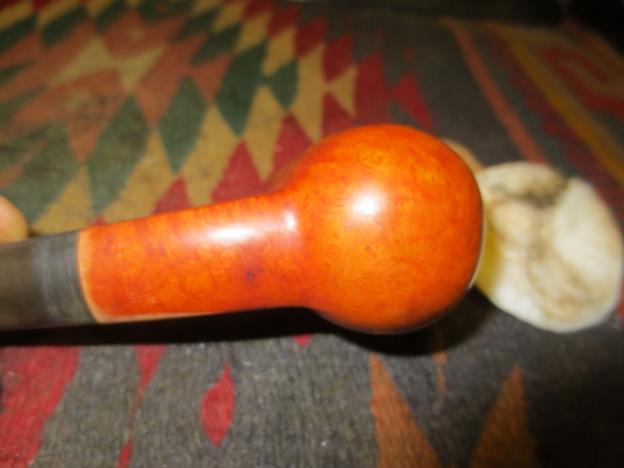
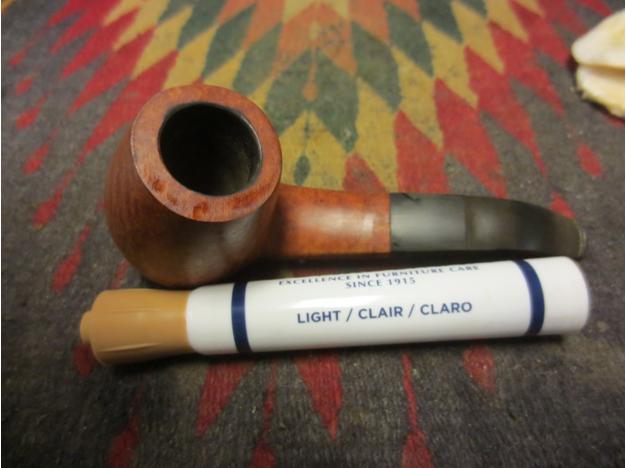
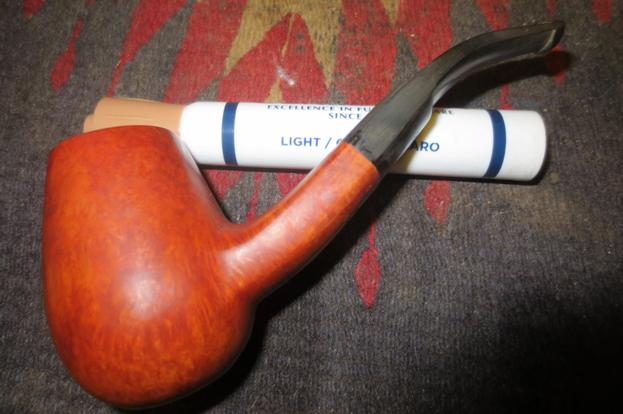
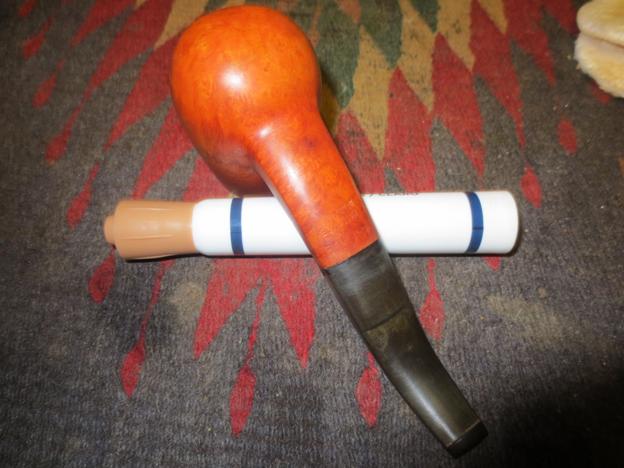
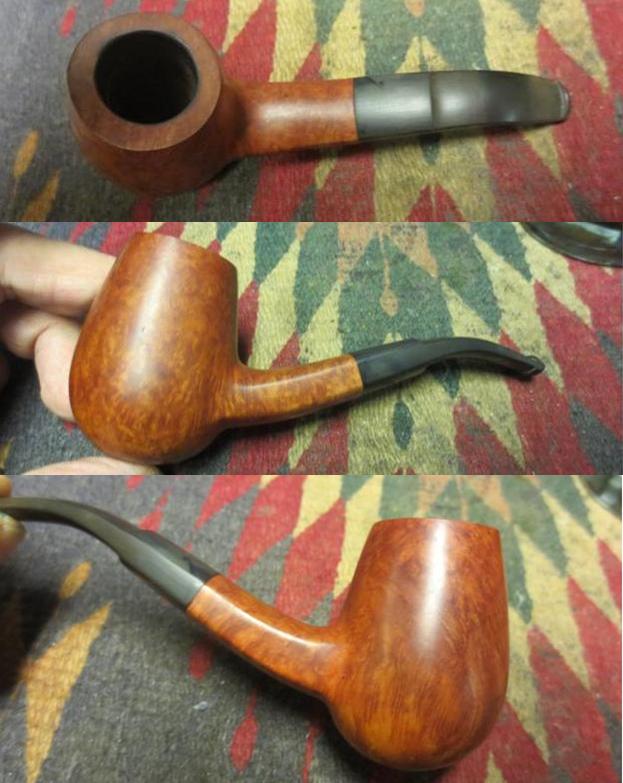
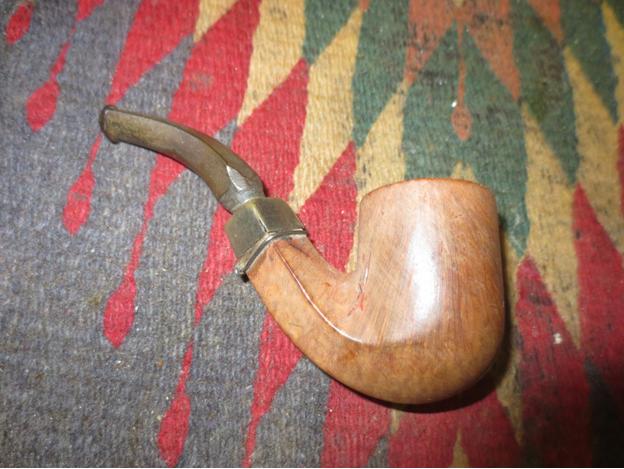
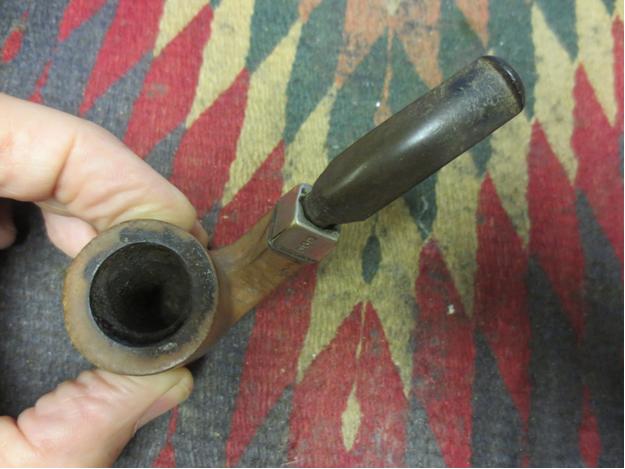
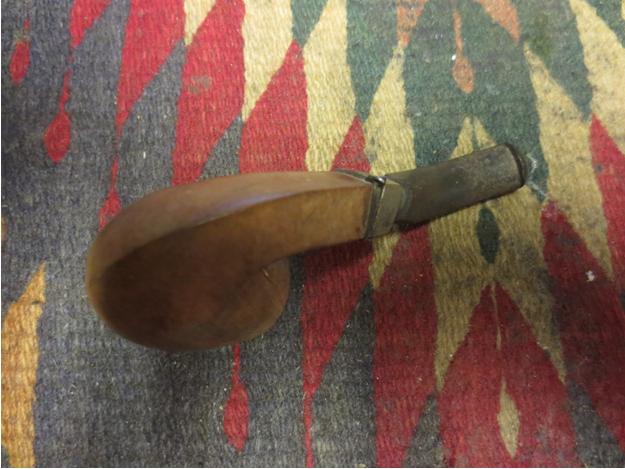
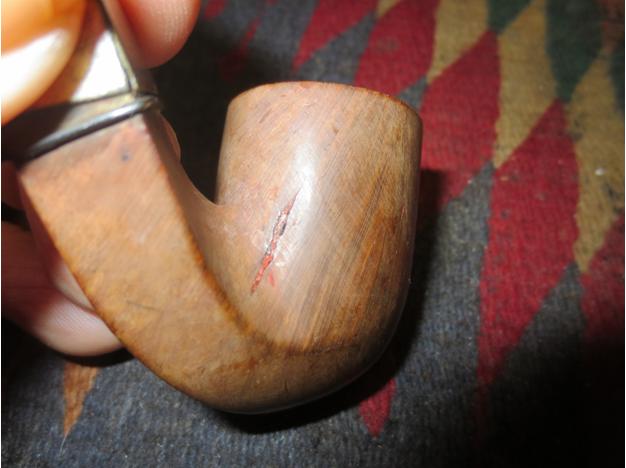
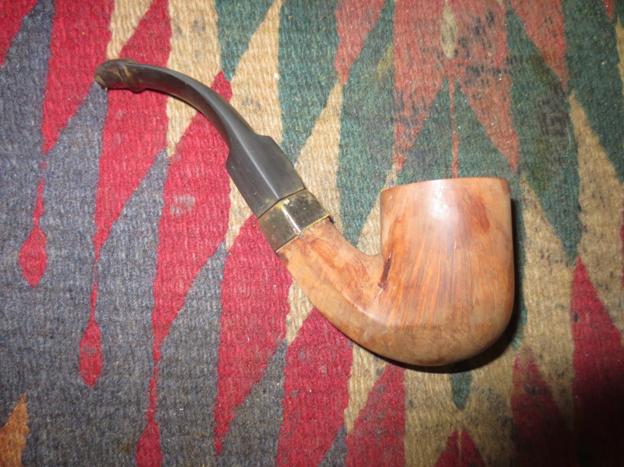
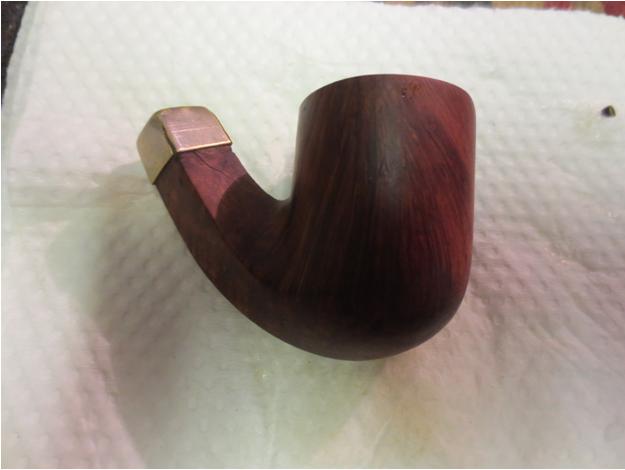
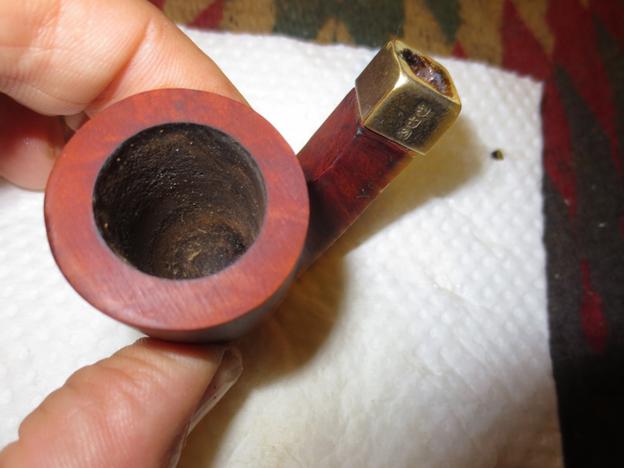
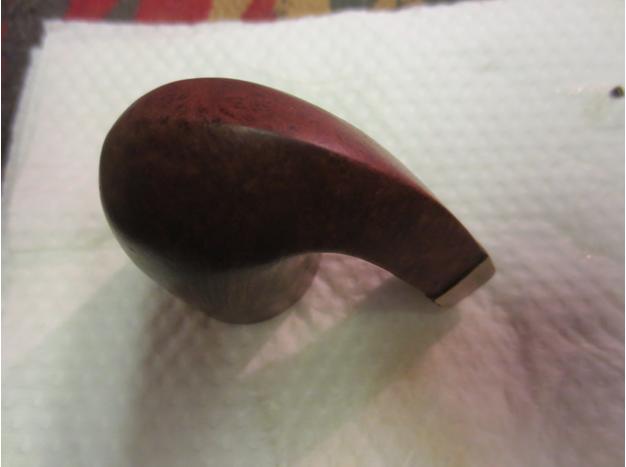
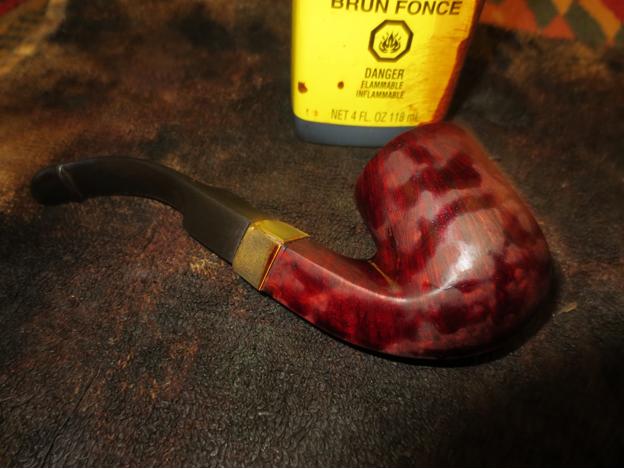
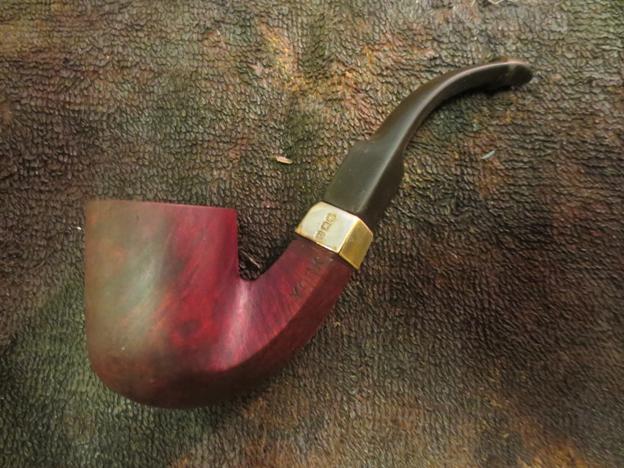
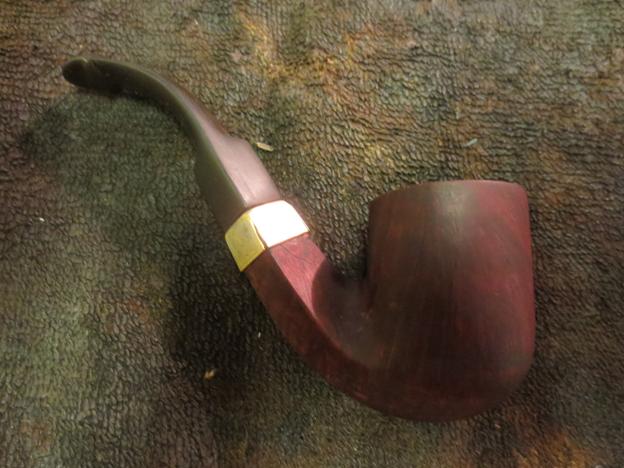
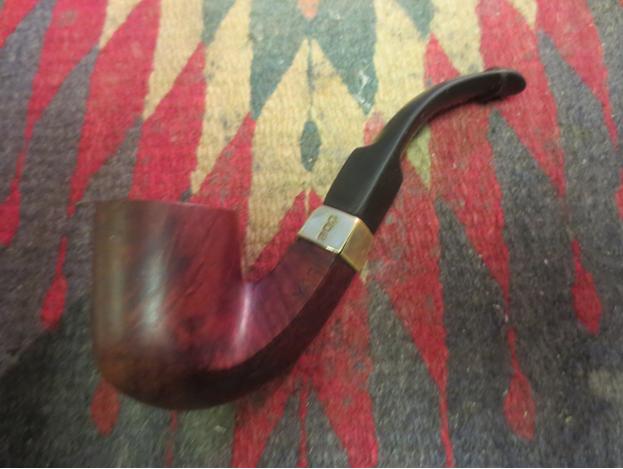
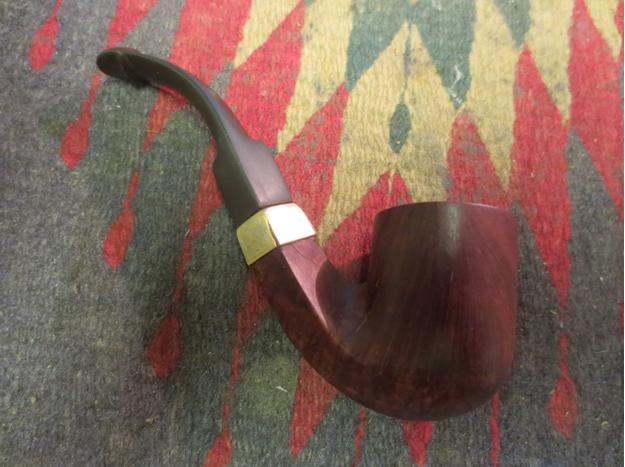
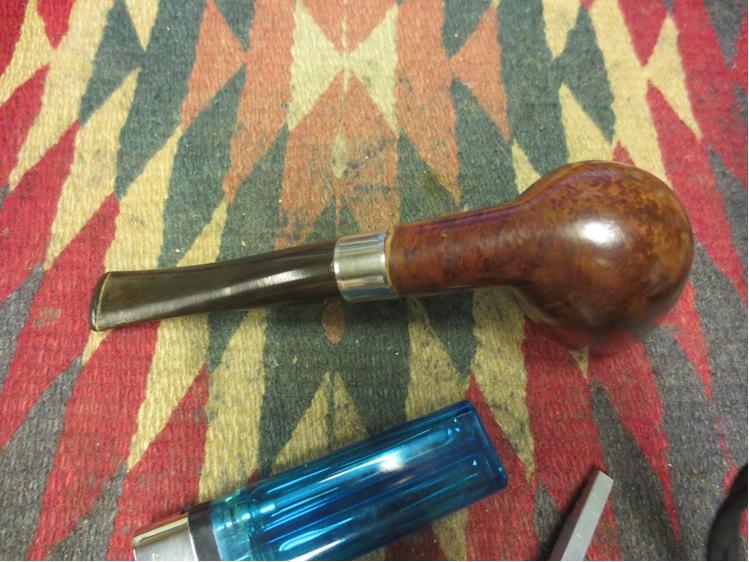
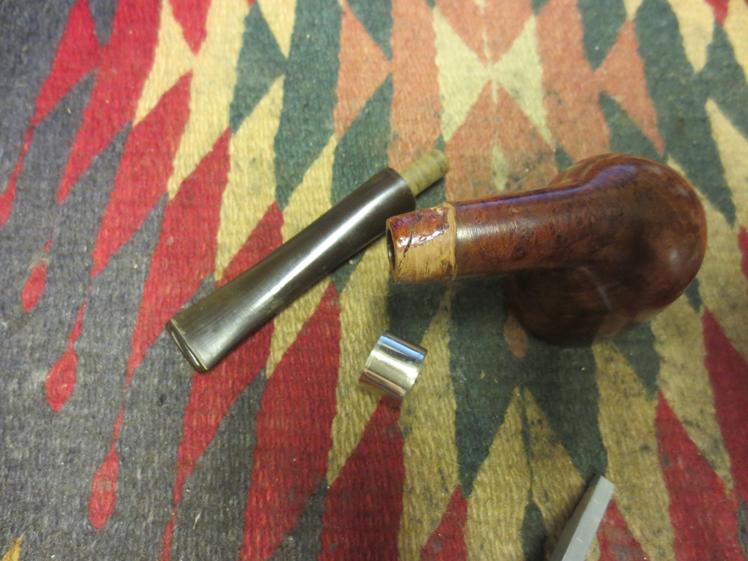
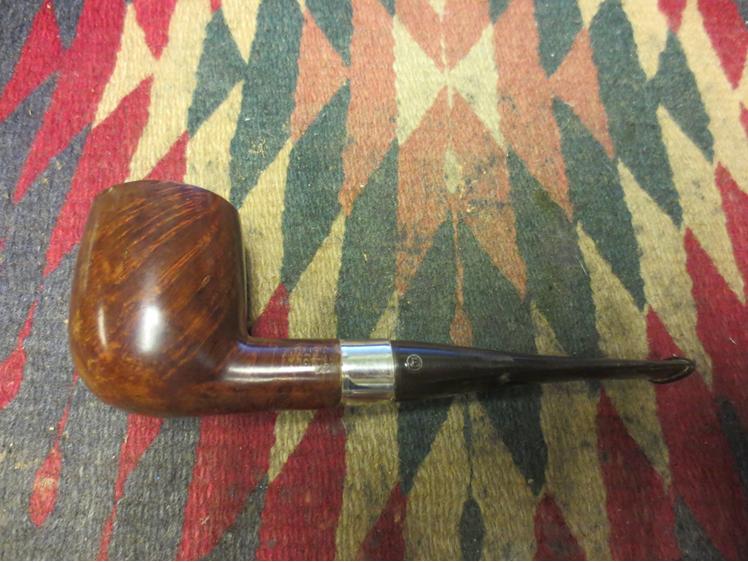
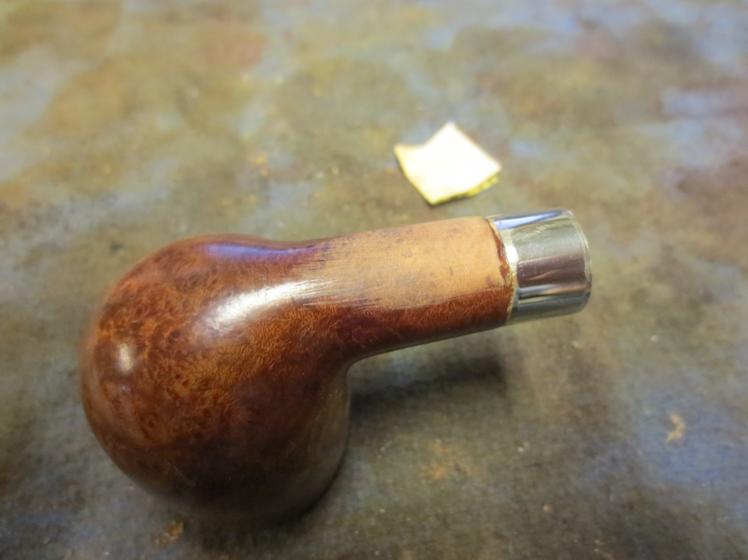
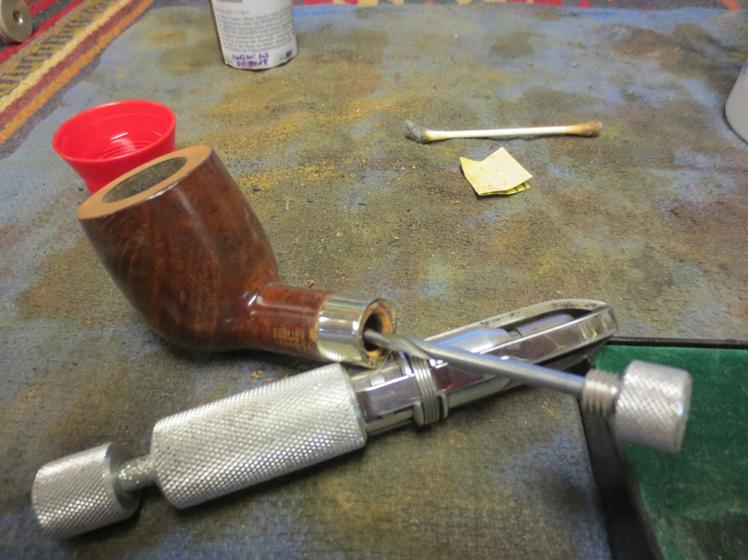
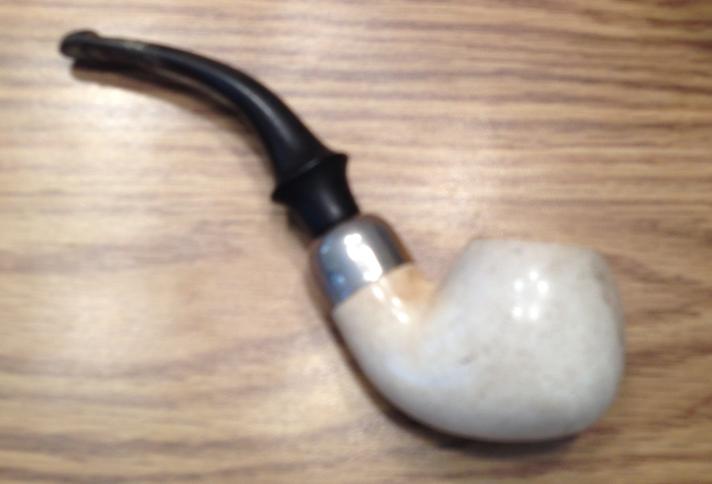
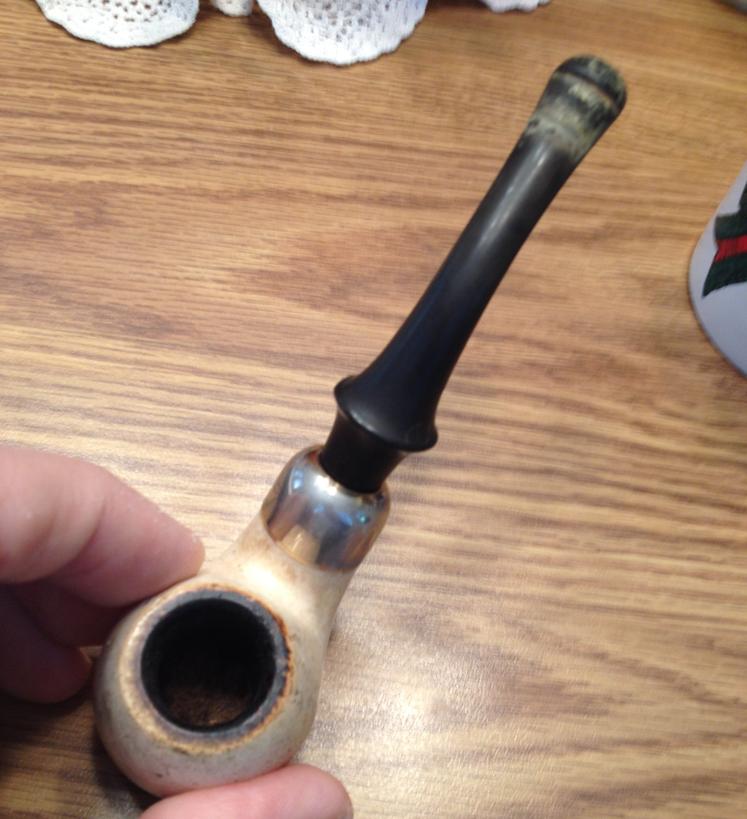
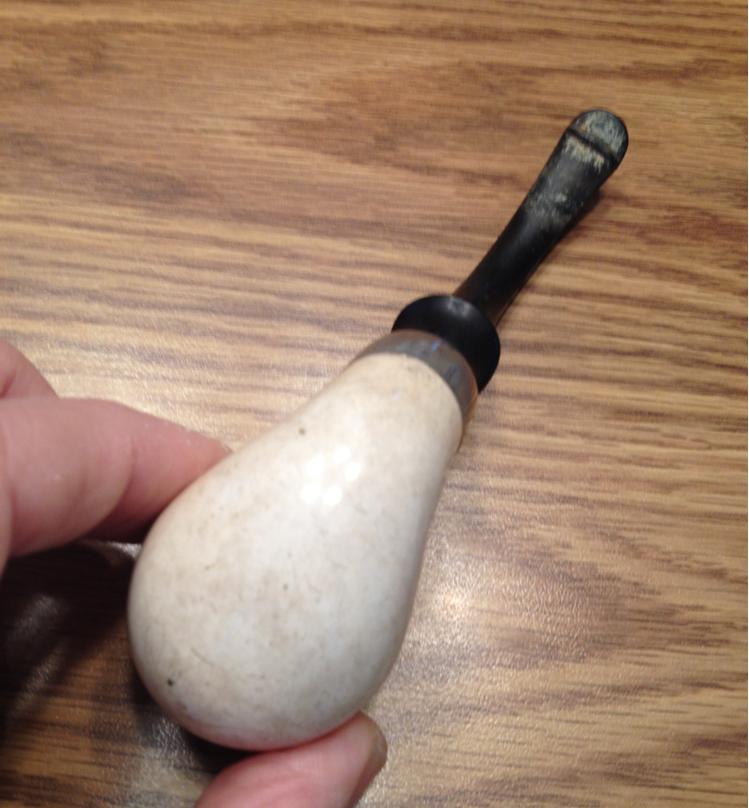
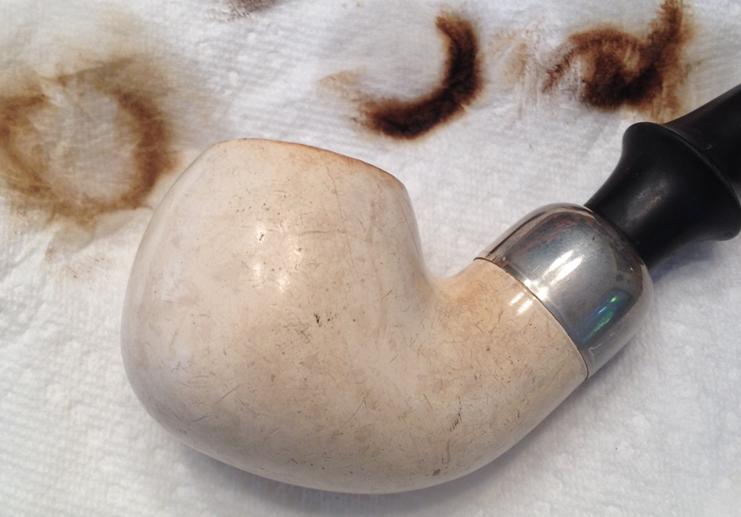
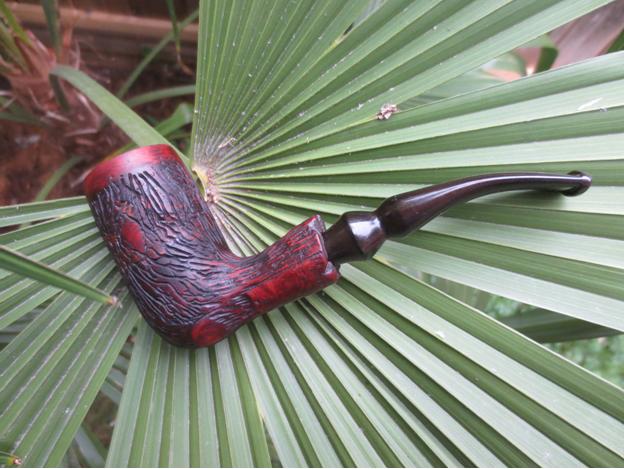
A few evenings ago my friend John stopped by to drop off some pipes for repair and to visit. We loaded up our pipes and sat on my porch while we chatted. He pulled a pipe out of his pocket and said it was a gift to me. It was a nice Brandy shaped pipe that was stamped Gasparini MGM on the left side of the shank and Elegante on the right side. On the underside it is stamped Briar 1912 and Italy. John had purchased the pipe and smoked it for awhile. He wanted to pass it on to me. I am honoured to have received his gift. Being an obsessive refurbisher I decided to clean it up and make a few modifications that I thought would make it look even better. I don’t know why I think like that but it is what goes through my eye every time I look at a pipe. It is like a small voice says, “hmmmm I could change that and tweak that and…. When I am done it will be better. Sometimes that voice gets me into trouble and sometimes it works.Gas1 When John gave me the pipe these are some of the things that I saw. The bend in the stem was too sharp of an angle. It needed to be gentler in its curve. The rim was slightly out of round and the inner edge was damaged on the back right side and the right front it had some nicks in the edge. The stain on the rim had worn off and it no long had a shine. It did not match the rest of the bowl. There was a thick urethane finish on the bowl. Other than those few small things it was a nice looking pipe. It had a lot of promise. I really liked the contrast stain on it and the mix of birdseye grain and cross grain.Gas2

Gas3

Gas4

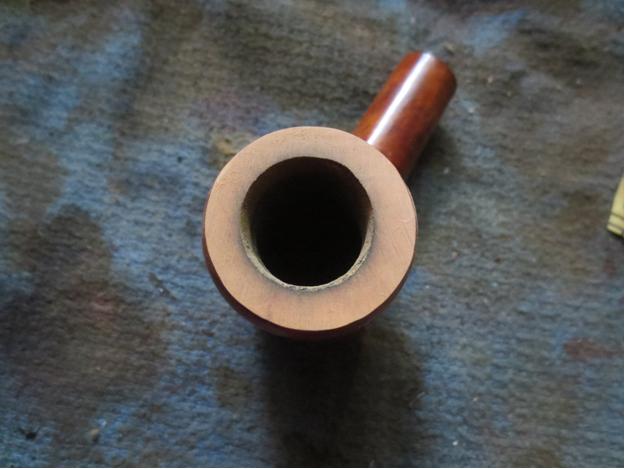
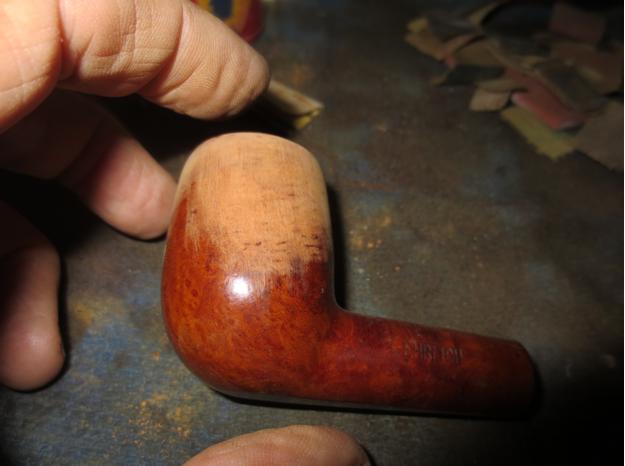
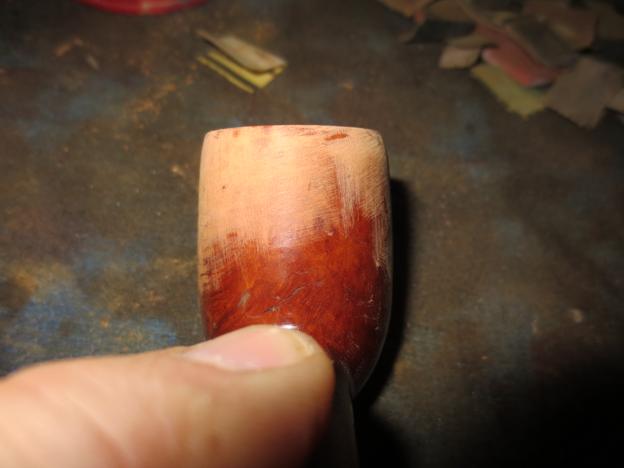
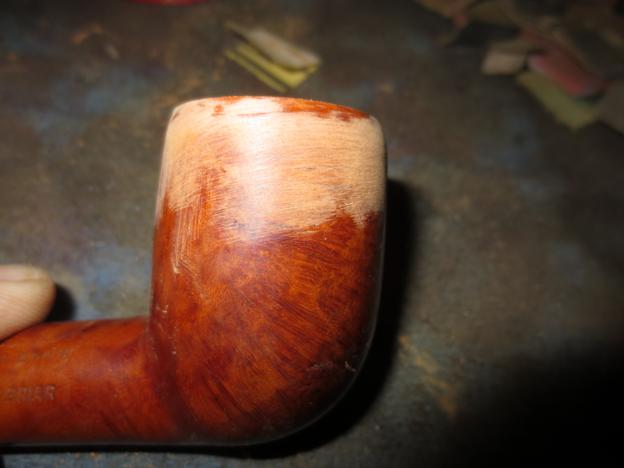
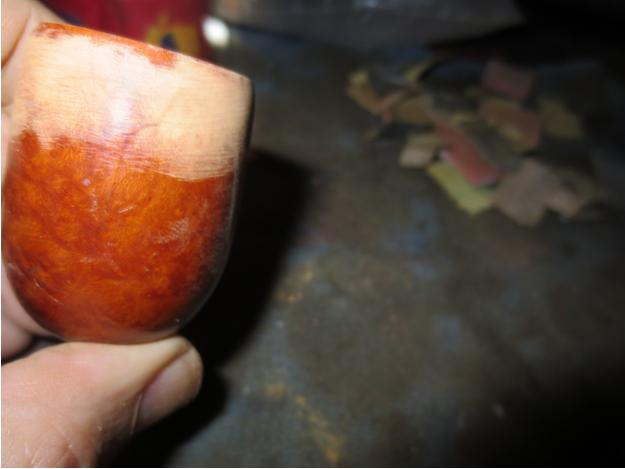
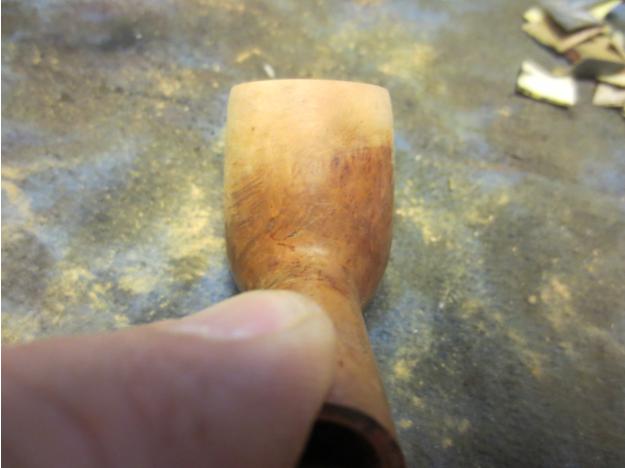
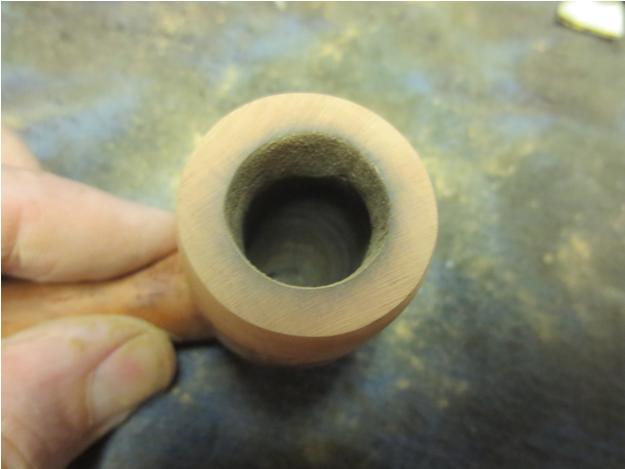
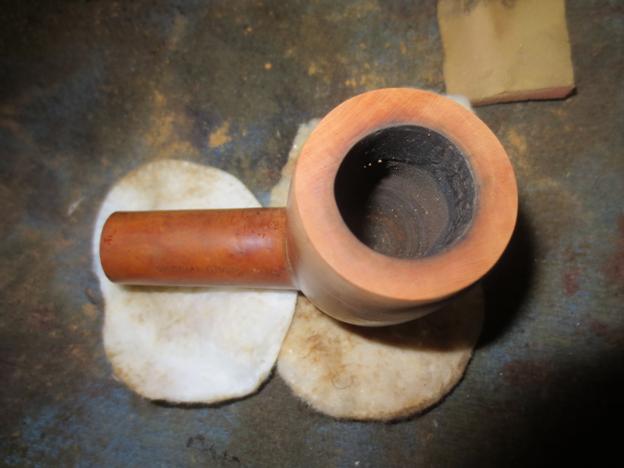
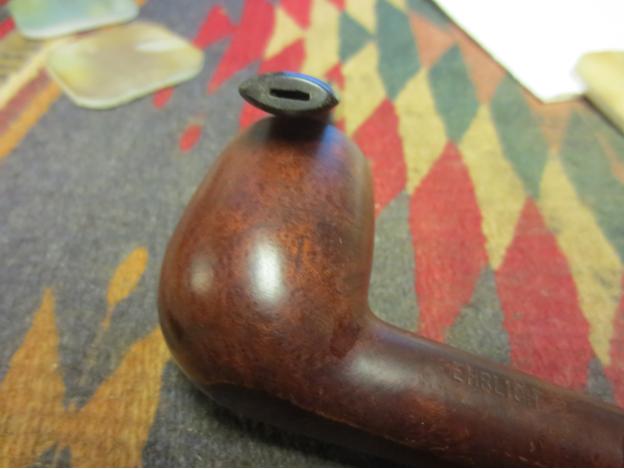
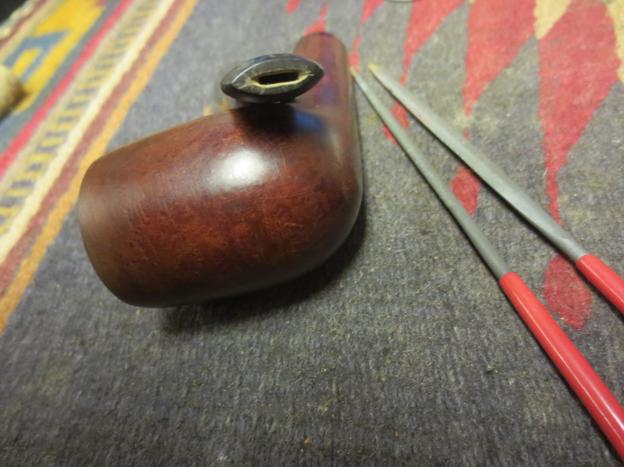
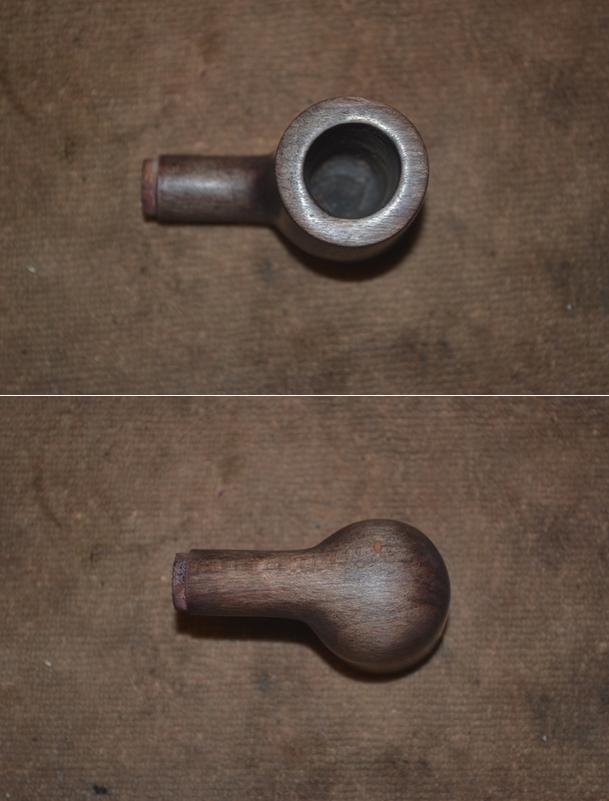
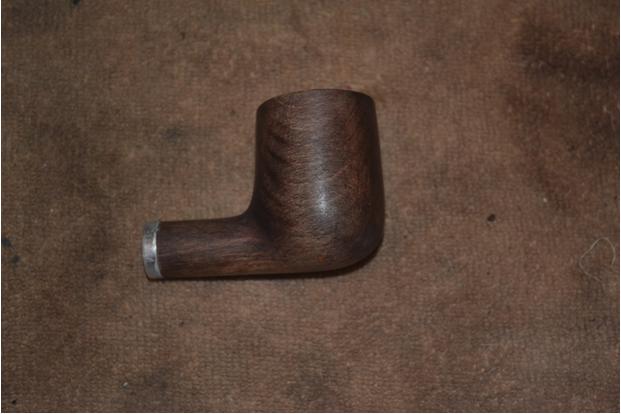
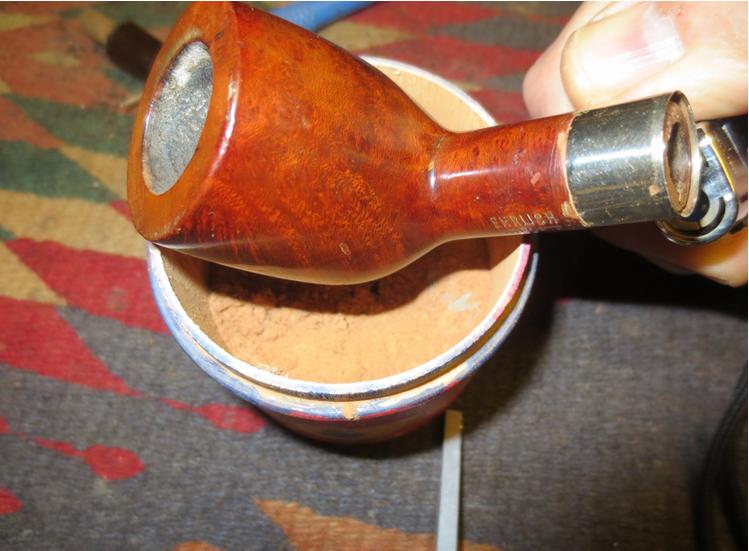
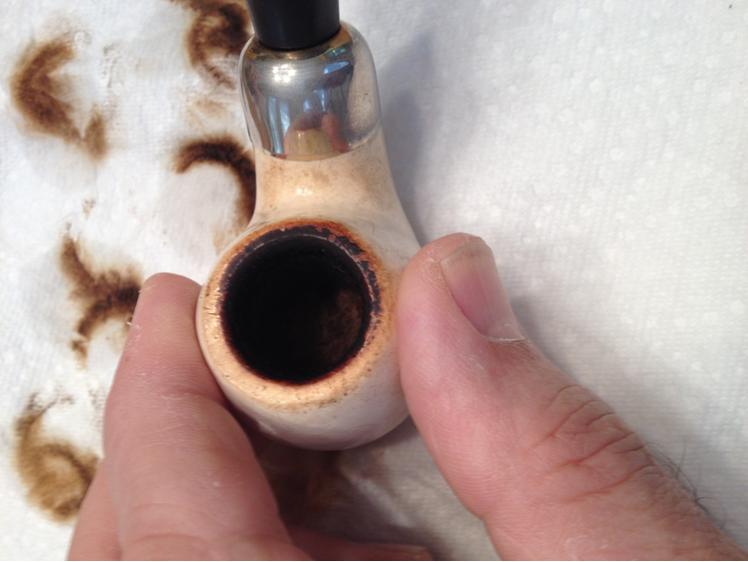
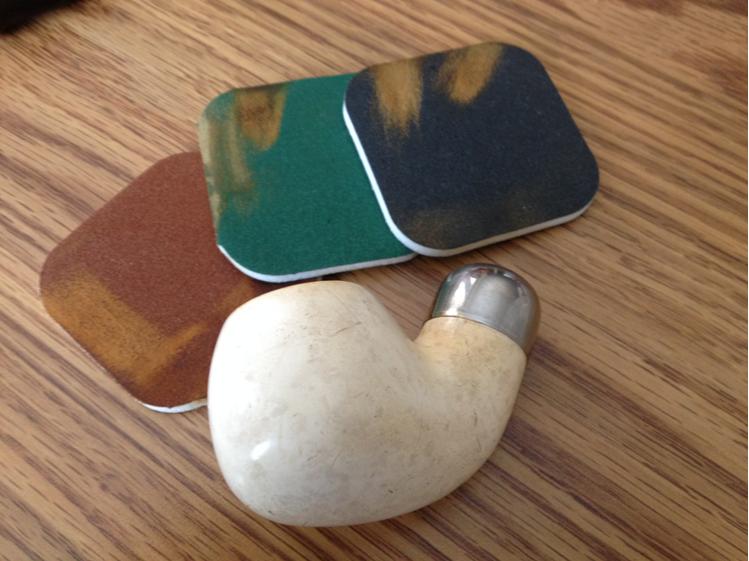
Gas5 I decided to address the rim damage first. It would not take long and a light topping of the bowl would take care of the damage. I set up the topping board and some 220 grit sandpaper to do the job. I twisted the bowl against the sandpaper and removed the damaged part of the rim. It did not take long and the rim was flat and looked clean.Gas6

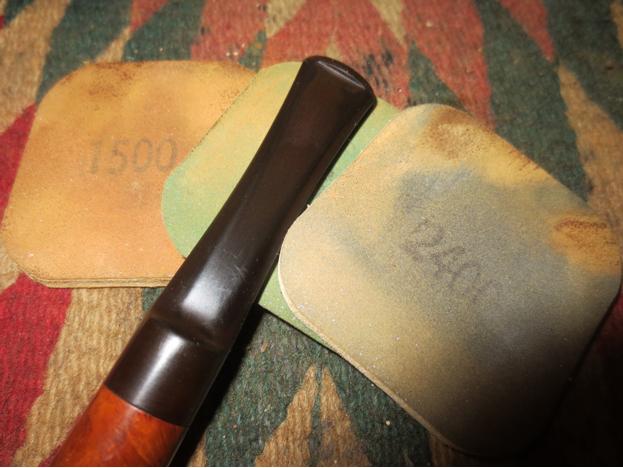
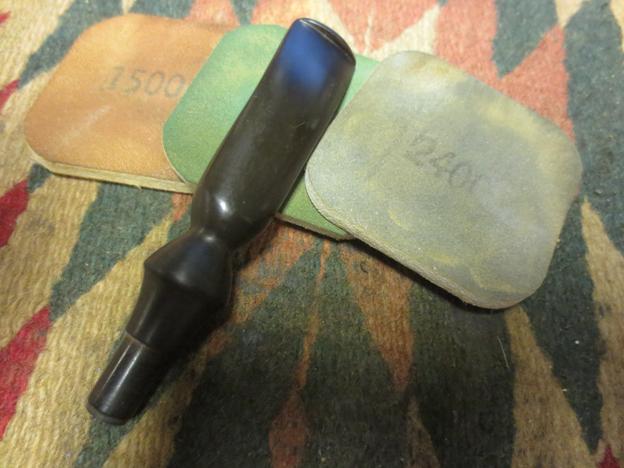
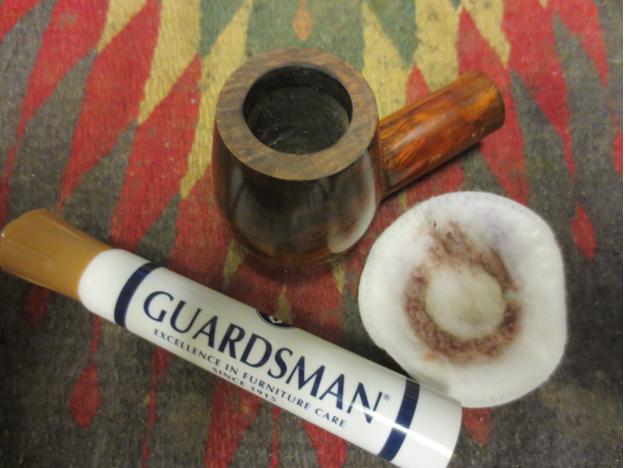
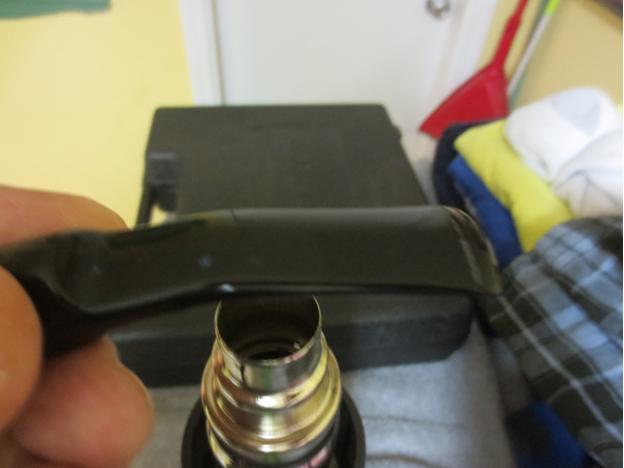
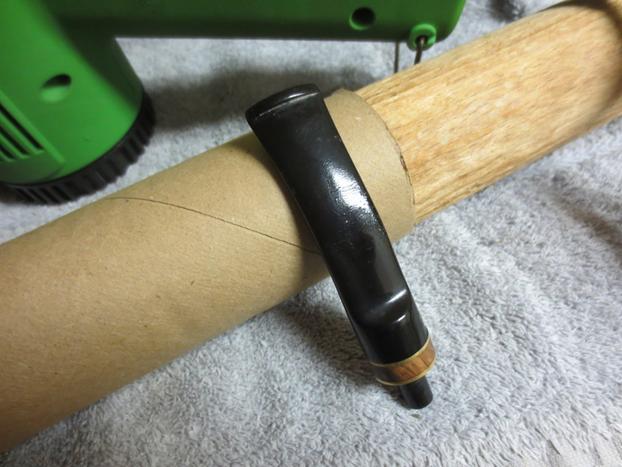
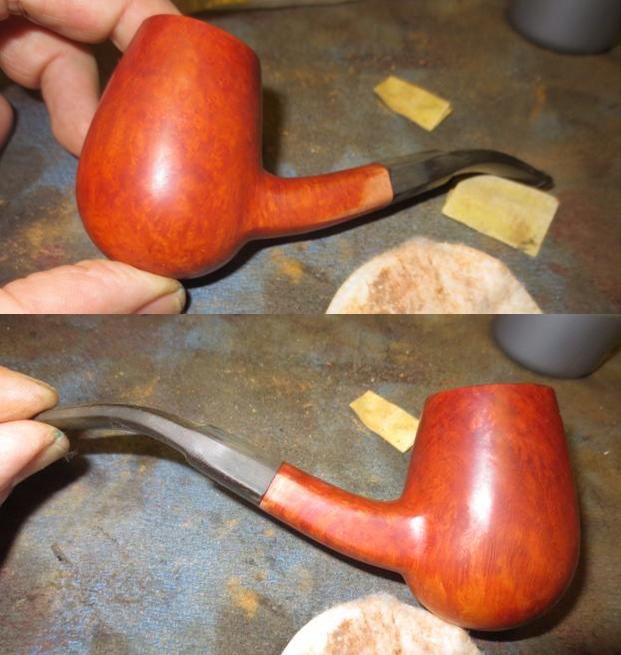
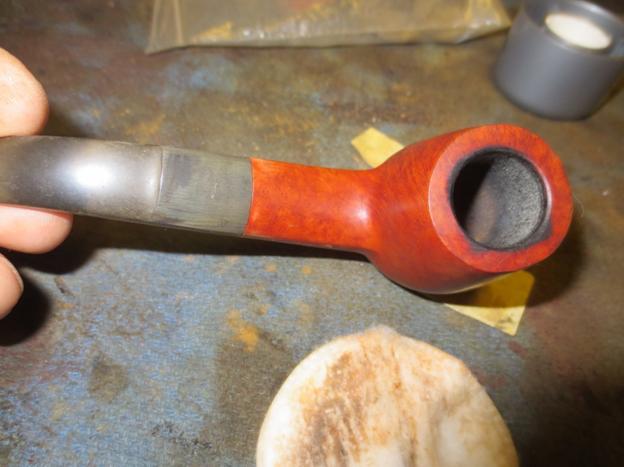
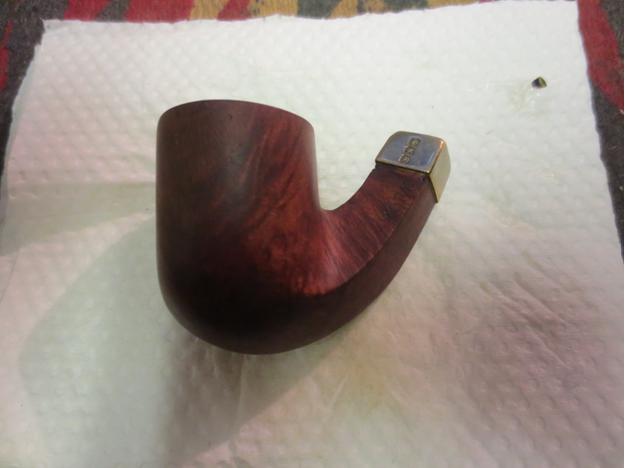
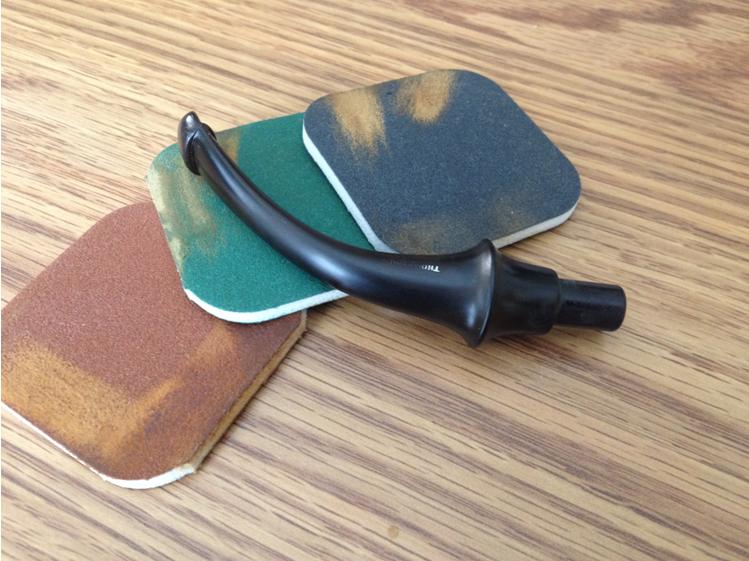
Gas7 I sanded the newly topped bowl with a medium and a fine grit sanding sponge and then with 1500-2400 micromesh sanding pads to remove the scratches from the briar. I coloured the top with a black permanent marker to get the black undertones, wiped it down with acetone and then used two different stain pens – a medium and a dark brown – to match the bowl colour.Gas8 With the bowl cleaned, repaired and restained I set it aside to work on the stem. I would buff the whole pipe once I finished the stem work. I set up the heat gun and straightened the bend in the stem first. Once it was straight I would then heat it a bit more and bend it over a rolling pin to get a gentle curve.Gas9

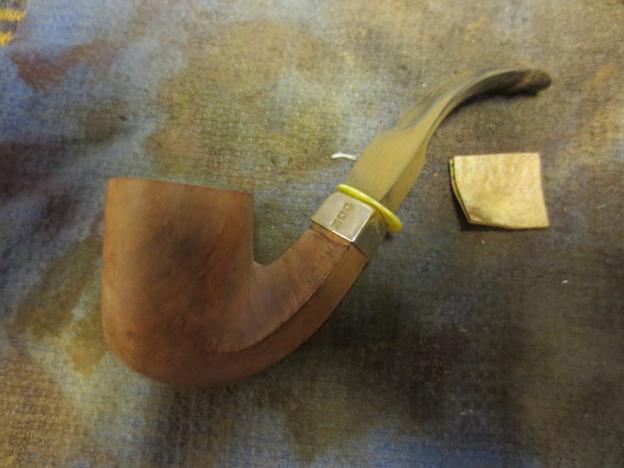
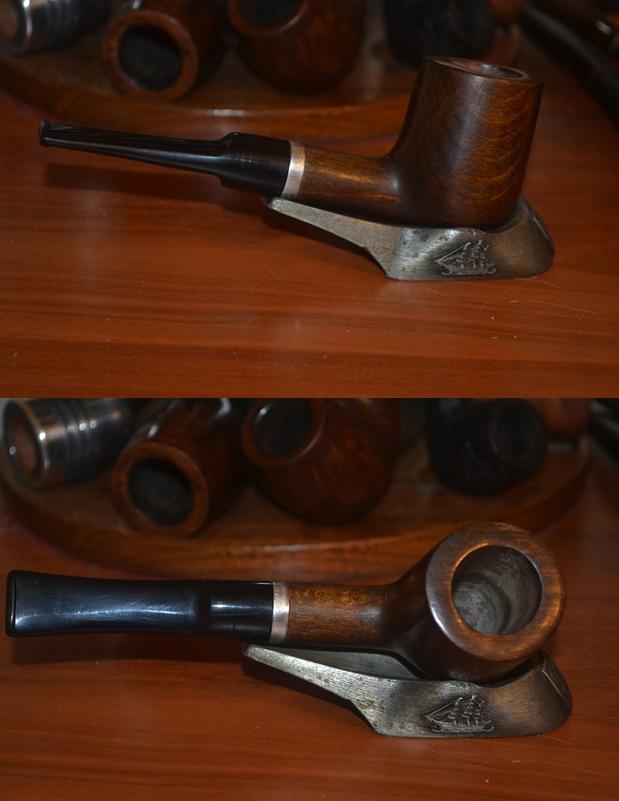
Gas10I put the newly bent stem into the shank and took a few photos to see the new look of the pipe.Gas11

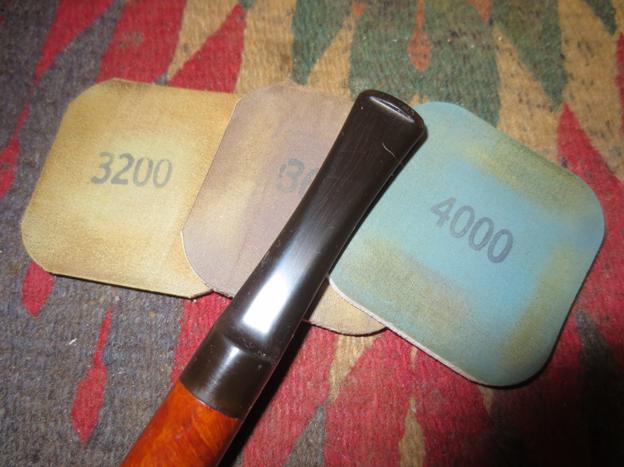
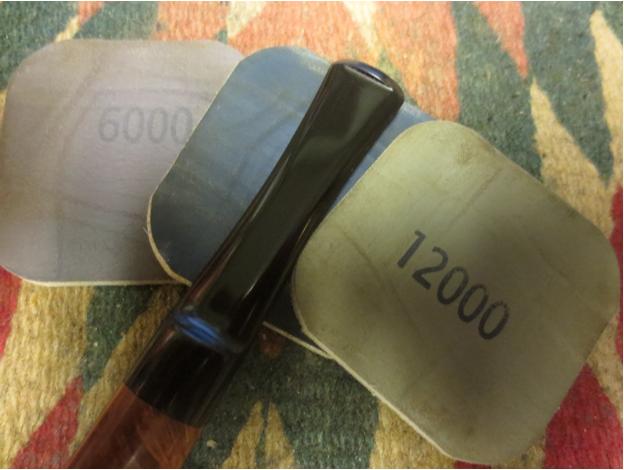
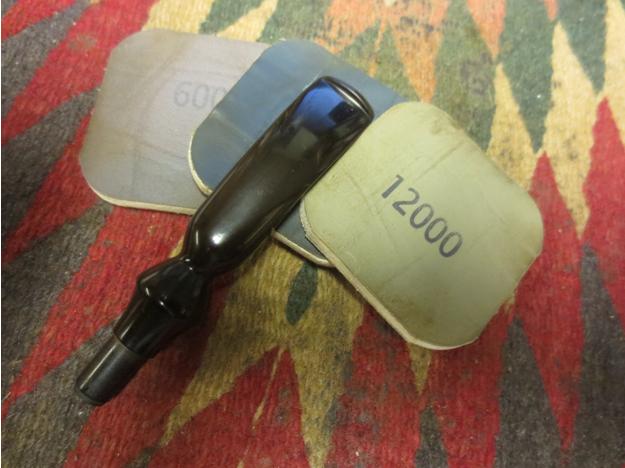
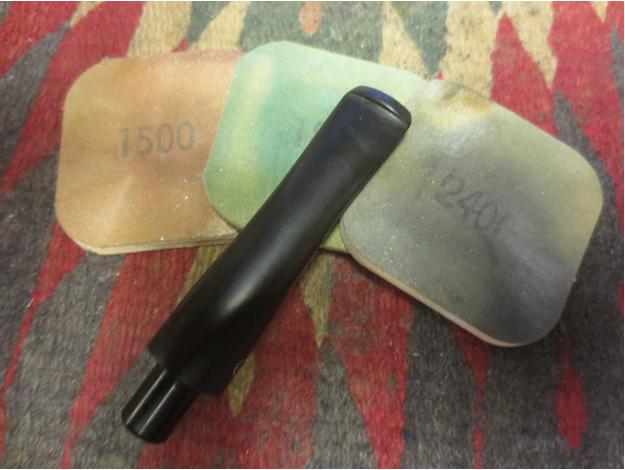
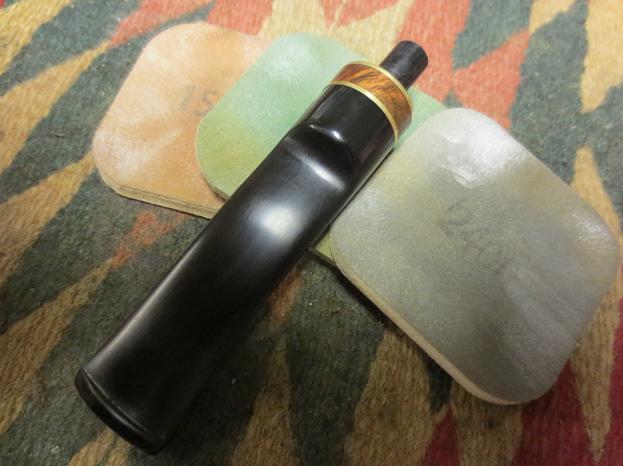
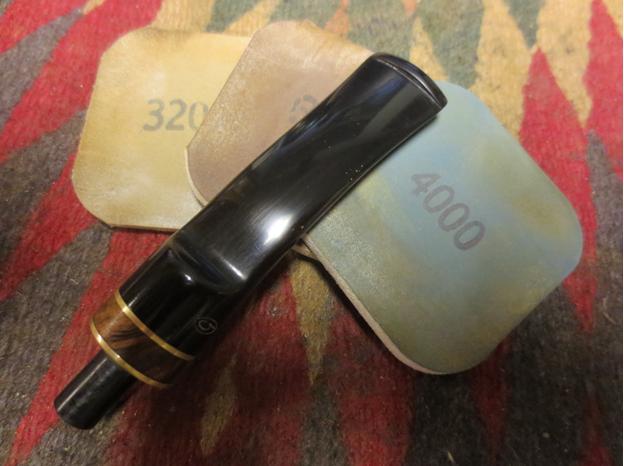
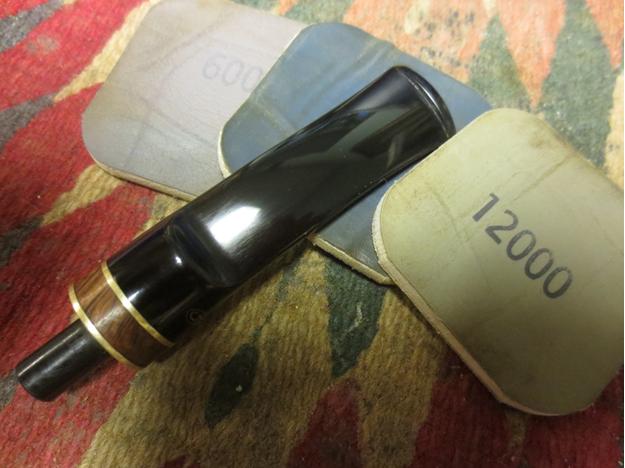
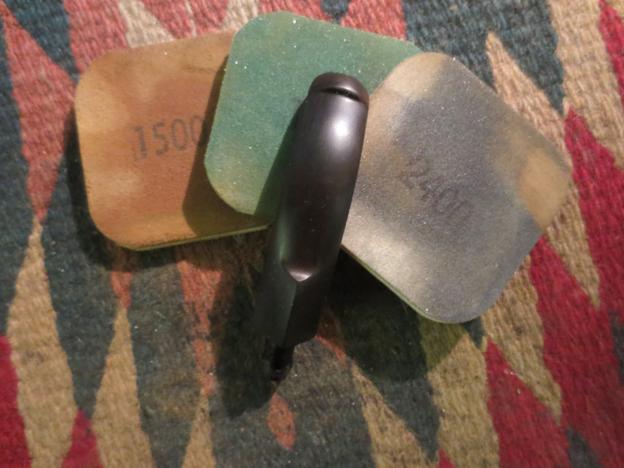
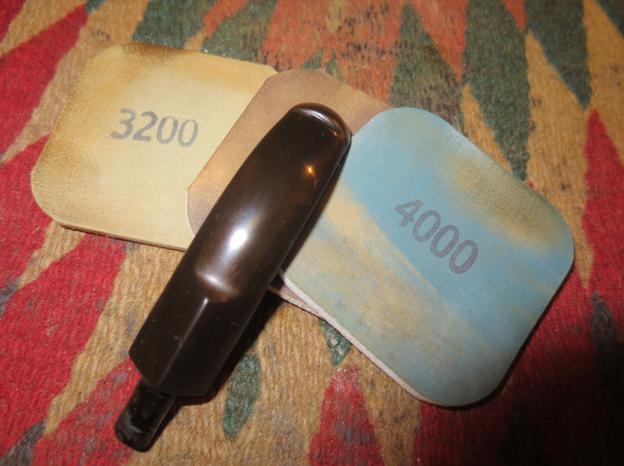
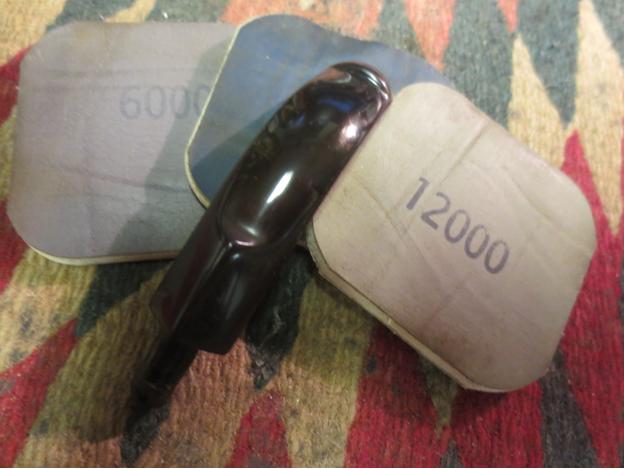
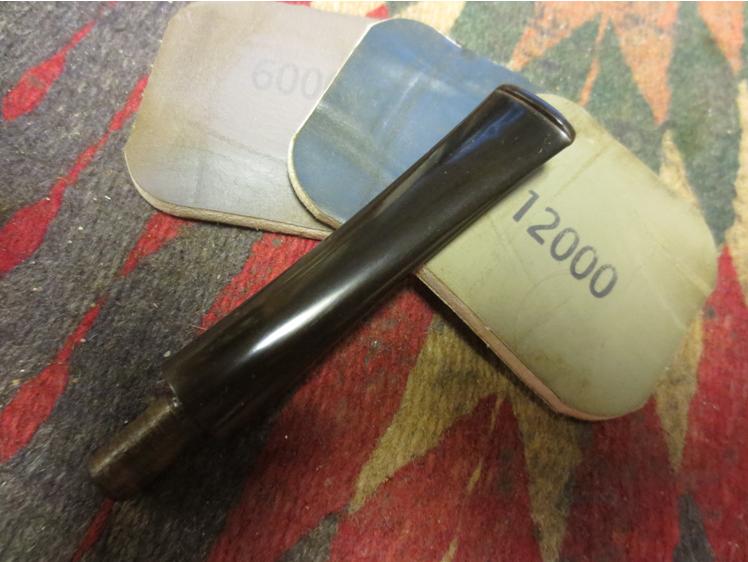
Gas12 With the bend done it was time to polish the stem. Even with the stem held 6 inches above the heat gun there was some slight bubbling in the surface of the Lucite. I sanded it with 220 grit sandpaper and then with a medium and a fine grit sanding sponge to remove the bubbling and smooth out the surface of the stem. Once the bubbling and rippling were removed I went on to polish the stem with micromesh sanding pads. I wet sanded with 1500-2400 grit pads and then dry sanded with 3200-12,000 grit pads to return it to its original shine.Gas13

Gas14

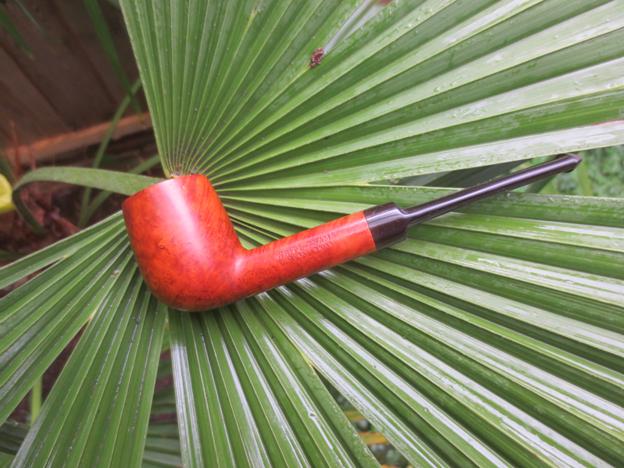
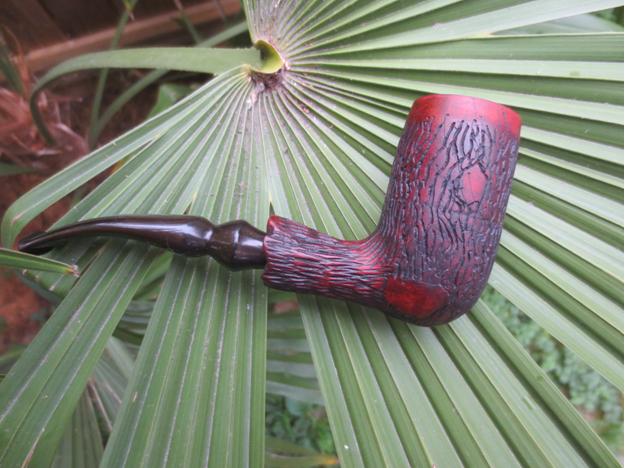
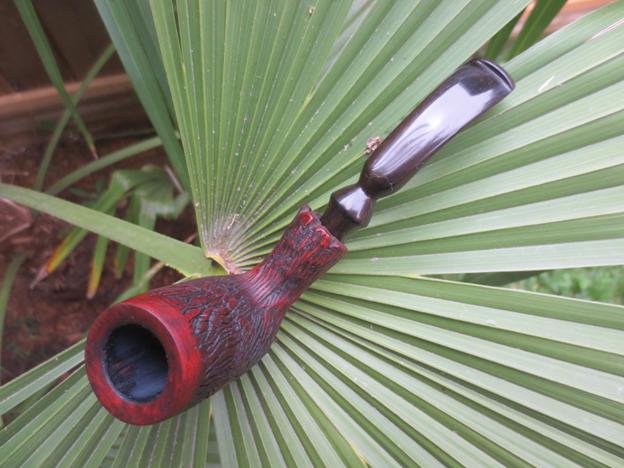
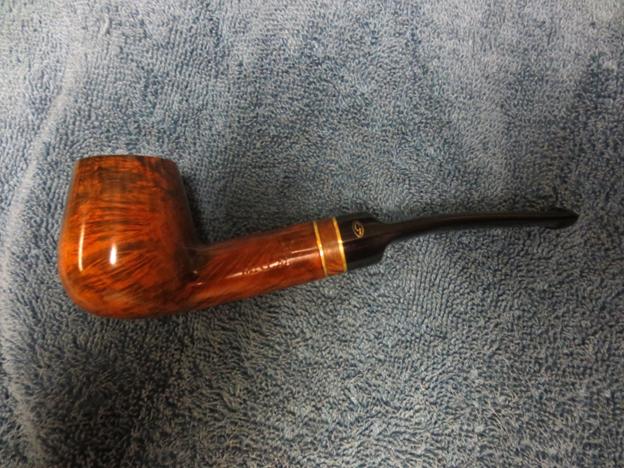
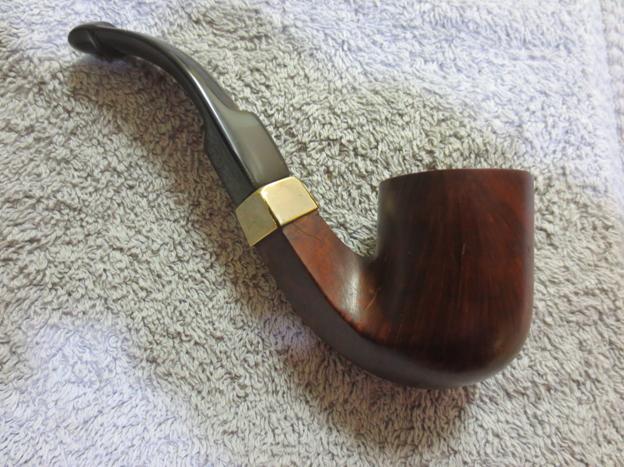
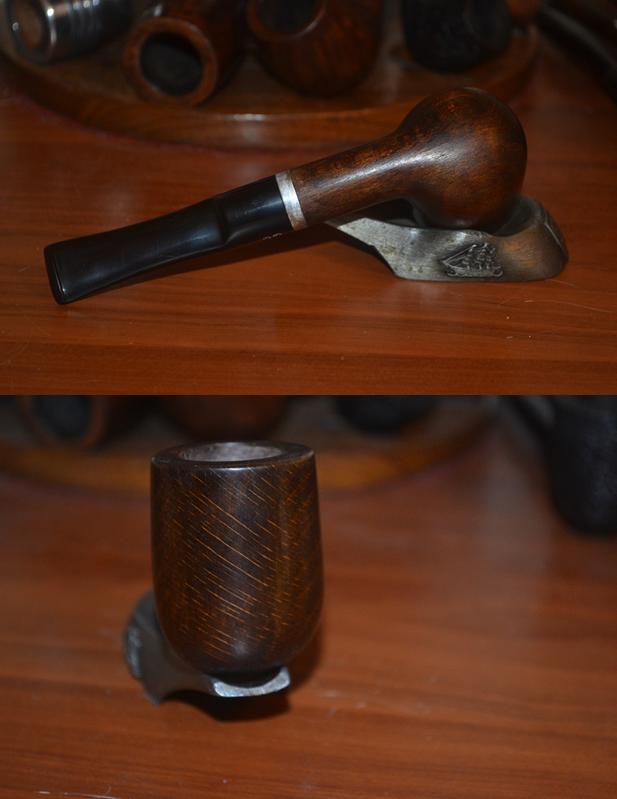
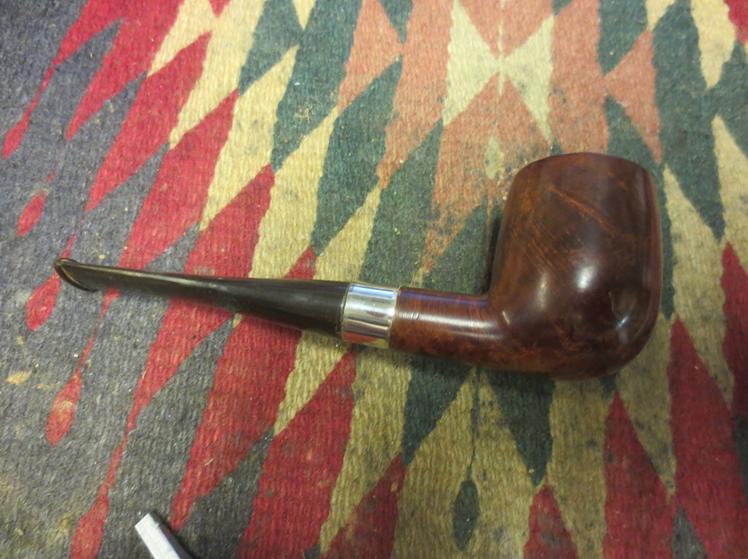
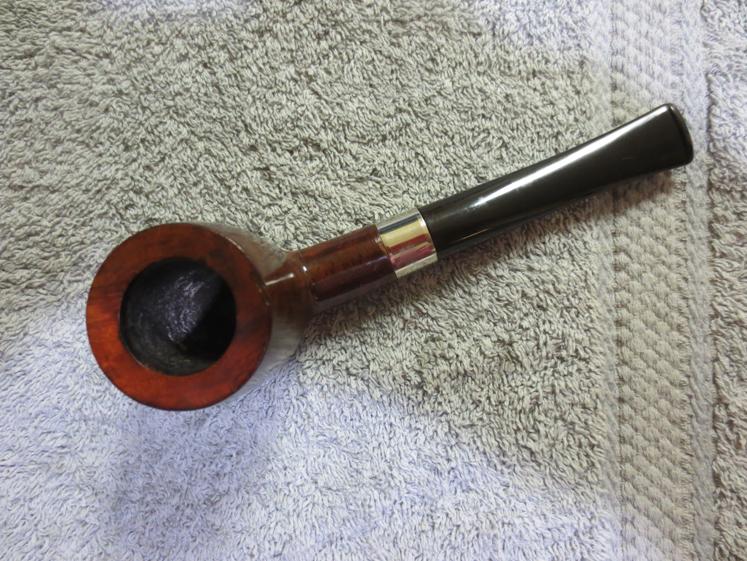
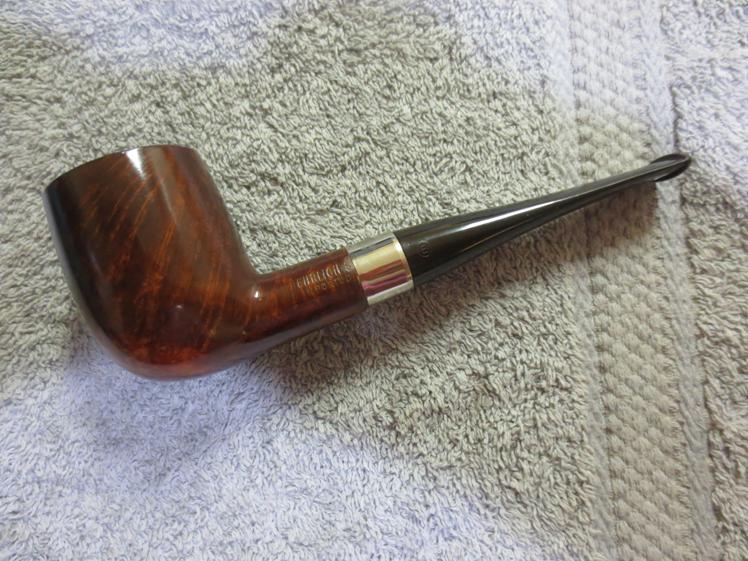
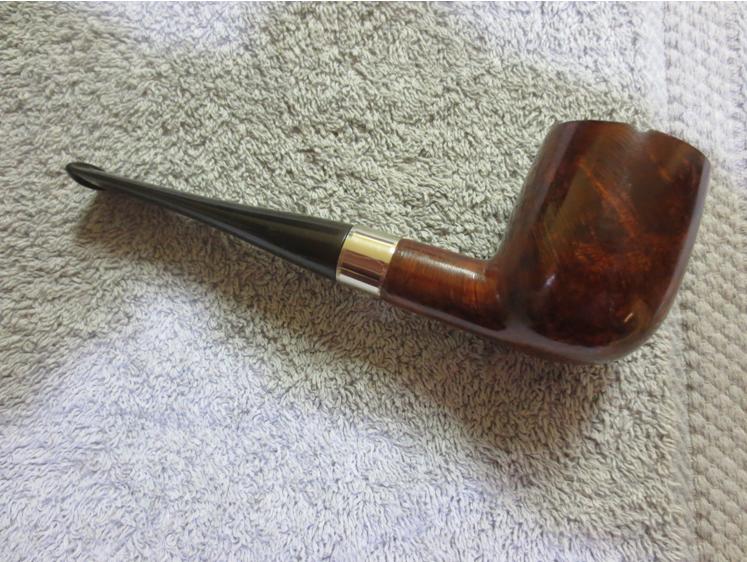
Gas15 I buffed the bowl and stem with Blue Diamond Plastic Polish on the buffer and then gave them both a few coats of wax. I buffed it with a clean flannel buff and then with a microfibre cloth to raise a good shine. I was unable to permeate the urethane finish and since it was in decent shape I left it alone. The finished pipe is shown in the photos below. It is cleaned and ready to be loaded and smoked. I hope to do that later today. Thanks for the “new pipe” John. I know I am going to really like this one.Gas16

Gas17

Gas18

Gas19

Replacing a Broken Tenon & Doing a Simple Restoration on a Unique Bjarne Danish Handmade Egg


Blog by Steve Laug

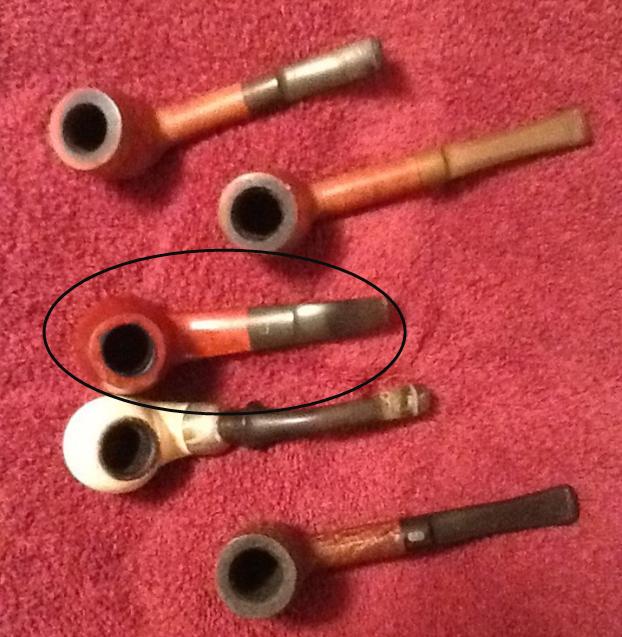
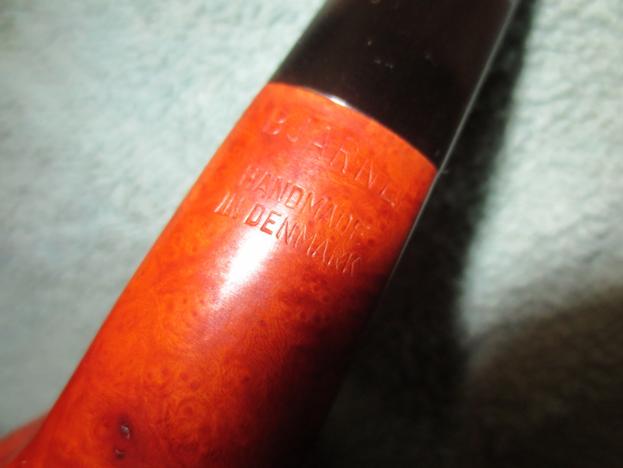
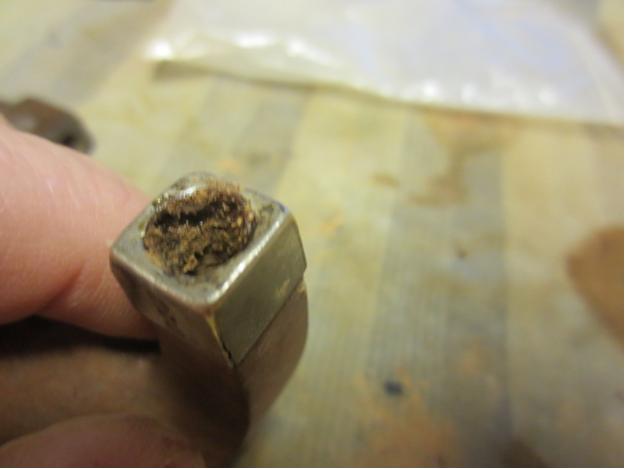
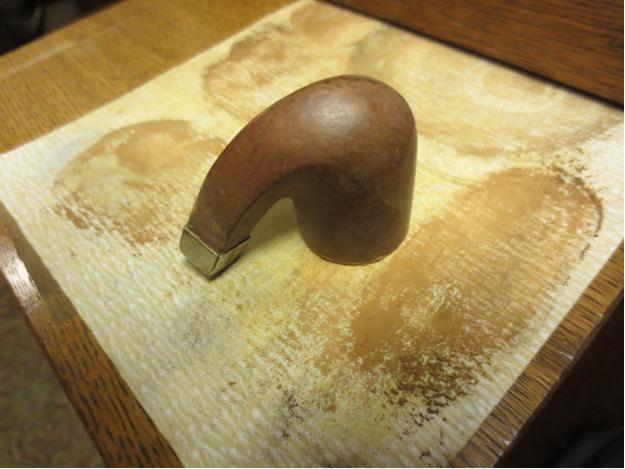
I found this interestingly shape pipe in an antique mall in Idaho Falls. I was attracted to the egg shape, the hanging bottom and the rectangular shank and saddle stem before I even knew who had made it. I was pretty sure that it was a Danish made pipe but did not know who had made it. When the clerk took it out of the display case I saw that it was priced at $15 US – not a bad price these days for estate pipes. I turned it over in my hands and could see that it was well made and barely smoked. The bottom of the bowl still showed unseasoned briar. The stem was oxidized but free of tooth marks and tooth damage. The finish was in decent shape other than some sticky spots where the person selling it had put price tags. On the bottom of the shank it is stamped BJARNE over Handmade in Denmark. That is the only stamping on the shank. It is the pipe circled in the photos below.Bjarne1

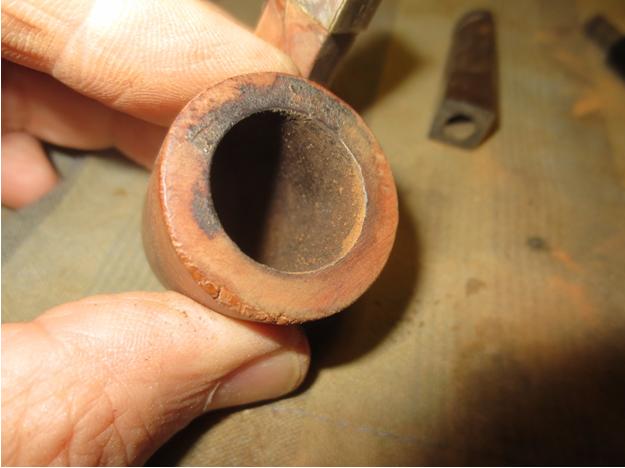
Bjarne2 I was excited by this find. I liked the shape and the cleanup would be simple. I purchased it and took it back to my mom and dad’s place. But then the something happened that I have come to dread. I was carrying the bag across their parlour when the bottom fell out of the bag and the pipe bounced off the tile floor. There was a sharp crack and the stem had disappeared. I found it hidden in the pattern of the carpet about three feet from the bowl. I was sick to my stomach. The tenon had snapped off evenly in the shank. The stem and the bowl were undamaged otherwise. This meant that what was originally a simple restoration would now be a bit more complicated. I would need to replace either the tenon or the stem.Bjarne3 I took some photos of the bowl when I brought it to my work table. The briar was beautiful and not a flaw in the grain on the bowl itself. There was one small sand pit on the bottom side of the shank but it had only darkened from handling and was not that big a deal. The rim had some darkening and burn marks on the top near the back, the right side and the right front. These would have to be dealt with.Bjarne4

Bjarne5

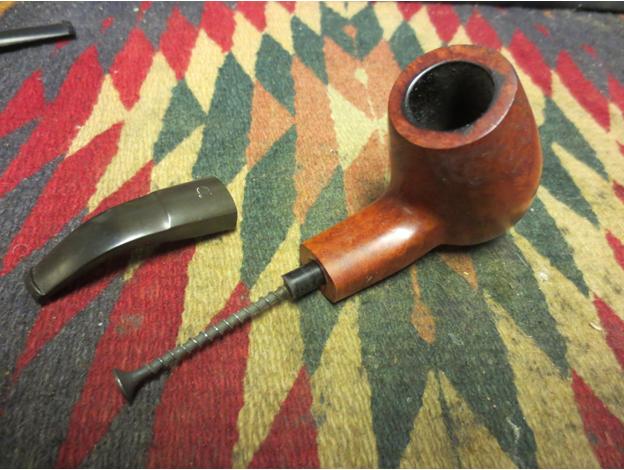
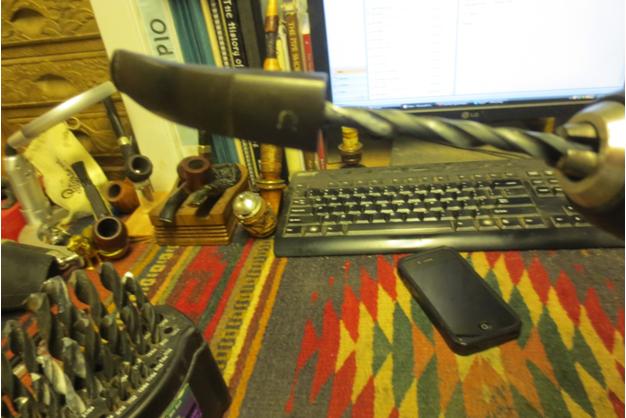
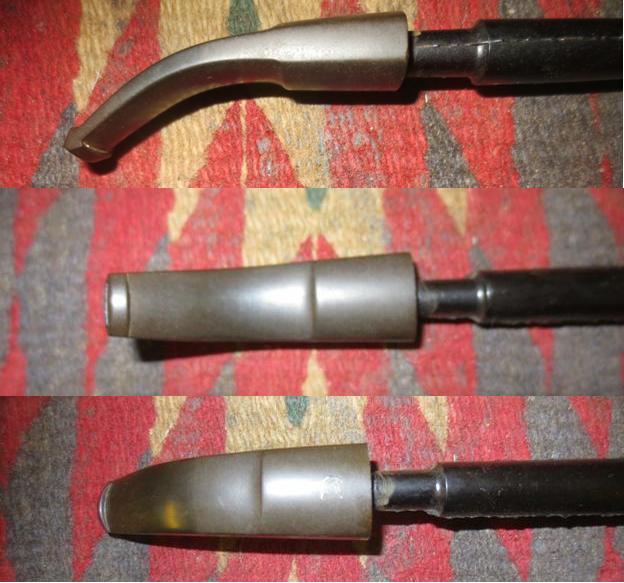
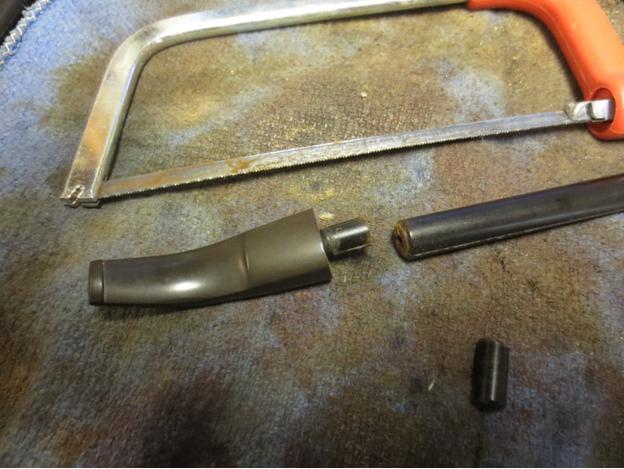
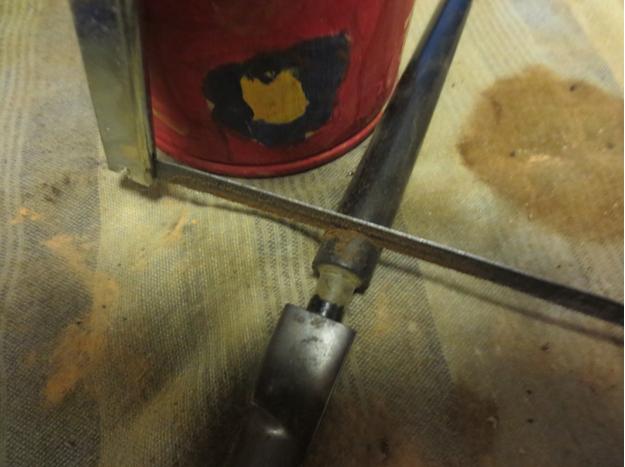
Bjarne6 I used my tried and true method for pulling broken tenons. I twisted a drywall screw with wide threads by hand into the airway on the tenon. When it bit, I wiggled the tenon free of the shank. It did not take much to pull it out. If it had I would have put the bowl in the freezer for a half hour and repeated the process.Bjarne7 I faced the stem on my topping board to knock off the remnants of the broken tenon and then twisted the stem onto a drill bit slightly larger than the airway in the stem. I don’t use the power feature on the drill as I would rather turn the stem onto the bit by hand. This is critical when working on short saddle stems where it is very easy to over drill the airway and ruin the stem.Bjarne8 When I had the airway open for a new tenon I improvised by using a junk stem I had in my can of stems. I pressed the tenon on the thin stem into the freshly drilled airway on the stem. The fit was snug and the once I cut back the donor stem I would have a new vulcanite tenon. I glued the new tenon in place with super glue and pressed it until it set. The next three photos give an idea of how the new tenon and the donor stem fit in the stem as a replacement tenon.Bjarne9 I cut off the stem with a hacksaw. In this case, after measuring the depth of the mortise I knew I could cut of the tenon portion of the donor stem and be left with a tenon the right length for the pipe.Bjarne10 I turned the diameter of the new tenon down with a sanding drum on my Dremel until it was close to fitting and then finished the fit by hand with 220 grit sandpaper.Bjarne11

Bjarne12 As often happens with a new tenon I had to do a little fine tuning on the shank – not much really but a slight removal of briar on the left side and a little vulcanite on the left. I probably could have left it but I am picky so I sanded it lightly until the transition was smooth. I wiped down the bowl with acetone on a cotton pad to remove the mottled finish and the glue that was on the shank and the bowl from the price tags.Bjarne13

Bjarne14 I examined the burns on the rim and to repair/remove them the bowl would have to be lightly topped. I used the topping board and 220 grit sandpaper to take off most of the burn marks and minimize the damage.Bjarne15

Bjarne16 I sanded the rim with a medium and fine grit sanding sponge and then wiped the bowl down with a cotton pad to remove the sanding dust.Bjarne17

Bjarne18

Bjarne19 I restained the sanded areas on the shank and the rim with a stain touch up pen using the lightest colour stain. I was able to match the colour of the bowl and not have to restain the whole pipe. Bjarne20

Bjarne21

Bjarne22 I gave the bowl a quick buff with a coarse cotton rag to blend in the stained areas with the rest of the bowl and feather in the new stain.Bjarne23

Bjarne24 I took the stem off and cleaned out the shank and the stem. It was a pretty clean pipe which lent proof to my earlier assumption of the pipe being lightly smoked.Bjarne25 With the tenon replaced, the bowl stained and looking fresh all that remained was to remove the oxidation on the stem. I lightly sanded the stem with medium and fine grit sanding sponges and then went on to sand it with micromesh sanding pads. I wet sanded the stem with 1500-2400 grit pads and rubbed the stem down with Obsidian Oil. I “painted” over the saddle area and the edge of the button with the flame from a Bic lighter to remove the oxidation. I dry sanded with 3200-4000 grit pads, rubbed it down with oil once again and then sanded it with 6000-12000 grit pads. I gave it a final rubdown with Obsidian Oil.Bjarne26

Bjarne27

Bjarne28 Once the oil dried I buffed the stem and the bowl with Blue Diamond on the wheel and then gave it multiple coats of carnauba wax. I buffed it with a clean flannel buff to raise the shine. I then used the new addition to my order of things, learned from Dave Gossett and hand buffed the bowl and stem with a microfibre cloth to take the shine to the next level. The finished pipe is shown below. The fit of the stem makes the repair look like it came that way. The final photos of the stem and tenon show how the new tenon looks when it was completed. I am sure glad that the broken tenon did not ruin this old pipe and that once the new tenon was replaced the restoration was quite simple. This pipe should serve me well for years to come. Thanks for looking.Bjarne29

Bjarne30

Bjarne31

Bjarne32

Bjarne33

Bjarne34

Bjarne35

Repairing and Restemming a York (KBB) Diamond Shank Bent Billiard


Blog by Steve Laug

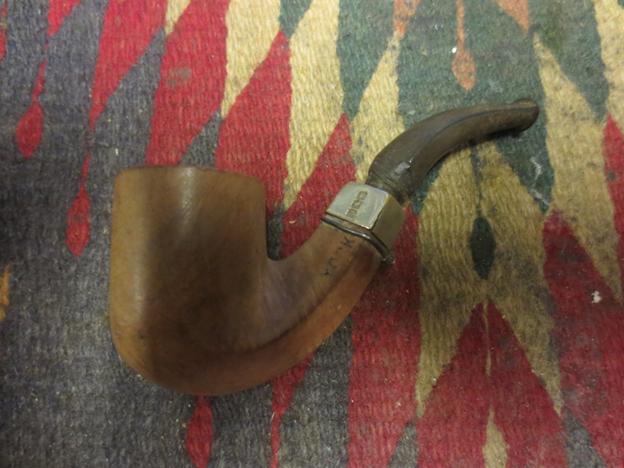
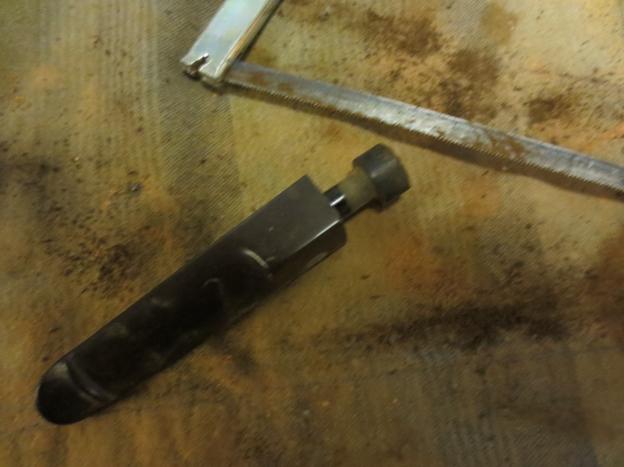
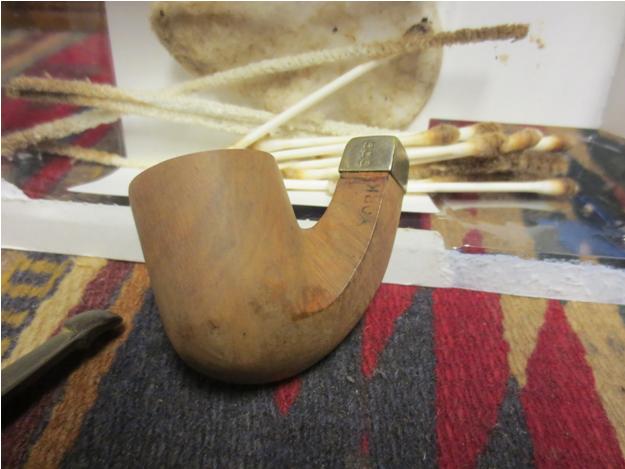
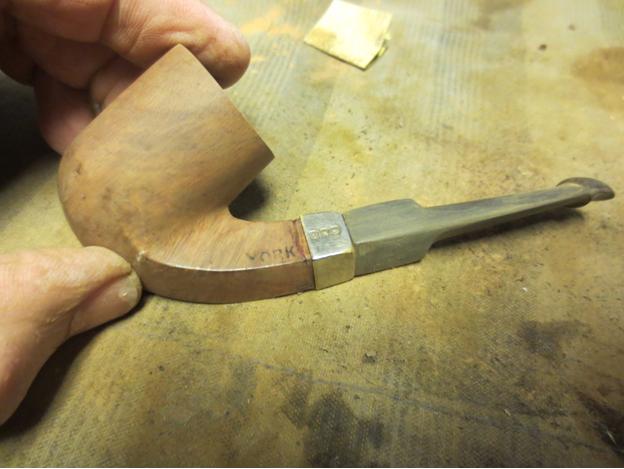
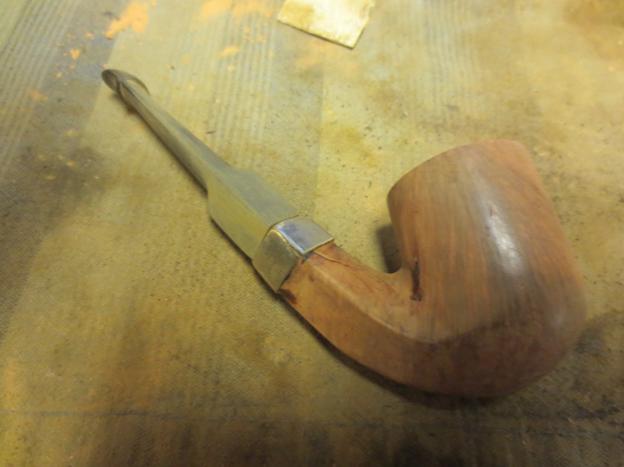
When I was traveling in Idaho my brother and I took the family for a trip to Jackson Hole, Wyoming. On the way we stopped in a little town called Victor, Idaho. There was an antique shop there in the town and I found four more old pipes. The first of these reminded me of an old WDC Diamond shank billiard that I have. This one was stamped YORK on the left side of the shank and from research it may have been made by KBB. It was in rough shape. The shank had been cracked and repaired with glue and a piece of twisted wire. The stem obviously had a broken tenon and the previous owner had carved it down to fit in the shank anyway. The bowl had a thick cake and the finish was gone. The rim was damaged on the front outer edge and there was some tar on the rim.York1

York2

York3

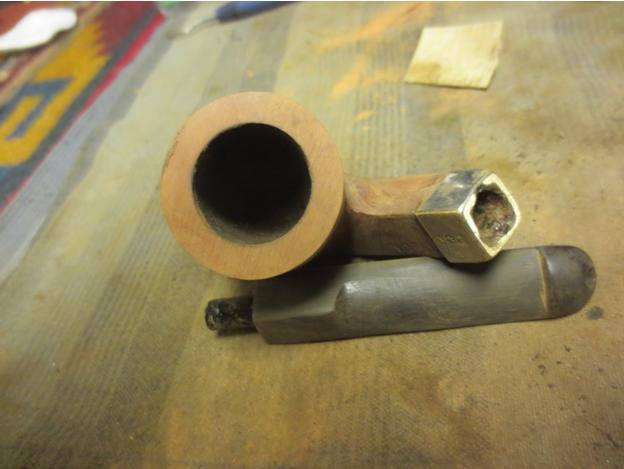
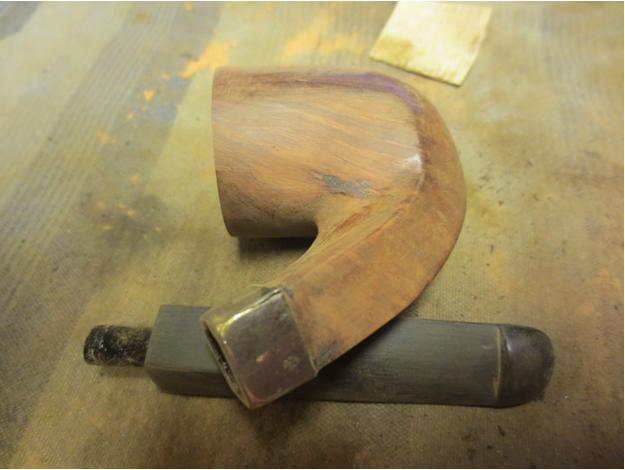
York4 On the right side of the bowl near the shank junction there was a pink putty fill that was coming out. Most of the putty had fallen out of the briar. This would need to be repaired.York5 When I got back home I took the pipe out of the bag to have a look. The silver end cap had some hallmarks but they were the faux hallmarks that I have found on older American made pipes to give them a touch of class. All four edges of the band were split. I removed the stem and looked inside the mortise and could see that a major part of the briar was missing on the right side of the shank under the cap. With little effort I removed the cap and sure enough a huge chunk was missing out of the briar. In fact the whole right side under the cap was gone. There was a small crack that had been repaired earlier. There was a small hole in the shank to stop the crack and the crack was glued and clamped with the wire. This was going to take a bit of work to bring it back from the brink of destruction. York6 I clipped the wire with a pair of wire cutters so that I could work on repairing the broken portion of the shank. This repair would take some careful and time consuming work to rebuild the missing portion of briar.York7 I reamed the bowl to clean out the thick cake. It was crumbling so I wanted it removed so that the repair of the shank would be less dirty. I use a PipNet reamer to take the cake back to the bare briar.York8

York9 The first step in rebuilding the broken area was to clean up the damaged ends of the remaining briar. Once it was clean I put clear super glue on the raw edge of the broken spot and tamped the end into some briar dust. I repeated the process until the edge was repaired as much as possible with this method.York10

York11 During the process I also picked out the broken putty fill and replaced it with briar dust and super glue.York12 I sanded the flat surface of each of the four sides of the diamond shank smooth with 220 grit sandpaper until the cap slid easily over the shank. I also faced the end of the shank on the topping board.York13

York14 The next step in the process of rebuilding the shank and the mortise was a little more difficult than the briar dust and super glue rebuild. It involved working on the internals of the shank. I glued the end cap in place with wood glue and clamped it in place to take care of small splits in the edges of the metal cap. Once that dried and set, I mixed white wood glue with briar dust to make putty. I tamped the mixture into the remaining areas of the shank with a dental pick and dental spatula until the area was filled solid looking once again. The next two photos show the rough repair on the inside of the mortise and shank. The broken area is gone! The holes are filled in and the repair is complete. Once the glue set I would have to clean up the mortise and make the walls smooth. The edges of the metal cap, looking at it from the end are damaged and I will not be able to repair them.York15

York16 While the shank repair cured I worked on the rim. There was a thick tar build up that was like rock on the back edge and the front edge of the rim had been knocked against something hard and was rough.York17 I decided to top the bowl to remove the rock hard tar and also minimize the damage to the front of the bowl. I used a topping board with 220 grit sandpaper and worked the rim against the sandpaper until the damage was minimized. Once I had it smoothed out I put some briar dust and super glue on the remaining divot on the front edge of the bowl as a fill. When it dried I sanded it smooth and lightly topped the rim once more to even out the repair with the rest of the rim. (That picture will be shown shortly.)York18 The stem that came with the bowl was damaged beyond repair. It had been repeatedly been cut off by the previous owner and hacked at until it fit in the damaged tenon. It was not a stem I would use again on this pipe. I went through my can of stems and found a faux p-lip stem – the airway came out the end of the button rather than on the top. It was old enough to work on this pipe and with some modification I thought it would look just right. The problem was that it did not have a tenon. When I found it the tenon was missing and the end of the stem had been drilled out to receive a replacement tenon. I am currently out of Delrin tenons so I used a thin vulcanite stem as the sacrificial tenon. I glued the tenon on the donor stem in place in the diamond shaped stem with super glue and then cut off the stem with a hacksaw. I left a piece of vulcanite that was longer than necessary so that I could work it to a proper fit in the repaired shank.York19

York20 The next photo shows the repaired stem and tenon and the topped bowl before I put the two parts together. I used a Dremel to remove the excess material on the new tenon and shortened it to the depth of the mortise in the shank.York21 The next photo shows the repaired fill on the bowl side with another photo of the new stem.York22 Once the shank repair was dry I used a needle file to clean up the rough areas and smooth out the inside of the mortise. I gave it several more coats of glue and briar dust to buildup the areas that had shrunk as the glue dried. I continued to work it with the files and sandpaper until the fit was correct. I cleaned out the airway to the bowl and the inside of the mortise with alcohol, cotton swabs and pipe cleaners in preparation for putting the new stem in place.York23 The next two photos show the newly fit stem. There was still work to do to fine tune the flow of the diamond stem sides to match the flow of the diamond shank but the look is clear at this point in the process.York24

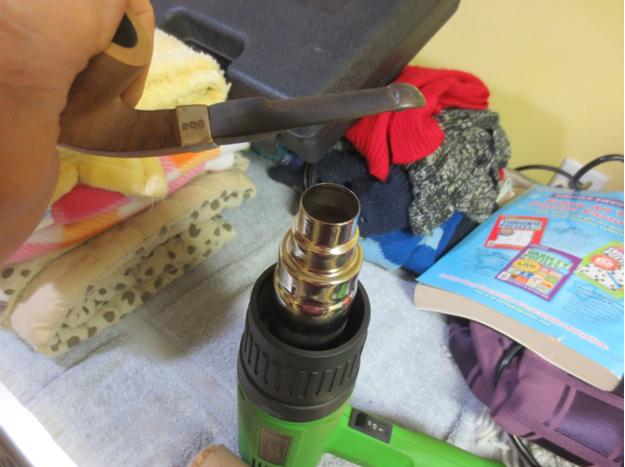
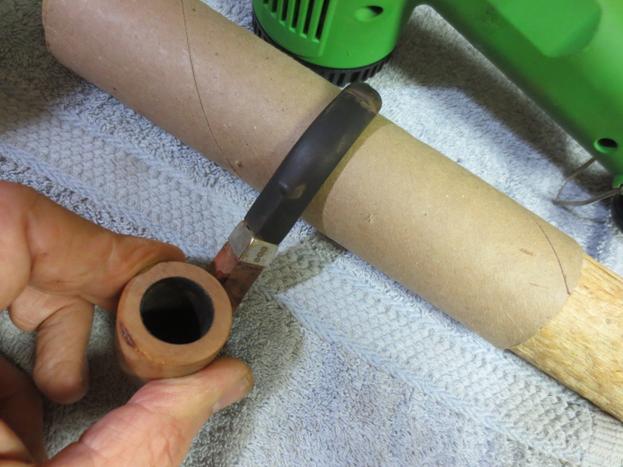
York25 I sanded the stem with 220 grit sandpaper and with a medium and a fine grit sanding sponge to fine tune the fit. When I had it the way I wanted, it was time to bend the stem. I used my heat gun to do the work. In this case I quickly set it up on the dryer in our laundry room (shh don’t tell my wife I did this) and heated the stem. I bent it over an old rolling pin that I use for this purpose until the bend in the stem matched the curve of the bottom of the bowl. I set the bend by holding the stem under cool running water.York26

York27 The next two photos show the newly bent stem and give an idea of how it will look with the pipe once it is finished.York28

York29 With the easiest part of fitting a stem completed I went on to do the laborious and tedious part of sanding and more sanding to get the fit just right. To do this without rounding the edges of the stem at the shank stem junction I use a plastic washer placed between the two areas. I sanded the stem with 220 grit sandpaper to smooth out the transition and make the angles square (or at least as square as possible on these old pipes where every side has a different angle and width).York30 When I had the fit of the stem correct it was time to polish it. I wet sanded with 1500-2400 grit micromesh sanding pads and rubbed the stem down with Obsidian Oil.York31 I needed a break from the stem work so I turned my attention to the bowl. I rubbed it down with a light coat of olive oil to highlight the grain. I took a few photos to show what it looked like at this point. It is certainly looking far different than it did when I started working on it. There is a deep richness in the red tones of the briar.York32

York33

York34

York35 I decided to highlight those tones with a dark brown aniline stain thinned by 50% with some isopropyl alcohol. I applied it and flamed it to set it in the grain.York36 I hand buffed it with a cotton cloth to get an idea of the coverage. It was still too dark to my liking so I would need to address that.York37

York38 I wiped the bowl down with some acetone on a cotton pad to remove some of the stain and make the grain show through better.York39

York40 I buffed the bowl with White Diamond and then gave it the first of many coats of carnauba. I don’t know about you but by this point in a long refurbishment I get a bit anxious to see what I have accomplished. It always seems that it is going to go on forever so I rewarded myself by putting the stem in place and taking a few photos to see what I had achieved.York41

York42 For comparison purposes I took the next two photos of the pipe with the old stem next to the new one. You can see how badly hacked the vulcanite was from the previous owners salvage work on his broken pipe. The pipe is beginning to look like a very different pipe than when I started. That always encourages me!York43

York44 Now it was time to finish up with this long project and get the stem done. I dry sanded it with 3200-4000 grit micromesh sanding pads and then rubbed it down with Obsidian Oil once again. I then dry sanded it with 6000-12000 grit pads and gave it a final coat of oil and let it soak into the vulcanite.York45

York46 I buffed the stem and bowl with Blue Diamond and then gave them both multiple coats of carnauba wax. I buffed them with a clean soft flannel buff to raise the shine and then hand buffed the pipe with a microfibre cloth to finish. The completed pipe is shown below. It has come a long way from the pipe I started on this morning. I had a quiet day at home and between reading and napping finished the work on this old timer. From what I can find out in my research and from Who Made That Pipe, the pipe may well be from the old KBB pipe works. Thanks for looking.York47

York48

York49

York50

York51

York52

Take a Sad Pipe and Make It Better


Guest Blog by Robert M. Boughton
Member, North American Society of Pipe Collectors
http://www.naspc.org
http://www.roadrunnerpipes.com
http://about.me/boughtonrobert
Photos © the Author

“Only when you eat a lemon do you appreciate what sugar is.”
― Ukrainian proverb]

INTRODUCTION
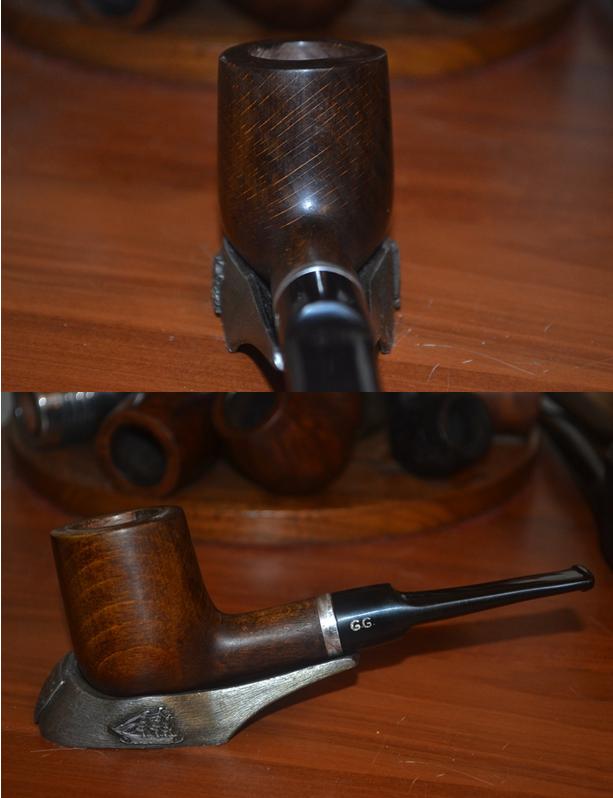
The Beatles sang the idea more perfectly, to take the same liberty with the English language as Thomas Jefferson when beginning to pen the U.S. Constitution, and I’m not looking to start a revolution or create an international incident or any other uproar by saying that all Ukrainian pipes are lemons. My personal experiences have both been with the Veresk Company in Kiev, now the capitol city of the Republic of Ukraine. Before the fall of the former Soviet Union, the Veresk Cooperative factory was the only official outlet for tobacco pipes throughout the USSR. On the other hand, the following work of briar art was created by Ukrainian pipe crafter Konstantin Shekita, who made his start at Veresk.rob1 The Cooperative made all of its pipes during the Soviet days from fruit woods including cherry, pear, peach and apricot. After the collapse of the entire Soviet empire, brought about as an unforeseen consequence of Mikhail Gorbachev’s attempt to ease economic hardship for the common Russian with perestroika (rebuilding, reorganization) and to remove the iron-clad clamp on discussion of economic and political realities employing glasnost (openness), Veresk became a company and started to use briar imported from Tuscany, Italy. Although the fruit woods are still sometimes substituted, briar is now the preferred wood. This Golden Gate billiard, which with help from my mentor, Chuck, was determined to be pear wood, was probably made before the end of the Cold War.

On occasion, I find myself having to track down information on a given odd pipe every way I can: Internet engines using multiple query terms, emailing or calling friends, posting threads on various forums – even some Deep Web methods. Having a background as a newspaper reporter, I then try to verify the first source as well as I can. By and large, however, the first place I check is Pipephil, at http://www.pipephil.eu/logos/en/index-en.html. If that site has nothing on a pipe I have bought and/or restored, then I know I’m in for some real work. The contributions of Pipephil as a database trove of information on pipe brands, history, dating and other useful details is, for the most part, invaluable and irrefutable.

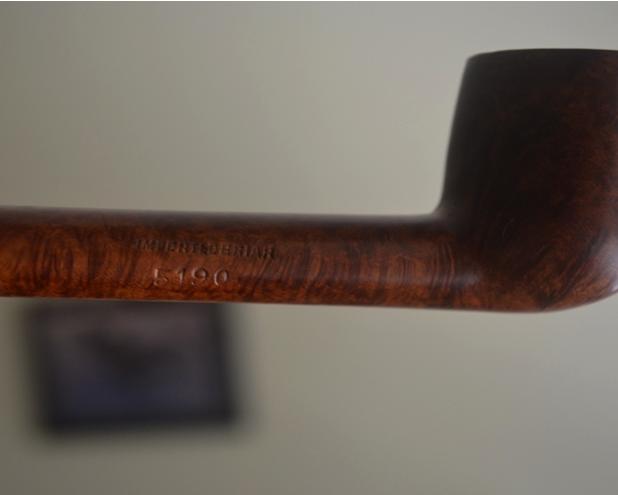
For example, about a week ago I saw a Kaywoodie Super Grain Lovat advertised as pre-1930s. Checking Pipephil, I learned that although that dating was not quite accurate, the placing of the Super Grain stamp above Kaywoodie and a four-digit shape number – in this case 5190 – dated the pipe to between 1931 and 1938. The inclusion of Imported Briar, introduced in 1935, narrowed the pipe’s manufacture to within three years during the latter part of the Great Depression. Lucky that no one else seemed to see these details, I won the very old but pristine Lovat for $32.50 with S&H.rob2

rob3 At about the same time, seeing the Golden Gate advertised on eBay as “Wooden Smoking Estate Pipe,” I was able to make my decision to buy it based on the GG I spotted on the bit, which Pipephil, with its amazing logo-finding resources, identified with certainty as a Ukrainian brand with the unlikely name Golden Gate. I was also warned that I was liable to receive a pipe made with very alternative wood, meaning something from a fruit tree. For $10 Buy Now with no S&H, I didn’t care. P.A.D., I embrace thee! There are so many worse things on which to spend one’s money.

However, in its entry on the Golden Gate brand, Pipephil gives the translation of Veresk as briar. I have been unable to determine from which language this assertion is drawn. The Russian word for briar, шиповник, transliterates to shipovnik (ship-ŌV-nee-yik), and the Ukrainian шипшина is shypshnya (SHIP-shnee-uh). The best references to Veresk in regard to Russian I can find are a sub machine gun known to players as the SR 2M Veresk, used in a computer role playing game (RPG) called Alliance of Valiant Arms [https://www.youtube.com/watch?v=R9BFocl97_Y], and a surname most common in Russia [http://forebears.io/surnames/veresk]. Hence I suspect Pipephil has this tidbit wrong, and Veresk is in fact derived from the last name of some Party-loyal old Comrade. I emailed Pipephil the details above and asked if perhaps Veresk is briar in another language or dialect. I’m hoping for a response.

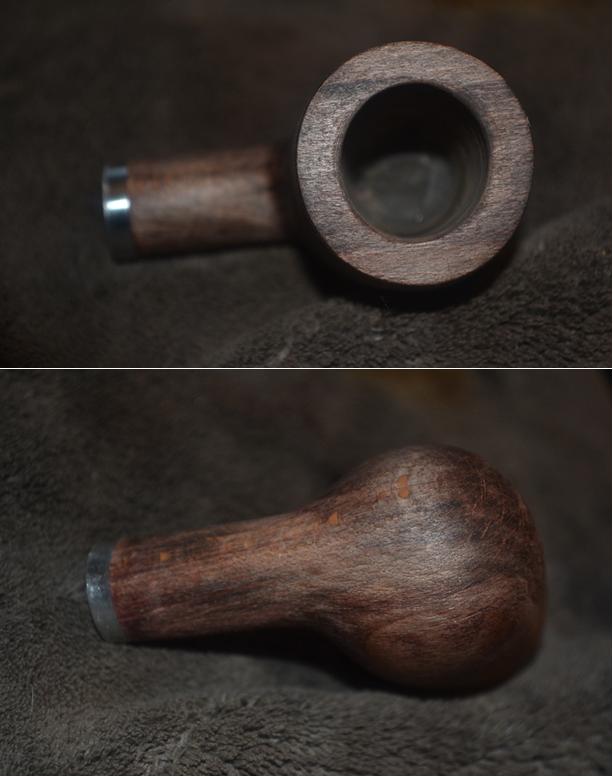
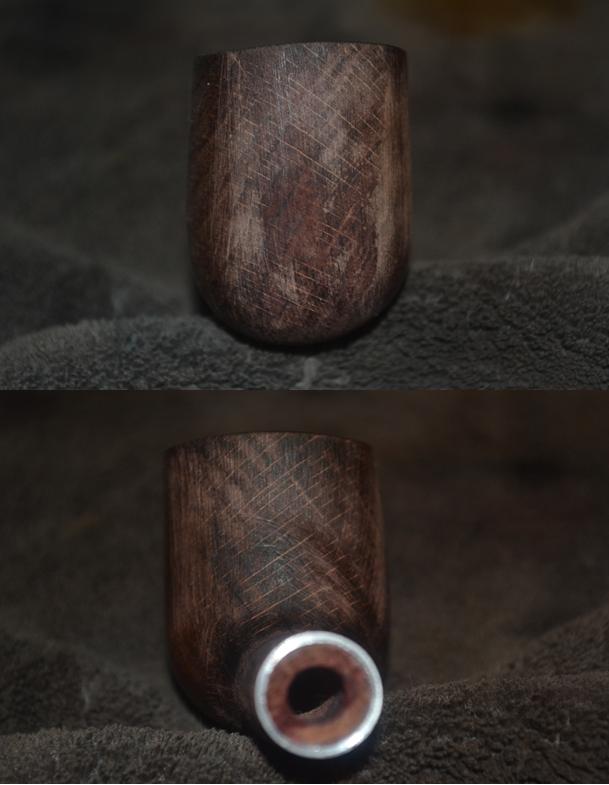
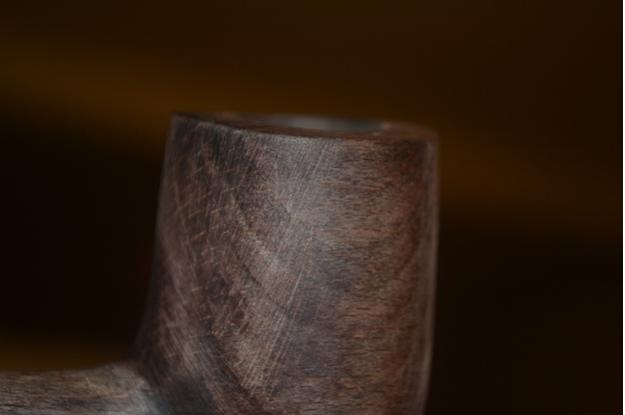
RESTORATIONrob4 I snapped this first photo to add to my private collection, as I do all of my new and unused pipes that need no restoration, before I realized the peculiar stain probably hid something, such as a fruit wood that Pipephil identified as the most common type used by Veresk, whatever the company’s name means. Here is the Golden Gate after I stripped the old stain with an Everclear soak and then used super fine steel wool to begin the process of smoothing the assaulted pear wood’s skin, so to say.rob5

rob6

rob7 I’m no expert on woods, but this does most resemble pear to me, after comparing all of the possibilities. Any knowledgeable wood-workers who might read this, please feel free to correct me

I tried a couple of fills of favorite tobacco blends before beginning the restoration, and enjoyed them, and after the Everclear soak, I was sure the pipe needed no retort. In hindsight, it occurs to me that I should have taken a close-up of the chamber before soaking the wood in alcohol and then using my reamer and sandpaper to remove the unusual coating that came in it as the billiard arrived in the mail.

Researching that general subtopic of pipe knowledge after my instincts already led me to eradicate the harsh-feeling stuff, I was horrified and reached the conclusion that the somewhat sharp and definitely alien material used to coat the chambers of both Veresk pipes I have purchased was the so-called “waterglass.” This attractive sounding term is a euphemism for sodium metasilicate (Na2O3Si), a highly toxic chemical compound that is “[i}rritating & caustic to skin, mucous membranes. If swallowed causes vomiting & diarrhea.” Then there are the serious consequences of absorbing or ingesting this diabolical method of coating the chamber of a pipe that, when lit, cannot help delivering its sickening and potentially deadly payload directly into the hapless pipe smoker’s body, causing “[u]pper airway irritation, fever/hyperthermia [and] leukocytosis.” [http://pubchem.ncbi.nlm.nih.gov/compound/Sodium_metasilicate#section=Top. Also see its use in tobacco pipes at http://pipesmagazine.com/blog/out-of-the-ashes/bowl-coatings-the-good-the-bad-and-the-ugly-part-ii/.%5D

On a brighter note, I observed an unevenness of the rim.rob8 With the gentlest wood file I have, I corrected that minor problem and re-sanded and micro-meshed again until it was smooth.

I proceeded to sand the wood with 320-grit paper and used micromesh from 1500-4000.rob9

rob10

rob11 Although I liked the grain on most of the Golden Gate and considered buffing without stain, I recognized the need for something darker to lessen the flaws on the front and back of the bowl. I chose Lincoln Brown boot stain and flamed it after I applied a couple of coats.rob12 This time I took off the char with 4000-grade micromesh and some extra pressure on the pad instead of going down to 3600 and risking removal of the new color in spots.rob13

rob14

rob15 You can see in the first photo above that the small metal band came off from the alcohol soak, and so I used a few dabs of Super Glue to reattach it. Seeing the surface of the wood could use some slight further attention to prepare it for buffing, I took a small piece of super fine steel wool and only ran it over the surface of the wood with the gentlest touch, as though wiping dust or hand smears from the wood.rob16 With the pear wood ready to buff, I did so with white Tripoli, White Diamond and carnauba. The stem I left as it was.rob17

rob18

rob19 CONCLUSION
Altogether I think I took this sad billiard and, with a little help from a friend, as the Beatles also sang, made it better. At the very least I am now willing to offer it for sale, knowing it won’t send anyone to the hospital or perhaps even kill him.

NEPAL PROJECT PIPE SALE 14 – Reworking Someone’s Repair on an Ehrlich Billiard


Blog by Steve Laug

This is the fourteenth pipe from the box of pipes that I was gifted by a good friend of mine with the instructed purpose of cleaning them up and selling them with all of the proceeds going to the aid of earthquake victims in Nepal. Once again all funds raised will all go to the SA Foundation, and organization that has worked in Nepal for over 15 years helping provide recovery, housing and job training for women who are victims of sexual exploitation and trafficking. The ongoing earthquakes (over 300) that continue to shake Nepal have left much in ruins. The SA Foundation Project there was able to find new housing for the women and help with staff as well. Every dollar raised from the sale of these pipes will go to the work in Nepal.

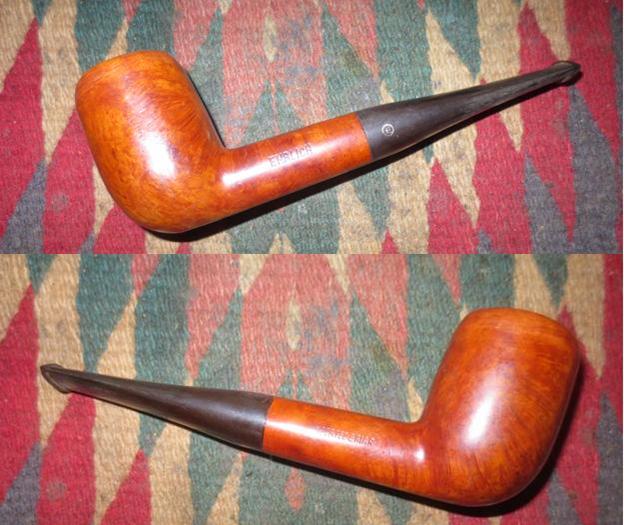
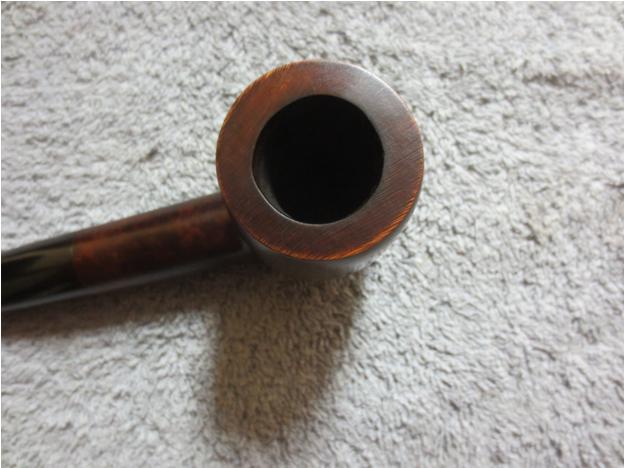
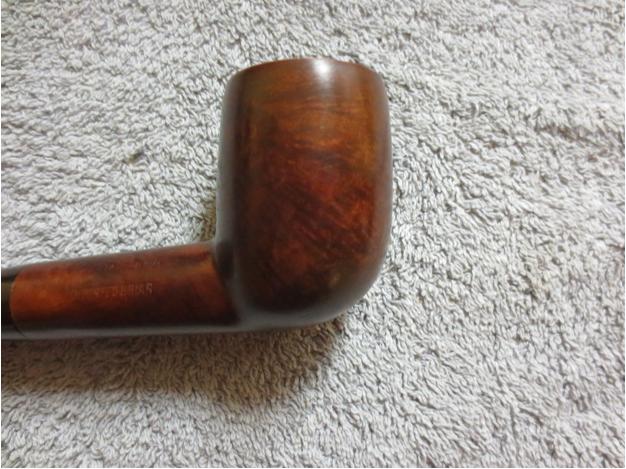
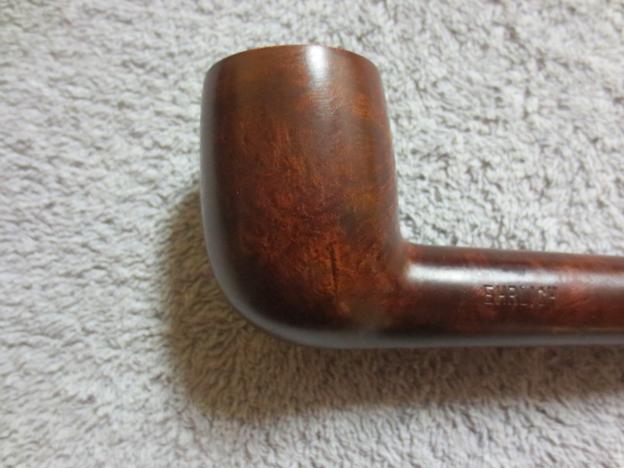
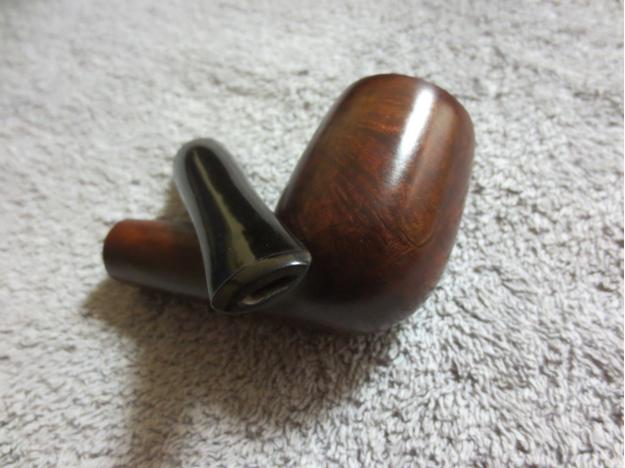
This one is an Ehrlich billiard stamped Enrlich over Imported Briar on the left side of the shank. The stem still bears the E in a circle stamping and on the underside reads ITALY. There is no shape number on the sides or underside of the shank. It may well have had one prior to the previous repair that had been done but I could see no sign of it.

Over the years I have had to rework many of the first pipes that I repaired and restored. Some of them were simple fixes that came with time and experience. Some of them were unfixable without some major reshaping. This time around the pipe that I am working on came with lots of issues that were not my own making. They were the issues that someone else made in fixing this pipe. It had a cracked shank and a restoration band. The previous repairer had glued the shank and then proceeded to sand down the shank to fit the band rather than using a band to fit the shank. The band was slightly small in diameter and did not match the shank above it. It had the characteristic “bulge over the belt” look that came to me in middle age. The sanding down of the shank also went too far in that with the band in place there was a large gap between the shank and the band all the way around the pipe. The edge against the part of the shank that remained was crooked and rough. It showed above the band when it was in place and also held the band at an angle. The band would not stay in place and was being held there by the stem.

The rim had been topped but not enough and there were still gouges on the outer edges of the bowl. The bowl was reamed but not all the way to the bottom of the bowl and the airway was very constricted where it entered the bowl. The finish was spotty at best and had a coat of varnish over the stain. There were some obvious fills in the bowl that really showed up through the spotty stain. Overall the bowl looked worn and uninviting. It certainly would not be a pipe that called to me from my rack. The stem was oxidized and dirty as well as been covered with deep scratches over the length from the band to the button. The tenon had also been taken down slightly so its fit in the shank was loose.Ehrlich1

Ehrlich2

Ehrlich3

Ehrlich4 When I removed the stem the band fell free and I was able to examine the repair to the cracked shank that had made banding necessary to the previous repairer. You can see the angles of the cut against the shank that had been done by sanding that kept the band from seating on the shank straight.Ehrlich6

Ehrlich7 I cleaned up the edge of the cut on the shank to make the band sit straight and then heated the band with a lighter to expand it to sit straight on the shank. When it was heated I pressed it against a hard surface and felt it slip into place. There was no need to glue it at this point as the gap between the shank and band was too big to connect the too.Ehrlich8

Ehrlich9

Ehrlich10 I removed the stem and filled the gap between the band and the shank with briar dust. I packed the dust in with a dental pick and then put super glue on top of the dust to form a bond and fill the gap. I used a knife to bevel the inside edge of the mortise to accommodate the fit of the stem. I sanded the inner edge and the repair to the shank. The photo below shows the fill and the repair. It still needed to be sanded but the stem fit very well.Ehrlich11 The next photo shows the topping job that had been done on the rim top. You can see the scratches and the rough spots on the outer edge of the rim.Ehrlich12 I re-topped the bowl on the topping board using 220 grit sandpaper to clean it up.Ehrlich13 The next photo shows the re-topped bowl. The edges are all clean and smooth. The spot that looks rough on the back side is a fill that was along the edge.Ehrlich14 I sanded the bottom of the shank to take out some of the bulge against the band. I started with 220 grit sandpaper and then used medium and fine grit sanding sponges to smooth out the scratches.Ehrlich15 With the cleanup on the shank and rim finished I moved on to clean up the interior. I scraped out the bowl with a sharp knife to remove the remaining cake and clean up the bottom of the bowl. I used the drill bit from the KleenReem reamer to open the airway and remove all of the tars that had clogged the airway into the bowl.Ehrlich16 I scrubbed the mortise, airway and inside of the stem with pipe cleaners, cotton swabs and alcohol until it was clean.Ehrlich17 In the photo of the stem shown below you can see the scratches that were left in the stem from the previous cleanup.Ehrlich18 I sanded the stem with 220 grit sandpaper and then medium and fine grit sanding sponges to remove the scratches and some of the surface oxidation.Ehrlich19 With the scratches minimized I put the stem in a jar of Oxyclean solution to soak. I let it soak for about an hour and a half and then rinsed it off and dried it with a cloth. I rubbed the stem down with a Mr. Clean Magic Eraser and was able to remove the majority of the oxidation.Ehrlich20 I gave the stem a light sanding with the fine grit sanding sponge and then moved on to the micromesh sanding pads. I wet sanded it with 1500-2400 grit pads and then rubbed it down with Obsidian Oil.Ehrlich21 I put the stem back in place and restained the bowl with a medium brown aniline stain. I flamed the stain and set the bowl aside to dry on the cork and candle stand and called it a night. The pipe was beginning to look better.Ehrlich22 I worked some more on polishing the stem. I dry sanded with 3200-4000 grit micromesh sanding pads and then rubbed the stem down with Obsidian Oil. I continued to dry sand with 6000-12000 grit micromesh pads and then buffed the stem with Blue Diamond on the wheel.Ehrlich23

Ehrlich24 I used Dave Gossett’s additional step in buffing the final pipe. I gave it multiple coats of carnauba wax and then a clean buff on a soft flannel wheel. I gave it a final hand buff with a microfibre cloth before I took the photos below. The pipe is finished and ready for the pipeman who will make it his/her own.Ehrlich25

Ehrlich26

Ehrlich27

Ehrlich28

Ehrlich29 This Ehrlich billiard is a medium sized pipe, basically a Group 4 in Dunhill terms. The grain is quite nice and with the stain the fills blend into the finish quite well. The stain is a medium brown that allows the grain to show through to its advantage. It should make someone a great addition. If you are interested in this pipe email me with an offer at slaug@uniserve.com and we can discuss it. The entirety of the sale price will go to the Nepal project. I will pay the postage so that does not get taken off the proceeds. If you are interested in reading about the SA Foundation you can look at their website at http://www.safoundation.com.

Thanks for looking.

Thompson Bent Meerschaum System Pipe – Peterson Shape 303


Blog by Steve Laug

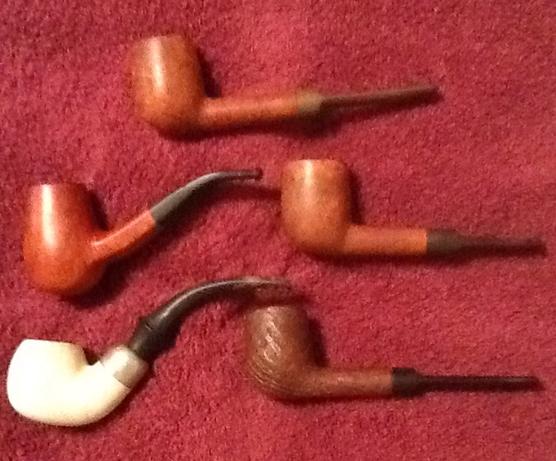
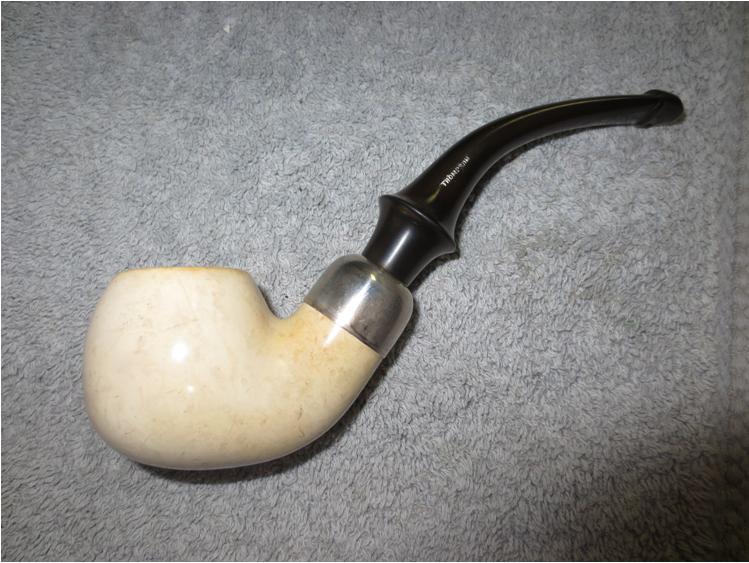
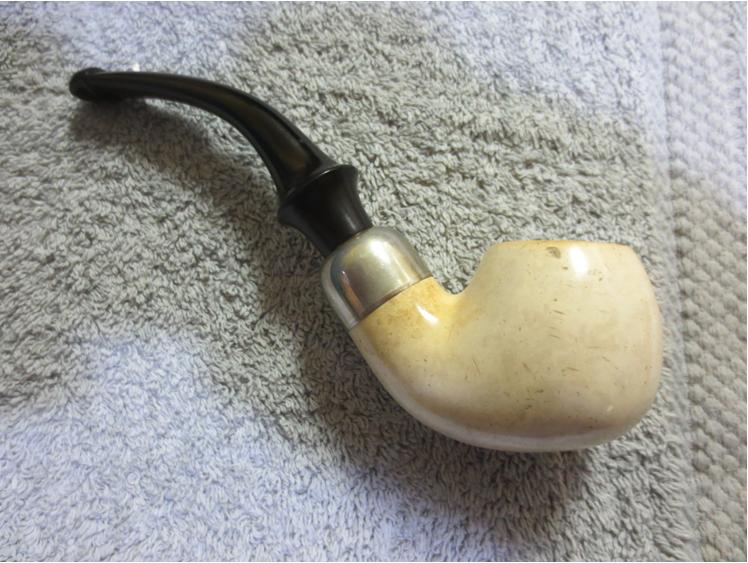
Last week I was down in the US visiting my parents and had some time to visit a few of my old haunts for estate pipes. One of the locations was a gold mine of old pipes. Below are two poor quality picture of the lot that I found there. It included two old English made pipes with saddle stems that were tired but in decent shape, an older Danish Made egg, an older Jobey English made push stem sandblast billiard and a meerschaum system pipe that looked like a Peterson 303 shape to me.Thompson a

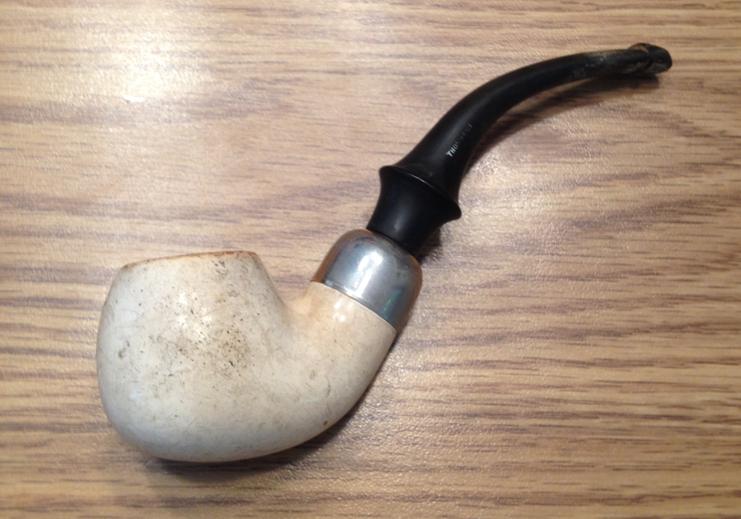
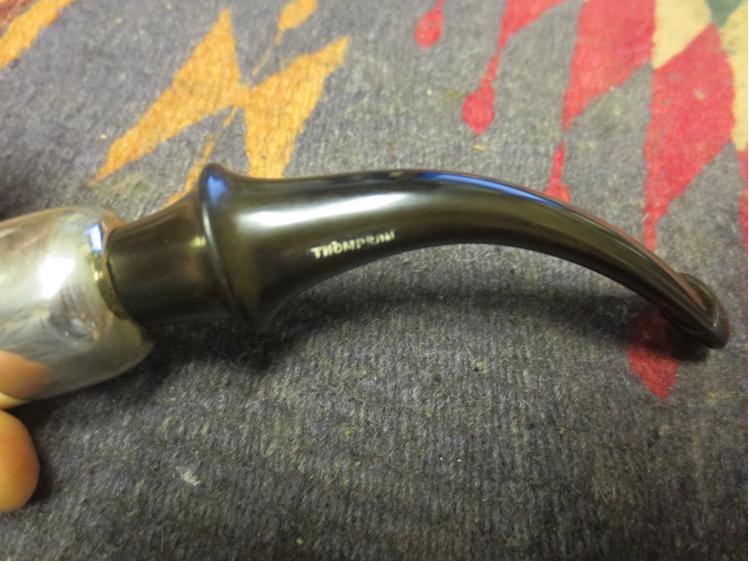
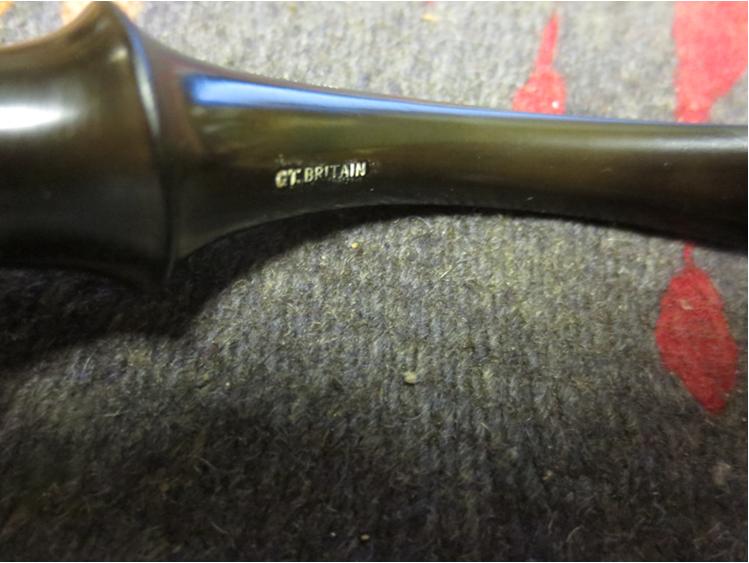
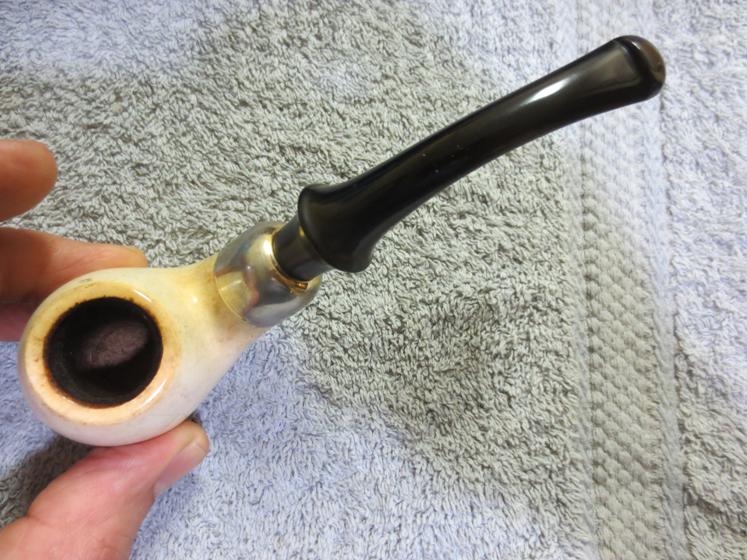
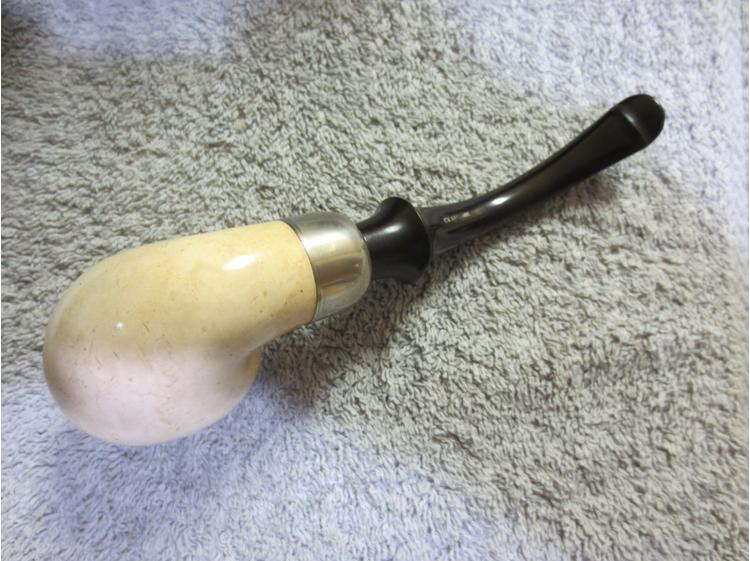
Thompson b It was scratched and dirty with oxidation and bite marks on the stem. The stem looked like a P-Lip but it is not – it has the airway in the end of the button rather on the top of it. The saddle flare is also different from a Peterson stem but the shape of the pipe certainly screams Peterson. It bears stamping on the stem that reads Thompson on the left side and Gt. Britain on the underside. The stamping is etched into the vulcanite. The nickel cap was oxidized and worn. The rim of the bowl was dirty and had tarry build up. The inside of the bowl was caked and dirty. The sump in the shank was filled with tars and oils that had crystallized and hardened. It was in need of some TLC.Thompson1

Thompson2 I reamed the bowl with a sharp knife to remove the cake back to the meerschaum. I carefully scraped it away so that I would not damage the inner edge of the rim.Thompson3

Thompson4 When I returned to my parent’s house I set up some newspapers and turned the kitchen table into a work table. I chose to work on this old warhorse first. I scrubbed the rim with a damp paper towel to remove the tars. I scrubbed it with saliva as well to break down the tars. I also scrubbed the bowl with the damp towel as well to remove the dirt and grime on the sides. The first bit of scrubbing took off the grime on the bowl sides and most of the buildup on the top of the rim. The second photo below shows the rim after the first bit of scrubbing.Thompson5

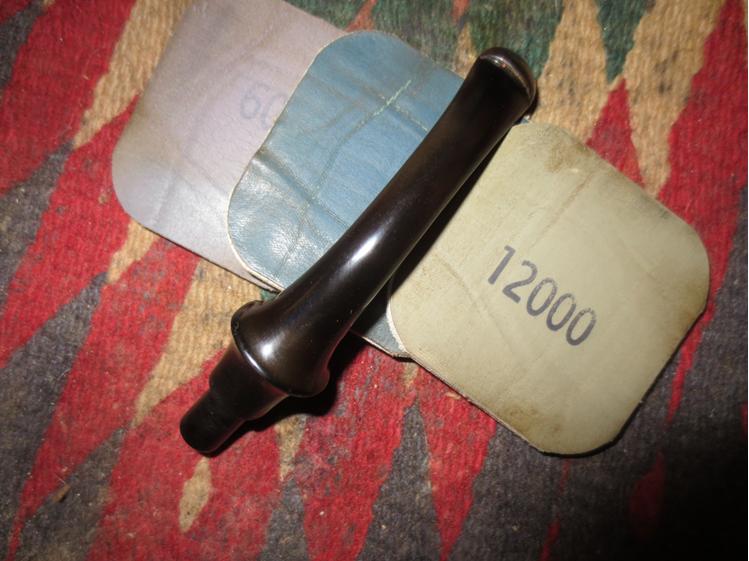
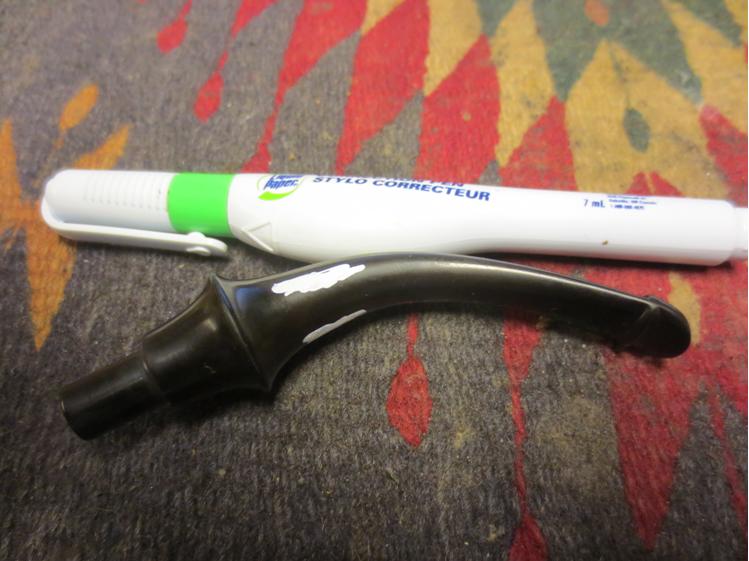
Thompson6 I sanded the bowl and rim with micromesh sanding pads. I started with 1500 grit and worked through 2400 grit sanding pads. It minimized the scratches on the sides of the bowl and also removed the rest of the tars on the rim.Thompson7 I wet sanded the stem with 1500-2400 grit micromesh and then rubbed it down with a light coat of mineral oil (thanks Troy) and sanded it with 3200-4000 grit pads. I carefully sanded around the etched/stamped letters on the stem side and bottom. I was able to remove the oxidation and calcification that was built up around the button.Thompson8 I scrubbed out the tenon end of the stem and the shank/mortise of the meerschaum bowl with alcohol and cotton swabs. I scrubbed out the bowl with cotton swabs and alcohol to remove the dust from the reaming. I then followed that by scrubbing the shank and bowl with pipe cleaners and alcohol.Thompson9 I set aside the pipe until I returned to Vancouver and then buffed the stem and bowl with White Diamond to polish both the stem and the bowl. I then sanded them both with 6000-12000 grit micromesh pads and then buffed both with Blue Diamond on the buffing wheel. I gave the bowl a coat of carnauba wax to polish it.Thompson10 I used a liquid paper pen to fill in the stamping on the stem and let it dry.Thompson11 I scraped off the excess dried liquid with my fingernail and then buffed the stem with Blue Diamond to finish cleaning up the area around the stamping. The next two photos show the stamping on the stem.Thompson12

Thompson13 Once I had finished I buffed the bowl and stem with carnauba wax and buffed it finally with a clean flannel buff to raise the shine. The finished pipe is shown in the next series of photos. It turned out to be a beautiful pipe. I would love to figure out who made the pipe and wonder if there is not a Peterson connection based on the drilling and the shape. Does anyone have any information on the brand? Thanks for looking.Thompson14

Thompson15

Thompson16

Thompson17

Thompson18

Thompson19

Thompson20

Midterm Exam #4: Re-Refurbishing an Unknown Bulldog


Blog by Anthony Cook

It’s time for the fourth and final midterm exam! This one is an “unknown” bent bulldog that I picked up from eBay. I snagged it because I liked the shape and it was cheap. What I didn’t know at the time, but became immediately apparent when the pipe arrived, was that the end of the shank had been shattered into at least three pieces and glued back together. There was no stamping on the pipe, but I don’t think that was always the case. It was likely sacrificed during the shank repair. The repair is fairly obvious in my photos below, but I assure you that it was not nearly so in the seller’s. The right combination of lighting and angles can cover up a multitude of sins, folks. Caveat emptor.

The exposed cracks weren’t the worst part of the story though. The repair did as much damage to the pipe as the crack did. An alarming amount of material had been taken off while sanding out the excess glue. It’s difficult to see in the photos, because from any one angle everything looked correct. However, if you held the pipe in hand and rolled it around you would notice that no two faces on the shank were equal. The shank was no longer a diamond shape; it was a trapezium. The repairman hadn’t paid much attention to keeping the surfaces level either. So, there was a subtle undulation to the line of the shank as it went from thick to thin and back again several times along its length. There was also very little effort made to blend the repaired area into the rest of the pipe, and several shallow “steps” were visible where the two surfaces met. There was at least an attempt to match up the stem to the shank, but that only gave the stem the same odd angles and even they didn’t quite match up to the ones on the shank. All in all, it was a bit of a travesty. Here are a few photos taken just after it arrived.Anthony1

Anthony2

Anthony3 That was all far more than my tender, noobie hands could handle at the time. So, I cleaned the internals of the pipe and put it away for later, but not before adding a bit of bend to the stem that it seemed to have lost over time.
I’ve finished up work on all the rest of the pipes in that first batch. So, this week it was time to put a collar on that dog and turn in my final midterm.

I started (or restarted I should say) by dropping the stummel into an alcohol bath for a couple of hours to soften any coating that might be on the pipe. I had quite a surprise when I removed it later on. It looked fine when it was fresh from the bath, but a hazy, white glaze began to form on the surface as it dried. I hadn’t seen anything like this before and I’ll admit to a brief moment of panic. I assumed that this was probably the result of some type of coating reacting to the alcohol. So, I wiped the stummel down with acetone taking extra care around the shank repair, since acetone will break down superglue. That did the trick and the stummel cleaned up nicely.Anthony4 I set up the retort to see if I could remove any more tar buildup from the pipe. I flushed the shank about 10 times with boiling alcohol before allowing the pipe to cool. I noticed that the vial appeared to be losing a lot of liquid during the retort. The cotton wasn’t discolored. So, it wasn’t gassing out through the bowl. It really had me scratching my head until I saw a spot of moisture on the shank when I was removing the retort. For some reason, it wasn’t sealing well at the mortise and I’d need to look into that before I went much further.Anthony5 I gave the pipe a post-retort scrub of the stem and shank, and then inspected the crack repair for gaps. The surface of the glue joints looked airtight, but I noticed that the glue hadn’t penetrated very deep. The joints left shallow fissures inside the mortise and along the shank face. I used a small pushpin to place a little super-thin CA glue directly into the fissures, and then used a toothpick to apply a thin layer of the CA around the end of the mortise to create a seal inside as well as out.

When the glue was dry, I sanded out the interior patches with sanding needles and a piece of 400-grit sandpaper wrapped around a small dowel. I refaced the shank on my topping surface in a manner similar to how I would top a bowl (pressing lightly into the paper and using a circular motion). The following pictures show the patches when fresh and after they had been sanded out. You can also get some idea of the irregularities in the shank by comparing the differences in the face angles and wall thickness around the mortise.Anthony6 After that, I reattached the stem and ran a retort through it again to test for leaks. The outside of the stem and shank stayed dry as a bone through the whole process. So, I began addressing the pipe’s cosmetic issues.

I lightly topped the bowl and chamfered the inner rim to remove the scratches and dings. Then, I steamed a few dents out of the finish by pressing a screwdriver that had been heated over a tea candle into a wet cloth placed over the dents. Finally, I used CA glue and briar dust to patch a few, small gouges and missing fills and sanded them out with 220-grit and 320-grit sandpaper.Anthony7 While I worked on the stummel, the stem had been soaking in an Oxyclean bath. I removed it and scrubbed it down with a Magic Eraser to remove any oxidation. I used black CA glue to fill the tooth dents on the top and bottom of the stem. Once that had dried I sanded it down with 220-grit paper.Anthony8 The stem button needed to be rebuilt since it was worn and dented. I wrapped several layers of clear tape around the stem just below the button to create a form to make a crisp edge and also inserted a Vaseline smeared wedge of cardboard into the slot to seal it. Then, I applied thick, black CA glue in several layers to the end of the stem to begin building the new button. It wasn’t a pretty thing to look at when I removed the tape, but the edge was sharp and there was enough material to work with. I trimmed away the glue artifacts created by the tape molding with an X-Acto blade and rough-shaped the new button with 220-grit paper.Anthony9 Once the button started taking shape, it was time to do something about the other end of the stem and also the deformity of the shank. This was the part of the exam that I had not been looking forward to. Up to this point, everything had been the equivalent to multiple-choice or fill-in-the-blank questions. There were a couple of challenges, but nothing too rough. The next part was more like the essay section.

After a lot of thought, I finally decided that there just wasn’t enough material left around the stem to square everything back up. So, I thought I’d try some trickery of my own. If I couldn’t make everything right, maybe I could use a little more finesse and subtlety than the original repairman did to make it at least look “righter”. If ya can’t beat ‘em, join ‘em.

I used 220-grit sandpaper to start carefully nudging the edges of the shank and stem saddle this way and that to give them an appearance of alignment. All the while I paid special attention to keep the faces as level and even as I could. There was very little technical skill involved. I was basically just freehanding. Once I had corrected the lines as much as I could, I began blending the reworked areas into the rest of the pipe with 320-grit. The photo below shows the progress somewhere early in the reshaping phase. Honestly, I was at this for a while and kind of lost myself in the middle of it. So, I didn’t get many photos.Anthony10 When I was as satisfied as I was likely to be with the shape of the shank and saddle, I went back to work on the rest of the stem to finish it up. I continued shaping the button with 320-grit and 400-grit paper. Then, I smoothed the entire surface by lightly sanding with 600-grit and 1200-grit paper. Finally, I polished the stem with micro-mesh pads 1500-12000.Anthony11 The stem work was wrapped up. So, it was time to do the same for the stummel. The off-kilter shape of the shank made it difficult to find a band that would fit well. It took three attempts before I found one that would work. I used a method for shaping a round band for the diamond shank similar to what Steve has previously written about here, but it took quite a bit of reworking to get it to conform to the now strange dimensions of the shank. I’m still not quite happy with how it fits, but I’m not sure what I could have done differently.Anthony12 There was nothing left to do at that point but to address the finish of the stummel. I wanted the final color to be close to the original but a little darker to help hide the bit of crack repair that was still visible. I heated the stummel over the heat gun to open the grain and then applied Fiebing’s black dye to the stummel. I then sanded down the surface with 400-grit paper to remove the remaining scratches and most of the black stain, except for what had set in the grain and recesses of the rings. Next, I applied a mahogany stain before sanding with 600-grit and 1200-grit paper. I took the stummel to the buffer and gave it a quick Tripoli buff, and then applied a final stain of British Tan.

The stummel was polished with micro-mesh pads starting with 3600-grit and working through to 12000-grit. I then buffed the entire pipe with white diamond compound and gave it several coats of carnauba wax to finish it up.

I leaned back in my chair and checked the clock on the wall. There were only minutes to go and most of the other seats were already empty. I had to admit that this was really as good as it was going to get. So, with a sigh, I stood up from my chair, gathered my exam materials, and delivered them to the desk at the front of the room…Anthony13

Anthony14

Anthony15

Anthony16

Kaywoodie Fine Line


Blog by Aaron Henson

I was in the neighborhood of our second-hand stores a couple of months back so I thought I would stop into one that typically has estate pipes. While browsing the shelves I found three Kaywoodie pipes together in an old coffee cup. None of them were particularly eye-catching: a straight bulldog, a medium pot and this large apple – Fine Line carved. I didn’t have any Kaywoodie pipes in my collection and priced as they were ($11 for the three), I could not pass them up. Besides, I needed some more restoration practice.

The first of the three that I took on was the Fine Line. It reminded me of the Dr. Grabow Wire Carved pipes I had seen, just not as rustic – if you like that sort of thing.Aaron1 The flat bottom of the shank was stamped with: “Kaywoodie” over “Fine Line ®” and the left hand side of the stem had the black clover in a white dot.Aaron2 The stem was in great shape. There was some mild oxidation, a little build up of crud and just a minor amount of chatter around the button. The stinger was also in good shape with the expected build up of tars. The stem was over clocked by about 10 degrees and after a little research I came to understand that this is a common problem with Kaywoodie pipes. Fortunately, it is an easy problem to correct.Aaron3 It looked like someone had been rolling out paint on a wall or ceiling near the pipe because there were small droplets of white paint all over the stem and stummel (perhaps they were smoking while painting?). The stummel was dirty but there was no damage that I could see. A thick cake lined the bowl and the lines in the rim where full of char and other gunk, but otherwise it too was in good condition.Aaron4 I began by soaking the stem in an alcohol bath to loosen the tars inside and to help lift the crud and paint from the surface. While the stem soaked, I went to work on the stummel with Murphy’s Wood Soap and a soft bristled tooth brush. The dirt and grime came off easily as did most of the paint droplets. I had to employ a soft wood tooth pick to remove more stubborn droplets that were caught in the grooves of the carving.

After rinsing the stummel with fresh water – being careful to keep the water out of the bowl and shank – I started reaming out the bowl. Not having a reamer, I use a ½” dowel with a rounded tip wrapped in 40 grit sand paper. This method has worked reasonable well for me on several pipes, even with thick caking.Aaron5

Aaron6 Next, I cleaned the inside of the shank with cotton swaps and isopropyl alcohol. This was a laborious process. The metal sleeve that receives the stinger prevents good access to the inside of the shank. I wanted to preserve as much of the original stain as I could so I choose not to soak the whole stummel in an alcohol bath. So, in an effort to loosen the tar build up, I dripped alcohol into the shank between bouts of swabbing. Eventually the swabs started coming out clean.

The char around the rim of the bowl was not cleaning up well. I had hoped that I could keep the carved lines on the rim but I made the decision to top the bowl and finish the pipe with a smooth clean rim. I freshened up the stain with a coat of light brown Feibing’s leather stain and flamed the stain to set the color.

Returning to the stem, I found that the alcohol bath succeed in loosening the tars inside and few passes with pipe cleaners got it clean. I was able to pass a cleaner from the hole in the stinger and out through the button without and troubles. I lightly hit the outside of the stem with 220 grit sand paper to remove the remaining foreign material and then cleaned the stinger with 0000 steel wool. I addressed the minor tooth marks by lightly flaming them with a lighter to raise the vulcanite then finished them off with the 220 grit paper.

Everything was going quite smoothly up to this point. Little did I know that I was about to get a refresher course in chemistry. Wanting to clean up the oxidation I dropped the stem into a bath of 50/50 bleach and water. Fortunately, I had cause to check on the stem in about 30 minutes and I realized my error. Chlorine (Cl) and aluminum (Al) react to form aluminum chloride (AlCl3). I found a large growth of aluminum chloride crystals on the stinger.

I wish I had had the forethought to document the mistake with a picture or two. But in truth, I was so caught up in cleaning the bleach off the stem and removing the crystals that photos were very far from my mind. All in all there was no real harm done. The aluminum chloride cleaned up easily but left the stinger rough to the touch and it needed to be polished again. Heating up the stinger with a butane lighter melted any of the aluminum chloride that built up inside and it drained out of the stinger holes.

While I had the butane lighter out heating up the stinger, I thought I would take care of the over clocked stem. I wrapped the stem with some cloth tape and made a couple of reference marks to indicate which direction and how much to twist the stinger. I waited until the heat loosened the glue between the stinger and stem and then twisted the stinger with a pair of soft jawed pliers to align it with the stummel.Aaron7 Before I finished the stem and polished everything I thought I would run the pipe through the alcohol retort. I was not confident that I had thoroughly cleaned the inside of the shank and after the aluminum chloride incident, I thought that some hot alcohol vapor though the stinger would hurt. I use 95% isopropyl alcohol for my initial cleaning and soaking but I prefer using Everclear for final rinsing and retort. In my limited experience it seems that the Everclear leaves fewer ghosts in the finished pipe.

The remainder of the restoration was uneventful. I followed the typically stem polishing practices, wet sanding the stem with 400-4000 grit paper, stopping every few sets of paper to lightly coated the stem with mineral oil. I dry polished with 6000 and 12000 grit paper then took the pipe to the buffing wheel, applying red diamond compound, working the buffer with the carved lines of the pipe. I finished with 3 coats of carnauba wax buffing between each coat. I had to take a tooth pick to some of the wax that built up in the lines but the final product was a vast improvement from where I had started.Aaron8

Aaron9

Aaron10

Aaron11

Bringing a Dunhill Bruyere Bent Rhodesian 08 Back From the Brink


Blog by Steve Laug

This Dunhill Bruyere was part of the gift lot for sale for Nepal. It was in very rough shape and one that would never be fit enough to grace a collection. The Dunhill stamping is only visible under bright light with a lens. The stamping on the left side of the shank is Dunhill over Bruyere. On the right side it is stamped with 4 in a circle and an A. The rest of the stamping is very faint and reads Made in London England (At least that is what it looks like). The shape number 08 is gone except for the 0. The finish was gone. The double ring around the bowl was virtually ruined and the bowl itself was in very rough shape. The rim was beat up and out of round. There were burn marks on the rim, the left side and bottom of the bowl and on the left side of the shank. To me it looks like the pipe was laid in an ashtray and the cigarette burned the bowl. It was in very rough shape. The stem was badly oxidized and upon examination there was a small split in the button on the underside and the stem was thin and the edges of the button were rounded down.Dunhill1

Dunhill2

Dunhill3

Dunhill4 I took some close up photos of the bowl to give a better picture of what I had to work with on this one. You can see from the photos the issues that I pointed out above. The ring was badly damaged and rough. The bowl was out of round and the rim was damaged. The finish was spotty and grimy.Dunhill5

Dunhill6

Dunhill7

Dunhill8

Dunhill9 I have one newer Bruyere in my rack so I kind of knew the colour this pipe should have been and it was not even close any more. I did a bit of searching on the web to see if I could find a finish chart and also one that would confirm the shape number that I was “speculating” on. I have included the next two charts for the information that I gleaned from them. The Bruyere was more dark/reddish coloured than this one was and the faint number was indeed 08 which was called a Bent Rhodesian.dunhill_pipe_finishes

dunhill_shape_size_chart The next two photos show the stem in some closeup photos. I wanted to show the oxidation and the split in the button on the bottom side of the stem. The fit in the shank was also worn. The tenon was sloppy fitting and could be wobbled side to side and up and down.Dunhill10

Dunhill11 I put off working on this one for a long time, choosing rather to work on pipes that I had some sense of what the finished product would look like. I had no idea if I could restore this one to any semblance of its original state let alone bringing back to “BEST QUALITY” which the Dunhill catalogue above said that Bruyere pipes stamped with the large “A” were supposed to be. This one was a challenge and I really drug my feet and postponed the test as long as possible. After looking at the photos above I hope that I have communicated the state of the pipe I was going to deal with. I have made no mention at all of the state of the inside of the shank and the stem. It was a mess as well – a thick black crud covered the inside of the airway in the stem and the shank and the mortise was almost clogged with the almost petrified tars of years of neglect.

So, yesterday I decided was the day to tackle this pipe. I had mowed the yard and done my weekend chores and needed some down time to relax. I suppose many of you would not call this relaxing but I still am under the illusion that it is restful…. Shhh don’t change my illusion please. I began with cleaning out the rings around the bowl. They were rough but they were also clogged with all kinds of debris. I used a sharp, thin blade pen knife that I have and use for this kind of thing. It works wonders and within a short time I had cleaned out the grime and the original red stain was showing in the bottom of the grooves.Dunhill12

Dunhill13 I scrubbed the bowl with cotton pads and acetone to remove the grime and the damaged finish. I also wanted to see the extent of the burn marks on the bowl, rim and shank. I wanted to see if they went deeper than the surface. Knowing that would help me decided what to do to address them.Dunhill14

Dunhill15

Dunhill16 With the grime cleaned off the rim I could see what I had to work with. The bowl was in rough shape. It was out of round but the inner edges did not have any char or burn. The rim had lots of dents and dings from someone using it as a hammer.Dunhill17 I decided to top the bowl to flatten out the rim and clean up as much of the damage as possible. I would then have to work on sanding the inner edge of the rim to smooth it out. I used the topping board with 220 grit sandpaper.Dunhill18
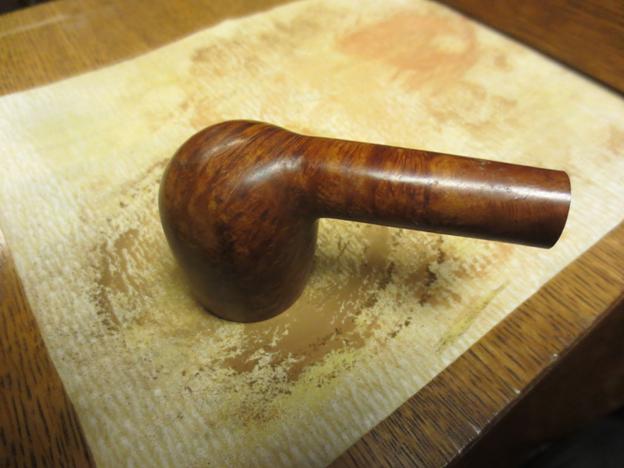
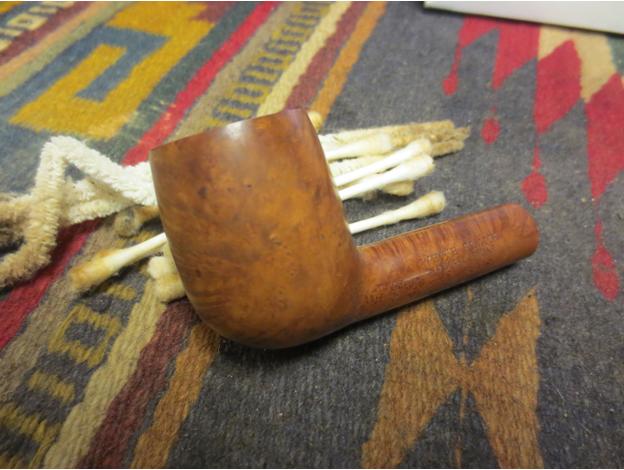
Dunhill19 With the rim flattened out once more and the outer edge more evenly set on the bowl top it was time to address the inner edge of the rim. I used a folded piece of 220 grit sandpaper to clean up the edge. I was able to greatly improve the “roundness” of the inner edge. While it was not perfect it was far better than when I started.Dunhill20 I cleaned out the shank and the airways with alcohol, cotton swabs and pipe cleaners. I scrubbed and scoured and scraped the airways clean of the “fossilized” tars until the pipe cleaners and cotton swabs came back white. Since I was probably going to smoke this one myself I decided to not use the retort at this point. If it smoked rough I could always set up the retort and let it do its magic.Dunhill21 I sanded the stem with 220 grit sandpaper, repaired the small split in the button on the bottom side and then sanded the stem with a medium and a fine grit sanding sponge. I rubbed it down with some Obsidian Oil and put the pipe back together. I took a few photos of the cleaned up look. If you are getting the idea that I was postponing working on the double ring and the heavy damage there you are correct in your assumption. I was not sure I would be able to work any redemption on that area of the bowl. Time would tell.Dunhill22
Dunhill23

Dunhill24

Dunhill25 I could not postpone dealing with the ring damage any longer if I was going to finish the pipe. I had read with interest Mark Domingues write up on restoring the rings on the Peterson 80 that he posted here recently. I spent time looking at how he rebuilt the centre briar ring between the two lines. I was ready to start. I cut a piece of note card the width of the back of the bowl and decided to address that damage first. I pressed briar dust into the damaged area of the ring and tamped it in with dental pick. When it was full I put some drops of clear super glue onto the briar dust. I did the same all around the bowl until I had a real mess on my hands. I was careful not to put the glue or dust on the places where the rings were in good shape. I would use these as guides to recut the lines later.Dunhill26

Dunhill27

Dunhill28 I used a flat, thin blade knife edge needle file to recut the grooves in the bowl. It took a lot of work to slowly and carefully recut them but it worked as the photos below show.Dunhill29

Dunhill30

Dunhill31

Dunhill32 After the initial cutting of the grooves with the needle file I continued to use it to smooth out the grooves and the edges on the top and bottom. They took a lot of work to smooth things out. I also folded 220 grit sandpaper and ran it through the grooves on the bowl. Once they were smooth and cleaner looking than before it was time to clean off the bowl and then restain it with the first coat of stain. I wiped the bowl down with alcohol on cotton pads to remove the excess briar dust and any remaining glue. I sanded the burn marks on the bowl and rim with a medium and a fine grit sanding sponge to minimize them. I sanded them again with 1500-2400 grit micromesh pads to smooth out the scratches. I then gave it a coat of oxblood aniline stain, flamed it and set it aside to dry.Dunhill33

Dunhill34 The burn marks still showed with this first coat of stain and it was a little too red to my liking. I buffed it with White Diamond and then brought it back to the table to do some more work. I took some photos of the pipe after the buffing. I find that a couple pics help me focus on what needs some more work. In this case I could see that a little dark brown stain would work to tone down the red and also blend the dark spots in a bit more.Dunhill35

Dunhill36

Dunhill37

Dunhill38 I used a dark brown stain pen to give it a top coat of stain. In the photos it looks streaky but I don’t worry too much about that as a buff once it is dry will take care of that.Dunhill39 I buffed the bowl with White Diamond and a light touch. It is looking better. The rings on the left side are better but are still a little rough. The rest of the way around the bowl they are looking really good. The dark brown stain did a better job of blending in the dark spots and toning down the red. I liked the colour and it seemed to match the chart photos of the Bruyere that I had found.Dunhill40

Dunhill41

Dunhill42

Dunhill43

Dunhill44 At this point it was time for a break. I put the stem on the bowl and loaded a bowl of Boswell’s North Woods and went to church with my daughters. I smoked a bowl as I walked with them and loaded another bowl on the way home. I sat on the porch and fired up a third bowl filled with Malthouse Reserve 12. This pipe really sang with English tobaccos. Even if it was still a bit ugly it smoked well!

When I finally went back to the shop I worked on polishing the stem. I put the plastic spacer/washer between the shank and the stem and worked on it with micromesh sanding pads. I wet sanded with 1500-2400 grit pads and then rubbed the stem down with Obsidian Oil. I dry sanded with 3200-4000 grit pads and rubbed it down again with the oil. I dry sanded with 6000-12,000 grit pads and then gave it a final coat of Obsidian Oil. I set it aside to dry.Dunhill45

Dunhill46

Dunhill47 The stem was looking really good. There was a rich glow to the vulcanite. These older Dunhill pipe stems really shine like glass when they are polished. I set the stem aside and did a bit more work on the bowl. I used a very small oval needle file to work on the rings on the left side and front of the bowl. I wanted to clean up the edges and sharpen the overall look of the rings.Dunhill48

Dunhill49 I followed the oval file with a flat rectangular blade needle file and cleaned up the edges of the rings some more. When I had finished with the flat file the rings looked far better than they were when I started.Dunhill50

Dunhill51 I gave the bowl another coat of stain with the dark brown stain pen and then buffed the bowl and stem with Blue Diamond Plastic polish. I gave them both multiple coats of carnauba wax. Then I buffed the pipe with a clean flannel buff and polished it. The finished pipe is shown below. I think this one will stay with me as the nomenclature is almost illegible and the dark marks all over the bowl still show. The pipe smokes well so it will be a work horse pipe for me. It was well worth the time to clean up and I learned much in the process of reworking the rings.Dunhill52

Dunhill53

Dunhill54

Dunhill55 Thanks for looking.

Midterm Exam #3: Restemming a Thermofilter Billiard


Blog by Anthony Cook

I’m turning in my third midterm exam today. This one is based on an old Thermofilter pipe. I’ve made plenty of mistakes while fumbling my way through the learning process of pipe restoration, but one of my biggest and earliest blunders was inflicted on this poor pipe.

Thermofilter seems to be one of those nearly forgotten brands that nevertheless still pops up on eBay on a fairly frequent basis. The best information that I can dig up on it comes from a comment that “emo” posted on the Dr. Grabow Collector’s Forum:

Thermofilter was made in Italy by Fratelli Rossi in Varese. Started about 1964 and continued till about 73/74. It was imported and sold by Mastercraft…. to, best I recall, Whitehall Products Co. in Wheeling WV… Division of CULBRO.

We had several “left over” and closed them out for $3.98 over a year or two… not as Thermofilter, but simply as a filter pipe, even though they were stamped Thermofilter. Pretty cheap stuff…

The pipe in my possession is a small billiard with carved rustication. The center letters of the stamping are very worn and faint, but there’s enough there to make out “THERMOFILTER” over “IMPORTED BRIAR” on the left side of the shank. The stem did not have any markings and the bit end had been hacked off. Below are some photos of the pipe that I took shortly after its arrival.Anthony1

Anthony2 You may have noticed that I used past tense when mentioning the stem above. That’s because I dissolved the original, plastic stem from the inside out. Yes, you read that right. When I was running alcohol dampened pipe cleaners through the stem to clean it out, the first couple came out covered with the thickest, blackest, and stickiest goo that I had ever encountered and I surmised that I was working on some serious tar build-up. I was surprised to find that the amount goo wasn’t diminishing as I worked, but actually appeared to be increasing. Eventually, I noticed that the bore of the airway seemed larger than I had originally thought it was. That’s when I realized the horrible truth. The alcohol on the cleaners was causing the cheap, plastic material of the stem to break down and it was disintegrating from the inside out. You can see for yourself in the comparison photos below.Anthony3 You’d think that I would have noticed it earlier, but I honestly wasn’t paying attention to the diameter of the airway. I mean, who thinks that their stem is just going to dissolve, right?

In any case, I didn’t have any extra stems to replace the original with. So, I tossed the poor, mutilated stem into the trash and dropped the stummel back into the box. It’s been wasting away in there for the past several months. For my third midterm exam, I decided to pull it out to see if I could do right by this old pipe, try some new things, and correct my past mistakes.

I started by giving the stummel an alcohol bath and wiping it down with acetone. This removed the lacquer coat and much of the old stain. It also revealed some really nice grain between the areas of carved rustication. Then, I topped the bowl with 220-grit and 320-grit papers. I used the same grits to rough out a chamfer around the rim to remove the gouges along the edge.Anthony4 Even though the pipe had been hand cleaned before being boxed up, I wanted to do a retort since I didn’t have one at the time. So, I placed the original, aluminum tenon into the mortise and attached the retort tube directly to that. I flushed the boiling alcohol through the shank 8-10 times before setting the pipe aside to cool, and then I dumped the amber-colored alcohol and repeated the process. After the second flush, the alcohol remained nearly clear and I was satisfied that the retort had done all that it could do. I gave the shank a final scrub using a few pipe cleaners, cotton swabs, and a shank brush and considered the pipe to be clean as it was going to get.Anthony5 The stummel had a few fills that needed to be dealt with. It also had a small, surface crack at the end of the shank that did not penetrate into the mortise. I had wondered about using black CA glue for fills for a while. When I saw Al’s work on the Chelsea pipe I knew that I had to give it a try. After picking the fill material out, I applied a bit of glue into the pits and crack with a round toothpick, and then packed in a little pre-stained briar dust that I had left over the Rogers pipe that I posted earlier. I repeated this until I had a good patch built up above the surface. When the glue was dry, I sanded it down with 220 and 320-grit paper. I also used a round, tapered needle file and 240/320-grit sanding needles to smooth and shape a patch inside the carved rustication.Anthony6 Once the fills and crack were repaired, it was time to do something about the stem. I had picked up a grab-bag batch of pre-made stems a short while earlier. I sifted through them until I found a decent match. I decided to trim the tenon rather refitting the old, aluminum one. So, I cut off the stepped end of the tenon with a Dremel, and then trimmed the tenon with the tenon turning tool chucked into the drill press. The tool was new to me and the first image in the picture below shows the result of my first cut. My speed was off and I didn’t take it up far enough to face it properly. No worries though, because it was still too large and the subsequent trims went much better.Anthony7 After each turn of the tenon, I tested the fit by inserting it partially into the shank. When I thought I was getting very close, I attempted to insert the stem a bit farther and heard a sharp “snap”. It was the unmistakable sound of the shank cracking. It seems that the surface crack that I had thought was insignificant had suddenly become significant.

To repair the crack, I smeared petroleum jelly over the tenon and inserted it into the mortise to spread the crack open. Then, I applied CA glue (clear, not black this time) into the crack and removed the stem to allow the crack to close. I squeezed the shank tightly together with my fingers for a couple of minutes until the glue had set.Anthony8 I wasn’t going to do anything more with the stem until I added some support to the shank. I considered trimming down the original, aluminum tenon to use an internal splint, but decided against it. Since the new crack had run longer than the length of the tenon. So, I decided to band the shank.
I had some trouble finding a band that would fit properly. A 13mm would slide most of the way up the shank easily, but a 12.5mm band wouldn’t even start over the end. So, using the 13mm as a guide, I marked off an area that was the width of the band and sanded it down until the 12.5mm band would just barely slide onto the shank. Then I held the band attached to the stummel over a heat gun to expand it. In less than a minute it had expanded enough that I could push the band the remaining distance up the shank by pressing the end into a soft cloth on a hard surface.Anthony9 With the band in place, I could continue working on the tenon. I continued to slightly reduce the diameter of the tenon with 220-grit, 320-grit, and 400-grit paper until the stem was held tightly in place but easily removed.

The stem was already a pretty close match to the width of the stummel but it needed some refinement and the artifacts from the mold needed to be removed. I kept the stem attached to the stummel and wrapped a strip of painters tape around the band to keep from dragging fine metal shavings into the vulcanite (which dulls it). Then, I began shaping the stem and removing the extra material with sandpaper and sanding sticks. I began roughing it with 220-grit and 320-grit (results in first picture below) and refined it with 400-grit and 600-grit (results in second picture below).Anthony10 I used a set of needle files and sanding needles to open the slot and funnel it. This was my first time trying my hand at this and I’m going to need some more practice because the results were rough. I also funneled the tenon to remove the whistle when the stem was drawn on. Finally, I lightly sanded the entire stem with 1200-grit paper before polishing with micro-mesh pads 1500-12000. The final stem, along with a whole lot of lint, can be seen in the bottom image below.Anthony11 Between the large areas of carved rustication (blech!) on the stummel there was some really nice grain. I can appreciate straight grain for its rarity, but I love a good bird’s eye. When it’s stained well, it has a depth that’s almost like looking at an x-ray of the briar. So, I wanted to do everything that I could to accent that grain and take your eyes away from the ugly, carved, tobacco leaf swirls.

Three main stains were used to achieve the final look of the pipe; black to accent the grain, mahogany to give the overall tone, and ox blood at the end to add a bit of vibrancy. The first two colors were mixed at a 3:1 ratio of isopropyl alcohol to stain. The final color was mixed as a thin wash that I just eyeballed. The stummel was sanded between each staining; starting with 400-grit after black, 600-grit after mahogany, and 1200-grit after the ox blood wash, and then a micro-mesh polish 1500-12000. I also did a lot of grain massaging between each stain using a variety of tools including liner brushes and markers and inks and dyes of a few different colors. You can see how the staining progressed from start to finish in the pictures below.Anthony12 When the staining was complete, I reattached the stem and buffed the entire pipe with White Diamond, gave it several layers of carnauba wax, and added a bowl coating to the well worn chamber. Here’s the pipe that I’m turning in for my third exam.Anthony13

Anthony14

Anthony15

Anthony16 Thanks for looking!