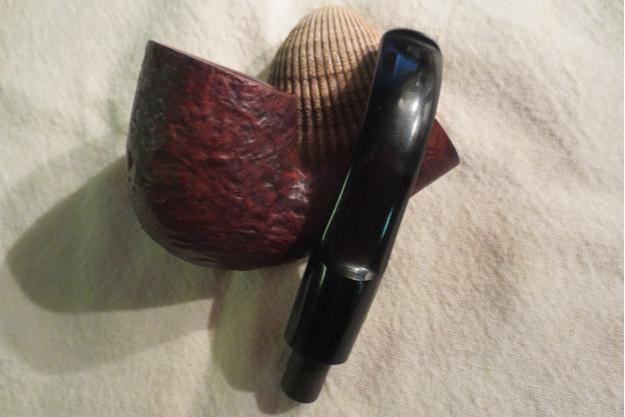
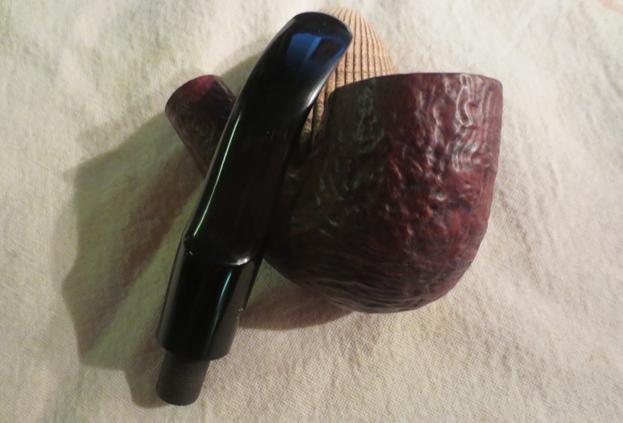
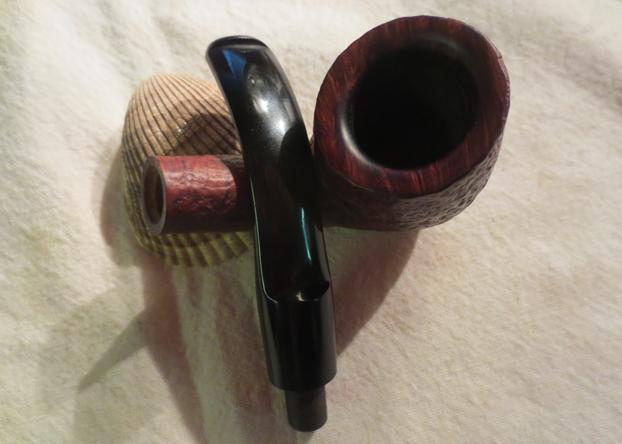
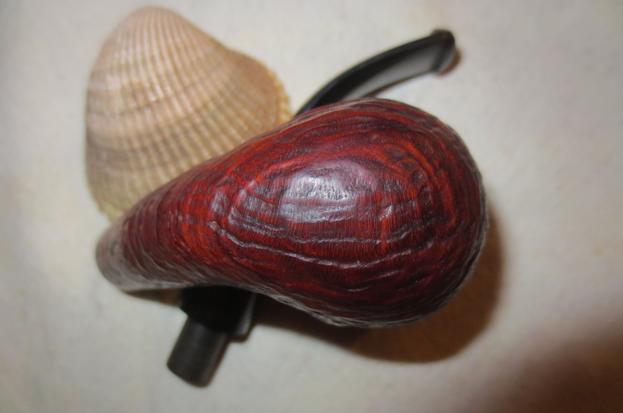
Tag Archives: bowl topping

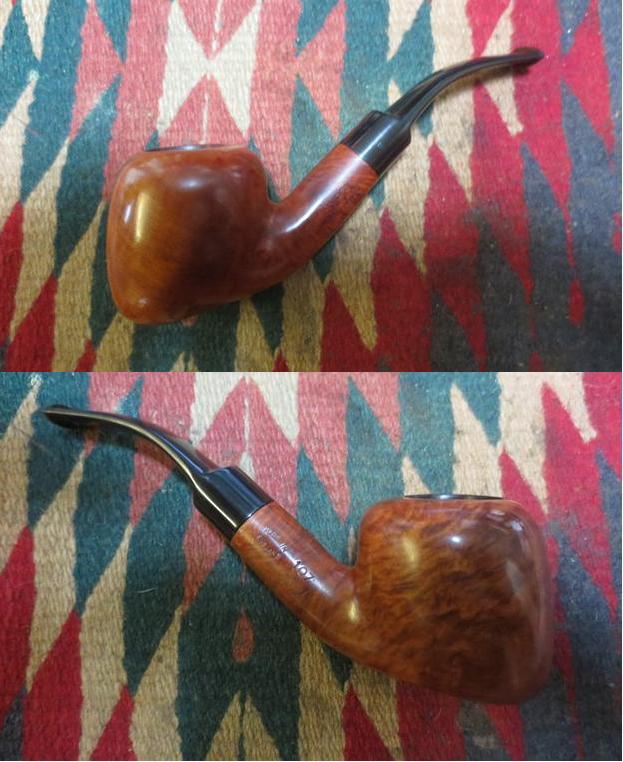
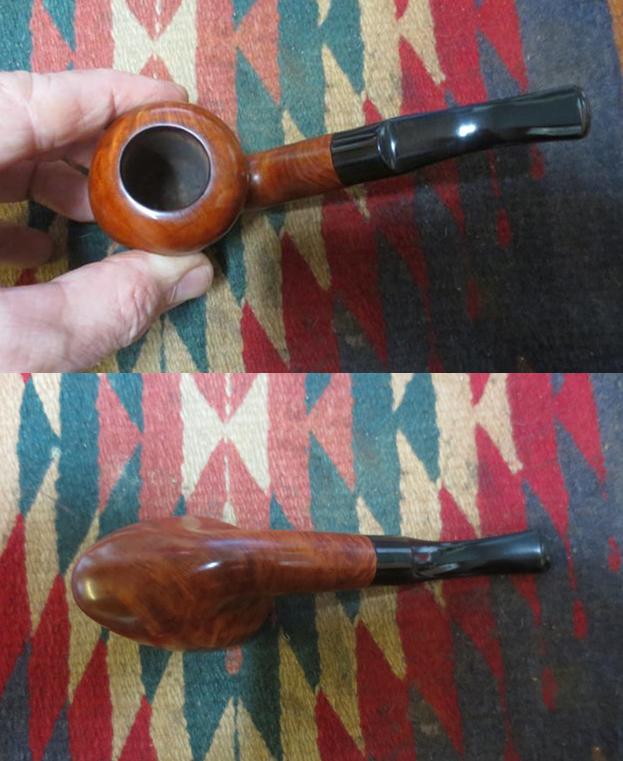
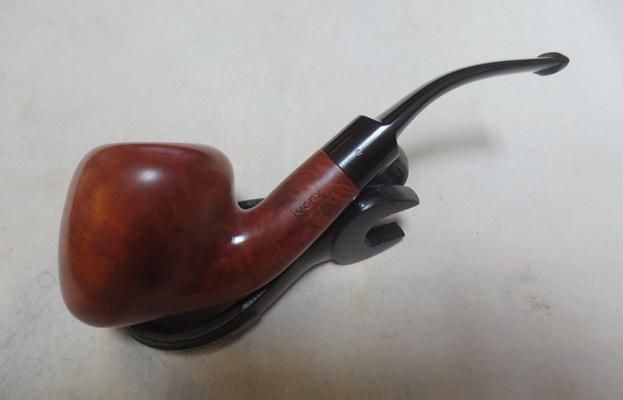
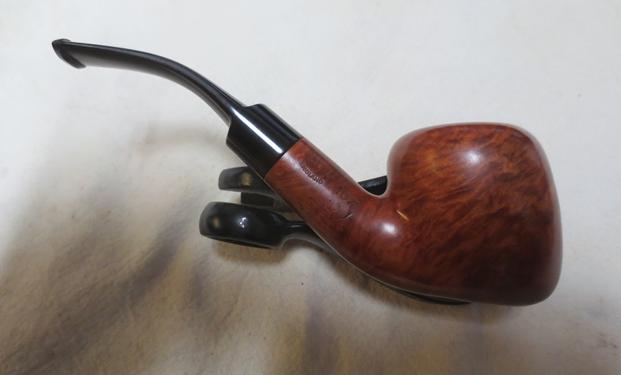
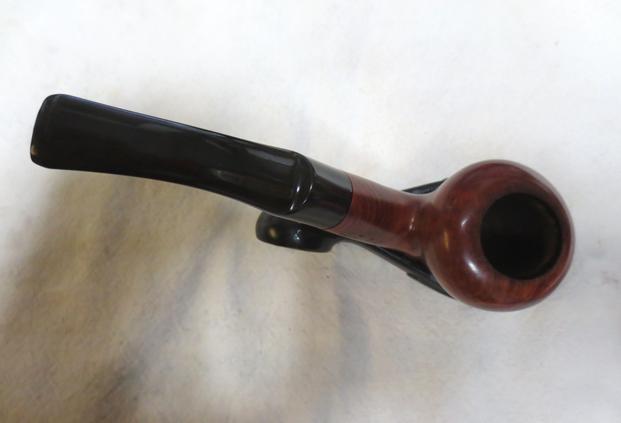
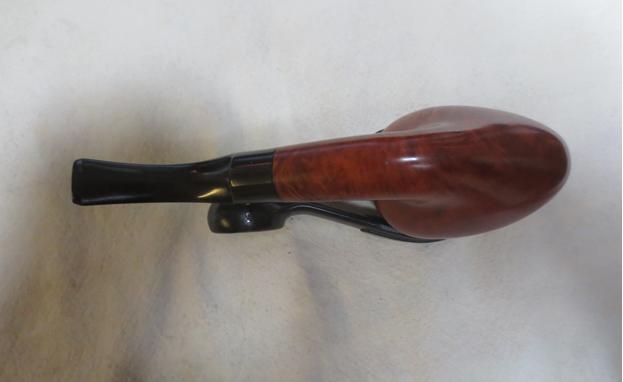
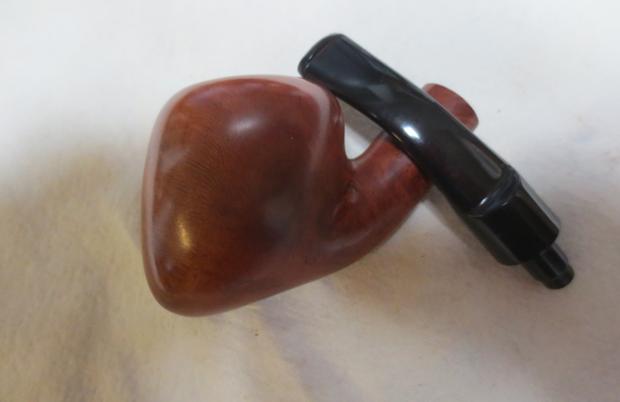
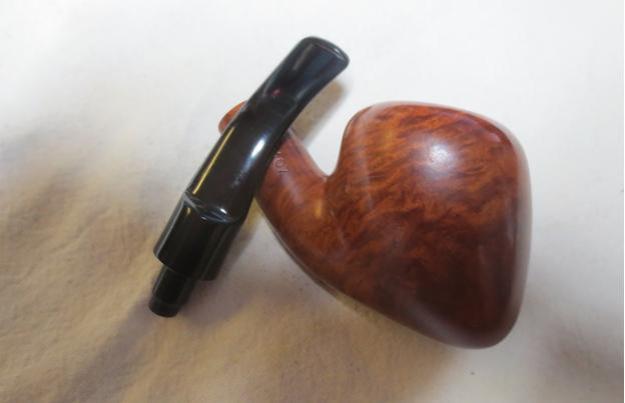
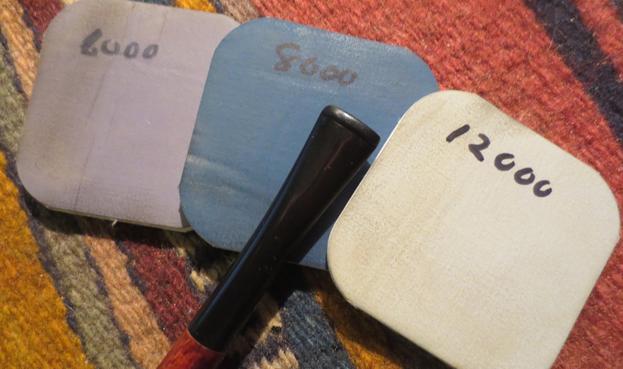
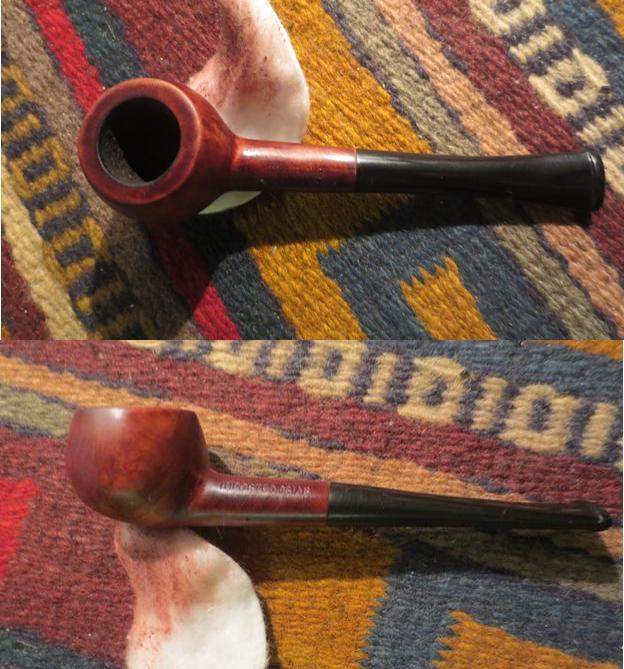
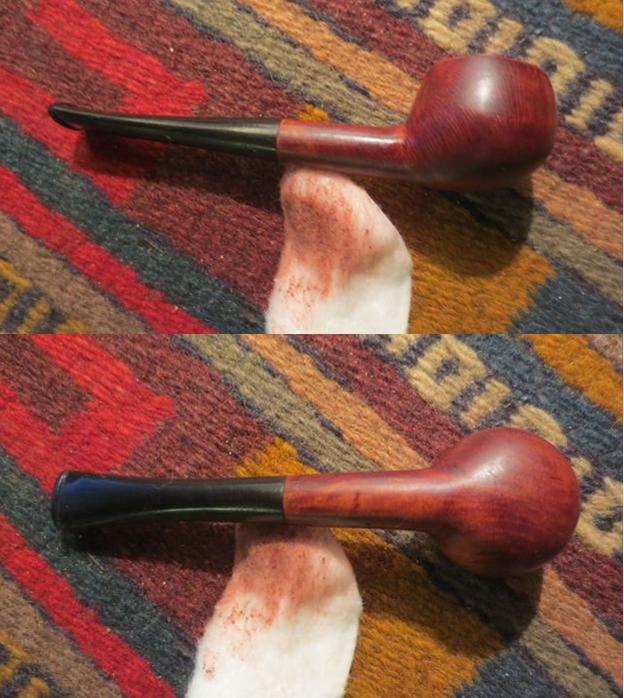
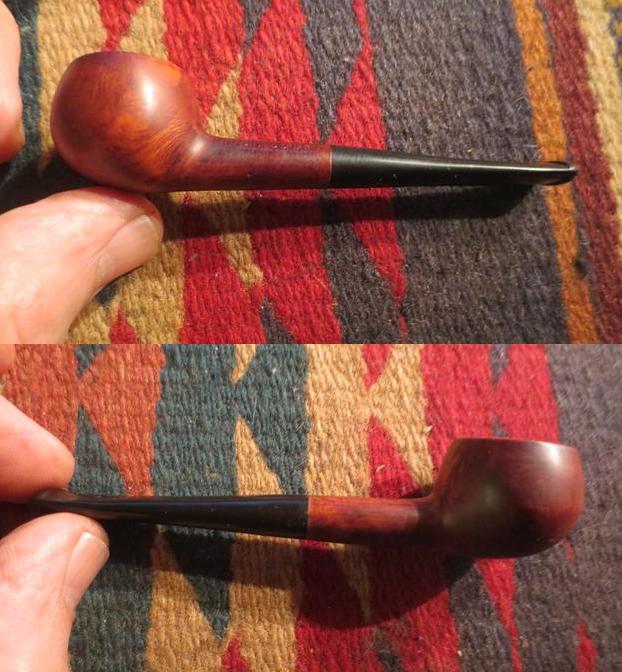
A Surprising Collaboration between Sasieni and Tinderbox – an Ivory London Made by Sasieni 107 Freehand


n SanBlog by Steve Laug

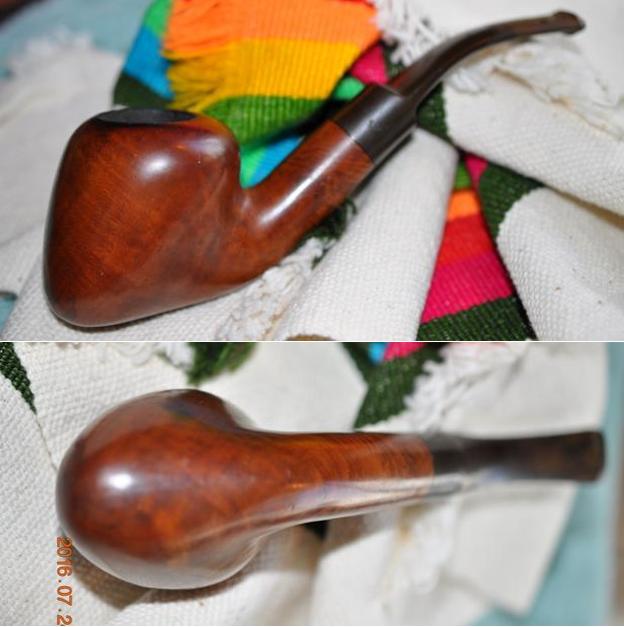
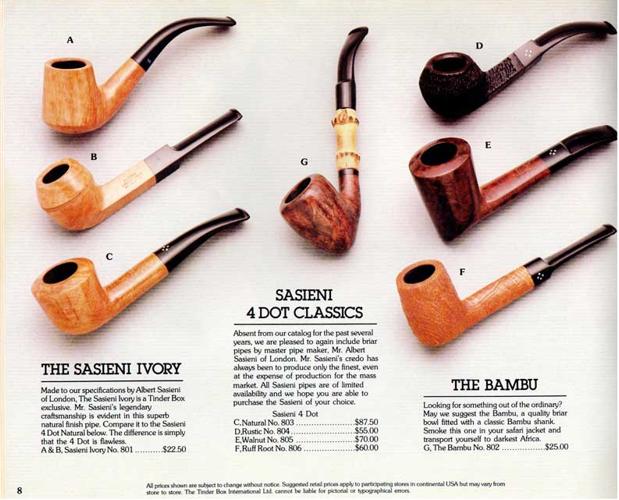
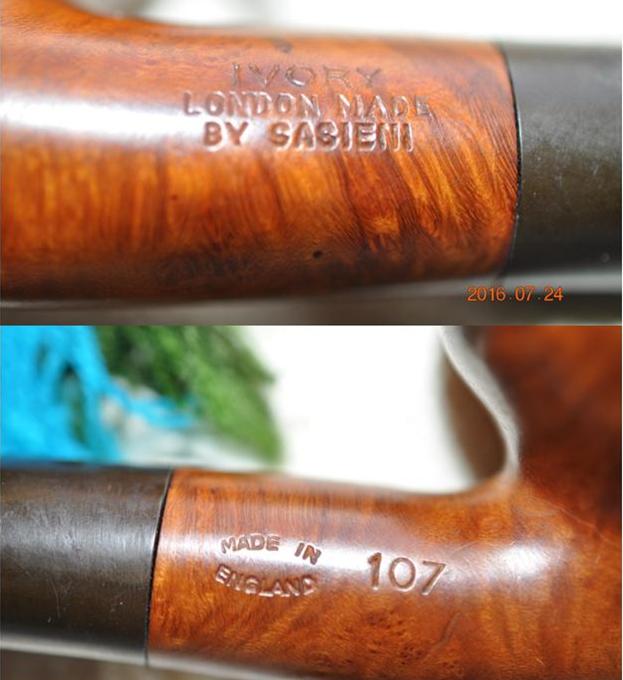
My brother sent me this pipe that was stamped on the left side of the shank Ivory over London Made over by Sasieni and on the right side of the shank was the rugby ball shaped stamping Made In England and the shape number 107. When I saw the photos that my brother sent I have to admit, I thought it was an ugly, strangely shaped deformed pipe. I was not sure what to make of it but I ‘knew’ I did not like it. I thought. The shape did not do anything for me and the blandness of the grain that I saw in the left side photo did not help. Too me there was not much redeeming about the look of the pipe. (The next photos are the ones my brother sent me.)ivory1I had not heard of the Ivory made by Sasieni pipe stamping before. It was a new one to me. So I did a little searching. On one of the online forums I found a clue that the Ivory was mentioned in the 1979 Tinderbox catalogue at pipepages. I went to pipepages and found the link to the catalogue: http://pipepages.com/tinderbox.htm. There was a 1979 Tinderbox Catalogue there that had the following quotation regarding the Ivory. “Made to our specifications by Albert Sasieni of London. The Sasieni Ivory is a Tinder Box exclusive.” The mention of the name Albert Sasieni I believe is an error as the company was run by Alfred Sasieni.

I knew from the link that the pipe was made for Tinderbox in 1979, the end of the family era. The collaboration between Tinderbox and Sasieni was established in that catalogue. In a way the Ivory made by Sasienin was like the Unique made by Charatan’s. Both were special orders by Tinderbox from those pipe companies. I have included a copy of the page in the 1979 catalogue from the pipepages site.ivory2I also found a Sasieni Shape Chart online and copied the page that had the 107 shape listed. It is circled in red in the photo below. The 107 is called a Waterloo and has a xs* notation in the catalogue. The note on the top of the page says that the xs* means that the pipe is a premium priced pipe in the 4 dot grades only.ivory3I also looked on pipephil’s logos and stampings site and found the Sasieni Ivory there as well. There was a ivory3agreat photo of the stamping on the shank and the stem. The stamping on the one I have is identical in all but the shape number. Mine is a 107 shape. The S on the stem is also exactly the same and in the same position on the saddle.

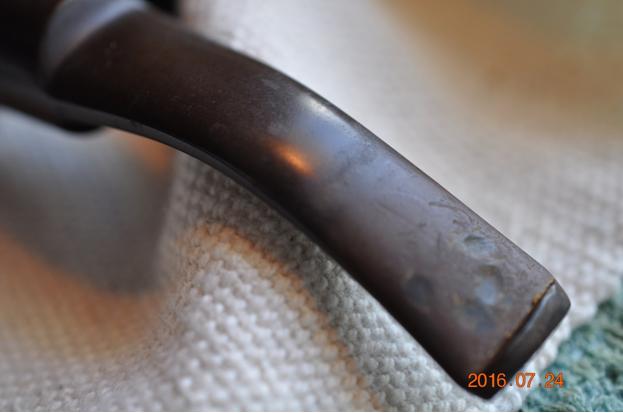
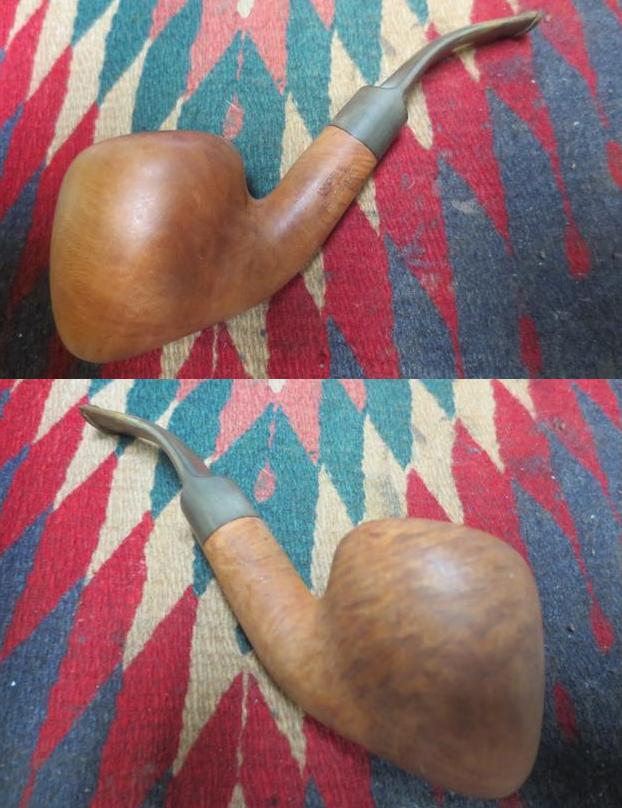
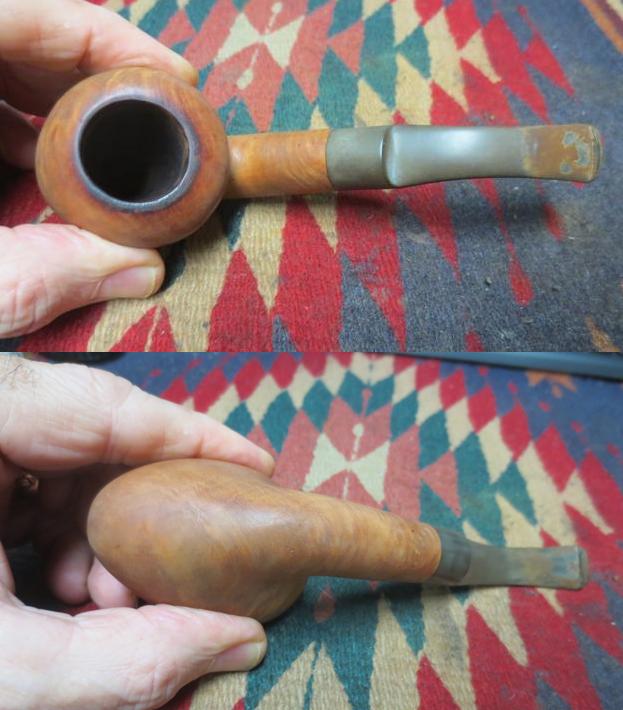
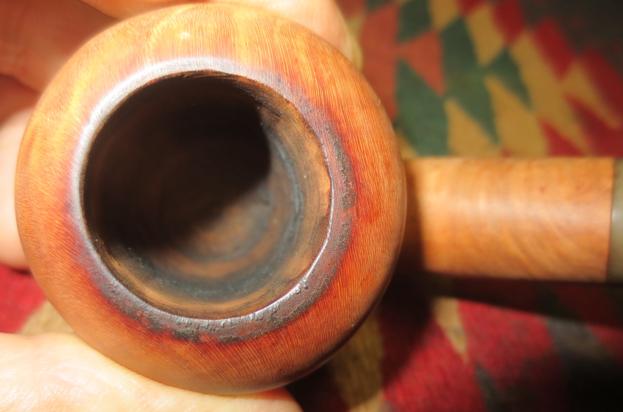
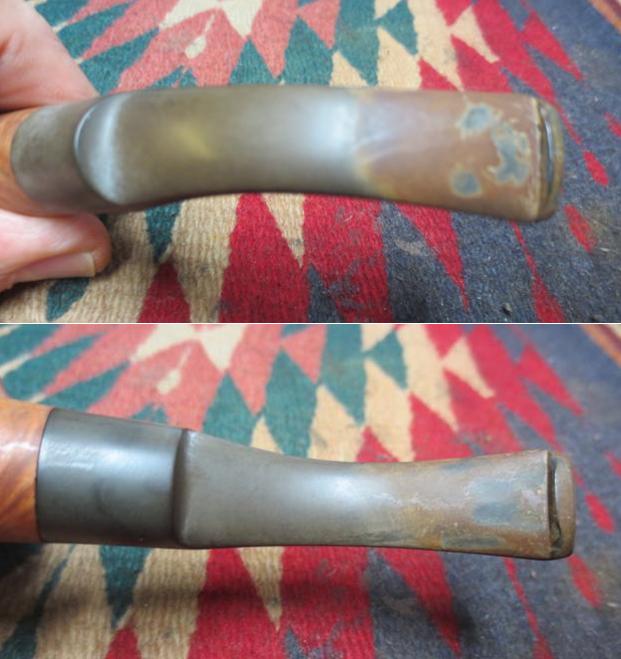
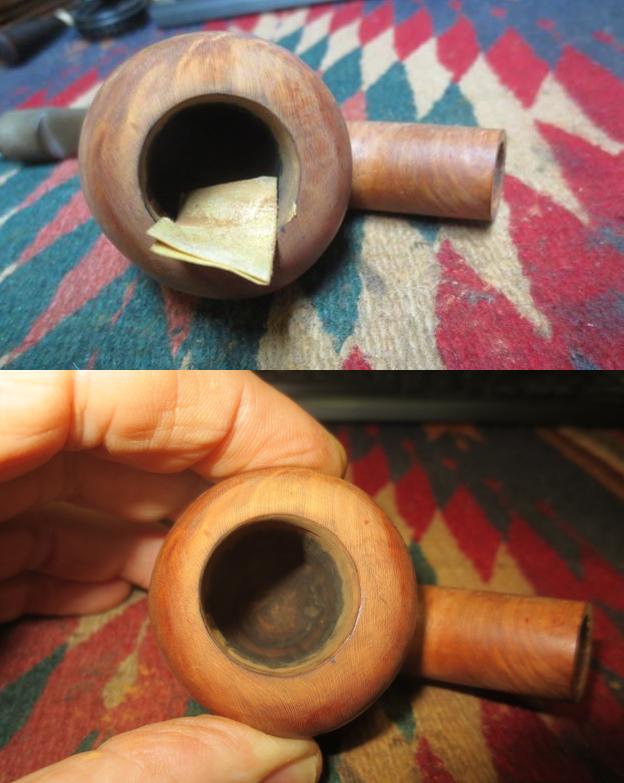
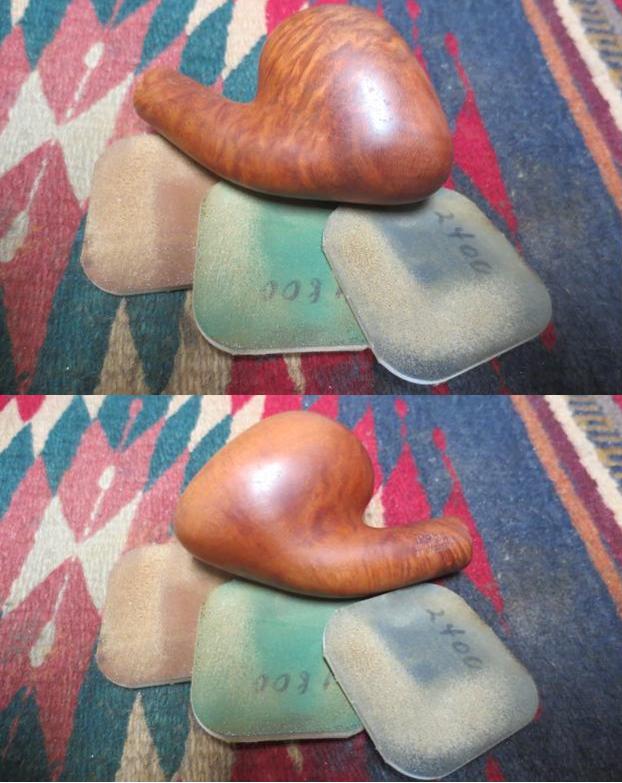
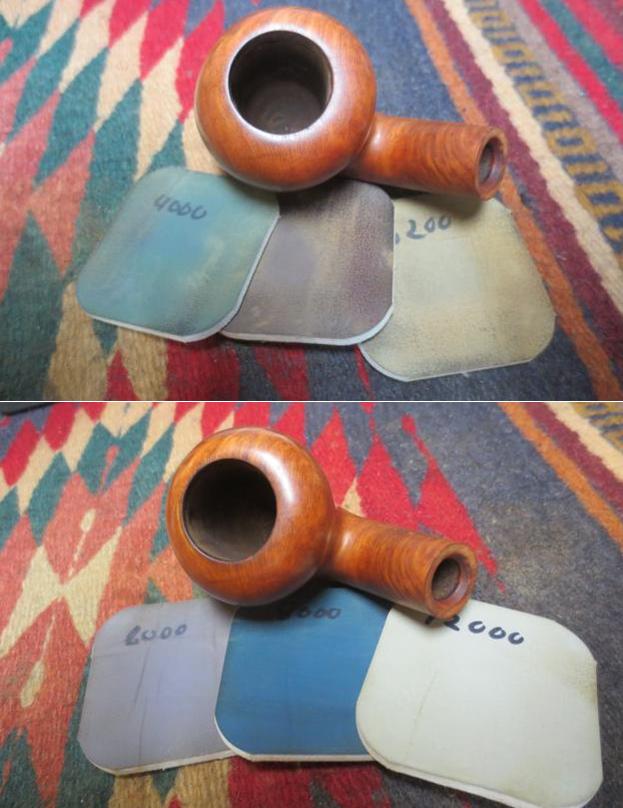
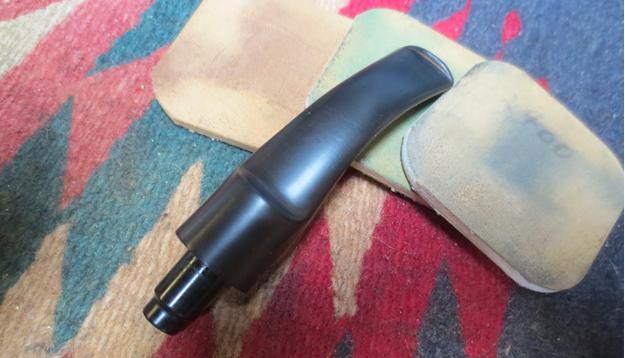
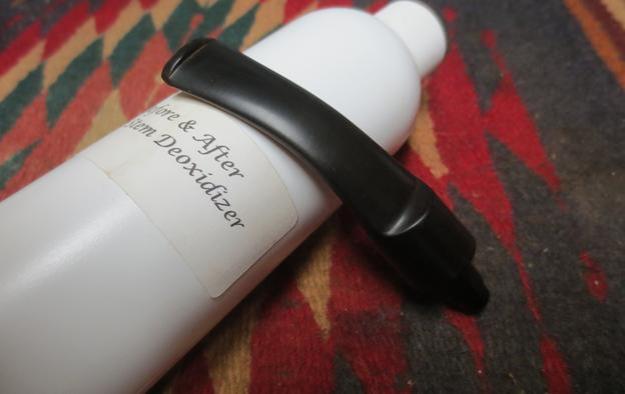
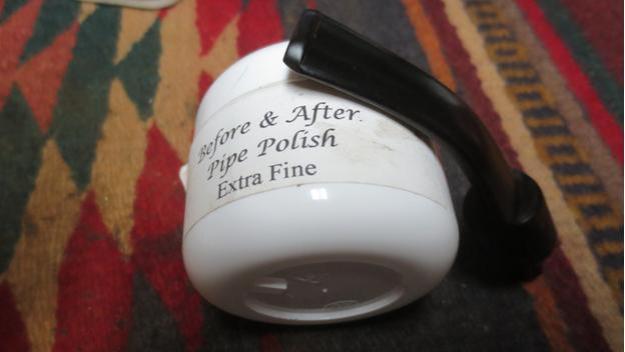
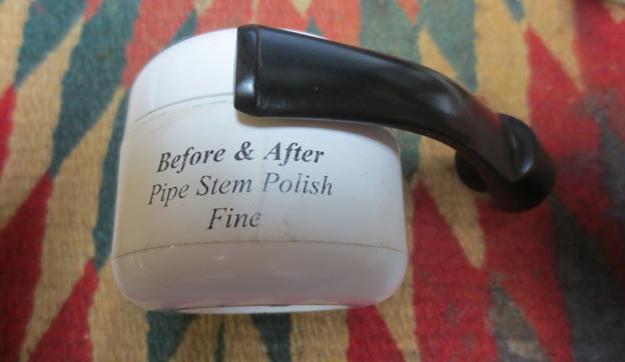
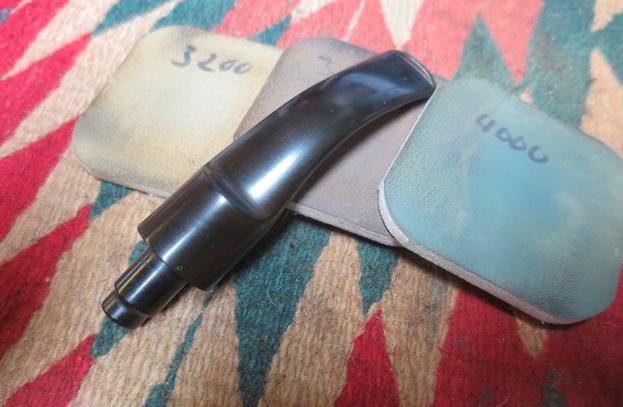
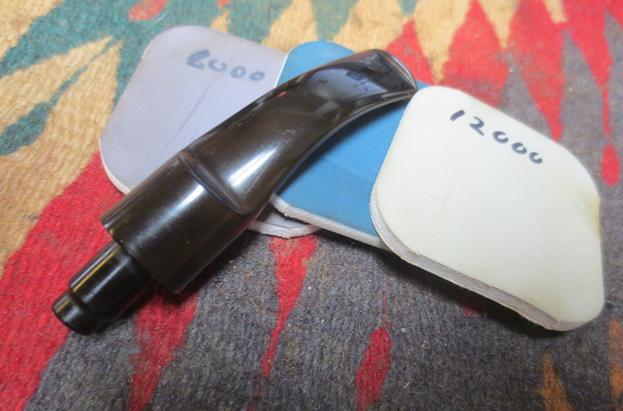
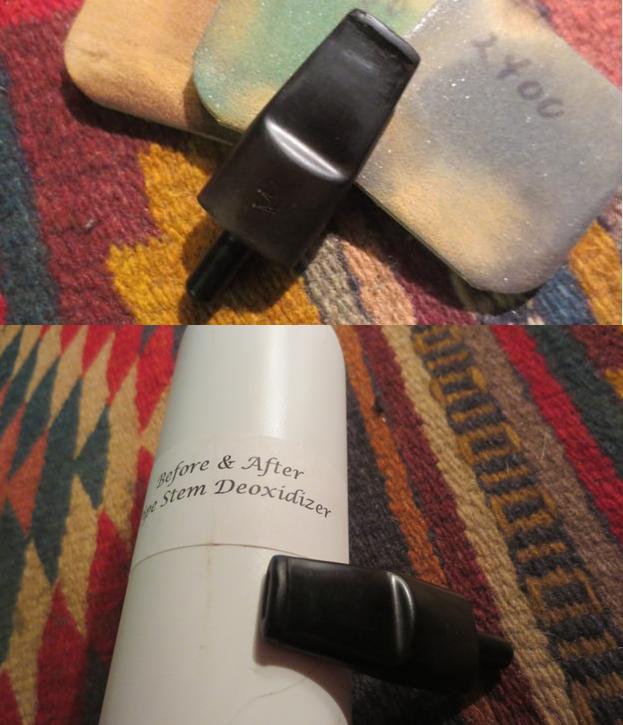
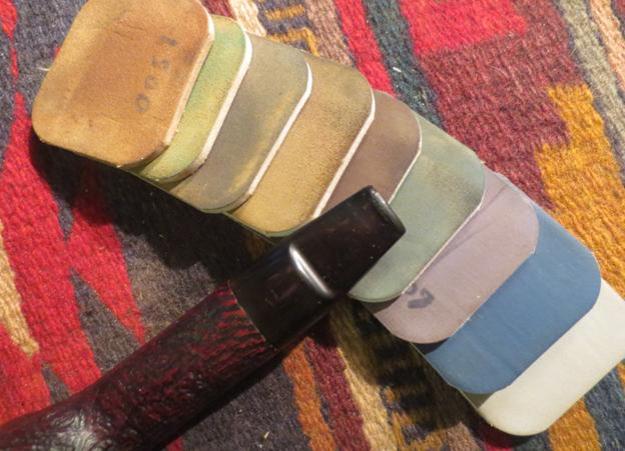
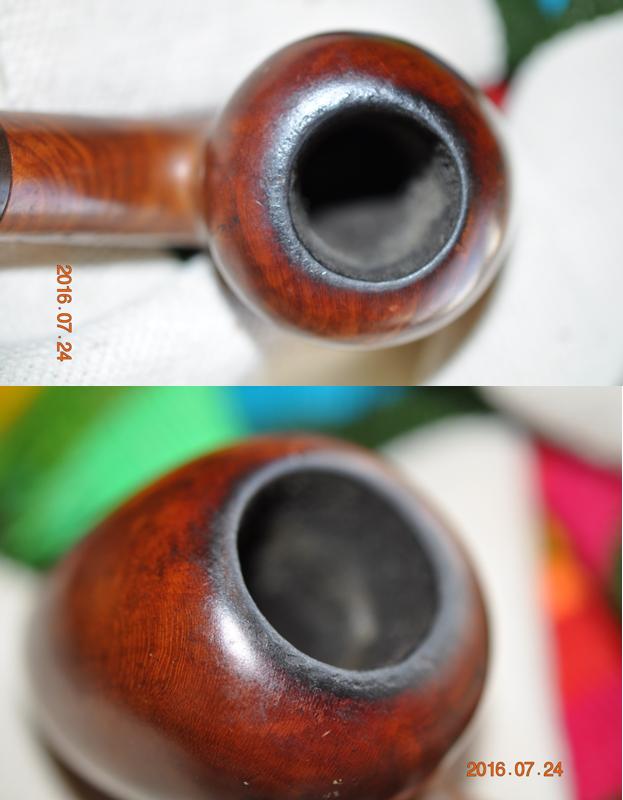
My brother also took some close up photos of the stamping on the sides of the shank and the rim to show me the damage to the rim top and the cake in the bowl.ivory4 ivory5He also took a photo of the top side of the stem to show the tooth marks on that surface. There was a matched set on the underside of the stem. Combined with the surrounding tooth chatter the stem was a bit of a mess.ivory6My brother did his usual stellar job of cleaning up the pipe. He scrubbed the exterior of the bowl with a tooth brush and Murphy’s Oil Soap and rinsed it under running water. He was able to remove the wax and oils on the surface of the bowl and leave the briar pretty bare. The rim was better but the burn marks would need more work. He cleaned out the mortise and airway in the shank and stem with pipe cleaners, cotton swabs and alcohol. I took the next photos of the pipe before I started working on it.ivory7 ivory8I took close up photos of the rim and the stem to show what I had to work with on this pipe. My brother was able to get the majority of the stuff off the rim. There was still some remaining buildup and tars on the rim. There were also some burn marks on the rim. The stem closeup photos reveal the dents and tooth marks on both sides of the stem and the damage to the edge of the button.ivory9 ivory10I sanded the rim with 220 grit sandpaper to remove the rim damage. I also sanded the inside edge of rim. I was able to remove the damage to the rim and edge. It is a nice looking piece of briar from the top down.ivory11I sanded the bowl with microfibre sanding pads to polish the briar.  I sanded with 1500-12000 grit sanding pads.ivory12 ivory13 ivory14With the bowl finished I turned my attention to the stem. I heated the dents in the stem to raise them. I was able to raise them a bit and then sanded the stem with 220 grit sandpaper to smooth them out. I wet sanded the stem with 1500-2400 grit micromesh sanding pads. I was able to remove much of the oxidation. I left the area around the S stamp on the left side of the saddle. The stem looks far better at this point in the process than when I started.ivory16I scrubbed the stem with the Before & After Pipe Stem Deoxidizer to work on the oxidation around the S stamp. I was able to remove the majority of the oxidation without damaging the stamping. I scrubbed it with multiple applications of the deoxidizer until the oxidation was gone. I polished it with the Before & After Pipe Stem Polish Fine and Extra Fine.ivory17 ivory18 ivory19I sanded the stem with 3200-4000 grit micromesh sanding pads to further polish it. I rubbed it down with Obsidian Oil. I sanded it with 6000-12000 grit pads and gave it another coat of Obsidian Oil. I set it aside to dry.ivory20 ivory21I decided not to stain the pipe but leave it with a natural finish. I buffed the pipe and stem with Blue Diamond and gave it several coats of Carnauba wax. I buffed it with a clean buffing pad to raise the shine. I received an email from Wikus, a reader in the South Africa asking if I could show some photos of the pipe after the final machine buff and before the hand buffing to show the difference in results of the two techniques. The photos below show the pipe at this point in the process.ivory22 ivory23I took it back to the worktable and hand buffed with a microfibre cloth. The remaining photos were taken after the hand buffing. It removed some of the surface shine on the bowl and added more depth. To me the hand buffing has always improved the quality of the shine and adds another dimension. Overall the restoration on this pipe moved it from a thing of ugliness in my eyes to one that actually had beauty and felt good in the hand. Even the rather bald grain on the left side of the pipe shined up well and reflects the briar nicely. The finished pipe is shown in the photos below. Thanks for looking.ivory24 ivory25 ivory26 ivory27 ivory28 ivory29 ivory30 ivory31


Getting Lazy – A Simple Restore on a Loewe Cutlass 10


Blog by Steve Laug

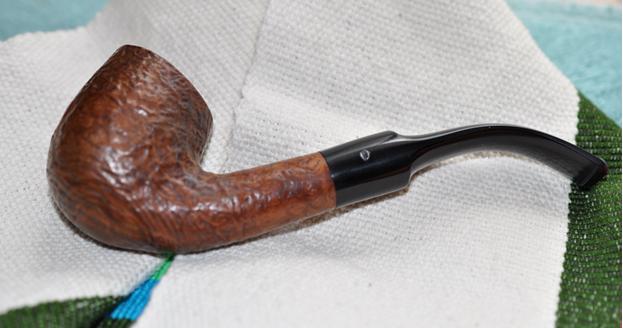
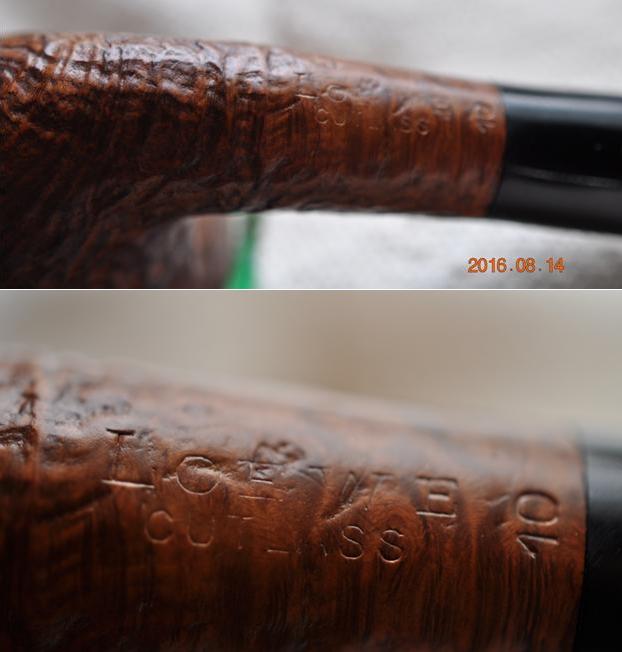
The last three or four pipes I have taken out of the refurbishing box have been very simple restorations. My brother sent me this Loewe’s pipe that is stamped Loewe over Cutlass on the underside of the shank with the shape number 10 at the shank stem union. In the photos he sent me it appeared to be in pretty decent shape. The finish looked dirty and murky but otherwise good. The rim had some tars and overflow from the cake in the bowl but not too bad. There were some nicks and dings in the rim but none too deep. The stem was virtually flawless with no tooth chatter or tooth marks. The boxed L logo on the stem was worn and almost illegible but with a lens it is clear.loewe1While I have heard of and enjoyed quite a few older Loewe’s pipes the shape of this one and the name were not familiar to me. Even the shape number was not recognizable. I looked on the pipephil site to see if I could find any information on this particular iteration of the brand and found what I was looking for. There on his site (http://www.pipephil.eu/logos/en/logo-l5.html) I found a pipe with the same stamping but a different number. The one in my hands does not have a COM stamploewe2 so I do not know where it was made. I have included the photo of the stamping and the stem logo to the left from that site as it is parallel to the one I have. I have also included some information from the listing there.

The brand was founded 1856 by Emil Loewe and was first bought out by Civic. Eventually the brand became part of Cadogan Group along with BBB, Civic, Comoy, GBD, Loewe and Orlik in about 1979. Judging from the age and the stamping on this pipe I would surmise that it was made after that merger and is a Cadogan pipe.

I also did some reading on the history of the brand on Pipedia and include a short excerpt here that is pertinent to the age and stamping on this pipe: https://pipedia.org/wiki/Loewe_%26_Co.#Bottom_of_shank: “By studying the website of one UK dealer I was able to deduce that the present shape numbers (early 2003) mostly (probably all) differ from those used from 1967. For example, a Billiard is now a 28, a Lovat an 834, a Canadian a 296. Some shape numbers now have 4 digits. But even today, Cadogan will occasionally still stamp a pipe with a shape name instead of a number, though only on request.”

It looks to me that I am dealing with a pipe made around 2003 jusding from the change in shape numbers to a two digit numbering system at some level. Though there is a lot of uncertainty regarding the dating of Loewe pipes after the Cadogan buy out.

My brother took the first and the following photos of the pipe before he did the cleanup. What follows are a series of close up photos of the stamping, the rim and bowl and the sandblast look on the bottom of the bowl. In the bowl bottom photo you can see the dust and debris in the grooves of the blast.loewe3 loewe4 loewe5My brother cleaned out the internals – the mortise and the airways in the shank and stem with pipe cleaners and alcohol. He scrubbed the externals with a tooth brush and Murphy’s Oil Soap and was able to not only remove the grime from the finish but most of the finish also. When it arrived in Vancouver the pipe looked like virgin briar. The stem is acrylic so there was no oxidation on it. The next photos show the pipe when I brought it to my work table. The blast on the briar is quite shallow and shows mixed grain.loewe6 loewe7I took some close up photos of the rim and the stem to show their condition. My brother was able to remove the tars on the rim. There was some slight rim darkening on the inner edge but other than that it was clean. The scratches and dings were also raised. The photos of the stem show how clean it was as well when it arrived.loewe8 loewe9I sanded the inner edge of the rim with 220 grit sandpaper to smooth it out and remove the darkening and light burn marks. I also sanded it with 1500-2400 grit micromesh sanding pads to remove the scratch marks left behind from my sanding.loewe10I wiped the bowl down with acetone on a cotton pad to remove any remnants of the previous finish and the dust from sanding. I stained the bowl with a dark brown aniline stain cut 50/50 with isopropyl alcohol. I flamed it and repeated the process until the coverage on the bowl was even.loewe11I hand buffed the bowl and took the photos below to show what it looked like at this point in the process.loewe12 loewe13I gave the bowl and stem several coats of Conservator’s Wax and buffed it with a clean buffing pad to raise the shine. I hand buffed it with a microfibre cloth to deepen the shine. The finished pipe is shown in the photos below. This one will also soon be on the rebornpipes store. If you are interested in adding it to your rack let me know through email at slaug@uniserve.com or by message on Facebook or a comment here. Thanks for looking.loewe14 loewe15 loewe16 loewe17 loewe18 loewe19

Another Easy Restoration – a GBD Seventy Six 255 Canadian


Blog by Steve Laug

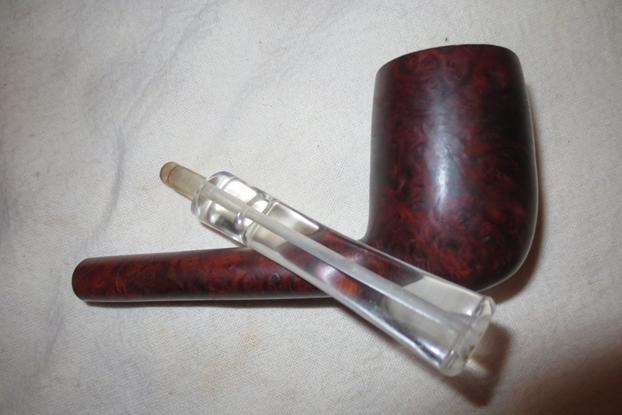
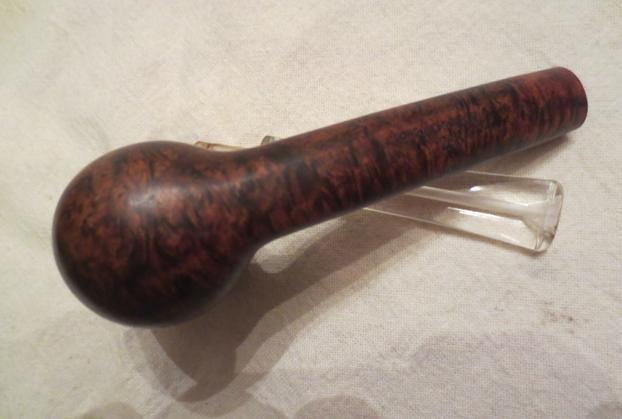
When I opened the box of pipes from my brother there was a long shanked clear stem pipe that stood out to me. The stem was in perfect condition, with no tooth chatter or marks and was very clean. In fact, the stem was probably a replacement made of Lucite. Looking at the classic shape and the grain on it I was pretty sure it was a GBD but had not even looked at it. When I got around to examining the pipe I saw that it was stamped on the top of the shank with GBD in the oval logo over Seventy Six in script. On the underside of the shank it is stamped Made in England over the shape number 255 which when I looked it up was a GBD number for a Canadian with an oval taper stem. Finding out that pretty well sealed the fact that the stem is a replacement. It is an oval shaped saddle stem.gbd1I remembered reading about the Seventy Six line before but had to look it up again. From what I found with a simple search I could see that the pipe was introduced by GBD in1976 in honor of the American Bi-Centennial. According to what I read the pipe was released as a polished dark brown “take off” finish. The best I can understand is that the dark brown was removed leaving it in the dark grain and birdseye of the pipe.

So my memory was nudged and I remembered that Al Jones (Upshallfan) had written about his repair of a classic GBD Seventy Six and given information on the brand in this link: https://rebornpipes.com/2013/06/17/gbd-oval-shank-pot-seventy-six-restoration/ I quote: “In 1976 GBD introduced a series called the “Seventy-Six” to commemorate the United States Bicentennial.  I was a Sophomore in high school during 1976 and the year-long celebration had a big impact on me.  The Seventy-Six model remained in the GBD catalog until 1981.”

He also quotes from the 1976 Catalogue: “The GBD “Seventy-Six” is our contribution to the Bicentennial celebrations.  We have really pushed out the boats for “the colonies” in launching this new series that will be remembered by its proud owner long after the celebrations are forgotten.”gbd2My brother took the above photos and the close up photos that follow before he did any clean up on the pipe. The first photos shows the condition of the bowl and the rim. There was a cake in the bowl and an overflow of lava on the rim. I did not know until the pipe arrived that the rim was beveled inward to the bowl. There appeared to be a lot of damage on the rim. The second and third photo show the stamping on the top and underside of the stem. It is clear and readable. The last photo shows the condition of the stem. There were no bite marks on the top and underside near the button. There was some light tars in the airway in the stem.gbd3 gbd4 gbd5My brother scrubbed the exterior of the pipe with Murphy’s Oil Soap to remove the wax and the buildup on the rim. It removed the oils and wax and left the pipe clean and natural briar. He cleaned out the airway in the shank and stem. He also cleaned out the mortise with alcohol, cotton swabs, pipe cleaners and alcohol. The photos below show the pipe when I received it. When I saw the rim it was then that I knew that it was beveled inward. The briar on this pipe was truly stunning. There were no sandpits or flaws in the briar.gbd6 gbd7He was able to remove most of the lava on the rim and what had appeared to be burned areas was merely dirty. It would not take much to clean it up and make it shine.gbd8There was still some inner edge darkening and some damage on the inner edge. I used a folded piece of 220 grit sandpaper to clean up the darkening and the damage. The third photo shows the process of sanding the inside of the bowl with a piece of 220 grit sandpaper wrapped around the end of a Sharpie pen to smooth out the inside of the bowl. The fourth and final photo shows the interior of the bowl after it was sanded.gbd9 gbd10I decided not to stain the pipe but to leave it natural. I rubbed it down with a light coat of olive oil to bring life back to the briar. I liked the look of the pipe with the natural oil finish. I buffed the bowl with Blue Diamond on the buffing wheel to raise the shine. I gave the bowl and the stem several coats of carnauba wax and buffed it with a clean buffing pad to raise a shine. I hand buffed the pipe with a microfiber cloth to deepen the shine. The finished pipe is shown in the photos below.gbd11 gbd12 gbd13 gbd14 gbd15 gbd16 gbd17 gbd18

A Worn Royal Danish 936 Wide Oval Shank Pipe given new life


Blog by Steve Laug

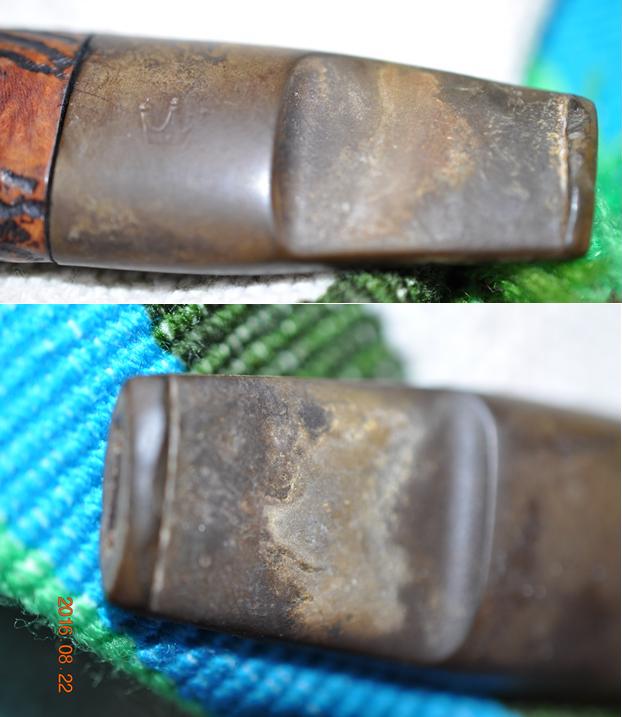
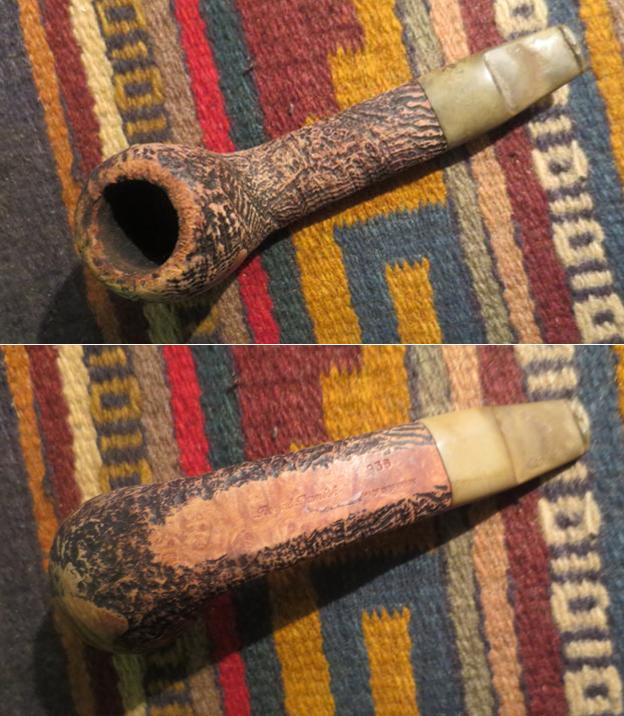
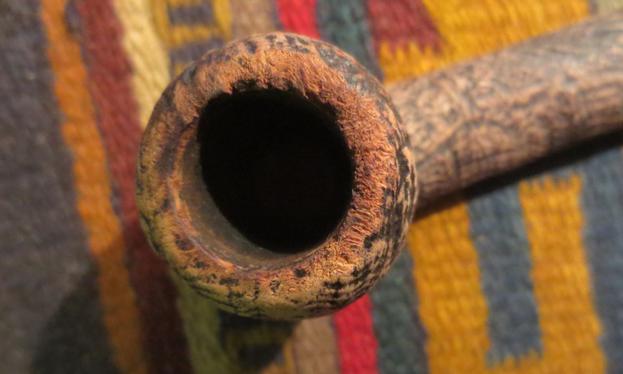
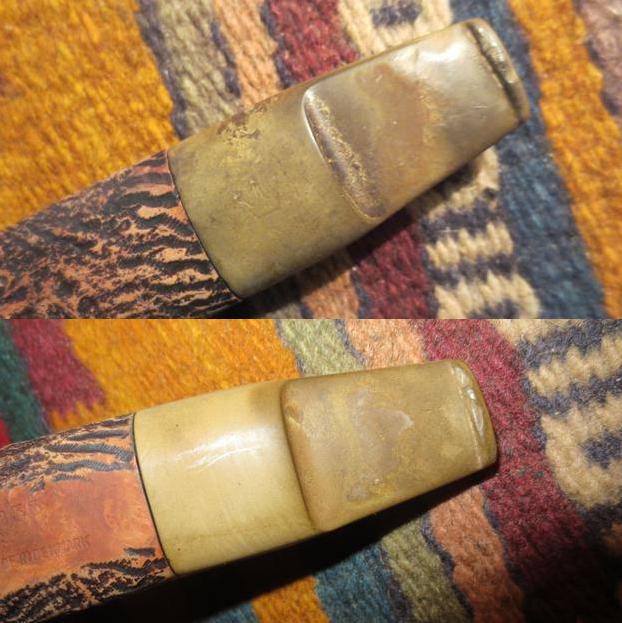
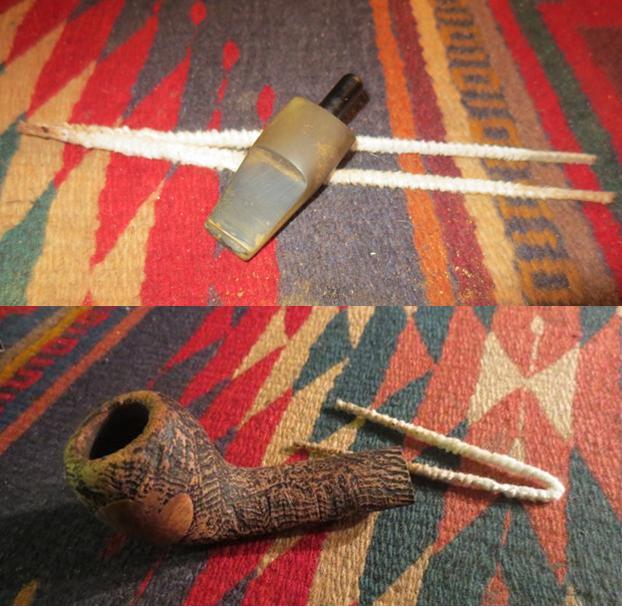
When I saw the pictures of the way this pipe looked – at least the first picture I thought it was in pretty decent shape. The finish was a little worn; particularly some of the high spots on the sand blast had worn off. The smooth patches were also worn and lifeless. The back edge of the rim looked really rough – as if the pipe had been knocked about on concrete or another hard surface to remove the dottle from the bowl. It was ragged. The inner edge of the rim also looked worn and the cake in the bowl was a bit odd looking – as if it was partially removed. It seemed heavier on one side than the other. The stem looked okay in the first picture but the second hinted that all was not well with it either.danish1The close up photos reveal the issues that I hinted at above. The first shows the strangely caked bowl – heavily built up toward the left side and rear of the bowl as well as the rough back rim top and edge of the bowl. The inner edge of the rim also looks like it has taken some damage. The second photo shows the slight cap at the stem junction that to my mind spoke of a tarry and caked mortise that kept the stem from seating properly. The finish also shows some wear in the photos. The pipe is stamped Royal Danish and Made in Denmark. The shape number is 936 which is a Stanwell shape.danish2The next two photos show the issues with the stem. There were tooth marks on the top and underside of the stem that went from quite deep to very shallow. The button top and bottom were worn down and had deep tooth marks. There was also a heavy build up of oxidation on the stem. The stem logo on the top is very faint. It made me wonder if I would be able to feel it with my finger once it arrived in Canada.danish3I am so glad my brother does the heavy work on cleaning out these pipes. I have reamed and cleaned out the shanks of a lot of pipes and I can’t say that I miss it. I still get to do my share of cleanups on pipes that I find but these that he sends me come ready for the restoration process. He scrubbed the exterior of the bowl with Murphy’s Oil Soap and was able to remove the wax and tars on bowl and rim. He reamed the bowl back to bare briar and scrubbed out the mortise and the airway in the shank and stem. When it arrived the stain was quite washed out and the stem was really oxidized. The damaged rim top was very visible and it was in rough shape.danish4 danish5I took some close up photos of the rim and the stem when it arrived here. The roughness of the rim top and inner edge are seen in the first photo. The tooth marks and wear on the stem top and underside in the second and third photos. My brother had cleaned out the mortise so the stem fit tightly against the shank so my guess mentioned above about a dirty mortise appears to have been correct. The crown logo on the top of the stem could hardly be felt by touch.danish6 danish7I started sanding the stem then decided to run a few pipe cleaners and alcohol through the airway in the stem and shank as well as in the mortise. They were quite clean and did not take too much work to remove the little bit of debris that was still left.danish8I sanded the rim lightly to take away the roughness but still leave the finish looking like the sand blasted portion of the rim that had not been damaged. I stained the bowl with a dark brown stain mixed 50/50 with isopropyl alcohol. I applied the stain and flamed it and repeated the process until the coverage was what I was looking for. I wanted the dark stain in the deep grain of blast to show through the brown top stain.danish9I hand buffed the bowl with a microfibre cloth to raise a shine and to give an even look to the finish. The photos below show the pipe at this point in the process.danish10In the second photo below the rim surface is visible. There will need to be some contrast applied to the finish to make it blend in and not look merely “less damaged”.danish11To address the contrast issue on the rim mentioned above I used a black Sharpie Pen to provide some darkening in the crevices of the pitted surface. I used a dark brown stain pen to give the top coat over the black stain.danish12I sanded the inner edge of the rim with a folded piece of 220 grit sandpaper to smooth out the roughened inner edge. In retrospect I probably should have done this before staining the bowl but I did not so I put it in the order I did the work. In the second photo below you can see how the contrast stain worked on the rim top.danish13When I finished sanding I stained the inner edge of the rim with the dark brown stain pen and added some streaks of black Sharpie pen to give it some contrast. I buffed the rim lightly Blue Diamond on the buffing wheel and with a microfibre cloth. The photos below show the pipe bowl after buffing. Notice the change to the rim after the sanding, staining and buffing.danish14 danish15I set the bowl aside and worked on the issues with the stem. I sanded the area around the button on both sides of the stem with 220 grit sandpaper and scrubbed the deeper tooth marks with cotton swabs and alcohol. Once they were clean I filled the deeper marks and built up the button surface with black super glue.danish16I sanded the repairs once they had cured with 220 grit sandpaper to smooth them into the surface of the stem. I reshaped the top of the button on both sides of the stem with the sandpaper.danish17The edge of the button on the underside of the stem was still rough so I used a needle file to shape and sharpen the straight edge.danish18I wet sanded the stem with 1500-2400 micromesh sanding pads. I rubbed the stem down with Before & After Pipe Stem Deoxidizer and a paper towel to further remove the oxidation on the stem. I polished the stem with Before & After Pipe Polish both Fine and Extra Fine with paper towels. The stem was beginning to shine.danish19 danish20I sanded the stem once again with the micromesh sanding pads using 1500-12000 grit pads. Each successive grit of sanding pad added more shine and depth to the shine. The more I polished the stem the more the crown logo disappeared.danish21I buffed the pipe with Blue Diamond on the buffing wheel and then gave the stem multiple coats of carnauba wax. I rubbed the bowl down with Conservator’s Wax by hand. I buffed the pipe with a clean buffing pad to raise the shine. I hand buffed the pipe with a microfibre cloth to deepen the shine. The finished pipe is shown in the photos below. The pipe is clean and looks new. The restoration brought it back to life. Thanks for looking.danish22 danish23 danish24 danish25

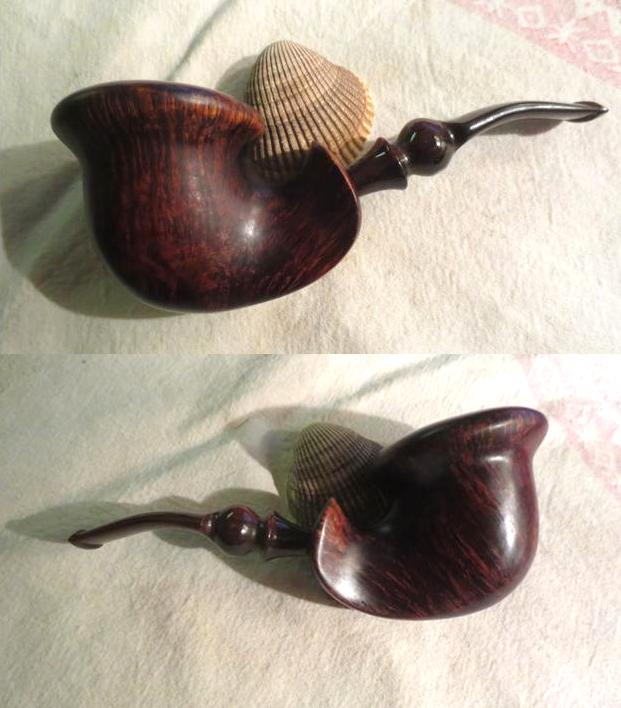
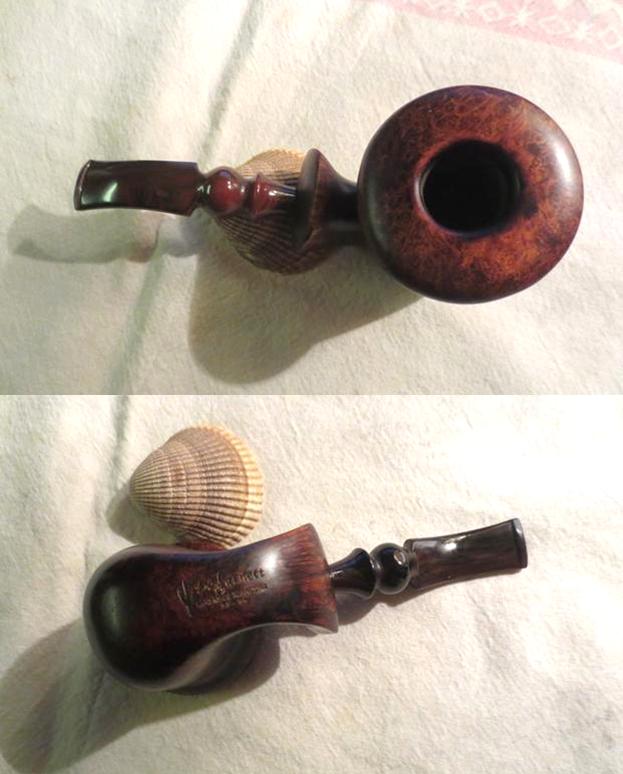
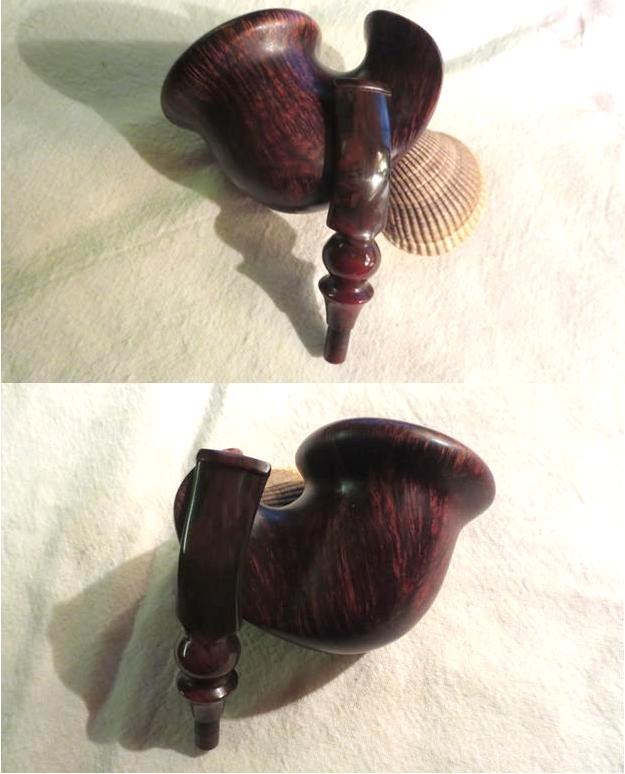
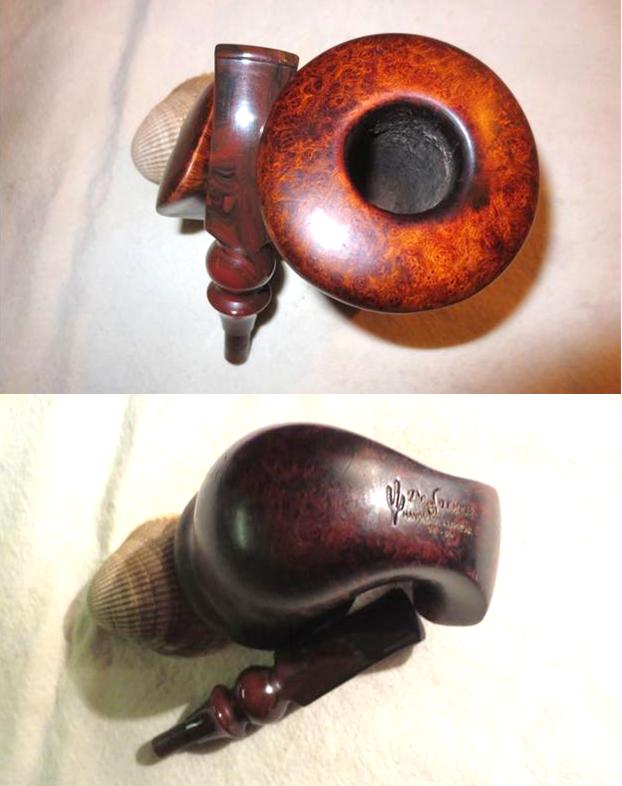
The Rim on this De Jarnett Handmade Needed Attention


Blog by Steve Laug

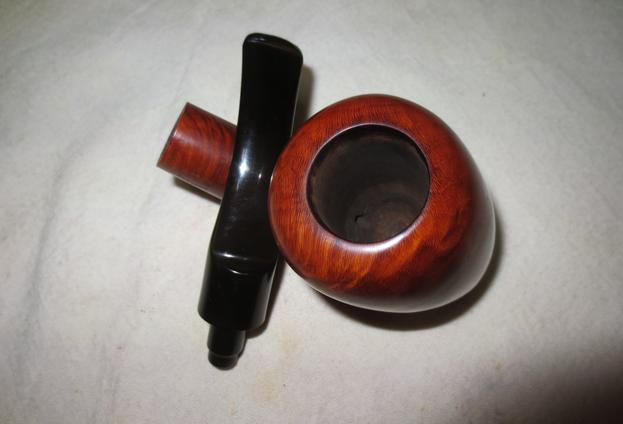
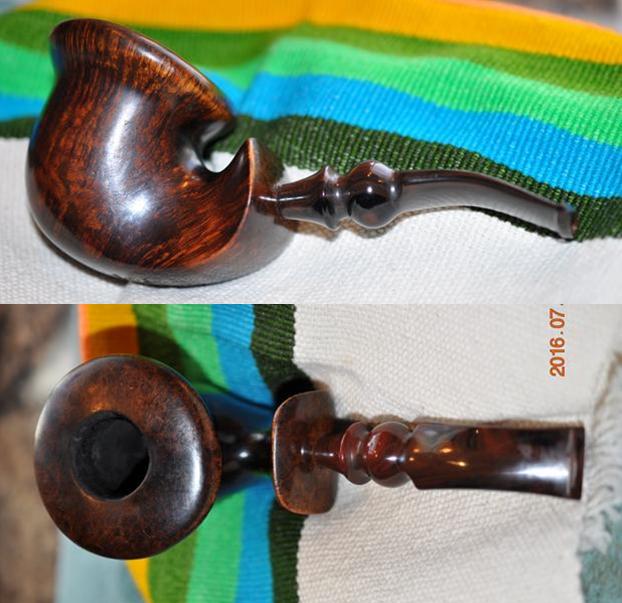
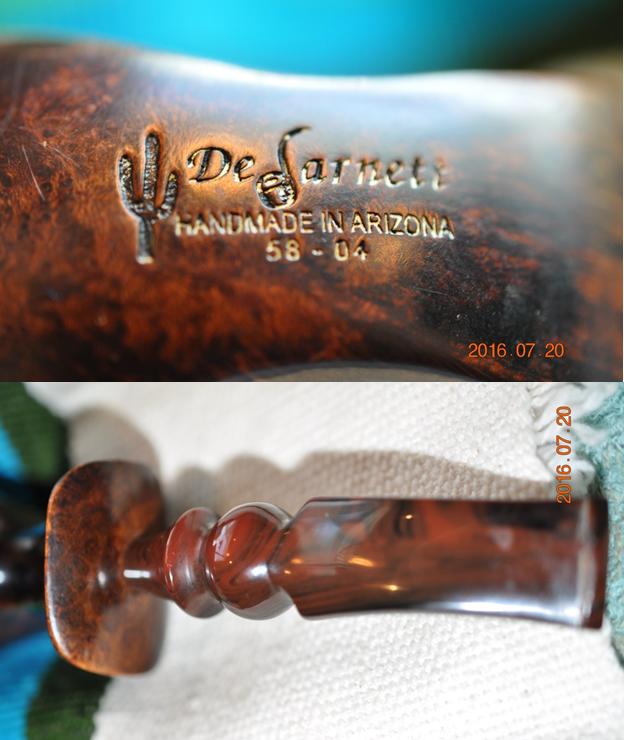
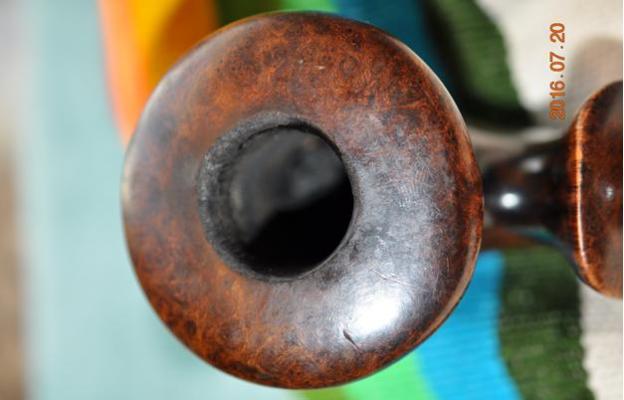
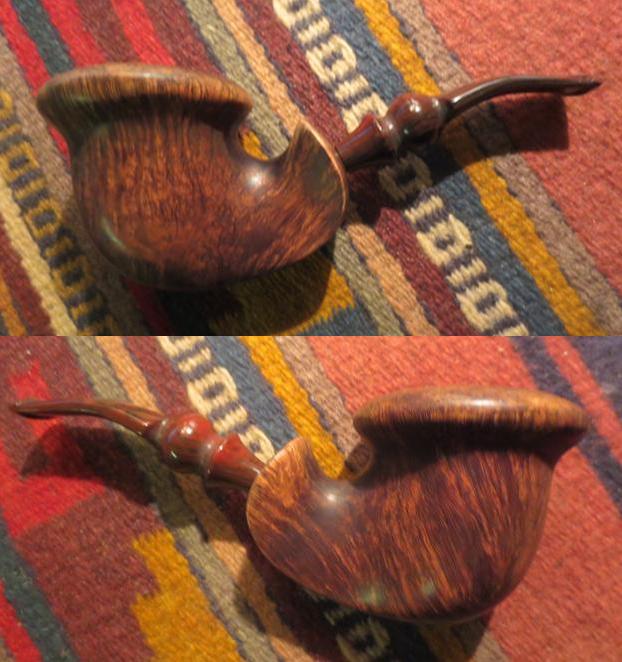
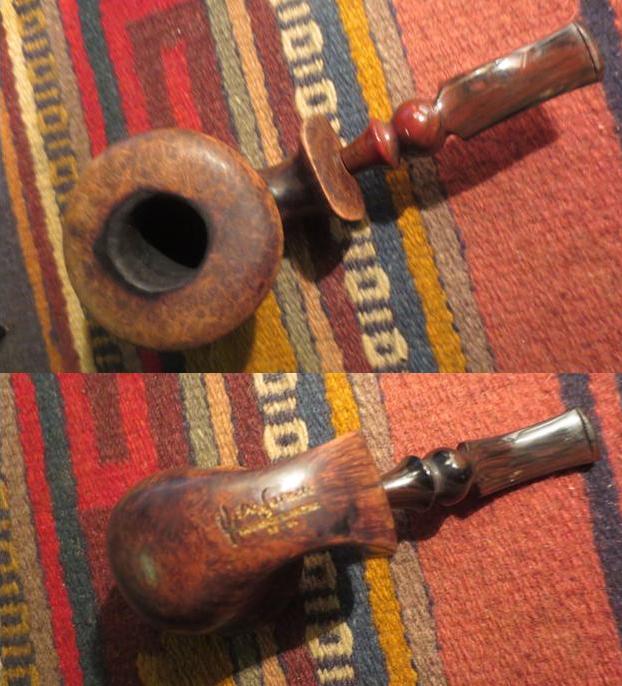
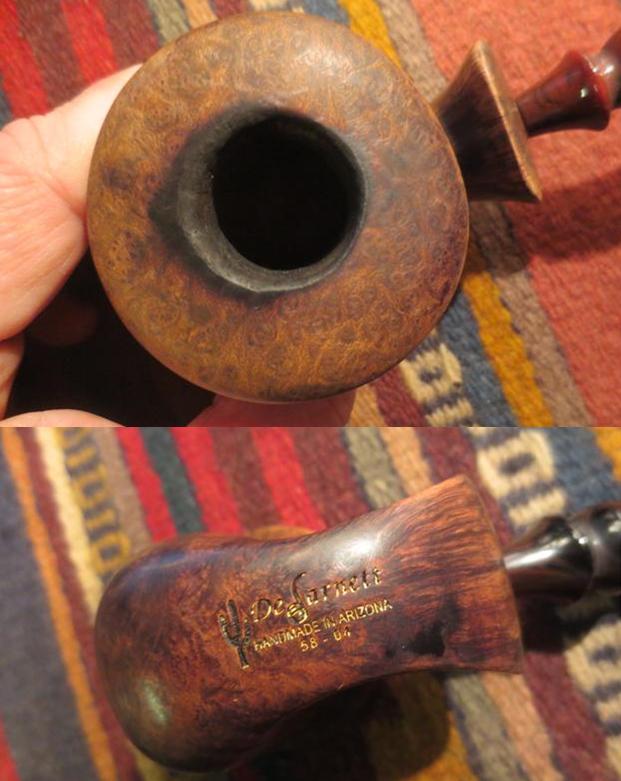
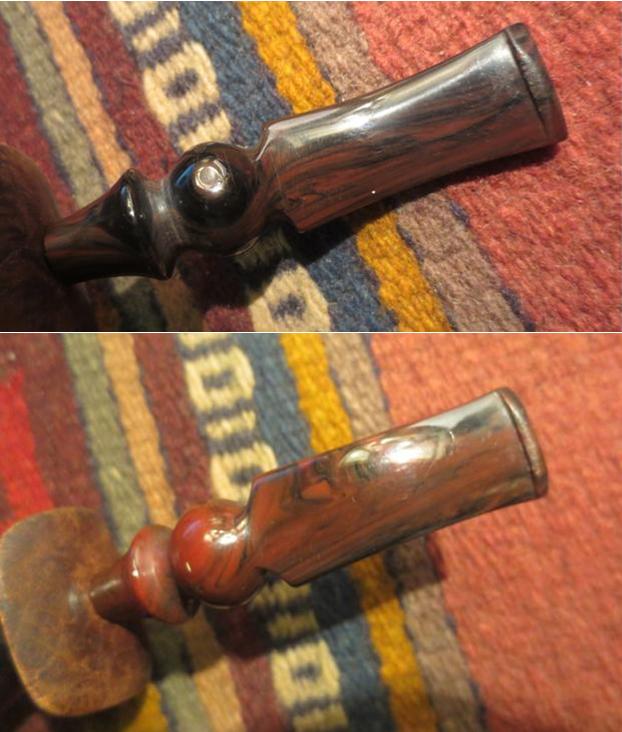
My brother sent me photos of this interestingly shaped De Jarnett pipe and wondered about it. I agreed there was something about it that grabbed me too. The grain on the darkly stained bowl, the Cumberland style Lucite stem, the curves of the pipe following the grain, the mushroom cap on the top of the bowl all were a part of the mystique of the pipe. He bid on it and the pipe was his. I received it in the mail in the last box of pipes he sent me. Last night I took it out to have a closer look at the pipe. I always have my brother take photos of the pipe before he does any work on it so he sent the following photos along with the pipe.de1It looks really nice but I had no idea how large the pipe was until I had it in hand. It is 6 ½ inches long, 2 ¾ inches tall, 2 ¼ inches in diameter with a chamber size of 7/8 inch. It is a handful. The stamping on the underside of the shank has a cactus which was Horace’s logo and the name De Jarnett with the J stylized into a pipe. Underneath it says Handmade in Arizona over 58-04. My guess is that the number stamping tells me that the pipe is the 58th pipe he made in 2004.de2The photo he sent me of the rim shows the cake in the bowl and the damage to the inner edge of the rim. It looks like it is burned but once I see it and examine it I will know how bad the burn mark is. There is also a sizable dent on the bowl top and some overall darkening of the rim cap.de3I had heard of De Jarnett pipes in the past and talked to others about them. I have also done repairs on one of them in the past but I had never taken the time to read about the maker. I assumed he was still living which turns out to be false. I turned to my two go to sites Pipephil and Pipedia for information and found little other than the dates of the maker which showed he had died and the location of the shop which is on the pipe anyway. However, Pipedia was more fruitful. Here is the link: https://pipedia.org/wiki/DeJarnett_Pipes

When I read the write up on Pipedia I found that Horace DeJarnett had died on July 24, 2013. He had been battling with terminal cancer, but his wife reported that he ultimately died of a stroke. Since I had also suffered a stroke this gave me a sense of connection with the carver. I only wish that I had been able to have a chat with him before he died. I find that those conversations I have had with pipe makers have been highlights of my pipe collecting and repair/restoration hobby.

Pipedia also included a photo of Horace that was taken by Pipes& Tobacco Magazine and used by courtesy. I have included much of the Pipedia article here for ease of reference. For the details and the remainder of the article use the link above.

Horace wrote of his pipes: “All of my pipes are carved from the finest quality Algerian briar I can find. I coat each bowl with a special pre-carb treatment which speeds up the break-in process. After the third bowl, it will smoke as if it had been in your collection for years. I get a lot of positive feed-back on this feature.

Standard draft holes are 5/32″. I think that’s too small and many pipe smokers agree with me. So I drill mine to 3/16″ for a better draw. You won’t have to send my pipes out to a pipe repairman to have them opened up, as many do.

For over 40 years I worked in the grocery industry. In 1984 I founded my own food brokerage business. It prospered and grew into a multi-state corporation. In 1999 I sold my portion of the business and retired.

Due to health concerns and public scrutiny, I quit smoking cigarettes in 1993 and took up the pipe.

(I believed then – and still do – that health risks are greatly reduced by not inhaling and just puffing.) Serious pipe-smoking is conducive to day-dreaming, and thus the idea of making my own pipes became a quest.

I was fortunate to study under Andrew Kovacs, a well-known carver in Northern Arizona (trade name “Jandrew”) for about a year, off and on. I learned a lot of the basics from Andy, but some of my best counsel came via long telephone conversations with Mark Tinsky.

Over the years I have made and sold approximately 1,000 pipes, most of them here in the United States, but I do have customers in Indonesia, Germany, Japan, England, Israel, Canada, and Thailand.

What began as a hobby has become my passion. I lost my leg in 2001 due to a blood clot, so fortunately for me, I have an occupation that is “handicap friendly”.

That glimpse of Horace from his own words gives a clear picture of what he brought to the making of each pipe that he sent out. I have no idea where the pipe that arrived in Vancouver has been before coming here nor do I know where it will go afterward. But I know that it will certainly outlive me. The quality of briar and craftsmanship give it a great chance at longevity.

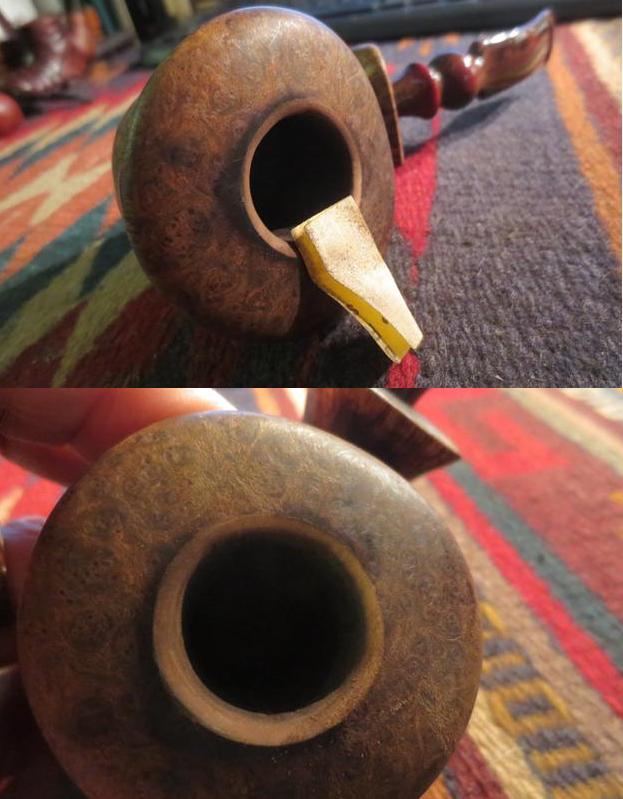
My brother Jeff did his normal thorough cleanup of the exterior and the interior of the pipe. When it arrived it had been reamed, cleaned and sent to me for the final touches. It is really nice to have him doing the grunt work on these pipes. This was no exception. I took a few photos of the cleaned up pipe when I brought it to my work table. de4The next photo shows the darkening and burn mark on the rim. A close up of that area is shown in the photos that follow.de5The burn mark and darkening at the front of the bowl was more extensive than I had originally guessed from the photos sent. The front inner edge is burned and beveled inward with the darkening extending quite a way into the rim top. The back edge also shows some burning that will need to be address. The second photo gives another view of the stamping.de6The stem had some tooth chatter on the top and the underside and the edge of the button was worn and flattened. de7To remove the burn damage on the inner edge of the rim I used a folded piece of 220 grit sandpaper to bevel the rim edge inward to accommodate the damage on the bowl front. I carried that bevel around the entire rim edge to clean up the damage at the rear as well. The next two photos show the newly beveled rim. The angle on the second photo makes the bevel appear to be thicker at the front of the bowl than the back. However, in hand the bevel is the same size around the bowl.de8I wet sanded the rim with 1500-2400 grit micromesh sanding pads and dry sanded it with 3200-12000 grit pads to polish the scratches and the new bevel. I used a dark brown stain pen to touch up the inner edge of the rim to match the colour of the bowl. All that remains of the burn mark is a small dark spot on the front top of the bowl and some darkening in the inner edge. It is far better than when I began. de9I sanded out the tooth chatter and reshaped the button with 220 grit sandpaper. I wet sanded the stem with 1500-2400 grit micromesh sanding pads, wiped it down with a damp cloth and dry sanded it with 3200-12000 grit pads. I wiped it down with a damp cloth a final time. de10 de11 de12I buffed the pipe and stem with Blue Diamond on the buffing wheel. I gave the bowl and stem multiple coats of carnauba wax. I buffed the pipe with a clean buffing pad to raise and shine and hand buffed it with a microfibre cloth. The finished pipe is shown in the photos below. It is a big pipe so it will eventually be listed on the store for sale. If you are interested in it before that time just send me an email at slaug@uniserve.com or send me a message or a comment here or on Facebook. Thanks for looking.de13 de14 de15 de16


An odd assortment of tiny Salesmen’s Pipes


Blog by Steve Laug

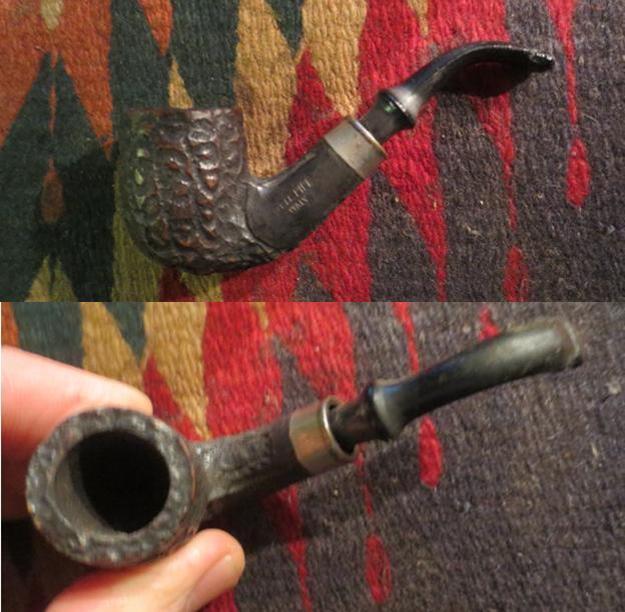
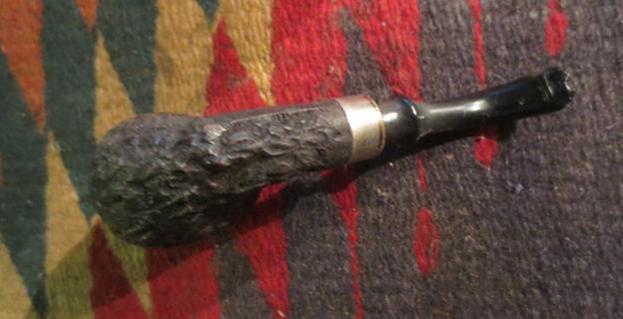
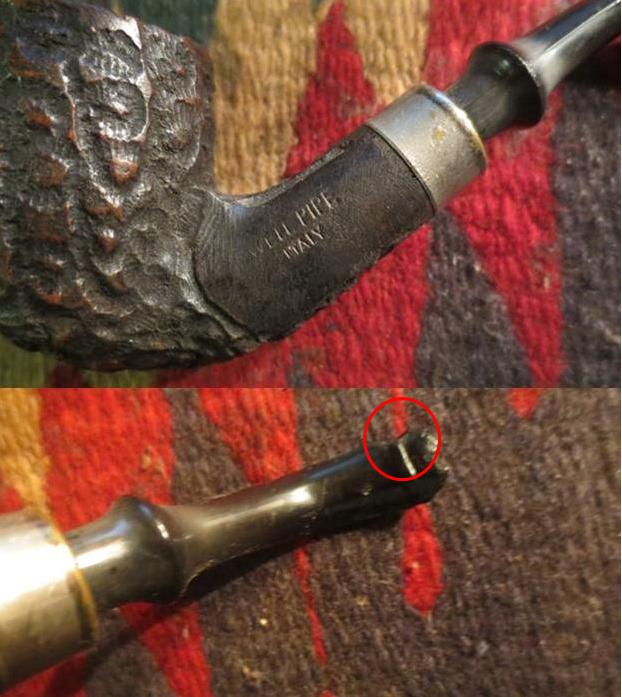
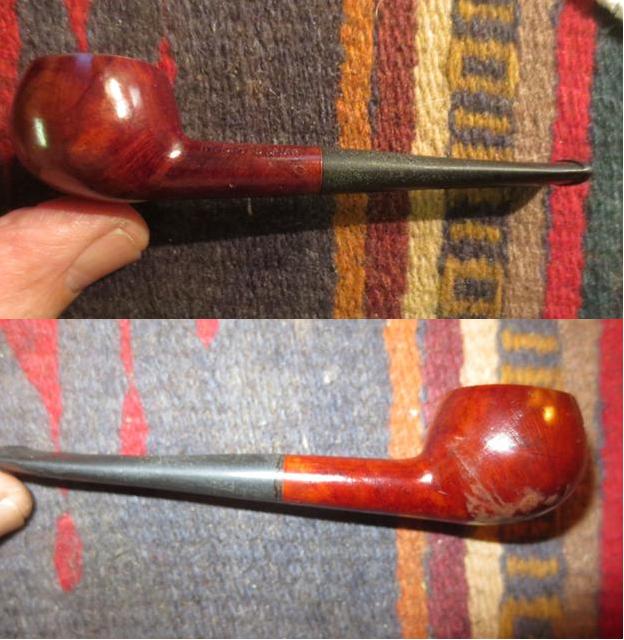
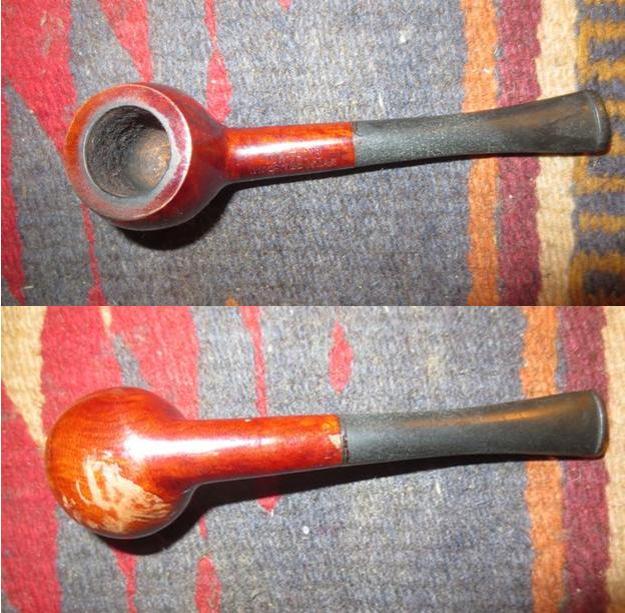
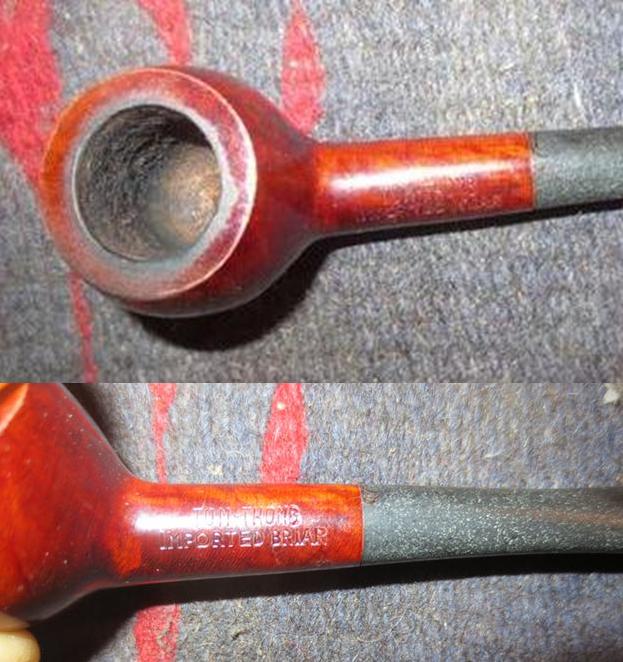
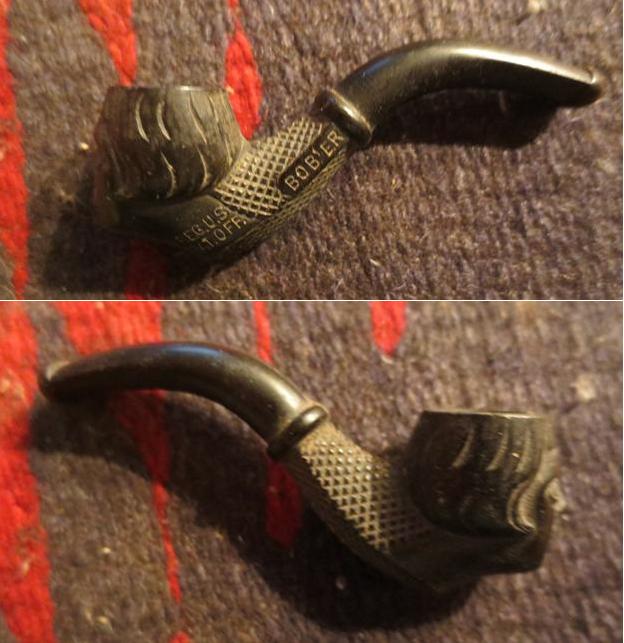
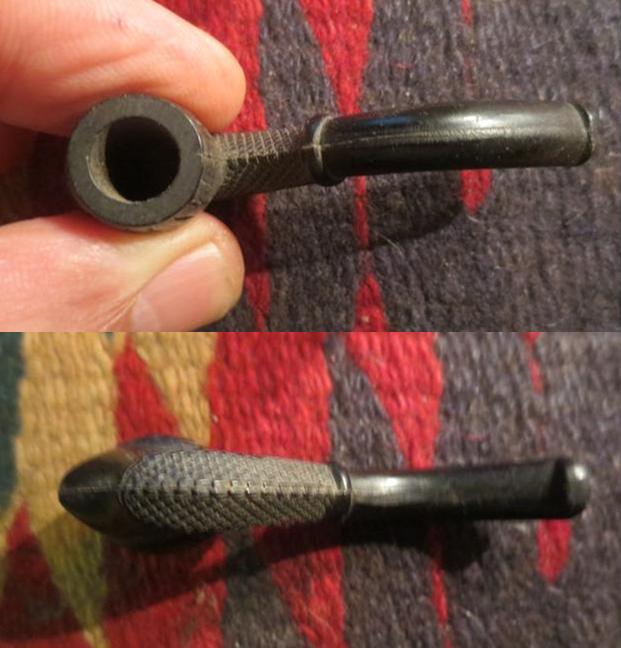
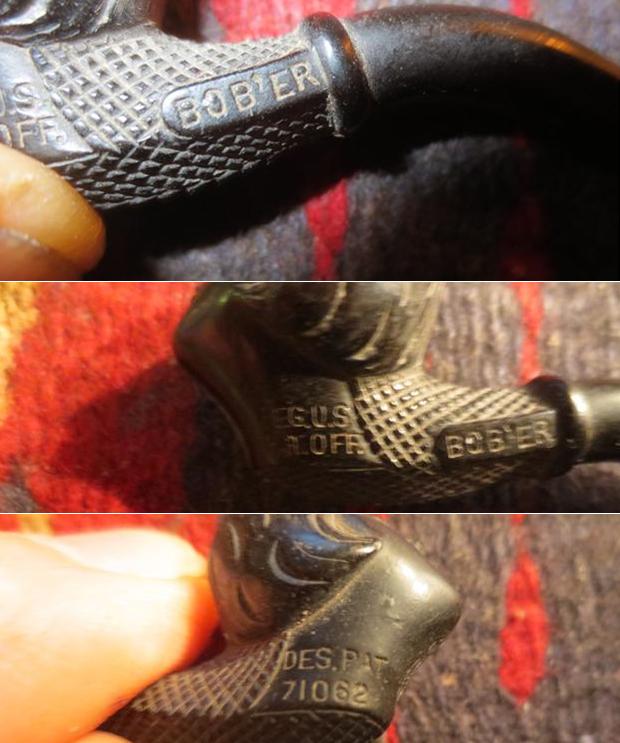
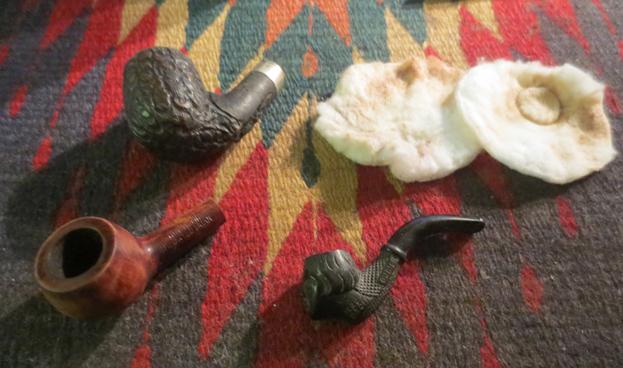
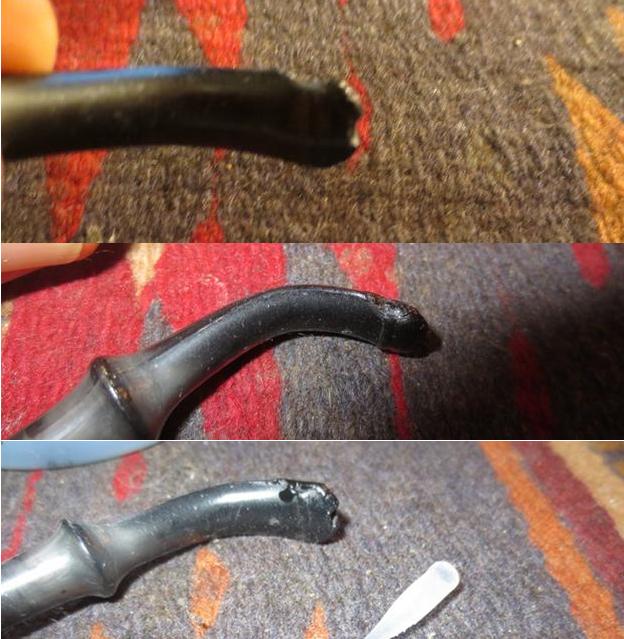
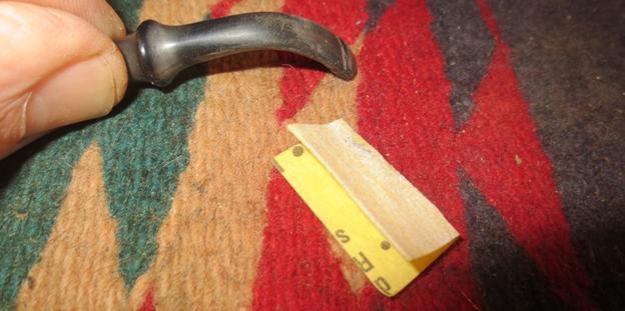
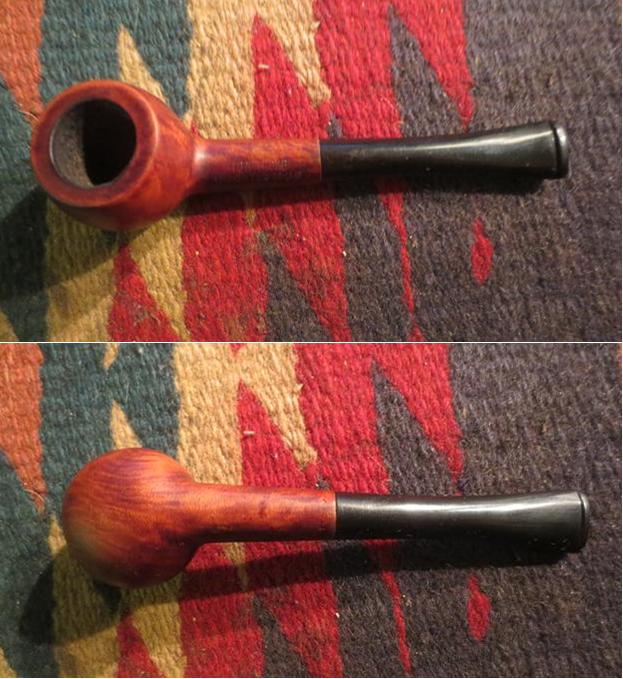
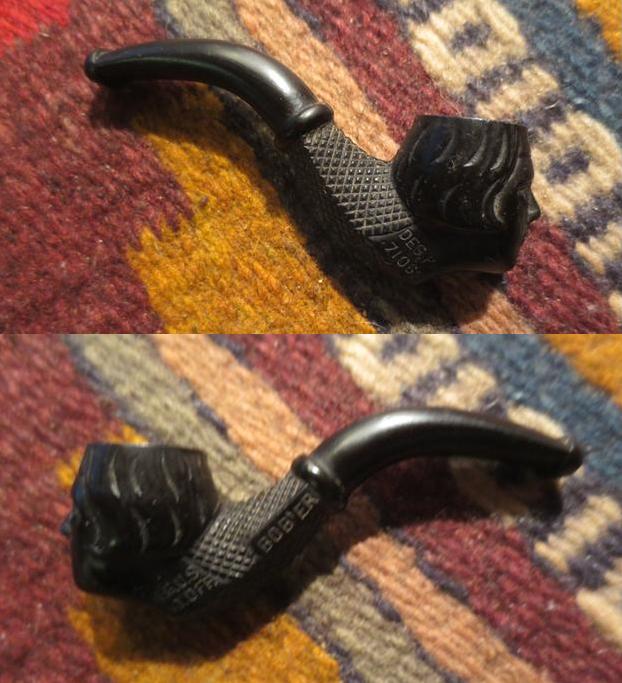
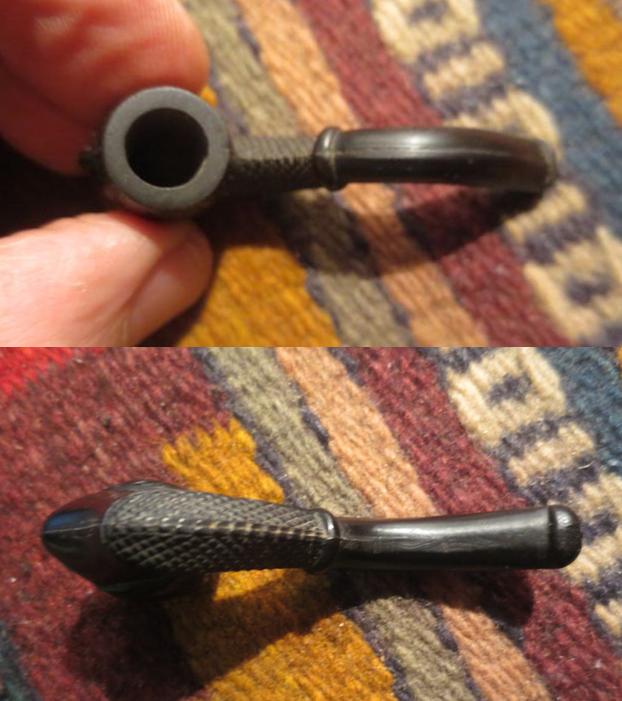
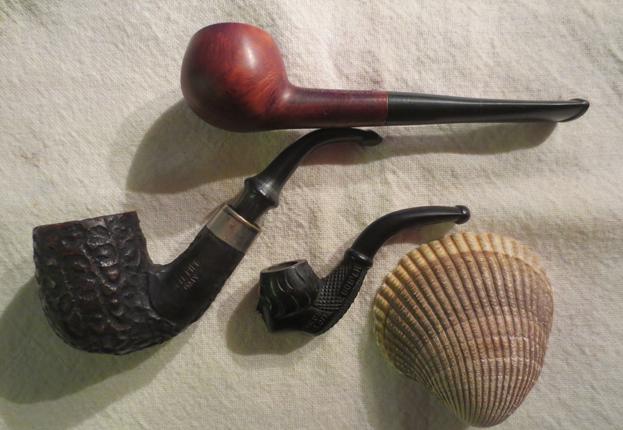
Over the past six months or so I have been taking the tiny pipes that my brother has sent and stack them to the side of the desk in a “maybe someday” pile. That is a pile that I might work on some day – you know what I mean kind of a cast of pipe pile. Finally last evening I was looking at them again. It may have been triggered by the refurbish I just did on the little KBB Yello-Bole bent billiard that refurbished recently (https://rebornpipes.com/2016/10/08/a-living-tiny-kbb-yello-bole-salesmans-pipe/). I am not sure but whatever it was I picked up the three pipes that were in the pile. The first was a rusticated bent billiard that looks like an old WDC System pipe. It is stamped Well Pipe over Italy on a smooth portion of the left side of the shank. The second one was a straight prince shaped pipe that was stamped Tom Thomb over Imported Briar on the left side and top of the shank. The third was a very unique pipe made of Bakelite I believe. It is a tiny carved figural head of a man who looks like a page. It is stamped Bob’er on the left side of the shank. On the neck and chin of the figural it was stamped on the left side Reg.US.Pat.Off and on the right side neck and chin Des.Pat. 71062. I took two photos of the group of three pipes as they were when I started.tiny1The first pipe, the Well Pipe was a fascinating little fellow. It is 3 ½ inches long, 1 ½ inches tall and the diameter is 1 inch. The chamber diameter is ½ inch. Proportionally, the pipe is very nicely done. The metal rim is oxidized. The bowl had a light cake that my brother had taken out. The stem was cast rubber with a typical P-lip type stem though the airway is directly in the end. The stem was chewed and there was a chunk out of the side of the stem below the button on the left side.tiny2tiny2aI took some close up photos of the stamping on the side of the shank and the condition of the stem. The bowl and stamping were in great shape. The nickel band was dirty and oxidized. The stem has a chunk missing out of the end of the stem. I have circled it in in red.tiny4The second pipe, the Tom Thomb prince was in decent shape. The bowl had a light cake that my brother reamed before sending it to me. The finish was peeling off the bowl on the right side and the bottom of the bowl. The rim had a tar buildup and some cake over flow. It is 4 inches long, 1 inch tall and the diameter is 1 inch. The chamber diameter is ½ inch. Proportionally, the pipe is very nicely done. The vulcanite stem was oxidized and there were two blisters on the top and bottom left side ahead of the button.tiny5 tiny6I took a close up photo of the rim to show the condition and the stamping to show its location on the shank. You can also see the oxidation in the vulcanite stem.tiny7The third pipe was the unique pipe Bakelite figural head of a man. The carved face is quite well done. It is a cast as the pipe has a seam on the top of the stem across the bowl and down the front and underside of the bowl and shank. It is 2 1/2 inches long, 3/4 inch tall and the diameter is 1/2 inch. The chamber diameter is 1/4 inch. The stem and bowl are pristine. The bowl is unsmoked. There is a cross hatched pattern on the shank. The casting is quite well done.tiny8 tiny9I took some close up photos of the stamping on the pipe. The first photo shows the left side shank stamp shows up clearly as Bob’er. The second photo shows the stamping on the left side of the neck and chin of the figural. The Reg.US.Pat.Off. stamping is very clear. The final photo shows the stamping on the right side neck and chin. Again the Des.Pat. 71062. is very clear.tiny10I wiped down the bowls with alcohol on cotton pads. I scrubbed the prince with acetone on a cotton pad. I was able to remove the grime and build up on the Well and the Bob’er. The acetone barely dented the surface of the peeling finish on the Tom Thomb.tiny11I started working on the stem of the Well pipe. I took a photo of the missing chunk. I cleaned the area with alcohol and then filled it in with black super glue using a tooth pick to place it in the divot.tiny12Once the repair had cured I sanded it with 229 grit sandpaper and shaped it with a needle file. I wanted it to match the right side of the stem and look like it had originally. I also shaped the P-lip on the top and bottom sides.tiny13I wet sanded the stem with 1500-2400 grit micromesh sanding pads and dry sanded it with 3200-12000 grit pads. After each set of three pads I rubbed the stem down with Obsidian Oil. After the final sanding of the 12000 grit pad I gave it a final coat of oil and set it aside to dry.tiny20 tiny21 tiny22I buffed the stem and the bowl with Blue Diamond and gave them multiple coats of carnauba wax. I buffed it with a clean buffing pad and then by hand with a microfibre cloth. The finished Well pipe is shown in the photos below.tiny17 tiny18With the Well Pipe finished I focused on the Tom Thomb prince. I started by sanding out the blisters on the stem. On both the top and the bottom there were blisters on the left side near the button. I forgot to take a photo of the bubbles but after I had started sanding it with 220 grit sandpaper I took the next photo. I sanded out the bubbles and then wet sanded the stem with 1500-2400 grit micromesh sanding pads. I dry sanded it with 3200-12000 grit sanding pads. I rubbed it down with Obsidian Oil after each set of three pads and let it dry after the last pad.tiny19 tiny20 tiny21 tiny22I sanded off the finish on the bowl and shank avoiding the stamping. I wiped it down with acetone on cotton pads to remove the remaining finish. I stained the pipe with Danish Oil and Cherry stain.tiny23 tiny24I buffed the pipe and stem with Blue Diamond on the wheel and gave it multiple coats of carnauba wax. I buffed it with a clean buffing pad and then by hand with a microfibre cloth. The finished Tom Thomb pipe is shown in the photos below.tiny25 tiny26The last pipe, the Bakelite pipe did not take a lot of work. I gave it a coat or Conservator’s Wax and hand buffed it with a shoe brush and a microfibre cloth. The finished pipe is shown in the photos below.tiny27 tiny28I thought I would take some photos of the finished lot. The tiny pipes shine with a new sparkle. As I look at them I wonder if this is what they looked like when the salesmen carried to the pipe shops to sell orders for year’s pipes. Thanks for looking.tiny29 tiny30 tiny31 tiny32


There was an old woman who lived in a shoe…


Blog by Steve Laug

There was an old woman who lived in a shoe.
She had so many children, she didn’t know what to do;
She gave them some broth without any bread;
Then whipped them all soundly and put them to bed.
-Child’s Nursery Rhyme – Mother Goose

When I opened the box and saw this old pipe that my brother sent my first reaction was why? Then I started to look it over and I began to understand the attraction of it. It reminded me of the children’s rhyme, “The old woman who lived in a shoe”, that I used to recite growing up so it led me down memory lane. From what I can find the pipe is probably from the 30’s. The carving and detail of the shoe is quite well done. The lines demarcating the stitching and the worn look of a well broken in shoe add to the attraction. The carver even detailed the sole of the shoe and the bead around the boot. He carved in the laces and the tongue of the shoe. Even the fills added to the worn and well broken in boot look of the pipe.

My brother sent me some photos of the pipe to show what it looked like when it was found. He found it in an antique shop on a recent trip around the Butte and Anaconda, Montana area. He added some other nice pipes and then this one as well. The pipe is not tiny, but is a full-sized smoking pipe. The dimensions will tell the story. It is 7 inches long and the bowl is 2 inches tall. The diameter of the bowl exterior is 1 ¼ inches and the chamber is ¾ inches in diameter. The photos focus in on the details of the carving on the pipe and the placement of the fills – which even give the pipe a worn and broken in feel of a worn boot.shoe1 shoe2 shoe3 shoe4 shoe5 shoe6 shoe7 shoe8I decided to work on the bowl first. The missing fill on the rim of the pipe that is shown in the above photo at the 10 o’clock position (left side of the photo toward the top of the bowl) was the first one I worked on. I cleaned off the rim with some isopropyl alcohol then filled in the divot with some clear super glue and briar dust. Once it dried I sanded the fill smooth to blend it in with the rest of the surface of the rim. I sanded the inside edge as well and smoothed it out.shoe9I used a Black Sharpie pen to mark out the lines used demarcate the stitching and lacing of the boot. I stained the briar with a cherry stain/Danish Oil combination. I rubbed the stain onto the briar and used a cotton swab to apply it in the grooves. I wiped it off with a soft cloth. The first photo below shows the pipe before I wiped it off.shoe10The next five photos show the pipe after I wiped it down. The cherry stain looked really good on the briar. I would need to reapply the black Sharpie to highlight the grooves and do some more highlights of brown into the worn areas of the boot.shoe11 shoe12 shoe13I used the black Sharpie to redefine the grooves in the stitching areas and tongue and laces once again. In the folds I applied some dark brown stain with a stain pen to add shadows. The next photos show the pipe after that. The browns add shadows to the finish and give the folds some depth.shoe14 shoe15I sanded the stem with 220 grit sandpaper to smooth out the roughness of the old vulcanite. It was pitted and rough in texture. The initial sanding smooth out the roughness. I wet sanded it with 1500-2400 grit micromesh sanding pads and the shine began to rise. I rubbed it down with Obsidian Oil. I dry sanded the stem with 3200-12000 grit pads. I rubbed the stem down with the oil after each set of three sanding pads. After sanding with the 12000 grit pad and rubbing it down with Obsidian Oil I set it aside to dry.shoe16 shoe17 shoe18I used a sharper pointed Black Sharpie Pen and a red felt tip pen to highlight more of the shadows in the folds of the boot. I buffed the pipe with Blue Diamond on the buffing wheel and .gave the pipe and stem multiple coats of carnauba wax. I buffed the pipe with a clean buffing pad to raise the shine. I hand buffed it with a microfibre cloth. My goal was to get the pipe looking like it was made out of old soft leather. I wanted the shadows in the folds and the stitch lines to look authentic. Hopefully the stain and the fussing with pens have achieved that. The finished pipe is shown in the photos below and personally I think the old woman’s shoe looks amazing. This was a fun project and really a diversion from the usual routine of pipe restoration. Thanks for looking. Enjoy.shoe19 shoe20 shoe21 shoe22 shoe23 shoe24 shoe25 shoe26 shoe27 shoe28 shoe29

Another Denicotea – a tough one from Plovdiv, Bulgaria


Blog by Dal Stanton

When southerners in the US invoke the phrase, “Bless his heart….”, I’ve learned that it usually means that there is some problem or abnormality associated with the person that usually isn’t something he can control, or can’t be explained, or perhaps, even better, should be left without too much comment.  When I received these emailed pictures from Gary, my colleague in Plovdiv, and set my gaze on the two pipes he had purchased at a local antique shop and was gifting me, my reaction was to invoke, “Bless their hearts….”  Here are Gary’s finds that summoned forth my southern invocations.denicotea1 denicotea2I would like to say how much I appreciate Gary – the stories we have shared and life we’ve experienced together – he with a choice cigar, I with a favorite blend and a named pipe – all my rotation pipes have names!  I also appreciate how he has kept his eyes alert to possible pipe reclamations and restorations for me on the Plovdiv front, about 2 hours away from Sofia.  After he sent me these pictures, I emailed back saying that I wasn’t sure how much I could do to help the little brother, but the big boy had potential.  How much?  I couldn’t say, but I was indeed attracted to what appeared to be a meerschaum lined, large volcano shaped stummel which seemed to be hopeful of again being nestled in someone’s palm! A week or so later, I found the gifted pipes waiting for me in my office in Sofia.  When they made it to my work desk at home, I added these pictures of the Denicotea volcano to fill in the gaps.denicotea3 denicotea4 denicotea5 denicotea6 denicotea7This is the second Denicotea I’ve worked on in as many weeks!  The Denicotea Curling turned out to be a beautifully detailed grained pipe but the filtration internals were interesting.  I’m wondering what filtering wonders this one holds!  The left side of the shank has what appears to be a newer script of Denicotea stamped over Trend.  The right side of the shank has a very worn stamp Bruyere Extra over shape number 1152.  Bless its heart…the bowl finish is in bad, bad shape.  It appears to have had a thick shellac varnish on it that has simply worn away and chipping presenting shiny spots of the haggard finish hanging on.  I’ll need to clean the surface thoroughly to see fills that might need attention. The rim is majorly scraped and dented yet, for what I can see of the meerlining, it looks like it might be intact, not having any cracks.  I’m hopeful!  The bowl itself is heavily caked and I’ll need to clean it carefully.  This will be my first meerschaum to work on so I’ll be reading up on other blogs’ meerlined clean-ups and restores.  The stem has some oxidation but only minor teeth chatter.  The button has some tooth bites/dents that need attention.  Most interesting about the stem is that it is comprised of two pieces.  When I disassemble the stem for the first time, I discover that the main slightly bent stem, has an interlocking twist mechanism connecting it to the stem’s filter extension.  The shorter vulcanite filter extension inserts normally into the mortise and has a normal looking air restricting tenon.  Nice – you  can use the pipe with or without filters.  My first impression of the interlocking twist action of the stem is that it is ingenious and seems to work quite well.  I took some pictures to show the stem assembly.denicotea8While playing with and admiring the stem interlocking mechanism, which I discovered would only engage at the correct alignment between stem and filter insert, I looked down the vacated mortise.  Denicotea did not disappoint – had I any doubt?  I could see a deeply implanted metal insert.  Again, as with the Denicotea Curling I had just finished, is this a rogue stinger of sorts that dropped out of the filter insert tenon or is this another filtration machination?  At first glance I’m guessing, rogue stinger, but….  By palm thumping the mortise and a little help from my handy dental probe and tweezers the stinger is extracted.  The end of the stinger appears to have broken off shortening the inserted portion that would grip the vulcanite tenon.  This stinger becomes history.denicotea9With this being my first meerlined project, I read different entries to make sure I was moving through the learning curve.  Unlike briar, I know that a cake is not needed with meerschaum which is a stone (German for ‘sea foam’).  I found Steve’s essay (Link) helpful as he dealt with the two major questions I have about this Denicotea: First, how to approach cleaning out the cake?  Secondly, how to approach the rim surface which combines/intermingles the repairs of both briar and meerschaum?  Can I top meer as I would a briar rim?  How do I approach applying stain later with the meerschaum in the mix – sharing the rim surface?  These are some of the questions as I approach the Denicotea Trend, ‘Bless his heart’, I don’t want to make things worse than they already are!  Attacking the cake, with the cake as thick as it is, I could employ my Pipnet blades to start the reaming and finish up with the Savinelli pipe knife for the fine tuning, but on the maiden voyage with ‘sea foam’ I resolve to take a slower voyage with the Savinelli knife.  Also, since it is a new tool in my chest, I’m anxious to hone in on the techniques of its use. I take another close-up of the bowl to mark the progress.  After taking the picture and taking a closer look, I decide first to clean the rim area with Murphy Oil Soap using the brass brush.  I want to see the meer more clearly to inform the reaming process of possible cracks.  I also decide to wash the entire stummel with Murphy while I was at it. Using cotton pads, I apply Murphy Soap undiluted and scrub the stummel surface and rim.  With a brass brush, I work at loosening and cleaning up the lava and cake build up to see the rim better.  The Murphy Soap doesn’t make much of a dent on the stummel – it is looking more like residue varnish left over on the surface.  But, progress is made on the rim and I can see the meerlining much better.  It seems to be in good shape, but the rim will need topping to restore clean, healthy briar to the rim. denicotea10 denicotea11Satisfied with my improved perspective, I take the stummel with Savinelli pipe knife in hand to the 10th floor ‘Man Cave’ balcony to ream the pipe.  The additional sunlight helps me see the internal bowl surface as I bring the knife into contact with the cake.  The technique that develops is that I start from the rim, where the actual meerschaum surface is more evident, and work down gradually into the bowl where the cake thickens.  As I work with the knife, I also can detect a difference in the sound and feel of the knife as it has contact with the cake or with the meerschaum surface.  Using the knife, it became more difficult to judge what was going on when I was at the floor of the fire chamber around the draft hole.  I take a picture at the completion of the knife reaming.  I then take 240 sanding paper rolled around my finger as well as around the thinner end of a plastic toothbrush handle and continue to clean the meer surface of cake residue.  Even though the meerschaum is dark colored, it is smooth to the touch and the cake is eliminated!  I wipe out the chamber with a damp cotton pad.  I’m pleased and relieved.  The pictures show the progress.denicotea12 denicotea13 denicotea14With the bowl reamed and cleaned, I take Q-tips and pipe cleaners and clean the internals of the stummel using isopropyl 95%.  As I work on the internals with the Q-tips and pipe cleaners I watch the growing pile of used Q-tips and pipe cleaners change from being a hopeful small pile to a frustrated virtual Mt. Everest of expended Q-tips and pipe cleaners with no ‘gunkless’ end in sight.  From what I can see with my iPhone light down the mortise and what I can detect from the touch of the many Q-tips that have made the plunge, there seems to be a cavity of sorts between where the meerschaum lining terminates with the draft hole (as it transitions into the shank) and a tightening or closing of the mortise about ¾ in from the tenon side formed when the shank was factory bored.  This cavity seems to be a natural gunk reservoir that Q-tips pass over.  denicotea15

My first thought is to pull out the retort, but after a quick email to Charles Lemon (Dad’spipes.com) my concerns that the meerlining might not stand up to the boiling alcohol were confirmed.  Instead Charles recommended:

Without using the retort, I would suggest using a flat-ended tool (the square end of a flat needle file?) or an appropriately sized drill bit turned by hand to scrape out as much of the old tars and gunk as possible and then going at it again with swabs and cleaners dipped in alcohol. 

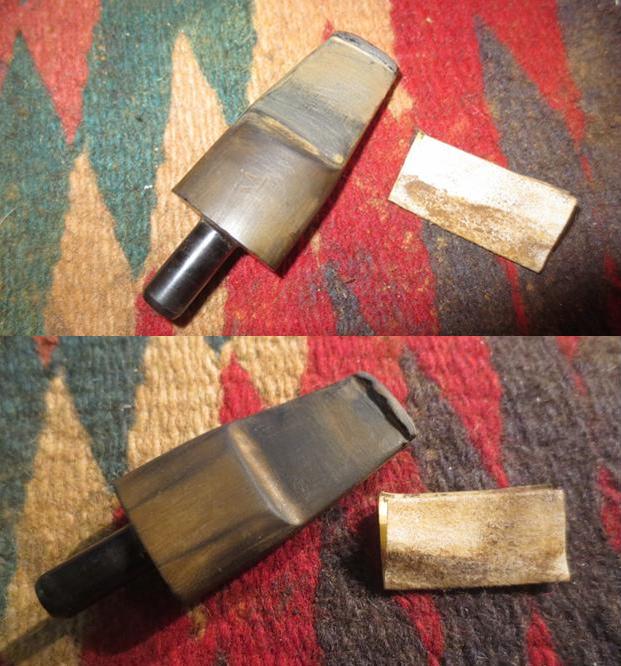
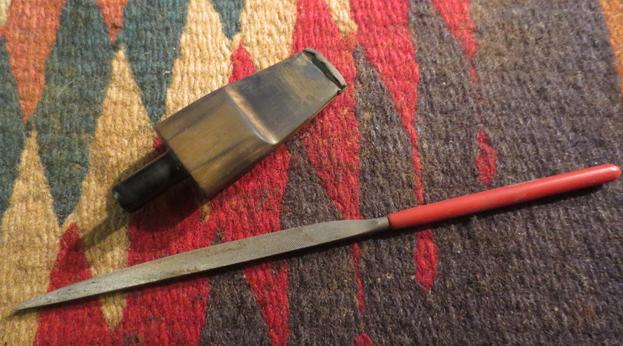
I grab my flat spoon and pointed dental probes and reach in over the ‘hump’ in the mortise to scratch up the muck cavity and it does stir things up – following again with Q-tips which are saturated with fresh, loose muckness that had been scraped up by the dental probes.  As I scrape and Q-tip plunge repeatedly, the reality of what I believe is a design flaw with this Denicotea Trend forms in my mind.  It will be nigh impossible to keep this pipe clean with normal use and cleaning with the cavity existing deep within the mortise.  Therefore, a plan starts formulating, using the drill approach that Charles recommended above, I decide to take it one step further and attempt to re-engineer the internals of the mortise by removing the ‘hump’ in the mortise as much as I am able.  Since it is beyond (deeper) the reach of the tenon’s full insertion point within the mortise, widening the mortise by removing the hump (or some of it) should not impact the tenon’s fit.  My goal would be to create a straightened mortise that would expose a more uniform interior for cleaning.  I put down the dental probes and Q-tips and put the stummel aside to give more consideration to this plan.  The pictures below show the lack of progress with the cleaning job and a diagram I couldn’t resist creating to conceptualize the obstacle (yellow line) and solution (white dashed line)!denicotea16 denicotea17While reflecting on the emerging stummel game plan, I fish the multi-pieced stem out of the Oxi-clean bath and remove the oxidation that has emerged on the vulcanite surface with 320 sanding paper followed by 000 steel wool.  The stem surfaces look good so I turn to cleaning the internals of the two stem pieces.  I use Q-tips, cotton balls and pipe cleaners dipped in isopropyl 95%.  Not nearly as much resistance as the stummel is putting up.  The final picture shows more clearly tooth dents and button biting work that need to be tackled.denicotea18 denicotea19Back to the stummel, I decide to take a drill bit just at the size needed to match the narrow hole created by the tapered factory bore in the mortise – creating the ‘hump’ forming the cavity beyond it collecting the gunk.  I turn it by hand without impacting the mortise wall.  It’s not easy maintaining a straight approach with the bit by hand.  I turn the bit only at the hump not going deeper and potentially impacting the meer.  That seems to work as briar ‘saw dust’ drops out of the mortise.  I then take the next larger bit and do the same thing – not as easy as it bites into the briar hump more.  After doing this a few minutes I realize that this approach is not going to work to the degree I had hoped. To do this properly, I need a stationary drill press and a secure way to position the stummel and re-bore or deepen the mortise.  So, I take a semi-circular needle file and with nerves of steel, attack the hump without touching the mortise walls.  This was helpful in bringing the hump down a bit, but my hope for a straightened mortise was evaporating.  Putting away the file, I return to the scape and clean technique I began with and I make some progress!  The partial hump removal did help with the cleaning angles.  Finally, clean Q-tips start emerging and I take a final picture of ‘Cleaning Job Done!’  Then I recalled Charles’ suggestion of using a ‘flat’ edged file to scrape. Hmm.  So, I take my flat end needle file and scrape – unbelievable!  More muck!  Thankfully, not too many more Q-tips were expended and I can say, to the best of my ability and understanding: Clean!  When I put this pipe on eBay to find it a new home, I do not want to put forward a ‘hypocrite pipe’ – looking good on the outside but nasty on the inside!  Pipes often remind me of people and how God’s work starts on the ‘internals’ and then moves to the ‘externals’!denicotea20 denicotea21With ‘internals’ of both stummel and stem now in good shape, I move to the externals.  The next step is to work on the rim. When I look at the rim I discover a place in the meerschaum that has cracked (ugh!) at about 6:35 o’clock in the picture below and what might be a hairline crack running from in.  Even though I plan to top the rim, I apply some superglue to the chipped area hopefully to add a bit of strength.  It’s late, I’m tired from the longest muck cleaning contest in my record book, so I put the stummel down to allow the superglue to cure overnight.denicotea22 denicotea23The next day, I take a picture of the rim to show the spot on the rim where I applied superglue the night before and to show the progress as I top the rim.  I have not topped a meerlined pipe before, so I proceed cautiously and I want to see how it turns out before moving to the stummel external finishing (Thought: “O ye of little faith!”).  With 240 grit sanding paper on a chop block I go out on the 10th floor Man Cave balcony and begin the topping process.  I move the stummel around in a circular motion for a few rotations and stop to check to make sure I’m staying true – not dipping into soft spots and checking out the meerlining.  I take pictures along the way to show the progress. denicotea24 denicotea25 denicotea26As they say, all was going so well until it wasn’t!  The chipped area in the meerschaum that I reinforced with superglue crumbled under the stress of the topping.  In the last picture above you can see the fault line developing.  What to do?  After looking at the new damage, I decide to continue to top the rim a bit more to increase the solid meer bordering the briar and to reduce the area in need of repair (3rd picture below).  I’m thankful that the volcano cone stummel has some space to give up to the topping process!denicotea27 denicotea28 denicotea29Another email is sent with the pictures above to Steve for his input.  So far, a ‘Two Email’ restoration…another record.  I’m thankful for willing mentors!  With Steve’s response in hand describing plaster of Paris and superglue options, I elect to rebuild the chipped area using superglue.  I apply it to the area and balance the stummel to allow the superglue to settle in place and I go to bed.  The next morning, I look at the patch and realize another layer of superglue is needed to build up the surface further.  After lightly sanding the patched area to smooth the first layer of glue I carefully apply another coat to the needed patch area.  Again, I balance the stummel allowing the second application of superglue to cure is the desired place.  My goal is to rebuild the meerschaum rim chip enough to be able to sand the wall side of the patch smooth, hopefully blending the patch with the meerlining.  I will probably again lightly top the stummel with a finer grit sand paper to bring the rim surface in sync with the patched area.  Finally, I will carefully cut a bevel on the meerschaum lining to minimize the patched area.  From earlier pictures, it appears that the pipe had a light bevel texturing the meerschaum lining look – I like it. denicotea30 denicotea31After several hours, I return to the Denicotea Trend anxious to make some progress.  The superglue patch has hardened to touch but I want to give it more time to cure thoroughly.  I decide to start a thorough removal of the old finish to coax the hidden briar grain into the light – I like this part!  I take another look at the stummel surface.  The old finish looks very much like the ‘shellacy’ candy apple varnish sheen which often is a bear to remove.  With cotton pads and acetone, I scrub down the stummel to loosen up the old finish careful to avoid the ongoing rim repair.  After a lot of elbow grease and cotton pads as expected, the old finish is not giving up easily.  I decide to use 000 steel wool with acetone and lightly rub the surface with the wool and that does the trick.  Utilizing the spittle test to moisten the bare wood, I get a sneak peak of the briar’s potential.denicotea32 denicotea33Now to the complete the rim.  The picture directly above and below show the superglue patch for the chip in the meerschaum lining of the bowl.  With 240 grit sanding paper, I sand the patch down to the meer surface rounding it to blend with the curvature of the bowl.  I concentrate only on the wall area of the patch leaving the rim surface for later.  When the surface of the patch wall is smooth and blends with the curvature, I sand the patch on the rim surface to bring it down to blend.  I had intended to return to the topping board for a few revolutions, but decide that it would be better to work directly on the patch instead of removing more of the bowl on the topping board and stressing the patch more than needed.  It didn’t take long to sand the patch bump down to the rim surface.  At this point, also with 240 grit sanding paper, I cut a bevel on the inside of the meer rim to help blend the patch but also simply to soften the meer’s rim edge.  I’m satisfied with the patch even though the patch has a different hue from the surrounding meer.  It’s the best I can do and I’m thankful it seems strong and I’m hopeful it will hold up well for many bowlfuls of tobacco to come.denicotea34 denicotea35 denicotea36Turning back to the stem, I take close-up of the repair needed with a tooth dent and a bite on the button lip.  I decide to try the heating technique to address these problems.  Another first for me on the restore!  With a butane lighter, I gingerly place the flame over the areas – remembering Steve’s description when he did this – ‘painting the surface’ with the flame.  Well, I’m not sure if it was a success or not.  After the flame, I use 240 grit sanding paper and finish removing the tooth dent and smooth out the button lip.  I also refine the button lip above and below with the straight edge of a needle file.  Pictures show the progress. denicotea37denicotea38Satisfied with how the repairs look, I begin the micromesh sanding/polishing cycles on the stem.  Reattaching the reassembled stem to the stummel, using micromesh pads 1500-2400 I wet sand the stem follow with applying Obsidian Oil.  Following the wet sand, I dry sand using micromesh pads 3200-4000 and then 6000-12000, following each cycle with an application of Obsidian Oil.  I love the vulcanite pop after the micromesh polishing.  The pictures show the progress on the stem polishing.denicotea39 denicotea40 denicotea41With the stem work completed, I return to the stummel and take a medium sanding sponge and use it to lightly top the rim rotating it in a circular motion over the sponge.  I do this to finish the sanding of the rim preparing for the micromesh polishing.  With a light grade sanding sponge, I sand the rim as well as the stummel removing small nicks on the briar surface.  Using micromesh pads 1500 to 2400 I wet sand the stummel and rim followed by dry sanding with pads 3200-4000.  After completing this cycle, I notice two small pits that looked like they had been fills on the front bottom of the volcano shape.  I didn’t notice them before and the question in my mind is, do I fill them and then spot sand the area and repeat the micromesh process?  My answer was, ‘Yes’.  I applied a couple drops of super glue to the pits and set the project aside and because its late, I go to bed!  Pictures show the stummel progress and stoppage of progress!denicotea42 denicotea43 denicotea44 denicotea45 denicotea46The next morning, I played patch catchup!  Folding a small piece of 240 grit sanding paper into a knife edge, I strategically sanded the patch bumps down to the briar surface (pictured).  Then, repeating use of the light weight sanding sponge, followed by repeating the micromesh cycles 1500-4000, I can then bring the patched area back in pace with the rest of the stummel.  I complete the micromesh polishing process using pads 6000 to 12000.  I notice a few other fill areas that simply need to be darkened with a stain stick.  The pictures show the catch up and completion!denicotea47 denicotea48 denicotea49Decision time.  Do I stain this Denicotea Trend or simply bring the briar up to full glow directly with the polishing process?  The question that I had since the beginning with the meerschaum lining was how to approach staining the briar that shared the rim surface with the meer?  With input from Steve (Oh my, a 3-email restoration!), patience, a steady hand and a Q-tip was the advice.  After this, still unsure of a direction, I pulled in the ultimate authority and did a ‘Wife Taste Test’.  I explained to her that if I did stain, I wanted to use Fiebing’s Dark Brown and cut it by half with alcohol to lighten it.  With options spelled out, her choice was to leave the Denicotea as is. Rationale: “Most all my pipes have a dark hue – you need a lighter one.”  Good enough for me!  After applying Dark Walnut to a fill on the shank with an Italian brand stain stick, I take my Dremel tool with a felt wheel and I apply Tripoli compound to the stummel surface.  I use the slowest speed available and keep the wheel moving across the surface.  I don’t apply much pressure on the wheel allowing the speed of the Dremel and the compound to do the work.  Most blogs I’ve read that describe the use of polishing compounds warn against loading the wheel up on too much compound.  So, when I reload the wheel, I lightly touch the compound block.  After completing the Tripoli, I apply Blue Diamond compound with its own felt wheel, same speed and technique as with Tripoli.  Then, switching to a cotton cloth wheel and increasing the speed of the Dremel by one number, I apply several coats of carnauba wax on both stummel and stem, watching the wax as it liquefies and spread it evenly over the surface.  Following the carnauba application, I Dremel buff the entire pipe with a clean cloth wheel.  Completing the restoration, I hand buff the pipe vigorously with a microfiber cloth. denicotea50I started this restoration with, “Bless his heart….”  Now, this old boy stands on his own and though he has some scars of battle in the form of a meerschaum patch, he looks good.  My wife’s input to maintain the natural briar hue was spot on.  The beautiful caramel coloring blends well with the meerschaum lining and the depth of grain on this Denicotea has been liberated from being encased under the nasty shellac varnish.  I’m very pleased – especially with the last view below – the steward’s perspective.  The lateral fire grain will be a great view for the pipe man that adds this rescued Denicotea to his collection.  I couldn’t help starting off with pictures before (“Bless his heart….”) and after (“Dang!”).  If you would like to add this pipe to your collection, leave me a note in the comments.  Thanks for joining me!denicotea51 denicotea52 denicotea53 denicotea54 denicotea55 denicotea56 denicotea57 denicotea58
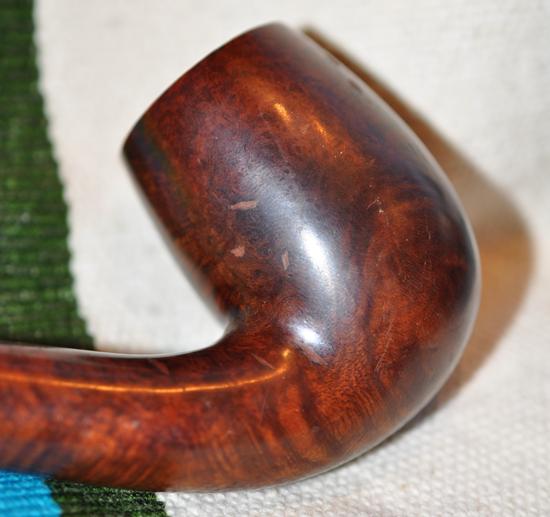
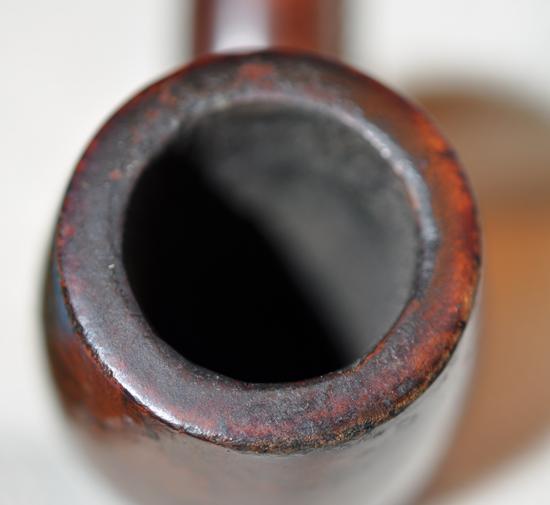
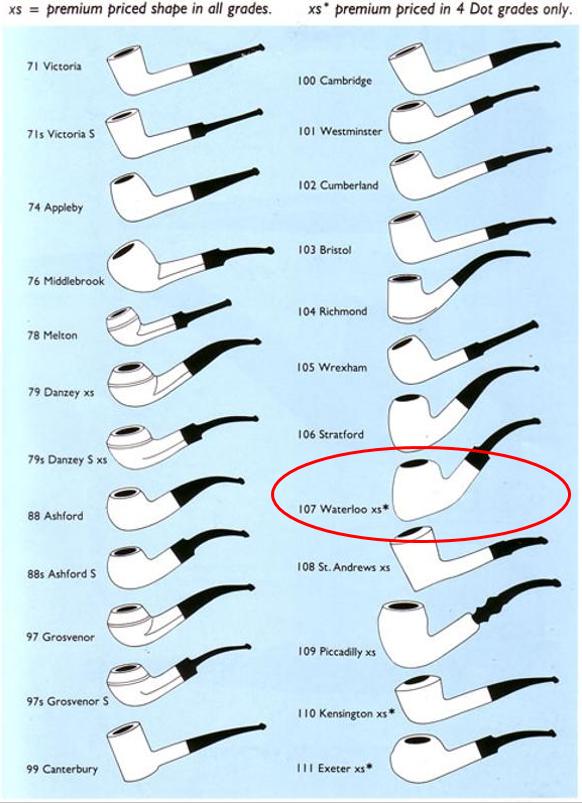
 

Cleaning up an Erik Nording Freehand


Blog by Steve Laug

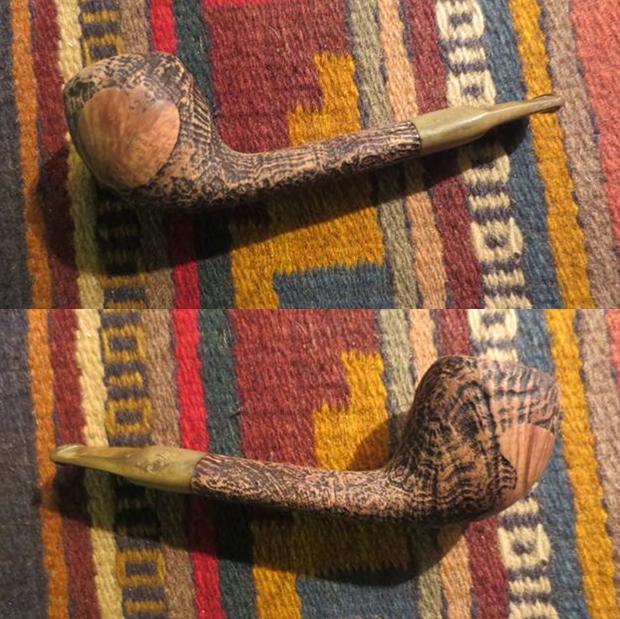
This is yet another interesting pipe from the latest box of pipes that my brother Jeff sent to me. It is a hand carved Erik Nording Freehand. It has a hand rusticated rough finish on the shank and the bowl. In looking at Erik’s website I am pretty sure that the pipe is from the Vahalla series as it has the same rustication. The difference is in the small bit of plateau left behind on the rim and the shank.The rim has some plateau with smooth areas around the edges and top of the bowl. The shank end was also smooth with a tiny spot of plateau there as well. There is a contrast stain on the bowl and shank with dark reddish undertones and a light/medium brown top stain. The stem is turned with a ring and ball after it insert into the shank. There is a cursive N on the stem that is the Nording stamp. erik1 erik2The stamping on the underside of the shank is readable but double stamped on the smooth portion of the flared shank. It reads Handmade by Erik Nording.erik3The rim is quite dirty with tars and oils built up in the plateau. It is heavily clogged with tars and oils and there are some burn marks on the inner edge of the rim top. The inner edge was originally smooth tapering into the bowl and rising to a ring of plateau on the top. The outer edge also flows from the plateau toward the bowl edge and is shaped like a cap. The underside of the bowl and shank shows the rustication pattern. The finish is in very good shape.erik4My brother cleaned the bowl and the internals of the pipe. He scrubbed the finish with Murphy’s Oil Soap and reamed the bowl with a PipNet reamer. He cleaned out the shank and airways with alcohol and pipe cleaners and cotton swabs. I took the next photos when the pipe arrived at my work table.erik5 erik6I took a close up photo of the rim top to show the caking and damage that had filled in the grooves in the plateau and darkened the inner edge of the bowl.erik7I took photos of the stem to show the tooth marks and chatter on both sides of the stem near the button. The stem was otherwise quite clean.erik8I sanded out the tooth marks and chatter with 220 grit sandpaper until they were gone. With the surface of the stem smooth it was ready to polish with the micromesh sanding pads.erik9I wet sanded the stem with 1500-2400 grit pads and dry sanded it with 3200-12000 grit pads. I wiped it down with a damp cloth after sanding it with each pad.erik10 erik11 erik12I did a quick clean on the mortise, airway in the shank and the stem with pipe cleaners, cotton swabs and alcohol. It was pretty clean.erik13The bowl top was actually quite a mess. I used a brass bristle wire brush to clean out the grooves. As I cleaned it I noticed that the inner edge of the rim was originally smooth. I sanded it with 220 grit sandpaper to remove the damaged areas and smooth it out. I worked to blend it into the plateau areas.erik14I polished the rim edge with micromesh sanding pads – wet sanding with 1500-2400 grit pads and dry sanding with 3200-12000 grit pads. I wanted to get the inner edge of the rim smooth and clean. I bleached it using a cotton swab and bleach to remove some of the darkening. I sanded it until it was smooth and polished and looked like it must have when the pipe was new.erik15 erik16 erik17I buffed the pipe and stem with Blue Diamond on the buffing wheel. I gave the bowl and stem multiple coats of carnauba wax. I buffed it with a clean buffing pad to polish it. I hand buffed it with a microfibre cloth. The finished pipe is shown in the photos below. This one will certainly be on the store soon. If you are interested in purchasing it ahead of time send me an email at slaug@uniserve.com or send me a message on Facebook or here. Thanks for looking.erik18 erik19 erik20 erik21 erik22 erik23 erik24 erik25
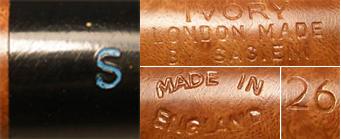
Just a few simple touches brought this Giorgio Orsini Bulldog to the top


Blog by Steve Laug

When I opened the last box that my brother Jeff sent and saw this Orsini Bulldog I was drawn to the shape, rusticated finish, smooth rim and shank end and the band of briar across the stem. There was something pleasing looking about this pipe that made me think it was going to be a keeper. He sent me the following photos by the eBay seller before the pipe arrived so I had some idea of what was coming but I have learned not to trust the photos of sellers. They tend to show things in their best light. orsini1The seller described the pipe as follows: The Pipe has a nice sand grain. Mouthpiece has very small bite marks and usable with 9mm Filter. Pipe is smoked and not cleaned, but in a good estate condition. The dimensions are: length: 5.5 in/14.1cm, height: 1.7in/4.4cm, width: 2in/5cm and chamber width: .75in/2cm. The only real negative to my mind was the 9mm filter in the shank but even that could be dealt with. Overall the pipe looked to be in pretty decent shape and even the filter was new.orsini2 orsini3My brother did a cursory cleaning on this one as it came in refurbished condition. The stem looked good as did the interior of the pipe. The next set of photos set on the colourful cloth are ones my brother took after cleaning the pipe.orsini4 orsini5He took some close up photos so that I could see what the rim and the stamping looked like on this pipe. The rim had some scratches and it looked to me like someone had stripped the varnish coat and some stain off of it. There were some shiny spots that remained.orsini6He took a photo of the smooth underside of the shank that clearly showed the sharp stamp on the underside of the shank. It has the signature of the maker, Giorgio Orsini as well as the stamping E 06.orsini7He took a close up photo of the look of the rustication and the logo on the stem. The stem logo was a G and O superimposed and highly stylized. The second photo below shows what looked like a flaw in the shank.orsini8I looked up the brand on my usual sources, Pipephil and Pipedia and found that Giorgio Orsini is from the Livorno region of Italy. His pipes were principally sold by Dan Pipe. All of them had acrylic stems. I took the following photos before I started working on the pipe.orsini9 orsini10The next close up photo of the rim shows the damage to the inner edge of the rim. I was a bit surprised as it did not show up clearly in earlier photos. You can see the uneven bevel to the rim particularly between the 6 and 8 o’clock position in the photo below.orsini11The stem showed scratches and light tooth marks as the seller had noted in his advertisement. These would be easy to deal with.orsini12I lightly sanded the stem with 220 grit sandpaper and then with micromesh sanding pads – wet sanding with 1500-2400 grit and dry sanding with 3200-12000 grit pads.orsini13I polished the stem with Before & After Pipe Polish using both the fine and extra fine paste. I am still experimenting with this product but so far I really like how it brings a shine and removes even scratches left behind by micromesh sanding pads.orsini14I repaired the flaw in the shank end and right side with a drop of clear super glue. I sanded it smooth once it dried and the flaw all but disappeared.orsini15I sanded repaired area lightly and the rim lightly with 220 grit sandpaper and also with 400-12000 grit micromesh sanding pads to smooth out the surface. I stained it with a dark brown stain pen. In retrospect I should have done that after addressing the poorly done bevel on the rim. But live and learn.orsini16I polished the rim with a bit of Conservator’s wax to smooth out the stain. I reworked the bevel on the inside edge of the bowl with a folded piece of 220 grit sandpaper. I slowly reshaped the beveled edge to remove the unevenness of the previous bevel. I was able to remove it and give it a cleaner more original look. I polished the rim top with 4000-12000 grit micromesh sanding pads.orsini17I buffed the rim with Blue Diamond polish and gave it and the stem several coats of carnauba wax. I hand waxed the bowl with Conservator’s Wax and lightly buffed the pipe with a clean buffing pad. I hand buffed it with a microfibre cloth for a finished look. The completed pipe is shown in the photos below. It is a stunning looking pipe and one that feels great in the hand. I am pretty sure that this one will stay with me. Thanks for looking.orsini18 orsini19 orsini20 orsini21 orsini22 orsini23 orsini24 orsini25