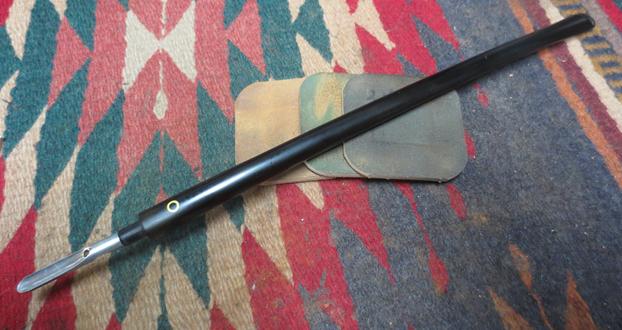
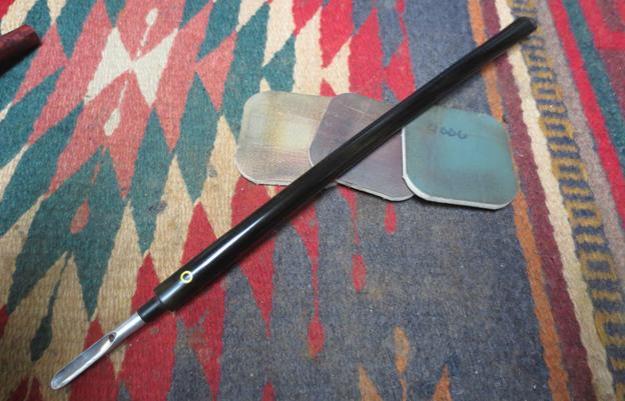
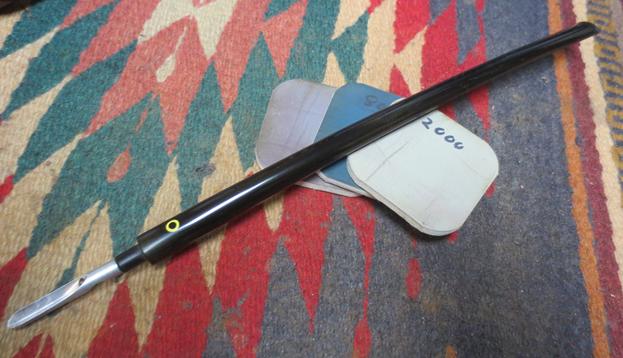
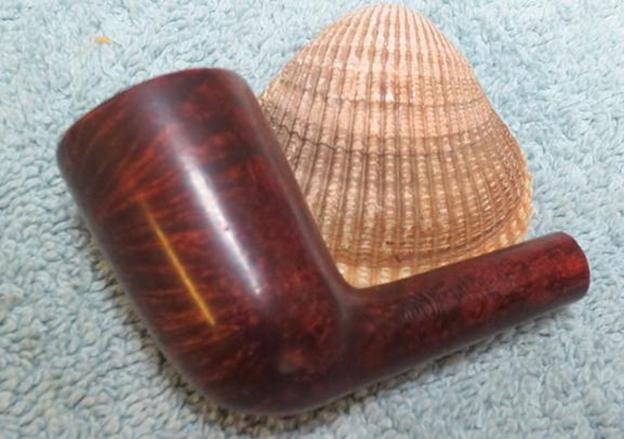
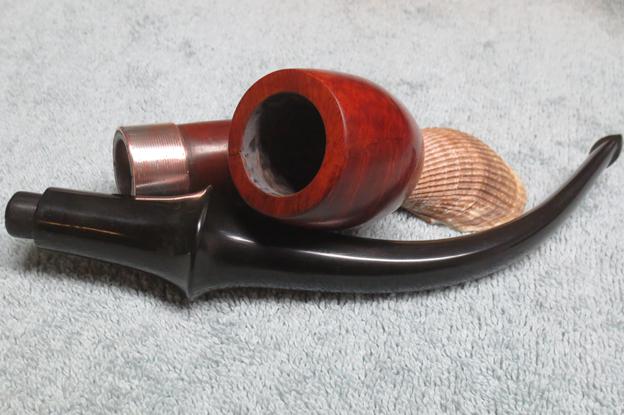
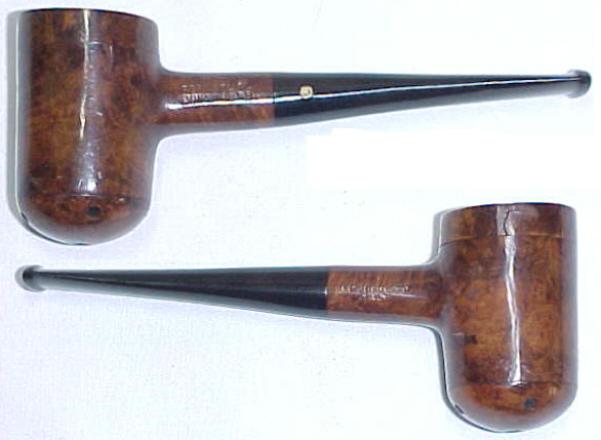
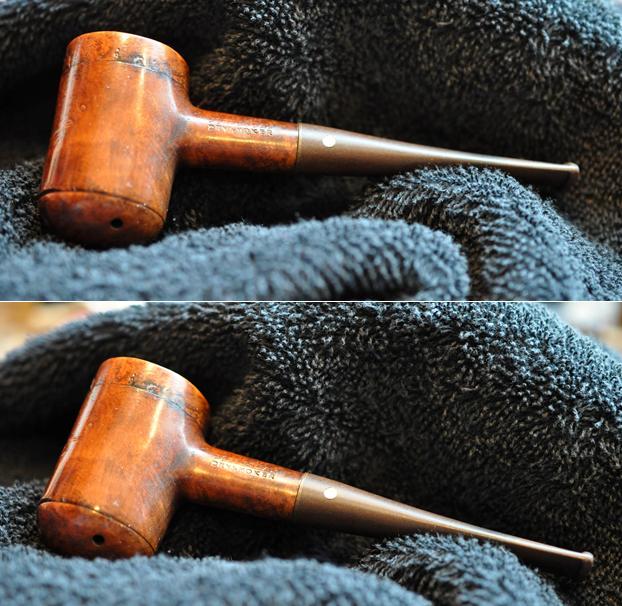
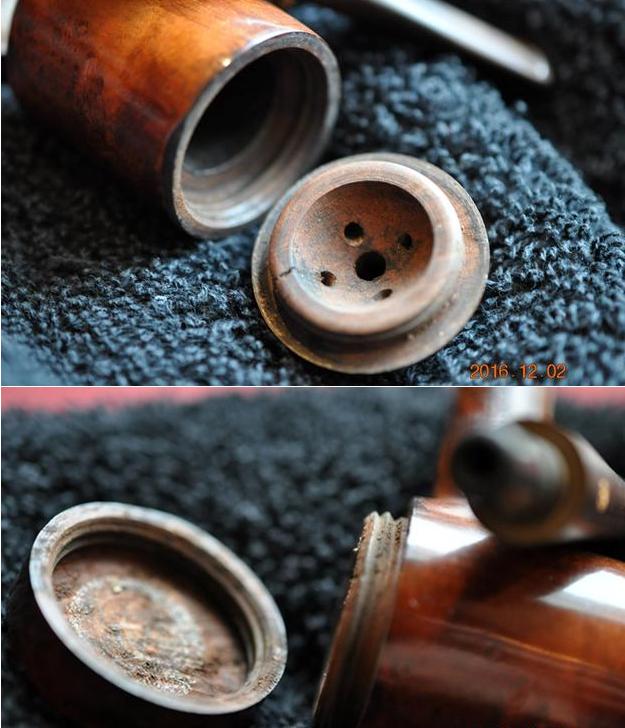
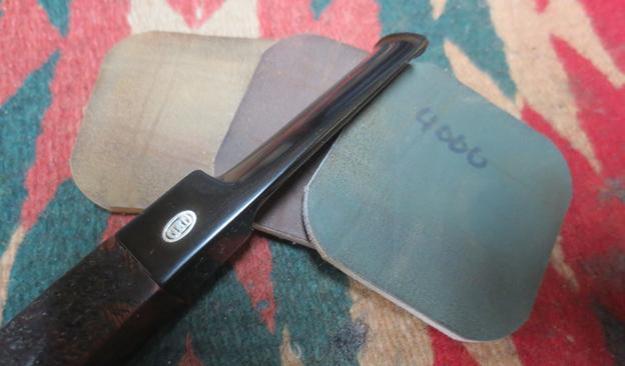
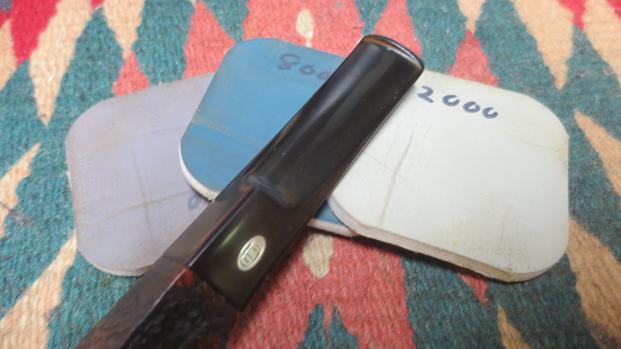
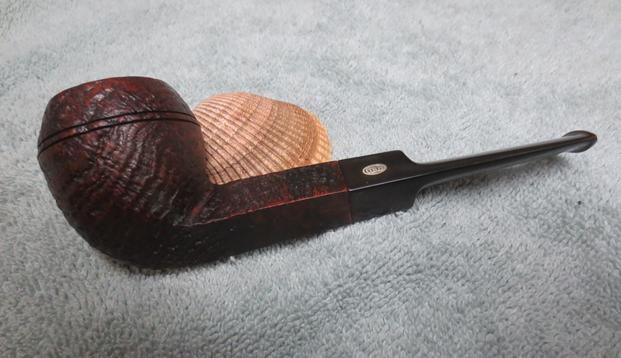
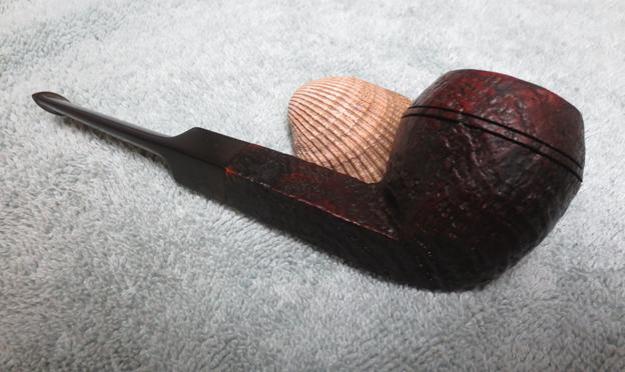
Tag Archives: bowl topping

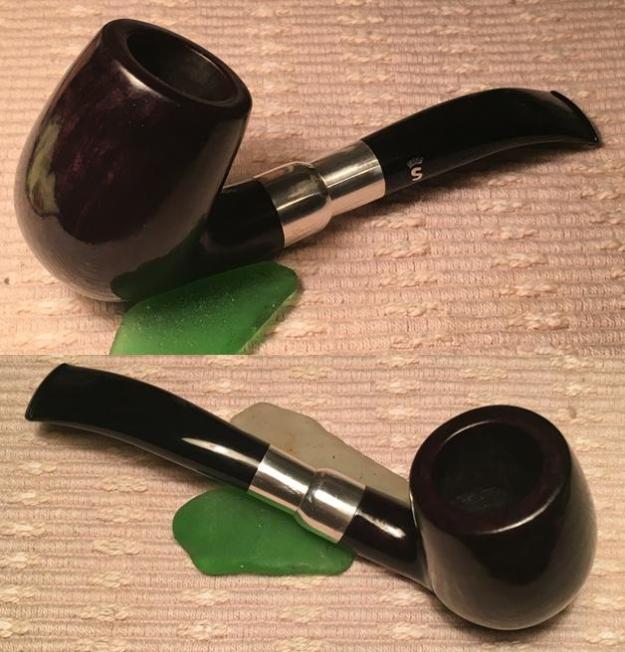
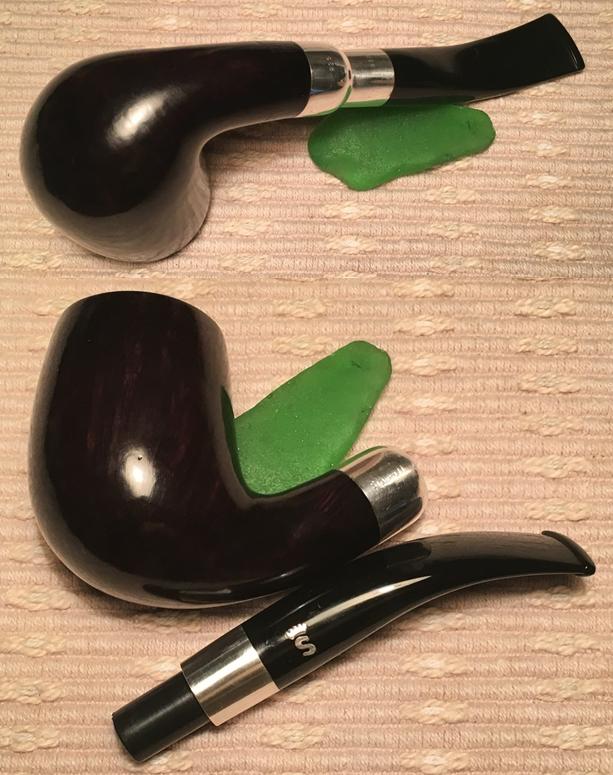
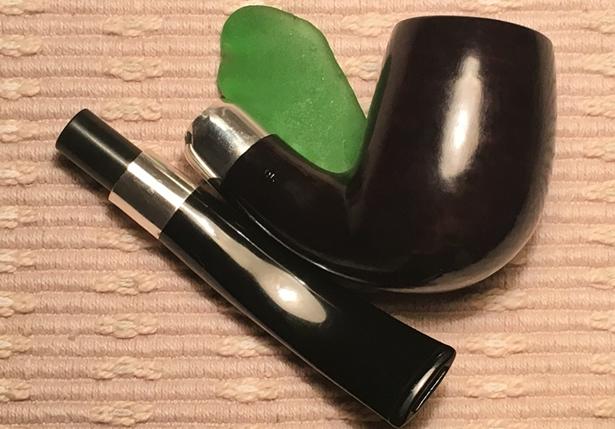
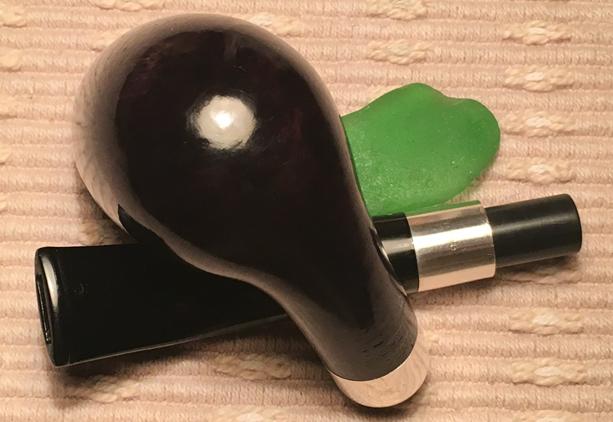
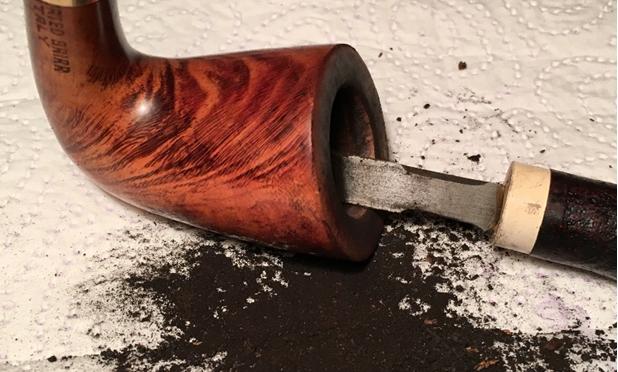
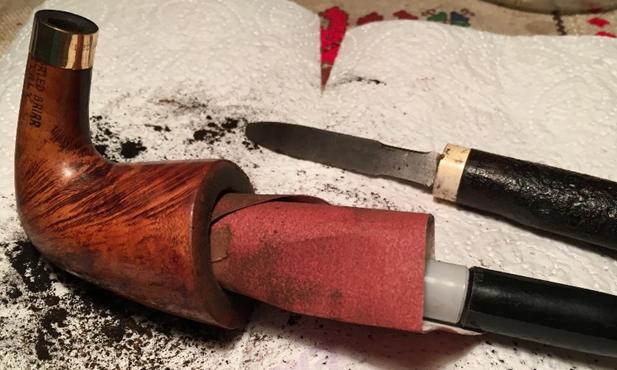
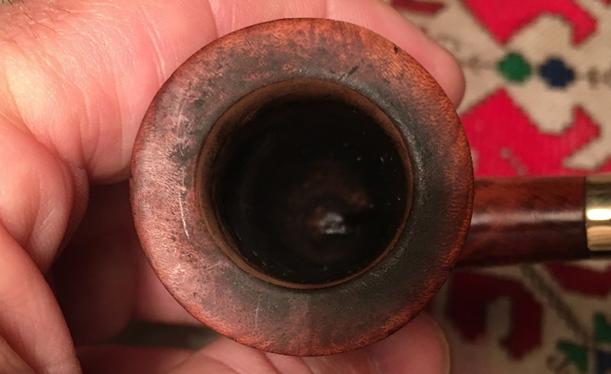
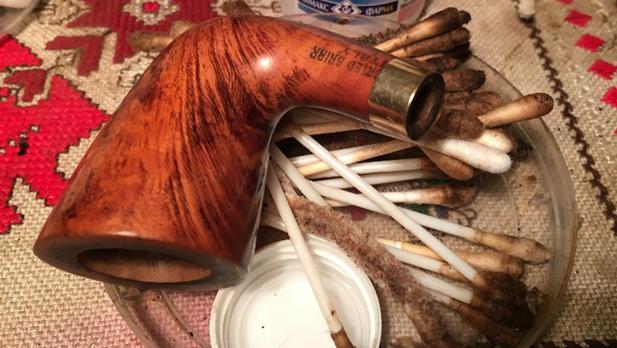
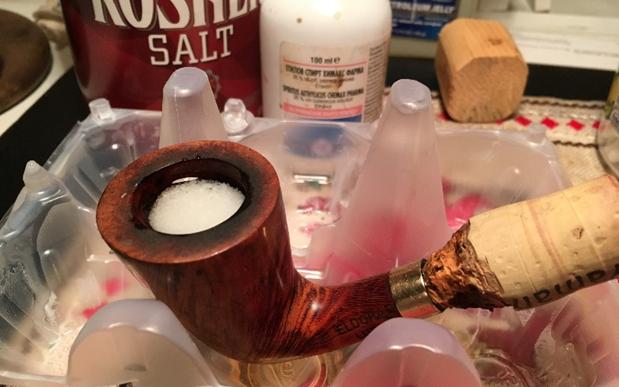
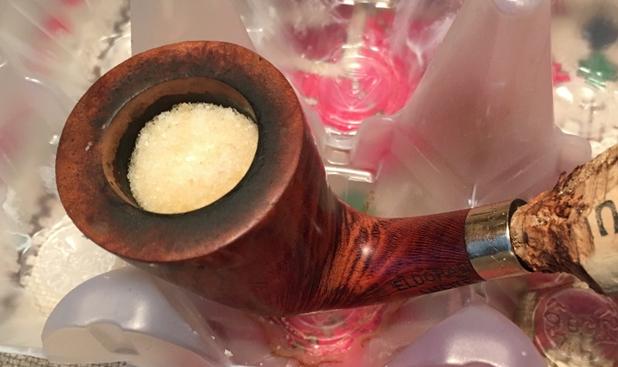
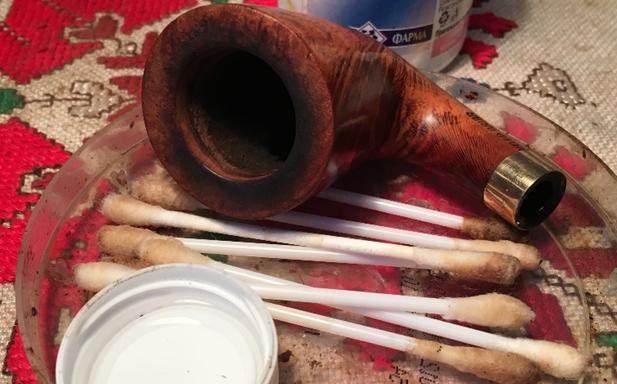
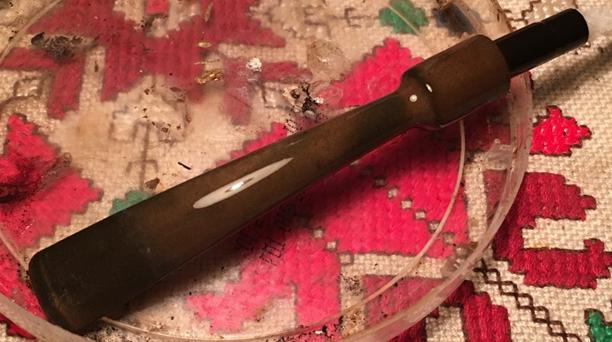
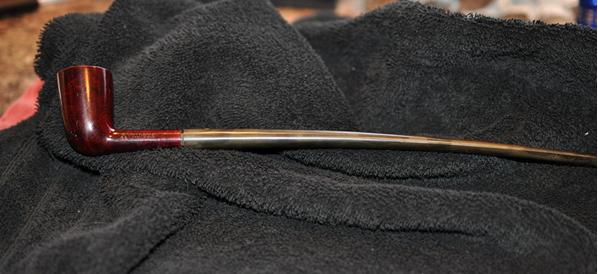
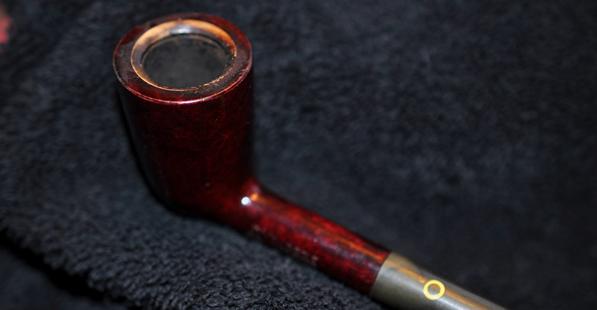
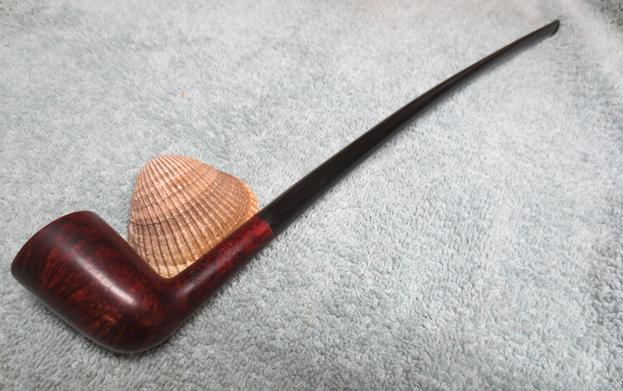
Cleaned an 80+year old KBB Yello-Bole Churchwarden 2095


Blog by Steve Laug

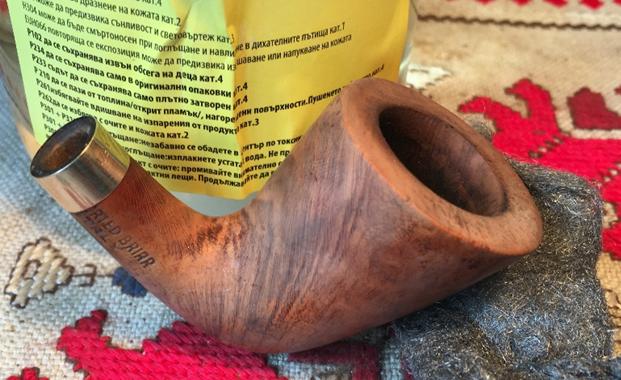
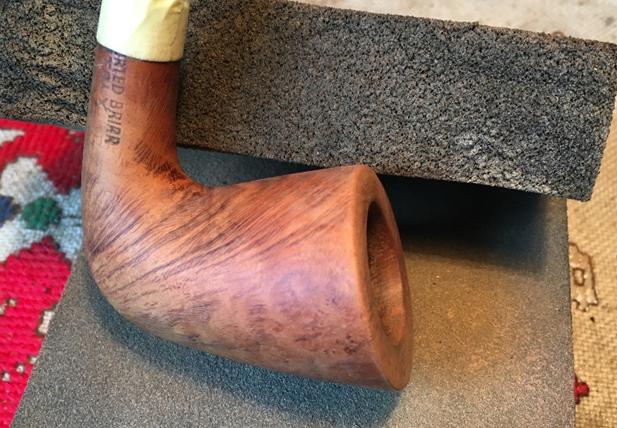
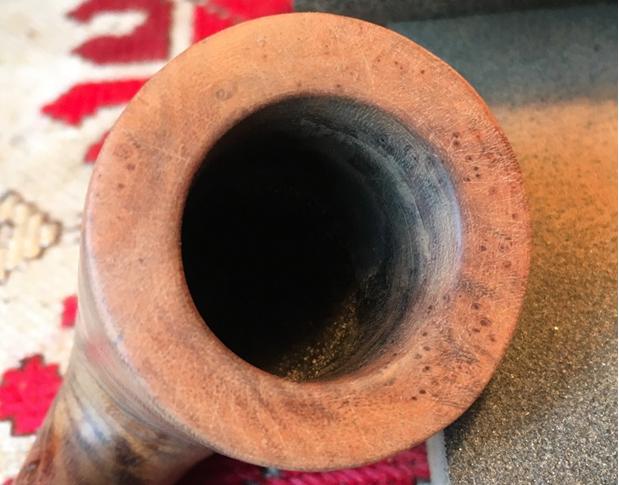
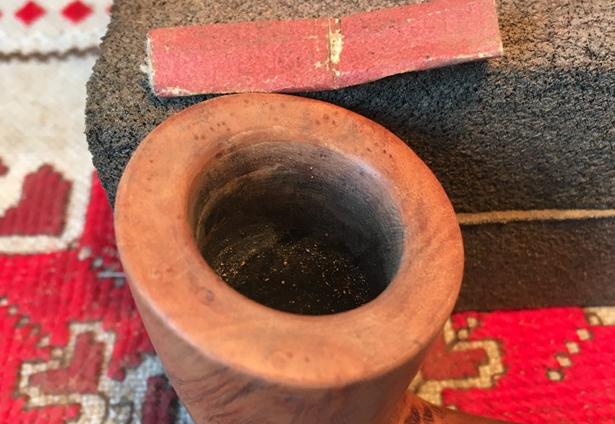
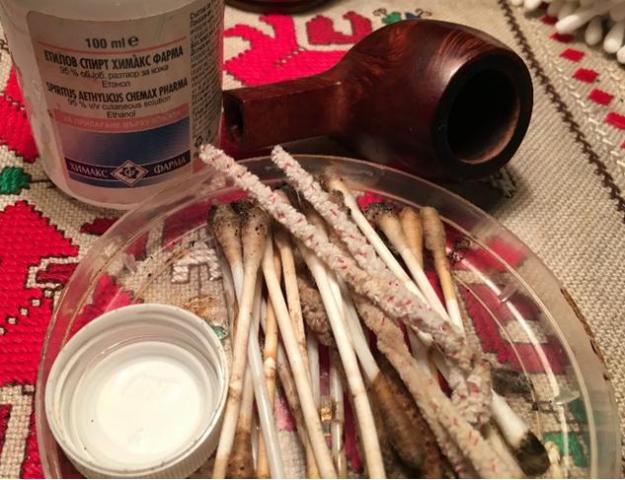
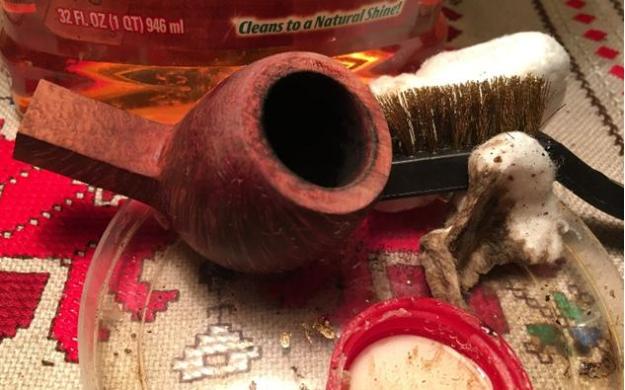
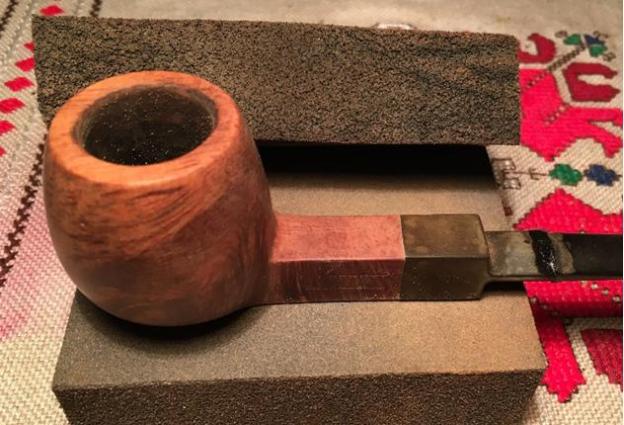
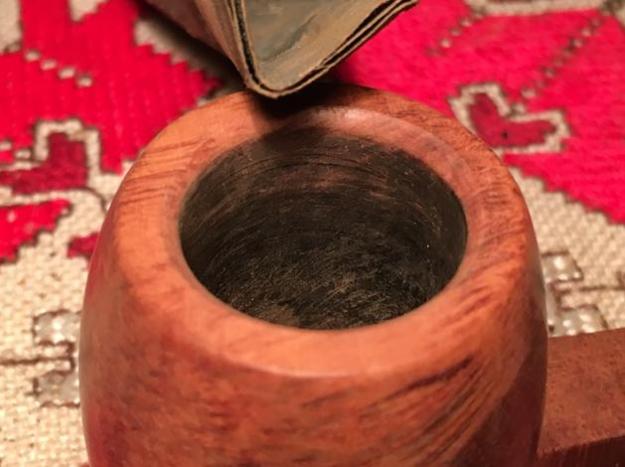
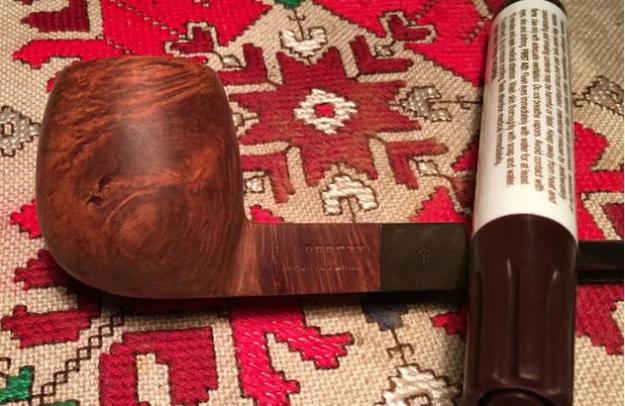
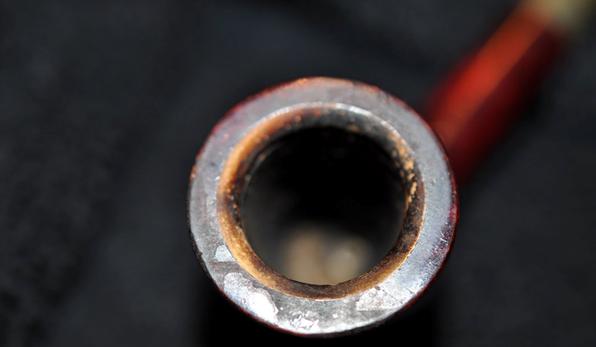
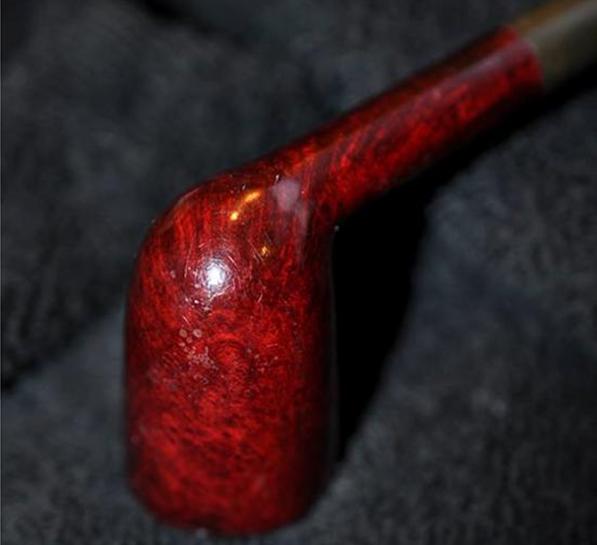
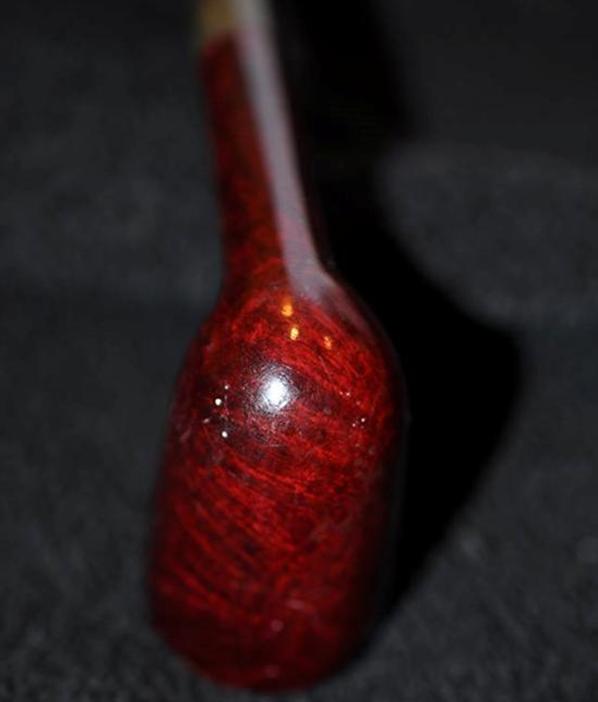
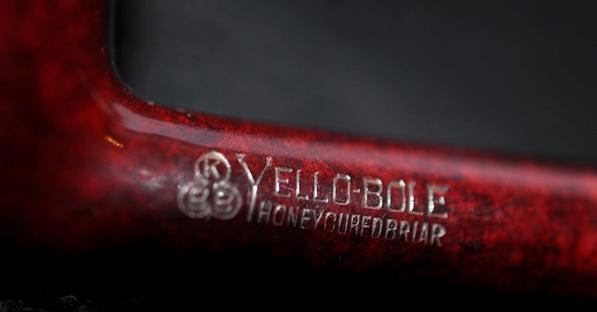
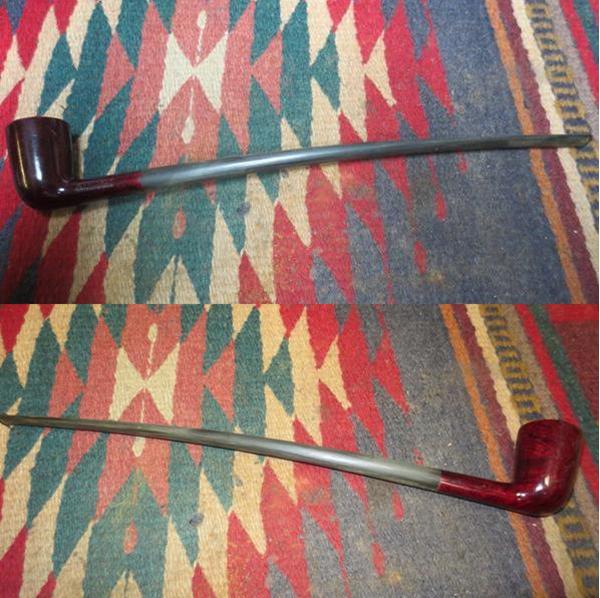
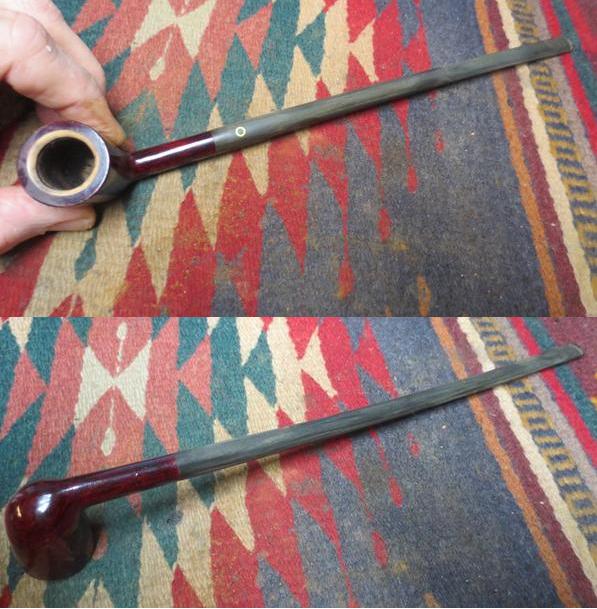
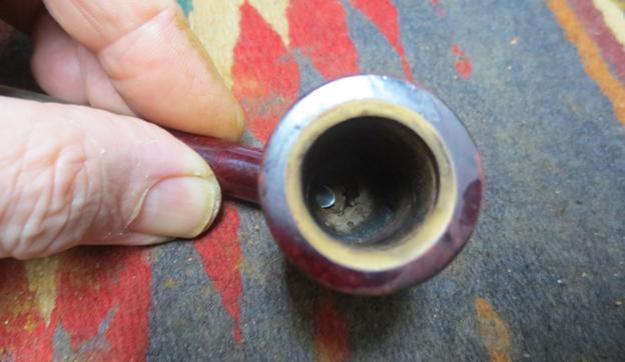
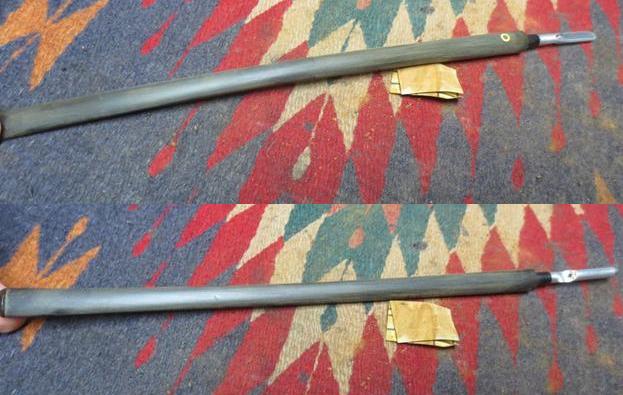
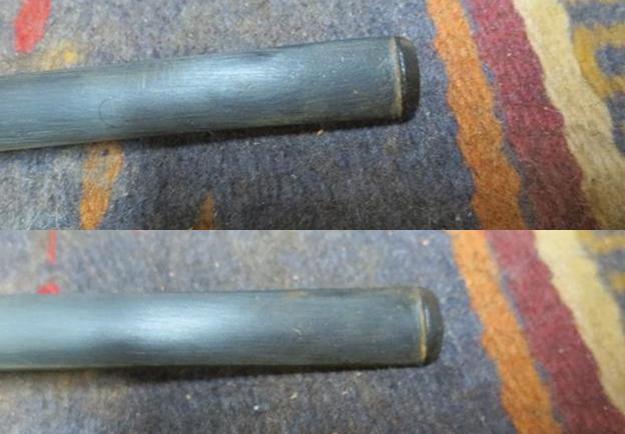
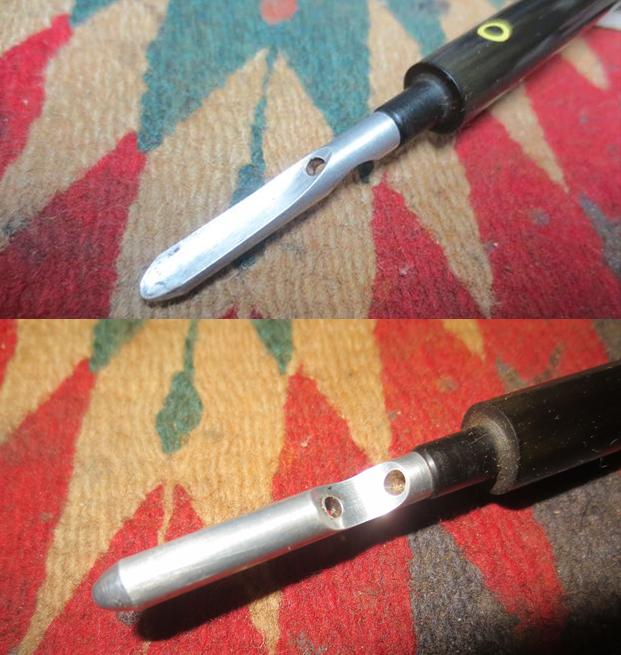
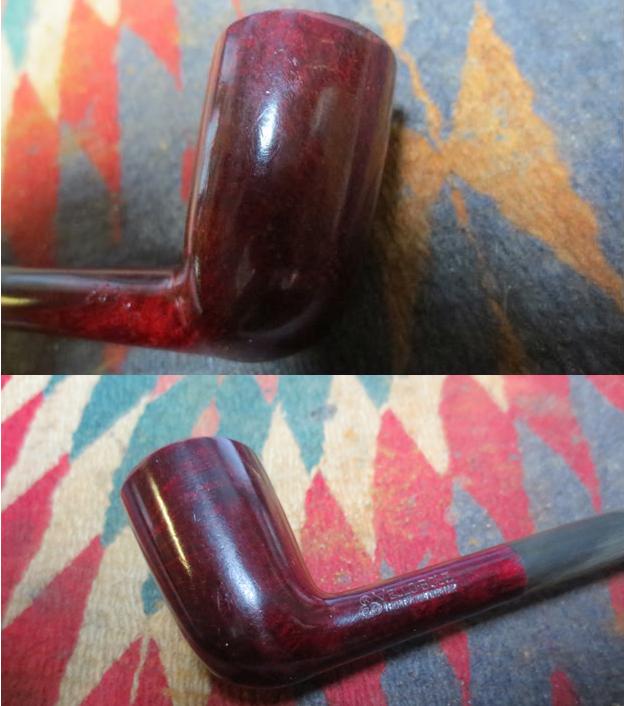
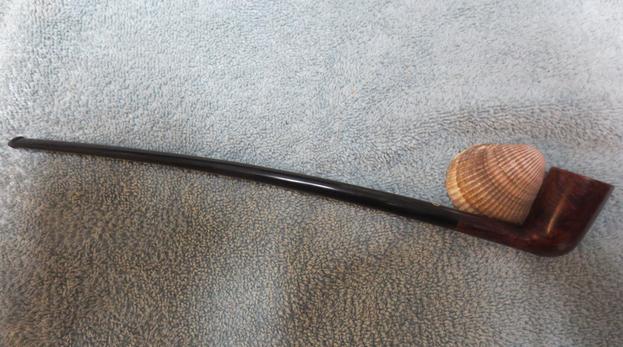
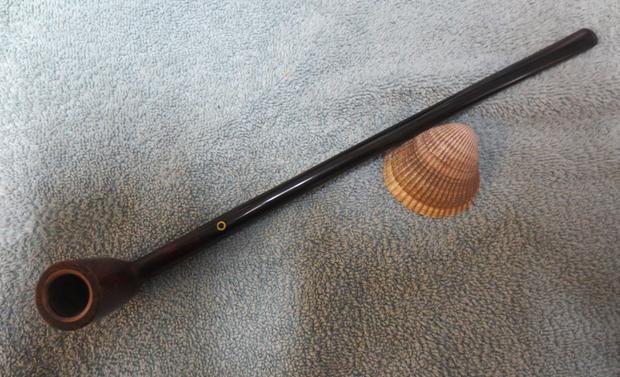
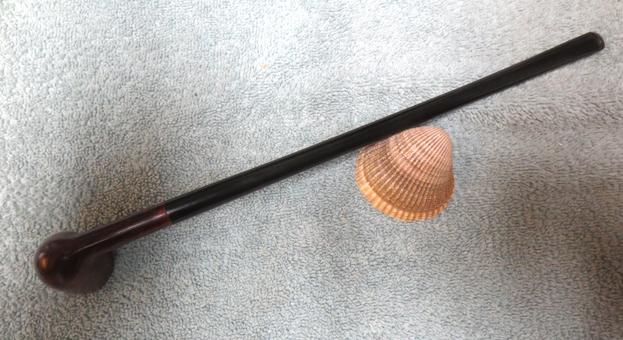
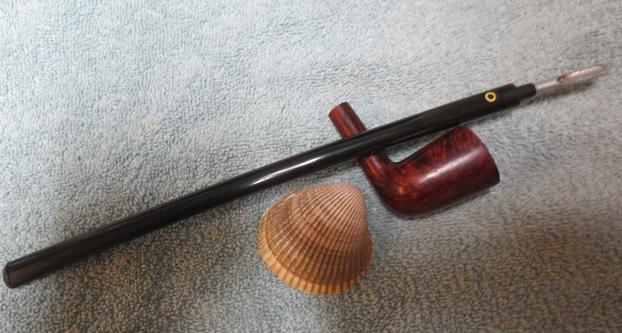
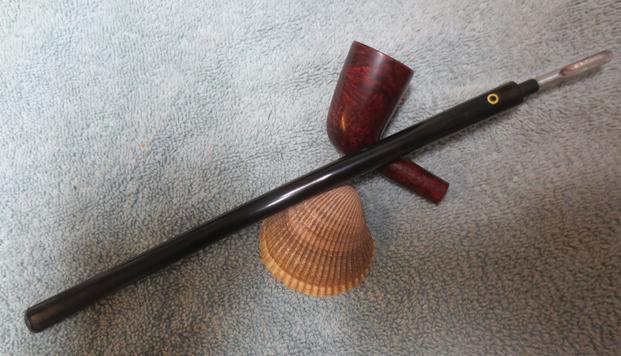
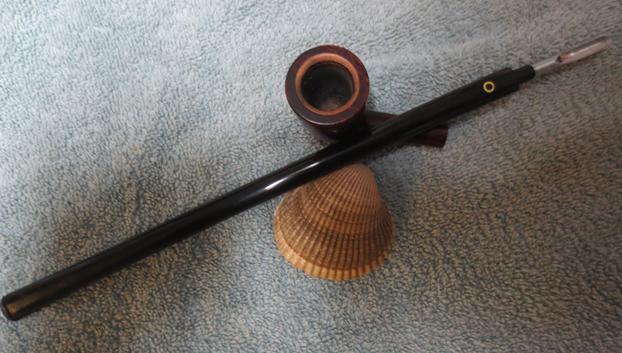
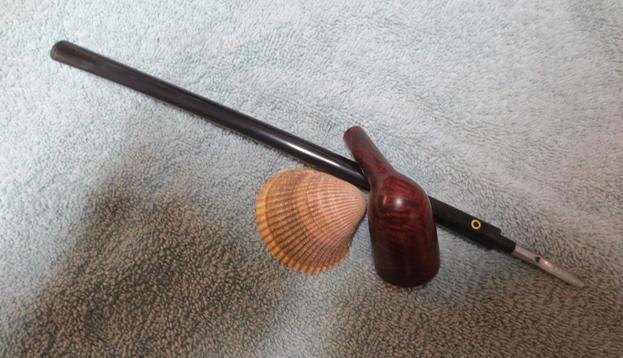
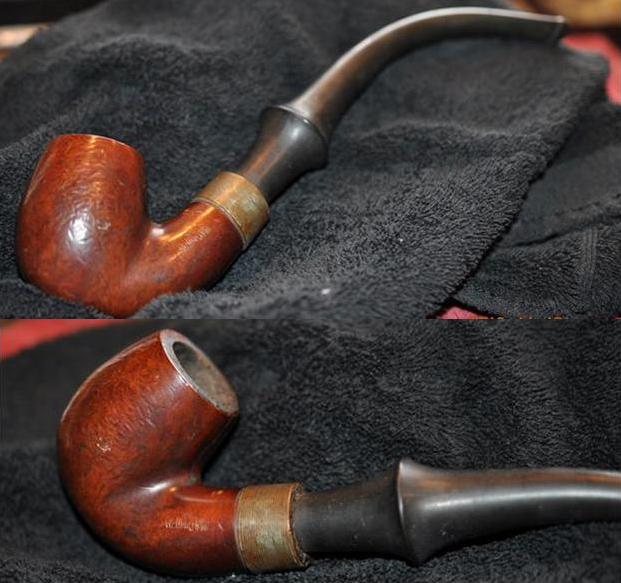
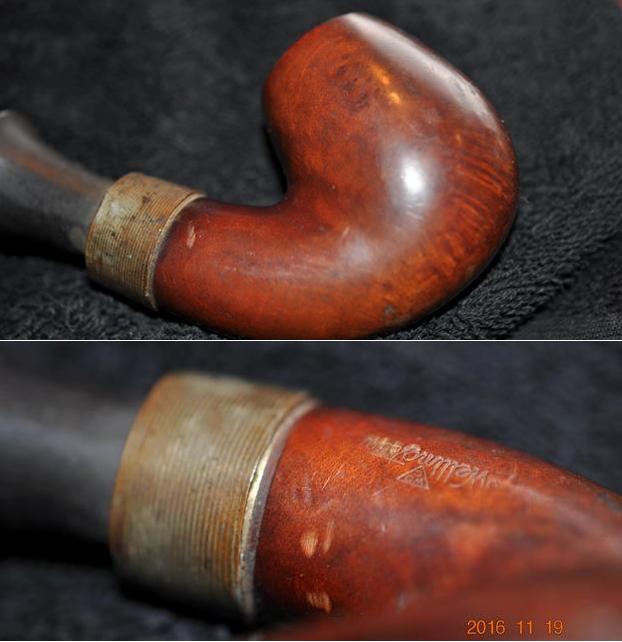
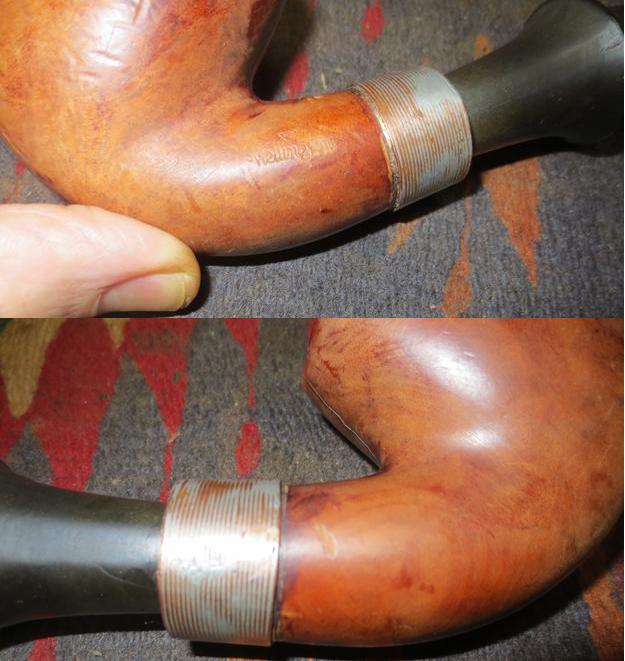
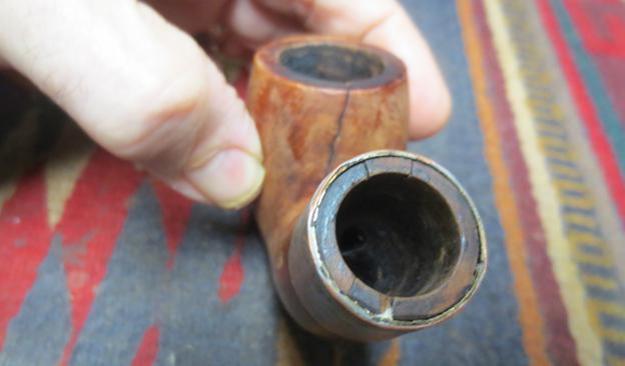
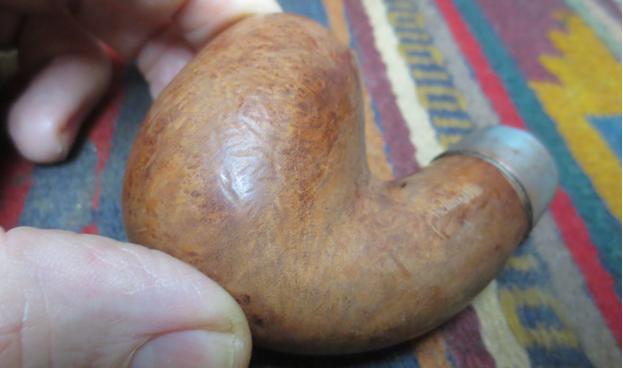
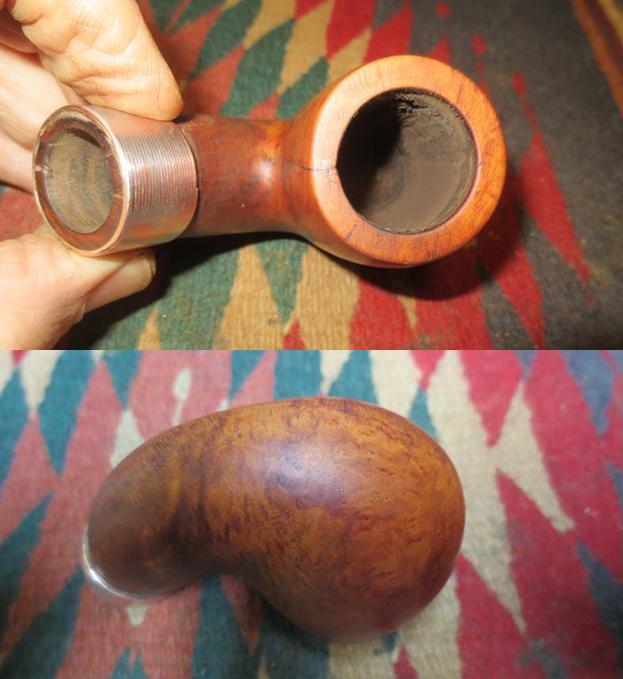
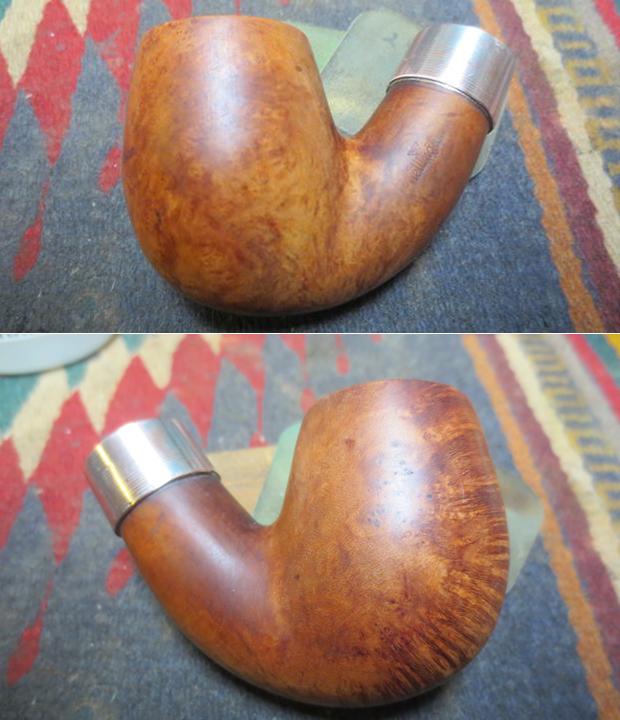
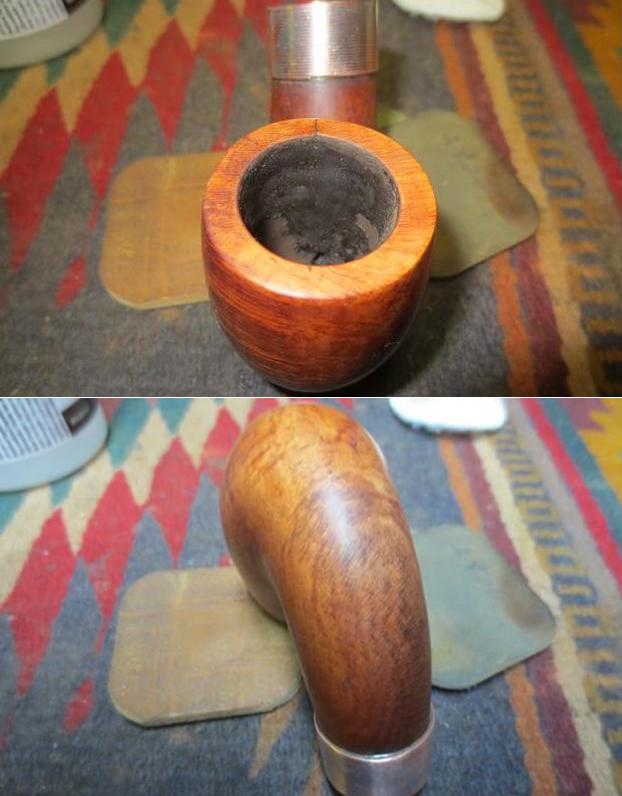
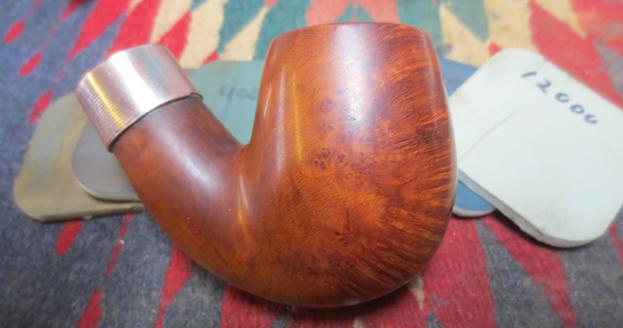
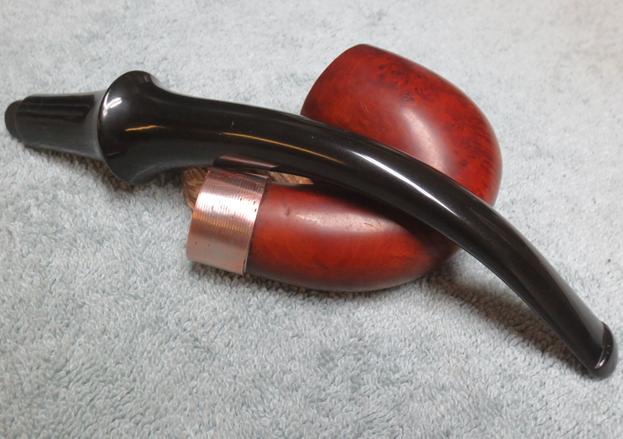
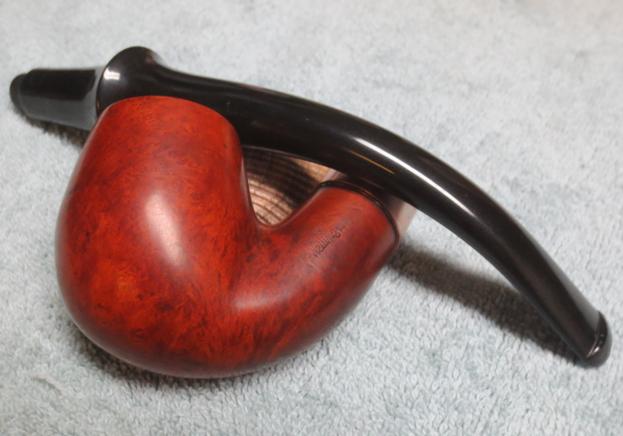
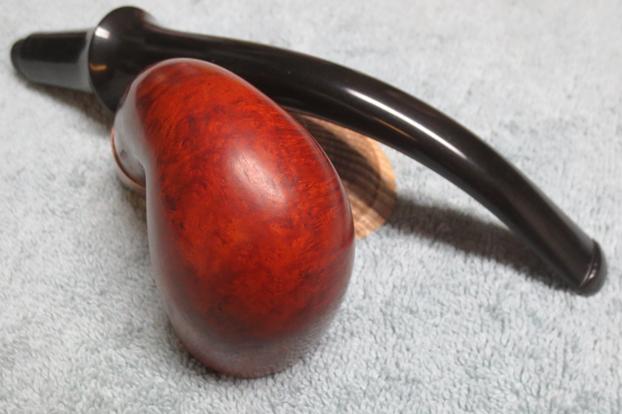
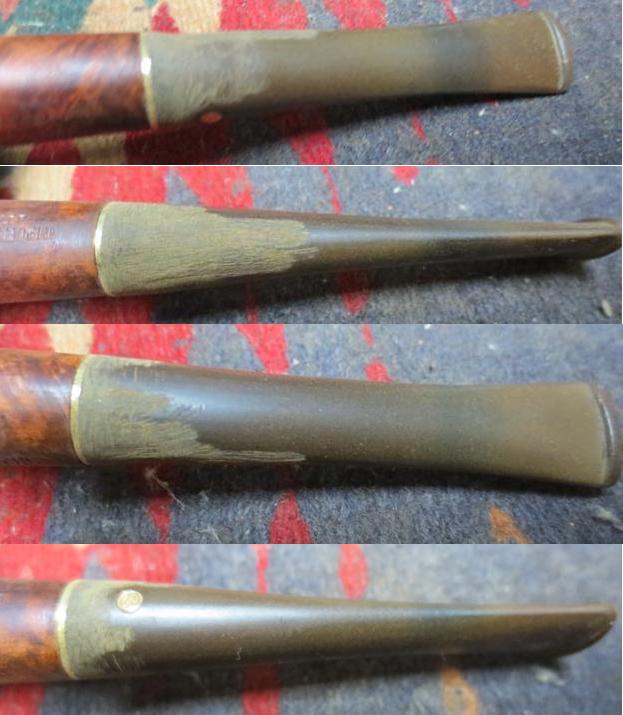
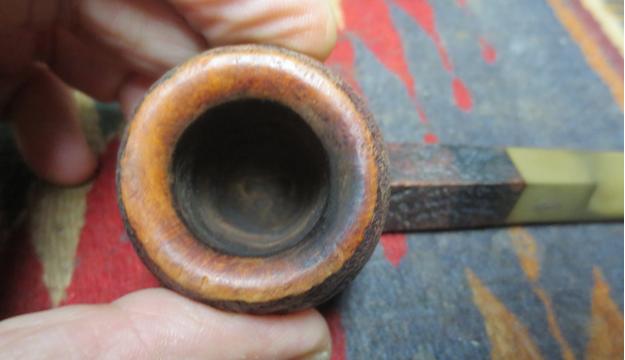
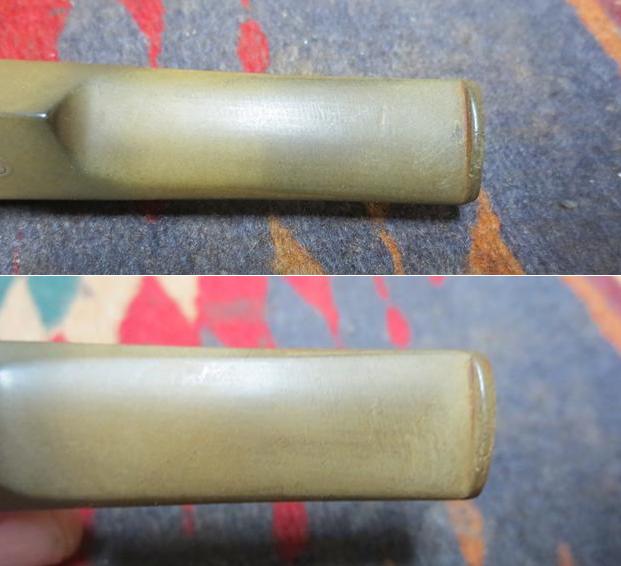
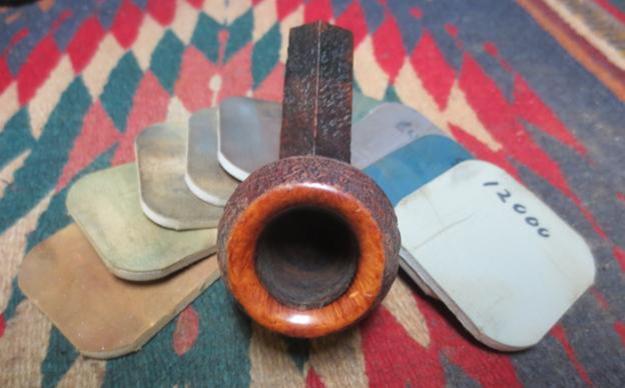
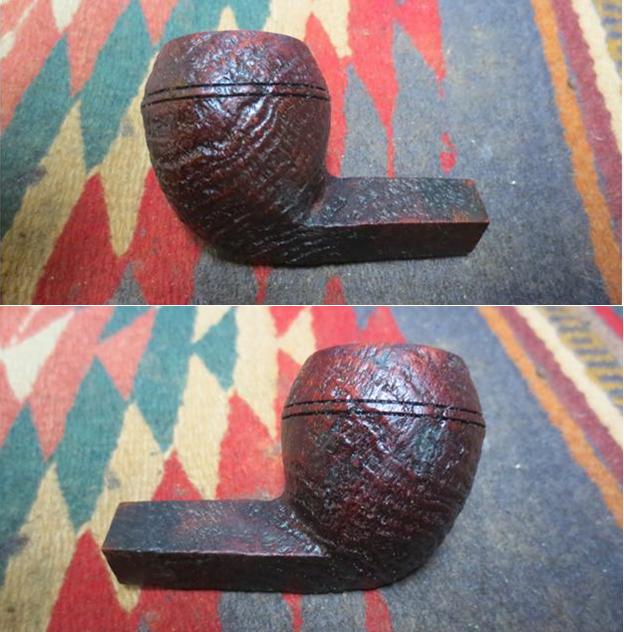
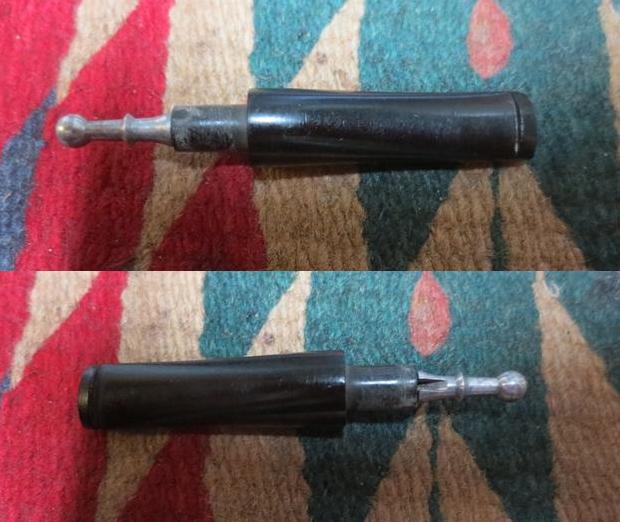
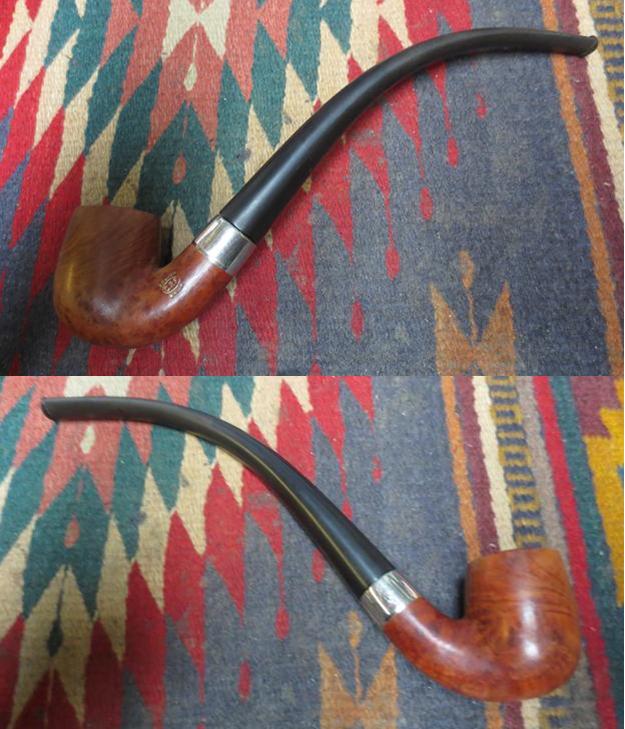
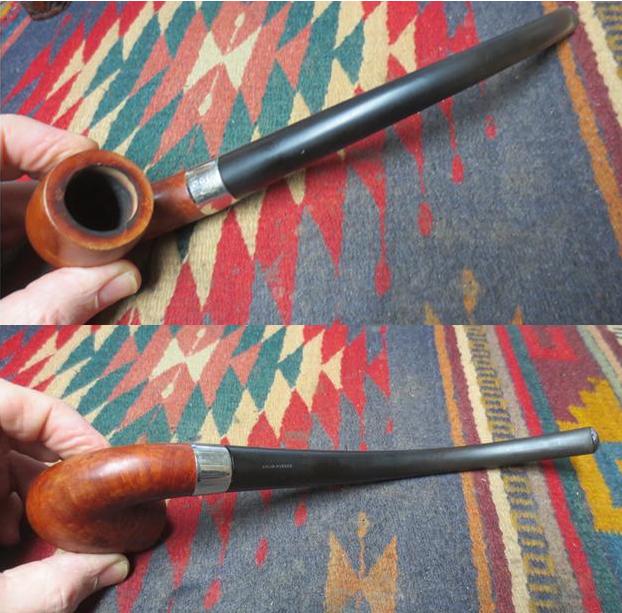
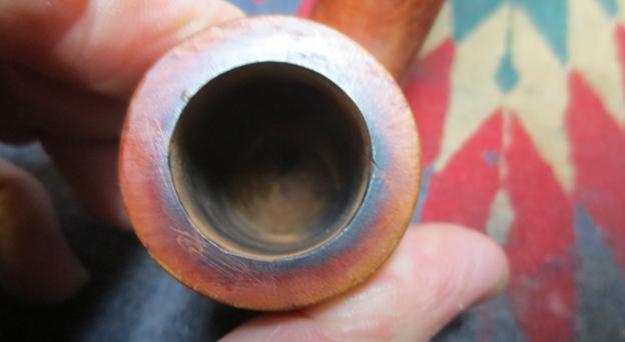
After the last challenge of the cracked bowl on the WDC Wellington House Pipe it was time to take on something that would go quickly and have some real beauty as well when finished. My brother had included just the pipe in the latest shipment that came to Vancouver from Idaho. It is a twelve inch long churchwarden. The bowl had the typical varnish coat over a oxblood stain that was peeling. There was a light cake in the bowl and the rim was dirty but the Yello-Bole Honey Cured Coating was very visible on the inner bevel of the rim top. The stamping on this one is the classic older Yello-Bole. It had the KBB cloverleaf on the left side of the shank and next to that it read YELLO-BOLE over Honey Cured Briar. ON the right side of the shank it has the shape number 2095. The stamping is in excellent shape. The stem was lightly oxidized and had the yellow circle on the top side near the shank/stem junction. There were single cut marks on both the top and underside of the stem about three inches forward from the button. There was also minimal tooth chatter and tooth marks on the stem on either side. The stem did not fit all the way into the shank when the pipe arrived in Idaho. (I have included the photos of the pipe that my brother took before he started to clean up the pipe.)cw1 cw2From a comment on a blog I wrote on the various Yello-Bole logos in my collection of these pipes I was able to narrow down a date for the pipe. Here is the link to the post and the comments on the blog: https://rebornpipes.com/2013/01/25/yello-bole-logos-from-my-collection-of-old-yello-bole-pipes/. The comment came from Troy who I consider my go to guy for Yello-Bole informantion (who has written on rebornpipes and also has a blog of his own). Troy wrote as follows on dating Yello-Bole pipes by the stamping and logos.

“I have a large KBB Yello-Bole collection, They are some of my most favorite pipes and the best smokers for the money (briar wise) you can find in my opinion. I have restored and researched them quite a bit. I have several listed on my blog that I have cleaned or restored. I own about 30-40 KBB Yello-Boles now.”

“Here is a little guide to dating KBB Yello-Boles. If it has the KBB stamped in the clover leaf it was made 1955 or earlier as they stopped the stamping after being acquired by S.M. Frank. From 1933-1936 they were stamped Honey Cured Briar. Pipes stems stamped with the propeller logo they were made in the 30s or 40s no propellers were used after the 40s. Yello-Bole also used a 4 digit code stamped on the pipe in the 30s. If the pipe had the Yello-Bole circle stamped on the shank it was made in the 30s this stopped after 1939. If the pipe was stamped BRUYERE rather than briar it was made in the 30s.”

From that information I ascertained the following. The churchwarden I had was stamped with KBB in the cloverleaf on the shank side which told me that the pipe was made before 1955. It is also stamped under the YELLO-BOLE name stamp with the words Honey Cured Briar which put its manufacture between 1933 and 1936. Further the four digit shape code 2095 also put the date in the 1930s. With all of that collected I knew the pipe was made between 1933 and 1936 which means that this old Churchwarden has seen a lot of life. I wish it could tell its story.

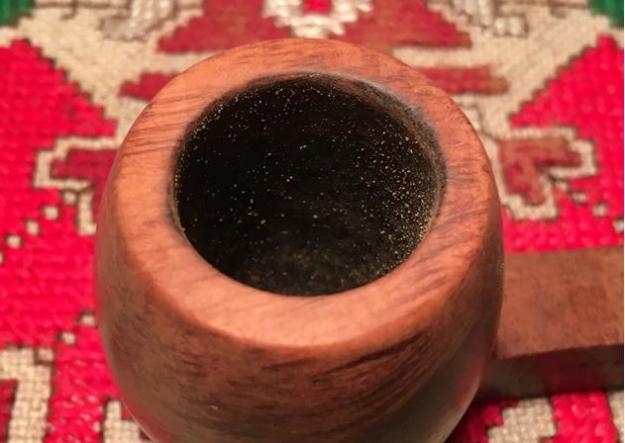
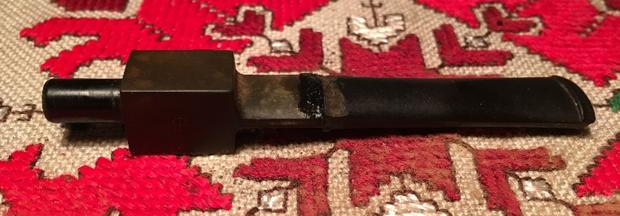
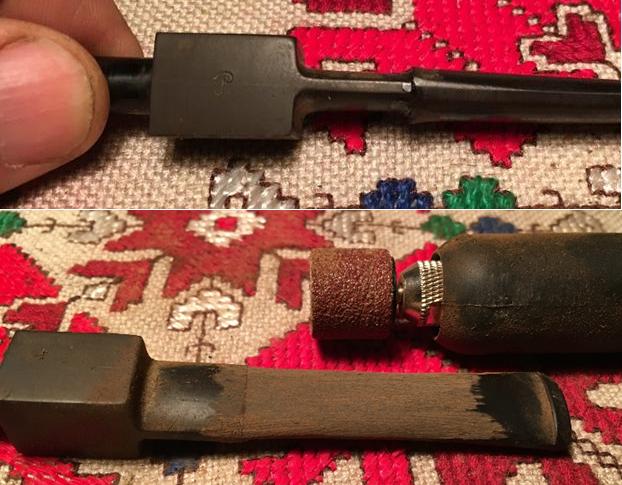
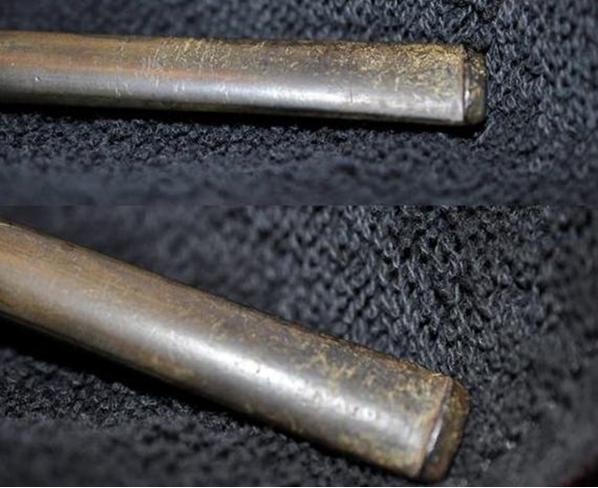
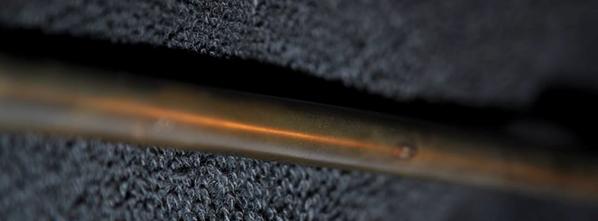
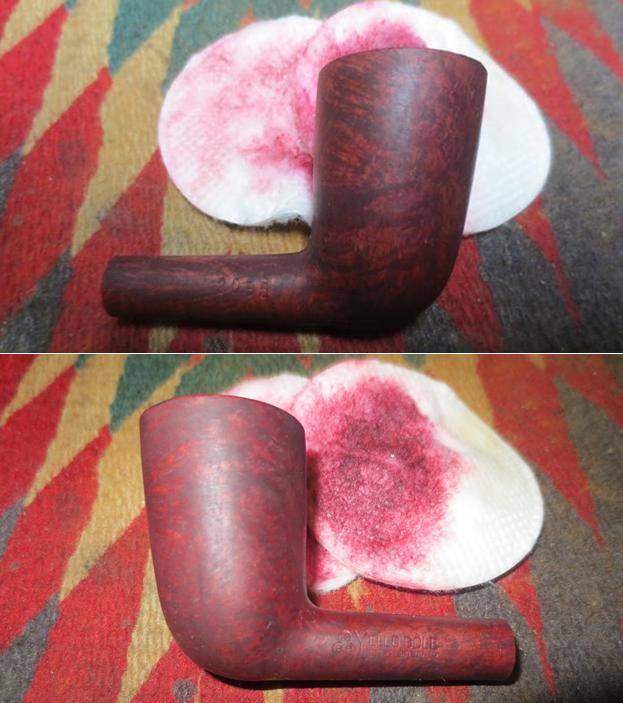
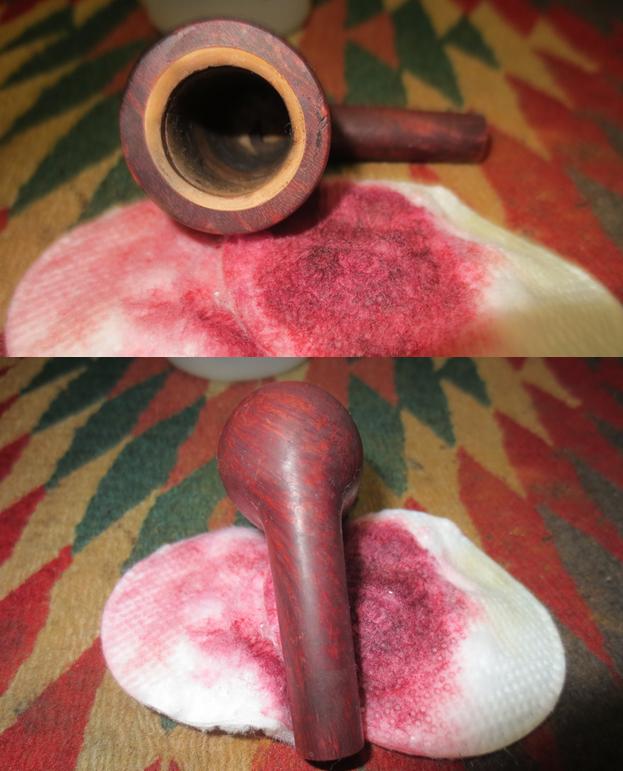
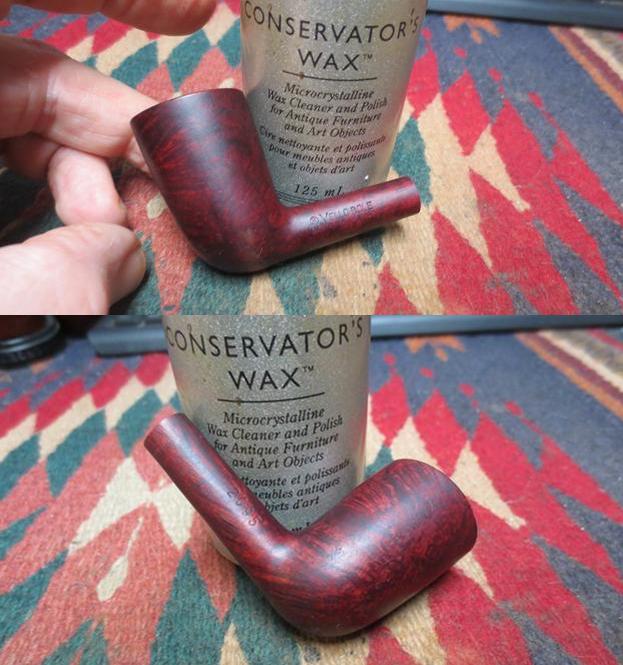
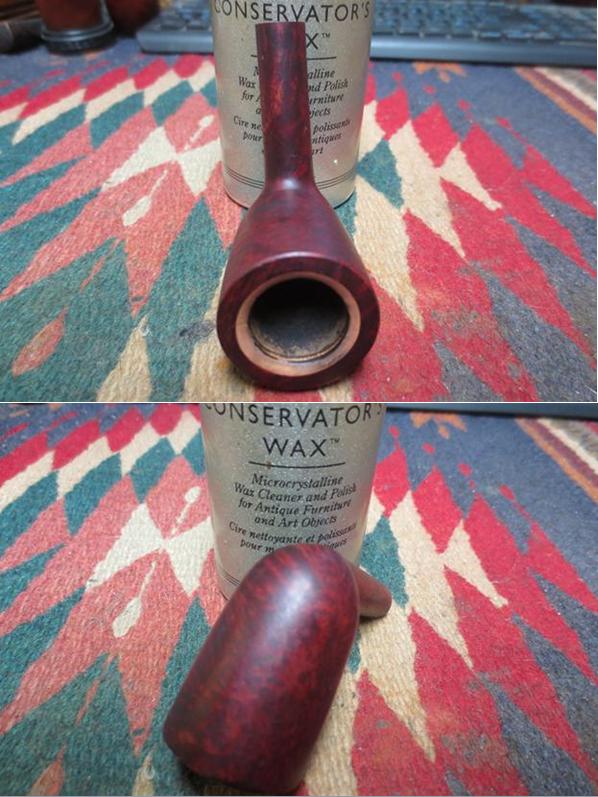
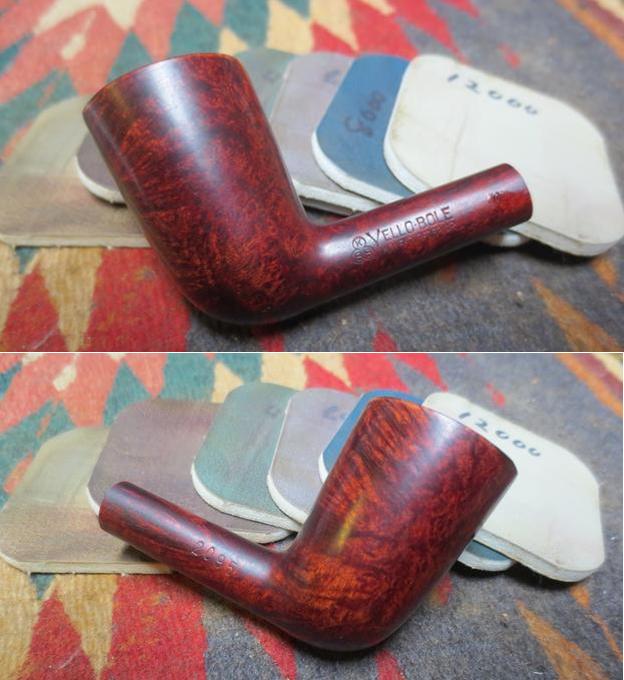
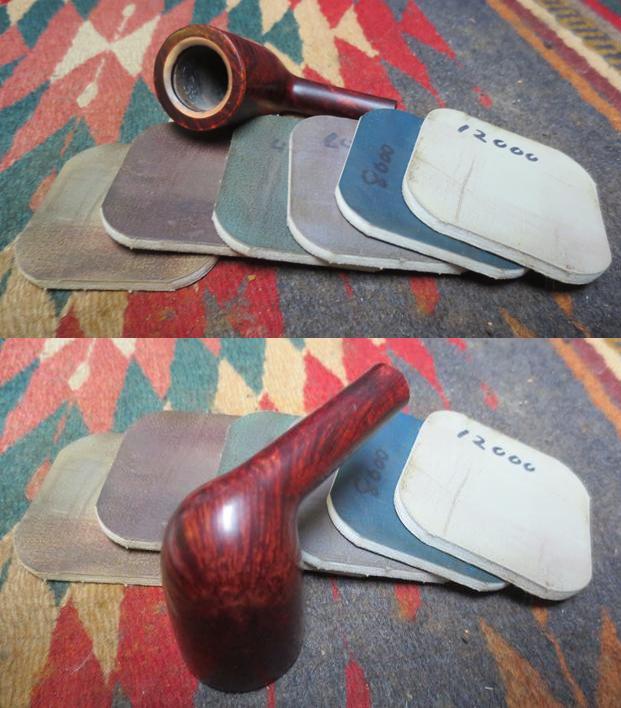
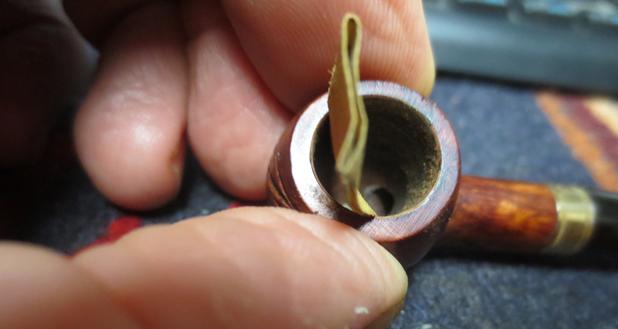
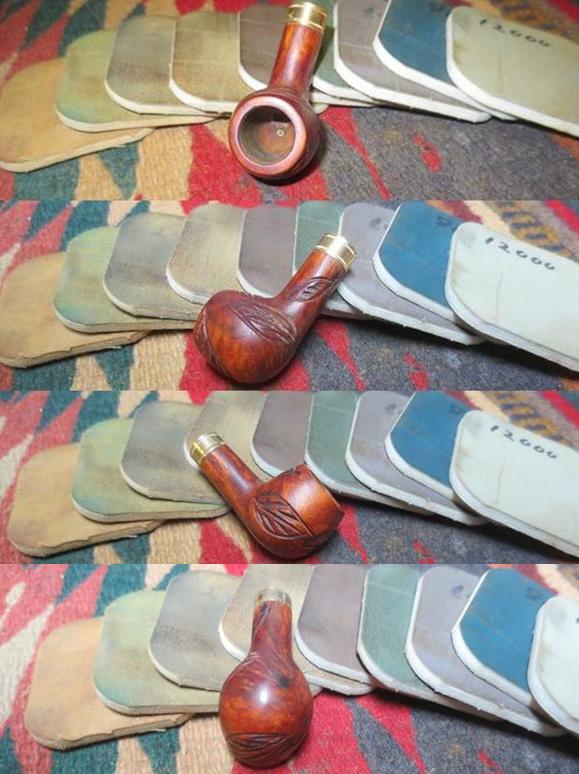
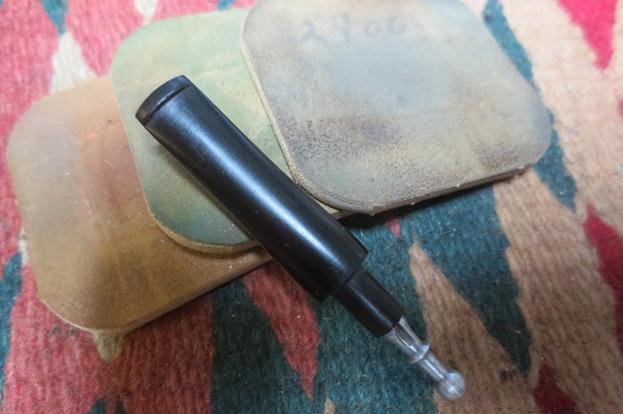
My brother included some close up photos of the rim top and the peeling varnish on the bowl sides and bottom for information. You can also see some peeling of the varnish on the rim top along with the darkening and overflow of cake.cw3 cw4 cw5The next photo shows the stamping on the left side of the shank. The stamping is clear and readable.cw6The next two photos show the condition of the stem. You can see the tooth chatter and marks on the stem surface on both sides. None of them are deep and all should be able to be polished out.cw7The next photo shows the cut mark on the top side of the stem. There is a matching mark on the underside.cw8My brother cleaned up the pipe – reaming the bowl, cleaning out the shank, airway in the shank and stem with alcohol, cotton swabs and pipe cleaners. The inside was clean. He scrubbed the briar and stem with Murphy’s Oil Soap and cleaned out the buildup on the rim and the grime on the sides of the bowl. The next four photos show what the pipe looked like when it arrived in Vancouver. It was ready to clean up and bring back to life.cw9 cw10I took a close up photo of the bowl and rim. The beveled inner edge shows the Yello-Bole coating. It is also visible on the inside of the bowl.cw11I sanded the stem with 220 grit sandpaper and worked on the tooth chatter on each end with the same sandpaper.cw12 cw13I took closeup photos of the Yello-Bole stinger apparatus. The first shows the topside of the stinger and the second the underside.cw14I took closeup photos of the existing finish on the bowl to show the peeling varnish and the speckled finish.cw15I wiped down the bowl with acetone on a cotton pad to remove the varnish coat and I was surprised by the grain that came through once the varnish was gone.cw16 cw17I waxed the bowl with Conservator’s Wax so that I could see the scratching and spots that needed more attention on the briar. A bit of a shine makes issues in the briar stand out.cw18 cw19I polished the briar with micromesh sanding pads – dry sanding it with 3200-12000 grit pads. I wiped the bowl down with a damp cotton pad to remove any polishing dust left behind.cw20 cw21I polished the stem with micromesh sanding pads – wet sanding it with 1500-2400 grit pads and dry sanding with 3200-12000 grit pads. I rubbed it down with Obsidian Oil after each set of three pads. After the last set of pads I rubbed it down with a final coat of oil and set the stem aside to dry.cw22 cw23 cw24I buffed the bowl with Blue Diamond on the buffing wheel to polish out the last of the scratches in the briar. I gave the bowl multiple coats of carnauba wax and buffed the bowl with a clean buffing pad. The next photos show the finished bowl.cw25 cw26 cw27 cw28I put the stem on the bowl and buffed the entirety again with Blue Diamond and gave the stem multiple coats of carnauba wax. I buffed it with a clean buffing pad and hand buffed the pipe with a microfibre cloth to deepen the polish. The finished pipe is shown in the photos below. It is cleaned, all varnish has been removed from the bowl and shank and it has been waxed and buffed. The finished pipe has a rich shine and all of the grain is visible through the finish. Thanks for walking through the restoration with me.cw29 cw30 cw31 cw32 cw33 cw34 cw35 cw36

Sprucing up a Home Doctored WDC Wellington House Pipe


Blog by Steve Laug

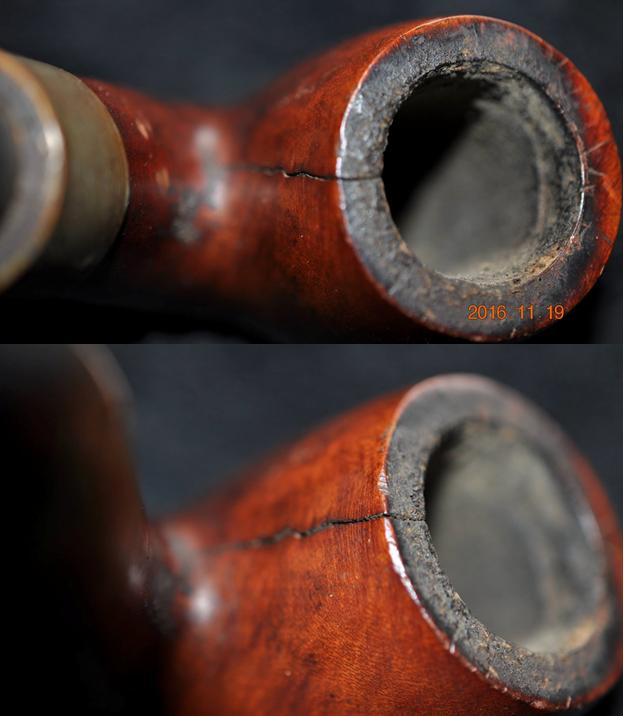
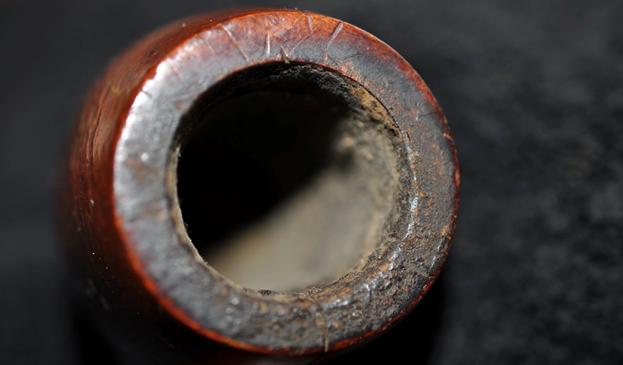
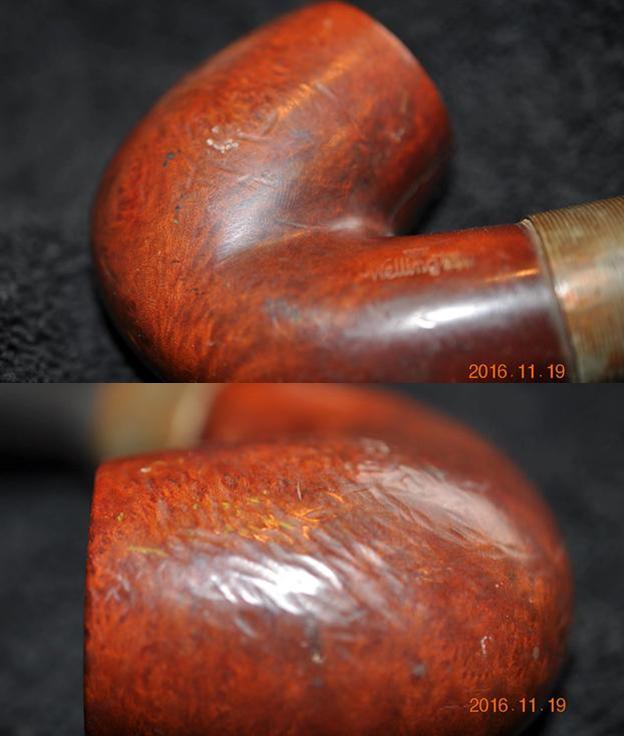
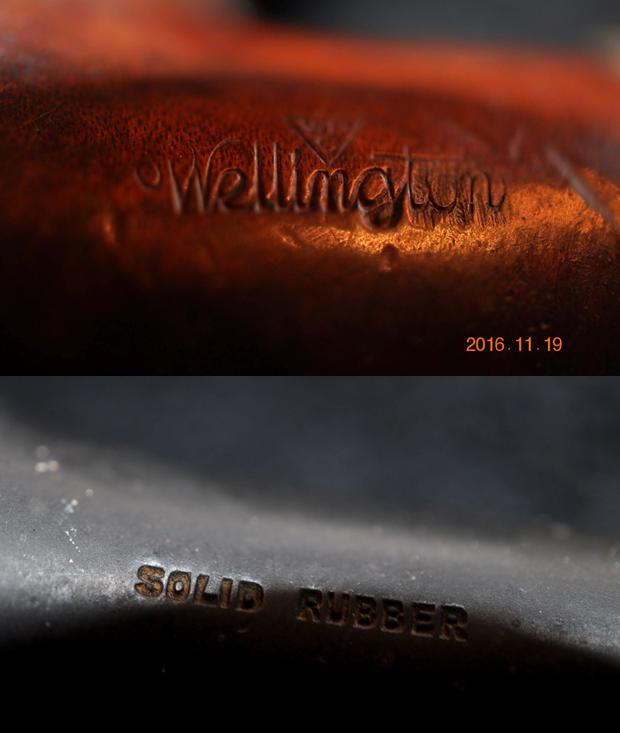
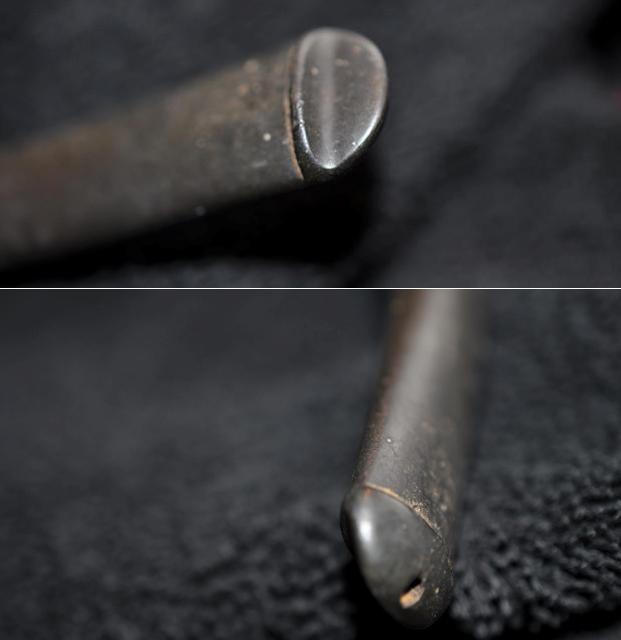
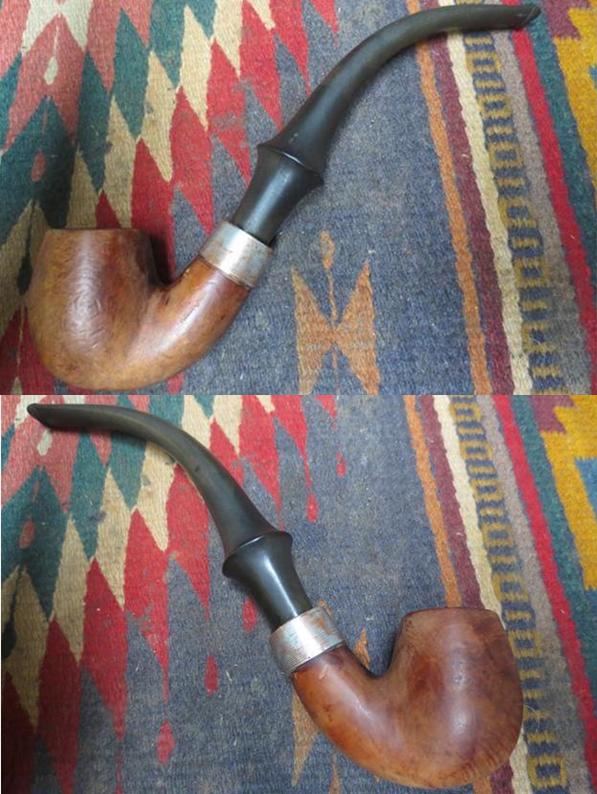
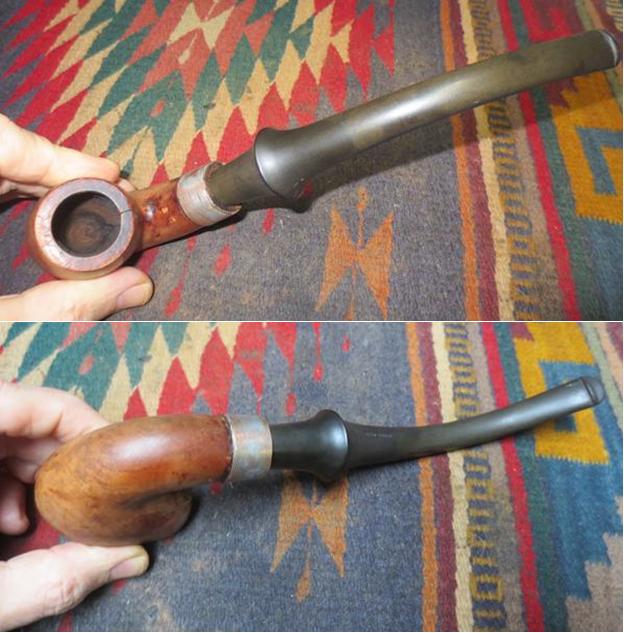
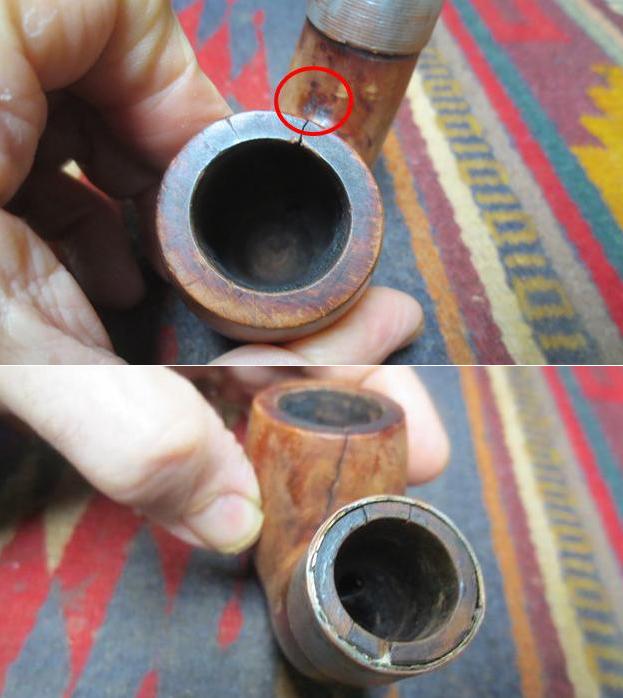
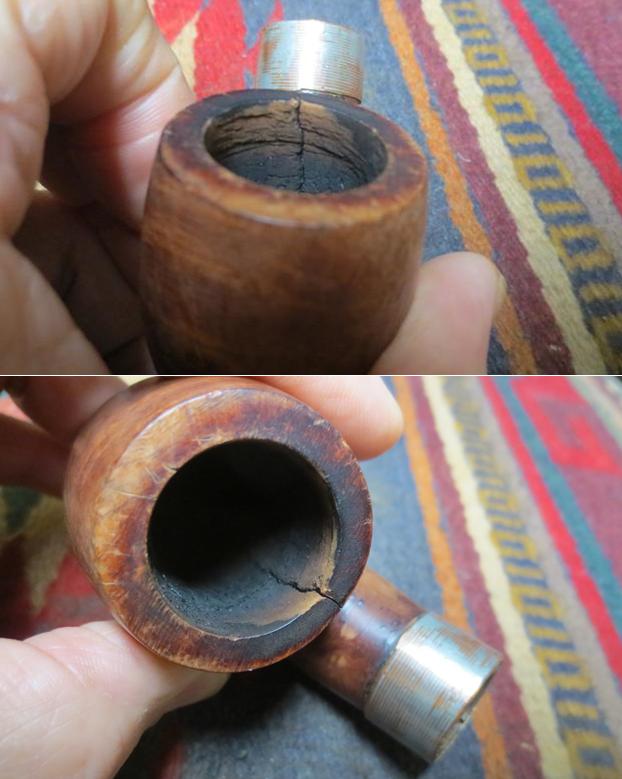
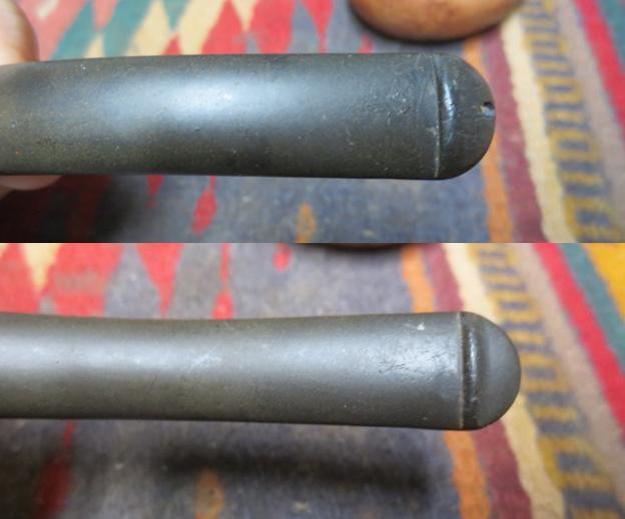
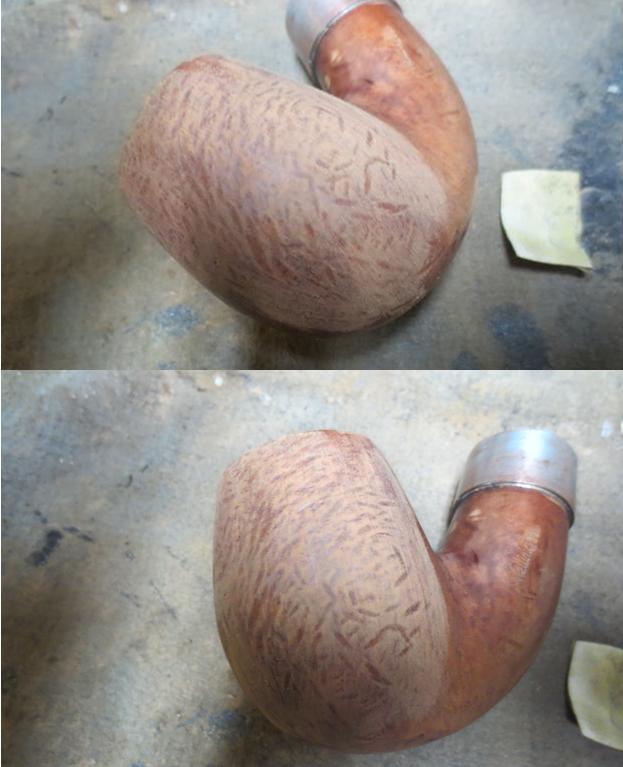
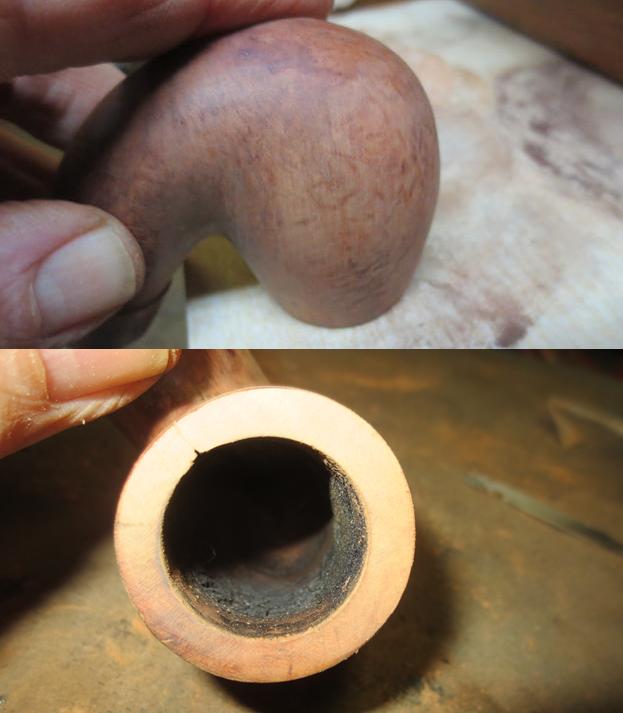
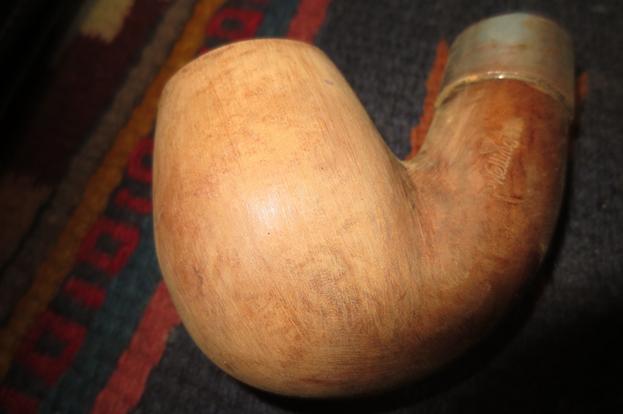
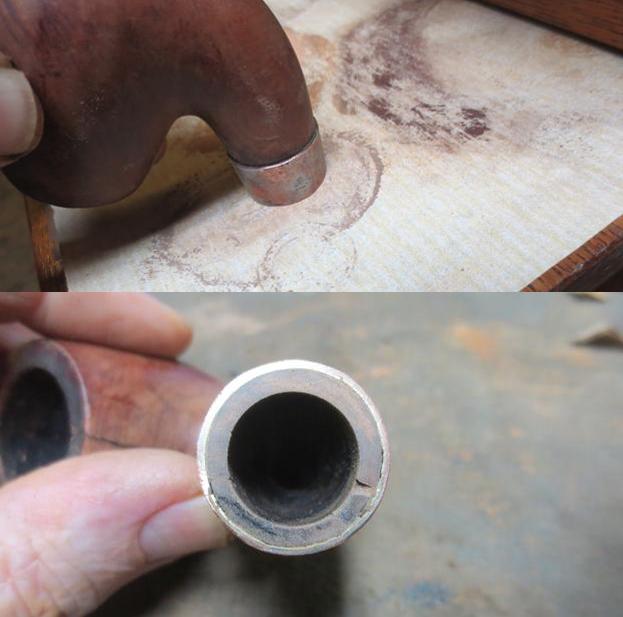
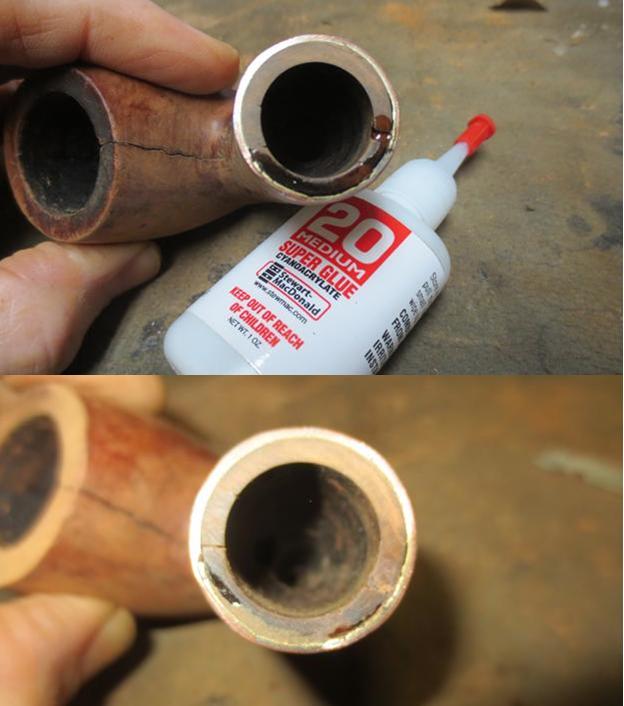
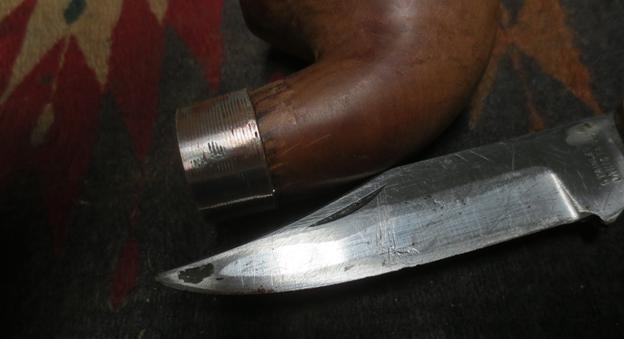
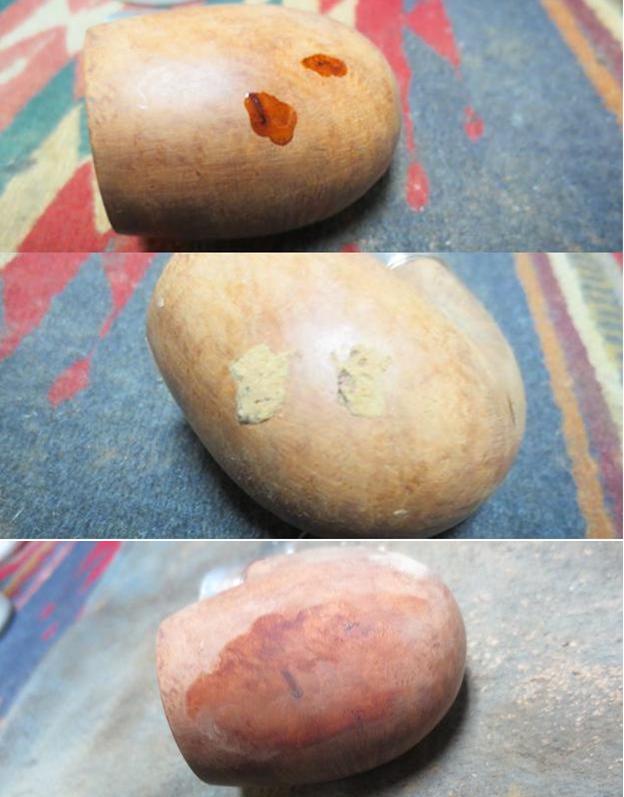
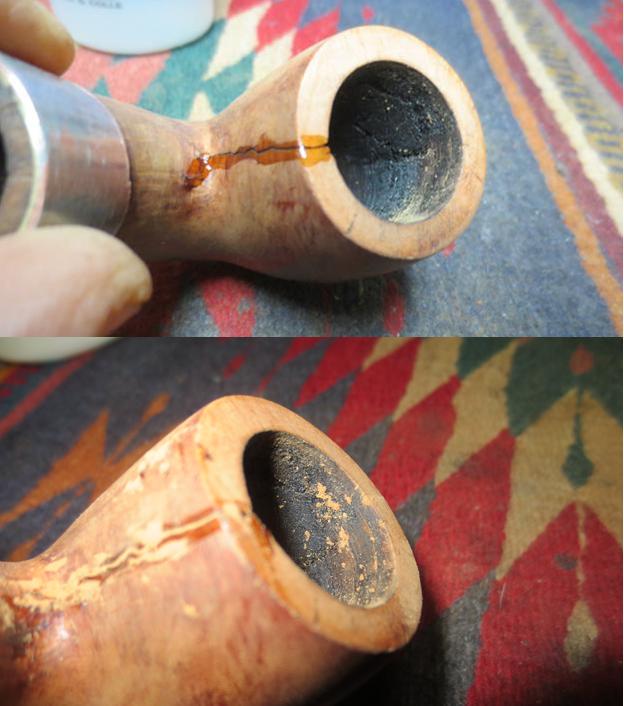
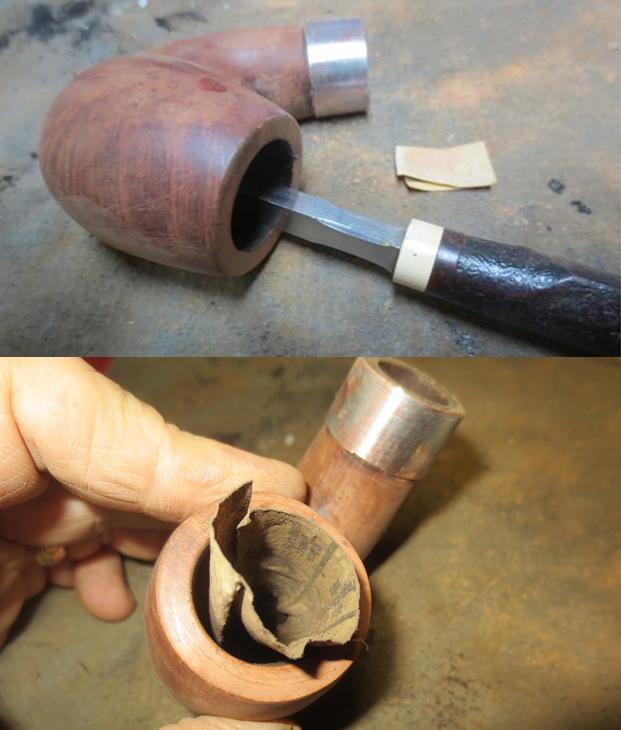
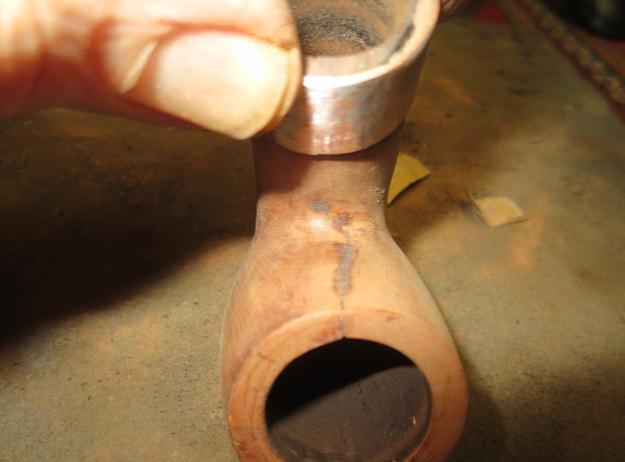
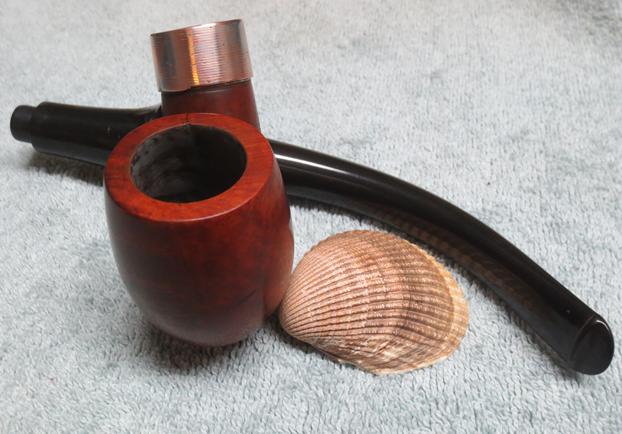
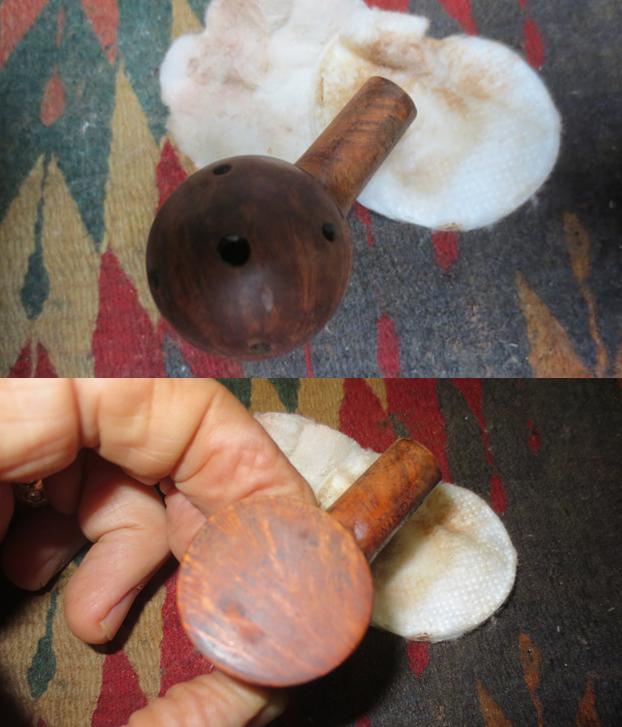
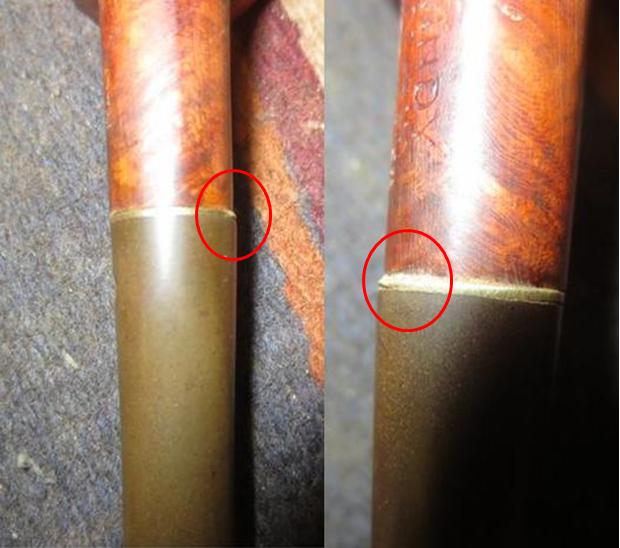
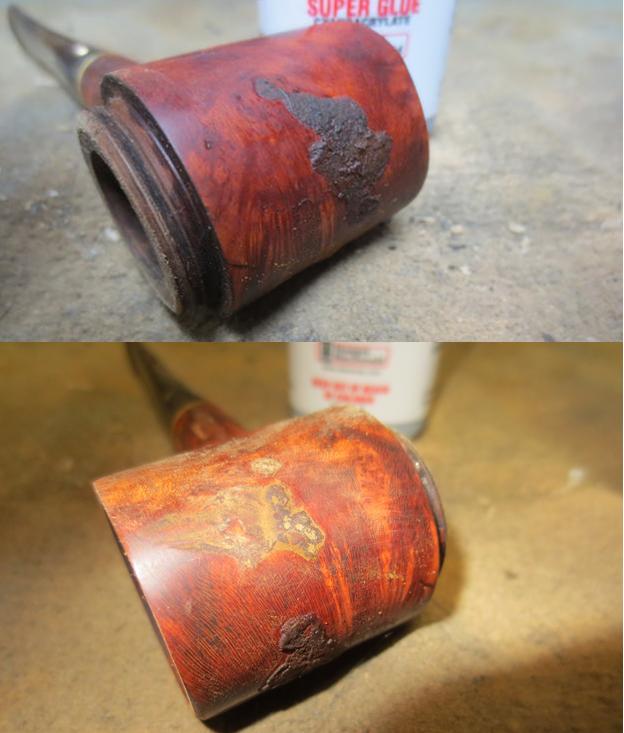
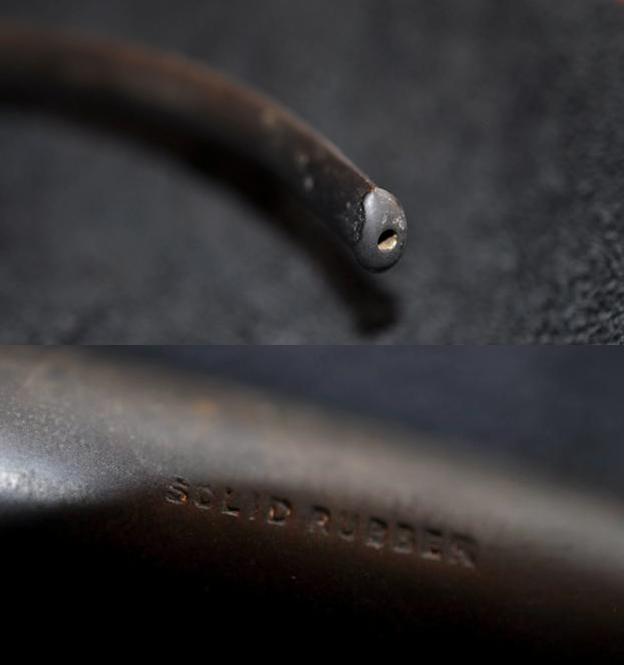
Have you ever been pipe hunting in an antique shop and in your conversation with the clerk at the checkout have them tell you that they have a pipe at home that they would love to have you see? If not I assure you that you will. It seems to happen to me and certainly to my brother. Sometimes going back to see the pipe is a good thing and sometimes it is not worth the trip. My brother recently went through this very thing in a shop on the Oregon Coast. The clerk said that he had an old pipe – thought it was a churchwarden – at home and he would love to see it go to someone who would restore it. He said it was interesting but it was in rough shape. He told my brother that he would bring it to the shop the next day. He lived a fair ways away from the shop so he could not go and get it at the moment. My brother left the shop knowing that he would need to go back and have a look at the pipe. Two days later he made the drive back to the shop. The seller had left it behind the counter for him. The person at the counter took the pipe out and handed it to him. The clerk had been right – it was in rough shape but it was not a churchwarden but old WDC Wellington House Pipe. (I have included the photos that my brother took of the pipe before he cleaned it and sent it to me in Vancouver.)mess1Even at first glance it was rough but he did not expect what he found as he went over it. As he turned it in his hands he saw that the bowl had a large crack on the back side of the bowl that went from the rim to the shank bowl junction. It went all the way through and ran down the inside back of the bowl to a spot just above the airway. This was not good.mess2The bowl was caked and dirty and the cake had flowed over the top of the rim leaving a hard rough surface. Even through the grit he could see that there were a lot of nicks, scratches and dents in the rim top. On top of that the left side of the bowl was rough and seemed like it had road rash. It appeared that someone had tried to smooth it over but it was till rough to touch.mess3 mess4The Wellington ferrule was gone and had been replaced with a piece of what appeared to be a cut off piece of pipe glued and pressed onto the shank end. Looking at the pipe from the shank end you could see why the band had been as a lot of small cracks could be seen that extended down into the mortise. The cut off piece of pipe literally bound the shank together tightly with no give. The stem was the only part of the pipe that was in excellent condition. It bore the Solid Rubber stamp on the underside but the topside was missing the WDC Wellington stamp. It was obvious to me that someone had loved this old pipe and that they had done whatever was necessary to keep it functioning. The repair work was solid but it really was a mess. After the fellow had gone to the effort to bring the pipe to the shop my brother felt obligated to buy it. The deal was struck and the pipe came home with him.mess5The next two photos show the stamping on the shank. It reads Wellington under the WDC triangle on the left side of the shank. There are a lot of nicks and scratches around the shank that look like damage done when the band was glued in place. The Solid Rubber stamping on the can be seen in the second photo below.mess6The stem was actually in the best condition of the entire pipe. There was very little tooth chatter and marks near the button. There were some marks on the ridge on the underside and there was a spot of metal shining through the rubber there as well. The entire stem was lightly oxidized and pitted.mess7My brother did his usual thorough clean before sending it to Vancouver. He reamed the bowl and removed the cake that was built up on the walls and had overflowed onto the rim of the bowl. He cleaned out the mortise, the airway in the shank and the stem with alcohol, pipe cleaners and cotton swabs. He scrubbed the exterior of the bowl with Murphy’s Oil Soap and was able to remove the grime and dirt and the chipped and damaged finish. The next four photos show what the pipe looked like when it arrived.mess8 mess9I took some close up photos of the shank band. It is obvious to me that the repair on the shank was home done and involved cutting a piece of pipe and gluing and pressing it onto the shank. The third photo shows the shank end and there are at least 4-6 cracks showing that previous owner had glued and repaired with the cut off piece of pipe as a band. The band repair had been finished off with a bevel of glue banked against the band and shank. The piece of pipe that functioned as the band was striated and copper colour peeked out from under the surface oxidation. The crack on the back of the bowl is visible in the second photo below.mess10 mess11I took a close up photo of the left side of the bowl to show the rash on the side of the bowl. It was very rough and scored. It would need to be sanded smooth to repair the amount of damage.mess12I took photos of the crack in the bowl. It is on the back side as noted above. It extends down the back of the bowl to the shank/bowl junction (photo 2). What was interesting to me was that there were two small holes drilled at the twin ends of the crack in the bend of the junction. They had been filled in with glue and sanded smooth. I have circled them in red in the photo below (photo 1). I don’t why the previous repair had not continued with filling in the crack on at least the outside of the bowl but it did not. Possibly it was because the crack went through the bowl and extended down to a spot just above the entrance of the airway in the bowl (photos 3-4). There appeared to be burn damage on the back wall of the bowl on both sides of the crack. The rest of the interior walls of the pipe were solid with no damage.mess13 mess14As I mentioned before the best part of this pipe was the stem. In fact at one point I considered throwing the bowl away and saving the stem for a future repair.mess16With so much work to do on the bowl it was hard to decide where to begin. I turned it over in my hands for a few moments and decided to start by sanding out the rough side of the bowl. I would try to remove all of the damage that had been done in that area. The next two photos show the damaged area after the first sanding with 180 grit sandpaper. You can see how extensive this rash was on the bowl side.mess17I decided to top the bowl to deal with the damaged portion of the rim. I used the topping board and 220 grit sandpaper to remove the damaged rim surface and clean it in preparation for the crack repair. You can see that I needed to do some more reaming in the bowl to clean it up.mess18With the rim finished I went back to sanding the bowl side with 220 grit sandpaper. I worked to remove the damage on the side and worked over the curve of the bowl shank junction. When I finished with the 220 grit sandpaper the bowl side was smooth. The roughness and damage had been removed. The briar needed to be sanded with higher grit sandpapers and sanding sponges to remove the scratches.mess19I topped the shank end with 220 grit sandpaper on the topping board to smooth out the sharp edge of the metal band and prepare the shank end for some repairs.mess20I filled in the chipped areas on the shank end with briar dust and super glue. When the glue dried I topped it further and added a little glue on the long chipped area on the left of the second photo below.mess21I scraped away the excess glue along the edge of the band on the shank with a sharp knife. Once I finished the transition was smoother. I would sand the area along the band to clean up the scratches but the thick glue was removed.mess22There were some deep nicks on the lower front side of the bowl that needed to be filled. I filled them with super glue and briar dust and sanded them smooth to match the surface of the surrounding briar. I sanded around the shank band at the same time to smooth out the scratches and nicks.mess23I moved to the back of the bowl and filled in the exterior part of the crack with super glue and briar dust. The twin drilling at the bottom of the crack by the previous owner had done a good job stopping the crack from going further so I did not need to deal with that issue. There was no movement in the crack when I squeezed it together. It was stable so I moved on to do the surface repair. I put super glue in the crack and then pressed briar dust into the glue to seal the surface of the crack. mess24It was time to address the internal crack at this point. I needed to join the two sides of the crack together inside and also address the burned areas around both sides of the crack. I scraped out the inside of the bowl with a Savinelli Fitsall Pipe Knife to remove the remaining excess cake. I made sure to remove all of the cake. I worked on the area around the crack to remove all of the carbon and picked the area with a dental pick to see how badly the area was burned. I sanded the inside of the bowl with a rolled piece of 220 grit sandpaper to smooth out the walls.mess25I sanded the repair on the exterior of the bowl with 220 grit sandpaper to remove the excess patch material on the exterior of the crack. I smoothed it out to match the surrounding briar. The repair is looking really good on the exterior and the sanded interior of the bowl (also visible in the photo) was in better shape than I expected.mess26I wiped down the inside of the bowl with damp cotton swabs to remove the dust and debris from the bowl sides. With all of the preparations finished the inside crack was ready for repair using JB Weld. I have used it before following the directions from Charles Lemon on Dadspipes blog and had good results. I mixed the two parts of the “goop” together and applied the mixture to the inside of the bowl with a dental spatula. I pressed the mix into the crack and then spread it over the surface of the back wall on both sides of the crack. Once I had good coverage on the wall and in the crack I set the bowl aside to let the glue set.mess27 mess28While the repair in the bowl interior cured I turned to deal with the minimal damage to the stem. I sanded the light tooth chatter and small bite marks on the top and underside of the stem near the button using 220 grit sandpaper. I reshaped the button edge and the straight edge on the underside of the stem at the same time.mess29When the internal repair had dried to touch I could turn my attentions to the sanded exterior once again. I wiped the bowl down with a light coat of olive oil to make the scratched areas stand out and show me where I needed to do more sanding.mess30 mess31I polished the briar and the metal band with micromesh sanding pads – wet sanding it with 1500-2400 grit pads to smooth out all of the scratches and areas that showed up with the olive oil rubdown. The more I sanded it the more the grain began to stand out. There was some great birds-eye and cross grain in the briar. The third photo shows the JB Weld repair on the inside of the bowl very clearly. Once it turns black it will have cured enough to sand.mess32 mess33I continued to polish the briar and band with micromesh sanding pads – dry sanding it with 3200-12000 grit pads until the bowl shone.mess34I stained the pipe with a dark brown aniline stain thinned 50/50 with isopropyl alcohol. I applied the stain, flamed the stain to set it and repeated the process until the coverage was even around the bowl and rim.mess35I gave the bowl several coats of carnauba wax and buffed it with a clean buffing pad. I took the following photos to show what the bowl looked like now that it was stained and waxed. It is a pretty piece of briar and a far cry from the mess I started with.mess36 mess37I set the bowl aside and polished the stem. I buffed it with red Tripoli to remove as much of the light oxidation as possible. I wet sanded the stem with 1500-2400 grit micromesh sanding pads and dry sanded it with 3200-12000 grit pads. (For some reason the last photo of the stem has a yellow tint and makes it look oxidized. It actually shone at this point in the process with no oxidation left. I rubbed it down with Obsidian Oil after each set of three pads. After the final rubdown I set the stem aside to dry.mess38 mess39 mess40By this point in the process the JB Weld had hardened. It had been about 4-5 hours. It was time to smooth out the inside of the bowl and remove the excess JB Weld. I used the Dremel with a sanding drum to smooth out the back side of the bowl. You can see the spots on the bowl wall where I left the material to fill in the damaged areas on the wall. I went on to sand the interior wall with 180 and 220 grit sandpaper to further smooth out the repair and minimize the JB Weld. The repairs had stabilized the cracked bowl and it was usable once again.mess41I have one final step to take to before I can close the book on this repair. I need to mix a bowl coating to paint the inside of the bowl with. It is a mixture of sour cream and activated charcoal powder. I had to order some more as I ran out of the charcoal capsules and my local pharmacy was also out of stock. It may take a while to get some so for now the bowl is finished. Once the bowl coating is applied and has cured the pipe will be ready to smoke and carry on a long life.

At this point in the process when all is basically finished I can honestly say that I am glad I did not scrap bowl to the junk box. It has some beautiful grain and I think it looks good with the scar on the back side of the bowl where the crack used to be. The metal pipe band polished up nicely with hints of copper and silver mingled together giving it a bit of a sparkle. The finished pipe is shown in the photos below. It has been buffed with Blue Diamond a final time and given multiple coats of carnauba wax. I buffed it with a clean buffing pad and then by hand with a microfibre cloth to deepen the shine. The write up is longer and the photos are many this time around. It was a lot of work to give this old timer another chance but I think it was worth the effort. Thanks for bearing with me. mess42 mess43 mess44 mess45 mess46 mess47 mess48 mess49 mess50 mess51

Restoring Another Unique Windy Perpetual Drysmoker


Blog by Steve Laug

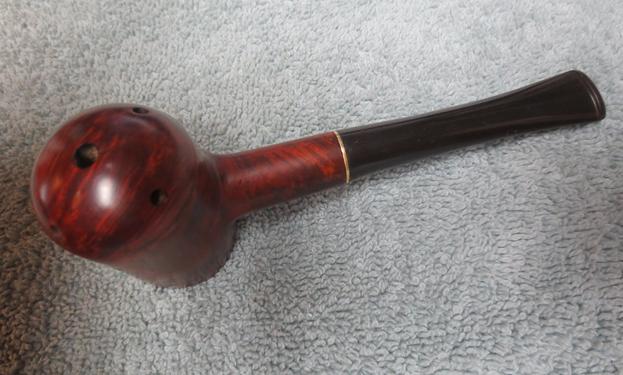
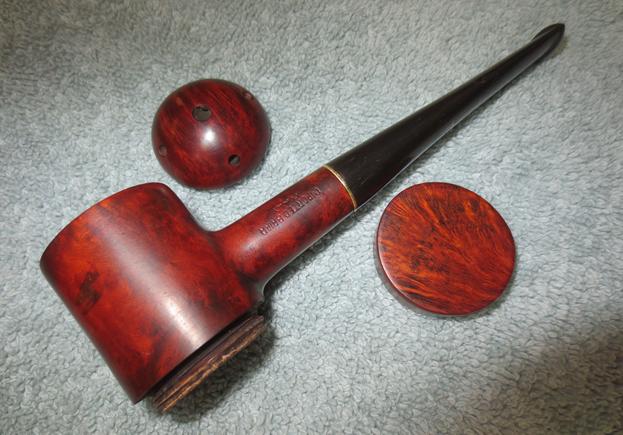
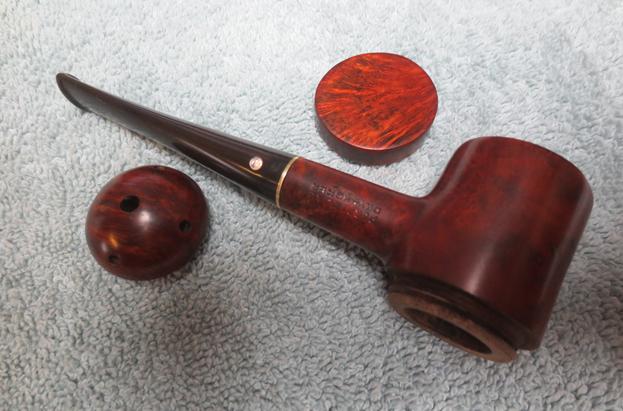
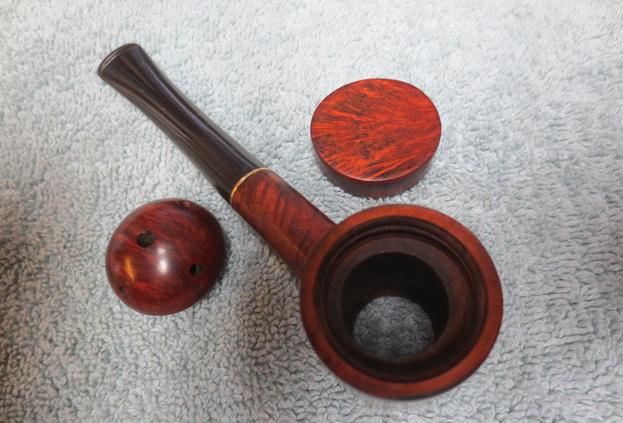
Today I have been working on the second Windy Perpetual Dry Smoker that has come across my work table. The first was a gift from Troy who writes here on rebornpipes. I have written the description of the restoration on a previous blog. You can read about the cleanup and restoration on that blog: https://rebornpipes.com/tag/windy-perpetual-drysmoker-pipe/ . In that blog I did some research on the brand, as prior to the first pipe I was gifted I had never heard of or seen one of these pipes. I decided to repeat a portion of that first blog here to give some background on the brand.

Here is the link to one of my favourite informational sites on metal and unique system style wooden pipes. The link will take you to the article as a whole and some photos that show the pipe quite well: http://www.smokingmetal.co.uk/pipe.php?page=508

“WINDY PERPETUAL DRYSMOKER by Stan Wolcott”

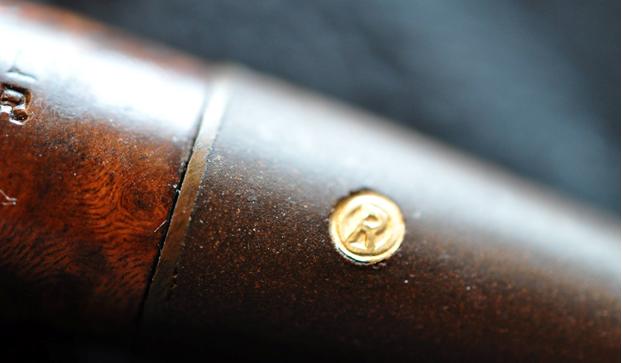
“In my travels I recently came across this intriguing pipe on which very little information appears online by Google search. The left side (?) is stamped “Windy Perpetual Drysmoker” and on the right side (?) “Imported Briar/Italy”. The stem has a small round gold medallion on the left side bearing an “R”. Although several similar pipes are pictured online here in the USA and UK, no explanatory information is included with those images. Floyd Norwood of Tennessee, who restored the pipe for me, also had no idea how the pipe was to be smoked. Tony Pringle of the UK, who has one pictured on his website, believes there may be other pieces which are missing from the four present in the images—flat cap, rounded cap with five vent holes (presumably the wind cap) and the pipe bowl and stem. As can be seen from the images, the flat cap has female threads and screws into the bottom (?) onto male threads on the bowl. The wind cap has male threads and screws into the top (?) of the bowl. I have placed the question marks in parentheses following the terms top, bottom, right and left, since I’m not even sure whether the flat cap is intended to be the bottom. Can someone out there enlighten me and the NASPC readership about this “mystery pipe”, its manufacturer and the proper way of smoking it?”

“The “Perpetual” part of the name seems to come from the ability to actually load more tobacco from the bottom of the pipe whilst still alight and of course the dottle etc. gets burnt as the smoking progresses. Rather ingenious. There are at least two possible for makers from the logo, REGIS and EMPIRE STATE and nothing seems to be known of these either.

Tony Pringle of smokingmetal then includes the following photos of the pipe. There is no doubt that it is the same pipe that I have. There are a few variations between the two but the overall design is the same. He shows photos of the pipe as a whole, taken apart and of the stamping.dry1I have only included the first photos as the pipe I have is virtually identical to this one. Mine also has the gold circle R on the logo on the side of the stem. The only difference is that mine is has a brass spacer on the stem that forms a thin band between the shank and stem. Mine is also in better condition than the one in the photos with no cracks or breaks in the bowl, caps or threads. I believe along with Tony from smokingmetal that the pipe was crafted in the late 1940s. Many things about the briar quality, the rubber that is used in the stem etc. point to manufacture of the pipe occurring during or after the conclusion of World War II.

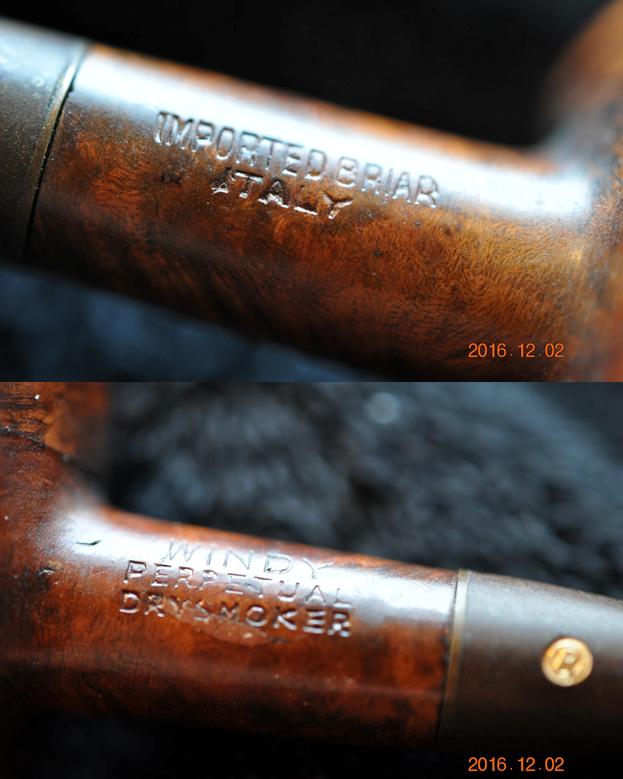
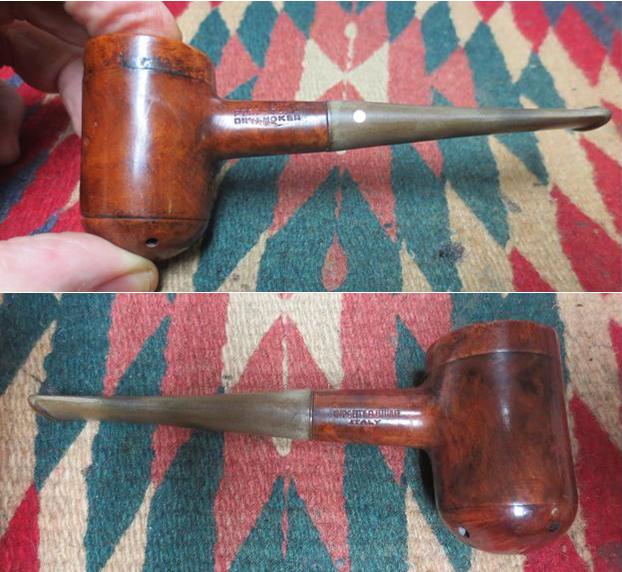
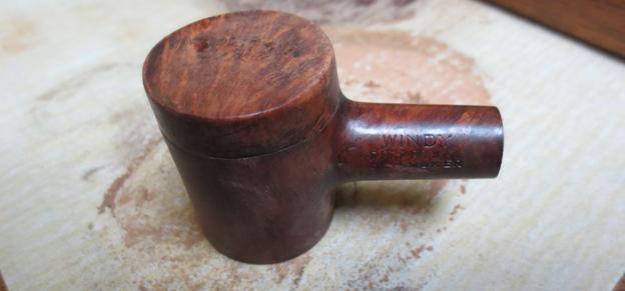
The stamping on the one above and the one I have is simply WINDY over PERPETUAL over DRYSMOKER in caps on what is the left side of the shank. On the right side of shank it is stamped Imported Briar over Italy. The pipe is meant to be smoked with the perforated, rounded cape pointing downward. That is why the stamping is the way it is. If the pipe is held otherwise the stamping is upside down. If the pipe is inverted it can be set upright on a desk or table on the flat top cap and act as a sitter pipe. The pipe is 5 ¼ inches from the front of the bowl to end of bit. The diameter of the outer bowl is 1 3/8 inches. The chamber diameter is just over 5/8 inch and depth is over 1 ¼ inches with both the top and bottom cap removed. The pipe is lit from the bottom and the wind cap cover is screwed in place. I think that more tobacco can be fed in from the top of the bowl with the flat cap removed thus making the pipe a PERPETUAL DRYSMOKER.

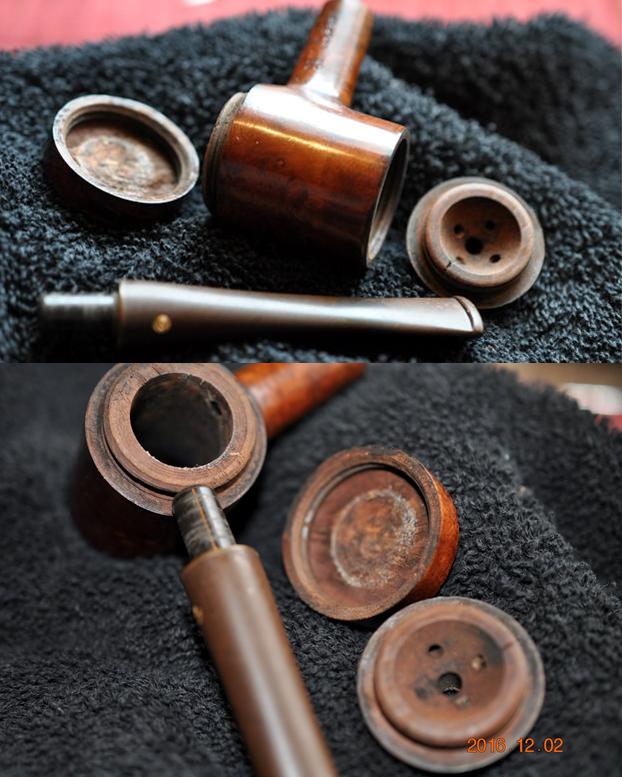
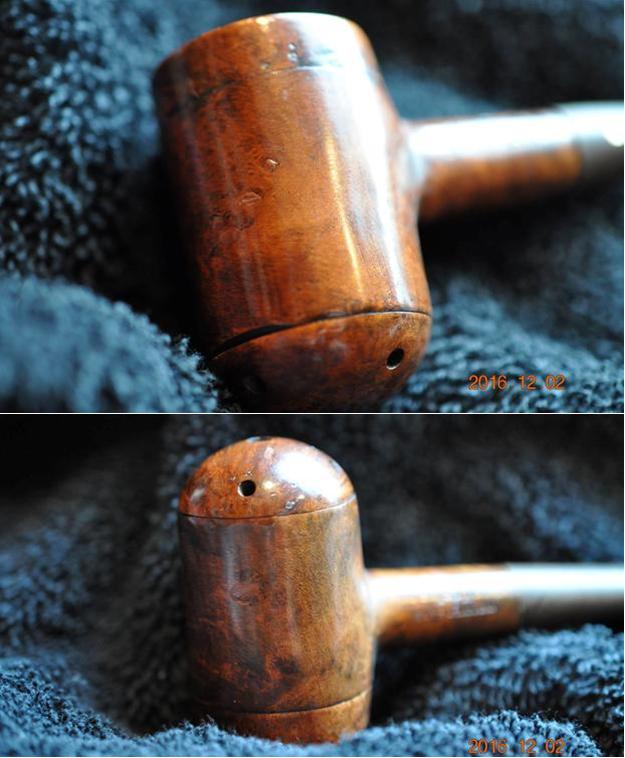
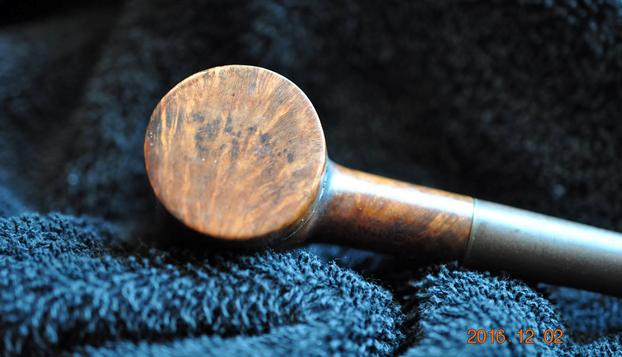
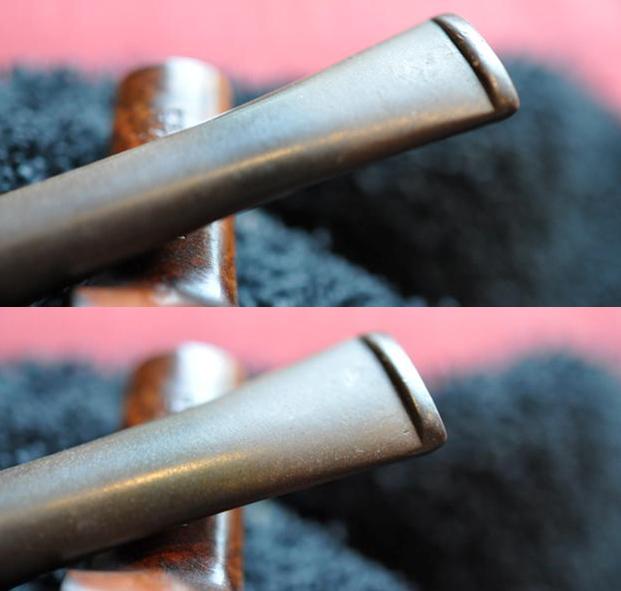
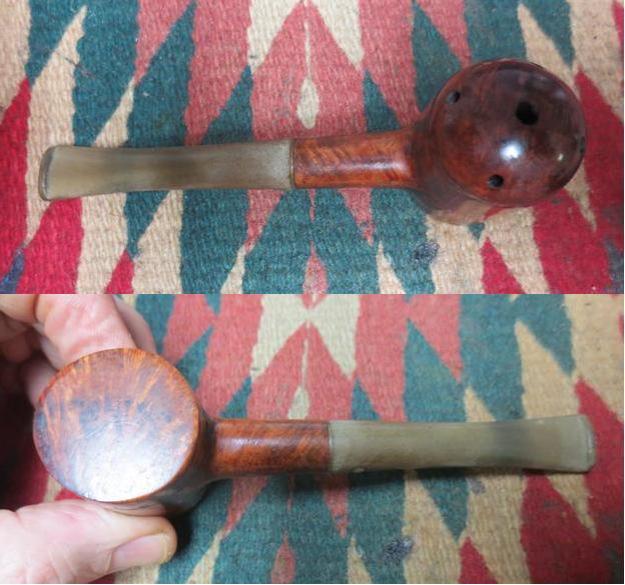
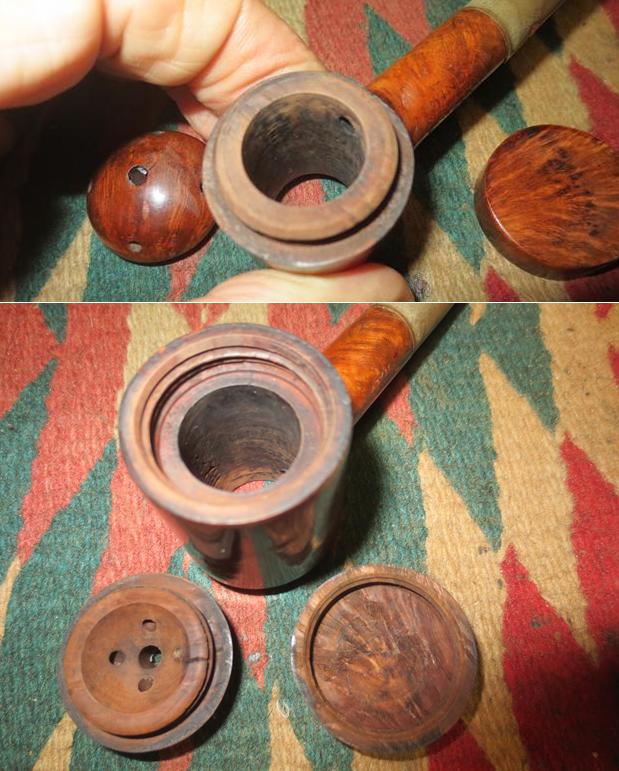
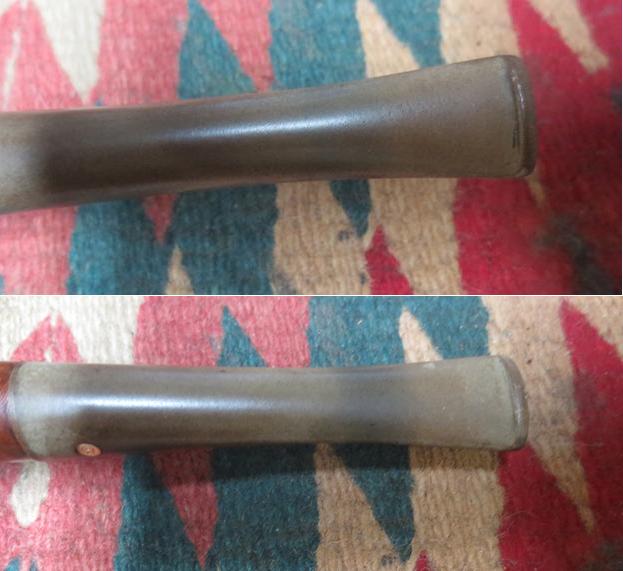
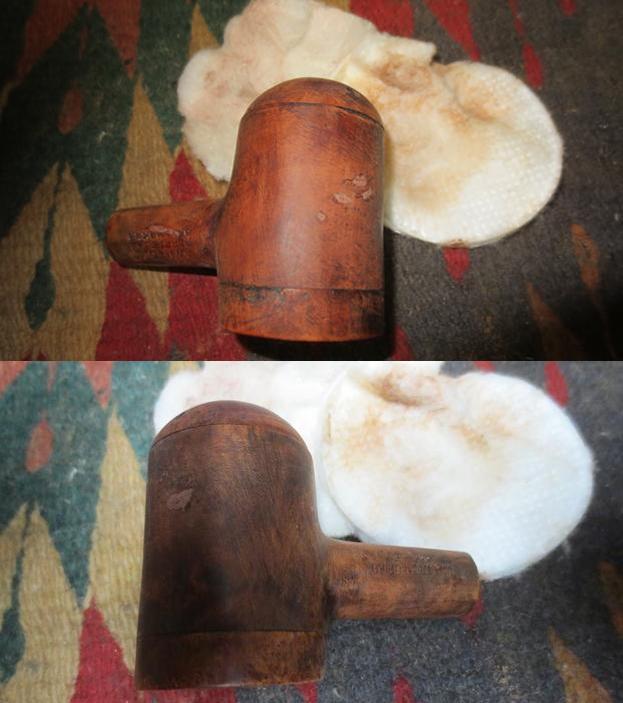
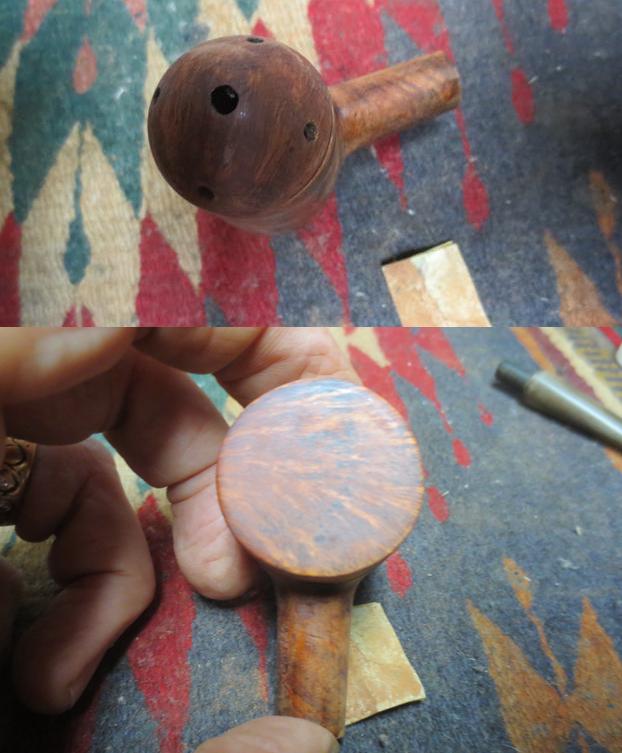
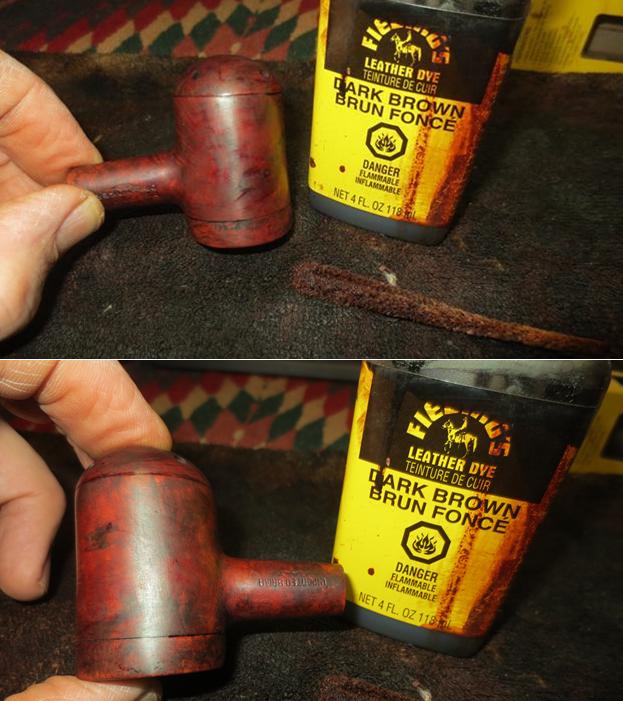
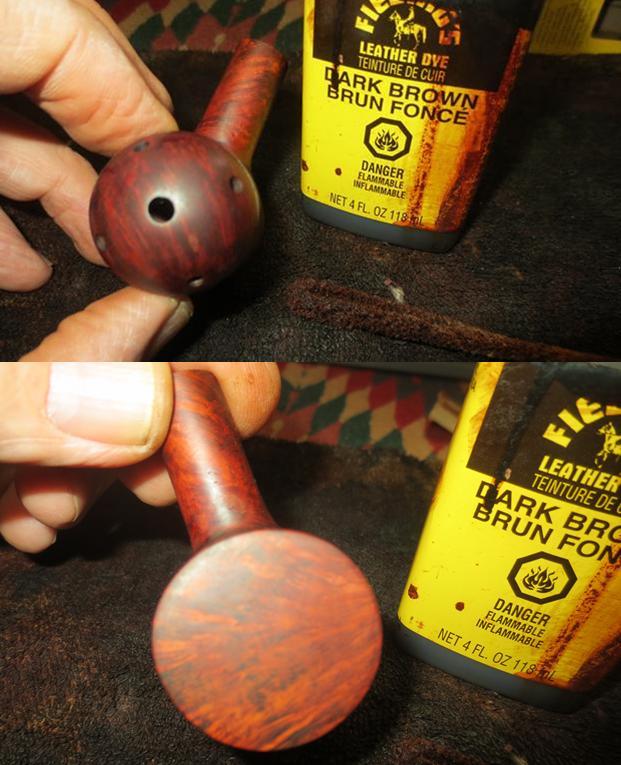
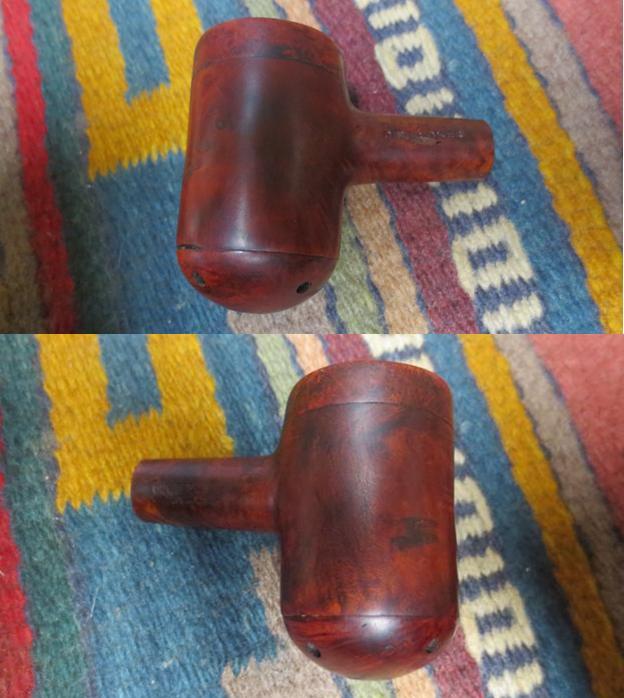
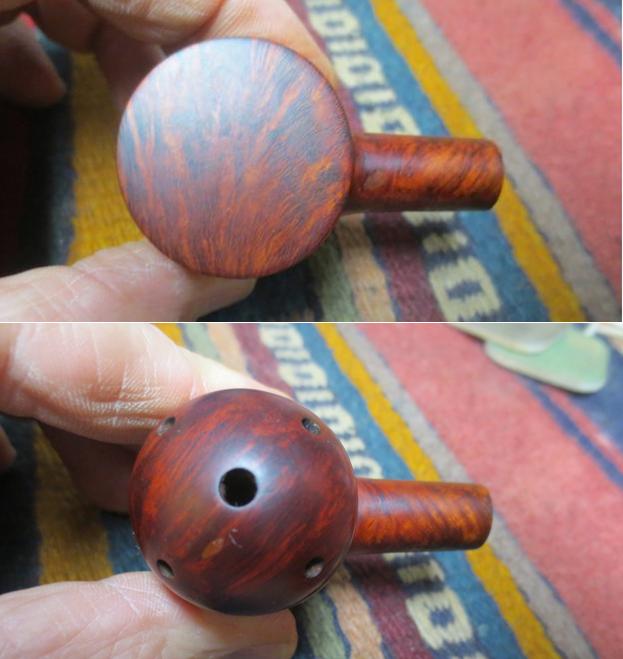
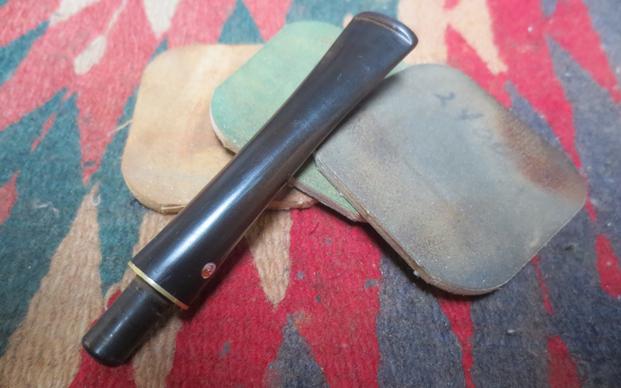
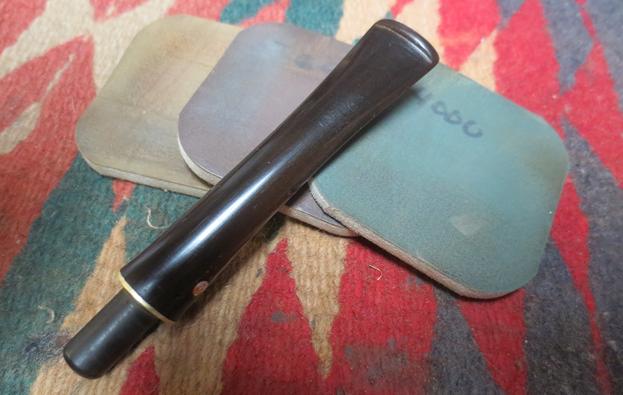
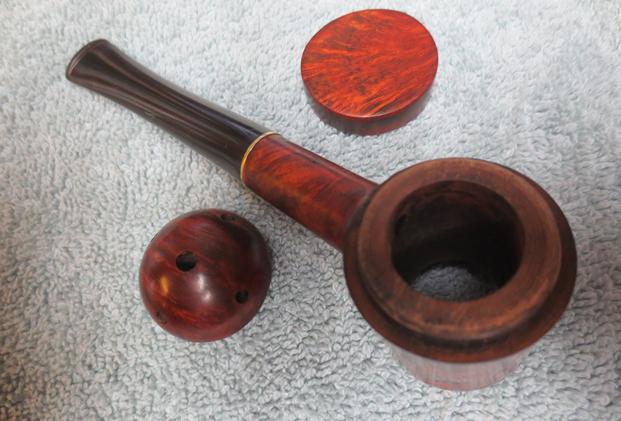
The pipe my brother Jeff picked up is shown in the next photos that he took of it before cleaning it and sending it to me in Vancouver. You can see some darkening in the finish around the flat cap on the bowl and some general wear and tear to the finish as a whole. The bowl has quite a few fills in the shank, the left and right front sides and the crowned perforated bottom cap. The stem was oxidized quite heavily and the diameter of the shank and the diameter of the stem did not match.dry2Jeff took some great photos of the bowl taken apart. Contrary to what Tony and Stan mention in the quote article from the website all the parts are present with the pipe. There are no additional pieces needed to make the pipe functional. The first two photos show the rounded bottom cap and the flat top cap removed from the bowl. You can see the wooden threads on the inside of the bowl in the first photo where the bottom cap screwed into it. The second photo shows the threads on the outside of the bowl where the flat top cap screwed onto it. The completed pipe resembled a salt or pepper shaker to my mind – a unique and interesting smoking device. Both caps were darkened by smoking but appeared to be clean. There was a small crack in the rounded bottom cap but it did no effect the fit in the bowl.dry3He also took some photos with the parts laid out together to give an overall idea of what the pipe looked like.dry4My brother also included some close up photos of the sides of the bowl to show the condition of the finish and what would need to be done to clean it up. He included a photo of the flat top cap to show the remarkable grain underneath the staining and grime.dry5 dry6The next two photos show the stamping on both sides of the shank. The third photo shows the brass circle R logo on the stem and also the brass spacer in between the stem and the shank.dry7 dry8The final two photos Jeff included showed me the condition of the stem. It looked really good other than the oxidation. There was no tooth chatter or tooth marks in the surface. The only issue I would need to address was the mismatched diameter of the shank and the stem.dry9My brother did a really thorough job cleaning up this old pipe. When it arrived in Canada the inside of the bowl and both caps was really clean. He had scraped out the light cake in the bowl and cleaned out the mortise and airway in the stem and shank with alcohol, cotton swabs and pipe cleaners. He cleaned off the exterior of the bowl and was able to remove much of the grime on the surface. The brass space was oxidized but would clean up easily when I worked on the diameter of the stem. I took the next four photos to show the condition I found the pipe in when I unpacked it here in Vancouver.dry10 dry11I took the pipe apart and took photos of the parts of the bowl – the centre core, the rounded bottom cap and the flat top cap. In the photos the core is flat side up in the first one and rounded side up in the second one. The bowl and caps were very clean and you could see raw briar inside all of the parts which led me to think that the pipe had not been smoked often.dry12I took some close up photos of the stem to record its condition as well.dry13The fit of the crowned bottom cap to the edge of the core part of the pipe had some damage to it that did not allow the cap to seat tightly against the edge of the core. I topped it with 220 grit sandpaper on the topping board until the cap fit snugly.dry14I put the cap back in place and wiped the bowl down with acetone on cotton pads to remove the finish. The fills on the bowl were dimpled so they would need to be repaired with briar dust and super glue.dry15 dry16With the finish removed I could better assess the darkened areas around the sides and bottom of the flat cap. I could also see areas that needed to be sanded around the edges of the rounded bottom cap also. I sanded the entire pipe with 220 grit sandpaper to remove the damaged areas and smooth out the transitions between the core and the caps. I also smoothed out the edges of the fills to prepare them for repair later in the process.dry17 dry18With that part finished I needed to rework the shank/stem diameter. The right side of the shank was narrower than the right side of the stem. With the stem removed it was easy to see why. That side of the briar shank was thinner in terms of the thickness of the walls of the shank than the left side. The red circle shows the side that needed to be taken down.dry19I used the Dremel with a sanding drum to take down the excess vulcanite and brass of the spacer.dry20I cleaned out the areas around the fills and removed any of the loose debris around them. I rebuilt the areas around the fills with a mixture of clear super glue and briar dust. I overfilled the repairs to allow for shrinkage. I sanded the repairs smooth to match the surface of the bowl.dry21I sanded the repairs smooth and then polished the areas with micromesh sanding pads. I wet sanded the repaired areas with 1500-2400 grit sanding pads and dry sanded them with 3200-12000 grit pads. I wiped the bowl down with a damp cloth. I stained the bowl and the caps with dark brown aniline stain and flamed it to set it. I repeated the process until the coverage was even.dry22 dry23I buffed the bowl with Blue Diamond polish on the buffing pen. I gave it several coats of carnauba wax and buffed it to a shine.dry24 dry25I sanded the stem with 220 grit sandpaper to smooth out the scratch marks on the vulcanite. I polished it with micromesh sanding pads – wet sanding with 1500-2400 grit pads and dry sanding with 3200-12000 grit pads. I rubbed the stem down with Obsidian Oil after each set of three pads. After the final coat of oil I set it aside to dry.dry26 dry27 dry28I buffed the pipe with Blue Diamond once more and then gave the bowl and stem multiple coats of carnauba wax. I buffed it with a clean buffing pad to polish it and then by hand with a microfibre cloth to deepen the shine. The finished pipe is shown in the photos below. Some of the character marks of the pipe that came to me still show and I am sure could tell a story if they were able to speak. I like the finished look – the marks and all give the pipe a sense of history and time. It is not a bad looking old pipe considering that it has traveled from the 1940s into 2016 and who knows how much longer. Thanks for looking.dry29 dry30 dry31 dry32 dry33 dry34 dry35 dry36

One of my favourite GBD Shapes and Finishes – a Prehistoric 269 Bulldog


Blog by Steve Laug

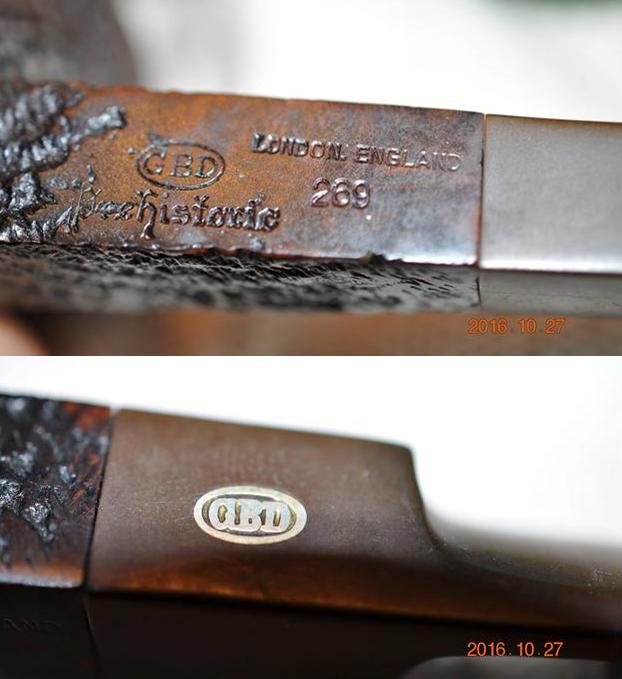
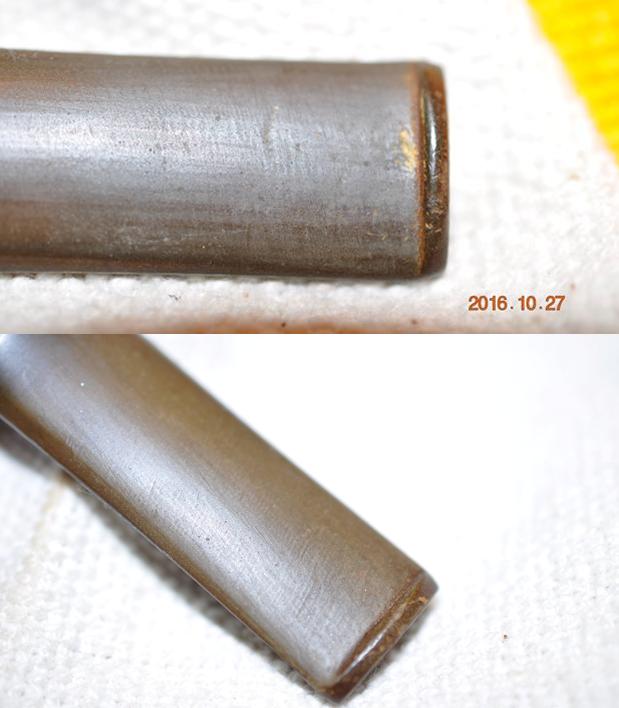
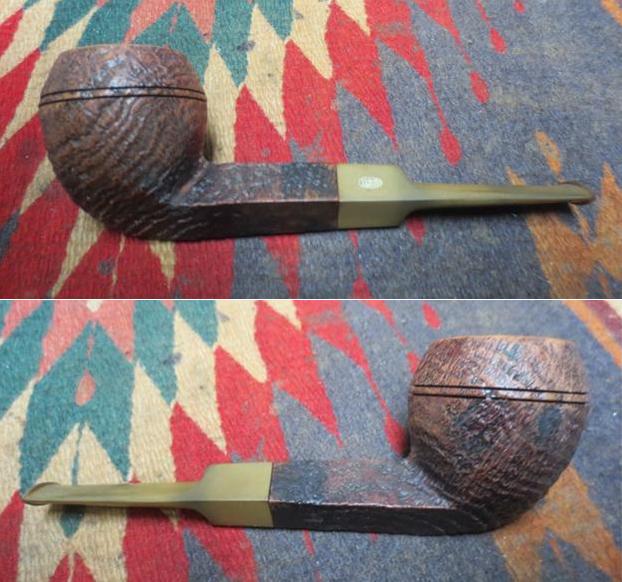
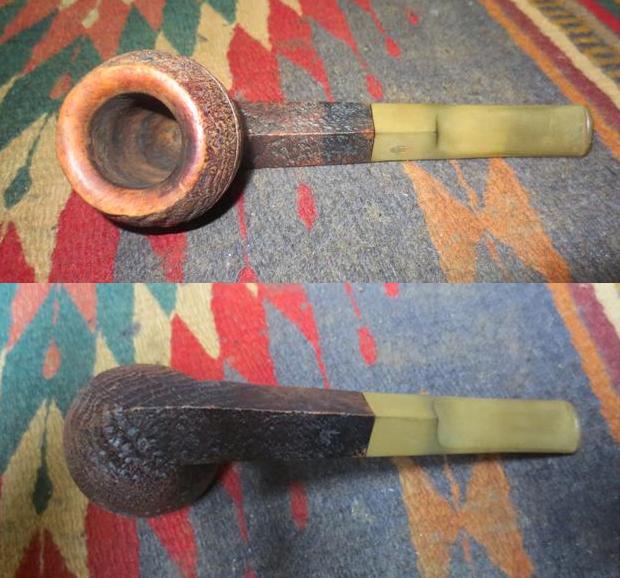
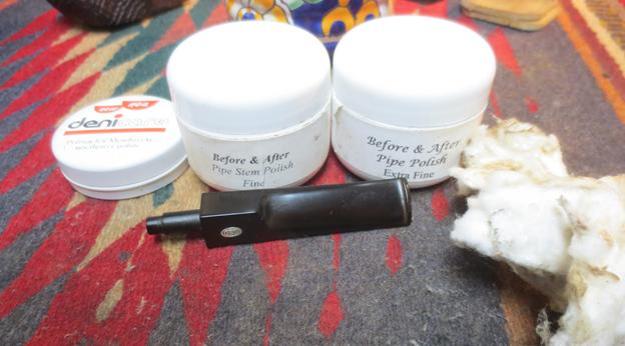
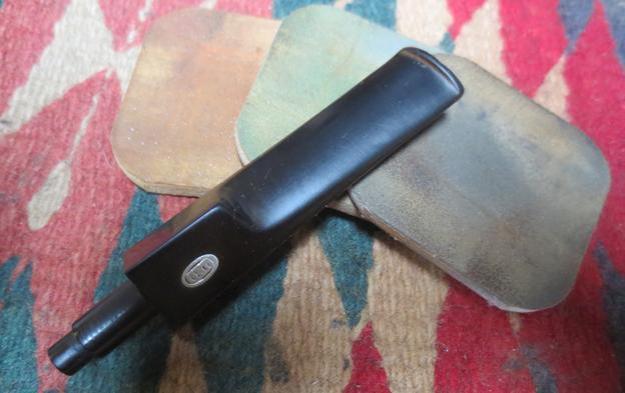
After refurbishing a lot of pipes over the years I have come to opinions about pipe brands and shaped. To my eye certain brands really get a certain shape and really nail it perfectly. To me the GBD Bulldog, shape 269 is one of those shapes. To me it is the quintessential straight shank bulldog. Others do it well but GBD absolutely gets the shape. Add to that fact that certain finishes have also grown on me over the years and one of those is the GBD Prehistoric sandblast. You combine the finish and the shape components on this pipe and I have a real beauty on the restoration table today. My brother is also becoming a die-hard GBD fan so when he saw this one he decided it was one to go after. Needless to say he got it. He took some photos of the pipe before he cleaned it up to send up to me in Vancouver. I have included those below.gbd1The finish on the pipe looks to be in excellent condition. Later close-up photos will show the grime and dust in the grooves and crevices of the sandblast but there are no chips or nicks in the briar. The bowl had remnants of tobacco in the bottom and the cake had overflowed on to the rim top. The curved bevel of the Prehistoric smooth rim was thickly tarred and caked. It was hard to tell from the photos if there were any nicks or deep scratches in the rim. I have found that the thicker the cake and tars on the rim the more likely it is that I will find the rim to be pretty pristine underneath. The stem was deeply oxidized and the GBD logo insert on the stem had been buffed to death but the fit of the stem to the shank was perfect. There was only light tooth chatter and a few scratches on the top and underside of the flat portion of the stem. The photo below gives a clear picture of the condition of the rim and the cake in the bowl.gbd2The sand blast on the heel of the bowl was deep and craggy and the contrast of browns in the stain really highlighted the layered look of the blast.gbd3The stamping on the left underside of the shank in a smooth panel is very readable and sharp. It reads GBD in the oval over Prehistoric in Germanic script. Next to that it reads London England over the shape number 269. The second photo below shows the over buffed roundel in the stem. It is still readable but is quite flattened and broadened. I will have to see if I can clean that up a bit in the process of the restoration – or at least not damage it any further.gbd4The next two photos show the top and underside of the stem. The oxidation is quite heavy and deep in the vulcanite. There is some light tooth chatter and scratches on the stem near the button and on top of the button on both sides but no deep tooth marks.gbd5My brother is getting really good at cleaning up these old timers and I have to say I am getting spoiled at getting pipes that I don’t have to ream and scrape to clean before I can start the restoration process. In this case he scrubbed the briar with Murphy’s Oil Soap and got rid of the grime and dust in the crevices and removed most of the buildup on the rim top. He reamed the bowl and scrubbed out the mortise and the airway in the shank and stem with alcohol, cotton swabs and pipe cleaners. When I received it the pipe was clean and ready to restore. The briar was dry from the scrubbing and the removal of all of the oils. It appears to have lost some of the rich colour but I have learned that once I begin to work on it the life begins to come back to the briar so I was not too concerned. The oxidation had also really risen to the surface of the stem and looked ugly. I took the next four photos to show what the pipe looked like when it arrived.gbd6 gbd7I took a closeup photo of the rim top to show what it looked like when I received it. He had been able to remove the buildup and caking on the rim but there was still some darkening that needed to be dealt with. I also took closeup photos of the stem to show how the pitted and oxidized surface looked before I started. This was going to be a tough stem to clean up.gbd8 gbd9I decided to start with the rim top. I started polishing it by wet sanding with 1500-2400 grit micromesh sanding pads. I wiped it off with a damp cotton pad and dry sanded it with 3200-12000 grit pads. The rim began to take on its original sheen and the darkening and rim damage was removed.gbd10I gave the bowl a light rub down with olive oil and it absorbed it quickly into the dry and lifeless feeling briar. I buffed it by hand with a soft microfiber cloth and took the next set of photos to show what a little oil will do to a dry and thirsty finish.gbd11 gbd12I sanded the stem with 220 grit sandpaper being very careful around the GBD roundel on the stem. I was able to remove much of the surface oxidation on the stem and I started to see the black stem peeking through.gbd13I decided to try several of the stem polishes I have around here to try to break through the oxidation. I started with Denicare Mouthpiece Polish which is a very gritty and cuts through the oxidation and helps polish the stem. I followed that with the Before & After Polishes which are also gritty but each of them the Fine and the Extra Fine are less so than the Denicare polish. While they worked well overall and cut through a lot of oxidation it took much scrubbing with cotton pads to polish it to the place the stem is in the photo below.gbd14I still needed to polish the stem further with micromesh sanding pads – wet sanding with 1500-2400 grit pads and dry sanding it with 3200-12000 grit pads. I rubbed it down after each set of three pads with Obsidian Oil. After the last set of pads I gave it a final coat of oil and set it aside to dry. gbd15 gbd16 gbd17I buffed the bowl rim and the stem with Blue Diamond on the buffing wheel to shine it further. I gave the stem and the bowl rim multiple coats of carnauba wax on the wheel and hand applied Conservator’s Wax to the sandblast bowl sides and shank. I buffed the entire pipe with a clean buffing pad, carefully buffing around the stamping and the brass roundel on the stem. The finished pipe is shown in the photos that follow. The overall appearance of the pipe is very good. In some of the close up photos the light shows me some spots along the crease of the button where the stubborn oxidation did not all come clean. Ah well. It is one of those that I think I will revisit repeatedly over the course of its life with me. Thanks for journeying with me on this troublesome oxidation removal process. Thanks for reading. gbd18 gbd19 gbd20 gbd21 gbd22 gbd23 gbd24 gbd25

A Tiny Salesman Pipe – What a Contrast to those Giant House Pipes


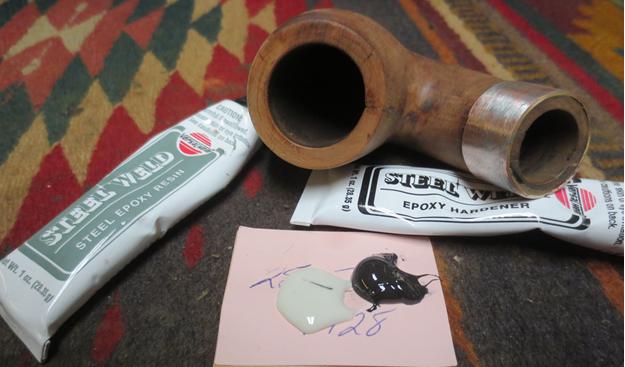
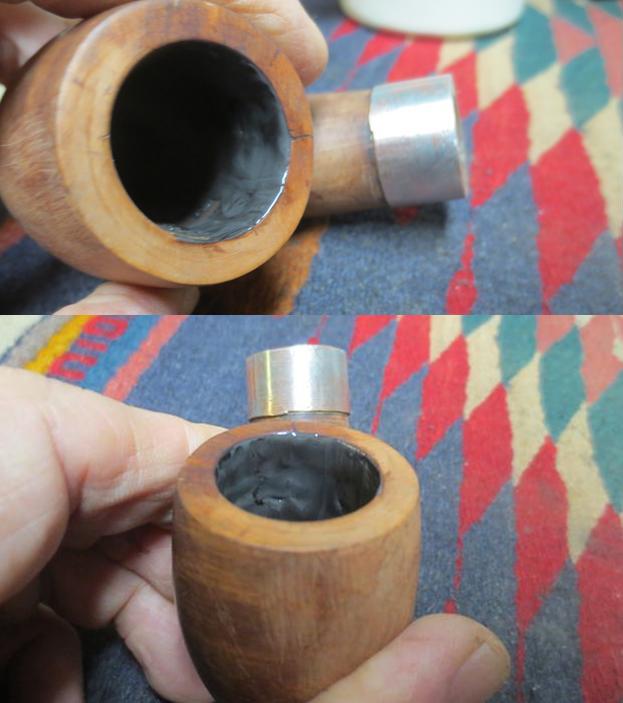
Blog by Steve Laug

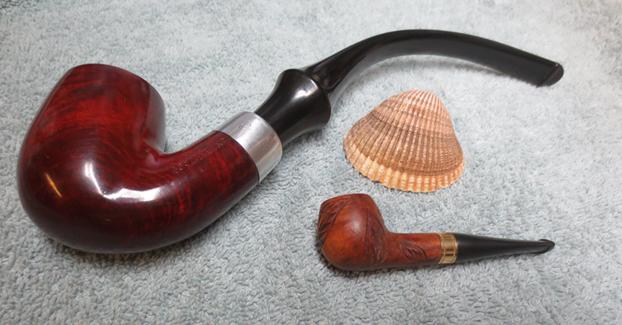
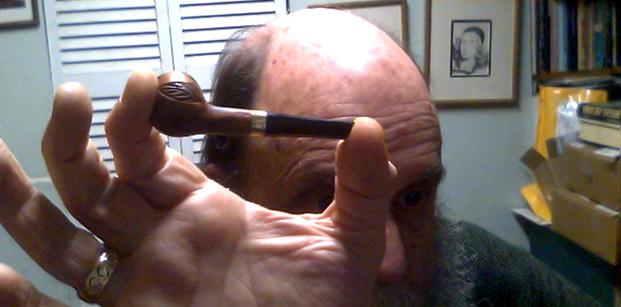
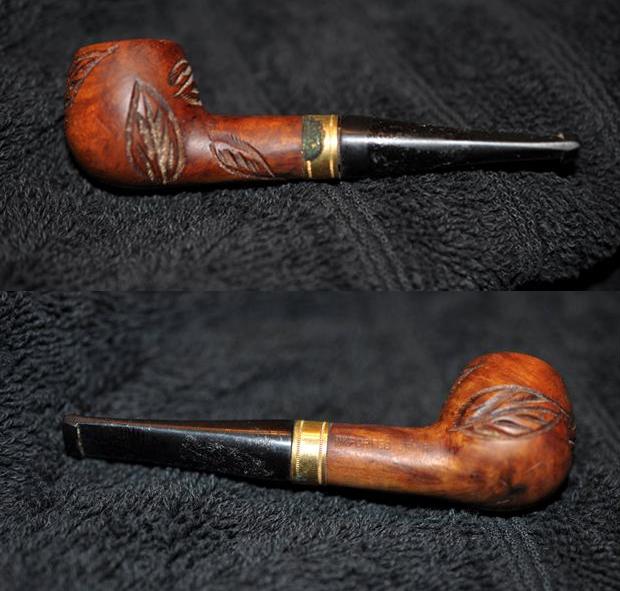
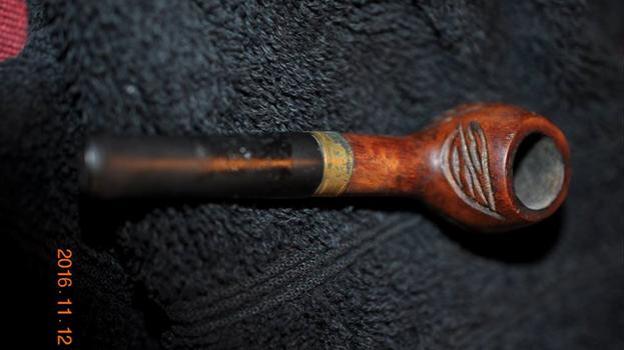
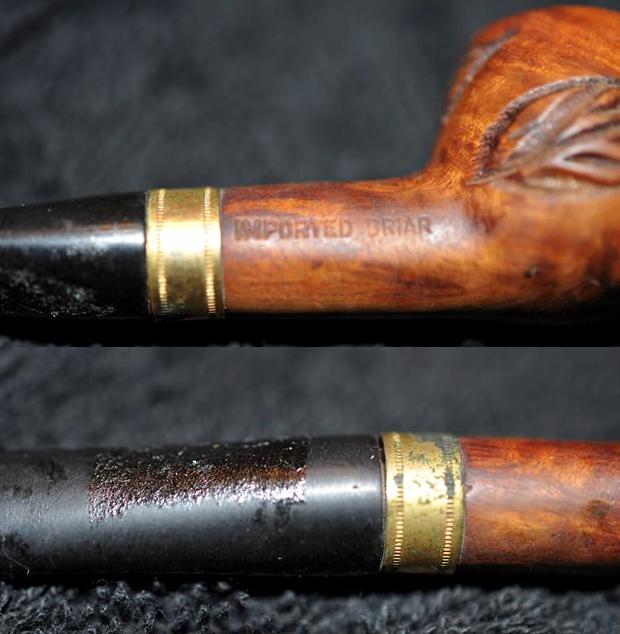
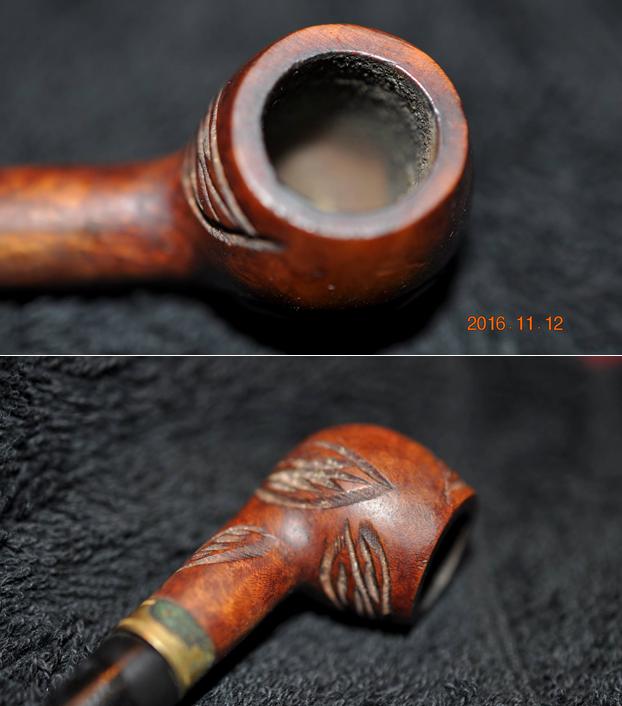
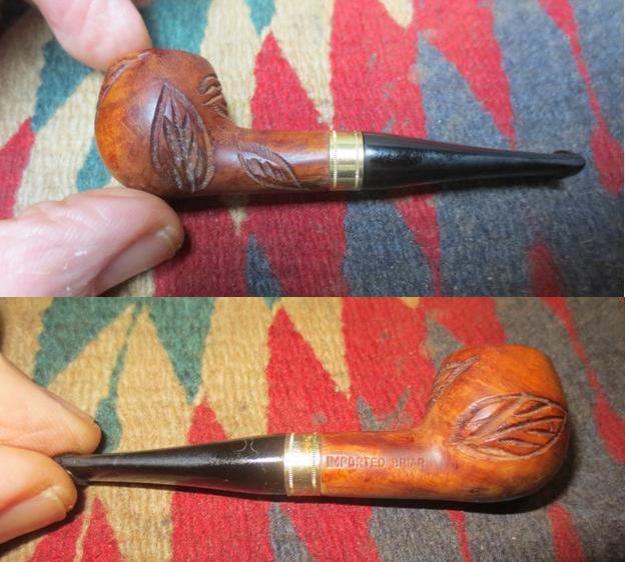
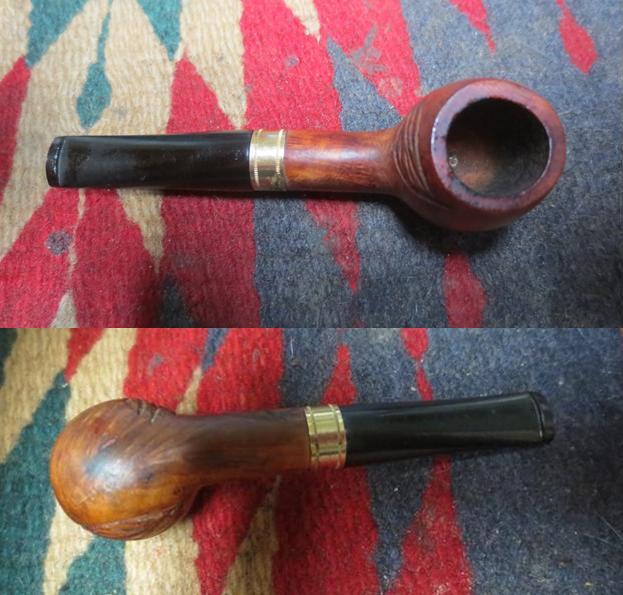
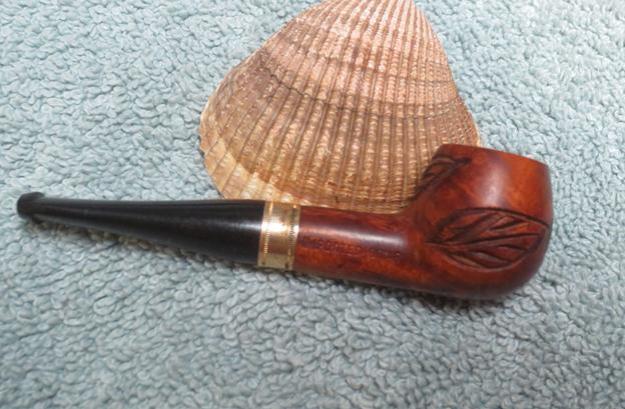
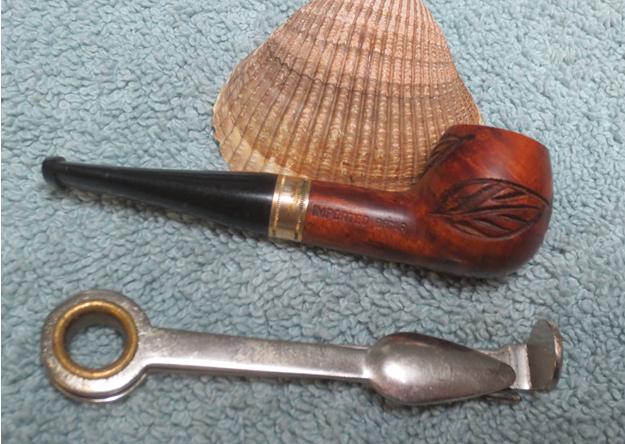
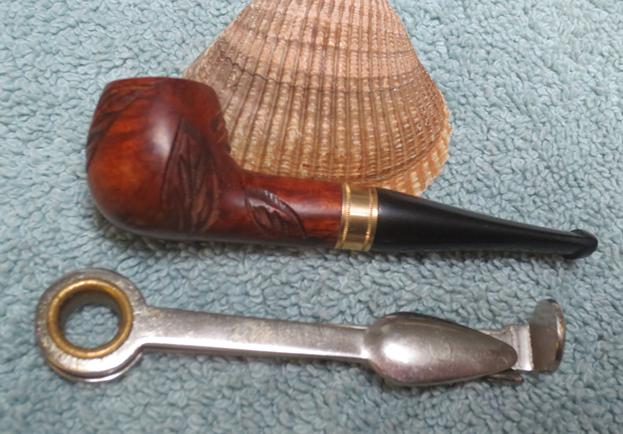
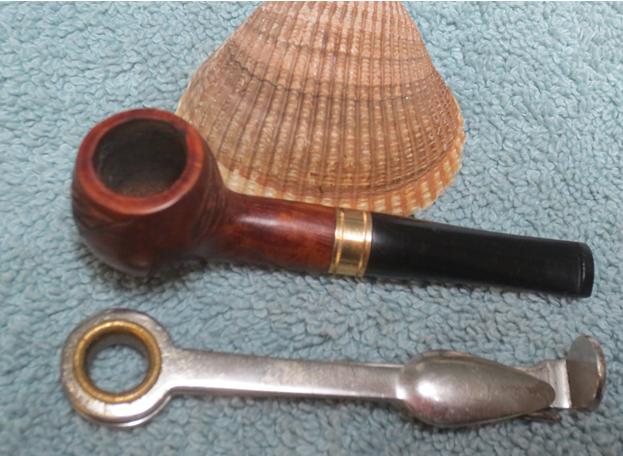
Yesterday and today I have been working on two giant pipes – two House Pipes. The first was a CPF French Briar Giant and the second was a KBB Yello-Bole 3068C Giant. Both were over 10 inches long with at least a 2 inch bowl. I have written about both of them on the blog. You can read them by clicking on the name of the pipe above as they have been linked to the appropriate blog. This afternoon I decided to do something a little different. In the latest box my brother sent he included a tiny little pipe. It is 3 ¼ inches long, 1 inch tall, outside bowl diameter 7/8 inches, inside bowl diameter 7/16 inches. In the photo below you can see it in comparison to the big Yello-Bole 3068C. It is minuscule.tiny1I took a photo of the pipe between my thumb and forefinger to give an idea of the size in hand. What do you think? Would you ever smoke a pipe this tiny? It is fully functional.tiny2My brother took some photos of it to show the condition when he got it. You can see that it was in rough shape and had been smoked quite a bit. Pretty amazing in my opinion as the bowl is the size of a small thimble. The bowl is carved with tobacco leaves around all sides – front, back, right and left. The bottom of the bowl is smooth as is the rim. The finish is in rough shape with grit and grime in all of the grooves, a dark spot on the underside of the bowl and darkening at the rim with the inner edge slightly out of round. There is a small brass band around the shank of the pipe that has a set of rings around it on the inside and outside edges. In the first photos that my brother took before cleaning it you can see the oxidation and what looks like damage to the band. The stem also appeared to be in rough shape.tiny3 tiny4My brother took a few close-up photos that show the condition of the pipe and categorically show that it had been smoked quite a bit for the doubters among us. The first photo shows the only stamping on the pipe – Imported Briar on the right side of the shank. It also shows some of the oxidation on the band and intricate rings around its edges. The second photo shows how the stem is not aligned in the shank due to the dirtiness of the shank and also the condition of the stem. It appears that there some glue on the stem from a label that was on the pipe at the antique shop where he purchased it.tiny5The next photo shows the rim with a cake in the bowl and the damaged inner edge the rim on the lower left side of the photo. The second photo gives a good picture of the carved leaves on the bowl sides and back. They had a similar etching pattern around the edges of the leaves as those on the twin rings on the shank band.tiny6At this point you might well be wondering what the point is in investing time and effort into the restoration of this small bit. It takes as much work to clean and restore a tiny pipe as it does a big one and the steps and process is the same regardless of size. Though it is a good question there is something singularly interesting in these small pipes that were used by salesmen in their sales routes through city tobacco shops. This one is particularly unique in that I have never seen one with this attention to detail. Soooo… the short of it is that between my brother and I we decided to clean it up and restore this bit of tobacciana.

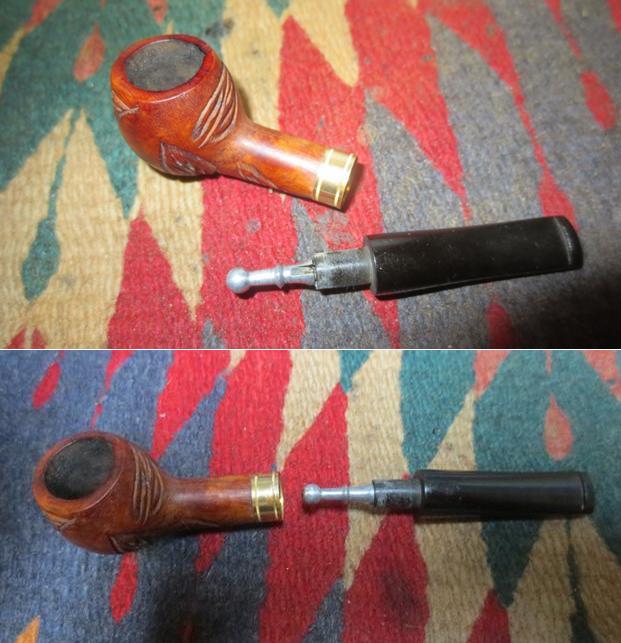
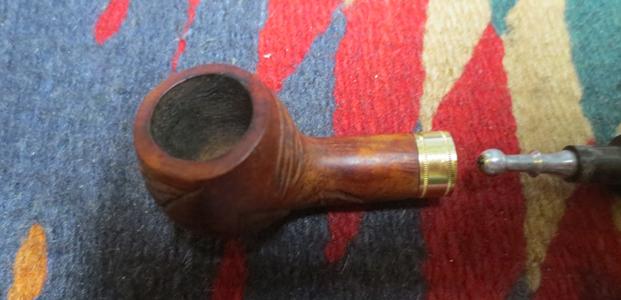
Jeff did his usual thorough job in cleaning if this tiny little apple. He reamed it with a Savinelli Fitsall Pipe Knife (and by the way it truly does fit all) to remove the cake. He scrubbed the surface of the bowl and rim with Murphy’s Oil Soap and a tooth brush to remove all of the grime. He used the soap on the exterior of the stem and the band with the tooth brush and was able to remove all of the grime and glue that remained on the stem and the oxidized portion of the band. He cleaned out the mortise and the airway in the stem and the shank with alcohol, cotton swabs and thin pipe cleaners. When the pipe arrived in Vancouver it looked like a different pipe.tiny7 tiny8When I took the pipe apart you can imagine my surprise when I found tiny stinger in the end of the tenon. It was a typical ball and slot style stinger with an open slot on the top side of the stinger allowing airflow into the stem. Jeff had cleaned up the stinger so that was polished and none of the typical tars and oils that collect on these contraptions was present.tiny9He had been able to clean up the band so that it shone and the rim top was actually quite clean. The damaged area on the back right side of the inner edge was not too bad and would be able to be cleaned up easily.tiny10The stem was actually in very good condition. The glue on the underside from the label had come off nicely. There were no tooth marks or chatter on the stem at all. A light polishing would make it like new.tiny11I used a folded piece of 220 sandpaper to clean up the damage on the inner edge of the rim. It did not take too much and the nicked area was removed and smoothed out.tiny12I polished the briar with micromesh sanding pads – dry sanding with 1500-12000 grit pads. I wiped the briar down with a damp cloth after the polishing and then buffed it lightly with a soft cloth.tiny13I polished the stem with micromesh sanding pads – wet sanding with 1500-2400 grit pads and dry sanding with 3200-12000 grit pads. I rubbed the stem down after each set of three pads with Obsidian Oil and after the last coat of oil I set the stem aside to dry.tiny14 tiny15 tiny16I lightly sanded the burn spot on the bottom of the bowl with 220 grit sandpaper and buffed it with red Tripoli to minimize the spot. I buffed the bowl and stem with Blue Diamond on the buffing wheel and then gave the pipe multiple coats of carnauba wax. I used a light touch on all buffing of the bowl so as not to get build up in the grooves of the carved leaves. I buffed the pipe with a clean buffing pad and by hand with a microfibre cloth to deepen the shine. The finished pipe is shown in the photos that follow. It took as much work as a full-sized pipe to bring it back to life – though in proportion. Personally I think it was worth the effort. It is a fine piece of tobacciana history and I sure wish it could talk and tell its story. I wondered how it ended up in Boise, Idaho and where it was before then. At least the part of the story from Boise to Idaho Falls and then to Vancouver in Canada has now been recorded. Thanks for looking.tiny17 tiny18 tiny19 tiny20 tiny21

Refreshing an old giant – CPF French Briar Bent Billiard


Blog by Steve Laug

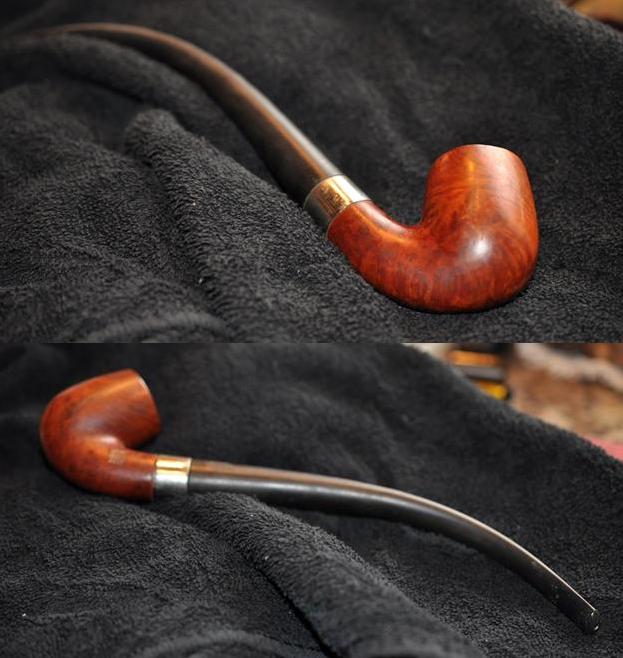
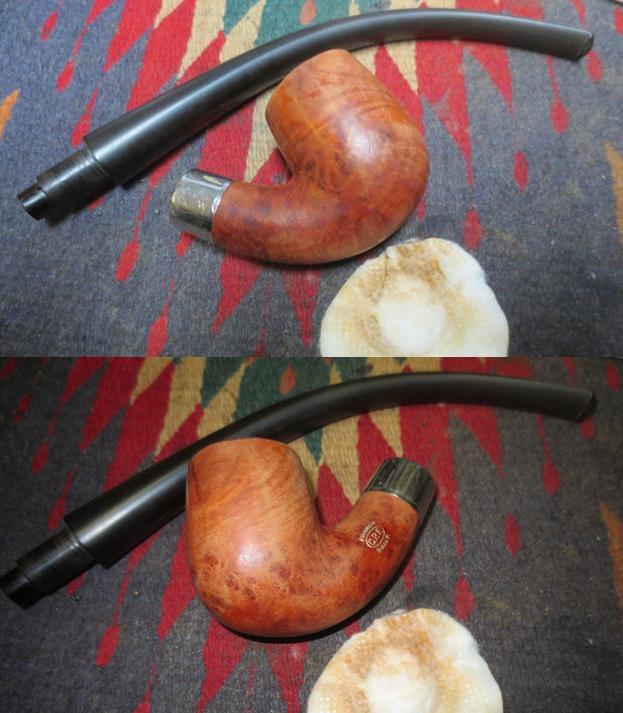
I have always heard and read that during WWII years it was virtually impossible to get briar in the US and rubber for stems was at a premium. During those years, Mountain Laurel and Manzanita – close kin to Mediterranean Briar – were used. The bowls have a different appearance than briar – the grain on the bowl sides and rim are very different. The stems were often made of repurposed rubber and I have seen bits of metal in the cast rubber of the stems. While that is interesting information the next pipe on the table is far older than WWII. But it could be made of Laurel and it certainly had bits of metal in the solid rubber stem. It came from my brother as well. It is a CPF French Briar bent billiard. It is a large pipe – the length is 11 inches, the height is 2 ¼ inches, the outside diameter of the bowl is 1 ½ inches and the inner diameter is 7/8 inches and the depth of the bowl is 1 9/16 inches. I took the next photo to give an idea of the size of the pipe when I received it.cpf1Don’t you ever wish these old pipes could talk? They could certainly tell some amazing stories of their journeys. My brother wrote to tell me that this old CPF Giant was found in an antique store in Idaho Falls, Idaho. The owner had told him that the pipe was owned by an artist who strictly used it as a art prop… never smoked it. That’s why it was in great shape for the age. My brother took some photos of the pipe before he did his clean up and sent it to me. The finish was in decent shape. There was some spottiness to the finish but no deep nicks of scratches. The rim had overflow from the cake in the bowl that was thick on the entire surface. The metal band had some scratches and appeared to have rotated on the shank in the photos showing that it was probably loose. The stem was clean with minimal tooth chatter near the button with a little wear on the top and underside of the orifice button. There was some oxidation on the rubber.cpf2I have restored quite a few CPF pipes in the past and did a blog on the historical background of the brand. You can read the entirety at this link: https://rebornpipes.com/2013/04/14/some-reflection-on-the-historical-background-on-cpf-pipes/. I have summarized part of it in what follows to connect this pipe to the history of the brand.

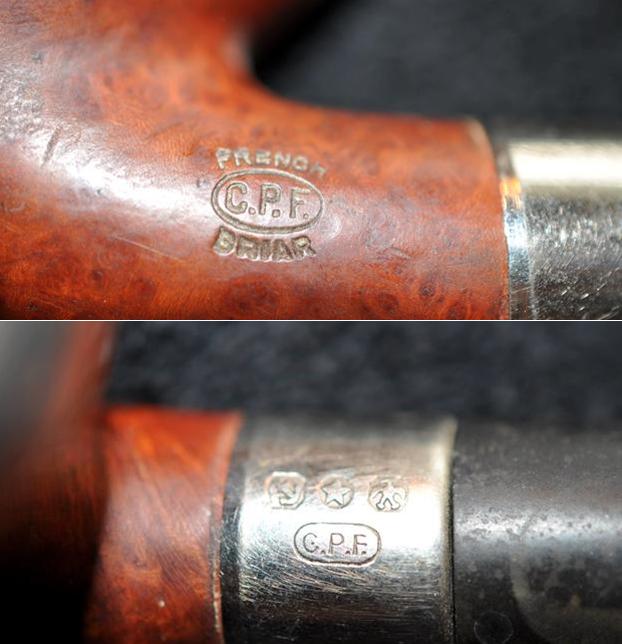
One of the secondary hobbies to pipe refurbishing that I enjoy doing is to research the history of a particular brand or make. In a recent EBay lot I bought there were 3 pipes that were stamped with the CPF logo – CPF in an oval with the word FRENCH stamped in an arch above the oval and the word BRIAR stamped in an arch below the oval. I had heard that the CPF stood for a variety of names from Consolidated Pipe Factory to Colossus Pipe Factory and even Chesterfield Pipe Company. There was a wide range of conflicting information available on the websites and forums that I read while looking into the brand…”

“…CPF in the logo stands for Colossus Pipe Factory. The brand was purchased by KB&B sometime between 1884 and 1898 and it continued until 1915. That time frame gives help in dating some of the older CPF pipes you or I might find. It can be said that prior to the dual stamping it is fairly certain that the pipe is pre-1884 to 1898. After the dual stamping it can be placed post 1898 until the closure of the brand line in 1915. CPF made beautiful pipes. I believe Sam Goldberger was correct in his assertion that the carvers who made the pipes were of European training and used the classic shapes and well-aged briar.”

Armed with that information I should be able to narrow down the period in which the pipe was made. Since the pipe and the ferrule both bear only the CPF logo I can safely say the pipe was made before the time period mentioned above as sometime between 1884 and 1898 when the CPF company was sold. I also know that from 1898-1915 all of the pipes that came out of the factory bore a dual CPF/KB&B stamp. The fact that this one does not puts the date of manufacture before or around the early 1880s. It is an old pipe.

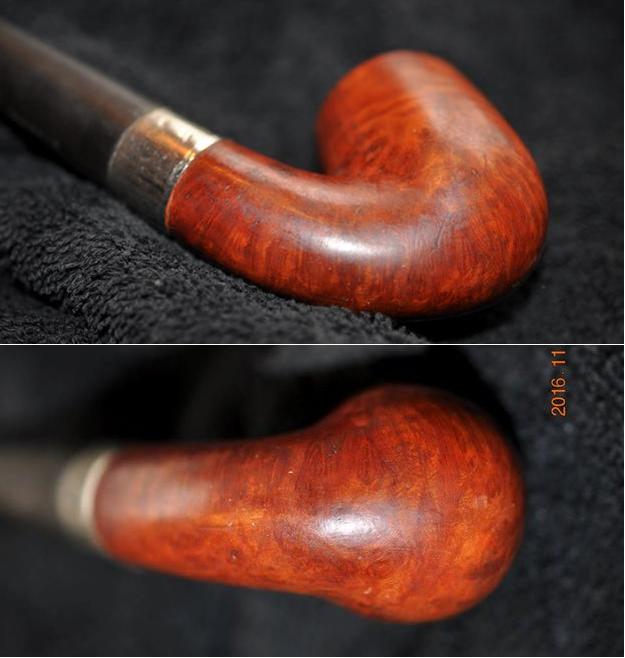
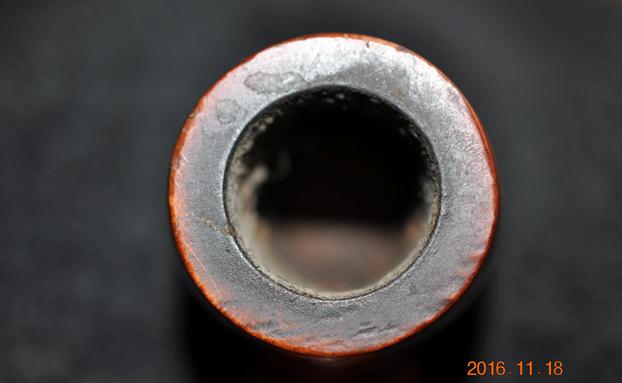
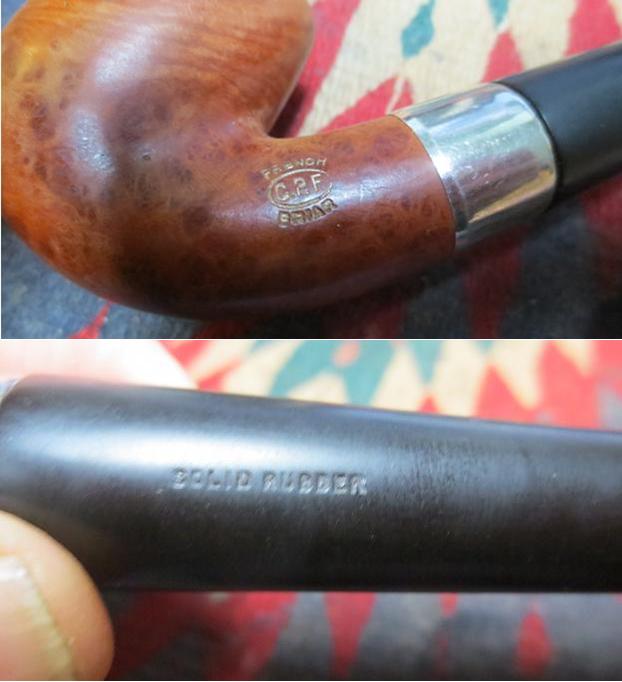
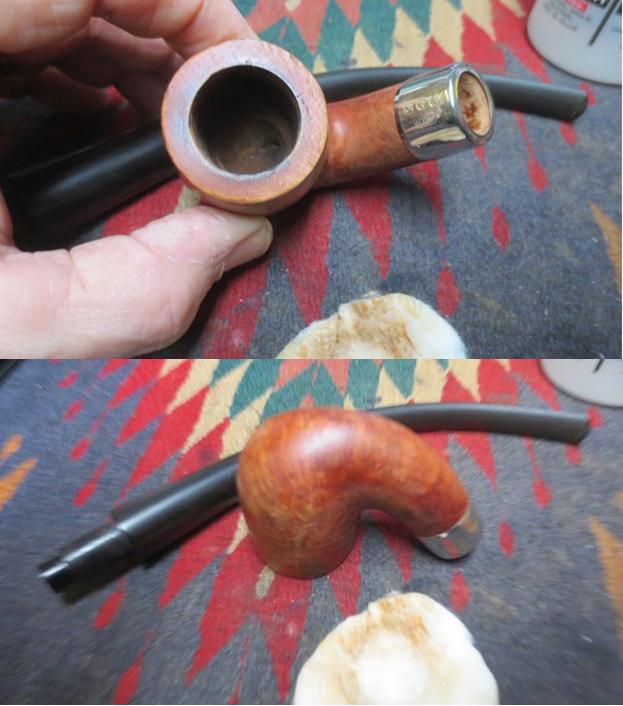
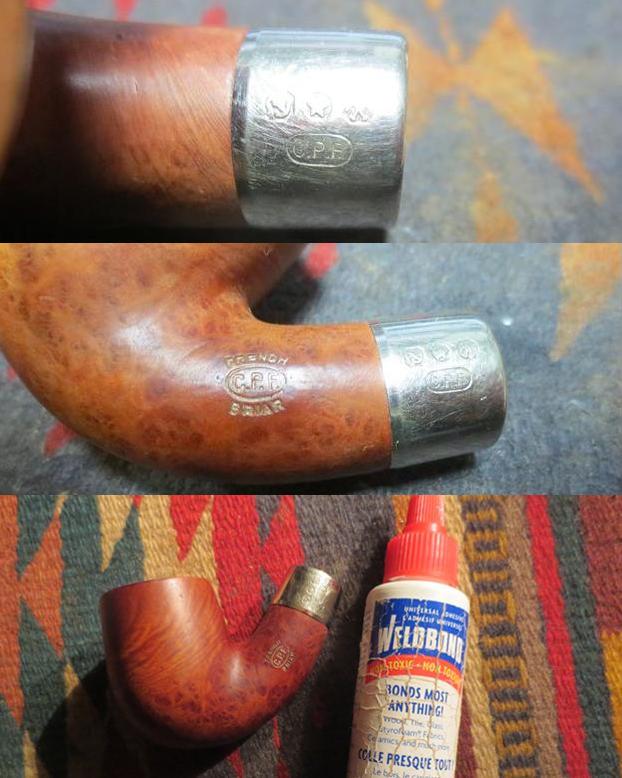
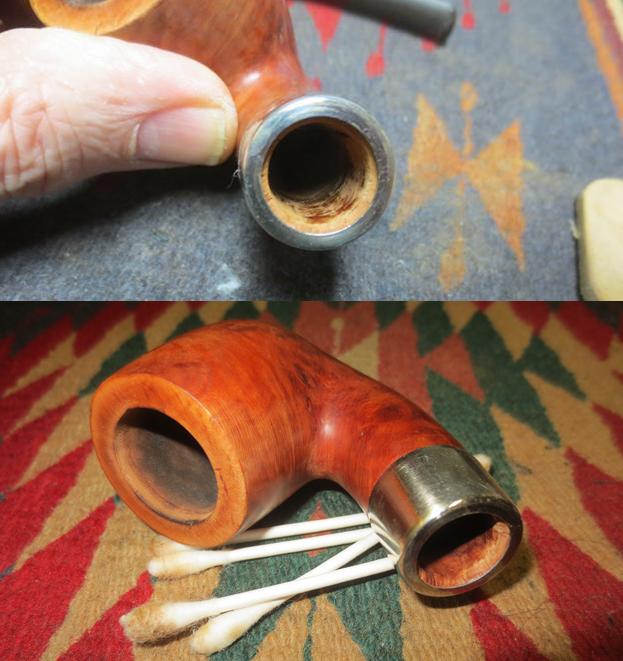
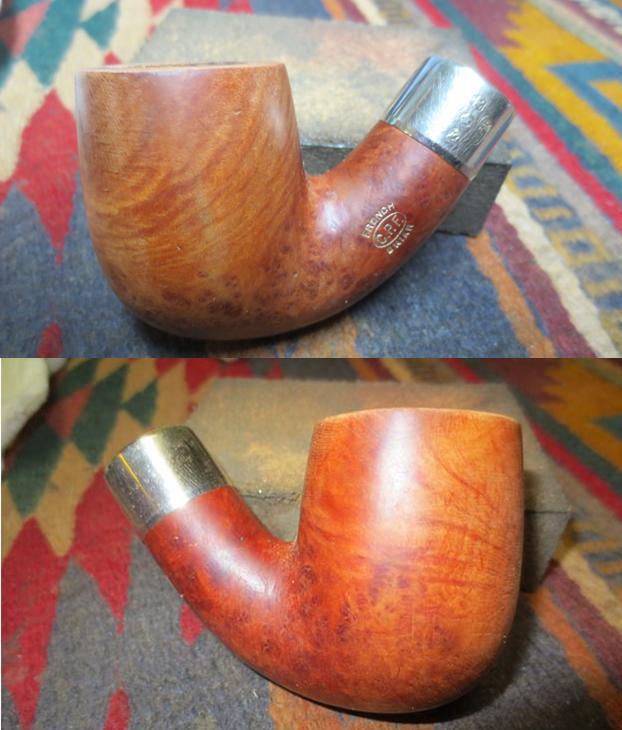
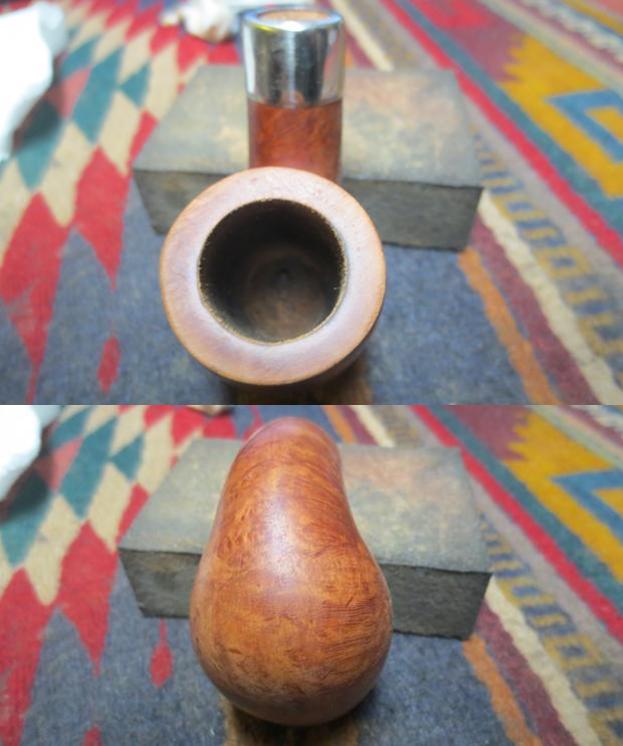
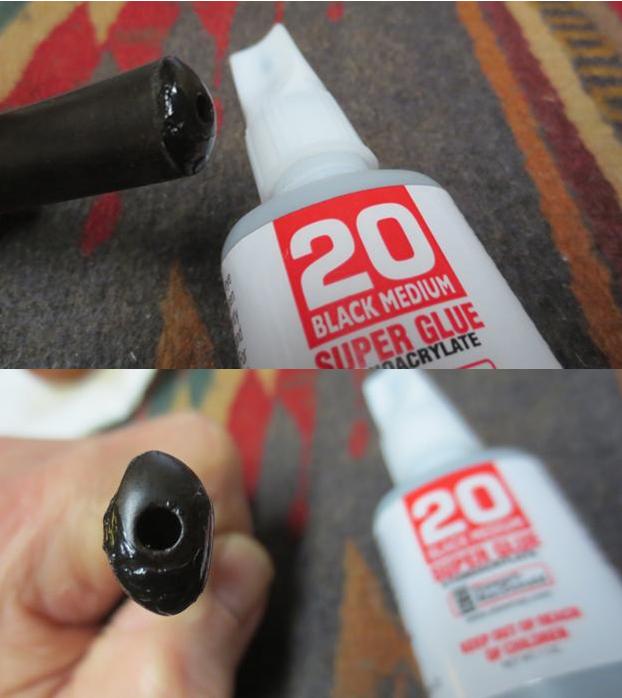
My brother took some close up photos of the pipe. The first two show the grain on the bottom of the bowl. It is a mixture of birds-eye and cross grain that is really scrambled up. I have not seen the kind of grain patterns that show up on just one side of this old timer. It is the graining pattern that makes me wonder if I am really dealing with briar here. The third photo shows the bowl and the rim. You can see the thin even cake and the buildup of tars and oils on the top of the rim. The internal and external edges of the rim appeared to be in excellent condition.cpf5cpf6The next two photos show the stamping on the left side of the shank and on the ferrule. The shank reads C.P.F. in an oval with French above the oval and Briar below the oval. The stamping is filled with gold gilding. The stamping on the ferrule has three hallmarks – an anchor, a star and an eagle which from previous research on this brand are determined to be faux hallmarks and are there for looks rather than giving pertinent information on the band. Beneath the hallmarks is the C.P.F. oval.cpf7The stem was lightly oxidized and the orific button on the end had some chips missing on the top and bottom sides. The underside of the stem was stamped Solid Rubber. From what I could find online the Solid Rubber stamp was originally used when rubber or vulcanite started becoming popular for pipe stems in the mid to late 1800s. I have found from working on them that solid rubber stems are different from vulcanized rubber stems. They seem to have less oxidation and seem denser in composition. They are heavier that vulcanite stems that are the same size as well. I have also found that they need to be cleaned differently. Solvents that are fine for vulcanite can cause hard rubber to “ripple”. They require a little extra care when performing maintenance.cpf8My brother did a great job cleaning the pipe up. He reamed the bowl and cleaned off the buildup on the rim. All that was left was some darkening. He cleaned out the internals so that when I got it the mortise, airway in the bowl and the stem were spotless. The bowl interestingly enough was not smoked all the way to the bottom. The last half of the bowl was still raw briar undarkened by smoke and heat. I took the next four photos to show what the pipe looked like.cpf9 cpf10I took a closeup photo of the rim top to show what I needed to deal with on that front. The surface was clean but there were some scratches and there were some nicks in the edges of the bowl. There was also some darkening around the inner edge of the bowl.cpf11I also took some close up photos of the identifying marks that I noted above in my description of the pipe. The CPF stamping on the shank was clear but the ferrule had rolled to one side and would need to be glued. The Solid Rubber stamping is also clear on the underside of the stem.cpf12I scrubbed the surface of the briar with acetone and cotton pads to clean off the remaining finish on the bowl and shank. I was careful to avoid the gold stamping on the left shank side.cpf13 cpf14The ferrule had rolled over to the top of the shank. The stamping was on top and should have been aligned with the stamping on the left side of the shank. I removed the ferrule and cleaned up the briar. I reapplied some all purpose glue to the briar and pressed the ferrule back on the shank. I aligned the stamping on the ferrule with that on the shank.cpf15The fit of the stem in the shank was very tight. I used alcohol and cotton swabs to clean out the stain spots on the inside of the mortise. It did not take too much to remove the shiny spots and once they were gone the stem fit better.cpf16I sanded the bowl and shank with a medium and fine grit sanding sponge to remove the scratches and clean up the rim top. I was able to remove all of the nicks and spots on the rim. The scratching on the bowl sides was minimized.cpf17 cpf18I used black super glue to rebuild the damaged portions of the top and underside of the button edge. It took multiple coats rebuild it back to the size I needed so that I could reshape it with sandpaper and files.cpf19When the glue had dried I sanded it with 220 grit sandpaper to reshape it. I wanted it rounded like the undamageed portions of the button. It did not take too much work to reshape it. I polished the stem and button with micromesh sanding pads – wet sanding with 1500-2400 grit sandpaper and dry sanding with 3200-12000 grit pads. I rubbed the stem down with Obsidian Oil after each set of three pads. After the final rub down with oil I set the stem aside to dry.cpf20 cpf21 cpf22I polished the bowl with micromesh sanding pads as well. I wet sanded it with 1500-2400 grit pads and dry sanded it with 3200-12000 grit pads. I wiped the bowl down with a small bit of olive oil on a paper towel and hand buffed it with a soft cloth.cpf23 cpf24I buffed the bowl and stem with Blue Diamond on the buffing wheel. I gave it multiple coats of carnauba wax and buffed it with a clean buffing wheel to raise the shine on the pipe. I hand buffed it with a microfibre cloth to deepen the shine. It is shown in the photos below. It is cleaned and ready to fire up with a fresh bowl of tobacco. It is a beautiful pipe for being over 130 years old. It will be a great pipe for sitting and reading as the large bowl will last a long time. It is also surprisingly light weight for a pipe of its size. Thanks for walking with me through the restoration.cpf25 cpf26 cpf27 cpf28 cpf29 cpf30 cpf31 cpf32 cpf33

I have always wanted to see one up close – an Aristocob


Blog by Steve Laug

Over the years I have spent quite a bit of quiet time scanning through the smokingmetal.co.uk website reading over all of the various metal pipes that have been made. I love reading and looking at the inventive creations made to capture that illusive grand smoke. One of the pipes that stood out to me on the site was the Aristocob metal bowl that came with two corn cobs that fit inside the bowl, held in place by the screw on metal cap. I wanted to see one of those but somehow always missed them on eBay at the last minute or at an antique shop by a matter of minutes. I included two of the photos from the website. The first one showed a plastic box with a form fitted purple velvet nest for the pipe and the pair of cob inserts that came with it. The pipe had a black nylon stem that held a Medico paper filter in place in the metal shank of the pipe. cobaThe second photo showed the pipe taken apart with a pretty good descriptive view of the metal bowl and cap, the cob insert, the filter and the stem with an O-ring on the tenon to keep it in the metal shank.cobbI remember first reading this description years ago when I looked up the pipe on the site. I was struck then as I am now that I could not have described it any better. I have included it here in full with a link for you to look it up should you desire to do so:

The ARISTOCOB is an American made system pipe with corn cob bowl inserts. Originally the AL-COB CORPORATION out of Grand Haven, Michigan, which later became ARISTOCOB INCORPORATED from Caledonia, Michigan. Later still they were bought out by Missouri Meerschaum Company

Apparently available in the first place in a plastic case containing one pipe, 2 replacement corn cob bowl inserts and instructions for use. The cob inserts were made for some time by The Missouri Meerschaum Company, manufacturer of corn cob pipes in Washington, MO. The box shown is their box. They made the inserts from the early 1970’s until 1983. They are no longer available from that source but do appear on eBay at times

The top of the vaned outer bowl unscrews to enable easy replacement of the bowl insert. An inline filter can be used in the stem. The mouthpiece has been seen in two version, with and without an ‘O’ ring. The patent was filed on 20 Dec 1966 with the US patent # 3,292,639. The inventor was Joesph W. Zarikta of Grand Haven, Michigan USA – the assignor was the Al Cobb Corp. (http://smokingmetal.co.uk/pipe.php?page=56).

I mentioned to my brother to keep an eye open for one of these never expecting him to find what he did. I have not seen a cased version of the pipe in my hunts but have only found the pipe with the inserted cob bowl if I was lucky. He happened to find a boxed set and bought it. He sent me the following photos of the pipe. The next set of photos are the ones that the seller posted on the eBay sale.cob1 cob2 cob3 cob4When the pipe arrived in Idaho my brother took some photos before he cleaned it up. I have included a few of those photos next. The pipe was quite dirty. The rim cap had a buildup of tars and oils on the top. The cob insert was dirty and crumbling on the top edge. The aluminum pipe body was oxidized and dirty as well.cob5When he took it apart, the inside of the aluminum body had also built up tars in the bottom and on the inside walls.cob6The inner edge of the insert was in rough condition. The rest of the bowl appears to be solid. The aluminum disk on the bottom of the bowl was dirty but undamaged.cob7The stem was darkened on the tenon end. The O-ring was still in good condition. The paper Medico Filter in the tenon was dirty and would need to be replaced. The top and undersides of the nylon stem had some tooth chatter on the surface near the button. The inside of the shank was dirty and there was some tarry buildup on the walls of the aluminum.cob8 cob9My brother cleaned up the cap and the interior of the aluminum bowl holder and shank. He cleaned the aluminum with Murphy’s Oil Soap inside and out. He scrubbed out the airway in the shank and stem. He cleaned up the damaged edge of the cob insert. When it arrived in Vancouver, I brought it to the work table and took some photos of the condition it was in before I started.cob10 cob11Inside the plastic box there was a pamphlet that explained the function of the pipe and all of its parts. The description of the pipe and how to use it was a marketing document that sold the pipe and all of its design as the best smoking pipe available.cob13 cob14I polished the aluminum with micromesh sanding pads. I started polishing with 1500-2400 grit pads and wiped it down with a damp cotton pad. I continued to polish it with 3200-12000 pads and the finish began to shine.cob15 cob16I sanded the stem to remove the tooth marks and chatter from the top and bottom sides of the stem. I ran a pair of bristle pipe cleaners and alcohol through the airway in the stem to remove the residue that still remained in the stem.cob17 cob18I polished the stem with micromesh sanding pads – wet sanding with 1500-2400 grit pads and dry sanding with 3200-12000 grit pads. I wiped it down with a damp cotton pad after each set of three pads.cob19 cob20 cob21Because the stem was nylon I decided not to use the buffing wheel. I gave it several coats of Conservator’s Wax and hand buffed it with a microfibre cloth. I lightly buffed the aluminum on the Blue Diamond wheel and then with a clean buffing pad to raise the shine. The finished pipe is shown in the photos below. It makes a great piece of pipe history in the ongoing search for the illusive perfect smoke. It will hold a place in my collection of tobacciana. Thanks for walking through this restoration with me.cob22 cob23 cob24 cob25 cob26 cob27 cob28 cob29

Cleaning a Turkish SMS Meerschaum Churchwarden


Blog by Steve Laug

This long stemmed Meerschaum Churchwarden is another one of my brother’s finds at the estate sale in the Boise, Idaho area. He found the case sitting on the table of pipes and pipe racks and has been hunting long enough that I think he must have expected it to be empty when he picked it up to have a look.chu1Those of you who have gone pipe hunting enough know the rush that goes with opening an old leather covered pipe case like this and finding the Churchwarden that the case was made for still resident inside. There are a lot of empty pipe cases selling on eBay daily that give witness to the fact that the case and the pipe that should be inside often have parted company. In this case though when he opened the case I think he was surprised. I certainly was when he sent me a text with the photo. Inside was a smooth block meerschaum pipe with a long stem that was in relatively decent shape. The stem was intact and there were no large nicks or bumps on the bowl sides or shank. The stem aligned correctly with the shank and the whole thing appeared to be functional. These are the kinds of finds right up there with finding that illusive $10 Dunhill that keep me always looking inside cans, boxes and even pipe cases to see if something has been overlooked. You never know what kind of treasure might be hidden awaiting your discovery.

The next photos show what the pipe looked like when he found it and before he cleaned it up a bit to send my way. It is an elegant looking pipe in the photos and even more so in hand.chu2The leather (probably a leather like vinyl) covered case was in great shape. The exterior was not even worn. The polished brass hinges and clasps looked good with the shiny leather. The front of the case had two clasps and next to the left one is the tag reading Made in Turkey. On the back side there are two hinges that are hidden beneath the leather. Four small brass brads hold each hinge in place. The hinges are not sprung or damaged in any way.chu3My brother took a few photos of the pipe in the case to give an idea of what he saw when he opened the lid. The inside was lined with a rich golden coloured soft fabric that protected the meerschaum and held the pipe firmly in place. In the inside top cover there was the SMS logo that reads Handcarved Block Meerschaum Turkey around the stylised SMS. On the left side of the stem is the same logo inset in clear acrylic in the vulcanite.chu4 chu5He removed the pipe from the case and you can see the beauty and simplicity of the shape. The shank and the rim edge are starting show some colour with a faint brown hue.chu6He took some close up photos to show the condition of the rim. The bowl had a cake developing in it that went about half way down the bowl sides. The tars had darkened the rim on the back side and the outer edges of the rim had a few nicks and scratches. It would be interesting to see how much of this was surface damage once I had the pipe in hand in Vancouver.chu7He took photos of the underside of the bowl and the sides as well to show some of the spotty dirt and debris that were there. It was hard to tell from the photos if these were merely on the surface or had penetrated the surface and left scratches on the bowl sides and bottom. I would see once I had it in hand.chu8 chu9The stem appeared to be in pretty decent shape but the first inch on both sides of the stem at the button had some tooth marks, chatter and calcification. It appeared that the previous owner had smoked the pipe with a Softee Bit to protect the stem from his bite but even that had not kept all the tooth marks off the stem. Perhaps he or she had smoked it, seen the damage and put the rubber Softee on to protect it from further damage.chu10My brother did a great clean up on the stem and shank internals and cleaned out the cake in the bowl with his Savinelli Fitsall Knife. He had removed some of the tars and oils on the top of the bowl and scrubbed the exterior with a soft cloth and Murphy’s Oil Soap. When it arrived in Vancouver it looked far better than it had in the earlier photos. I took the next five photos to record my first look at the pipe as I opened the case and removed it from its nest.chu11 chu12 chu13I took some close up photos of the bowl, rim and stem to show what it looked like after my brother’s work on it. He had been able to get a lot of the tars and oils off the rim top and had cleaned the sides of the bowl. The second photo shows the SMS logo in acrylic on the left side. The stem showed some oxidation spots and a spot where obviously a label had been glued. He had been able to get the calcification off the stem at the button and also had managed to lift out some of the tooth chatter. The top edge of the button on both sides showed some wear.chu14 chu15I started cleaning the exterior of bowl and stem with a green nylon scrubber. It is a great tool that I learned the use of through Troy (one of the contributors to the blog). I scrubbed the exterior of the stem and was able to remove much of the oxidation. I also used it to scrub the rim. I wet the scrubber with tap water to help with the scrubbing and it did a great job on the rim and stem.chu16I continued to scrub the rim with the pad and then shifted to polishing the bowl and rim with micromesh sanding pads. I wet sanded the entirety of the pipe with 1500-2400 grit sanding pads and dry sanded it with 3200-12000 grit pads. The finished bowl and rim are shown in the next four photos. I was able to remove the tars and the scratches from the bowl and rim and leave behind a polished bowl that still maintained the patina that had begun to develop.chu17 chu18I ran a pipe cleaner with alcohol through the stem and the shank of the pipe and as usual my brother had done a thorough job removing the oils and tars from those places.chu19I sanded the tooth marks and chatter on both sides of the stem at the button with 220 grit sandpaper to remove the damaged areas. I was fortunate that none of the tooth marks were deep enough to warrant repairs. I removed all of them by sanding the stem.chu20I wet sanded the stem with 1500-2400 grit micromesh sanding pads and dry sanded it with 3200-12000 grit pads. I rubbed the stem down with Obsidian Oil after each set of three pads. After the final rub down I set the stem aside to dry.chu21 chu22 chu23I buffed the bowl and stem with Blue Diamond on the buffing wheel and gave the stem several coats of carnauba wax. I gave the bowl a few coats of Clapham’s Beeswax Polish (a white beeswax polish) and buffed bowl and stem with a clean buffing pad. I hand buffed the pipe with a microfibre cloth to put the final touches on it. The finished pipe is shown in the photos below. It really is a nicely made meerschaum and the fact that it is a Churchwarden is bonus. The weight of the pipe and the feel of it in the hand will make this pipe a winner. Thanks for looking.chu24 chu25 chu26 chu27 chu28 chu29 chu30 chu31 chu32

The Last of 4 ‘Hole in the Wall’ finds – a Savinelli Capitol Prince with a secret


Blog by Dal Stanton

I purchased the Savinelli Capitol in June of this year, at the Hole in the Wall antique store near Zhenski Pazar (Women’s Market) located in downtown Sofia.  Steve was visiting Bulgaria from Vancouver in the context of our work and we went to the Hole in the Wall for a mini pipe hunting sortie.  I’d remembered on other occasions the vendor producing a 4-pipe pouch that he kept behind the counter and I asked about it and he still had it with pipes intact.  The leather bag itself was a find.  The 4 pipes revealed after unzipping the bag were a Savinelli Tortuga 628, Danske Club Vario 85 (both occupying a place in my rotation), a Butz-Choquin Rocamar (which became a wedding gift for my new son-in-law), and the Capitol (that I learned was a Savinelli second) now before me.  Above, I linked the restorations of the Tortuga and BC Rocamar to their respective postings.cap1Honestly, when I first acquired the Bag of Four, my sights were fixed on the 3 big brothers of the Capitol which I identified as a Prince shape from Pipedia’s shapes chart.  Per Bill Burney’s description,

The prince, named after the Prince of Wales (Prince Albert, later King Edward VII), has a squat, rounded bowl with a long, usually very slightly bent stem and a short shank.  Compared to other pipes, the shank and stem are thin and delicate, though not necessarily fragile.  This makes for a light and comfortable pipe (Link).

On the internet, I searched high and low through images of Prince Albert (1819-1861) and found no images among the 100s visually linking the prince with the shape now associated with him.  The photo below, one could imagine, has his pipe waiting for him just to his right, reluctantly removing it from the eventual public view of the old ‘sit-still’ camera recording the moments.  Yet, in my search on the internet, one can find 100s of pictures of happy, confident men smoking their pipes with adoring women looking on. How is this possible? – a man would be quick to ask.  Well of course, their pipes are packed with Prince Albert’s tobacco!  So, the secret is out – PA not only stands for Prince Albert but also, and more importantly, Pipe Appeal!  Good to know as Christmas gift lists are being created for this holiday season!cap2With Christmas music playing in the background the ambiance is perfect. The CAPITOL is stamped on the left side of the shank with no other markings.  When I search Pipedia, I discover that Capitol is listed among a robust inventory of other Savinelli made sub-brands, seconds and order productions. At Pipes Website store, I found several Savinelli Capitol shapes for sale.  At The Danish Pipe Shop I discovered several Savinelli Capitols listed and a bit pricy at that!  So, it would seem, the Capitol line of Savinelli has some depth and quality to it.  Unfortunately, I could find no Savinelli listing that brought the entire Capitol line inventory together.  This Capitol Prince has an elegant, slim appearance, boasting a length of 5½ inches, a petite bowl width of 1½ inches and a fire chamber diameter of ¾ of an inch.  The rim has some clunk dents along the edge and the backside shows darkening from oils and perhaps rear-end tobacco lighting over the edge.  The fire chamber has a light cake build up but I will bring it to the briar for a clean, fresh start.  I detect a larger fill on the heel of the bowl near the left junction of the shank. The stem is in great shape with minor teeth chatter on the bit.  I detect a dent in the vulcanite at the shank junction and note that there is day-light between the junction of shank and stem – the mating is not flush, but a good cleaning may take care of this.  Interestingly, I also notice that the stummel is encased in what I call a ‘Candy Apple wrapper’ which I also saw in the Savinelli Tortuga restoration acquired at the same time as the Savinelli Capitol.  I didn’t like the Candy Apple wrapper around the Tortuga then and this Capitol Prince’s natural briar will be liberated as was his big brother’s!  The following pictures on my work table here in Sofia, Bulgaria, show these areas of need and a very handsome pipe.cap3 cap4 cap5 cap6With the stem showing no oxidation, I skip the Oxiclean bath which may be a first for me!  The twisty stinger extending from the tenon is extracted unceremoniously and added to the Lonely Stingers Bottle and is officially retired from active service.  I give my initial focus to the stummel clean-up starting with reaming the bowl.  I use the Pipnet reaming kit camped over a paper towel which enables me to quickly catch and dispose of the powdered carbon – this makes my wife happier as my work table shares our bedroom space in our 10th floor flat!  Often, I go out onto the balcony to do this dirty work but winter has come in Bulgaria.  I use the two smallest reaming blades and I do not use them aggressively – I do not want to dig into the briar.  I follow the reaming blades with the Savinelli pipe knife to scrape and fine tune the cleaning of the cake residue.  I remove what appears as dried dottle at the floor of the bowl.  I finish by using 240 grit paper wrapped around a dowel rod and my index finger to clean and smooth the wall.  Finally, I take a cotton pad with alcohol and wipe the bowl removing the carbon dust.  The pictures show the progress.cap7 cap8 cap9With the isopropyl 95% on the work table, I clean the internals of the stummel.  Using pipe cleaners (bristled and smooth) and Q-tips I go to work.  Dental probes are also helpful to reach into the mortise and scrape the surface dislodging muck.  It was dirtier than I expected, but finally Q-tips start re-emerging ever whiter from the mortise plunges.  Done.  Now, I take the stem and go to work on its airway with pipe cleaners.  I discover very quickly that a reason for lack of cleaning on this stem is that I am not able to move a pipe cleaner through the airway.  The button airhole is too tight and needs to be enlarged to accommodate pipe cleaners.  No one likes fighting with pipe cleaners that refuse to pass through cramped quarters.  I take a round, pointed needle file and begin gradually to enlarge the button airhole.  My method is to insert the file point into the airhole but only as far as the expanding file diameter will allow to enable me to move the file back and forth easily, gradually removing the upper and lower button airhole surfaces.  If I jam the needle file down the airhole too aggressively, not only will it get jammed, it will also damage the vulcanite contours around the airhole.  After some time, the airhole gradually expands allowing the needle file to file more deeply opening the airway.  After some time and testing, pipe cleaners are able successfully to navigate the passage and the stem airway cleans up very quickly.  When I work on the teeth chatter later, I’ll smooth out this work with 240 grit paper.  The pictures show the cleaning and button airhole enlargement processes.cap10 cap11 cap12 cap13 cap14I love working on clean pipes!  With internals clean I know shift my attention to the stummel surface.  I first attack the Candy Apple varnish-like surface.  I start conservatively by first using cotton pads with undiluted Murphy’s Oil Soap to work on the rim and bowl surface.  With the aid of a brass brush, the Murphy’s Soap does a good job cleaning the rim, but it is probable that the surface is an acrylic finish which is difficult to remove.  Next, I use acetone with cotton pads to attack the Candy Apple surface.  As I scrub, and I scrub a good while, it gives me time to study the briar grain on this stummel and on the heel, I find what looks like a spider pattern – beautiful.  I’m ever amazed at God’s gift to us in the design and intricacy of this piece of briar – a ragged bush of a plant that would be called scrub if you saw it on the side of the road as you passed.  As the pictures below reveal, even after acetone scrubbing the shine of the acrylic is still very visible.  To see if I can soften it, I plop the stummel into an acetone bath.  The pictures show the progress.cap15 cap16With the stummel in the acetone bath, I return to the stem and take 240 grit sanding paper and work on the teeth chatter on the lower and upper bit. I also sand the button airhole to remove file markings and to smooth the surface.  Then I apply a dot of Hot Stuff “T” CA glue to the small dent on the shank-side edge of the stem.  I like to use the “T” for thicker, because it beads up on the divot and doesn’t run.  I wait for the superglue to cure before proceeding with more work on the stem.  The pictures show the progress. cap17 cap18 cap19Taking the stummel out of the acetone bath after about 6 hours, I place it on the desk and as the acetone evaporates I can see that the bath will need help.  With the surface softened by the acetone bath, I take 0000 steel wool and dip a small portion in the acetone and rub the steel wool over the shiny surfaces.  This finally does the job of bringing the natural briar to the surface.  Now I can see the true condition of the surface and where I may need to sand and repair.cap20I examine the stummel and invert it looking more closely at the large fill I identified earlier.  I picked at it with a sharp dental probe and dig out the loose fill.  I will need to mix a briar dust and superglue putty to refill this pitting as well as ‘top-off’ some smaller pits around the area.  The heel of the stummel is banged up good and I need to sand those out after applying the briar dust putty patches and after they cure.  I flip the stummel and study the rim.  The briar in this Capitol Prince will be beautiful at the end of the restoration because it already is!  I decide to first take a coarse 120 grit paper rolled up tightly to cut a bevel on the inner rim.  I do this to remove the damaged areas along the edge but also the Prince will look even classier with a gentle bevel enhancing an already handsome bowl.  I follow this initial cut of the bevel with 240 grit paper to smooth the surface further.  I want to apply a very gentle topping to the rim with 600 grit paper.  I take the chopping block out and place a sheet of 600 grit paper, with rim down, in a circular motion, gently I rotate the stummel over the surface.  I check the rim as I proceed to make sure I only take enough surface off to give a clean fresh look and remove minor nicks.  I follow the topping by using rolled up 600 grit paper to finish the bevel matching the smoothness of the rim.  The pictures show the progress.  I’m pleased with the look of the rim.cap21 cap22 cap23 cap24 cap25Time to mix briarwood dust and superglue to make a putty to apply patches to the hole and pits on heel of the stummel.  I take my briar dust can and with a pipe nail, scoop out some dust placing it in a little pile. Using regular clear super glue, I put a little puddle next to the briar dust.  Using a toothpick, I start adding some briar dust to the glue until it gradually reaches a putty/toothpaste-like consistency and then I apply a small dollop over the fill area.  I mash it down to make a tight patch and I leave some excess over the areas to sand down later. cap26With the stummel now out of action for the night, I turn to the stem again taking the flat needle file and freshen the button – upper and lower. I then flip the stem and again taking the flat needle file I remove the excess superglue from the patch I did on the edge of the stem – shank-side.  When the filing brings the excess superglue nearly to the surface level of the vulcanite, I use 240 grit sanding paper to blend the patch further with the vulcanite.  I follow the 240 with 600 grit paper doing the same.  I complete the patch repair by using 0000 steel wool to smooth the patch area as well as the entire stem in preparation of the micromesh polishing process.  The pictures show the progress. cap27 cap28Now for the micromesh phase, using pads 1500 to 2400 I wet sand the stem and follow with an application of Obsidian Oil to rejuvenate the vulcanite.  Following this, I dry sand using pad 3200 to 4000, followed by pads 6000 to 12000.  After each set of 3, I apply an additional coat of Obsidian Oil.  The stem looks good.  I put it aside to dry and call it a day.  The pictures show the micromesh phase.cap29 cap30 cap31Early the next morning before heading to work, I want to work on the briar dust patch applied the night before.  The superglue dust putty has cured.  I take a flat needle file and start filing on the excess mound of cured putty.  I’m careful to file down on the patch footprint only and not wander.  I take a picture illustrating the idea (#2 below).  The idea is that I gradually file the putty excess and ‘sneak up’ on the briar below the patch.  I take the filing down to the briar surface, within the patch footprint.  At this stage, I apply much less pressure to the file, moving the flat file more in a circular motion lightly over the patch footprint.  I want to blend the patched area now with the uncovered briar surface.  The aim is to remove the putty excess not take away briar.  Picture #3 shows the completion of the flat needle file’s service.  I then continue the blending with 240 grit paper expanding the area a bit outside the footprint area (picture #4).  I’m not too concerned about this because I know I have sanding to do to eradicate the numerous dents next to the patch.cap32 cap33As my wife was admiring the stummel and the briar patterns over my shoulder as I worked, she exclaimed about the face of the kitty revealed in the briar!  Raising my eyebrows to refocus my attention to the area captivating her, I see the pattern which is recorded in the picture immediately below.  She describes the two eyes, the whiskers and the forehead, probably in need of a little scratch, I thought!  So, the Savinelli Capitol Prince has a kitty, too.  Then my wife said, with not as much excitement, isn’t that a crack in the middle of the kitty’s face?  I had seen it before but it was small and it followed the contours of the grain pattern.  Yet, her question raised questions in my mind.  I believe the crack is not growing but I elect to apply Hot Stuff CA Glue to the crack just to be on the safe side.  This CA glue’s viscosity is extremely thin and perfect for shoring up cracks as it seeps into to a crack’s crevice in a way that thicker glue is unable.  However, the problem with this thin glue is that it can absolutely take off like a rabbit scampering over the briar surface not in need of CA glue.  To minimize this, I only dabble a bit on a toothpick trying to hold only a small drop at the point of the toothpick.  Then, strategically apply it to the center of the crack which spokes outwardly in four separate veins.  I find that the glue is running off the end of the toothpick because of its liquidity.  I’m finally able to capture a droplet on the toothpick and apply it to the center.  The glue spreads a bit, but I change the pitch of the stummel and use gravity to my favor.  I also use the tip of the toothpick and paint the glue over the spoking cracks by drawing the glue from the center.   The pictures show the progress of shoring up kitty’s nose and whiskers.cap34 cap35 cap36 cap37After the CA Glue cures, I take a small piece of 240 grit paper rolled so that it presents a more solid surface.  I then take the 240 roll and strategically sand the crack fix.  I keep the roll within the shiny patch footprint with a view of removing glue off the surface and to avoid losing briar as collateral activity.  I then take a medium grade sanding sponge and work the patch areas (crack and fill) as well as the multitude of dents on the stummel, but especially on the heel of the stummel.  As I work on bringing out the imperfections set in the briar, the thought surfaces in my mind that I had adopted an approach to this pipe, it’s shape and demeanor, going for of a more pristine look – the look of a pipe that is the favorite of royals.  A pipe having a quietly, self-confident posture, but elegant and humble.  It has a kitty, too!  Some pipes seem more of a rugged disposition and seem to beg for some imperfections as badges of past challenges in life – this Savinelli Capitol Prince says, “Please, put a crease in my trousers” –  or, as it seems to me! The pictures show the progress.cap38 cap39 cap40With the primary patches completed and dents smoothed and blended, I take micromesh pads 1500 to 2400 and wet sand the stummel.  I wet sand with the first set of three because it seems the effect of the water on the briar would soften it a bit, and it seems to give the micromesh pads more bite.  This helps removing any imperfections/dents left over from all the previous sanding.  The latter pads serve to polish what is there more than address imperfections.  Well, I was just thinking about smartly pressed trousers when I finish sanding with the first set of micromesh pads, set to take a picture, when I see that the kitty’s eye had changed.  He appears to be winking at me!  I discover whatever was in the eye before (a small fill?) was no longer there and I am looking at a new royal pit. The latter micromesh cycles must wait as I apply a new ‘T’ Glue patch on the new pit and wait for it to cure and sand and blend it.  So, now the kitty has a black eye.  The pictures show the pause in progress.cap41 cap42When the CA Thick glue cured, I filed it down with a half-circle needle file to the surface and fine-tuned it with 240 grit paper.  I follow this by addressing the patch area with 600 grit paper then 0000 steel wool. cap43 cap44To catch up this patch area with the rest of the stummel, I use micromesh pads 1500-2400.  At this point I return to the micromesh process with pads 3200 to 4000.  I notice the initial fill patch on the heel of the stummel with the micromesh polishing had lightened a bit.  I take a dark walnut stain stick and dab it in the fill patches then I use a cotton pad with some alcohol and press it a few times to blend and lighten the stain stick application.  It looks better now.  I finish with micromesh pads 6000-12000 to further blend the stain stick patch as well as the micromesh phase.  The pictures show the progress.  The grain is looking very good.cap45 cap46 cap47Time to decide.  I have yet to decide upon the next steps – whether to move forward with the natural briar or to apply a stain.  This question I put off to the conclusion of the micromesh phase so I can evaluate the briar’s presentation and the pipe’s personality.  I rejoin the stummel and stem to get a look at the big picture.  Decision made.  Using Fiebing’s Light Brown Leather Dye I mix 1 part dye to about 4 parts isopropyl 95% in a shot glass – aiming for a lighter cast.  I detach the stem and mount the stummel on a cork to handle the stummel.  After wiping the stummel with a cotton pad and alcohol, I heat the stummel with my wife’s hair dryer to expand and open the briar to the dye application.  Using a folded over soft pipe cleaner I coat the stummel with the 1 to 4 dye mixture liberally and immediately flame it with a lit candle waiting for that use.  The alcohol burns off very quickly setting the dye in the grain.  In about 4 or 5 minutes, I repeat the process and set the stummel aside for the night to rest – I as well as the newly stained stummel.  The pictures show the progress.cap48The next morning, anxious to see the results of the newly stained stummel.  Taking the Dremel with the attached hand-held extender, I mount a new felt wheel on the extender, set the Dremel on the lowest RPM setting, and apply Tripoli compound to remove the flamed dye crust to expose the surface.  I’m liking the color a lot and the grain has responded very well.  As I move through the Tripoli process I identify an eye-sore – at least to me.  Circling the outer rim edge is a black ring which the felt wheel charged with Tripoli is not removing.  The second picture I take after focusing the Tripoli wheel for some time on the ring itself, hoping to lighten and blend the black ring.  To me, the ring is unattractive and detracts from the overall appearance of the pipe.  The thoughts floating in my mind at this point are, that it is simply darkened stain at that point that a wipe of alcohol might lighten.  Another, less appealing thought is that this ring was produced by the flaming and perhaps scorched this most vulnerable part of the rim.  I’m thinking that it wasn’t the dye on the rim itself which burned off, but the overflow of dye on the cork that also had burned off did the deed.  I’ll need to check into this with Steve!  My methodology needs a revamp if this is the case.   The pictures show the issue.  The final picture shows the beginning of my corrective approach.  With an approach moving from conservative to less so, I spend more time focusing on the rim with the Tripoli felt wheel buff.  When this did not achieve the desired results, I take a cotton pad with some alcohol in it and wipe strategically around the outer edge of the rim, hanging over the outside slightly.  I do a few cycles around the circumference of the rim with the alcohol then follow again with the Tripoli buff to do a follow-up blending.  When this did not achieve the desired results, I tightly roll a piece of 240 grit paper and lightly make a quasi-bevel cut on the outer edge of the rim to remove the scorched briar.  The results of this are pictured below.  Not pictured is the rest of the process.  I followed the 240 grit with a rolled piece of 600 grit paper – as with 240 bevel, staying directly on the edge.  Then, I jump to mid-range micromesh pads 4000 to 12000, and smooth, polish and blend the outer rim area.  While the tendency for perfectionism would have me try something else, the rim looks much, much better and if I didn’t record this excursion here, 99% of onlookers would not see an issue!  cap49 cap50I move on to complete the polishing process by attaching the Blue Diamond felt wheel to the Dremel hand-extender and working this lesser abrasive compound over the briar surface.  Completing the compounds, I wipe/buff the stummel with a cotton cloth to remove left-over compound dust before moving to apply the wax.  I reunite the stem and stummel of the Savinelli Capitol Prince.  After mounting a cotton wheel to the Dremel, I increase the RPMs to the next number and apply several coats of carnauba wax to the stummel and stem.  After the carnauba wax application, I mount a clean cotton wheel with the same RPM setting on the Dremel as with the carnauba and provide a clean wheel buff to the entire pipe.  Finally, I give the pipe a rigorous hand-buffing with a micro-fiber cloth to deepen the 3-dimensional-appearing gloss already shining through this happy piece of briar.
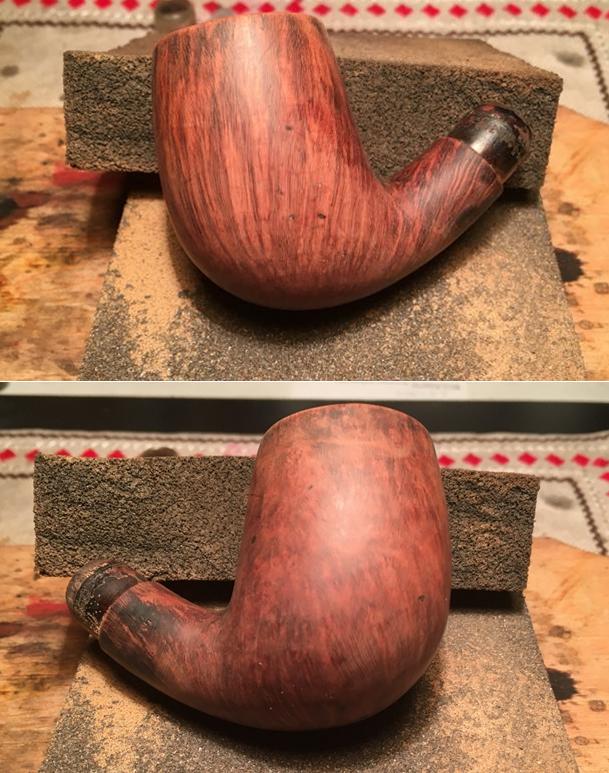
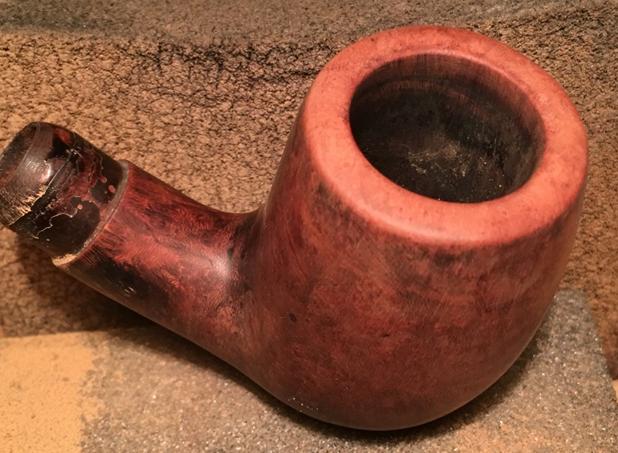
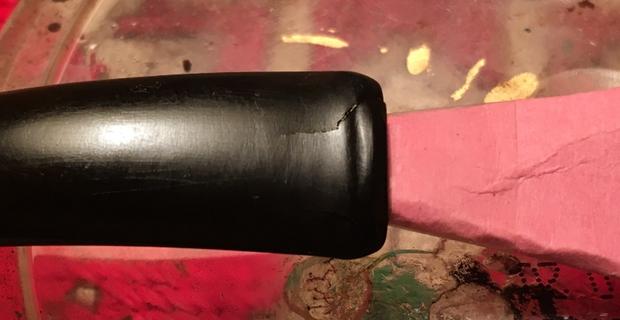
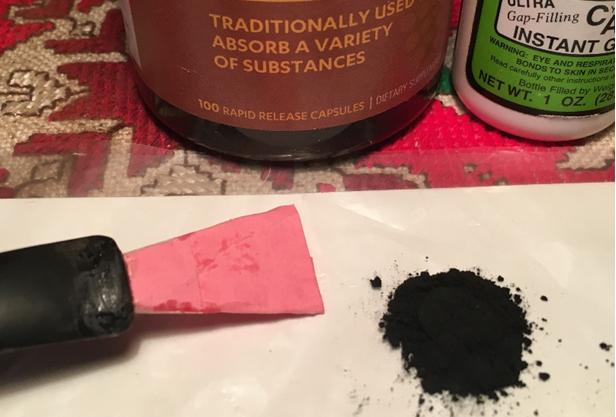
The grain on this small Prince bowl is captivating with larger bird’s eye on the front, splaying fans on the heel, and of course, a kitty with whiskers fanning out as he gazes up the shank and stem at his steward – or should I add, stewardess!  The diminutive size of the bowl along with the longer-than-expected sleek shank and stem, would make this Savinelli Capitol Prince – a preferred shape to at least one royal, a wonderful addition to any pipeman’s or pipelady’s collection.  Thank you for joining me!cap51 cap52 cap53 cap54 cap55 cap56 cap57
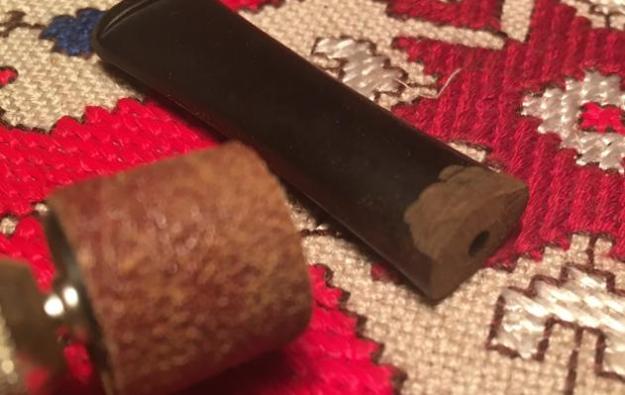
Replacing a Stem on a Stanwell Antique 156 Bulldog


Blog by Steve Laug

The next pipe I brought to my work table is another Stanwell Antique. This one is stamped on the underside of the shank with the words Stanwell over the script Antique and over the top of them both is the number 156 which is the shape number. This one came in the same lot as the two victims of Jaws that I have already written about on the blog – the Estella and the GBD Midnight (https://rebornpipes.com/2016/12/06/jaws-and-an-estella-non-pareil-%c2%bc-bent-9606-stack-by-savinelli/ and https://rebornpipes.com/2016/12/09/another-jaws-victim-a-gbd-midnight-788-oval-shank-apple/). This Stanwell Antique Bulldog had a poorly fit replacement stem – a diamond shaped stem from a classic bulldog shape. The stem had many deep tooth marks on both the top and the underside of the stem. anti1The finish on the bowl was in decent shape though the rim had some tarry buildup and there was a thick cake in the bowl. The first photo shows the mixture of sandblast and smooth on this pipe was a nice contrast. The front of the pipe was smooth and joined the smooth rim. The second photo shows that the front outer edge had nicks and dents in it as did the surface of the rim. The close up photo of the rim shows the condition of the pipe when my brother received it.anti2The Lucite shank extension is amber coloured. The thickness of the extension makes it hard for the light to shine through it. The mortise had been damaged – it is my thought that whoever put the new stem in place redrilled the mortise and damaged the inner edge and the bottom of the mortise. anti3The stamping on the underside of the shank is better than the stamping on the previous Antique I just finished. The shape number is very clear and sharp. The Stanwell logo is lighter on the left side and the Antique stamping is also very clear and sharp.anti4The next photo shows the transition from the smooth front of the bowl to the sandblast on the rest of the bowl. You can see some of the grit in the grooves and crevices of the blast and the grime on the smooth portion.anti5The last photo that my brother sent me shows the bite marks on the diamond stem. They are identical in pattern to the ones on the previous two “Jaws” pipes.anti6My brother cleaned up the pipe with his usual thoroughness. When the pipe arrived in Vancouver the finish was clean and the grooves and crevices clean. The rim was better though it show the damage to the front edge and the dents to the top of the rim. He had reamed and cleaned the mortise and the airway in the replacement stem so the pipe was very clean and ready for me to work on.

I cleaned up the shank extension end and used clear super glue to rebuild the damage portion of the Lucite. I sanded it with 180 grit sandpaper and also with 220 grit sandpaper to smooth out the repairs. I cleaned out the shank with a cotton swab and warm water to remove the debris in the shank. I took photos of the bowl after I cleaned it up and scrubbed it with Murphy’s Oil Soap.anti7 anti8The rim shows some damage to the top and the back edge in the photo below.anti9The stem was an obvious replacement so I put it in my can of stems and looked for a stem that would be a good candidate for a replacement. I had one in a lot of stems that my brother sent me. It was a Danish looking freehand stem that had a long tenon and a step up toward the ring in the middle. I forgot to take a photo of the stem before I worked on it but I had another example of one that was similarly shaped that is shown in the next photo.anti10I sanded the stem with a Dremel and sanding drum to shorten and remove the step down area. I wanted to have a smooth transition from the tenon end to the mid ring. I also wanted to make the slope to the ring more abrupt that it was in the one above. The stem was in pretty rough shape. There was deep tooth mark on the topside of the stem from the damaged button forward. There was also some tooth damage on the underside of the stem in the middle and on one side. The button was also damaged on the underside. There was a missing chunk of vulcanite on the button edge. I filled in the damaged areas with black superglue to build them up. I let the glue dry and once it was dry I sanded it smooth to match the surface of the rest of the stem. I filled in the damaged button and built up the edge on the top and bottom sides. I sanded the button as well once it had cured and reshaped it.anti11I sanded the diameter of the tenon area on the new stem until the fit in the mortise was correct. The stem still looked a little long but I would take care of that shortly. I put it in the mortise and took photos of the pipe with the new stem.anti12 anti13I sanded the stem with 180 grit and 220 grit sandpaper to smooth out the repairs and reshape the stem to match the rest of the stem.anti14I polished the stem with micromesh sanding pads – wet sanding with 1500-2400 grit sanding pads and rubbed it down with Obsidian Oil and dry sanding with 3200-12000 grit sanding pads and rubbing it down with the oil after each set of three pads. After the final set I gave it a final coat of the oil and set the stem aside to dry.anti15 anti16 anti17To remove the damage to the front edge and the top of the rim I topped the bowl with 220 grit sandpaper on the topping board. I sanded it with 1500-6000 grit micromesh sanding pads to sand out the scratches in the rim surface. I restained the rim to match the front of the bowl using a dark brown stain pen. I buffed it lightly with a microfibre cloth.anti18I sanded the smooth portions of the bowl face and the rim with 1500-6000 grit micromesh sanding pads to polish them.anti19 anti20I buffed the rim and smooth part of the bowl and the stem with Blue Diamond polish on the wheel. I gave the stem multiple coats of carnauba wax and gave the bowl several coats of Conservator’s Wax. I buffed the pipe with a clean buffing pad and hand buffed it with a microfibre cloth to deepen the shine. The finished pipe is shown in the photos below. The repairs on the stem show under the bright lights of the flash but in person they are pretty well blended into the surface of the stem. Thanks for walking through the restoration with me.anti21 anti22 anti23 anti24 anti25 anti26 anti27 anti28