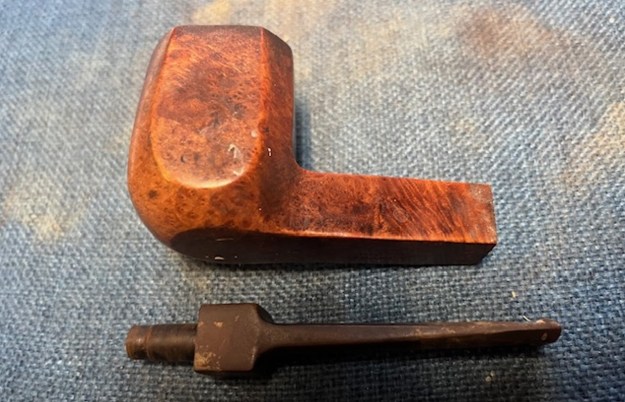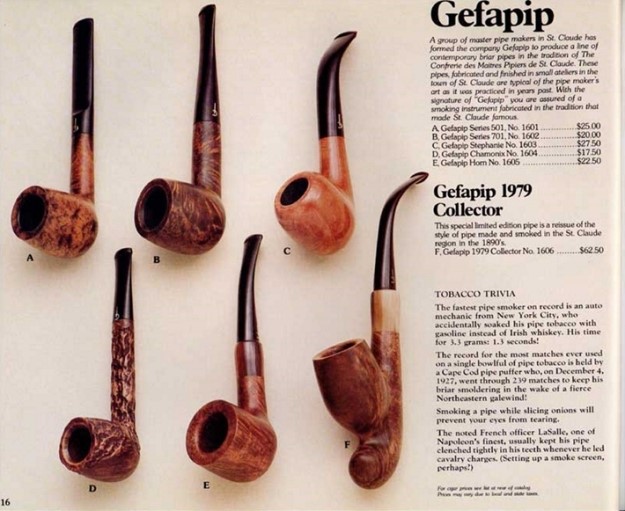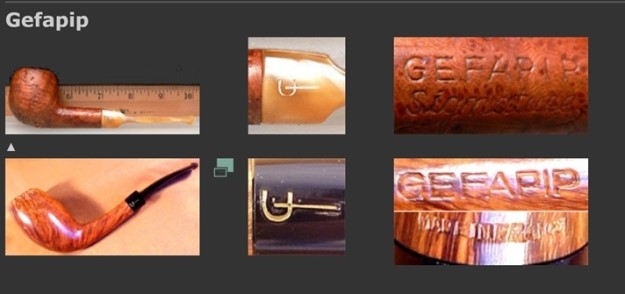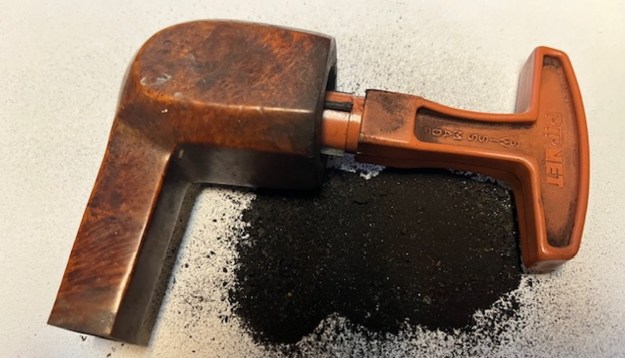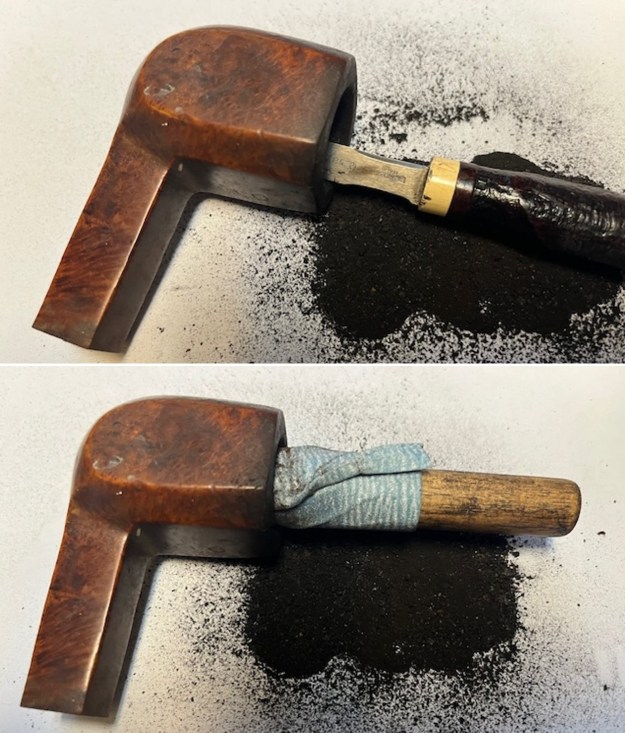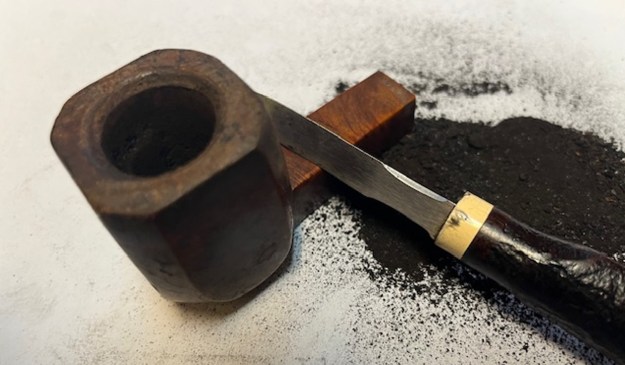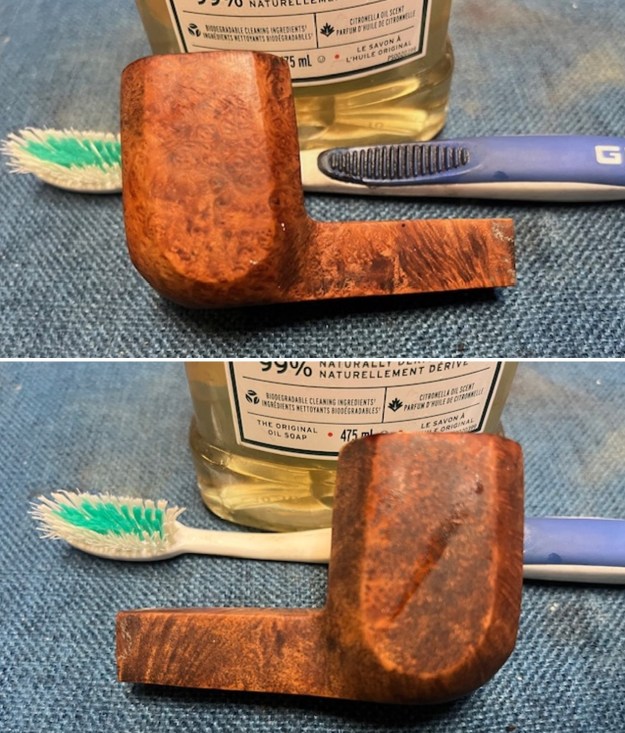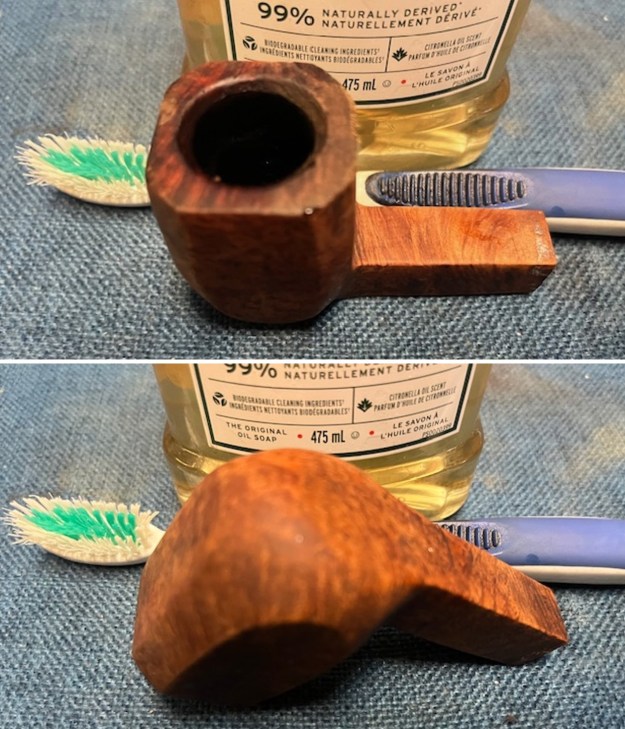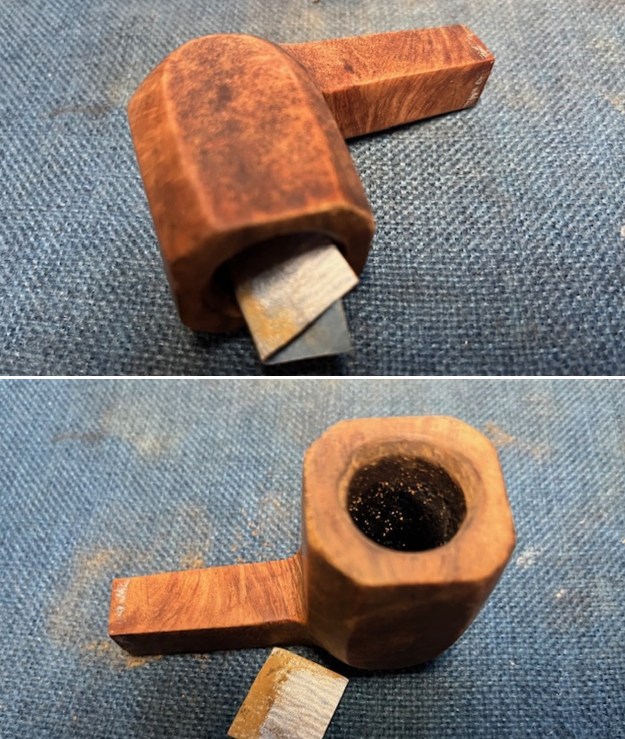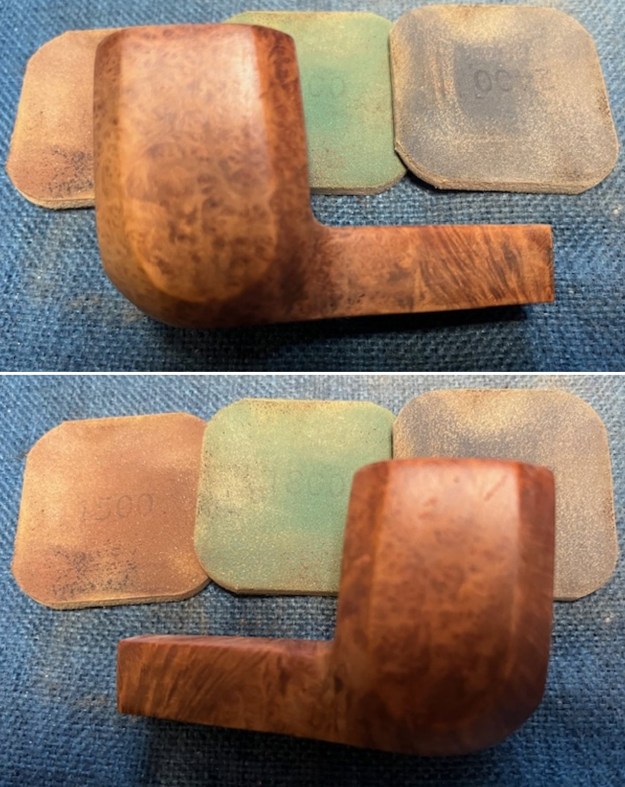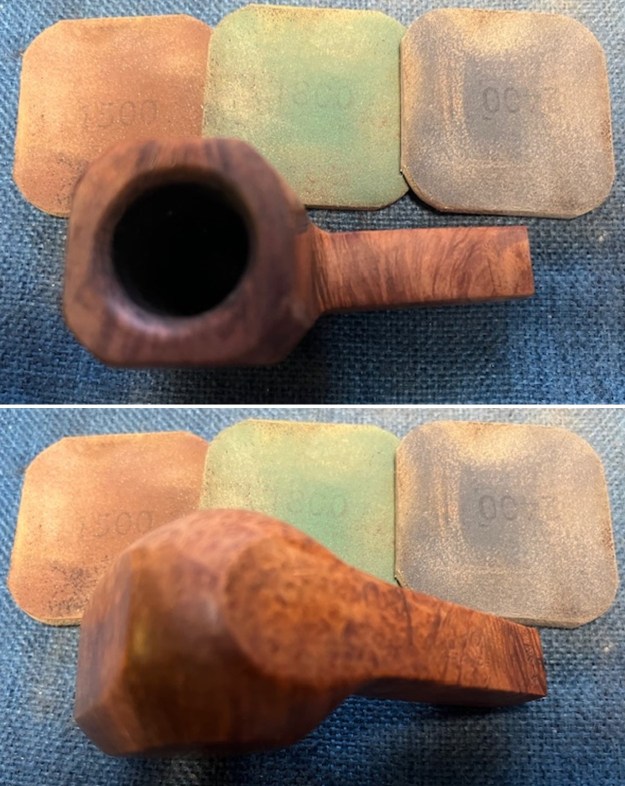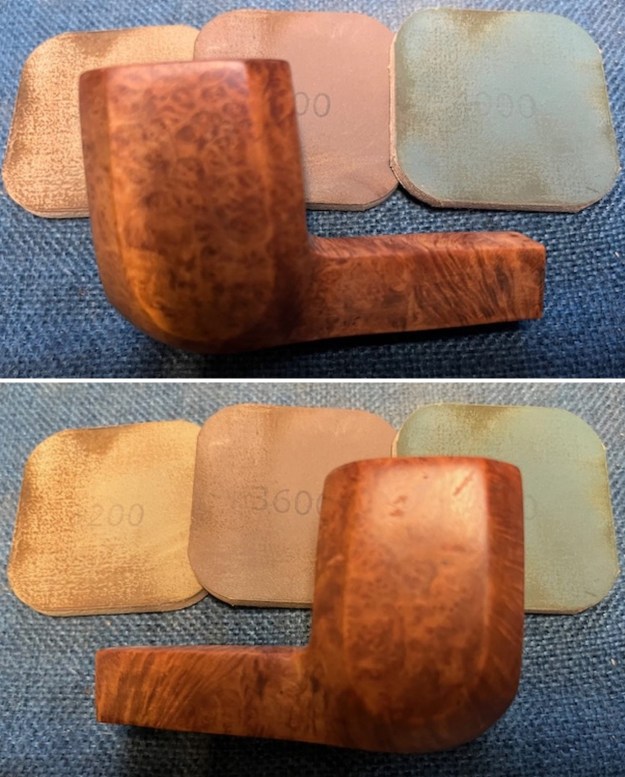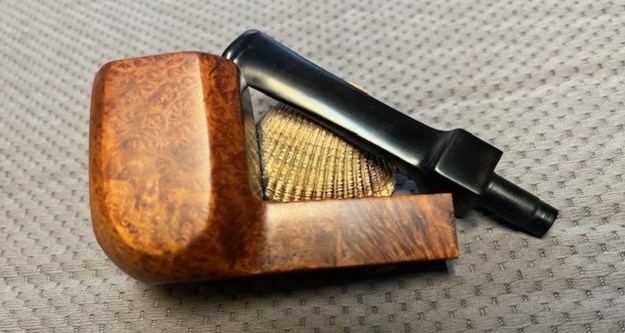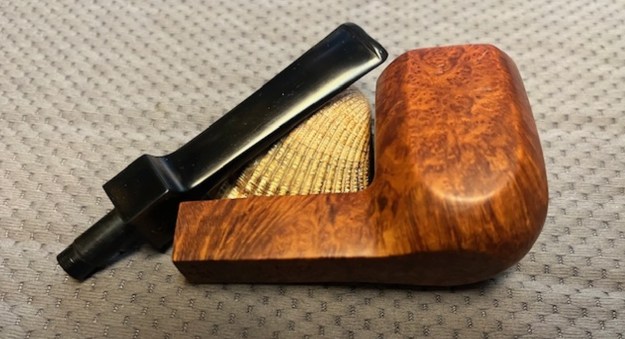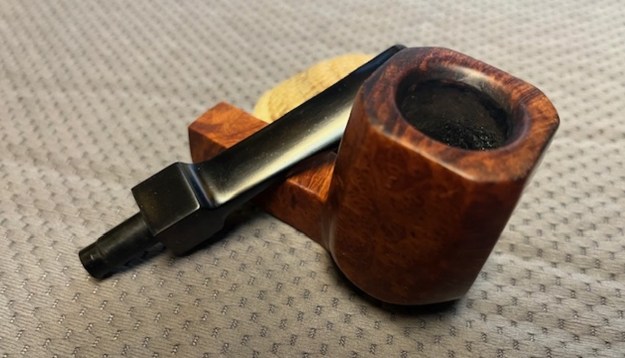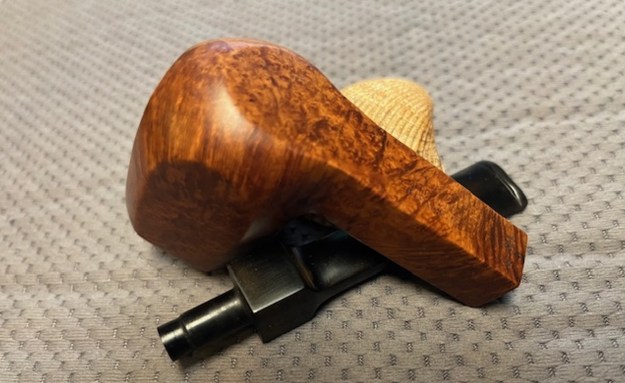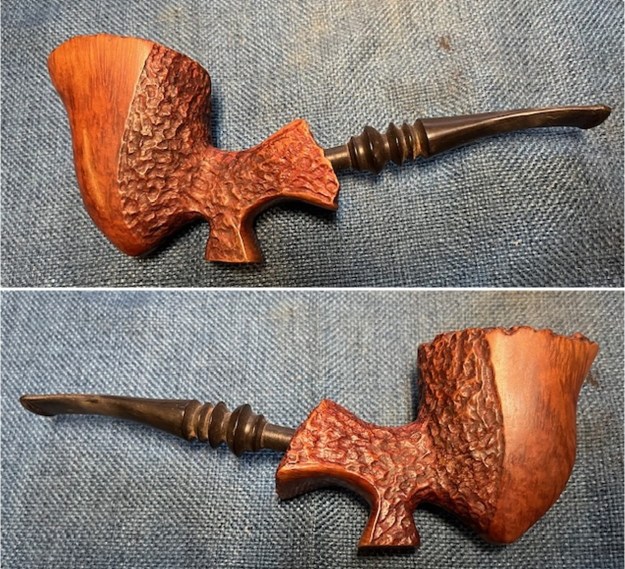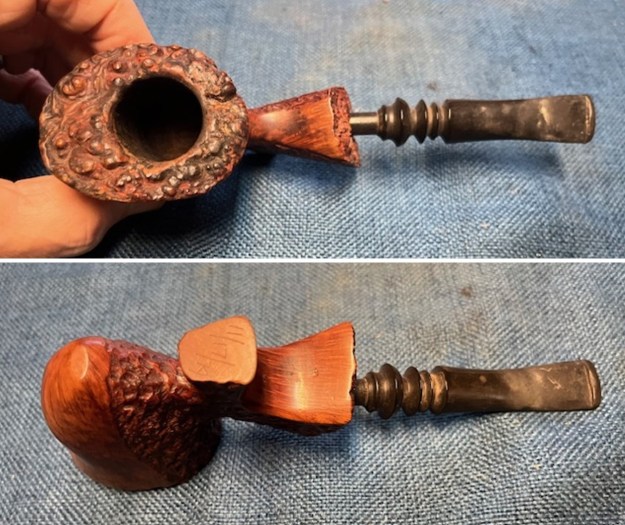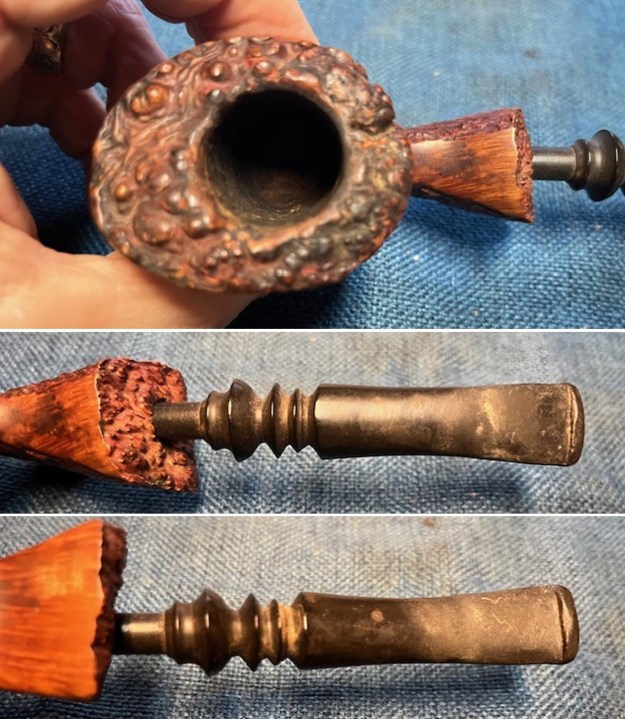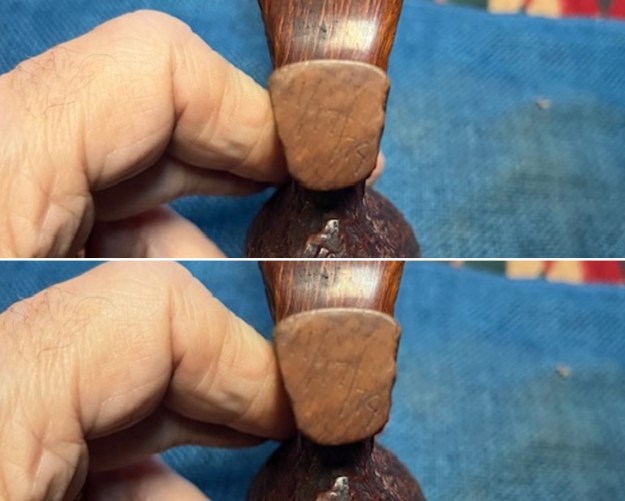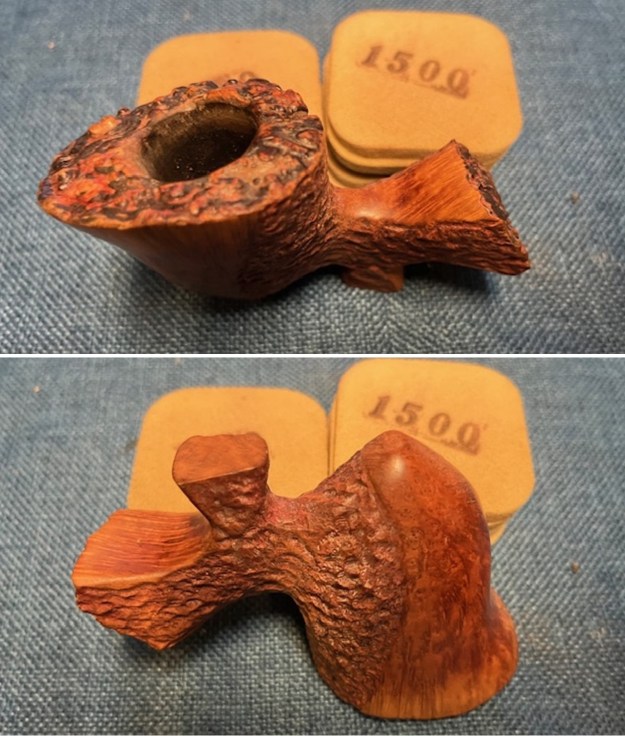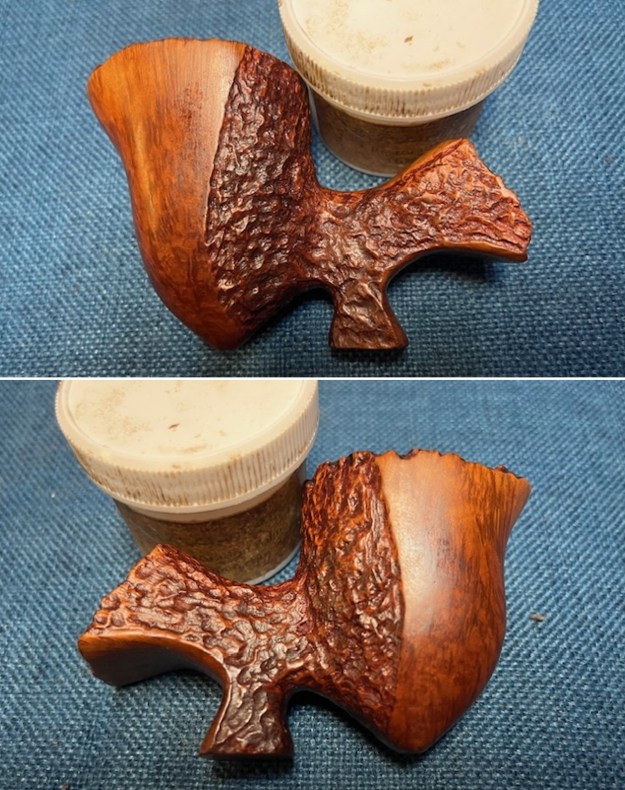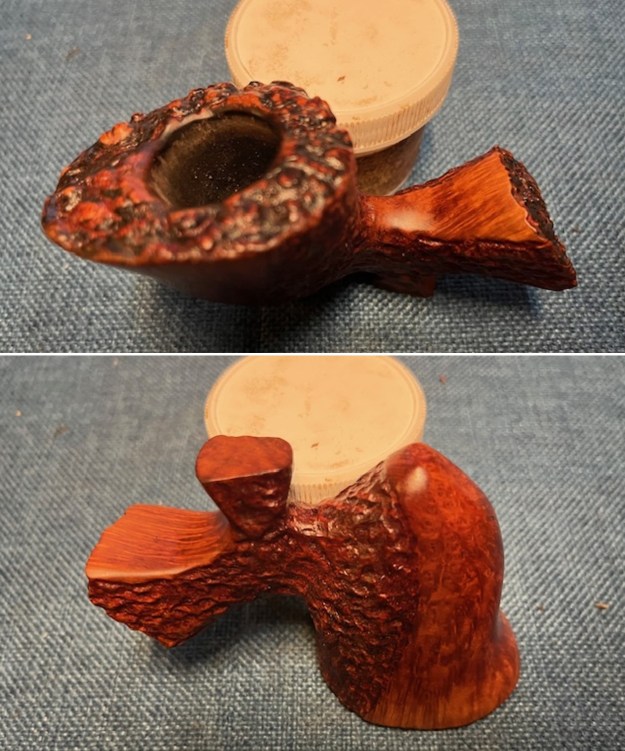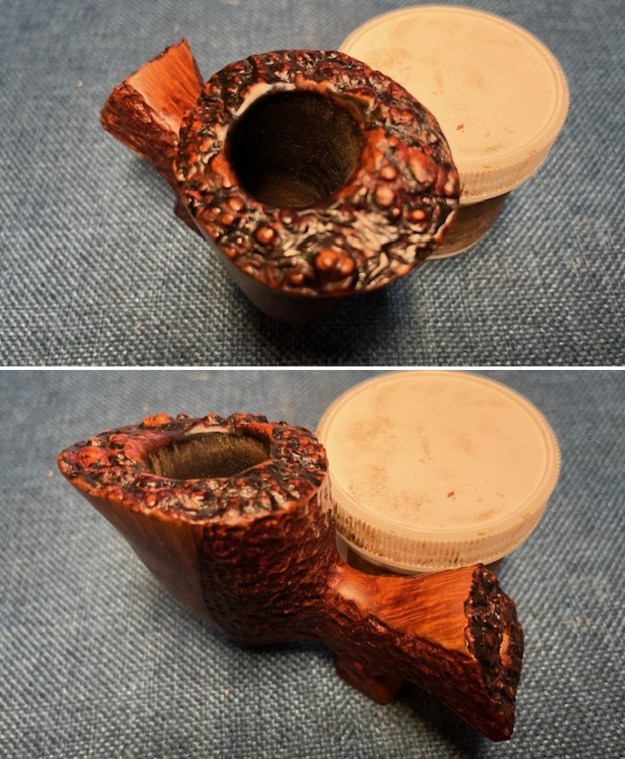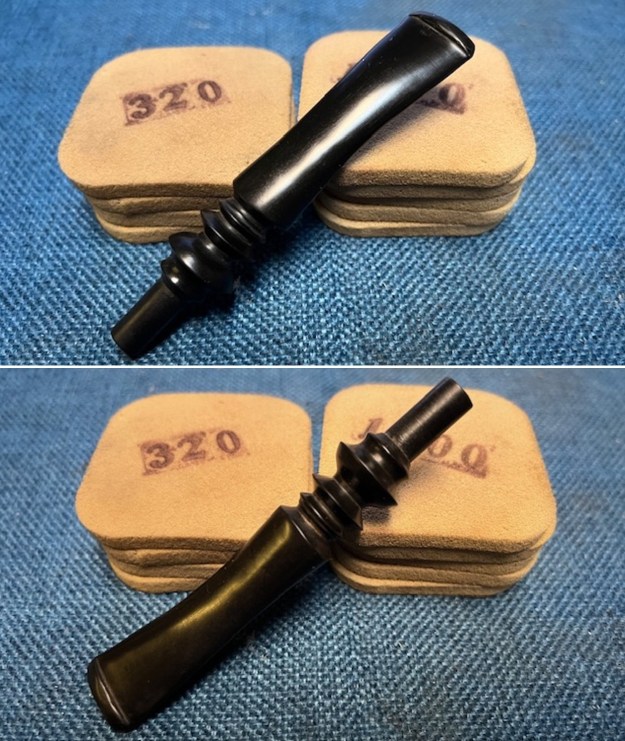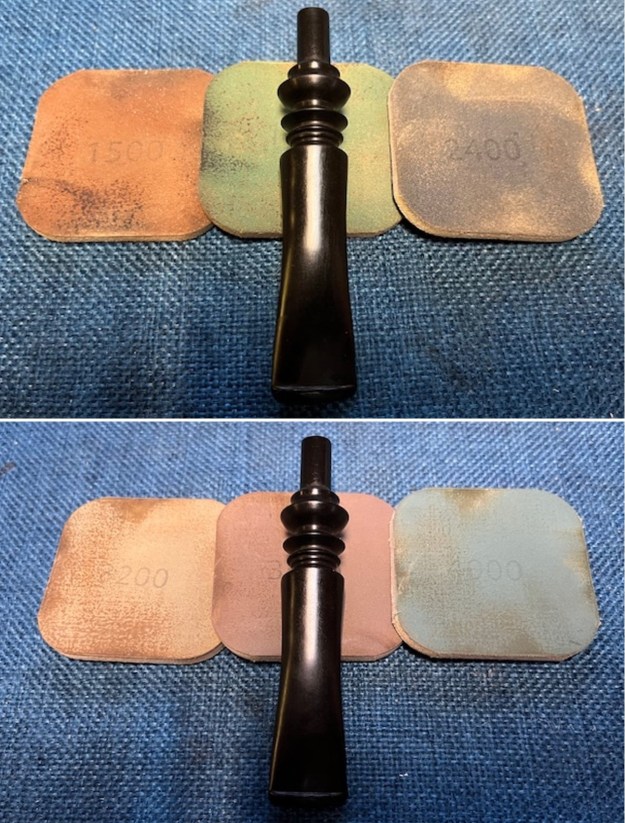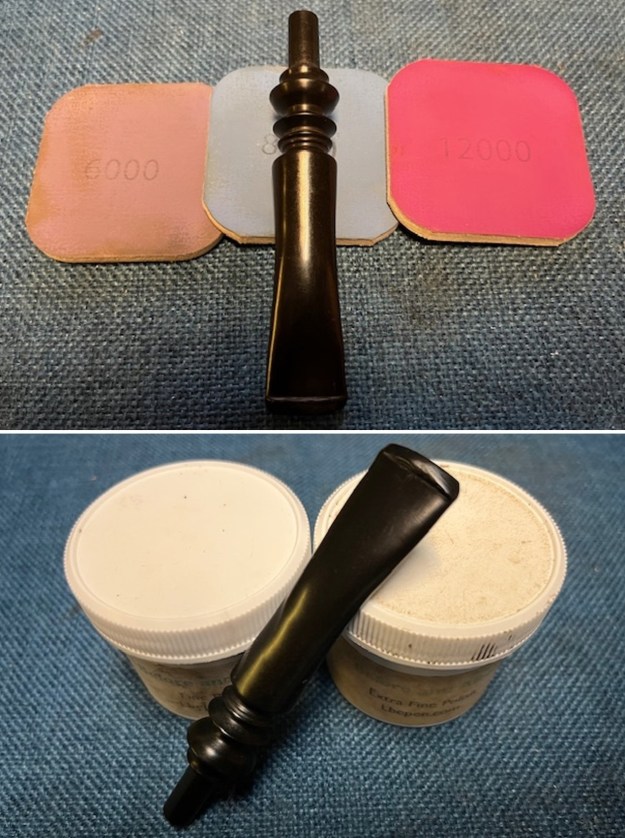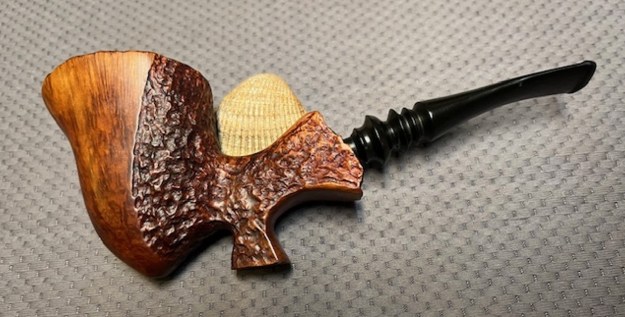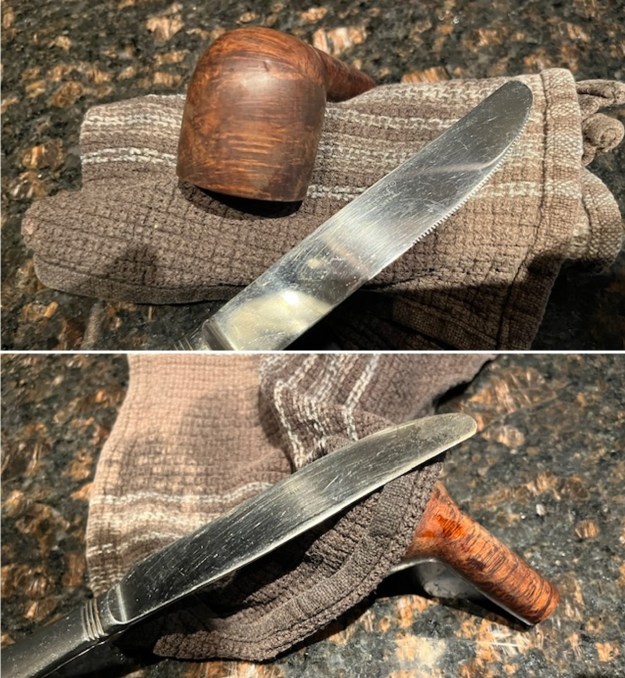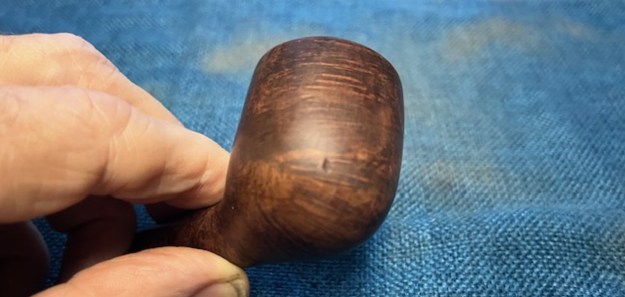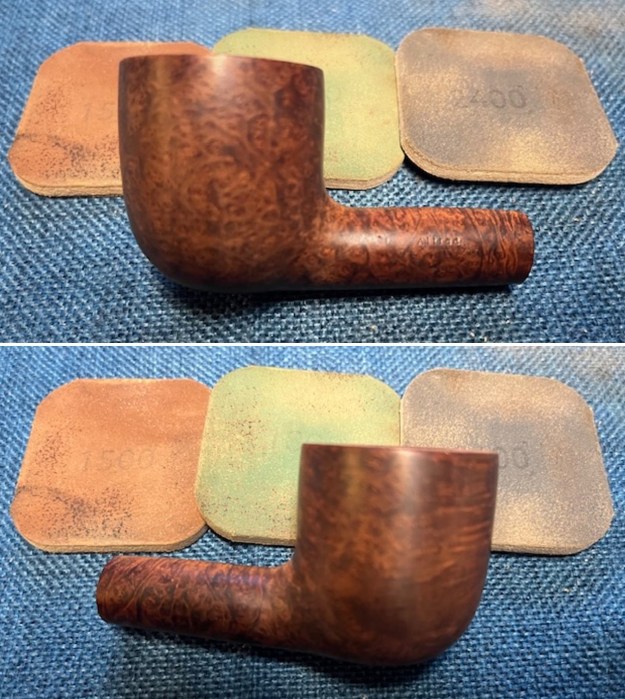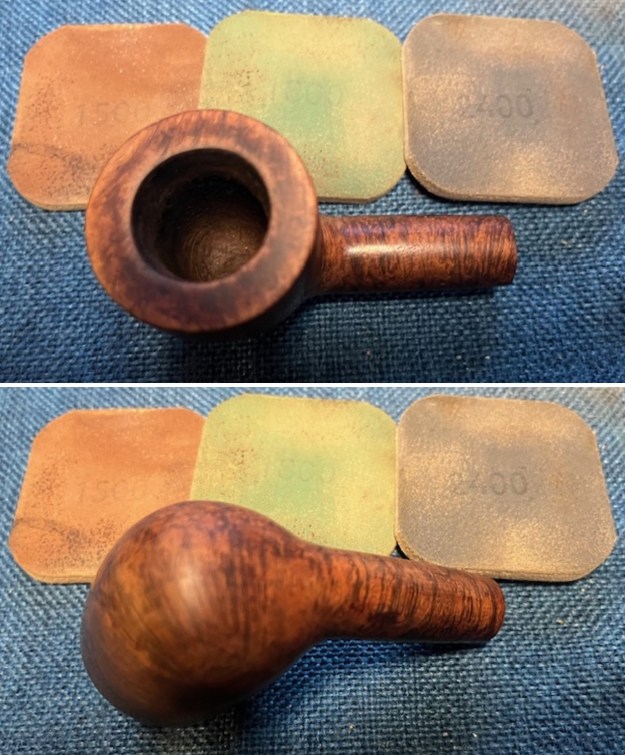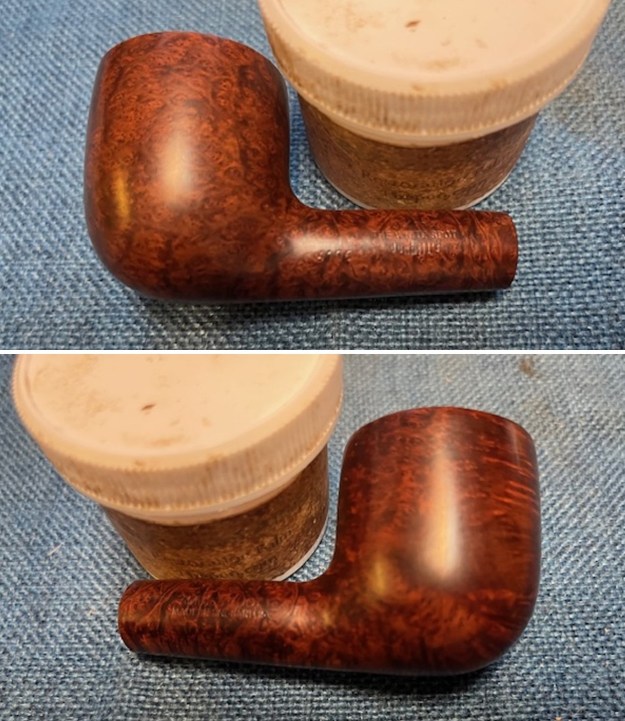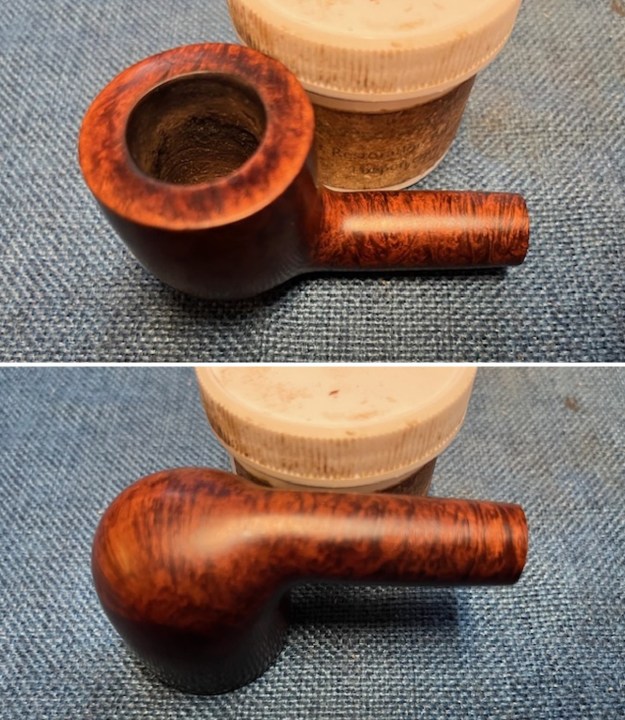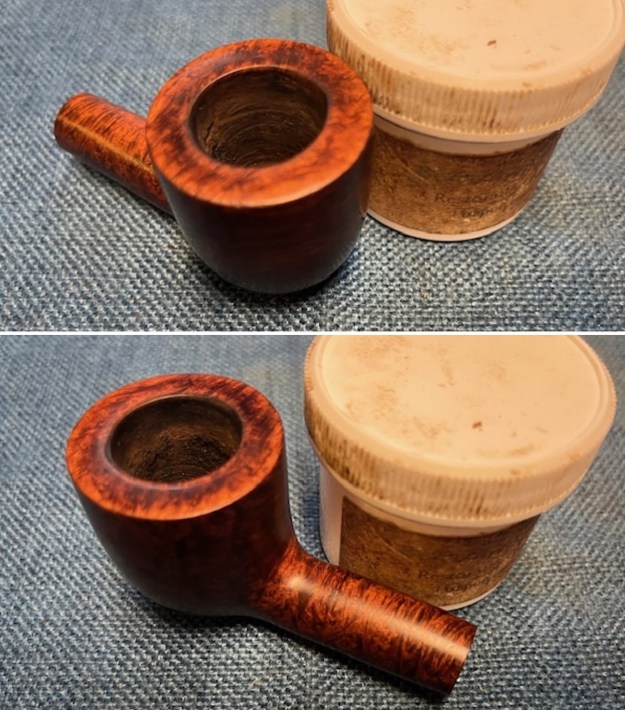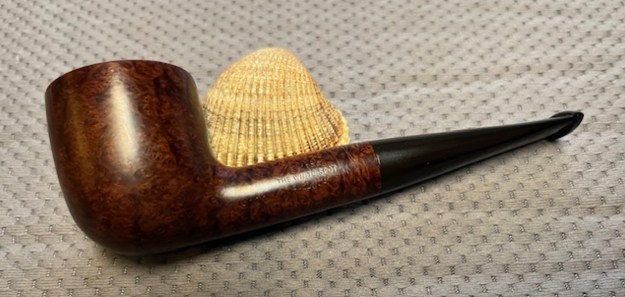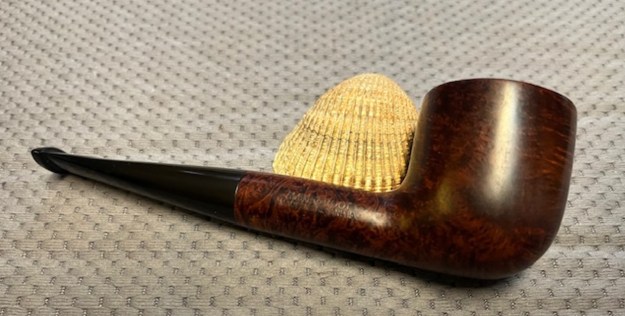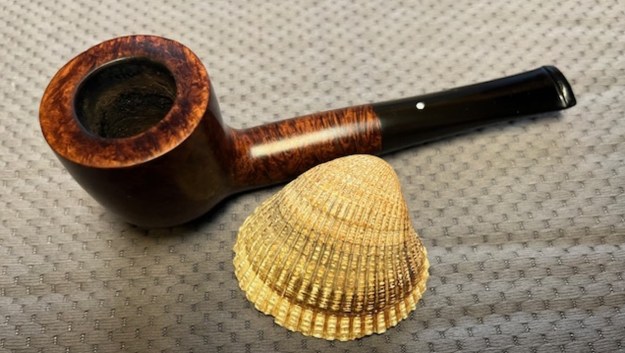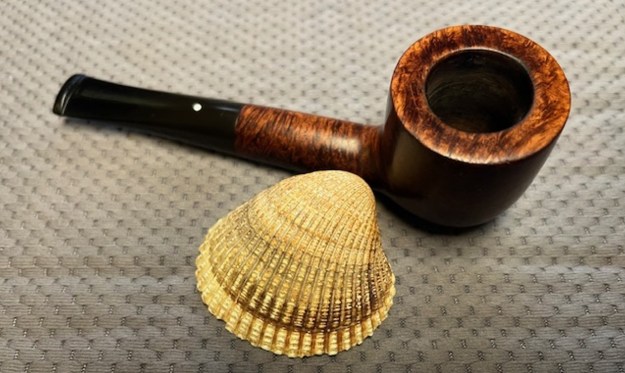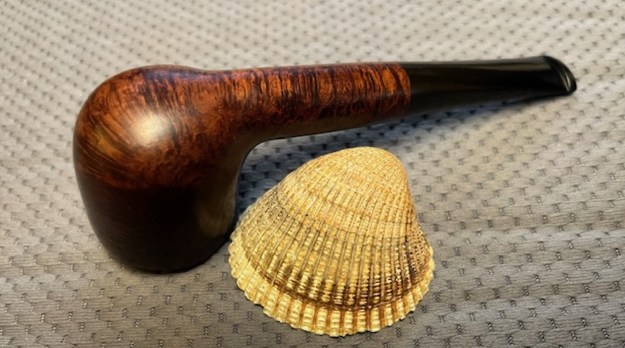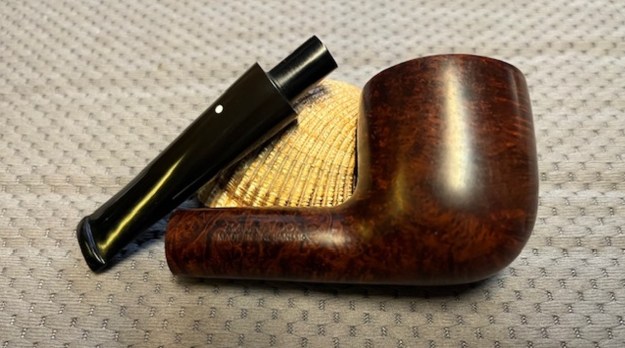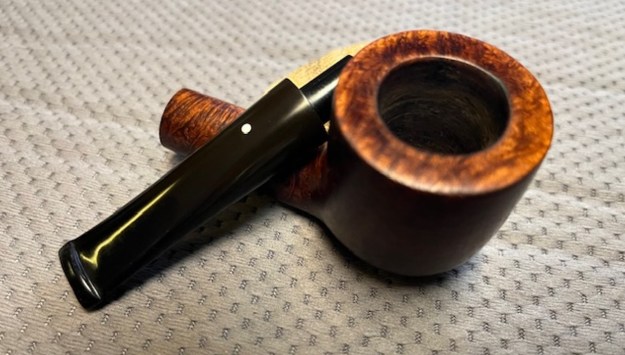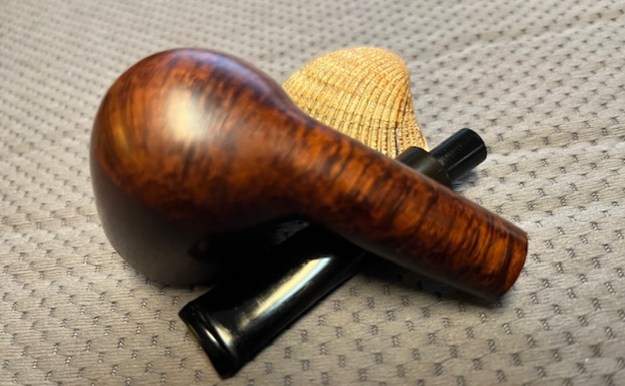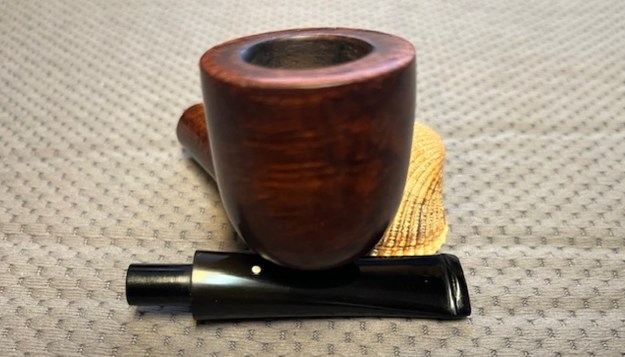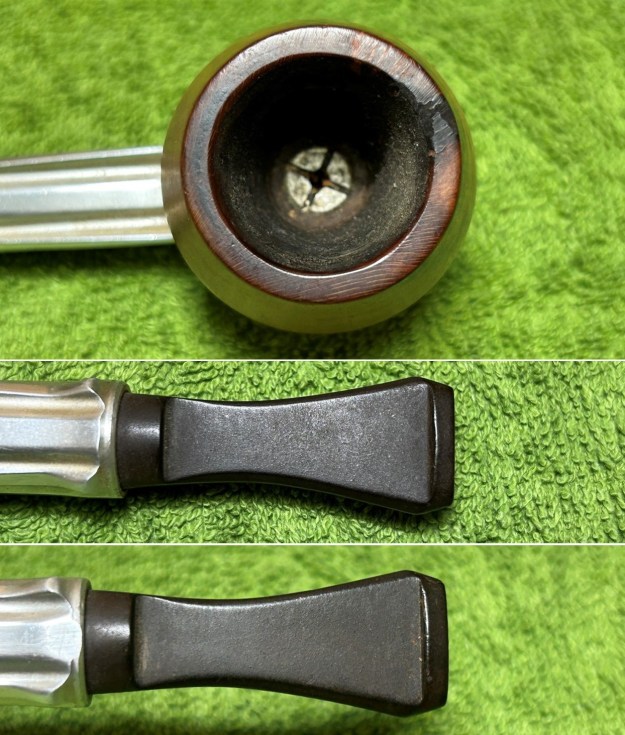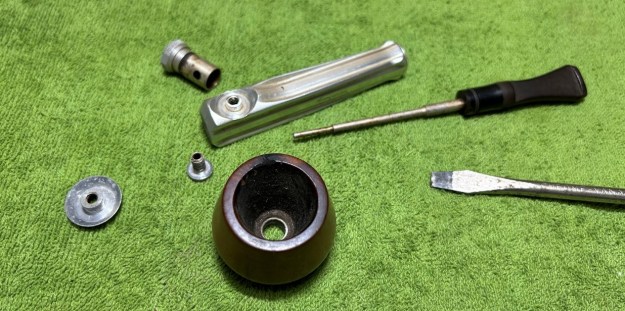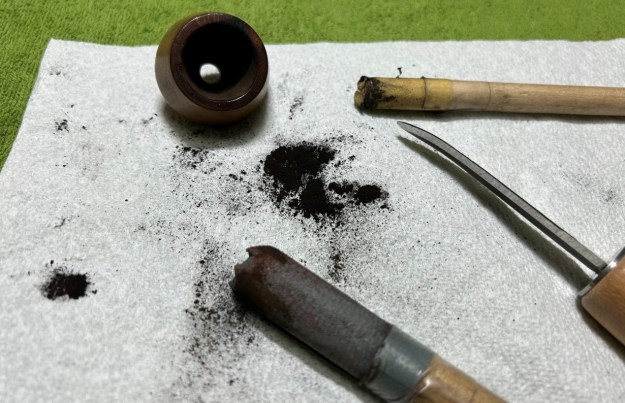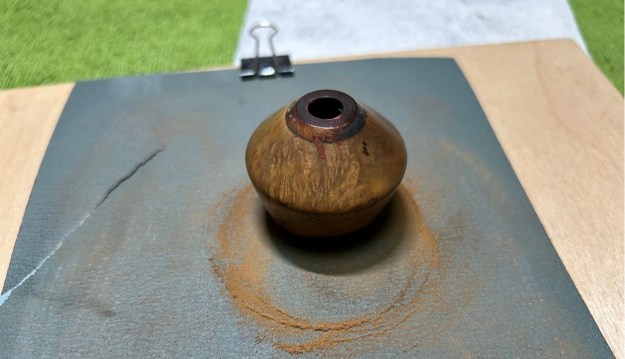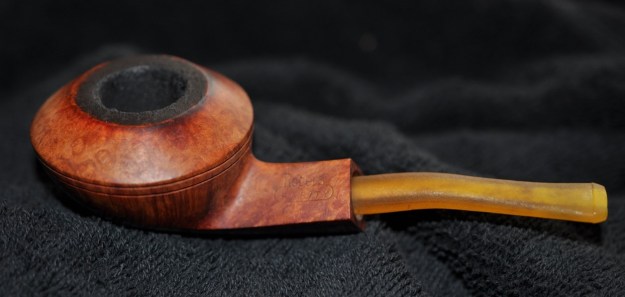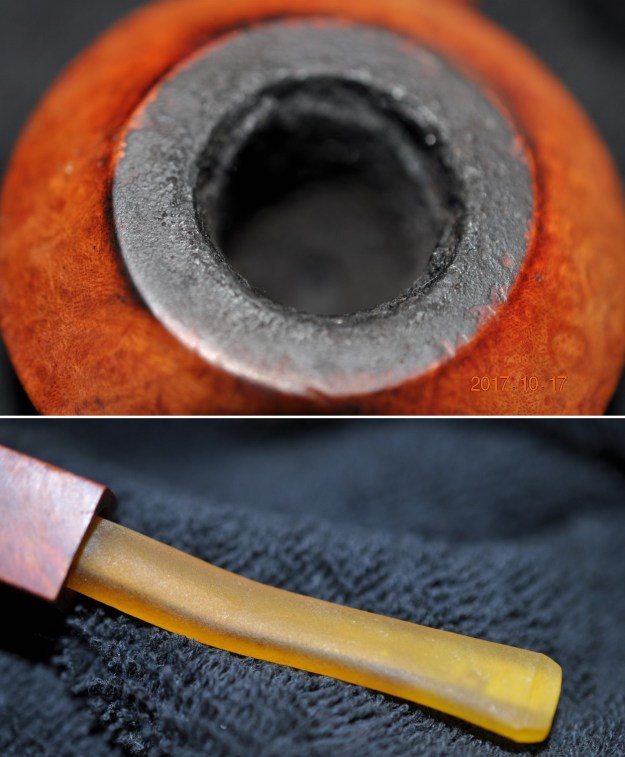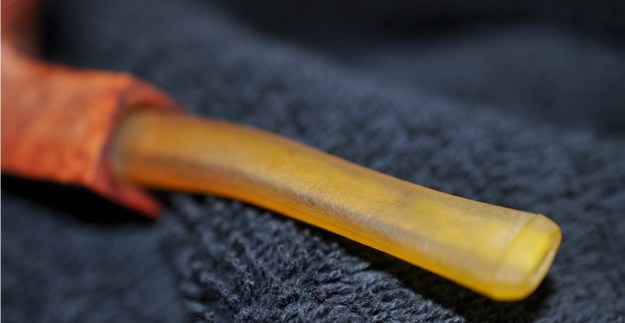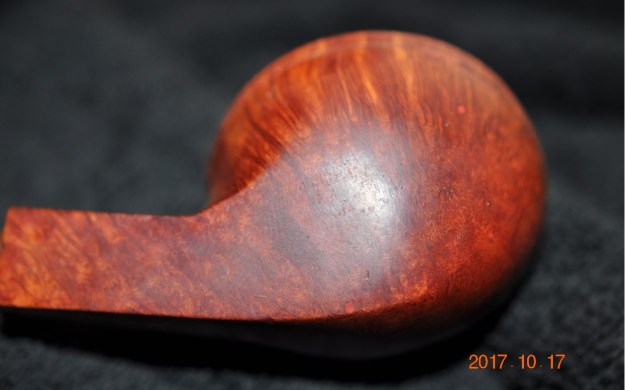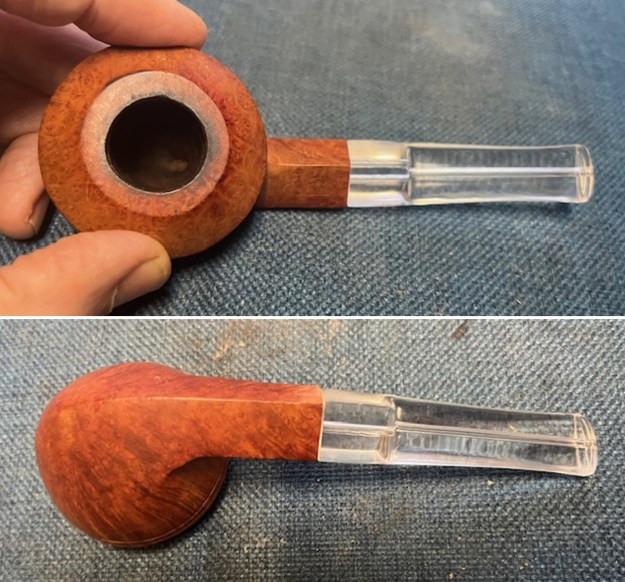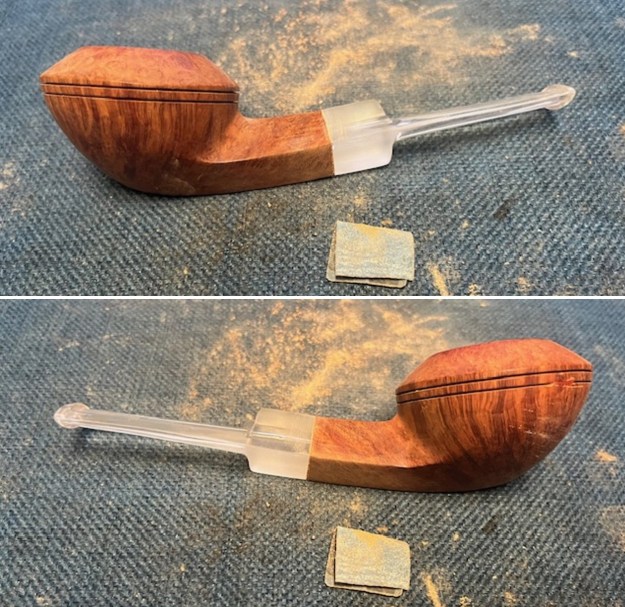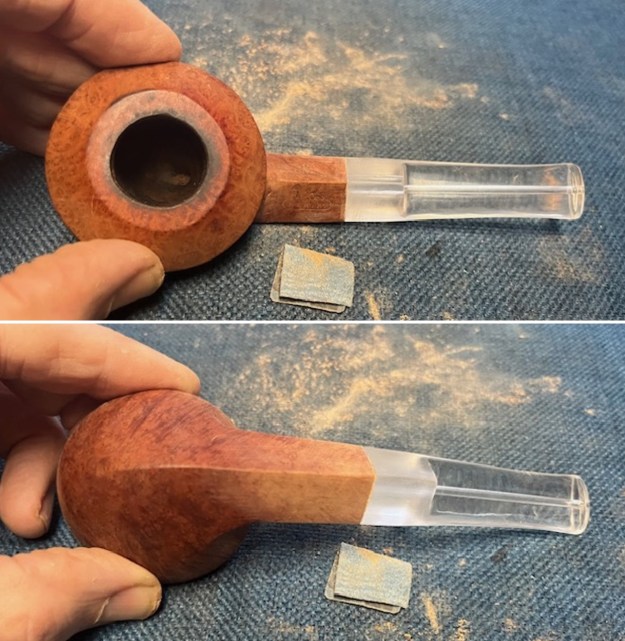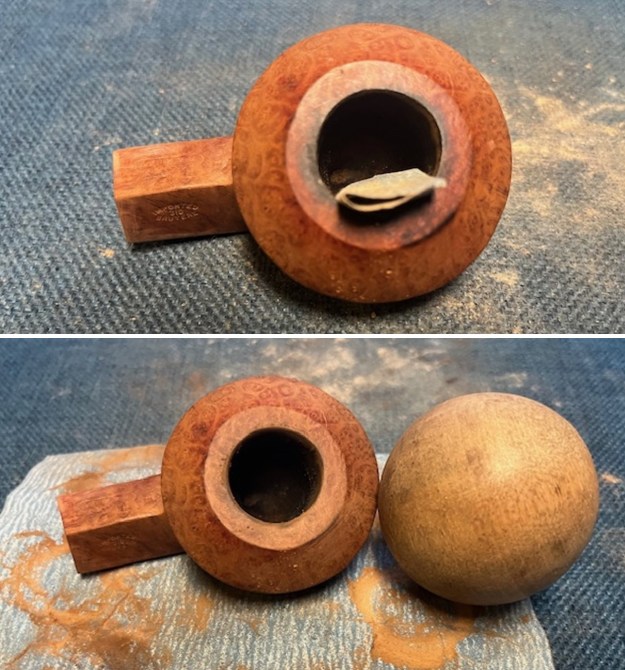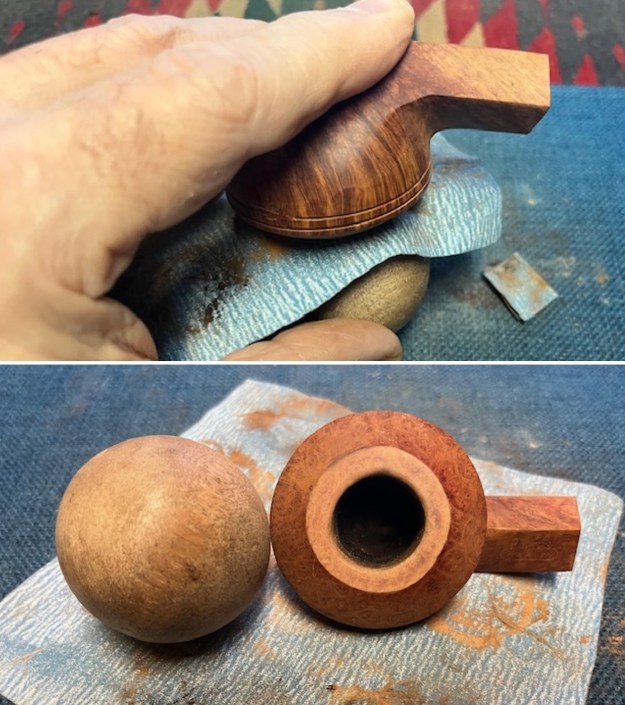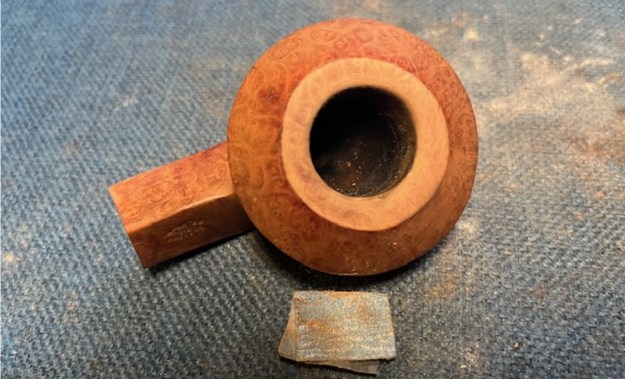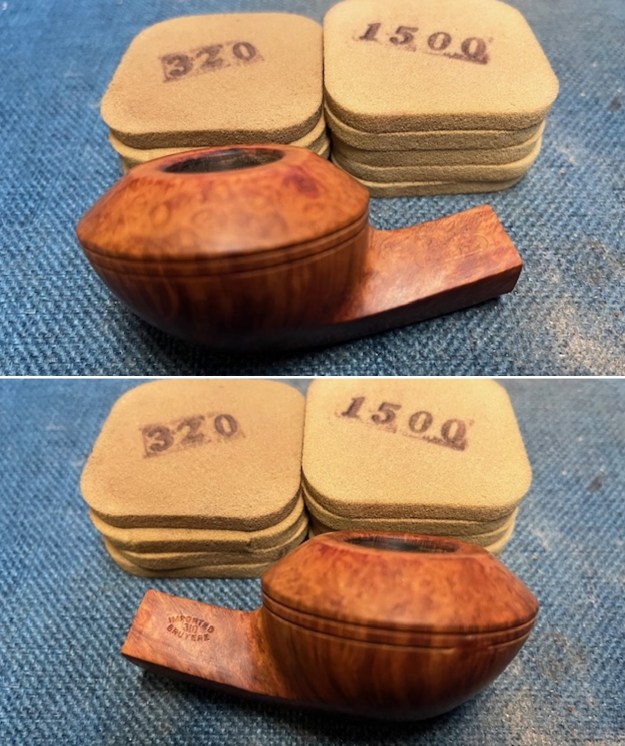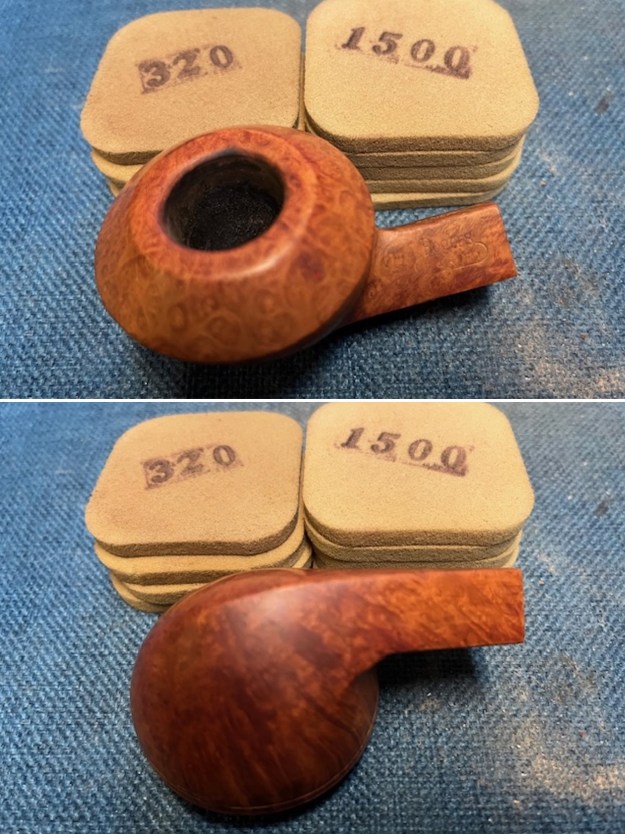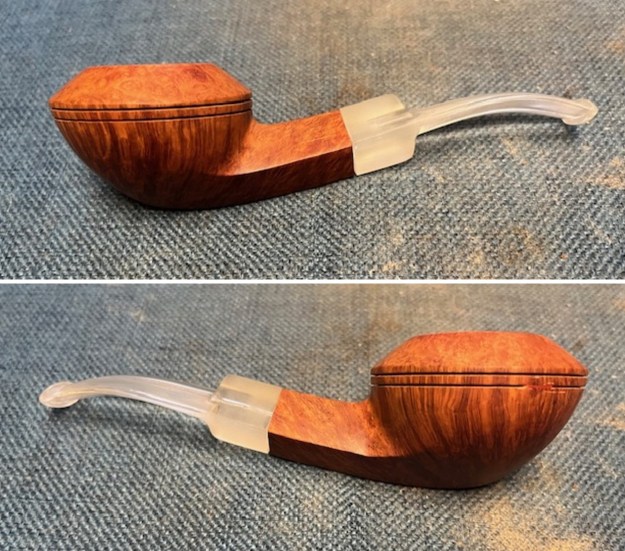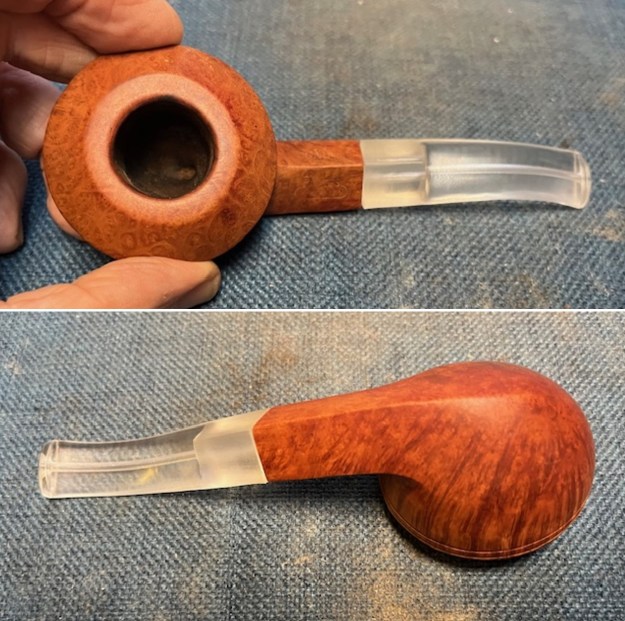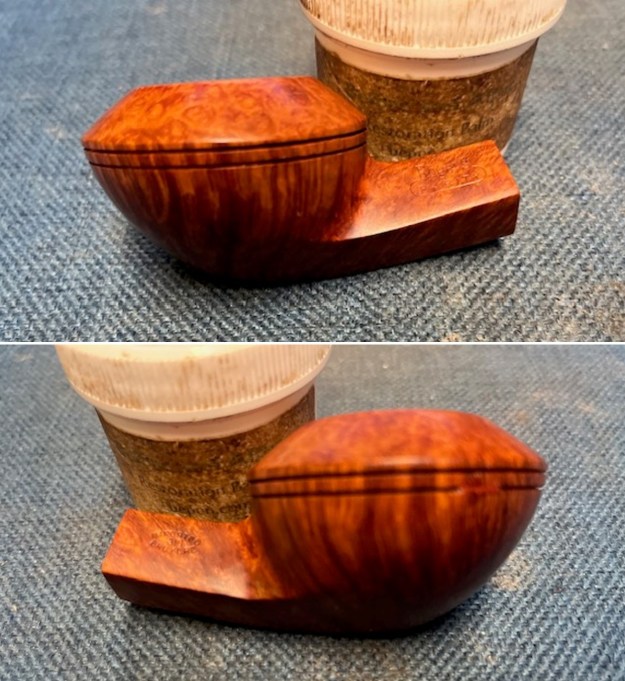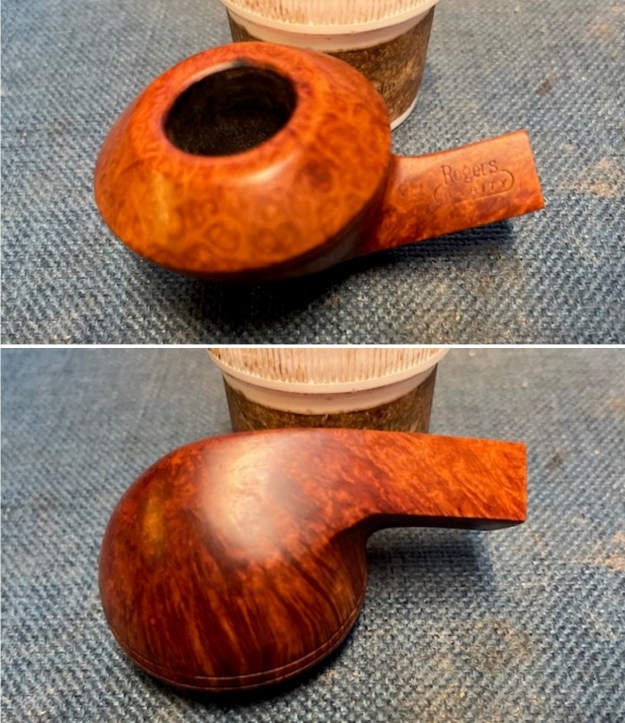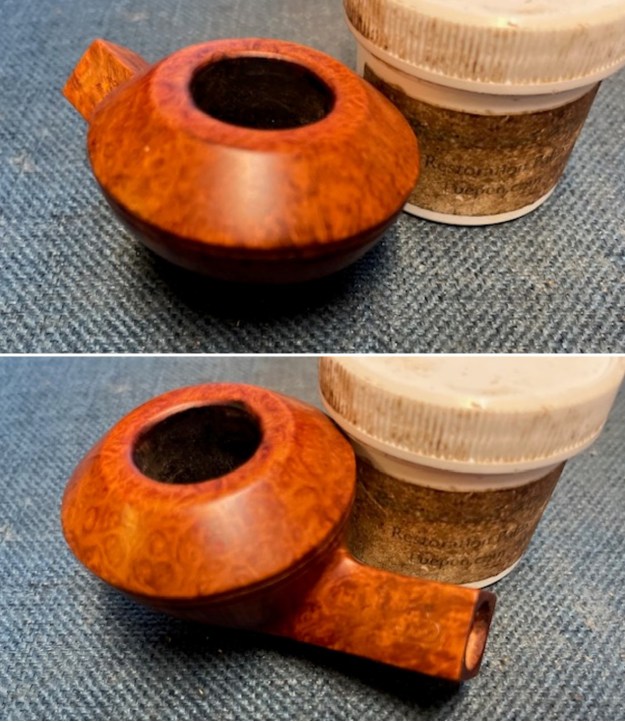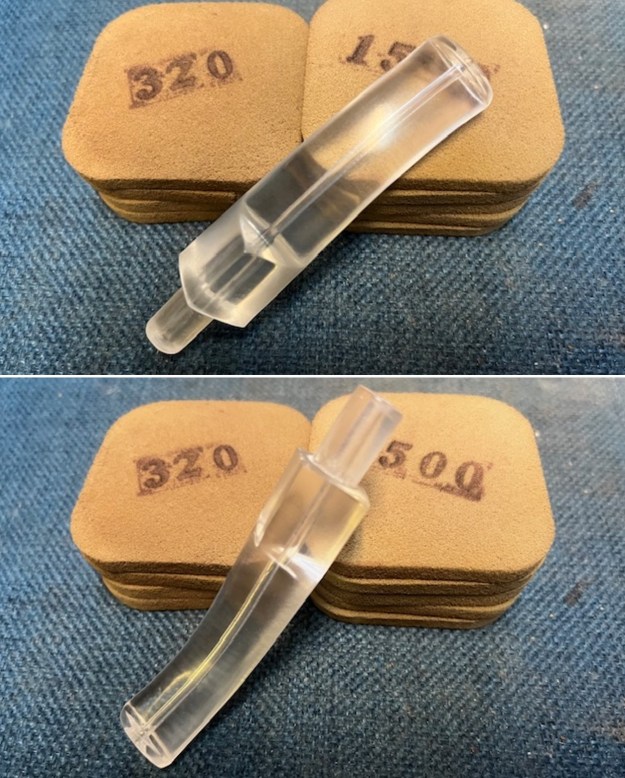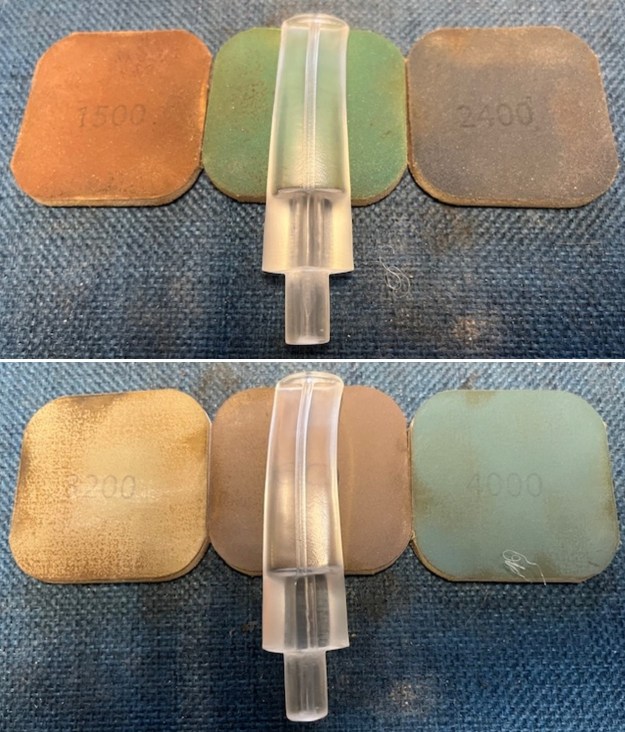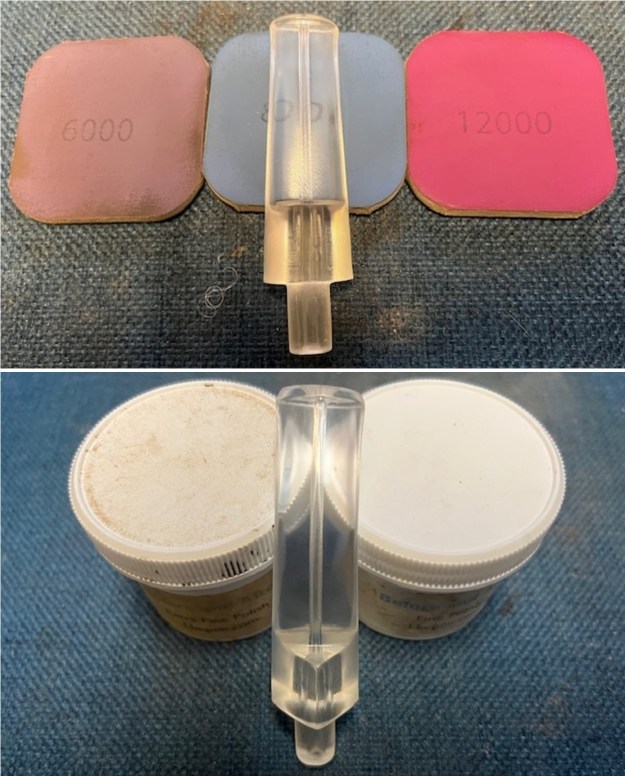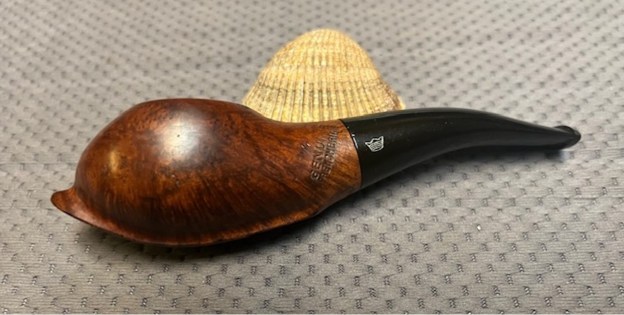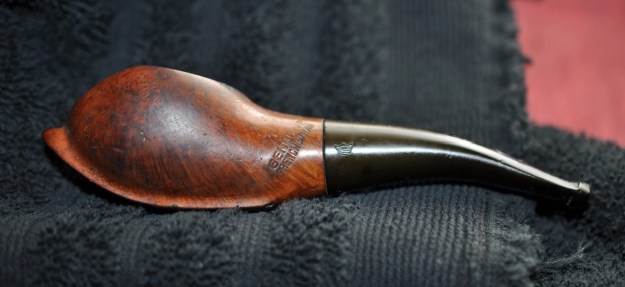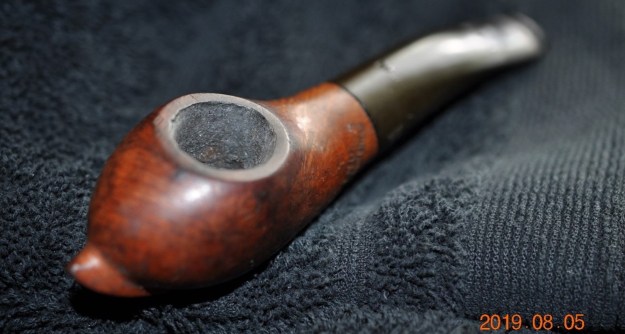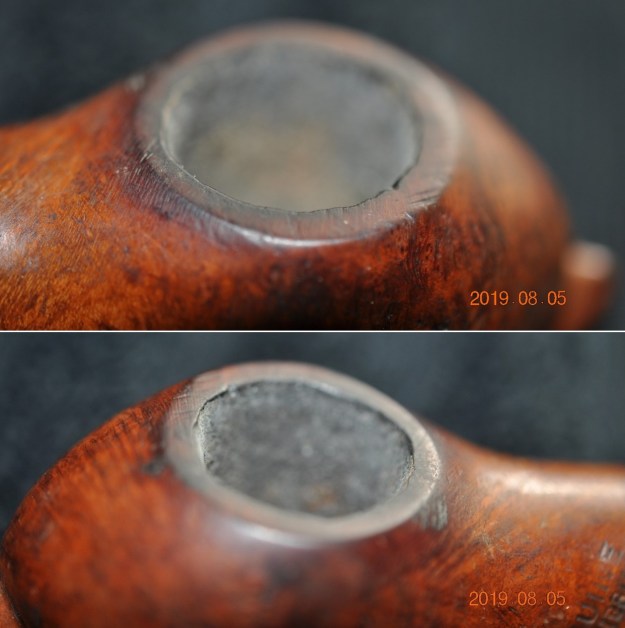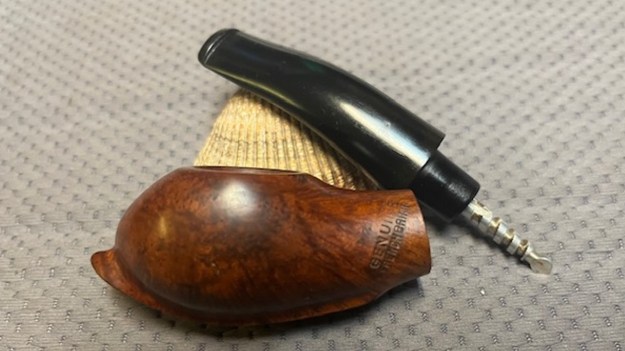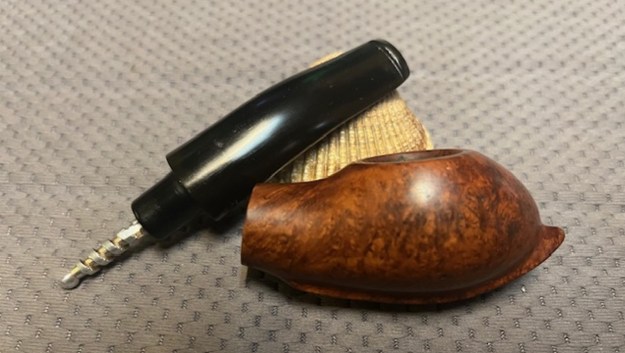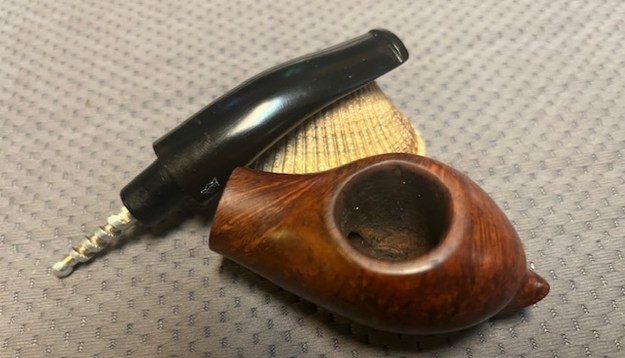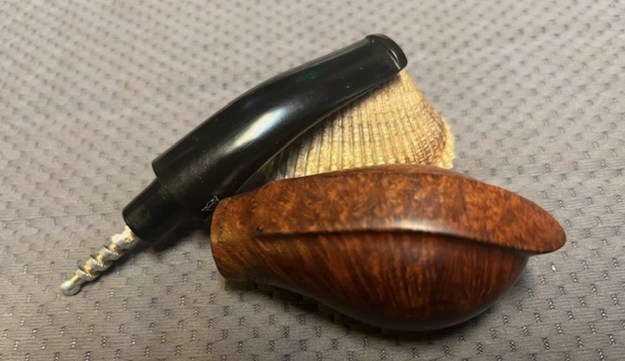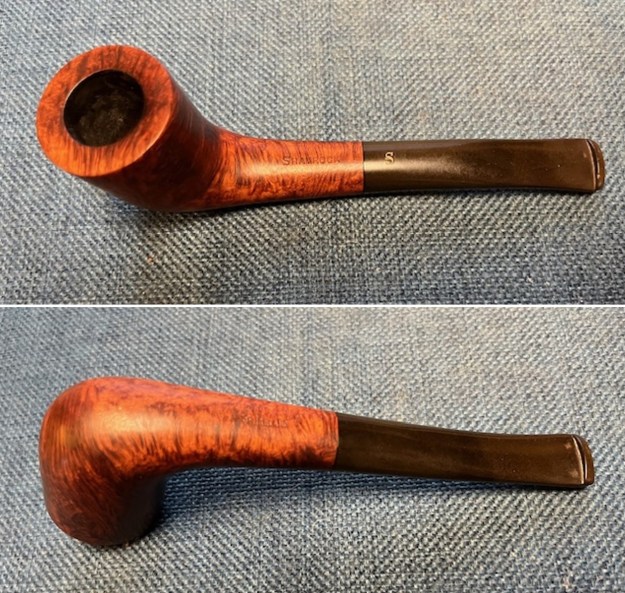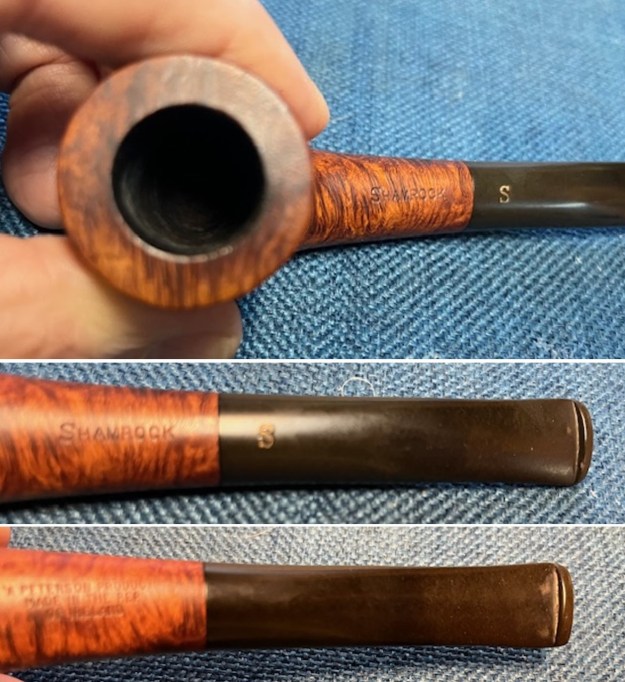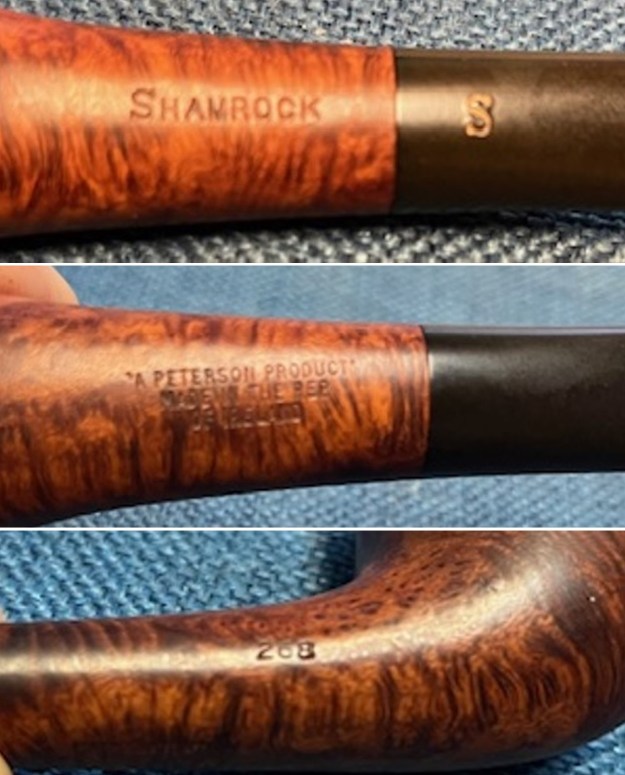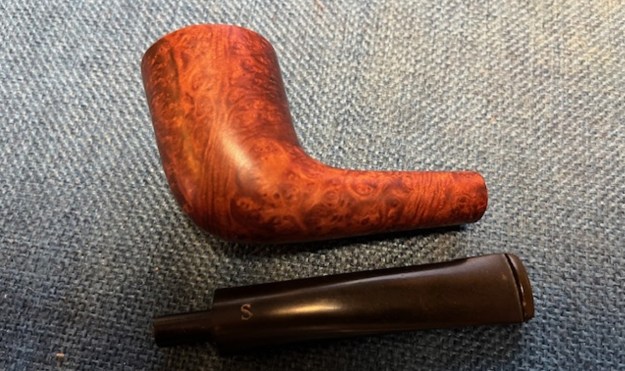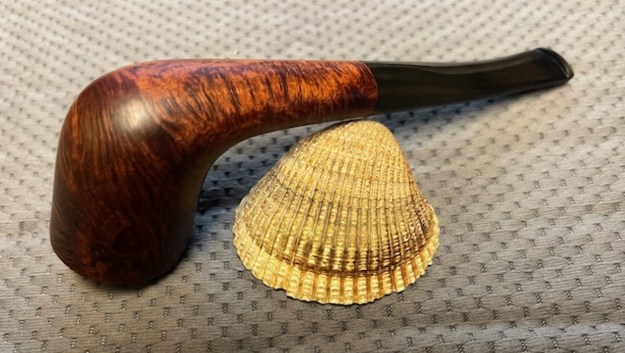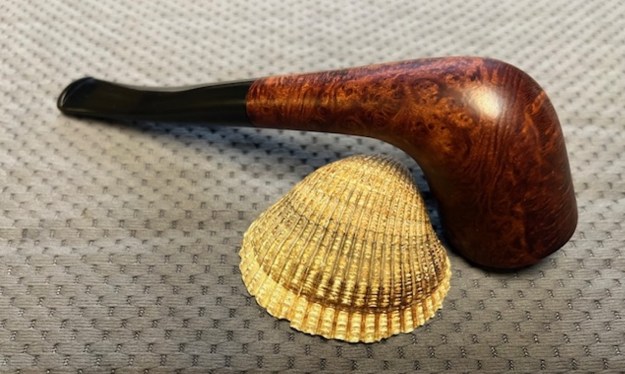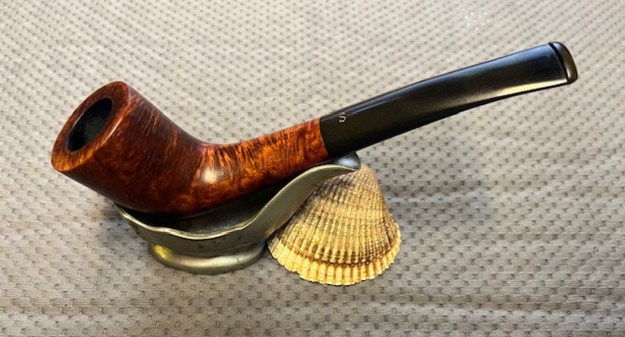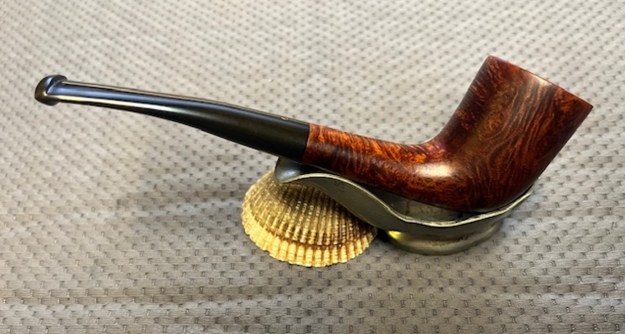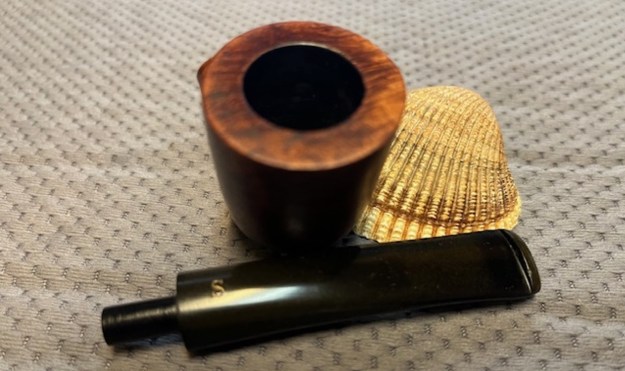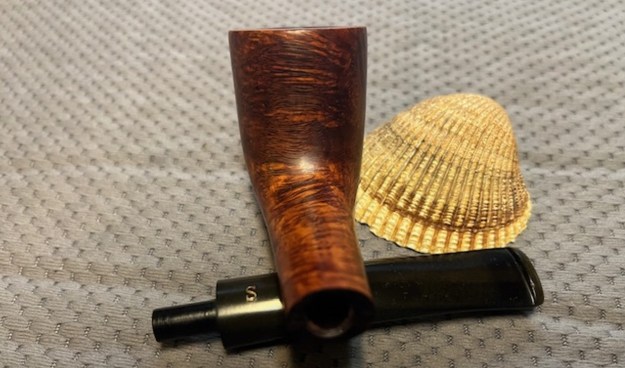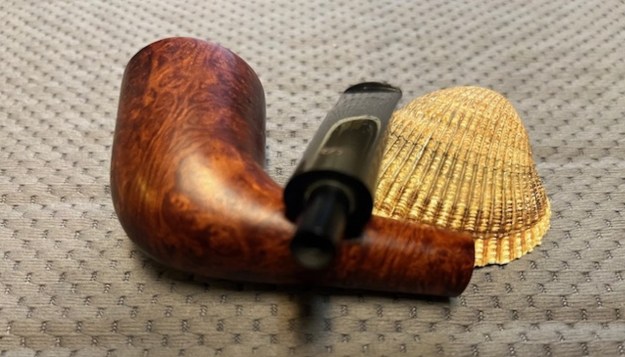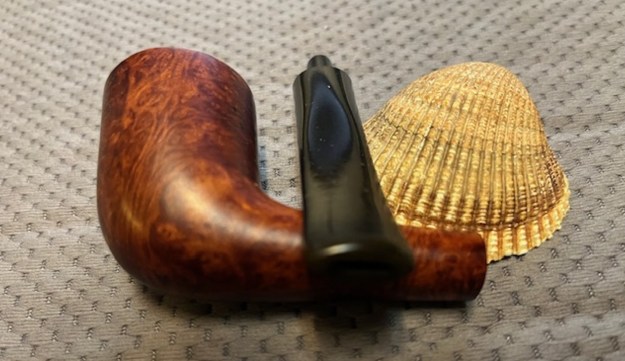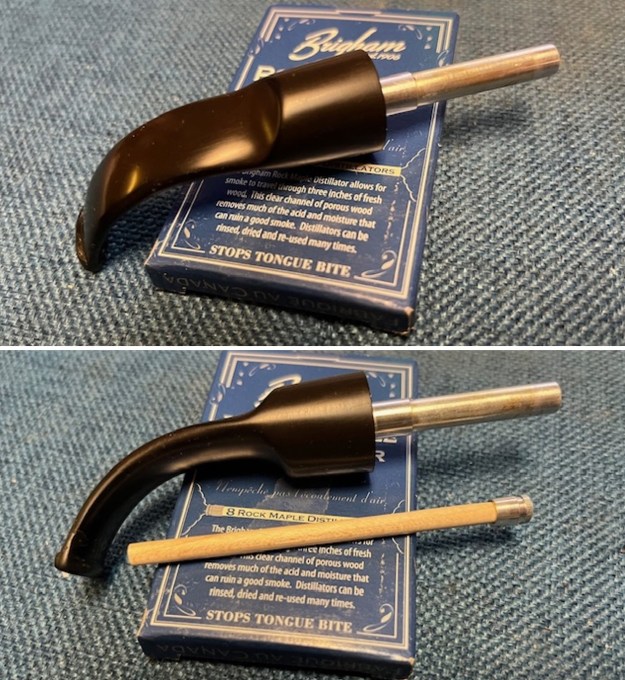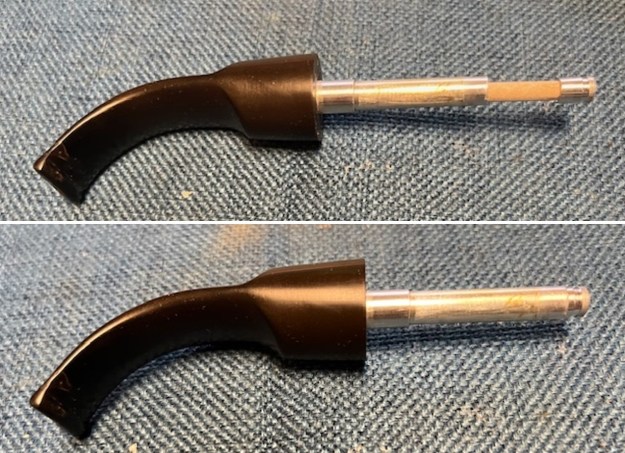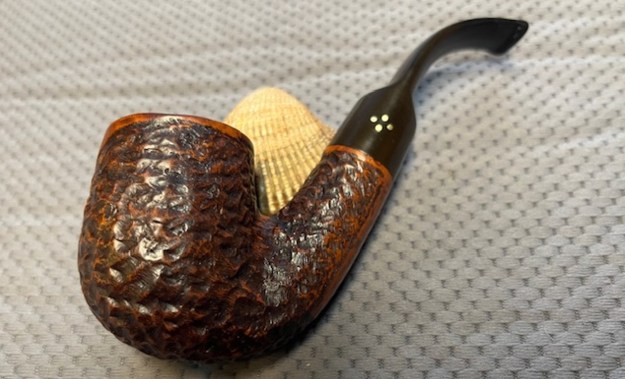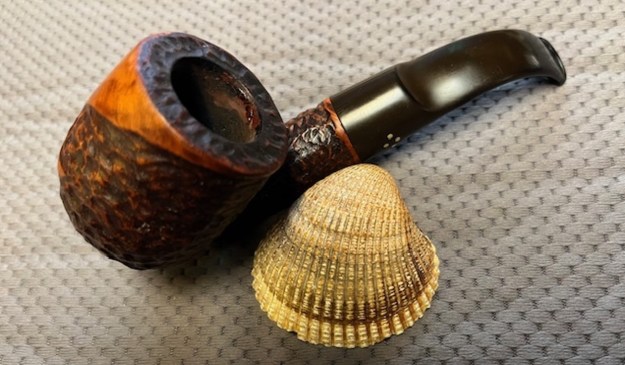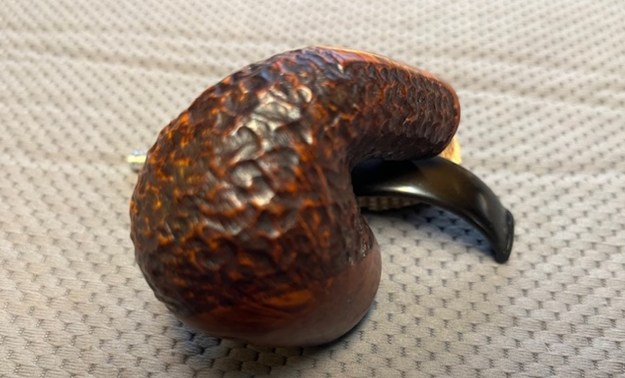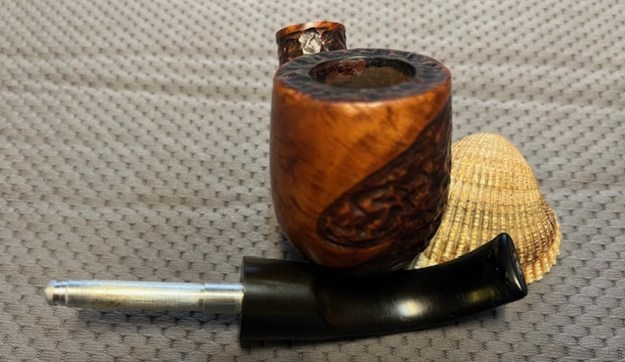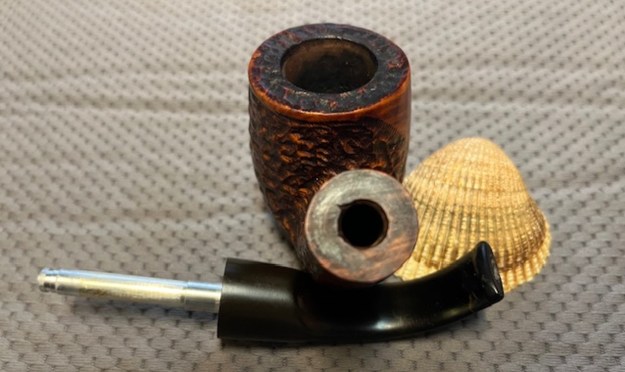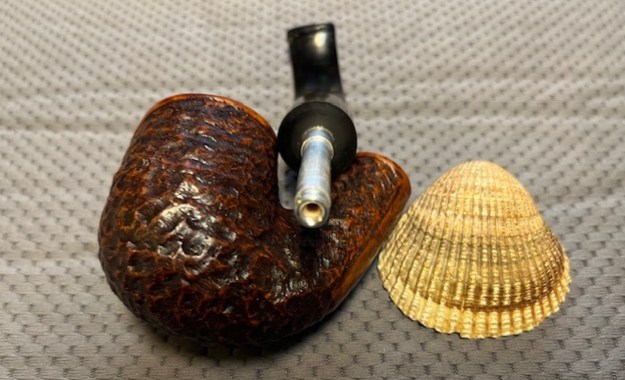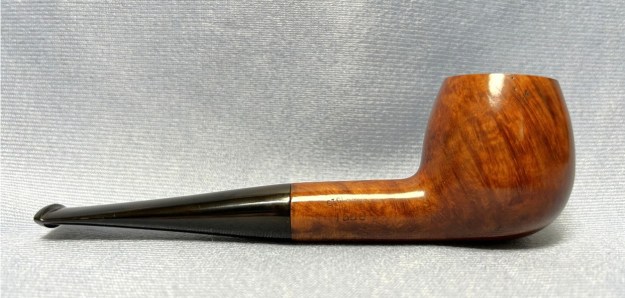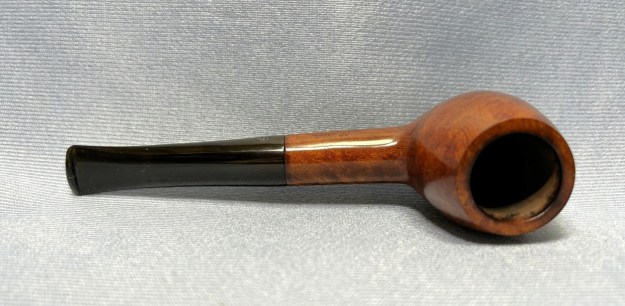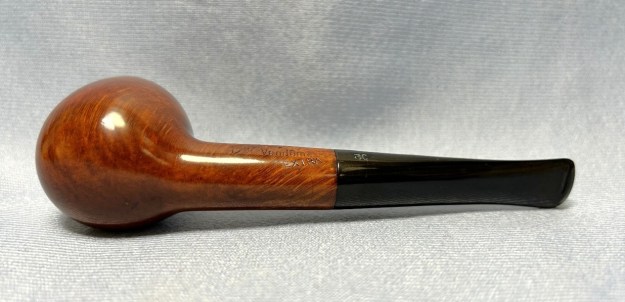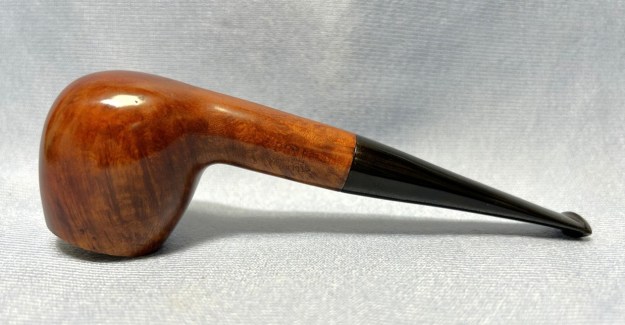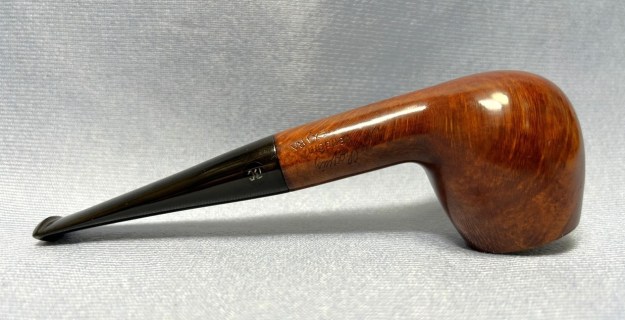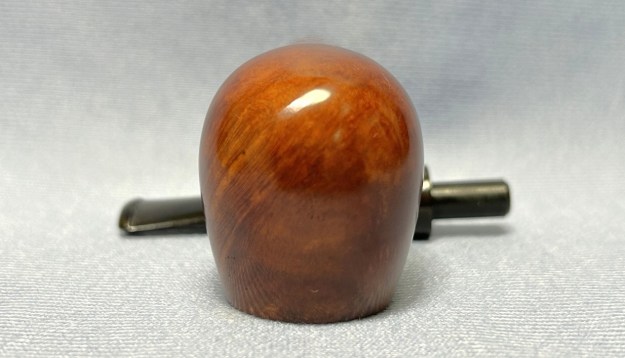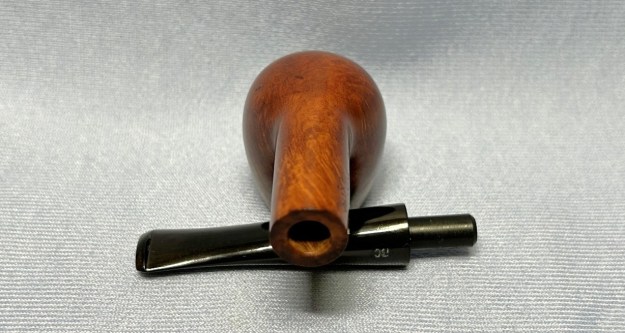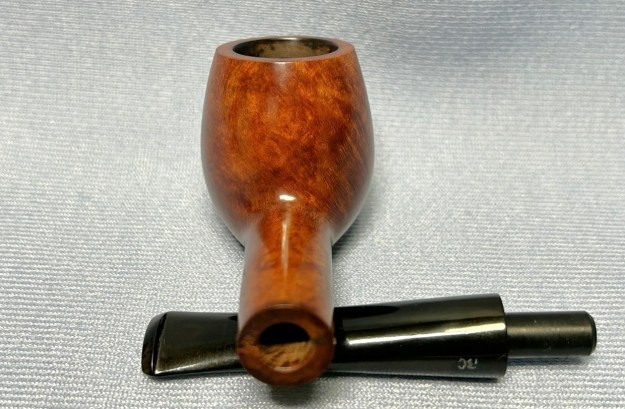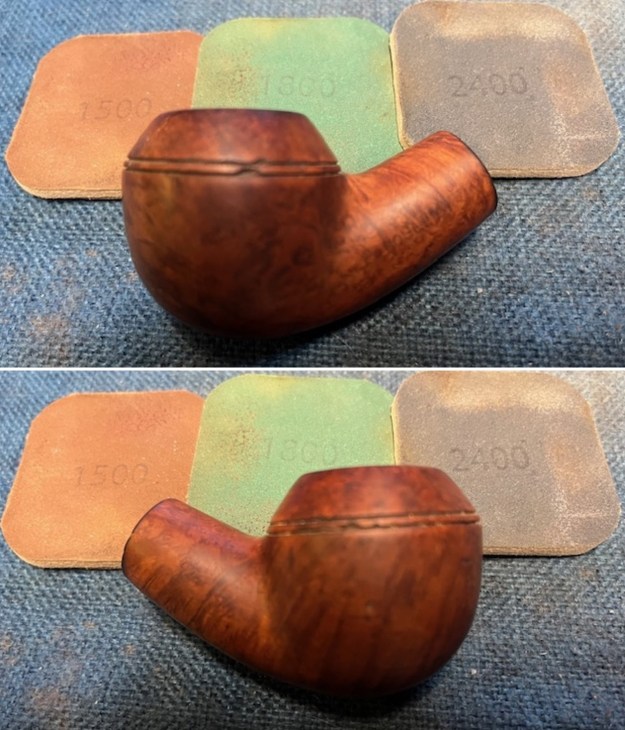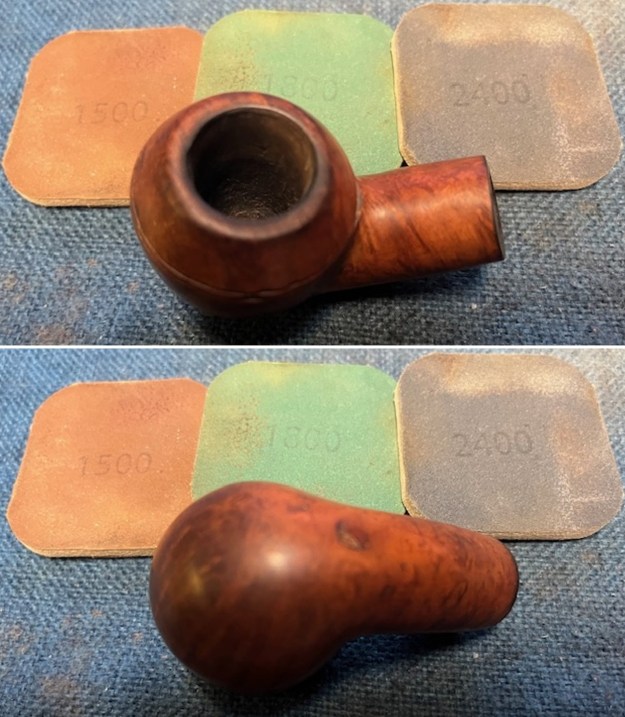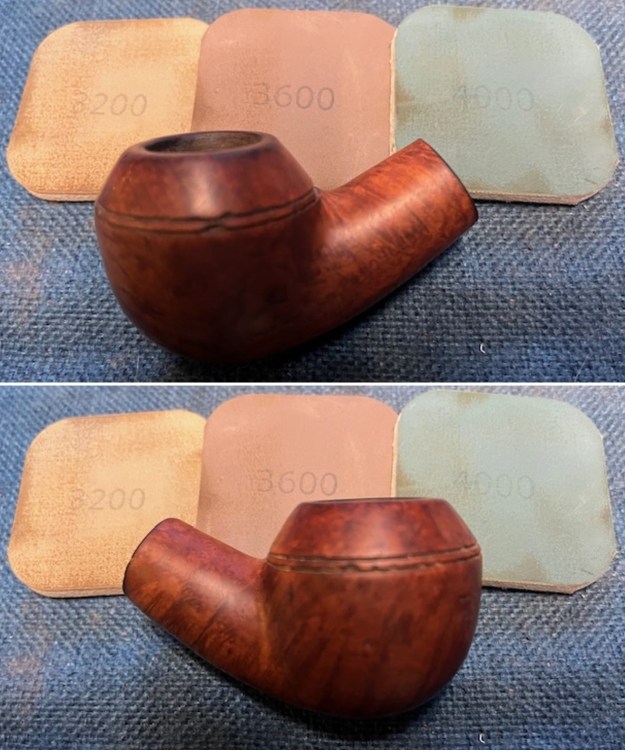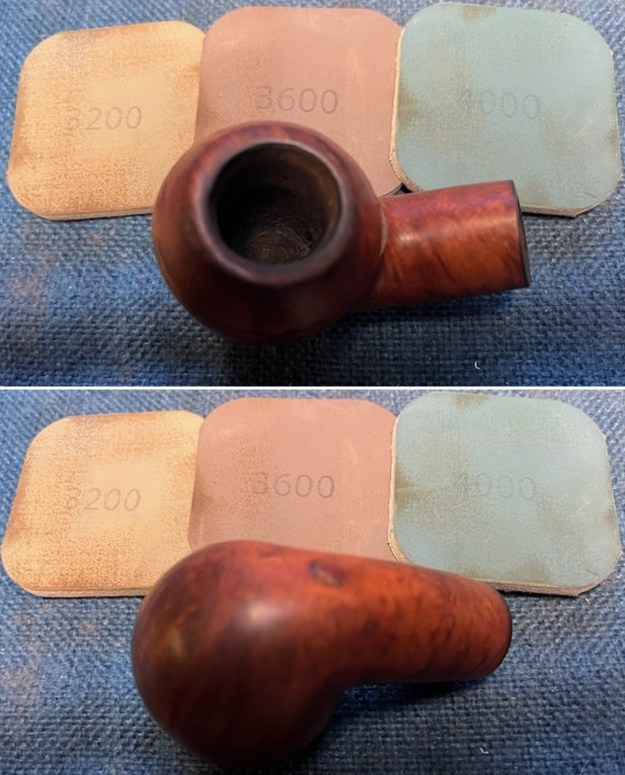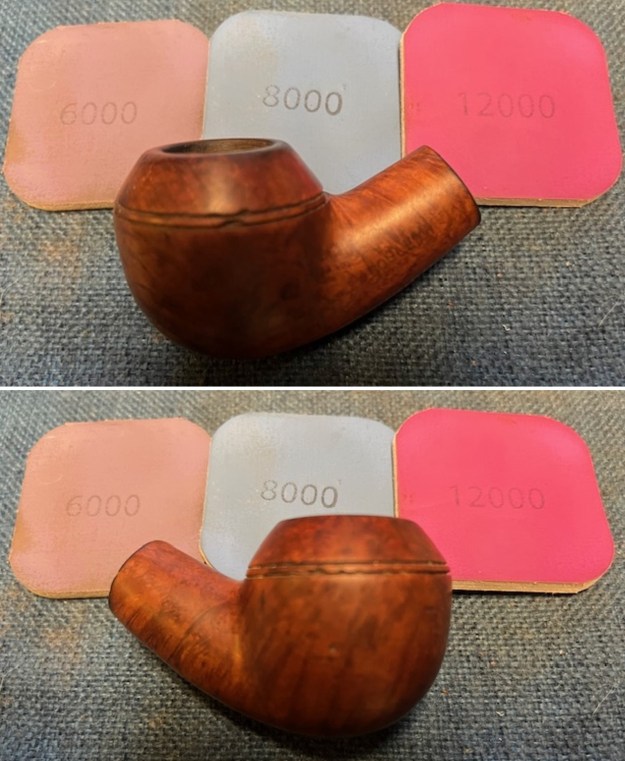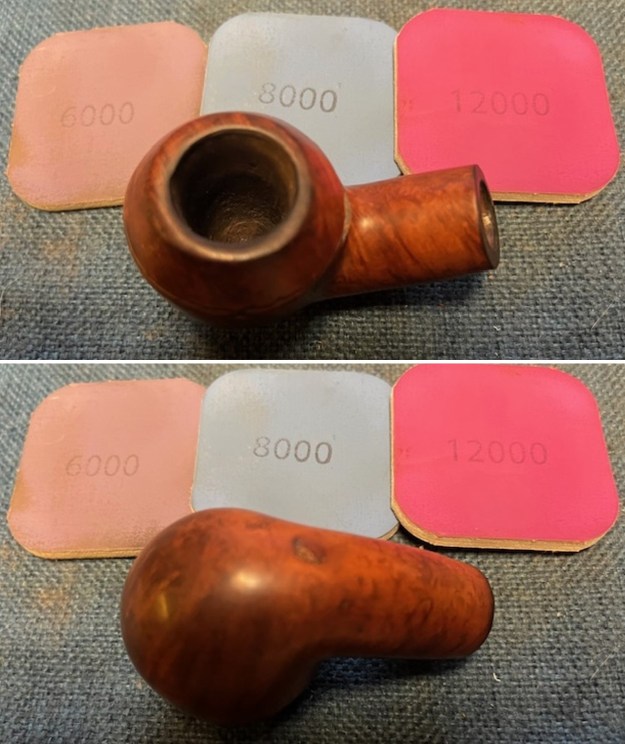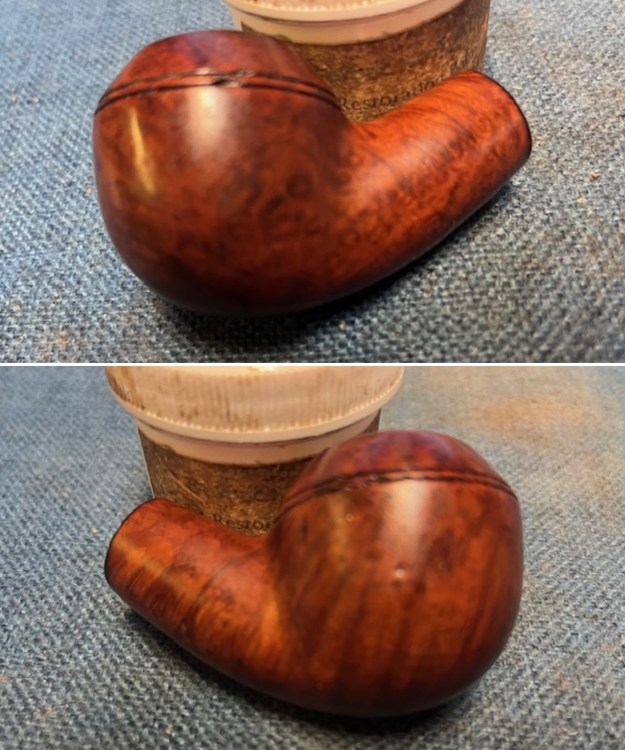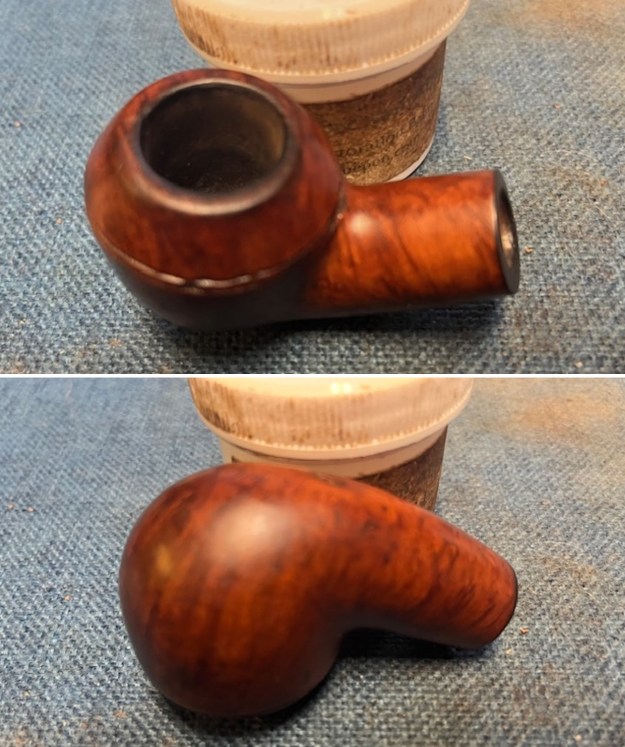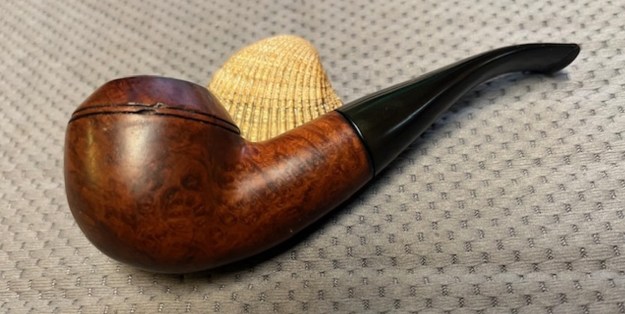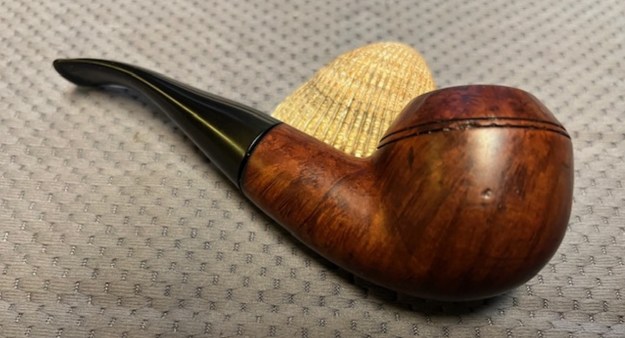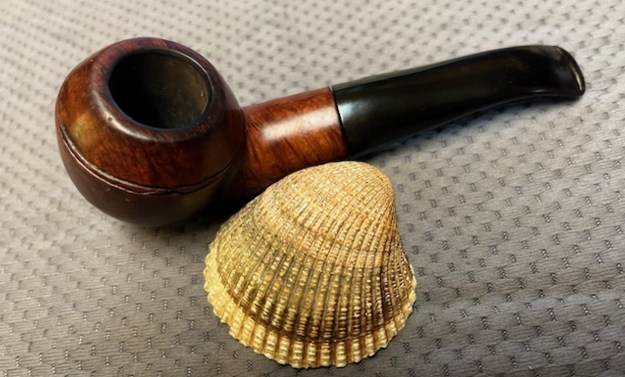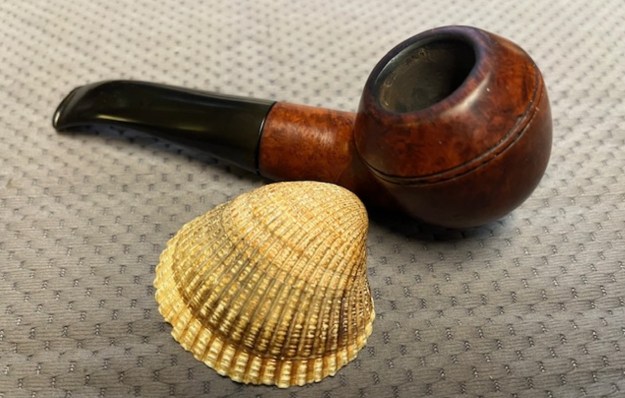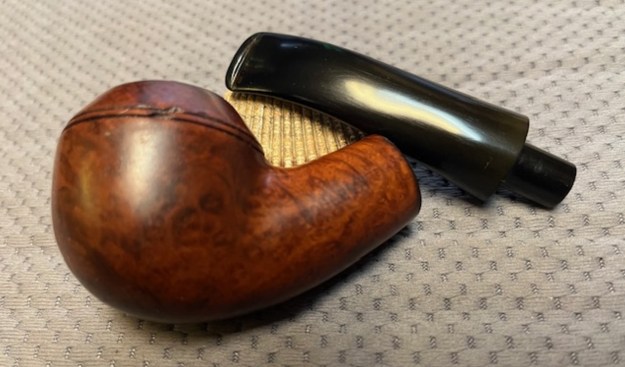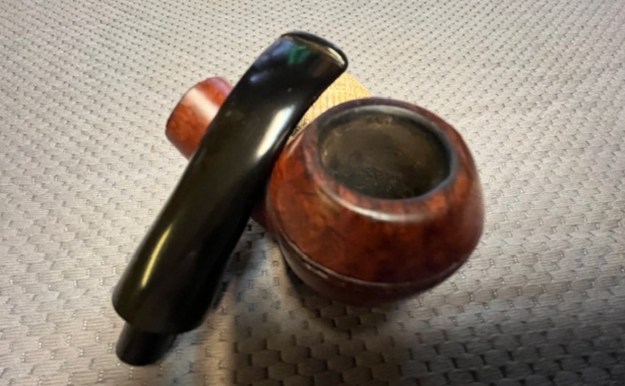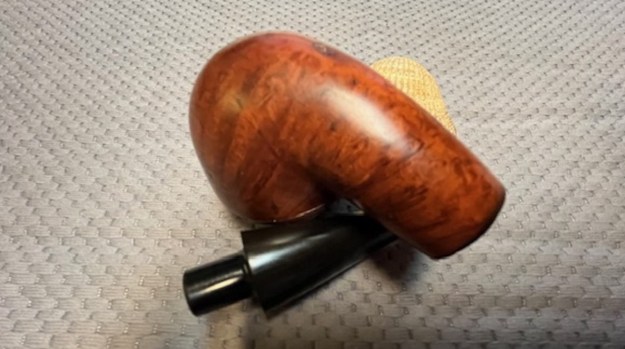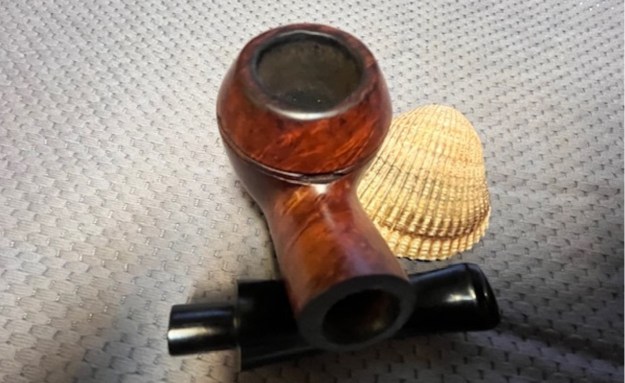
Tag Archives: bowl topping

Really a Disappointing Mess… or was it?


by Steve Laug

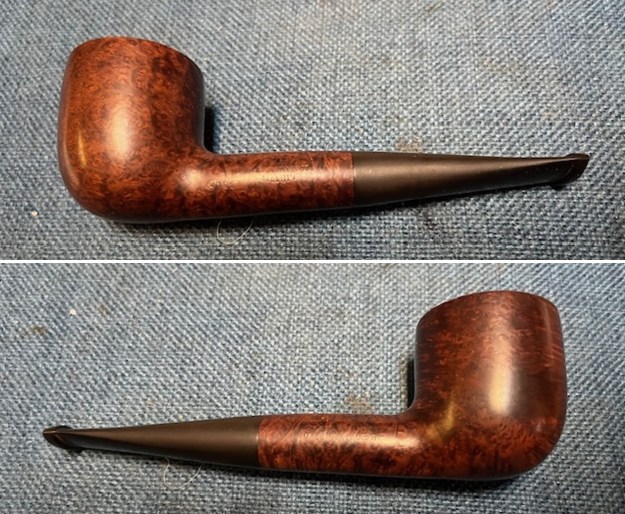
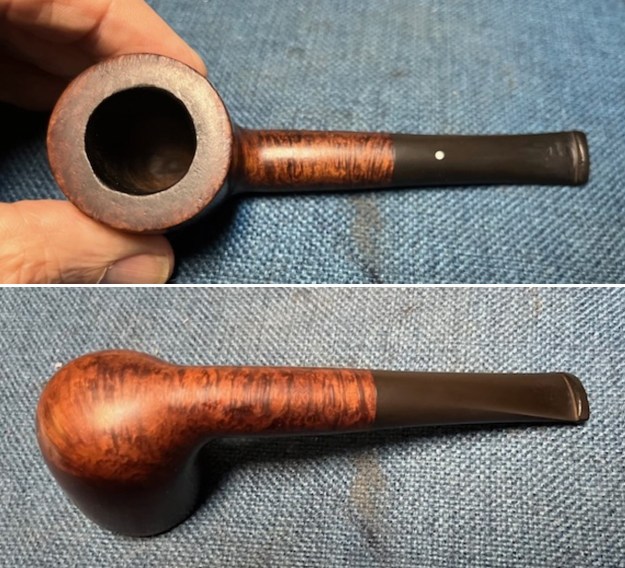
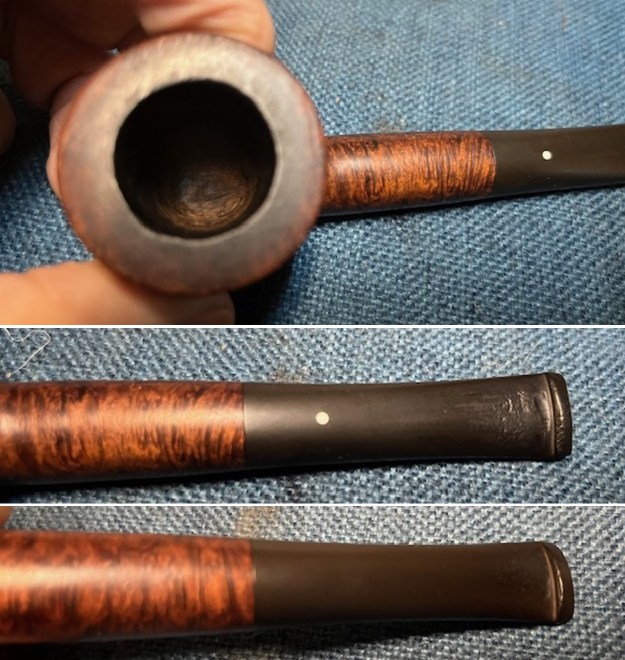
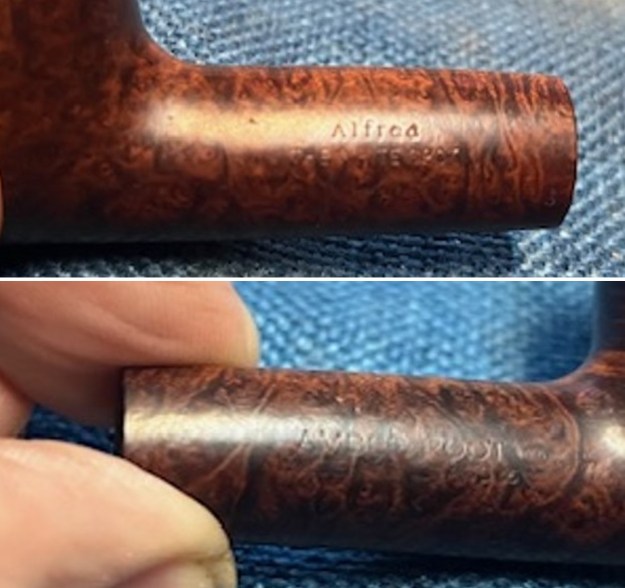
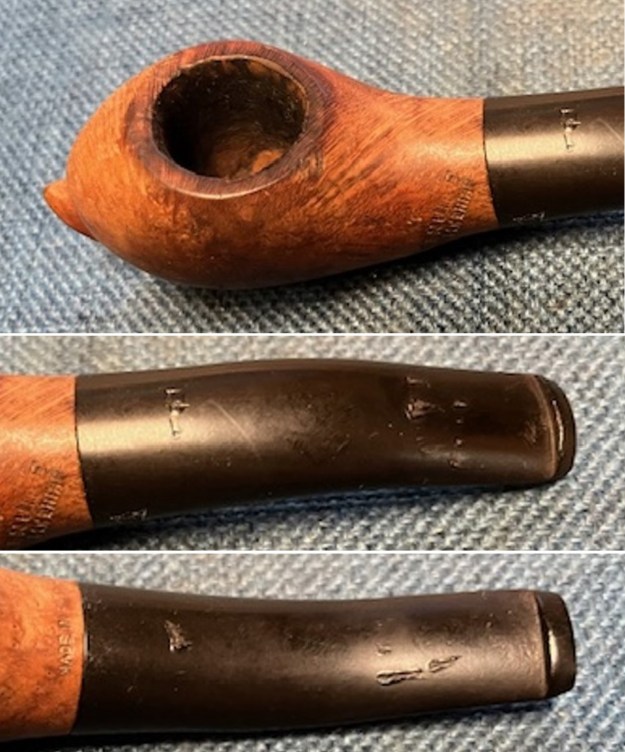
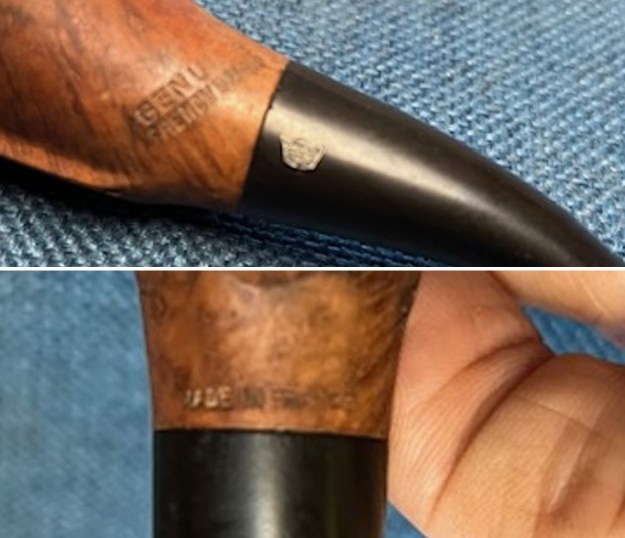
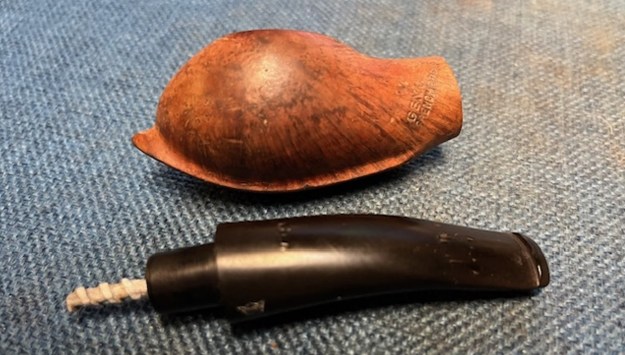
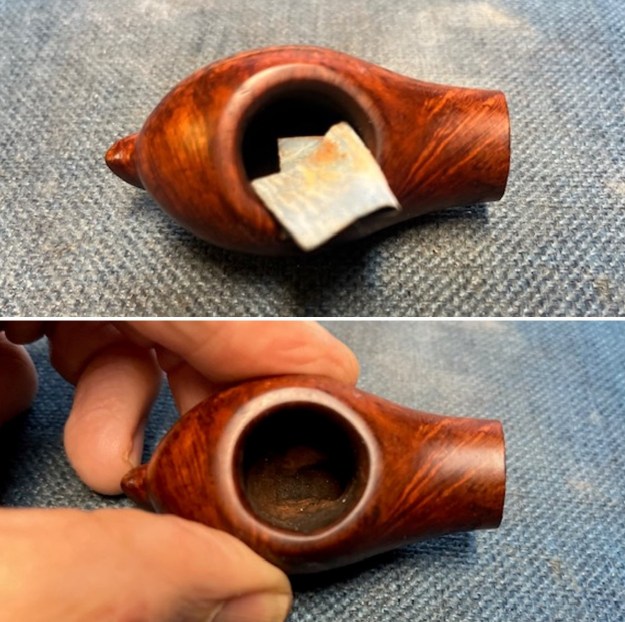
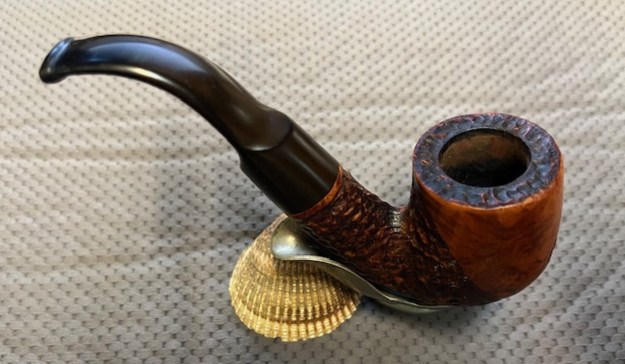
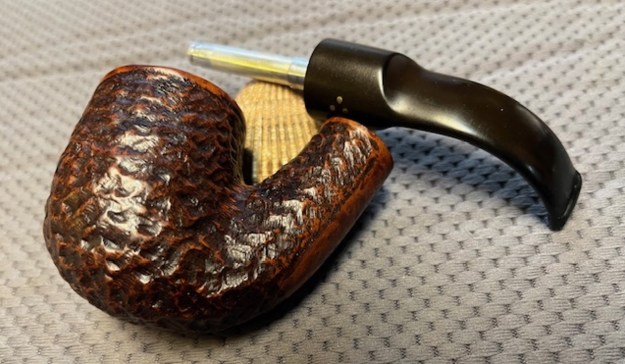
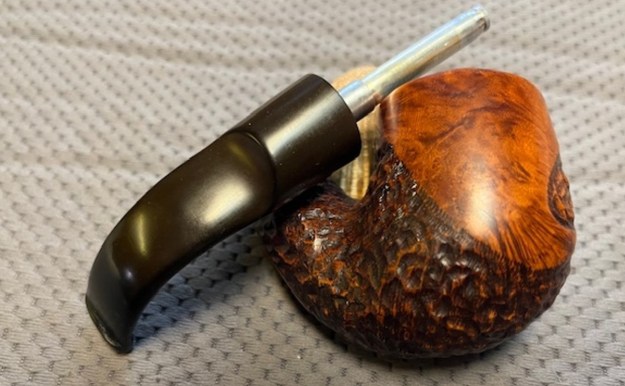
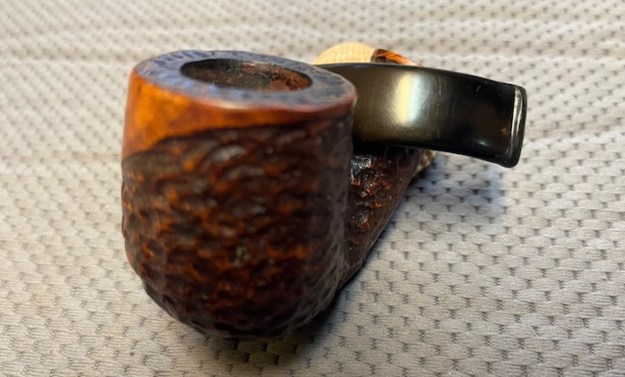
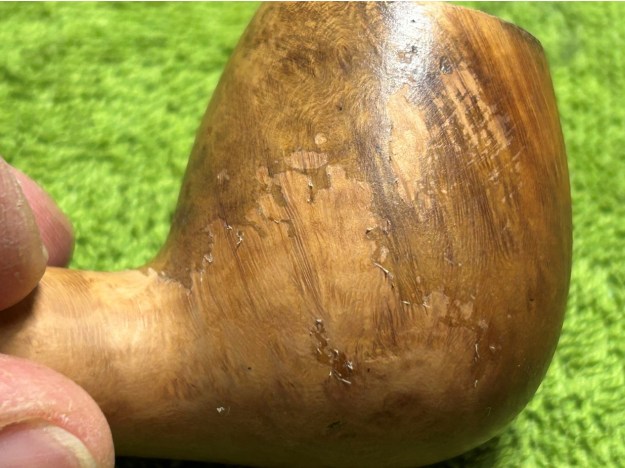
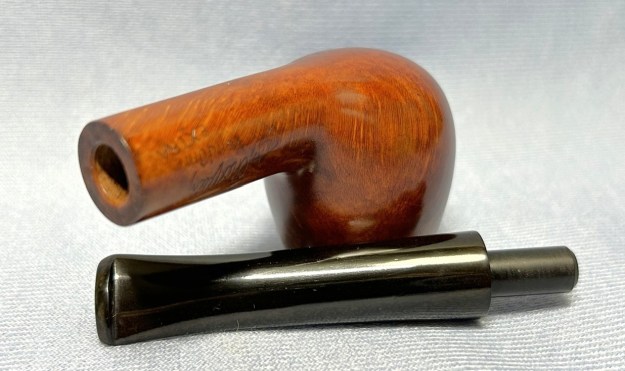
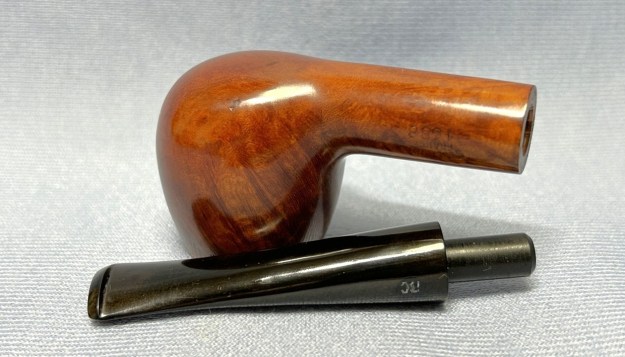
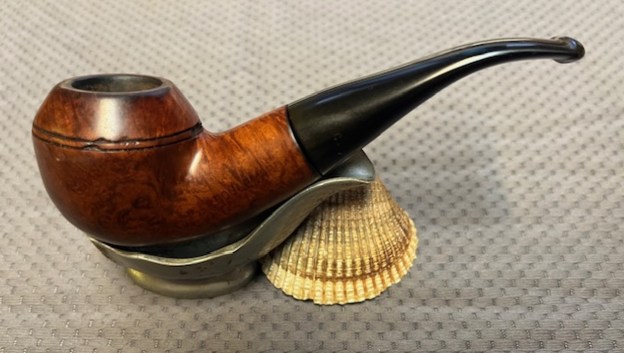
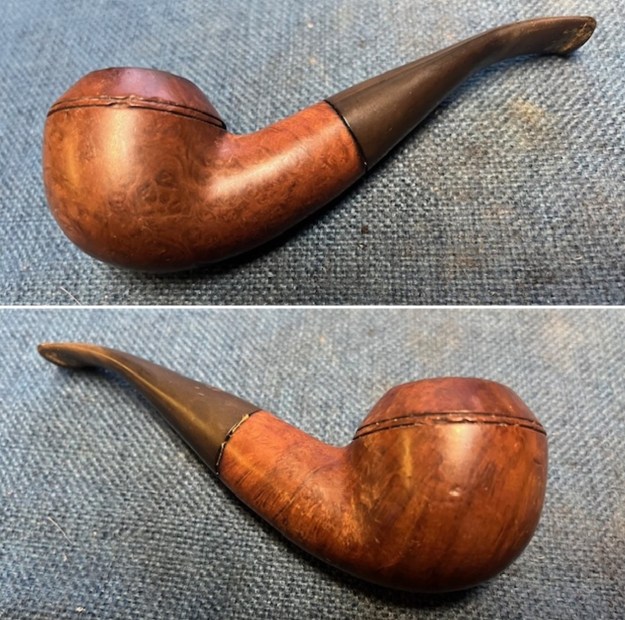
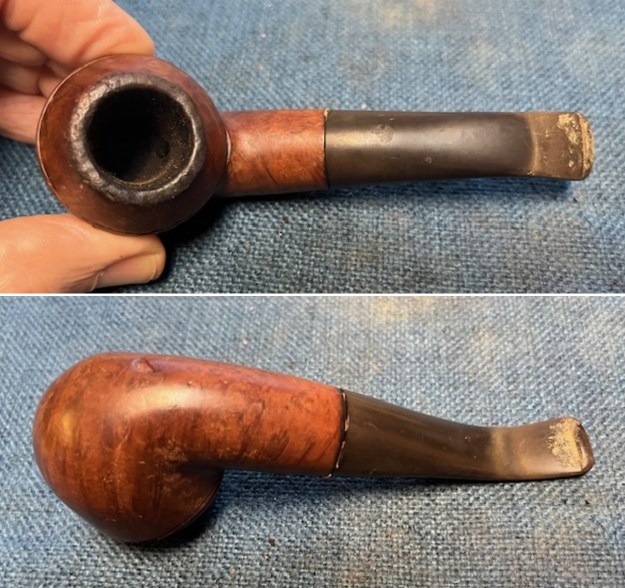
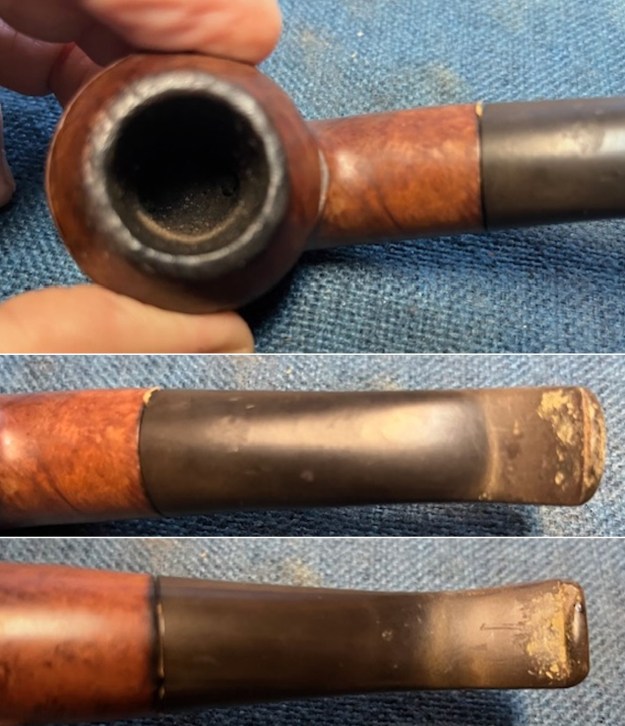
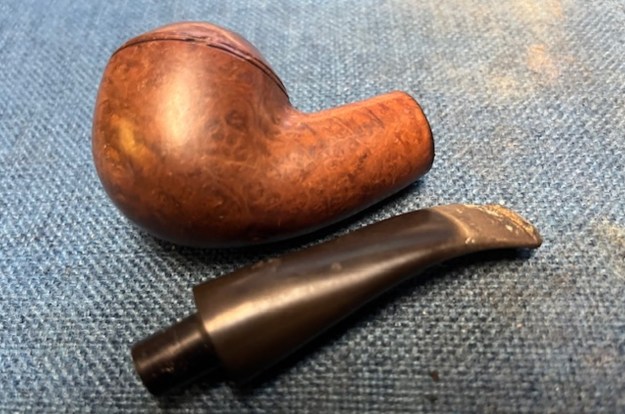
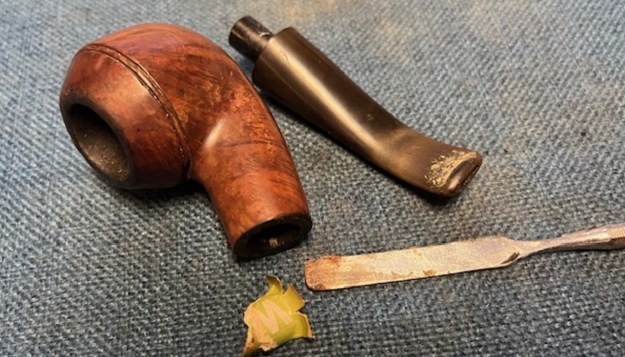
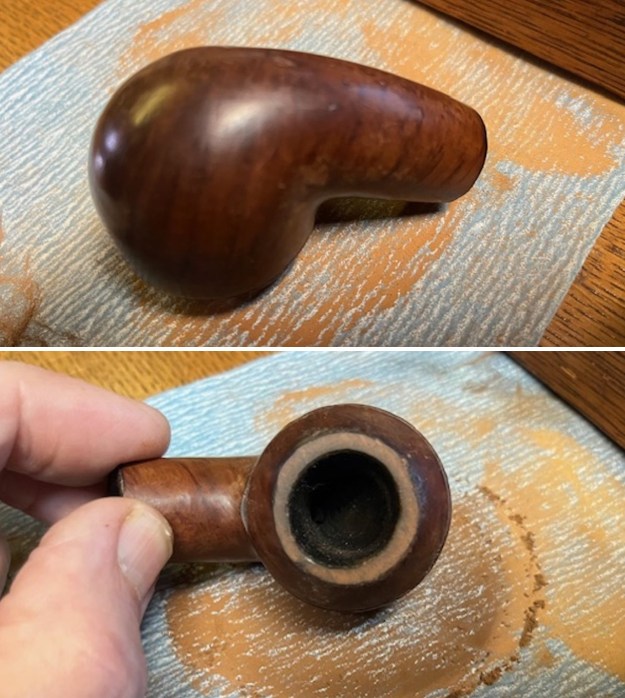
I entitled this blog “A Disappointing Mess…” because when I saw the stamp Connoisseur the brain dropped out and my wish was that this was an Ed Burak made pipe! Of course, it is not one of Ed’s pipes nor does it even look like one. However, in the heat of a pipe hunt it is easy to let the thrill of a find eclipse rational thought processes. It certainly did this time. When I got home and looked at the stamping on the pipe I knew I was probably dealing with an Italian made pipe for import to the USA. It really has all the marks of that including the Imported Briar stamp under the name. On the left side of the shank it is stamped Connoisseur [over] Imported Briar. On the underside of the shank at the shank/stem junction it is stamped Italy. The pipe really was a wreck and if I had been paying attention I probably would have left it in the antique mall where we stumbled across it. The finish on the bowl was a spotty, peeling varnish or perhaps worse and there were nicks and fills in the briar. The bowl had a heavy cake and the rim top was covered in lava. The outer edges of the bowl were a bit beat up and the inner edge was a mystery under the lava. The stem was dirty, oxidized and calcified and had deep tooth marks and chatter on the button surface and ahead of the button on both sides. Here are some photos I took before I started the cleanup. I took a photo of the stem surfaces and the bowl and rim to give a sense of condition of the pipe. You can see the thick cake in bowl and the lava overflow on the edges and rim top of the bowl. It is hard to know if there is any damage as the cake and lava is quite thick. The stem surface is very dirty and you can see the deep tooth marks and chatter covered by the dirt and debris.I took photos of the stamping on the sides of the shank. It is clear and readable on all the shank sides as noted above. It also seems that there is a remnant of the C stamp on the side of the stem. It is not deep in vulcanite surface. I also took a photo of the bowl with the stem removed. It is a great looking pipe.I turned to Pipephil’s site to look for a Connoisseur that was not connected to Ed Burak. I found one that bears the same stamping on the shank sides and was made in Italy. The photo showed the C logo on the stem. The one I am working on is not to clear. I have included a screen capture of the pertinent information below (http://www.pipephil.eu/logos/en/logo-c6.html). I have also included some information from the side bar below the photo below.Probably a brand of Hall & Fitzgerald. The “Connoisseur” name has also been used by Lorenzo or Kaywoodie for their pipe lines.

From there I did a Google search on Hall & Fitzgerald. I came across a link on vkpipes to a pipe made by them. There is no specific connection in the notes to the Connoisseur. It is interesting to note that they had quite a few brands in their stable (https://vkpipes.com/pipeline/hall-fitzgerald-straight-grain/). It is at least a very likely connection.

Hall & Fitzgerald is first mentioned in an 1878 Directory of Bristol as a ‘Fancy Goods Warehouse’. Within a few years the company is in the partnership of William Sydney Hall and Edward Thurston Davies trading as Hall & Fitzgerald, of 147 Temple Street, Bristol, Tobacconists and Fancy Goods Merchants. Silver hallmarks for pipe fittings are registered in London in 1899 and in Chester in 1901. Hall & Fitzgerald is making and selling smoking pipes until liquidation and closing in 1982 (except the World War II years). Known brands: Clifton, Dorchester, Excelsior, Hercules, Oxford, Craftsman and Wessex.

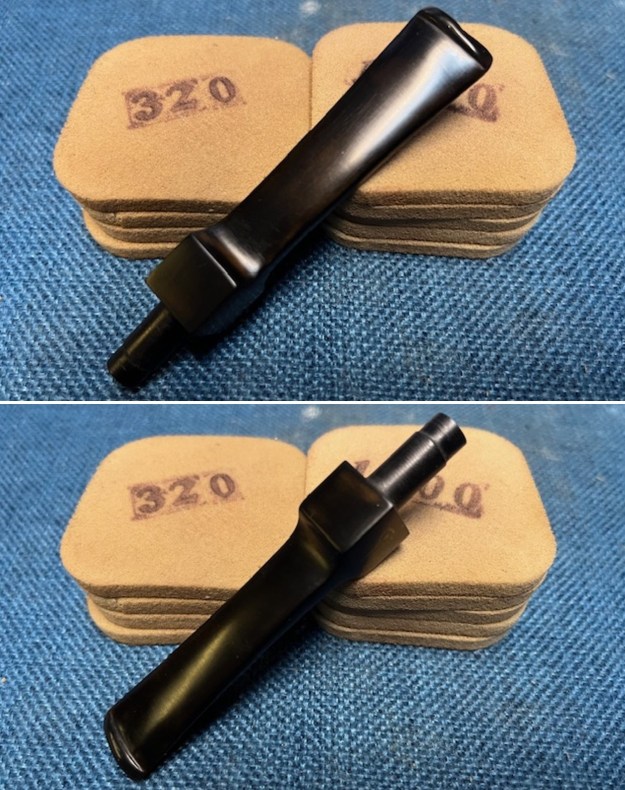
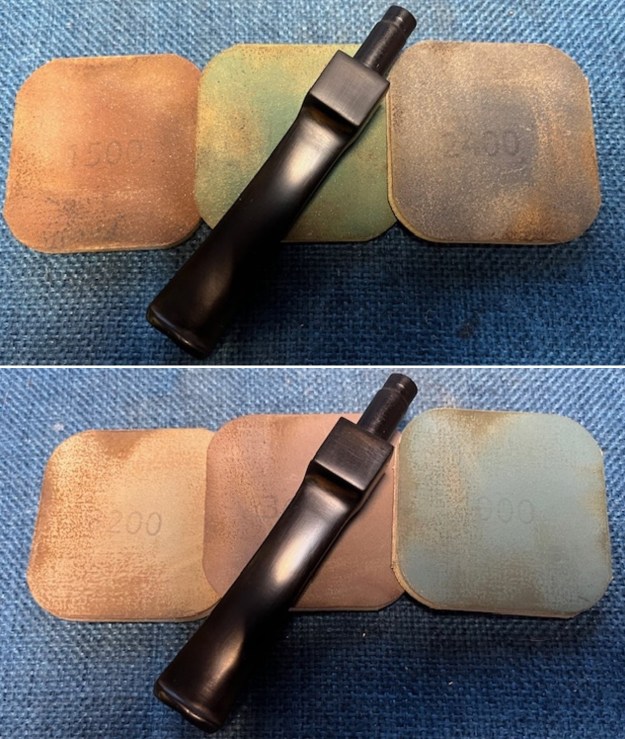
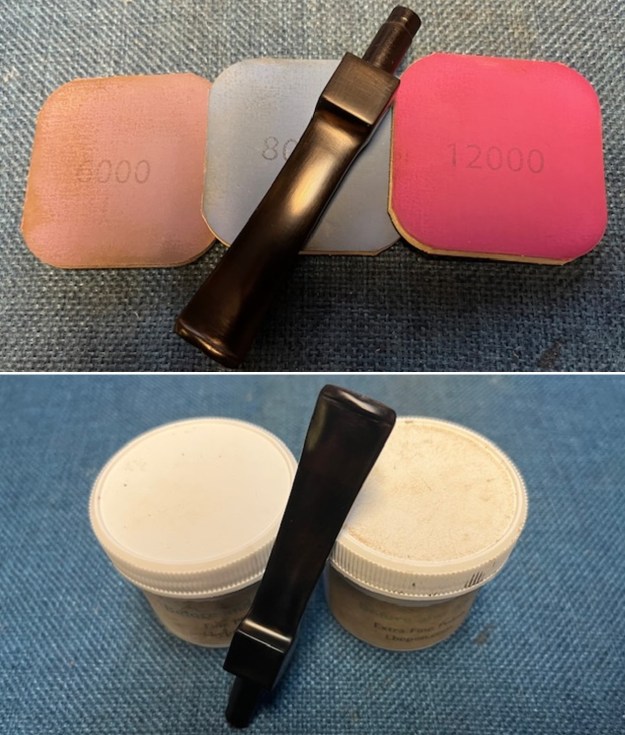
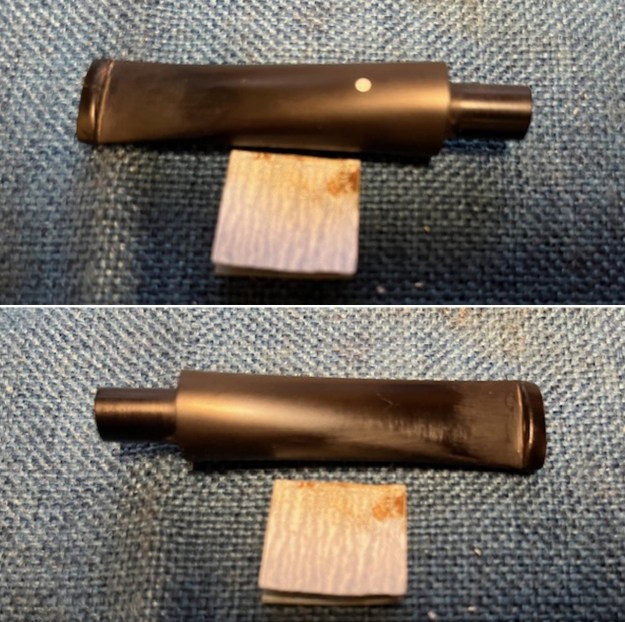
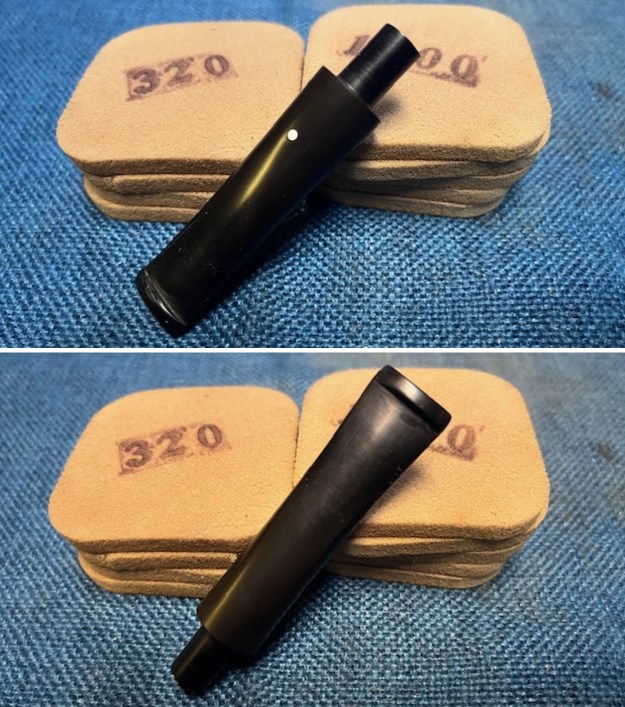
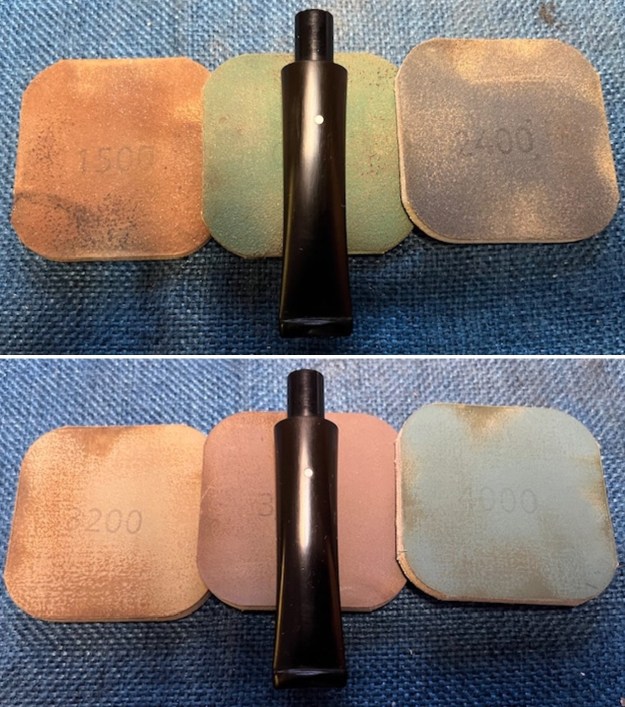
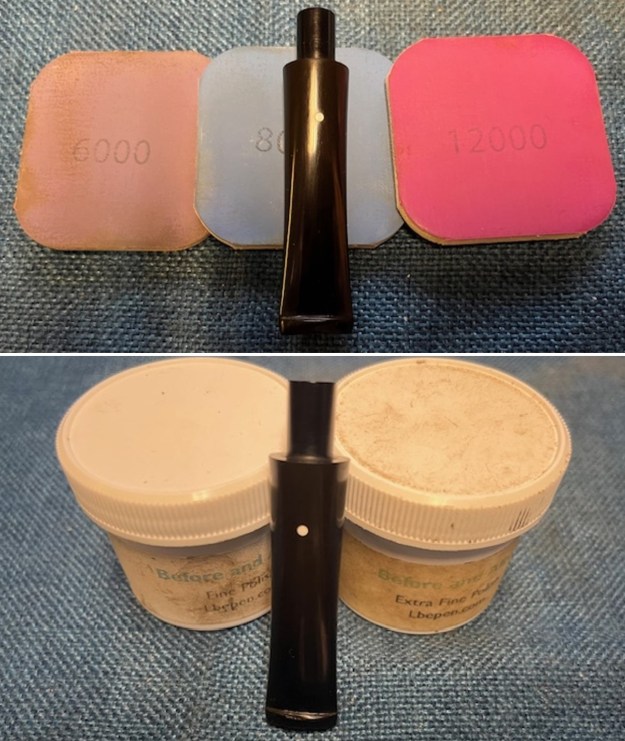
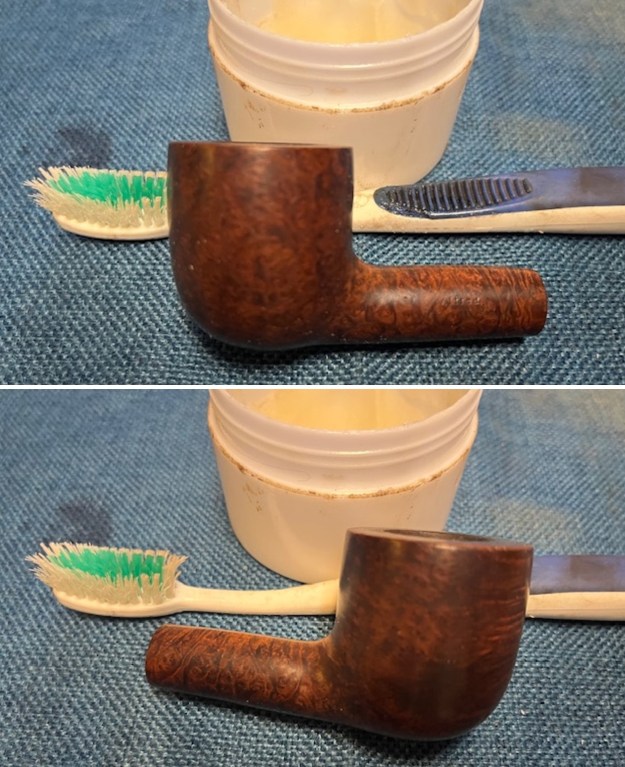
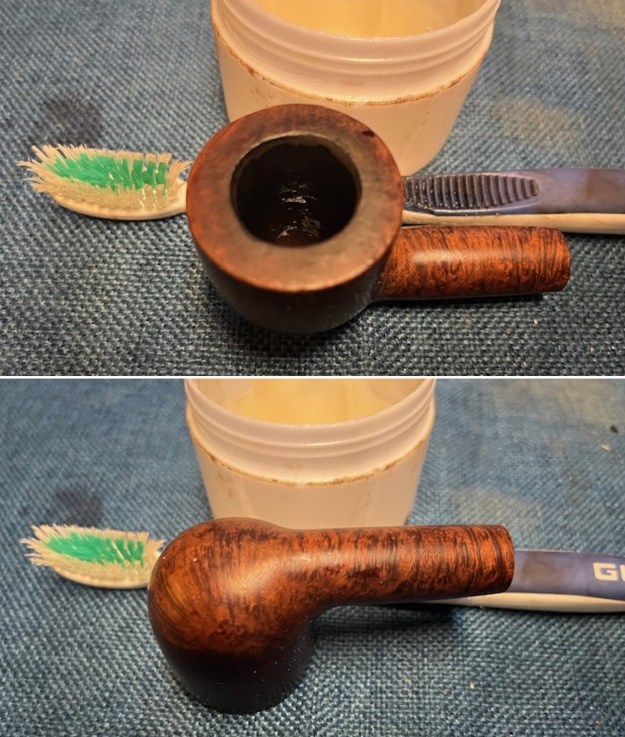
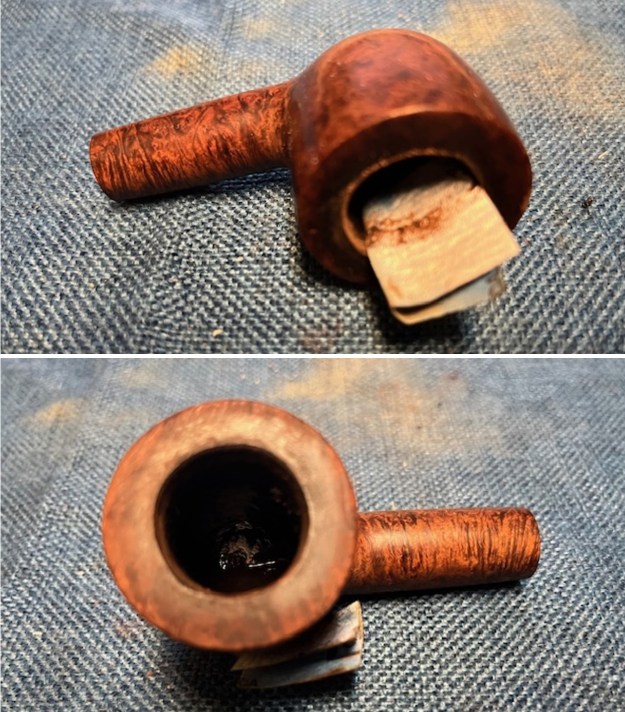
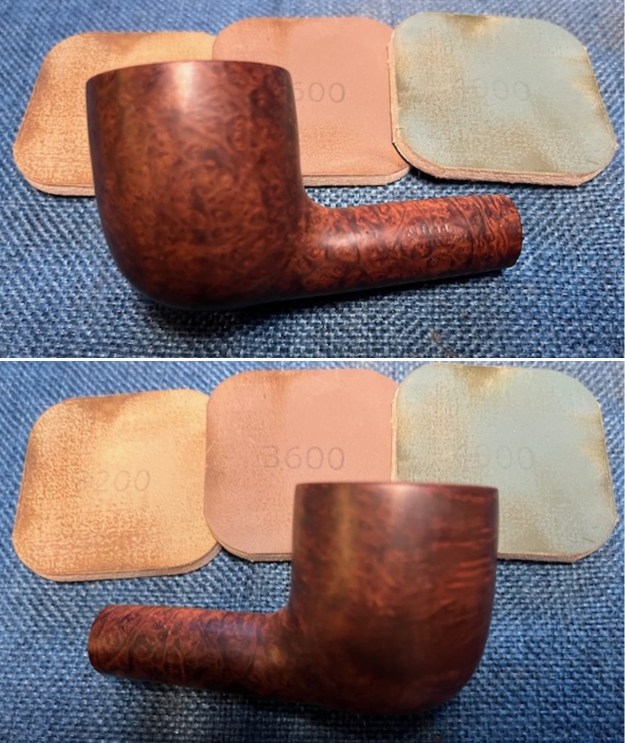
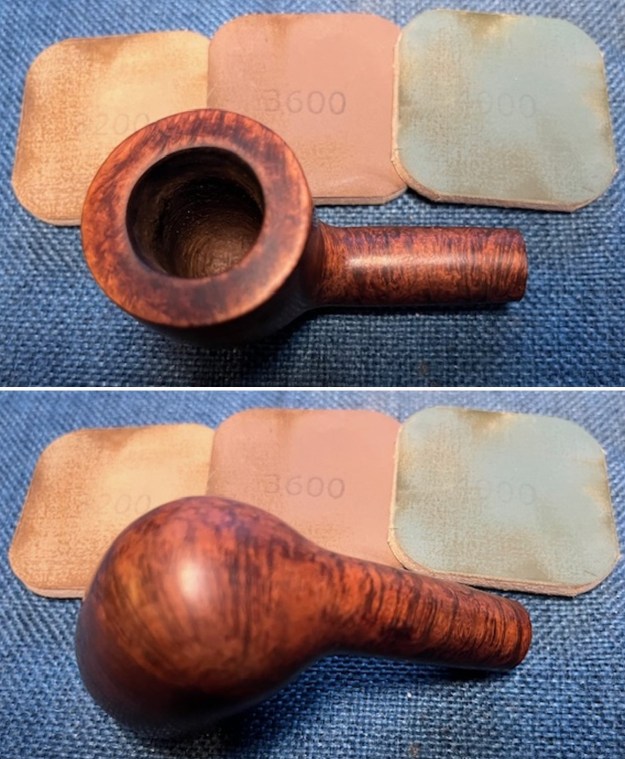
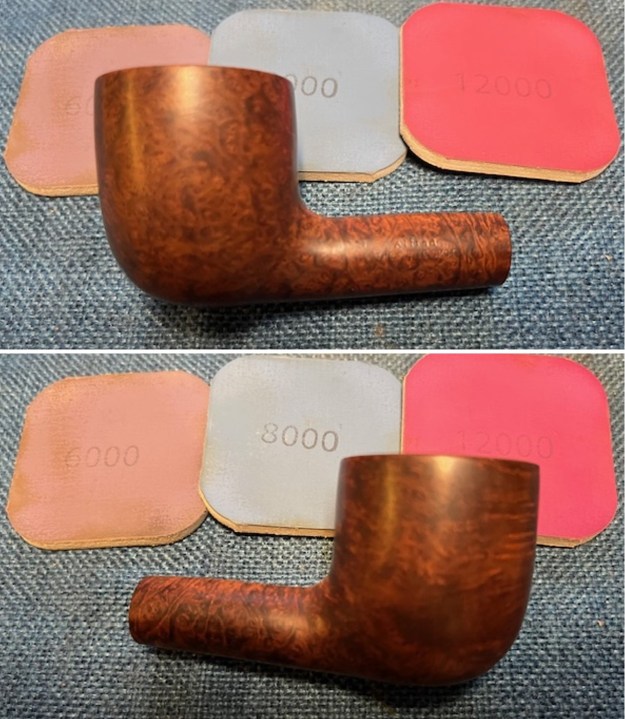
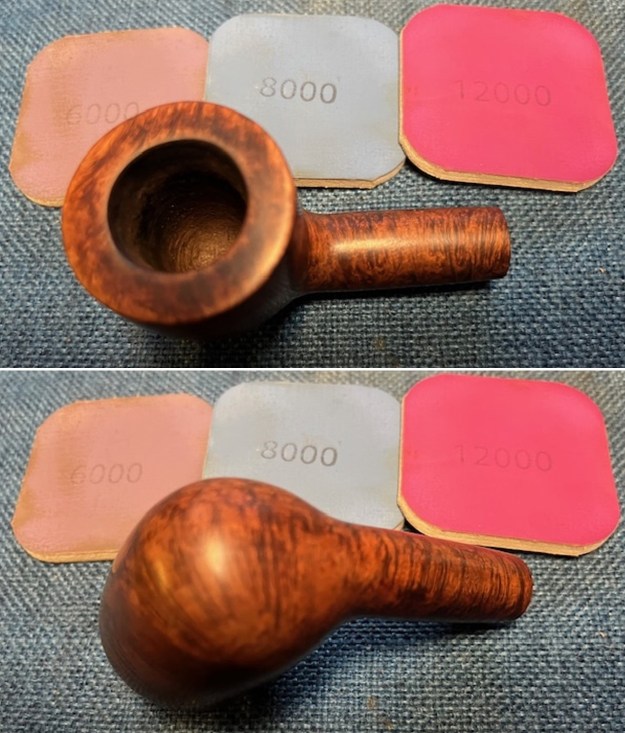
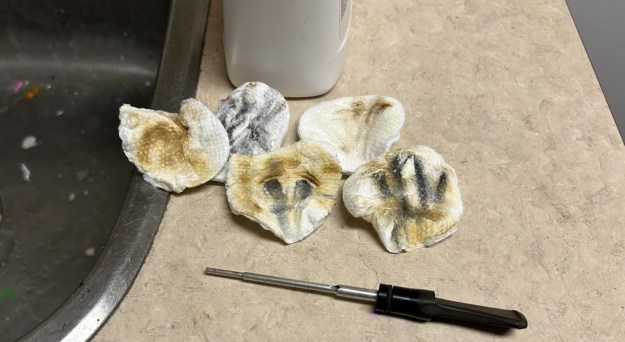
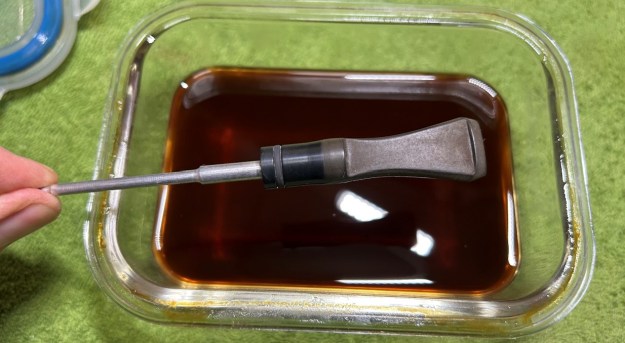
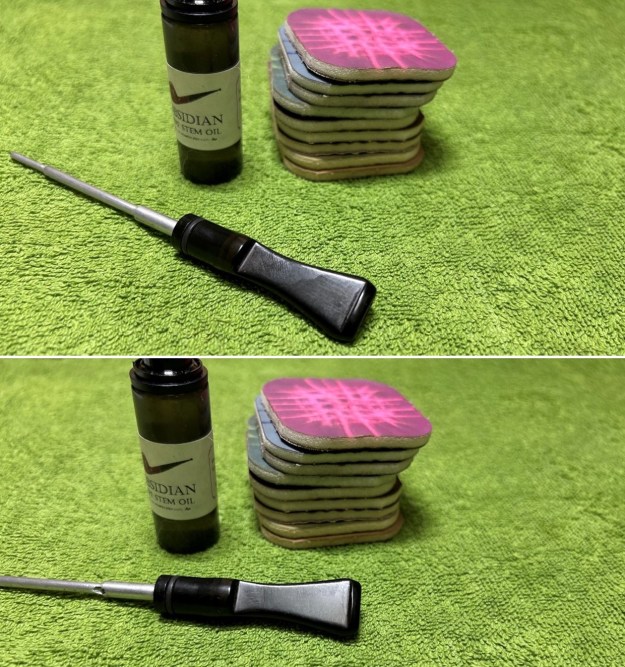
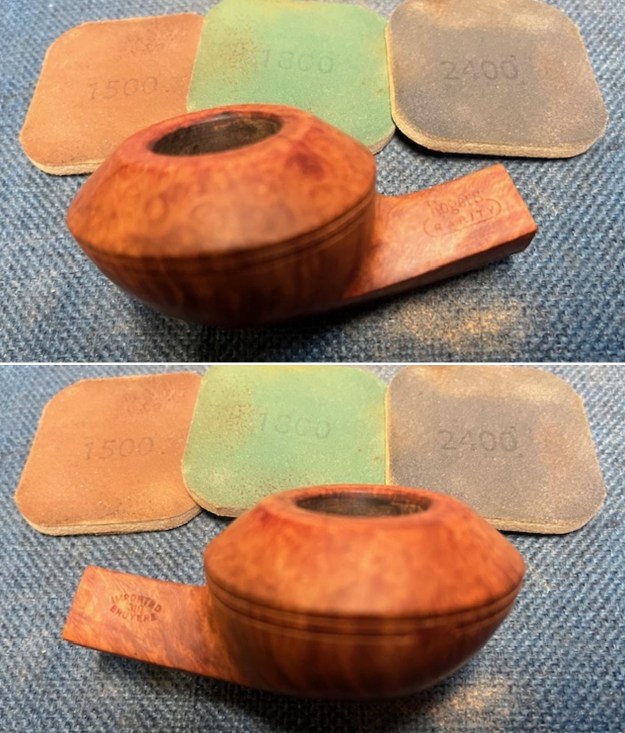
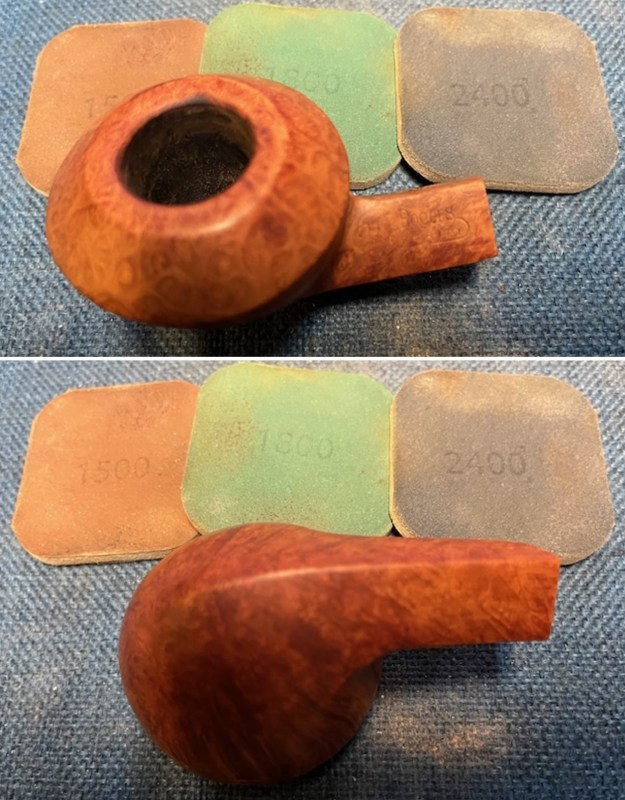
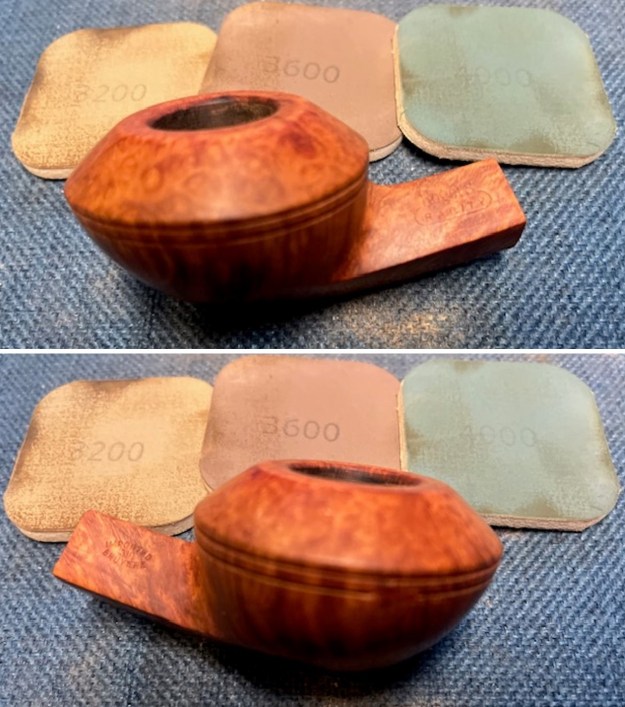
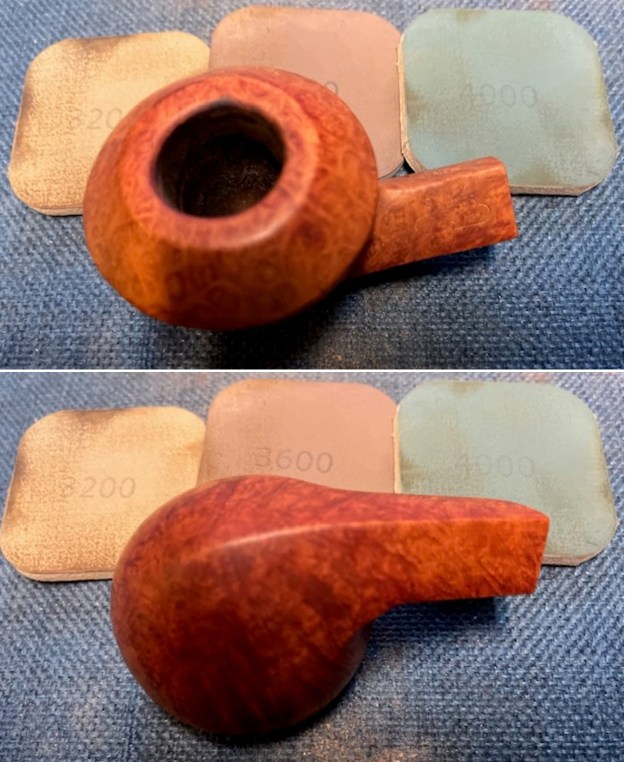
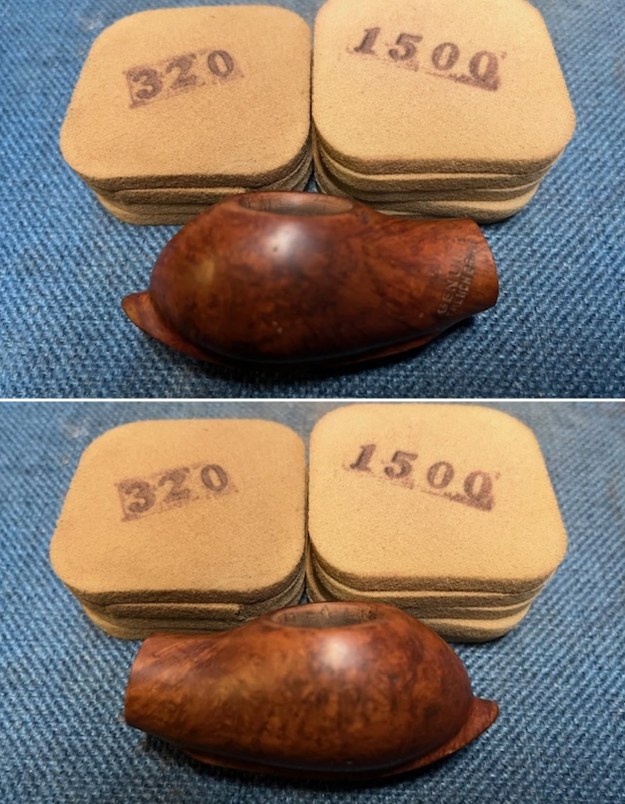
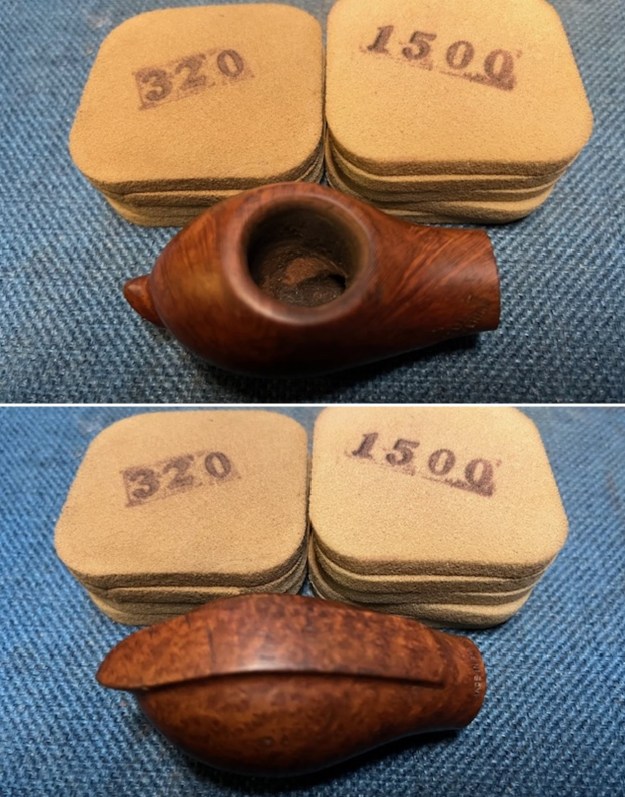
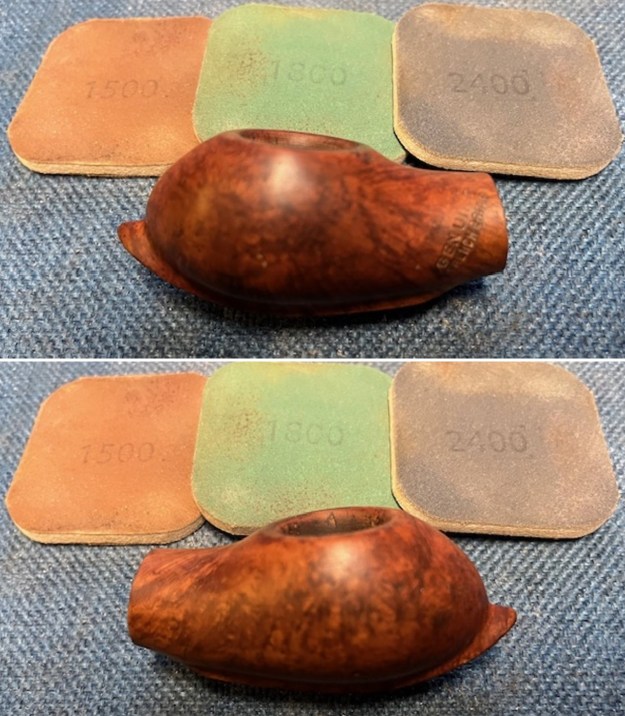
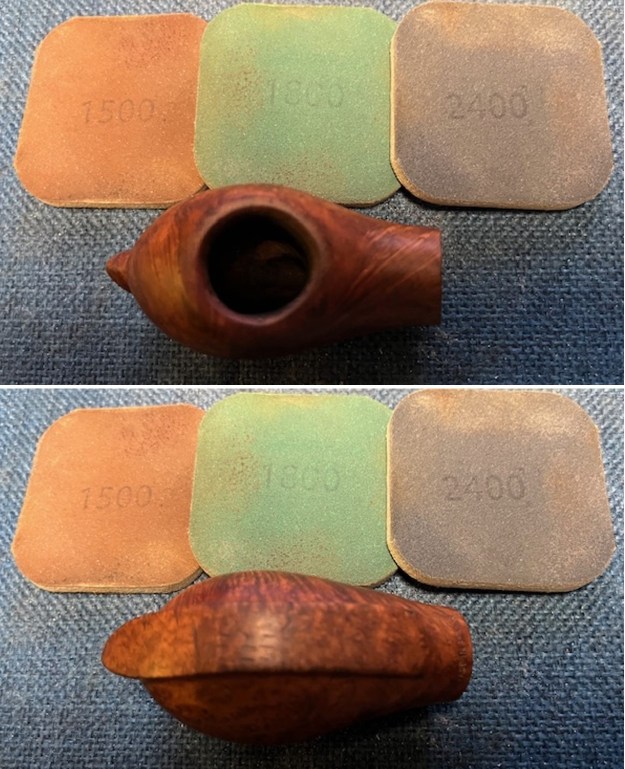
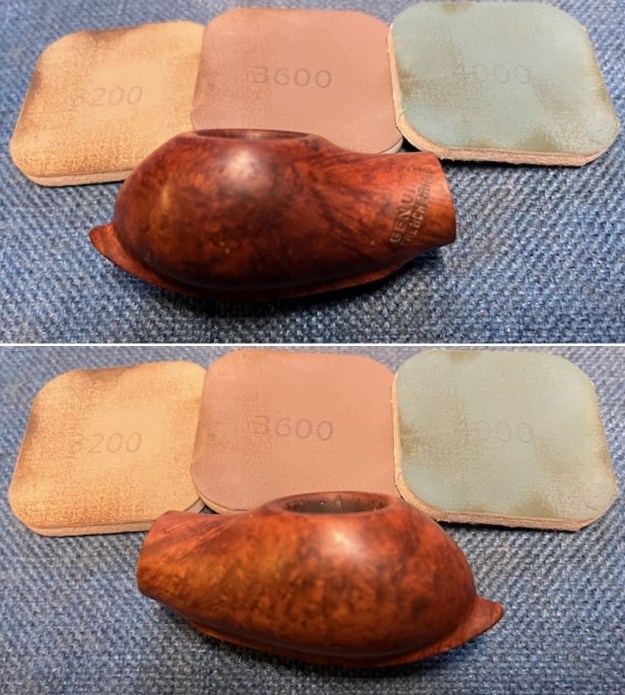
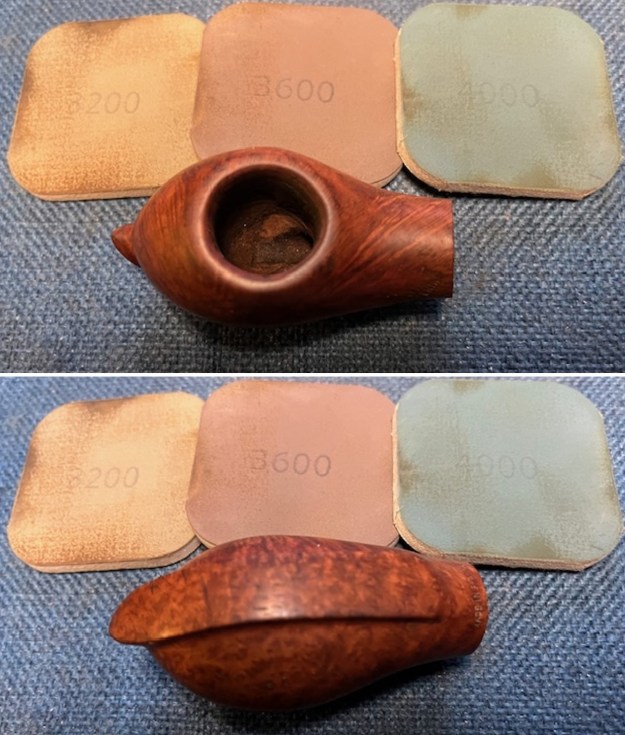
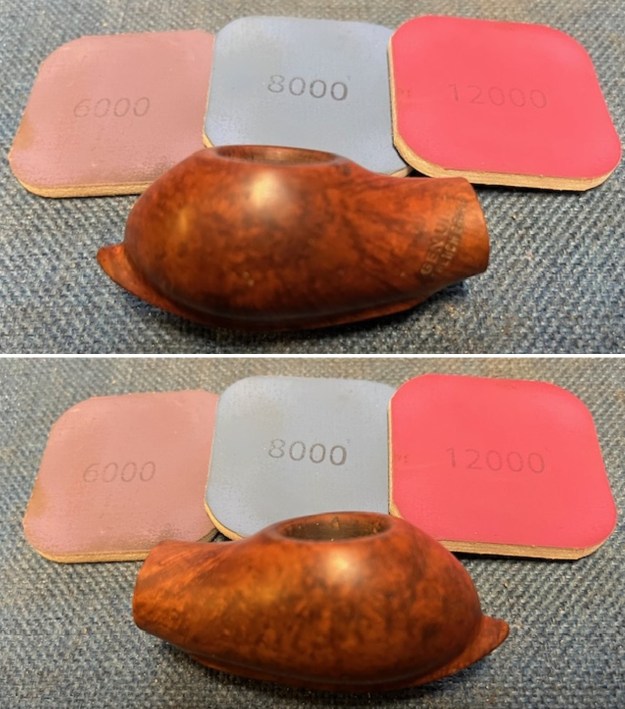
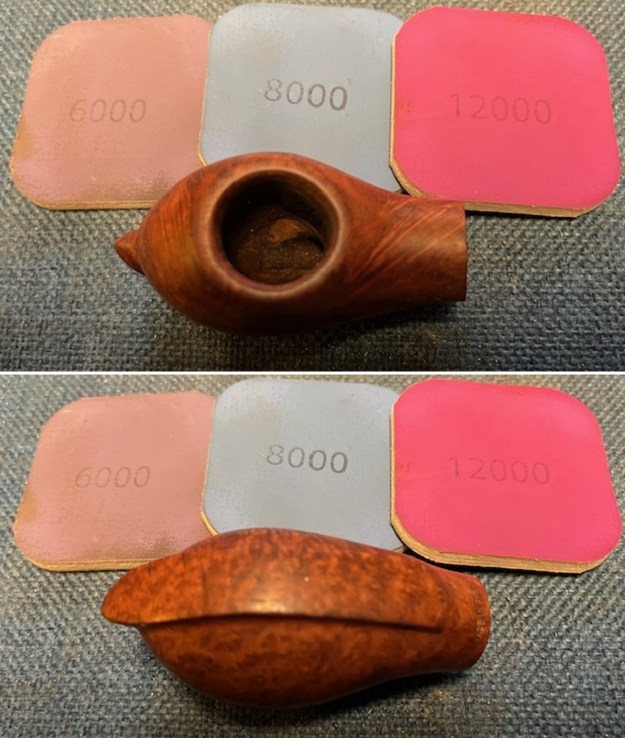
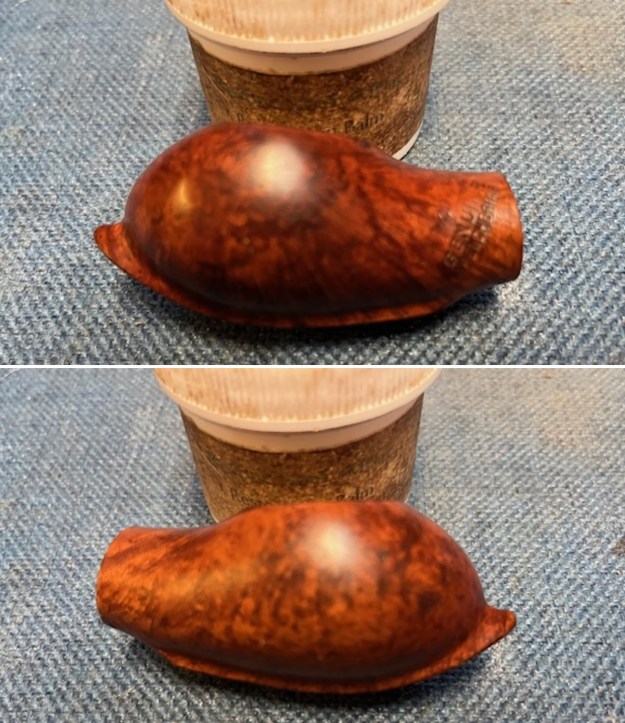
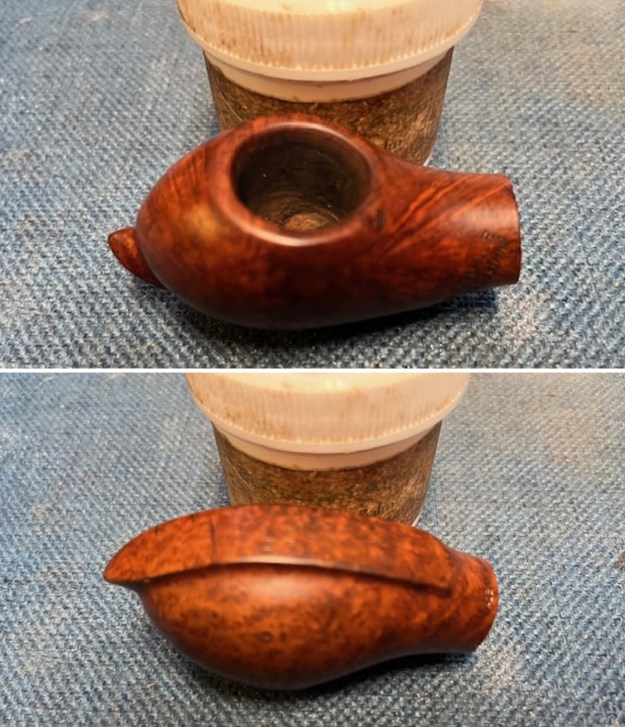
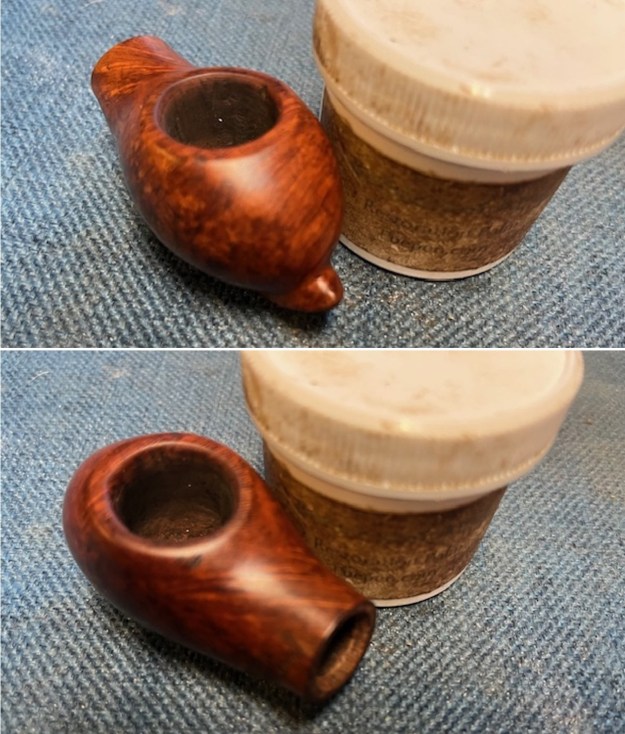
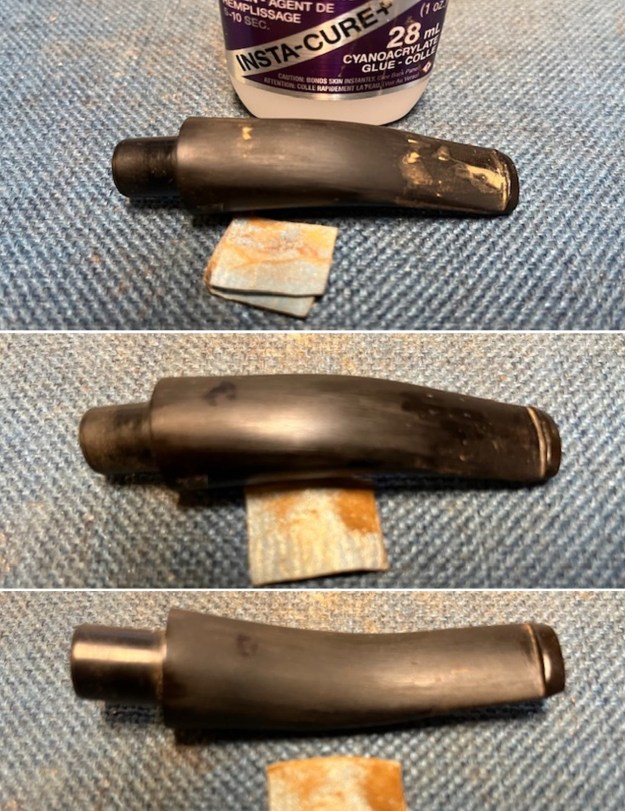
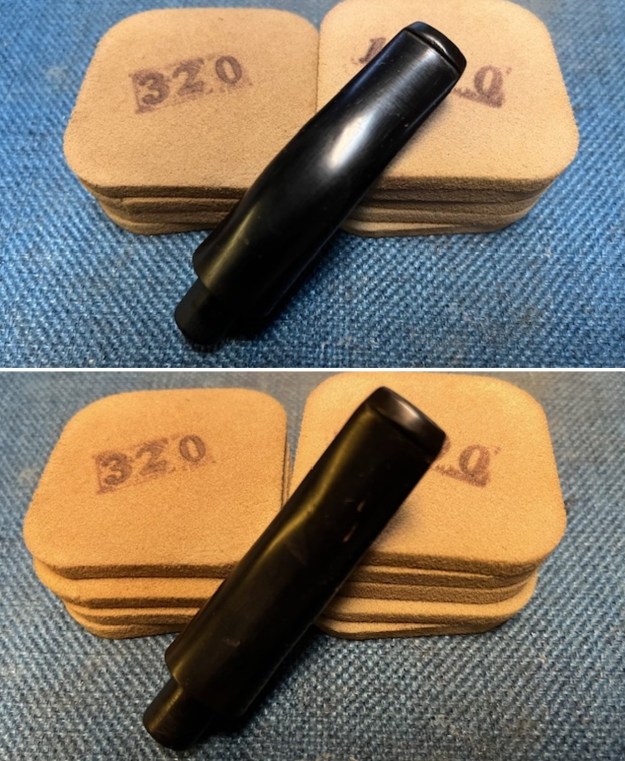
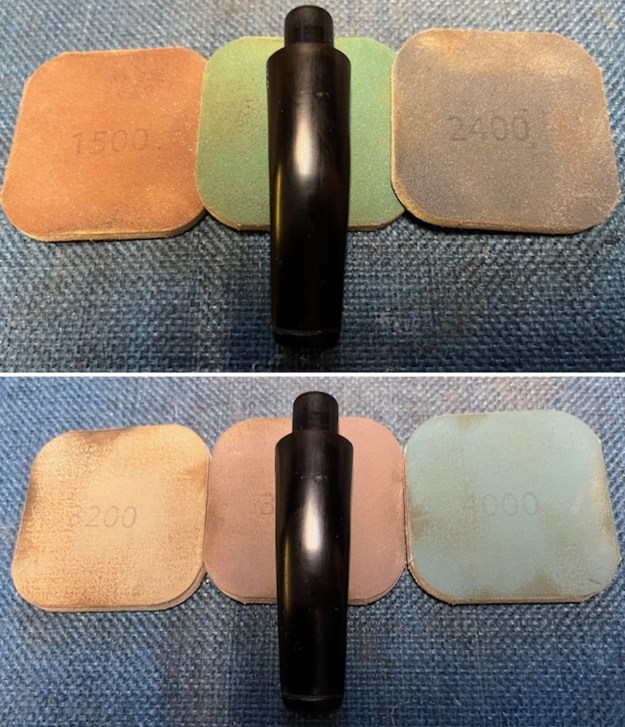
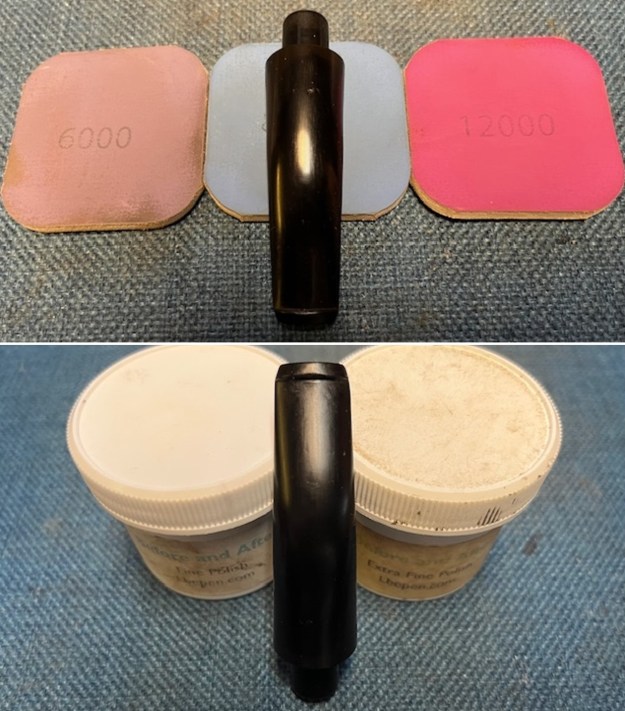
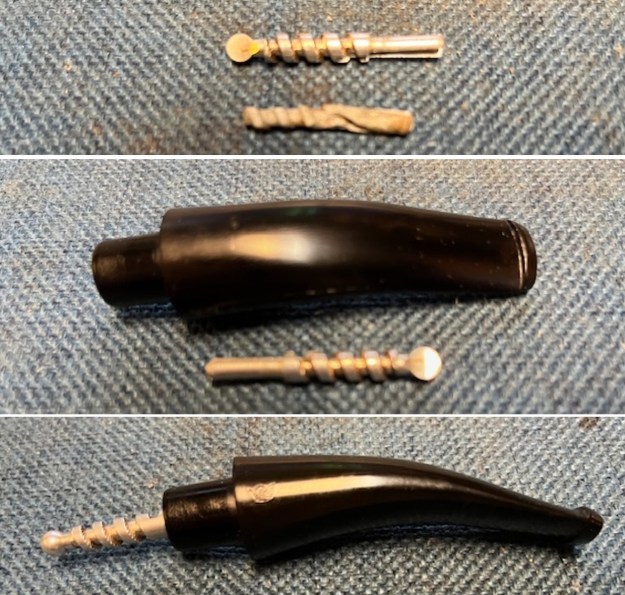
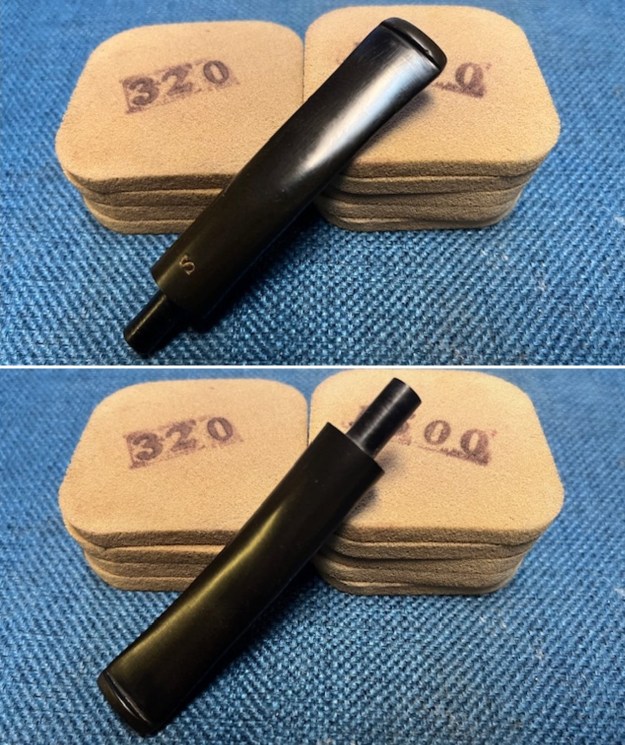
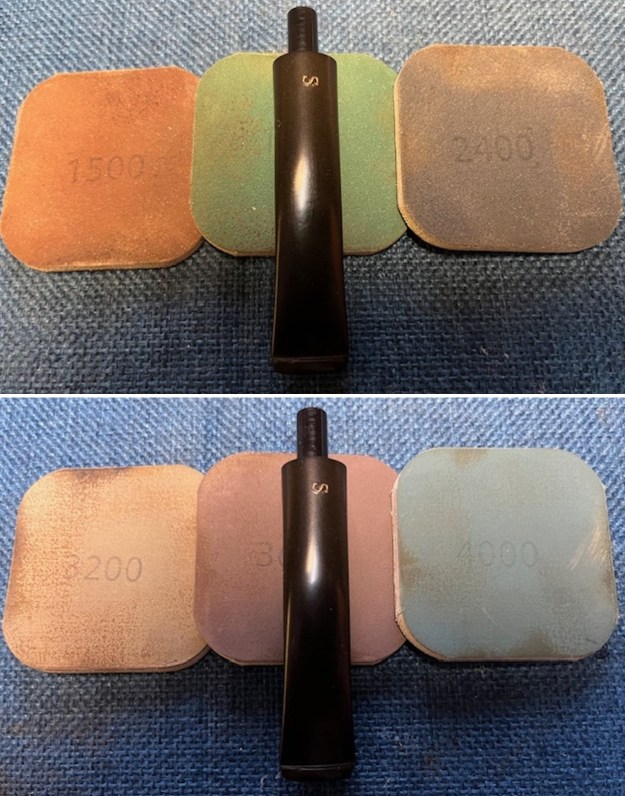
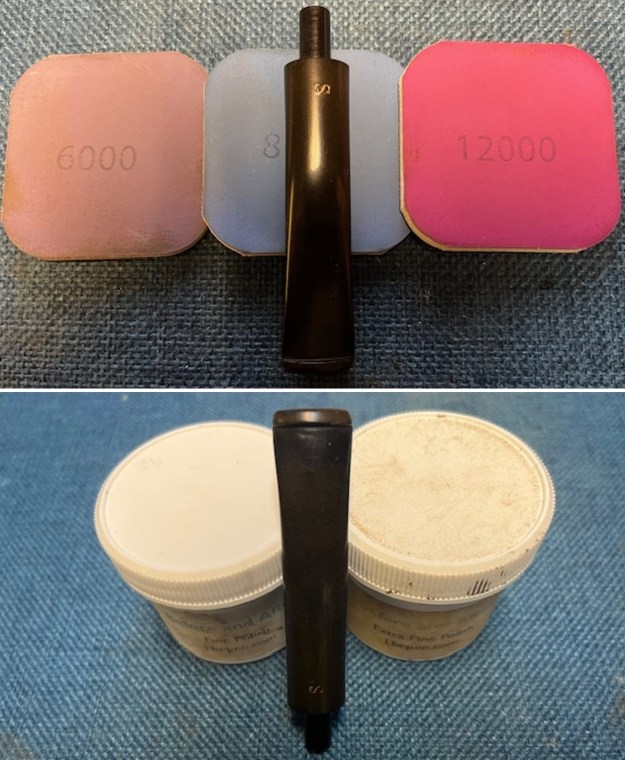
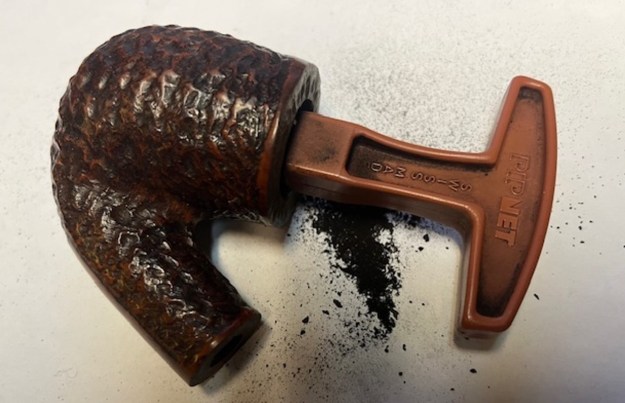
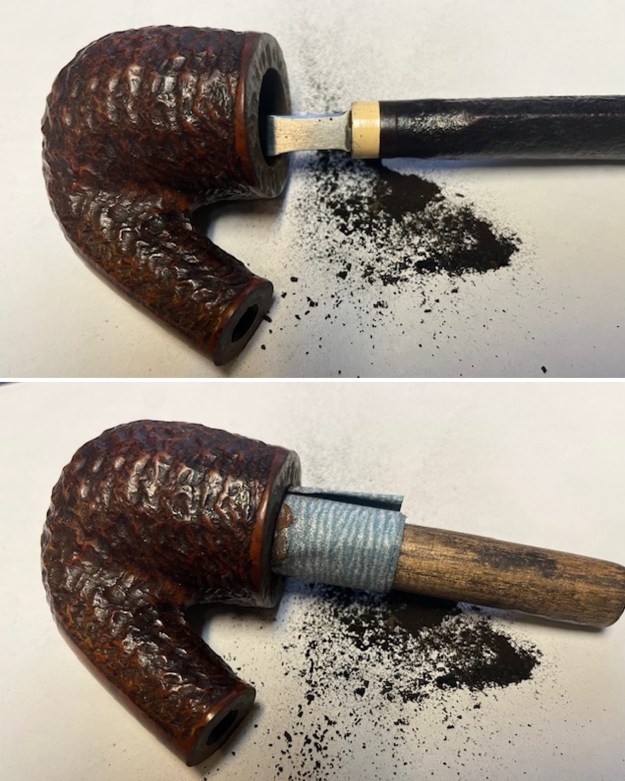
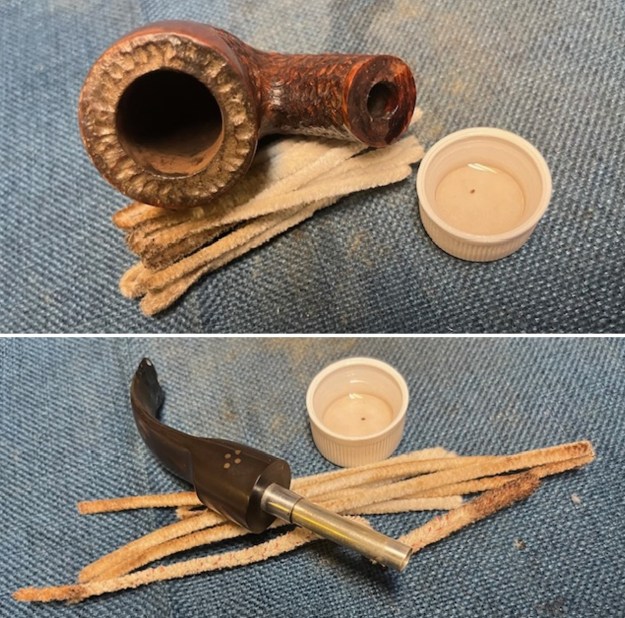
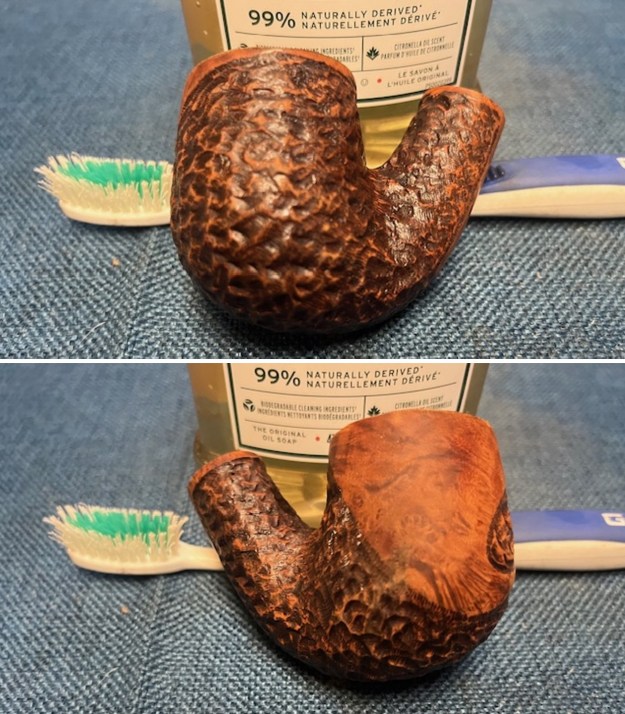
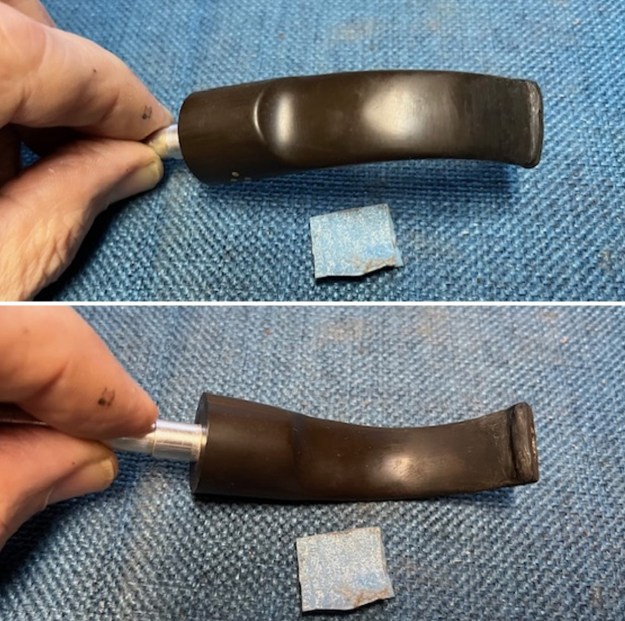
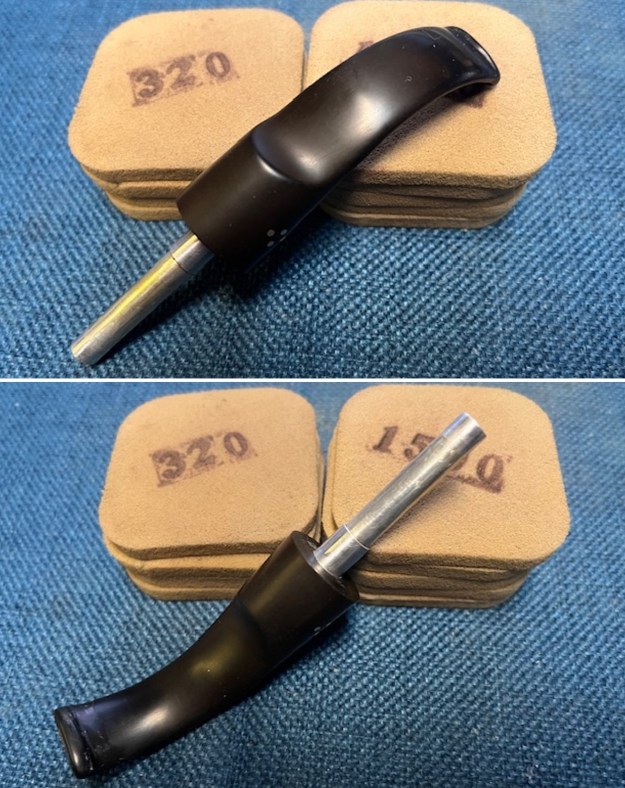
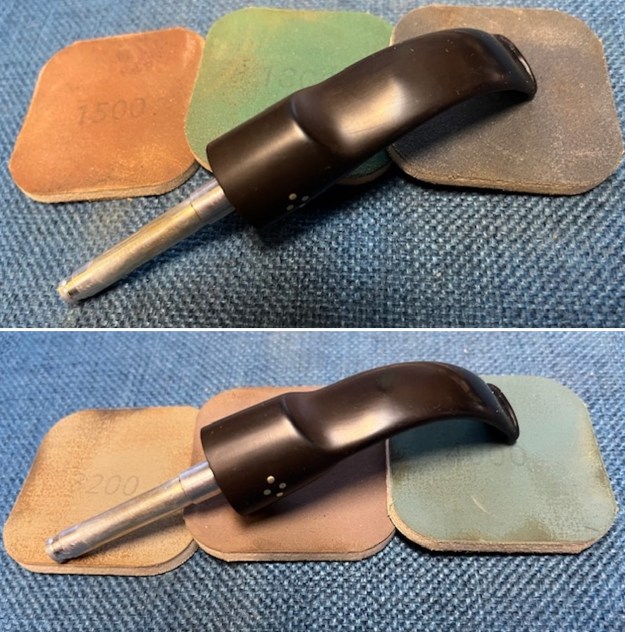
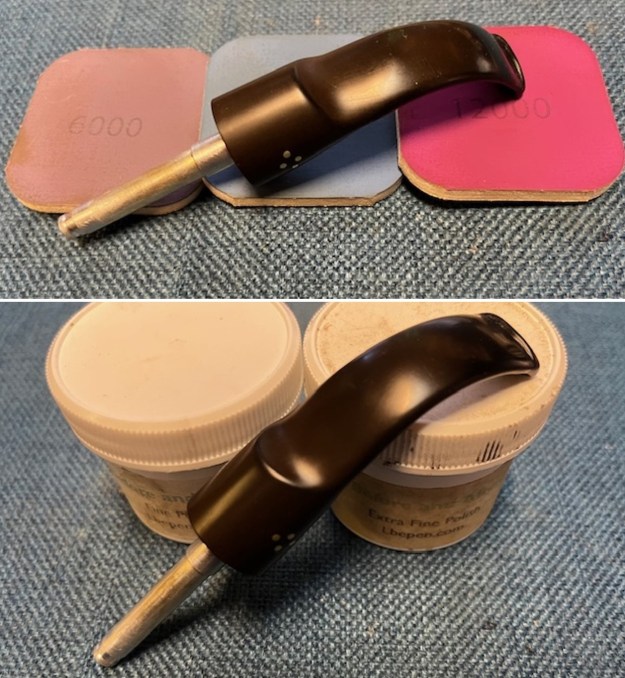
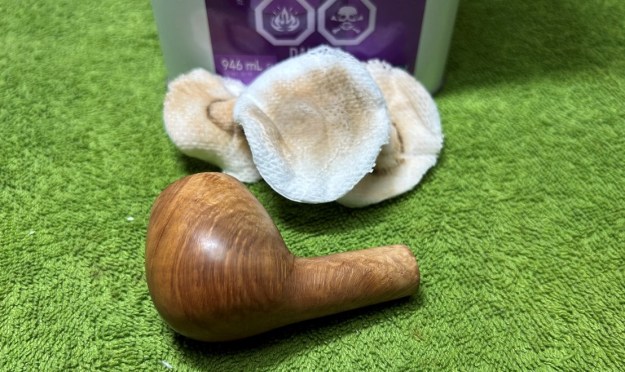
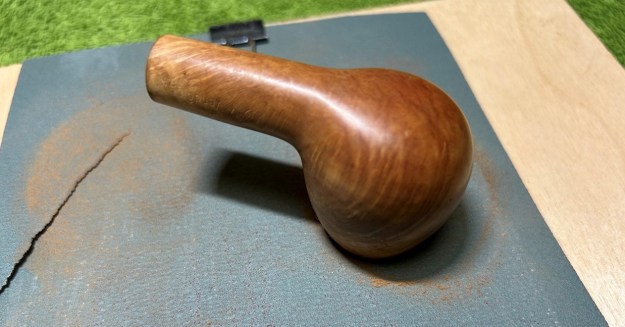
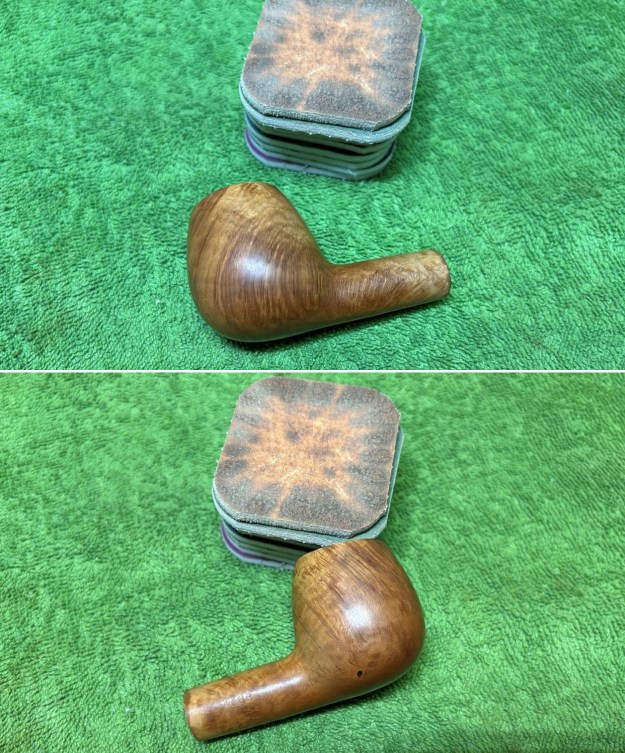
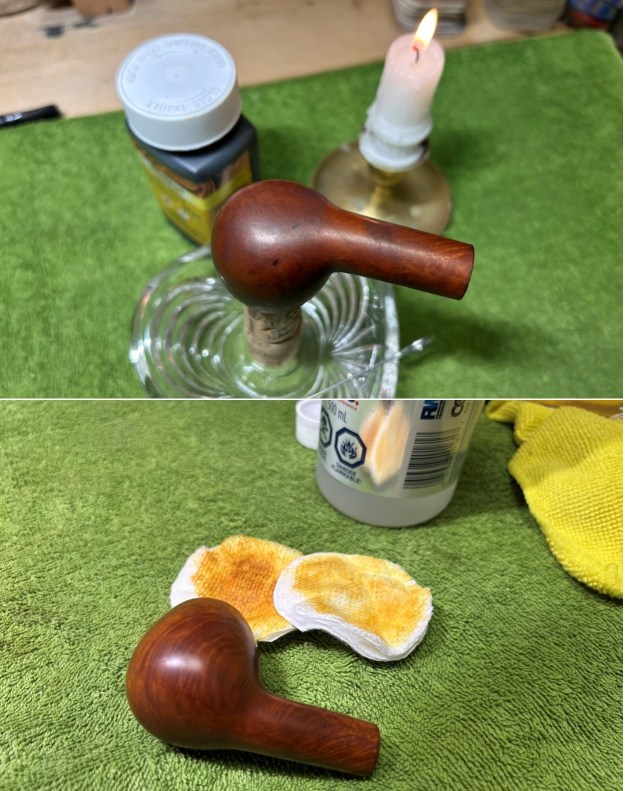
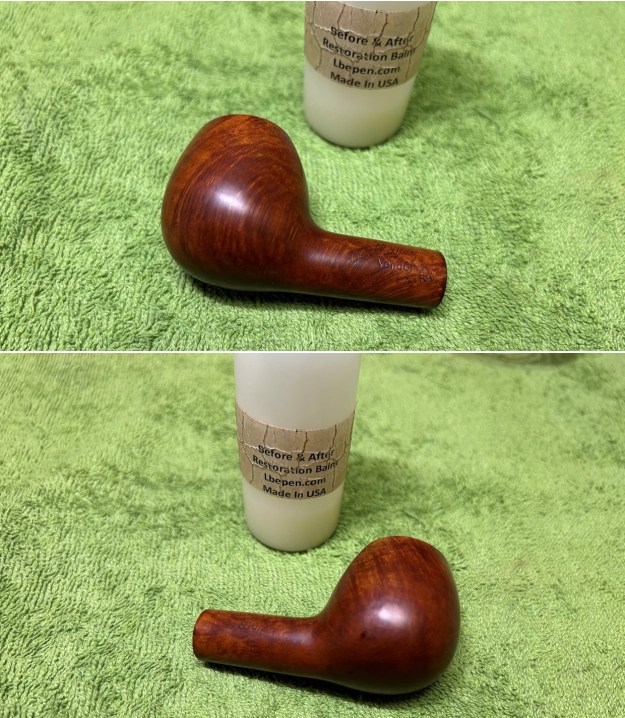
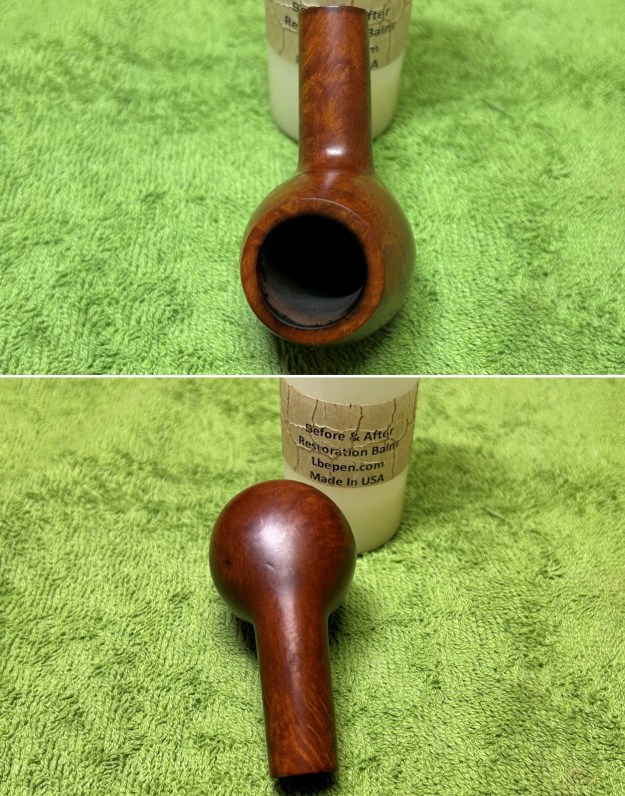
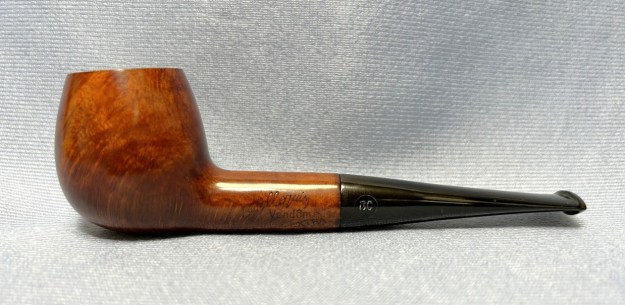
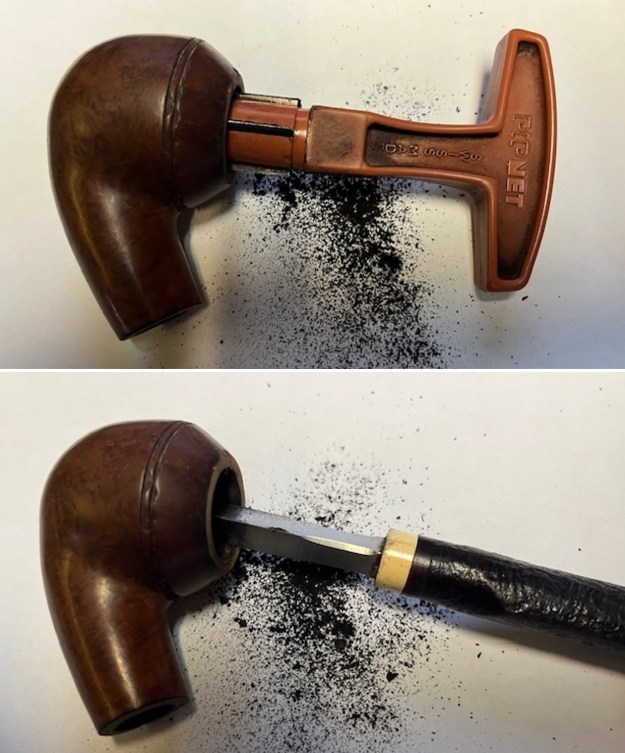
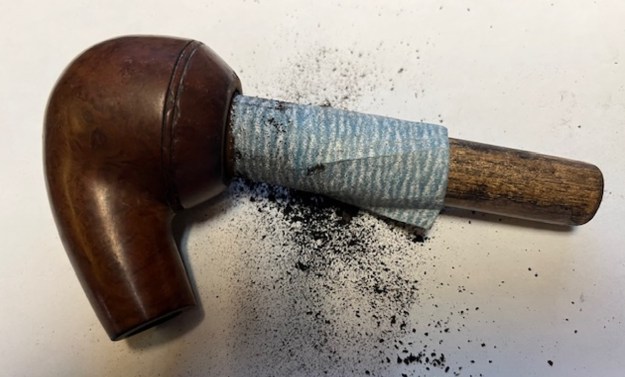
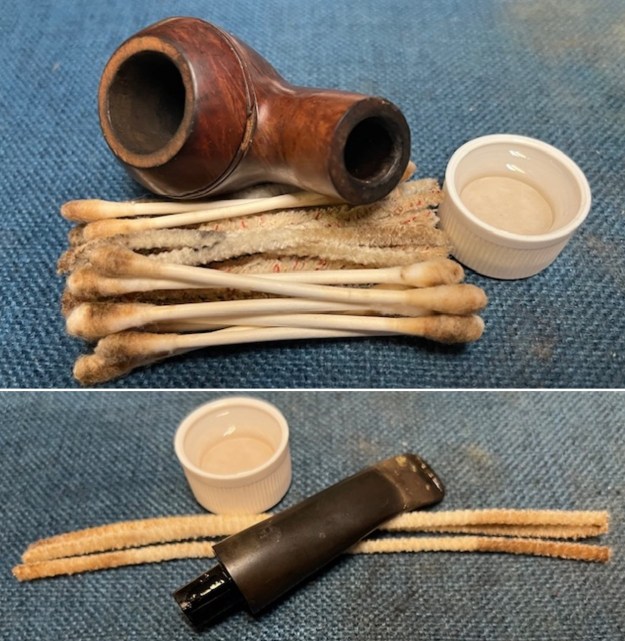
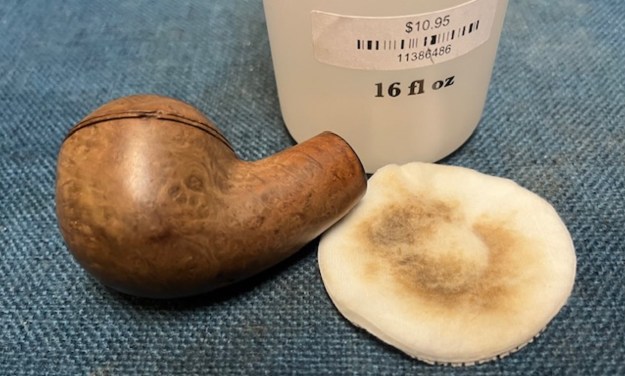
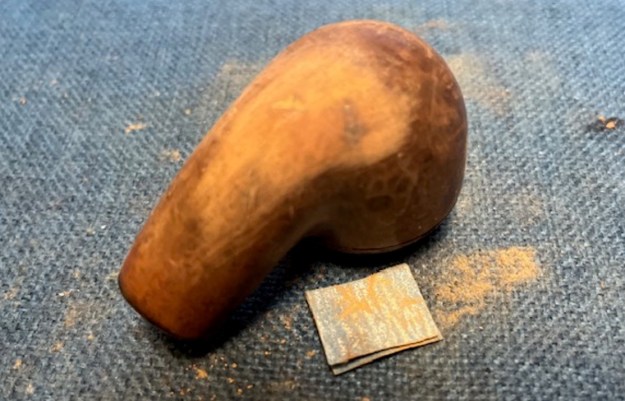
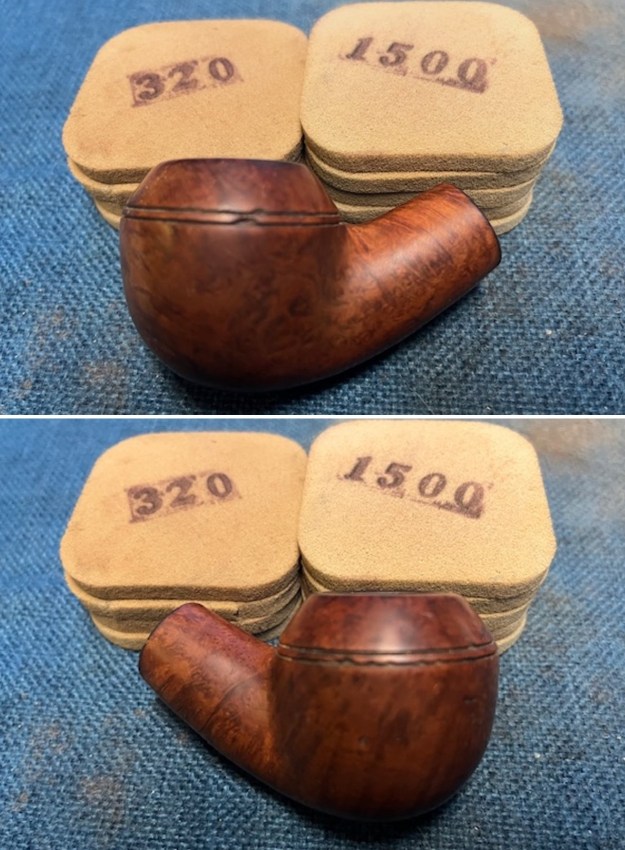
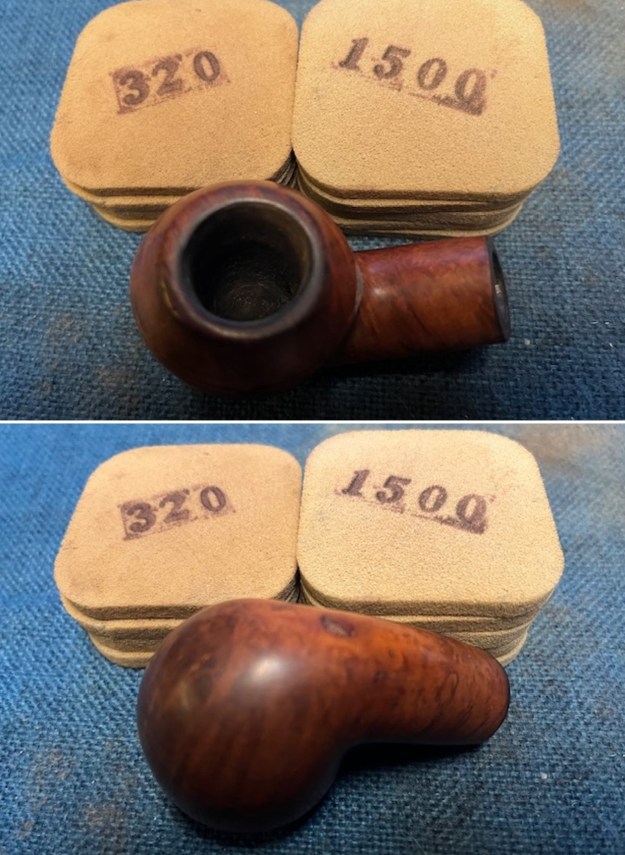
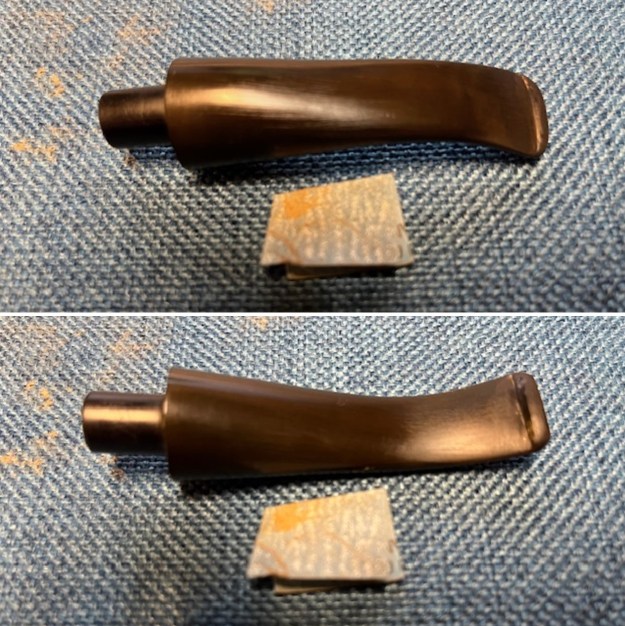
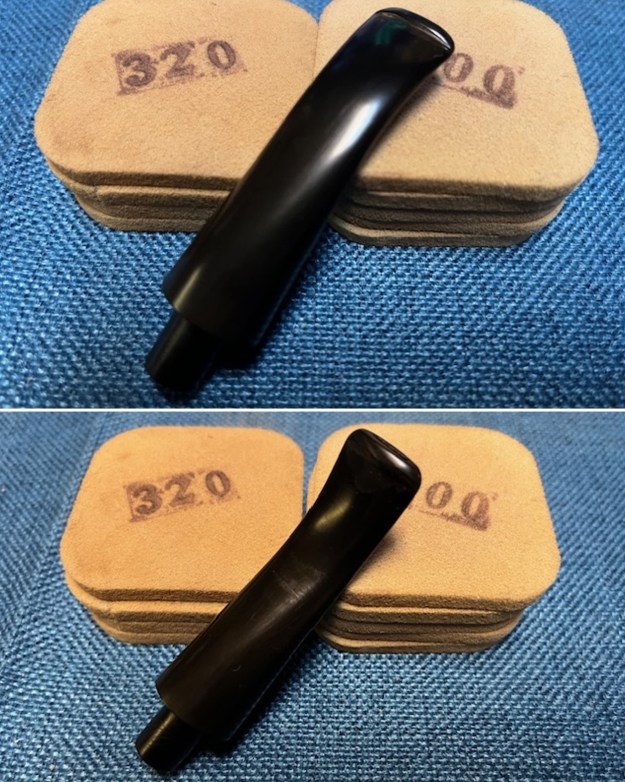
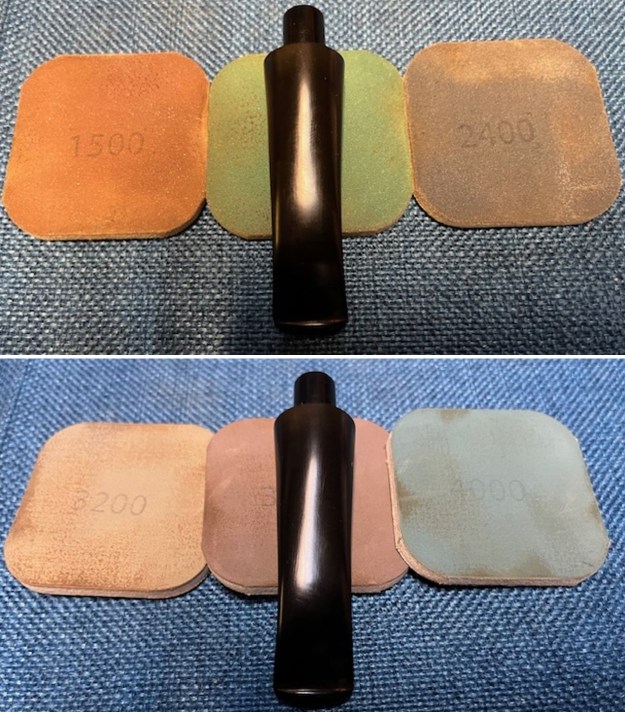
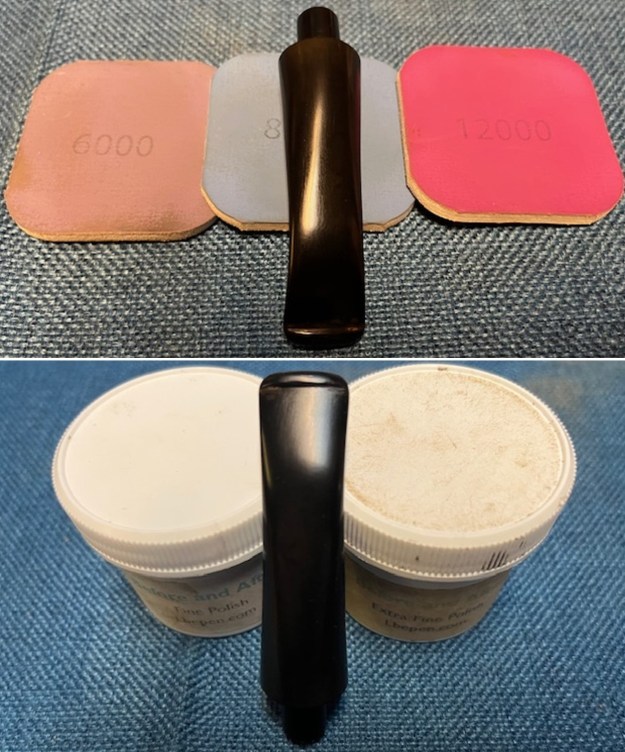
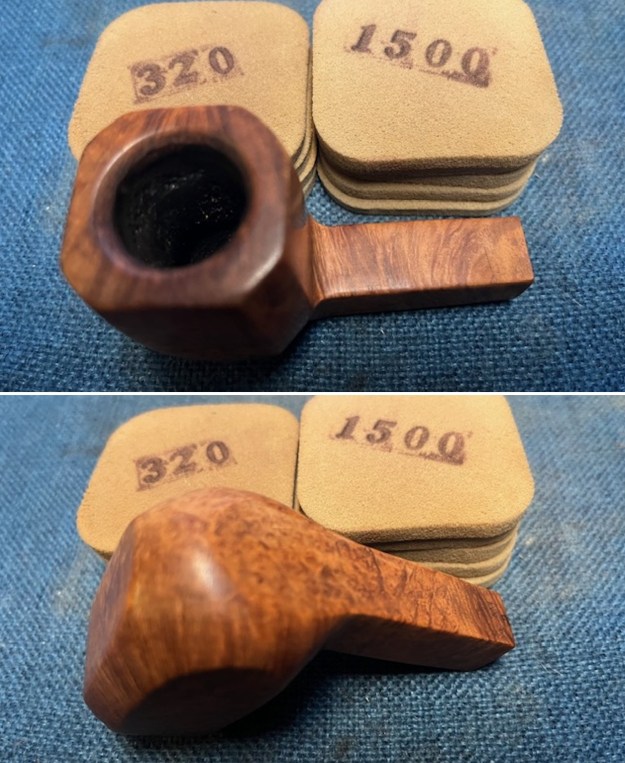
Now it was time to start working on the pipe itself. The bowl was thickly caked so I reamed it with a PipNet pipe reamer using the second and third cutting head to trim the cake back. I used a Savinelli Fitsall Pipe knife to clean up the remnants leaving bare briar. I sanded the bowl walls with 220 grit sandpaper wrapped around a piece of dowel. The bowl was significantly cleaner. I scraped the heavy lava coat on the rim top with the edge of the Fitsall knife. I scrubbed the exterior of the bowl with a tooth brush and undiluted Murphy’s Oil Soap. I scrubbed the bowl and rim with the toothbrush. I rinsed it off with warm running water and dried it with a soft towel. It looked much better and the rim top looked clean. The grain under the heavy varnish coat shone clearly once the grime was removed. I wiped the bowl down with acetone to remove the finish from the bowl. It did not work very well. It made a bit of progress but the coat was very thick. I gently topped the bowl on a topping board with 320 grit sandpaper and worked over the rest of the briar bowl and shank with 320 grit sandpaper to break the varnish surface.I used some straight acetone and cotton pads to wipe the bowl down a second time. This time I had much better success. It removed much of the varnish coat. You can see the varnish and stain on the cotton pads. At this point I dropped the bowl in an alcohol bath that I have here. It is one that I have and refilled for many years. It is straight 99% isopropyl alcohol. I have soaked a lot of pipes in it and over the years it has picked up a bit of patina. I have found that when a bowl soaks in it the alcohol helps remove older varnish coats and also adds some of that rich patina to the raw briar like the rim top in this case.I let it sit in the bath overnight. I removed the bowl from the bath in the morning. I dried it off and took photos of the bowl at this point. Overall it looked much better. The varnish coat was basically gone and the rim top had picked up some patina from the bath. I sanded the briar rim top and bowl with 320-3500 grit sanding pads. I was able to remove the remnants of stain and also varnish on the bowl. I wiped the bowl down after each sanding pad using a paper towel and a drop of olive oil. I really liked the way the briar looked at this point in the process. I polished the briar with 1500-12000 grit micromesh sanding pads – dry sanding with each pad and wiping it down with a damp cloth between pads. It took on a rich shine. I rubbed the bowl down with Before & After Restoration Balm. I worked it into the surface of the briar with my fingertips and a shoe brush to get it into the twin rings around the cap. It works to clean, restore and preserve the briar. I let it do its magic for 15 minutes then buffed it off with a cotton cloth. The pipe looks incredibly good at this point in the process. I had an aha moment and realized I had not cleaned the mortise and shank so I paused in the process to do both the stem and the bowl. I turned the stinger out of the tenon so I could properly clean it. It was pressure fit so it was an easy removal. I cleaned up the metal stinger with a brass bristle wire brush so that the oils and tars were gone. I cleaned out the mortise, the airway in the shank and the stem with pipe cleaners, cotton swabs and isopropyl alcohol. It was not a surprise that it was very dirty. With everything clean I turned my attention to the stem. I filled in the deep marks in the vulcanite stem with black rubberized CA glue. Once it hardened I flattened the repairs out with a small file. I sanded the stem with 220 grit sandpaper to blend them into the rest of the stem. It was beginning to look good. I sanded the stem with 320-3500 grit sanding pads. I wiped the stem down after each sanding pad to remove the sanding debris and dust. The stem looked very good. I polished the stem with micromesh sanding pads – 1500-12000 grit pads. I wiped it down with a damp cloth after each sanding pad.  I finished polishing it with Before & After Pipe Stem Polish – both Fine and Extra Fine and buffed it off with a cotton cloth. I gave it a coat of Obsidian Oil to preserve and protect the stem. I reinserted the aluminum stinger in the tenon of the vulcanite saddle stem. It looks very good. It is easily removable should the new pipe man or woman chooses to remove it.This Connoisseur Imported Briar Bullmoose is a great looking pipe now that it has been restored. The brown stains really highlight the grain and the polished finish is stunning. I put the stem back on the bowl and carefully buffed the pipe with Blue Diamond on the buffing wheel. I gave the bowl and the stem multiple coats of carnauba wax on the buffing wheel and followed that by buffing the entire pipe with a clean buffing pad. I hand buffed the pipe with a microfiber cloth to deepen the shine. The finished Connoisseur Imported Briar Bullmoose fits nicely in the hand and feels great. Give the finished pipe a look in the photos below. The dimensions of the pipe are Length: 5 inches, Height: 1 ½ inches, Outside diameter of the bowl: 1 ¼ inches, Chamber diameter: ¾ of an inch. The weight of the pipe is 50 grams /1.76 ounces. I will be placing it on the rebornpipes store in the Italian Pipemakers Section soon. Thanks for reading this blog and my reflections on the pipe while I worked on it. As always, I encourage your questions and comments as you read the blog. Thanks to each of you who are reading this blog. Remember we are not pipe owners; we are pipe men and women who hold our pipes in trust until they pass on into the trust of those who follow us.

Restoring a Collectible JULS Freehand Straight Brandy with a Taper Stem with an Ebony Inlay


by Steve Laug

I was recently contacted by a fellow here in Vancouver about some pipes he had. He was referred to me by a local pipe shop. I was unclear if he wanted them cleaned or exactly what. When he came on the weekend he brought six pipes in two pipe boxes for me to have a look at. I spoke with him about the cost of restoring them. It finally became clear to me (I guess I am slow) that he wanted to sell the pipes. He was tasked with the job by his sister in law as the pipes were from her late husband’s collection. As I unpacked them it was clear that they were some nice pipes and some were higher grade. All but one was smoked and had the heavy smell of fruity aromatics to them. Some had cake in the bowl and lava on the rim. Of the six, four of them had significant rim damage – bowls out of round, burn marks, cut marks. The saddest part is that the damage was most significant on the higher end pipes. Most of them had tooth marks in the stems. Obviously, they had been his late brother in laws favourites and he had enjoyed them. He left them with me and I went over them, researched the brands and wrote up an offer for him to present to his sister in law. By the end of the day we had a deal. The six pipes now have a new home and the fruity smell needs to be exorcised!I am turning my attention to the fifth of the six pipes I purchased. The bottom right pipe of the six is unsmoked. The last of the five that needed work is just above the unsmoked one. It is another beautiful looking pipe that looks to be Danish Made. It is a straight Brandy stamped on the underside of the shank and reads JULS [over] Freehand. The bowl had beautiful straight grain around sides. The shape is impeccably done. The finish was dirty but otherwise all was good it appeared. The rim top was clean of cake and lava. The inner edge of the bowl was damaged all the way around and was slightly out of round. The bowl had been recently reamed and it was clean. Like the others, there was a pipe cleaner trough from the entrance of the airway into the bowl but much less prominent. It could have been caused by an overzealous reaming that left the bottom damaged. The stem was slightly oxidized and had light tooth marks and chatter on both sides of the stem ahead of the button. The stem had what looked like an Ebony wood inlay toward the shank end of the stem spaced between vulcanite at the tenon and the rest of the blade. The transition between the wood and the vulcanite was not smooth on either end. The JS engraving on the topside of the stem was faded but still readable. It also came with a soft felt pipe sock that had a Johs stamp on it. I took photos of the bowl and rim top to give you an idea of what I see. Once again it is too bad that Word does now allow for the inclusion of smells because this sweet vanilla is filling my work area. I have a candle going to mask the smell a bit. You can see the damage to the rim top and inner edge of the bowl. The bowl is lightly caked. The stem is lightly oxidized and has light tooth marks and chatter on both sides ahead of the button. There is also a faint stamp on the top of the stamp.I took a photo of the stamping on the underside of the shank. It is faint but readable with a lens as noted above. The stamp on the top of the stem is a JS etched on the top by hand. I took a photo of the bowl with the stem removed to give a sense of the proportion and appearance of the pipe. To help me understand the stamping a bit more I turned to Pipephil’s site and read what it said about Svendborg Hand Carved pipes (http://pipephil.eu/logos/en/logo-j4.html). I have included a screen capture of the section below as well as the side bar information below the capture. Artisan: Julian Schäffer. He began carving pipes in 1982 and almost stopped the job in the early 90s. His 2001 collection brought 14 high grade pipes together.

From the information I found that the pipe was carved by Julian Schäffer during the 8 years that he carved pipes – 1982-1990. He was known to carve high grade pipes.

Next, I turned to Pipedia for more information and detail (https://pipedia.org/wiki/Juls). I find that the articles there often fill in some more information on the relationships and history of a given brand. In this case I found that also true. The article is very brief and quotes Pipes, Artisans and Trademarks, by José Manuel Lopes I quote it in full below.

JULS pipes are by the German artisan Julian Schäffer, who began carving pipes in 1982, and worked with Former and Rainer Barbi. Influenced by Danish design, his pieces are both with and without 9mm filters, and have ebonite stems. They are collectors’ items today. The brand ran from 1982 to the beginning of the 1990s, when Julian ceased production, and moved on to other activities. Stamp: JULS

I turned to Google and found several listings for JULS pipes that were selling on the estate portion of smokingpipes.com. There was a brief description of a Billiard for sale there that gave more information as well that was further confirmation concerning the brand. Here is the link (https://www.smokingpipes.com/pipes/estate/germany/moreinfo.cfm?product_id=612079). I quote:

Crafted by German artisan Julian Schäffer, Juls pipes were heavily influenced by Danish design sensibilities, with Schäffer having worked with carvers such as Former and Rainer Barbi. Juls pipes began production in 1982, with Schäffer ending his production around the early 1990s. This Billiard from the German carver illustrates his deft understanding of Danish design, its composition replete with soft, sleek line work. The bowl stands tall with an upright posture, formed by smooth, supple walls rising high from the rounded heel toward the flat rim. From a defined transition, a sturdy shank emerges from the bowl, punctuated by a broad accent of dark wood at the shank end as its meets a slender stem with a trim expansion ring at its base. A warm, hazelnut stain dresses the stummel, showcasing whorls of birdseye across the bowl’s left flank. – Joshua Carroll

Now I knew that the carver was Julian Schaffer and that his pipes had an obvious Danish design look to them. He had trained with Hans Former and Rainier Barbi in Germany, both who were master carvers. I also knew that the pipe was made in the short period between 1982-1990 when he stopped carving.

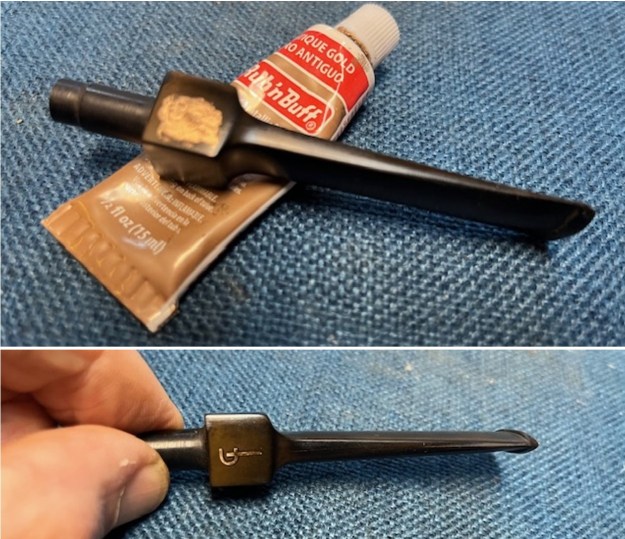
I reamed the bowl with a Savinelli Fitsall Pipe Knife to take back the cake to bare briar. I sanded the walls smooth with some 220 grit sandpaper wrapped around a piece of dowel. I have to say that I was spooked by what I found on the S. Bang Brandy I just finished. I ran my fingers over the sides of the bowl and gladly they were smooth. As mentioned above the bottom of the bowl showed a trough carved in the bottom of the bowl. It was certainly not as deep as the other two pipes but appeared to be carved by zealous use of pipe cleaners. I was able to ream out the ridge with the Pipe Knife. It looked much better. I took a photo of it as best as I could but it is hard to see. I sanded the walls with a piece of 220 grit sandpaper wrapped around a dowel. It was smooth to touch.I cleaned out the stinky, fruity smelling tobacco oils and tars in the shank and the airway in the stem. I used 99% isopropyl alcohol, cotton swabs and pipe cleaners and was able to remove the debris and some of the stench. I needed to “deghost” the bowl and try to exorcise the smell. I stuffed bowl with cotton bolls and used an ear syringe to fill it with alcohol. I set it aside to let the alcohol do its work and wick the oils into the cotton. While it sat for the afternoon, I did some other work. The next morning when I came back to it the cotton and alcohol had wicked out the oils and tars. The cotton was brown and the bowl smelled much better. The damages demanded some restoration and repair. I started with the rough inner edge of the rim. I used a folded piece of 220 grit sandpaper to minimize the damage on the inner edge of the rim and smooth it a bit. I was careful to not change the profile of the rim top and edges. I mixed up a batch of bowl coating – sour cream and activated charcoal powder to give a top coat  on the bottom of the bowl and the walls to facilitate the build up of a cake in the bowl. I applied it to the bowl with a folded pipe cleaner and painted it on the sides and pressed it into the trough marks on the bottom. Once finished I set it aside to cure. I love this recipe for a bowl coating as it leaves no residual taste once the coating cures. It is black and provides perfect protection. I rubbed the exterior of the bowl and shank down with Before & After Restoration Balm. I worked it into the surface of the briar with my fingertips to clean, enliven and protect the briar. I let the balm sit for a little while and then buffed with a cotton cloth to raise the shine. The Balm did its magic and the grain stood out. I set aside the bowl and turned my attention to the stem. I touched up the J.S. Logo stamp on the topside of the taper stem with Rub’n Buff Antique Gold. I robbed it into the stamping with a tooth pick. Once it had cured I buffed it off with a cotton cloth then wiped it down with some Obsidian Oil. It looked very good.The transitions between the ebony and the vulcanite had a slight ridge and the bite marks and chatter were not too deep. I was able to smooth out the transitions between the ebony inset and the vulcanite and the tooth chatter and remove the light oxidation with 320-3500 grit sanding pads. I wiped the stem down after each pad with an Obsidian Oil cloth. It was beginning to look very good.I polished the stem with micromesh sanding pads – 1500-12000 grit pads. I wiped it down with a damp cloth after each sanding pad. I used Before & After Pipe Polish – both Fine and Extra Fine to further polish the stem. I put the cleaned and restored Julian Schäffer JULS Freehand Straight Brandy and its vulcanite taper stem with a Ebony Insert back together. The rich browns and blacks of the contrasting stain makes the grain come alive with the polishing and waxing. I carefully buffed the pipe with Blue Diamond on the buffing wheel using a light touch on the briar. I gave the bowl and the stem multiple coats of carnauba wax on the buffing wheel and followed that by buffing the entire pipe with a clean buffing pad. I hand buffed the pipe with a microfiber cloth to deepen the shine. The finished Julian Schäffer JULS Freehand Straight Brandy really is a beauty and fits nicely in the hand and looks very good. Give the finished pipe a look in the photos below. The dimensions of the pipe are Length: 6 ½ inches, Height: 2 ½ inches, Outside diameter of the bowl: 1 ¼ inch, Chamber diameter: ¾ of an inch. The weight of the pipe is 2.79 ounces/79 grams. This pipe will soon be on the Pipes From Various Makers Section of the rebornpipes store if you would like to add it to your collection. Send me a message or an email. Thanks for reading this blog and my reflections on the pipe while I worked on it.

A Mistreated Jan Hansen Svendborg C Hand Carved Bent Brandy with 9MM Filter Stem


by Steve Laug

I was recently contacted by a fellow here in Vancouver about some pipes he had. He was referred to me by a local pipe shop. I was unclear if he wanted them cleaned or exactly what. When he came on the weekend he brought six pipes in two pipe boxes for me to have a look at. I spoke with him about the cost of restoring them. It finally became clear to me (I guess I am slow) that he wanted to sell the pipes. He was tasked with the job by his sister in law as the pipes were from her late husband’s collection. As I unpacked them it was clear that they were some nice pipes and some were higher grade. All but one was smoked and had the heavy smell of fruity aromatics to them. Some had cake in the bowl and lava on the rim. Of the six, four of them had significant rim damage – bowls out of round, burn marks, cut marks. The saddest part is that the damage was most significant on the higher end pipes. Most of them had tooth marks in the stems. Obviously, they had been his late brother in laws favourites and he had enjoyed them. He left them with me and I went over them, researched the brands and wrote up an offer for him to present to his sister in law. By the end of the day we had a deal. The six pipes now have a new home and the fruity smell needs to be exorcised!I finished the last of the repairs that I had in my queue yesterday and returned to work on the lot above. I chose to work on the third of these pipes. It is a beautiful looking but another sadly abused pipe that is readily recognizable as Danish Made. It is stamped on the underside of the shank and reads C (grade stamp) [over] Svendborg [over] Danish [over] Hand Carved [over] Jan Hansen. The bowl had beautiful straight grain around sides. The shape is impeccably done. The finish was dirty but otherwise all was good it appeared. The rim top was clean of cake and lava. The inner edge of the bowl was damaged all the way around and was slightly out of round. The bowl had been recently reamed and it was clean. There was a pipe cleaner trough from the entrance of the airway into the bowl and the opening was widened into the trough. It was definitely damaged and my guess would be an overzealous reaming that widened the trough and left the bottom damaged. The filter stem was slightly oxidized and had light tooth marks and chatter on both sides of the stem ahead of the button. There is a horn like acrylic spacer on the shank end of the stem. The J.H. stamp on the left side of the stem was faded but still readable. It also came with a soft felt pipe sock. I took photos of the bowl and rim top to give you an idea of what I see. Once again it is too bad that Word does now allow for the inclusion of smells because this sweet vanilla is filling my work area. I have a candle going to mask the smell a bit. You can see the damage to the rim top and inner edge of the bowl. The bowl is clean. The stem is lightly oxidized and has light tooth marks and chatter on both sides ahead of the button.I took a photo of the stamping on the underside of the shank. It is clear and readable as noted above. I took a photo of the bowl with the stem removed to give a sense of the proportion and appearance of the pipe.To help me understand the stamping a bit more I turned to Pipephil’s site and read what it said about Svendborg Hand Carved pipes (http://pipephil.eu/logos/en/logo-s14.html). I have included a screen capture of the section below as well as the side bar information below the capture. Brand founded in 1970s by Henrik Jørgensen, Poul Ilsted and Tao Nielsen. They bought an old factory (Nordisc Pibefabriker) in Svendborg on Funen island. Poul and Tao gradually bow out from machine manufactured pipes (1982) and Henrik Jørgensen manages the brand until its take over by Design Berlin (D) in the late 90ies. Kaj C. Rasmussen jointed the firm for several years. 17 employees worked for this brand under Henrik Jørgensen direction

From the information I found there the Jan Hansen stamping was clear for me. It is a pseudonym used by Henrik Jorgensen. His own initials would not have been used as they could easily be misunderstood. HJ was used for Hitler Jugend. That helps me understand a bit more. I know that the pipe is like the third pipe in the above photo and bears the same stamping and shape. My assumption is that the pipe was made after Ilsted and Nielsen bowed out which would put the date of the carving between 1982 and the late 90’s when Design Berlin took over. The Danish Hand Made stamping also confirms that assumption.

Next I turned to Pipedia for more information and detail (https://pipedia.org/wiki/Svendborg). I find that the articles there fill in some interesting information on the relationships and history of a given brand. In this case I found that also true. I quote pertinent pieces of the article. If you would like more information follow the above link.

Jens Tao Nielsen and Poul Ilsted Bech met each other when working together for Erik Nørding and soon became close friends. Both felt a bit tired to make nothing but bizarre fancy shapes and agreed they wanted to produce pipes of more style and more classicism. They decided to establish their own brand “Tao & Ilsted” – But how to do it?

A good fortune brought them in contact with Henrik Jørgensen, a passionate pipe lover and a wealthy Copenhagen banker who was willing to retire from bank business and change his career to become a pipemaker. The trio joined in 1969 and decided to start a new pipe brand together. Nielsen and Ilsted started to search for a suitable workshop while Jørgensen took care of the finances. In early 1970 the partners found an old, closed down pipe factory in Svendborg on Funen, and bought it shortly after for a mere 16.500 Danish Kroner. It was the earlier Nordic Pipe Factory – Nordisc Pibefabriker – maybe the oldest Danish pipe factory. And now it became the home of Svendborg Piber…

…But in spite of it’s magnificent success the trio fell apart after less than two years, when wilful Poul Ilsted stepped out declaring he didn’t want to make serial pipes anymore, but wanted to make individual specimens… Strange enough, he approached this aim returning to Nørding!

Ilsted’s argumentation doesn’t seem to be absolutely fair: even though Svendborg turned to produce mainly serial pipes under Seiffert’s influence each of the three partners was free to work on his very own one of a kind pieces as well! Since it was Seiffert’s basic idea to profit from – especially – Tao ‘s and Ilsted’s creativity to design new shapes. There are many knowledgeable collectors who confirm that these early Svendsborg pipes class among the most individual, innovating and exciting designs Danish pipecrafters created at that time…

The firm developed well and prospered throughout the 1970’s but around 1980 dissensions between Tao and Jørgensen occured. Tao: “Most pipes were delivered to the United States and whereby the Americans tried to dictate us the conditions. It was not only so that their taste and their view on aesthetics were simply horrible – no, moreover they wanted that the pipes should be as cheap as possible. That did not suit my plans at all, for I strove for high quality and artistic freedom in the end.”

Tao and Jørgensen, who tended to accommodate the US customers’ wishes, could not find a compromise on their different opinions, and so Tao left the firm in 1981 and opened his own pipe workshop near the harbour of Svendborg.

…Henrik Jørgensen continued Svendborg Piber bravely for more than a decade on his own until he finally sold the brand to Seiffert around the midst of the 1990’s. Seiffert, focusing on their mainstay brand Sillem’s, sold Svendborg – a ghost brand now – again before 2000 and the current owner is Planta’s Design Berlin.

The article also included this set of pages from a catalogue that were interesting as they included the Handcarved line. The philosophy that drove the brand is also there to read.

Catalog page, courtesy Doug Valitchka

That gives a good picture of the history and development of the Svendborg brand and the connection to some of the great carvers of Danish pipe history. It also confirmed the identification of Jan Hansen as a pseudonym used by Henrik Jorgensen. Armed with that information I turned to work on the pipe in hand.

I reamed the bowl with a Savinelli Fitsall Pipe Knife to take back the cake to bare briar. I sanded the walls smooth with some 220 grit sandpaper wrapped around a piece of dowel. I have to say that I was spooked by what I found on the S. Bang Brandy I just finished. I ran my fingers over the sides of the bowl and gladly they were smooth. As mentioned above the bottom of the bowl showed a trough carved in the bottom of the bowl. It appeared to be carved by zealous use of pipe cleaners. There was a ridge around the bottom of the bowl around the trough. I was able to ream out the ridge with the Pipe Knife. It looked much better. I took a photo of it as best as I could but it is hard to see. I cleaned out the stinky, fruity smelling tobacco oils and tars in the shank and the airway in the stem. I used 99% isopropyl alcohol, cotton swabs and pipe cleaners and was able to remove the debris and some of the stench.I needed to “deghost” the bowl and try to exorcise the smell. I stuffed bowl with cotton bolls and used an ear syringe to fill it with alcohol. I set it aside to let the alcohol do its work and wick the oils into the cotton. While it sat for the afternoon, I did some other work. The next morning when I came back to it the cotton and alcohol had wicked out the oils and tars. The cotton was brown and the bowl smelled much better. The damages demanded some restoration and repair. I started with the rough inner edge of the rim. I used a folded piece of 220 grit sandpaper to minimize the damage on the inner edge of the rim and smooth it a bit. I was careful to not change the profile of the rim top and edges. There was what looks like a pipe cleaner cut trough on the bottom of the bowl and some over zealous reaming that took the bowl bottom below the entry of the airway into the bowl. This is another mess that is actually sad when you consider the quality of the pipe. It is another high-end pipe that was badly abused. I mixed up a batch of JB Weld and put a pipe cleaner in the shank to keep the airway from plugging. I pressed the mixture into the bottom of the bowl with a folded pipe cleaner. I pressed it into the heel with a pipe nail. Unlike the S. Bang, this one was  pretty clean of damage on the bowl sides. I put the bowl upright to allow the repair to cure. Once it cured I would need to sand it smooth and clean up the repairs. The first photo shows the overreamed and gouged spot in the heel of the bowl. The next photos show the repair process and tools. Once the repair cured (the next morning) I sanded the bottom with 220 grit sandpaper on a dowel and small needle files to smooth them out and minimize the amount of JB Weld in the bowl. Once the Weld has hardened it takes some time. Once finished I wiped the walls and heel of the bowl down with some isopropyl to remove the debris.I rubbed the bowl and shank down with Before & After Restoration Balm. I worked it into the surface of the briar with my fingertips to clean, enliven and protect the briar. I let the balm sit for a little while and then buffed with a cotton cloth to raise the shine. The Balm did its magic and the grain stood out. I mixed up a batch of bowl coating – sour cream and activated charcoal powder to give a top coat and to facilitate the build up of a cake in the bowl. I applied it to the bowl with a folded pipe cleaner and painted it on the bottom and the sides. Once finished I set it aside to cure over night. I set aside the bowl and turned my attention to the stem. I touched up the J.H. Logo stamp on the left side of the saddle stem with white acrylic fingernail polish. I rubbed it into the stamping with a tooth pick. Once it had cured I scraped it off with a pen knife and then lightly sanded it off with a 320 grit sanding pad. It looked very good. The bite marks and chatter were not too deep and I was able to polish them out and remove the light oxidation with 320-3500 grit sanding pads. I wiped the stem down after each pad with an Obsidian Oil cloth. It was beginning to look very good.I polished the stem with micromesh sanding pads – 1500-12000 grit pads. I wiped it down with a damp cloth after each sanding pad. I used Before & After Pipe Polish – both Fine and Extra Fine to further polish the stem. I fitted the stem with a Dr. Perl Junior 9MM filter made by Vauen. The pictures below show the brand, the filter and the fit of the filter in the tenon.I put the repaired and reworked Jan Hansen Svendborg Danish Hand Carved C Grade Bent Brandy and its vulcanite saddle filter stem back together. The rich browns and blacks of the contrasting stain makes the grain come alive with the polishing and waxing. I carefully buffed the pipe with Blue Diamond on the buffing wheel using a light touch on the briar. I gave the bowl and the stem multiple coats of carnauba wax on the buffing wheel and followed that by buffing the entire pipe with a clean buffing pad. I hand buffed the pipe with a microfiber cloth to deepen the shine. The finished Svendborg Danish Hand Carved Bent Brandy really is a beauty and fits nicely in the hand and looks very good. Give the finished pipe a look in the photos below. The dimensions of the pipe are Length: 6 inches, Height: 2 inches, Outside diameter of the bowl: 1 inch, Chamber diameter: ¾ of an inch. The weight of the pipe is 2.50 ounces/70 grams. This pipe will soon be on the Danish Pipe Makers Section of the rebornpipes store if you would like to add it to your collection. Send me a message or an email. Thanks for reading this blog and my reflections on the pipe while I worked on it.

A Sadly Mistreated S Bang Copenhagen Made in Denmark Grade “A” Bent Brandy


by Steve Laug

I was recently contacted by a fellow here in Vancouver about some pipes he had. He was referred to me by a local pipe shop. I was unclear if he wanted them cleaned or exactly what. When he came on the weekend he brought six pipes in two pipe boxes for me to have a look at. I spoke with him about the cost of restoring them. It finally became clear to me (I guess I am slow) that he wanted to sell the pipes. He was tasked with the job by his sister in law as the pipes were from her late husband’s collection. As I unpacked them it was clear that they were some nice pipes and some were higher grade. All but one was smoked and had the heavy smell of fruity aromatics to them. Some had cake in the bowl and lava on the rim. Of the six, four of them had significant rim damage – bowls out of round, burn marks, cut marks. The saddest part is that the damage was most significant on the higher end pipes. Most of them had tooth marks in the stems. Obviously, they had been his late brother in laws favourites and he had enjoyed them. He left them with me and I went over them, researched the brands and wrote up an offer for him to present to his sister in law. By the end of the day we had a deal. The six pipes now have a new home and the fruity smell needs to be exorcised!I finished the last of the repairs that I had in my queue yesterday and turned to work on the third of these pipes. It is a beautiful looking but sadly abused S. Bang Bent Brandy that is readily recognizable. It is stamped on the underside of the shank and reads S. Bang [arched over] Copenhagen [reverse arch and over] Handmade [over] in Denmark [over] the Grade Stamp “A”. The bowl had beautiful straight grain around sides. The shape is impeccably done. The finish was dirty but otherwise all was good it appeared. The rim top was clean of cake and lava. The inner edge of the bowl was damaged all the way around with burn damage on the right front edge of the bowl that had been sanded out. It appeared as if someone had given the damaged area a poorly done bevel to clean up that damage. The bowl is out of round. There is a light cake in the bowl. The stem was clean but and had light tooth marks and chatter on both sides of the stem ahead of the button.More damage would come to light soon enough. I took photos of the bowl and rim top to give you an idea of what I see. It is too bad that Word does now allow for the inclusion of smells because this is filling my work area. I have a candle going to mask the smell a bit. You can see the damage to the rim top and inner edge of the bowl. There is a light cake in the bowl. The stem is dirty and has light tooth marks and chatter on both sides ahead of the button.I took a photo of the stamping on the underside of the shank. It is clear and readable as noted above. I took photos of the bowl with the stem removed to give a sense of the proportion and appearance of the pipe. To help me understand the stamping a bit more I turned to Pipephil’s site and read what it said about S. Bang pipes (http://pipephil.eu/logos/en/logo-s1.html). I have included a screen capture of the section below as well as the side bar information below the capture. Sven Bang opened his tobacco and pipe shop in 1968 in Copenhagen. He was more a business man than a pipe carver and began to hire pipemakers. About half a dozen succeeded each other in his workshop during the 1970’s (Ivan Holst Nielsen, Jan Wideløv, Phil Vigen…). At least Per Hansen and Ulf Noltensmeier stayed and when Sven retired in 1983 they took over the company (in 1984) keeping its name.

To close my understanding of the pipe I turned to Pipedia (https://pipedia.org/wiki/S._Bang). I quote the section from the article where the company changed hands from S. Bang to Hansen and Noltensmeier in 1984. It is a great read so I have included it below.

Svend Bang retired in 1984. Evidently, he felt a great deal of pride in the product that he initiated throughout his career and retirement and until his death in 1993.

Once Hansen and Noltensmeier took over the company (in 1984) they knew it was best to retain the S. Bang name – the two carvers always shared the same philosophy about that. Noltensmeier and Hansen were determined to maintain top quality at the expense of increased numbers. The only change they made concerns the stamping on the pipes changing from the English version “COPENHAGEN” to the Danish “KOBENHAVN”.

Still, they are two separate carvers, with their own styles and preferences. Each makes his own pipes – there is no “assembly line” construction at S. Bang. They bounce ideas off of each other, of course, and admit that when problems arise in a pipe, it is nice to have a partner to discuss them with.

Though they carve pipes as individuals, there are similarities in their work. All Bang pipes are made with black, hand-cut vulcanite stems.

The same engineering is used by both carvers as well. The shape and size of the tobacco chambers vary according to size and design of the pipe, but each carver follows the same design guidelines for choosing the proper chamber dimensions. The smoke channel is always engineered for optimum performance.

Bang pipes are noted for the high definition and fine contrast in the grain. They undergo a double staining process to achieve that effect. The technique makes the grain leap from the bowl of the pipe, making well-grained wood become extra ordinary. The same colouring, however, will produce different results in different pieces of briar, making each pipe truly individual.

I knew from what I had read the pipe I have was made for the European market and bore an “A” grading which is quite high. I also knew that it was made before 1984 when the stamping Copenhagen was replaced by Kobenhavn. Ulf and Per worked there before they took over in 1984. Now it was time to work on the pipe.

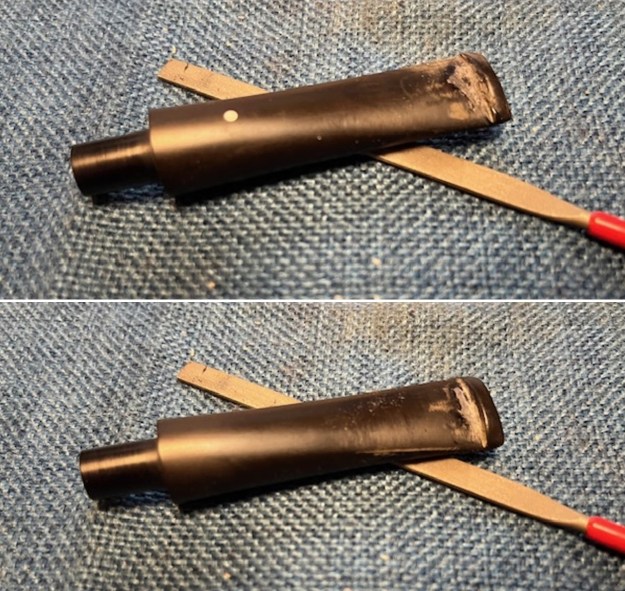
I reamed the bowl with a Savinelli Fitsall Pipe Knife to take back the cake to bare briar. I sanded the walls smooth with some 220 grit sandpaper wrapped around a piece of dowel. This is when all the internal damages were revealed. It was a sad moment. I ran my fingers over the sides of the bowl and felt some nicks and flaws on the walls. The bottom of the bowl also had an odd bump in it. I shone a light in the bowl and it seems that there was repair on the bottom of the bowl. The hard material filling in part of the heel was probably JB Weld. It was rock hard but it appeared that half of the repair was missing. I could see that there was a trough carved in the bottom of the bowl and that the repair had been made to cover that. It would need to be redone. I took a photo of it as best as I could but it is hard to see. I cleaned out the stinky, fruity smelling tobacco oils and tars in the shank and the airway in the stem. I used 99% isopropyl alcohol, cotton swabs and pipe cleaners and was able to remove the debris and some of the stench. I needed to “deghost” the bowl and try to exorcise the smell. I stuffed bowl with cotton bolls and used an ear syringe to fill it with alcohol. I set it aside to let the alcohol do its work and wick the oils into the cotton. While it sat for the afternoon, I did some other work. When I came back to it the cotton and alcohol had wicked out the oils and tars. The cotton was brown and the bowl smelled much better. The damages demanded some restoration and repair. I started with the badly bevelled rim top and inner edge. I used a folded piece of 220 grit sandpaper to minimize the damage on the inner edge of the rim and smooth it a bit. I was careful to not change the profile of the rim top and edges. This pipe will be staying with me so I wanted the rim top cleaned up and smooth. The condition of the bowl and rim top when I received it really took away from the amazing work that always characterizes an S. Bang pipe. (The second photo was taken after I had put the JB Weld in the bottom of the bowl. The point though of the photo is to show the repaired rim.)Under the damaged repair to the bowl bottom there is what looks like a pipe cleaner cut trough. It had been repaired but half of the repair fell out of the bowl. There are also a few pits on the inside walls once I removed the cotton pads. This is actually sad when consider the quality of the pipe. It is a high-end pipe that was badly abused. I mixed up a batch of JB Weld and put a pipe cleaner in the shank to keep the airway from plugging. I pressed the mixture into the half of the repair that was missing in the bottom of the bowl with a folded pipe cleaner. I applied it to the gouges in the sides of the bowl to smooth them out and protect the bowl walls from possible burnout. I put the bowl upright in a pipe rest to allow the repairs to cure over night. Once it cured I would need to sand it smooth and clean up the repairs.This morning I sanded the bowl walls and bottom with 220 grit sandpaper and small needle files to smooth them out and minimize the amount of JB Weld in the bowl. Once the Weld has hardened it takes some time. Once finished I wiped the bowl down with some isopropyl to remove the debris. I polished the repaired rim top with micromesh sanding pads – dry sanding with 1500-12000 grit pads and wiped it down the bowl after each sanding pad. I rubbed the bowl and shank down with Before & After Restoration Balm. I worked it into the surface of the briar with my fingertips to clean, enliven and protect the briar. I let the balm sit for a little while and then buffed with a cotton cloth to raise the shine. The Balm did its magic and the grain stood out. I mixed up a batch of bowl coating – sour cream and activated charcoal powder to give a top coat and to facilitate the build up of a cake in the bowl. I applied it to the bowl with a folded pipe cleaner and painted it on the bottom and the sides. Once finished I set it aside to cure over night. I set aside the bowl and turned my attention to the damage on the stem. I painted the stem surface with the flame of a lighter to lift the tooth marks. I lifted them some. I filled in what remained of the marks on the top side with black CA glue. I set it aside to cure. Once the repairs cured I flattened them out with 220 grit sandpaper to blend them into the stem surface. I was able to polish out the repairs with 320-3500 grit sanding pads. I wiped the stem down after each pad with an Obsidian Oil cloth. It was beginning to look very good.I polished the stem with micromesh sanding pads – 1500-12000 grit pads. I wiped it down with a damp cloth after each sanding pad. I used Before & After Pipe Polish – both Fine and Extra Fine to further polish the stem. I put the repaired and reworked S. Bang Copenhagen Grade A Bent Brandy back together and took the pipe to the buffer. I buffed the bowl and stem with Blue Diamond to polish the briar and the vulcanite. Blue Diamond does a great job on the smaller scratches that remain in both. I gave the bowl and the stem several coats of carnauba wax and buffed the pipe with a clean buffing pad to raise the shine. I hand buffed it with a microfiber cloth to deepen the shine. Considering the mess the pipe was in when I started working on it I am amazed at how well it turned out. The finished pipe is shown in the photos below. This is a beautiful S. Bang Grade A Bent Brandy – the vulcanite saddle stem and rim top and smooth finish combine to give the pipe a great look. The polished straight grain briar and the polished black, vulcanite stem looks really good. The rich grain stands out on the bowl and shank. The dimensions of the pipe are Length: 5 inches, Height: 2 inches, Outside diameter of the bowl: 1 ¼ inches, Chamber diameter: 7/8 of an inch. The weight of the pipe is 1.83 ounces/51 grams. This beautiful, restored S. Bang will be staying with me for awhile. Thanks for walking through the restoration with me on this beauty!

The Nameless Pipe has a Name


by Kenneth Lieblich

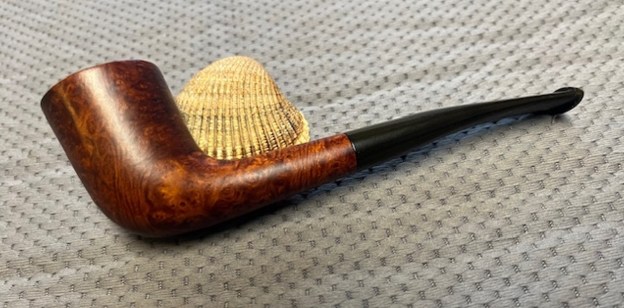
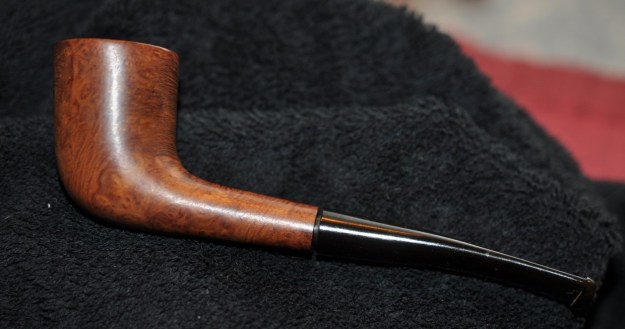
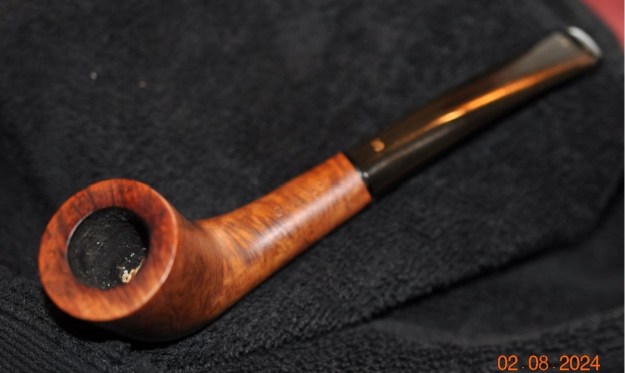
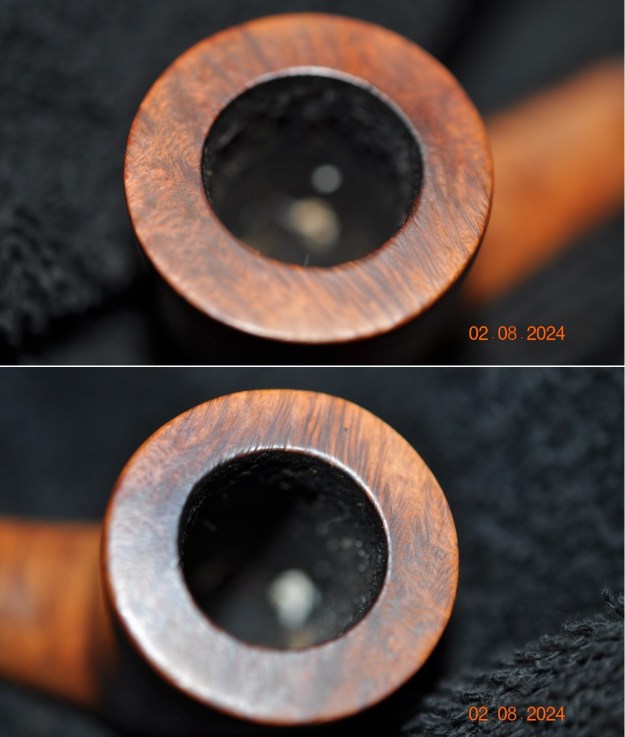
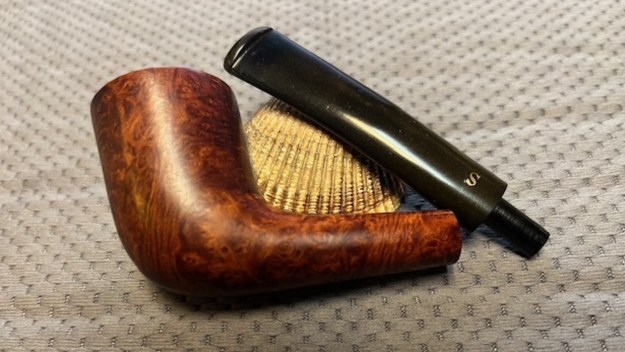
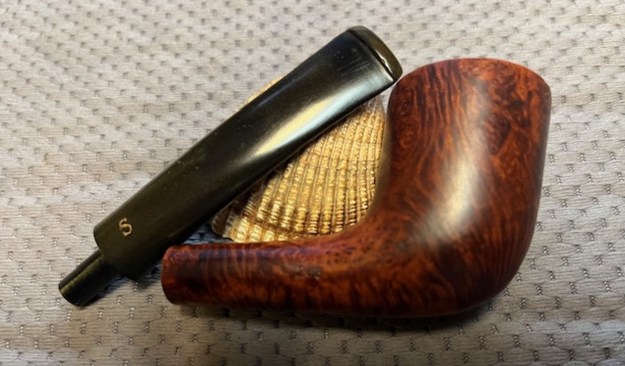
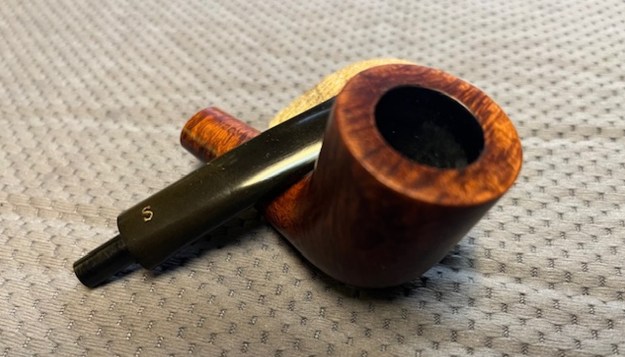
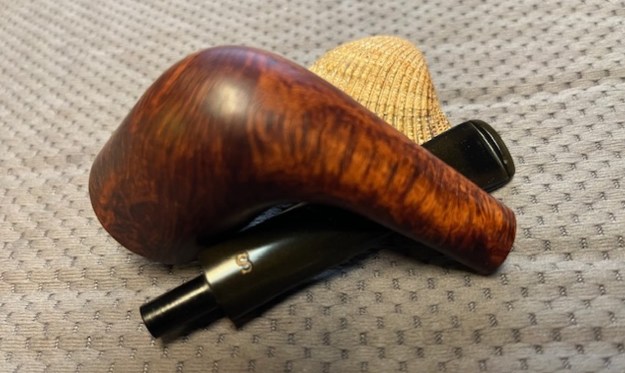
I recently had the pleasure of meeting with a family – and nine of the male family members each wanted a pipe! I was only too happy to help them out. The youngest member of this throng was 18 years old and picked out the pipe you see here. It is a charming and beautifully curved Zulu. I decided to work on it first because I liked it so much. Not only is it handsome, but it is well made too. However, there were no pipemaker’s marks on the pipe at all. No name of any sort – kind of. The only thing to be seen was that the previous owner carved his own name into the shank: Ray. I’m afraid I don’t know who Ray is, but he had a nice pipe. So, the nameless pipe has a name after all. It’s now being passed on to a fine young man with a good head on his shoulders. When I was talking to him about the pipe, I commented that I could investigate sanding off the name if he wished. He said no – it was part of the pipe’s history and he wanted to leave it. Smart kid. Alas, no markings mean no history. However, I can report that the pipe was well smoked in its past. The stummel was in good shape, but there was evidence of lots of smoking once upon a time. As you can see, there appears to be some burning on the rim, but I’ll have to take a closer look for damage. The stem was pretty worn – lots of tooth marks and scratches. Also, a bit of calcification and oxidation.

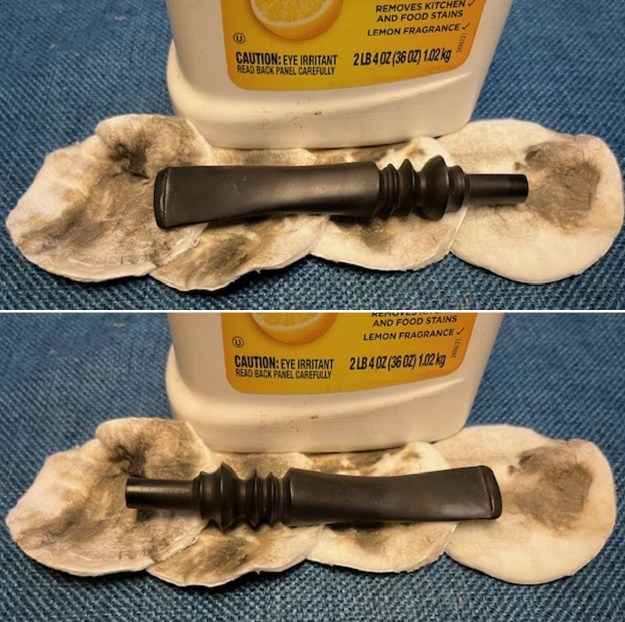
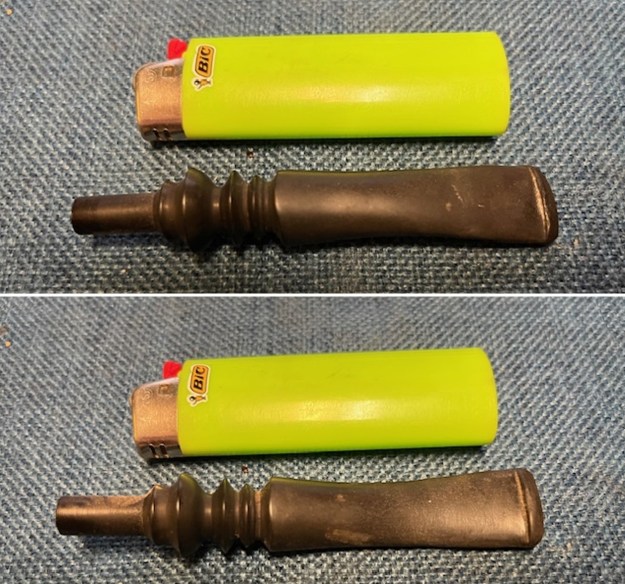
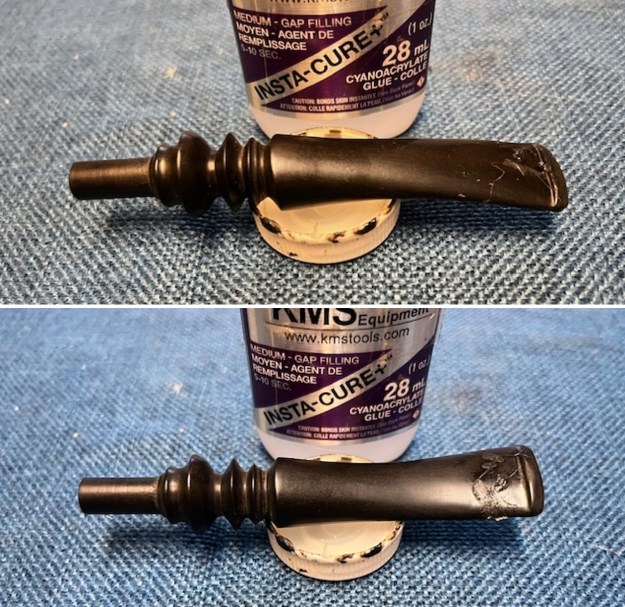
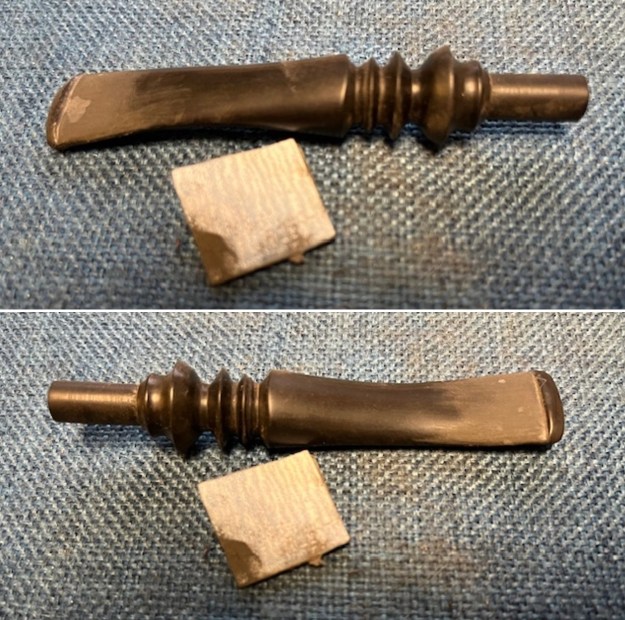
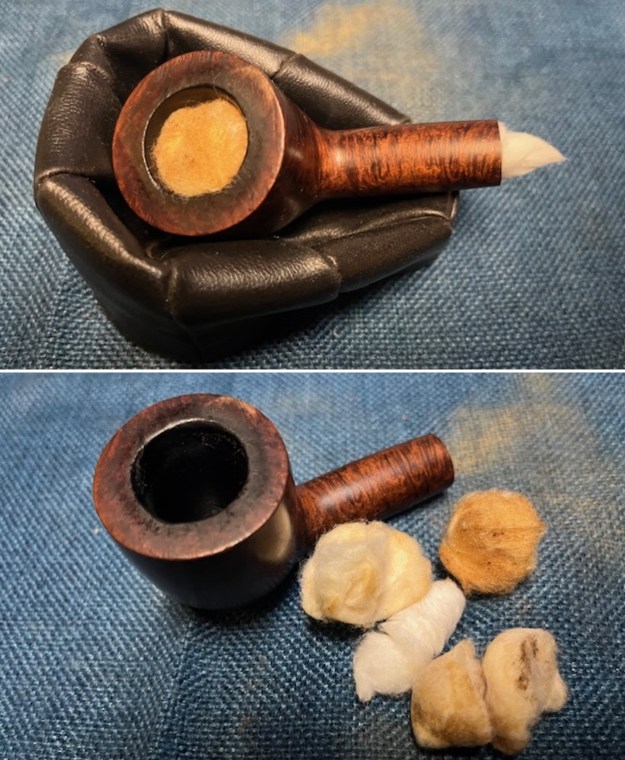
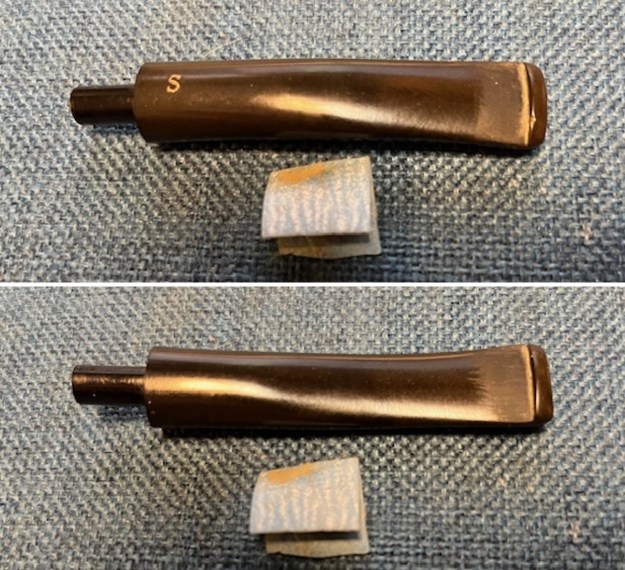
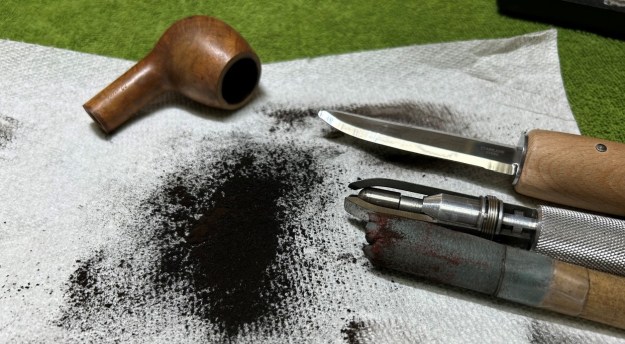
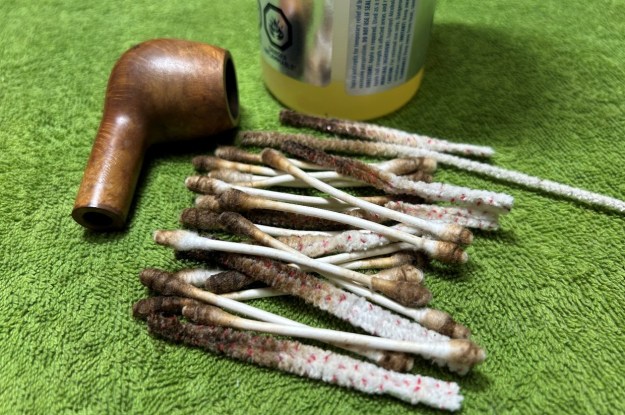
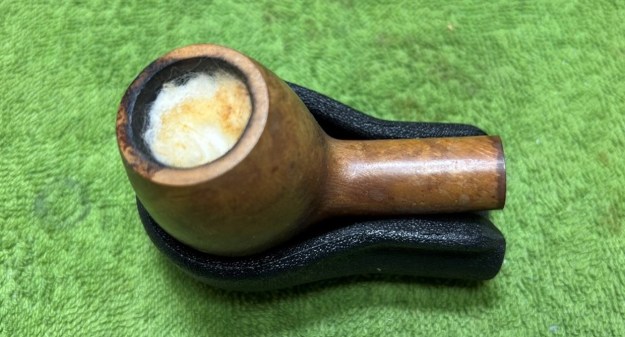
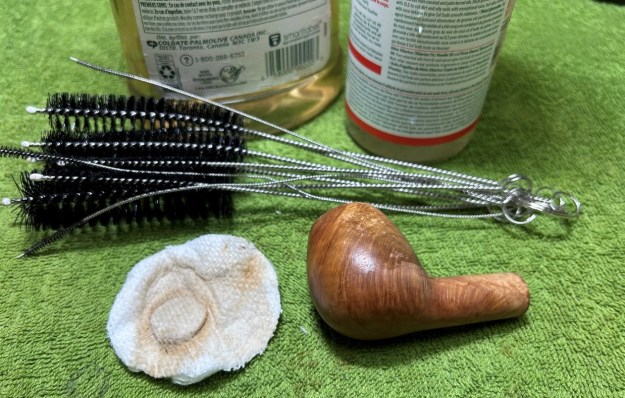
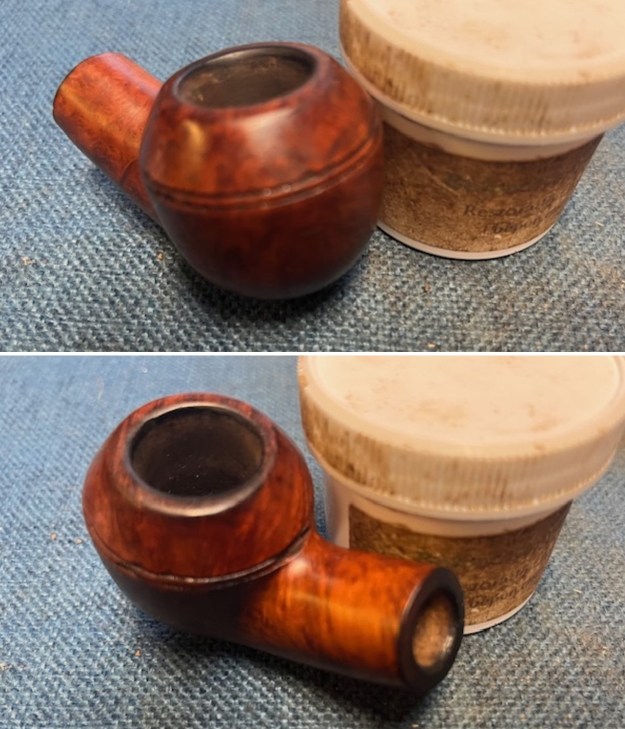
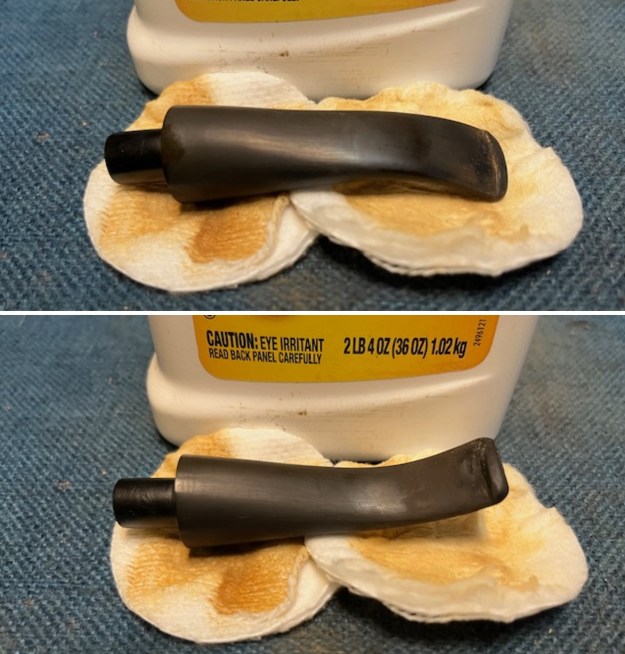
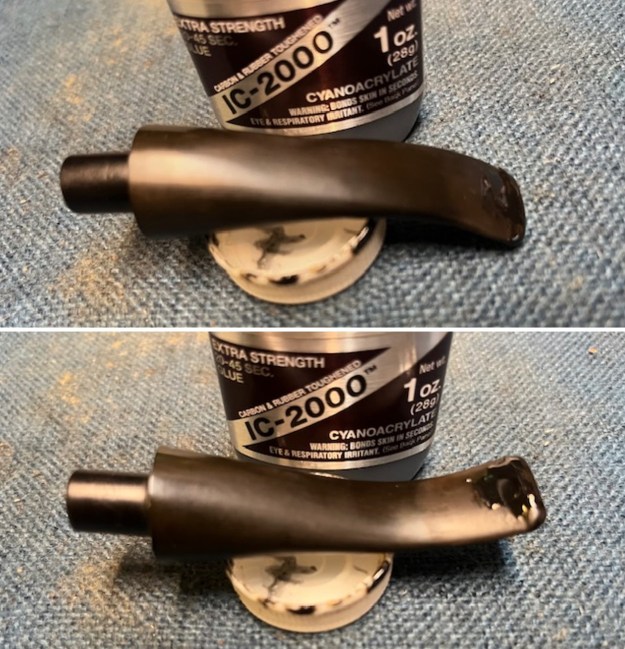
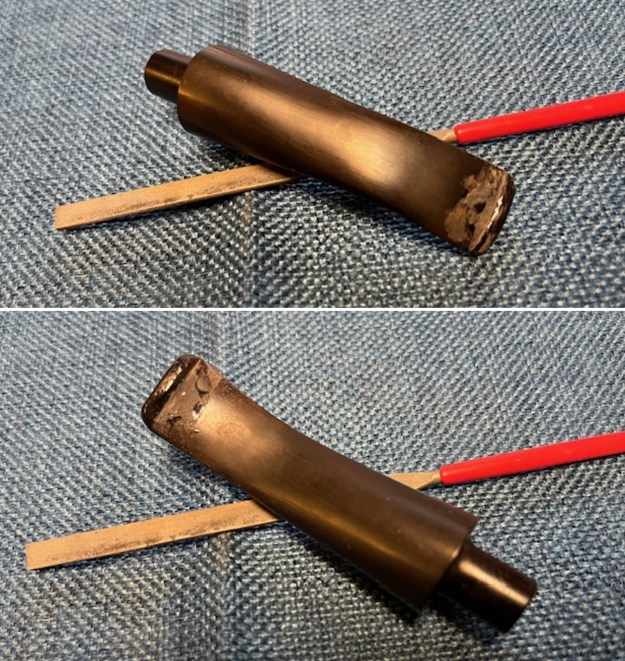
As a first step, I used oil soap on a few cotton rounds and wiped the stem down to provide an initial cleaning of filth before moving on. I used a disposable lighter and ‘painted’ the stem with its flame. The gentle heat of the flame can cause the dents in the vulcanite of the stem to expand back into shape. In this case, it actually worked fairly well and I got some improvement. The primary cleaning comes next. I cleaned the inside of the stem with both pipe cleaners and cotton swabs dipped in 99% lemon-infused isopropyl alcohol. I scrubbed thoroughly to make sure the interior was really clean.The goal of the next step is the removal (or minimization) of oxidation. Going to my sink, I used cream cleanser, cotton rounds, and a toothbrush, and scoured the stem to remove as much surface oxidation as possible. As the photos show, the result is a hideous brownish mess – but better off the stem than on it.Once the stem was reasonably clean, I soaked it overnight in some de-oxidation fluid. This solution works to draw oxidation in the stem to the surface. This is a major aid and important step in ensuring a clean stem. The following day, I drew the stem out from its bath and scrubbed the lingering fluid with a toothbrush. Once clean and dry, I set about fixing the marks and dents in the vulcanite. This is done by filling those divots with black cyanoacrylate adhesive, impregnated with carbon and rubber. I left this to cure and moved on.The penultimate step for the stem is sanding. I use all nine of the micromesh sanding pads (1,500 through 12,000 grit) to sand out flaws, even out the vulcanite, and provide gentle polishing of the finished surface. I also apply pipe-stem oil while using the last five micromesh pads. There is a wonderful, deep black shine to the stem when I am done.Now that the stem is (nearly) complete, I can move on to the stummel. The first step for me is to ream out the bowl – that is to say, remove all the cake inside the bowl. This accomplishes a couple of things. First (and most obviously), it cleans the bowl and provides a refurbished chamber for future smoking. Second, when the old cake is removed, I can inspect the interior walls of the bowl and determine if there is damage or not. I used a reamer, a pipe knife, and a piece of sandpaper taped to a wooden dowel. Collectively, these ensure that all the debris is removed. My next step was to remove the lava on the rim. For this, I took a piece of machine steel and gently scraped the lava away. The metal’s edge is sharp enough to remove what I need, but not so sharp that it damages the rim. This work revealed that – Deo gratias – the burning was superficial and the underlying wood was totally intact.The inside of the stummel needs to be cleaned thoroughly. Similar to the stem, I then cleaned the stummel with both pipe cleaners and cotton swabs dipped in 99% lemon-infused isopropyl alcohol. With this pipe, it didn’t take too long to get it clean. I then decided to ‘de-ghost’ the pipe – that is to say, exorcize the remaining filth from the briar. I filled the bowl and the shank with cotton balls, then saturated them with 99% isopropyl alcohol. I let the stummel sit overnight. This caused any remaining oils, tars and smells to leach out into the cotton.To tidy up the briar, I also wiped down the outside with some oil soap on cotton. This does a good job of cleaning any latent dirt on the surface of the briar. The last step of the cleaning process is to scour the inside of the stummel with some soap and tube brushes. This is the culmination of a lot of work to get the pipe clean.The charring on the rim is notable. I took a solid wooden sphere, wrapped a piece of 220-grit sandpaper around it, and sanded the inner edge of the rim. This achieves two things: first, it removes some of the burn marks; and second (and more importantly), the circular shape and motion of the sphere gradually returns the edge to a perfect circle.

I used all nine micromesh pads (1,500 through 12,000 grit) on the outside of the stummel to finish it off. This sanding minimizes flaws in the briar and provides a beautiful smoothness to the wood.  I rubbed some Before & After Restoration Balm into the briar and let it sit for 20 minutes or so. The balm moisturizes the wood and gives a beautiful depth to the briar. I then buffed it with a microfibre cloth. For the final step, I took the pipe to my bench buffer and carefully polished it – first with a white diamond compound, then with three coats of carnauba wax. This procedure makes the pipe look its best – the stummel sings and stem glows.This is a very handsome pipe and will provide many years of smoking pleasure for my friend. I hope you enjoyed reading the story of this pipe as much I as I did restoring it. If you are interested in more of my work, please follow me here on Steve’s website or email me directly at kenneth@knightsofthepipe.com. The approximate dimensions of the pipe are as follows: length 5⅝ in. (142 mm); height 1¾ in. (44 mm); bowl diameter 1⅓ in. (33 mm); chamber diameter ¾ in. (19 mm). The weight of the pipe is 1 oz. (31 g). I hope you enjoyed reading the story of this pipe’s restoration as much as I did restoring it. If you are interested in more of my work, please follow me here on Steve’s website or send me an email. Thank you very much for reading and, as always, I welcome and encourage your comments.

Restoring an interesting Nameless Silver Spigot Bent Acorn


by Steve Laug

The next pipe on the work table came to us from a group of pipes we purchased on 02/29/2024 from a seller from Spring Branch, Texas, USA. It is a nice looking richly stained acorn shaped pipe with a stick bit silver tipped stem. The bowl has a dark reddish brown colour stain that highlights grain. There are also a lot of lighter coloured fills around the bowl and shank. I am hoping to mask these a bit in the clean up. This pipe has no stamping on the shank or the stem. There is a stamped Silver [over] 925 on both the band/ferrule and the silver tip on the stem. There is no other stamping. The bowl had been reamed and but then smoked so there was a light cake in the bowl and some lava on the top and edges of the rim top. The Sterling Silver ferrule and stem tip is oxidized and dark. The stem is black acrylic and there were some light tooth marks and chatter on both sides near the button. The pipe looks to be in good condition under the grime. This is a nice looking pipe and in a well-loved shape. Jeff took photos of the pipe before he started his cleanup. He took a photo of the bowl and rim top to show their general condition. You can see the lava, scratches and nick marks on the rim top and the light cake in the bowl. The bevelled inner edge of the bowl looks to be okay. The stem is acrylic and dirty and there are tooth marks and chatter on both sides near the button. The silver ferrule and stem tip is also oxidized and almost black. Jeff took some photos of the sides and heel of the bowl to give an idea of the grain around the bowl as well as the number of putty fills. I cannot wait to see what it looks like once it is cleaned and polished. Should be interesting to minimize the visual prevalence of the fills. He captured the stamping on the silver ferrule and stem tip in the next photos. Even through the oxidation they are clear and readable. It really amazes me that a pipe with silver shank and stem adornments has no name stamped on it and that a pipe with these many fills would even bother with the silver. Ah well….Jeff carefully cleaned the pipe. He reamed it with a PipNet pipe reamer and then cleaned up the reaming with a Savinelli Fitsall Pipe Knife. He scrubbed out the internals of the shank, stem and shank extension with alcohol, pipe cleaners and cotton swabs until the pipe was clean. He scrubbed the exterior of the bowl with Murphy’s Oil Soap and a tooth brush to remove the grime and grit on the briar and lava on the rim top. The finish looks much better and has a deep richness in the colour that highlights grain of the briar. The rim top had some damage to the around the entire top of the bowl. The silver ferrule and stem tip were oxidized but clean. Jeff worked the acrylic stem over with Soft Scrub All Purpose Cleaner to remove any grime or debris in the bite marks and on the surface. When the pipe arrived here in Vancouver and I finally started my work on it I was amazed it looked so good. Here are some photos of what I saw. I took some photos of the rim top and stem. The rim top and inner edge of the bowl shows damage and nicked spots. The close up photos of the stem shows that the surface of the stem is pitted. There are tooth marks and chatter on the top and underside of the stem near the button. I removed the stem from the shank and took a photo of the pipe at this point. You can clearly see the condition, size and shape of the pipe.To start my work on the pipe I decided to wipe it down with acetone to remove some of the darker portions of the stain and try to blend in the fills to the lighter colour once it was finished. I wiped the bowl down with acetone on cotton pads. I really like the way it came out. Have a look. I sanded out the scratches in the briar around the bowl sides and rim top with 320-3500 grit sanding pads. I wiped it down after each pad with a damp cloth to remove the sanding debris. The sanding really brought the grain to the front and blended in the marks of the fills. This is a great piece of briar. And once it is waxed and polished it should really be a beauty. I polished the briar with micromesh sanding pads – dry sanding with 1500-12000 grit pads and wiping down the bowl after each sanding pad.  I touch up some of the lighter spots on the shank/bowl junction and rim top with a Mahogany stain pen to match the rest of the bowl. Once it dried I hand buffed it and the restained areas looked very good. I rubbed the bowl and shank down with Before & After Restoration Balm. I worked it into the surface of the bowl sides and shank with my fingertips to clean, enliven and protect the briar. I let the balm sit for a little while and then buffed with a cotton cloth to raise the shine. The Balm did its magic and the grain stood out. I sanded out the tooth marks on the stem surface with a folded piece of 220 grit sandpaper to remove and smooth out the marks.I sanded out the scratch marks on the stem surface with 320-3500 grit sanding pads. I wiped the stem down after each pad with an Obsidian Oil cloth. The stem began to shine.I polished the vulcanite stem with micromesh sanding pads – 1500-12000 grit pads. I wiped it down with Obsidian Oil after each sanding pad. I used Before & After Pipe Polish – both Fine and Extra Fine to further polish the stem. The photo below shows the polished stem. This No Name Bent Acorn with the Silver Spigot with an acrylic stem is a nice looking pipe. The finish looks very good and the grain stands out. I put the stem back on the bowl and buffed the pipe with Blue Diamond on the buffing wheel. I carefully avoided the stamping on the shank sides during the process. I gave the bowl and the stem multiple coats of carnauba wax on the buffing wheel and followed that by buffing it with a clean buffing pad on the buffer. I hand buffed the pipe with a microfiber cloth to deepen the shine. The flow of the grain and the way the shape follows it is very well done. Give the finished pipe a look in the photos below. I can only tell you that it is much prettier in person than the photos capture. The dimensions of the pipe are Length: 5 ½ inches, Height: 2 inches, Outside diameter of the bowl: 1 ¼, Chamber diameter: 7/8 of an inch. The weight of the pipe is 1.52 ounces/42 grams. This interesting No Name Bent Acorn Silver Spigot is a great looking pipe in excellent condition. Thanks for walking through the restoration with me as I worked over another beautiful pipe. I will be adding it to the rebornpipes store in the American Pipe Makers Section soon. If you want to add it to your collection send me an email or a message! Thanks for your time.
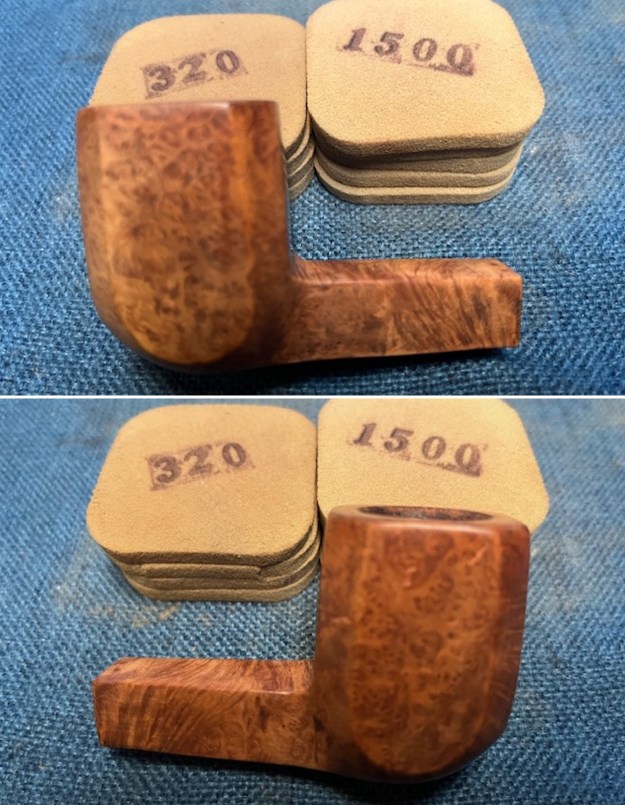
Restoring a thin shank small LHS Purex Pat. No. 1587048 Real Briar Root Dubiln


by Steve Laug

The next pipe on the work table came to us from a group of pipes we purchased on 01/22/2024 from a seller on eBay from Jordan, Minnesota, USA. It is a nice looking tiny pencil shank Dublin shaped pipe with a taper stem. The bowl has a rich reddish brown colour combination that highlights grain. This pipe is stamped on the left and right sides of the shank. On the left it reads LHS in a Diamond followed by Purex [over] Pat.No.1587048. On the right side it is stamped Real Briar Root. On the underside of the shank it bears the shape number 20. The threaded aluminum tenon/stinger taper stem has two dots – a red and a white on the topside. There is a moderate cake in the bowl and an overflow of lava on the inner edge of the rim top. The varnish coat was flaking and peeling. The stem was lightly oxidized, calcified and there were some light tooth marks and chatter on both sides of the vulcanite stem near the button. The pipe looks to be in good condition under the grime. This is a nice looking pipe and in a well-loved shape. Jeff took photos of the pipe before he started his cleanup. He took a photo of the bowl and rim top to show their general condition. You can see the lava on the rim top and the thick cake in the bowl. There is damage on the inner edge of the bowl. The stem is oxidized, calcified and has tooth marks and chatter on both sides near the button.   Jeff took some photos of the sides and heel of the bowl to give an idea of the grain around the bowl as well as the peeling varnish coat. I cannot wait to see what it looks like once it is cleaned and polished. He took a photo of the stamping on the sides of the shank to capture it for me. It is clear and readable.Before I started working on the pipe I turned to Pipephil to get a feel for the history of the brand and have included a screen capture of the pertinent section on the site below (http://www.pipephil.eu/logos/en/logo-lhs.html). I quote:

The L&H Stern Inc. was established by Ludwig Stern (1877-1942) in 1911. His brother Hugo (1872-?) acted as vice-president & secretary. The firm moved to 56 Pearl St. Brooklyn in 1920. It closed down in the 1960s. LHS was one of the main pipe suppliers for US soldiers during WWII.I turned to Pipedia for any additional information (https://pipedia.org/wiki/LHS). The article gave and expanded history of the brand and a list of the grades of pipes in 1944. The Purex stamp like the one I have was not shown in the list so I have left the link but not included the list.

Additional notes: Some models were made before, during, and after WWII. LHS was one of the main pipe supplier for US soldiers during WWII.

Pre-war pipes were stamped Real Briar Root, or Briar Root. Some war time pipes were made from domestic briar, or “American” briar and were void of any briar stampings. Many American pipe makers lost their over seas supply of Mediterranean briar shortly before and during the war. Post war pipes were stamped Imported Briar to assure customers that they were buying premium briar once again.

I also researched the patent number on the left side of the shank and it led me to the following diagram and patent information. It was filed in 1924 and awarded on June 1, 1926. The interesting thing is that it combines some of the concepts from a later patent filing on July 1, 1932 and granted on May 9, 1933. The stamping places it as a 1926 pipe. The shape of the stinger and the threaded mortise make me think of the 1926 pipe in many ways. I cannot see deep enough into the pencil shank to see if there is a metal cup insert in the shank behind the mortise. Maybe that will become clear in the cleanup. The smooth portion of the tenon after the threads and the metal disk that is threaded into the stem make me think of the 1933 patent pipe. The threaded mortis is the same in both but if it ends in the shank without the cup then it has a lot of similarity to the 1933. The 1926 patent gives me a start date for this pipe and the 1933 patent gives me an end date. The fact that the metal works combine both makes me wonder if the pipe did not come out of the factory with the new patent release in 1933. I am including the two different patents for you to see the interesting combination in this pipe. I have screen captured the insert in the shank and the stinger apparatus from the 1926 patent drawings. Figure 2 shows the stinger. It is identical in both the 1926 and the 1933 patent drawings. Figure 3 shows a metal cup that is inserted in the shank. The mortise end is threaded to receive the threads on the tenon. Figure 4 shows the end of the stem looking at the head on the stinger. The slot is at the top. Figure 5 shows the inside of the shank looking at it from the end. The mortise end is threaded and the cup has an airway hole in the centre of the rounded end. That end sits against the airway from the bottom of the bowl as seen in Figure 6. When I started cleaning out the shank I was unsure of the interior. Once I was cleaning it I was certain it was the later stinger.I have also included a screen capture below of Figure 2 from the 1933 patent drawings. The insert in the shank is shorter than the 1926 version and does not include the cup. The tenon is the same though it has a longer smooth portion. It also has a plate that rest against the face of the stem when inserted. This tenon system is identical to the one that I am working on. That dates the pipe after 1933. Jeff carefully cleaned the pipe. He reamed it with a PipNet pipe reamer and then cleaned up the reaming with a Savinelli Fitsall Pipe Knife. He scrubbed out the internals of the shank, stem and shank extension with alcohol, pipe cleaners and cotton swabs until the pipe was clean. He scrubbed the exterior of the bowl with Murphy’s Oil Soap and a tooth brush to remove the grime and grit on the briar and lava on the rim top. The finish looks much better and has a deep richness in the colour that highlights grain of the briar. The peeling varnish is gone. The rim top had some darkening and there was some damage to the inner edge of the bowl. The aluminum on the shank end and on the stem were slightly oxidized but clean. Jeff soaked the stem in bath of Briarville’s Pipe Stem Deoxidizer to remove the oxidation on the rubber. He worked it over with Soft Scrub All Purpose Cleaner to remove any remnants of oxidation. When the pipe arrived here in Vancouver and I finally started my work on it I was amazed it looked so good. Here are some photos of what I saw. I took some photos of the rim top and stem. The rim top and inner edge of the bowl shows damage and burned areas. It is out of round and will need some work. The close up photos of the stem shows that the surface of the stem is pitted. There are tooth marks and chatter on the top and underside of the stem near the button. I took a photo of the stamping on the sides and the underside of the shank to show the condition after the cleanup. This stamping is readable and looks good. I removed the stem from the shank and took a photo of the pipe at this point. You can clearly see the condition, size and shape of the pipe.I started my part of the restoration work on this pipe by addressing the damage and darkening on the edge of the rim, particularly on the front and rear of the inner edge. I used a folded piece of 220 grit sandpaper to remove the damage to the bowl. I sanded out the scratches in the briar around the bowl sides and rim top with 320-3500 grit sanding pads. I wiped it down after each pad with a damp cloth to remove the sanding debris. The sanding really brought the grain to the front. This is   a great piece of briar. And once it is waxed and polished it should really be a beauty. I polished the briar with micromesh sanding pads – dry sanding with 1500-12000 grit pads and wiping down the bowl after each sanding pad. I rubbed the bowl and shank down with Before & After Restoration Balm. I worked it into the surface of the bowl sides and shank with my fingertips to clean, enliven and protect the briar. I let the balm sit for a little while and then buffed with a cotton cloth to raise the shine. The Balm did its magic and the grain stood out. I sanded out the light tooth chatter and roughness on the stem surface with 320-3500 grit sanding pads. I wiped the stem down after each pad with an Obsidian Oil cloth. The stem began to shine.I polished the vulcanite stem with micromesh sanding pads – 1500-12000 grit pads. I wiped it down with Obsidian Oil after each sanding pad. I used Before & After Pipe Polish – both Fine and Extra Fine to further polish the stem. The photo below shows the polished stem. This LHS Purex Pat.No.1587048 Real Briar Root Dublin with a pencil shank and stem is a nice looking pipe. The finish looks very good and the grain stands out. I put the stem back on the bowl and buffed the pipe with Blue Diamond on the buffing wheel. I carefully avoided the stamping on the shank sides during the process. I gave the bowl and the stem multiple coats of carnauba wax on the buffing wheel and followed that by buffing it with a clean buffing pad on the buffer. I hand buffed the pipe with a microfiber cloth to deepen the shine. The finished pipe is an excellent example of the Purex line of pipes that were made by LHS Stern. The flow of the grain and the way the shape follows it is very well done. Give the finished pipe a look in the photos below. I can only tell you that it is much prettier in person than the photos capture. The dimensions of the pipe are Length: 6 inches, Height: 1 ¼ inches, Outside diameter of the bowl: 1 ½ Chamber diameter: ¾ of an inch. The dimensions of the pipe are Length: 6 inches, Height: 1 ¼ inches, Outside diameter of the bowl: 1 ½ Chamber diameter: ¾ of an inch. The weight of the pipe is 0.81 ounces/24 grams. This interesting LHS Purex Pat.No.1587048 Dublin is a great looking pipe in excellent condition. Thanks for walking through the restoration with me as I worked over another beautiful pipe. I will be adding it to the rebornpipes store in the American Pipe Makers Section soon. If you want to add it to your collection send me an email or a message! Thanks for your time.

Restoring a Conway Aristocrat Made in England Bulldog


by Steve Laug

I picked some older pipes to work on next. The next of these is a Classic, Smooth Straight Bulldog with a Saddle Stem. We purchased this one on 09/20/2023 from a seller in Portland, Oregon, USA. The is a large straight Bulldog that is stamped on the top left side of the shank and reads Conway [over] Aristocrat. On the left side it is stamped Made in England. On the top left side of the saddle stem the Circle C logo of Conway was stamped. The pipe was well used. The finish was dirty with dust and debris in the smooth briar and in the twin rings around the rim cap. The bowl had a thick cake in it and heavy lava on the rim top and the inner edge. There was some damage on the left back of the rim top and om the bevelled inner edge of the bowl. The vulcanite stem was oxidized, calcified and had some tooth marks on the surface ahead of the button. Jeff took photos of the pipe before he started his cleanup work. He took some closer photos of the rim top and bowl to show the condition. You can see the thick cake in the bowl and the lava on the rim top and inner edge. You can see the chip on the outer edge at the back of the rim top. It is hard to know for certain but it looks like there is some roughening on the back inner edge. He also took photos of the stem to show its condition. You can see the oxidation, calcification and tooth marks and chatter. Jeff took some photos of the sides and heel of the bowl to show the condition of the finish on the bowl. The twin rings and bowl cap are quite well done and you can see the nicks and damage in the briar. He captured the stamping on the left top and right top side of the diamond shank. It is faint in spots but reads as noted above. It is interesting to note the nicks on the shank. The circle C logo stamped on the left side of the saddle stem is faded but the stamp is quite deep. I turned to Pipephil’s site (http://www.pipephil.eu/logos/en/logo-c6.html) to see what I could find out on the brand. I did a screen capture of the section on the site on the Conway label. It is a pipe that bears the same stamping as the one in hand here other than the shape number. I also copied the sidebar information below the screen capture.Conway pipes were most probably made by Singleton & Cole. If the pipe is stamped with a shape number this probability almost becomes a certitude. According to Wilczak & Colwell (op. cit.) Loewe had a line named Conway.

I turned to a link on Pipedia hoping for more information (https://pipedia.org/wiki/Conway). Sadly the only information was a mention of the information on Pipephil’s site. There were some amazing photos of the brand on the site. There was one that included an unsmoked Apple with a box and pipe sock as well as a brochure. The interesting point is that it was also an Aristocrat.Armed with that information that pipe was probably made by Singleton & Cole in London, England. I turned to work on the pipe itself. Jeff had cleaned up the pipe and it looked very good. He reamed the pipe with a PipNet pipe reamer and removed the rest of it with a Savinelli Fitsall Pipe Knife. He scrubbed the bowl with undiluted Murphy’s Oil Soap with a tooth brush. He rinsed it under running warm water to remove the soap and grime. He cleaned out the inside of the shank and the airway in the stem with alcohol, cotton swabs, shank brushes and pipe cleaners. He soaked the stem in Briarville’s Stem Deoxidizer and rinsed it off with warm water. I took photos of the pipe before I started my part of the restoration work. The rim top cleaned up really well. The rim top had some damage on the back left side of the top. The outer edge of the bowl look very good. The inner bevelled edge was clean but had some darkening all around the bowl. The stem surface was clean but the oxidation was still visible and calcification was gone. Overall it looked very good with a few tooth marks and chatter on both sides near the button.The stamping on top left side of the shank and the top right side is clear and readable. It is stamped as noted above. It is faint in spots but still clear. The logo on the left topside of the saddle is also clear. I removed the stem and took a photo of the pipe to give a sense of the whole. The wide taper stem is nice and the photo shows the proportions of the pipe. I used a wooden half sphere and a piece of 220 grit sandpaper to clean up the rim top and the bevel on the bowl. Once finished the inner edge looked better. I then topped the bowl with 220 grit sandpaper to remove the damage to the left side of the rim top. I took a photo of the top after this part of the work as well.I washed the bowl with cotton pads and acetone to remove some of the opaqueness of the stain. Once I washed it down it looked much better. The grain really stood out and I was able to add a bit of colour to the sanded rim top. I touched up the stain on the rim top with a Walnut stain pen to match the rest of the bowl colour. It matched well and once it was polished and buffed it would be perfect.I sanded the bowl and shank with 320-3500 grit sanding pads. I wiped the bowl down after each sanding pad to remove the debris. The pipe was beginning to look much better. I polished the smooth briar around outside of the bowl and the rim top with micromesh sanding pads. I sanded it with 1500-12000 grit pads and wiped the bowl down with a damp cloth to remove the sanding dust. I rubbed the bowl and shank down with Before & After Restoration Balm. I worked it into the surface of the bowl sides and shank with my fingertips and a horsehair shoe brush to get it into the rings and rustication. It works to clean, enliven and protect the briar. I let the balm sit for 15 minutes and buffed with a cotton cloth to raise the shine. The grain and the rustication came alive. I set the bowl aside and turned my attention to the stem. I “painted” the tooth marks with the flame of a lighter to lift them (forgot to take photos). The heat did a great job lifting all of them. The marks and chatter that remained I filled in with black CA glue strengthened with carbon and rubber. Once cured I flattened them with a file and blended them into the surface by sanding with 220 grit sandpaper. I touched up the Circle C logo on the left side of the stem with white acrylic nail polish. Once it cured I scraped off the excess and polished the stem.I polished the roughness, scratch marks and smoothed the stem with 320-3500 grit sanding pads. I wiped the stem down after each sanding pad with an Obsidian Oil impregnated cloth. It removes the dust and also gives the sanding pads some bite. By the final pad it was looking quite good.I polished the vulcanite stem with micromesh sanding pads – 1500-12000 grit pads. I wiped it down with Obsidian Oil after each sanding pad. I used Before & After Pipe Polish – both Fine and Extra Fine to further polish the stem. I rubbed it down with a final coat of Obsidian Oil and let it dry. This Conway Aristocrat Straight Bulldog is a great looking pipe now that it has been restored. The style of rustication that is used around the bowl is quite beautiful and works well with both the shape and the polished vulcanite taper stem. I put the stem back on the bowl and carefully buffed the pipe with Blue Diamond on the buffing wheel using a light touch on the briar. I gave the bowl and the stem multiple coats of carnauba wax on the wheel and followed by buffing the pipe with a clean buffing pad. I hand buffed the pipe with a microfiber cloth to deepen the shine. The finished Conway Aristocrat Bulldog fits nicely in the hand and feels great. Give the finished pipe a look in the photos below. The dimensions of the pipe are Length: 5 ¾ inches, Height: 1 ¾ inches, Outside diameter of the bowl: 1 ¼ inches, Chamber diameter: 7/8 of an inch. The weight of the pipe is 47 grams/1.66 ounces. I will be putting it on the rebornpipes store in the British Pipemakers Section shortly. If you are interested in adding this pipe to your collection send me a message or an email. Thanks for reading this blog and my reflections on the pipe while I worked on it. I appreciate your support and time!

An Unusual and Beautiful Peterson 221 Sterling Silver Prince


by Kenneth Lieblich

This pipe came to me in a collection of pipes that gave new meaning to the phrase, ‘trash and treasure’. Everything from the sublime to the ridiculous was in here, but when I saw this Pete, I was immediately enchanted. It is a Peterson 221 prince. This is a stunning pipe. It’s an older one and it’s a real veteran, with a few mild battle scars which are part of its history. I can’t help but think that this pipe should be in someone’s Peterson collection – it’s lightweight and breathtaking. This was one of the more difficult restorations I’ve ever undertaken. You might read through this blog post and think that it doesn’t seem particularly unusual. And, superficially, you’re right. Most of the steps in this restoration are run-of-the-mill, but, in many cases, these steps had to be done and redone so many times that I nearly launched the pipe across the room. So, settle in for a wild ride. The pipe is marked as follows: on the left side of the shank, it says K&P [over] Dublin. On the left side, it says Made in Ireland in the form of a circle and, next to that, the shape number 221. The circular Made in Ireland suggests that this is an older pipe, possibly (but not definitely) pre-republic. On the sterling silver band is displayed three shields each containing the three marks K&P [over] Sterling [over] Silver. The stem is the traditional Peterson P-lip, but it has no logo.This is an unusual Peterson, by shape and number. There are Pete princes and there are Pete 221s (bent billiards), but I hadn’t seen a 221 prince. I searched extensively for this very pipe and came up empty. I looked at Pipedia and Pipephil – nothing. Many more searches also came up with nothing. Steve kindly referred me to a couple of his articles (from 2016 and 2020) that gave a good clue:

https://rebornpipes.com/2016/09/13/petersons-pipes-brochure-from-genin-trudeau-co-montreal-quebec/

and

https://rebornpipes.com/2020/03/13/final-pipe-from-the-19-pipe-eastern-canada-lot-a-republic-era-peterson-1312-system/

The key information is on the old Peterson brochure shown in the blog post. In previous times, Petersons were imported into Canada through a company called Genin Trudeau & Co. (nowadays just Trudeau – the kitchen wares company). Genin Trudeau had the Peterson firm stamp their own shape numbers on the pipes they imported. This brochure supposedly dates from around 1974 and includes a silhouette of a 221, as you can see here in a cropped photo:However, there’s a problem: the 221 in the brochure is close – but not identical – to the 221 I’ve got here. Mine has a gentle bend; the one in the brochure does not. Clearly, my 221 was from a different time. Steve suggested that I contact Mark Irwin at Peterson Pipe Notes, as he is a great repository of Peterson knowledge. Mark was his usual obliging self and directed me to a page from his blog:

https://petersonpipenotes.org/280-canadian-shape-numbers-from-a-gtc-pipe-box-brochure/

In this post, he shows an older brochure, also from Genin Trudeau & Co. and dated to approximately 1955, which also shows a 221 prince. This time, however, it is the correct pipe!Although the brochure shows a rusticated pipe and mine is smooth, it is clear that the shape is identical. I suspect that this pipes dates from well before 1955, but I cannot prove this. Nonetheless, it is an exciting tidbit of information – thank you to Steve and Mark for their help.

The photos show that this pipe’s former owner must have loved this pipe – it was smoked to the Nth degree. Although it must be a fantastic smoker, it has clearly never seen a pipe cleaner or reamer! The stem is filthy beyond words and it has scratches, bites, oxidation, and calcification. Most unfortunately, the stem also has a significant bite-through on the underside.The stummel is also quite rough. There are a few minor nicks in the wood, but nothing serious. The main issue here is the cake in the bowl. Wow. The bowl is literally completely blocked. The cake is rock hard and its lava has erupted all over the rim. This is going to take some work!I used a disposable lighter and ‘painted’ the stem with its flame. The gentle heat of the flame can often cause the dents in vulcanite of the stem to expand back into shape. In this case, the dents were alleviated somewhat, but not enough. Better than nothing.The calcification was quite substantial. I used an old butter knife and gently scraped some of the thicker accretion off. Taking the opportunity to do this now helps later in removing the oxidation.I used oil soap on a few cotton rounds and wiped the stem down. This provides a preliminary cleaning of filth off the stem before moving on to the next steps.The primary cleaning comes next. I cleaned the inside of the stem with both pipe cleaners and cotton swabs dipped in 99% lemon-infused isopropyl alcohol. I scrubbed thoroughly and made sure the interior was clean. I used a lot of pipe cleaners and cotton swabs. This was a very dirty pipe.The goal of the next step is the removal (or minimization) of oxidation. Going to my sink, I used cream cleanser, cotton rounds, and a toothbrush, and scoured the stem to remove as much surface oxidation as possible. As the photos show, the result is a hideous brownish mess – but better off the stem than on it. This particular stem was so dirty that I also applied the cleanser to the inside with some tube brushes.Once the stem was reasonably clean, I soaked it overnight in some de-oxidation fluid. This solution works to draw oxidation in the stem to the surface. This is a major aid and an important step in ensuring a clean stem. The following day, I drew out the stem from its bath and scrubbed the lingering de-oxidation fluid with a toothbrush. Once clean and dry, I set about fixing the bite marks in the vulcanite. This is done by filling those divots with black cyanoacrylate adhesive, impregnated with carbon and rubber. I left this to cure and moved on.My next task was repairing the large hole on the underside of the stem. There are several methods of doing this and individual circumstances will dictate how to proceed. In this case, I used a straightforward method of employing the same black cyanoacrylate adhesive mentioned above. Before applying the adhesive, some preparatory work is required. With such a large gap in the vulcanite, any applied adhesive will simply run through the aperture and fill the airway. To prevent this, I coated the end of a pipe cleaner with petroleum jelly and lodged it in the airway. This provides a platform for the adhesive to sit on while curing and prevent it from entering the airway. The petroleum jelly is used to prohibit the adhesive from attaching to the pipe cleaner. This repair was much more labour intensive than normal. The adhesive patch I created failed three times before I finally made it work. The precarious nature of the repair impelled me to lay the patch much thicker than I might otherwise have. I am pleased with the final result, but I am not utterly convinced of the patch’s long-term structural integrity.The penultimate step for the stem is sanding. I first used my set of needle files to reduce the bulk of the cyanoacrylate repairs. I do not want to cut into the vulcanite, but I want to lower the height of the adhesive to as close as possible above the surface. Following that, I used all nine of the micromesh sanding pads (1,500 through 12,000 grit) to sand out flaws, even out the vulcanite, and provide gentle polishing of the finished surface. I also apply pipe-stem oil while using the last five micromesh pads. There is a wonderful, deep-black shine to the stem when I am done.Now that the stem is (nearly) complete, I can move on to the stummel. The first step for me is to ream out the bowl – that is to say, remove all the cake inside the bowl. This accomplishes a couple of things. First (and most obviously), it cleans the bowl and provides a refurbished chamber for future smoking. Second, when the old cake is removed, it allows me to inspect the interior walls of the bowl and determine if there is damage or not. More about that later. In the meantime, I used a reamer, a pipe knife, and a piece of sandpaper taped to a wooden dowel. Collectively, these ensure that all the debris is removed. However, this pipe needed a jackhammer to deal with the rock-hard cake in the bowl. Since I don’t have a jackhammer, I used a ½” rotary burr on my Dremel. This is a tricky procedure and I would not normally use this burr except as a last resort. The cake was so hard, that I had no other option at my disposal. Working with great care, I managed to clean out the bulk of the material and then returned to my normal tools to finish the work. As you can imagine, there was an extraordinary amount of debris in the bowl.My next step was to remove the lava on the rim. For this, I took a piece of machine steel and gently scraped the lava away. The metal provides an edge that is sharp enough to remove what I need, but not so sharp that it damages the rim. This work revealed a lot of damage underneath: burning, scratches, gouges, etc. This would have to be addressed later.The inside of the stummel needs to be cleaned thoroughly. However, this pipe’s shank was so clogged, that I first needed to open the horribly occluded airway. So, I took a long drill bit, held in a drill chuck, and hand-cranked it to dislodge the dreadful detritus inside. Similar to the stem, I then cleaned the stummel with both pipe cleaners and cotton swabs dipped in 99% lemon-infused isopropyl alcohol. With a pipe this dirty, it took quite a while and much cotton to get clean.I then decided to ‘de-ghost’ the pipe – that is to say, exorcize the remaining filth from the briar. I filled the bowl and the shank with cotton balls, then saturated them with plain 99% isopropyl alcohol. I let the stummel sit overnight. This caused any remaining oils, tars and smells to leach out into the cotton.To tidy up the briar, I also wiped down the outside with some oil soap on cotton rounds (and a toothbrush). This does a good job of cleaning any latent dirt on the surface of the briar.The last step of the cleaning process is to wash the inside of the stummel with some liquid cleanser and tube brushes. This is the culmination to a lot of hard work in getting the pipe clean. As you can see, this pipe still has some visible wounds. The damage to the rim is significant. In order to minimize the burns and nicks on the rim, I ‘topped’ the pipe – that is to say, I gently, slightly, and evenly sanded the rim on a piece of 220-grit sandpaper. This effectively takes down the damage, without altering the look of the pipe.A notable burn remained on the rim, so I took some crystalized oxalic acid and dissolved it in warm water. I then took some cotton swaps, dipped in the solution, and rubbed the burned spot vigorously. The acid works well to alleviate superficial burns (burns where the integrity of the wood is still good).All the cleaning I did revealed an important problem. The photos do not show it well, but the previous owner reamed this pipe overzealously. The heel of the bowl was gouged out through reaming and is now very thin. I had to fill this. To fill a gap like this, I use an epoxy adhesive that is extremely hard, resistant to high temperatures, and completely inert when cured. It works superbly. I filled the affected area with the epoxy and let it cure for a full 24 hours. The next day, I roughened up the epoxy’s surface for the next step. I thinly coated the inside of the bowl with a mixture of my wife’s homemade yogurt and activated charcoal. Once hardened, this provided a good, slightly rough surface for a new cake to build.I used all nine micromesh pads (1,500 through 12,000 grit) on the outside of the stummel to finish it off. This sanding minimizes flaws in the briar and provides a beautiful smoothness to the wood surface. I rubbed some Before & After Restoration Balm into the briar and left it to sit for 20 minutes or so. The balm moisturizes the wood and gives a beautiful depth to the briar. I then buffed it with a microfibre cloth. The final step is buffing. I took the pipe to my bench buffer and carefully polished it – first with a white diamond compound, then with three coats of carnauba wax. Naturally, these finishing touches make the pipe look its best – the stummel sings and the stem glows.

All done! This Peterson 221 sterling silver prince was a lot of work, but it looks fantastic and is ready to be enjoyed again by its next owner. I am pleased to announce that this pipe is for sale! If you are interested in acquiring it for your collection, please have a look in the ‘Irish’ section of the store here on Steve’s website. You can also email me directly at kenneth@knightsofthepipe.com. The approximate dimensions of the pipe are as follows: length 6⅛ in. (155 mm); height 1⅛ in. (30 mm); bowl diameter 1½ in. (36 mm); chamber diameter ⅔ in. (17 mm). The weight of the pipe is 1 oz. (29 g). I hope you enjoyed reading the story of this pipe’s restoration as much as I did restoring it. If you are interested in more of my work, please follow me here on Steve’s website or send me an email. Thank you very much for reading and, as always, I welcome and encourage your comments.

Restoring a Republic Era Peterson’s “Shannon” 6 Billiard


by Steve Laug

A couple of weeks ago I received a message on Facebook from Shannon about cleaning up a pipe for him. It was one of his favourite pipes so he wanted it spiffed up. I have included several of his messages below along with photos of the pipe in question.

Hello! I saw the beautiful work you did on a Peterson Shannon 80S recently and not only would I like to purchase that but I would also like to see if you could give my Shannon Billiard a glow-up. I purchased it with some minor wear and teeth marks but it has been faithful for a good while. would like to get it a sibling and pair them together as fresh if possible. Please let me know…

…I’ve only been smoking for a little over a year so when I saw that Peterson had a whole line in my own name, I’ve kinda been drawn to it. They’re just not that common and usually in a sad state when I see them.

Here’s the pipe in question. I covered the teeth marks with a pipe bit but as you can see, it’s still in pretty good shape overall.Probably THE best smoking pipe I own, especially for when I don’t feel like fully rubbing out flakes. It handles folded tobacco better than the rest of the ones I have. Here’s a couple more photos I just took of the minor issues… We chatted back and forth a bit about his pipe and I agreed to work on it for him. He boxed it up and sent it to me to work on. It arrived this week thanks to UPS and I opened the box and took the pipe out. I examined it and took photos of the pipe. It was well smoked and well cared for. The bowl has a light cake on the top 2/3rds and the bottom 1/3 is raw briar – not darkened by smoking. The rim top had some darkening in spots and the inner edge also had some darkening. The finish was shiny like it had a light varnish coat. There were some oils and grime in the finish. The stem was in good condition other than the tooth marks and chatter on both sides ahead of the button. The brass spacer on the stem was lightly oxidized. The Peterson’s P logo stamped on the left side of the stem was faint but had remnants of gold in it. The pipe was stamped on the left side of the shank and read Peterson’s [over] Shannon. On the right side it bore the number 6 next to the bowl/shank junction which is the shape number for a Peterson’s Billiard. That is followed by Made in The [over] Republic [over] of Ireland in three lines. This tells me that the pipe was a Republic Era pipe which dates it between 1948 and present date. I took photos of the pipe before I started my work on it. It really is a beautiful piece of briar. I took photos of the bowl and rim top to show the condition. You can see that my assessment in the above photos is correct. The rim top shows some darkening toward the back and around the inner edge of the rim. The cake is the bowl is quite light. The photos of the stem show the tooth chatter and marks (which are light but still present) from the previous owner Shannon bought the pipe from. Otherwise the stem looks very good.I took photos of the stamping on the shank sides. It is clear and readable as noted above. The P logo on the stem side is deep but the colour in it is faint. I removed the stem and took a photo of the pipe to show the proportions of the stem to the bowl. The stem is a classic Peterson style taper stem.Before I started working on the pipe I turned to “The Peterson’s Pipe” by Mark Irwin and Gary Malmberg to see what it had to say on the “Kildare” line. On page 313 it says:

Shannon (19695-c.1987) First offered as entry-grade walnut or black sandblast, P-lip mouthpiece and a nickel band. In 1969-c.1970 offered through Iwan Ries as Shannon Meerschaum lined, middle grade black sandblast and higher-grade brown sandblast finish, P-lip mouthpiece. From 2005 as polished tan and black stain, unmounted, P-lip or fishtail mouthpiece with stamped gold P on the vulcanite mouthpiece.

I believe that the pipe I am working on is from the 2005 line. It has a polished tan and black stain and a fishtail mouthpiece. It has a classic shape and the information would make the pipe one issued after 2005. It has a bit of age on it and it is in excellent condition. Now it was time to work on the pipe.

I started my work on the pipe by dealing with the shiny top coat on the bowl. I wanted to remove that and clean up the finish. I wiped down the bowl with acetone on a cotton pad to remove the varnish (possibly shellac). It worked very well to get rid of the top coat without harming the stain coat on the bowl. It also looked much better after the wash with the acetone. I used a dowel wrapped with 220 grit sandpaper to smooth out the thin cake in the bowl. It was a bit rough and uneven before I sanded it. Once finished it was smooth to touch from the top to the bottom of the bowl. I cleaned out the internals of the pipe with pipe cleaners, cotton swabs and isopropyl alcohol. It was quite clean which is a tribute to Shannon’s care of his pipes. I cleaned out the remnants of tars and oils in the shank and the pipe is clean. There is a smoky smell of tobacco but it is clean.I polished the briar with micromesh sanding pads – dry sanding it with 1500-12000 grit sanding pads. I wiped it down with a damp cloth after each sanding pad to remove the dust. The rim top, edges and bowl were really shining by the final pad. I paused the polishing to clean up the top of the rim a bit. I used a folded piece of 220 grit sandpaper to remove the darkening on the rim top. It looked better at this point. Afterwards, I repeated the 1500-2400 grit pads and then continued to work through the rest of the pads. It looked much better. I rubbed the bowl and rim down with Before & After Restoration Balm. I worked it into the surface of the briar with my fingertips to clean, enliven and protect it. I let the balm sit for 15 minutes and then buffed with a cotton cloth to raise the shine. I really like watching the Balm do its magic and bring the briar alive. I set the bowl aside and turned my attention to the stem. I set the bowl aside and turned my attention to the stem. I “painted” the vulcanite surface with the flame of a lighter – constantly moving the flame over the tooth marks and was able to lift many of them. I was able to lift them significantly enough that sanding them with 320-3500 grit sanding pads.I sanded the stem with the 2 inch square 320-3500 grit sanding pads and easily removed the tooth marks and chatter. I wiped down the stem after each sanding pad with Obsidian Oil. I polished out the scratch marks left behind by the sandpaper. The stem looked very good.The stem was in such good condition that I decided to just do some preliminary work on it before polishing it. I touched up the “P” logo on the left side of the stem with Rub’n Buff Antique Gold. I let it dry then polished off the excess with a worn 1500 grit micromesh sanding pad. Once the excess was removed the stamp looked much better. There were some weak spots on the curve of the “P” stamp but overall it looked very good. I polished the stem with micromesh sanding pads – dry sanding with 1500-12000 grit pads. I wiped the stem down after each sanding pad with Obsidian Oil. I polished it further with Before & After Pipe Stem Polish – both Fine and Extra Fine, I rubbed it on with my finger and buffed it off with a cloth. I gave the stem a final coat of Obsidian Oil and set it aside to let the oil be absorbed. Once again at this point in the restoration process I am excited to be on the homestretch. I look forward to the final look when the Peterson’s “Shannon” 6 Billiard with a fishtail stem is put back together, polished and waxed. I put the bowl and stem back together. I lightly polished the bowl and stem with Blue Diamond to polish out the scratches in the briar and the vulcanite. I gave the bowl and the stem multiple coats of carnauba wax. I buffed the pipe with a clean buffing pad to raise the shine. I hand buffed it with a microfiber cloth to deepen the shine. The pipe polished up pretty nicely and the beautiful grain really popped with the wax and polish. The shiny black vulcanite stem is a beautiful contrast to the browns of the bowl and thick shank. This Republic Era Peterson’s “Shannon” 6 Straight Billiard was another fun pipe to work on. It really is a quite stunning piece of briar whose shape follows the flow of the briar. The pipe feels great in the hand will be better when warmed up while smoking. The finished pipe is shown in the photos below. The dimensions of the pipe are Length: 6 inches, Height: 1 ¾ inches, Outside diameter of the bowl: 1 ¼ inches, Chamber diameter: ¾ of an inch. The weight of the pipe is 1.48 ounces/42 grams. I will be sending it back to Shannon shortly. This is an interesting estate to bring back to life.

As always, I encourage your questions and comments as you read the blog. Thanks to each of you who are reading this blog. Remember we are not pipe owners; we are pipe men and women who hold our pipes in trust until they pass on into the trust of those who follow us.