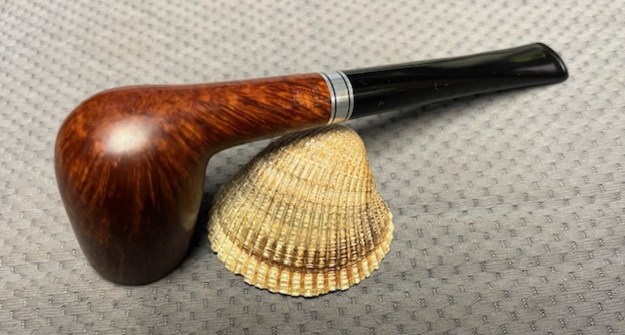
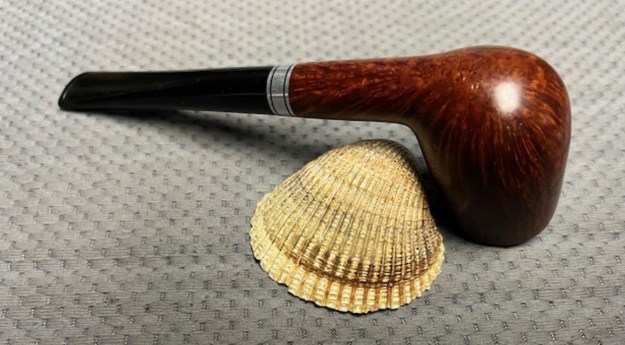
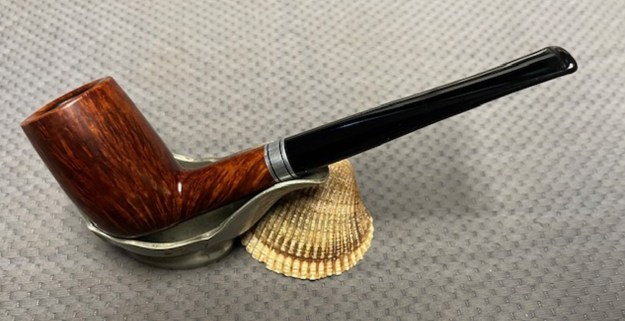
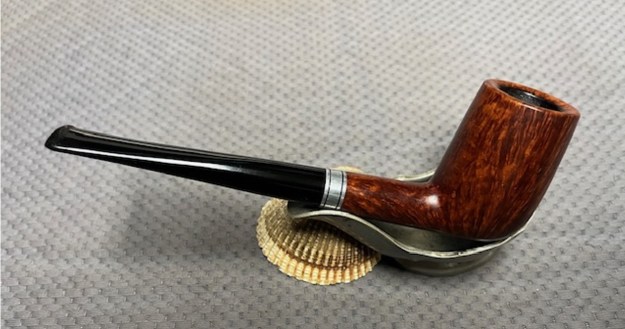
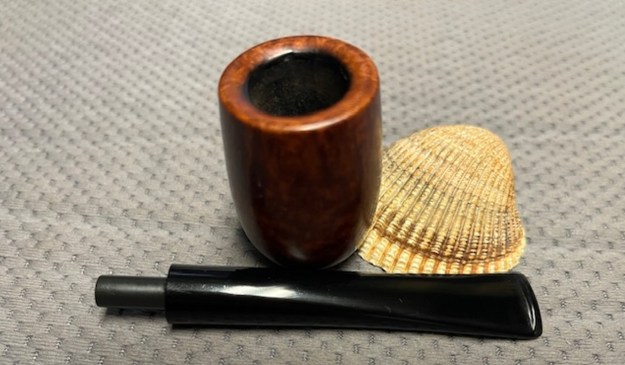
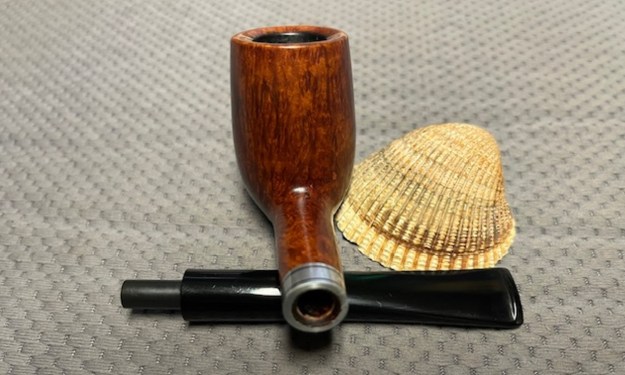
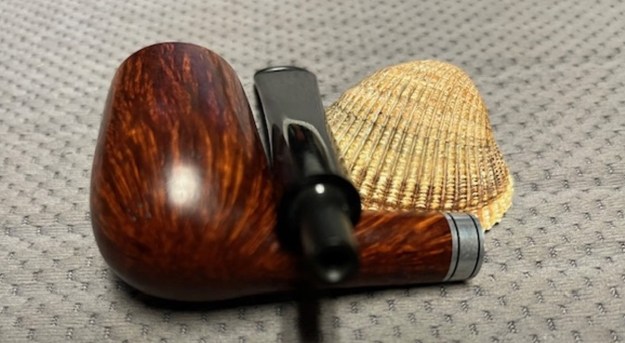
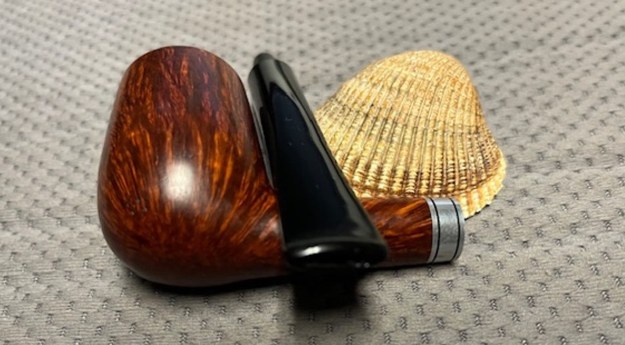
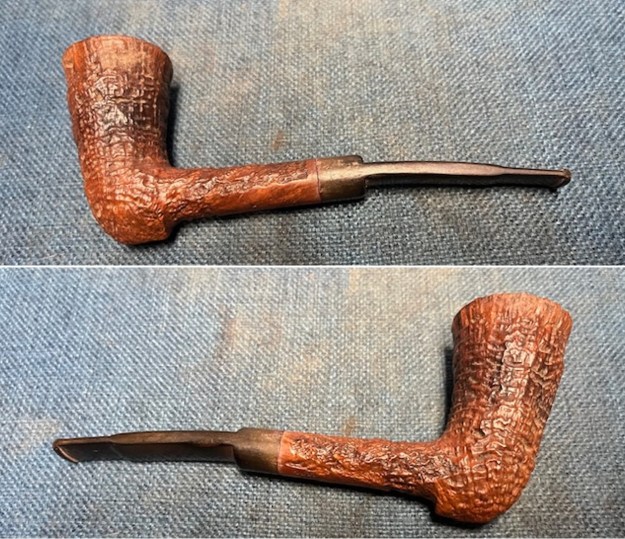
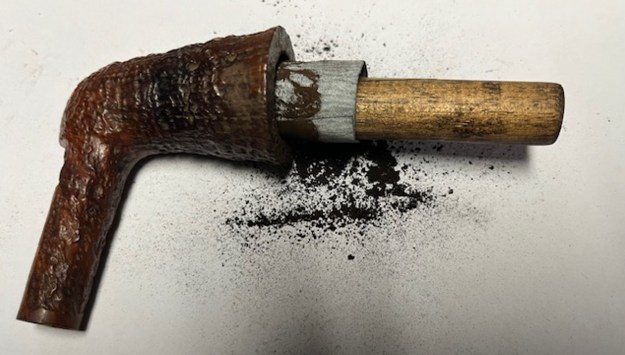
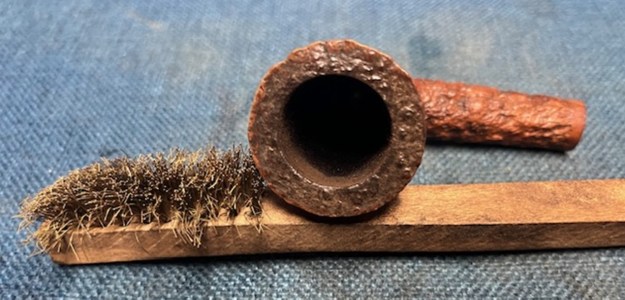
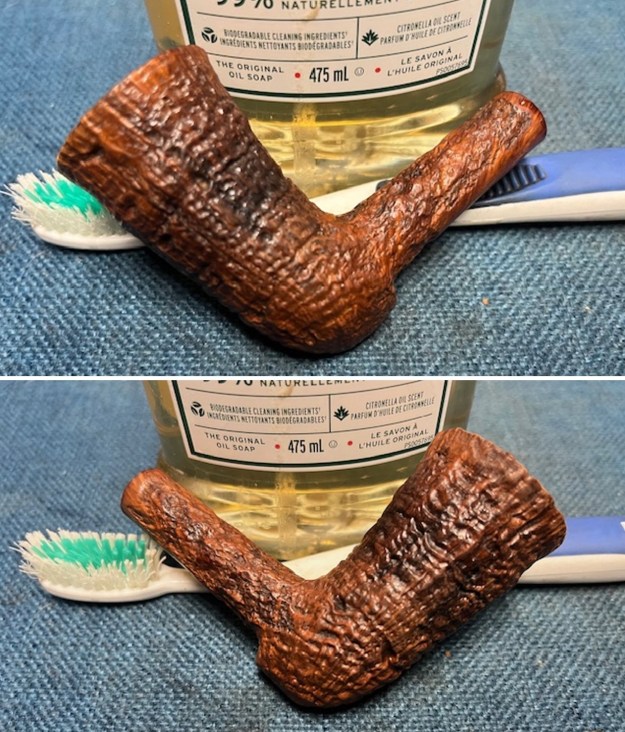
Tag Archives: bowl topping

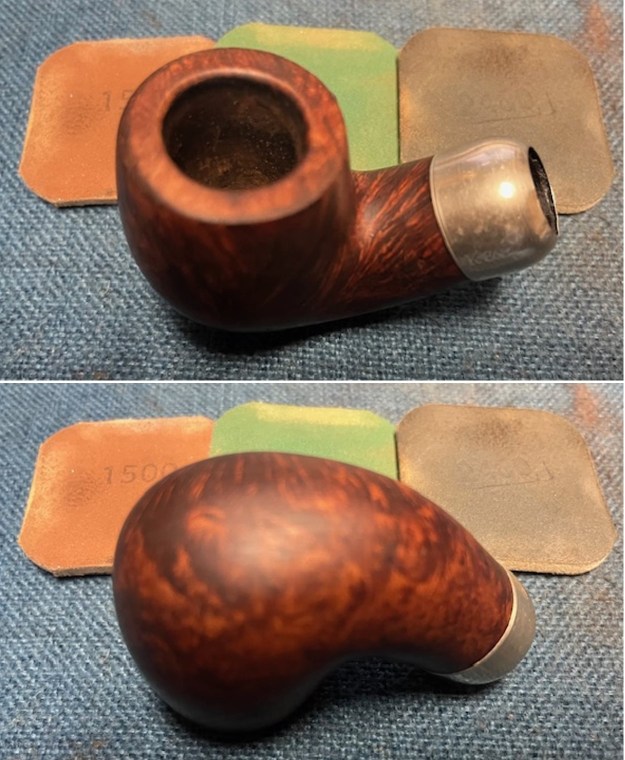
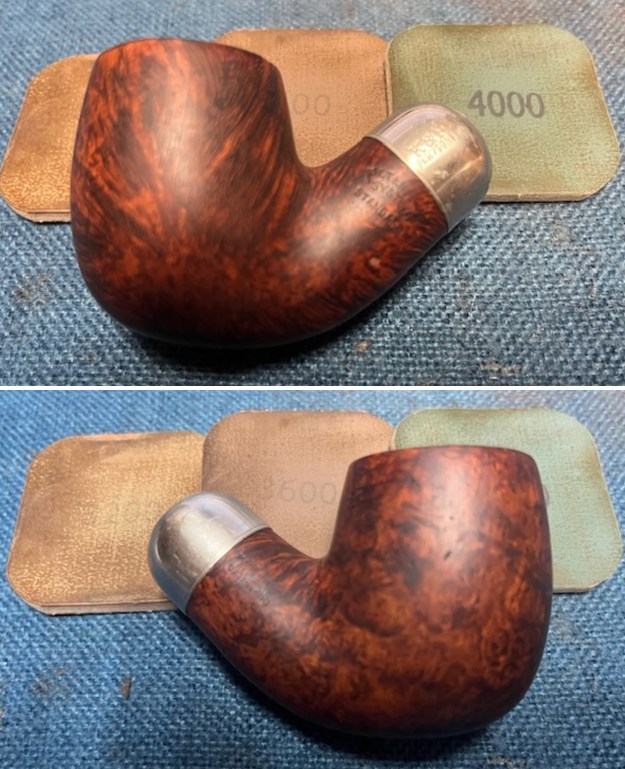
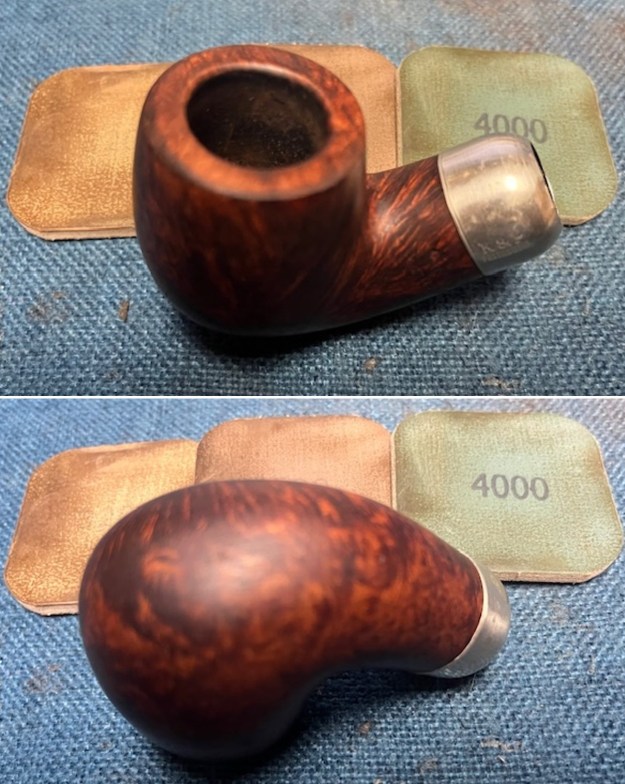
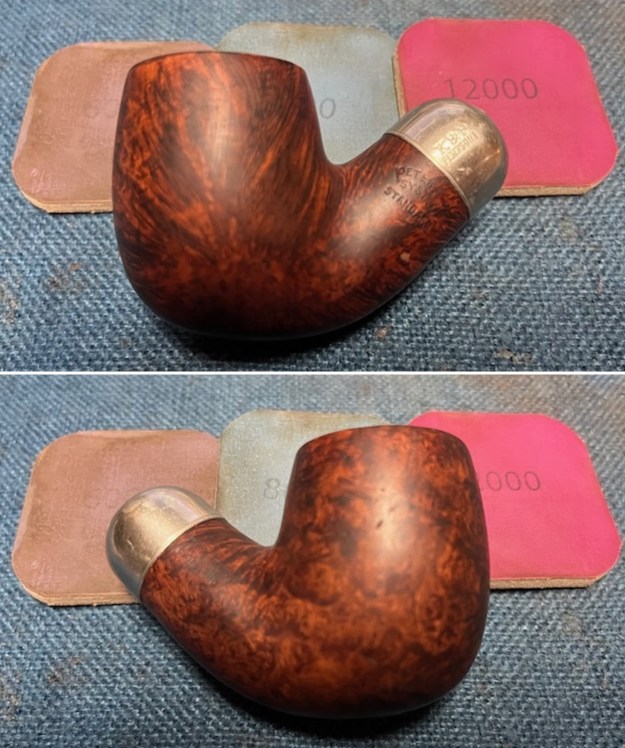
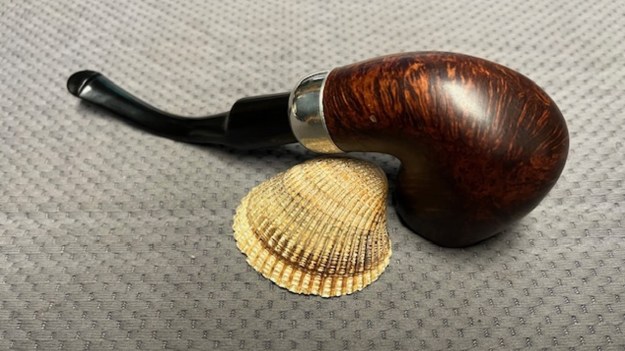
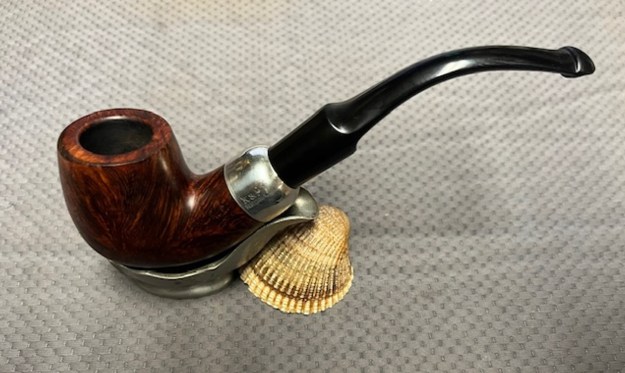
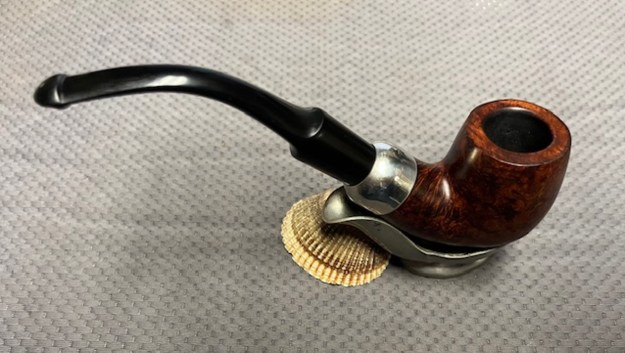
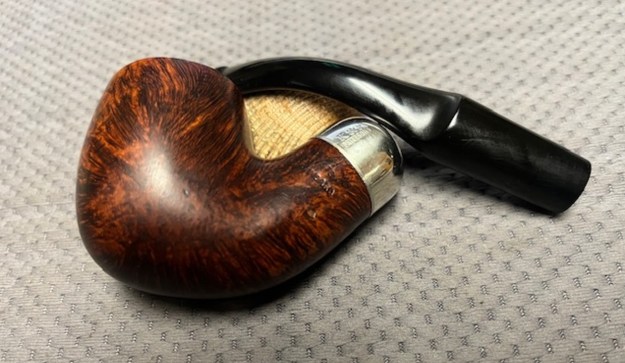
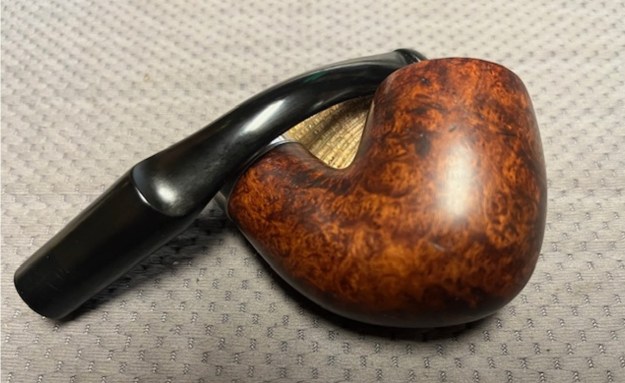
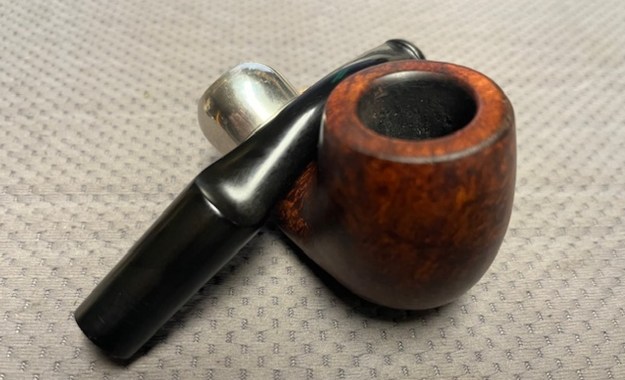
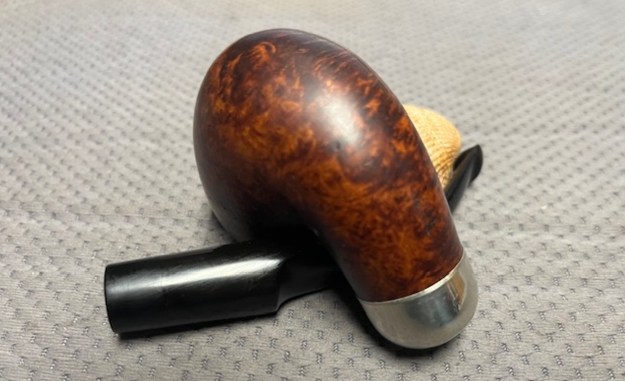
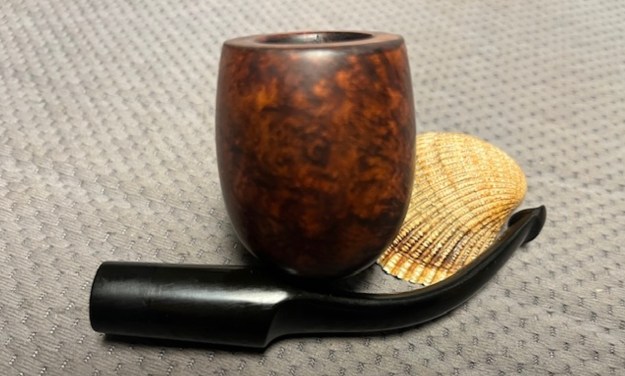
Peterson’s System Standard Made in the Republic of Ireland 313 with K&P Peterson’s Ferrule


by Steve Laug

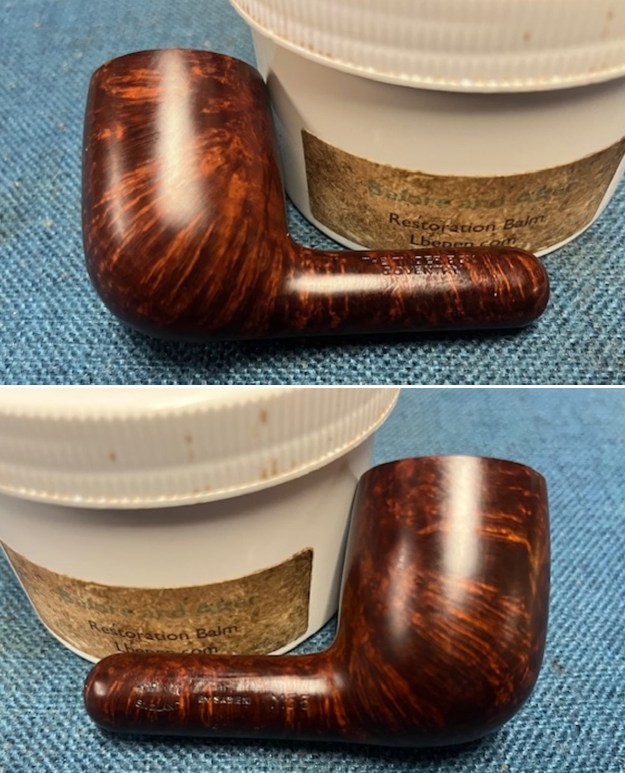
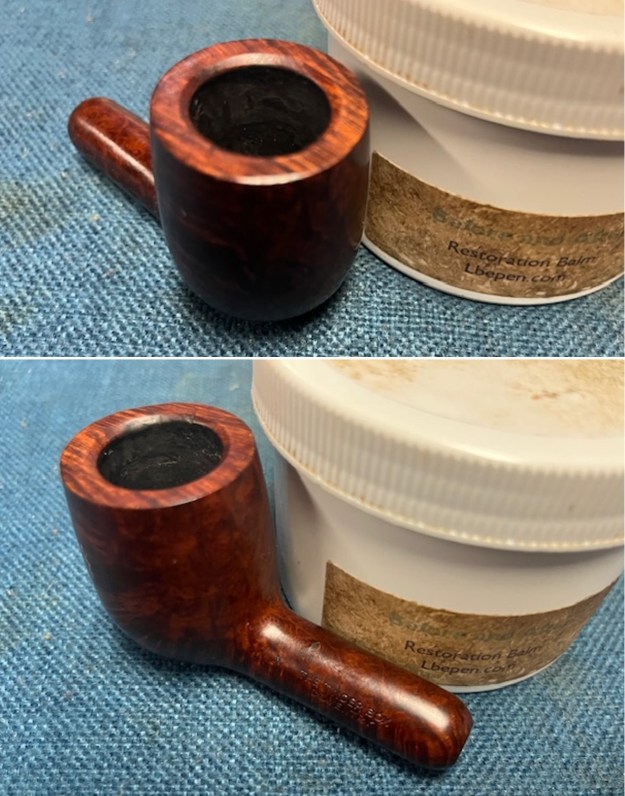
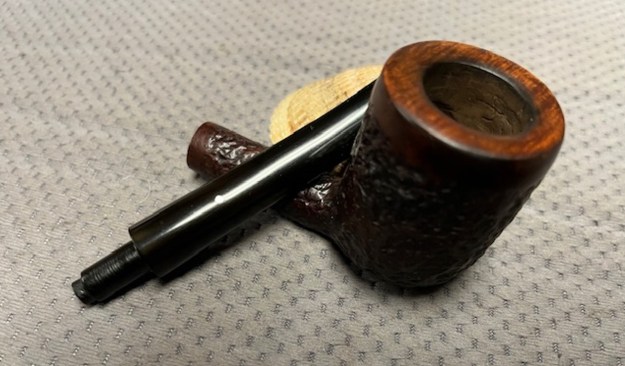
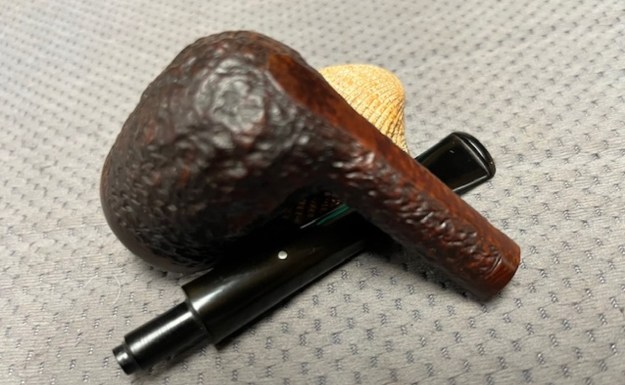
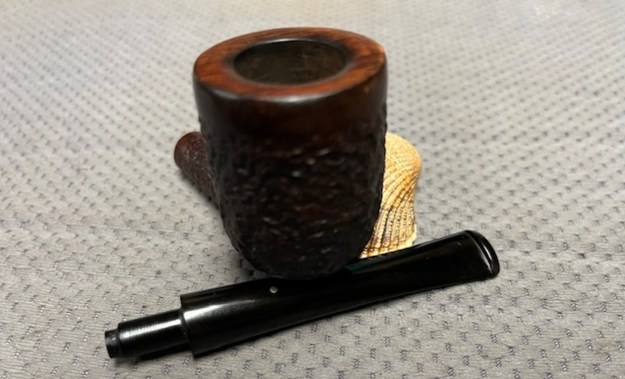
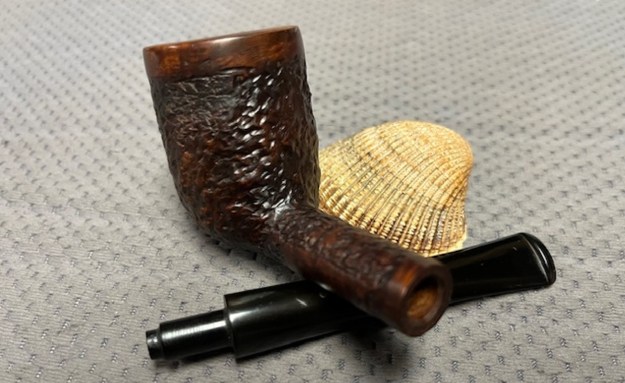
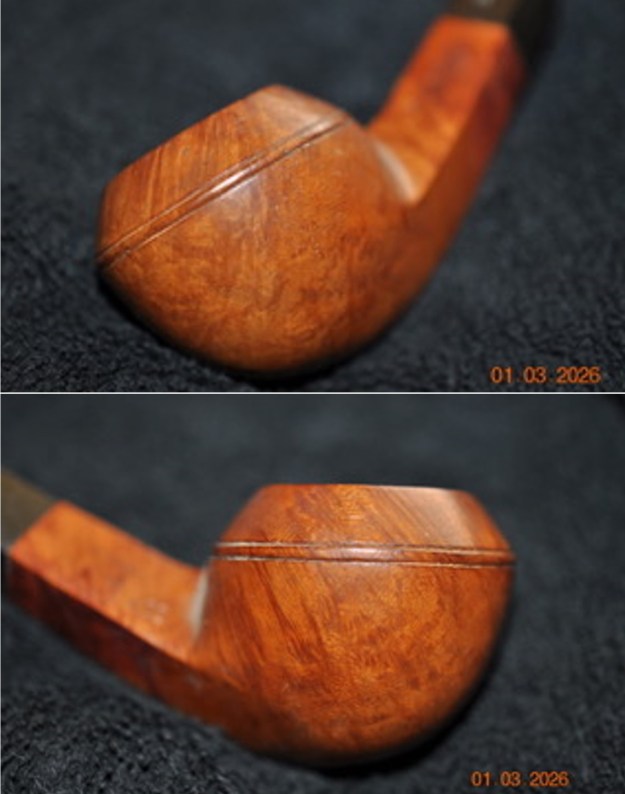
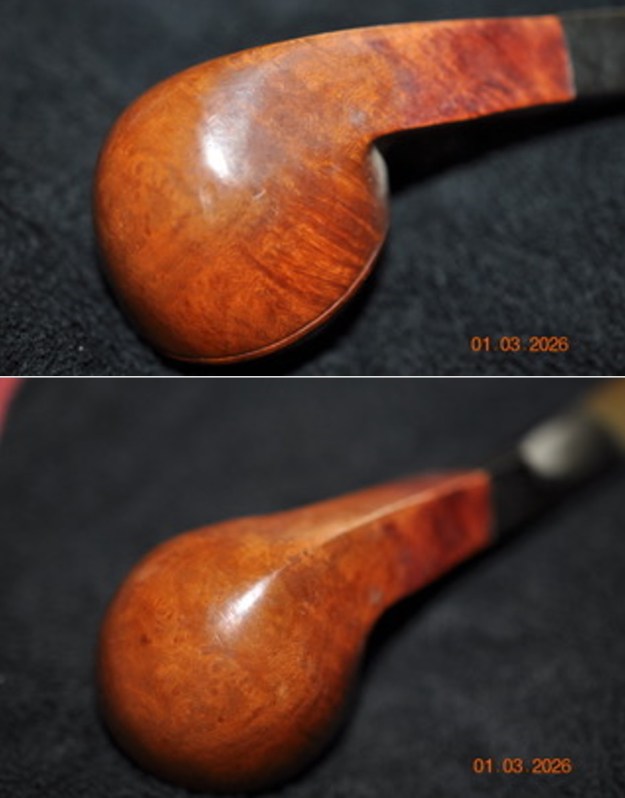
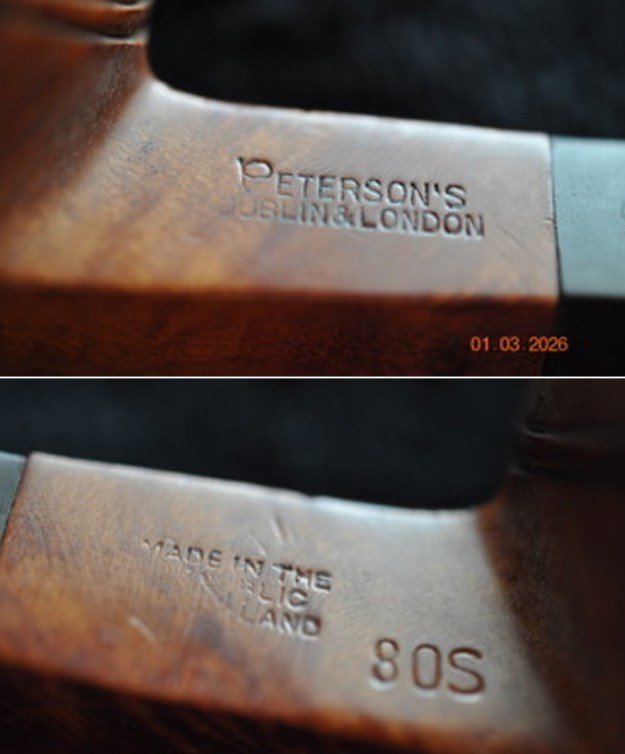
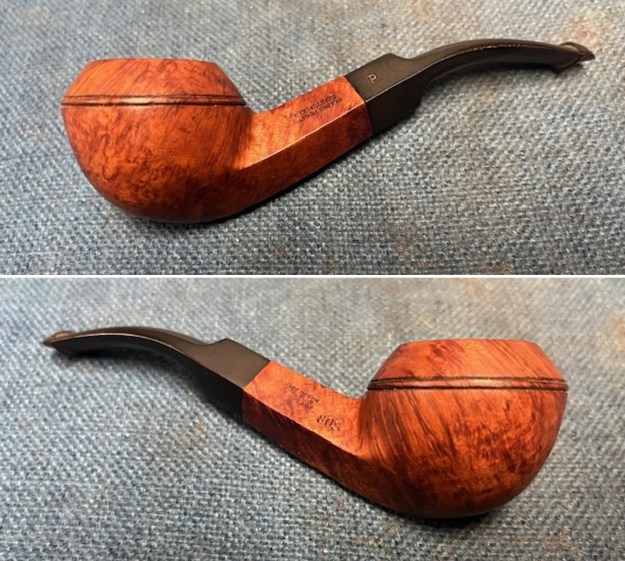
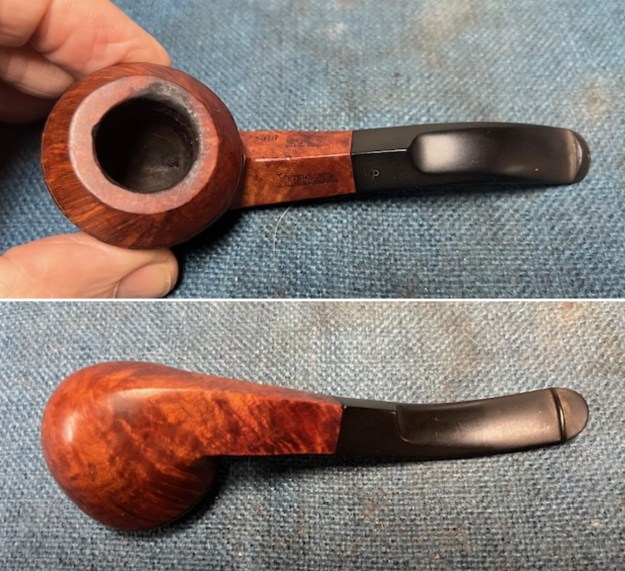
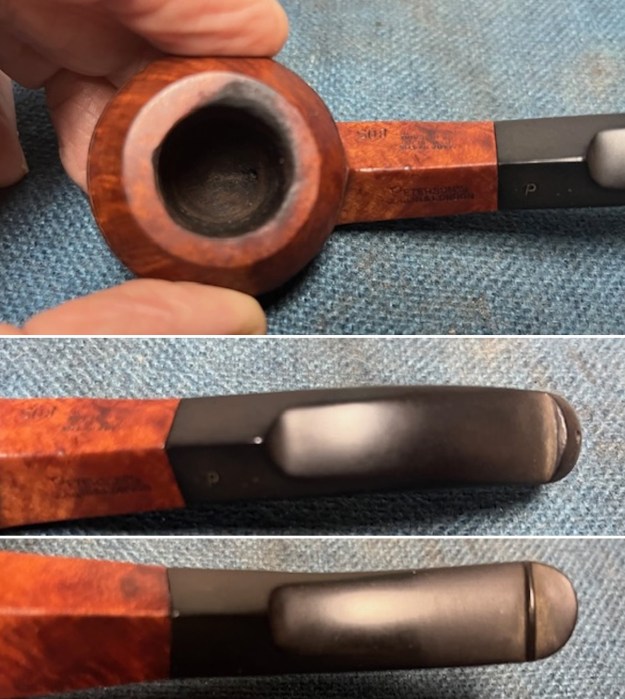
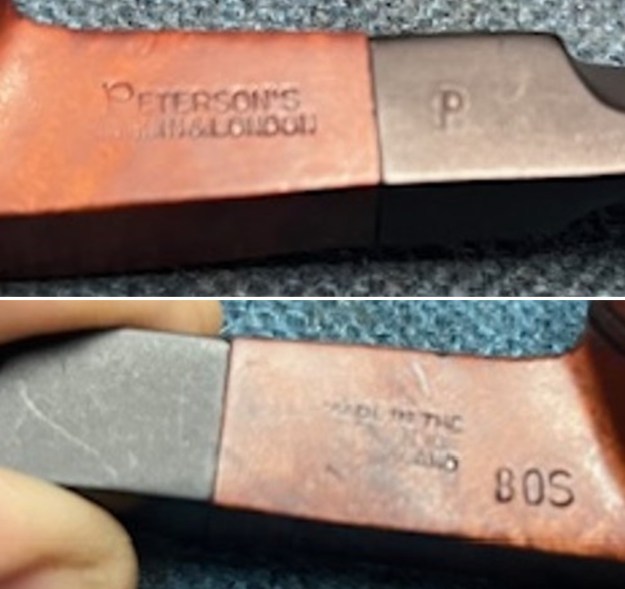
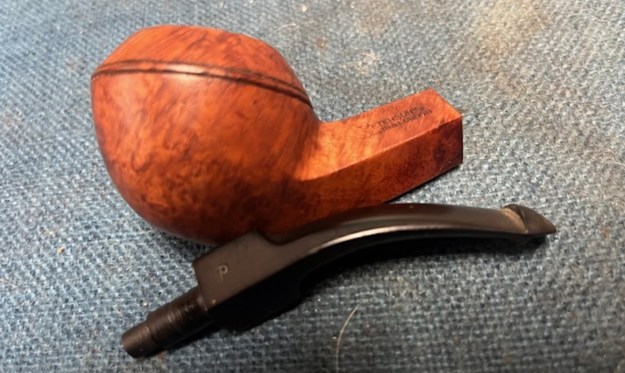
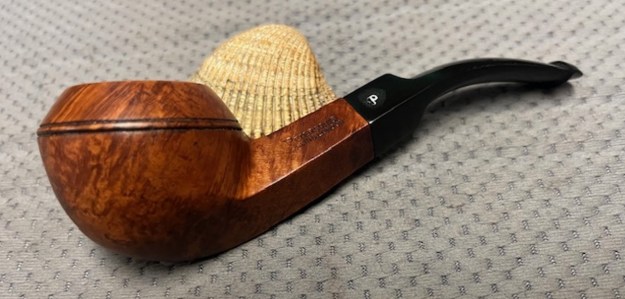
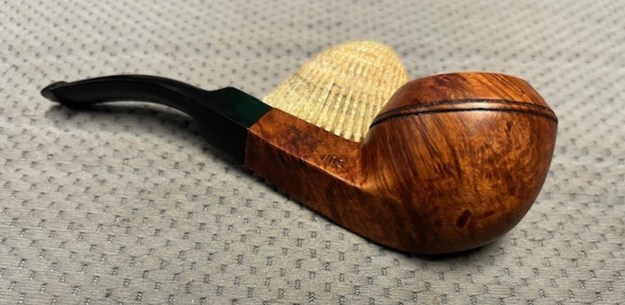
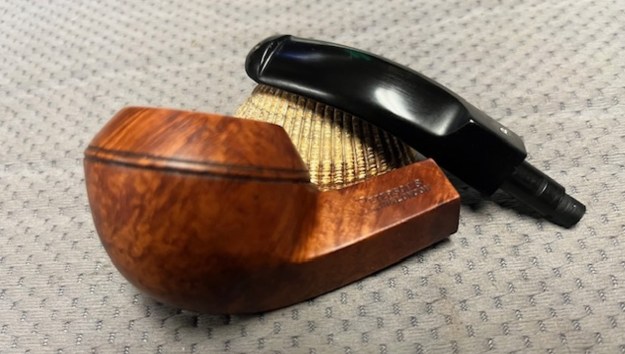
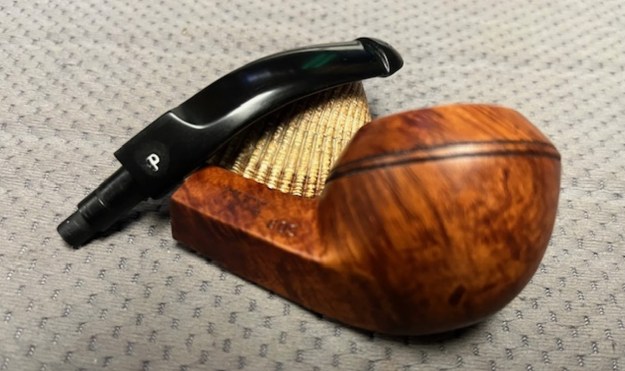
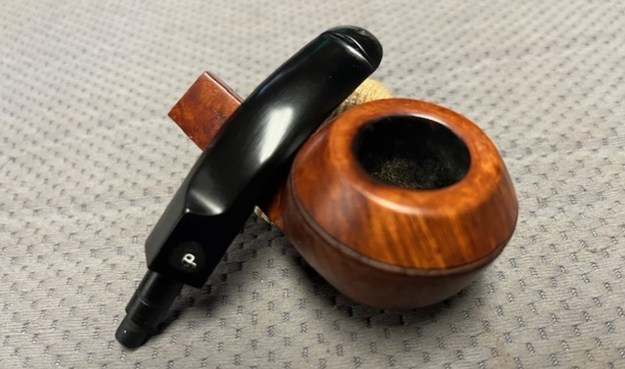
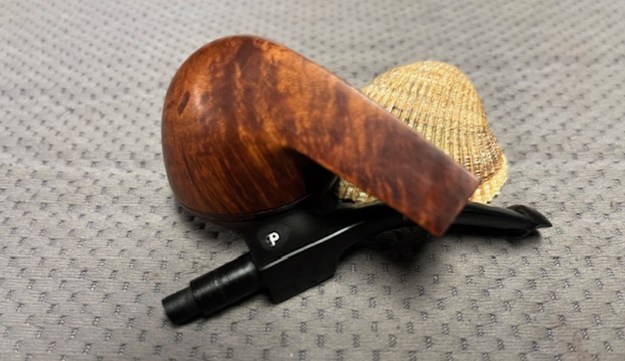
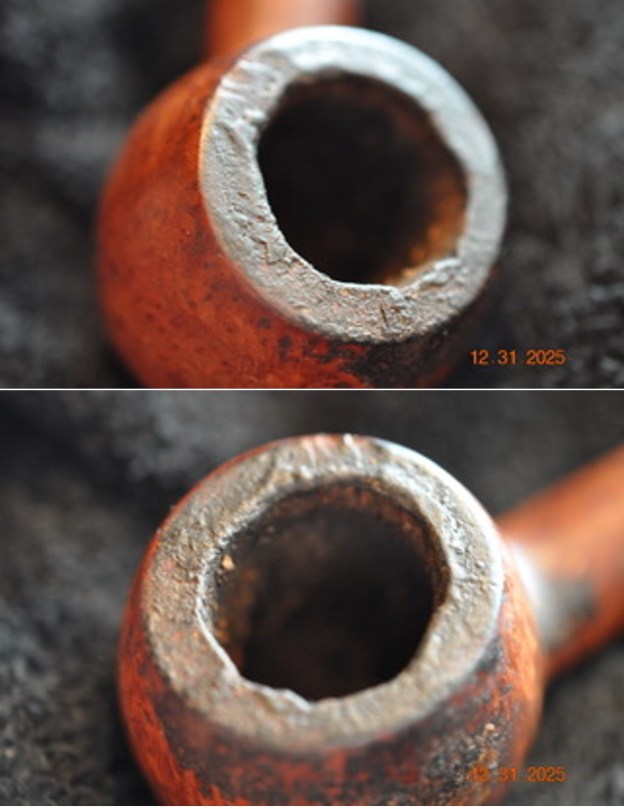
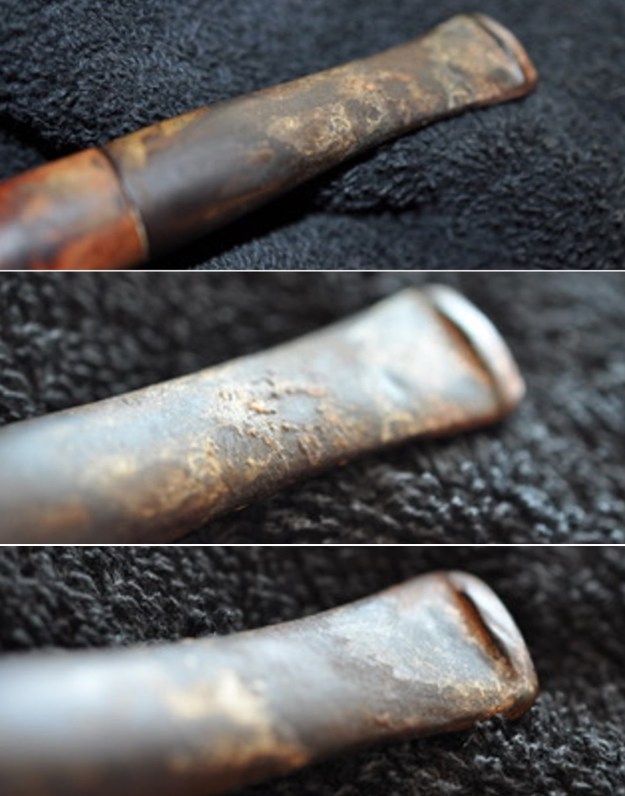
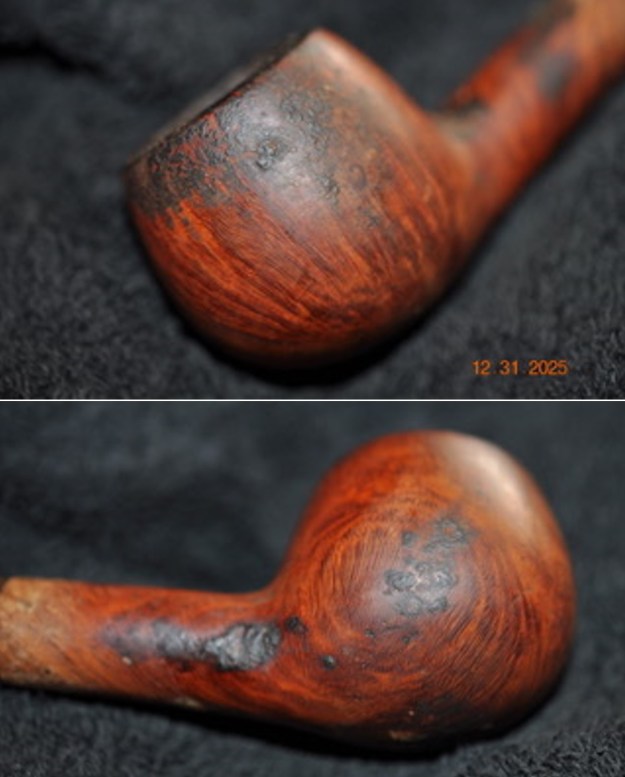
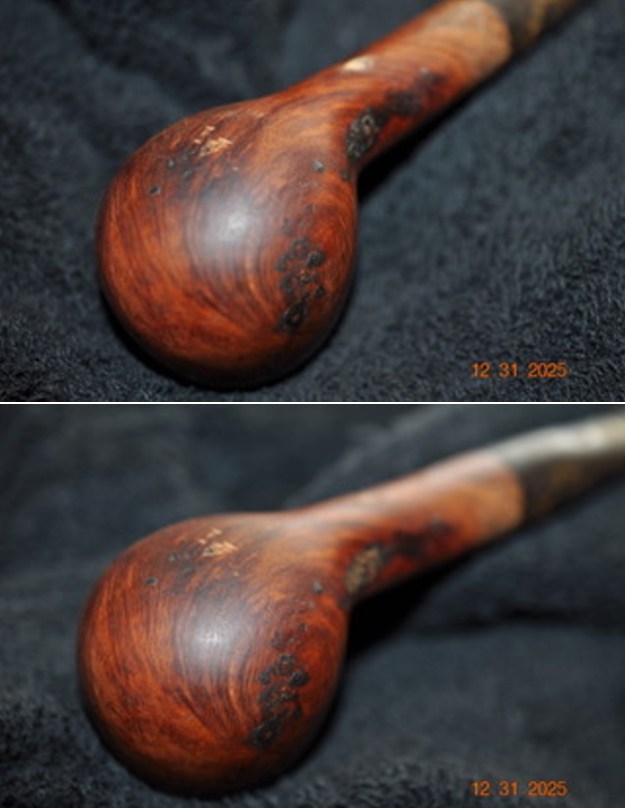
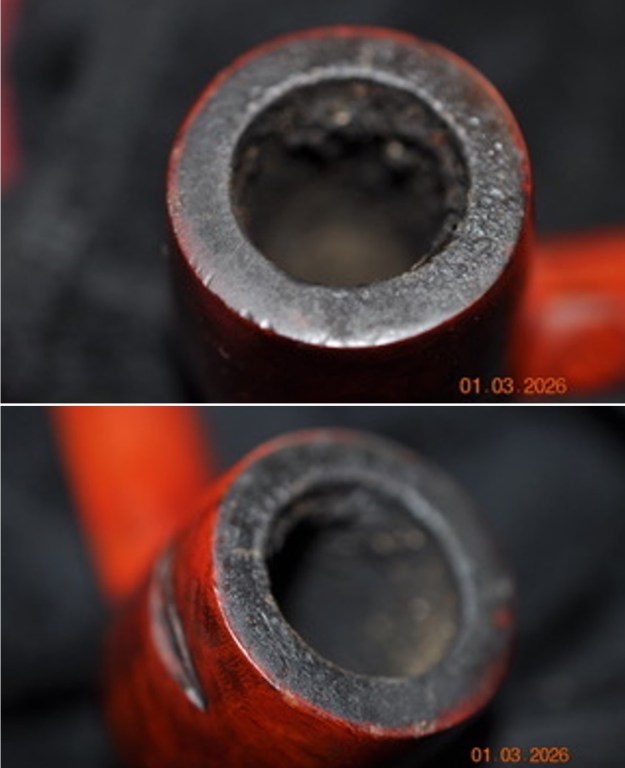
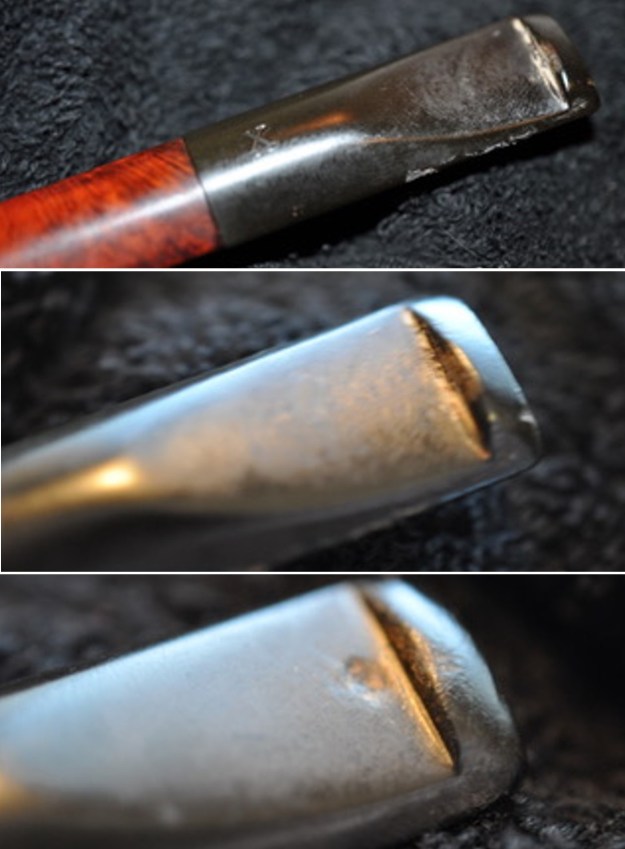
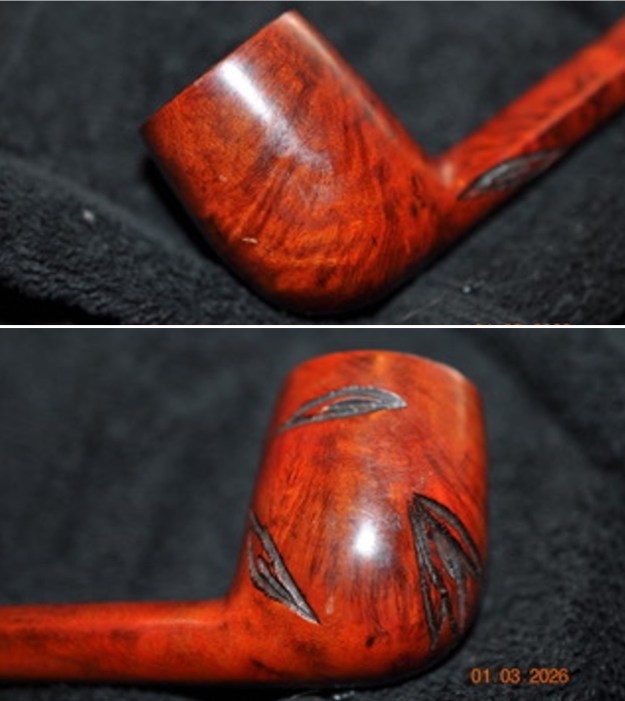
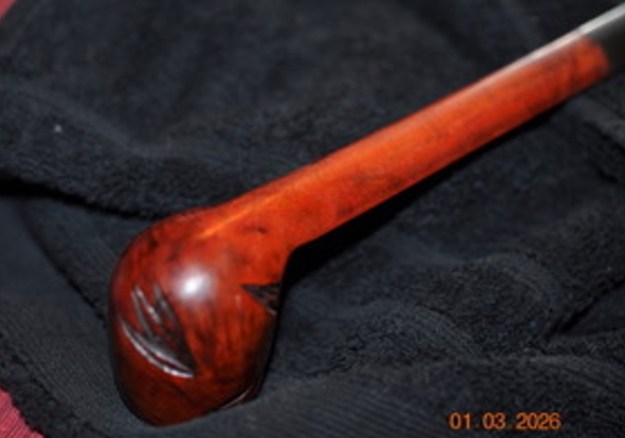
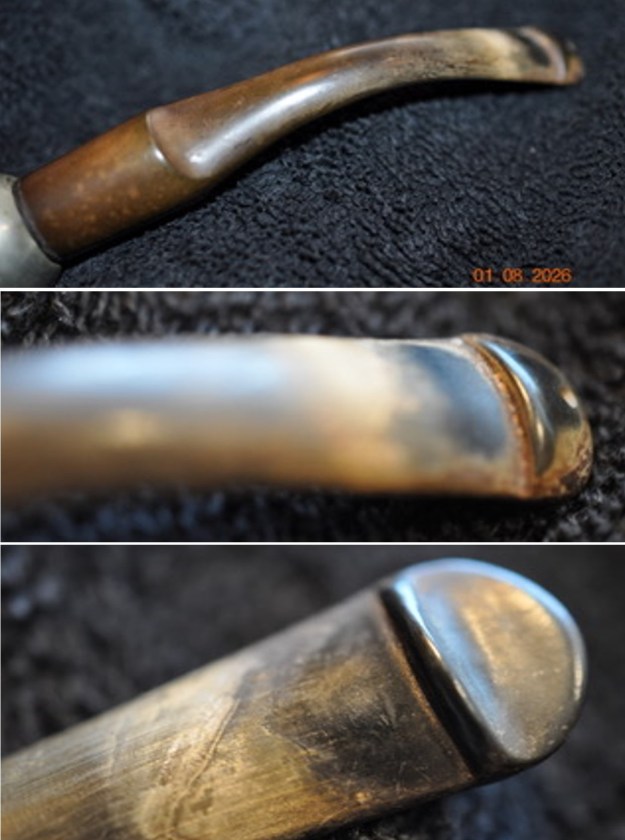
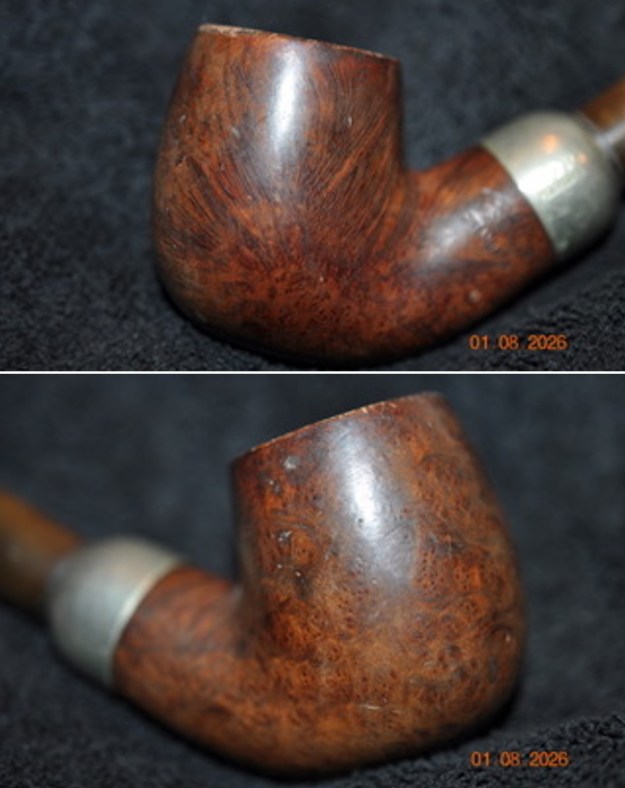
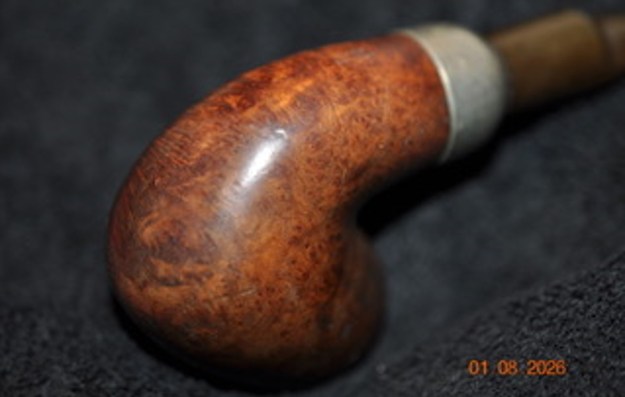
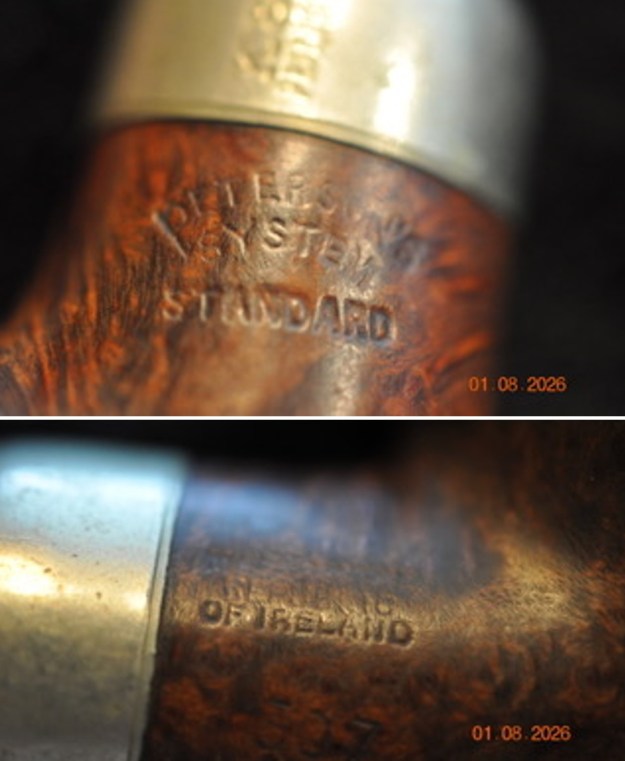
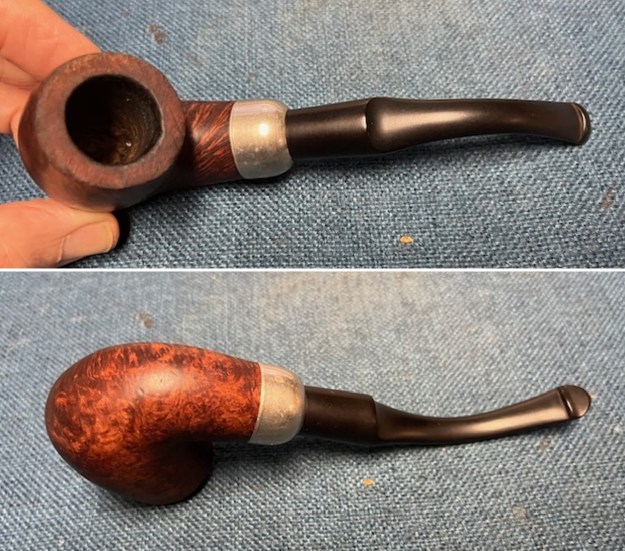
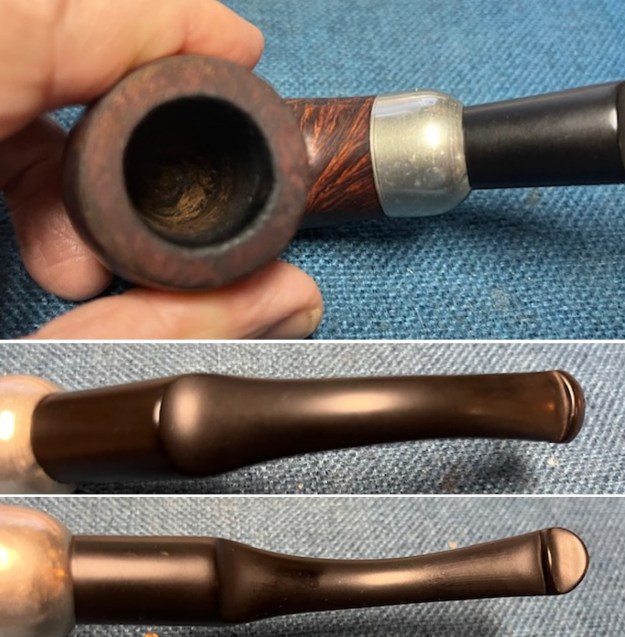
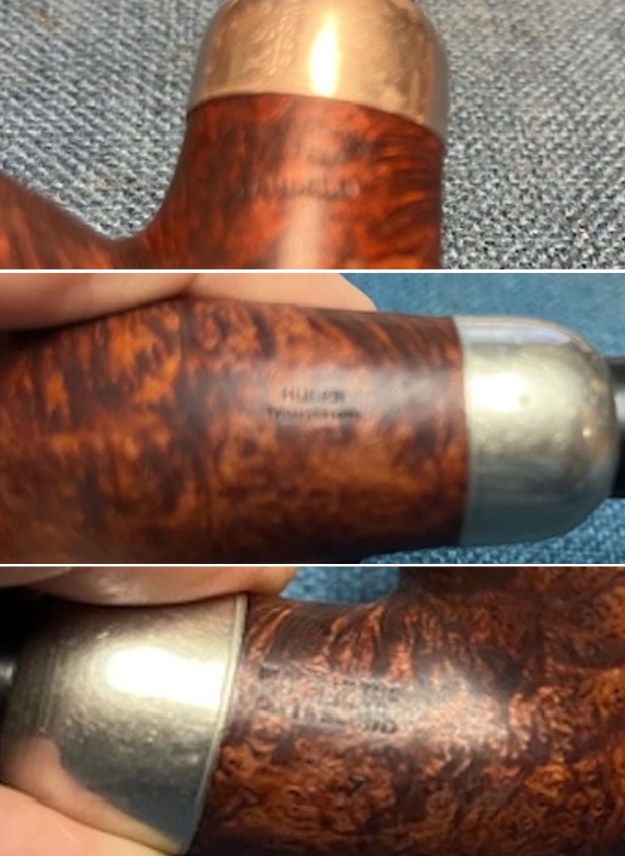
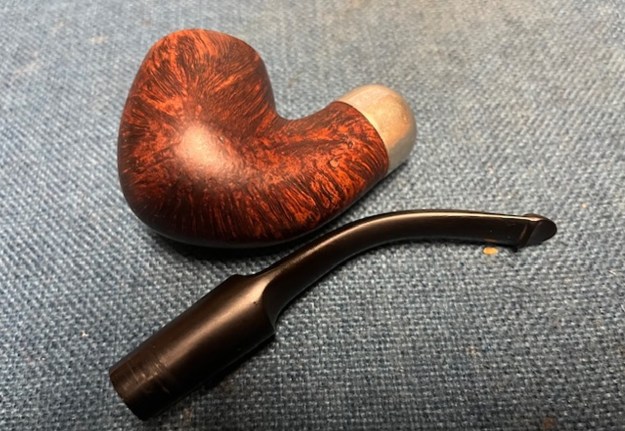
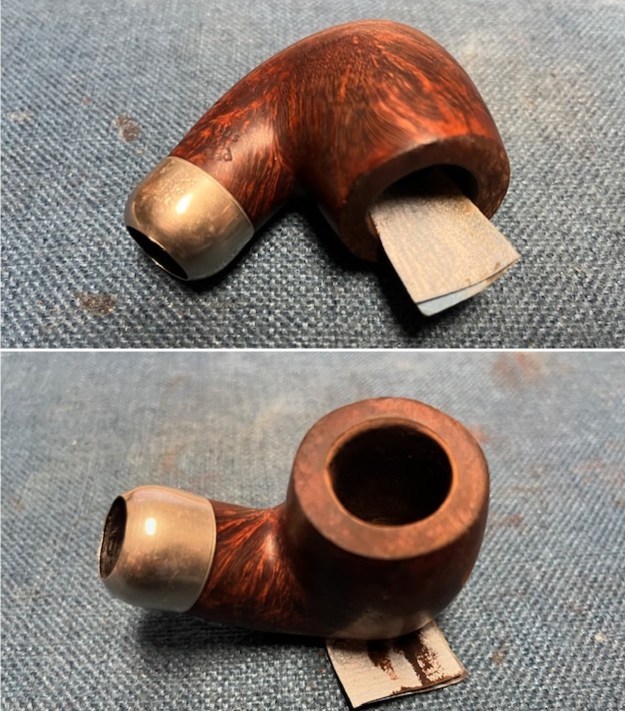
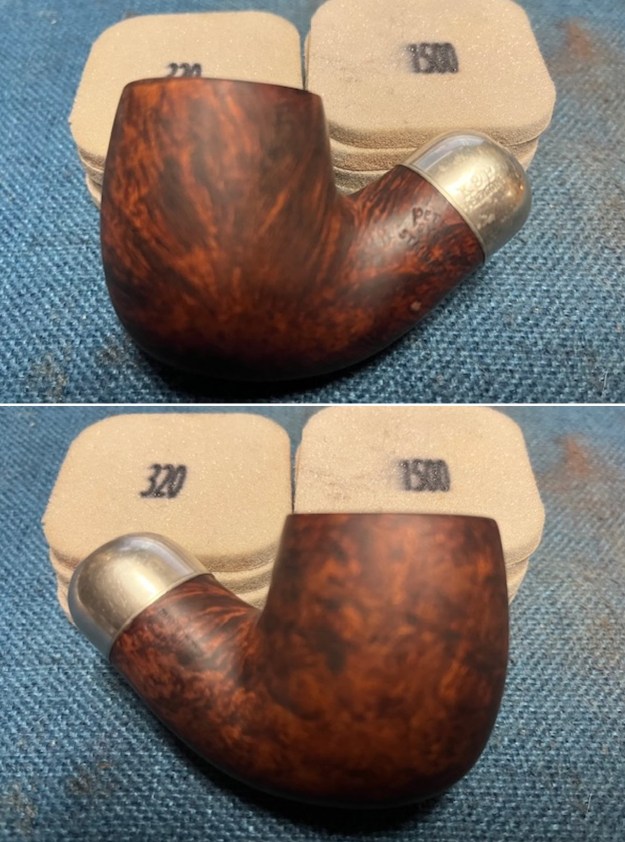
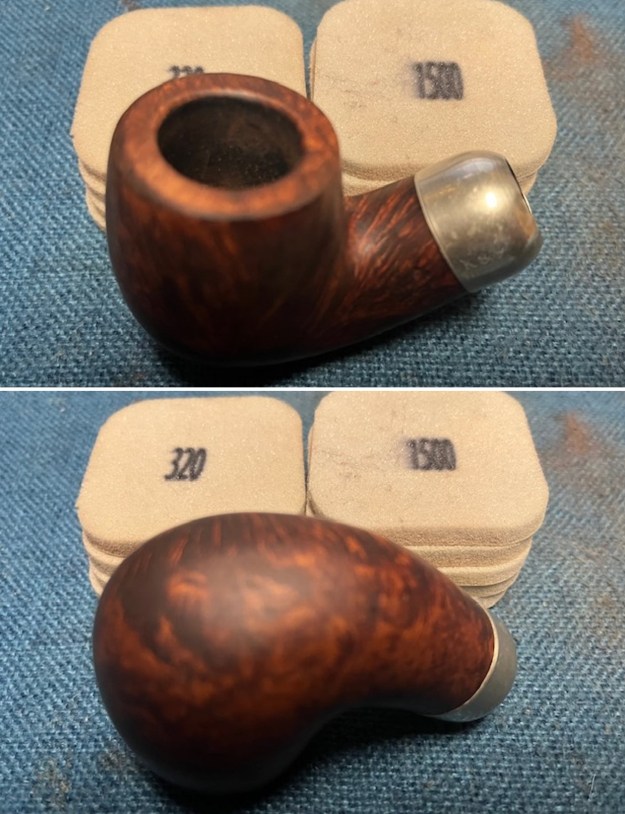
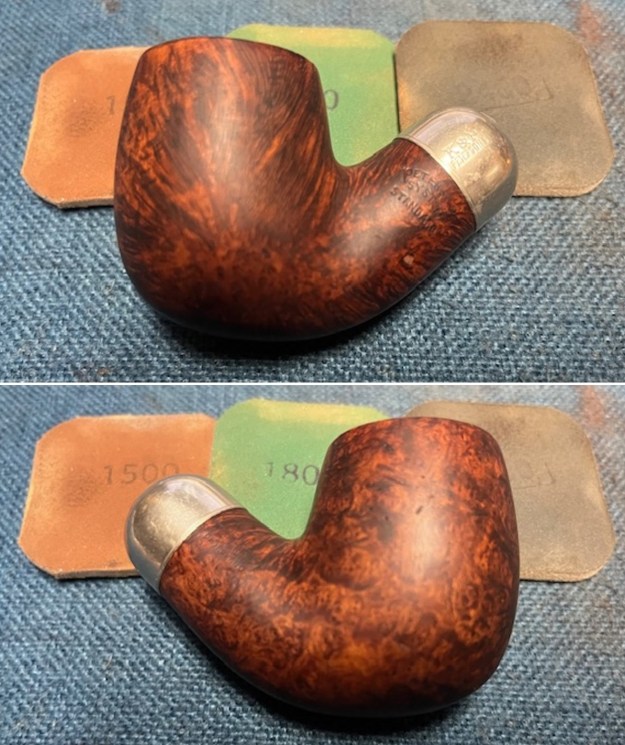
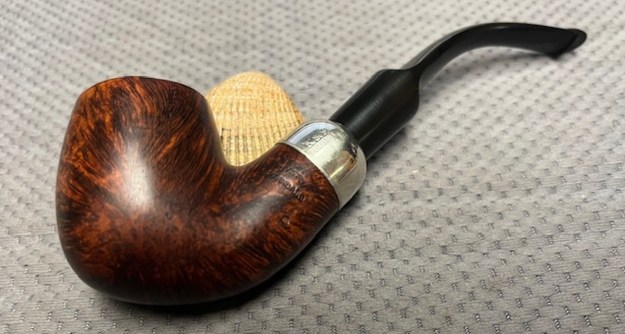
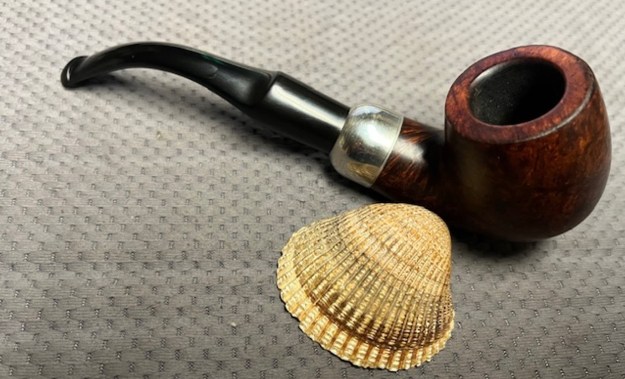
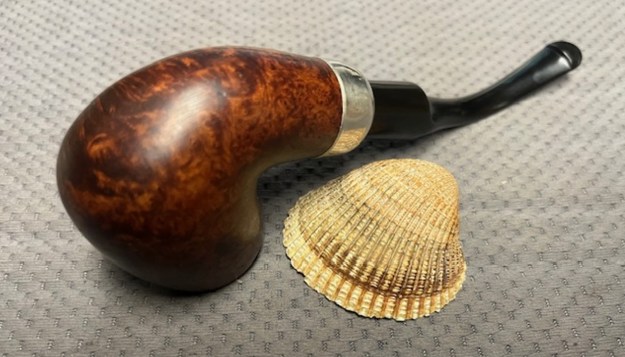
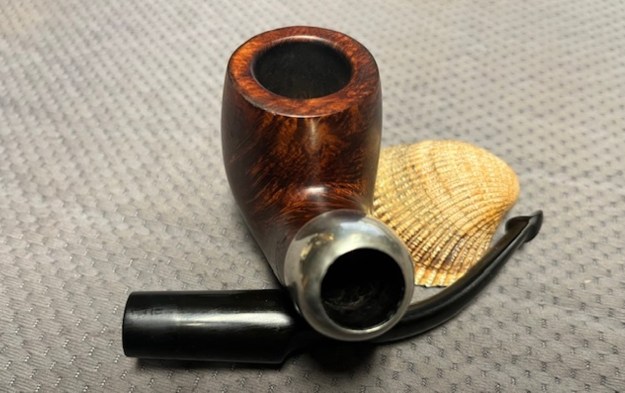
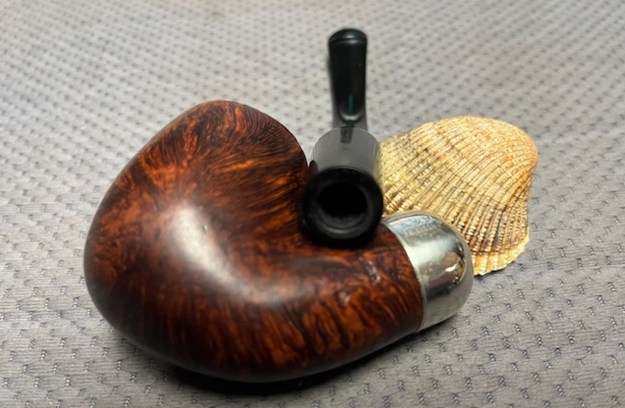
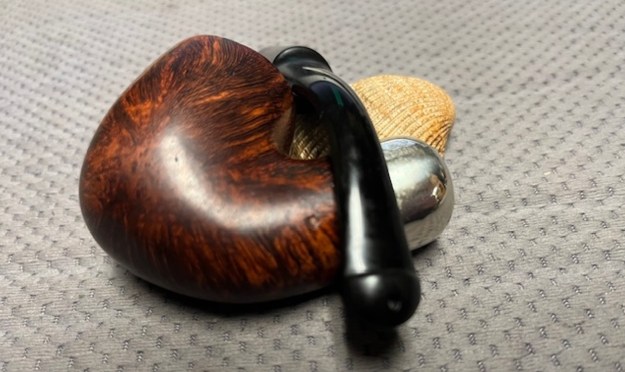
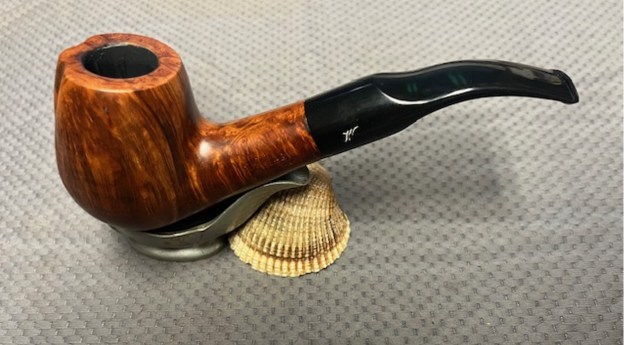
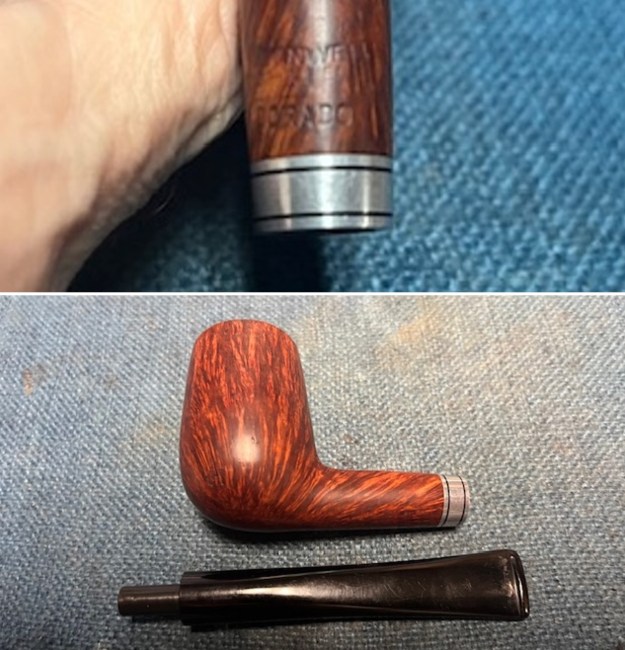
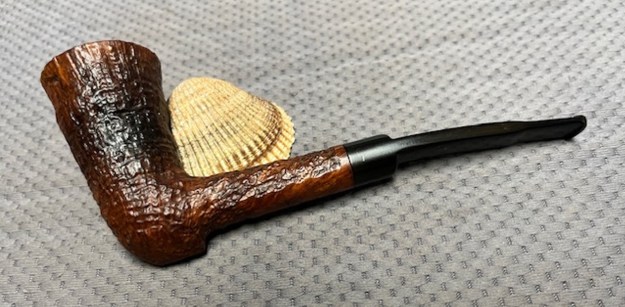
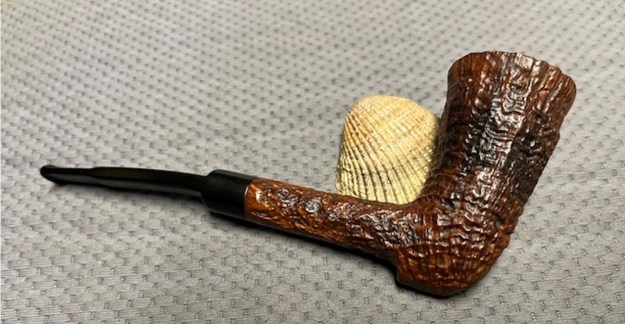
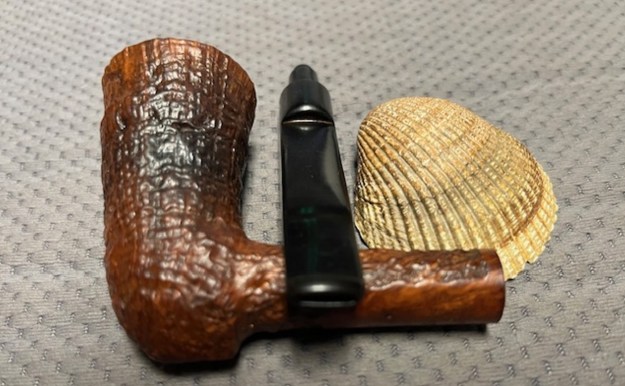
The next pipe I have chosen is another Peterson’s System Standard pipe – this one a sandblast. It is a nice smaller size with a saddle style Peterson’s P-lip stem on the shank end. It came to us from our contact in Copenhagen, Denmark on 04/11/2023. This pipe was obviously a favourite of the previous pipe smoker. It had been well smoked and there was a thick cake in the bowl and some lava overflowing onto the rim top. The rim top had been knocked hard and damaged showing raw briar. There was grime and hand oil ground into the finish. The nickel ferrule was oxidized but undamaged. The pipe was stamped vertically on the underside and read Peterson’s [arched over] System [over] Standard. Next to that it was stamped with the shape number 313 [over] the three-line Republic of Ireland stamp. The ferrule was stamped K& P [over] the three common hallmarks on System pipes with Nickel ferrules – a shamrock, a wolf hound, and a tower. That is followed by Peterson’s. The stem was lightly oxidized and had tooth marks and chatter on both sides ahead of the button. Jeff took photos of the pipe before he started his clean up work on it. Jeff captured the cake in the bowl and the damaged rim top and front outer edge on the bowl in his photos. You can also see the lava on the back rim top and edge in the photos. The stem surface had tooth chatter and marks and was oxidized. He took photos of the sides and the heel of the bowl to show the interesting grain patterns in the sandblast briar. It was quite beautiful. He took photos of the stamping on the underside of the shank and on the ferrule. It is readable and clear as noted above.To figure out a date on this Peterson’s pipe, I turned to The Peterson Pipe Project Blog to see what I could find out about it (http://thepetersonpipeproject.blogspot.com/2007/07/dating-peterons-pipes.html). I quote from the above site below.

Stamping of Bowl:

During the years of Kapp and Peterson’s business operations, the country of Ireland has undergone several name changes and K&P’s stamping on their pipes reflects these changes. Knowing these changes, a Peterson pipe can be roughly dated and placed in “eras.”

The Republic Era is from 1949 until the present. The Republic of Ireland was formed on 17 April 1949. From 1949 to present the stamp for this era is “Made in the Republic of Ireland” in a block format generally in three lines but two lines have been used with or without Republic being abbreviated.

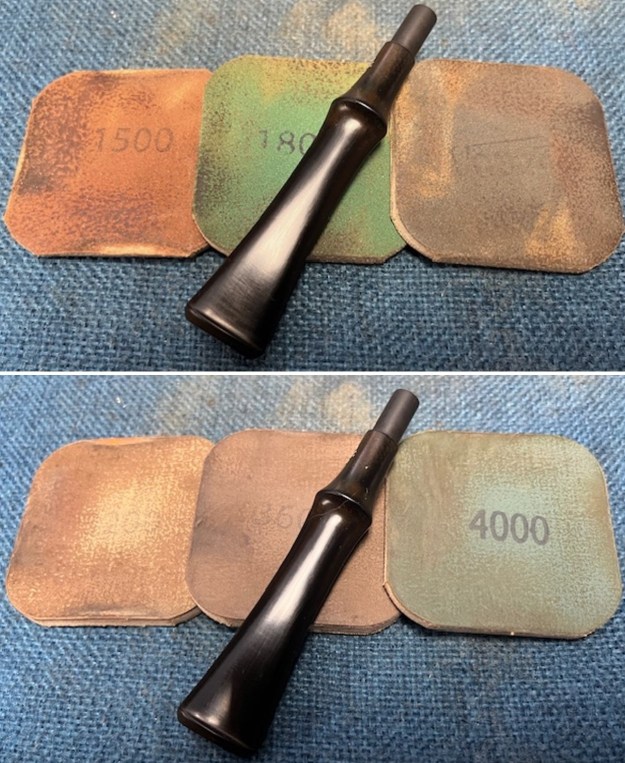
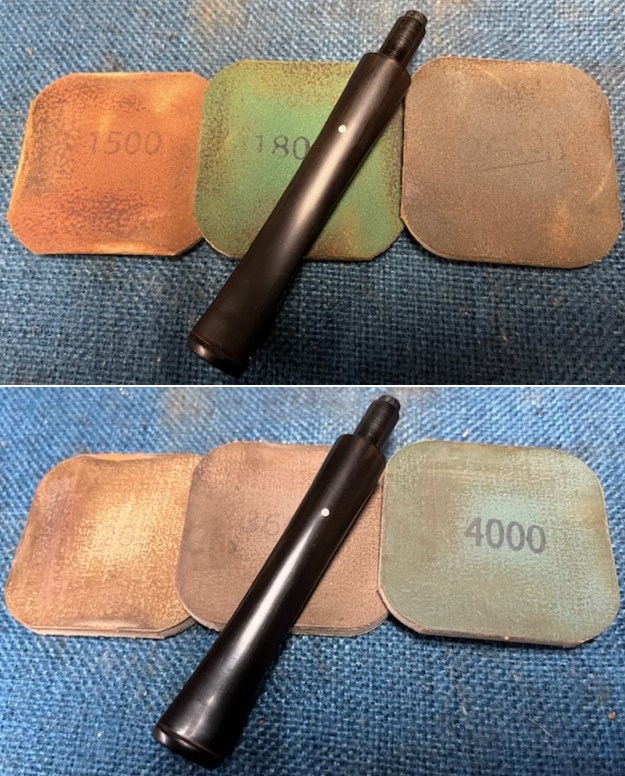
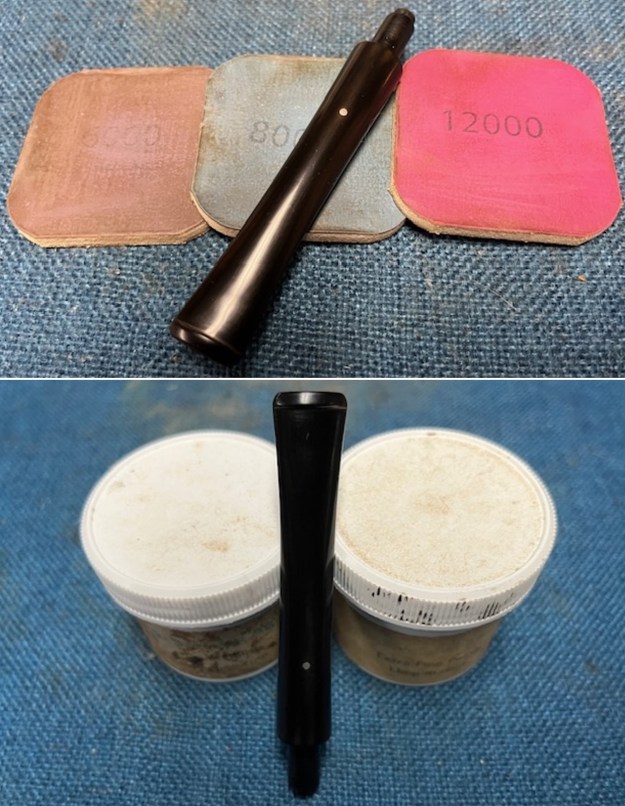
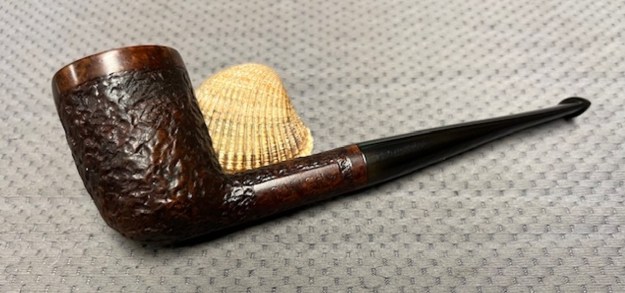
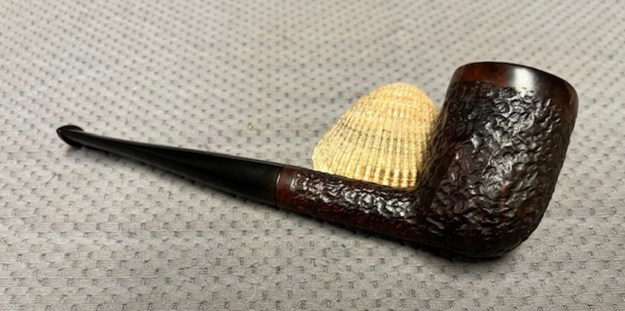
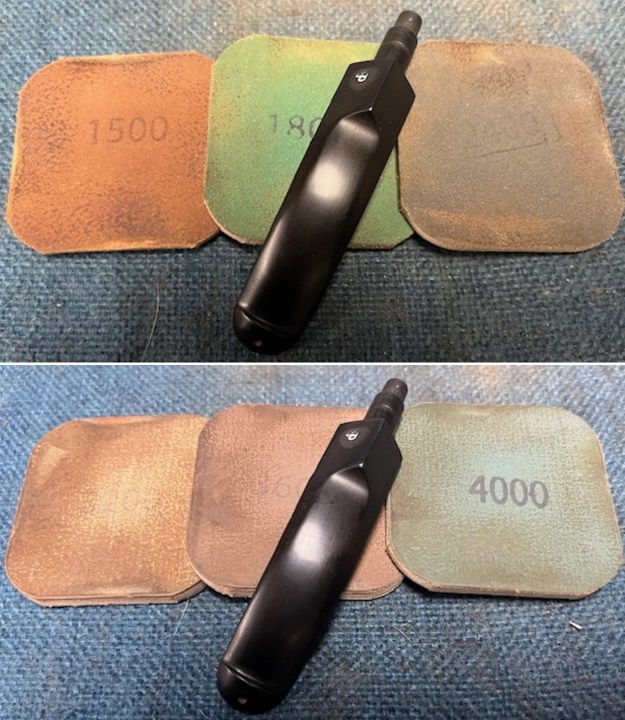
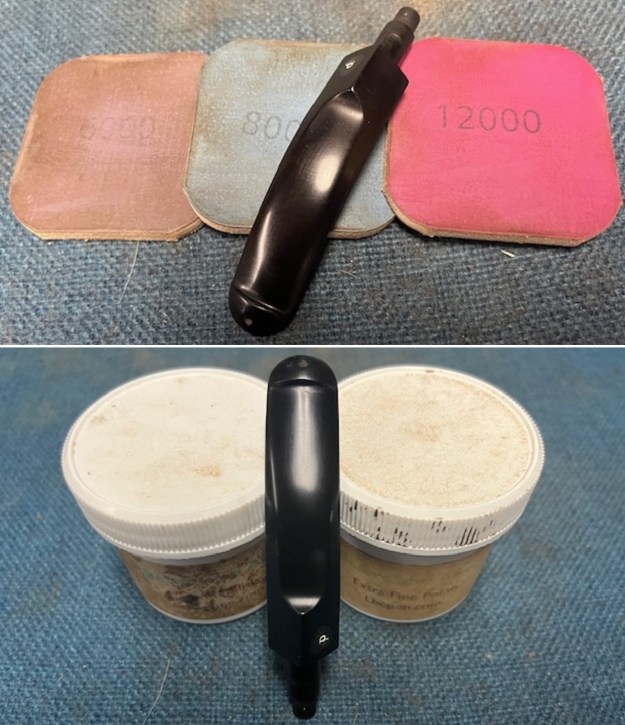
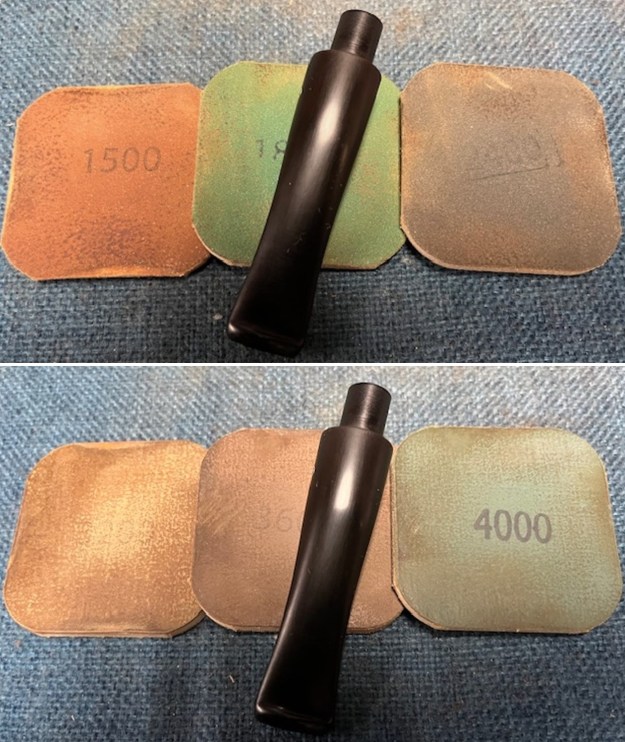
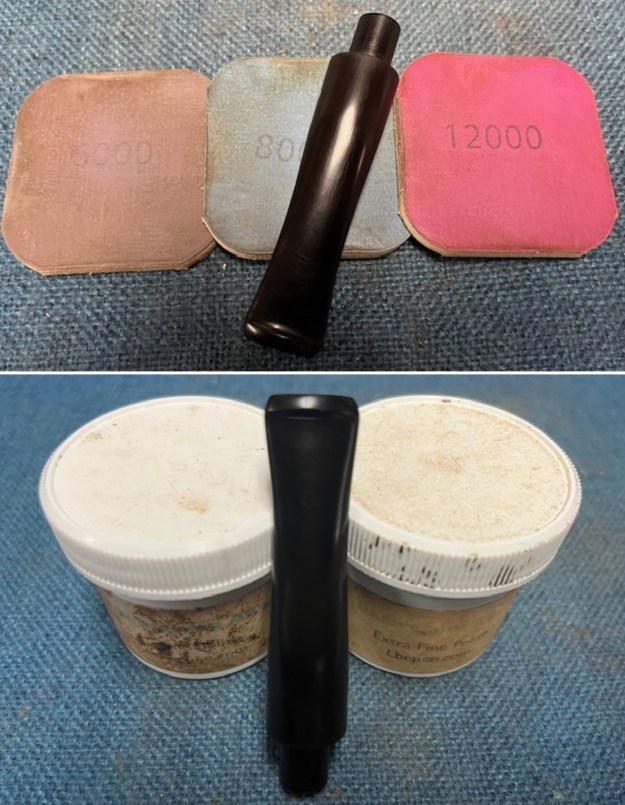
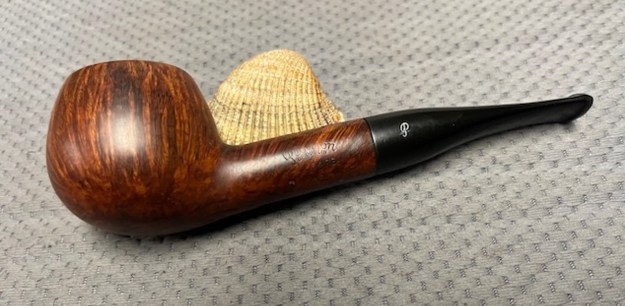
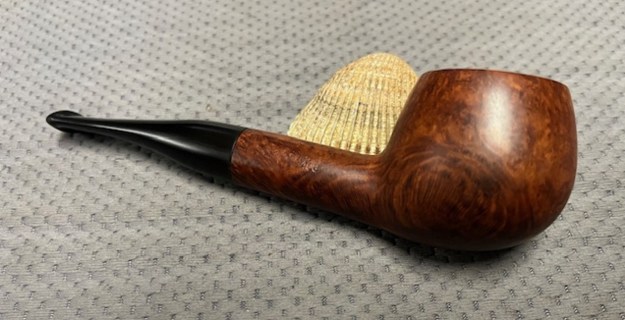
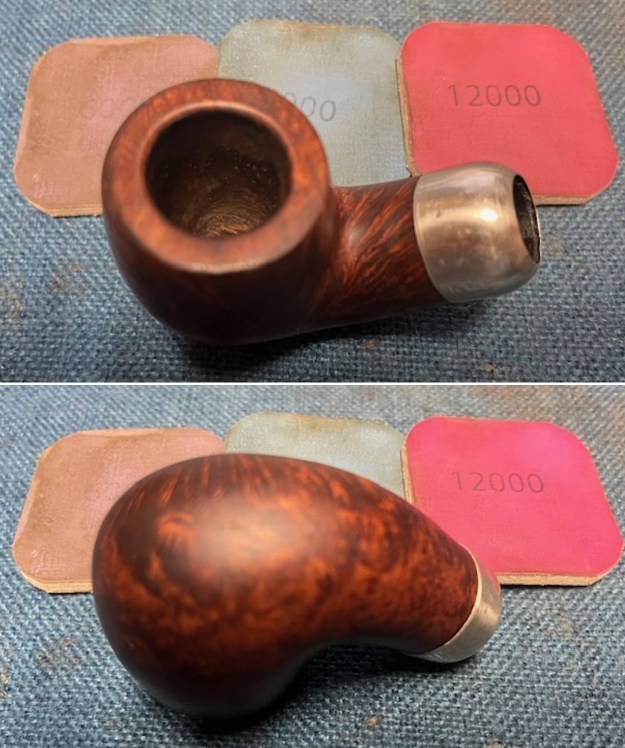
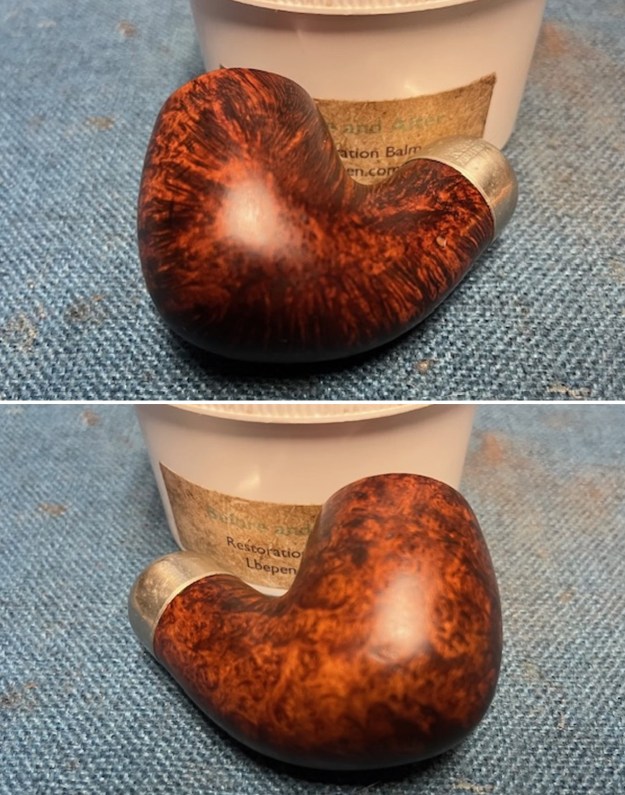
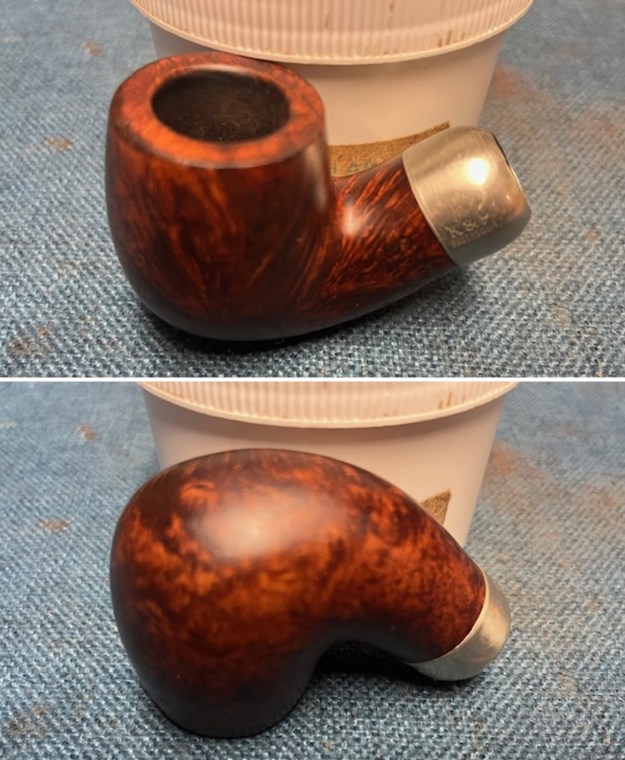
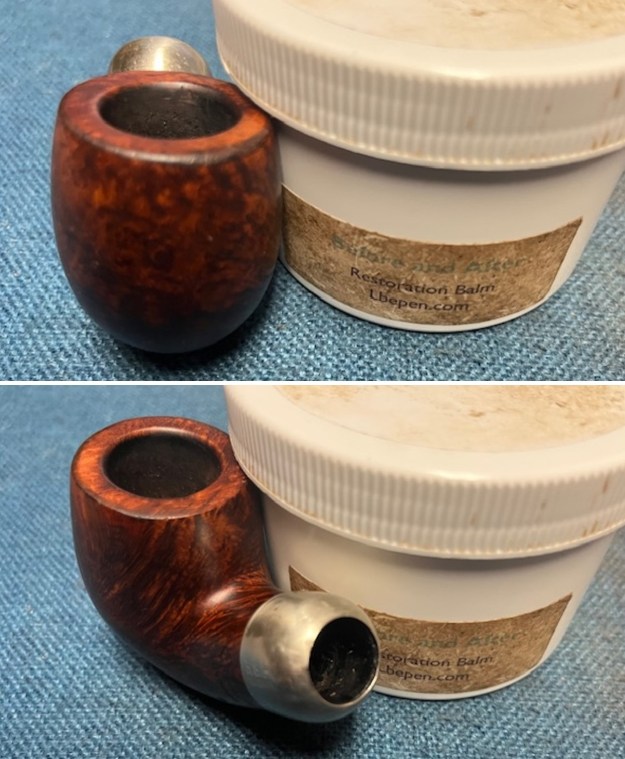
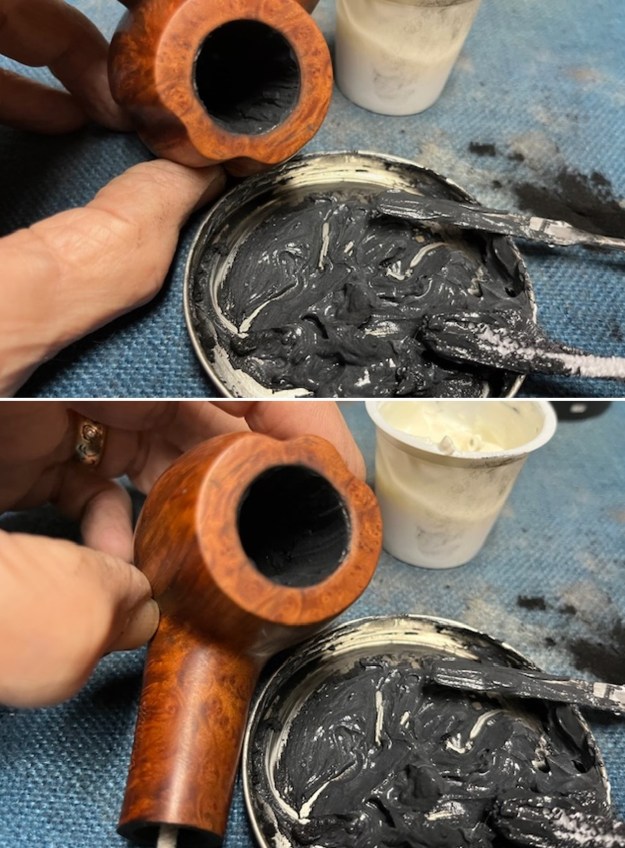
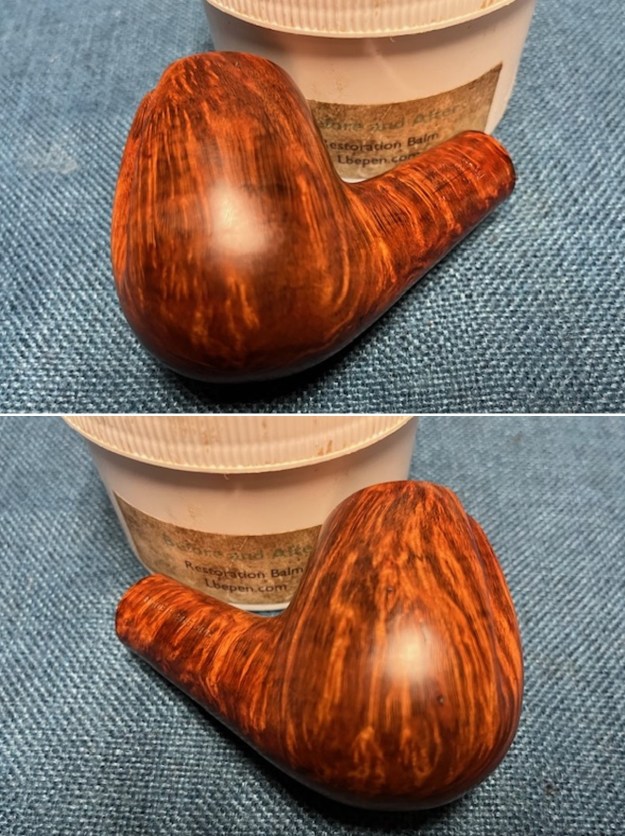
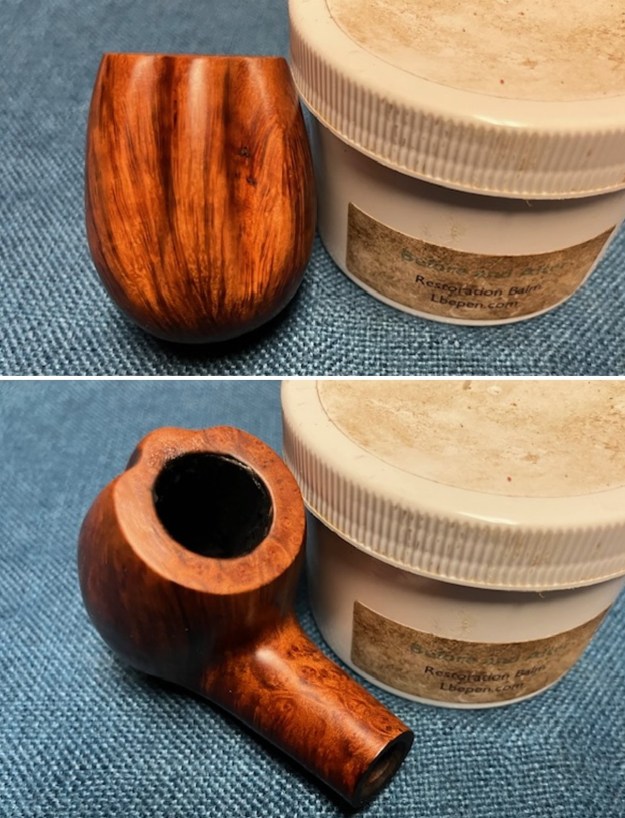
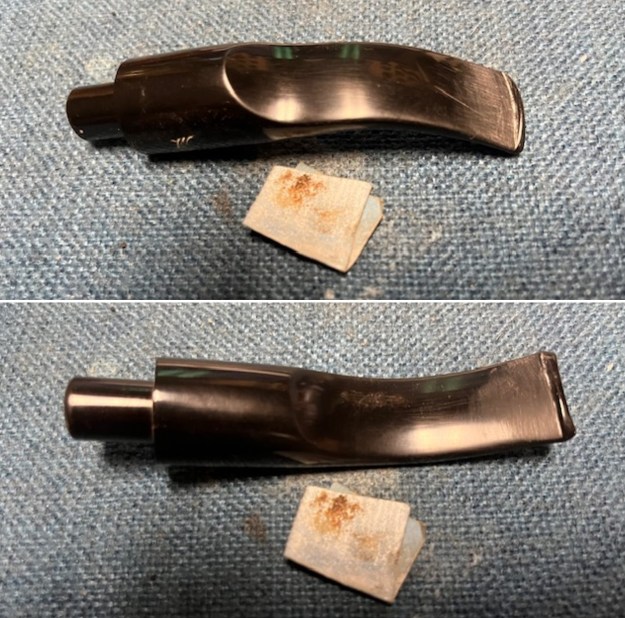
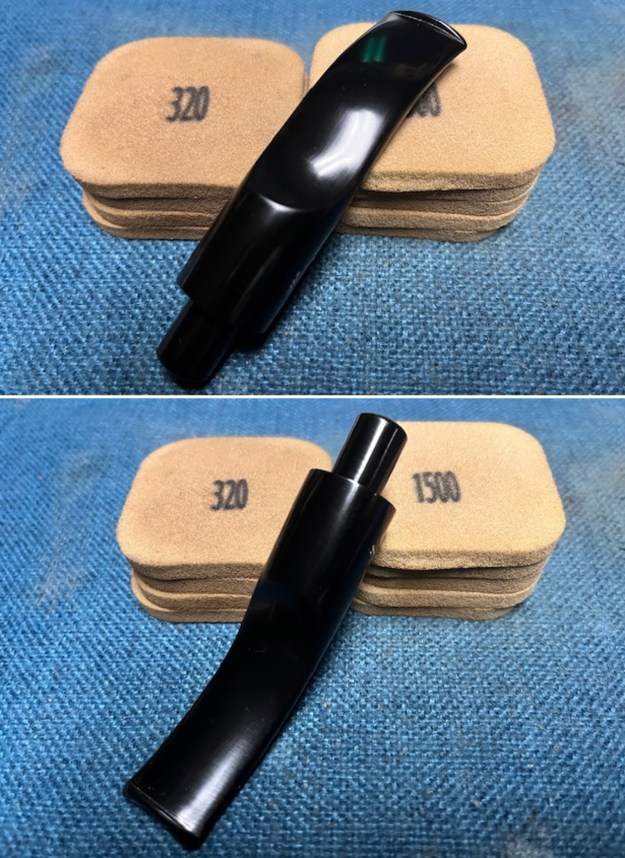
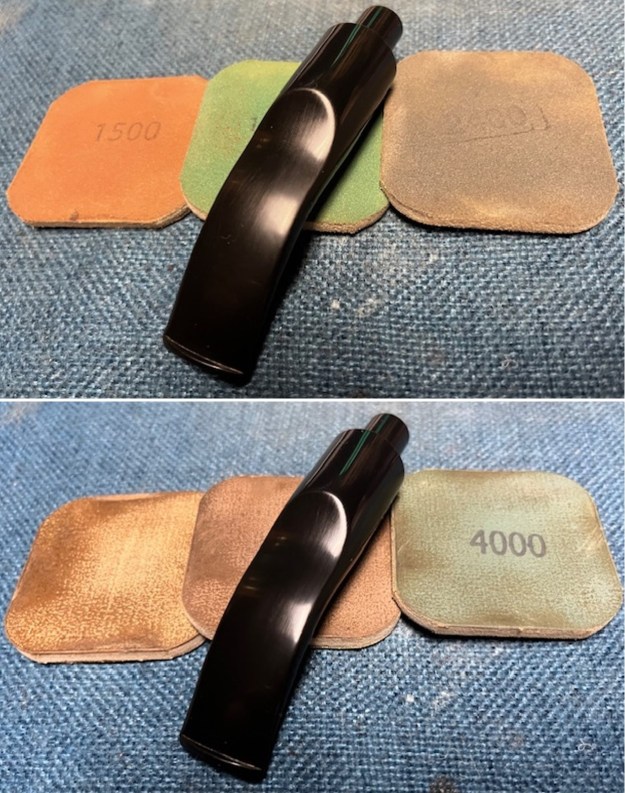
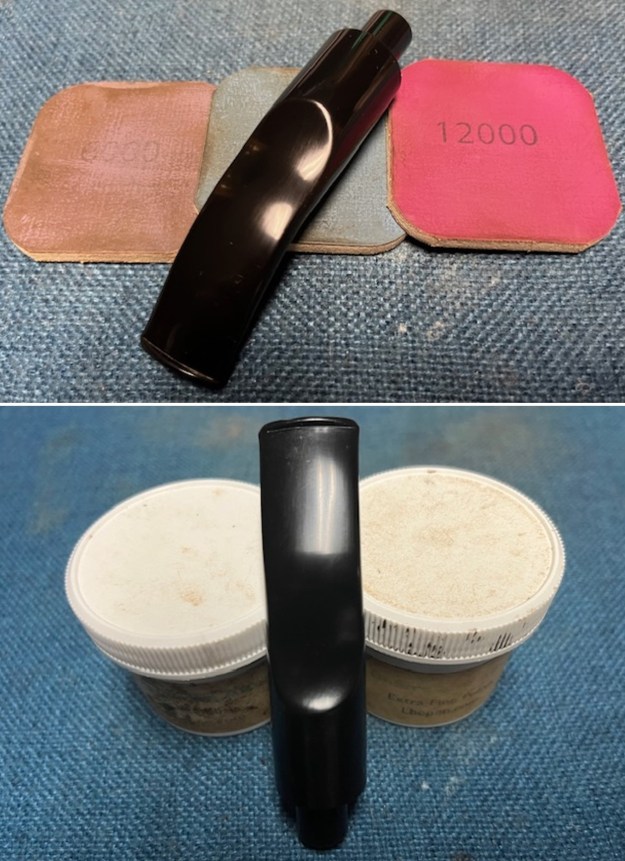
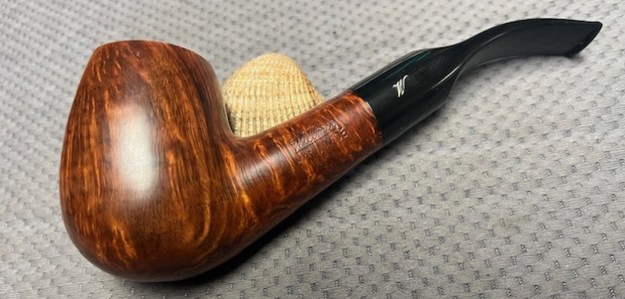
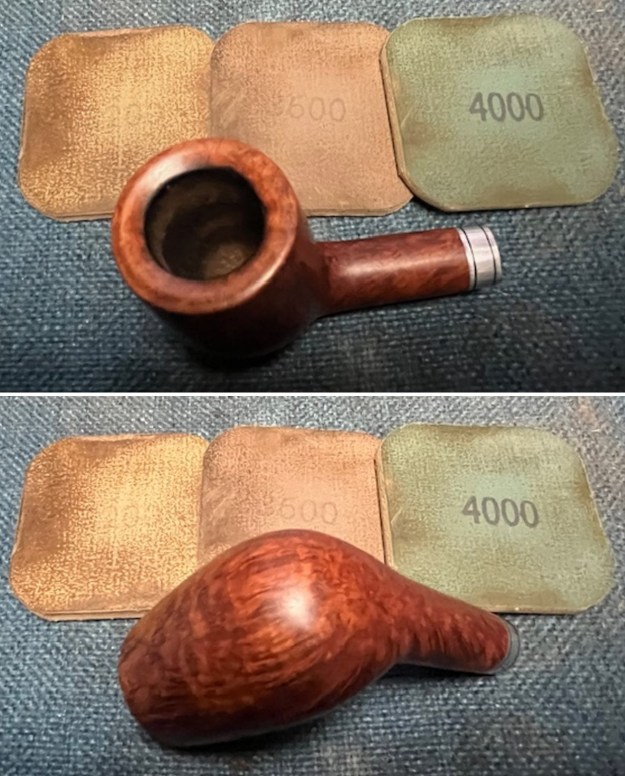
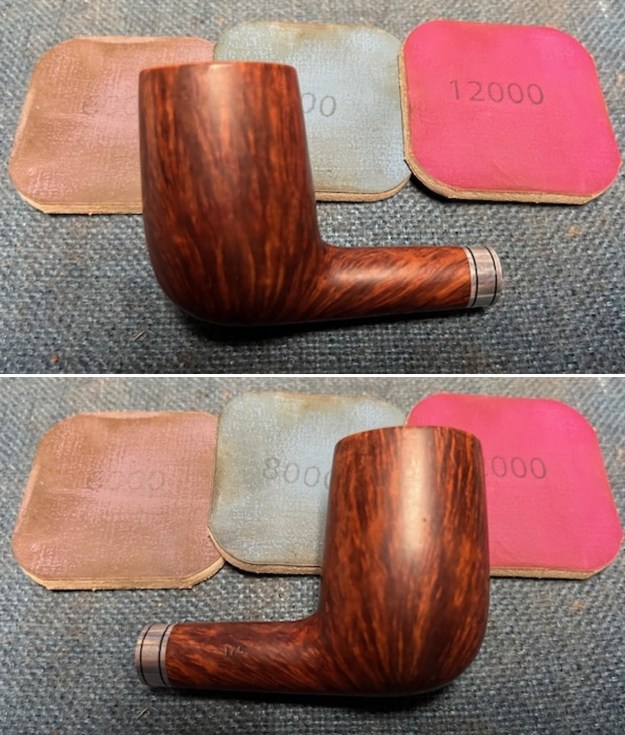
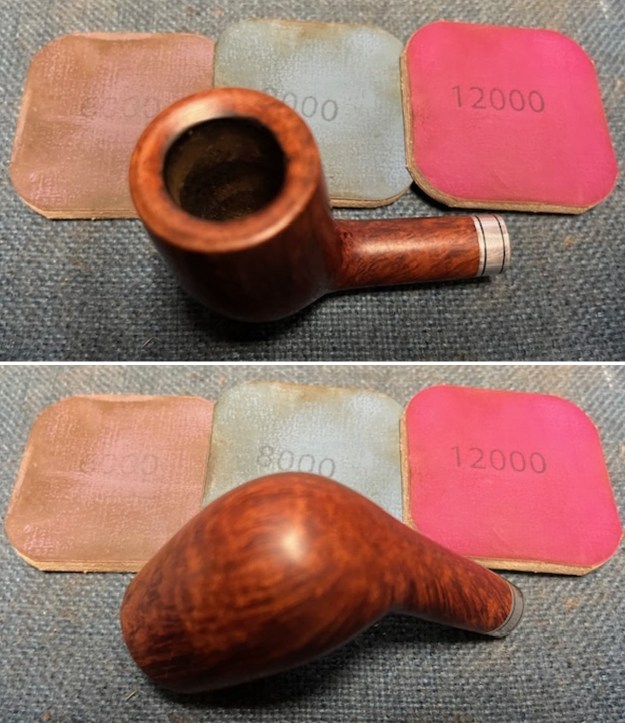
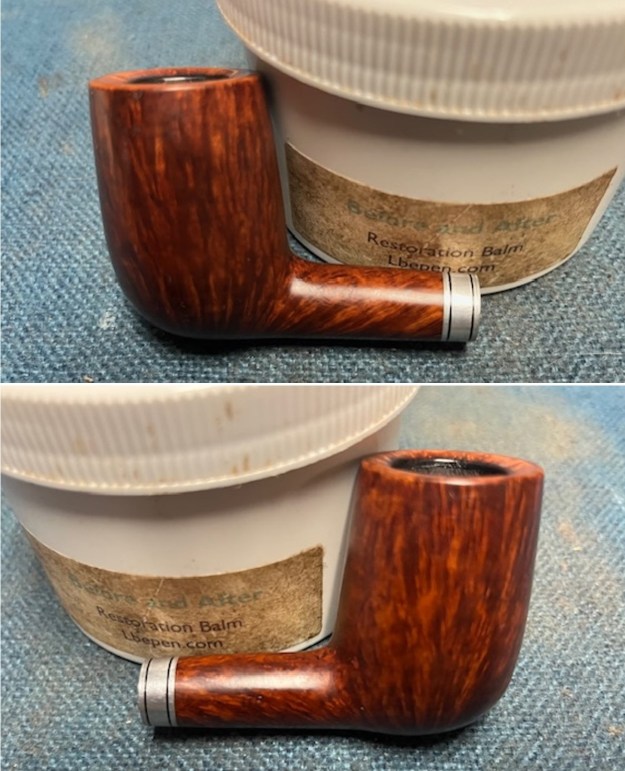
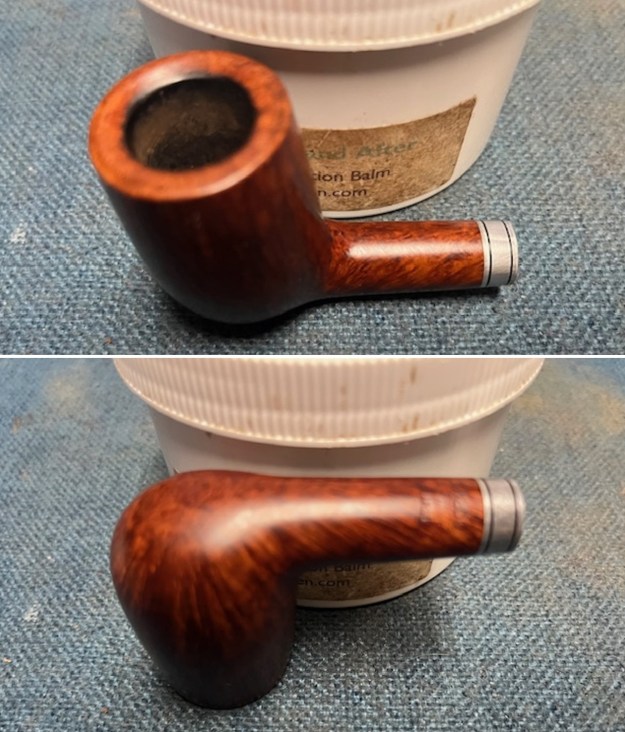
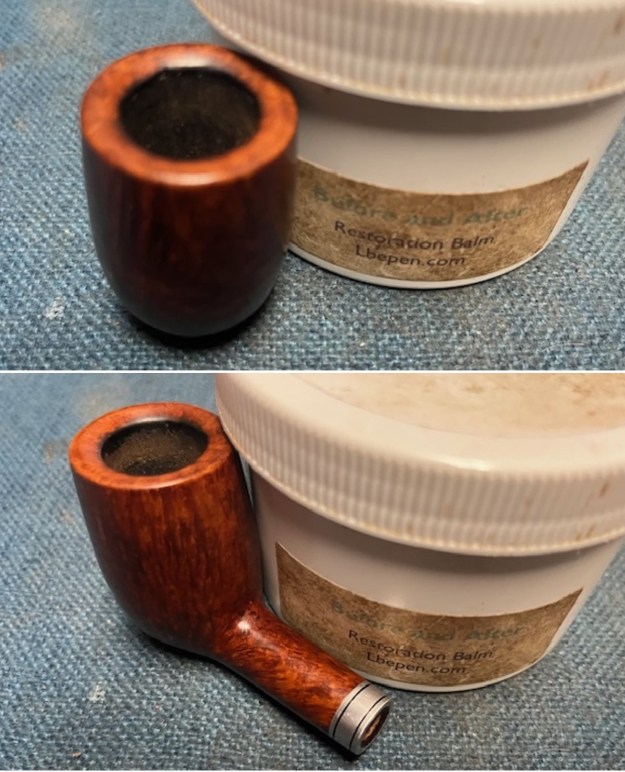
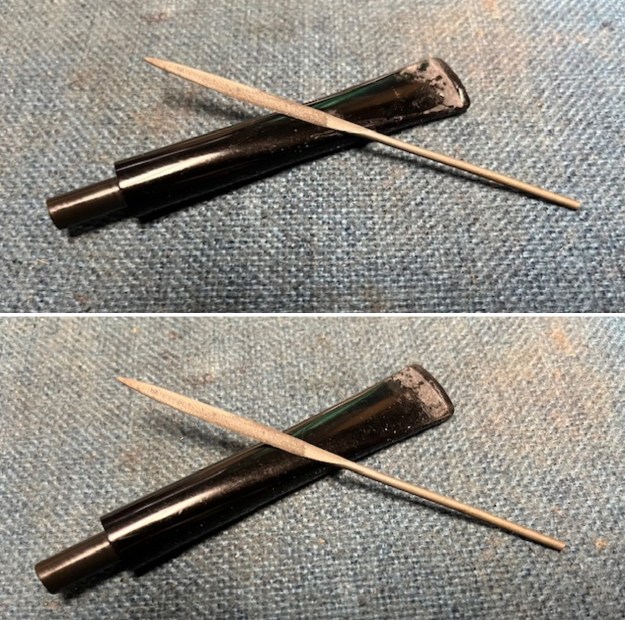
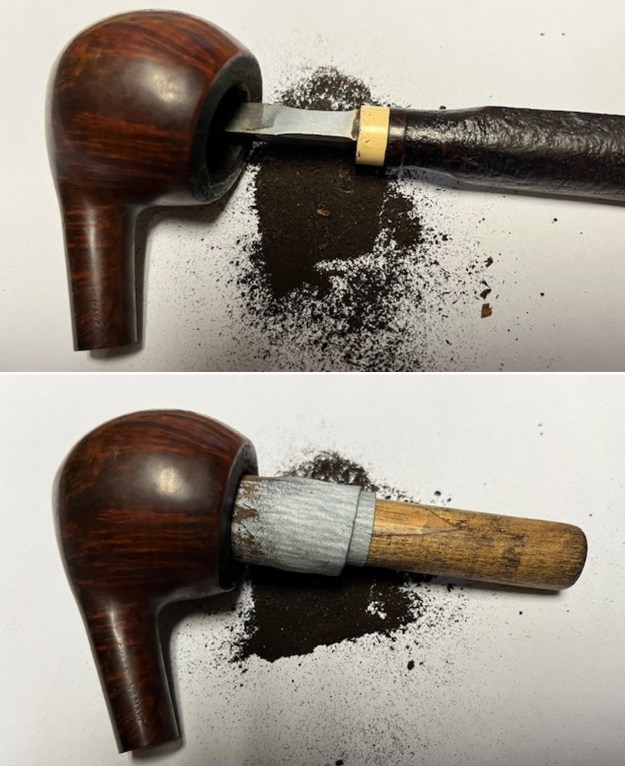
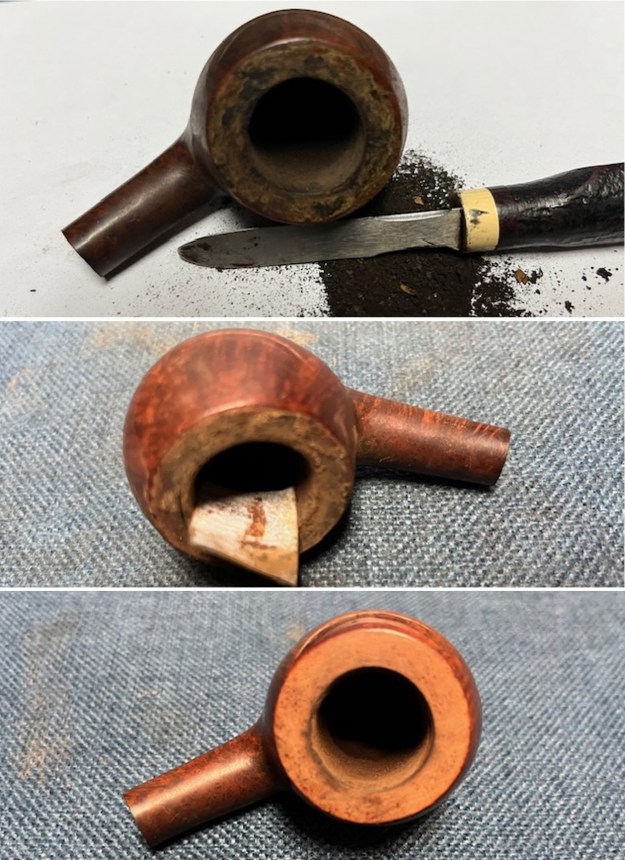
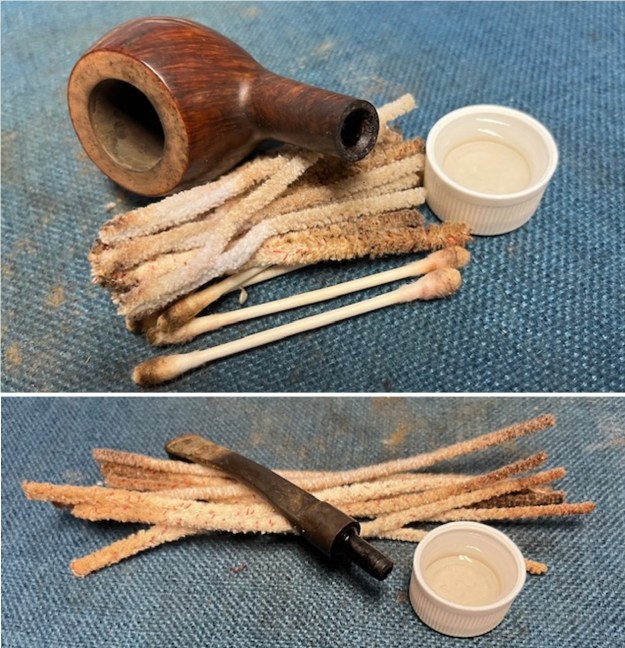
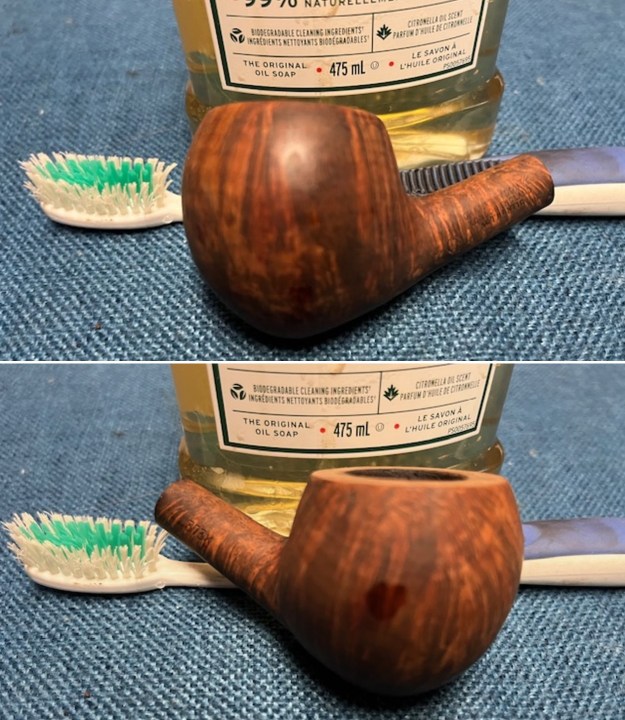
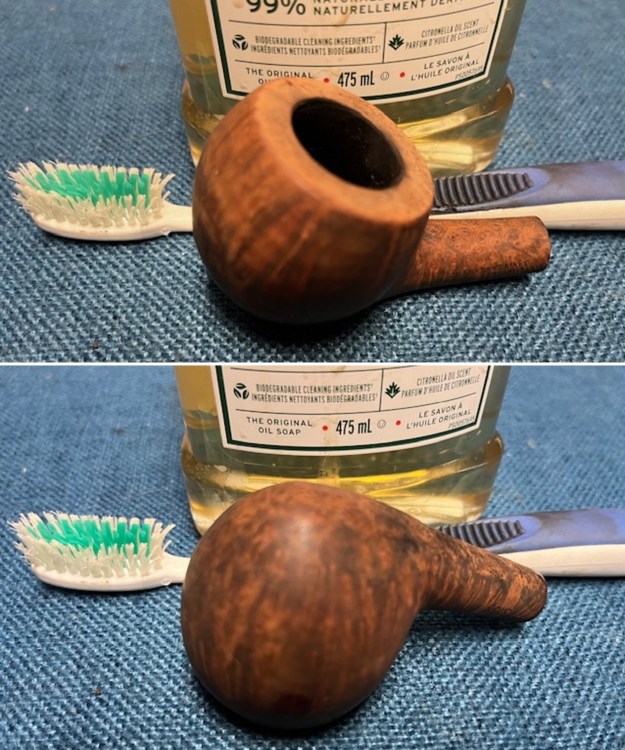
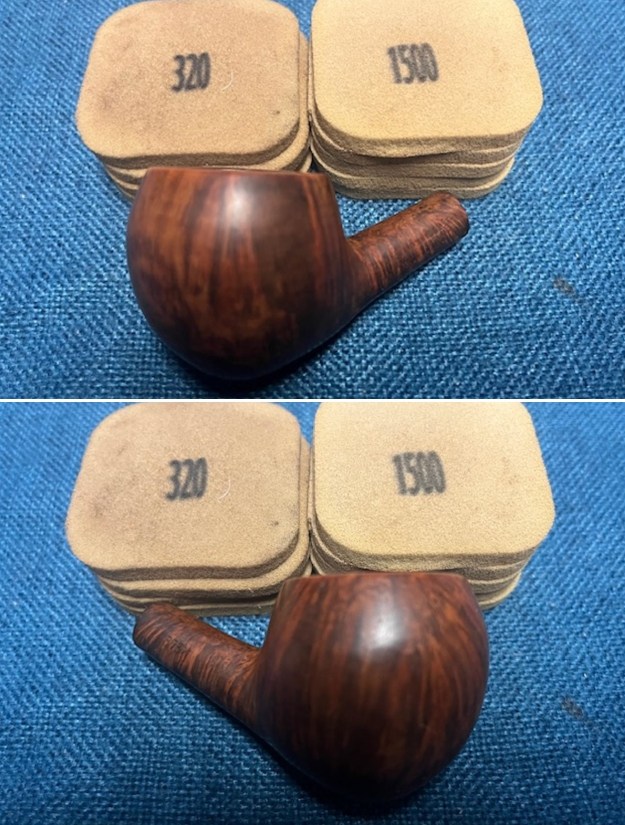
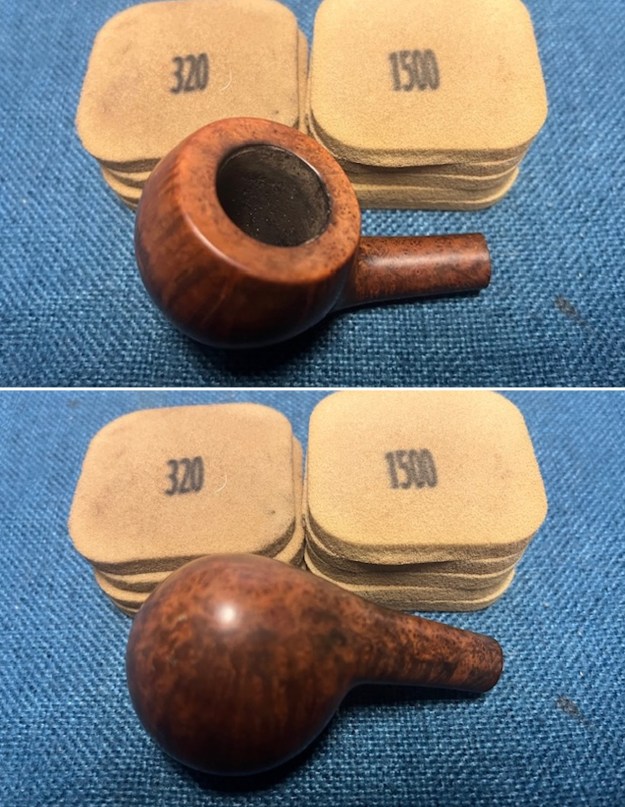
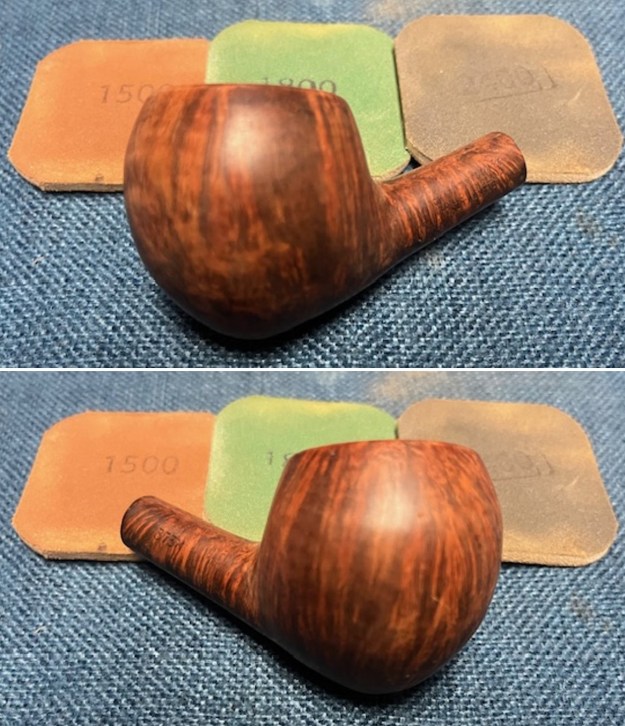
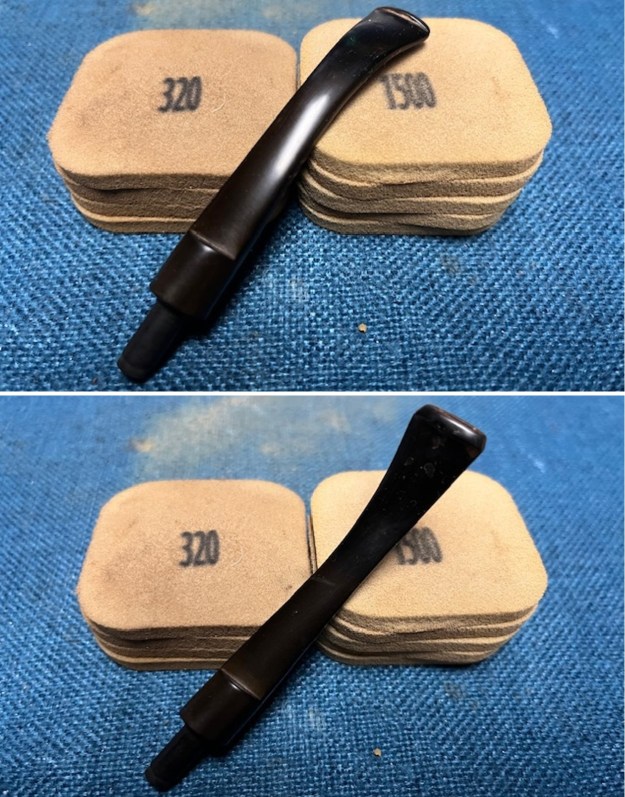
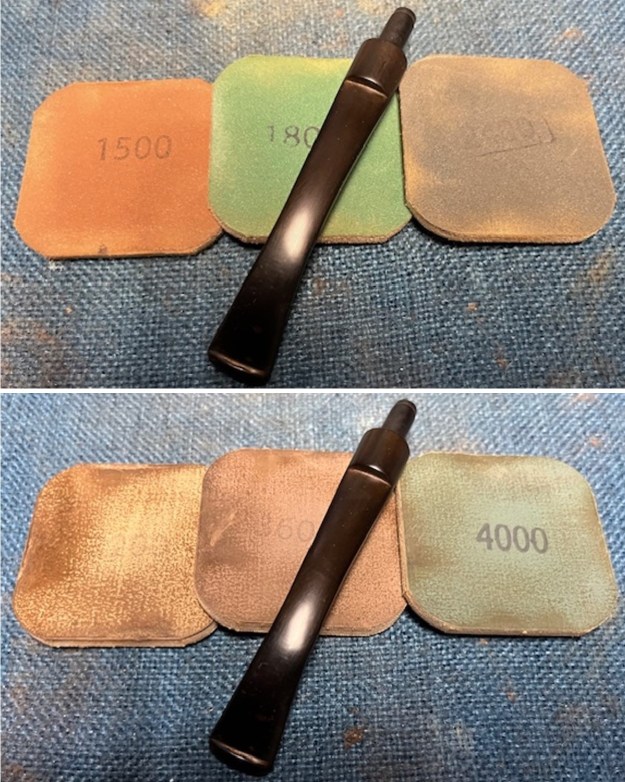
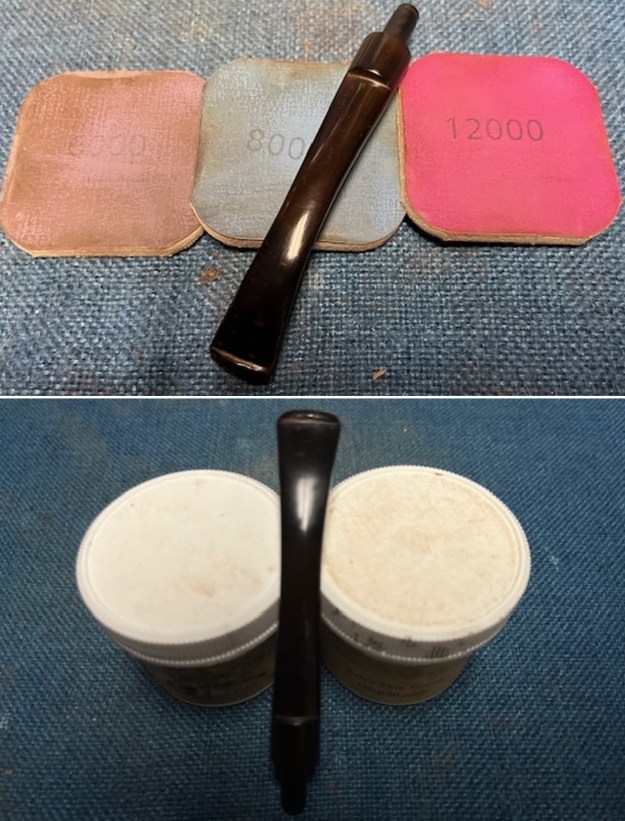
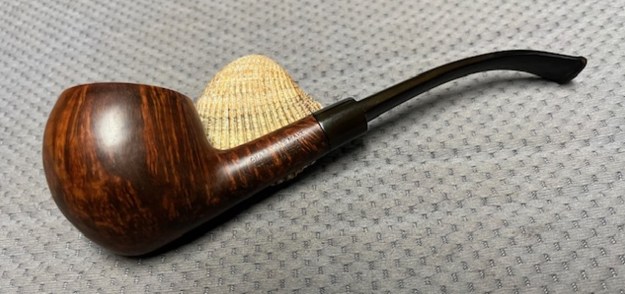
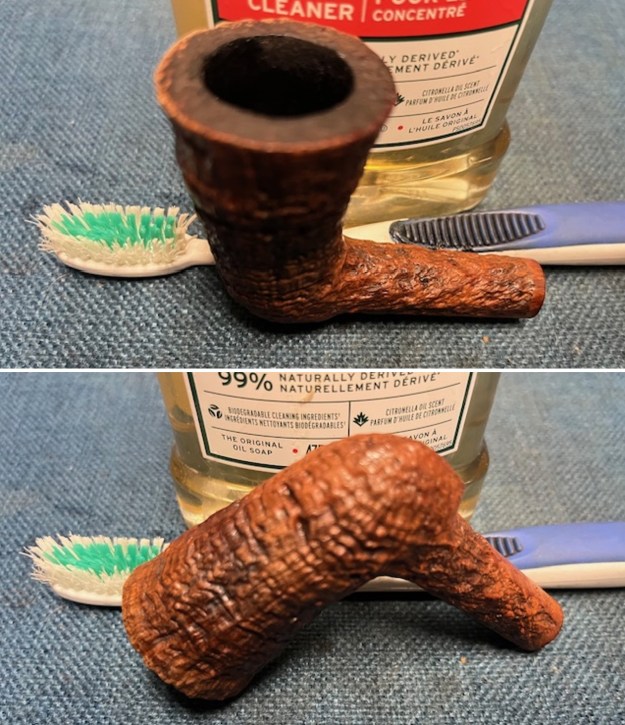
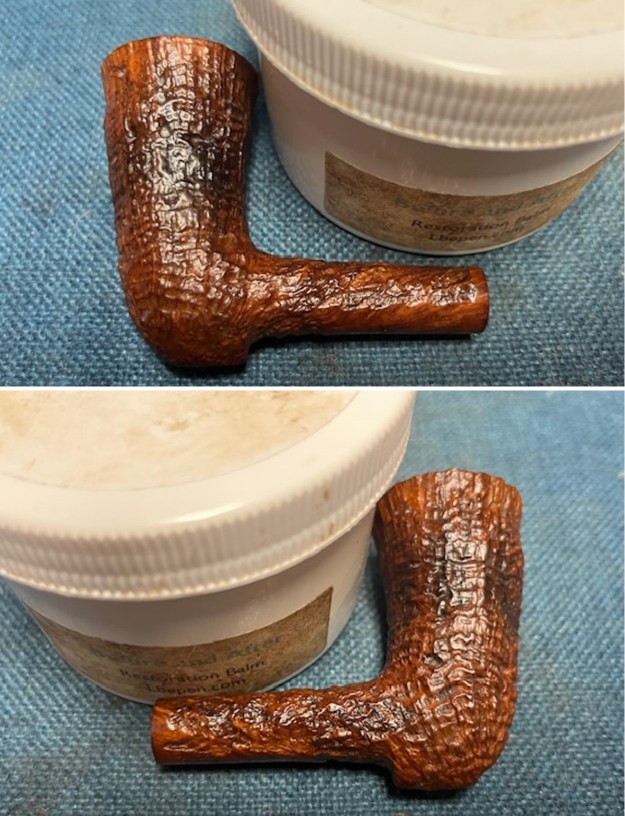
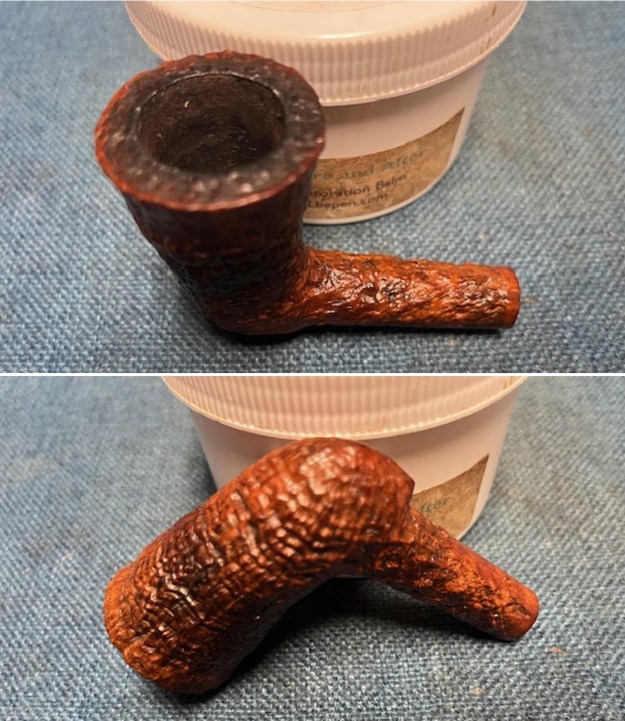
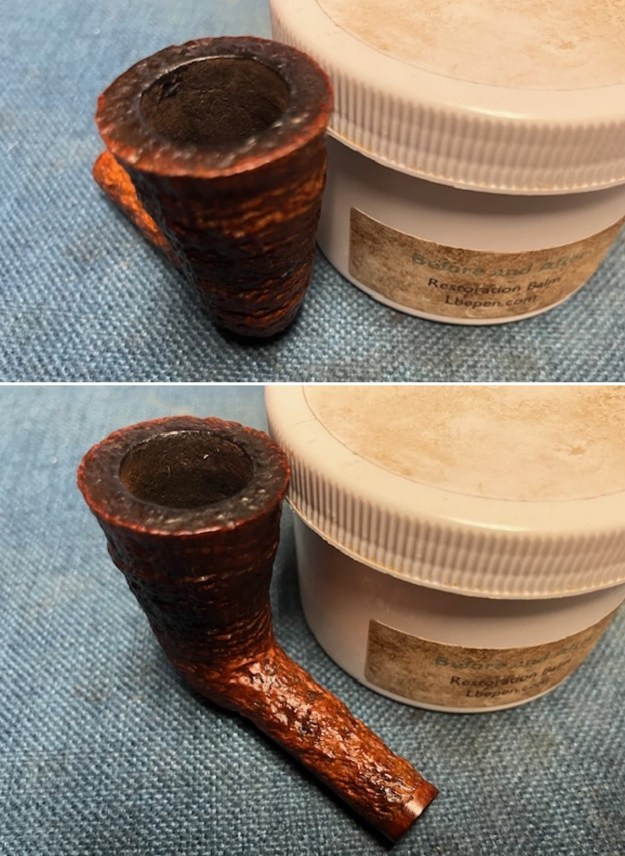
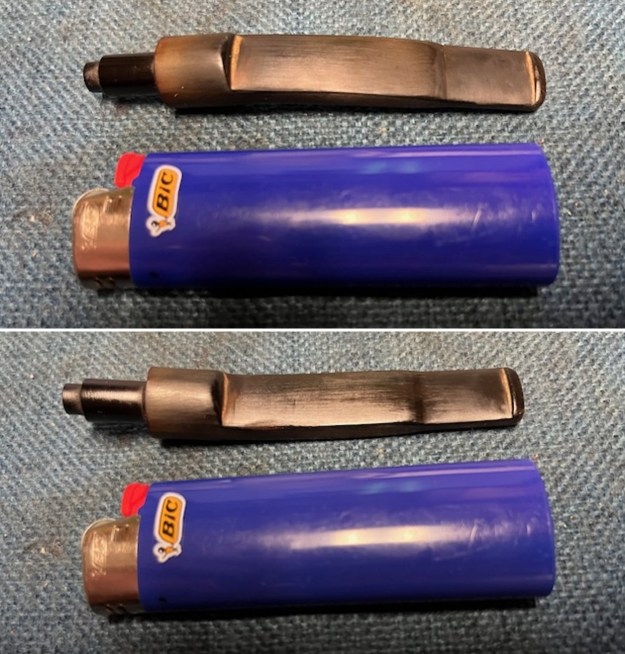
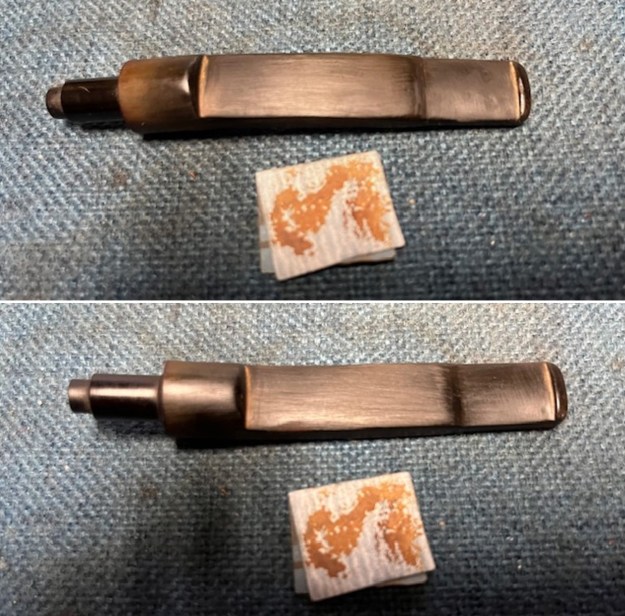
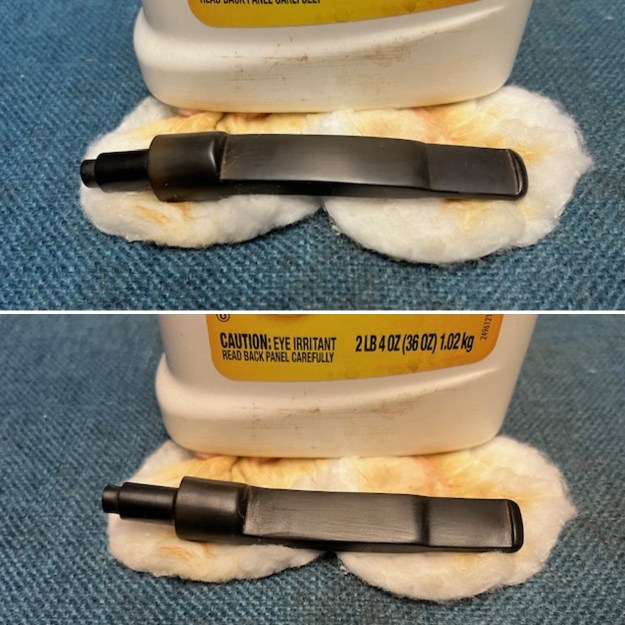
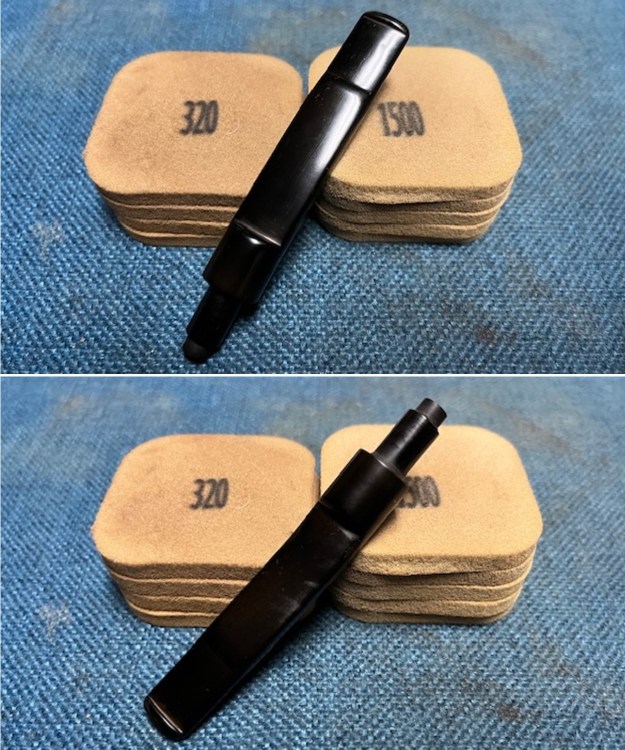
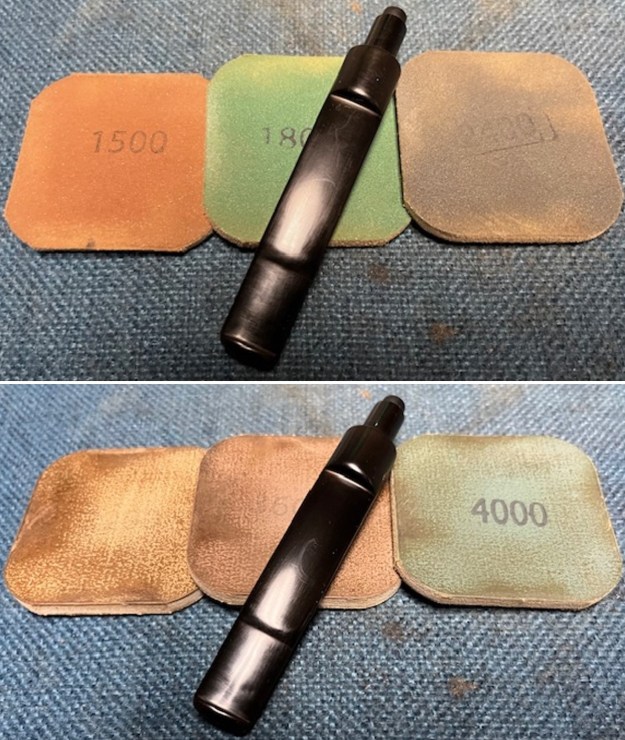
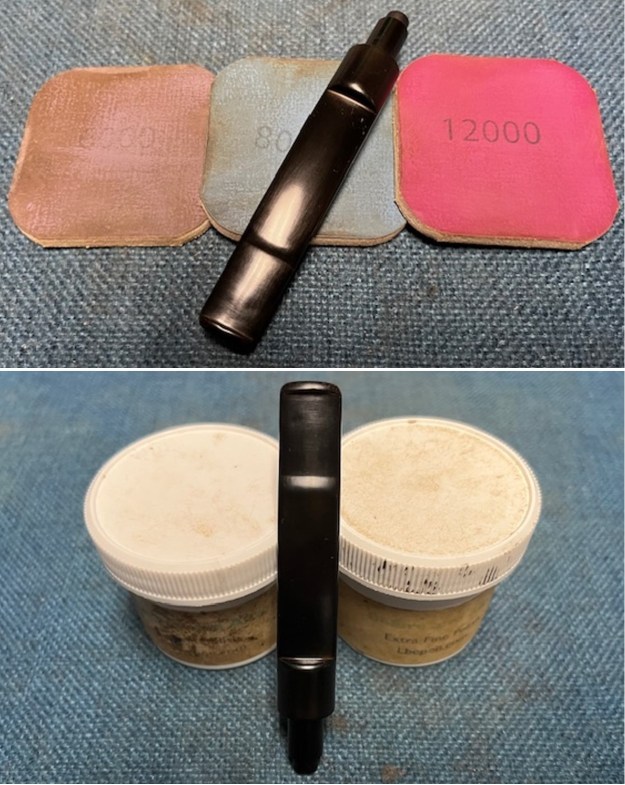
With that information at hand I turned to work on the pipe itself. Jeff had thoroughly cleaned up the pipe. He reamed the pipe with a PipNet Pipe Reamer and cleaned up the remnants with a Savinelli Fitsall Pipe Knife.  He scrubbed the bowl with undiluted Murphy’s Oil Soap with a tooth brush. He rinsed it under running warm water to remove the soap and grime. He cleaned out the inside of the shank and the airway in the stem with alcohol, cotton swabs and pipe cleaners. He scrubbed the exterior of the stem with Soft Scrub to remove as much of the oxidation as possible. He soaked the stem in Briarville’s Pipe Stem Deoxidizer and rinsed it off with warm water. I took photos of the pipe once I received it. I took photos of the rim top and bowl as well as the stem to give a sense of the condition of both. The rim top looked had some scratching on the top and some damage to the inner edge but over all it was in much better condition than I thought. The stem cleaned up well and the tooth marks on the top and underside ahead of the button are visible in the photos.I decided to start my work on the pipe by addressing the damage on the rim top. I used my modified Philip’s Screwdriver “Rusticator” to clean up the burned and damaged rim top and edges. I worked to approximate the texture on the rest of the bowl sides. It took some careful fiddling to get it close. Once I finished the rustication I stained the rim top to match the rest of the bowl with a black stain pen. It looked very good.I rubbed the bowl down with Before & After Restoration Balm. I worked it into the surface of the bowl sides and shank with my fingertips. The product works to clean, enliven and protect the briar. I let the balm sit for a little while and then buffed with a cotton cloth to raise the shine. I polished the nickel ferrule on the shank with a jeweller’s cloth to remove the tarnish and polish it. It began to look very good and had a rich shine. I set the bowl aside and turned my attention to the stem. I painted the tooth marks on the top and underside of the stem with the flame of a lighter. I was able to slightly lift the marks and filled in what remained with black, rubberized CA glue. Once it cured I use small files to flatten the repairs. I cleaned them up with a folded piece of 220 grit sandpaper to blend them into the surface of the stem. I sanded the stem with 320-3500 grit 2 x 2inch sanding pads. I wiped the stem down with an Obsidian Oil cloth after each sanding pad and the stem looked very good.I polished the stem with micromesh sanding pads – 1500-12000 grit pads. I wiped it down with Obsidian Oil after each sanding pad. I used Before & After Pipe Polish – both Fine and Extra Fine to further polish the stem. This Republic Era Peterson’s System Standard 313 Sandblast Bent Billiard with a vulcanite stem is a great looking pipe now that it has been restored. The beautiful grain that shines through the polished finish is stunning. I put the stem back on the bowl and carefully buffed the pipe with Blue Diamond on the buffing wheel. I gave the bowl and the stem multiple coats of carnauba wax on the buffing wheel and followed that by buffing the entire pipe with a clean buffing pad. I hand buffed the pipe with a microfiber cloth to deepen the shine. The finished Peterson’s System Standard Sandblast 313 fits nicely in the hand and feels great. Give the finished pipe a look in the photos below. The dimensions of the pipe are Length: 5 inches, Height: 1 ¾ inches, Outside diameter of the bowl: 1 1/8 inches, Chamber diameter: ¾ of an inch. The weight of the pipe is 37 grams/1.27 ounces. This Peterson’s System Standard 313 will be added to the Irish Pipe Makers section of the rebornpipes store soon. If you want to add it to your collection send me an email or a message! Thanks for your time.

Working on a Mystery Rhodesian 125


by Steve Laug

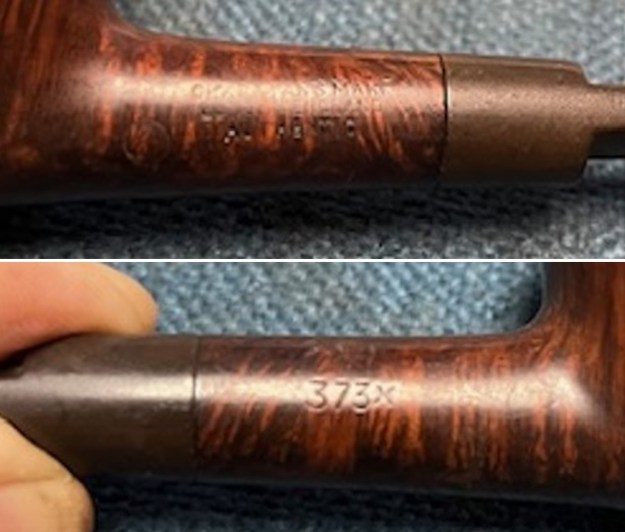
The next pipe I have chosen is a bit of a mystery pipe with stamping that is not clear as much of it is covered by a K&P nickel band on the shank. This one is a nice smaller size pipe with a pencil shank and a Peterson’s P-lip stem. It reminds me of a Captain Pete N24 Rhodesian that I restored a while ago (https://rebornpipes.com/2023/11/28/fresh-life-for-a-captain-peterson-made-in-england-n24-rhodesian/). It looks a lot like that one! It came to us from a pipeman in Naples, Florida, USA on 07/17/2024 as a donation. This pipe had been well smoked and there was a cake in the bowl and lava overflowing on the inner edge and the rim top. The briar was dirty with grime and oils ground into the finish and some of the lava flowing down the bowl sides. The nickel ferrule was oxidized but undamaged. It was stamped with the K&P stamp [over] a refined shamrock, a reclining wolfhound and a tower without a door. The pipe itself was stamped on the left side and though partially covered with the nickel band read Lumber [followed by] what could be Executive [over] Clifton [followed by] what looked like Make. On the right side it had the shape number 125. The ferrule was stamped K& P over Peterson’s on the left side. The stem was oxidized and had light tooth marks and chatter on both sides ahead of the button. Jeff took photos of the pipe before he started his clean up work on it. Jeff captured the cake in the bowl and the light lava overflow onto the rim top and inner edge of the bowl in his photos. The stem surface had light tooth chatter and marks and was oxidized. He took photos of the sides and the heel of the bowl to show the interesting grain patterns in the briar. It was quite beautiful. He also took some photos of the shank sides to capture the stamping on the shank and the nickel band. The stamping on the shank were clear but covered by the band. The band bore the K&P stamp. The mystery was in front of me… what was the stamping on the pipe? I could discern Lumber followed by what could be Executive but the second word was not clear as it was under the nickel band. The word underneath was Clifton followed by what looked like the word Make. I did some searching on Pipephil’s site (http://www.pipephil.eu/logos/en/logo-c5.html) and found a listing for Clifton pipes. I have included a screen capture of the section. I have also included the sidebar information.Brand of Hall & Fitzgerald (J.M. Lopes, p. 86, op. cit.)

From the side bar I learned of the connection to Hall & Fitzgerald. I did a Google search on Hall & Fitzgerald. I came across a link on vkpipes to a pipe made by them. It is interesting to note that they had quite a few brands in their stable (https://vkpipes.com/pipeline/hall-fitzgerald-straight-grain/). The Clifton line is listed in the quote below.

Hall & Fitzgerald is first mentioned in an 1878 Directory of Bristol as a ‘Fancy Goods Warehouse’. Within a few years the company is in the partnership of William Sydney Hall and Edward Thurston Davies trading as Hall & Fitzgerald, of 147 Temple Street, Bristol, Tobacconists and Fancy Goods Merchants. Silver hallmarks for pipe fittings are registered in London in 1899 and in Chester in 1901. Hall & Fitzgerald is making and selling smoking pipes until liquidation and closing in 1982 (except the World War II years). Known brands: Clifton, Dorchester, Excelsior, Hercules, Oxford, Craftsman and Wessex.

With that information at hand I turned to work on the pipe itself. Jeff had thoroughly cleaned up the pipe. He reamed the pipe with a PipNet Pipe Reamer and cleaned up the remnants with a Savinelli Fitsall Pipe Knife.  He scrubbed the bowl with undiluted Murphy’s Oil Soap with a tooth brush. He rinsed it under running warm water to remove the soap and grime. He cleaned out the inside of the shank and the airway in the stem with alcohol, cotton swabs and pipe cleaners. He scrubbed the exterior of the stem with Soft Scrub to remove as much of the oxidation as possible. He soaked the stem in Briarville’s Pipe Stem Deoxidizer and rinsed it off with warm water. I took photos of the pipe once I received it. I took photos of the rim top and bowl as well as the stem to give a sense of the condition of both. The rim top looked had some scratching on the top and some damage to the inner edge but over all it was in much better condition than I thought. The stem cleaned up well and the tooth marks on the top and underside ahead of the button are visible in the photos.I took photos of the stamping on the shank sides. The are faint and readable as noted above. The band covers part of the stamping on the left side. I took a photo of the stamping on the top of the nickel band. It was clear and readable. I took the stem out of the shank and took a photo of the overall look of the pipe. I decided to start my work on the pipe by addressing the damage on the inside edge of the bowl and the rim top. I used a folded piece of 220 grit sandpaper to smooth out the edge. I wiped it down with a damp cloth and the rim top damage and darkening on the inner and outer edges were gone.I sanded the briar with 320-3500 grit 2×2 inch sanding pads. I wiped the bowl down after each sanding pad to remove the sanding debris. It really looks much better. I polished the briar with micromesh sanding pads – dry sanding with 1500-12000 grit pads. I wiped the bowl down after each pad with a damp cloth. I rubbed the bowl down with Before & After Restoration Balm. I worked it into the surface of the bowl sides and shank with my fingertips. The product works to clean, enliven and protect the briar. I let the balm sit for a little while and then buffed with a cotton cloth to raise the shine. I set the bowl aside and turned to work on the stem. I polished the stem with micromesh sanding pads – 1500-12000 grit pads. I wiped it down with Obsidian Oil after each sanding pad. I used Before & After Pipe Polish – both Fine and Extra Fine to further polish the stem. This Clifton Make Lumber Exec… 125 Pencil Shank Rhodesian with a vulcanite taper stem is a great looking pipe now that it has been restored. The beautiful grain that shines through the polished finish is stunning. I put the stem back on the bowl and carefully buffed the pipe with Blue Diamond on the buffing wheel. I gave the bowl and the stem multiple coats of carnauba wax on the buffing wheel and followed that by buffing the entire pipe with a clean buffing pad. I hand buffed the pipe with a microfiber cloth to deepen the shine. The finished Clifton Make 125 Rhodesian fits nicely in the hand and feels great. Give the finished pipe a look in the photos below. The dimensions of the pipe are Length: 6 inches, Height: 1 ¼ inches, Outside diameter of the bowl: 1 1/8 inches, Chamber diameter: ¾ of an inch. The weight of the pipe is 22 grams/.74 ounces. I will be putting the pipe on the rebornpipes store in the British Pipe Makers Section. If you are interested in this pipe send me a message or an email. Thanks for reading this blog and my reflections on the pipe while I worked on it. There are many more to come!

Life for a Peterson’s System Standard 313 Made in the Republic of Ireland


by Steve Laug

The next pipe I have chosen is another Peterson’s System Standard pipe. This one is a nice smaller size It has a saddle style Peterson’s stem on the shank end. It came to us from a seller in Sylacauga, Alabama, USA on 04/08/2024. This pipe was obviously a favourite of the previous pipe smoker. It had been well smoked and there was a thick cake in the bowl and lava overflowing onto the rim top. The briar was dirty with grime and oils ground into the finish and some of the lava flowing down the bowl sides. The nickel ferrule was oxidized but undamaged. There were oils oozing out under the ferrule and also out of the top of the ferrule onto the stem. The pipe was stamped vertically on the left side and read Peterson’s [over] System [over] Standard. On the right side it had the three-line Republic of Ireland stamp [over] the shape number 313. The ferrule was stamped K& P over Peterson’s on the left side. The stem was oxidized and had light tooth marks and chatter on both sides ahead of the button. Jeff took photos of the pipe before he started his clean up work on it. Jeff captured the thick cake in the bowl and the heavy lava overflow onto the rim top in his photos. There really was no way of knowing what the edges looked like under the thick cake. You can also see the lava flowing down the sides of the bowl in the photos. The stem surface had tooth chatter and marks and was oxidized. He took photos of the sides and the heel of the bowl to show the interesting grain patterns in the briar. It was quite beautiful. He took photos of the stamping on the sides of the shank and on the ferrule. It is readable and clear as noted above. While dating a Peterson’s pipe, I always fall back to my under mentioned favourite site; http://thepetersonpipeproject.blogspot.com/2007/07/dating-peterons-pipes.html

I quote from the above site.

Stamping of Bowl:

During the years of Kapp and Peterson’s business operations, the country of Ireland has undergone several name changes and K&P’s stamping on their pipes reflects these changes. Knowing these changes, a Peterson pipe can be roughly dated and placed in “eras.”

The Republic Era is from 1949 until the present. The Republic of Ireland was formed on 17 April 1949. From 1949 to present the stamp for this era is “Made in the Republic of Ireland” in a block format generally in three lines but two lines have been used with or without Republic being abbreviated.

With that information at hand I turned to work on the pipe itself. Jeff had thoroughly cleaned up the pipe. He reamed the pipe with a PipNet Pipe Reamer and cleaned up the remnants with a Savinelli Fitsall Pipe Knife.  He scrubbed the bowl with undiluted Murphy’s Oil Soap with a tooth brush. He rinsed it under running warm water to remove the soap and grime. He cleaned out the inside of the shank and the airway in the stem with alcohol, cotton swabs and pipe cleaners. He scrubbed the exterior of the stem with Soft Scrubb to remove as much of the oxidation as possible. He soaked the stem in Briarville’s Pipe Stem Deoxidizer and rinsed it off with warm water. I took photos of the pipe once I received it. I took photos of the rim top and bowl as well as the stem to give a sense of the condition of both. The rim top looked had some scratching on the top and some damage to the inner edge but over all it was in much better condition than I thought. The stem cleaned up well and the tooth marks on the top and underside ahead of the button are visible in the photos.I took photos of the stamping on the shank sides. The are clear and readable as noted above. There is some faintness on parts of the stamping but it is still readable. I took the stem out of the shank and took a photo of the overall look of the pipe. I decided to start my work on the pipe by addressing the damage on the inside edge of the bowl and the rim top. I used a folded piece of 220 grit sandpaper to smooth out the edge. I wiped it down with a damp cloth and the rim top damage and darkening on the inner and outer edges were gone.I sanded the briar with 320-3500 grit 2×2 inch sanding pads. I wiped the bowl down after each sanding pad to remove the sanding debris. It really looks much better. I polished the briar with micromesh sanding pads – dry sanding with 1500-12000 grit pads. I wiped the bowl down after each pad with a damp cloth. I rubbed the bowl down with Before & After Restoration Balm. I worked it into the surface of the bowl sides and shank with my fingertips. The product works to clean, enliven and protect the briar. I let the balm sit for a little while and then buffed with a cotton cloth to raise the shine. I set the bowl aside and turned to work on the stem. I polished the stem with micromesh sanding pads – 1500-12000 grit pads. I wiped it down with Obsidian Oil after each sanding pad. I used Before & After Pipe Polish – both Fine and Extra Fine to further polish the stem. This Republic Era Peterson’s System Standard 313 Bent Billiard with a vulcanite stem is a great looking pipe now that it has been restored. The beautiful grain that shines through the polished finish is stunning. As the pipe is smoked the patina should develop and look even better. I put the stem back on the bowl and carefully buffed the pipe with Blue Diamond on the buffing wheel. I gave the bowl and the stem multiple coats of carnauba wax on the buffing wheel and followed that by buffing the entire pipe with a clean buffing pad. I hand buffed the pipe with a microfiber cloth to deepen the shine. The finished Peterson’s System Standard 313 fits nicely in the hand and feels great. Give the finished pipe a look in the photos below. The dimensions of the pipe are Length: 5 inches, Height: 1 ½ inches, Outside diameter of the bowl: 1 1/8 inches, Chamber diameter: ¾ of an inch. The weight of the pipe is 37 grams/1.31 ounces. This one has been reserved for first refusal. If you are interested in being in the queue for this pipe send me a message or an email. Thanks for reading this blog and my reflections on the pipe while I worked on it. There are many more to come!

New Life for a Malaga Second Diamond Shank bent billiard with a saddle stem


by Steve Laug

The next pipe on the table is a “Malaga” Second pipe that Jeff picked up from eBay early on 08/22/2024 from a seller in Harrison Township, Michigan, USA. It is an interesting looking octagonal Panel Billiard with a square shank.  It has the classic Malaga oil cured finish and some great looking grain around the bowl and shank. There are some sand pits on the sides of the bowl which are the only flaws I can see. The pipe is stamped on left side of the shank and reads MALAGA [over] Second. The carver did a great job of carving the pipe to capture the grain around the bowl and the diamond shank. The bowl had a heavy cake with an overflow of lava on the crowned rim top. The sides of the bowl and shank are very dirty with grime and oils ground into the finish from prolonged use. The vulcanite saddle stem was heavily oxidized and calcified. It had tooth dents and chatter on the top and the underside of the stem. Jeff took photos of the pipe before he started the cleanup work. With some work it will be a real beauty. I looked forward to seeing it in person.   Jeff took a close up photo of the bowl and rim to capture the condition of the pipe before he started the cleanup work. The bowl has a thick cake and the uneven overflow of lava on the rim top is quite thick all the way around. The inside edge of the rim could be damaged but it quite hidden under the lava coat. The stem is deeply oxidized, calcified and dirty and there is tooth chatter and marks on both sides of the stem ahead of the button. Jeff took photos of the sides and heel of the bowl to give a picture of what the briar looked like. There is some nice grain around the sides. You can also see the damage to the rim edges and the heel of the bowl in the photos below. He took a photo of the stamping on the left side of the diamond shank. It read as noted above. It is clear and readable.I am including the link to a blog that I wrote that gives some of the history of the Malaga brand and the Malaga Pipe Shop in Royal Oak, Michigan in the USA. I have written an earlier blog to give a little history of the Malaga Brand and the pipemaker, George Khoubesser. Here is the link – https://rebornpipes.com/tag/malaga-pipes/.That blog also includes links to a catalogue and the history of the pipemaker George Khoubesser. Follow the link to get a feel for the brand and the pipemaker.

Jeff had cleaned up the pipe with his usual penchant for thoroughness. He reamed the pipe with a PipNet pipe reamer and removed the rest of it with a Savinelli Fitsall Pipe Knife.  He scrubbed the bowl with undiluted Murphy’s Oil Soap with a tooth brush. He rinsed it under running warm water to remove the soap and grime. He cleaned out the inside of the shank and the airway in the stem with alcohol, cotton swabs, shank brushes and pipe cleaners. He soaked the stem in Briarvilles Pipe Stem Deoxidizer and rinsed it off with warm water. I took photos of the pipe once I received it.  The rim top cleaned up really well. The rim top and outer edge of the bowl show some darkening over most of the surface. There is damage to the inner edge of the bowl and bowl is out of round. The stem surface looked very good with tooth marks and chatter on the top side and the underside near the button.The stamping on the top left side of the diamond shank is clear and readable. It reads as noted above. I removed the saddle stem and took a photo of the pipe to give a sense of the whole. I heated the stem with the flame of a lighter and gave a more dramatic bend to follow the flow of the curves of the briar.I sanded the bowl sides and rim top with 320-3500 grit 2×2 inch sanding pads. I wiped the bowl down with a damp cloth after each sanding pad. It began to look very good. I polished the briar with micromesh sanding pads – wet sanding with 1500-12000 grit pads and wiping it down after each pad with a damp cloth. I rubbed the bowl and shank down with Before & After Restoration Balm. I worked it into the surface of the bowl sides and shank with my fingertips to clean, enliven and protect the briar. I let the balm sit for 10-15 minutes and then buffed with a cotton cloth to raise the shine. The grain came alive and the finish looked rich. I set aside the bowl and turned my attention to the stem. I “painted” the surface of the stem with the flame of a Bic lighter to lift them as much as possible. I did the lifting of the marks at the same time I heated the stem to bend it. I filled in the remaining tooth dents and marks with rubberized Black CA Glue and set it aside for the repairs to cure. Once they cured I flattened them with small files. I cleaned up the repaired areas with 220 sandpaper to blend the repairs into the surface of the stem. I sanded the stem with 320-3500 grit 2 x 2 inch sanding pads and wiped it down with a damp cloth after each pad to remove the sanding debris. The stem began to take on a rich shine.I polished the vulcanite stem with micromesh sanding pads – 1500-12000 grit pads. I wiped it down with Obsidian Oil after each sanding pad. I used Before & After Pipe Polish – both Fine and Extra Fine to further polish the stem. This Malaga Second Diamond Shank Bent Billiard with a vulcanite saddle stem turned out to be a real beauty. The carver really maximized the grain with the shape of the pipe. I polished stem and the bowl with Blue Diamond polish on the buffing wheel and the finish just popped and came alive. I gave the bowl and the stem multiple coats of carnauba wax. I buffed the pipe with a clean buffing pad to raise the shine. I hand buffed it with a microfiber cloth to deepen the shine. The pipe polished up pretty nicely. The pipe took on life with the buffing. The rich oil cured colour works well with the polished black vulcanite stem. The finished Malaga Second Bent Billiard has a rich look that is quite catching. Have a look at it with the photos below. The shape, finish and flow of the pipe and stem are very well done. The dimensions are Length: 5 inches, Height: 1 ¾ inches, Outside diameter of the bowl: 1 ¼ inches, Chamber diameter: ¾ of an inch. The weight of the pipe was 44 grams/1.48 ounces. I will be putting it on the rebornpipes store shortly. Thanks for reading this blog and my reflections on the pipe while I worked on it. There are many more to come!

Irish Seconds Made in the Republic of Ireland Rusticated Bent Billiard loose stem


by Steve Laug

The next pipe on the work table came to us from a seller in Brazil, Indiana, USA on 11/12/2020. It is a nicely rusticated Irish Second Bent Billiard with a tapered vulcanite stem. The pipe is stamped on the underside of the shank and reads IRISH SECONDS [over] Made in the Republic of Ireland. Irish Seconds were a Peterson’s Second Line that usually did not make the grade because of flaws in the briar or sandpits. The rusticated finish hid any of those and there was a lot of grime ground into grooves on the bowl and shank. The bowl was heavily caked and there was lava on the rim top and the inner edge of the rim. The edges looked okay but we would know more after the cleanup. The stem was oxidized, calcified and had tooth chatter and deep tooth marks on the top and underside ahead of an on the button. There were not markings or a logo on the taper stem. The pipe showed promise but it was very dirty. Jeff took photos of the pipe before he started his cleanup work. He took photos of the rim top and bowl to give a clear picture of the thickness of the cake and the condition of the rim top and edges. He also took photos of the top and underside of the stem to show the oxidation, calcification and chatter and tooth marks. Jeff took photos of the sides and heel of the bowl to give a picture of what the briar around the pipe looked like. There is a great rustication under the grime. He took photos of the stamping on the shank. It reads as noted above and is clear and readable.I am including the information from Pipedia’s article on Peterson pipes. It is a great read in terms of the history of the brand (https://pipedia.org/wiki/Peterson). I have included a bit of the pertinent history here.

1950 – 1989 The Republic Era – From 1950 to the present time, the stamp for this era is “Made in the Republic of Ireland” in a block format generally in three lines but two lines have been used with or without Republic being abbreviated.

I knew that I was dealing with a Republic Era pipe made between 1950-1989. It was a Rusticated Bent Billiard with an interesting pattern. The finish was stained with a combination of brown and black stains. Now it was time to work on the pipe.

Jeff had cleaned up the pipe with his usual penchant for thoroughness. He reamed the pipe with a PipNet Pipe Reamer and cleaned up the remnants with a Savinelli Fitsall Pipe Knife. He scrubbed the bowl with undiluted Murphy’s Oil Soap with a tooth brush. He rinsed it under running warm water to remove the soap and grime. He cleaned out the inside of the shank and the airway in the stem with alcohol, cotton swabs, shank brushes and pipe cleaners. He soaked the stem in Briaville’s Pipe Stem Deoxidizer and rinsed it off with warm water. I took photos of the pipe once I received it. The fit of the stem to the shank was off and shank end had some damage from scuffing and some sanding it looked like. Because of that the stem did not seat against the shank end in a clean way. I decided to clean up the shank end by fitting it with a thin brass band that would provide a straight edge for the stem surface to sit against and also give the rusticated bowl a bit of bling. There were no cracks in the shank so it was purely a cosmetic fix. I chose the band from my bands and pressed it on the shank end to have a look at the pipe with the band. I liked what I saw so I removed the band and coated the inside with a layer of white glue and pressed in place on the shank. I fit the stem on the shank and took photos of the pipe with stem and band in place. I turned my attention to the damage on the inner edge of the rim. The bowl was quite out of round with burn damage on the front right and the back left. I used a folded piece of 220 grit sandpaper to smooth out the edge and remove the roughness. I was able to make it look better even thought it is still not perfect. You can also see the burn damage on the right front rim top where the rustication is quite smooth.I used a Philips Screwdriver that I had converted into a four-prong rustication tool to rework the smooth portion of the rim top. It looked better when I had finished. I touch up the stain on that portion of the rim top with a black stain pen to blend the work into the surface. I was happy with the progress. Though it did not change the damage on the rim edge it did hide it a bit and make it less visible.I rubbed the bowl and rim down with Before & After Restoration Balm. I worked it into the surface of the briar with my fingertips and with a shoe brush to get into the grooves. The product works to clean, enliven and protect it. I let the balm sit for 10 minutes and then buffed with a cotton cloth to raise the shine. I really like watching the Balm do its magic and bring the briar alive. I set the bowl aside and turned my attention to the stem. I filled in the deep grooves on the surface of the stem with black rubberized CA glue. Once it cured I flattened the repairs and recut the button edge with small needle files. I sanded the repaired areas further to blend them in with 220 grit sandpaper. It really began to look quite good. I sanded the stem with 320-3500 grit 2×2 inch sanding pads. I wiped the stem down after each sanding pad with Obsidian Oil. I blended in the tooth marks and chatter in the surface and after the final pad a deep shine began to develops.I polished the stem with 1500-12000 grit micromesh sanding pads. I wiped the stem down after each sanding pad with Obsidian Oil. I polished it with Before & After Pipe Stem Polish – both Fine and Extra Fine. I gave it a coat of Obsidian Pipe Stem Oil. It works to protect the stem from oxidizing. I set it aside to dry. Once again at this point in the restoration process I am excited to be on the homestretch. I look forward to the final look when the Republic Era Peterson’s Irish Seconds Bent Billiard is put back together, polished and waxed. I put the bowl and stem back together. I lightly polished the bowl and stem with Blue Diamond to polish out the scratches in the briar and the vulcanite. I gave the bowl and the stem multiple coats of carnauba wax. I buffed the pipe with a clean buffing pad to raise the shine. I hand buffed it with a microfiber cloth to deepen the shine. The pipe polished up nicely. The depths of the rustication really pop along with the thin brass band after the wax and polish. The shiny black vulcanite stem is a beautiful contrast to the browns of the bowl and thick shank. This Republic Era Peterson’s Irish Second Bent Billiard was another fun pipe to work on. The pipe feels great in the hand will be better when warmed up while smoking. The finished pipe is shown in the photos below. The dimensions of the pipe are Length: 6 inches, Height: 2 inches, Outside diameter of the bowl: 1 ¼ inches, Chamber diameter: ¾ of an inch. The weight of the pipe is 2.36 ounces/67 grams. I will be putting it on the rebornpipes store in the Irish Pipemakers Section if you would like to add it to your rack and carry on the previous pipeman’s legacy. This is an interesting estate to bring back to life.

As always, I encourage your questions and comments as you read the blog. Thanks to each of you who are reading this blog. Remember we are not pipe owners; we are pipe men and women who hold our pipes in trust until they pass on into the trust of those who follow us.
Rejuvenating a Peterson’s Republic Era System Standard 307 Huber Munchen


by Steve Laug

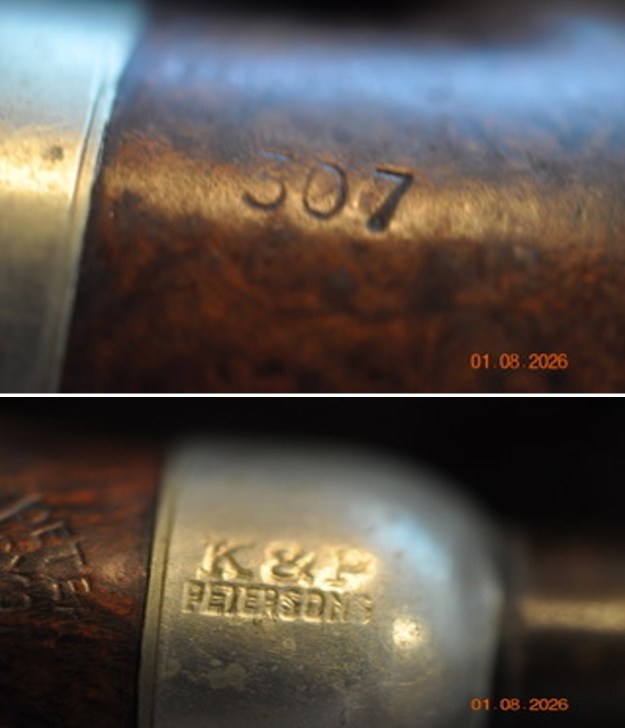
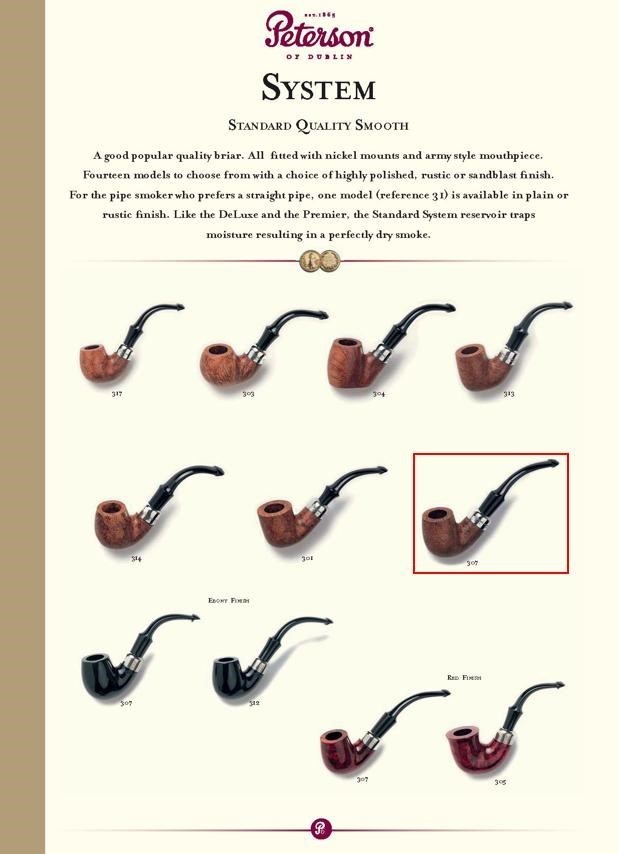
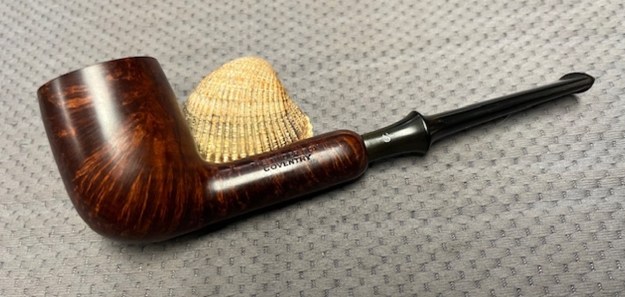
The next pipe on the work table is Peterson’s System pipe that we purchased from our contact in Copenhagen, Denmark on 04/11/2023. It was stamped Peterson’s [over] System [over] Standard on the left side of the shank vertically below the nickel ferrule. On the right it is stamped Made in the Republic of Ireland (in three lines) [over] the shape number 307. The underside of the shank was stamped Huber [over] Munchen. It has a smooth finish around the bowl and shank have oils, debris and grime ground into the finish. There was a thick cake in the bowl and a lava overflow on the rim top that was heavier toward the back side. The top and edges of the rim were well hidden under the tars and lava. There was a very beautiful pipe underneath the buildup of years of use. The ferrule on the shank end was oxidized and is stamped on the top and left side K & P [over] Peterson. The stem was a Peterson’s style P-Lip. It was oxidized and calcified toward the end with some tooth marks and chatter. There were tooth marks on the button itself as well. Jeff took photos of the pipe before he started his cleanup work on it. Jeff took photos of the bowl and rim top to show the thick, hard cake in the bowl and lava build up on the top of the rim and the edges of the bowl. The front outer edge has some damage from being knocked against a hard surface. Only clean up would tell the full story. Jeff took photos of the top and underside of the stem showing the tooth chatter, scratching, calcification and oxidation on the stem surface and wear on the edges of the button. Jeff took photos of the sides and heel of the bowl to show the condition of the finish. You can see the grime around the sides of the bowl and shank. Even under the dirt and debris of the years it looked very good. Jeff took photos of the stamping on the underside of the bowl and shank. The stamping was faint but readable as you can see from the photos. It read as noted above. The nickel Ferrule is clearly stamped and readable. I have included the information on the shape number on this pipe that I picked up on researching the previous pipes. I have included a page from a Petersons Catalogue that I have on rebornpipes (https://rebornpipes.com/tag/peterson-hallmark-chart/). I have put a red box around the 307 shown in the catalogue page shown below. That should give a clear picture of the size and shape of the pipe. I am also including the information from Pipedia’s article on Peterson pipes. It is a great read in terms of the history of the brand (https://pipedia.org/wiki/Peterson). I have included a bit of the pertinent history here.

1950 – 1989 The Republic Era – From 1950 to the present time, the stamp for this era is “Made in the Republic of Ireland” in a block format generally in three lines but two lines have been used with or without Republic being abbreviated.

During the 1950’s and 60’s the Kapp & Peterson company was still in the ownership of the Kapp family. However, 1964 saw the retiral of the company Managing Director Frederick Henry (Harry) Kapp.

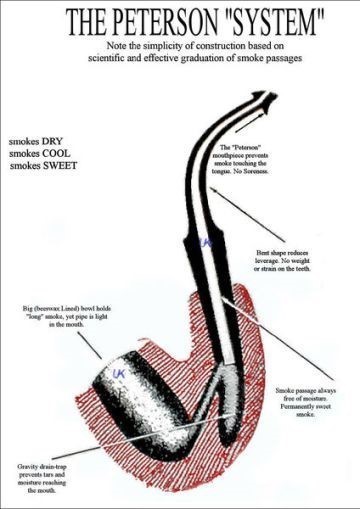
Pipedia also included a section of information on the System pipes including a diagram of the systems look (https://pipedia.org/wiki/Peterson#Republic_Era_Pipes). I quote a section of the article in part and include a link to another article on Pipedia on the System pipe.

The Peterson System pipes are the standard bearers of the Peterson pipe family, famous for the excellent smoking pleasure they provide. Often imitated but never equalled, the Peterson System smokes dry, cool and sweet, thanks to the scientific effectiveness of the original design. The heart of the System is the unique graduated bore in the mouthpiece. This makes the suction applied by the smoker 15 times weaker by the time it reaches the tobacco chamber. The result is that all the moisture flows into the reservoir and, thus cannot reach the smoker’s mouth. The Peterson Lip further enhances the effectiveness of the graduated bore by directing the flow of smoke upwards and away from the tongue. This achieves a uniquely even distribution of smoke and virtually eliminates any chance of tonguebite or bitterness. Furthermore, the shape is contoured so that the tongue rests comfortably in the depression under the opening. Each “PLip” mouthpiece is made from Vulcanite. For the Peterson System pipes to work properly, the stem/tenon has to have an extension, the tip of which will pass by the draft hole from the bowl and into the sump. Upon the smoker drawing in smoke, this extension then directs the smoke down and around the sump to dispense a lot of the moisture before the smoke enters the extension and stem. On the System Standards and other less expensive systems, this extension with be made of Vulcanite turned integrally with the stem. On the more expensive System pipes this extension will be made of metal which screws into the Vulcanite stem. This extension on the earlier pipes will be of brass and the newer pipes will be of aluminium. Most smokers not knowing this function of the metal extension, assumes that it is a condenser/stinger and will remove it as they do with the metal condensers of Kaywoodie, etc. Should you have a System pipe with this metal extension, do not remove it for it will make the System function properly and give you a dryer smoke (https://pipedia.org/wiki/A_closer_look_at_the_famous_Peterson_Standard_System_Pipe).

Finally, on the underside of the shank it is stamped Huber [over] Munchen. From a past restoration I did a lot of work on the stamping (https://rebornpipes.com/2023/10/14/petersons-kildare-special-hg-republic-of-ireland-10-canadian/). Have a look if you are interested.

To learn more about the Huber Munchen stamp I turned to page 300 of “The Peterson’s Pipe” by Mark Irwin and Gary Malmberg as noted by him in the previous blog and found a great paragraph on the stamping. I quote in full.

GH Retailer’s Monogram (c. 1960s) George Huber of Munich, Germany, a Peterson distributor and retailer for decades, stamped their monogram on pipes sold in their store, G overlaid on H. Peterson shared in the 1988 commemoration of Huber’s 125th year in business by producing a special pipe with a sterling rim cap, stamped HUBER over CELEBRATION.

The pipe I have is one that does not bear that monogram and does not appear to have ever had the sterling rim cap and was not stamped HUBER over CELEBRATION. It was however, stamped Huber [over] Munchen – the city where the shop was located. With that information I turned my attention to working on the pipe.

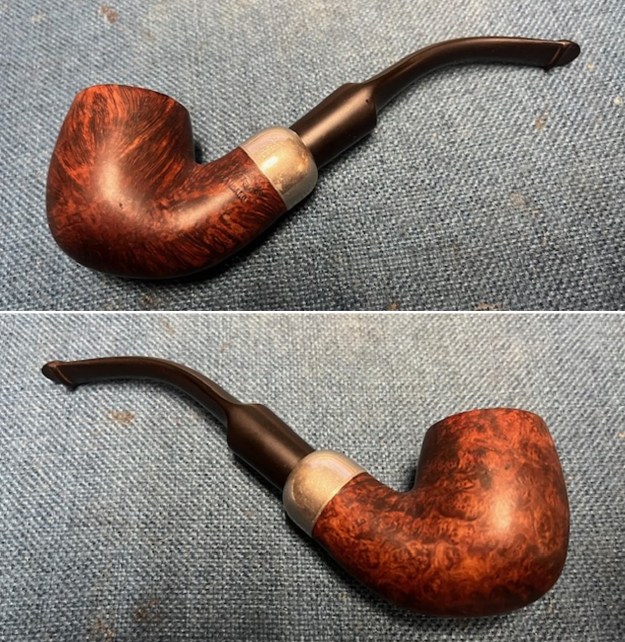
Jeff cleaned this filthy pipe with his usual clean up process. He reamed it with a PipNet pipe reamer and cleaned up the reaming with a Savinelli Fitsall Pipe Knife. He scrubbed out the internals with alcohol, pipe cleaners and cotton swabs until the pipe was clean. He scrubbed the exterior of the bowl with Murphy’s Oil Soap and a tooth brush to remove the grime and grit on the briar and the lava on the rim top. The finish looks very good with great looking grain around the bowl and shank. Jeff soaked the stem in Briarville’s Pipe Stem Deoxidizer to remove the oxidation on the vulcanite. When the pipe arrived here in Vancouver for the second stop of its restoration tour I was amazed it looked so good. I took some close up photos of the rim top and also of the stem surface. I wanted to show what an amazing job Jeff did in the cleanup of the rim top. The rim top and inner edge were in good condition. There was some darkening and slight damage to the inner edge. The rim top also had some roughening on the front edge. I also took close up photos of the stem to show the condition of the vulcanite. It was quite clean and the tooth marks on the button and on the stem ahead of the button were very visible in the photos.One of the things I appreciate about Jeff’s cleanup is that he works to protect and preserve the nomenclature on the shank of the pipes that he works on. The stamping on this one was faint in spots to start with so I was worried that it would disappear altogether with the cleanup. He was able to preserve and maintain its condition in the process. It did not become worse but the photos give an accurate picture of the stamping. I have noticed that many restorers are not careful to protect the stamping in their cleaning process and often by the end of the restoration the nomenclature is almost destroyed. I would like to encourage all of us to be careful in our work to preserve this as it is a critical piece of pipe restoration! I took the stem off the shank and took a photo of the pipe. I decided to start my work on the pipe by cleaning up the rim top and inner edge of the bowl with a folded piece of 220 grit sandpaper. I removed the damage on the inner edge and the nicks on the rim top. I worked on the damage on the rim front – not removing it but minimizing it. The rim looked significantly better. I wiped the bowl and shank down with cotton pads and alcohol to further remove some of the darkening in the bowl and to better blend the stain that was present on the bowl. I sanded the bowl and shank with 320-3500 grit 2 x2 inch sanding pad. I wiped the bowl down after each sanding pad with a damp cloth. The grain can be seen through the finish. I polished the briar with micromesh sanding pads – dry sanding it with 1500-12000 grit sanding pads. I wiped it down with a damp cloth after each sanding pad to remove the dust. The briar was really shining by the final pad. I rubbed the bowl and rim down with Before & After Restoration Balm. I worked it into the surface of the briar with my fingertips to clean, enliven and protect it. I let the balm sit for 10 minutes and then buffed with a cotton cloth to raise the shine. I really like watching the Balm do its magic and bring the briar alive. I sanded the stem with 320-3500 grit 2×2 inch sanding pads. I wiped the stem down after each sanding pad with Obsidian Oil. I blended in the tooth marks and chatter in the surface and after the final pad a deep shine began to develop.I polished the stem with 1500-12000 grit micromesh sanding pads. I wiped the stem down after each sanding pad with Obsidian Oil. I polished it with Before & After Pipe Stem Polish – both Fine and Extra Fine. I gave it a coat of Obsidian Pipe Stem Oil. It works to protect the stem from oxidizing. I set it aside to dry. Once again at this point in the restoration process I am excited to be on the homestretch. I look forward to the final look when the Huber Munchen Peterson’s System Standard 307 is put back together, polished and waxed. I put the bowl and stem back together. I lightly polished the bowl and stem with Blue Diamond to polish out the scratches in the briar and the vulcanite. I gave the bowl and the stem multiple coats of carnauba wax. I buffed the pipe with a clean buffing pad to raise the shine. I hand buffed it with a microfiber cloth to deepen the shine. The pipe polished up nicely. The depths of the grain really pop with the wax and polish. The shiny black vulcanite stem is a beautiful contrast to the browns of the bowl and thick shank and polished nickel ferrule. This Republic Era Peterson’s System Standard 307 Bent Billiard was another fun pipe to work on. The pipe feels great in the hand will be better when warmed up while smoking. The finished pipe is shown in the photos below. The dimensions of the pipe are Length: 6 ½ inches, Height: 2 inches, Outside diameter of the bowl: 1 ¼ inches, Chamber diameter: ¾ of an inch. The weight of the pipe is 2.43 ounces/69 grams. I will be putting it on the rebornpipes store in the Irish Pipemakers Section if you would like to add it to your rack and carry on the previous pipeman’s legacy. This is an interesting estate to bring back to life.

As always, I encourage your questions and comments as you read the blog. Thanks to each of you who are reading this blog. Remember we are not pipe owners; we are pipe men and women who hold our pipes in trust until they pass on into the trust of those who follow us.

Restemming and Restoring a Savinelli Extra Lumberman


by Steve Laug

My brother and I have picked up a lot of bowl without stems over the years and boxed them for potential restemming at a later date. Unfortunately, we did not record where we picked them up. This one was a long shanked Canadian. Jeff had reamed and cleaned the pipe before we boxed it so it was clean, just needing finishing and restemming. It spots of rustication around the bowl sides and the shank. There was also a joint mid shank that was “hidden” under the rustication. The pipe was stamped on the underside of the bowl and shank and read Savinelli [over] Extra on the bowl heel [followed by] LUMBERMAN [followed by] Italy. The briar was clean and the rustications were also clean. The rim top had damage on the bevelled inner edge and some darkening on both. The joint of the two parts was well done and the rustication did a great job hiding it. There is a silver band on the shank is a repair band I believe that was added after carving. It is stamped with an arched Sterling Silver on the topside. I took some photos of the bowl before I started working on it. I took photos of the rim top and inner edge to show the condition of the bowl and rim. I also took photos of the junction of the two parts of the shank. Note the condition of the union of the two parts of the long shank. It is very well done and the connection is clean and undamaged.I took a photo of the stamping on the underside of the shank. It was clear and readable as noted above. I did a google search on a Savinelli Extra Lumberman and found one on MBSD’s Instagram account (https://www.instagram.com/p/DBu1kPTPCFF/). I captured one of the photos from the site and also the pertinent descriptive information that was in the side bar for the pipe.….…This is an interesting Savinelli. Though technically a Canadian, this extra long Lumberman model is not one you’ll find on Savinelli’s contemporary shape chart. In fact, I think this is a shape from before 1970 and the advent of the chart that Savinelli uses as standard today. It also features something that Savinelli has not done for a long time: spot carving. I.e., partial rustication, which lends the pipe a slightly rugged look, juxtaposed nicely with its virgin blonde stain. Finally, the pipe has vulcanite stem, which is also not very common on Savinellis anymore.

Now it was time to restem the pipe. I went through my can of stems to find a stem that would fit this pipe both in terms of the airway and the shank fit. I found a nice taper stem that would work well with this long shank Canadian. With a bit of work it would fit very well. It was close to a fit so I used a Dremel and sanding drum to reduce the diameter of the tenon for a shank fit. I adjusted it further with some small flat files. Once I completed the clean up of the tenon I fit it in the shank on the pipe and took photos of the pipe at this point in the process. I still needed to adjust the width of the stem at the shank as well as the overall shape to match the shank end.I used 220 grit sandpaper to shape and adjust the stem to match the shank end. It took a lot of sanding and shaping but it began to look very good.I sanded the stem with 320-3500 grit 2×2 inch sanding pads. I wiped the stem down after each pad to check the progress of the fit to the shank. It began to look very good.I polished the stem with micromesh sanding pads – dry sanding with 1500-12000 grit sanding pads. I wiped it down after each sanding pad with Obsidian Oil. I polished it with Before & After Pipe Stem Polish – both Fine and Extra Fine. I set the stem aside and turned my attention to the bowl. I used a piece of 220 grit sandpaper and a half sphere to work over the inner bevelled edge on the bowl. Then I used a folded piece of 220 grit sandpaper to smooth out the inner edge some more. It started to look very good at this point. I sanded the briar with 320-3500 grit 2×2 inch sanding pads to smooth out the scratching in the surface. I wiped the briar down after each pad with a damp cloth to remove the dust and debris. I polished the briar with micromesh sanding pads – dry sanding with 1500-12000 grit pads. I worked over the inner and outer edge of the rim as well. After each pad I wiped the bowl down with a damp cloth to remove the sanding debris. It really took on a shine by the last three sanding pads. I worked some Before & After Restoration Balm into the surface of the briar with my finger tips and a shoe brush to get into the carving on the bowl and shank. The product works to clean, enliven and protect the briar. I let the balm sit for 15 minutes and then buffed with a cotton cloth to raise the shine. The photos show the bowl at this point in the restoration process. I polished the silver band on the shank with micromesh sanding pads – dry sanding with 1500-12000 grit pads. I wiped it down after each sanding pad with a jeweller’s cloth to remove the debris and to polish the silver and remove the oxidation and prevent more from developing. I am excited to finish restemming and restoring this Savinellil Extra Lumberman. I put the pipe back together and buffed it with Blue Diamond on the buffing wheel. I gave the bowl and the stem multiple coats of carnauba wax. I hand buffed the pipe with a clean buffing pad to raise the shine. It is fun to see what the polished bowl looks like with beautiful mixed grain all around it with just a few small flaws in the briar. The polished grain on the pipe looks great with the black vulcanite stem. This smooth Savinelli Extra Lumberman with spot rustications is great looking and the pipe feels great in my hand. It is light and well balanced. Have a look at it with the photos below. The dimensions are Length: 7 inches, Height: 2 inches, Outside diameter of the bowl: 1 ¼ inches, Chamber diameter: ¾ of an inch. The weight of the pipe is 45 grams/1.55 ounces. It turned out to be a beautiful pipe. I will soon be putting it on the rebornpipes store in the Pipes by Italian Pipe Making Companies Section. If you are interested in adding it to your collection let me know.

Remember we are the next in a long line of pipe men and women who will carry on the trust of our pipes until we pass them on to the next trustee. Thanks for your time reading this blog.

A. Curtz Hand Carved Apple – is it a sandblast or rustication made to look like a blast?


by Steve Laug

The next pipe on the work table is an Apple shaped pipe with a vulcanite taper stem. We picked the pipe up from a seller in Ogden, Utah, USA on 12/12/2024. It is stamped on the underside of the shank and reads A. Curtz. I knew the name in connection with Jeanie’s Smoke Shop in Salt Lake City when I worked on the brand in the past. The finish looks sand blasted but the more I look at it the more I think it is a rustication made to look like a blast. It has some great grain showing through the finish. It was quite dirty but still had a charm about it. The bowl was caked and there was a light lava coat and spots on the top and the inner edge of the rim. The stem was vulcanite and was a tapered. There were light tooth marks and chatter on both sides of the stem. There was a mother of pearl inlaid on the topside of the taper that showed the reflective nature of the material. Jeff took some photos of the pipe to show the general condition of the pipe before he started his clean up.He took some photos of the rim top and bowl from various angles to give me a clear picture of the condition of the rim top and bowl. You can see the cake in the bowl and the darkening and lava coat in the rustication on the rim top. It is hard to tell if there was any damage to the inner edge at this point. The next photos show the top and underside of the stem. It is dirty and has oxidation and calcification on both sides at the button. There is also some tooth chatter and some light tooth marks. Jeff took some photos of the sides of the bowl to show the condition of the finish on the pipe. The photos showed what to me looked like a unique rustication mimicking a sandblast around the bowl sides. Under the oils and grime, it was a nice looking bowl. He took a photo of the stamping on the underside of the shank. The stamping was on a smooth panel and it was clear and readable.To learn a bit more about the brand I turned to Pipephil to see what I could find out (http://www.pipephil.eu/logos/en/logo-c8.html). It turns out the pipe was made by an artisan named Arley Curtz who was from Utah. I did a screen capture of the photo and have included that below. I also included the side bar information below the photo.Artisan: “Arley” Curtz, Utah (USA). The stems of the A. Curtz pipes are also marked with 2 dots (a red and a white).

I then turned to Pipedia to find out some more details (https://pipedia.org/wiki/Curtz). The information was brief but helpful. I have included that article below.

Arley G. Curtz retired the director of the Bountiful Davis Art Center (Bountiful, Utah) and is now a pipe repairman and pipe maker. He was formerly the pipe repairman at Jeanie’s Smoke Shop, and has been making pipes ever since.

He makes about 70 pipes a year using Greek and Italian briar. His pipes are available at Edward’s Pipe & Tobacco Shop in Denver, CO, at the Tinderbox in Salt Lake City, on the web at The Pipe and Pint, and at Curtz Handmade Pipes and Pipe Repair in Salt Lake City, Utah.

I did a bit more searching to learn more about the repairman/pipe maker. I came across a 2018 article on a site called Utahstories (https://utahstories.com/2018/05/arley-curtz-pipe-making-and-memory-collecting/). The article included a photo of Arley Curtz that I have inserted below. I am also including a short section of the article that makes me want to meet this gentleman.

For Arley Curtz, a pipe is more than just a way to smoke tobacco. It summons up a time when pipe smoking was both acceptable and part of a gentler civility in our culture.

Curtz is a pipe maker and collector of smoking pipes. He has over 300, ranging from simple corn cobs to handmade antiques. Each one has a story. As the smoke from a pipe curls upwards, it allows Curtz a time to pause and reflect. “A pipe,” he says, “is a keeper of memories.”

Just as a pipe cannot be smoked in haste, a handmade pipe requires patience to craft. Curtz forms his pipes from briarwood, which grows in countries bordering the Mediterranean Sea.

I only wish I had found this earlier before I met my brother in Salt Lake City and visited Jeanie’s Smoke Shop. I would have certainly made a point to visit Arley at his own shop and gotten to meet him. Until my next trip to Idaho to visit my Dad and brother I will leave this on my wish list. Now to get on with working on his pipe.

Jeff did his usual thorough job cleaning the pipe which I really appreciate because of the freedom it gives me in dealing with pipes. He reamed it with a PipNet pipe reamer and got rid of the cake. He cleaned up the reaming with a Savinelli Fitsall Pipe Knife so that we could see the walls of the bowl and assess for damage. He cleaned the internals of the shank and stem with alcohol, pipe cleaners and alcohol. He scrubbed the exterior with undiluted Murphy’s Oil Soap and a tooth brush. He rinsed the pipe under warm water. He dried it off with a cloth and then let it air dry. The stem was scrubbed with Soft Scrub and had a soak in Briarville Pipe Stem Deoxidizer to remove the oxidation. Once it was rinsed off, it came out looking very good. The finish on the bowl and the rim top cleaned up nicely. I took pictures of the pipe to show how it looked when I unpacked it. I took a close up photo of the rim top to show how clean it was. The bevelled inner edge looked very good. The stem looked good just some light tooth chatter and marks near the button. Overall the pipe is a beautiful looking piece.I took a photo of the stamping on the underside of the shank. It read as noted above. It is very clear and readable. I took a photo of the bowl with the stem removed to give a sense of the sized of the pipe.The finish on the bowl was very clean and looked good. I worked some Before & After Restoration Balm into the briar with my finger tips and a horsehair shoe brush. I let it sit on the bowl for 10 minutes and then buffed it off with a paper towel and soft cloth. The product is a great addition to the restoration work. It enlivens, enriches and protects the briar while giving it a deep glow. It is a product I use on every pipe I restore. I set the bowl aside and worked on the stem. The shank end of the stem had rounded shoulders that interrupted the flow of the straight line of the stem and shank junction. I sanded the stem surface with 220 grit sandpaper to flatten the edge. Once finished it looked flatter and the rounded shoulders were gone on all but the top side and it was lessened. I sanded out the sanding on the shank end and the light tooth marks and chatter toward the button with 320-3500 grit sanding pads. I wiped the stem down with an Obsidian Oil cloth after each sanding pad. The stem looked better at this point. I polished the stem with micromesh sanding pads – wet sanding with 1500-12000 grit sanding pads. I wiped it down after each sanding pad with Obsidian Oil. I polished it with Before & After Pipe Stem Polish – both Fine and Extra Fine. I buffed the stem with a soft cloth to raise the shine. I gave it a final wipe down with Obsidian Oil to protect the stem from UV and slow down future oxidation. I don’t know what it is about finishing a restoration but I have to tell you that it is a favourite part of the process. It is the moment when everything that I have worked on comes together. I can compare the pipe to where I started and there is always satisfaction that it does indeed look better than when we picked it up. I put the A. Curtz Rusticated Apple back together and buffed it with Blue Diamond on the buffing wheel. I gave the bowl multiple coats of Conservator’s Wax and the stem multiple coats of carnauba wax. I buffed the pipe with a clean buffing pad and hand buffed it to raise the shine. It is fun to see what the polished bowl looks like along with the polished vulcanite taper stem. This Arley Curtz Rusticated Apple is a great looking pipe and I am sure that it will be comfortable in hand when smoking as it is light and well balanced. Have a look at it with the photos below. The dimensions are Length: 5 ½ inches, Height: 1 ¾ inches, Outside diameter of the bowl: 1 ½ inches, Chamber diameter: 7/8 of an inch. The weight of the pipe is 1.76 ounces/51 grams. It will be on the rebornpipes store in the American Pipe Makers Section. If you are interested in adding it to your collection let me know. Thanks for walking through the restoration with me as I worked over this pipe.

As always, I encourage your questions and comments as you read the blog. Thanks to each of you who are reading this blog. Remember we are not pipe owners; we are pipe men and women who hold our pipes in trust until they pass on into the trust of those who follow us.
Cleaning up a Fatta a Mano Pesaro Mastro de Paja Lovat


by Steve Laug

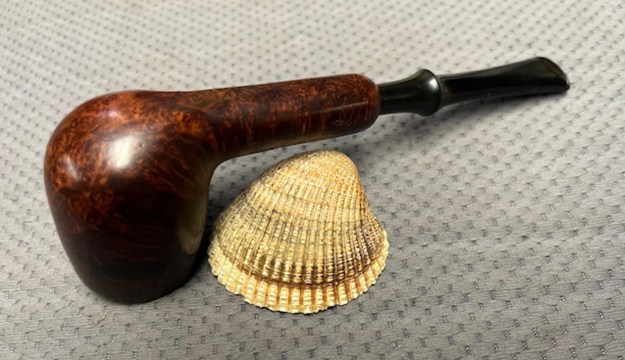
This afternoon I decided to work on the pipe that Jeff picked up on Facebook Marketplace from a seller in Wellsville, Kansas, USA on 12/09/2024. It is a beautifully grained Lovat with an amber coloured acrylic saddle stem. It is a beautiful grained piece of briar that I can appreciate why he chose it. The pipe is stamped on the left side of the and reads Mastro de Paja [over] Fatta a Mano. On the right side of the shank it is stamped Pesaro [followed by] what looks like the Sun. On the underside of the shank it is stamped Media [followed by) 3A in a circle. The briar is dirty from use with a moderate cake in the bowl and a light overflow of lava on the rim top. The stem fit well against the shank end. The amber coloured acrylic saddle stem had some light tooth chatter and scratches on the top and underside of the stem ahead of the button. There was an inset gold circle logo in the top of the stem. Jeff took photos of the pipe before he started his clean up work on it. I have included them below. Jeff took some close up photos of the bowl and rim top. You can see the light lava coat in the plateau top. The inner edge of the rim looks good with a spot of darkening and damage on the left back side. There is a light cake in the bowl that seems to have been recently reamed. The photos of the stem show the scratching and tooth marks in the stem at the button. Jeff took photos of the sides of the bowl to show the interesting grain on the Lovat bowl and shank and how the shape chases it. He took photos of the stamping on the sides of the shank. It is clear and readable as noted above. Before I began to work on the pipe I wanted a refresher course on the maker and the stamping. I have not worked on too many Mastro de Paja pipes before so I figured to do a bit of education before I started my restoration.

I turned first to Pipedia to get a feel for the pipe (https://pipedia.org/wiki/Mastro_de_Paja). I quote in part from the article on that site.

In 1972 Giancarlo Guidi, after having spent some time as a hobbyist in producing pipes, decided to officially found a production workshop called “Mastro de Paja”. Mastro: obviously as a master craftsman, De Paja: it derives from the name with which he was affectionately called by friends “Pajetta” because of his curly hair and translated into a dialectal expression “de Paja”.

Spadoni Giannino joins him shortly after that, at the time he was a salesman and among the products he sold there were also pipes. A professional wedding that turned out to be perfect immediately, in no time the new company “MASTRO DE PAJA di Guidi e Spadoni” immediately became one of the most respected manufacturers of pipes in Italy for the quality of production and lines that for those times were innovative, fascinating and even if coarse they immediately met the consent of enthusiasts and collectors.

Unfortunately, the professional marriage between Guidi and Spadoni, due to disagreements and different views on strategies, stopped in 1981. Guidi left the company to found a personal one. In Mastro de Paja which in the meantime became a real company with a production staff remained with Spadoni. Unfortunately, after a very short time, due to economic and financial problems that put the possibility of continuing the business at risk, Spadoni is forced to ask for help and finds it with the intervention of the Pesaro-based entrepreneur Terenzio Cecchini who, despite being burdened by his multiple industrial activities, sees in Mastro de Paja a valid expression of high craftsmanship and takes over as majority shareholder and acquires the position of director.

Soon after even Spadoni decides to leave (and create his own new company), Cecchini then puts his eyes on a very smart young man which he considered capable of giving new glaze to the Mastro de Paja which, meanwhile, inevitably presented some productive and commercial problems. That young man is called Alberto Montini and he started in his thirties his beautiful adventure in the pipes world… He was contacted by the surveyor Terenzio Cecchini at the time the only owner of the Mastro, to take care of it in every aspect, first as an employee, then as an administrator and later as a partner of Mastro de Paja and afterwards with the passing of Mr. Cecchini he became the sole owner.

Currently the Mastro produces about 2 thousand pipes a year with strictly artisan procedure, at the Mastro currently reigns a warm harmony, is a group of friends who strives to get the best. This also stems from the fact that pipes for Mastro de Paja are not to be considered as any other object to be produced and sold following cold strategies common to everyone in the business world, it’s completely different, it is necessary to love it, it is a style of being, a philosophy of life that can only be appreciated by a noble soul and not noble by title but by principles.

I read further in the article and found the following information on the stamping and the circle 3A stamp. I quote:

Mastro de Paja “ELITE COLLECTION” It is the production of pipes made entirely by hand, even they are unique but of regular production. On all “Mastro de Paja” pipes you can see fire stamped all the information for tracing the value of each creation.

 0B: Rusticated

1B: Sandblasted

CA: Castanea

2D: Half rusticated

3A: Brown and orange stain

3B: Natural

3C: Perfect grain

It looks like the 3A is pretty high in the hierarchy of the Mastro pipes, with just the 3B Natural and the 3C Perfect Grain ahead of it. It is described as Brown and Orange Stain. That would describe what I hold in my hands today.

I turned to the Pipephil website (http://www.pipephil.eu/logos/en/logo-m3.html) and added the following screen capture and summary of information on the brand.Brand founded in 1972 by Giancarlo Guidi. He left it for Ser Jacopo in 1982. Alberto Montini became the owner of the brand in 1995. Production (2010): ~ 5000 pipes / year. Seconds: Calibano, Montini

Armed with that information and renewing my knowledge of the brand it was time to work on the pipe.

Jeff had reamed the bowl with a PipNet pipe reamer and followed up with a Savinelli Fitsall pipe knife to remove the remnants of cake. He scrubbed out the mortise and the airway in the shank and the stem with alcohol, cotton swabs, shank brushes and pipe cleaners. He scrubbed the exterior of the bowl, rim, shank and stem with a tooth brush and undiluted Murphy’s Oil Soap to remove the oils and tars on the rim and the grime on the finish of the bowl of the pipe. He rinsed it with running water. He dried it with a soft cloth. He was able to remove all of the debris in the briar leaving only the area with slight damage on the inner edge of the bowl on the left rear. I took photos of the pipe to show its condition before I started my work. I took a close up photo of the rim top to show the condition of the top and edges of the rim. The inner shows some burn damage on the left read of the bowl. The stem photos show the light tooth marks and scratching on the surface of the amber acrylic.I took photos of the stamping on the sides of the shank to capture the words if possible. It was clear and read as noted above. I removed the stem and took a photo of the parts of the pipe to give a sense of the proportion of the parts to the whole. It is a well designed and made pipe. I decided to begin by addressing the damage on the left rear of the inner edge. I carefully sanded the edge with a folded piece of worn 220 grit sandpaper to smooth out the damaged area and bring it back to round as much as possible.I polished the briar with micromesh sanding pads – dry sanding with 1500-12000 grit pads. I wiped the bowl down after each sanding pad to remove the sanding debris from the surface. It looked very good by the time I finished. I worked some Before & After Restoration Balm into the surface of the briar with my fingertips to clean, enliven and protect it. I let the balm sit for a little while and then buffed with a cotton cloth to raise the shine. The photos show the bowl at this point in the restoration process. With the bowl finished I set it aside and turned my attention to the stem. I sanded out the swirled scratches in the surface of the acrylic and the light tooth marks with 220 grit sandpaper. It did no take to long to remove them all. It looked better.I further sanded it with 320-3500 grit 2×2 inch sanding pads and smoothed out the sanding marks further. I wiped it down after each sanding pad with an Obsidian Oil cloth to remove the sanding debris. It was looking very good by the last pad.I polished the stem with micromesh sanding pads – dry sanding it with 1500-12000 grit pads. I wiped the stem down with Obsidian Oil after each pad. I polished it with some Before & After Pipe Polish – both Fine and Extra to deepen the shine. I wiped it down with a final coat of Obsidian Oil and set it aside to dry. This Mastro de Paja Fatta a Mano Lovat is a great looking pipe now that it has been restored. The brown stains really highlight the grain and the polished finish is stunning. I put the amber acrylic saddle stem back on the bowl and carefully buffed the pipe with Blue Diamond on the buffing wheel. I gave the bowl and the stem multiple coats of carnauba wax on the buffing wheel and followed that by buffing the entire pipe with a clean buffing pad. I hand buffed the pipe with a microfiber cloth to deepen the shine. The finished Mastro de Paja Lovat fits nicely in the hand and feels great. Give the finished pipe a look in the photos below. The dimensions of the pipe are Length: 5 ½ inches, Height: 2 inches, Outside diameter of the bowl: 1 ½ inches, Chamber diameter: ¾ of an inch. The weight of the pipe is 49 grams /1.73 ounces. It is a beautiful pipe. If you are interested in adding it to your rack let me know. It will be on the rebornpipes store in the Italian Pipe Makers Section. Thanks for reading this blog and my reflections on the pipe while I worked on it.

As always, I encourage your questions and comments as you read the blog. Thanks to each of you who are reading this blog. Remember we are not pipe owners; we are pipe men and women who hold our pipes in trust until they pass on into the trust of those who follow us.

Bringing Dad’s Two Pipes – Second Pipe the Medico Gold Crest Back to Life for his Daughter.


by Steve Laug

At the end of last week, I received an email from Terrica in Florida regarding some pipes that she wanted me to clean up for her. I have included her first email below:

I would like to send my deceased father’s old tobacco pipes for cleaning. I will not be using the pipes but would like to get them cleaned up so I can keep them on display.

I wrote back asking what the pipes looked like in terms of condition. I also wanted to know her general wishes on the clean up and how far she wanted me to go with it. She responded as follows and sent photos of the two pipes that I have included below.

Thank you very much for responding. As you can see, these are very inexpensive pipes. My deceased dad likely purchased them at a local drugstore. I have no doubt that they have never been cleaned.
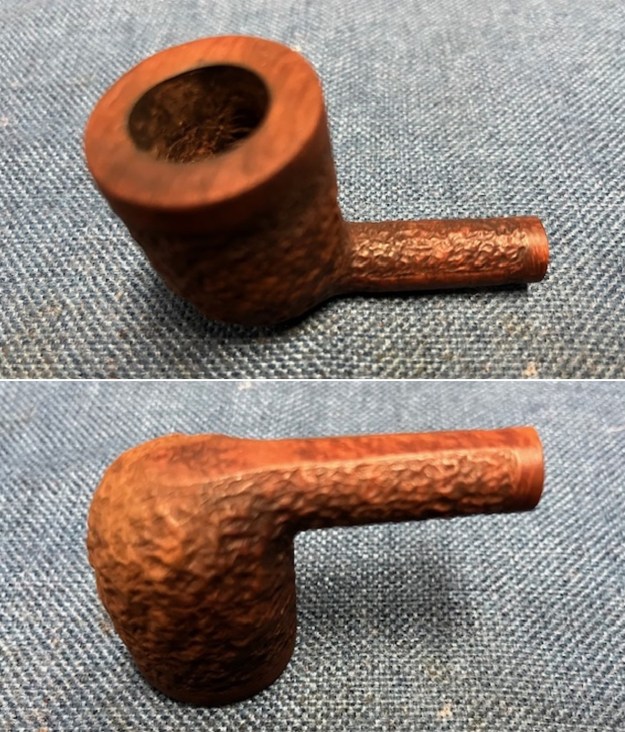
I will never be using them, but I would at least like them presentable. Thank you very much, Terrica

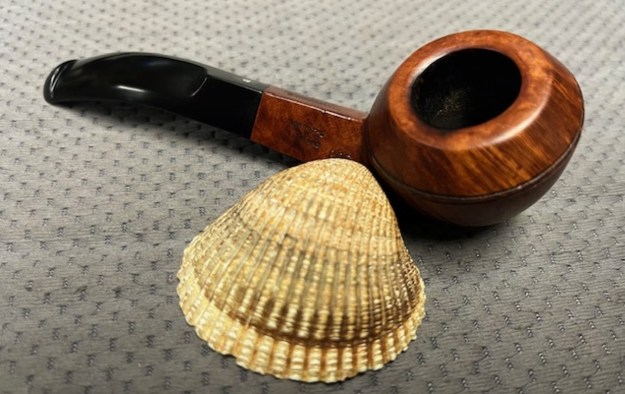
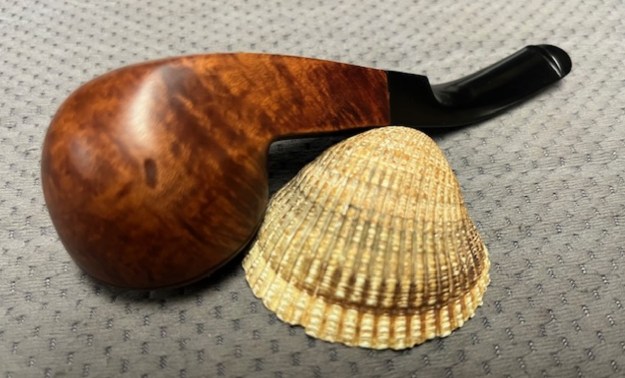
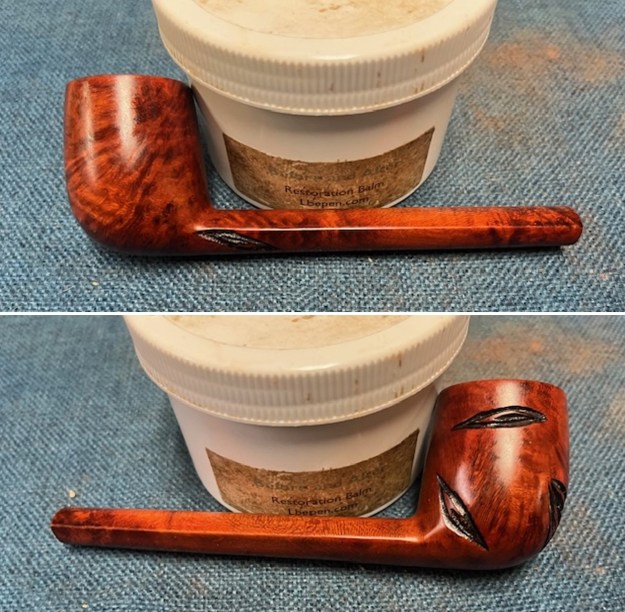
I took a look at the photos and was able to discern that the top pipe was a Medico Gold Crest Pot shaped pipe that had a thick cake in the bowl and was very dirty with grime ground into the finish. The stem, other than being very dirty did not have deep tooth marks. There was tooth chatter and grime on the vulcanite filter stem that would need to be cleaned up and removed. The second pipe was stamped Venturi and was made out of a resin that was used in The Pipe, The Smoke and the Venturi. This was a bent Billiard. It was dirty and had a cake in the bowl. The stem was also very dirty and had some tooth chatter on the surface.I chose to work on the Medico Gold Crest next. The finish was dirty and there were nicks around the outer edge of the rim top. The inwardly bevelled rim top was very dirty with a thick lava build up and there was a thick cake in the bowl. The stamping on the left side of the shank was clear but had a lot of dust in the stamping. It read as noted above – Medico [over] Gold Crest [over] Imported Briar. On the right side of the shank it is stamped 149 (shape number). There is a 14K gold plated band on the shank that is stamped Medico [over] 1/30 14K RGP. The “1/30 14K RGP” likely refers to the gold content of the band, indicating it is a 14K gold rolled gold plate. The stem appears to be a Medico synthetic rather than rubber but I am not sure. There surface as dirty and had some build up ahead of the button on both sides. There was some tooth chatter on both sides ahead of the button edge. The pipe smelled of the tobacco that had obviously been smoked in it. The style of the build up/cake make me think of a drug store tobacco of the style of Prince Albert or Sir Walter Raleigh. I will certainly l know more once work on the second pipe. I took photos of the pipe before I started my work on it. I took photos of the rim top and the stem to show the condition. You can see the cake in the bowl and the thick overflow of lava on the rim top. The photos of the stem show the tooth marks and chatter on the top and the underside of the stem.I took a photo of the stamping on the left side of the shank to capture it. The left side read as noted above. I removed the stem and took a photo of the parts to give a sense of the look of the pipe. I paused in the restoration to gather backgound on the brand. I turned first to Pipephil’s site to see what I could learn (http://www.pipephil.eu/logos/en/logo-medico.html). I have included a screen capture of the section on the Gold Crest. The stamping shown in the capture below is identical to the one that I am working on.From there I turned to Pipedia to see if I could gather more information on the brand as a whole and specifically the Gold Crest Line (https://pipedia.org/wiki/Medico). I quote below:
Medico was created in 1933, and is still produced by S.M. Frank. The brand is famous for its pipe filters, which were launched in the same year. Since 1966, some models have been made in Brylon, a synthetic material, and others in briar. The brand was also sold by the English company Cadogan and Oppenheimer Pipe. Symbol: M inside a shield, although early pipes, like the example bellow, had a + sign, like a Medic would have on their sleeve.

I have also included some of the advertising flyers that were on the site as well. They give a sense of the pipe’s look and feel and the old descriptions are great to read. Now it was time to turn my attention to the pipe itself. I started my work on it by reaming the bowl with a PipNet reamer. I used the first cutting head and took the cake back to bare briar. I cleaned up the reaming with a Savinelli Fitsall Pipe Knife and removed all the remnants of the cake. I scraped the rim top with the flat edge of the blade at the same time and removed most of the thick lava build up. I sanded the walls of the bowl with a piece of dowel wrapped in 220 grit sandpaper. The walls look very good at his point in the process. I cleaned out the shank, the airway and the mortise as well as the airway in the stem with alcohol, cotton swabs, hard bristle and soft bristle pipe cleaners. It was a very dirty pipe which just meant that it had really been enjoyed by the previous pipe man.I scrubbed the exterior of the bowl and shank with a tooth brush and undiluted Murphy’s Oil Soap. I scrubbed the lava on the rim top and overflow on the outside of the bowl with the soap. I rinsed the briar with warm water to remove the grime and debris of the scrubbing. It looked significantly better after the scrubbing. Once I cleaned the bowl with the soap it looked much better. I wiped the bowl down with acetone on cotton pads to remove the spotty varnish coat on the bowl and to break up the darkening on the top of the rim. I worked over the darkening on the back topside and inner edge of the bowl with 220 grit sandpaper. It took a lot of elbow grease but it was getting better with each piece of sandpaper. I sanded the briar further with 320-3500 grit 2×2 inch sanding pads. I wiped the bowl down with a damp cloth after each sanding pad. It began to look very good. I polished the briar bowl with micromesh sanding pads – dry sanding with 1500-12000 grit pads. I wiped the bowl down after each sanding pad with an olive oil cloth. By the final sanding pad the bowl had taken on a significant shine. I rubbed the bowl and shank down with Before & After Restoration Balm to deep clean the finish on the briar bowl and shank. The product works to clean, enliven and protect the briar and gives the briar a rich shine. I worked it in with my fingers to get it into the surface. I let it sit for 10 minutes then I wiped it off and buffed it with a soft cloth. The bowl began to have a rich shine. I took some photos of the bowl at this point to mark the progress in the restoration. It is a beautiful bowl. I set the clean and polished bowl aside and turned my attention to the stem. I sanded the stem smooth with 220 grit sandpaper to clean up the marks and chatter. It was smooth and all that remained was to polish it.I wiped the stem down with olive oil and sanded the surface with the 2 x 2-inch sanding pads – 320-3500 grit pads to clean up the sanding marks on the stem surface. I wiped it down after each sanding pad and by the final 3500 grit pad the stem started to really shine.I touched up the faint M shield on the left side of the stem with Rub’n Buff Antique Gold. I worked it into the stamping with a tooth pick. I buffed it off with a paper towel and wiped the stem down with some Obsidian Oil. It is faint in spots but looks very good.I polished the stem with micromesh sanding pads – dry sanding with 1500-12000 grit pads. I wiped the stem down after each sanding pad with Obsidian Oil. I gave the stem a final polish with Before & After Pipe Stem Polish both Fine and Extra Fine. I rubbed the stem with them and then gave them a final coat of Obsidian Oil. I set it aside to dry. I fit the metal tenon with a new Medico Paper Filter. Even though the pipe probably would not be smoked I thought it was important to put it together the way it was originally.I am excited to finish this Medico Gold Crest Gold Banded Pot with a saddle stem. I put the pipe back together and buffed it with Blue Diamond on the buffing wheel. I gave the bowl and stem multiple coats of carnauba wax. I buffed the pipe with a clean buffing pad to raise the shine and then by hand with a microfibre cloth to deepen it. It is fun to see what the polished bowl looks like with the polished stem. This Medico Gold Crest Pot is great looking and the pipe feels great in my hand. It is light and well balanced. Have a look at it with the photos below. The dimensions are Length: 5 ½ inches, Height: 1 ½ inches, Outside diameter of the bowl: 1 ½ inches, Chamber diameter: 7/8 of an inch. The weight of the pipe is 43 grams/1.52 ounces. This second and last of Terrica’s Dad’s pipes is a real beauty. I will be packing the pair up and sending them back to her later this week. I look forward to hearing what she thinks of both of these resurrected beauties. Both should be great memories of her late Dad.

As always, I encourage your questions and comments as you read the blog. Thanks to each of you who are reading this blog. Remember we are not pipe owners; we are pipe men and women who hold our pipes in trust until they pass on into the trust of those who follow us.