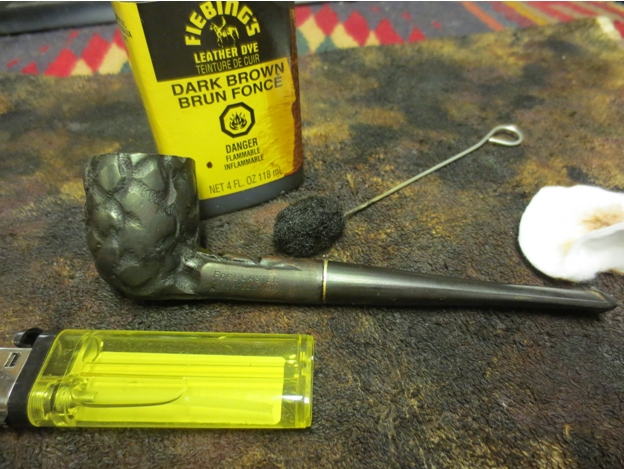
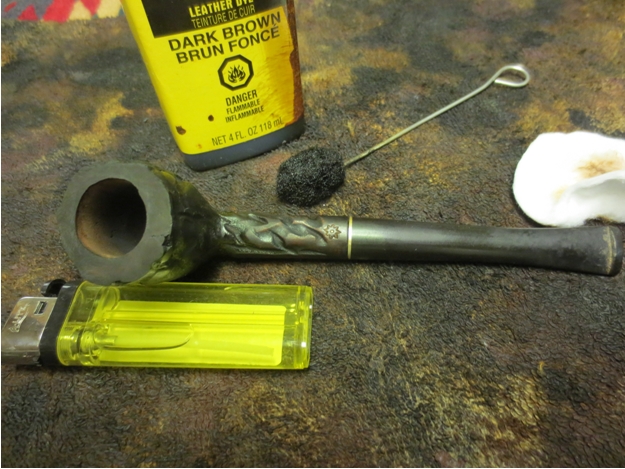
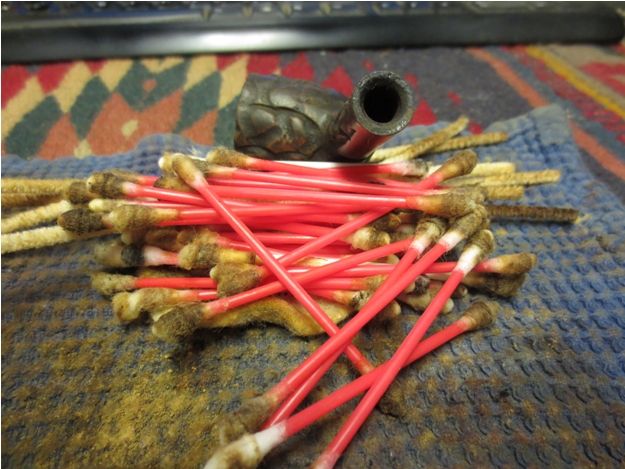
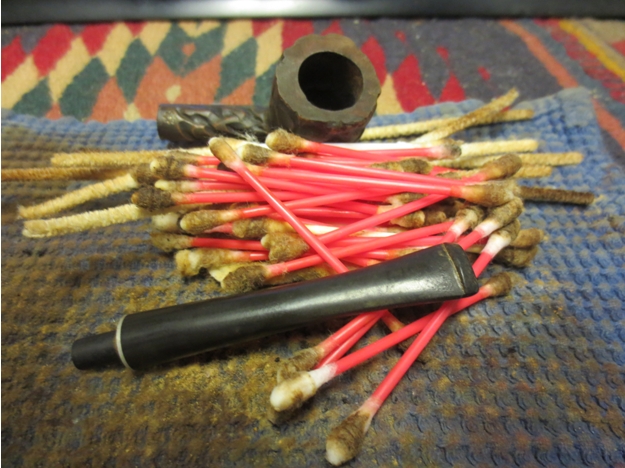
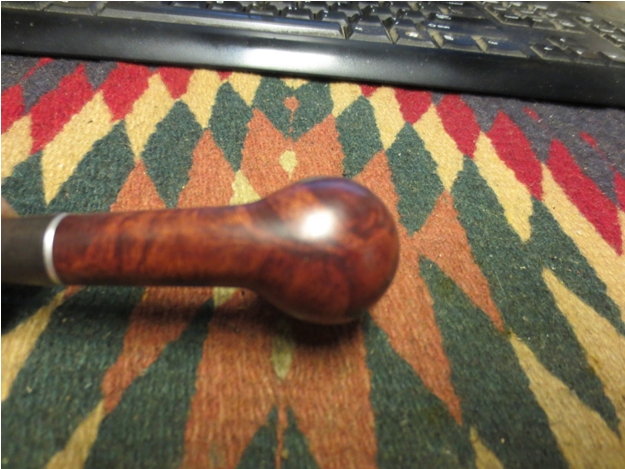
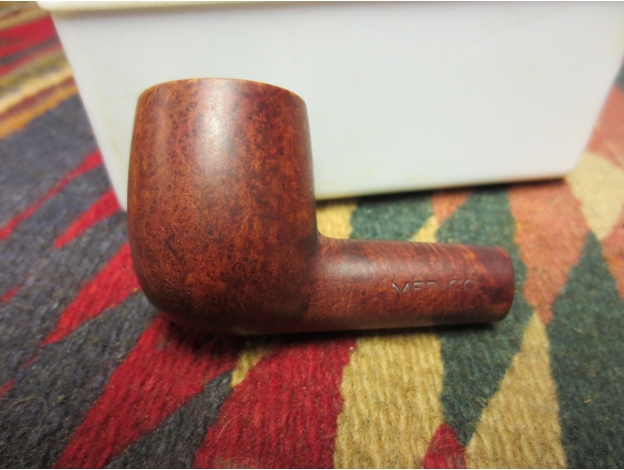
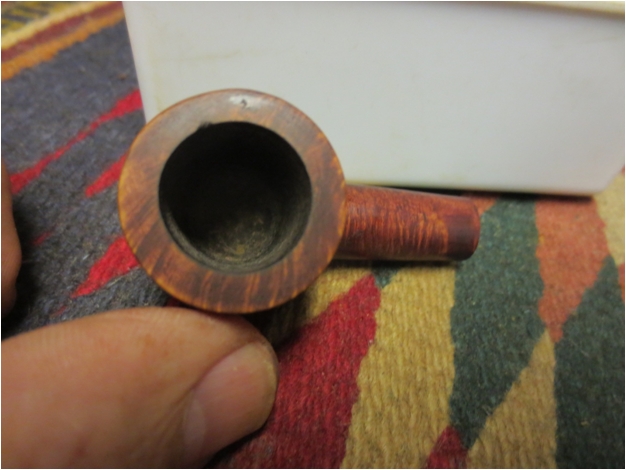
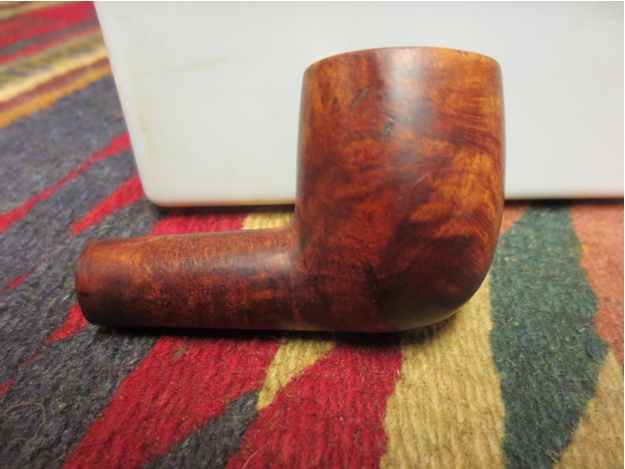
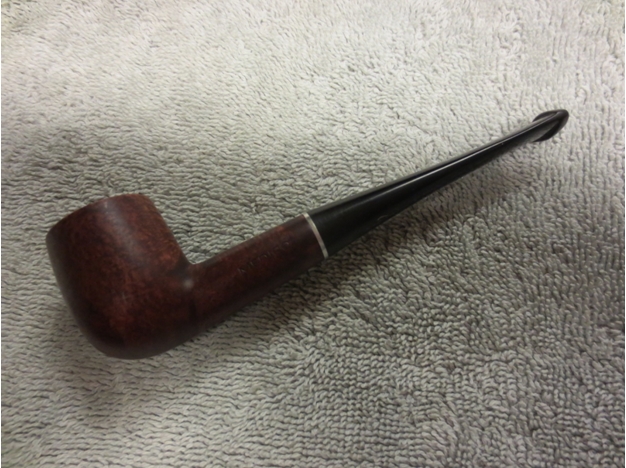
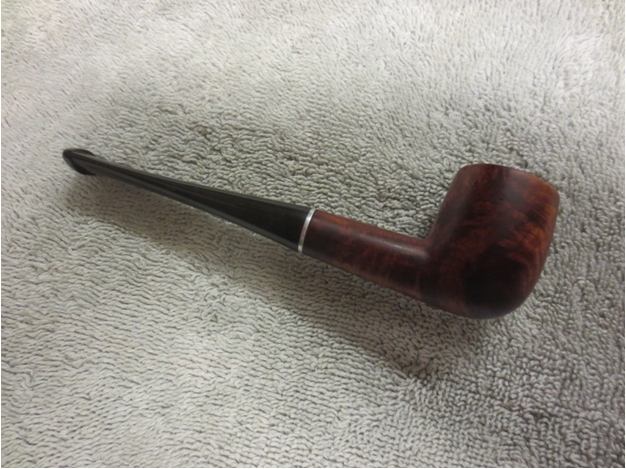
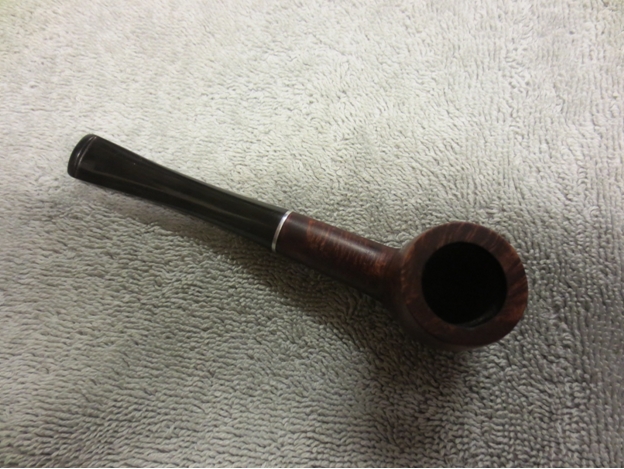
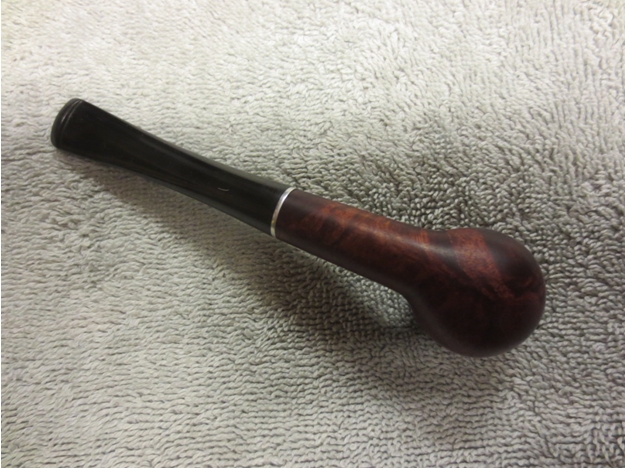
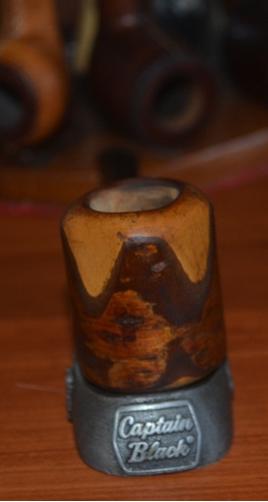
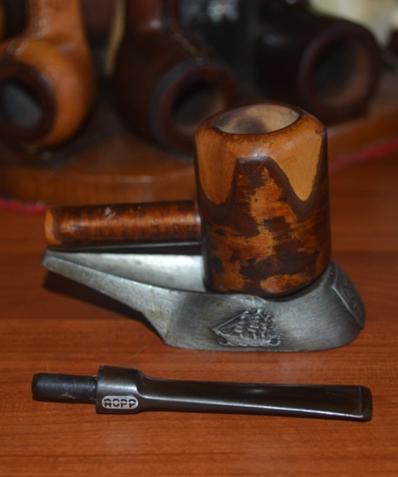
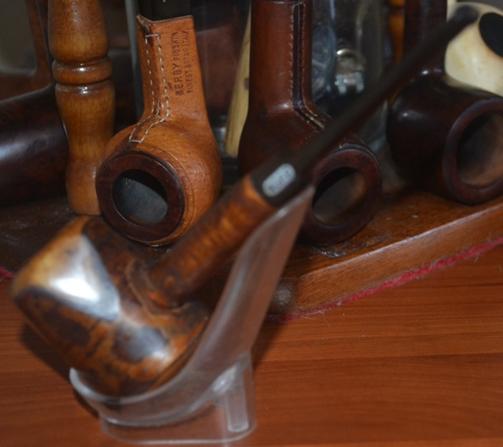
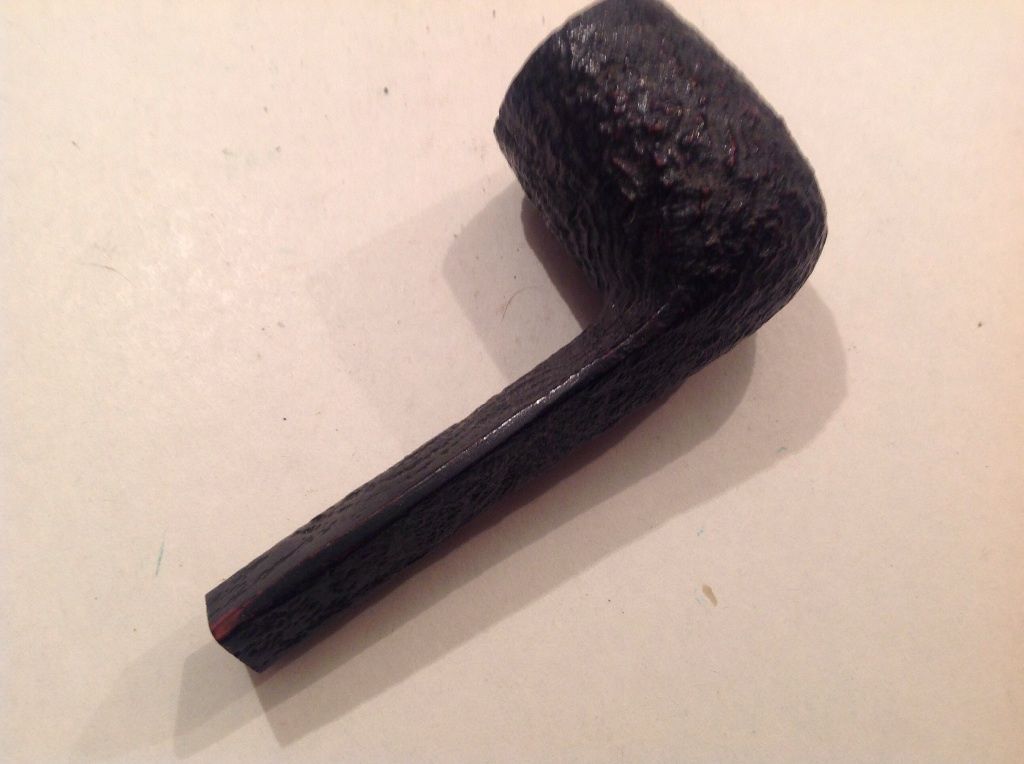
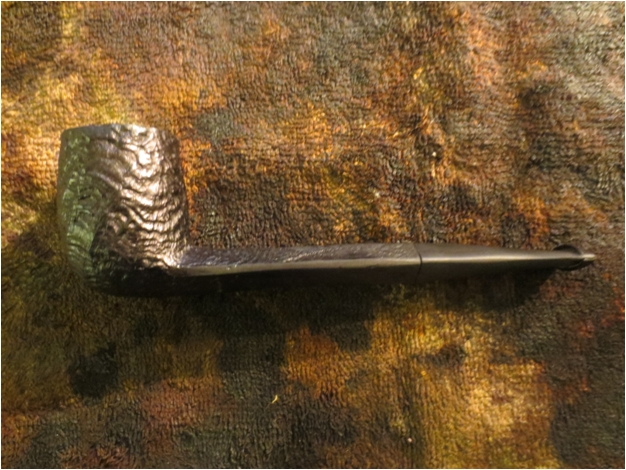
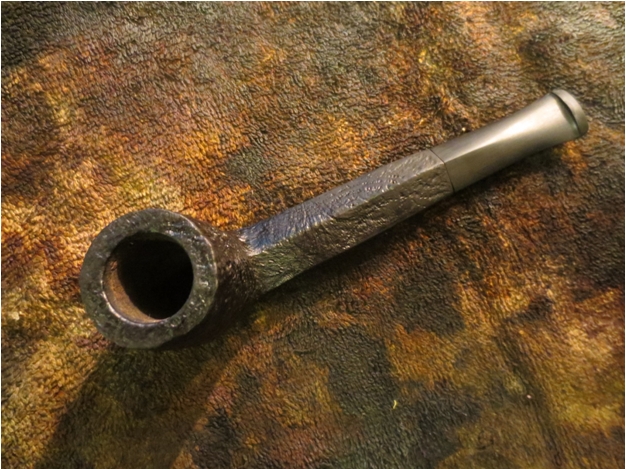
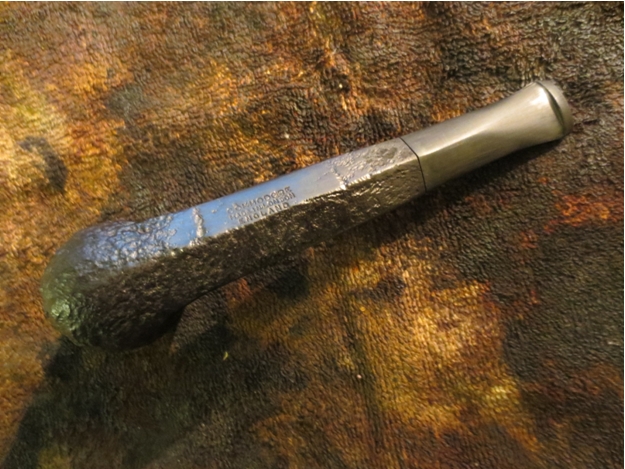
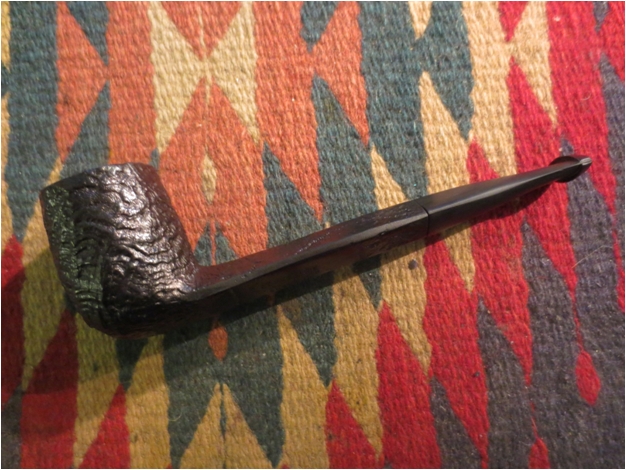
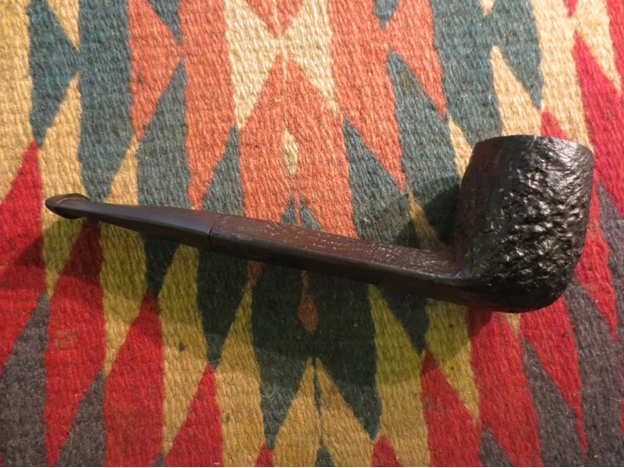
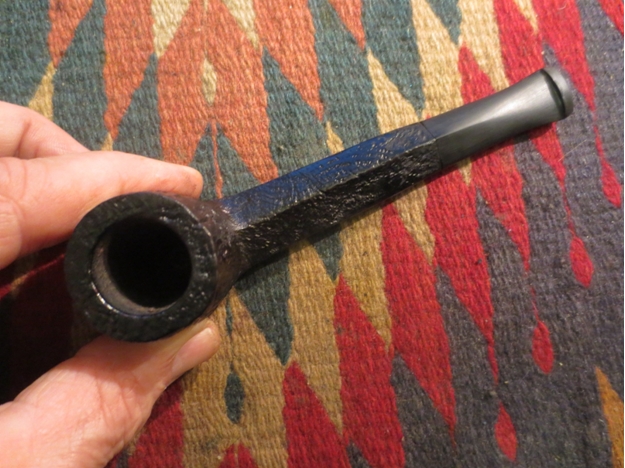
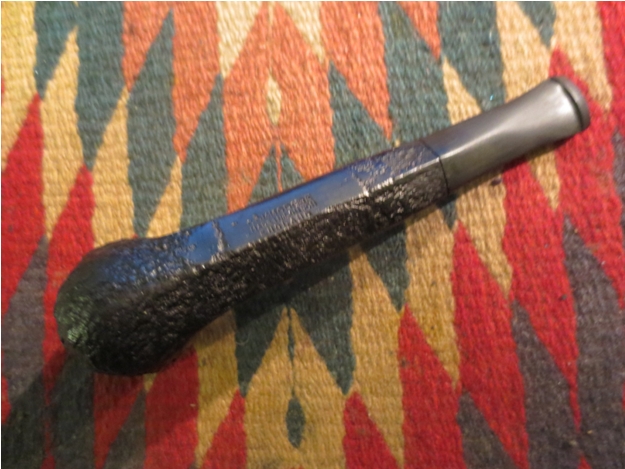
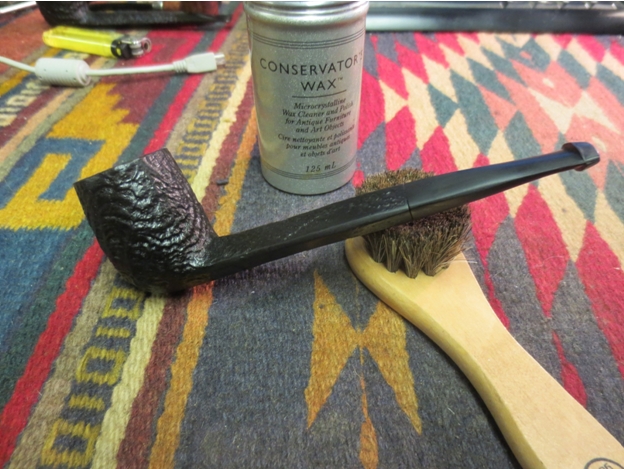
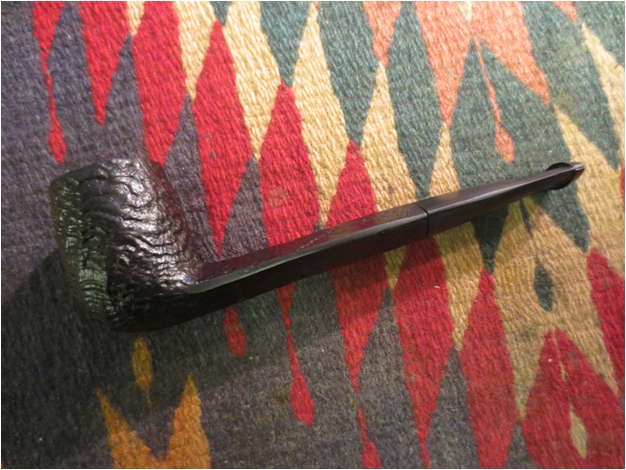
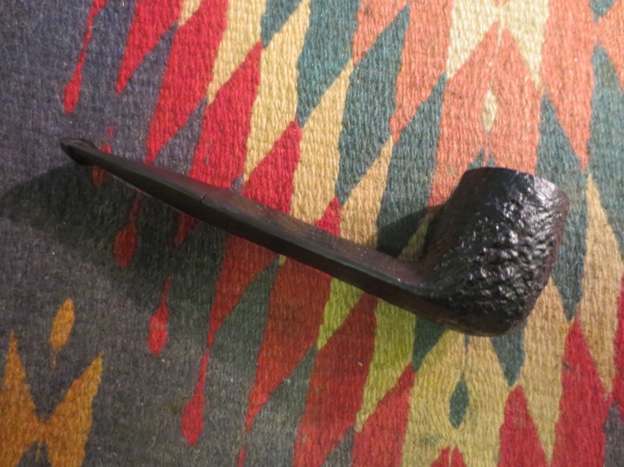
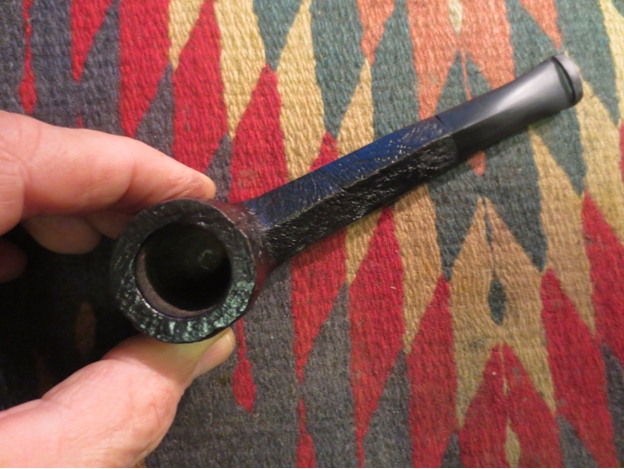
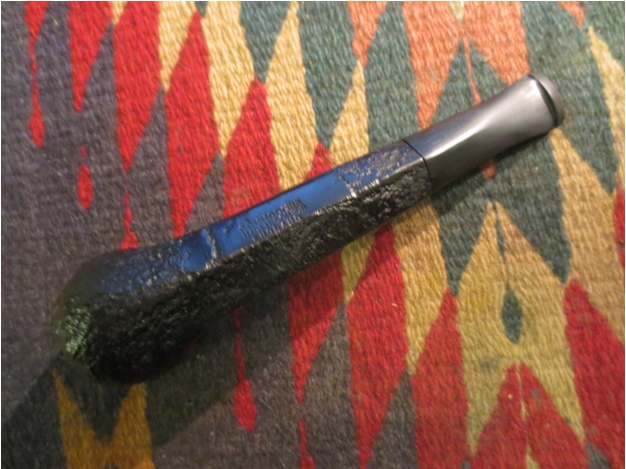
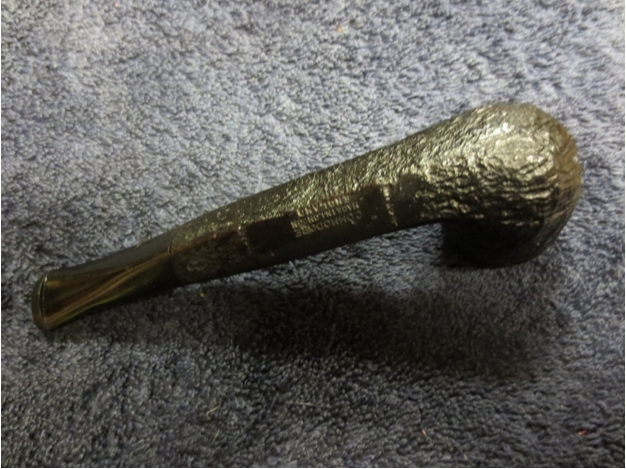
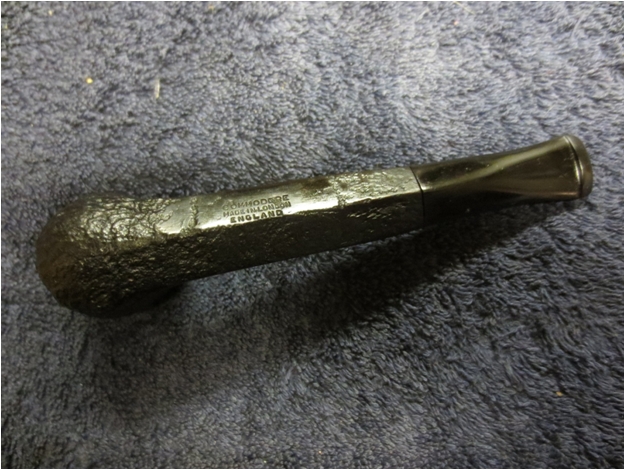
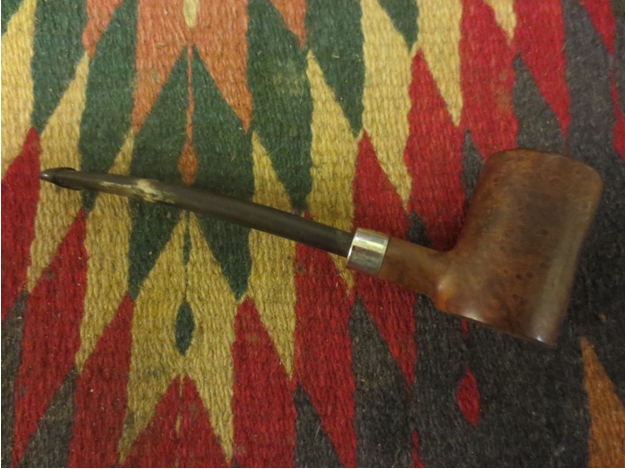
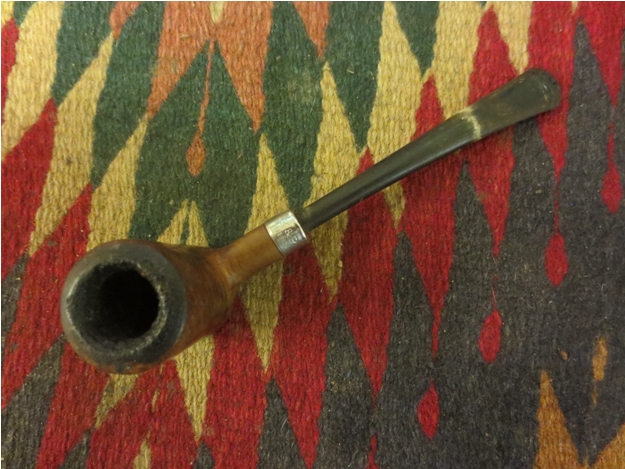
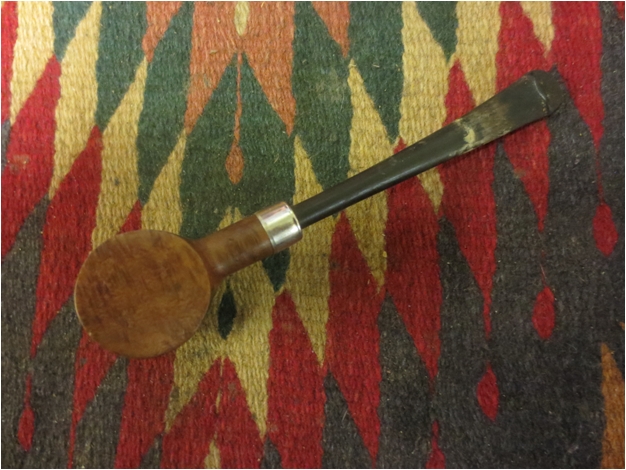
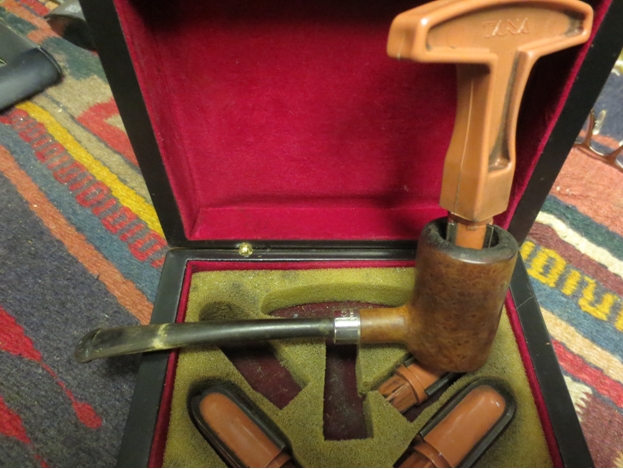
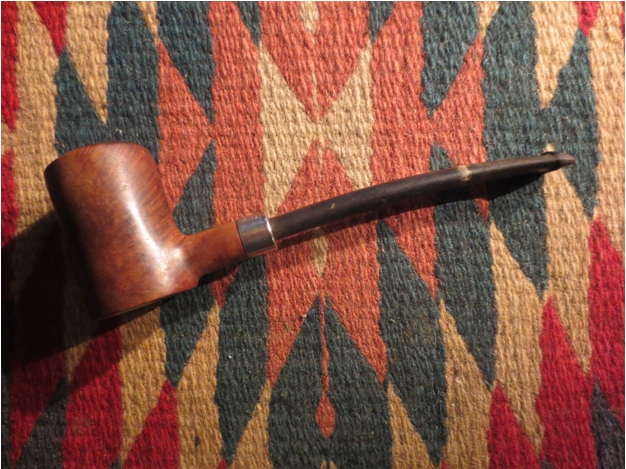
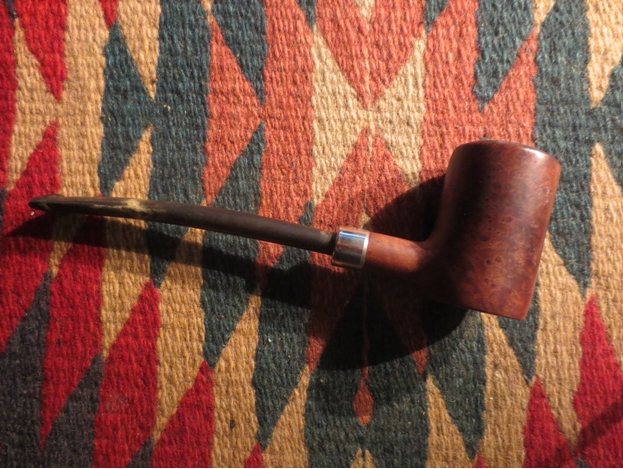
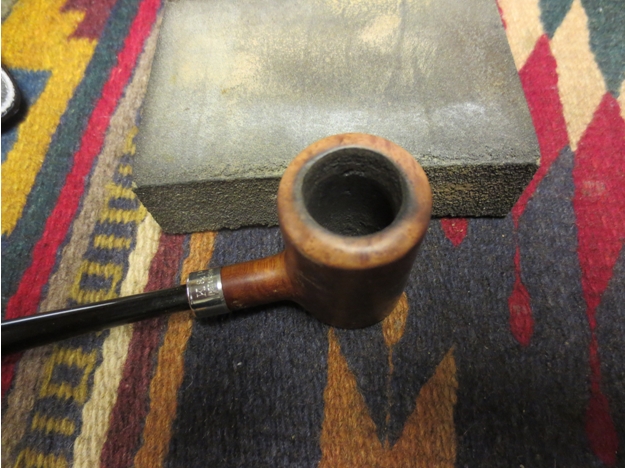
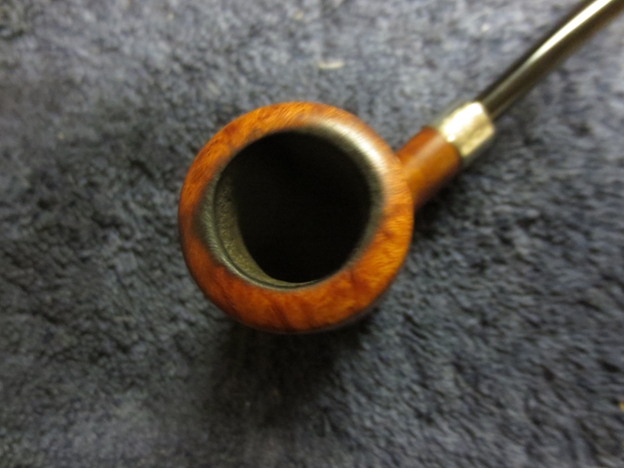
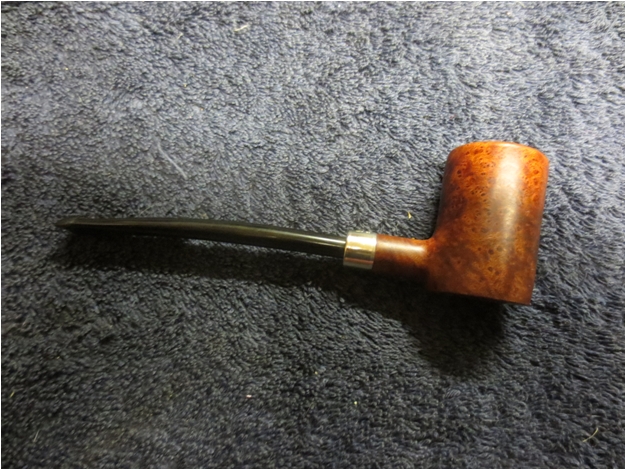
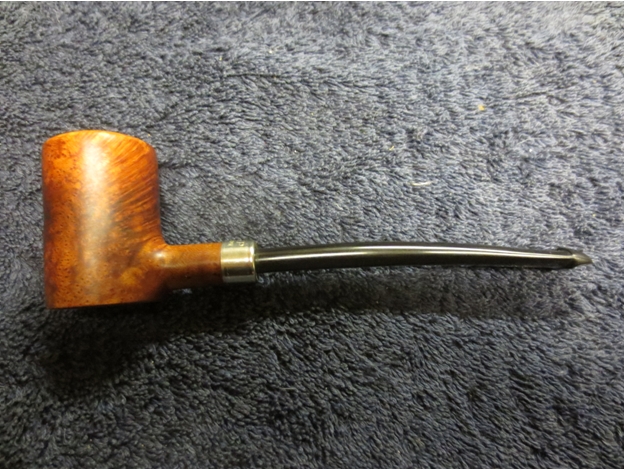
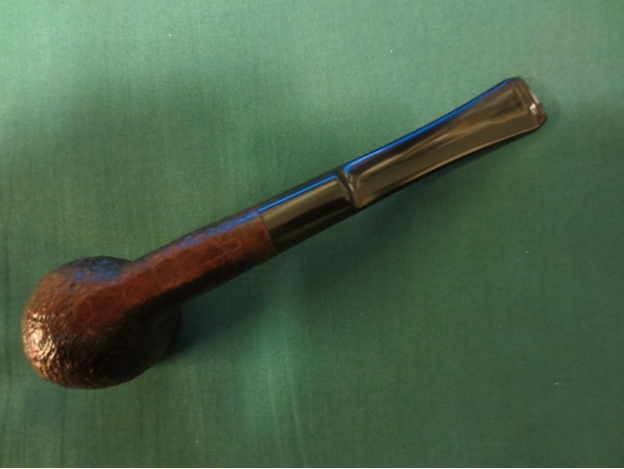
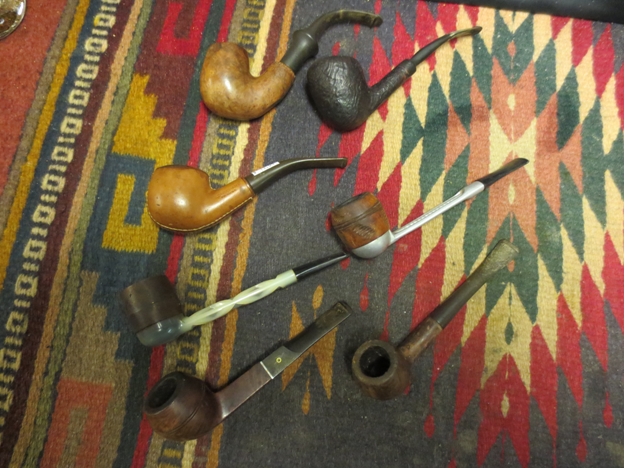
Tag Archives: Bowl – refinishing

The Original Lonchamps Pigskin Pipe and the Restoration of One – Robert M. Boughton


Guest Blog by Robert M. Boughton
Member, North American Society of Pipe Collectors
http://www.roadrunnerpipes.com
http://about.me/boughtonrobert
Photos © the Author

“Nothing is so perfectly amusing as a total change of ideas.”
— Laurence Sterne, 18th century Irish born English novelist and humorist

INTRODUCTION
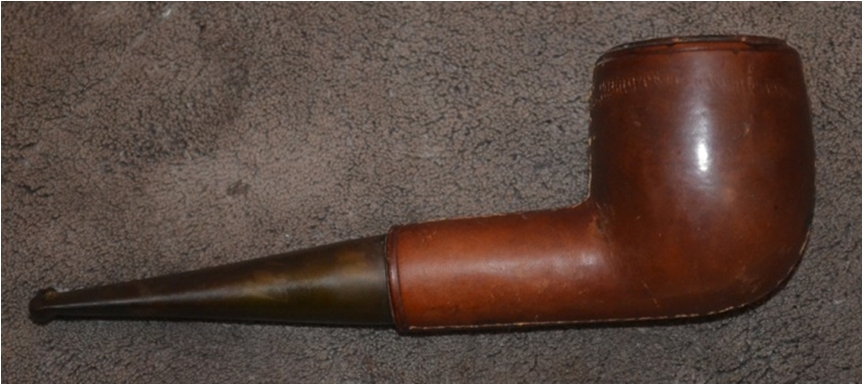
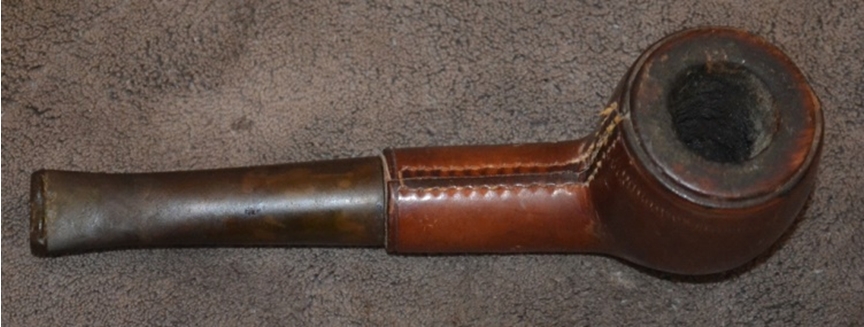
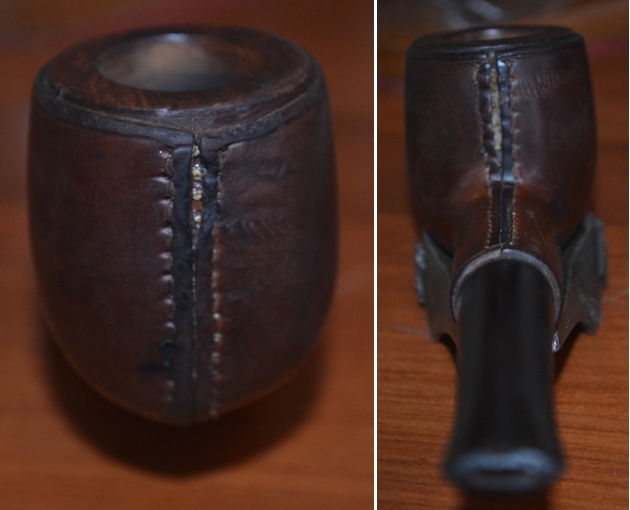
Imagine it, the idea of covering a nice, good briar pipe in pigskin, or, as is more realistic, decent briar but pocked with so many problematic blemishes that conventional pipe-making wisdom would have it rusticated or coated with high quality varnish of some color and buffed to a high sheen. Yet some clever Frenchman, tired of the norm, cogitated on the puzzling problem until, in 1945, he came up with the idea of wrapping the bowl and shank in pigskin. And thus Longchamp, a brand of Forestier & Cie, was born to be the first maker and sole distributor of the new innovation, at least until other brands got with the program.

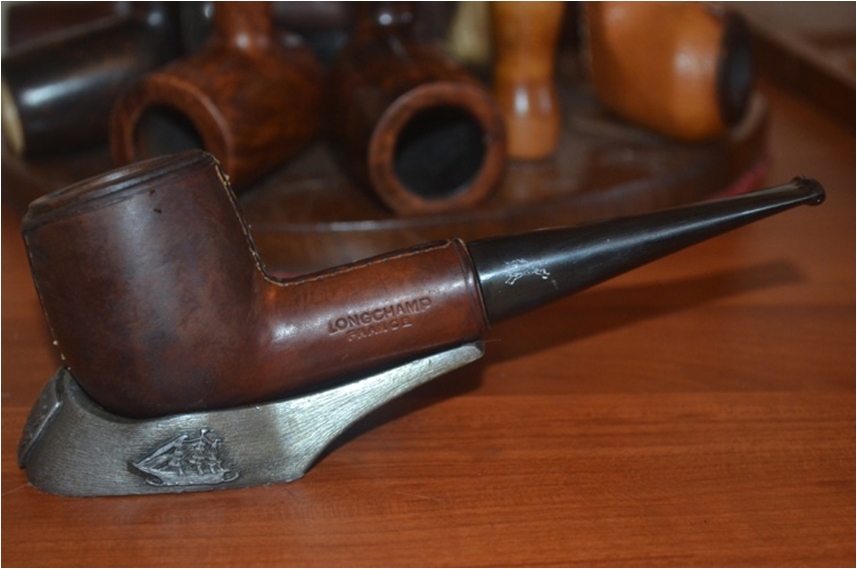
This particular leather-clad pipe came to me from the Internet, as so many subjects of my recent and future blogs did, because I spotted it in a lot and looked up Longchamp online. That is how I learned that the French company’s shop in St. Claude, renowned for so many other fine examples of the craft, fashioned the wooden shapes and sent them off to Paris where the actual pigskin coats were made and sewn on by local artisans.

I already bought two pigskins, both bulldogs, by other makers. The green Versailles, an export brand of Ropp, sold a few weeks ago. The tan Derby, an Italian make, remains available. The dark brown Longchamp, a billiard, makes a nice alternative as a different shape and color.

RESTORATION
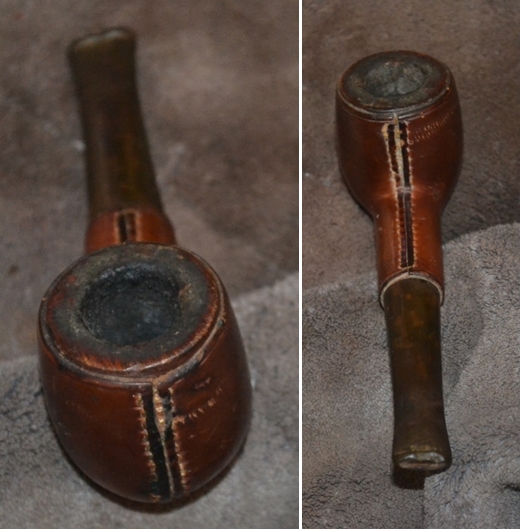
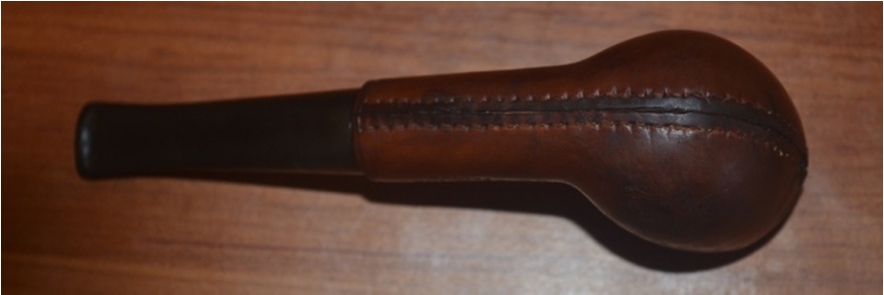
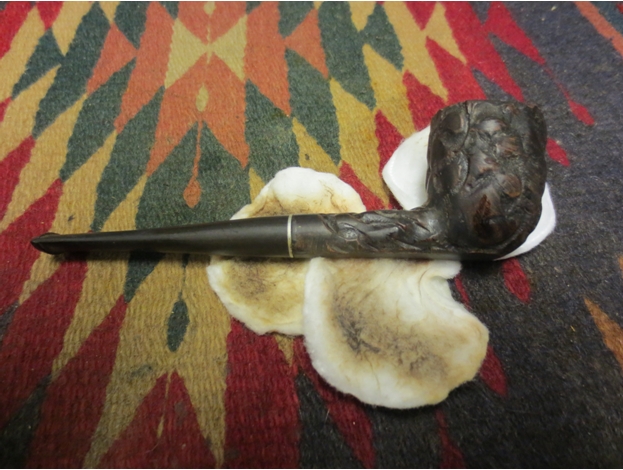
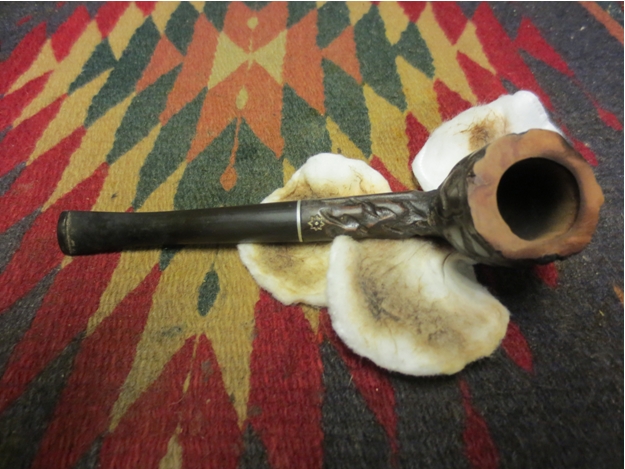
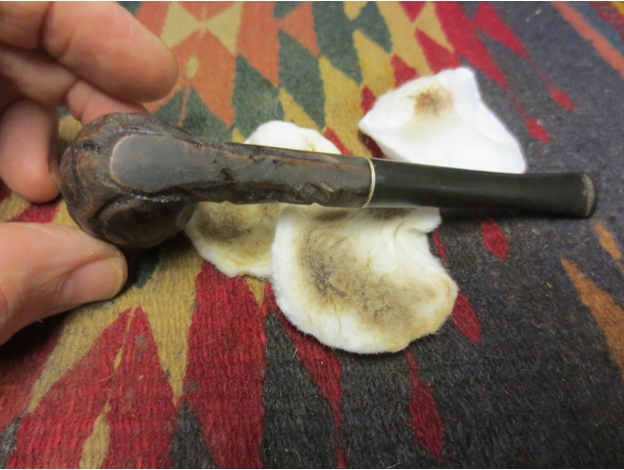
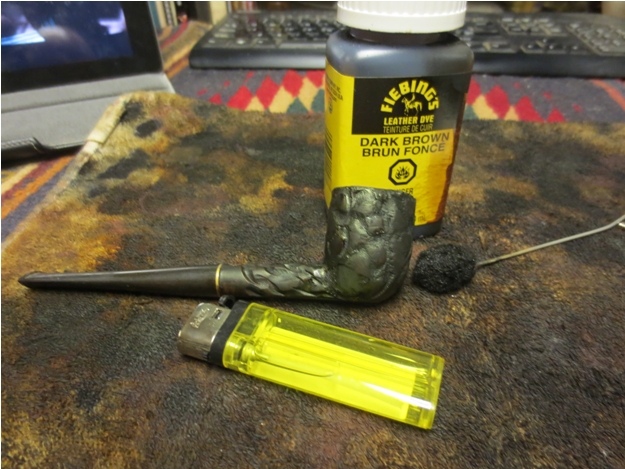
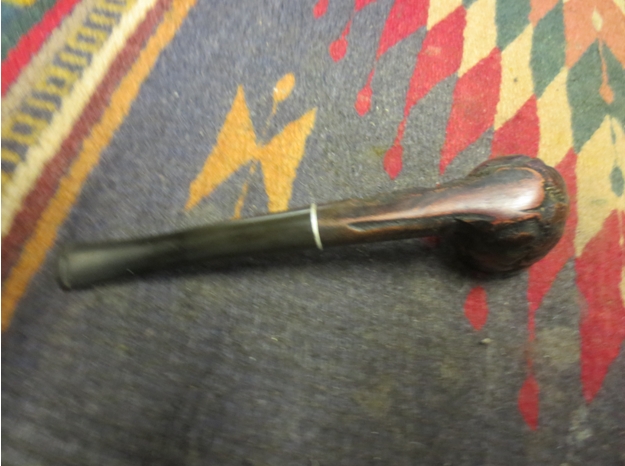
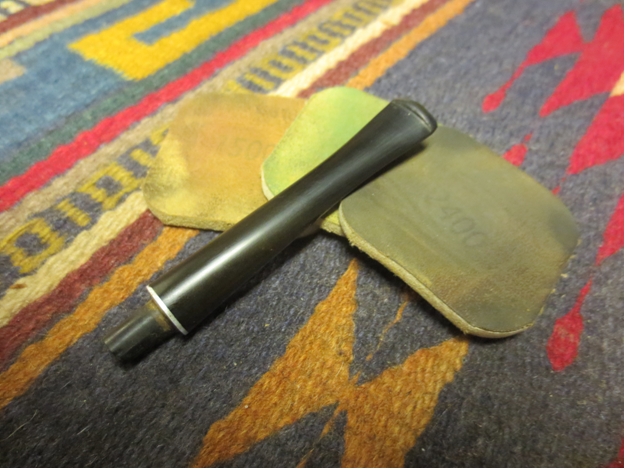
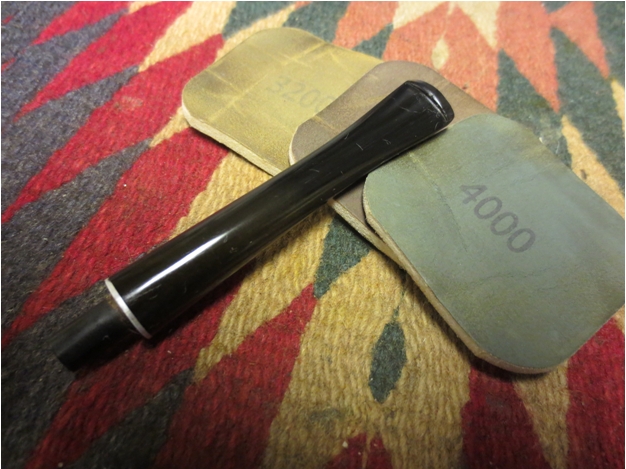
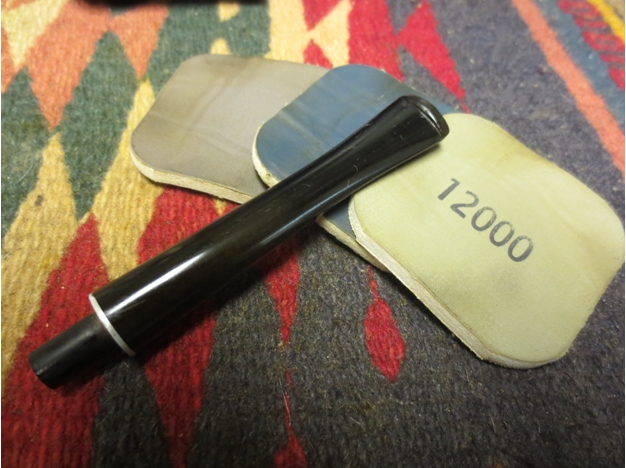
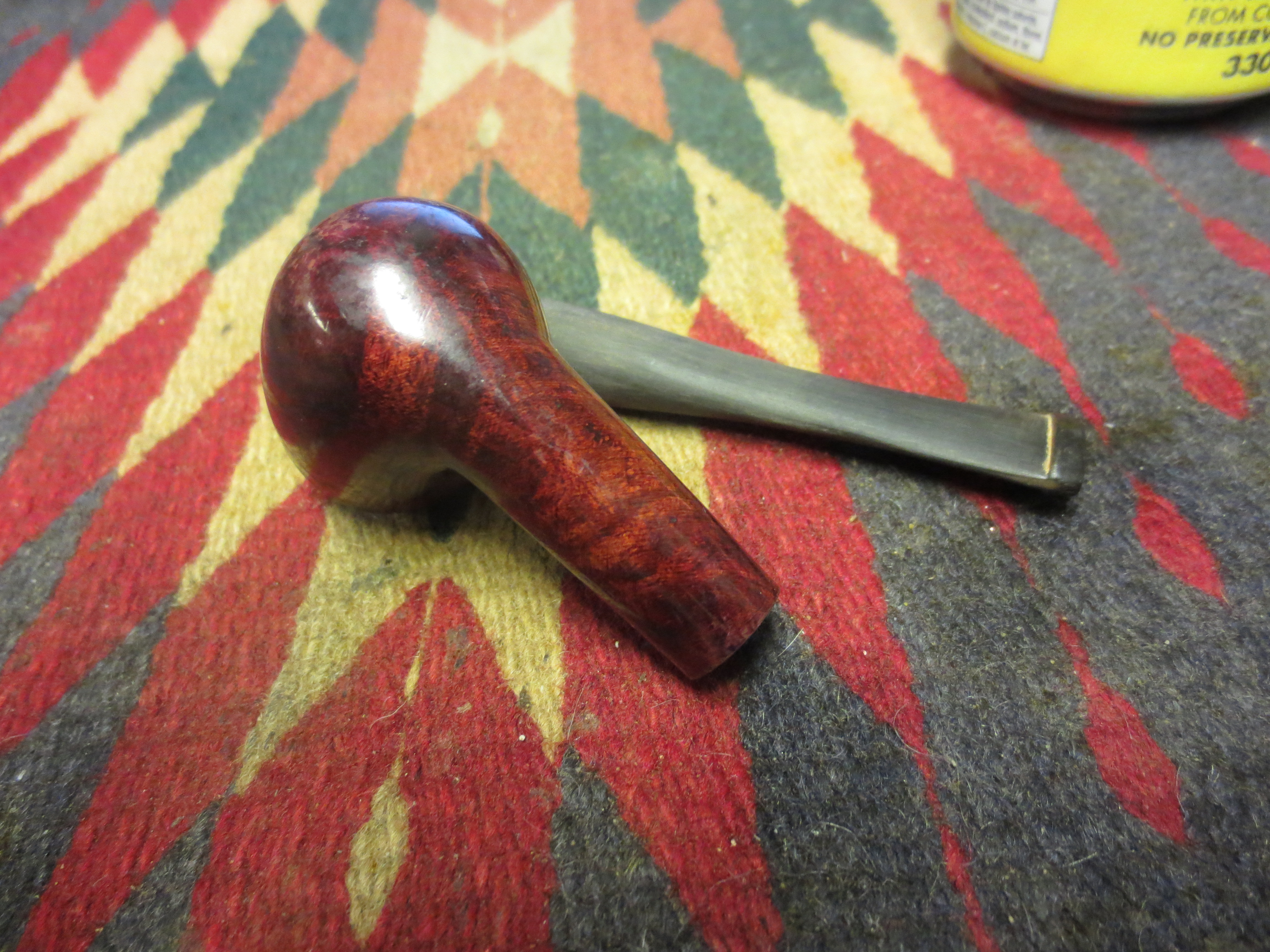
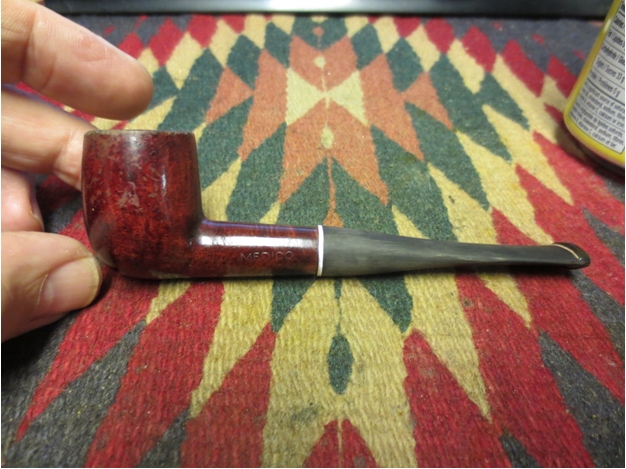
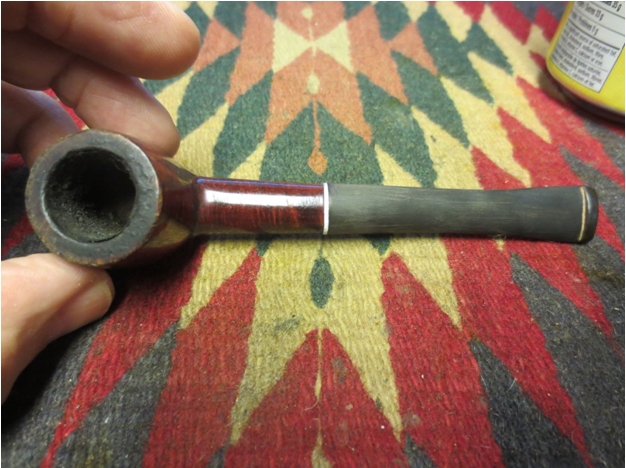
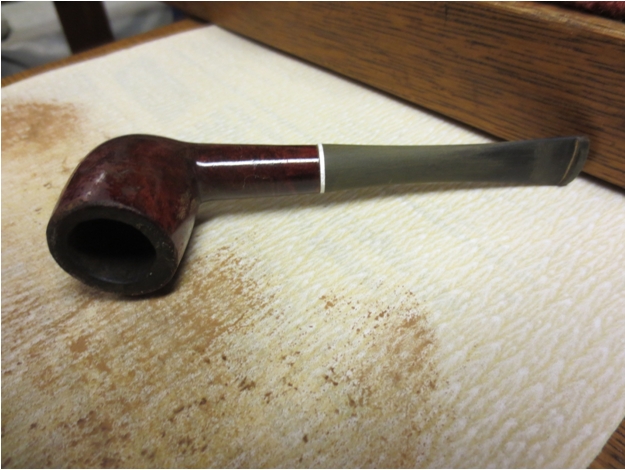
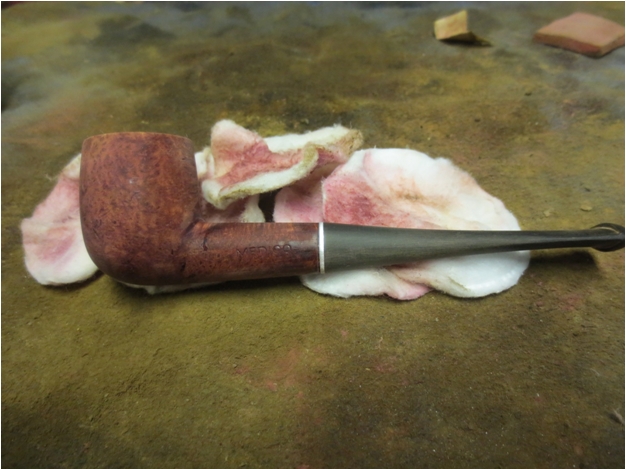
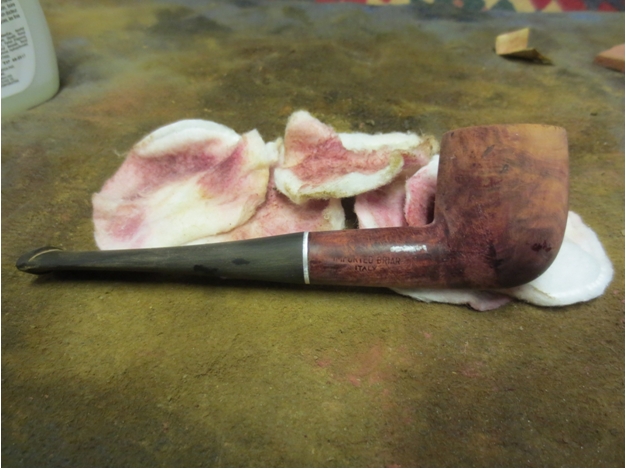
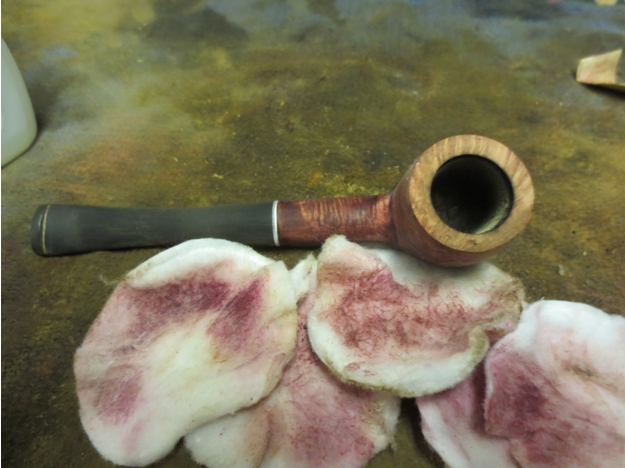
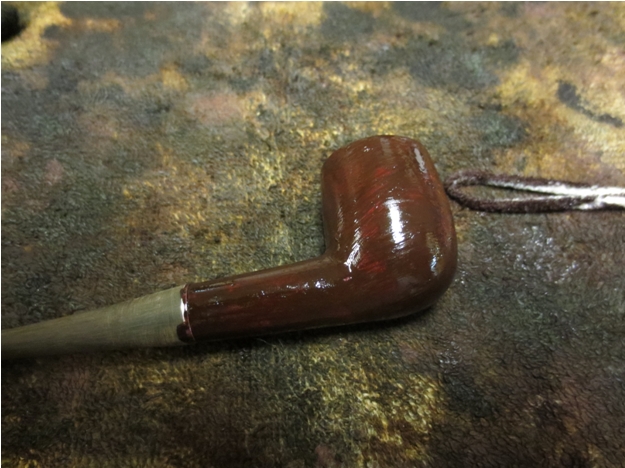
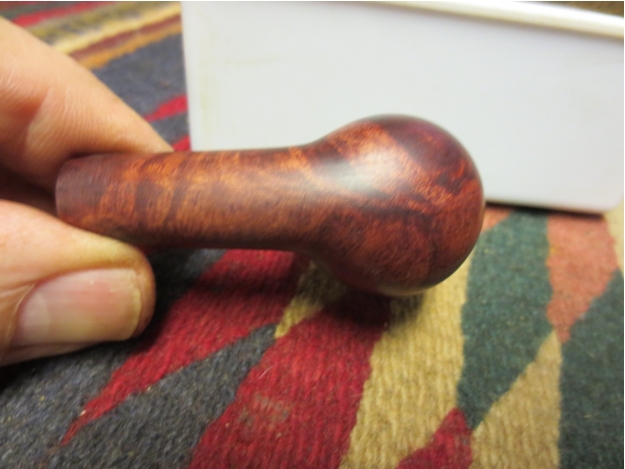
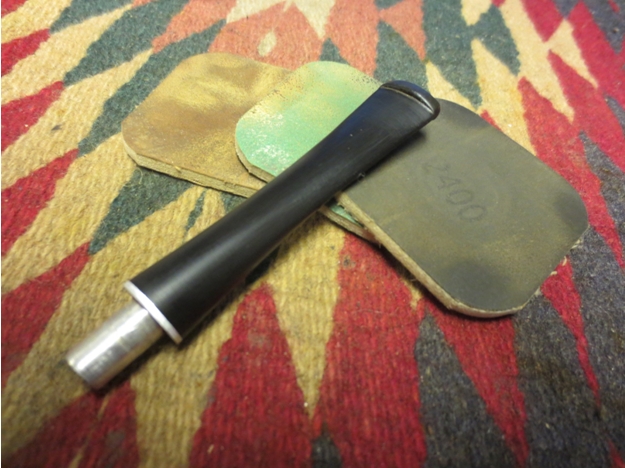
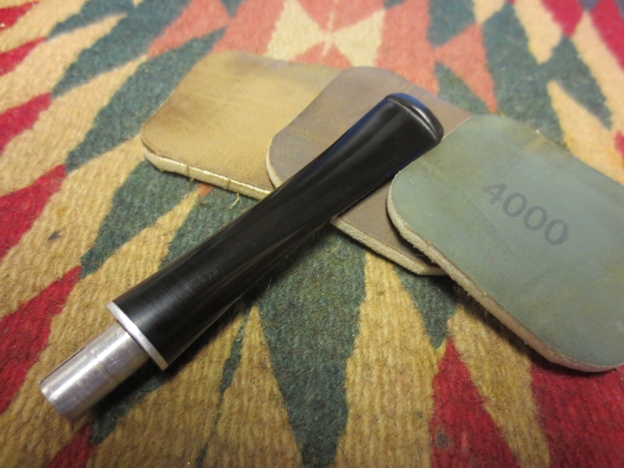
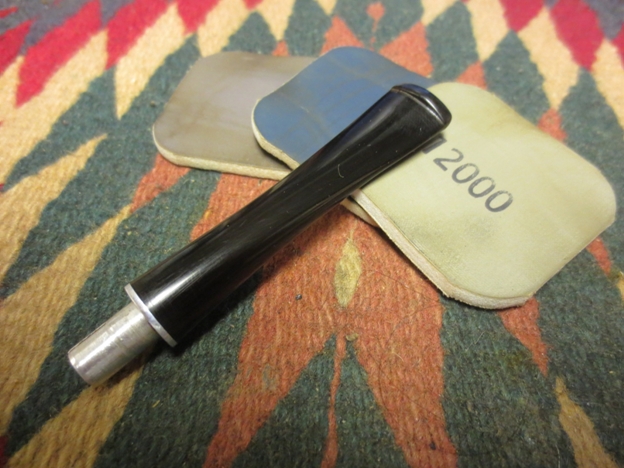
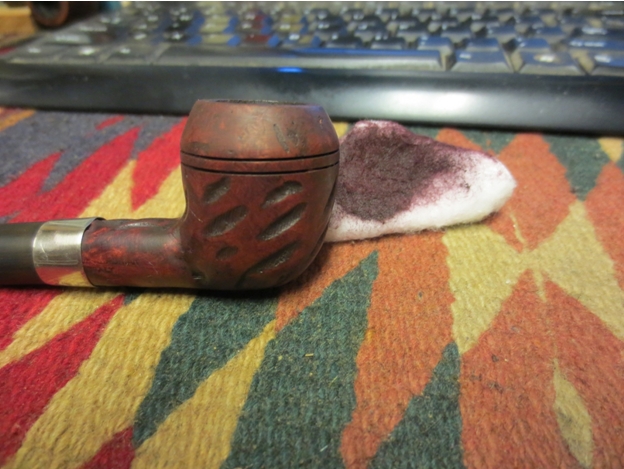
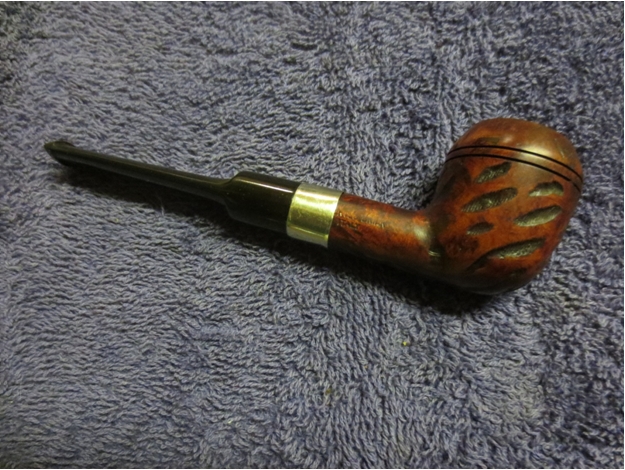
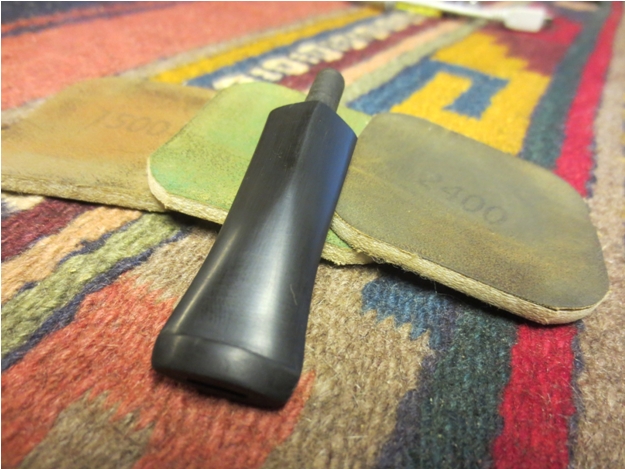
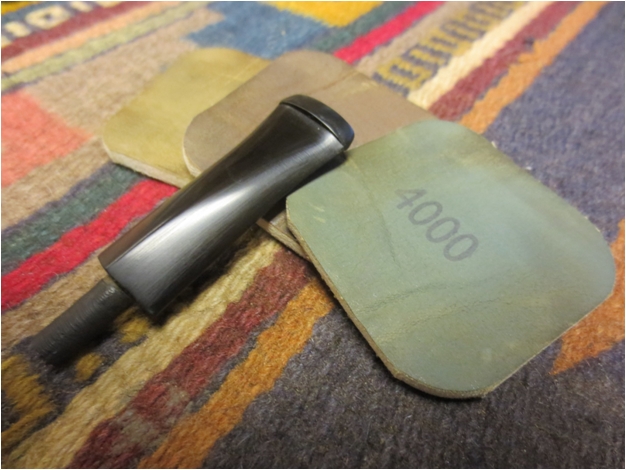
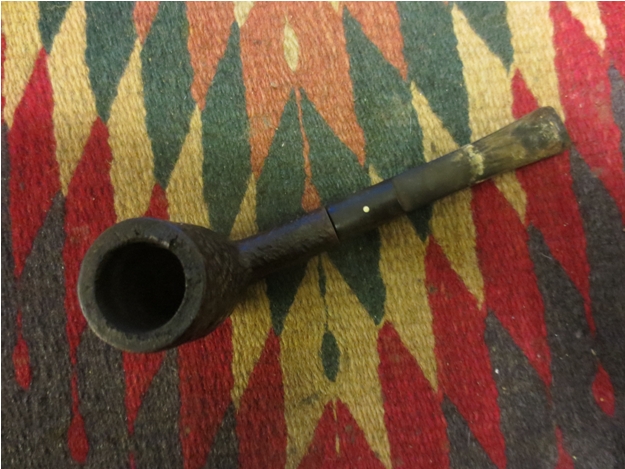
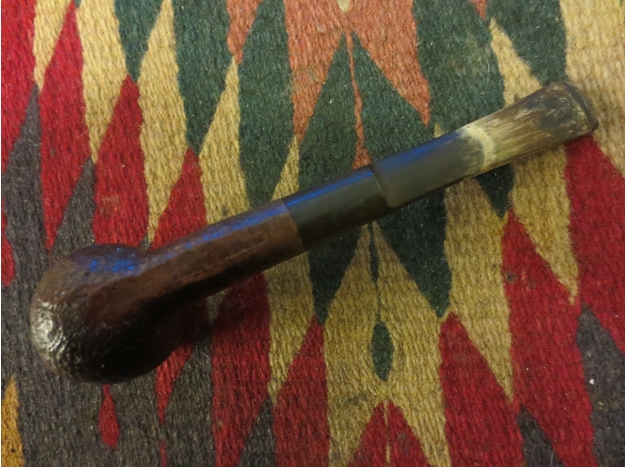
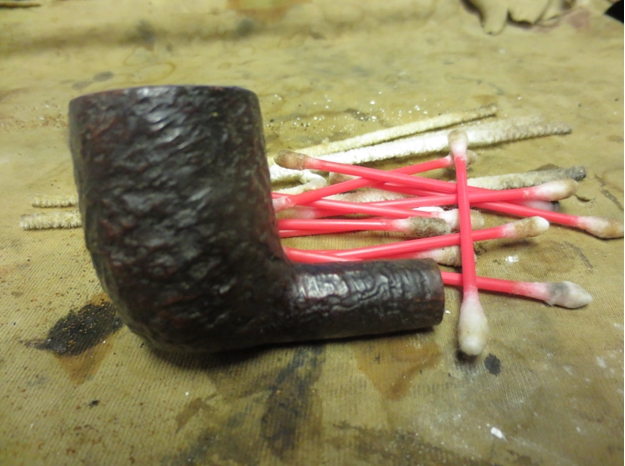
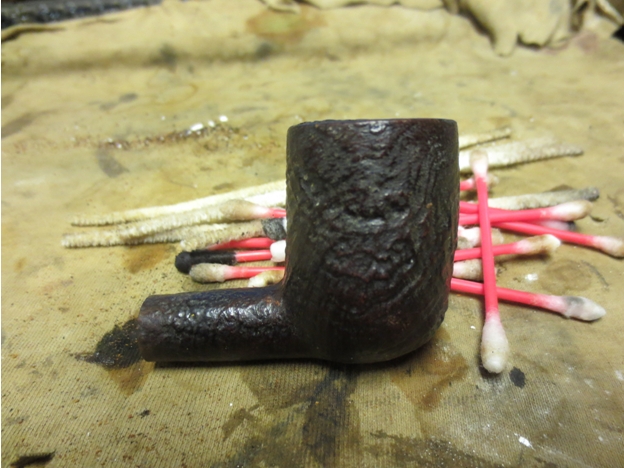
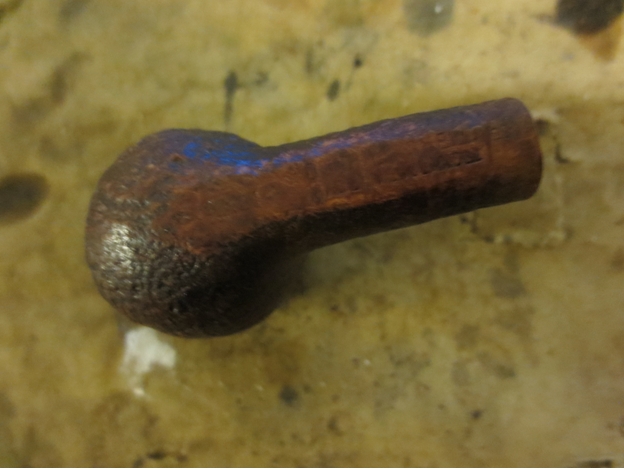
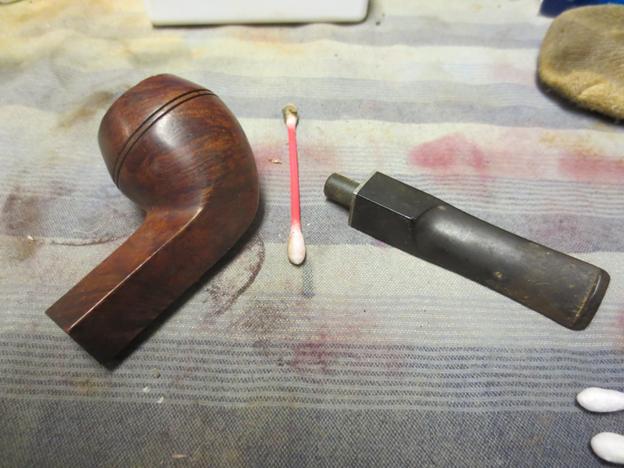
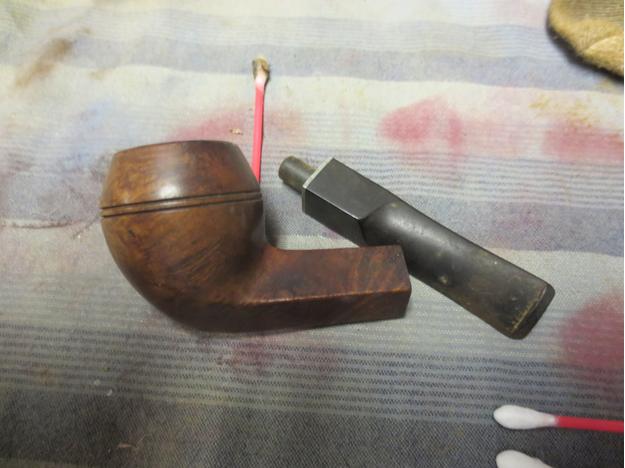
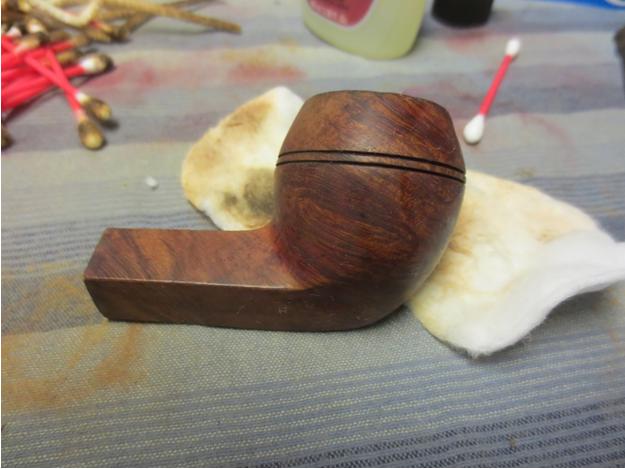
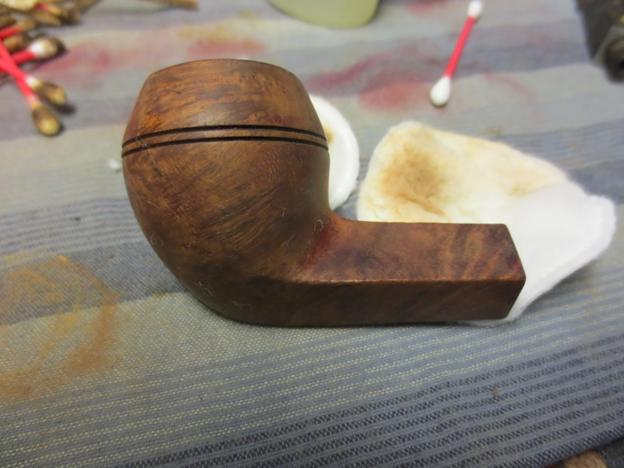
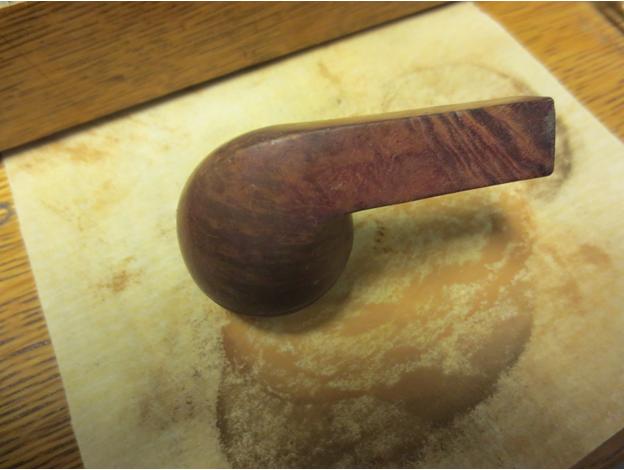
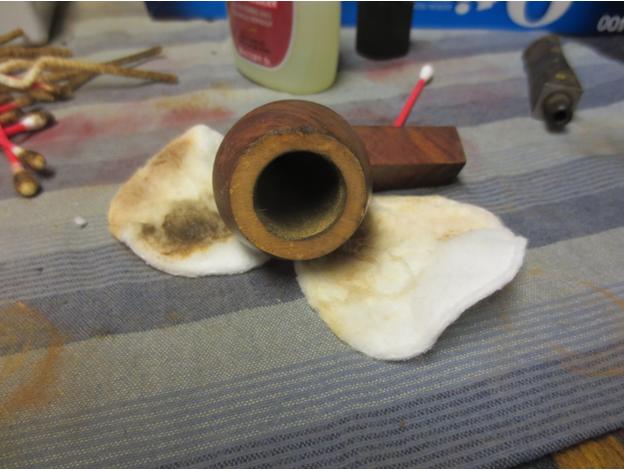
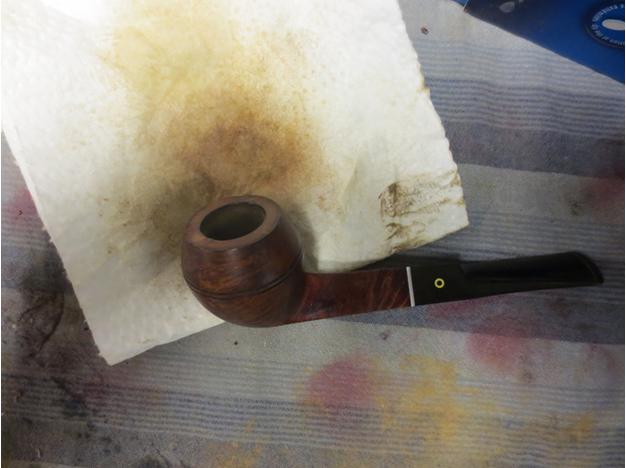
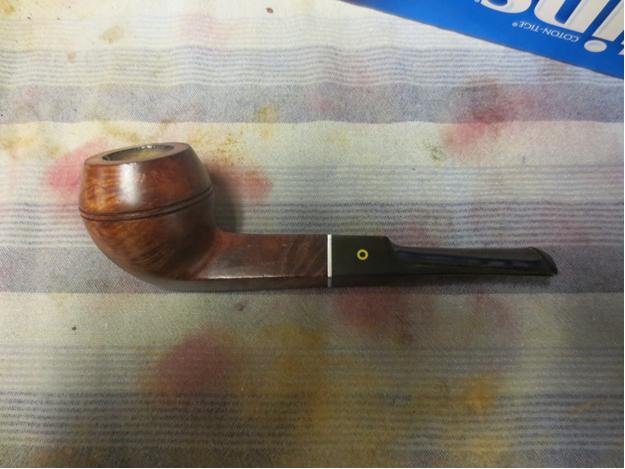
In a façade of good upkeep, the pigskin itself was impeccable, needing only polishing. The real victims of the previous owner were the rim, chamber and stem.Robert1 Robert2 Robert3 Robert4 Robert5I’m getting plenty of experience with rim and chamber restoration, and as the photos above show, this is no exception. Don’t ask me how it’s possible, but when I finished reaming this one and sanding it with 150-grit paper, there was more carbon than bowl space. If it were tobacco, there would be enough to fill at least three bowls.Robert6But the finished wood, including the rim from which I was able to remove with super fine steel wool all of the burns that appeared to be so serious I suspected someone had used a cigar torch on it, makes the labor of love worth it.Robert7Just a little patient work with 1500 micromesh brought back the nice grain and took away the small nick. I re-did the rim with brown boot stain, flamed it and removed the resulting light layer of black flakes with gentle use of 2400 micromesh, going with the grain.
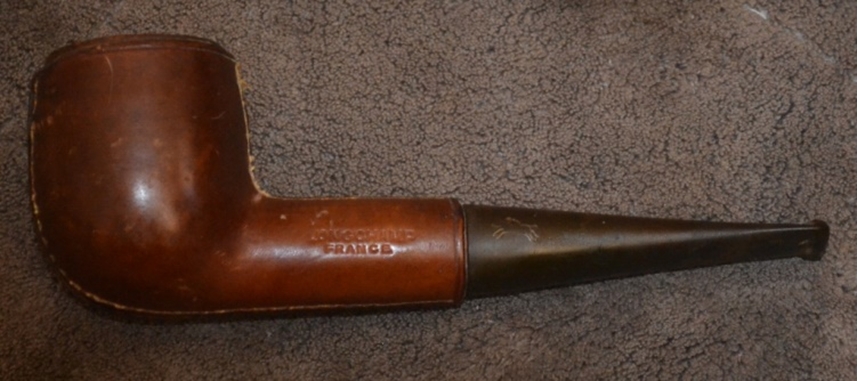
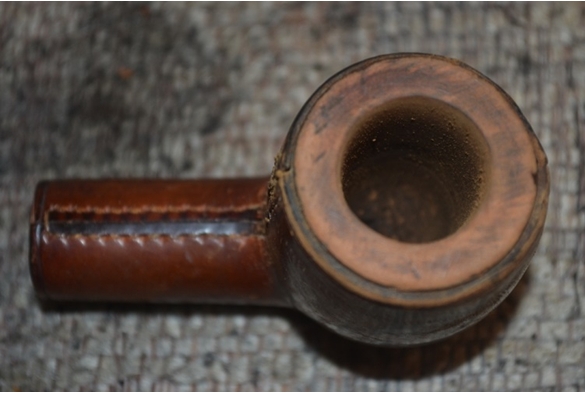
Reading the instructions on the label helped me avoid following my impulse to squeeze out a huge gob of the Cadillac Boot and Shoe Care polish I bought for the purpose of restoring the shine to the pigskin. I would have smeared it all over the leather and was amazed that so little of the stuff went so far. Like Dippity-do, just a dab will do you.

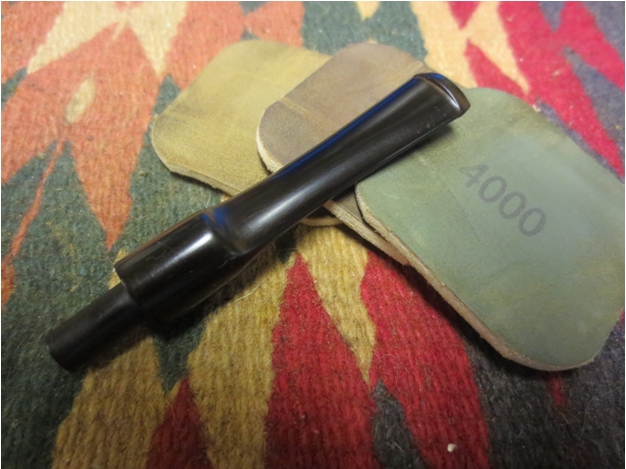
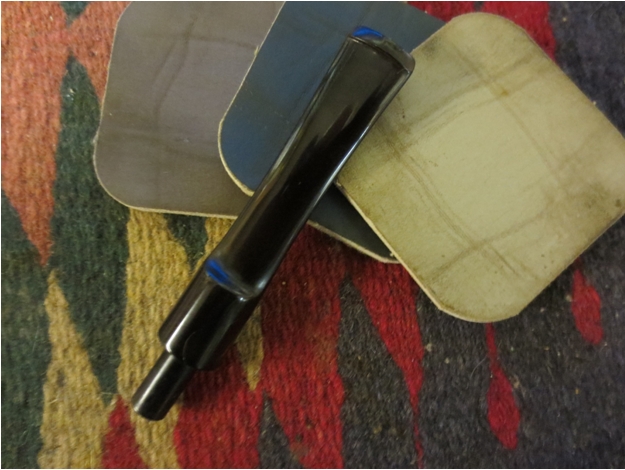
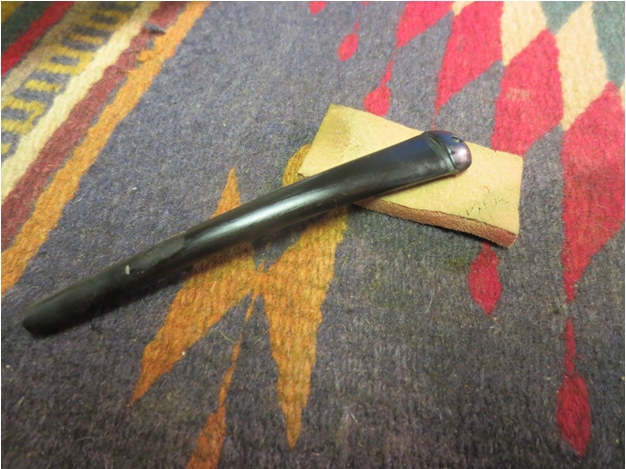
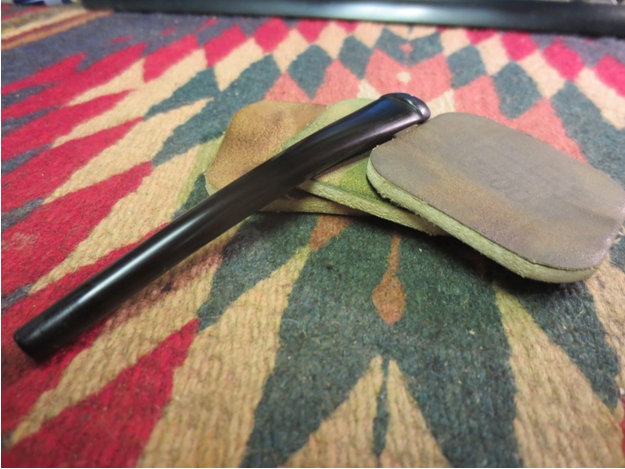
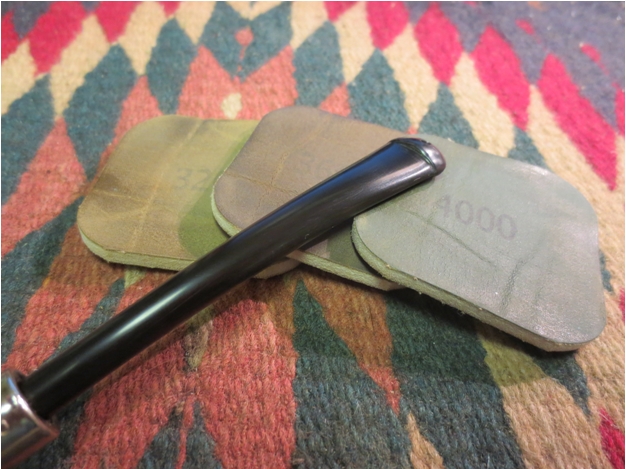
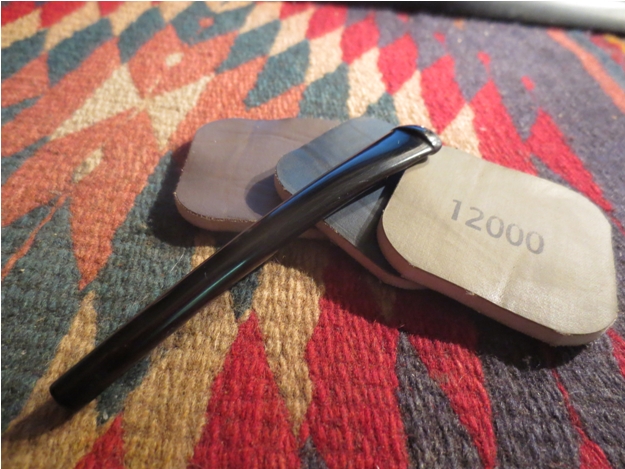
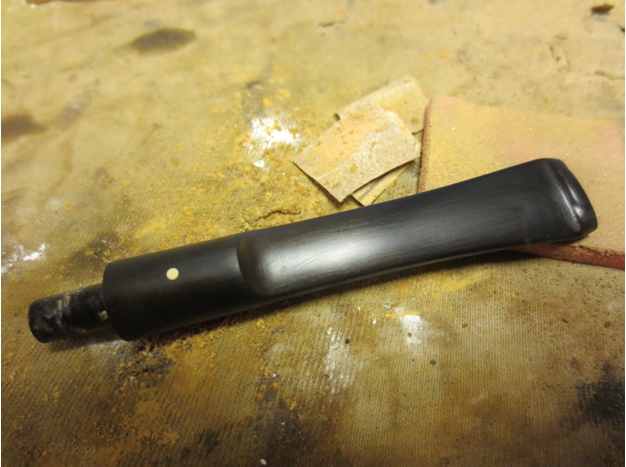
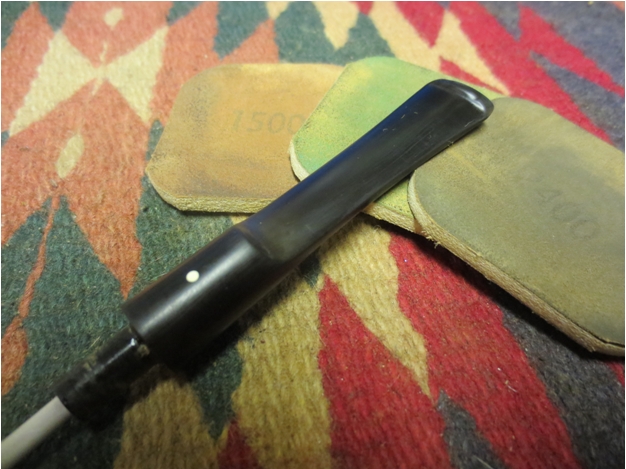
Now, the scrapes and discoloring of the stem took some time to undo with 220-grit paper followed by 1500 micromesh. I polished it with the usual red Tripoli (several turns on the buffer) and White Diamond.

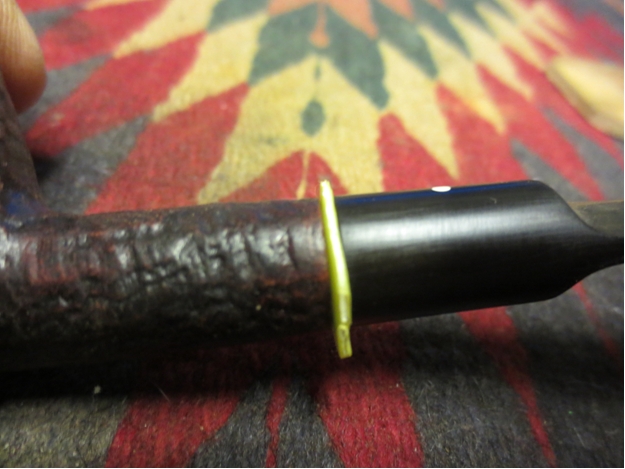
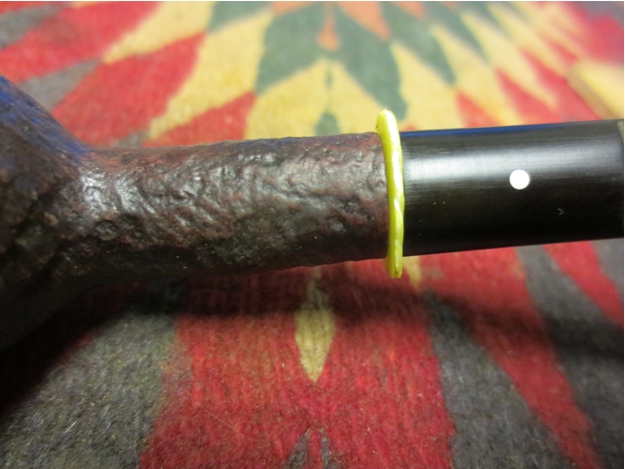
The one thing about this restore that seemed wrong as far as the briar was concerned was not being able to remove the pigskin to get to the wood and at least clean it up. I suppose my innate curiosity would have compelled me to take this step if I possessed the skill to sew the leather back together! But as it was, the rim being the sole part of the wood that showed, it was all I needed to buff. I gave it the works, of course, with white Tripoli, White Diamond and carnauba waxes.

The final touch was returning the Longchamp galloping horse and rider logo on the stem with a white crayon marker. And of course, somewhere in there I cleaned and sanitized the pipe.Robert8 Robert9 Robert10 Robert11 Robert12CONCLUSION
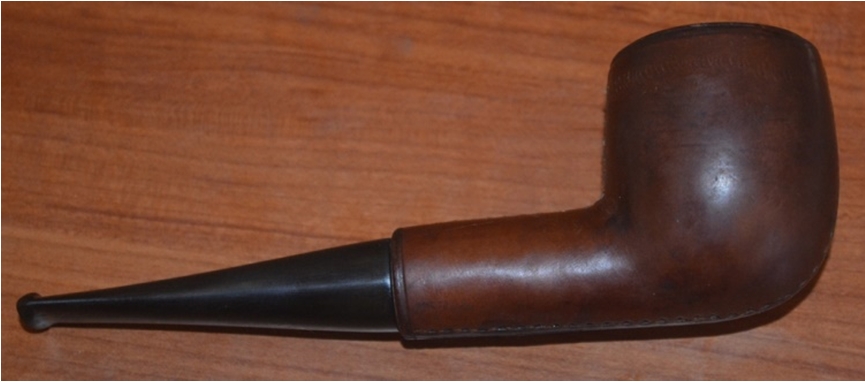
Although I am not a big football fan, I was pretty good at running with the ball whenever I got it back in the day during my childhood. Something in me hated to be taken down, and so I became quite good at twisting and squirming my way out of the grips of opposing players when they got their hands on me, or dodging them altogether.

Until my recent experiences with leather-covered pipes, that was my only run-in with pigskin.
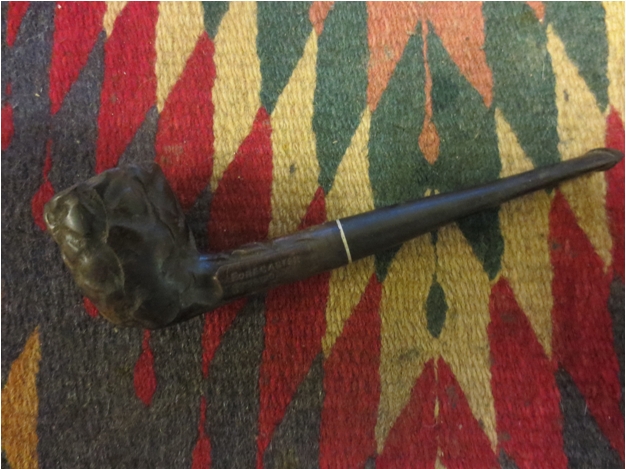
There was nothing redeeming about this ugly old pipe…


Blog by Steve Laug

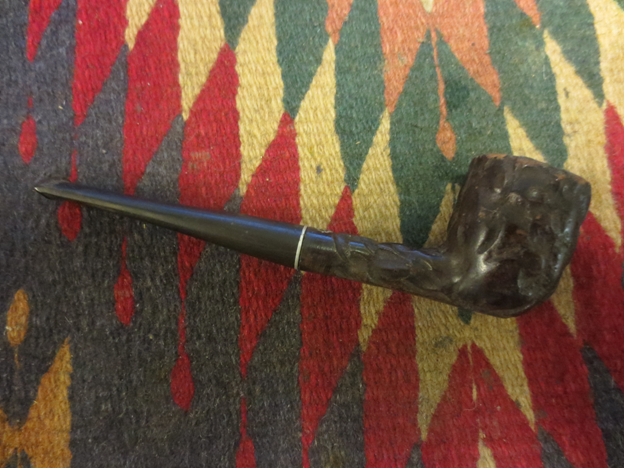
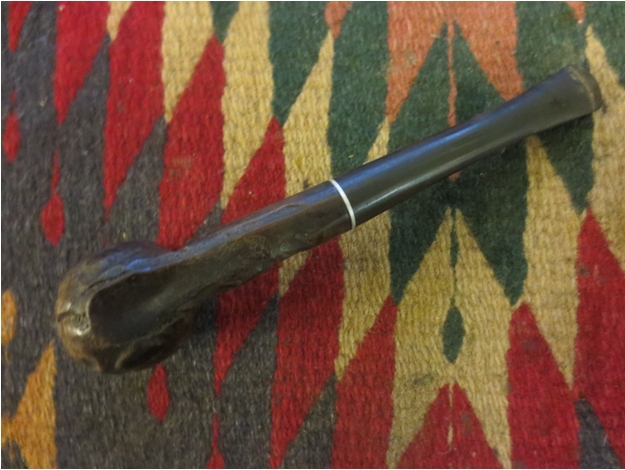
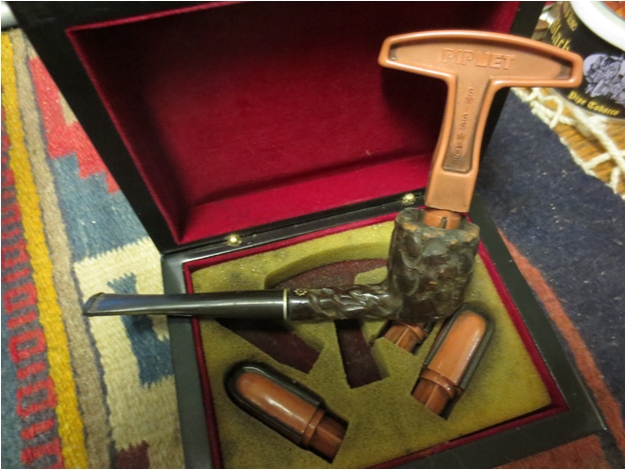
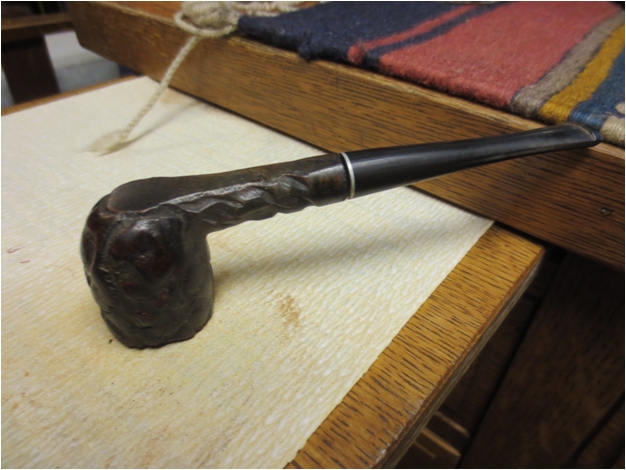
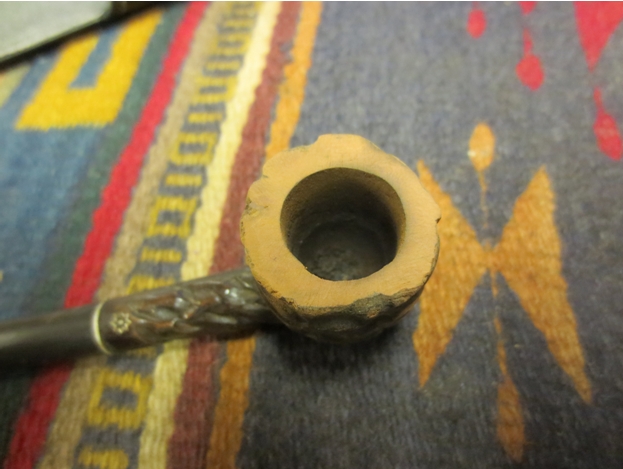
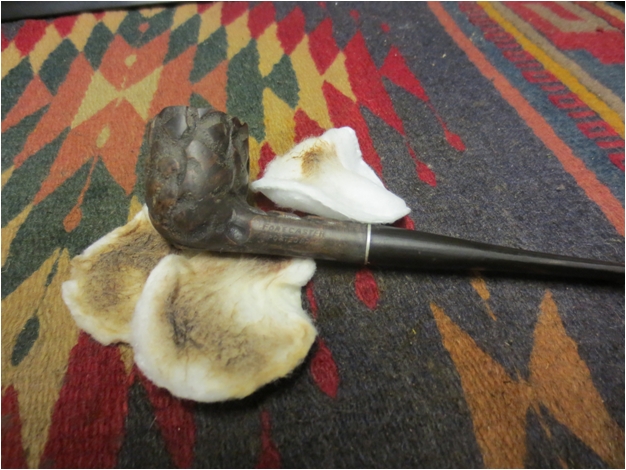
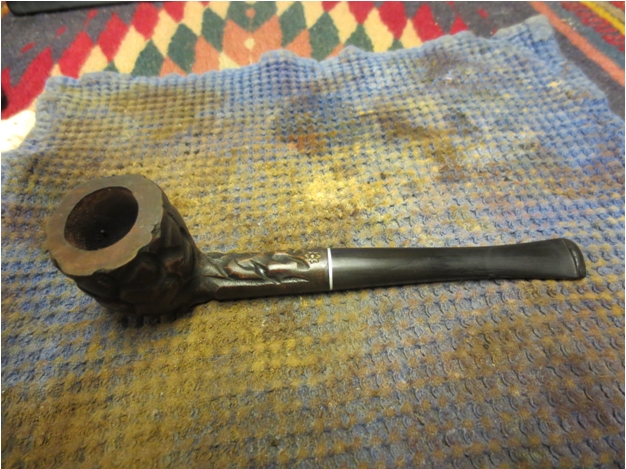
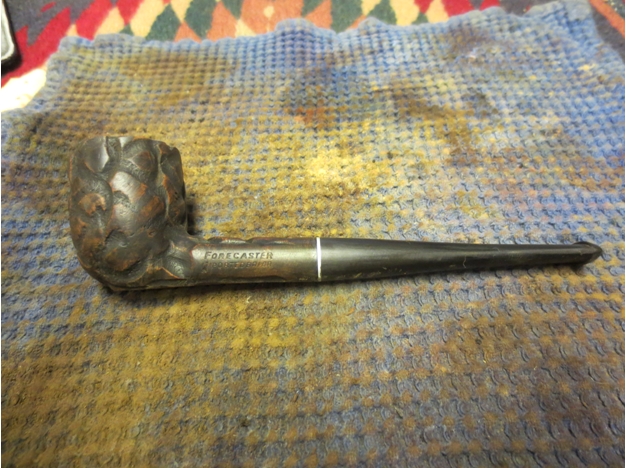
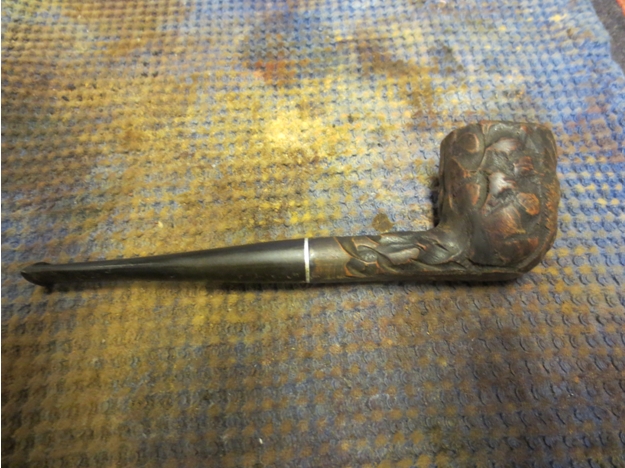
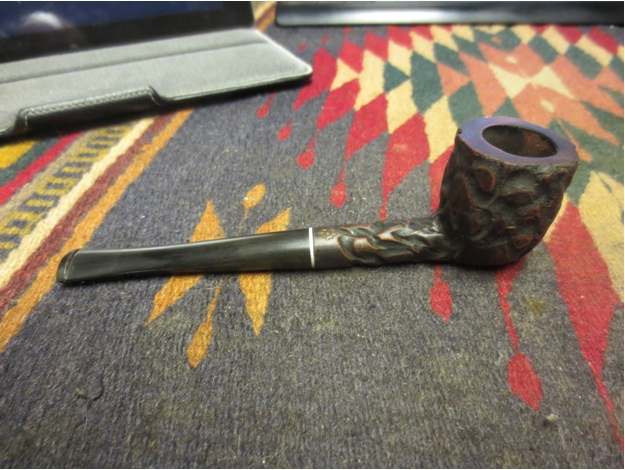
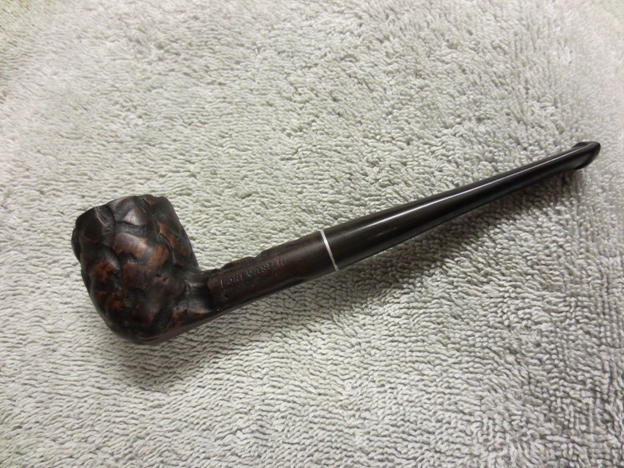
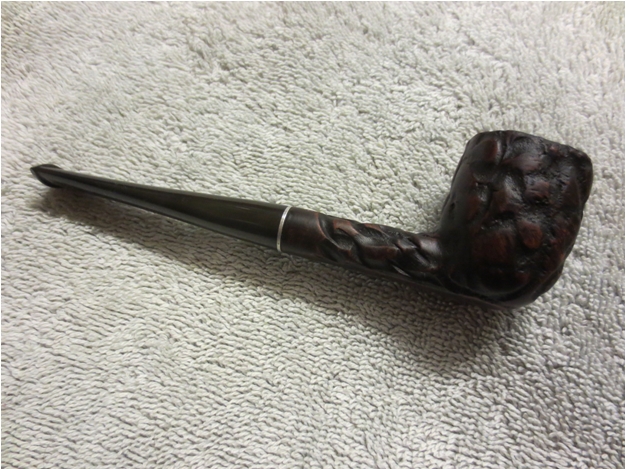
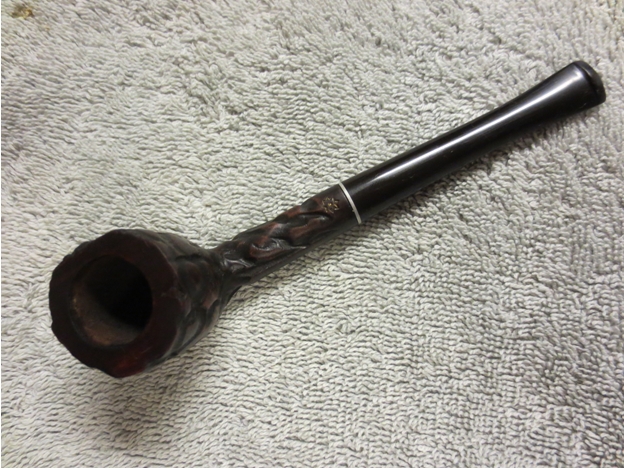
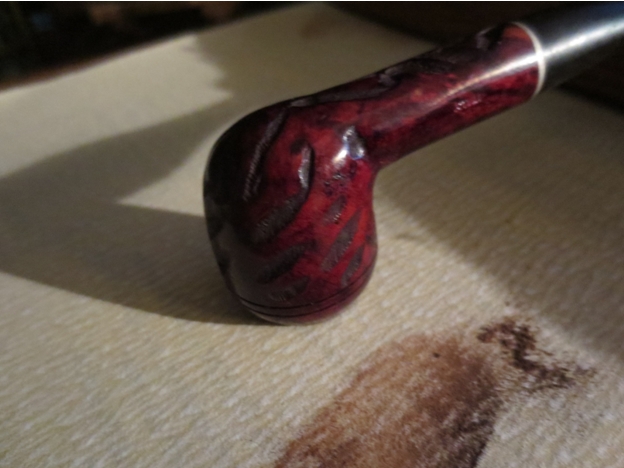
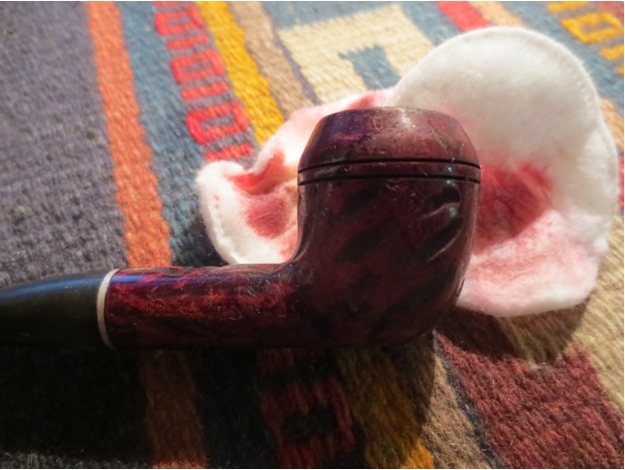
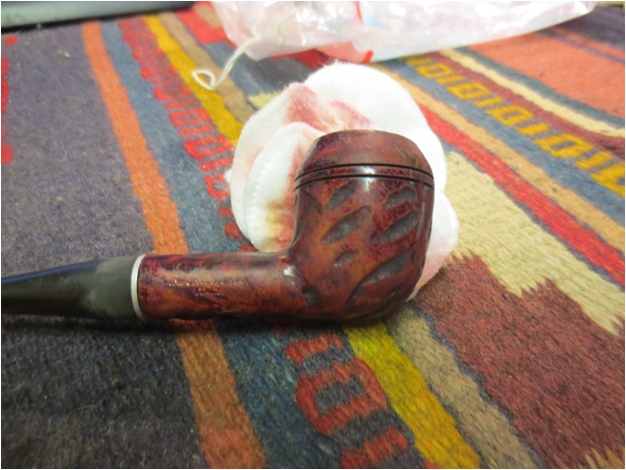
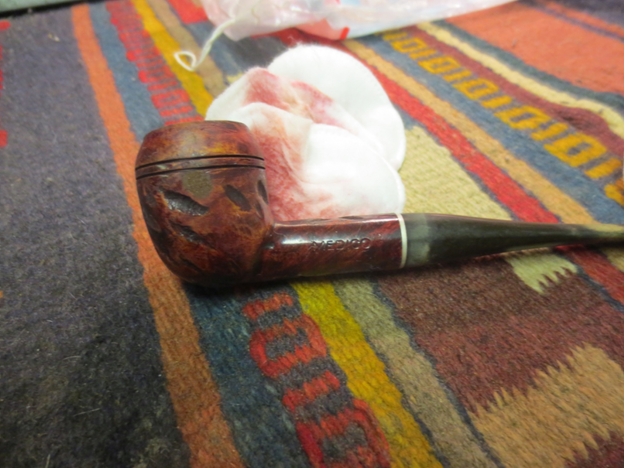
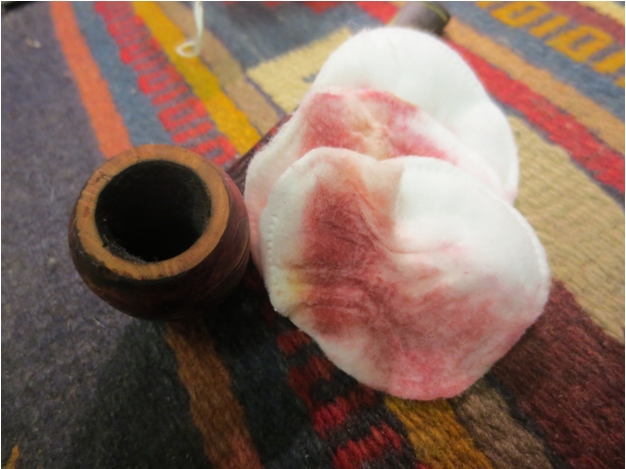
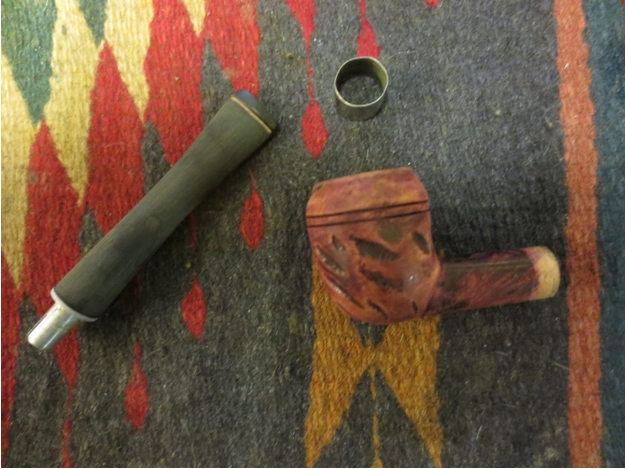
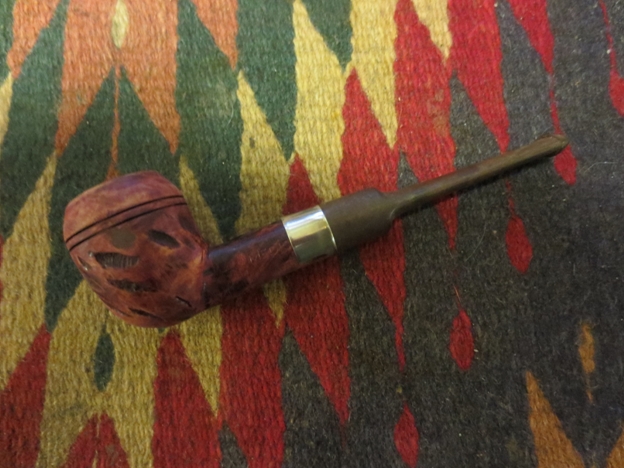
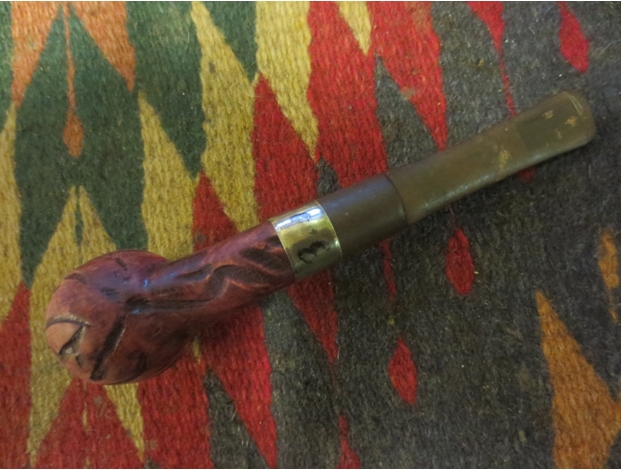
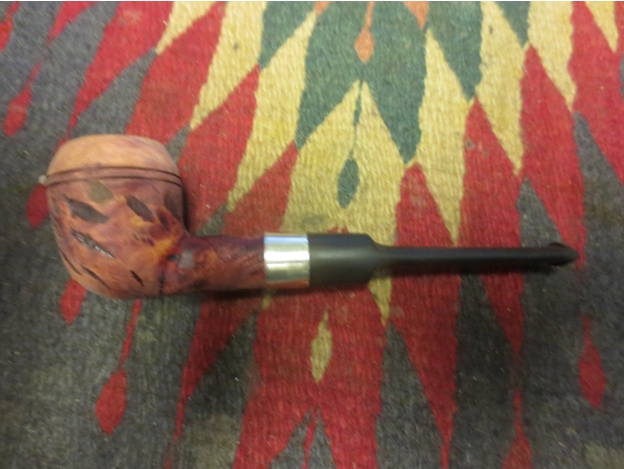
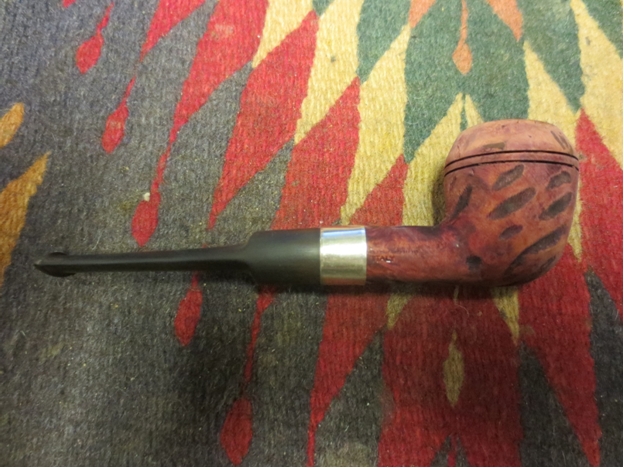
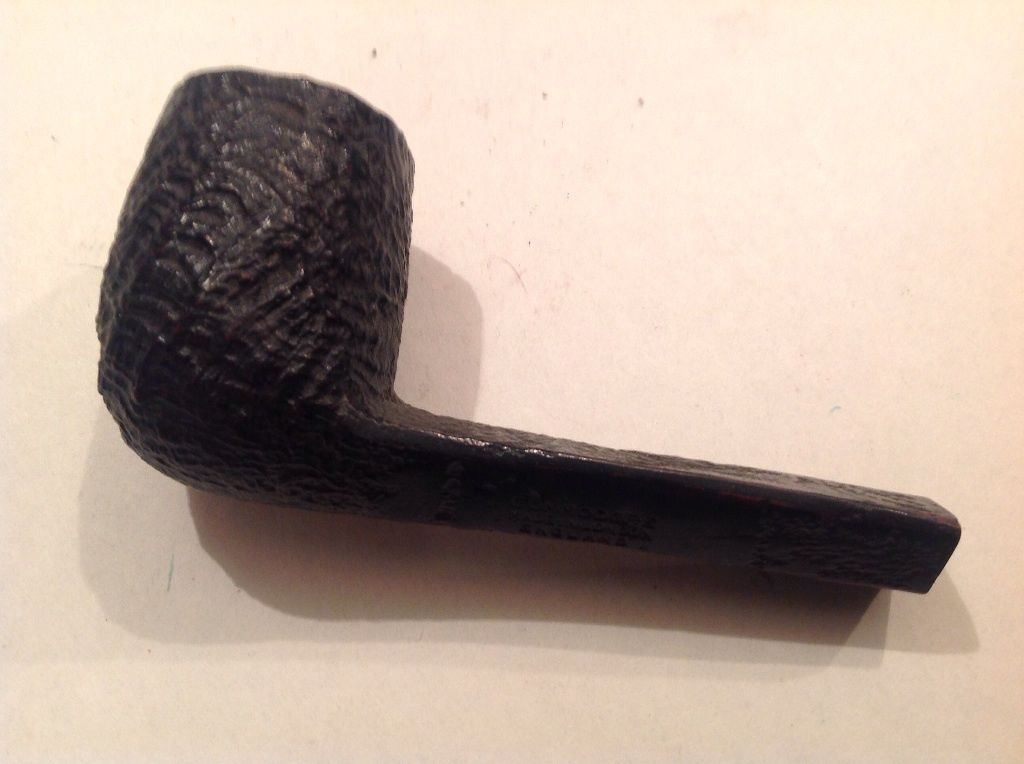
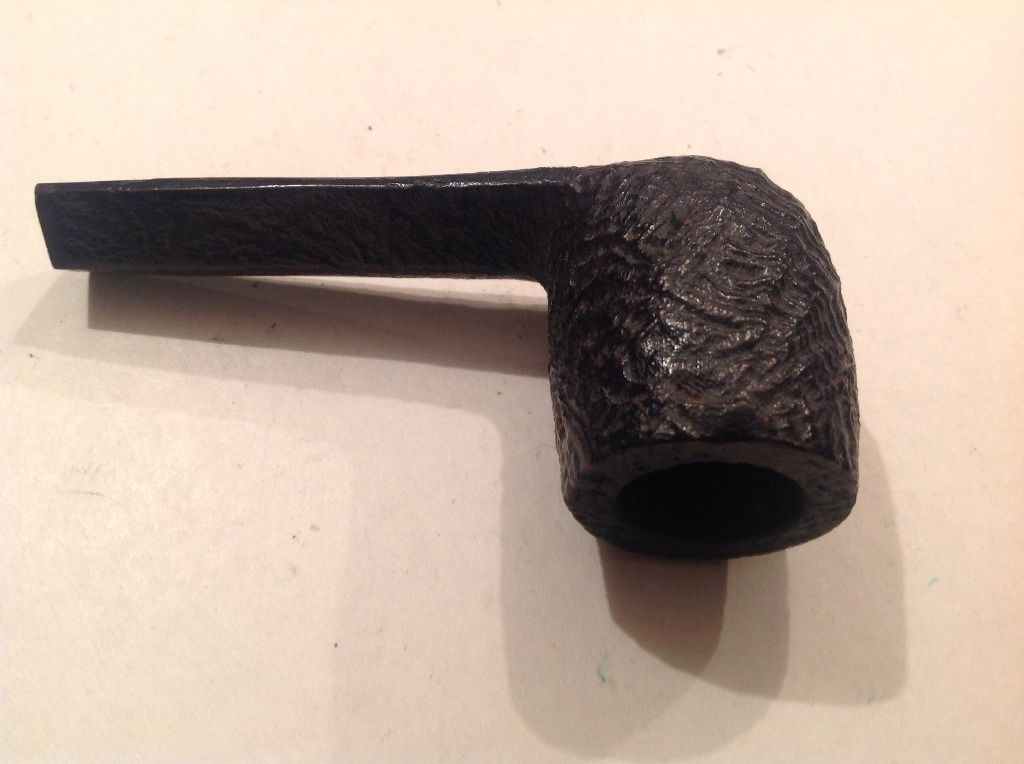
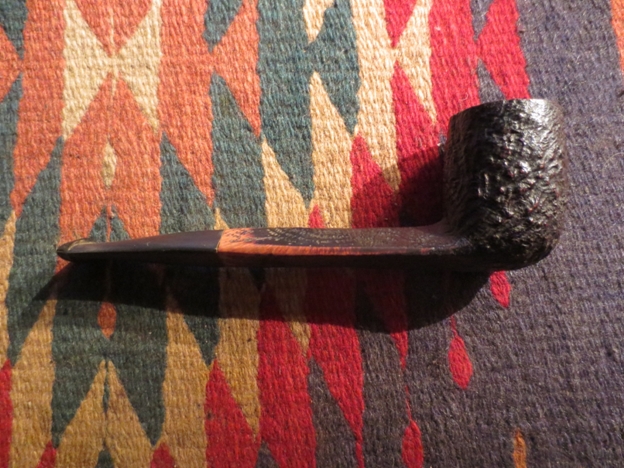
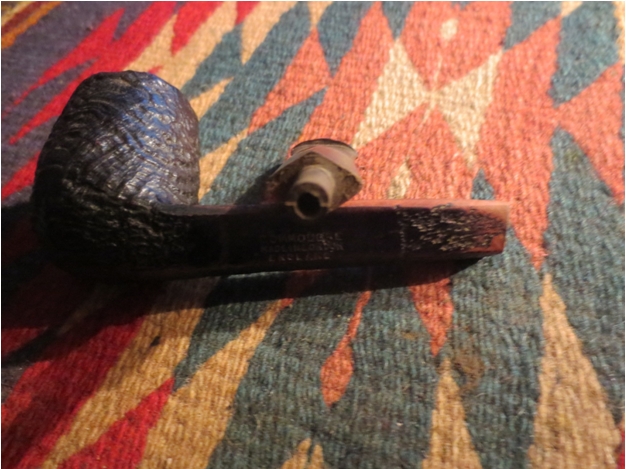
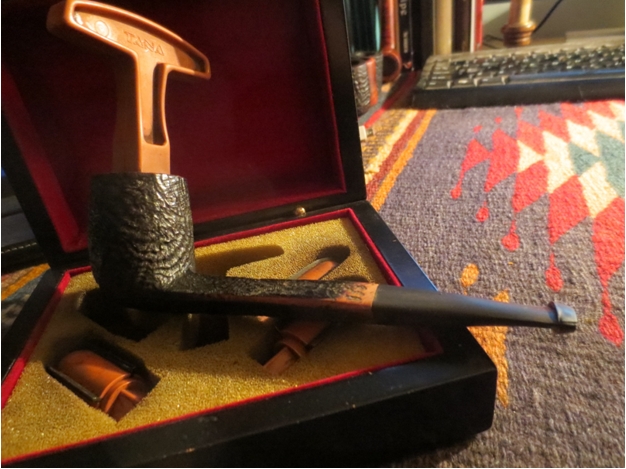
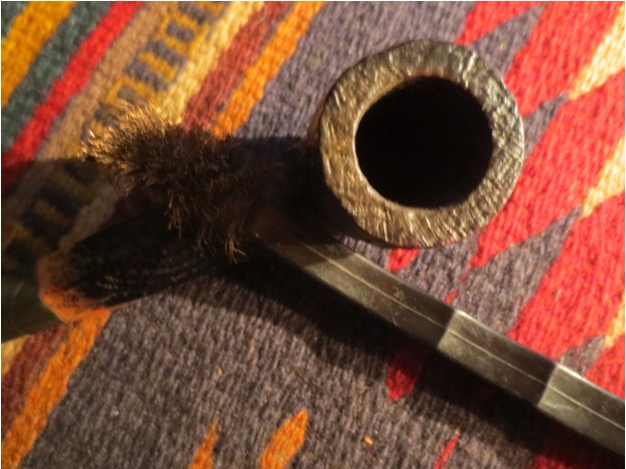
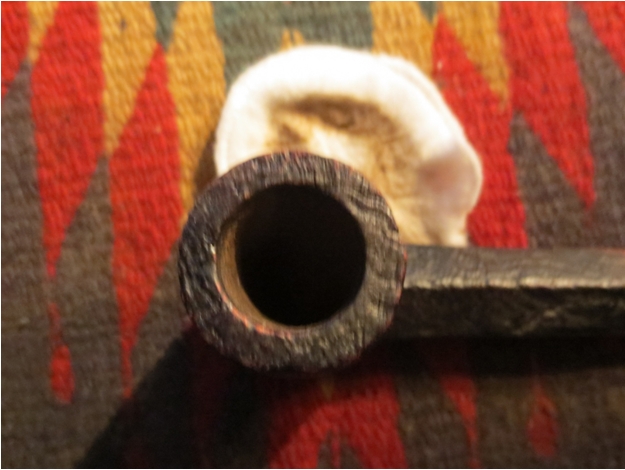
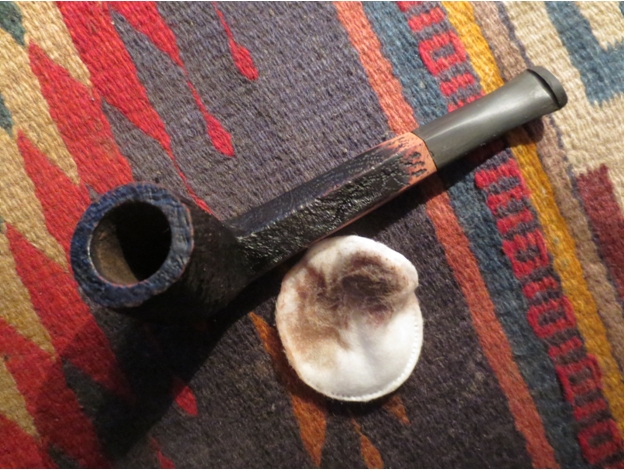
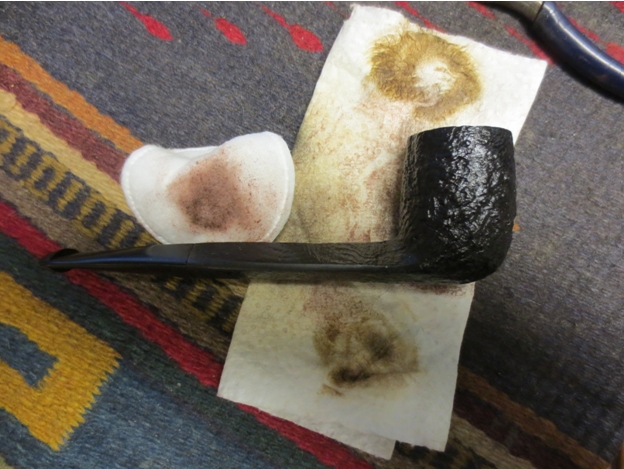
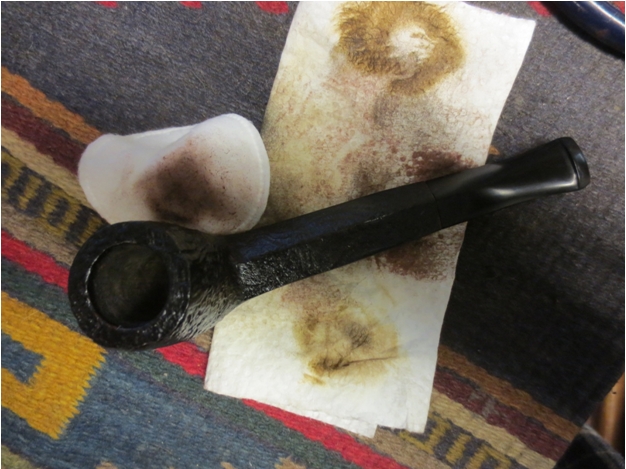
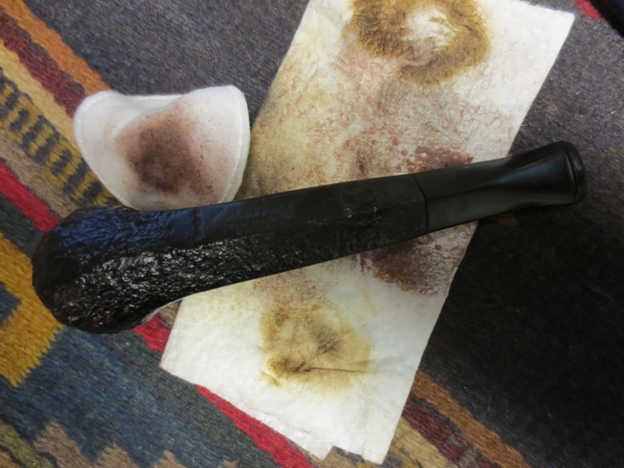
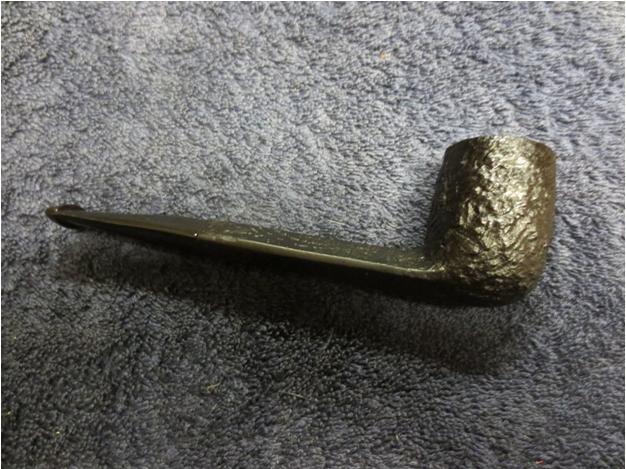
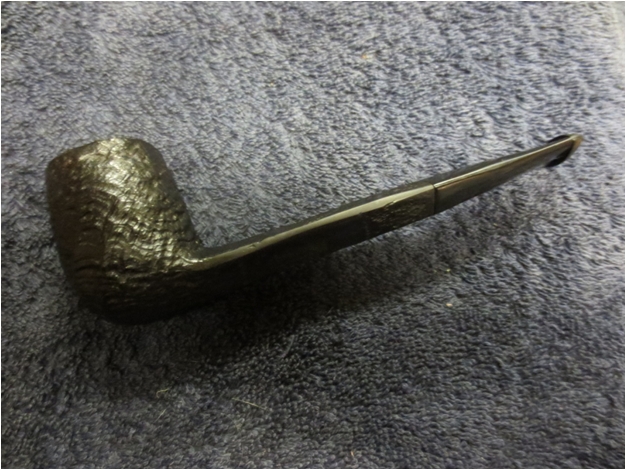
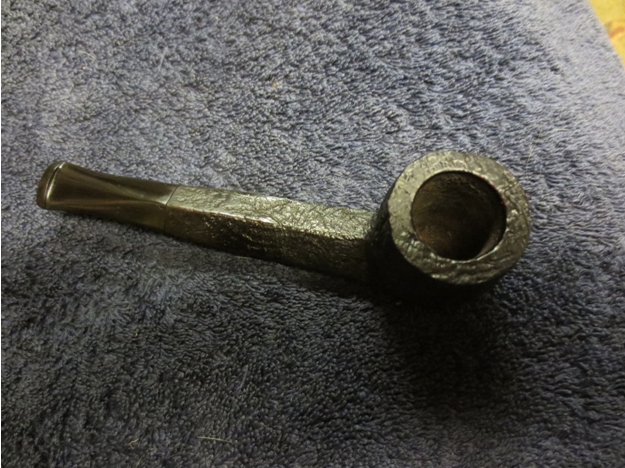
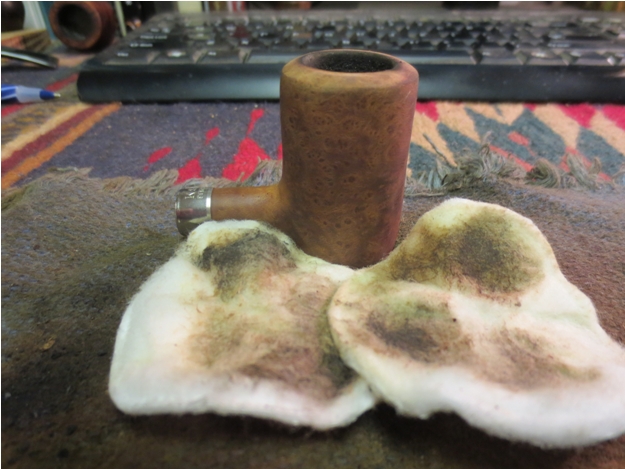
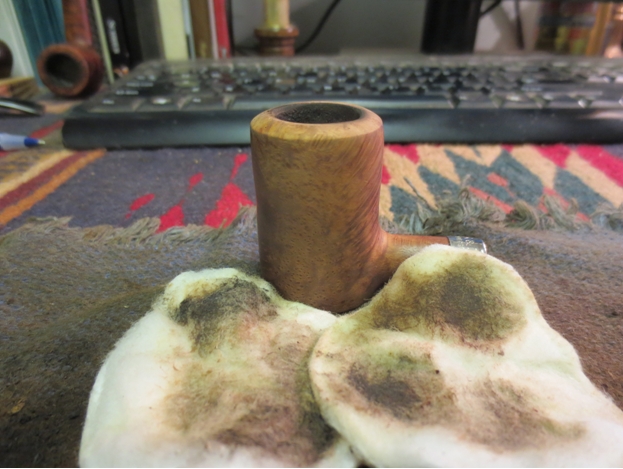
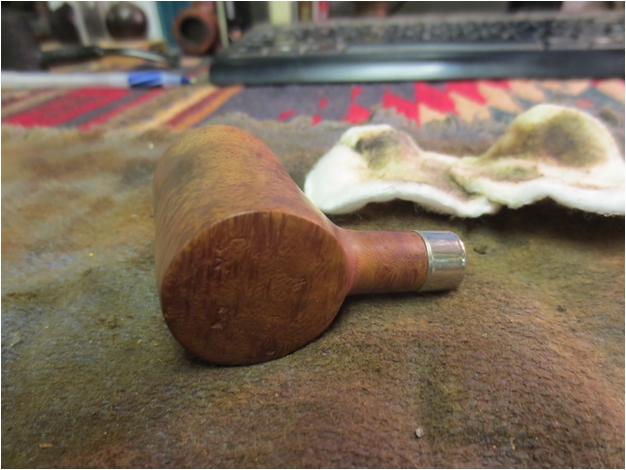
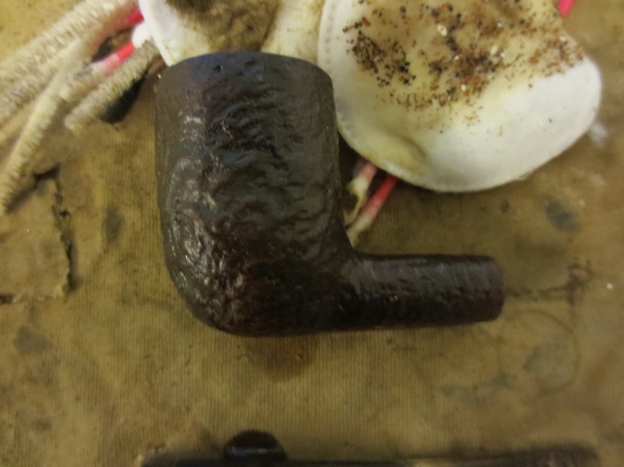
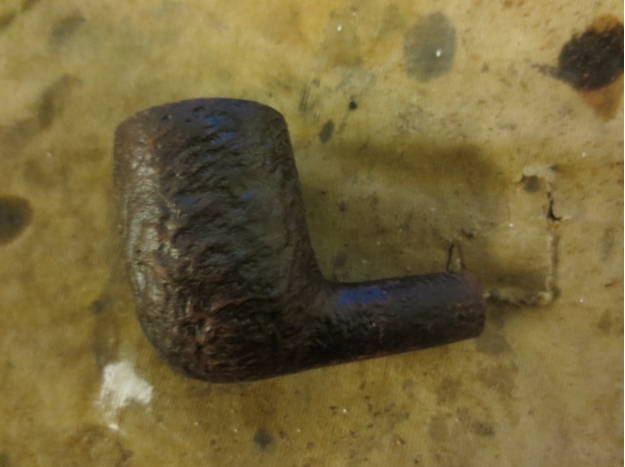
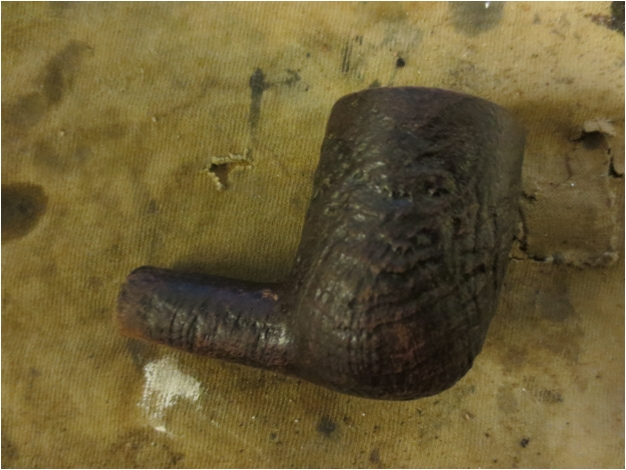
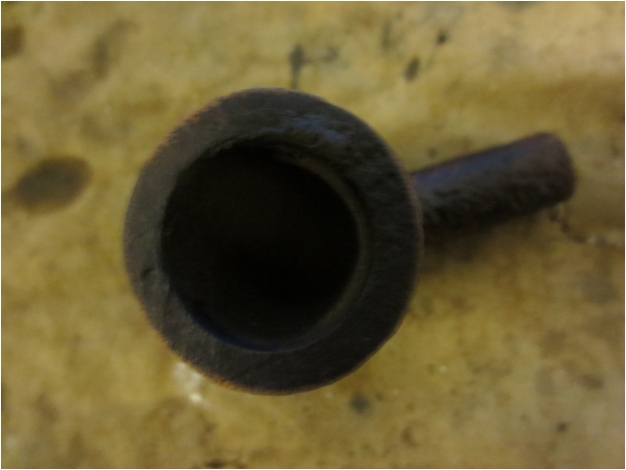
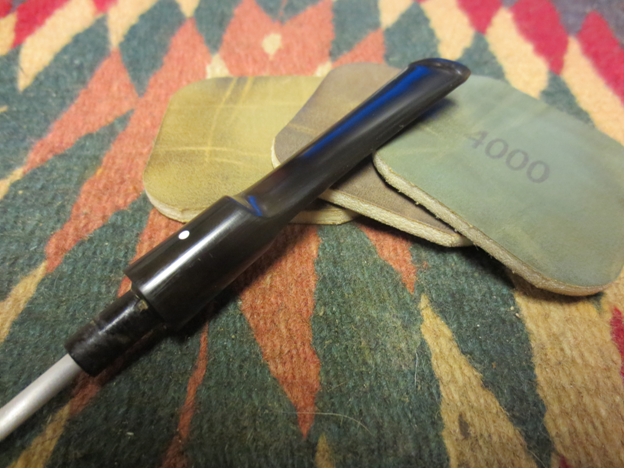
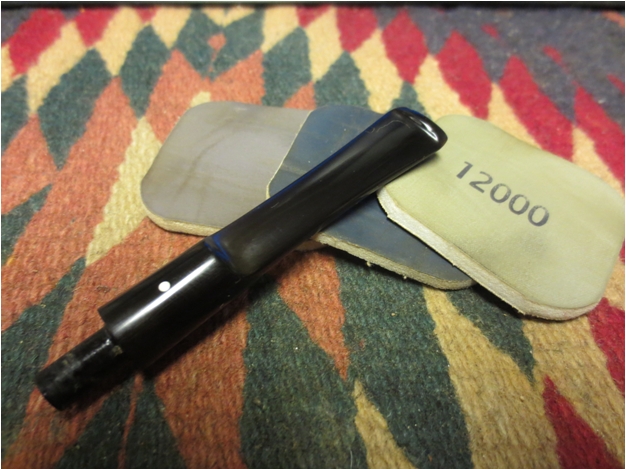
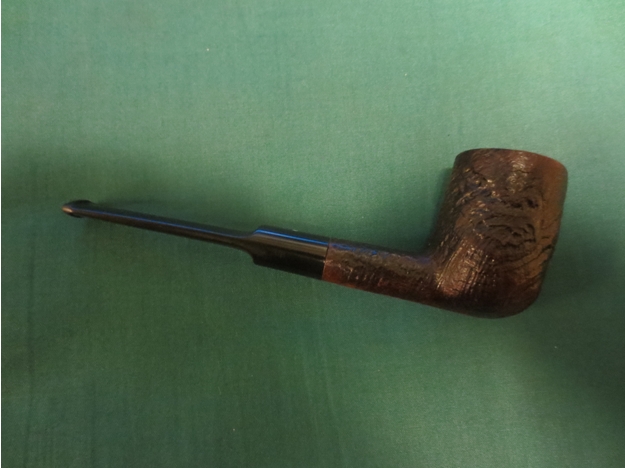
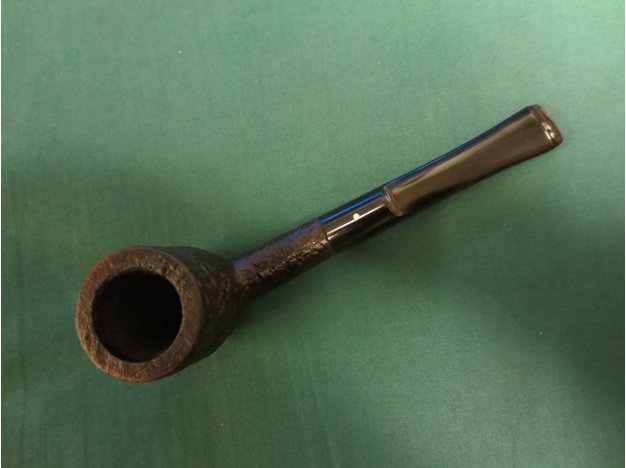
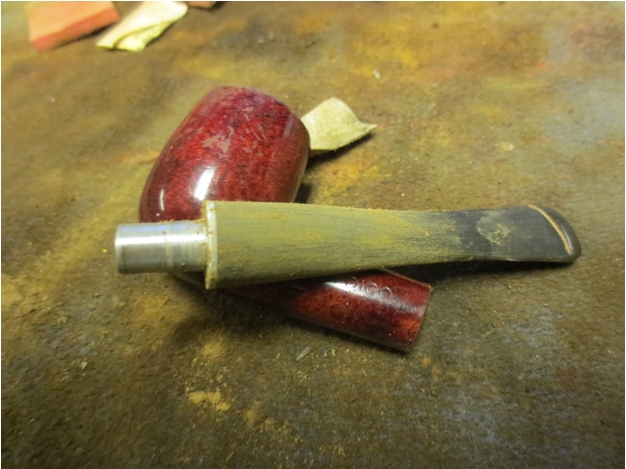
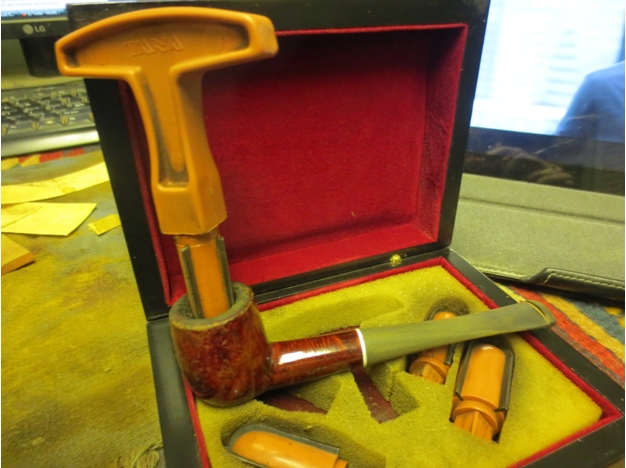
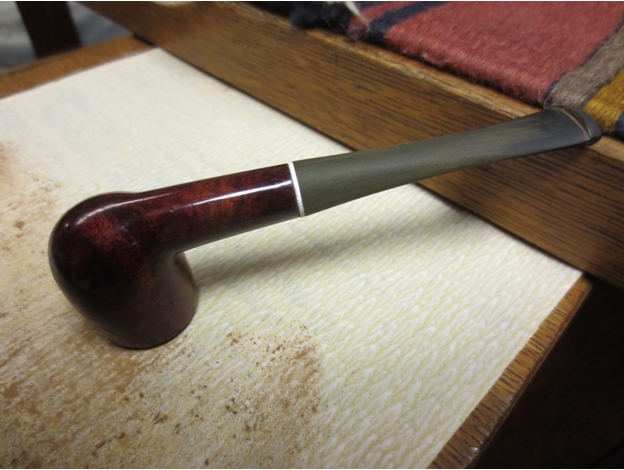
I am getting down to the bottom of my refurbishing box yet again. This is one of three pipes that are left to work on. It is one ugly old pipe to my tastes. Certainly it is one that I have left until there are few to choose from to work on. There truly was nothing redeeming about the look of it. The rough cut billiard with a bark like rustication pattern did nothing for me. The left side of the shank is stamped Forecaster over Imported Briar. The bottom of the bowl had been flattened to make the pipe a sitter. But even that was done poorly as it was to one side and the pipe sat with a list. The finish was worn out but appeared to have been a dark thick stain that was opaque enough to hide all the briar. The outer rim of the bowl had been badly beaten up from hitting against some hard surface and left to be a ragged rough edge around the bowl. One thing that gave this tired old pipe a unique, eye-catching touch was that the top of the shank had been stamped with an eight point star and then inlaid with gold paint. The bowl had a thick soft cake all the way down reducing the diameter of the bowl by almost half. The stem had a metal spacer that gave the appearance of a stem with a metal tenon as well. But when I removed the stem I found that it had a vulcanite tenon. The stem was badly oxidized and had some deep scratches in the surface.IMG_2440 IMG_2441 IMG_2442 IMG_2443I reamed the bowl with a PipNet reamer using the smallest cutting head and worked my way up to the head that would take the cake back to the bare wall of the pipe.IMG_2444The top was so damaged that it needed to be topped. In looking it over I was not sure how much of the rim I could remove without dramatically changing the look of this pipe so I would proceed slowly. I set up a topping board with 220 grit sandpaper and slowly topped the bowl. I sanded it until I had removed as much of the damaged portion of the rim as I could without changing the shape. The rustication made the bowl look out of round but is actually still round. The right side is more rusticated at the top edge than the left so it looks unusual from the top down photo below.IMG_2445IMG_2446I wiped down the finish with acetone on cotton pads until I had removed the heavy dark finish. It took a lot of scrubbing to get through the grime and then the varnish coat. Underneath the dark top coat it appeared that there was a walnut stain that highlighted the grain on the high spots of the bowl. The grooves and valleys were dark with a black stain. The contrast had some potential.IMG_2447 IMG_2448 IMG_2449 IMG_2450I sanded the smooth parts of the bowl and rim with medium and a fine grit sanding sponges to smooth out the scratches in the bowl and on the topped rim. I wiped it down with isopropyl alcohol and then stained it with a dark brown aniline stain. I applied it and flamed it and repeated the process until the coverage was even.IMG_2451 IMG_2453 IMG_2454The bowl was very dark brown but it was at least evenly stained. I would have to do some more work on it to get the contrast that I wanted between the rustication and the smooth parts of the briar. I cleaned out the shank and bowl with isopropyl alcohol, cotton swabs and pipe cleaners until they came out clean. I cleaned the stem at the same time until it also was clean.IMG_2455 IMG_2457I wiped the bowl down with isopropyl alcohol to remove some of the heavy dark brown stain and make it more transparent. I then sanded the bowl with a fine grit sanding sponge to remove some more of the stain on the high spots and to match the colour of the stain on the rim. I sanded the stem with the sanding sponges at the same time to minimize the scratches on the vulcanite.IMG_2458 IMG_2459 IMG_2460I buffed it with White Diamond and took it back to the worktable to work on the stem and bowl some more. I wanted the stain to be a bit more transparent and the contrast between the high spots and the crevices to show clearly.IMG_2461 IMG_2462 IMG_2463I still needed to deal with the list to one side when I set the pipe down on a flat surface. I probably should have done this before I stained the bowl but forgot to do so in cleaning up the mess. I decided it was better late than never so I dealt with it next. In examining it I found that it was not centered on the bottom of the bowl and shank but was off to one side. I sanded flat portion to take down the higher side and even out the flat bottom. I used 220 grit sandpaper and then a medium and fine grit sanding sponge to flatten it out and remove the list. When I was satisfied with the way the bowl sat I refinished it with a stain pen to darken it and blend it into the stain of the rest of the bowl.IMG_2464I sanded the stem with micromesh sanding sponges – wet sanding with 1500-2400 grit pads and dry sanding with 3200-12,000 grit pads. Between each set of three pads I rubbed the stem down with Obsidian Oil and let it soak into the vulcanite before proceeding with the next set of pads. When I finished I gave it a final coat of oil and then buffed it with White Diamond to a shine.IMG_2474 IMG_2475 IMG_2476I buffed the entire pipe with White Diamond and then gave it several coats of carnauba wax and buffed it with a soft flannel buff. The finished pipe is shown below. It is still an ugly pipe in my opinion but there is something redeeming about the ugliness. I suspect it will make a great yard pipe for someone and will deliver a good smoke. It must have been a good smoking pipe in its day – otherwise why would its previous owner have smoked it to the point of near death!IMG_2477 IMG_2478 IMG_2479 IMG_2480
The Sentimental Journey Continued – Restoring a Second Medico, a Smooth Billiard


Blog by Steve Laug

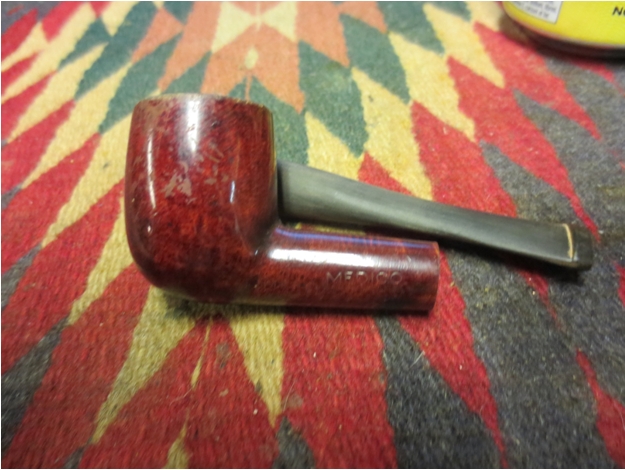
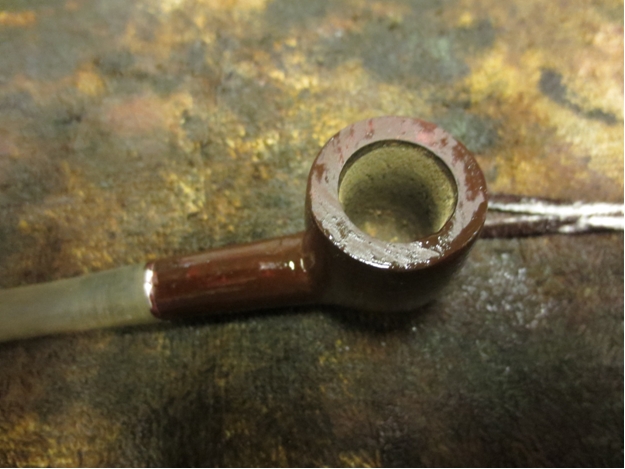
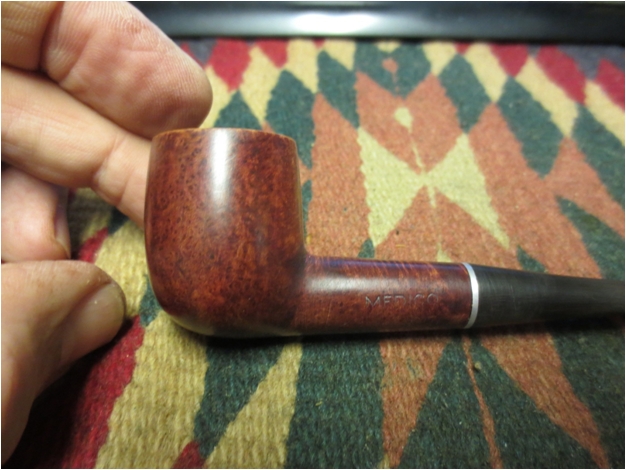
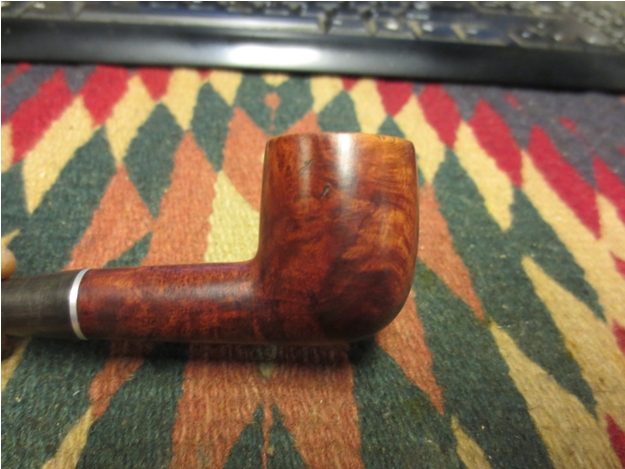
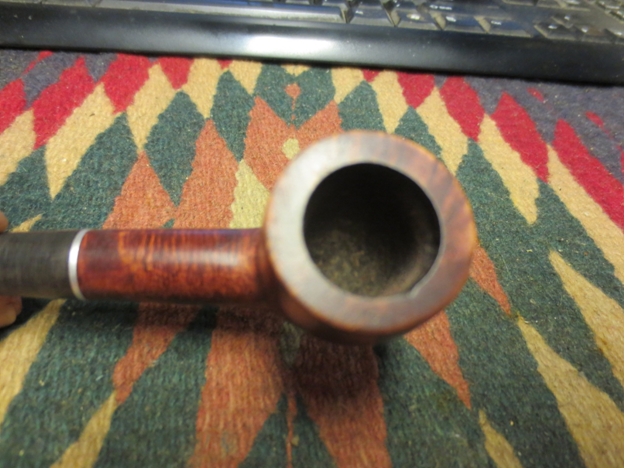
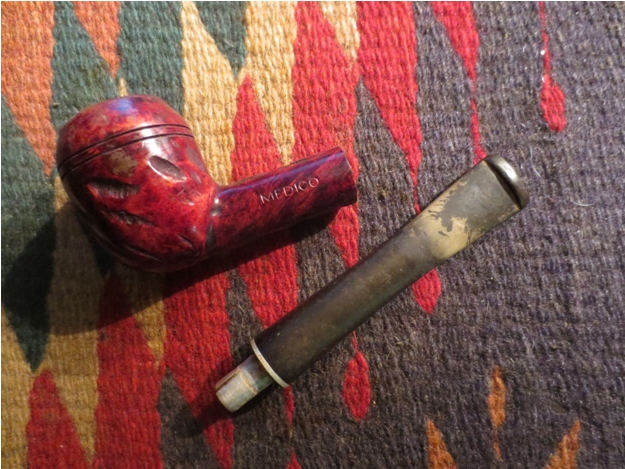
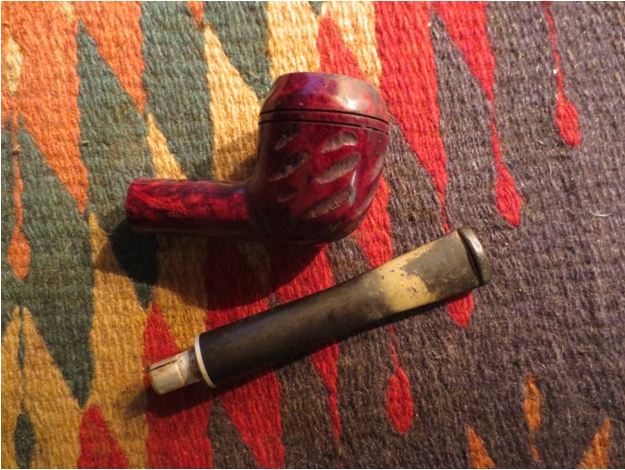
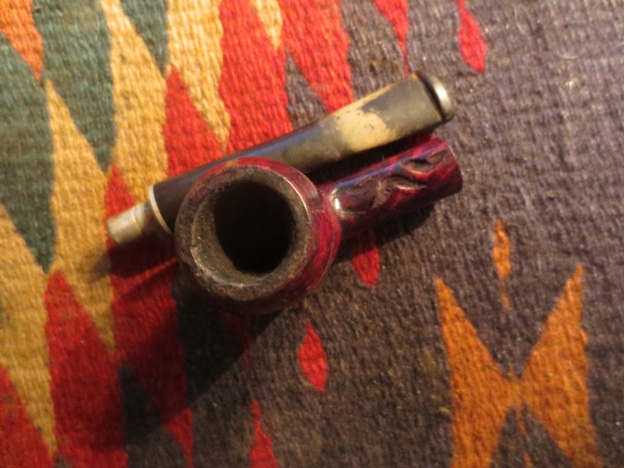
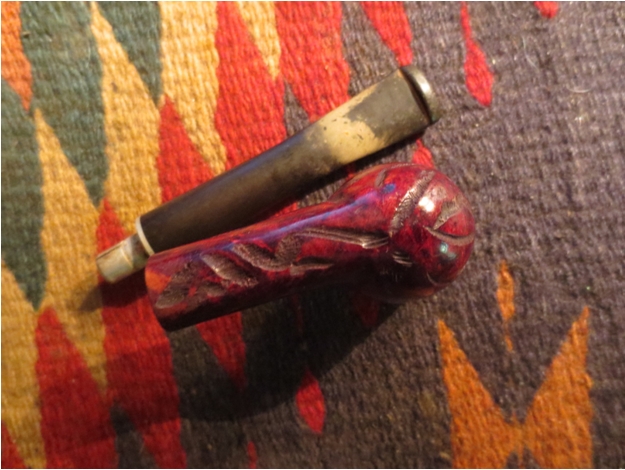
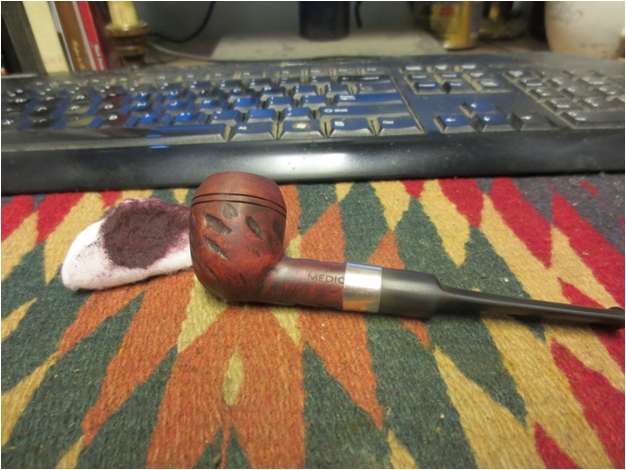
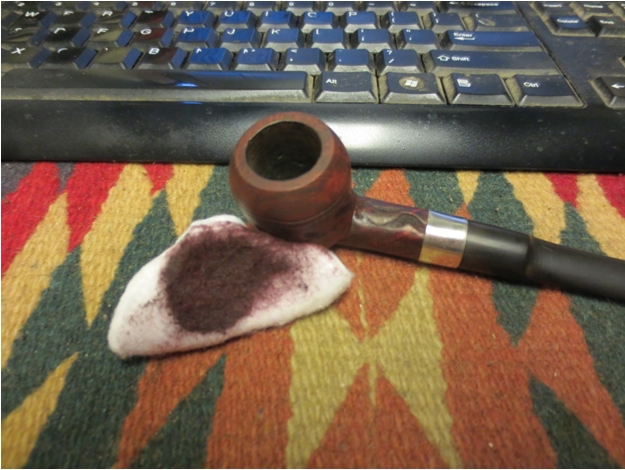
In a previous post called a Sentimental Journey I wrote of why Medico’s always get attention when they cross my desk. Last evening I reached into my box of pipes to be refurbished and pulled out the next pipe to clean up and it too was Medico – this time it was a smooth billiard. The finish was worn and the varnish was peeling off the bowl. The rim was badly knocked around so there was damage on the outer edge at the front of the bowl and the back. There was a heavy build up on top of the damage and the bowl had a thick cake at mid bowl – not much at the top or bottom. The stamping was the same as the previous pipe – MEDICO on the left side of the shank and Imported Briar Italy on the right side. A bonus for me was that the stem I had work on for the little Rhodesian fit this one and only needed adjustment in the diameter of the stem. It had the metal tenon that was generally on Medico pipes and would hold the Medico paper filter as per design. The rest of the stem was vulcanite not nylon which was a bonus.IMG_2408 IMG_2409 IMG_2410 IMG_2411I cleaned out the shank and fit the stem in place to see how much sanding I would need to do to match the diameter of the shank. It did not look like it would take very much to bring it in line. I would need to sand the aluminum band on the stem at the same time so I would need to be careful to not create dips or valleys next to it on the softer vulcanite when sanding.IMG_2412 IMG_2413I sanded the stem with 150 grit sandpaper to reduce the diameter of the stem.IMG_2414I reamed the bowl with a PipNet reamer using the smallest cutting head to clean it out.IMG_2415To clean up the rim damage I topped the bowl with 220 grit sandpaper to take down the rim and reduce the rough pitting on the outer edge. I also sanded around the edge of the rim to smooth out the remaining roughness.IMG_2416IMG_2417IMG_2418I wanted to get rid of the peeling varnish on the bowl so I wiped it down with acetone on cotton pads to remove it. It took a lot of scrubbing as the varnish was very stubborn.IMG_2419IMG_2420IMG_2421I sanded the bowl and the rim with 220 grit sandpaper and then with medium and fine grit sanding sponges to remove more of the finish and reduce the scratching on the bowl. I sanded it with a medium and fine grit sanding sponge before wiping it down one last time with alcohol. I decided to stain it with an aniline based oxblood stain. I applied it and then flamed it to set it in the grain.IMG_2422 IMG_2423I rubbed the excess stain off with an alcohol dampened cloth and then hand buffed it with a shoe brush. This old Medico had some really nice grain and was a far better piece of briar than I had expected.IMG_2424 IMG_2425 IMG_2426 IMG_2427 IMG_2428I sanded the bowl with 1500-2400 grit micromesh sanding pads and then buffed it with White Diamond to smooth out the bowl further. I gave it a coat of carnauba wax and buffed it lightly.IMG_2429 IMG_2430 IMG_2431 IMG_2432I finished the work on the stem fit and then sanded it with micromesh sanding pads – wet sanding with 1500-2400 grit pads and dry sanding with 3200-12,000 grit pads. I rubbed it down with Obsidian Oil and moved through each successive set of three pads. Once I had finished sanding it I rubbed it down a final time with the oil and gave it a buff with White Diamond.IMG_2433 IMG_2434 IMG_2435I put the pipe back together and gave it a final buff with White Diamond and then multiple coats of carnauba wax. I buffed it with a soft flannel buff to finish and polish the wax. The finished pipe is shown in the next series of photos. It is a small light weight billiard with fairly decent grain and a few character marks. The new stem fits well and it looks better than it did when it left the factory. It should provide a great smoke to another pipeman. This is one that I will inevitably gift to someone along the way.IMG_2436 IMG_2437 IMG_2438 IMG_2439

A Sentimental Journey – the Restemming and Restoration of a Medico Rhodesian


Blog by Steve Laug

For years now I have had a special spot in my heart for Medico pipes. I don’t like the paper filter system, or the cheap stems with the split aluminum tenon, or the heavy varnish on the briar, or the fills that are hidden below the thick varnish, or any endless number of complaints that come to the surface with these old US made briar pipes. But I can’t get past the fact that the first pipe I ever owned was a Medico – paper filter and all, and that the first pipe I picked up when my first daughter was born years later was a Medico as well. Because of that whenever I am given an old Medico bowl I restem it and restore it. I strip away the varnish and rework the fills, make a new stem and bring it back to life in even better condition that it was when it was first sent out.

The Medico that I worked on in this restoration was a straight shank Rhodesian that came to me in a gift box of bowls. It was stemless and I had two potential stems that would work for it. There truly was nothing particularly redeemable that I saw in the bowl so the reason was as stated above solely sentimental. The bowl was dirty and worn with a thick cake. The rim had been battered and had deep nicks on the outer edge. There was a thick dark red varnish on the briar. It was stamped MEDICO on the left side of the shank and Imported Briar Italy on the right side. On the left side of the bowl was a large brown putty fill that stood out like a sore thumb. The first stem I tried was a split metal tenon Medico style stem. It was worn but usable.Med1 Med2 Med3 Med4 It fit the shank perfectly and looked good on the pipe. I thought for sure this would be a simple and quick restoration. I should have learned by now that whenever I think that problems would pop up on the way to the finish. I cleaned the shank with cotton swabs, pipe cleaners and isopropyl alcohol.Med5The top of the bowl was badly damaged with large dents and missing chunks on the outer edge of the rim so I decided to top the bowl. I used the topping board with 220 grit sandpaper and worked on the rim until it was smooth and clean. There were still several places on the outer front edge that would need to be worked on but the finished look of the topped bowl was far better than when I had started.Med6 Med7I wiped down the bowl with acetone on cotton pads to remove the thick varnish coat and clean up the finish on the bowl. I wanted to remove it back to the briar. In the process the dark red stain coat also was removed from the bowl.Med8Once the stain coat and varnish were removed I could see several problems that I would need to address. The front edge of the bowl needed to be sanded and the slope on the cap would need to be modified by hand sanding to remove the damage on the front edge and face of the cap. There was also a fine crack that had seeped tobacco oils on the top right edge of the shank. It had been hidden by the dark stain. When I move the stem it was not visible and did not open or spread but it was definitely present. I would need to clean up the shank, band it and with the band a different stem would need to be fit to the shank. The stem I had previously chosen had a metal face that would not work against the band. I scrubbed the bowl and shank until all the red stain that I could remove was gone.Med9 Med10 Med11I used a Dremel with a sanding drum to sand back the shank so that I could fit a band on the shank. I also wanted to smooth out the surface of the rustication pattern and clean up the crack so that I could glue and clamp it before banding.Med12I put the band around the end of the shank and then heated the metal band with a Bic lighter until I could press it into place on the shank. It took several reheats with the lighter before I had a flush fit on the band. At that point I took the second stem I had chosen and lightly sanded the tenon to get a good tight fit in the shank and pushed it in place.Med13 Med14 Med15 Med16I reamed the bowl with my PipNet reamer and the smallest cutting head until I had taken the cake back to bare wood. I wanted the bowl to be clean so that I could see if there was any damage to the interior of the bowl.Med17Once I had reamed the bowl I reshaped the angle on the cap with 220 grit sandpaper and medium and fine grit sanding sponges. Once I had the angle correct around the entire rim and had removed the damage on the front of the cap I sanded the entire bowl with the sanding sponges. I also sanded the stem with the same sandpaper and sanding sponge combination to remove the oxidation and tooth chatter near the button. The newly shaped bowl and freshly sanded stem is shown in the next series of four photos below.Med18 Med19 Med20 Med21I stained the bowl with some oxblood aniline stain and flamed it. I wanted the red colour of the stain but I did not want it to be as opaque as the original stain had been. The aniline stain seems to be more transparent. It did however, do a great job in hiding the big fill on the left side of the bowl.Med22 Med23 Med24I sanded the stem with 220 grit sandpaper, then a medium and fine grit 3M sanding sponge. I followed that with my usual array of micromesh sanding pads – wet sanding with 1500-2400 grit pads and dry sanding with 3200-12,000 grit pads. I rubbed the stem down between each set of three pads with Obsidian Oil before moving on to the next three pads. I finished by giving it a final rubdown with the oil before taking it to the buffer.Med25 Med26 Med27I buffed the entire pipe with White Diamond and then gave it multiple coats of carnauba wax to protect and polish both bowl and stem. With that completed my sentimental journey with this old Medico was complete and it was ready to go back into service. I am sure I will gift this pipe to some new pipeman somewhere along the way as it should smoke very well and give many years of service. It is not a thing of beauty and never will be but it is a good serviceable pipe that will deliver a good smoke. The finished pipe is pictured in the photos below.Med28 Med29 Med30 Med31

Cleaning Up an Old Ropp Cherrywood That Was Once Given Love and Attention – Robert M. Boughton


Guest Blog by Robert M. Boughton
Member, North American Society of Pipe Collectors
http://www.roadrunnerpipes.com
http://about.me/boughtonrobert
Photos © the Author

“Action is character.”
— F. Scott Fitzgerald, in a note to himself on a page of “The Last Tycoon,” his final and unfinished novel (published in 1941)

INTRODUCTION
The great American novelist and short story writer quoted above, who is lesser known for his screenwriting work, and for good reason, only resorted to the genre to make ends meet while he attempted to dry out. Note I write attempted, as he died of alcoholism in 1940 at 44. Nevertheless, he knew from both experiences that memorable characters, and therefore their stories, are created far more through their actions than their words.

Fitzgerald was among the best at describing what all of his characters do in his own unique way, although that in no way detracts from the words they speak. His unvarying craft of employing the rule he penned to himself on his final and half-finished manuscript has become the basis of most good present-day screenwriters’ rule of thumb, “Character is action, not dialogue.”

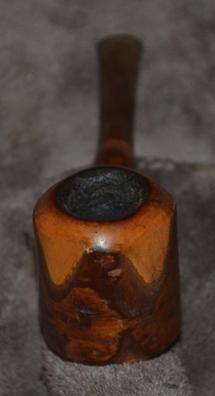
And so it is with this Ropp cherrywood. Its condition tells the whole story of the man who smoked it through the inconsistent actions he took to preserve it. The wood of the bowl and shank was kept as the pipe’s probable one owner obtained it. The stem, however, was left with scratches and minor tooth marks. And while the bore, mortise and draught hole showed clear signs of being cleaned almost with fanaticism, the chamber did not fare so well. Although nowhere close to being as filled with cake as the other pipes I described in prior admitted diatribes, I still removed enough carbon to fill the chamber whence it came.
All of this suggests to me that the lovely cherrywood was adored by its previous owner, who indeed smoked it so often it may have been his only pipe. His sole lack of full attention was to the chamber.

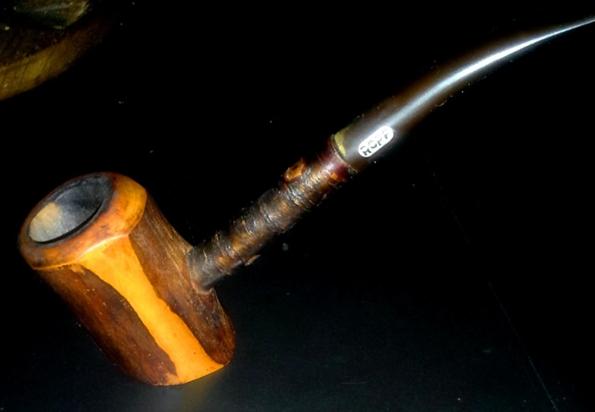
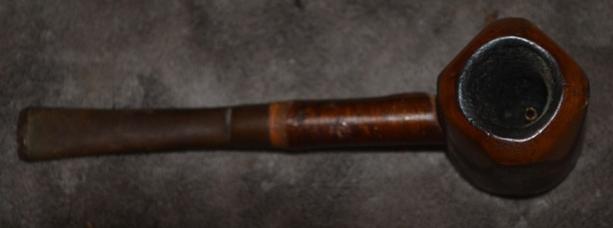
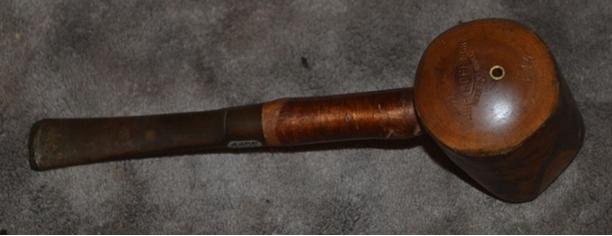
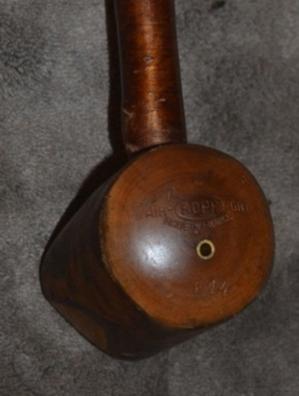
In a recent purchase of several lots of pipes on eBay, the first of which had some gems that were grotesque from abuse, I still saw that I could restore their luster. Some of my recent blogs have hinted at my ill opinion of those who treat their pipes with such disrespect. I even resorted to outright railing against these unknown enjoyers of the fair leaf. But in fact, the truth is that they know not what they do. When I received it in the mail, the condition of a Ropp natural cherrywood Air Dry system pipe [see “The Revolution of the System Pipe”], with a small brass tube inserted in the bottom of the bowl and leading to the chamber to relieve excess heat, was a little more complicated.

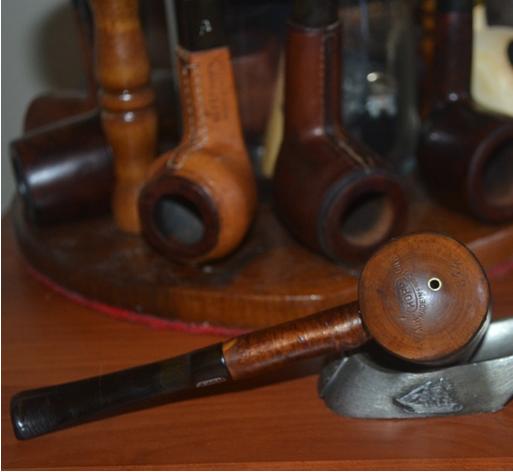
I own a more conventional Ropp natural cherrywood De Luxe, canted and flat on the bottom and therefore a sitter as it should be.

Picture 1

Picture 1

I considered swapping it with the more recent Air Dry, which has a rounded bottom and is already listed for sale on my online store. My only reasoning being that the Air Dry was more novel and might be older, I had a change of heart, in the literal sense. The more I thought about it, the more certain I became that the Air Dry’s long-time owner would not have traded it for anything. Who was I to give up with such nonchalance one that has served me so well? Besides, my De Luxe might just be older.

THE PIPE RESTORATION
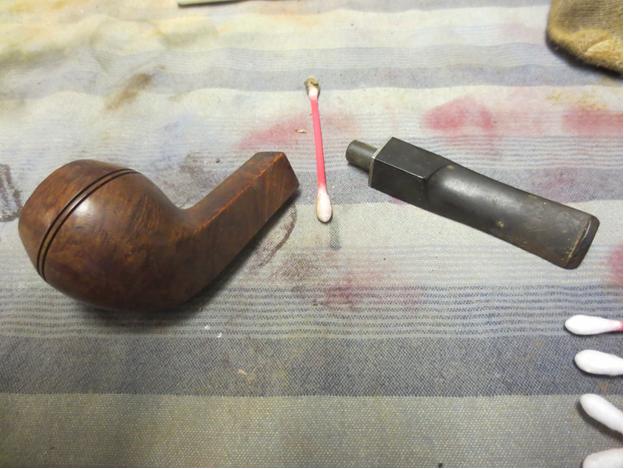
The first thing I did was disassemble the pipe, meaning I unscrewed the stem and shank from the bowl.

Picture 2

Picture 2

Picture 3

Picture 3

Picture 4

Picture 4

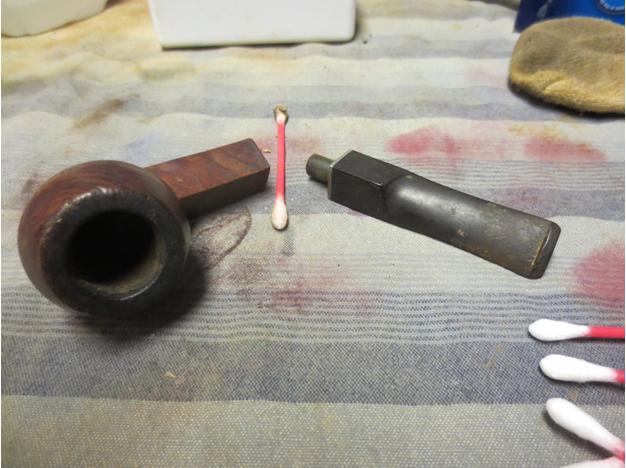
There was blackening beyond the screws in the bowl’s hole [picture 3]. I saw that the threads of the shank itself were blackened [picture 2] and so I cleaned them right away with alcohol and also followed my initial quick clean routine to find if there were any obstructions in the parts. To my happy surprise, given the first impression of the chamber [picture 7], the quick clean was all that was necessary. Without doubt, these were the easiest stem and shank I have ever had to clean, leading to my surmising in the Introduction as to the complicated character of the original owner.

I also noted the small, unpolished areas of wood around the shank hole in the bowl [picture 3] and both ends of the shank [picture 4], although the stem side’s roughness does not show in the last picture. A fast buffing of the bowl’s hole and the tips of the shank (excluding the threads) with red and white Tripoli, White Diamond and carnauba made them shine like the rest of the wood. The following photos are the pipe before any work was done.

Picture 5

Picture 5

Picture 6

Picture 6

Picture 7

Picture 7

Picture 8

Picture 8

Picture 9

Picture 9

Picture 10

Picture 10

Picture 11

Picture 11

Starting the hardest part of the restore, which was pretty straightforward with nothing of special difficulty, I put my reamer to the bowl and began the process of turning it at increasing depths with great care to protect the cherry wood. Most of the top quarter-inch cleared down to the wood. The rest came in time. Altogether this stage took me about a half-hour, including the final sanding with 220-grit paper to make the chamber smooth and even all the way down.

All that was left to do was finish up the scratched stem with minor chatter and the wood. I used #1500 micromesh on most of the stem and 200-grit paper for the teeth marks, and spun it on the buffers with red Tripoli and White Diamond. The shank and bowl I could have left alone, but since it was a bit duller than it could be I applied white Tripoli, White Diamond and carnauba.

As with my De Luxe, a dab of beeswax was needed to hold the stem in place.

Picture 12

Picture 12

Picture 13

Picture 13

Picture 14

Picture 14

Picture 15

Picture 15

Picture 16

Picture 16

Picture 17

Picture 17

Picture 18

Picture 18

CONCLUSION
I figured out at last that those who enjoy pipes are complex characters, perhaps or perhaps not more so than others. As William Shakespeare, a greater writer even than Fitzgerald, had Jacques put it in “As You Like It,” Act II, sc, vii:

All the world’s a stage,
And all the men and women merely players;
They have their exits and their entrances,
And one man in his time plays many parts….

Shakespeare, who is believed to have written the play c. 1600, when he would have been about 36, knew better than anyone about the importance of action to character. He made his final exit when he was 54 – but in those days, that was common.

Restemming and Restoring a Diamond Shank Commodore Canadian


Blog by Steve Laug

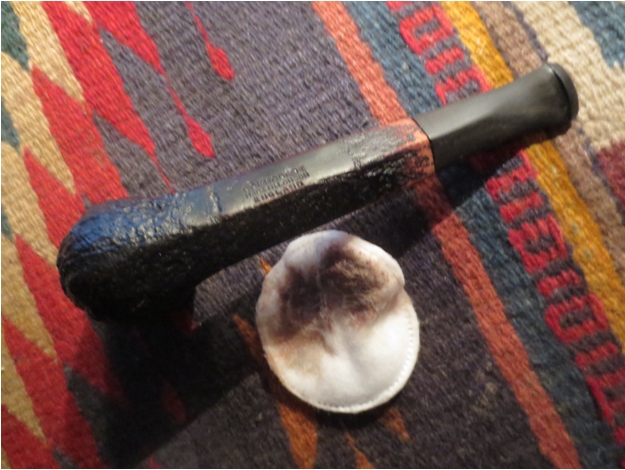
This pipe bowl came up on eBay and I bid on it. I really liked the diamond-shaped shank and the pipe looked to be in great condition. I did a bit of research and found that the brand was either made by Comoy’s or Charatan. The style of the stamping, which read Made in London over England, made me more inclined to think it was a Charatan made pipe. The diamond shank and the overall style of the pipe also seemed to point to it being Charatan made. The photos below were the ones included by the seller. Commodore1 Commodore2 Commodore3 Commodore4The sandblast was very rugged and craggy. The rim had a lighter blast and the shank had a blast about 2/3 of the way back from the bowl toward the stem. The last 1/3 was rusticated to match the blast of the first portion of the bowl. The diamond shank was flattened – it was wider from side to side than it was tall. The sides of the shank were sanded smooth and the bottom left side of the shank was smooth and stamped COMMODORE over Made in London over England. The bowl had a light cake and some shards of tobacco still in the bowl. The finish was in very good shape other than the sides next to the shank end – it was worn and the stain was worn. The rim had some tars on it and a light build up. There was not a stem with this bowl.

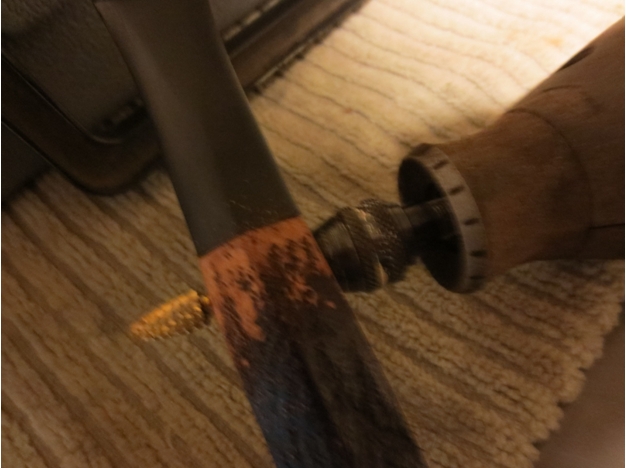
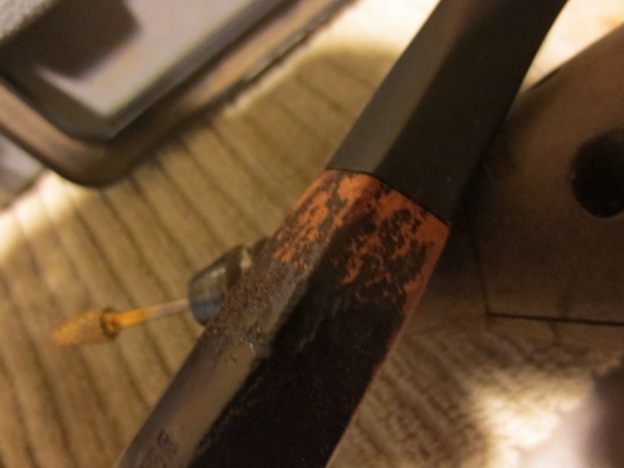
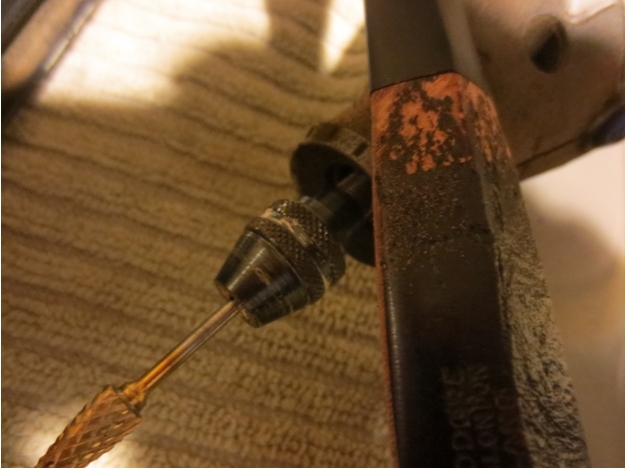
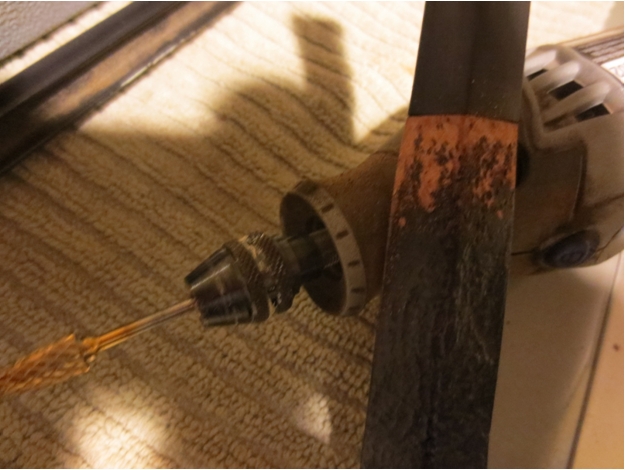
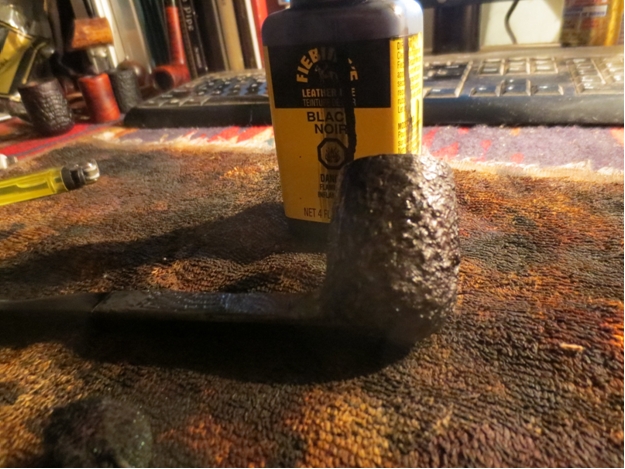
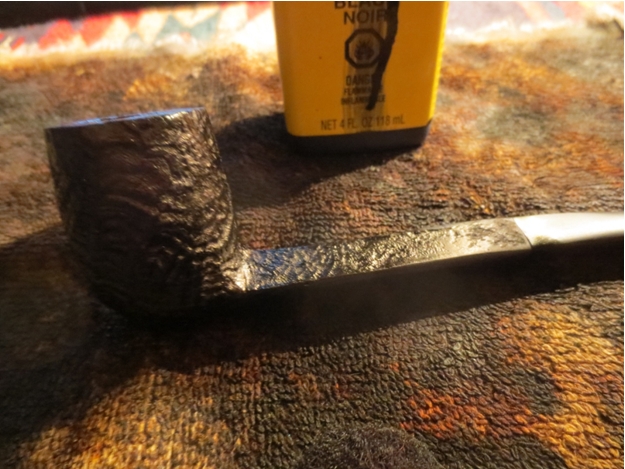
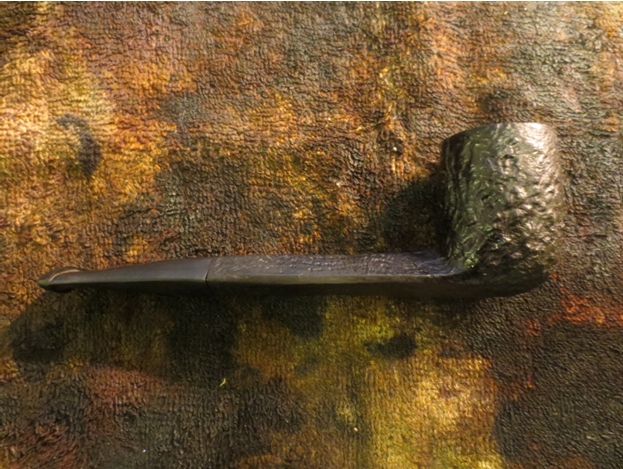
The first steps I took in this process I forgot to document with my camera. The battery was dead when I did remember so I will have to describe it with words. I went through my can of stems to see if any of the diamond-shaped stems would fit this shank. None of them were wide enough for the width of the shank. I had several oval stems that were close in width and height. I looked through the stems until I found one that was the right height and width for the shank. I turned the tenon on a PIMO Tenon Turning Tool until it was a close fit and then sanded it by hand until it fit snuggly in place. The end of the shank was not quite square so there was a slight gap on the side corners. Filing and shaping the stem would help with the fit. I shaped it with a Dremel and sanding drum as well as hand sanded until it was a flattened diamond. I sanded the stem in place on the shank to make the transition smooth between the shank and stem. It took a lot of sanding to shape it correctly.IMG_2324 IMG_2325 IMG_2326 IMG_2327The photo below shows the shape of the finished stem. There was still a lot of work to do to smooth out the end of the tenon to remove the casting marks and to smooth out the diamond shape of the stem but the diamond shape was basically finished.IMG_2328I reamed the bowl with a PipNet reamer to remove the slight cake and the tobacco shards that were stuck to the sides of the bowl.IMG_2131I used a brass bristle tire brush to clean the rim top and remove the overflow of cake on the top. I wiped it down with a cotton pad and alcohol to remove the dust and clean out the grooves in the blasted rim.IMG_2333 IMG_2334I wiped down the bowl and shank with cotton pads and alcohol to remove the dirt in the finish and prepare it for working on the shank.IMG_2335 IMG_2336I used a dental burr in the Dremel to re-rusticate the shank area where I had sanded it smooth. I ran the Dremel at a slow speed to match the pattern on the rest of the shank.IMG_2337 IMG_2338 IMG_2339 IMG_2340I wiped down the rusticated shank area and wiped down the dust on the rest of the bowl to prepare it for the new stain coat. I used a black aniline stain for the stain on the newly rusticated areas and also gave the entire bowl a coat of the black stain to cover the worn areas. I applied the stain, flamed it and repeated the process until the coverage was even on the bowl.IMG_2341 IMG_2342I hand buffed the pipe with a rag I use for that purpose. It picks up the stain coat and evenly spreads it across the bowl and rim.IMG_2343 IMG_2344 IMG_2345 IMG_2346I buffed the pipe with White Diamond to polish the new stain and to blend it better with the rest of the bowl colour. The next series of four photos below show the pipe after this initial buffing.IMG_2351 IMG_2352 IMG_2353 IMG_2354I decided to give the bowl a coat of wax to see what black looked like when polished. I wanted to see if I would need to give it another coat of stain to highlight the higher spots on the sandblast. I applied it by hand and then buffed it with a shoe brush.IMG_2355 IMG_2356 IMG_2357 IMG_2358 IMG_2359 IMG_2360I set the bowl aside to work on the stem. I sanded it some more with the 220 grit sandpaper and then with the medium and fine grit sanding sponges. I followed those up by sanding with my usual array of micromesh sanding pads. I wet sanded with 1500-2400 grit pads and dry sanded with 3200-12,000 grit pads. I rubbed the stem down with Obsidian Oil between each group of three pads. I buffed the stem with White Diamond to polish it.IMG_2361 IMG_2362 IMG_2363I decided to give the pipe a second coat of stain to highlight the black. I used a oxblood stain to give it the contrast that I was looking for. I applied the topcoat of stain and wiped it off. I buffed the pipe and stem with White Diamond again to polish the stain coat and stem.IMG_2364 IMG_2365 IMG_2366 IMG_2367I waxed it with several light coats of carnauba wax. I use a light touch so as not to gum up the wax in the sandblast. At the same time I want the shine that a good coat of wax gives the bowl and stem. The finished pipe is shown below. The new stem works well with the shape of the shank and gives the pipe a quiet, understated elegance. I hope to load up a bowl and give it an inaugural smoke tomorrow out on the front porch and relax with a good bowl of aged Virginia.IMG_2370 IMG_2371 IMG_2372 IMG_2373 IMG_2374

A Reborn Peterson Tankard


Blog by Steve Laug

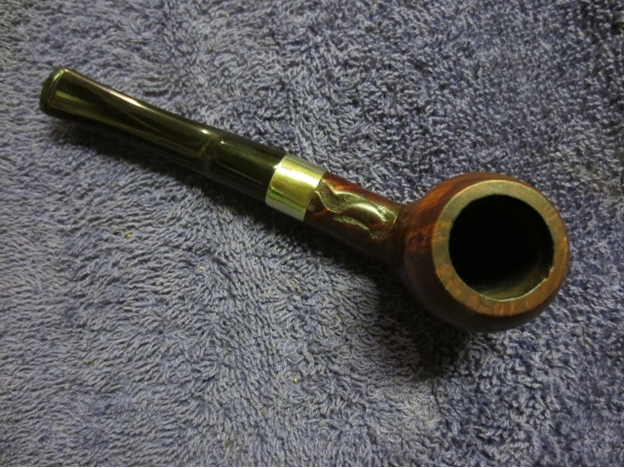
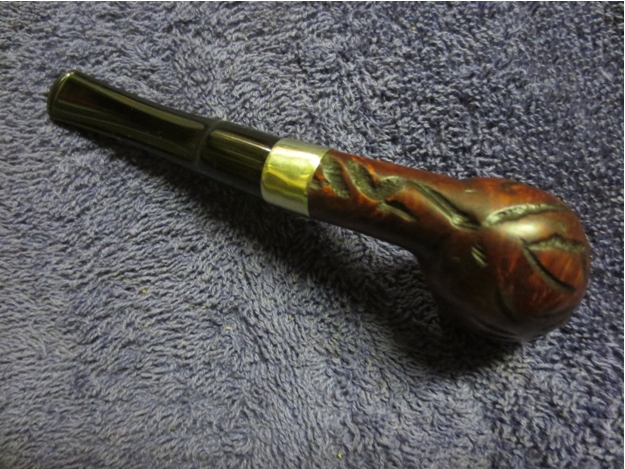
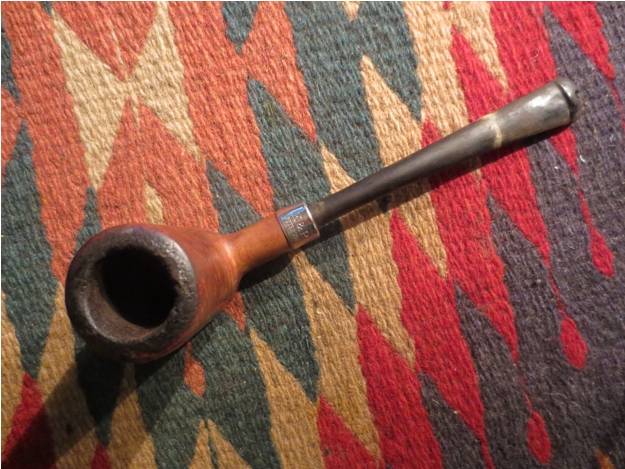
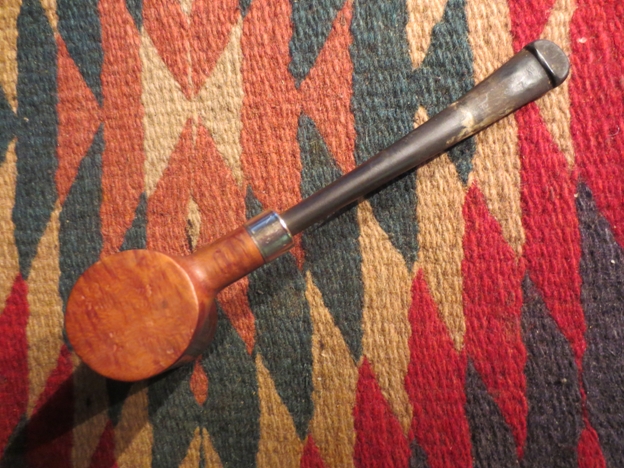
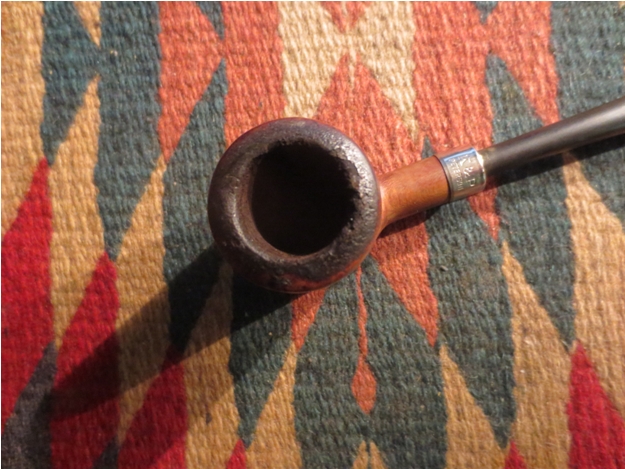
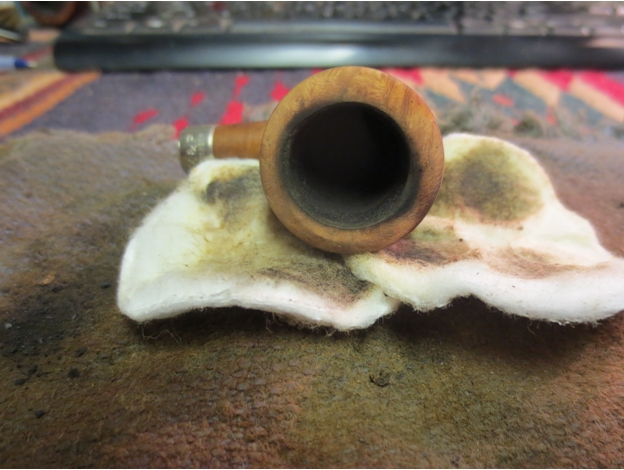
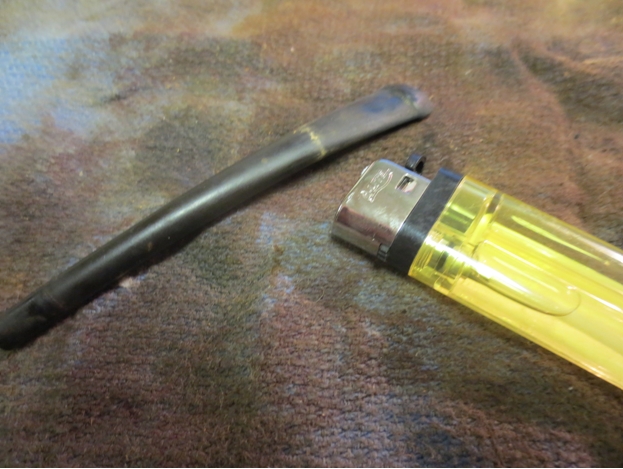
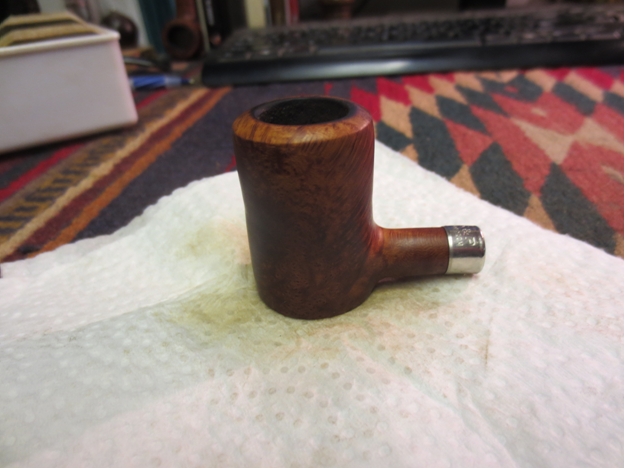
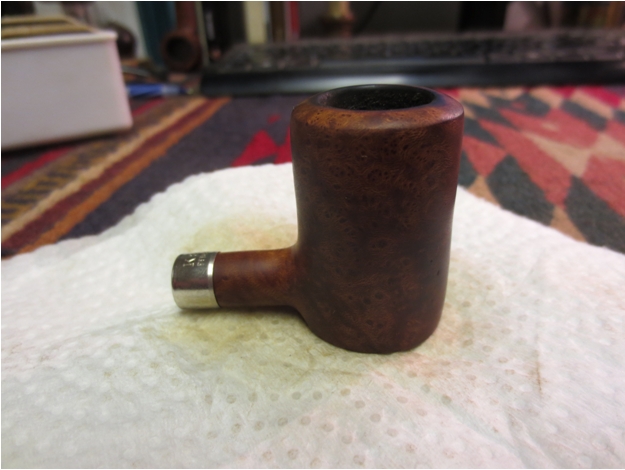
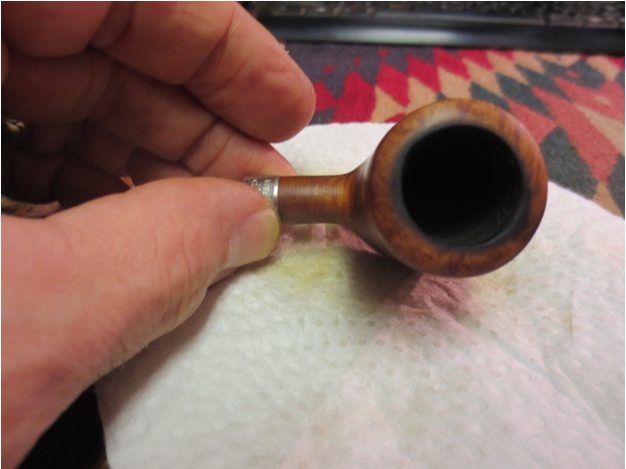
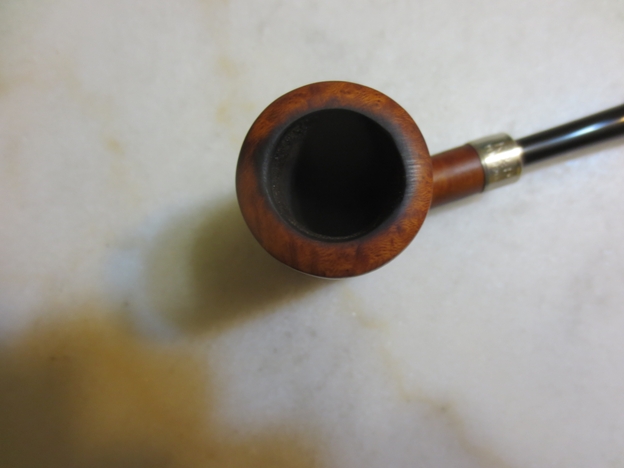
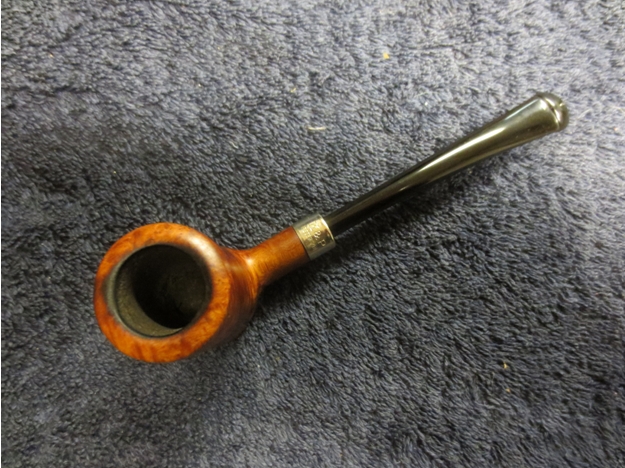
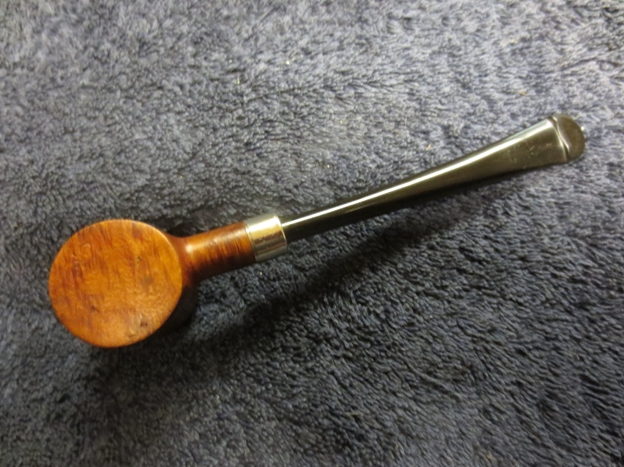
I have looked for one of these little Peterson Tankards for a long time. I have always liked the delicate simplicity of the pipe. The bowl is a round tankard and the pencil shank with the silver Peterson collar looks elegant. The rim is rounded and crowned. The stem has a gentle bend that allows the pipe to sit plat on the base. It is stamped on its base Peterson Tankard, Made in the Republic of Ireland. The pipe is pictured in the photo below, the third pipe down. It was one of the five I found on my recent pipe hunt.IMG_2049The Tankard was in worn but decent shape. The finish was dirty and there was darkening around the bowl middle from the hands of the previous owner. The rim had a thick buildup of tars and oils that had hardened. There were burn marks around the inner edge of the rim at the back of the pipe and the right front. The burn on the front of the bowl was more extensive that then one on the back inner rim. The bowl had a thick cake in it and the shank was dirty. The stamping was readable but faint. The stem had tooth marks on the top and bottom sides of the stem near the crease on the P-lip. It was badly oxidized and there was a heavy calcification around the stem about an inch in from the button. The silver ferrule was clean and would shine up easily.IMG_2123 IMG_2124 IMG_2125 IMG_2126I reamed the bowl with a PipNet reamer to remove the cake back to bare wood. I scrubbed down the exterior with Murphy’s Oil Soap on a cotton cloth and wiped it off to clean the briar.IMG_2128 IMG_2260 IMG_2261 IMG_2262 IMG_2263The next photo shows the reamed bowl and the caked rim top. It was very thick so it would take some work with sandpapers and oil soap to remove the tars. I scrubbed it with the soap and then with alcohol to remove as much of the tars as possible. I then sanded it with 220 grit sandpaper and a medium grit sanding sponge. I wiped it down with acetone once I had finished sanding it. The extent of the rim damage can be seen in the second photo.IMG_2264 IMG_2265I wiped down the finish with acetone on cotton pads to completely remove the wax and the finish from the outside of the bowl.IMG_2266 IMG_2267 IMG_2268I set the bowl aside to work on the stem. I used a Bic style lighter to “paint” the surface of the stem and lift the tooth marks. Doing this I was able to remove many of the tooth dents and lessen the depth of the remaining ones.IMG_2269 IMG_2270 IMG_2271I sanded the stem with 220 grit sandpaper to remove the rest of the dents and the oxidation and calcification. I reshaped the button and the crease to sharpen them. There was one tooth mark that I could not minimize further without damaging the thickness of the stem at the crease. I used a clear super glue to fill that spot. Once the glue had dried I sanded it and then used a needle file to reshape the crease and smooth things out. I sanded the repair with 220 grit sandpaper and then with medium and fine grit sanding sponges until I had blended it into the surface of the vulcanite.IMG_2272 IMG_2273 IMG_2274 IMG_2275 IMG_2276I sanded the stem with my usual array of micromesh sanding pads to polish and finish it. I wet sanded with 1500-2400 grit sanding pads and dry sanded with 3200-12,000 grit pads. I wiped it down with Obsidian Oil between each set of three grits. Once I finished with the micromesh pads I buffed the stem with White Diamond and then gave it several coats of carnauba wax to protect it and give it a deep shine.IMG_2281 IMG_2282 IMG_2283I decided to leave the finish natural and not stain it. I rubbed it down with a light coat of olive oil to enhance the redness of the briar.IMG_2277 IMG_2278 IMG_2279 IMG_2280I took a close up photo of the rim to see if the scratches were still visible. At the back side of the rim there were still some scratches that I needed to work on more to remove. I also wanted to see if I could also remove some more of the rim damage from the burn marks.IMG_2288I sanded the rim with a medium and a fine grit sanding sponge to work on the scratches and the burn marks. Working on the surface with the sanding sponge I was able to remove the scratches and some more of the burn marks from the surface.IMG_2289 IMG_2294I sanded the bowl with the same fine grit sanding sponge and then buffed it with White Diamond. I took special care around the stamping to make sure that I did not damage the light stamping. I gave it multiple coats of carnauba wax and lightly buffed it to a shine with a soft flannel buffing pad. The finished pipe is shown below. The birdseye grain on the sides and the cross grain on the ends both work really well. It is a beautiful pipe and I think it will be a great smoking pipe as well. It should provide many more years of service and certainly live beyond my lifetime to be passed on to a new generation of pipemen.IMG_2290 IMG_2291 IMG_2292 IMG_2293

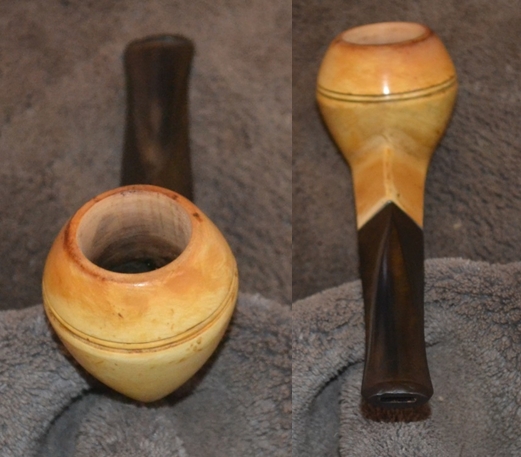
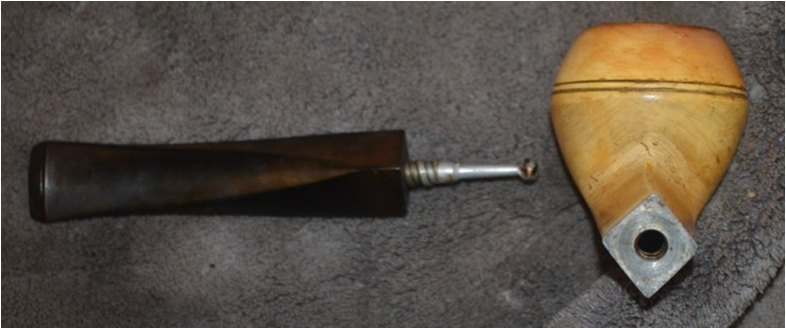
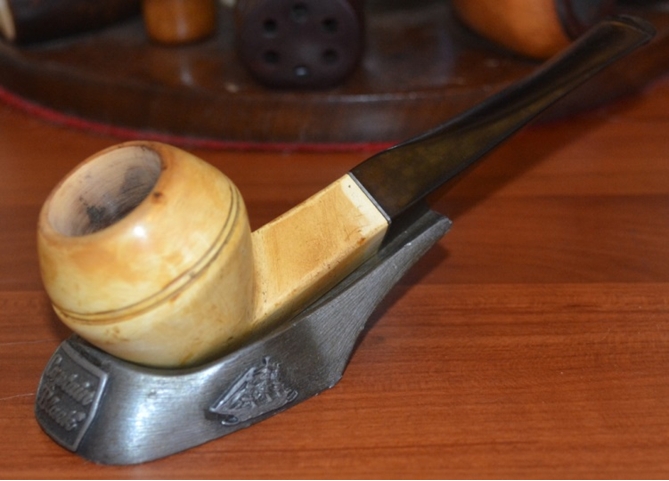
A Face Lift for a Battered Old Meerschaum Bulldog – Robert M. Boughton


Guest Blog by Robert M. Boughton
Member, North American Society of Pipe Collectors
http://www.roadrunnerpipes.com
http://about.me/boughtonrobert
Photos © the Author

“Age should not have its face lifted, but it should rather teach the world to admire wrinkles as the etchings of experience and the firm line of character.”
— U.S. author Clarence Day, 1874-1937

INTRODUCTION
I agree that facelifts in most cases are attempts, nothing more than vain at best and narcissistic at worst, by those with money to burn to avoid the inevitable, and often enough have undesired effects the recipients deserve. However, in the case of a very battered and generally abused meerschaum pipe, as with some people who have suffered at the hands of others, at least a bit of a makeover is in order. This holds true with a bulldog, the animal breed of which many coarse or misguided folks think lacks beauty in the first place.

The unknown brand I will discuss, clearly a fine Turkish block example, is one of those exceptions. For reasons which will be obvious it resembled a dog that had been in a fight. I received it as part of a lot of eight from eBay that I purchased in large part because I saw the poor bulldog alone among all of the briars, and upon closer scrutiny with the magnifier observed it was filthy and somewhat oddly colored and had horrible scratches all over its once smooth, white, pristine body. Some unknown carver trying to eke out a living as his father and generations before him had done likely made it without even a signature of any sort, as is unfortunately all too common among Turkish crafters due to the central nature of humility in Islamic beliefs.

THE RESTORATION
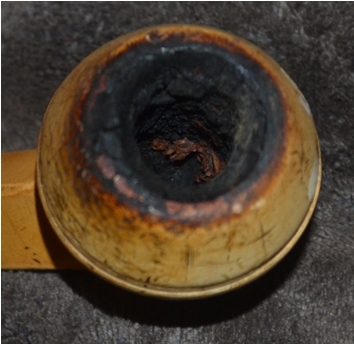
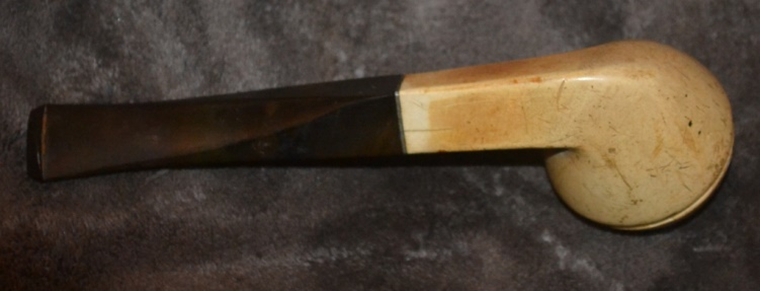
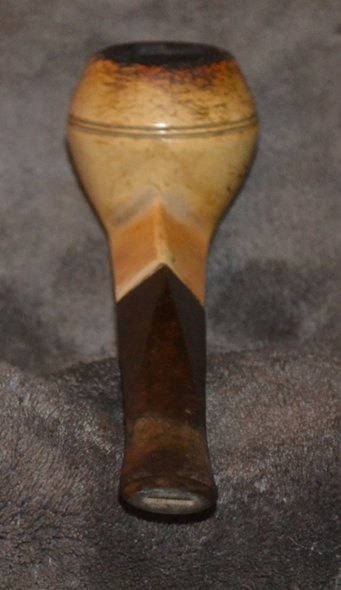
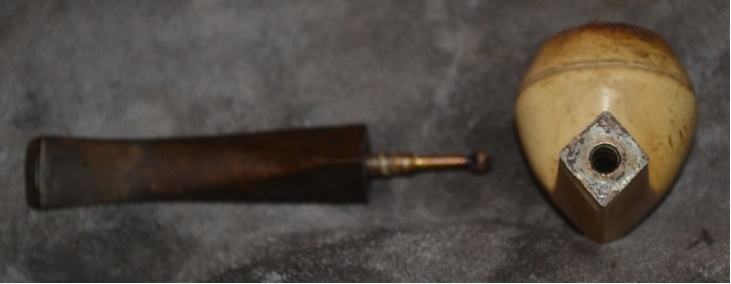
This unfortunate meerschaum was in about as bad shape as I had ever seen any pipe I still wanted to buy. I thought, if not I, then who? There were others of more merit in the lot, but that one cried out to me. Then again, I do have a sizable collection of meerschaums and knew I would be more than happy to keep that one if things didn’t work out restoration-wise. A former roommate told me many years ago that I am attracted to strays, and although he said it with sarcasm I told him he was right. I see nothing wrong with that trait. By the way, I also tend to root for the underdog – although not as often in organized sports– such as the bull versus the matador. Nothing pleases me more than seeing a jerk in a pompous outfit, with all kinds of helpers, gang up on a bull and find himself gored and bleeding out. But that’s just a dark part of me.

THE PIPE RESTORATION

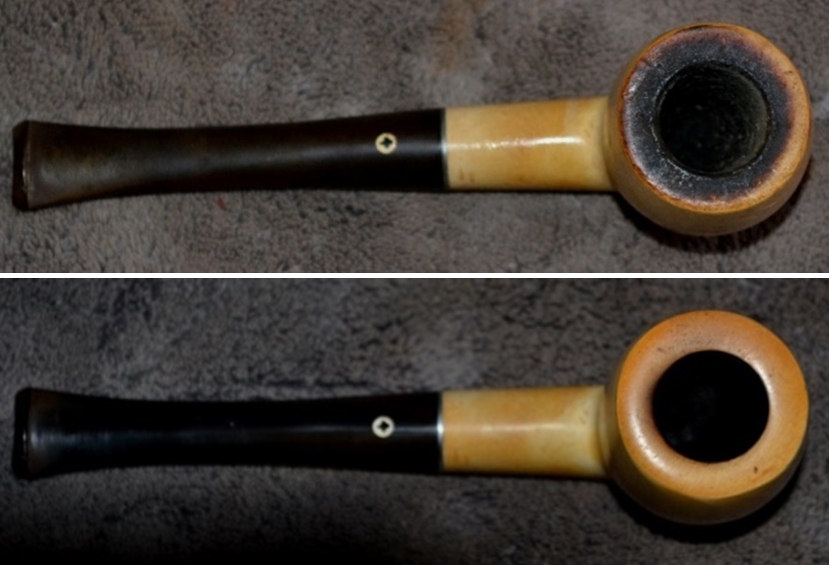
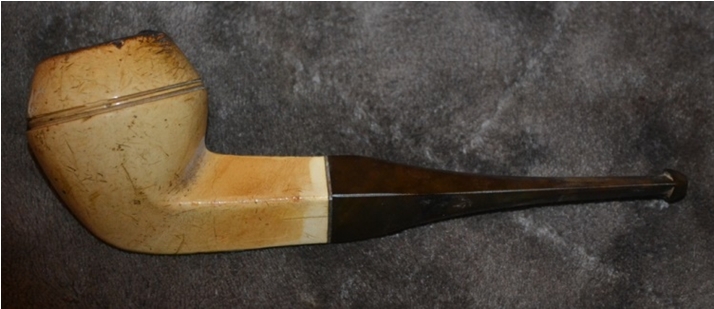
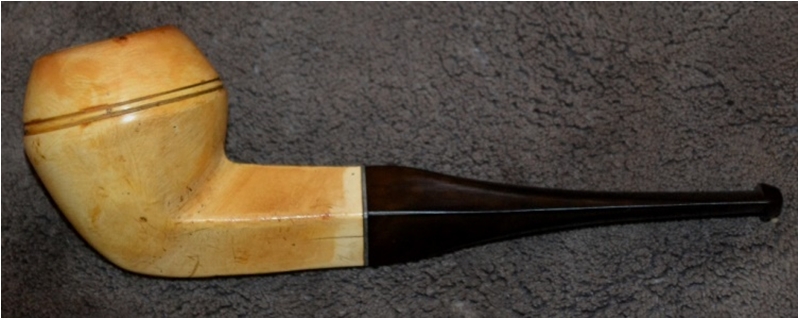
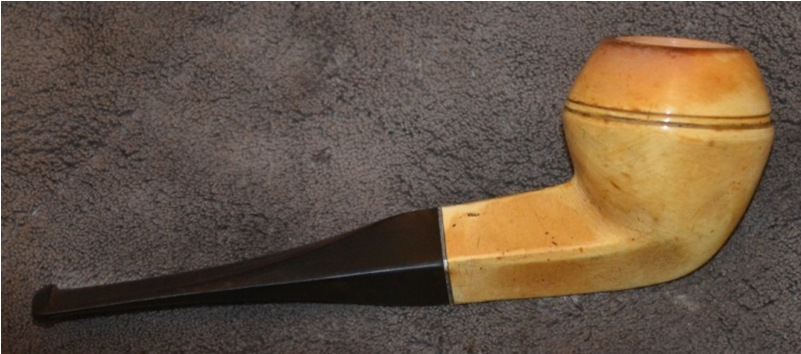
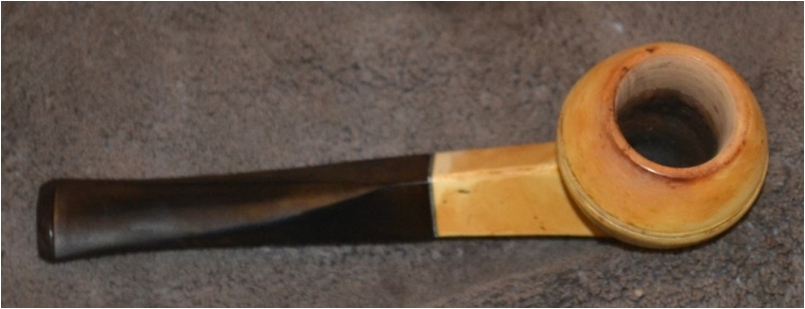
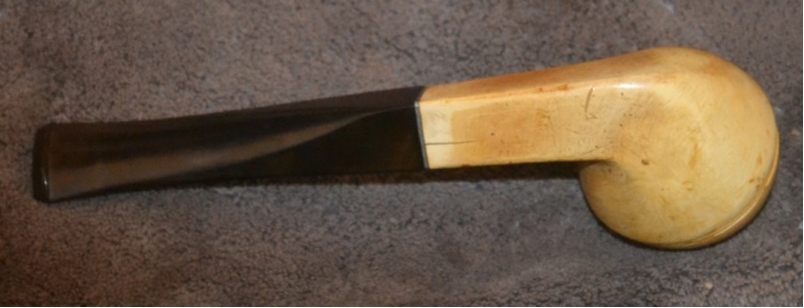
I have had fair success restoring meerschaums, including the following befores and afters: Robert1 Robert2 Robert3 Robert4And so I figured I would give this poor ol’ dog a shot:Robert5 Robert6 Robert7 Robert8 Robert9 Robert10 Robert11Despite the deplorable condition of the bowl and rim, I knew from the past that they would be the easy part of this job, so I tackled them first. I reamed the bowl and then used #800 micromesh to smooth it out. Surprisingly, with a light touch and a piece of 400-grit paper, I took the blackness right off of the rim and didn’t hurt the coloring at all. There were a few dings that rubbed out easily with #1000 micromesh.

The hard part, I knew and remember already indicating, but it bears repeating, was to remove as many of the scratches and other blemishes as I could with a minimum of damage to the nice if oddly distributed color on the outside of the bowl and shank. The spread of yellow and orange, not to mention the lack of any shine to the meerschaum, suggested over-hot smoking of this delicate if strongly shaped and named pipe. That conclusion would seem to be a no-brainer given horrendous caking within the bowl and cooking of the rim. And somehow I doubt the maker never treated it with beeswax or something else, yet it was as flat as could be.

My experience with washing the outside of a pipe with distilled water in general is that it seems to give a brighter light on the job at hand by removing all of the filth that has built up over time smoking any pipe. I could see this one was going to be worse than most, but nothing prepared me for the indefensible groping with dirty hands by whatever anti-aficionado of pipe smoking who had abused the bulldog with apparent joyful perversity. Why, I even had to scrub the muck out of the trademark groove beneath the rim! The result was not one or two, but three small pieces of cotton cloth spent and blackened with the physical dirtiness of some variety of pipe lecher.

Therefore, with the highest care, I applied stronger use of the #1000 micromesh to the seemingly endless scratches and other stray marks, like signs of skin cancer, that were everywhere. When I had stopped and resumed again time after time, finding more and more marks upon this wonderful pipe, I was at last as satisfied with the results as I knew I would ever be.

Then I used more stem cleaners and pipe freshener than I had ever expended on a single pipe, let me just say that, to sanitize the stem, shank and bowl, and by the end of it I have to admit only the stem came out perfectly clean. But I knew it was sanitized and ready to smoke one good bowl of tobacco, so I chose my own blend of burleys, Oriental, perique, a touch of Cavendishes and a bit of Virginias including red cake that I call Sneaky Rabbit (and which will soon be a house blend at my favorite tobacconist) to smoke the pipe once.
True enough, I wanted to know how this unusual bulldog smoked, but my main reason for lighting up a pipe I intend to sell and therefore knew I would have to give another quick clean was to heat the meerschaum enough to melt beeswax from a bar evenly over the outer area. I swear to it! I had researched online different processes for accomplishing this necessary completion for previous restorations, and the method I described had worked before so I knew it would again.

And so, once the smoking enjoyment had reached a high enough degree, I began applying the beeswax as described, and it worked just as well as I was certain it would. I took my last puffs of the pipe and cleared out the ash with care quickly before rubbing the beeswax vigorously into the meerschaum with a big soft cotton cloth.

The stem, despite the awful damage inflicted on the meerschaum, to my great surprise was in okay shape and only need some sanding and micro-meshing to prep it for a spin on the wax wheels.

Here are the final results:Robert12 Robert13 Robert14 Robert15 Robert16 Robert17 Robert18CONCLUSION
This was a work of love, and I know the results are a little rough around the edges. But I was determined throughout the process to assure that no more damage than had already been perpetrated against this pipe be made. It is already up for sale, but if nobody ever buys it, I know it is safe in my possession.

Restoring a Dunhill Shell Billiard 42121


Blog by Steve Laug

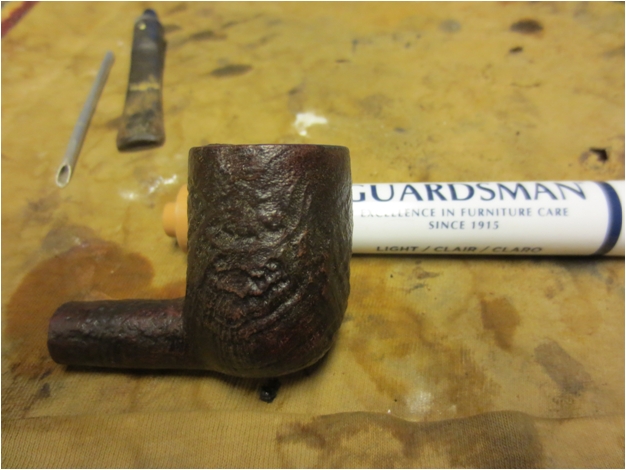
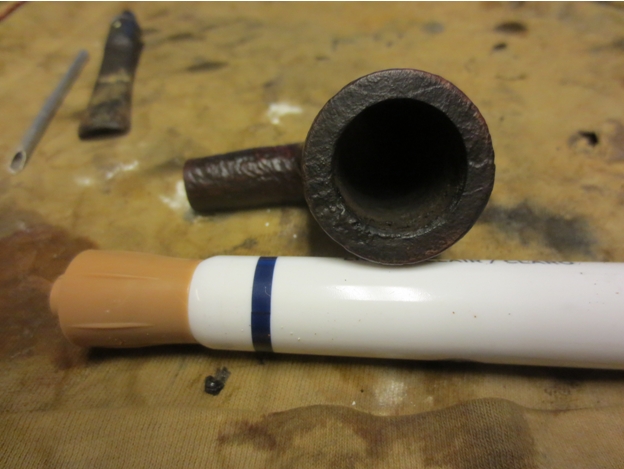
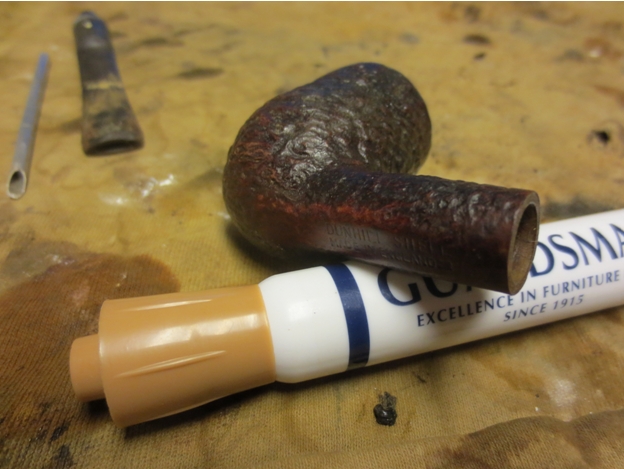
Of all my finds on my recent pipe hunt this little Group 4 Dunhill Shell is one of the favourites. It has a great sandblast that really had some nice craggy grain. The finish was in good shape. The rim was dirty and had a slight build up of oils and tars. The bowl was caked with a thick cake. The stem was oxidized and also had a calcium buildup for the first inch of the stem. The stem had an inner tube inside that was slightly bent that kept the stem from seating correctly in the shank. There were several shallow bite marks on the top and bottom sides of the stem near the button. Internally the stem and shank were surprisingly clean.IMG_2201 IMG_2202 IMG_2203It is stamped on the underside of the shank with 42121 Dunhill Shell over Made In England and next to the D of England was an underlined and superscript 20 next to that was an underlined 23. Using John Loring’s Dunhill Briar Pipe book the dating is 1980 as seen by the underlined 20 slightly elevated and following the D. The underlined 23 indicate that it was sold in 1983, due to the one year guarantee.IMG_2204The next photo shows the buildup on the rim that needed to be dealt with in a cleanup and restoration of the pipe.IMG_2205I cleaned out the shank and the stem with pipe cleaners, cotton swabs and 99% isopropyl alcohol until the cotton swabs and pipe cleaners came out clean.IMG_2206 IMG_2207I scrubbed down the bowl with undiluted Murphy’s Oil Soap on cotton pads and then rinsed it off with running water. I dried it with a cotton towel.IMG_2208IMG_2209IMG_2210IMG_2211IMG_2212I scrubbed the rim with a soft bristle brass tire brush to clean off the tars and oils and open up the sandblast on the rim. I scrubbed it with a soft cotton pad and alcohol to remove the pieces left behind by the wire brush.IMG_2213I touched up the finish around the edges of the bowl rim and the end of the shank. I also touched up spots on the sides of the bowl and the bottom of the shank. I used the Guardsman Stain pens that Greg sent me to do the touch up work. I chose to use the lightest stain pen as it matched the colour of the bowl precisely. When I use these pens I always start with the lightest stain and work toward the darkest until I get a match.IMG_2214 IMG_2215 IMG_2216 IMG_2217I sanded the stem with 220 grit sandpaper and then with medium and fine grit sanding sponges to remove the oxidation and the calcium deposits. I “painted” the tooth marks with the flame of a Bic lighter to lift them closer to the surface and then sanded what remained with 220 grit sandpaper and the sanding sponges.IMG_2218Taking a cue from Al Jones I made a plastic washer to put between the shank and the stem to make the sanding of the saddle simpler. I could sand right up to the edge without damaging the end of the stem and rounding the edges.IMG_2219 IMG_2220 IMG_2221I sanded the stem with my usual array of micromesh sanding pads – wet sanding with 1500-2400 grit pads and dry sanding with 3200-12,000 grit pads. Between each set of three pads I rubbed down the stem with Obsidian Oil before moving on to the next set of three. When I had finished with the 12,000 grit pad I took the pipe to the buffer and buffed the stem with White Diamond.IMG_2222 IMG_2223 IMG_2224I lightly buffed the bowl and the stem once again with the White Diamond and then used Halcyon II wax on the bowl and carnauba on the stem. I hand buffed the pipe with a shoe brush and raised the shine. The finished pipe is shown below. I am looking forward to loading an aged bowl of McClellands 5100 and having the inaugural smoke in this beauty.IMG_2225IMG_2226IMG_2227IMG_2228

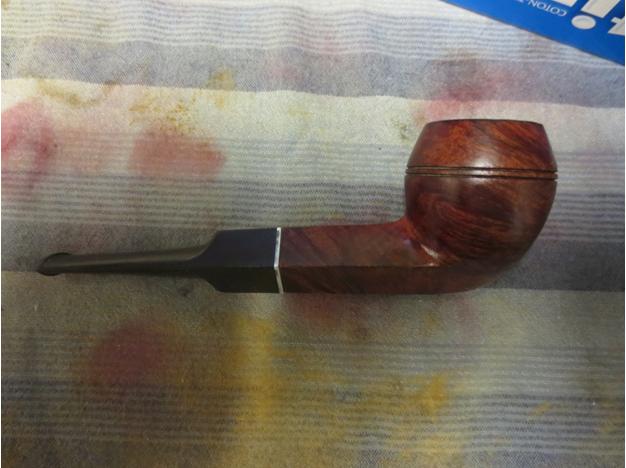
Restoring a Yello-Bole Imperial Bulldog for John


Blog by Steve Laug

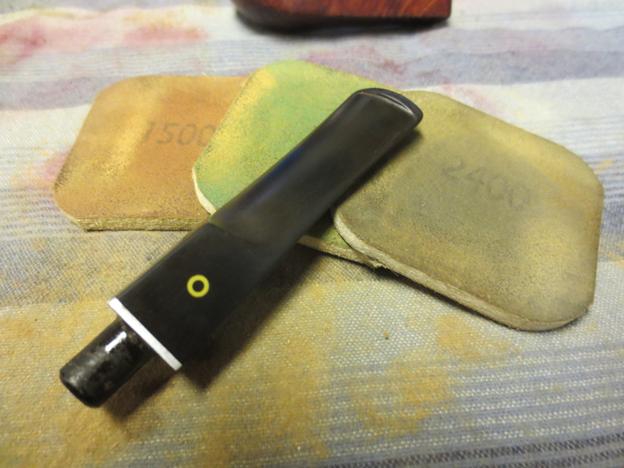
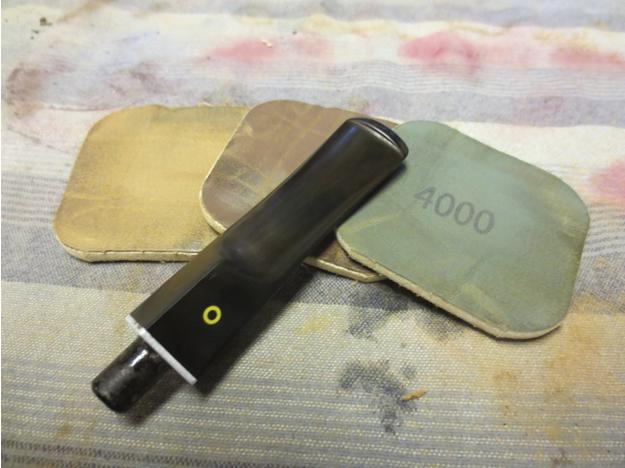
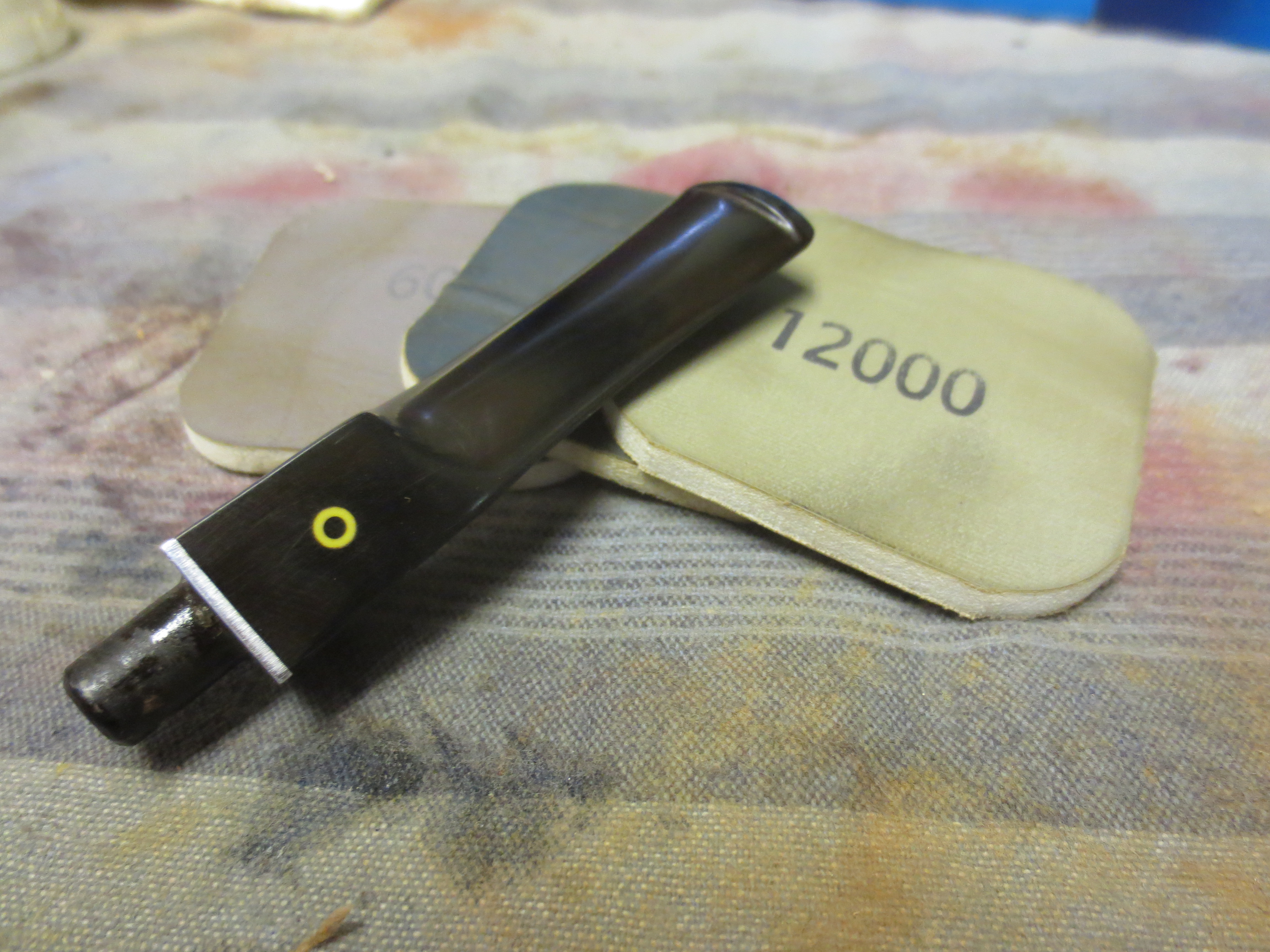
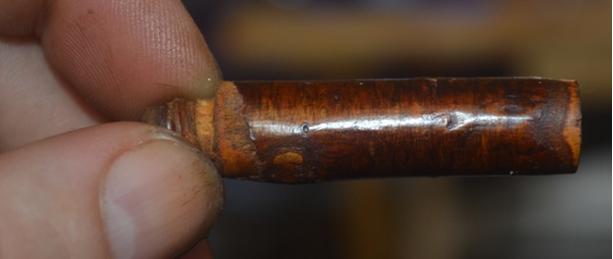
The last of John’s pipes that I worked on while he was working on the Danish Sovereign Peewit was a beautiful old Yello-Bole Bulldog. It was stamped KBB in a cloverleaf on the left side of the shank next to four lines of stamping. The first read Yello-Bole and underneath that was stamped Cured with Real Honey and an R in a circle. The third line read Imperial in script and the fourth read Imported Briar. The stem had a push tenon and had the yellow circle inset in the vulcanite. It is shown in the photo below – it is the last pipe in the column on the left side of the photo.IMG_2050 This pipe actually was one of the free ones that came with the pipe rack that John purchased. It was sitting on the rack without a stem. The stem was inside the humidor jar. I had seen it before and had assumed that the tenon was broken but it was not. It was just very loose and would not stay in the shank. The metal spacer that separates the shank and stem was attached to the stem and not to the bowl. The bowl itself was very dirty and caked. The finish was not too bad and there were no deep dents of scratches in the briar just some ground in grime. The rim was caked with a thick buildup of tars and oils that had almost fossilized. The stem was in good shape other than being oxidized. There was tooth chatter on the top and underside of the stem.

I used cotton swabs, pipe cleaners and isopropyl alcohol to clean out the bowl, shank and the inside of the stem. I worked them until them came out white. I scrubbed the aluminum space with alcohol and then with a metal polishing cloth to bring back the original shine.IMG_2088 IMG_2089 IMG_2090 IMG_2091 I wiped down the briar with acetone on cotton pads to remove the grime from the finish of the bowl and the grain underneath really popped.IMG_2092 IMG_2093 The rim buildup was so hard that I used the topping board and sandpaper to remove it and lightly sand the rim surface itself to remove the pitting. I sanded the outer edge with a folded piece of sandpaper to minimize the rough spots on the edge.IMG_2094 IMG_2095 I sanded the rim with a medium and a fine grit sanding sponge and then wet sanded it with 1500-2400 grit micromesh sanding pads. I touched up the rim with the stain pens until it matched the stain colour on the bowl. I then wiped down the pipe with some olive oil on a paper towel and let it soak into the finish.IMG_2098 IMG_2096 IMG_2097 I sanded the stem with 220 sandpaper to remove the tooth chatter and oxidation and then with a medium and fine grit sanding sponge. I wet sanded the stem with 1500-2400 grit micromesh sanding pads and dry sanded it with 3200-12,000 grit sanding pads. I rubbed it down with Obsidian Oil after each set of three pads. When I had finished with the sanding I buffed the stem with White Diamond. To make the stem snug in the shank I used a cotton swab and water to wet the mortise in the shank to swell the briar. This helped a lot and the stem was much tighter. It was still too loose to my liking so I ran clear superglue around the tenon and lightly sanded it to obtain a snug fit on the stem.IMG_2099 IMG_2100 IMG_2101I put the pipe together and buffed it with White Diamond. I gave it multiple coats of carnauba wax to seal and protect the stem and bowl. I buffed it with a soft flannel buff to get the shine. The finished pipe is shown below and is yet another clean and ready pipe for John to load and smoke. I look forward to hearing what he thinks of the smoking characteristics of this old timer. It turned out to be a beautiful pipe with nice looking mixed grain. The old vulcanite was interesting to me in that it had pieces of metal that were part of the casting of the stem. I remember reading somewhere that these occurred in stems that were made during the war years when rubber was at a premium. To my thinking that helps to date this bulldog to the late 1940s or early 1950s. Enjoy your “new” pipe John and be sure to let us know how it smokes for you.IMG_2102 IMG_2103 IMG_2104 IMG_2105