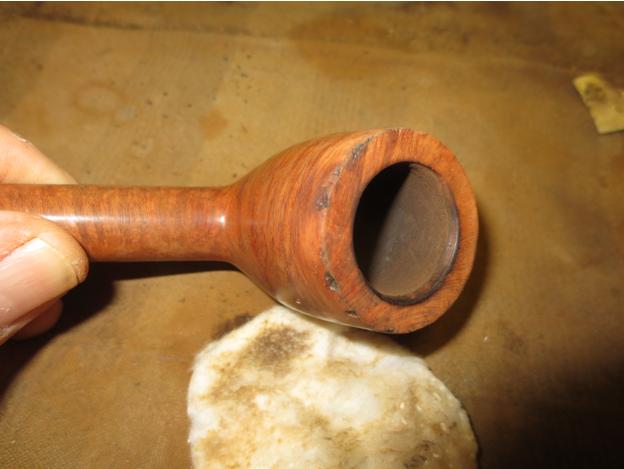
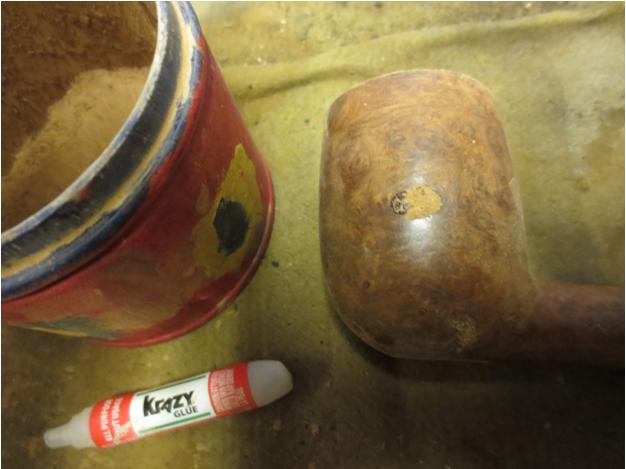
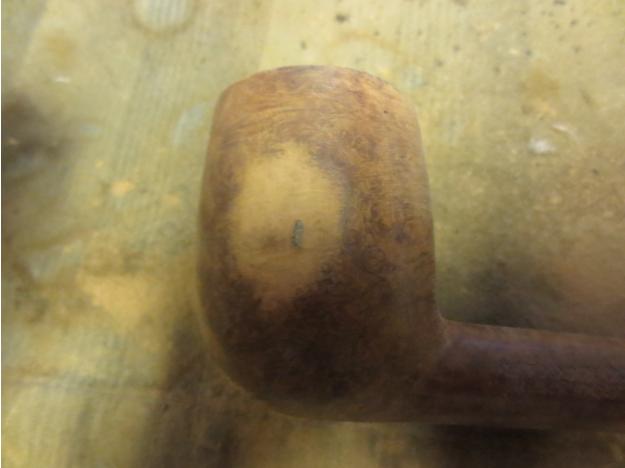
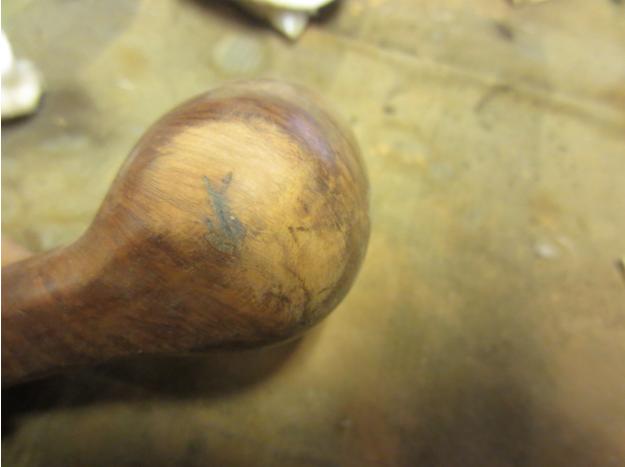
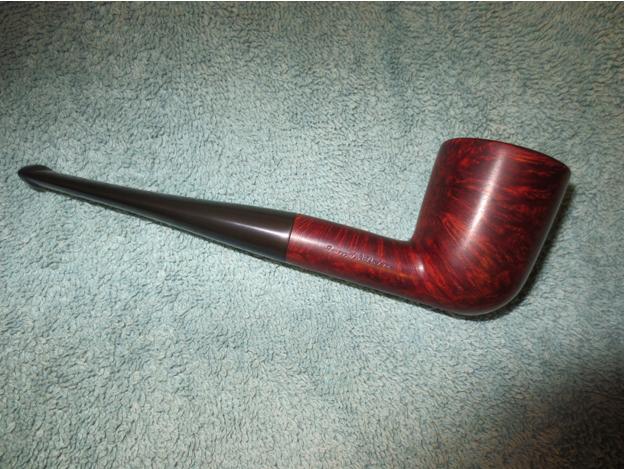
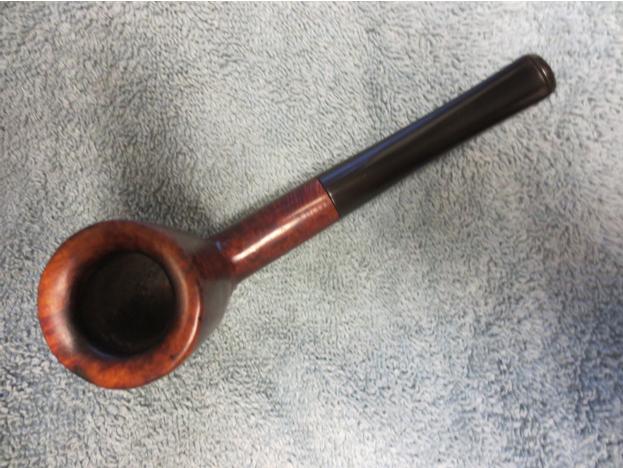
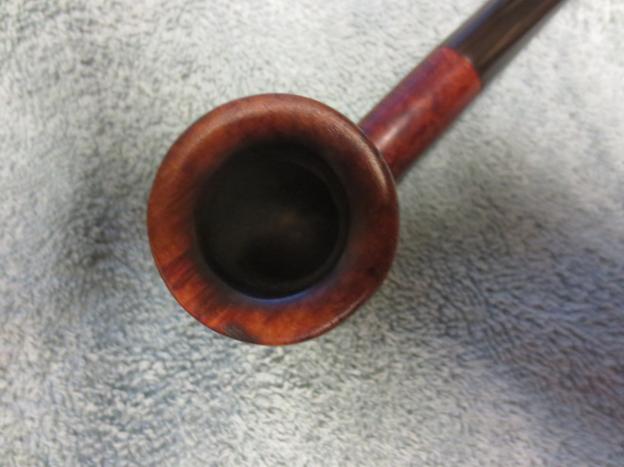
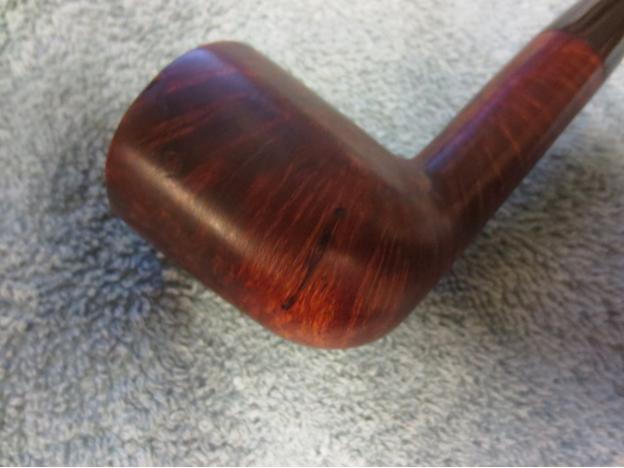
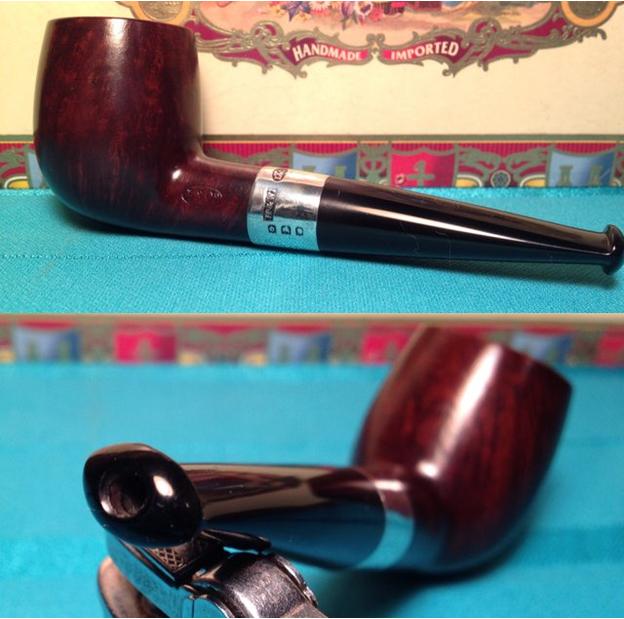
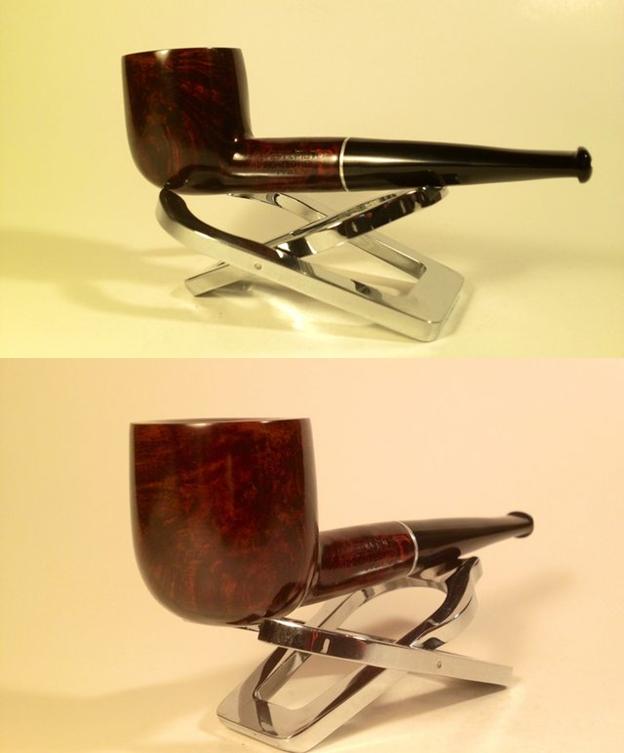
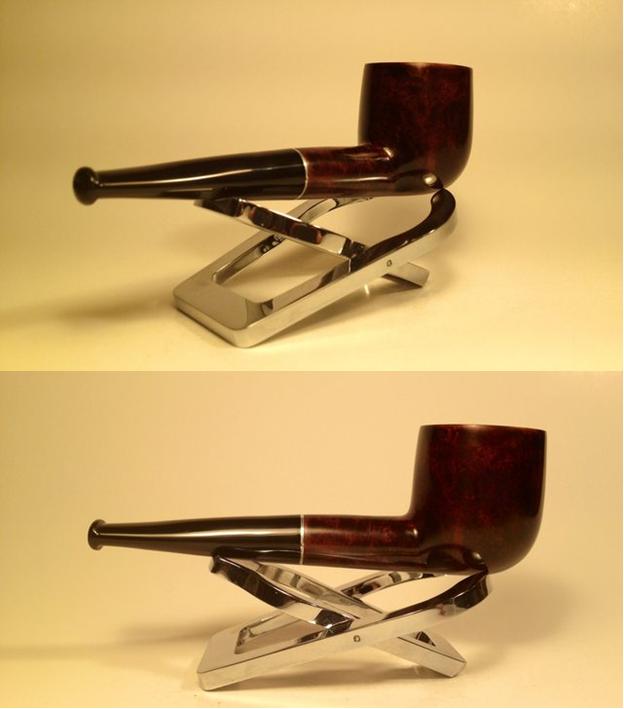
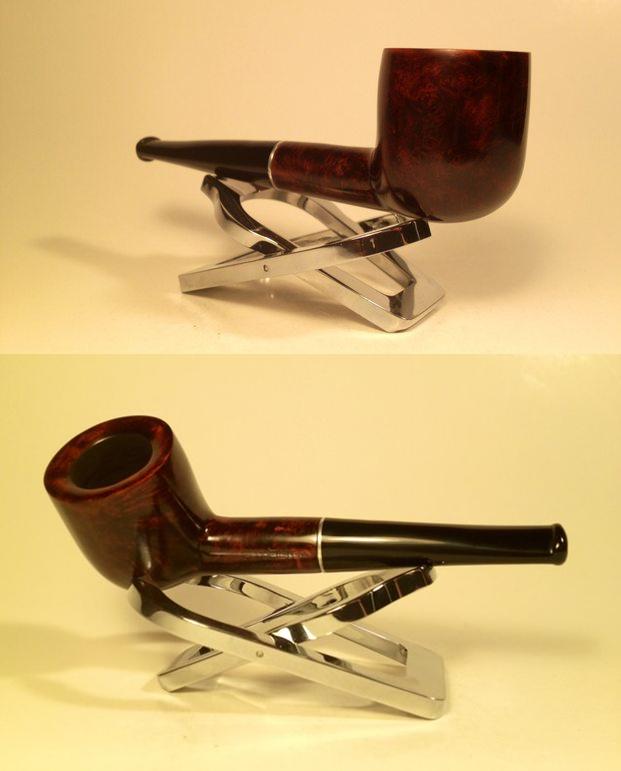
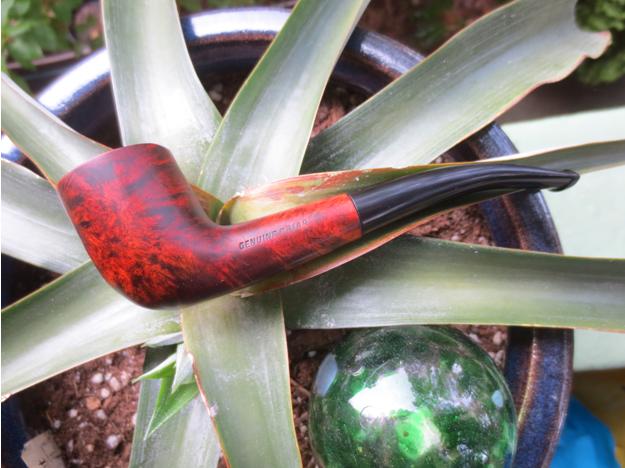
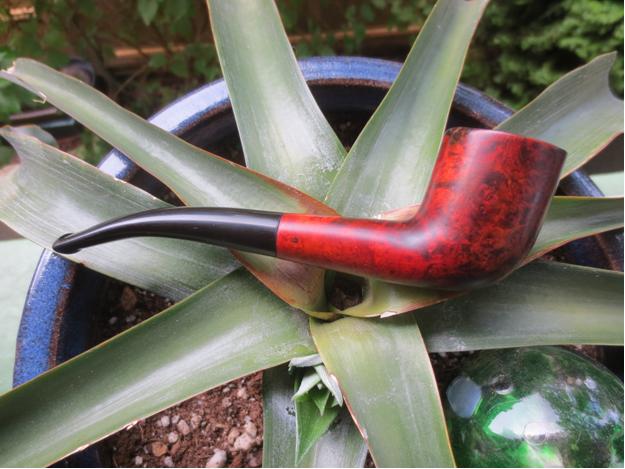
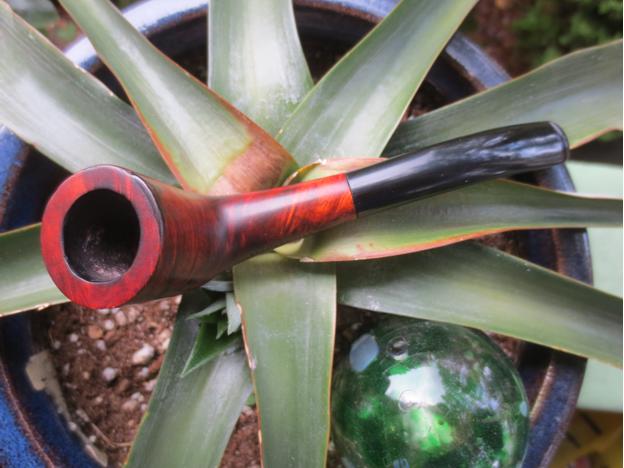
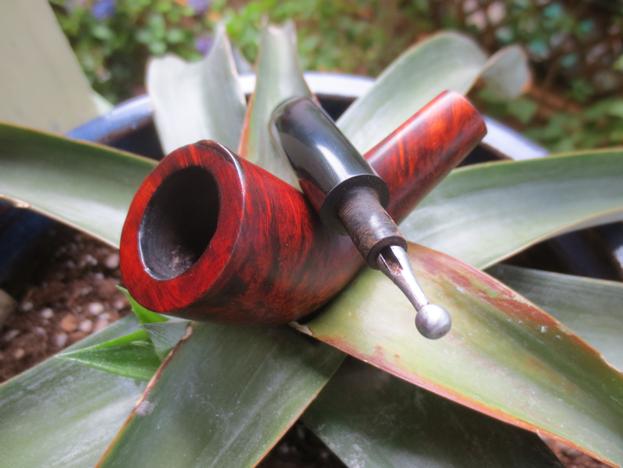
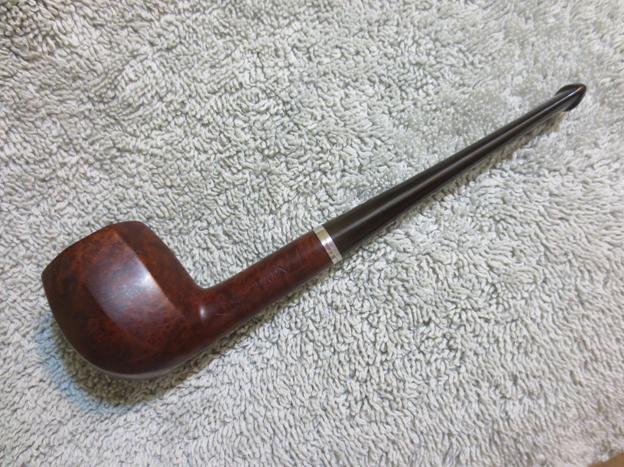
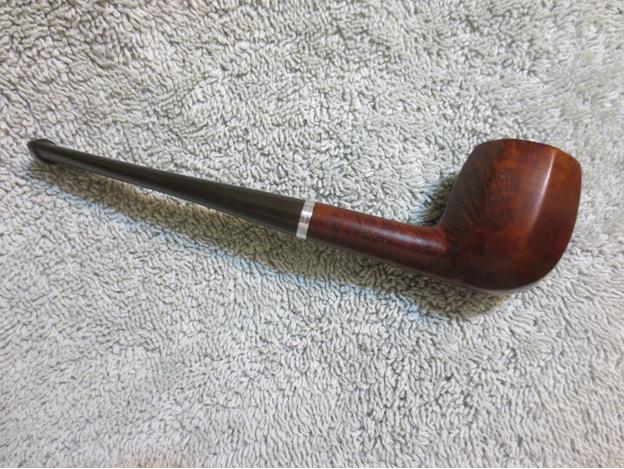
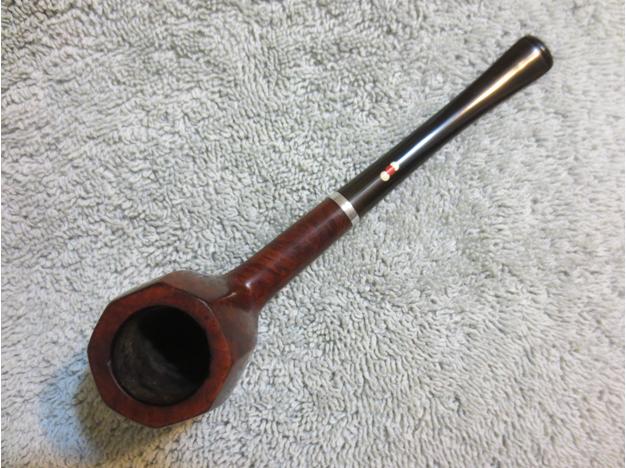
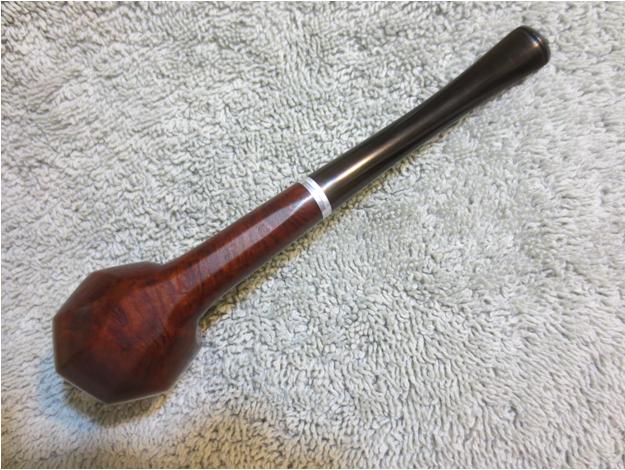
Tag Archives: Bowl – refinishing

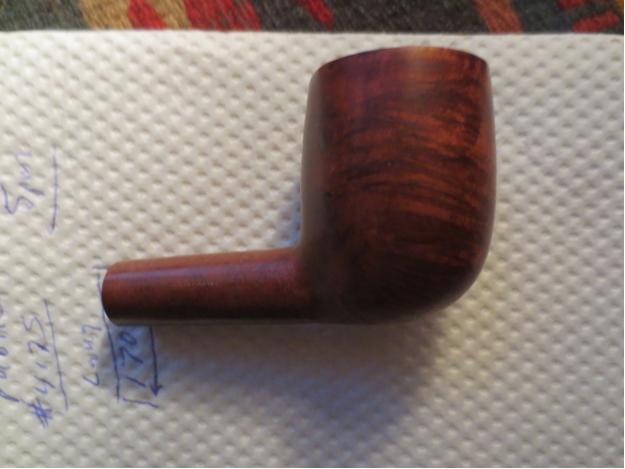
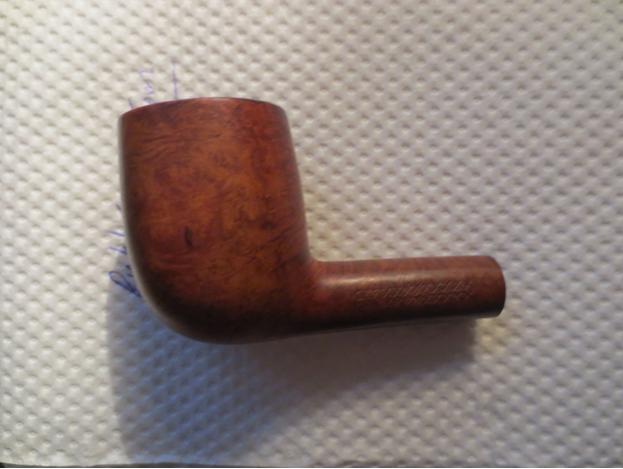
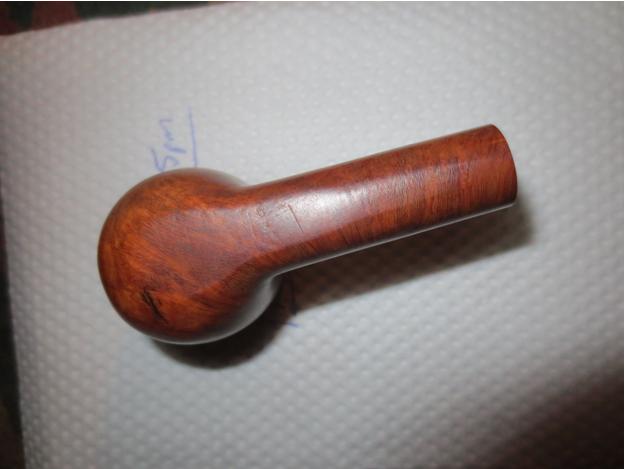
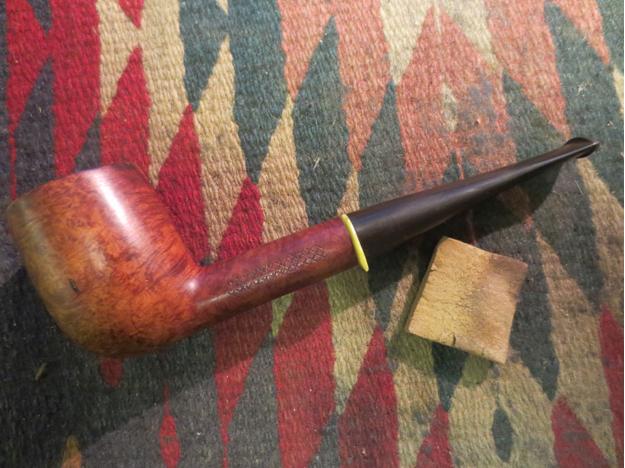
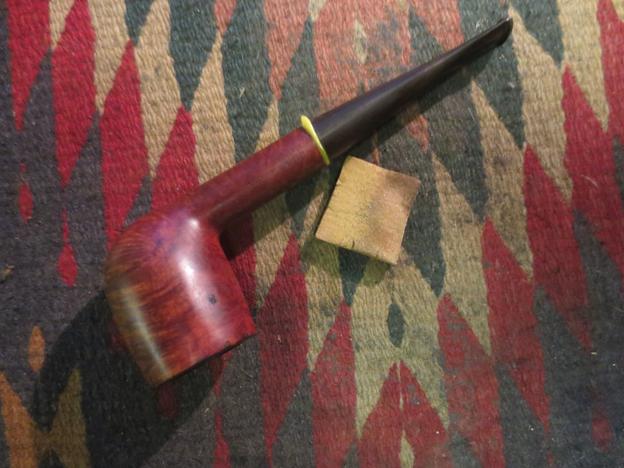
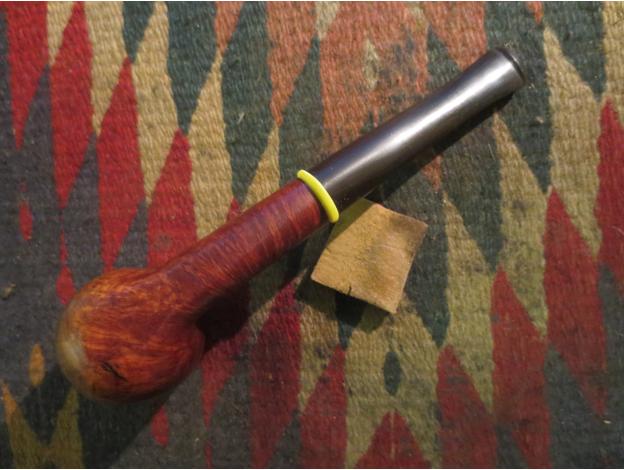
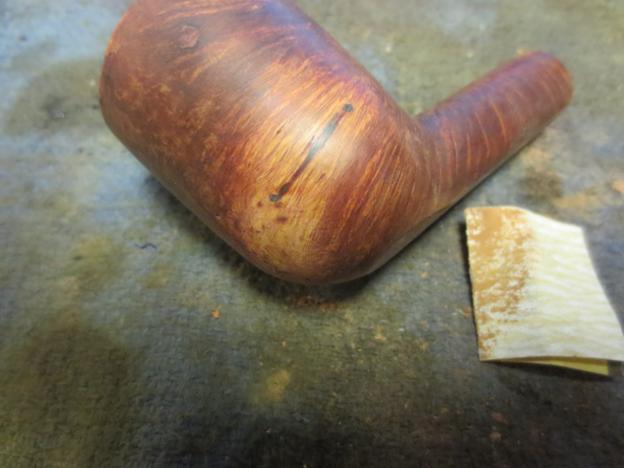
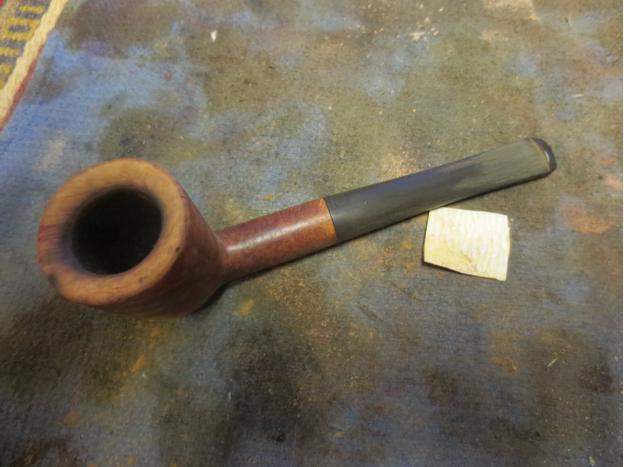
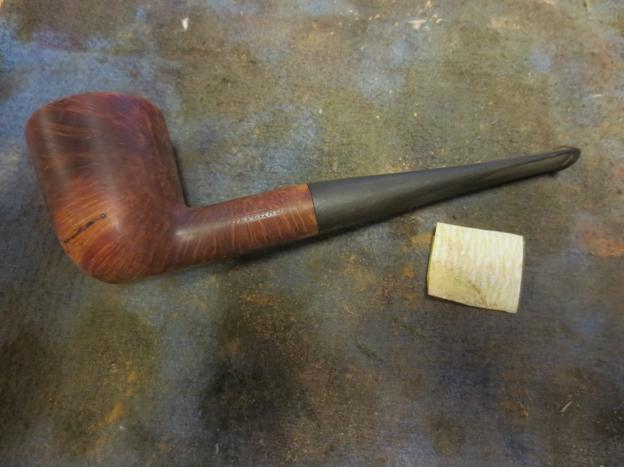
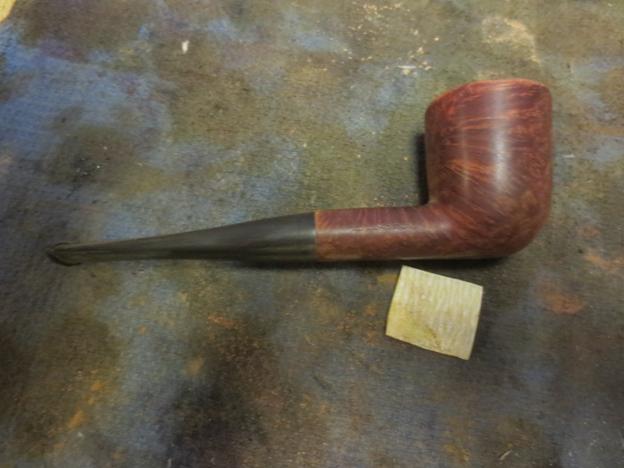
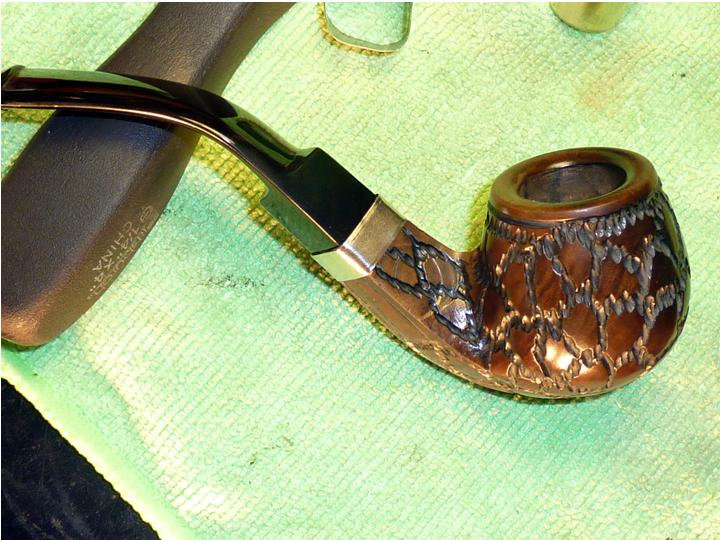
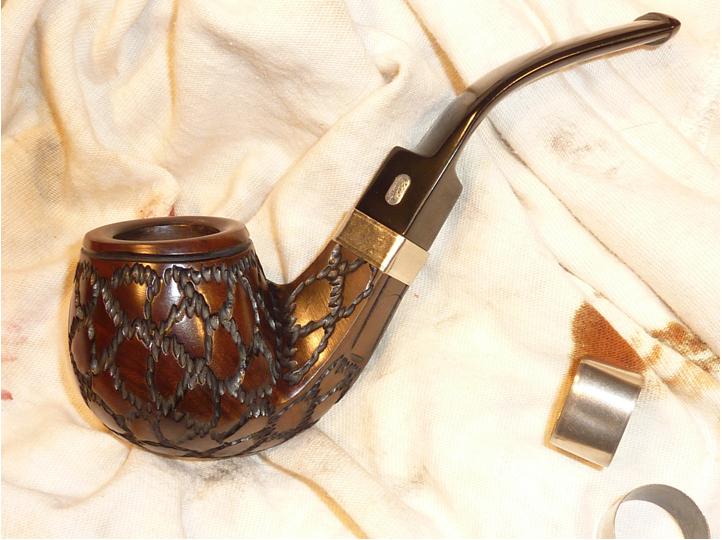
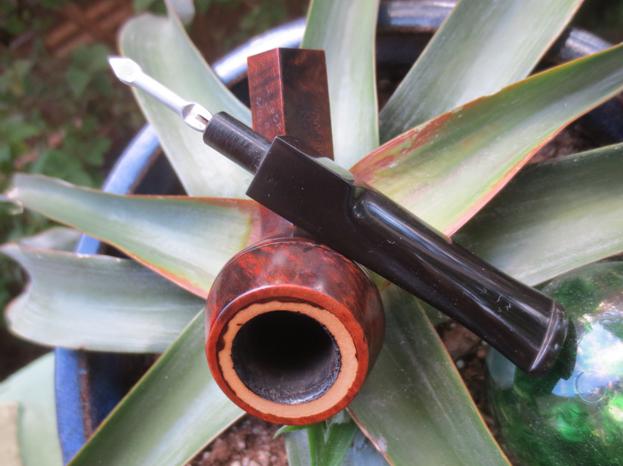
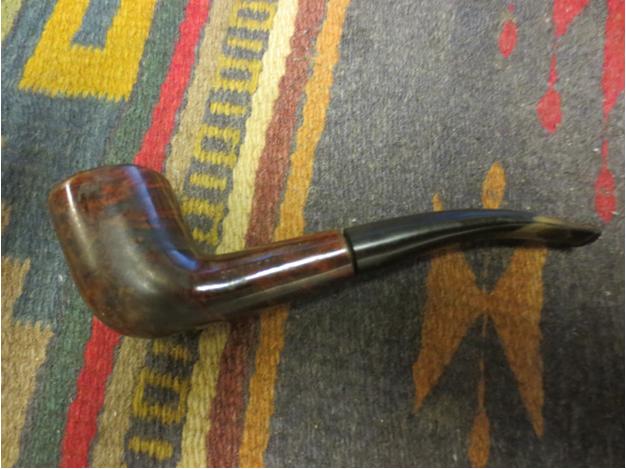
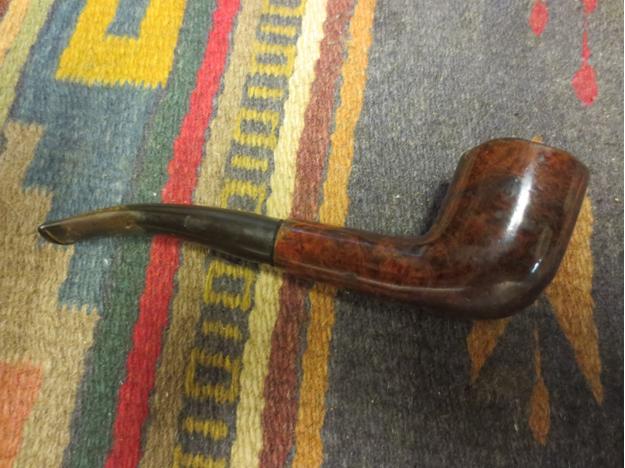
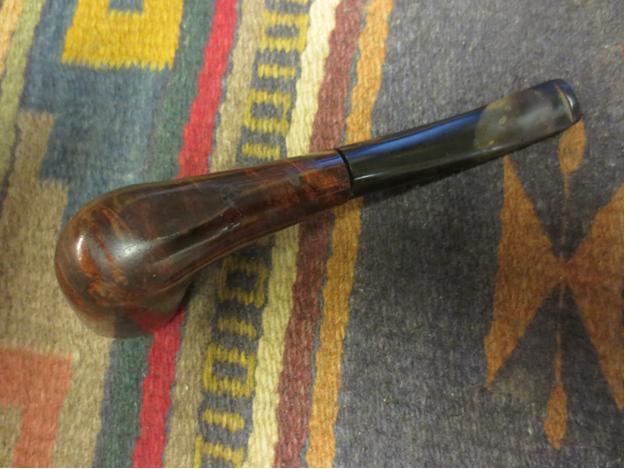
Rescuing a Kaywoodie Flame Grain Meerschaum Lined Doggie


Blog by Andrew Selking

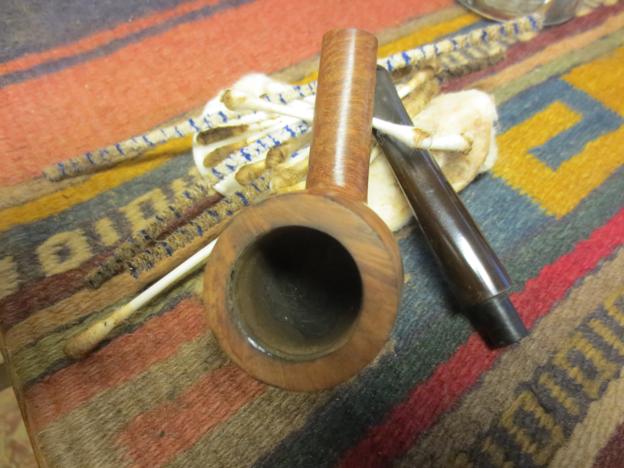
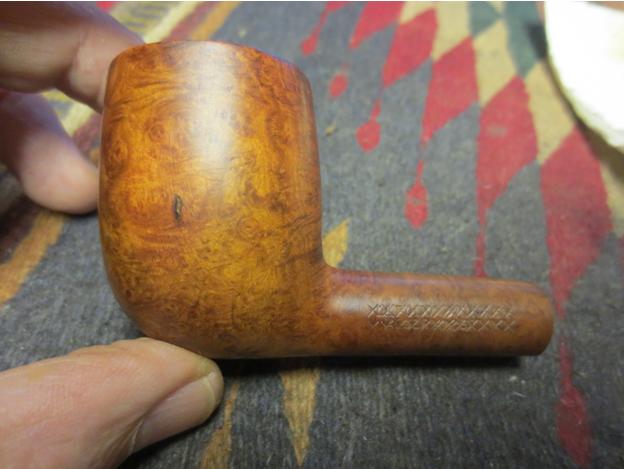
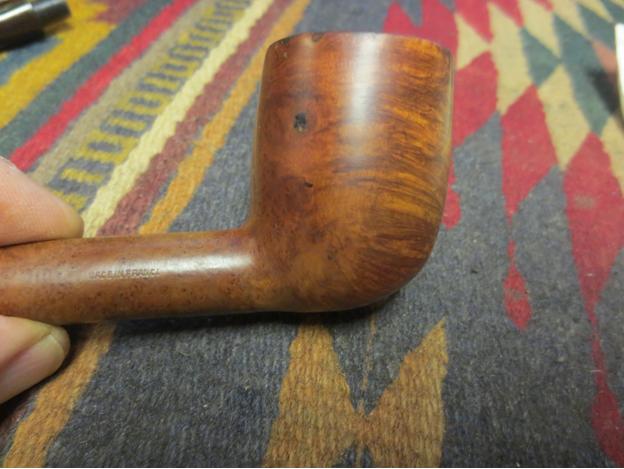
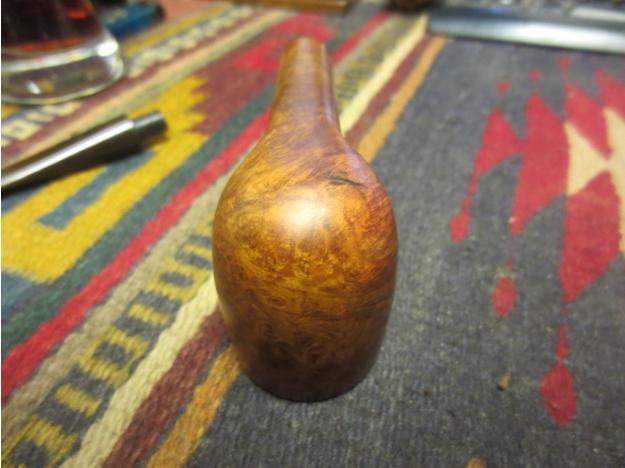
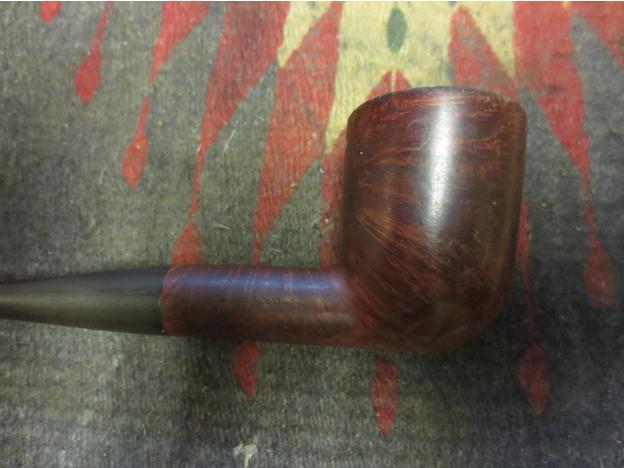
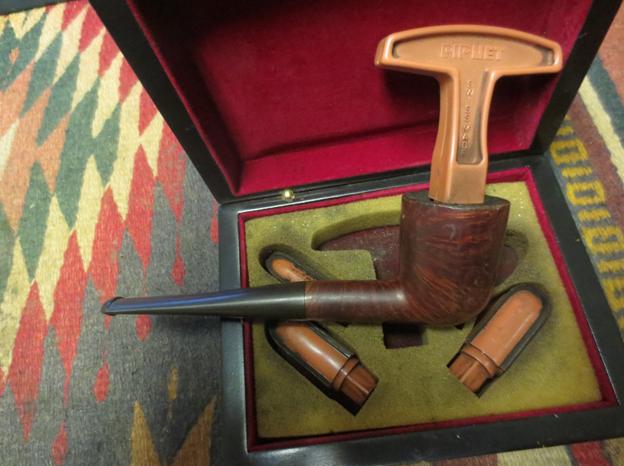
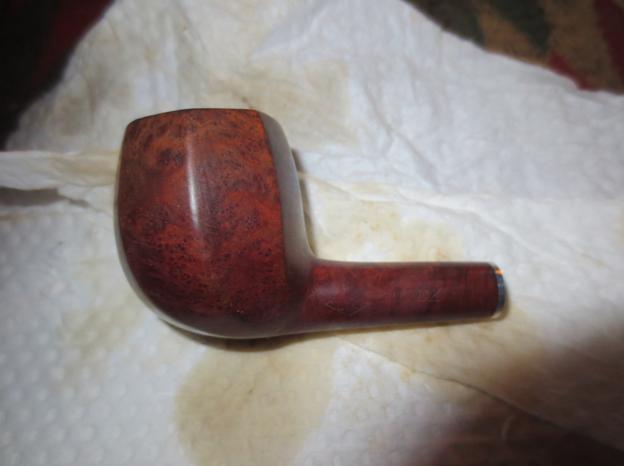
To paraphrase Samuel Clemmons, reports that I’m no longer messing with pipes are greatly exaggerated. Between a cross country move, a new house, renovations to said house, and trying to figure out what I want to be when I grow up, I have not spent as much time working on pipes as I would like. I did manage to squeeze in this nice Kaywoodie Flame Grain Meerschaum lined doggie.

According to a Kaywoodie brochure from the era, Flame Grain pipes were made from “200 to 400 year-old briar burls…the last of their kind to be found in the world.” The meerschaum inlaid Flame Grain is a “superb Flame Grain Kaywoodie with an inlaid inner bowl of imported Turkish meerschaum. This pipe combines the outstanding qualities of the two best materials in the world in which to smoke tobacco.” This pipe represents the pinnacle of American pipe making. As a point of reference, in 1947 this pipe would sell for $12.50 while Dunhill pipes started at $10.00.

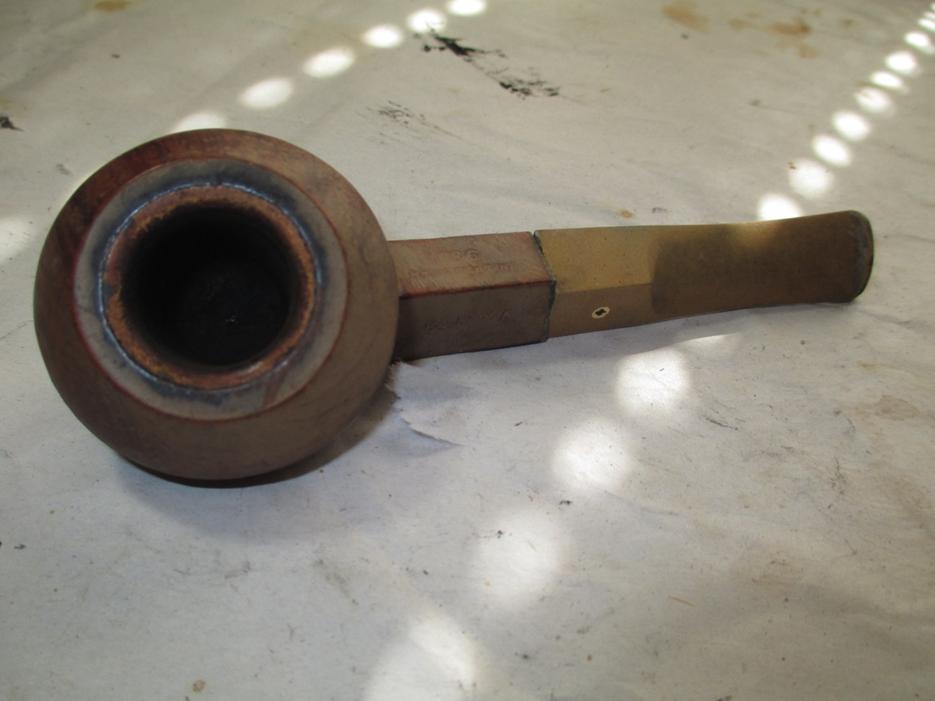
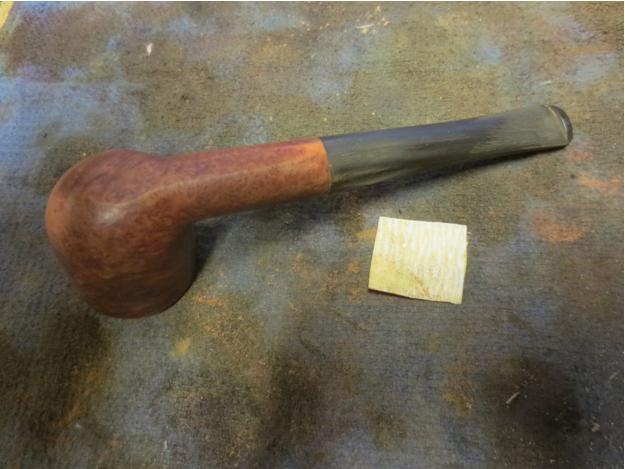
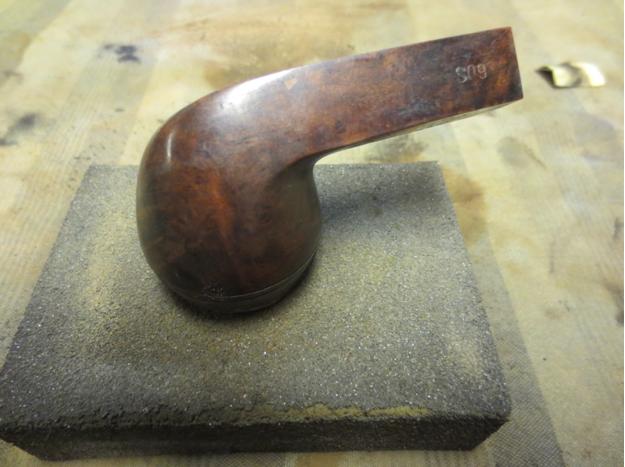
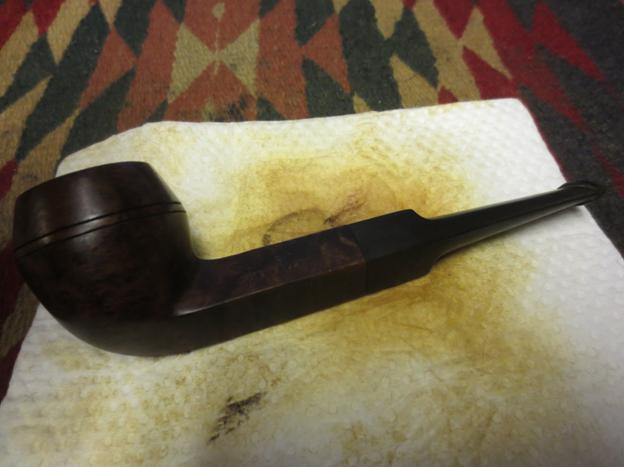
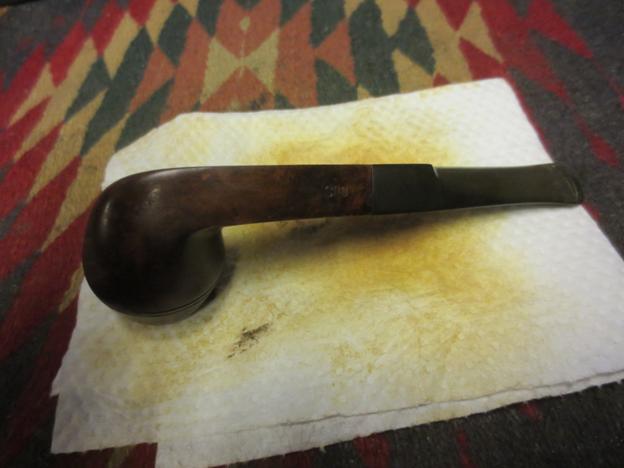
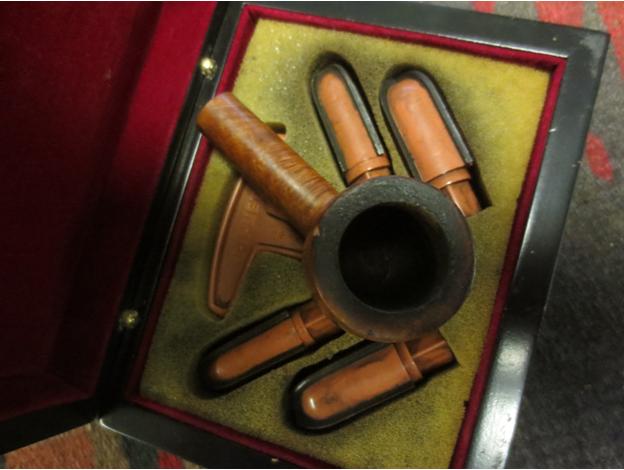
As you can see, it took some imagination to see a pipe that might compete with a Dunhill.KW1

KW2

KW3

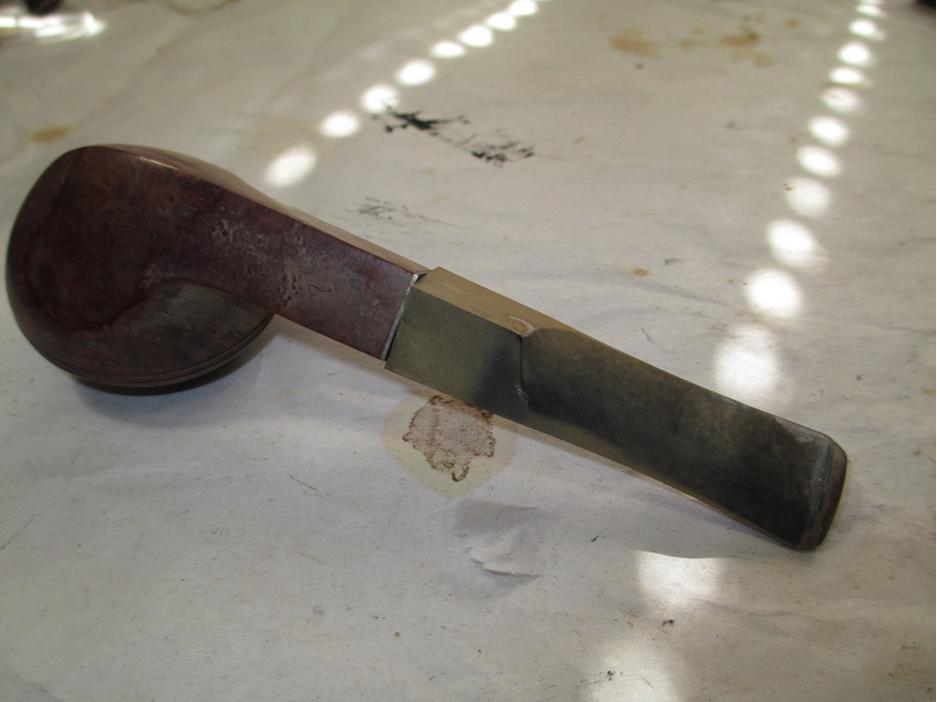
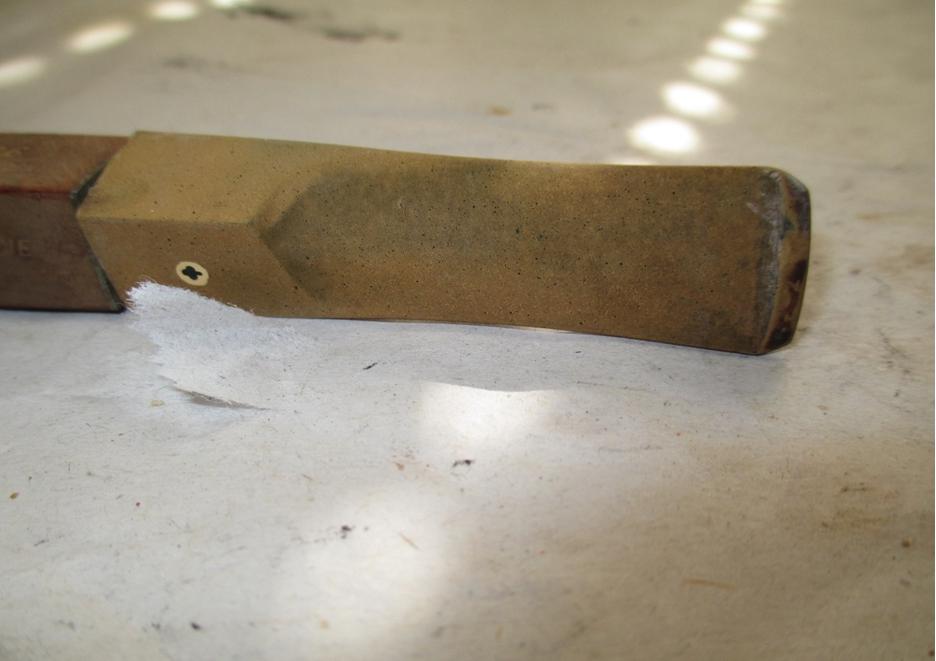
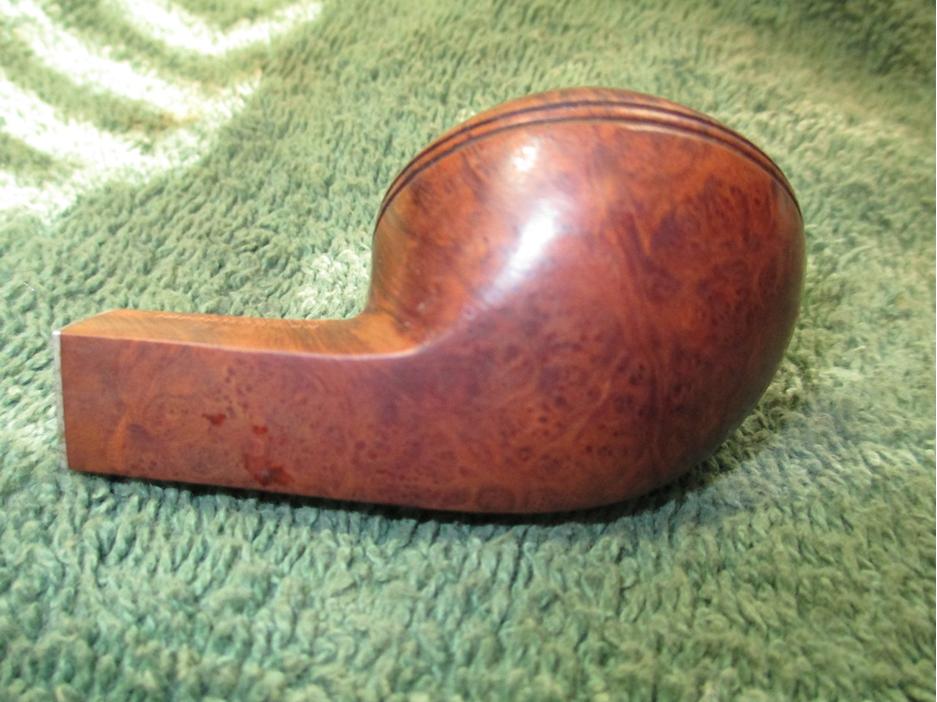
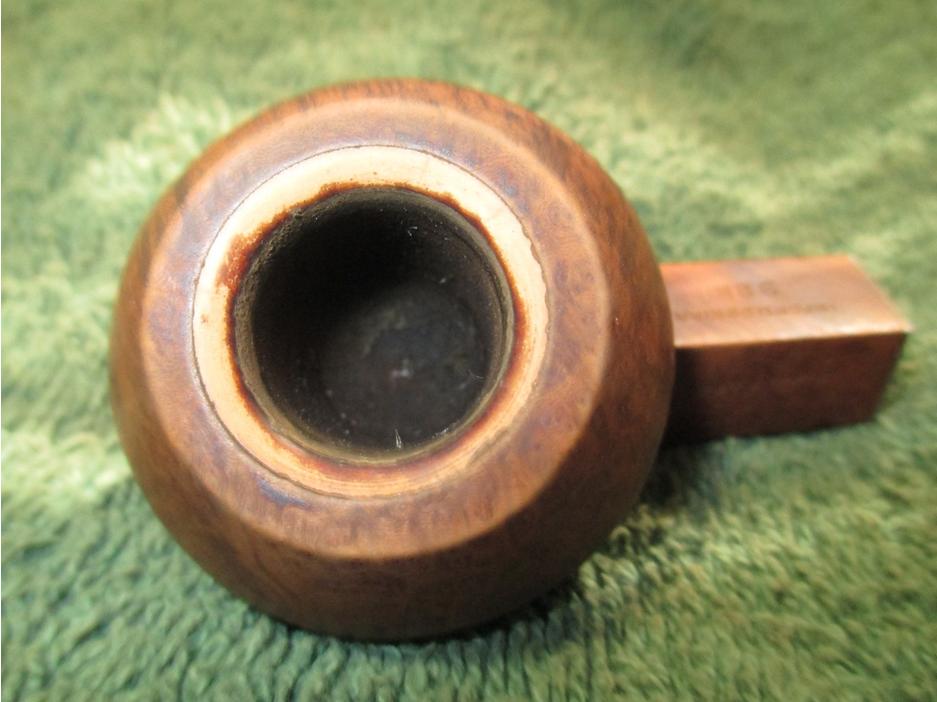
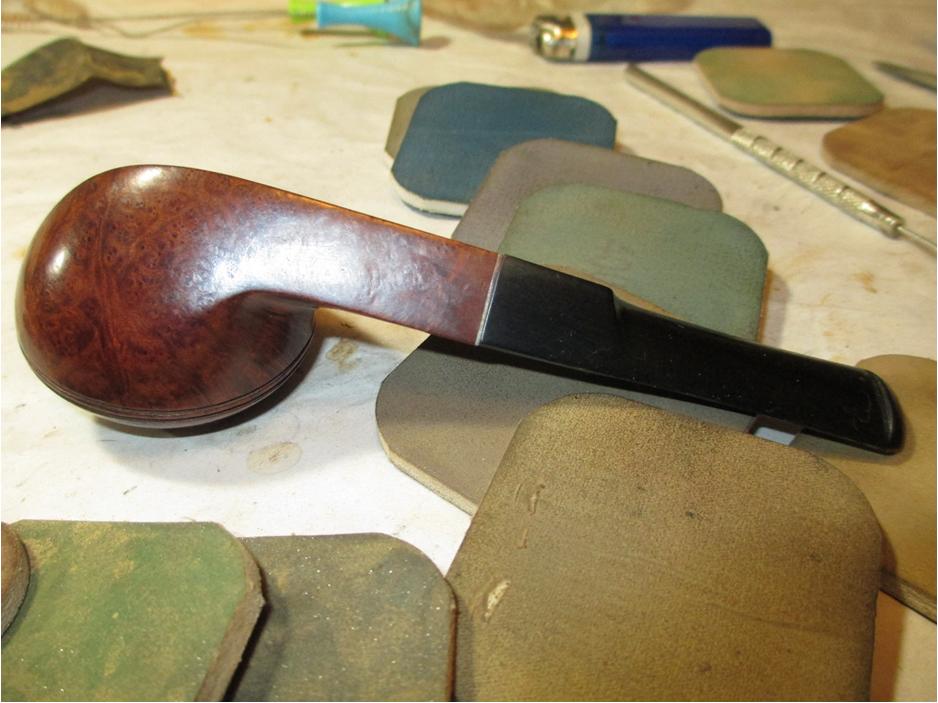
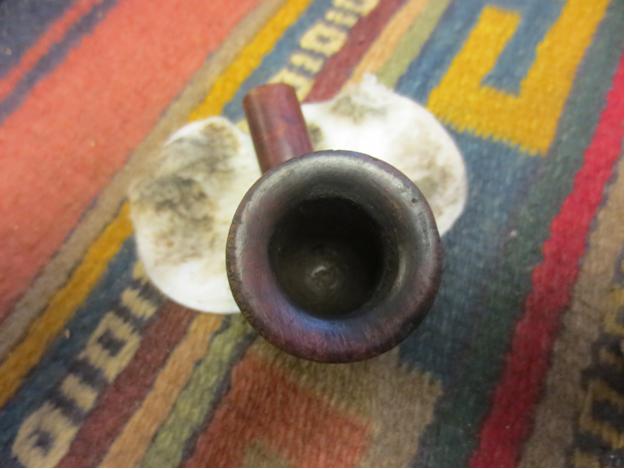
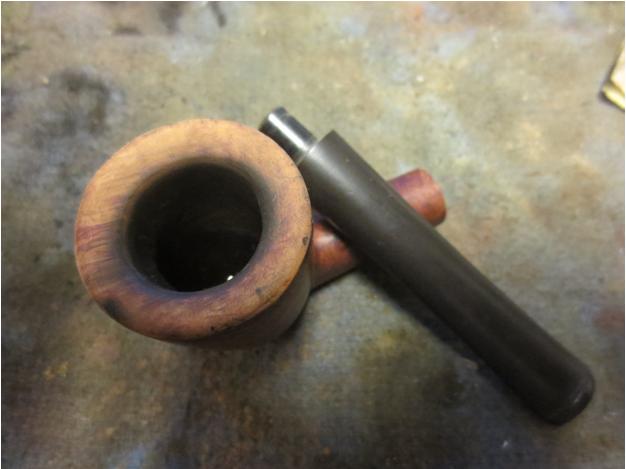
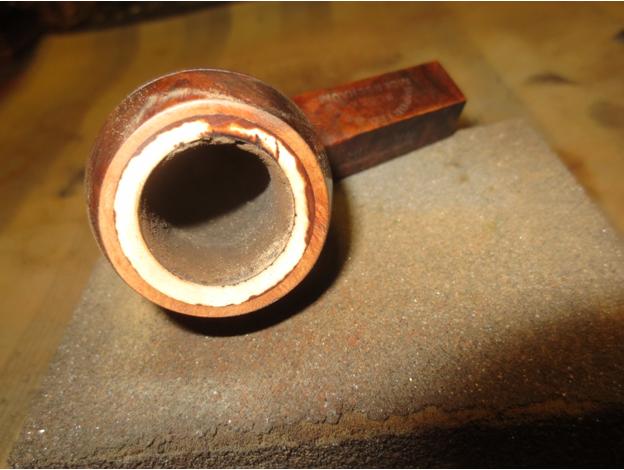
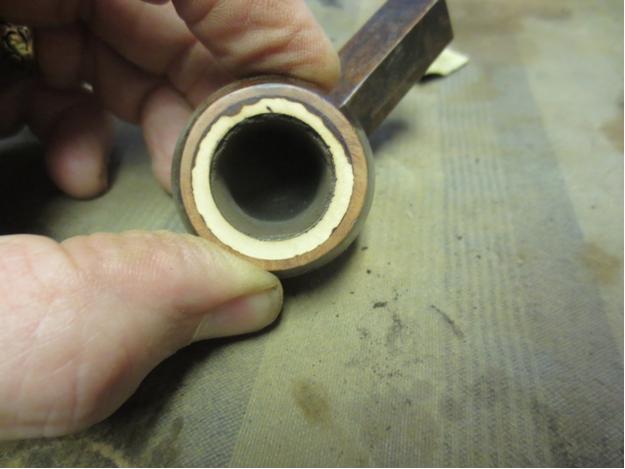
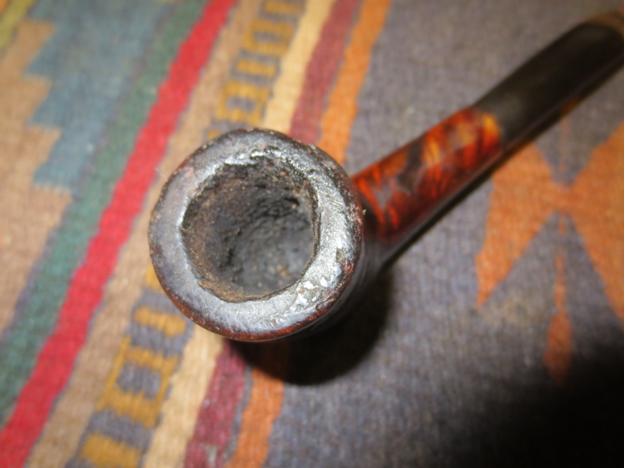
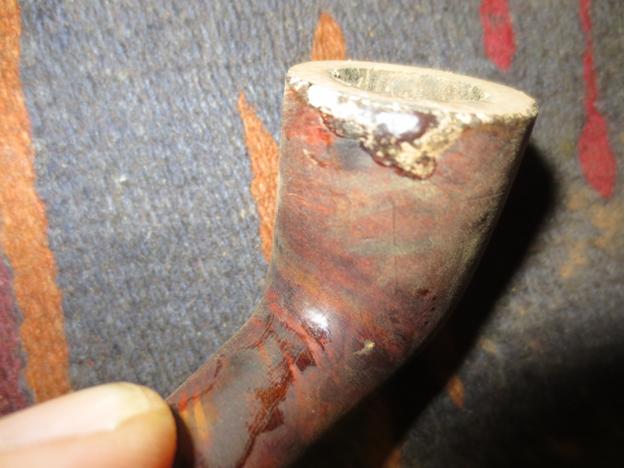
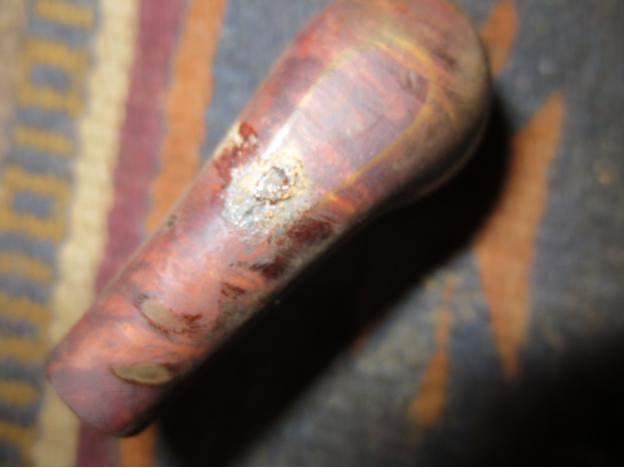
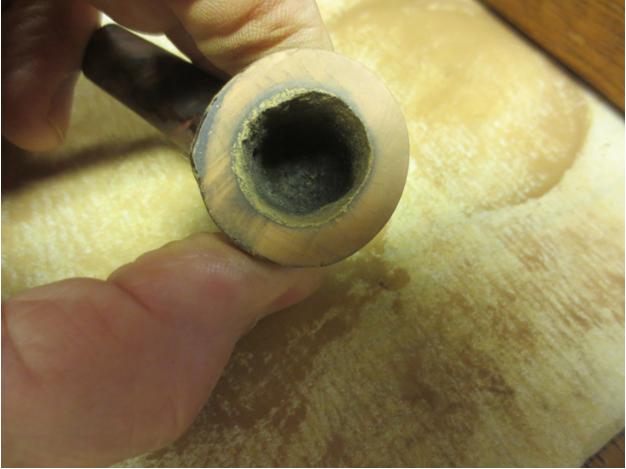
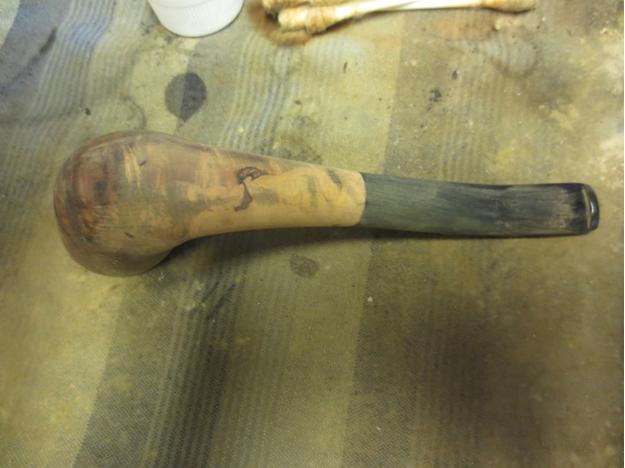
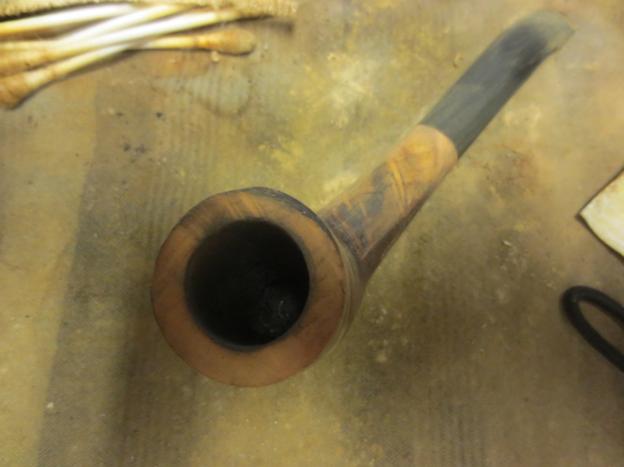
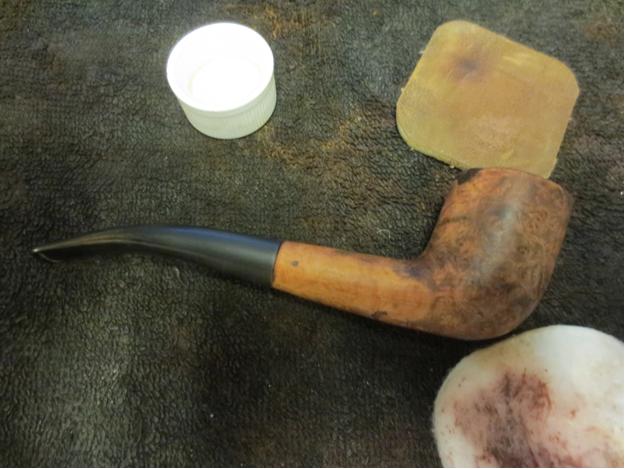
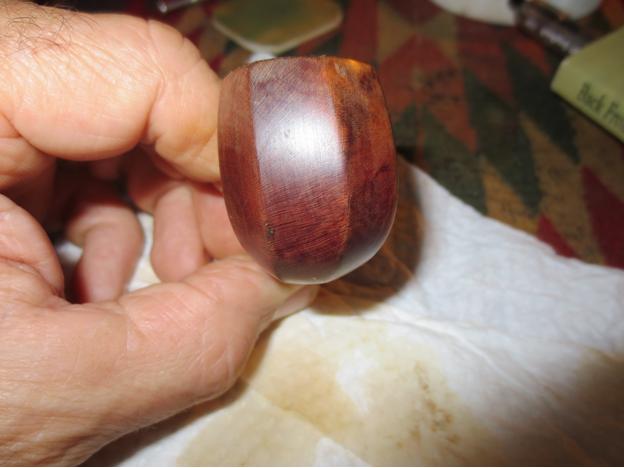
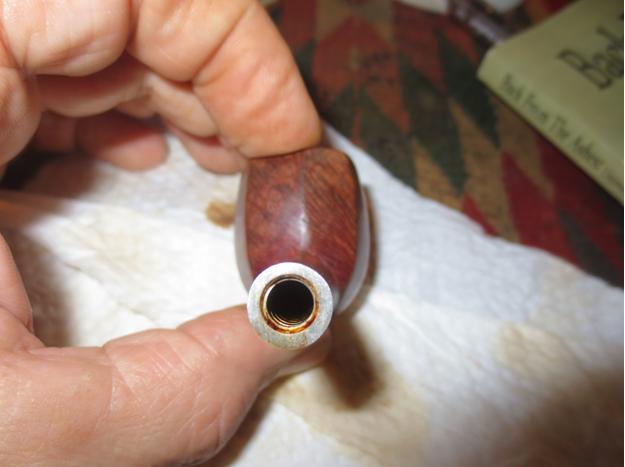
KW4 The stem was under-clocked and heavily oxidized. The bowl had very thick cake and a buildup of tar on the rim. There was some kind of protective finish on the bowl that left a film after the alcohol bath. Additionally, the stinger was cut. On the plus side, I could see some really nice grain and the stem was virtually unmolested.

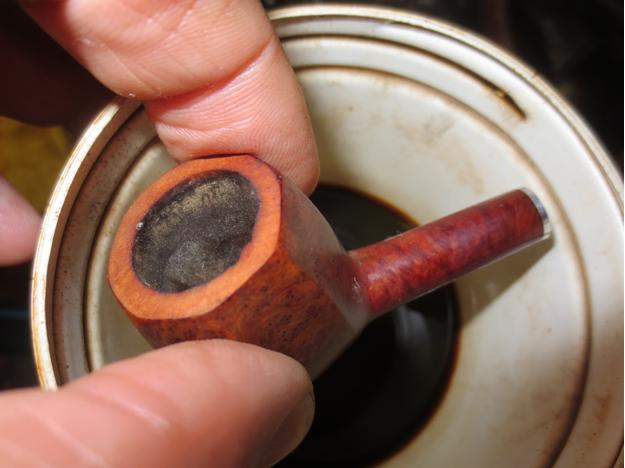
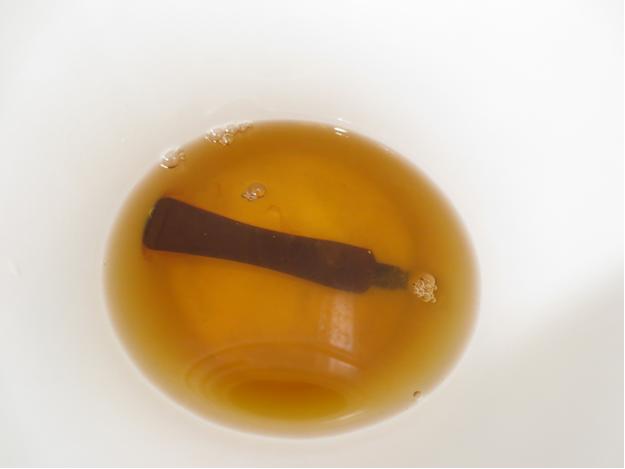
The first thing I did was soak the bowl in alcohol. I was hesitant to do that, because I was afraid the alcohol would cause the meer lining to deteriorate. At the same time I was also worried that if I didn’t soften the cake first, just using the reamer might damage the lining as well. I compromised and soaked it for about two hours and the cake came out nicely.

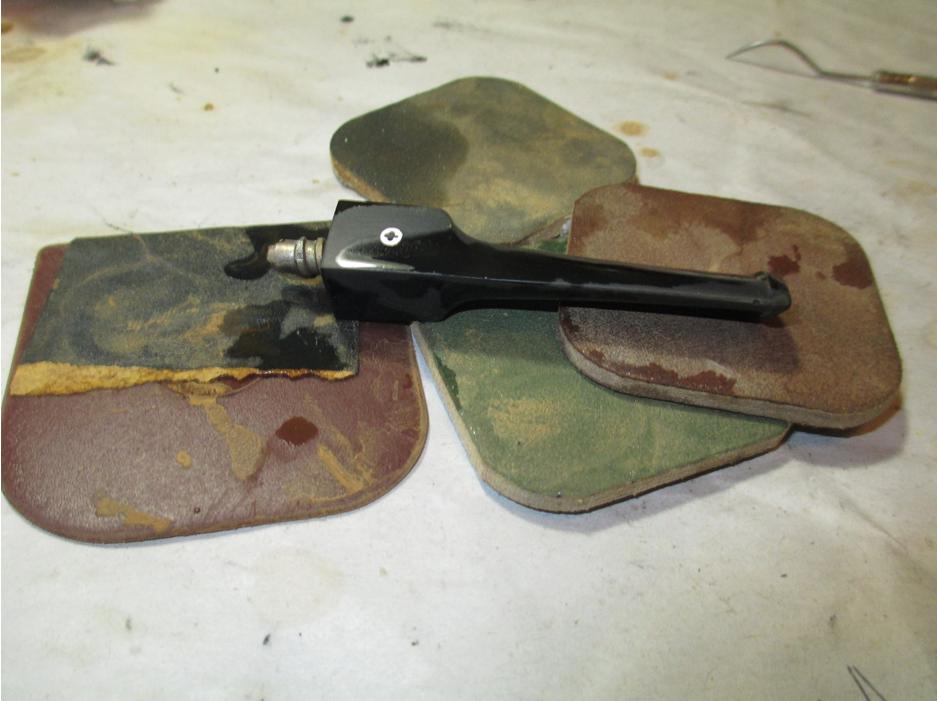
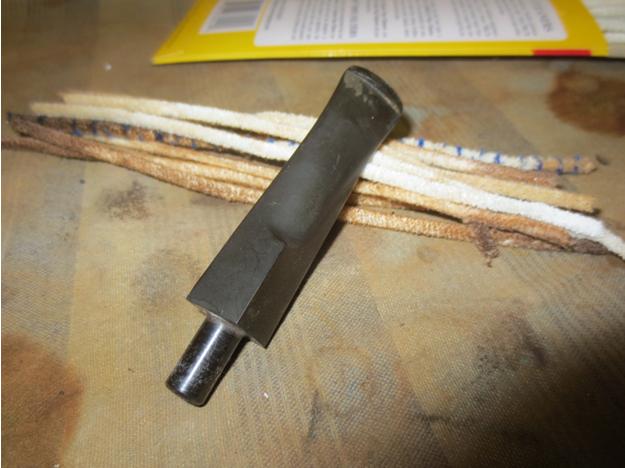
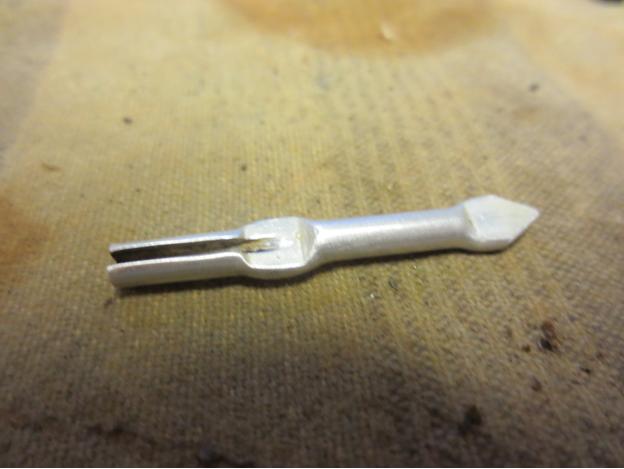
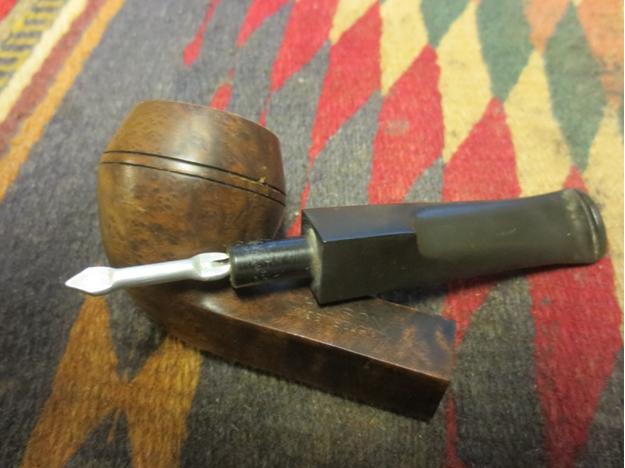
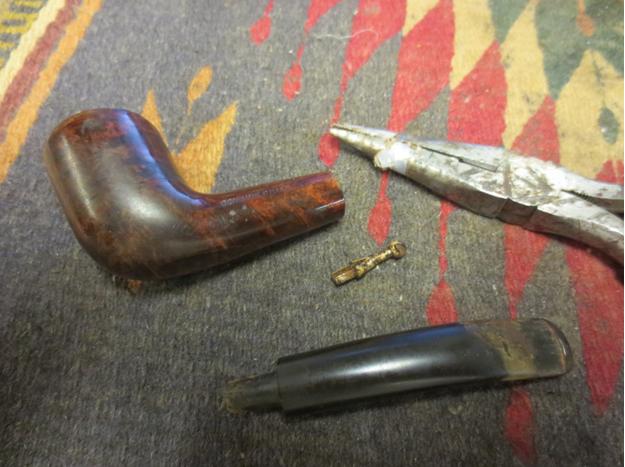
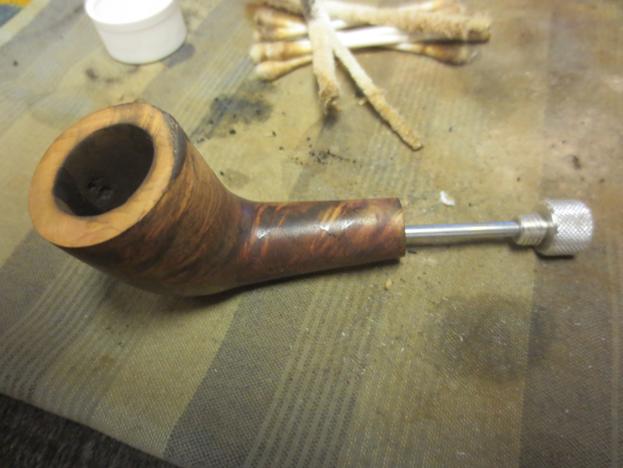
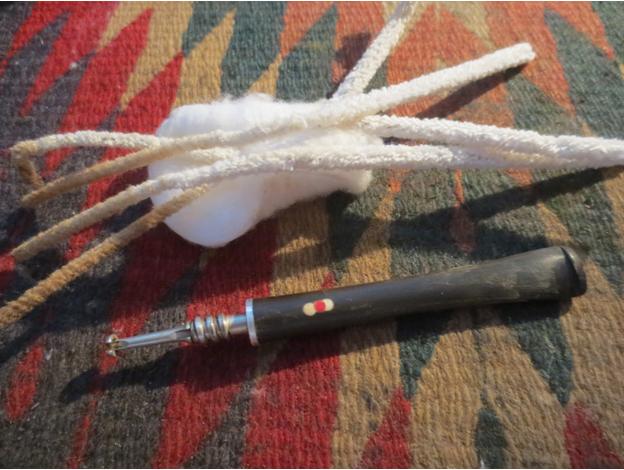
While the bowl was soaking, I used Oxyclean and warm water to soak the stem. Since it was missing the end of the stinger, it was easy to get the worst of the gunk out with a pipe cleaner. As I mentioned, the stem was under-clocked. To fix this problem I usually heat the stinger with my heat gun until I can easily rotate back into place. As the tip of the stinger heats up it transfers heat into the stem and loosens the glue. The whole heat transfer thing wasn’t working very well with this pipe, so I stuck a small nail in the stinger.KW5 That worked like a charm.

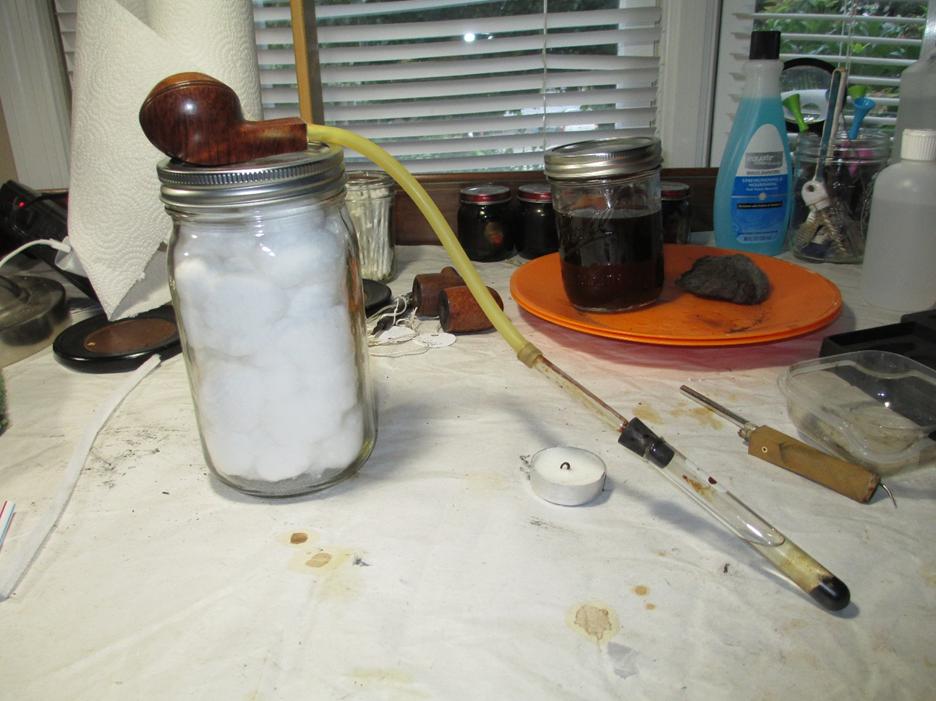
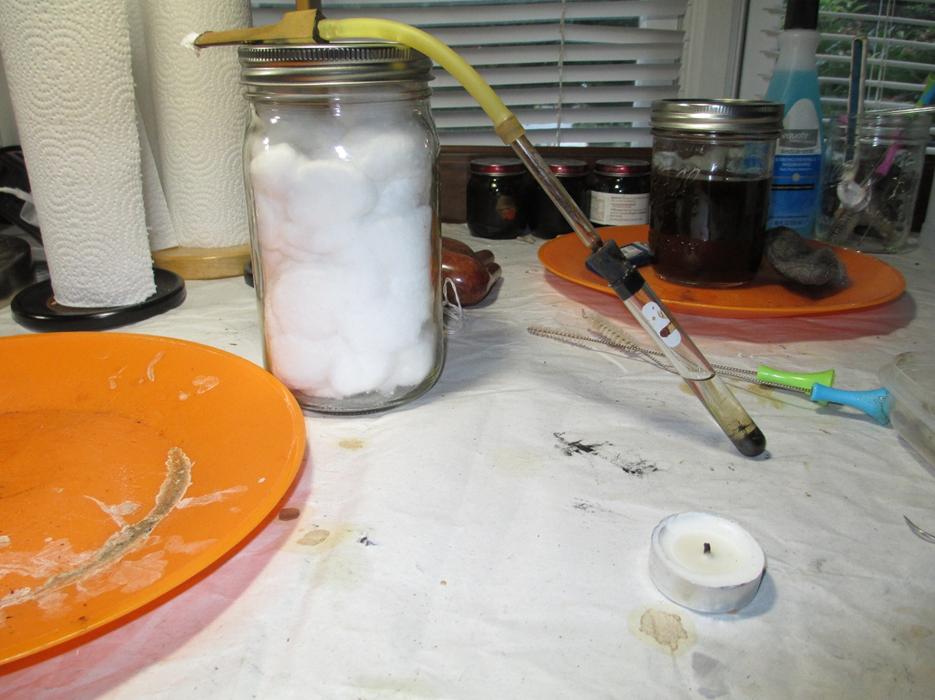
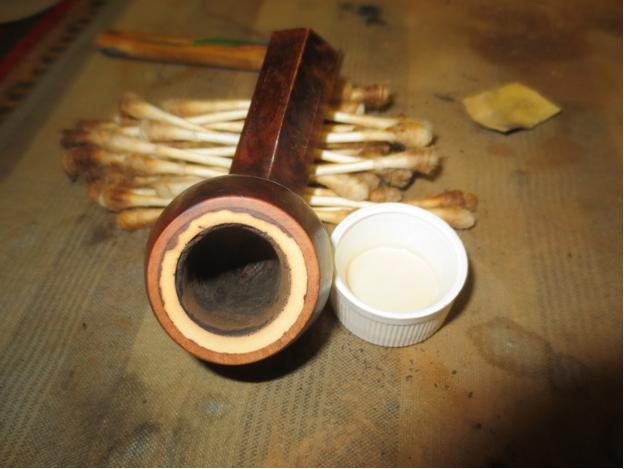
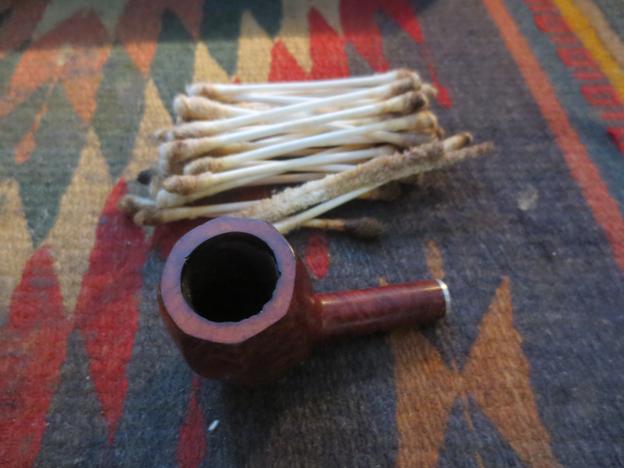
Next I did a retort on the bowl and stem.KW6

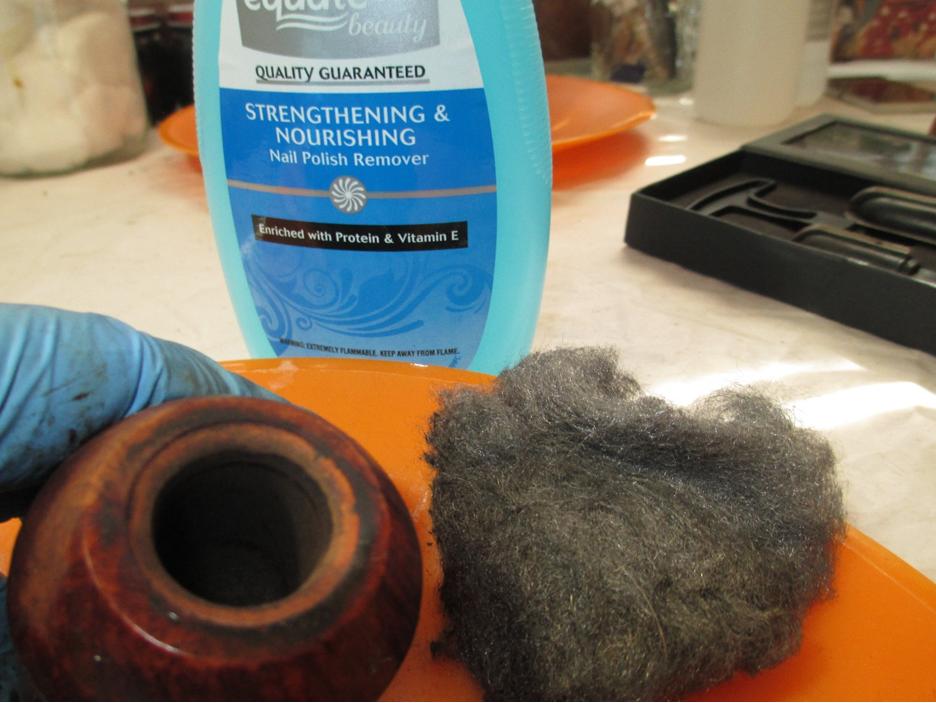
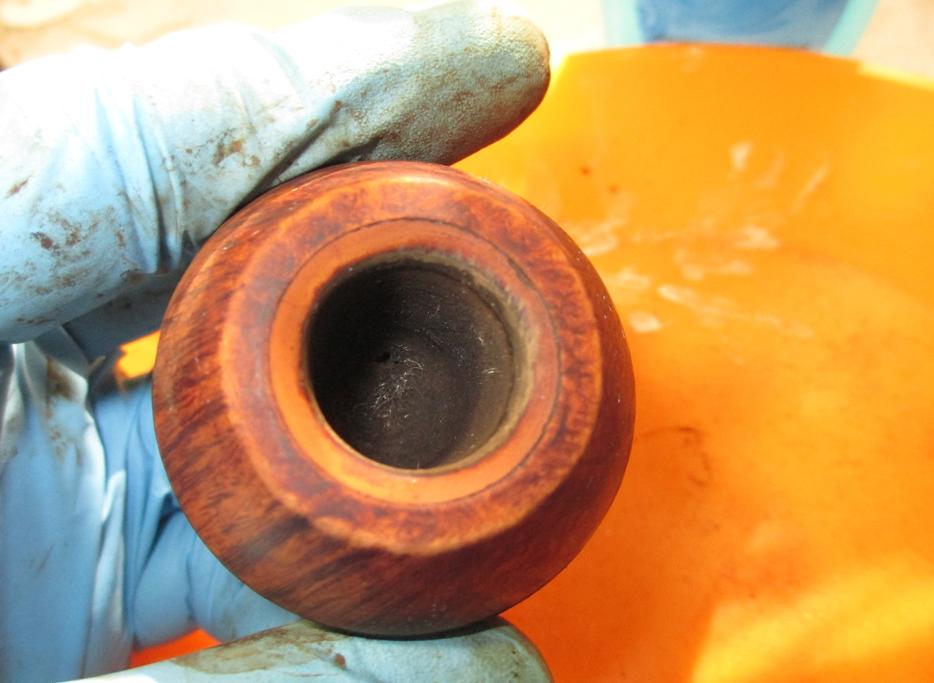
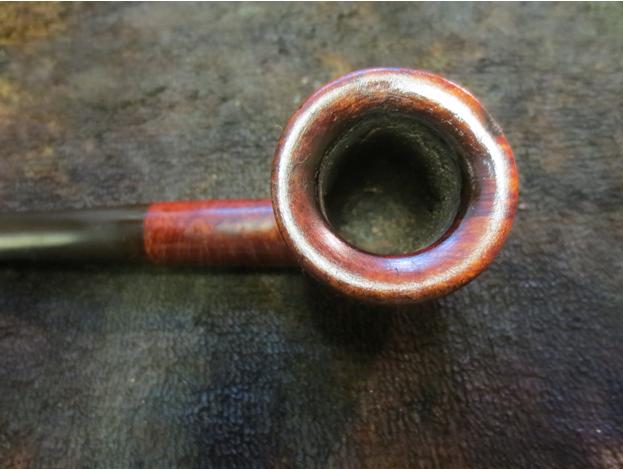
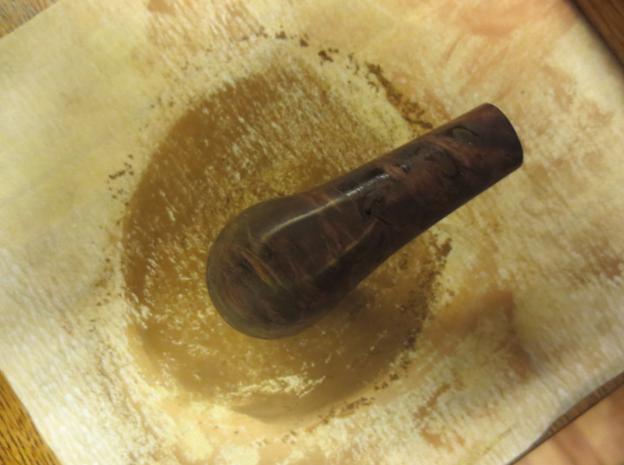
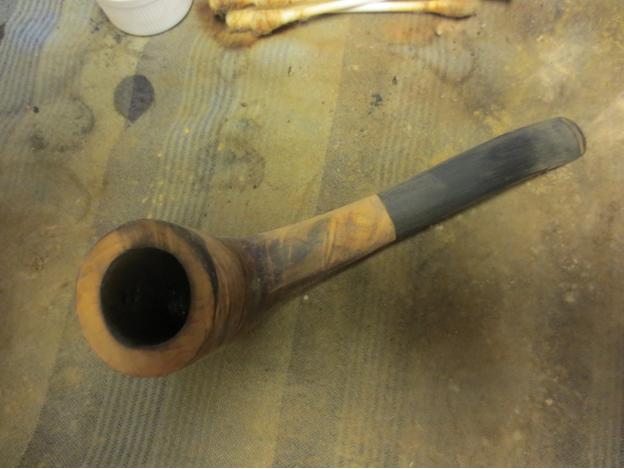
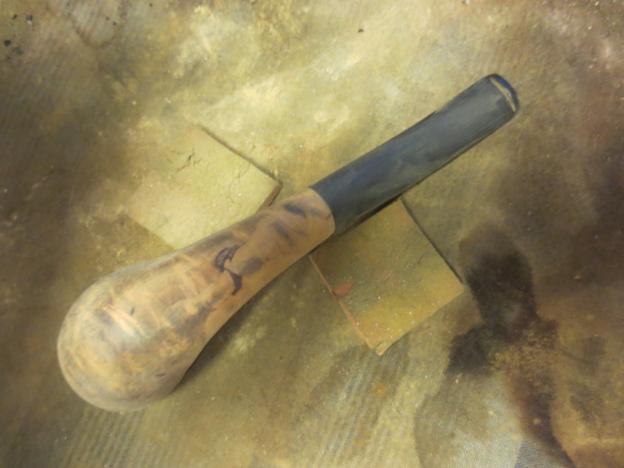
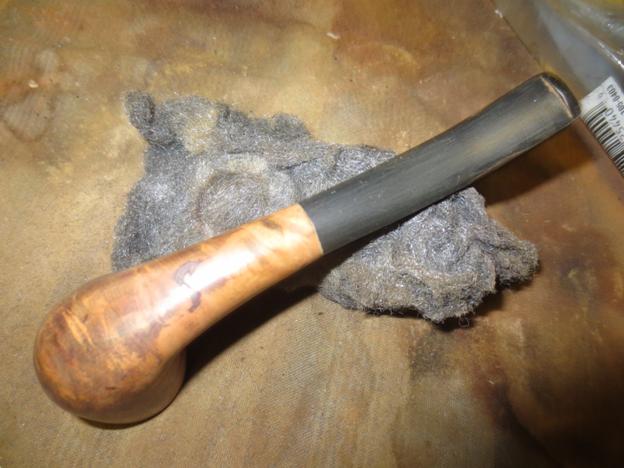
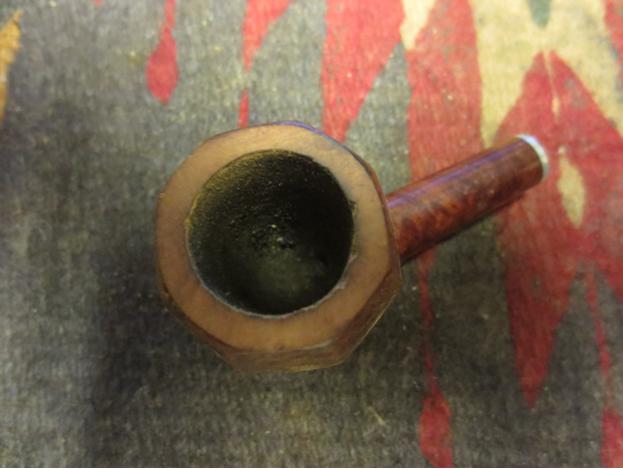
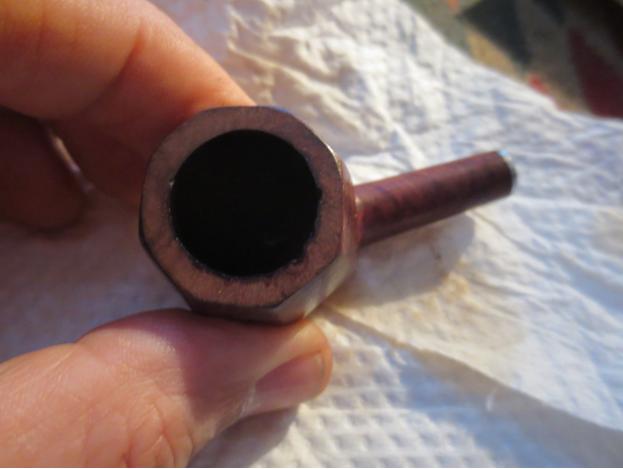
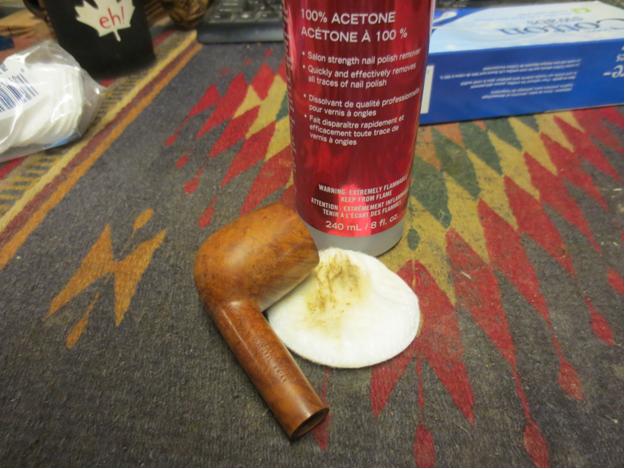
KW7 After scrubbing the insides with brushes, q-tips, and pipe cleaners, it was time to tackle the exterior issues. I used 0000 steel wool with acetone to remove the tar build up on the rim.KW8

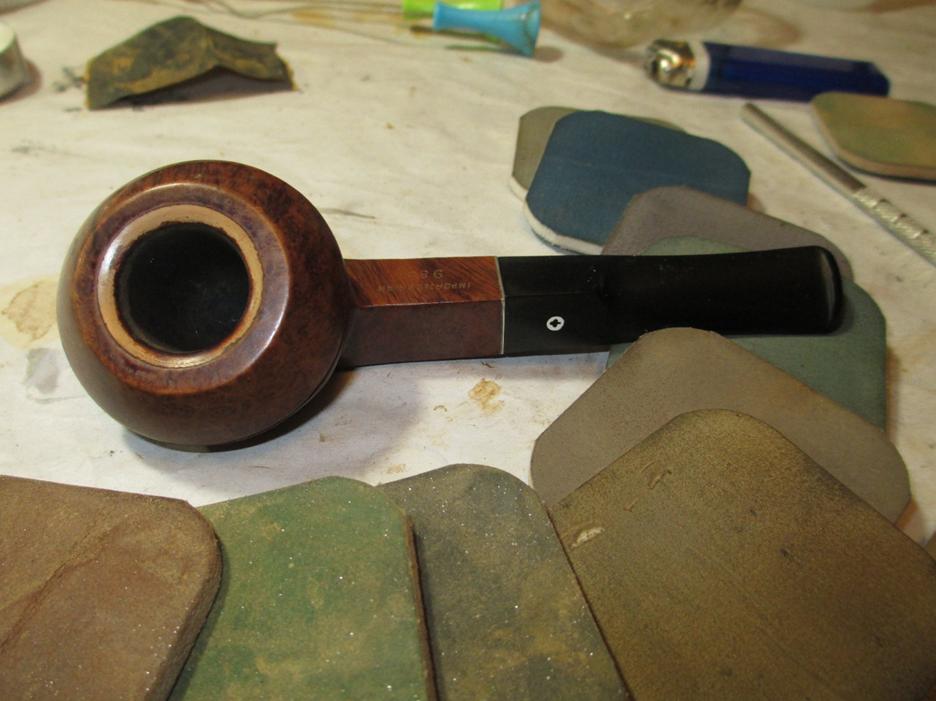
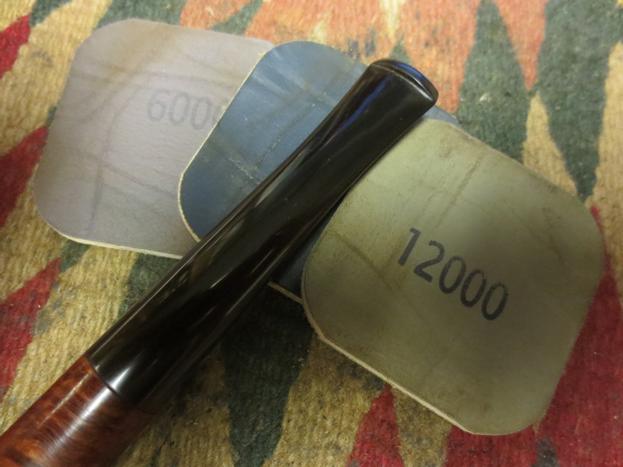
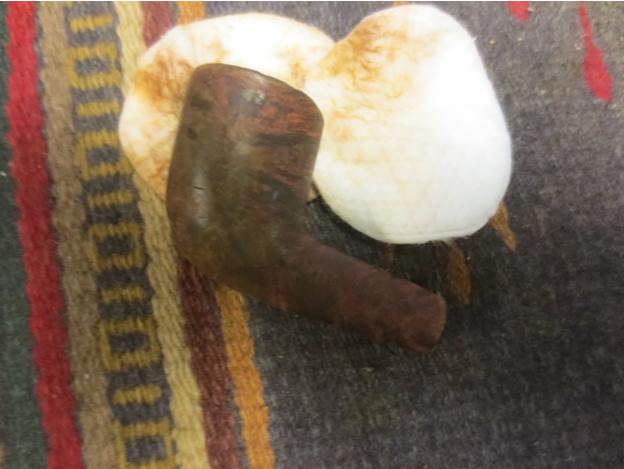
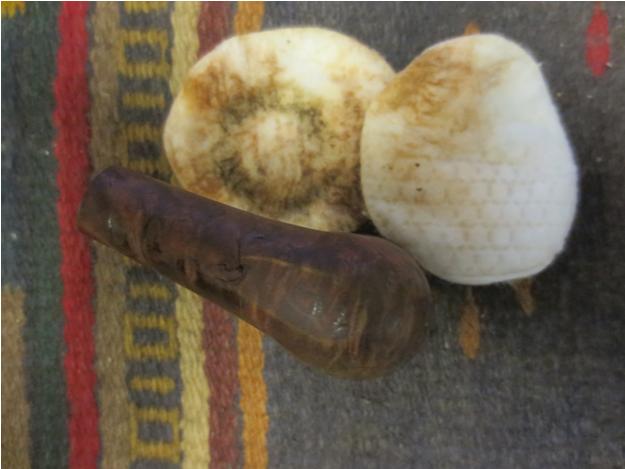
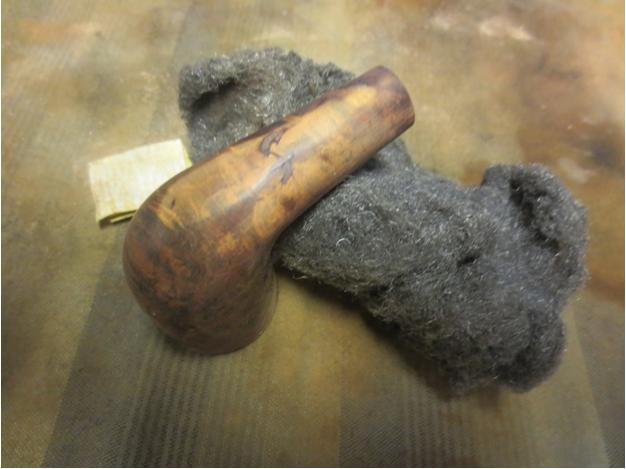
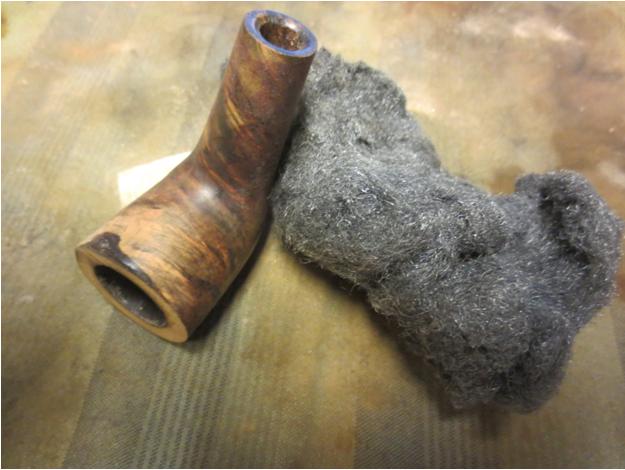
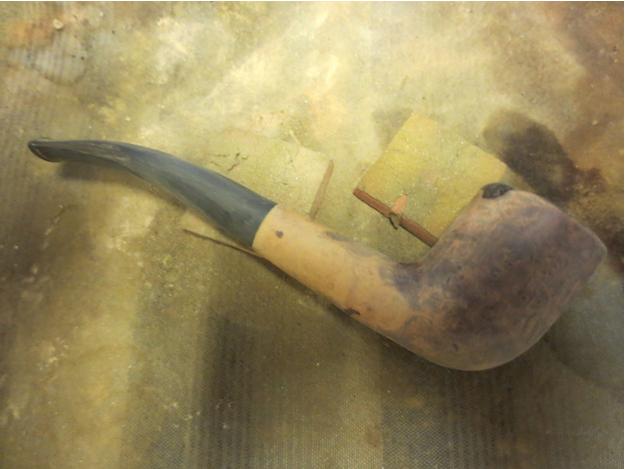
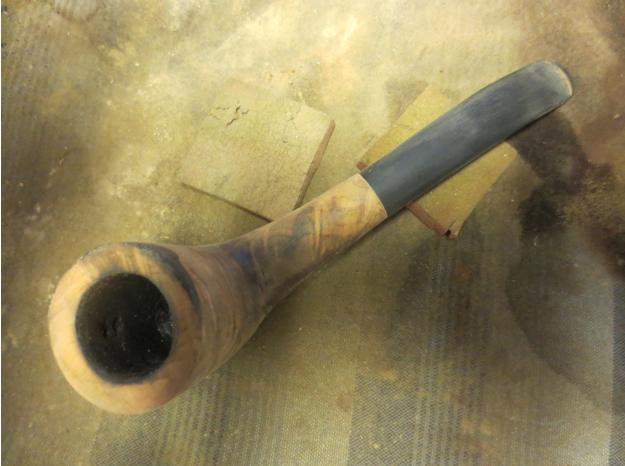
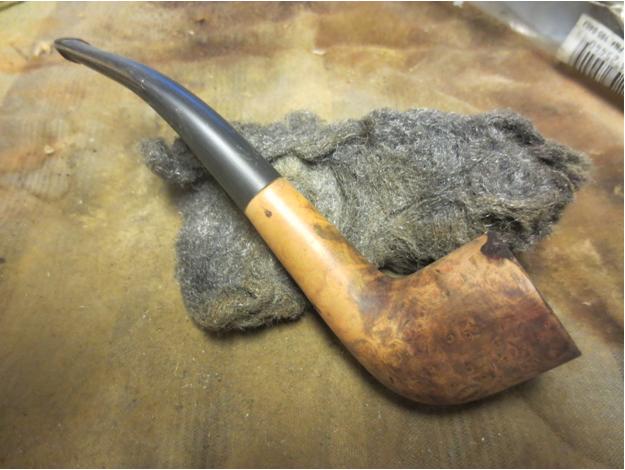
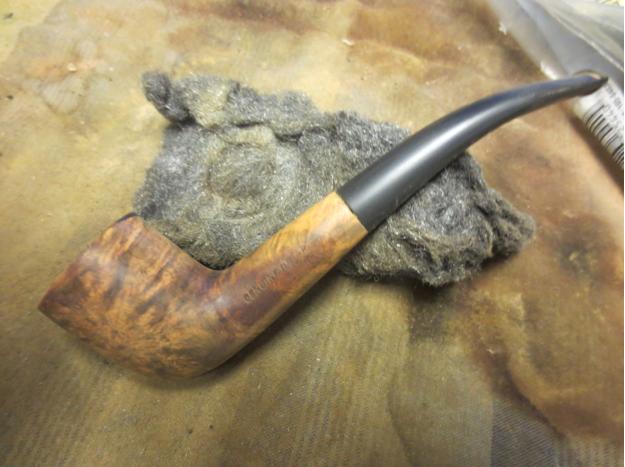
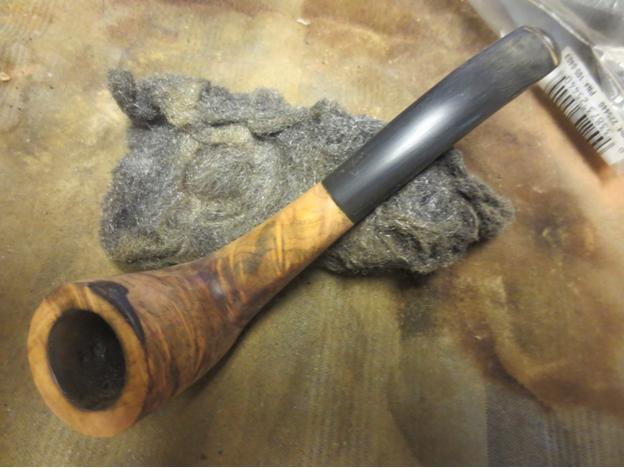
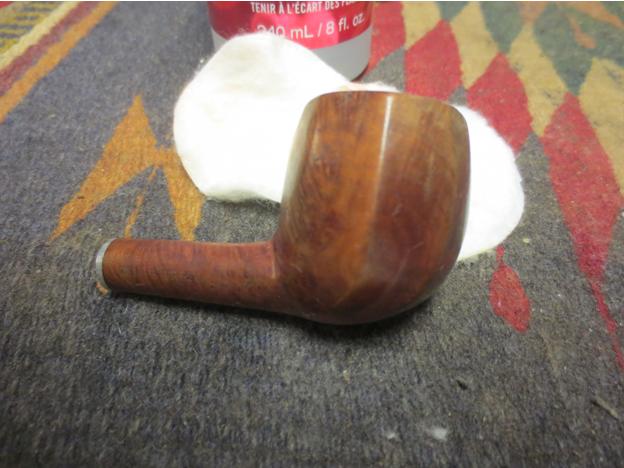
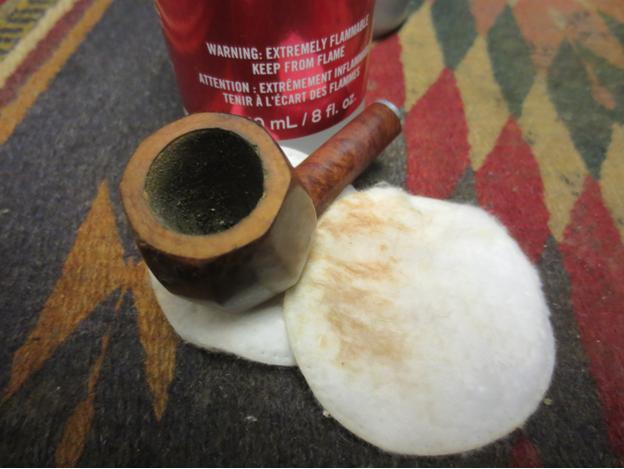
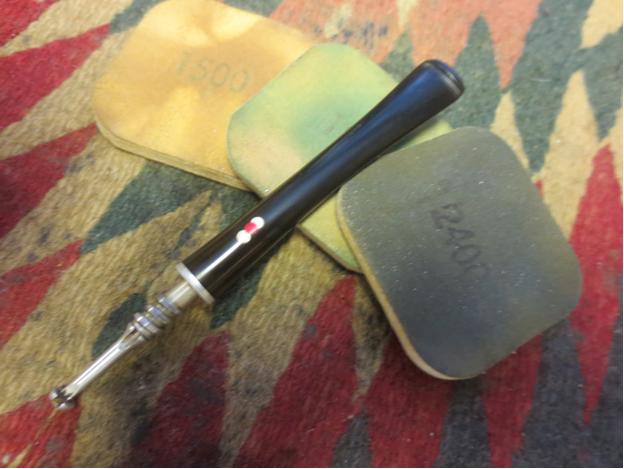
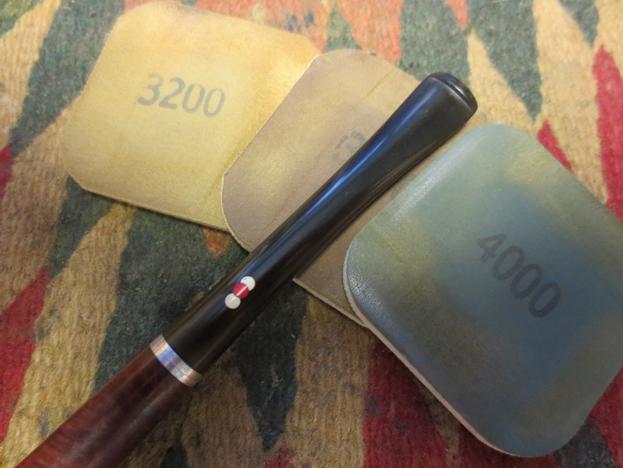
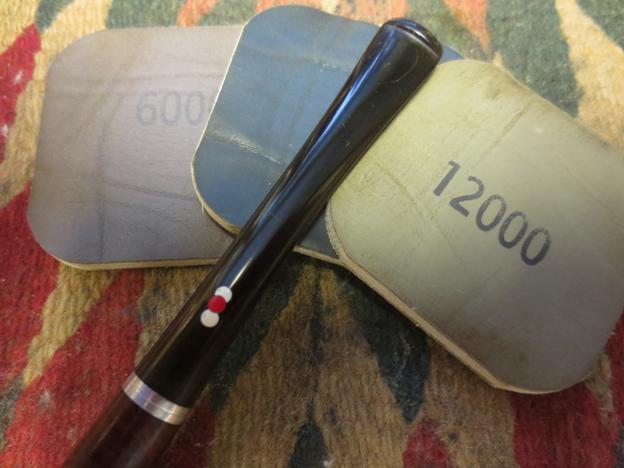
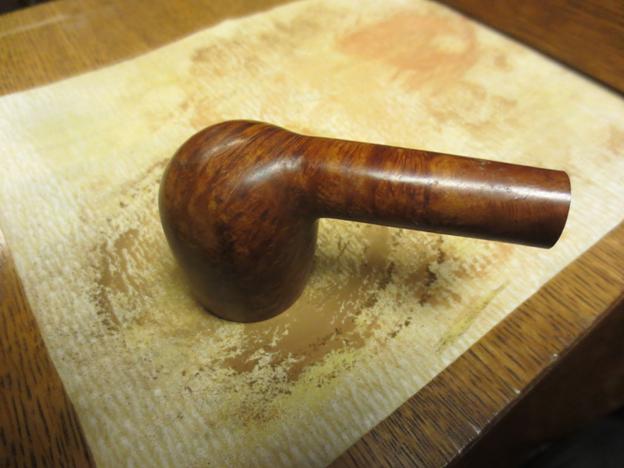
KW9 I continued with the 0000 steel wool over the rest of the bowl to remove the film on the finish. After cleaning the bowl, I used 3200-12000 grit micro mesh to polish the bowl. This is what it looked like afterwards.KW10

KW11

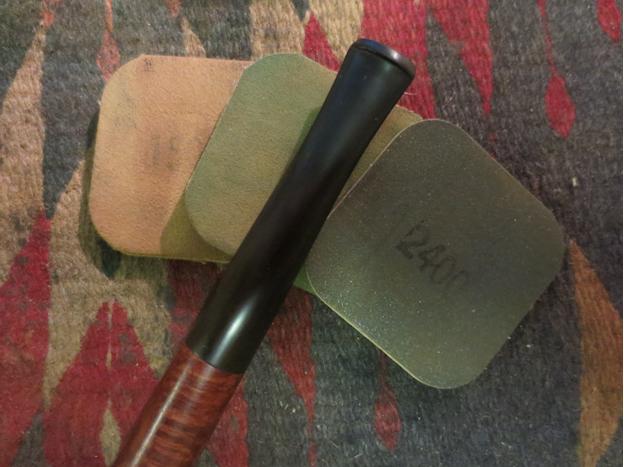
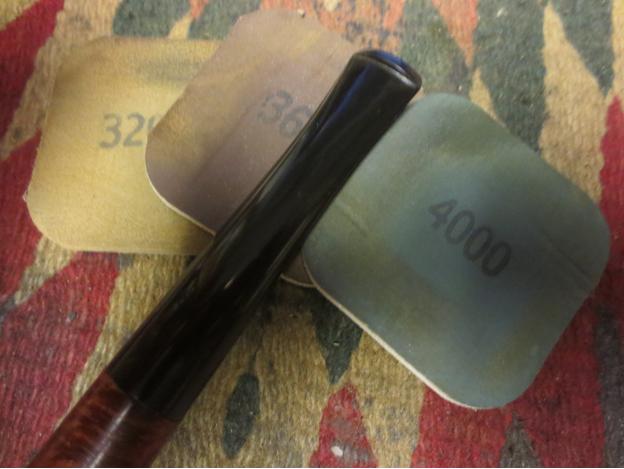
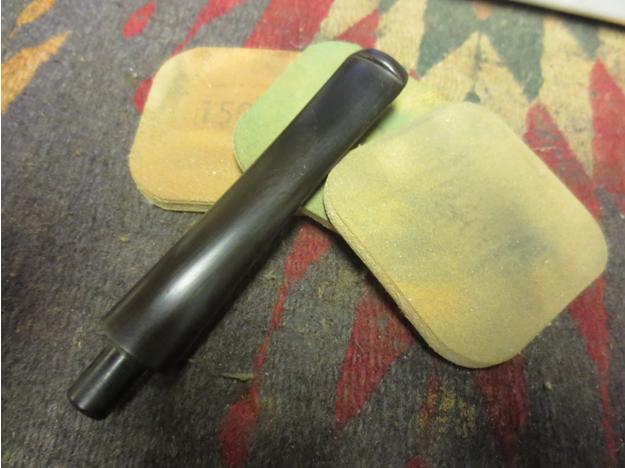
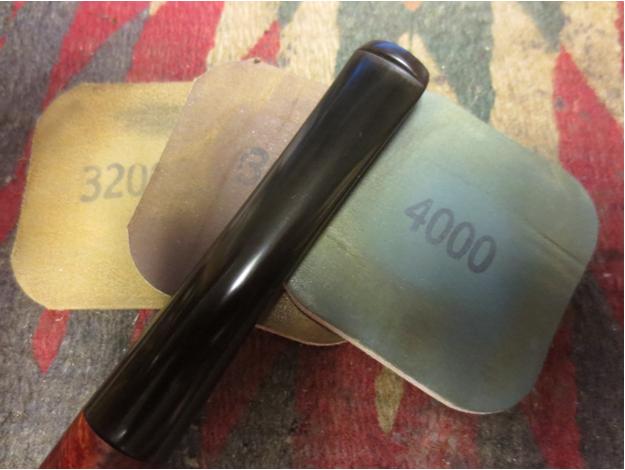
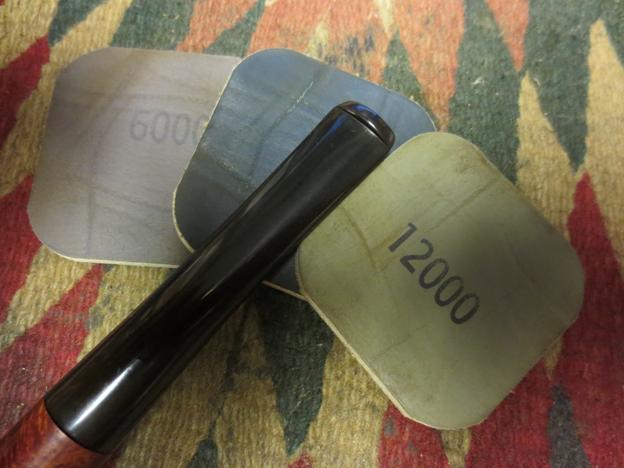
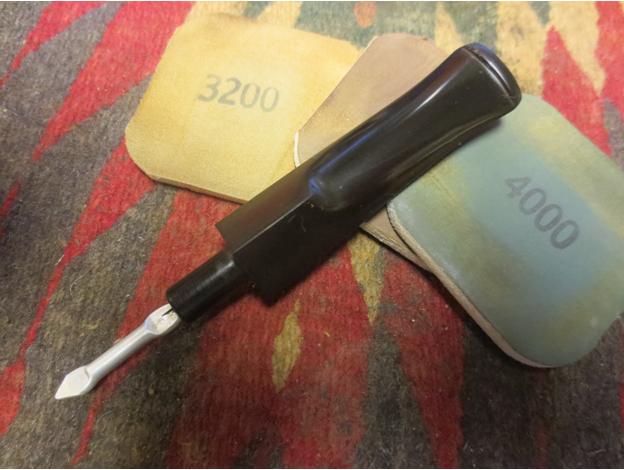
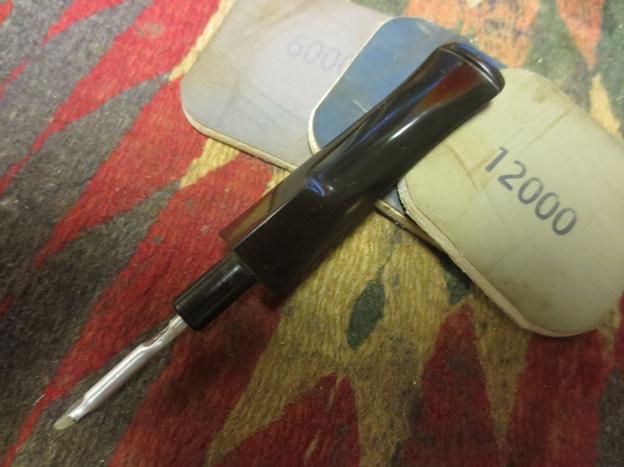
KW12 I used 400 grit wet/dry with water to remove the oxidation from the stem, followed by 1800-2400 grit micro mesh with water.KW13 I finished the stem with a progression of 3200-12,000 grit micro mesh.KW14

KW15

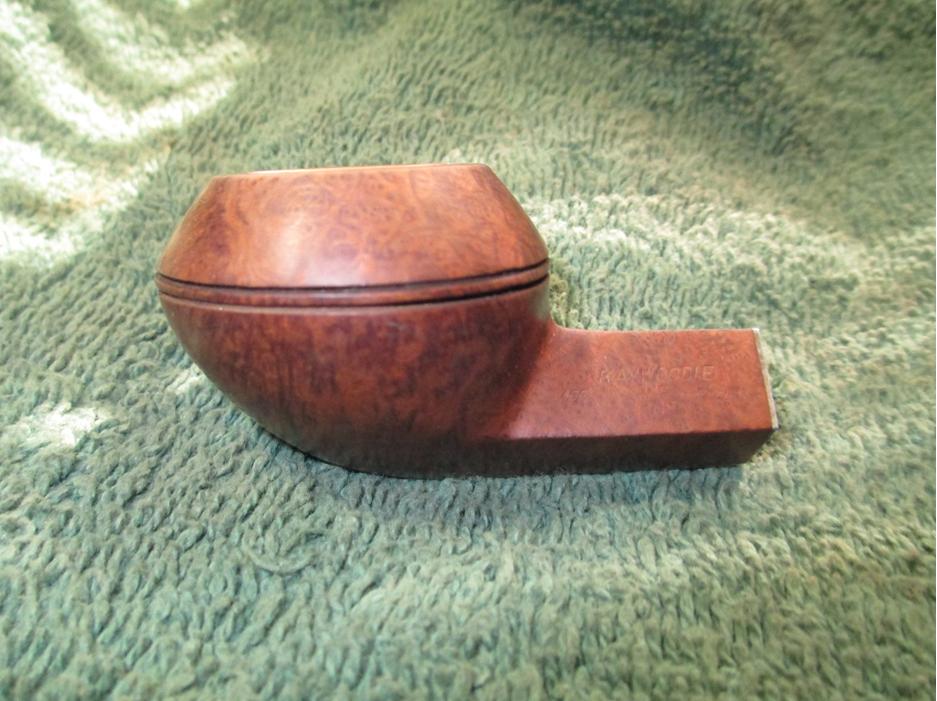
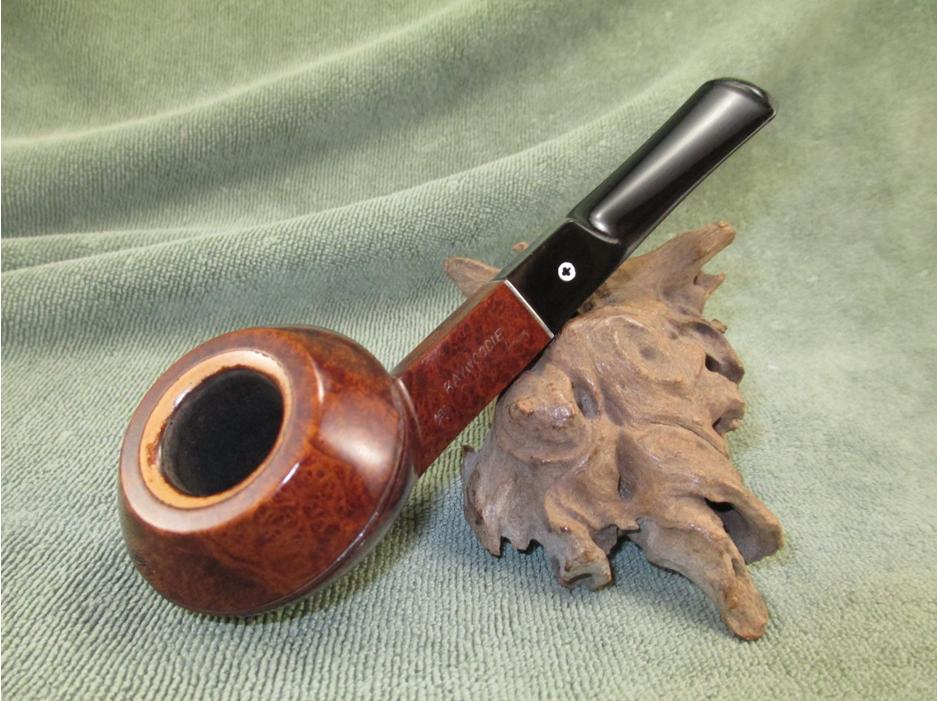
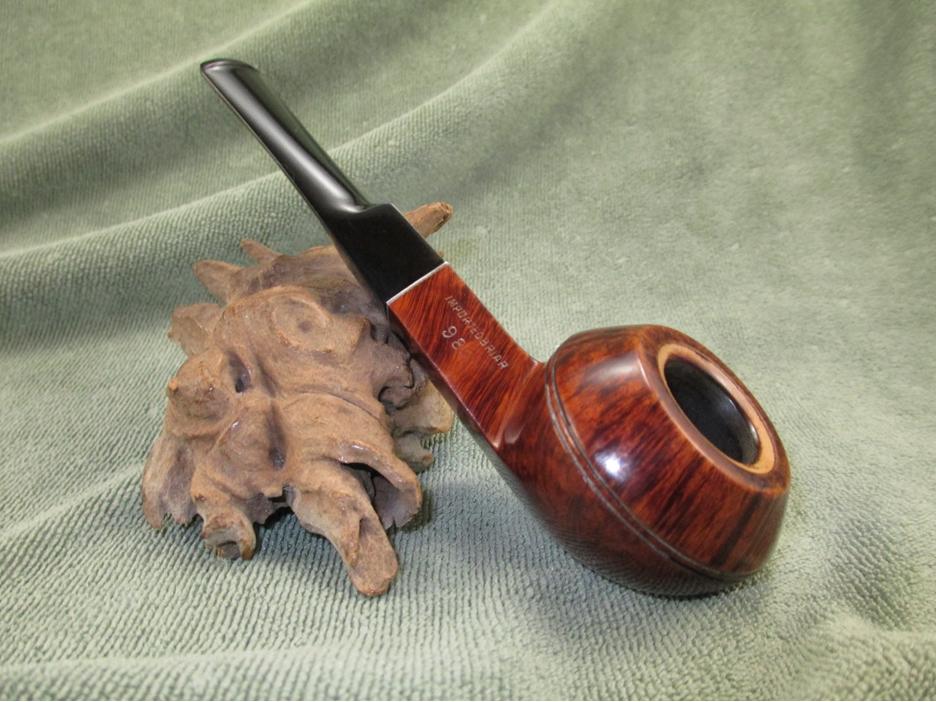
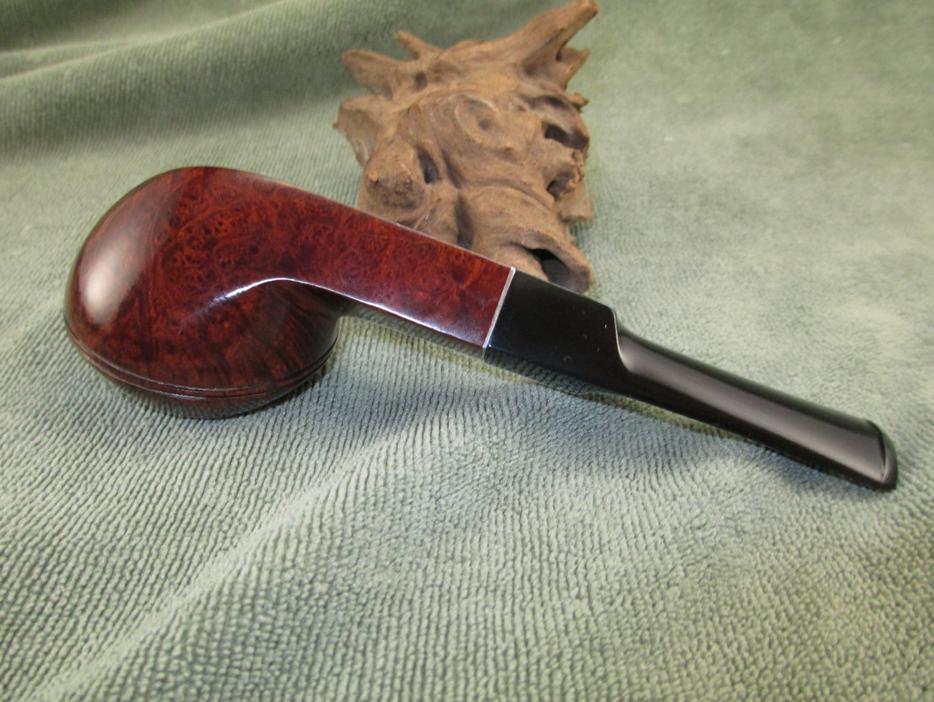
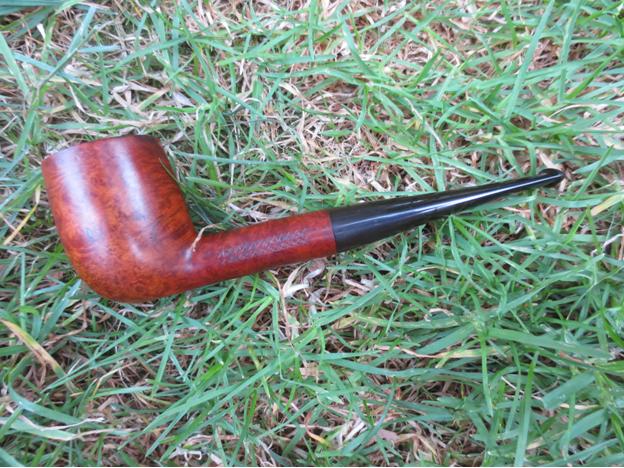
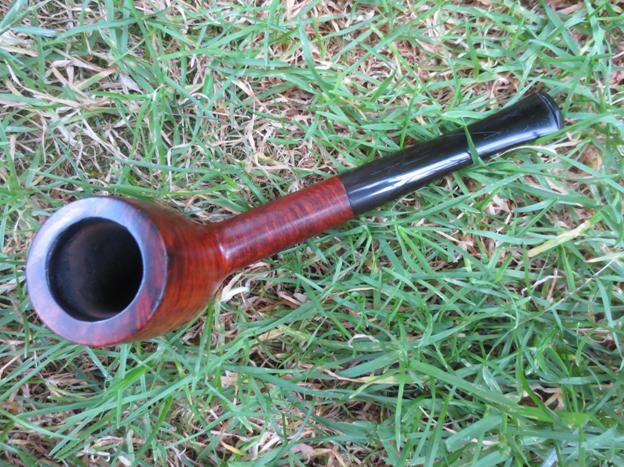
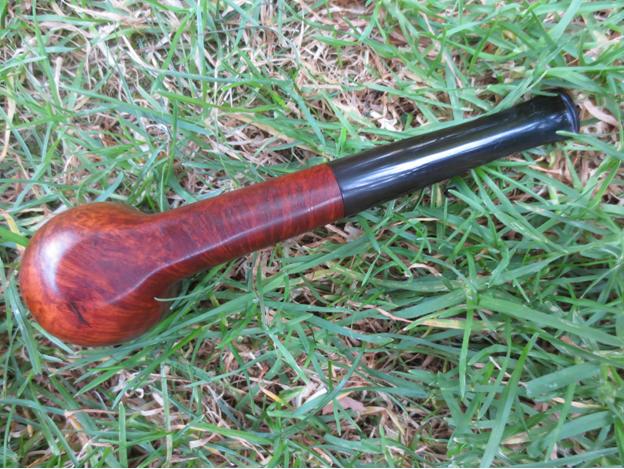
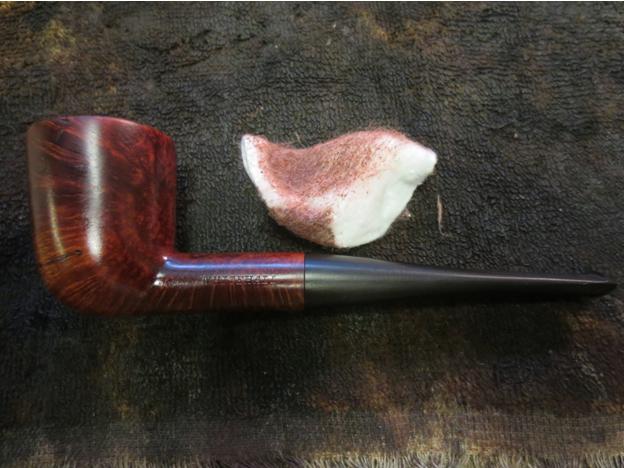
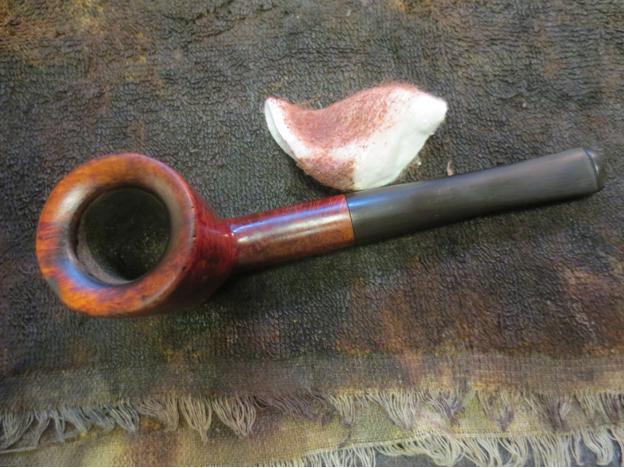
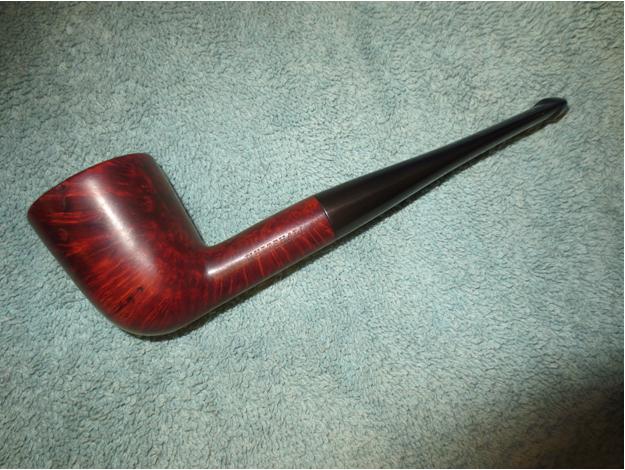
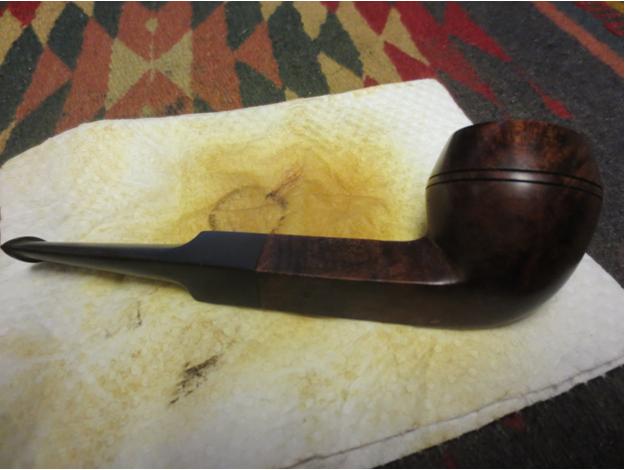
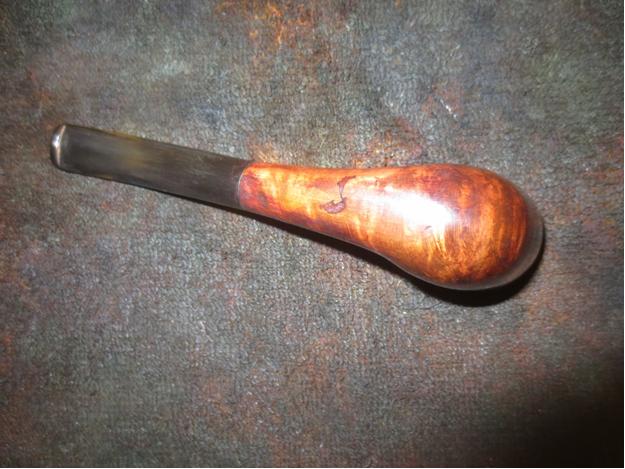
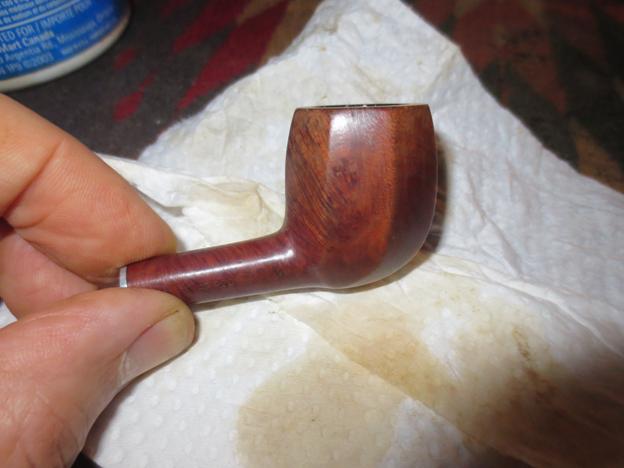
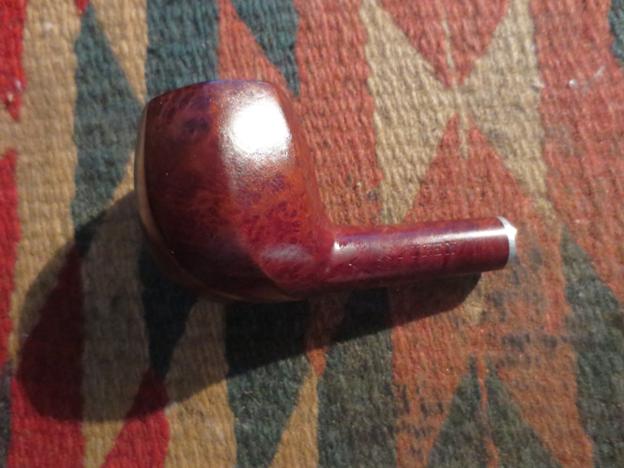
KW16 I set up my buffer and polished the bowl with white diamond and carnauba wax. I used my variable speed rotary tool with white diamond and carnauba wax for the stem. Here is the finished pipe. Thanks for looking.KW17

KW18

KW19

KW20

KW21

Breathing New Life into a La Fond’s Vintage, Algerian Briar Reject Billiard


Blog by Steve Laug

This old pipe came to me in a lot that was a gift from a friend and it was in very rough shape. The bowl covered in varnish and the rim had been used to hammer nails. There was not one smooth surface on the rim of the pipe. The outer edge of the bowl was very rough particular on the backside with chunks of briar missing. There were several fills on the bowl – on both sides that were missing and there were large deep scratches on the bottom of the bowl.LaFond1

LaFond2

LaFond3

LaFond4 I have included a close-up photo of the rim to show the extent of the damage.LaFond5 I also took some close-up photos of the stamping to give an idea of what that looks like. The shank is stamped on the right side with the words MADE IN FRANCE. On the left side it is stamped with a double line of XXXX’s. I interpret that as the stamping that a pipe company uses to declare a pipe a REJECT. Some of the English companies actually stamp the pipe reject while others X out the stamping. In this case I was able to read through the X’s and see that underneath it was stamped La Fond’s Vintage on the first line and below that it read Algerian Briar. There is not a shape number on the shank.LaFond6

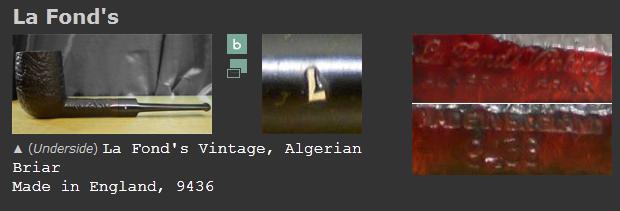
LaFond7 I looked in Who Made That Pipe to see if I could find any information on the brand. The book listed that the brand was unknown but was English made. I looked on pipephil’s site, Pipes: Logos and Markings and found the listing below http://www.pipephil.eu/logos/en/logo-l1.html. The left side of the shank on the pipe I am working on is stamped identically to the one in the photo. The right side of mine says Made in France instead of Made in England. There is also no shape number on the one I have.LaFond8 I think that an educated guess can be made regarding the company behind this brand of pipe. Looking at the shape of the pipe and the shape number on the pipe in the photo it looks to me that the brand may well have been a sub brand of GBD. Certainly the 9436 shape number matches the same shape number that GBD stamped on that shape pipe.

As I have been doing lately, I reamed the bowl with a PipNet pipe reamer to take the cake back to bare briar. I wanted to see if there was any significant damage to the inside walls of the bowl considering the damage everywhere else. After reaming I would need to sand the inside of the bowl as the cake was both crumbly in some places and hard and pitted in others.LaFOnd9

LaFond10

LaFond11 The rim damage made it necessary to top the bowl to remove as much of it as possible. I used the topping board and 220 grit sandpaper to do the work.LaFond12 I removed as much of the top of the rim as possible without changing the overall appearance of the pipe. I was able to remove the majority of the damage. There were still some missing chunks of briar on the back side of the bowl near the top edge that I would need to address in a different manner.LaFond13 I wiped the bowl down with acetone on cotton pads to remove the varnish coat that covered the bowl and shank. Fortunately it came off quite easily. At least they did not coat the bowl with urethane or some other modern plastic coat. I worked on the damaged areas and the missing fills to make sure that I was able to get the grit and grime out of the holes.LaFond14

LaFond15

LaFond16

LaFond17 I picked out any pieces of debris in the divots and wiped it down one final time. I filled the holes with briar dust and then dripped clear super glue on top of the briar dust. I added more briar dust and more glue until I had the surfaces built up and repaired.LaFond18

LaFond19

LaFond20 I sanded the repairs with 220 grit sandpaper to blend the patches into the surrounding briar. It took a bit of sanding to smooth things out and leave the patches only in the holes that needed to be repaired and not on the surface of the bowl. Once the surface was smooth I sanded the areas with a medium and fine grit sanding sponge to remove the scratches.LaFond21

LaFond22

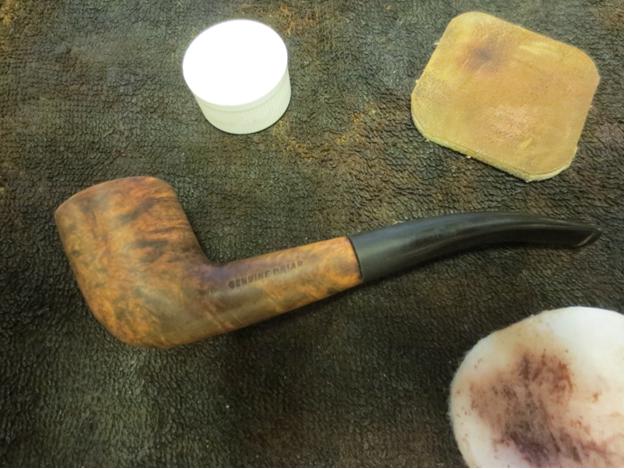
LaFond23 I sanded the inside of the bowl and then scrubbed out the bowl, shank and stem with pipe cleaners, cotton swabs and isopropyl alcohol. I scrubbed until the shank was clean.LaFond24 I used the stain pens to blend in the sanded areas with the colour of the rest of the bowl. I used it on the rim and the repairs around the bowl. I blended light brown and dark brown stain pens to get the colour to match. I sanded the bowl and rim with a fine grit sanding block to feather in the stained areas.LaFond25

LaFond26

LaFond27

LaFond28

LaFond29 After sanding I rubbed the bowl down with a light coat of olive oil and buffed it into the briar.LaFond30

LaFond31

LaFond32

LaFond33 I would need to wax and polish the bowl once I had finished with the stem but it was done for the time being. I turned to the stem and sanded it with 220 grit sandpaper to remove the ripples in the vulcanite on the top and bottom of the stem from the button toward the bowl for about 1 ½ inches. It was obvious and ugly in my opinion. I finished smoothing out the stem surface and then sanded it with a medium and a fine grit sanding sponge to smooth out the scratches.LaFond34

LaFond35

LaFond36

LaFond37 There was some oxidation on the stem that needed some more work so I repeated the process until the oxidation was removed. I wet sanded the stem with 1500-2400 grit micromesh sanding pads. I rubbed the stem down with Obsidian Oil and then dry sanded it with 3200-4000 grit pads and gave it another coat of oil I finished sanding with the micromesh pads dry sanding with 6000-12000 grit. I gave the stem a final coat of Obsidian Oil and let it dry.LaFond38

LaFond39

LaFond40 I buffed the pipe with Blue Diamond on the buffing wheel and then gave it multiple coats of carnauba wax. I buffed it with a clean flannel buffing pad and then took it back to the work table and hand buffed it with a microfibre cloth. Dave Gossett wrote about doing that several blogs ago and I have been doing it ever since. It seems to add depth to the shine that a buffer alone does not give. The finished pipe is shown in the photos below. I took the photos outside in the waning light of the day. I really like the look of the pipe in the grass. The green sets off the colours of the briar and the black of the stem. This old timer is ready for a long life ahead of service to whoever takes it home to their rotation. Thanks for looking.LaFond41

LaFond42

LaFond43

LaFond44

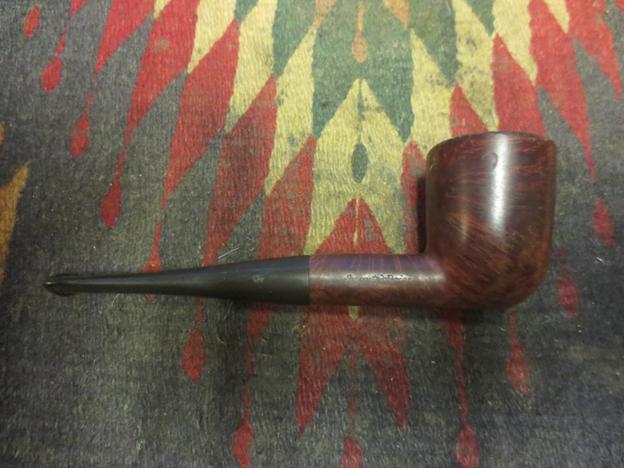
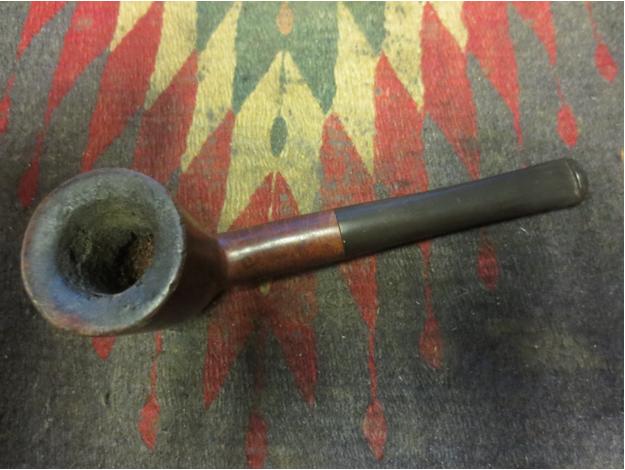
Rejuvenating and Repairing a Whitehall Dublin


Blog by Steve Laug

This old Whitehall pipe came to me from the antique shop in Victor, Idaho, a small town on the way to Jackson Hole, Wyoming. On a recent trip to Idaho my brother and his family and my daughters and I visited Jackson Hole. On the way home, we stopped in Victor to stretch our legs and wander a bit. I went into the antique shop and struck up a conversation with the owner. Eventually a tin of five pipes and some parts came out from under the counter. I bought all of them. They traveled back to Vancouver with me and will one day all be refurbished.

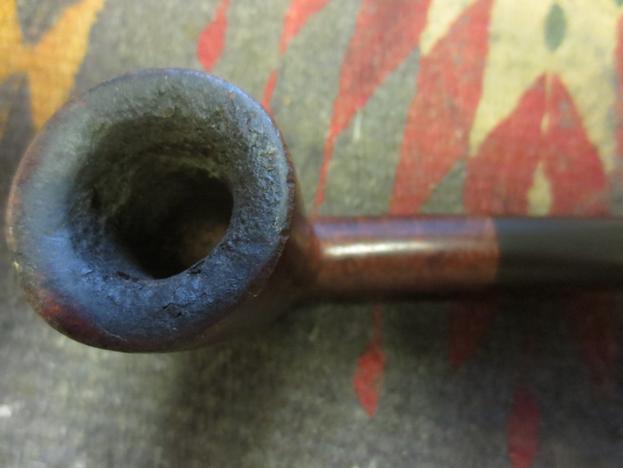
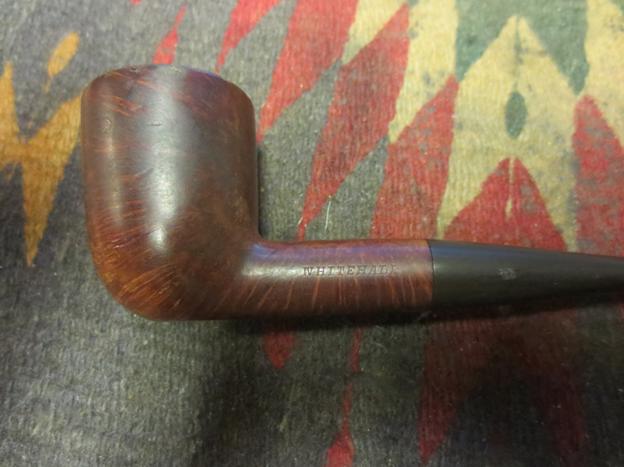
This Dublin shaped pipe is stamped Whitehall on the left side of the shank – though the stamping is faint. On the right side it is stamped Imported Briar (also faint). It has a flat bottom and sits well on that. The finish was very worn but was a rich oxblood colour under the grime. The bowl sides have some great cross grain. There were some small fills near the top of the bowl on the left side. The rim was damaged on the outer edge and very caked from the bowl over the rim top. The inner edge of the rim was still round and did not show signs of damage under the thick cake. The stem appeared to be a poor fit but as I looked at it I realized that it was upside down. The flattened bottom of the bowl had not been continued on the stem so it sat wrong.Dublin1

Dublin2

Dublin3

Dublin4 I took some close-up photos of the rim and sides of the bowl. The rim photo shows the tarry buildup and the side photos show the stamping.Dublin5

Dublin6

Dublin7 I generally ream the bowl when I start a clean up to remove the cake so I can examine the pipe thoroughly to check for inside wall damage and potential issues. I reamed it with a PipNet reamer and took the cake back to bare briar.Dublin8 While I was at it I scrubbed the rim with alcohol and cotton pads to remove some of the tars. I had to use a sharp blade to gently scrape away the thick coat of tars while I was scrubbing. The photo below shows the initial cleanup of the rim and newly reamed bowl.Dublin9 I sanded the rim with 220 grit sandpaper to further remove the tars and to minimize the outer edge damage. There was a burn mark on the front left of the rim that I was able to reduce but not remove altogether.Dublin10 I scrubbed out the shank and the bowl with alcohol, cotton swabs and pipe cleaners.Dublin11 I wiped down the exterior with alcohol and cotton pads to remove the finish and to clean it up. In doing so I found that there was a small shallow crack/flaw toward the bottom of the bowl on the left side. In the photo below the dental pick is at the close end of the crack and the dark spot is the far end.Dublin12 I picked out the crack with the dental pick, drilled two small holes – one on each end of the crack to stop it from going further. Interestingly this crack followed the pattern of the grain on the side of the bowl. Once I had it cleaned out I wiped it down with alcohol a final time. I pressed briar dust into the crack, dripped super glue into it and then pressed more briar dust on top of the glue. The photo below shows the repaired crack. Fortunately the crack was not deep and did not affect the interior of the bowl. It did not go all the way through and appeared to be more of a flaw in the briar than damage.Dublin13 I sanded the repair with 220 grit sandpaper to remove the excess patch and blend it into the surface of the briar. I sanded it with a medium and a fine grit sanding sponge to remove the scratches in the briar and feather out the surface. I sanded the entire bowl and rim with the same sanding sponges and sandpapers.Dublin14 I aligned the stem and sanded it with 220 grit sandpaper to smooth out the rough surface and then flatten the bottom to match the bottom of the shank.Dublin15

Dublin16

Dublin17

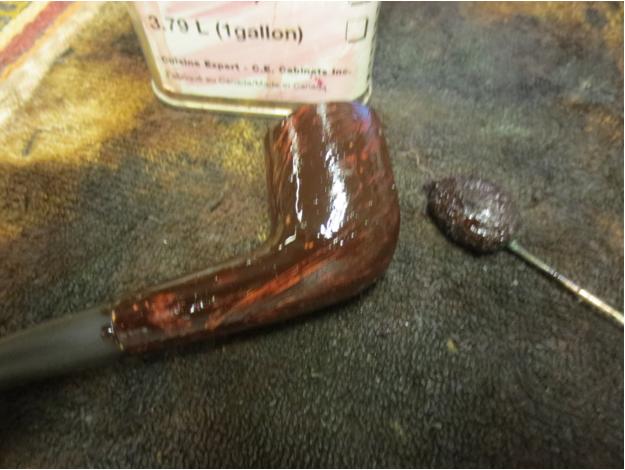
Dublin18 I wiped down the bowl with alcohol and then stained it with an oxblood alcohol based stain. I put the stain on heavy around the sanded areas on the shank and the bowl repair. I also darkened those areas with a dark brown stain pen following the pattern of the grain. I lightly buffed the pipe by hand and took the pictures below to show how the newly stained pipe looked at this point.Dublin19

Dublin20

Dublin21

Dublin22 I darkened the rim with the stain pen and gave it another top coat of the oxblood stain. I flamed it and buffed it lightly.Dublin23 With the bowl finished I worked on the stem. I wet sanded it 1500-2400 grit micromesh sanding pads. I rubbed it down with Obsidian Oil. I continued by dry sanding it with 3200-4000 grit pads, rubbed it down again with oil and then finished by dry sanding with 6000-12000 grit pads. I gave it a final coat of Obsidian Oil and let it dry.Dublin24

Dublin25

Dublin26 I buffed the bowl and stem with Blue Diamond on the buffing wheel, gave it multiple coats of carnauba wax and then buffed it with a clean flannel buff. I brought it back to the work table and then hand buffed it with a microfibre cloth. The finished pipe is shown below. It looks better than it did when I started, in my opinion. The rich oxblood colour helps to hide the repair and the burn mark on the rim. It should be a great smoking pipe if the amount of cake buildup that was there when I started is any indication. It should continue to provide great service to whoever ends up with it in their pipe rotation. Thanks for looking.Dublin27

Dublin28

Dublin29

Dublin30

Dublin31

Dublin32

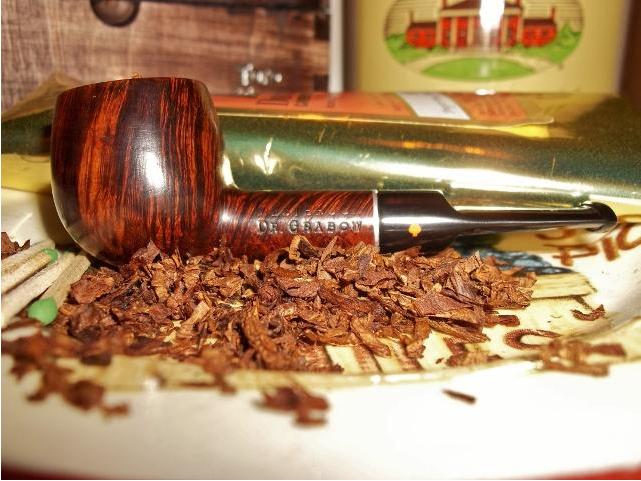
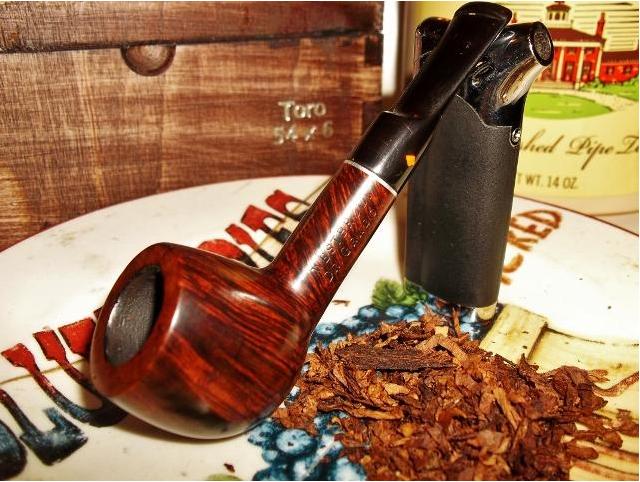
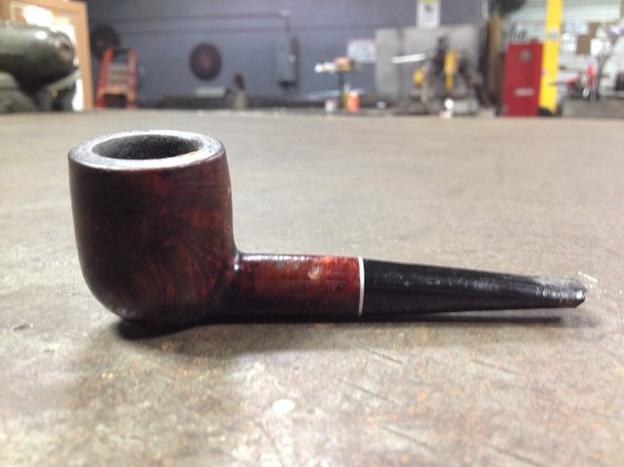
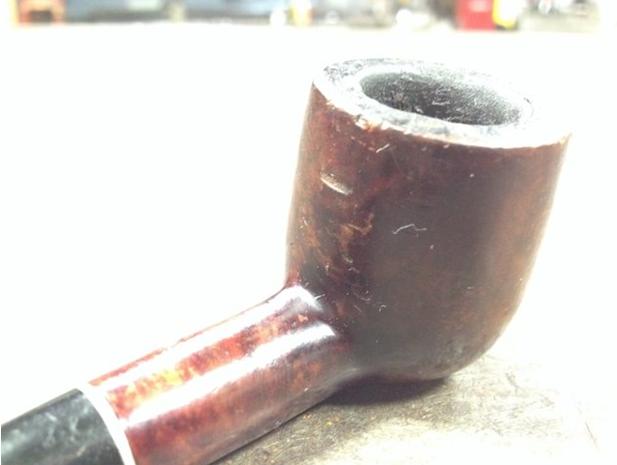
A Dr. Grabow Sportsman #72


Blog by Troy Wilburn

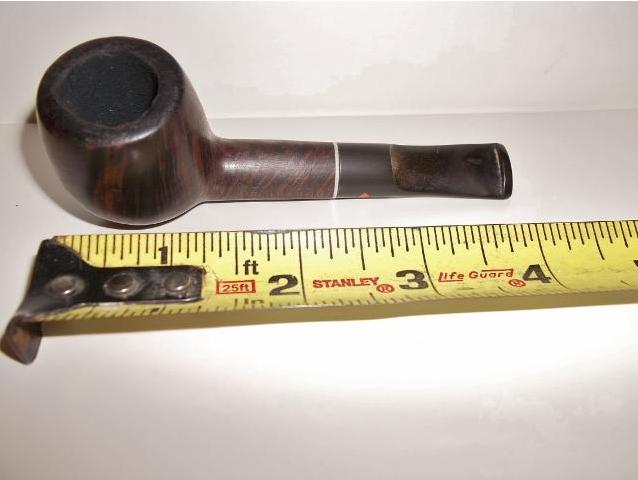
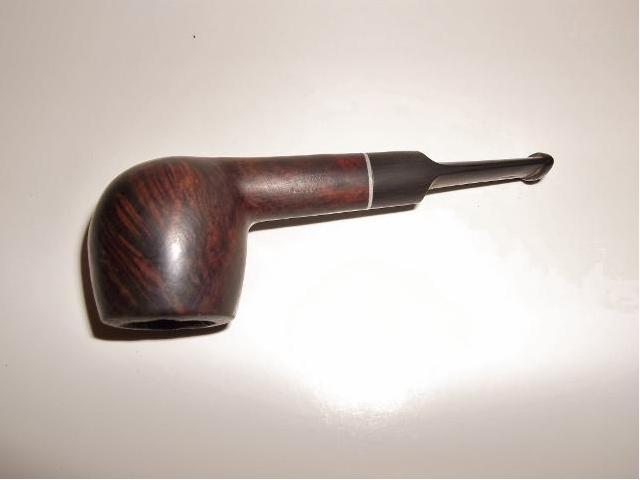
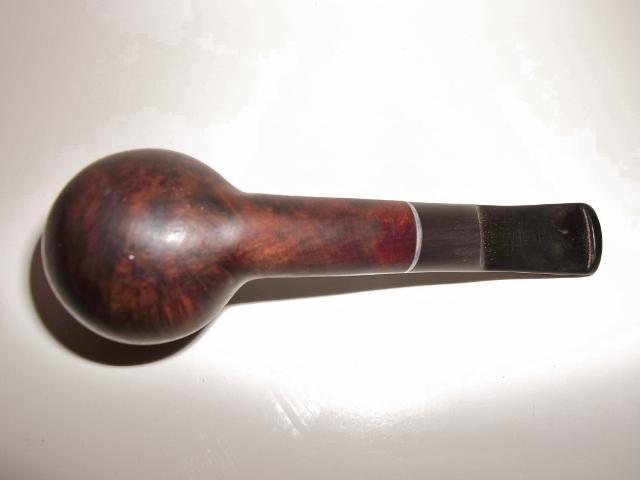
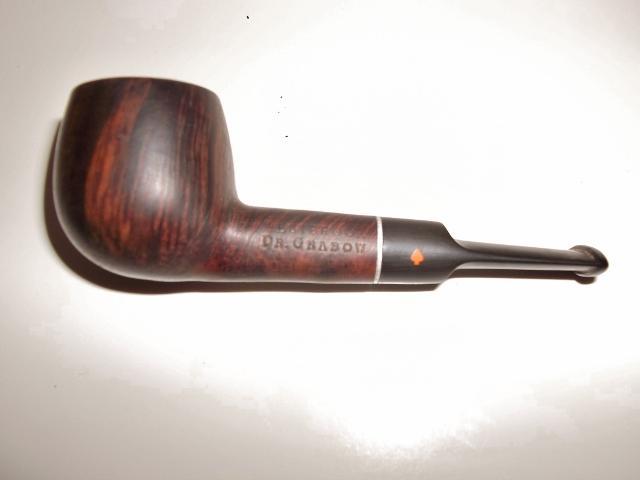
This is a pipe I got from Joe’s lot. From looking at Grabow charts I believe this is a shape # 72 Sportsman. Joe mudded and coated inside bowl for me before he mailed it off ……Thanks Joe :).

Here is what it looked like when I received it.G1

G2

G3

G4 I had to top the bowl and I found a nick or inclusion that was pretty deep I took it down as far as I thought I should go. You can still see it in rim but I got it pretty small and will let it be. Unfortunately the rim lacked much if any grain at all. I canted bowl slightly to give it a “Devil Anse” type of look. Then just basically sanitized, sanded, oiled, waxed and buffed.

Rough sanding done on topping of bowl.G5 Sanded, cleaned ready for oil wax and buff.G6 Very cloudy here today so pics not the greatest, but a lovely little pipe I think and will be in my collection a very long time.

Here are some photos of the finished pipe.G7

G8

G9

G10

G11

G12

G13

G14

Repairing a Cracked Shank on A Weber Shelbrooke


Blog by Mark Irwin
mark@afinemess.org
29 July 2015

It is a pleasure to have Mark Irwin write a blog for us here on rebornpipes. Many of you may know Mark from his own blog on WordPress called “Peterson Pipe Notes”. Click on the following link if you are unfamiliar wit it: https://petersonpipenotes.wordpress.com. Mark has written several books on pipe enjoyment – The Five Laws of Pipe-Companioning, Pipe Smoking in Middle Earth and contributes a blog to the Neatpipes site. He is also co-authoring a book on the history of Peterson Pipes that will come out through Briar Books Press. He has become a good friend and I correspond with him often. I only wished that lived in closer proximity. Somehow the distance between Vancouver, BC Canada and Texas where Mark is make visiting prohibitive for me. Thank you Mark for your contribution. Welcome — Steve Laug
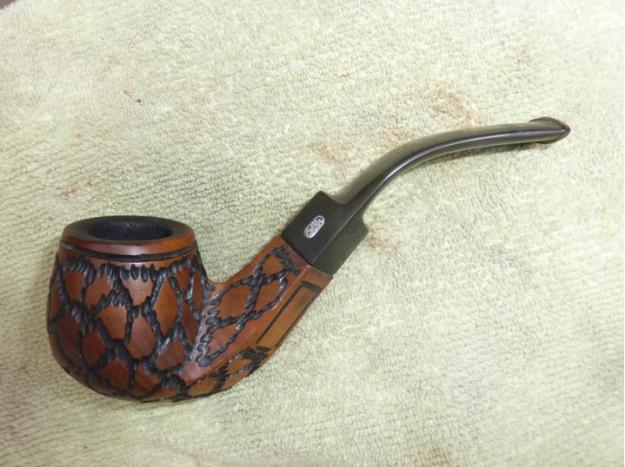
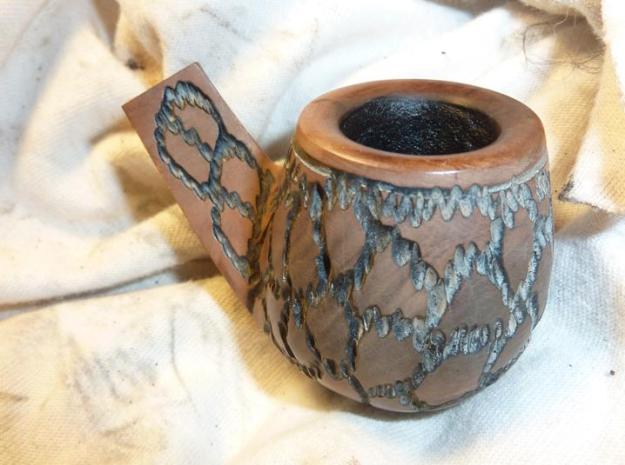
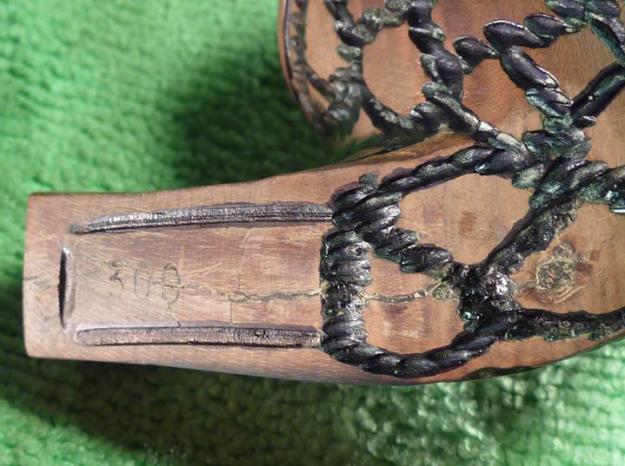
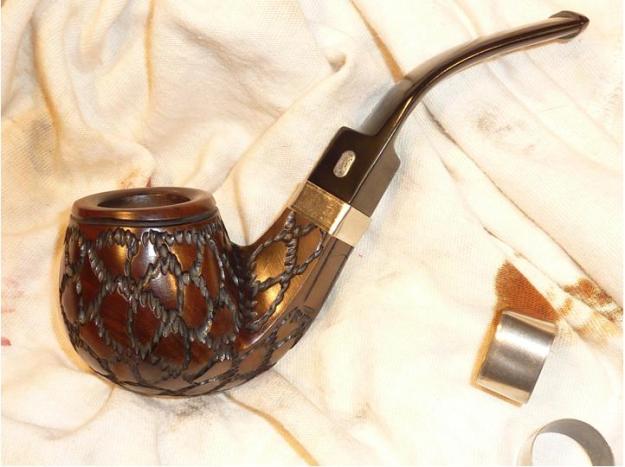
Mark1 Like a lot of pipemen, part of my introduction to pipe-smoking was through my Dad, who in the late 1960s and early 1970s would occasionally indulge in a bowl of Half & Half. In fact, my first pipe was one of his—a wonderful Kaywoodie bulldog replete with stinger. He had two other pipes that I recall, a white Kaywoodie and this Weber Shelbrooke 300.Mark2 When I was over at his house a few weeks back, he said the Shelbrooke, though a good smoker, had not only become wet and sour over the past few months, but developed a split on the shank as well as a tiny hairline crack at the mortise, and he wondered if anything could be done about it.
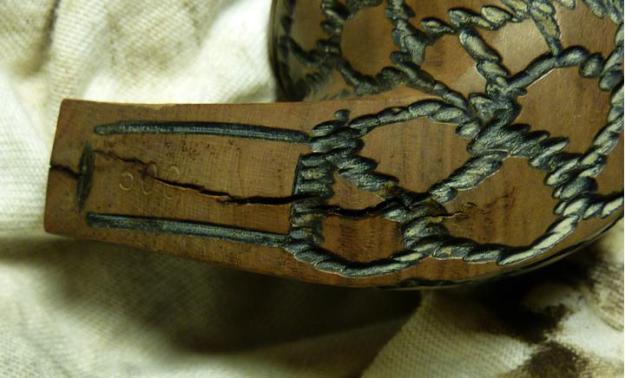
The first problem—the wet, sour smoke—seemed to have two causes: first, over the past few years, my Dad’s reduced the number of pipes in his collection to about half a dozen, but he’s smoking them several times a day in fairly heavy rotation. The Shelbrooke might just not be handling its workload.

A look into the mortise with a flashlight revealed a substantial gap between its end and the tenon. And it was, sure enough, wet. In addition to giving the pipe a little more rest, it might be that Dad needs to consider adding another pipe to his rotation.Mark3 The second problem, the crack in the shank and the resulting loosening of the stem, was a more serious problem. I wrote Steve Laug, who said to drill a small hole at the end of the crack to prevent it from spreading further. After that, he said, glue the crack with epoxy, clamp it, then put band the pipe to keep the reglued crack from opening and keep the tenon/mortise tight.
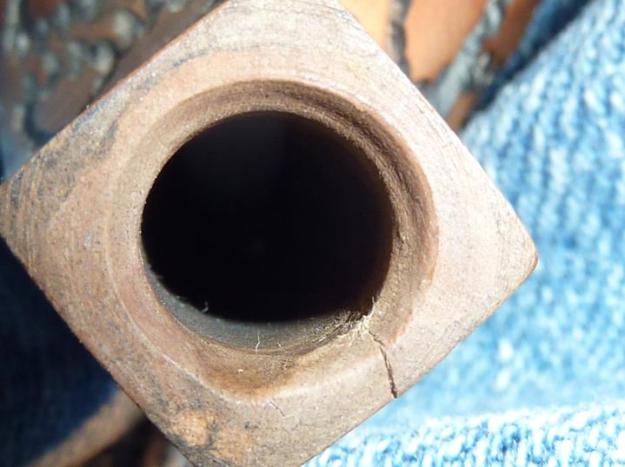
As my D-I-Y restorations are usually confined to Peterson estates, a band had to be ordered online. I did find a supplier on the internet, and, measuring the widest part across the stummel (the radius?), ordered one. I thought I’d be extra cautious and order a size up and a size down as well.

As anyone with any math knows, that was not the way to order a band. All three were far too large. So I went to a math teacher I know, who happens to live here in the same house, for her advice. First she told me measurement is never exact. Hmm. Well, I needed something a little better than what I’d done, obviously. Here’s the formula she showed me:

C = 2 π R

To get C (the circumference), I added up the perimeter of the diamond shank—13.85 x 2 and 18.8 x 2 for a perimeter (circumference) of 55.3. I’ve got all the math on a legal pad, and if you want an explanation, ask a math teacher. In the end, the radius came out to be 8.80 for a circumference of 17.6. I bought 16.5, 17 and 17.5 mm rings, and as it turned out, the 16.5 was the best fit.

While waiting for the bands, I decided to clean up the bowl and stem.Mark4
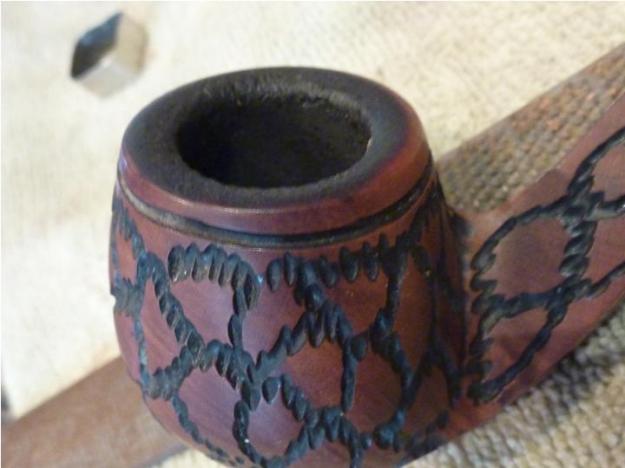
Mark5 The bowl soaked overnight in an alcohol bath. When it was removed the following morning, I was pleasantly surprised to discover the carbon on the top rim could easily be wiped off with a cotton cloth, leaving it clean. The alcohol soak lightened the stain and removed much of the blackening in the rustication, left the bowl with a sweet, clean scent. I’ve done this with Peterson Systems for quite a while, with spectacular results—and they’ve got the added complication of a reservoir. I’ve been told that an alcohol soak can sometimes cause old wood to split. The crack did seem a tiny bit longer afterwards, but not much.Mark6 The stem was in remarkably good condition, but I thought it might as well be cleaned up since I had it. It was plopped into a small tub of warm Oxy-Clean solution to soak, then forgotten about! Oops. When I remembered to retrieve it eight hours later, it had almost completely whitened. Hmm. Just great, I thought.
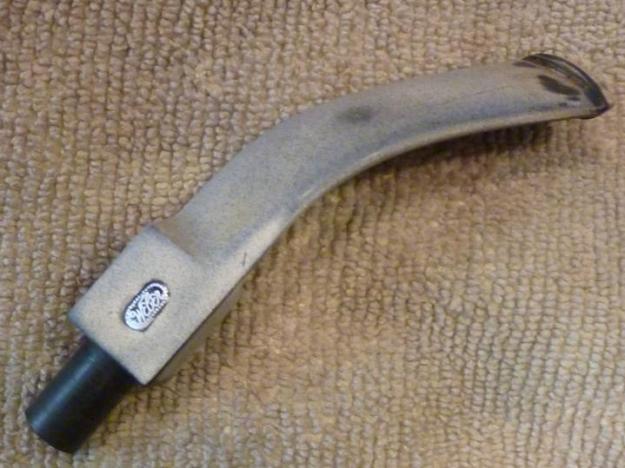
It still felt relatively smooth (unlike the roughening-up a bleach-soak does), so I thought I’d try a spin on the Foredom lathe with some Tripoli on the wheel, just to see where things stood and whether it would need the 12-pad Micro Mesh route. It took a few minutes on the wheel, but to my surprise, the Tripoli cut all the haze off, and in a fraction of the time I usually spend with the pads by hand.Mark7 I didn’t remove the dental marks, just as I wouldn’t on a beloved pipe from my own rotation, because those indentations are what give the pipe its comfort-factor to its owner, making it easy to clinch—remove them, and he has to start breaking it in all over again.
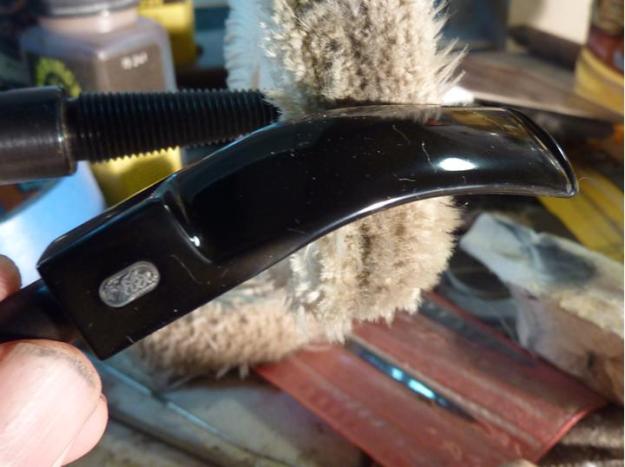
I like to use an Ott-Lite to see just how “back-to-black” the stem really is, because I’ve bought far too many estate pipes, and restored too many stems myself, that when viewed under the Ott show an underlying brown, gray or green haze. The stem on such a pipe may look good in a photo, but get it under decent light and you can see it wasn’t properly restored at all.

An additional pass with the buffing wheel and Tripoli was made on a few hazy areas that I caught on the camera but couldn’t see with the naked eye. After that, the stem received a coat of Obsidian Oil to give it some UV protection.Mark8 Coming back to the crack in the shank, I used my countersink drill bit (which I also use to chamfer or “graduate” draft holes in tenons) to create a saucer-shaped hole. I was surprised when it slid right through into the draft hole!
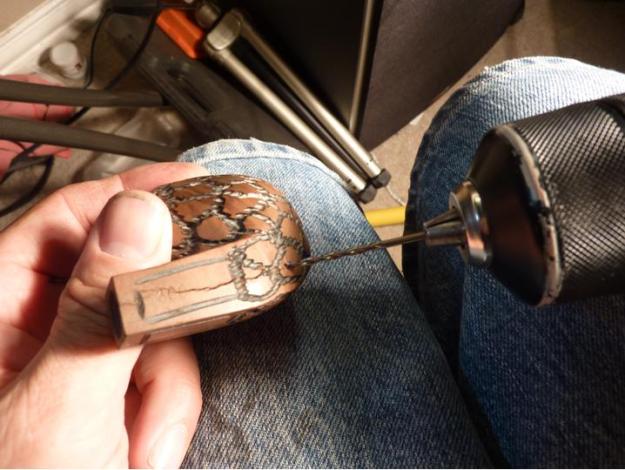
While I couldn’t juxtapose my camera’s flash to give you a photo, it turns out there is a reservoir in the Shelbrooke. It goes considerably deeper than the draft hole, and was obviously an intentional part of the pipe’s design. But the size of the reservoir made for a thin mortise wall, as I found out. Was it for a stinger device? It certainly explains the wet smoke my Dad was experiencing—the smoker would need to swab out the well after the pipe has cooled before smoking it again or suffer the consequences, as uninformed Peterson System users have found to their dismay. As many Weber pipes and catalogs as there seem to be on the estate market, I couldn’t find much just trolling the internet.Mark9 I let the epoxy drizzle off a tooth-pick into the cracks, hoping it would slide down into it. If the epoxy got inside the cracks, I believed it should hold in combination with the nickel band. Then I clamped the crack as well as I could, but as you can see from the pictures, the crack didn’t close up entirely.
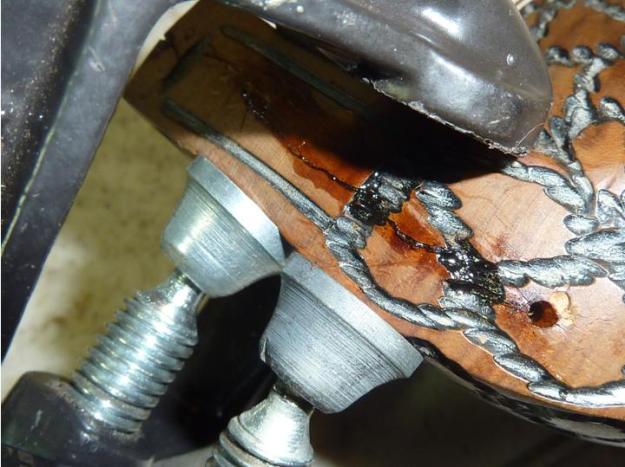
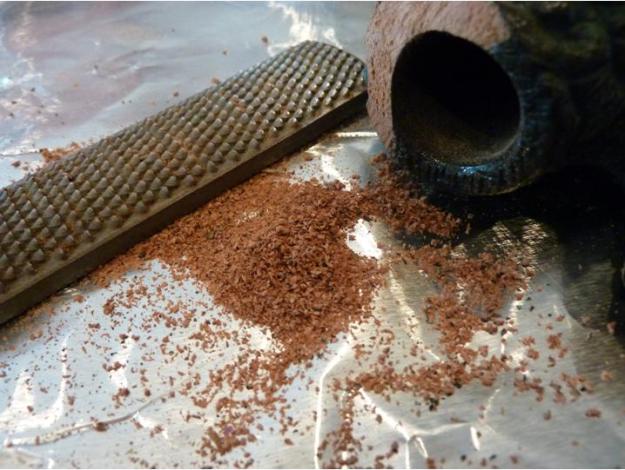
Here I made my first mistake—and one I shouldn’t have, because I’ve seen my Dad avoid this kind of thing in carpentry projects we’ve done together. Instead of letting the clamp actually meet the walls of the shank like I did here (which impressed the wood), I should have use some small wooden squares over the clamp to prevent it from biting into the shank. Live and learn.Mark10 I had already used a rattail file to make some briar shavings from an old bowl (thanks Mark Domingues for this tip!), so I mixed those with the epoxy and plugged the hole I’d previously made to stop the crack from lengthening.
Taking off the clamps the following day, I was dismayed to see the briar had been impressed on one side by their pressure. Some of the indentations lifted with the application of passing a flame from my lighter over them, and more would doubtless have been lifted had I used the old hot-knife-covered-by-a-wet-rag technique. I was fully intending to do this, and then—just forgot!Mark11 After letting the epoxy harden for 24 hours, the flat of an X-Acto knife was used to scrape off the excess. But the hole needed to be topped, so mixing up another briar shavings-epoxy mixture; I not only topped the hole, but went over the crack as well.Mark12
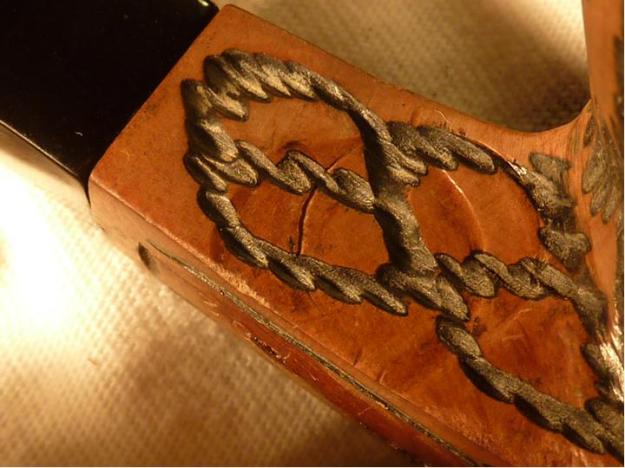
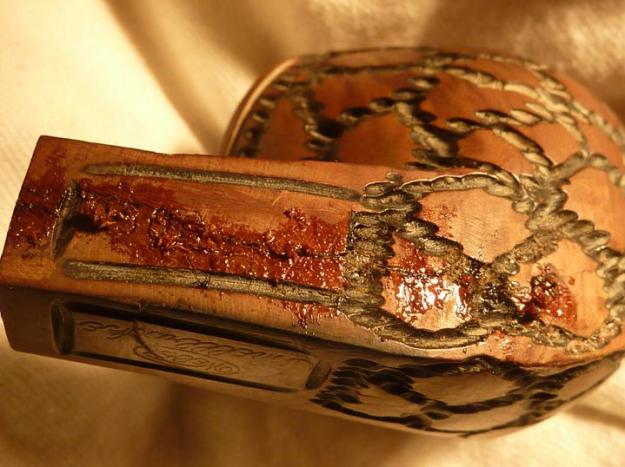
Mark13 After another 24 hours had passed to allow the epoxy to harden, I used 500 grit to go over the bump caused by filling the hole. I was concerned not to obliterate the “300” shape stamp, which I now think was probably a mistake. (Looking at the finished pipe, I now think I should have sanded down the abrasions caused by scraping with the X-Acto knife and not worried about the shape number stamp.)

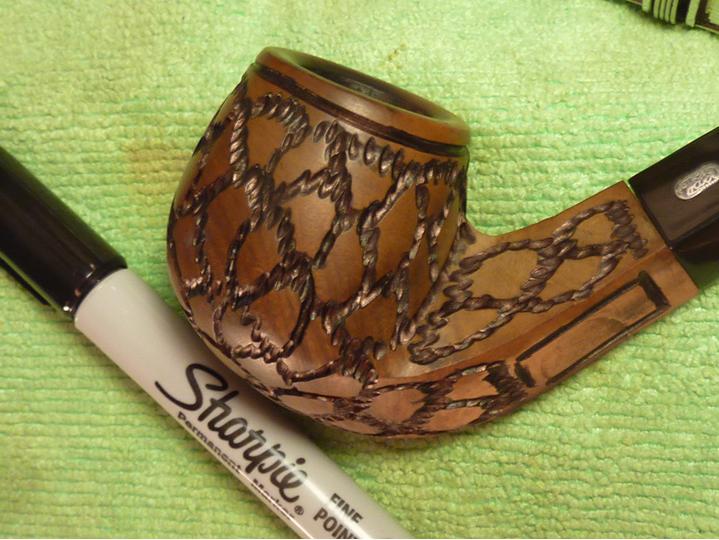
Next I needed to re-blacken the rustication lines, which had washed out in the alcohol bath. These were large enough that a Sharpie Fine Point could be used to good effect. I got this tip from Steve Laug when I was restoring a Peterson B35. The ink in some Sharpies seems to color out a dark bronze, while it’s actually black in others. Micron makes some good archival ink pens (I used them in creating the illustrations for Pipe Smoking in Middle Earth), but these were simply too fine to do the job on the Shelbrooke.Mark14 Having restained the rustication marks with the Sharpie, I restained the pipe. And this resulted in a second disappointment. The Shelbrookes I’ve seen are a light brown, to allow the black rustication lines to stand out in relief. I thought I’d mixed a very light glaze of medium brown Fiebing’s—maybe 1 part dye to 5 parts alcohol? I wiped it on and then flamed it. It came out a great deal darker than I’d hoped. I tried rubbing it off with a wet alcohol cotton pad, which helped, but didn’t bring out the lighter color I’d originally wanted. I think that the Sharpie ink may have “bled” into the alcohol solution, darkening the bowl. A better solution—now that I know the Sharpie ink will bleed—would have been simply to buff the bowl with carnuba.Mark17 Now it was time to put the band on. I used the smallest of the three, a 16.5mm, creasing one corner of it like Steve Laug has shown in two of his blogs here on this site. Then it was simply a matter of working it onto the pipe and bending each side with my fingers. I did heat the band with the heat gun set on low. I also used a small hammer to help knock the band into alignment, as each of the sides of the shank is slightly different.Mark15
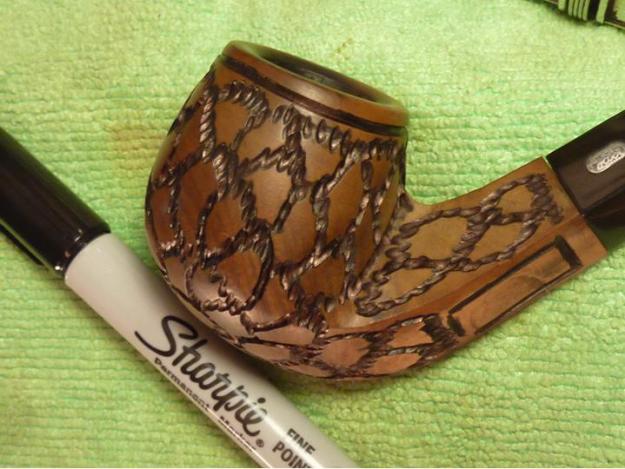
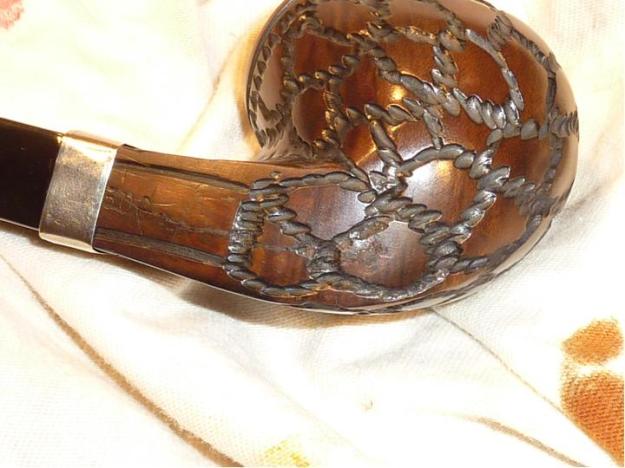
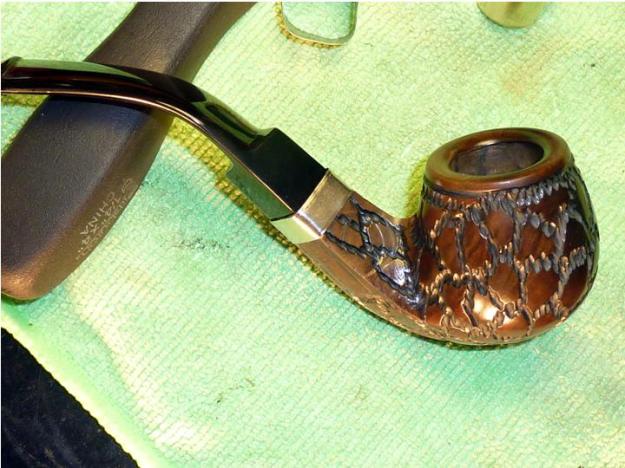
Mark16 All in all, I’m fairly satisfied with the job. The proof, of course, will be in the smoking.

Whitehall Thermofilter Rebuild


Blog by Dave Gossett

This pipe was part of an estate lot I received a few weeks ago. Borderline firewood. I was just going to throw it in the pipe parts box but decided to make it my nightshift project at work. It passes the time and keeps me awake.

I have American and English made Whitehall’s but this one is stamped Italy, so It would make a nice addition to the Whitehall collection if it came out looking presentable.

I initially planned to use this pipe for practice and try my hand at beveling a rim, so I didn’t take very many pictures of the rebuild.

It had several fills and deep gashes in the briar, and the button on the stem was completely MIA.Dave1

Dave2

Dave3 I started off with some aggressive sanding of the briar with 200 grit. This pipe lost some serious weight. It couldn’t get any worse so I went for broke and sanded down past the fills and gashes working around the stampings until I had a smooth stummel.

Next I gave my first rim beveling a shot. Using a rolled piece of 200 grit angled at 45 degrees, I turned the bowl slowly with one hand while sanding with the other. After trying this, I now have a new found respect for carvers that shape pipes by hand. I stopped frequently and eyeballed the rim closely to make sure it was symmetrical.

After I was content with the shape I worked my way up the grit ladder until it was smooth as babies butt.

The briar was starting to look pretty good. If I couldn’t save the original stem I would have found a substitute. The Thermofilter was similar in size and shape as my old 1919 old Loewe & Co. pipe with an antique rounded button that was popular at the turn of the century, so I modeled the stem rebuild after the Loewe.Dave4

Dave5 This is the biggest stem rebuild I’ve tried so far. This recipe is great for fixing tooth holes or small missing portions. Only time will tell if an addition this large will hold up. Here is the link of how I rebuild stems if anyone wants the details.

http://pipesmagazine.com/forums/topic/how-to-fix-tooth-holes-in-stems
I piled on the mix and filed it about five times before I found the shape I was going for.Dave6

Dave7

Dave8

Dave9

Dave10 American WhitehallDave11 English WhitehallDave12 Italian WhitehallDave13 It would be interesting to know how many other countries accompanied the Whitehall name.

Cleaning up a Hilson Made in Belgium Meerlined Bulldog, Shape S60


Blog by Steve Laug

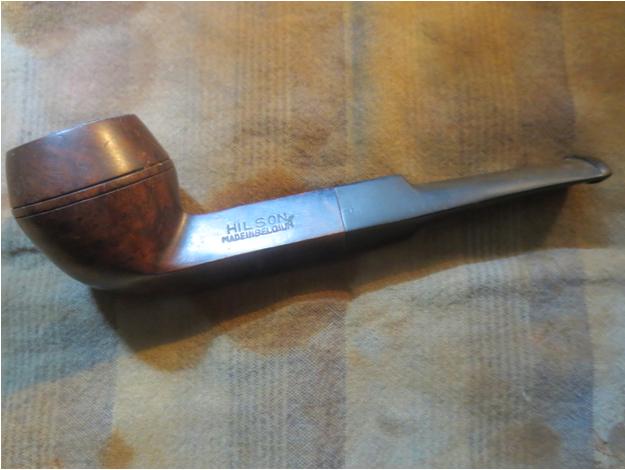
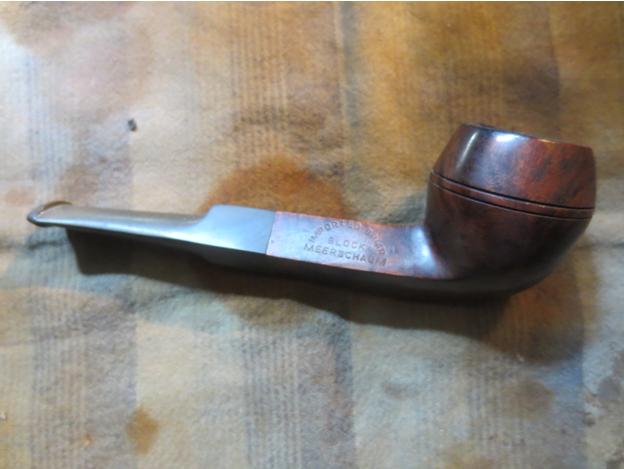
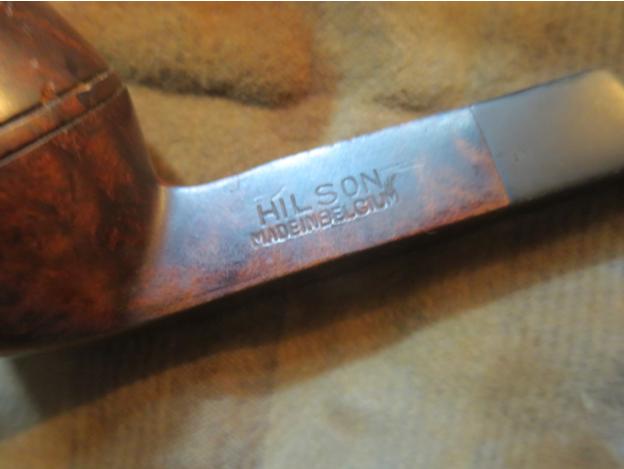
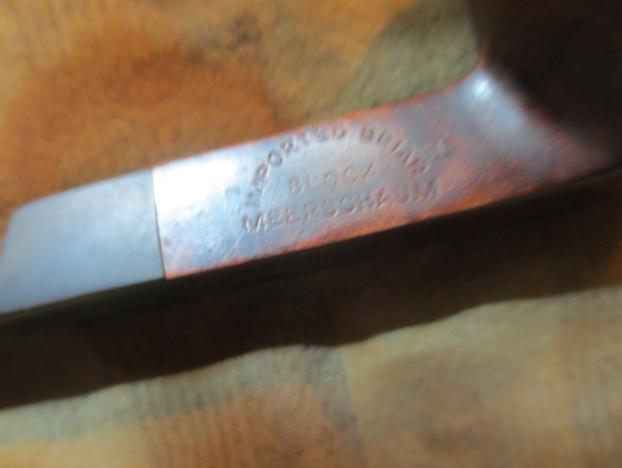
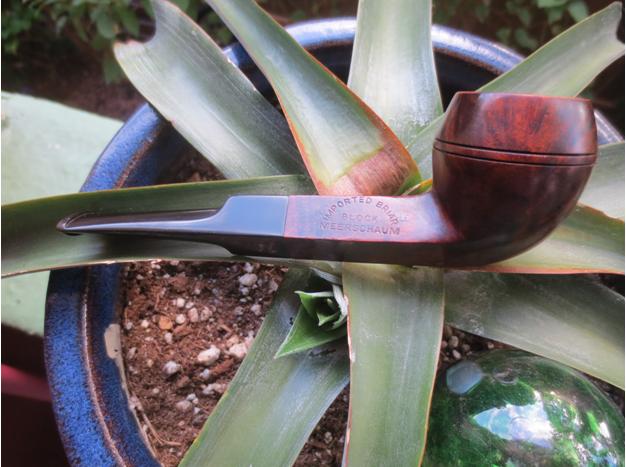
This is another pipe from the Idaho Falls antique mall. The funny thing is I went back another day to show my daughters some of the antique jewelry and did not think much of looking for more pipes as I had already cleaned out the ones I had an interest in. One of my daughters called me over to a display case where there was a pipe rest with a golden Cocker Spaniel on it. She thought it would be a great memory piece for me. I looked in the case and there on the bottom shelf was a pipe that I had not seen on the previous day. It was a nice straight Bulldog pipe. The bowl looked like it was a mess but the briar and stem looked to be in pretty good shape. I had the clerk pull it out and was surprised by the stamping on it. It read Hilson over Made in Belgium on the upper left side of the shank and Imported Briar in an arch over Block Meerschaum on the upper right side of the shank. There were some other letters underneath the arch that ran in a straight line but I could not read them without a lens. Of course I had to have the old pipe. I knew that it at least was made before Gubbels Pipe Factory in Holland bought out the Hilson brand in 1980 because of the Belgium stamping.Hilson1

Hilson2 When I got home I looked at the shank under a bright light using a lens and could see more clearly some of the marks under the arch. The arch appeared to be over stamped and underneath on the left of arch it read S and the other letters faded out. On the right side of the arch it read TYLE. I am wondering if it originally read S60 (which is the shape number that has been more recently stamped on the underside of the right side of the shank) BLOCK STYLE in a straight line over MEERSCHAUM (the center and bottom words in and under the arch). If so then when it left Belgium and headed to the USA it must have been over stamped with the arched IMPORTED BRIAR which is stamped with a slightly smaller font. I also examined the stem and found that on the underside of the right side it had a small stamped M and what looked like part of an E. All of that will remain a bit of a mystery but it makes this old pipe interesting.

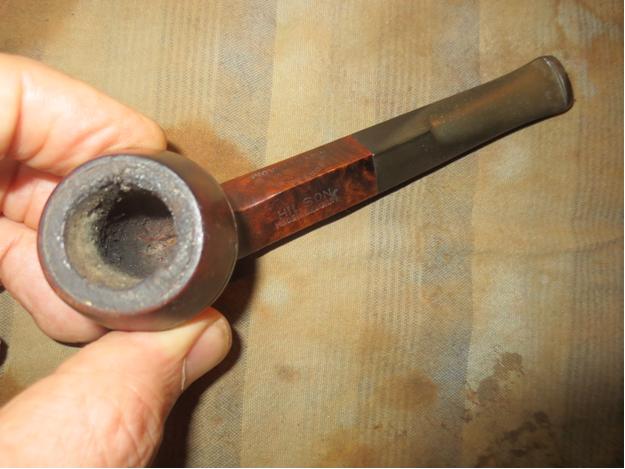
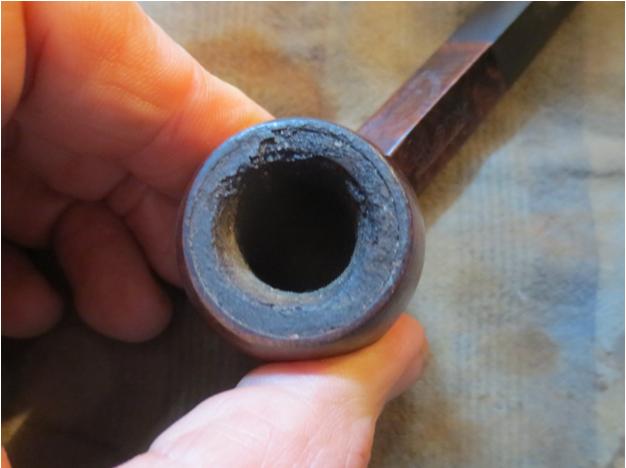
The briar portion of the pipe was in pretty decent shape. I was not sure about the briar on the rim as it was pretty covered with an overflow of tars that had come up out of the bowl and over the rim. The meerschaum bowl was invisible at this point in the process. It was somewhere inside the mess but how far down I was not sure. I had no idea of the thickness of the Hilson bowls in comparison with others. The other Hilson Meerlined pipe I had did not have the lining and the briar was very thin so I was thinking that this one would be like that. The finish was dirty on the rest of the bowl but did not have any damage. The briar looked pretty decent other than a few small fills on the underside of the shank. The stem was dirty and lightly oxidized. The pipe and the stem smelled awful! The bowl smelled like old cigarettes left in an ashtray in the rain. The stem smelled like old tires with a hint of sulfur. It would take a bit of work to clean up this one without damaging the meerlined bowl.Hilson3

Hilson4From a bit of research on the web I found that the company was originally started in 1846 by a German named Jean Knödgen who produced clay pipes in Belgium. According to a note on the Pipephil website it seems that in the late 19th century Jean Hillen married into the Knödgen family and later took over the company. He changed the company from a clay pipe producer to a factory able to manufacture briar pipes. Jean Hillen had 2 sons: Jos Hillen was responsible for sales and Albert Hillen was responsible for the production. After WWII his son Albert founded the HILSON brand which was a combination of Hillen and Son and exported his pipes all over the world. The brand did very well in the 1960s and 1970s and the brand was sold throughout Germany and Europe. In 1980 the company ran into financial difficulties and was bought by the Royal Dutch Pipe Factory owned and operated by Gubbels who still makes the Big Ben pipe.

Hilson meerschaum-lined briar pipes were manufactured in Belgium at the original Hilson factory in the 1970’s and used Block Meerschaum to make the inserts for their pipes. This was much better quality than most meerschaum lined pipes. Usually the lining was made of pressed meerschaum which was made from ground up meerschaum. Block Meerschaum is carved from the meerschaum as it is mined. High quality meerschaum pipes are always made from block meerschaum.

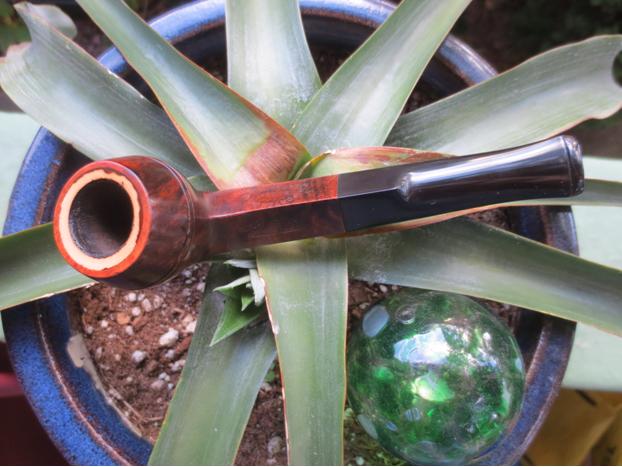
I took the next three close-up shots to give an idea of the state of the bowl when I started. There is a hint that it is a meerschaum lined bowl when you see the line on the edge of the bowl just inside of the briar. The thick coat of carbon built up on the rim and down into the bowl made it hard to see. I was glad that this was a block meerschaum insert rather than a compressed one because there was some hope that the bottom of the bowl had not begun to disintegrate of break up. The second and third photos below give an idea of the stamping on the shank of the pipe.Hilson5

Hilson6

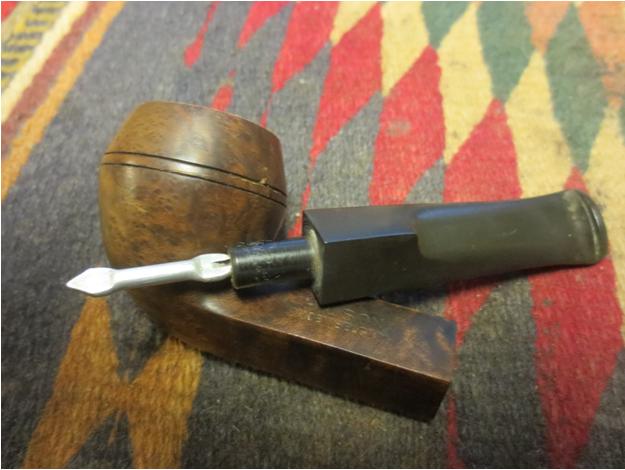
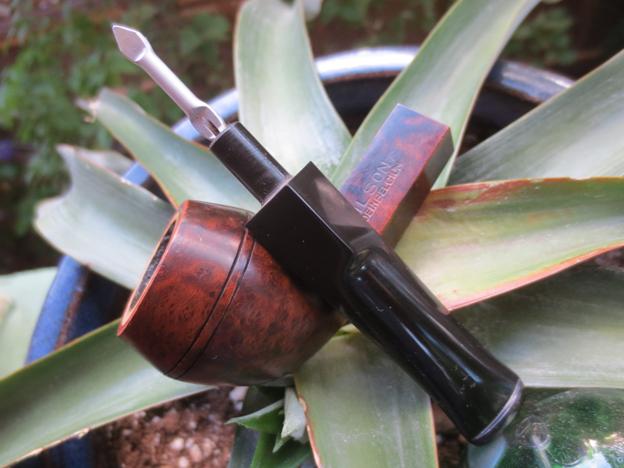
Hilson7 The next photo shows the stinger apparatus in the tenon of the pipe. Most of the other Hilson pipes that I have worked on have an inner tube extension rather than a tenon so this was a new one to me. It is also unique among the stingers that I have seen.Hilson8 I decided to top the bowl to remove all of the carbon build-up and see what was happening with the top of the meerschaum insert and the briar rim. I knew that the cake in this one was out of control but I wanted to see if I could see the original inner line before I dealt with the cake.Hilson9 The next photo shows the topped bowl. Once I had it topped I folded a piece of sandpaper and worked at the inner edge to remove the cake. I wrapped the sandpaper around my finger after the initial sanding and went as deeply into the bowl as I could reach. There was some staining around the back and right side of the meerschaum lining where it came in contact with the briar. I think some of the tars and oils wicked into the meerlining and stained it.Hilson10 The surface of the rim was scratched from the 220 grit sandpaper so I used a medium and a fit grit sanding block and cleaned up the rim.Hilson11 The next two photos show the rim and the bowl after reaming. I reamed what I could not reach with a sharp pen knife and removed all of the cake in the bowl.Hilson12

Hilson13 I removed the stinger from the tenon. I always twist the tenon rather than just pull it in case it is threaded. In this case it came out easily enough.Hilson14 I was going to use the retort to clean this pipe but thought better of it as I did not want to soften or damage the meer liner with the alcohol. So, I resorted to the old tried and true method of cotton swabs and alcohol to clean out the shank and wipe down the inside of the bowl. It took a lot of swabs to get the shank clean. The mortise ran the length of the shank to accommodate the long stinger.HIlson15 The stem took a lot less work. After just a few pipe cleaners and alcohol the pipe cleaners came out clear.Hilson16 I scrubbed the stinger with alcohol and 0000 steel wool to remove the tars that had stained the aluminum.Hilson17 I wiped down the bowl with alcohol on cotton pads and then took the following picture to show the state of the pipe thus far. It is going to be a beautiful pipe.Hilson18 I wiped the bowl and shank down with a light coat of olive oil to enliven the briar and bring out the grain. The birdseye grain on the sides of the bowl were stunning. It is hard to see with the freshly oiled bowl but in later photos it will stand out.Hilson19

Hilson20

Hilson21

Hilson22 The stem was cleaned and ready to polish. I wet sanded it with 1500-2400 micromesh sanding pads and then gave it a coat of Obsidian Oil. Before the oil dried I dry sanded it with 3200-4000 grit pads and gave it another coat of oil and then sanded it with 6000-12000 grit pads to finish the shine. I gave it a final coat of Obsidian Oil and let it dry. Once dry I buffed it with White Diamond on the wheel.Hilson23

Hilson24

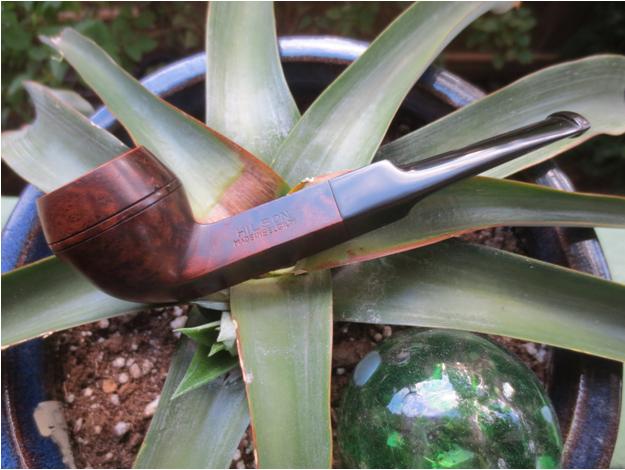
Hilson25 I buffed the finished pipe with Blue Diamond Polish on the wheel and then gave it multiple coats of carnauba wax. I buffed it with a clean flannel buff and then again by hand with a microfibre cloth to bring depth to the shine. The finished pipe is shown in the photos below. Other than the stain around the back and right side edge s of the meerschaum lining the pipe looks like new. It should offer many more years of service.Hilson26

Hilson27

Hilson28

Hilson29

Hilson30

Hilson31

Rebirth – A Genuine Briar Zulu


Blog by Steve Laug

I am working on yet another Idaho find. This one comes from a small shop in Victor, Idaho. I had a great visit with the shop keeper who has traveled the world. We talked about travels and pipes. She had a small jar of pipes behind the counter and I purchased all of them. I love the Zulu shape and this one is a good example of it. The pipe is in rough shape. The finish is worn and is peeling off on the sides of the bowl. The rim is damaged. The cake had been reamed with a knife and the bowl was out of round. The top was rough and the back outer edge was beat down and had a large nick on the back right side. The stem did not fit in the mortise all the way. It had some oxidation and a band of calcification toward the back near the button. The slot was almost closed off with grit and when I removed it from the shank it had a very grimy short stinger. Not sure but I think I will lose the stinger. I am not sure the stem is the original as the diameter of the shank and the stem are not quite the same.Gen1

Gen2

Gen3

Gen4 I took a close up photo of the rim to show the damage to the top and the back side of the rim. It was truly a mess.Gen5 I took the stem off the pipe and pulled the stinger with a pair of pliers.Gen6 I scrubbed down the exterior of the bowl and the rim with acetone on cotton pads to remove the peeling varnish and the grime as much as possible before I worked on the rim and the backside of the bowl.Gen7

Gen8 There was a large fill that had crumbled on the underside of the shank about mid shank. It would need to be picked out and repaired.Gen9 I picked out the crumbling fill with a dental pick and then topped the bowl on the topping board using 220 grit sandpaper.Gen10 When I had flattened out the majority of the rim damage I repaired the damaged back side of the bowl using super glue and briar dust. I also replaced the fill in the bottom of the shank at the same time.Gen11

Gen12 When the patch dried I did some more topping of the rim to blend the repair into the flat surface of the rim.Gen13 I reamed the bowl with a PipNet reamer using the first two cutting heads. I took the cake back to bare briar to check for damage to the inside of the bowl.Gen14

Gen15 I sanded the repairs on the underside of the shank and the back of the bowl to blend it into the briar around it. I wanted the transition to be smooth and seamless. The top and the backside of the bowl took some effort to clean up. You can see from the photos the size of the repairs. They had dried hard as a rock and were very stable but they were quite large.Gen16

Gen17

Gen18 I sanded the bowl and shank with 0000 steel wool to smooth out the scratches and polish the repairs. I used it on the entire bowl to help remove the previous finish.Gen19

Gen20 I used the KleenReem drill bit to clean out the air way between the mortise and the bowl. It was constricted from the build-up of the grime. I could not get a thin pipe cleaner into the airway before I used the bit to open it up.Gen21 I cleaned out the shank and airway in the bowl with pipe cleaners, cotton swabs and alcohol. I scrubbed it until they came out clean and white. It was incredibly dirty. I tried to get a pipe cleaner down the stem but the slot in the button was too constricted to get even a thin cleaner through it.

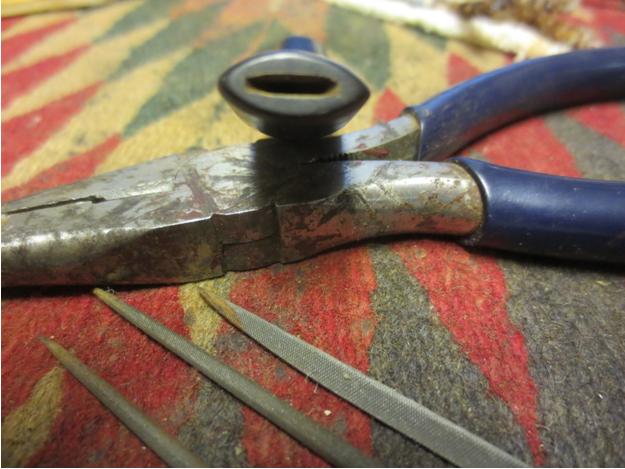
I sanded the transition between the stem and shank. The stem did not fit properly in the shank. I worked on the tenon to even it up the fit in the shank. It was almost conical at the end next to the stem so I used a Dremel and sanding drum to even it up. It was also sanded at a bit of an angle so there was a gap on the right side of the shank. I even out the tenon and made it round again. When I was finished the gap was gone and the stem fit. Now all I had to do was adjust the diameter of the shank on the right side and top as it was slightly larger than the diameter of the stem. I sanded the shank with 220 grit sandpaper until the transition was smooth and the diameter the same on both the shank and stem. I sanded the stem at the same time and removed the tooth chatter and calcification on the button end.Gen22

Gen23

Gen24

Gen25 I sanded the inside edge of the bowl with a folded piece of 220 grit sandpaper to smooth out the roughness on the back edge.Gen26 I sanded the bowl and stem with a medium and a fine grit sanding sponge to remove the scratches left behind by the sandpaper.Gen27

Gen28

Gen29

Gen30 I sanded it with 0000 steel wool to take out the next level of scratches on the briar.Gen31

Gen32

Gen33

Gen34 With all of the sanding completed I stained the bowl with the oxblood alcohol based stain to highlight the grain. It would be the first coat of stain that I used. I wanted to make some of the birdseye and cross grain standout and chose the oxblood colour to be the undercoat.Gen35 I flamed the stain and then buffed it to remove the excess stain.Gen36

Gen37

Gen38

Gen39 I wiped the bowl down with alcohol and sanded it with 1500 grit micromesh to further remove the excess stain.Gen40

Gen41 I then stained it with the top coat – a dark brown aniline stain thinned 50/50 with alcohol to make it more of a brown wash coat. I applied it with a cotton swab and then flamed it. I repeated the process until it gave a good coverage. I applied heavily around the top of the rim and on the underside of the shank over the repairs.Gen42 I buffed it with White Diamond on the buffer and then rubbed down the bowl with a light coat of olive oil to bring life and depth to the finish.Gen43

Gen44

Gen45

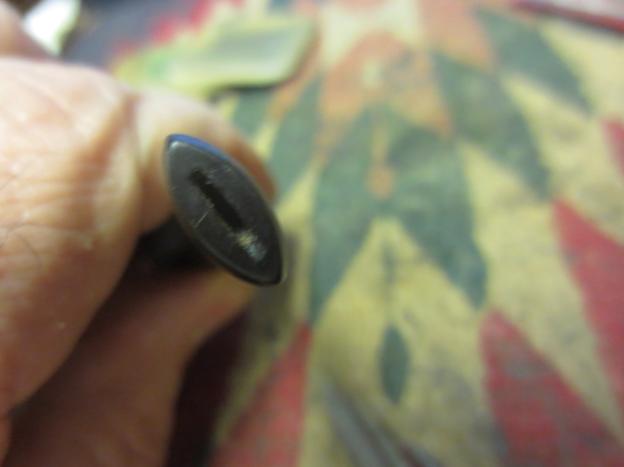
Gen46 At this point I set the bowl aside to work on the stem. The slot was so tight that I could not get a thin pipe cleaner through it. That had to change so that I could easily clean it. I used small needle files to open it up. I started with a flat oval file and worked on the bottom and top edge of the slot. Once I had them opened I used a thicker oval to give the top and bottom edge more depth and the sides more of a taper inwards to the airway. I finished with a round file and folded sandpaper to smooth out the opening.Gen47

Gen48

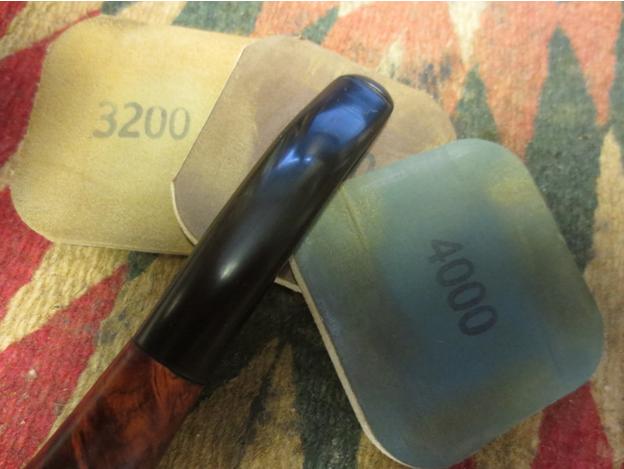
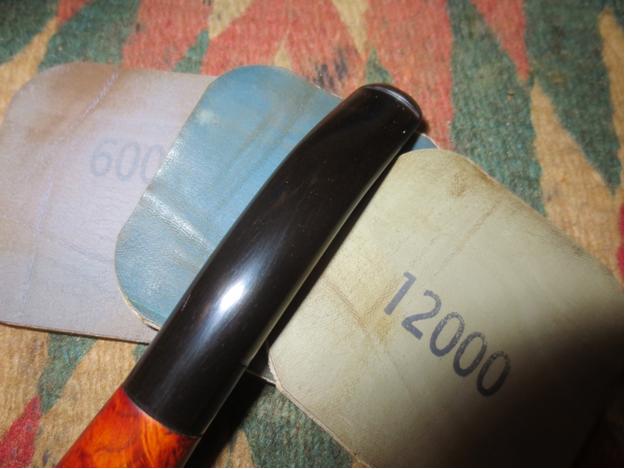
Gen49 I wet sanded the stem with 1500-2400 grit micromesh sanding pads to remove the scratching and oxidation that remained. I rubbed it down with Obsidian Oil and continued by dry sanding with 3200-4000 grit micromesh pads. I gave it another coat of oil and finished with 6000-12000 grit micromesh pads. I gave it a final coat of oil and let it dry.Gen50

Gen51

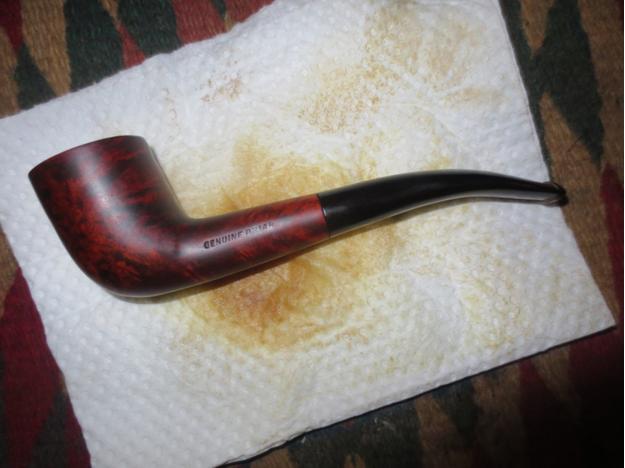
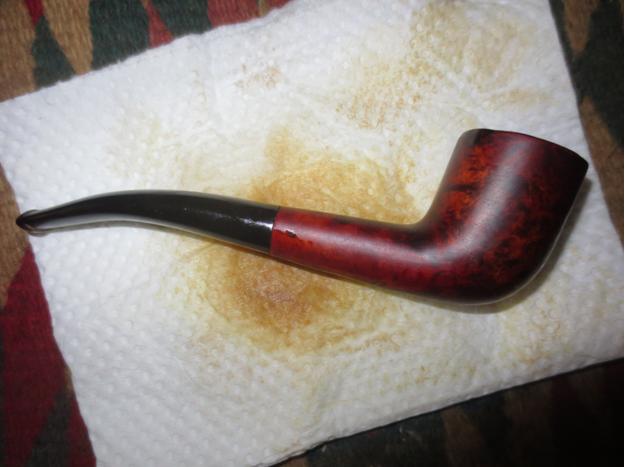
Gen52 I buffed the bowl and the stem with Blue Diamond Plastic Polish on the buffing wheel and then gave the bowl and stem multiple coats of carnauba wax. I buffed the pipe with a clean flannel buff and then hand buffed it with a microfibre cloth to add depth to the shine. The finished pipe is shown below. The contrast stain worked well and the birdseye grain stands out on both sides of the bowl. The cross grain on the front and back also looks great. The repairs are still visible but less so than they were before the two coat stain process. It came out pretty well considering where it was when I started on this old timer. Now it should continue to deliver good smokes for a long time to come. I put the stinger in for the photos but it is easily removed and I am pretty sure that I will remove it once I smoke it!Gen53

Gen54

Gen55

Gen56

Gen57

Gen58

Restoring a 20’s Era LHS PUREX Patent 1587048 Octagonal Pot


Blog by Steve Laug
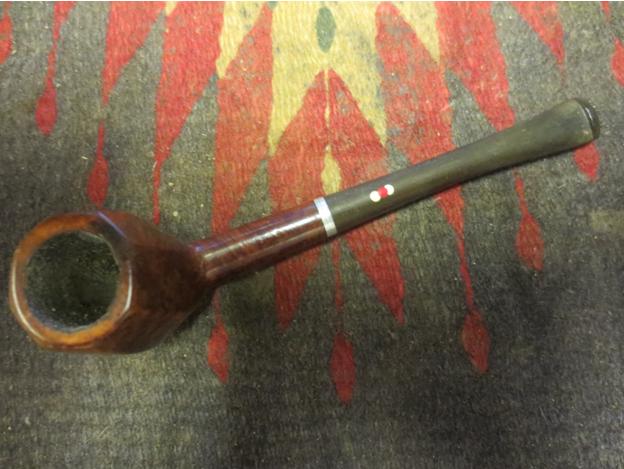
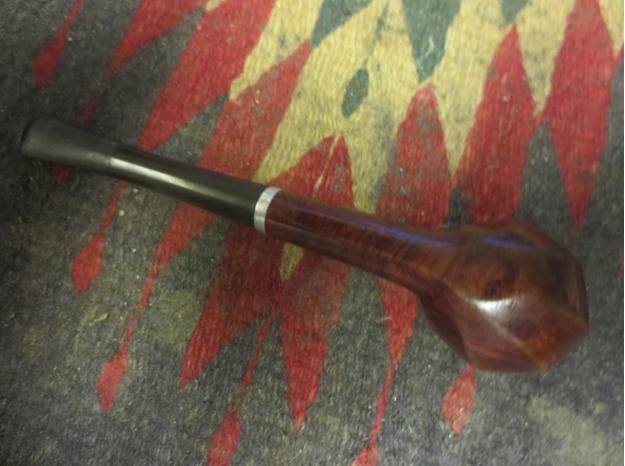
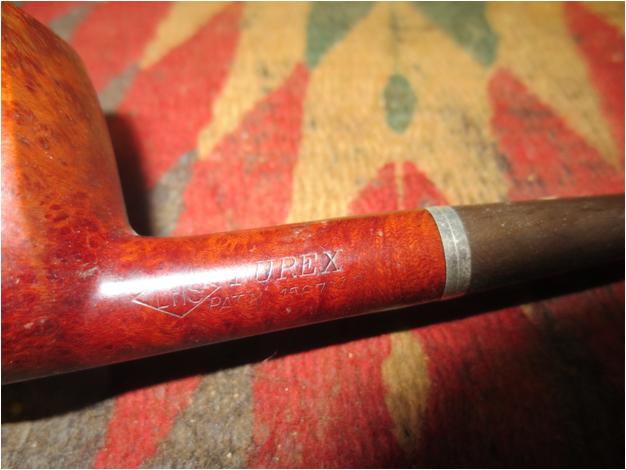
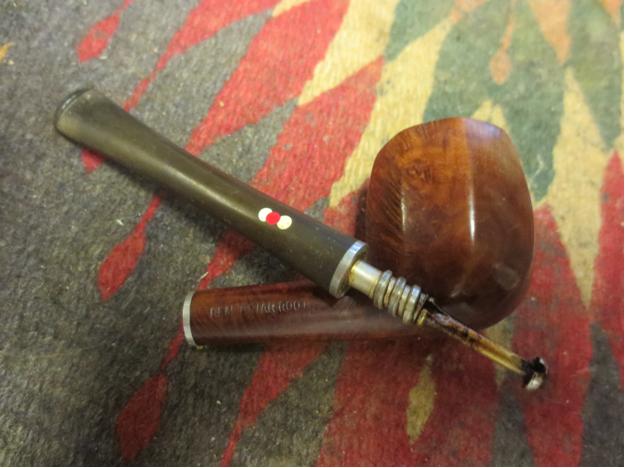
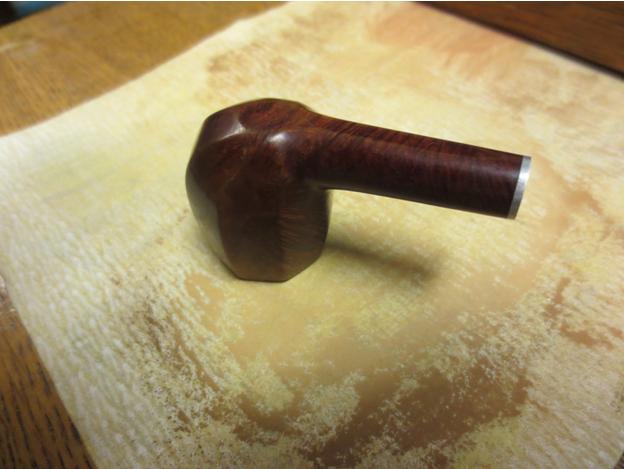
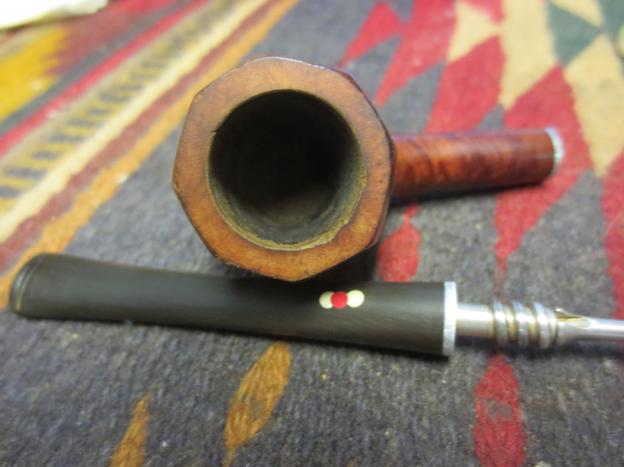
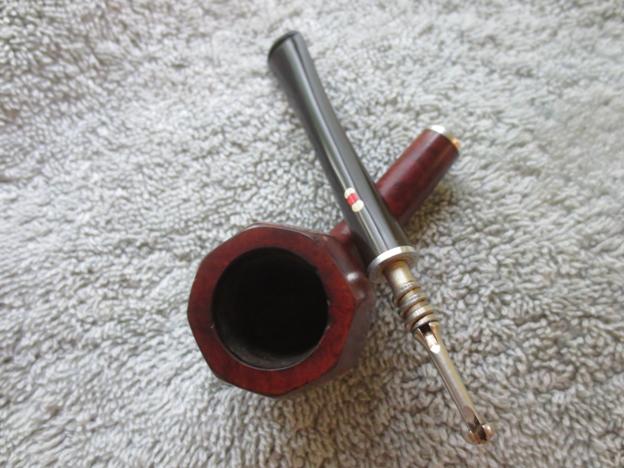
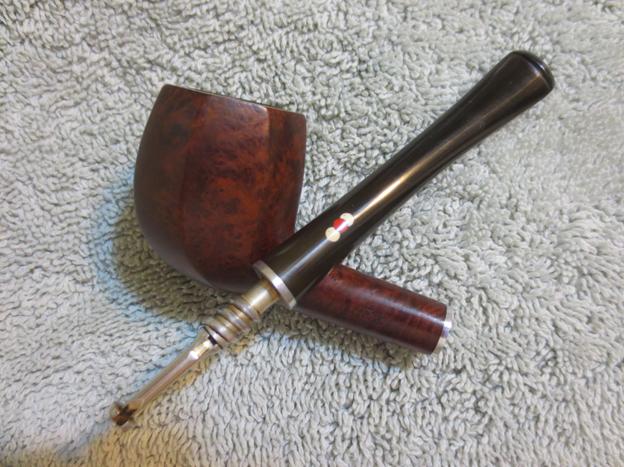
LHS The pipe I chose to work on is stamped on the left side of the shank LHS in a Diamond then PUREX. Underneath is the stamping PATN 1587048. On the right side it is stamped Real Briar Root. On the underside of the shank is stamped 69. The pipe is in decent shape for a oldtimer. It is tiny and delicate looking and that is hard to capture in these photos. The length of the pipe is 5 ¼ inches, the diameter of the bowl is 1 1/8 inches, the bowl height is1 3/8 inches. The bore on the bowl is 5/8 inches. The diameter of the shank and the stem is 3/8 inches. The stem is lightly oxidized and has some tooth chatter on the top and bottom near the button. The finish is dark and dirty with worn spots showing through the varnish that covered it. The aluminum on the shank and the stem was oxidized and lightly pitted.LHS1

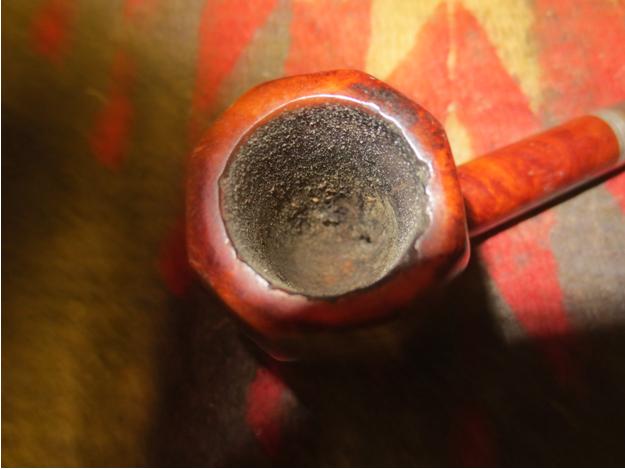
LHS2 The bowl was slightly out of round on the back inner edge. There were some nicks in the inner edge and on the rim top.LHS3 Here is a close-up of the rim showing the nicks and damage to the rim.LHS3a

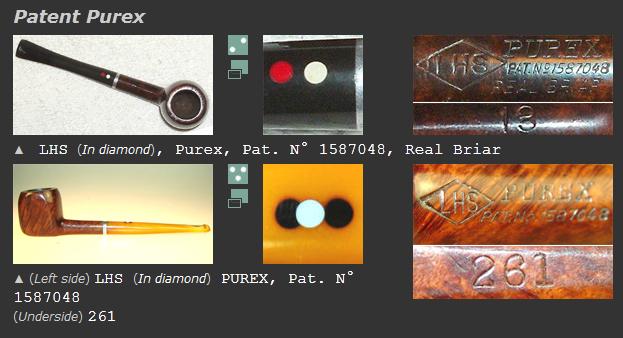
LHS4 I did a bit of searching on the internet and on the Pipephil site I found my pipe – An LHS Patent Purex. It is stamped like the second pipe in the photo below and has the Real Briar on the right side of the shank. The stem has a combination of the dot pattern in the photo below. Mine is in the pattern of the second one on the yellow stem but it has two white dots on the sides with a red dot in the middle.LHS5

LHS6

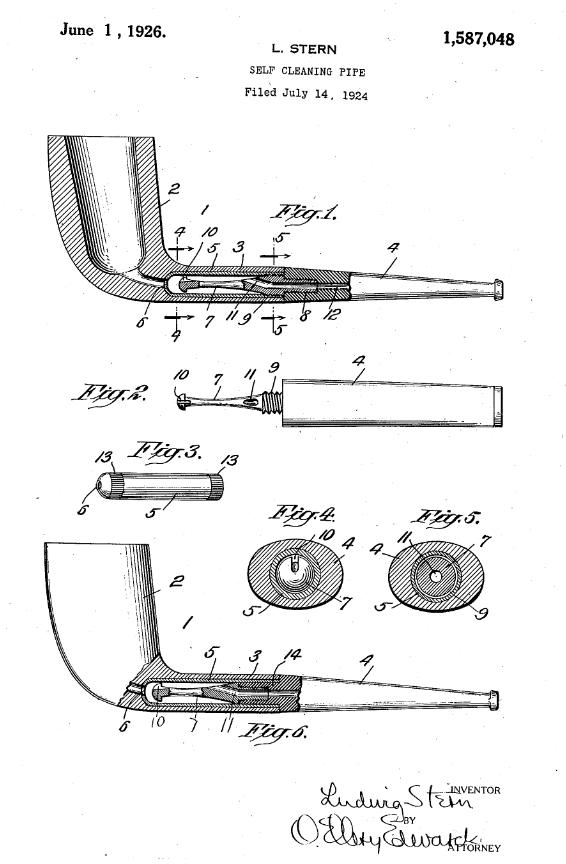
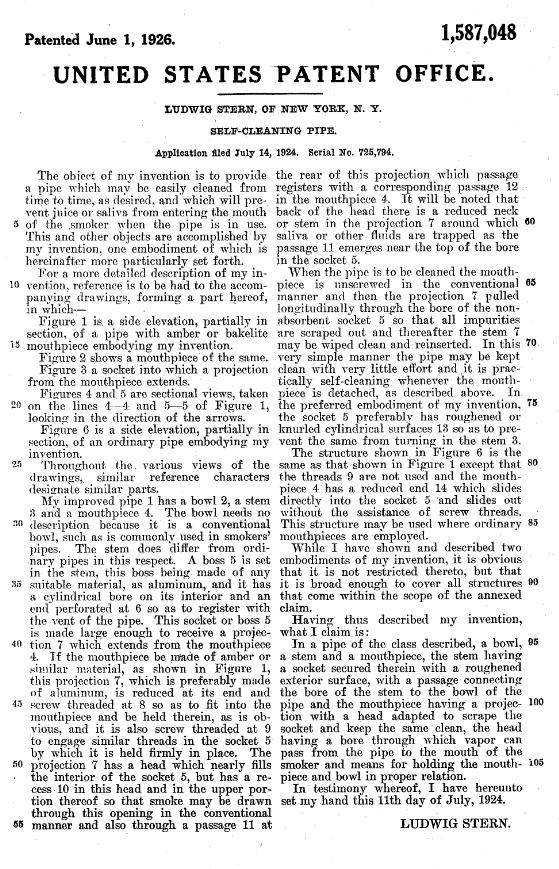
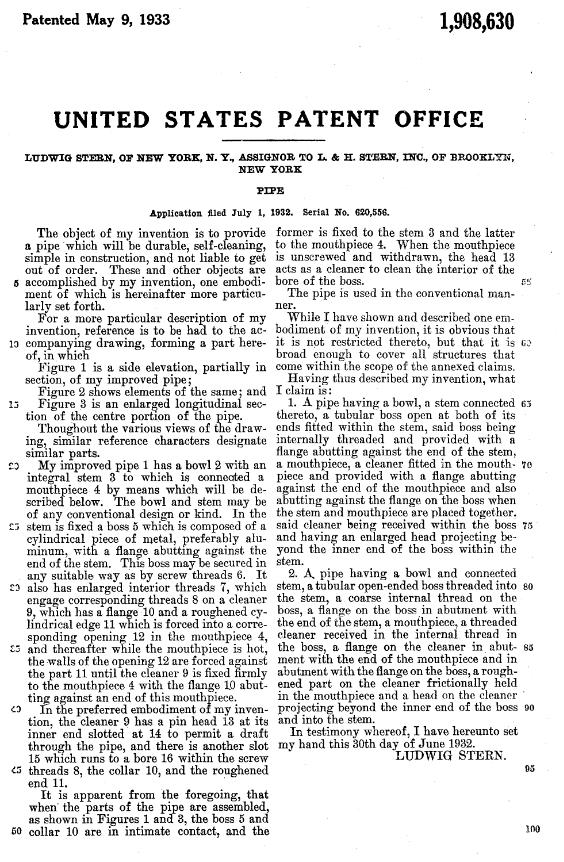
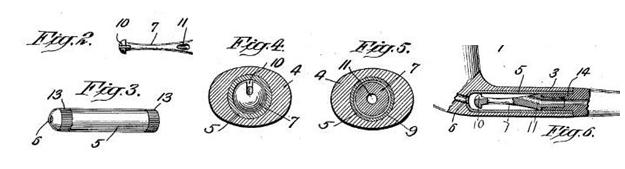
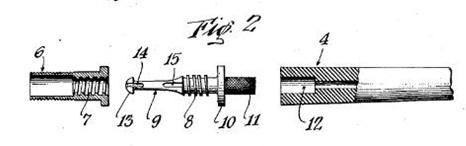
LHS7 I also researched the patent number and it led me to the following diagram and patent information. It was filed in 1924 and awarded on June 1, 1926. The interesting thing is that it combines some of the concepts from a later patent filing on July 1, 1932 and granted on May 9, 1933. The stamping places it as a 1926 pipe. The shape of the stinger and the threaded mortise make me think of the 1926 pipe in many ways. I cannot see deep enough into the pencil shank to see if there is a metal cup insert in the shank behind the mortise. Maybe that will become clear in the cleanup. The smooth portion of the tenon after the threads and the metal disk that is threaded into the stem make me think of the 1933 patent pipe. The threaded mortis is the same in both but if it ends in the shank without the cup then it has a lot of similarity to the 1933. The 1926 patent gives me a start date for this pipe and the 1933 patent gives me an end date. The fact that the metal works combine both makes me wonder if the pipe did not come out of the factor late 1920s or early 1930s just prior to the new patent release in 1933. I am including the two different patents for you to see the interesting combination in this pipe.LHS8

LHS9

LHS10

LHS11 I have screen captured the insert in the shank and the stinger apparatus from the 1926 patent drawings. Figure 2 shows the stinger. It is identical in both the 1926 and the 1933 patent drawings. Figure 3 shows a metal cup that is inserted in the shank. The mortise end is threaded to receive the threads on the tenon. Figure 4 shows the end of the stem looking at the head on the stinger. The slot is at the top. Figure 5 shows the inside of the shank looking at it from the end. The mortise end is threaded and the cup has an airway hole in the center of the rounded end. That end sits against the airway from the bottom of the bowl as seen in Figure 6. When I started cleaning out the shank I was unsure of the interior. Once I was cleaning it I was certain that I was working with the insert that is shown in these figures. The inside of the shank is smooth and shiny now that it is clean. Looking down the shank with a flash light it is visible.LHS12 Here is a photo of the stinger – note the length of the tenon behind the stinger – particularly the smooth portion. Note also the metal plate on against the stem that is threaded and inserted into the vulcanite of the stem.LHS13 I have also included a screen capture below of Figure 2 from the 1933 patent drawings. The insert in the shank is shorter than the 1926 version and does not include the cup. The tenon is the same though it has a longer smooth portion. It also has a plate that rest against the face of the stem when inserted.LHS14 The rim damage required me to lightly top the bowl to minimize it and flatten the top of the rim. Doing so removed most of the damage and brought the bowl back into round.LHS15

LHS16 I wiped the bowl down with acetone on cotton pads to try to break down the varnish coat. I sanded it with a fine grit sanding sponge to open the surface. It was stubborn stuff to remove. There was some beautiful grain under the dark varnish coat.LHS17

LHS18

LHS19 I still did not have the varnish coat removed so I dropped the bowl into an alcohol bath to let it soak. The dark colour of the alcohol bath comes from all of the bowls that have soaked in it in the past. I filter it but the dark colour remains. I like it as it adds a bit of a patina to the briar as it soaks there.LHS20 While the bowl soaked I worked on the stem. I cleaned out the inside of the stem and cleaned the stinger with pipe cleaners, cotton pads and alcohol.LHS21 With the inside clean I decided to take a break from working on this pipe and went out to enjoy a bit of sunshine while it is here in Vancouver. Rain is forecast and coming in even while I am outside. I picked about 6 pints of blueberries while I was outside.

When I came back to the pipe after it had been sitting in the bath for about an hour and a half. I dried it off with a paper towel. The varnish coat was gone and the topped bowl had picked up a patina from the bath that almost matched the colour of the briar of the bowl.LHS22

LHS23

LHS24

LHS25

LHS26 I scrubbed out the cup insert and mortise in the shank. It took a lot of scrubbing. I did not want to use the retort as I was not sure what the stem material was and did not want to risk dissolving it with the hot alcohol. I scrubbed it with alcohol, cotton swabs and pipe cleaners until they finally came out clean. I shone a flashlight down the shank from the bowl and the mortise and it was sparkling and shiny. It was indeed the cup insert – all doubts were removed.LHS27 With the insides and outside clean I rubbed the bowl down with a light coat of olive oil to highlight the grain. When it dried it made the grain pop and the rim colour was a match. I will need to give it multiple coats of carnauba wax once I am finished with the stem. The bowl however is going to be a beauty.LHS28

LHS29

LHS30

LHS32 The nicks in the inner rim bothered me so I folded a piece of sandpaper and worked on the inner edge to smooth it out while keeping it round.LHS33

LHS34 I then mixed two stain pens – a medium and a dark brown to match the colour of the bowl and try to blend the rim in more closely. I then sanded the rim with a 3200 grit micromesh sanding pad to work on the blend even more.LHS35 I buffed the bowl with White Diamond and then set it aside so that I could finish working on the stem. I sanded it lightly with a fine grit sanding sponge and then worked on it with micromesh sanding pads. I wet sanded with 1500-2400 grit pads, rubbed it down with Obsidian Oil and then dry sanded with 3200-4000 grit pads. I gave it another coat and then sanded it with 6000-12000 grit pads. When I finished I gave it a final coat of Obsidian Oil and let it dry.LHS36

LHS37

LHS38 I buffed the pipe with Blue Diamond on the wheel and then gave it multiple coats of carnauba wax. I buffed it with a clean flannel buffing pad and then by hand with a microfibre cloth to give depth to the shine. The finished pipe is shown in the photos below. LHS39

LHS40

LHS41

LHS42

LHS43

LHS44 Thanks for looking.
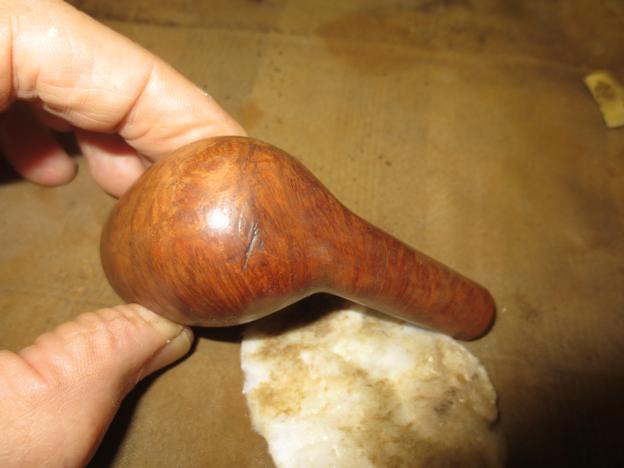
Breathing new life into a White Flame Saddle Billiard 353


Blog by Steve Laug

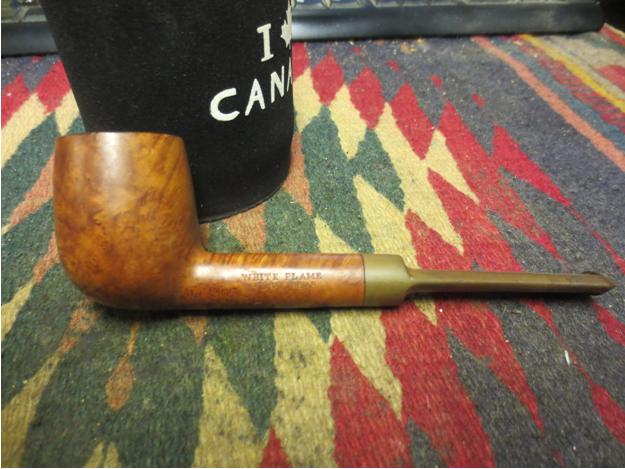
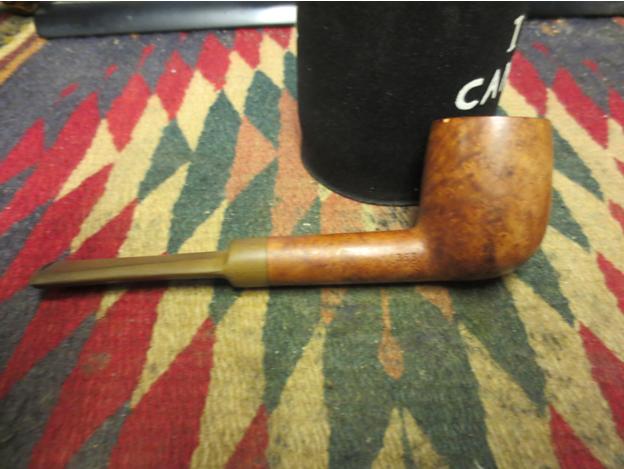
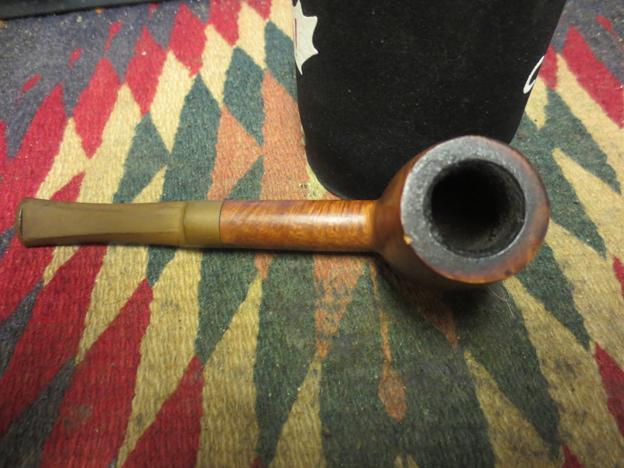
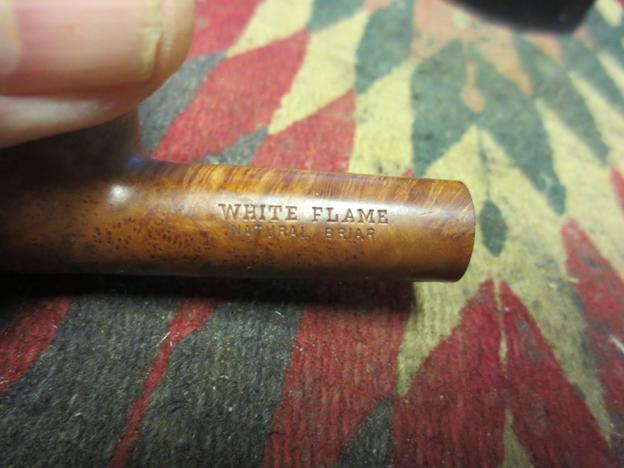
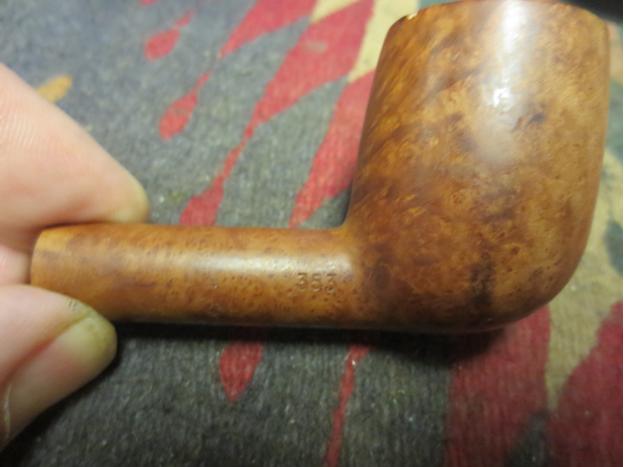
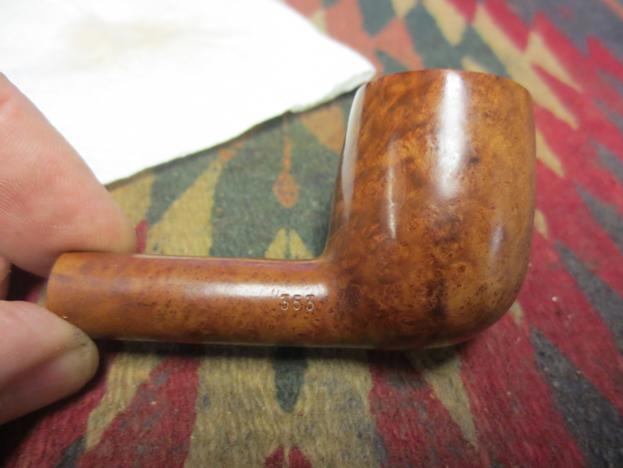
This was another of the pipes I picked up on a recent trip to Idaho Falls. I found it and several nice older pipes in a local antique mall. This one is stamped White Flame over Natural Briar on the left side of the shank and 353 on the right side. On the underside of the stem there was a lightly stamped FRANCE on the saddle. I had never seen a pipe with the White Flame stamping. I looked on the pipephil site and there was nothing there either. I did find a reference to the brand in Who Made That Pipe. There it was listed as a brand made by both Imperial and Civic. The book said the make was English and American. From my experience though, both the Imperial brand and the Civic brand were English made pipes. I know that Yello Bole made an Imperial and I am wondering if that is not what WMTP is referring to. This one however, just says British Briar in the shape, the stamping and everything else. I searched on the web to find a shape chart for either Imperial or Civic and so far have found nothing that lists the shapes of the two brands.Flame1
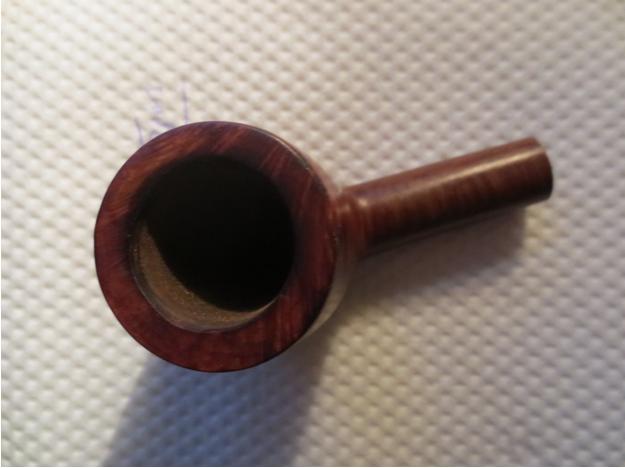
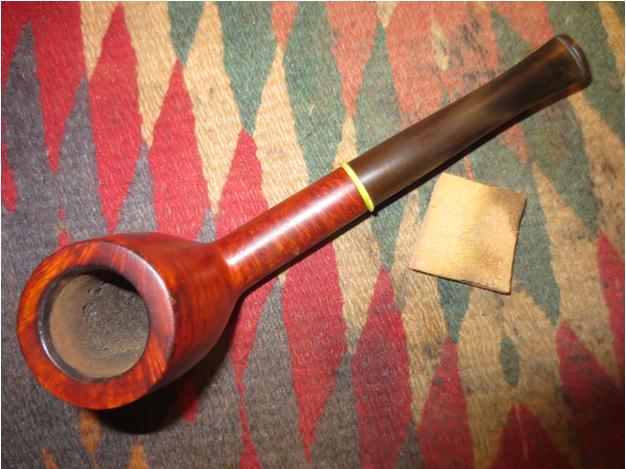
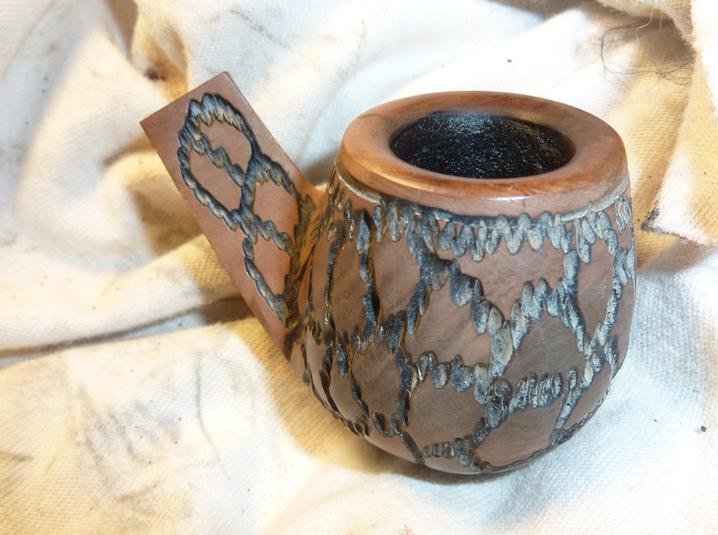
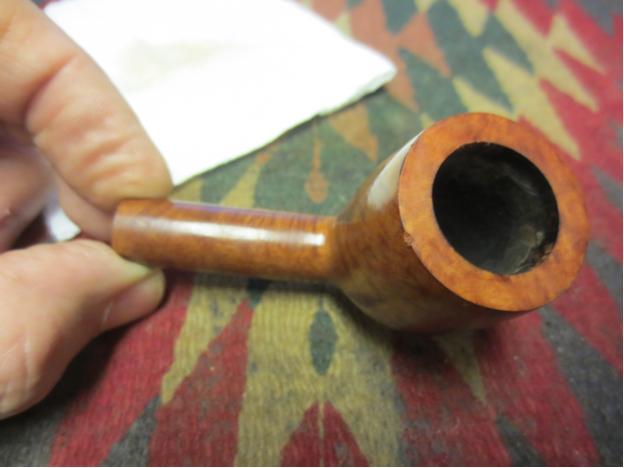
Flame2 The pipe had a natural, virgin finish that had picked up a slight patina over the years. There was a hint of red in the briar under the grime. The stem was badly oxidized. The bowl had a thick cake and the rim was nicked on the back right side outer edge and the top was blackened with a coat of tars and carbon that had run over from the bowl. Other than that the pipe was in decent shape. The bowl was still round. There were a few slight nicks and dings in the sides but it still was decent enough that a restoration would not be too difficult.Flame3 I have included a close-up of the rim to show the thickness of the cake in the bowl and the damage to the outer edge of the rim. The tarry lava overflow on the top of the rim is also very visible.Flame4

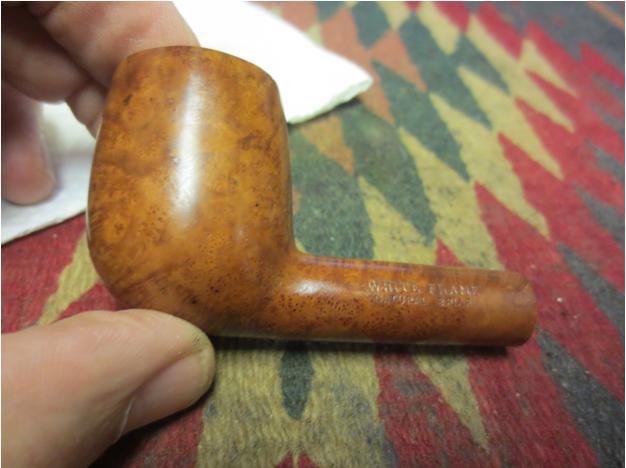
Flame5 I have also included some photos of the stamping to see if any of you reading this have any ideas of the maker.Flame6

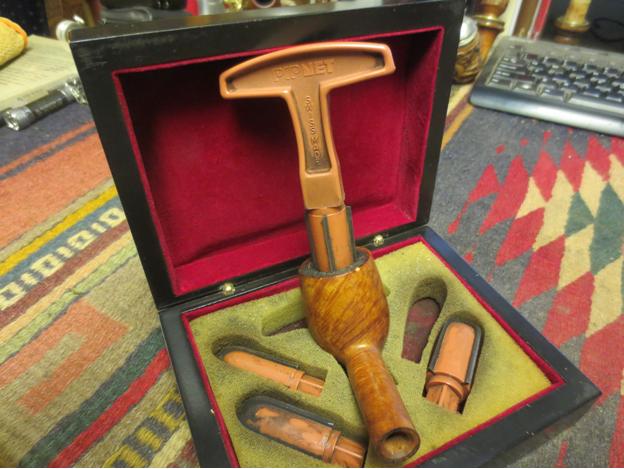
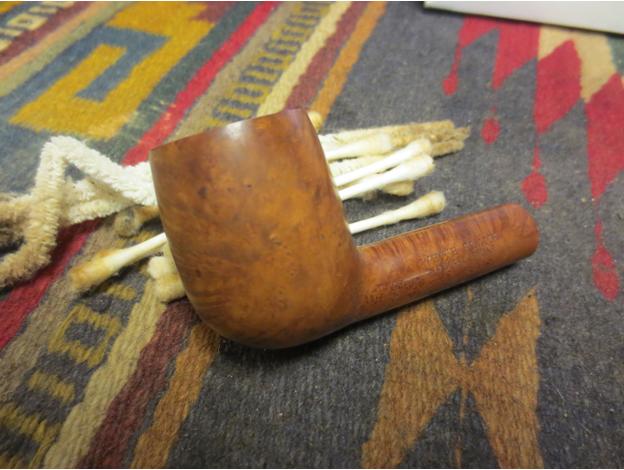
Flame7 I reamed the bowl with a PipNet reamer starting with the smallest head on the T handle and working up to the third head. I took the cake back to the briar walls of the pipe.Flame8

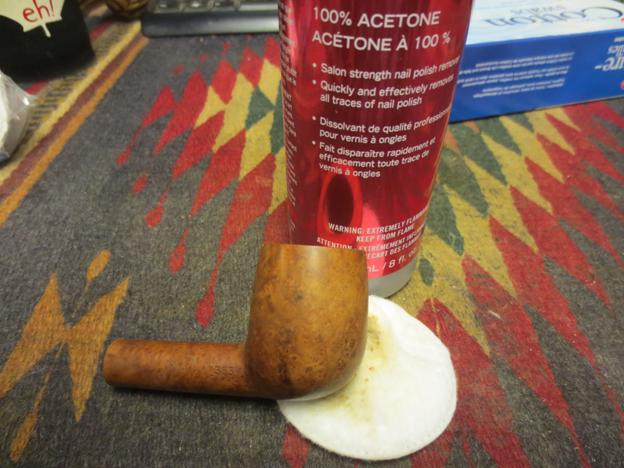
Flame9 Because of the rim damage and the thick build-up I decided to top the bowl and remove the damage. I would not be able to remove all of it without changing the profile of the bowl but I could minimize its visibility. I topped it on the topping board with 220 grit sandpaper.Flame10 I finished topping it by sanding it with a medium and a fine grit sanding block to smooth out the scratches left from the sandpaper. The topped bowl is shown below.Flame11 The oxidation was bad enough that I decided to drop it in a mixture of Oxyclean and let it soak for an hour to let the Oxy do its magic. As soon as it hit the warm mixture the water turned amber as the oxidation bubbled away.Flame12 While it soaked I scrubbed the bowl with acetone on cotton pads to remove the grime and the wax from the briar.Flame13

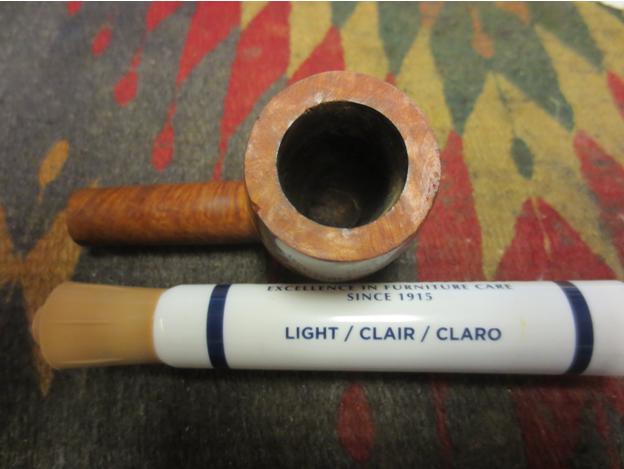
Flame14 I cleaned out the shank and mortise with alcohol, cotton swabs and pipe cleaners.Flame15 The patina of the bowl was darker than the newly topped rim so I used a light coloured stain pen to match the colour of the briar. It would need some more work to blend it but the colour was very close.Flame16 I gave the bowl and rim a light coat of olive oil to give back some life to the grain and work to match the bowl and rim even more. After oiling it I hand buffed it with a microfibre cloth to remove the excess and to get a clear picture of the match of the rim to the bowl. The match was perfect as can be seen from the photos below.Flame17

Flame18

Flame19

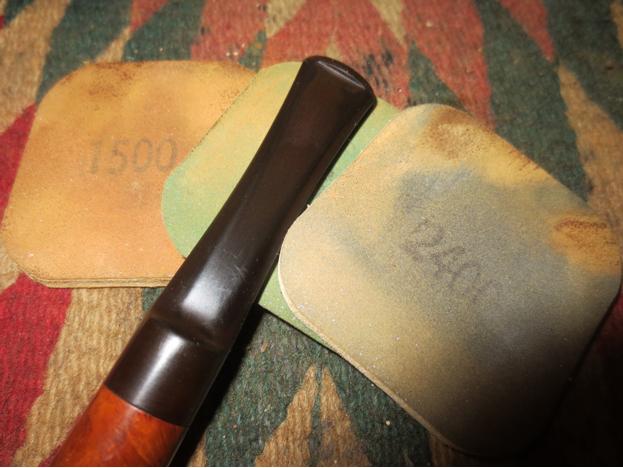
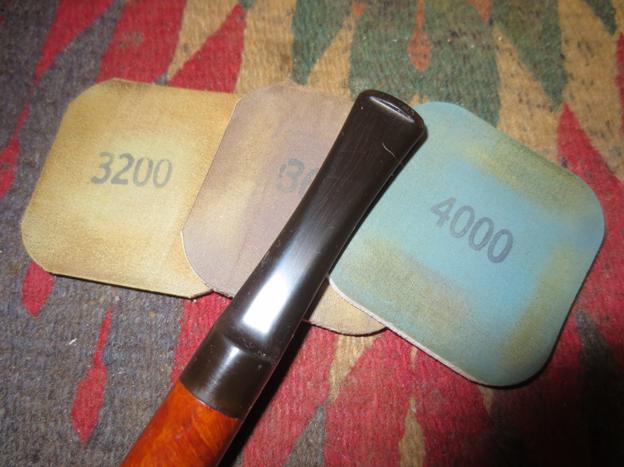
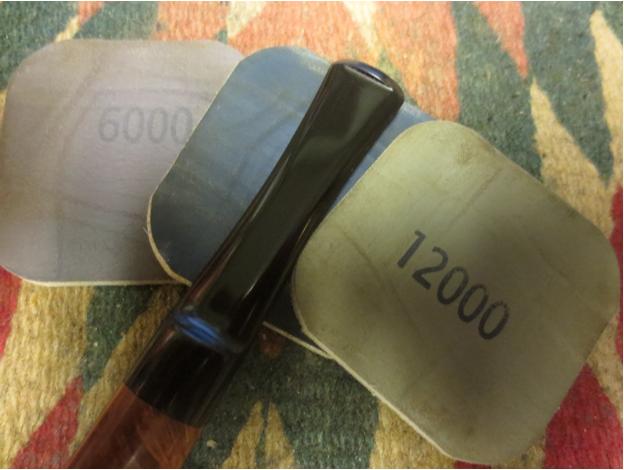
Flame20 After the stem had soaked for an hour I took it out of the bath and dried it off with a coarse cotton cloth. I was able to rub off the majority of the remaining oxidation. The stem is shown in the photo below after the rub down.Flame21 I sanded the stem with a medium and a fine grit sanding sponge to remove the remaining oxidation. I then worked on the stem with micromesh sanding pads. I wet sanded the stem with 1500-2400 grit pads and then rubbed it down with Obsidian Oil. I dry sanded with 3200-4000 grit pads, rubbed it down with oil again and then finished by dry sanding with 6000-12000 grit pads. I gave it a final coat of Obsidian Oil and then buffed it with Blue Diamond on the wheel.Flame22

Flame23

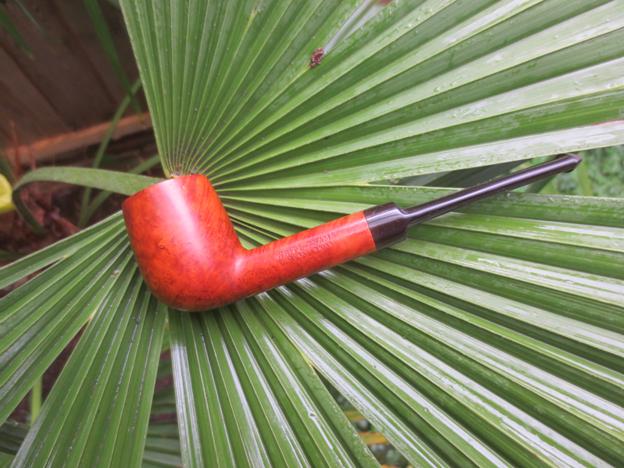
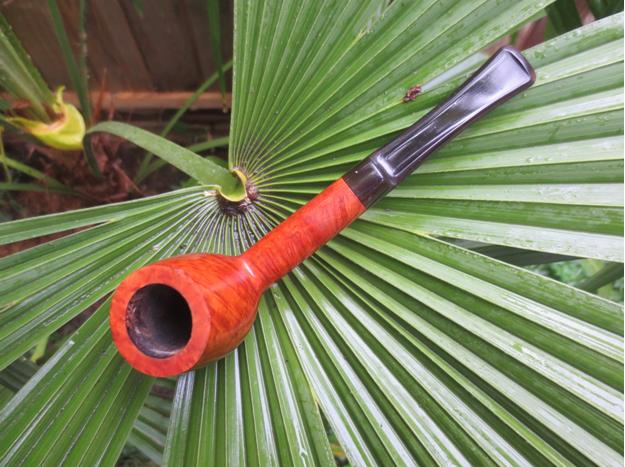
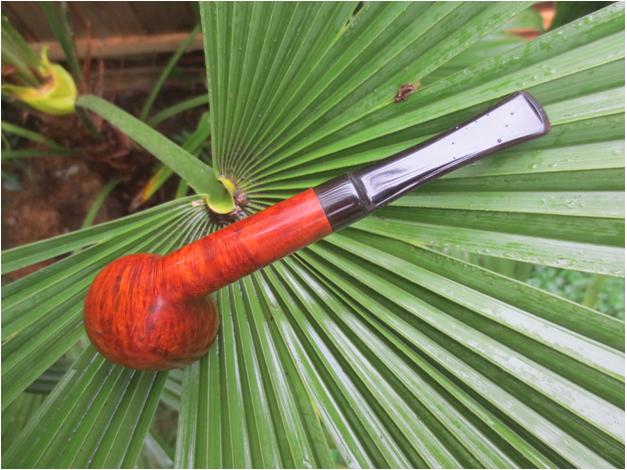
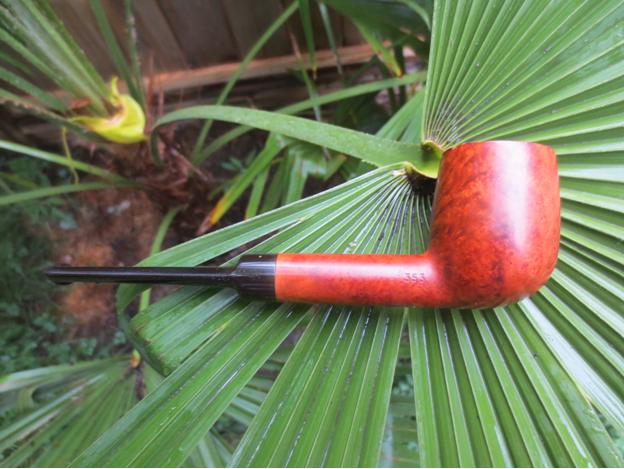
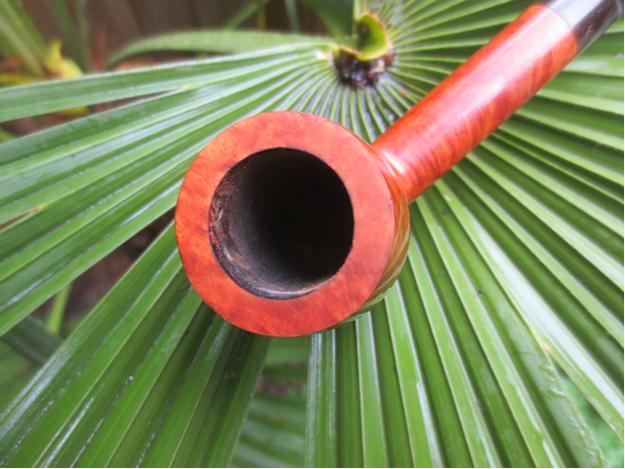
Flame24 I finished the restoration by buffing the pipe with Blue Diamond and then I gave the stem and bowl multiple coats of carnauba wax. I buffed it with a clean flannel buff and then took it back to the work table and hand buffed it with the microfibre cloth. The finished pipe is shown in the photos below. We are in the midst of a much needed rain storm but I love the look of the pipes in the fronds of the palm tree in my back yard. On these photos you will see some raindrops on the stem and bowl in several of the photos. I am pleased with the finished look of the pipe. The natural light brings out the reds in the briar. It is a beautiful pipe. Thanks for looking.Flame25

Flame26

Flame27

Flame28

Flame29