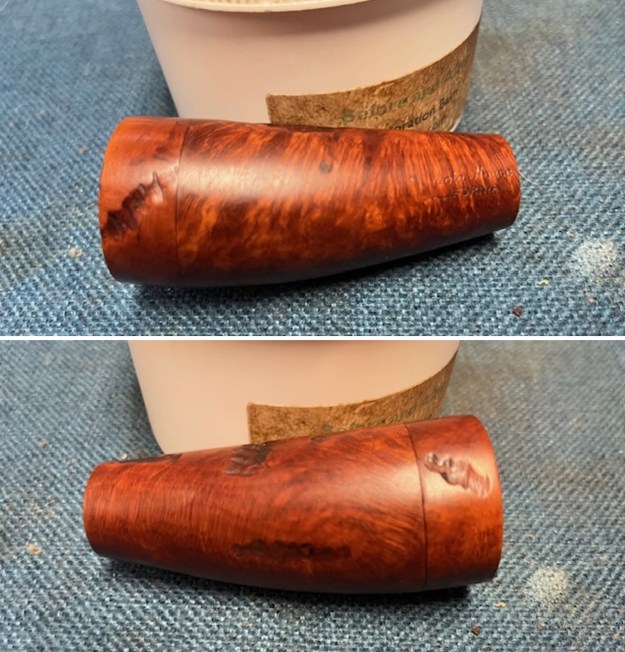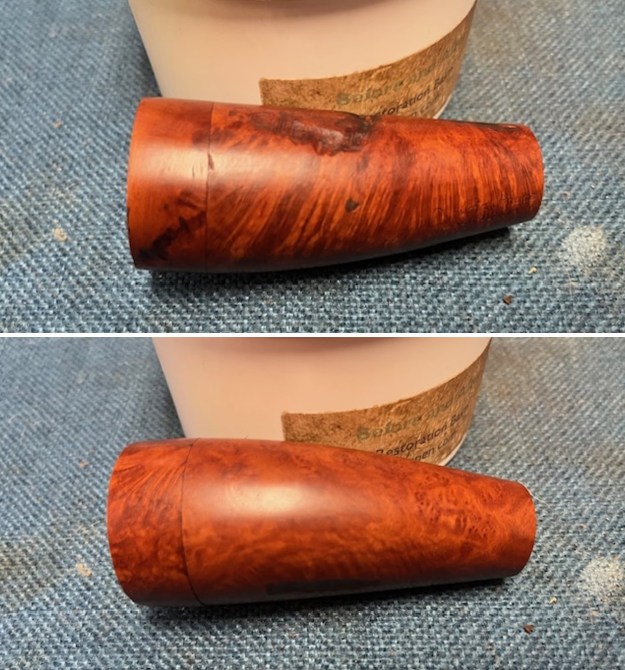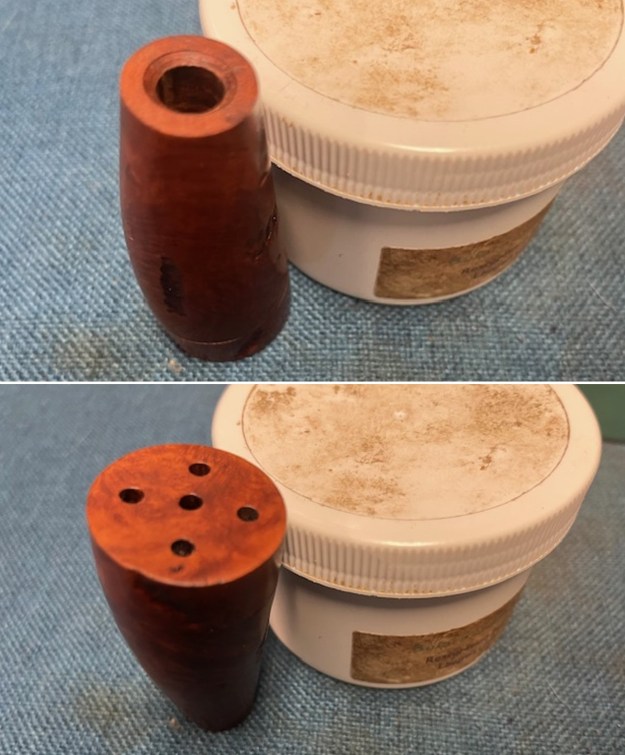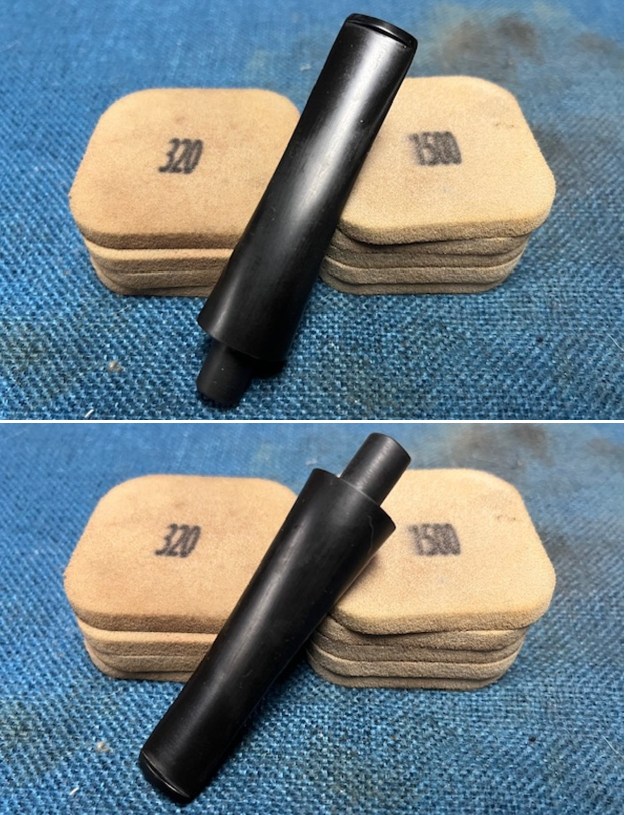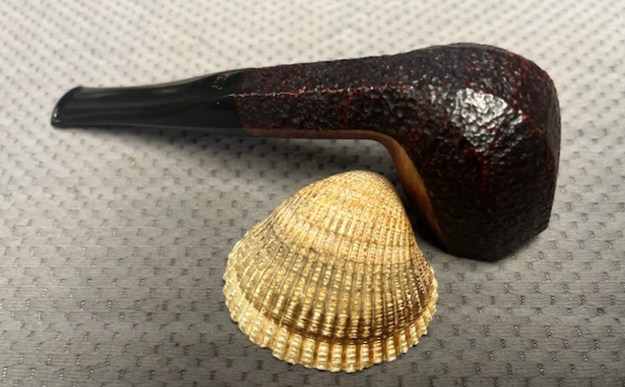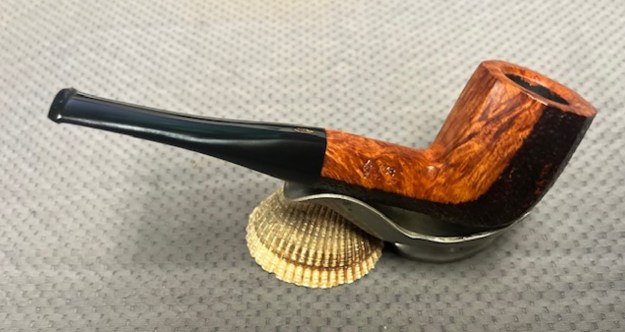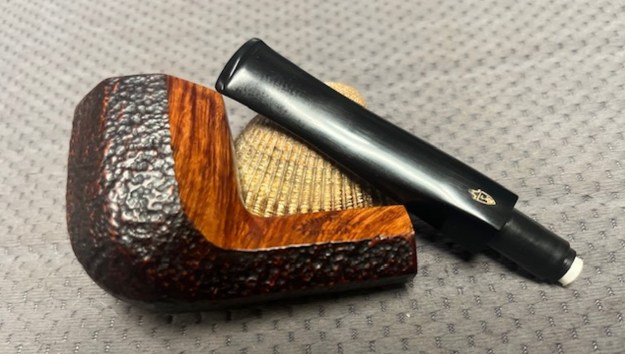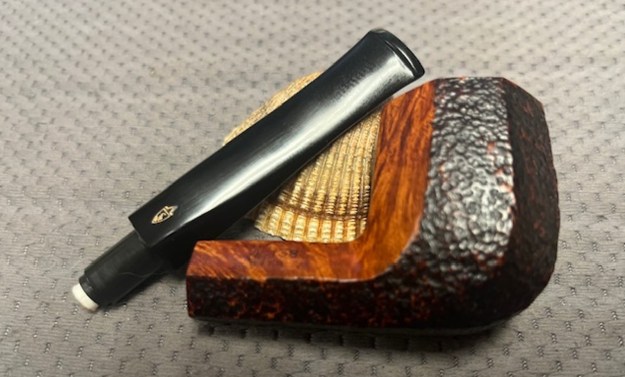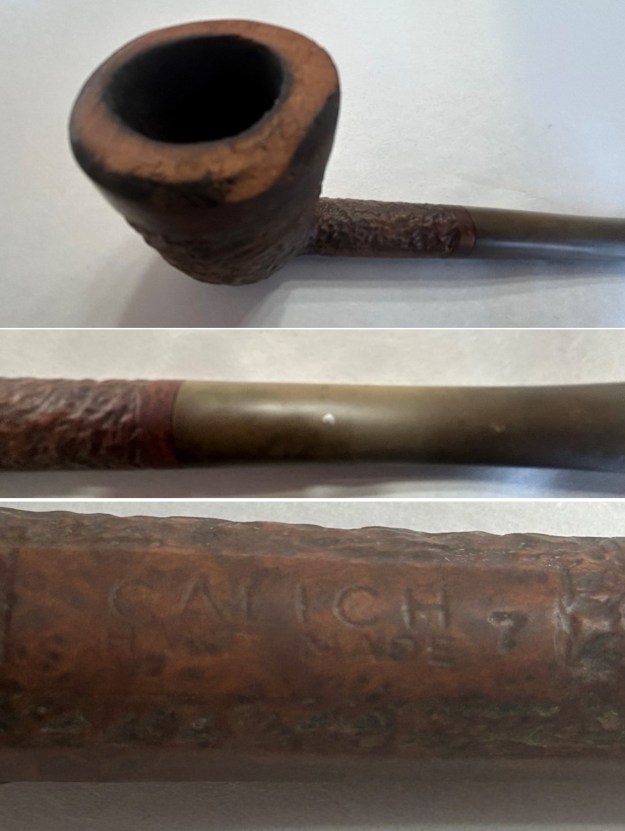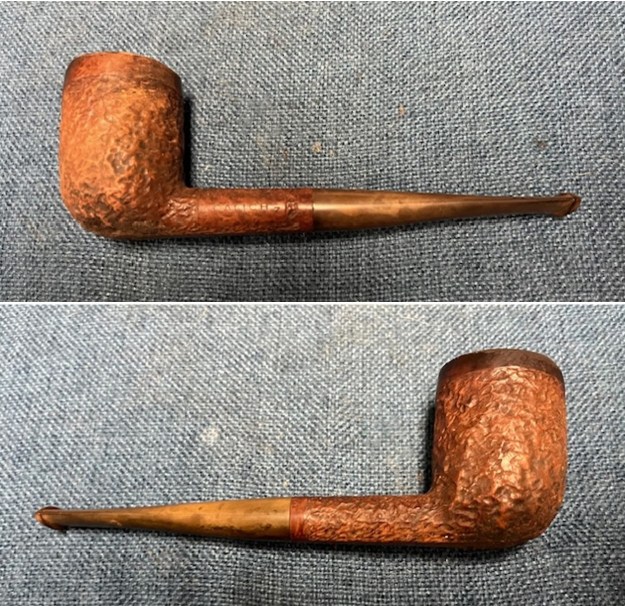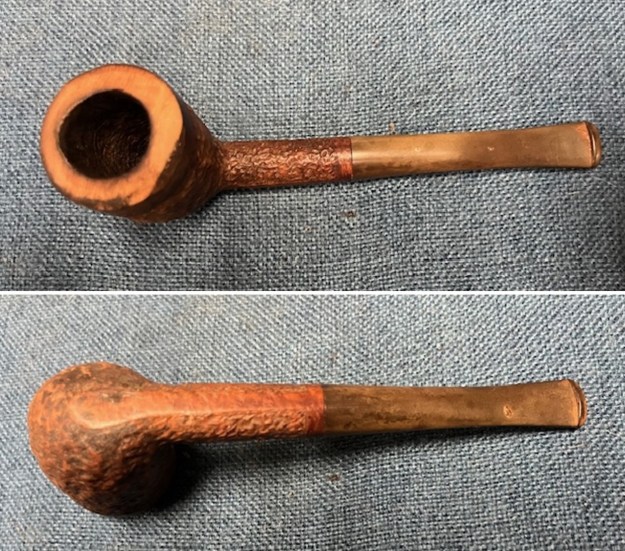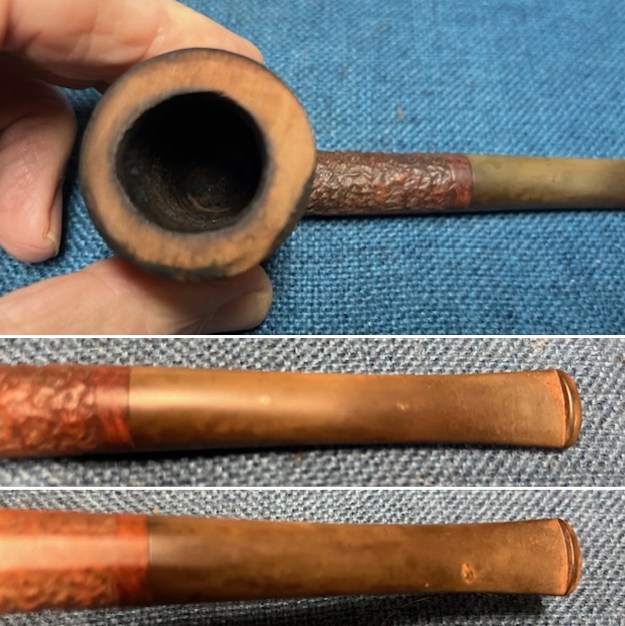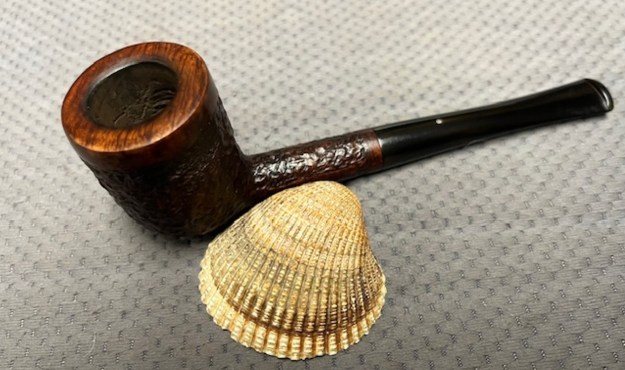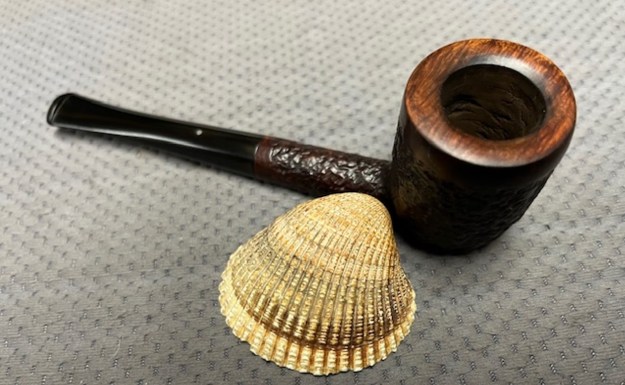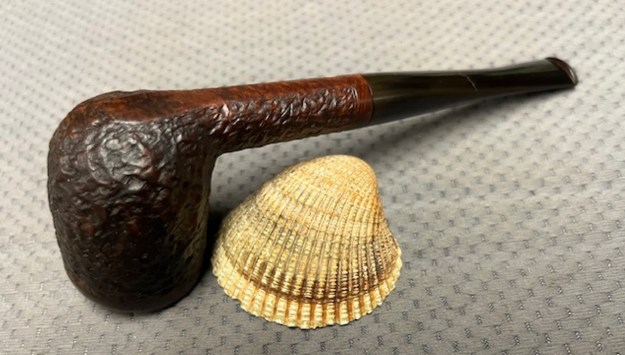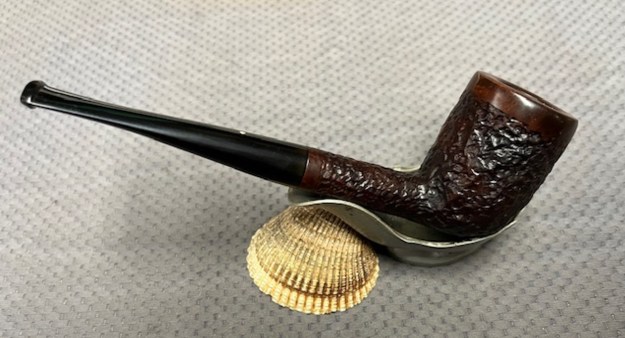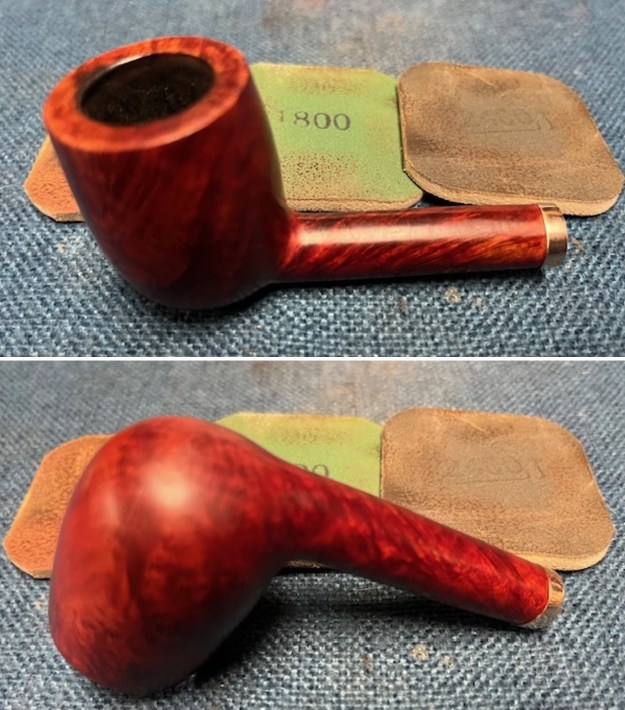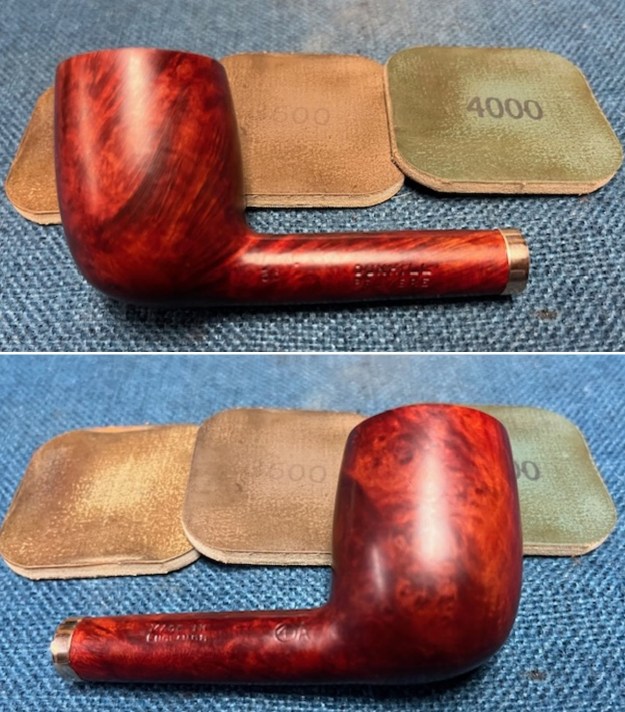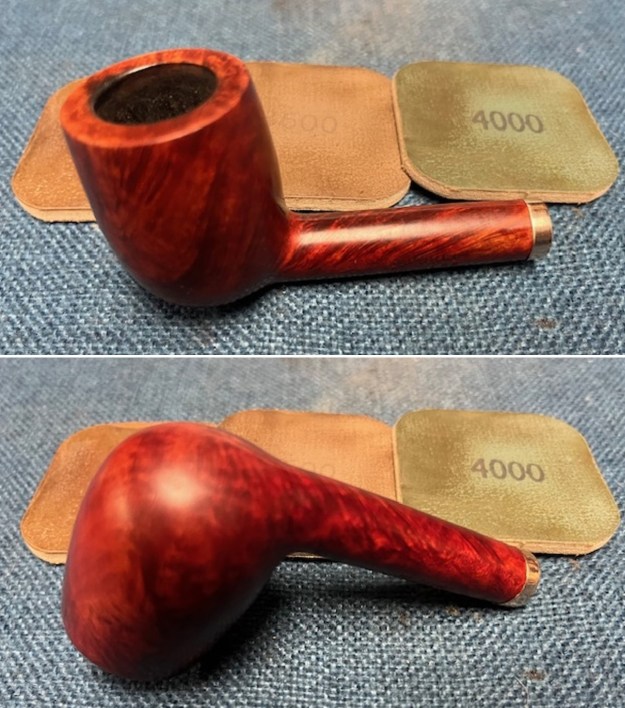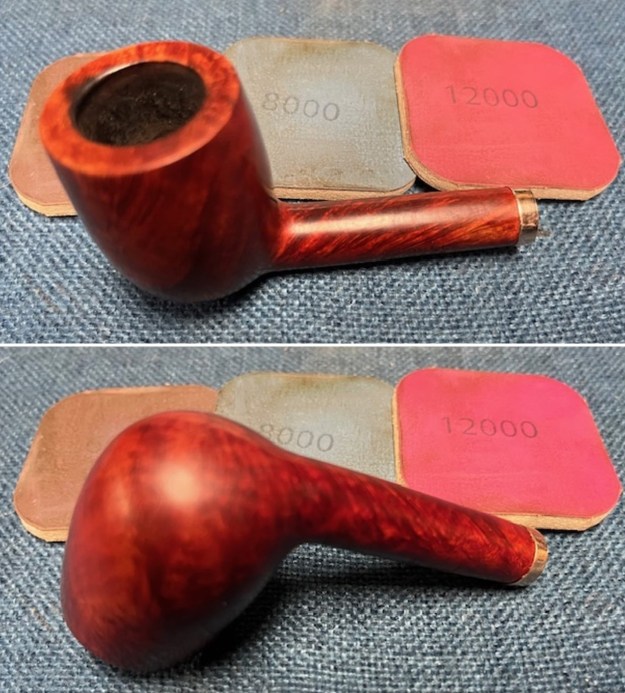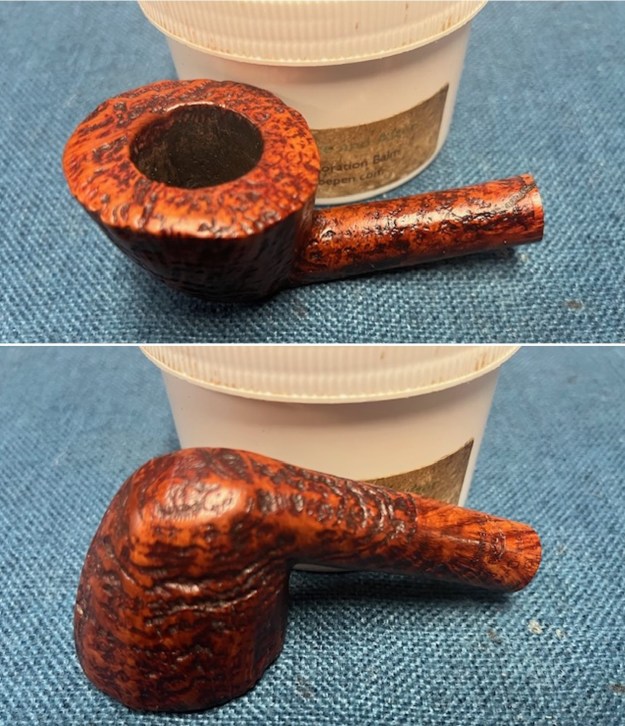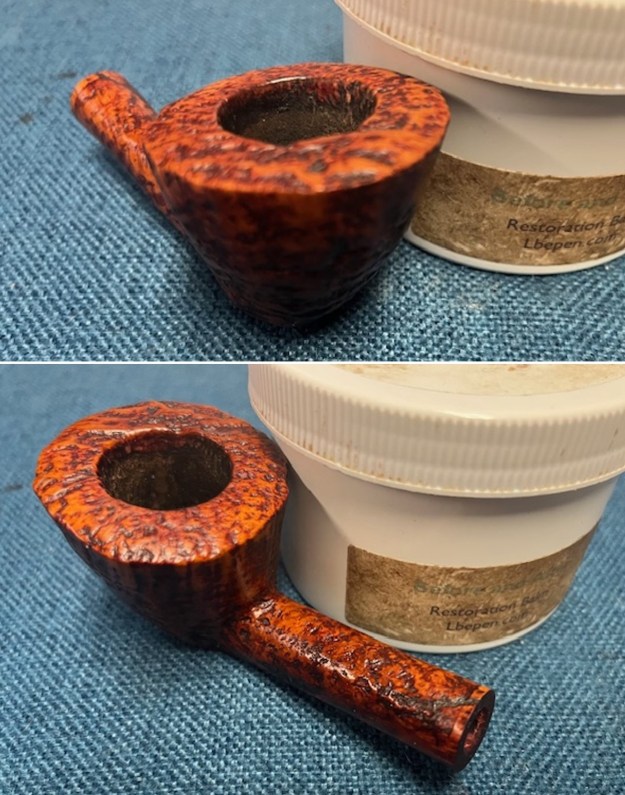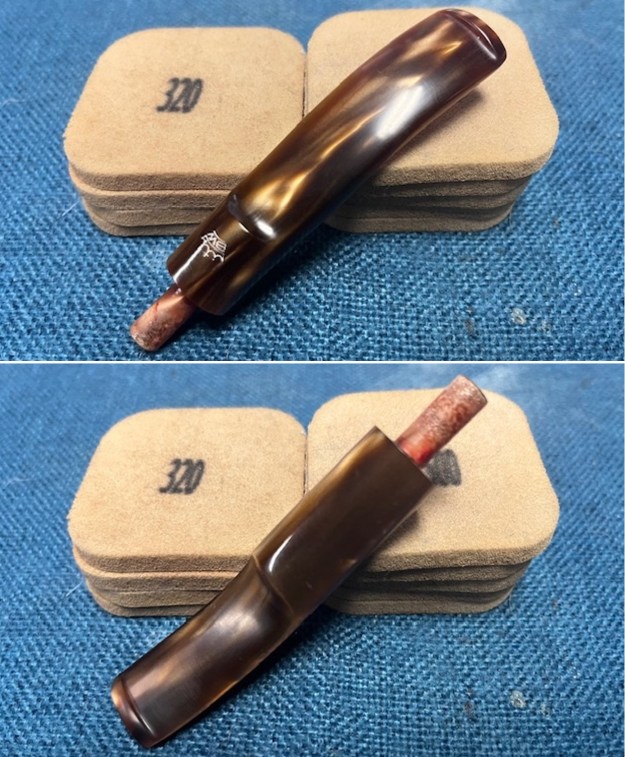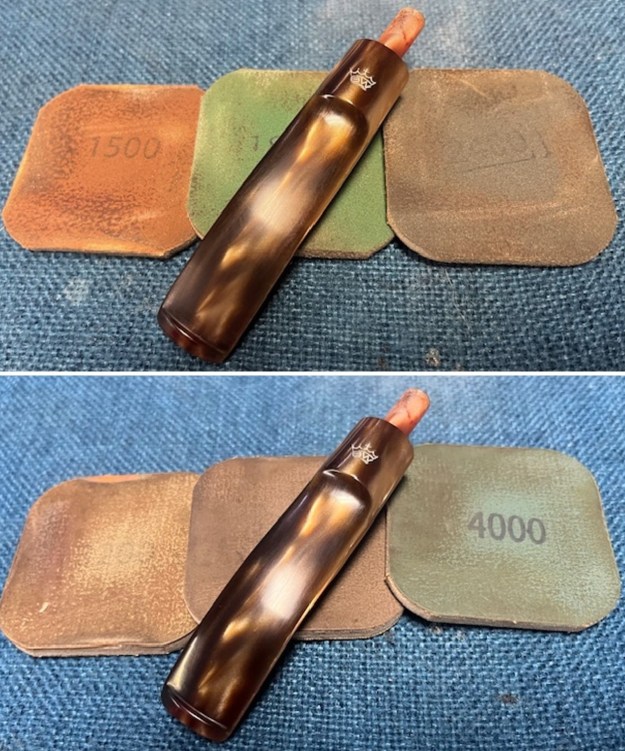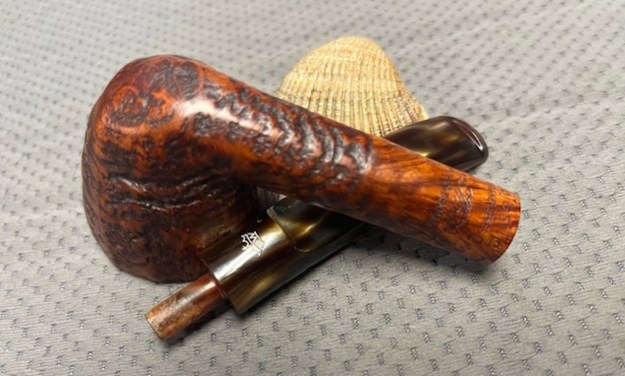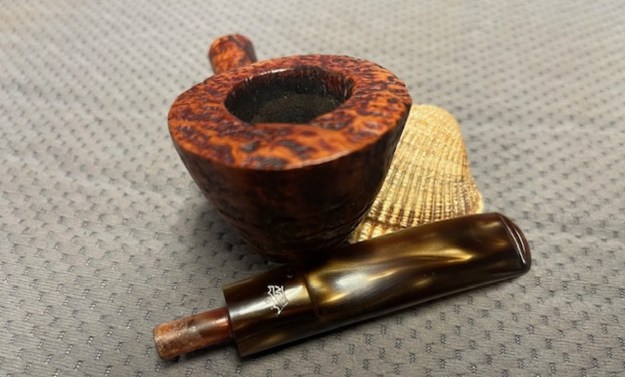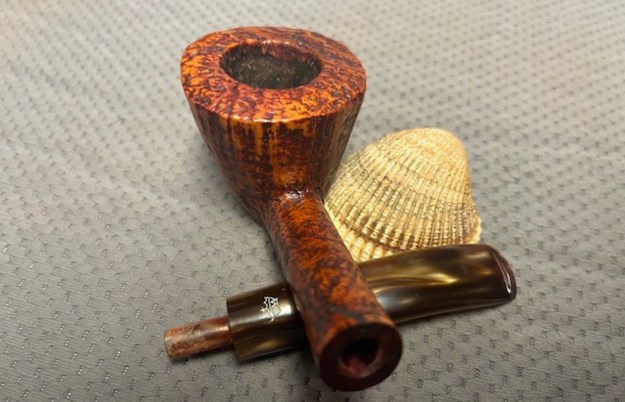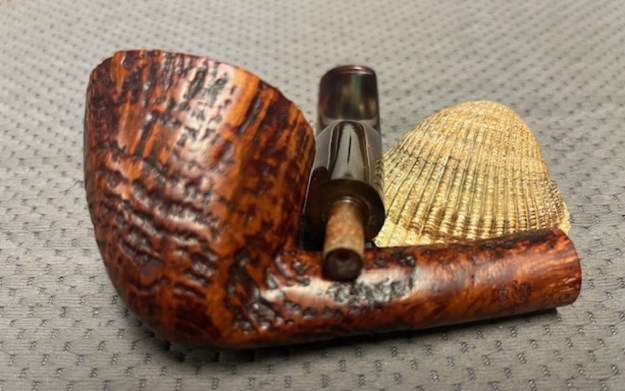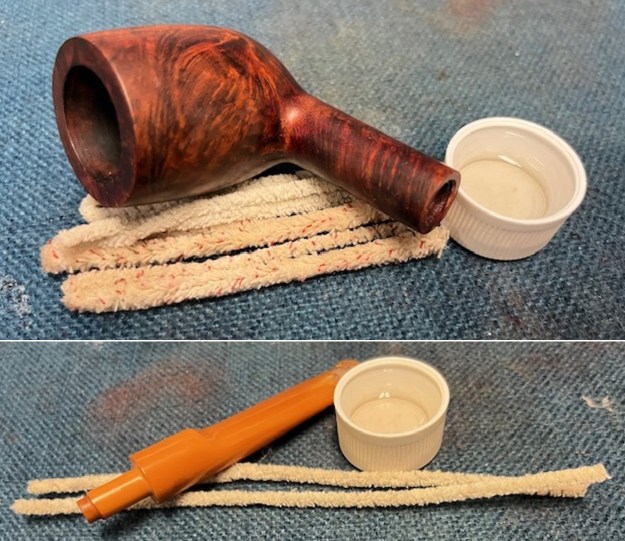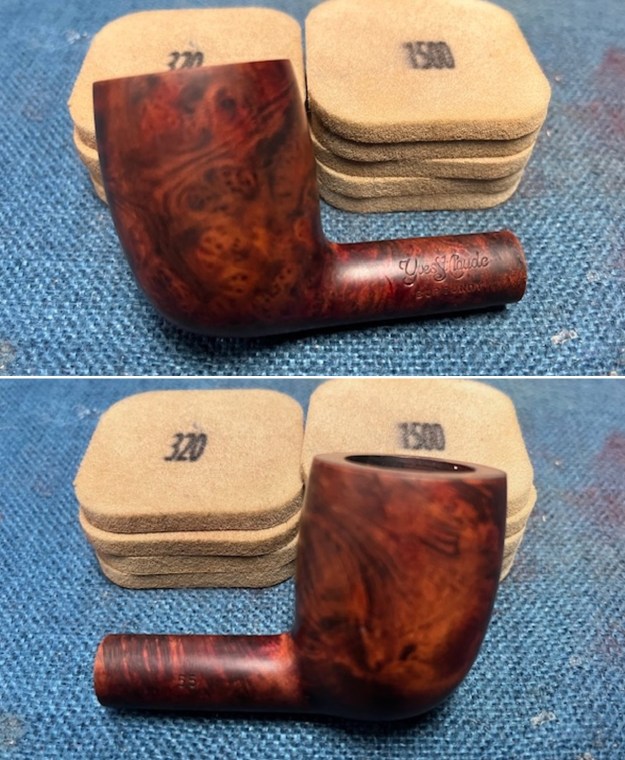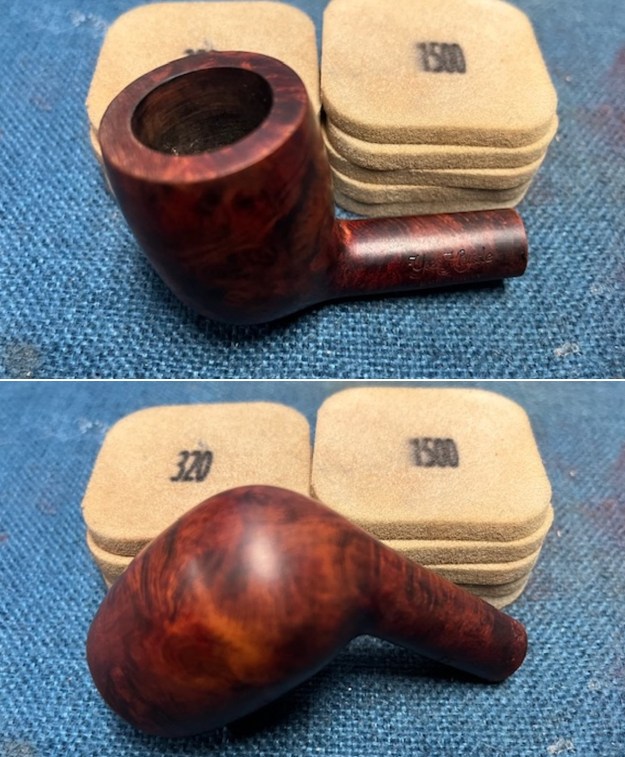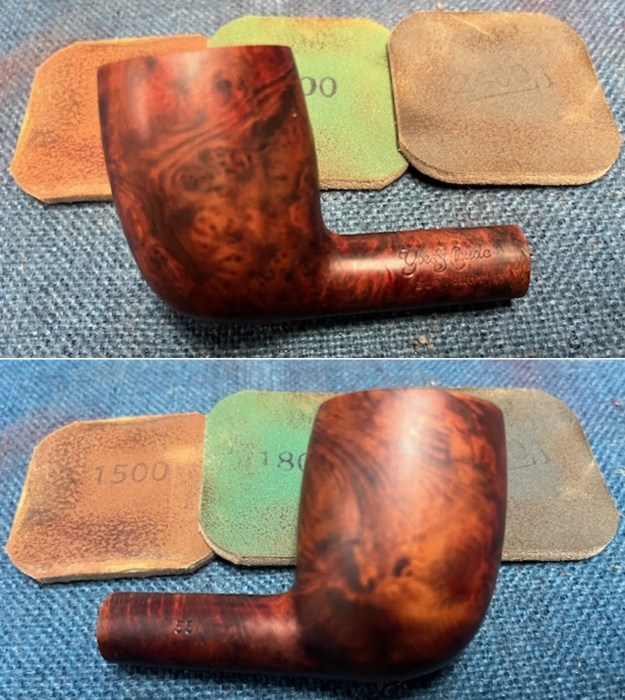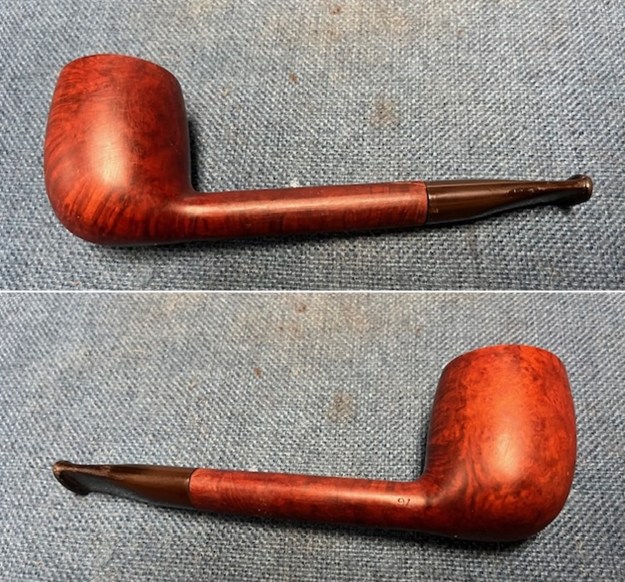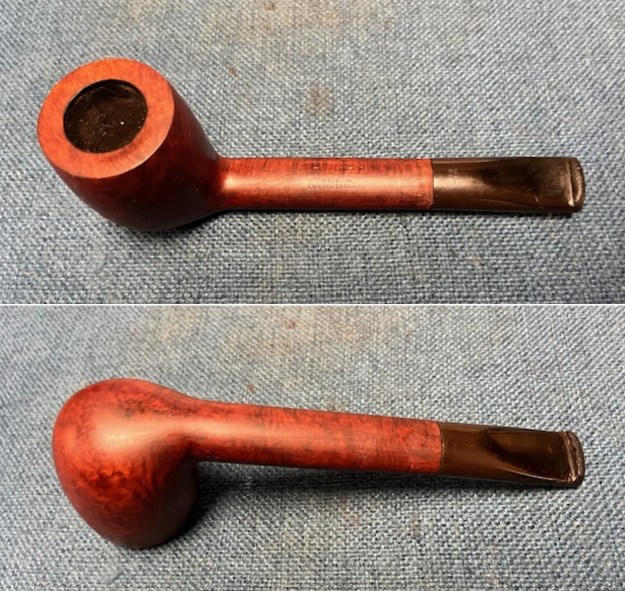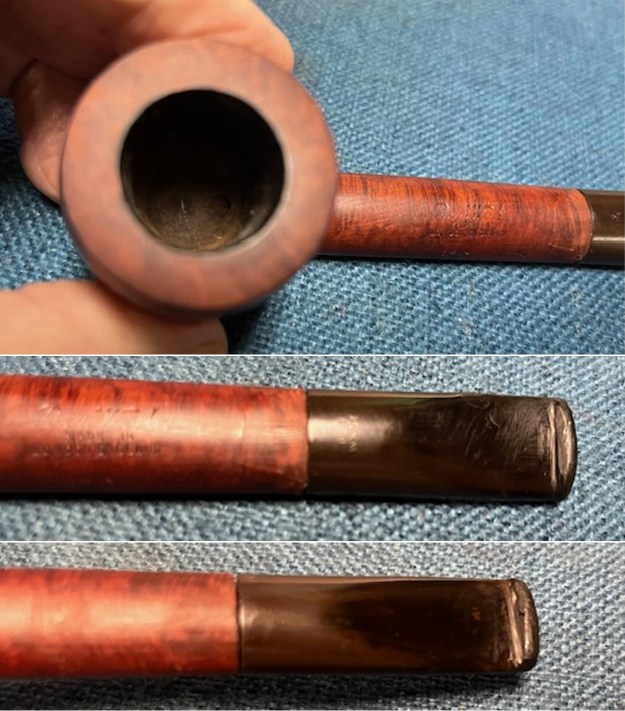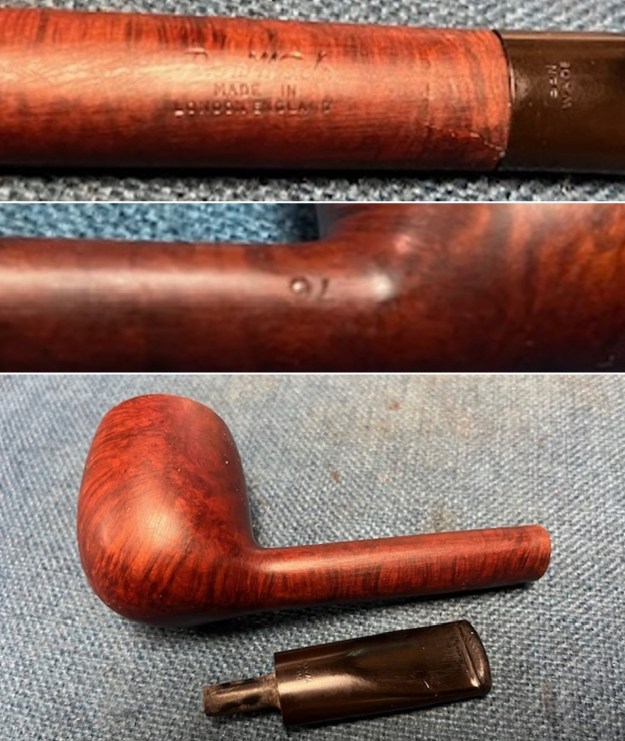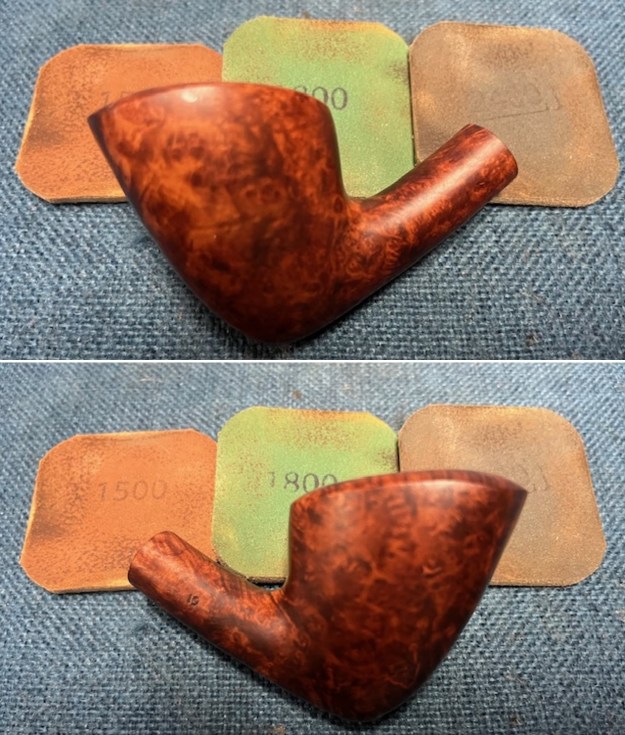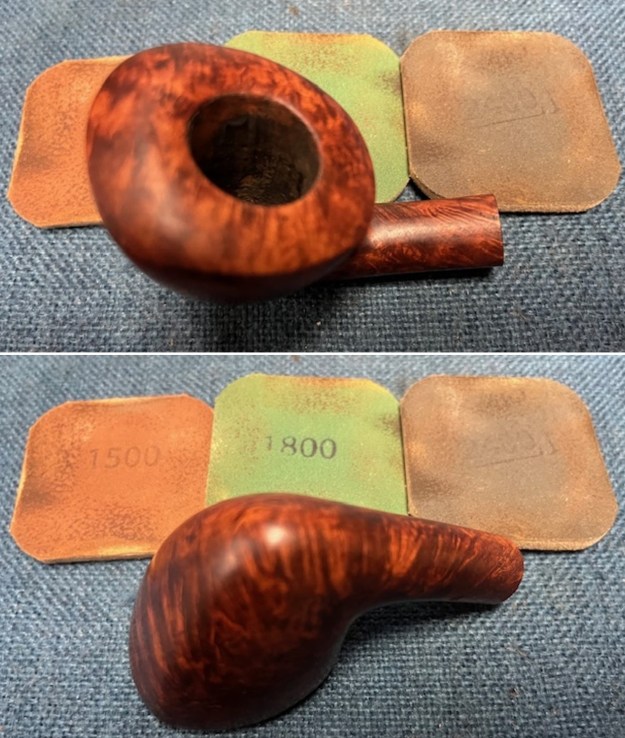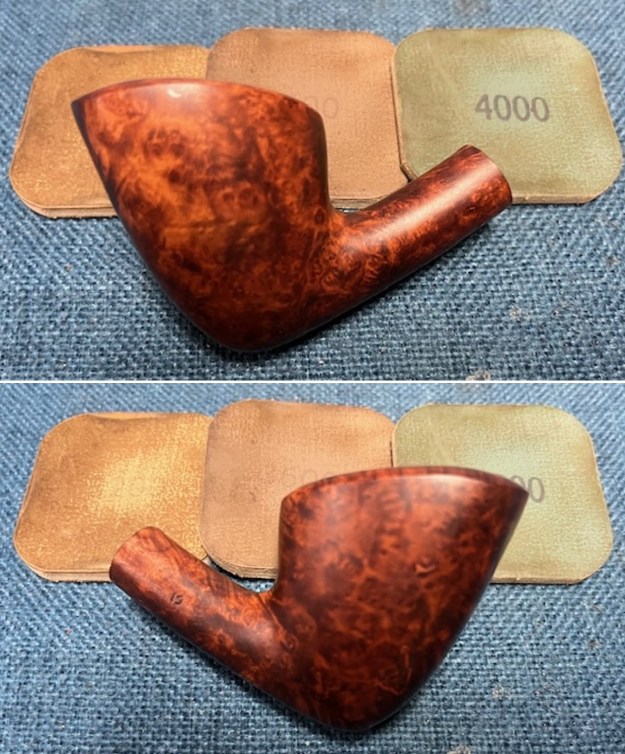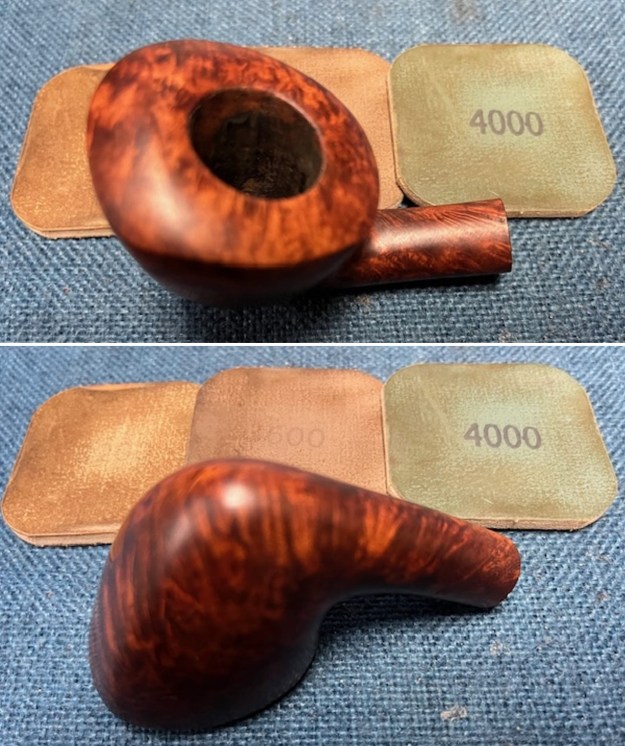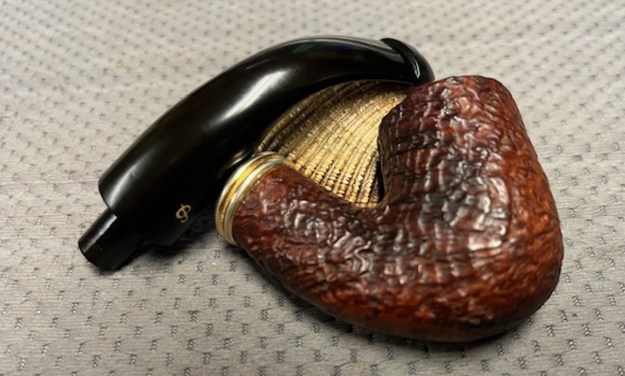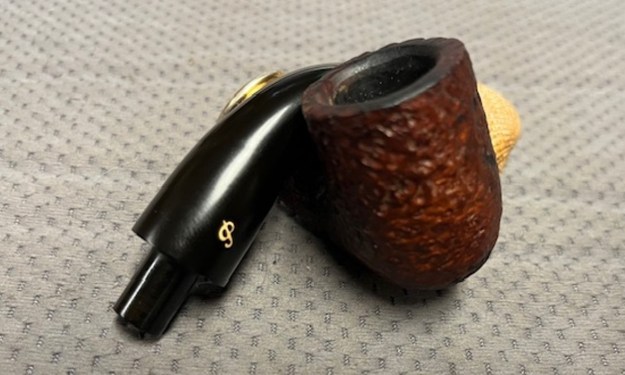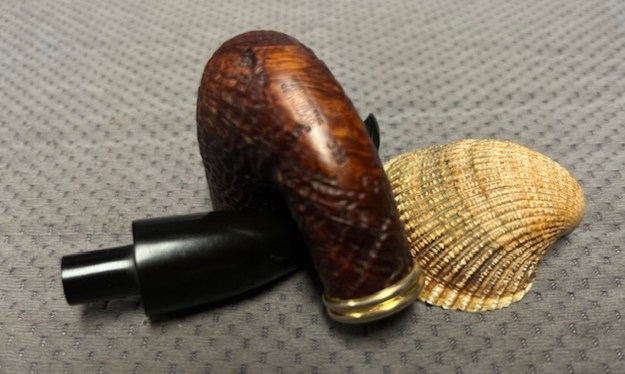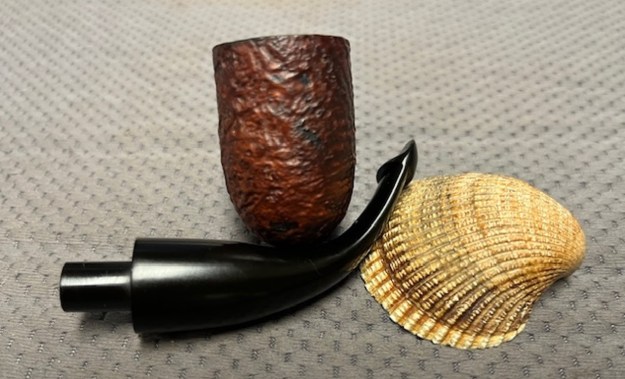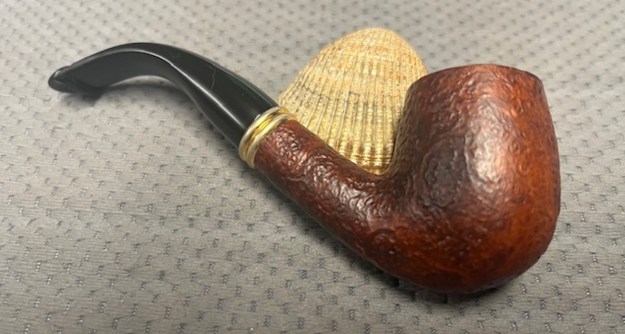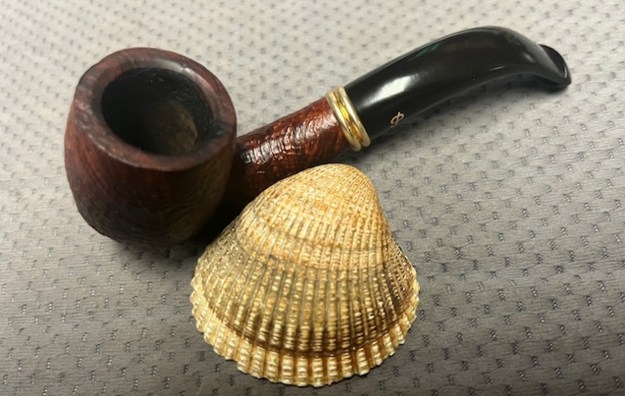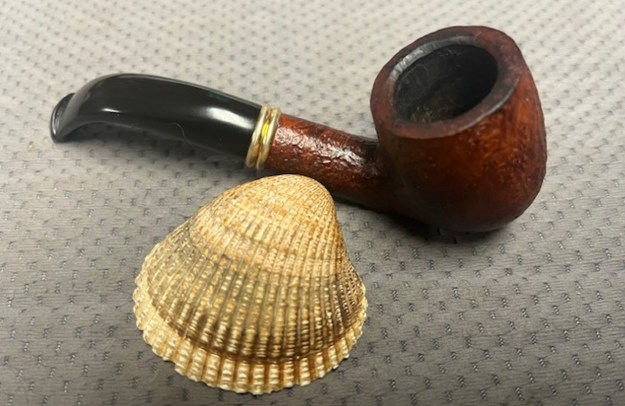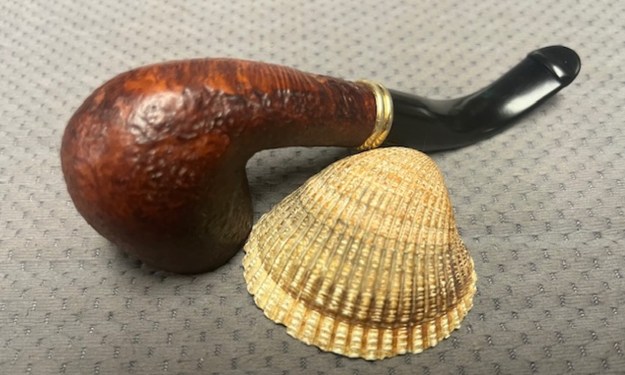
Tag Archives: Bowl – refinishing

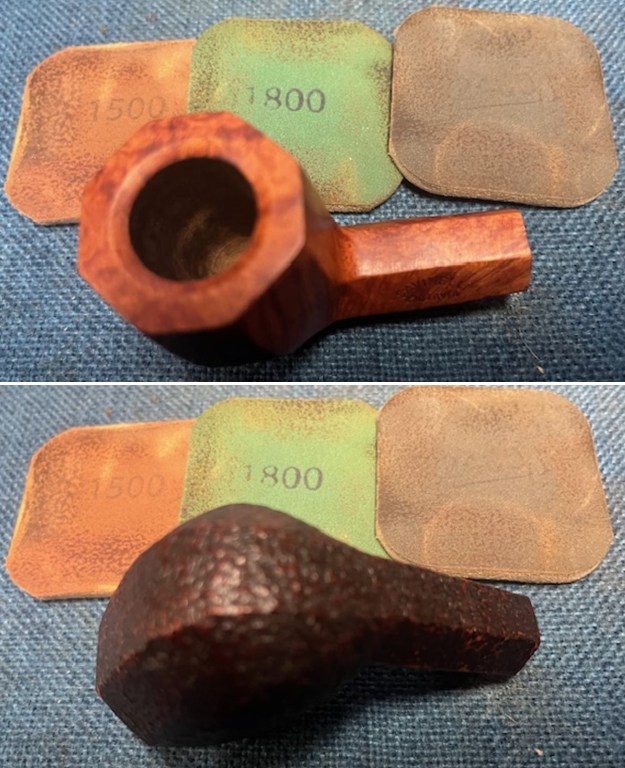
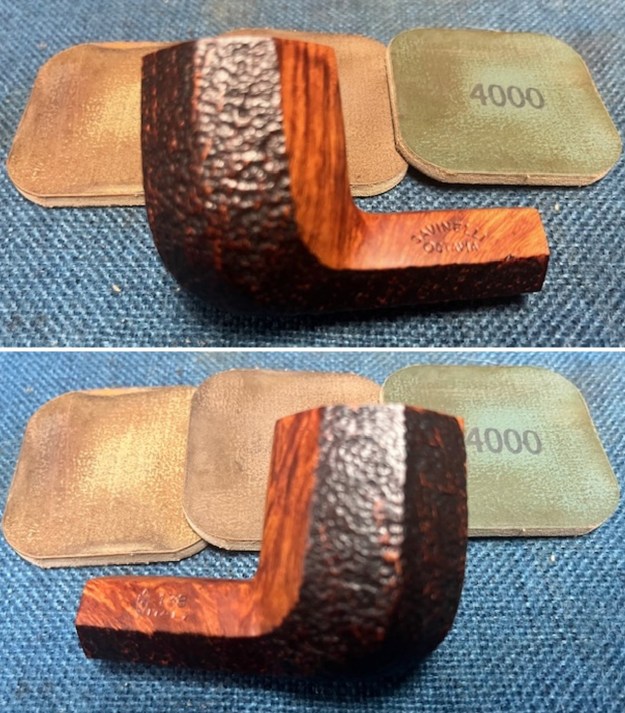
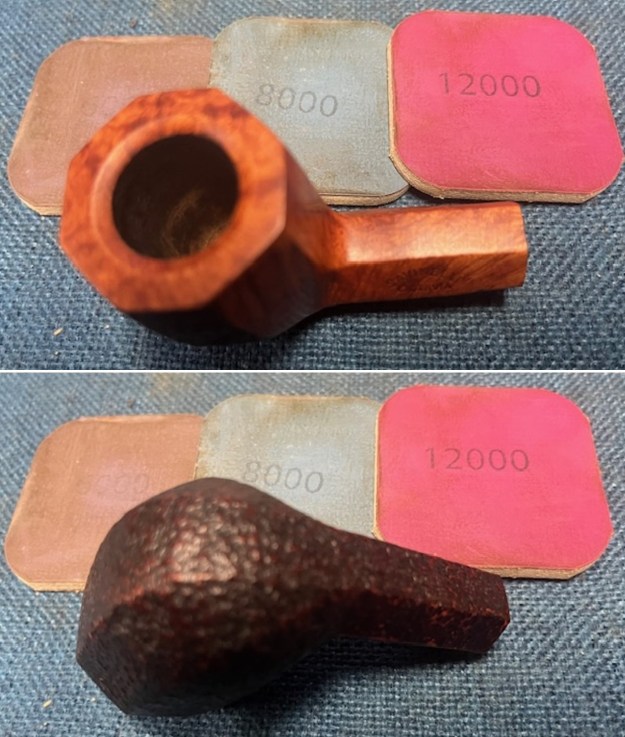
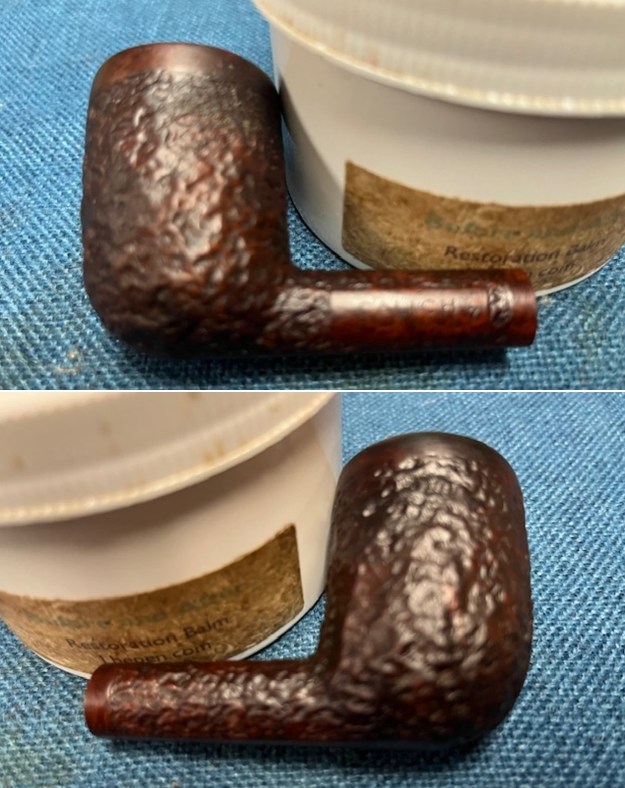
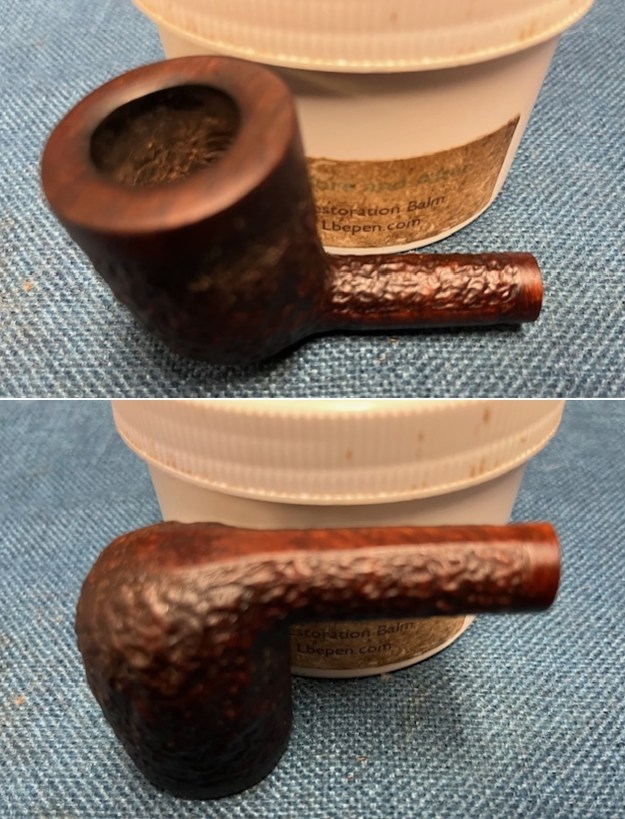
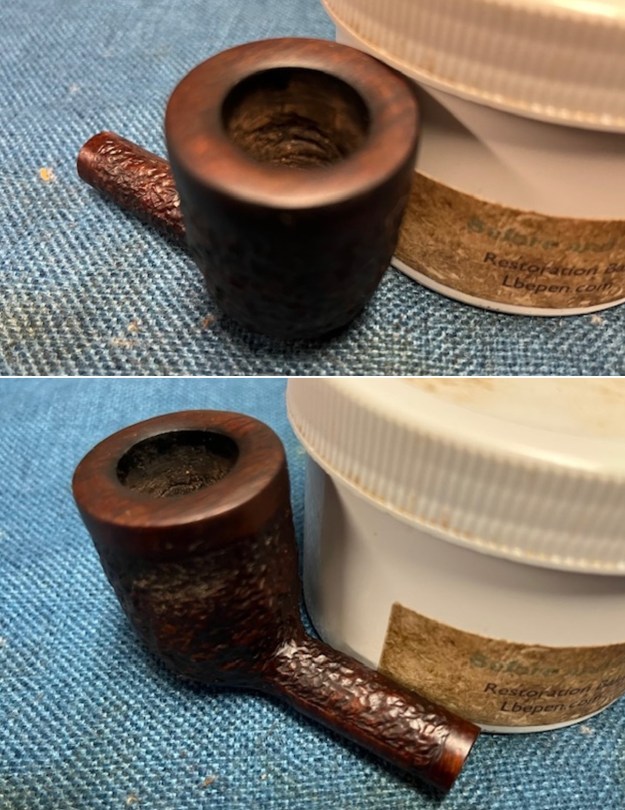
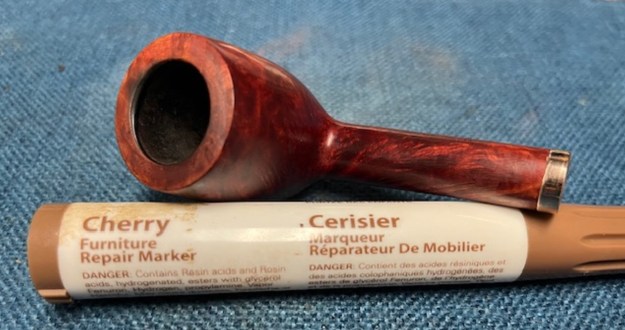
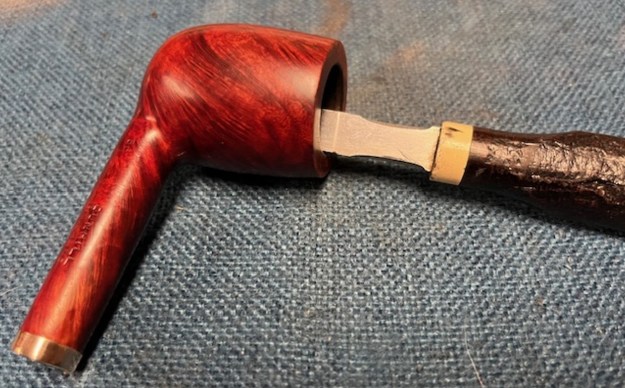
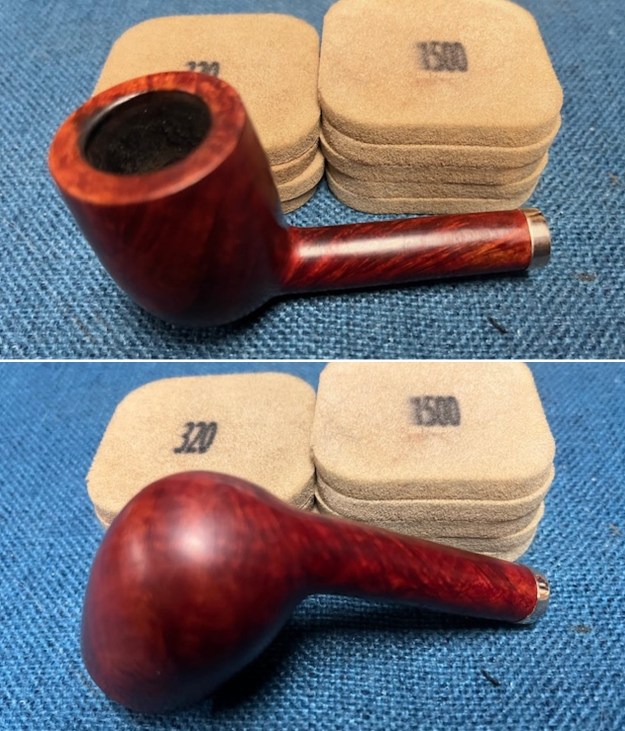
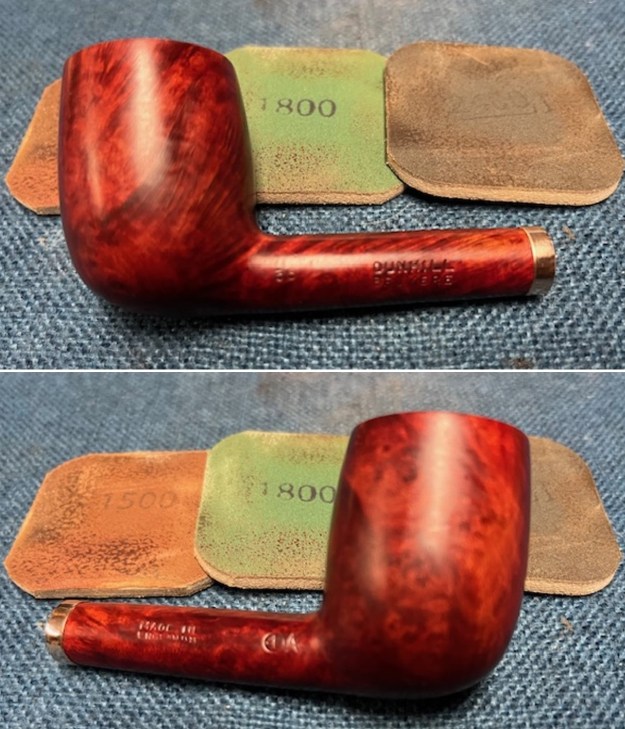
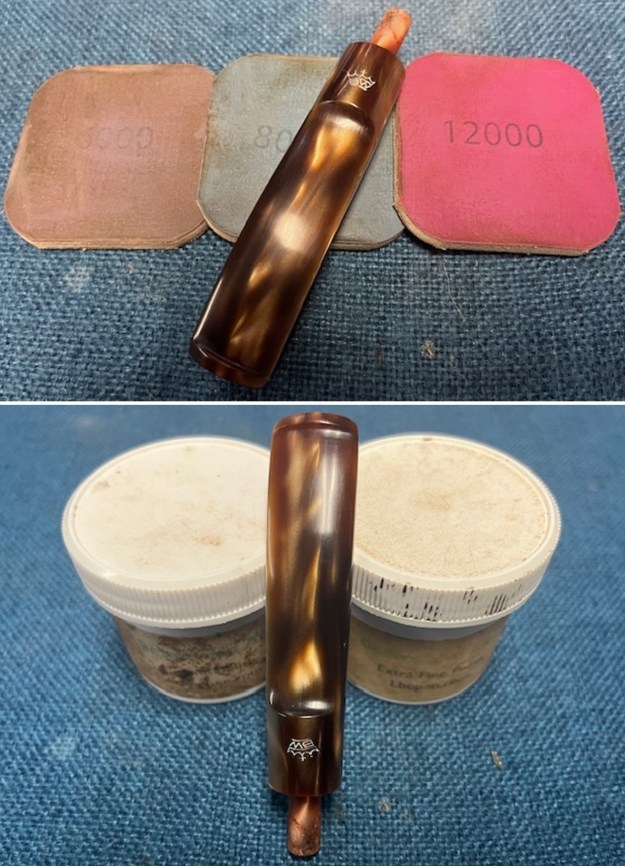
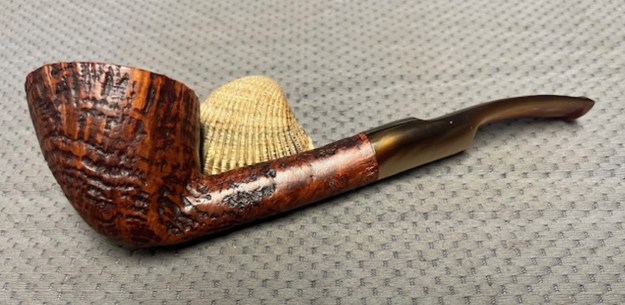
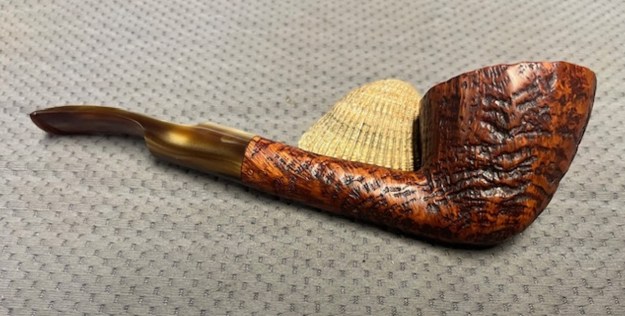
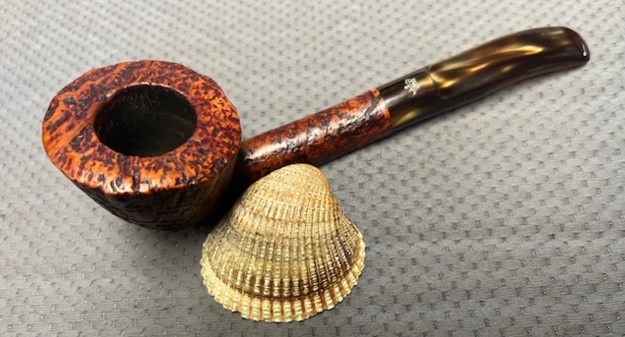
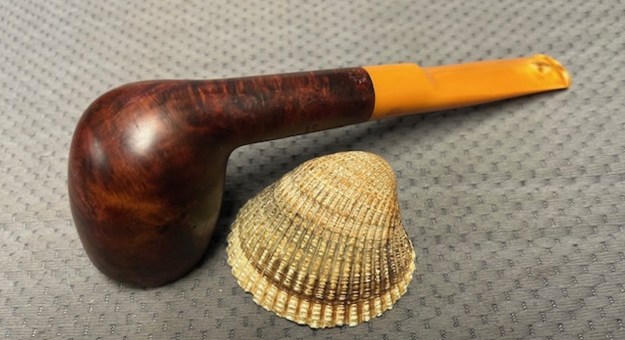
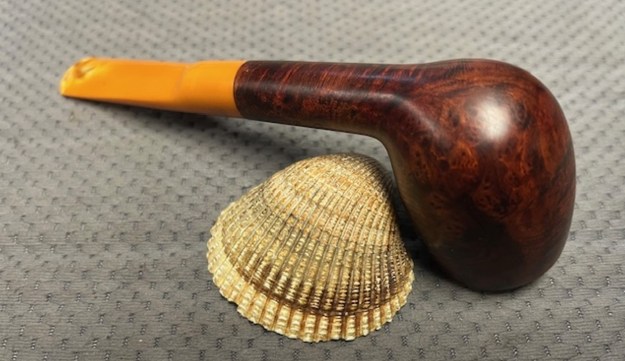
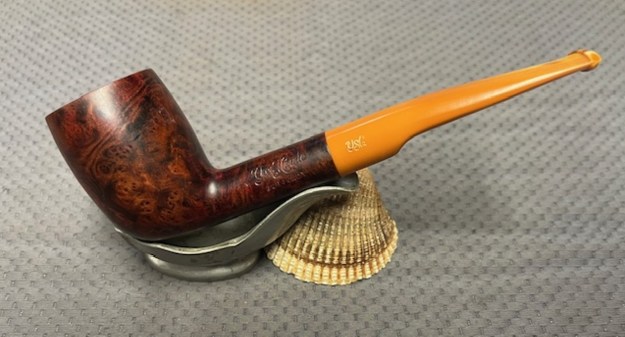
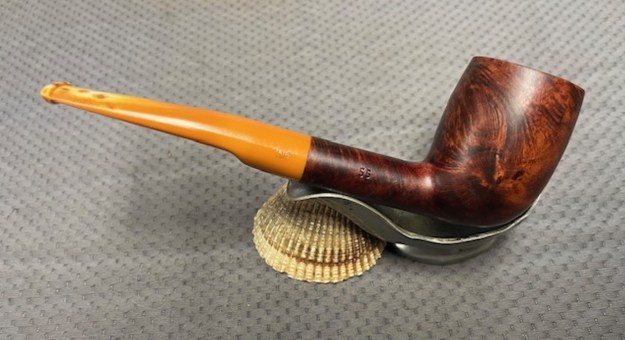
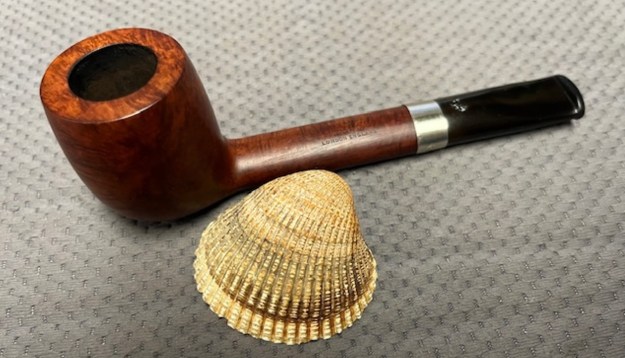
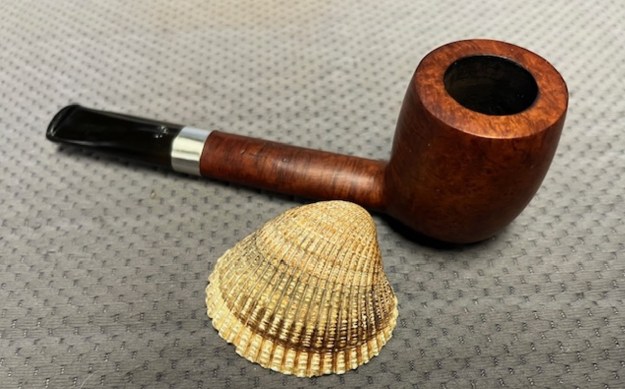
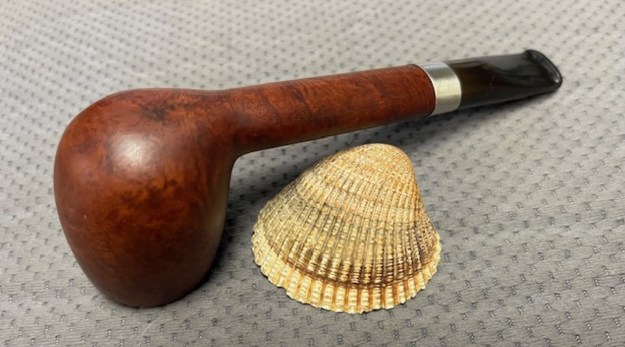
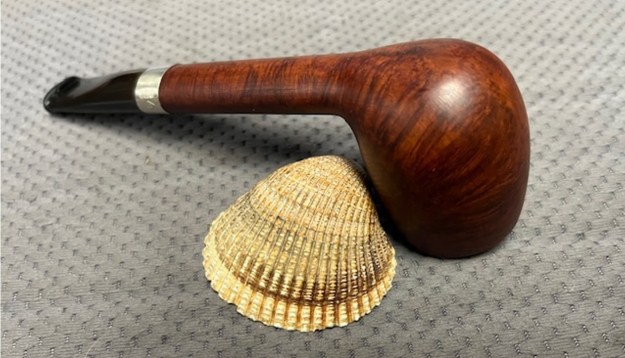
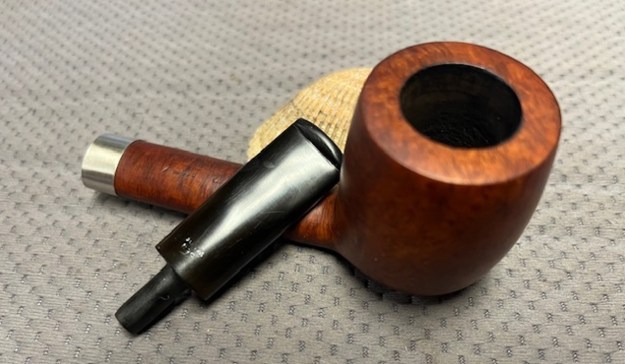
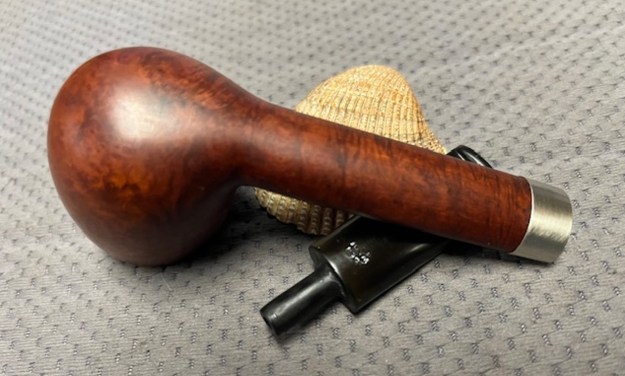
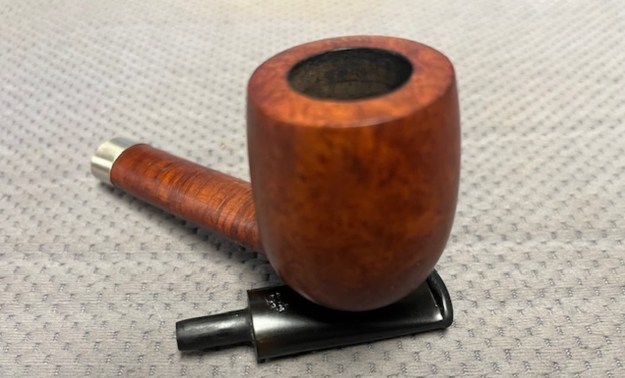
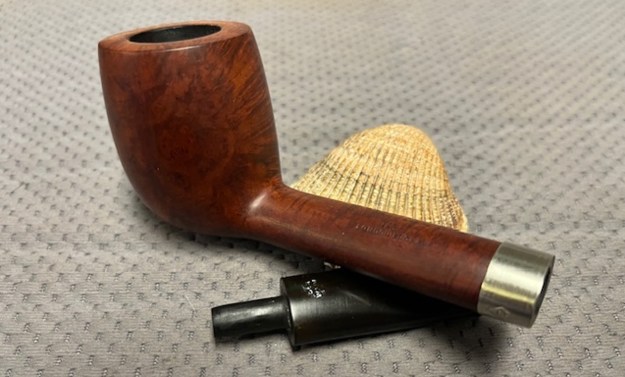
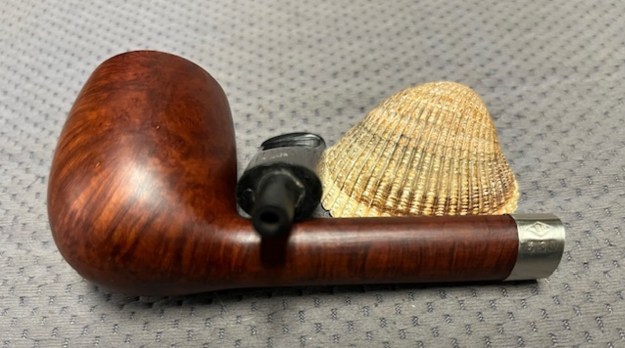
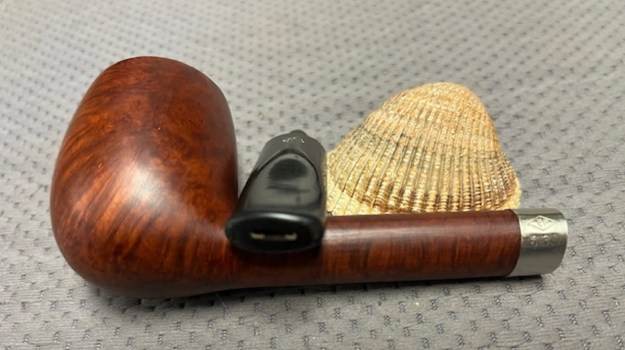
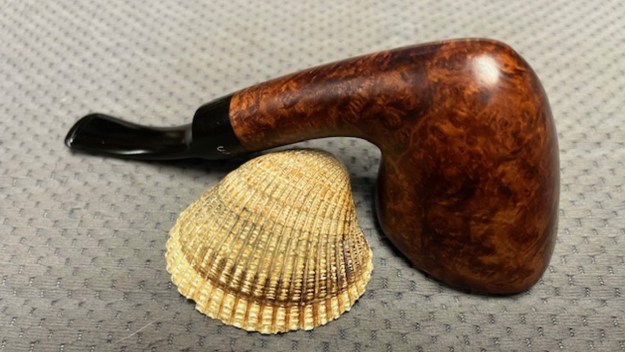
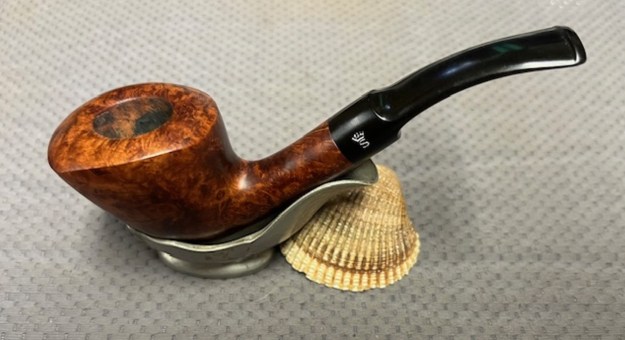
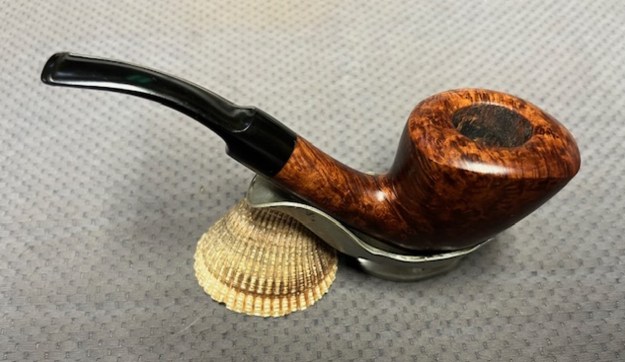
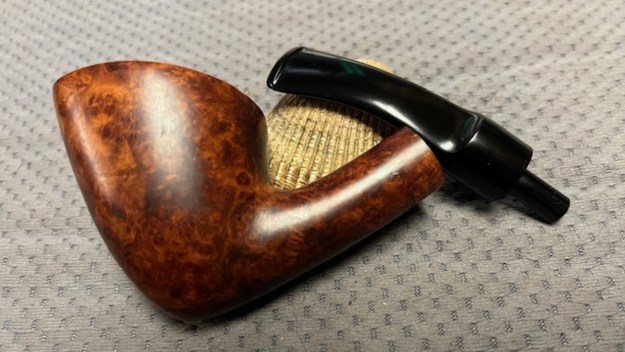
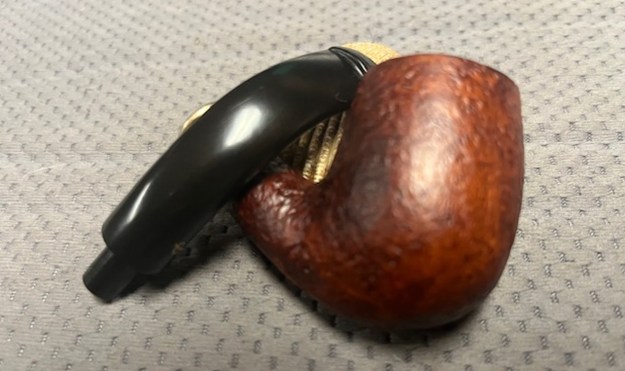
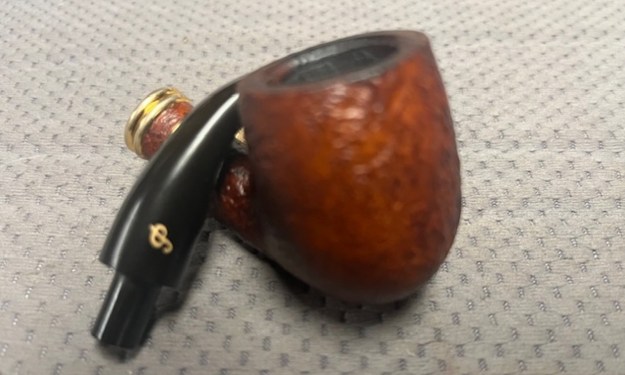
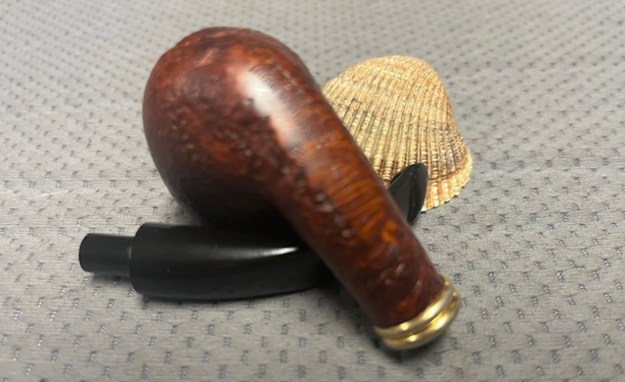
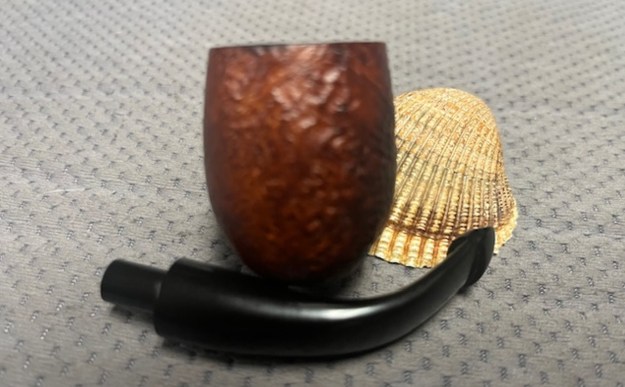
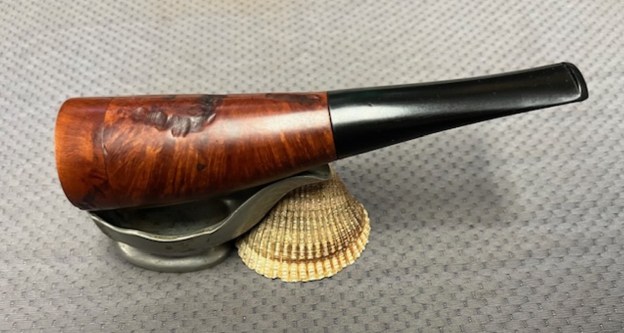
New Life for an Israel Made Long Canadian


by Steve Laug

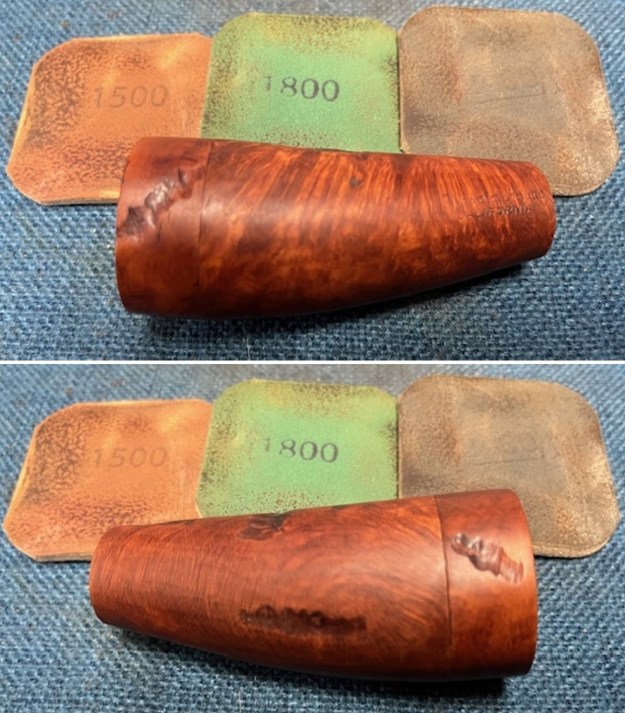
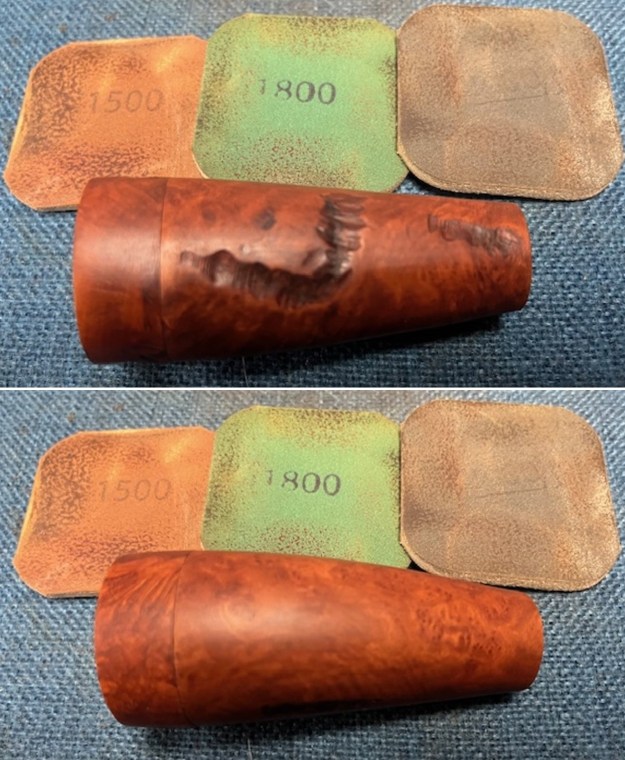
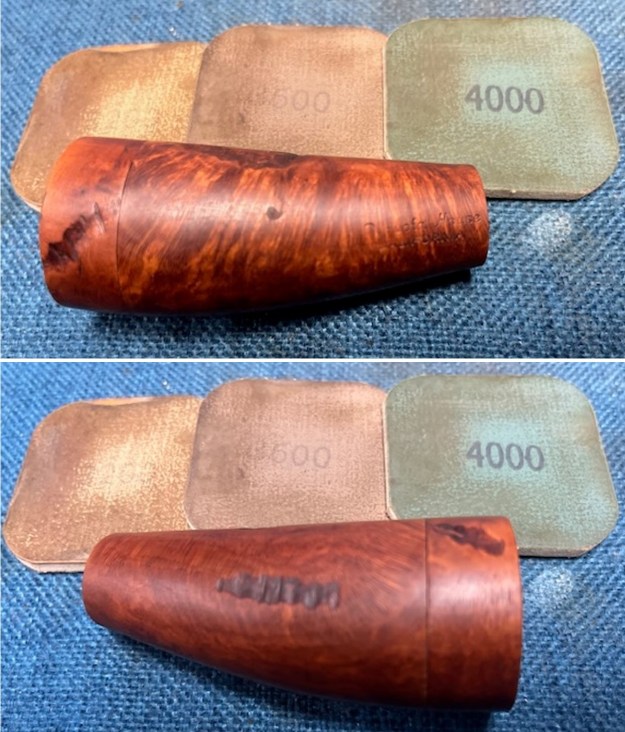
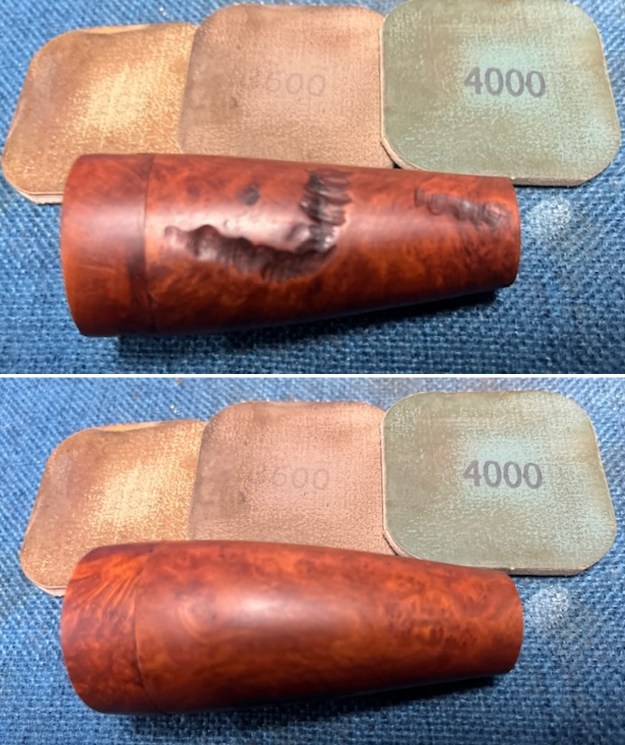
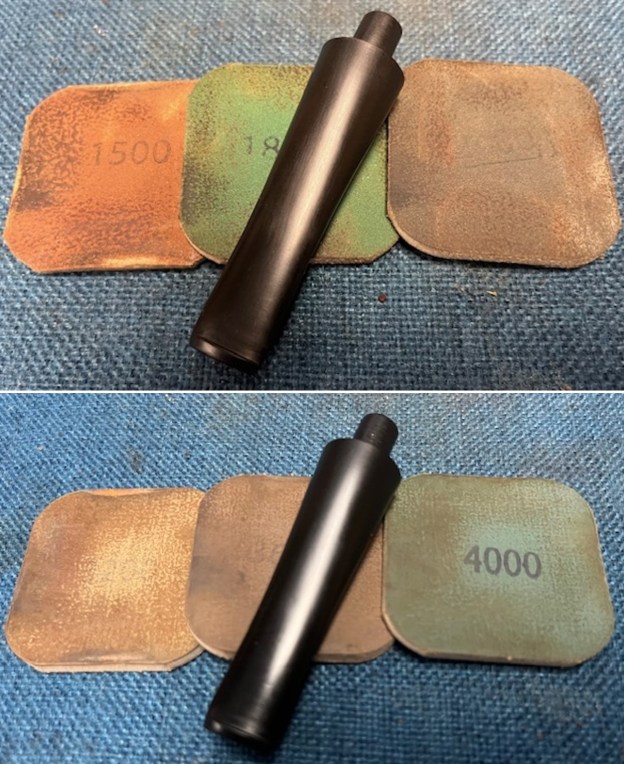
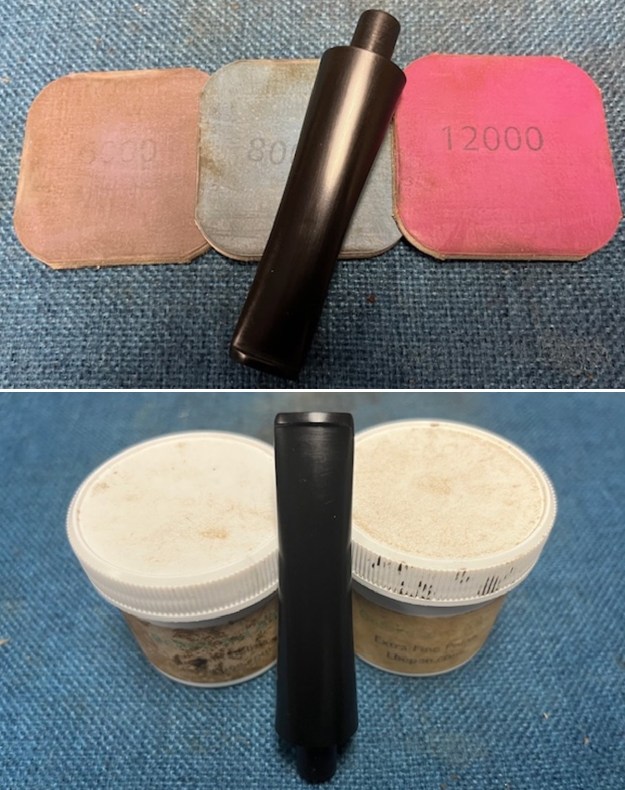
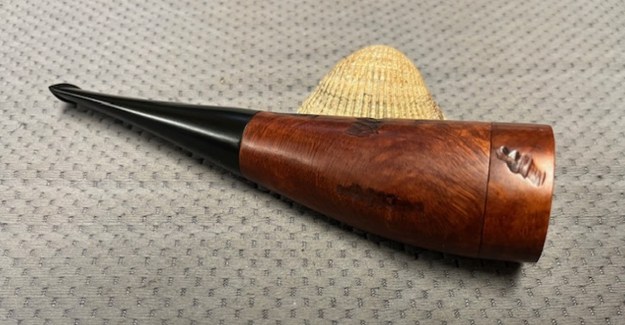
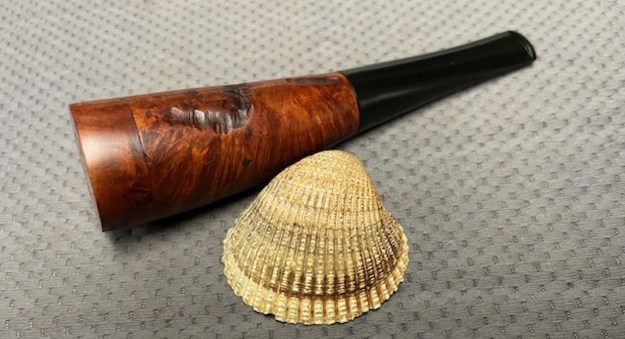
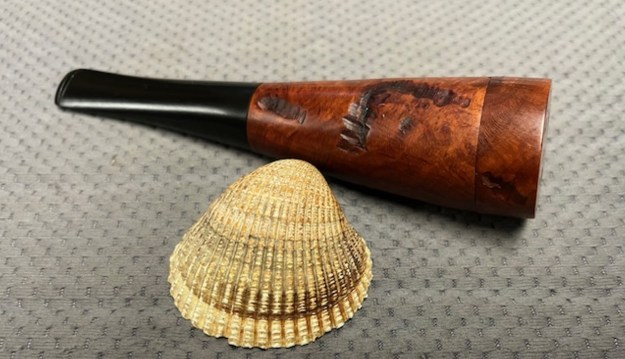
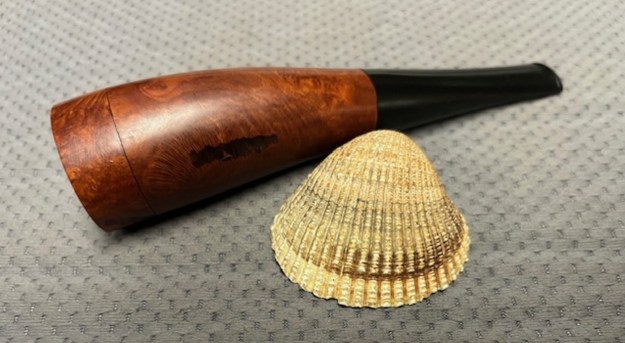
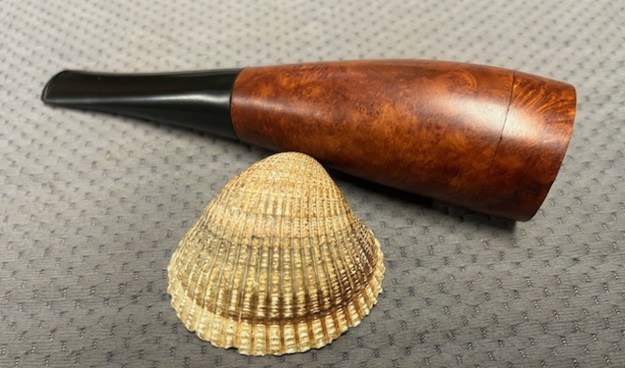
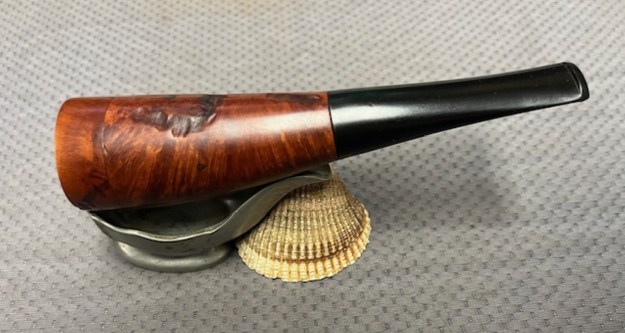
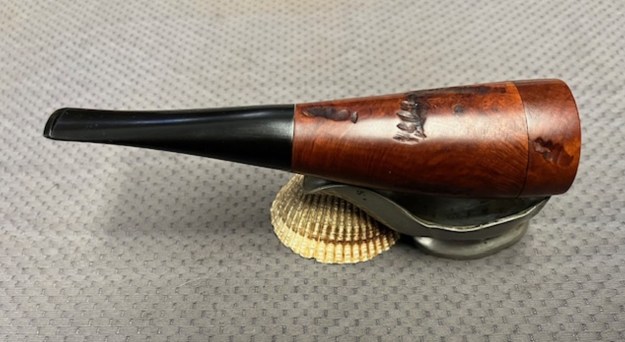
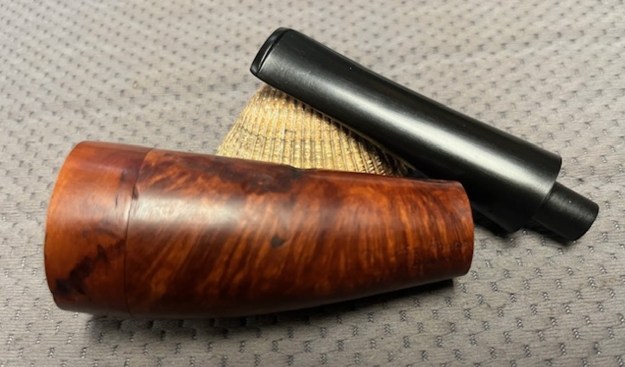
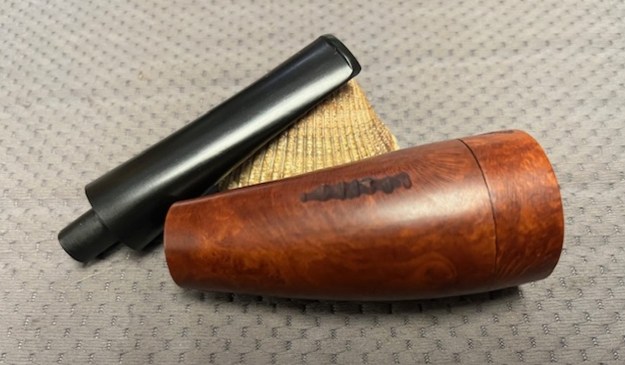
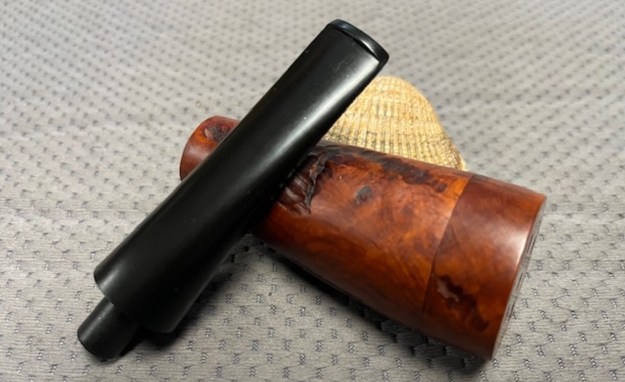
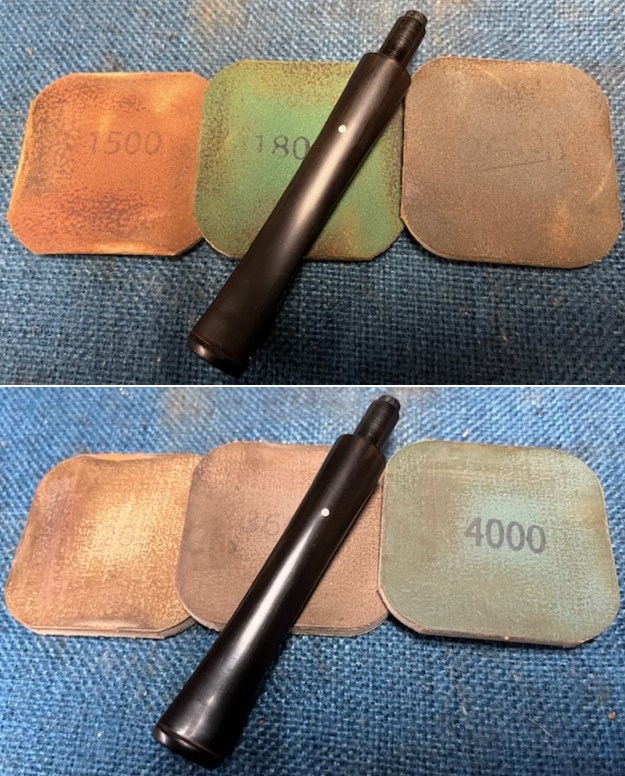
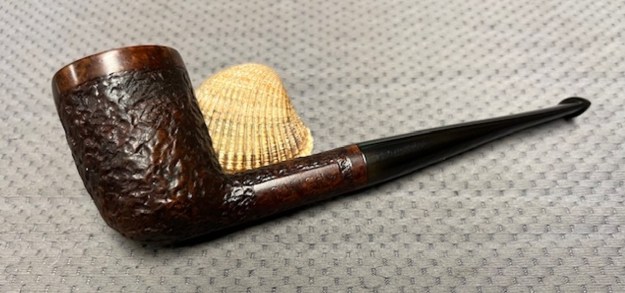
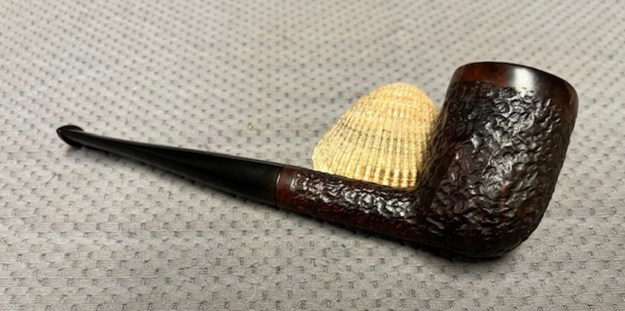
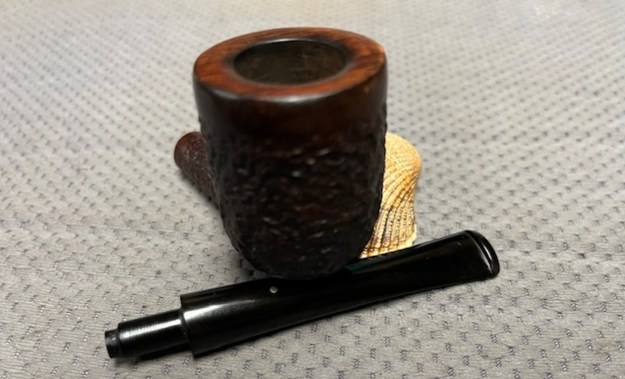
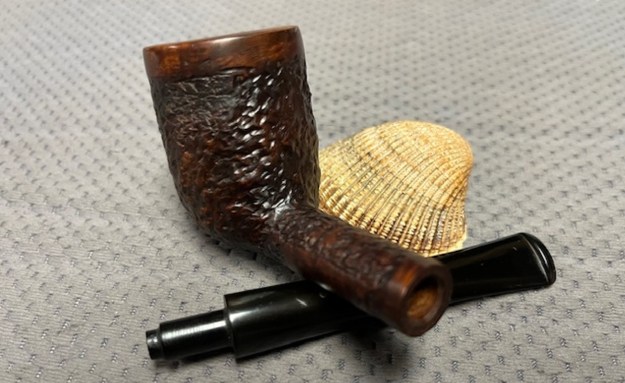
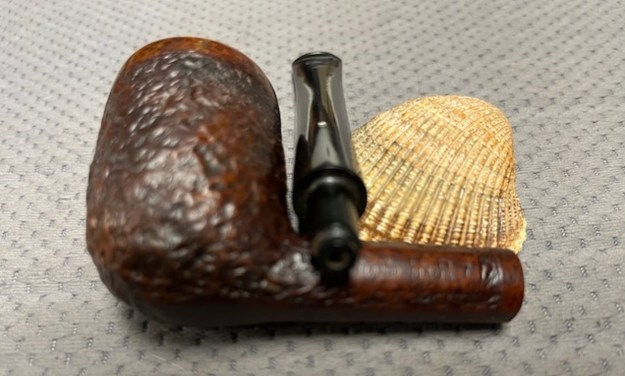
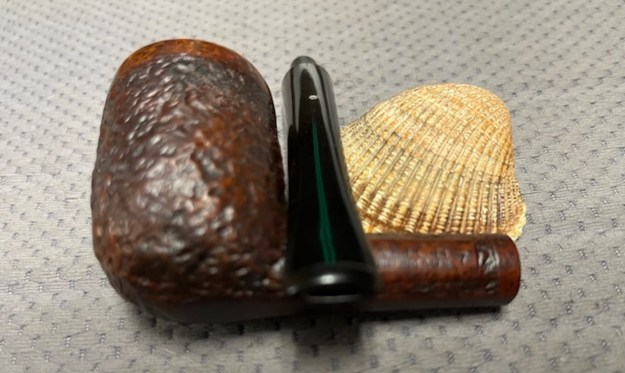
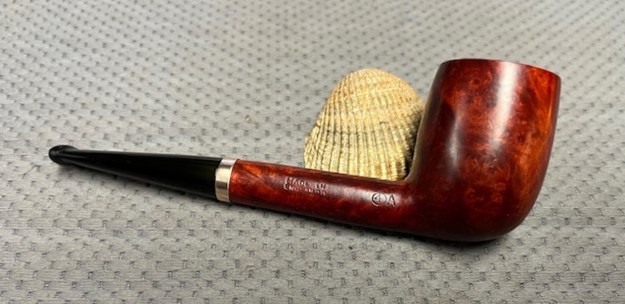
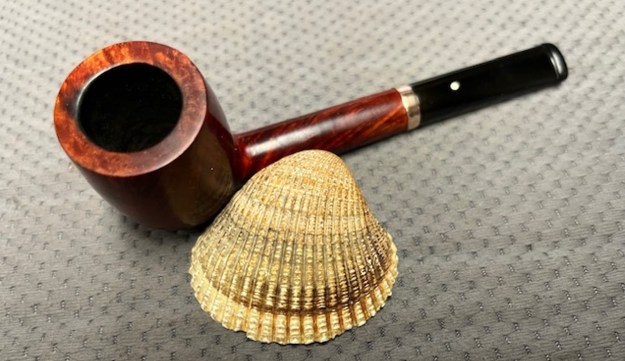
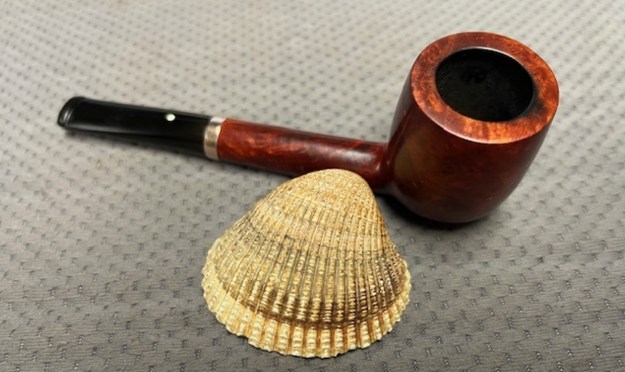
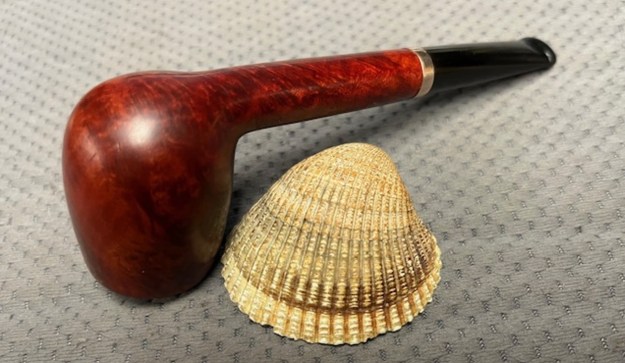
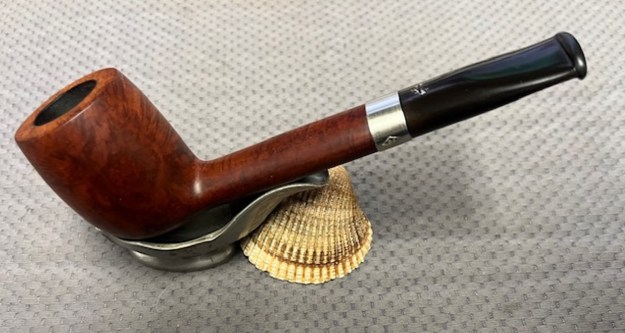
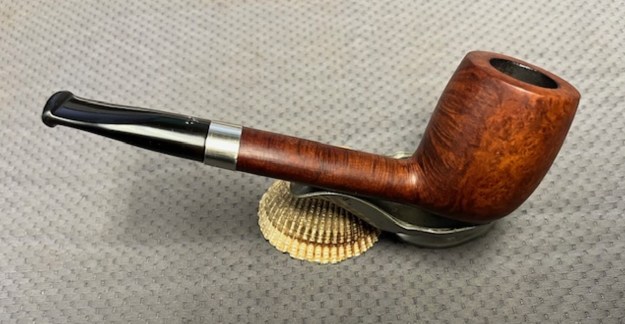
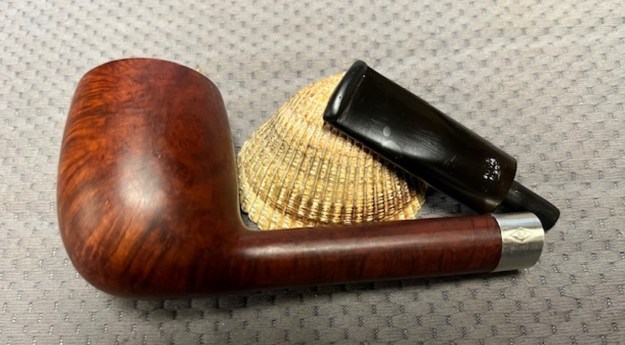
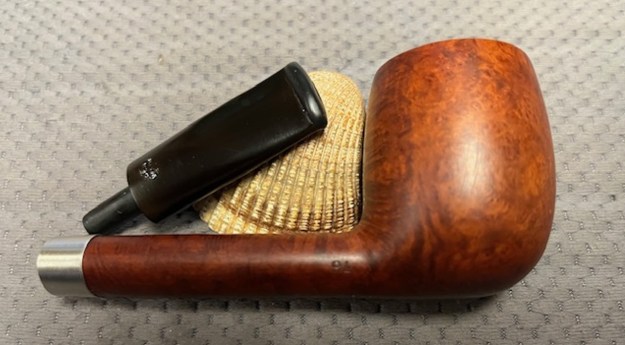
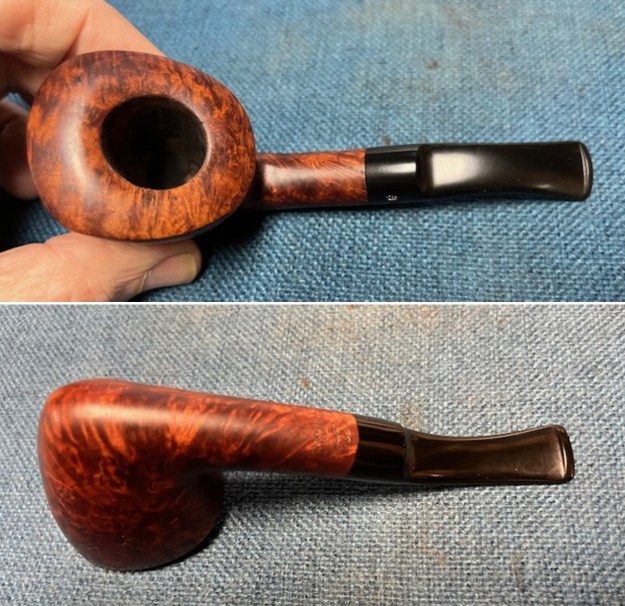
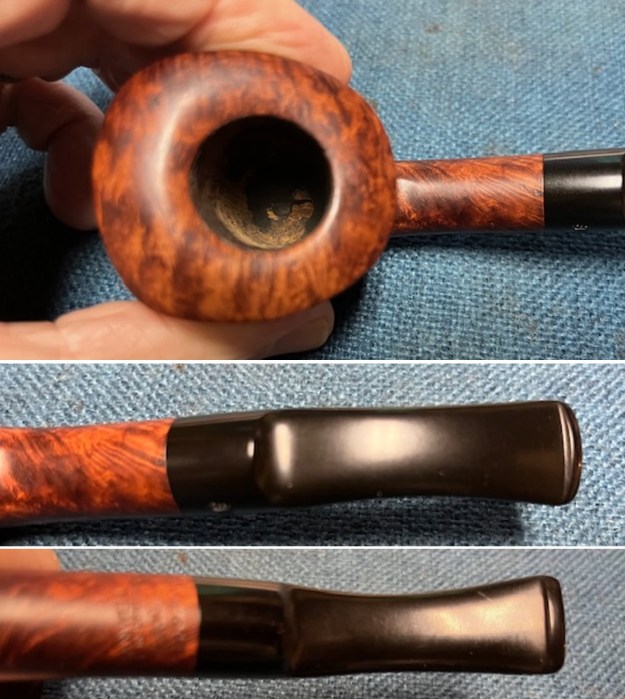
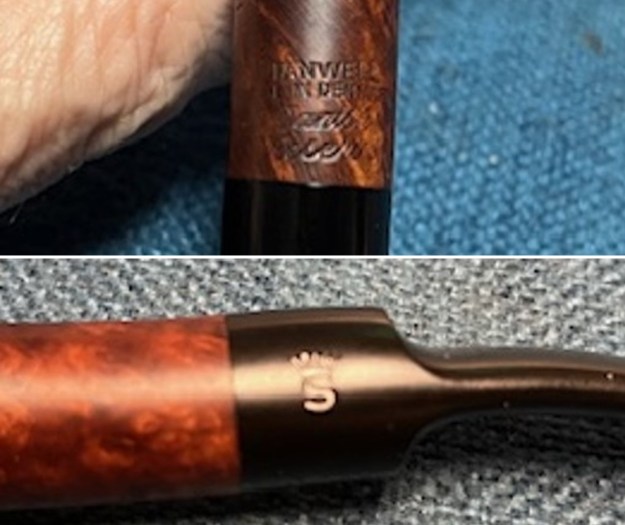
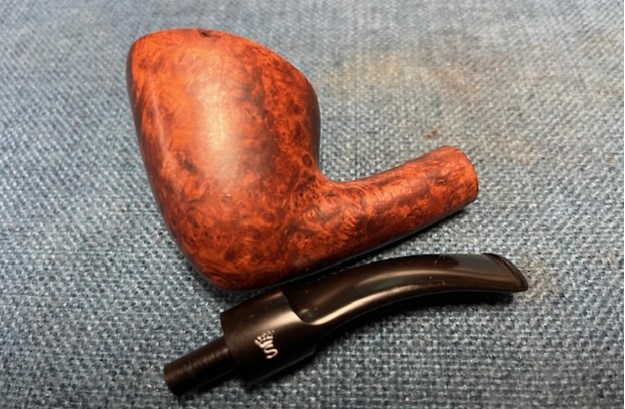
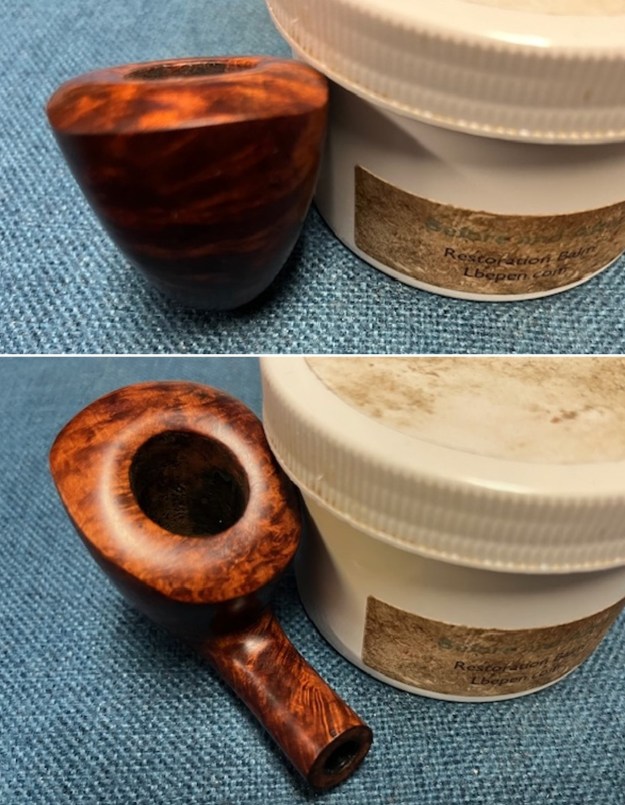
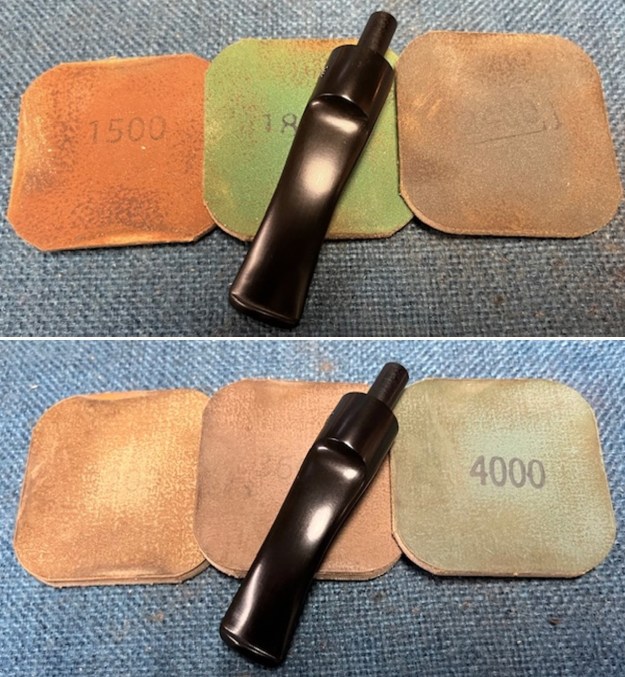
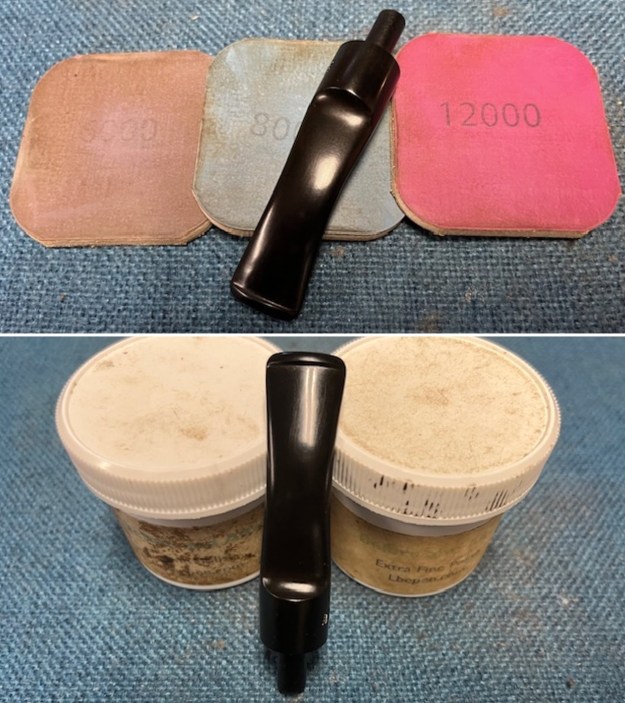
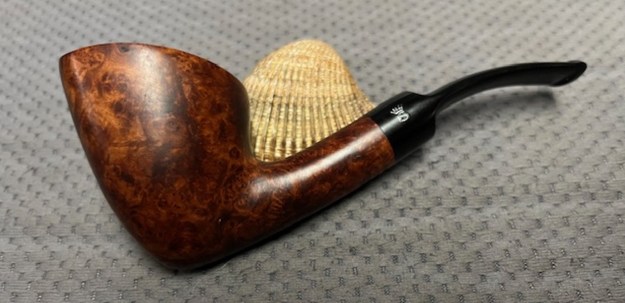
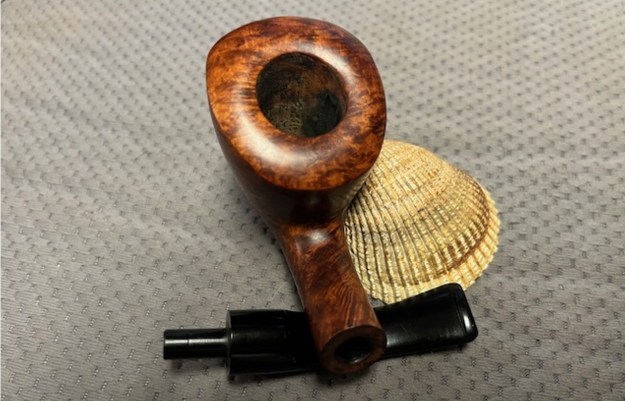
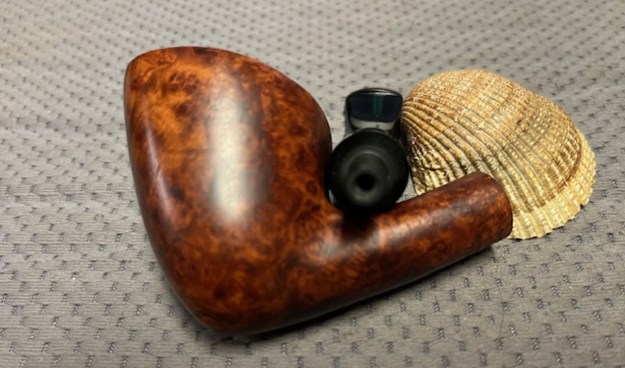
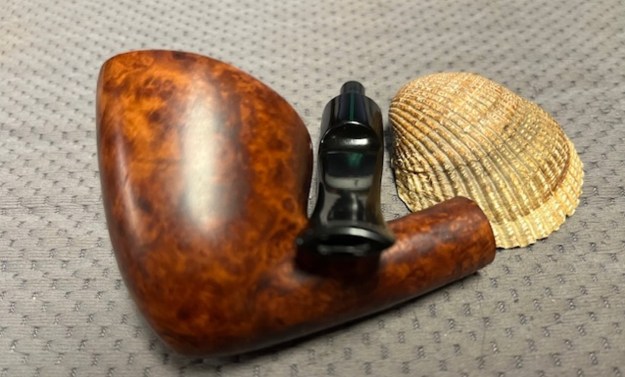
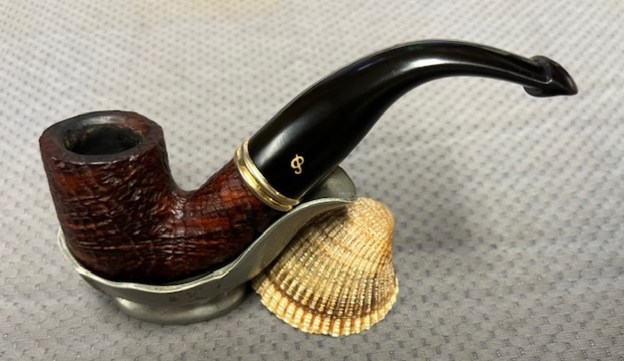
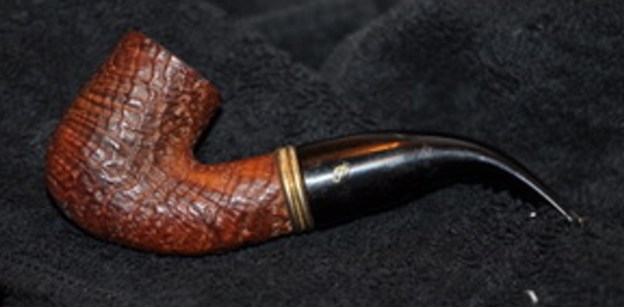
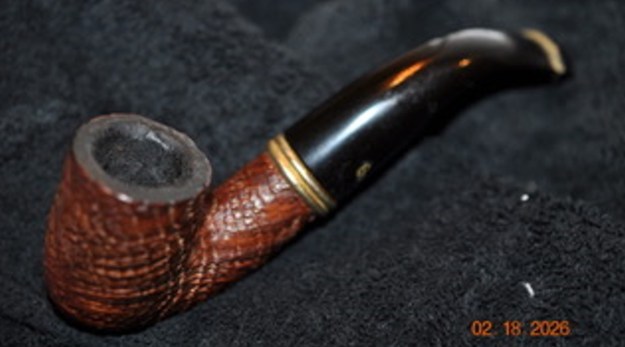
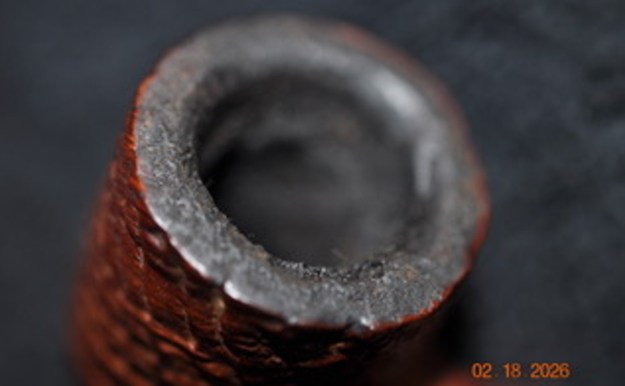
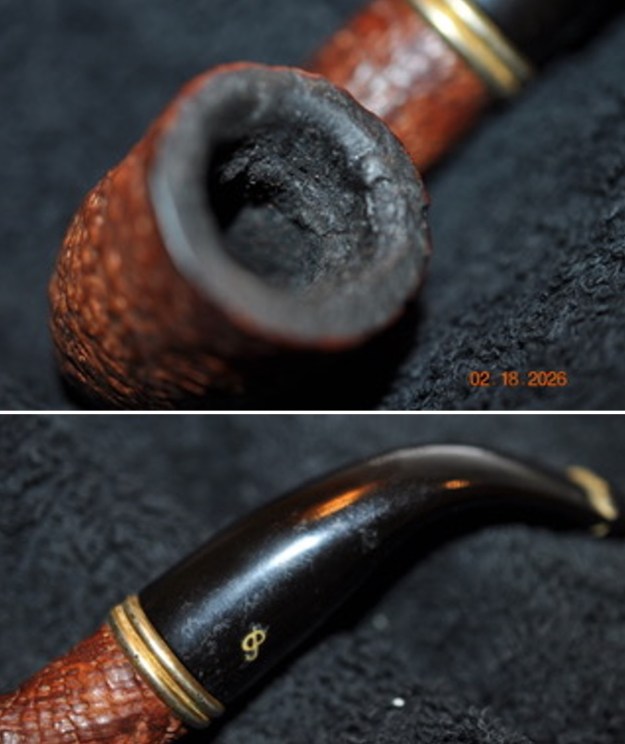
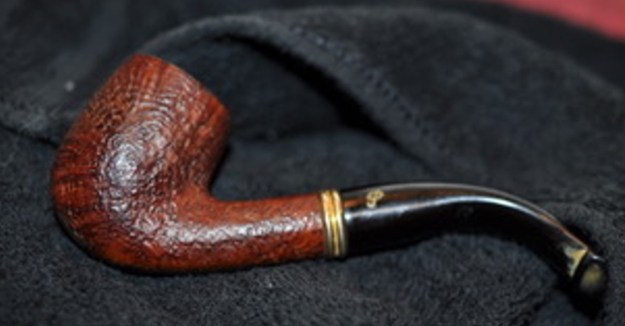
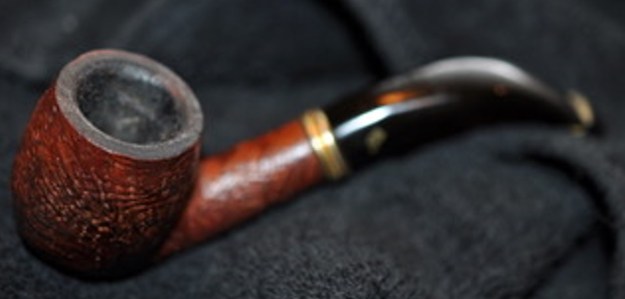
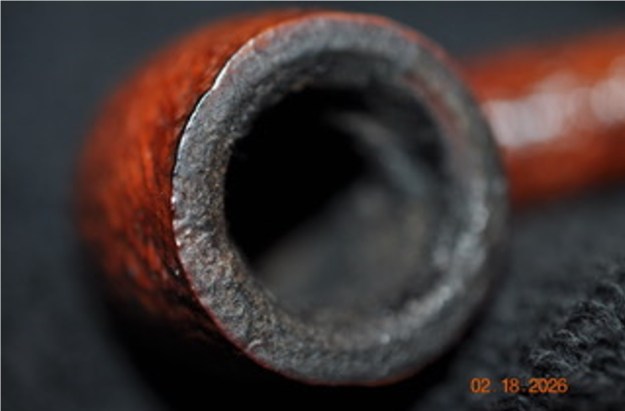
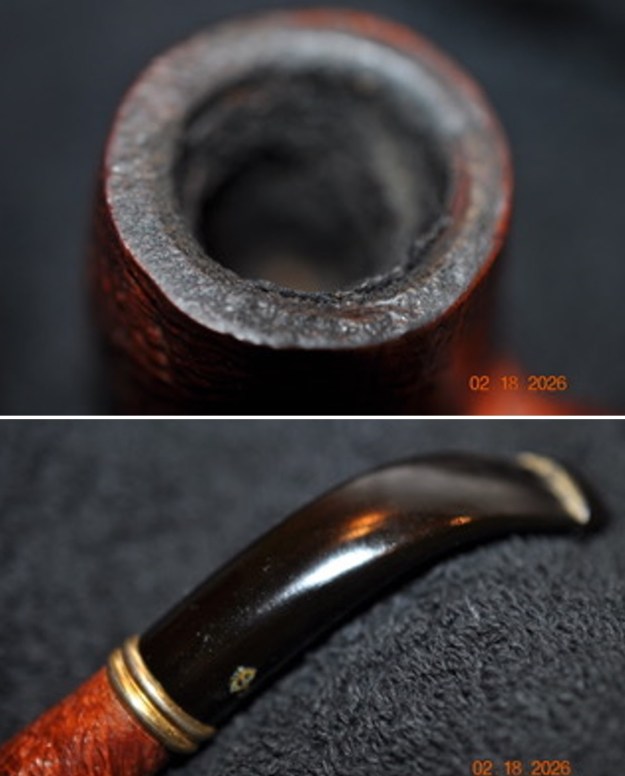
The next pipe on the table is a great looking long Canadian that Jeff picked up on 12/17/2020 from an auction in Cramerton, North Carolina, USA. The finish is smooth around the bowl and shank with some leaves carved into the finish. There is one on the left side of the shank and there are three on the right side with one of them on bottom right and front. The bowl had been coated with a varnish coat that was spotty in places and would need to be removed. It is a great looking pipe. It is stamped on the underside at the shank/stem junction it reads Israel. The finish was dirty and had a lot of grime and grit ground into the rustication and the smooth portions. The rim top and inner edge of the bowl is dirty with a heavy lava flow on the edge and the top. There is a thick cake in the bowl. The taper stem has an X logo on the top. It is lightly oxidized and there were tooth marks and chatter on the surface. Jeff took photos of the pipe before he started his clean up work. It showed a lot of promise.He took close up photos of the bowl and rim top from different angles to show the condition of the bowl and the rim top. You can see the lava on the rim top and on the inner edge of a caked bowl flowing onto the top. He took photos surface of the vulcanite stem which is lightly oxidized and dirty. It has tooth marks on both sides as well as chatter. He took photos of the sides and heel of the bowl to show the rich reddish finish and the carved leaves around the right side and shank. There is great grain peeking through the grime on the shank and the sides of the bowl. Jeff took photos of the stamping on the underside of the shank to capture it. It was clear and readable as noted above. He also took a photo of the X logo on the stem top. I turned to both Pipephil and Pipedia to see if I could find any information on the stamping on the pipe. There was nothing stamped with both Israel on the shank and X on the stem top. I am pretty convinced that the pipe was made by the Shalom Pipe Company in Israel and the makers of Alpha pipes. The shape and the conformation of the pipe remind me of other Shalom pipes. While I will never know the maker for certain I am fairly confident it as noted above. It is a neat looking pipe.

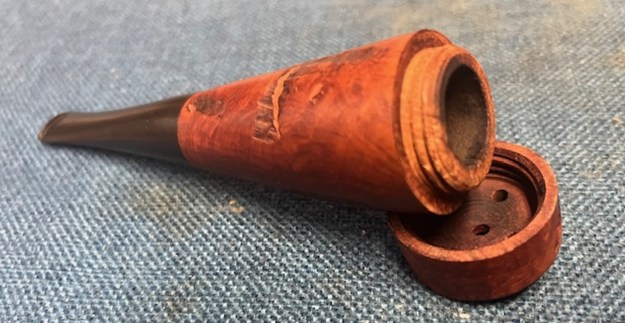
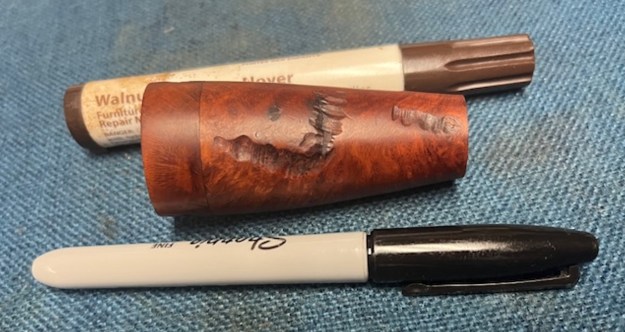
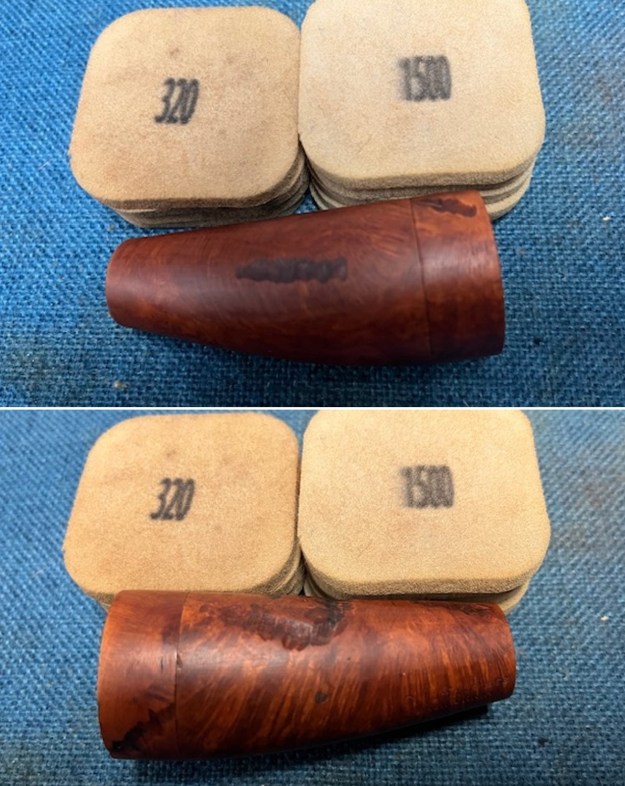
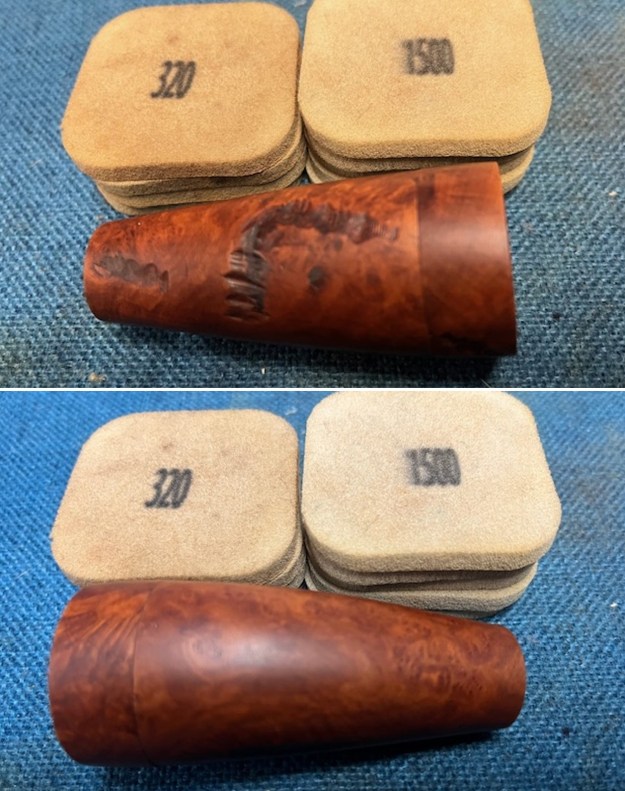
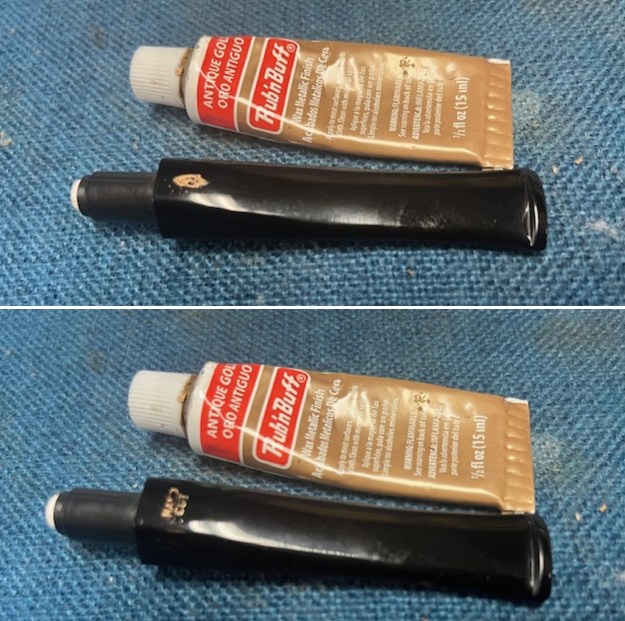
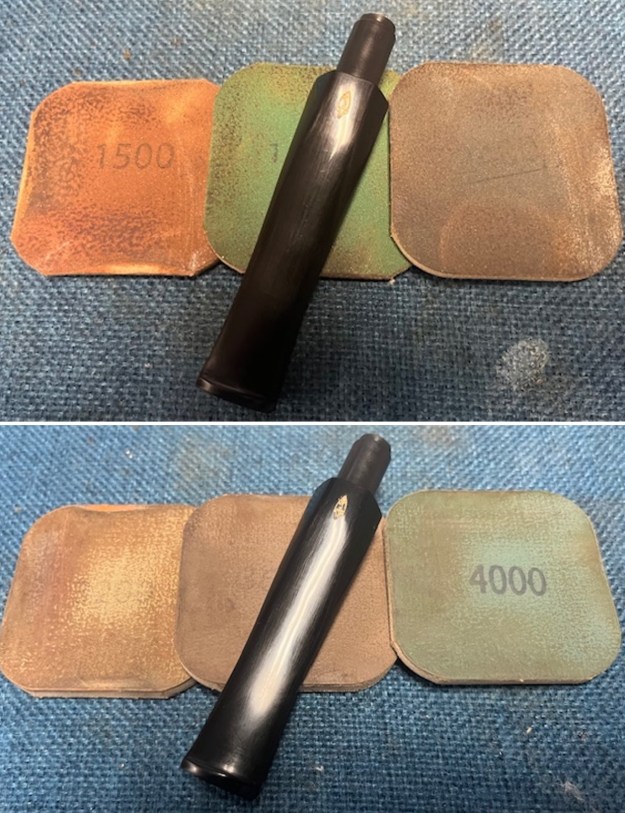
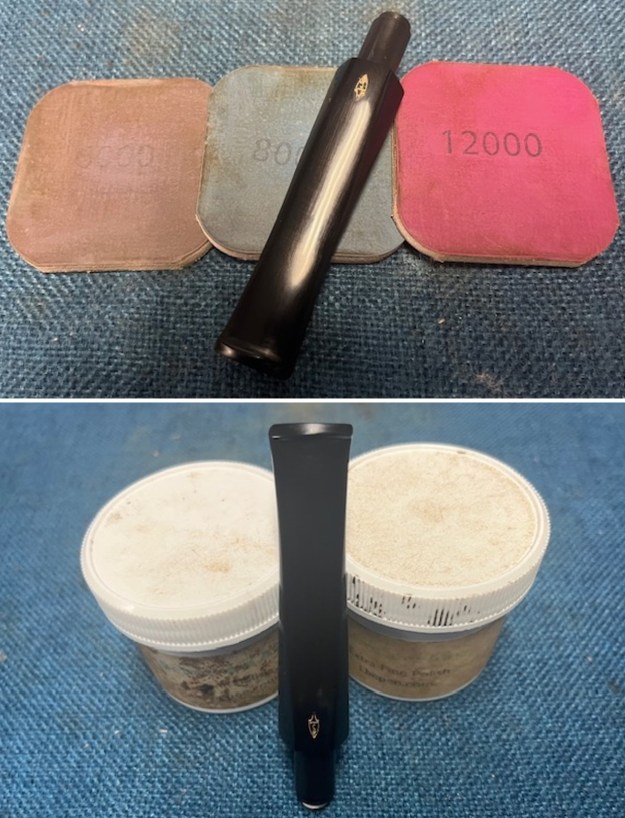
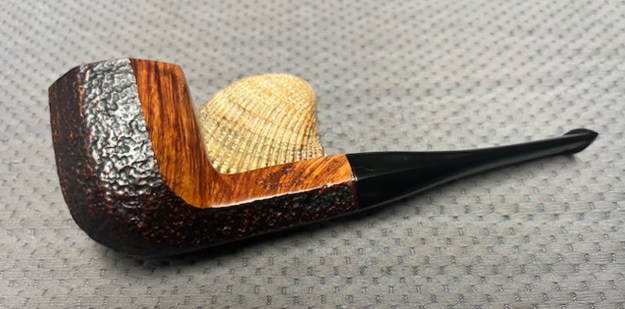
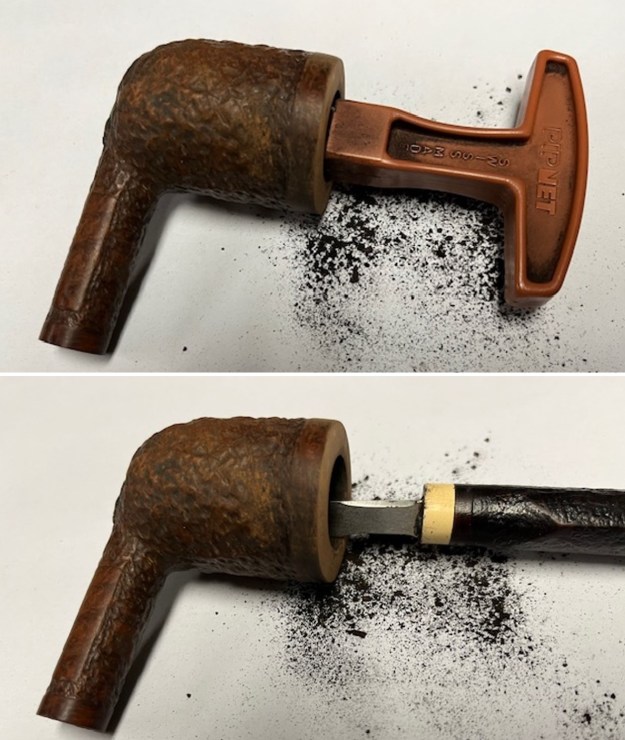
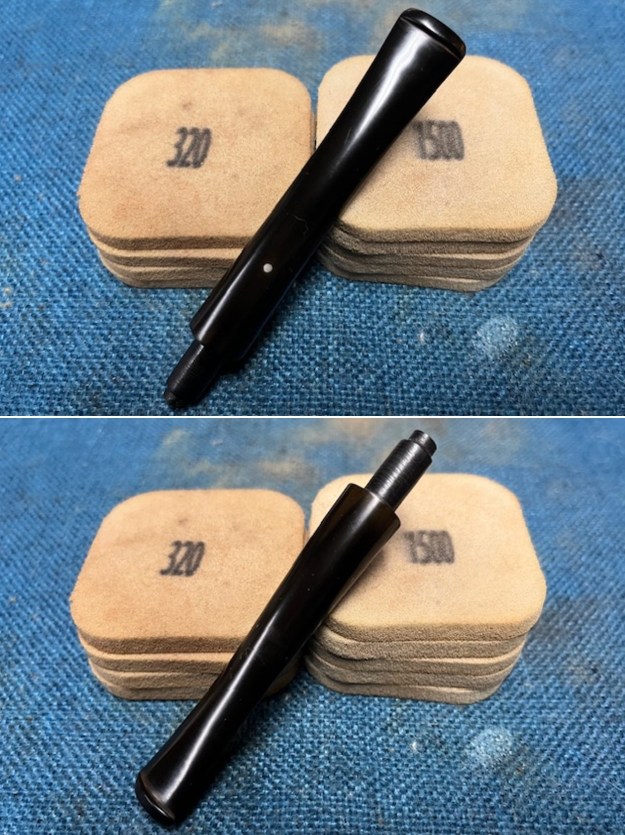
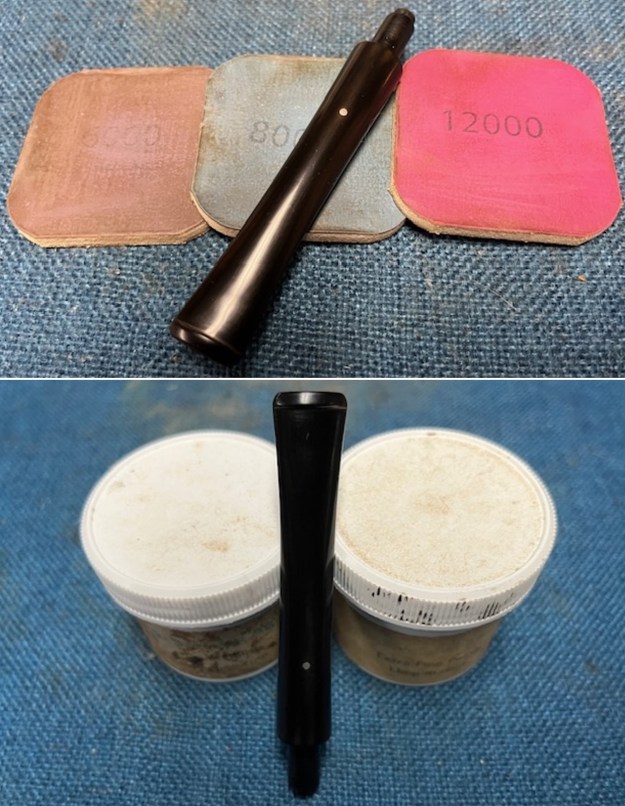
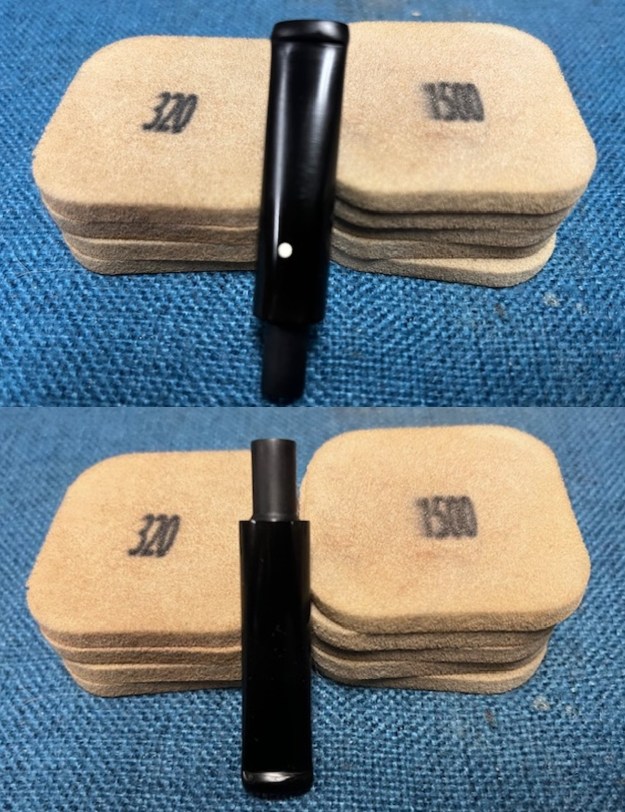
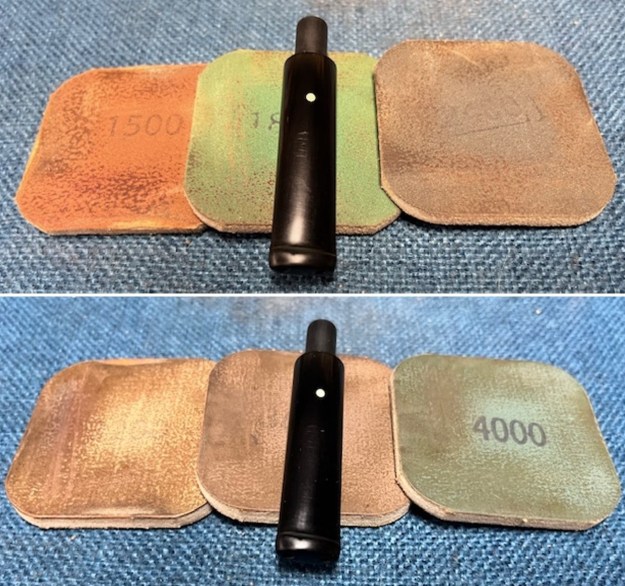
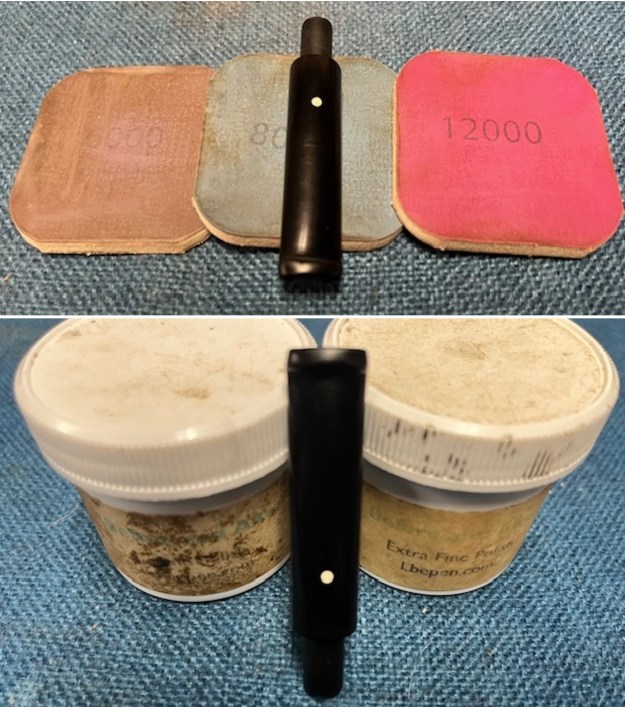
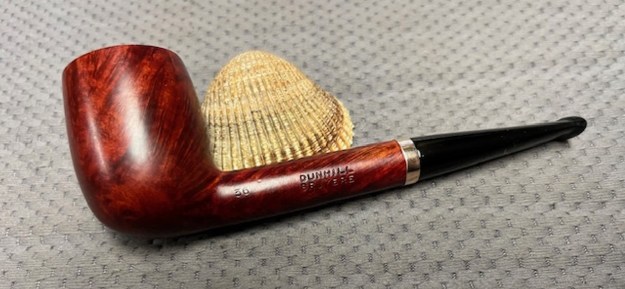
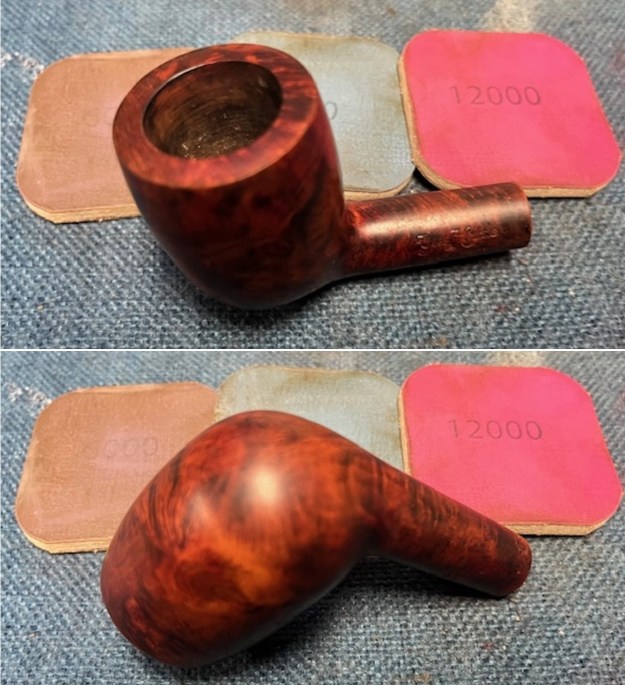
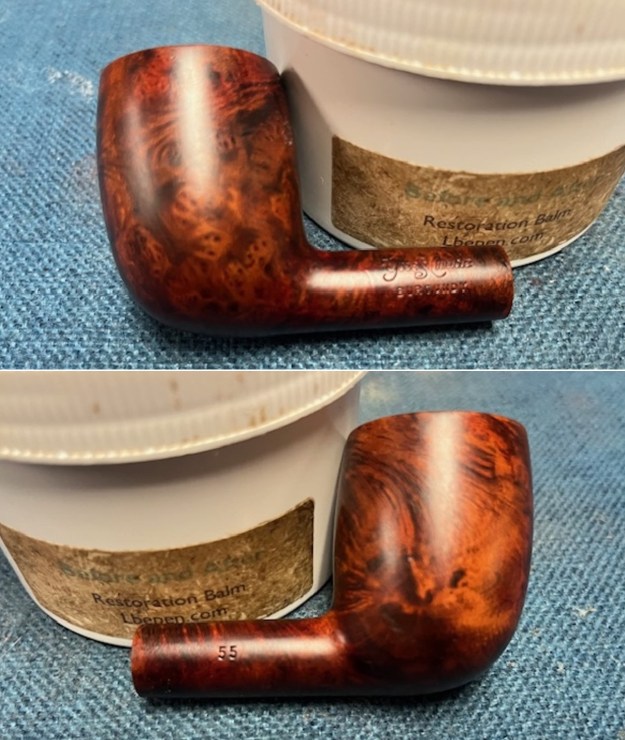
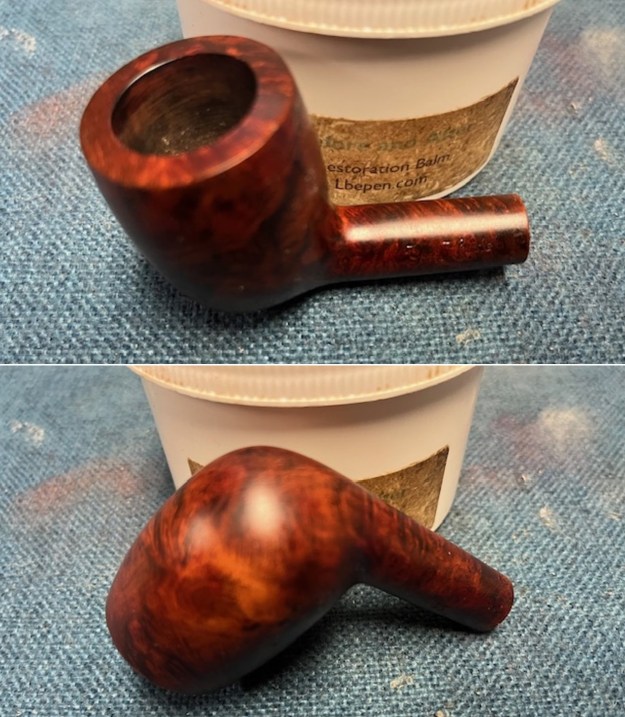
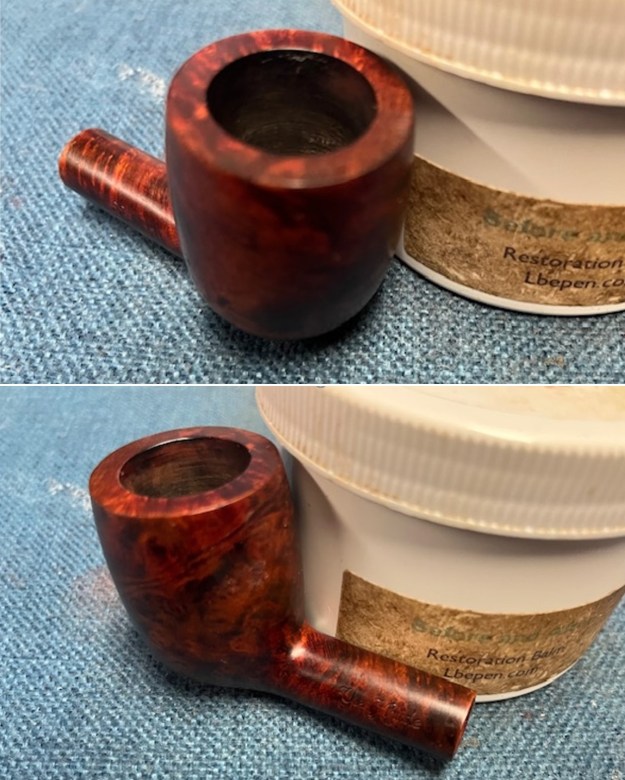
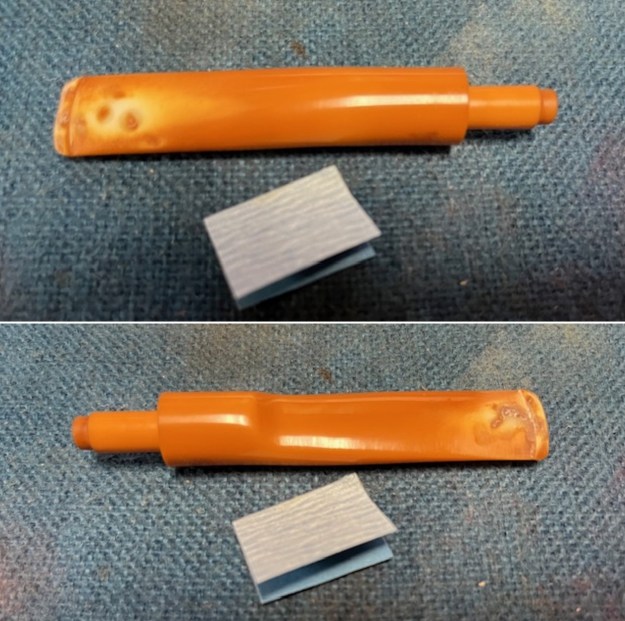
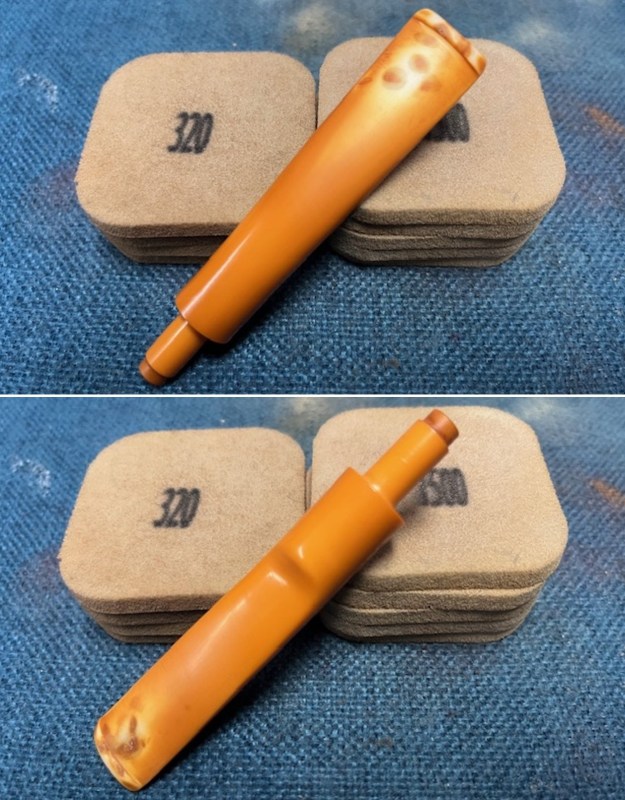
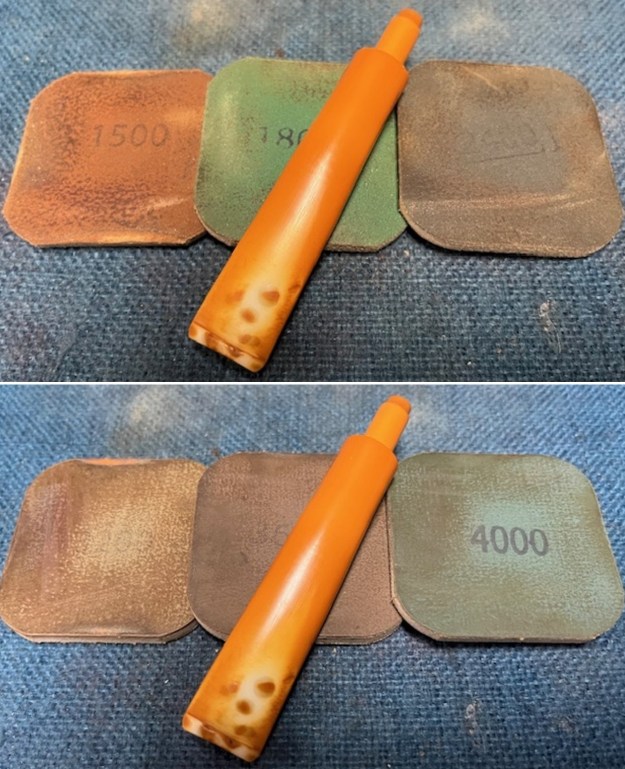
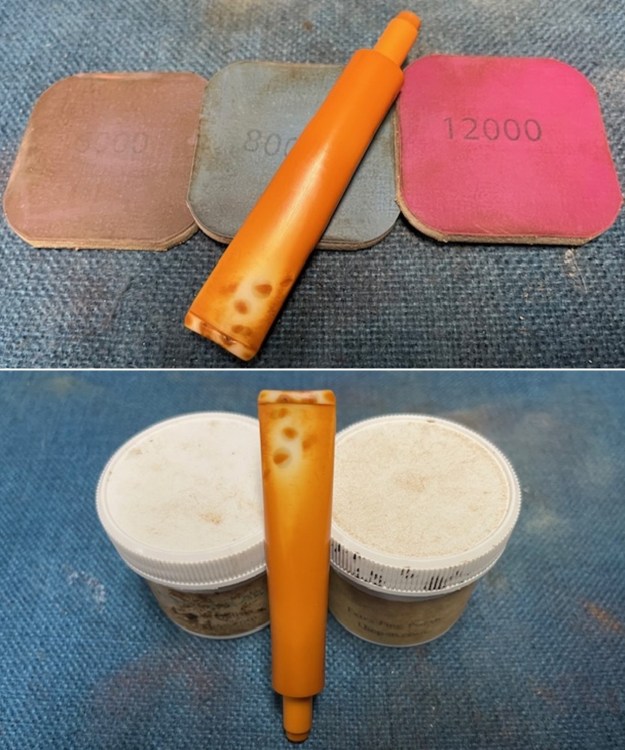
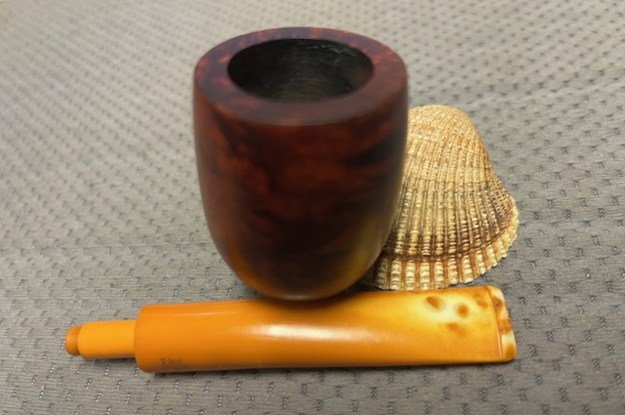
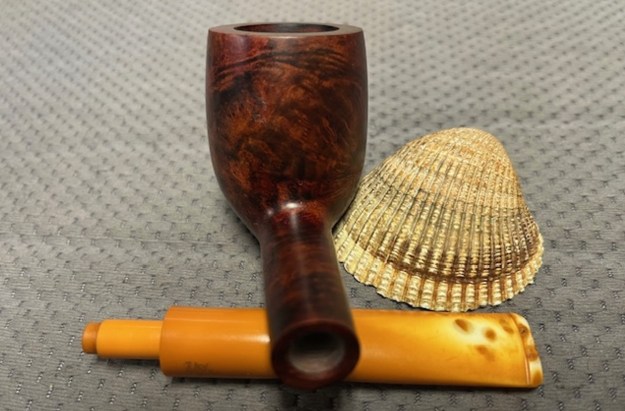
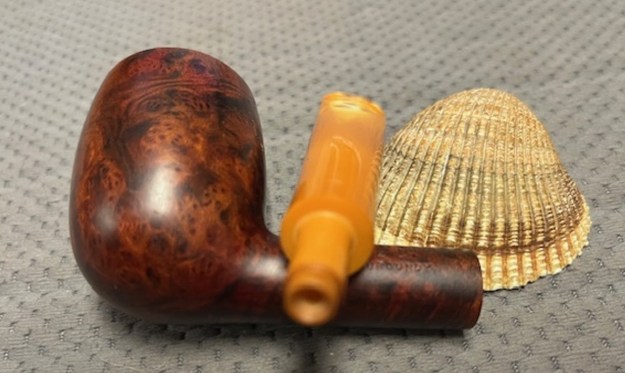
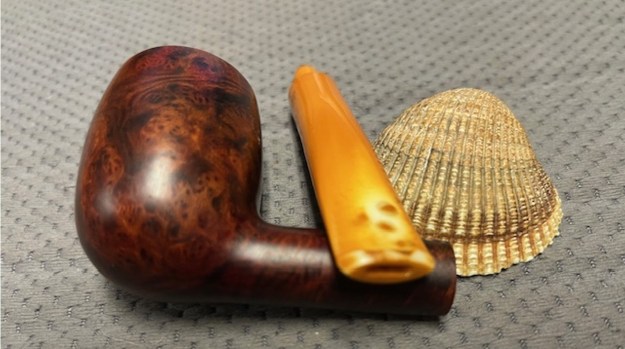
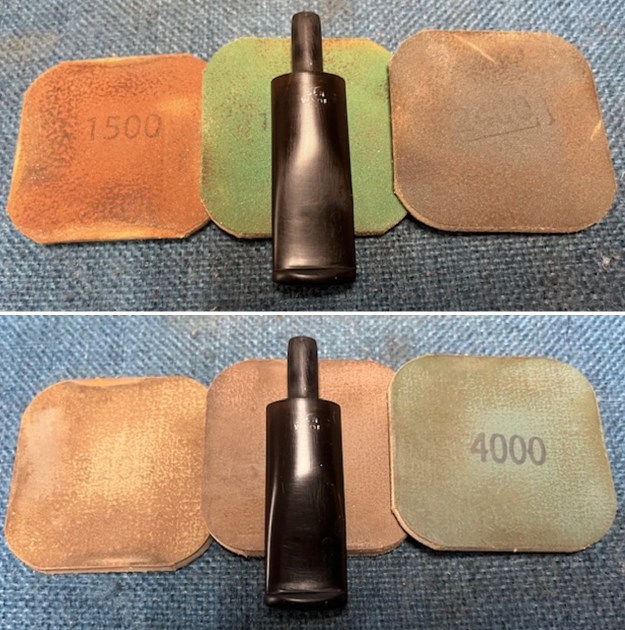
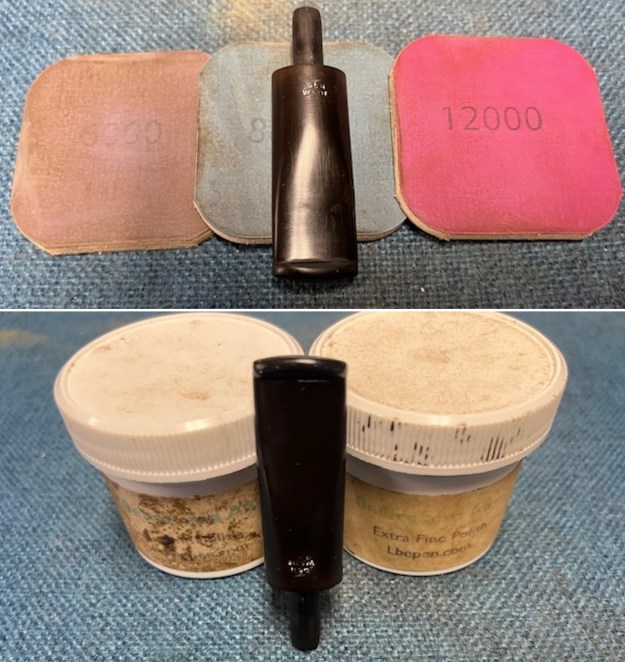
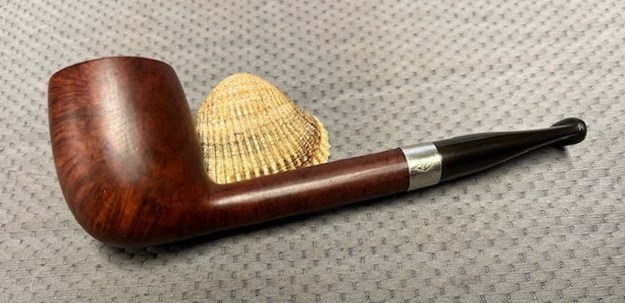
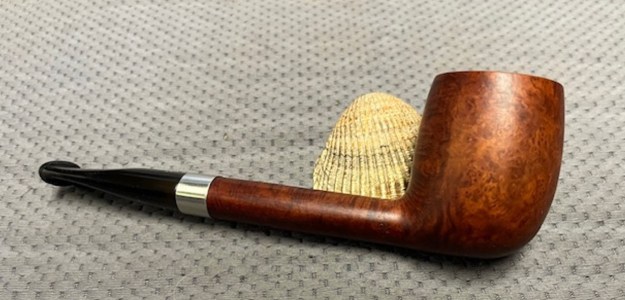
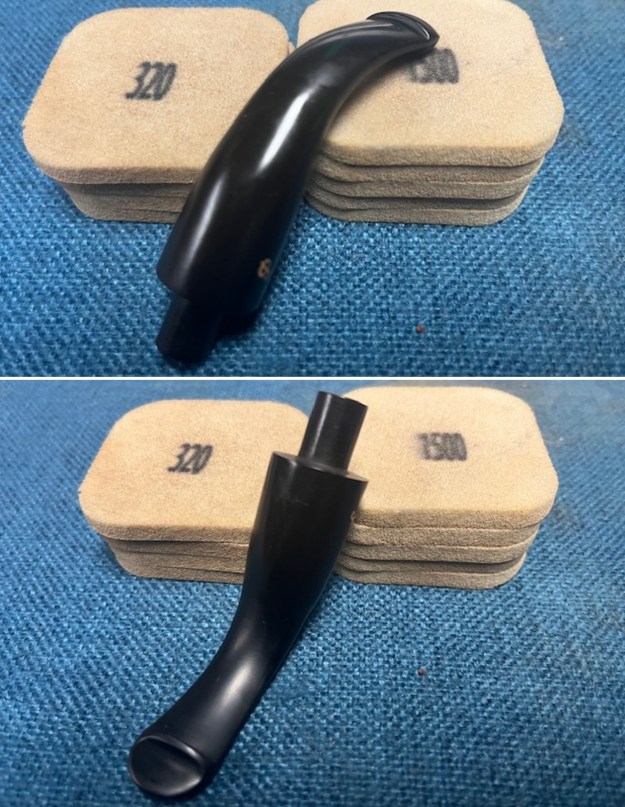
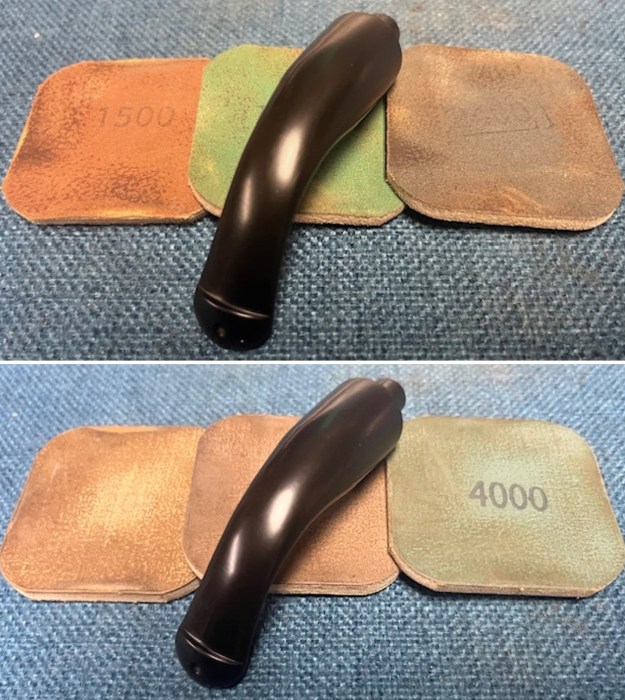
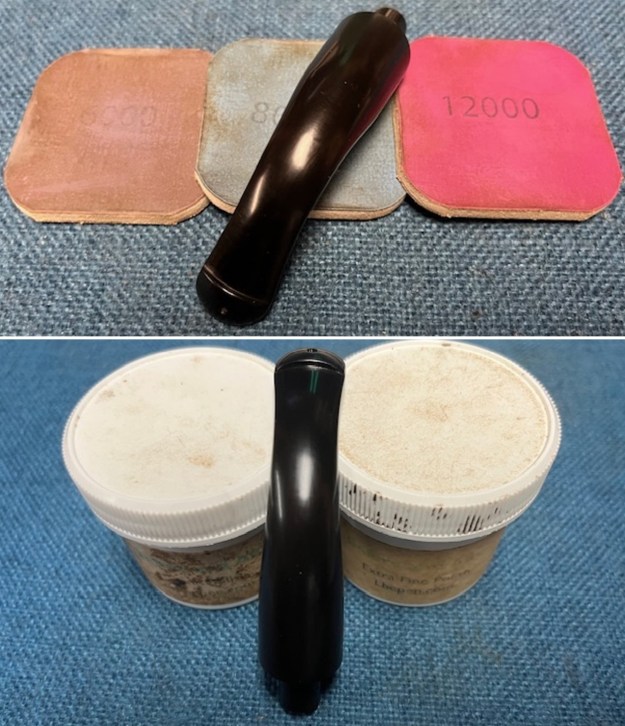
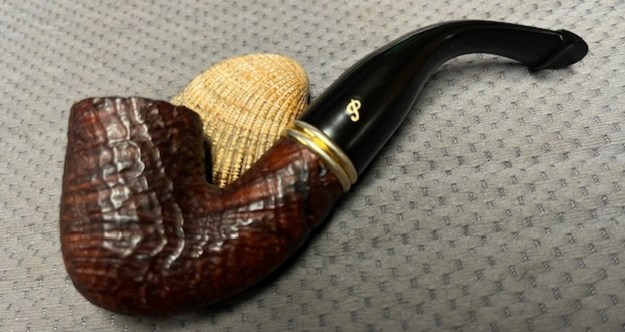
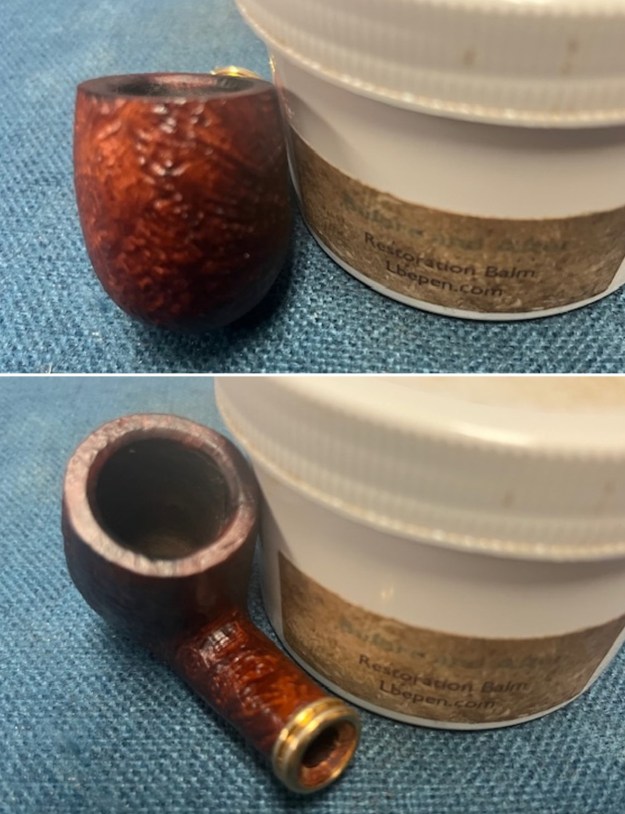
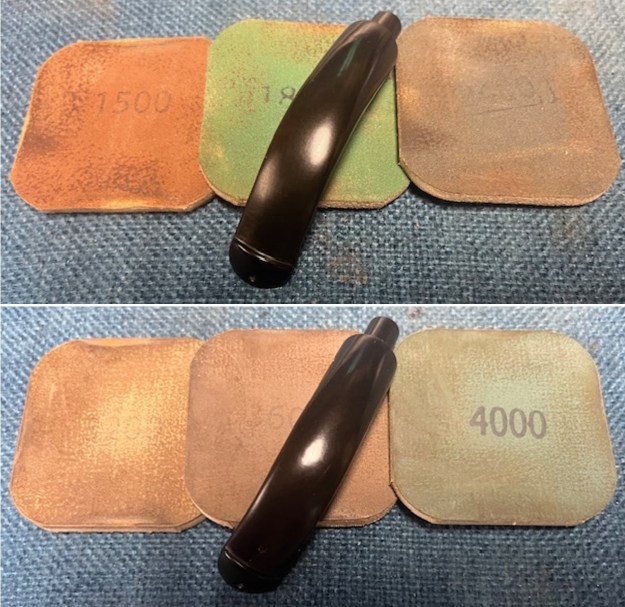
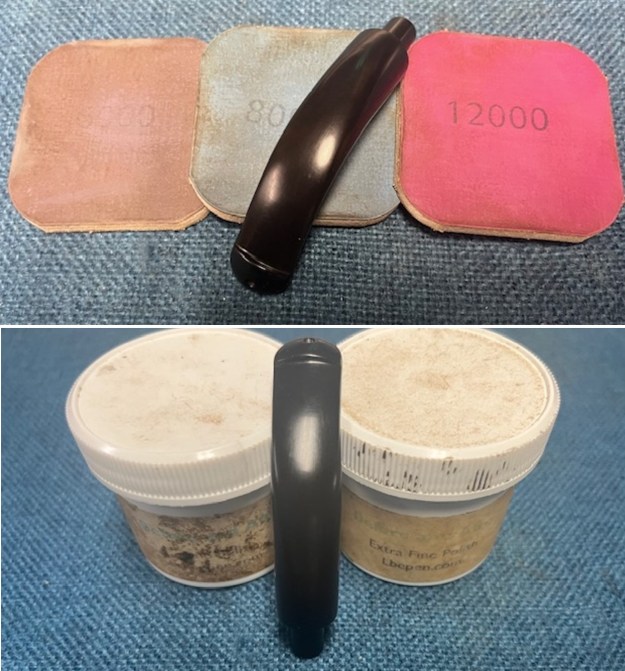
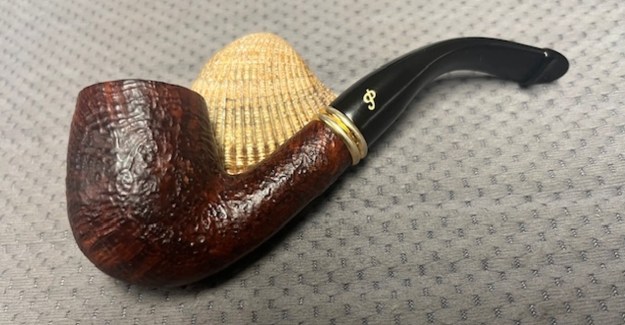
When I received it from Jeff it did not look like the same pipe. It was clean and the finish had life. He reamed it with a PipNet pipe reamer and got rid of the cake. He cleaned up the reaming with a Savinelli Fitsall Pipe Knife so that we could see the walls of the bowl and assess for damage. It was in good condition. He cleaned the internals of the shank and stem with cotton swabs, pipe cleaners and alcohol. He scrubbed the exterior with undiluted Murphy’s Oil Soap and a tooth brush. He rinsed the pipe under warm water. He dried it off with a cloth and then let it air dry. He scrubbed the stem with Soft Scrub and soaked it in Briarville’s Stem Deoxidizer. He rinsed it with warm water and dried it off with a soft cloth. It came out looking very good. The finish on the bowl and the rim top cleaned up nicely. I took pictures of the pipe to show how it looked when I unpacked it.  I took some photos of the rim top and stem to show the condition of them both when the pipe arrived. Overall it looked good. There is some damage and darkening to the inner edge of the bowl. The stem looked good even with the tooth marks on the top and underside ahead of the button.I took a photo of the stamping on the underside of the shank and reads Israel. It is clear and readable and in great condition. The X stamp on the topside of the stem is faded but readable. I removed the stem from the shank and took a photo of the pipe to show the look of the pipe.I cleaned up the inner edge of the bowl with a folded piece of 220 grit sandpaper. To remove the damage on the inner bevelled edge I used a wooden sphere and 220 grit sandpaper. It looked much better. I touched up the stain on the rim top and inner edge of the bowl with a Maple stain pen to match the rest of the briar.I sanded the sides of the rim top and bowl with 320-3500 grit 2×2 inch sanding pads to remove the varnish coat. I wiped it down after each pad with a damp cloth. It really began to have a more natural shine. I polished the bowl and the high points on the plateau with micromesh sanding pads – wet sanding with 1500-12000 grit pads. I wiped the briar down after each pad with a damp cloth. The bowl is starting to look very good. I worked some Before & After Restoration Balm into the surface of the briar with my fingertips and into leaf patterns with a horsehair shoe brush to clean, enliven and protect it. I let the balm sit for a little while and then buffed with a cotton cloth to raise the shine. The photos show the bowl at this point in the restoration process. I set the bowl aside and turned my attention to the stem. I filled in the deep tooth marks on the top and underside of the stem ahead of the button with a rubberized/carbon extra strength Black CA glue. Once it cured I used some small flat files to blend the repairs into the surface of the vulcanite. I sanded it with 220 grit sandpaper to finish blending it into the stem surface. I touched up the X stamp on the topside of the stem with some white acrylic fingernail polish. I let it harden and then scraped off the excess and went over it with a 1000 grit sanding pad. It looked very good at this point.I set the bowl aside and turned my attention to the stem. I sanded the stem with 2 x 2 inch sanding pads – dry sanding with 320-3500 grit pads and wiping it down after each pad with an Obsidian Oil cloth.I polished the stem with micromesh sanding pads – wet sanding with 1500-12000 grit sanding pads. I wiped it down after each sanding pad with some Obsidian Oil. I finished polishing it with Before & After Pipe Stem Polish – both Fine and Extra Fine and buffed it off with a cotton cloth. This beautiful mixed finish Israel Long Shank Canadian with carved leaves, probably made by the Shalom Pipe Company with a slightly bent vulcanite stem has a great look and feel. I polished the stem and the bowl with Blue Diamond polish on the buffing wheel. I gave the bowl and the stem multiple coats of carnauba wax. I buffed the pipe with a clean buffing pad to raise the shine. I hand buffed it with a microfiber cloth to deepen the shine. The pipe polished up pretty nicely. The rich combination of browns and blacks in the smooth and carved leaves took on life with the buffing. The rich colour of the briar works well with the polished vulcanite stem. I like the grain and finished look of this Israel Long Shank Canadian. Have a look at it in the photos below. The shape, finish and flow of the pipe and stem are very well done. The dimensions are Length: 7 ½ inches, Height: 2 inches, Outside diameter of the bowl: 1 ¼ inches, Chamber diameter: ¾ of an inch. The weight of the pipe is 52 grams/ 1.83 ounces. This Israel Long Canadian is a real beauty. Thanks for walking through the restoration with me as I worked over another beautiful pipe. This one will be going on the rebornpipes store in the Pipes from Various Makers Section shortly if you would like to add it to your collection. Thanks for your time.

New Life for a Caminetto Super Moustache Dublin Hand Made in Italy


by Steve Laug

The next pipe on the worktable is a nice looking Caminetto Dublin that appears to me to be a higher end large, smooth pipe. We purchased from a seller in Macon, Georgia, USA on 03/08/2025. The stamping on the pipe was very clear and readable. On the left side of the shank it reads Caminetto.. [over] Super Moustache. On the right side of the shank it is stamped Hand Made in Italy [over] Cucciago (Co). The finish was in good condition though it was grimy and dusty. The grain shone through the grime and was beautiful. There was a thick cake in the bowl with spotty lava overflow on the rim top. The inner edge had a nick on the left side mid bowl but was otherwise in good condition. The stem had a newer style large, raised moustache logo on the topside of the saddle. There was a white spacer at the end of the stem. The stem was dirty and had some light tooth marks and chatter on both sides ahead of the button. It had a lot of potential. Jeff took photos of the pipe as he saw it at this stage of his examination. Jeff took close up photos of the rim top from various angles to show the general condition of the bowl and rim. The rim top is scooped at the front and back of the bowl with a rise in the middle of each side. The photos show the heavy cake in the bowl and the lava build up on the rim top. The acrylic stem was dirty and had tooth marks and chatter on both sides ahead of the button. Jeff took a photo of the sides and heel of the bowl to give an idea of the beauty of the grain on the heel and sides of the bowl. The stamping on the sides of the shank is clear and readable as noted above. I turned to Pipephil (http://www.pipephil.eu/logos/en/logo-c1.html) to see what I could learn about the Caminetto Super Moustache and the large moustache on the stem. The first item in the screen capture below is stamped the same as the one I am working on. I have included the sidebar information below the screen capture.Brand created in 1968 by Giuseppe Ascorti († 1984), Luigi Radice and Gianni Davoli as distributor.

  • 1979 : End of he first Caminetto period. Luigi Radice left the company. Giuseppe Ascorti produced the Sergio pipes (a short time) and moved into his new workshop with his son Roberto. (See also Capitello)
  • 1986 : New Caminetto period by Roberto Ascorti

With that information in hand I turned to Pipedia (https://pipedia.org/wiki/Caminetto) to see if I could glean further information on the specific line – Super Moustache – that I am working on. I quote a section of the article below. I have highlighted the information on the Super Moustache in red below.

There is also another factor in stamping, that is, which series the pipe falls in. The majority of Caminetto’s one sees are those of the “Business” series, which are stamped such with their collective shape (see photo of shapes below). Another stamp that sometimes follows the “Business” one is “KS,” which from what I know means “King-size” (this could be wrong, as there are pipes stamped with KS1, KS2, and KS3).

The other series is what is known as the “Prestige” series, though I have never seen a Caminetto stamped with “Prestige.” It appears that is the name of the collective series of smooth and specialty pipes made by Caminetto and featured in the Tinder Box brochure of old. There are so many different Prestige models, shapes, and finishes, and I have only seen about 5 or 6 of them. The list, per Harvey and other collective resources, is below:

    Bagdad (Super Briar and Black Briar Moustache–stained black and smooth)

    Damasco (gold ring affixed to top of bowl; smooth)

    Double Bowl

    Excellence, Excellence Extra, and Excellence Flame (natural, light chestnut or walnut; smooth)

    Green Briar and Green Briar Moustache (stained mahogany or walnut; smooth)

    Moustache, Moustache KS, KS1, KS2, KS3, and super Moustache (top of the line model; smooth)

    New Dear, New Dear KS, KS1, and New Dear Moustache (stained light chestnut with or without black smoke ring on rim; roughly carved)

    Red Briar (stained cherry; smooth)

    Sable D’Or and Sable D’Or KS, KS1 (black, chestnut, natural, mahogany, red or walnut; sandblast)

    Tinder Box Golden Anniversary Drainplug (250 made in black or natural sandblast; 51 made in Sable D’Or sandblast or Excellence smooth finishes)

    Torch (stained mahogany or walnut; smooth)

    Twin Bowl (only one in existence that I know of, featured in Hacker’s book)

Now it was time to work on the pipe. Jeff had done his usual thorough clean up of the pipe. He had reamed it with a PipNet reamer and finished with a Savinelli Fitsall Pipe Knife. He scrubbed the exterior with Murphy’s Oil Soap and the interior with isopropyl alcohol, shank brushes, cotton swabs and pipe cleaners. He worked on the acrylic stem with Soft Scrub then let it soak in Briarville’s Pipe Stem Deoxidizer. He rinsed it off with warm water. It has a few tooth marks and chatter on both sides. I took photos of the pipe before I started my work. I took some close up photos of the bowl/rim top and the stem to show the condition they were in at this point. The rim top and edges looked good and the bowl was clean. The one nick in the inner edge on the left side in the middle is visible below. The stem had light tooth marks and chatter on both sides near the button.I took photos of the stamping on the sides of the shank. It is clear and readable as noted above. I also captured the moustache logo on the top of the saddle stem. I removed the stem from the shank to give a sense of the pipe. I started my work on the pipe by addressing the chip/nick on the left inside edge of the bowl. I sanded it with a folded piece of 220 grit sandpaper.I sanded the rim and bowl sides with 320-3500 grit 2×2 inch sanding pads. I wanted to minimize some of the scratches in the briar. I wiped it down after each pad with a damp cloth. It really began to shine. I polished the bowl sides and shank with micromesh sanding pads. I dry sanded it with 1500-12000 grit micromesh pads. I wiped it down with a damp cloth after each pad. It really began to be beautiful. I rubbed the bowl and shank down with Before & After Restoration Balm to deep clean the finish on the bowl and shank. The product works to clean, enliven and protect the briar. I worked it in with my fingers to get it into the briar. I let it sit for 10 minutes then I wiped it off and buffed it with a soft cloth. The briar really began to have a rich shine. I took some photos of the bowl at this point to mark the progress in the restoration. It is a beautiful bowl. I set the bowl aside and turned my attention to the stem. I sanded the stem with 2 x 2 inch sanding pads – dry sanding with 320-3500 grit pads and wiping it down after each pad with an Obsidian Oil cloth. I was able to blend in the tooth marks.I examined the moustache on the stem and saw white in the grooves. I used some white acrylic fingernail polish and worked it into the indentations in the stem surface with a tooth pick. Once it cured I scraped off the excess and sanded it with a 1000 grit sanding pad. I was able to remove it and the white left behind looked very good. I polished the stem with micromesh sanding pads – dry sanding with 1500-12000 grit pads. I wiped the stem down after each sanding pad with Obsidian Oil. I did a final hand polish of the stem with Before & After Pipe Stem Polish – both Fine and Extra Fine. I gave it a coat of Obsidian Pipe Stem Oil. It works to protect the stem from oxidizing. I set it aside to dry. The white band on the end of the stem and the white moustache looked good together. I am excited to put the finishing touches on this Caminetto Super Moustache Dublin with a fancy acrylic saddle stem. I put the pipe back together and buffed it with Blue Diamond on the buffing wheel. I gave the bowl and the stem multiple coats of carnauba wax. I buffed the pipe with a clean buffing pad to raise the shine and hand buffed it with microfiber cloth to deepen the shine. It is fun to see what the polished bowl looks like with the polished black, fancy turned vulcanite stem was beautiful. This Caminetto Super Mousetache Dublin is nice looking and the pipe feels great in my hand. It is light and well balanced. Have a look at it with the photos below. The dimensions are Length: 7 inches, Height: 2 ½ inches, Outside diameter of the bowl: 1 ¾ inch wide x 2 inches long, Chamber diameter: 7/8 of an inch. The weight of the pipe is 2.82 ounces/80 grams. It is a beautiful pipe and one that I will be putting in the Italian Pipemaker Section on the rebornpipes store. Thanks for walking through the cleanup with me as I worked over this pipe.

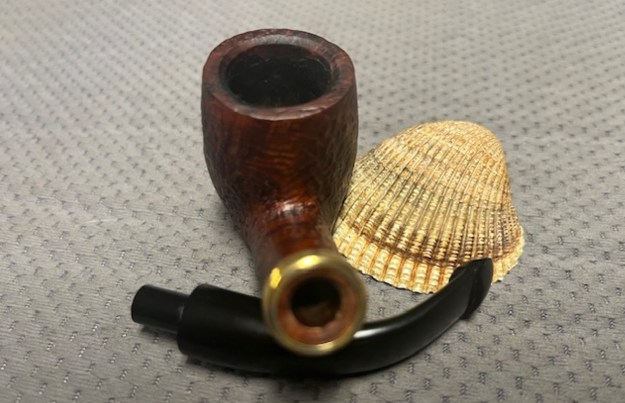
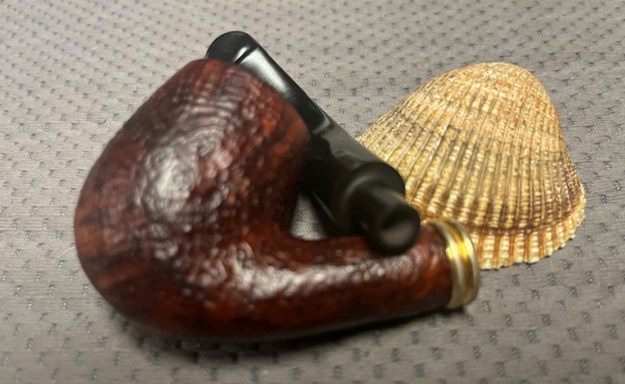
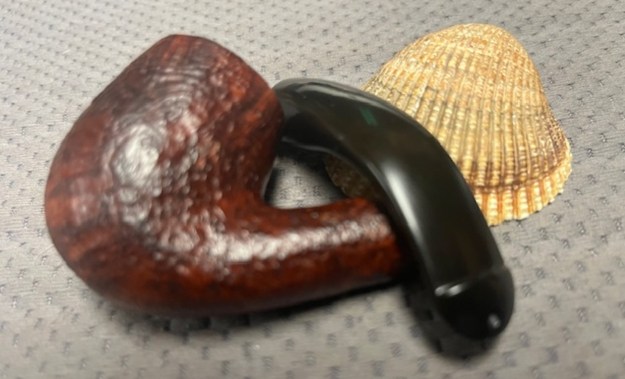
New Life for a Malaga Long Oval Shank Volcano Sitter


by Steve Laug

The next pipe on the table is an interesting long oval shank Malaga Volcano. Jeff saw it on eBay and purchased it on 11/04/2025 from a seller in Orlando, Florida, USA. The grain on this pipe is nice beneath the oil finish stain. But what makes it different is that the pipe is etched with lines breaking up the bowl sides and long shank into various quadrants. The rim top and heel of the bowl were smooth. The pipe is stamped on the top side of the shank and reads “MALAGA”. It is a unique one in terms of the shape and the etching style rustication. The bowl and shank were in excellent condition. The finish was in good condition with no damage. The bowl was clean with some darkening on the bowl walls and also some raw briar. It was a lightly smoked pipe and other than dirty was quite clean. The rim top and inner edge of the bowl looked very good. The taper stem was vulcanite and was lightly oxidized. There were light tooth marks on the top and the underside ahead of the button. Jeff took photos of the pipe before he started his clean up work.  Jeff took photos of the rim and bowl to show clean bowl and rim top and edges. The inner edge of the rim looked good. The grain on the rim top is quite nice. It was a dirty pipe but still a beauty. The vulcanite stem was lightly oxidized and had light tooth marks and some chatter on the top and underside of the stem. The photos of the sides and heel of the bowl show some stunning and unique grain and etching rustication around bowl and shank. The oil curing/finish makes the grain really stand out. Jeff took a photo of the stamping on the topside and it is clear and readable as noted above. For those of you who are unfamiliar with the brand, I am also including the link to a blog that I wrote that gives some of the history of the Malaga brand and the Malaga Pipe Shop in Royal Oak, Michigan in the USA. Here is the link – https://rebornpipes.com/2013/02/09/george-khoubesser-and-malaga-pipes/. That blog also includes links to a catalogue and the history of the pipemaker George Khoubesser. If you are interested to learn more then I invite you to follow the link to get a feel for the brand and the pipemaker.

I am also am including a link to some printed material on the Malaga brand that came to me from the daughter of George Koch (we purchased George’s pipes from his daughter) to help identify the particular stamping on the pipe. The link takes you to the entire collection of materials that were sent to me. (https://rebornpipes.com/2019/02/27/malaga-pipes-catalogue-of-pipes-and-tobaccos/).

Jeff had cleaned up the pipe using his usual process. He cleaned up the bowl with a PipNet pipe reamer and a Savinelli Fitsall Pipe Knife. He scrubbed the bowl with undiluted Murphy’s Oil Soap with a tooth brush. He rinsed it under running warm water to remove the soap and grime. He cleaned out the inside of the shank and the airway with alcohol, cotton swabs and pipe cleaners. He scrubbed the stem with Soft Scrub to remove oxidation and cleaned the inside with alcohol and pipe cleaners. He soaked the stem in Briarville’s Pipe Stem Deoxidizer and rinsed it off with warm water when he removed it. It looked quite good. The photos below show it well. I took a photo of the rim top and the stem to show their condition. Jeff cleaned up the grime and debris in the briar and rustication. The rim top was clean as were the inner and outer edges of the bowl. The stem looked better and the light tooth marks are visible on both sides.I took a photo of the stamping on the topside of the shank to show that it was clear and readable. I removed the stem from the shank and took a photo of the parts to give a sense of what the pipe looks like.It was time to start my work on the pipe. I sanded the scratches and marks on the rim and bowl sides with 320-3500 grit 2×2 inch sanding pads. I wiped it down after each pad with a damp cloth. It really began to shine. I polished the bowl sides and shank with micromesh sanding pads. I dry sanded it with 1500-12000 grit micromesh pads. I wiped it down with a damp cloth after each pad. It really began to be beautiful. I rubbed the bowl and shank down with Before & After Restoration Balm to deep clean the finish on the bowl and shank. The product works to clean, enliven and protect the briar. I worked it in with my fingers to get it into the briar. I let it sit for 10 minutes then I wiped it off and buffed it with a soft cloth. The briar really began to have a rich shine. I took some photos of the bowl at this point to mark the progress in the restoration. It is a beautiful bowl. I sanded the stem with 2 x 2 inch sanding pads – dry sanding with 320-3500 grit pads and wiping it down after each pad with an Obsidian Oil cloth.I polished the stem with micromesh sanding pads – dry sanding with 1500-12000 grit pads. I wiped the stem down after each sanding pad with Obsidian Oil. I did a final hand polish of the stem with Before & After Pipe Stem Polish – both Fine and Extra Fine. I gave it a coat of Obsidian Pipe Stem Oil. It works to protect the stem from oxidizing. I set it aside to dry. I put the stem back on the “Malaga” Etched Oval Shank Volcano Sitter and took it to the buffer. I buffed the bowl and stem with Blue Diamond to polish the briar and the vulcanite. Blue Diamond does a great job on the smaller scratches that remain in both. I gave the bowl and the stem several coats of carnauba wax and buffed the pipe with a clean buffing pad to raise the shine. I hand buffed it with a microfiber cloth to deepen the shine. I am amazed at how well it turned out. The finished pipe is shown in the photos below. This is a beautiful “Malaga” Etched Volcano Sitter and the hard rubber taper stem and smooth finish combine to give the pipe a great look. I honestly have no idea why it is labeled a second as there are no fills or flaws in the briar. The dimensions of the pipe are Length: 6 ¼ inches, Height: 2 inches, Outside diameter of the bowl: 1 ¼ inches, Chamber diameter: ¾ of an inch. The weight of the pipe is 1.66 ounces/47- grams. This is another pipe that I will be putting on the rebornpipes online store in the American Pipe Makers and Pipemaking Companies Section shortly, if you are interested in adding it to your collection. Thanks for walking through the restoration with me on this beauty!

As always, I encourage your questions and comments as you read the blog. Thanks to each of you who are reading this blog. Remember we are not pipe owners; we are pipe men and women who hold our pipes in trust until they pass on into the trust of those who follow us.
New Life for a Svendborg Danish Hand Carved Sand Blast Bent Dublin with a 9MM filter saddle stem


by Steve Laug

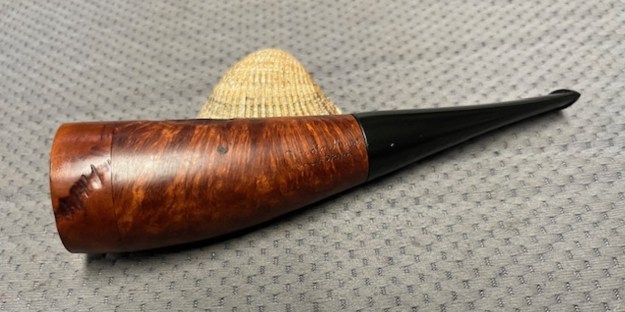
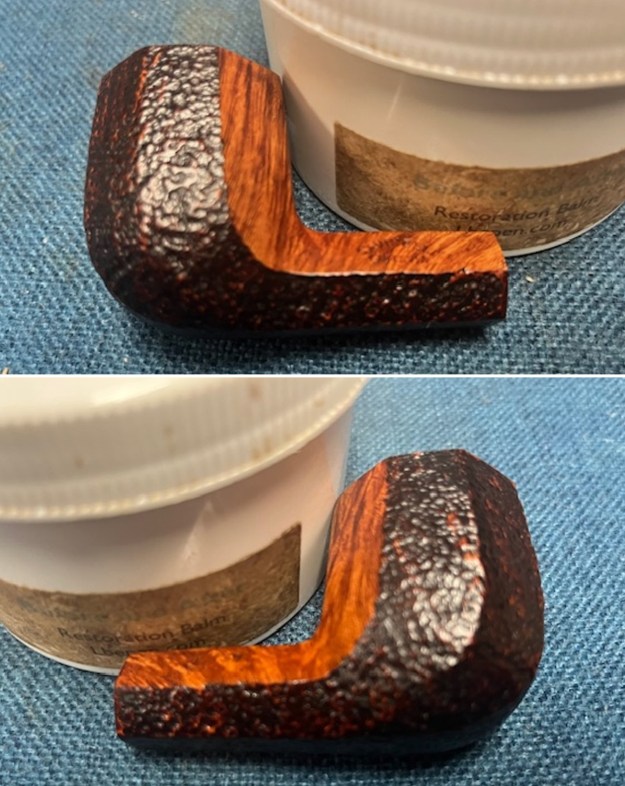
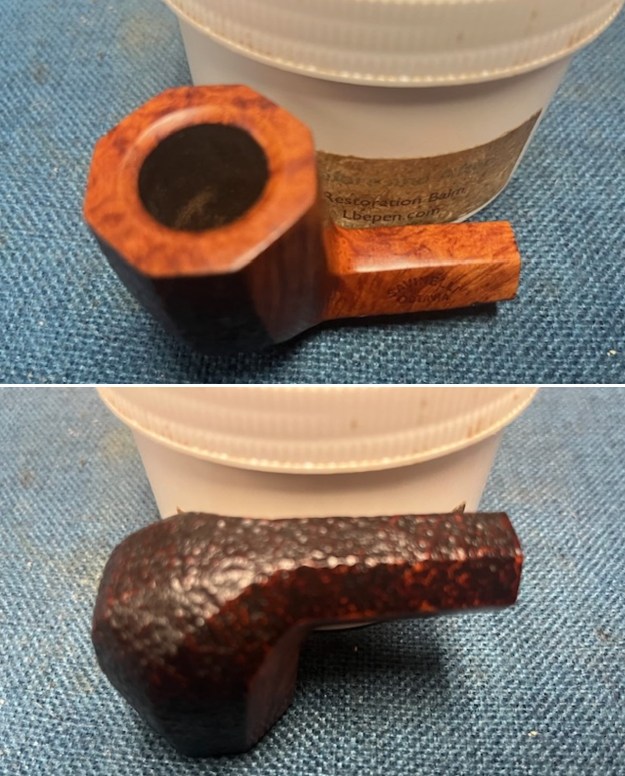
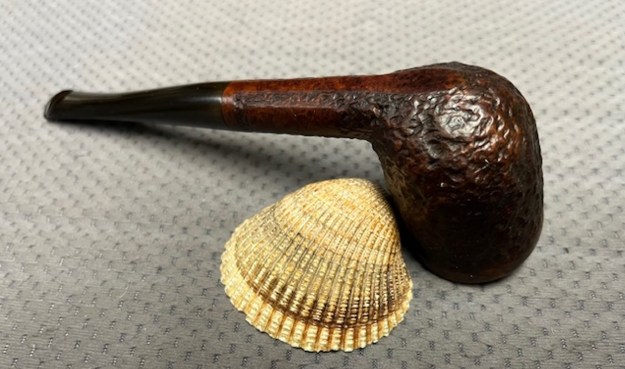
The next pipe on the table is one that has travelled much in its life. It went from Denmark to the Philippines and then to the US and now here in Canada. We picked it up in a batch of pipes we purchased from John Mags, a pipemaker in Lapaz, Philippines on 04/24/2025. The sandblast finish around a fluid Danish style Dublin works well to make this a great looking pipe. The pipe was stamped on a smooth panel on the underside of the shank and read P [over] Svendborg [over] Danish [over] Hand Carved. The rich dark brown/black stain on the sandblast finish looked very good. It had a lot of dust and debris in the valleys of the sandblast. The bowl had a moderate cake in it and it overflowed as light lava into the sandblast rim top. It was dirty but very interesting looking. The stem was quite oxidized but still had the Svendborg infinity looking logo on the left side of the saddle. It is a 9MM filter stem. There were light tooth marks on both sides ahead of the button. Jeff took photos of the bowl before his clean up work to give a sense of its beauty even with the grime in the finish. He took photos of the rim top and bowl to show clearly the cake in the bowl and the overflow of lava in the sandblast rim top. The condition of the stem is also visible as noted above. The next photos capture the sandblast in the briar on the sides and heel of the bowl. It is a beautiful blast that shows the grain around bowl sides and the heel of a well shaped Dublin. He captured the stamping on the underside of the shank and the shape of the stem in the next photos. The stamping is faint in spots but still readable and reads as is noted above. Before I started working on the pipe I did a bit of research on the brand to remind myself of what I knew of the maker. I turned to Pipephil’s site first (http://www.pipephil.eu/logos/en/logo-s14.html). I did a screen capture of the information on the site. I did a screen capture of the pertinent information and have included it below.I copied and pasted the side bar information below:
Brand founded in 1970s by Henrik Jørgensen, Poul Ilsted and Tao Nielsen. They bought an old factory (Nordisc Pibefabriker) in Svendborg on Funen Island. Poul and Tao gradually bow out from machine manufactured pipes (1982) and Henrik Jørgensen manages the brand until its takeover by Design Berlin (D) in the late 90ies. Kaj C. Rasmussen jointed the firm for several years. 17 employees worked for this brand under Henrik Jørgensen direction.
That link gave me a bit of information on the brand – a joint venture of Henrik Jorgensen, Poul Ilsted and Tao Nielsen. I could see from the information that usually the carvers stamped their names on the shank of the pipe. In the case of the one I have there is no name stamp. I wonder if the P stamp above the name would point to possibly Poul Ilsted as the carver. If so it would put the date of the carving before 1982 when Ilsted and Nielsen left. It is stamped Hand Carved which also points to a pre-1982 date.

I then turned to Pipedia and found that an article on the brand that was helpful and interesting to read (https://pipedia.org/wiki/Svendborg). I have included the first part of the article below.

Jens Tao Nielsen and Poul Ilsted Bech met each other when working together for Erik Nørding and soon became close friends. Both felt a bit tired to make nothing but bizarre fancy shapes and agreed they wanted to produce pipes of more style and more classicism. They decided to establish their own brand “Tao & Ilsted” – But how to do it?

A good fortune brought them in contact with Henrik Jørgensen, a passionate pipe lover and a wealthy Copenhagen banker who was willing to retire from bank business and change his career to become a pipemaker. The trio joined in 1969 and decided to start a new pipe brand together. Nielsen and Ilsted started to search for a suitable workshop while Jørgensen took care of the finances. In early 1970 the partners found an old, closed down pipe factory in Svendborg on Funen, and bought it shortly after for a mere 16.500 Danish Kroner. It was the earlier Nordic Pipe Factory – Nordisc Pibefabriker – maybe the oldest Danish pipe factory. And now it became the home of Svendborg Piber.

The article also included this set of pages from a catalogue that were interesting. The philosophy that drove the brand is also there to read. It is well worth the time to pause and read about that passion.Now it was my turn to work on the pipe. Jeff had done an amazing cleanup of the pipe. He reamed the light cake with a PipNet reamer and cleaned up that with a Savinelli Fitsall Pipe Knife. He scrubbed the internals of the bowl and stem with alcohol, cotton swabs and pipe cleaners. He scrubbed the externals with undiluted Murphy’s Oil Soap and rinsed the bowl off with running water. He soaked the stem in Briarville’s Pipe stem Deoxidizer and once it had soaked rinsed it off with warm water to remove the residual solution. He dried it off and rubbed it down to remove any oxidation that was still on the stem. The pipe looked very good when I received it. I took photos of the bowl and the rim top as well as both sides of the stem to show the condition of the pipe before I started my work. The rim top looked remarkably good. The next photos show the condition of the stem and how clean it came out.I took a photo of the stamping on the underside of the shank and the left side of the saddle stem. The photo of the stamping is faint but still readable. I also removed the stem and took a photo of the parts of the pipe.I went over the rim top with a brass bristle wire brush to knock off any debris in the shallow blast. Some came out and it looks quite good.I rubbed the briar down with Before & After Restoration Balm. I worked it into the briar with my fingertips and a horsehair shoe brush. The product works to clean, enliven and preserve the briar. I let it sit for 10 minutes then I buffed it with a cotton cloth to deepen the shine. The briar really comes alive with the balm. I touched up the infinity style Svendborg logo stamp on the left side of the saddle stem with white acrylic fingernail polish. I worked it into the stamp with a tooth pick. Once it dried I sanded the excess off with a worn 1000 grit sanding pad. It looks significantly better.I sanded the surface of the stem with 320-3500 grit sanding pads to smooth the tooth chatter out and remove remnants of oxidation. When finished the stem looked much better.I fit the tenon with a 9MM filter. The fit was perfect as expected and the airflow was unrestricted.I polished the vulcanite with micromesh sanding pads – 1500-12000 grit pads. I wiped it down with Obsidian Oil after each sanding pad. I used Before & After Pipe Polish – both Fine and Extra Fine to further polish the stem. This Svendborg Danish Hand Carved Dublin P with its fancy, vulcanite 9MM saddle stem is a beautiful sandblast pipe with a flowing shape that looks great. The rich browns and blacks of the contrasting stain makes the grain come alive with the polishing and waxing. I put the stem back on the bowl and carefully buffed the pipe with Blue Diamond on the buffing wheel using a light touch on the briar. I gave the bowl and the stem multiple coats of carnauba wax on the buffing wheel and followed that by buffing the entire pipe with a clean buffing pad. I hand buffed the pipe with a microfiber cloth to deepen the shine. The finished Svendborg Danish Hand Carved Dublin really is a beauty and fits nicely in the hand and looks very good. Give the finished pipe a look in the photos below. The dimensions of the pipe are Length: 5 ½ inches, Height: 1 ¾ inches, Outside diameter of the bowl: 1 ½ inches, Chamber diameter: ¾ of an inch. The weight of the pipe is 1.76 ounces/50 grams. This pipe will soon be on the Danish Pipe Makers Section of the rebornpipes store if you would like to add it to your collection. Thanks for reading this blog and my reflections on the pipe while I worked on it.

Restoring a 1969 Dunhill Shell Briar 59 F/T Billiard


by Steve Laug

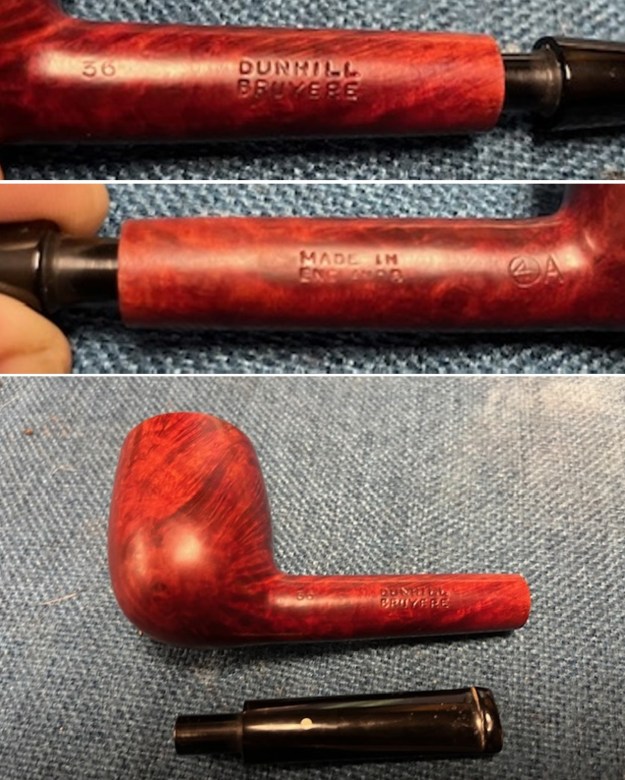
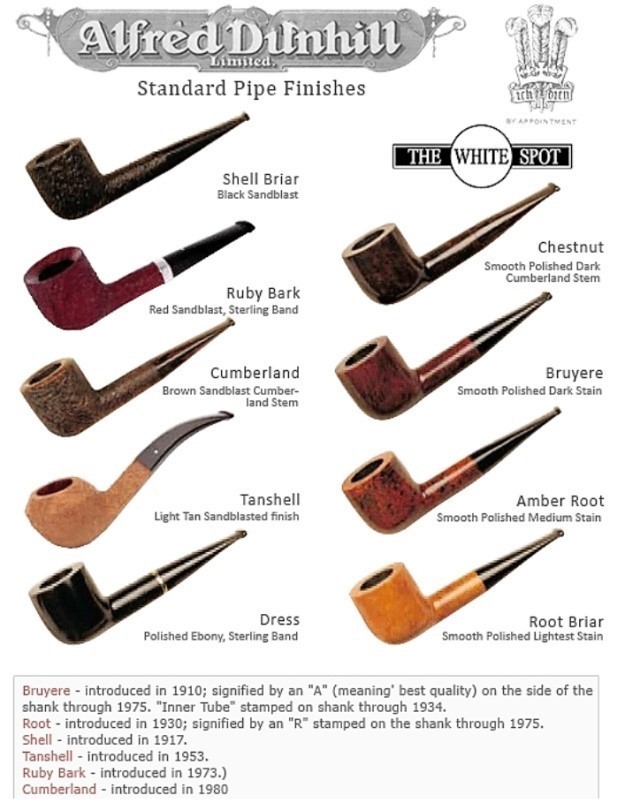
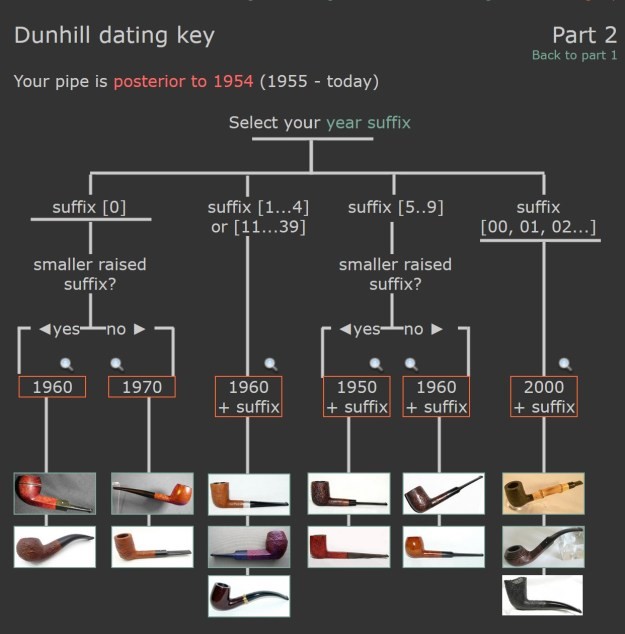
The next pipe on the table is one that came to us from a seller in Ogden, Utah, USA on 05/04/2025. It is a Dunhill sandblast that is in decent condition. It is stamped on a smooth panel on the underside of the shank with the shape number 59 F/T followed by Dunhill [over] Shell Briar. Next to that it is stamped Made in [over] England with the date number 9 after the D in England with an 11 below and to the right of the 9. After that it is stamped with a 4 in a circle [followed by] S for Shell Briar. The stamping is clear and readable as noted above. The finish was dusty and oily around the nooks and crannies of the sandblast but otherwise looked good. The bowl had been recently reamed but was dirty and there were some light lava spots on the sandblasted rim top or edges. The edges looked to be undamaged with some rounding on the outer edge. The taper stem was lightly oxidized, dirty and had light tooth marks and chatter ahead of the button. Jeff took photos of the pipe to show what it looked like before he started working on it. Jeff took photos of the bowl and rim top to show the general clean condition of the bowl and the light lava spots on the rim top. The photos of the stem to show the condition of both sides of the stem as noted above. He took photos of the sides of the bowl and the heel to show the beautiful grain in the sandblast around the bowl. It really is a beautiful piece of briar that has a shape that follows the grain. The finish is nice but it also dirty with dust ground into the finish. Jeff took photos of the stamping on the heel of the bowl and underside of the shank. It is clear and readable as noted above.I turned to the dating key on Pipephil’s site (http://www.pipephil.eu/logos/en/dunhill/cledat-en1a.html) to establish a date for the pipe. I drew a red box around the pertinent information below. It fits the criteria of a Sandblast with a year suffix and a Non-possessive form Dunhill. The suffix is the number 9 same size as the D which puts in the section below which notes 1960 + suffix 9 to establish a date. In this case it is 1960 + 9 making the pipe a 1969. The 11 stamped right and below of the 9 would point to the possibility that pipe was retailed in 1971.

I turned to Pipedia to verify this date on the pipe and have included the link and the post for that below (https://pipedia.org/wiki/Pipedia_Dunhill_Dating_Guide#Post-Patents). It verifies that date is 1969. I have included further information that was on the site for this time period. I have highlighted the pertinent information in red below:

[1955 up to 1969] Only a single suffix number.

The date code is just after ENGLAND: 1950 +: 5, 6, 7, 8 and 9 for the 50s and 0 for 1960 (they are smaller and underscored) then, 1, 2, 3, 4, 5, 6, 7, 8 and 9 for the 60s (they are equal in size to the “D” in the word “ENGLAND”).

  • Sometimes two suffix numbers (one after the other), but it’s an additional stamp for warranty control (see more here).
  • From 1961 up to 1964 we can find numbers without underscore – the code is a raised and smaller than the preceding “D”.
  • Sometimes the numbers 6, 7, 8 and 9, in the 50s, are roughly equal in size to the “D” in the word “ENGLAND”.
  • DUNHILL over finish stamp (BRUYERE or ROOT BRIAR). On sandblasted DUNHILL followed by the name of the finish (DUNHILL SHELL, etc).

Now it was my turn to work on the pipe. Jeff had done an amazing cleanup of the pipe. He reamed the light cake with a PipNet reamer and cleaned up that with a Savinelli Fitsall Pipe Knife. He scrubbed the internals of the bowl and stem with alcohol, cotton swabs and pipe cleaners. He scrubbed the externals with undiluted Murphy’s Oil Soap and rinsed the bowl off with running water. He soaked the stem in Briarville’s Pipe stem Deoxidizer and once it had soaked rinsed it off with warm water to remove the residual solution. He dried it off and rubbed it down to remove any oxidation that was still on the stem. The pipe looked very good when I received it. I took photos of the bowl and the rim top as well as both sides of the stem to show the condition of the pipe before I started my work. The rim top looked remarkably good. The next photos show the condition of the stem and how clean it came out.I took a photo of the stamping on the shank. The photo of the stamping is clear and readable. I also removed the stem and took a photo of the parts of the pipe.I went over the rim top with a brass bristle wire brush to knock off any debris in the shallow blast. Some came out and it looks quite good.I rubbed the briar down with Before & After Restoration Balm. I worked it into the briar with my fingertips and a horsehair shoe brush. The product works to clean, enliven and preserve the briar. I let it sit for 10 minutes then I buffed it with a cotton cloth to deepen the shine. The briar really comes alive with the balm. I sanded the surface of the stem with 320-3500 grit sanding pads to smooth tooth chatters out and remove remnants of oxidation. When finished the stem looked much better. I polished the vulcanite with micromesh sanding pads – 1500-12000 grit pads. I wiped it down with Obsidian Oil after each sanding pad. I used Before & After Pipe Polish – both Fine and Extra Fine to further polish the stem. This 1969 Dunhill Shell Briar 59 F/T Group 4 Billiard has a beautiful, unique Dunhill Sandblast finish that is not as deep as the older ones. The rich brown/black finish highlights some great grain around the bowl and shank. The polished vulcanite taper stem adds to the mix. I put the stem back on the bowl and carefully buffed the pipe with Blue Diamond on the buffing wheel. It is critical to avoid buffing the stamping and to have a lighter touch on the sandblast briar. I gave the bowl and the stem multiple coats of carnauba wax on the buffing wheel and followed that by buffing it with a clean buffing pad. I hand buffed the pipe with a microfiber cloth to deepen the shine. The finished Dunhill Shell Briar 59 F/T Billiard is quite stunning and feels great in my hand. Give the finished pipe a look in the photos below. The dimensions of the pipe are Length: 5 ½ inches, Height: 1 ¾ inches, Outside diameter of the bowl: 1 ¼ inch, Chamber diameter: ¾ of an inch. The weight of the pipe is 1.38 ounces/39 grams. Thanks for walking through the restoration with me as I worked over another beautiful pipe. I am going to add it to the rebornpipes store in the British Pipemakers Section. If you would like to add it to your collection let me know. Thanks for your time.

I love the shape of this Sandblast Charatan’s Make 38 Straight Bulldog


by Steve Laug

The next pipe on the table is a nice rusticated looking sandblast Bulldog shaped pipe. We purchased it from a seller in Downey, California, USA on 08/12/205. On the heel of the bowl it is stamped on a smooth panel on the left underside of the diamond shank. It reads Charatan’s Make [over]London. England. Underneath it is stamped with a cursive L near the bowl and the shape number 38 on the shank end. The pipe has a rugged, deep sandblast that I really like. The finish was very dirty with dust in all of the rustication, making it hard to see beyond that to the finish underneath that. There was a thick cake in the bowl and a heavy overflow of lava filling in the sandblast on the rim top. It was hard to know at this point the condition of the rim edges. The stem was oxidized, calcified and there were light tooth marks and chatter on both sides just ahead of the button. The stem has the Charatan’s CP logo on the top left side of the diamond saddle stem and it is faint but readable. I am not sure if it is deep enough to survive the clean up. Jeff took photos of the pipe before he started working on it. I include those below. Jeff took photos of the bowl and rim top to show the cake in the bowl and the lava build up on the rim top and dust and grime in the sandblast. It was thick and hard but hopefully it had protected the rim and edges from damage. The lava is deep in the blast and there is a buildup on the inner edge of the bowl. The stem shows oxidation, calcification and marks as noted above. Jeff took a photo of the sides and heel of the bowl to show the condition of the finish – the grime and grit all over the sides and bottom of the bowl. The blast is deep and dirty but it is interesting. This is a very tactile finish and one that I enjoy. Jeff took a photo of the stamping on the left underside of the shank and the CP stamp on the diamond saddle of the stem. It is very clear and readable as noted above.This pipe was a real mess like many of the pipes we work on. I was curious to see what it would look like when I unpacked it. I was surprised at how good it looked. Jeff reamed it with a PipNet pipe reamer and cleaned up the reaming with a Savinelli Fitsall Pipe Knife. He scrubbed out the internals with alcohol, pipe cleaners and cotton swabs until the pipe was clean. He scrubbed the exterior of the bowl with Murphy’s Oil Soap and a tooth brush to remove the grime and grit on the briar and the lava on the rim top. The finish on the bowl looked really good when I got it. The rim top looked much better and the inner and outer edges were looking good. There was some debris in the grooves of the rim top that still needed to be picked out. He had cleaned the internals and scrubbed the exterior of the stem and soaked them in Briarville’s Pipe Stem Deoxidizer bath to remove the oxidation. The stem looked very good other than the very light tooth marks and chatter in the surface. I took photos of the pipe before I started my work on it.   I took photos of the condition of the rim top and stem before I started working. The rim top looks very good. The crevices and valleys of the rustication are clean and look great. The bowl is spotless. The stem is lightly oxidized and has some tooth marks and tooth chatter. The Savinelli S shield on the top of the stem is worn and very shallow. It will be hard to save in the clean up work. I took a photo of the stamping on the underside of the heel and the shank. It is clear and readable as noted above. I took the bowl and stem apart and took a photo of the pipe to show the look of the pipe.I started my work on the pipe by working over the rim top with a brass bristle wire brush to remove the debris deep in the grooves of the rim top. It was looking much better. It was ready for the next step. I worked some Before & After Restoration Balm into the finish of the bowl and the rim top and shank with my fingertips and a horsehair shoe brush to clean, enliven and protect it. I find that the balm really makes the briar come alive again. The contrasts in the layers of stain and the separate finishes really made the grain stand out. I let the balm sit for a little while and then buffed with a cotton cloth to raise the shine. The bowl really looks good at this point. I filled in the tooth marks on the top and underside with clear CA glue and set it aside to cure. Once cured I used a small file to flatten the repair and then sanded it with 220 grit sandpaper to blend it into the surface of the vulcanite. I touched up the CP stamp with white acrylic nail polish. I scraped off the excess and smoothed it out with a worn 1500 grit sanding pad.I sanded the stem to further blend in the repairs with 320-3500 grit 2 inch square sanding pads. I wiped down the stem with an Obsidian Oil Cloth after each sanding pad. At this point the stem is looking better and the repairs blended in well. The CP stamp also looked very good. I polished the stem with micromesh sanding pads – dry sanding it with 1500-12000 grit pads. I wiped it down with an Obsidian Oil cloth after each pad. I polished it further with Before & After Pipe Stem Polish – both fine and extra fine. I gave it another wipe down with the Obsidian Oil cloth and buffed it to a shine. Once again, I am at the part of the restoration that I always look forward to – the moment when all the pieces are back together. I put the Lane Era Charatan’s Make London England 38 Bulldog back together and lightly buffed the bowl with Blue Diamond. I buffed the stem with a heavier touch with Blue Diamond on the buffing wheel. I gave the bowl multiple coats of Conservator’s Wax and the stem multiple coats of carnauba wax. I buffed the pipe with a clean buffing pad to raise the shine. I hand buffed it with a microfiber cloth to deepen the shine. It is fun to see what the polished bowl looks like in contrast with the black vulcanite stem. This dark stained Charatan’s Make 38 Straight Bulldog must have been a fine smoking pipe judging from the condition it was in when I started. Have a look at it in the photos below. The dimensions are Length: 5 ½ inches, Height: 1 ¾ inches, Outside diameter of the bowl: 1 ¼ inches, Chamber diameter: ¾ of an inch. The weight of the pipe is 1.23 ounces/35 grams. This is one that will go on the British Pipemakers Section of the rebornpipes online store shortly. Thanks to each of you who are reading this blog. Remember we are not pipe owners; we are pipemen and women who hold our pipes in trust until they pass on into the trust of the next generation.

Renewed Life for a Savinelli Capri Root Briar 115 Pot


by Steve Laug

The next pipe on the table is a nice rusticated looking pot shaped pipe. We purchased it from a seller in Downey, California, USA on 08/12/205. On the heel of the bowl it is stamped Savinelli Capri over Root Briar. That is followed by The Savinelli “S” shield and the shape number 115 [over] Italy. The pipe has a Sea Rock or coral style rustication that I really like. The finish was very dirty with dust in all of the rustication, making it hard to see beyond that to the finish underneath that. There was a thick cake in the bowl and a heavy overflow of lava filling in the rusticated rim top. It was hard to know at this point the condition of the rim edges. The stem was oxidized, calcified and there were light tooth marks and chatter on both sides just ahead of the button. The stem did not have the Savinelli S shield logo on the top of the stem and it is not clear if it wore off with buffing or it was not present. Jeff took photos of the pipe before he started working on it. I include those below. Jeff took photos of the bowl and rim top to show the cake in the bowl and the lava build up on the rim top and dust and grime in the rustication. It was thick and hard but hopefully it had protected the rim and edges from damage. The lava is deep in the rustication and there is a buildup on the inner edge of the bowl. The stem shows oxidation, calcification and marks as noted above. Jeff took a photo of the sides and heel of the bowl to show the condition of the finish – the grime and grit all over the sides and bottom of the bowl. The rustication is deep and dirty but it is interesting. This is a very tactile finish and one that I enjoy. Jeff took two photos of the stamping on the underside of the shank to capture all of it. It is very clear and readable other than the shape number 115.This pipe was a real mess like many of the pipes we work on. I was curious to see what it would look like when I unpacked it. I was surprised at how good it looked. Jeff reamed it with a PipNet pipe reamer and cleaned up the reaming with a Savinelli Fitsall Pipe Knife. He scrubbed out the internals with alcohol, pipe cleaners and cotton swabs until the pipe was clean. He scrubbed the exterior of the bowl with Murphy’s Oil Soap and a tooth brush to remove the grime and grit on the briar and the lava on the rim top. The finish on the bowl looked really good when I got it. The rim top looked much better and the inner and outer edges were looking good. There was some debris in the grooves of the rim top that still needed to be picked out. He had cleaned the internals and scrubbed the exterior of the stem and soaked them in Briarville’s Pipe Stem Deoxidizer bath to remove the oxidation. The stem looked very good other than the very light tooth marks and chatter in the surface. I took photos of the pipe before I started my work on it. I took photos of the condition of the rim top and stem before I started working. The rim top looks very good. The crevices and valleys of the rustication are clean and look great. The bowl is spotless. The stem is lightly oxidized and has some tooth marks and tooth chatter. The Savinelli S shield on the top of the stem is not present. I took a photo of the stamping on the underside of the heel and the shank. It is clear and readable as noted above. I took the bowl and stem apart and took a photo of the pipe to show the look of the pipe.I started my work on the pipe by working over the rim top with a dental pick and a brass bristle wire brush to remove the debris deep in the grooves of the rim top. I wiped it down with isopropyl alcohol and a folded pipe cleaner to remove the debris loosened by the pick and the brush. It was looking much better. I touched up the cleaned rim top with a Walnut stain pen to match the stain around the rest of the bowl. It looks quite good. It was ready for the next step. I worked some Before & After Restoration Balm into the finish of the bowl and the rim top and shank with my fingertips and a horsehair shoe brush to clean, enliven and protect it. I find that the balm really makes the briar come alive again. The contrasts in the layers of stain and the separate finishes really made the grain stand out. I let the balm sit for a little while and then buffed with a cotton cloth to raise the shine. The bowl really looks good at this point. I sanded the stem to smooth out the tooth marks and chatter. I used 320-3500 grit 2 inch square sanding pads. I wiped down the stem with an Obsidian Oil Cloth after each sanding pad. At this point the stem is looking better and the tooth marks are gone. I polished the stem with micromesh sanding pads – dry sanding it with 1500-12000 grit pads. I wiped it down with an Obsidian Oil cloth after each pad. I polished it further with Before & After Pipe Stem Polish – both fine and extra fine. I gave it another wipe down with the Obsidian Oil cloth and buffed it to a shine. Once again, I am at the part of the restoration that I always look forward to – the moment when all the pieces are back together. I put the Savinelli Capri Root Briar 115 Pot back together and lightly buffed the bowl with Blue Diamond. I buffed the stem with a heavier touch with Blue Diamond on the buffing wheel. I gave the bowl multiple coats of Conservator’s Wax and the stem multiple coats of carnauba wax. I buffed the pipe with a clean buffing pad to raise the shine. I hand buffed it with a microfiber cloth to deepen the shine. It is fun to see what the polished bowl looks like in contrast with the black vulcanite stem. This dark stained Savinelli Capri Pot 115 must have been a fine smoking pipe judging from the condition it was in when I started. Have a look at it in the photos below. The dimensions are Length: 5 ½ inches, Height: 1 ¾ inches, Outside diameter of the bowl: 1 ½ inches, Chamber diameter: 7/8 of an inch. The weight of the pipe is 1.52 ounces/44 grams. This is one that will go on the Italian Pipemakers Section of the rebornpipes online store shortly. Thanks to each of you who are reading this blog. Remember we are not pipe owners; we are pipemen and women who hold our pipes in trust until they pass on into the trust of the next generation.

New Life for a 1982 GBD Virgin L Made in London Bent Apple


by Steve Laug

The next pipe on the worktable is an English made oval shank bent Apple with a classic brown finish. It is a combination reddish brown stains. The pipe came to us from a seller in Downey, California, USA on 08/12/2025. The pipe is very dirty with a thick cake in the bowl and lava on the rim top. The rim edge looks good but it was hard to know what was under the lava coat on the top and edges. It is stamped on the underside of the shank. It is stamped GBD in an oval, [over] Virgin L [over] Made in London in a circle [over] England [followed by] 1982. The shape is a classic GBD shape number 788 though the this pipe is unnumbered. The finish was dusty and there were oils and grime ground into the finish around the sides of the bowl. The stem had a GBD brass oval logo on the top of the saddle. It is a variegated brown acrylic saddle stem with grime on the surface and light tooth chatter and marks on both sides. Jeff took some photos of the pipe before he started his cleanup work. Jeff took a photo of the bowl and rim top to show the condition of the pipe. There was a thick cake in the bowl and a build up of lava on the smooth rim top. It is also built up on the inner edge of the bowl. The stem photos show the grime and the tooth marks on both sides ahead of the button. He took photos of the sides and the heel of the bowl to show the finish on the pipe. It is a unique stain on it that really shows the grain around the bowl sides. He took two photos to capture the stamping on the sides of the shank and one of the medallion on the top of the saddle stem. It is clear and readable as noted above. I turned to PipePhil’s site (http://www.pipephil.eu/logos/en/logo-gbd.html) to see what I could find. The site had nothing particular on the GBD Virgin line of pipes.

I then turned to Pipedia (https://pipedia.org/wiki/GBD) to see if there was info the brand. It is a great read in terms of history.

The claims after the 1st World War demanded further distinctions. First of all was the London Made, which became the Standard London Made, followed by the New Era– in 1931 the top model asking 12½ Shilling. The Pedigree, although sketched around 1926, was not produced until the later 1930s. The New Standard was introduced in order to give the popular Standard of the 20s a higher rank in value. The Prehistoric, a deeply sandblasted black pipe, that still carried the small GBD Xtra stamp, was entirely new and unusual.

There was a photo of the GBD Virgin but no other information on the line. I am including the photo that was present as well as a photo of the stamping on the pipe.There was also some information on the line in a section entitled, Circa 1973 chart of lines. I am including the information in that section. The first item in the list is the line I am working on. It gives a good description of the Virgin line.

Virgin: “Only the finest of closely grained briar is utilized for this exceptional pipe. Natural finish”

Century: “A golden finish created to celebrate over a century of manufacturing the finest briar pipes.”

New Era: “The beauty of this pipe’s perfect briar is accentuated by the richness of the ‘take-off’ dual finish.”

Prestige: “This pipe features a black handcut perspex mouthpiece which precludes discoloration and ‘bad taste’ after continual smoking. Only the finest of the fine-grained bowls are selected for this handsome matt virgin finished briar.”

Prehistoric Perspex: “The deep sandblasting sillhouettes the grain in bold relief. The crystal clear mouthpiece creates an attractive contrast to the deep dark finish.”

Now it was time to work on the pipe.

Jeff reamed it with a PipNet pipe reamer and cleaned up the reaming with a Savinelli Fitsall Pipe Knife. He scrubbed out the internals of the shank and stem with alcohol, pipe cleaners and cotton swabs until the pipe was clean. He scrubbed the exterior of the bowl with Murphy’s Oil Soap and a tooth brush to remove the grime and grit on the briar and the lava on the rim top. The finish on the bowl looked really good when I got it. The rim top and edges looked very good. He soaked the twin bore stem in Briarville’s Pipe Stem Deoxidizer bath to remove the oxidation. The stem looked better and the deep tooth marks and chatter on the surface were also visible. When the pipe arrived here in Vancouver for the second stop of its restoration tour it looked much better than when he found it. I took photos of the pipe before I started my work on it. I took photos of the condition of the rim top and stem before I started working. The rim top looks good and the bowl is clean. The stem is much better but still shows some light tooth chatter and marks on both sides near the button.I took photos of the stamping on the sides of the shank. The stamping was clear and readable as noted above. I took the bowl and stem apart and took a photo of the pipe to show the look of the pipe.Now it was my turn to work on the pipe. I sanded the bowl and rim top with 320-3500 grit 2 inch sanding pads. I wiped the bowl down with a damp cloth to remove the sanding debris. I polished the briar with micromesh sanding pads – dry sanding with 1500-12000 grit pads. I wiped the bowl down after each pad with a damp cloth to remove the debris. I worked some Before & After Restoration Balm into the finish of the bowl, rim top and shank with my fingertips to clean, enliven and protect it. I find that the balm really makes the briar come alive again. The contrasts in the layers of stain really made the grain stand out. I let the balm sit for 15 minutes and then buffed with a cotton cloth to raise the shine. The bowl really looks good at this point. I sanded the stem with 320-3500 grit sanding pads to blend in the tooth chatter and marks. I wiped the stem down after each pad with an Obsidian Oil saturated cloth to remove the grime and protect the stem.I polished the stem with micromesh sanding pads – wet sanding it with 1500-12000 grit pads. I polished it further with Before & After Pipe Stem Polish – both fine and extra fine. I wiped it down again with some Obsidian Oil and let it sit and dry. I always look forward to the moment when all the pieces are put back together. The GBD Virgin Bent Apple makes a final trip to the buffing wheel and is met first with Blue Diamond polish on the buffing wheel. That is followed by multiple coats of carnauba wax over the whole pipe. Then I do a step that not everyone does but I learned from one of the old pipe men who no longer with us, I buff the pipe with a clean buffing pad to raise the shine. Finish my buffing by hand with a microfiber cloth to deepen the shine. It is fun to see what the polished bowl looks like with black vulcanite stem. This richly stained 1982 GBD Virgin L Bent Apple is light weight and ready for you to load up a tobacco of preference and enjoy. Have a look at it in the photos below. The dimensions are Length: 5 ½ inches, Height: 1 ½ inches, Outside diameter of the bowl: 1 ¼ inches, Chamber diameter: ¾ of an inch. The weight of the pipe is 48 grams/1.69 ounces. This is one that will go on the British Pipemakers Section of the rebornpipes online store shortly. Let me know if you are interested in adding it to your rack. Thanks to each of you who are reading this blog. Remember we are not pipe owners; we are pipemen and women who hold our pipes in trust until they pass on into the trust of the next generation.

Restoring an Ascorti New Dear Hand Made Italy 0.1 Bent Billiard


by Steve Laug

The next pipe on the work table is an interesting Ascorti New Dear Bent Billiard that we picked up from a seller in Macon, Georgia, USA on 03/08/25. I had passed over this one a few times in the past weeks but this morning I decided it would join the days queue. It is a great looking and obviously well-loved pipe from the previous pipeman.  It was filthy with oils and grime ground into the bowl sides. It is stamped on the left side and reads Ascorti [over] New Dear. On the right side it is stamped Hand Made [over] Italy. On the underside it is stamped 0.1. The bowl was rusticated in the typical Ascorti New Dear style rustication. The unique almost melting looking finish was filled in with debris and dust. The smooth portions on the rim top, heel and shank had some nice grain on them under the grime and the finish appeared to be in good condition. The bowl had a thick cake and the lava overflow on the rim made it impossible to see in the inner edge of the bowl. A lot would be revealed once Jeff had worked his magic on it. The stem had the classic Ascorti A logo on the left side of the taper. It was dirty and had light tooth chatter and marks on both sides ahead of the button. The button surface appeared to be unharmed. Jeff took photos of the pipe before he started his cleanup work. Jeff tried to capture the condition of the bowl, rim top and stem with the next series of photos. You can see the work that is ahead of us in the photos. It was obviously a well-loved and oft enjoyed pipe! Jeff took some great photos of the sides of the bowl and heel showing the unique New Dear finish and what is underneath the grime and debris of time and use. He captured the stamping on the sides of the shank and the left side of the tapered stem. They are clear and readable. It reads as noted above and is clear and undamaged. I have worked on a few Ascorti pipes over the past few months and I have always enjoyed the craftmanship of the brand. Before I started my part of the repair and restoration I wanted to have a clear picture of what the stem logo looked like on the Ascorti Business pipe. I turned to Pipephil as he often has some photos that give me the information that I am looking for (http://www.pipephil.eu/logos/en/logo-a8.html). There was plenty of information on the brand but nothing on the New Dear finish or line. I found that a bit surprising but still recommend that you have a look at the site for the history.

With that information in hand I knew what I was dealing with in terms of the stamping and the age of this pipe. I knew from the information from the section above that the pipe came out after 1980 when the company started. I could not get the date more focused so it was time to work on the pipe.

I turned to Pipedia (https://pipedia.org/wiki/Ascorti) to see what I could learn there as general it gives more detail. I found the description of the work really interesting so I quote that next.

Briar is personally selected by Roberto who controls the quality, dimensions, weight and the first seasoning, which is very important and done in the area where it is collected and cut. After the first scrupulous control, the briar is then aged for two years, to reach the seasoning that he thinks is perfect to create a pipe. Each pipe is designed by Roberto and it is initially crafted with small machines, made by hand by his father Peppino, with the help of his son, back in the 70’s. They are perfect to allow different processes as the artisanal tradition requires.

After the drilling of the bowl and shank, the pipe passes through an interminable series of handmade steps done only by Roberto and the irreplaceable Cesare (already aside of Peppino in 1968).

The mouthpiece, made in methacrylate (acrylic) is also completely handmade, obtained in sheets which are cut into bars, then drilled and shaped with files and sandpaper. There are 90 steps to the procedure, small or large, but everyone important, that Roberto requires before he considers his creations finished and ready to be shown to the customer.

I think that the love that Roberto flows into his pipes, absorbed by the workers and relatives, is perfectly understood by smokers all around the world, who never fail to give us satisfaction with praise and public or private lauds. Our philosophy? The love and the passion in what you do, with the help of who is around you.

There was no specific information on the New Dear finish but there were several close up photos of the style of rustication. I have included one of them below.Now it was time to work on the pipe itself. Jeff cleaned the pipe with his usual process and when I took it out of the box I was amazed at how good it looked it. He reamed it with a PipNet pipe reamer and cleaned up the reaming with a Savinelli Fitsall Pipe Knife. He scrubbed out the internals with alcohol, pipe cleaners and cotton swabs until the pipe was clean. He scrubbed the exterior of the bowl with Murphy’s Oil Soap and a tooth brush to remove the grime and grit on the briar and the lava on the rim top. The finish looks very good. Jeff scrubbed the stem with Soft Scrub to remove the grime and it came out looking far better. I took photos before I started my part of the work. I took some photos of the rim top, shank end and stem to show the condition of them both when it arrived. It looked good. The stem had some light tooth marks and chatter ahead of the button on both sides.I took photos of the stamping on the sides of the shank. It was clear and readable. It read as noted above. I took the stem off the shank and took a photo of the pipe parts in perspective. I started my work on the pipe by sanding the smooth rim top and shank with 320-3500 grit sanding pads. I wiped it down after each sanding pad to remove the debris from sanding. I carefully avoided the stamping on the shank. It began to look very good as I finished. I polished the bowl with and shank with micromesh sanding pads – wet sanding with 1500-12000 grit pads. I wiped the briar down after each pad with a damp cloth. The bowl is starting to look very good. I worked some Before & After Restoration Balm into the surface of the briar with my fingertips and a horsehair shoe brush to clean, enliven and protect it. I let the balm sit for a little while and then buffed with a cotton cloth to raise the shine. The photos show the bowl at this point in the restoration process. I set the bowl aside and sanded the stem with sanding pads – dry sanding with 320-3500 grit sanding pads. After each pad I wiped the stem down with Obsidian Oil on a cloth. It is looking much better.I polished the stem with micromesh sanding pads – wet sanding with 1500-12000 grit sanding pads. I wiped it down after each sanding pad with some Obsidian Oil. I finished polishing it with Before & After Pipe Stem Polish – both Fine and Extra Fine and buffed it off with a cotton cloth. I wiped it down with Obsidian Oil to protect the stem and slow down the oxidation. This Ascorti New Dear Bent Billiard was a pipe I was looking forward to seeing what it looked like when I put it back together. I put the stem back on the bowl and buffed the pipe with Blue Diamond on the buffing wheel. I carefully avoided the stamping on the shank and stem during the process. I gave the bowl multiple coats of Conservator’s Wax and the stem multiple coats of carnauba wax on the buffing wheel and followed that by buffing it with a clean buffing pad on the buffer. I hand buffed the pipe with a microfiber cloth to deepen the shine. The finished pipe is quite beautiful and is a lovely Ascorti New Dear Bent Billiard. The variegated finish on the bowl combines various stains to give it depth. It is very well done. Give the finished pipe a look in the photos below. I can only tell you that it is much prettier in person than the photos capture. The dimensions of the pipe are Length: 5 ½ inches, Height: 2 inches, Outside diameter of the bowl: 1 ¼ inches, Chamber diameter: ¾ of an inch. The weight of the pipe is 2.01 ounces/57 grams. Thanks for walking through the restoration with me as I worked over another beautiful pipe. I will be adding it to the Italian Pipe Makers Section of the rebornpipes store soon. If you want to add it to your collection send me an email or a message! Thanks for your time.

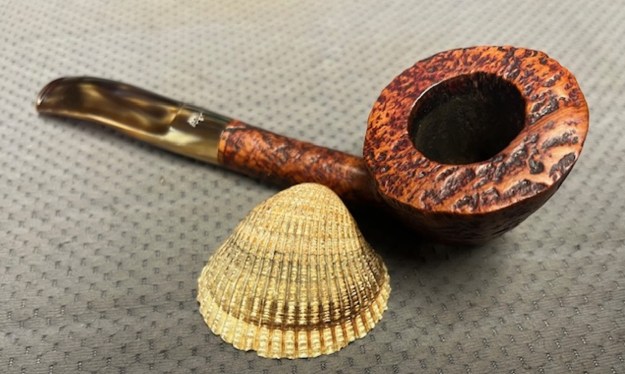
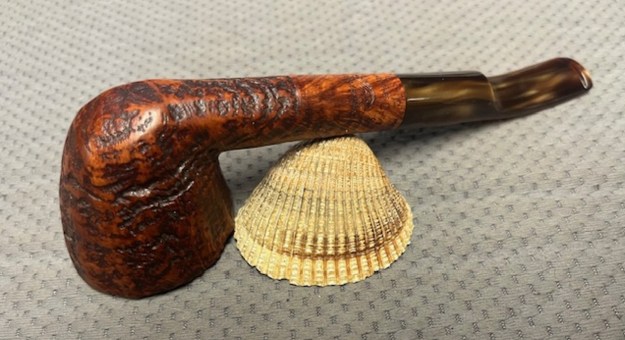
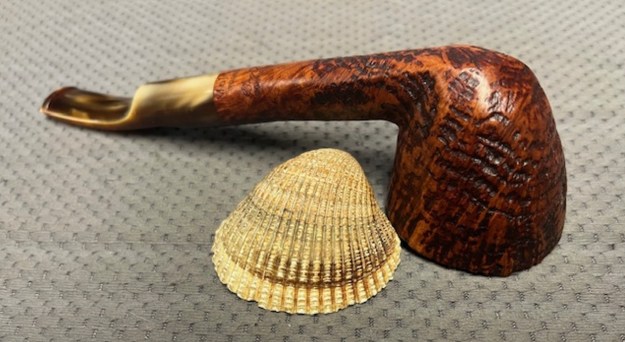
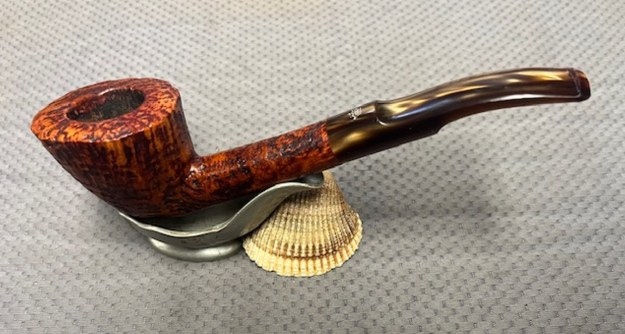
What a Great Looking Ben Wade Intermezzo Freehand Sitter with a Cumberland Stem


by Steve Laug

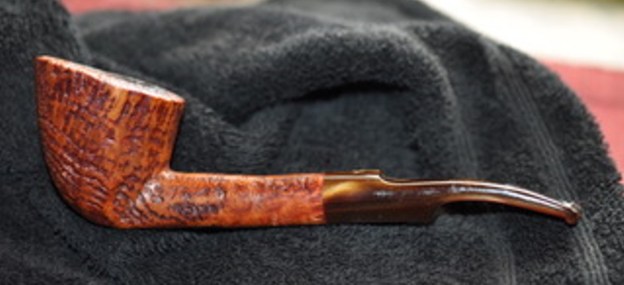
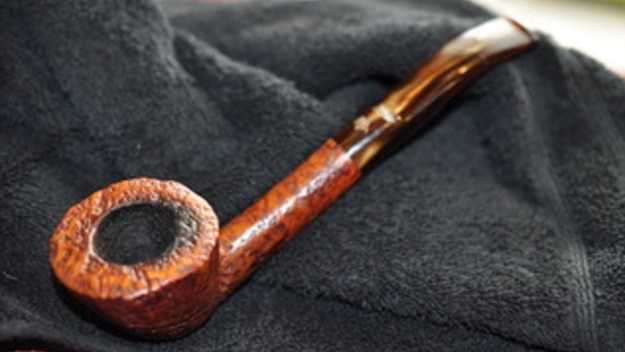
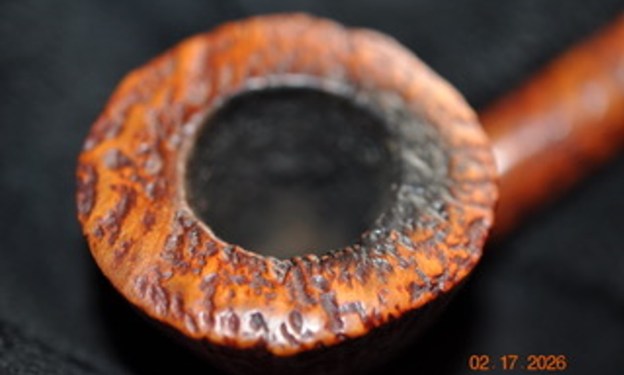
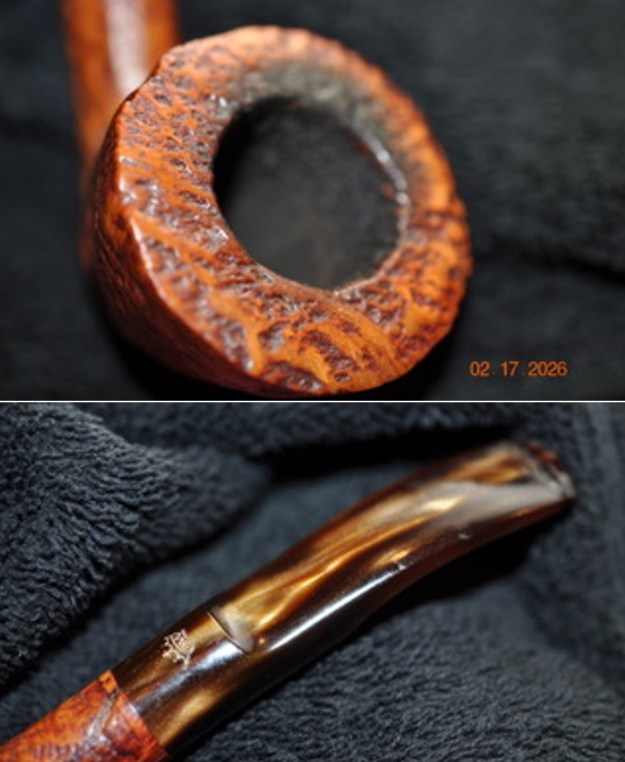
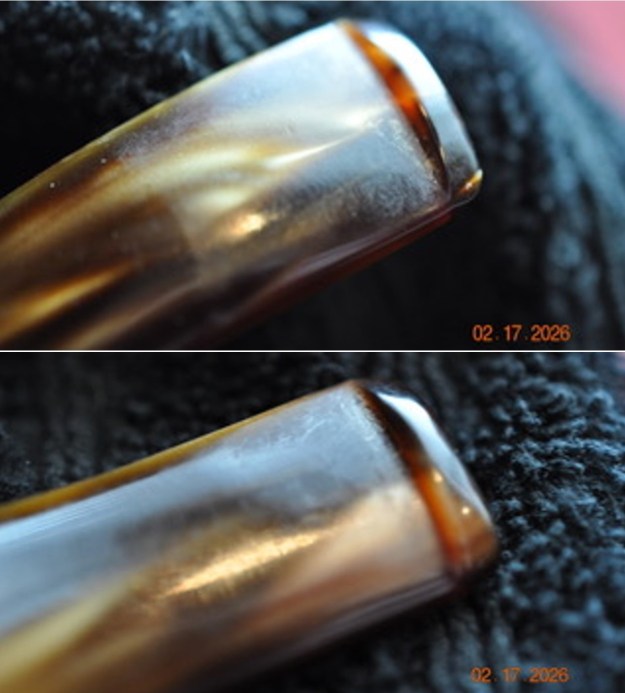
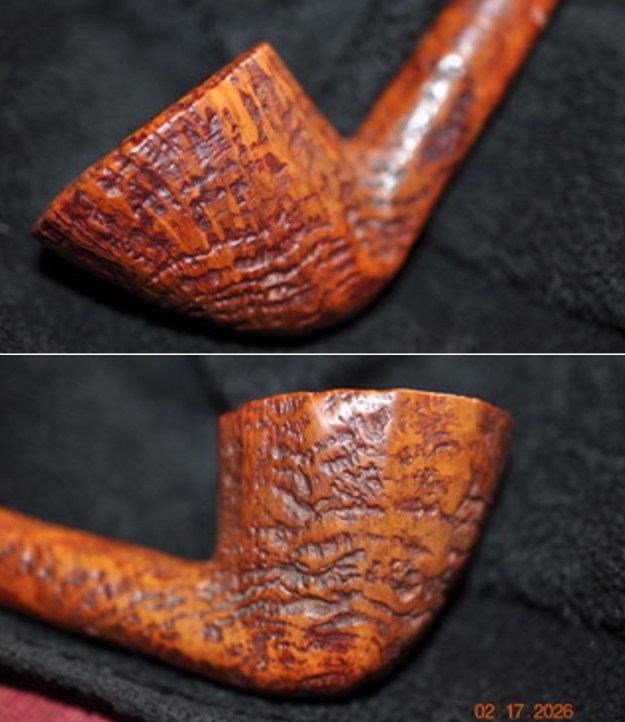
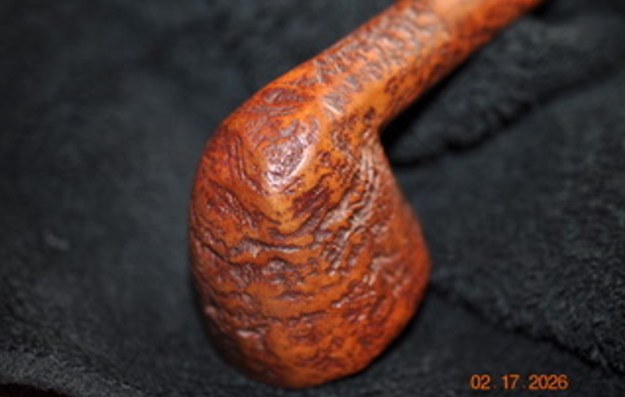
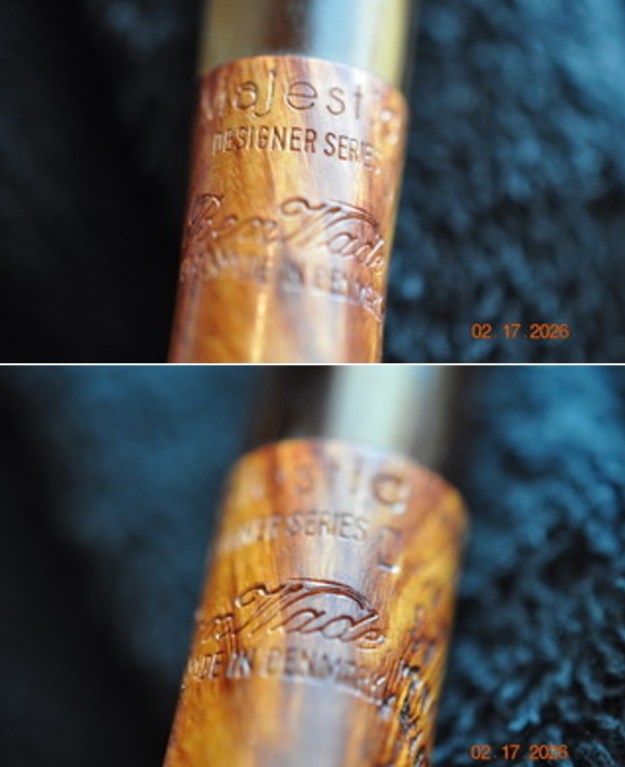
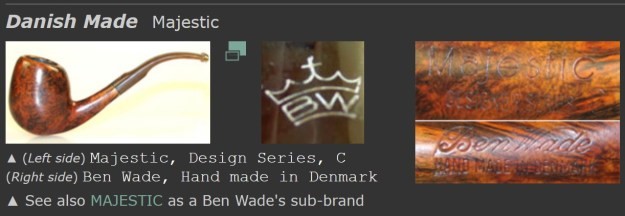
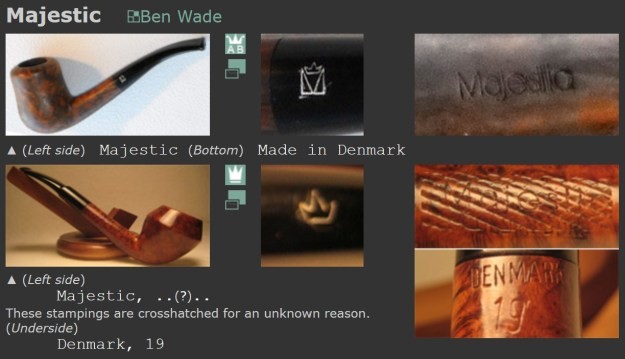
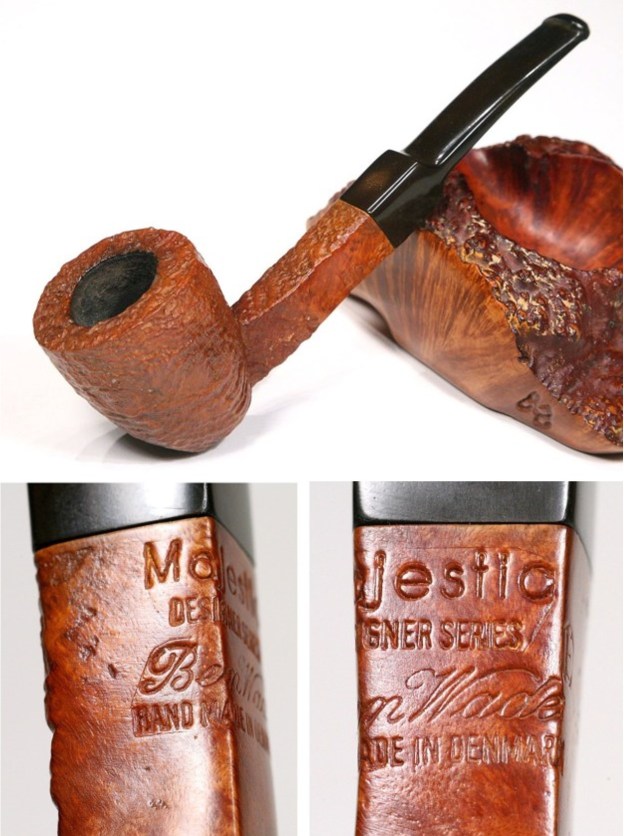
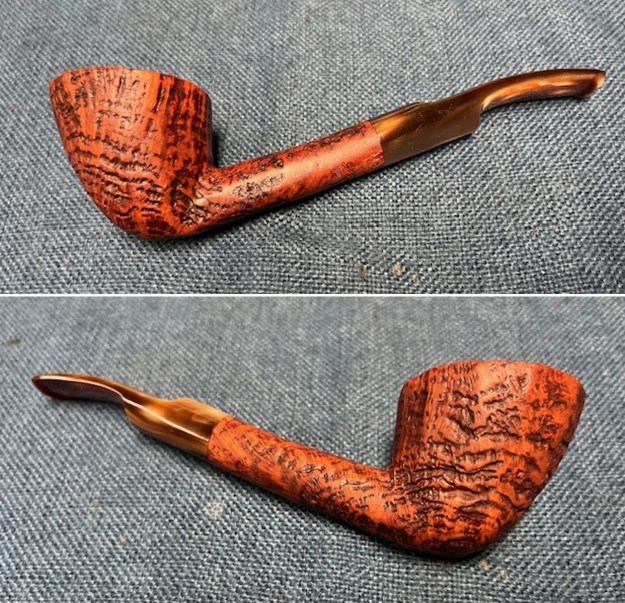
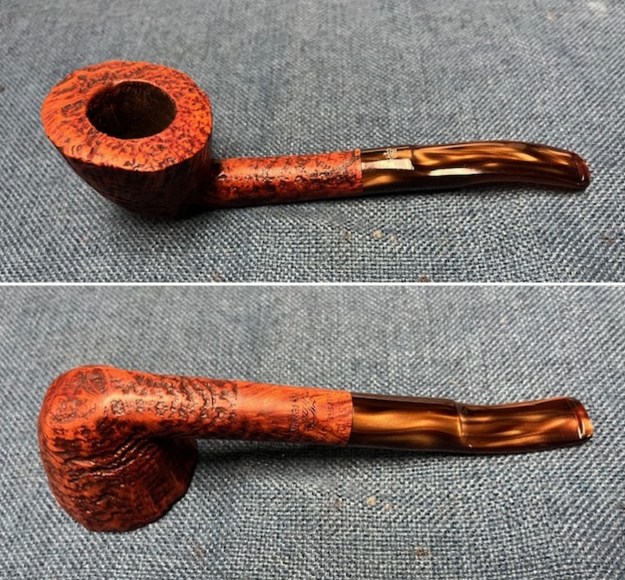
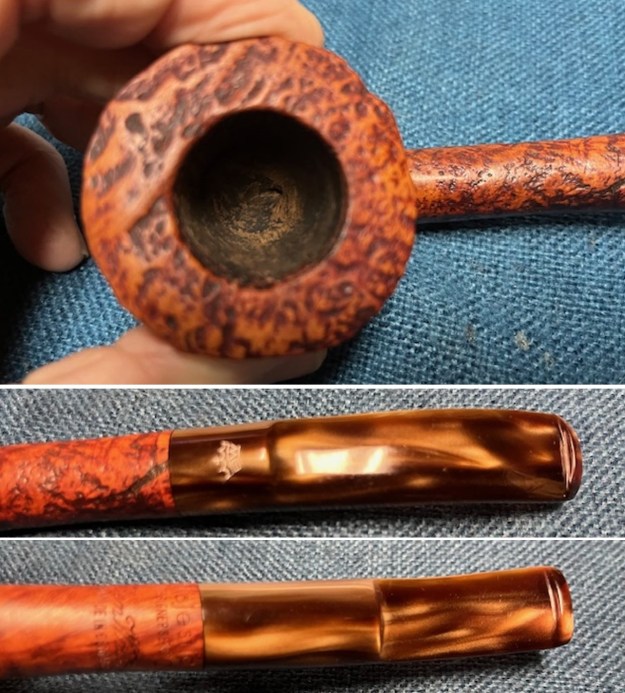
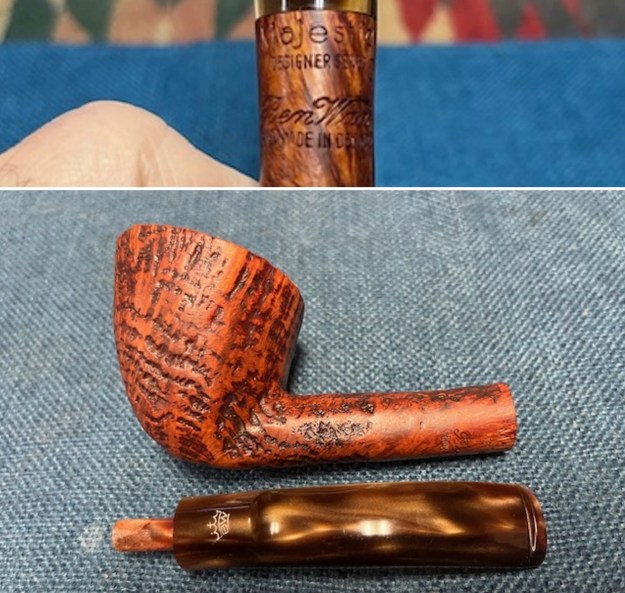
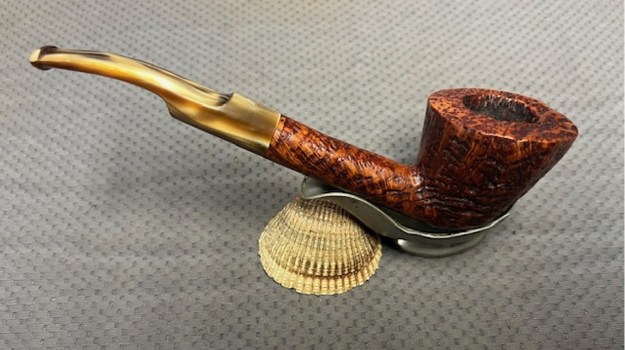
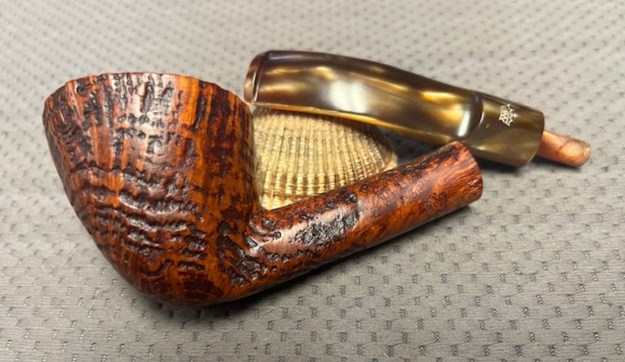
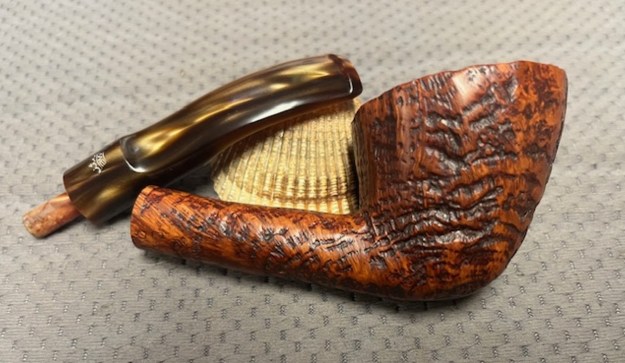
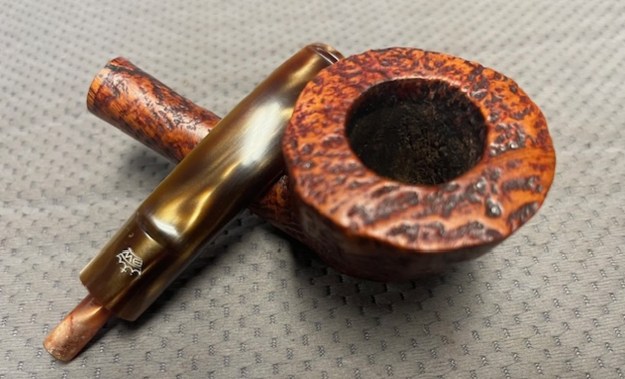
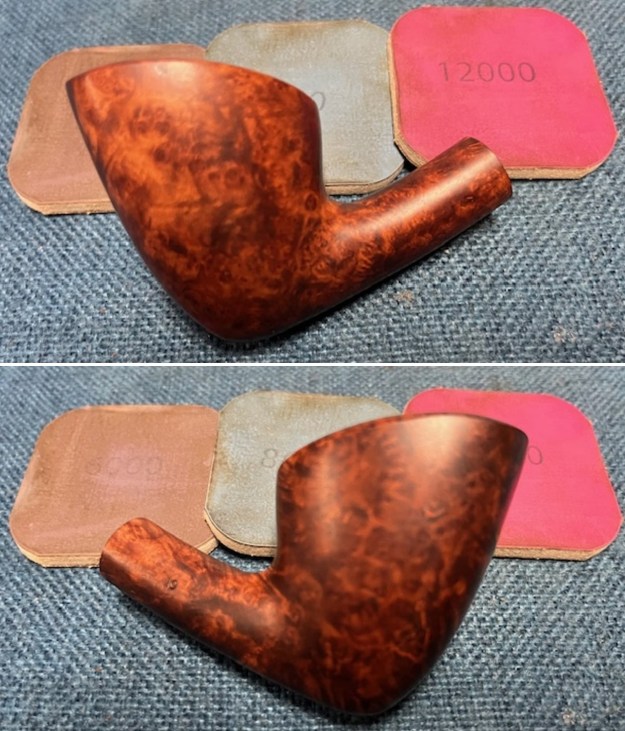
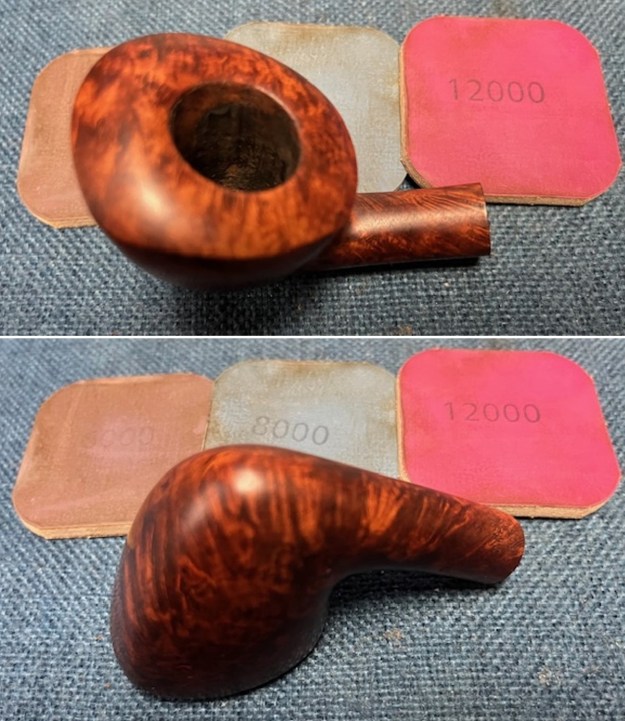
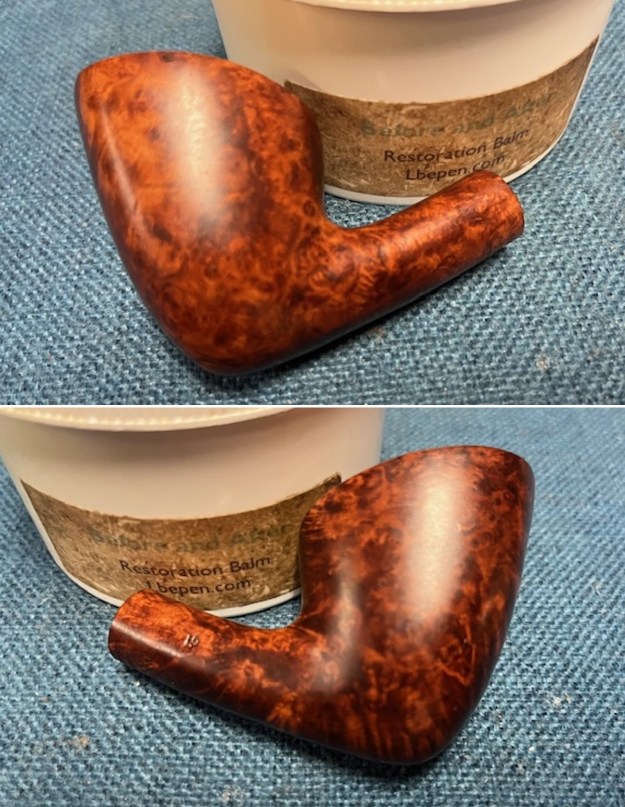
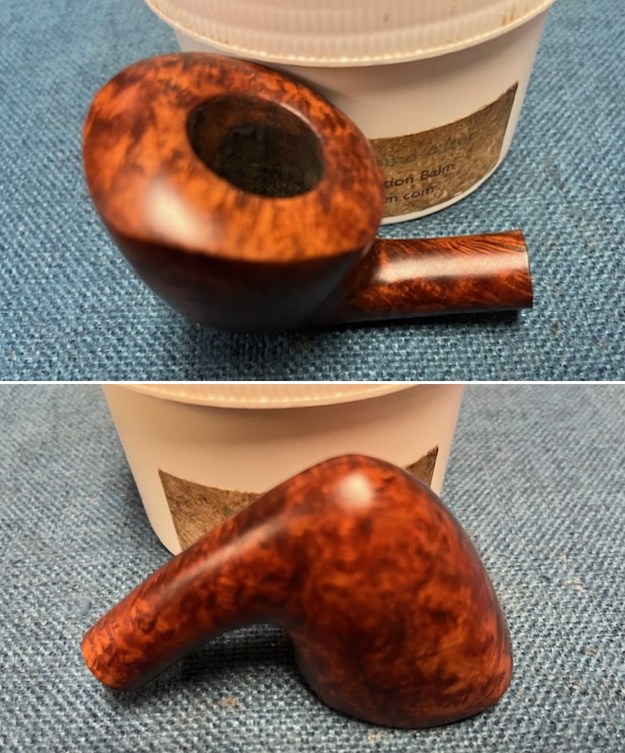
This great looking Ben Wade Freehand came to us from a seller in Downey, California USA on 08/12/2025. It is another one that links the old English Company with Preben Holm in Denmark – the master freehand maker. The particular model is the epitome of a Danish Freehand coming from Preben Holm’s workshop for the American market. It is stamped Ben Wade [over] Intermezzo [over] B [over] Hand Made [over] in [over] Denmark. The bowl of the pipe is a beautiful straight grain piece of briar. The rim top and shank end are plateau. The plateau rim top and inner edge of the bowl is dusty, dirty and has some light lava overflowing onto it. The bowl has a moderate cake. The red coloured finish is very dirty with oils and grime ground into the finish. The beauty is in no way compromised by the grime. The acrylic Cumberland stem is stamped with a Ben Wade Crown BW logo on the top. It has light tooth marks and chatter on both sides ahead of the button. Jeff took photos of the pipe before he started his clean up work to capture the condition of the pipe when we acquired it. He took close up photos of the bowl and rim top from different angles to show the condition of both the smooth and plateau finish. It is truly a uniquely carved rim top maximizing the plateau and the smooth parts flowing up from the bowl sides. You can see the lava and build up on the rim top and the lava flowing on the inner edge of the bowl onto the plateau. The bowl has a moderate cake lining the walls and overflowing into lava. He took photos of the top and underside of the stem to show the condition on both. He took photos of the sides and heel of the bowl to show the lay of the grain around the pipe. It is a beautiful piece of briar. The top of the bowl and shank end are craggy and rugged looking. Unique! The grain is very beautiful. Jeff took a photo of the stamping on the underside of the shank. It was faint in spots but still clear and read as noted above.I am including the background history that I included on the previous blog. It includes the idea that the Preben Holm pipes were marketed under the Ben Wade label in the US and imported through Lane Ltd. I turned to Pipedia and read the listing on the brand to refresh my memory and flesh out the knowledge of the brand (https://pipedia.org/wiki/Ben_Wade). I have included a photo from that site that was taken from a Tinderbox advertisement. Ben Wade Ad in a Tinder Box catalog, courtesy Doug Valitchka

I quote the portion of the article that summarizes the history of the brand.

Young Copenhagen master pipemaker Preben Holm had made a meteoric career heading a pipe manufacture employing 45 people at the age of 22! But around the turn of 1970/71 he was in major financial difficulties. His US distributor, Snug Harbour Ltd. in New York City, left him in the lurch. Holm had three unpaid invoices on his desk and another large shipment was ready for the USA, when Snug Harbour’s manager told him on the phone that there was no money at all on the account to pay him.

So the Dane went to New York for an almost desperate search for a new distribution partner. He made contacts with Lane Ltd. and met Herman G. Lane in February 1971. Lane Ltd. had no interest in Holm’s serial pipes produced at that time but so much the more in the hand-carved freehands because the hype for Danish freehands and fancies in the States was still on its way to the climax then. The meeting resulted in an agreement to start a cooperation. Lane insisted to improve the quality considerably and in return he assured to be able to sell essentially larger quantities.

Holm went back home to work on new samples with all-new designs and altered finishes for Lane. Both, Lane and Holm, agreed that it would be unwise to sell the pipes under Preben Holm’s name as long as Snug Harbour had a considerable stock of Preben Holm pipes and might sell them pipes at very low prices just to bring in some money.

So on Mr. Lane’s proposal it was determined to use the name Ben Wade belonging to Lane Ltd. Lane spent considerable amounts of money for advertising the new brand in the big magazines– the centerpiece being whole-page ads showing a very exclusive Seven Day’s Set.

The cooperation with Lane Ltd. proved to be an eminent business success for both partners. Within a very short time Ben Wade Handmade Denmark sold in much larger quantities and at higher prices than they had ever dreamed of. And the hype these freehands and fancy pipes caused went on unbroken long after Herman G. Lane deceased. Preben Holm – obviously much more brilliant in pipe making than in pipe business – was in major troubles again in 1986 and had to sack most of his staff. The Ben Wade production was significantly lowered but continued until his untimely death in June of 1989.

Up to now Preben Holm made Ben Wade pipes are cult and highly sought for on the estate markets.

With that information my initial thoughts were confirmed. This pipe was another Preben Holm made Freehand Sitter distributed in the US by Lane Ltd under the name Ben Wade. The freehand rage occurred in the late 70s and the pipes were made until Preben’s death in 1989. My guess would be that this pipe was made sometime during that time period and potentially in the late 70s.

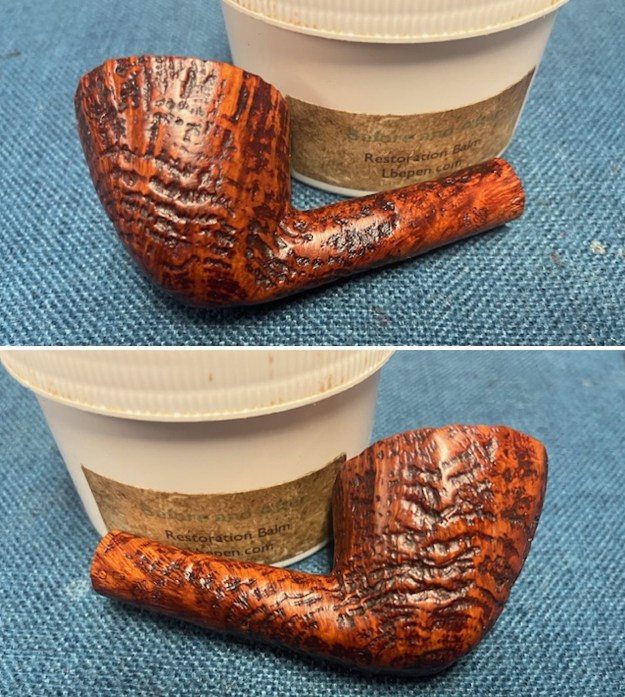
Jeff had thoroughly cleaned up the pipe. He reamed the pipe with a PipNet Pipe Reamer and cleaned up the remnants with a Savinelli Fitsall Pipe Knife. He scrubbed the bowl with undiluted Murphy’s Oil Soap with a tooth brush. He rinsed it under running warm water to remove the soap and grime. He cleaned out the inside of the shank and the airway in the stem with alcohol, cotton swabs, pipe cleaners and shank brushes. He scrubbed the exterior of the stem with Soft Scrub to remove the grime and calcification. He soaked the stem in Before & After Deoxidizer and rinsed it with warm water. I took some photos of the rim top, shank end and stem to show the condition of them both when it arrived. It looked good. The stem had some light tooth marks and chatter ahead of the button and on the button surface on both sides.I took a photo of the stamping on the underside of the shank. It was clear and readable. It read as noted above. I took the stem off the shank and took a photo of the pipe parts in perspective.I started my work on the pipe by sanding the bowl and shank with 320-3500 grit sanding pads. I wiped it down after each sanding pad to remove the debris from sanding. I carefully avoided the stamping on the shank. It began to look very good as I finished. I polished the bowl with and shank with micromesh sanding pads – wet sanding with 1500-12000 grit pads. I wiped the briar down after each pad with a damp cloth. The bowl is starting to look very good. I worked some Before & After Restoration Balm into the surface of the briar with my fingertips and into the plateau rim top with a horsehair shoe brush to clean, enliven and protect it. I let the balm sit for a little while and then buffed with a cotton cloth to raise the shine. The photos show the bowl at this point in the restoration process. I set the bowl aside and sanded the stem with sanding pads – dry sanding with 320-3500 grit sanding pads. After each pad I wiped the stem down with Obsidian Oil on a cloth. It is looking much better.I polished the stem with micromesh sanding pads – wet sanding with 1500-12000 grit sanding pads. I wiped it down after each sanding pad with some Obsidian Oil. I finished polishing it with Before & After Pipe Stem Polish – both Fine and Extra Fine and buffed it off with a cotton cloth. I wiped it down with Obsidian Oil to protect the stem and slow down the oxidation. This is a beautiful Preben Holm made Ben Wade Intermezzo Freehand Sitter with a fancy, turned, Cumberland acrylic stem. It has a great look and feel. The shape fits well in the hand with the curve of the bowl and shank junction a perfect fit for the thumb around the bowl when held. I polished stem and the bowl with Blue Diamond polish on the buffing wheel. I gave the plateau on the rim top and shank end multiple coats of Conservator’s Wax. I gave the bowl and the stem multiple coats of carnauba wax. I buffed the pipe with a clean buffing pad to raise the shine. I hand buffed it with a microfiber cloth to deepen the shine. The pipe polished up pretty nicely. The rich combination of reds, browns and black in the smooth finishes and the plateau areas took on life with the buffing. The rich colour of the briar works well with the polished Cumberland acrylic stem. I like the grain and finished look of this Preben Holm Ben Wade Intermezzo Freehand. Have a look at it with the photos below. The shape, finish and flow of the pipe and stem are very well done. The dimensions are Length: 6 ½ inches, Height: 2 ¼ inches, Outside diameter of the bowl: 2 wide x 2 inches long, Chamber diameter: 1 inch. The weight of the pipe is 80 grams/2.82 ounces. This pipe will be going on the Danish Pipe Makers Section of the rebornpipes store if you are interested in adding it to your collection. Thanks for reading this blog and my reflections on the pipe while I worked on it. This was a fun estate to bring back to life.