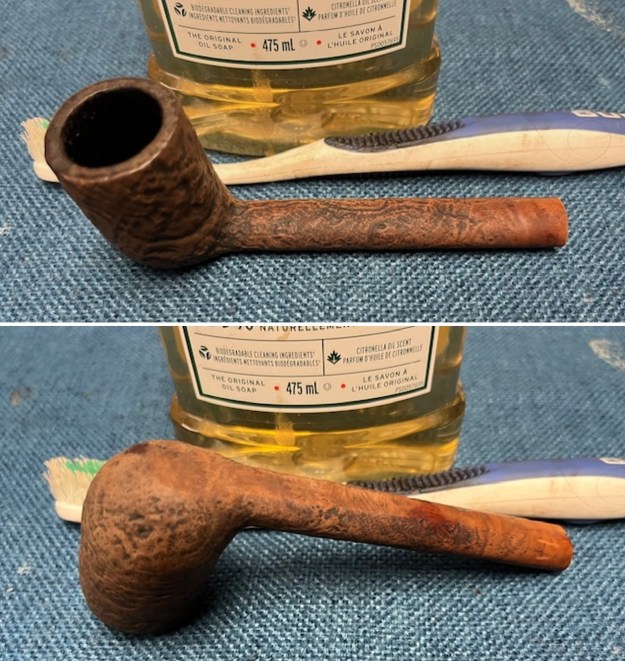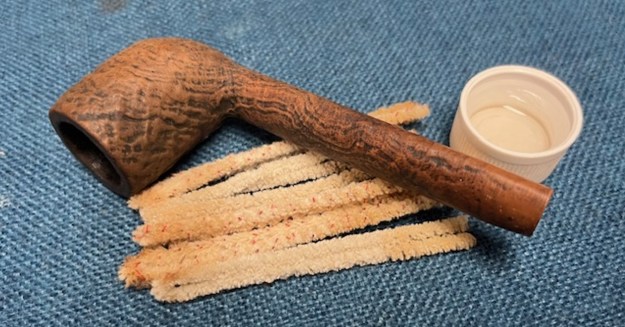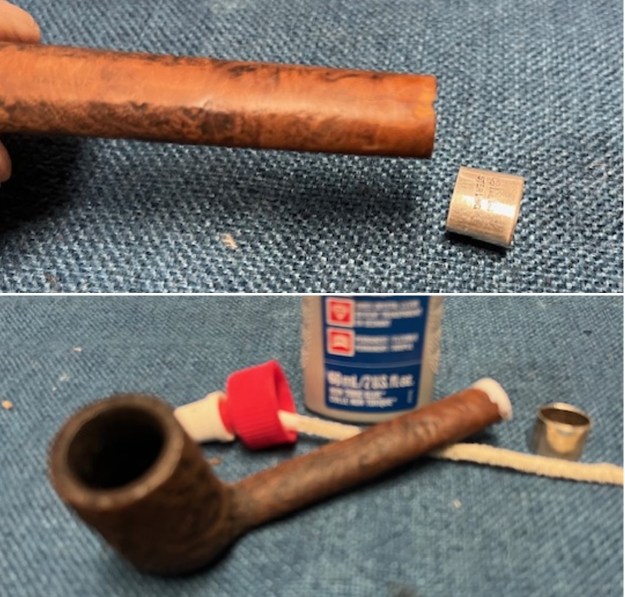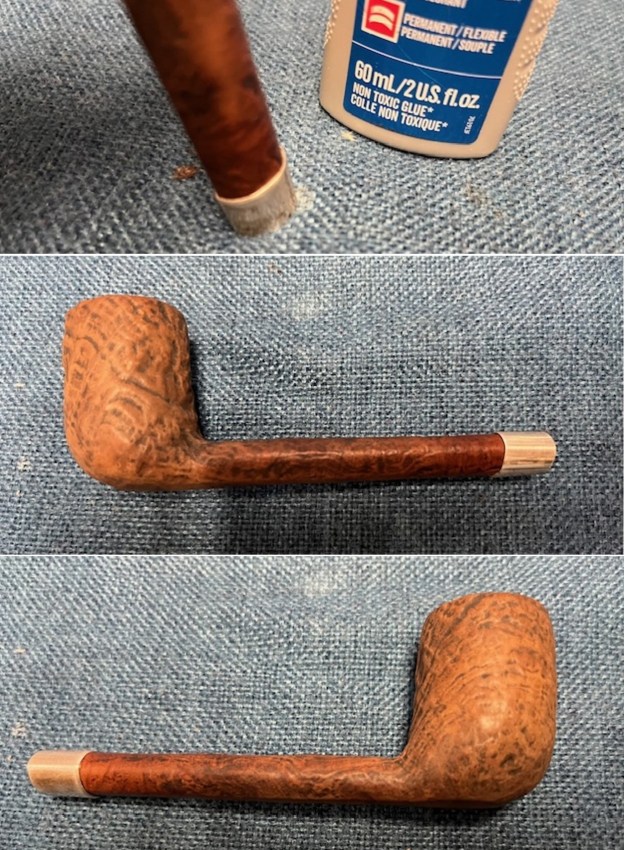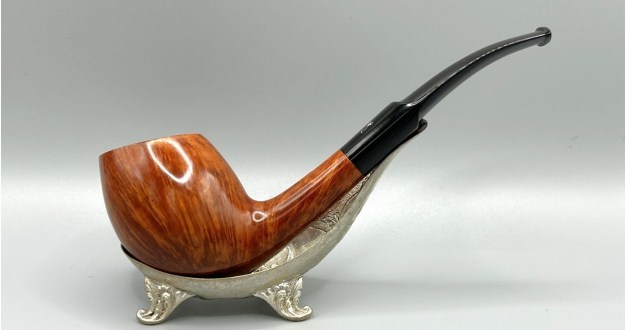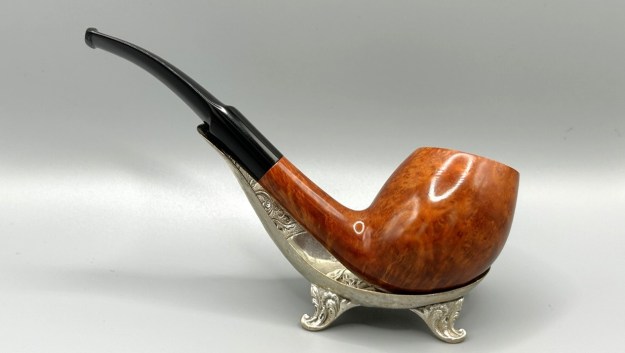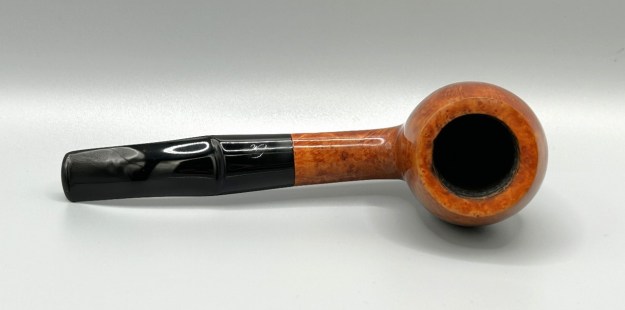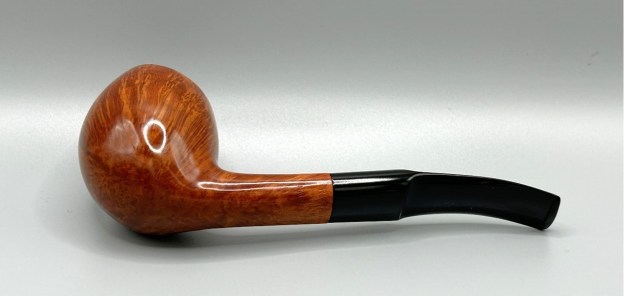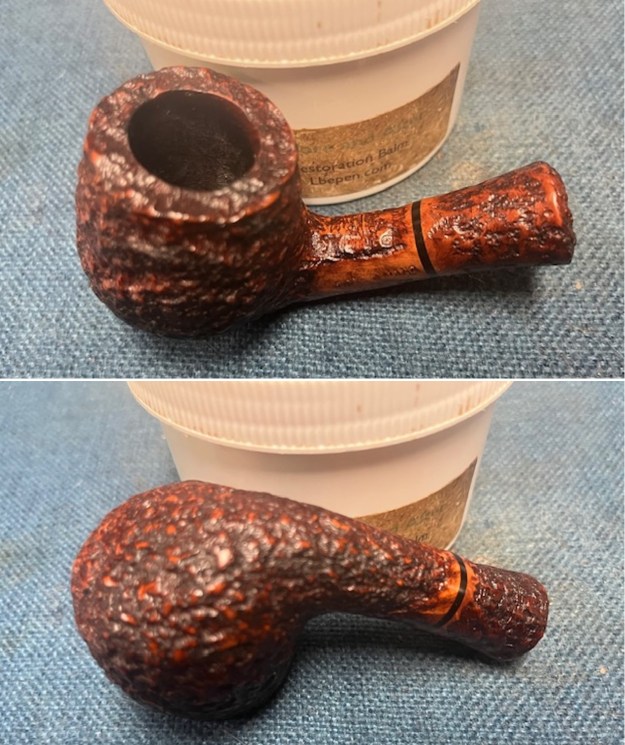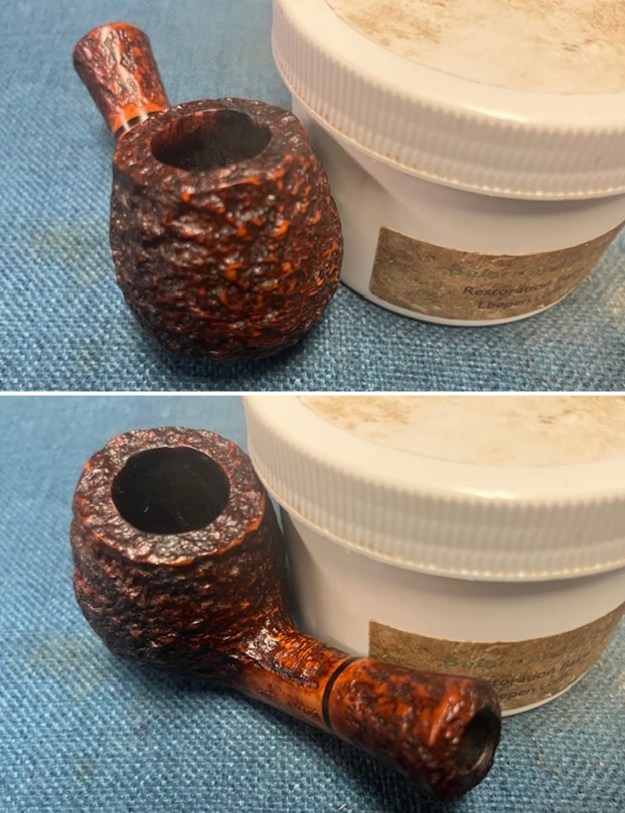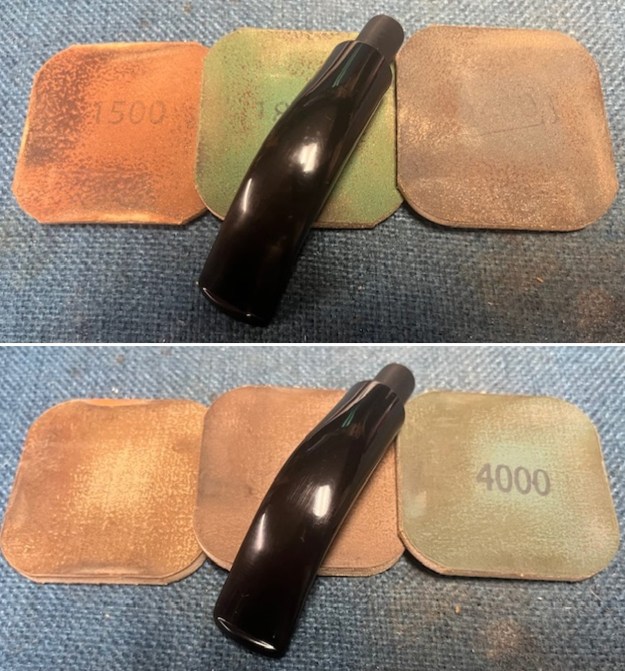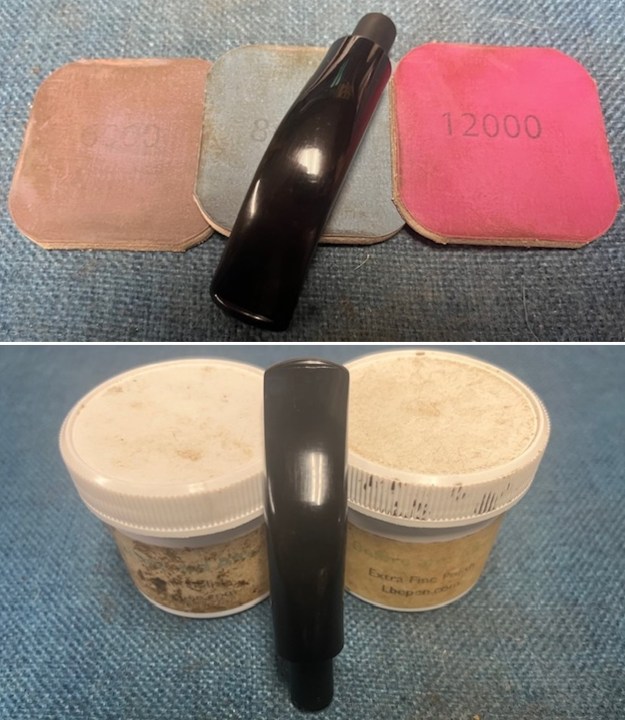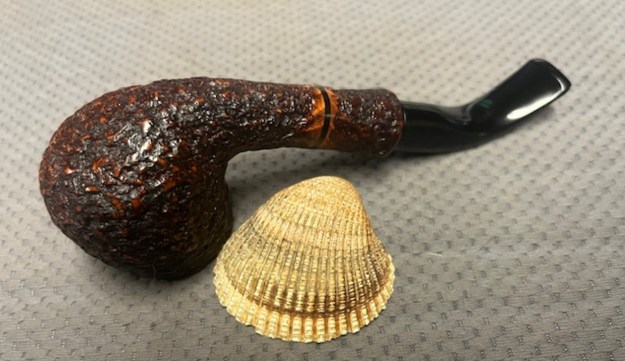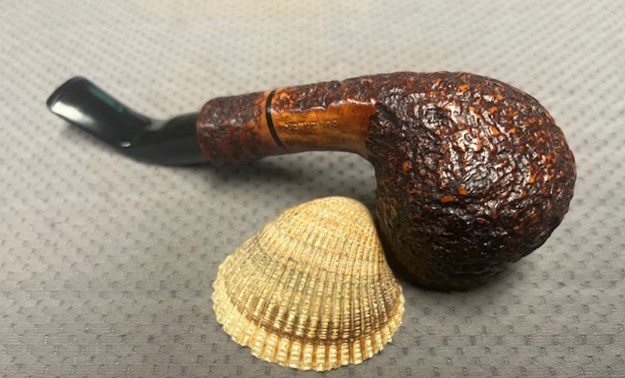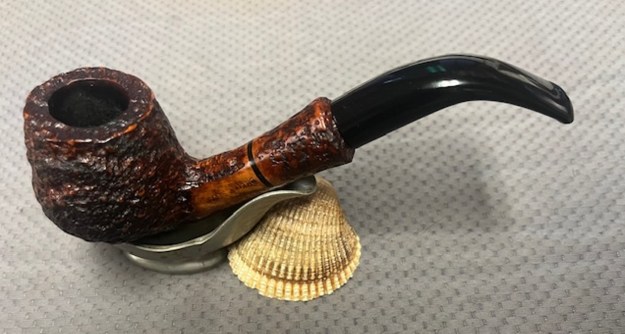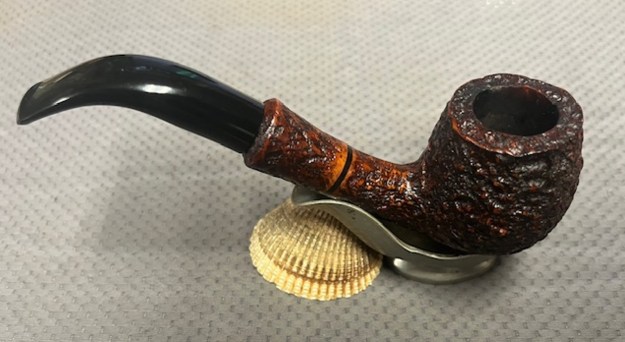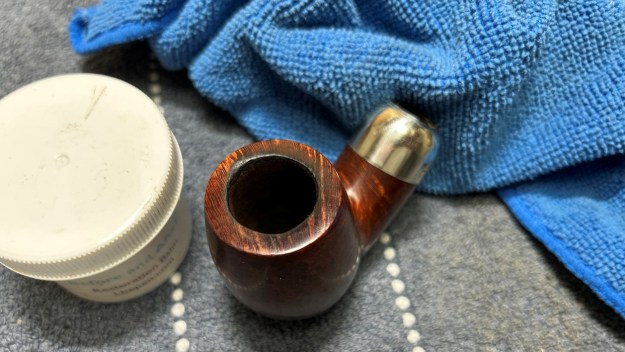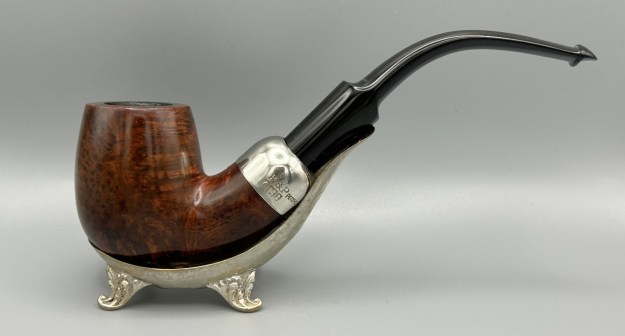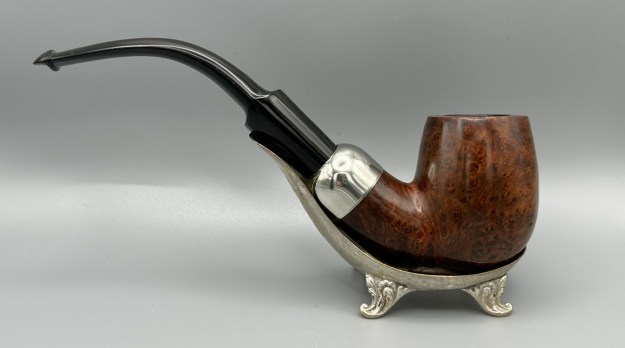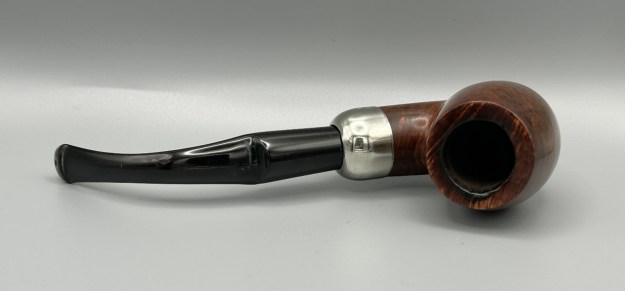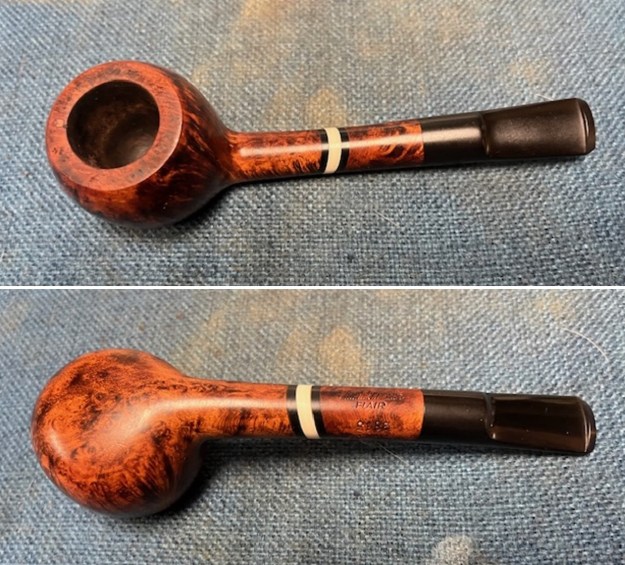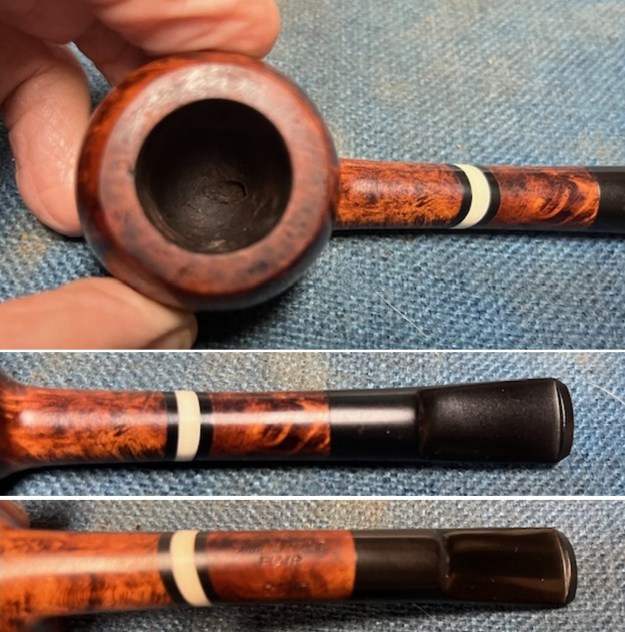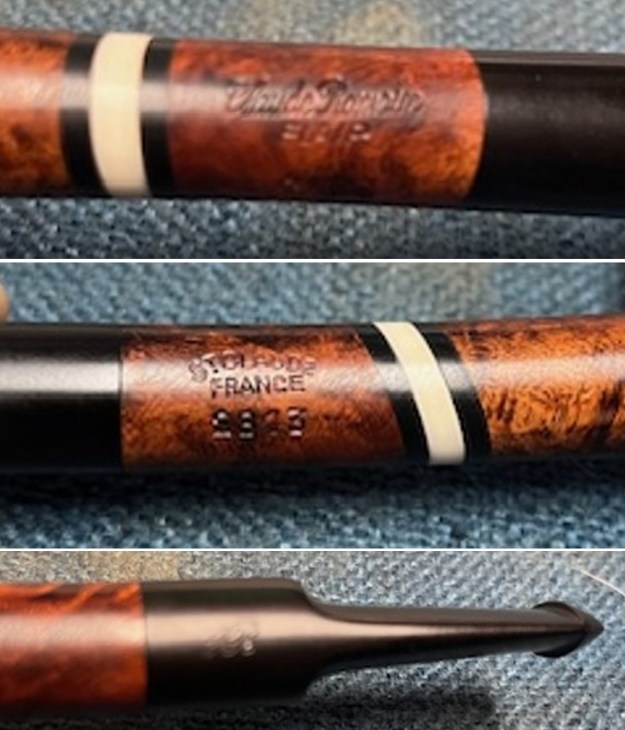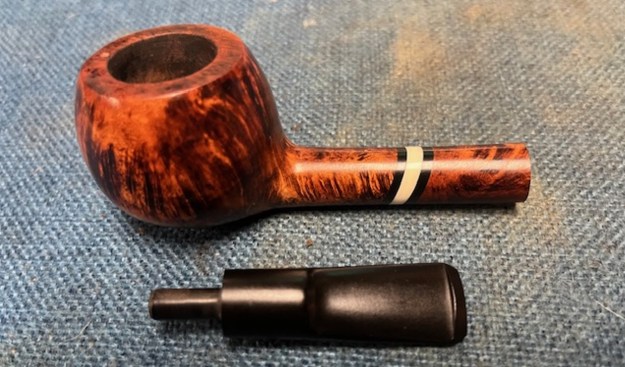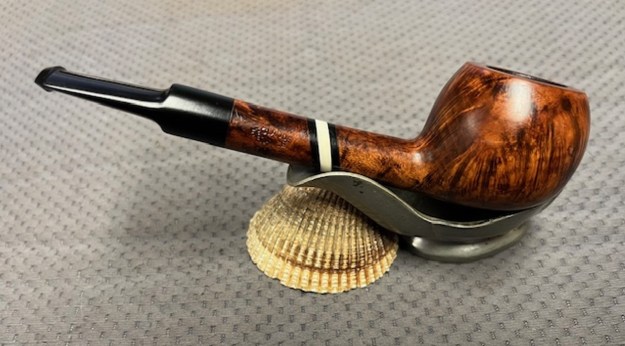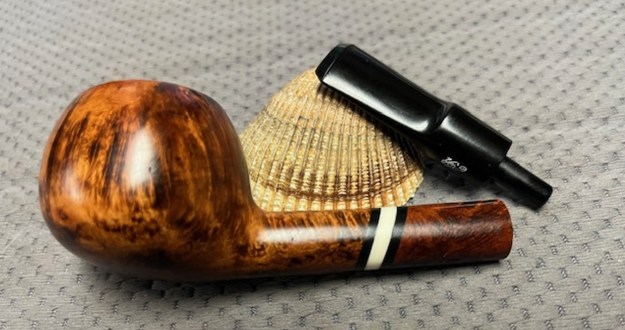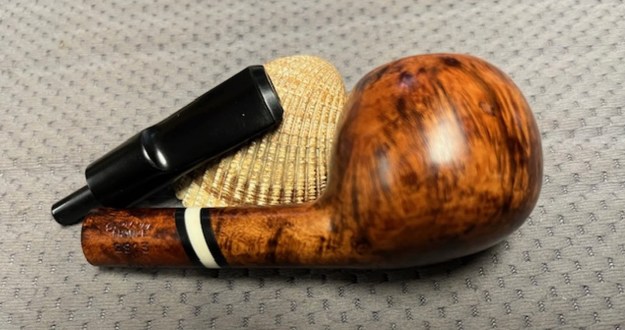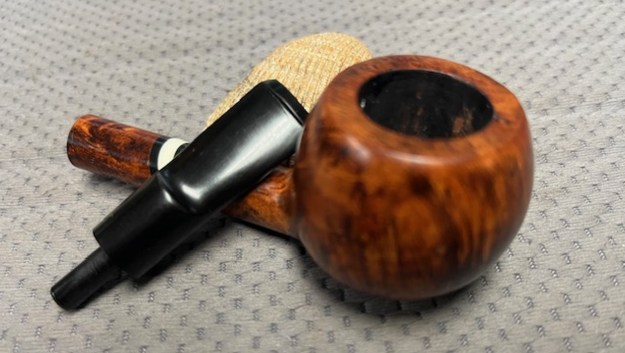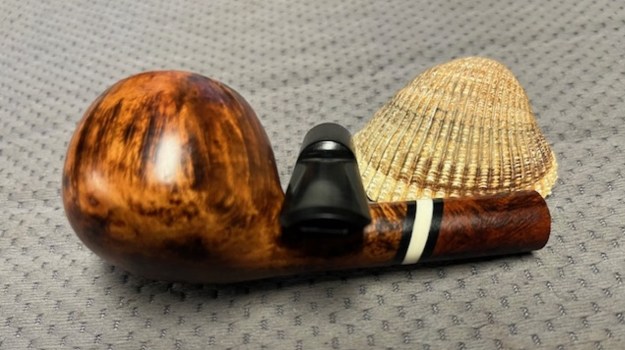
Tag Archives: Bowl – refinishing

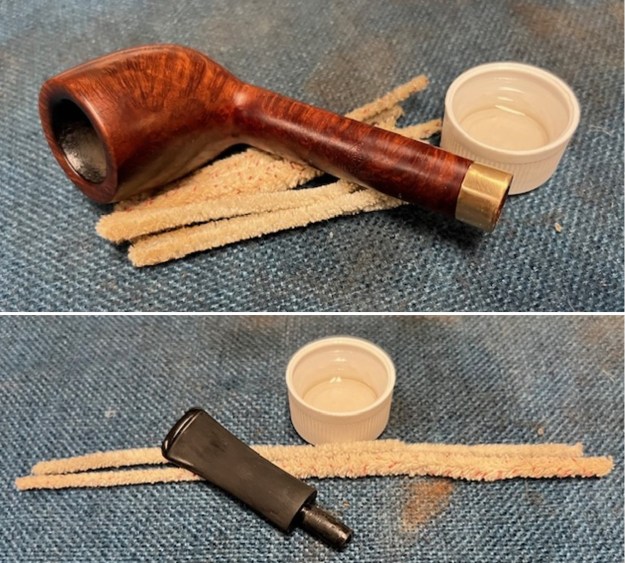
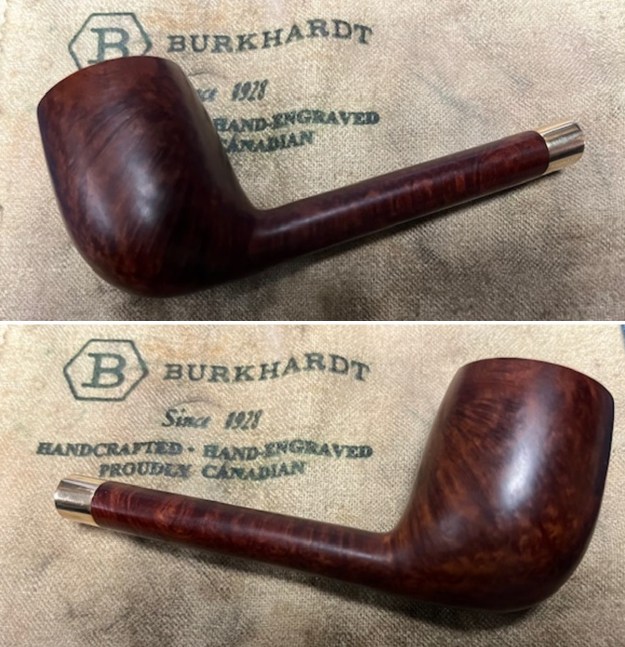
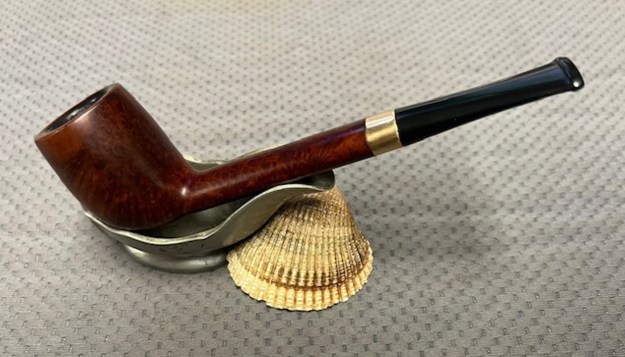
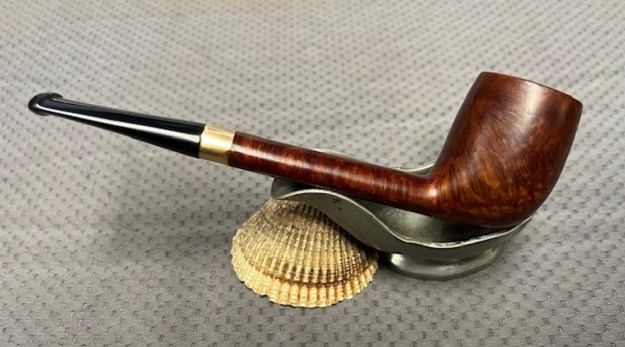
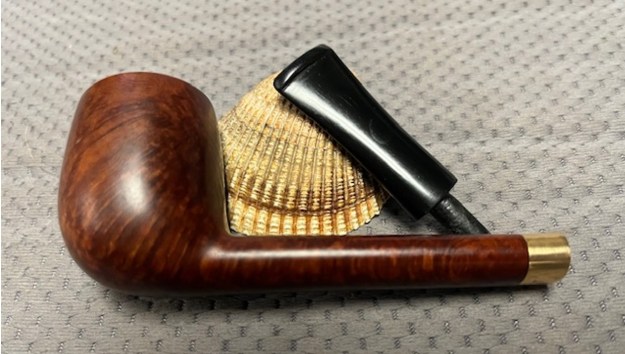
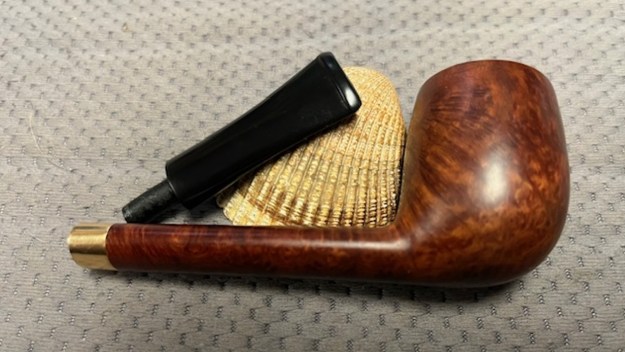
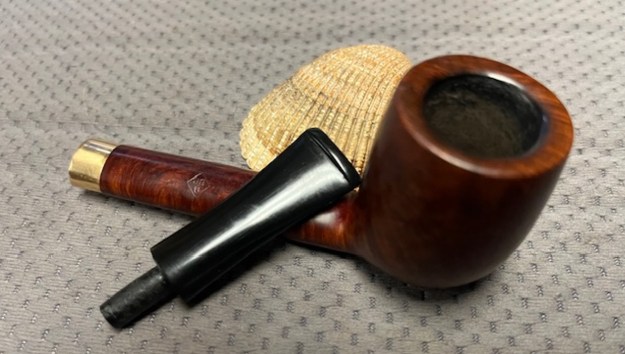
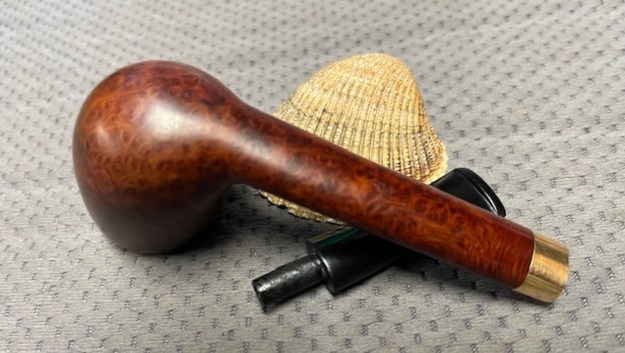
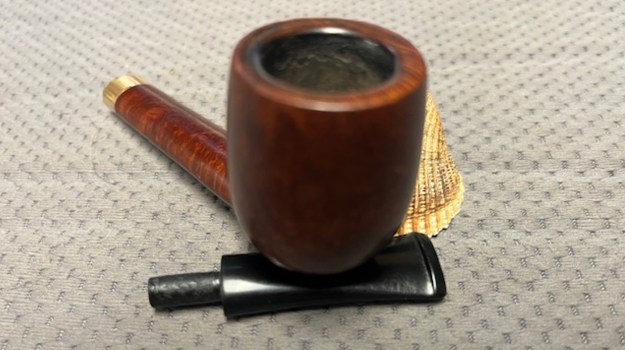
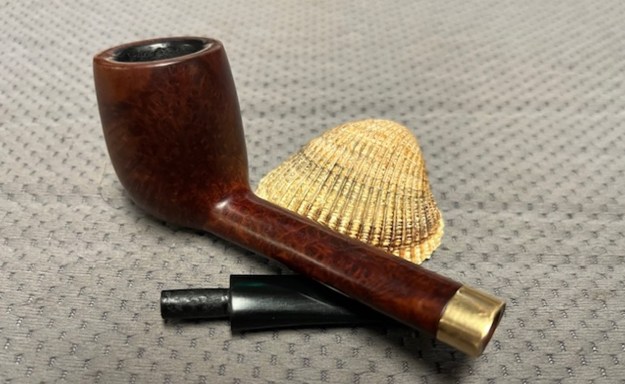
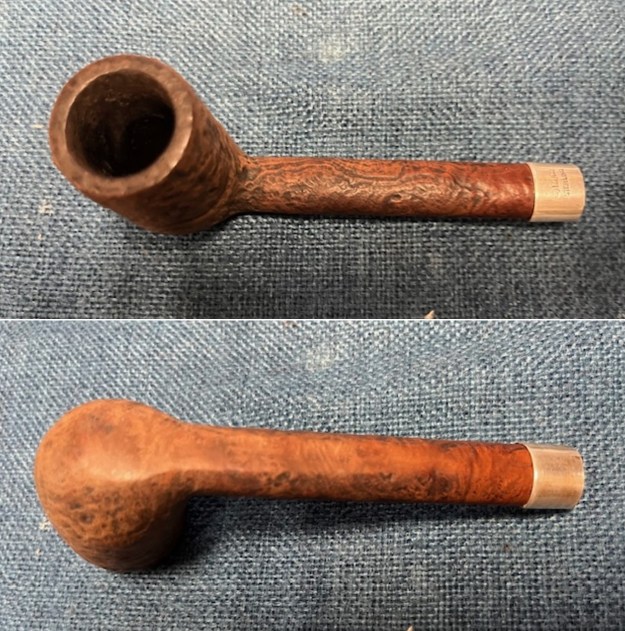
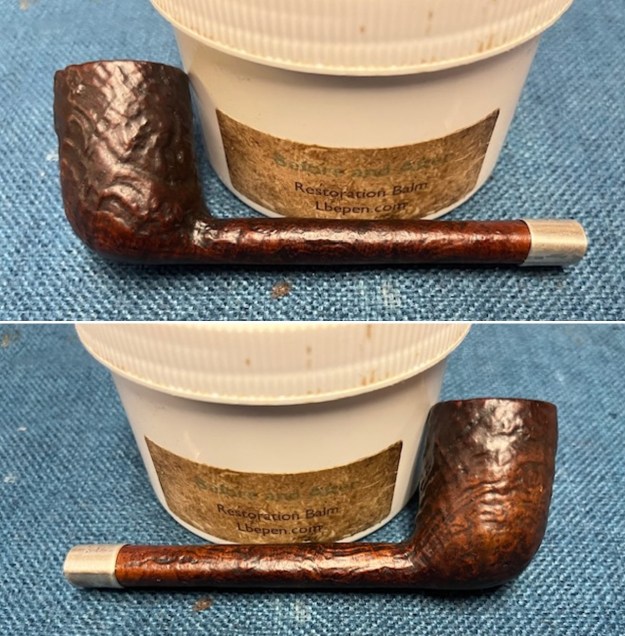
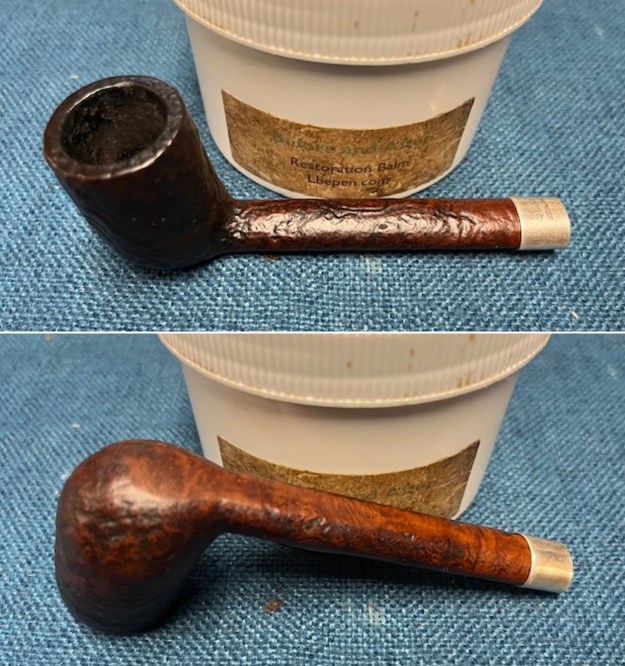
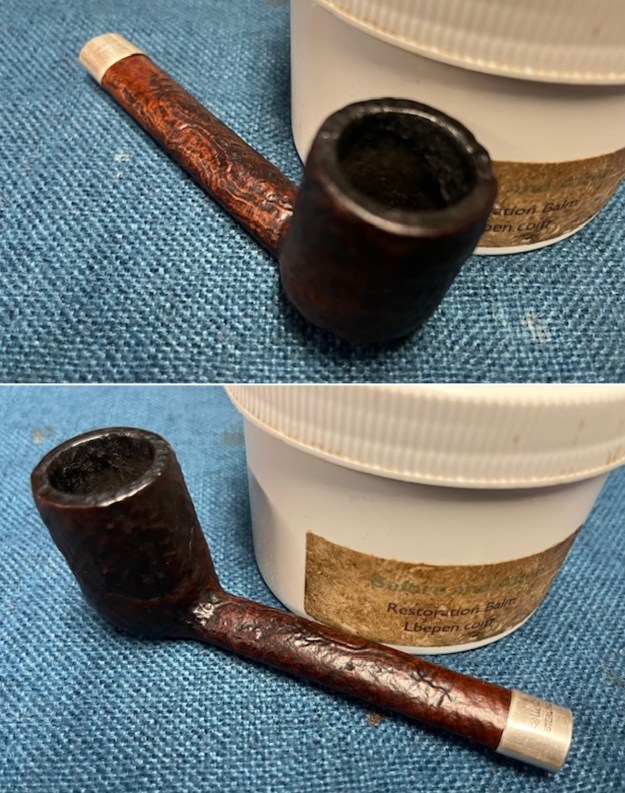
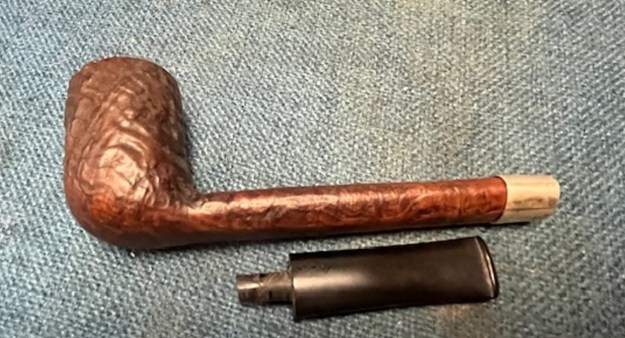
Repairing and Restemming a BBB Ultonia 504 Gold Banded Canadian


by Steve Laug

Not too long ago I received an email from a Andrew in Greece asking if I could work on some pipes for him. He had some that needed a stem and a couple of pipes with broken stems and a Canadian that had a crack down the back of the bowl and across the right side. We emailed back and forth and he sent me the following photos. I figured they would be some interesting pipes to work on so he sent them to me to work on. I received the box yesterday. When I opened it this morning I was amazed to see what he had sent. The Sandblast Canadian that needed restemming was stamped 264 Peterson’s Kapruf. The rest of the stamping was quite faint. The pipe needed to be restemmed and it had a small divot in the shank end and what looked like a crack. The second, a smooth Canadian was a BBB Ultonia 504 with a gold band. The two Sandblast with broken stems turned out to be Stanwells. The larger on is stamped Stanwell [over] Regd. No. 969-48. It is followed by the shape number 858 [over] Old Briar. The smaller one is stamped Stanwell [over] Regd. No. 969-48 followed by de Luxe followed by the shape number 87. The last of the five with the cracked bowl is an 8 Dot Sasieni [over] London Made [over] Pat. No. 1513428. It was also stamped “Amesbury”. They were going to be an interesting lot to work on.
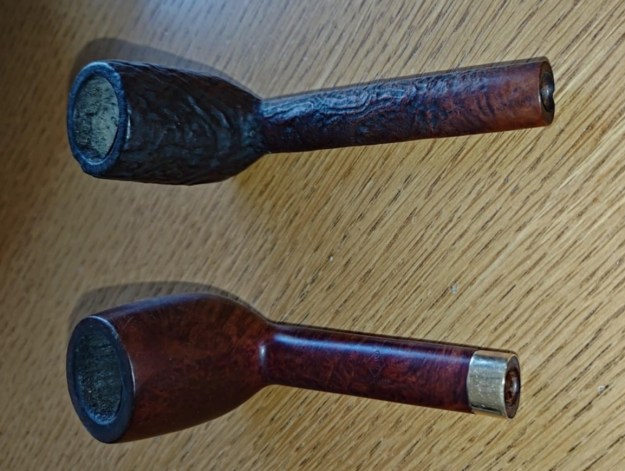
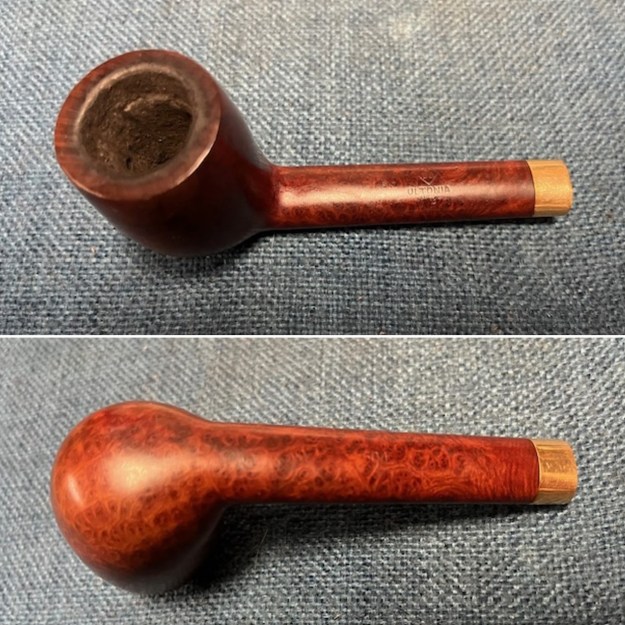
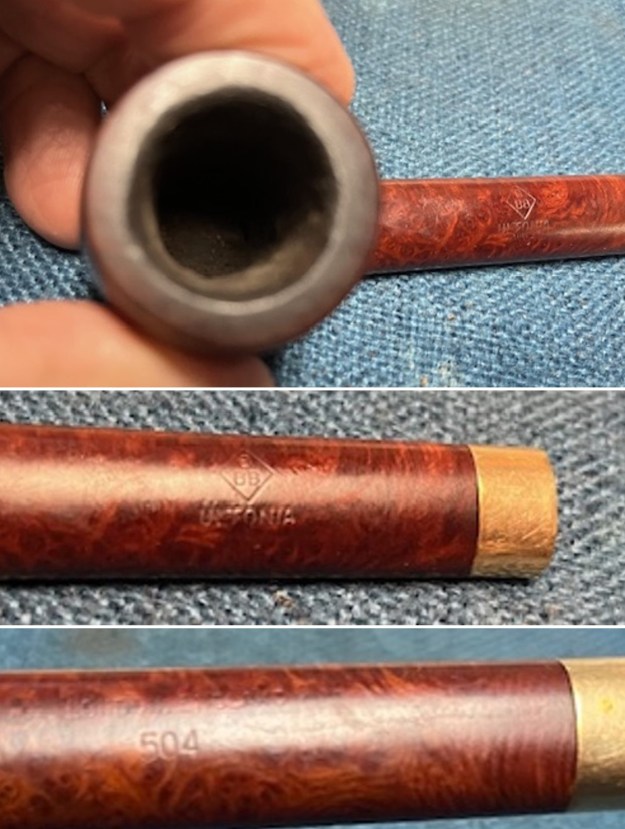
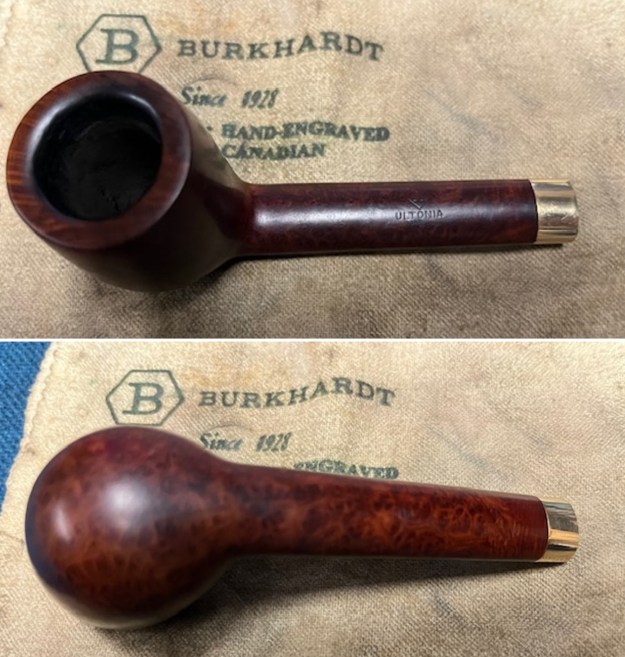
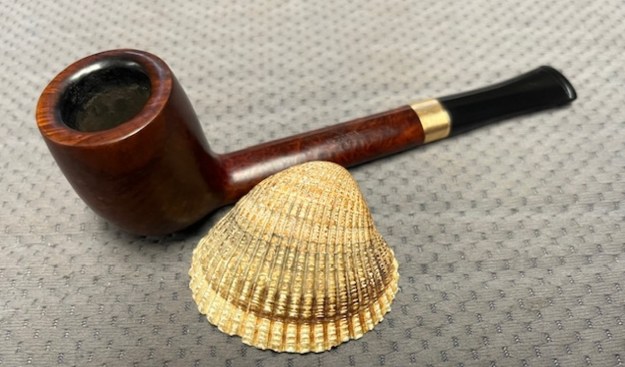
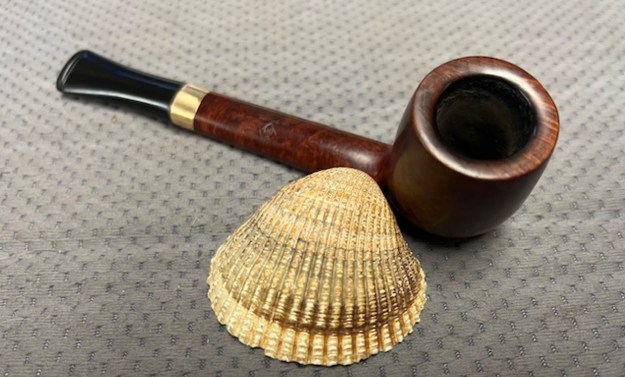
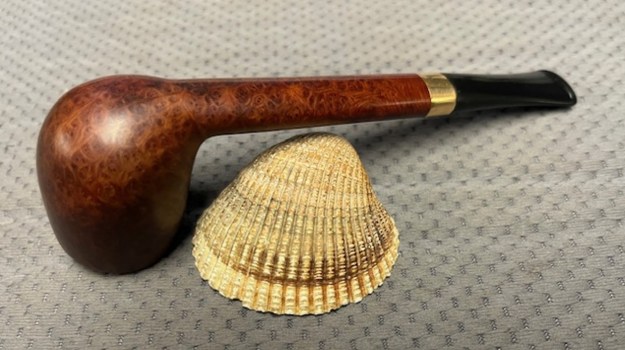
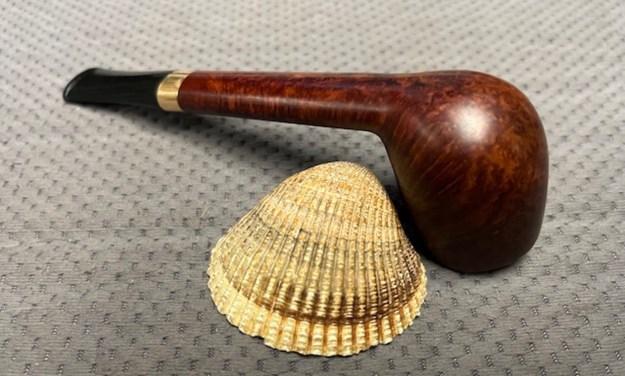
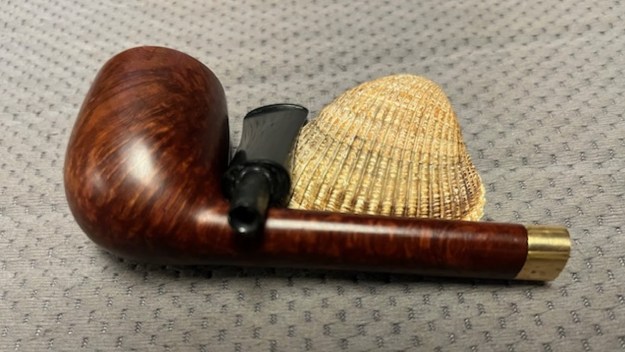
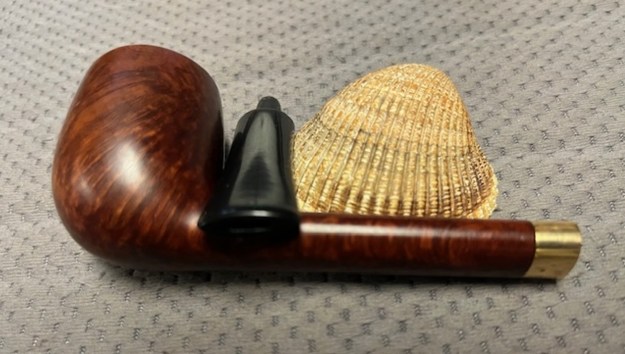
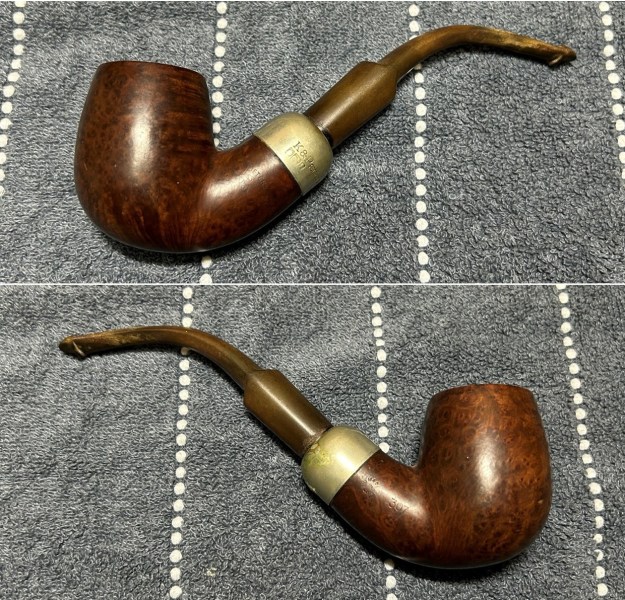
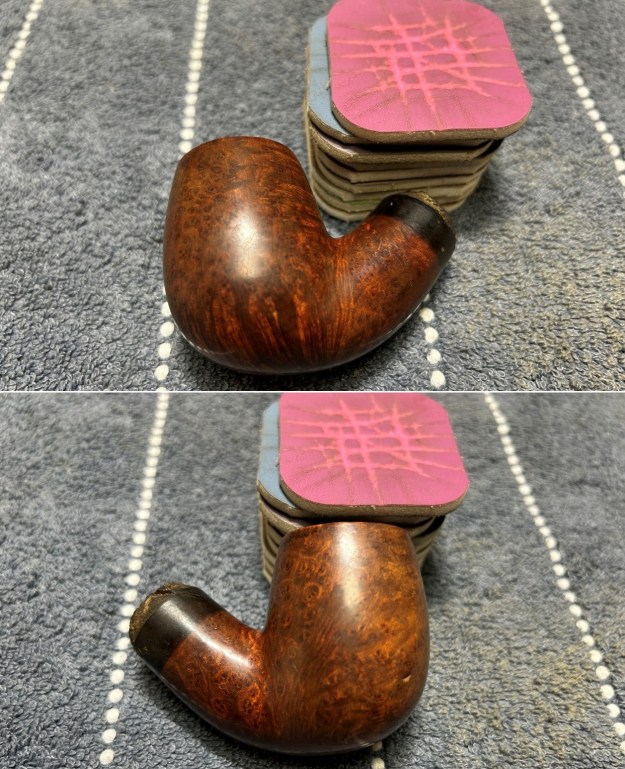
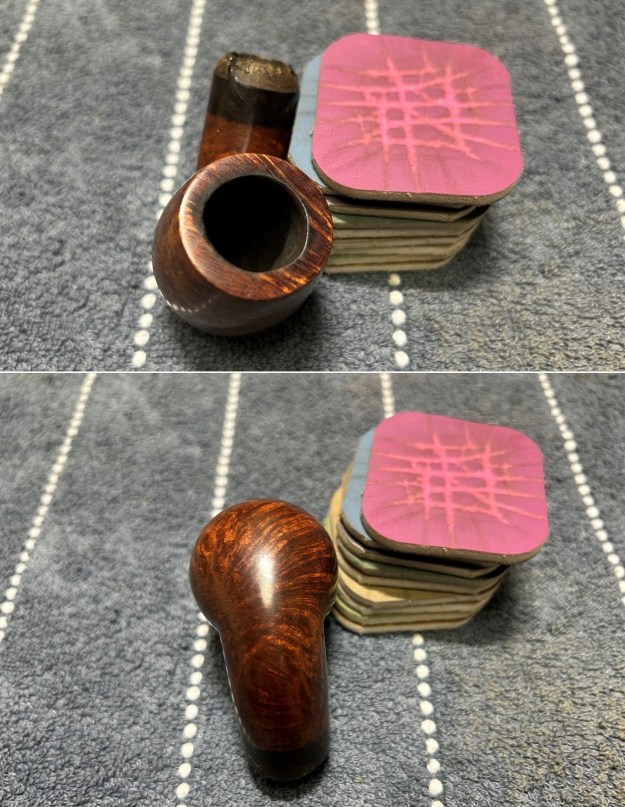
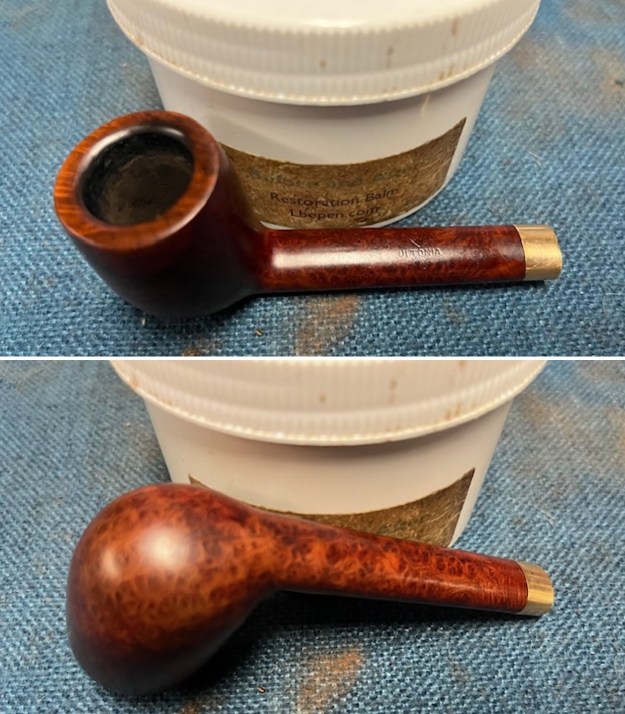
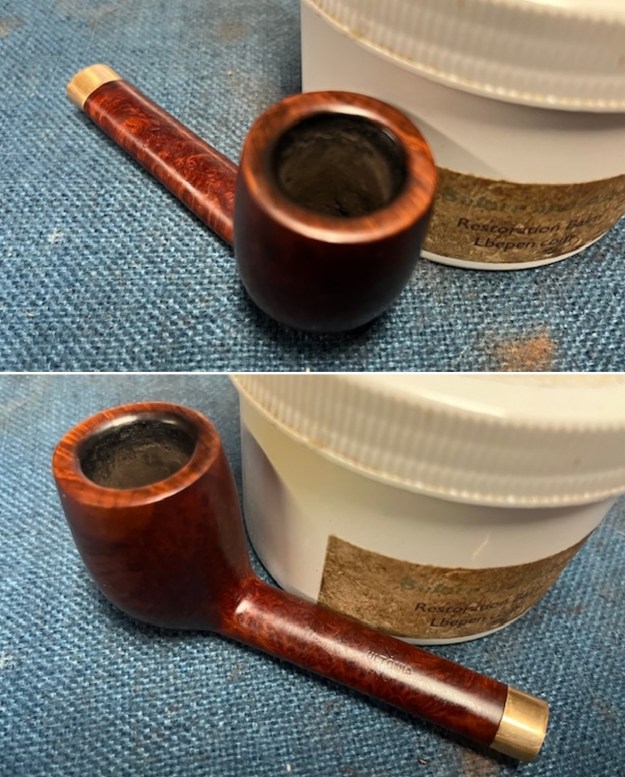
I chose to deal with the BBB Ultonia 504 Gold Banded Canadian next. It was in decent condition, probably the best of the lot. The stamping on the topside of the shank was BBB in a diamond [over] Ultonia and on the underside was the shape number 504. It was clear and readable. The smooth finish was nice but dirty. The bowl had a light cake in it and there were spots of lava on the rim top and inner edge. The inner edge was a little rough from previous reaming. There was a nice looking gold band on the shank end that was decorative as I could find no cracks. The interior of the shank was quite dirty. I took a photo of the bowl and rim top to show the condition of them bowl. The lava on the rim top was spotty and had some darkening. The inner edge was also damaged. I also took a photo of the top underside of the shank to show the faint stamping that was present. It is faint in spots but is still readable.I turned to Pipephil’s site to see if it listed the Ultonia line (http://pipephil.eu/logos/en/logo-bbb.html). It did not but it gave a short summary of the brand. I quote:

BBB: ”Best British Briar” is now a brand of the Cadogan Company (Oppenheimer group). American rights to use the brand name were sold to Wally Frank in 1980. Founder of the brand in 1847: Louis Blumfeld. The oldest pipe brand name in the UK has been registered in 1876 (Blumfeld Best Briar) Grading (ascendant): Own Make, Bold Grain, Best Make, Rare Grain.

I turned to Pipedia (https://pipedia.org/wiki/BBB) to see if I could get some specific information on the Ultonia. I read through the history on the site and I quote the pertinent section of article below.

Louis Blumfeld develops from the very start of important international trade, with a particular success in Canada, in Australia, in Zealand News, India and in the extrème Is Europe, in Switzerland and, with a special mention, in Denmark. If the USA were never an extraordinary market, a branch is opened all the same in New York. In fact, the marketing strategy was focused especially on the countries of the Britanique Empire. Little before 1914, A Frankau & Co was also a sole agent for the pipes Cherry Wood of the Ropp house to cover the United Kingdom and its colonies.

If the BBB are its the most known pipes, A Frankau & Co had several marks of pipes: Capt. Kidd, Fairway (“F” in white; FAIRWAY/LONDON MADE/ENGLAND), Frankau’ S (London Made/Made in England), Glokar, Major Daff, the Snap-FIT. It also seems that Ultonia and Last Word must be regarded as marks with whole share, in spite of the fact that they are presented as being product lines under label BBB. That would explain their absence of catalogues BBB…

… In the Thirties, the top-of-the-range one becomes “BBB Best Make” with alternatives like “Super Stopping” and “Ultonia Thule”. The BBB Carlton, sold with the detail with 8/6 in 1938, is equipped with a system complicated out of metal, system which equipped the BBB London Dry too. Blue Peter was not estampillées BBB but BBB Ultonia, and the BBB Two Star (* *) become the bottom-of-the-range one. The calabash leaves the catalogues, but some pipes with case and some scums are still produced. The forms also are typical of this time: half are billiards, some princes and bullcaps, a limited number of bulldogs and curved. It is as at that time as the top-of-the-range series receive an incrustation of initials BBB out of metal, whereas the bottom-of-the-range series have only the engraved pipe.

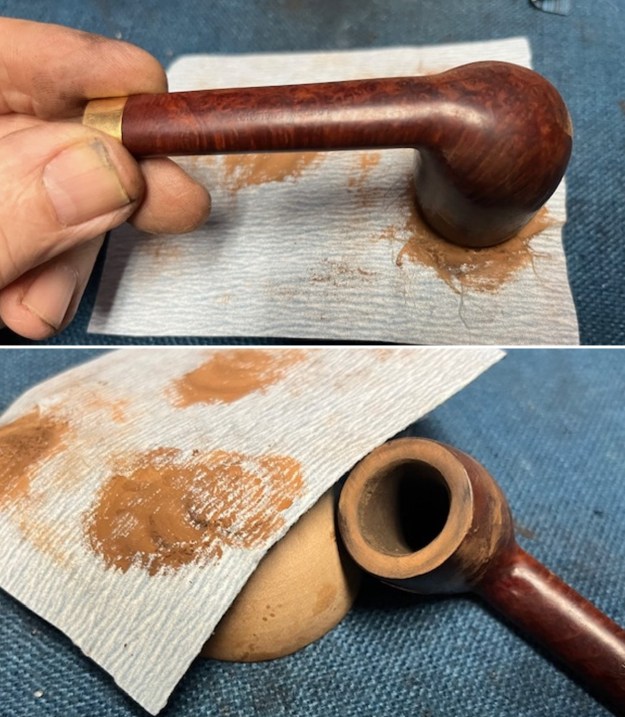
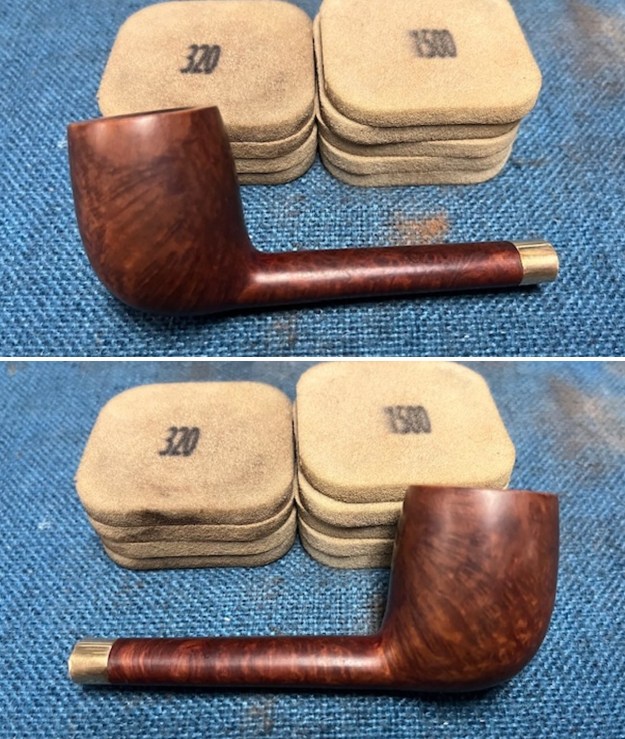
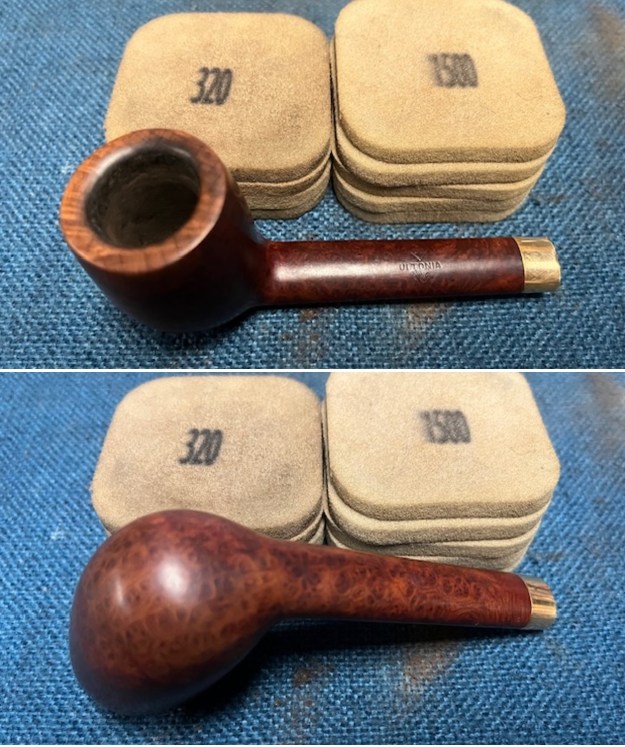
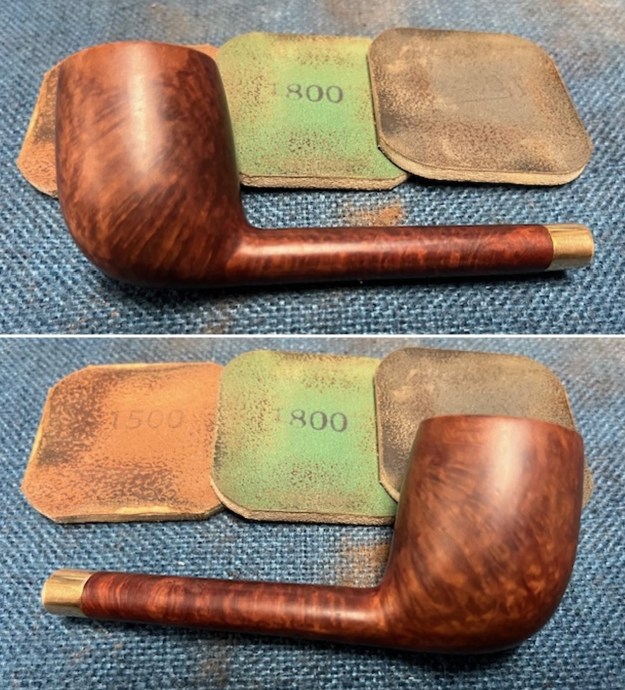
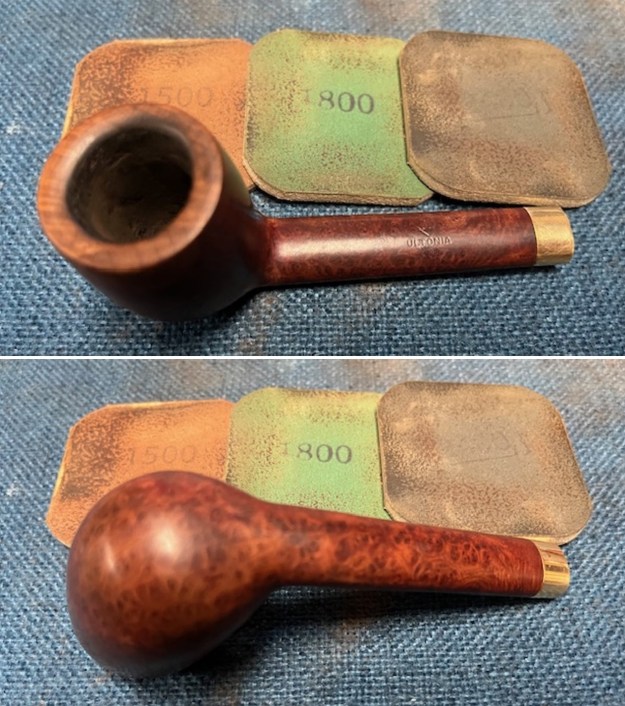
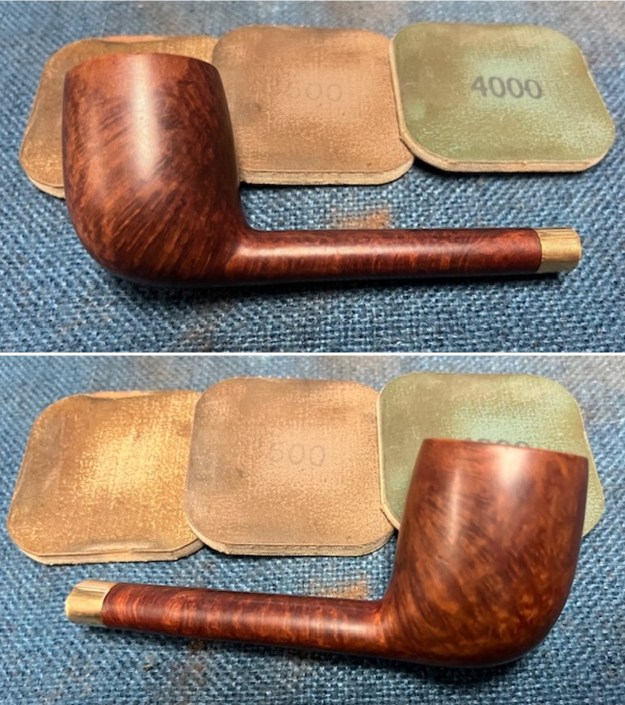
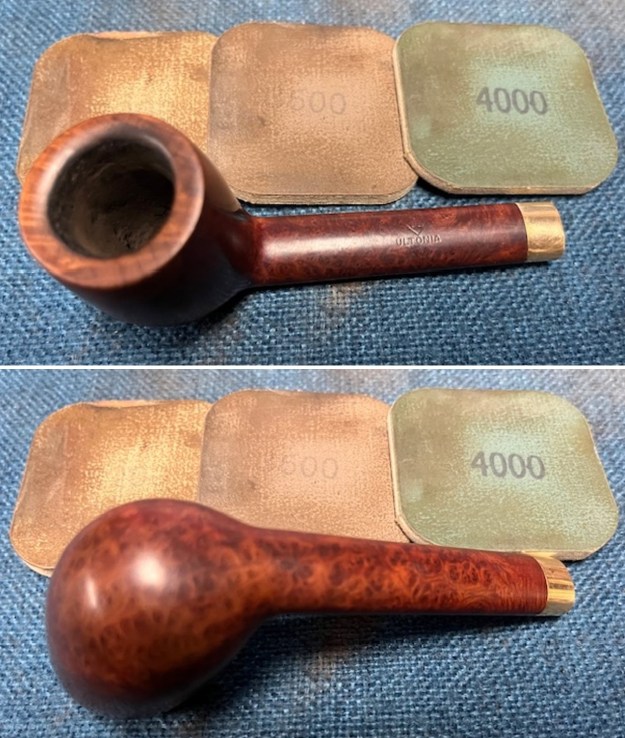
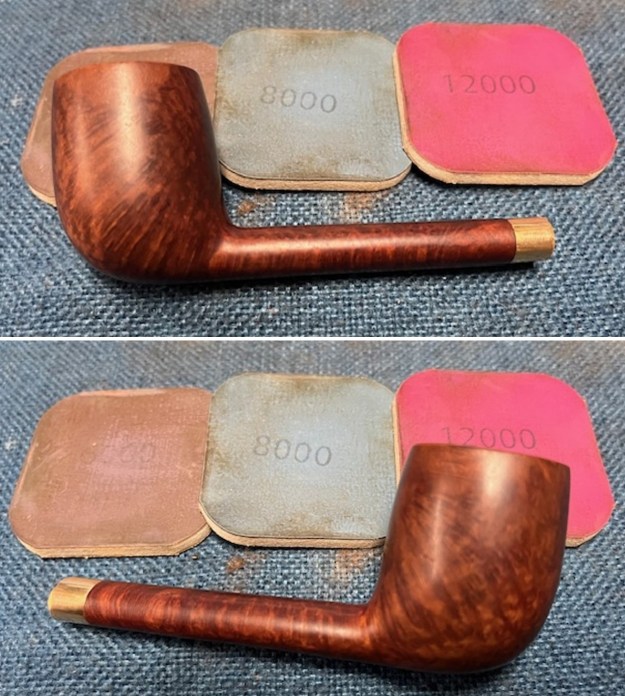
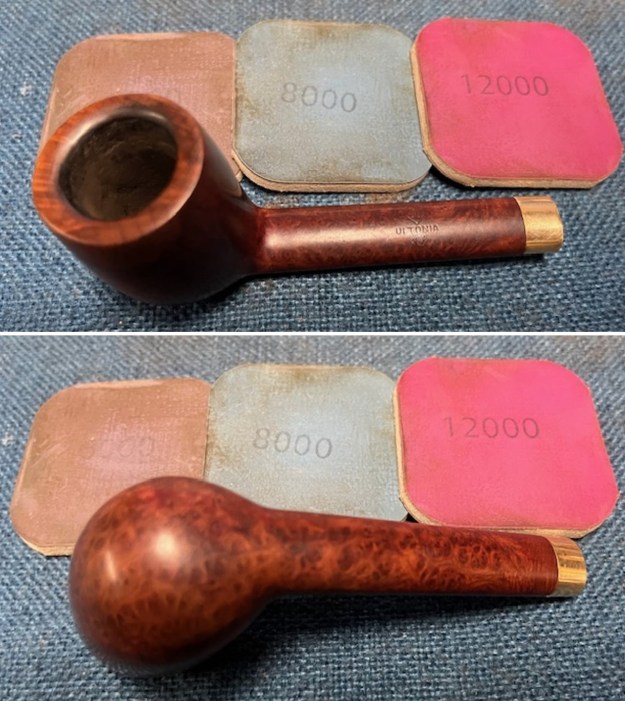
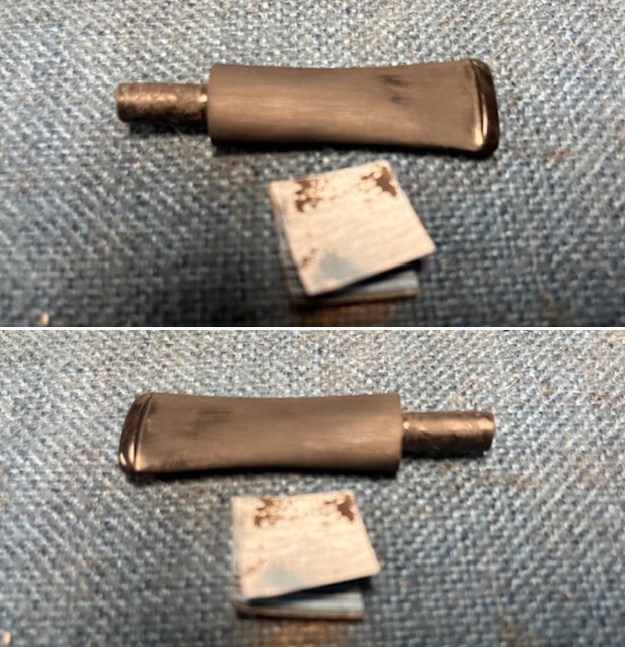
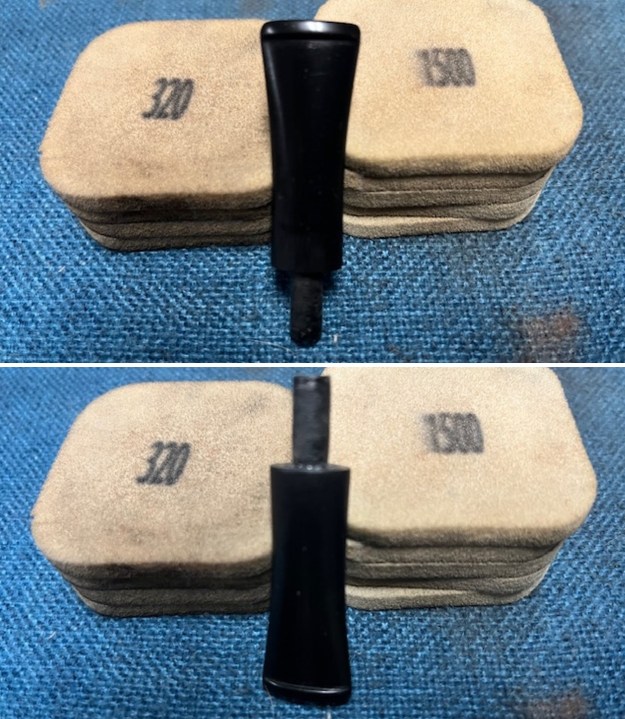
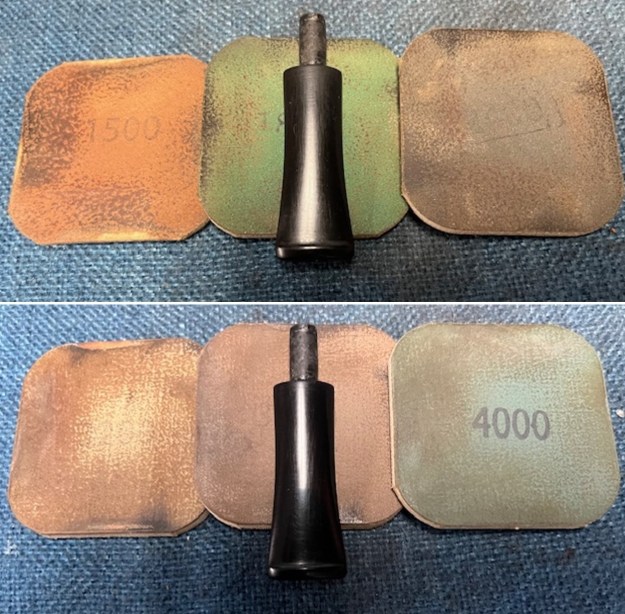
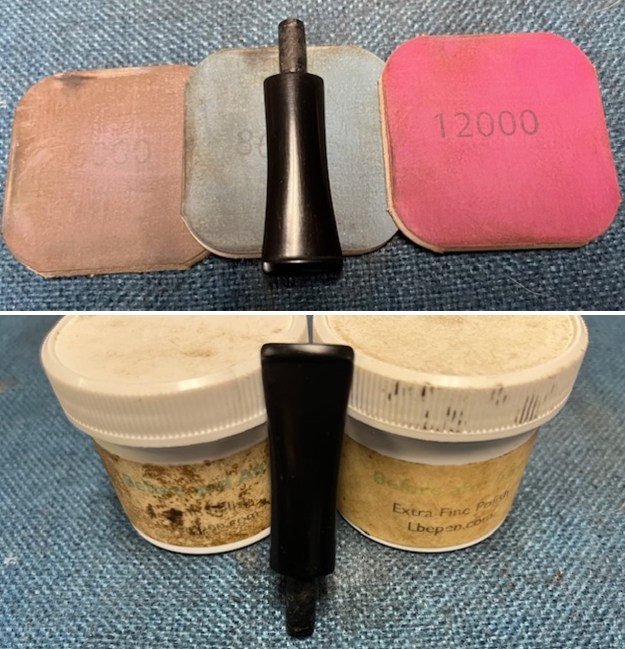
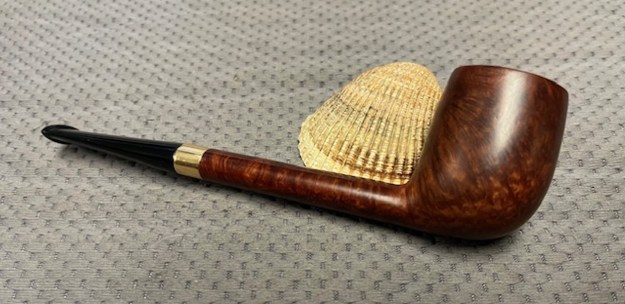
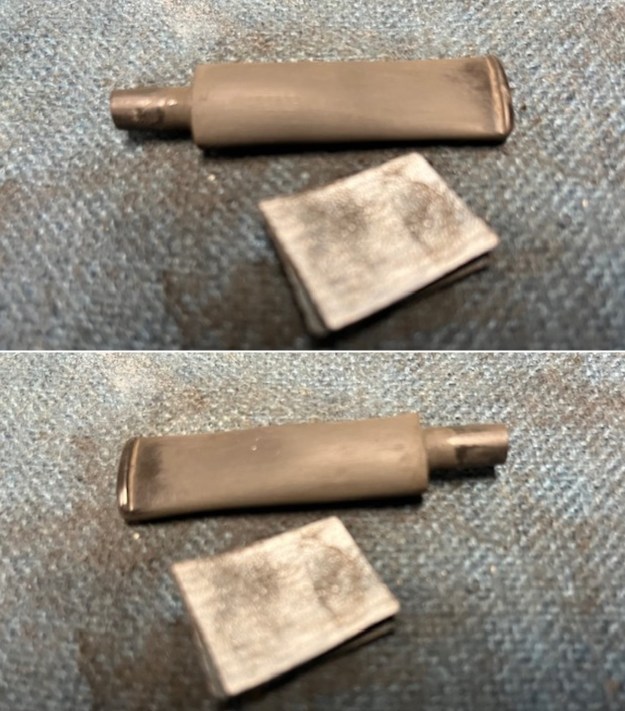
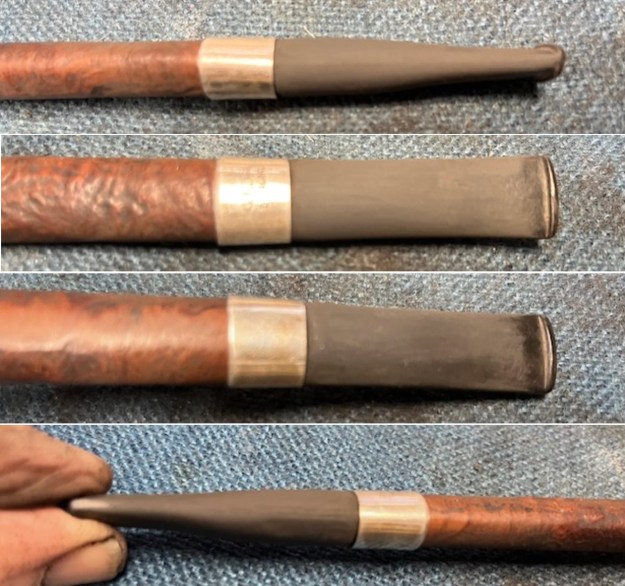
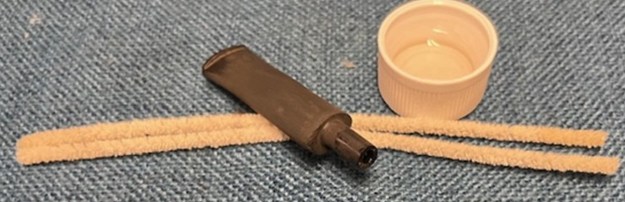
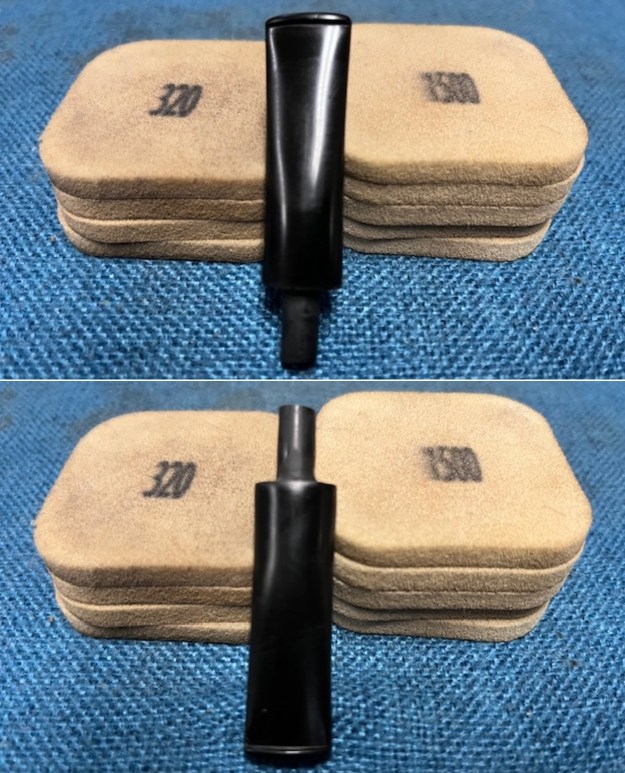
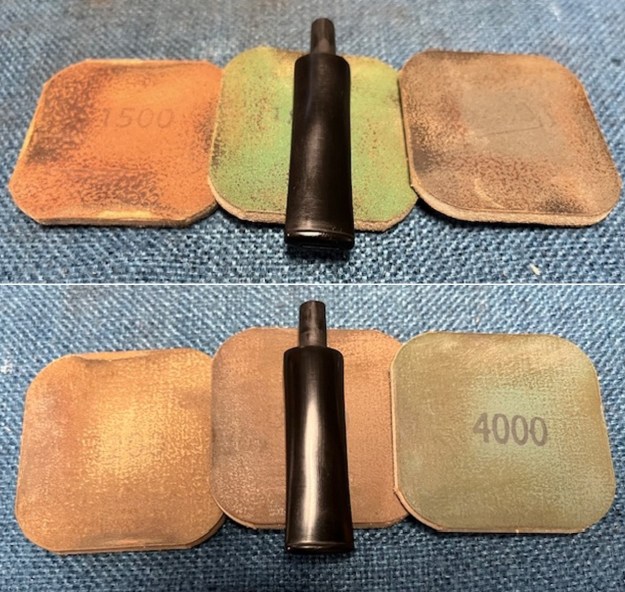
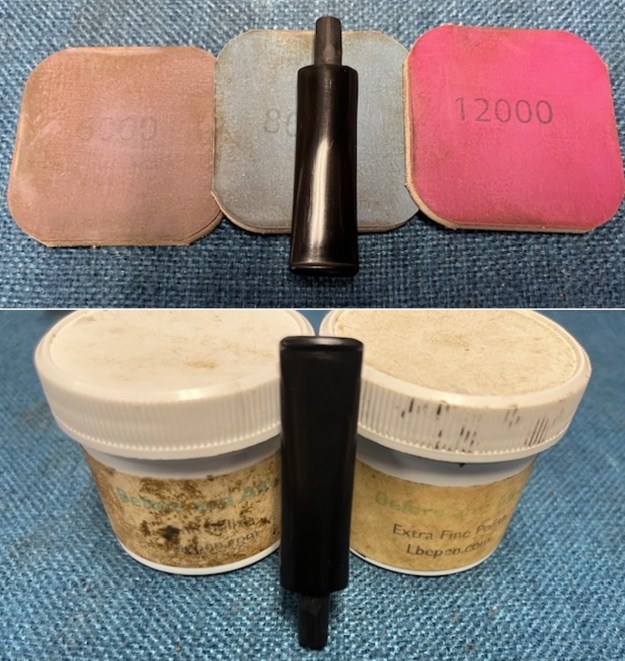
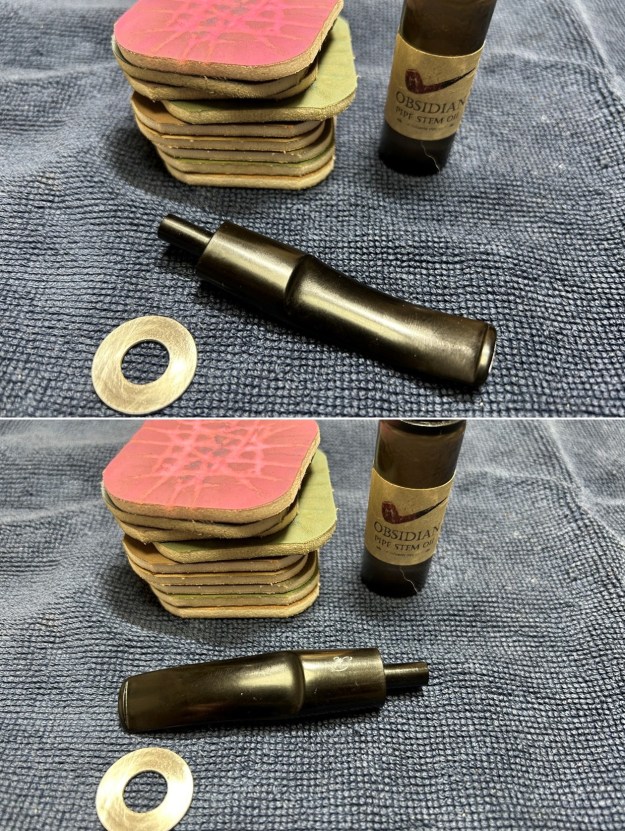
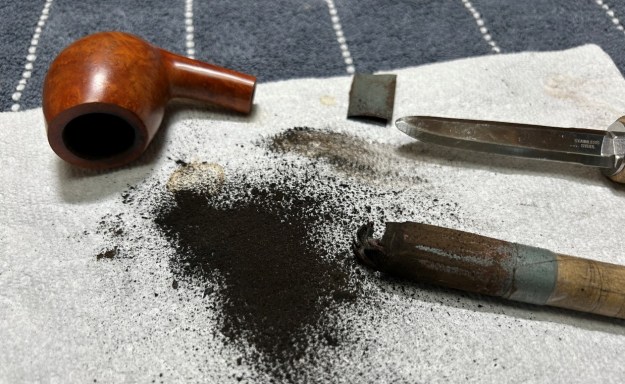
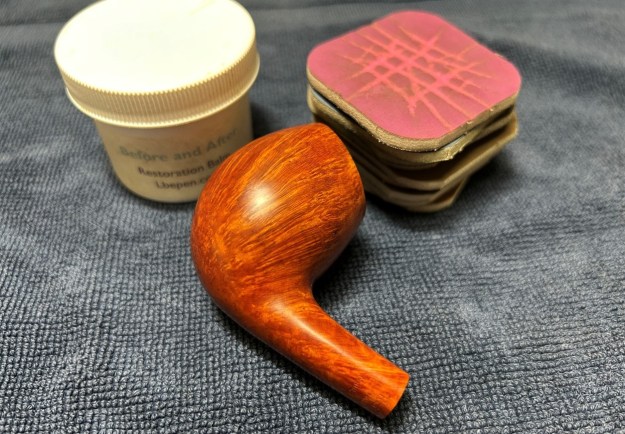
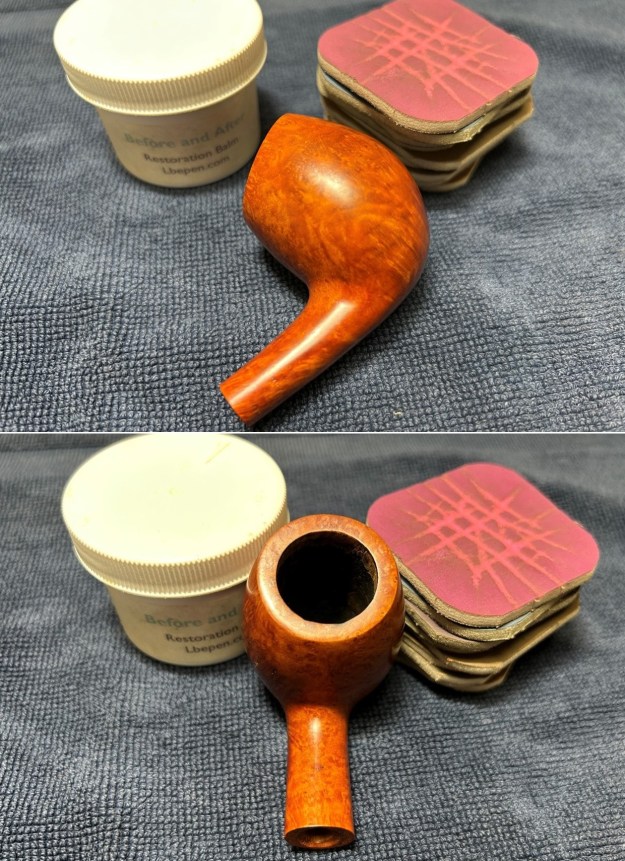
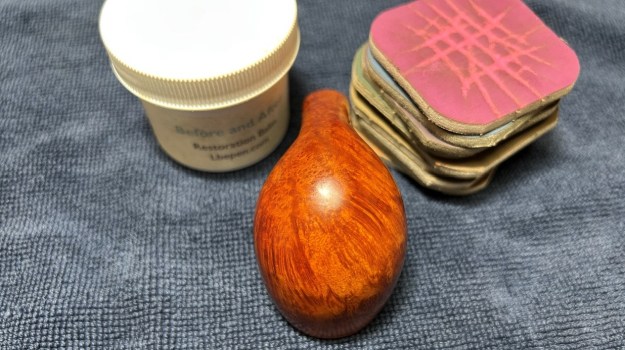
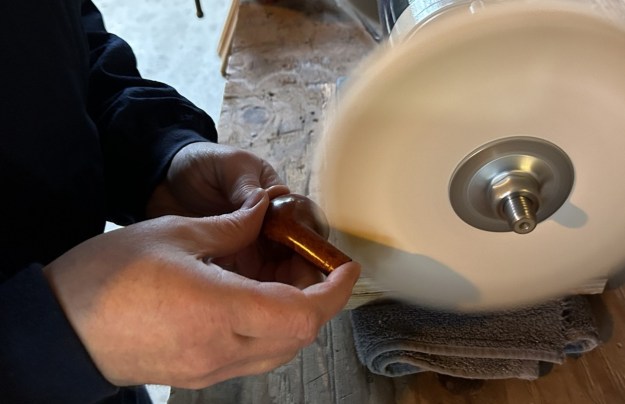
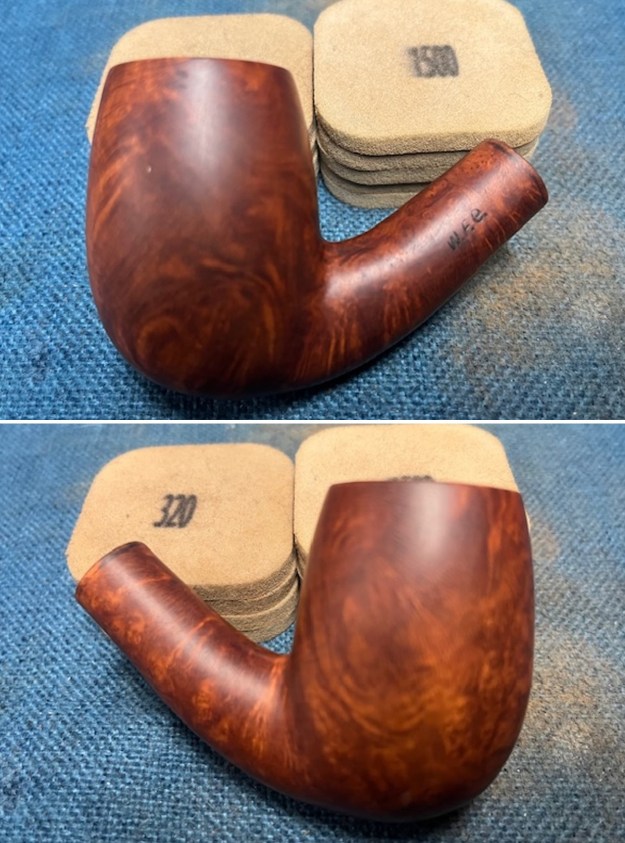
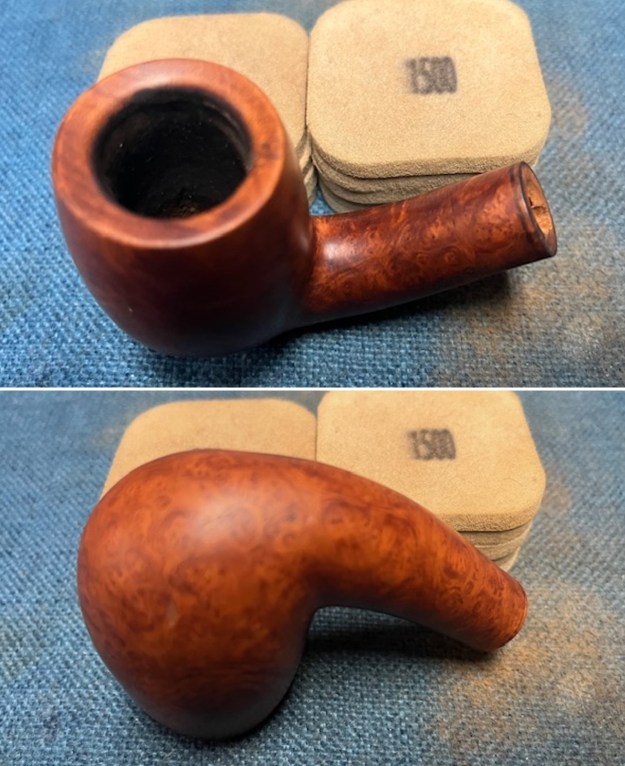
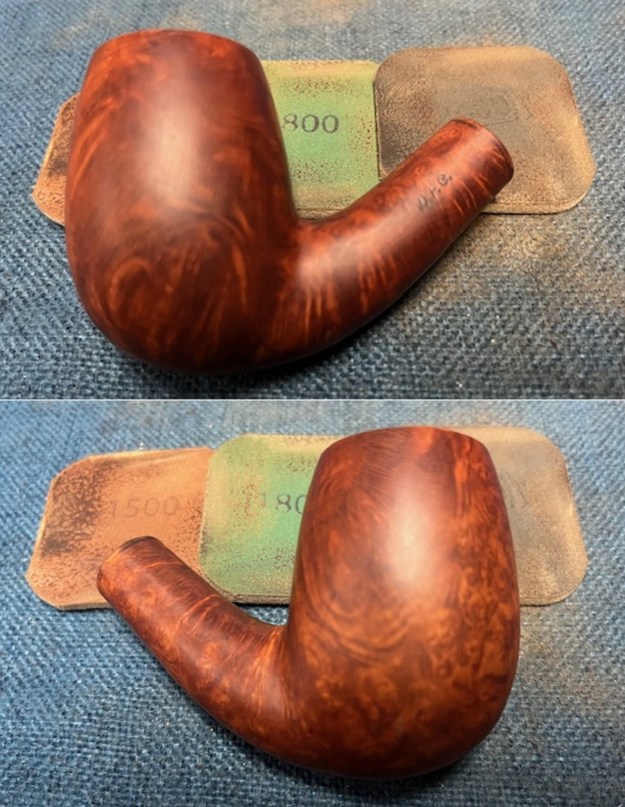
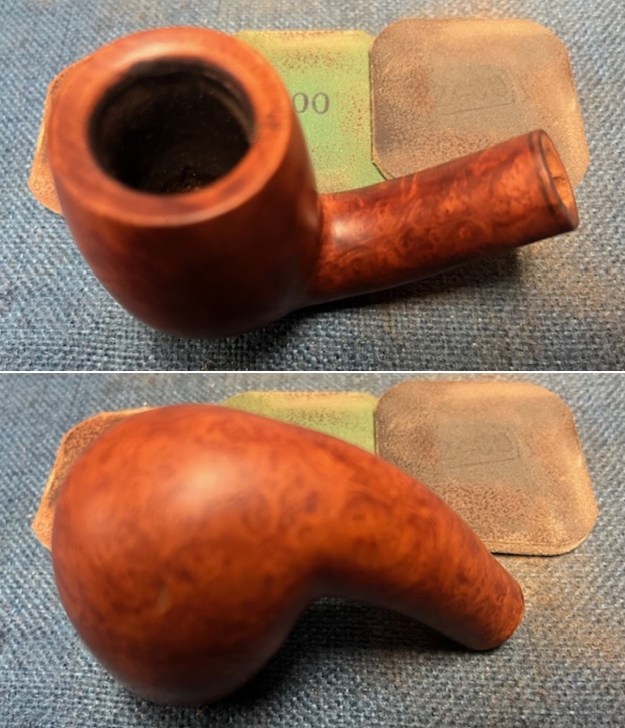
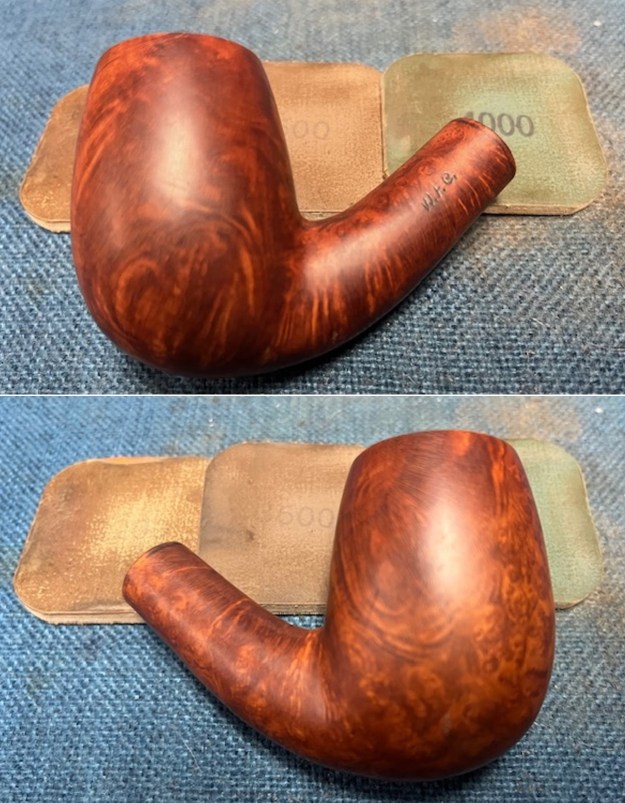
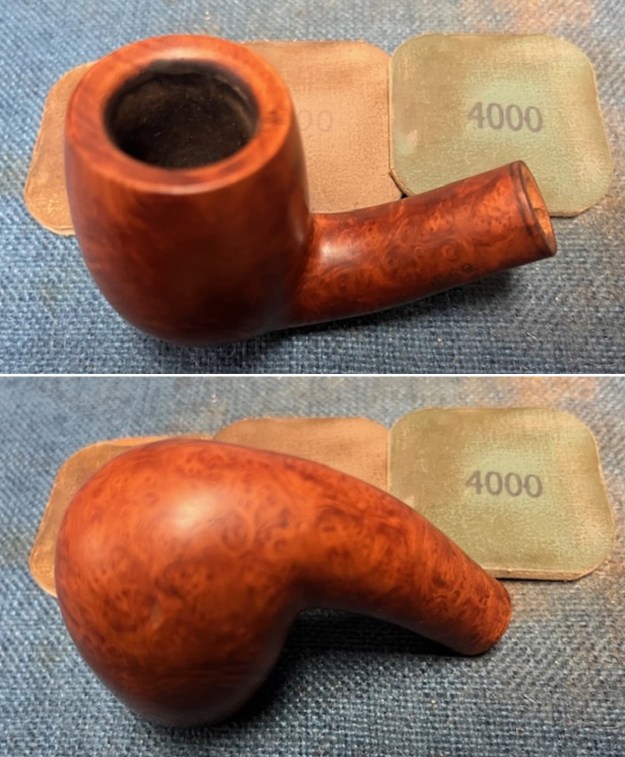
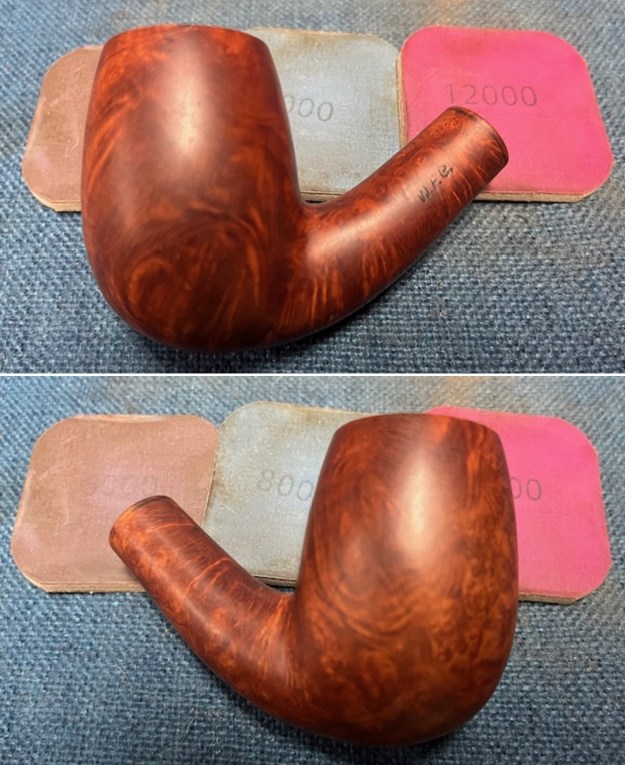
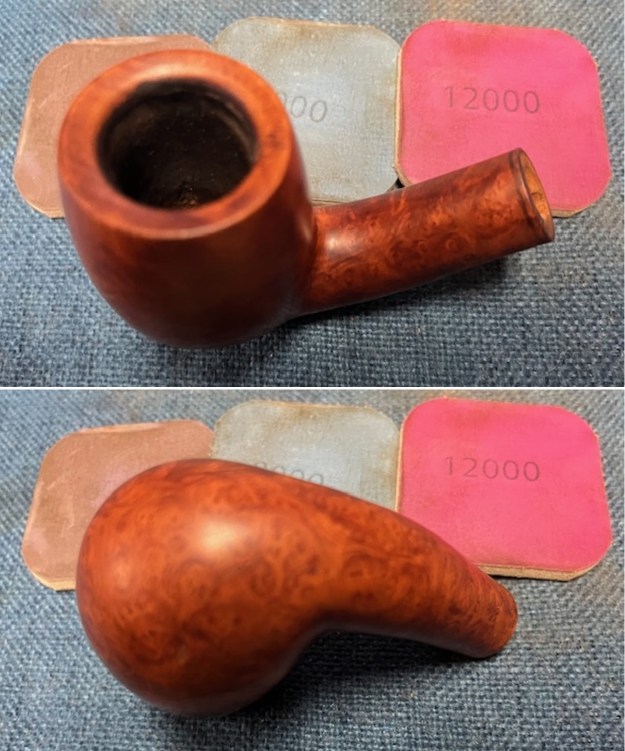
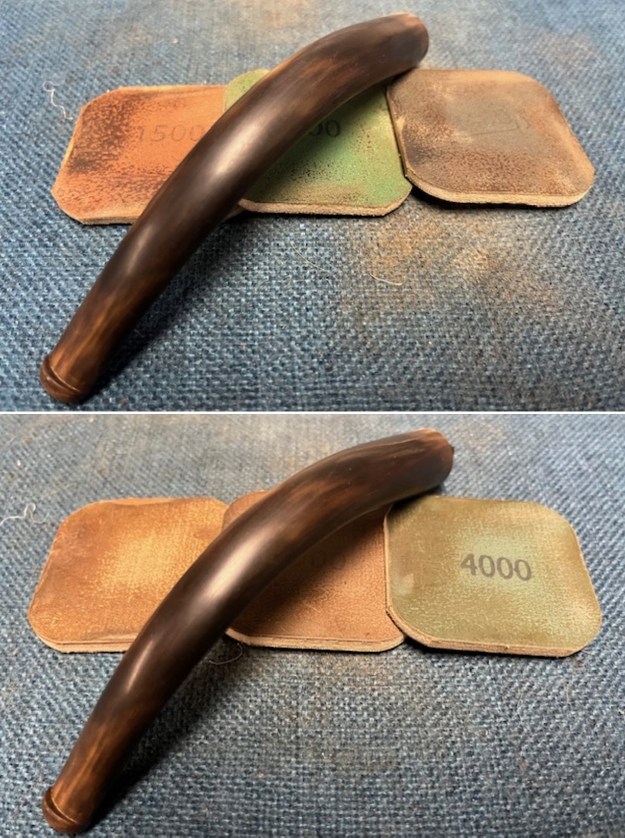
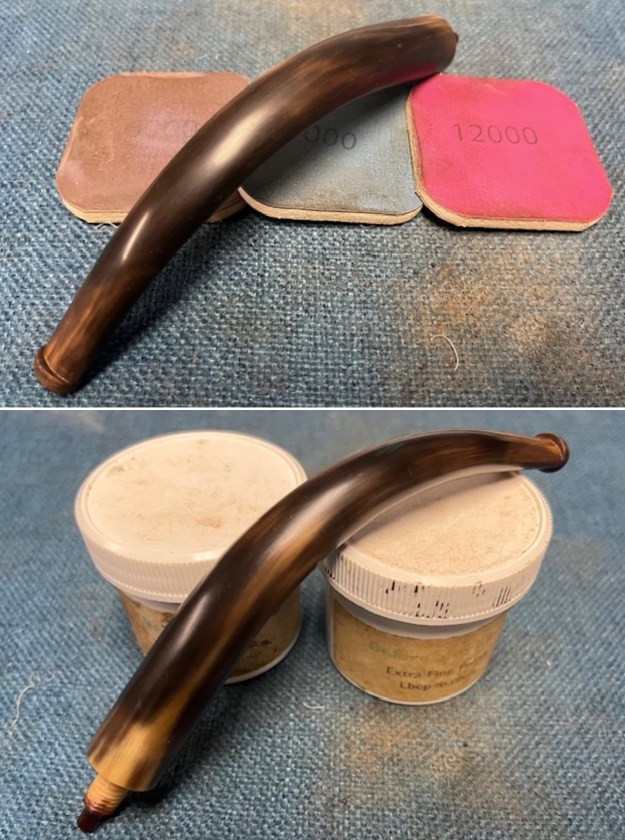
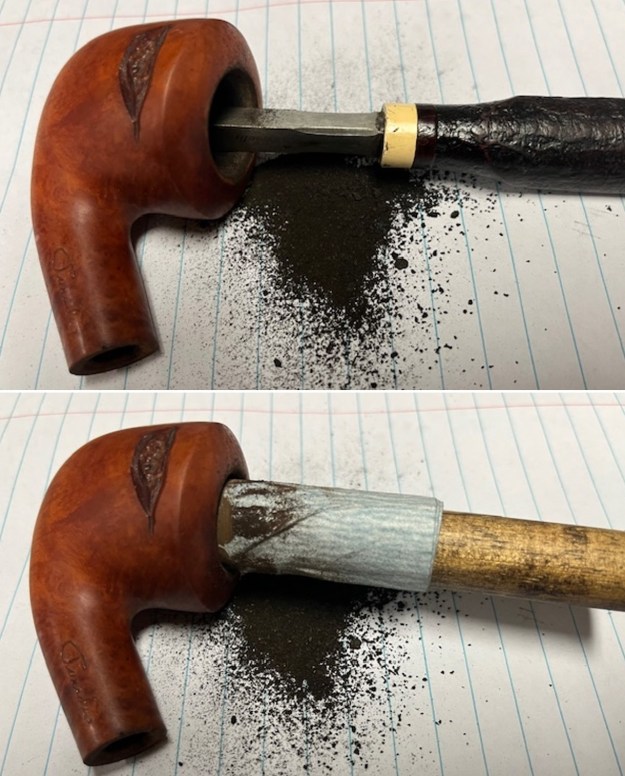
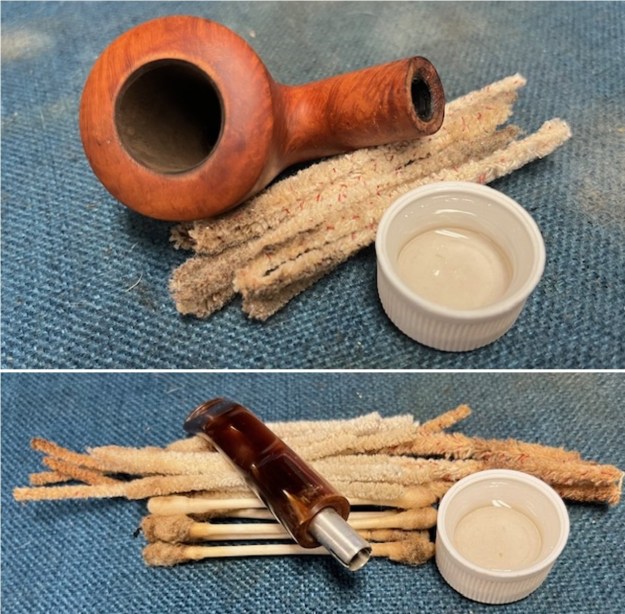
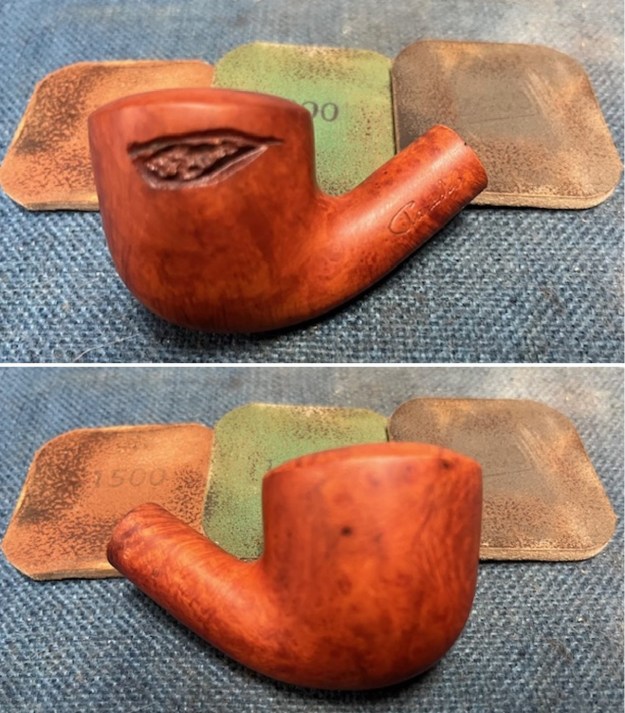
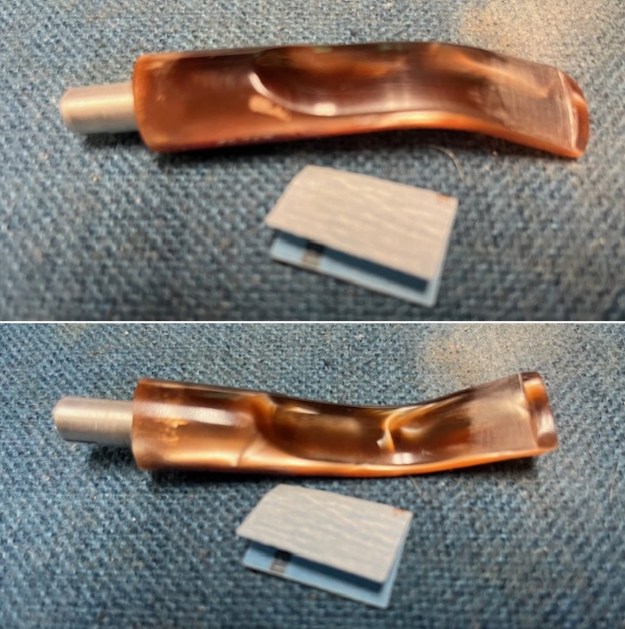
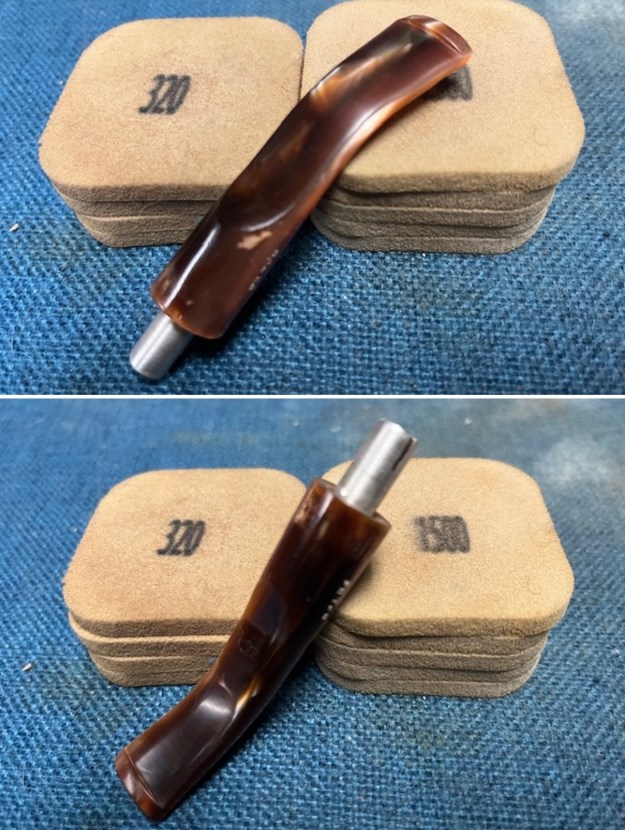
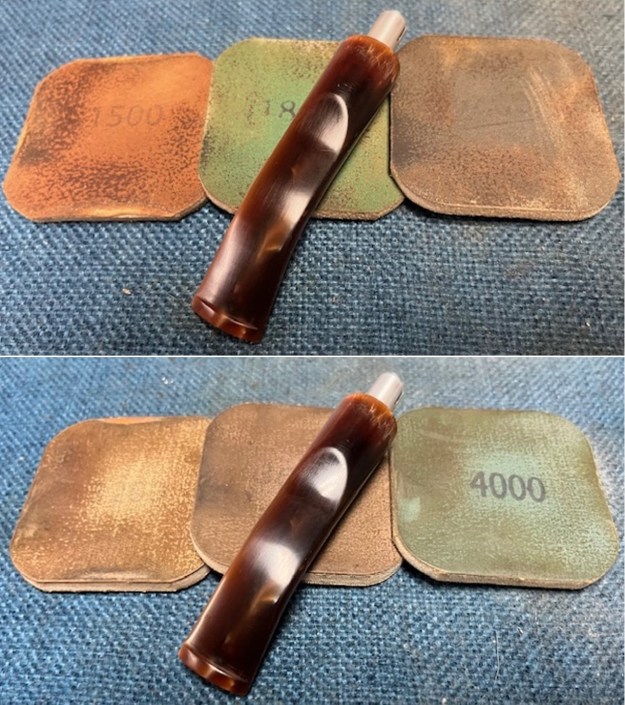
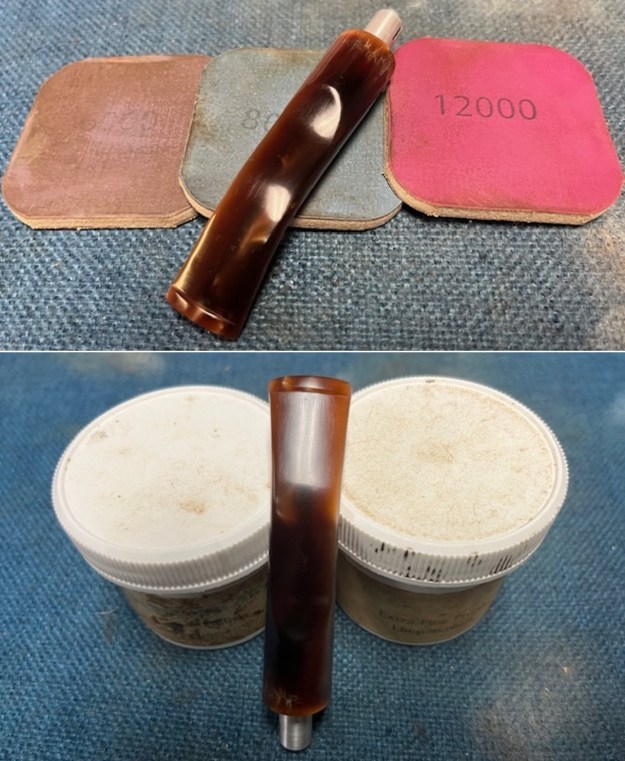
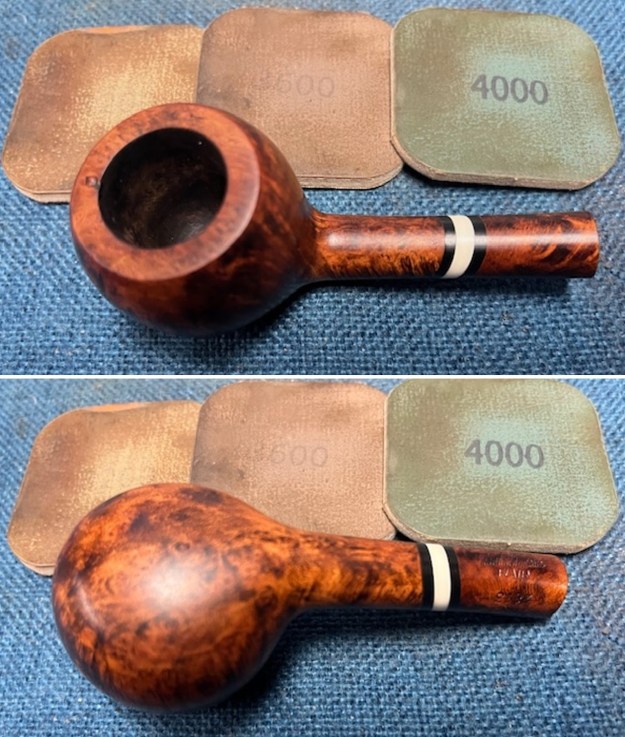
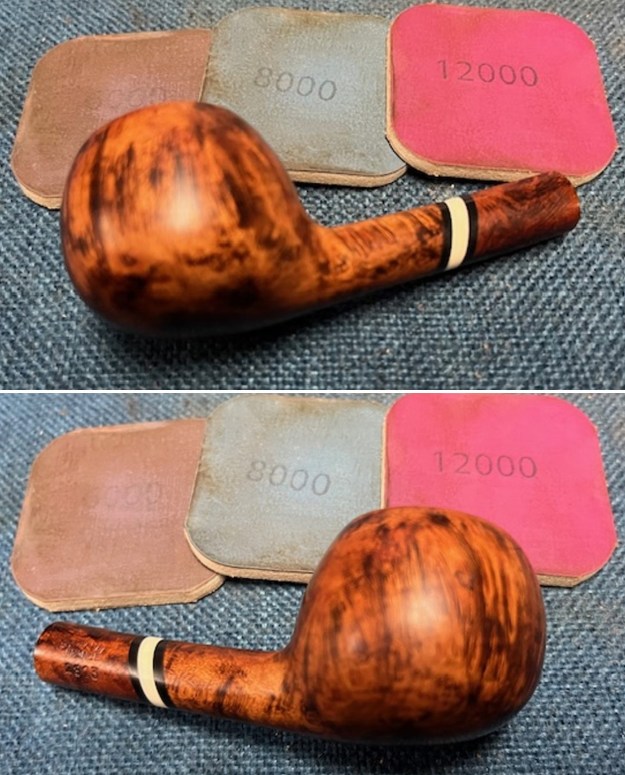
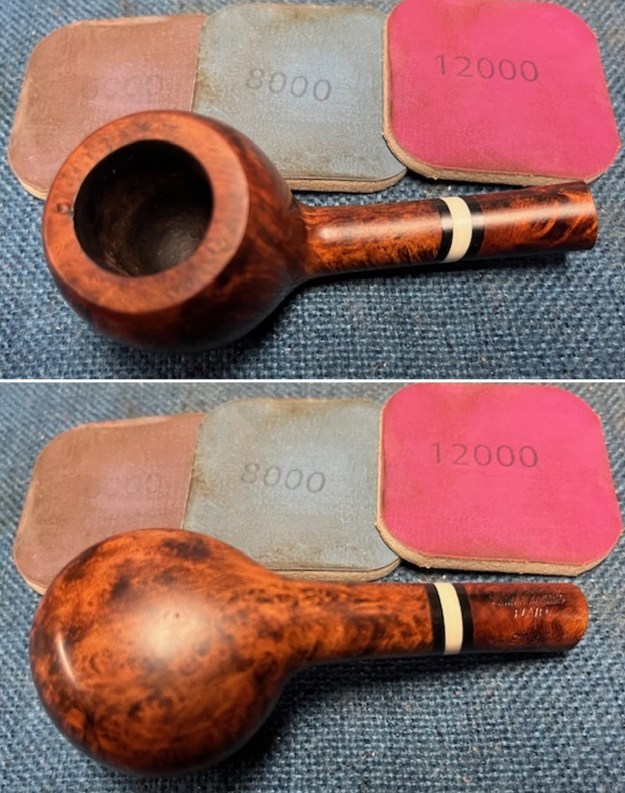
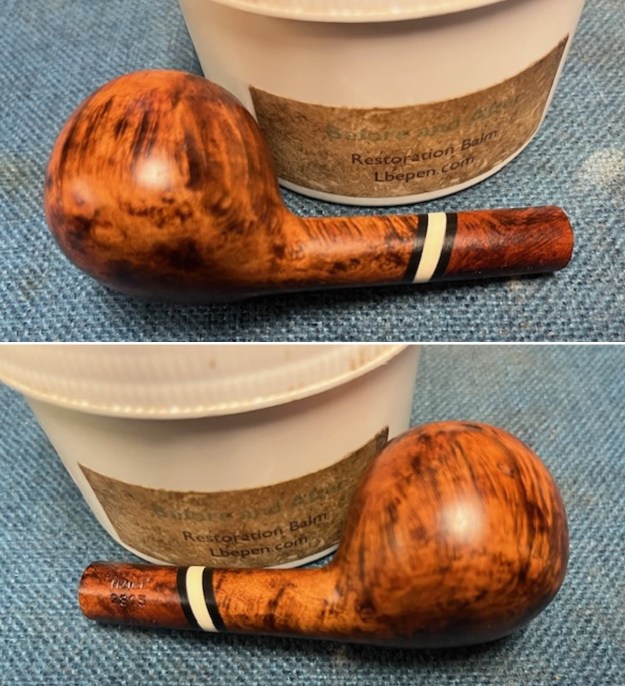
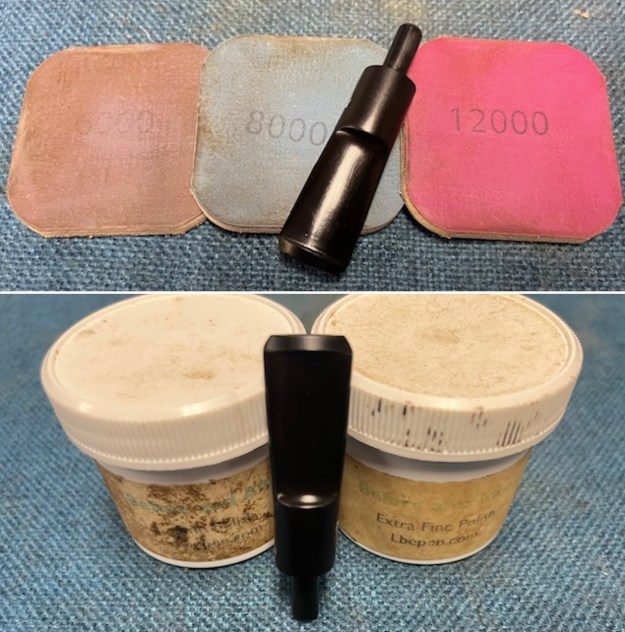
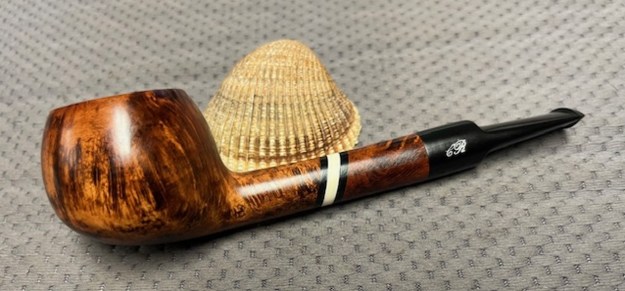
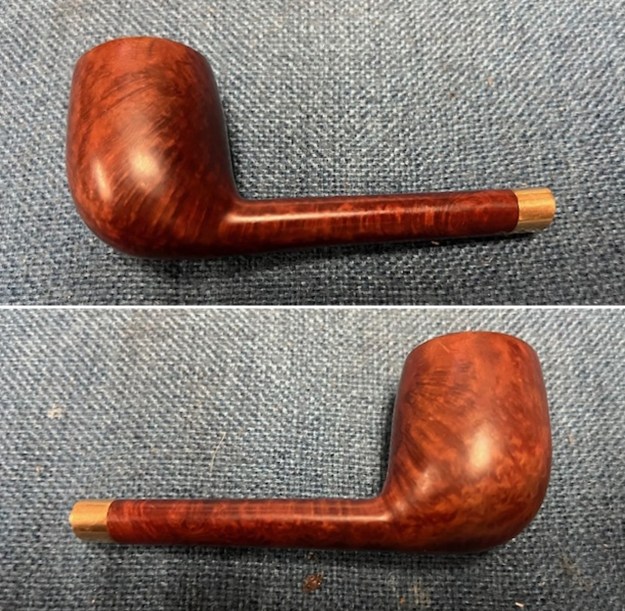
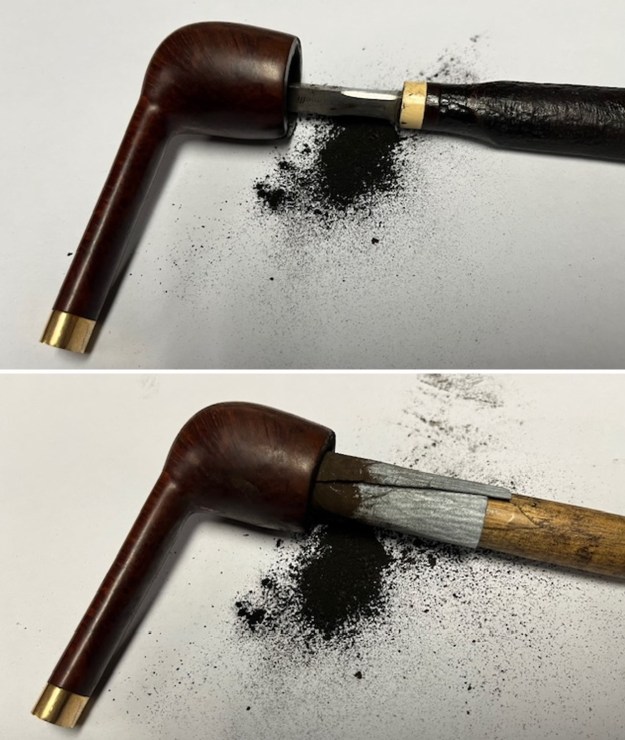
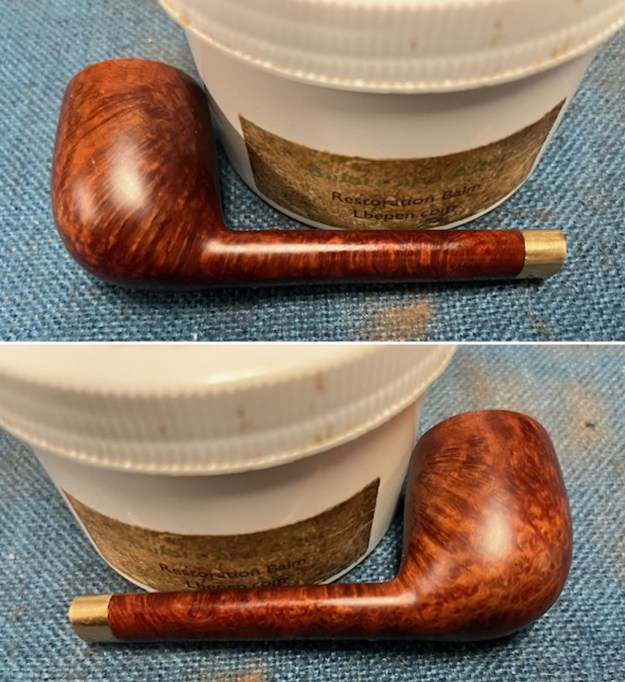
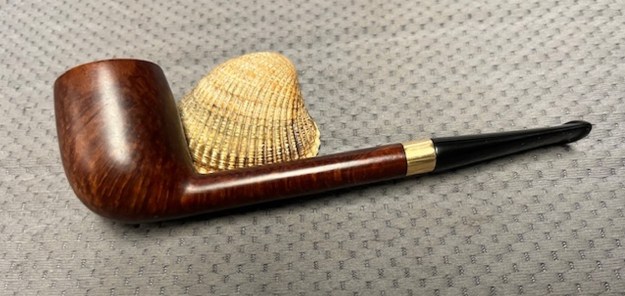
I reamed the bowl with a Savinelli Fitsall Pipe Knife and scraped out the cake that was present to get it back to bare briar. I sanded the walls of the bowl with 220 grit sandpaper wrapped around a dowel to smooth them out. The pipe began to look much better.I used a piece of 220 grit sandpaper and a wooden sphere to remove the damage on the rim top and the inner edge. I cleaned up the bevel on the inner edge and smoothed out the damage.I sanded the rim top and the bowl sides with 320-3500 grit 2×2 inch sanding pads to remove the nicks and damage to the finish. I wiped the bowl down with a damp cloth after each sanding pad. I polished the briar with 1500-12000 grit micromesh sanding pads. I dry sanded with each pad and then wiped the bowl down after each pad to remove the debris. It began to look rich and smooth. I cleaned out the internals of the shank and bowl with pipe cleaners, cotton swabs and isopropyl alcohol. The pipe is very clean. I like it clean to make a better fit for new stem. I cleaned out the airway in the stem I had chosen with pipe cleaners and alcohol.I worked some Before & After Restoration Balm into the surface of the briar with my finger tips and a shoe brush to work it into the sandblast. The product is incredible and the way it brings the grain to the fore is unique. It works to clean, protect and invigorate the wood. I polished gold band with a jeweller’s cloth to polish and protect it from oxidation. It is a great looking piece of bling. I went through my stems and found one that was the right length and would need some slight adjusting to fit the diameter of the shank and the tenon. I used a folded piece of 220 grit sandpaper to shape and rework the stem and tenon to fit the shank end. Once I was finished with the reshaping of the stem I put it in the shank and took photos of the look of the stem.I sanded the stem with 320-1500 grit 2×2 inch sanding pads. I wiped the stem down after each sanding pad with an Obsidian Oil Cloth to remove the sanding dust. It began to look very good. I polished the stem with micromesh sanding pads – dry sanding with 1500-12000 grit pads. I wiped the stem down after each sanding pad with an Obsidian Oil Cloth. The stem began to take on a rich shine. This older BBB Ultonia 504 Gold Banded Canadian with a new vulcanite taper stem is a great looking pipe now that it has been restored. The beautiful grain on the briar shines through the polished finish is stunning. I put the stem back on the bowl and carefully buffed the pipe with Blue Diamond on the buffing wheel. I gave the bowl and the stem multiple coats of carnauba wax on the buffing wheel and followed that by buffing the entire pipe with a clean buffing pad. I hand buffed the pipe with a microfiber cloth to deepen the shine. The finished BBB Ultonia Canadian 504 fits nicely in the hand and feels great. Give the finished pipe a look in the photos below. The dimensions of the pipe are Length: 5 ½ inches, Height: 1 ½ inches, Outside diameter of the bowl: 1 ¼ inches, Chamber diameter: ¾ of an inch. The weight of the pipe is 31 grams/1.09 ounces. It is a beautiful pipe and one that I hold until I have finished working on the other three pipes that Andrew sent me. Once I am finished with the lot they will be heading back to Greece. Thanks for walking through the restoration with me as I worked over this pipe. Thanks to each of you who are reading this blog.

Repairing and Restemming a Peterson’s Kapruf 264 Canadian


by Steve Laug

Not too long ago I received an email from a Andrew in Greece asking if I could work on some pipes for him. He had some that needed a stem and a couple of pipes with broken stems and a Canadian that had a crack down the back of the bowl and across the right side. We emailed back and forth and he sent me the following photos. I figured they would be some interesting pipes to work on so he sent them to me to work on. I received the box yesterday. When I opened it this morning I was amazed to see what he had sent. The Sandblast Canadian that needed restemming was stamped 264 Peterson’s Kapruf. The rest of the stamping was quite faint. The pipe needed to be restemmed and it had a small divot in the shank end and what looked like a crack. The second, a smooth Canadian was a BBB Ultonia 504 with a gold band. The two Sandblast with broken stems turned out to be Stanwells. The larger on is stamped Stanwell [over] Regd. No. 969-48. It is followed by the shape number 858 [over] Old Briar. The smaller one is stamped Stanwell [over] Regd. No. 969-48 followed by de Luxe followed by the shape number 87. The last of the five with the cracked bowl is an 8 Dot Sasieni [over] London Made [over] Pat. No. 1513428. It was also stamped “Amesbury”. They were going to be an interesting lot to work on.
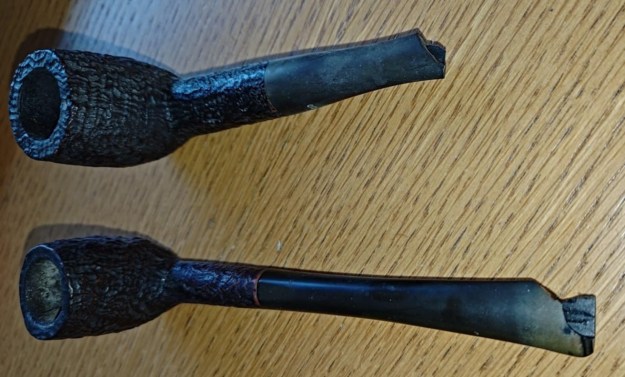
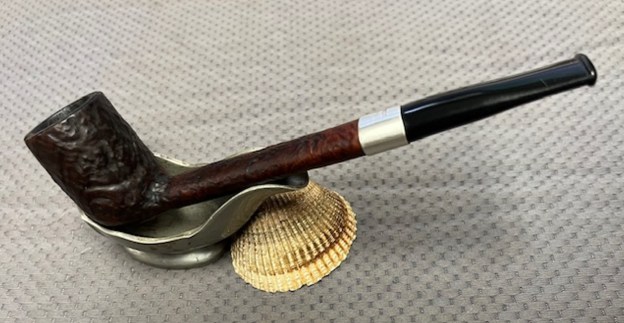
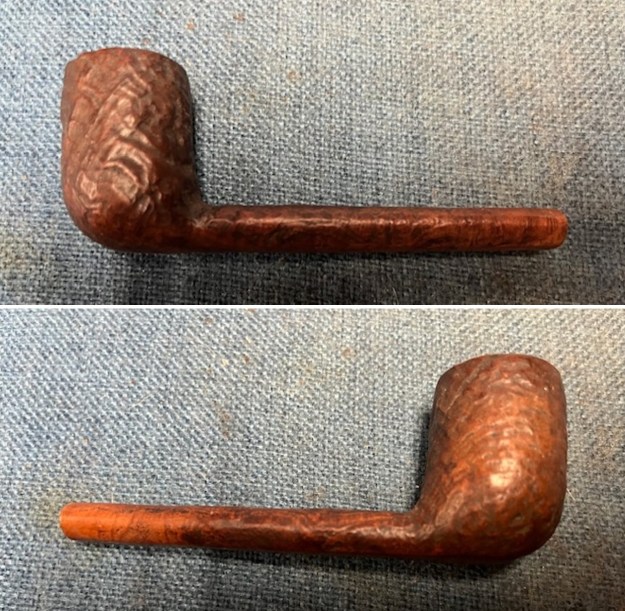
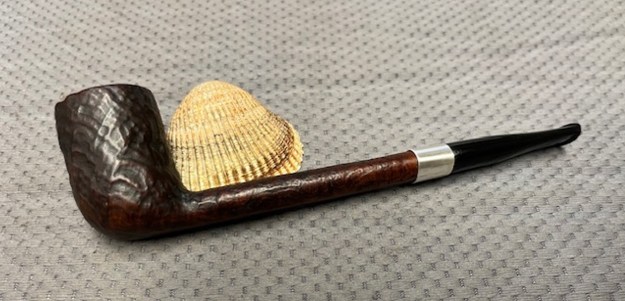
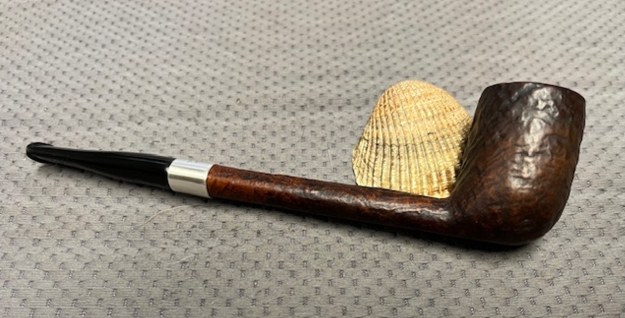
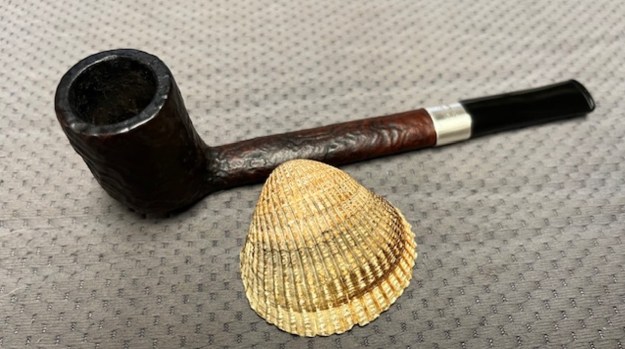
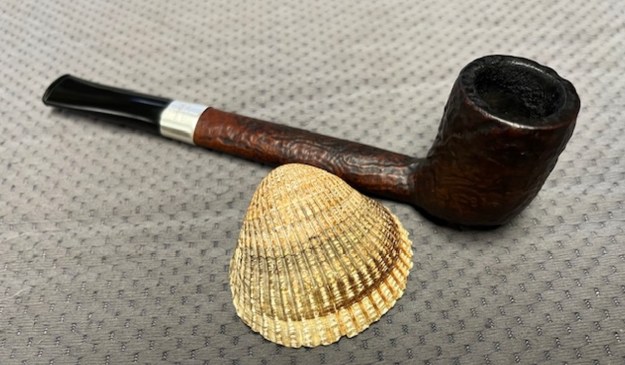
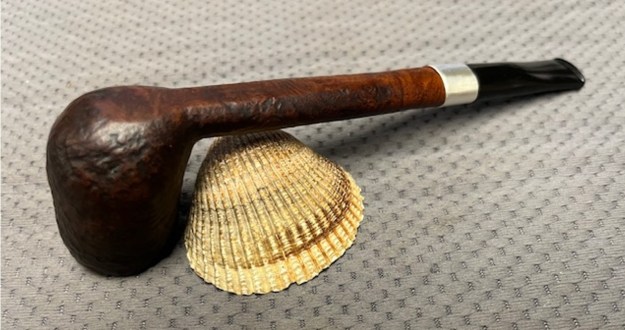
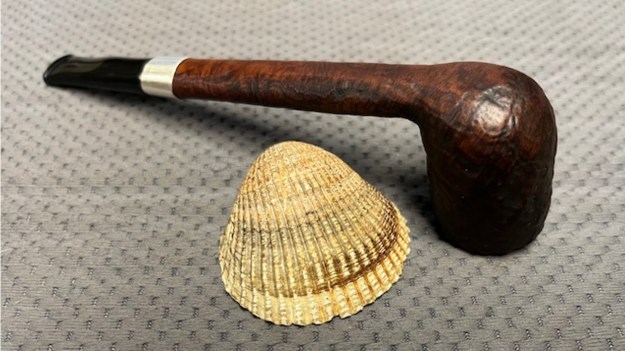
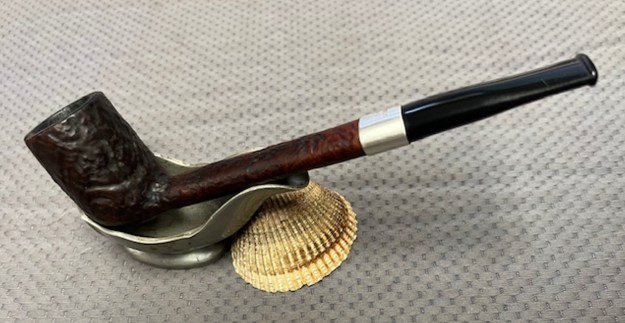
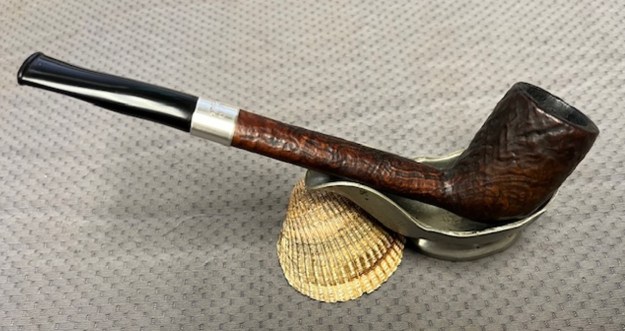
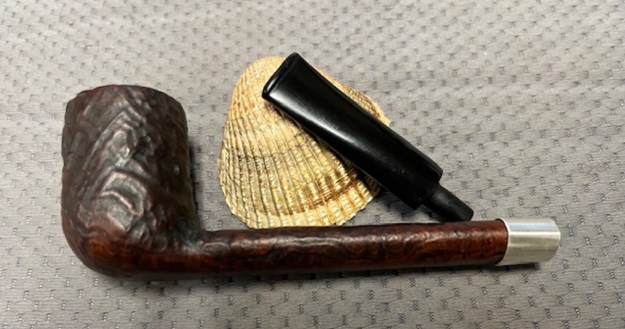
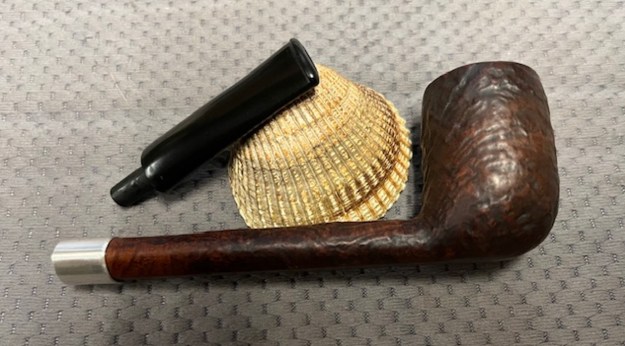
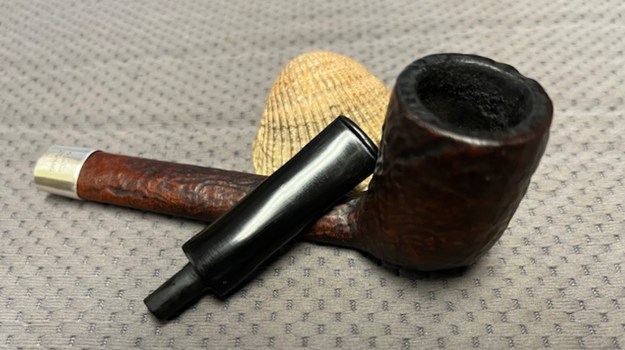
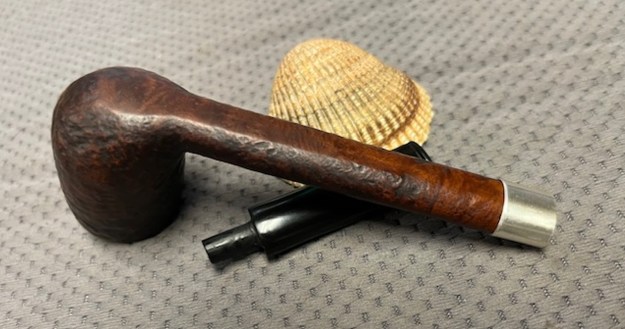
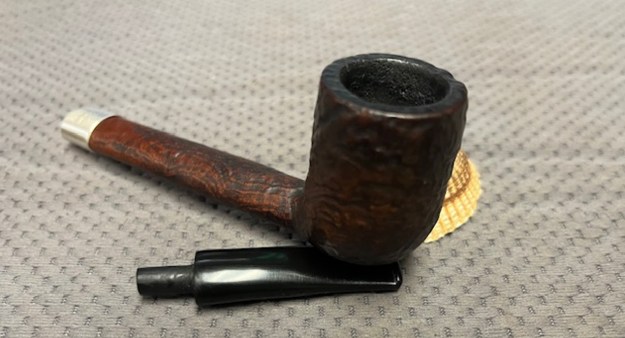
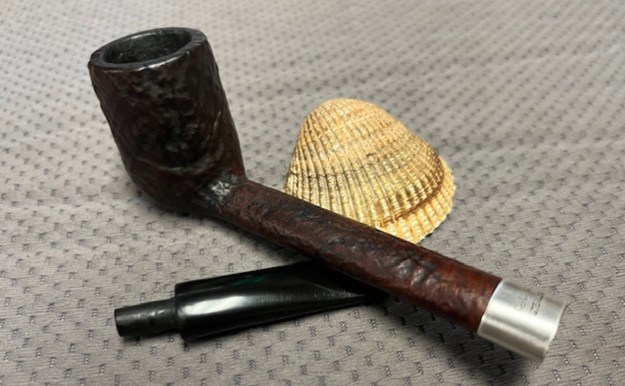
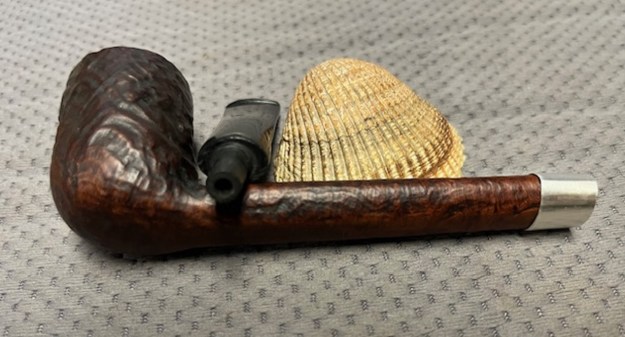
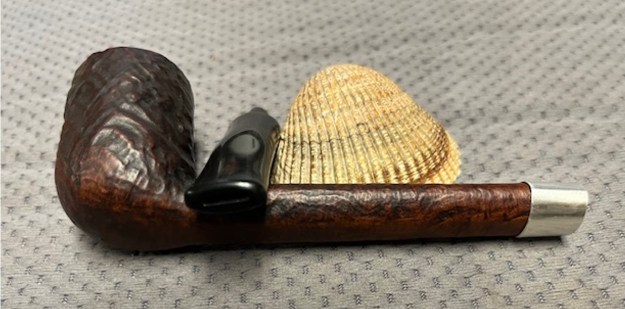
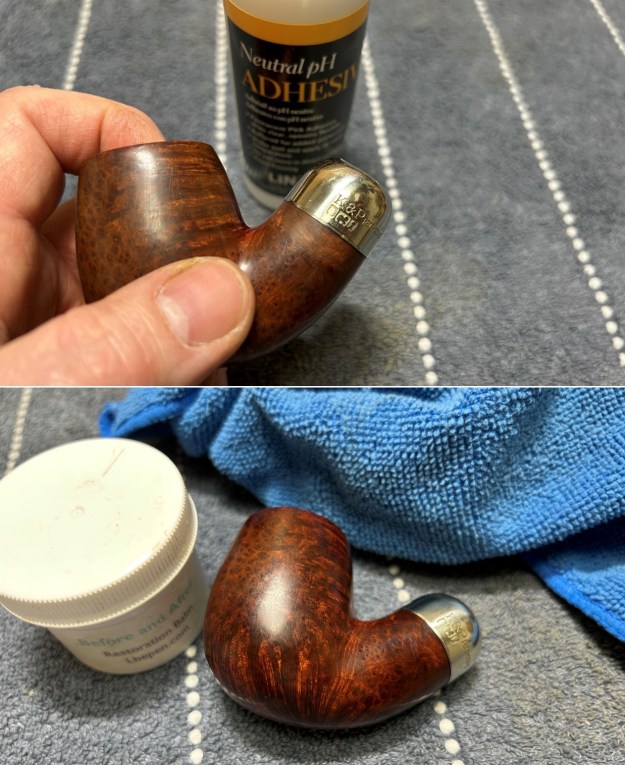
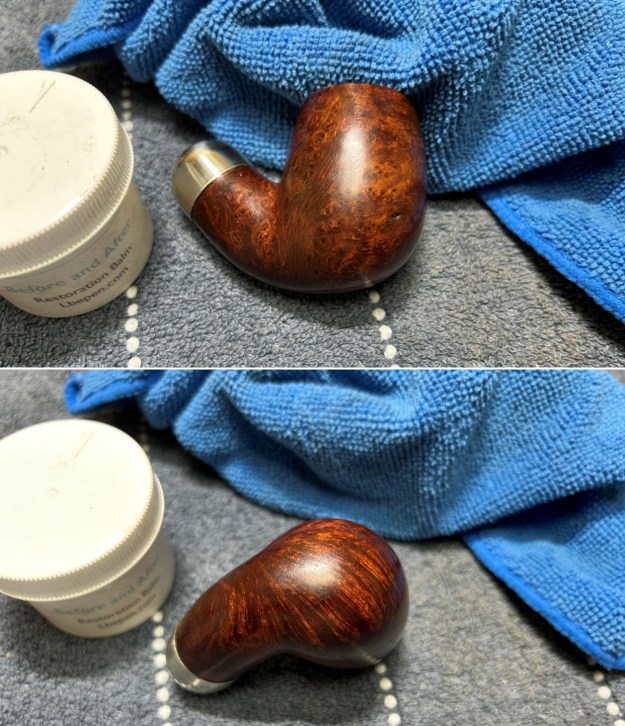
I chose to deal with the Peterson’s Kapruf 264 Canadian first. It was a worn and tired Canadian. The stamping on the underside of the shank was faint and worn. What was readable I included in the previous sentence. The sandblast was worn and dirty. The bowl had a light cake in it and there was an overflow of lava on the rim top and inner edge. The end of the shank had a divot out on the underside which when examined showed a thin hairline crack. The interior of the shank was quite dirty. I took a photo of the bowl and rim top to show the condition of them bowl. The lava in the sandblast rim top was quite thick and had some darkening. I also took a photo of the underside of the shank to show the faint stamping that was present. It is faint but is still readable.I reamed the bowl with a Savinelli Fitsall Pipe Knife and scraped out the cake that was present to get it back to bare briar. I sanded the walls of the bowl with 220 grit sandpaper wrapped around a dowel to smooth them out. The pipe began to look much better.I scrubbed the exterior of the bowl with a tooth brush and some undiluted Murphy’s Oil Soap. I scrubbed the sandblast with the brush to clean out the dust and debris in the finish. I used a brass bristle wire brush to work over the rim top and knock off the grime and debris. I rinsed the soap and grime from the finish and it looked much better. I cleaned out the internals of the shank and bowl with pipe cleaners, cotton swabs and isopropyl alcohol. The pipe is very clean. I like it clean to make a better fit for the band and the new stem.Now it was time to address the crack in the underside of the shank. I found a nice older Sterling Silver Band that would fit the shank well. I worked glue into the crack and the length of the crack. I worked glue around the shank end as well. I pressed the Sterling Silver band on the shank end and wiped off the excess glue. I took photos of the shank with the fitted band. It worked very well. I worked some Before & After Restoration Balm into the surface of the briar with my finger tips and a shoe brush to work it into the sandblast. The product is incredible and the way it brings the grain to the fore is unique. It works to clean, protect and invigorate the wood. I went through my stems and found one that was the right length and would need some slight adjusting to fit the diameter of the shank and the tenon.I used a folded piece of 220 grit sandpaper to shape and rework the stem and tenon to fit the shank end. Once I was finished with the reshaping of the stem I put it in the shank and took photos of the look of the stem. I cleaned out the airway in the stem with pipe cleaners and isopropyl alcohol to remove the sanding debris and dust in the newly fitted stem. I sanded the stem with 320-1500 grit 2×2 inch sanding pads. I wiped the stem down after each sanding pad with an Obsidian Oil Cloth to remove the sanding dust. It began to look very good. I polished the stem with micromesh sanding pads – dry sanding with 1500-12000 grit pads. I wiped the stem down after each sanding pad with an Obsidian Oil Cloth. The stem began to take on a rich shine. I am excited to finish this Peterson’s “Kapruf” 264 Sandblast Canadian. I am really happy with how the bowl turned out when I consider the condition of the bowl and the cracked shank on the pipe. I put the pipe back together and buffed it with Blue Diamond on the buffing wheel. I gave the bowl multiple coats of Conservator’s Wax and the stem multiple coats of carnauba wax. I buffed the pipe with a clean buffing pad to raise the shine. I hand buffed it with a microfibre cloth to deepen the shine. It is fun to see what the polished bowl looks like with the colours popping through the sandblast. Added to that the polished Sterling Silver Band and the black vulcanite taper stem was beautiful. This shapely Classic Peterson’s “Kapruf” 264 Canadian is nice looking and the pipe feels great in my hand. It is light and well balanced. Have a look at it with the photos below. The dimensions are Length: 6 inches, Height: 1 ¾ inches, Outside diameter of the bowl: 1 1/8 inches, Chamber diameter: ¾ of an inch. The weight of the pipe is 29grams/1.02oz. It is a beautiful pipe and one that I hold until I have finished working on the other four pipes that Andrew sent me. Once I am finished with the lot they will be heading back to Greece. Thanks for walking through the restoration with me as I worked over this pipe. Thanks to each of you who are reading this blog.
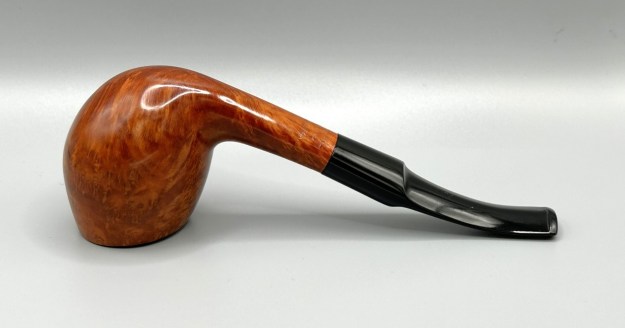
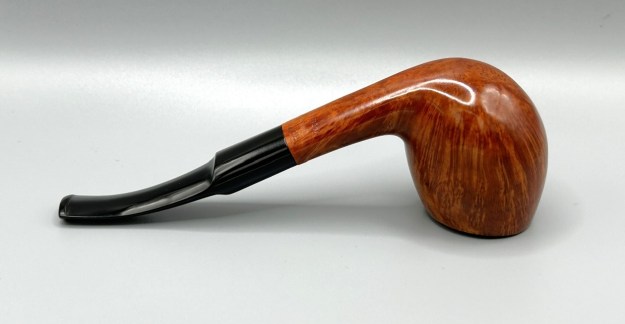
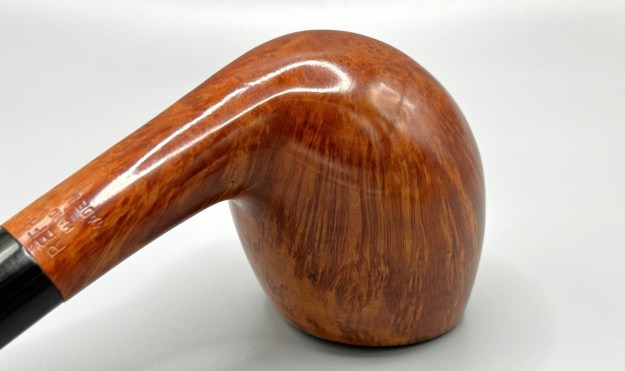
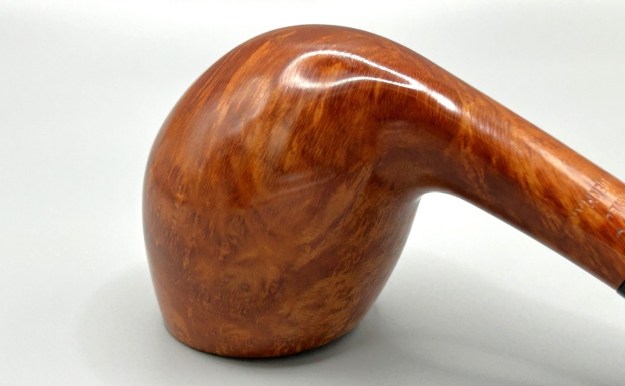
Cleaning Up a Beautiful Refbjerg Hand-Carved Bent Egg


by Kenneth Lieblich

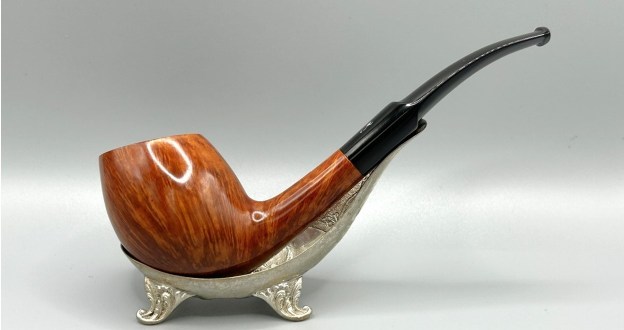
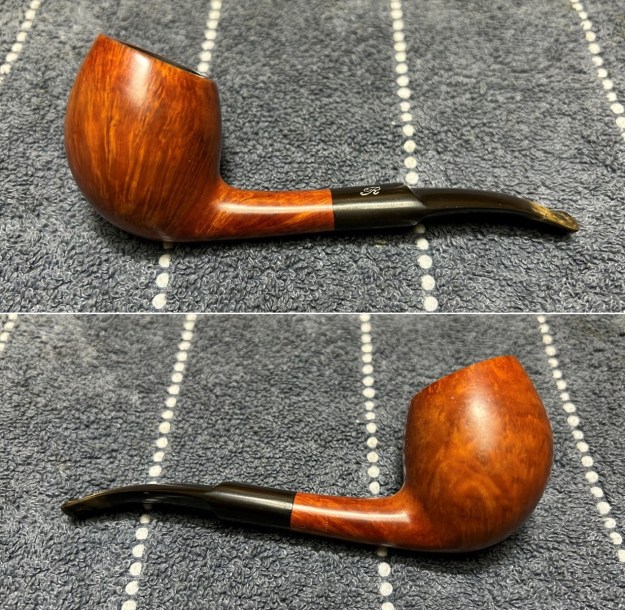
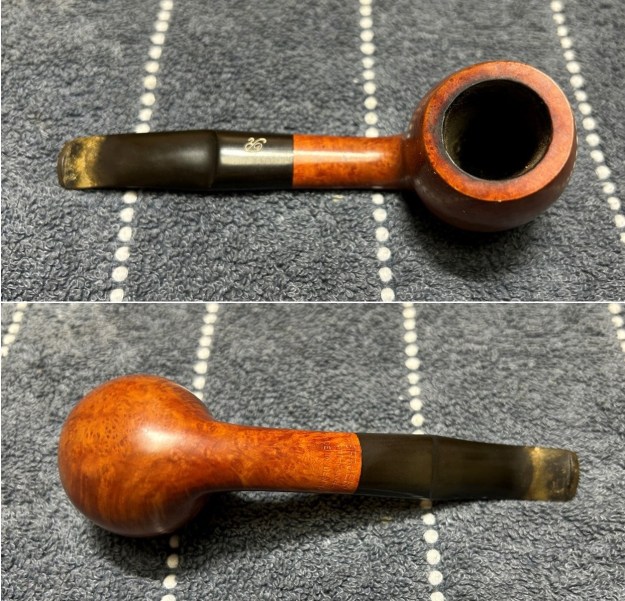
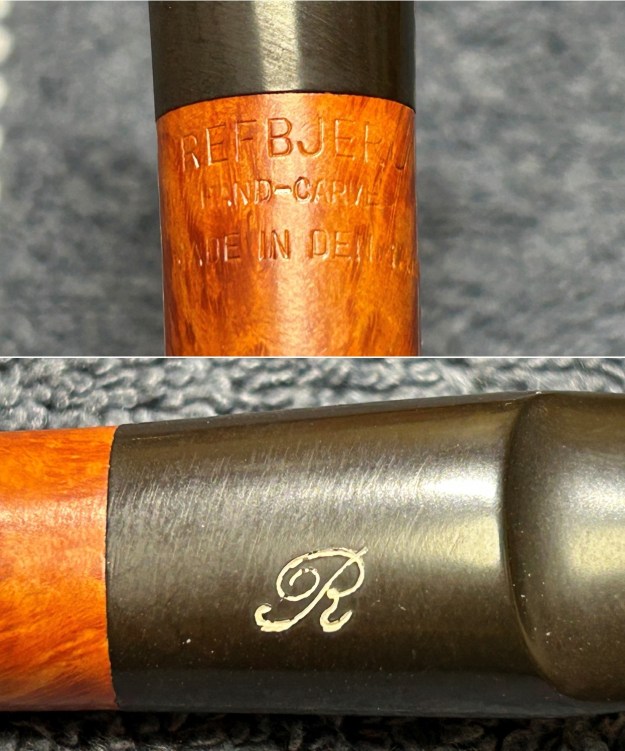
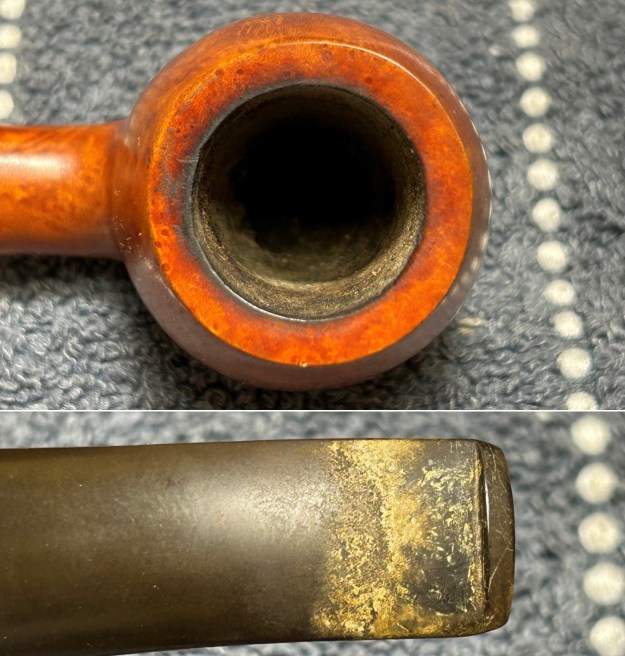
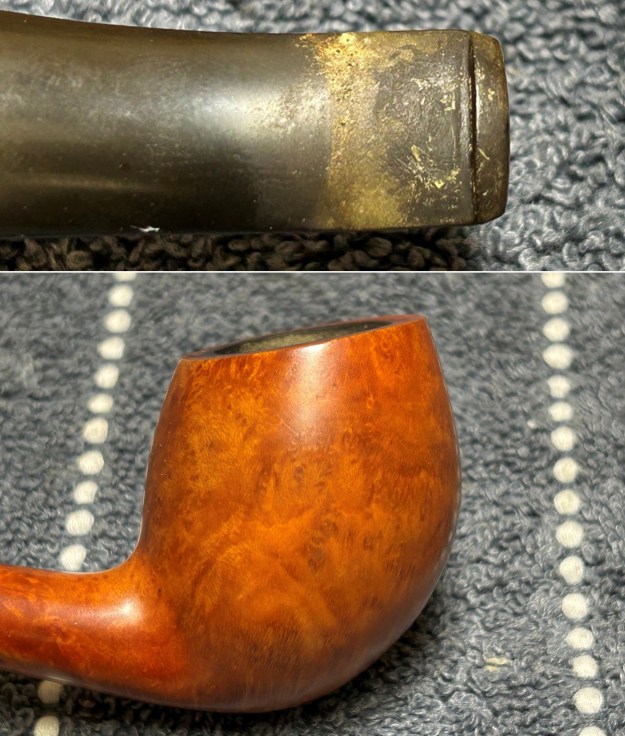
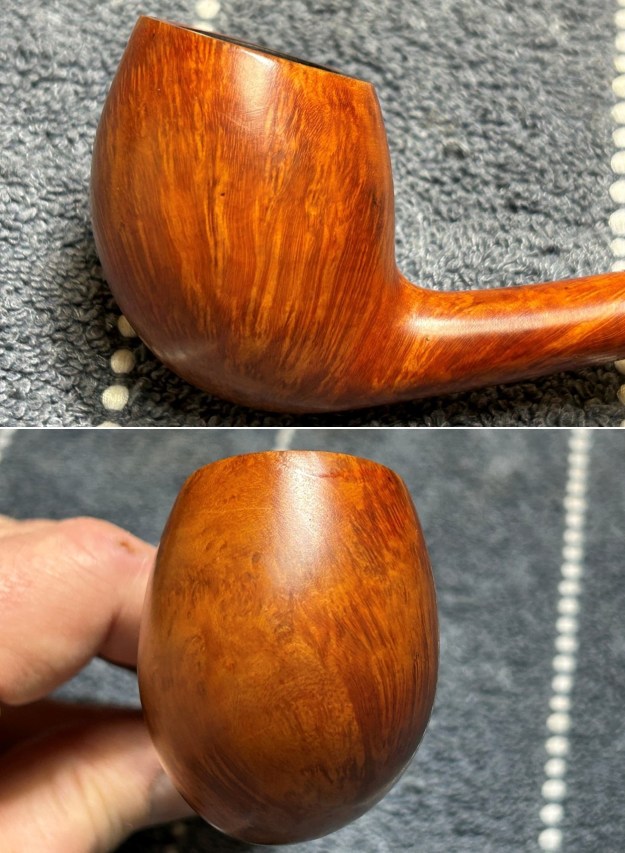
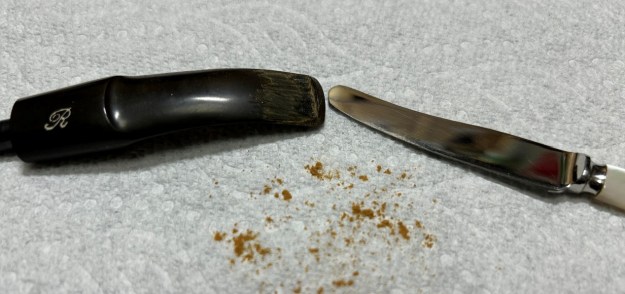
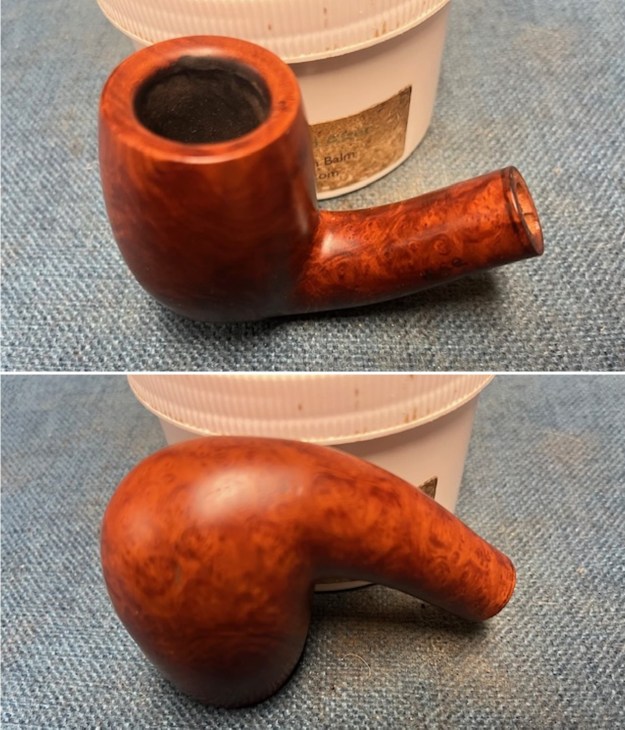
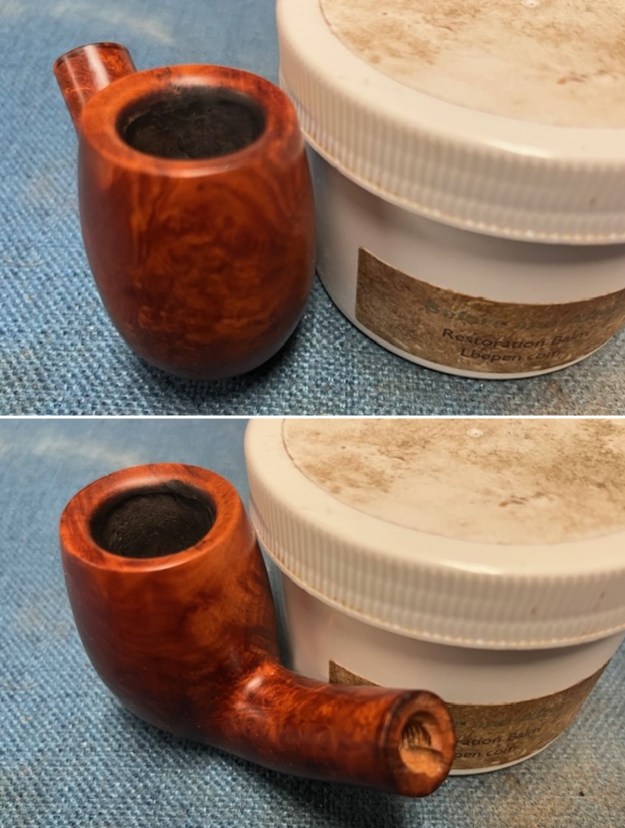
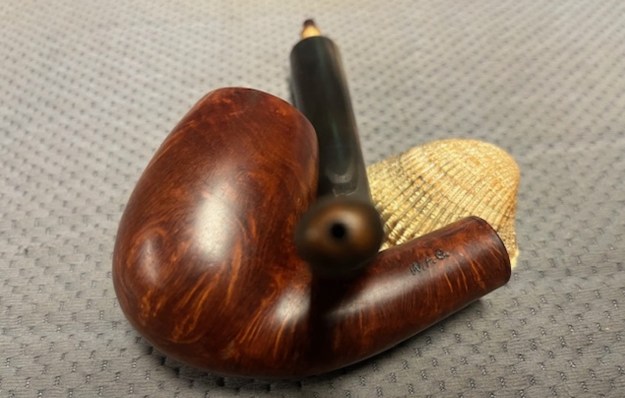
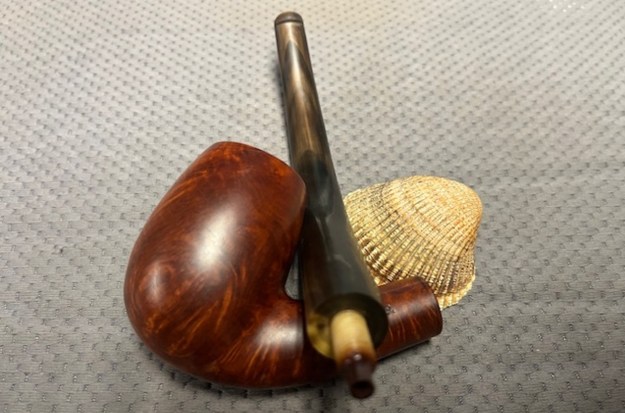
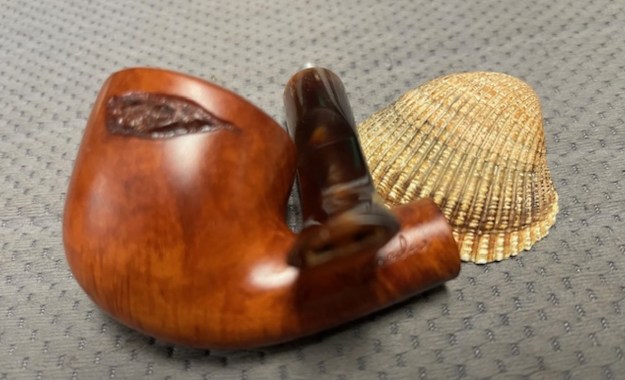
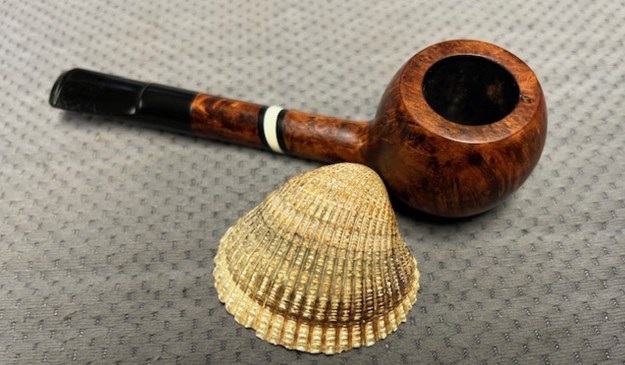
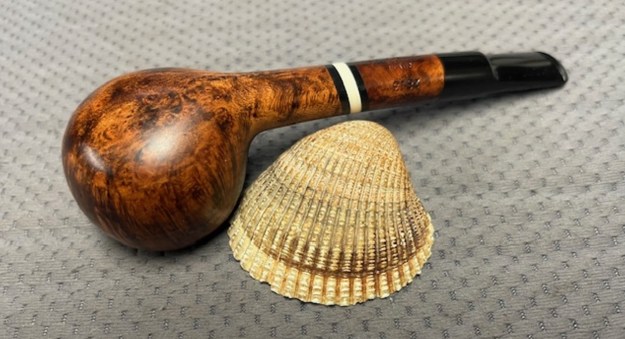
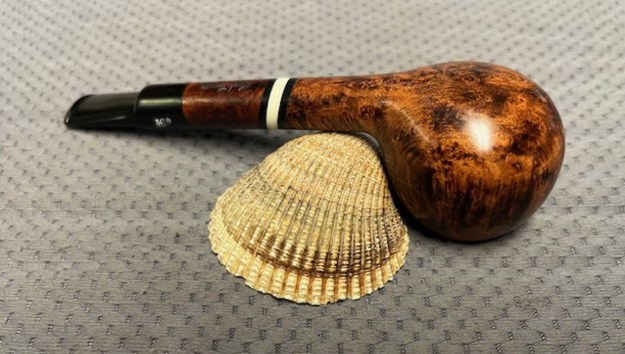
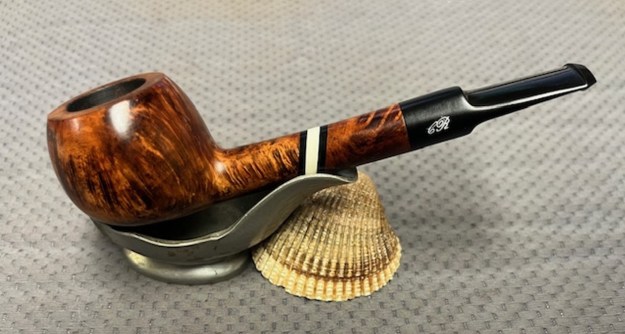
The proceeds of a recent auction lot included this lovely Danish pipe. It really caught my eye and I’m sure it will catch yours too. This is a sort of freehand, hand-carved, bent egg by master carver, Søren Refbjerg Rasmussen. There is some wonderful grain in this pipe and it feels so good to hold. It is light and comfortable. It promises to be a great smoker. On the underside of the shank, we read Refbjerg [over] Hand-Carved [over] Made in Denmark. On the stem, there is a cursive letter R, representing his name, Refbjerg.Pipedia has an article on Mr Rasmussen and I quote a part of it here:

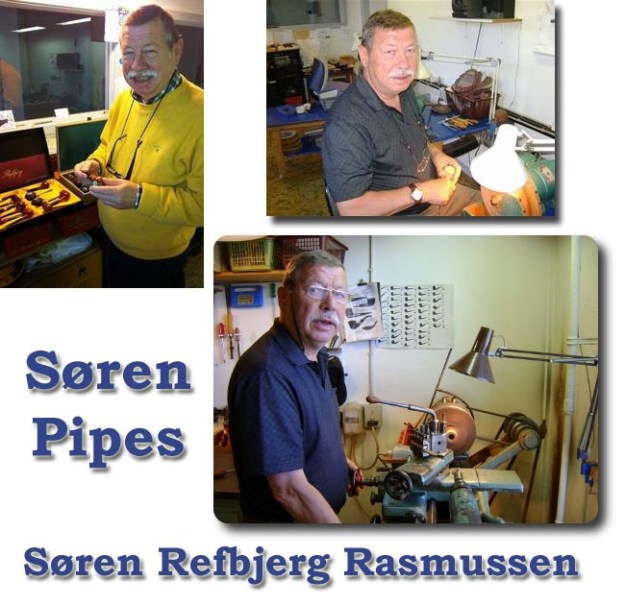
Søren Refbjerg Rasmussen founded a company in 1969, which employed an average of 8 – 12 craftsmen in the 1970’s. The semi-freehands they produced were traded under his prename Søren. Rasmussen himself finished only the very best pipes. So his way of pipemaking closely resembled the ways of Preben Holm, Karl Erik Ottendahl or Erik Nørding. Altogether more than 1,000,000 pipes were sold. Today he works alone as Refbjerg and manufactures only a small number of pipes in his workshop in DK-2860 Søborg, which are considered to be tremendously precisely executed. The dimensions mostly range from small to medium sized, corresponding to his personal preferences. The shapes adhere to the classical models, but often he gives them a touch of Danish flair. Refbjerg accepts minor faults but never uses any fillings. “Straight Grain” is the only grading, used for his very best pieces. He likes stem decorations made of exotic woods or metal rings.Meanwhile, over at Pipephil, there is the following entry:And, finally, scandinavianpipes.com includes these details about him:

Søren Refbjerg was born 1943 in the city of Søborg where he still lives and has been a full time pipe-maker since 1969. In the 70´s Søren had his own small factory with 10 employees producing a huge number of pipes mainly for the US market. Søren has indeed been one of the most productive Danish pipe-makers and for many years he also produced pipes for W.Ø. Larsen For the last decades Søren has been making pipes by himself, always using briar from Corsica. Søren derive much relaxation from being on the coast while angling for Sea Trout with his own hand-tied flies and find this environment to be a great inspiration for making pipes. Many times Søren say to himself: “Inspired by nature, made by me”.

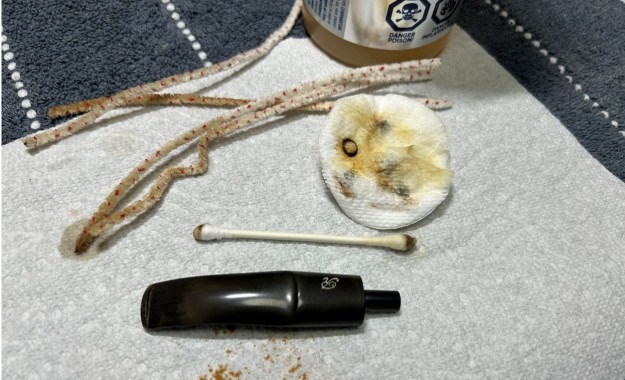
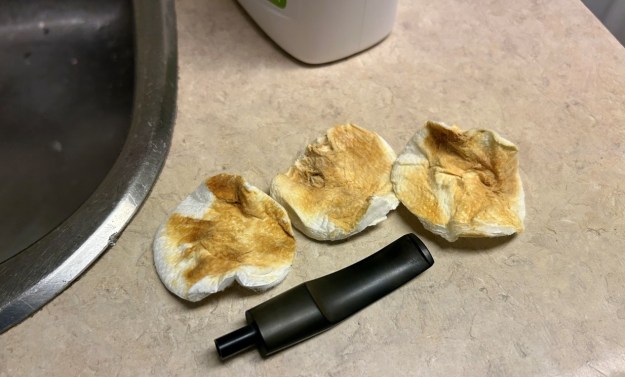
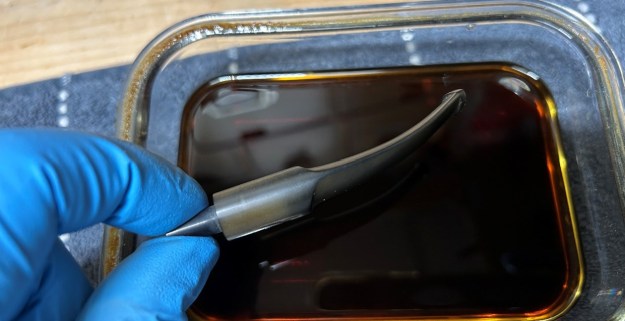
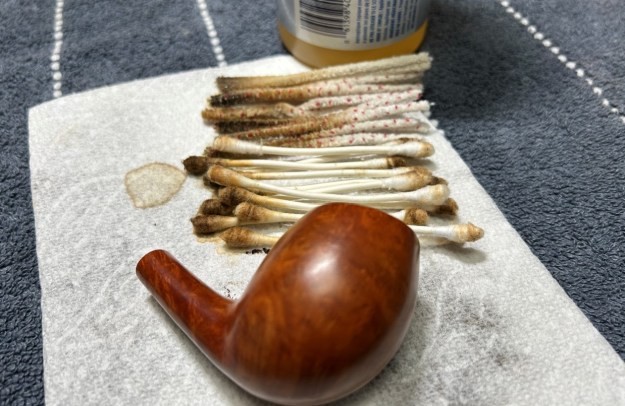
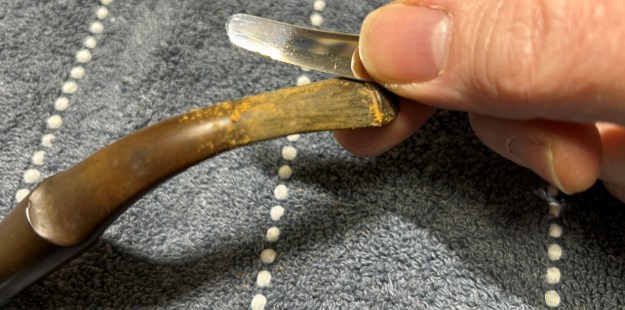
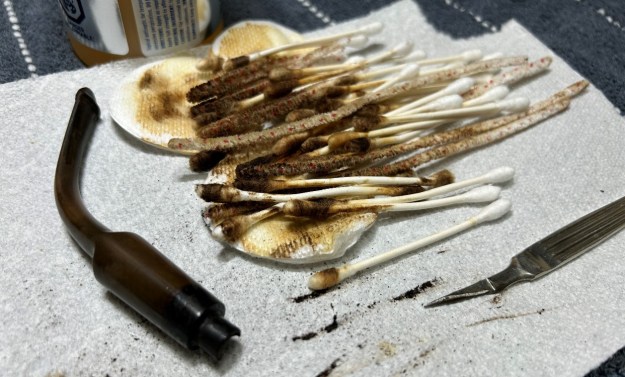
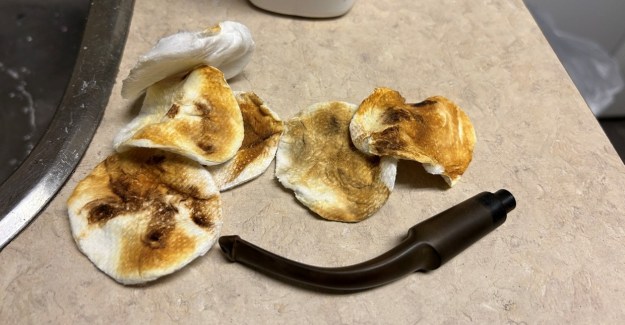
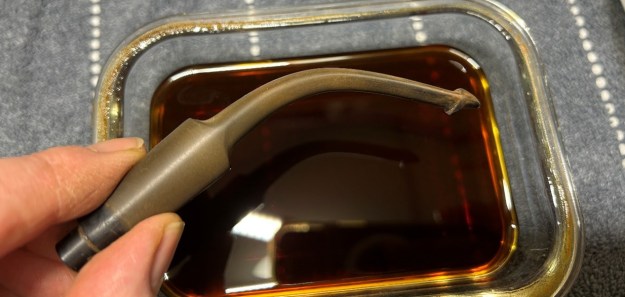
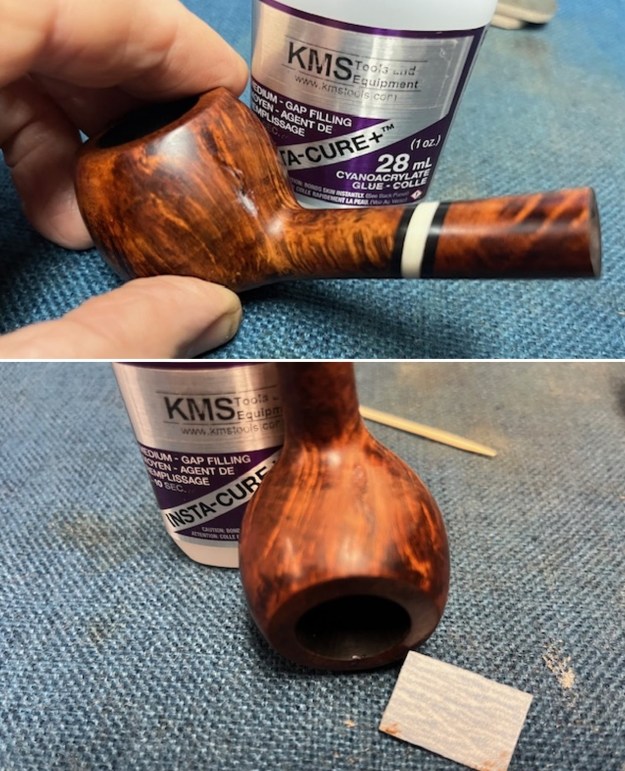
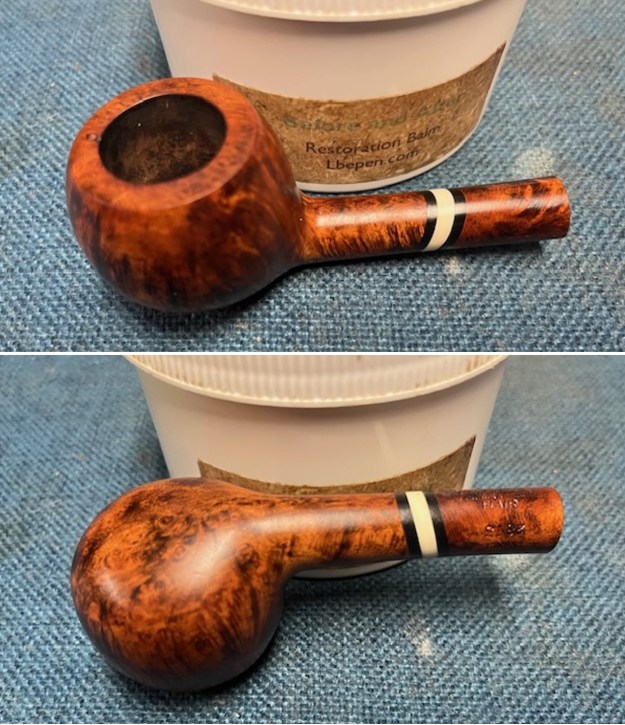
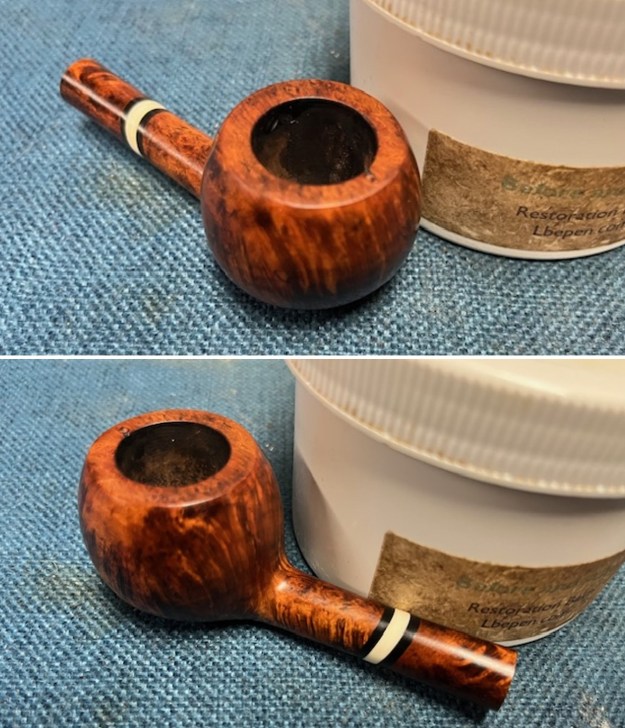
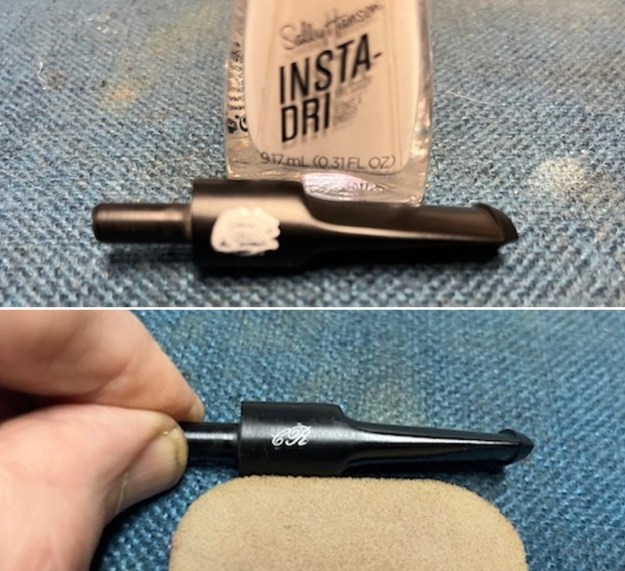
He died in 2021. Let’s take a closer look at the pipe. It is in very nice shape. The stem is thoroughly calcified (and has a bit of oxidation), but isn’t damaged. Its stylized R is a bit thin/faded, but there are no notable tooth marks. The stummel is lovely! Wonderful condition, with only slight marks to the rim. The stem’s calcification was quite substantial. I used an old butter knife and gently scraped some of the thicker accretion off. Doing this now helps later in removing the oxidation.I used isopropyl alcohol on a few cotton rounds and wiped down the stem to provide an initial cleaning of filth before moving on to the next steps. The primary cleaning came next. I disinfected the inside of the stem with both pipe cleaners and cotton swabs dipped in lemon-infused 99% isopropyl alcohol. I scrubbed thoroughly to make sure the interior was very clean.The goal of the next step is the removal (or minimization) of oxidation. Going to my sink, I used cream cleanser, cotton rounds, and a toothbrush, and scoured the stem to remove as much surface oxidation as possible. As the photos show, the result was a hideous, ochre-coloured mess – but better off the stem than on it.Once the stem was reasonably clean, I soaked it overnight in some Briarville Stem Oxidation Remover. This solution works to draw oxidation in the stem to the surface of the vulcanite. This is a major aid and an important step in ensuring a clean stem. The following day, I drew out the stem from its bath and scrubbed the lingering fluid with a toothbrush.After this, I painted the logo on the stem with some enamel nail polish. I restored the logo carefully and let it fully set before proceeding. This didn’t work ideally, but came out fairly well.

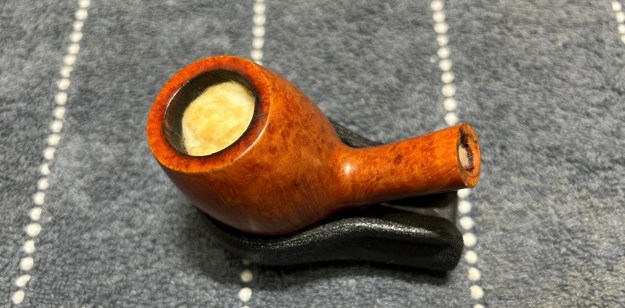
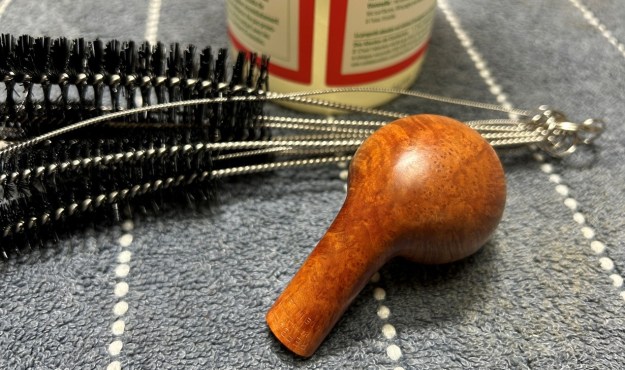
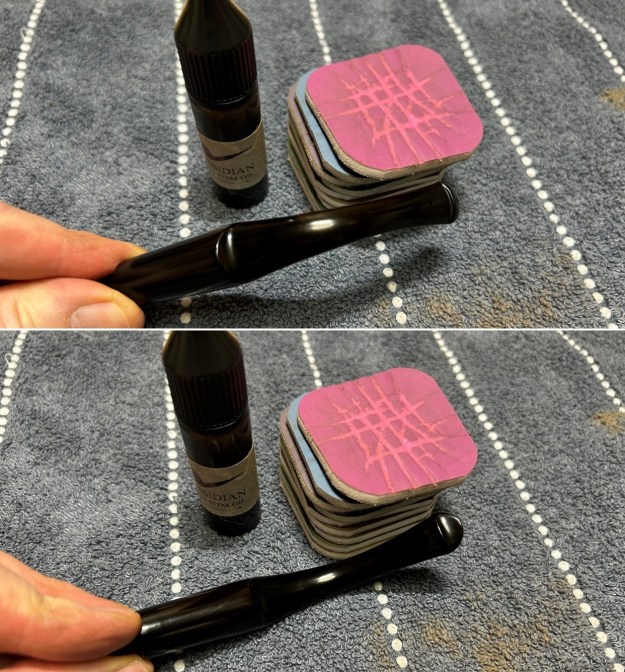
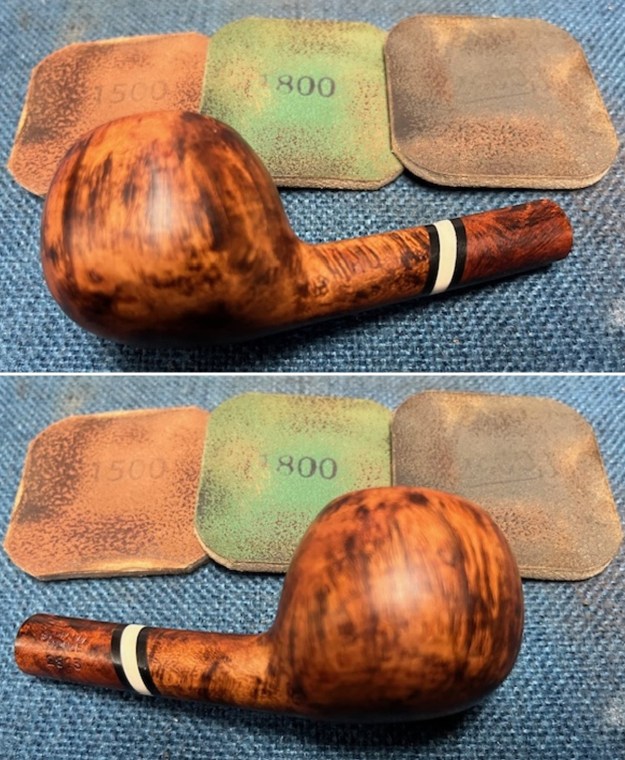
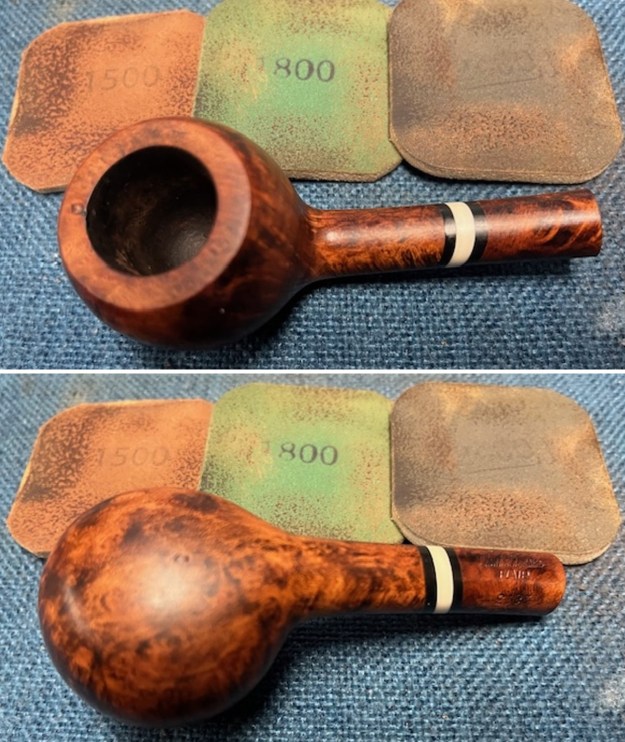
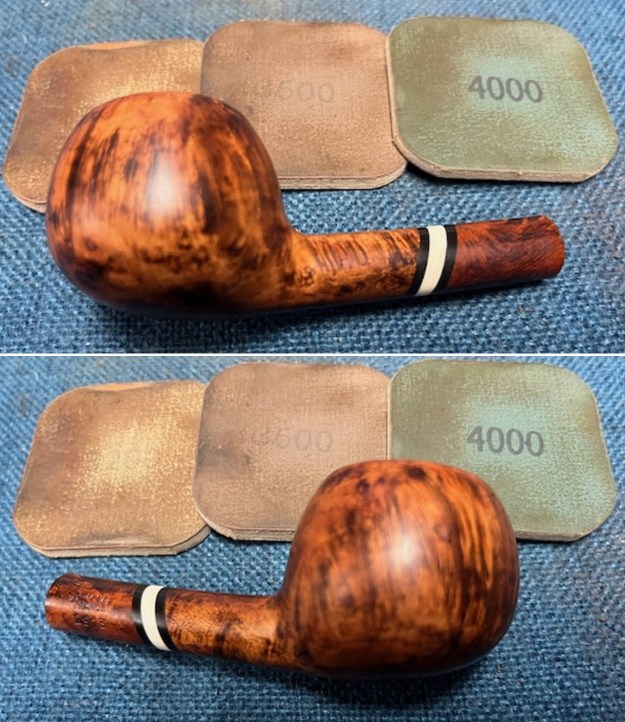
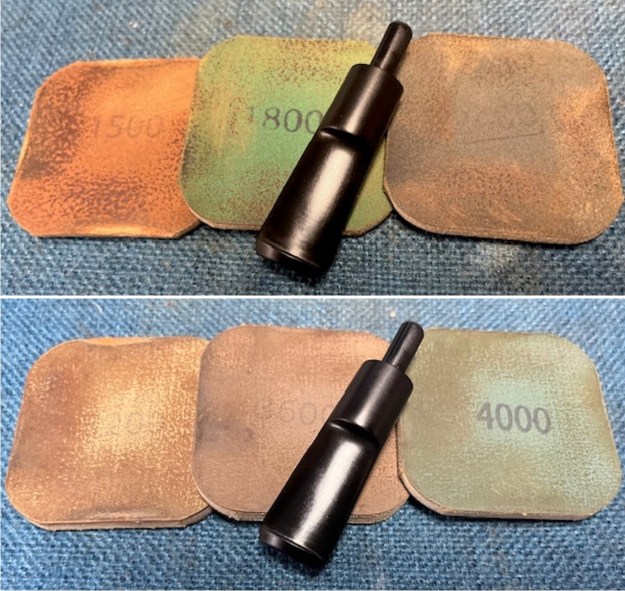
The penultimate step for the stem is sanding. First, with my set of needle files, I reduced the bulk of the cyanoacrylate repairs. I removed the excess adhesive as near to the surface as possible, without cutting into the vulcanite. Following that, I used all nine of the micromesh sanding pads (1,500 through 12,000 grit) to sand out flaws, even out the vulcanite, and provide gentle polishing of the finished surface. I also applied pipe-stem oil while using the last five micromesh pads. There was a wonderful, deep black shine to the stem when I was done. As the stem was (nearly) complete, I moved on to the stummel. The first step was to ream out the bowl – that is to say, remove all the cake inside the bowl. This accomplished a couple of things. First (and most obviously), it cleaned the bowl and provided a refurbished chamber for future smoking. Second, when the old cake was removed, I could inspect the interior walls of the bowl and determine if there was damage or not. I used a pipe knife and a piece of sandpaper taped to a wooden dowel. Collectively, these ensured that all the debris was removed.Similar to the stem, I then cleaned the stummel with both pipe cleaners and cotton swabs dipped in lemon-infused 99% isopropyl alcohol.I then decided to ‘de-ghost’ the pipe – that is to say, exorcize the remaining filth from the briar. I filled the bowl and the shank with cotton balls, then saturated them with 99% isopropyl alcohol. I let the stummel sit overnight. This caused the remaining oils, tars and smells to leach out into the cotton.To tidy up the briar, I wiped down the outside, using a solution of a pH-neutral detergent and some distilled water, with cotton rounds. I also used a toothbrush in the crevices. This did a good job of cleaning any latent dirt on the surface of the briar. The last step of the cleaning process was to scour the inside of the stummel with the same mild detergent and tube brushes. This was the culmination of a lot of hard work in getting the pipe clean.I used all nine micromesh pads (1,500 through 12,000 grit) to sand the outside of the stummel and finish it off. This sanding minimizes flaws in the briar and provides a beautiful smoothness to the wood. I rubbed some LBE Before & After Restoration Balm into the briar and let it sit for 30 minutes or so. The balm moisturizes the wood and gives a beautiful depth to the briar. I then buffed the stummel with a microfibre cloth. For the final step, I took the pipe to my bench polisher and carefully buffed it – first with a blue diamond compound, then with three coats of carnauba wax. This procedure makes the pipe look its best – the stummel sings and the stem glows.This Refbjerg Hand-Carved Bent Egg looks fantastic again and is ready to be enjoyed by its next owner. I am pleased to announce that this pipe is for sale! If you are interested in acquiring it for your collection, please have a look in the ‘Danish’ section of the store here on Steve’s website. You can also email me directly at kenneth@knightsofthepipe.com. The approximate dimensions of the pipe are as follows: length 5½ in. (139 mm); height 1⅞ in. (46 mm); bowl diameter 1⅔ in. (41 mm); chamber diameter ⅞ in. (22 mm). The weight of the pipe is 1¼ oz. (37 g). I hope you enjoyed reading the story of this pipe’s restoration as much as I enjoyed restoring it. If you are interested in more of my work, please follow me here on Steve’s website or send me an email. Thank you very much for reading and, as always, I welcome and encourage your comments.

Savinelli Nonpareil 9604 Oom Paul


by Kenneth Lieblich

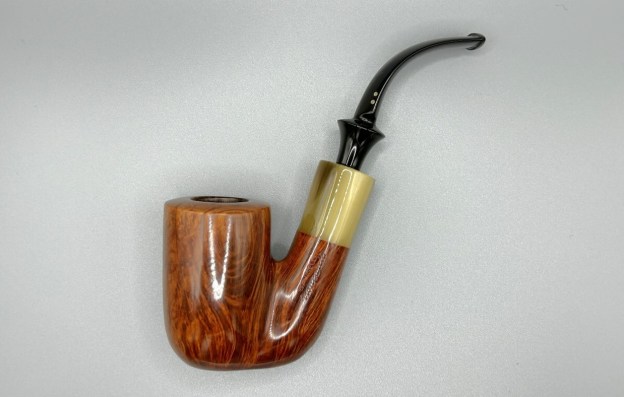
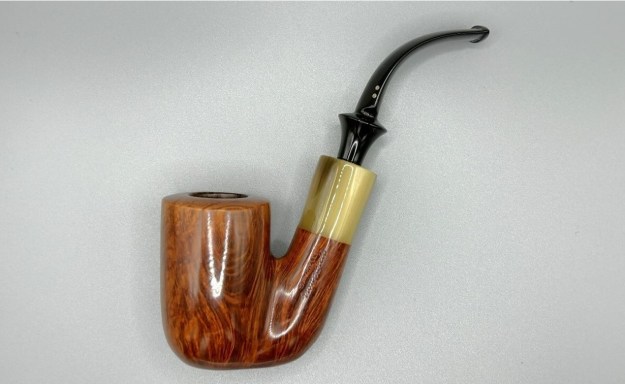
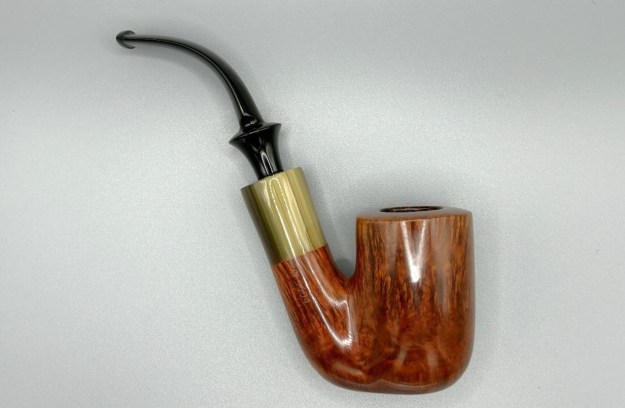
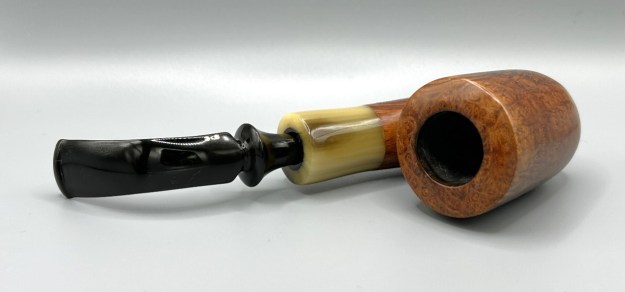
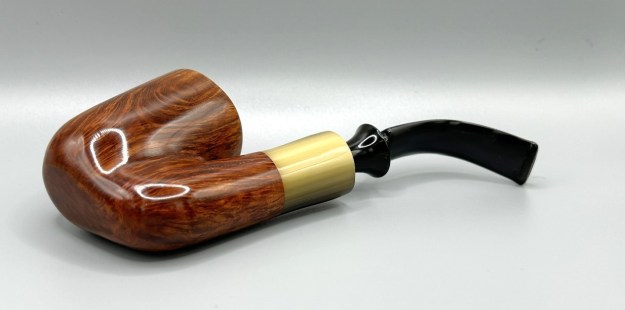
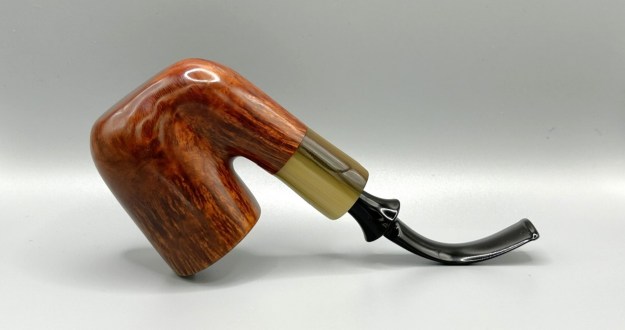
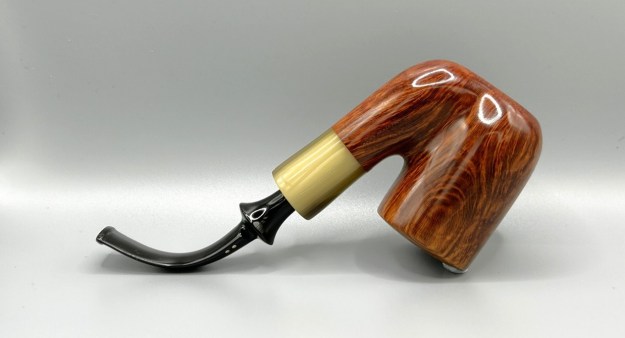
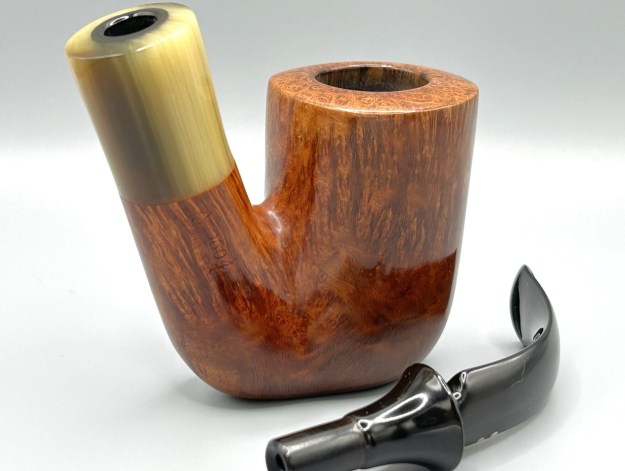
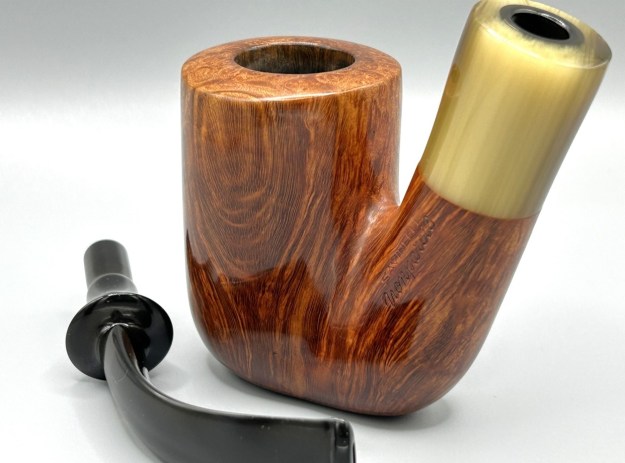
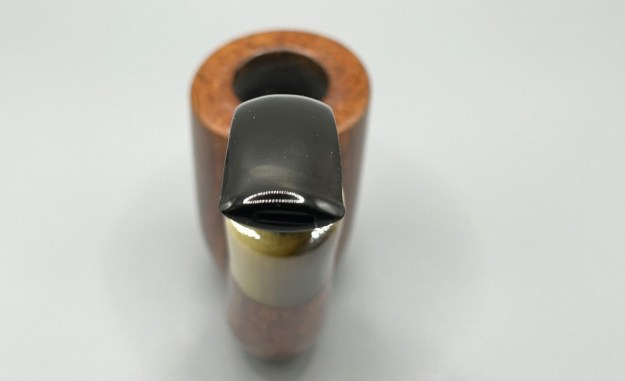
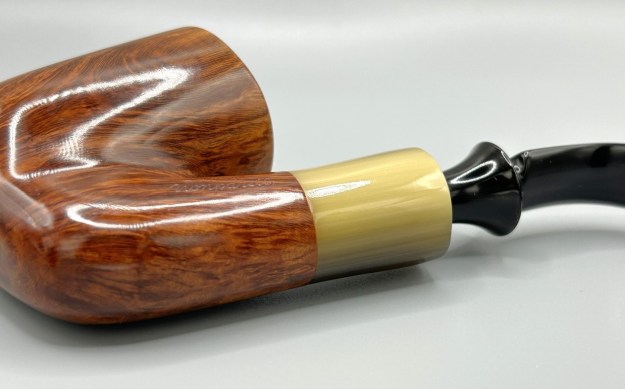
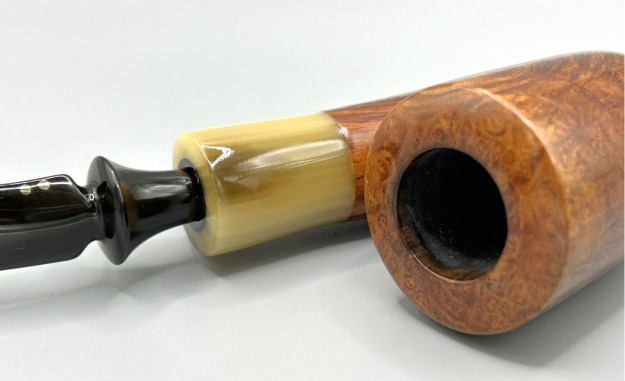
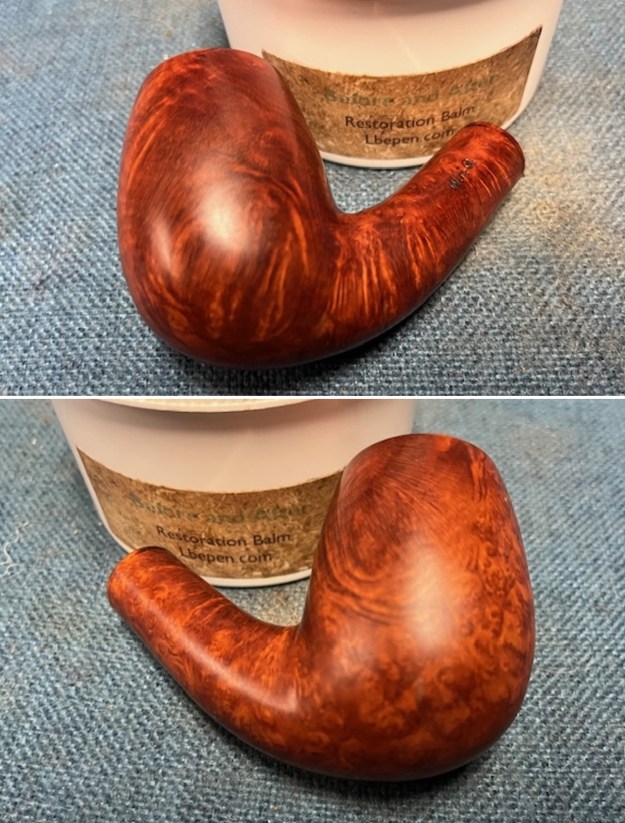
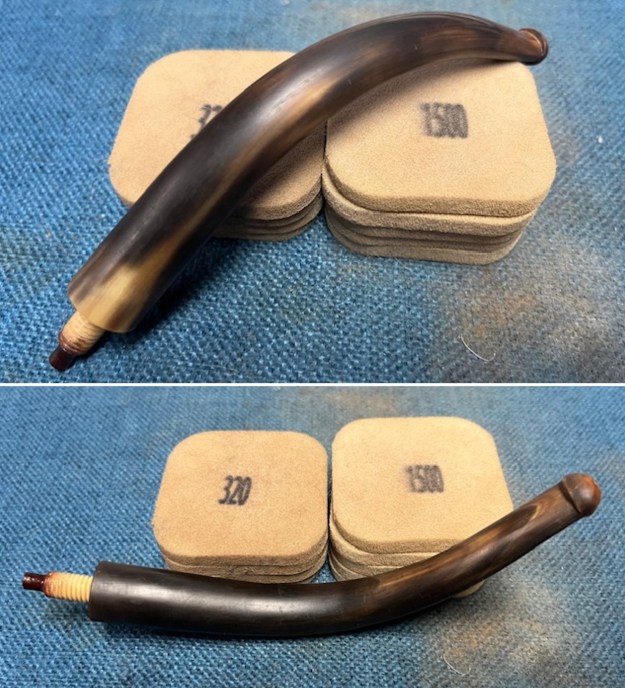
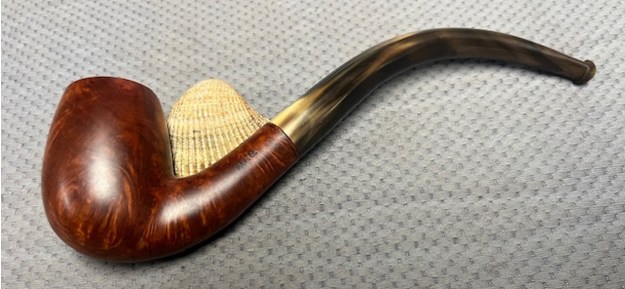
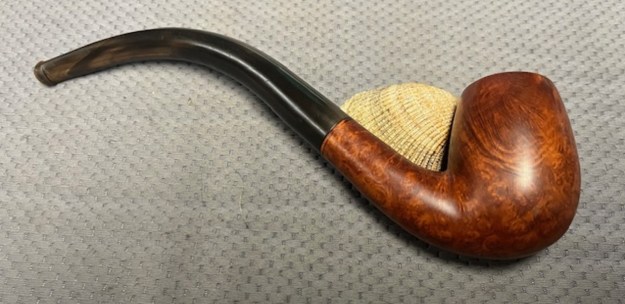
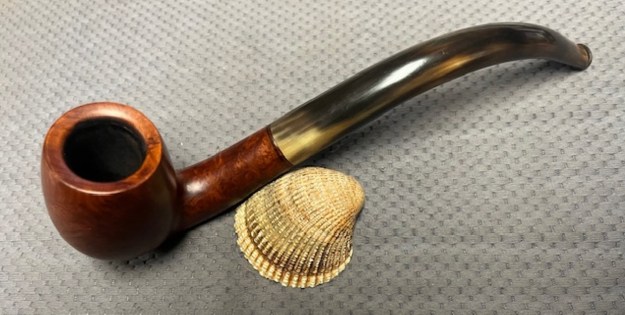
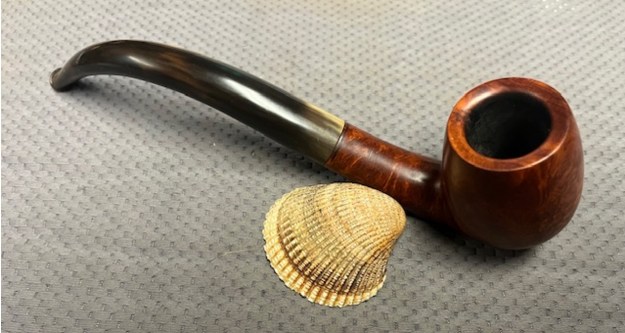
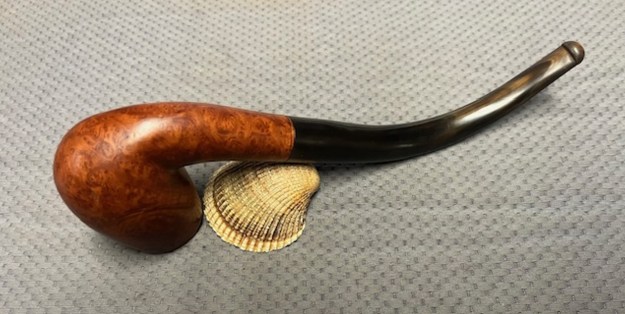
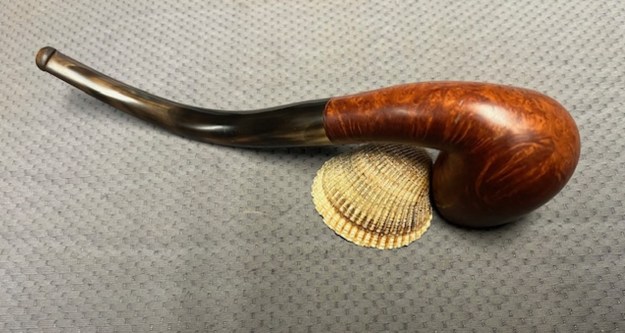
Say hello to this beautiful Savinelli Nonpareil 9604 Oom Paul! I have had this pipe in my collection for a while, but it’s time to let it go. It’s a gorgeous piece of briar with a handsome horn shank extension. This Oom Paul is very attractive, but I need to send it out into the world. You can now buy this pipe for your collection and enjoy it. No restoration story this time, but a quick view of a lovely pipe. This pipe promises to be a great smoker.

Let’s look at the markings. The left side of the shank reads Savinelli [over] Nonpareil. Despite Savinelli being an Italian company, the word nonpareil is French and means “without equal” – literally, “not the same”. On the left side of the shank is the lovely Savinelli crown, next to which are the marks 9604 [over] Italy. Finally, there are two brass dots on the left side of the stem – a very nice touch.

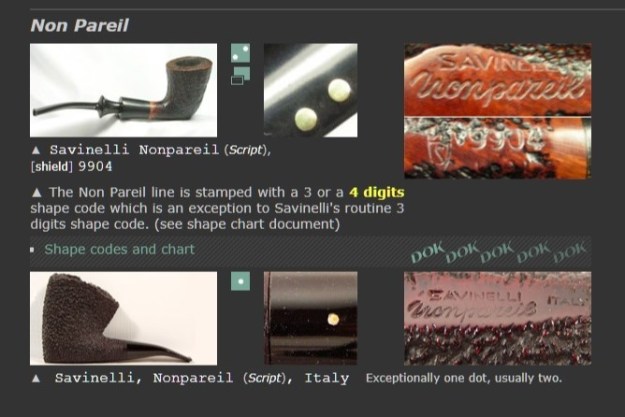
Savinelli is one of the most recognized names in pipe smoking and they have a long and storied history. You can read about them from their own website or from Pipedia’s article about them. I was particularly interested in learning more about the Nonpareil line. I checked with Pipephil and they did have a bit of information, which I display below. I learned from Pipephil that old Savinellis used to have four-digit shape numbers, newer ones three. The exceptions to this rule, however, are the Nonpareil and Dry System lines.This Savinelli Nonpareil 9604 Oom Paul is ready to be enjoyed by its next owner. I am pleased to announce that this pipe is for sale! If you are interested in acquiring it for your collection, please have a look in the ‘Italian’ section of the store here on Steve’s website. You can also email me directly at kenneth@knightsofthepipe.com. The approximate dimensions of the pipe are as follows: length 4⅜ in. (159 mm); height 4¾ in. (120 mm); bowl diameter 1½ in. (37 mm); chamber diameter ¾ in. (20 mm). The weight of the pipe is 2½ oz. (71 g). I hope you enjoyed reading the story of this pipe’s restoration as much as I enjoyed restoring it. If you are interested in more of my work, please follow me here on Steve’s website or send me an email. Thank you very much for reading and, as always, I welcome and encourage your comments.

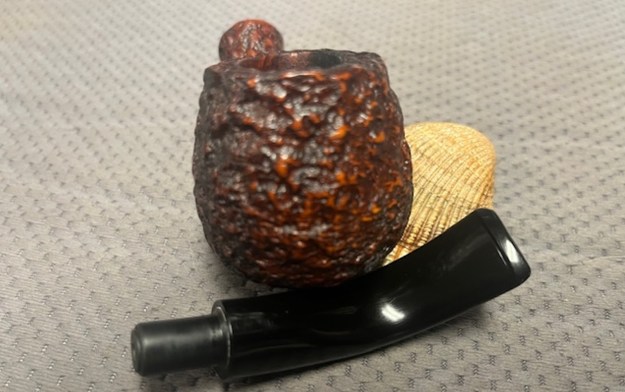
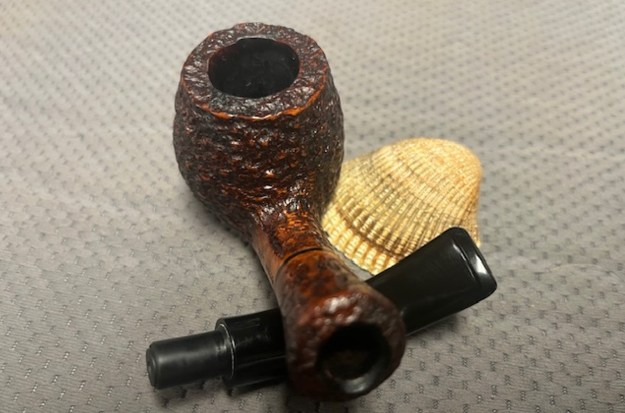
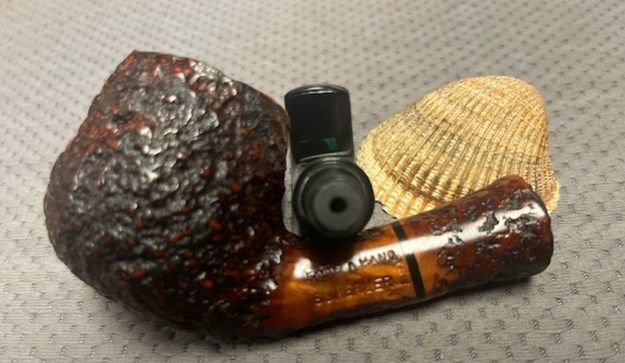
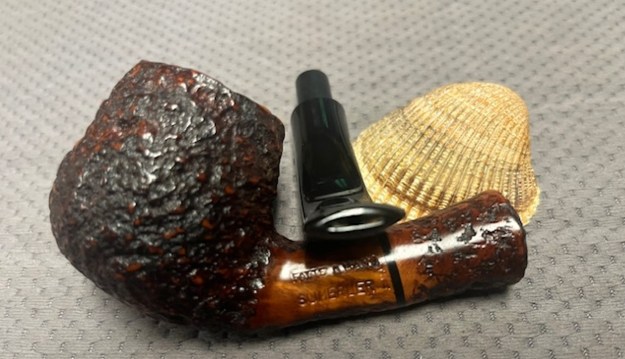
Restoring a Fatte a Mano Sumerler Rusticated Bent Brandy


by Steve Laug

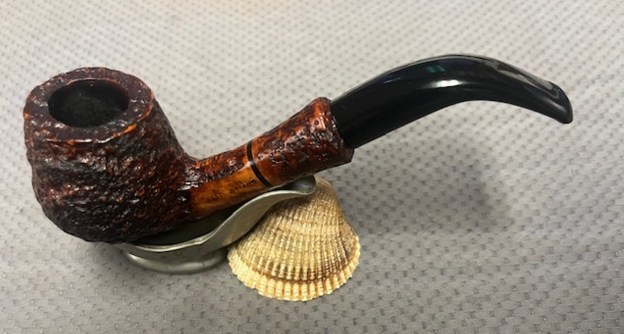
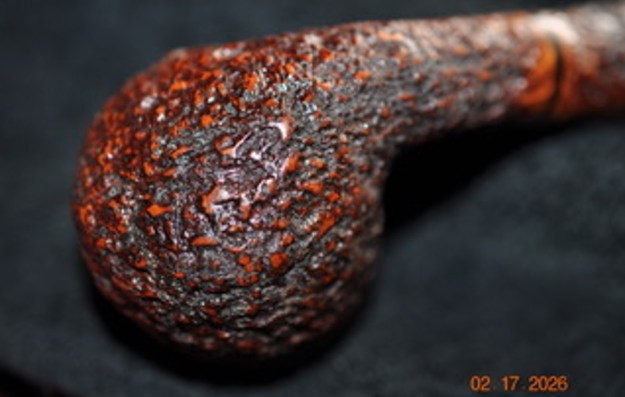
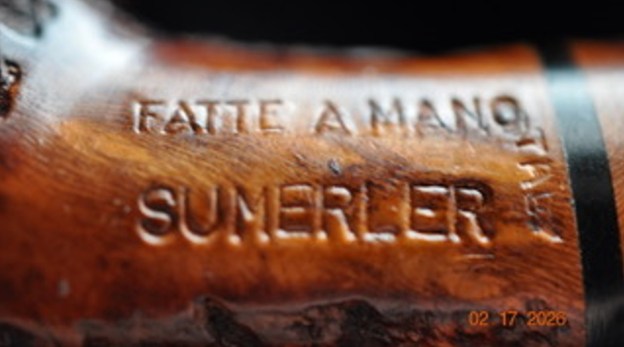
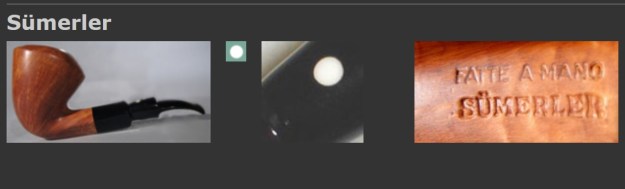
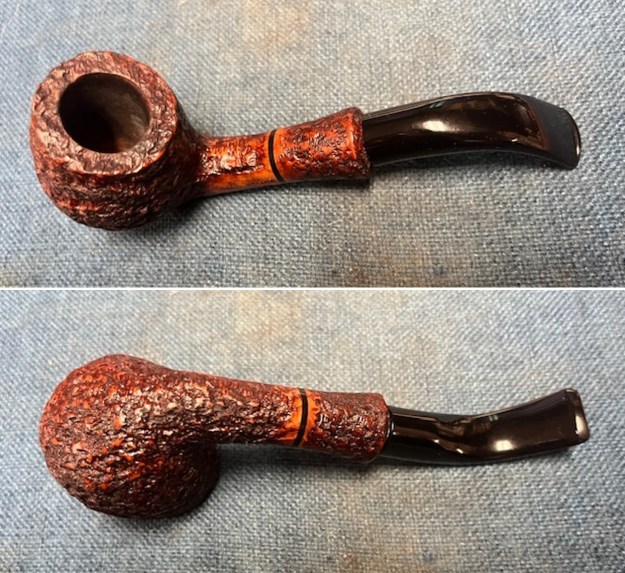
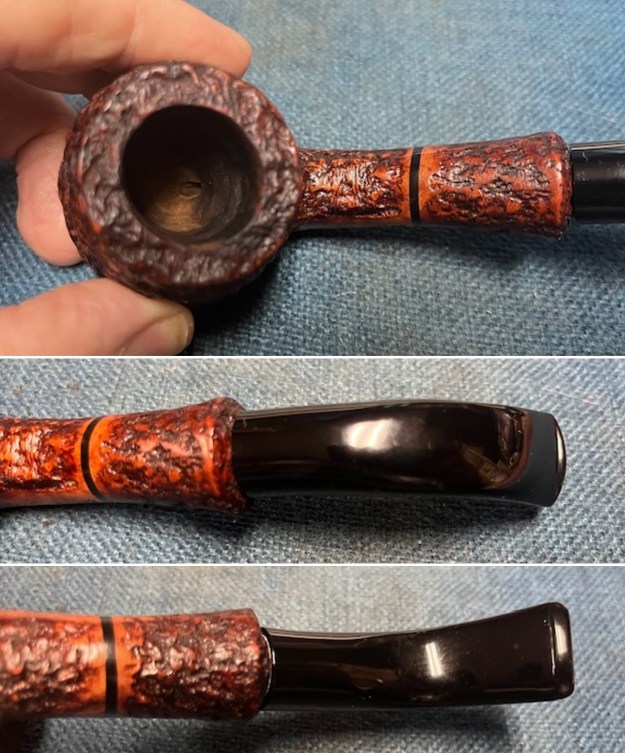
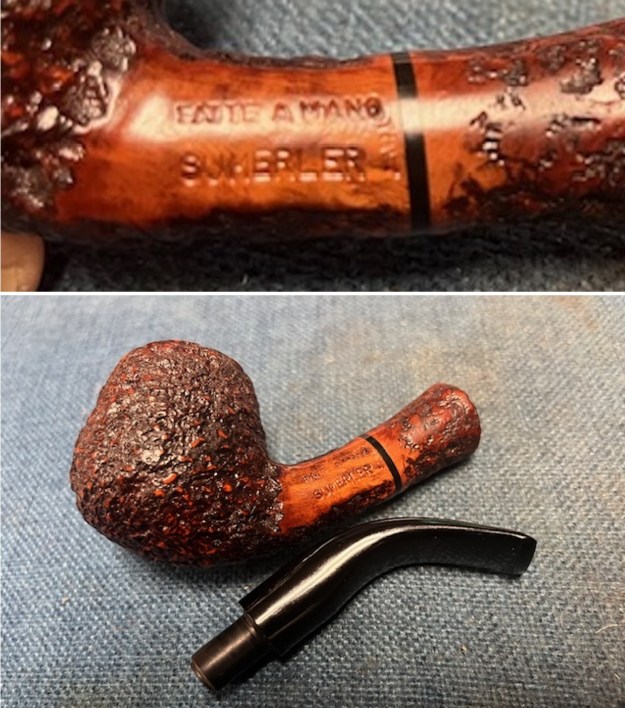
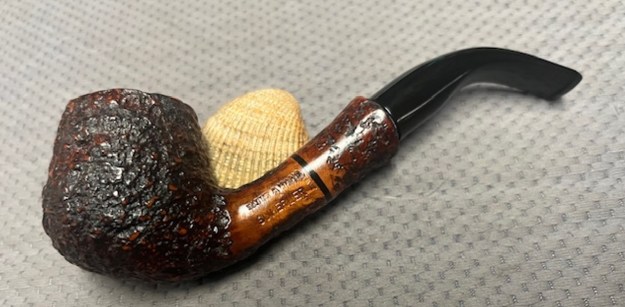
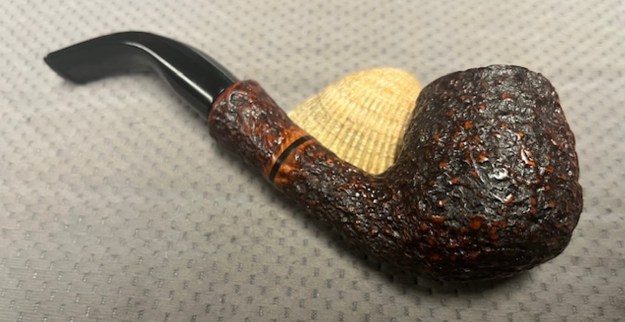
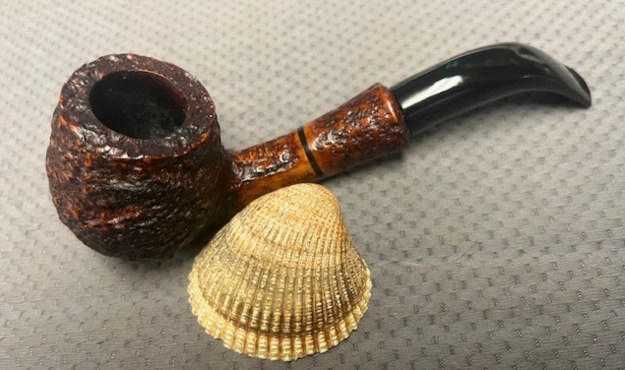
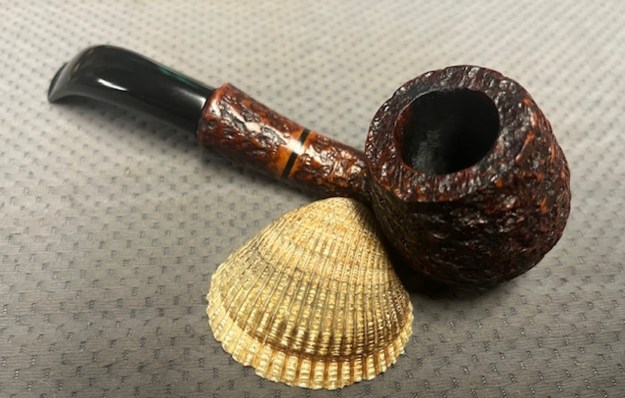
This particular rusticated Bent pipe was purchased on 01/20/2026 from a Facebook seller in Quaker Town, Pennsylvania, USA. It really is a beautiful, deeply rusticated Bent Brandy with thin black acrylic insert ahead of the shank end visible in the photos below. The deeply rusticated bowl is stained with a contrast of browns that give depth to the rustication. It is stamped on the left side of the shank on a smooth panel Fatte A Mano [over] Sumerler. At the right end of the smooth patch it is stamped Italy. The bowl had a moderate cake with an overflow of lava in the rusticated rim top – heavier toward the back of the bowl. There was grime ground into the finish which left the look quite dull. The bent acrylic stem has no logo stamped on the surface on either side of the stem. It had light tooth marks and chatter on both sides of the stem ahead of the button. Jeff took photos of the pipe before he started his work on it. He took photos of the rim top to show the condition of the top and edges of the bowl. It is dull and has the lava in the rusticated surface of the rim. It is uniquely a beautiful pipe. The stem had light tooth marks and chatter on both sides ahead of the button. He took photos of the sides and heel of the bowl to show the rusticated finish around the bowl and the condition of the pipe. You can see the grime ground into the surface of the briar. The black band inlaid on the shank is a great highlight in the briar of the shank. He took a photo of the stamping on the left side of the shank. It is clear and readable as noted above. Before I started working on the pipe, I turned to Pipephil’s site to see if I could learn anything about the Fatte A Mano Sumerler brand (http://www.pipephil.eu/logos/en/logo-s13.html). There was a photo a Sumerler pipe that has the same stamping as the one I am working on. I did a screen capture of the pertinent section and have included the side bar information below the photo. Pipes with this brand are sometimes carved by Armellini.

It appears that the pipe was made by Armellini in Italy and sold as a sub line or second line to Armellini main work.

I looked up the Sumerler on Pipedia to see if I could gather further information on the company (https://pipedia.org/wiki/Armellini). The notation in Brands and Makers section took me to the article on Armellini. There was no reference there to Sumerler. It gives some great history.   

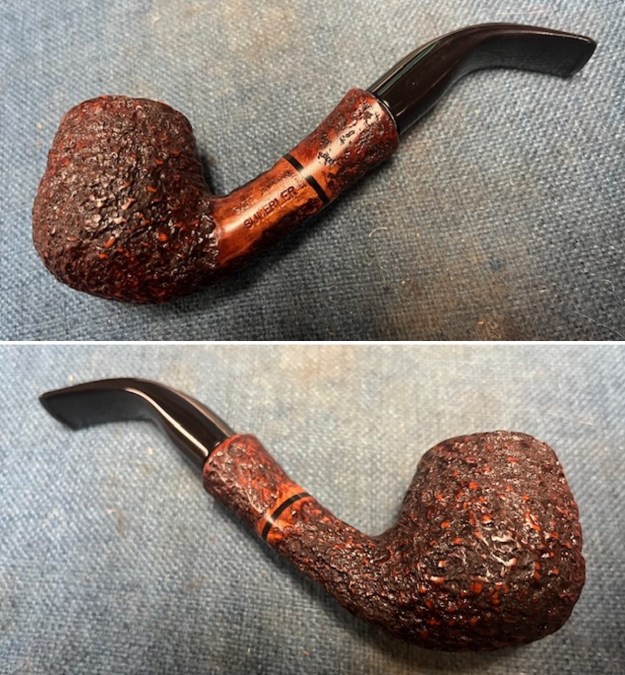
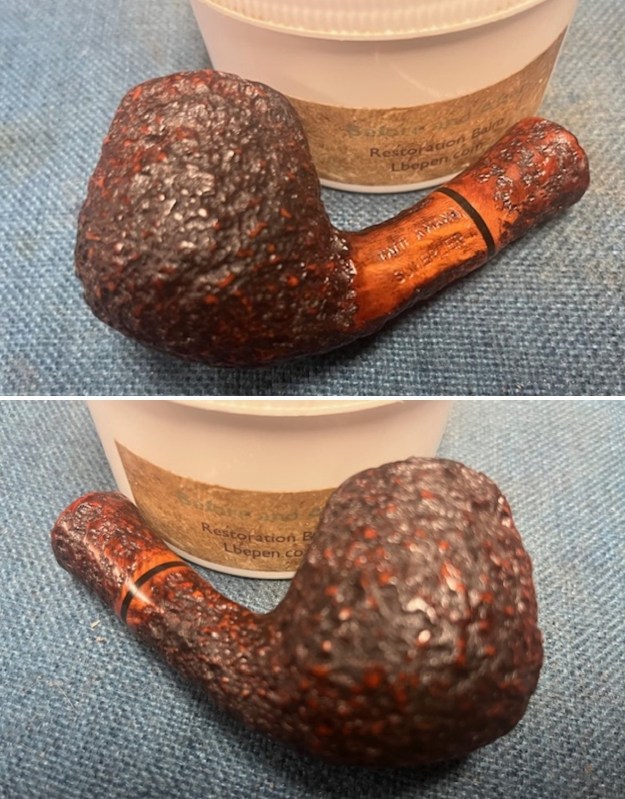
It was time to work on the pipe. As usual Jeff had done a thorough cleanup on the pipe. He reamed the bowl with a PipNet pipe reamer and a Savinelli Fitsall pipe knife to remove the cake. He scrubbed out the mortise and the airway in the shank and the stem with alcohol, cotton swabs, shank brushes and pipe cleaners. He scrubbed the exterior of the bowl, rim, shank and stem with a tooth brush and Murphy’s Oil Soap to remove the oils and tars on the rim and the grime on the finish of the bowl. He rinsed it under running water. He dried it off with a soft cloth. He soaked the stem in Before & After Deoxidizer and rinsed it off with warm water. He dried it with a soft cloth. The pipe looked good. I took a photo of the rim top and stem to show the condition. The finish on the rim top looked very good. The acrylic taper stem had light tooth chatter and marks on both sides ahead of the button and on the button edges.The stamping on the left side of the shank is clear and readable as noted above. I removed the stem from the shank and took a photo of the pipe to give a sense of the whole. It is a nice-looking rusticated Brandy and should clean up very well.I worked some Before & After Restoration Balm into the surface of the briar with my finger tips and a shoe brush to work it into the rustication. The product is incredible and the way it brings the grain to the fore is unique. It works to clean, protect and invigorate the wood. I polished the stem with micromesh sanding pads – dry sanding it 1500-12000 pads. I wiped it down with Obsidian after each pad to remove the dust and polishing debris. I polished it with Before After Pipe Polish – both Fine and Extra Fine. I gave it another coat of Obsidian Oil. This deeply rusticated Sumerler Bent Brandy with a thin black acrylic band mid shank is a great looking pipe now that it has been restored. The polished acrylic taper stem is in great condition. The briar is clean and really came alive. The rich brown stains gave the rustication a sense of depth with the polishing and waxing. I put the stem back on the bowl and carefully buffed the pipe with Blue Diamond on the buffing wheel using a light touch on the briar. I gave the bowl multiple coats of Conservator’s Wax and the stem multiple coats of carnauba wax on the buffing wheel. I buffed the pipe with a clean buffing pad to raise the shine. I hand buffed the pipe with a microfiber cloth to deepen the shine. The finished Sumerler Bent Brandy is a beauty and feels great in the hand and looks very good. Give the finished pipe a look in the photos below. The dimensions of the pipe are Length: 6 inches, Height: 1 ¾ inches, Outside diameter of the bowl: 1 ½ inches, Chamber diameter: ¾ of an inch. The weight is 2.19 ounces/62 grams. Thanks for reading this blog and my reflections on the pipe while I worked on it. I will be putting it on the rebornpipes store in the Italian Pipe Makers Section. If you are interested in adding it to your collection let me know. Thanks for following the blog on this restoration.
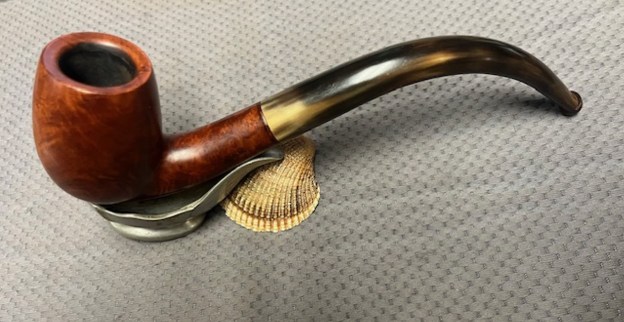
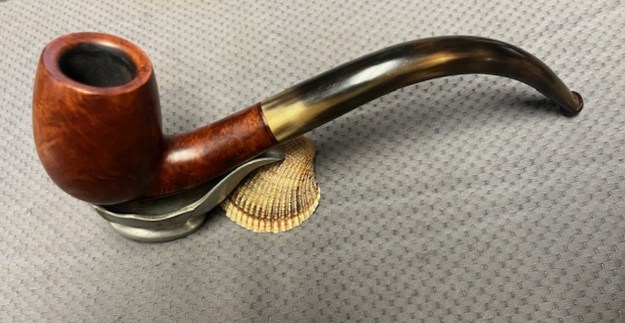
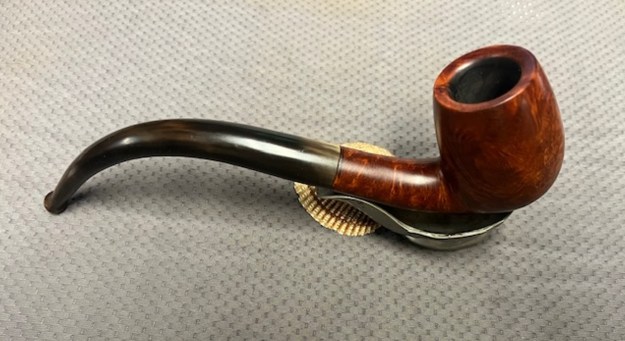
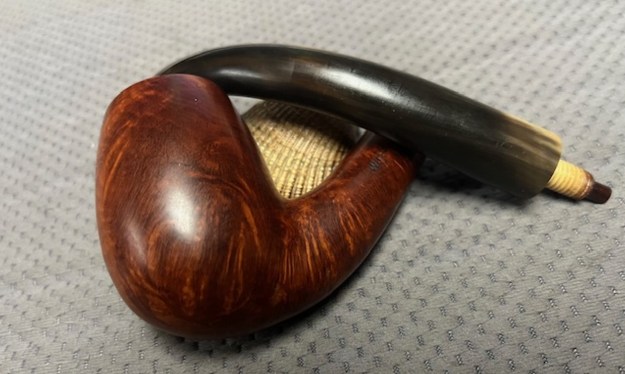
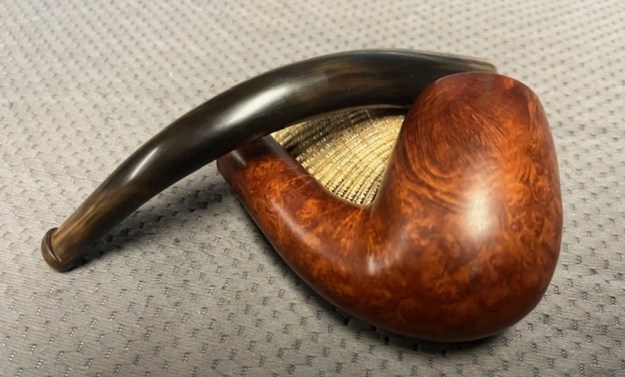
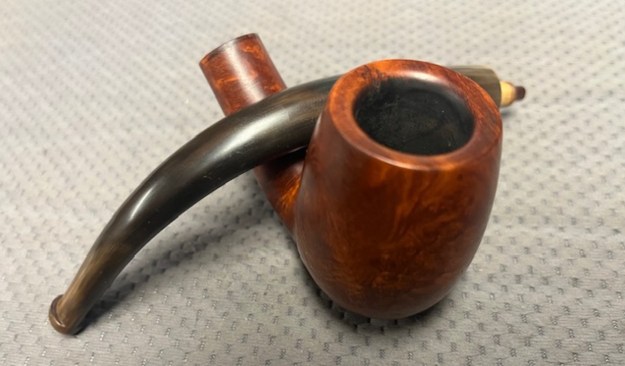
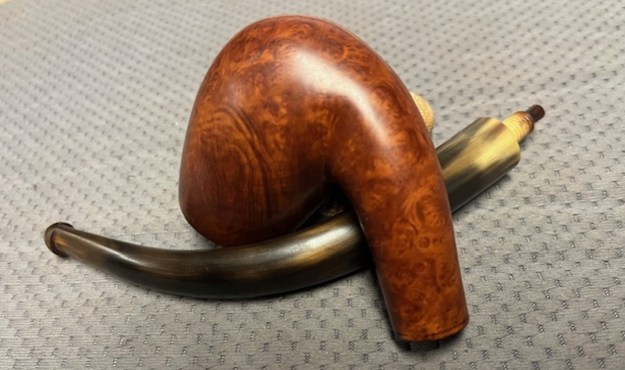
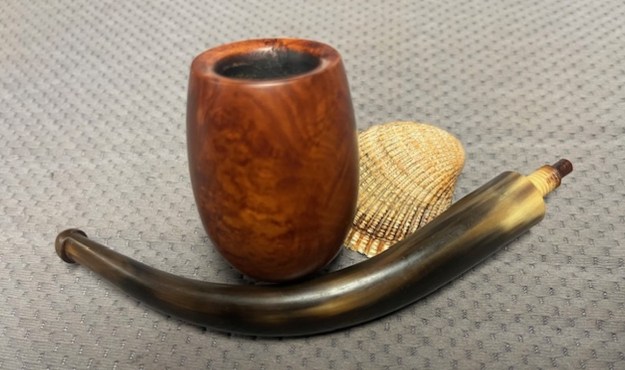
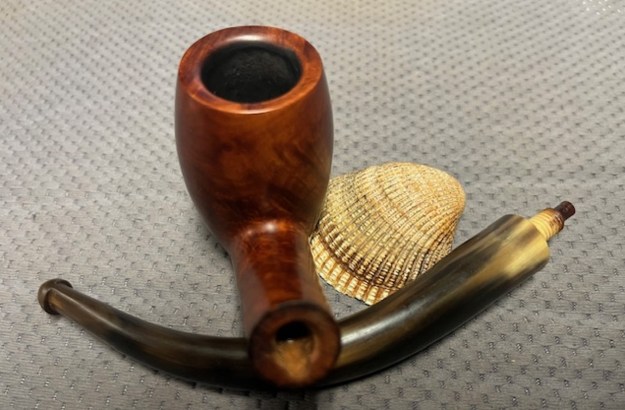
Restoring a Beautiful Swan Neck French WFC Mystery Bent Billiard with a Horn Stem


by Steve Laug

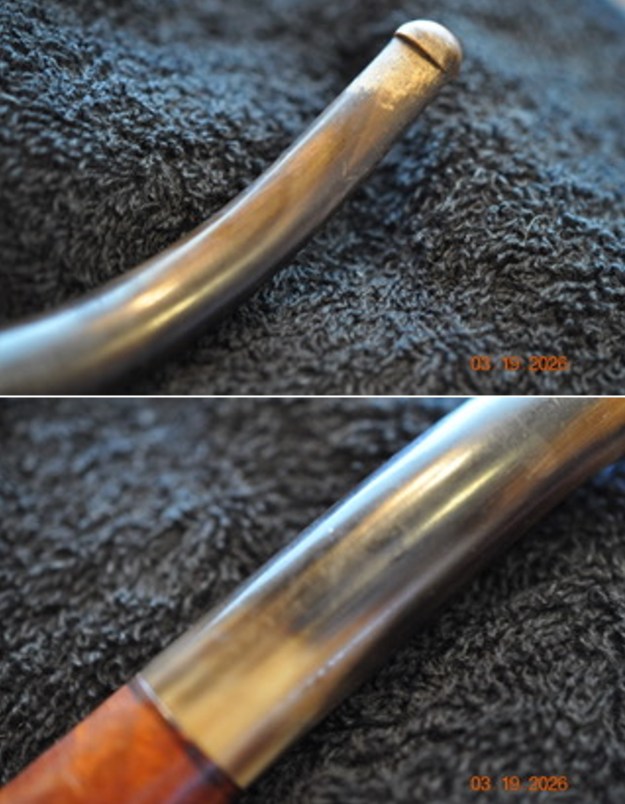
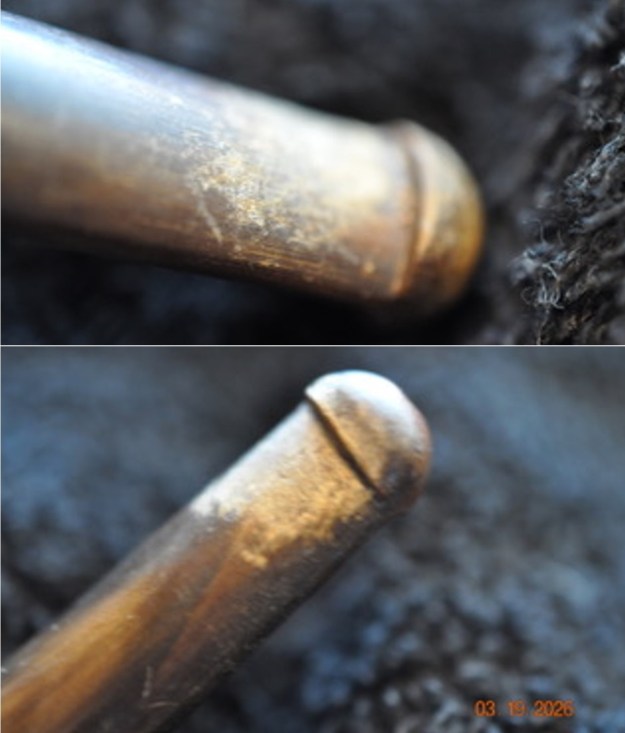
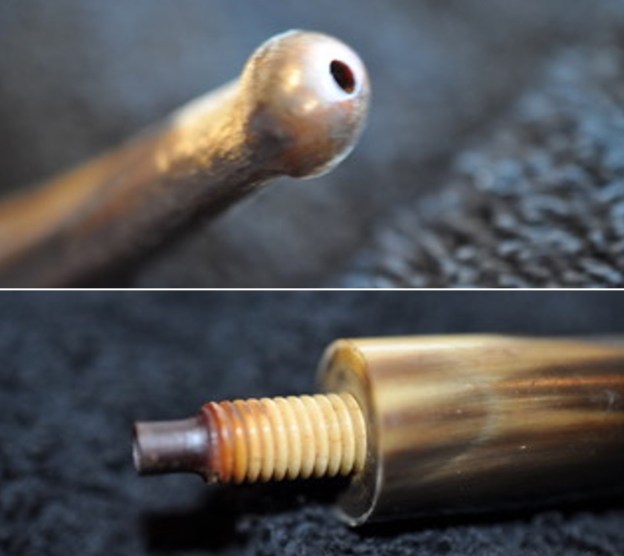
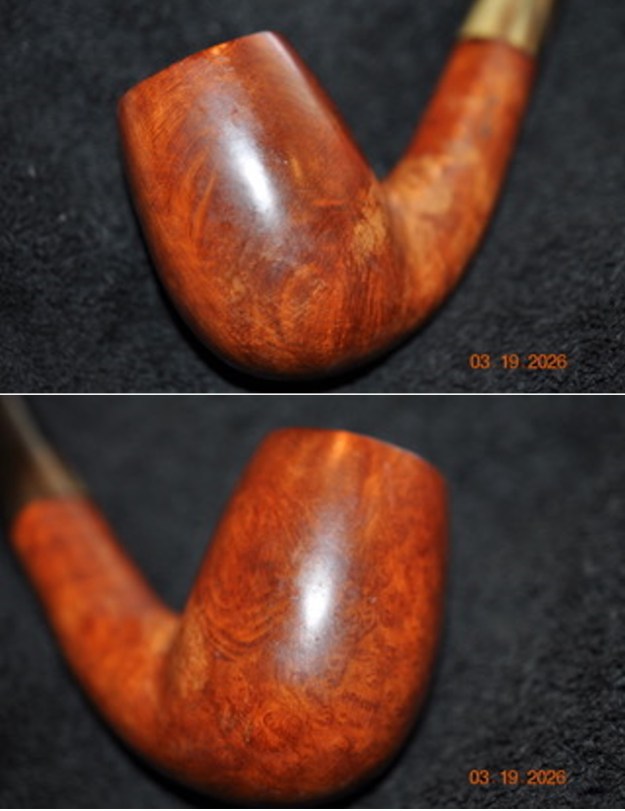
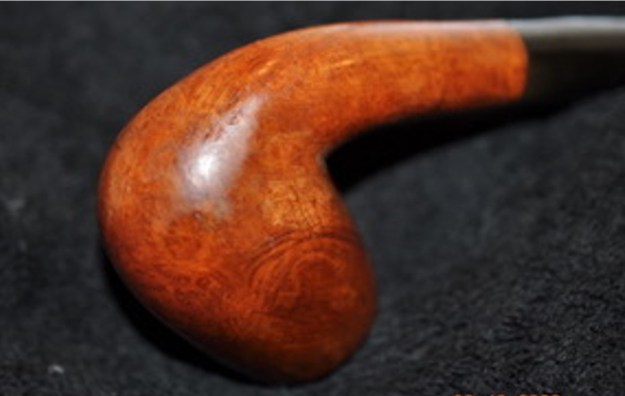
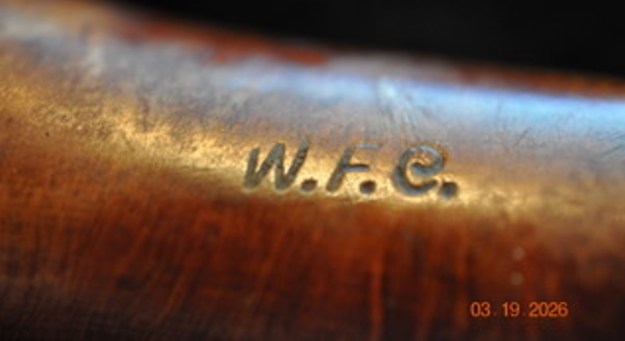
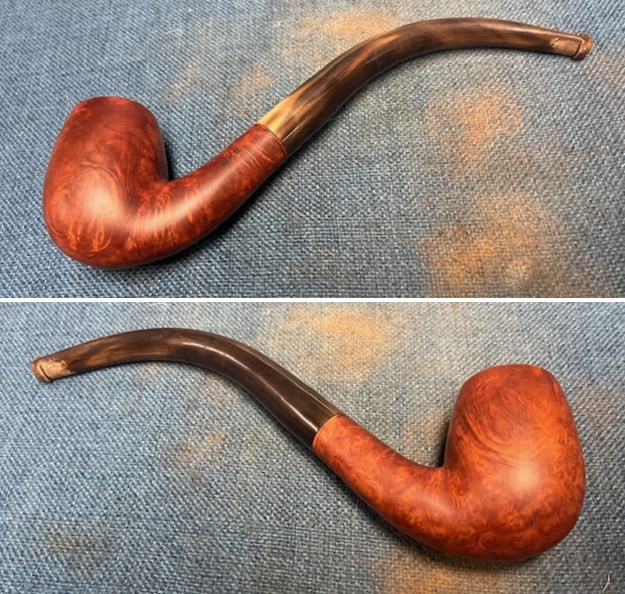
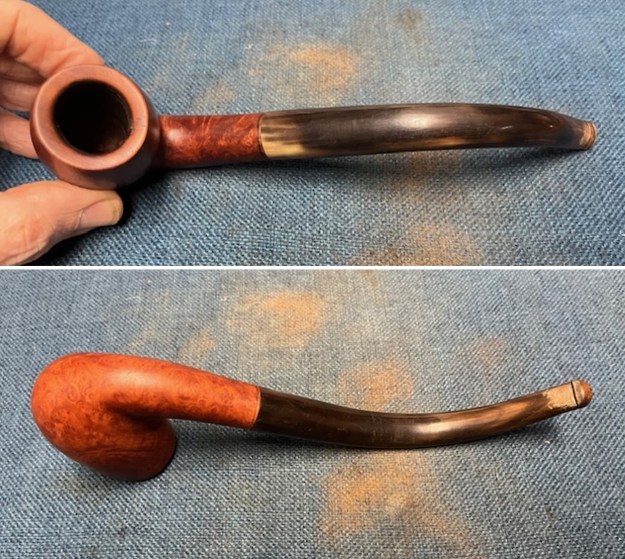
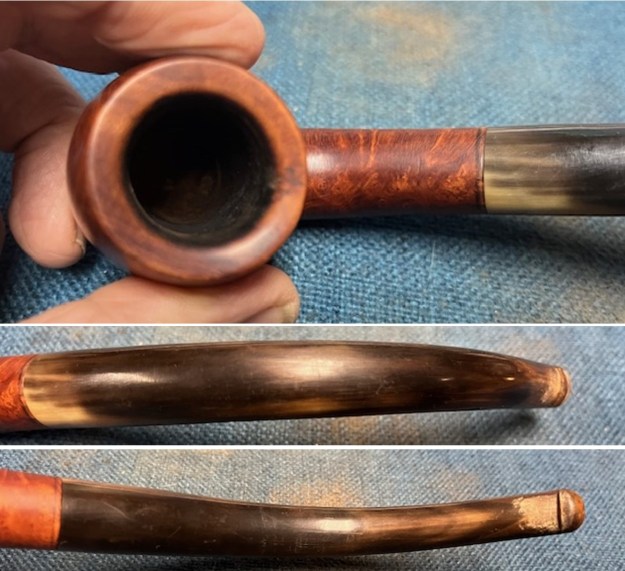
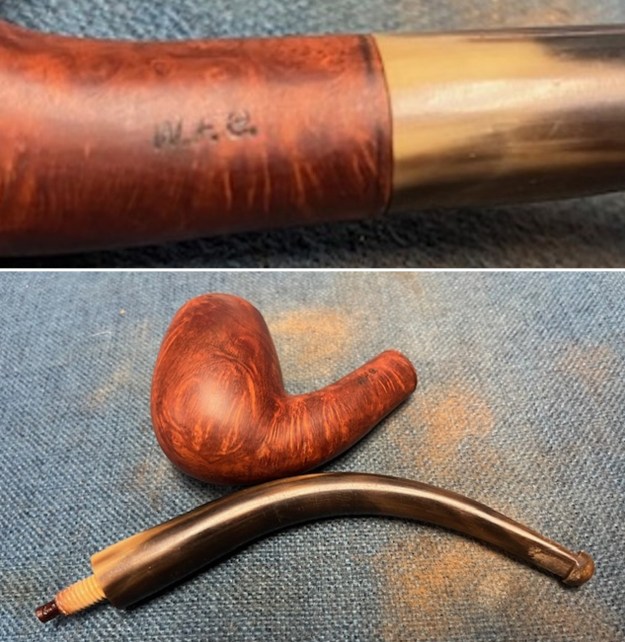
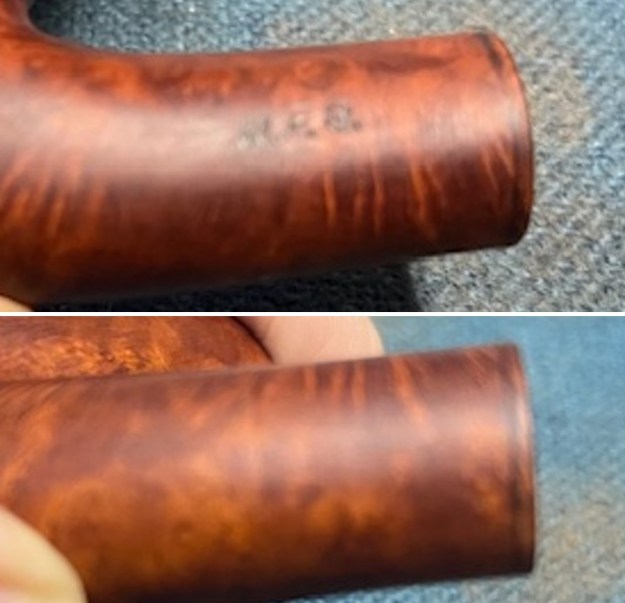
This beautiful swan neck bent Billiard is next on the table. We purchased it on 01/28/26 from a seller in Delafield, Wisconsin, USA. It is a beautiful large Bent Billiard with a lovely horn stem and bone tenon that screws into the shank. The bowl is dirty and had a thick cake in the bowl and a thick lava coat on the rim top. The shank end of the bowl had some darkening at the junction of the stem and shank. It easily could have had a thin brass band on the shank that left behind the stain. The finish on the bowl was worn and dirty. The stem was worn and oxidized with tooth marks and chatter on the top and underside of the stem. The only stamping on the shank was W.F.C. in script. There were no other identifying marks on the shank and the stem. It was not a recognizable brand and some of the folks I spoke to suggested it might refer to the previous owner’s initials. I suppose there is no way to know that for sure but it is very similar to quite a few French made St. Claude older bent billiards with the same shape and stem connection. It is a real beauty that should clean up very well. Jeff took photos of the pipe to give a sense of its condition and beauty. Jeff took photos of the bowl and rim top to show the condition of the bowl. You can see the thick cake in the bowl and the lava on the rim top of the bowl. It is really a well used pipe that obviously had been someone’s favourite. The photos of the stem show the condition of the surface and the bone tenon. Jeff took photos of the bowl and shank from various angles. You can see the grain in the briar in each of the photos below. It is a great piece of briar with nice grain that follows the shape. He took a photo of the initials on the left side of the shank. They are clear and readable as noted above. It definitely looked like it was stamped rather than etched and is quite clear. Are they someone’s initials or are they initials of a company.It was time to work on the pipe. As usual Jeff had done a thorough cleanup on the pipe. He cleaned up the reaming of the bowl with a PipNet pipe reamer and a Savinelli Fitsall pipe knife to remove the cake. He scrubbed out the mortise and the airway in the shank and the stem with alcohol, cotton swabs, shank brushes and pipe cleaners. He scrubbed the exterior of the bowl, rim, shank and stem with a tooth brush and Murphy’s Oil Soap to remove the oils and tars on the rim and the grime on the finish of the bowl. He rinsed it under running water. One of the benefits of this scrub is that it also tends to lift some of the scratches and nicks in the surface of the briar. He dried it off with a soft cloth. He scrubbed the stem surface off with Soft Scrub and rinsed it off with warm water. The pipe looked good. I took a photo of the rim top and stem to show the condition. The finish on the rim top looked spotty. The vulcanite saddle stem had light tooth chatter and marks on both sides ahead of the button and on the button edges. The stamping on the underside and left side of the shank is clear and readable as noted above. There was a stamp on the left side of the saddle was readable but the white in the stamp was gone. I removed the stem from the shank and took a photo of the pipe to give a sense of the whole. It is a nice-looking long shank apple and should clean up very well.I took some photos of the darkening around the shank end of the pipe. It appears that the darkening could have come from a tin shank band. I will work on it and think about the possibility of adding a new band to it. I sanded the briar with 320-3500 grit 2×2 inch sanding pads. I carefully worked around the stamping on the shank side. I wiped it down after each pad with a damp cloth to remove the sanding debris. I blended the repair into the surrounding briar and polished the briar with micromesh sanding pads – I dry sanded the briar with 1500-12000 grit sanding pads. I wiped the bowl down with a damp cloth after each sanding pad to remove the debris. It really took on a rich shine. I worked some Before & After Restoration Balm into the surface of the briar with my finger tips and a horse hair shoe brush to get into the rusticated portions. The product is incredible and the way it brings the grain to the fore is unique. It works to clean, protect and invigorate the wood. I sanded the stem with 320-3500 grit sanding pads to remove the tooth chatter and the marks in the stem surface. I wiped it down after each sanding pad with an Obsidian Oil soaked cloth. It began to look very good.I polished the stem with micromesh sanding pads – dry sanding it 1500-12000 pads. I wiped it down with Obsidian after each pad to remove the dust and polishing debris. I polished it with Before After Pipe Polish – both Fine and Extra Fine. I gave it another coat of Obsidian Oil. This Large French Made WFC Bent Billiard with a horn stem turned out very nice. The mix of brown stains highlights the grain worked well with the smooth taper horn stem. The rim and bowl look very good. The finish on the pipe is in excellent condition. I screwed the horn stem back on the shank and carefully buffed the pipe with Blue Diamond on the buffing wheel. I gave the bowl and stem multiple coats of carnauba wax on the buffing wheel and followed that by buffing the entire pipe with a clean buffing pad. I hand buffed the pipe with a microfiber cloth to deepen the shine. The finished Large Swan Neck WFC Bent Billiard is unique and feels great in the hand. Give the finished pipe a look in the photos below. It is a nice pipe whose dimensions are Length: 8 inches, Height: 2 ½ inches, Outside diameter of the bowl: 1 ¼ inches, Chamber diameter: 7/8 of an inch. The weight of the pipe is 81 grams/2.89 ounces. Thanks for walking through the restoration with me as I worked over another beautiful pipe. This one will be going on the rebornpipes store, in the French Pipe Makers Section shortly. If you are interested in adding it to your collection let me know by message or by email to slaug@uniserve.com. Thanks for your time.

As always, I encourage your questions and comments as you read the blog. Thanks to each of you who are reading this blog. Remember we are not pipe owners; we are pipe men and women who hold our pipes in trust until they pass on into the trust of those who follow us.
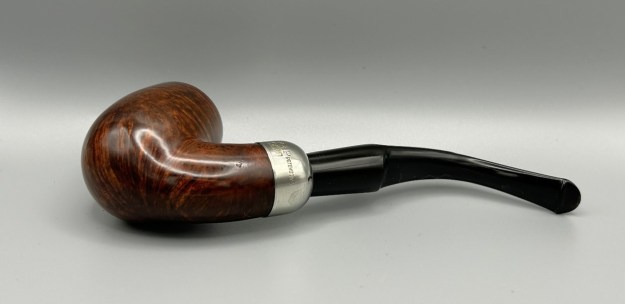
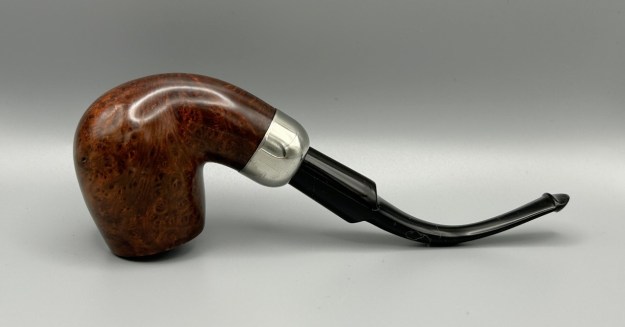
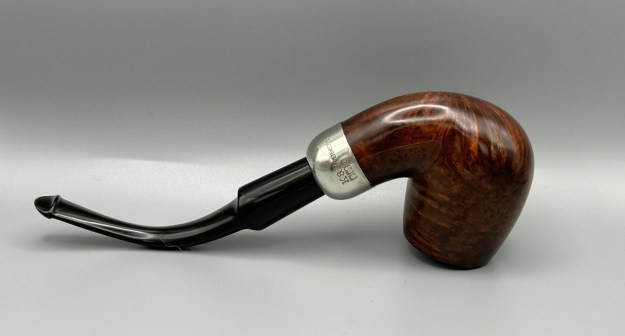
Restoring an old, PRE-Republic Peterson System Standard 307


by Kenneth Lieblich

Beannachtaí na Féile Pádraig dhuit!

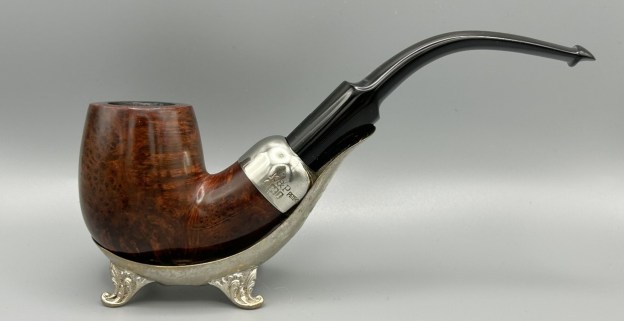
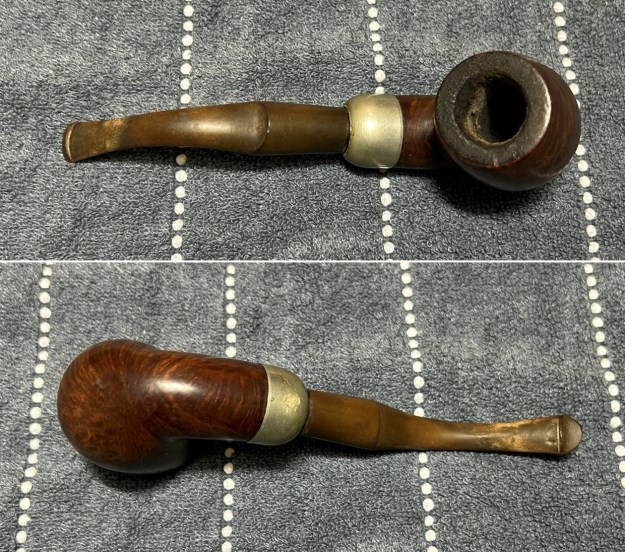
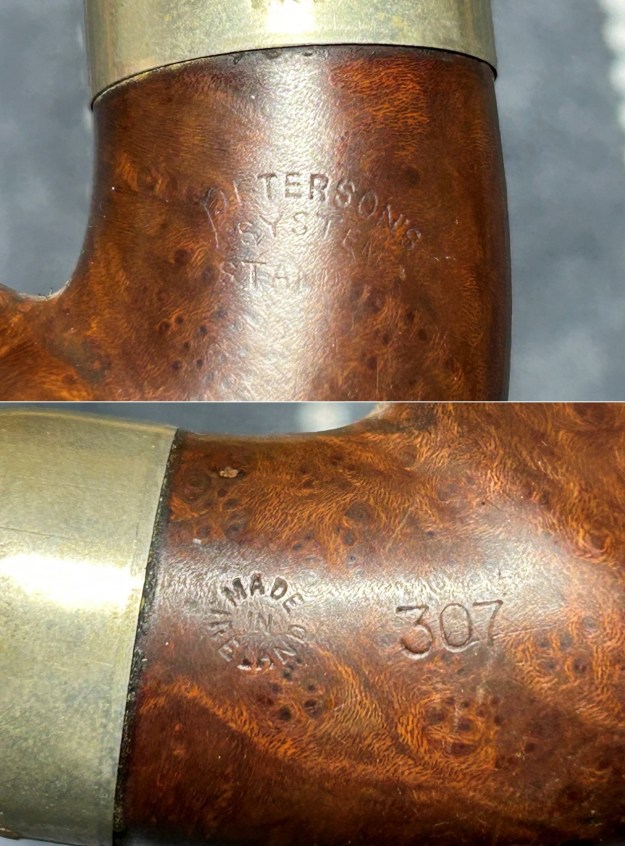
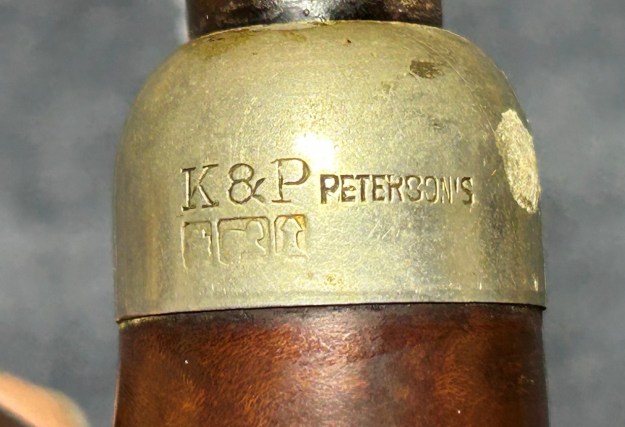
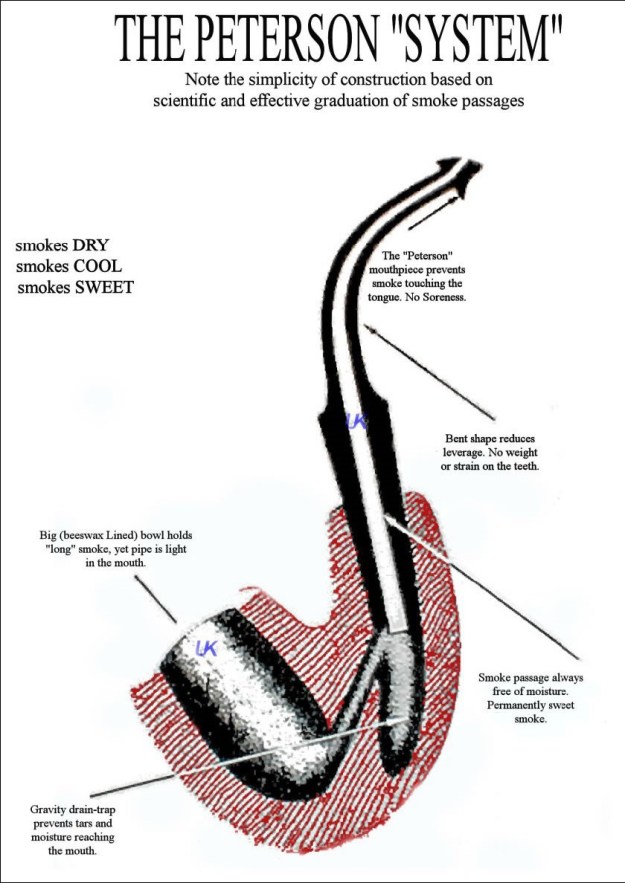
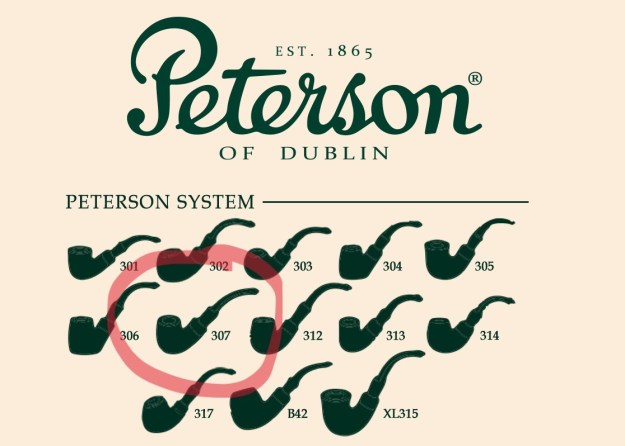
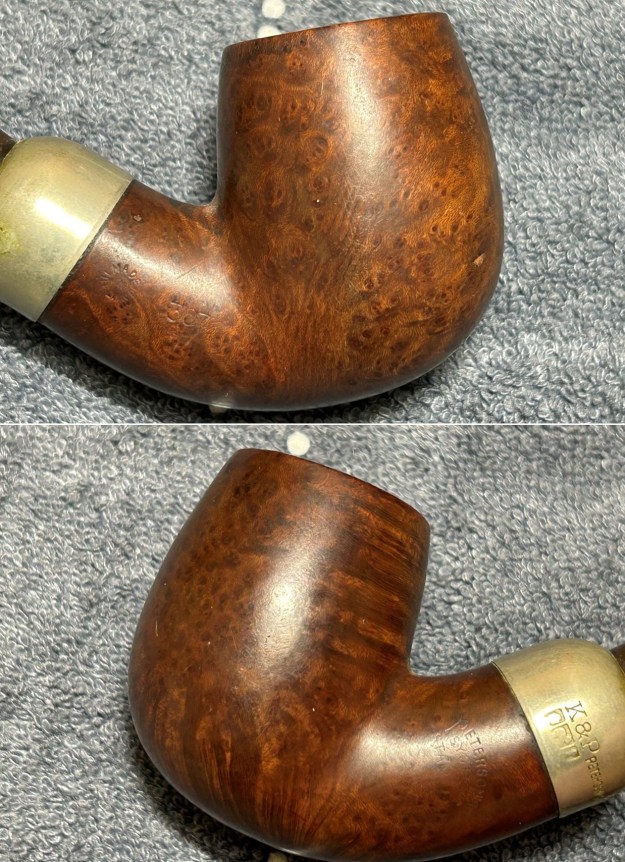
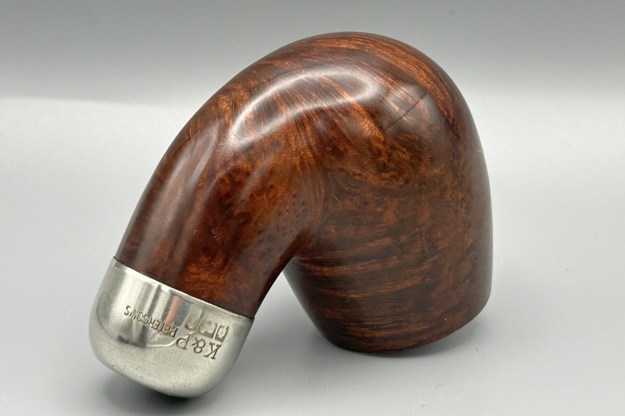
Next from my workbench on this feast of Saint Patrick is this handsome Peterson System Standard 307. It’s an older one, coming from before the Republic of Ireland was established. I acquired it some time ago and I figured that it was time to honour the great patron of Ireland, Saint Patrick, with a pipe from the land he converted. This is a terrific pipe that is a bit worn, but was obviously well-loved. Some special attention from me will bring out its best. This is a really good-looking pipe, and feels comfortable and satisfying in the hand. There is a lovely patina on this old timer and I really want to get this into the hands of a Peterson lover. Let’s have a closer look. This Peterson 307 pipe has the classic ‘System’ look: bent shape, nickel mount, and tapered, army-style stem. Of course, it also has the traditional Peterson P-lip stem. The markings on the left side of the shank are Peterson’s [over] System [over] Standard. The right side of the shank showed Made in Ireland in a circle and, next to that, the shape number 307. The nickel mount on the shank had K&P Peterson’s [over] the typical Peterson faux hallmarks. There were no markings on the stem. The Peterson System pipes are well-storied among Peterson collectors/admirers. I took the opportunity to read the article on Pipedia, specifically about the System pipes, by Jim Lilley. There is lots of good information there and I encourage you to read it: https://pipedia.org/wiki/A_closer_look_at_the_famous_Peterson_Standard_System_Pipe.Having seen that the words “Made in Ireland” were in a circle, I knew that I was dealing with an older pipe. Precisely how old would require some elementary research. The main Pipedia article on Peterson included a few interesting lines:

Charles Peterson applied for a patent for an improved tobacco pipe on the 8th of August 1890. He was awarded patent number 12393 on the 16th of June 1891 for Great Britain and Ireland. This came to be known as the famous ‘System Pipe’ patent…. Later they stamped their pipes with “Made in Ireland” in a circle format 1945-1947…

This is helpful in dating this pipe. I can comfortably say that this pipe dates from 1945 through 1947 – that is to say, about 80 years old (at the time of writing).

As usual, I also owe a debt of gratitude to Mark Irwin of Peterson Pipe Notes. He has a very interesting article on the various System shapes and I highly recommend having a look: https://petersonpipenotes.org/146-a-guide-to-system-shapes-1896-2019-part-1-the-300-shape-group/. He writes the following on the history of the 307:

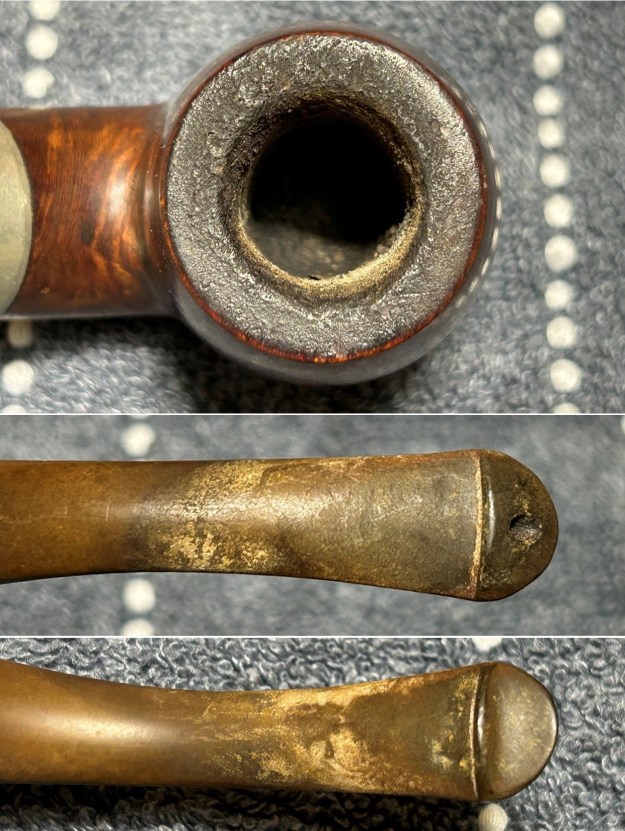
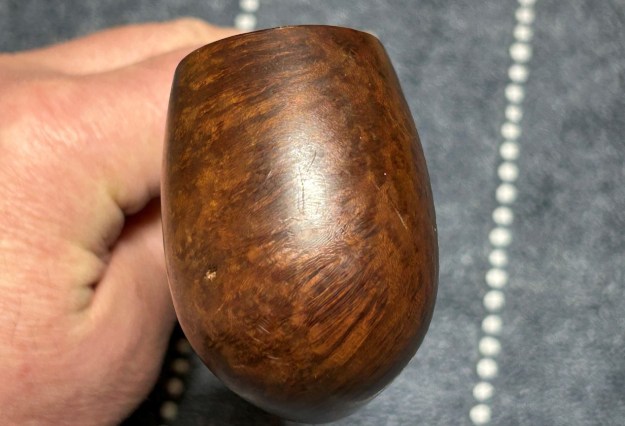
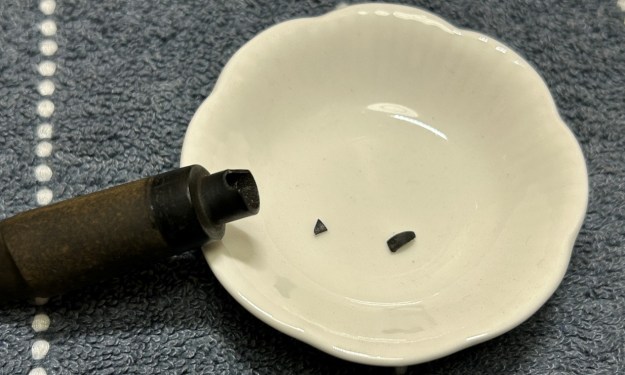
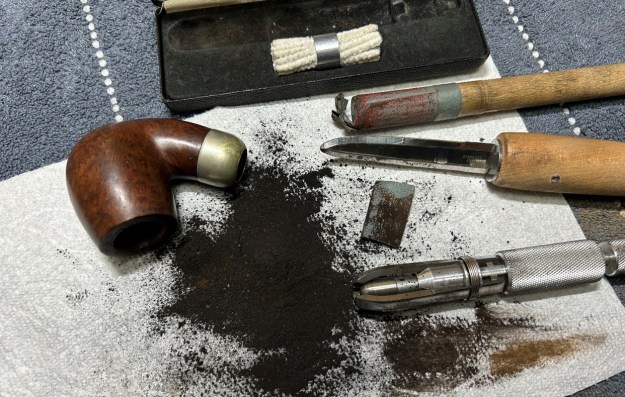
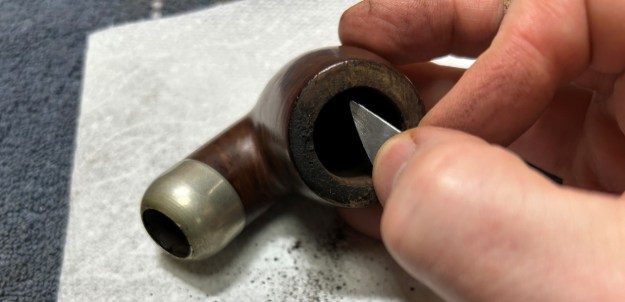
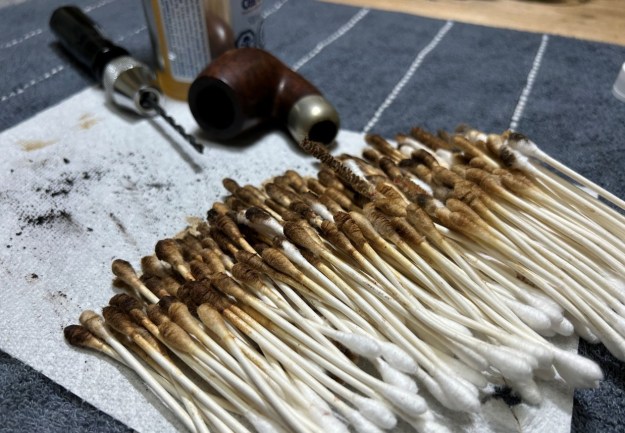
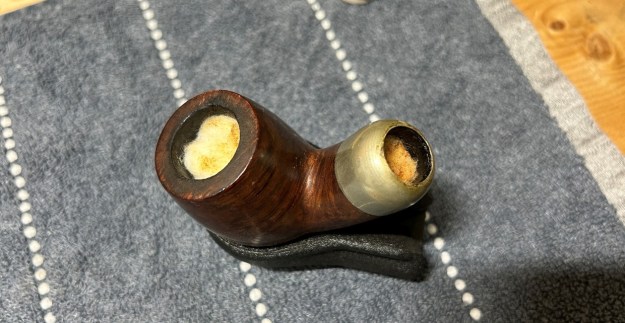
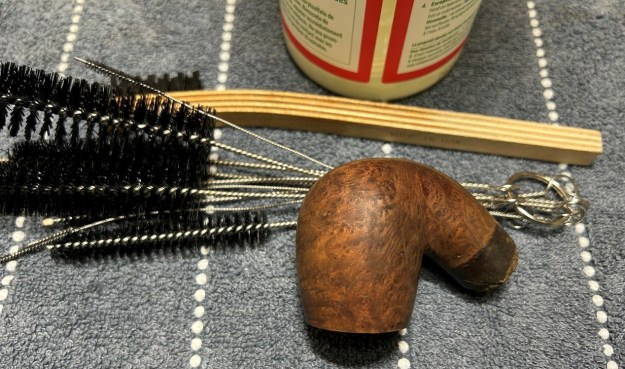
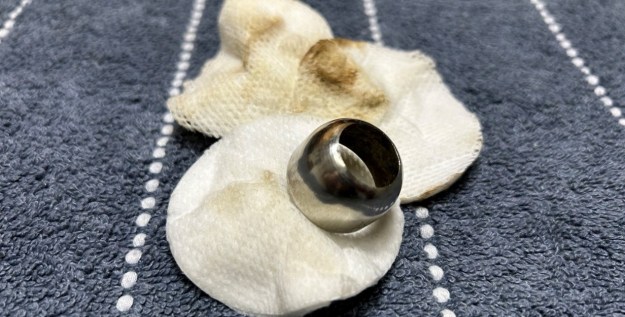
The 307 is an original Patent bent billiard-shape, shown in the 1896 catalog as shape 9. It has retained its original shape number in the De Luxe version, but was issued in the 1937 catalog as the 307 (2nd quality) / 357 (3rd quality). Since then, it has also appeared as the 9S and 9B (De Luxe), Dunmore System 78 (1978-1983), and the Classic Range 9BC (1940s-1950s) / XL90 (1980s-Present). The 9B dating from the 1940s-1960s (the De Luxe System with a tapered rather than saddle bit) is rarely seen on the estate market. There have been changes in the shape since the 1960s, all toward less “cheeking,” making earlier versions, when available, preferable to those wishing to get back to the first, classic iteration of the shape.On to the pipe itself – well, it has seen better days. This one was obviously a great smoker, because the previous owner smoked it thoroughly. The stem is very dirty, oxidized, calcified, and has a few tooth marks. The bowl has a lot of lava on the rim, lots of cake in the bowl, and a few nicks in the briar. But, as Steve always says, this is part of the pipe’s story. Despite the filth, you can see how smart this pipe is. Let’s get on with the work. I used a disposable lighter and ‘painted’ the stem with its flame. The gentle heat of the flame can cause the dents in the vulcanite of the stem to expand back into shape. This helped a bit. The stem’s calcification was quite substantial. I used an old butter knife and gently scraped some of the thicker accretion off. Doing this now helps later in removing the oxidation.I used isopropyl alcohol on a few cotton rounds and wiped down the stem to provide an initial cleaning of filth before moving on to the next steps. The primary cleaning came next. I disinfected the inside of the stem with both pipe cleaners and cotton swabs dipped in lemon-infused 99% isopropyl alcohol. I scrubbed thoroughly to make sure the interior was very clean. I used a lot of pipe cleaners and cotton swabs – this stem was dirty!The goal of the next step is the removal (or minimization) of oxidation. Going to my sink, I used cream cleanser, cotton rounds, and a toothbrush, and scoured the stem to remove as much surface oxidation as possible. As the photos show, the result was a hideous, ochre-coloured mess – but better off the stem than on it.Once the stem was reasonably clean, I soaked it overnight in some Briarville Stem Oxidation Remover. This solution works to draw oxidation in the stem to the surface of the vulcanite. This is a major aid and an important step in ensuring a clean stem. The following day, I drew out the stem from its bath and scrubbed the lingering fluid with a toothbrush.As the stem was now clean and dry, I set about fixing the marks and dents in the vulcanite. This was done by filling those divots with black cyanoacrylate adhesive, impregnated with carbon and rubber. At some point in the process, two tiny pieces of the tenon broke. Even though this has no effect on the pipe, I took the time to repair it. It took some patience, tweezers, effort, a dental tool, and some CA glue, but I was really pleased with the results. It is a perfect repair. I wish I had photos of the repair process, but I needed both my hands at the time!The penultimate step for the stem is sanding. First, with my set of needle files, I reduced the bulk of the cyanoacrylate repairs. I removed the excess adhesive as near to the surface as possible, without cutting into the vulcanite. Following that, I used all nine of the micromesh sanding pads (1,500 through 12,000 grit) to sand out flaws, even out the vulcanite, and provide gentle polishing of the finished surface. I also applied pipe-stem oil while using the last five micromesh pads. There was a wonderful, deep black shine to the stem when I was done.As the stem was (nearly) complete, I moved on to the stummel. The first step was to ream out the bowl – that is to say, remove all the cake inside the bowl. This accomplished a couple of things. First (and most obviously), it cleaned the bowl and provided a refurbished chamber for future smoking. Second, when the old cake was removed, I could inspect the interior walls of the bowl and determine if there was damage or not. I used a reamer, a pipe knife, and a piece of sandpaper taped to a wooden dowel. Collectively, these ensured that all the debris was removed.My next step was to remove the lava on the rim. For this, I took a piece of machine steel and gently scraped the lava away. The metal’s edge is sharp enough to remove what I need, but not so sharp that it damages the rim. This work revealed that there were some burn marks on the rim, but nothing terrible. Again, this is a lingering legacy of the man who once smoked it.The inside of the stummel needed to be cleaned thoroughly. However, this pipe was so clogged, that I first needed to open the horribly occluded airway. So, I took a long drill bit, held in a drill chuck, and hand-cranked it to dislodge the dreadful detritus inside. Hand cranking is essential because it provides a precision and caution that a power drill cannot provide. Similar to the stem, I then cleaned the stummel with both pipe cleaners and cotton swabs dipped in lemon-infused 99% isopropyl alcohol. I cannot (and the photo below cannot) convey to you how dirty this pipe was. Holy moly. It took forever and so much cotton to clean.After that, you’d better believe that I decided to ‘de-ghost’ the pipe – that is to say, exorcize the remaining filth from the briar. I filled the bowl and the shank with cotton balls, then saturated them with 99% isopropyl alcohol. I let the stummel sit overnight. This caused the remaining oils, tars and smells to leach out into the cotton.To tidy up the briar, I wiped down the outside, using a solution of a pH-neutral detergent and some distilled water, with cotton rounds. I also used a toothbrush in the crevices. This did a good job of cleaning any latent dirt on the surface of the briar. The last step of the cleaning process was to scour the inside of the stummel with the same mild detergent and tube brushes. This was the culmination of a lot of hard work in getting the pipe clean.I used all nine micromesh pads (1,500 through 12,000 grit) to sand the outside of the stummel and finish it off. This sanding minimizes flaws in the briar and provides a beautiful smoothness to the wood. This included buffing up the nickel mount to a beautiful shine! I then reattached the nickel mount with some pH-neutral glue. After letting the glue set, I rubbed some LBE Before & After Restoration Balm into the briar and let it sit for 30 minutes or so. The balm moisturizes the wood and gives a beautiful depth to the briar. I then buffed the stummel with a microfibre cloth. For the final step, I took the pipe to my bench polisher and carefully buffed it – first with a blue diamond compound, then with three coats of carnauba wax. This procedure makes the pipe look its best – the stummel sings and the stem glows.

This Peterson Standard System 307 looks fantastic again and is ready to be enjoyed by its next owner – just in time for St Patrick’s Day. I am pleased to announce that this pipe is for sale! If you are interested in acquiring it for your collection, please have a look in the ‘Irish’ section of the store here on Steve’s website. You can also email me directly at kenneth@knightsofthepipe.com. The approximate dimensions of the pipe are as follows: length 6¼ in. (159 mm); height 2⅛ in. (53 mm); bowl diameter 1⅔ in. (41 mm); chamber diameter ¾ in. (20 mm). The weight of the pipe is 1⅞ oz. (56 g). I hope you enjoyed reading the story of this pipe’s restoration as much as I enjoyed restoring it. If you are interested in more of my work, please follow me here on Steve’s website or send me an email. Thank you very much for reading and, as always, I welcome and encourage your comments.

Restoring Canadian Made Paradis Smooth 5 10 Bent Dublin Filter Pipe


by Steve Laug

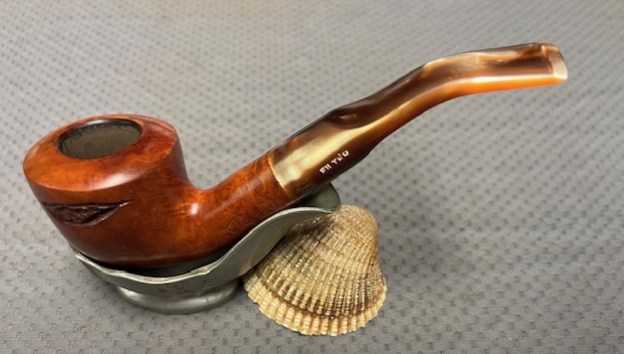
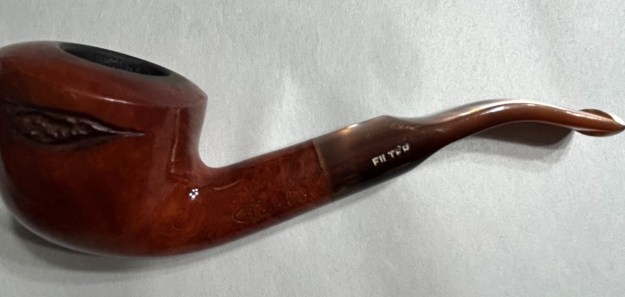
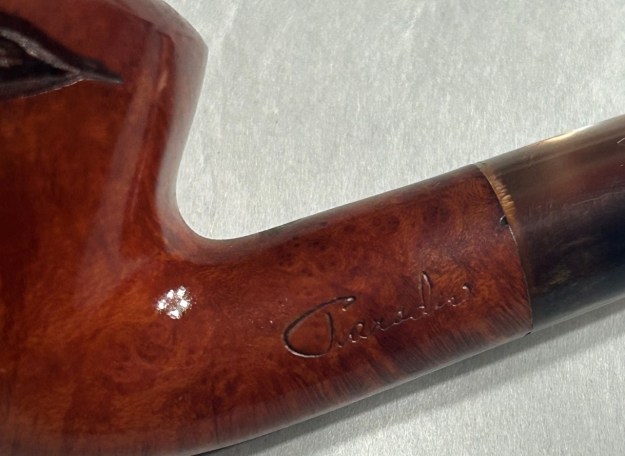
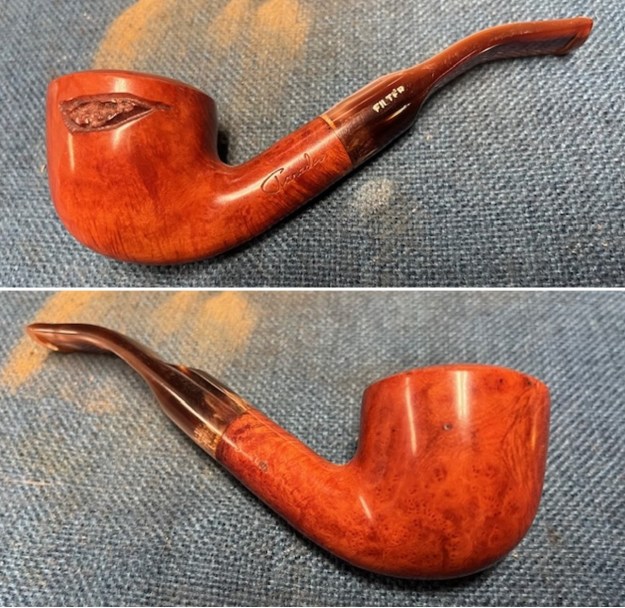
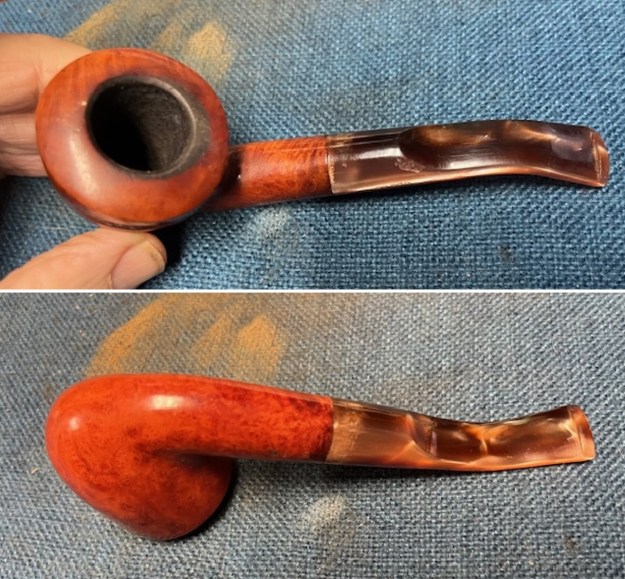
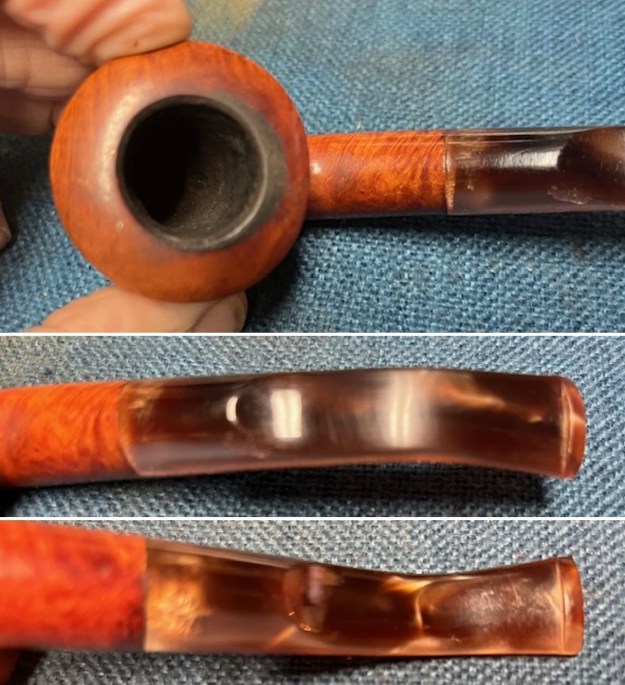
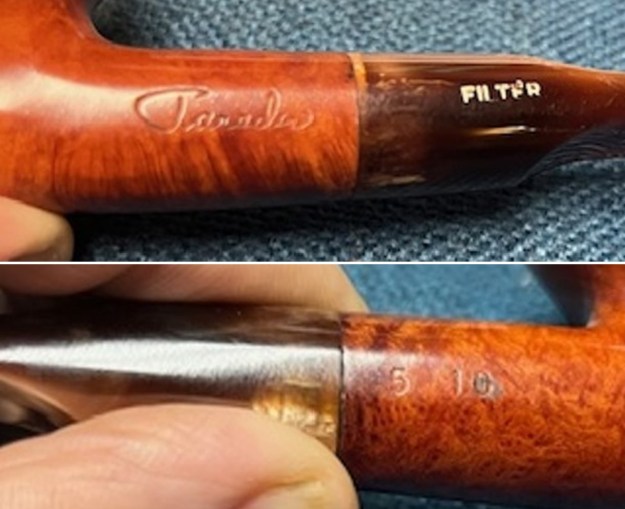
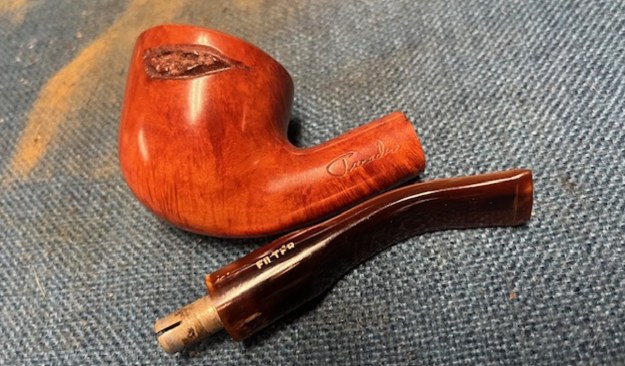
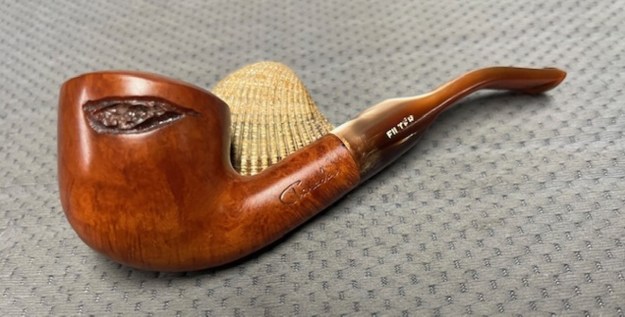
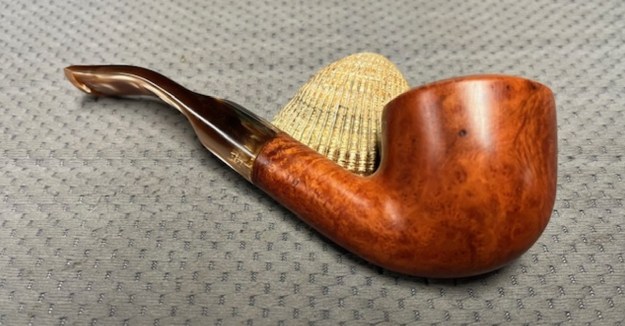
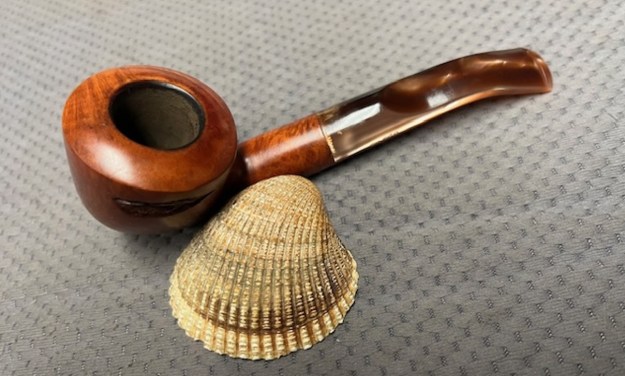
The next pipe is a Canadian Made Paradis Pipe. I purchased it from a seller in Ontario, Canada along with the John Calich pipe I restored already and wrote a blog about the restoration. Here is the link (https://rebornpipes.com/2026/03/12/resurrection-of-a-calich-hand-made-7-rusticated-billiard/). This Paradis pipe was in far better condition than the Calich and was not in need of as extensive a resurrection as that pipe. The Paradis had a moderate cake in the bowl and a light overflow of lava on the rim top. There was darkening on the top and around the inner edge of the rim. The finish was coated with a shiny coat of urethane (seems to be something I am dealing with lately!). It was peeling on the top of the rim and inner edge. It would all need to go. The pipe was stamped on the left side and read Paradis in script. The right side of the shank was stamped with the shape number 5 10. The pipe had a rusticated leaf pattern on the left side of the bowl. The bent acrylic saddle filter stem had a lot of tooth chatter and marks on both sides ahead of the button. It was stamped with the word, FILTER on the left side of the stem.

Before I started my clean up work on the pipe I wanted to remind myself of the brand and the information that was available. I knew Paradis Pipes was a Canadian pipe company, based in Montréal. I also knew that Kenneth had done a similar restoration on a Paradis Filter pipe (https://rebornpipes.com/2024/01/31/cleaning-up-an-interesting-paradis-star-freehand-pot/). I quote from his work below:

… I turned to Pipedia and Pipephil (http://www.pipephil.eu/logos/en/logo-p1.html) to seek out more information. Here’s some of what I found (after correcting the many spelling errors):

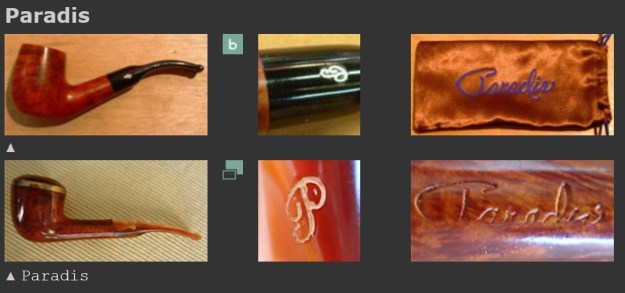
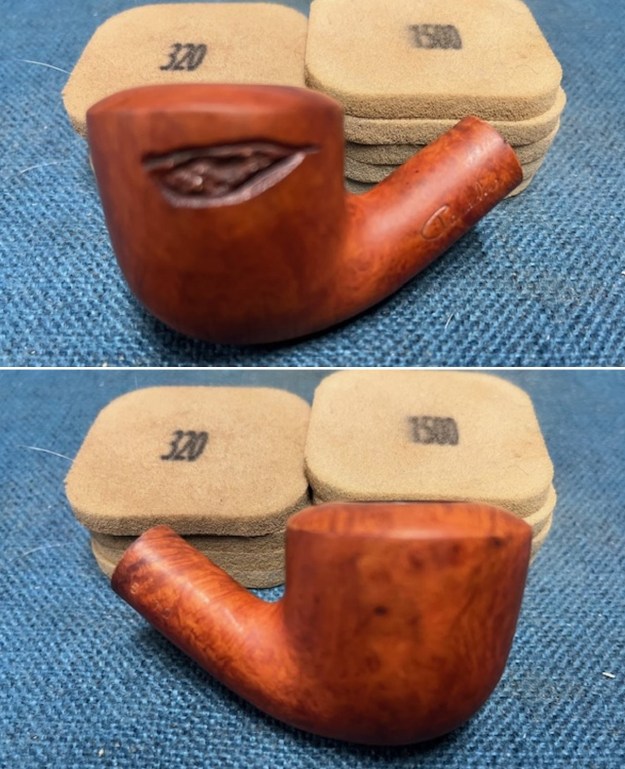
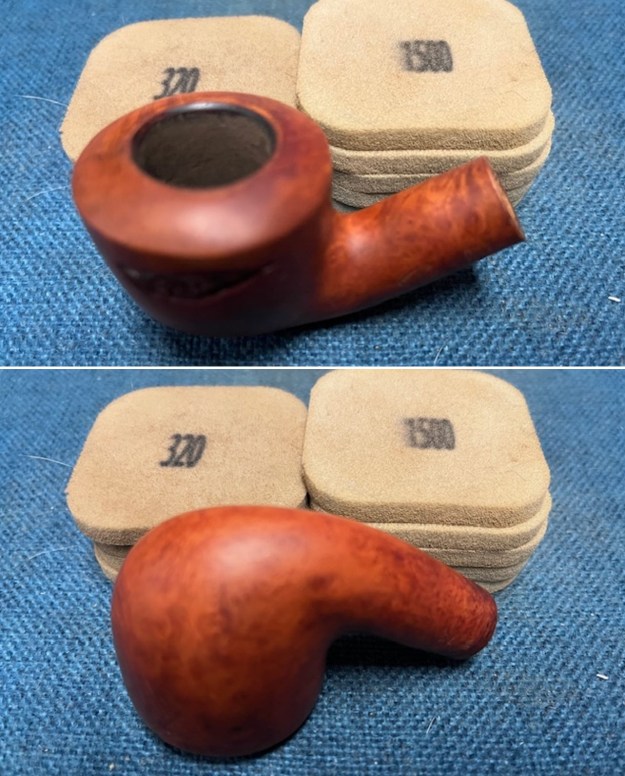
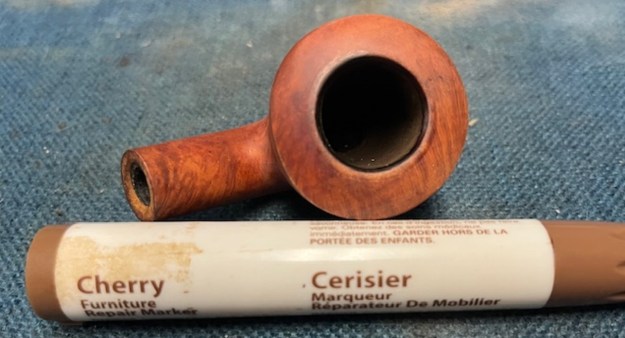
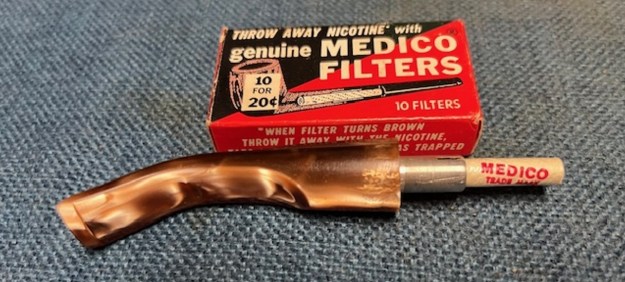
Paradis Pipes is the Canadian brand of the brothers Gilles and Fernand Paradis. In 1922 the Paradis family moved to the USA, when Lucien Paradis (1906-1979) was 16 years old. It was at this age that he started as an apprentice at his uncle’s pipe factory: Joseph B. Desjardins, maker of (JD) pipes, in Fall River, MA. Joseph Desjardins was issued two patents during this period, one for a new machine for making pipe stems and another for a new design of pipe reamer. The company employed 60 workers at one stage. In 1930, due to the Great Depressions, Lucien lost his job and returned to Quebec to work in the agricultural machine industry. In his spare time, be made pipes, selling them door to door. Three years later the rest of the family joined him, and Lucien founded a pipe factory with two of his brothers. The company eventually employed 18 workers and in the 1960s produced over 50,000 pipes a year, under brads like JBL, Dr. Thomas, Fernand Gignac, S.C. Pipes, New London Golfer, and Jo Thomassin. Paradis was founded in 1978, at the Salon of Quebec Artisans, and is available in tobacconists all over the country today. The brand produces 8,000 pipes a year (400 “handmade”), with Greek briar. (I have also included a screen capture of the section on Pipephil.)The pipe was in decent condition. It had been well-smoked, and the bowl and shank were fairly dirty. The bowl had some cake on the inside and a bit of lava on the rim. The crowned rim top was spotty but in decent condition other than being dirty. Meanwhile, the stem was relatively dirty. It was made of acrylic, so no oxidation to speak of, but there were tooth marks and chatter on the bit. Fortunately, no dents and no filter. I am including two photos sent to me by the seller. When the pipe arrived I took some better photos to try and capture the damaged rim top and edges as well as the dirty rustication on the leaf carved on the left side of the bowl. I think there is still the bones of a beautiful pipe under the dirt and damaged shiny coat. I took a close up photo of the rim top to show the lava build up and darkening on therim top and the inner edge. You can also see the cake in the bowl. The crowned rim top looks very good under the lava coat. The stem is dirty with tooth marks and chatter on both sides of the ste ahead of the button.I took photos of the stamping on the sides of shank and the Filter stamp on the left side of the saddle stem. It is clear and readable as noted above. I sanded the bowl and rim top with 320-3500 grit 2×2 inch sanding pads to remove the shiny coat of urethane and the lava build up on the rim top and the inner edge of the bowl. I wiped the briar down arfter each sanding pad and the bowl began to look very good. I reamed the bowl with a Savinelli Fitsall pipe knife. I sanded the bowl walls with 220 grit sandpaper wrapped around a dowel. The bowl began to look very good.I cleaned out the inside of the pipe – the shank, airway in the mortise and the stem with pipe cleaners, cotton swabs and alcohol. It was quite dirty. I find that the metal filter tenons are typically very dirty.I touched up the inner edge of the rim with a Cherry Stain pen to match the rest of the stain around the bowl and rim. It looks very good.I polished the briar with 1500-12000 grit micromesh sanding pads to smooth out the scratches and marks on the briar and rim top. I wiped the bowl down with a damp cloth after each sanding pad to remove any sanding debris. It was looking very good. I rubbed the bowl surface with Before & After Restoration Balm and worked it into the briar with my fingertips. The products works to deep clean, enliven and protect the briar. I let it sit on the briar for 10 minutes then buffed it off with a soft cloth. It looks beautiful with the polish. I set the bowl aside and turned my attention to the stem. I sanded out the tooth marks and chatter on the top and underside of the stem ahead of the button with a folded piece of 220 grit sandpaper. It removed them and made the surface smooth once more.I sanded the oxidation on the stem with 320-3500 grit 2×2 inch sanding pads. I wiped it down after each sanding pad with a cloth impregnated with Obsidian Oil. The stem began to take on a shine.I set the bowl aside and turned my attention to the stem. It was in great condition after the cleanup so I polished the stem with micromesh sanding pads – dry sanding it 1500-12000 pads. I wiped it down with Obsidian after each pad to remove the dust and polishing debris. I polished it with Before After Pipe Polish – both Fine and Extra Fine. I gave it another coat of Obsidian Oil. I fit the stem with a Medico paper filter and it worked well with the metal tenon on the pipe.This restored Paradis Filter Bent Dublin turned out to be a nice looking pipe. The rich medium brown stain on the pipe worked really well with the polished acrylic fancy saddle stem. I put the stem back on the bowl and carefully buffed the pipe with Blue Diamond on the buffing wheel. I gave the bowl and stem multiple coats of carnauba wax on the buffing wheel keeping a light touch on the buffing wheel for the bowl. I followed that by buffing the entire pipe with a clean buffing pad. I hand buffed the pipe with a microfiber cloth to deepen the shine. The finished Paradis Bent Billiard is shaped to sit comfortably in the hand. Give the finished pipe a look in the photos below. The dimensions of the pipe are Length: 5inches, Height: 1 ¾ inches, Outside diameter of the bowl: 1 ½ inches, Chamber diameter: ¾ of an inch. The weight of the pipe is 1.45 ounces/41 grams. Now that it is cleaned up I will be putting it on the rebornpipes store in the Canadian Pipe Makers Section. If you are interested in adding the pipe to your collection let me know. Thanks for reading this blog and my reflections on the pipe while I worked on it.

Thanks for walking through the restoration with me as I worked over another beautiful pipe. Remember we are not pipe owners; we are pipemen and women who hold our pipes in trust until they pass on into the trust of the next generation.

Rebirthing a Claude Romain Flair St. Claude France 2813 long shank apple


by Steve Laug

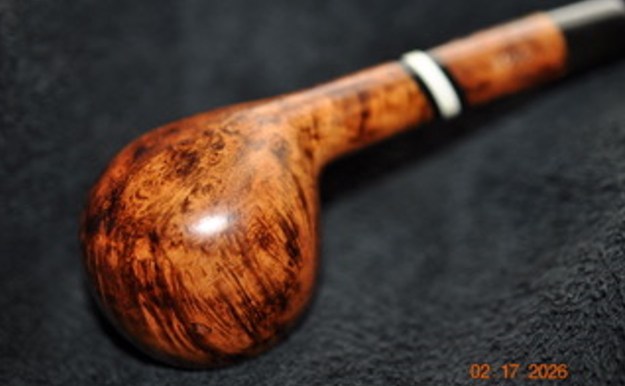
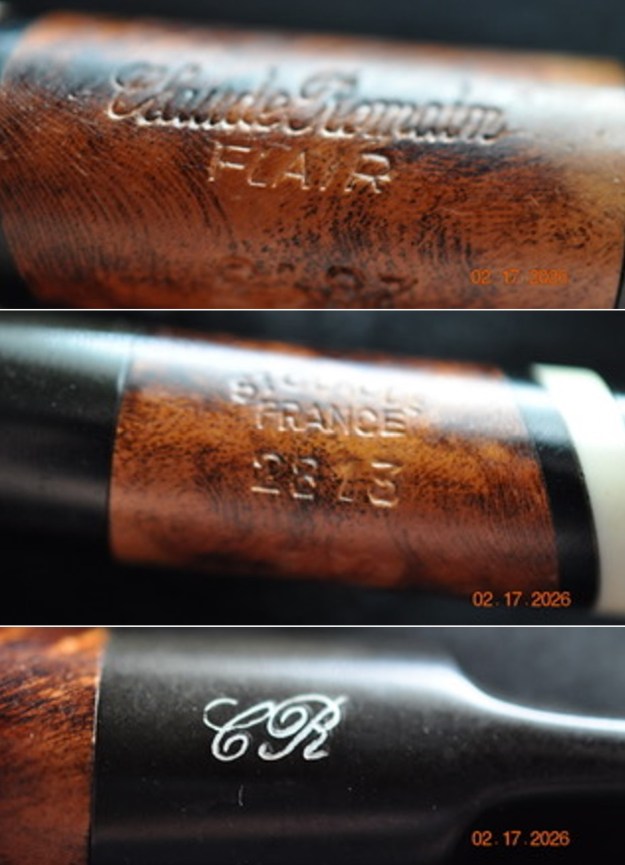
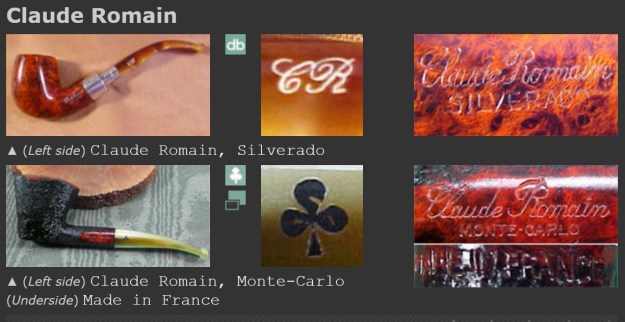
This particular Claude Romain pipe was purchased on 01/20/2026 from a Facebook seller in Quaker Town, Pennsylvania, USA. It really is a beautiful long shank apple with flair of white and black slashed around the shank as can be seen in the photos below. The bowl is smooth and stained with a contrast of browns. It is stamped on the underside of the shank and reads Claude Romain [over] Flair. On the right side of the shank it is stamped St. Claude [arched over] France [over] the shape number 2813. The bowl had a light cake on a recently cleaned bowl. It was not heavily smoked. There were some spots of lava overflow in the rim top – heavier toward the back of the bowl. There was grime ground into the finish which left the look quite dull. The short vulcanite saddle stem has the White CR cursive logo stamped on the left side of the saddle. It was lightly oxidized and had light tooth marks and chatter on both sides of the stem ahead of the button. Jeff took photos of the pipe before he started his work on it. He took photos of the rim top to show the condition of the top and edges of the bowl. It is dull and has the lava spots on the surface of the rim. It is uniquely a beautiful pipe. The stem had light tooth marks and chatter on both sides ahead of the button. He took photos of the sides and heel of the bowl to show the finish and the grain around the bowl and the condition of the pipe. You can see the grime ground into the surface of the briar. The black and white slash on the shank is a great highlight in the briar of the long shank. He took photos of the stamping on the underside and the right side of the shank. It is clear and readable as noted above. He also took photos of the CR stamp on the left side of the saddle stem.Before I started working on the pipe, I turned to Pipephil’s site to see if I could learn anything about the Claude Romain Company and the Flair (http://www.pipephil.eu/logos/en/logo-c5.html). There was no listing for the Flair but there was some helpful information. I did a screen capture of the pertinent section and have included the side bar information below the photo.Berrod-Regad group. Essentially produced for the German market

It appears that the pipe was made by the Berrod-Regad group in St. Claude, France to be sold in the German market.

I looked up the Claude Romain brand on Pipedia to see if I could gather further information on the company (https://pipedia.org/wiki/Romain). It confirms the connection to the Berrod-Regad Group and the focus of the German Market. I quote the brief article in full below.   

Claude Romain is a second brand from Butz-Choquin. To elaborate…

(From Pipes, Artisans and Trademarks, by Jose Manuel Lopés’) Claude Romain is a French brand created in 1979 by the Berrod-Regad group for the German market. The name was from Romain (founder of the Condat region in the 5th century, which corresponds to Saint-Claude today) and Claude (a 7th century bishop who gave his name to the town Jura). Stamp Claude Romain, and Made in France. Symbol: CR

The additional information I gained was where the name came from and the connection to Butz-Choquin. I had no idea this was a Butz-Choquin second.

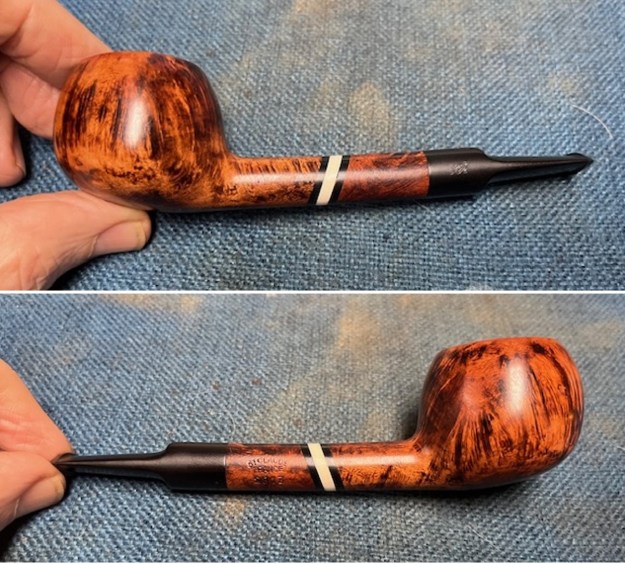
It was time to work on the pipe. As usual Jeff had done a thorough cleanup on the pipe. He cleaned up the reaming of the bowl with a PipNet pipe reamer and a Savinelli Fitsall pipe knife to remove the cake. He scrubbed out the mortise and the airway in the shank and the stem with alcohol, cotton swabs, shank brushes and pipe cleaners. He scrubbed the exterior of the bowl, rim, shank and stem with a tooth brush and Murphy’s Oil Soap to remove the oils and tars on the rim and the grime on the finish of the bowl. He rinsed it under running water. One of the benefits of this scrub is that it also tends to lift some of the scratches and nicks in the surface of the briar. He dried it off with a soft cloth. He soaked the stem in Before & After Deoxidizer and rinsed it off with warm water. The pipe looked good. I took a photo of the rim top and stem to show the condition. The finish on the rim top looked spotty. The vulcanite saddle stem had light tooth chatter and marks on both sides ahead of the button and on the button edges. The stamping on the underside and left side of the shank is clear and readable as noted above. There was a stamp on the left side of the saddle was readable but the white in the stamp was gone. I removed the stem from the shank and took a photo of the pipe to give a sense of the whole. It is a nice-looking long shank apple and should clean up very well. I began my work on the pipe by addressing a shrunken fill on the backside of the bowl. I filled it in with clear superglue. Once it cured I sanded it smooth with a folded piece of 220 grit sandpaper. I touch up the stain on the bowl with a Cherry stain pen and it blended into the surface of the bowl well.I blended the repair into the surrounding briar and polished the briar with micromesh sanding pads – I dry sanded the briar with 1500-12000 grit sanding pads. I wiped the bowl down with a damp cloth after each sanding pad to remove the debris. It really took on a rich shine. I worked some Before & After Restoration Balm into the surface of the briar with my finger tips to get into the wood. The product is incredible and the way it brings the grain to the fore is unique. It works to clean, protect and invigorate the wood. I set the bowl aside and turned my attention to the stem. I touched up the CR stamp on the left side of the saddle stem with white acrylic fingernail polish. I worked it into the stamp with a tooth pick. Once it dried I removed the excess with a 1000 grit sanding pad. It looked good – a little faint at the top of the stamp but still very clean and readable.I polished the stem with micromesh sanding pads – dry sanding it 1500-12000 pads. I wiped it down with Obsidian after each pad to remove the dust and polishing debris. I polished it with Before After Pipe Polish – both Fine and Extra Fine. I gave it another coat of Obsidian Oil. This nicely grained Claude Romain Flair 2813 Long Shank Apple with a flash of black and white acrylic mid shank is a great looking pipe now that it has been restored. The polished vulcanite saddle stem is in great condition. The briar is clean and really came alive. The rich brown with a black under stain gave the grain a sense of depth with the polishing and waxing. The grain really popped. I put the stem back on the bowl and carefully buffed the pipe with Blue Diamond on the buffing wheel using a light touch on the briar. I gave the bowl and the stem multiple coats of carnauba wax on the buffing wheel. I buffed the pipe with a clean buffing pad to raise the shine. I hand buffed the pipe with a microfiber cloth to deepen the shine. The finished Claude Romain Flair 2813 Apple is a beauty and feels great in the hand and looks very good. Give the finished pipe a look in the photos below. The dimensions of the pipe are Length: 5 ½ inches, Height: 1 ½ inches, Outside diameter of the bowl: 1 ¼ inches, Chamber diameter: ¾ of an inch. The weight is 1.45 ounces/41 grams. Thanks for reading this blog and my reflections on the pipe while I worked on it. I will be putting it on the rebornpipes store in the French Pipe Makers Section. If you are interested in adding it to your collection let me know. Thanks for following the blog on this restoration.

A Surprising Collaboration between Sasieni and Tinderbox –A Coventry by Sasieni M55


by Steve Laug

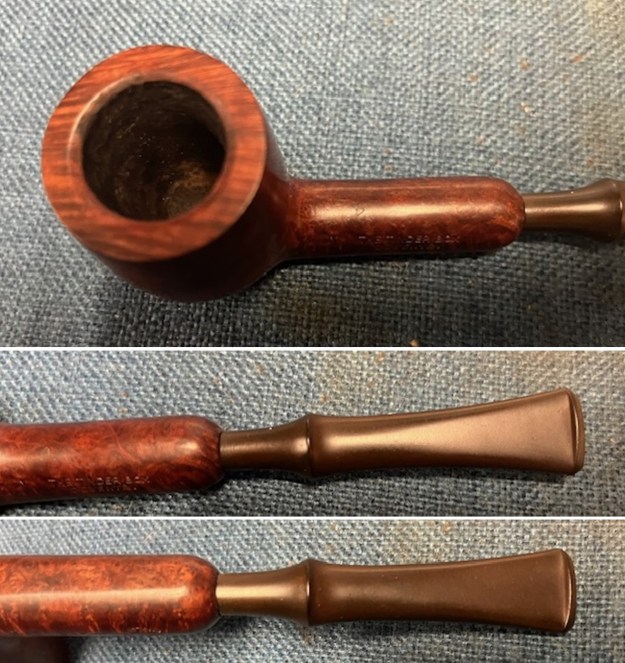
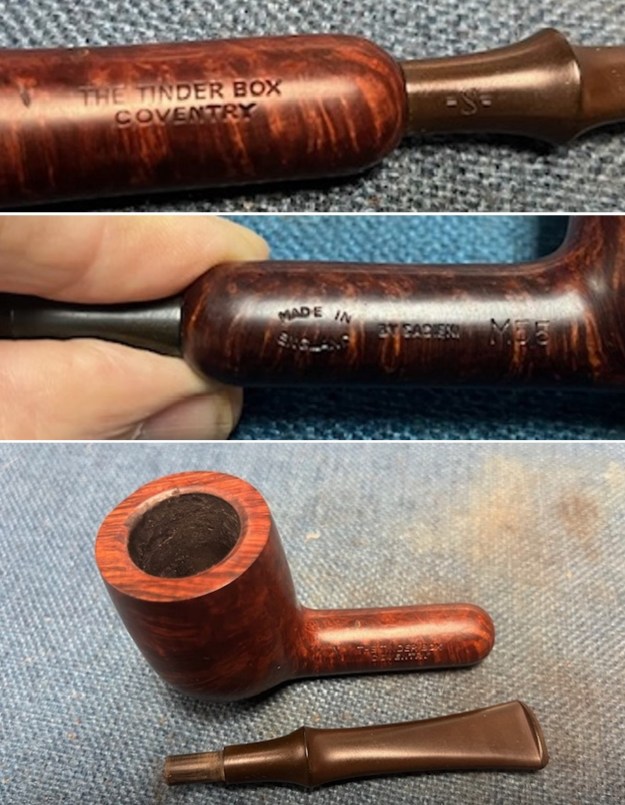
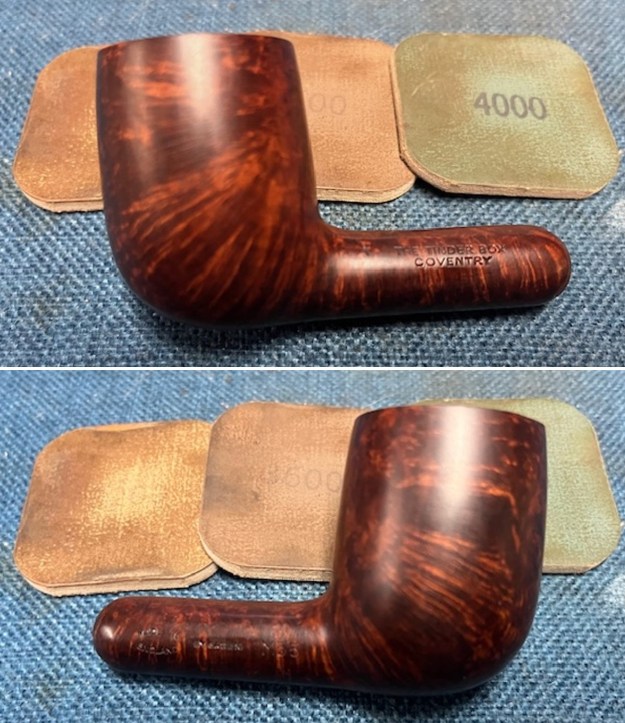
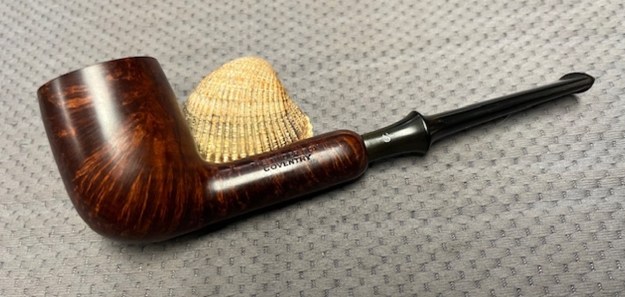
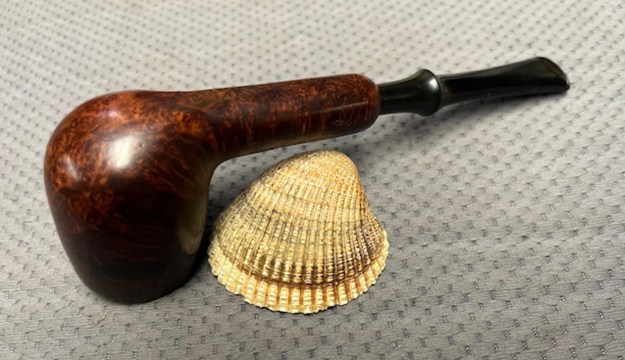
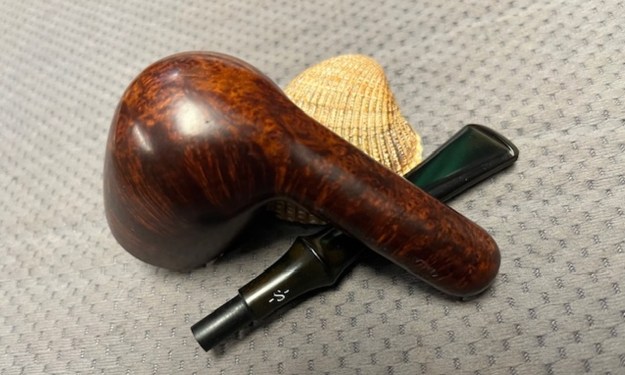
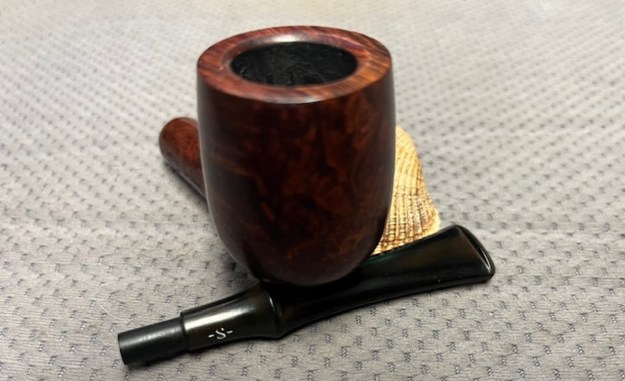
My brother sent me this pipe that was stamped on the left side of the shank The Tinder Box [over] Coventry and on the right side it read by Sasieni and left of that was the rugby ball shaped COM stamping Made In England and to the right it is stamped with the shape number M55. It was stamped with a white -S- on the left side of saddle stem. The finish was dirty with grime ground into the surface. There was some great grain showing through the grime on the sides of the bowl and shank. The bowl had a thick cake with an overflow of lava on the rim top and the bevelled inner edge. The heel of the bowl and shank were flattened and the pipe worked well as a sitter. The military bit stem was oxidized and had light tooth marks and chatter on both sides of the stem ahead of the button. Jeff took photos of the pipe to show the condition of the pipe when we picked it up from the shop. Jeff took photos of the bowl, rim top and the stem to show the condition of the pipe when we received it. You can see the thick cake in the bowl and the lava on the rim top and inner edge. He also captured the condition of the stem showing the tooth chatter and oxidation. Jeff took photos of the sides and heel of the bowl to show the grain in the briar. It is a beautiful bowl. It is nice looking Military Bit Billiard and is eye catching. Have a look. The next photos Jeff took show the stamping on the sides of the shank. The stamping is clear and readable as noted above.I have worked on Sasieni Coventry pipes in the past but never on one that was stamped on the left, The Tinder Box Coventry and on the other side By Sasieni and Made in England before. It was a new one to me. So I did a little searching.

On one of the online forums I found a clue that the Sasieni had worked with The Tinder Bbox. There was a link mentioned in the 1979 Tinderbox catalogue that had the following quotation regarding the line called the Ivory. “Made to our specifications by Albert Sasieni of London. The Sasieni Ivory is a Tinder Box exclusive.” The mention of the name Albert Sasieni I believe is an error as the company was run by Alfred Sasieni.

I knew from the link that Sasieni and the Tinder Box were linked in 1979, the end of the family era. The collaboration between Tinderbox and Sasieni was established in that catalogue. It referred to the Ivory made by Sasieni was like the Unique made by Charatan’s. Both were special orders by Tinder Box from those pipe companies. I have included a copy of the page in the 1979 catalogue.I also found a Sasieni Shape Chart online and copied the page that had the 55 shape listed. The 55 is called a Buckingham. I knew that I was working on a Sasieni/The Tinder Box collaboration pipe that was probably made in the 1970s. The name Coventry by Sasieni and The Tinder Box stamp clearly link the two companies.

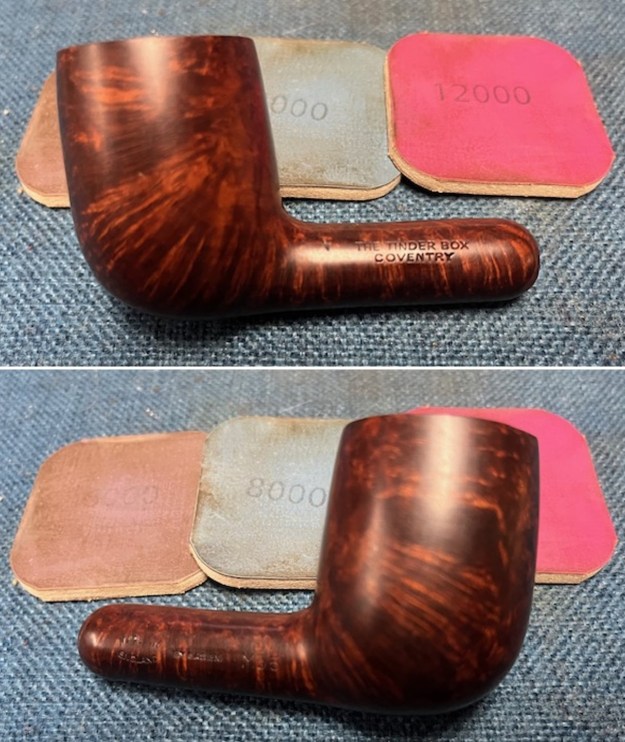
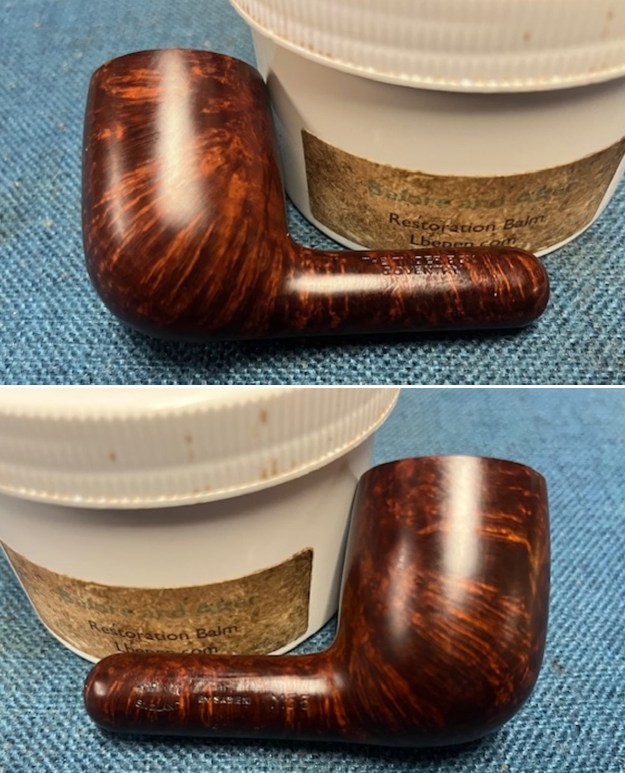
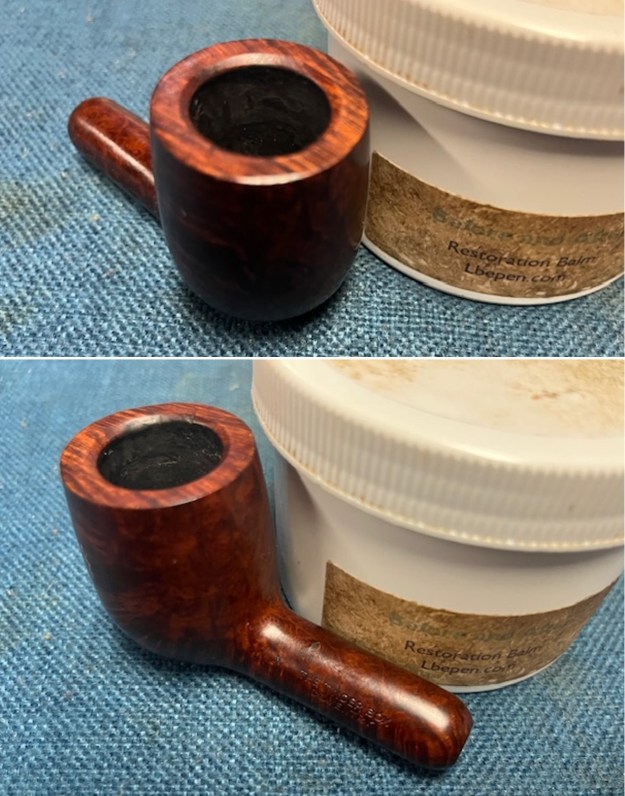
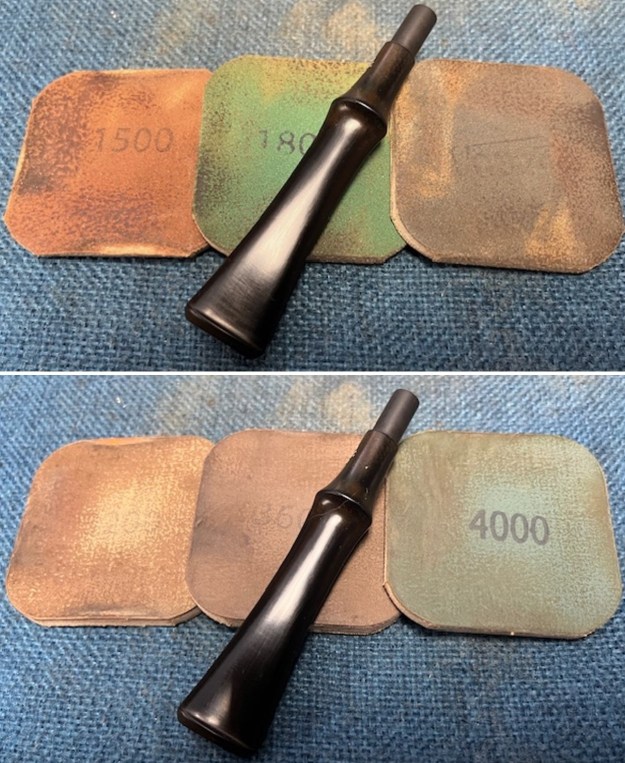
My brother did a great job of cleaning up the pipe. He reamed the bowl with a PipNet pipe reamer and finished the reaming with a Savinelli Fitsall Pipe Knife. He scrubbed the exterior of the bowl with a tooth brush and Murphy’s Oil Soap and rinsed it under running water. He was able to remove the wax and oils on the surface of the bowl and leave the briar pretty bare. The rim top and bevelled inner edge looked very good. He cleaned out the mortise and airway in the shank and stem with pipe cleaners, cotton swabs, shank brushes and alcohol. He scrubbed the stem with Soft Scrub and soaked it in Briarville’s Pipe Stem Deoxidizer to remove the oxidation on the stem. He rinsed it with warm water to remove the deoxidizer from the stem. I took the next photos of the pipe before I started working on it. I took close up photos of the rim and the stem to show the beauty of the rim top post clean up. The bevelled inner edge was also in excellent condition. The stem closeup photos of surface show that it is in good condition and had light oxidation.I took photos of the stamping on the sides of the shank and the -S- logo on the left side of the saddle stem. I took the stem off the shank and took a photo of the parts to give a sense of the beauty of the pipe. I turned to work on the pipe itself. I polished the briar with micromesh sanding pads – I dry sanded the briar with 1500-12000 grit sanding pads. I wiped the bowl down with a damp cloth after each sanding pad to remove the debris. It really took on a rich shine. I worked some Before & After Restoration Balm into the surface of the briar with my finger tips to get into the wood. The product is incredible and the way it brings the grain to the fore is unique. It works to clean, protect and invigorate the wood. I set the bowl aside and turned my attention to the stem. I sanded the stem with 320-3500 grit 2×2 inch sanding pads. I wiped the stem down with Obsidian Oil after each pad. It began to take on a rich shine.I touched up the -S- stamp on the left side of the saddle stem with white acrylic fingernail polish. I worked it into the stamp with a tooth pick. Once it dried I removed the excess with a 1000 grit sanding pad. It looked good – a little faint at the top of the stamp but still very clean and readable.I polished the stem with micromesh sanding pads – dry sanding it 1500-12000 pads. I wiped it down with Obsidian after each pad to remove the dust and polishing debris. I polished it with Before After Pipe Polish – both Fine and Extra Fine. I gave it another coat of Obsidian Oil. The Tinder Box Coventry by Sasieni M55 Billiard with a vulcanite military saddle stem turned out very nice. The mix of brown stains highlights the grain around the bowl sides and bottom. The rim top and bevelled edges look very good. The finish on the pipe is in excellent condition. I put the stem back on the shank and carefully buffed the pipe with Blue Diamond on the buffing wheel. I gave the bowl and stem multiple coats of carnauba wax on the buffing wheel and followed that by buffing the entire pipe with a clean buffing pad. I hand buffed the pipe with a microfiber cloth to deepen the shine. The finished The Tinder Box Coventry by Sasieni M55 is very nice and feels great in the hand. Give the finished pipe a look in the photos below. It is a nice pipe whose dimensions are Length: 6 inches, Height: 2 inches, Outside diameter of the bowl: 1 ¼ inches, Chamber diameter: ¾ of an inch. The weight of the pipe is 45 grams/1.59 ounces. Thanks for walking through the restoration with me as I worked over another beautiful pipe. This one will be going on the rebornpipes store, in the British Pipe Makers Section shortly. If you are interested in adding it to your collection let me know by message or by email to slaug@uniserve.com. Thanks for your time.

As always, I encourage your questions and comments as you read the blog. Thanks to each of you who are reading this blog. Remember we are not pipe owners; we are pipe men and women who hold our pipes in trust until they pass on into the trust of those who follow us.