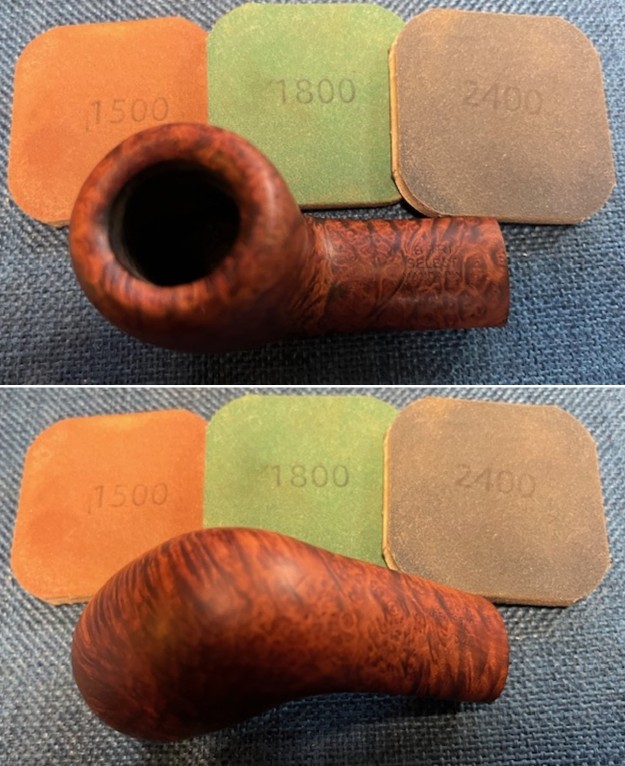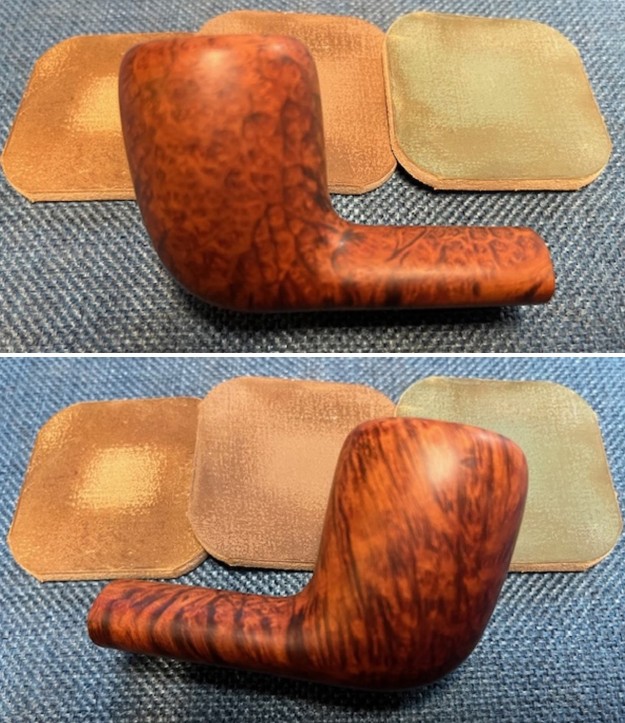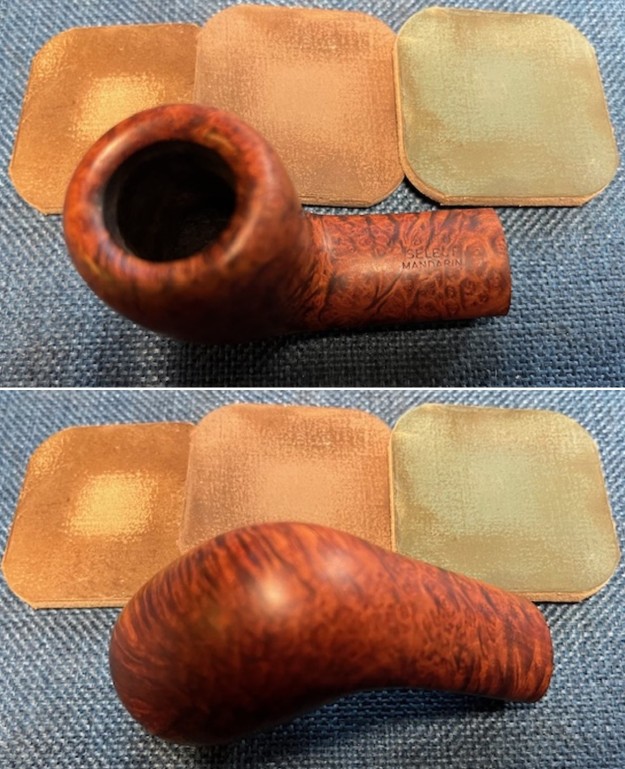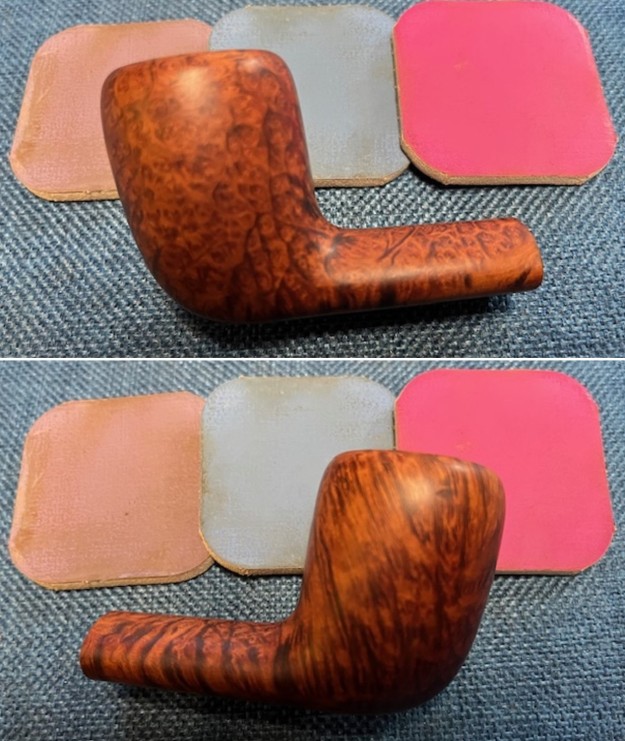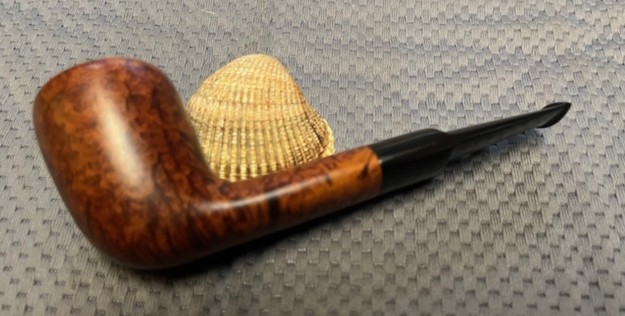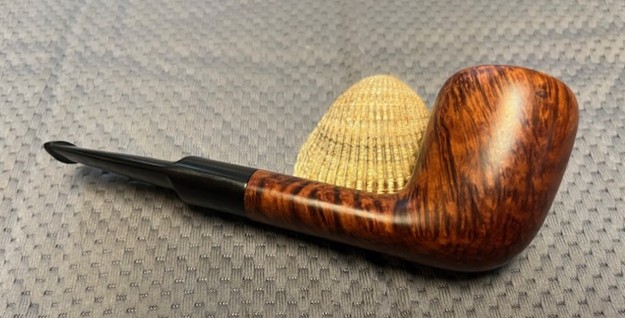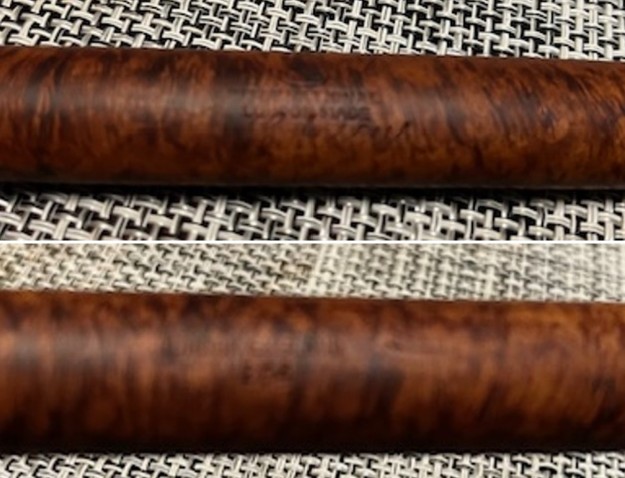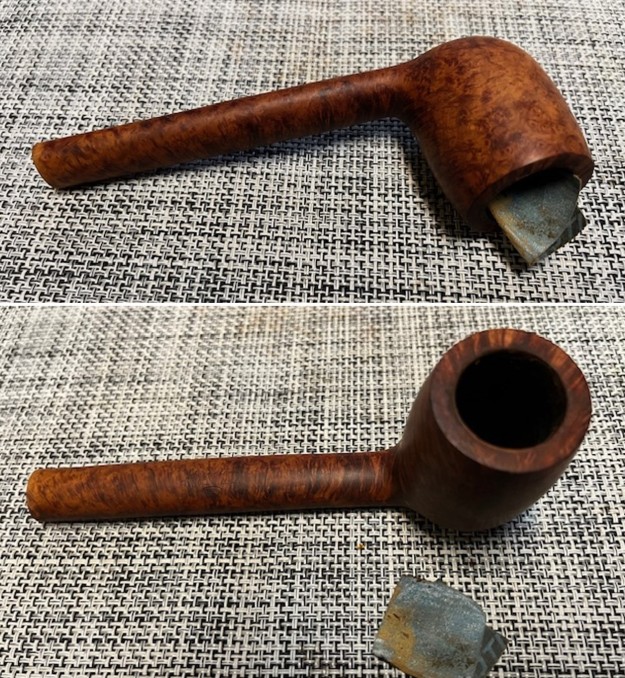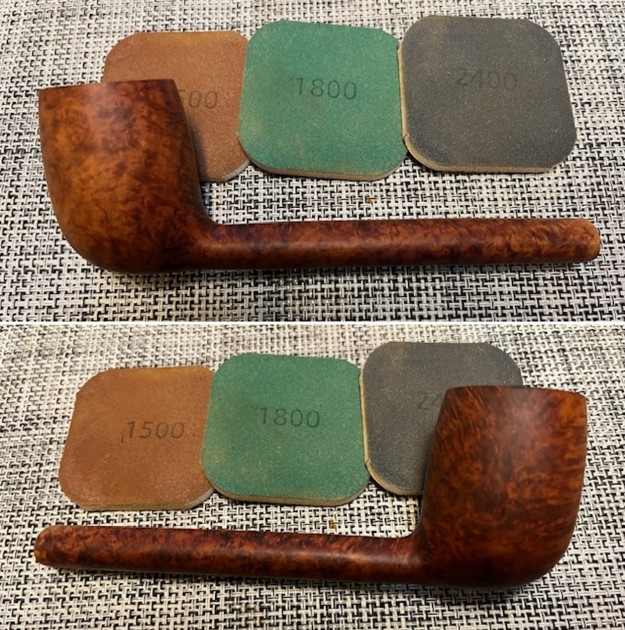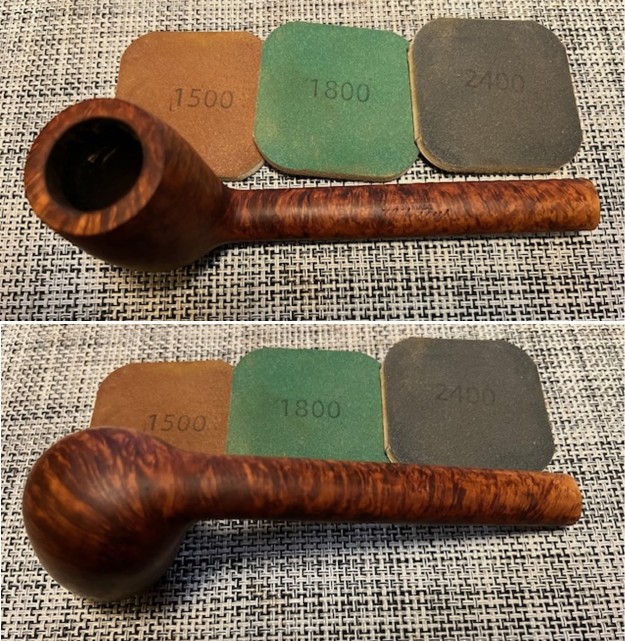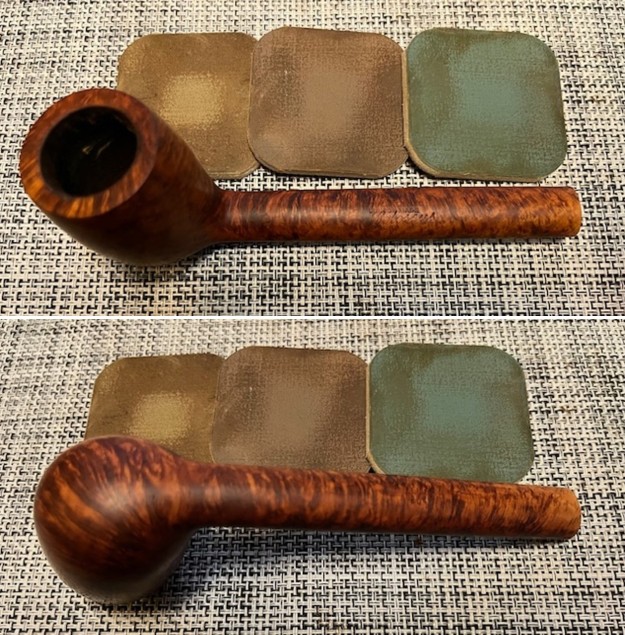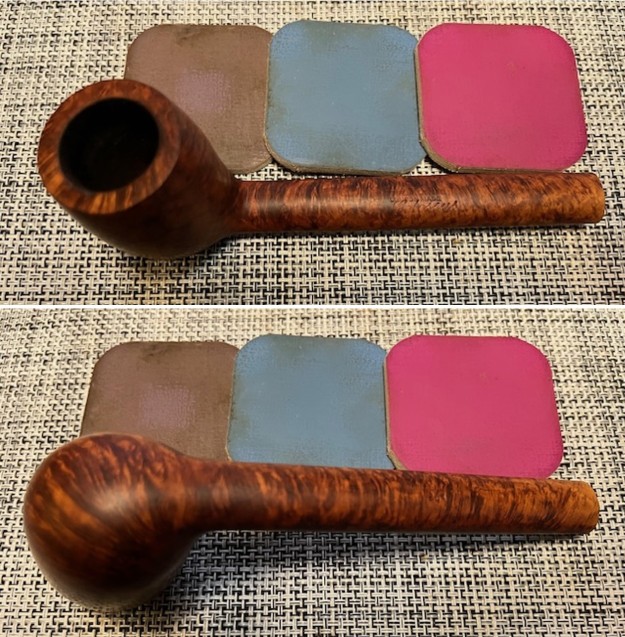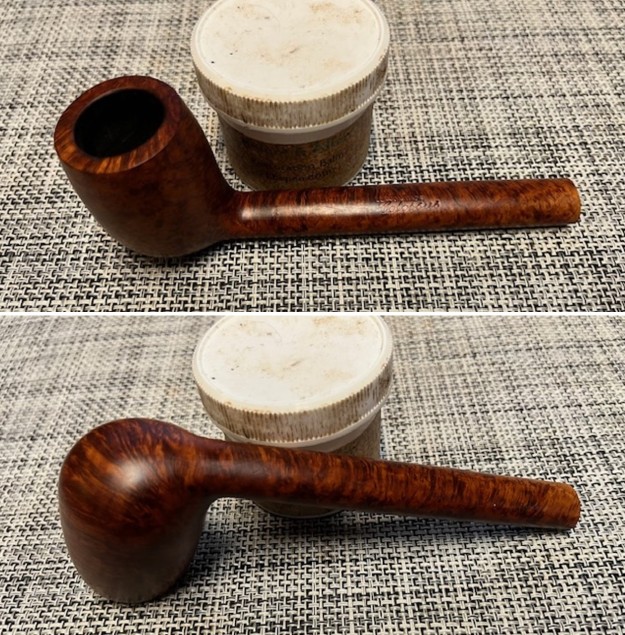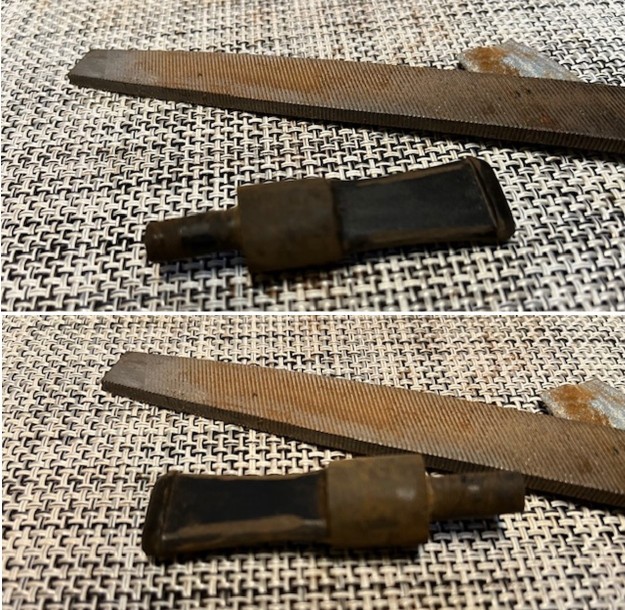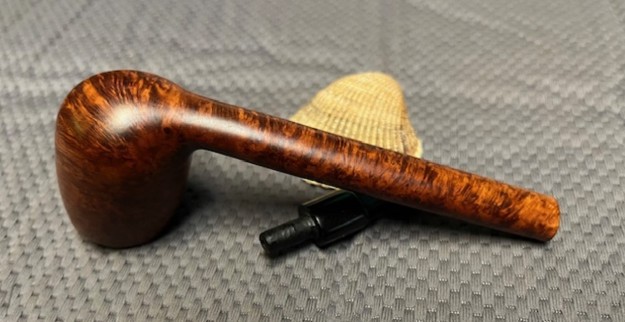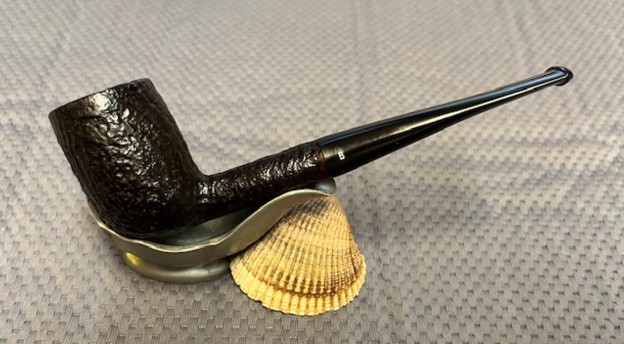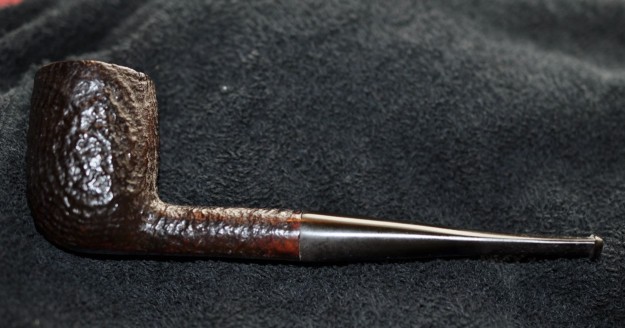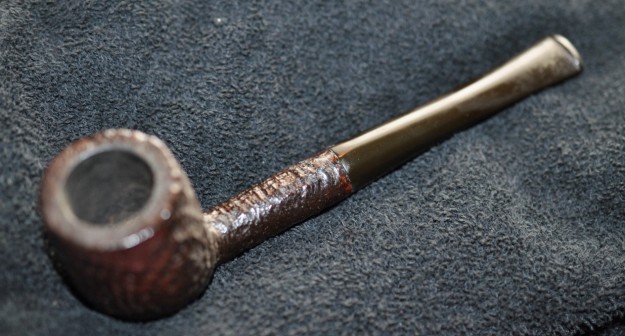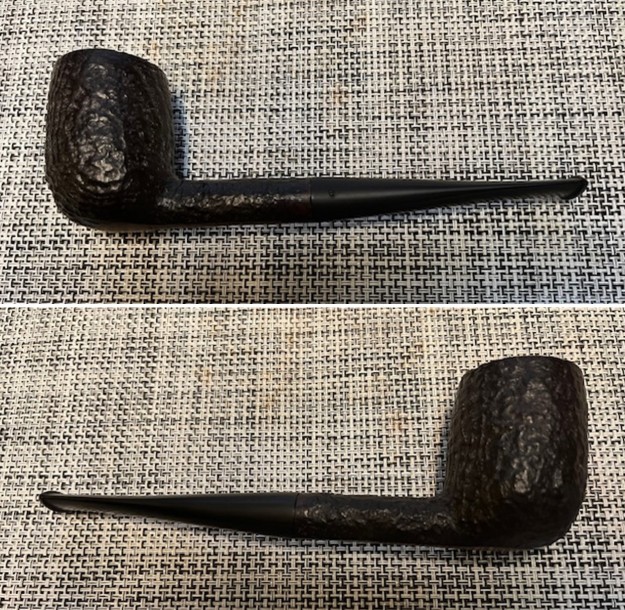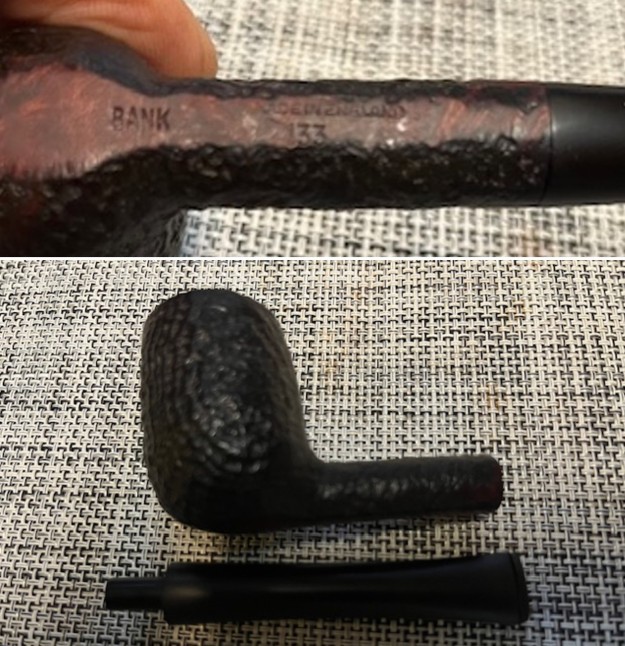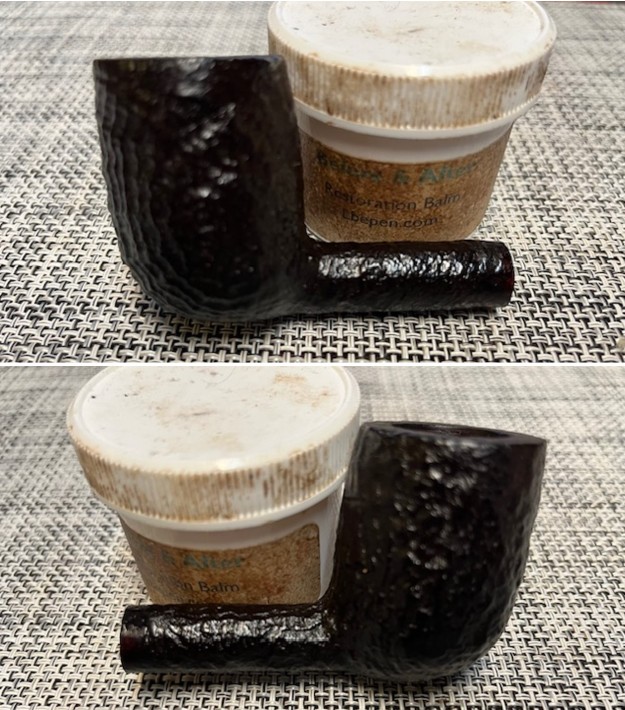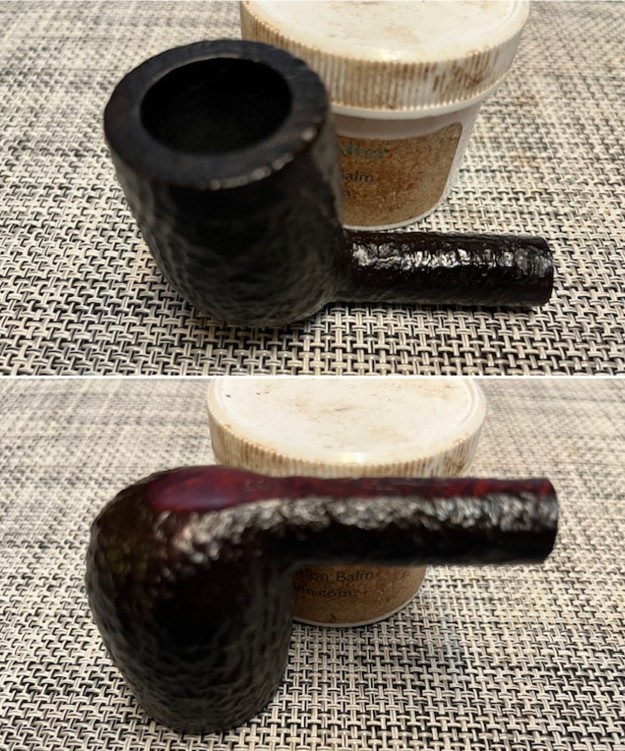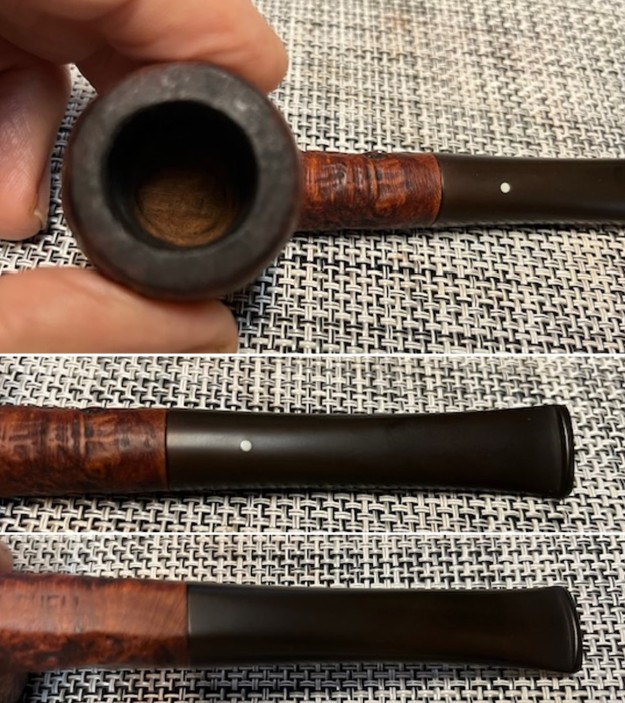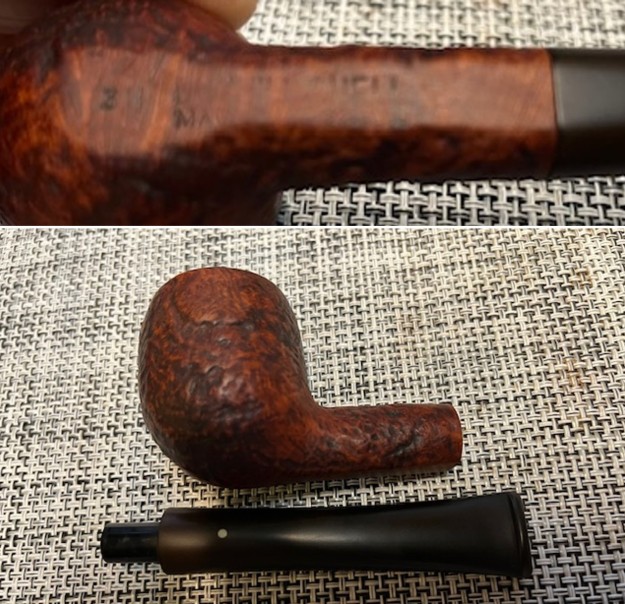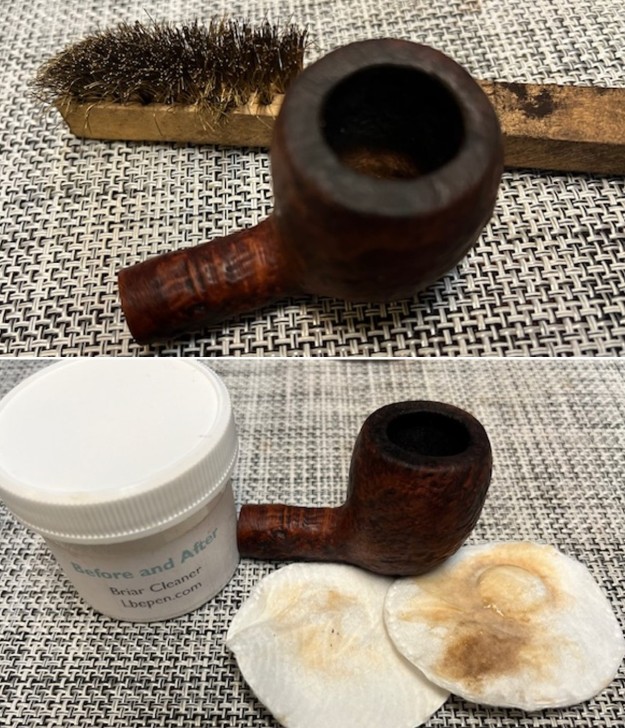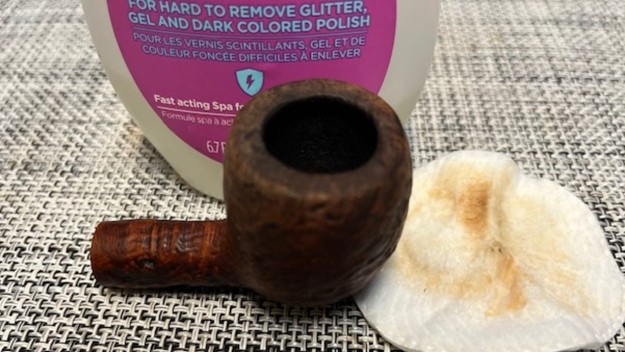
Tag Archives: Bowl – finishing

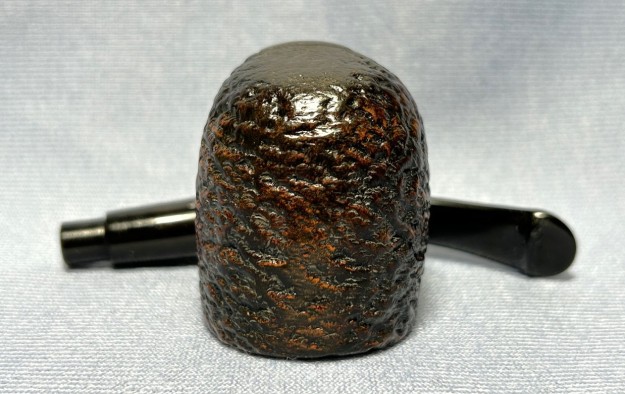
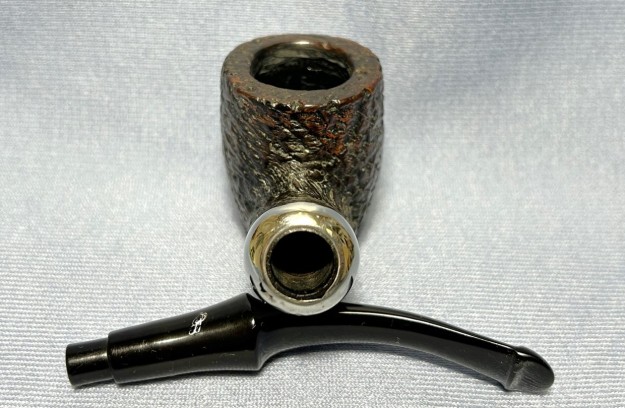
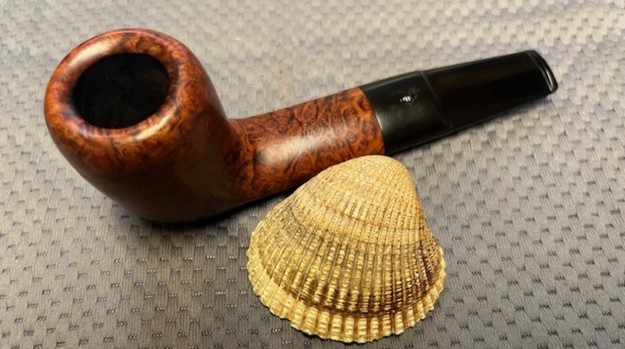
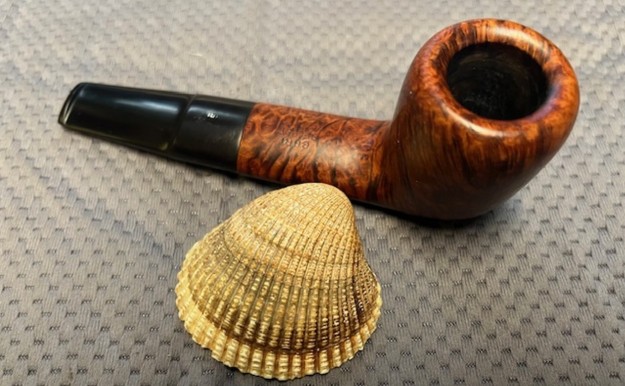
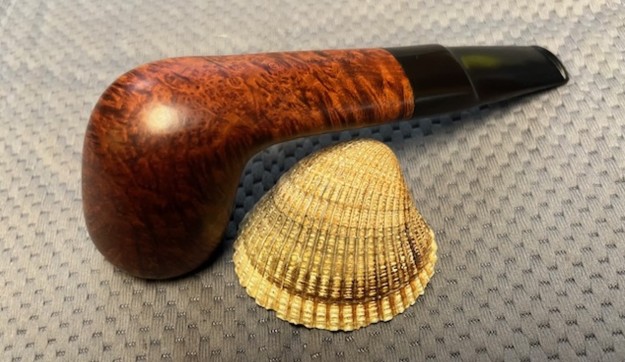
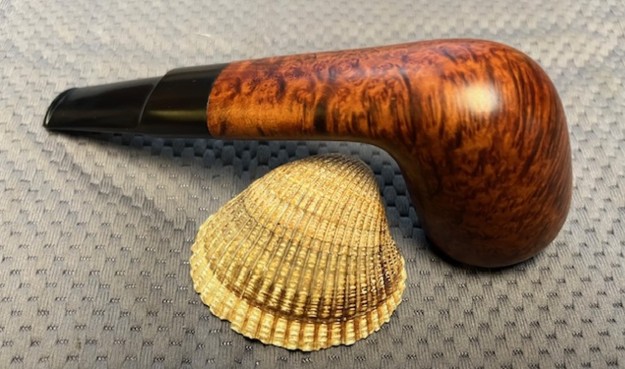
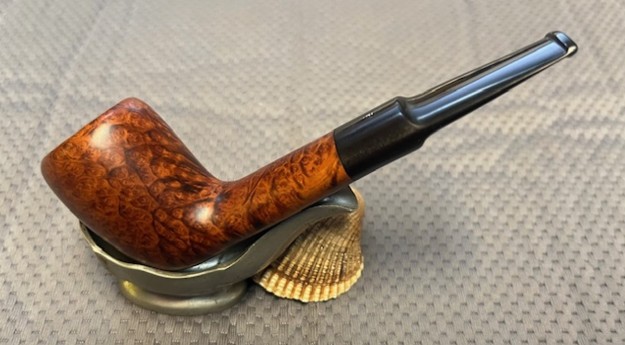
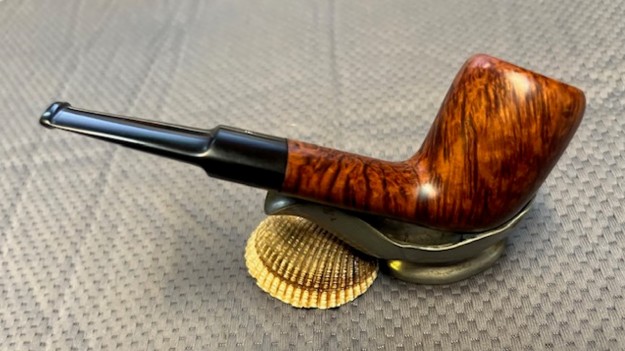
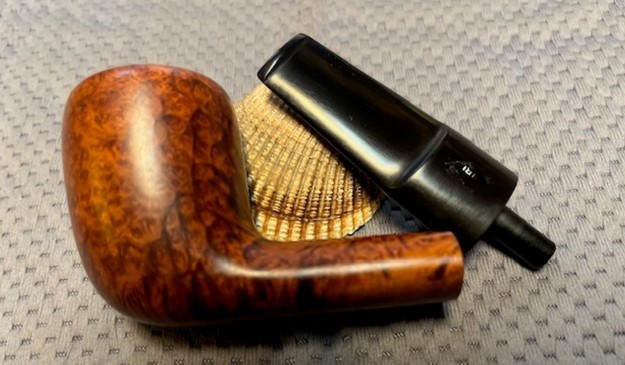
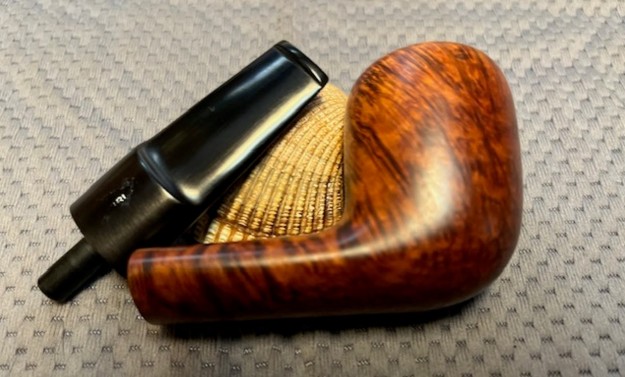
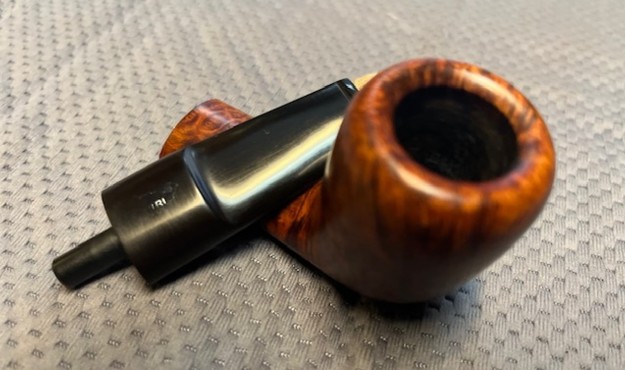
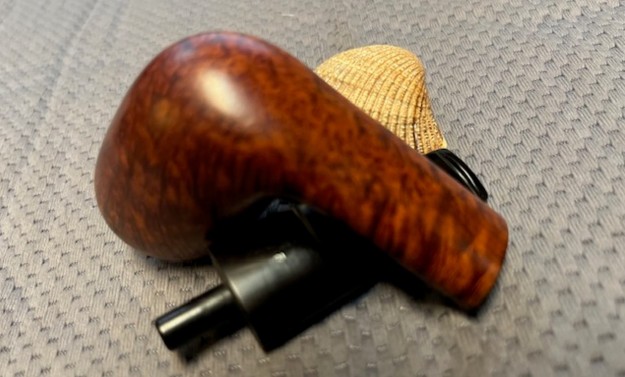
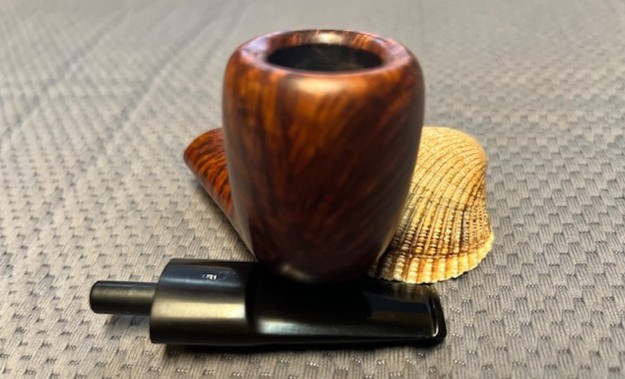
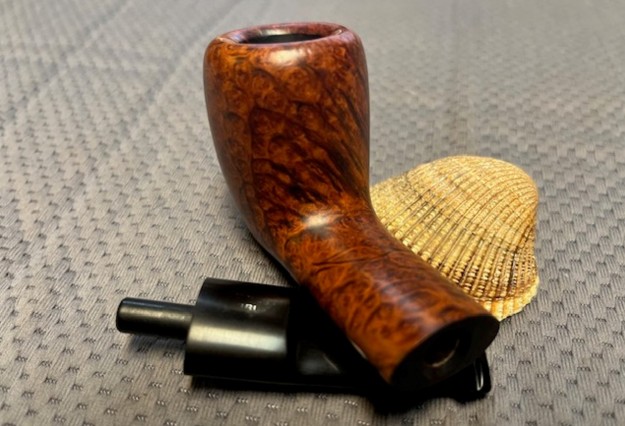
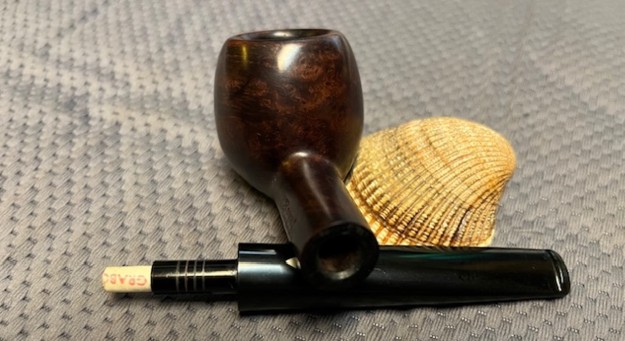
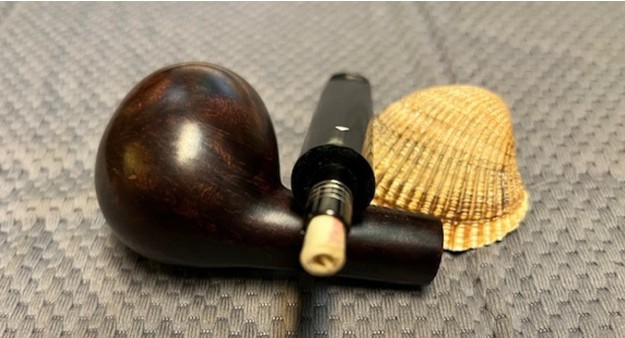
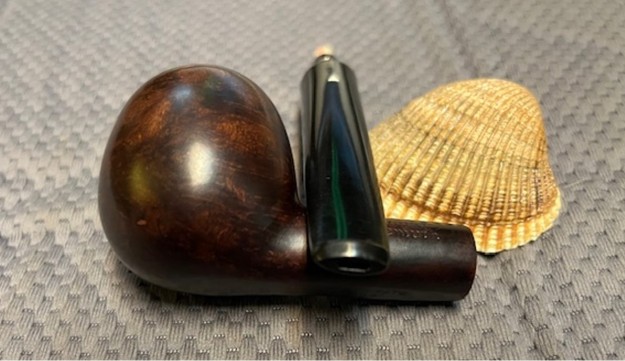
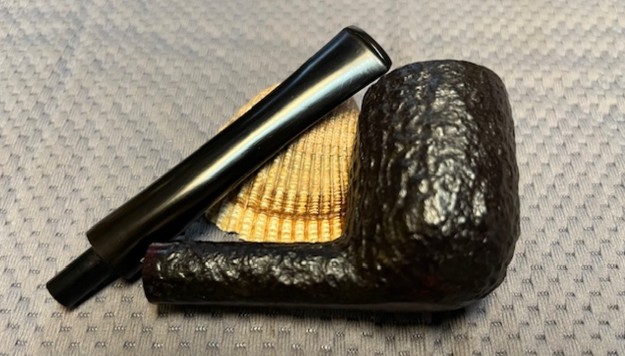
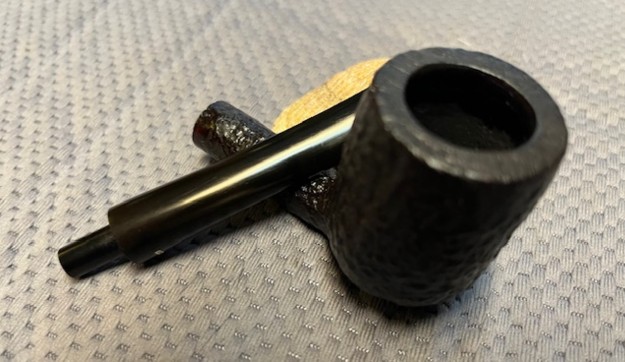
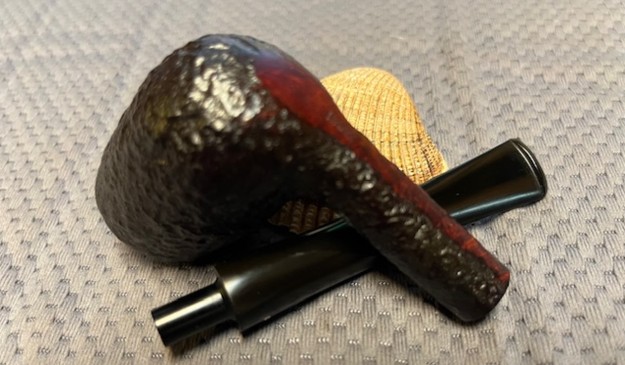
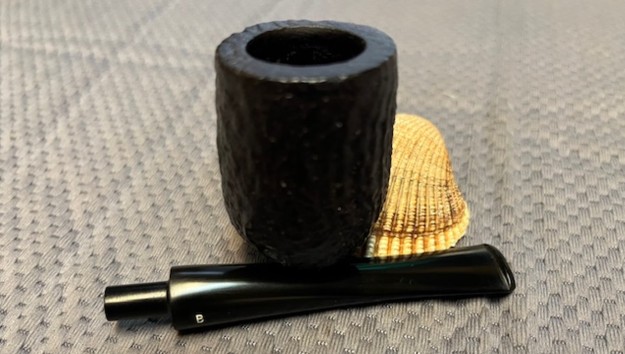
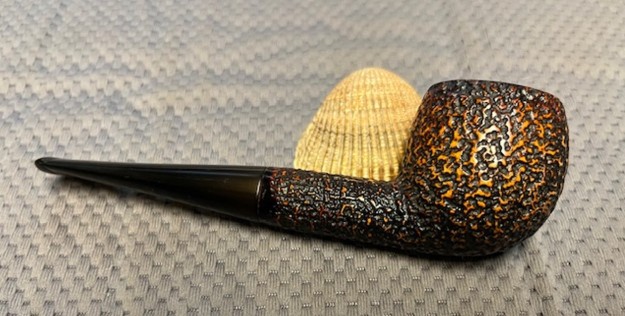
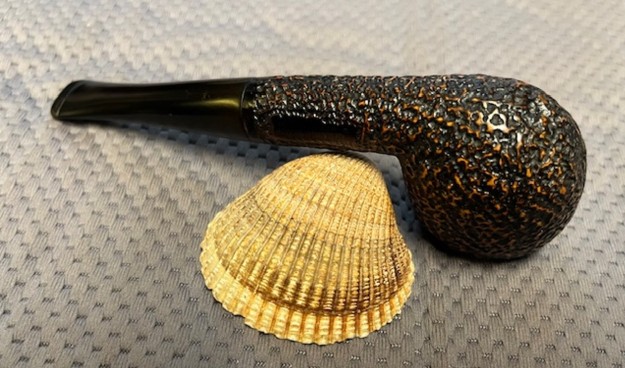
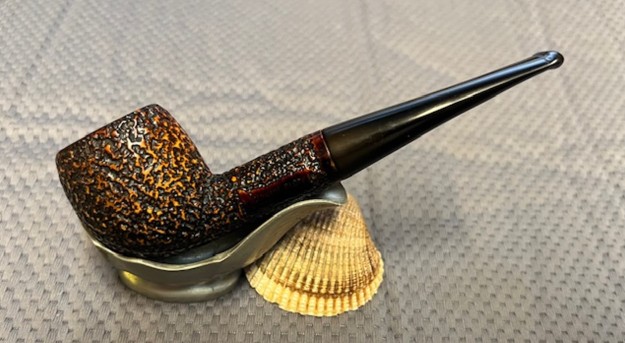
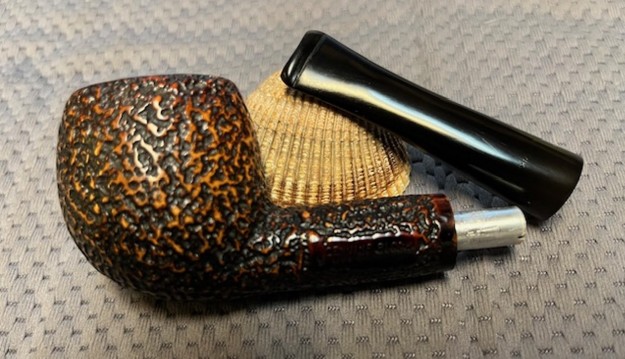
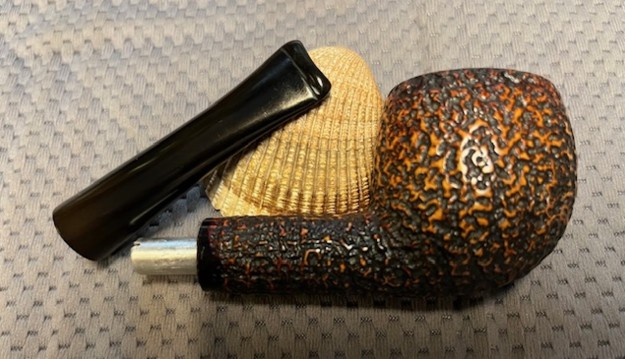
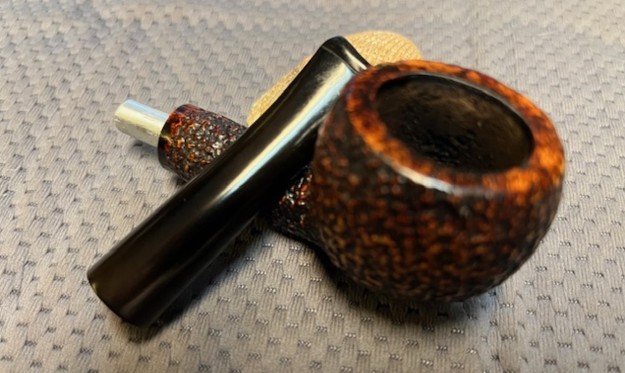
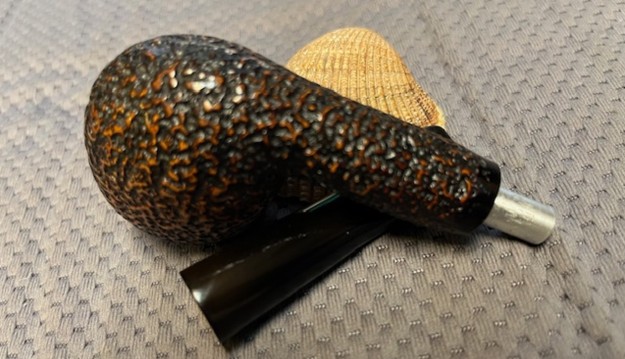
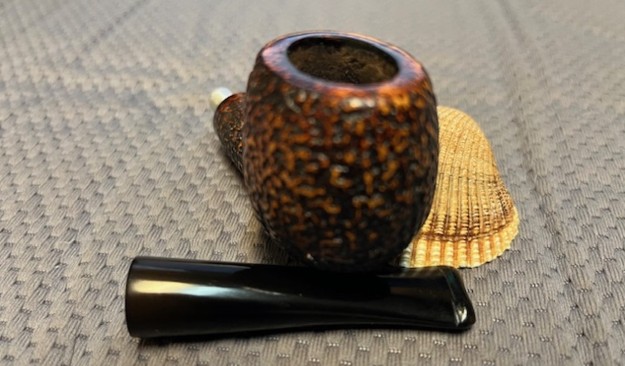
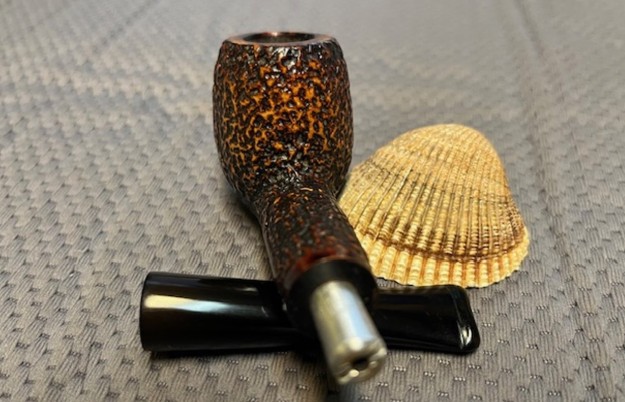
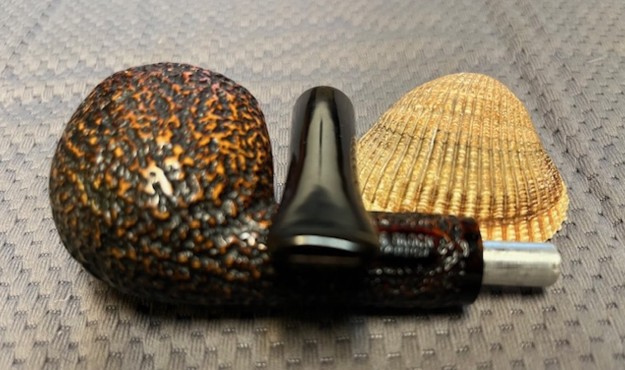
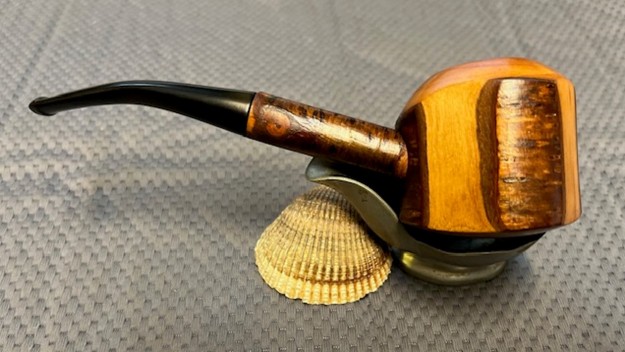
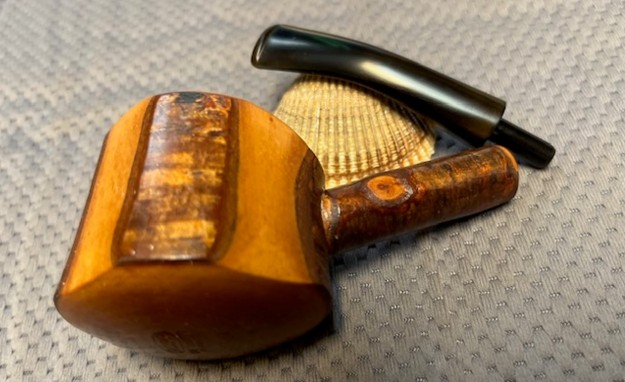
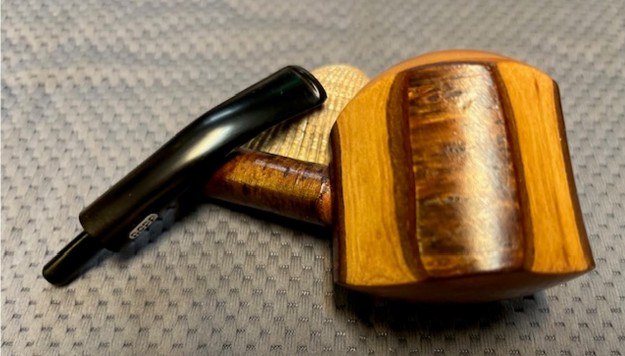
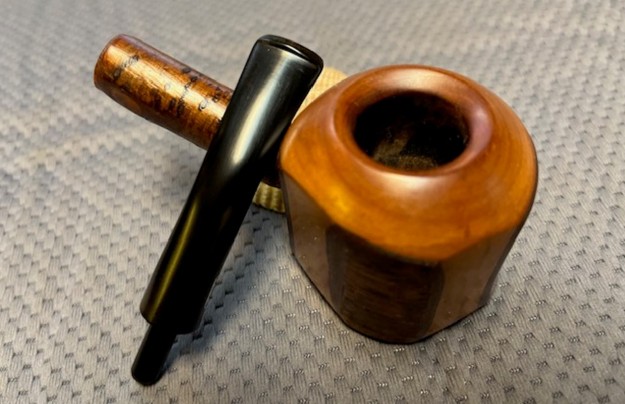
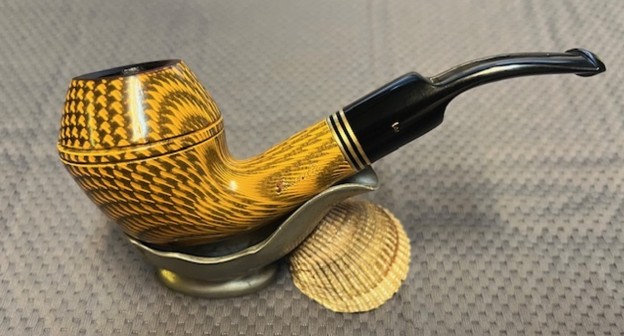
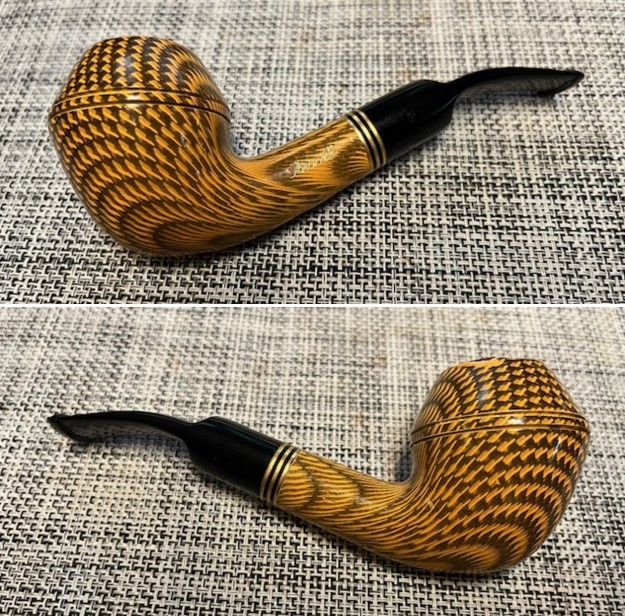
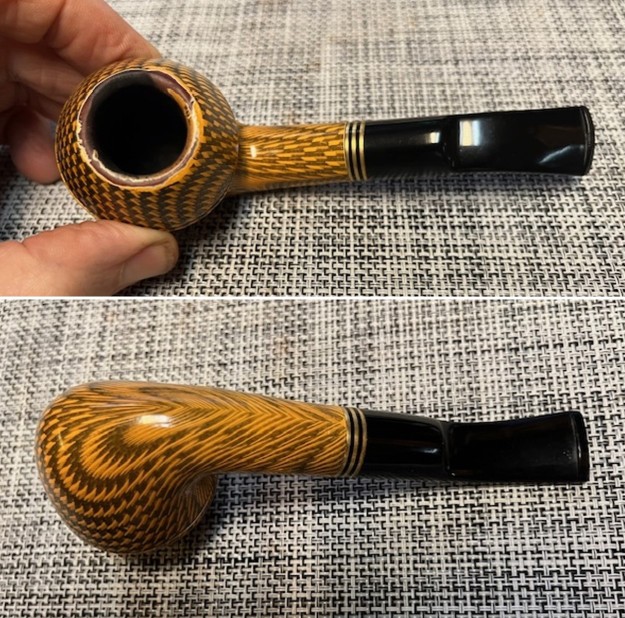
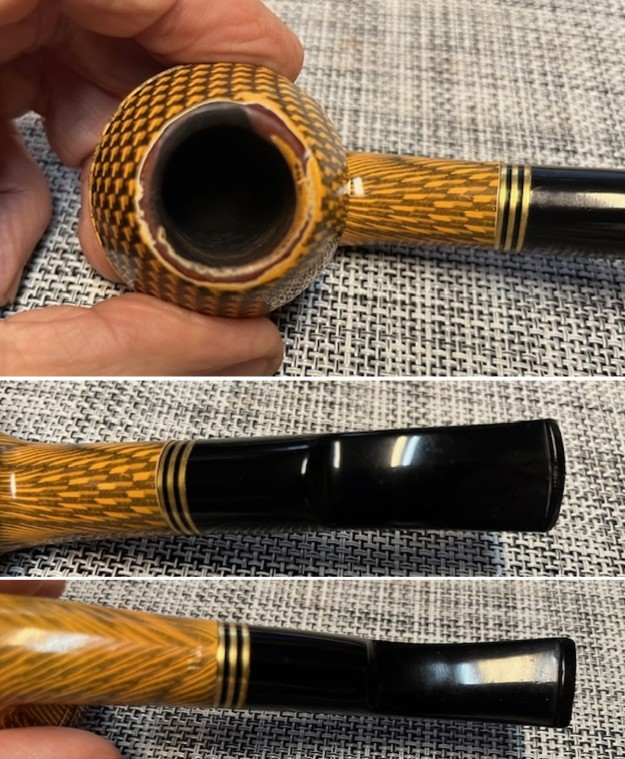
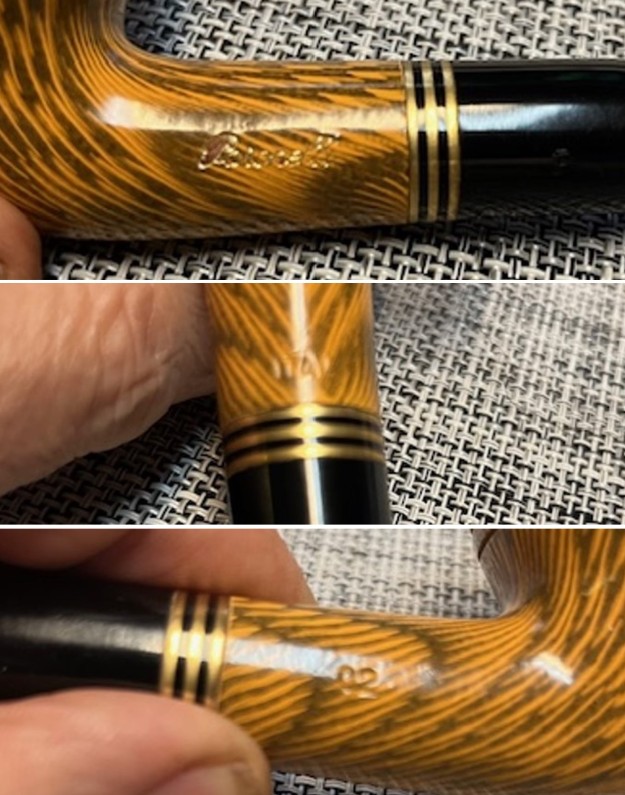
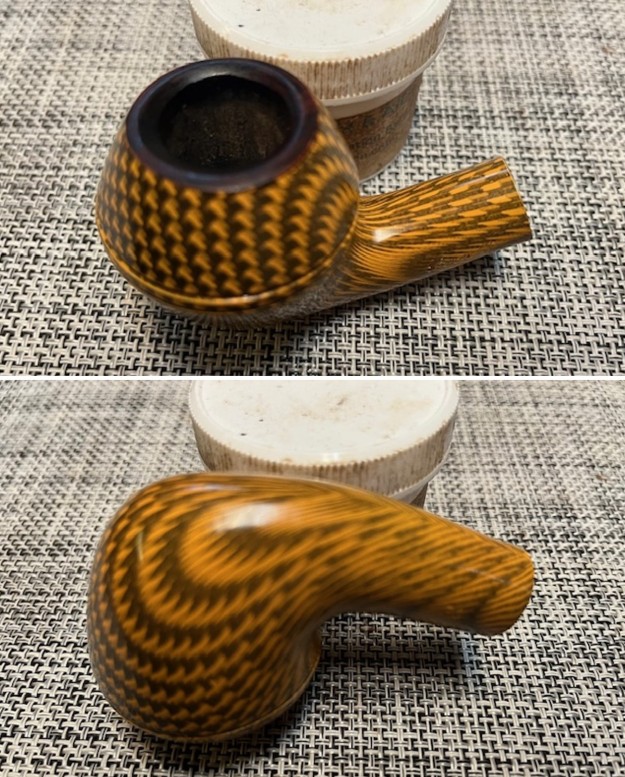
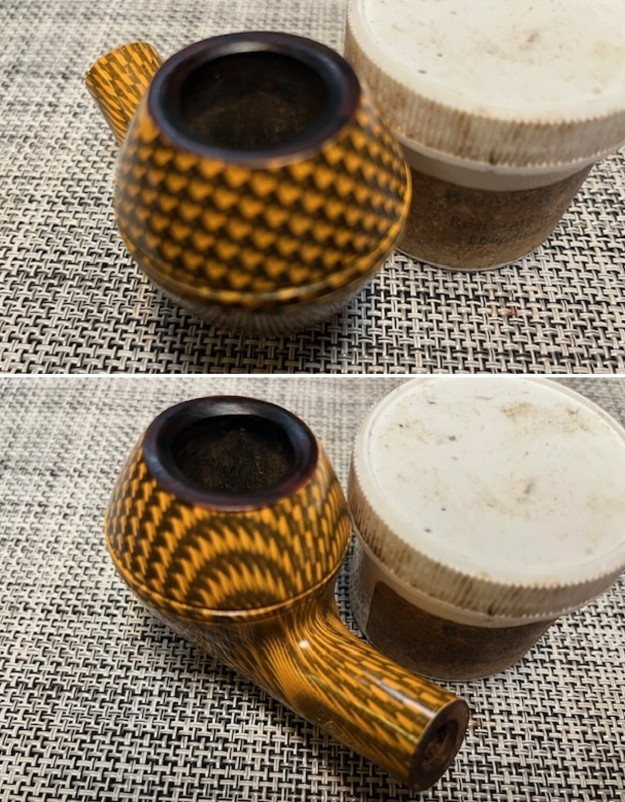
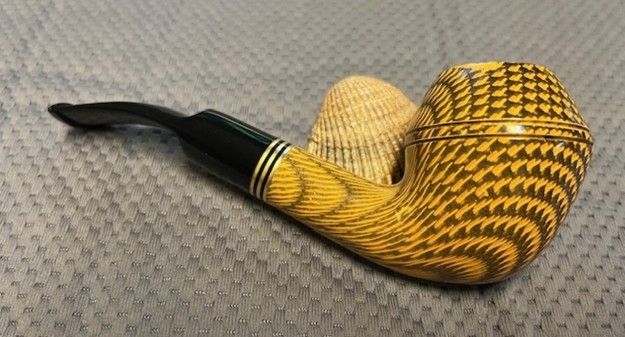
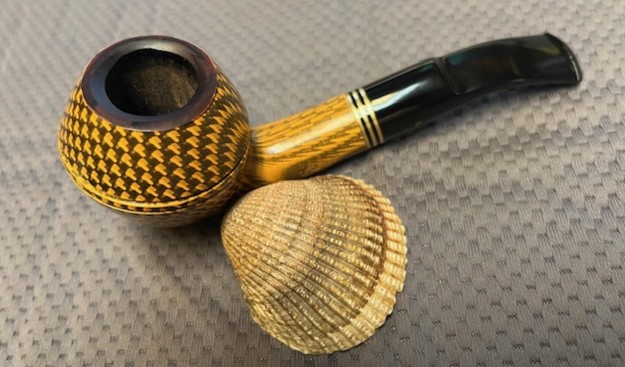
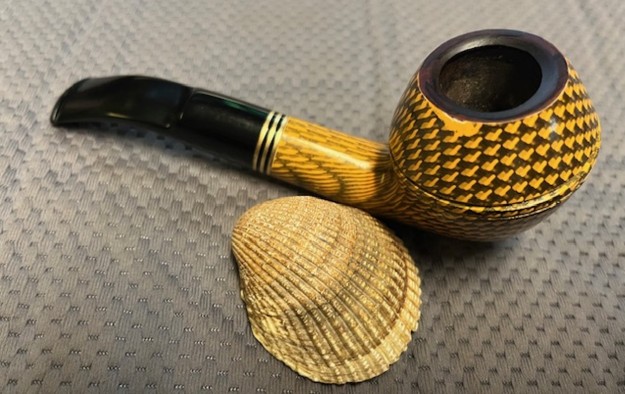
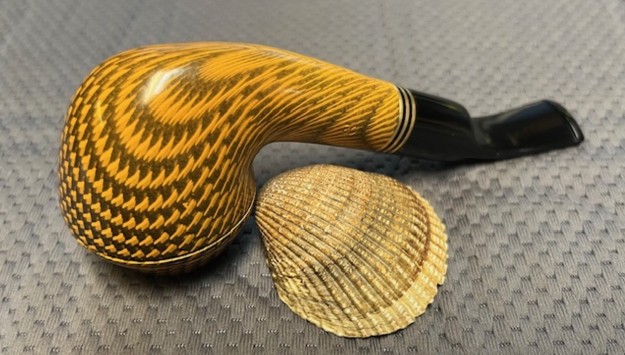
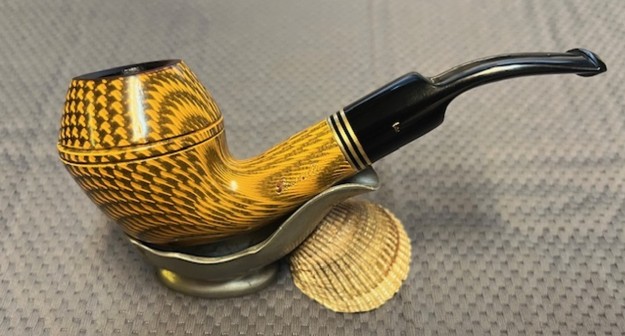
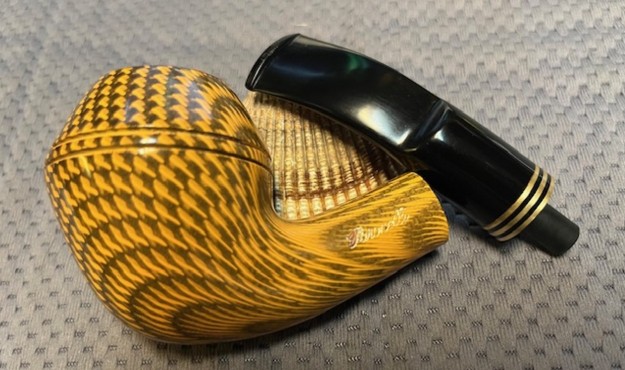
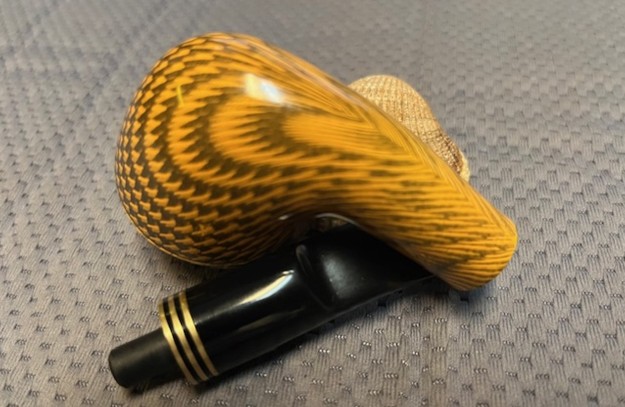
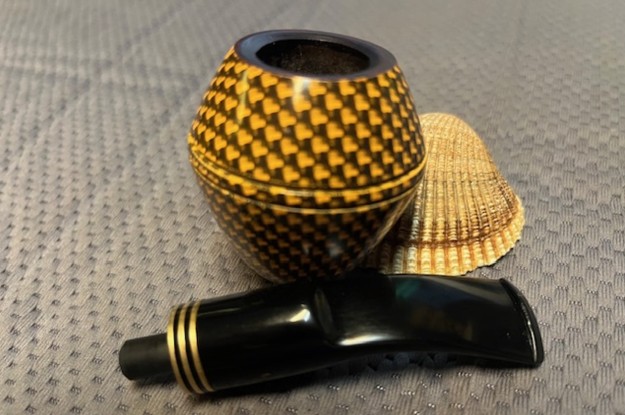
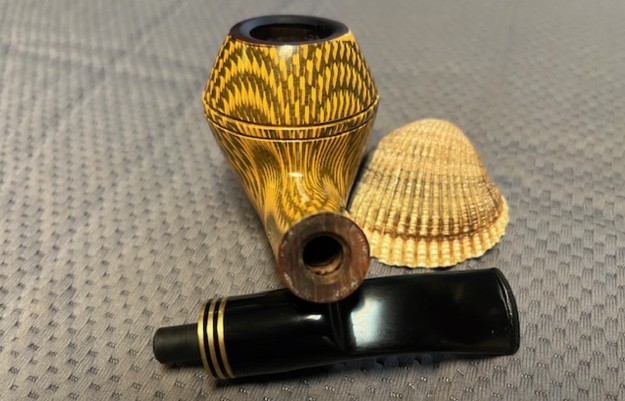
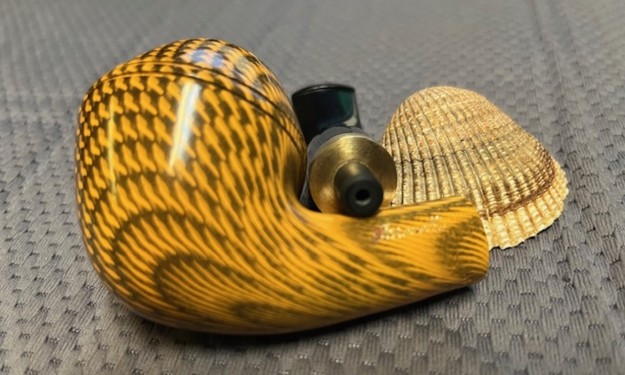
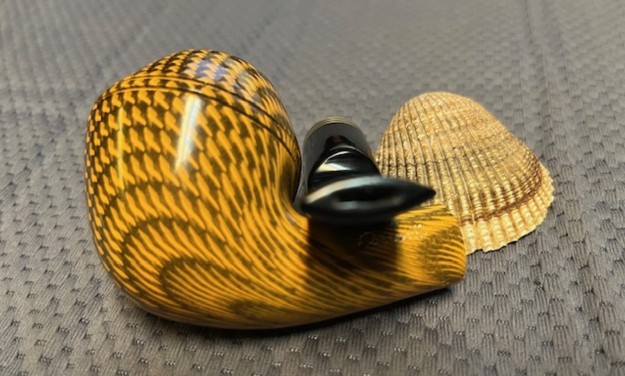
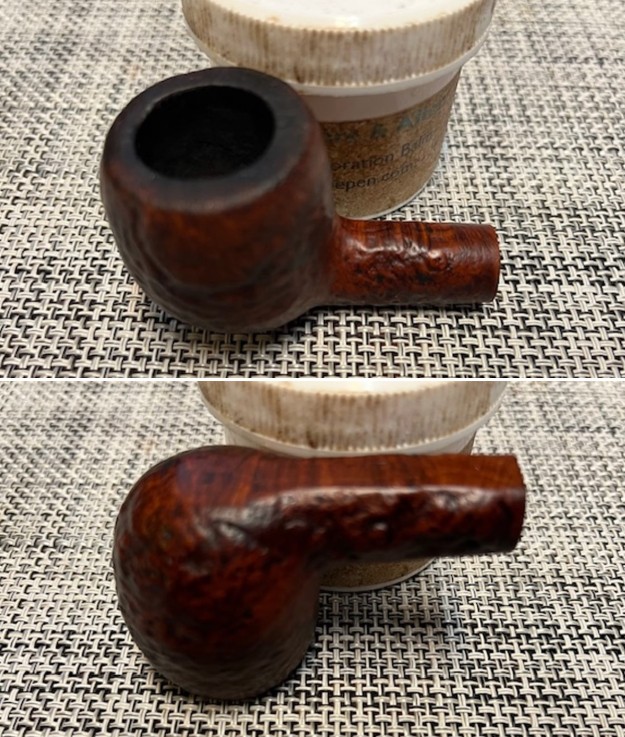
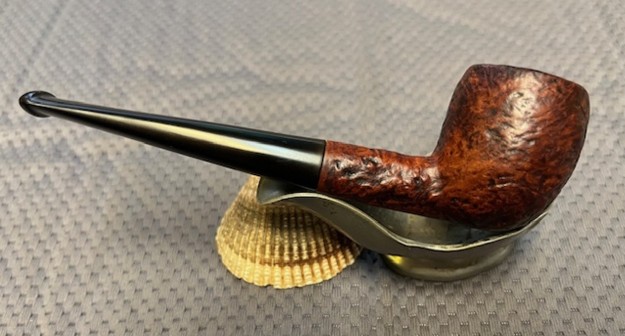
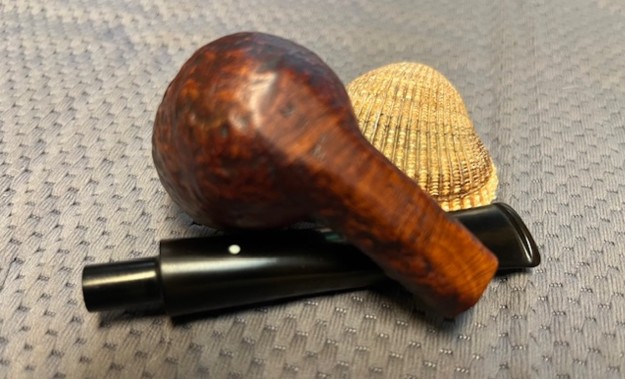
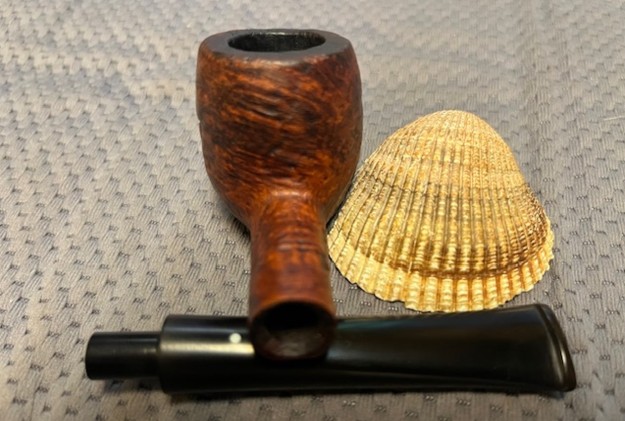
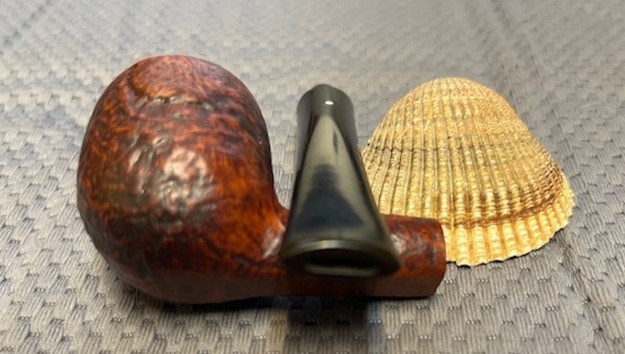
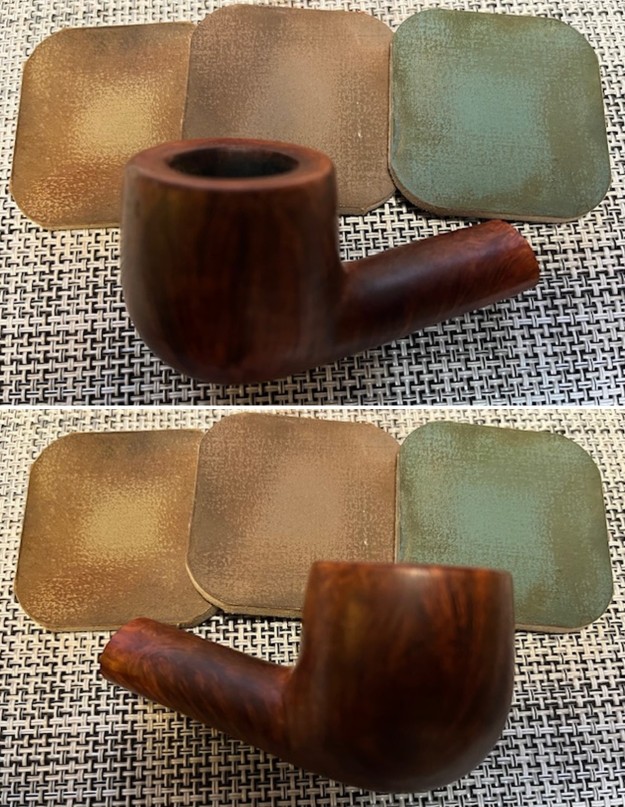
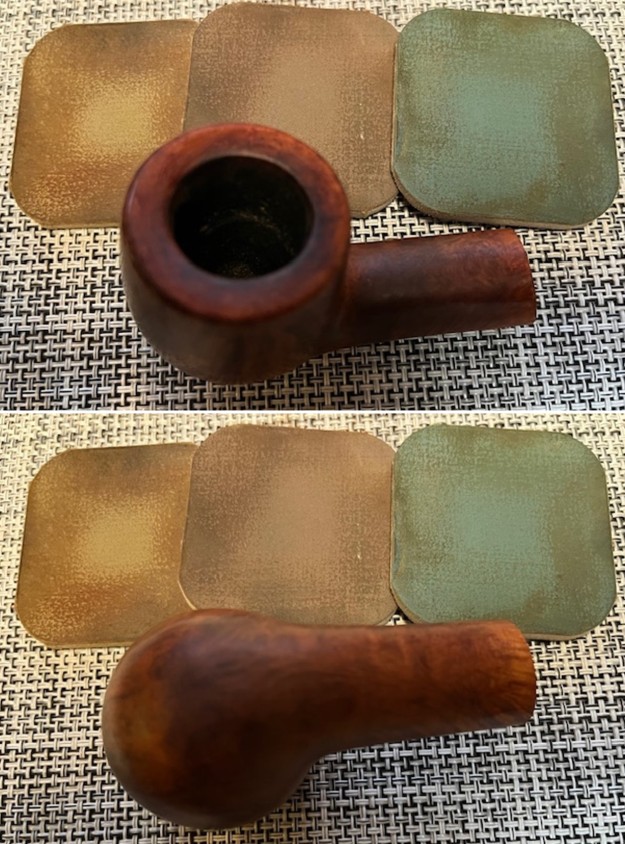
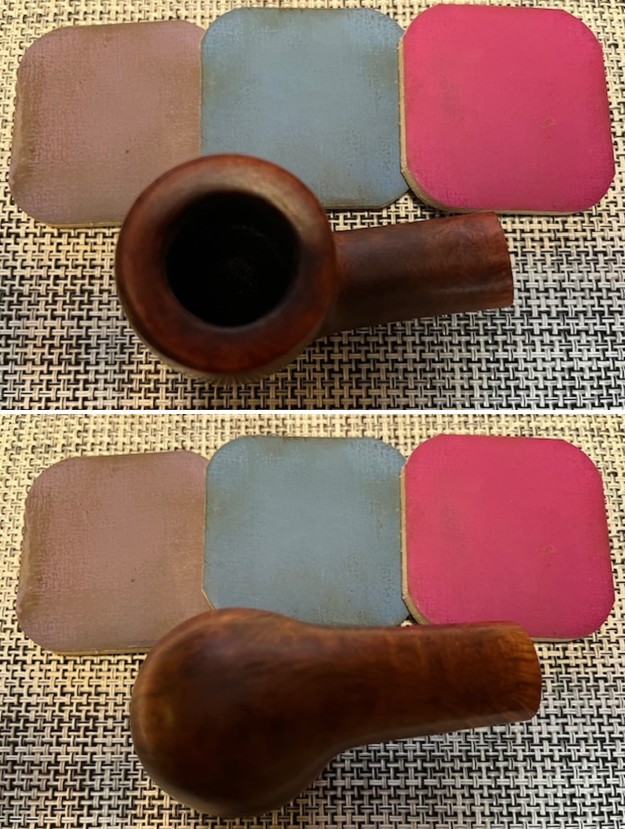
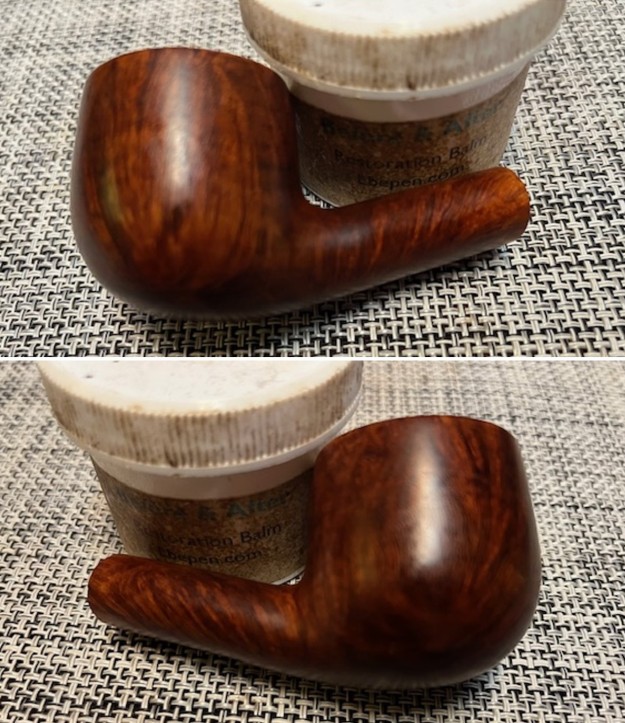
Another Dominik Sandblast Bamboo with a smooth rim top with spots of Plateau


Blog by Steve Laug

The pipes that I will be posting over the next few days from this lot that Jeff and I purchased are fascinating pipes. They were quite stunning but altogether unknown to me. I did not recognize the name of the maker. All the pipes were unsmoked other than the Stanwell Pipe of the Year. We purchased them from a fellow in Kalundborg, Denmark on 02/03/2024. He said that they were all unsmoked and when they arrived they were. They were relatively clean and merely dusty with a little light debris on the stem surfaces. The shapes, sandblasts, shank extensions, and stems were all unique and very well done. The pipes were very beautiful and I could not wait for Jeff to refresh them a bit and get them up to me to do my part. Here are some of the photos of the pipes that we purchased provided by the seller.Here is a photo of the pipe that was sent to us by the seller. It is the one that I chose to work on next. It is a beautiful sandblast Dublin with a smooth rim top with spots of plateau. It has a bamboo shank with white acrylic spacers on each end. It was lightweight with a vulcanite saddle stem. The blast is very well done. The stem is also well cut and other than dusty and lightly oxidized is in great condition. The bowl is unsmoked. The bowls all have a carbon bowl coating that is well done on the walls of the bowl. The pipe is stamped on the underside of the bamboo shank with the etched name of Dominik. I am looking forward to working on it as it will take very little work and will be a fun break. I am including what I learned when I worked on the first pipe of this brand. When I started I knew nothing about the carver other than he did beautiful work so I turned to Pipedia to see what I could find (https://pipedia.org/wiki/Dominik_Pipes). There was a listing for Dominik Pipes. He is a Polish Carver and I have included the short article in its entirety below.

Dominik pipes are made by Dominik Kobryń. His journey with pipes began in 1993 at a flea market, where he bought his first pipe. From that time his collection has grown a lot. He made his first pipe in December 2016. Dominik credits Wojtek Pastuch as his mentor, and is very grateful for that!

Dominik uses briar from Mimmo Romeo. He makes his stems by hand, mainly from Ebonite and Cumberland rods, but occasionally acrylic. He focuses on unique pipes that are well done technically.

From there I clicked on a link at the bottom of the page that took me to his Pipe sales website (http://www.dominikpipes.com/). Interestingly the site contained almost word for word the information that I had found on Pipedia.

My name is Dominik Kobryń. My journey with pipes began in 1993 on a flea market, where I bought my first pipe. From that time my collection has grown a lot.

I made my first pipe in December 2016. Wojtek Pastuch has taught me a lot about pipemaking and I am very grateful for that!

I use briar from Domenico Romero (Mimmo). I make stems by hand, mainly from ebonite rods and cumberland, sporadically acrylic. I pay much attention to create unique pipes, well done technically.

If you are interested in my work do not hesitate to contact me.

I have been following Wojtek Pastuch for some time now and really like what he is doing. It is fascinating that Dominik considers him his mentor. In chatting with Jeff, he sent me a link to Dominik’s Facebook page (https://www.facebook.com/dominikpipes). It is worth a look to see his current pipes.

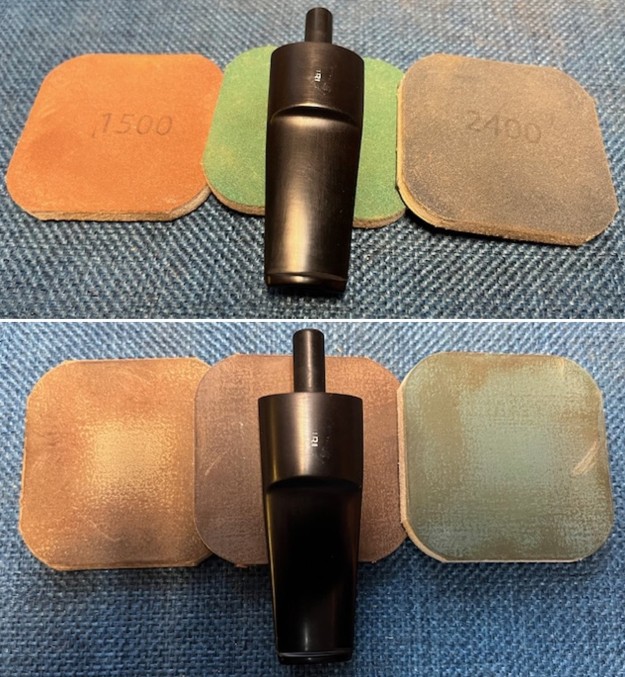
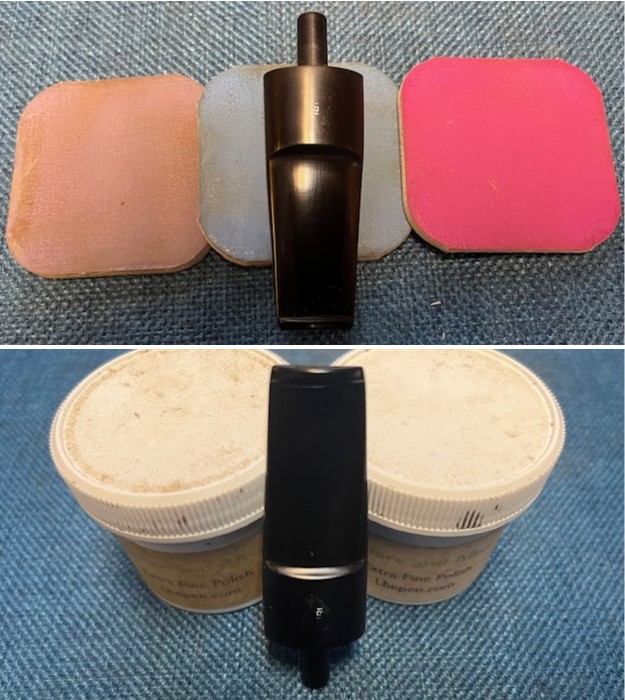
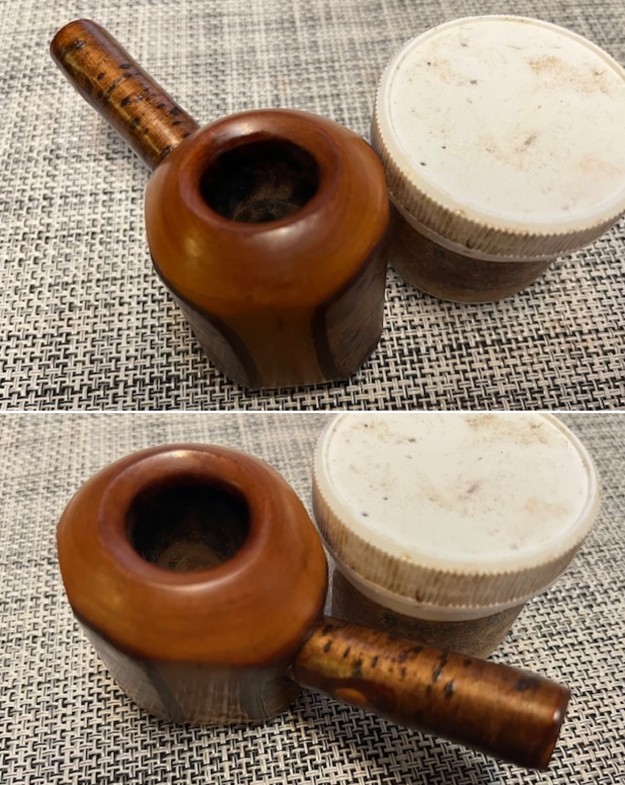
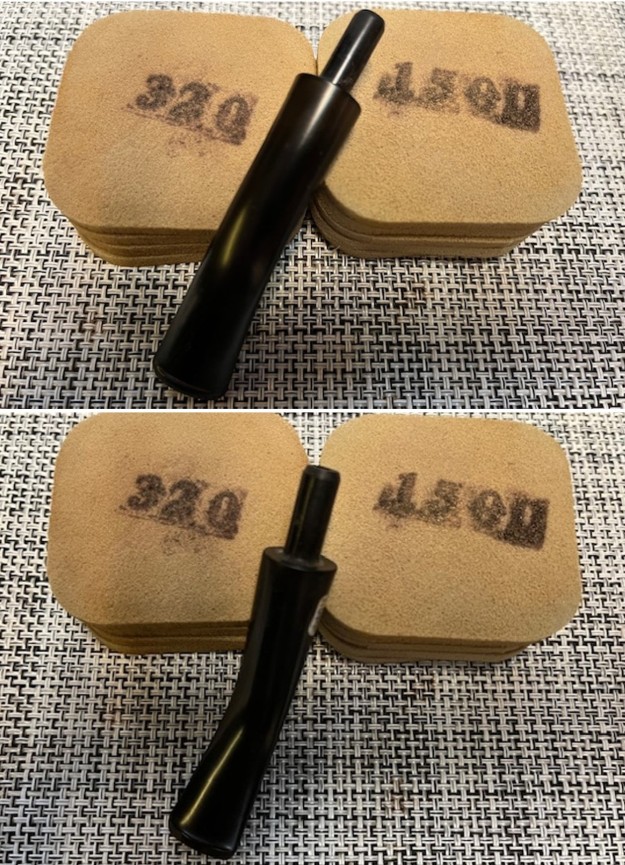
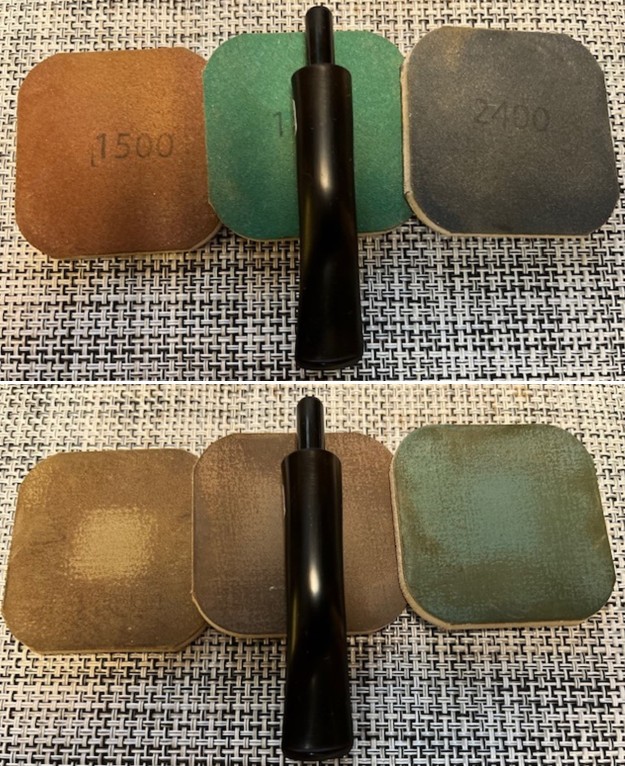
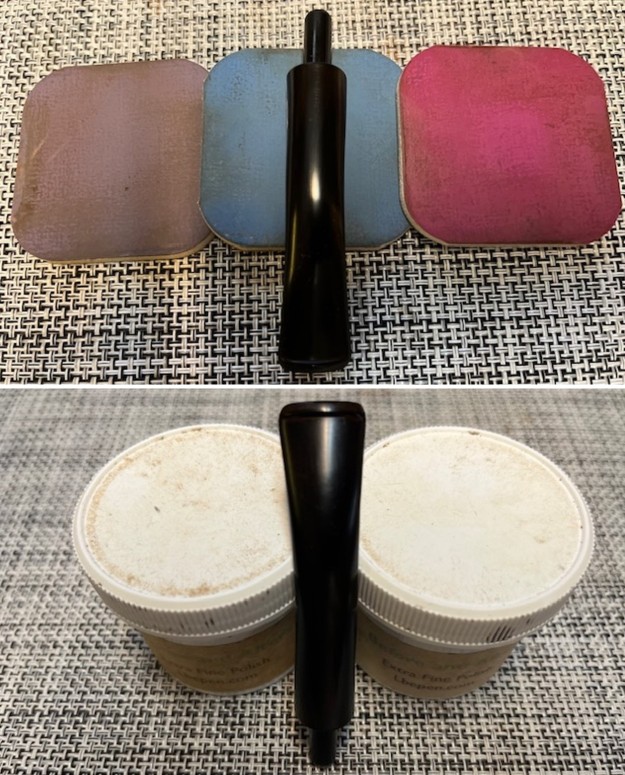
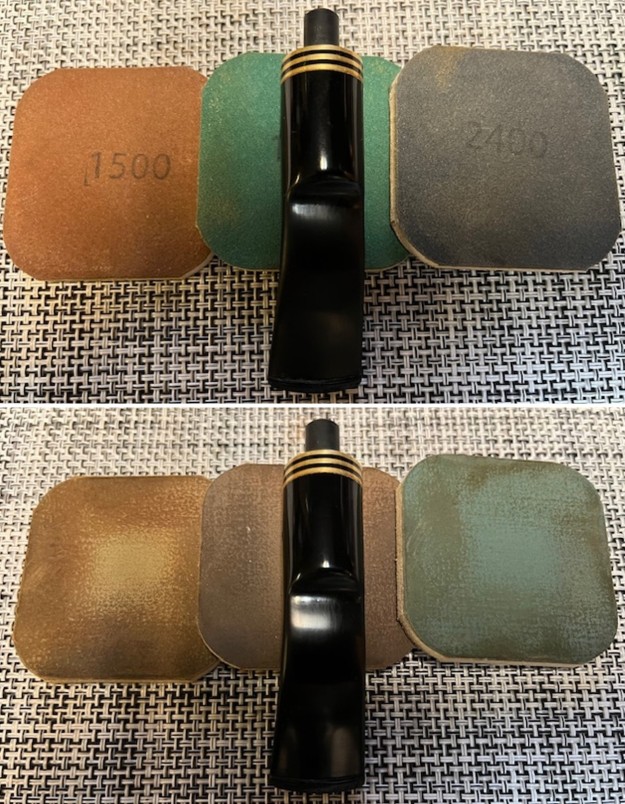
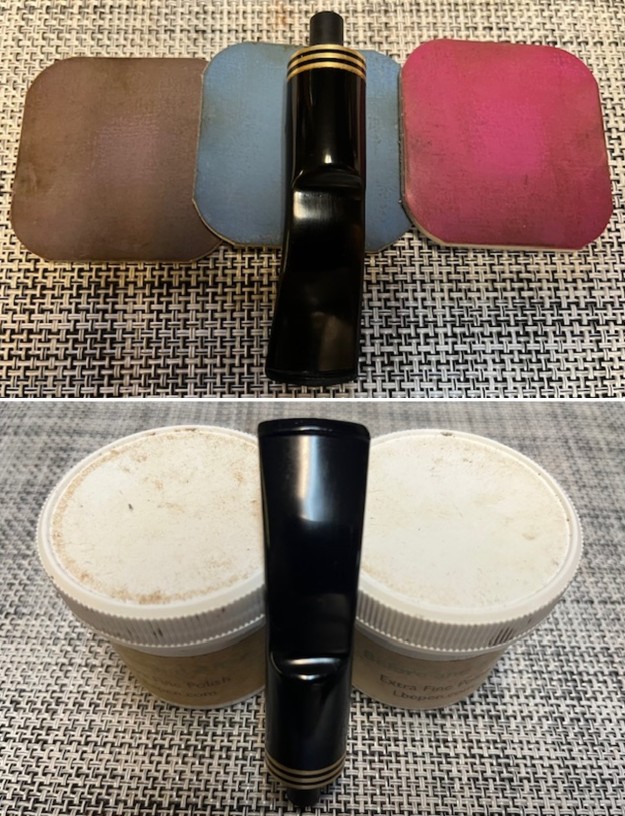
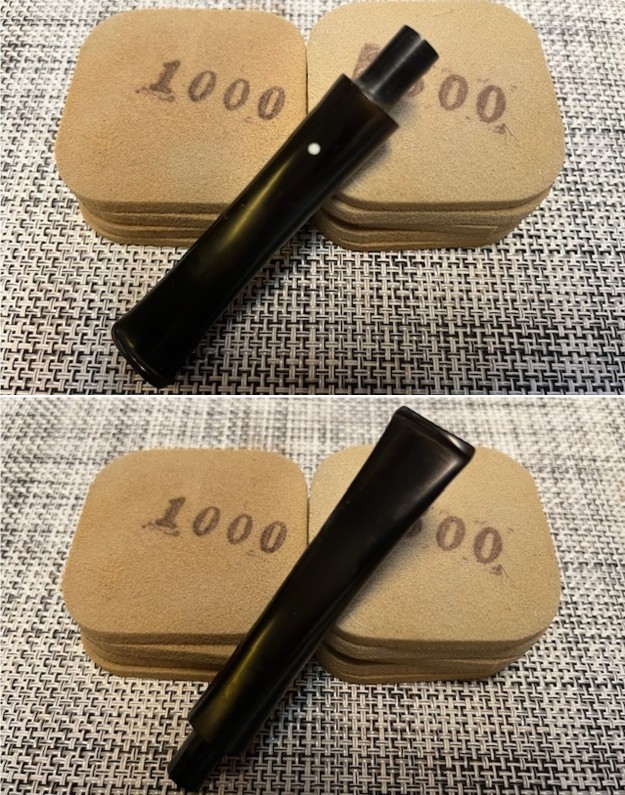
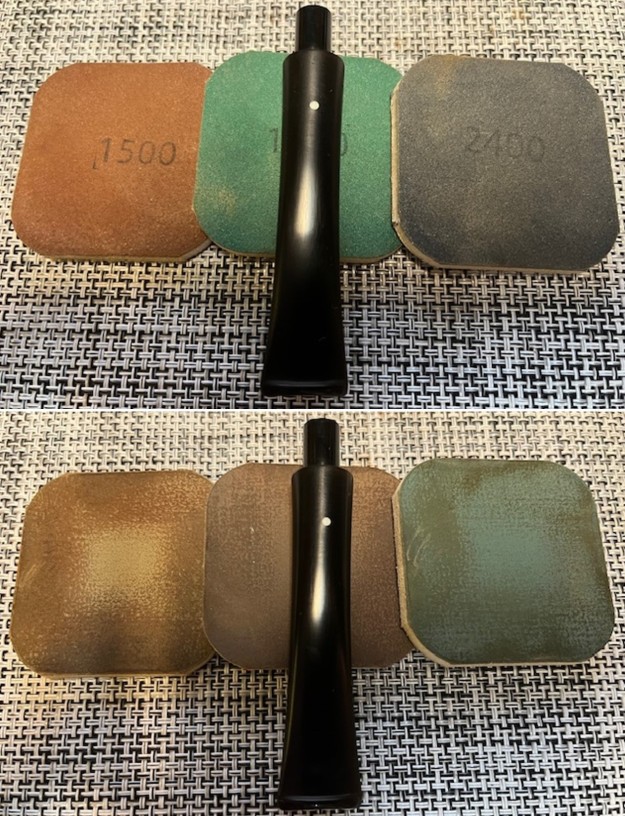
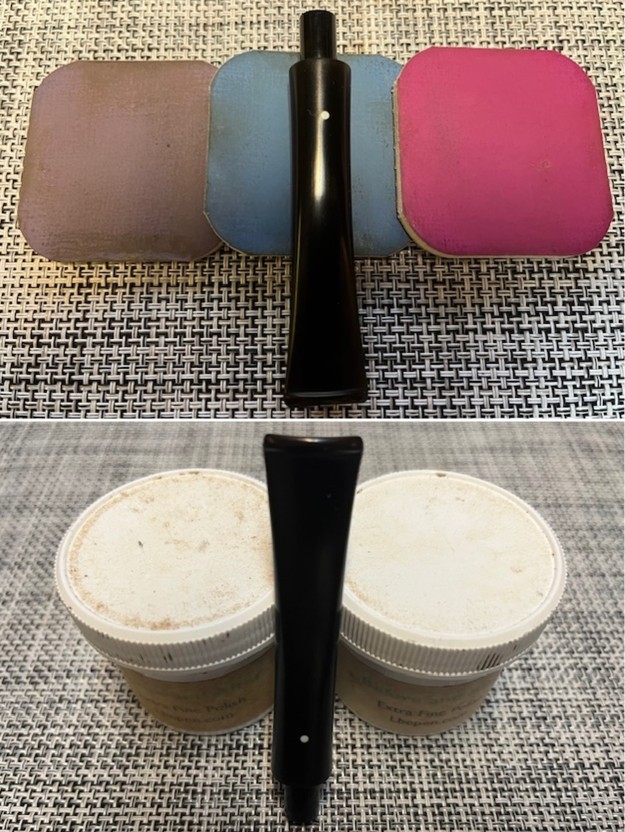
Now it was time to “work” on the pipe. For his part, Jeff had simply rinsed the pipe off with warm water and dried it. He soaked the stem in deoxidizer to remove the grime and the light oxidation near the shank joint. The pipe came here a few days ago and it is beautiful. The Dublin bowl shows the blast on mixed grain, while the rim top is smooth with spots of plateau peering through. The two-knuckle bamboo shank looks very good. The bamboo is joined to the briar bowl and the shank end and there was a white acrylic spacer at each end of the bamboo shank. The vulcanite stem has a vulcanite tenon. I tried to capture the beauty in the photos that follow. I took photos of the smooth rim top with spots of plateau peering through and bowl along with both sides of the vulcanite stem to show the condition of the pipe. It is clearly unsmoked and new.I took a photo to try to capture the etching of Dominik on the underside of the bamboo shankl. It is very readable in person but is curved around the shank and it hard to capture fully in a photo. I also removed the stem from the shank and took a photo of the parts of the pipe.The bowl was in excellent condition so skipped ahead to applying the Balm to the briar and the bamboo. I rubbed the briar and bamboo down with Before & After Restoration Balm. I worked it into the briar and the knuckles of the bamboo with my fingertips and a horsehair shoe brush to work it into the nooks and crannies of the sandblast finish. The product works to clean, enliven and preserve the briar and other wood. I let it sit for 10 minutes then I buffed it with a cotton cloth to deepen the shine. The pipe really comes alive with the balm. I polished the short vulcanite saddle stem with micromesh sanding pads – 1500-12000 grit pads. I wiped it down with Obsidian Oil after each sanding pad. I used Before & After Pipe Polish – both Fine and Extra Fine to further polish the stem. This Sandblast Dominik Dublin with a smooth rim top with spots of plateau and a Bamboo shank and vulcanite saddle stem has a beautiful, unique Sandblast finish that is deep and craggy. The rich dark finish highlights some great grain around the bowl and the light colour of the bamboo shank. There are white acrylic spacers on each end of the bamboo. It has some great rugged sandblast that I am enjoying looking at on the Dominik pipes I have picked up. The polished smooth rim with small patches of plateau. The sand blast, the bamboo shank and the vulcanite saddle stem add to the mix. I put the stem back on the bowl and lightly buffed the pipe with Blue Diamond on the buffing wheel being careful to not buff the stamping and have a lighter touch on the briar. I gave the bowl and bamboo shank multiple coats of Conservator’s Wax and the stem multiple coats of carnauba wax on the buffing wheel and followed that by buffing it with a clean buffing pad. I hand buffed the pipe with a microfiber cloth to deepen the shine. The finished Sandblast Dominik Bamboo shank Dublin with a Smooth Rim Top is quite stunning and feels great in my hand. Give the finished pipe a look in the photos below. The dimensions of the pipe are Length: 5 ½ inches, Height: 1 ¾ inches, Outside diameter of the bowl: 1 3/8 inches, Chamber diameter: ¾ of an inch. The weight of the pipe is .74 ounces/21 grams. Thanks for walking through the restoration with me as I worked over another beautiful pipe. I will be adding to the rebornpipes store in a new section for Polish Pipe Makers. If you wish to add it to your collection let me know. Thanks for your time.

Restoring a Patent Era Dunhill’s “Shell Briar” 24 Petite Prince


Blog by Steve Laug

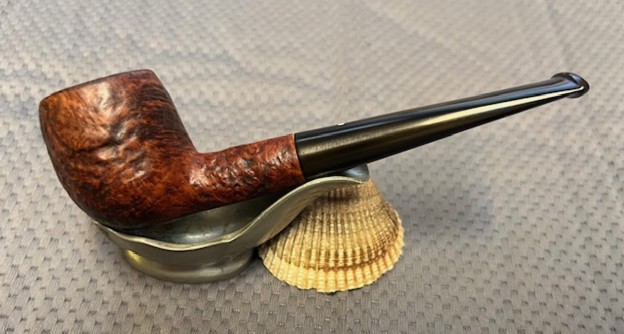
The next pipe on the table came to us from a group of pipes that Jeff and I purchased from a fellow in Copenhagen, Denmark on 02/11/2024. It is a Dunhill’s “Shell Briar” Petite Prince that is in good condition. It is stamped on a smooth panel on the underside of the shank. On the heel of the it is stamped with the shape number 24 followed by Dunhill’s “Shell Briar” [over] Pat. Nos. 119708/17. 116989/17 followed by a superscript 8. The stamping is clear and readable as noted above. The pipe has a mix of black, cordovan and brown stains on a sandblast finish and some amazing grain that the shape follows well. The finish was dusty around the nooks and crannies of the sandblast but otherwise fairly clean. The bowl had a moderate cake, tobacco debris and there was some lava on the sandblasted rim top or edges. The vulcanite taper stem was oxidized, dirty and had tooth marks and chatter ahead of the button. Jeff took photos of the pipe to show what it looked like before he started working on it. He took photos of the bowl and rim top to show their condition and of the stem to show the condition of both sides of the stem. The photos of the sides and heel of the bowl show the deep sandblast grain on the pipe. It is a beauty. The stamping on the underside of the shank is shown in the photo below. It looks very good and faint but readable. It reads as noted and explained above. Jeff captured the detail in the photos below. One of the first things I like to do is to unpack the stamping and understand each element in it. I turned to Pipephil helpful site and specifically the section on Patent era pipes to help with the date (http://pipephil.eu/logos/en/dunhill/patent1.html). I have included a screen capture of one that is stamped much the same as the one I am working on. Please note the message under the photo in the photo below.It reads: From 1921 through 1931 (inclusive) Shells were stamped DUNHILL’S “SHELL” if there was a MADE IN ENGLAND line. When the MADE IN ENGLAND was missing they were stamped DUNHILL’S “SHELL BRIAR”: this pipe hasn’t any MADE IN ENGLAND line.

I turned to another page on the pipephil site that would help me define the two patent numbers that are on this pipe. (http://pipephil.eu/logos/en/dunhill/shell-guide.html?1926pat-shellbriar-1926z.jpg&18#). The two Patent Numbers: Pat. Nos. 119708/17. 116989/17. The patent numbers point to the patent for the “SHELL BRIAR” finish. I used the chart to locate the two numbers on the chart below. I have drawn a red box around those two numbers and the upward line point to the date mark for 1928 on the chart.Now it was time to verify the 1928 date for this pipe (http://pipephil.eu/logos/en/dunhill/cledat-en1c.html). The pipe has a year suffix, a different patent no. and a sandblast finish so it fits the criteria for this Dating Key. It has the possessive form Dunhill’s. I have drawn a red box around the pertinent section on the Dating Guide. There the directions point to section on 1920 + the Suffix. With that information I added 1920 + the suffix 8 (8) giving the date of the manufacture of this pipe as 1928.

Now I had the data I needed for this pipe. The stamping DUNHILL’S “SHELL BRIAR” was used between 1917-1931 inclusive. The patent numbers point to the patent for “SHELL BRIAR” that Dunhill used from 1927-1931. The date code 8 identifies the date as 1928 which fits perfectly in the time period noted. The shape is that of a Petite Prince.

Now it was my turn to work on this old timer – a 1928 Shell Briar Prince. Jeff had done an amazing cleanup of the pipe. He reamed the cake with a PipNet reamer and cleaned up that with a Savinelli Fitsall Pipe Knife. He scrubbed the internals of the bowl and stem with alcohol, cotton swabs and pipe cleaners. He scrubbed the externals with undiluted Murphy’s Oil Soap and rinsed the bowl off with running water. He soaked the stem in Briarville’s Pipe stem Deoxidizer and once it had soaked rinsed it off with warm water to remove the residual solution. He dried it off and rubbed it down to remove any oxidation that was still on the stem. The pipe looked very good when I received it.

I took photos of the bowl and the rim top as well as both sides of the stem to show the condition of the pipe before I started my work. The rim top and edges look quite good. The stem shows some light tooth marks on both sides and the button edge looks very good.

I took a photo of the stamping on the shank. The photo of the stamping is clear, though worn in some spot but it is still readable. I also removed the stem and took a photo of the parts of the Petite Prince.The pipe looked quite amazing. I stared by rubbing the briar down with some Before & After Restoration Balm. I worked it into the briar with my fingertips and a horsehair shoe brush. The product works to clean, enliven and preserve the briar. I let it sit for 10 minutes then I buffed it with a cotton cloth to deepen the shine. The briar really comes alive with the balm. I set the bowl aside and turned my attention to the stem. I “painted” the surface of the stem on both sides with the flame of a Bic lighter to lift the tooth marks on the surface. I was able to lift them significantly. I filled in those that remained with clear CA glue and set the stem aside for the repairs to cure. Once it cured I used a small file to flatten out the repairs and start blending them into the surface. I sanded the surface of the stem to blend in the file marks and the rest of the repairs smooth with 320-3500 grit sanding pads. It worked well to smooth things out and remove remnants of oxidation. When finished the stem looked much better.I polished the vulcanite with micromesh sanding pads – 1500-12000 grit pads. I wiped it down with Obsidian Oil after each sanding pad. I used Before & After Pipe Polish – both Fine and Extra Fine to further polish the stem. This 1928 Dunhill “Shell Briar” 24 Prince Pat. Nos. 119708/17. 116989/17 has a beautiful, unique Dunhill Sandblast finish that is know for its craggy depths. The rich brown/black finish highlights some great grain around the bowl and shank. The polished vulcanite saddle stem adds to the mix. I put the stem back on the bowl and carefully buffed the pipe with Blue Diamond on the buffing wheel. It is critical to avoid buffing the stamping and to have a lighter touch on the sandblast briar. I gave the bowl multiple coats of Conservator’s Wax and the stem multiple coats of carnauba wax on the buffing wheel and followed that by buffing it with a clean buffing pad. I hand buffed the pipe with a microfiber cloth to deepen the shine. The finished Dunhill “Shell Briar” 24 Petite Prince is quite stunning and feels great in my hand. Give the finished pipe a look in the photos below. The dimensions of the pipe are Length: 5 ½ inches, Height: 1 inch, Outside diameter of the bowl: 1 inch, Chamber diameter: 5/8 of an inch. The weight of the pipe is .60 ounces/16 grams. Thanks for walking through the restoration with me as I worked over another beautiful pipe. I am going to add this 1928 Petite Prince to my own collection of Dunhill Patent Era pipes. It is a real beauty that I will certainly enjoy. Thanks for your time.


Fixing a Cracked Peterson Emerald


Blog by Kenneth Lieblich

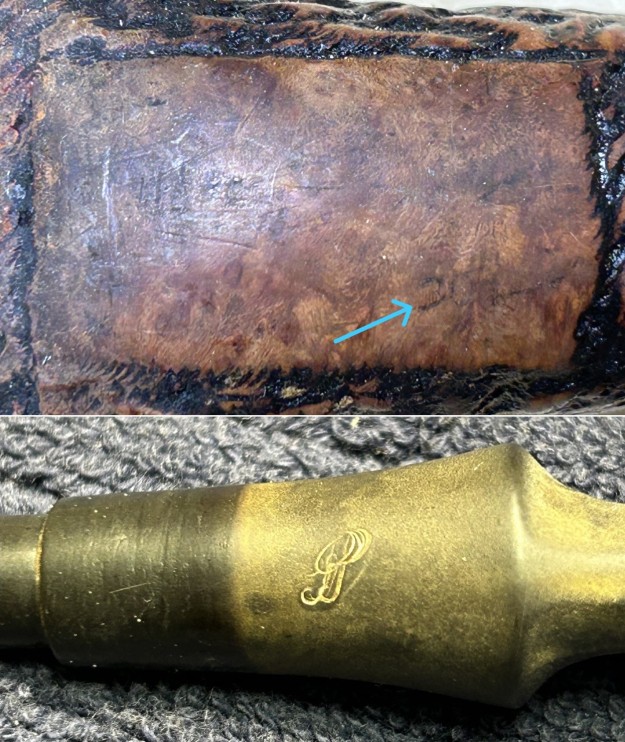
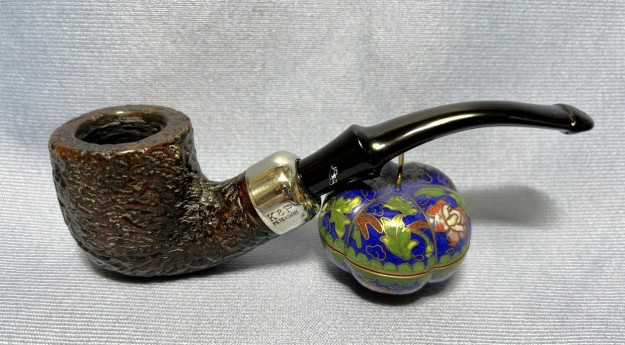
This is the fourth and final pipe I repaired for the gentleman in Washington. All four pipes have been great to work on, but I think I like this one best. It’s a portly and handsome Peterson Emerald XL02 Bent Apple. The pipe is smooth and has a P-lip stem. It is an elegant pipe with beautiful lines – and it feels so comfortable! Can’t wait to get this one done. Let’s take a closer look at the pipe. On the left side of the shank, it reads Peterson’s [over] Emerald. On the right side of the shank, it reads Made in the [over] Republic [over] of Ireland. To the right of that is the shape number, XL02. On the stem was the normal, stylized P of the Peterson firm. Interestingly, this P was in bas relief, rather than engraved. In an effort to learn more about the Emerald line of pipes, I went to Pipedia’s Peterson page – and learned precisely nothing. Pipephil provided just as much. Even the Peterson website itself had nothing on the historical Emeralds except to discuss the current crop of heavily rusticated pipes. So, naturally, my reliable source for all things Peterson is Mark Irwin from Peterson Pipe Notes. He has a blog post on the Emeralds – specifically the rusticated ones, but he does reference the smooth ones too. Have a look at the article here.Irwin and Gary Malmberg’s book, The Peterson Pipe: The Story of Kapp & Peterson, also made mention of the Emerald line:

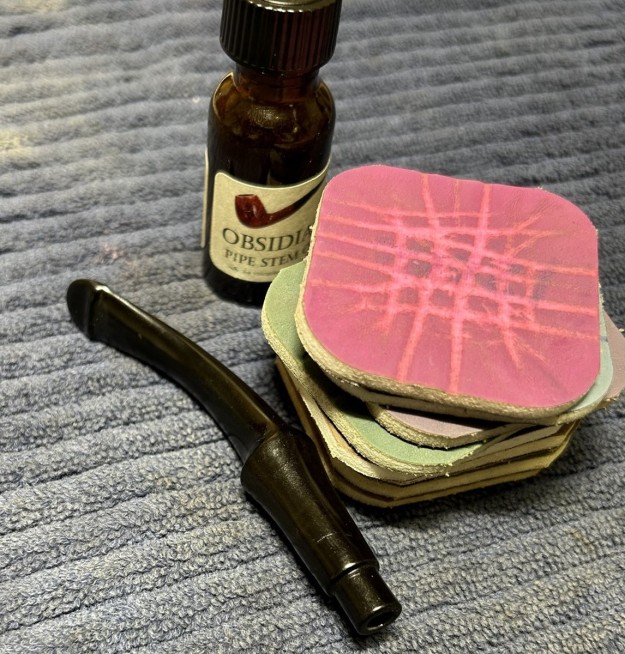
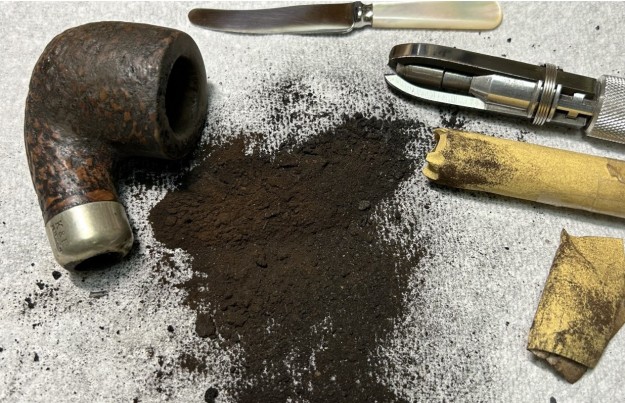
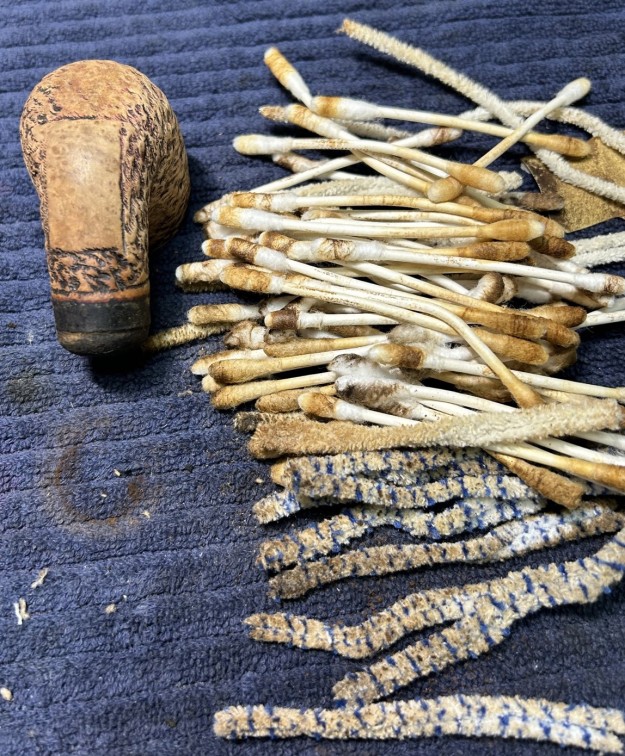
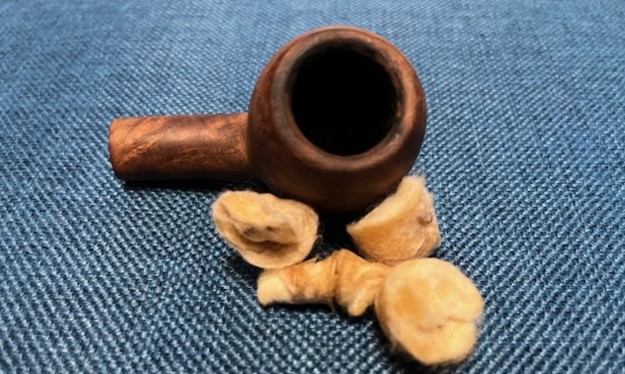
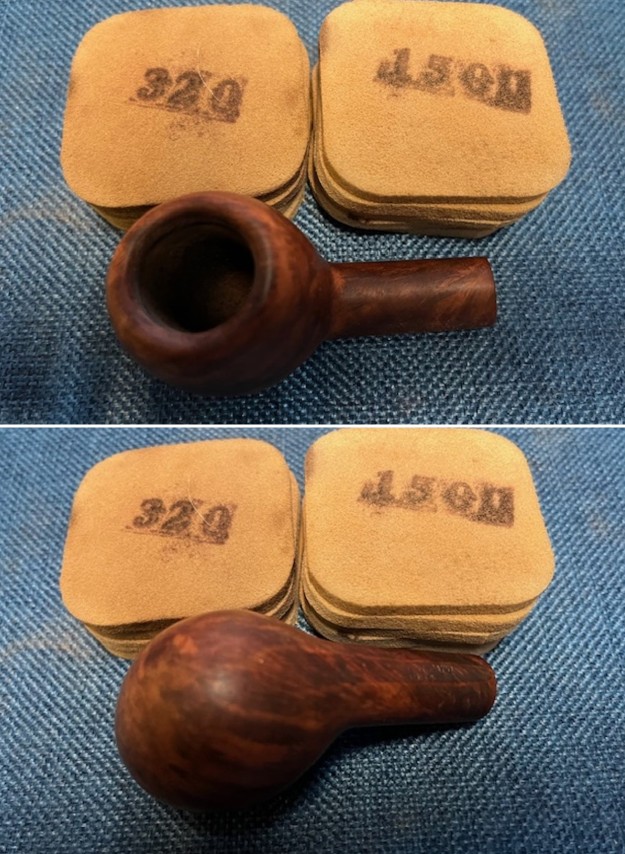
Emerald (1987-) Moderate-priced line in Bordeaux and black rustic finish with a shank band of green acrylic between brass rings, P-lip mouthpiece; smooth walnut version added in ’91. Fishtail mouthpiece added in ’97. Identical line and finishes named Jade from early eighties until ’87.Putting all the bits and pieces together, I think we can safely say that this pipe dates from between 1991 and 1997.On to the stem. As usual, I cleaned the insides with lemon-infused isopropyl alcohol and some pipe cleaners. Fortunately, it wasn’t too dirty inside. Then I wiped down the outside of the stem with Murphy’s Oil Soap on some cotton rounds – that removed some exterior dirt. Then, of course, I stuck it in the deoxidizing solution overnight. The next day, I scrubbed it down with some SoftScrub on cotton rounds. I built up the tooth marks on the stem with black cyanoacrylate adhesive and let them fully cure. I had tried the BIC lighter trick, but it didn’t work. I then sanded the adhesive down – first with a small file, then with 400-grit sandpaper to meld seamlessly into the stem. I then used all nine Micromesh pads (1,500 through 12,000 grit) to bring out the lovely black lustre on the stem. I also used Obsidian Pipe Stem Oil in between each pad scrubbing (from 3,600 on). Moving on to the stummel, I used the PipNet Reamer to remove the built-up cake and followed that with 220-grit sandpaper taped to a dowel to eliminate as much as I could. I took the chamber down to bare briar. For now, I proceeded to clean out the insides of the shank with Q-tips, pipe cleaners, and lemon-infused isopropyl alcohol. There was quite a bit of filth inside this stummel and it took a fair amount of cotton to get it clean. I already knew there were going to be some big, bad problems inside, so no sense in delaying the inevitable work. As the photos show, there were many heat fissures in the briar and the major crack on the outside of the bowl was made to look even more dramatic once I cleaned the stummel. I used a dental pick to remove extra debris lodged inside this crack. Before moving to pipe surgery, I decided to de-ghost the pipe in order to remove any lingering smells of the past. I thrust cotton balls into the bowl and the shank and saturated them with 99% isopropyl alcohol. I let the stummel sit overnight. This caused any remaining oils, tars and smells to leach out into the cotton. The bowl was nice and clean after this.Repairing the crack first involves drilling a tiny hole at the end of the crack to stop it from elongating any further. I took my micro drill bit (see how tiny!) and delicately drilled a hole through the briar. I then administered a dose of CA glue (mixed with briar dust) along the crack and let it cure. This was done on the side of the bowl, as well as on the rim, of course. This crack was simply too severe to plug with pipe mortar. Instead, I prepared some J.B. Weld epoxy and filled the cracks and gouges, ensuring that the epoxy was evenly spread throughout the bowl. Of course, I did plug the draught hole with a folded pipe cleaner (coated in Vaseline) to make sure none of the epoxy made its way up there. Once done, a good 24 hours was needed to ensure that the epoxy was properly set.Once cured, I gently sanded the inside of the bowl to provide a surface for what was to come next. I coated the entire inside of the bowl with a mixture of activated charcoal and my wife’s homemade yogourt. Once hardened, this provided a good, slightly abrasive surface for a new cake to build.After all of that, I used all nine Micromesh pads (1,500 through 12,000 grit) all over the stummel to make it lovely and smooth. I then used my restoration balm and rubbed that into the wood to have its nourishing properties work on the wood. I let it set for 20 minutes or so. Afterwards, I rubbed down the stummel with a microfibre cloth. At long last, I was off to my bench buffer to put the final touches on this pipe. I first gave it a thorough going-over with White Diamond compound. Following that, several coats of carnauba wax created a beautiful, glossy seal on the pipe and provided some closure to this involved repair.This Peterson Emerald XL02 Bent Apple is such a good-looking pipe. I’m thrilled to have completed all of my customers pipes and I trust that he will enjoy this one (and the others) for many years. I hope you enjoyed reading the story of this pipe as much I as I did in restoring it. If you are interested in more of my work, please follow me here on Steve’s website or email me directly at kenneth@knightsofthepipe.com. Thank you very much for reading and, as always, I welcome and encourage your comments.
Restemming a Stemless Sandblast Larsen Super Canadian


Blog by Steve Laug

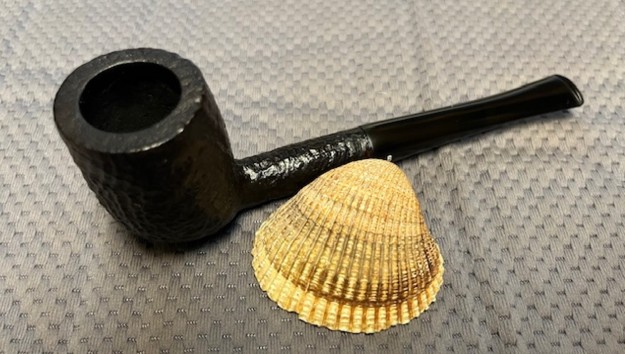
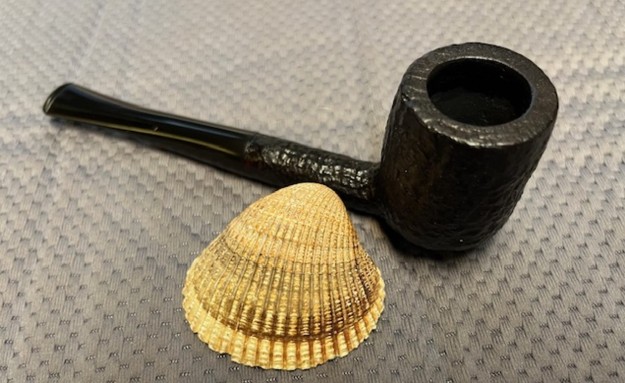
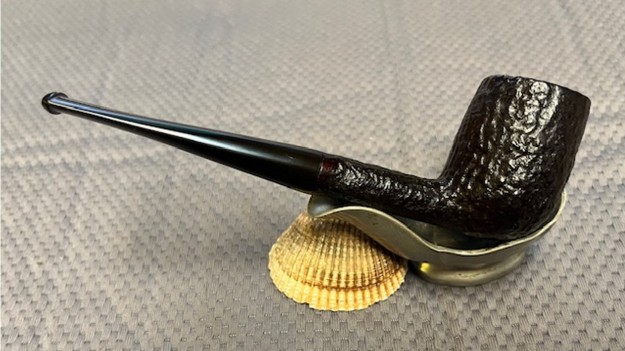
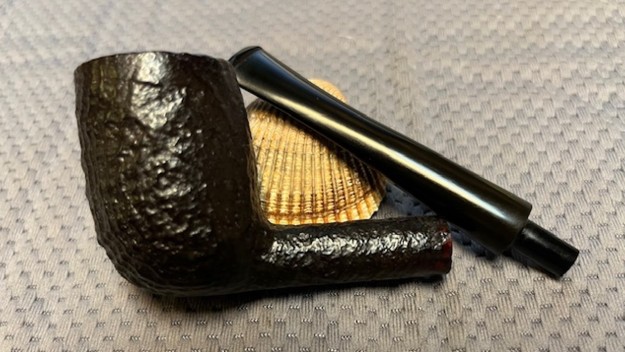
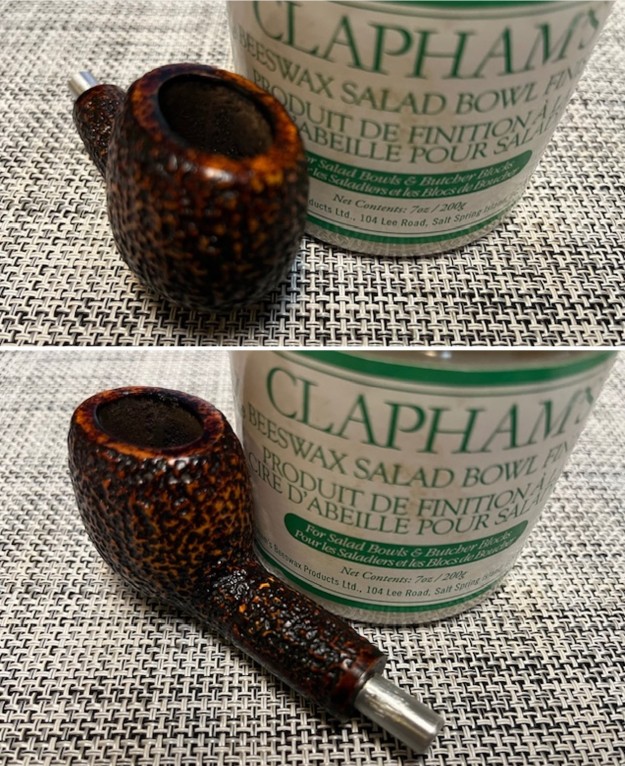
The next pipe on the worktable is a Danish made pipe from the workshop W.O. Larsen. It is a sandblast Canadian with silver band on the shank end. The bowl is a classic Danish looking Canadian with almost a Brandy shaped bowl. It came without a stem. The pipe came to us from eBay on 01/22/2024 from a seller in Jordan, Minnesota, USA.  The pipe is very dirty with a thick cake in the bowl and heavy lava on the rim top. The rim edge looks to be okay but it was hard to know what was under the lava coat on the top and edges. It is stamped on the underside of the bowl and shank on a smooth panel. It reads * followed by Larsen [over] Copenhagen. That is followed by Handmade [over] Made in Denmark. That is followed by the stamping Super. The finish was dusty and there were oils and grime ground into the sandblast finish around the sides of the bowl. The silver band was in good condition and was faintly stamped Sterling Silver arched on the top back of the band. Jeff took some photos of the pipe before he started his cleanup work. Jeff took a photo of the rim top to show the thick build up of lava in the sandblast of the rim top. It is also built up on the inner edge of the bowl. The thick cake in the bowl is very visible.He took photos of the sides and the heel of the bowl to show the blast finish on the pipe. It is a unique blast that really shows the birdseye and other grain around the bowl sides. He took a series of photos to capture the stamping on the heel of the bowl and the underside of the shank. The first photo shows the * on the heel of the bowl. Each one moves down the shank to the band on the shank end. It is clear and readable as noted above. He also took photos of he band on the end of the shank. It is well fit and it is cosmetic rather than a repair band. There is no crack in the shank end.The shape and stamping on this one reminded me of another Larsen Super Canadian I had worked on in the past. I remembered the shape and look of the pipe. I looked up the link and have included it below (https://rebornpipes.com/2021/10/25/restoring-a-sandblast-canadian-hand-made-designed-by-w-o-larsen-super-tan-65/). I also quoted the information on  the brand that I had researched at that time.

I turned to Pipephil (http://www.pipephil.eu/logos/en/logo-l2.html) to get a quick view of the brand once again. I did a screen capture of the site’s information and have included that below. The pipe I am working on is a W.O. Larsen as it is stamped similarly to the ones in the photos. It is interestingly stamped with a lot more detail than any of the ones shown in the screen capture below. I turned to Pipedia (https://pipedia.org/wiki/W.%C3%98._Larsen) for a quick read. The site is worth reading the history of the shop and the brand and its influence on Danish pipe carving. There was no additional information on this pipe.

What I learned from the research is that the pipe is a W.O. Larsen made pipe that was probably esigned by W.O Larsen himself or at least one of the shop carvers. It is a beauty though.

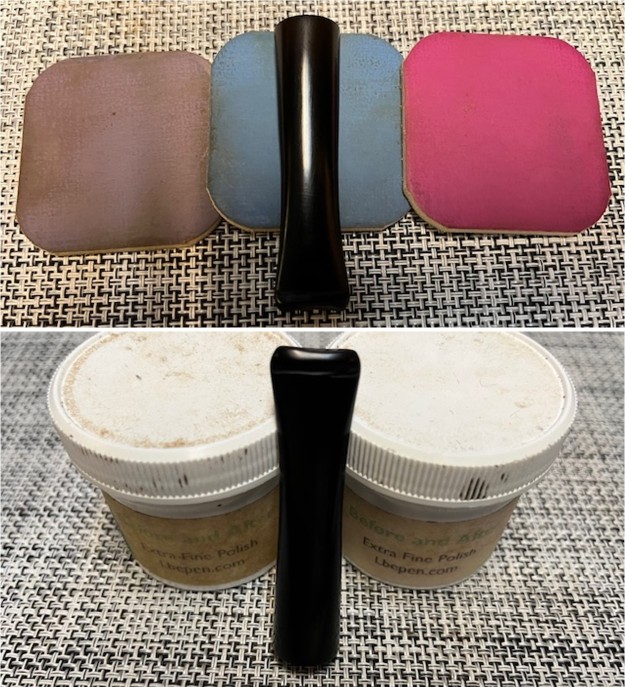
With that information I moved forward to work on the pipe itself and see what I had to do with it. Jeff had done an amazing job in removing all of the cake and the lava on the sand blast rim top. He had reamed the bowl with a PipNet Pipe Reamer and cleaned up the remnants with a Savinelli Fitsall Pipe Knife. He took the cake back to bare briar so we could check the walls for damage. He scrubbed the exterior of the bowl with Murphy’s Oil Soap and a tooth brush to remove the grime on the bowl and rim and was able to remove the lava and dirt. The finish on the bowl and rim top looked very good showing a unique and beautiful sandblast. He cleaned out the interior of the bowl and shank with pipe cleaners, cotton swabs and alcohol until they came out clean. I took photos of the pipe before I started my part of the restoration. I took a photo of the stamping on the underside of the shank to show the condition after the cleanup. This stamping is clearer than the photo shows. The Sterling Silver stamp on the band is scratched with wear but still readable. I went through my collection of stems looking for one that would match the previous Larsen Super that I referred to above (https://rebornpipes.com/2021/10/25/restoring-a-sandblast-canadian-hand-made-designed-by-w-o-larsen-super-tan-65/). I found one that was the right shape and length. It was a little wider so it would take some work to fit it to the shank size. The tenon was very close so a little sandpaper would remember that and make the fit proper. Here is a photo of the stem. NB: This is the reason I am always picking up stems where ever I can find them. I just know that one day I will need one and it might just be the one!I decided to start my work this time following Kenneth’s pattern of working on the stem first. This something I rarely ever do, but there is always room for change. I started with the stem fitting. I marked the stem width with a pencil, ran some sandpaper over the tenon for a fit and took off the excess width on the stem on the top and each side with a rasp. With a bit of careful fiddling and fussing I was able to get a proper fit on the stem. I put it on the shank and took the photos below. Now I needed to sand it to clean up the file marks and fine tune the shape.I started polishing the stem with 320-3500 grit sanding pads. I worked on the file marks and fine shaping of the stem fit against the shank. The pads worked to polish out the marks and the fit to the shank was very good. The stem began to take on a rich shine in the vulcanite by the time I sanded it with the 3500 grit pad.I set the bowl aside and polished it with micromesh sanding pads – dry sanding with 1500-12000 grit sanding pads. I wiped it down after each sanding pad with a cloth containing some Obsidian Oil. I finished polishing it with Before & After Pipe Stem Polish – both Fine and Extra Fine and buffed it off with a cotton cloth.  I set the finished stem aside and turned my attention to the bowl. I worked over the sandblast surface on the rim top and bowl sides with a brass bristle brush to remove any residual debris from the valleys in the finish. I wiped it down with a damp cloth to remove anything that remained. It was a nice sandblast finish. I worked some Before & After Restoration Balm into the surface of the sandblast briar with my fingertips and a horsehair shoe brush to clean, enliven and protect the briar. I let the balm sit for about ten minutes and then buffed with a cotton cloth to raise the shine. The photos show the bowl at this point in the restoration process. I polished the silver band with a jeweller’s cloth to raise the shine and protect it from oxidation. The scratches have been lessened, though still remaining. It looks much better at this point. This Larsen Hand Made Larsen Super Canadian is a great looking pipe now that it has been restored. The shape is elegant and flowing with a thin turned vulcanite stem. I put the new stem on the bowl and carefully buffed the pipe with Blue Diamond on the buffing wheel using a light touch on the briar. I gave the bowl multiple coats of Conservator’s Wax and the stem multiple coats of carnauba wax on the buffing wheel and followed that by buffing the entire pipe with a clean buffing pad. I hand buffed the pipe with a microfiber cloth to deepen the shine. The finished Larsen Super Canadian fits nicely in the hand and feels great. Give the finished pipe a look in the photos below. The dimensions of the pipe are Length: 6 inches, Height: 2 inches, Outside diameter of the bowl: 1 ¼ inches, Chamber diameter: 7/8 of an inch. The weight of the pipe is 1.69 ounces/49 grams. I will be putting it on the Danish Pipe Maker Section of the rebornpipes store shortly. If you are interested in adding this pipe to your collection send me a message or an email. Thanks for reading this blog and my reflections on the pipe while I worked on it. There are many more to come!

Breathing Fresh Life into a JM Boswell 2006 U.S.A Apple


Blog by Steve Laug

The next pipe on the worktable is an American made pipe from the workshop of J.M. Boswell. It is a rusticated 1/4 bent apple with an amber acrylic saddle stem. The pipe came to us from eBay from a seller in Jordan, Minnesota, USA.  The pipe is very dirty with a thick cake in the bowl and lava on the smooth rim top. The rim edge looks to be okay but it was hard to know what was under the lava coat on the top and edges. It is signed J.M. Boswell [over] 2006 followed by U.S.A. The finish was dusty and there was dust in the rustication and ground into the finish around the sides of the bowl. The amber acrylic saddle stem is dirty and has light tooth marks and chatter on the top and underside near the button. Jeff took some photos of the pipe before he started his cleanup work. He took photos of the bowl and rim top to show their general condition. You can see the lava on the rim top and the thick cake in the bowl. It was hard to know the condition of the bowl edge prior to cleaning. The stem is dirty and there are light tooth marks and chatter on both sides near the button. Jeff took some photos of the sides and heel of the bowl to give an idea of the rustication around the bowl and the shank. It has some great patterns around the bowl sides and bottom – a mix of random patterns with valleys and peaks. I cannot wait to see what it looks like once it is cleaned and polished. He took a photo of the stamping on the left topside of the diamond shank to capture it for me. It is clear and readable. The J.M. Boswell signature with the date it was carved and U.S.A. If you have been following the blog for any length of time you have come to know that when I am working on interesting old pipes (even sometimes those not so interesting) I like to know a bit about the background of the brand. I like to “meet” the carver to get a feel for their work and style.

In July, 2017 I restored a Boswell Twist pipe, a 2003 and had done some research into the brand (https://rebornpipes.com/2017/07/19/refurbishing-a-boswell-2003-spiral-twist-bent-billiard/). I turned to that blog and reread the information that I had included there. I took the liberty to include the information that I included from the box that came with that pipe that below.

The backside of the box reads:  Dear Pipe Smoker: J.M. Boswell crafts each of his pipes exclusively by hand! From the bare briar block to the final stain and polish, each step is a hands on procedure in old world tradition. Boswell pipes feature individual craftsmanship and style.

Additionally, J.M. Boswell has developed an exclusive bowl coating that greatly shortens the “break-in” time of a Boswell pipe and gives a sweet smoke from the very first bowl full. This coating is applied to each new pipe that Boswell makes.

One more compelling feature of Boswell pipes: “Their cost”! Boswell pipes can be had at a fraction of what most import pipes are. This is a feature pipe smokers find gratifying.

Our second feature is repairs by Boswell. J.M. Boswell has no peers in the quality and speed in which he gives “Turn-around” on pipe repairs, from stem replacement to banding, to reaming and cleaning.

I will be glad to answer any questions that you have regarding all the features of Boswell’s pipes, my repair work, plus the crafting process which can be witnessed first hand at our store and pipe making shop at 586 Lincoln Way East in Chambersburg, Pennsylvania.

Cordially J.M. Boswell, Owner.

I then turned to the Boswell Pipe and Tobacco Shop site (https://boswellpipes.com/product-category/boswell-pipes/). The description of the pipes in that section of the site parallels what I found above. I quote:

In the creation of these exquisite smoking pipes, we use the finest quality briar – “cream of the crop” is what the proprietor of the mill calls it. Boswell Pipes have their own special bowl coating for easy break-in. J.M. has used his special coating for Boswell Pipes since 1982.  100% natural coating, which will force the briar wood to absorb the moisture and heat.  For the finishing touch, J.M. hand inscribes his signature into the briar.  J.M. dates the year and proudly declares made in the USA “J.M. Boswell 2018 U.S.A.”. 

I also found some photos of the shop online that I include as well. I It looks like it would be a great place to visit and spend time enjoying. One day I may get to do that. We shall see! Now I had a pretty good idea of how the pipe was stamped and made. With that information I moved forward to work on the pipe itself and see what I had to do with it. Jeff had done an amazing job in removing all of the cake and the lava on the rim top. He had reamed the bowl with a PipNet Pipe Reamer and cleaned up the remnants with a Savinelli Fitsall Pipe Knife. He took the cake back to bare briar so we could check the walls for damage. They looked to be in good condition. He scrubbed the exterior of the bowl with Murphy’s Oil Soap and a tooth brush to remove the grime on the bowl and rim and was able to remove the lava and dirt. He cleaned out the interior of the bowl and shank with pipe cleaners, cotton swabs and alcohol until they came out clean. He cleaned the stem with Soft Scrub to remove the grime on the exterior and cleaned out the airway with alcohol, cotton swabs and pipe cleaners. He soaked the stem in Before & After Deoxidizer and rinsed if off and recleaned the inside of the stem with alcohol and pipe cleaners. I took photos of the pipe before I started my part of the restoration. I took some photos of the rim top and stem. The rim top and bowl looked very good. The scratching and marks on the rim top are visible in the photo. The close up photos of the stem shows the light tooth marks and chatter on the top and underside of the stem near the button.  I took a photo of the stamping on the underside of the shank to show the condition after the cleanup. This stamping is a signature done with an engraver of some sort. I removed the stem and took a photo of the parts of the pipe. I started my part of the restoration work on this pipe by addressing the damage to the front top and edge of the rim. I used a folded piece of 220 grit sandpaper to remove the damage to the bowl.I started polishing the rim top with 320-3500 grit sanding pads. I wiped down the top after each sanding pad to remove the sanding debris. By the end it looked much better.

I also sanded it with the micromesh sanding pads – dry sanding with 1500-12000 grit pads. I forgot to take photos of the rim top at that point. I used a Cherry stain pen to restrain the newly sanded rim top. I looked very good with the fresh coat of stain.I worked some Before & After Restoration Balm into the surface of the briar with my fingertips and a horsehair shoe brush to clean, enliven and protect the briar. I let the balm sit for about ten minutes and then buffed with a cotton cloth to raise the shine. The photos show the bowl at this point in the restoration process. I set the bowl aside and polished it with micromesh sanding pads – dry sanding with 1500-12000 grit sanding pads. I wiped it down after each sanding pad with a cloth containing some Obsidian Oil. I finished polishing it with Before & After Pipe Stem Polish – both Fine and Extra Fine and buffed it off with a cotton cloth.  This Boswell USA 2006 1/4 Bent Apple is a nice looking pipe. The finish looks very good and rustication depths and peaks were very well done. I put the stem back on the bowl and buffed the pipe lightly with Blue Diamond on the buffing wheel. I carefully avoided the stamping on the shank sides during the process. I gave the bowl multiple coats of Conservator’s Wax and the stem multiple coats of carnauba wax on the buffing wheel. I followed that by buffing it with a clean buffing pad on the buffer. I hand buffed the pipe with a microfiber cloth to deepen the shine. The finished pipe is a good example of a Boswell Hand Made pipe. The flow of the finish and the way the shape follows it is very well done. Give the finished pipe a look in the photos below. I can only tell you that it is much prettier in person than the photos capture. The dimensions of the pipe are Length: 5 ½ inches, Height: 1 3/4 inches, Outside diameter of the bowl: 1 1/2 inches, Chamber diameter: 1 inch. The weight of the pipe is 2.50 ounces/71 grams. This interesting Boswell Hand Made Rusticated Apple is a great looking pipe. Thanks for walking through the restoration with me as I worked over another beautiful pipe. I will be adding it to the rebornpipes store in the American Pipemakers Section soon. If you want to add it to your collection send me an email or a message! Thanks for your time.

Another Amazing Find 4109 Dunhill Shell Canadian with hexagon shank


Blog by Steve Laug

The next pipe on the table is another Dunhill Shell Briar with a great looking blast on the bowl and a unique hexagonal shank and taper stem. The bottom of the shank and bowl is smooth so it is a sitter. This one came with a Dunhill box (wrong number on the outside but still very nice) and a leather (calf skin) pipe sock. In the box is a brochure on joining the Fellowship of the White Spot, a Dunhill tobacco brochure and one on Dunhill Pipes with the guarantee. We purchased it from our contact in Copenhagen, Denmark 02/11/2024. The pipe is stamped on the heel of the bowl and the underside of the shank on a smooth panel. On the heel it is stamped with the shape number 4109 followed by Dunhill Shell [over]Made in England with a faint date stamp that looks like 20 following the D in England. The number is approximately the same size as the D in England. The pipe had been smoked and there was a light cake in the bowl with some light lava on the rim top. The edges of the rim are crisp and clean with no damage. The stem is lightly oxidized and had tooth marks and chatter on the surface on both the top and underside of the stem just ahead of the button. Jeff took photos of the pipe before he started his clean up work. I have included them below. Jeff took photos of the bowl and the stem to give a sense of the condition of the pipe. The bowl has a moderate cake on the walls and an overflow of lava on the rim top. The stem is oxidized and has scratches, tooth marks and chatter on both sides ahead of the button. He took photos of the sides and heel of the bowl to give a clear picture of the look of the sandblast. It really is a stunning pipe. He took photos of the stamping on the underside of the bowl and the shank. It is clear and readable and read as noted above. I turned to the dating key on Pipephil’s site (http://www.pipephil.eu/logos/en/dunhill/cledat-en1a.html) to establish a date for the pipe. I drew a red box around the pertinent information below. It fits the criteria of a Sandblast with a year suffix and a Non possessive form Dunhill. The suffix is the number 20 which puts in the section below which notes 1960 + suffix to establish a date. In this case it is 1960 +20 making the pipe a 1980.From there I turned to the Dunhill shape chart to unpack the shape number stamp 4110 on the heel of the bowl (http://www.pipephil.eu/logos/en/dunhill/shapes.html). This gave me the information I needed to interpret the 4109 shape stamp. The first digit 4 is the size of the pipe – a Group 4. The second digit is the style of the stem which in this case is a 1 telling me that the stem is a tapered stem. The last two digits the 09 tell me that the pipe is a Canadian. I have included the shape below and encircled it with a red box.Now it was my turn to work on the pipe. Jeff had done an amazing cleanup of the pipe. He reamed the light cake with a PipNet reamer and cleaned up that with a Savinelli Fitsall Pipe Knife. He scrubbed the internals of the bowl and stem with alcohol, cotton swabs and pipe cleaners. He scrubbed the externals with undiluted Murphy’s Oil Soap and rinsed the bowl off with running water. He soaked the stem in Briarville’s Pipe stem Deoxidizer and once it had soaked rinsed it off with warm water to remove the residual solution. He dried it off and rubbed it down to remove any oxidation that was still on the stem. The pipe looked very good when I received it. I took photos of the bowl and the rim top as well as both sides of the stem to show the condition of the pipe before I started my work. It really looked remarkably good.I took a photo of the stamping on the shank. The photo of the stamping is clear and readable. I also removed the stem and took a photo of the parts of the pipe. It is a unique piece of pipe history.The bowl was in such good condition that I had to do some minimal work with it. I rubbed the briar down with Before & After Restoration Balm. I worked it into the briar with my fingertips and a horsehair shoe brush to work it into the nooks and crannies of the sandblast finish. The product works to clean, enliven and preserve the briar. I let it sit for 10 minutes then I buffed it with a cotton cloth to deepen the shine. The briar really comes alive with the balm. I set the bowl aside and turned my attention to the stem. I sanded the surface of the stem smooth with 320-3500 grit sanding pads. It worked well to smooth things out and remove the tooth marks and the remnants of oxidation. When finished the stem looked much better.I polished the vulcanite with micromesh sanding pads – 1500-12000 grit pads. I wiped it down with Obsidian Oil after each sanding pad. I used Before & After Pipe Polish – both Fine and Extra Fine to further polish the stem. I polished the aluminum inner tube with the micromesh sanding pads. Once finished I inserted it in the tenon in the stem.This 1990 Dunhill Shell 4109 Hexgonal Shank Flat Bottom Canadian has a beautiful, unique Dunhill Sandblast finish that is very deep and craggy. The rich brown/black finish highlights some great grain around the bowl and shank. It has some great rugged sandblast that Dunhill developed and specialized in making. The polished vulcanite diamond taper stem adds to the mix. I put the stem back on the bowl and carefully buffed the pipe with Blue Diamond on the buffing wheel. It is critical to avoid buffing the stamping and to have a lighter touch on the sandblast briar. I gave the bowl multiple coats of Conservator’s Wax and the stem multiple coats of carnauba wax on the buffing wheel and followed that by buffing it with a clean buffing pad. I hand buffed the pipe with a microfiber cloth to deepen the shine. The finished Dunhill Shell 4109 Canadian is quite stunning and feels great in my hand. Give the finished pipe a look in the photos below. The dimensions of the pipe are Length: 5 ½ inches, Height: 2 inches, Outside diameter of the bowl: 1 ¼ inches, Chamber diameter: ¾ of an inch. The weight of the pipe is 1.34 ounces/38 grams. Thanks for walking through the restoration with me as I worked over another beautiful pipe. I am going to add it to the rebornpipes store in the British Pipemakers Section. If you would like to add it to your collection let me know. Thanks for your time.

What a Find, a Unique 4109 Dunhill Shell Diamond Shank Flat Bottom Canadian


Blog by Steve Laug

The next pipe on the table is a Dunhill Shell Briar with a great looking blast on the bowl and a unique diamond shank and diamond taper stem. The bottom of the shank and bowl is smooth so it is a sitter. This one came with a Dunhill box (wrong number on the outside but still very nice) and a leather (calf skin) pipe sock. In the box is a brochure on joining the Fellowship of the White Spot and one on Dunhill Tobaccos. We purchased it from our contact in Copenhagen, Denmark 02/11/2024. The pipe is stamped on the heel of the bowl and the underside of the shank on a smooth panel. On the heel it is stamped with the shape number 4109 followed by Dunhill Shell [over]Made in England with the date stamp 20 following the D in England. The number is approximately the same size as the D in England. The pipe had been smoked and there was a light cake in the bowl with some light lava on the rim top. The edges of the rim are crisp and clean with no damage. The stem is lightly oxidized and had tooth marks and chatter on the surface on both the top and underside of the stem just ahead of the button. Jeff took photos of the pipe before he started his clean up work. I have included them below. Jeff took photos of the rim top, bowl and the surfaces of the stem to give a sense of the condition of the pipe. The walls of the bowl had a light cake on them and some light lava on the rim top. The stem is lightly oxidized and has tooth marks and chatter on both sides ahead of the button. He took photos of the sides and heel of the bowl to give a clear picture of the look of the sandblast. It really is a stunning pipe. He took photos of the stamping on the underside of the bowl and the shank. It is clear and readable and read as noted above. I turned to the dating key on Pipephil’s site (http://www.pipephil.eu/logos/en/dunhill/cledat-en1a.html) to establish a date for the pipe. I drew a red box around the pertinent information below. It fits the criteria of a Sandblast with a year suffix and a Non possessive form Dunhill. The suffix is the number 20 which puts in the section below which notes 1960 + suffix to establish a date. In this case it is 1960 +20 making the pipe a 1980.From there I turned to the Dunhill shape chart to unpack the shape number stamp 4110 on the heel of the bowl (http://www.pipephil.eu/logos/en/dunhill/shapes.html). This gave me the information I needed to interpret the 4109 shape stamp. The first digit 4 is the size of the pipe – a Group 4. The second digit is the style of the stem which in this case is a 1 telling me that the stem is a tapered stem. The last two digits the 09 tell me that the pipe is a Canadian. I have included the shape below and encircled it with a red box.Now it was my turn to work on the pipe. Jeff had done an amazing cleanup of the pipe. He reamed the light cake with a PipNet reamer and cleaned up that with a Savinelli Fitsall Pipe Knife. He scrubbed the internals of the bowl and stem with alcohol, cotton swabs and pipe cleaners. He scrubbed the externals with undiluted Murphy’s Oil Soap and rinsed the bowl off with running water. He soaked the stem in Briarville’s Pipe stem Deoxidizer and once it had soaked rinsed it off with warm water to remove the residual solution. He dried it off and rubbed it down to remove any oxidation that was still on the stem. The pipe looked very good when I received it. I took photos of the bowl and the rim top as well as both sides of the stem to show the condition of the pipe before I started my work. It really looked remarkably good.I took a photo of the stamping on the shank. The photo of the stamping is clear and readable. I also removed the stem and took a photo of the parts of the pipe. It is a unique piece of pipe history.The bowl was in such good condition that I had to do some minimal work with it. I rubbed the briar down with Before & After Restoration Balm. I worked it into the briar with my fingertips and a horsehair shoe brush to work it into the nooks and crannies of the sandblast finish. The product works to clean, enliven and preserve the briar. I let it sit for 10 minutes then I buffed it with a cotton cloth to deepen the shine. The briar really comes alive with the balm. I set the bowl aside and turned my attention to the stem. I sanded the surface of the stem smooth with 320-3500 grit sanding pads. It worked well to remove the tooth marks and the remnants of oxidation. When finished the stem looked much better.I polished the vulcanite with micromesh sanding pads – 1500-12000 grit pads. I wiped it down with Obsidian Oil after each sanding pad. I used Before & After Pipe Polish – both Fine and Extra Fine to further polish the stem. I polished the aluminum inner tube with the micromesh sanding pads. Once finished I inserted it in the tenon in the stem.This 1990 Dunhill Shell 4109 Diamond Shank Flat Bottom Canadian has a beautiful, unique Dunhill Sandblast finish that is very deep and craggy. The rich brown/black finish highlights some great grain around the bowl and shank. It has some great rugged sandblast that Dunhill developed and specialized in making. The polished vulcanite diamond taper stem adds to the mix. I put the stem back on the bowl and carefully buffed the pipe with Blue Diamond on the buffing wheel. It is critical to avoid buffing the stamping and to have a lighter touch on the sandblast briar. I gave the bowl multiple coats of Conservator’s Wax and the stem multiple coats of carnauba wax on the buffing wheel and followed that by buffing it with a clean buffing pad. I hand buffed the pipe with a microfiber cloth to deepen the shine. The finished Dunhill Shell 4109 Canadian is quite stunning and feels great in my hand. Give the finished pipe a look in the photos below. The dimensions of the pipe are Length: 6 inches, Height: 2 inches, Outside diameter of the bowl: 1 ¼ inches, Chamber diameter: ¾ of an inch. The weight of the pipe is 1.48 ounces/42 grams. Thanks for walking through the restoration with me as I worked over another beautiful pipe. I am going to add it to the rebornpipes store in the British Pipemakers Section. If you would like to add it to your collection let me know. Thanks for your time.

Dunhill Shell Briar 40 Lovat Made in England 0


Blog by Steve Laug

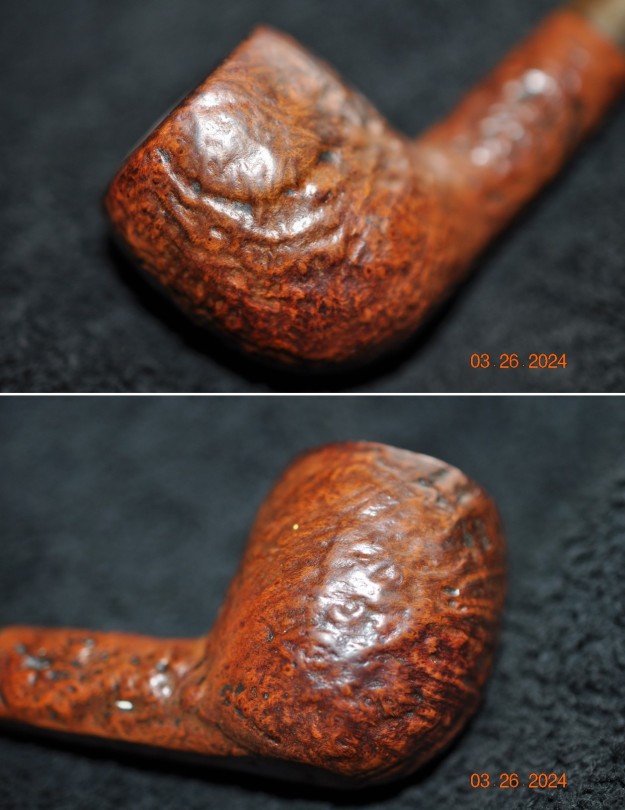
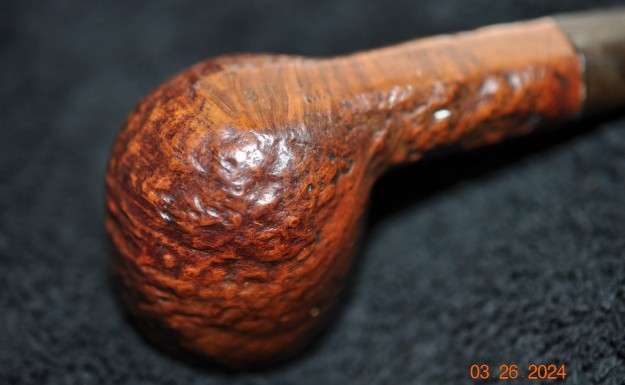
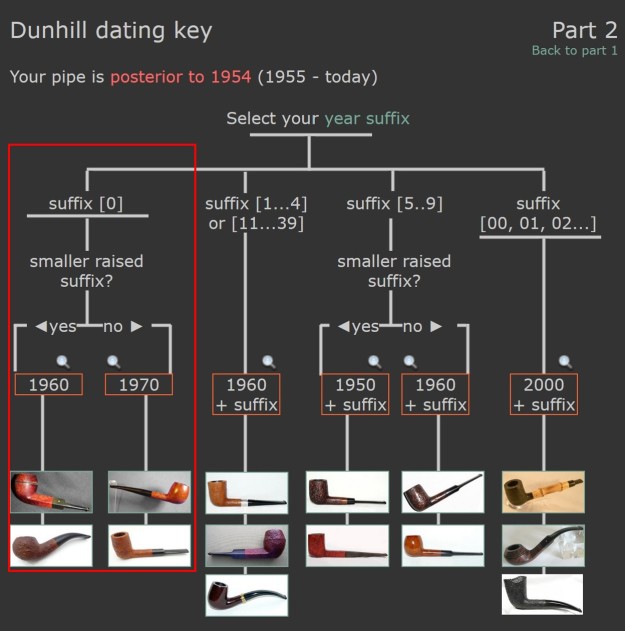
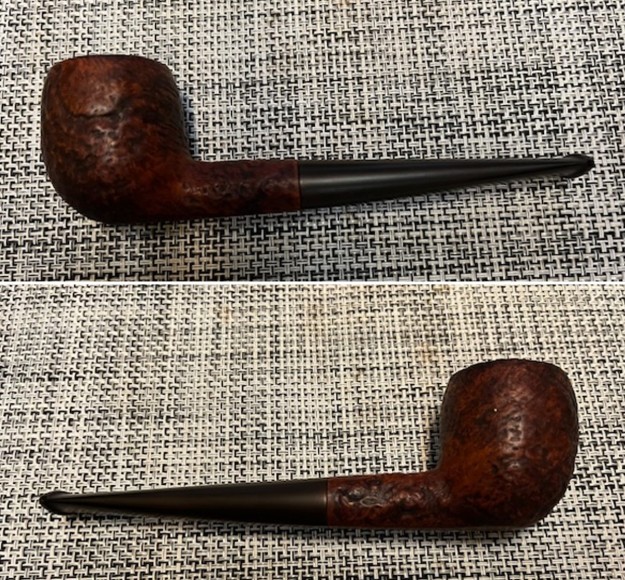
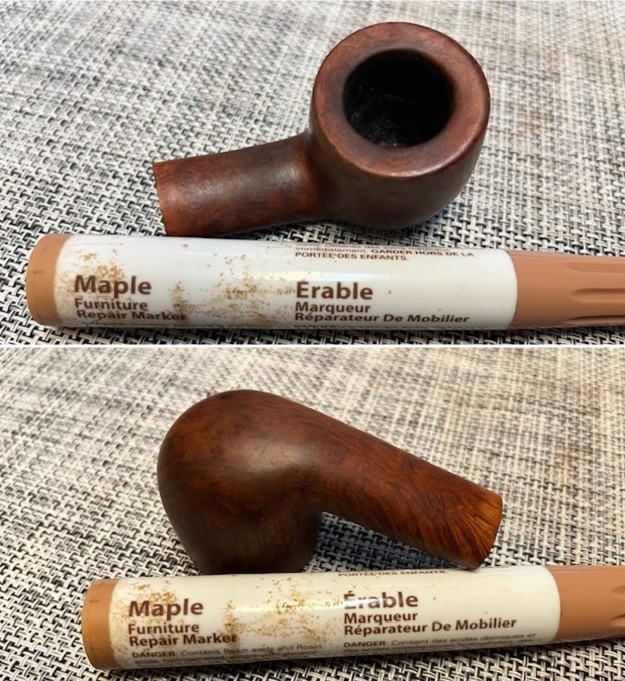
The next pipe on the table Dunhill Shell Briar with a worn or shallow blast on the bowl and a smooth rim top. We purchased it from our contact in Copenhagen, Denmark 01/22/24. The pipe is stamped on the heel of the bowl and the underside of the shank on a smooth panel. On the heel it is stamped with the shape number 40 followed by Dunhill [over] Shell Briar. Next to that it is stamped Made in [over] England with the date stamp 0 following the D in England. The number is approximately the same size as the D in England.  Next to that it is stamped 4 in a circle and S which tells me it is a Group 4 sized pipe and it is in the Shell Briar finish. The pipe had been smoked and there was a moderate cake in the bowl with some overflowing as lava on the smooth rim top. There is also some darkening and possible damage on the inner edge of the bowl. The stem is lightly oxidized and had wear on the surface on both the top and underside of the stem just ahead of the button. Jeff took photos of the pipe before he started his clean up work. I have included them below. Jeff took photos of the rim top, bowl and the surfaces of the stem to give a sense of the condition of the pipe. The walls of the bowl had a moderate cake on them and some lava overflow onto the rim top – heavier toward the back of the bowl. There is also some darkening and potential burn damage that can be seen on the inner edge of the rim. The stem is lightly oxidized and has wear on both sides ahead of the button. He took photos of the sides and heel of the bowl to give a clear picture of the look of the light or shallow sandblast. It is hard to know if it is just worn from use or if it came from the factory this way. He took photos of the stamping on the underside of the bowl and the shank. It is clear and readable and read as noted above. I turned to the dating key on Pipephil’s site (http://www.pipephil.eu/logos/en/dunhill/cledat-en1a.html) to establish a date for the pipe. I drew a red box around the pertinent information below. It fits the criteria of a Sandblast with a year suffix and a Non possessive form Dunhill. The suffix is the number 0 same size as the D which puts in the section below which notes 1960 + suffix 0 to establish a date. In this case it is 1960 + 0 making the pipe a 1960.I turned to Pipedia to verify this date on the pipe and have included the link and the post for that below (https://pipedia.org/wiki/Pipedia_Dunhill_Dating_Guide#Post-Patents). It verifies that date is 1960. I have included further information that was on the site for this time period. I have highlighted the pertinent information in red below:

[1955 up to 1969] Only a single suffix number.

The date code is just after ENGLAND: 1950 +: 5, 6, 7, 8 and 9 for the 50s and 0 for 1960 (they are smaller and underscored) then, 1, 2, 3, 4, 5, 6, 7, 8 and 9 for the 60s (they are equal in size to the “D” in the word “ENGLAND”).

  • Sometimes two suffix numbers (one after the other), but it’s an additional stamp for warranty control (see more here).
  • From 1961 up to 1964 we can find numbers without underscore – the code is a raised and smaller than the preceding “D”.
  • Sometimes the numbers 6, 7, 8 and 9, in the 50s, are roughly equal in size to the “D” in the word “ENGLAND”.
  • DUNHILL over finish stamp (BRUYERE or ROOT BRIAR). On sandblasted DUNHILL followed by the name of the finish (DUNHILL SHELL, etc).

Now it was my turn to work on the pipe. Jeff had done an amazing cleanup of the pipe. He reamed the cake with a PipNet reamer and cleaned up that with a Savinelli Fitsall Pipe Knife. He scrubbed the internals of the bowl and stem with alcohol, cotton swabs and pipe cleaners. He scrubbed the externals with undiluted Murphy’s Oil Soap and rinsed the bowl off with running water. He soaked the stem in Briarville’s Pipe stem Deoxidizer and once it had soaked rinsed it off with warm water to remove the residual solution. He dried it off and rubbed it down to remove any oxidation that was still on the stem. The pipe looked very good when I received it. I took photos of the bowl and the rim top as well as both sides of the stem to show the condition of the pipe before I started my work. The rim top shows scratching on the smooth surface and some darkening as well. There is also damage on the inner edge of the rim where it appears to have been damaged with a knife. The stem does not show tooth marks but the sharp edge of the button on both sides is worn and will need to be redefined.I took a photo of the stamping on the shank. The photo of the stamping is clear, though worn in some spot but it is still readable. I also removed the stem and took a photo of the parts of the pipe.I started my work on the pipe by addressing the damage to the rim top and the inner edge. I used a folded piece of 220 grit sandpaper to smooth out the damage on the rim top and also smooth out the inner edge and remove the cut marks. It looked significantly better at this point. There were still some spots of darkening on the rim top on the back and front but those will polish out further as the process continues.I worked further on the rim top with the 320-3500 grit sanding pads. I used them on the smooth surface as well as the inner edge. The darkening is less at this point and the top and edges are taking on a shine.I further polished the rim top and edges using micromesh sanding pads – I dry sand it with 1500-120000 grit pads and wiping it down with a damp cloth after each pad. The shine is deepening and though the darkening is still present in spots it is improving. I stained the rim top with a Maple stain pent to blend it into the bowl colour and to further mask the darkening. At this point the rim top looks quite amazing.Once the stain dried on the rim top I rubbed the briar down with Before & After Restoration Balm. I worked it into the briar with my fingertips and a horsehair shoe brush. The product works to clean, enliven and preserve the briar. I let it sit for 10 minutes then I buffed it with a cotton cloth to deepen the shine. The briar really comes alive with the balm. I set the bowl aside and turned my attention to the stem. I used a small file with a straight edge to redefine the sharp edge of the button. Once it was cut it looked better. I sanded the file marks with 220 grit sandpaper to smooth them out. I sanded the surface of the stem and the repairs smooth with 320-3500 grit sanding pads. It worked well to smooth things out and remove remnants of oxidation. When finished the stem looked much better.I polished the vulcanite with micromesh sanding pads – 1500-12000 grit pads. I wiped it down with Obsidian Oil after each sanding pad. I used Before & After Pipe Polish – both Fine and Extra Fine to further polish the stem. This 1960 Dunhill Shell Briar 40 Group 4 Lovat has a beautiful, unique Dunhill Sandblast finish that is shallow and worn. The rich brown/black finish highlights some great grain around the bowl and shank. It has a sandblast that Dunhill developed and specialized in making. The polished vulcanite saddle stem adds to the mix. I put the stem back on the bowl and carefully buffed the pipe with Blue Diamond on the buffing wheel. It is critical to avoid buffing the stamping and to have a lighter touch on the sandblast briar. I gave the bowl multiple coats of Conservator’s Wax and the stem multiple coats of carnauba wax on the buffing wheel and followed that by buffing it with a clean buffing pad. I hand buffed the pipe with a microfiber cloth to deepen the shine. The finished Dunhill Shell Briar 40 Lovat is quite stunning and feels great in my hand. Give the finished pipe a look in the photos below. The dimensions of the pipe are Length: 5 inches, Height: 1 ¾ inches, Outside diameter of the bowl: 1 ¼ inches, Chamber diameter: ¾ of an inch. The weight of the pipe is 1.23 ounces/35 grams. Thanks for walking through the restoration with me as I worked over another beautiful pipe. I am going to add it to the rebornpipes store in the British Pipemakers Section. If you would like to add it to your collection let me know. Thanks for your time.

Reclaiming a GBD Prehistoric 9493


Blog by Kenneth Lieblich

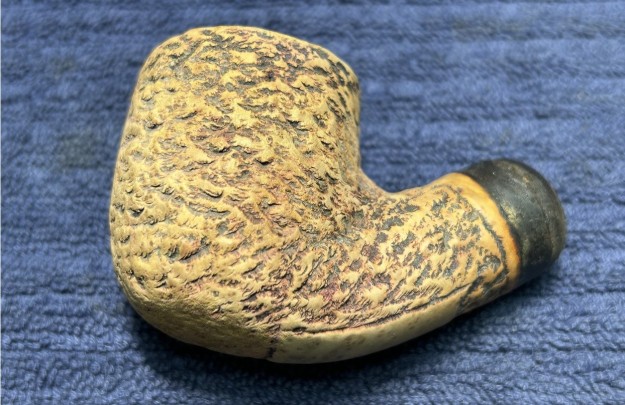
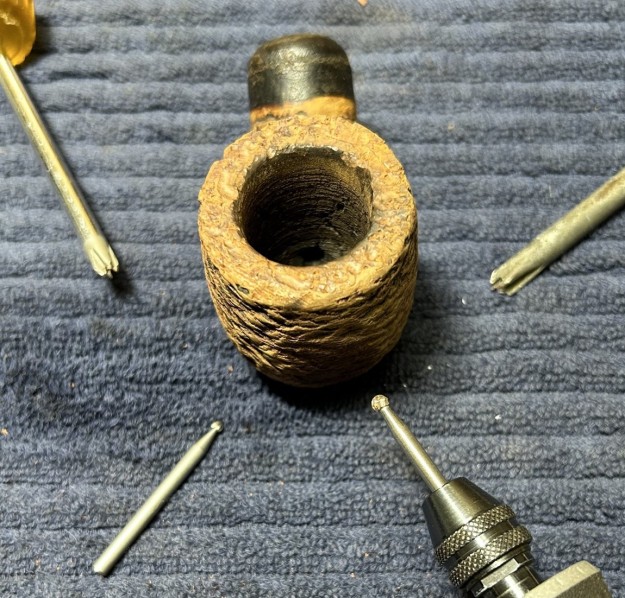
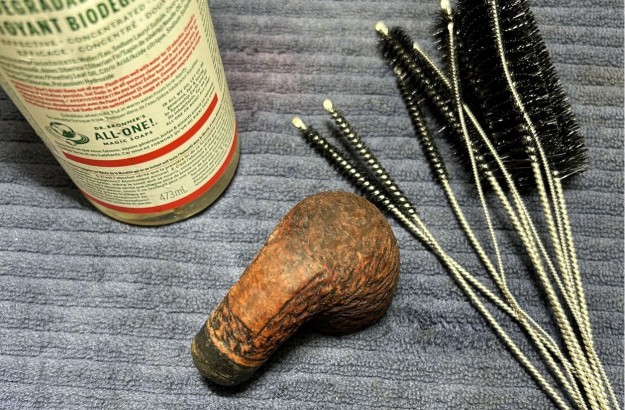
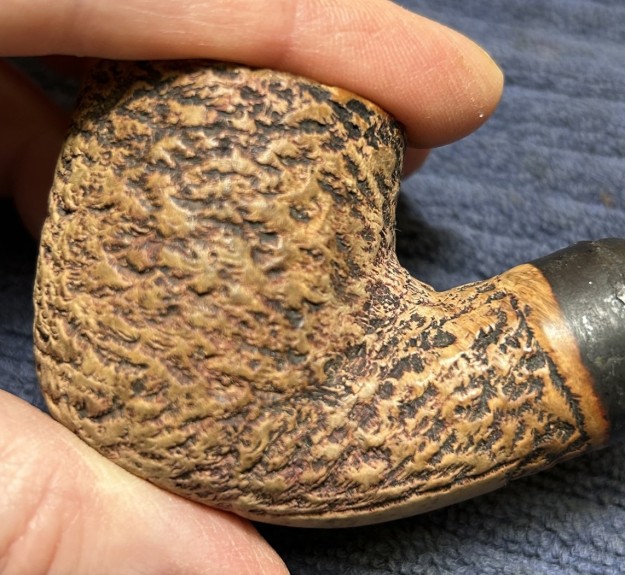
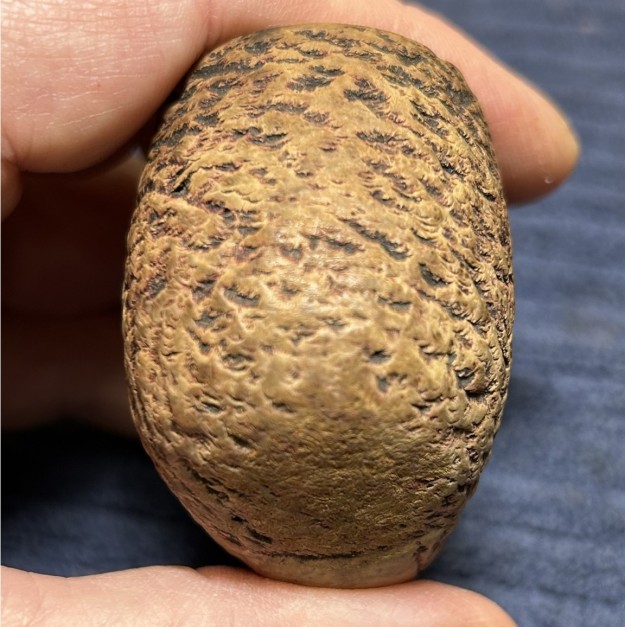
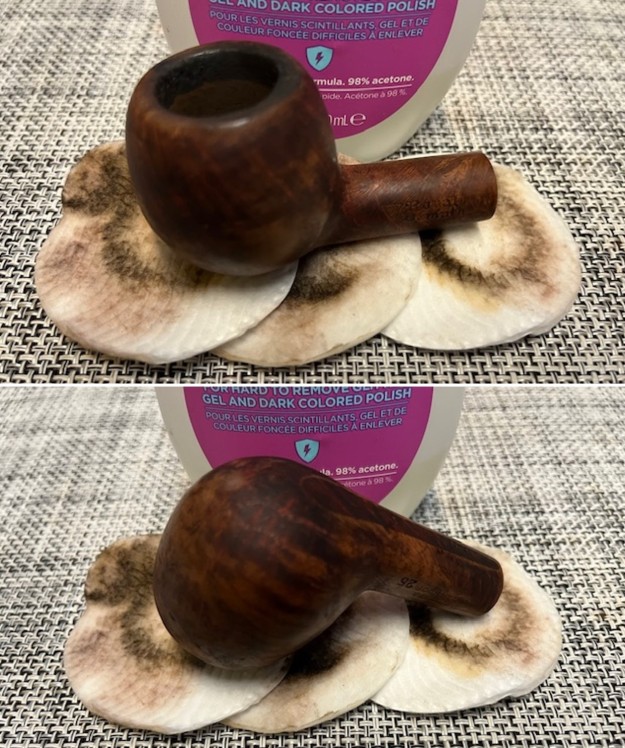
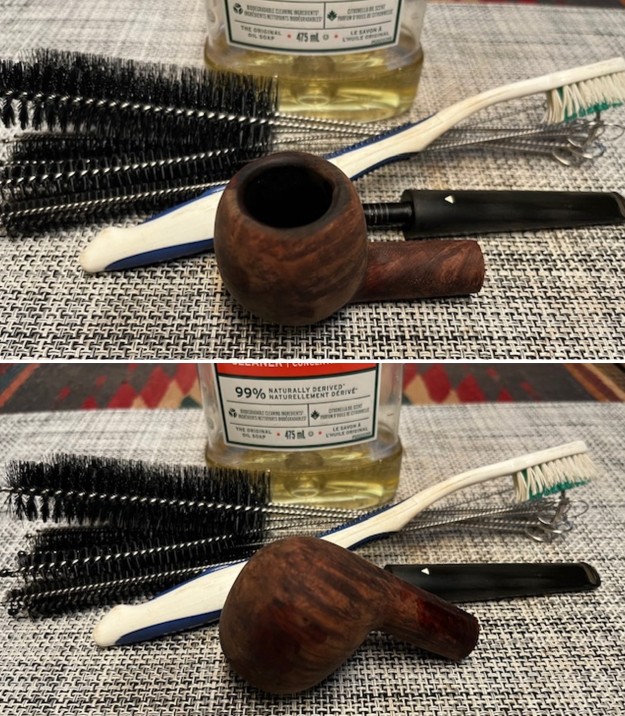
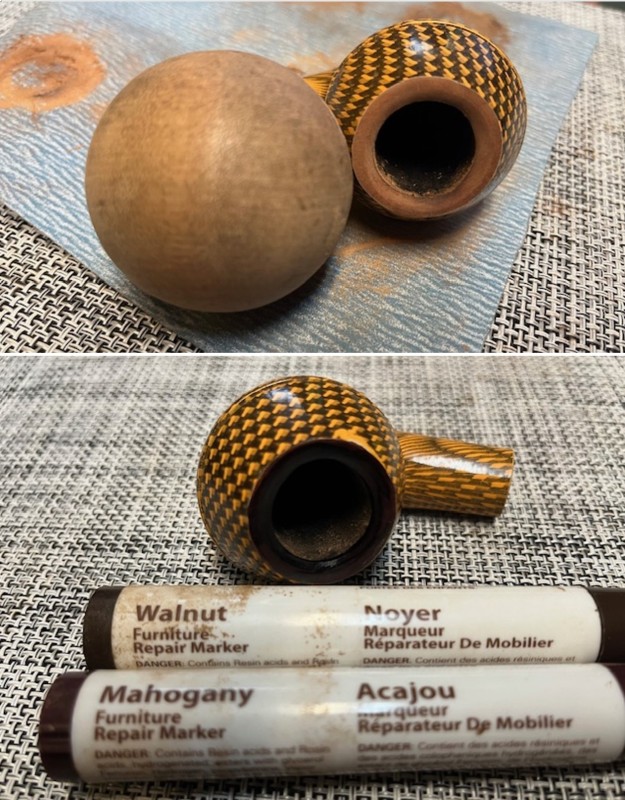
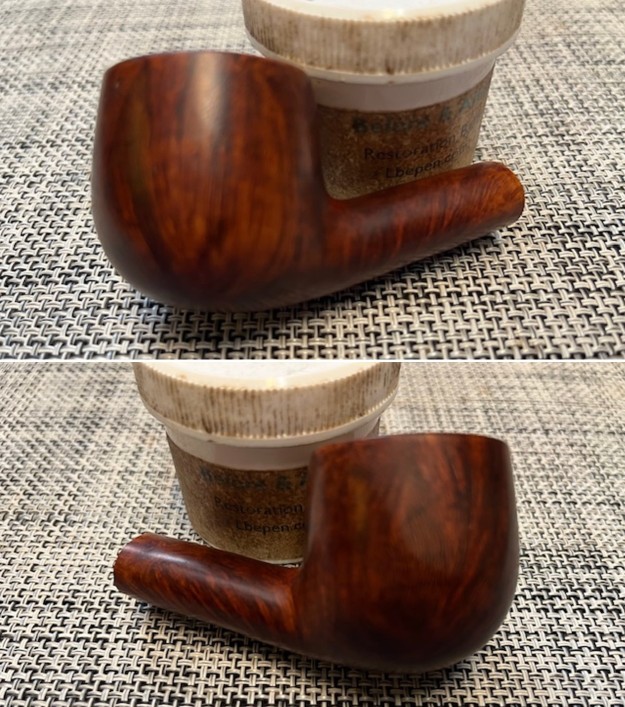
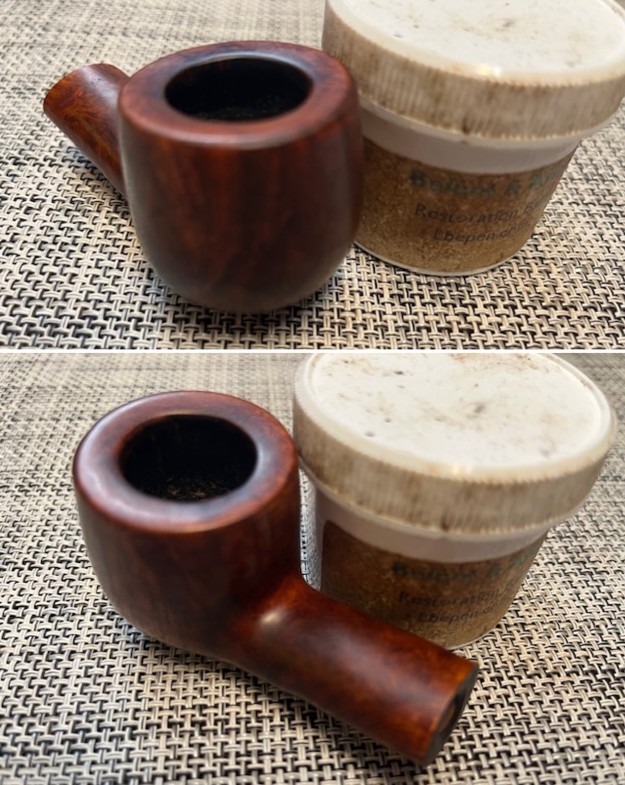
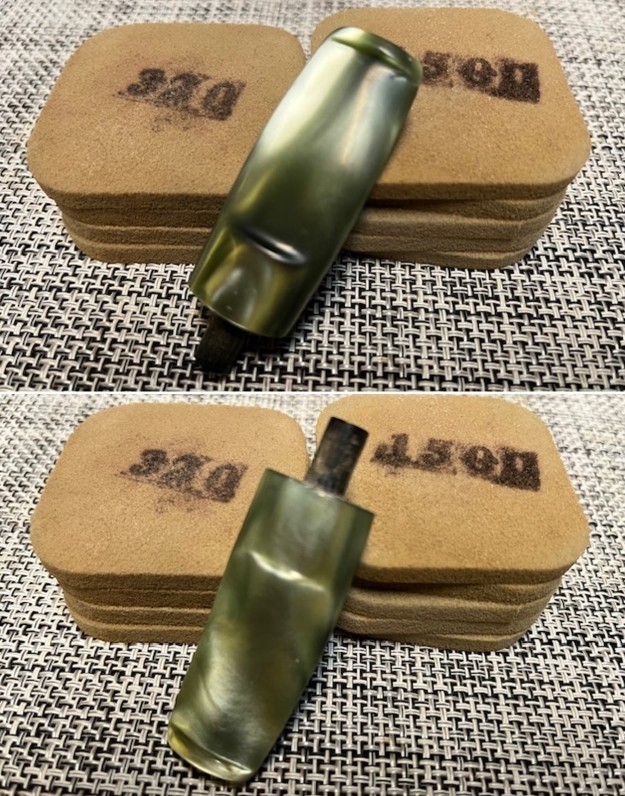
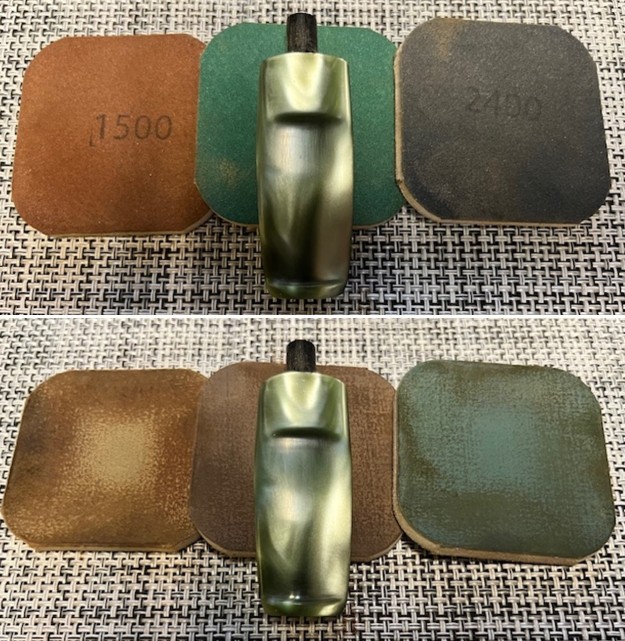
Here’s another terrific pipe from my gentleman customer in Washington. This is a GBD Prehistoric 9493 pot with a Perspex stem – well, it’s officially listed as a pot, but some (like Greg Pease) call it a long-shank pot, and I thought it was a lovat when I first saw it. I’m arbitrarily calling it a “lovat pot” – so there! I love GBDs and I was delighted to work on this one. However, there was one significant issue: a very thin, but very long, crack on the underside of the bowl. As the English say, I would have to use all of my “nous” to repair it without making it look like a dog’s breakfast. Let’s look at the pipe’s markings. On the underside, going from left to right, we see GBD in an oval (albeit very worn); next to that is the word Prehistoric; next to that are the words London England; and, finally, next to that is the shape number 9493. I wouldn’t like to hazard a guess on the specific age of this pipe, other than to say that the brass oval on the stem suggests that it (fortunately) predates the merger Comoy’s. This pipe is likely from the 1960s or 1970s.A page from a 1961 GBD catalogue shows our shape (if not the model). It reads, “#9493 – Large Pot, Long Shank, Flat Saddle Mouthpiece”. That matches our pipe’s description.Let’s start with the Perspex stem. As an aside, Perspex simply means a type of clear, cast acrylic. GBD has used it since the 1930s, apparently. As I’ve mentioned in previous blog posts on acrylic stems, they are tricky to get completely clean because the tobacco stains the material quite thoroughly. This one wasn’t too bad and I worked hard on this one – using dental tools, pipe cleaners, and alcohol. Having had some success with other acrylic stems, I also used SoftScrub on some pipe cleaners for further scrubbing. I was pleased with the results.There were a few tooth marks, etc. on the stem, and I addressed those by filling them with some clear cyanoacrylate adhesive. Once that had cured, I sanded the stem down – first with some sandpaper, then with my Micromesh pads and pipe stem oil. I was really pleased with the way it came out in the end. Lovely shine! On to the stummel, and the usual cleaning procedures were in order for this pipe. The bowl was quite wide and I used both the KleenReem and the PipNet to remove the built-up cake, and followed that with 220-grit sandpaper to remove as much as I could. I wanted to take the bowl down to bare briar. Unfortunately, there were many heat fissures on the inside of the bowl. I would address those later. I then proceeded to clean out the insides of the shank with cotton swabs, pipe cleaners, and isopropyl alcohol. There was quite a bit of filth inside this stummel – it took many pipe cleaners et cetera to clean it out. As usual, I followed that up by cleaning the insides with some soap and tube brushes. In fact, at that point, I took the opportunity to also use a toothbrush and gently clean the sandblast. Much improved. I decided to de-ghost the pipe in order to remove any lingering smells of the past. I thrust cotton balls into the bowl and the shank and saturated them with 99% isopropyl alcohol. I let the stummel sit overnight. This caused any remaining oils, tars and smells to leach out into the cotton. The bowl was nice and clean after this.Now on to the tricky business of repairing that long crack on the underside of the bowl. The technique I use for repairing these is one I learned from Steve long ago. It involves drilling a tiny hole at the very end of the crack to stop it from progressing any further in years to come. Now, it’s often challenging at the best of times to find the end of a crack on a smooth bowl, but it’s nigh on impossible on a sandblasted one! Nonetheless, I took my time and ever so carefully searched and found the ends of the crack. I took my micro drill bit and delicately drilled a hole through the briar right at both ends of the crack. I then carefully laid a thin bead of CA glue along the crack and let it cure. This bead of glue was placed with a needle-nosed nozzle, so that excess glue wouldn’t be an issue around the crack. I obviously didn’t want to sand the sandblast, so being extra careful with the glue was important. The next step was to sand the rim down. I started with some sandpaper on a wooden sphere and then used my nine Micromesh pads. On the rest of the stummel, I only used the last couple of pads, as I didn’t want to lose any of the beautiful blast. Where it was required, I touched up a couple of spots on the wood with my furniture pens. Of course, I used my restoration balm and rubbed that into the wood to have its nourishing properties work on the wood. I left it set for 20 minutes or so. While I was waiting, I took some of my pipe mortar and lined the briar walls with it. It was necessary for repairing the fissures inside the bowl. It’ll make a world of difference to the long-term viability of this great pipe. Afterwards, I rubbed down the stummel with a microfibre cloth.Then it was off for a trip to the buffer. A dose of White Diamond and several coats of Conservator’s Wax were just what this pipe needed. The handsome sandblast just popped and looked great.This GBD Prehistoric 9493 lovat pot is much improved. I’m delighted and I’m sure my customer in Washington will be too. I hope you enjoyed reading the story of this pipe as much I as I did in restoring it. If you are interested in more of my work, please follow me here on Steve’s website or email me directly at kenneth@knightsofthepipe.com. Thank you very much for reading and, as always, I welcome and encourage your comments.
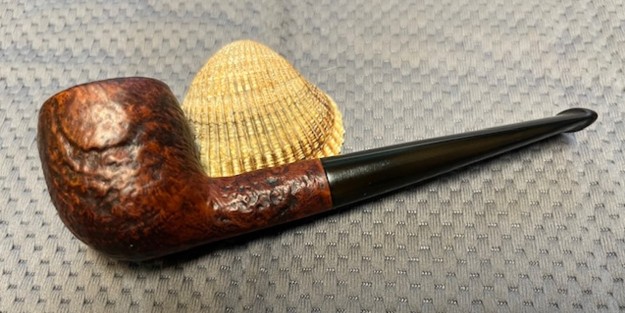
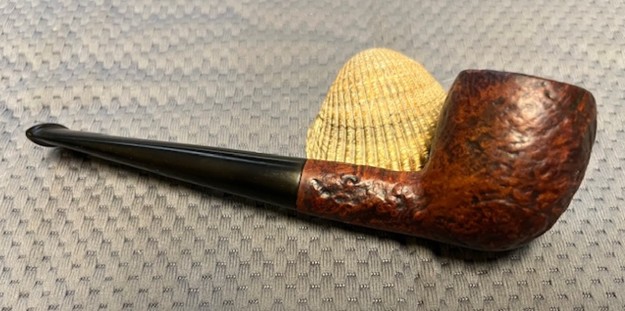
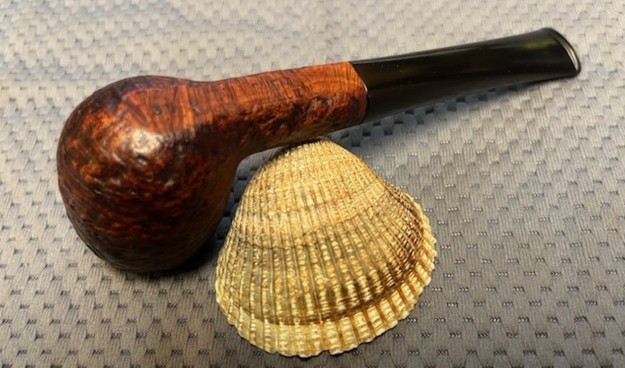
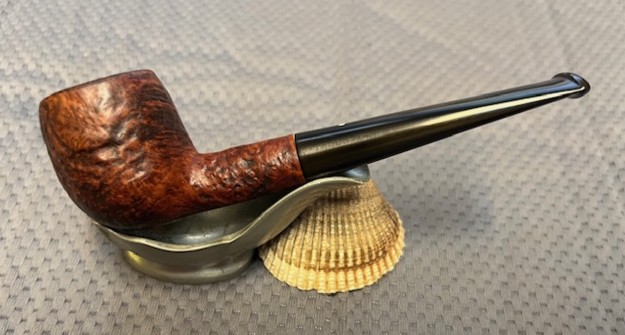
What a Classic looking Dunhill Shell Briar 32 FT Billiard 1S


Blog by Steve Laug

The next pipe on the table is a unique one and I think it is an older one. We purchased it from our contact in Copenhagen, Denmark 01/22/24. The pipe is a Shell Briar with a rugged sandblast finish. The pipe is stamped on the heel of the bowl and the underside of the shank on a smooth panel. On the heel it is stamped with the shape number and the designation for a Fish Tail stem – 32 F/T followed by Dunhill [over] Shell Briar. Next to that it is stamped Made in [over] England with the date stamp 7 following the D in England. Next to that it is stamped 1 in a circle and S which tells me it is a Group 1 sized pipe and it is in the Shell Briar finish. The pipe had been smoked and there was a thick cake in the bowl overflowing as lava in the sandblast on the rim top. The stem is oxidized and had tooth marks on both the top and underside of the stem just ahead of the button. Jeff took photos of the pipe before he started his clean up work. I have included them below. Jeff took photos of the rim top, bowl and the surfaces of the stem to give a sense of the condition of the pipe. The walls of the bowl had a thick cake on them and lava overflow onto the rim top – heavier toward the back of the bowl. The stem is oxidized and has tooth marks on both sides ahead of the button. He took photos of the sides and heel of the bowl to give a clear picture of the depth of the sandblast. It really is a great looking blast that shows the grain underneath very well. He took photos of the stamping on the underside of the bowl and the shank. It is clear and readable and read as noted above.   I turned to the dating key on Pipephil’s site (http://www.pipephil.eu/logos/en/dunhill/cledat-en1a.html) to establish a date for the pipe. I drew a red box around the pertinent information below. It fits the criteria of a Sandblast with a year suffix and a Non possessive form Dunhill. The suffix is the number 7 same size as the D which puts in the section below which notes 1960 + suffix 7 to establish a date. In this case it is 1960 + 7 making the pipe a 1967.I turned to Pipedia to verify this date on the pipe and have included the link and the post for that below (https://pipedia.org/wiki/Pipedia_Dunhill_Dating_Guide#Post-Patents). It verifies that date is 1960. I have included further information that was on the site for this time period. I have highlighted the pertinent information in red below:

[1955 up to 1969] Only a single suffix number.

The date code is just after ENGLAND: 1950 +: 5, 6, 7, 8 and 9 for the 50s and 0 for 1960 (they are smaller and underscored) then, 1, 2, 3, 4, 5, 6, 7, 8 and 9 for the 60s (they are equal in size to the “D” in the word “ENGLAND”).

  • Sometimes two suffix numbers (one after the other), but it’s an additional stamp for warranty control (see more here).
  • From 1961 up to 1964 we can find numbers without underscore – the code is a raised and smaller than the preceding “D”.
  • Sometimes the numbers 6, 7, 8 and 9, in the 50s, are roughly equal in size to the “D” in the word “ENGLAND”.
  • DUNHILL over finish stamp (BRUYERE or ROOT BRIAR). On sandblasted DUNHILL followed by the name of the finish (DUNHILL SHELL, etc).

Now it was my turn to work on the pipe. Jeff had done an amazing cleanup of the pipe. He reamed the light cake with a PipNet reamer and cleaned up that with a Savinelli Fitsall Pipe Knife. He scrubbed the internals of the bowl and stem with alcohol, cotton swabs and pipe cleaners. He scrubbed the externals with undiluted Murphy’s Oil Soap and rinsed the bowl off with running water. He soaked the stem in Briarville’s Pipe stem Deoxidizer and once it had soaked rinsed it off with warm water to remove the residual solution. He dried it off and rubbed it down to remove any oxidation that was still on the stem. The pipe looked very good when I received it. I took photos of the bowl and the rim top as well as both sides of the stem to show the condition of the pipe before I started my work. The rim top looked remarkably good. Unfortunately I forgot to take stem photos of the before and only took the ones below after I had some repair work on the top and underside.I took a photo of the stamping on the shank. The photo of the stamping is clear and readable. I also removed the stem and took a photo of the parts of the pipe. The bowl was in such good condition that I had to do some minimal work with it. I rubbed the briar down with Before & After Restoration Balm. I worked it into the briar with my fingertips and a horsehair shoe brush. The product works to clean, enliven and preserve the briar. I let it sit for 10 minutes then I buffed it with a cotton cloth to deepen the shine. The briar really comes alive with the balm. I set the bowl aside and turned my attention to the stem. I “painted” the stem surface with the flame of a Bic lighter to lift the tooth marks. I was able to lift the majority of them. Those that remained I filled in with clear CA glue. Once the repairs cured I used a small file to flatten the spots. It looked much better. I sanded the surface of the stem and the repairs smooth with 320-3500 grit sanding pads. It worked well to smooth things out and remove remnants of oxidation. When finished the stem looked much better.I polished the vulcanite with micromesh sanding pads – 1500-12000 grit pads. I wiped it down with Obsidian Oil after each sanding pad. I used Before & After Pipe Polish – both Fine and Extra Fine to further polish the stem. This 1967 Dunhill Shell Briar 32 F/T Group 1 Billiard has a beautiful, unique Dunhill Sandblast finish that is very deep and craggy. The rich brown/black finish highlights some great grain around the bowl and shank. It has some great rugged sandblast that Dunhill developed and specialized in making. The polished vulcanite taper stem adds to the mix. I put the stem back on the bowl and carefully buffed the pipe with Blue Diamond on the buffing wheel. It is critical to avoid buffing the stamping and to have a lighter touch on the sandblast briar. I gave the bowl multiple coats of Conservator’s Wax and the stem multiple coats of carnauba wax on the buffing wheel and followed that by buffing it with a clean buffing pad. I hand buffed the pipe with a microfiber cloth to deepen the shine. The finished Dunhill Shell Briar 32 F/T Billiard is quite stunning and feels great in my hand. Give the finished pipe a look in the photos below. The dimensions of the pipe are Length: 5 inches, Height: 1 ½ inches, Outside diameter of the bowl: 1 inch, Chamber diameter: ¾ of an inch. The weight of the pipe is .67 ounces/19 grams. Thanks for walking through the restoration with me as I worked over another beautiful pipe. I am going to add it to the rebornpipes store in the British Pipemakers Section. If you would like to add it to your collection let me know. Thanks for your time.