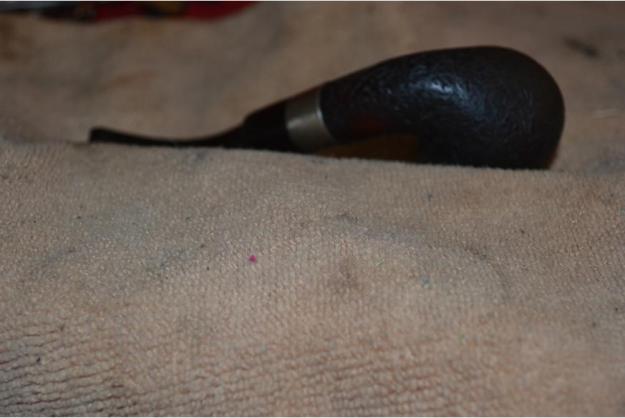
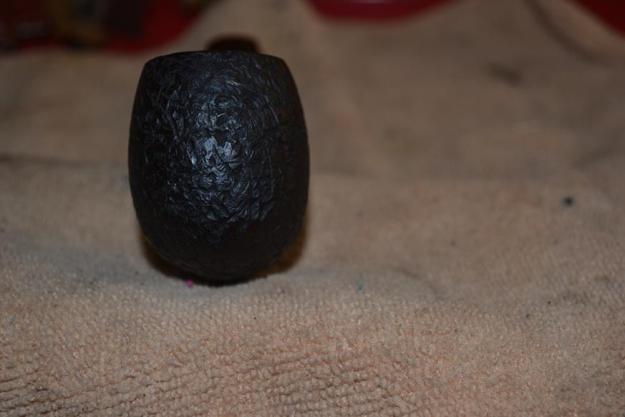
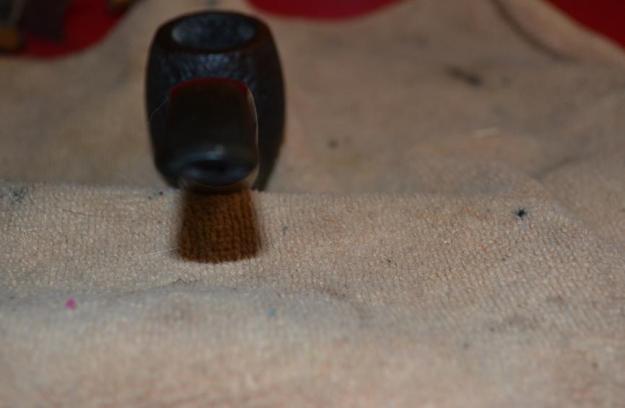
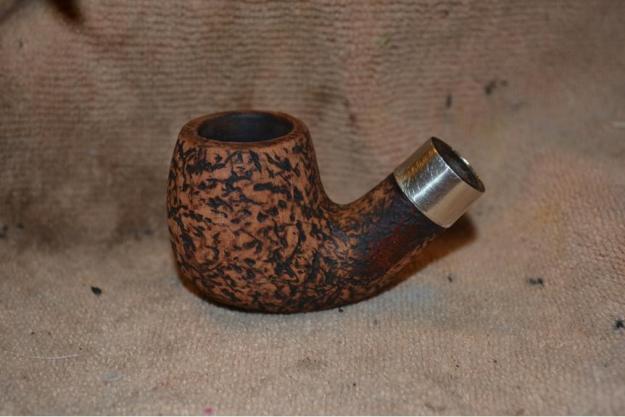
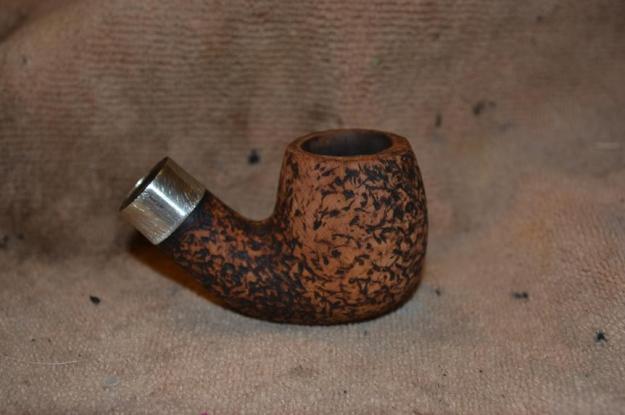
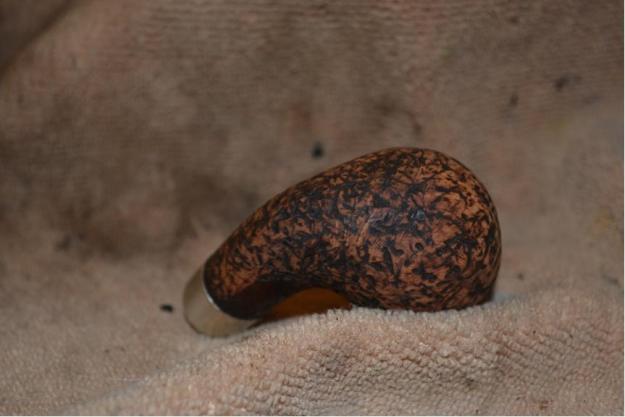
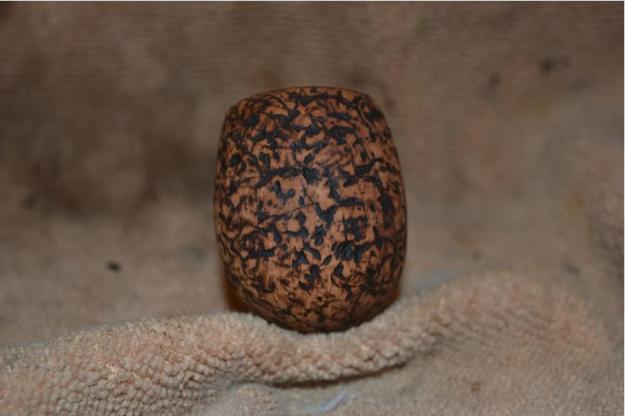
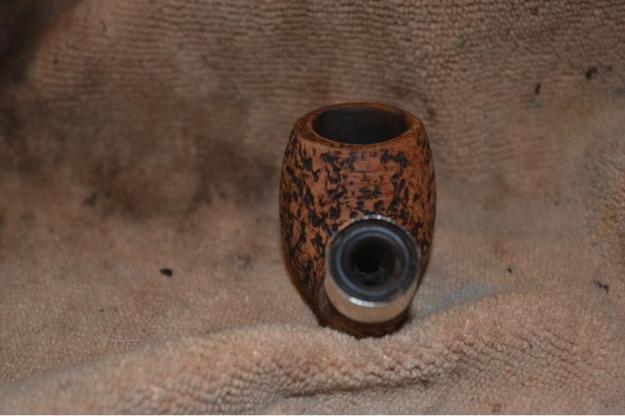
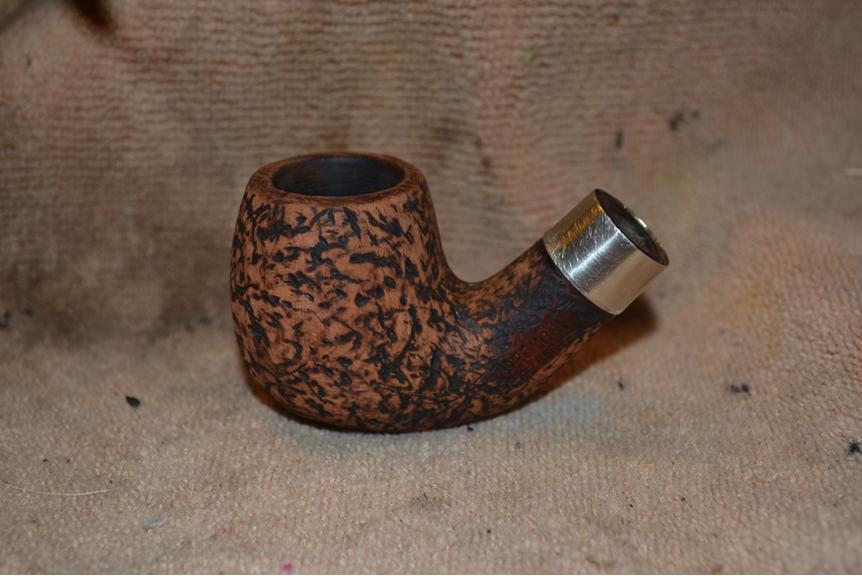
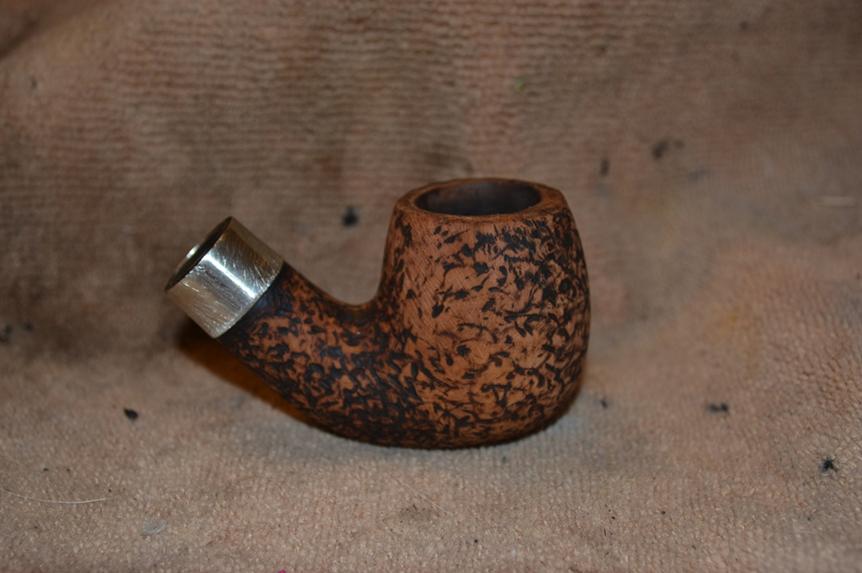
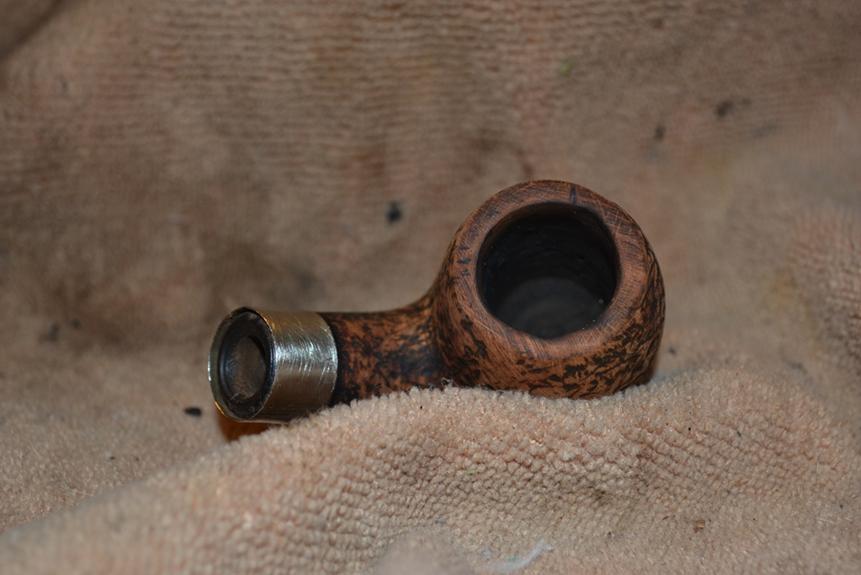
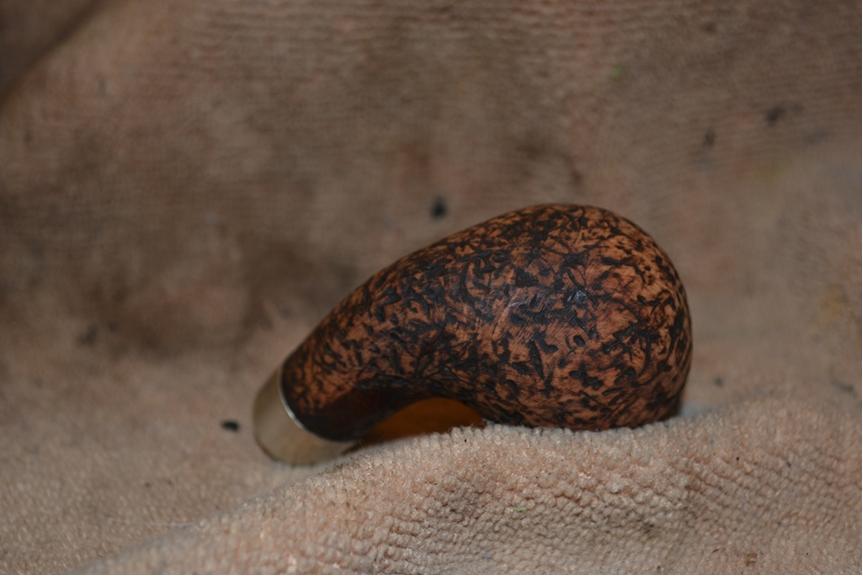
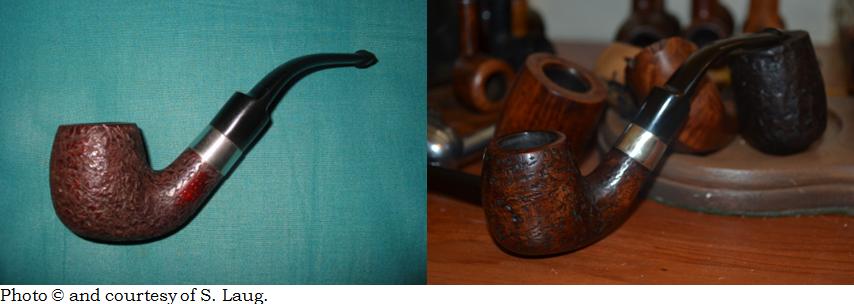
Tag Archives: Bowl – finishing

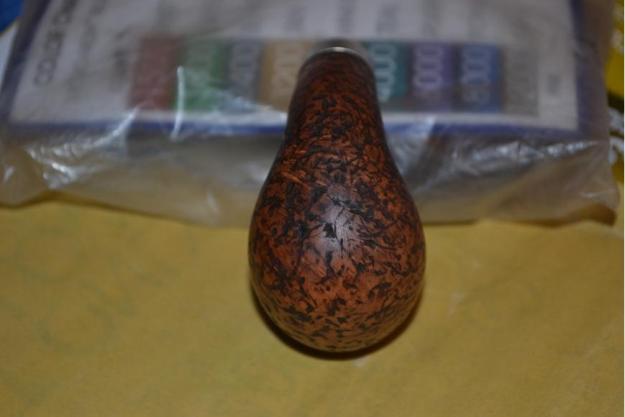
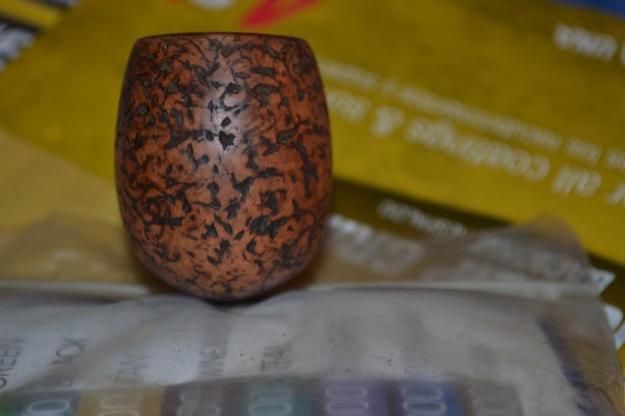
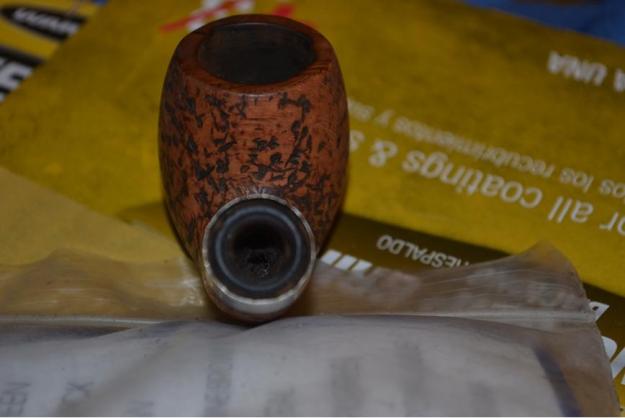
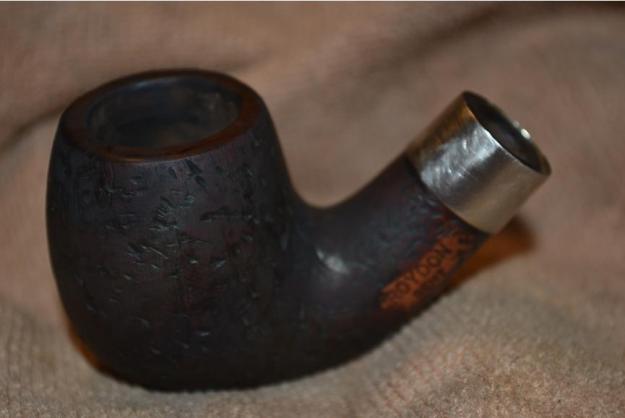
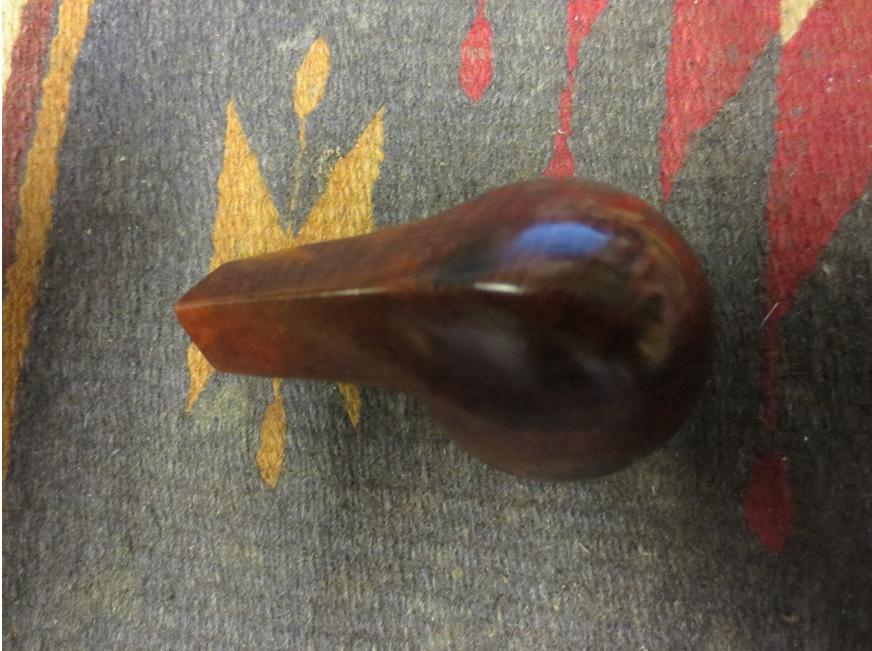
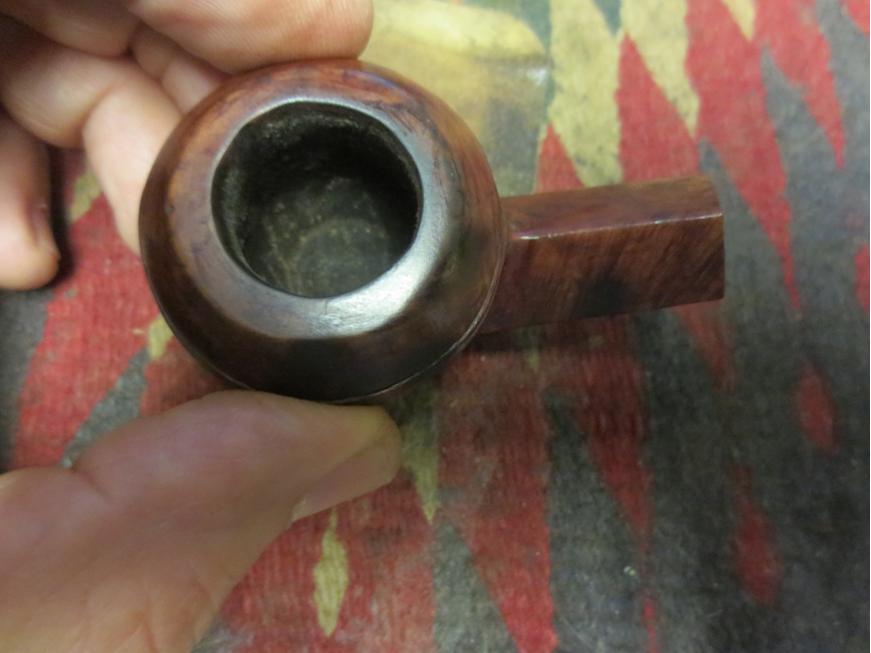
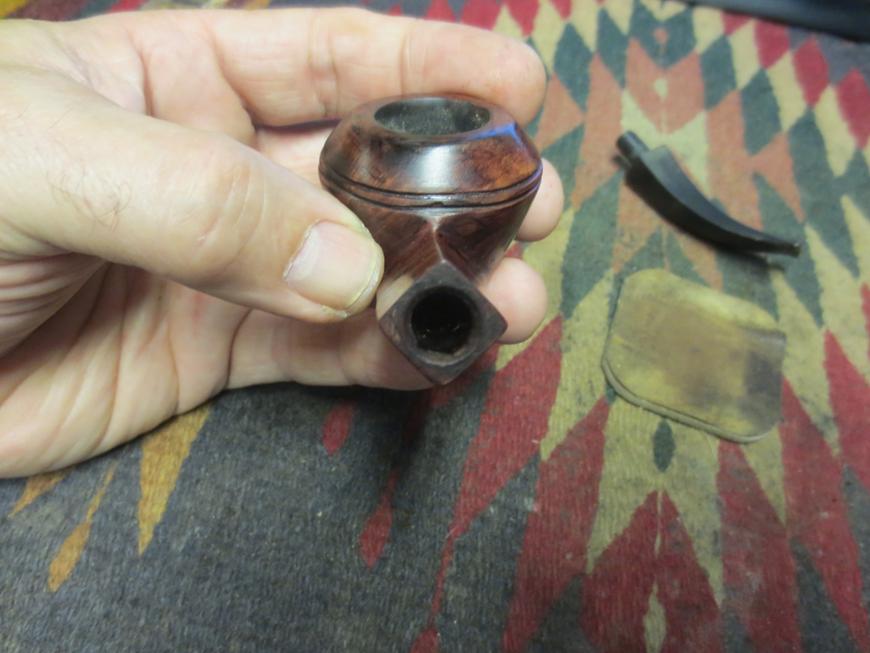
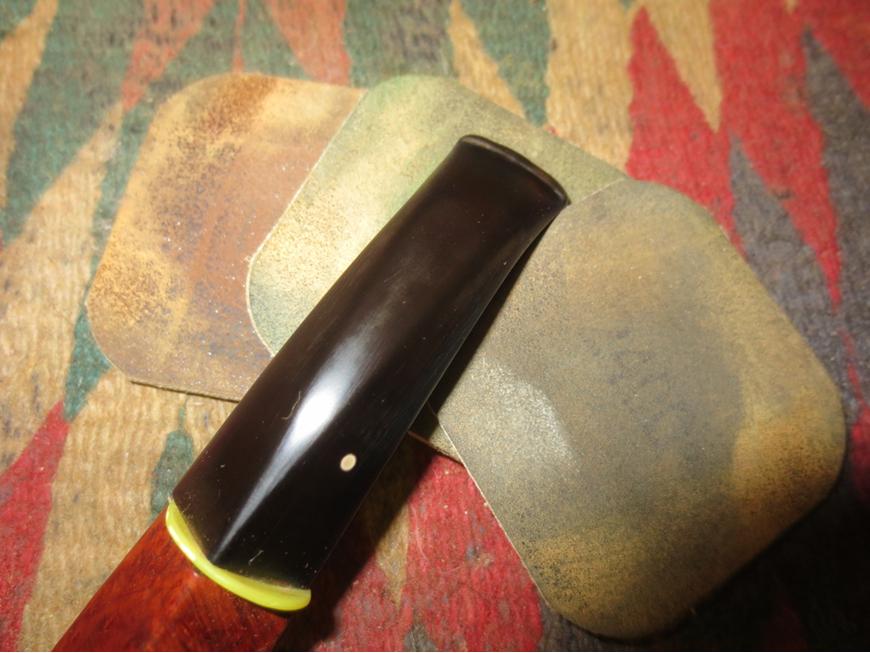
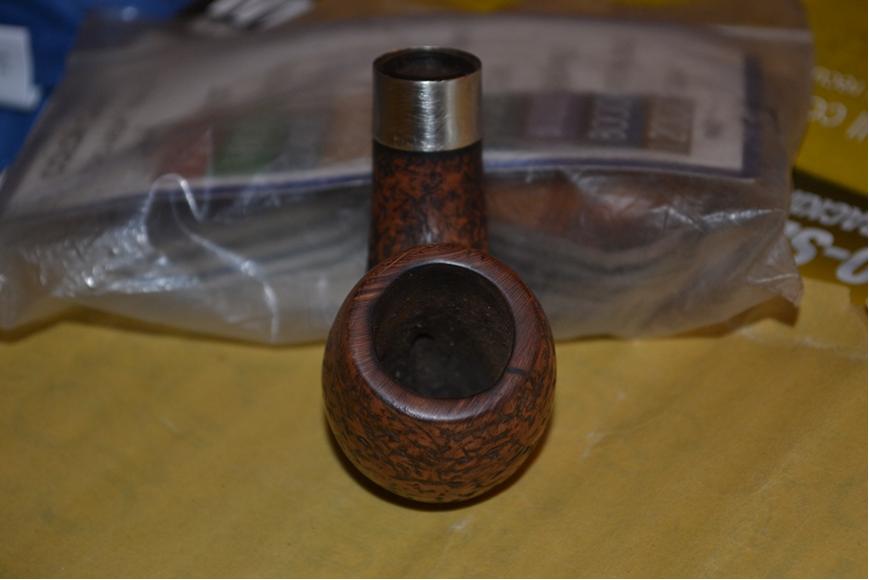
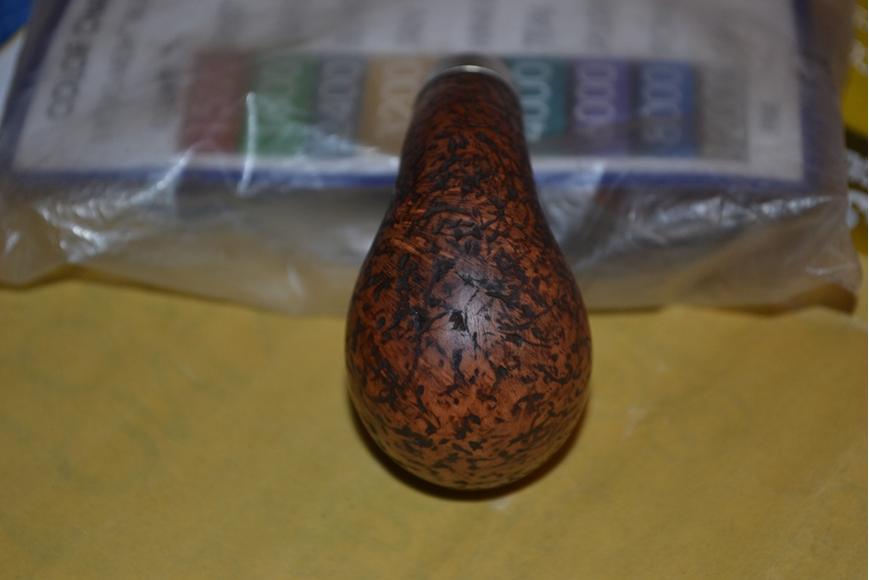
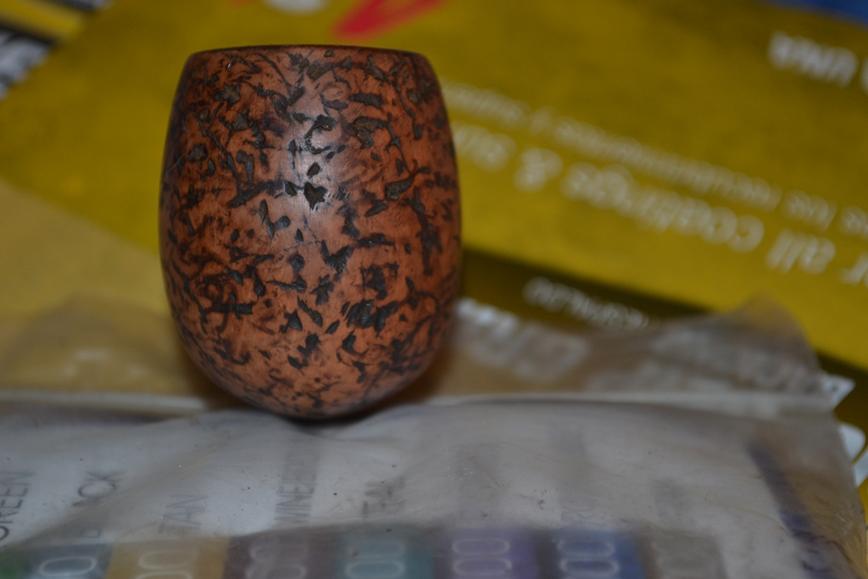
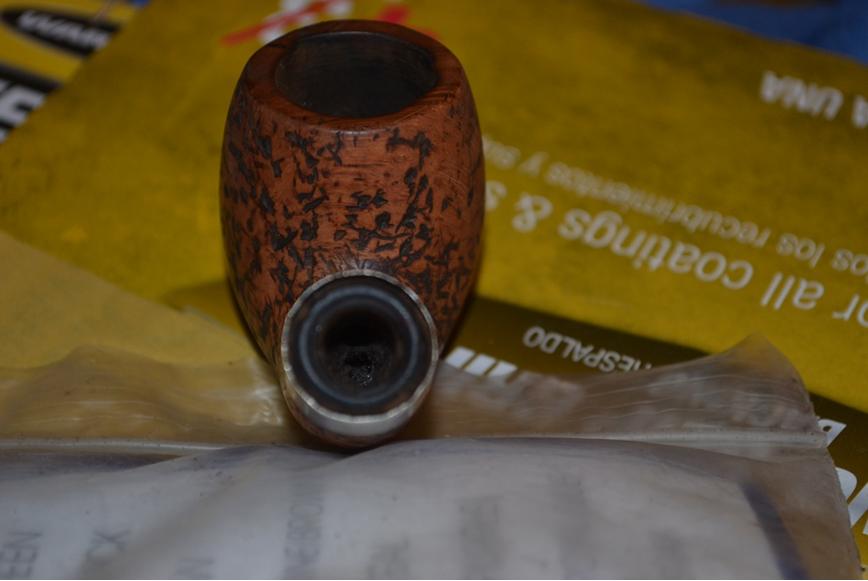
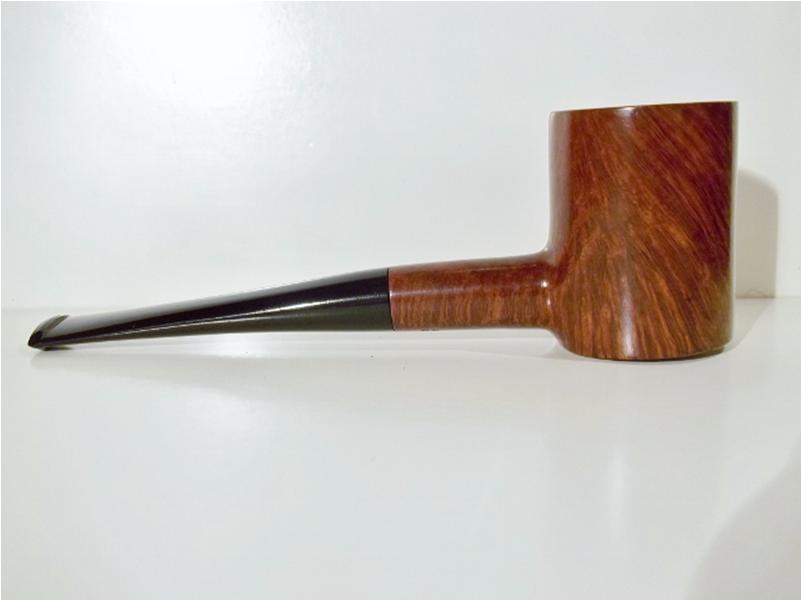
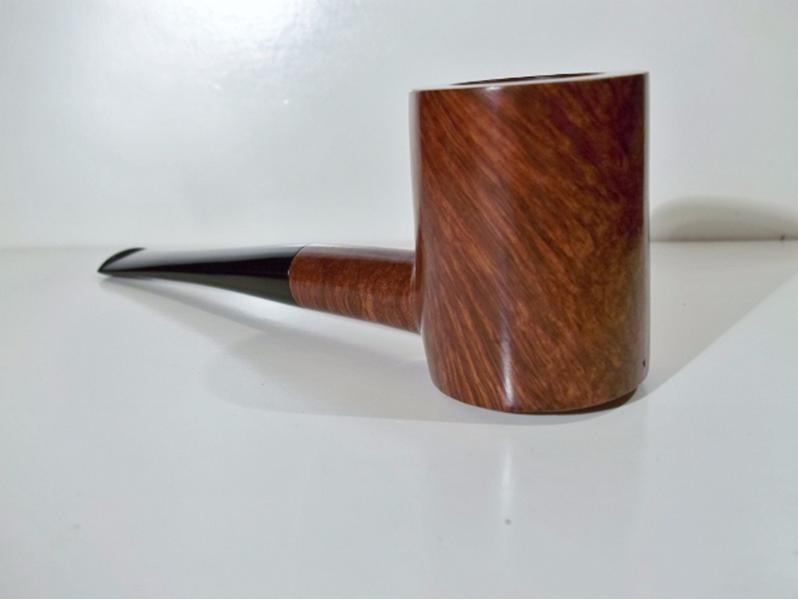
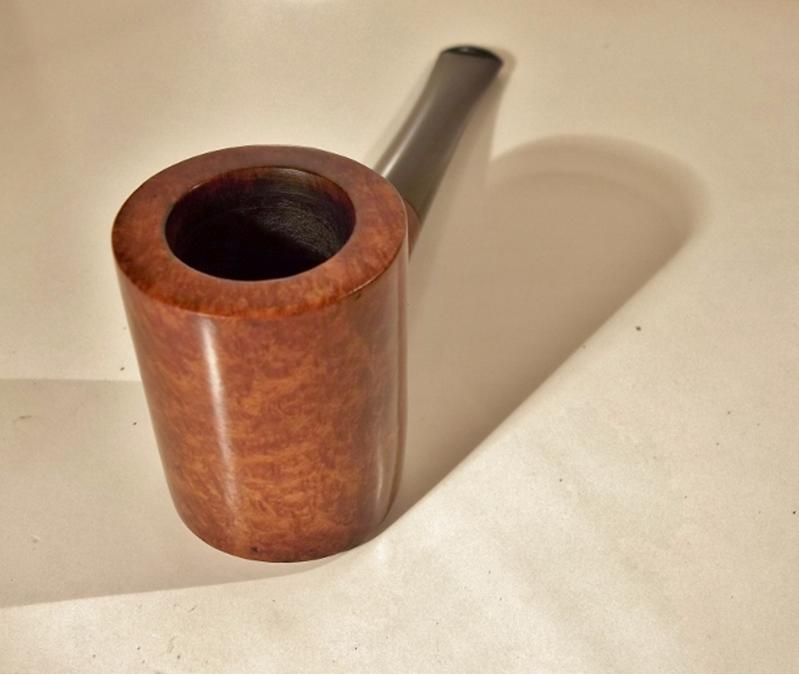
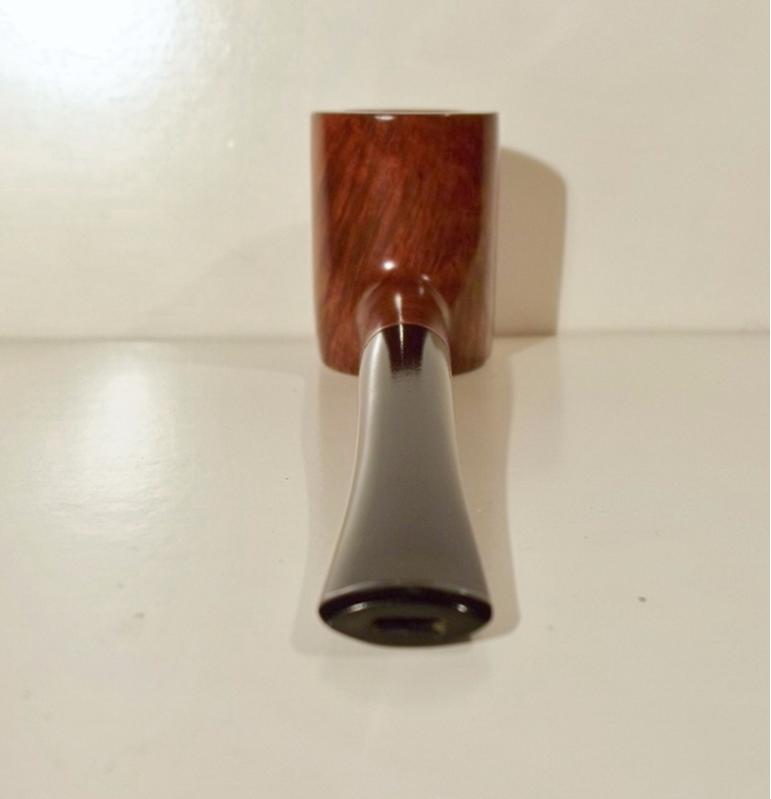
Repairing and restoring a Paradis 1989 Freehand Dublin 93


Blog by Steve Laug

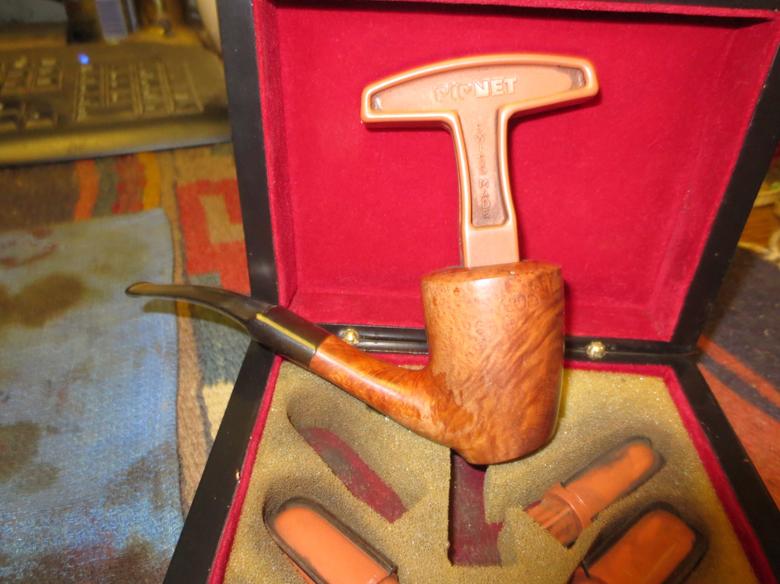
I picked up a lot of seven pipes from a craigslist seller in Vancouver. The first one I decided to work on was the Paradis with the broken tenon pictured at the top left in the photo below. craig5 It included quite a few nice pipes including this virtually unsmoked Paradis pipe. It was stamped Paradis in script and underneath that 1989 on the left side of the shank. On the right it was stamped 93. The pipe is Canadian made coming from Saintes-Foy, Quebec. Paradis pipes are made by two brothers. They sell their pipes on the Pipesworld website at this link. The prices are quite reasonable. http://www.pipesworld.com/pipes/search.php3?PIPEMAKER=Paradis&SEARCH=&x=29&y=4

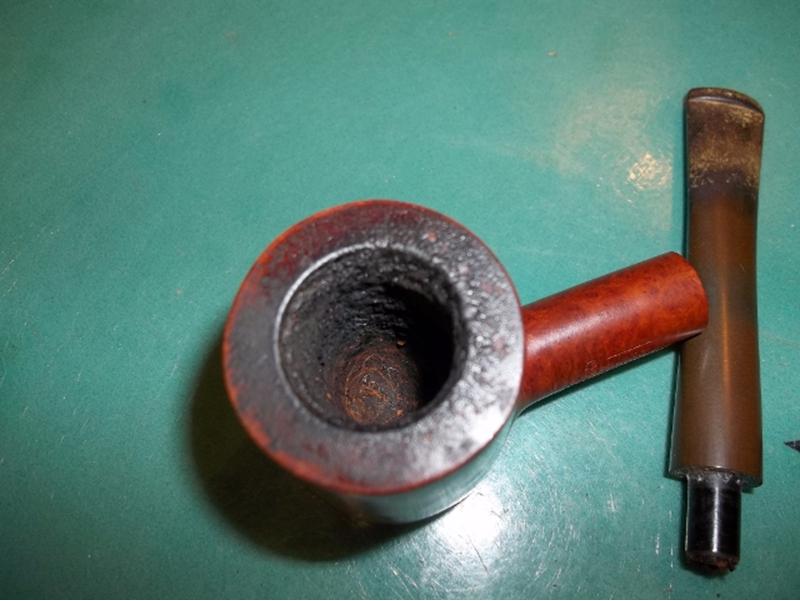
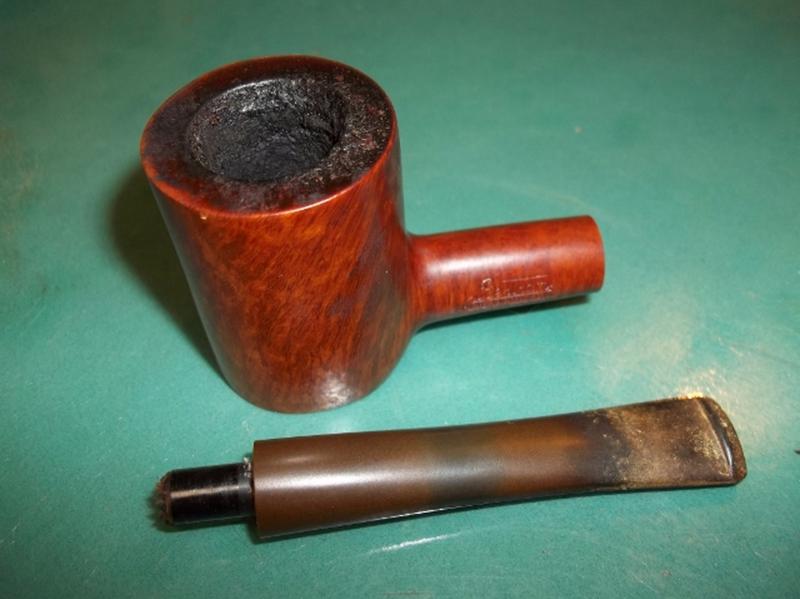
NonameThe finish appeared to be a natural colour, unstained and clean though it was coated with at thick coat of Polyurethane. There appeared to be a deep scratch on the left side of the bowl near the top side. The tenon was snapped and stuck in the shank. Looking at it the tenon was threaded and it had snapped inside the stem. There was a portion in the stem. The stem was orange/amber coloured acrylic. It was stamped with a script “P” on the left side. From the looks of it the pipe had been smoked once and the stem broke during that initial smoke. There was a bit of darkening on the top ¼ inch of the bowl and the rest of it was raw briar. The stem was clean on the inside so I had a virtually unsmoked pipe to work on.

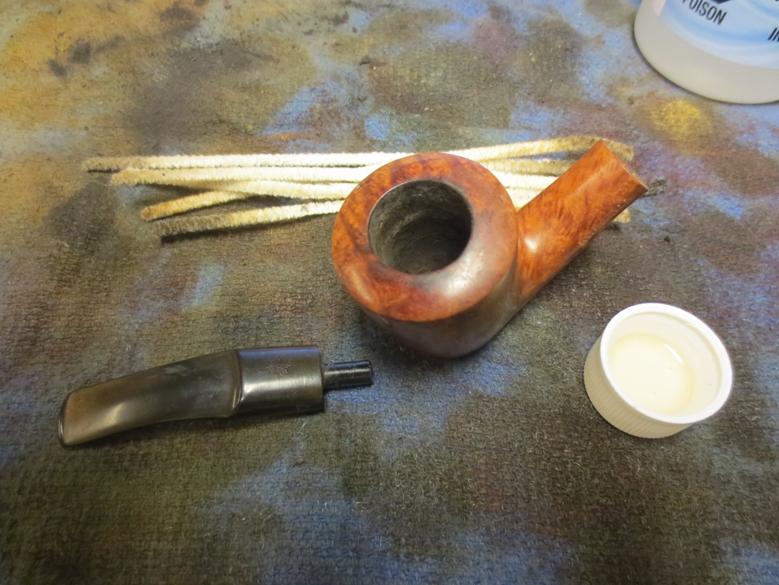
The broken tenon came out of the shank fairly easily. It was not stuck and there was some of the threaded portion of the tenon extending out of the shank. I was able to get a good hold on it with a pair of pliers and pull it out of the tenon. It had broken in the threaded area inside of the stem so it was going to be a relatively easy repair. The stem was not damaged so I could glue it into the stem and then fill in the gap around it with glue to give a solid repair. I cleaned the end of the break on the tenon piece and then put super glue on it. I pressed it into the stem and pressed the two parts together until the glue set. I filled the open area around the tenon with glue and pushed it down in the gap with a dental pick. I set the stem aside to dry.Paradis1

Paradis2

Paradis3 I took the next photos of the pipe and stem as it was drying.Paradis4

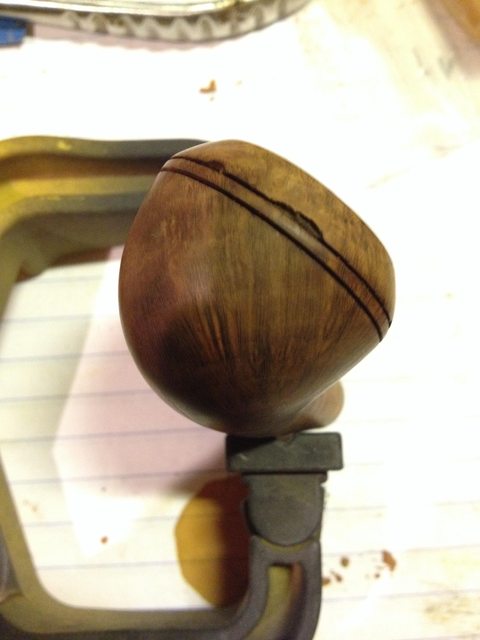
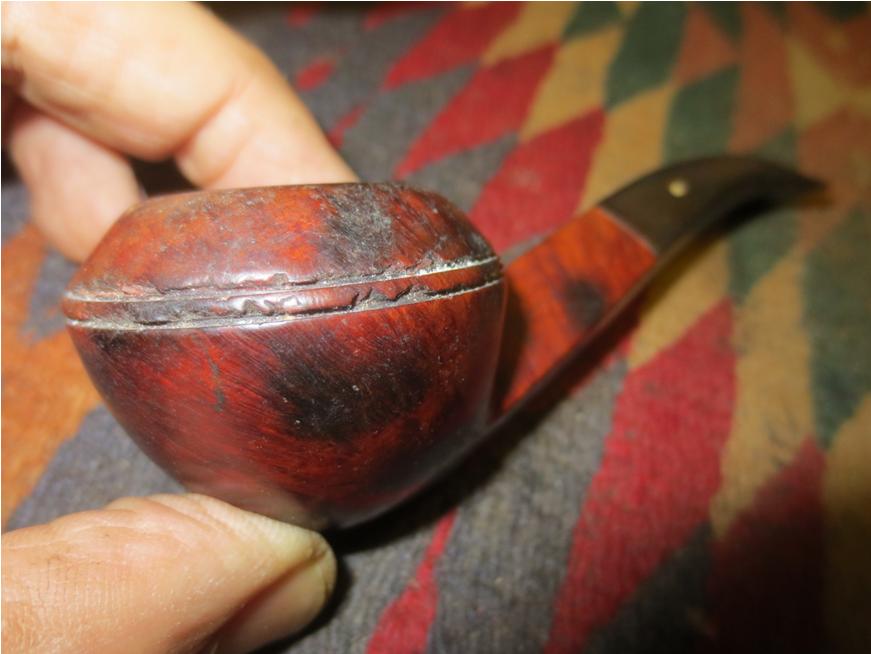
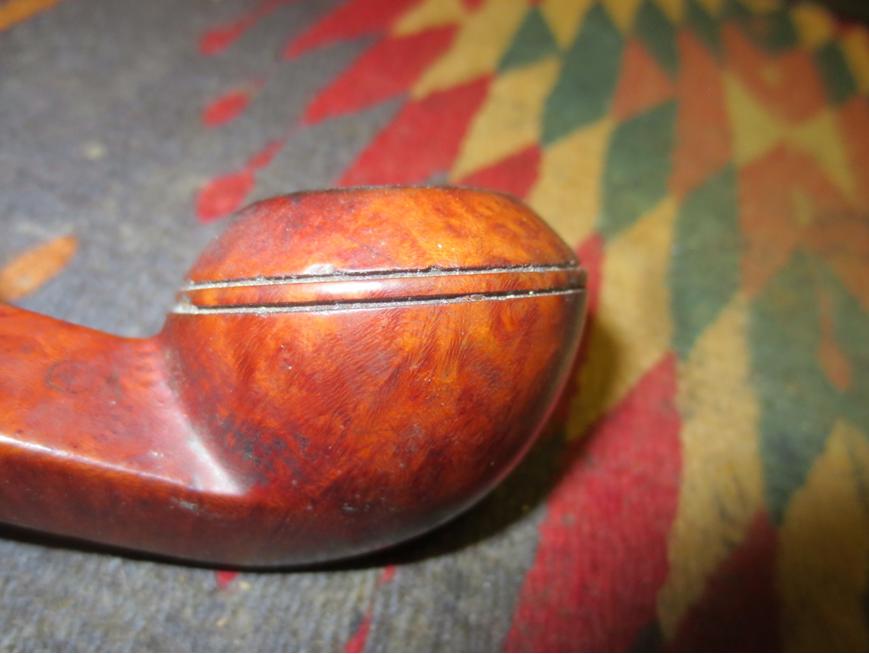
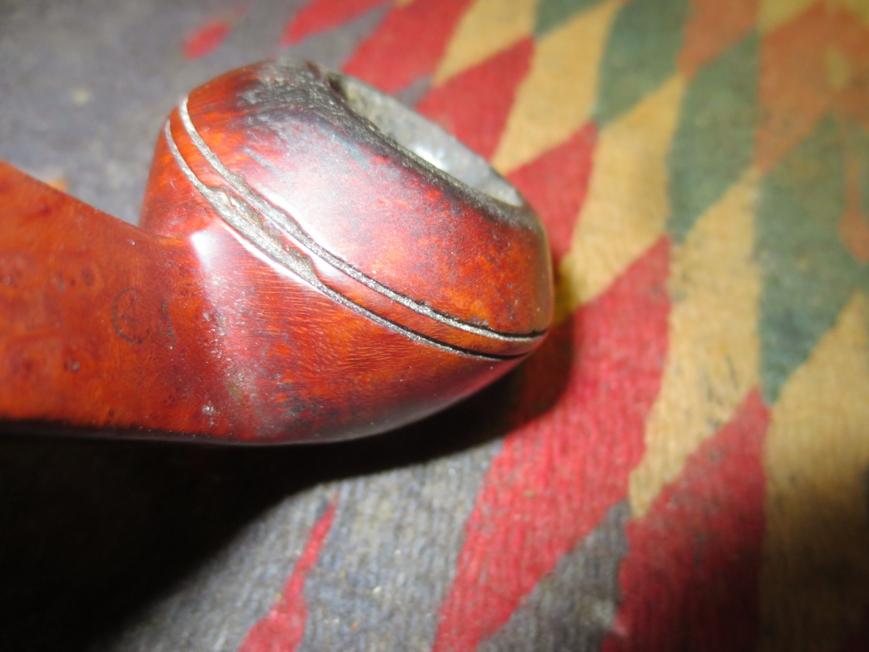
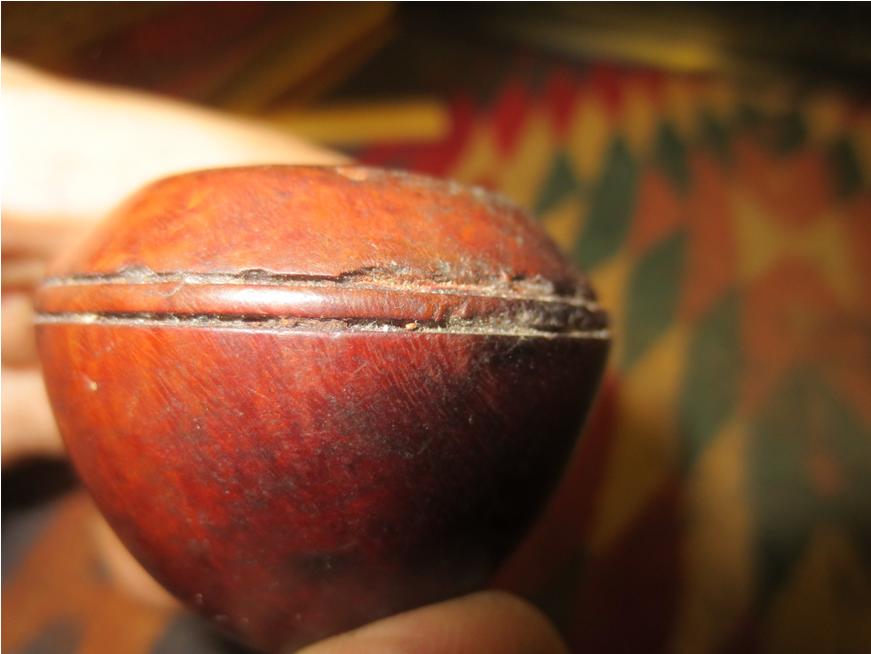
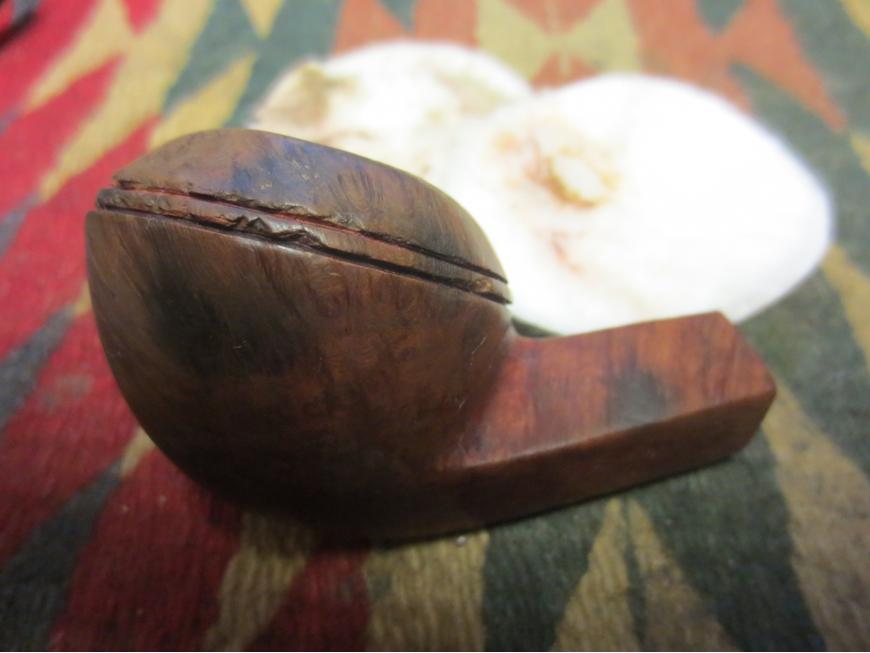
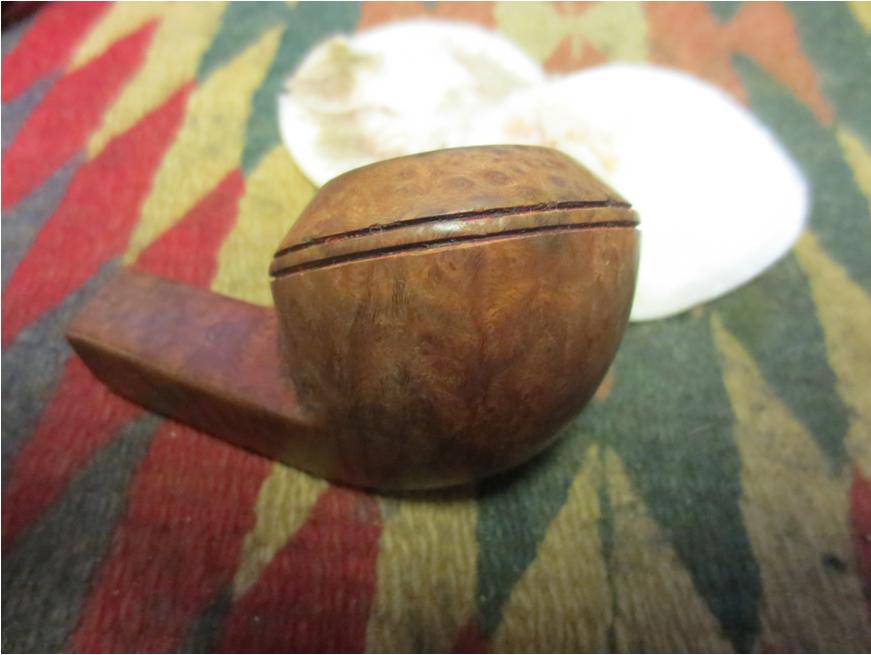
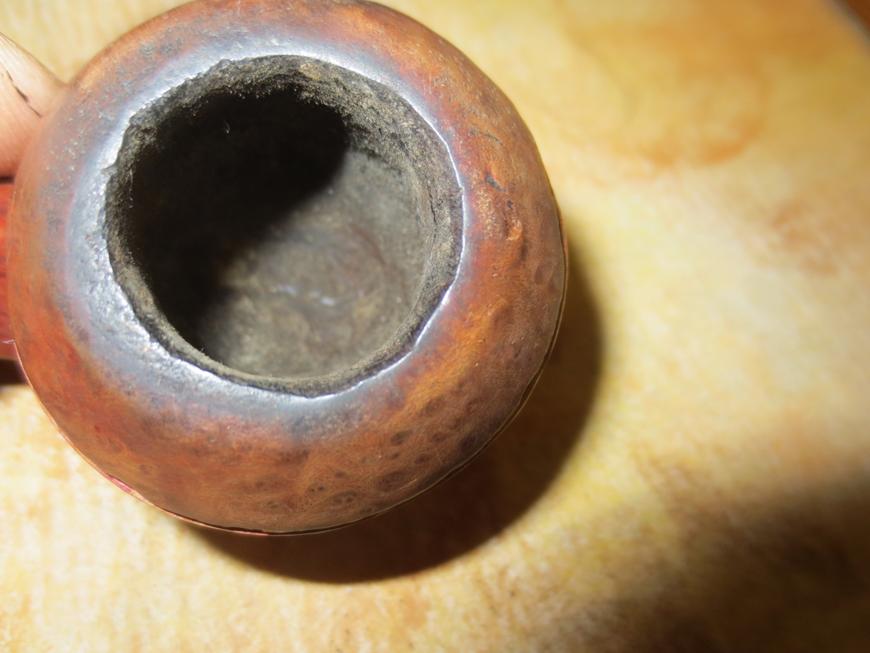
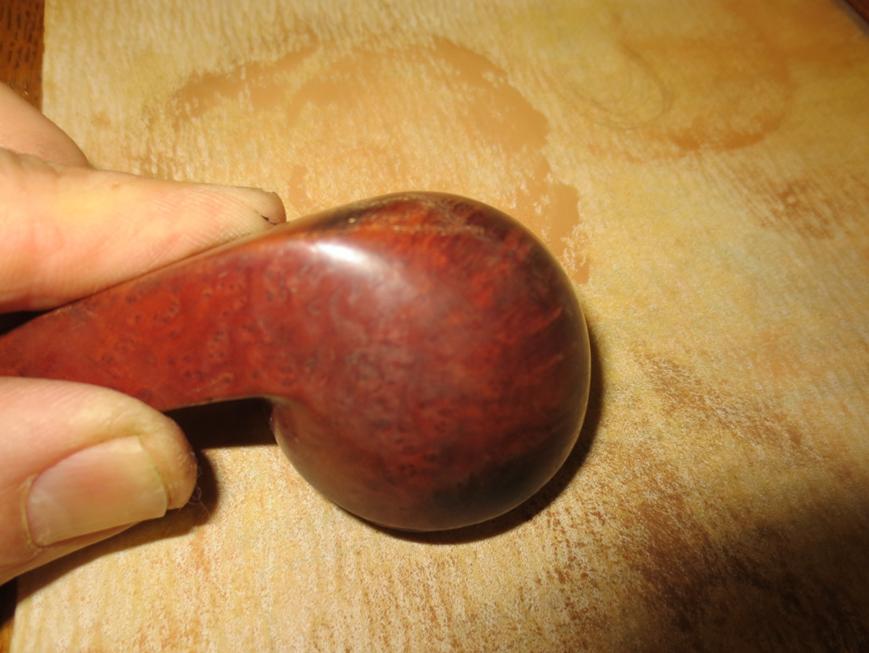
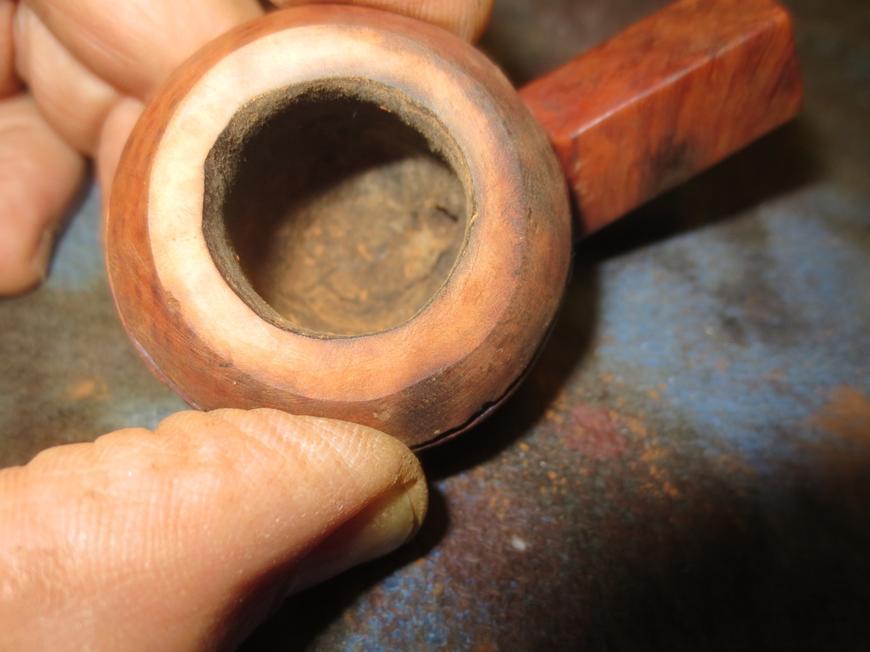
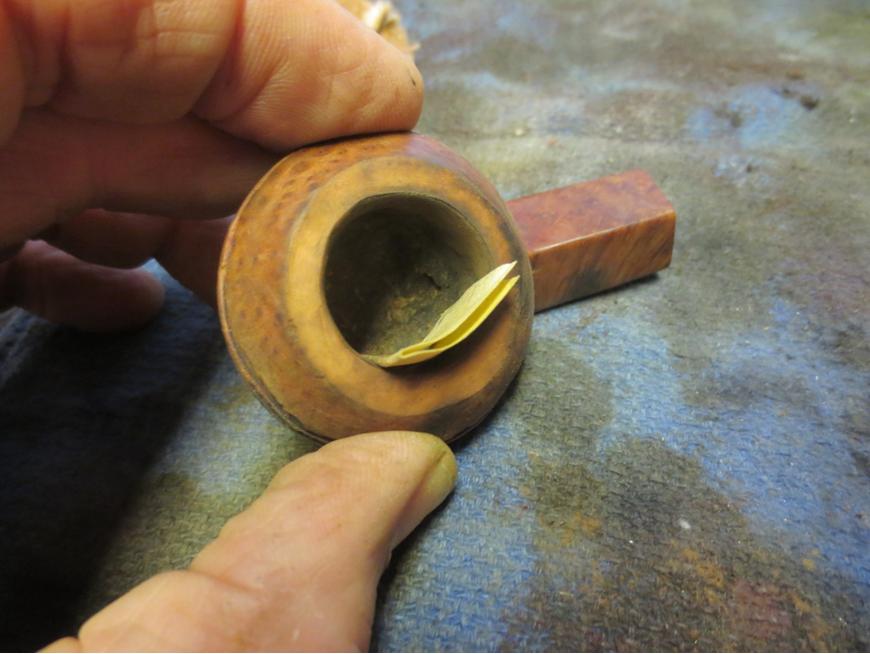
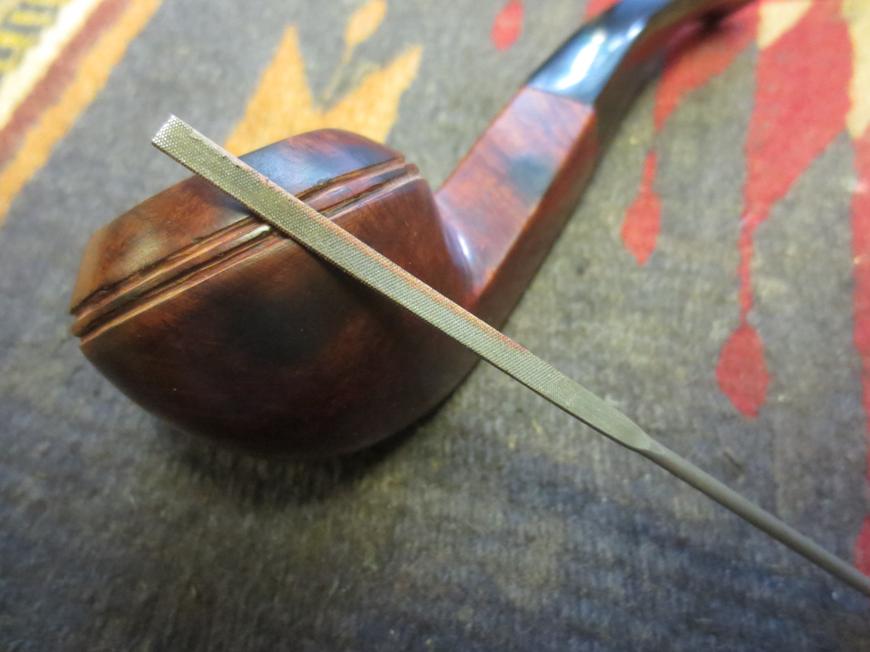
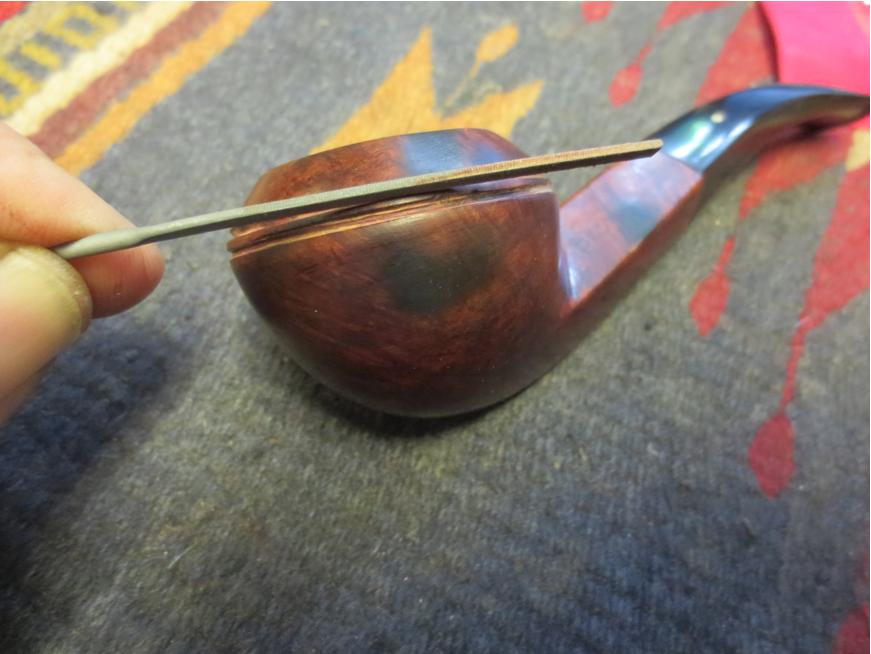
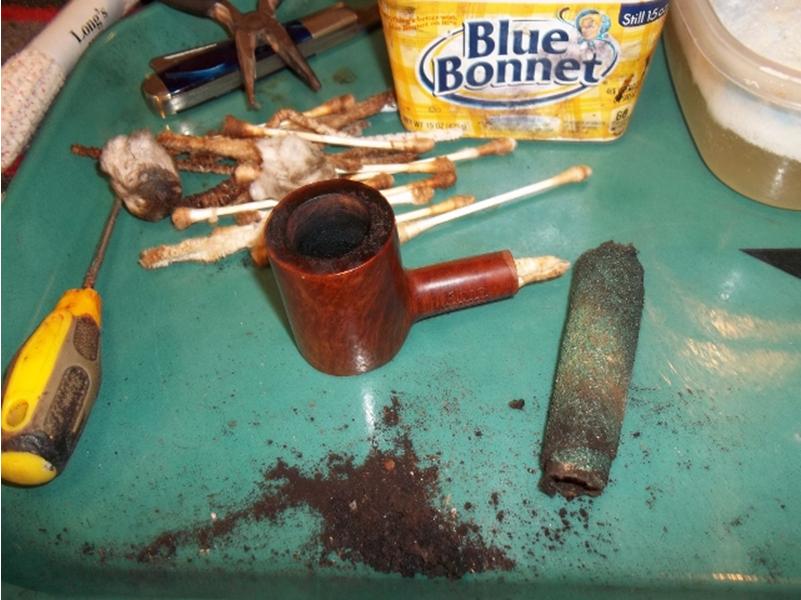
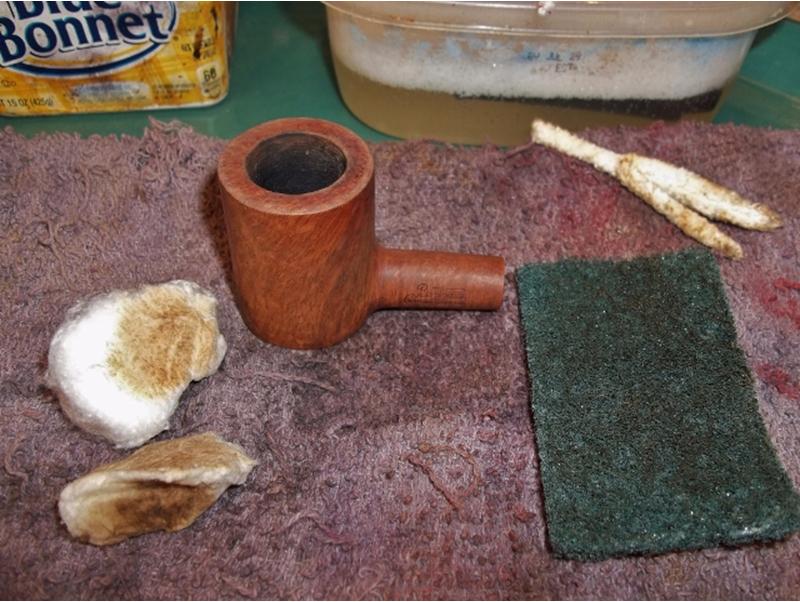
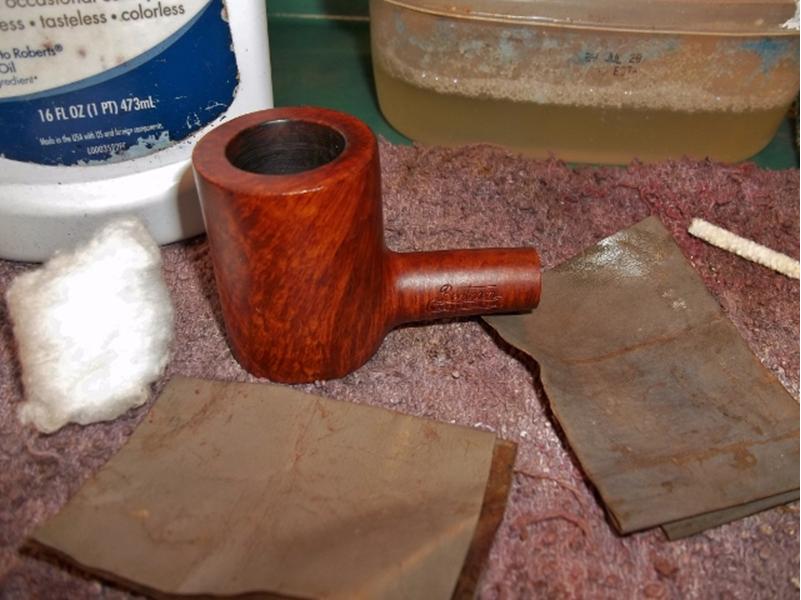
Paradis5 On the left side of the bowl near the top was what appeared to be a large horizontal dent. In the photo below you can see the dent looking almost like a line on the briar. It was about 1 inch long and followed the curve of the bowl.Paradis6 I tried to steam out the dent using a damp towel and a hot butter knife.Paradis7 The next photo shows the look of the dent even more clearly. After steaming I examined it more closely and found that the dent had lifted and what remained was a run in the polyurethane coating that was on the bowl. It was like a long sag in the coating.Paradis8 I took the pipe back to my work table and sanded the sag in the finish with a medium grit sanding sponge. I knew that I would have to remove the entire polyurethane coat from the bowl to clean up the sag completely.Paradis9 I sanded the bowl and shank with a medium grit sanding sponge and then wiped it down with acetone on cotton pads to break through and remove the finish.Paradis10

Paradis11 It took a lot of sanding and scrubbing before the polyurethane finish was gone and a clean smooth briar surface remained.Paradis12

Paradis13

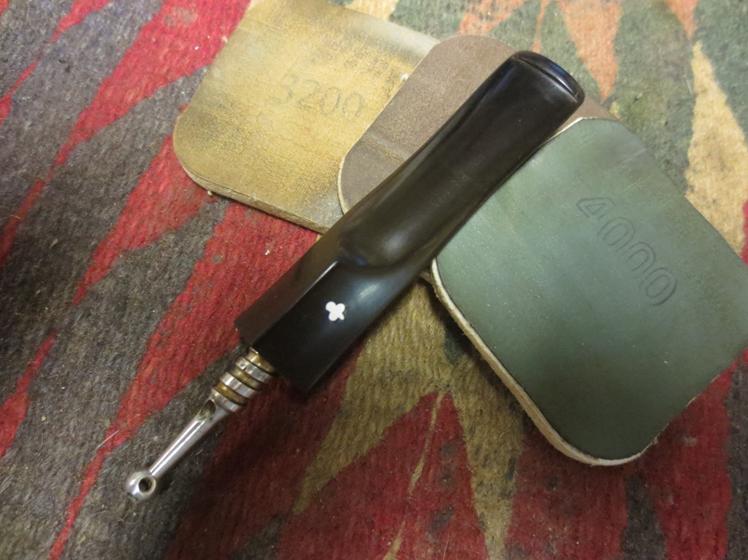
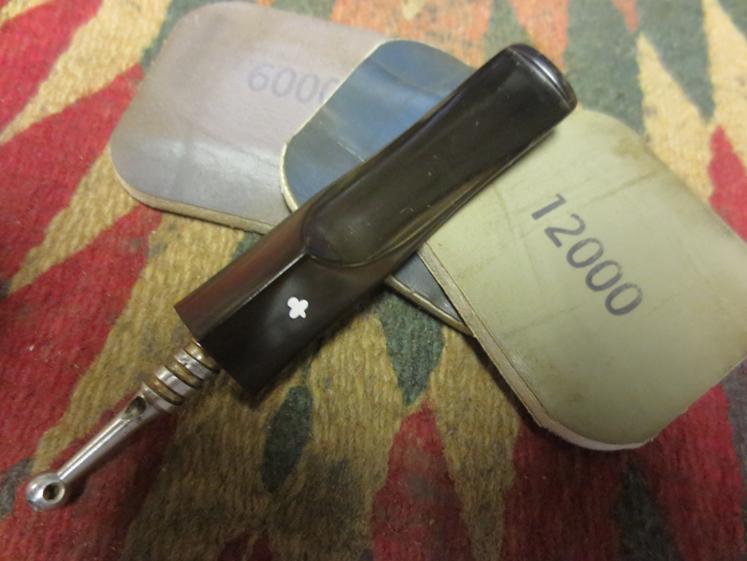
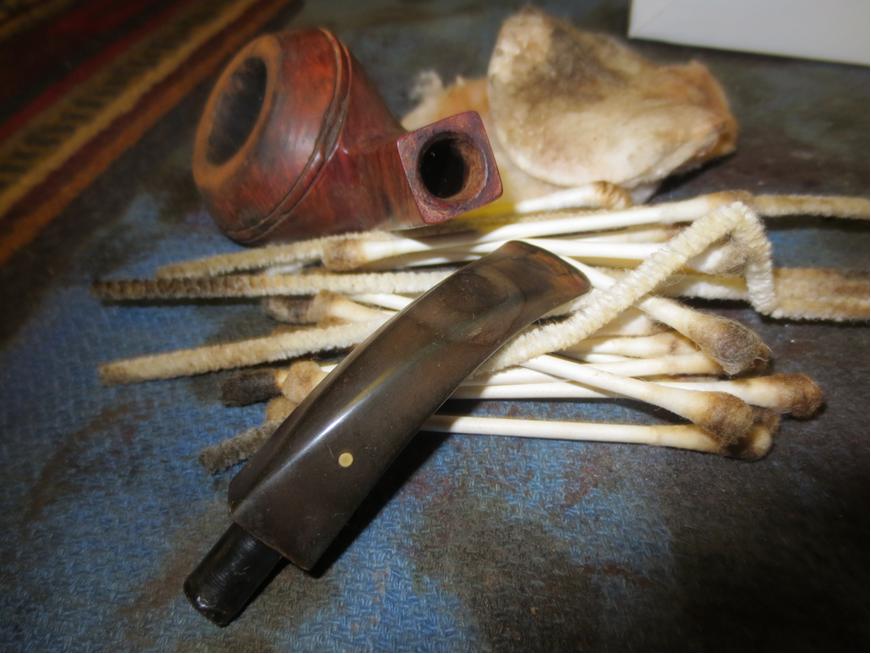
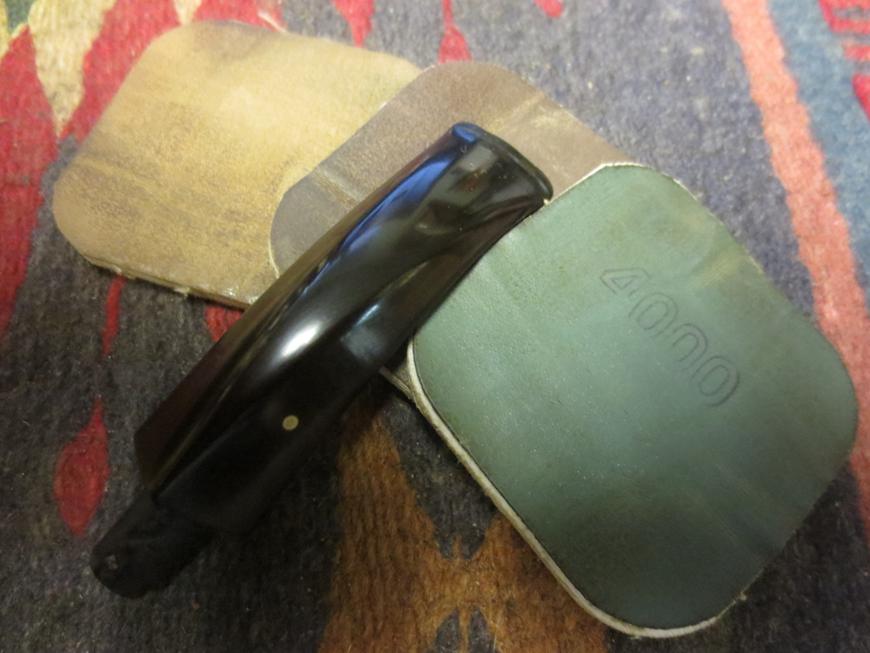
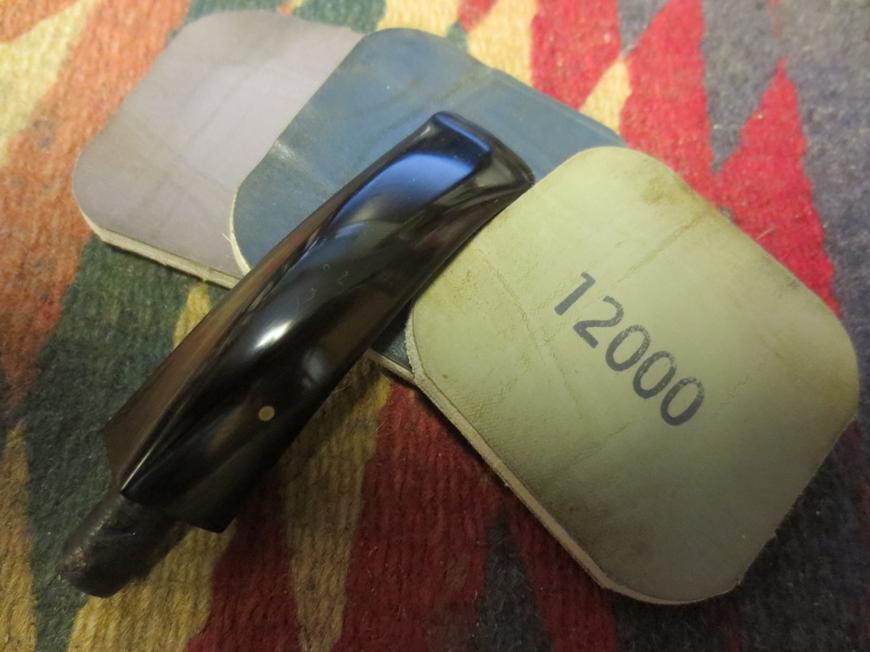
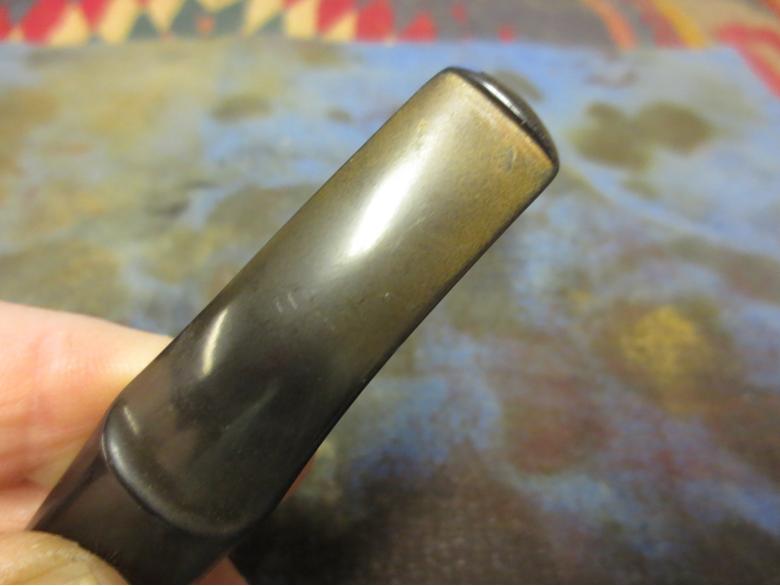
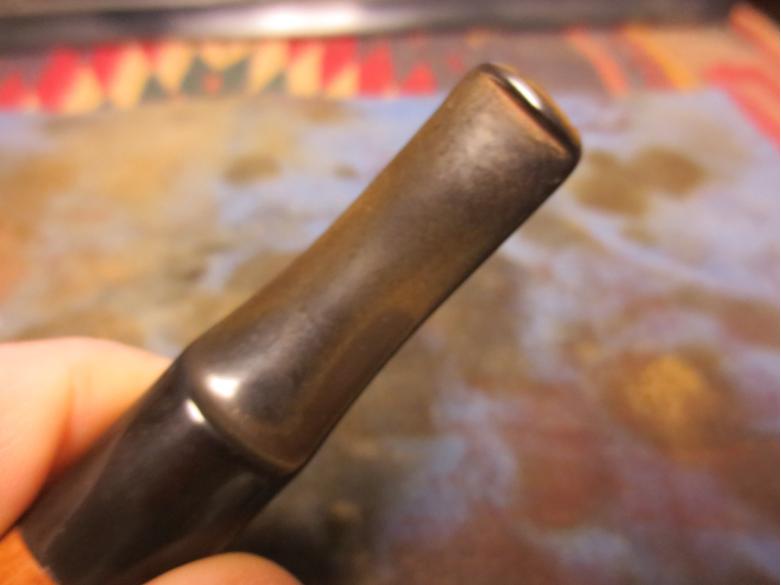
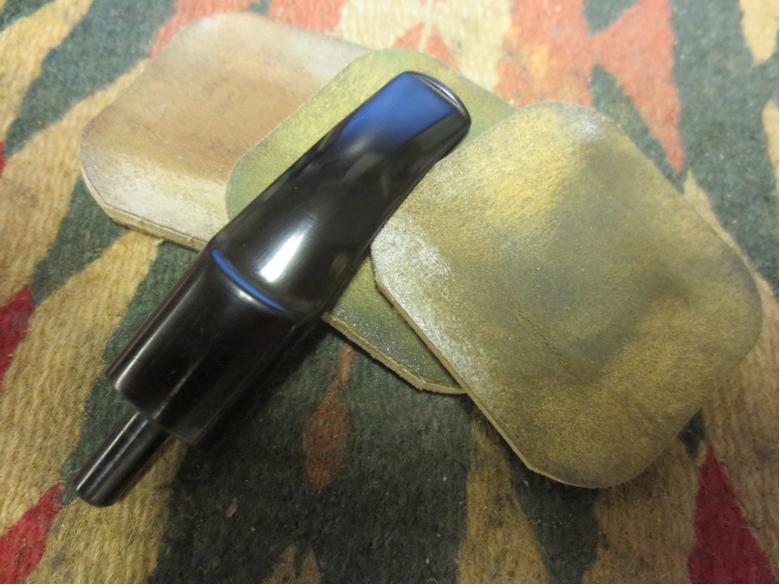
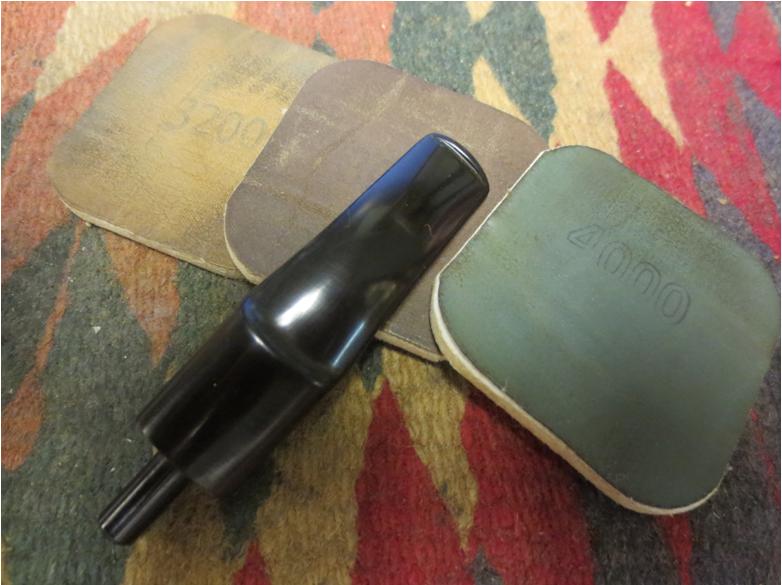
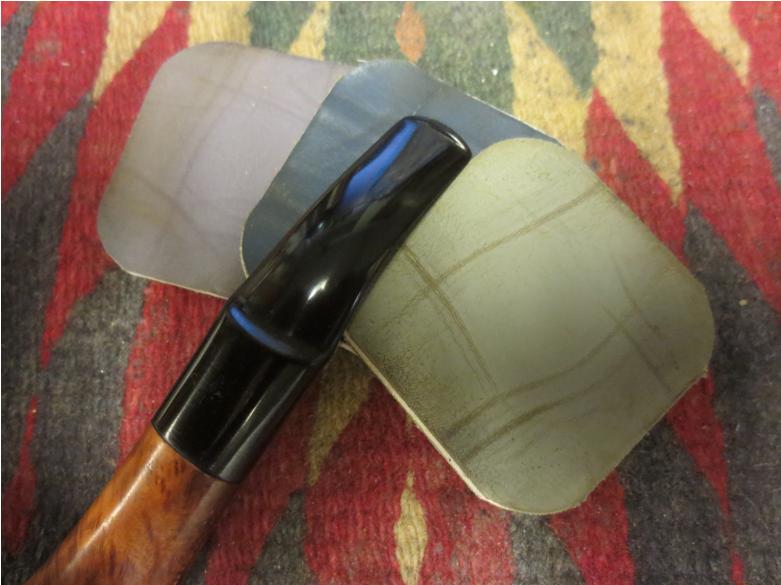
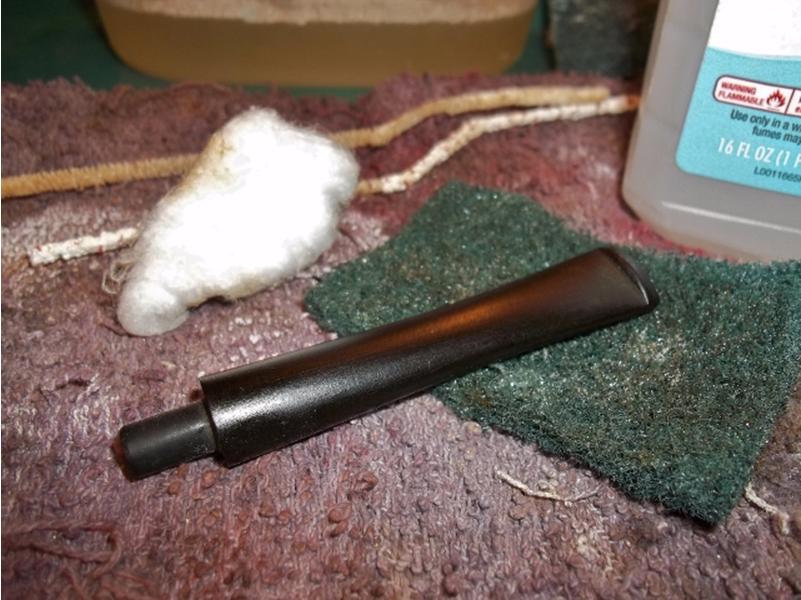
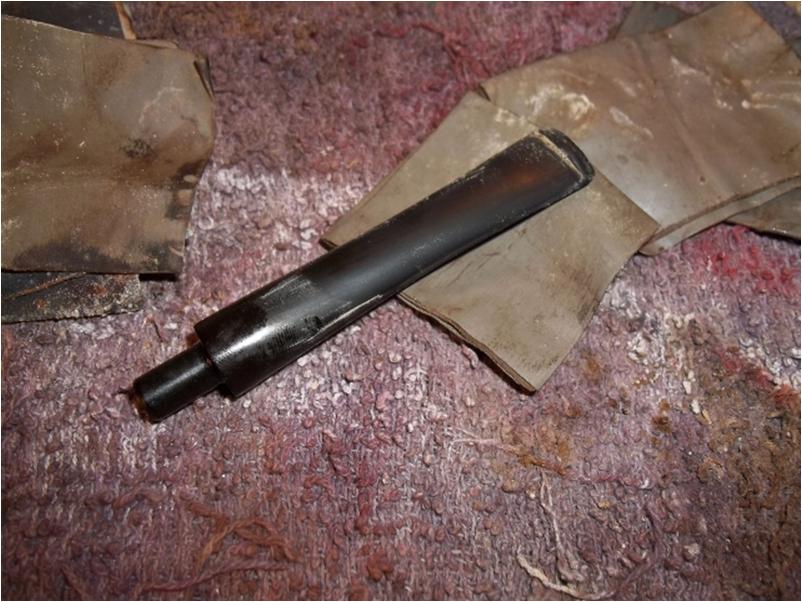
Paradis14 When I finished cleaning up the surface of the bowl and removed the finish completely I set the bowl aside and addressed the stem. There were no tooth marks or chatter to deal with so all I had to do was polish the dull surface with micromesh sanding pads. I wet sanded with 1500-2400 grit pads and dry sanded with the 3200-12,000 grit pads. I buffed the stem with White Diamond to polish the acrylic.Paradis15

Paradis16

Paradis17 I dry sanded the bowl with micromesh sanding pads using all of the grits to raise a shine in the briar and smooth out the surface of the briar.Paradis18

Paradis19

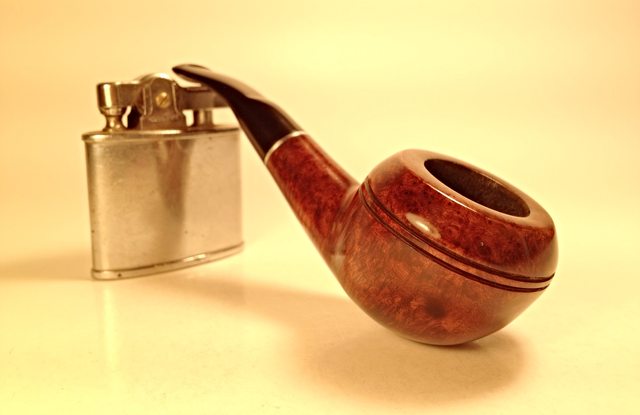
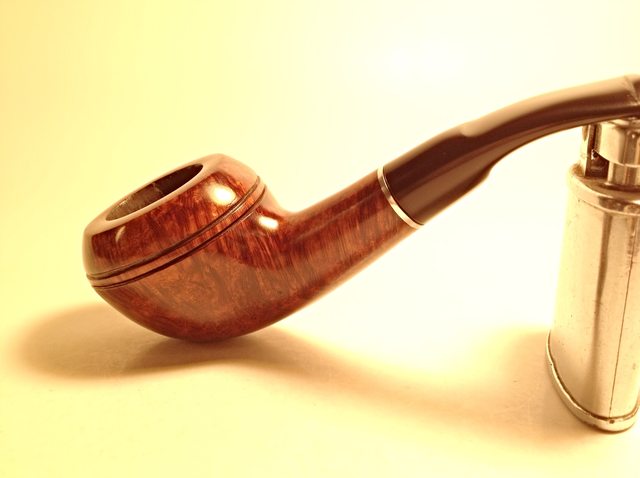
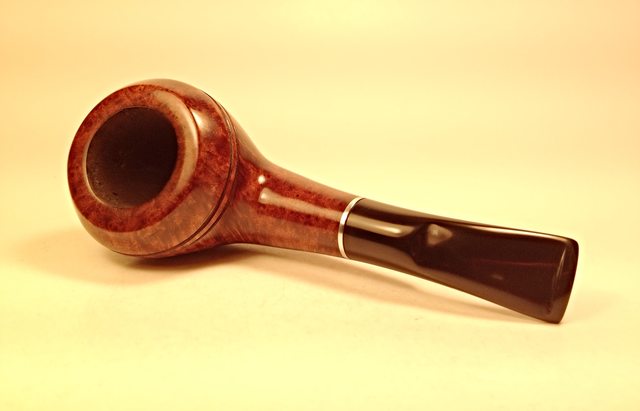
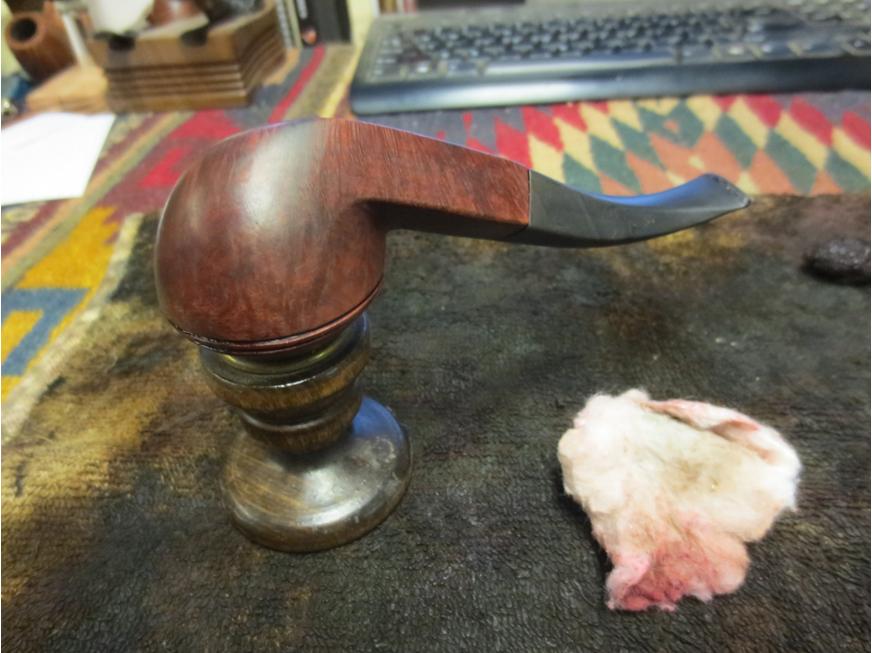
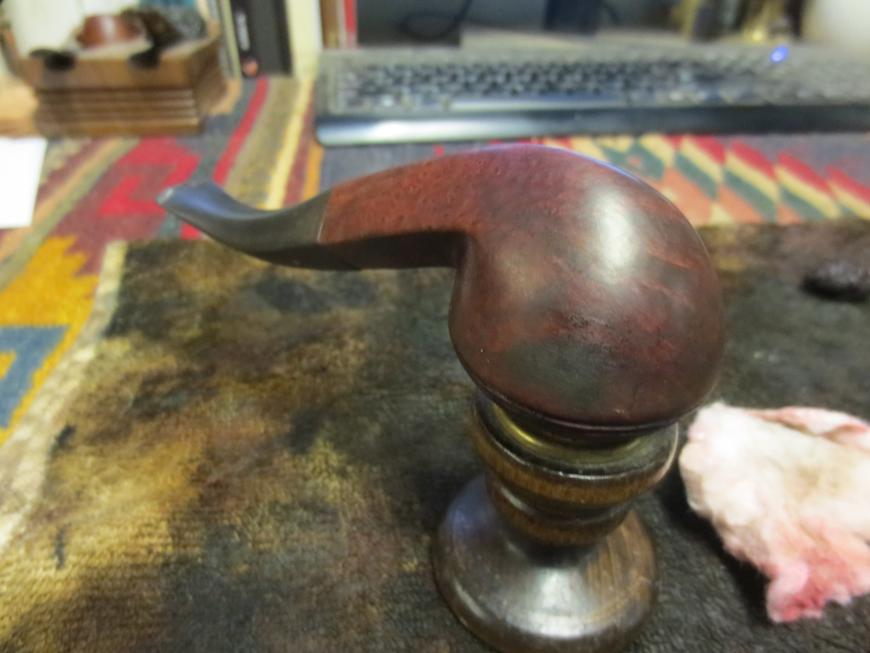
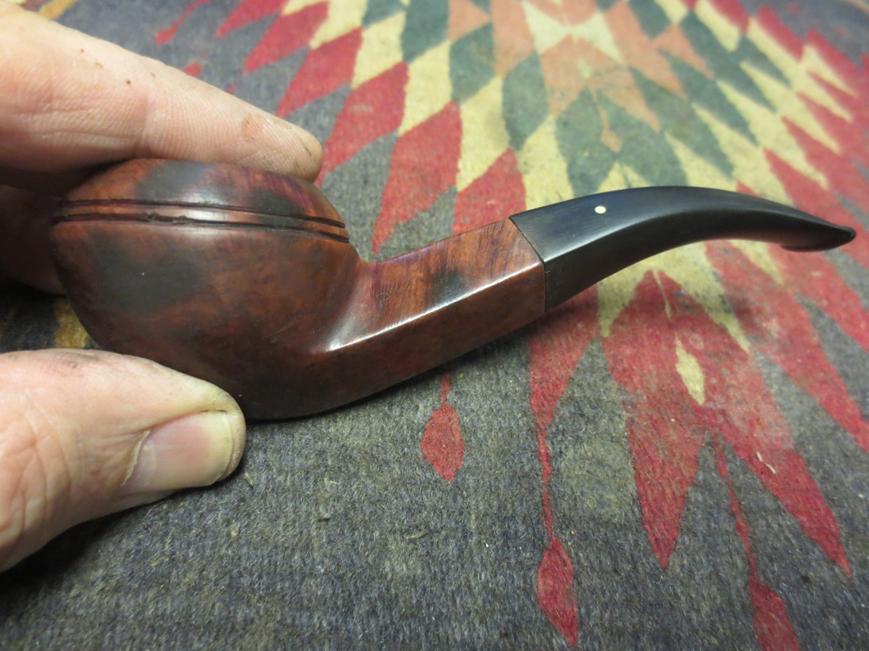
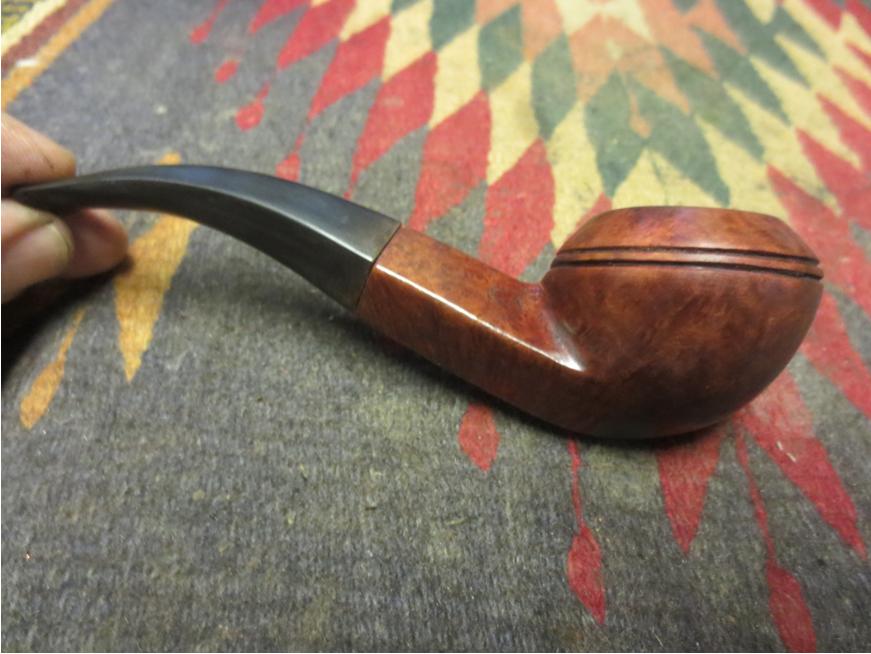
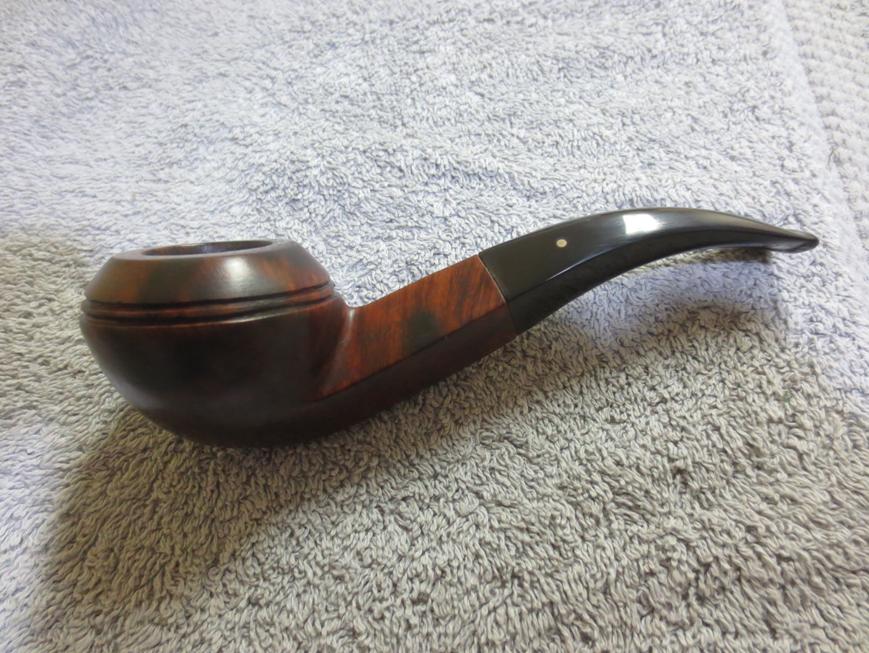
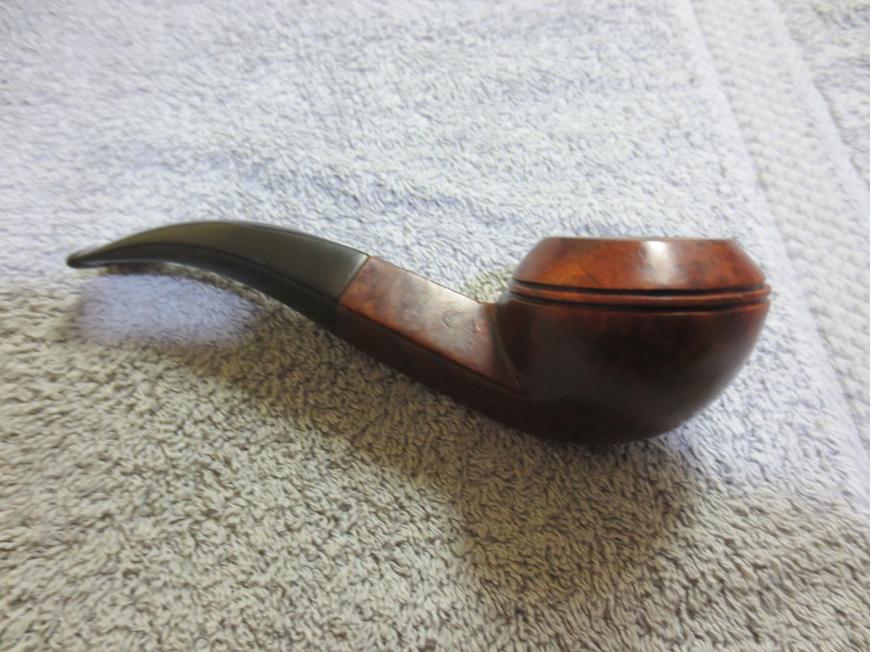
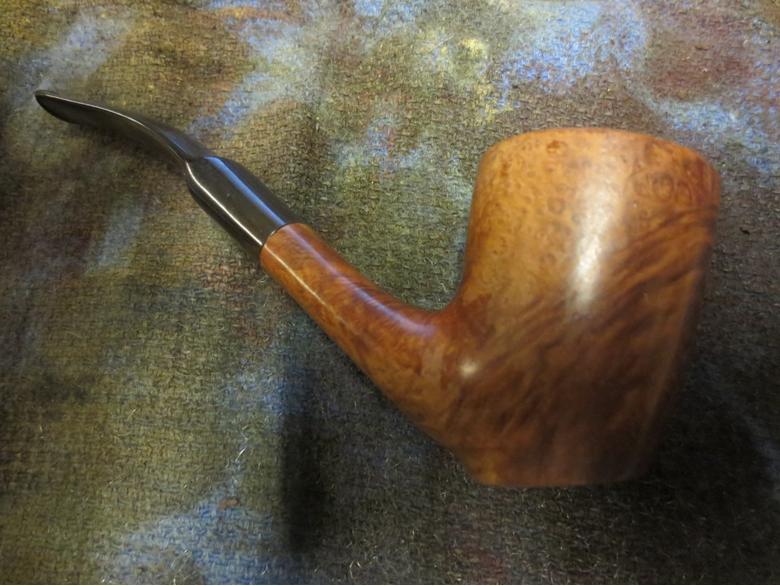
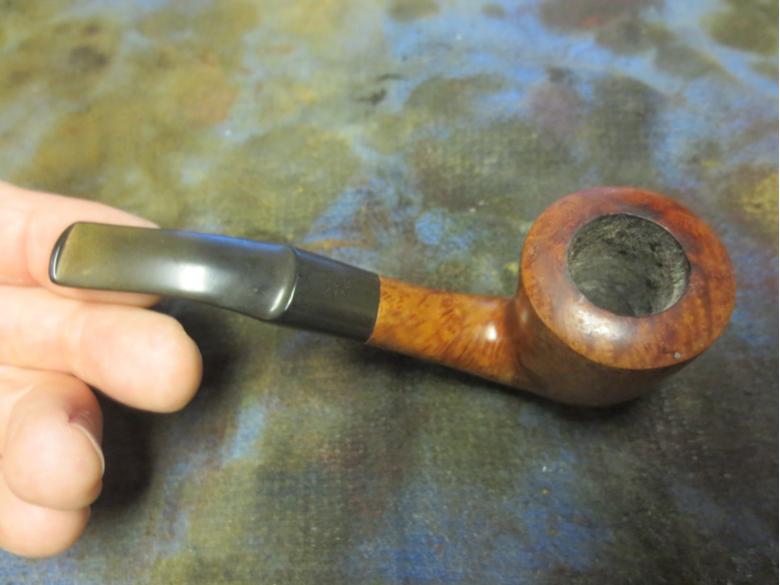
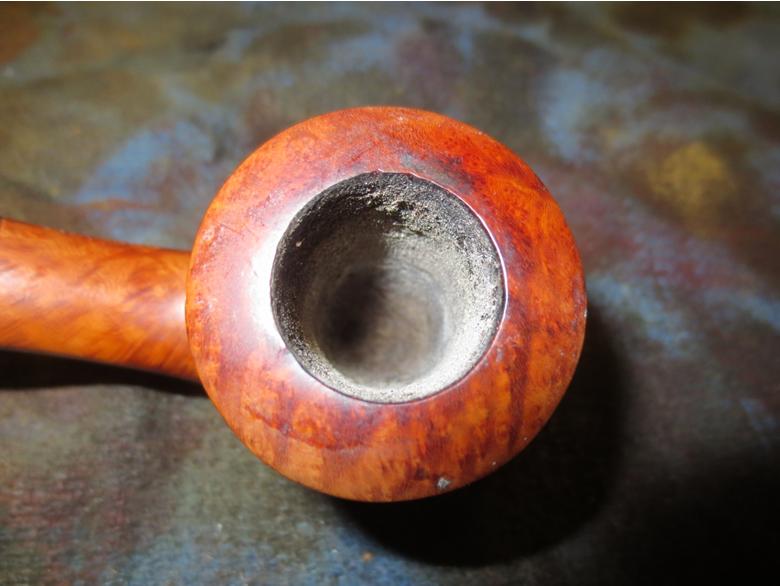
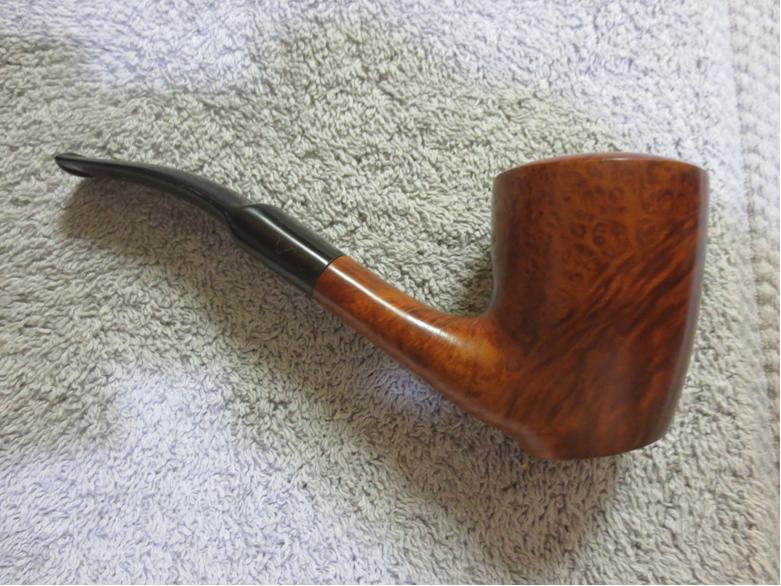
Paradis20 I gave the bowl a light buff with Blue Diamond polish and did the stem separately. I gave the bowl and stem several coats of carnauba wax and buffed it with a soft flannel buffing pad to raise the shine. The finished, repaired and refinished pipe is shown in the next series of photos.Paradis21

Paradis22

Paradis23

Paradis24

Paradis25

Stealing a Huge Savinelli 515 KS Champagne Panel


Guest Blog by Robert M. Boughton
Member, North American Society of Pipe Collectors
http://www.naspc.org
http://www.roadrunnerpipes.com
http://about.me/boughtonrobert
Photos © the Author

“Cave ne venditor.”
“Let the seller beware.”
― From Latin, inspired by “Caveat emptor” – Let the buyer beware

INTRODUCTION
I might just as well have started this blog with former President Richard Nixon’s televised statement to 400 Associated Press editors on November 17, 1973, denying any involvement in the Watergate scandal: “Well, I’m not a crook. I’ve earned everything I’ve got.” He certainly did. But I thought the Latin reference was more appropriate to describe my fortunate acquisition of this unusual and magnificent example of a Savinelli panel pipe. After all, it’s not my fault the online seller probably thought he would get more for it. I suspect that in hindsight, he now wishes he had asked for a higher amount, perhaps as a “Buy Now” offer. I would have paid it, within reason. In fact, I went so far as to look for a charitable donation link to make up for some of the money I saved, but this seller didn’t have one.

The two aspects of this serendipitous acquisition that surprised me even more were that the other four bidders seemed not to recognize a fantastic bargain when it seemed to scream the fact at them, and that I lucked out in that no other serious collectors chanced upon the offer. The minimum asking price was $9.50. About 24 hours later, the first bidder appears to have made a max offer of $12.00 and for the moment had it for $10. Then the second entrant offered $14.50 because when I entered what I thought would be a sharply escalating war with my first $25 bid and two days left, a third-party had the beautiful pipe for $15. The second and third amateurs took the price up to $24.50 by the time I bumped my bid to $50 with 22 minutes remaining and my finger on a higher last-second bid should it have become necessary. It did not, and I won for a total of $29.45 with shipping. The vagaries of eBay bidding never cease to amaze me.

The Champagne, as with most varieties of the 515 KS shape, measures 6″ in length with a chamber diameter of ¾”x1″. The bowl is 5¼”x1¾”. The shank is a 2¼” square leading into the 2½” stem with a wide comfort bit. Check out these other versions.Robert1 When the box arrived, somehow I managed to keep it unopened on the seat beside me until I reached my next destination, the best old-style tobacconist in these parts, where I almost have my own cushioned chair and a cot to sleep on in the back. Taking a seat in my favorite spot, with its view of the whole shop, I retrieved my knife from my pipe go-bag and slit through the packing tape, then peeled open the glued sides of the box. Here is what I was overjoyed to find inside.Robert2

Robert3

Robert4

Robert5

Robert6

Robert7 THE RESTORATION
Disregarding the few minor detractions seen in some of the photos above (namely, the rim, chamber and stem), this was a restorer’s dream. The nomenclature was crystal clear through the oil and dirt of handling: Champagne on the left shank, the Savinelli shield and 515 KS above Italy on the left and Savinelli Product on the bottom. Even the full black outline of the crown was still on the stem.Robert8

Robert9

Robert10 And for the first time in my experience, the chamber was all that needed sanding, with 150-grit paper followed by 320. I put the stem in a water and OxiClean soak for a half-hour while I gave the bowl and shank a quick bath with purified water and a couple of small pieces of cotton cloth, and then prepared the rim with super fine steel wool and the chamber as described.Robert11 Removing the stem from the wash, I ran a soft fluffy cleaner through the air hole, clearing out considerable grime. An initial concerted scrubbing of the rinsed and still wet outer stem with a soft meshed cotton rag followed by rubbing hard with a four-grade progression of micromesh from 1500-4000 removed all but a few pernicious patches of green. And so I replaced the stem in the OxiClean mix and gave it another hour. By then, a second fluffy cleaner came out almost clean, all discoloration was gone and the same micro-meshing left it ready for buffing.Robert12

Robert13

Robert14

Robert15 I retorted the pipe with two Pyrex test tubes of boiled alcohol and eliminated the considerable smoke, carbon and other crud that had, over time, leached into the shank and bowl. A vigorous scrubbing of the inner shank with both ends of another fluffy cleaner pulled out the residual dark wet mess that remained after extraction from the briar; the same treatment of the chamber with hard, tight, squeaky turns of a final small piece of thin cotton cloth cleared the last bit of blackness there.

There were very fine scratches all around the panels of the pipe, but they were so minuscule that they all but vanished with steady, even, up-and-down strokes of 1500 and 3200 micromesh, and dissipated to a nice gloss with the final buffs of 3600 and 4000.Robert16

Robert17

Robert18

Robert19

Robert20

Robert21 The final step of putting the stem to the wheels with white and red Tripoli and White diamond, clearing the excess and giving all of these a stronger grip with a gentle spin on an un-waxed buffing cloth, brought out a high, more durable sheen. The same approach, without the red Tripoli but adding two coats of carnauba, had the same effect on the briar.

The finishing touch was filling in the crown on the stem with a white china marker.Robert22

Robert23

Robert24

Robert25

Robert26

Robert27 CONCLUSION
In my online pipe sales and service business, I have been successful in a steady upgrade of the brands and quality of products offered. I have listed and sold a number of pipes I dearly wanted to keep – including a smooth, old meerschaum bulldog with an excellent patina, a Comoy’s Satin Matte Christmas edition, a Jobey Fawn small apple, a WDC 14K band full bent smooth billiard and even a no-name Italian semi-rusticated full bent billiard that was exceptional in its resemblance to a Peterson full bent system pipe and was engineered as well as most of that brand’s models.

My struggle with the question of whether to add the newly restored Savinelli Champagne Panel to my private collection or offer it up for sale was the longest, most tortuous inner debate I have made due to my strong desire to add a Savinelli to the inventory, which I have in fact already done by sacrificing one of my old favorites, a Clark’s Favorite medium smooth churchwarden that sold immediately. But, as some might already have guessed, I succumbed to the more powerful voice urging me to keep this one. I know I can’t horde everything that comes my way, but I can select those that speak to me deeply and personally.

I have not even enjoyed the pipe yet, so recent was my decision not to let it go. That patience will almost certainly end today, and soon.

A Rebirth for a pair of Duncan Hill Aerosphere Pipes


Blog by Steve Laug

The last pair of pipes needing refurbishing from my gift box was a pair of Duncan Hill Aerosphere pipes – one a smooth pot and the other a rusticated billiard. I have had quite a few Duncan Hill pipes over the years and sold some, restemmed others without the reverse tenon system and really never paid much attention to them. The pot was a nice piece of briar and actually quite clean. The finish was in good shape though dirty. The inserted reverse tenon was loose and would need to be repaired. The bowl was dirty and had some pieces of tobacco attached to the walls of the bowl. The rim was in great shape. The stem was oxidized and the round brass carburetor hole was plugged. There was minimal tooth chatter on the stem and no bite marks that would need to be repaired. The stamping was slightly worn in the middle but it still clearly read Aerosphere over Duncan Hill over Ltd.Aero1 The rusticated billiard was also fairly clean though there was dried wax stuck in the grooves of the rustication. The rim top was quite dirty with tars and oils built up and filling in the rustication. The bowl had a light cake and tobacco leaf stuck on the bowl sides. The finish was workable but dirty. The stem was in better shape than the one on the pot. It was dirty and had sticky tape remnants on the top but there was little oxidation and no tooth chatter. The carburetor on this one was also clogged and the stem was loose on the reverse tenon. It was stamped with the same stamping as the smooth pot but on a smooth band on the bottom of the shank.Aero2

Aero3

Aero4

Aero5

Aero6

Aero7

Aero8 I removed the stems and put the bowls in my alcohol bath to soak for a while. While they were soaking I wanted to do a bit of research on the brand and see what I could discover about it. I was curious to look for patent information and old advertisements to see if I could discover the marketing schemes that made this quite a prolific seller over the years.Aero9 I Googled Duncan Hill Aerosphere and the first bit I found was from a Google group for ASP. There I found the following quote. I have the reference link placed at the end of the quote if you want to follow up on the information: “The Duncan Hill Aerosphere smoking system (U.S. patent #4,275,747) utilizes the same principle of physics as the manometer. The Aerosphere, visible as the brass pin on the side of the mouthpiece, brings a scientifically measured amount of air into the stem with each puff. The control of the amount of air and the velocity of the air produces two effects that result in superior smoking pipe performance.” https://groups.google.com/forum/#!topic/alt.smokers.pipes/GUxdN5Dus4Q

I also found a link to an advertisement for the brand featuring the designer in Popular Mechanics Magazine, February 1980, pg. 31 on Google books. Here is the link:
https://books.google.ca/books?id=m9UDAAAAMBAJ&pg=PA31&lpg=PA31&dq=Duncan+Hill+Aerosphere+Pipes&source=bl&ots=tR4egGI0ig&sig=XeACE0-Vh19-1JNcA0kAgS87kRI&hl=en&sa=X&ei=p1QbVbPTEpLvoATEpoLoCQ&ved=0CBwQ6AEwADgU#v=onepage&q=Duncan%20Hill%20Aerosphere%20Pipes&f=false Aero10 Next is an advertisement from Popular Mechanics Magazine, September 1982, pg. 216 on google books. Here is the link. https://books.google.ca/books?id=f9kDAAAAMBAJ&pg=PA216&lpg=PA216&dq=Duncan+Hill+Aerosphere+Pipes&source=bl&ots=fsZtVqD0z9&sig=Kl3wI-76NJqpFxAg8SPndnnWyqM&hl=en&sa=X&ei=owEcVdGGKdj9oQSD_4L4Bw&ved=0CCgQ6AEwAjgo#v=onepage&q=Duncan%20Hill%20Aerosphere%20Pipes&f=false Aero11 Finally using the patent number in the ASP quote I was able to find the patent documents for the pipe on the US Patent Office site. I have included the documents from the US Patent Office here. There are four pages – 2 of drawings and two of description.Aero12

Aero13

Aero14

Aero15 I love finding this old information and reading about the persistent search for the dryer cooler smoking pipe that has led to many creative solutions. It lends some colour to the work of my refurbishing to be able to read about the design ideas and the inventors themselves as I work on the pipes. Armed with new information I worked on the stems while the bowls were soaking in the alcohol bath. I cleaned the inside and outside of the stems with 99% isopropyl alcohol on cotton swabs and pipe cleaners. It took some scrubbing to clean out the grime built up around the interior of the carburetor insert in the stem and in the second chamber below the airway in the stem. The tars and oils were built up in there but far less so than I would have expected on these pipes from the 1980s.Aero16

Aero17

Aero18

Aero19

Aero20

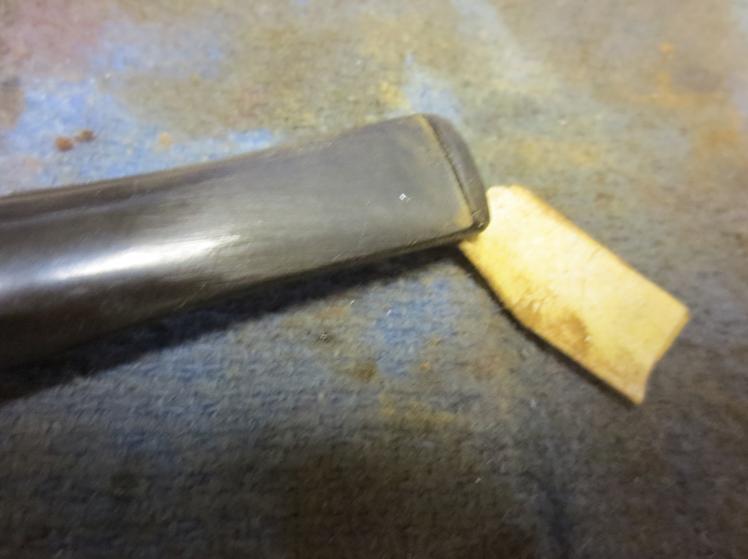
Aero21 With the stems cleaned and the carburetor air hole opened in both of them with a dental pick it was time to take the bowls out of the alcohol bath and begin to work on them.Aero22 I dried off the bowls and pulled the loose reverse tenon out of the shank of the pot. I cleaned the shank with alcohol, cotton swabs and pipe cleaners then pressed the loose piece back in place. Once the alcohol evaporated the fit was tight. I cleaned the shanks on both pipes until the pipe cleaners and swabs came out white.Aero23
Aero24

Aero25 By the time I finished cleaning out the shanks the bowls had dried enough to ream them with the PipNet reamer. I cut back the cake in the billiard to the bare wood and cleaned up the light cake in the pot.Aero26 In the photo below the wall of the billiard on the left looks damaged. I used a slightly larger reaming head and took back the remaining cake until the wood was clean and solid.Aero27 Then it was time to work on the stems. I did a rough sand with 220 grit sandpaper to remove the sticky build up on the darker of the stems and to break up the oxidation on the other one. I followed that by sanding them both with a medium and fine grit sanding sponge.Aero28
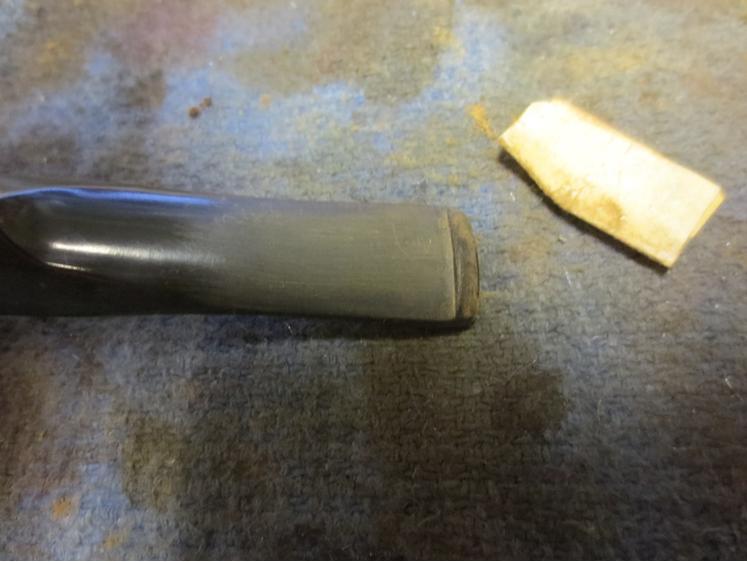
Aero29 I put them on the pipes to have a look at the progress of the restoration.Aero30 I buffed the stems with red Tripoli and worked on the stubborn oxidation on the one stem. I then buffed it with White Diamond. I took them back to the work table and sanded them with micromesh sanding pads – wet sanding with 1500-2400 grit pads and dry sanding with 3200-12,000 grit pads. Aero31
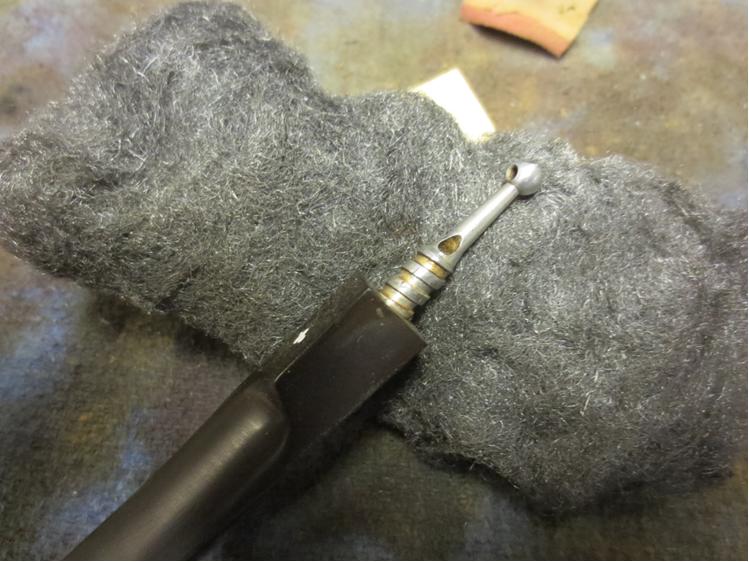
Aero32

Aero33 I rubbed the stems down with Obsidian Oil and when it had been absorbed I buffed the stems with Blue Diamond plastic polish. The oxidation still showed on the one stem so I started again and sanded it with the medium and fine grit stem and repeated the process through the micromesh and buffing until I had conquered the oxidation.Aero34

Aero35

Aero36

Aero37 I buffed the stems with Blue Diamond once again and gave them multiple coats of carnauba wax. I buffed the smooth bowl with carnauba and a soft flannel buff. I stained the rusticated bowl with dark brown aniline stain diluted 1:2 with isopropyl alcohol and then buffed it with White Diamond. I finished that pipe with several coats of Halcyon II wax. The finished pipes are shown in the photos below.Aero38

Aero39

Aero40

Aero41

Aero42

A New Lesson Graces an Albertson Sandblasted Bent Bulldog Restore


Guest Blog by Robert M. Boughton
Member, North American Society of Pipe Collectors
http://www.naspc.org
http://www.roadrunnerpipes.com
http://about.me/boughtonrobert
Photos © the Author

“Every failure is a lesson well learned, every success is a battle well fought, and every friend is a jewel well-kept in one’s heart.”
― Unknown

INTRODUCTION
As a valued friend and mentor, Chuck Richards can be counted on to tell me the truth, always. No matter how special are the occasions when his comments are clear thumbs-up, being thick-skinned, I can say with all honesty that I value more the constructive tips, outright lessons and even contributions (whether requested or not) that this gem of a friend has shared with me during the fleeting past three years since I made my first pipe restoration of a Czech-made La Grande Bruyère mini bent billiard. This openness in my character is fortunate, considering the greater incidence of the latter compared to the former.

Chuck with Victor Rimkus in a rare peaceful moment.

Chuck with Victor Rimkus in a rare peaceful moment.

The only aspect of Chuck’s always invaluable input that sometimes frustrates me, as can happen in particular when two people are friends and see each other often, is his erratic timing. While for the most part Chuck speaks his mind with blunt promptness, he has far more projects in his own shop, not counting the free work he performs for customers at the tobacconist where he works, than I can even imagine. Therefore, he has the odd habit of briefing me on certain pipe restoration intelligence data, pertinent to my Need to Know clearance, crucial to my reputation and consequent success in the business.

By way of example, there was the time early last December when Chuck, after being approached by an unspecified number of my local customers with reports of un-thorough cleaning of the inner stems and shanks of some pipes I had sold to that date, at last brought up the subject. I was not only unhappy to learn that any of my friends and associates who paid money for my pipes were too worried they might “hurt my feelings” by giving me the chance to correct the problem myself; I was still more irked that Chuck failed to warn me after the first instance. [See https://rebornpipes.com/2014/12/10/in-retort-to-claims-of-unclean-restored-pipes-robert-m-boughton/ for the full story.] Of course Chuck then emphasized the importance of retorting, and in one mad 18-hour marathon when my retort kit arrived in the mail soon after, I corrected the problem with every remaining pipe on my sales list, as I have done with each pipe I’ve restored since.
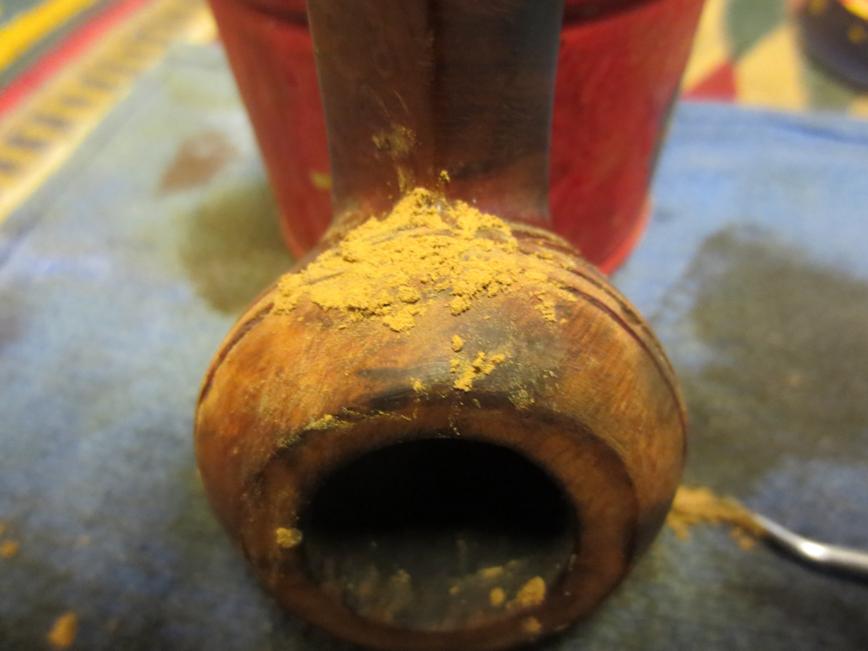
And so, last Friday night at our weekly pipe club get-together I showed Chuck my latest finished projects. He examined them before leaning toward me to tell me discretely of another fellow club member who saw my array of pipes for sale next to his at the monthly Moose Club meeting, where we are free to sell. It seems the gentleman in question, who is getting into the restoration practice, wondered why my pipes (and his own, it turned out) looked “so dull” compared to Chuck’s. I am pleased that I was apprised of the comment soon afterward, but had to wonder why Chuck – who no doubt noticed the same effect long ago – didn’t tell me of the importance of using an un-waxed buffer wheel after each application of the various waxes that can be used to finish pipes.
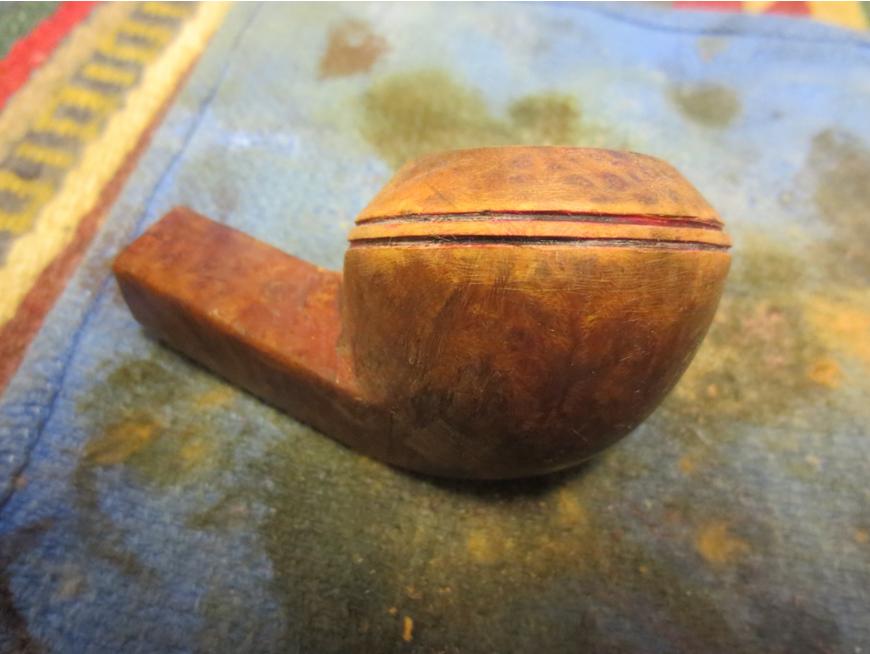
I had more than usual difficulty grasping the process as Chuck explained it to me, until his third description, when some light in my head snapped on. I understood he was not talking about removing the nice shiny layer of wax applied with such care; he was describing a way to take off the excess wax and firm up the rest so that it would shine even more, not smudge and last longer.

“You won’t believe the difference in the look of the pipe when you use a clean buffer after each wax you put on it,” Chuck told me, smiling in relief and the genuine pleasure he derives from explaining anything pipe-related, when he saw that my head had wrapped around the whole idea.

Again, of course, I remembered Chuck’s work-load and other difficulties, not to mention the bombardment of questions he receives every day from friends and customers. I identified with the high probability that every time he planned to say something it simply slipped his mind.

At any rate, this blog concerns a lovely rusticated bent bulldog made by the Belgian company known as Albertson, which, after World War II, was taken over by the Hilson factory. Since that crafter went bankrupt in 1980, the Albertson brand has been continued by the Royal Dutch Pipe Factory.

Considerable work went into this particular restoration, the first opportunity to use my new knowledge of proper pipe waxing. Thank you, Chuck, for being a real friend again. I officially challenge anyone to inspect this bulldog and find anything whatsoever lacking in its inner and outer shimmer.

THE RESTORATION Robert2

Robert3

Robert4

Robert5

Robert6

Robert7

Robert8 When my now customary first step of OxiCleaning the stem was complete, the well-shaped and gently curved stem was clean but covered with green, white and brownish spots. I solemnly affirm that I documented the result with a photo, but it seems to have been lost due to a malfunction of my camera. Likewise, the effects of 220-grit sandpaper on removing the serious tooth chatter that marred both sides of the top of the stem, almost an inch below the lip, are gone. Even the lip had been gnawed and required intense sanding, but at least I avoided Black Super Glue.

I stripped the rusticated briar in Everclear.Robert9 Again, the photos of the bare briar after this process are not to be found, although rubbing with super fine steel wool, then sanding the top of the bowl above the traditional line to make it lighter in color, followed by a thorough micro-meshing of the whole with five grades from 1500-4000 made the wood ready for buffing. The only way I can even begin to explain the absence of these particular photos is to note that all of them were taken in order during a short period of peculiar behavior by the DSLR.

After sanding the chamber with 320-grit paper followed by 200, I retorted the pipe. For the first time, that step required only one test tube of boiled alcohol, thanks to the excellent care by the previous owner and the Everclear soak. I had stained all of it but the top and rim with burgundy boot dye, which I flamed and hand-buffed with 4000 micromesh before resorting to 3600 to heighten the new red tone. Here is the briar when I was almost done prepping it for the final buffs.Robert10 At the last moment, I decided to give the upper part of the bowl and the rim a final sanding with 320-grit paper and re-using the same micromesh progression as before to take it all the way down to its natural light brown color. All was in order to try out my newly-learned wheel buffing technique.

The stem took a little extra work with its extra lines, using the regular red Tripoli followed by White Diamond. I happened to have an extra, new buffer which I then attached to the electric wheel that had held the red Tripoli cloth. Beginning on the briar with a regular white Tripoli buff, I held it up in the light for a better look before I moved to the clean buffer and turned the wood with extra care. Again I held it up to see the change, which, as Chuck had promised, was prominent. Repeating these steps with White Diamond and at last carnauba (since I still need to replace my spent supply of Halcyon II), when the work was done I was truly impressed with the far finer and more solid shine.Robert11

Robert12

Robert13

Robert14

Robert15

Robert16 CONCLUSION
I was fortunate to start with an estate pipe that was well-tended by it prior owner, and I like to think that he would be pleased with its new, sharper two-tone look. My only regret is that now I have to re-polish my entire growing collection of pipes for sale. But I am looking forward to the next monthly Moose Lodge meeting of the pipe club on the third Thursday of April. You can bet I’ll be there, with all of my pipes arranged proudly beside Chuck’s.

Still I wonder…what future comments might make their way to me via my good friend and mentor? Perhaps now my potential local customers might find the good grace and trust to approach me instead.

Restoring a Willard Imported Briar Rhodesian


Blog by Steve Laug

I am finally finishing up the final pipes in the box of gift pipes. This one is a little long stemmed Willard Rhodesian. It is stamped Willard over Imported Briar. It was in pretty good nick. The finish was worn and peeling in some places. There were scratches in the surface of the briar on the sides of the bowl. The bowl was lightly caked with remnants of tobacco clinging to the walls of the bowl. The stem was chewed but no deep marks were in the surface. The stem is that odd nylon like material that was on pipes of this era. It had a threaded tenon and a short stinger that was pretty clean as well. The stem was clean on the inside as was the shank of the pipe. The stem was slightly over turned and had some damage to the nylon of the upper portion of the stem.Willard1

Willard2

Willard3

Willard4 The next two photos show the tooth damage to the top and underside of the stem near the button.Willard5

Willard6 I decided to remove the spotty and peeling finish first. I wiped it down with acetone on cotton pads until the varnish coat was removed. To my surprise there were no visible fills in this piece of briar. The wood actually had some nice grain under the varnish coat.Willard7

Willard8

Willard9

Willard10 I sanded the stem with 220 grit sandpaper to remove the damage on the surface and the tooth marks on the top and underside near the button. I heated the stinger with a lighter to soften the glue so that I could correct the over turned stem. Once it was softened I put it in the mortise and turned it clockwise until it lined up with the bowl properly. I let it cool and harden once again before removing it from the shank.Willard11 I scraped out the slight cake and remnants of tobacco with a pen knife taking it back to bare wood so that a new cake could be built up by the next pipe man.Willard12 I sanded the bowl and the stem with a medium and fine grit sanding sponge to remove the scratches left behind by the sandpaper and then put it back on the pipe and took the next set of photos.Willard13

Willard14

Willard15

Willard16 I stained the bowl with a dark brown aniline stain mixed with two parts alcohol to thin it down and lighten it. I applied it and then flamed it with a lighter to set the stain. I reapplied the stain and flamed it again.Willard17

Willard18 Once the stain dried I wiped the bowl down with alcohol on a cotton pad to even out the stain coat and to make it more transparent.Willard19

Willard20

Willard21

Willard22 I put the stem back on the shank and sanded it with micromesh sanding pads to polish it. I wet sanded with 1500-2400 grit pads and dry sanded with 3200-12,000 grit pads. I rubbed it down with Obsidian Oil between each set of three pads and then again the final time. I did not buff the stem with the buffer as I find that the nylon stems do not do well with the heat of the buffer. I applied some Paragon Wax to the stem and hand buffed it with a shoe brush.Willard23

Willard24

Willard25 I buffed the bowl with White Diamond and Blue Diamond on the buffing wheel and then gave it multiple coats of carnauba wax. The finished pipe is shown in the photos below. It is ready for a long life of delivering a decent smoke to whomever’s rack it ends up gracing. It is a pretty little Rhodesian that looks great.Willard26

Willard27

Willard28

Willard29

Willard30

Sometimes I can’t help myself and have to refinish a new pipe – a Butz Choquin Belami Pocket Canadian


Blog by Steve Laug

When I was in Stuttgart, Germany recently I purchased a petite pocket Canadian made by Butz Choquin. The cost was relatively cheap at 43€. It was stamped Butz Choquin Belami on the top of the shank and St. Claude in an arch over France. I like the contrast stain on the pipe and the fact that it would fit nicely in my coat pocket while traveling in Germany. When I returned to my hotel room I looked it up on the web. I found that it was listed as a Junior Pipe on the Butz Choquin Website and in fact there was a picture of a pipe that looked very much like the one I picked up. (http://www.butzchoquin.com/detail.php?id=BCBELUN5PF4)BC1 I liked the look, the shape and the size of the pipe as soon as I saw it and decided it was a pipe that would commemorate my trip to Stuttgart. There was a sandblast version of the pipe available as well and I looked them both over carefully before choosing the smooth one. I purchased the pipe and a pouch of one of the shop blends called Cigarren-Mezger Vaihinger Mischung Nr. 15 – an English mixture to christen the pipe. It was one of the only shop blends that did not have some kind of fruit topping. I took my newly purchased pipe and tobacco to a coffee shop across the street from the shop and loaded a bowl of the Vaihinger Mischung Nr. 15. I bought a cup of dark hot chocolate and fired up the bowl and sipped the hot chocolate. I was impressed by how well the pipe smoked. It delivered a flavourful and cool smoke from start to finish. Early in the bowl there was a slight charcoal taste from the bowl coating but it soon disappeared into the well rounded English smoke. While I smoked it I looked it over more carefully. Though it was smoking well the finish left much to be desired. It was rough to say the least. After smoking it a few moments I noticed that the stem had oxidized. I would need to think about what to do with the finish when I returned to Canada.BC2

BC3 I smoked the pipe for the remaining week of my German trip and continually looked it over. As I had decided when I bought it the shape was perfect and the taper on the short stem fit well with the overall look of the pipe. It felt good in the hand and was a pleasure to smoke. But the rough finish became increasingly problematic to me. There were a lot of scratches in the briar on the surface of the rim and the rest of the bowl and shank. The contrast stain was nice with the dark black under coat that highlighted the grain and the lighter yellow brown top coat to add depth to the finish. But the pre-staining finish work was severely lacking as the scratches from the initial sanding were tactile and visible. A coat of varnish had been applied to the pipe that not only covered the bowl but also flowed over part of the stem. The varnish on the stem showed up when the pipe was smoked. The stem oxidized in weird patterns around the flow of the varnish. It gave the stem almost a flame pattern with the oxidation appearing from the button forward about a ½ inch along the jagged edges of the varnish coat. I would need to address the finish of the pipe when I returned to Canada.BC4

BC5 I took it to the worktable and took the above photos before beginning to work on the pipe. Though it is hard to really see the roughness of the finish some of the scratches are visible in the photos. The oxidation of the stem is also less visible in the photos than it was in person. I stripped off the varnish using acetone on a cotton pad. I used it sparingly as I wanted to remove the varnish but not the stain. I sanded the pipe with a medium and a fine grit sanding sponge to remove the remaining varnish and also remove the scratches in the briar. I then sanded it with micromesh sanding pads – wet sanding with 1500-2400 grit pads and dry sanding with 3200-12,000 grit pads. I sanded the stem as well with a fine grit sanding sponge and the micromesh sanding pads being careful to avoid the BC logo that was painted on the stem. Once the bowl was smooth I buffed it with White Diamond and then rubbed it down with a light coat of olive oil to enliven the finish and then gave the bowl and stem multiple coats of carnauba wax to protect the finish and vulcanite. I finished by buffing it with a soft flannel buff to raise the shine. I am happy with the finished pipe. Now not only does it smoke well but it feels better in the hand looks more finished to the eye. Sometimes I just can’t help myself and have to refinish a pipe that simply irritates my sensibilities.BC6

BC7

BC8

BC9

BC10 (The apparent scratch on the pipe shown at the top of the photo that runs from the shank across the stem is merely a hair on the lens of the camera.)BC11

A Restored Orlik Dugout Billiard


Blog by Steve Laug

Al Jones’ recent posts on his restorations of two Orlik pipes – one a Sterling and one a Dugout – for John Guss prompted me to take this old Orlik Dugout out of my pipe cabinet and take a few photos. I restored it many years ago now and have smoked it many times since that restoration. The pipe originally came to me via an eBay auction. When it arrived I cleaned up the bowl and the stem. I remember that the bowl was caked and in need of a reaming and cleaning. The shank was dirty and the stem was oxidized. I cleaned both up and waxed and polished the pipe. It came in a worn black leather covered case with a red velvet lining. The pipe fit the case perfectly. There was an indentation for a second stem or a cigarette holder that no longer was present. Some of these older cased pipes came with a vulcanite and an amber stem – this may have been the case here. The blast was originally deep but had been worn over the years.Orlik1 The stamping on the pipe is very clear. It reads ORLIK over DUGOUT with TRADE to the left of the stamping and MARK to the right. The finish appears to almost be a rustication with a sandblast afterwards. It has both a black understain and a brown overstain. The combination of the rustication and blast is what I think gives it the name dugout.Orlik2 The stem is similar to the one that Al cleaned up for John on his Dugout. It has the same shape and look to the button. It has an orific airway in the end of the rounded button on the stem.Orlik3

Orlik4

Orlik5 While the walls are thin on the bowl the pipe smokes cool nonetheless. It is one of my favourite old collectible pipes.

For the Love of an Amadeus Half-Bent Brandy


Guest Blog by Robert M. Boughton
Member, North American Society of Pipe Collectors
http://www.naspc.org
http://www.roadrunnerpipes.com
http://about.me/boughtonrobert
Photos © the Author

“According to Diotima, Love is not a god at all, but is rather a spirit that mediates between people and the objects of their desire. Love is neither wise nor beautiful, but is rather the desire for wisdom and beauty.”
― Plato (429?–347 BCE), Athenian philosopher, in “Symposium,” 360 BCE

INTRODUCTION
Amadeus may be known best as the 1984 feature film that won eight Academy Awards and was titled after the fourth given (or in this case, chosen) name of the latter 18th century Austrian composer, more often shortened to Mozart. Christened Johannes Chrystosomus Wolfgangus Theophilis Mozart, the often inebriated genius preferred the Latin translation of Theophilis – Greek for “lover of God” – which is Amadeus, derived from amare, to love, and Deus, God. The name also happens to be a Greek pipe brand founded in 1975 by eight artisans.

The half-bent brandy I obtained as part of a multi-pipe estate lot last year is a mid-level example of an Achaki-Amadeus S.A. briar. The company’s products range in price new from $50 on sale to $320 at the regular rate. They are all made of high quality Mediterranean briar, and the Greek company is among the primary suppliers of that variety of wood to other makers including Stanwell, Vauen, Tsuge and the late Bjarne Nielsen of Denmark.

This Amadeus arrived in much better than usual shape except for the chamber and rim and some minor wear of the stem.AM1

Am2

AM3

Am4

Am5

Am6

AM7 THE RESTORATION
I was eager to start a OxiClean bath on the stem. Knowing the stem hole as well as the outer area would benefit from a good soak for about a half-hour, I suspected that some of the chatter I could see in line with the lower lip would require more than that and even some sanding before micro-meshing.Am8

Am9 In the meantime, I had no trouble removing the little bit of blackening of the rim with easy rubbing using super fine steel wool, and the mild buildup of carbon in the chamber with a 19mm reamer followed by 150-grit paper and finished to silky smoothness with 320-grit.

Although the top of the stem was good after the soak, rinse and a wet micromesh work-over – building a grade at a time from 1500-4000 – the bottom, after the same treatment, indeed needed more work.AM10

Am11 And so I removed a little more of the chatter with 200-grit paper and applied some Black Super Glue.Am12

Am13 My work so far was easy, but being the glass-half-empty sort I was prepared to discover serious accreted grime when I commended the stage of clearing the mortise and shank with a wire-handled cleaner dipped in Everclear. But my luck continued. After a few passes that met no resistance and resulted in minor darkness of the cleaner, I decided with a rare sense of admiration that the previous owner had enjoyed the Amadeus brandy for some time and taken appropriate care of it. Reattaching the stem, I retorted the pipe with a mere two Pyrex test tubes of boiled alcohol.

As has been the case in many of my restorations so far, I was curious with the shade of the stain that I considered to be over-dark. To my way of thinking, as long as a careful visual analysis reveals no hidden reason for the extra obscuring, the clearer the grain, the better. And so, again with the utmost gentleness, I used a small piece of steel wool to lighten the briar and worked my way up the micromesh scale.Am14

Am15

Am16

Am17

Am18

AM19 For those of you with more discerning eyes, the pieces of crud visible with enlargement of the last photo, showing the shank opening, resulted from a final impulsive sanding of the chamber. Rest assured none of it remained after I noticed and gave it a good blow.

The two pieces of the pipe were ready for buffing. I used red and white Tripoli and White Diamond on the stem (big surprise) and white Tripoli, White Diamond and three coats of carnauba on the wood.Am20

Am21

Am22

Am23

Am24

Am25

Am26 CONCLUSION
There were no big problems with this restoration; no special problems to report or whine about; no particular distinction of the Amadeus itself, except for its very fine craftsmanship and, to me, less common country of manufacture. Still, it is a real beauty, an opinion I expressed in an email to Achaki-Amadeus to date the crafting of the pipe. Excepting the general pleasure of the simple but effective restoration, in fact, the most exciting aspect of the process came after the fact, when I received a response from one of the brand’s owners:

This is a line we used to make some good ten years ago. If you are in the USA it was imported in the country four years ago.

I hope I helped.

Thank you for your kind words.

Best regards

Makis Minetos

Please visit my blog:

http://www.acutabovebriar4.blogspot.com

Building a Better Button on a 1930’s Yello Bole Oom Paul


Blog by Andrew Selking

Have you ever found that Holy Grail pipe only to realize that it has a major flaw? For me, this pipe ticked all the boxes, a KB&B pipe made between 1933 and 1936, it was a less common shape and looked to be in decent condition. The only problem I could see was that a previous owner had filed off the button.Andrew1

Andrew2

Andrew3

Andrew4 I’ve been experimenting with super glue and ground charcoal for stem repair and I had an idea how I might use that to re-create the button. Now just a quick disclaimer. I am not a medical professional and I do not pretend to know any potential health hazards to the use of super glue on something you put in your mouth. On the other hand, I am aware that the state of California has found that pipe smoking is not healthy for pregnant women or their unborn children. As an adult, I accept these risks as the relaxation benefit outweighs the health risks.

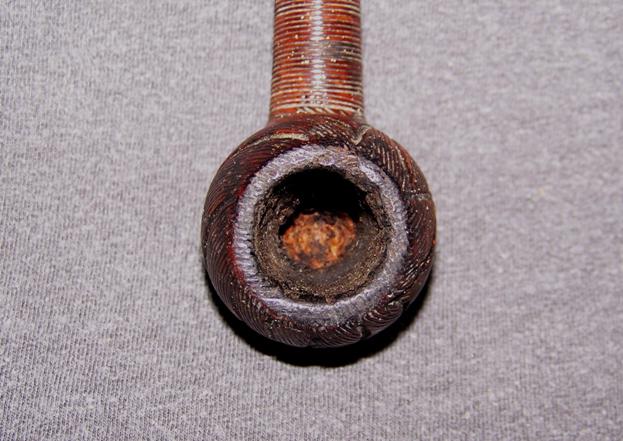
Before tackling the button I needed to clean up the pipe. I started the process by giving the bowl an alcohol bath.Andrew5 While the bowl marinated, I dropped the stem into a solution of Oxyclean. After a good long soak, I reamed the bowl.Andrew6 After reaming the bowl, I retorted the stem and bowl. I forgot to take pictures of the bowl during this process.Andrew7 The stem was pretty clean, which I expected based on the minimal amount of chatter and the lack of cake build up in the bowl. A couple of fuzzy sticks dipped in alcohol did the trick.Andrew8 The alcohol bath serves two purposes, it loosens up the internal gunk and it helps remove the old finish. On this particular pipe, I noticed that the bowl was stained a purplish read and had a heavy varnish on it. That’s usually a sign of inferior briar and lots of fills. With great trepidation, I used acetone and 0000 steel wool to see what was under the old finish.Andrew9 I was pleasantly surprised to find beautiful grain and not a single fill.Andrew10

Andrew12

Andrew11

Andrew13 I was not happy with the purple tint of the wood though, I mean who does that? My guess is, this pipe could have made the cut as a Kaywoodie, maybe they were short on the Yello Bole line so they put a Yello Bole stem on it and that hideous varnish. Interestingly enough, this pipe has the identical shape number as the Kaywoodie medium billiard Oom Paul. Just to give you an idea how many pipes Kaywoodie used to make, they had three models of the Oom Paul shape.Andrew14 I decided the best way to take care of the purple stain was with some judicious sanding. Since the bowl didn’t have any scratches or dents, I didn’t have to go too heavy. I started out with 1500 grit micro mesh and worked my way up to 12,000 grit. You will notice the washer between the stem and shank. I’ve learned that the best way to get a sharp shoulder on the shank and the stem is by using the washer to prevent the sanding medium from rounding it off.Andrew15 This is what the bowl looked like after the micro mesh pads.Andrew16

Andrew17 I decided to keep the stain light, so I diluted some Pimo Pipe Supply mahogany and used a single coat. Unfortunately I didn’t take a picture of that process, I was kind of excited about fixing the stem.

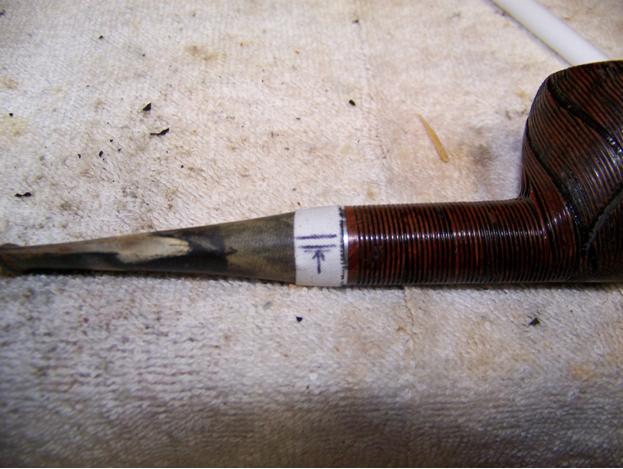
I removed the oxidation on the stem with a progression of 1500-2400 grit micro mesh pads with water. I didn’t have the bowl attached, so I just held the washer over the tenon to prevent rounding.Andrew18 With the oxidation addressed, it was time to start building the new button. I’m not the best when it comes to carving the bottom side of the button so I decided to use clear tape to create definition.Andrew19

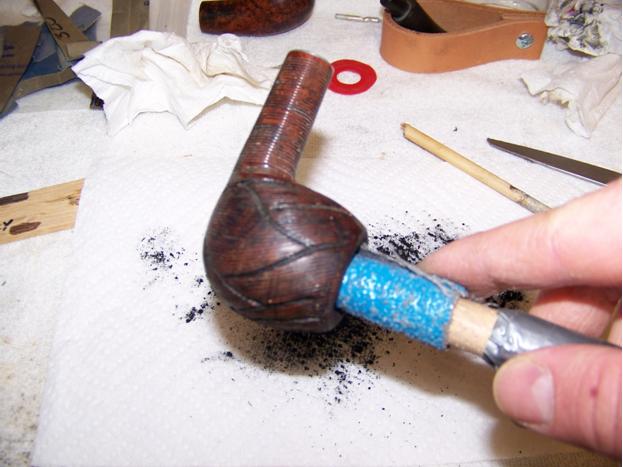
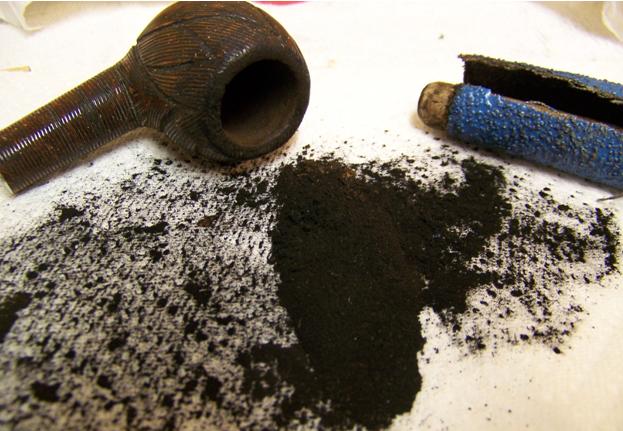
Andrew20 I built up layers of tape until it was the thickness that I wanted for the underside of the button. Next, I mixed some ground charcoal and super glue and started applying it. After each application I put a drop of accelerator on the end and applied another layer. It was not looking the way I wanted it to look.Andrew21 I remember Steve said that when he used activated charcoal it was very fine. So I sanded off the mess and started over. To get a finer charcoal I used our coffee grinder, which did a pretty good job, but still left some larger chunks.Andrew22 To solve that problem, I used a tea strainer. The result was very finely ground charcoal.Andrew23 I mixed the super glue and charcoal and applied it as before.Andrew24 I sanded between applications and filled in any remaining divots.Andrew25 Once I had the button shaped to my liking, I used a progression of micro mesh pads from 3200-12,000. Then I used my rotary tool with white diamond and carnauba wax to bring out the shine.Andrew26 I gave the bowl a quick spin on the buffing wheel with white diamond and carnauba wax. Here is the result.Andrew27

Andrew28

Andrew29

Andrew30

Andrew31

Andrew32

Andrew33

Andrew34

Andrew35

Andrew36

Andrew37 I am happy to say that this pipe smokes as well as it looks. It is a system pipe. I couldn’t be happier with the button. The thing I like about using the charcoal and super glue is, it polishes and shines just like the vulcanite. This pipe is a keeper. Thanks for looking.

The French Girl with the Fuzzy Identity


Guest Blog by Robert M. Boughton
Member, North American Society of Pipe Collectors
http://www.naspc.org
http://www.roadrunnerpipes.com
http://about.me/boughtonrobert
Photos © the Author

“The problem with putting two and two together is that sometimes you get four, and sometimes you get twenty-two.”
― Dashiell Hammett (1894-1961), U.S. author who re-invented and popularized the hard-boiled private investigator genre, in “The Thin Man” (1934)

INTRODUCTION
I take great solace from life’s frequent misadventures through activities that nevertheless focus on the same causes of grief: reading a good book, realistic or fantastic; writing news articles, blogs, letters to the editor and my own versions of literature; photographing street life, landscapes, nature and the occasional spot news event; drafting, filing and arguing civil actions in courts of law when I too frequently encounter those who would do me harm through ignorance or the misperception that I lack understanding of that study of knowledge, and researching and at times investigating anything and everything. But when I need to retreat all the way into the pleasure centers of my brain, I have only my local tobacconist and pipe acquisition disorder on which to fall back, and on the great majority of my P.A.D. attacks for almost a year now I can at least blame my small but expanding online business of refurbishing or restoring estate pipes for sale. Yet even that endeavor involves research and background checks.

Other than the classic but elegant shape and crafting of the Butz-Choquin bent billiard I scored a few months ago in an estate lot with several lesser gems – including a unique red Kaywoodie lumberman that was, for the most part, sandblasted, but with two natural rings around the billiard bowl and matching sitter bottom and ferrule – the obvious challenge of restoring the shapely French pipe to her original fine condition was a definite attraction. Except for the BC logo clear on the left side of the stem and the overall haggard appearance, I had no idea what I was getting. When the lot arrived, I searched for the BC, but when I found her the nomenclature was so fuzzy I could make out little more of the brand stamp on the left shank than the distinctive cursive B. Of the name itself, I saw two lines, the top beginning with a definite F and the bottom a clear word: MAJOR.

This may sound like plenty to go by, but my browser search suggested multiple possibilities for Butz-Choquin matches starting with F. There was the Formula, Formula Noir, Fait Main and filter, all of which I ruled out. And so I added an L and found Flamme, Flamme Extra, Flamme Standard, Flash and Fleuron. Then I tried Flamme Major and, seeing no suggestions, just Major. That excavated a site with images for BC Major Pipes, among which I saw a similar although straight stem specimen.Butz1 Therefore I returned to the full Butz-Choquin Flamme Major search and completed it, confirming that indeed was what I had.

THE RESTORATION
Butz2

Butz3

Butz4

Butz5

Butz6

Butz7

Butz8 I recently started making several basic changes in my pattern of restoration S.O.P. First, I now begin with an OxiClean stem wash as it can go on in the background, so to speak, while I do other tasks. I’ve also found it really works, although not with the comprehensive results sworn to in the site I found for its basic instructions, including the consistent lack of need for additional work such as sanding and on occasion using Black Super Glue for deep fills. Sometimes after washing with OxiClean and warm water, rubbing out the excess discoloration with a cloth and micro-meshing, the result is a perfect stem ready for the wheel. More often than not, however, I need to sand out scratches that are exposed. Such was the case with this stem. But the practice serves its purpose, to clean the stem inside and out and make the job of producing a shinier end product far easier.

Before
Butz9

Butz10
Ready for buffing:Butz11

Butz12 The second new habit is working on the rim and chamber and scraping out the major buildup of old tobacco and its related substances from the shank with a wire cleaner rinsed over and over in Everclear. All of these can be completed during the OxiClean wash. Third, I now retort every pipe at this stage.

All of these stages of the process completed, I turned to the bowl and shank, which showed the wear and tear of age. Tell me about it! After washing the briar with purified water, I used a piece of super fine steel wool to lighten the all-too-often over-dark original finish, shine the wood and make the grain show with more clarity. The wood was in very good condition with no pits, dings or scratches worth mentioning, and the slight appearance of discoloring in areas disappeared. I did a full micromesh workup with 1500, 1800, 2400, 3200, 3600 and 4000.

By the end of the restoration, the nomenclature somehow was much clearer.Butz13

Butz14

Butz15

Butz16

Butz17The time was right for the final buffing, and so I repaired from the comfort of the living room for the prep work to the workroom for finishing. The stem, as usual, I gave a nice shine with red Tripoli and White Diamond. The briar I buffed with white Tripoli, White Diamond, and a few coats of carnauba.Butz18

Butz19

Butz20

Butz21

Butz22

Butz23

Butz24

Butz25CONCLUSION
I think the most notable achievement of this restoration is that for the first time I was able to sand the chamber until it was baby smooth and like-new. I accomplished this by reaming and then sanding with 150-grit paper as usual but followed those steps with a second sanding using 320-grit paper.

All in all, I am happy with the outcome and will, of course, be sorry to let this one get away from me.