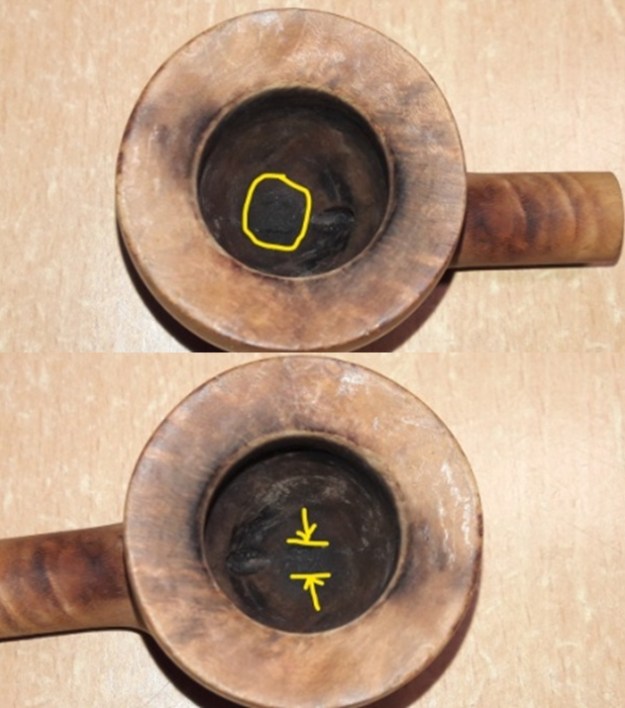
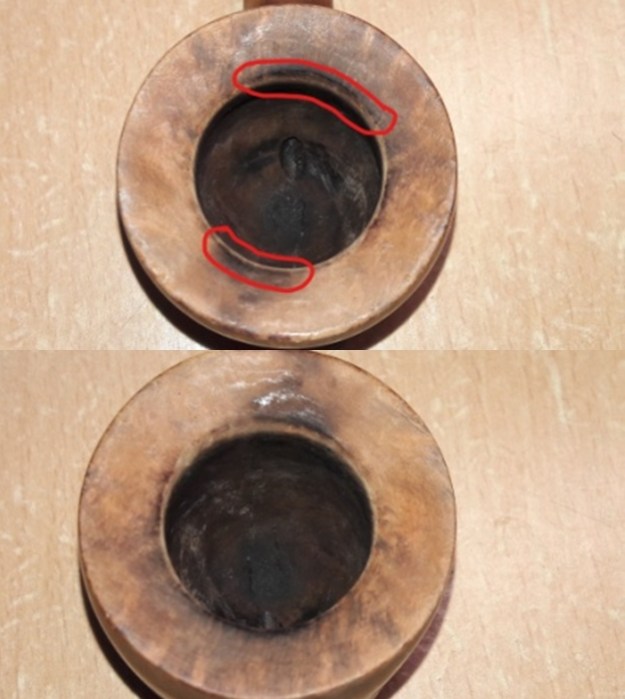
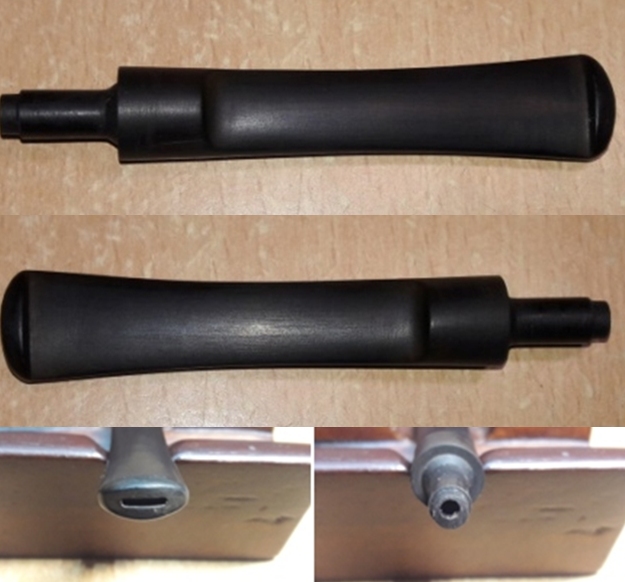
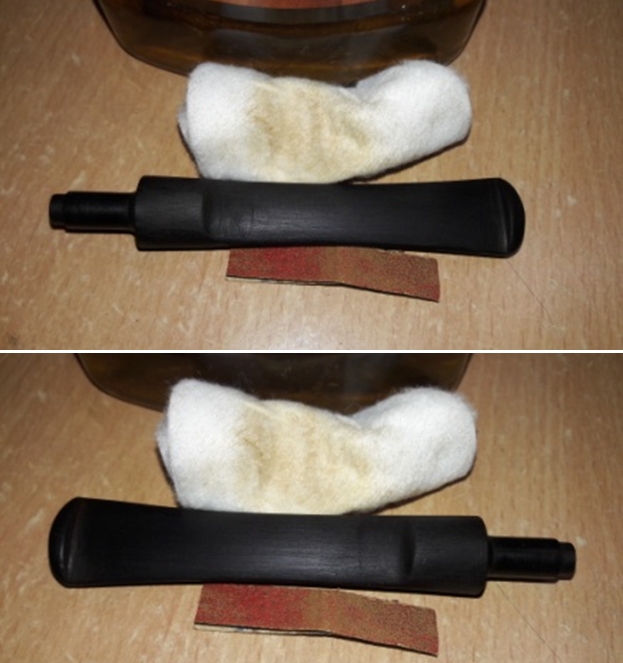
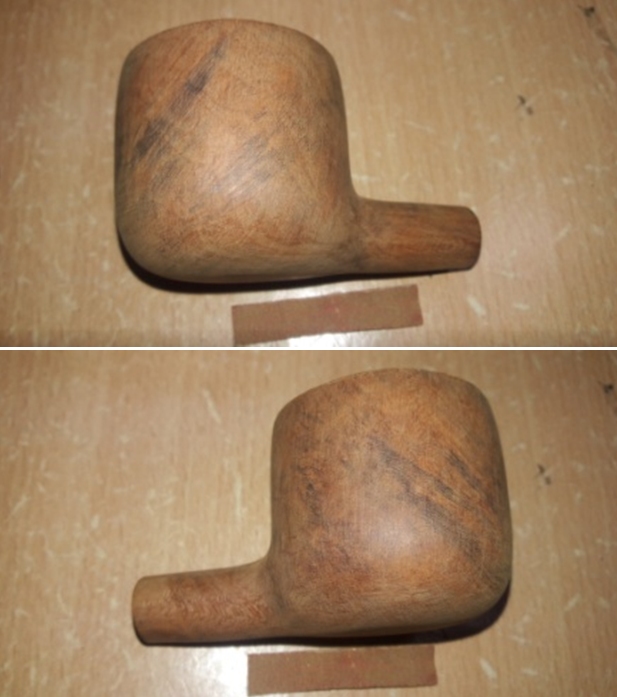
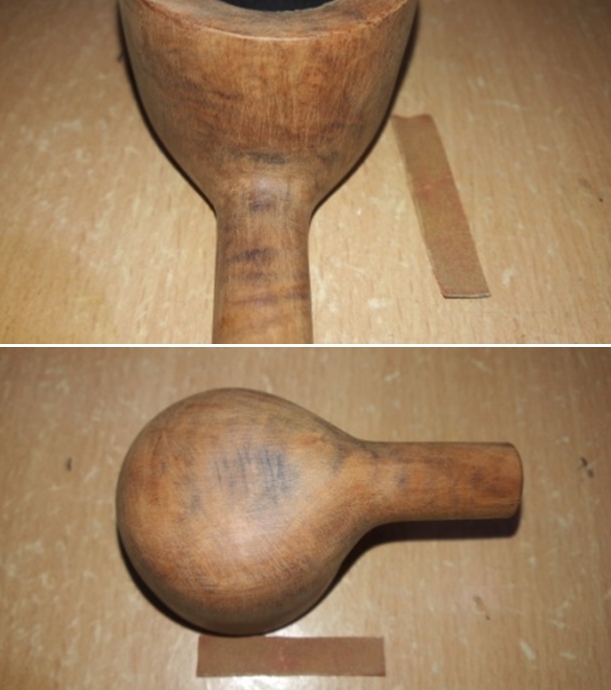
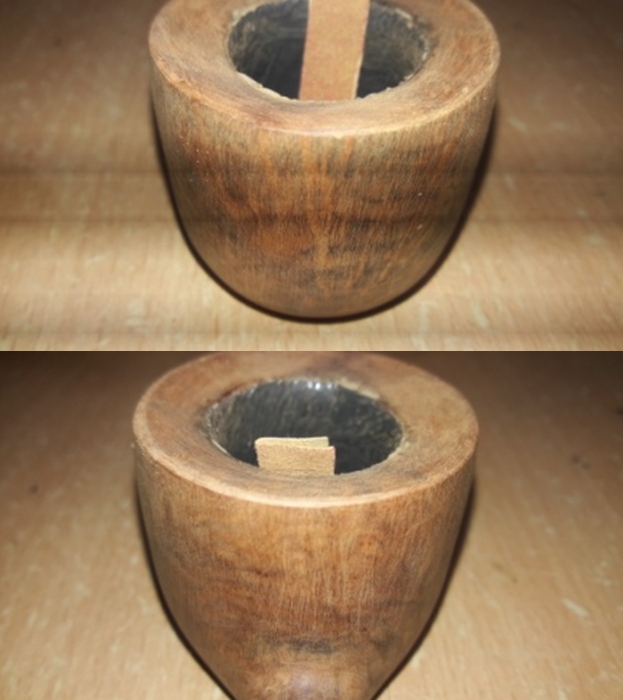
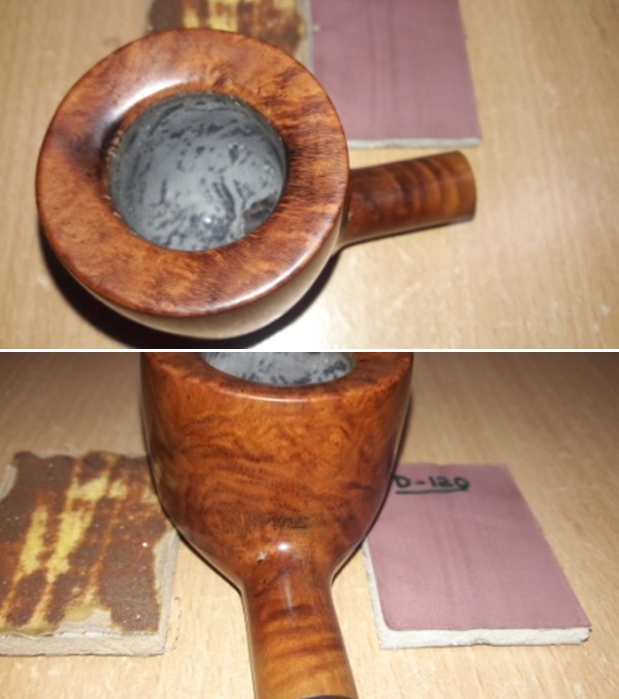
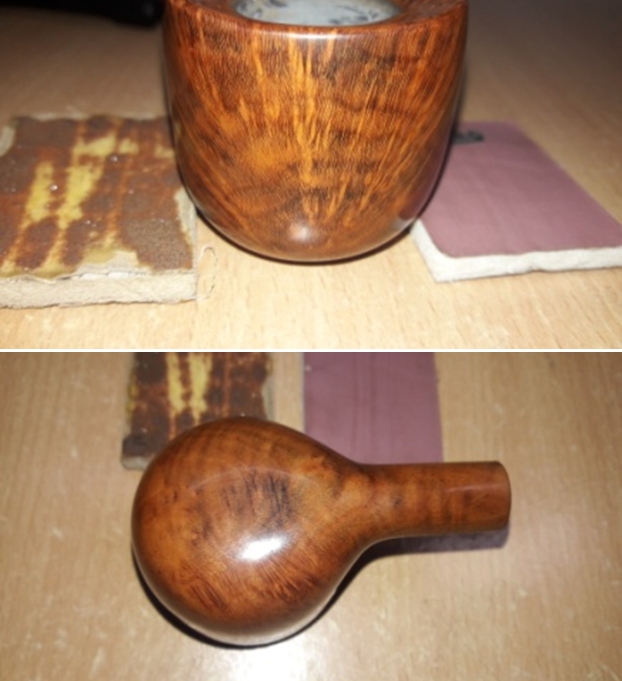
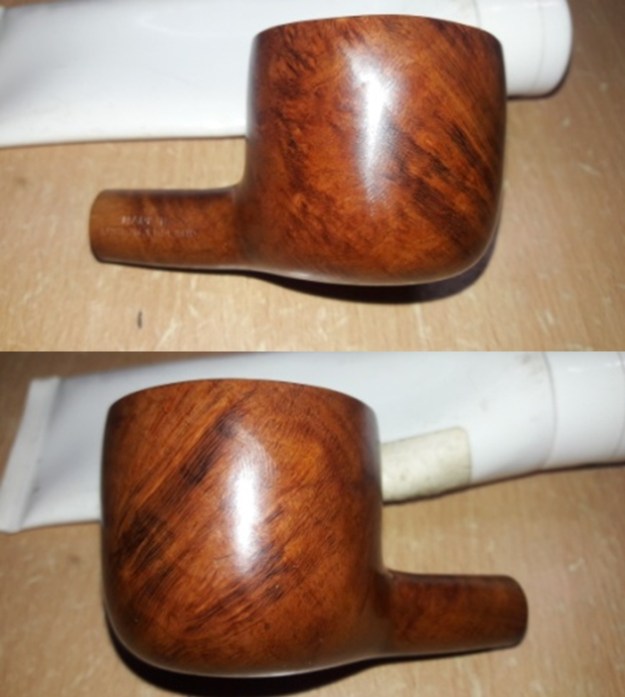
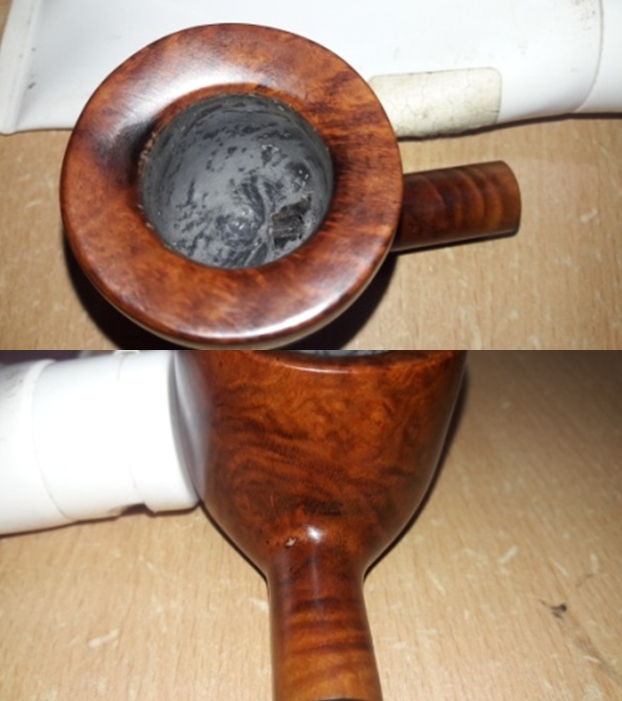
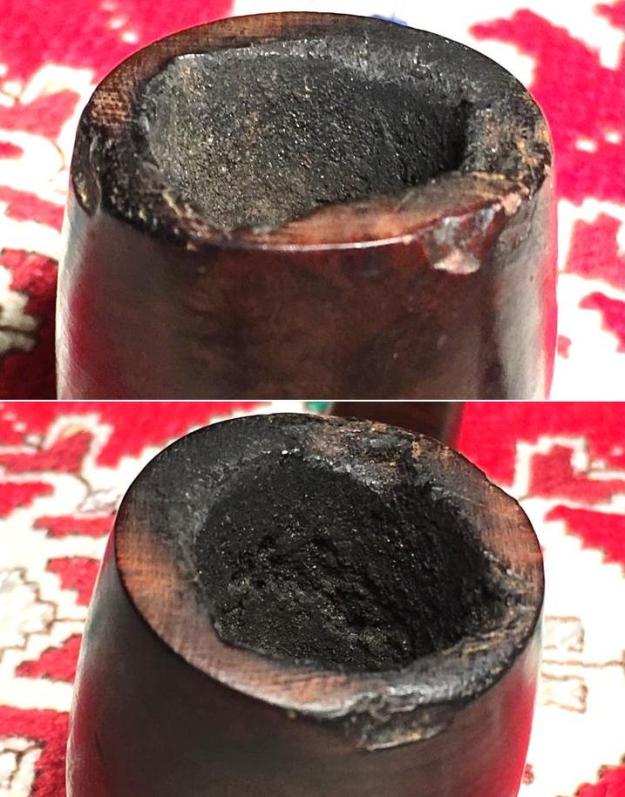
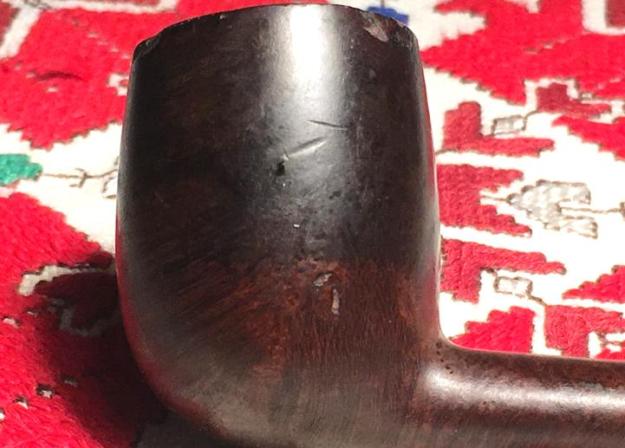
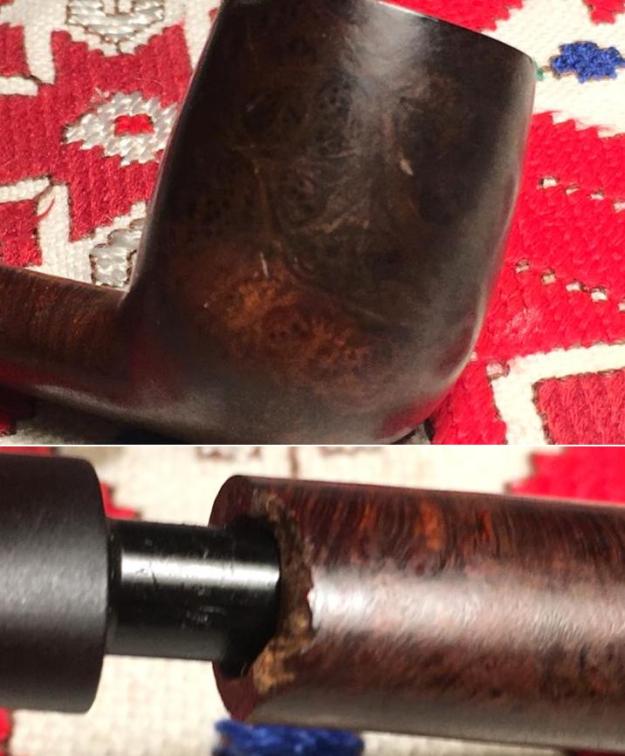
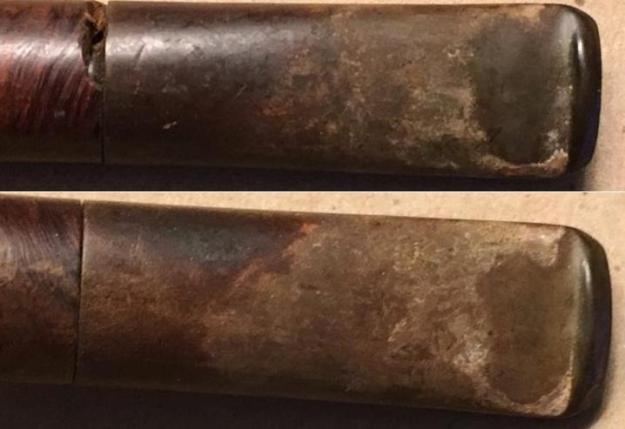
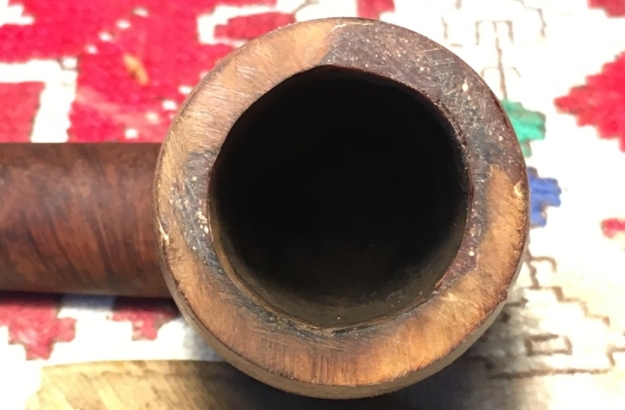
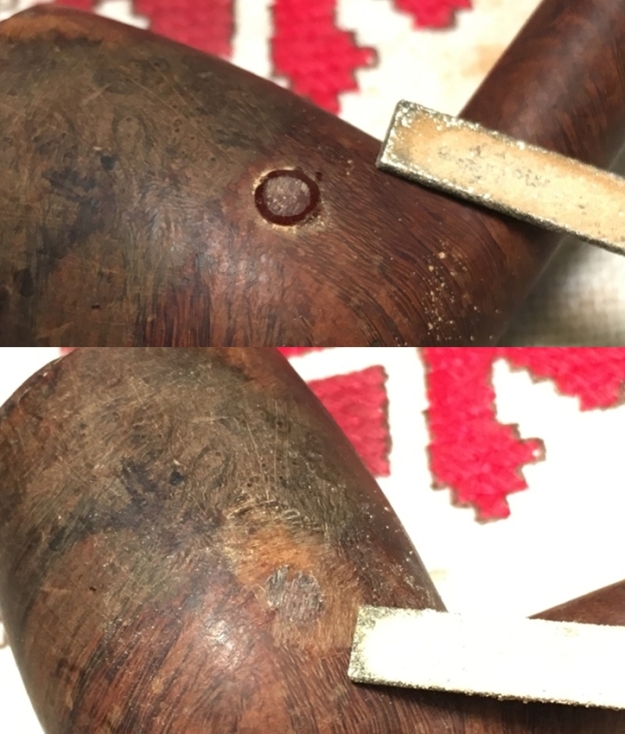
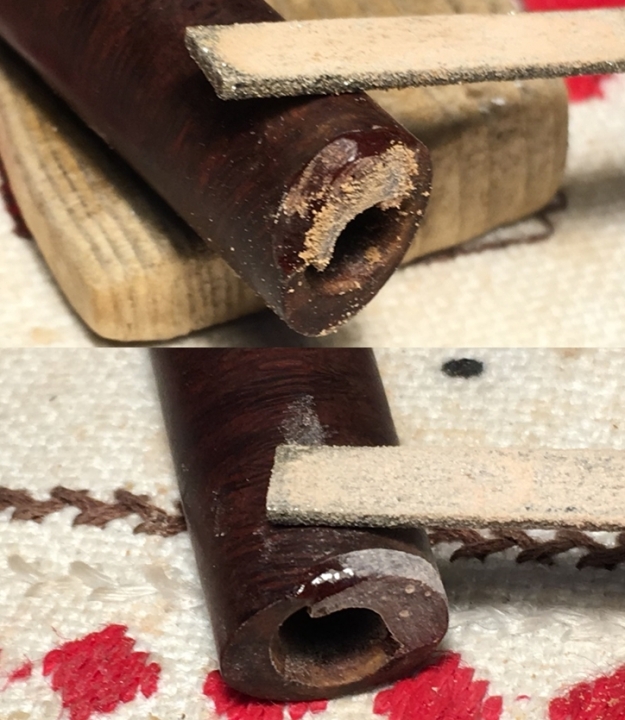
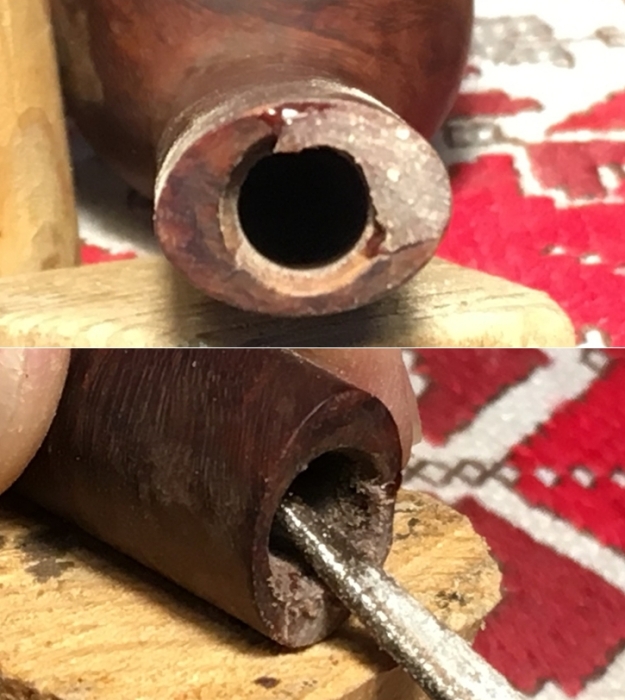
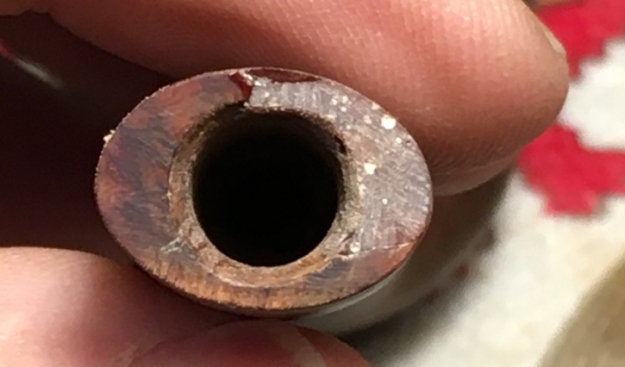
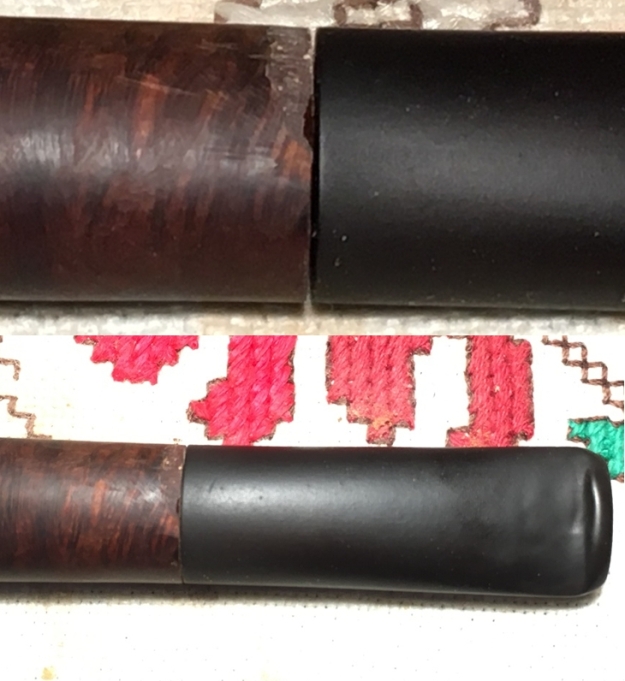
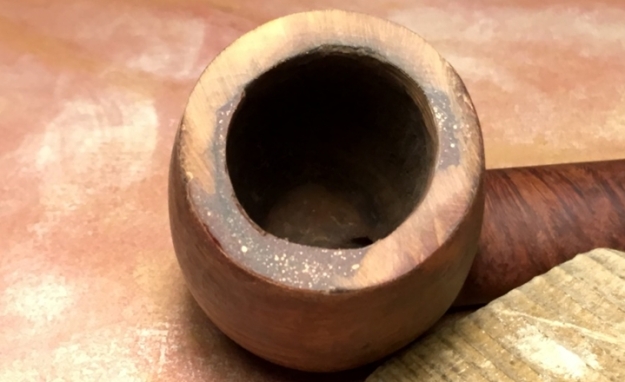
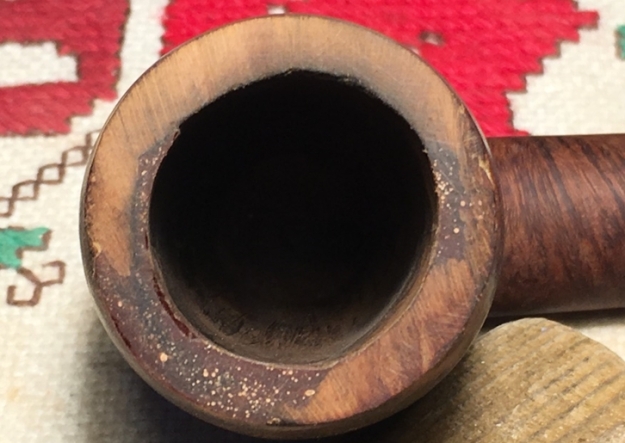
Tag Archives: Bowl coating

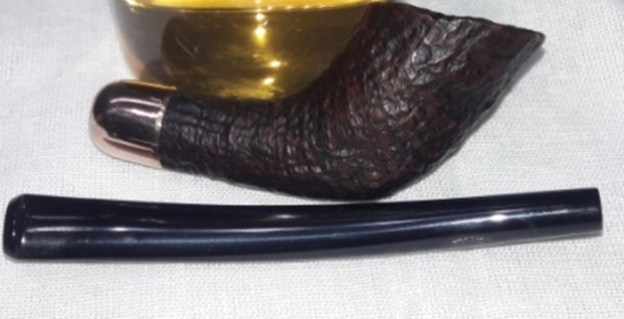
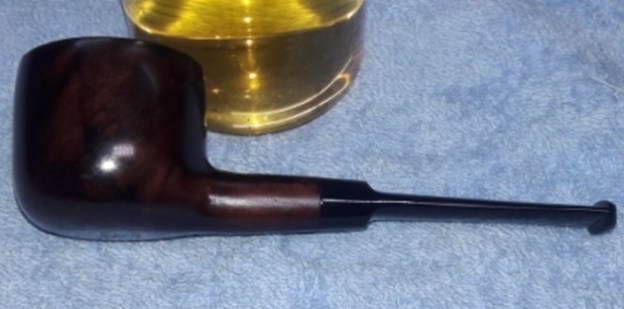
An Interesting Pipe To Work On – a GBD Prehistoric Xtra Horn


Blog by Paresh Deshpande

This pipe has attracted the attention of my wife, Abha, since the time I had received three huge boxes of pipes that once belonged to my Grandfather. So when she took the plunge of helping me in restoring all these inherited pipes, this was one of the first she had earmarked for cleaning up. After she had done the initial cleaning up, this pipe languished at the bottom of the pile of around 50 plus pipes that she had cleaned up. And it was during the period of my stay at home on compulsory leave due to the countrywide lockdown to contain the spread of CORONA VIRUS (COVID-19) that this pipe came up for restoration.

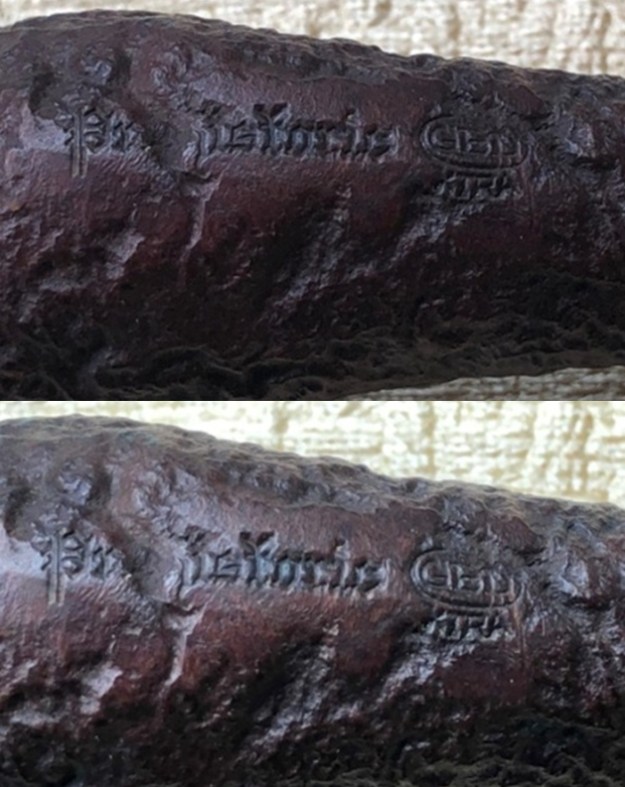
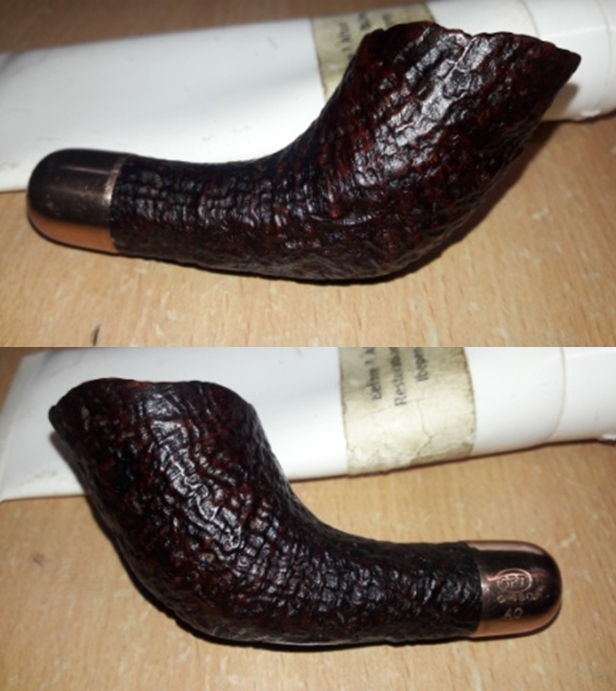
The pipe with its forward canted Horn shape with a long military mount vulcanite stem has a delicate feel and look to it. It has beautiful and deep sandblast with some astonishing grain patterns that are seen over the stummel surface. The shank end is adorned with a gold ferrule that adds a touch of classy bling to the appearance of the pipe. It is stamped at the foot of the stummel as “PREHISTORIC” in Gothic hand followed by “GBD” in an oval over “XTRA”. The gold ferrule is stamped as “GBD” in an oval over four different shaped cartouches bearing the stampings, from left to right, numeral “6 (or is it 9 ?) in a rhombus followed by purity grade number “.375” in a rectangle followed by date code letter “F” and lastly the symbol of the city Assay Office that has worn out but I guess it appears like a LION HEAD with protruding lines from the four corners. The vulcanite stem is stamped, not very deeply, on the left side as “GBD” in an oval over “XTRA” in a slight upturned arch. The stampings, save for the Assay Office, is crisp and clear. There is plenty of material available on pipedia.org on the brand GBD that makes for an interesting read. The link below should take you to the relevant page on pipedia.org. For the sake of brevity, I have reproduced only the relevant portions that are related and of interest with respect to the pipe that I am working on (https://pipedia.org/wiki/GBD).
Early GBDs were made only in one single grade concerning the wood’s quality, later supplemented by a second one, and there was only a very limited number of finishes. But toward the end of the 19th century, the demand changed. For example the Britons preferred darker stainings. More differentiated customer’s wishes made the introduction of additional markings necessary. GBD Xtra and GBD Special were very early models who’s names indicated special final treatments and / or fitments. The standard quality was stamped simply with GBD.

There is a very simple explanation for GBD’s program to turn more “British”: GBD became a British company soon after the turn of the century! In 1902 Marechal and Ruchon sold GBD to A. Oppenheimer & Co. in London.

The claims after the 1st World War demanded further distinctions. First of all was the London Made, which became the Standard London Made, followed by the New Era— in 1931 the top model asking 12½ Shilling. The Pedigree, although sketched around 1926, was not produced until the later 1930s. The New Standard was introduced in order to give the popular Standard of the 20s a higher rank in value. The Prehistoric, a deeply sandblasted black pipe, that still carried the small GBD Xtra stamp, was entirely new and unusual.

Dating GBDs
Xtras haven’t been made since the 1930’s.

That this pipe currently on my work table was made from 1918 to 1930s can be inferred from the information gleaned above:

(a) GBD Xtra and GBD Special were very early models whose names indicated special final treatments and / or fitments.

(b) The ferrule stamping of AO points to the fact that the pipe is post 1902 as Marechal and Ruchon sold GBD to A. Oppenheimer & Co. in London in 1902.

(c) The Prehistoric, an entirely new and unusual line that still carried the small GBD Xtra stamp, was introduced after WW I.

(d) Xtra hasn’t been made since 1930s.

To pinpoint the year of make of this pipe, I decided to follow the stampings on the ferrule. Here, I was not very sure about the Assay Office hallmark as it was pretty buffed out and the numeral could have been a 6 or a 9. But having worked and researched a few silver hallmarked pipes, I guessed that the Assay Office hallmark should be a lion head. I visited https://www.gold-traders.co.uk/hallmarks/

This site is a step-by-step guide to help identify the carat/ purity, Assay Office and year of hallmark on all things gold. All things matched up perfectly and I have included a screen shot of the final result.From the above, it can be conclusively indentified that this GBD Prehistoric Xtra was made in England (London Assay Office) in 1921, give or take a year as the ferrules were always sent to the Assay Office in bulk to be used over a period of time, usually a year.

Initial Visual Inspection
As I have mentioned above, this pipe was initially handled by Abha and she is not in a habit of taking many pictures as she works on each piece of briar. There are not many pictures to give the readers an idea about the condition of the pipe before she had worked her magic and presented me with a nice clean canvas to carry forward my repair and refurbishing tasks. I have included a description of the initial condition of the pipe as documented by her.

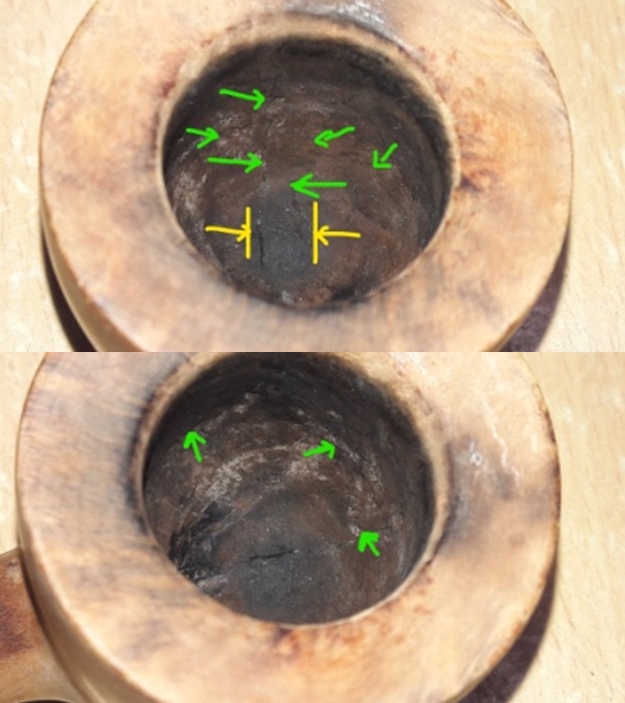
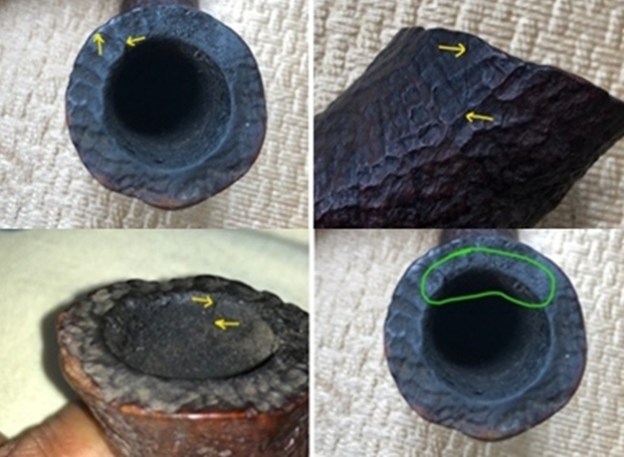
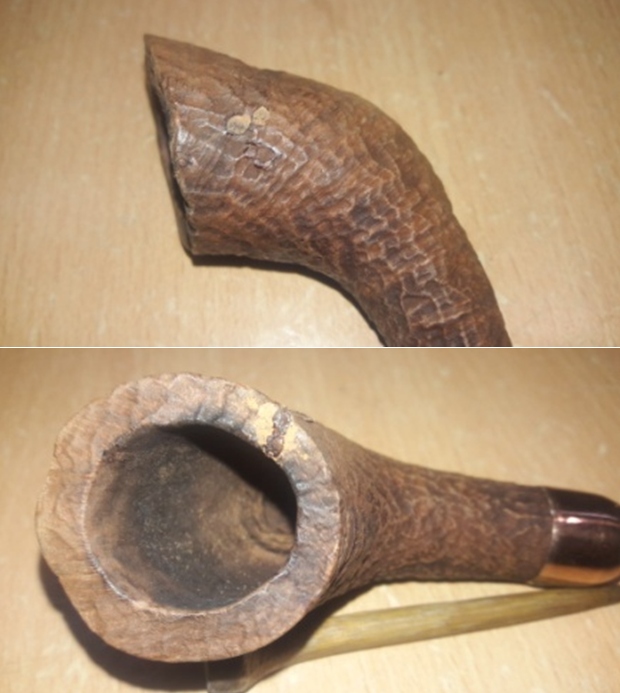
This pipe has a rather small and narrow bowl in a classic Dublin shape with a pronounced forward cant. The chamber tapers towards the foot and has a chamber depth of about 1 ¼ inches. The chamber had an even layer of thick hard cake. There was a heavy overflow of lava over the rim top surface. Through this thick layer of lava, a crack is clearly visible over the rim top (marked with yellow arrows) that extends over both the inner and outer stummel surface on the right side in the 5 o’clock direction. The rim top was darkened considerably and I had suspected a charred inner rim edge in 6 o’clock direction (marked in green). The condition of the inner walls of the chamber can be commented upon after the cake has been taken down to the bare briar. The ghost smells in the chamber are not very strong.The deeply sandblasted stummel surface has very beautiful grain patterns and is covered in dust and grime. The fact that the sandblasted patterns are dusty and filled with dirt is accentuated more due to the contrast of dark and medium brown stains on the stummel and the shank. The briar was looking lifeless and bone dry and had taken on black dull hues. The mortise was full of oils, tars and gunk and air flow was restricted.
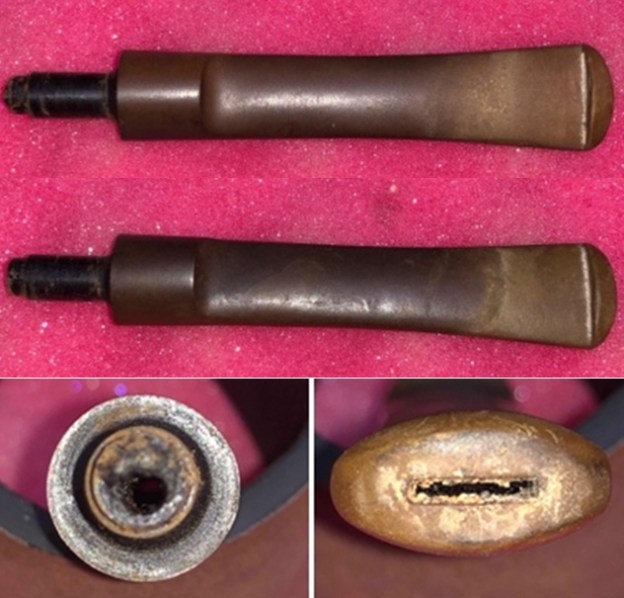
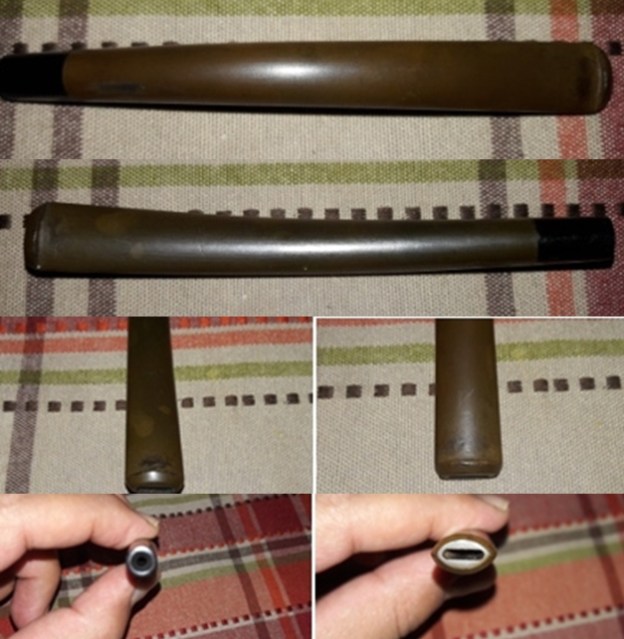
The high quality vulcanite stem was deeply oxidized. Some minor tooth chatter and calcified deposit were seen on both the upper and lower stem surfaces in the bite zone and at the bottom of the button edge respectively. The tenon end had accumulated ash and oils/ tars that had dried out on the inside as well as on the outside. The horizontal slot has scratch marks which will have to be addressed.    Initial Cleaning By Abha…
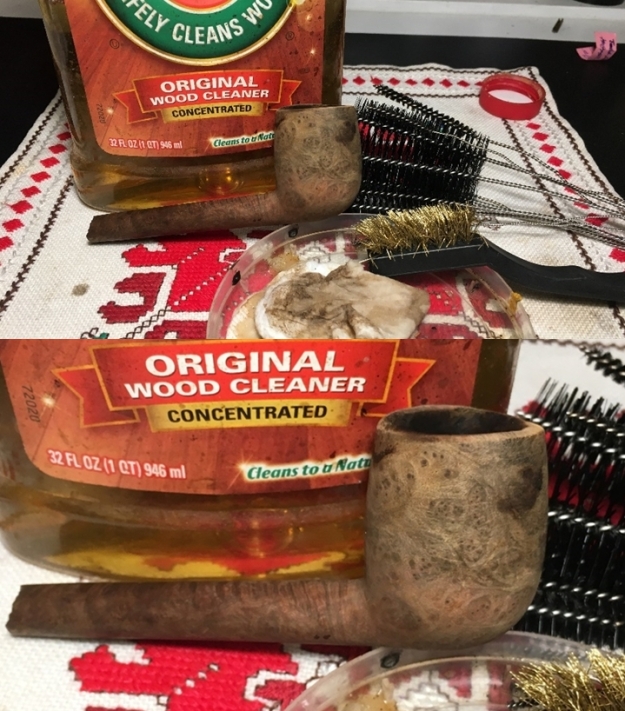
The initial cleaning on this pipe was done by Abha, my wife (she has cleaned up around 40-50 pipes and these have now reached me for further restoration). She reamed out the complete cake and further smoothed out the chamber walls with a folded piece of 220 grit sand paper. She cleaned out the internals of the shank with pipe cleaners and alcohol and cotton buds. She followed the internal cleaning of the shank with external cleaning of the stummel using Murphy’s Oil soap and hard bristled tooth brush and dried it with paper napkins and cotton cloth.

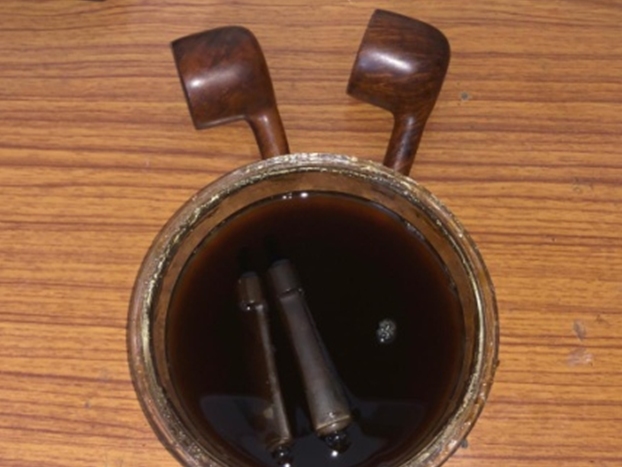
Next she cleaned out the internals of the stem air way and immersed it in “Before and After Deoxidizer” solution along with the stem of other pipes in line for restoration. Once the stem had soaked overnight, she cleaned the stem under running warm water and scrubbed the raised oxidation from the stem surface using scotch brite pad. She further removed the oxidation by scrubbing the stem with 0000 grade steel wool and applied a little olive oil to rehydrate the stem.

The Process
The stummel crack was something that would essentially require materials and equipment that are available to me at my work place; therefore, I had no option but to relegate the stummel repairs to a later date.

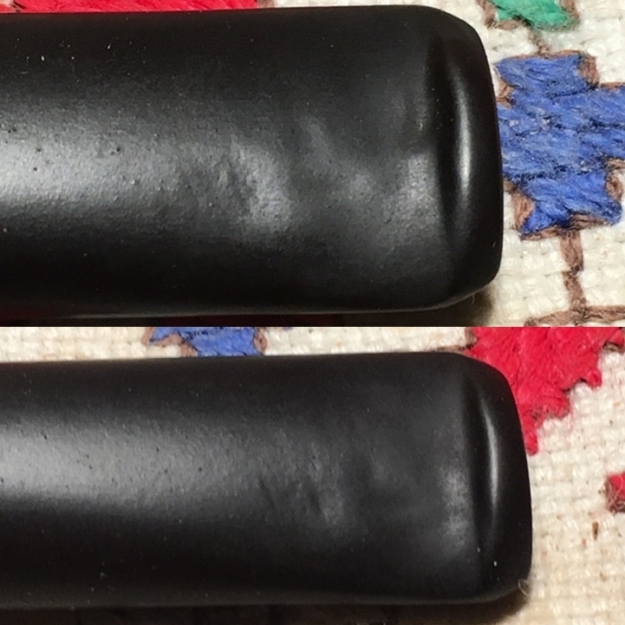
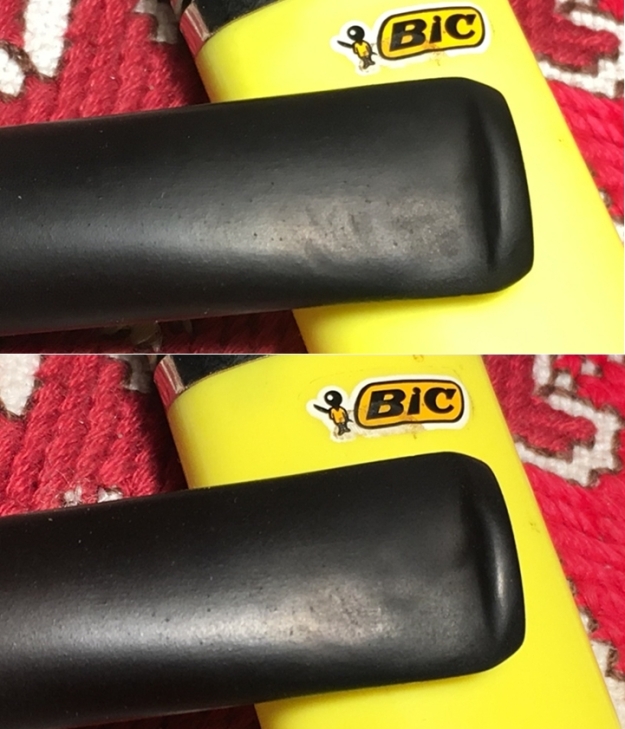
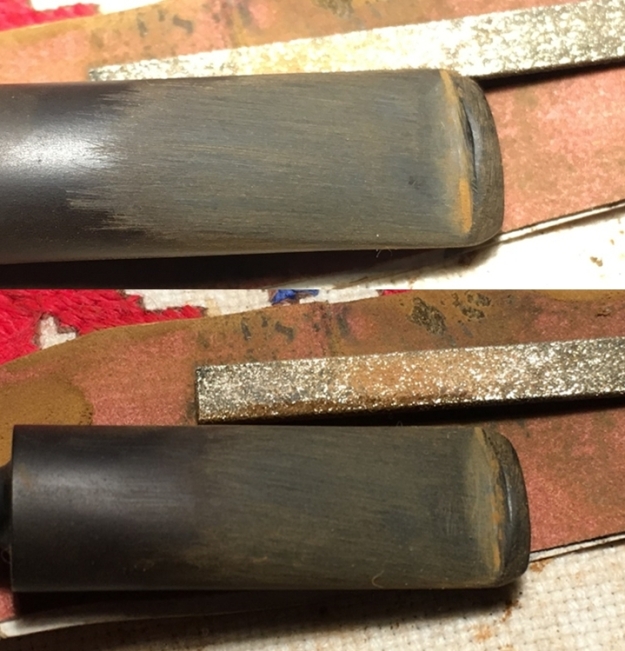
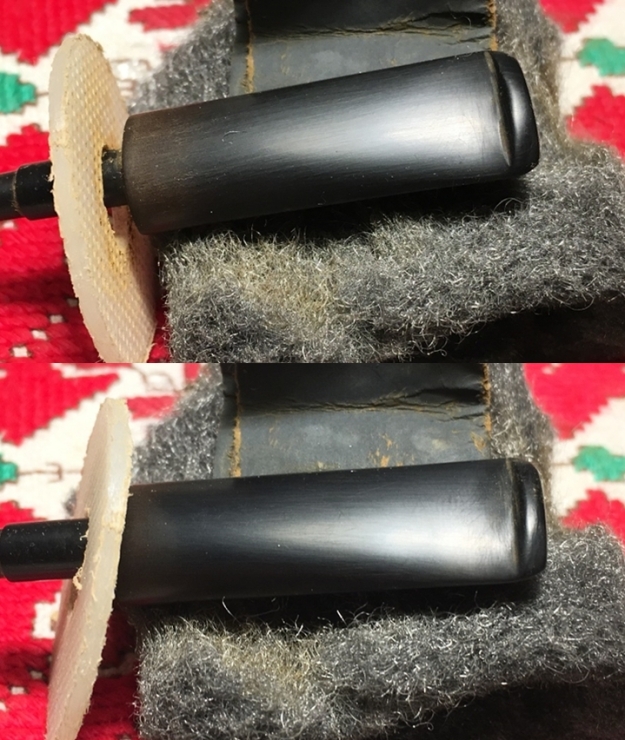
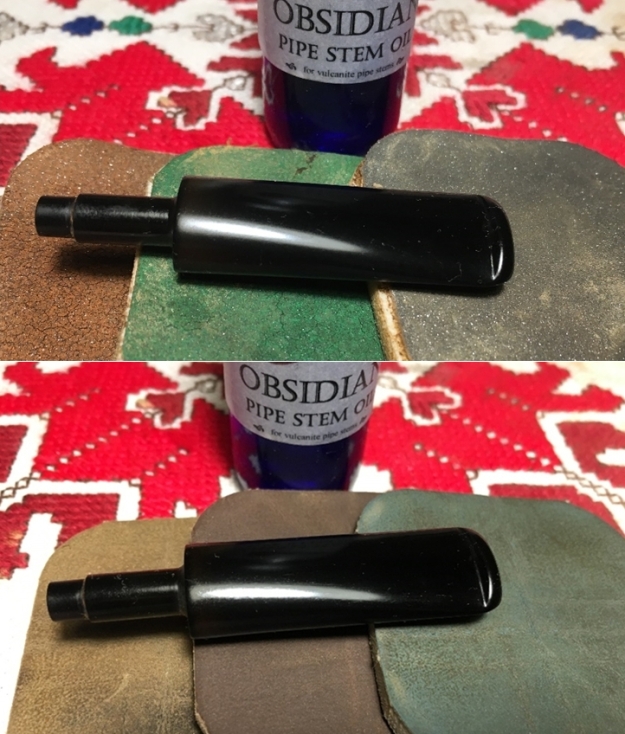
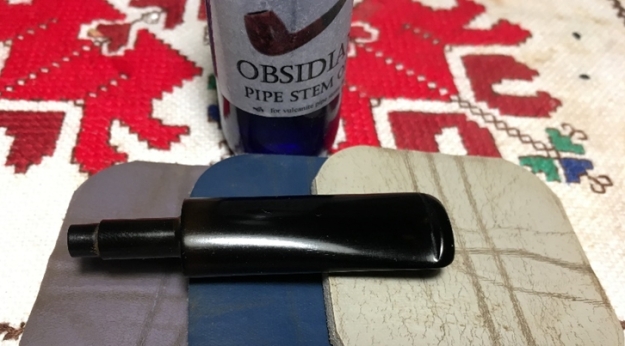
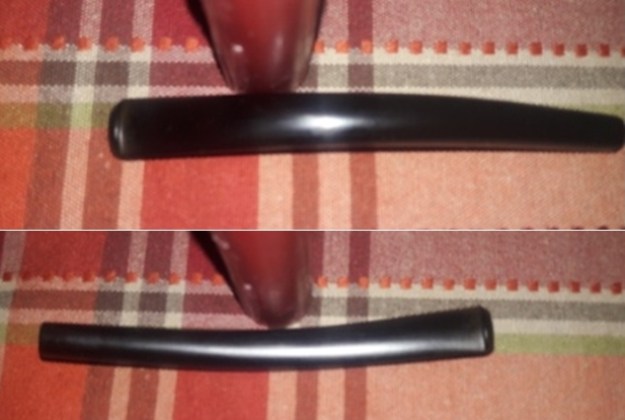
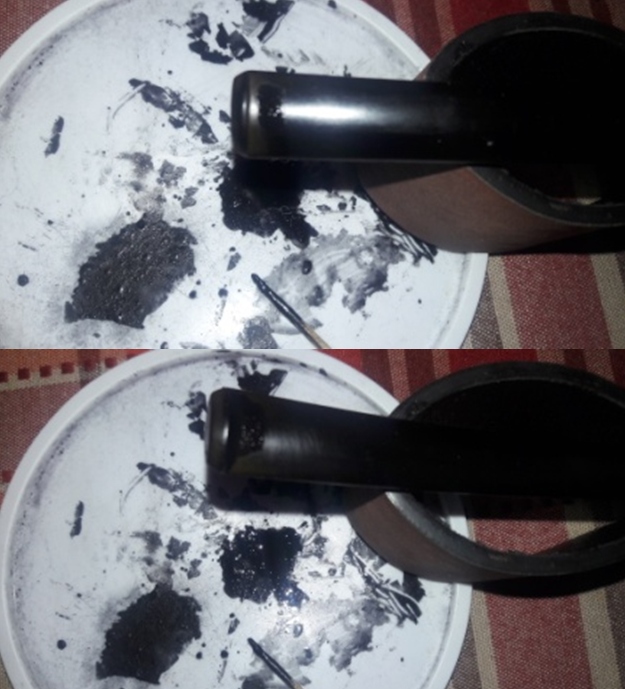
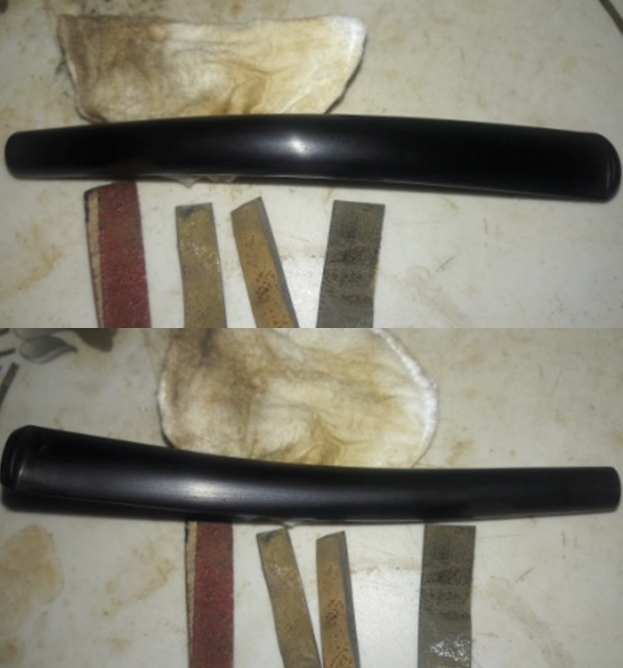
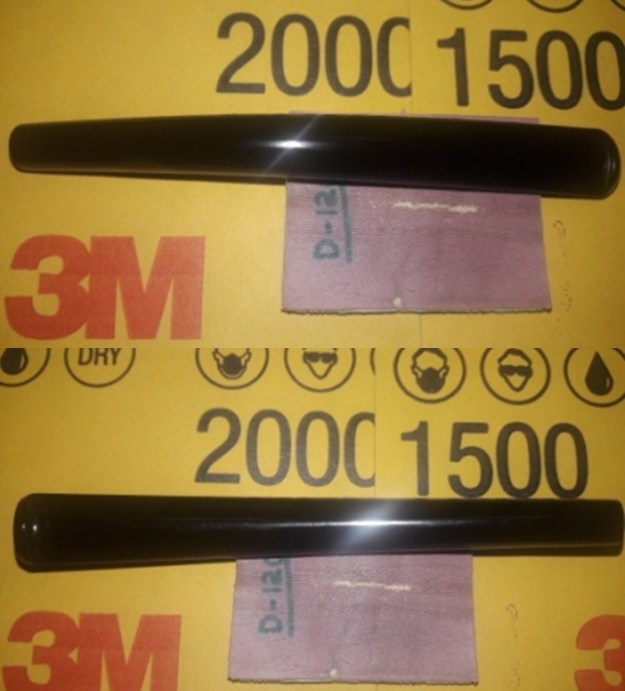
I start this project by addressing the tooth chatter on either surface in the bite zone. Since vulcanite has a property to expand and regain its original shape when heated, I heat the bite zone with a candle flame to raise the tooth chatter to the surface. The deeper bite marks were filled with a mix of CA superglue and activated charcoal and set aside to cure. Once the fills had cured, using a flat needle file, I reshaped the button and roughly matched the fills with the rest of the stem surface. I further fine tuned the match by sanding the filled area with a folded piece of 220 grit sand paper pinched between my thumb and forefinger. I followed it up by sanding the entire stem surface using 400, 600, 800 grit sand papers and finally with a piece of 0000 grade steel wool. This serves to remove the deep seated oxidation and also reduces the sanding marks of the more abrasive sand papers. I also sharpened the button edges while sanding. I wiped the stem with a cotton swab and alcohol to remove all the oxidation and sanding dust from the surface. I applied a little Extra Virgin Olive oil over the stem and set it aside to be absorbed by the vulcanite. To bring a deep shine to the vulcanite stem, Abha polished it by wet sanding with 1500 to 2000 grit sandpapers followed by further wet sanding with 3200 to 12000 grit pads. She wiped the stem with a moist cloth after each pad and rubbed it down with Extra Virgin Olive oil to rejuvenate the vulcanite. The finished stem is shown below.  Further repair and refurbishing work would have to be put on hold till I rejoin my work place.
Part II
Finally back at my work place…… After enjoying a compulsorily extended leave of three months with family and having honed my culinary and domestic chores skill set, I was happy to rejoin my duty and get back to completing the pending pipe restorations.

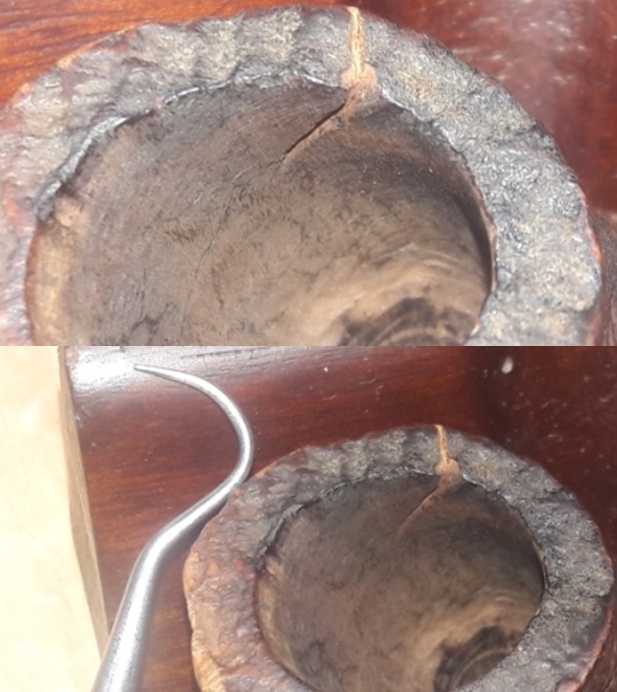
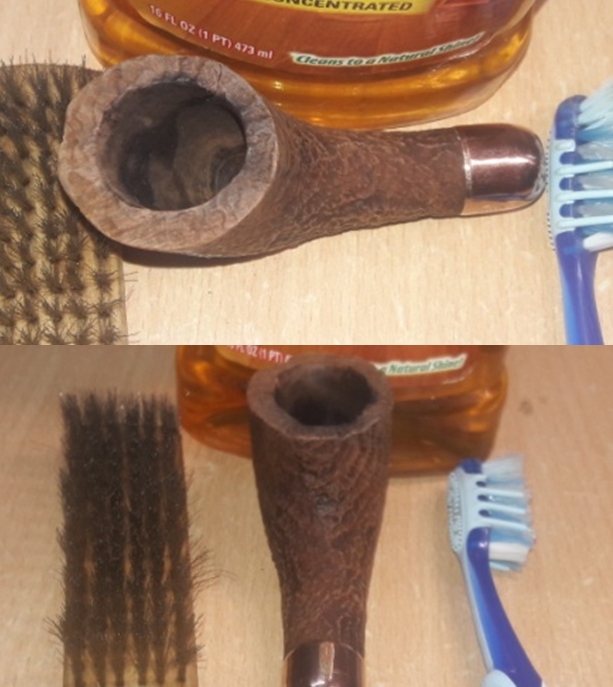
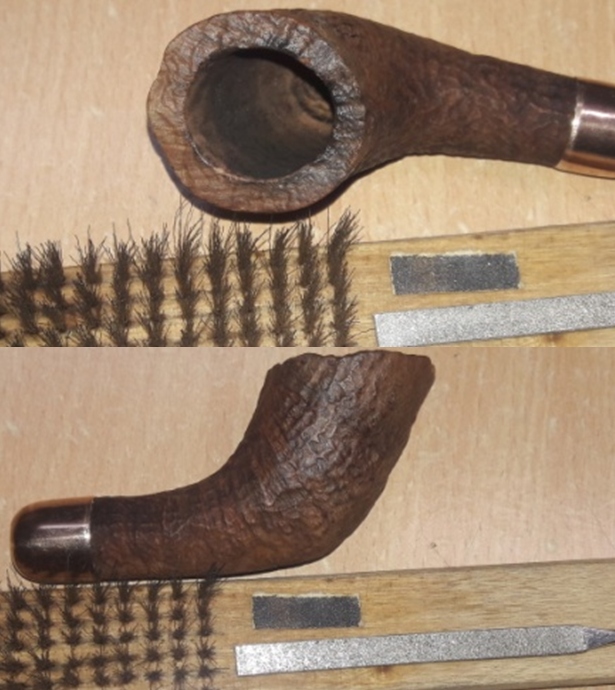
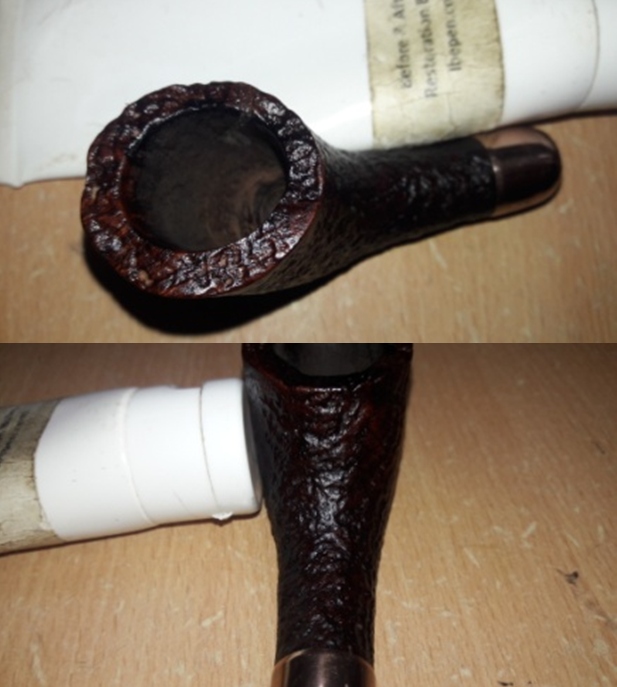
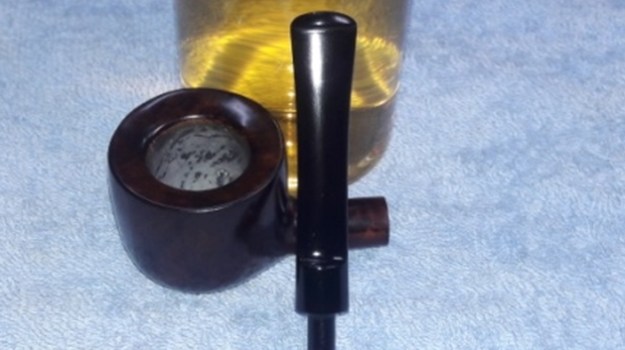
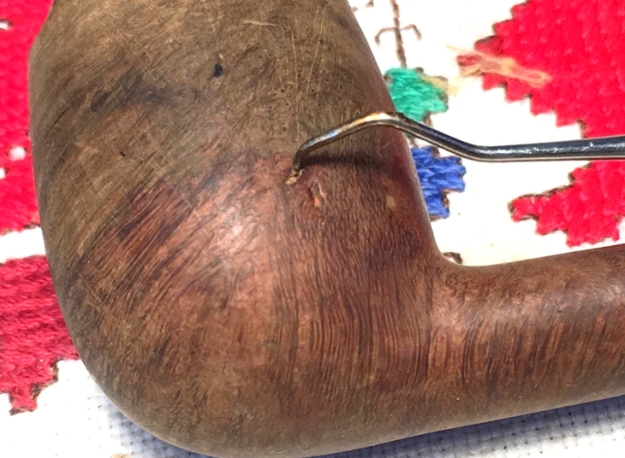
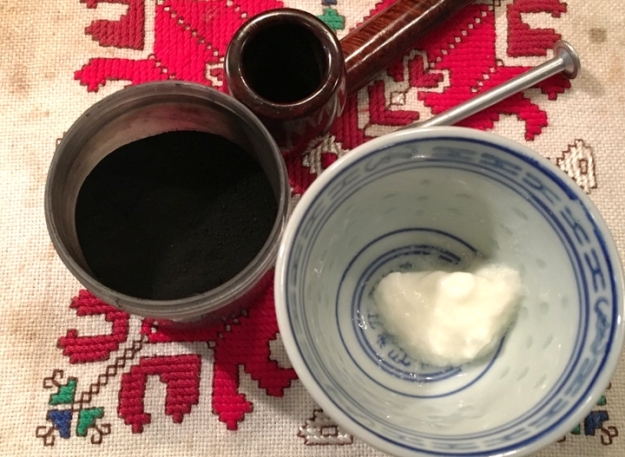
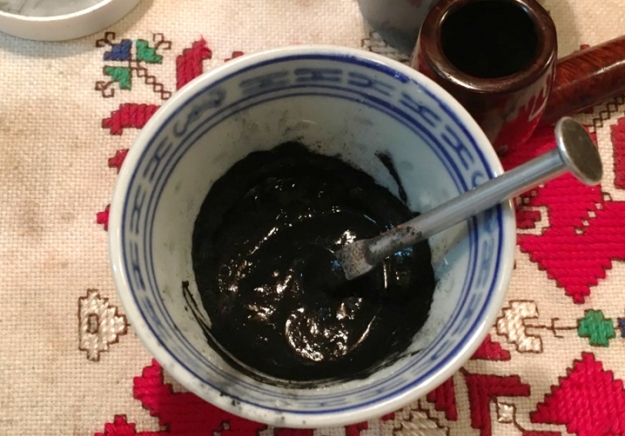
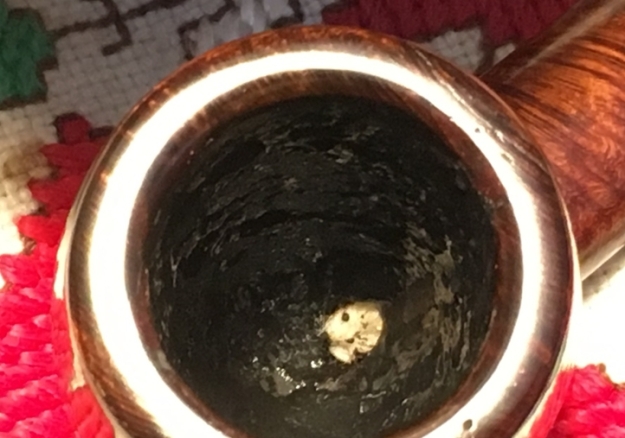
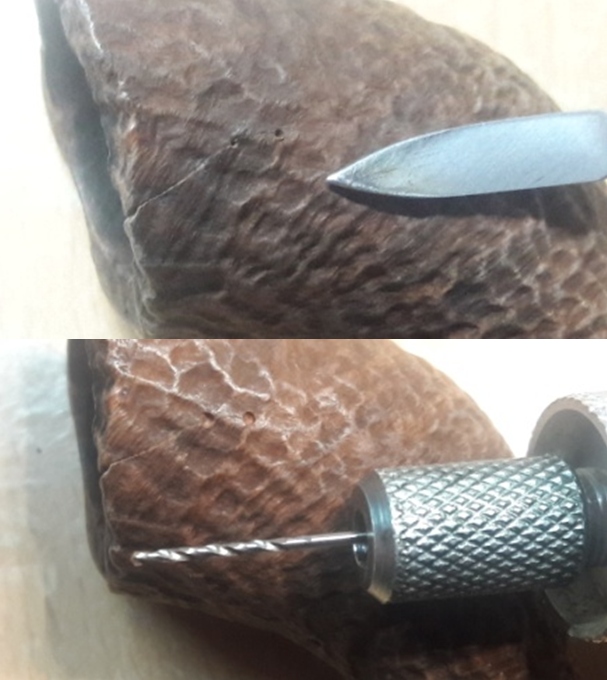
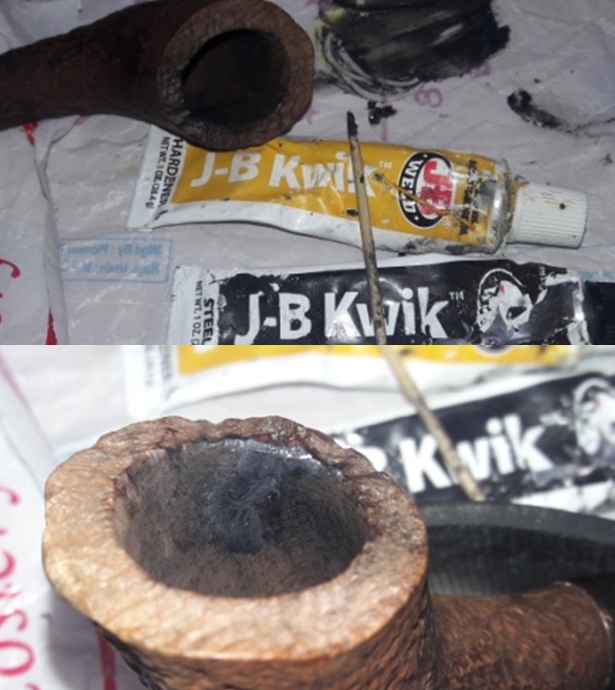
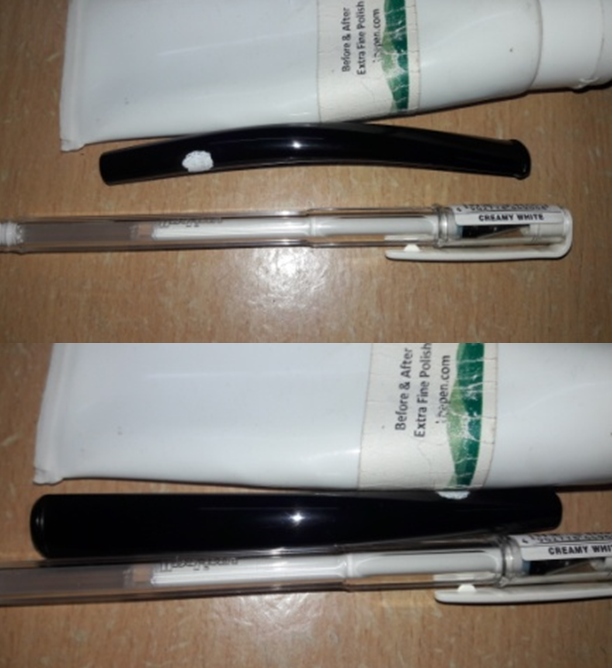
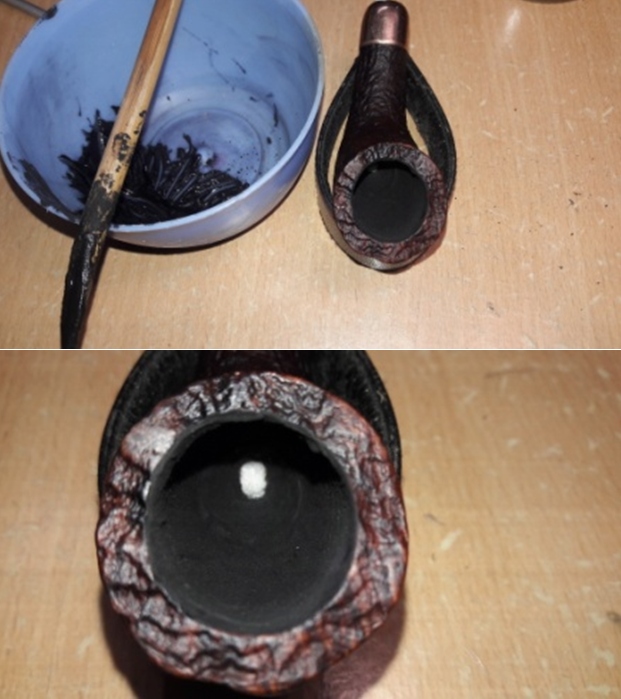
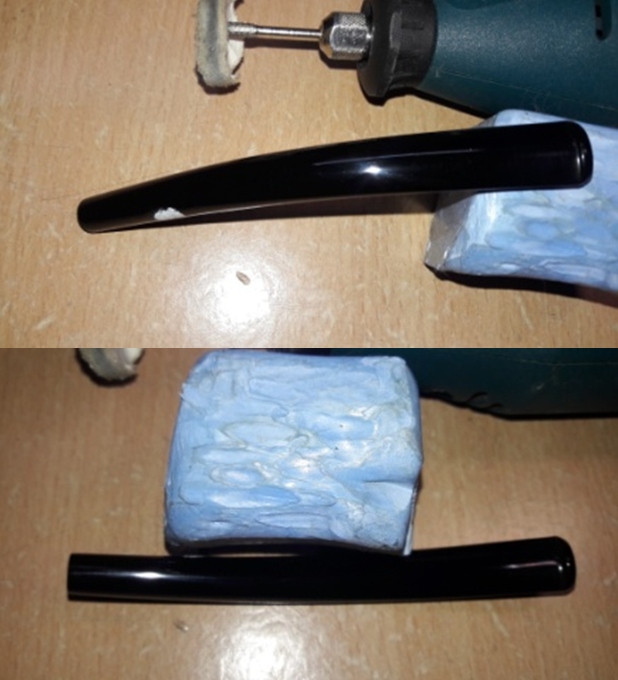
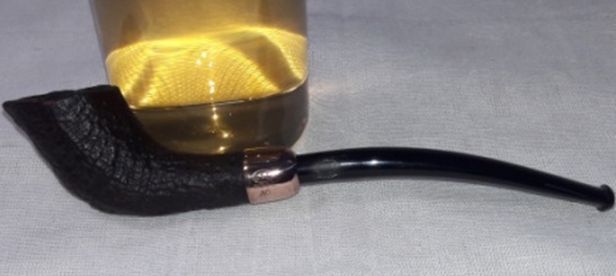
I took a closer look at the crack on the right side of the stummel in the 5 ‘O’ clock direction. This crack extends over the rim top surface and in to the chamber. With my sharp dental pick, I probed and removed all the charred briar wood from the crack and also dislodged the entire lava overflow that had embedded itself in to the crack over the rim top. It was a big relief to note that the crack did not go all the way to the outside of the stummel. Here are a couple of close up pictures of the crack to the chamber wall and outer stummel surface at this stage. I conferred with my Guru and mentor, Steve, over Face Time video call and after seeing the crack, he concurred that it was best to fill just the crack inside the chamber with J B Weld followed by a coating of activated charcoal and yogurt to the entire chamber for further protection. Before proceeding with further repairs, I decided to thoroughly clean the rim top and the stummel again to remove all the dirt and dust that had accumulated since last one year and also to completely remove the lava overflow from the rim top surface. I cleaned the stummel using Murphy’s Oil soap and a hard bristled tooth brush. With a brass wired brush, I cleaned the rim top to remove the lava overflow. The stummel and the rim top have cleaned up nicely.   Next I decided to address the crack to the stummel surface. I marked the end point of the crack on with a sharp dental tool under magnification. This helps to identify the end point later with naked eye and also provides initial traction for the drill bit to bite in. With a 1 mm drill bit mounted on to my hand held rotary machine, I drilled a counter hole at the end of the crack, taking care not to go too deep and end up drilling a through-hole. I had to mark and drill a second counter hole as I later realized that the crack extended slightly below the first one that I had drilled. I ran the sharp dental tool along the crack to remove the dirt and debris that may have been lodged in the crack. I filled the drilled holes and the crack to the stummel surface with a mix of CA superglue and briar dust. I also filled the crack at the rim top surface with the mix of superglue and briar dust and set the stummel aside for the fills to cure. A few hours later, the fills had hardened completely. I sand them down with a flat head needle file to achieve a rough match with the rest of the stummel. I fine tuned the match with the rest of the surface by further sanding with a piece of 180 grit sandpaper. I used a tightly folded 180 grit sand paper to sand the fills and had carefully moved along the ridges of the sandblast to achieve a near perfect match. I vigorously brushed the rim top with a hard bristled brass wired brush to further blend the fill with the rest of the rim top surface.    Now that the external repairs are done, I decided to address the crack to the wall of the chamber. To protect the crack from coming in to direct contact with the burning tobacco and also to prevent the heat from reaching the external crack to the stummel and causing a burnout, I plan, firstly, to fill only the crack of the chamber with J B Weld followed by a second coat of activated charcoal and yogurt to the entire chamber which would assist in faster cake formation. J B Weld is a two-part epoxy Cold Weld that consists of two parts; hardener and steel which are mixed in equal parts in a ratio of 1:1 with hardening time of 5-6 minutes and complete curing time of 6-8 hours. I poured the contents of the two tubes and mixed it well. With a flat bamboo frond, I applied this mix and filled the intended crack. I worked fast to ensure a complete and even filling of the crack and set the stummel aside for the J B Weld to harden.By the next afternoon when I got back to working on this pipe, the J B Weld coat had completely cured and hardened considerably. With a folded piece of 150 grit sandpaper, I sand the weld coating to a smooth surface till I had as thin a coat as was essential to protect and insulate the crack from the direct heat of the burning tobacco. The Weld coat has completely covered only the crack which can be seen as a thin line. I am very pleased with the repairs at this stage.I refreshed the stem logo by first coating the logo with a white correction liquid and once it had dried, I wiped it lightly with a cloth. I polished the stem surface with “Before and After Extra fine” stem polish developed by Mark Hoover. This polish helps in removing the minor scratches left behind due to sanding while imparting a nice shine to the stem.   Next, I rubbed a small quantity of “Before and After Restoration Balm” deep in to the briar with my finger tips and let it rest for a few minutes. The balm almost immediately works its magic and the briar now has a nice vibrant appearance with the beautiful grain patterns displayed in their complete splendor. I further buffed it with a horse hair brush. The dark browns of the raised portions of the sandblast contrasts beautifully with the rest of the dark stummel and makes for a visual treat. It really is a nice piece of briar. Now that the cosmetic aspects of this pipe have been dealt with, all that remained was the functional aspect that needs to be taken care of. The J B Weld coated crack needs to be protected from the direct heat of the burning tobacco and for this; I coat the complete chamber walls with a mix of activated charcoal and yogurt and set it aside to harden naturally. The mix has to be of the right consistency; neither too thick nor too runny. It should be of a consistency that is thick enough to spread easily, evenly and stick to the walls. Also the coating should not be very thick. A thin film is all that is required. Another important aspect to remember is that it is essential to insert a pipe cleaner in to the mortise and through the draught hole for two reasons; first is obviously to keep the draught hole from getting clogged and secondly, the pipe cleaner absorbs all the moisture from the mix and helps in faster and even drying of the coat.To put the finishing touches, I mount a cotton cloth buffing wheel on to my hand held rotary tool and polished the stem with Blue Diamond compound. This compound helps to remove the minor scratch marks that remain from the sanding.  Next, I mount another cotton buffing wheel that I have earmarked for carnauba wax and applied several coats of the wax. I finished the restoration by giving the entire pipe a rigorous hand buffing using a microfiber cloth to raise the shine further. Lastly, I polish the 9 carat gold ferrule with a jeweler’s cloth to a nice and radiant shine. The blast pattern on this finished pipe looks amazingly beautiful and coupled with the vintage, shape rarity and the contrast that the gold ferrule imparts, makes it quite a desirable pipe. This pipe shall be joining my small collection of GBDs to be admired and be happy that I have restored it to its former beauty and functionality. P.S. In one of my previous blogs, I wrote that the question “Why do I enjoy bringing these old battered and discarded pipes back to life?” had popped up in my mind. I gave my third reason in my last write up and in all my subsequent write ups I intend to share with you, my readers my reasons as to why I really love this hobby.
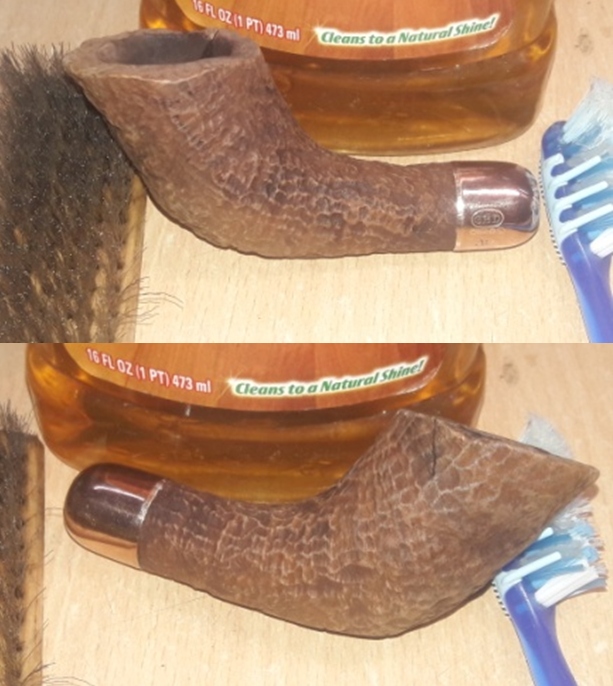
The fourth reason is that every restoration project that I undertake is a new challenge for me. It sets my adrenaline pumping as I see the beauty of the pipe being unraveled before my eyes as I progress through each process of restoration. It helps me keep myself motivated and I wake up to each morning with enthusiasm to address the challenges that any project throws at me. Upon successful completion of repairs and refurbishing of a pipe to make it beautiful and most importantly FUNCTIONAL, gets me to a nice peaceful sleep at night… isn’t that what we all strive for?     

I wish to thank each one for sparing their valuable time to read through this write up and each one is in my prayers. Stay home…stay safe!!
 

A New Lease On Life For A No-Name English Make Large Pot


Blog by Paresh Deshpande

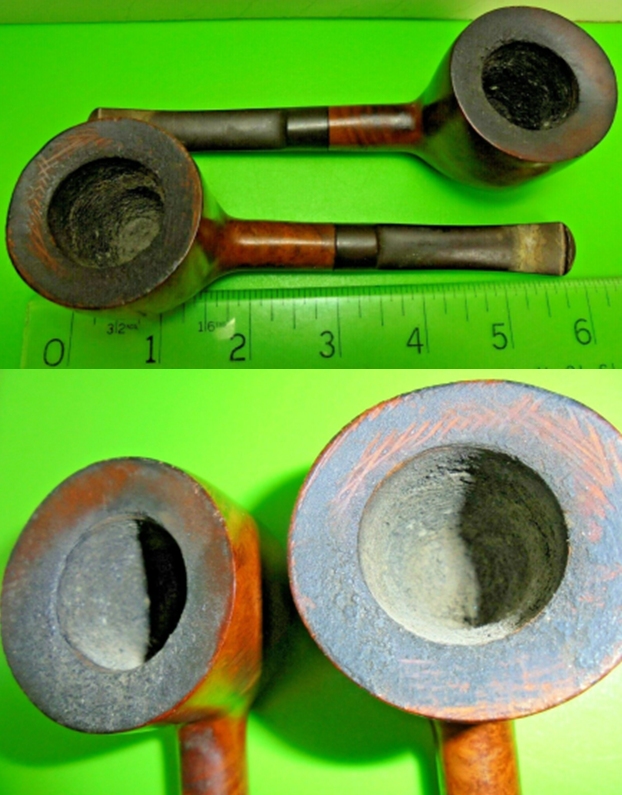
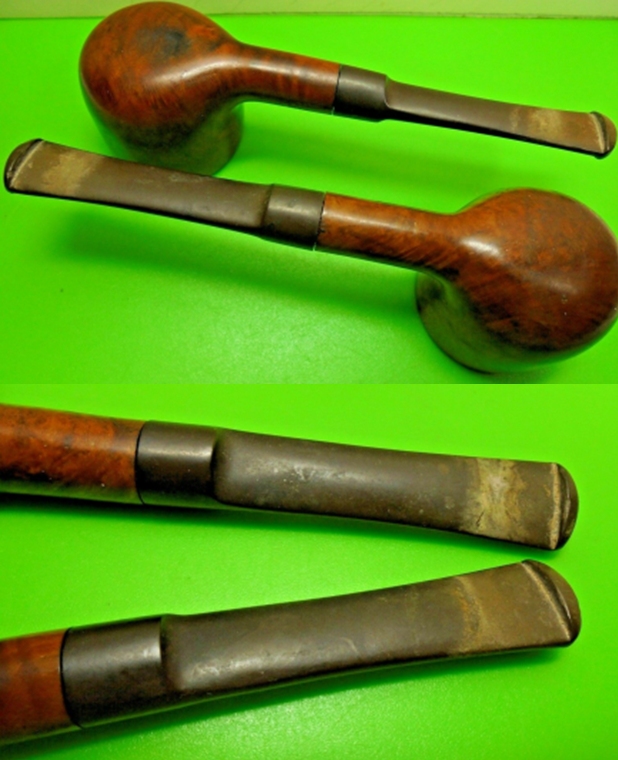
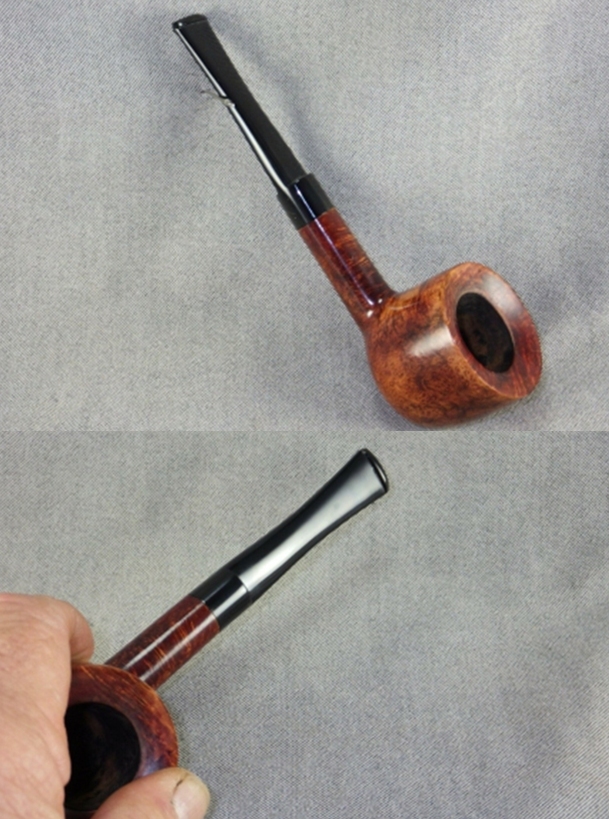
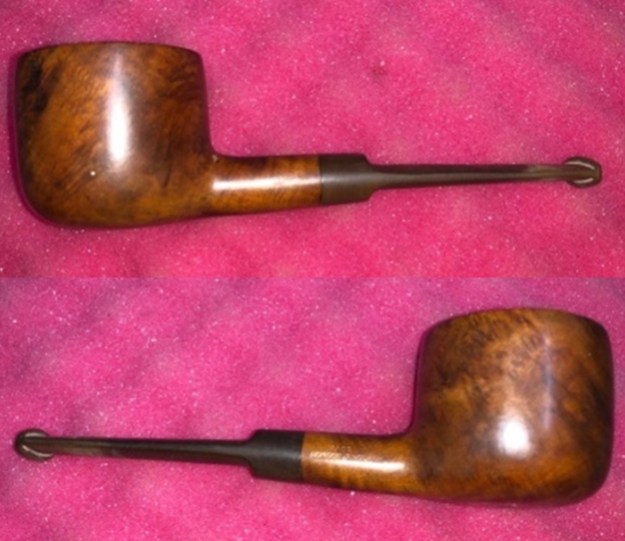
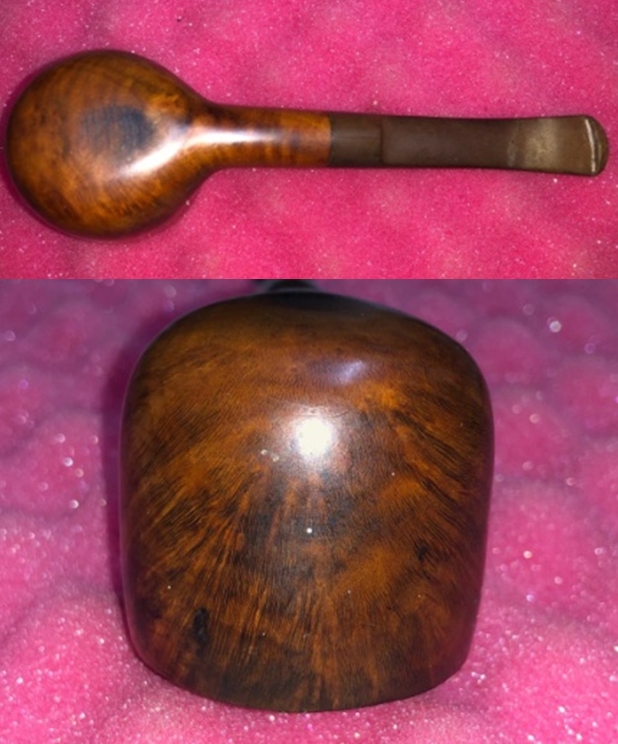
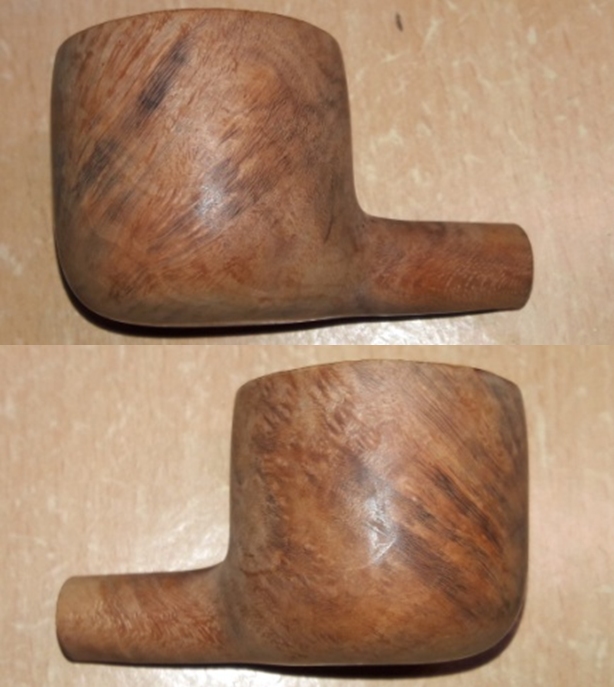
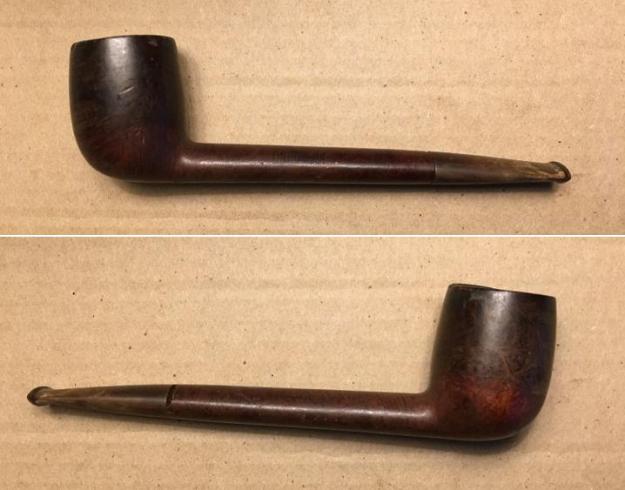
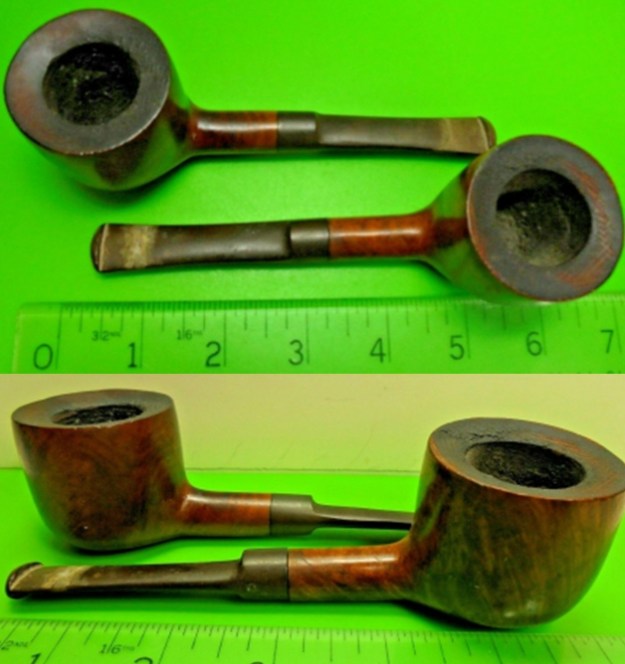
I had purchased this pipe lot of two unmarked beautiful looking pots on eBay with the intention of either selling or gifting. The price was very low and from the pictures, the pipes screamed quality and appeared solid. Here are a couple of pictures of this pair that were posted by the seller. Once the pipes were delivered home (my work place is away from where my family resides), Abha my wife, checked them out and informed me of the following;

(a) Both pipes are similar with only difference being in the size, one is large Pot while the other is a medium.

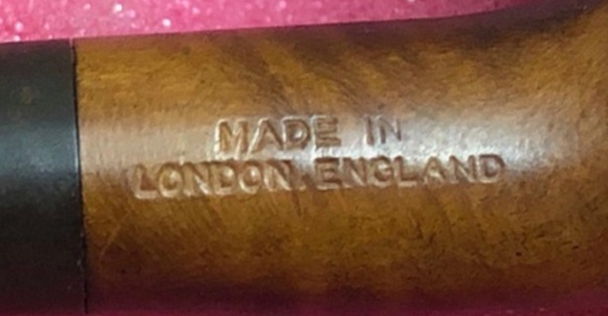
(b) The only stamping seen is on the right side of the shank and reads “MADE IN” over “LONDON, ENGLAND”. The stem is devoid of any stampings. The overall feel of the pipe is that of high quality.

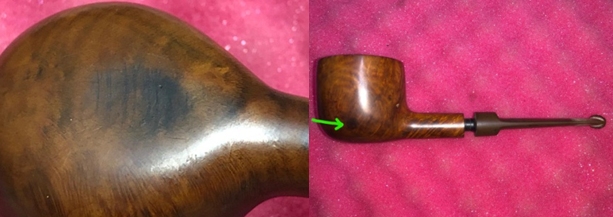
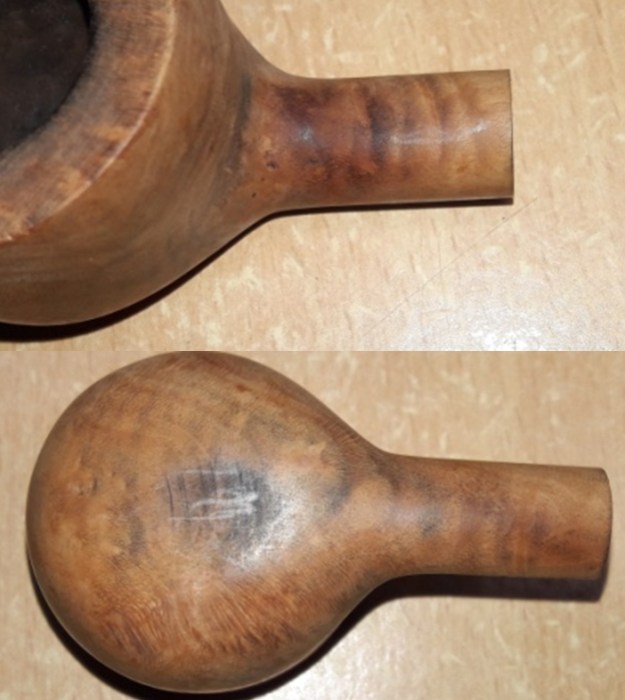
(c) Both pipes have a darkened spot each, the larger one has it on the heel and the other on the bottom left side of the stummel.

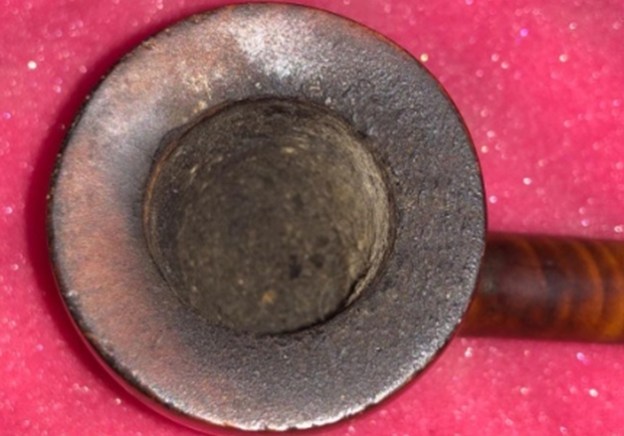
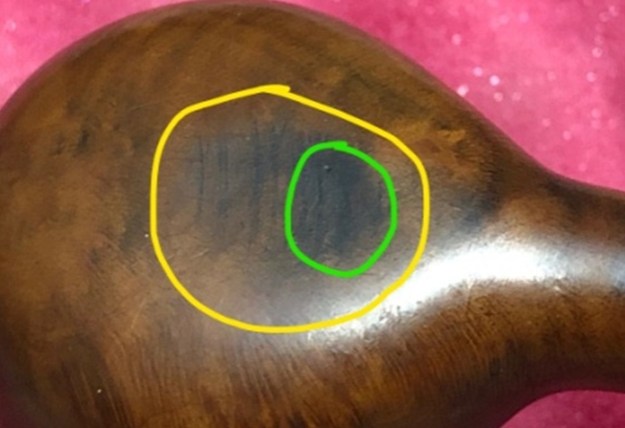
The last piece of information was something that troubled me. I had seen a dark spot on the heel of one pipe, but it appeared to be a smear of grime and dirt. Here are the pictures of the spots that Abha had sent me. It definitely appeared to be the beginnings of a burn out!!Truth is, after the initial surprise of being misinformed by the seller on eBay had subsided, I did not find these damages very alarming and I felt that these two beauties still had many years of smoke left in them with some minor repairs. The matter rested till I received about 40 pipes that Abha had sent me duly cleaned for my part of refurbishing. Both these pipes were part of that parcel that I had received.

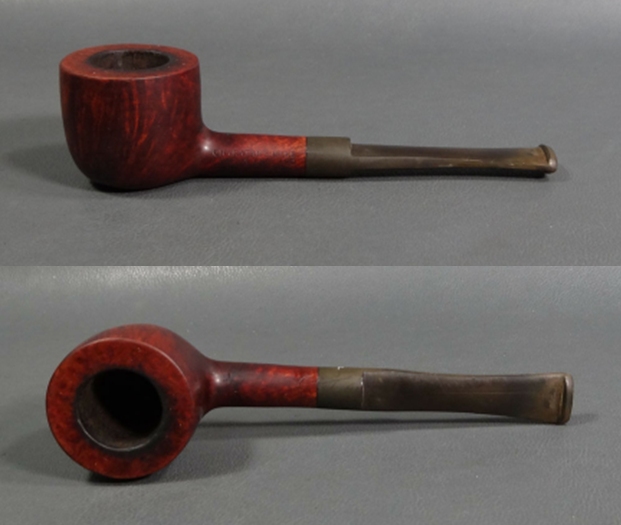
I decided to work on the larger pot first. The pipe has a beautiful mix of swirls and cross grains. In fact, the USP of the stummel lies in the solid hand feel and robustness of the build. The quality of briar is top notch and without any fills at all on this piece. It is stamped on the right side of the shank as “MADE IN” over “LONDON, ENGLAND”. The high quality vulcanite saddle stem is sans any stampings.There are not very many clues that can point me towards the provenance of this pipe. The only fact that can be established is that this is a London made pipe. The build quality, the shape and stem type reminds me a lot of Charatan’s pipe, most notably their Belvedere line. In fact, I do have a Charatan’s Make BELVEDERE pot shaped pipe that I had received as part of my Mumbai Bonanza and the similarities are striking. Also, while surfing the net, I came across a MOUNTBATTEN pot which again resembled the pipe on my work table. Here are pictures of both these pipes, the first two are of the Mountbatten and the next two are that of Belvedere pot. With Mountbatten being a Charatan’s second and observing the similarities between these three pipes, it may be surmised that there is a possibility that the pipe presently on my work table is made by Charatan’s for some pipe shop, which was not uncommon in the past. Any confirmed input to either support or refute my assumption is most welcome.

Initial Visual Inspection
The chamber has a thick even layer of cake with heavy lava overflow over the inward sloping rim top surface. The deposition of heavy lava overflow is predominantly seen on the backside of the rim surface in 6 ‘O’ clock direction. A number of dents and dings are seen on both outer and inner rim edges. I suspect charring to the inner rim edge in 1 ‘O’ clock and likely in the 6 ‘O’ clock direction. The extent of the charring and the condition of the walls of the chamber can be ascertained only once the cake has been taken down to the bare briar. The foot of the stummel did show the sign of beginnings of a burn out that was considerably darker towards the draught hole (encircled in green) and extending outwards away from the draught hole half way across the foot. The damage to the heel and the resulting severity of the burn out will be confirmed after reaming. There are some very strong ghost smells to the chamber which will need to be addressed. The stummel is covered in oils, dust and grime giving it a dull and lackluster appearance. The stummel feels solid and well carved and nice mixed grains can be observed all over the surface through all the grime. There is not a single fill anywhere on the bowl. Other than the charring observed at the foot of the stummel, the stummel has a robust and solid feel. The mortise is cleaned and clogged with the accumulation of old and dried oils, tars and gunk. This will need to be cleaned. The vulcanite saddle stem is heavily oxidized with signs of calcification on either surface of the stem about an inch from the button edges. There is no serious tooth chatter or indentation or button damage to the stem. The tenon end and horizontal slot shows signs of accumulation of old oils, tars and gunk. The high quality vulcanite stem should clean up nicely.Initial Cleaning By Abha…
The initial cleaning on this pipe was done by Abha, my wife (she has cleaned up around 40-50 pipes and these have now reached me for further restoration). She reamed out the complete cake and further smoothed out the chamber walls with a folded piece of 220 grit sand paper. She further cleaned out the internals of the shank with pipe cleaners and alcohol and cotton buds. She followed the internal cleaning of the shank with external cleaning of the stummel using Murphy’s Oil soap and hard bristled tooth brush and dried it with paper napkins and cotton cloth.

Next she cleaned out the internals of the stem air way and immersed it in “Before and After Deoxidizer” solution along with the stem of the other pot in line for restoration. Once the stem had soaked overnight, she cleaned the stem under running warm water and scrubbed the raised oxidation from the stem surface using Scotch Brite pad. She further removed the oxidation by scrubbing the stem with 0000 grade steel wool and applied a little olive oil to rehydrate the stem.Once The Pipe Is On My Work Table…
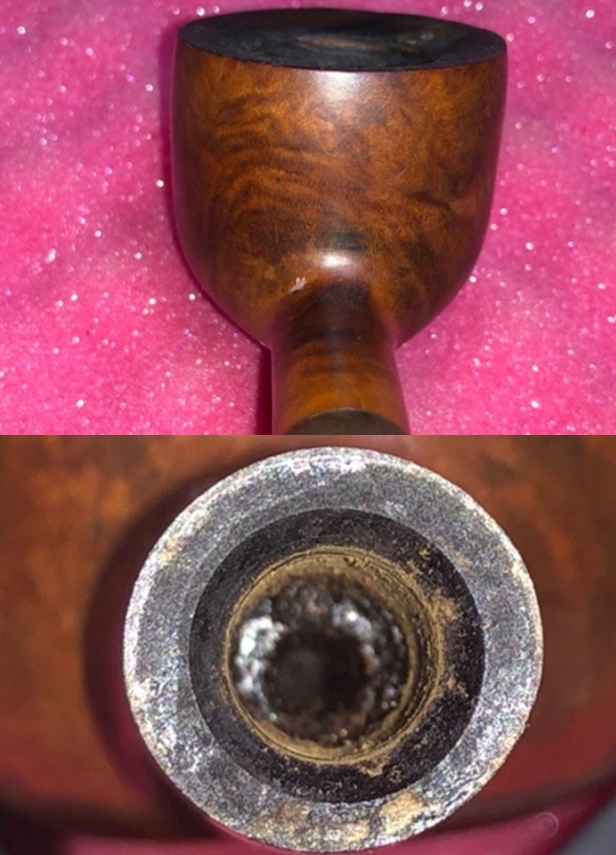
Now that the cleaned pipe is on my work table, I proceed to carry out my appreciation of the work that needs to be done on this pipe to restore it. The cleaned up pipe presented a clearer picture about the actual condition and the work required on this pipe. Here is how the pipe reached me. The stummel was clean and free of any accumulated grime. As observed earlier, there is not a single fill anywhere on the stummel. The only cause of concern is the darkened spot over the foot of the stummel. I felt the spot for softness with my nail and it appeared sufficiently solid, thus confirming that it’s not an all out burned heel. Rest of the stummel feels solid and robust to the touch. This piece of briar should polish up nicely. I was eager to understand the extent of burn out in the heel of the bowl. True enough, I could make out a dark patch just in front of the draught hole approximately at the center of the heel (marked in yellow). The chamber shows a few vertical minor heat lines all along the front of the walls emanating from the dark patch and further branching out horizontally to either side. The entire heel of the bowl appears dark and when seen in conjunction with the foot darkening, this issue needs to be investigated and addressed. The inward sloping rim top surface is in decent condition with the inner rim edge showing slight deformation and darkening in 6 o’clock and 1 o’clock direction (circled in red). The outer rim edge show few dents and dings. Thus, I would need to address issues of the darkened heel, inner rim edge and dents and dings to the outer rim edge. The mortise and shank is nice and clean. The ghost smells are history and reflects the thoroughness with which Abha cleans the internal and external of the pipe.The stem had cleaned up nicely and is in pristine condition. Whatever, little oxidation remains, will need to be removed by sanding with a folded piece of 220 grit sand paper and follow it up with polishing with micromesh pads. The Process
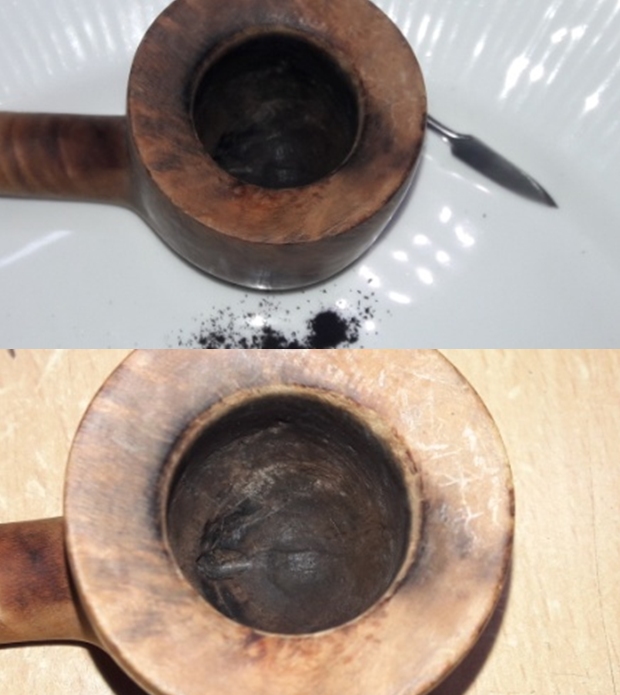
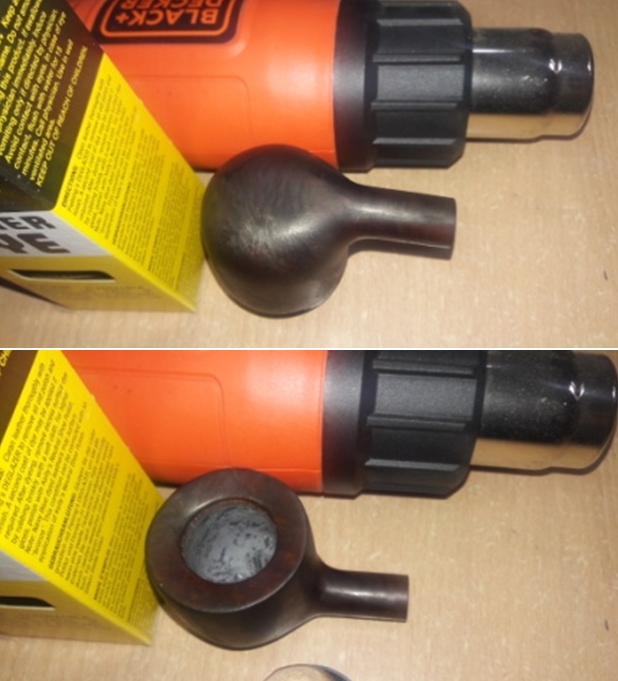
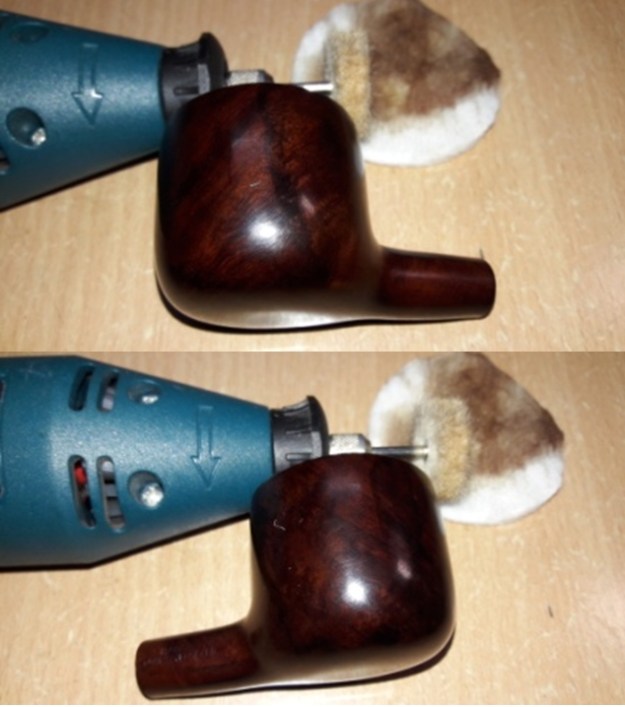
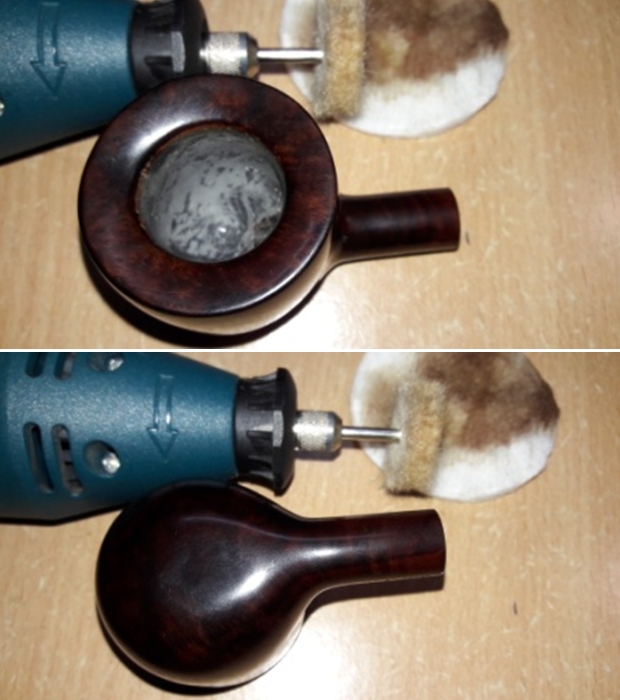
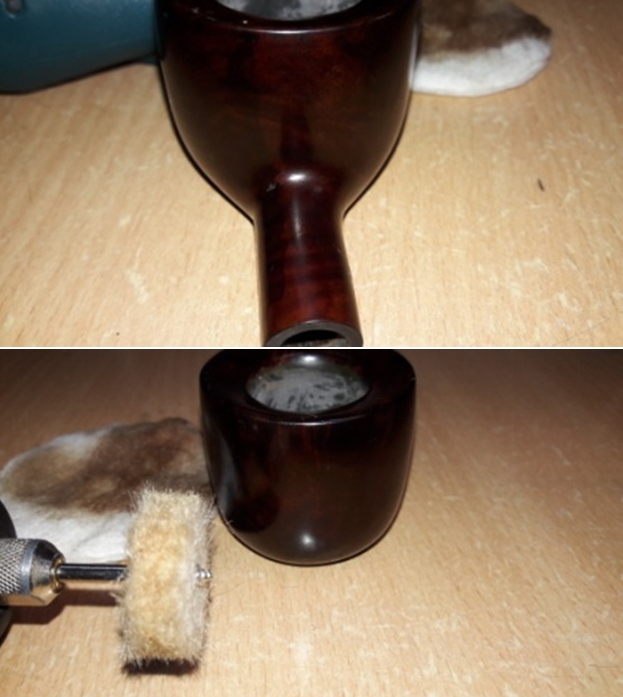
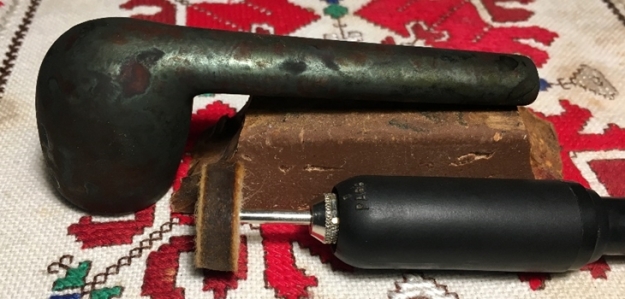
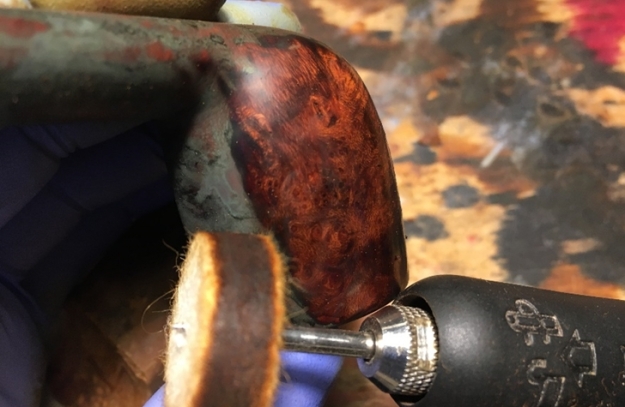
The first issue on the agenda that I decided to tackle was to address the dark patch to the heel observed just in front of the draught hole and correspondingly to the foot of the stummel. The black patch is bounded by the yellow arrows and the alignment of the web of these minor heat fissures is indicated by the green arrows. With a pointed dental tool, I scraped the black patch in the heel of the chamber and completely removed the dead charred briar from the surface till I reached solid intact briar. Thereafter, I removed the charred briar from the heat fissures till I had reached solid briar. Once the dead and charred briar was removed, there was a need to give a protective coat over the surface to avoid direct contact of the briar with the burning tobacco as the thickness from these damaged areas were slightly reduced. I would achieve this by coating the walls of the chamber with J B Weld mix. I preceded the stummel repairs first by coating the walls of the chamber with a slightly thick layer of J B Weld. J B Weld is a two-part epoxy Cold Weld in two tubes; hardener and steel which are mixed in two equal parts (ratio of 1:1) with hardening time of 5-6 minutes and complete curing time of 6-8 hours. I poured the contents of the two tubes and mixed it well. I inserted a petroleum jelly coated regular pipe cleaner through the draught hole to prevent it from getting blocked due to the J B Weld mix. I applied this mix, as evenly as possible, over the entire chamber wall surface. I worked fast to ensure an even coat over the chamber walls before the weld could harden. I set the stummel aside for the application to harden and cure overnight.While the J B Weld coat was curing, I worked the stem by first sanding it down with a folded piece of 220 grit sand paper. This step addresses the twin issues of removing residual stubborn oxidation and also smooth out the minor tooth chatter from the bite zone. I wiped the stem with Murphy’s Oil soap and cotton swab to remove the resulting sanding dust. I rubbed in a small quantity of EVO in to the stem and set it aside to rehydrate.Turning my attention back to the stummel, I sand the entire stummel surface with a folded piece of 220 grit sand paper to remove the minor dents and dings from the surface. This also helped to lighten the darkened spot from the foot of the stummel. Staying with the stummel repairs, the next issue I addressed was that of the damage to the rim top surface. The rim top surface is sloping inwards, making topping impossible without compromising the profile integrity. To address the issue of darkened rim surface, I sand it with a folded piece of 220 grit sand paper pinched between my thumb and fore finger, moving along in the direction of the surface profile. Simultaneously, I addressed the issue of charred inner rim edge and the dings and chips to the outer edge, by creating a slight bevel to both the rim edges. I am happy with the appearance of the stummel at this stage. I switch back to the stem and further sand it with 400, 600 and 800 grit sand paper. I wiped the stem with cotton pad dipped in alcohol to remove the resultant dust. I rubbed some extra virgin olive oil into the stem and set it aside to be absorbed. I polished the stem with micromesh pads, wet sanding with 1500 to 12000 grit pads. I rubbed a little extra virgin olive oil in to the stem at the end of all the micromesh pads. I finished the polishing of the stem by rubbing a small quantity of Paragon wax and giving it a final polish with a soft cotton cloth. The stem is now nice, smooth and shiny. With the stem polishing completed, I moved ahead with completing the stummel repairs. The J B Weld coat had hardened considerably by this time. I mount a sanding drum on to my hand held rotary tool and setting the speed to half of the full RPM, I sanded the excess coat from the chamber walls. To further fine tuned and keep the coat to a minimum thickness, I further sanded the coat with a 150 grit sand paper till I had a coat of a thickness that was just sufficient to protect the briar underneath. Here is how the chamber appeared at this stage. I polished the stummel with micromesh pads, wet sanding with 1500 to 12000 pads. I wiped the surface with a soft cloth at the end of the micromesh cycle. The stummel looks amazing with a deep shine and beautiful grains popping over the stummel surface. However, the dark rim surfaces in 1 o’clock direction and the dark spot at the foot of the stummel do not present a visually appealing picture. I had the option of either masking them under a darker stain or to let them be. I shall decide after I am done with polishing with Blue Diamond, hoping that this would further lighten these spots. I followed up the polishing by applying “Before and After Restoration” balm. This balm protects and enriches the briar surface and is highly recommended for use in any restoration of briar pipe. I rubbed it deep in to the stummel surface and set it aside to be absorbed for 20 minutes. I was pleased by the appearance of the stummel, less the dark spots on the rim edge and on the foot of the stummel. I mounted a cotton cloth buffing wheel on to my hand held rotary tool and applied a coat of Blue Diamond to the stummel, hoping to see a slight change in the appearance of the dark spots. However, these spots are still prominent and will need to be masked. Here are the pics of the pipe at this stage. I decided to stain the stummel with a Cordovan stain in the hope that it would help in a nice blending of the dark spots with the rest of the stummel. I heated the stummel surface with my heat gun to open up the pores on the stummel so that the stain is well set. I dipped a folded pipe cleaner in Fiebing’s Cordovan leather dye and liberally applied it over the heated surface, flaming it with the flame of a lighter as I went ahead to different self designated zones of the surface. This helps in even application and in the setting of the stain in the grain of the briar. I set the stummel aside for the stain to set into the briar. The next afternoon, I mounted a felt cloth buffing wheel on to my hand held rotary tool and using Red Tripoli proceeded, as my dear friend Dal Stanton likes to say “unwrap the coat of stain to reveal the grain” from the stummel surface. I set the tool at its slowest speed, again my recent experience while working on Steve’s pipe came in handy and the damage that can be caused due to heating while using the felt buffing wheel still fresh in my memory; I began to peel off the stain from the stummel surface first. The stain peeled out gradually. This was followed with wiping the stummel with a cotton swab and alcohol to lighten the stain a little as it was too dark for my liking. This also helped in cleaning the surface of all the residual stain and highlighting the grains. I set the stain by again heating the stummel surface with the heat gun. This is an essential step as, if missed, there is a possibility of the stain running down the hands of the smoker who decides to carry forward the trust in this pipe. To apply the finishing touches, I mounted a cotton cloth buffing wheel on to my hand held rotary tool and applied a coat of Blue Diamond to the stummel and the stem to polish out the minor scratches. Next, I mounted a cotton cloth buffing wheel and setting the speed to ¼ of the full power, I applied a thick coat of carnauba wax over the stummel and the stem. I worked the complete pipe till the time all the wax was absorbed by the briar. The pipe now boasted of a beautiful and lustrous shine. I vigorously rubbed the pipe with a microfiber cloth to deepen the shine and also to clean away any residual wax that had been left behind. I am very happy with the way this beauty has turned out. P.S. There was only one more issue that needed to be addressed and one that could not be ignored, being a functional issue. After I had protected the heel of the stummel and the walls of the chamber with a coat of J B Weld, it was necessary to prevent this coat from coming in to contact with the burning tobacco. I addressed this by mixing activated charcoal and plain yogurt to a thicker consistency, just enough that it would spread easily and applied it evenly all along the chamber walls after inserting a folded pipe cleaner through the draught hole to keep it open. Once dry and set, this will not only protect the walls but also aid in faster buildup of cake.I wish to thank all readers for sparing their valuable time to read through this write up.


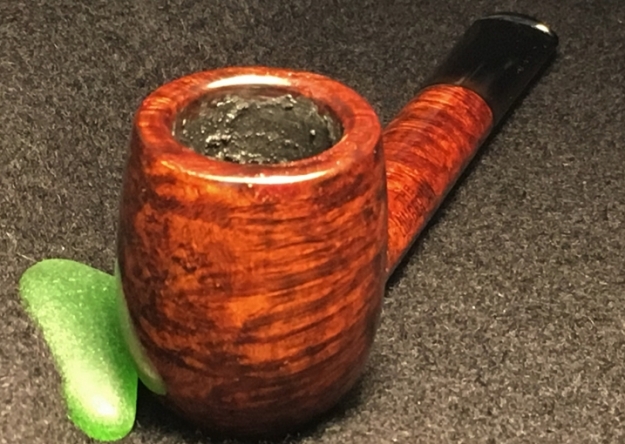
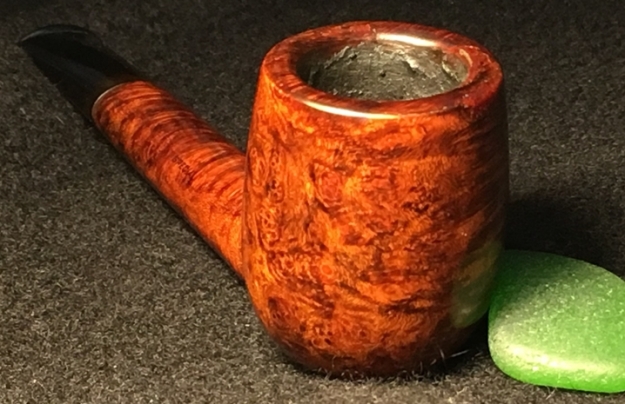
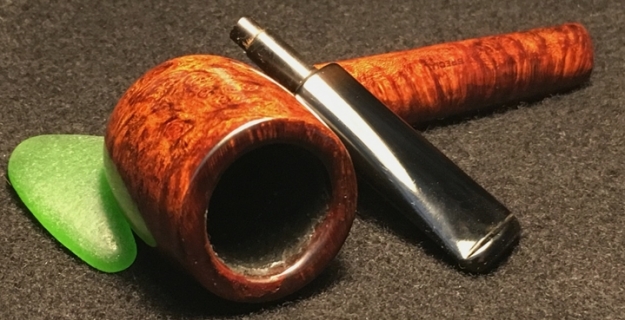
A Nightmare Resurrecting from ‘Pipe Dreamers ONLY!’ – Comoy’s The Lumberman Special Canadian


Blog by Dal Stanton

There is no other way to describe this Canadian – a Nightmare.  I created the ‘For “Pipe Dreamers” ONLY!’ section on ThePipeSteward site to encourage people to see the hidden potential of a sad, neglected pipe BEFORE the restoration process.  So much of life and relationships we have are shaped by our ability to see what people can become and treat them in this manner.  Jim saw The Lumberman and commissioned him along with a very attractive Butz Choquin Supermate Panel.  In corresponding with Jim, I learned that he’s from Pennsylvania and an engineer by trade working at Pennsylvania State University as a research staff assistant writing software for all kinds of research efforts.  What interested me also was that he, like me, enjoys working with his hands – models, woodworking and Jim has his own shop where he works.  He also builds dioramas – models representing a scene with three-dimensional figures, usually in miniature or as a large-scale museum exhibit (had to look this up!).  In his initial email, Jim assessed The Lumberman that he said he wanted me to restore:

I realize that restoring the Canadian is going to be quite a tall order — it’s former owner seeming to have smoked it hard and hung it up wet — but I can’t help but look at the hints of cross-grain on the shank and think that there is still a solid pipe left underneath all of that dirty exterior.

My response to Jim was a bit more realistic and, let me be honest, skeptical(!):

Oh my.  The Lumberman is in bad shape.  I showed my wife the pipe and that someone had requested to restore it and her response was, ‘Why?’  Your description is an understatement.  He needs a lot of TLC.  The shank chip will probably need to be planed off to reseat the stem/tenon – losing about 1/16 inch of the shank length – doable.  The rim is an ICU inhabitant.  There’s no pretty way to deal with this.  I would clean the chamber to make sure all the briar is exposed.  I would then build up the rim as much as possible with briar dust putty and then sand/top it down until it looked acceptable.  Honestly, Jim, I can’t say how much top I’ll need to remove from the bowl – as little as possible, but he’s not in good shape.  I understand what you see in the grain underneath the years of dirt and grime.  Without a doubt, you are awarded the Pipe Dreamer of the Year award!  It’s difficult for me to put an estimate on it at this point because it will definitely qualify as a resurrection and not a restoration.  I’m game if you are game.  I love the challenge and with this guy, I’m not sure how I’ll value him, but the same applies.  If you’re not satisfied, you’re not obligated to purchase.  As I said before, the sale of these pipes benefit the Daughters of Bulgaria and I appreciate your desire to support that.
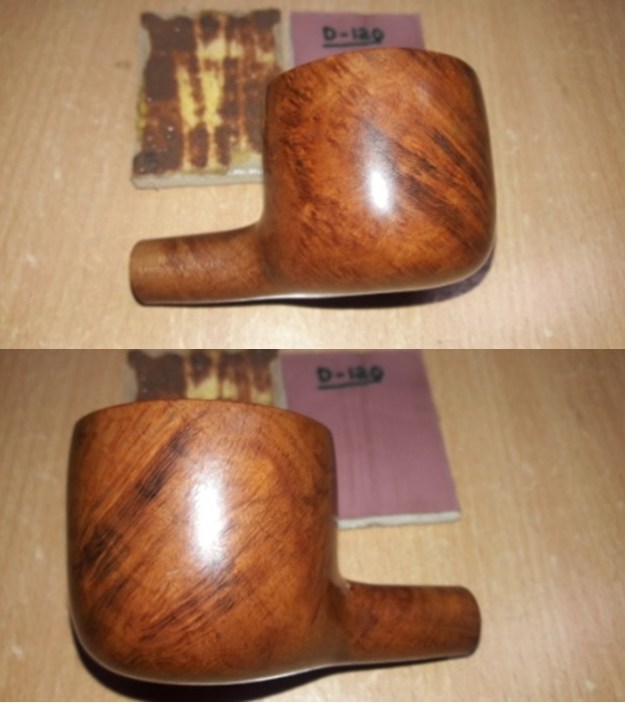
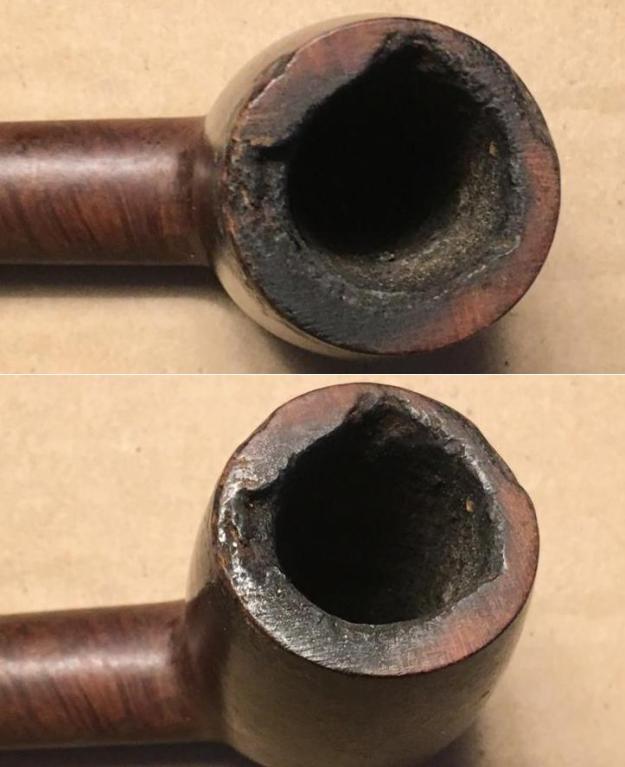
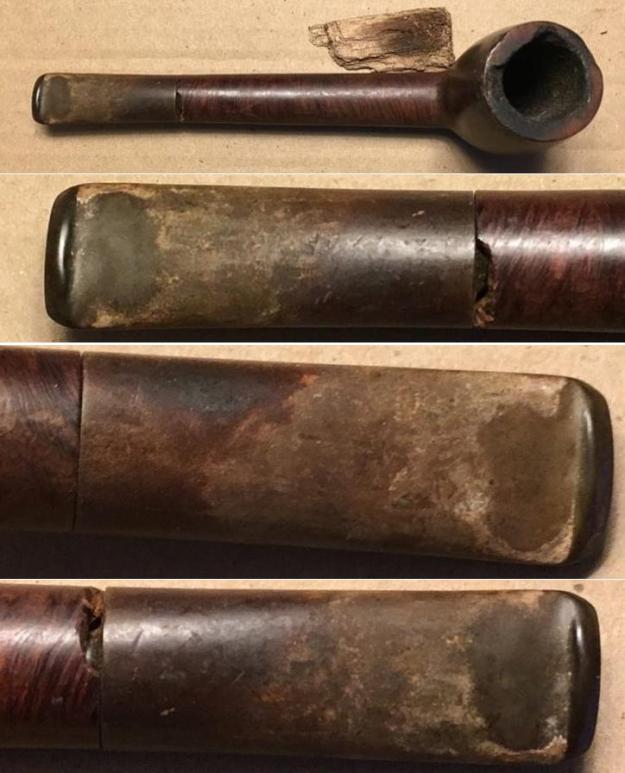
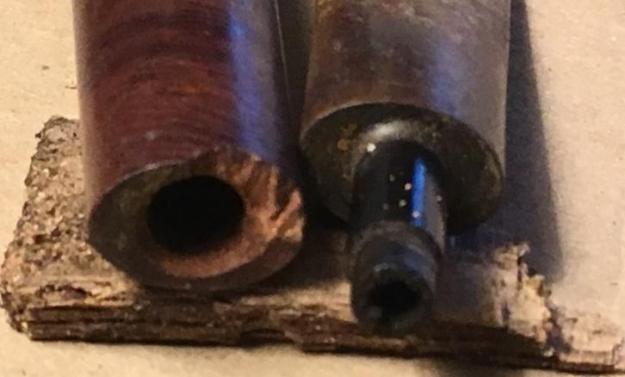
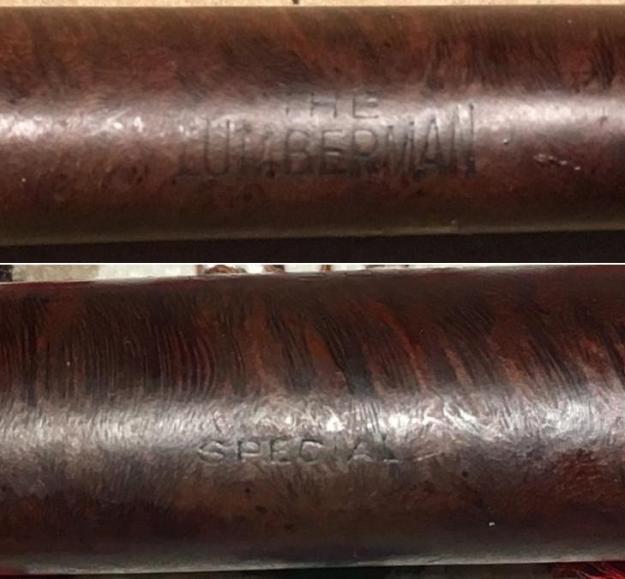
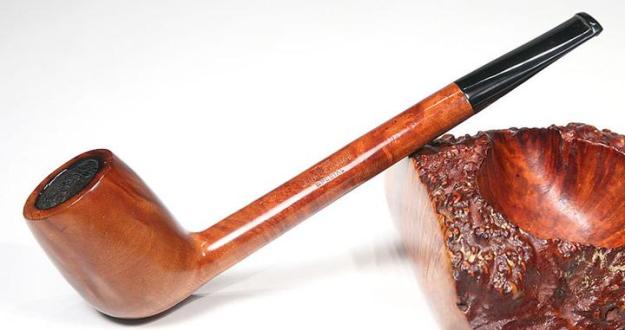
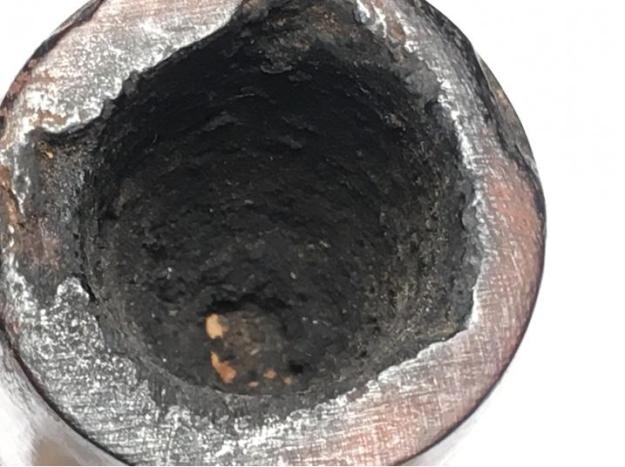
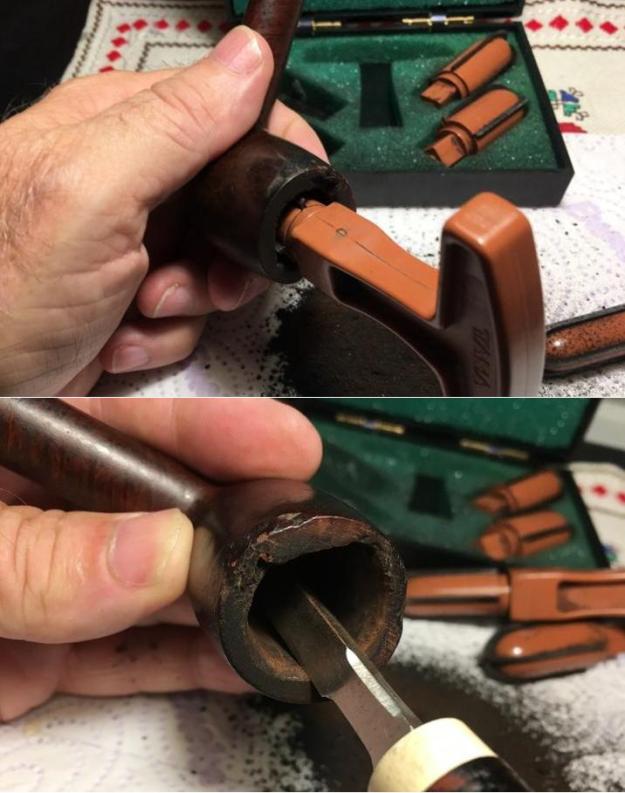
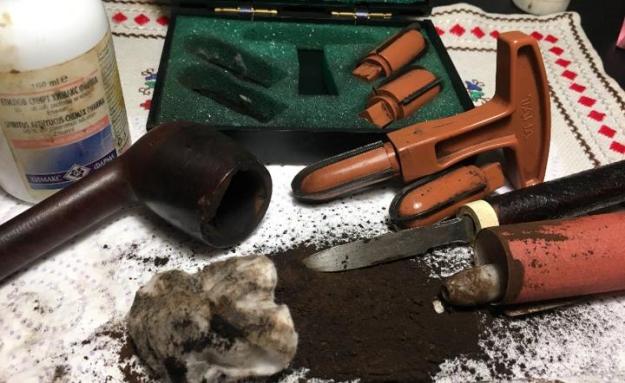
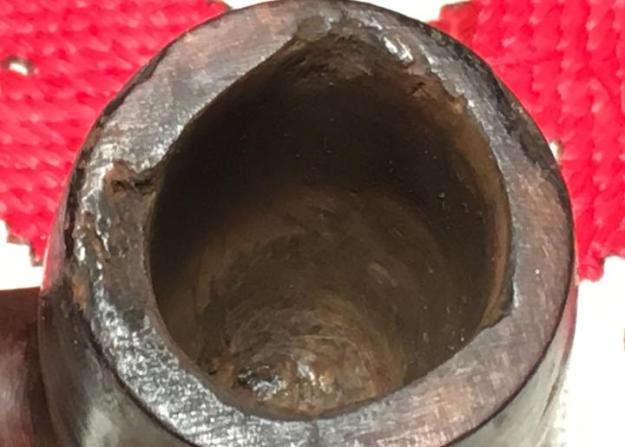
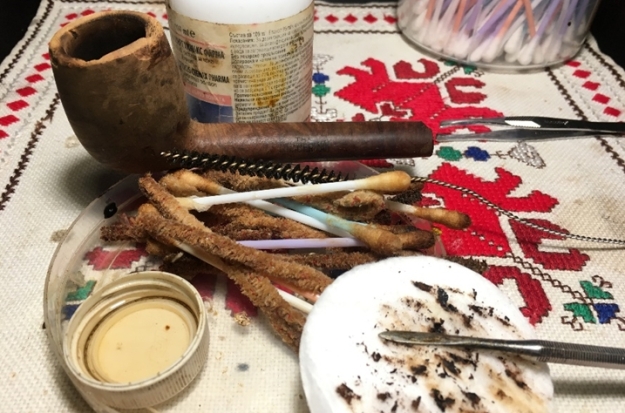
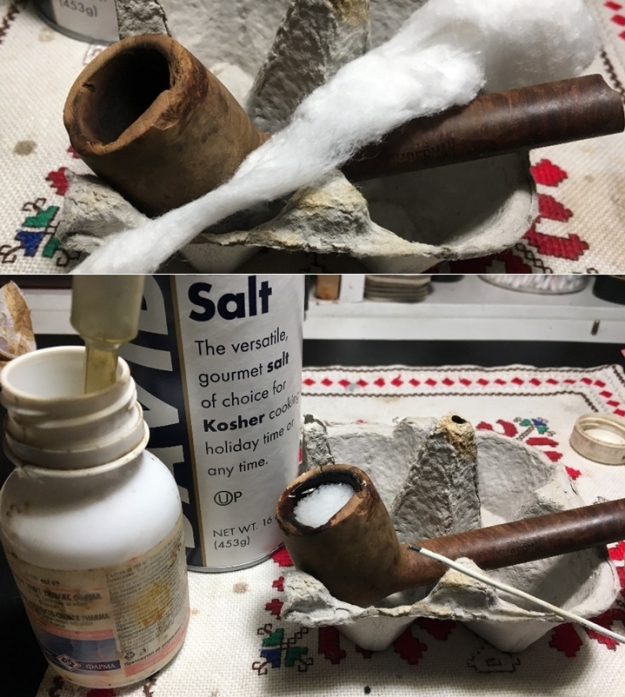
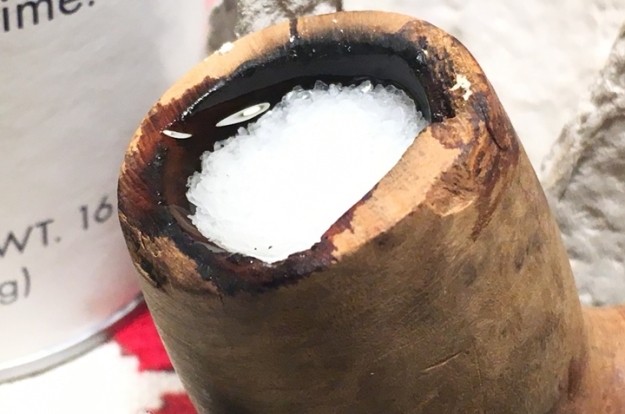
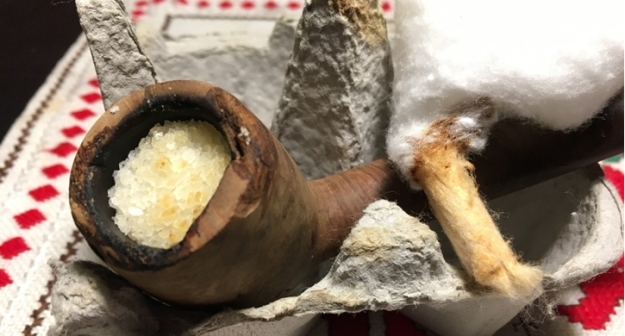
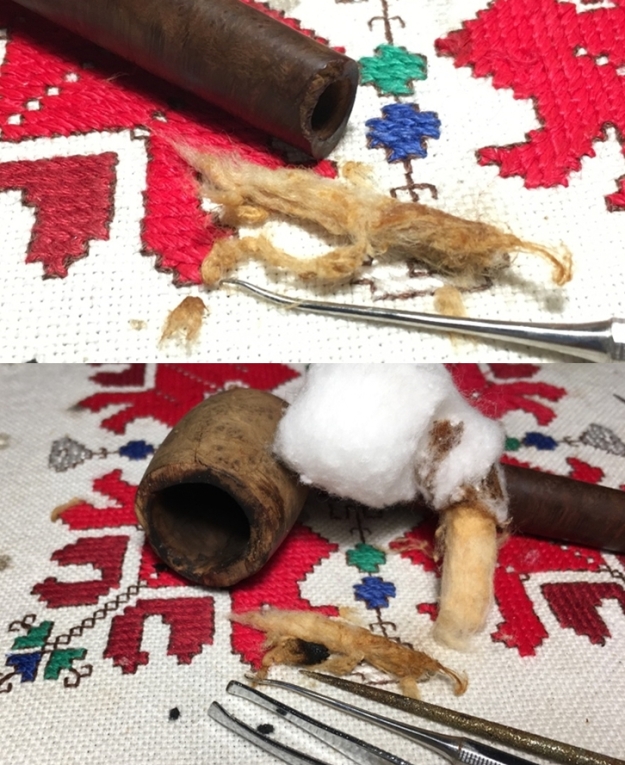
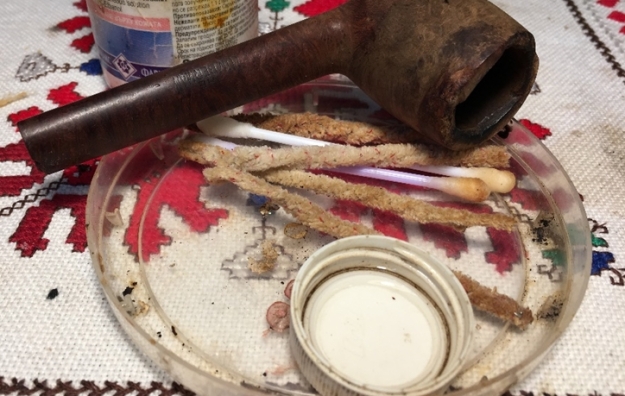
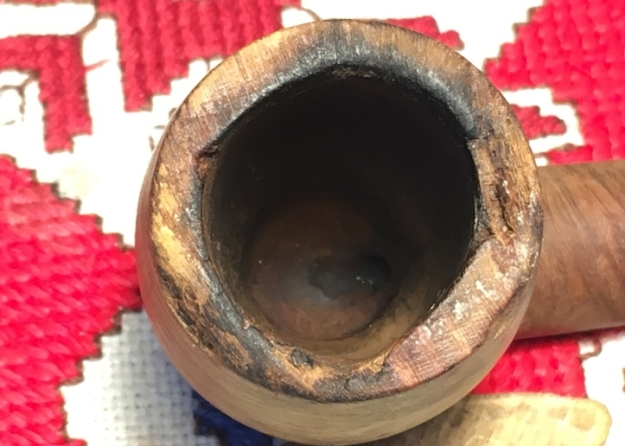
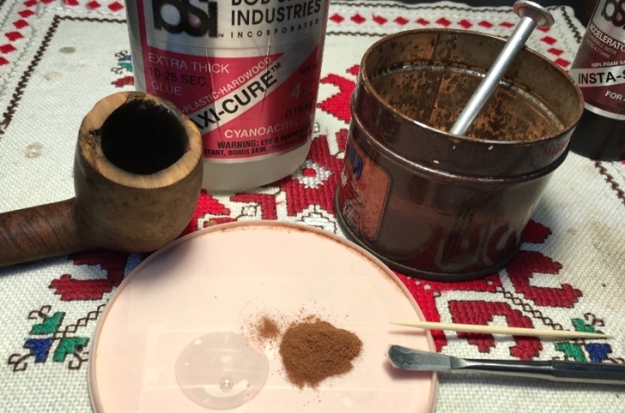
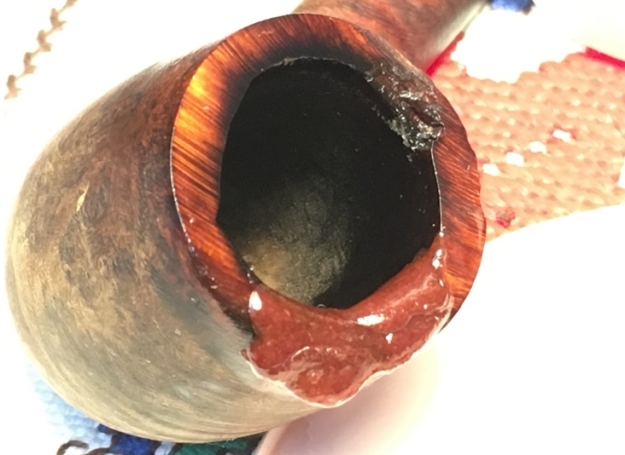
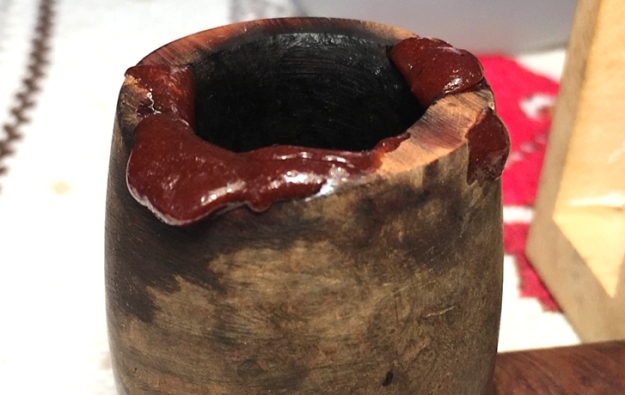
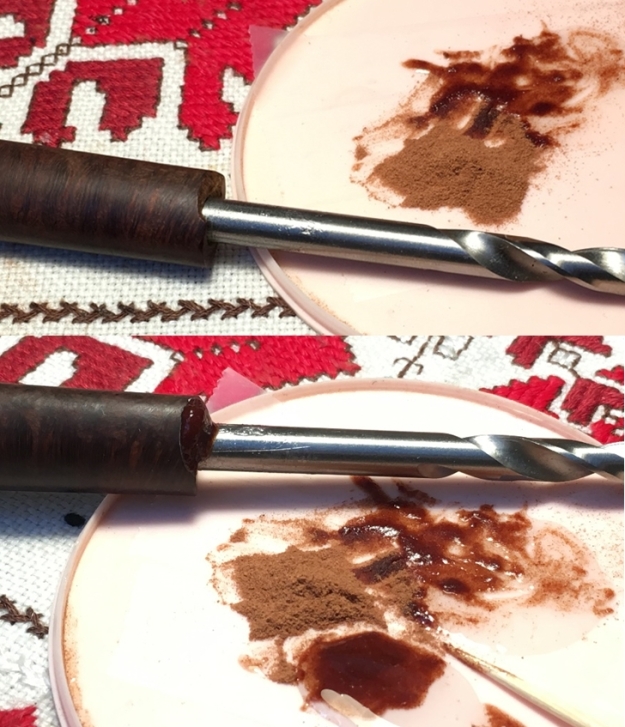
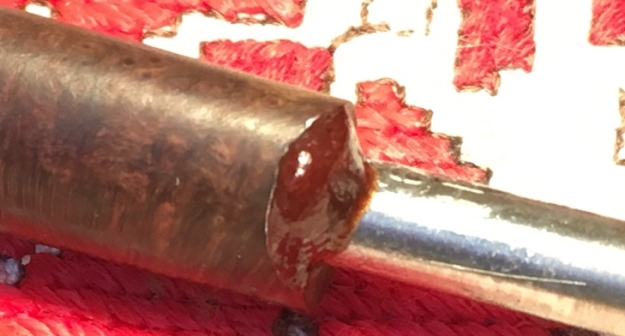
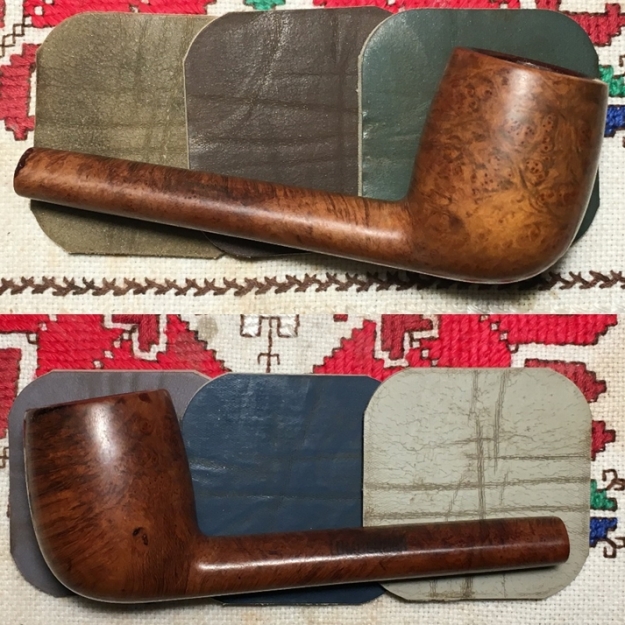
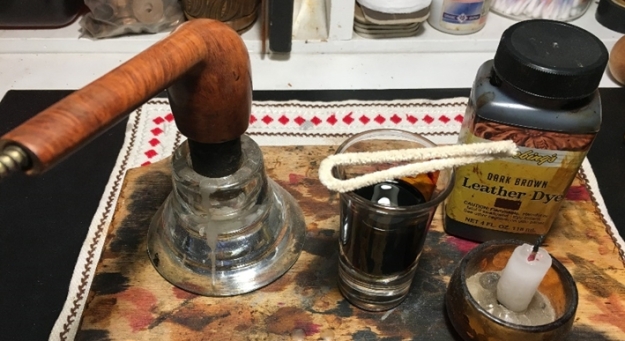
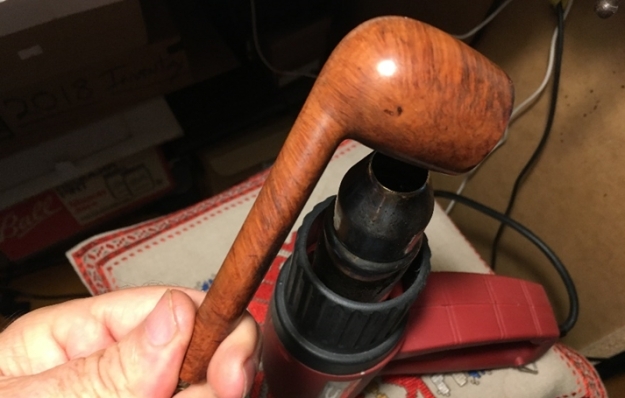
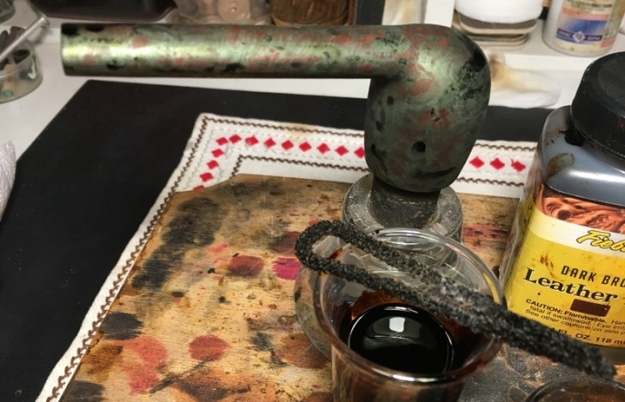
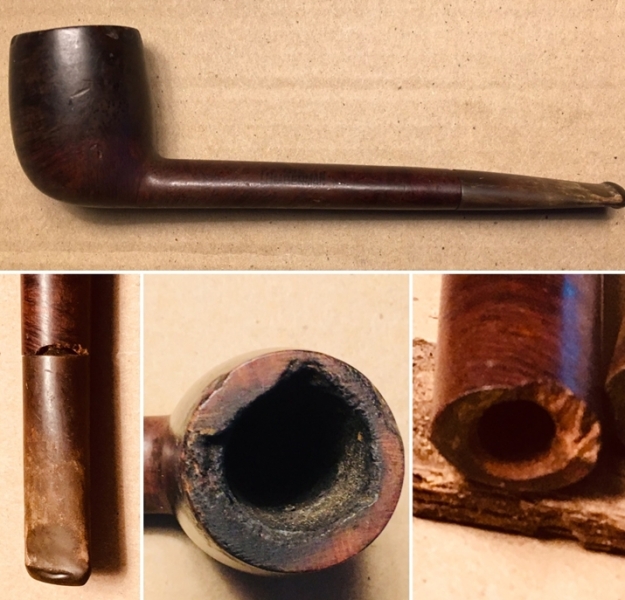
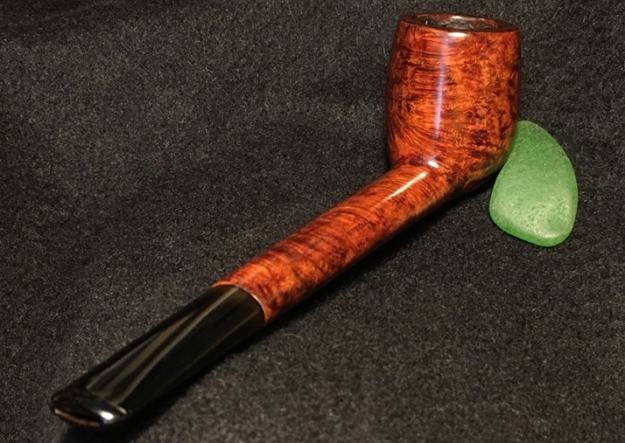
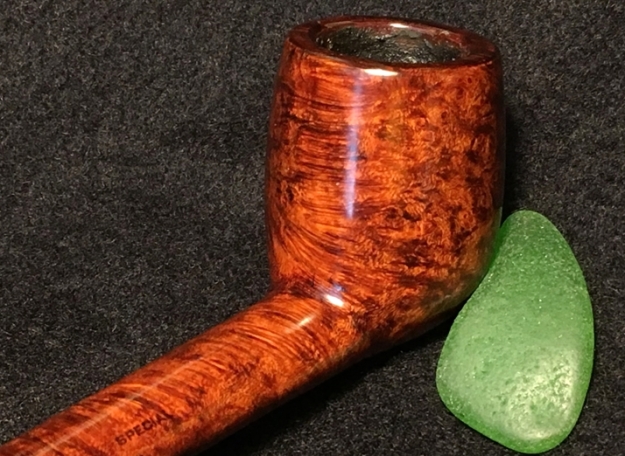
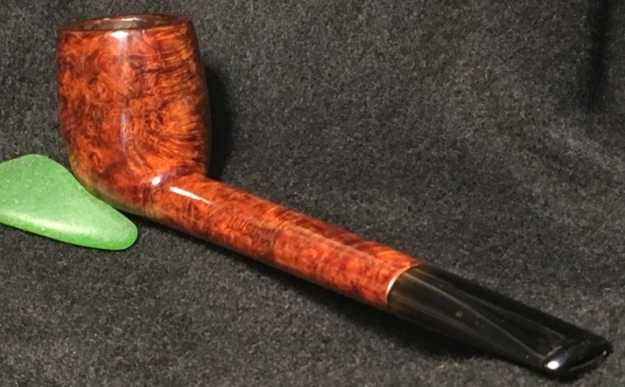
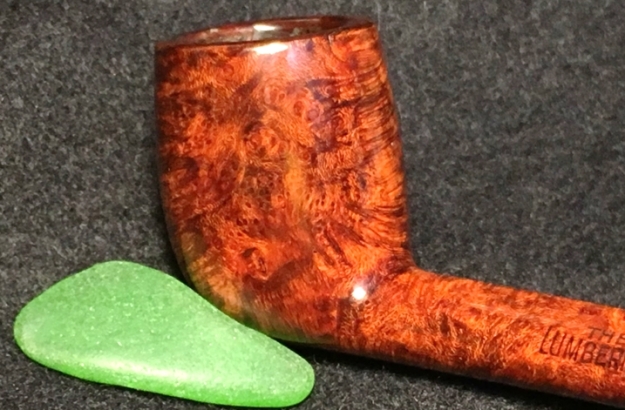
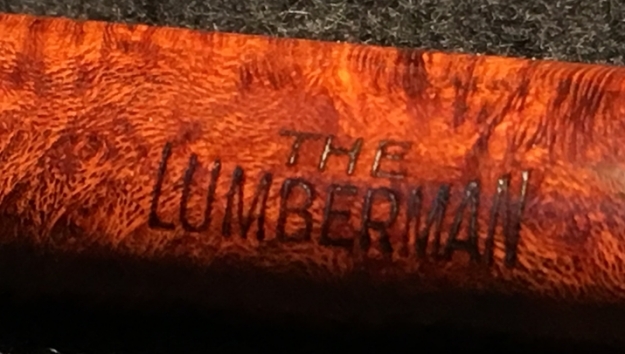
The ’Nightmare’ Canadian that Jim commissioned will be a challenge!  Here are pictures of The Lumberman before he reached my worktable as I took pictures to post in the ‘For “Pipe Dreamers” ONLY!’ online collection: The nomenclature found on the left flank of the long Canadian shank is THE [over an arched] LUMBERMAN.  Not until later, after starting the research, did I discover that on the shank’s right side is stamped, SPECIAL.I acquired The Lumberman in what I have called, ‘The Lot of 66’ which has produced many pipes for new stewards benefiting the Daughters of Bulgaria.  Honestly, in every ‘lot’ purchase, there are always pipes that are considered ‘throw aways’ and this pipe was included in that category!  Doing a quick search in Pipephil.eu, I find The Lumberman Special listed as a Comoy’s second.  Here is the panel:The ‘The Lumberman’ lettering is identical to the Canadian on my worktable.  What is distinctly different is that the SPECIAL stamping is not joined as in the example above.  The pipe on my table has the stamping separated on the right shank side.  Another difference is the COM – the example is stamped ‘Made in London England’.  I find no COM on our pipe, nor do I find the same three bar stem logo shown, which is also on other Comoy’s second brands.  A quick look at Pipedia’s Comoy’s article confirms that The Lumberman Special is a Comoy’s second.  Also included is a picture (Second examples, details, and nomenclature, courtesy Doug Valitchka) of a pristine example – a very attractive pipe.  This example of The Lumberman also seems to be without the three bar stem logo.Looking at the example of this pipe in pristine condition above and then gazing at the ‘Nightmare’ version on my table now, lets me know that this will be a grand challenge!  Yet, there’s absolutely nothing to lose.  This pipe was done.  He was no longer the object of anyone’s love or attention.  Now, with the challenge to see what it can become with some TLC (OK, LOTS of TLC) makes me thankful for the challenge Jim has made possible.  My approach generally will be to clean, patch and sand.  The chamber and the rim are the most daunting challenges.  I’ll be surprised if I don’t find heating issues in the chamber after clearing away the thick cake.  The rim is a total mess – charring has deteriorated most of the rim.  The chamber wall has eroded, and the rim plane is wobbled and uneven.  The outer edge of the rim is chipped and gouged.  The bowl is full of scratches and a few fills here and there with pitting as well.  A huge chip has taken almost a quarter of the shank facing.  The good news is that the Canadian short stem has heavy oxidation and nominal tooth and clamping compressions on the upper and lower bit.  I add a few more pictures now from my worktable complimenting the pictures above. To begin the restoration (or, resurrection?) of this Comoy’s The Lumberman Special, after cleaning the airway with a pipe cleaner wetted with isopropyl 95%, the stem joins other stems in the queue for a soak in Mark Hoover’s product (ibepen.com) Before & After Deoxidizer to address the thick, scaly oxidation. I just communicated with Mark to order more Deoxidizer and Restoration Balm which I’ll pick up on a trip to the US I will be leaving for soon.  I leave the stem in the soak for a few hours.  I include pictures from above to mark the starting point. After soaking for a few hours, I fish the stem out and run a pipe cleaner through the airway to remove the liquid.  I then wipe the oxidation off the stem using a cotton pad wetted with isopropyl 95%.  The B&A Deoxidizer has done a good job removing oxidation. Paraffin oil is then applied to the stem to revitalize and hydrate the vulcanite.  I put the stem on the side to absorb the oil.The starting point for working on the hurting stummel is simple cleaning to unmask as much as possible the plethora of issues underneath the cake in the chamber and the grime on the stummel surface.  To clear the chamber of cake, the Pipnet Reaming kit is used.  I take a picture of the chamber to mark the starting point. Not a happy view!After putting paper towel down to save on clean up, using the smallest of the Pipnet blade heads I go to work.  I use 2 of the 4 blade heads available to me and then transition to using the Savinelli Fitsall Tool to scrape the chamber walls further.  Finally, I finish by sanding the chamber with 240 grade paper wrapped around a Sharpie Pen and then wipe the chamber with a cotton pad wetted with alcohol to clear the carbon dust. The inspection of the now cleaned chamber shows the chamber wall proper to be in great condition!  This indeed was good news.  The briar is healthy and now it has a fresh start.Next, using undiluted Murphy’s Oil Soap the rim and external briar surface is cleaned using a cotton pad. A brass wire brush also proves useful in cleaning the charred rim.  After cleaning the surface, the stummel is transferred to the kitchen sink where it is rinsed in warm water and using wired shank brushes and anti-oil dish soap, I clean the internal mortise and airway. After rinsing thoroughly, I bring the stummel back to the worktable and clean the internals further using pipe cleaners and cotton buds dipped in isopropyl 95%.  I use a dental spoon to scrape the sides of the mortise as well as using shank brushes to work on the long Canadian shank. After a good bit of effort, progress has been made and since the hour is late, I will continue the cleaning using kosher salt and isopropyl 95% to soak through the night.  This methodology not only continues the internal cleaning but freshens the pipe for a new steward.  First, a cotton ball is pulled and twisted to form a wick that is used to push down the mortise and airway to serve as a ‘wick’ to draw out the residual tars and oils.  Using a stiff wire, the cotton wick is guided down the airway and after the stummel is placed in an egg carton to provide stability.  I then fill the bowl with kosher salt, which leaves no aftertaste unlike iodized salt.  Using a large eyedropper, I fill the bowl with isopropyl 95% until it surfaces over the salt.  With the longer Canadian shank, it takes longer for the alcohol to seep into the longer airway.  After topping it off with alcohol one last time, I turn out the lights and call it a day. The next morning, the salt is mildly soiled showing that it did its job through the night.  When I tug on the cotton wick, unfortunately, it doesn’t come out whole.  I must employ the use of a dental probe and tweezers to pull the remainder out.  Finally, I was able to push the rest through to the bowl with the help of the pointed needle file. To be sure the internals are finally cleaned, I deploy a few more pipe cleaners and cotton buds wetted with isopropyl 95% to clean up any residue.  After a short time, it is apparent that things look good and I move on.With the internal cleaning completed, my attention shifts now to the primary issue – the rim re-build.  From the picture below looking down on the rim, the remnants of the rim top are at 4 to 5 o’clock and at 9 to 1 o’clock.  These surfaces give me an idea of where the rim was and provide a target for a re-built rim – at least in an ideal world.  The inner rim edge is out of round from charring and…, who knows.  One thing for sure, this Canadian was loved and used, but rode into the ground! Looking now from the side, from both directions, the uneven plane is evident.  The challenge is how to save as much briar as possible off the top of the bowl to have a flat plane?  To top it until this happens will turn the Canadian into a long shank Pot! My path forward, after considering the options, is to start with a very minimal topping to even out the remaining rim plane to see more clearly the areas that will be targeted for patching.  The default option is to lose briar through topping, but I will seek to build the rim up with the patch material – briar dust putty, and top, shape and sand the rebuilt rim until it has a semblance of normality!  At least, this is the hope.  I take out the chopping board which becomes my topping board after placing a sheet of 240 grade paper on it.  The goal is to lightly top to establish the boundaries.Instead of rotating the first round, I drag the stummel across the board.  I do this because I want to stay on top of the remnant rim surface and not dip down into the damaged areas which will be softer.  Keeping the pressure on the high wood was easier this way.  The result shows the emerging boundaries.Next, this time, after rotating the stummel a few more times on the board, I come to the place of diminishing returns for topping.  I’ll apply briar dust putty to the damaged areas – on the rim and along the internal and external edges to fill in the gaps.  It will require a lot of patching, but the patch areas will provide the excess for sanding and shaping.The next area to prep for briar dust patch material is the large chip of the shank facing.  I insert a drill bit into the mortise which forms the boundary for the patch.  I’ll apply a bit of petroleum jelly to the bit to assure the briar putty patch will not stick to the bit.  Earlier, when communicating with Jim, my thinking was that I would simply plane the facing to remove the damage.  With this always being an option, my thinking now is to start with a patch, sand and shape – go from this point with the value on keeping as much briar as possible.The final prep area is a few small pits on the stummel surface that have old fill material in them.  I dig the old material out with a dental probe which will be refilled with briar putty.I clean all the patch areas with a cotton pad and alcohol in preparation for applying the briar putty.Using BSI Maxi Cure Extra Thick CA glue, I mix it with briar dust to form the putty.  I use a plastic disc as a mixing palette and place Scotch Tape on that simply to aid in cleaning.  I’m not sure if I can apply patch to the 3 areas in one batch, but I’ll start with the rim – the largest project.  I place a pile of briar dust on the palette and then a larger dollop of Extra Thick CA glue next to it.Using a toothpick, I gradually mix the briar dust into the glue until it thickens.  When it reaches the viscosity of molasses, I use the toothpick to apply the putty to the rim allowing for excess to be sanded and shaped later. What the following pictures show is that I was only able to address the rim patching with the first batch of briar dust putty.  As I applied the briar dust putty to the rim, I went in stages using an accelerator to quicken the curing and to hold the putty in place. I mix another batch of briar dust putty on the palette and again apply the putty to the shank facing and the pits.  As before, the use of an accelerator quickens the curing and holds the patch material in place. With a little nudge and twist the bit comes out easily with the help of some petroleum jelly.  The mortise circumference looks good though the patch needs to be sanded and shaped.The obvious next step is a lot of filing and sanding.  I start with filing.  I use both a flat and half circle pointed needle files to work on the excess putty.  I start with the rim by first filing down on the rim top to flatten the plane.  The pictures chronicle the progress. With the top rough filing completed, I move to the outer edge of the rim.The repairs are starting to show some promise!  Now to the inner rim edge.  This is critical in seeking to establish an even circumference.  I start with the slow approach of filing to get it right.  I finish up by loading a sanding drum onto the Dremel and fine-tune the edge and to smooth the transitions in the chamber from the patch material to the chamber wall.  I don’t want to leave ridges. Wow!  I showed this finished rough of the rim to my wife and she said with lessening skepticism that this pipe might just come back to life!Next, I quickly dispatch the two small fills under one glob of putty patch with the flat needle file.Finally, the filing is almost finished.  The flat needle file also goes to work on the shank facing and on the outer edge.  I’m very careful with filing the shank facing because too much removed can offset the proper seating of the tenon and create gaps between shank and stem. I also use the half-rounded needle file to create the sharp bevel on the edge of the mortise which accommodates the tenon’s base. After filing, I join the stem with the stummel to see how well the stem seats.  With some gaps, I do a bit more filing and finally I have the fit as good as I can get it.  It looks good!Now, back to the rim.  To even the rim, I take the stummel back to the topping board with 240 grade paper and give the stummel a few more rotations.  This helps blend the filing.The speckling of the putty patches is expected.  I’ll address this later when applying stain to the stummel which should take care of the contrast.  I want to smooth the inner and outer edges of the rim by applying a bevel. For the internal bevel, a hard bevel is the aim so a hard surface is used behind the 240 grade paper to provide a uniform edge.The internal bevel looks great.In addition to the internal bevel, I do a light sanding of the external rim edge simply to soften the edge and to remove any nicks and cuts.Next, I take the stummel back to the topping board covered now with 600 grade paper and rotate the stummel several times.Using both 240 and 600 grade papers, I sand both patches – the two fills and the shank facing.Now, to address the cuts, nicks and small pits of the very worn stummel surface, I’m hopeful that sanding sponges will be adequate to clean and smooth the briar surface so that I won’t need to employ more coarse sanding papers. I take the first 2 pictures to mark the start for comparison. I use first the coarse grade sponge followed by medium and light grades.  I’m careful throughout to guard the nomenclature on both sides of the shank.  Wow!  The grain underneath the old dark finish starts to make an appearance! On a roll, I continue the stummel sanding with the full regimen of 9 micromesh pads.  To begin, using pads 1500 to 2400, wet sanding is employed.  Following this, I dry sand using pads 3200 to 4000 and 6000 to 12000.  I’m amazed at the emergence of very nice grain – a horizontal grain on the fore of the bowl with large swirls of bird’s eye grain occupying the flanks.  Nice! There is no question regarding the next step.  Applying Fiebing’s Dark Brown Leather Dye to the stummel should do a good job of masking the rather large patches on the rim and shank facing.  Another benefit of using dye is to utilize the technique I’ve developed with the use of the Dremel using felt cloth buffing wheels to bring out the grain in striking ways.  I assemble the desktop staining station.After wiping the stummel down with a cotton pad wetted with alcohol to clean the surface, I heat the stummel with the use of a hot air gun.  This step is important as it expands the briar grain as the bowl heats, and this helps the wood to be more receptive to the dye.After the stummel is warmed, I use a folded over pipe cleaner to apply the dye which I’ve poured into a shot glass.  As I paint sections of the stummel with the dye-saturated pipe cleaner, I immediately ‘flame’ the dye with the lit candle.  This immediately combusts the alcohol in the aniline dye leaving behind the hue.  I work over the entire stummel thoroughly by applying dye and firing until the surface is fully covered.  I then put the stummel aside to ‘rest’ for several hours – till tomorrow in this case.  This ‘resting’ helps the dye to set more securely in the briar with less chance of the dye coming off on the hands of the new steward who fires the pipe up for the inauguration.With the newly stained bowl ‘resting’ I turn to the stem.  I take a closer look at the upper and lower bit.  There are bite compressions on both sides that need to be addressed.I first use the heating method.  Using a Bic lighter, I paint the upper and lower bit with flame to heat the vulcanite.  As the vulcanite heats it expands and hopefully the compressions will expand to the original condition – or closer to it.  The flame method did help but the compressions are still visible but lessened.Next, I utilize a flat needle file to freshen the button and with 240 paper sand out the compressions.Following the 240 sanding, with the help of a plastic disk to prevent shouldering, I wet sand the entire stem with 600 grade paper and follow with 000 grade steel wool.Next, the full set of nine micromesh pads are used.  With pads 1500 to 2400, wet sanding is applied.  Then dry sanding with pads 3200 to 4000 and 6000 to 12000.  Between each set of 3 pads, Obsidian Oil is applied to rejuvenate the vulcanite.  I like the pop of newly micromeshed stems! The morning has come, and the dye has set in the grain of the Comoy’s The Lumberman.  Time to ‘unwrap’ the crusted shell that now encases the pipe.  To do this, a felt cloth buffing wheel is mounted on the Dremel with the speed reduced to the lowest.  The decreases the heating factor of the rougher felt material. To unwrap I use Tripoli compound applying it with the felt wheel methodically over the stummel surface. The felt buffing wheel needs purging often to remove the ‘crust’ buildup.  I take a picture to show the unwrapping process which reveals a beautiful grain underneath! – and yes, during the staining and unwrapping process I wear surgical gloves! After completing the stummel proper with the felt wheel, I briefly change to a cotton cloth wheel to reach into the crook of the bowl and shank junction with Tripoli which the felt wheel was not able to reach.After the unwrapping process is completed, a very light wipe with a cotton pad wetted with alcohol helps to blend the newly stained surface.  With the aniline dye, if I wanted to lighten the finish, I could have applied more wiping.  This I do not do because I’m liking the dark brown finish very much and how well it is masking the repairs!With the Tripoli completed, another cotton cloth buffing wheel is mounted onto the Dremel, the speed is increased to about 40% full power, and after reuniting the Canadian stem and stummel, Blue Diamond compound is applied to the entire pipe.To clean the surface of leftover compound dust, which tends to cake up, I give the pipe a buffing with a felt cloth preparing the surface for the application of wax.After replacing the cotton buffing wheel used for applying Blue Diamond, another is mounted dedicated to the application of carnauba wax.  With the speed remaining the same at about 40% full power, carnauba wax is applied to both stem and stummel.  After completed, using a microfiber cloth, the shine is raised through a rigorous buffing.One more step and this Comoy’s The Lumberman Special will be completed.  To provide a ‘cake-starter’ for the new chamber and to provide a buffer for the patch repair work, which is on the upper rim level, a layer of a mixture of natural, non-flavored Bulgarian yogurt and charcoal dust does the job.  This mixture hardens like a rock providing a surface to start a new protective layer of carbon cake.  The thickness of this cake should be no more than the thickness of a US dime to provide optimal performance.  After placing a dollop of yogurt in a small Chinese rice cup, some charcoal dust is added until it thickens somewhat – not running off the pipe nail.  After pushing a pipe cleaner through the draft hole to protect it from being blocked, using the pipe nail as a trowel, I very carefully apply the mixture evenly over the chamber walls – avoiding drippage on the freshly waxed external surface!  It looks good! I am amazed.  I initially described this sorry pipe as a Nightmare without any expectations that it could again be described as hedging on pristine.  Yet, that is exactly what I am seeing – a very attractive Comoy’s The Lumberman Special Canadian.  What are also amazing to witness, even if I’m watching the work of my own hands, are the step by step logical, mechanical and artistic processes woven together toward certain micro outcomes resulting in a restored pipe.  Yet, this pipe wasn’t restored, but resurrected to be sure.  The rim repair, both with the fills and the reconstruction of a round presentation, is satisfying to behold. The grain now revealed from underneath the grime and years of use is striking.  Jim commissioned the ‘Nightmare’ from the ‘For “Pipe Dreamers” ONLY! collection and that itself was pretty amazing that he could see the potential.  As the commissioner, Jim will have the first opportunity to claim the Comoy’s The Lumberman Special from The Pipe Steward Store benefiting the Daughters of Bulgaria – women and girls who have been trafficked and sexually exploited.  Lest we forget, I start with a few ‘before’ pictures. Thanks for joining me!


Redemption of a Mayfair 1005 Bent Tree Stump Pipe


Blog by Steve Laug

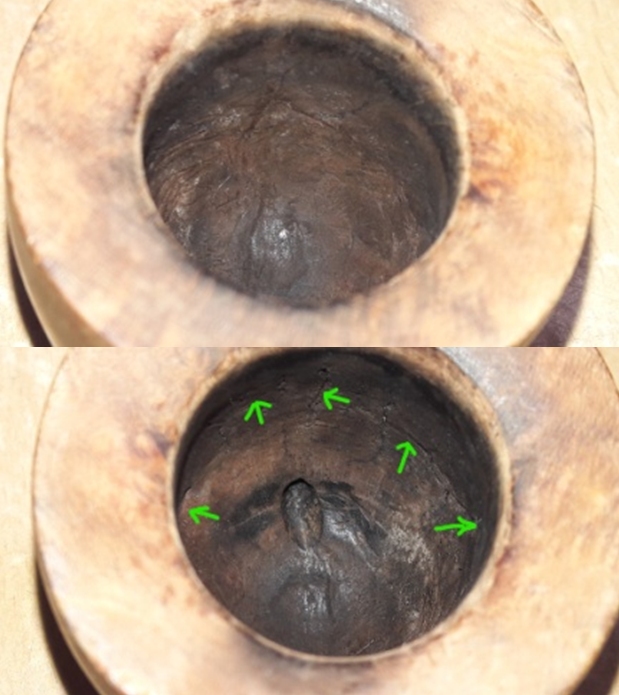
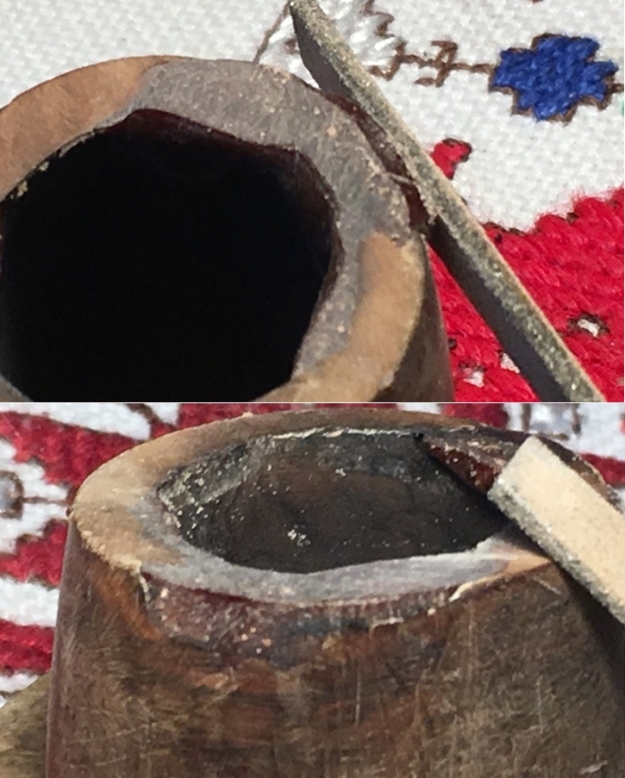
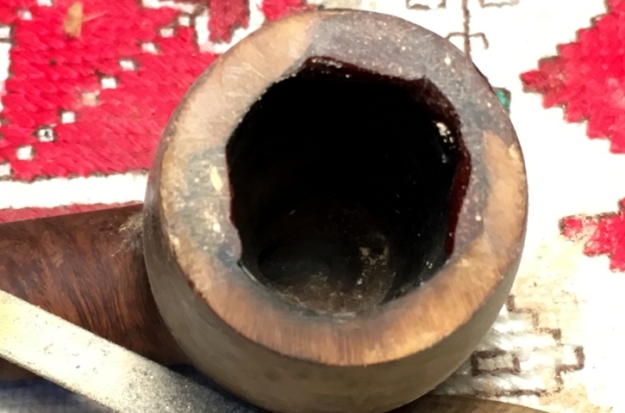
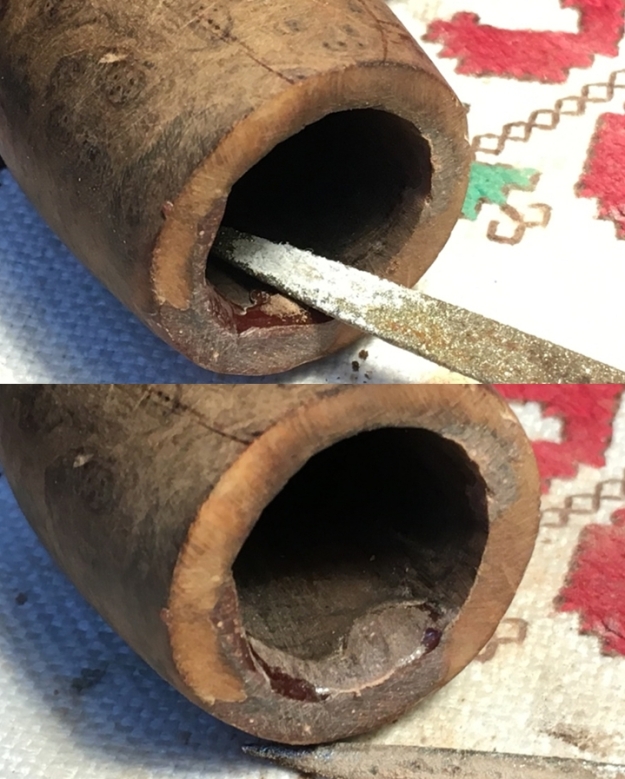
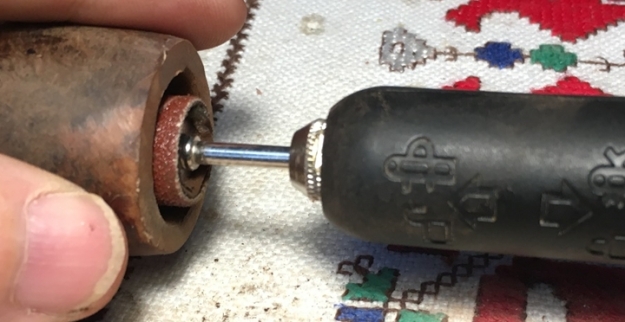
I can see what attracted Jeff to this pipe right away because it also grabs my attention. It has a rugged looking rustication that is somewhere between an aged piece of leather and a gnarled tree stump. There is something very charming about the appearance of the pipe that is for certain. The briar by and large appears to be in decent shape. The stamping on the shank reads MAYFAIR over 1005 with Italy stamped next to the stem shank junction. First thought was it may be a Sasieni or Charatan but I do not think it is. There is something almost Lorenzo like in terms of the look of the carving and the shape. The way the stamping is done and the Italy stamp makes me think that it is a basket pipe made for a pipe shop called the Mayfair Shop. In my I found that there is a shop in Edmonton, Alberta Canada called Mayfair Smoke & Gift Shop. There is also an area on London called Mayfair that at one time housed many pipe and tobacco shops. My own feeling is that the pipe probably came from the shop in Edmonton – the Italy stamp on the shank makes me think that rather than and English shop.may1 may2The next close up photos show more of the carving on the bowl close up and the condition of the rim and cake in the bowl. In the first photo below there is a small chip out of the rim edge that shows up but should be easy to hide in the rustication. The rim top is quite dirty with the overflow of cake from the bowl. It is hard to see under the thick cake on it but there are curved strokes around the rim top that go clockwise. They include larger deeper strokes and fine hairlike strokes that are also in the grooves of the rustication on the bowl sides.may3The next photo shows the stamping on a smooth portion on the bottom of the shank. Does anyone know who made the Mayfair brand of pipe that was stamped like this?may4Other than being deeply oxidized the stem was in decent shape. There were not any tooth marks or deep tooth chatter on the stem surfaces. There was a cursive stylized T on the left side of the saddle portion of the stem.may5My brother cleaned up the pipe and sent it my way in Vancouver. As usual he did a thorough job of reaming and cleaning the inside of the shank, mortise and airway in the stem. They were spotless. I took the next four photos to show what the pipe looked like when it arrived.may6His cleanup of the rim revealed the curved clockwise strokes around the top surface.may7I took a close up picture of the rim top and if you look into the bowl a serious issue that would need further exploring.may8Even after the cleanup the stem looked in decent shape.may9I used a dental pick to probe the serious spidering cracks and crevices on the inside of the bowl. These were far worse than the recent ones that I addressed in the bowl of The Tobacconist Inc. Rhodesian recently using pipe mud (https://rebornpipes.com/2016/12/22/a-reclamation-project-the-tobacconist-inc-made-in-england-rhodesian/). These were deep and intricately burned gouges in the surface of the bowl. I used the Savinelli Fitsall Knife to scrape out as much damage on the walls as possible and without gouging out more and further damaging the surface. The next series of photos show the bowl as I turned it around examining the damage.  may10 may11I have to tell you at this point I was seriously considering throwing the pipe into the discard box and not bothering working any further on it. The stem could be salvaged and parts of the briar may be salvageable for repairs. It really was a desperate looking situation. It appeared to be a bowl on the very edge of being burned out all around – one of the worst messes on the inside of a bowl I had seen. But… and this is where I took a chance. I really like the rustication pattern on the briar and the shape also grabbed me so I decided to try a remedy that Charles Lemon of Dadspipes has used far more than me. I thought it might just work on this old bowl and provide a possible redemption to ongoing service.

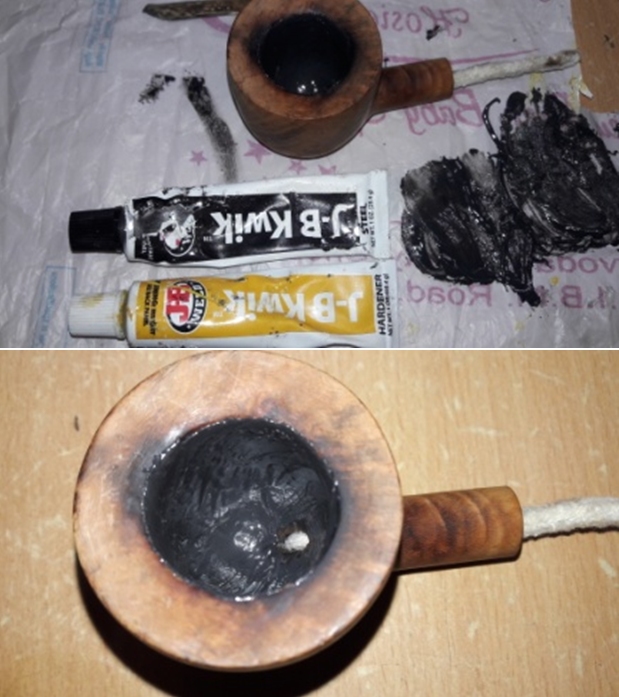
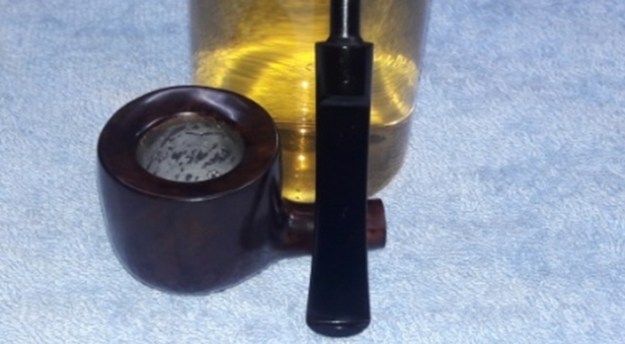
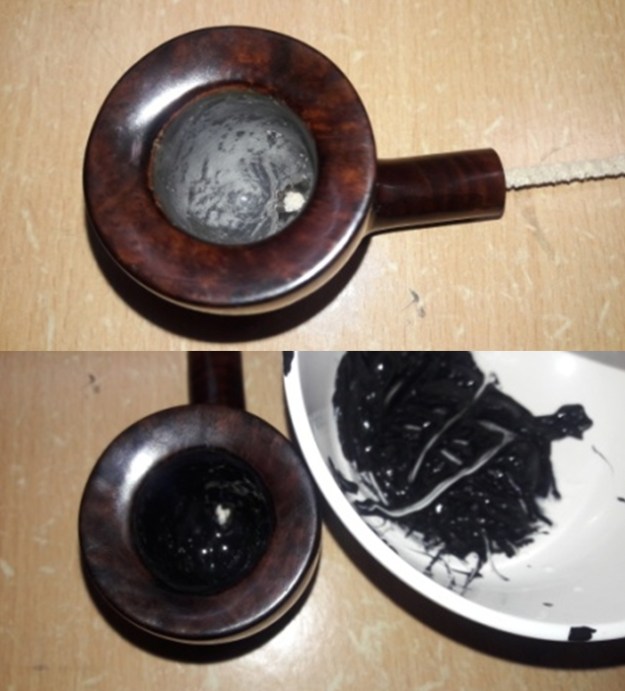
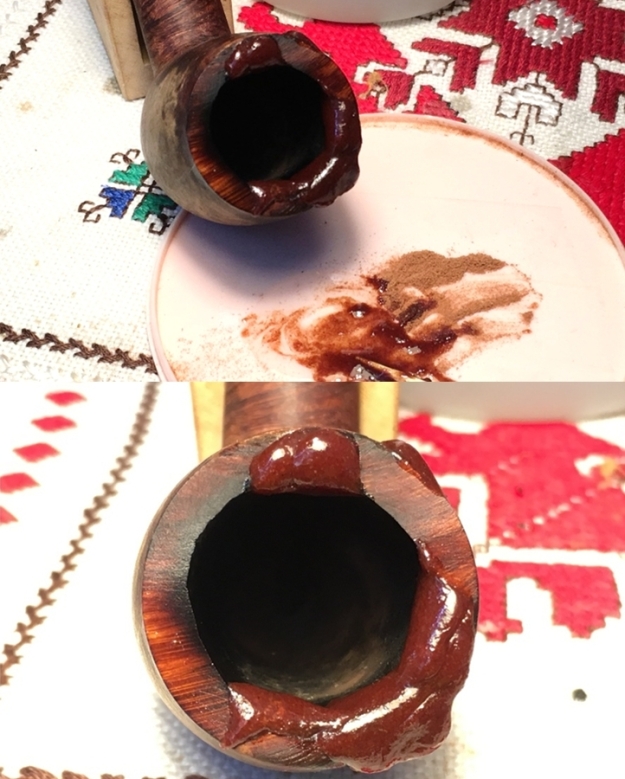
I picked at the wood with a dental pick to remove any loose chips or chunks of briar to get the wood back to as solid a base as possible. I cleaned out the interior of the bowl with a cotton swab and alcohol until I removed all of the dust and debris from the cracks.I wanted a clean surface to work with. I set the bowl aside to dry and went to the hardware liquidation store down the street. I picked up some JB Weld (or rather a brand called Steel Weld which was made by JB Weld). I mixed the base and the hardener on a patch of paper with a wire until I had it well blended. Using a dental spatula I pressed the mixture into all of the cracks on the inside of the bowl. I slathered on (technical term) the coat of the mixture until all the inside walls of the bowl were smoothly covered.may12 may13I dampened a cotton pad with alcohol and wiped off the JB Weld that had gotten on the rim top and inner edge of the bowl. I did not want it to harden as then it would be impossible to remove from the strokes on the surface. I set the bowl aside to let the bowl repair harden. Once it was cured overnight I would sand the surface clean leaving the repair only in the cracks themselves.

Being impatient by nature and by choice, I wanted to keep working on the pipe. I know that I have many more to work on but I wanted to see what the exterior of this old timer looked like once it was restained. So when the internal repair had hardened to touch (about an hour later) I decided to stain the briar. I used a Dark Brown aniline stain and applied it to the briar with a folded pipe cleaner. I flamed the stain to set it in the grooves and grain. I repeated the process until the coverage was what I wanted.may14 may15With the stain coat done I took two photos to show the rim and interior of the bowl to show how the repairs looked before I sanded them down. The JB Weld still needed to cure but you can see how the walls looked at this point.may16I wanted to protect the bowl from the dust and the debris that would fly when I sanded out the bowl so I gave it a first coat of Conservator’s Wax. I buffed it with a shoe brush.may17 may18I set the bowl aside until the afternoon to let the repair cure and turned my attention to the stem. I sanded it with 220 grit sandpaper to remove the oxidation on the surface and smooth out the pitting.may19I polished the stem with micromesh sanding pads – wet sanding the stem with 1500-2400 grit pads and dry sanding with 3200-12000 grit pads. After each set of three pads I gave the stem a rub down with Obsidian Oil. After the final rub down I set the stem aside to dry until I had finished the bowl.may19a may19b may19cWhen I came back to the bowl in the afternoon I took some photos of the interior before I sanded it to show what the dried JB Weld looked like. The surface is rough to the touch and hard. The cracks however are completely filled in.may20I used the Dremel and sanding drum to remove much of the excess fill/repair material. I set the Dremel at the lowest speed and slowly worked it over the inside of the bowl walls. I was able to remove much of the overage that way but I could not get all of the material off. My goal was to leave the JB Weld only in the crevices and cracks in the walls and not on the walls themselves. I wrapped a piece of 220 grit sandpaper around a wine cork, roughened the end to give some leverage on it and sanded the inside of the bowl. This further took back the JB Weld. I finished sanding the inside with a piece of 220 grit sandpaper wrapped around my index finger. When I was finished the cracks were filled and the bowl was smooth to touch.may21 may22I wiped down the inside walls of the bowl  with cotton swabs and clean water and the shank with pipe cleaners and clean water to remove all of the sanding dust and debris left behind by my work in the  bowl. The next photos show the repairs on the walls of the bowl. The bowl is solid and feels undamaged. My next step in the repair is to coat the walls with a mixture of sour cream and charcoal powder – a bowl coating. This will further protect the walls and provide insulation until a cake can be formed.may23I walked down to the local supermarket and purchase a small package of sour cream. I put a spoonful of sour cream into a small bowl and broke open the last of my activated charcoal capsules into it. I mixed it with a spoon until the mixture was a dark grey colour and well blended.may24I know at this point many of you are thinking “sour cream in a pipe”. But that is exactly what  I used. I mixed it well and put it on the walls of the pipe with a dental spatula and spread it evenly across the walls with a folded pipe cleaner. I had inserted a pipe cleaner in the shank to keep the airway clear of the bowl coating. I can assure you after many years of using this mixture – one by the way that is used by many pipe makers – that the mixture dries and has no residual smell or tasted. It is absolutely neutral. It provides a good insulator for the bowl while cake is formed. In this case it also covers the lines of JB Weld in the cracks of the bowl interior so it serves a dual purpose.may25 may26I put the bowl aside to let the bowl coating cure and harden. I let it sit overnight to cure. I knew that once it had hardened it would be completely neutral in smell and taste. This morning the bowl coating had dried to a solid black colour with a little grit from the charcoal. The sour cream smell was gone and the bowl was smooth and black to the bottom.may26a may26bThis morning I gave the bowl several more coats of Conservator’s Wax, buffed it with a shoe brush and finished by buffing it with a clean buffing pad to bring a shine to the smooth and rusticated portions of the bowl. I buffed the stem with Blue Diamond Polish on the buffing wheel and gave it several coats of carnauba wax. I buffed it with a clean buffing pad to raise the shine. I hand buffed the whole pipe with a microfibre cloth to deepen the shine and give the pipe a sense of warmth that this last step gives it. The finished pipe is shown in the photos below. It may seem like a lot of work to redeem this old pipe but the look of the finished pipe says it all to me. This one will be a pleasure to fire up and hold. The tactile nature of the rustication is complex and interesting to hold and study. Would you have done this work on one you have on the table? The only way that you will be able to answer that question is when you lay eyes on one that grabs a hold of your attention. Until then you may wonder at my madness. Thanks for walking with me through this exercise. may27 may28 may29 may30 may31 may32 may33 may34