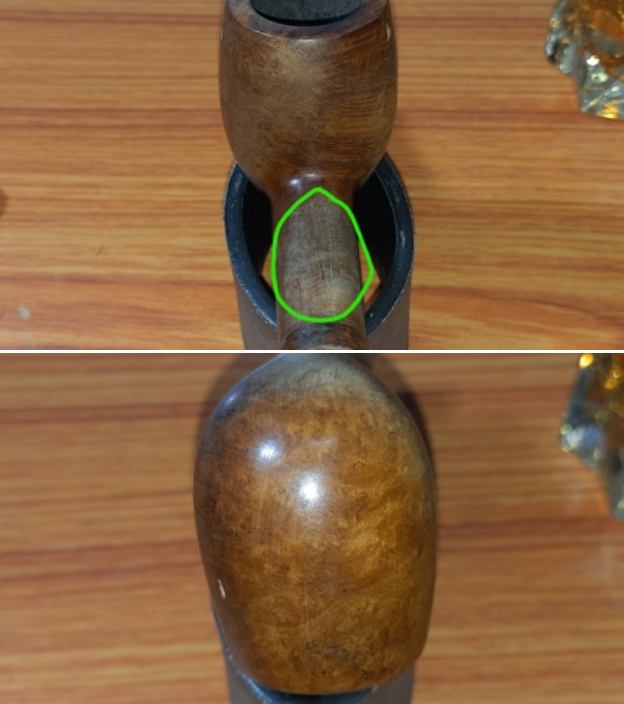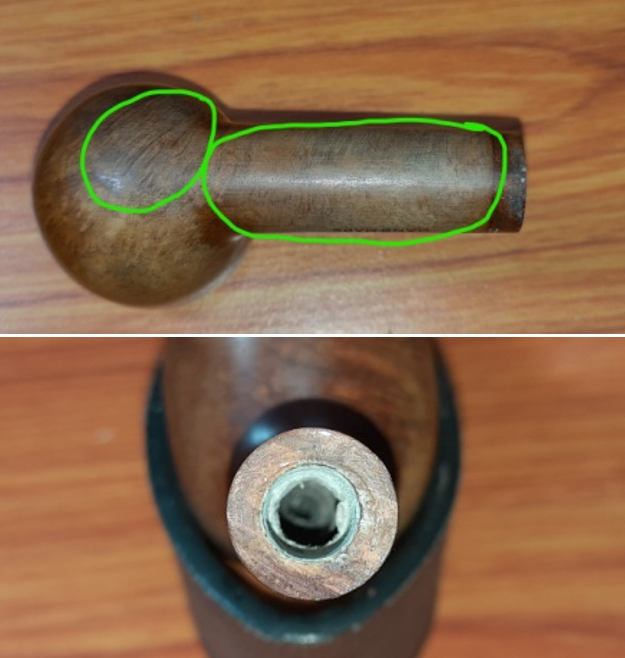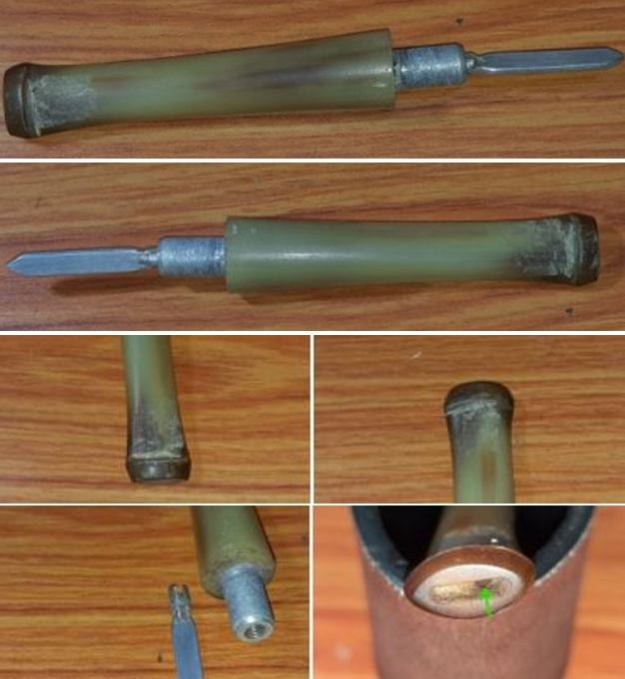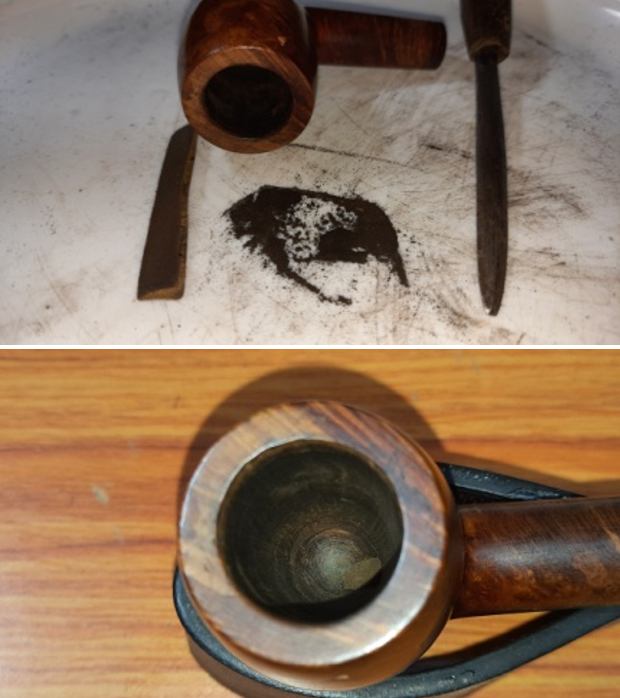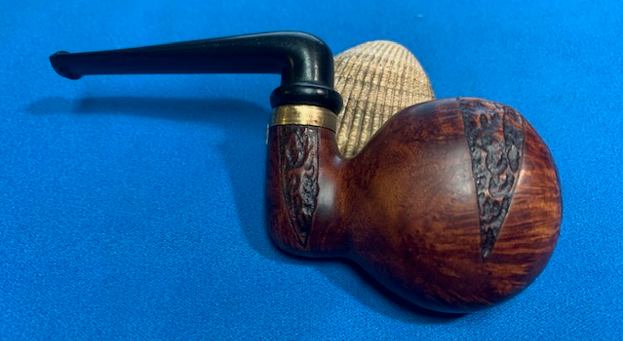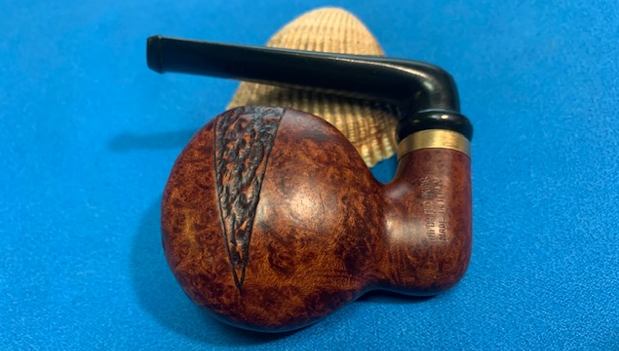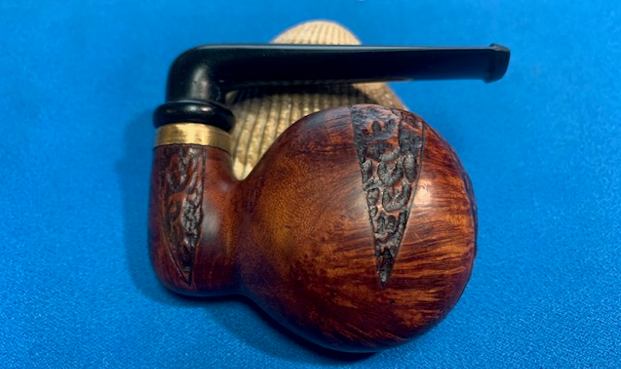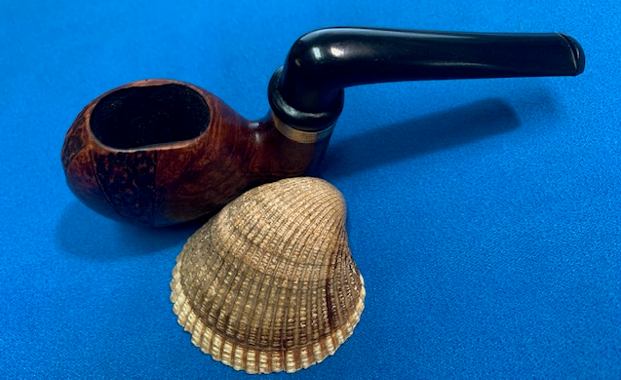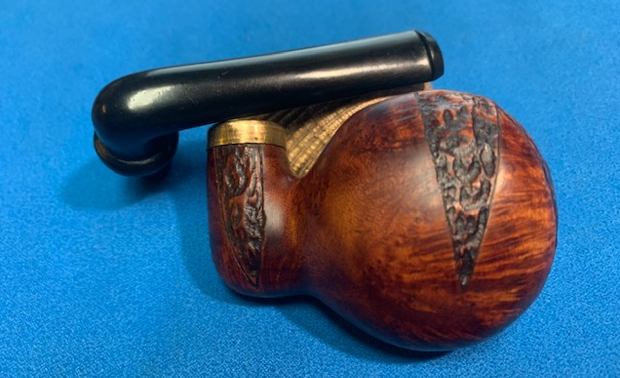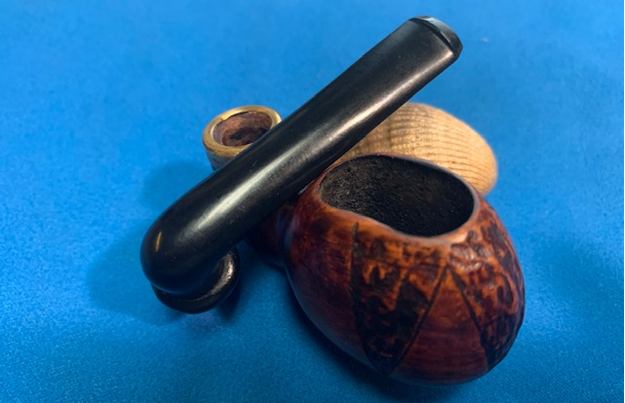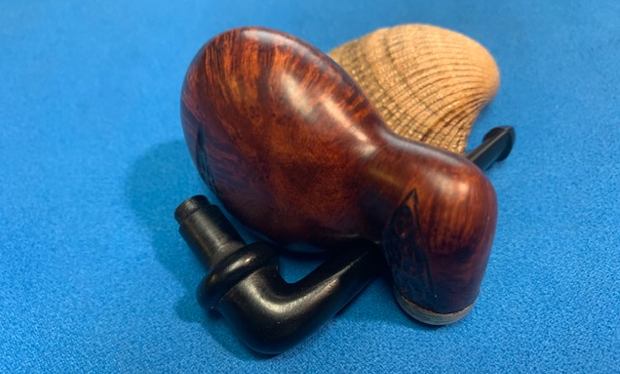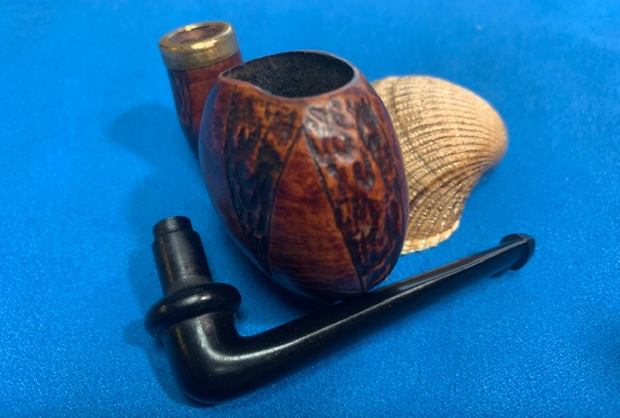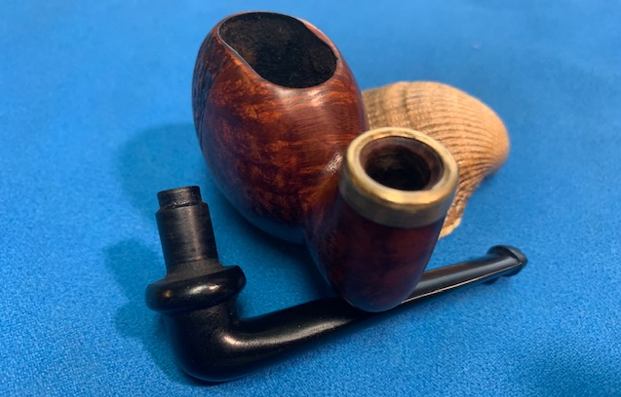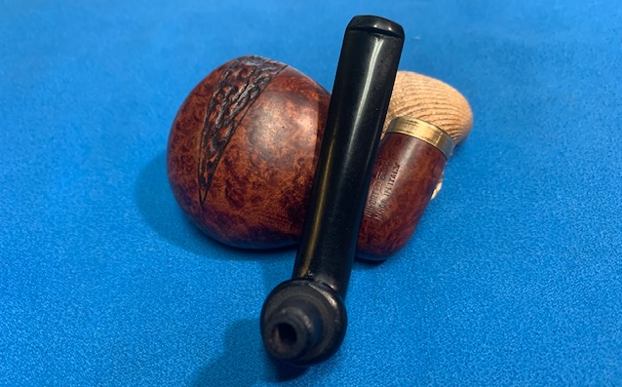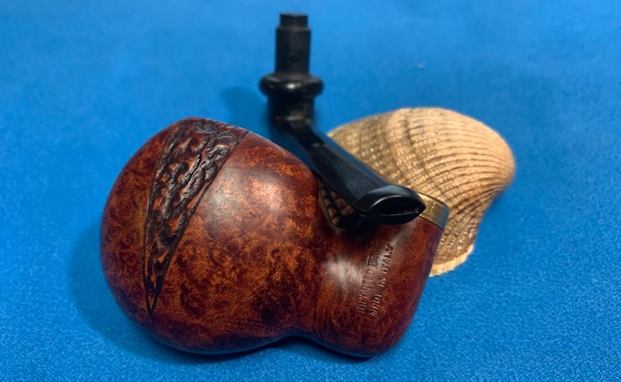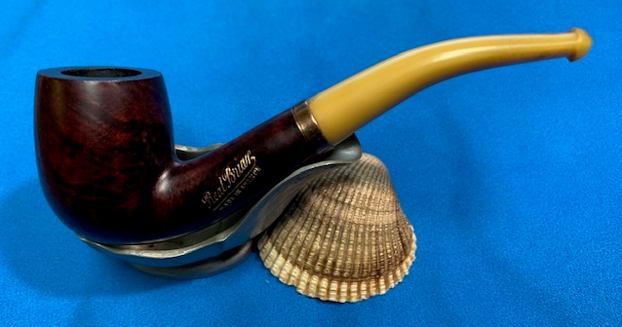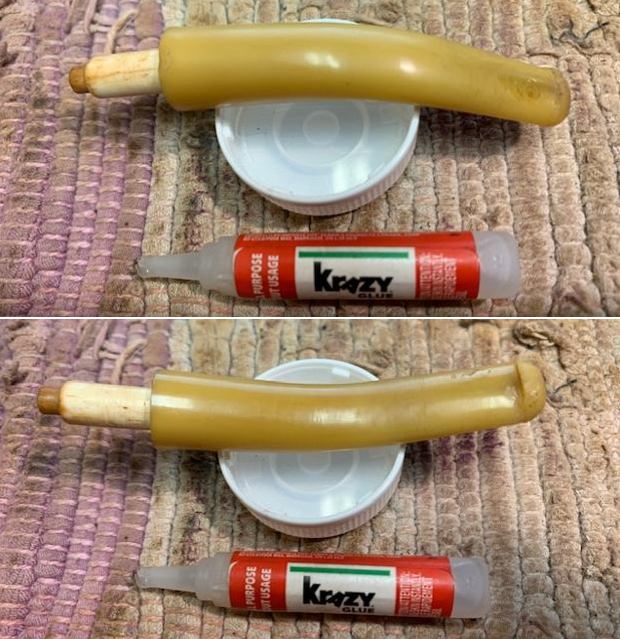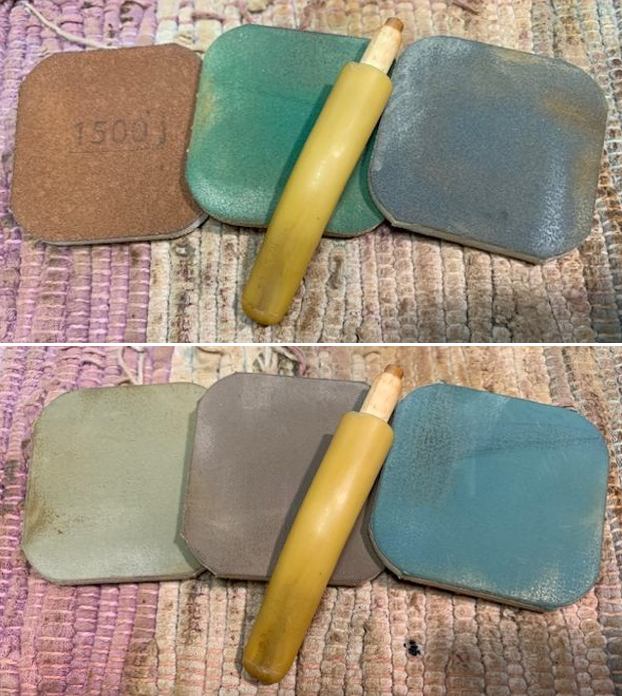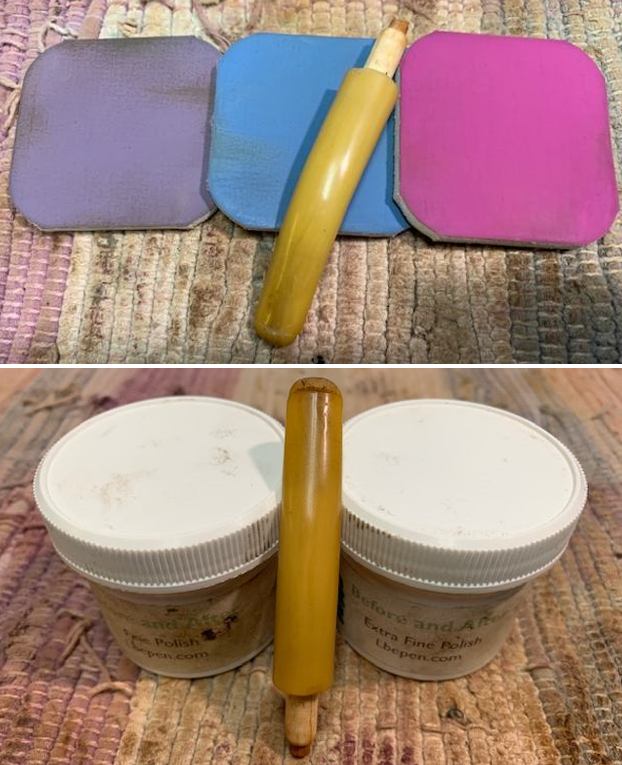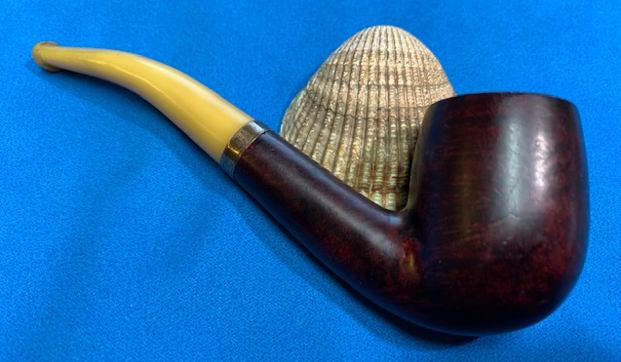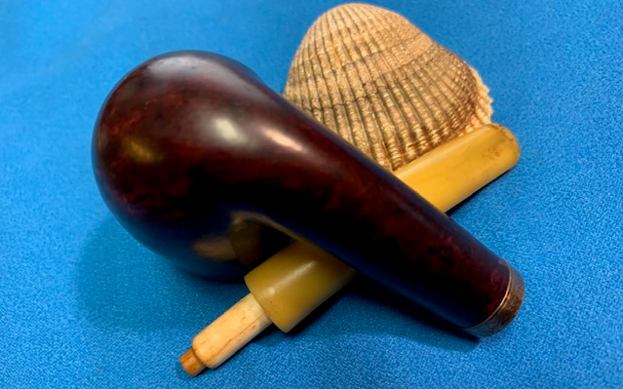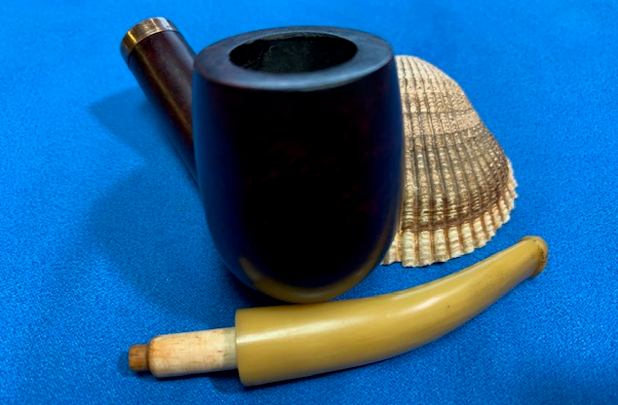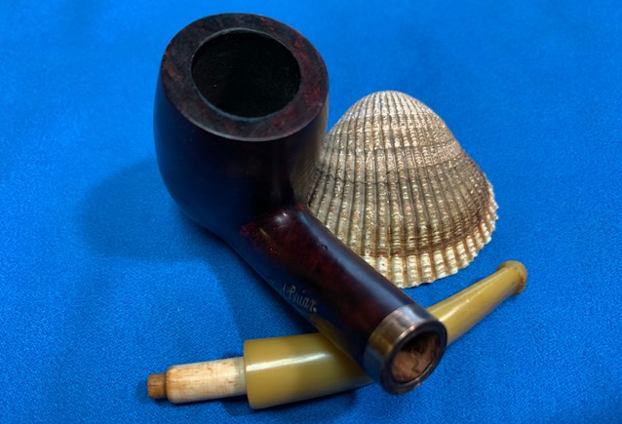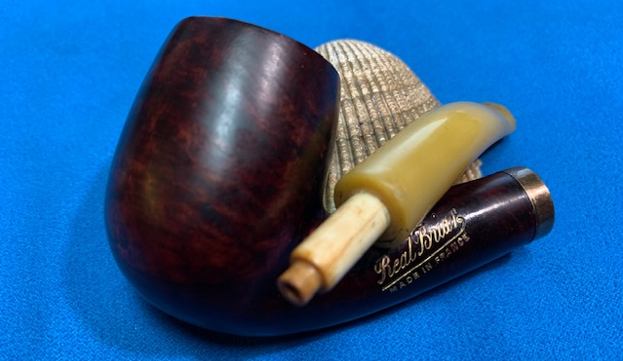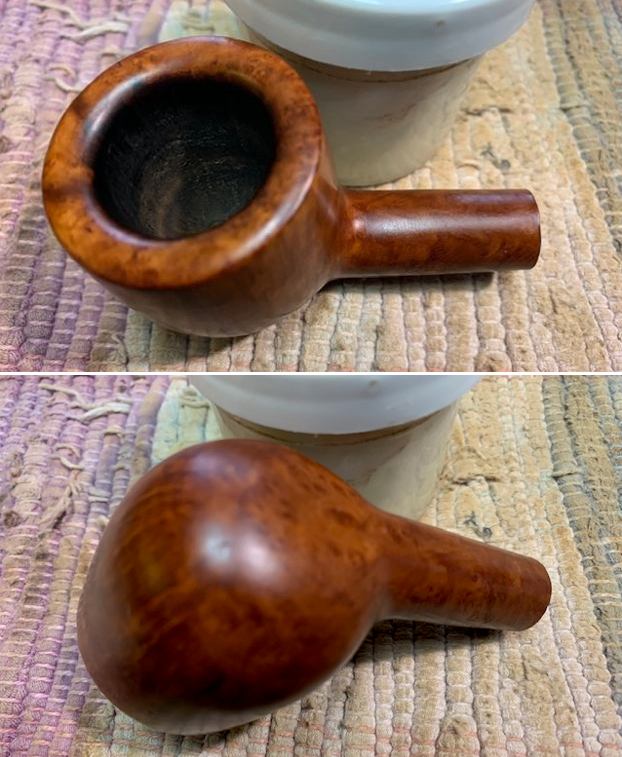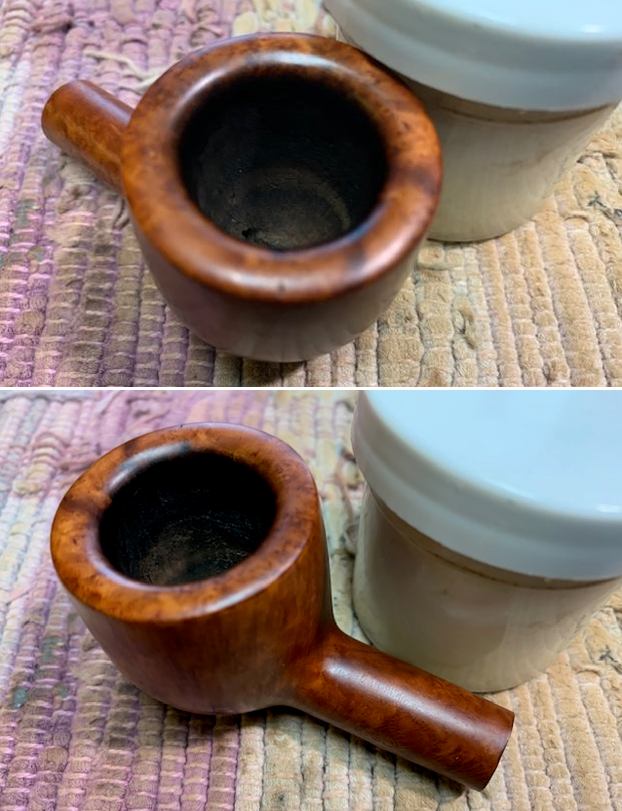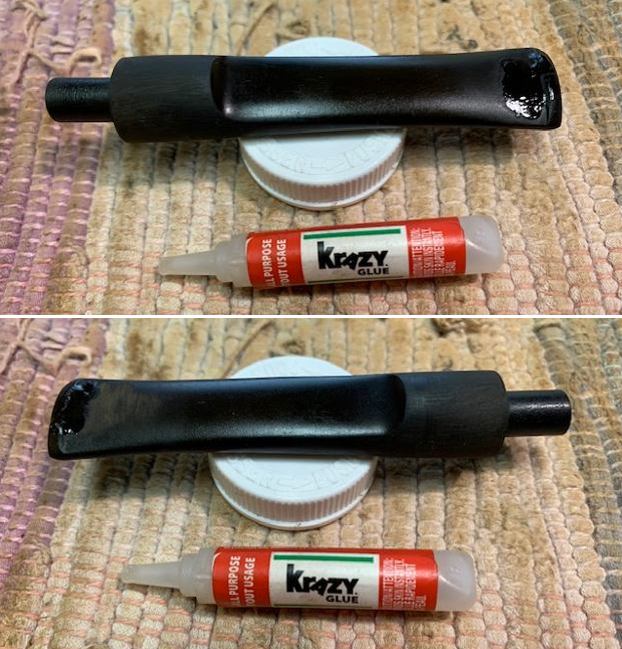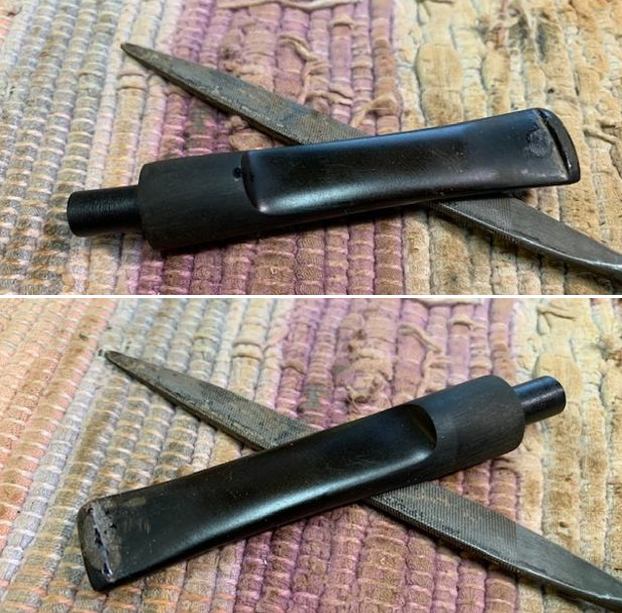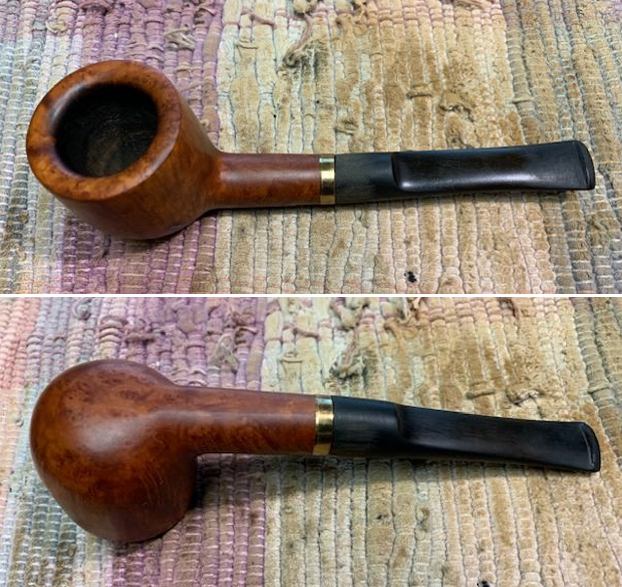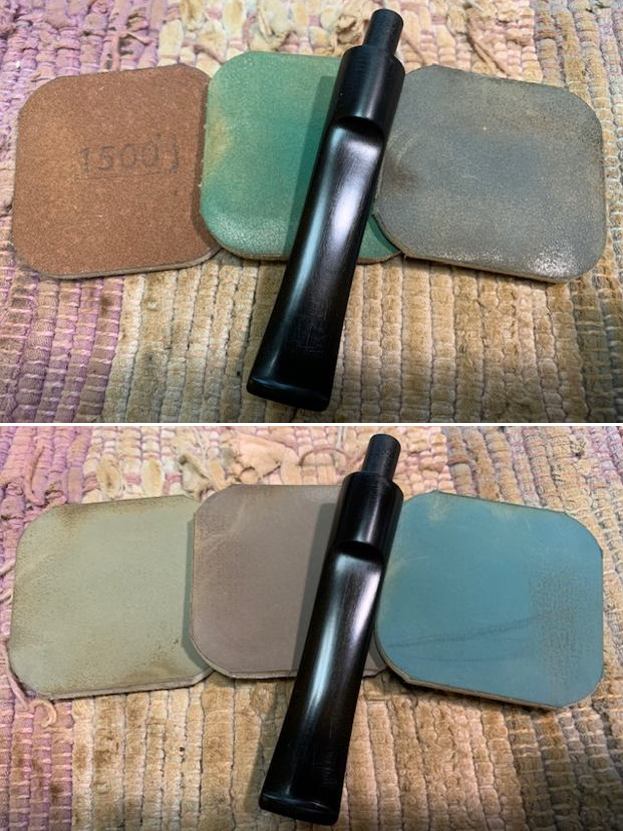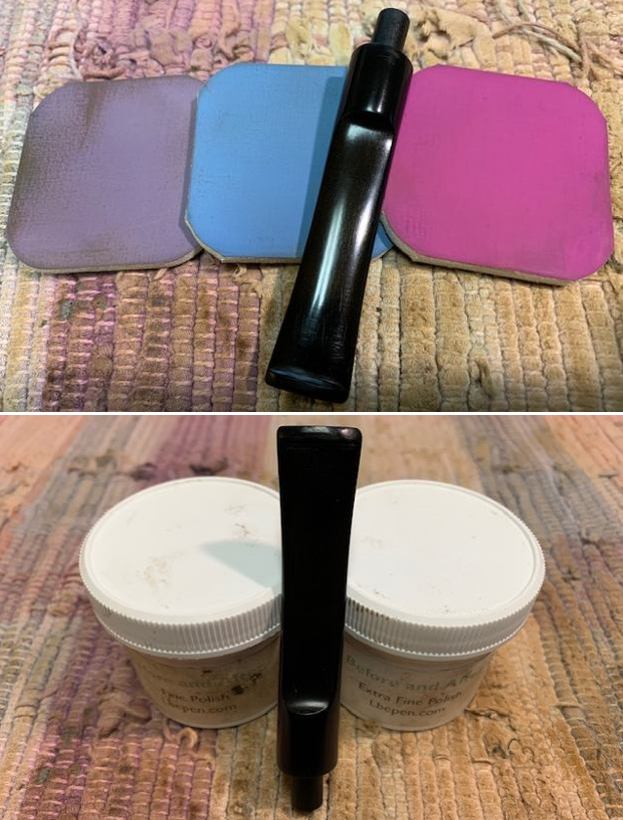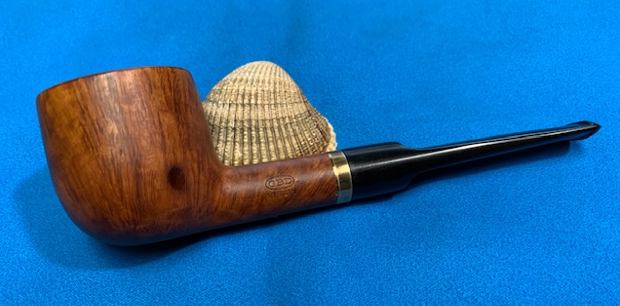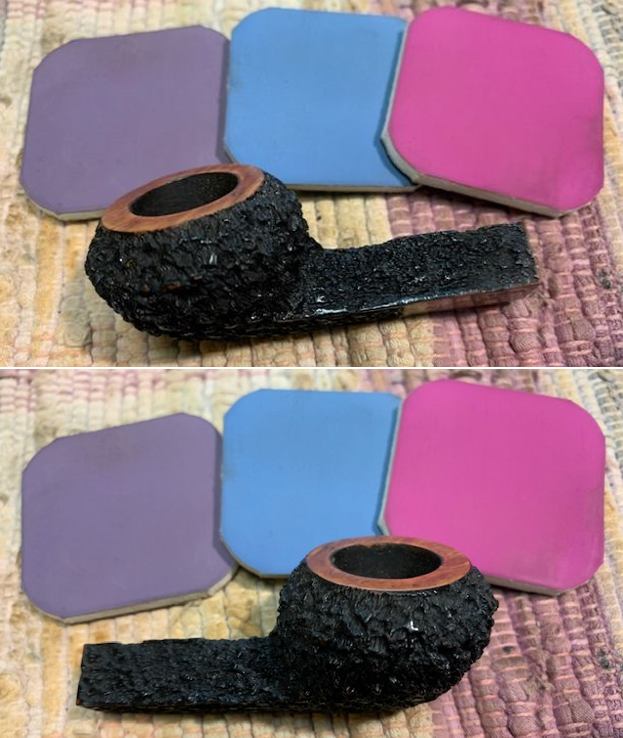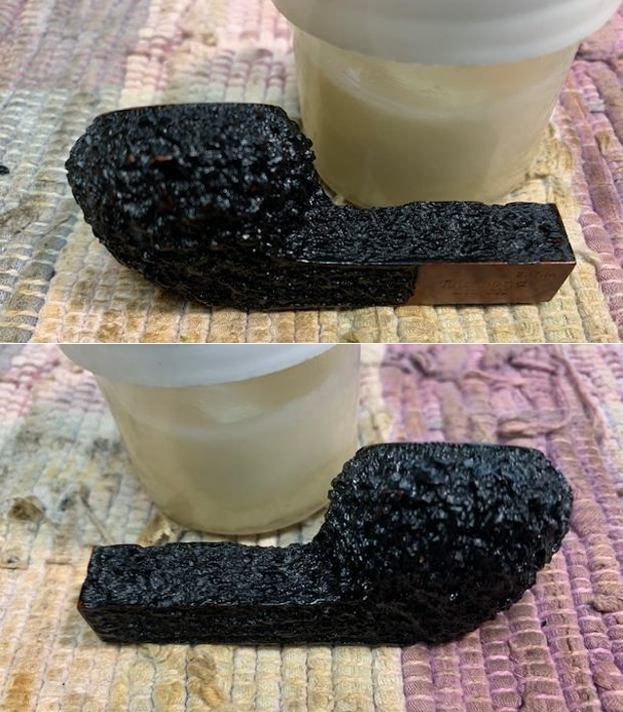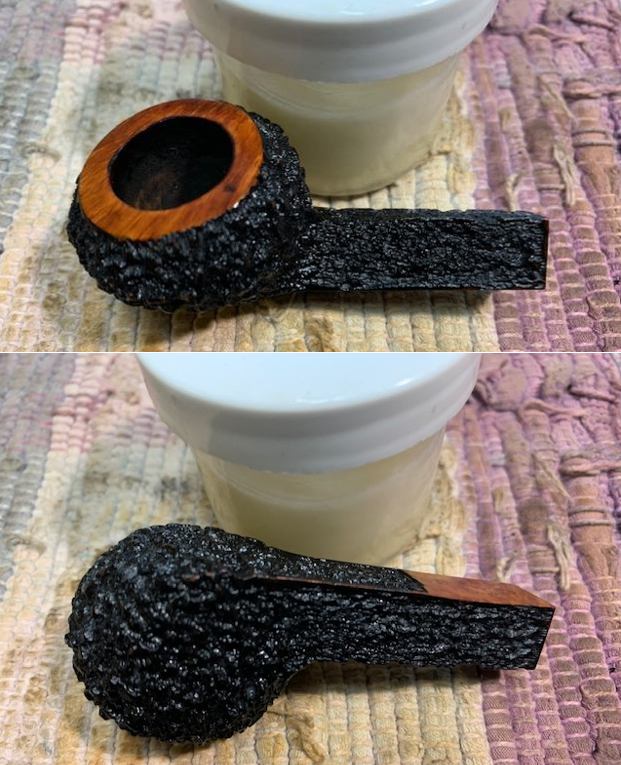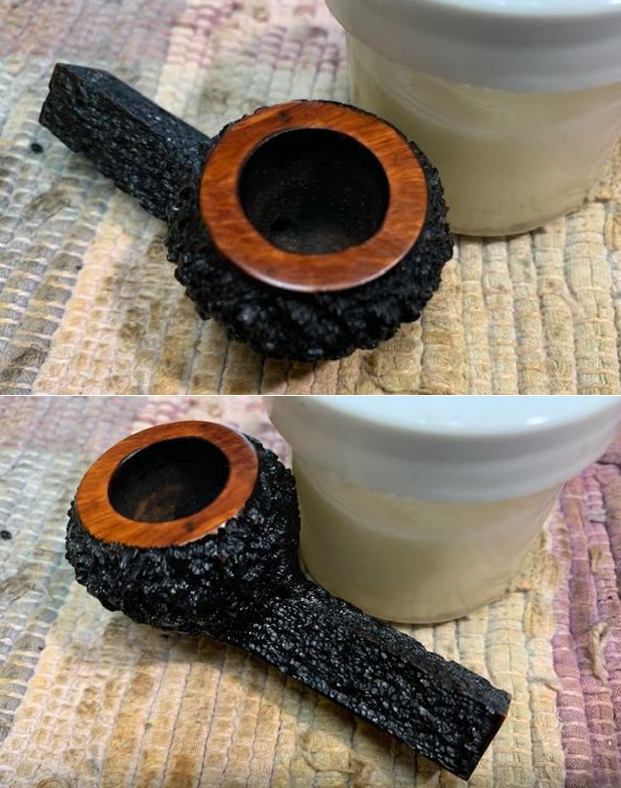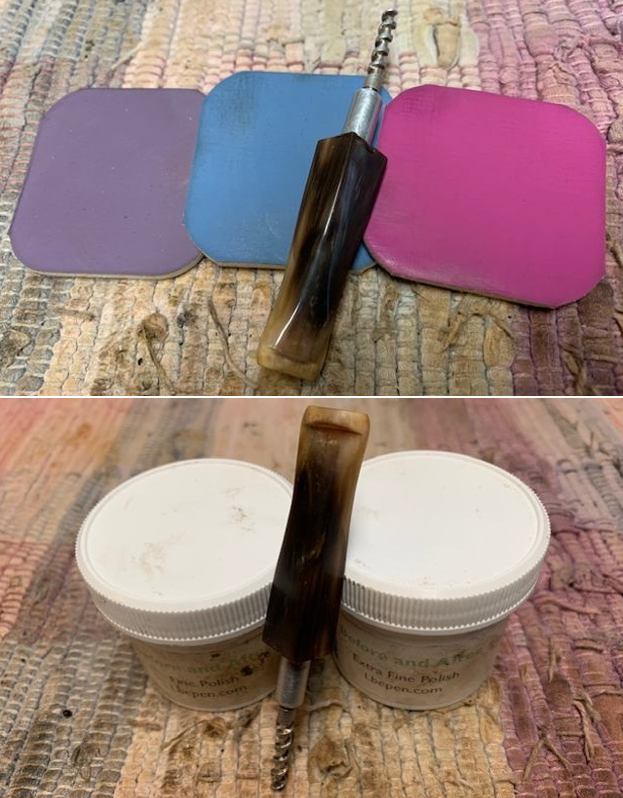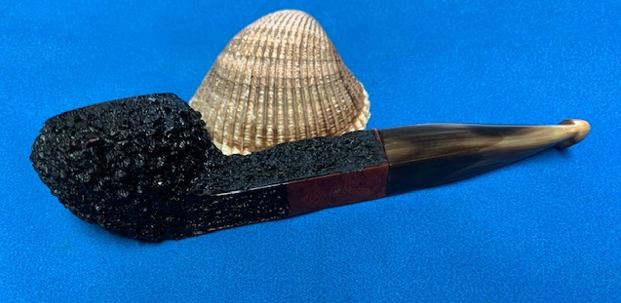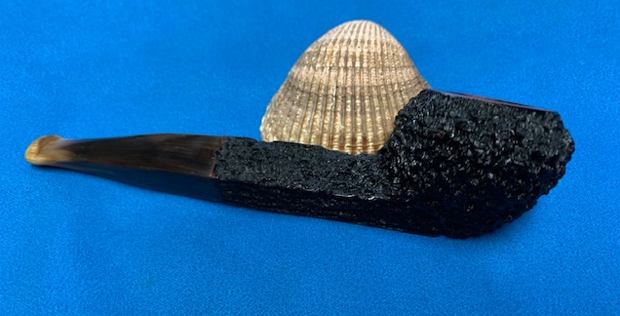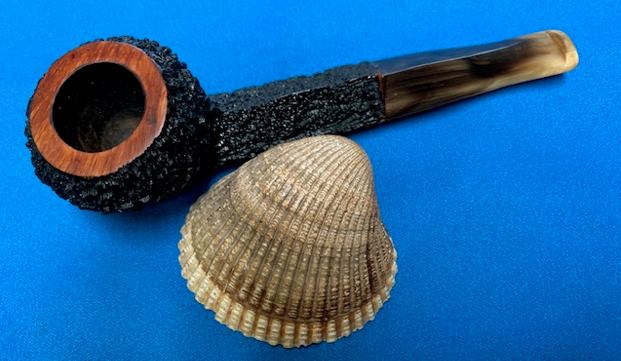
Tag Archives: bite marks

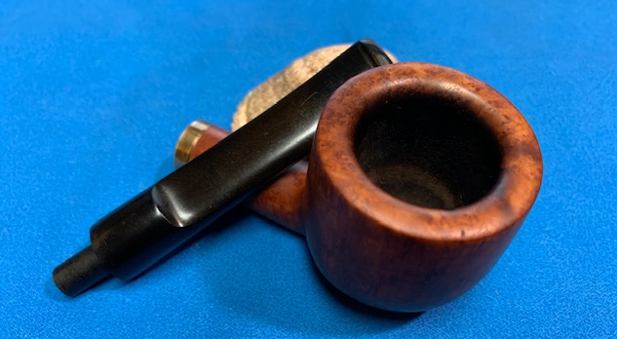
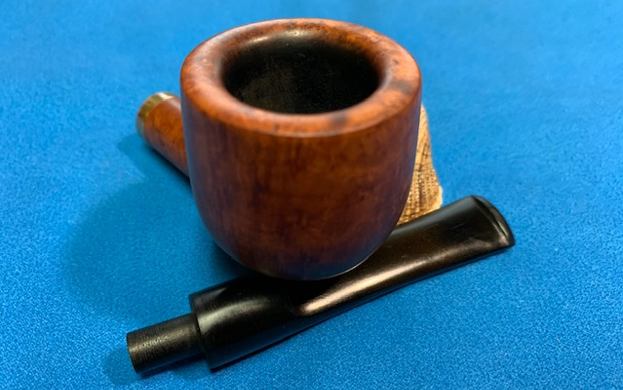
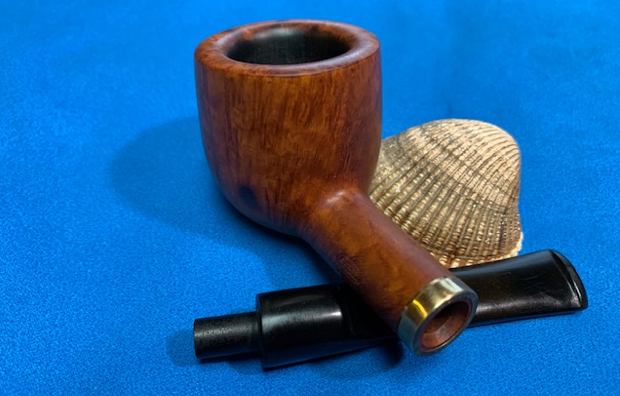
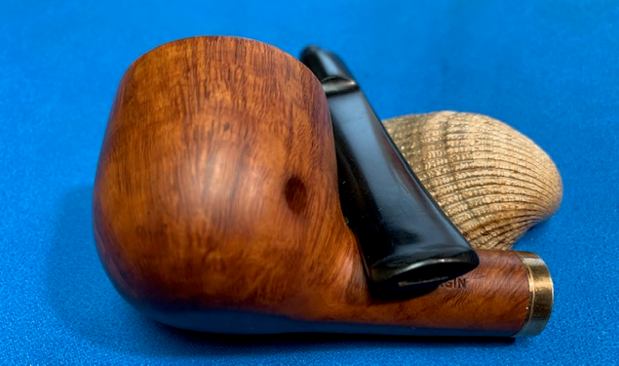
A Simple Refurbishing Of A Boxed “Brakner # 129”


Blog by Paresh Deshpande

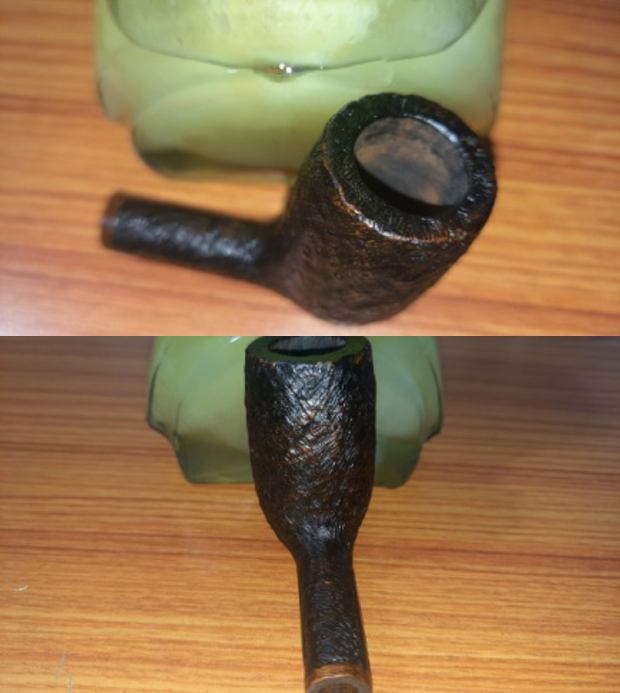
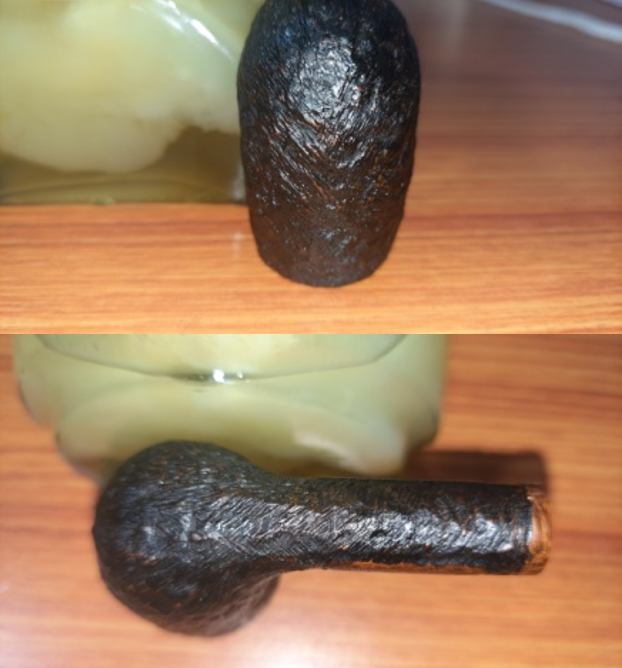
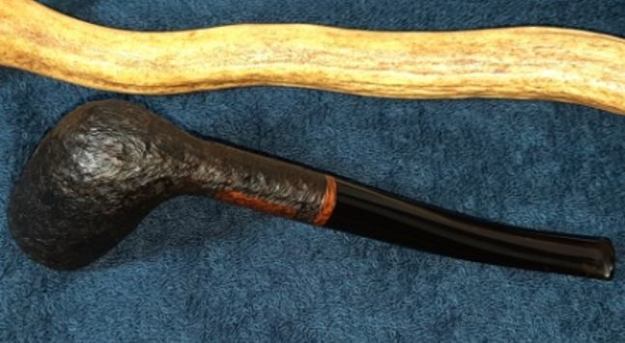
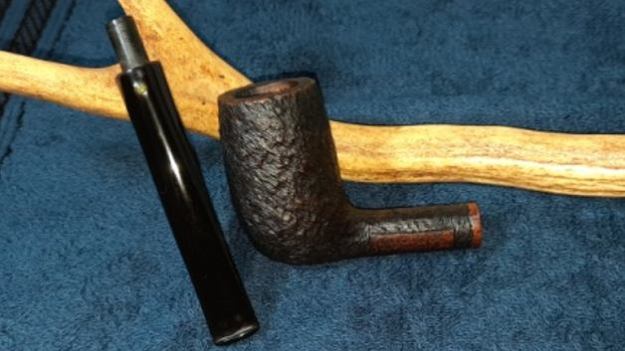
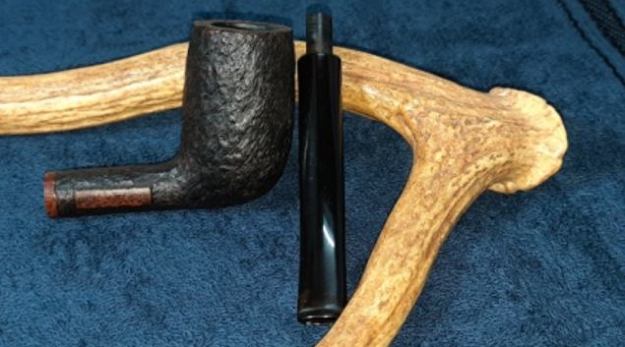
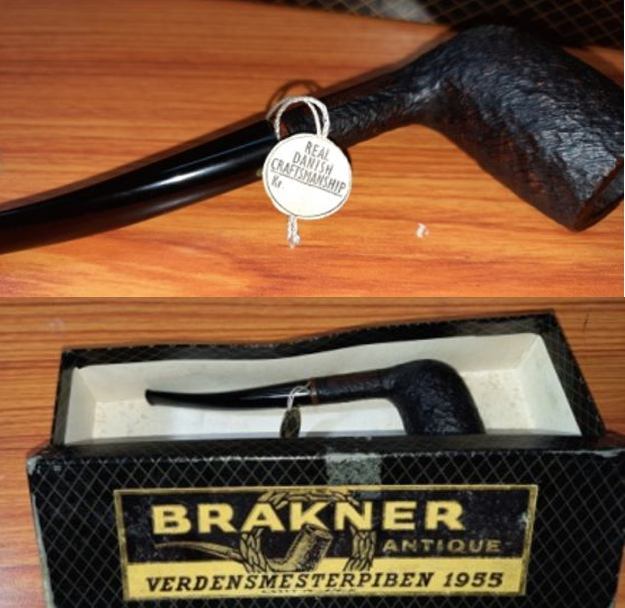
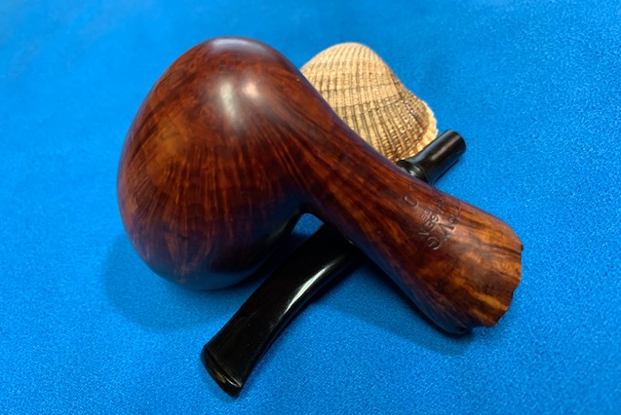
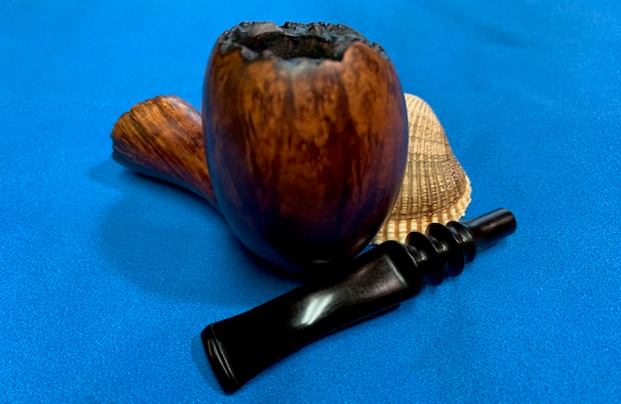
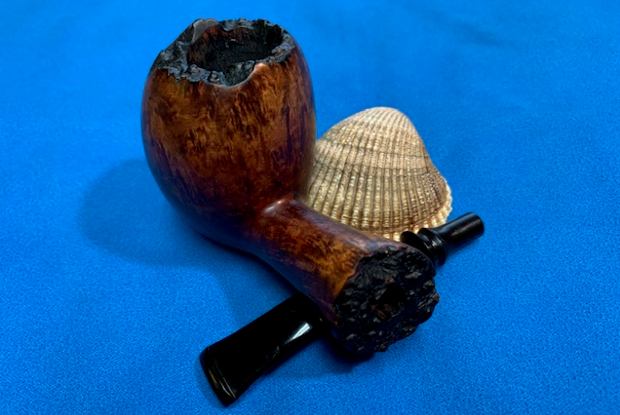
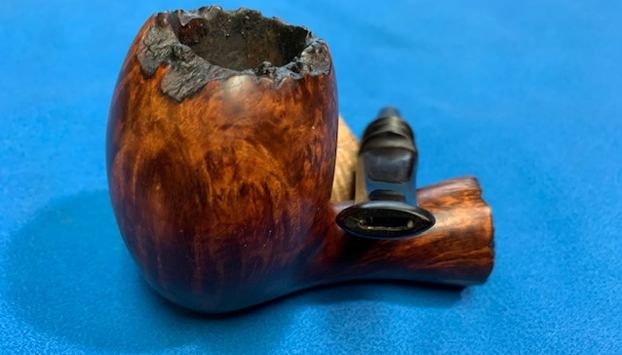
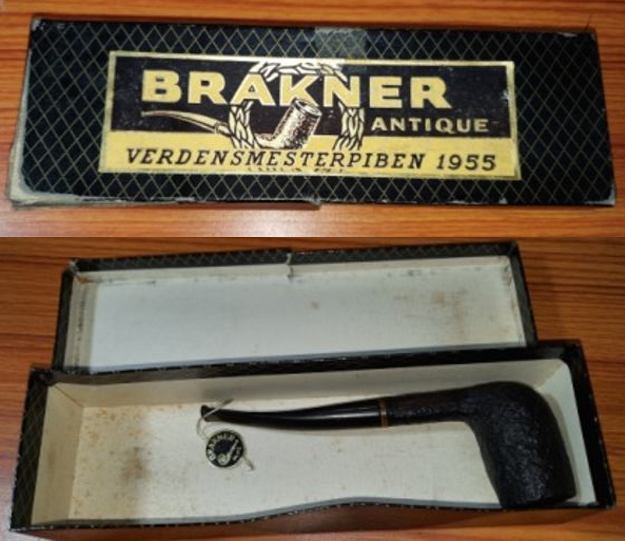
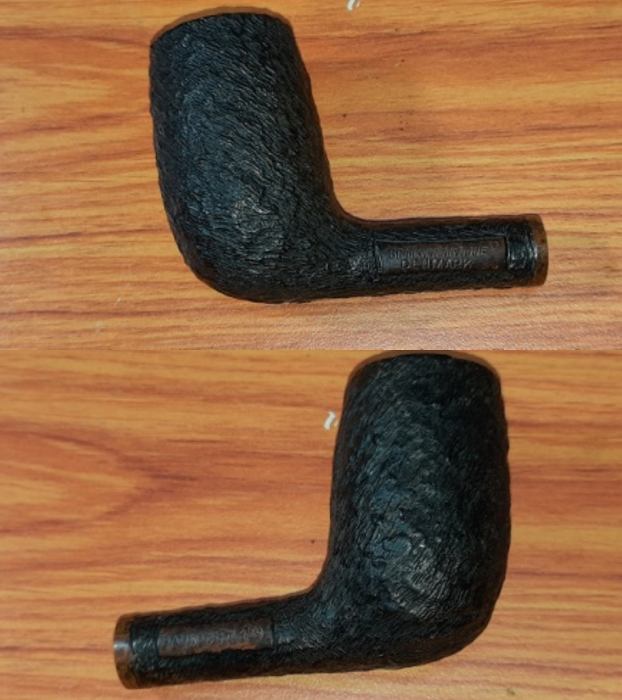
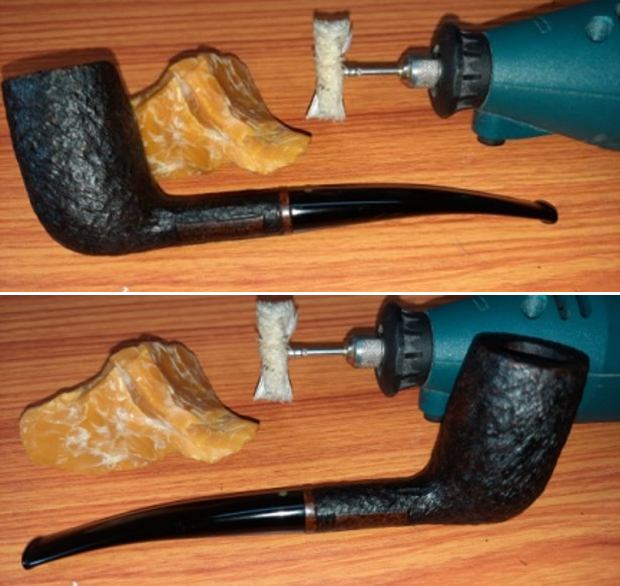
This is the third and the last Brakner pipe in my inherited collection that came in original Brakner box duly tagged, but I don’t think the box is original as the shape code on the pipe and the box do not match. I had been delaying restoring this pipe as I had my hands full with pipes that I had received for repairs and ones that were selected by brother pipers to be restored/ refurbished by me. In between these commitments, I took the time out to refurbish pipes for my personal collection and this is one such pipe. This uniquely rusticated stacked billiard shaped pipe is stamped on the smooth surface on the left side of the shank as “BRAKNER ANTIQUE” over “DENMARK”. The smooth surface on the right side of the shank is stamped as “HAND-CUT” followed by # 129, the shape number. The vulcanite stem is adorned with a green dot (larger than a Dunhill stem logo), I think made of Jade stone, not sure though. There is a smooth band around the end of the shank.  I have worked on Brakner pipes before and had read about Peter Brakner and his unique “micro-rustication” technique, which has been lost to the pipe community with his demise as he never did share this technique that he had developed. To refresh my memory, I revisited pipedia.org and read the article published therein. One can refer to the article at this link Brakner – Pipedia.
Peter Micklson (†) started his career at the Teofil Suhr workshop, Suhr’s Pibemageri, in Copenhagen, where Sixten Ivarsson was the foreman. He brought in Poul Rasmussen and taught him the two or three important things about pipemaking in a six weeks crash course, before he went off to join Poul Nielsen, the later Mr. Stanwell.

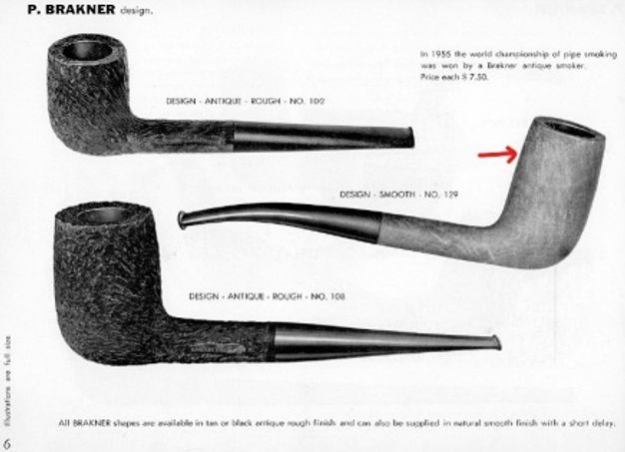
Micklson, who later changed his last name to Brakner,cannot have worked under Rasmussen too long before he felt to be good enough to go off on his own. Indeed he carved himself quite a good name as it was proudly announced 1955’s World Championship of Pipe Smoking was won by a smoker who employed a Peter Brakner pipe.

His fame based fairly on developing an unique and very special “micro-rustication” he called Antique. According to Kai Nielsen, Brakner kept this technique as a secret and only once he showed it to one person – Kai’s mother. Both have passed away, so this secret technique is lost. Kent Rasmussen was recently inspired by Brakner’s Antique finish when he created his new technique of rustication.

Brakner was a close friend of Ole Larsen, the proprietor of the famous W.Ø. Larsen tobacco shop and sold a lot of his pipes there, before Larsen hired his own indoor carvers. From the Larsen Export Catalog 1960/61 we learn a bit about Brakner pipes:

  • Antique Antique finish in tan or black. Smooth pipes also. Each pipe 7.50 $.
  • Bella Danica Antique finish in tan or black. Each pipe 10.00 $.
  • Royal Danois Antique finish in tan or black. Each pipe 12.50 $.

The latter were named after the Royal Danish Guard Regiment, founded in 1689.

Brakner was one of the first high-end carvers from Denmark to enter the US market and was considerably successful there in the early 1970’s. After his sudden death Peter Brakner’s name faded back from the forefront, but his pipes speak to the injustice of that. His body of work has earned him a place in the important history of Danish pipemaking.

Further down the article, there were a few pictures of Brakner Pipes from the 1961-62 catalogs that I have reproduced below which has the shape code of the pipe currently on my work table, albeit in a smooth finish and indicated with a red arrow.Having read the detailed account, I feel blessed to be holding a piece of Danish pipe history.
Initial Visual Inspection
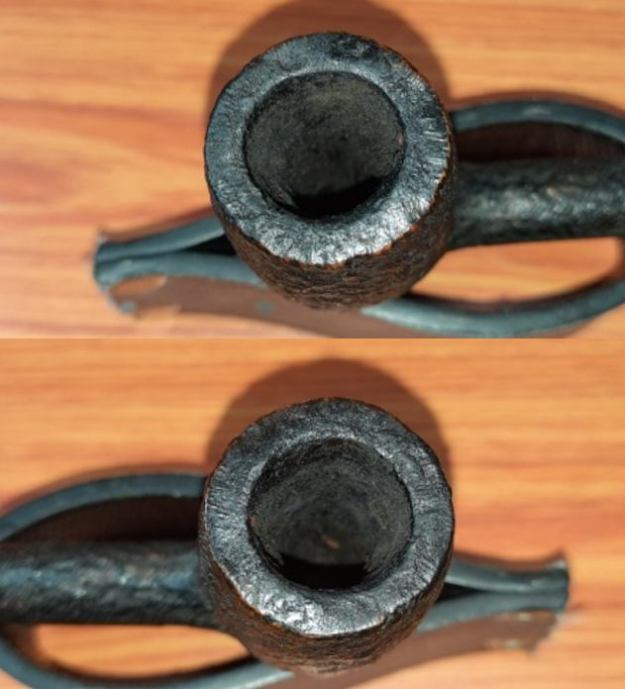
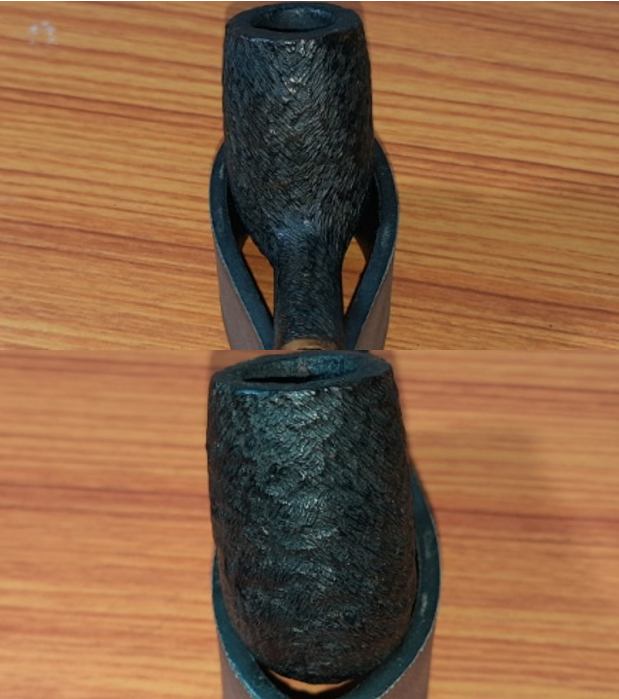
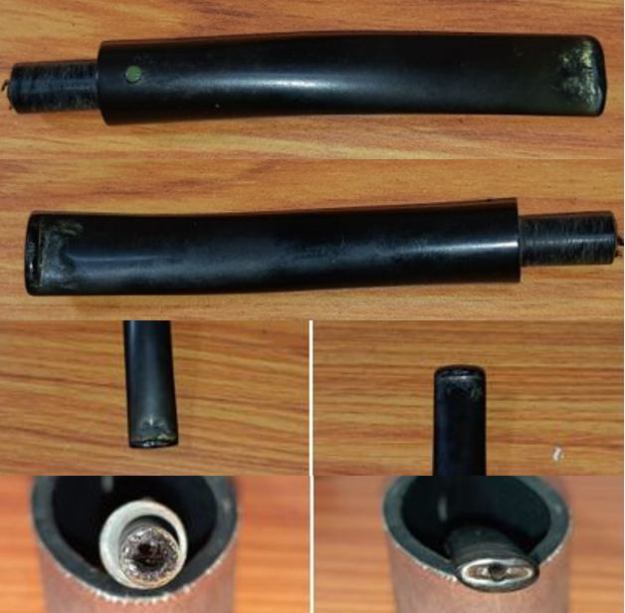
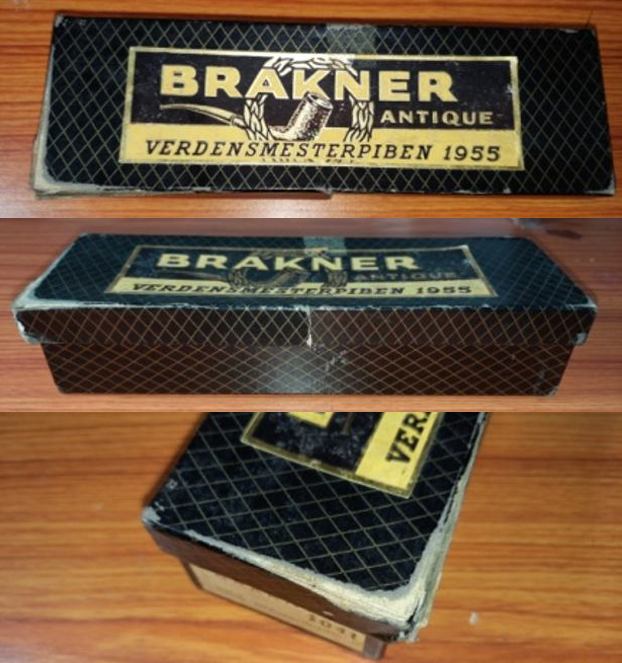
As is generally observed with most of my grandfather’s pipe, the chamber of this pipe too is filled with a thick cake with overflowing lava covering the rim top surface. The thick cake hides the condition of the inner walls of the chamber and will be ascertained only after the cake has been taken down to bare briar. Similarly, the condition of the rim top surface will be commented once the overflowing lava has been scraped off. However, the inner rim and outer rim edge appears to be in good condition with no tell tale signs of damage. There are strong smells emanating from the entire pipe and would need to be addressed. Unlike the other two Brakners in my collection, this one does not have a smooth band below the outer edge of the rim, but has one at the shank end. It has smooth surfaces on either side of the shank which bears the stampings seen on this pipe. The unique rustications on the stummel surface are covered in oils, tars, grime and dust of all these years of use and storage. However, once cleaned up, the dark of the stummel should contrast beautifully with the smooth brown shank end band. The mortise and the shank air way are clogged as expected making the air flow anything but laborious. However, with the draught hole being right at the bottom of the chamber and the perfect alignment of the stem airway, tenon and the shank airway should make this one a fantastic smoker. The vulcanite stem is heavily oxidized with deep tooth marks on both the upper and lower stem surfaces. The buttons on the either surfaces are deformed due to tooth indentation and would have to be rebuilt and reshaped. The trademark green dot on Brakner pipe stem has dulled a bit and would benefit from a nice polish. The tenon end and the slot end showed heavy accumulation of dried oils and gunk.The cardboard box that housed the pipe for these many years does show its age. The edges have separated at the seams at a couple of places and the whites of the insides have yellowed. However, the posters and external surface are bright and in good condition. All in all, judging from the initial examination, I do not envisage any major/ serious issues to present themselves in the course of restoring this beauty and should be an easy project.
The Process
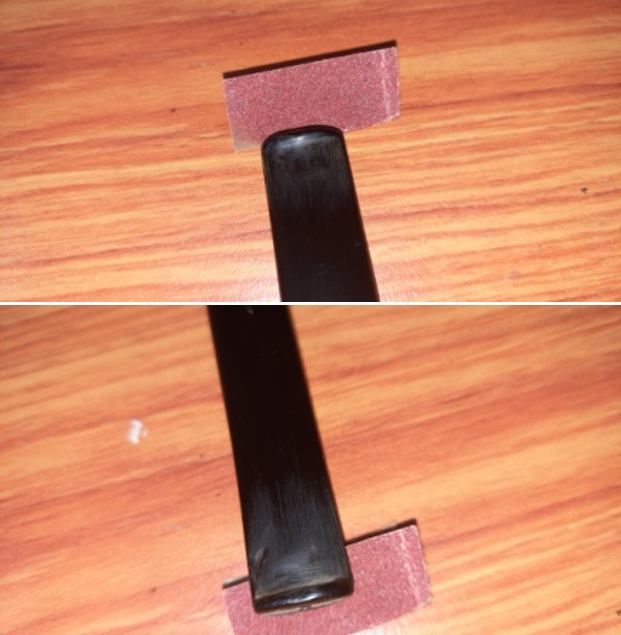
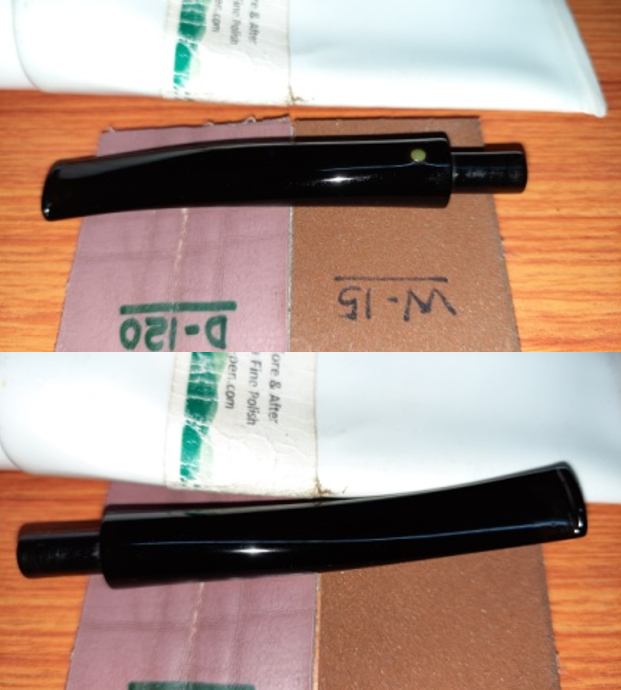
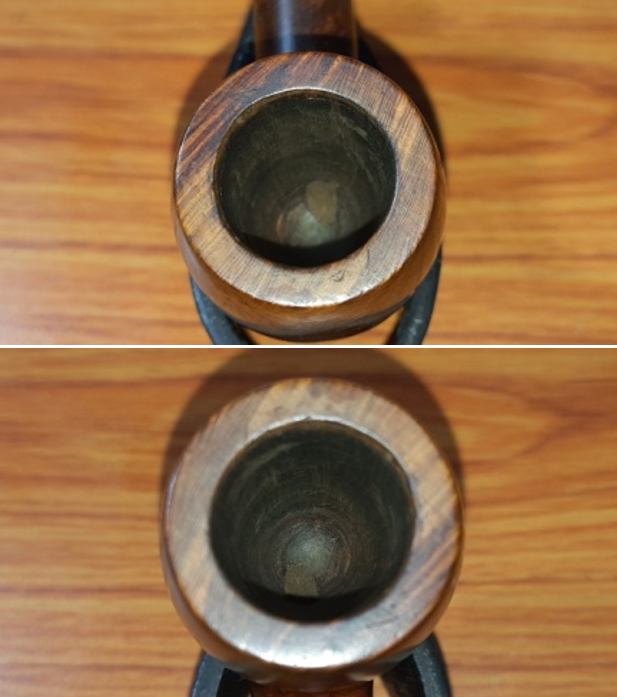
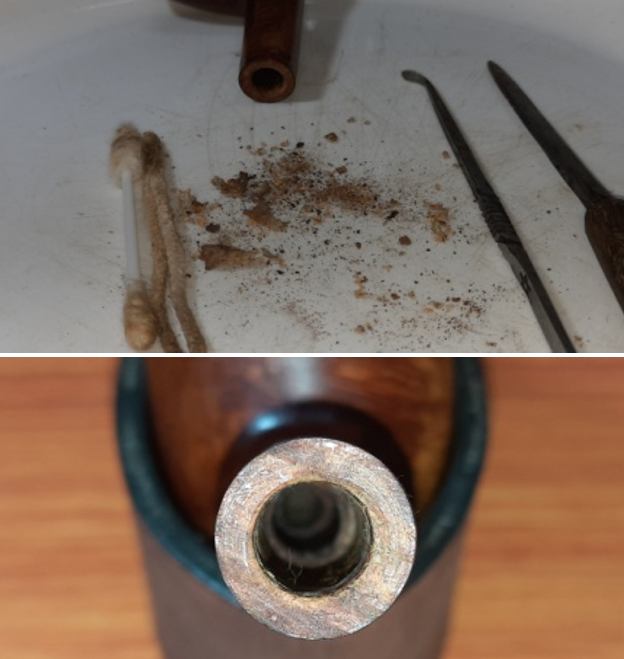
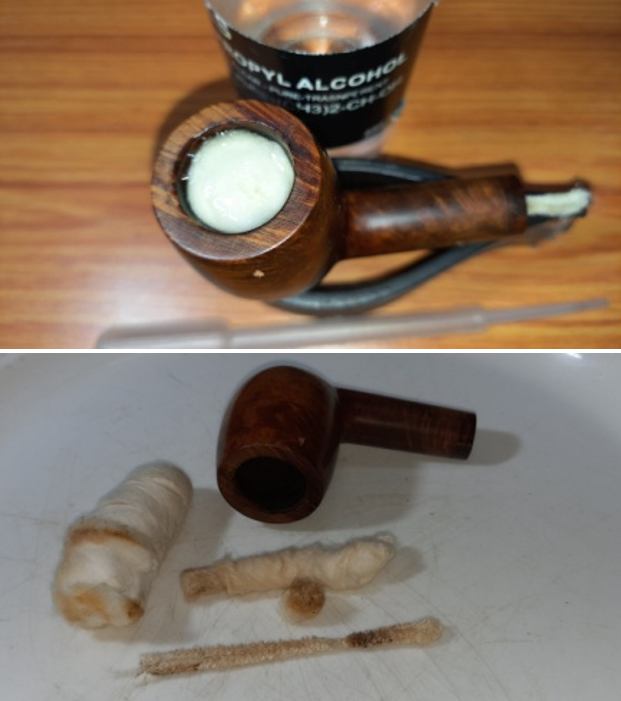
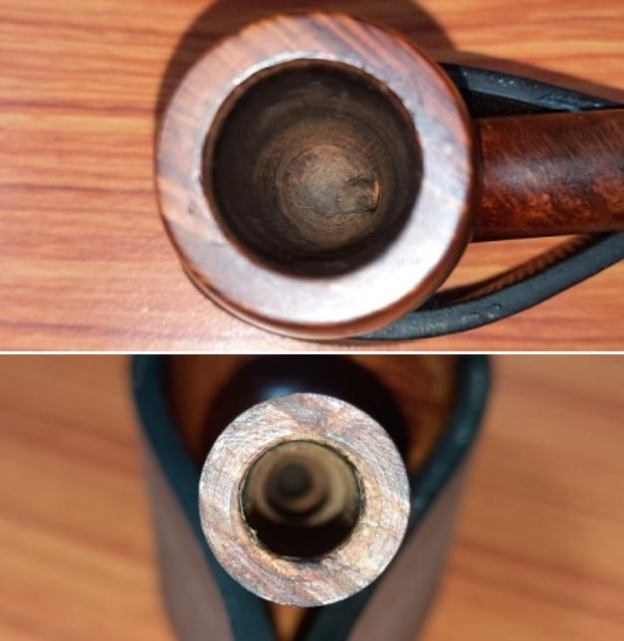
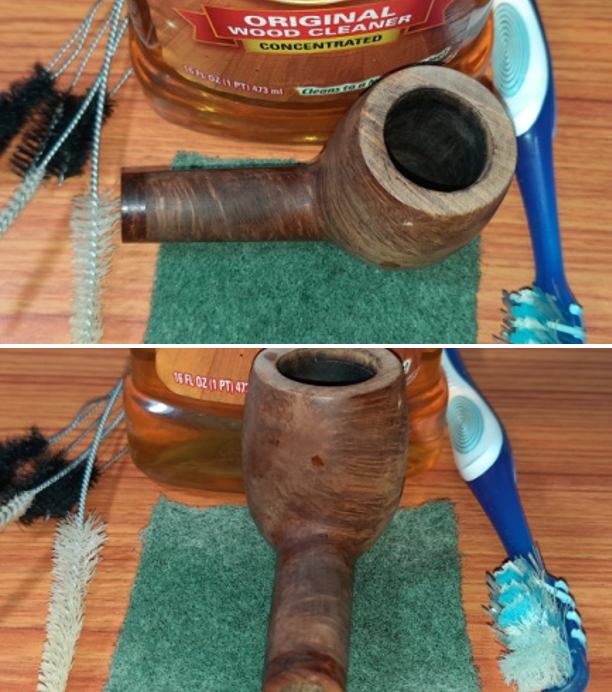
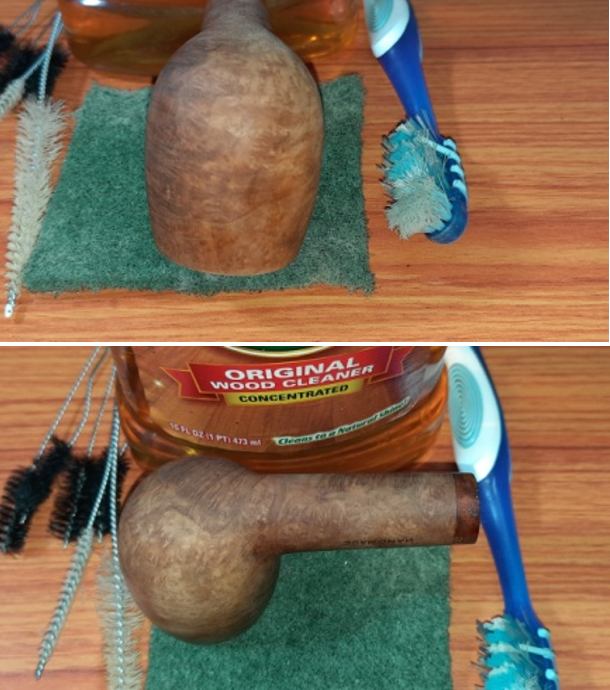
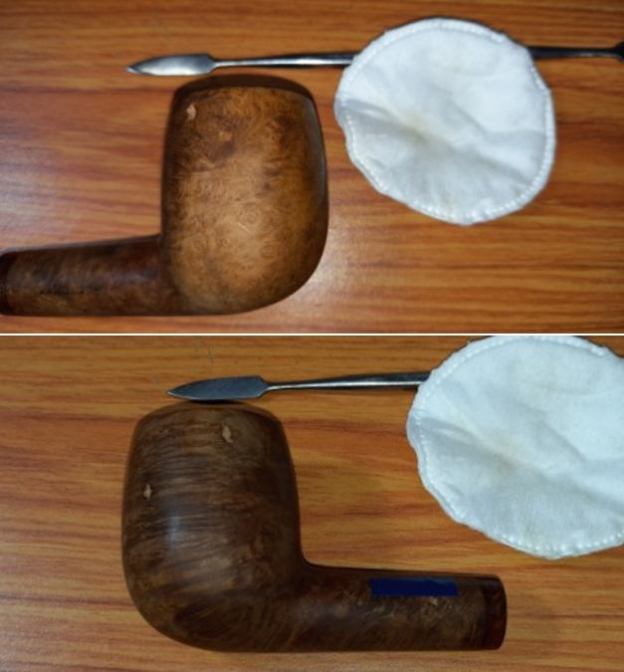
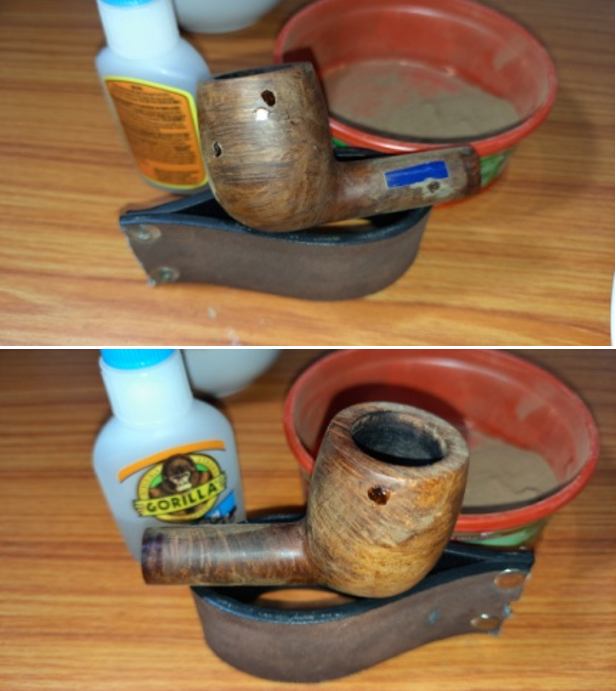
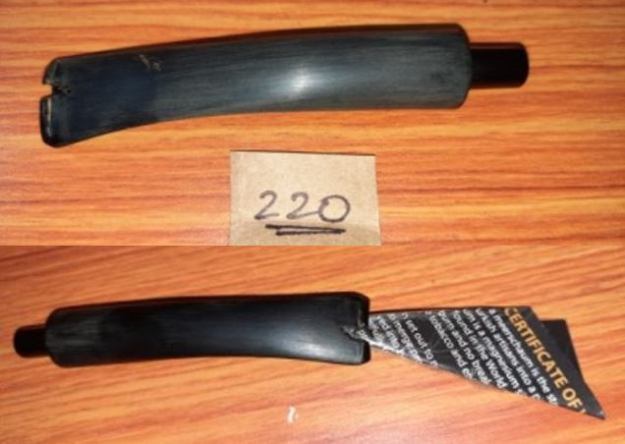
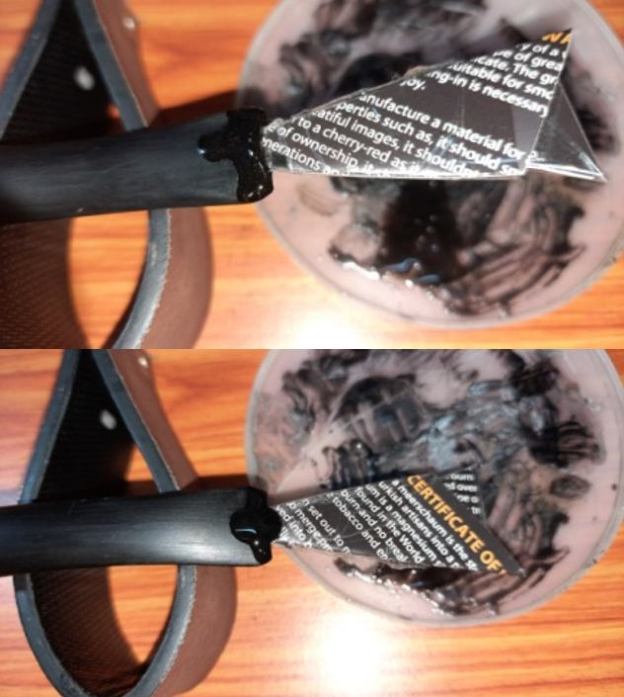
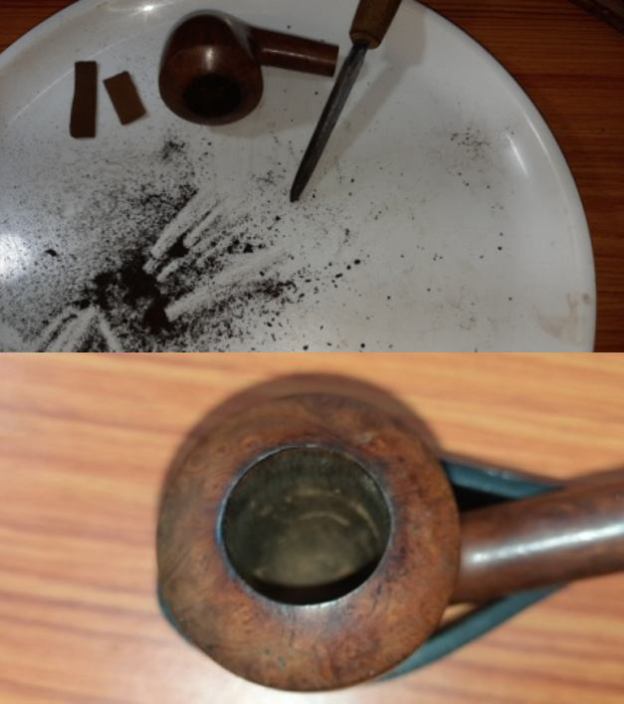
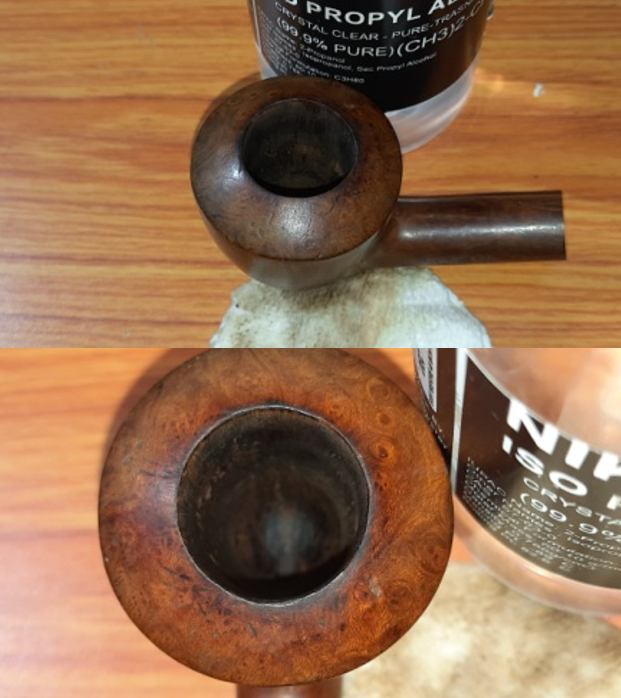
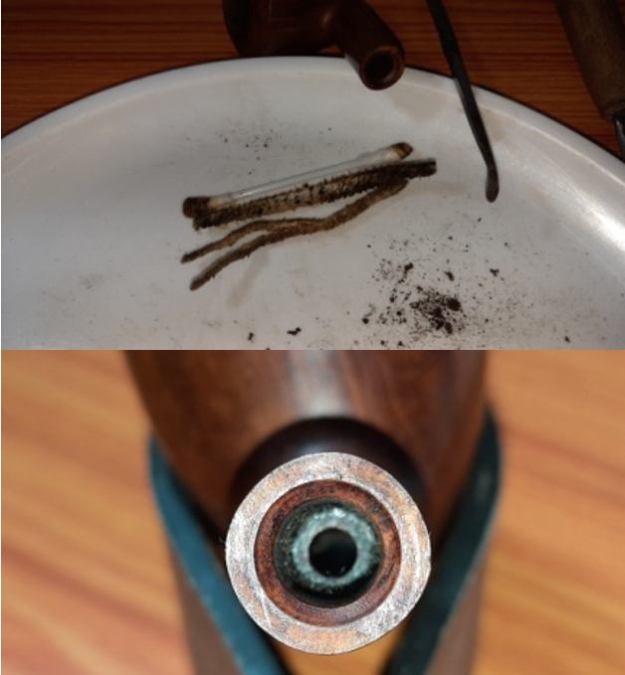
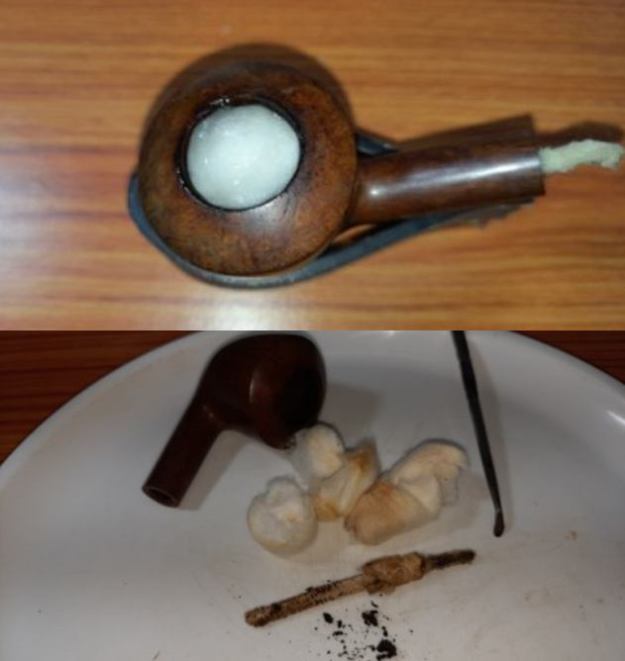
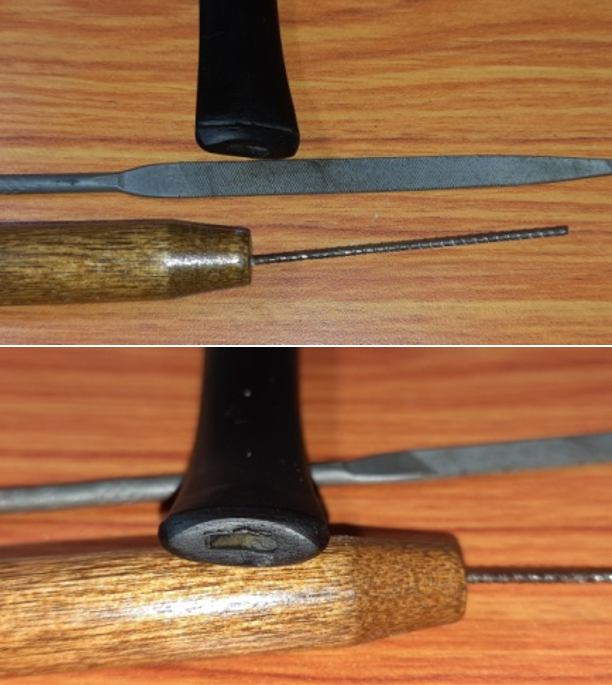
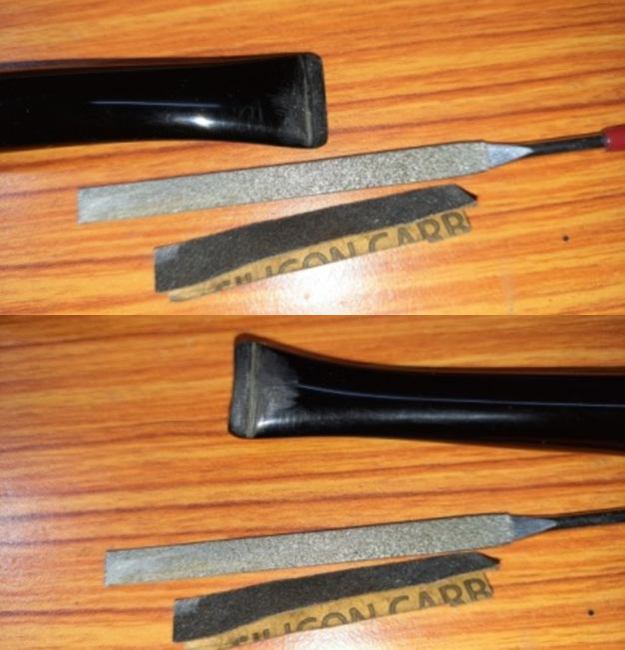
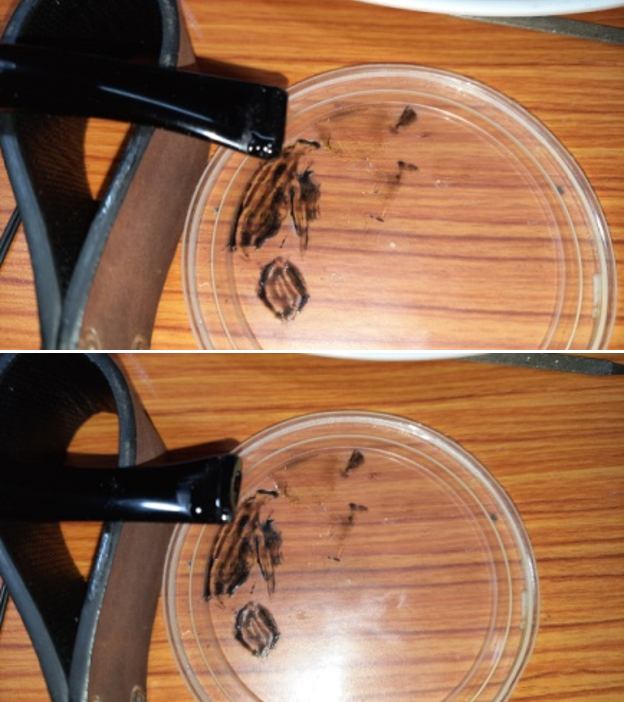
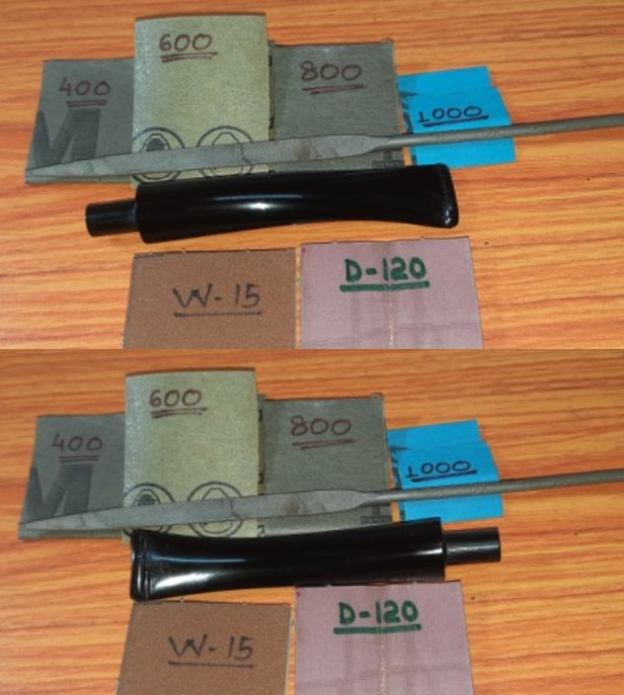
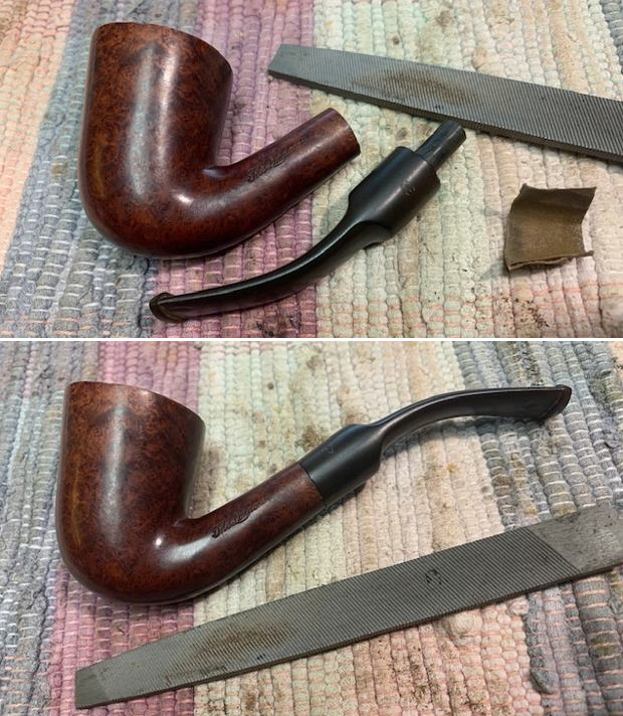
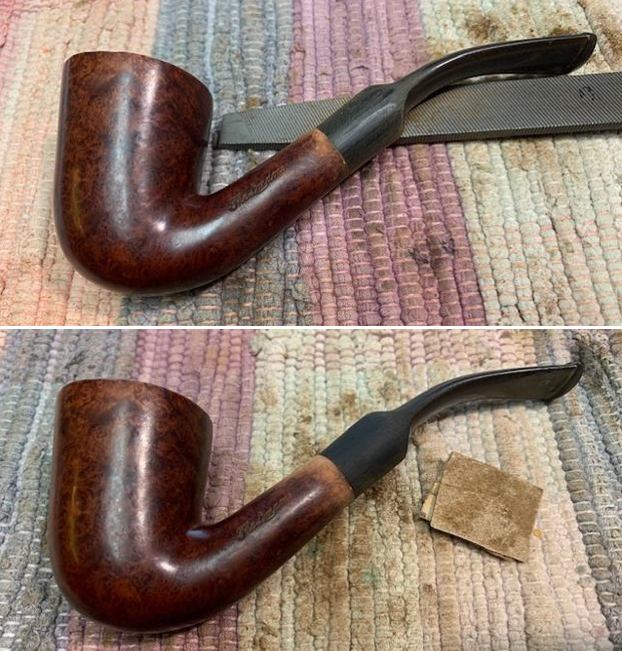
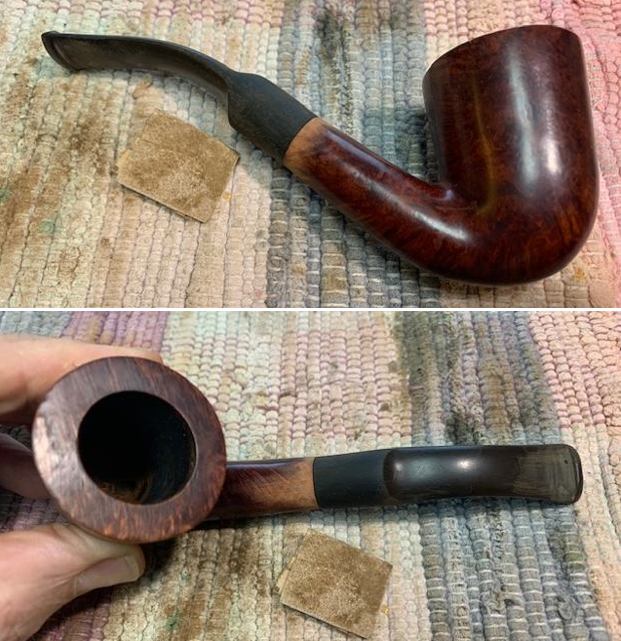
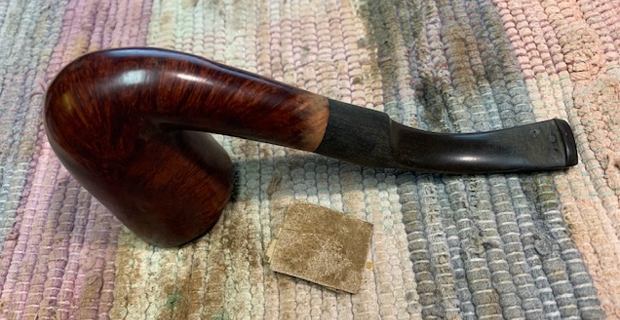
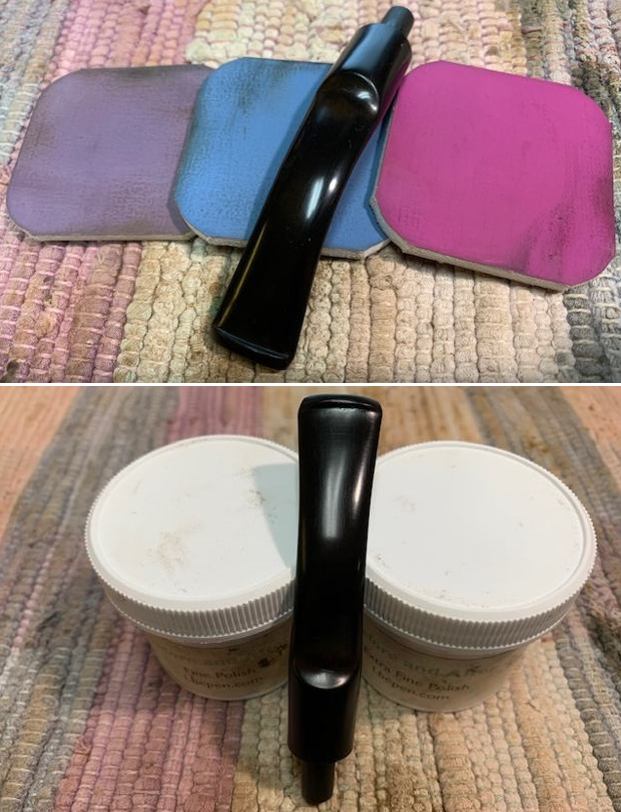
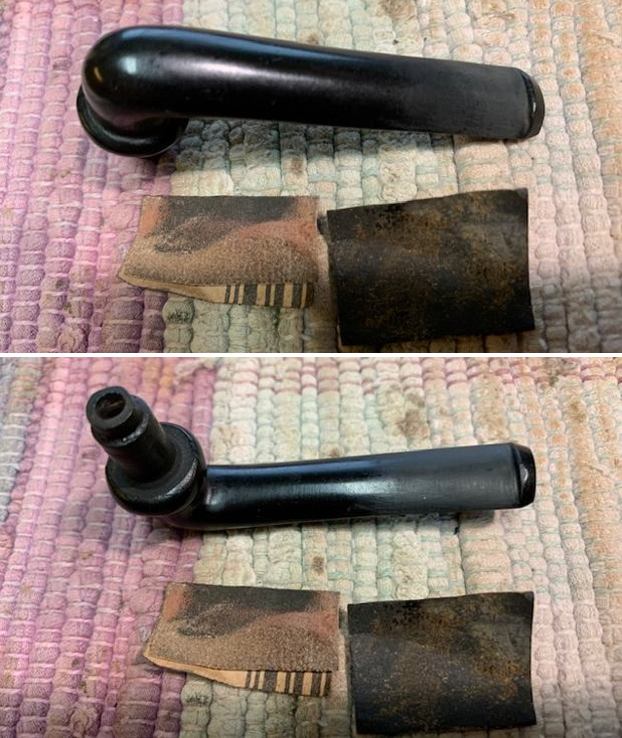
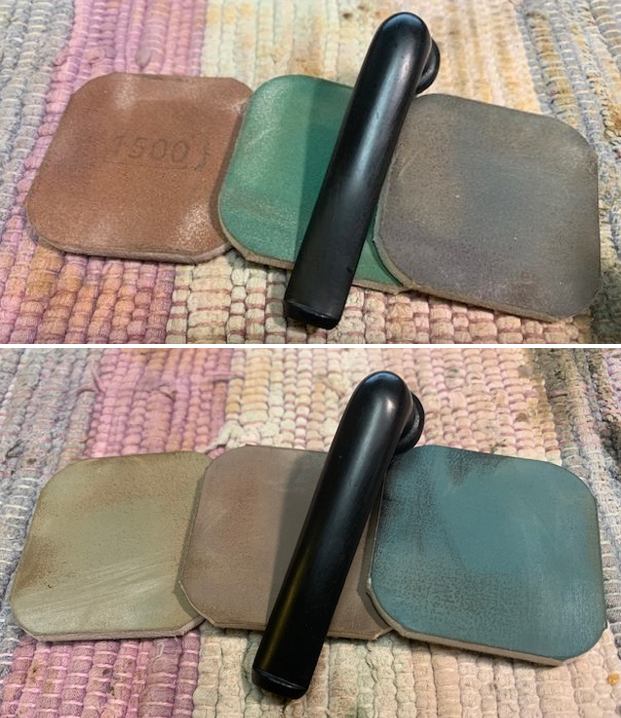
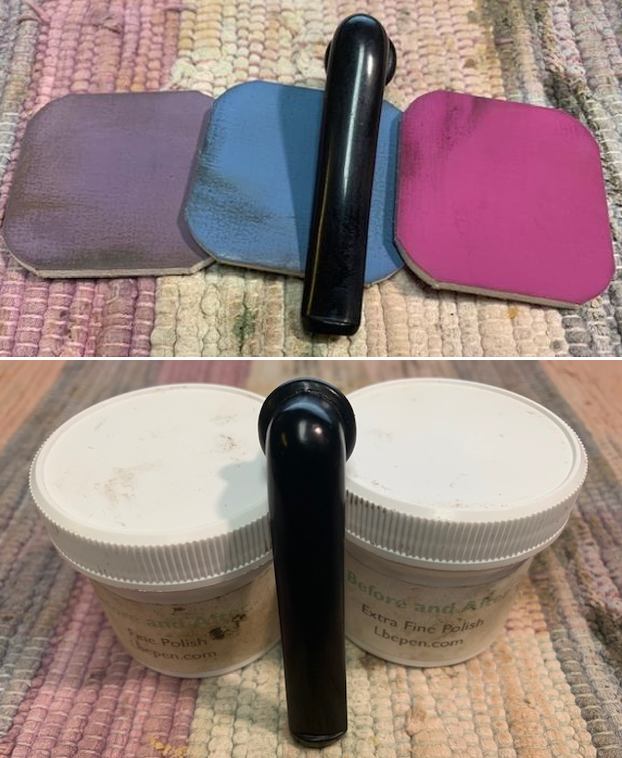
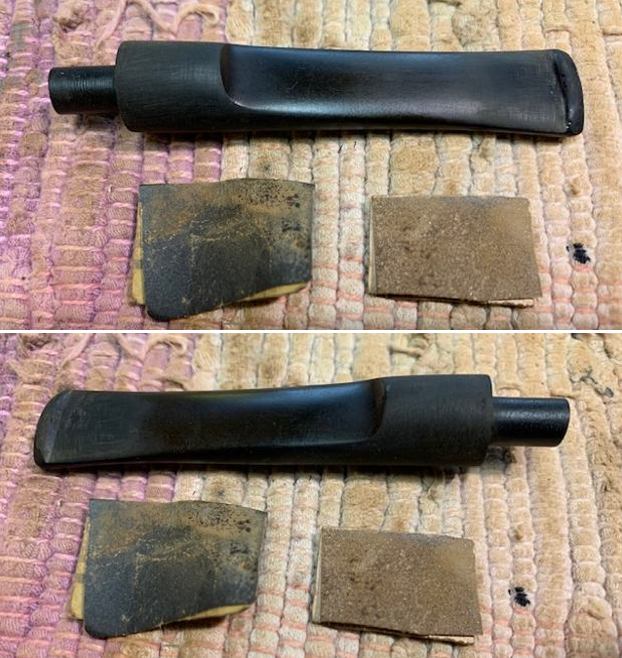
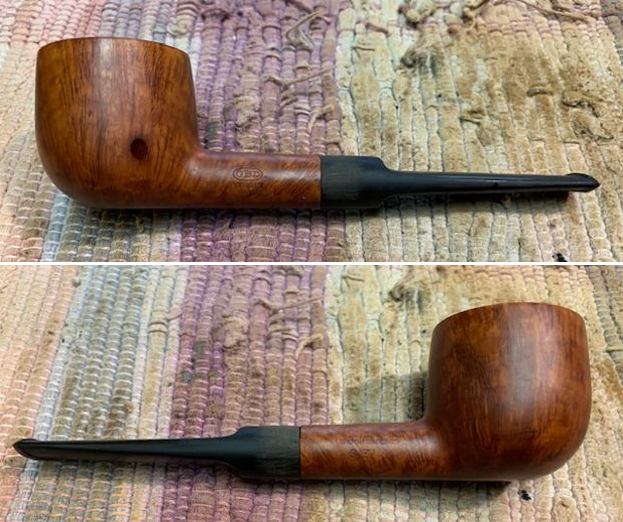
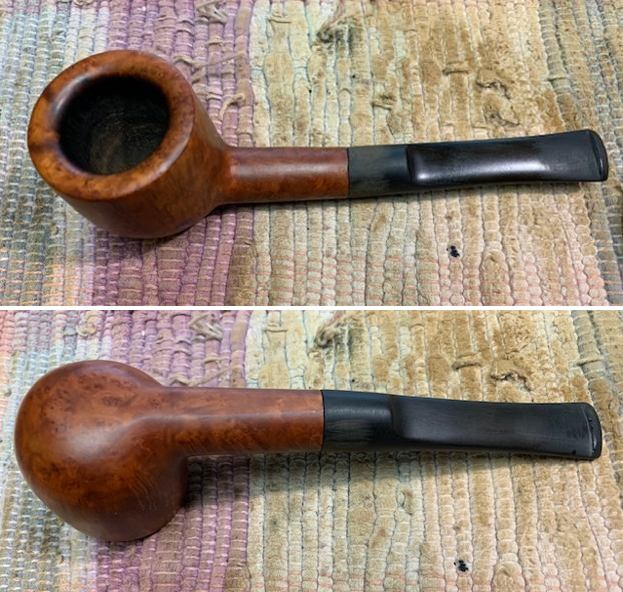
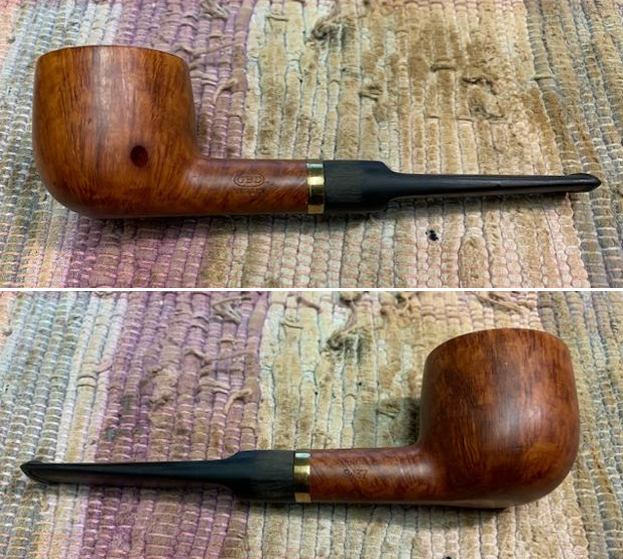
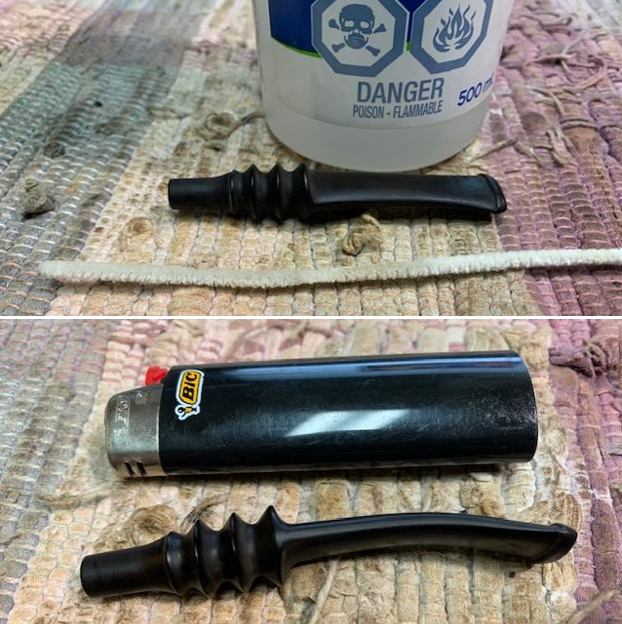
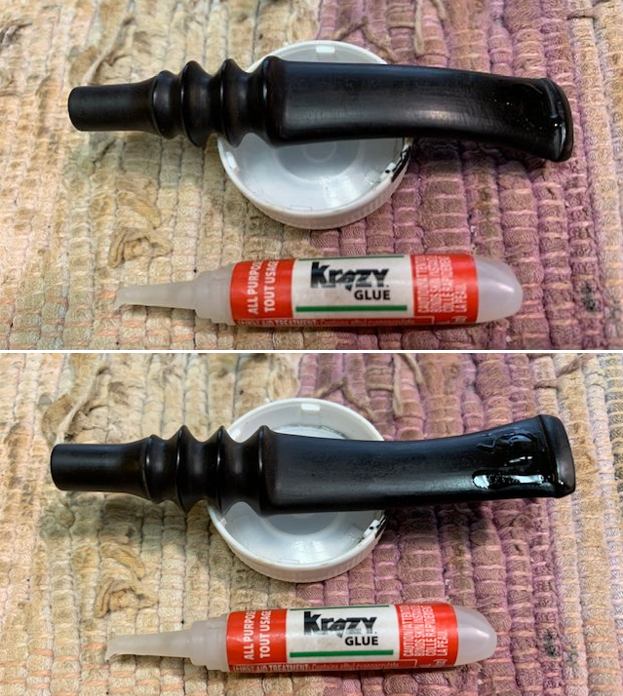
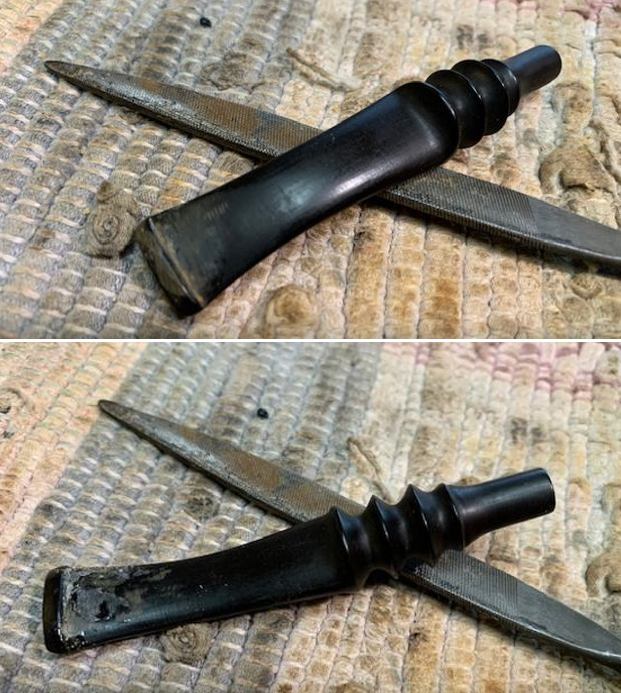
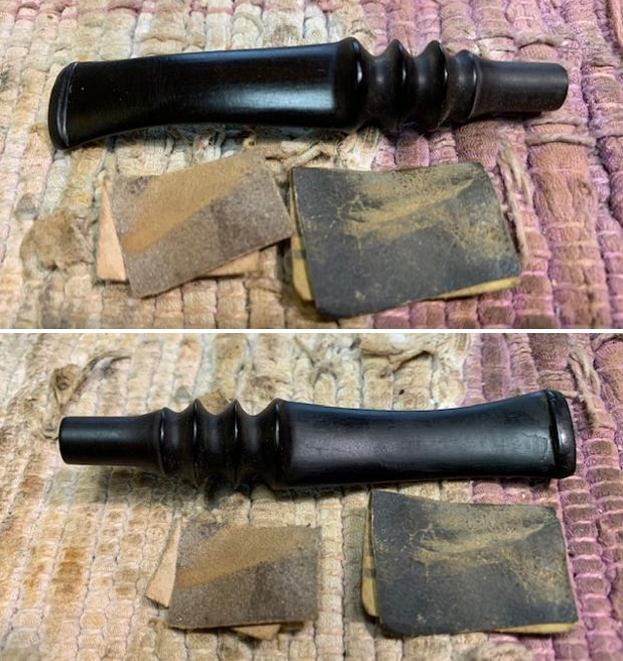
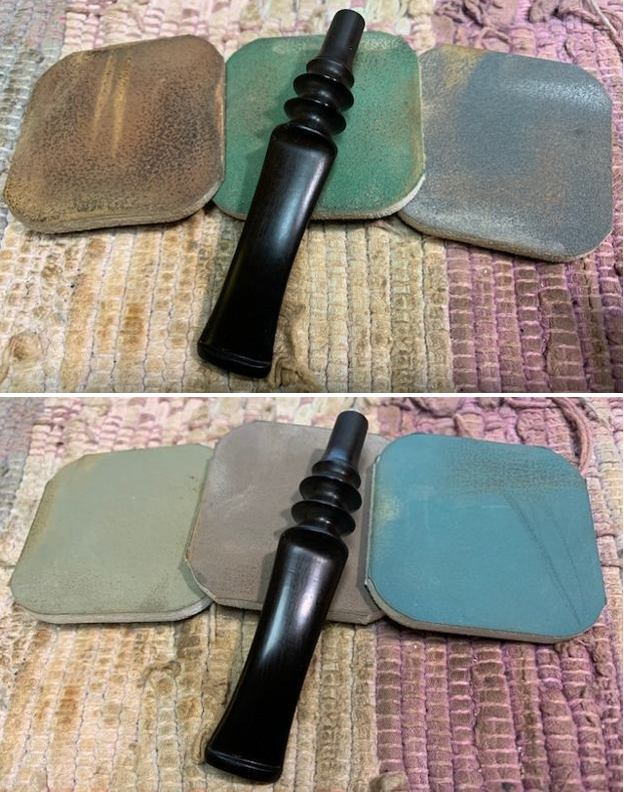
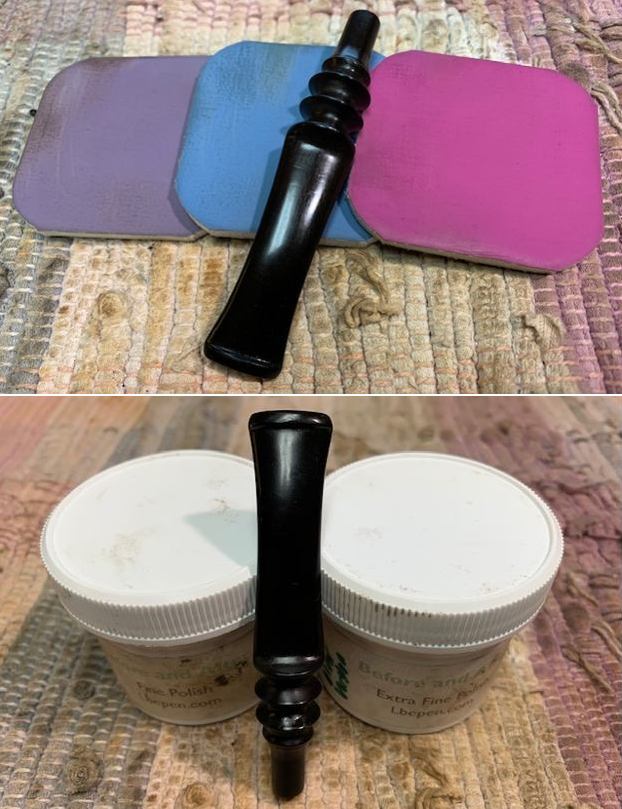
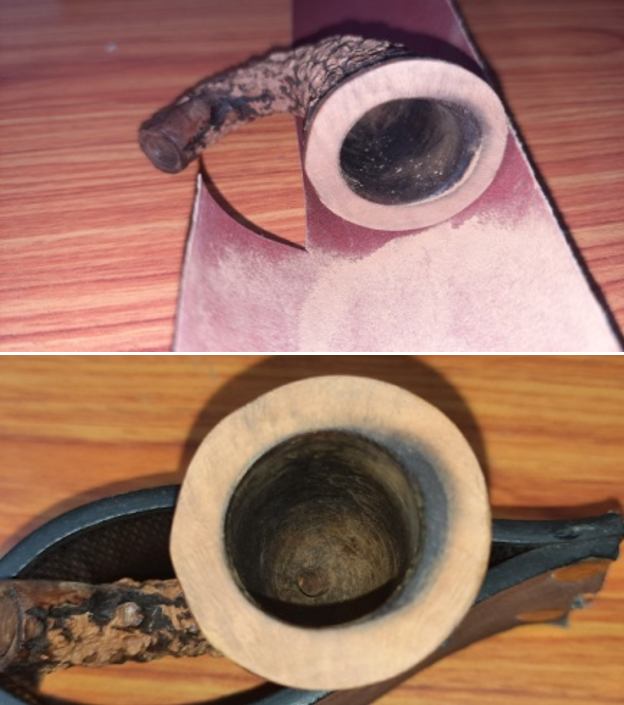
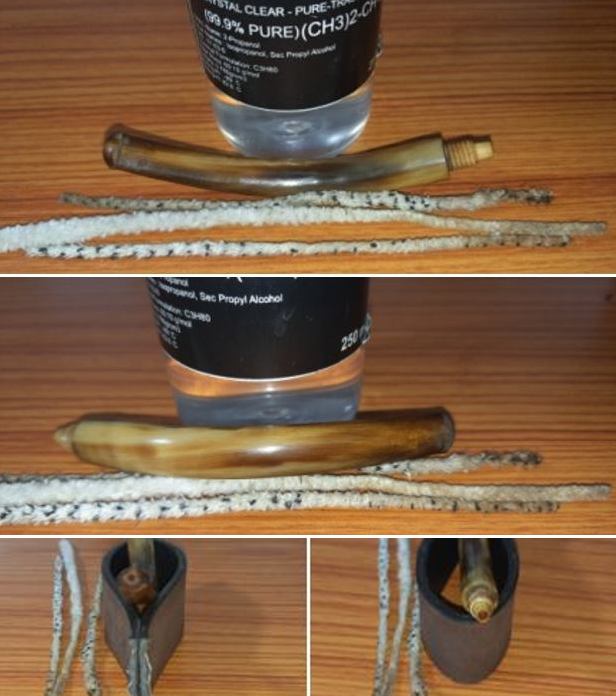
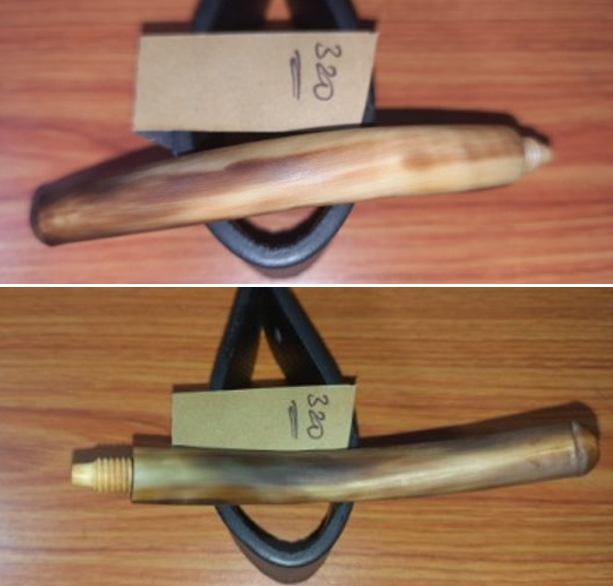
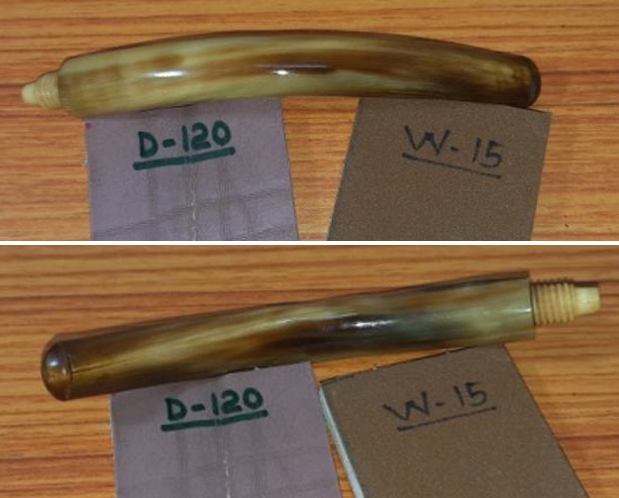
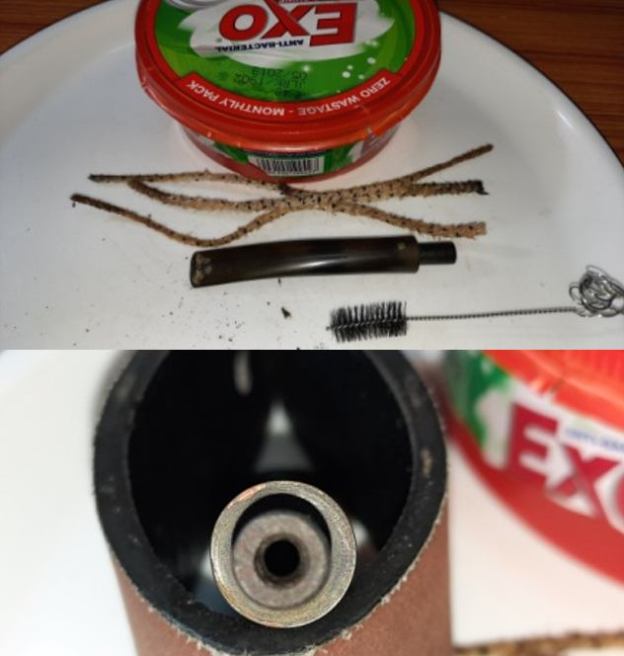
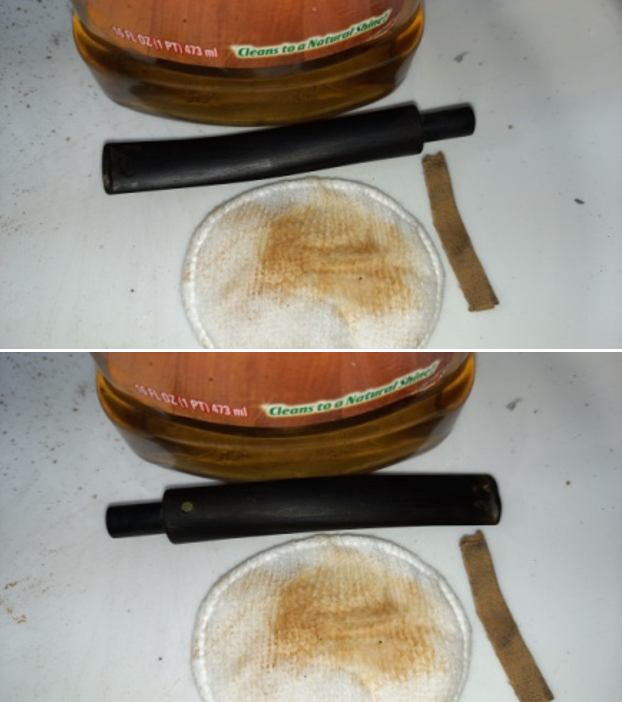
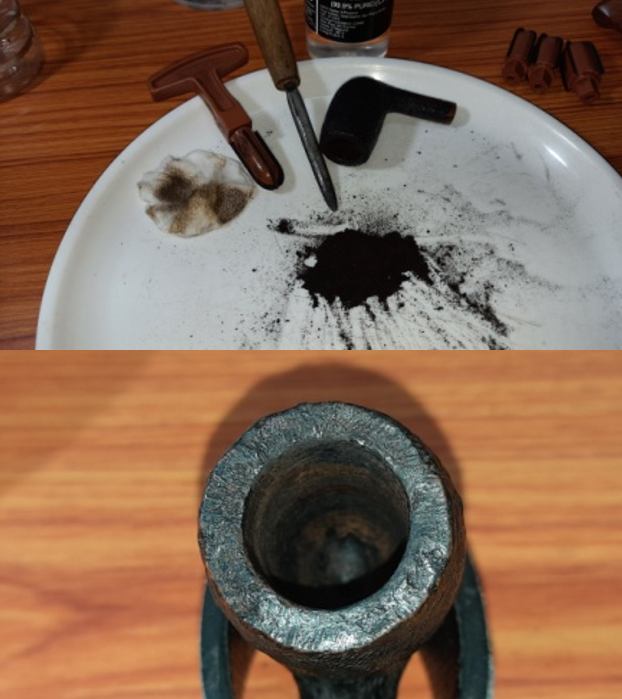
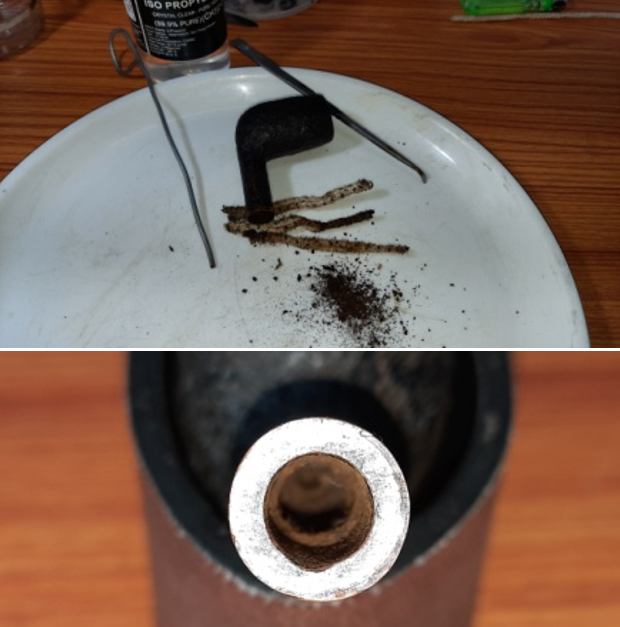
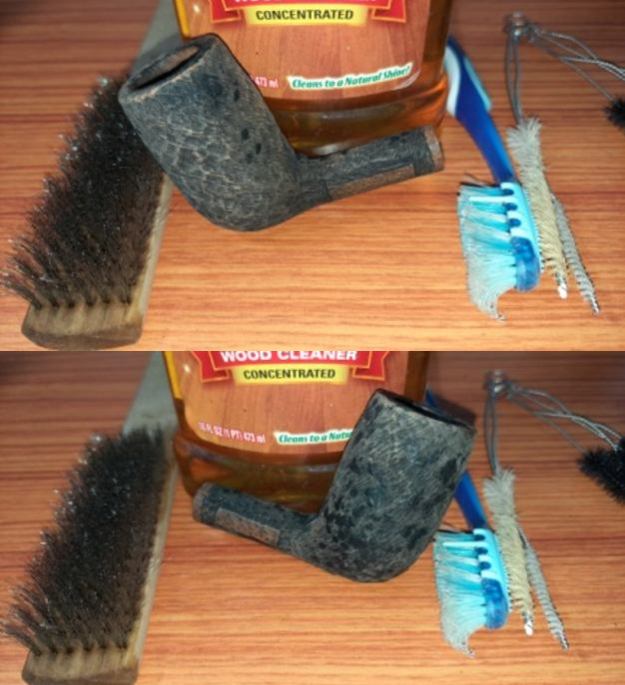
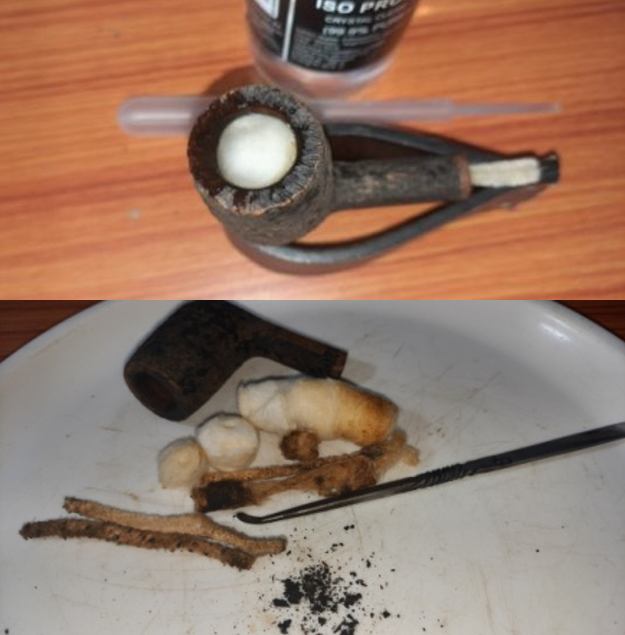
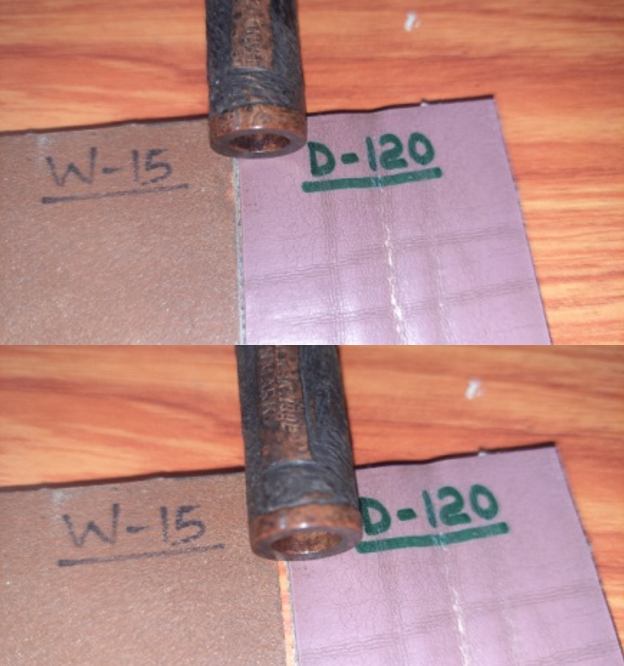
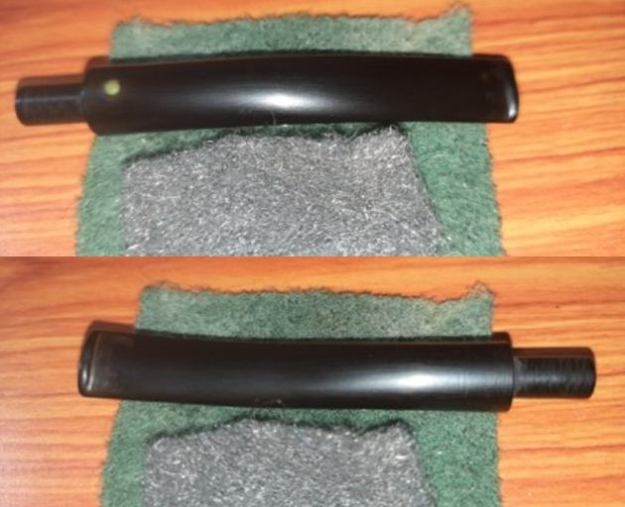
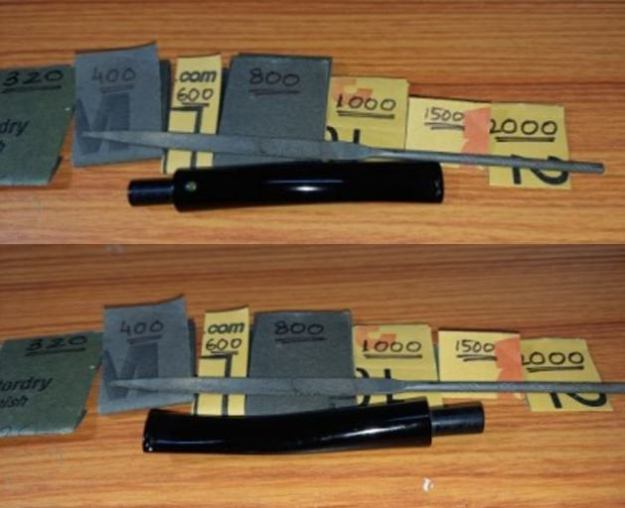
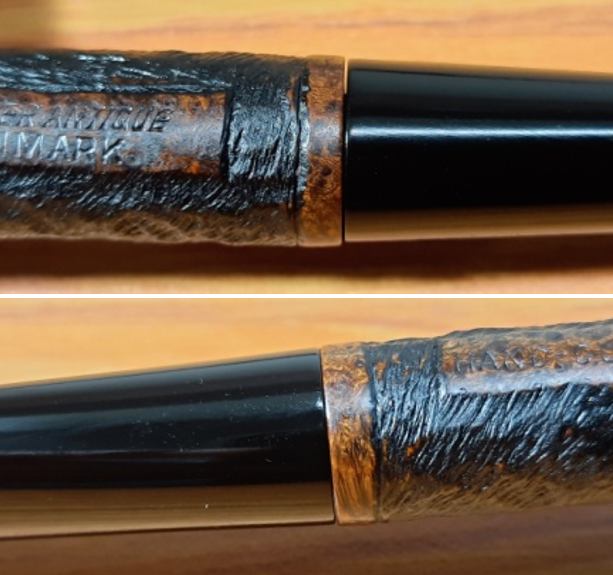
I began the restoration process by first cleaning the stem internals. I cleaned the internals of the stem using hard bristled pipe cleaners dipped in isopropyl alcohol and followed it by cleaning the air way using a small shank brush with anti oil dish cleaning soap. This helps in reducing the number of pipe cleaners required while ensuring a spotless and a very clean stem air way. Once the stem internals were clean, I sand the entire stem surface with a piece of 220 grit sand paper and cleaned the stem surface with Murphy’s Oil soap on a cotton pad. This step helps to remove surface oxidation to some extent while preparing the stem for a dunk in deoxidizer solution for better results. To address the issue of bite marks and tooth chatter on the stem surfaces, I flamed the surface with a lighter. Vulcanite has the property to attain its original shape when heated and this is exactly what was being done. The tooth chatter and deeper bite marks were raised to the surface to a great extent. The remaining minor tooth indentations would be subsequently filled with a mix of clear super glue and activated charcoal. At this stage, I immersed the stem in to the De-oxidizer Solution developed by Mark Hoover. I generally allow the stem soak in the solution overnight.While the stem was soaking in the De-oxidizer solution, I reamed the chamber with size 1 head of the PipNet pipe reamer. I removed the carbon from the areas where the reamer head could not reach with my fabricated knife. To completely remove the residual carbon from the walls of the chamber and smooth out the walls, I sand the chamber walls with a folded piece of 220 grit sandpaper followed by cleaning the chamber with a cotton swab wetted with isopropyl alcohol. The chamber walls are in pristine condition. I deliberately avoided scraping off the lava build up over the rim top to avoid damage to the micro-rustications over the surface. I cleaned the mortise and shank airway using dental pick and hard/ soft bristled pipe cleaners dipped in isopropyl alcohol. I shall continue with further cleaning of the shank internals once I clean the external stummel surface.Once the internals of the chamber and shank were cleaned, I cleaned the external surface of the stummel with Murphy’s Oil soap and cotton swabs followed by scrubbing the rusticated surface with a toothbrush and dish washing soap. This rid the stummel rustications of all the accumulated dust, dirt and grime and the smooth brown band around the shank now contrasts beautifully with the dark stummel surface. Using a soft brass brush, I deliberately cleaned the rim top micro-rustications till clean. I also cleaned the shank internals with dish washing soap and shank brush.I had expected that after such a thorough cleaning of the chamber and shank internals, the ghost smells would have been greatly reduced or eliminated completely, but that was not so. I decided to subject the chamber and mortise to cotton and alcohol bath. I packed the chamber with cotton and drew out a wick from the cotton and along with a folded regular pipe cleaner, inserted it into the mortise and through the draught hole into the chamber. I tightly packed cotton balls in to the remaining portion of the mortise. Thereafter, I soaked the cotton balls with isopropyl alcohol up to the brim. About half an hour later, the level of alcohol had gone down, having being absorbed by the cotton. I topped it up once again and set it aside overnight. By next afternoon, the cotton and alcohol had drawn out all the remaining oils and tars from the chamber and mortise. I removed the cotton balls and the dirt can be gauged by the appearance and coloration of the cotton balls and the pipe cleaner. With my fabricated knife and dental tools, I spent the next hour scrapping out the entire loosened gunk from the mortise. I ran pipe cleaners through the mortise and draught hole to clean out all the loosened tars and gunk that was lodged in the draught hole and mortise. The chamber and mortise now smelled clean, fresh and looked it too. I set the stummel to dry out naturally. To enhance the contrast and break the monotony of the black stained stummel and the soon-to-be shining black stem, I polished the smooth briar band at the shank end, dry sanding with 1500 to 12000 grit micromesh pads.To enliven the briar wood and further enhance the contrast of the band with the rest of the dark stummel surface, I rubbed a little quantity of “Before and After” balm in to stummel surface and set it aside for 20 minutes for the balm to be absorbed in to the briar. Thereafter I hand buffed it with a microfiber to deepen the shine. The stummel looks nice and vibrant.With the stummel refurbishment almost complete, I turned my attention to the stem which had been soaking in the solution now for nearly 24 hours. I cleaned the stem and the stem airway under running warm water and scrubbed the raised oxidation from the surface using a Scotch Brite pad and the airway with thin shank brush. I further removed the oxidation by scrubbing the stem with 0000 grade steel wool. Once the stem was dried with paper towels, I sand the bite zone to completely eliminate the raised oxidation in preparation for filling the tooth indentations and applied a little olive oil to rehydrate the stem.I prepared a mix of CA superglue and activated charcoal and spot filled the tooth indentations and set it aside to cure overnight.Once the fills had cured completely, I sand the fill with a flat head needle file till I had achieved a rough match of the fill with the rest of stem surface. I continued the sanding cycle by dry sanding with 320, 400, 600 and 800 grit sand papers. I wet sand the entire stem with 1000, 1500 and 2000 grit sand papers. This not only ensured a nice blend of the filled areas with the rest of the stem surface, but also removed the oxidation from the surface. I rubbed the stem surface with some EVO and set it aside to be absorbed in to stem surface. Thereafter, I launched a second determined assault on the stem, subjecting it to the complete cycle of micromesh polish. The end result is a gorgeous, smooth and shiny looking black of the vulcanite stem.When the stem and the stummel were united for a polish using carnauba wax, I saw a mysterious gap appear between the stem and shank face. This gap was definitely not noticed during my initial inspection and neither the stem face was shouldered during the polishing process. I really am not aware about the reasons for this happenstance, but now that it has been noticed, it needs to be addressed. I attach the stem to the shank and insert a piece of 320 grit sand paper between the two and sand the shank face opposite to the gap. I also gave a few turns to the tenon end over the same sand paper. I continued the micro adjustments till I had achieved a perfect seating of the stem in to the shank end. Just a word of caution here; please be extremely diligent and careful during this step as it has the potential to ruin the pipe completely due to over sanding. Remember “LESS IS MORE” and “SAND ONCE AND CHECK TWICE/ THRICE”.  This was followed by the routine regime of polish with carnauba wax using my hand held rotary tool. The Brakner looks unique and oozes quality.To deepen the shine, I gave a vigorous rub to the entire pipe with a microfiber cloth. This is truly a beautiful pipe and will be joining my now increasing personal collection. Here are a few pictures that should give you a fair idea about the end results…. Thank you all for being a part of this journey and support extended.P.S.- I had requested my youngest daughter, Pavni, to help me repair the box which housed the pipe. This kind of work is right up there in her alley and she did oblige me. The box has been repaired solid and cleaned. Here are a few pictures of the box with the pipe.Praying for the health and safety of you and your loved ones…
So long until the next project.
An Amazing Transformation Of a “Capitol” Hand Made # 81 Pipe


Blog by Paresh Deshpande

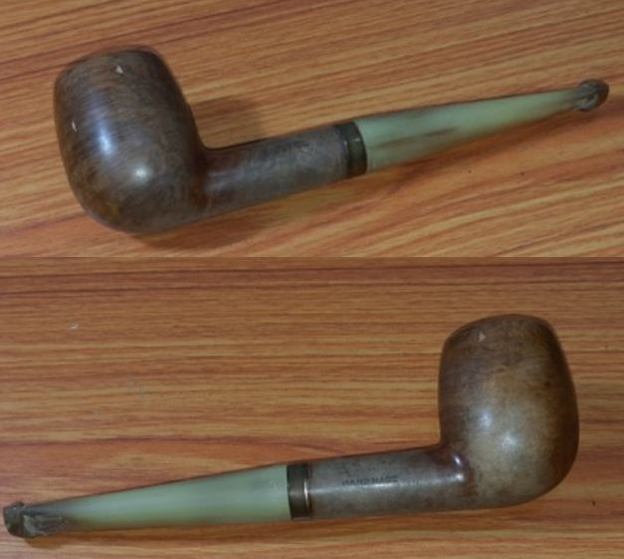
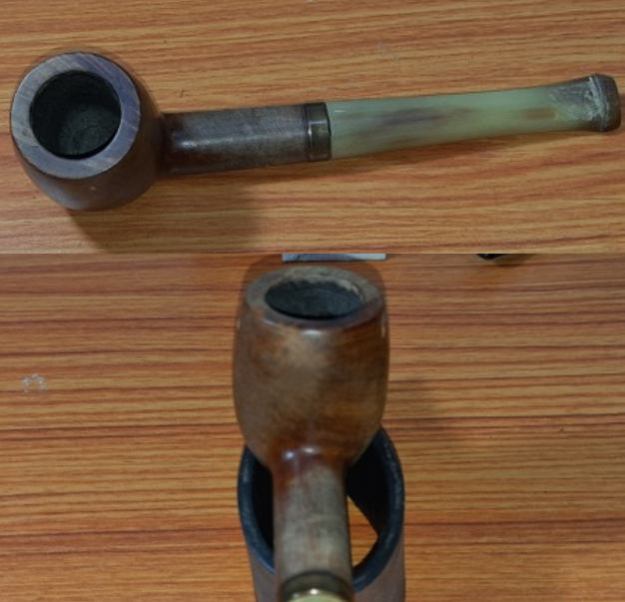
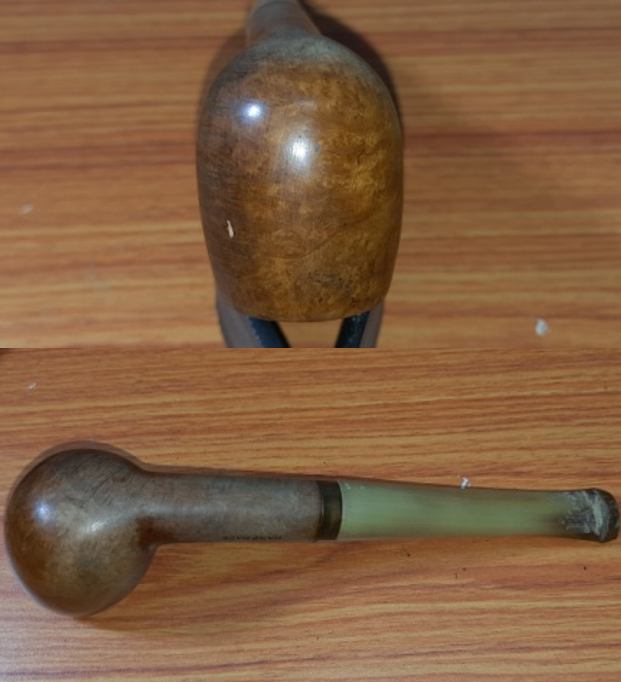
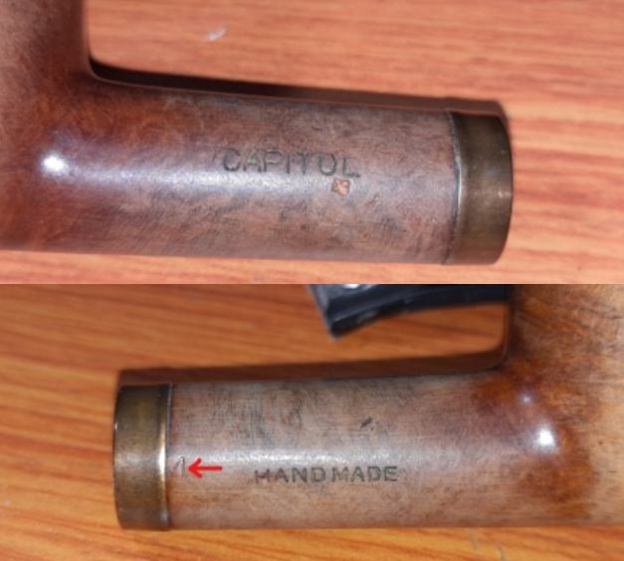
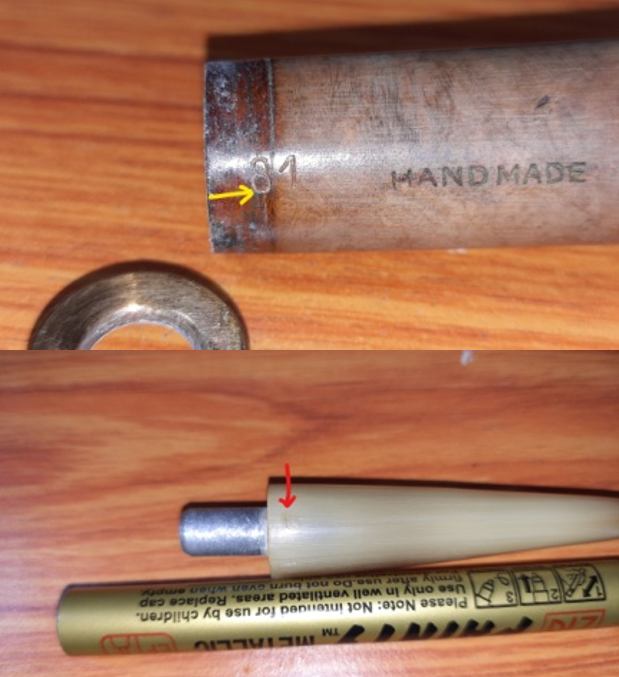
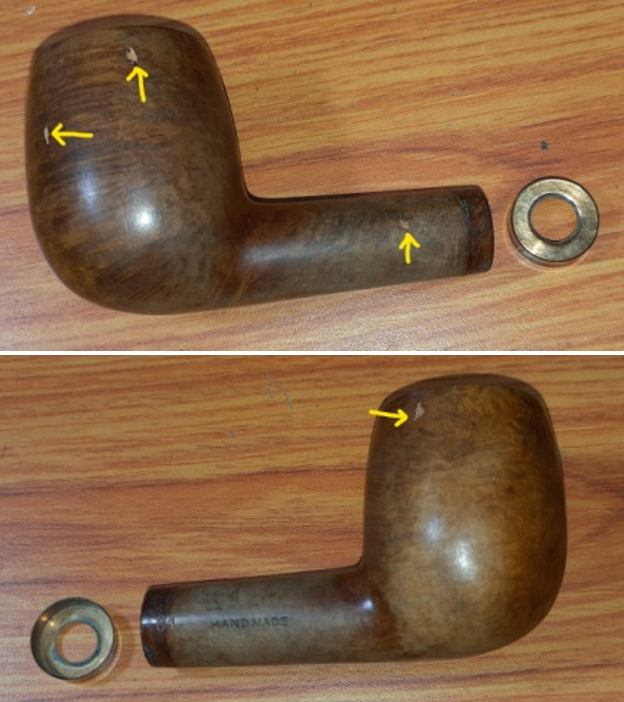
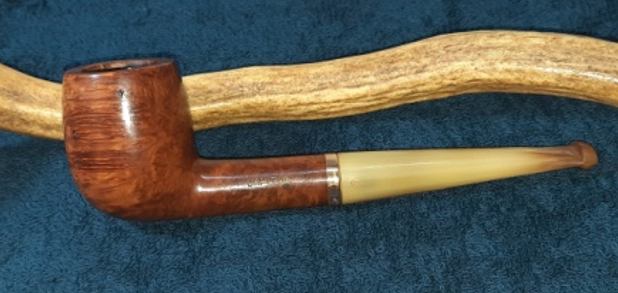
This horn stemmed billiard had been around for so long a time that I do not even remember where it came from. It is really a beautifully shaped billiard with perfectly proportioned size and shape. I would call the bowl an average sized one. There are a few fills in the briar and remnants of what appear to a lacquer coat on the surface which has been worn out over time or could be that attempts were made to get rid of it. There is a brass band at the shank end and covers the shank end face. The stem is a tapered bone with some damage to the bite zone on either surface. The pipe as it sits on my work table is shown below: The pipe is stamped on the left shank as “CAPITOL” in capital letters in gold while the right side is stamped as “HAND MADE” also in capital gold letters followed by shape code “81” which I initial had thought to be 1 (indicated with red arrow) but during the course of my initial inspection the brass band came off revealing “8” (indicated with yellow arrow). It also provided me an opportunity to inspect the shank end face to check for any cracks or damage and was happy to note that there was none. Also, the letter “C” (again indicated with red arrow) in gold was embossed on the left side of the horn stem and revealed when I polished the stem with micromesh pads. When I had read about Savinelli pipes while working on the Savinelli Dry System pipe, I recollected having read that CAPITOL was a Savinelli second/ Sub brand. However, the lack of COM stamp and the trade mark Savinelli shield raised doubts in my mind and I decided to research further. I visited pipephil.eu site and searched the index for stem logo with one letter. I found both the letter C as well as brand CAPITOL both of which matched the stampings on the pipe in front of me (Pipes : 1 letter on the stem (pipephil.eu). Further exploration took me to the page that had the information about the pipe I desired (Can-Car — Pipes : Logos & Markings (pipephil.eu)). I have reproduced a screenshot of the page below.The stampings shown above perfectly match those of the pipe currently on my work table. Thus far, the only thing I have learned is that this pipe could be either from R M Littaur & Co, Great Britain, or KB & B.

Thus the provenance of this pipe is ambiguous and through informed guess work, I would place this pipe as being sold by R M Littaur & Co of Great Britain.

Initial Visual Inspection
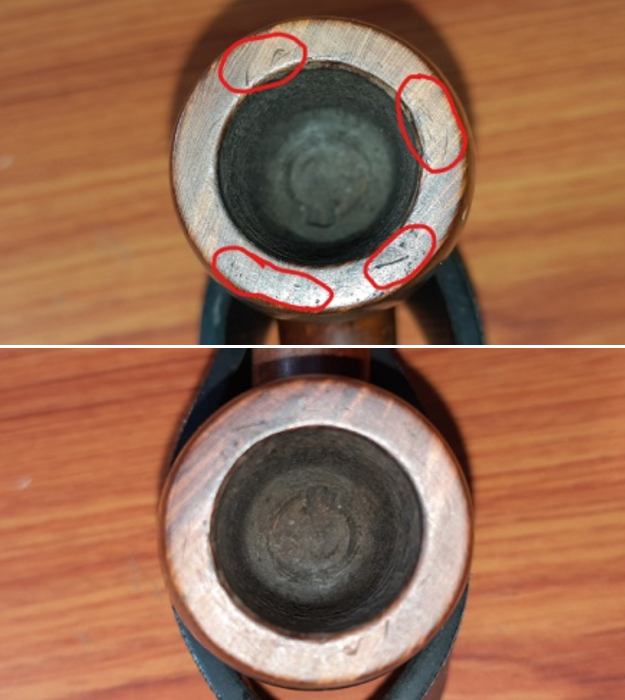
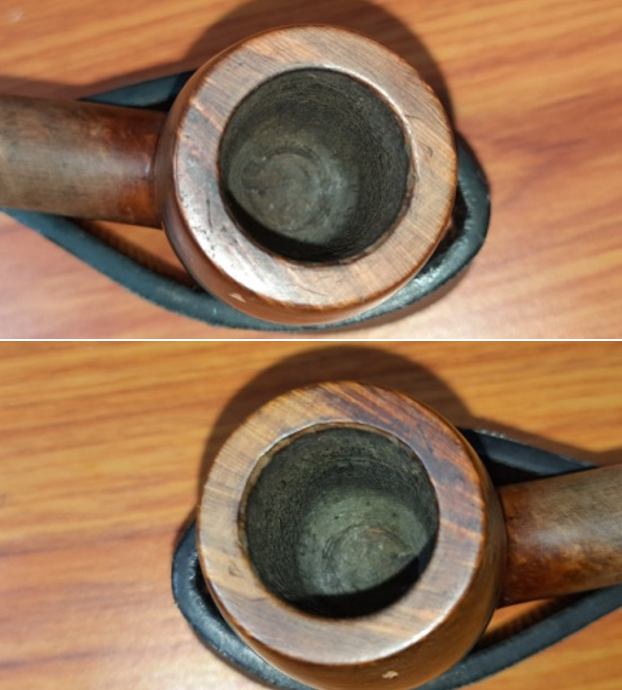
The chamber has a thin layer of carbon cake and appears to have been reamed recently. There are a couple of scratches and dings over the smooth rim top surface (encircled in red). The draught hole is dead center and at the bottom of the bowl and this geometry should make it a good smoker. The chamber walls are solid to the touch and I do not foresee any major issues with the walls of the chamber. The stummel displays some beautiful cross grain on the front and aft of the bowl and also over the upper and lower shank surfaces. However, the beauty of the stummel is marred by a few fills (indicated with yellow arrows). There are scrub marks all over the stummel, noticeably more over the shank surfaces and at the foot of the stummel (encircled in green). The dark shiny clear coat of lacquer is blotchy over the stummel surface but completely removed from the shank surfaces and the foot of the stummel. Playing Sherlock Holmes, it is most likely that a start for restoring this pipe was undertaken, but for reasons best known to the person it was shelved. The mortise has a layer of something akin to a parchment paper that is beginning to turn in to white powder like substance. This was placed to ensure a snug fit of the tenon in to the mortise. Since this packing was crumbling, I would be removing it completely. The tapered horn stem is in a relatively good shape. There are a few bite marks at the base of the button edge in the bite zone on both upper and lower surfaces. This has exposed the tissue fibers and it has been my experiences that filling it with clear superglue always leaves behind a patchy white clump of tissue fiber peeking out from under the fill after the stem has been polished. The aluminum tenon is threaded and has a screw-in flat stinger. The horizontal slot is clean but has the airway opening skewed to the extreme right of the stem slot (indicated by a green arrow). Though this did not affect the usability of the pipe itself, but the draw was laborious and not smooth. This would need to be addressed. The stem airway is clean and so are the aluminum stinger and tenon. The contrasting dark and light tissue strands will be a visual treat once the stem has been polished. The Process
I first decided to tackle the stummel as the repairs to the fills would require additional time for filling, curing and shaping. As I had noted earlier, the chamber appeared to have been reamed and a thin layer of cake was left behind. With my fabricated knife, I removed all the cake and took it down to the bare briar. I further sand the chamber walls with a folded piece of 180 grit sandpaper to smooth out the walls and remove the last bit of stubborn carbon stuck to the walls. To finish the reaming process, I wiped the chamber walls with a cotton swab dipped in alcohol to clean the last traces of residual carbon dust. I was happy to note a clean solid chamber with no signs of any heat lines or fissures. Next I cleaned out the shank internals. I scraped out all the dried and crumbly parchment paper like packing with my fabricated tool. I cleaned out the mortise and shank walls with q-tips and pipe cleaners dipped in alcohol. I shall continue further cleaning of the shank and mortise while going through the other processes.Staying with the internal cleaning of the stummel, I subjected the chamber and shank internals to a cotton and alcohol bath and left it overnight to allow the alcohol to draw out the old oils and tars and the cotton to trap them. By next day evening, the cotton and alcohol had fulfilled its intended task. I ran a couple of hard bristled pipe cleaners to remove the moist and loosened out gunk and now the chamber and shank smells fresh and clean and looks it too. While the stummel was soaking in the cotton and alcohol bath, I used the time to address the stem issues. I separated the threaded stinger from the tenon and ran a couple of pipe cleaners dipped in alcohol through the stem airway. The pipe cleaners came out quite clean. With a sharp dental tool, I scraped out the little dried oils and gunk from the slot end.Next I addressed the tooth chatter and the issue of exposed tissue fiber in the bite zone. As brought out earlier, repairs using CA superglue leaves behind clumps of dirty grey fibers visible through the shine and thus I decided to sand the tooth indentations down till I reached the intact surface below. That the stem was adequately thick in the bite zone also helped in making this decision. With a flat head needle file, I went to town sanding the exposed fibers on either surface till they were eliminated. I followed it up by sanding the bite zone with a folded piece of 220 grit sandpaper to evenly match the bite zone surface with the rest of the stem surface. I finished the stem refurbishing by wet sanding the entire stem surface with 1500 to 12000 grit micromesh pads. It helps to keep wiping the surface intermittently with a moist cloth to remove the sanding dust and gauge the progress being made. I applied a little EVO to the surface and set the stem aside for the oil to be absorbed. The finished stem is amazingly beautiful as can be seen in the pictures below.With the stem refurbishing completed and the stummel internals all cleaned up, it was time for the external cleaning of the stummel surface. I cleaned the external surface with a hard bristled toothbrush and Murphy’s Oil soap and rinsed it under running warm water. Using a shank brush and anti-oil dish washing soap, I cleaned the mortise and shank internals till all I had was white foam. I used a Scotch Brite pad with dish washing soap and diligently scrubbed the stummel surface. This helped in removing the residual lacquer coat from over the stummel surface to a great extent. I dried the stummel internals and externals with paper towels and soft absorbent cotton cloth and set it aside overnight to completely dry out before I worked on it any further. By next afternoon, the stummel had dried out and I decided to address the issue of fills over the surface. With a sharp dental tool, I extracted the old and loosened fills and cleaned the area with a cotton swab and alcohol. I masked the stampings on either side of the shank surface with a tape as one of the fills was frighteningly close to the stamping and it was best to take precautions now rather than repent later. Using a mix of CA superglue and briar dust, I filled up the pits over the stummel surface and set it aside to cure. While the stummel fills were set aside to harden, there was one issue that needed attention. The brass band at the shank end (for adornment purpose only) was masking the model/ shape code. I addressed this issue by sanding the band over a piece of 180 grit sandpaper to a width which did not cover the shape code. I checked and confirmed that the shape code is visible and set the band aside for fixing it subsequently.Once the fill had hardened, I first sand the fills with a needle file to roughly match the fill with the rest of the surface. I further sand the entire stummel surface with a 220 grit sandpaper and achieved three aims in the process; firstly, blend the fills with the rest of the surface, secondly, completely remove the lacquer coat and lastly, eliminate the minor scratches and dings from the surface. I was careful to remove the scratches and minor dings from the rim top surface. A couple of slightly deep scratches are still visible, but I shall let them be as is.I followed the sanding by the 220 grit sandpaper with further dry sanding using 400, 600, 800 and wet sanding with 1000 grit sand papers. I completed the polishing cycle by wet sanding with 1500 to 12000 grit micromesh pads. I rubbed a small quantity of “Before and After Restoration Balm” deep in to the briar with my finger tips and let it rest for a few minutes. The balm almost immediately works its magic and the briar now has a nice vibrant appearance with the beautiful grain patterns displayed in their complete splendor. I further buffed it with a horse hair brush and gave a vigorous buff with a microfiber cloth to deepen the shine. The dark brown hues of the stummel with its nearly black grains across the stummel look striking and blend the fresh fills nicely. In fact, to the naked eye, the fills are not made out easily. Now it was time to fix the brass band and refresh the gold lettered stampings as seen before the start of the project. I applied Favicol wood adhesive along the shank end and press fitted the band in to place and held it for a few minutes till the adhesive had cured a bit. Using a metallic gold acrylic paint marker, I coated the stampings on either sides of the shank and after a few minutes, I removed the excess paint with a toothpick. I applied the same process to refresh the stem logo C. With this I come to the final polishing of the entire pipe that removes the very fine scratches that remain and enhance the shine and gloss to the stummel and stem. I first mount cotton buffing wheel that I have earmarked for Blue Diamond, on to my hand held rotary tool and polish the entire pipe. This compound is abrasive enough to remove the very fine minor scratches that remain over the stummel and stem surface while imparting a deep shine to the surface. Next, I mount the cotton buffing wheel that has been earmarked for Carnauba Wax and apply a coat over the stem and stummel surface and buff it till the entire wax has been used up to polish the surfaces. I give a once over buff to the entire pipe with a fresh plain cotton buffing wheel to remove any residual wax while imparting a fine glaze to the stem and stummel surface. I finished the restoration by giving the entire pipe a rigorous hand buffing using a microfiber cloth to raise the shine further. The finished pipe looks amazing with a nice deep dark brown color to the stummel with the contrasting shining bone stem with its dark tissue fiber providing a contrast within the stem surface. This pipe is all set and ready for a long second inning and if the beauty of this pipe tugs at your heart, you may like to let me know in the comments section along with your email address. Here are a few pictures of the completed pipe. P.S.- This is one handsome pipe for sure. In the above pictures, the fills are visible, but in person, these fills are well blended in with the rest of the stummel surface. I did have, and still do, the option to stain the stummel with a dark brown stain but that would be over kill and so I have decided to leave it be. However, if you are interested to make it your own and want it stained, I shall be glad to accommodate your request.
Thank you for sparing your valuable time in reading through the write up thus far and being an integral companion through my journeys through the pipe world.

Praying for you and your loved ones always…

A Pipe That Called Out To A Fine Gentleman…Restoring A James Upshall “Tilshead”


Blog by Paresh Deshpande

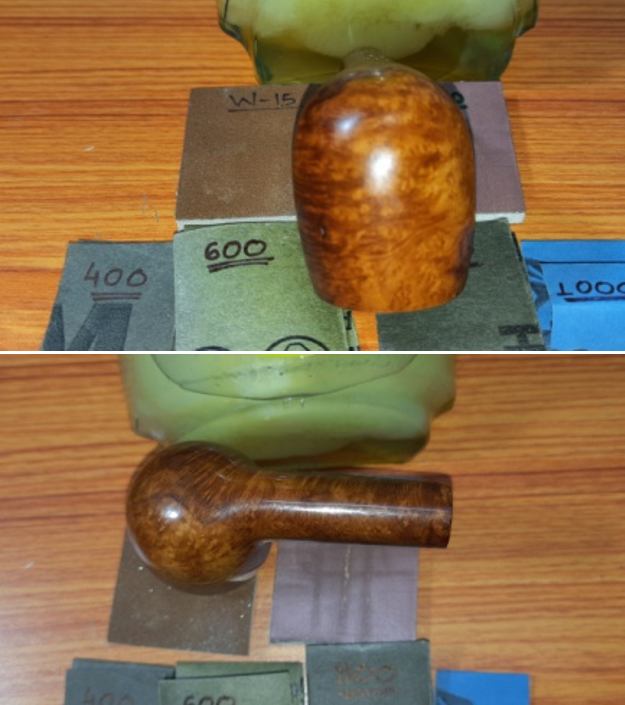
At the beginning of this month I had posted a write up on a briar calabash pipe with a bone stem (Resurrecting A Dreary No Name Briar Calabash Shaped Pipe | rebornpipes) that called out to Lance Dahl (remember the three beautiful cased D.P. Ehrlich Co, Boston Made Meerschaum that Steve had restored last month?). While exchanging emails, I shared a couple of pictures about the pipes that were seeking new ownership and Lance selected one. From what I have seen of Lance, he is one person with an exquisite taste for unique and quality pipes.

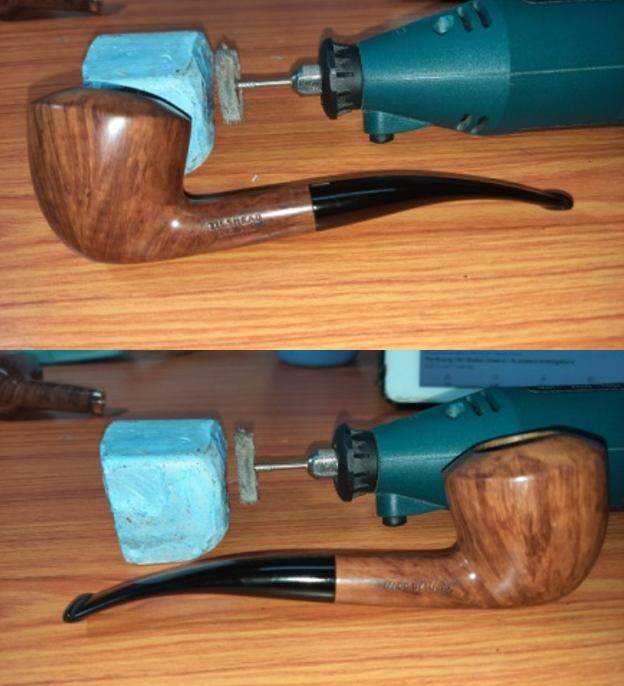
The pipe that Lance has selected and currently on my work table is stamped on the left of the shank as “TILSHEAD” over “ENGLAND”, all in block capital letters. The right side of the shank surface bears the stamp “MADE BY HAND” The high quality vulcanite tapered stem is without any stamp/ logo.I knew TILSHEAD to be the entry level pipe from James Upshall, but that was all I knew about the pipe company!! To get a better understanding of the brand and this grade in particular, I first visited James Upshall – Pipedia.

The entire article makes for an interesting read; however, I have reproduced only the relevant information on the grade of the pipe from the pipe company and particularly the grade of the pipe on my work table:

Grading & Sizing Information

James Upshall pipes are graded by various finishes, i.e. bark, sandblast, black dress and smooth etc. Then by cross grain, flame grain, straight grain and, last but not least, the perfect high grade, which consists of dense straight grain to the bowl and shank. The latter being extremely rare. In addition, the price varies according to group size, i.e. from 3-4-5-6 cm high approximately Extra Large. We also have the Empire Series which are basically the giant size, individually hand crafted pipes which come in all finishes and categories of grain. All our pipes are individually hand carved from the highest quality, naturally dried Greek briar. In order to simplify our grading system, let me divide our pipes into 4 basic categories.

  1. It begins with the Tilshead pipe, which smokes every bit as good as the James Upshall but has a slight imperfection in the briar. In the same category price wise you will find the James Upshall Bark and Sandblast finish pipes, which fill and smoke as well as the high grades.
  2. In this category we have the best “root quality” which means that the grain is either cross, flame or straight, which is very much apparent through the transparent differing color finishes. This group will qualify as the “S”- Mahogany Red, “A” – Chestnut Tan and “P” – Walnut. The latter having the straighter grain.
  3. Here you have only straight grain, high grade pipes, which run from the “B”, “G”, “E”, “X” and “XX”. The latter will be the supreme high grade. Considering the straightness of the grain the latter category is also the rarest. Usually no more than 1% of the production will qualify.
  4. Lastly, we have the Empire Series. These are basically Limited Edition gigantic individually hand crafted pieces, which again are extremely rare due to the scarcity of large, superior briar blocks.

Believe you me Readers, the slight imperfections which destined this pipe to be categorized as TILSHEAD has me in awe of the very high quality standards set by the pipe company. There is not a single fill in the entire stummel surface and the grain is beautiful all around. All in all, this is a beautiful pipe with a quality that would equal or surpass any of the highest grades of line production pipe!

Initial Visual Inspection
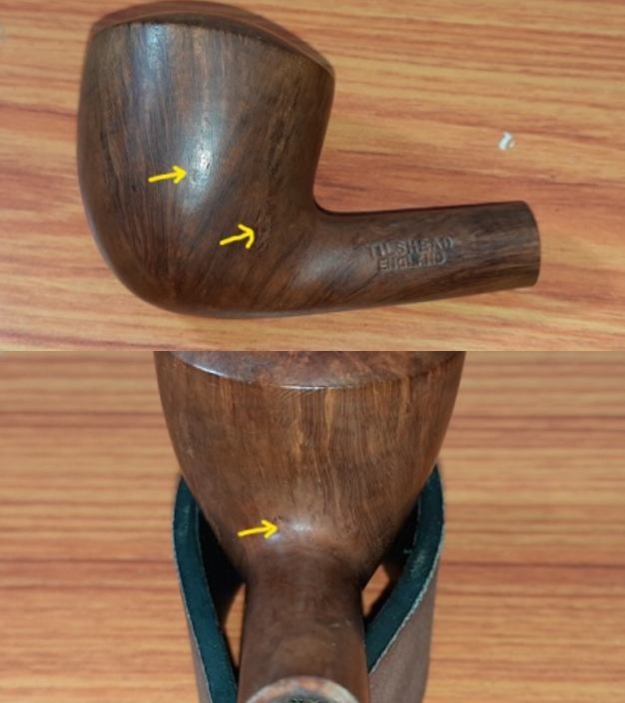
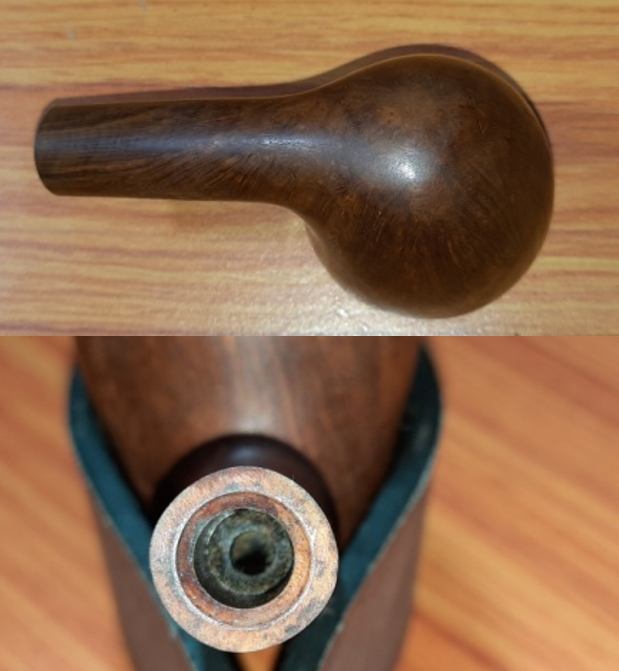
The pipe that is currently on my work table has a Dublin shape (though not a classic Dublin but more of a freehand, the carver’s take on the classic shape while following the grain of the briar block) with thick walls. The stummel has a natural stain and is covered in dirt and grime through which beautiful angel hair grain can be seen all around with loosely packed Bird’s eye grain over the rim top surface. There is a thin layer of cake in the chamber and the outward sloping rim top surface is clean. The rim’s inner and outer edge surfaces is pristine. The vulcanite tapered stem is oxidized with severe damage to the bite zone on either surface. The buttons on both surfaces show bite marks with the upper half button missing. The following pictures will give the Readers an idea of the overall condition of the pipe as it sits on my work table. Overall, the thin layer of cake and excellent condition of the stummel are pointers to the fact that the pipe seems to be well looked after, though the stem damages are a proof of the previous owner’s cavalier chomping of the stem. It should be an easy restoration project, unless some gremlins pop up during the process. Detailed Visual Inspection
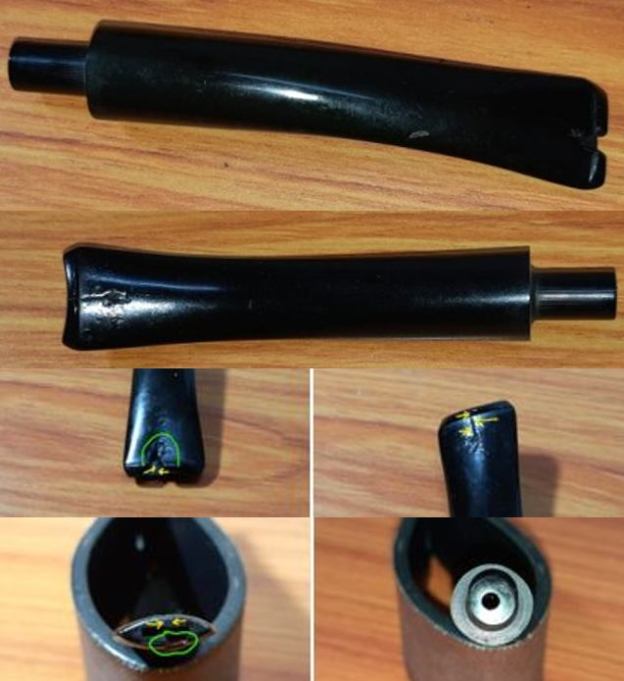
A thin and even layer of cake is seen in the chamber; however, the cake is very hard. The rim top surface is sans any overflow of lava, dirt, dust and grime, though a number of dents and dings (indicated with pastel blue circles and arrows) can be seen on the outward sloping rim surface. The exact condition of the inner walls of the chamber will be known once the cake has been taken down to bare briar. The chamber odor is strong and should be addressed to some extent once the cake has been taken down and the shank internals have been thoroughly cleaned. The stummel feels solid to the touch and I do not foresee any major issues with the condition of the chamber walls. To be honest with you, this pipe being at the start of the ascending order of grading for James Upshall pipes, I had expected to find a few fills and some non-descript graining on the stummel briar. However, I was surprised to note that there are absolutely no fills on the stummel surface and it boasts of some beautiful angel hair flame grains around the sides, front and aft of the stummel surface while loosely packed Bird’s eye adorns the outward sloping rim top. The stummel surface is covered in dirt and grime giving the stummel a dull and dirty appearance. The stummel surface shows a few dents and dings (indicated by yellow arrows). It does have a quality which is seen on some very high end pipes. The mortise shows accumulation of old oils and tars which would need to be cleaned. The dents and dings to the rim surface and over the stummel surface would be addressed by steaming and sanding the surface. A nice polish with micromesh grit pads will bring a nice shine to the stummel and highlight the grains. The vulcanite stem is oxidized and severely damaged. The bite zone on either surface shows some severe tooth indentations with deformed button on either surface. The upper stem surface has a portion of the button lip missing (encircled in green) and would need to be built up again. The lower surface has a very deep bite mark, the causative pressure of which has resulted in a crack (indicated with yellow arrows) that extends over the lower button edge and up to the horizontal slot. The tenon and slot end are clean. All in all, the stem presents the most major damage on this pipe.The Process
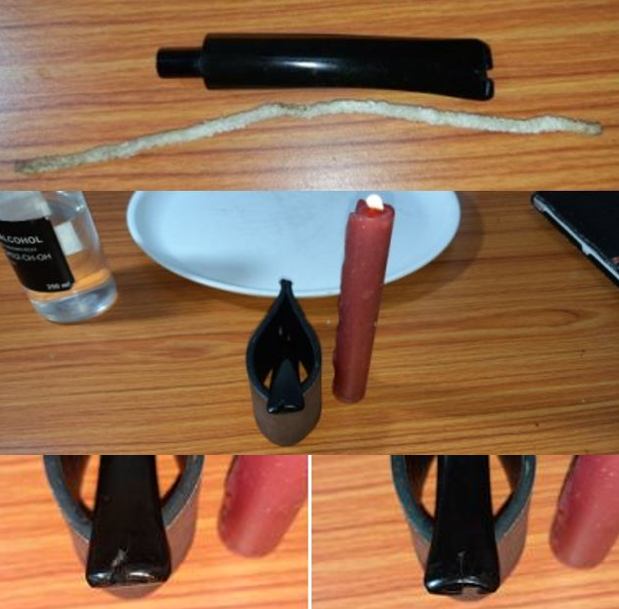
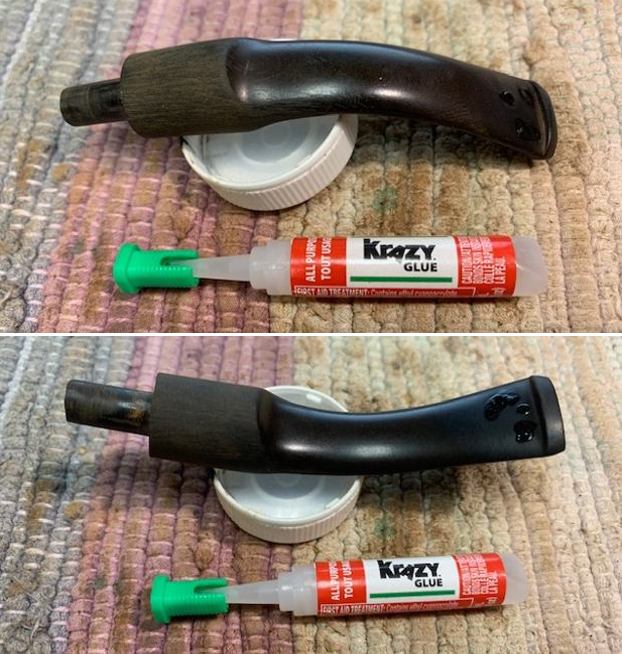
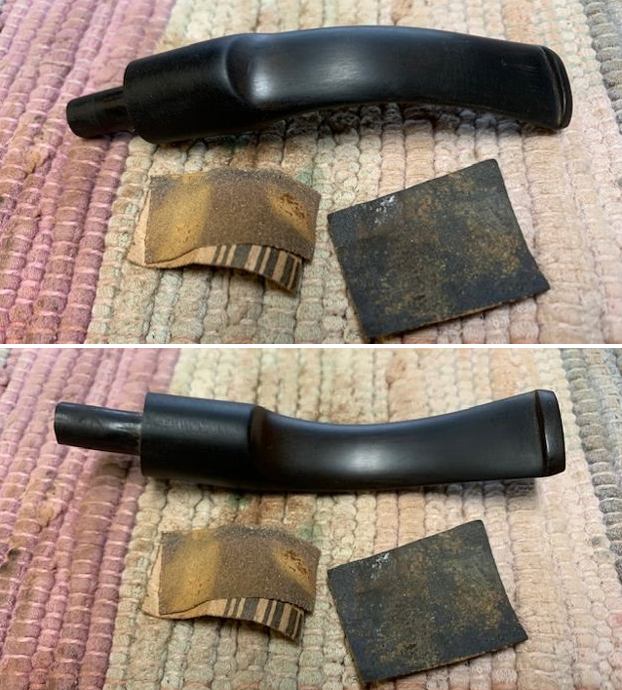
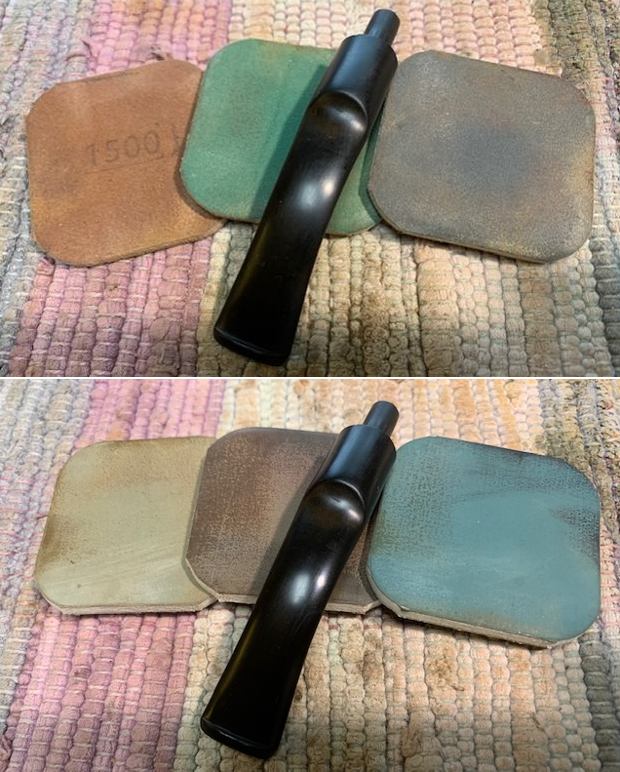
Since the stem on this pipe was most severely damaged and would demand most efforts, I started the restoration process with the stem repairs. I ran a pipe cleaner dipped in alcohol through the stem airway and was pleasantly surprised to find a nice clean pipe cleaner emerge from the other end. There is no doubt that the pipe was kept nice and clean by the previous owner. I flamed the bite zone of either surface over a lit candle to heat and expand the tooth indentation to the surface. It was well worth the try and the surface evenness is much improved than earlier.This step was followed by sanding the entire stem surface with a folded piece of 220 grit sand paper to remove the oxidation from the surface. I wiped the stem with a cotton pad and isopropyl alcohol to clean the surface in preparation for reconstruction of the button edge. I placed a triangulated index card, which has been wrapped in cello tape, into the slot. The tape prevents the superglue from sticking and makes for easy extraction after the glue has cured. I mixed CA superglue with activated charcoal and applied it over the area to be rebuilt / repaired. I set the stem aside for the mix to harden before I could further work on the fill. Little did I know at this stage that this stem was to be such a pain to restore and would lead to a delay of many a day…and yet the end result is not what I usually achieve with my stem rebuilds. While I was working on the stem, Abha cleaned out the chamber of the stummel.  With a fabricated knife, she scraped the chamber walls to remove the thin, hard carbon deposits and also scraped out the lava overflow from the rim inner edge, though there was not much! Once the cake was reamed back to the bare briar, she used a 220 grit sand paper to remove all the traces of remaining cake and also to smooth out the inner walls of the chamber surface. Finally, to remove the residual carbon dust, she wiped the chamber with a cotton pad wetted with 99.9% pure isopropyl alcohol. Next, I cleaned out the internals of the shank and mortise. Using my dental tool, I scraped out all the dried oils, tars and gunk that had accumulated in the draught hole and on the walls of the mortise. I finished the cleaning by running a few pipe cleaners dipped in isopropyl alcohol through the mortise. I shall continue with further cleaning of the shank internals when I clean the internals with cotton and alcohol bath and further during external cleaning of the stummel surface.I continued the cleaning of the chamber and shank internals with a salt and alcohol bath. I used cotton balls which are an at par substitute as I have realized over the years. I drew out a wick from the cotton and along with a folded regular pipe cleaner; inserted it into the mortise and through the draught hole into the chamber. Thereafter, I packed the chamber with cotton balls to about quarter of an inch below the inner rim edge and soaked the cotton balls with isopropyl alcohol up to the brim. About half an hour later, the level of alcohol had gone down, having being absorbed by the cotton. I topped it up once again and set it aside overnight. By next morning, the cotton and alcohol had drawn out all the remaining oils and tars from the chamber and mortise, fulfilling it’s intended task. I removed the cotton balls and ran pipe cleaners through the mortise to clean out all the loosened tars and gunk and further cleaned it with alcohol and q-tips. The chamber now smelled clean and fresh. I set aside the stummel to dry out naturally. With the bowl internals clean, I moved to clean the exterior of the stummel. I used a hard bristled tooth brush and Murphy’s Oil soap to scrub the stummel and rim top. I rinsed the stummel under running warm water with anti oil dish washing detergent till the stummel surface was clean and dried it using paper towels and soft cotton cloth. I simultaneously cleaned the shank internals with the detergent and hard bristled shank brush and set the stummel aside to dry out naturally. Now that the stummel surface was nicely cleaned up and the beautiful angel hair grains exposed, the flip side was that the damages too are exposed! The dents and dings to the rim top surface were now plainly visible and I marked the areas with black sharpie pen as it helps in identifying and placing of the towel while steaming. I steamed out all the minor dents and dings by heating my fabricated knife on a candle and placing it on a wet towel covering the dents. The generated steam pulls the dents to the surface. Most of the dents have been raised to the surface, however, a couple of ones that remain, will be addressed by sanding with a folded piece of 320 grit sand paper. With this, I handed over the stummel to Abha for further polishing and turned my attention to the stem repairs. The stem repairs had hardened considerably over the past 18 odd hours. I used a flat head needle file to achieve a rough match of the patch with the rest of the stem surface. I further evened out the patch with a folded piece of 220 grit sand paper. And it was at this stage in the restoration that my nightmares began! The sanding had revealed what every pipe restorer fears during stem repairs and that is air pockets in the repaired patch. Also I could clearly make out the crack over the button edge on the lower surface of the stem. I had to mix CA superglue and activated charcoal again and apply over the repaired area with a hope and prayer that the air pockets are filled. In all, I had to repeat the process five times and even changed the glue as well as charcoal powder. I even went through the entire process of sanding with sandpapers and polishing with micromesh pads. However, the repairs were not up to my acceptable standards. The following pictures will give the readers an idea of the entire process. After I had been through the entire process of sanding and polishing, the issues of air pockets and visibility of the crack on the lower surface were still apparent and I went to town filing away the repair work with needle file till I reached the bottom of the patch. I reapplied the mix of CA superglue and charcoal powder for the sixth time. On sixth attempt I decided to accept the minor flaws in the aesthetics of the repairs as long as the repairs are solid and lasting. The stem after sixth attempt at repairs is shown in the last two pictures after it was sanded and polished. During the course of my battle with the stem repairs, Abha had been unobtrusively working on the stummel. She sanded the entire stummel with a piece of 320 grit sand paper to remove the minor dings and scratches from the rim top and rest of the stummel surface. She followed it up by wet sanding the stummel with 1500 to 12000 grit micromesh pads to a nice even shine. She wiped the stummel with a moist cloth after every grit pad to remove the sanding dust left behind by the pads. This also helps in monitoring the progress being made and provides an opportunity to take early corrective action, if required. Next, she rubbed a small quantity of “Before and After Restoration Balm” into the briar with her finger tips and worked it deep in to the surface and let it rest for a few minutes. The balm almost immediately works its magic and the briar now has a nice vibrant appearance with the beautiful angel hair flame grains and Bird’s eye grain patterns over the rim top, on full display. The contrast of the dark browns of the grain with the light natural hues of the rest of the stummel adds an interesting dimension to the appearance of the stummel. She further buffed it with a horse hair brush to further deepen the shine. To put the finishing touches, I mounted a cotton cloth buffing wheel on to my hand held rotary tool and polished the stummel and stem with Blue Diamond compound. This compound helps to remove the minor scratch marks that remain from the sanding.Next, I mounted another cotton buffing wheel that I have earmarked for carnauba wax and applied several coats of the wax. I mounted a clean cotton cloth buffing wheel and gave the entire pipe a once over buff. I finished the restoration by giving the entire pipe a rigorous hand buffing using a microfiber cloth to raise the shine further. The finished pipe looks amazingly beautiful and is now on its way to Lance, all ready for its long second innings with him. P.S.- I had tried my level best in addressing and blending in the repairs to the stem with the surrounding surface but to no avail. It would be immensely helpful if our esteemed readers could share a trick or two that I could learn and adopt.

However, I feel the repairs are solid and Lance, if you are reading this, should the stem give you any troubles, just send the pipe back and I shall replace the complete stem at no cost, including shipping! I hope you enjoy the pipes that have traveled across the seas…

Praying for the health and safety of all the readers and their loved ones in these troubled times…

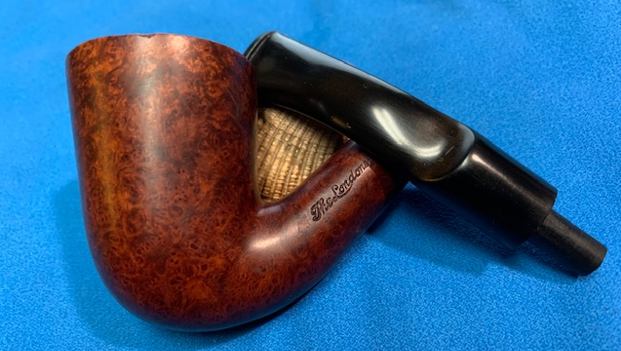
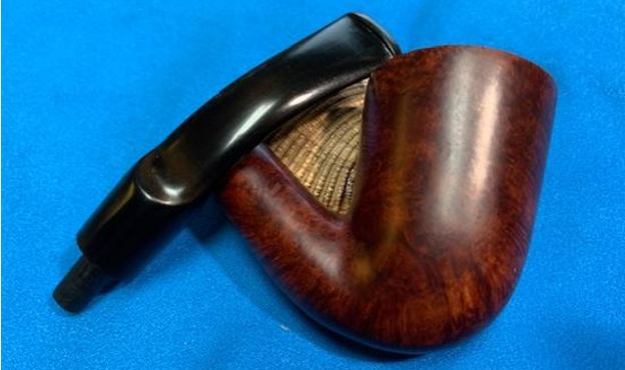
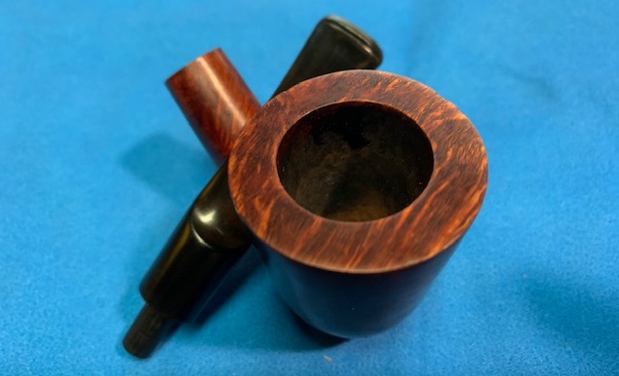
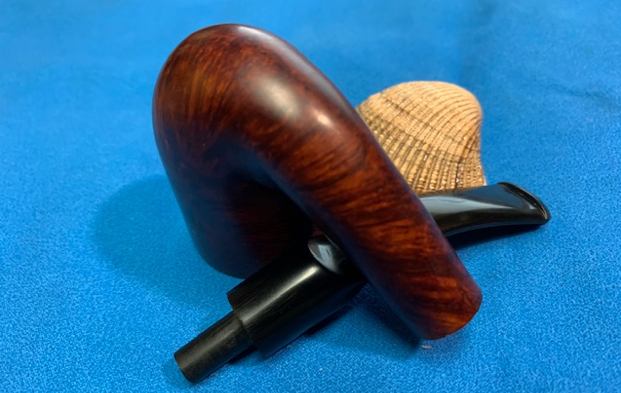
Restemming & Restoring a “The Londoner” Bent Dublin


Blog by Steve Laug

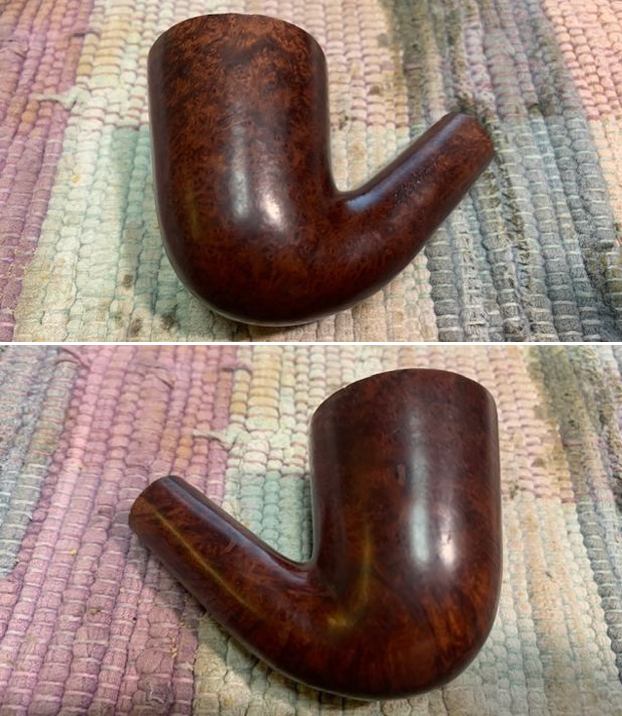
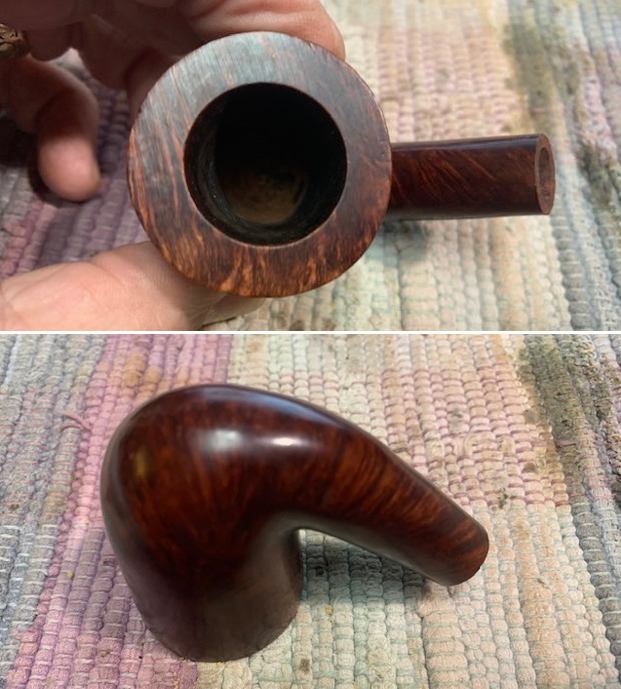
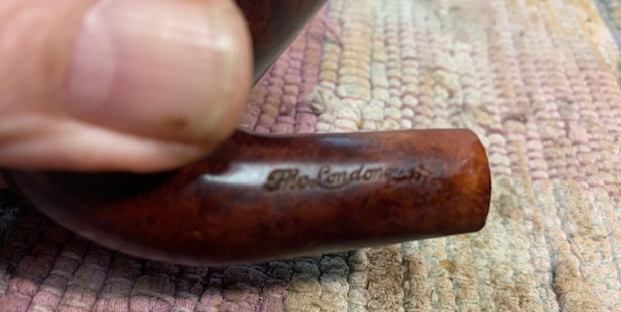
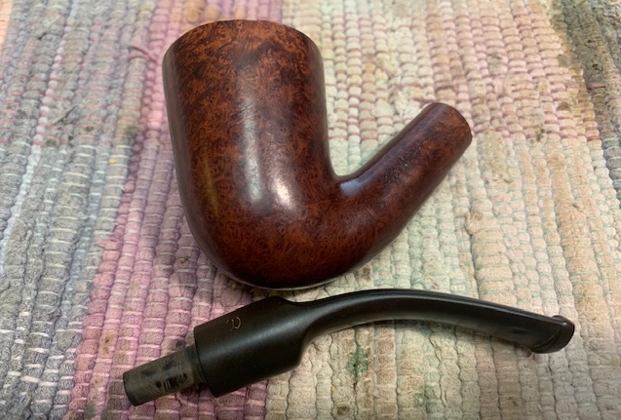
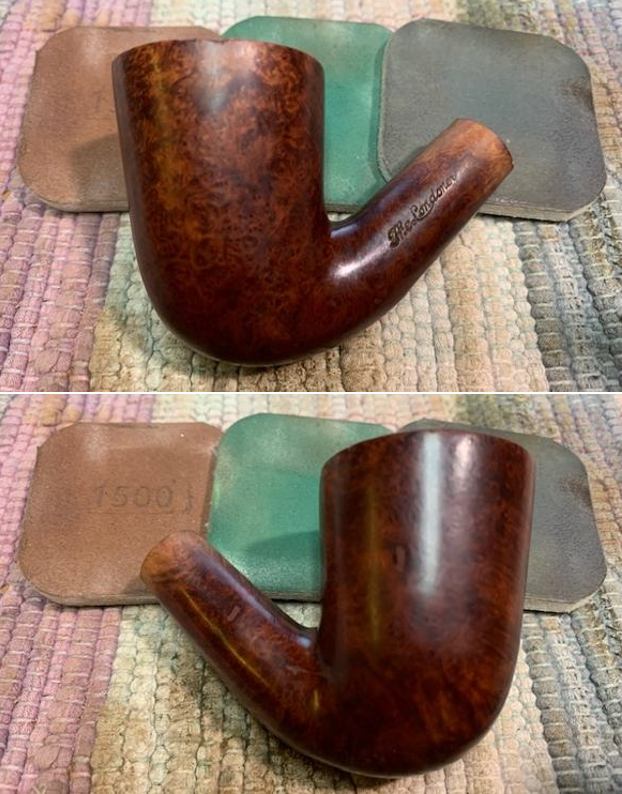
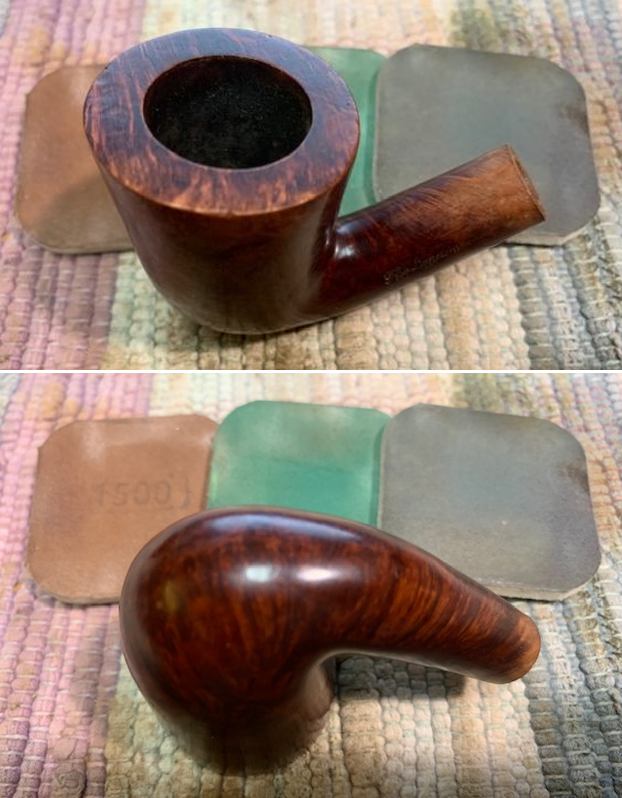
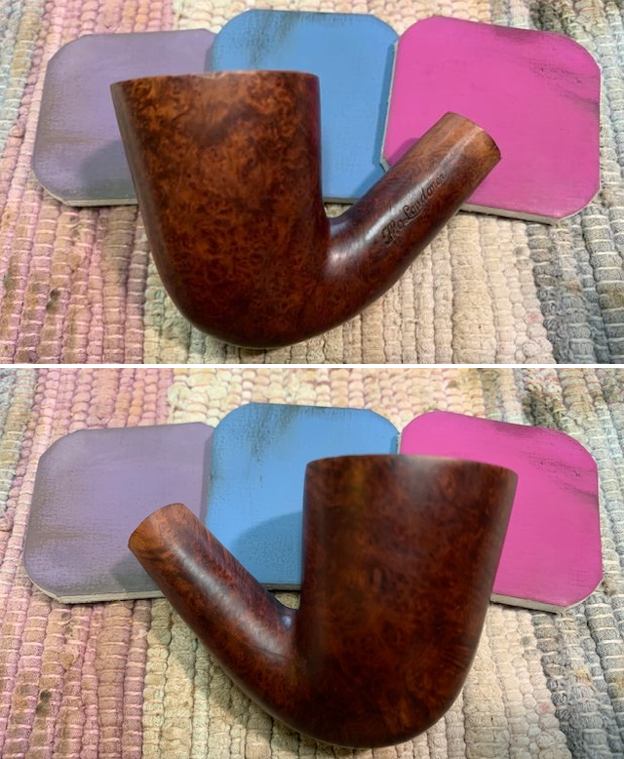
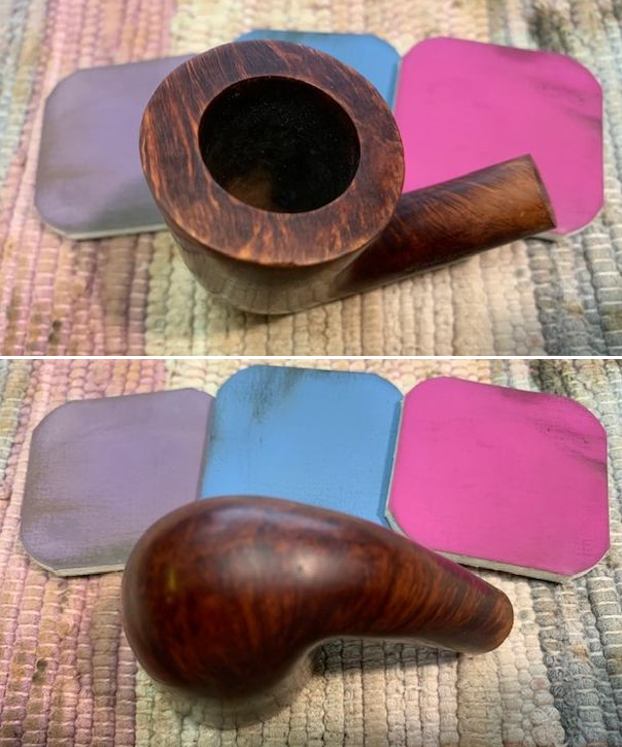
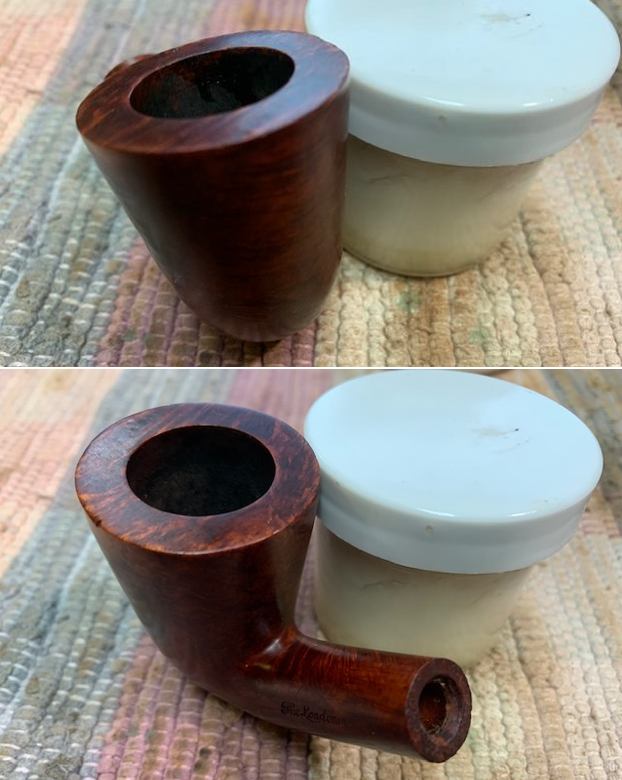
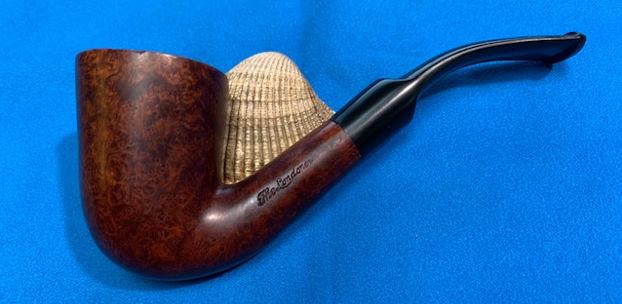
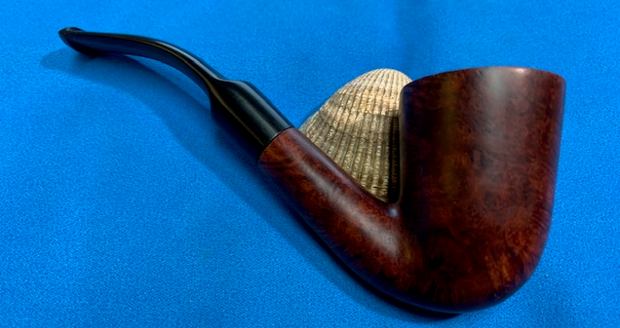
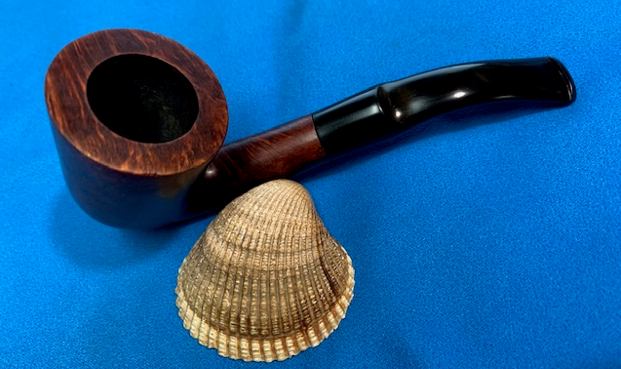
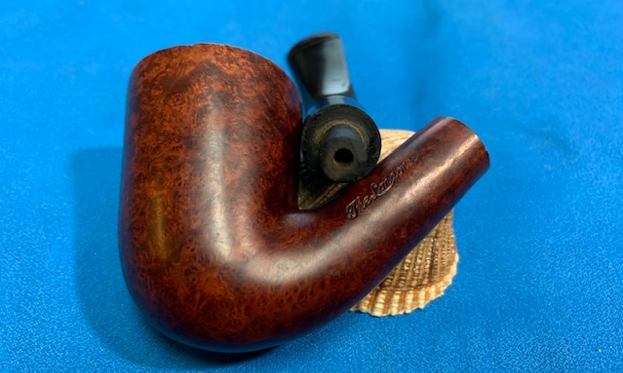
Sometimes the repetitive work on similar pipes and stems gets tiring to me and to alleviate the inevitable boredom I change things up a bit to refresh me. I have a box of stummels (bowls) here that I periodically go through and see if I have a potential stem that would fit them. Sunday afternoon I went through the box and picked out two bowls and found workable stems for them both. They were in different states of need but all had been thoroughly cleaned before I boxed them up. The pipe I chose to work on first is a lovely Bent Dublin stummel. The bowl looked very good. The grain around the sides was quite nice and a mix of flame and birdseye grain. There were a few fills on the right side of the bowl and shank but there were in good condition. The rim top was in excellent condition. The interior of the bowl was clean and there were not any chips, cracks or checking on the walls. The finish was dull and bit and tired but still quite redeemable. The stamping on the pipe was clear and readable. On the left side it read The Londoner in script and there are no other stamping on the pipe. I took some photos of the bowl before I started to work on it.   I took a photo of the stamping on the left side of the shank. It reads as noted above and is clear and readable.I went through some of stems and found this saddle style stem that was close to the right diameter and had a tenon that would work as well. It has a few tooth marks and chatter near the button but it would clean up well.The pipe is stamped “The Londoner” which is not listed with that style of stamp on either Pipephil or Pipedia. There was a Londoner made by Barlings but it is stamped differently than this one and does not have the article in front of the name. So the maker of the pipe remains a mystery for now. Now it is time to work on the pipe.

I started my work on the pipe by fitting the new stem to the shank. I trimmed down the tenon diameter slightly with a file so that the fit in the shank was snug. The stem diameter needed more work so I worked it with a file to match it to the shank. I sanded it with 220 grit sandpaper to smooth it out. I removed the stem and polished the briar (bowl and sanded shank end) with micromesh sanding pads – dry sanding with 1500-12000 grit pads and wiping it down with a damp cloth after each pad. It really began to shine. I restained the shank end where I had sanded it to make the transition to the new stem smooth with a Cherry stain pen. The colour was a perfect match. Once the bowl was buffed the newly stained section would blend in well. I worked some Before & After Restoration Balm into the surface of the smooth briar with my finger tips. The product is amazing and works to clean, enliven and protect the briar. I let it sit on the briar for 10 or more minutes and then buff it off with a soft cloth. It really makes the grain sing. I set the bowl aside and turned my attention to the stem. I “painted” the stem surface with a Bic lighter flame to raise the tooth marks (no pictures). I was able to lift some of them to the surface. I filled in the remaining spots with clear CA glue and once it was hard smoothed out the repairs with 220 grit sandpaper and started polishing the stem with 400 grit wet dry sandpaper. I polished the stem with micromesh sanding pads – dry sanding with 1500-12000 grit pads. I wiped the stem down after each pad with a cloth and Obsidian Oil. I finished the polishing with Before & After Pipe Stem Polish – both Fine and Extra Fine. I gave it a final coat of Obsidian Oil. I put the pipe together – the bowl with its new stem. This restored and restemmed “The Londoner” Bent Dublin is a real beauty and I think the chosen stem works well with it. The grain on the bowl came alive with the buffing. I used Blue Diamond on the buffing wheel on both the bowl and stem. I gave both multiple coats of carnauba wax on the wheel then buffed it with a clean buffing pad to raise the shine. I hand buffed it with a microfibre cloth to deepen the shine. “The Londoner Dublin” feels great in the hand. It is lightweight and the contrast in the browns of the briar and the polished vulcanite stem with the popping grain on the mixed brown stained bowl is quite amazing. The dimensions of the pipe are Length:5 ½ inches, Height: 2 inches, Outer diameter of the bowl: 1 ½ inches, Chamber diameter: 7/8 of an inch. The weight of the pipe is 1.62 ounces/46 grams. It really is a beauty. I will be putting it on the rebornpipes store in the British Pipe Makers section shortly if you are interested in adding it to your collection. Thanks for walking through the restemming and the restoration with me. Cheers.

Cleaning up an Interesting Italian Made Folding Pocket Pipe


Blog by Steve Laug

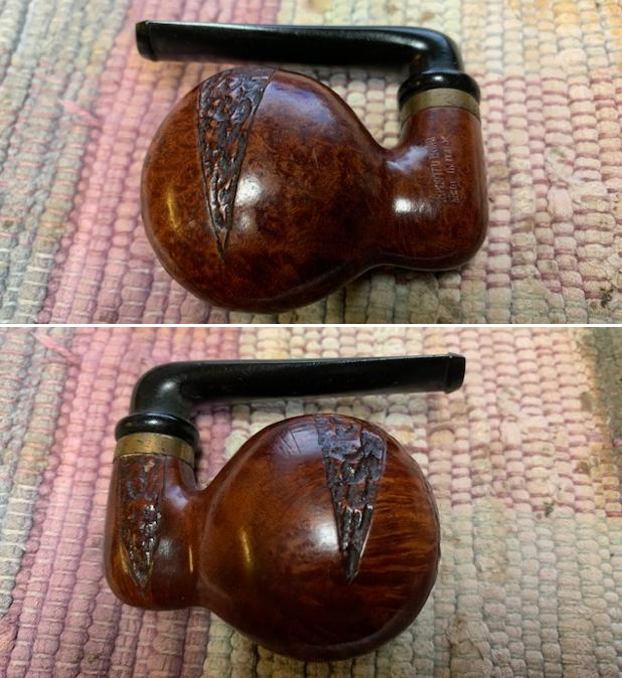
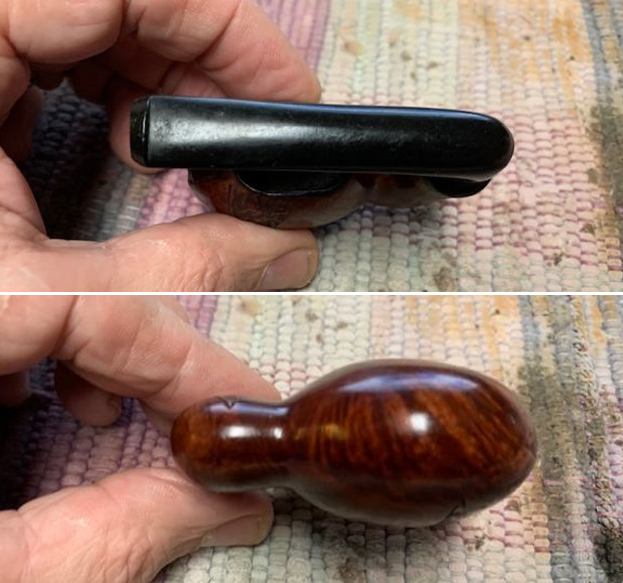
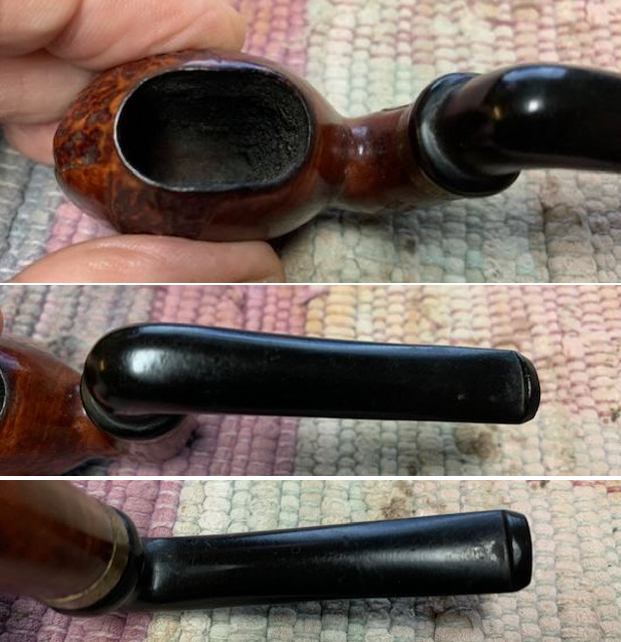
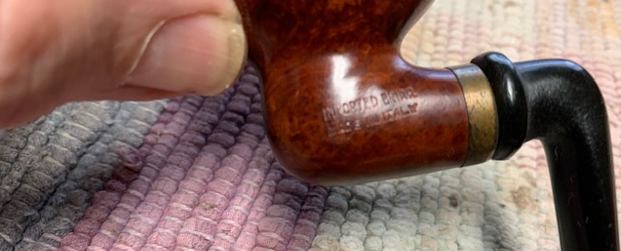
The next pipe on the worktable is another interesting piece of pipe history that comes from the bag of old unsmoked and lightly smoked pipes that I have been working on intermittently. It is a folding Pocket Pipe with an oval bowl. The bowl is lightly smoked. Surprisingly it is in better shape than many of these old timers. The pipe is dirty but there is some amazing grain around the sides and wedges of rustication look good as well .The stem is hard rubber which makes me think is a bit older than some similar pipes with vulcanite stems. It has a push tenon from the same material that is part of the stem. Other than some tooth chatter on the stem surface the stem is in really good shape. A short description would be that it is an Italian made lightly smoked Folding Pocket Pipe with a hard rubber stem. It is stamped on the left side of the shank and reads Imported Briar [over] Made in Italy. I would guess that the pipe was made by Savinelli as I have seen several very similar pipes shaped like this one made by them. The rim top was dirty and the inner edge had some lava. The exterior of the bowl was dirty and dusty and band was oxidized. Grain stood out in the smooth portions around the bowl sides and bottom and the interesting rustication wedges worked well. There was tooth chatter on both sides of the stem ahead of the button but nothing deep. I took some photos of this interesting Pocket Pipe extended and folded to show the condition when we received it. It was dusty, dirty and had some grime worked into the surface of the briar from being shuffled around a lot since it was made. I took close up photos of the bowl and rim top and the stem to show their condition. You can see the thin cake on the bowl sides and the thin lava on the rim top. The stem looks good with light chatter and tooth marks on both sides. I took a photo of the stamping on the left side of the shank. You can see that it is somewhat faint but still readable.I removed the stem from the shank and took a photo of the parts to give a sense of the beautiful proportions of this nice little pipe. It is going to take a little work but I think it will be quite stunning once it is restored.I reamed the bowl with a Savinelli Fitsall Pipe Knife to deal with the oval shape of the chamber. I scraped out the thin and uneven cake until the walls were clear. They looked very good. There was no heat damage or checking present. I cleaned out the mortise and the airway in the shank and stem with pipe cleaners, cotton swabs and isopropyl alcohol. The stem was an interesting challenge due to the right angle bend but it is now clean.I scrubbed off the shiny varnish coat on the bowl and shank with alcohol and a cotton pad. It came off quite easily and the grain really stood out. It is a nice piece of briar.I polished the briar with micromesh sanding pads – dry sanding with 1500-12000 grit pads. I wiped the bowl down after each pad to check and make sure there was progress. By the end the there was a rich shine to the bowl.I rubbed the bowl and shank down with Before & After Restoration Balm. I worked it into the surface of the bowl sides and shank with my fingertips to clean, enliven and protect the briar. I let the balm sit for 10 minutes, then buffed with a cotton cloth to raise the shine. The Balm did its magic and my colours worked well.I set the bowl aside and addressed the tooth chatter in the hard rubber stem. I sanded it out with 220 grit sandpaper and started the polishing with 400 grit wet dry sandpaper.I polished out the scratches in the surface of the stem with micromesh sanding pads – 1500-12000 grit pads. I was able to remove the tooth chatter on both sides. I wiped it down with Obsidian Oil after each pad. I used Before & After Pipe Polish – both Fine and Extra Fine to further polish the stem. I gave it a final coat of Obsidian Oil and set it aside to cure.This interesting Italian Made Folding Pocket Pipe was fun to work on. I love the final touches that make it sing. I put the bowl and stem back together to have a look at the whole with the newly fit band on the shank. I carefully buffed the bowl and stem with Blue Diamond on the wheel. I gave it several coats of carnauba wax and buffed the pipe with a clean buffing pad to raise the shine. I hand buffed it with a microfiber cloth to deepen the shine. It is fun to see what the polished bowl looks like with the polished shank band and the black, hard rubber stem. This richly finished Pocket Pipe is light weight and it is clean and ready load up with a favourite tobacco. Have a look at it in the photos below. When extended its measurements are Length: 4 ½ inches, Height: 1 ¾ inches, Outside diameter of the bowl: 1 inch x 1 ¼ inches, Diameter of the chamber: ½ inch x 1 inch. The folded measurements are Length: 3 inches, Height: 2 ¼ inches, Diameter of the outside and the chamber remain the same. The weight of the pipe is 33 grams/1.13 oz. I will be putting it on the rebornpipes store in the Italian Pipe Makers section if you wish to add it to your collection. Thanks to each of you who are reading this blog. Remember we are not pipe owners; we are pipemen and women who hold our pipes in trust until they pass on into the trust of the next generation.

Reviving another Old Timer – a French Made Real Briar Bent Billiard


Blog by Steve Laug

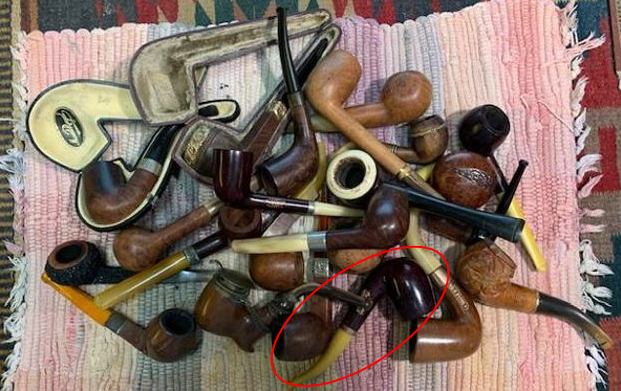
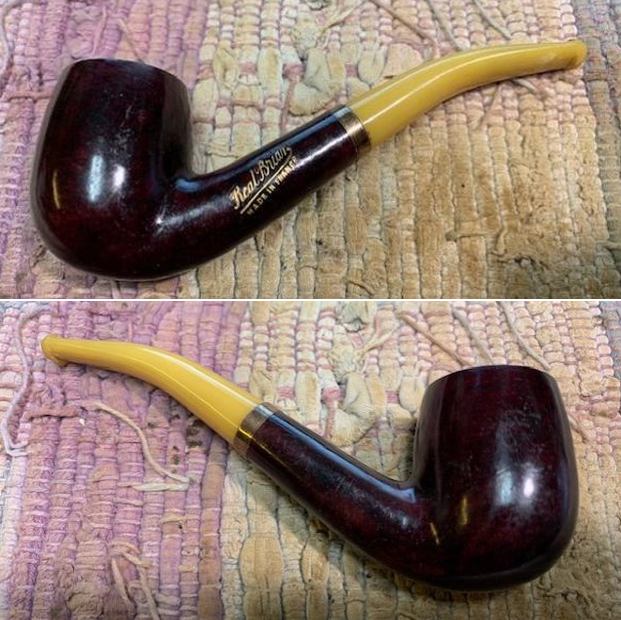
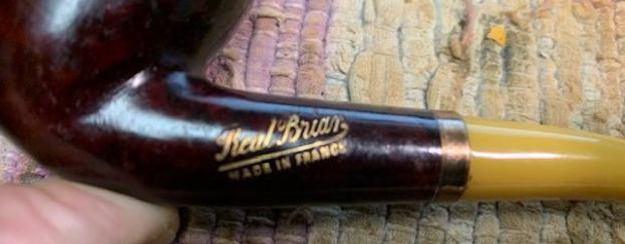
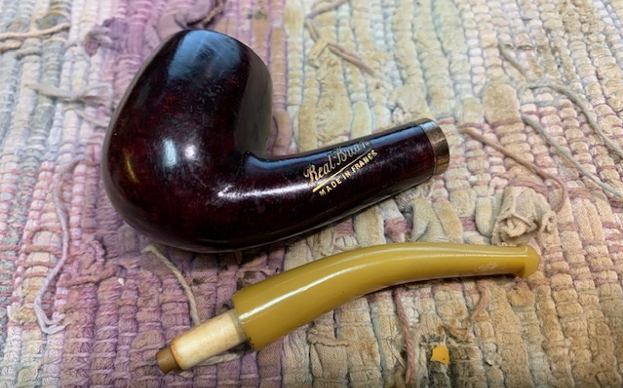
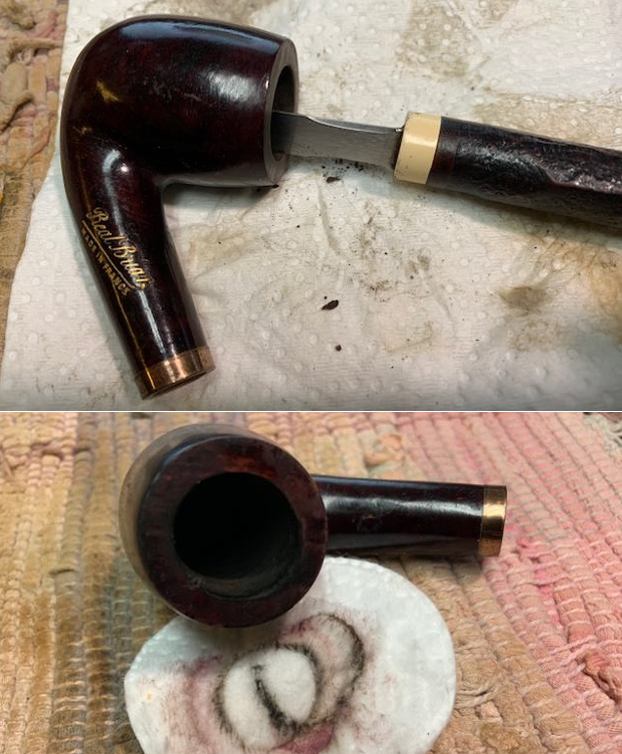
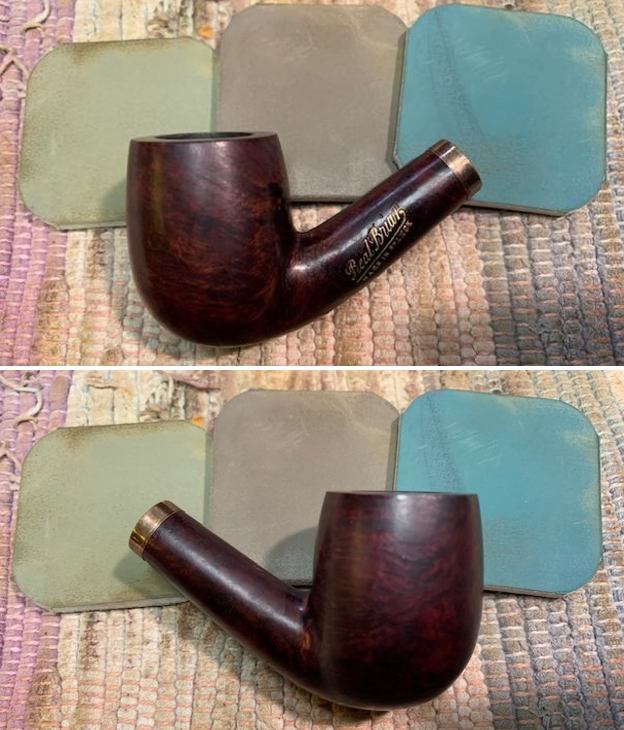
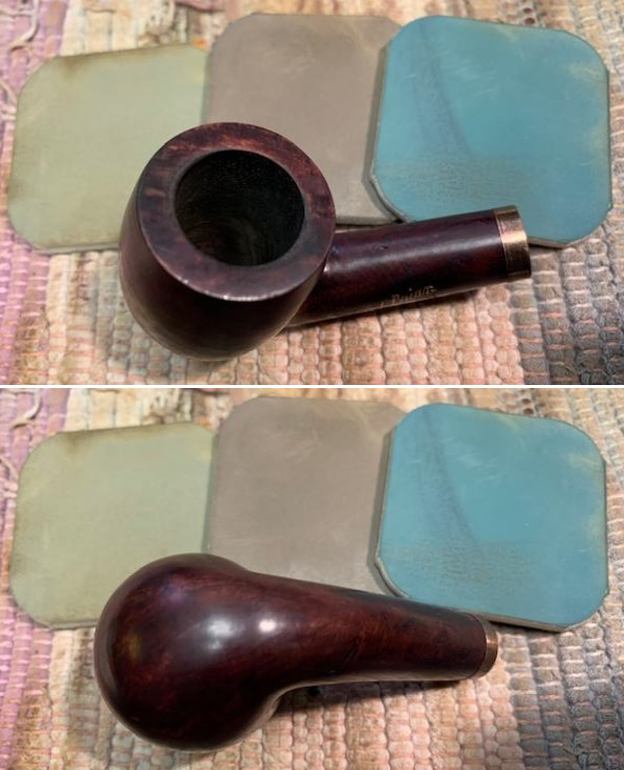
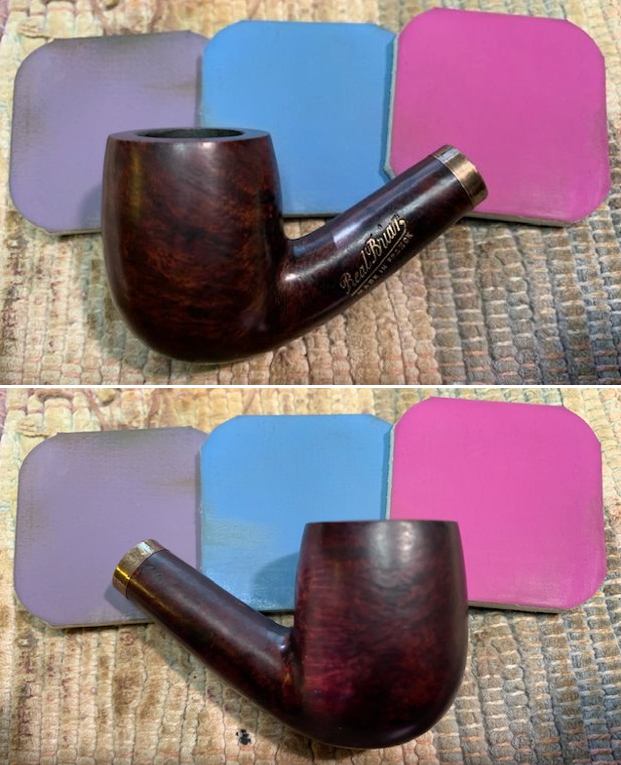
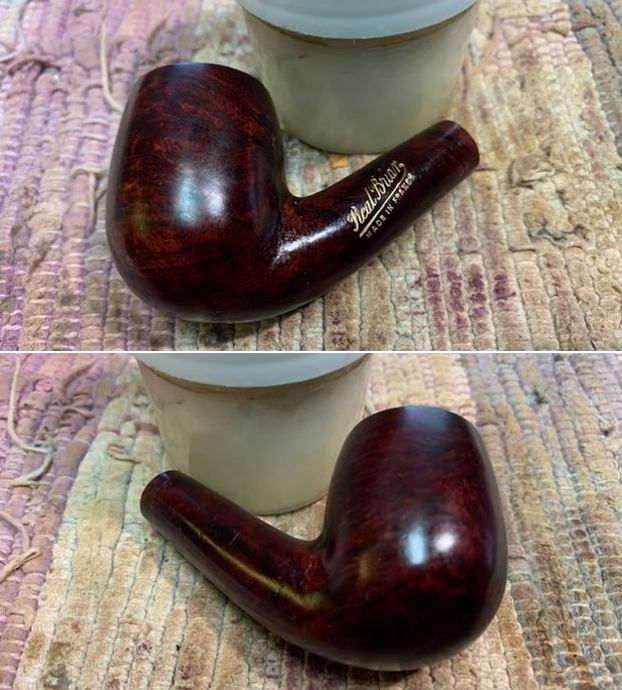
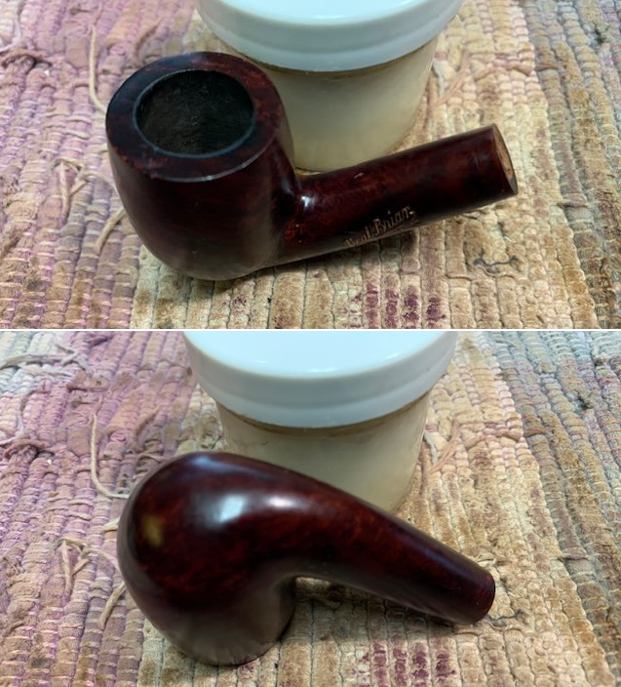
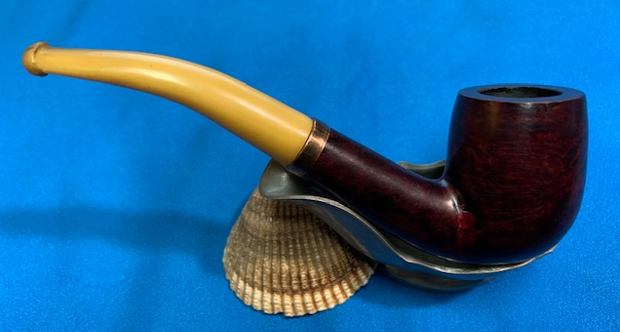
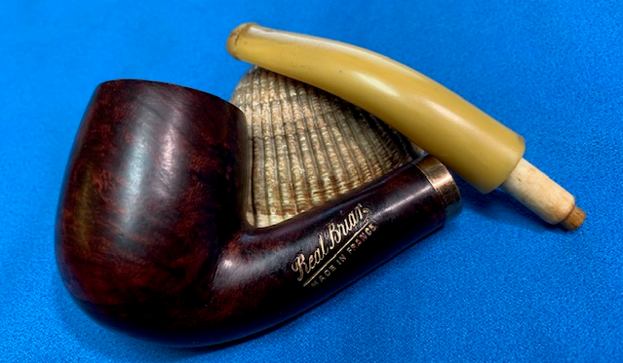
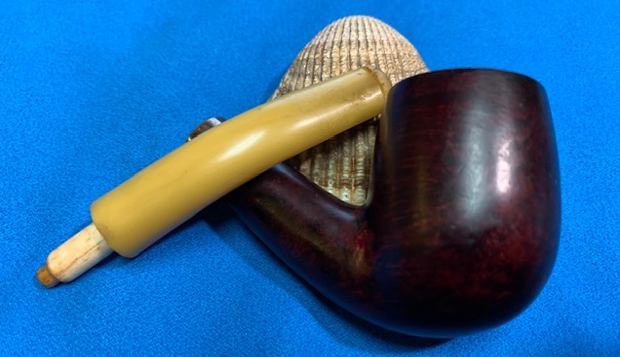
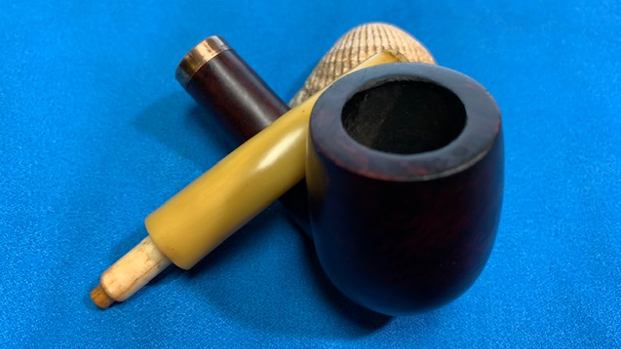
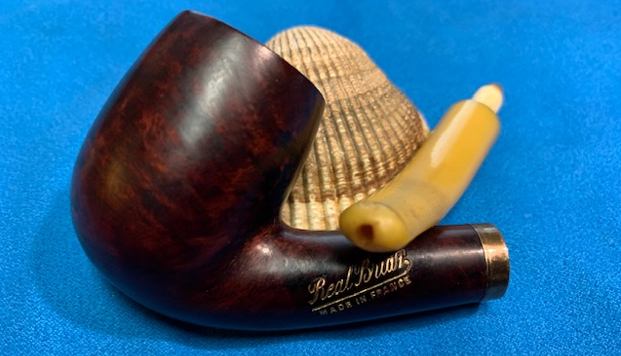
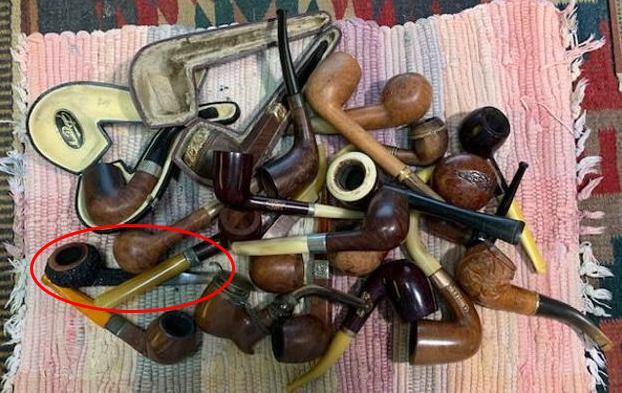
With the completion of the three pipes I just restemmed and wrote about I am returning to work on the bag of older NOS/unsmoked and lightly smoked pipes. I chose another old timer from the lot and this time picked another French Made pipe. It is buried in the pile in the photo below but it is clear in the second photo.In the photo of the poured out bag on my desk top I have circled the pipe that is next on the table. This was a lightly smoked Bent Billiard shaped pipe with a smooth finish that was dirty. The rim top had some light lava but there was minimal cake in the bowl. This little Bent Billiard really intrigued me, so it was next. The Bent Billiard was stamped in gold on the left side of the shank and read Real Briar [at an angle over] Made in France. The brass/nickel shank band was oxidized but still in decent condition. The bowl was lightly smoked and dusty but there was no cake. There was light lava on rim top toward the backside. The inner and outer edges looked good. The finish was dirty and the varnish top coat was spotty and peeling. The pipe had a Bakelite or Amberoid stem that was in good condition. There was one chip on the top near the shank joint. There were some light tooth marks and chatter on the stem. The button was orific – a round hole in the button end. The button had some wear and darkening but was in good condition. It has a push tenon that appears to be a synthetic material as well. Here are a few photos of the pipe before I did anything to it. I took photos of the bowl and stem. You can see the condition of the bowl. It is lightly cake and there is slight lava coat on the rim top. The edges look to be in good condition. The drilling is centered in the bottom of the bowl. It is a good sized bowl. The interior walls of the pipe are smooth and do not have drilling marks or checks or chips. The Bakelite/Amberoid stem is in good condition and has a push tenon and an orific button. There is a small chip in the Bakelite stem near the shank band and there are tooth marks on both sides near the button.I took a photo of the stamping on the left side of the shank. It reads as noted above. I removed the stem from the shank. You can see the brand new threaded bone tenon in the photo below. The proportions of this pipe are well done. The grain around the bowl is very nice. I knew from work on other older pipes that had the same stamp as this- Real Briar Made in France that there was not any clear cut information on that stamping on any of the usual sites. I also knew that the C.P.F. (Colossus Pipe Factory) that I had worked on bore this same stamp. My guess is that the pipe may have been made by them but I could not be sure.

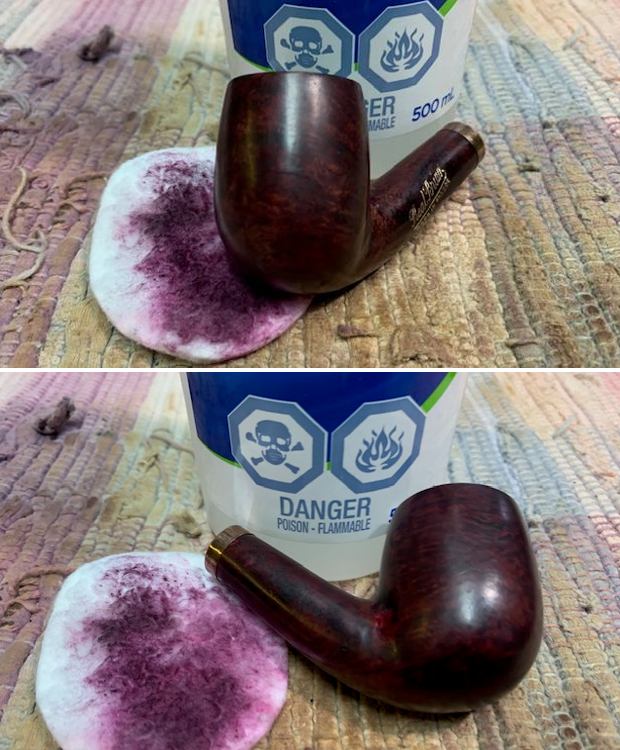
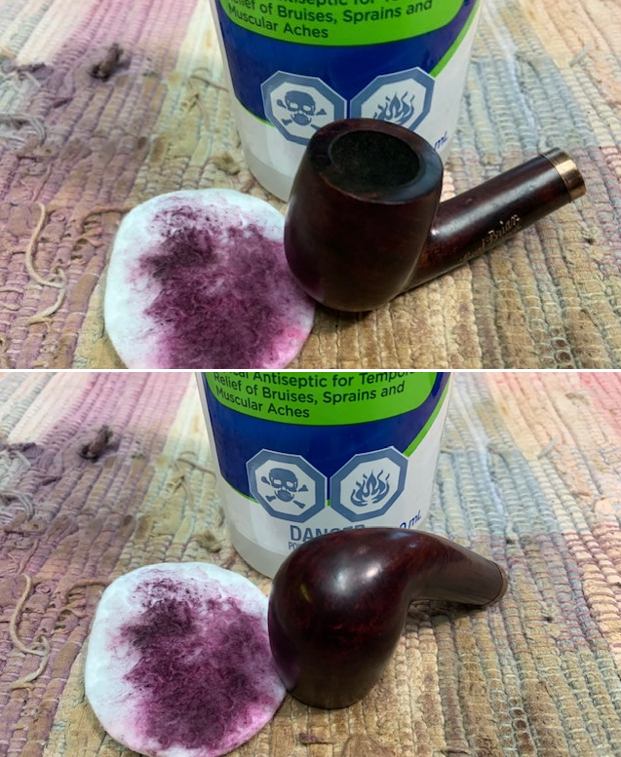
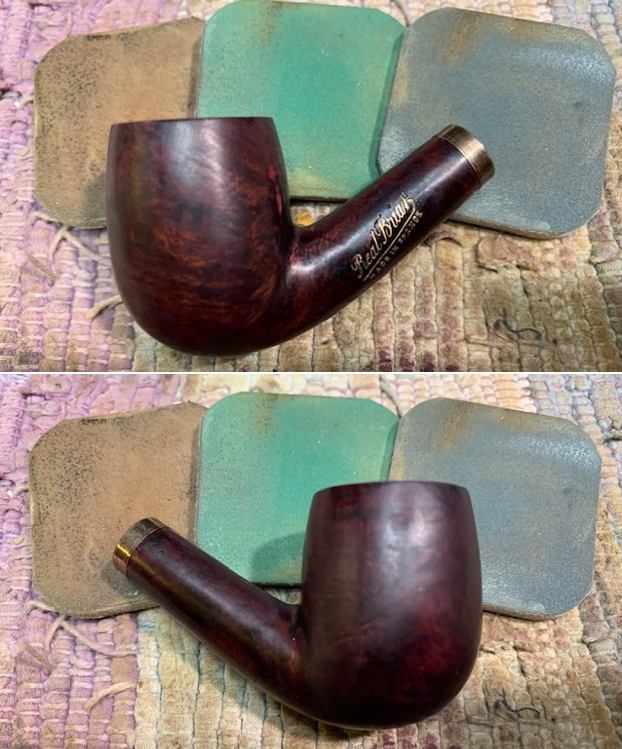
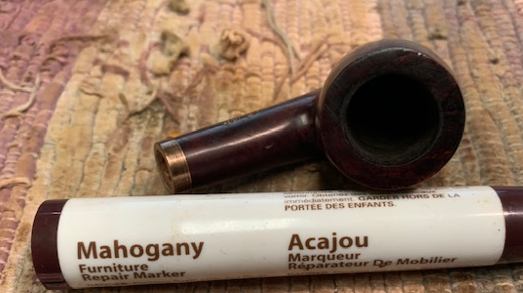
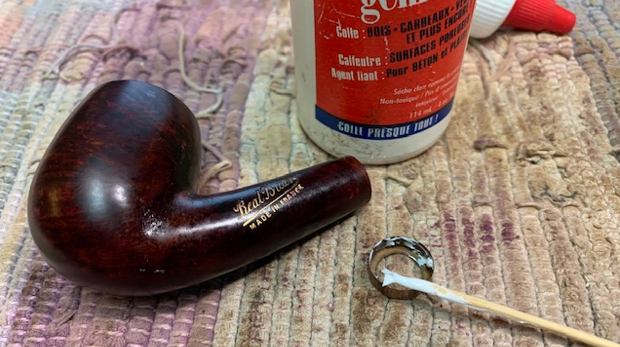
Now it was time to work on the pipe. I started my work on the pipe by scraping out the light cake in the bowl with a Savinelli Fitsall Pipe Knife. I also scrubbed off the lava on the rim top with a damp cotton pad.I wiped down the bowl with 99% Isopropyl alcohol on a cotton pad to remove the peeling varnish coat and grime on the finish of the bowl sides. Wiping it down revealed some great grain around the bowl and shank sides. I polished the briar and the nickel plated band with micromesh sanding pads. I dry sanded with 1500-12000 grit pads and wiped the bowl down with a damp cloth after each sanding pad. The briar began to really come alive. I touched up the stain on the rim top using a Mahogany stain pen and used a Black Sharpie Pen on the fills that became evident on the back of the bowl. I was able to blend the stain and pen into the surrounding briar and it looked very good.I used alcohol and cotton swabs to clean out the shank of any debris that may have gotten in from the reaming of the bowl. It was still quite clean.I rubbed the briar down with Before & After Restoration Balm. I worked it into the finish with my fingertips. The product works to clean, enliven and protect briar finished. I let it sit for 10 minutes then buffed it off with a cotton cloth. The grain on the bowl really came alive with the buffing. It is really a beautiful pipe.While working on the bowl the band came off the shank. It was loose so while it was off I polished it with a jewelers cloth to remove the oxidation and protect the finish on it. I used a tooth pick to put all purpose glue on the inside of the band and pressed it back in place on the shank.I set the bowl aside and filled in the chip on the top shank end edge and the tooth mark on the top and underside of the stem near the button. I used clear CA glue. Once it cured I polished it with micromesh sanding pads.I polished the vulcanite stem with micromesh sanding pads – 1500-12000 grit pads. I wiped the stem down after each pad with Obsidian Oil to protect and enliven the stem. I finished the polishing with Before & After Pipe Stem polish – both Fine and Extra Fine. I gave it a final coat of Obsidian Oil and set it aside to dry.This another interesting older pipe – Real Briar Made in France Bent Billiard turned out really well and it is a great looking pipe with a great shape to it. Once the varnish coat was removed the grain on the briar and the sheen on the stem really popped when the pipe was buffed with blue diamond on the buffing wheel. The brass/nickel band also took on a sheen. I gave the bowl and stem multiple coats of carnauba wax and buffed it with a clean buffing pad. I hand buffed the pipe with a microfiber cloth to deepen the shine. The finished French Made Real Briar Bent Billiard is comfortable to hold and is quite distinguished looking. Give the finished pipe a look in the photos below. The dimensions of the pipe are Length: 5 inches, Height: 1 ¾ inches, Outside diameter of the bowl: 1 inches, Chamber diameter: 5/8 of an inch. The weight of the pipe is 34 grams/1.20 ounces. It is a really beautiful pipe that I will be putting on the rebornpipes store in the French Pipe Makers section if you want to add it to your collection. Thanks for reading this blog and my reflections on the pipe while I worked on it. Keep an eye out on the blog as I have several other older pipes that I will be working on.

Restemming & Restoring a GBD Virgin London England 9437 Pot


Blog by Steve Laug

Sometimes the repetitive work on similar pipes and stems gets tiring to me and to alleviate the inevitable boredom I change things up a bit to refresh me. I have a box of stummels (bowls) here that I periodically go through and see if I have a potential stem that would fit them. Yesterday when I finished the old timer on my work I went through the box and picked out three bowls and found workable stems for them. All were in different states of need but all had been thoroughly cleaned before I boxed them up. The first restemmed and restored was a ZETTERVIG Copenhagen Handmade 900 Egg (https://rebornpipes.com/2021/09/04/restemming-restoring-a-zettervig-copenhagen-hand-made-900-egg/). The second pipe was a nice Malaga Lumberman (https://rebornpipes.com/2021/09/05/restemming-restoring-a-malaga-lumberman/). The next one was the last of the bowls I had chosen – a nicely grained GBD Virgin 9437 Pot.

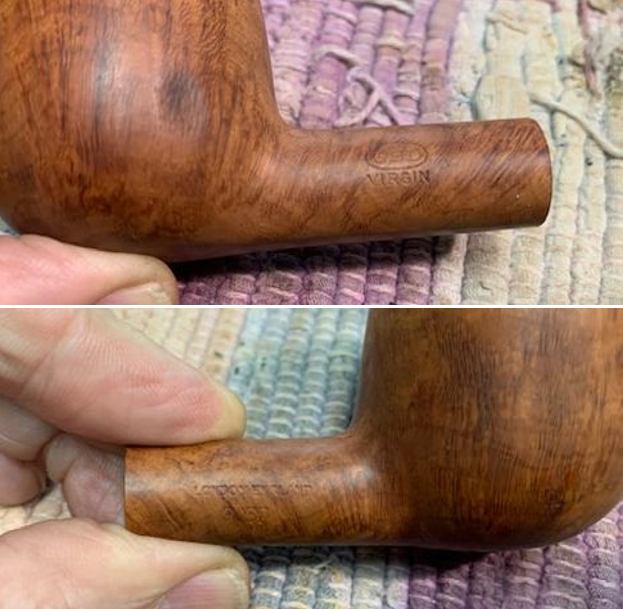
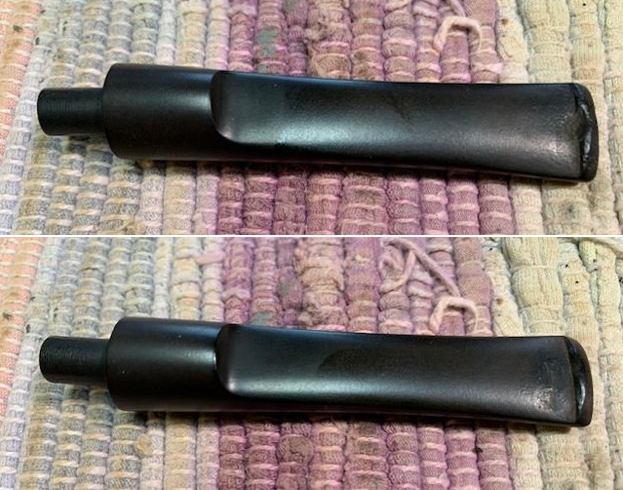
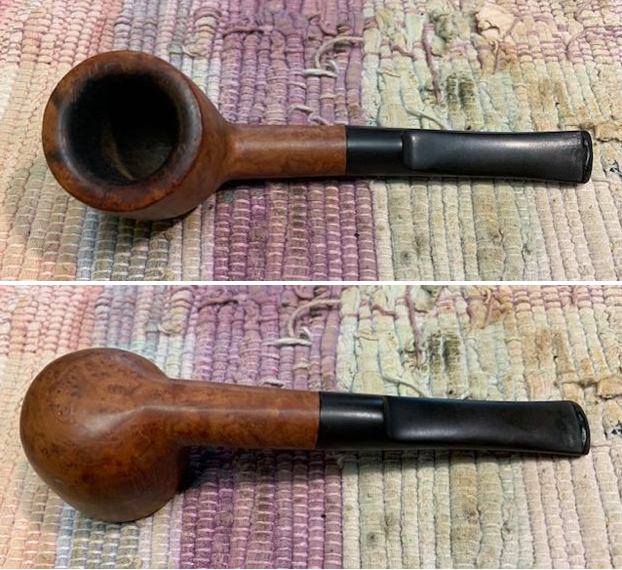
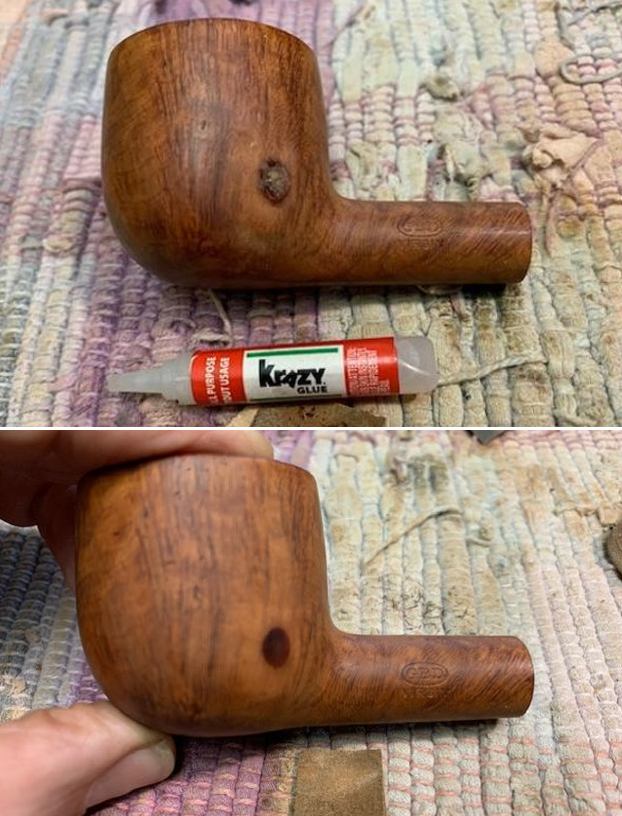
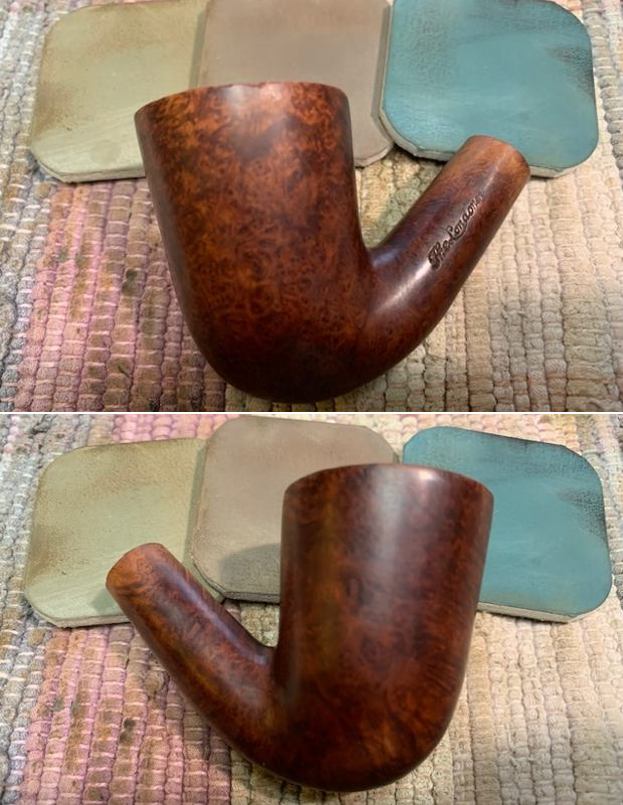
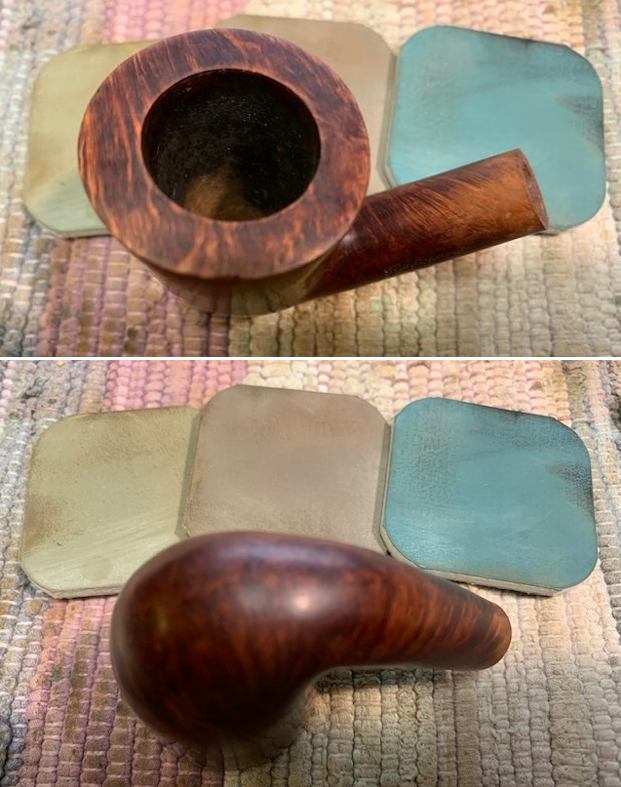
The bowl looked very good. The grain around the sides was quite nice and a mix of flame and straight grain around the bowl sides and birdseye grain on the bottom of the bowl. The rim top had some darkening on the top and inner edges. There was a small burned divot low on the left side of bowl near the shank. It looked as if the pipe had been set in an ashtray on a cigarette or a live ash. It was not deep but it was very present on the bowl side. The interior of the bowl was clean and there were not any chips, cracks or checking on the walls. Examining the mortise it was clean and well drilled with no issues. The finish was washed out and bit and tired but still quite redeemable. The stamping on the pipe was clear and readable. On the left side it read GBD in an oval [over] VIRGIN and on the right side it read London England [over] 9437. I took some photos of the bowl before I started to work on it. I took a photo of the stamping on the sides of the shank. It reads as noted above and is clear and readable.I went through some of stems and found this saddle style stem that perfectly fit the shank. The diameter of the shank and the diameter of the saddle were not quite even. The saddle on the right half of the saddle was slightly larger than the shank. The left side was perfect. It had a few tooth marks and chatter near and on the button but it would clean up well. I put it on the shank and took some pictures of the look before my work on it.I addressed the burn damage dip in the lower left side of the bowl. I sanded it and filled it in with a drop of clear CA glue. I smoothed it out with a folded piece of 220 grit sandpaper. It is smooth too touch but it is definitely darker than before I filled it in. At this point it was smooth and clean feeling.With that repaired I turned to deal with the rim top issues. I sanded the beveled rim top with 220 grit sandpaper and smoothed out the damage – both burns and nicks. I polished the briar with micromesh sanding pads – dry sanding with 1500-12000 grit pads and wiping it down with a damp cloth after each pad. It really began to shine. I worked some Before & After Restoration Balm into the surface of the smooth briar with my finger tips. The product is amazing and works to clean, enliven and protect the briar. I let it sit on the briar for 10 or more minutes and then buff it off with a soft cloth. It really makes the grain sing. I set the bowl aside and turned my attention to the stem. I filled in the tooth marks and rebuilt the edge of the button with clear CA glue. Once it cured I used a small file to recut the edge of the button and flatten the repairs. I smoothed out repairs with 220 grit sandpaper to blend them in further to the stem surface. I started polishing the stem with 400 grit wet dry sandpaper.I fit the stem on the shank. It looked pretty good but seemed to be a bit blah. I took a set of photos to show the look of the new stem on the shank. For the fun of it I put a band on the shank and refit the stem on the shank. The shank is perfect there were no cracks and no issues so the band was just adding a touch of bling that works with the pipe. What do you think? With or without the band? I am leaning toward the banded version to be honest. I think it looks really good.
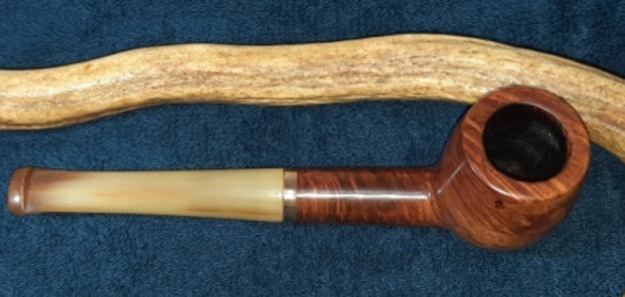
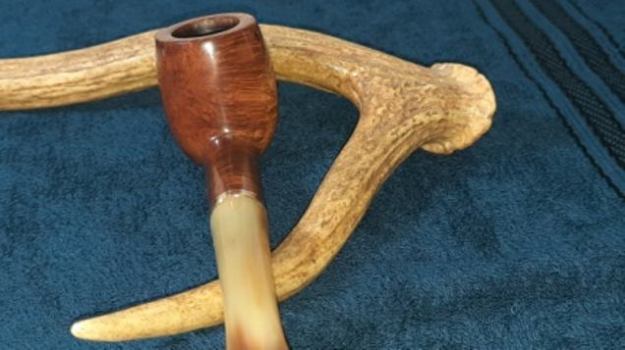
Without the band? With the band? I left the band on the shank but it is not glued in place and can be removed. Let me know what you think – one way or the other.

I polished the stem with micromesh sanding pads – dry sanding with 1500-12000 grit pads. I wiped the stem down after each pad with a cloth and Obsidian Oil. I finished the polishing with Before & After Pipe Stem Polish – both Fine and Extra Fine. I gave it a final coat of Obsidian Oil. I put the pipe back together – the bowl with its new stem. This restored & restemmed GBD Virgin 9437 Pot turned out really well. The pipe (even with the burn mark on the left side of the bowl) really is a beauty and I think the brass band and the chosen stem works well with it. Remember I have not set the band in place so it can be removed. What do you think of it? Yea or Nay? The grain on the bowl came alive with the buffing. I used Blue Diamond on the buffing wheel on both the bowl and stem. I gave both multiple coats of carnauba wax on the wheel then buffed it with a clean buffing pad to raise the shine. I hand buffed it with a microfibre cloth to deepen the shine. The GBD Virgin Pot feels great in the hand. It is lightweight and the contrast in the browns of the briar, the brass of the band and the polished vulcanite stem with the popping grain on the mixed brown stained bowl is quite amazing. The dimensions of the pipe are Length: 6 inches, Height: 1 ½ inches, Outer diameter of the bowl: 1 ½ inches, Chamber diameter: 1 inch. The weight of the pipe is 1.45 ounces/41 grams. It really is a beauty. I will be putting it on the rebornpipes store in the British Pipe Makers section shortly if you are interested in adding it to your collection. Thanks for walking through the restemming and the restoration with me. Cheers.
Restemming & Restoring a Zettervig Copenhagen Hand Made 900 Egg


Blog by Steve Laug

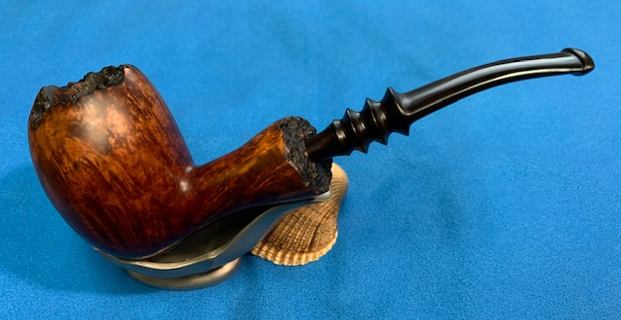
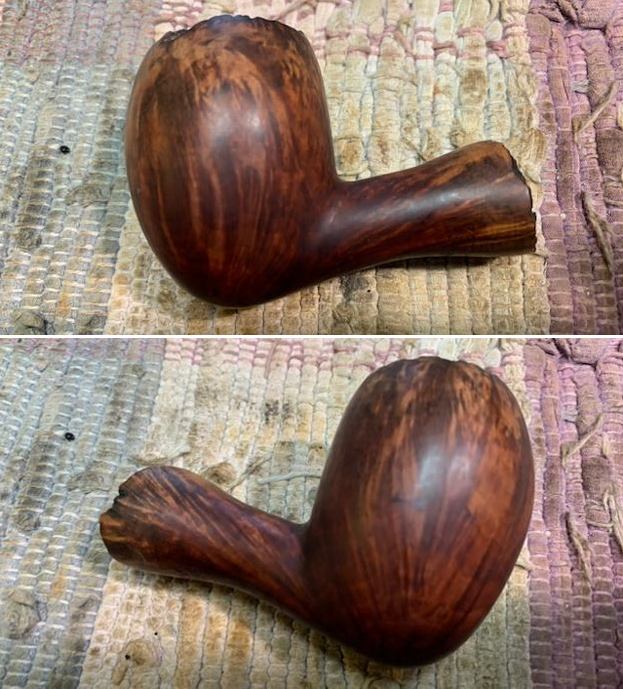
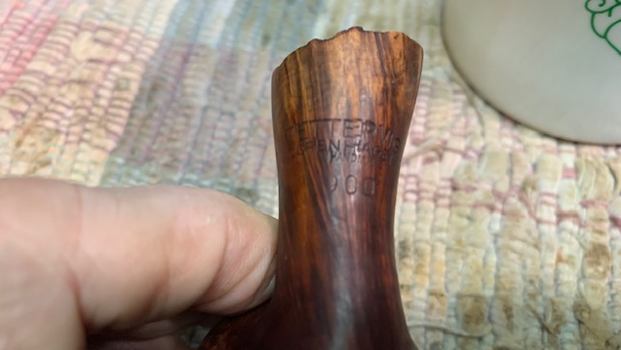
Sometimes the repetitive work on similar pipes and stems gets tiring to me and to alleviate the inevitable boredom I change things up a bit to refresh me. I have a box of stummels (bowls) here that I periodically go through and see if I have a potential stem that would fit them. This morning when I finished the last old timer I went through the box and picked out three bowls and found workable stems for them. All were in different states of need but all had been thoroughly cleaned before I boxed them up. The first of these was an interesting egg shaped freehand. It is stamped on the underside of the shank and reads ZETTERVIG (double stamped) [over] Copenhagen (also double stamped) [over] Handmade [over] 900. It had some great grain around the bowl and plateau on the rim top and shank end that was interesting.  I have worked on other Zettervig pipes in the past so I am not a stranger to the brand. I have included links to two different pipes that I worked on (https://rebornpipes.com/2013/12/05/a-complete-reworking-of-a-zettervig-freehand/)(https://rebornpipes.com/2018/07/28/restoring-and-restemming-a-zettervig-handmade-351-freehand/).

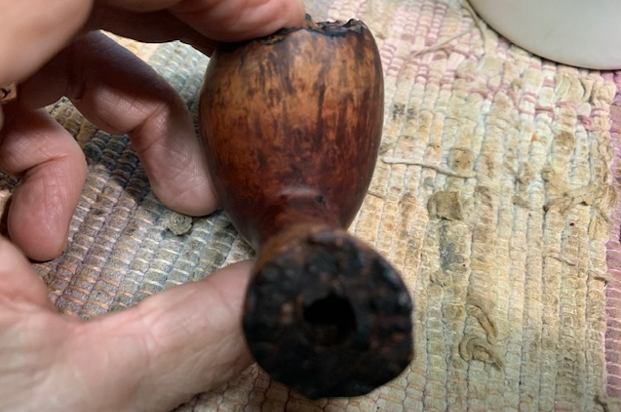
The bowl looked very good. The grain around the sides was quite nice and a mix of flame and straight grain. The plateau on the rim top and shank end looked good but the rim top was faded and worn. The shank end was black and looked very good. The bowl was clean and there were not any chips, cracks or checking on the walls. Examining the mortise it was clean and well drilled with no issues. The finish was washed out a bit and tired but still quite redeemable. I took some photos of the bowl before I started to work on it. I took a photo of the double stamping on the underside of the shank. It reads as noted above and is surprisingly clear and readable.I went through some of the fancy, turned freehand style stems and found this old timer. It is quite heavily oxidized and has some deep tooth marks but I think it will work with the Zettervig. I put the stem in place and took a photo to have a look at it in situation. What do you think? With the stem chosen I dropped it in a bath of Briarville’s Pipe Stem Deoxidizer that I have here. It is getting a bit tired but it still works. I let it sit while I worked on the bowl.While the stem soaked in the bath and before I started to work on the bowl I decided that I would look up some information on the Zettervig brand before I started the clean up on the pipe. I looked up information on two of my favourite sites. The first was Pipedia. Here is the link: https://pipedia.org/wiki/Zettervig. I quote in full:

In the 1960’s and into the early 1970’s Ole Zettervig had a shop in Copenhagen, Denmark where he was carving high quality pipes equal to Stanwell, Larsen, Anne Julie, Thurmann, Bang and others. These early pipes were marked “Copenhagen” and are very collectible. He sold his shop at some point in the 70’s and moved to Kolding and continued to produce pipes as a hobby, but the quality of briar and workmanship is said to not equal the early production. The later pipes he now marked as Kobenhaven rather than Copenhagen, and these were sold by Ole at flea markets throughout Europe.

That information told me I was working on an early one of his pipes from the 1960s to early 1970s as it is stamped Copenhagen.

I turned to Pipephil’s site and did a screen capture of the information that was there. There was no addition info but it did show one of the pipes (http://www.pipephil.eu/logos/en/logo-z.html). You can also see the style of the stem and the Z on the top of the stem. The one I have chosen is very different but I think it will still work.With that information in hand I turned to work on the bowl. I used a brass bristle wire brush to clean out the remaining debris and lava in the grooves of the plateau rim top and to remove the dust from the plateau shank end. Once it was clean I used a Black Stain Pen to stain it black as it was originally. I polished the briar with micromesh sanding pads – dry sanding with 1500-12000 grit pads and wiping it down with a damp cloth after each pad. It really began to shine. I worked some Before & After Restoration Balm into the surface of the smooth briar with my finger tips and into the plateau rim top and shank end with a horsehair shoe brush. The product is amazing and works to clean, enliven and protect the briar. I let it sit on the briar for 10 or more minutes and then buff it off with a soft cloth. It really makes the grain sing. With the bowl finished I turned my attention to the stem. It had been sitting in the bath for several hours. I removed it and ran a pipe cleaner and alcohol through the airway to remove any remaining soak. I wiped the stem down with a paper towel to remove the oxidation that had been loosened. It looked much better than when I put it in the bath.I “painted” the stem surface with a Bic lighter flame to raise the tooth marks. I was able to lift many of them to the surface. What remained I would fill in later. I scrubbed the stem surface with cotton pads and Soft Scrub to remove the remaining oxidation. The stem was really starting to look very good. I cleaned out the ends of the stem and button with a pipe cleaner and alcohol to remove the bits of Soft Scrub that had gotten into the airway. I heated the stem and gave it a slight bend to fit the flow of the pipe better.I filled in the remaining divots and marks in the stem with clear CA glue. Once it had cured used a small file to flatten the repair and sharpen the edge of the button. I sanded it smooth with 220 grit sandpaper to blend it into the stem. I started the polishing with 400 grit wet dry sandpaper. I polished the stem with micromesh sanding pads – dry sanding with 1500-12000 grit pads. I wiped the stem down after each pad with a cloth and Obsidian Oil. I finished the polishing with Before & After Pipe Stem Polish – both Fine and Extra Fine. I gave it a final coat of Obsidian Oil. I put the pipe back together – the bowl with its new stem. This restored Zettervig Copenhagen Handmade 900 Egg is a real beauty and I think the chosen stem works well with it. The grain on the bowl came alive with the buffing. I used Blue Diamond on the buffing wheel on both the bowl and stem. I gave both multiple coats of carnauba wax on the wheel then buffed it with a clean buffing pad to raise the shine. I hand buffed it with a microfibre cloth to deepen the shine. The Zettervig Freehand Egg feels great in the hand. It is lightweight and the contrast in the blacks of the plateau and the polished vulcanite stem with the popping grain on the mixed brown stained bowl is quite amazing. The dimensions of the pipe are Length: 5 ¾ inches, Height: 2 inches, Outer diameter of the bowl: 1 ½ inches, Chamber diameter: ¾ of an inch. The weight of the pipe is 2.05 ounces/59 grams. It really is a beauty. I will be putting it on the rebornpipes store in the Danish Pipe Makers section shortly if you are interested in adding it to your collection. Thanks for walking through the restemming and the restoration with me. Cheers.

Restoring a Diamond Black Extra Squat Bulldog


Blog by Steve Laug

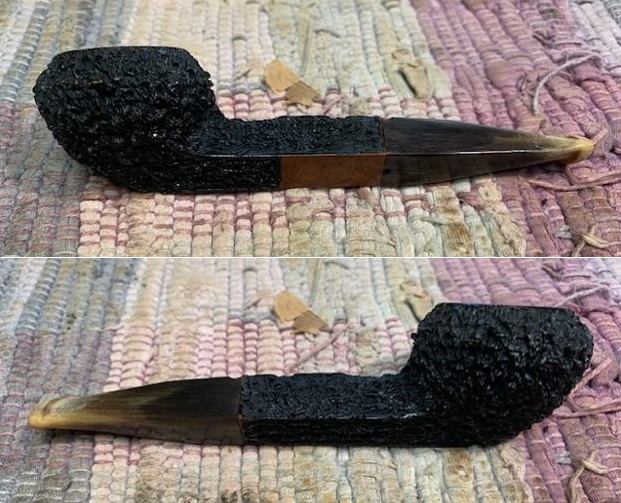
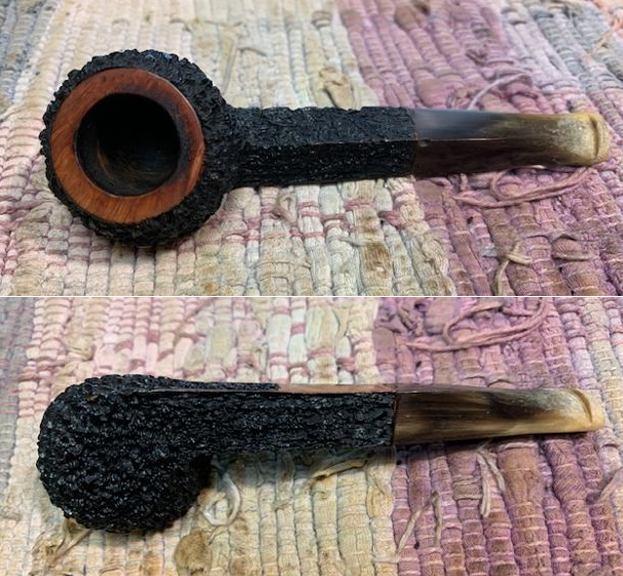
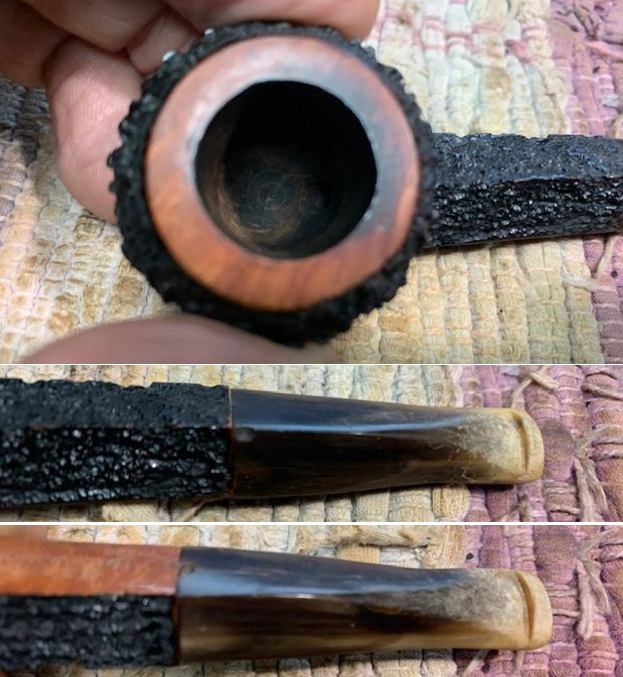
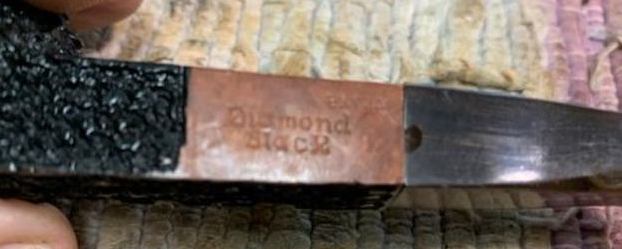
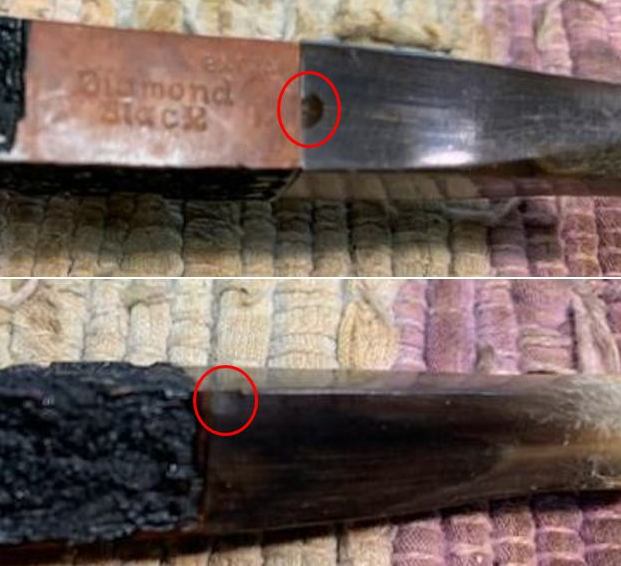
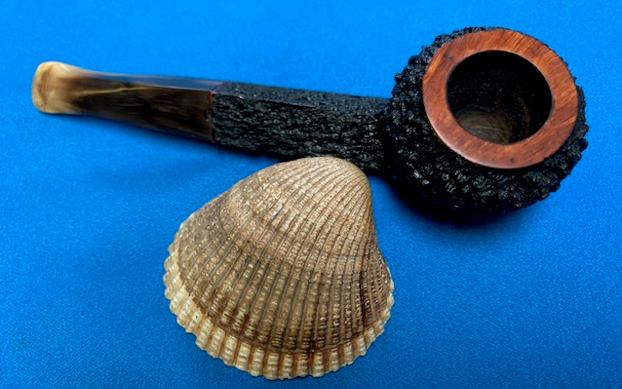
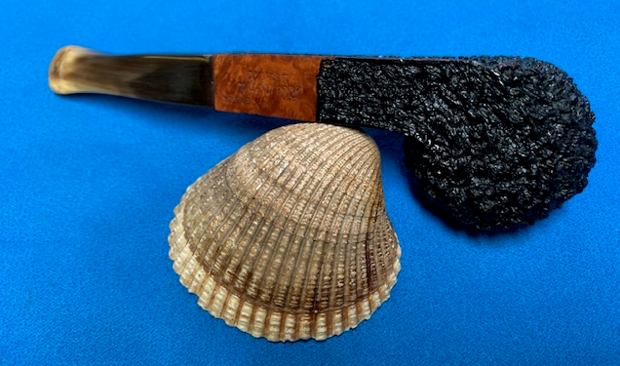
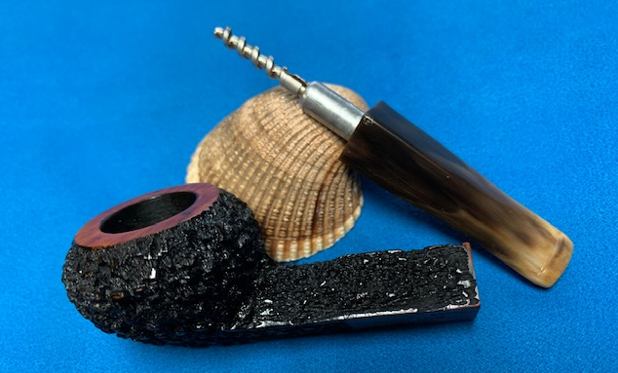
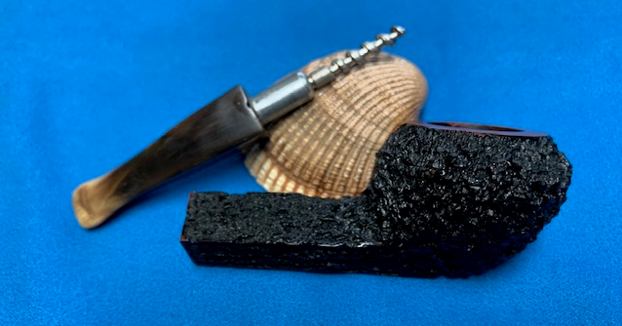
I finished the restoration of four of the older horn stem pipes that I have posted the blogs about on rebornpipes, the first was a beautiful early 1900s KB&B Horn Stemmed Italian Billiard (https://rebornpipes.com/2021/08/29/reviving-another-older-horn-stemmed-pipe-my-next-choice/) then an early French made JSN Racine Bruyere Dublin with a horn stem (https://rebornpipes.com/2021/08/29/reviving-another-older-horn-stemmed-pipe-from-the-bag-of-old-timers/), then a lightly smoked GVG Liverpool made by the founder of Genod (https://rebornpipes.com/2021/08/31/reviving-a-lightly-smoked-horn-stem-gvg-extra-9745-liverpool/) and fourth a Belle D’ Or Vielle Bruyere “Double Or” French Made Bent Dublin (https://rebornpipes.com/2021/09/01/restoring-a-la-belle-dor-vielle-bruyere-double-or-horn-stem-bent-dublin/). I decided to keep working on the bag of older NOS/unsmoked and lightly smoked pipes. I chose another horn stemmed pipe from the lot and this time picked a bit of a mystery pipe. It is buried in the pile in the photo below but it is clear in the second photo.In the photo of the poured out bag on my desk top I have circled the pipe that is next on the table. This was a lightly smoked pipe with a cut glass rustication stained black. The rim top is smooth as is the panel where it is stamped. This squat Bulldog really intrigued me so it was next. I sat at my desk went over the pipe I had chosen. It is lightly smoked squat Bulldog with a diamond shank and a taper stem. It is stamped on the left underside of the shank on a smooth panel and reads Diamond [over] Black. Just above that toward the shank/stem junction it is also stamped Extra. The pipe is a bit of a mystery as there is no country of origin. The finish is rusticated with a cut glass style rugged rustication that is stained black. The rim top is smooth and stained with a medium brown. There was some thin lava on the back top and edge of the rim. The stem is horn and has tooth chatter on the top and underside ahead of the button. There were worm holes on the point of the diamond on the underside and on the top right side at the joint of the stem and shank. The tenon is metal/aluminum with twisted stinger in place. It is a push stem. The button end is slotted. Typically these metal tenon pipes came out during the war or directly after when horn was brought back into use when rubber was short. It really is a beautiful pipe. Here are a few photos of the pipe before I started my cleanup and restoration. I took photos of the bowl and stem. You can see the condition of the bowl and the rim top and edges. The drilling is centered in the bottom of the bowl. It is a good sized bowl. The interior walls of the pipe are smooth and do not have drilling marks or checks or chips. There was some lava on the rim top at the back of the inner edge of the bowl along with darkening and burn damage. The horn stem is in excellent condition other than a worm hole on the top and underside near the shank. The button has a slotted opening and is quite clean. I took a photo of the stamping on the left underside of the diamond shank. It reads as noted above.I took some photos of the worm holes in the stem surface. I have circled them in red in the photos below. I removed the stem from the shank. You can see the metal tenon and the turned stinger in the photo below. The proportions of this pipe are well done. The rustication around the bowl is very nice. I used a folded piece of 220 grit sandpaper to smooth out the inner edge and then polished the smooth rim top with micromesh sanding pads. I dry sanded with 1500 -12000 grit pads and wiped the bowl down with a damp cloth after each sanding pad. It began to really come alive. I rubbed the briar down with Before & After Restoration Balm. I worked it into the finish with my fingertips and a horsehair shoe brush. The product works to clean, enliven and protect briar finished. I let it sit for 10 minutes then buffed it off with a cotton cloth. The rustication on the bowl sides and the smooth rim top really came alive with the buffing. It is really a beautiful pipe.I set the bowl aside and turned my attention to the stem. I filled in the worm holes in the stem surface with clear CA glue. I layered it in until the surface was smooth. Once the repairs cured I sanded them smooth with 220 grit sandpaper and started polishing with 400 grit wet dry sandpaper. I also sanded the tooth chatter on the top and underside near the button. I cleaned up the twisted stinger apparatus with alcohol and cotton swabs until it was clean. It is removable which mean it can be smoked with it in place or removed.I polished the horn stem with micromesh sanding pads – 1500-12000 grit pads. I wiped the stem down after each pad with Obsidian Oil to protect and enliven the horn. It came out looking very good. This another interesting pipe – a ruggedly rusticated Diamond Black Extra Horn Stem Squat Bulldog. It turned out really well and it is a great looking pipe with a great shape to it. The rusticated finish on the briar and the sheen on the horn stem really popped when the pipe was lightly buffed with blue diamond on the buffing wheel. I gave the bowl multiple coats of Conservator’s Wax and the stem multiple coats of carnauba wax and buffed it with a clean buffing pad. I hand buffed the pipe with a microfiber cloth to deepen the shine. The Diamond Black Extra Squat Bulldog is tactile and comfortable to hold and is quite distinguished looking. Give the finished pipe a look in the photos below. The dimensions of the pipe are Length: 5 inches, Height: 1 ½ inches, Outside diameter of the bowl: 1 ½ inch, Chamber diameter: ¾ of an inch. The weight of the pipe is 29 grams/1.02 ounces. This is a beautiful pipe that I will soon be putting on the rebornpipes store in the French Pipemakers Section. Thanks for reading this blog and my reflections on the pipe while I worked on it. Keep an eye out on the blog as I have several other older horn stemmed pipes that will be coming up soon.

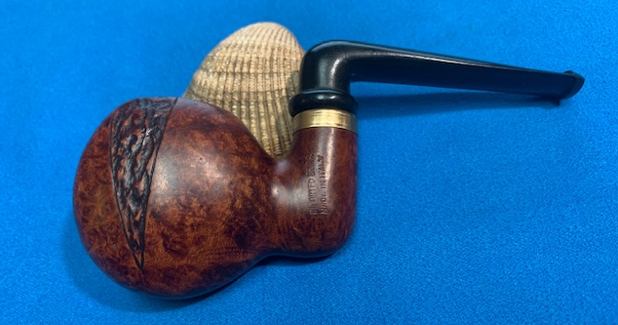
Resurrecting A Dreary No Name Briar Calabash Shaped Pipe


Blog by Paresh Deshpande

While surfing eBay for estate pipes, I came across this one ‘no name’ pipe with a horn stem and beautiful flowing calabash shape. The beautiful curvy shape apart, the pipe had some really hideous (IMHO) rustication on the stummel surface, a semblance of widely spaced scales with thin vertical lines. The perfect shape and spacing of the scales over the stummel surface points to machined and not hand crafted rustications. Notwithstanding the rustications on the stummel, I fell in love with the pipe and had already chalked out a plan for its transformation even before I had won the auction. As I had expected, there was only a couple of other bids and the pipe soon made its way to me. A month and a half later, the pipe had reached me and now it is on my work table.

As mentioned by the seller, the stummel and the stem are devoid of any stampings and there is absolutely no clue for me to establish the provenance of this beautiful pipe. However, the threaded bone tenon, horn stem and round orifice are indicative of this pipe being from the period 1900s to 1950s. It would be interesting if further light could be shed on this pipe as regards its origin, vintage etc by the esteemed readers of rebornpipes.

Initial Visual Inspection
The first thing one can notice is the lovely shape of the pipe and the second is its ultra light weight. The chamber has been neatly reamed and the rim top surface is devoid of any lava overflow. There is severe charring to the inner edge in 12 o’clock direction. There are a couple of minor tooth indentations in the bite zone of the otherwise pristine stem. The stem is overturned to the right and not in alignment with the shank/ stummel. The stummel is dirty, dull and lifeless to look at. Overall, it is in decent condition as can be seen from the pictures below. Dimensions Of The Pipe
(a) Overall length of the pipe: –          5 3/4 inches.

(b) Bowl height: –                               1.5 inches.

(c) Inner diameter of chamber: –         0.7 inches

(d) Outer diameter of chamber: –        1.3 inches

Once The Pipe Is On My Work Table……
It appears that an attempt has been made to refurbish this pipe, but for reasons best known to the previous restorer, it was abandoned. Save for a little dust and soot, the chamber is nicely reamed back to the bare briar. The chamber walls, though not very thick, are without any heat fissures or pits and that’s a big relief. The rim top surface is peppered with numerous minor hairline scratches. The inner rim edge shows severe charring at 12 o’clock direction (encircled in yellow) and it extends over more than half way towards the outer edge. There is a smooth band of briar wood below and adjoining the outer rim edge. There are no ghost smells in the chamber. Addressing the charred inner rim edge is going to be tricky as the topping required would be extensive to the extent that the profile of the stummel and pipe as a whole, would be considerably altered. I would top the rim surface well within the limits of the smooth briar band below the outer rim edge and up to the point where I reach solid, albeit darkened briar. I would, thereafter polish it and attempt to blend the darkened areas by a applying a dark stain to the rest of the rim top surface. The stummel surface is without any damage. There is dust and dirt embedded in to the rusticated nooks and crannies giving the briar an old and lifeless look. The patterned scaled rustications also do not help in the overall appearance of the stummel. The mortise is threaded into which seat the threaded bone tenon of the stem and appears to be clean. I plan on complete rustication of the stummel and thereafter contrast staining with black and brown stains. The only issue I need to keep in mind is that the walls of the stummel are not very thick and thus I need to be cautious least I end up gouging too deep into the chamber wall. The tapered horn stem is clean with no major issues. The upper stem surface has a couple of minor bite marks at the base of the button and also over the button edge. The lower surface has some minor tooth indentations in the bite zone. The button edges on both the surfaces need to be sharpened. The round orifice and the tenon end are clean.The seating of the stem in to the mortise is overturned to the right by a huge margin and is very loose. This would need something more permanent than the clear nail polish coat application. The following pictures will give the readers a correct perspective of the issue.The Process
The process of transforming this pipe began with cleaning the chamber that had been reamed and cleaned before it reached me. With my fabricated knife, I completely removed the dust and little residual carbon from the walls of the chamber. I further cleaned the walls with a folded piece of 220 grit sand paper to completely remove the carbon from the walls and wiped the chamber with a cotton pad and alcohol. The charred surface at the inner rim edge was also gently scraped with the knife and sandpaper to remove the burnt briar till I reached solid briar underneath. Next, I cleaned the mortise and shank with regular and bristled pipe cleaners dipped in alcohol. At first I just could not get the pipe cleaner to pass through the mortise and out through the draught hole. I then inserted the pipe cleaner through the draught hole and with some efforts; it came out through the mortise dislodging some dried gunk from the air way as it came out. Other than the stuck dried gunk, the mortise was clean and just a couple of pipe cleaners were put to use. I was particularly deliberate in cleaning the threads in the mortise in preparation of further repairs to improve the seating of the threaded tenon, the process for which will be covered subsequently.After I was done with the internal cleaning of the stummel, I cleaned the external surface. I generously applied Murphy’s oil soap with a hard bristled tooth brush and scrubbed the stummel and rim top with the soap. I washed the stummel under running warm water with anti oil dish washing detergent and brass wired brush till the stummel surface was clean and dried it using paper towels and soft cotton cloth. The rim top surface was deliberately cleaned with a Scotch Brite pad to further remove the charred wood from the rim edge. I simultaneously cleaned the shank internals with the detergent and hard bristled shank brush. The stummel surface has cleaned up nicely with the scaly and thin lined rustication plainly visible. Truth be told, the stummel now appear more dull and unattractive to my eyes! Once the internals and the external surface of the stummel had been cleaned, I progress to rusticating the stummel. To rusticate, I firmly held the stummel in my left hand and using my right hand began gouging out the briar with my fabricated rusticating tool. The technique is to firmly press the pointed four prongs of the modified Philips screwdriver into the surface, rotate and gouge out the removed chunk of briar. I worked diligently till I was satisfied with the rustications and the appearance of the stummel. I was careful to avoid gouging too deep as the walls are not very thick and I feared that deep rustications will lead to further thinning of the walls and subsequent burn out. As I reviewed the rusticated stummel, the rustication is prominent while the thickness of the wall is not compromised at all. I am very pleased with the progress thus far. I cleaned the stummel surface with a brass wired wheel brush mounted on a handheld rotary tool. While cleaning the surface of all the debris, this rotating brass brush wheel also creates subtle patterns of its own and this adds an additional dimension to the appearance of the stummel. I sanded down the jagged high points in the rustication to a smooth and even surface using a worn out piece of 150 grit sand paper without compromising on the tactile feel to the hand.Next I decided to work on the damage to the rim top and inner rim edge. I topped the rim on a piece of 220 grit sand paper, checking frequently till I was satisfied that the darkened surface is addressed to an acceptable extent without compromising on the stummel profile and the rim top surface is nice, smooth and even. The darkened rim is still evident but the briar in this area is nice and solid and so I shall leave it be. All this while that I was working on the stummel, Abha quietly worked on the stem. She cleaned the stem internals with regular and bristled pipe cleaners dipped in alcohol. It didn’t take many pipe cleaners to get the stem air way clean.Next she sanded the stem surface with a 320 grit paper. This addressed the minor tooth indentations and bite marks on either surface in the bite zone. She progressively moved to polishing the stem through 400, 600, 800 and 1000 grit sand paper. She finished the stem refurbishing by wet sanding the stem with 1500 to 12000 grit micromesh pads. She rubbed a little Extra Virgin Olive oil into the stem surface to hydrate it and set it aside to be absorbed into the bone. Next I polished the rim top and the high spots in the rustication using micromesh pads, wet sanding with 1500 to 12000 grit pads. I wiped the bowl with a moist cloth after each pad to clean the surface. I am happy with the appearance of the stummel at this point in the restoration. The stummel is now ready for a fresh coat of stain.I wanted to highlight the difference between the rusticated and the smooth stummel surface. I decided to stain the rusticated surface with a black dye which would contrast beautifully with the browns of the rim top and the raised knobs of the rustications. I heated the rusticated portion of the stummel surface with my heat gun to open up the pores on the stummel so that the stain is well absorbed. I used Fiebing’s Black Leather dye and liberally applied it over the heated surface, flaming it with a lighter as I went ahead to different self designated zones on the surface. This helps in the setting of the stain in the grain of the briar. I ensured that every inch of the rusticated surface is coated with the dye. I immediately followed it by wiping the raised portions of the rustication with cotton pad and alcohol to lighten the knobs. Once polished, these will contrast with the black of the rest of the stummel surface. I set the stummel aside overnight for the dye to set into the briar surface.  The following day, I again wiped the stummel with a cotton swab and alcohol to remove any excess stain and followed it up by sanding the raised rustication with a folded piece of 320 grit sand paper. This was followed up by careful dry sanding of the entire stummel, especially the raised rustications with 1500 to 12000 grit micromesh pads. This lightens and highlights the high spots in the rustications. Next, I rubbed a small quantity of “Before and After Restoration Balm” in to the briar with my finger tips, working it deep into the rustications and let it rest for a few minutes. The balm almost immediately works its magic and the briar now has a nice vibrant appearance over the smooth surface with the beautiful rusticated patterns on full display. I further buffed it with a horse hair shoe brush. The only issue that remains unaddressed at this stage is the issue of loose and overturned seating of the stem into the mortise. I had the option of using the clear nail polish to tighten the seating but that would have been a temporary solution as the threaded bone tenon was way too loose fitting in to the mortise and no amount of smoking would have tightened the mortise to the required extent and hence was dropped. I decided on using CA superglue for the purpose. I applied a coat of superglue over the threads of both the mortise and tenon and let it set for a few seconds.  Thereafter, I threaded the tenon in to the mortise till the stem was perfectly aligned and again held it in place for a few seconds for the superglue to take the shape of the threads. I repeated the process once over and achieved a perfectly aligned and snug seating of the stem in to mortise. It was at this juncture that a new issue came to the fore as I was taking pictures of the stem and shank junction under magnification. The green arrows tell the story!Closer inspection revealed that the cause of this gap was the uneven shank end and the tenon was not flush with the stem face (which by the way is also not perfectly shaped). The gap was more on the lower surface than the upper. To address these issues, I firstly topped the shank face on a piece of 220 grit sandpaper till it was even. I was extremely careful while topping so that there was minimum loss of briar as the tenon was already slightly long and I had no desire to increase this gap any further. Secondly, I bridged the gap between the shank face and stem by using a brass band. This also added a nice touch of bling to the entire pipe. I like the way the pipe has shaped up. To complete the restoration, I first mounted a cotton cloth buffing wheel that is dedicated for use with Blue Diamond, onto my hand held rotary tool.  I set the speed at about half of the full power and polished the stem. The Blue Diamond compound helps to erase the minor scratches that are left behind even after micromesh polishing cycle and followed it by applying several coats of carnauba wax with a cotton cloth buffing wheel dedicated to Carnauba Wax. I finished the restoration by giving the entire pipe a rigorous hand buffing using a microfiber cloth to deepen the shine further. The finished pipe looks amazingly beautiful and has undergone quite a transformation. With its perfectly balanced weight, a nice full bent shape and light weight, this is a perfect pipe for clenching while working. This is one pipe that will I feel will not disappoint either aesthetically or functionally. In case this beauty calls out to you, please let me know and we shall work out a mutually beneficial deal. I wish to thank our esteemed readers for sparing their valuable time to read through and any input or advice is always welcome. And how can I not thank Abha, my wife for her patient efforts in imparting glass like finish to the stem and rim top surface!

Praying for the safety and well being of you and yours…stay home, stay safe and get your vaccines please.