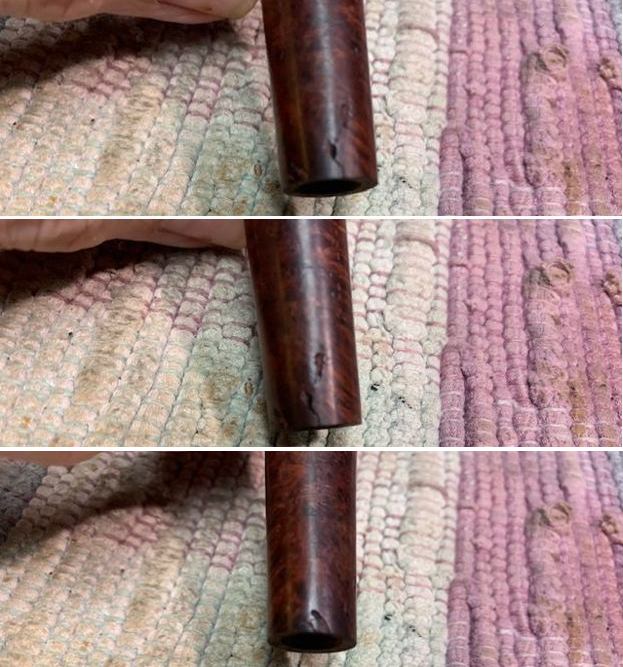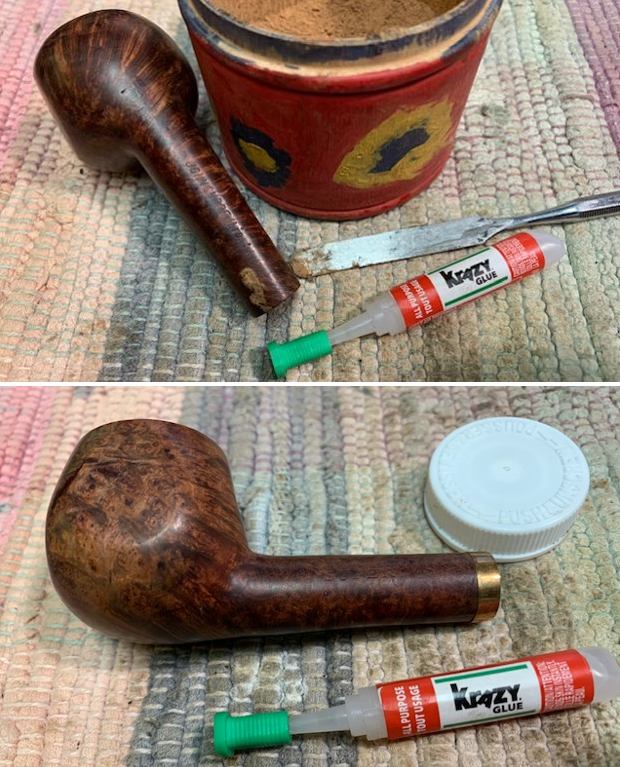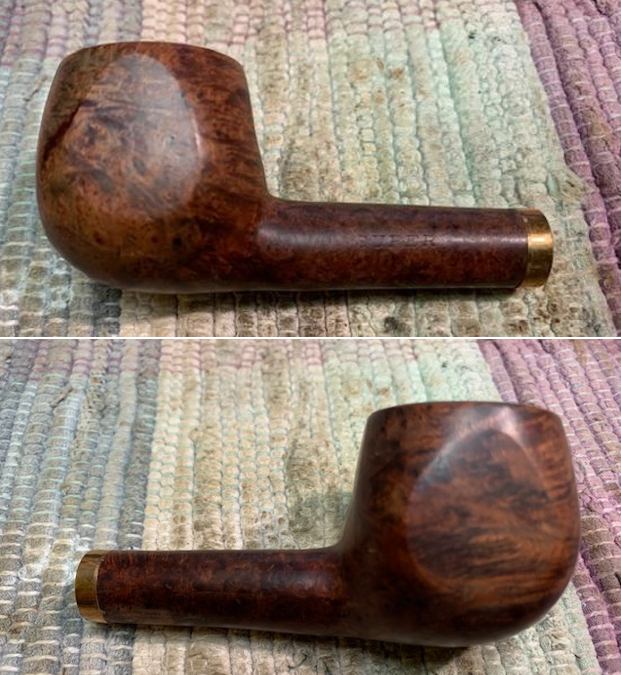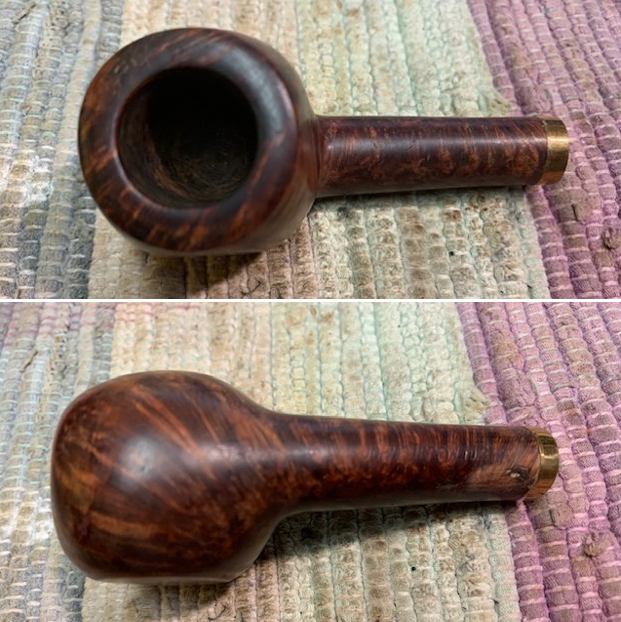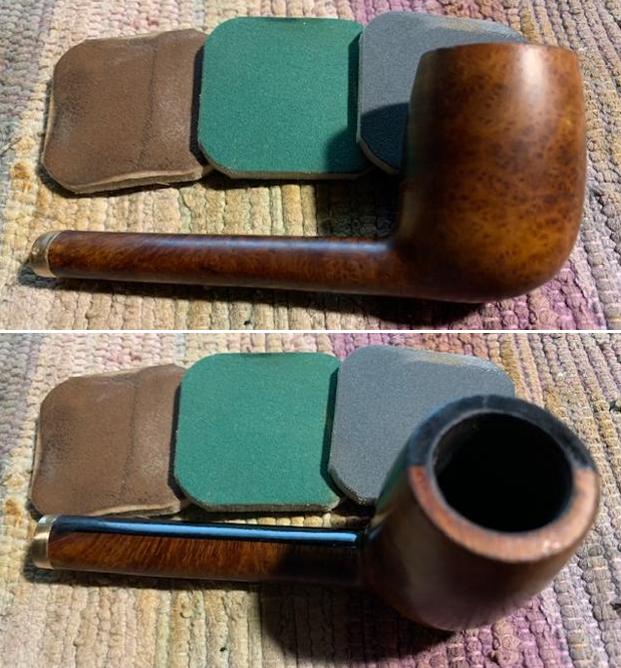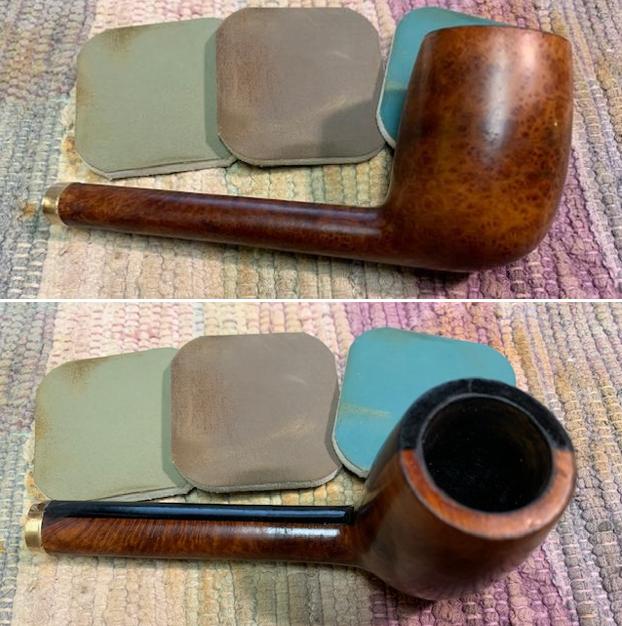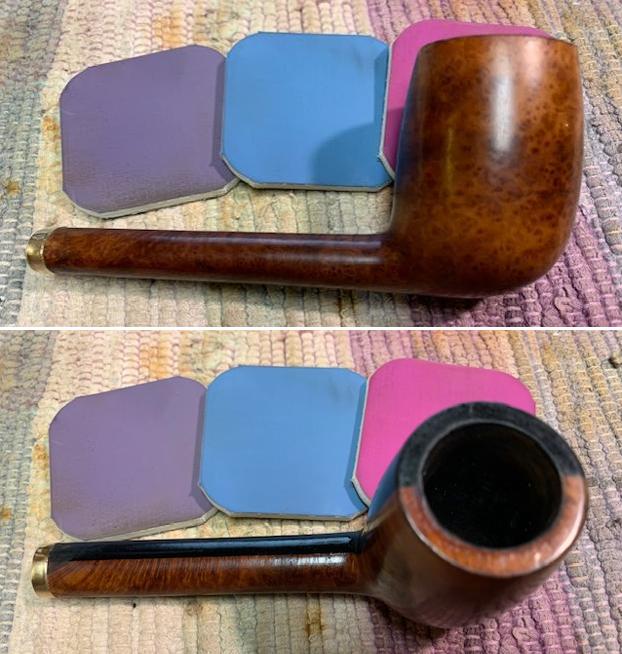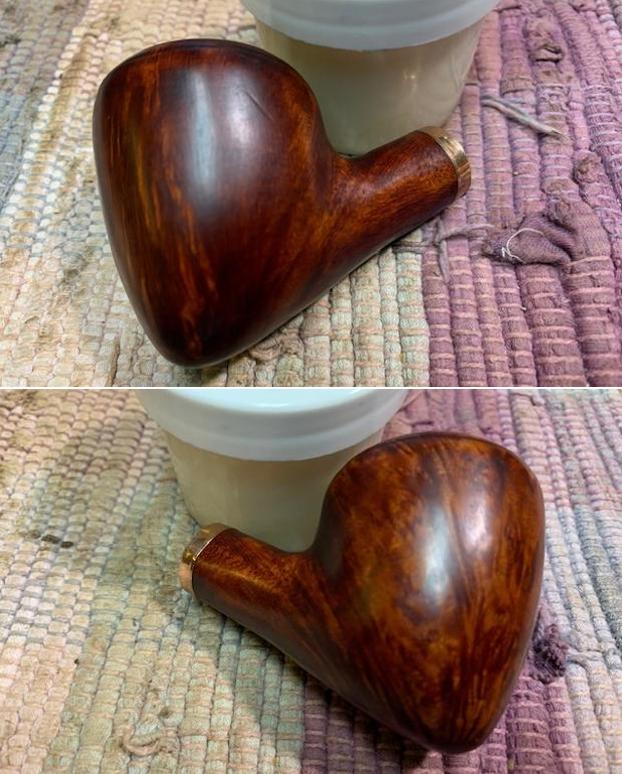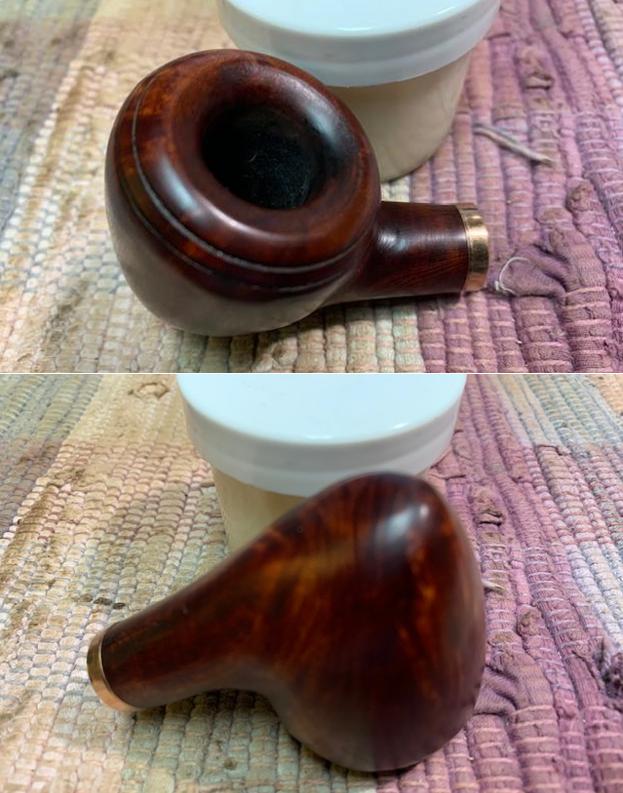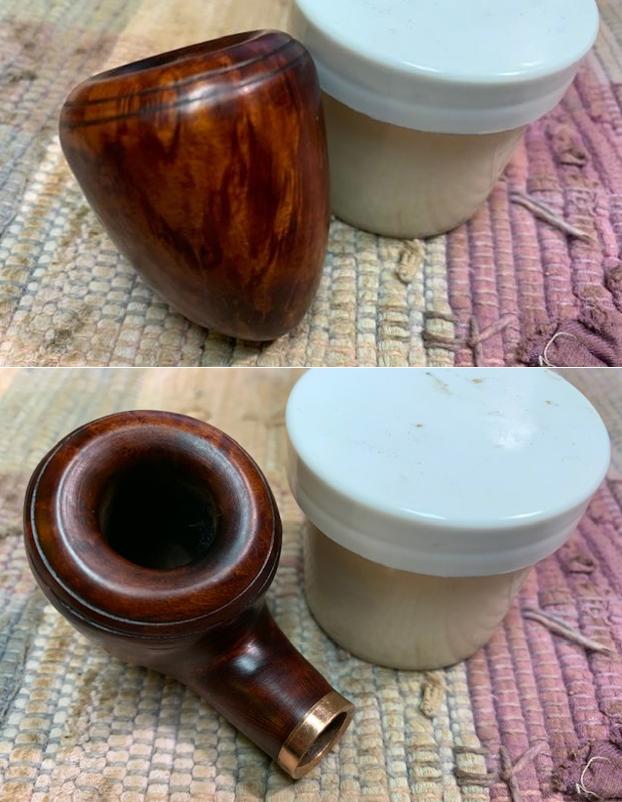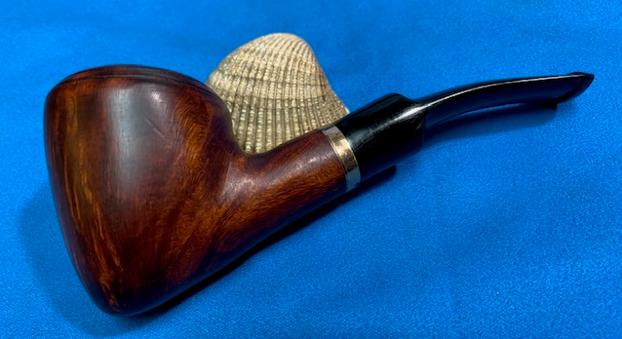
Tag Archives: Banding a cracked shank

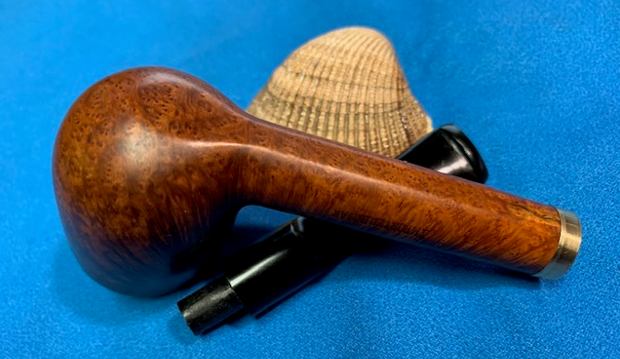
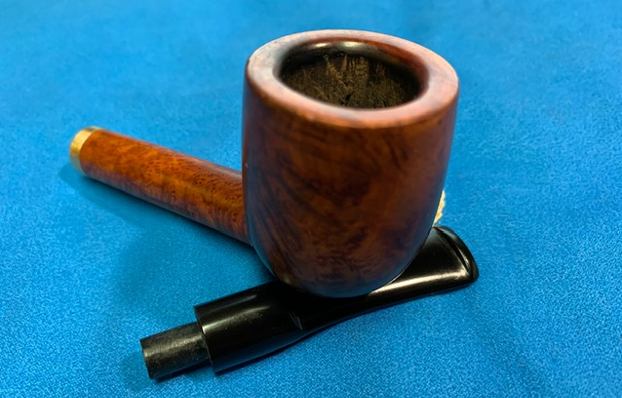
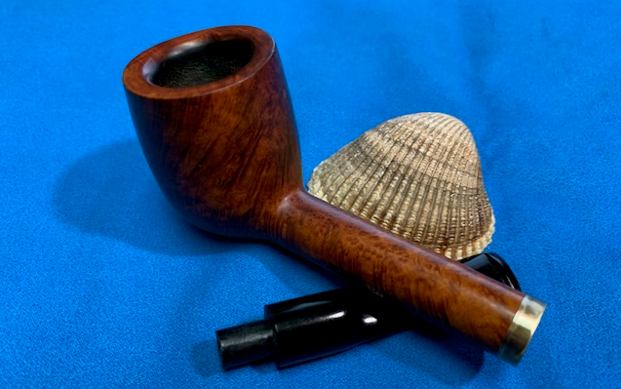
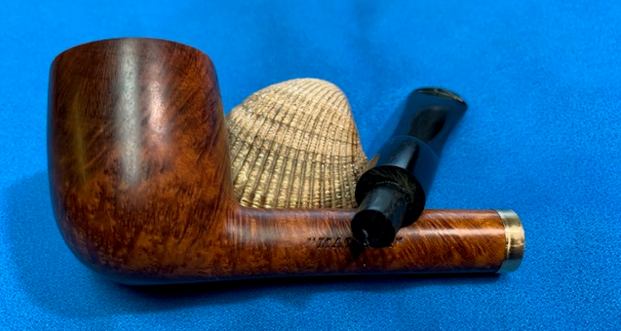
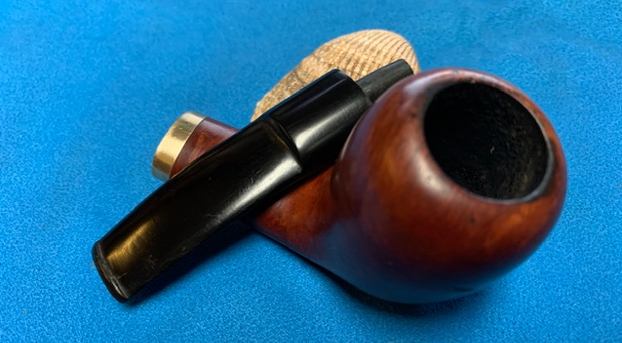
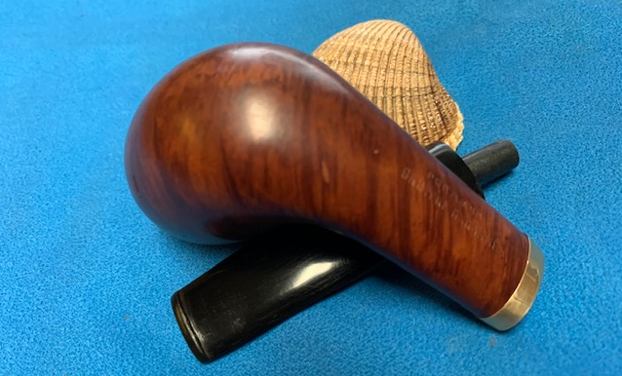
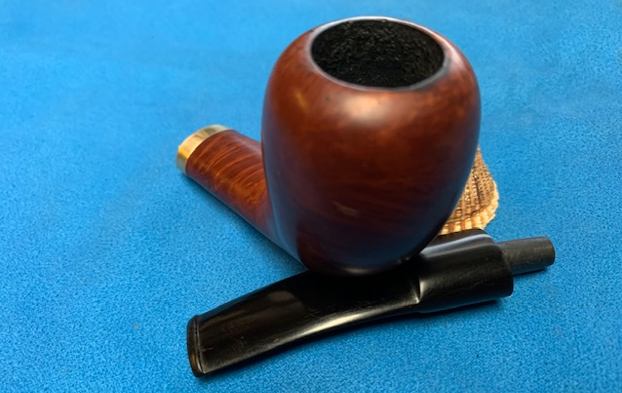
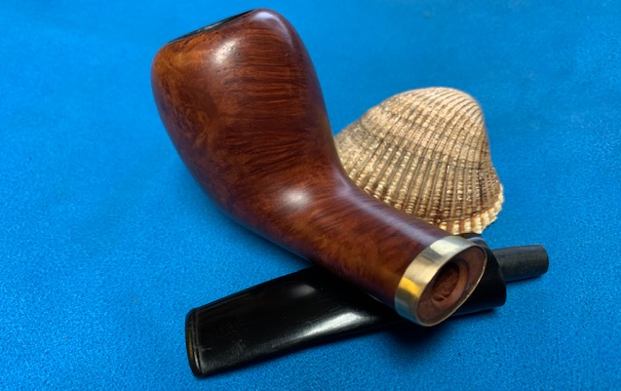
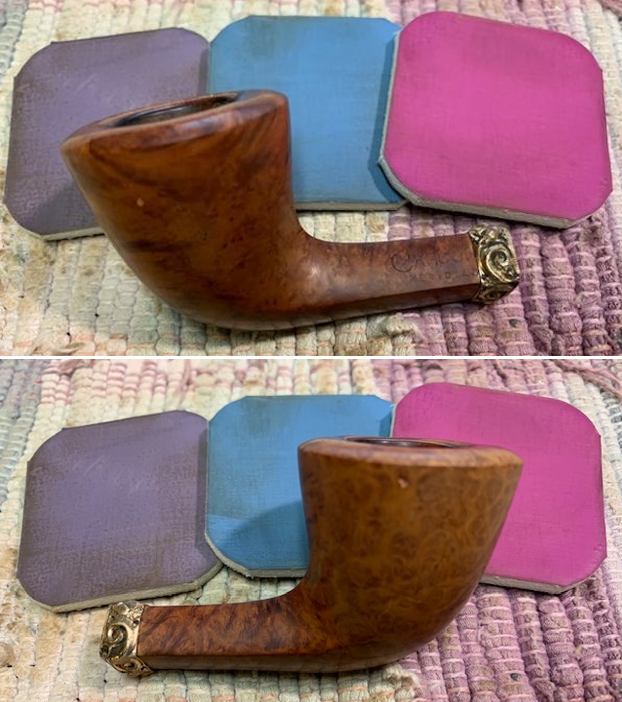
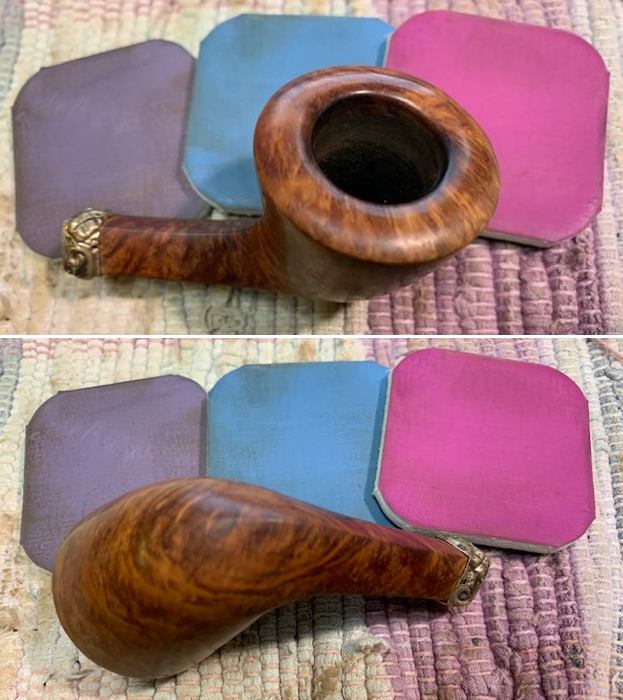
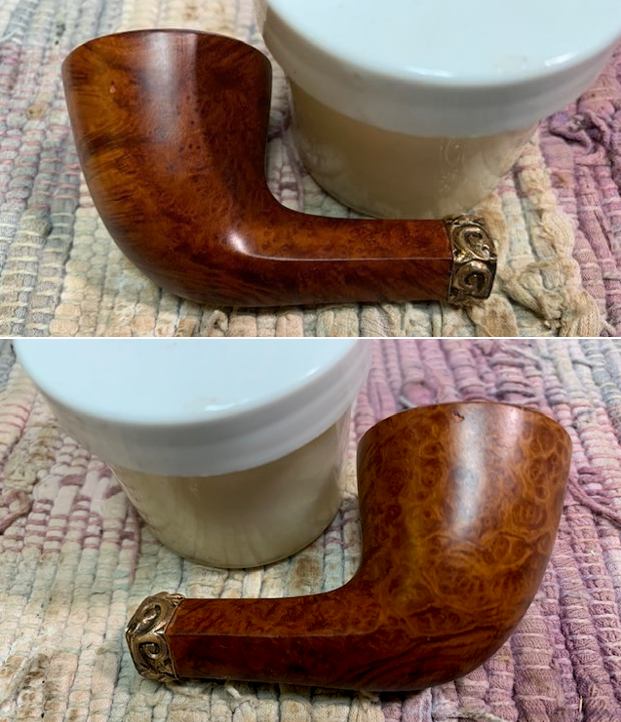
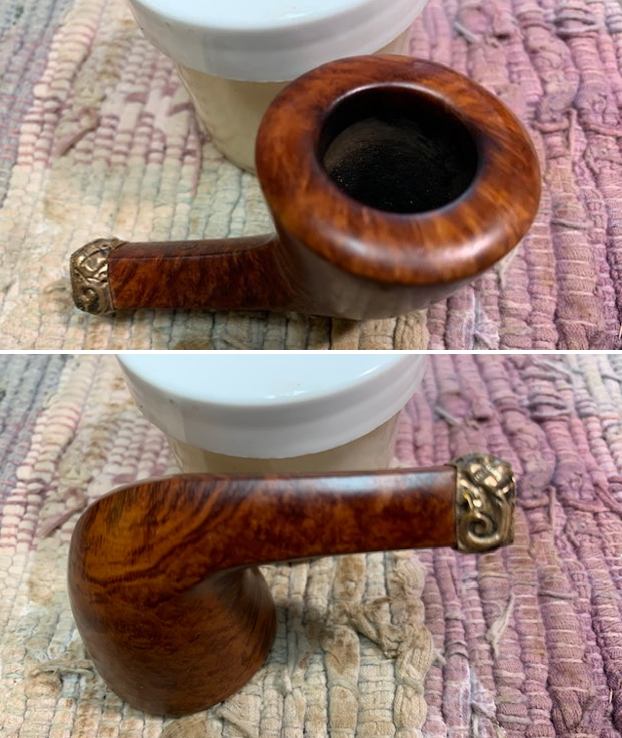
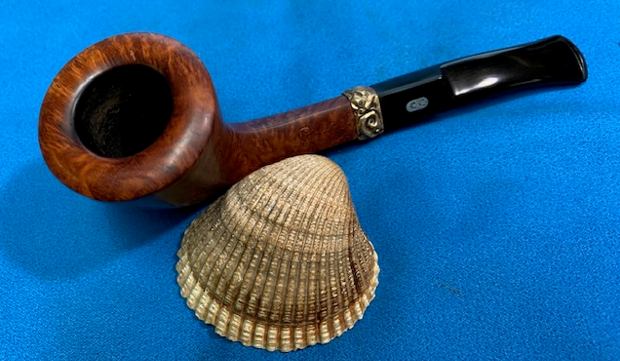
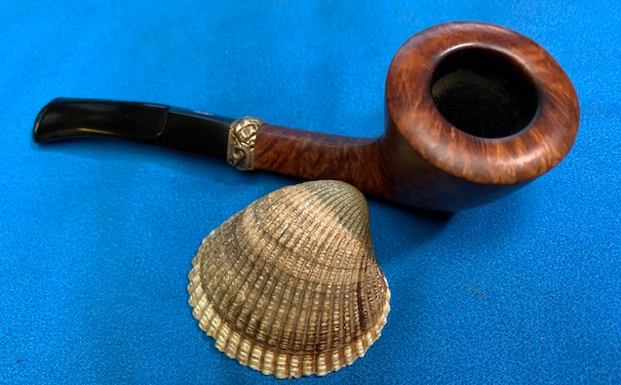
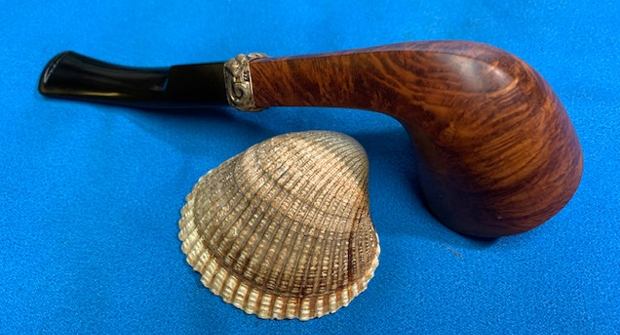
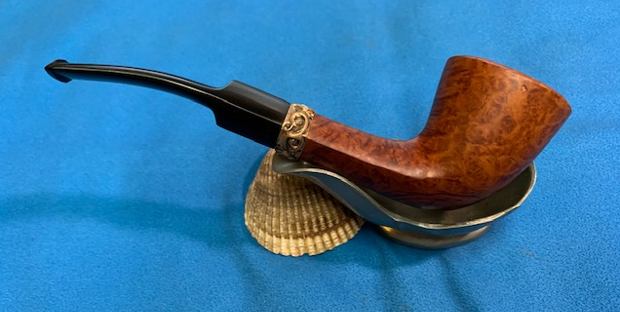
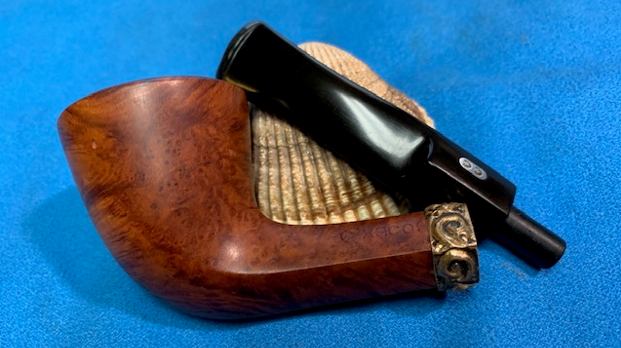
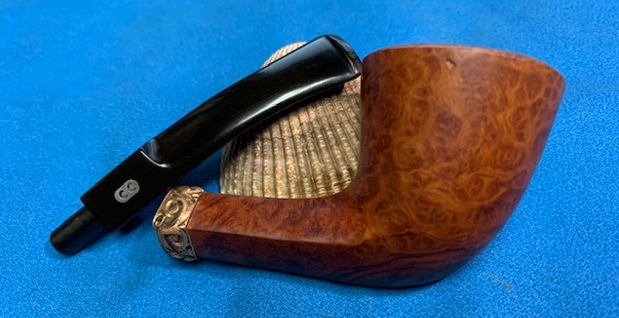
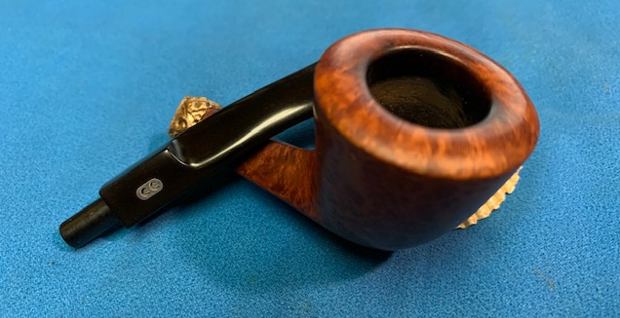
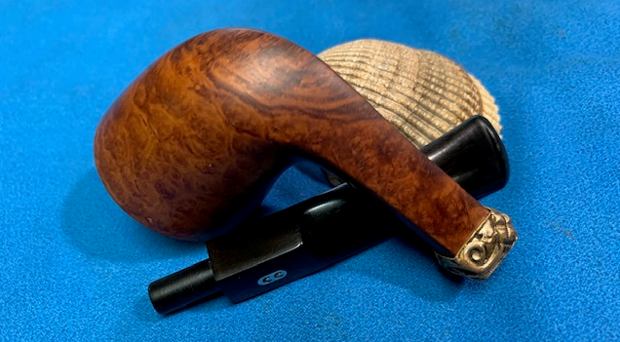
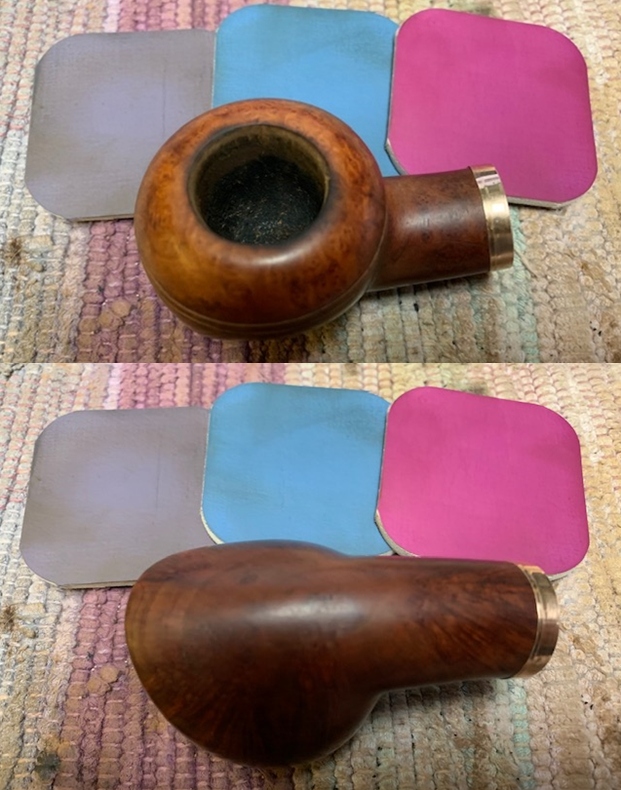
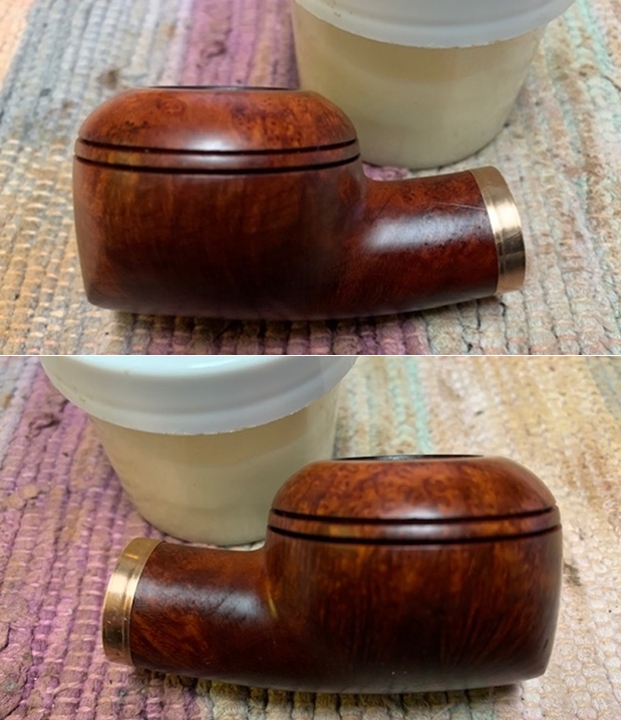
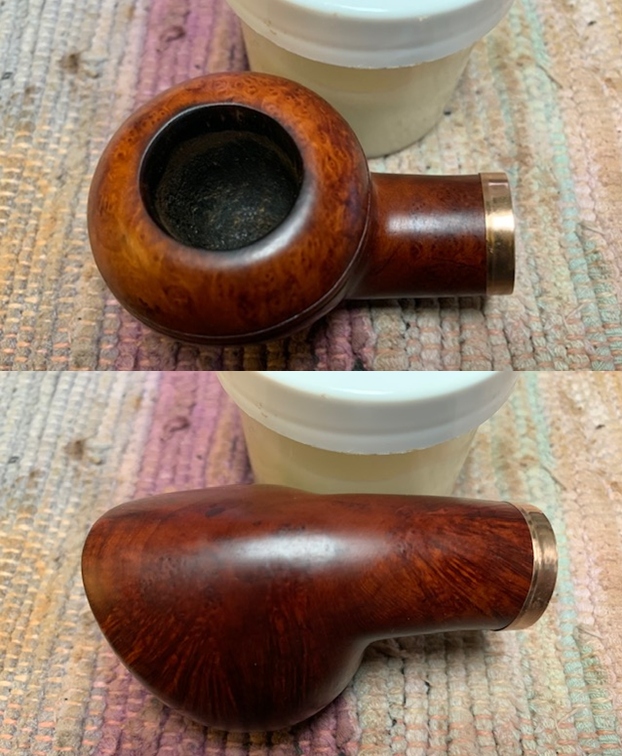
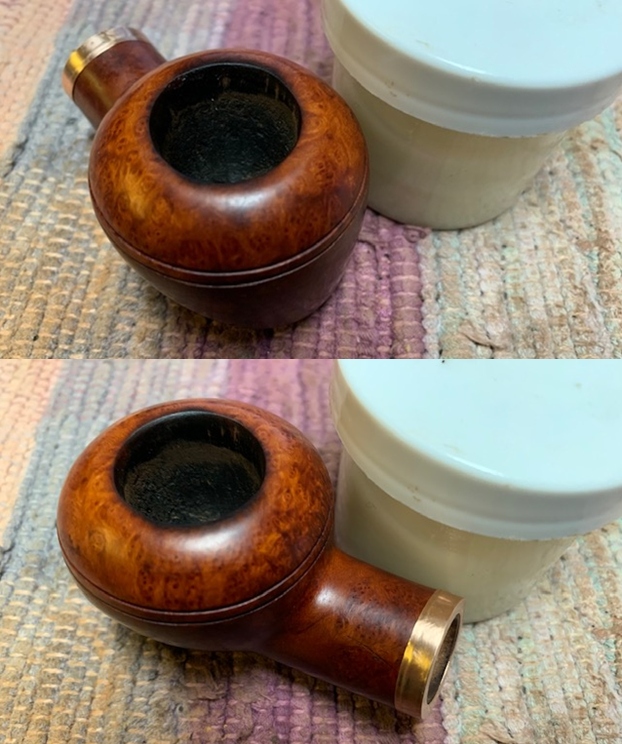
Repairing and adding a touch of antiquity to a Chacom Meridien Diamond Shank 811 Dublin


Blog by Steve Laug

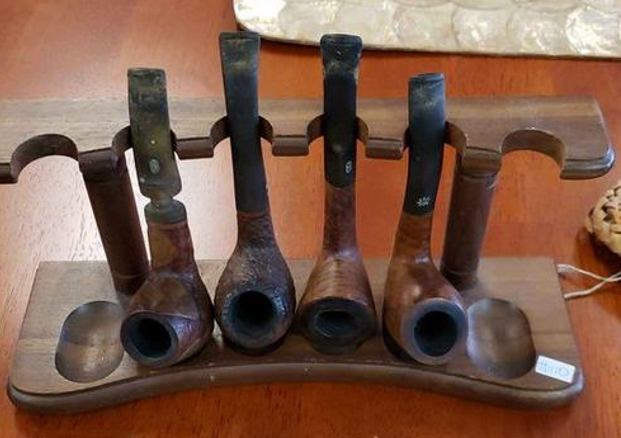
I was scanning through Facebook Marketplace and came across a collection of four pipes that were being sold near where I live in Vancouver. I messaged the individual and it turned out it was an animal rescue/hospital thrift shop. They were selling the four pipes and the rack with all proceeds going to their charity. My second daughter and I made the drive over to visit and have a look at the pipes. I have included the photo from the advertisement to show the pipes and their condition. The label on the sale was inaccurate but I could see what at least three of the pipes were and I was interested. After I parked in front of the shop and I went in and the clerk brought out the pipes and rack so I could have a look. In the order they are in the rack from left to right the pipes were as follows: A GBD Tapestry 1970 Shape (Banker), a Brigham 228 two dot sitter in a shape I had not seen before, a Chacom Meridien 811 Dublin with a diamond shank, and a Kriswill Saga140. The Brigham and the Chacom both had cracks. The Brigham had a hairline crack in the bowl and Chacom had a cracked shank. I paid the price we agreed on for the pipes and headed home.

I wrote Charles Lemon of Dad’s Pipes who is the go to guy for all things Brigham and asked him about the pipe. He said it was a shape he did not have and did not have on his shape chart. I thought about it overnight and sent it off to him on Monday morning. I look forward to his blog on this pipe as it is a really Danish looking Brigham.

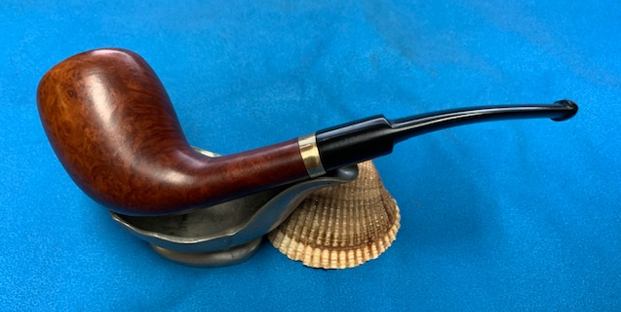
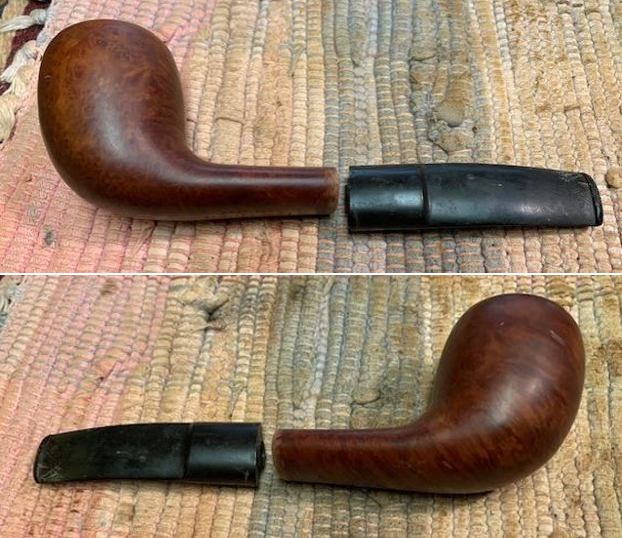
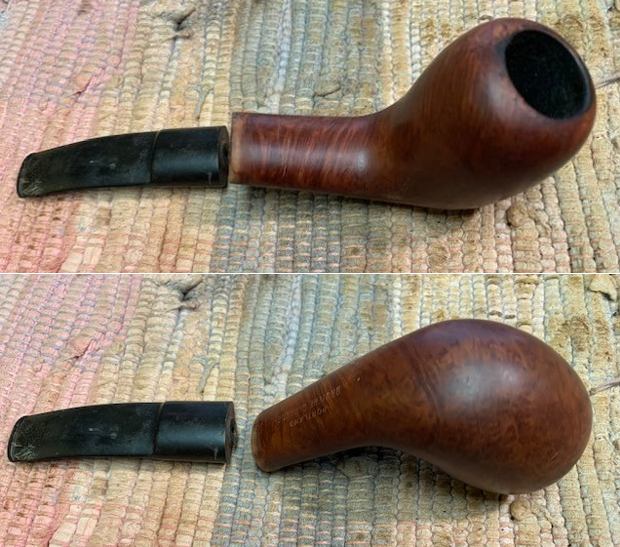
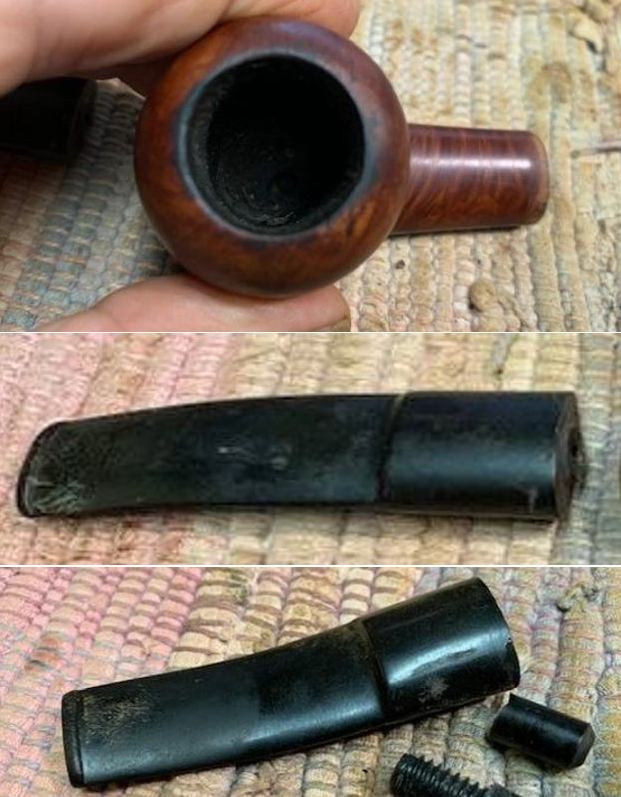
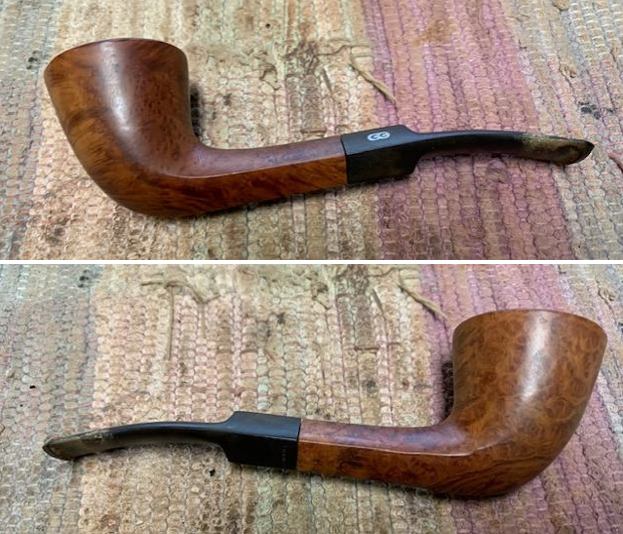
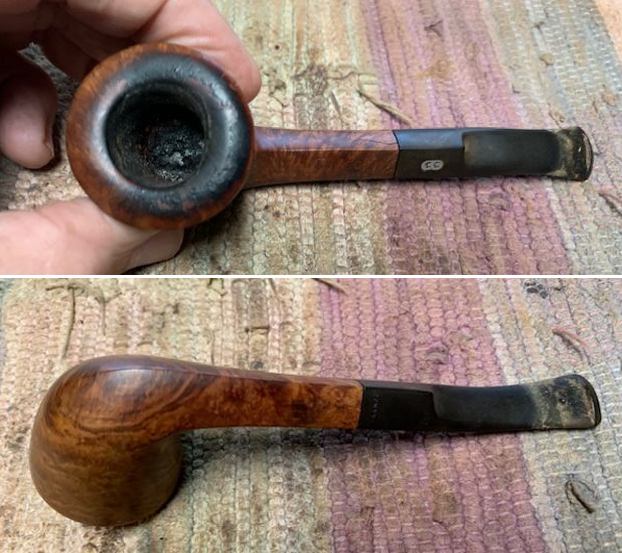
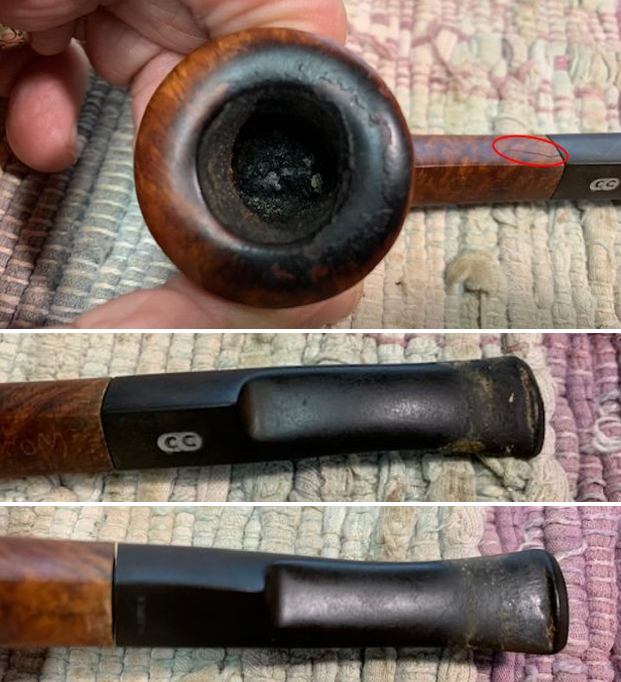
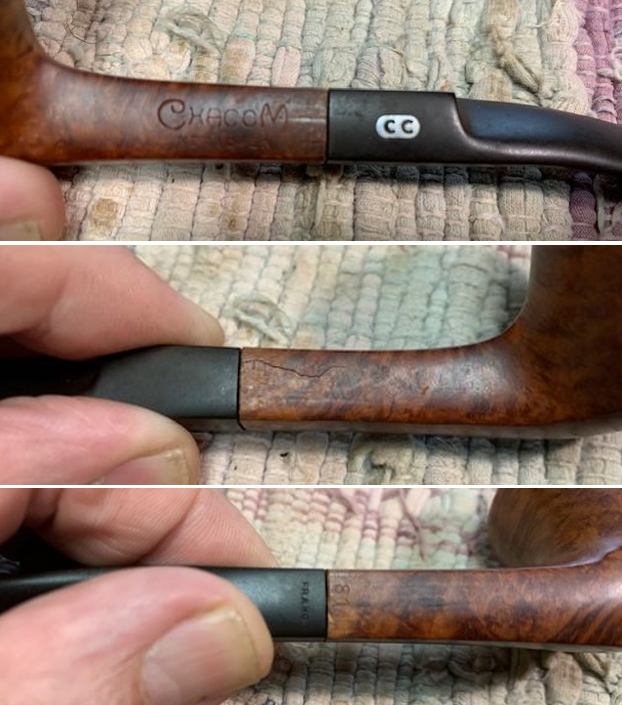
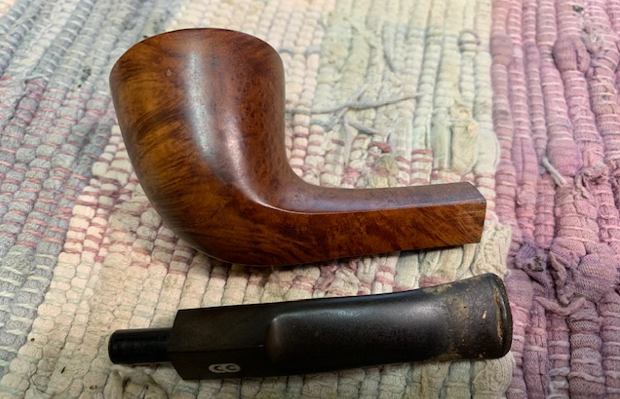
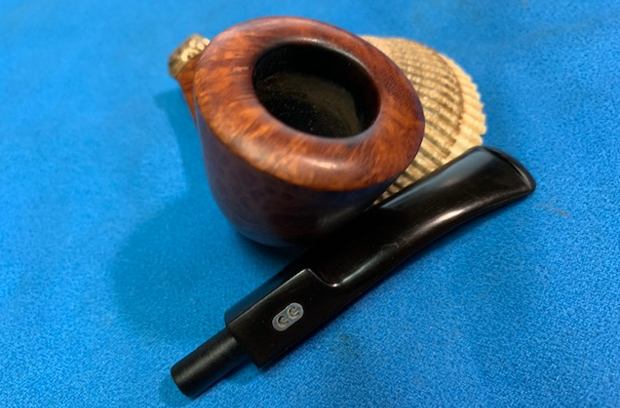
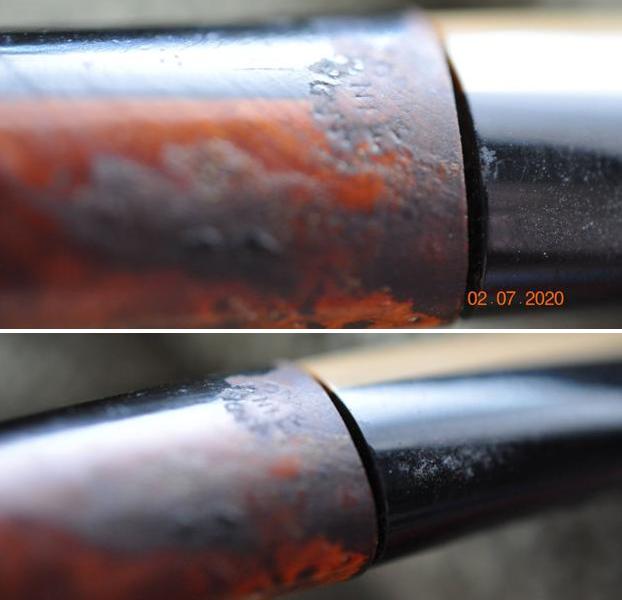
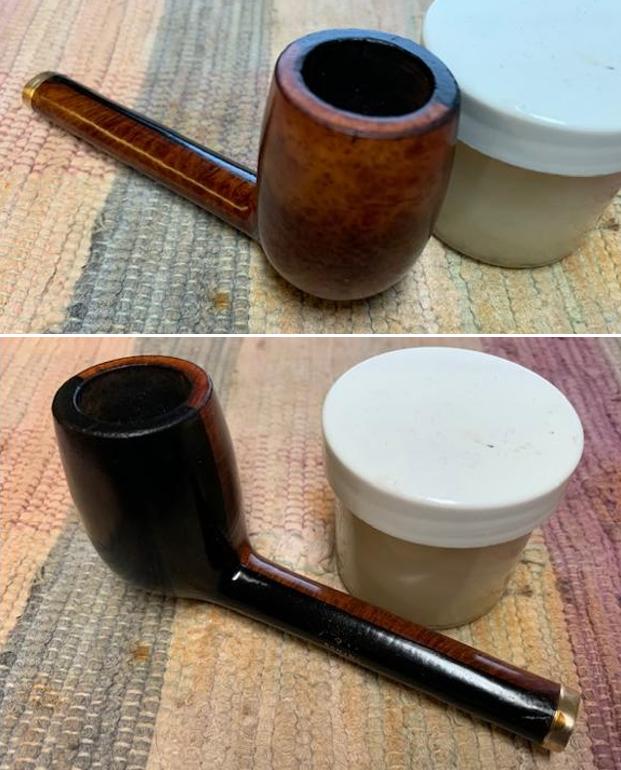
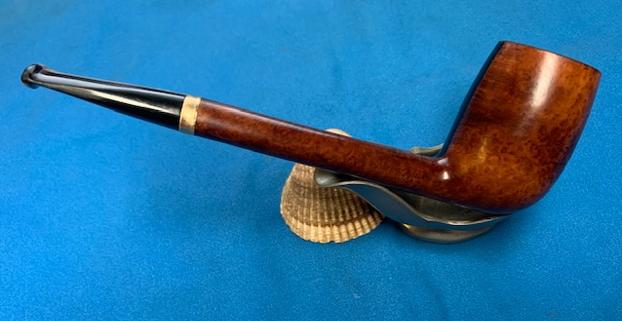
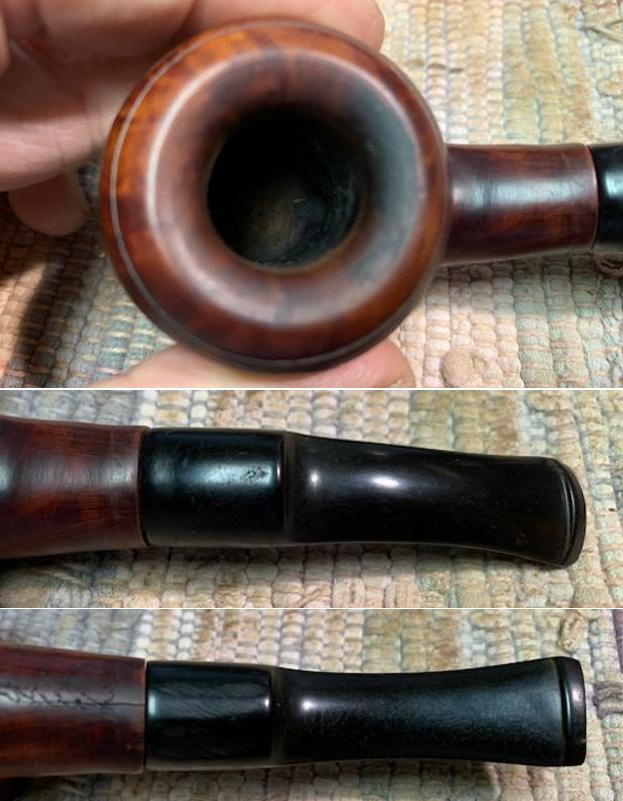
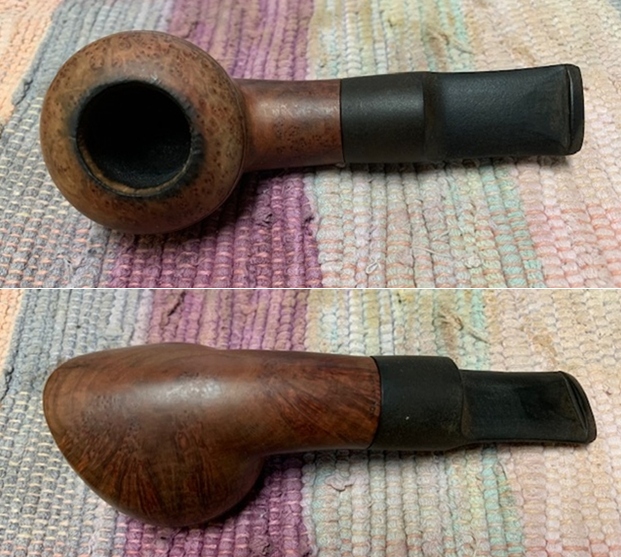
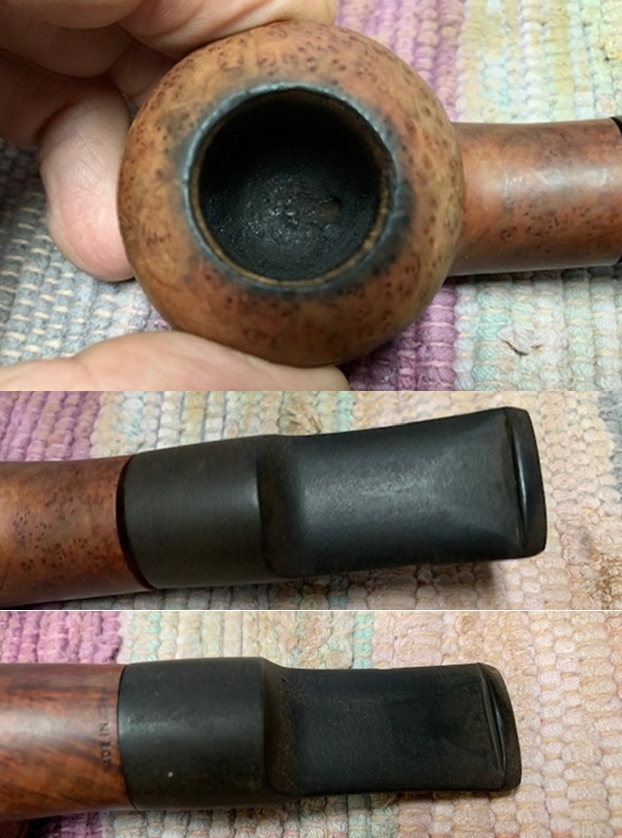
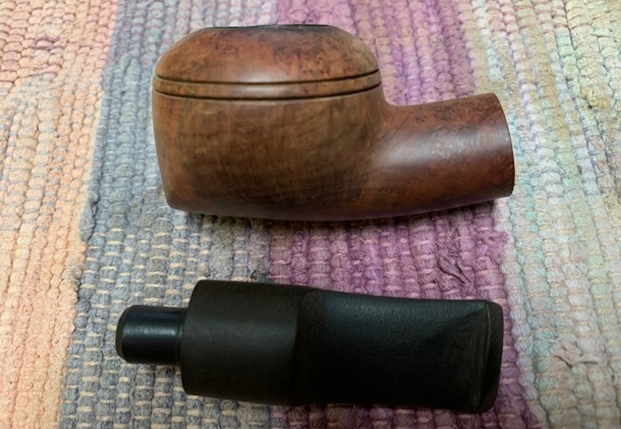
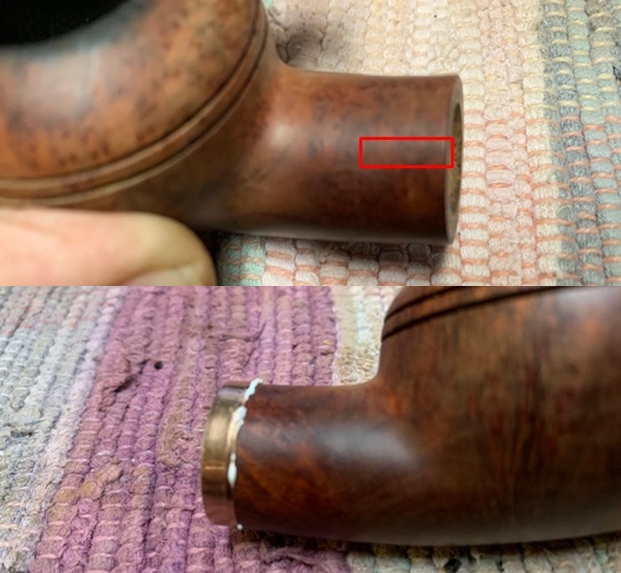
That left me with three pipes to work on. Since the Chacom had the crack it was the hardest of the three to deal with so I chose that one. I really like the shape of the pipe and the way that the diamond shank flows in to the crowned Dublin bowl. The pipe was a bit of a mess. The bowl had not only a thick cake in it but also about a ¼ bowl of old tobacco that was unsmoked. The cake in the bowl had erupted onto the crowned rim top and left it a mess. The edges were covered so it was hard to know what was underneath the lava. The shank was cracked on the top right side of the diamond at the end. The briar was filthy with ground in grit and grime. The stamping on the pipe was minimal. On the left side it read Chacom [over] Meridien. On the underside of the shank near the stem/shank joint it had the shape number 811. On the right side there are very faint stamping that appears to read Made in France or possibly St. Claude France. The stem had the Chacom CC metal oval inset on the left side of the saddle. There was a lot of oxidation, calcification and tooth marks on chatter on both side. It was worn but repairable. I took photos of the pipe as it was when I brought it home.  I took some close up shots of the bowl and rim top along with the stem to show the condition of both. The photo of the rim top also shows the crack on the shank on the back top right side at the shank end. I have circled it in red to make it clear. The photos of the stem show its condition. You can see the oxidation, calcification and tooth marking in the photos below.I took photos of the stamping on the shank sides and have included them below. They read as noted above. Some of the stamping is very faint but readable with a lens. You can also see that the stem is stamped FRANCE on the right underside near the shank.I took a photo of the pipe with the stem removed to give a sense of the beauty of the shape. It is a nice looking pipe.I turned to Pipephil’s site for a quick overview of the brand (http://pipephil.eu/logos/en/logo-chacom.html). I have included that below. The Meridien Line is not included on the site.

The brand Chacom Chacom, créateur et distributeur de pipes turned up (1934) after fusion of Chapuis-Comoy with La Bruyère. Yves Grenard (†2012), second cousin of Pierre Comoy headed the company from 1971. He was responsible for Chapuis Comoy’s recovering its independance from Comoy. His son Antoine Grenard took over the direction of the company in 2007. Chacom is a brand of Cuty-Fort Entreprises (Jeantet, Vuillard, Jean Lacroix, Ropp …).

Pipedia has a great history write up on the Chacom brand (https://pipedia.org/wiki/Chacom). It gives a simple and concise timeline for the history. Once again there was nothing on either the line of the shape 811. Worth the read however. With that out of the way it was time to work on the pipe.

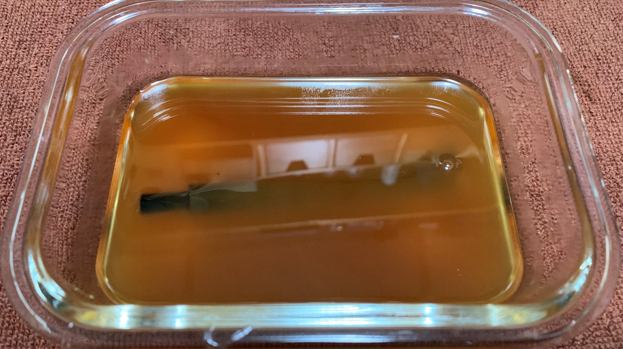
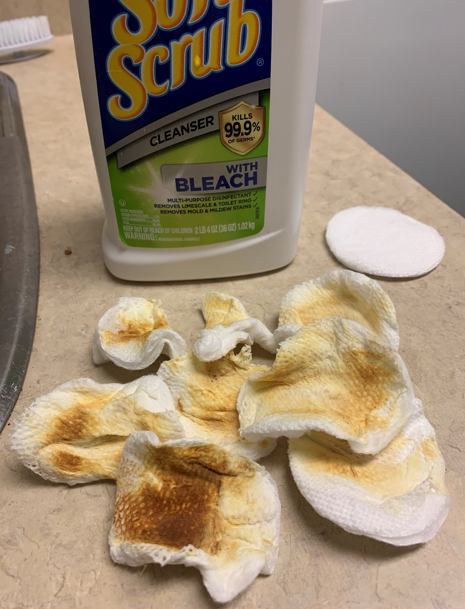
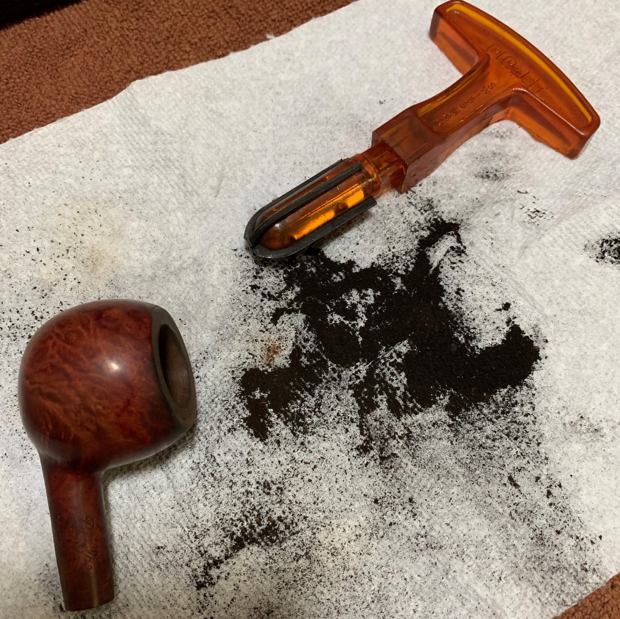
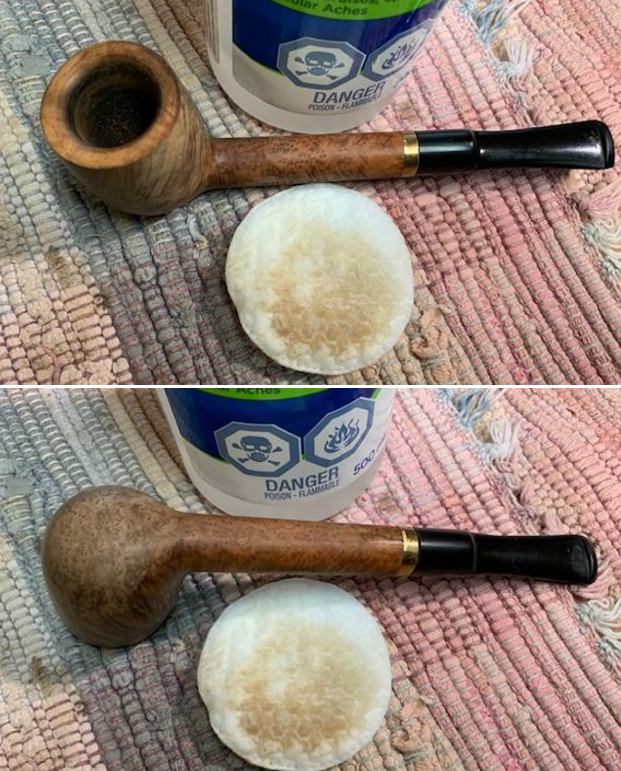
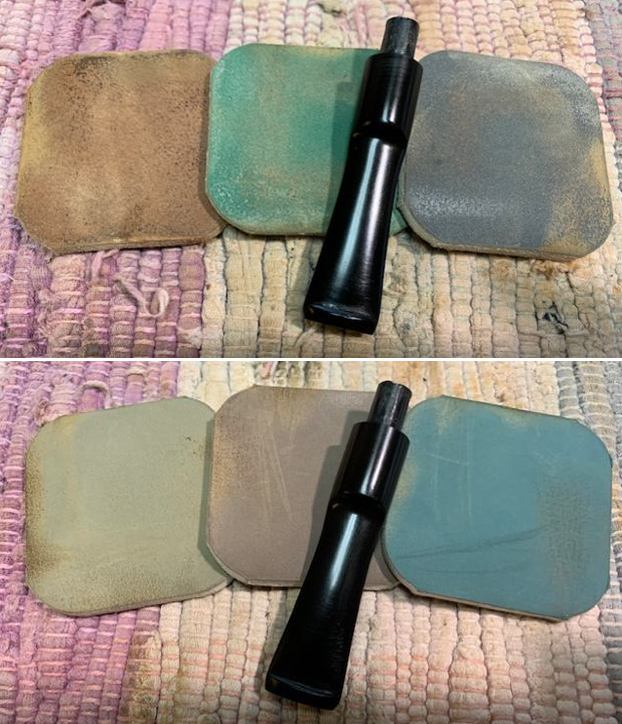
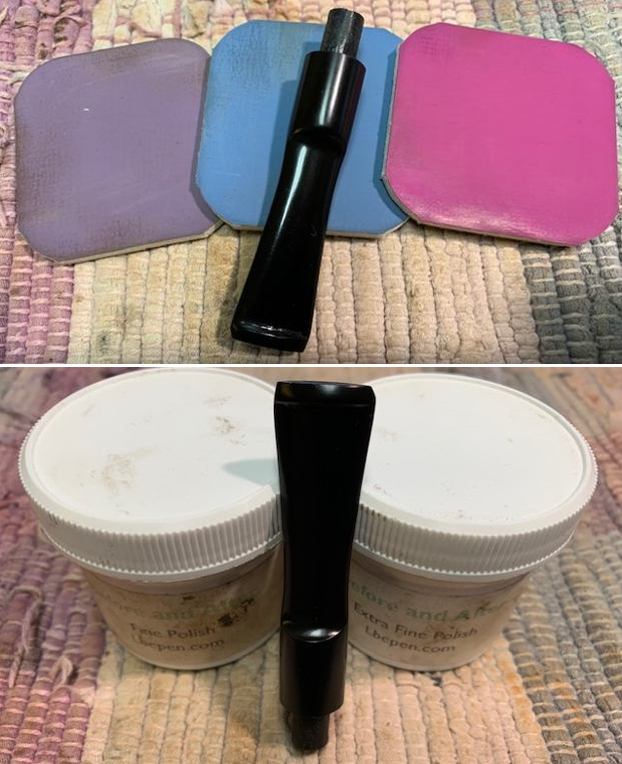
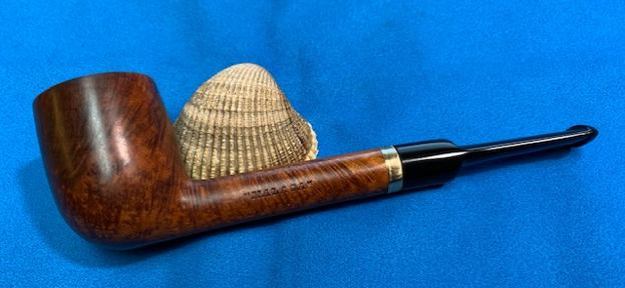
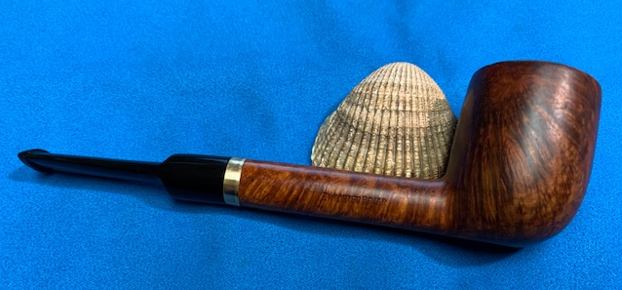
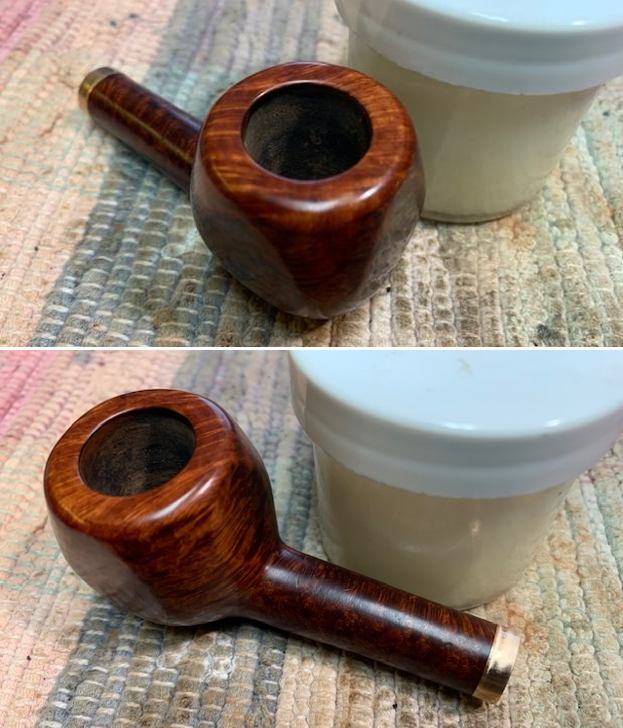
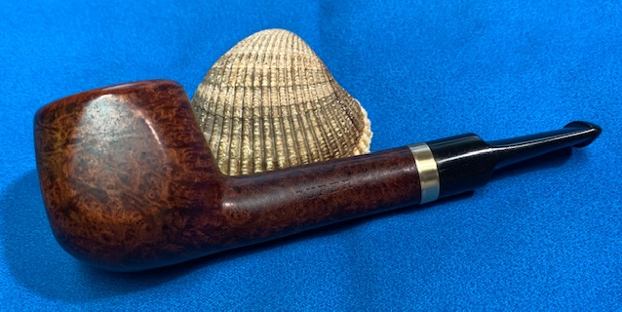
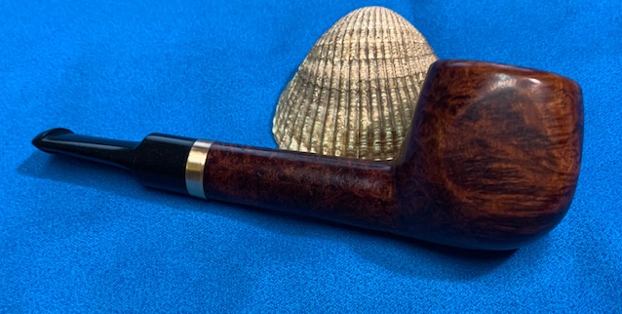
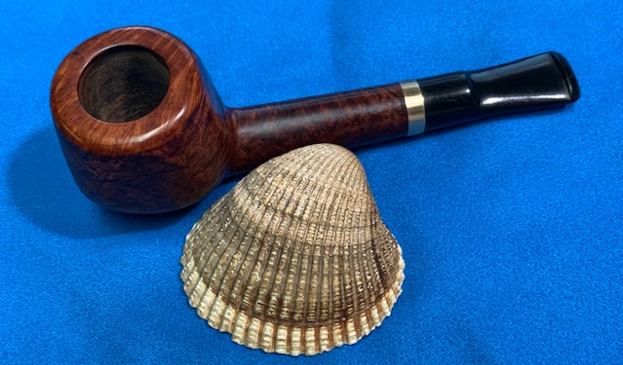
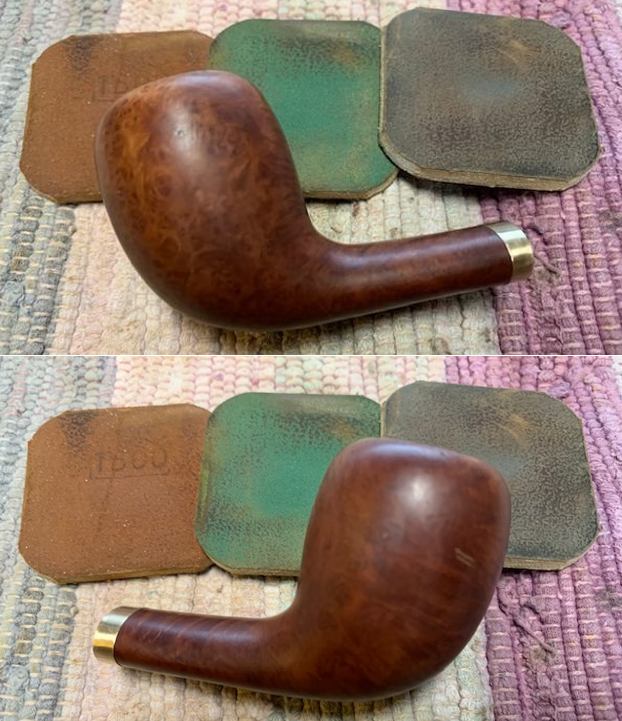
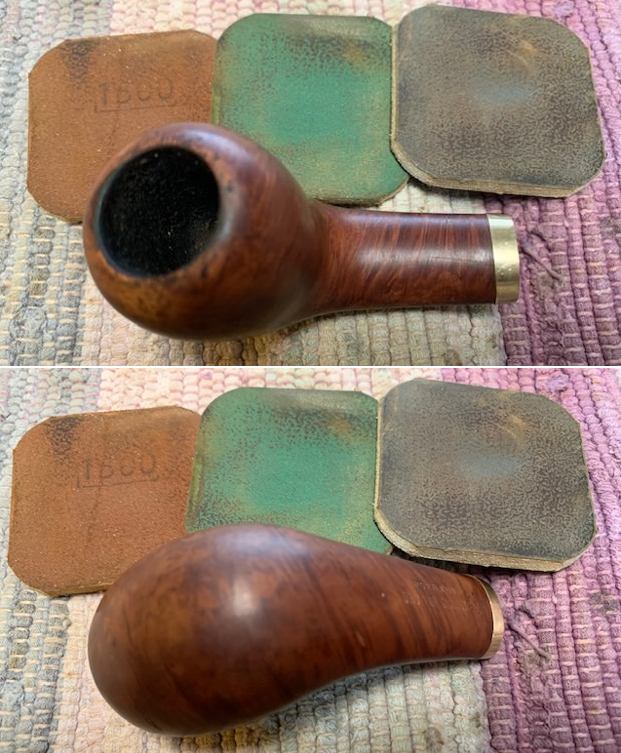
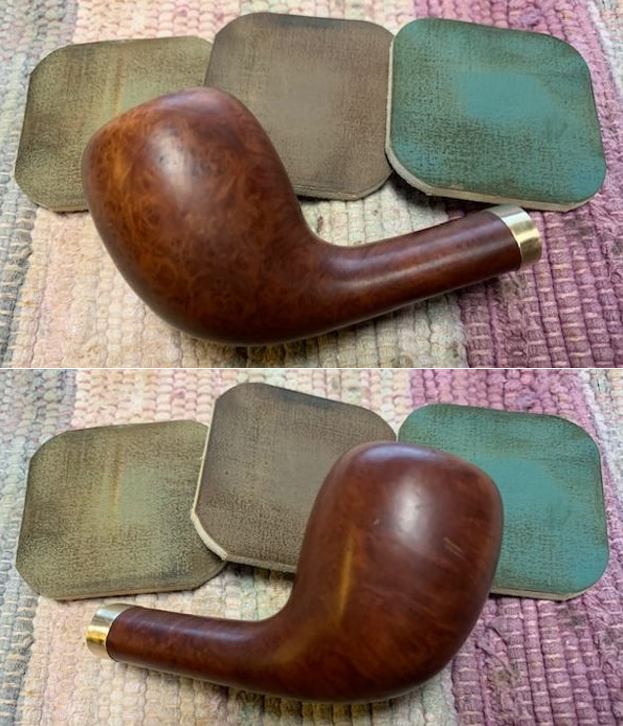
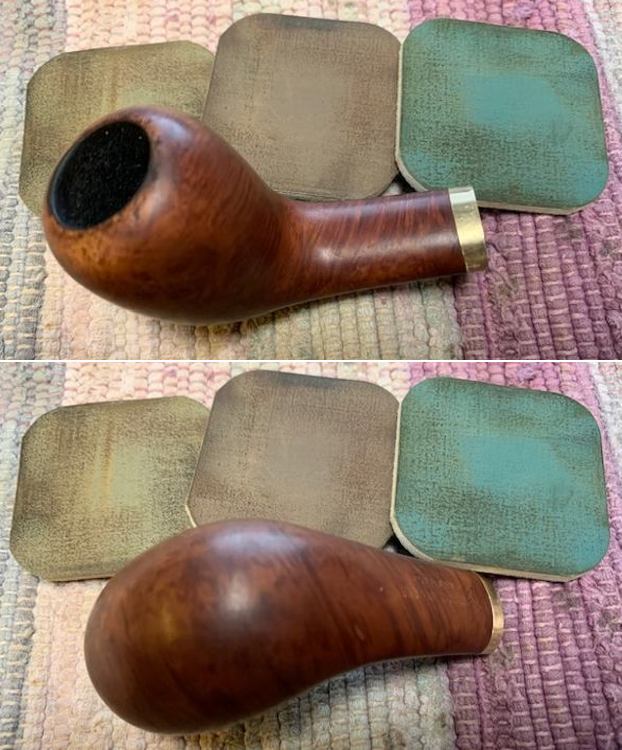
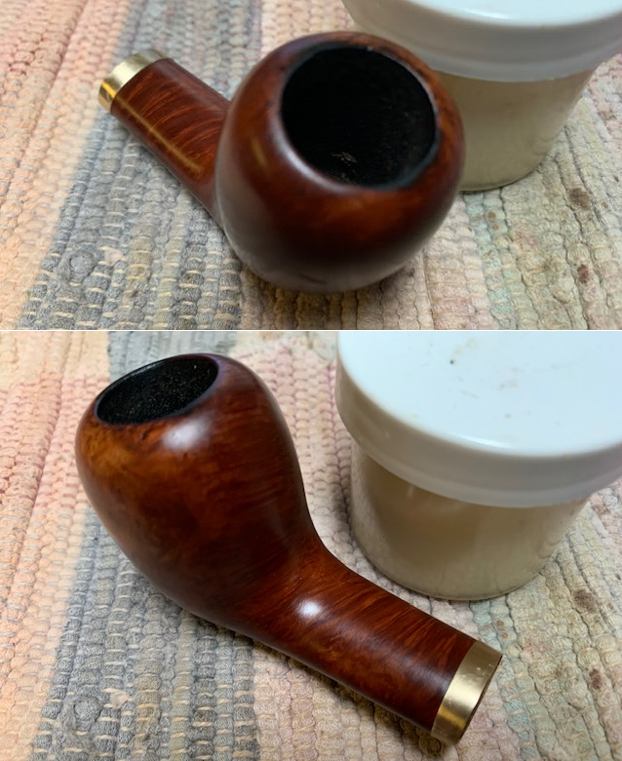
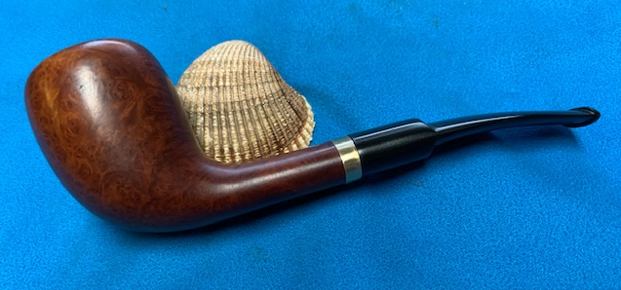
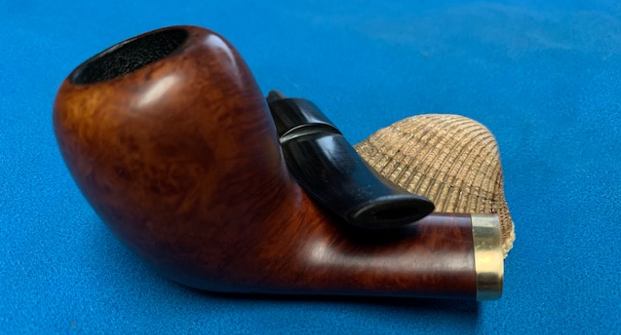
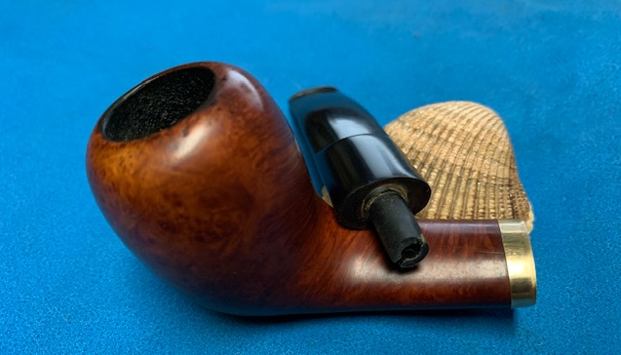
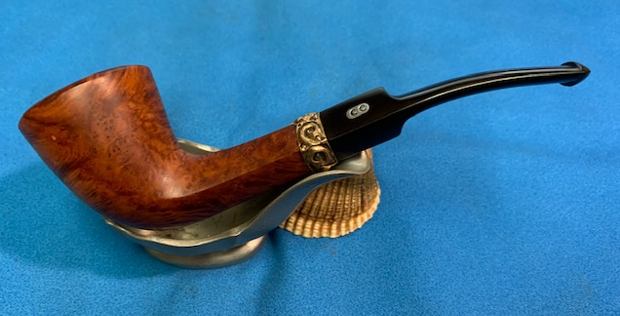
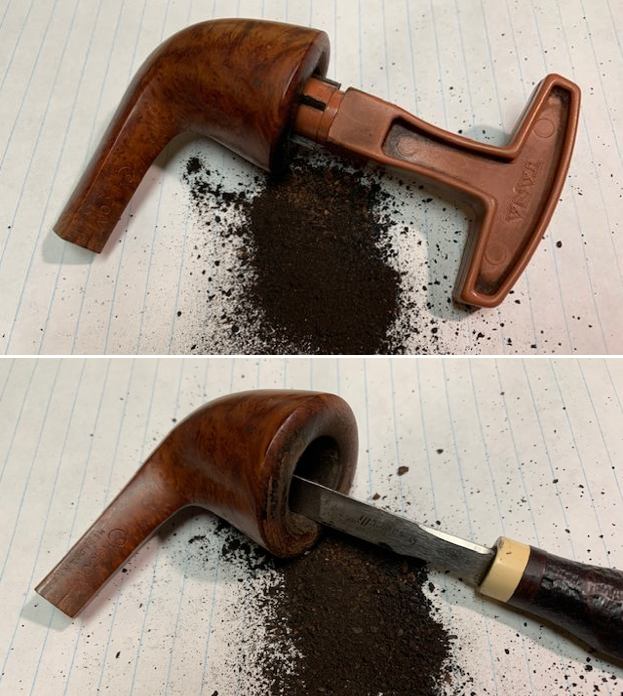
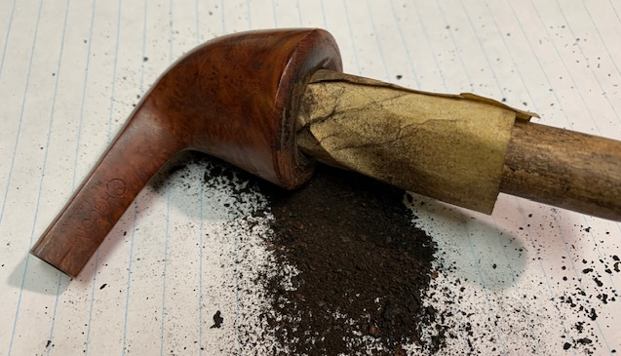
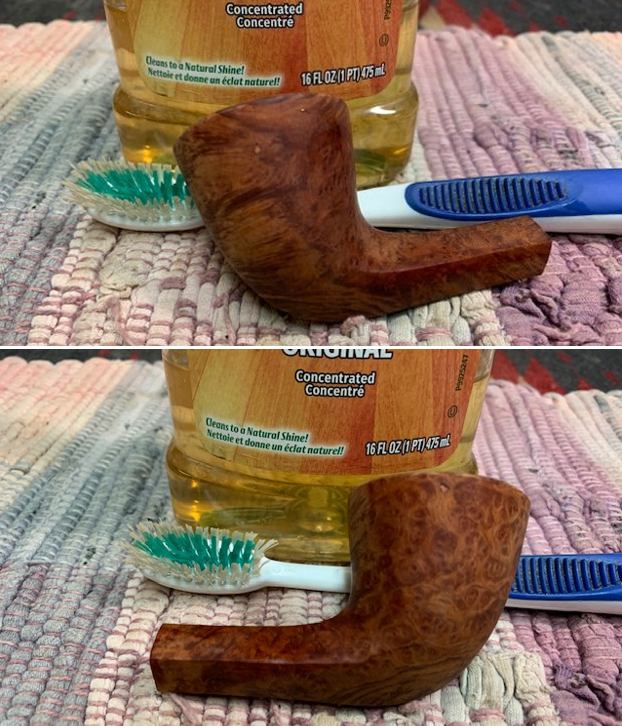
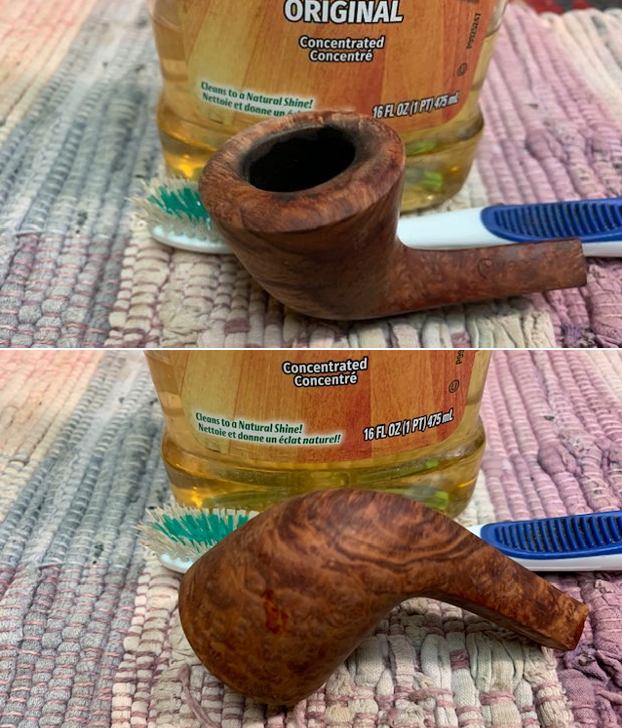
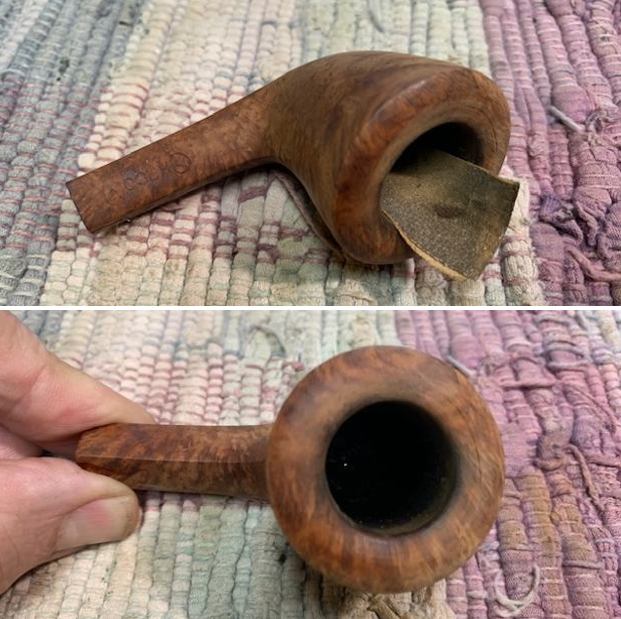
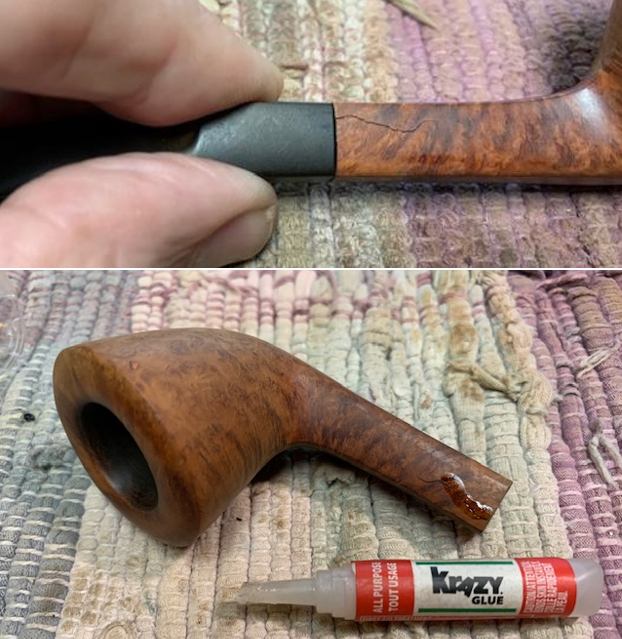
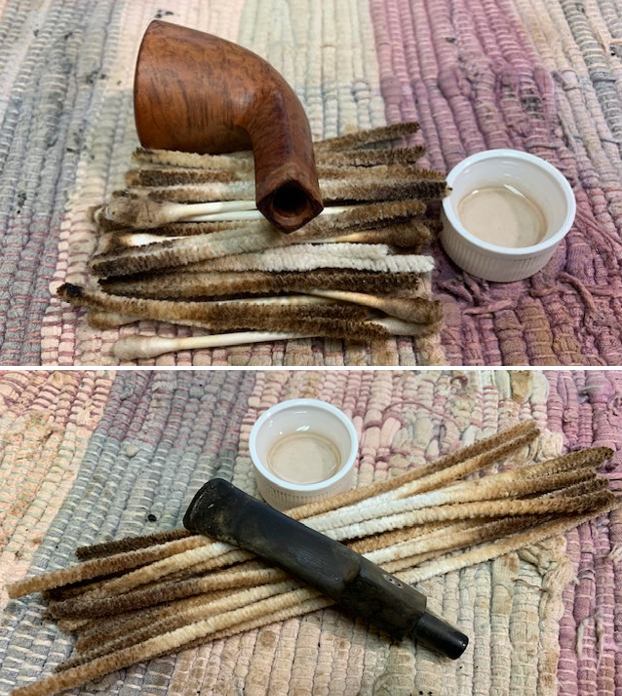
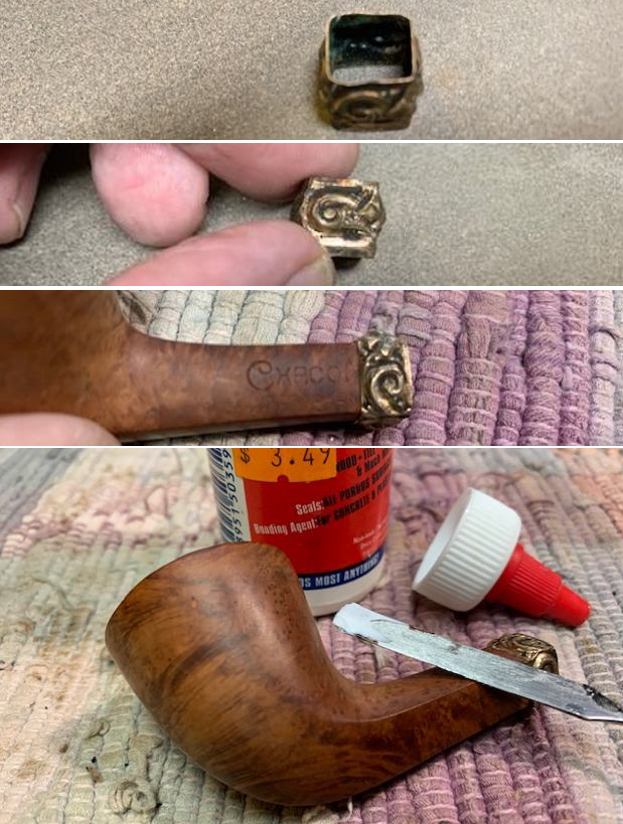
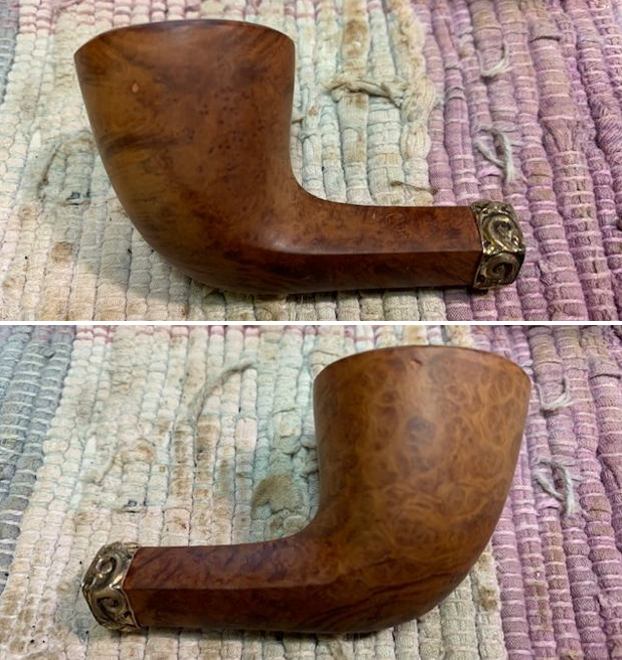
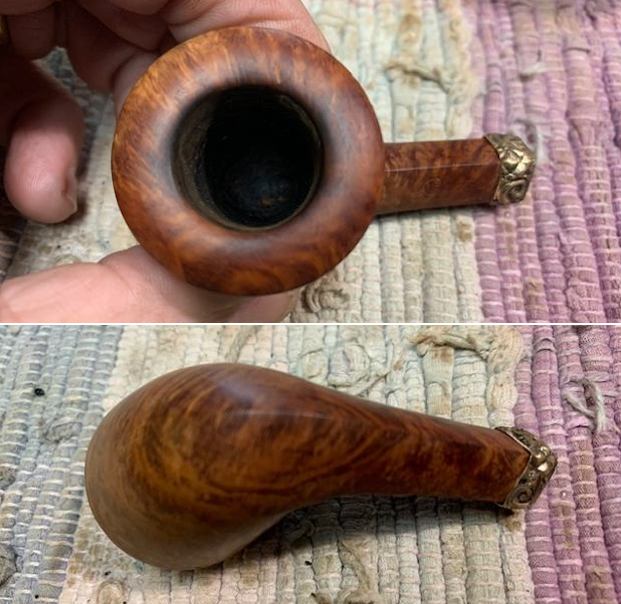
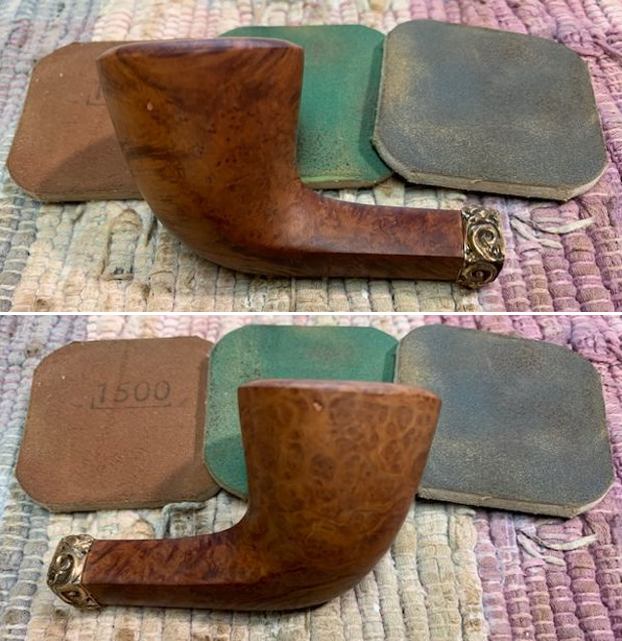
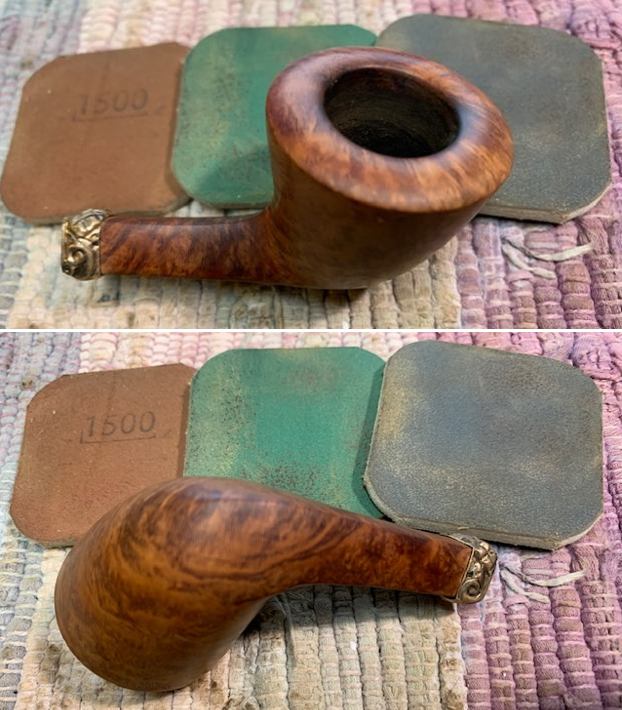
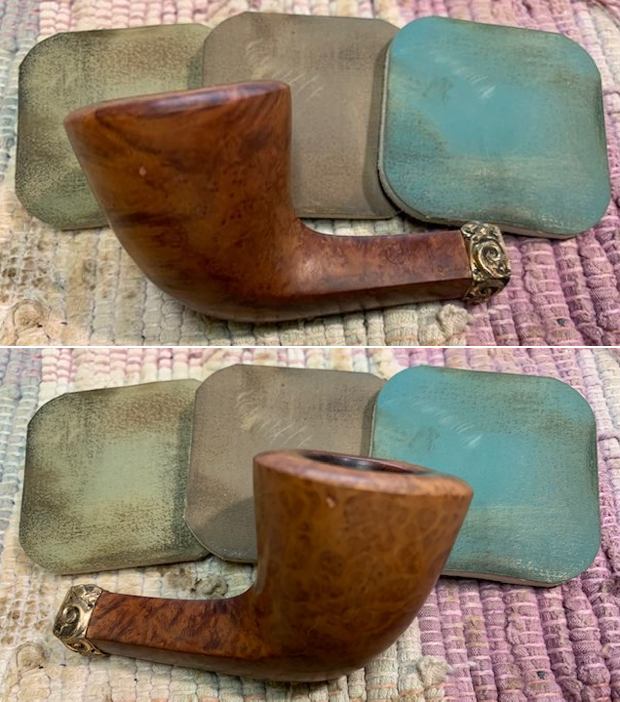
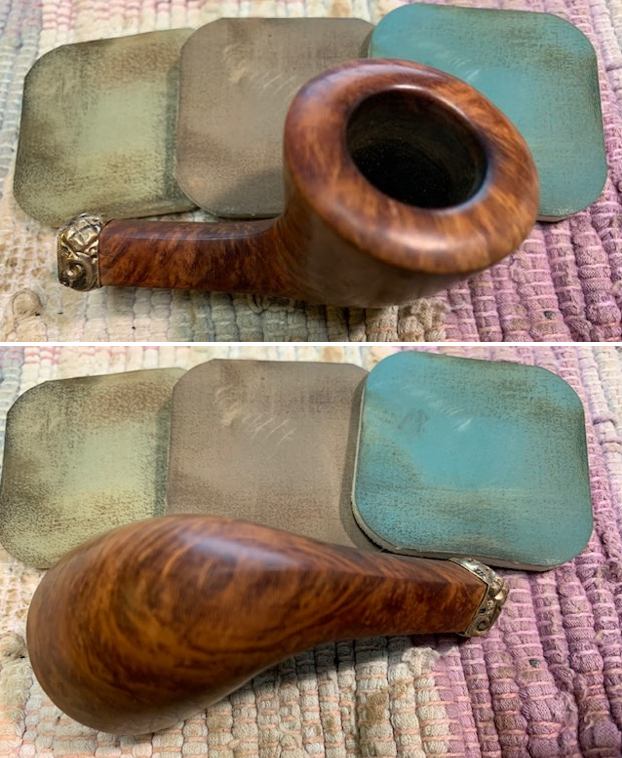
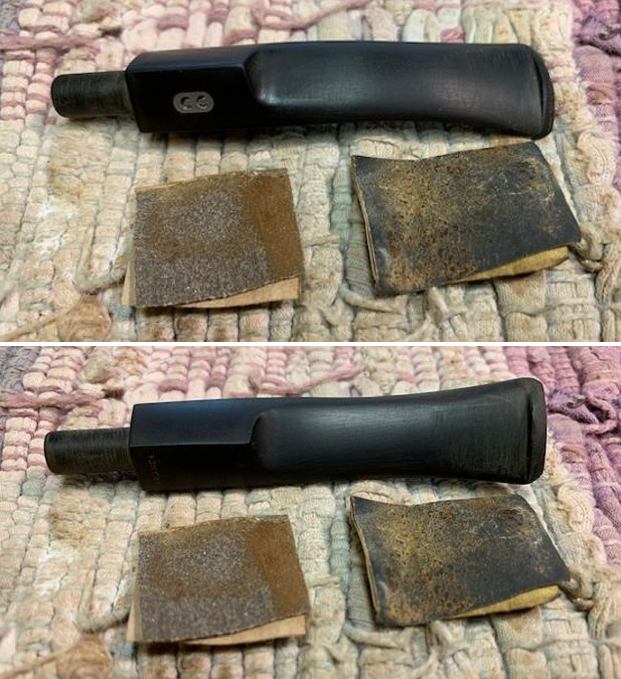
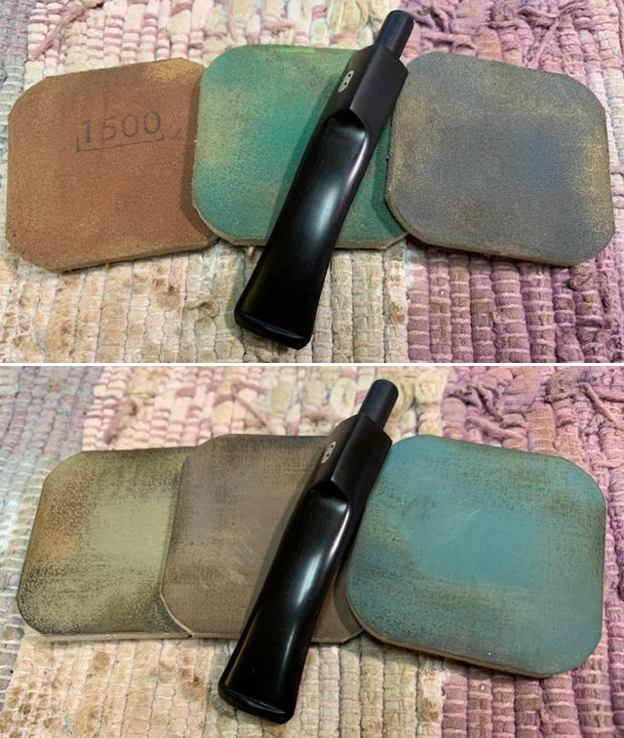
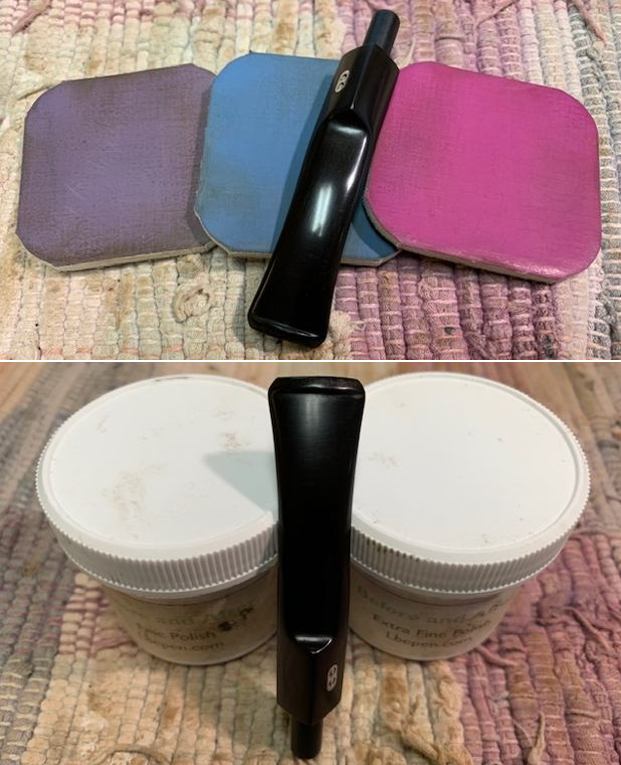
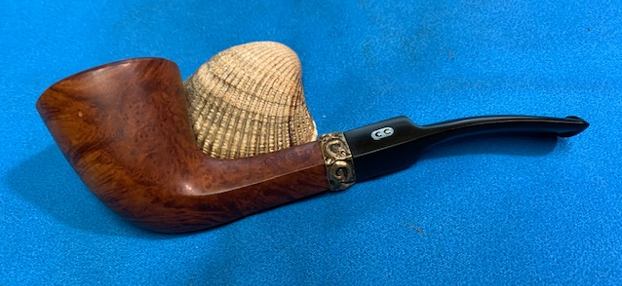
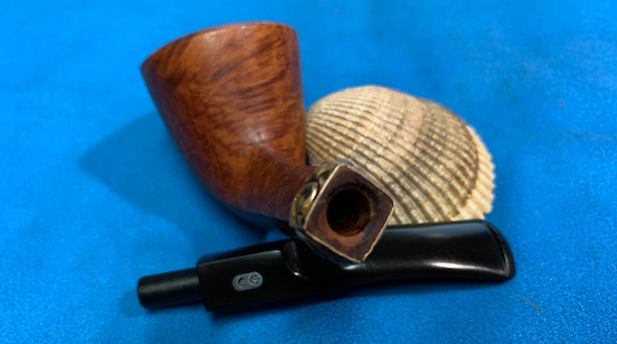
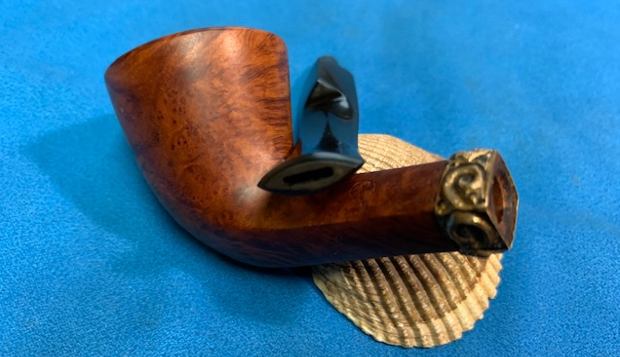
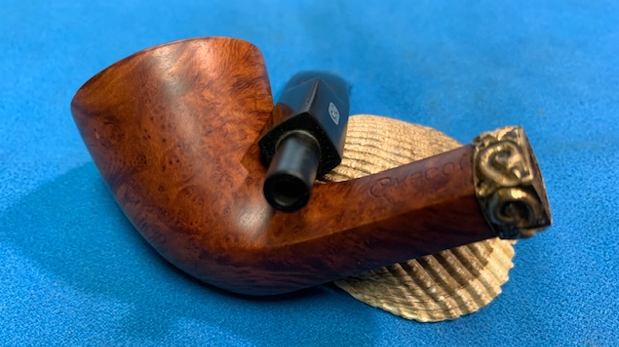
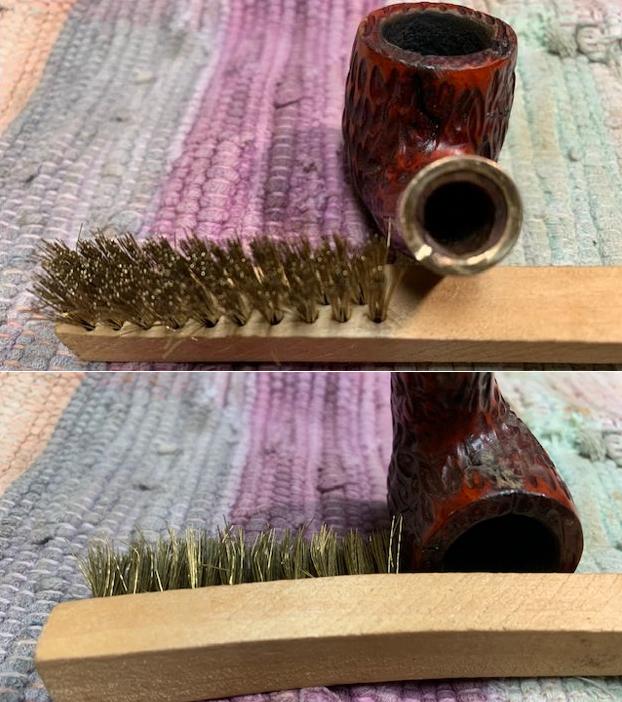
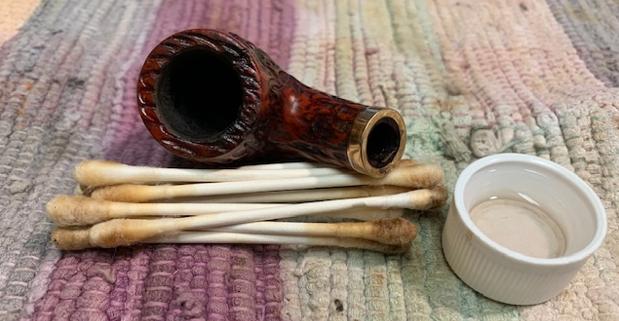
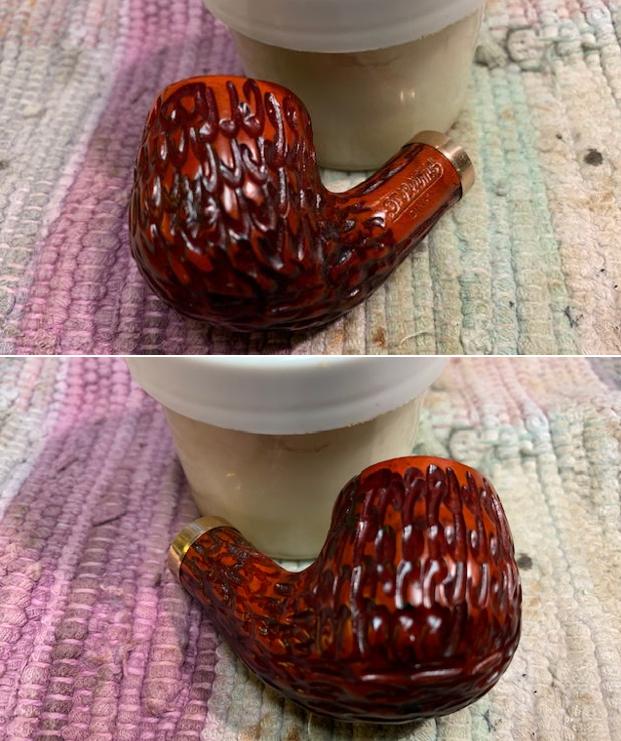
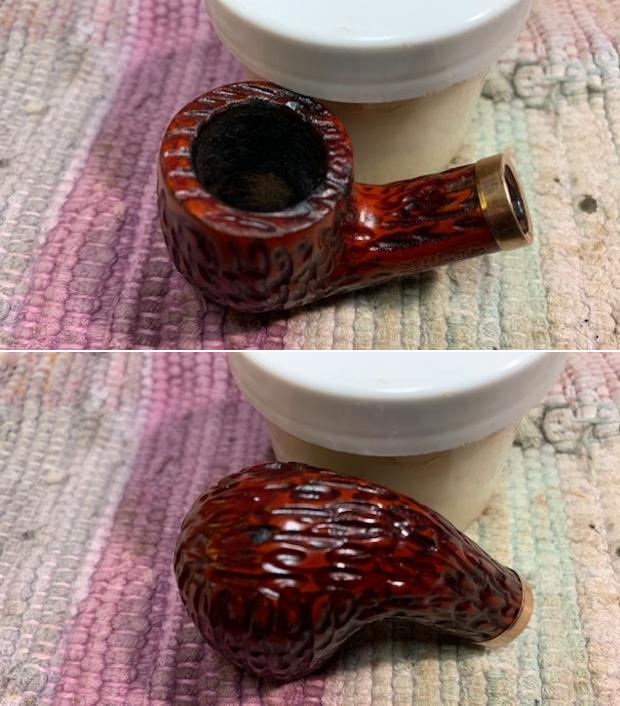
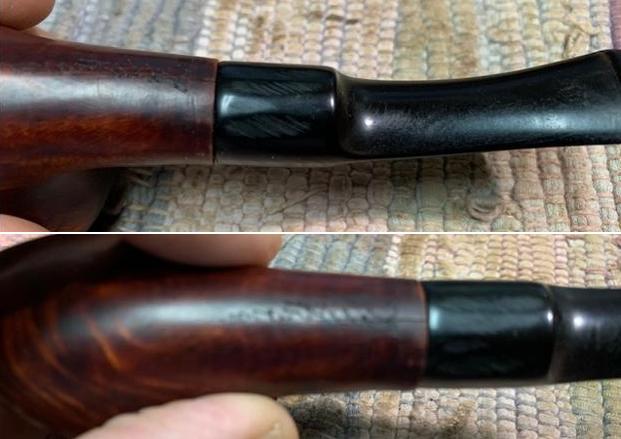
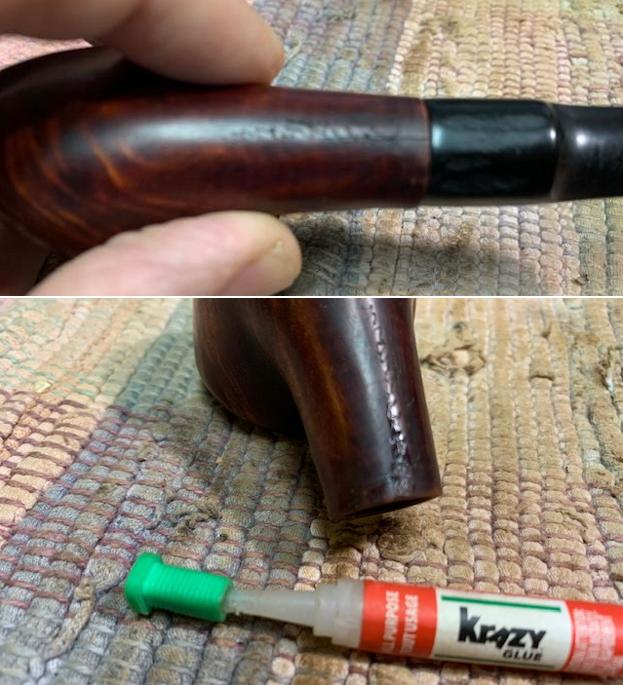
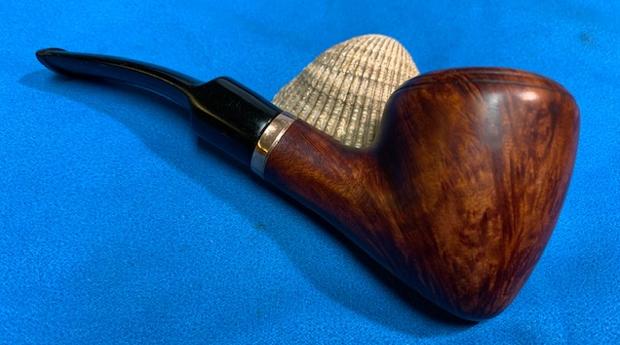
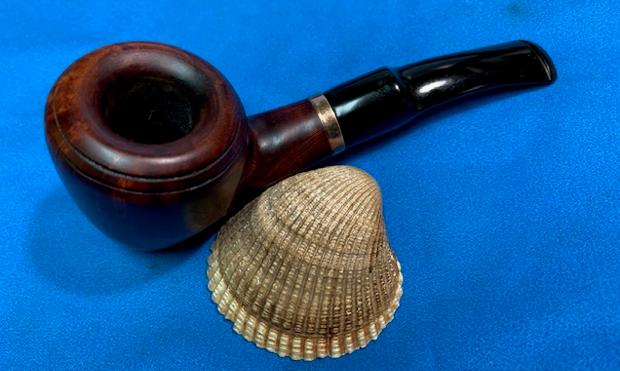
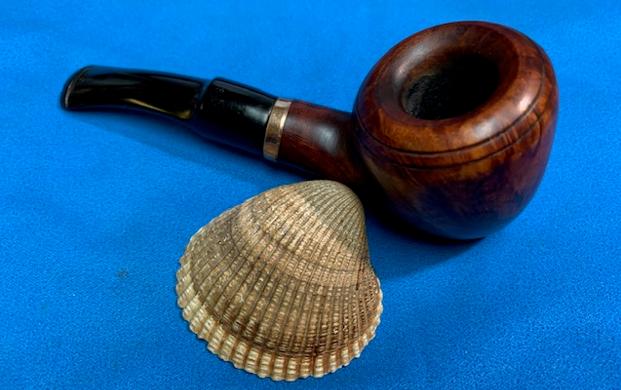
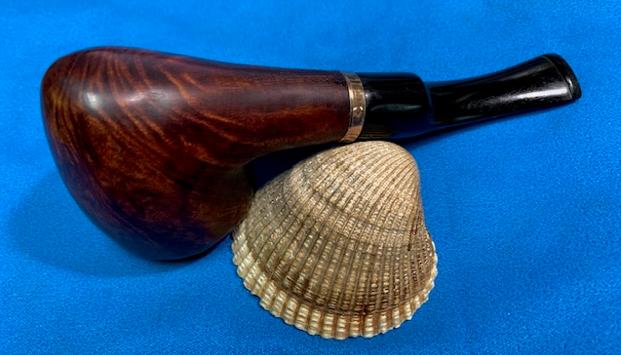
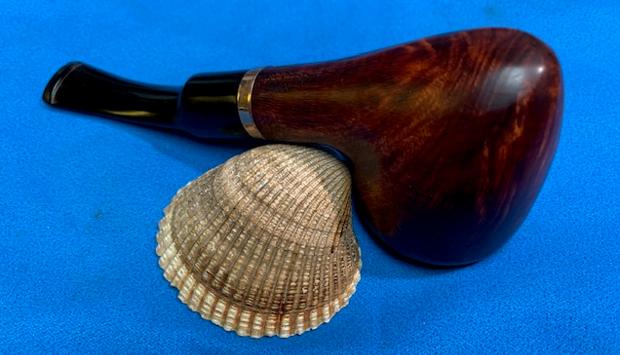
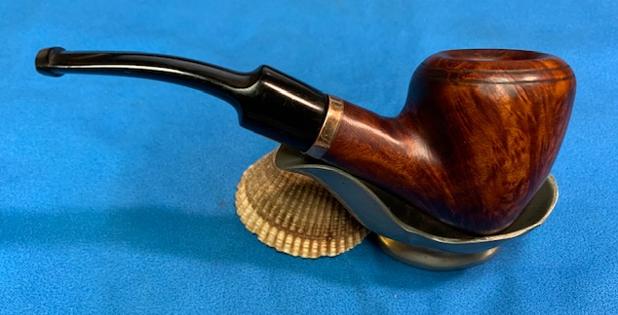
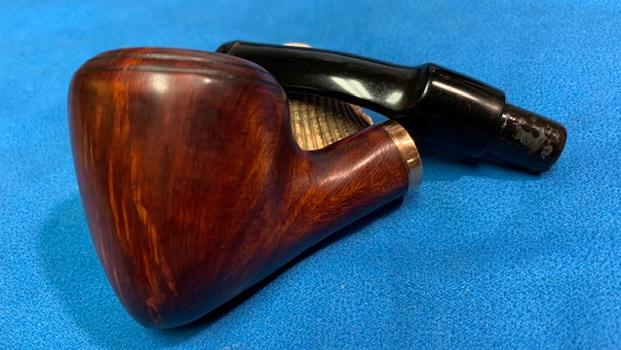
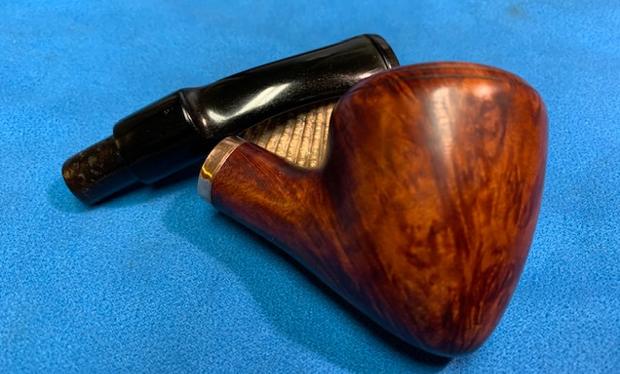
I began my work on the pipe by reaming out the cake. I started the process with a PipNet piper reamer to remove the thickest part of the cake. I cleaned up the cake with a Savinelli Fitsall Pipe Knife to remove the rest of the cake. I took it back to bare briar then sanded the bowl with piece of dowel wrapped with 220 grit sandpaper. Once it was finished the bowl was clean. With cake removed on the inside, I scrubbed the bowl with undiluted Murphy’s Oil Soap and a tooth brush to remove the grime ground into the briar and to remove the buildup of lava on the rim top and edges. It really was a nice looking piece of briar. I worked over the inner edge of the rim top with a folded piece of 220 grit sandpaper. I worked to remove the darkening on the edge and to smooth out the edge. It came out looking quite good.I took a photo of the crack on the top right side of the diamond shank. I filled in the crack with some clear super glue and pressed the parts together until the glue cured and the crack was joined.I cleaned out the mortise, the airway into the bowl and the airway in the stem with alcohol, pipe cleaners and cotton swabs. It was very dirty with tars and oils and took a lot of swabs and pipe cleaners.I dropped the stem into a soak of Briarville’s Pipe Stem Deoxidizer and set it aside for the night. While it soaked I worked on banding the cracked shank.I went through my collection of bands and found a really interesting one from the late 1800s. It is brass band with carved vines and floral patterns. I really like the look of the shank with the old band on it. I used a topping board and sandpaper to reduce the depth of the band. I wanted to thin it down enough so that when pressed into place on the shank it would leave as much of the stamping clear as possible. I pressed it on the shank. You can see that it cut off the right leg of M in Chacom. Otherwise it looks really good. I glued it in place on the shank and took photos of the banded pipe. I really like the look of the pipe with the antique band. I polished the briar with micromesh sanding pads – dry sanding it with 1500-12000 grit pads. I wiped it down with a damp cloth after each pad to remove the debris. The bowl began to take on a deep shine. I worked some Before & After Restoration Balm into the finish my fingertips to clean, enliven and protect the briar. I let the balm sit for a little while and then buffed with a cotton cloth to raise the shine. The product brought the briar to life and gave some depth to the finish. I set the bowl aside and turned my attention to the stem. I took it out of the Briarville Pipe Stem Deoxidizer and rinsed it off with warm water. I rubbed it down with a coarse cloth. While it removed a lot of the grit and oxidation it left a bunch behind. I scrubbed the stem with Soft Scrub to remove the softened oxidation on the stem surface. I have found that it works wonders. I used a small file to clean up the edges of the button  and smooth out some of the tooth marks. I sanded the stem with 220 grit sandpaper to smooth out the file marks. I started the polishing with 400 grit wet dry sandpaper. I polished the stem with micromesh sanding pads – dry sanding with 1500-12000 grit sanding pads. I wiped the stem down after each pad with Obsidian Oil. I polished it further with Before & After Fine and Extra Fine Stem Polishes. I wiped it down a final time with Obsidian Oil and set it aside to dry. I really like the addition of the gold coloured fancy band from the late 1800s to this Chacom Meridien 811 Diamond Shank Dublin. I put the stem on the shank and buffed it with Blue Diamond on the buffing wheel. I gave the stem and bowl multiple coats of carnauba wax and buffed it with a clean buffing pad to raise the shine. I hand buffed it to deepen the shine. The grain on the briar came alive with the buffing and the gold of the band was a great contrast between the briar and the polished vulcanite stem. The dimensions of the pipe are – Length: 5 ¾ inches, Height: 1 ¾ inches, Outside Diameter of the bowl: 1 ½ inches, Diameter of the Chamber: ¾ of an inch. The weight of the pipe is 1.02 ounces/29 grams. It is really a great looking pipe. The new repaired shank and golden coloured cast band really work well together. I will be adding it to the rebornpipes store in the French Pipe Makers section shortly. If you are interested in adding it to your collection let me know. Thanks for walking through the restoration with me. Cheers.

New Life for an Yves St. Claude Domino 10 Canadian


Blog by Steve Laug

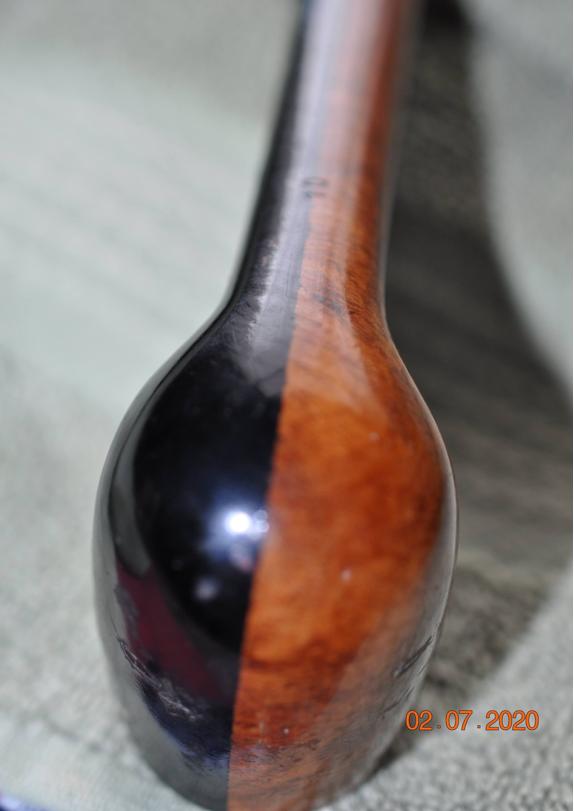
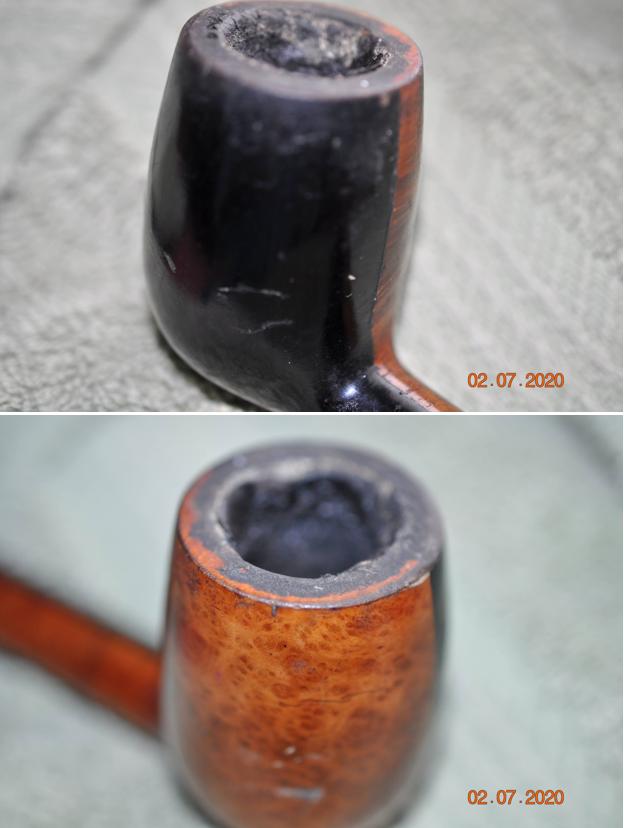
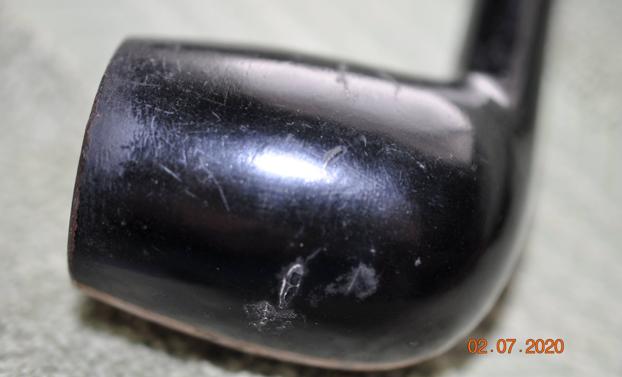
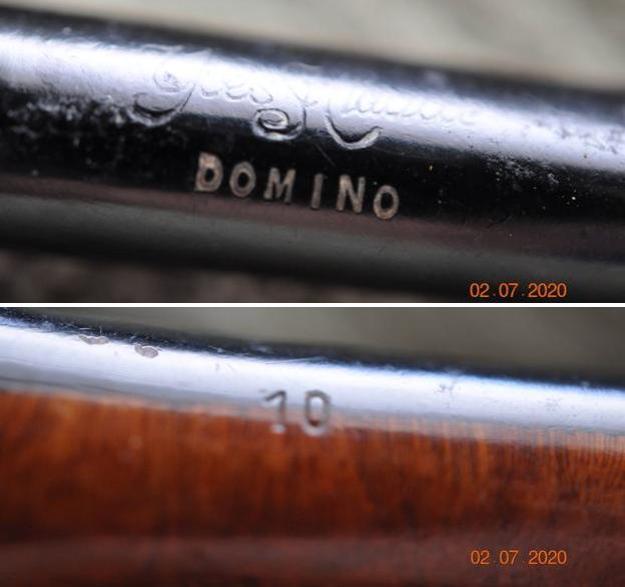
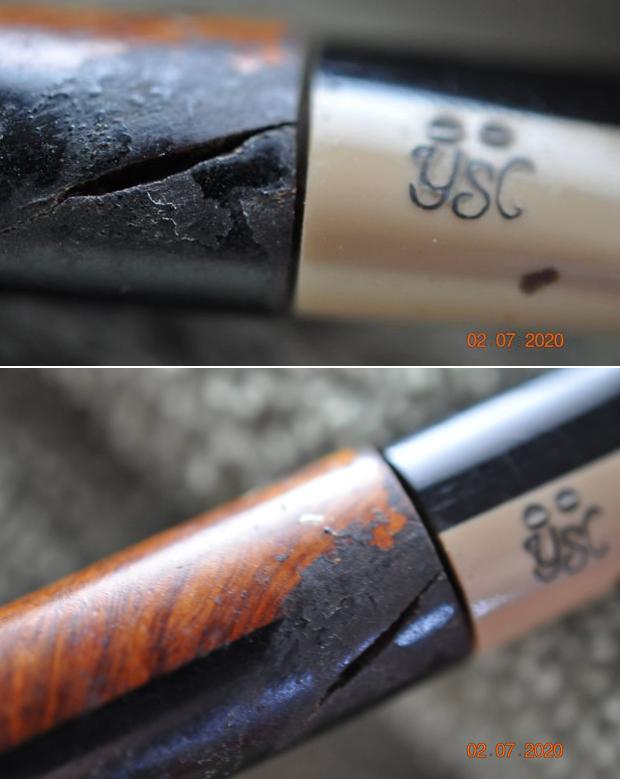
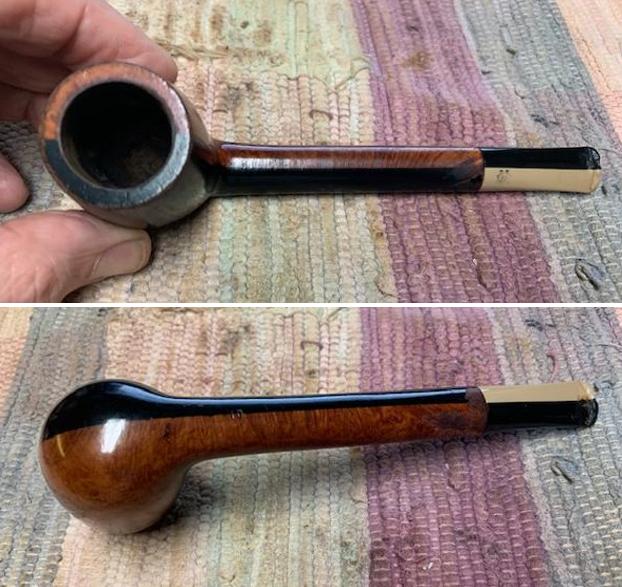
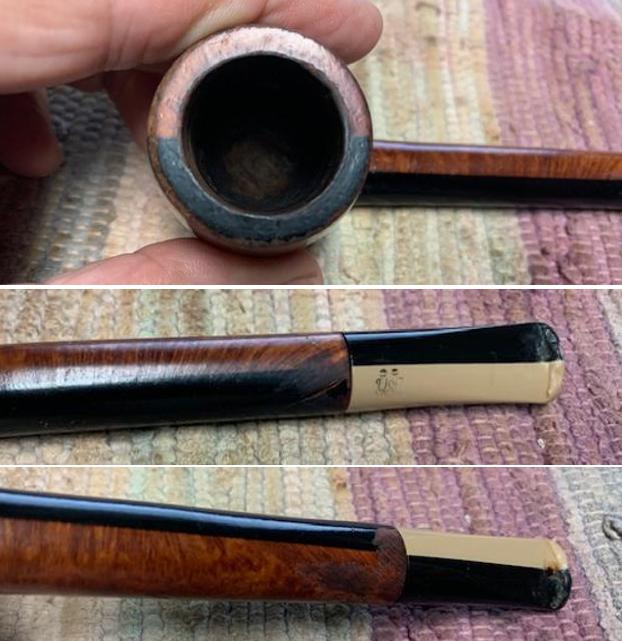
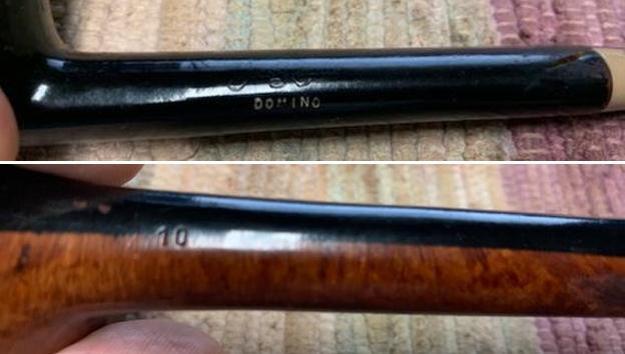
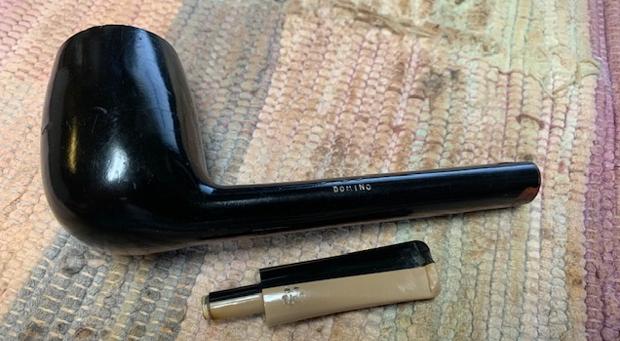
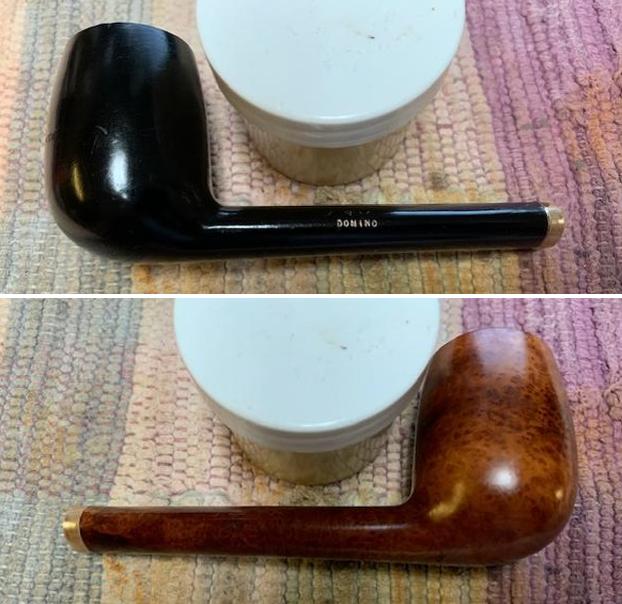
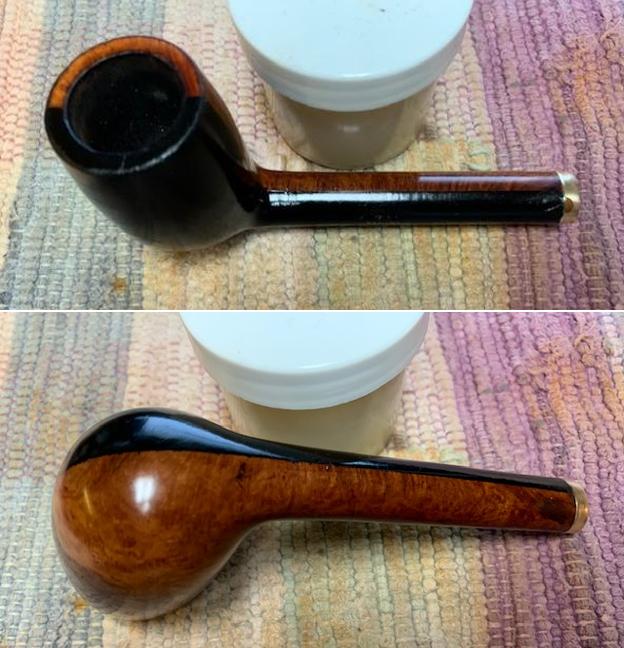
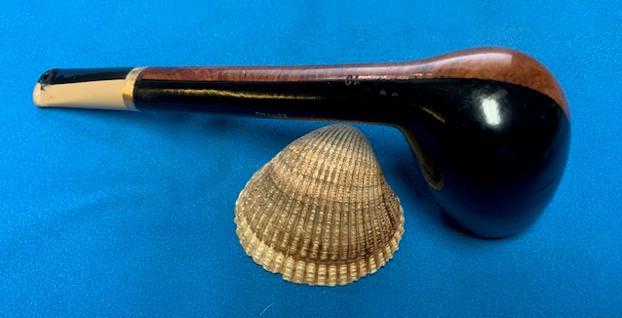
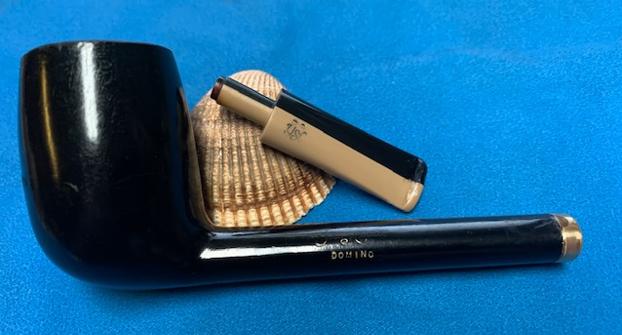
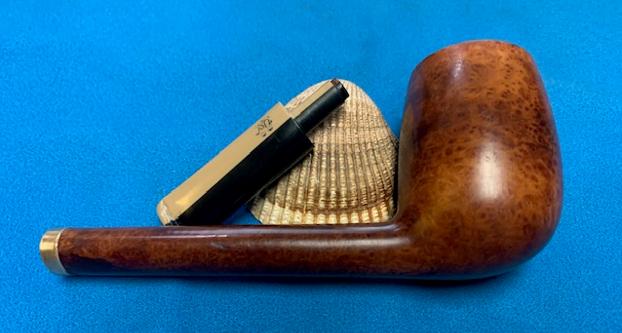
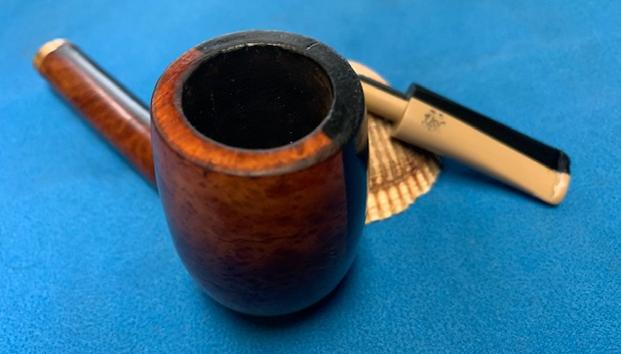
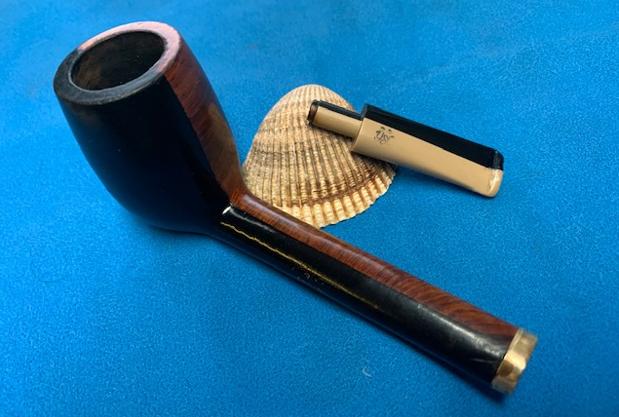
The next pipe on the work table came to us from an online auction in 2020 from Meridian, Idaho, USA. It is a unique looking smooth Canadian unlike any pipe that I have seen or worked on in the past. The left side of the pipe was a dress black and the right side being medium brown stained briar. The stem is also tan on the left side and black on the right side. It had a mix of nice grain around the right side of the bowl and shank. The finish was a bit rough in that the bowl had nicks in the left side and there was a large crack on the top left of the shank that had spread open. There was grime on the surface of the briar. This pipe is stamped on the left side of the shank and reads Yves St. Claude [over] Domino in gold stamping. On the underside of shank it has the shape number 10 and just ahead of the stem/shank union it was stamped with a Made in France circular COM stamp. The bowl had a thick cake and a thick coat of lava had overflowed onto the rim top. It was a dirty pipe. There was a stylized YSC stamped on the top left side of the stem. There were some tooth marks and chatter on both sides of the stem near the button. There was a bite through next to the button on the underside of the stem. The button surface itself was misshapen. Jeff took photos of the pipe before his cleanup. He took photos of the rim top to show the condition of the top and edges of the bowl. It is a beautiful lightly smoked pipe with a carbonized bowl coating. The stem had light tooth marks and chatter on both sides ahead of the button. He took photos of the sides and heel of the bowl to show the grain around the bowl and the condition of the pipe. It is a very unique looking pipe. He took photos of the stamping on the sides of the shank. It is clear and readable as noted above. He also took photos of the YSC stamp on the left top side of the taper stem. The next photos show that large wide open crack in the shank on the top side (primarily in the black half of the shank). There was a lot of tar and oil seepage in that area as can be seen in the next two photos. I turned first to a blog I had written on the restoration of previous YSC pipe that I received (https://rebornpipes.com/2020/04/23/next-on-the-table-an-yves-st-claude-marbre-75-bulldog/). I quote what I learned about the brand in that blog below.

In the previous blog that I cited above I had found several references to Yves Grenard, trained in Comoy’s England factory, purchasing the Chacom plant in St. Claude. He managed the factory and it passed on to his son afterward. I am pretty certain that this Yves St. Claude pipes was made by Chacom in France with the stamping bearing Yves name.

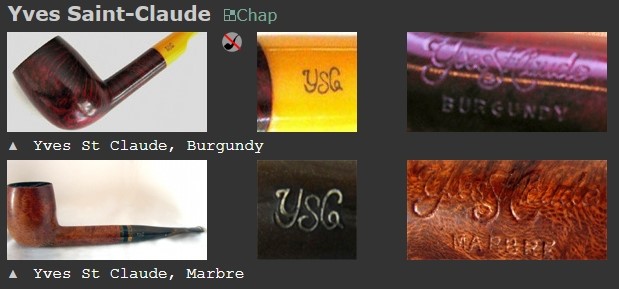
I turned back to Pipephil’s site to have a look at what was listed there and did a screen capture of the section (http://www.pipephil.eu/logos/en/logo-y.html).I turned to Pipedia and in the listing of French Brands and Maker I found a connection of the brand to Chapuis-Comoy and that the YSC brand was made primarily for Tinder Box (https://pipedia.org/wiki/French_Pipe_Brands_%26_Makers_U_-_Z). I followed that up by turning to the Chapuis-Comoy article from Pipedia (https://pipedia.org/wiki/Chapuis-Comoy).

French factory, in St. Claude. It began with Francois Comoy who, in 1825, was making pipes in boxwood and other types, as well as in clay, for the armies of Napoleon. In 1856, the Comoy factory was the first to produce briar bowls at St. Claude. In 1870, Francois’s grandson, Henri Comoy (1850-1924) was taken prisoner in Switzerland whilst serving in the French army during the Franco-Prussian war, where he found his cousins, the Chapuis. This meeting produced the idea of an association, which only became a reality in 1922, with the creation of Chapuis-Comoy. After Henri’s death, his sons Paul and Adrien, took over the company with the support of their cousins, Emile and Louis Chapuis Sr., and in 1928 they created the Chacom brand.

In 1932, due to the economic crisis at Saint-Claude, the factory merged with La Bruyère, adopting that name, and becoming one of the biggest pipe companies in the world, with 450 workers. Louis Chapuis Jr., joined the company in 1938 and Pierre Comoy in 1947. The name Chapuis-Comoy returned in 1957 (125 workers), due to the success of the Chacom brand in France. In 1971, the London factory (see Comoy’s) became independent, and Yves Grenard, second cousin to Pierre, took over Saint-Claude, and is still running it. Between 1987 and 2001, the factory, which employed over 40 people, joined the Cuty-Fort Enterprises SA holding and, in 1994, included the Ropp brand it its catalog.

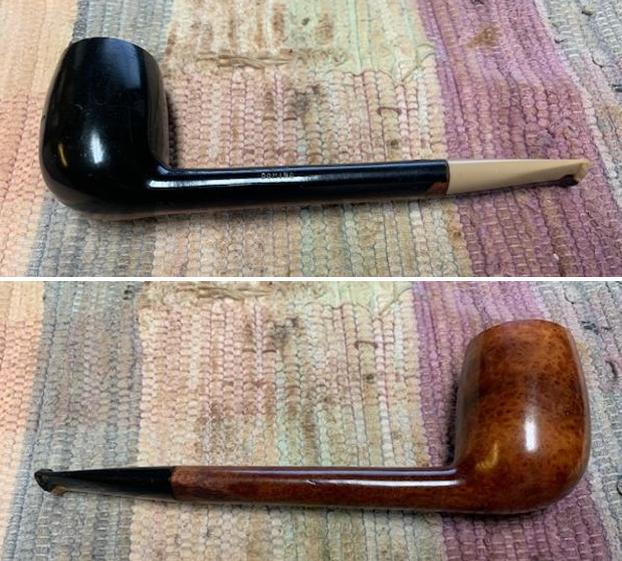
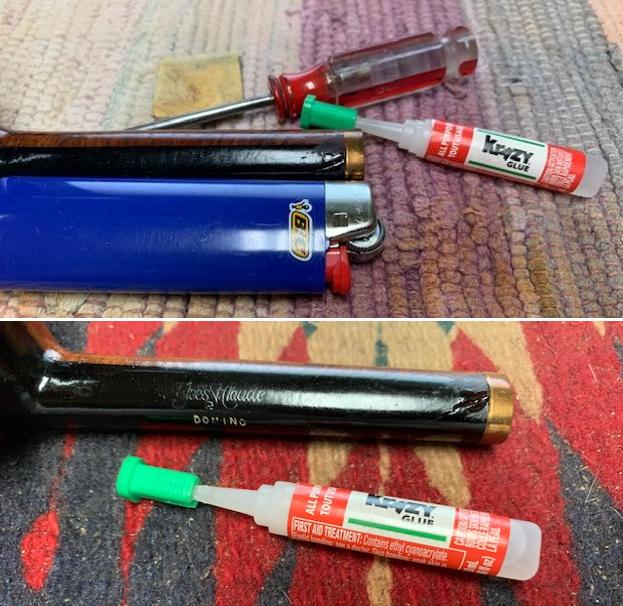
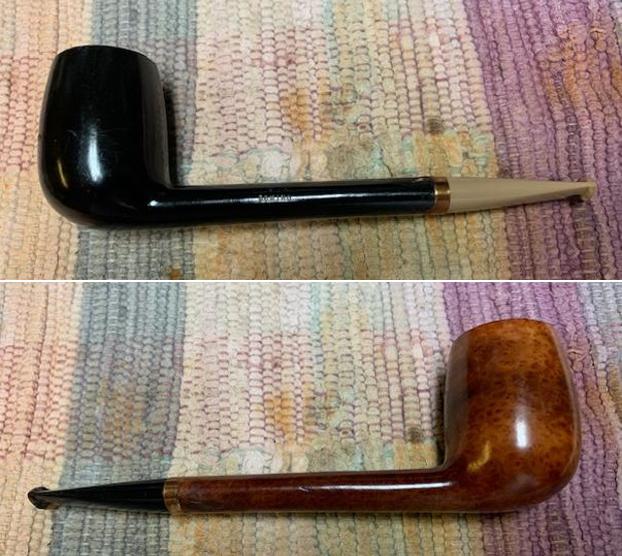
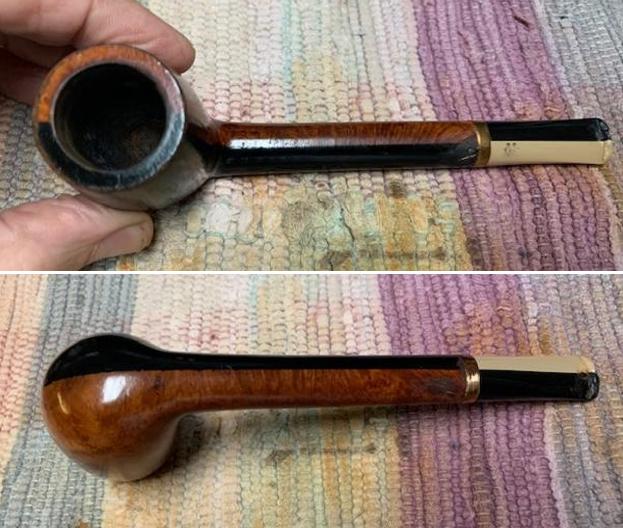
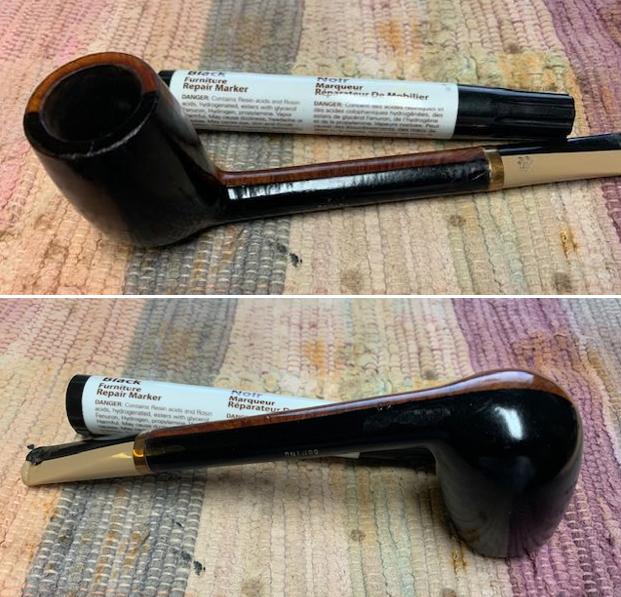
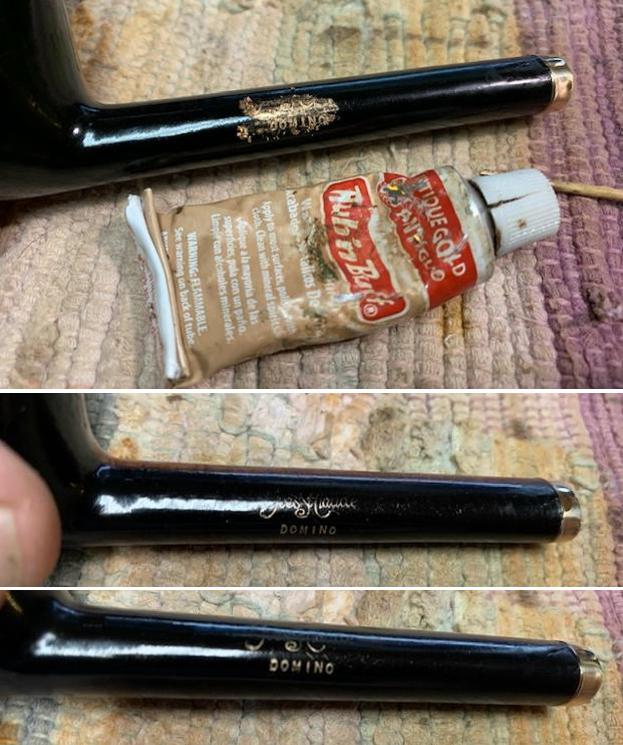
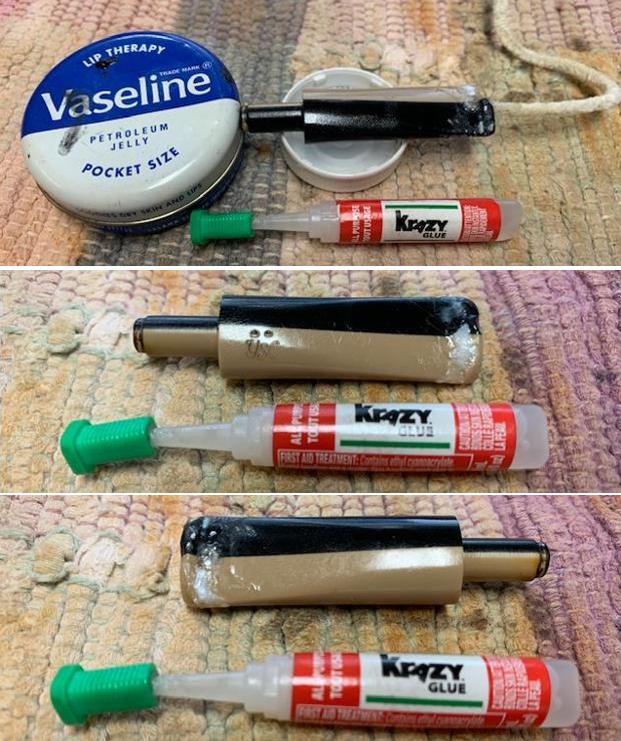
Reminded about the Chacom connection for the YSC brand it was now time to turn to the pipe itself and do my part of the work. As usual Jeff had done a thorough cleanup on the pipe. He reamed the bowl with a PipNet pipe reamer and followed up with a Savinelli Fitsall pipe knife to remove the cake. He scrubbed out the mortise and the airway in the shank and the stem with alcohol, cotton swabs and pipe cleaners. He scrubbed the exterior of the bowl, rim, shank and stem with a tooth brush and Murphy’s Oil Soap to remove the oils and tars on the rim and the grime on the finish of the bowl. He was also able to get rid of the tarry build up on the outside and inside of the cracked shank. He rinsed it under running water. One of the benefits of this scrub is that it also tends to lift some of the scratches and nicks in the surface of the briar. He dried it off with a soft cloth. He cleaned the internals and externals of the stem with alcohol, pipe cleaners and cotton swabs. He soaked the stem in Briarville’s Pipe Stem Deoxidizer and rinsed it off with warm water and cleaned out the airway in the stem with alcohol. Other than the small nicks and the cracked shank the pipe looked good.   I took a photo of the rim top and stem to show the condition. The rim top and the inner edge of the bowl were in good condition. The divided colour on it made it a difficult rim to top or change so I would have to look at other options. The stem could be acrylic but I am uncertain. The heavy tooth chatter and marks on both sides ahead of the button and on the button edges as well as the bite through will make the cleanup and repair of the stem problematic and complicated. The stamping on the left side and underside of the shank is clear and readable as noted above. The COM stamp is damaged from the poorly done repairs to the cracked shank.     I removed the stem from the shank and took a photo of the pipe to give a sense of the whole. It is a unique looking Canadian and I am looking forward to seeing what I can do with it.I started working on the pipe by addressing the cracked shank. Unfortunately the tars and oils had stained the natural briar shank with dark spots on the top and underside where the colours came together. I squeezed the crack together and heated a thin brass band with the flame of a lighter and pressed in place on the shank end. The fit was very tight and it pulled the crack together tightly. I filled in the crack with clear CA glue and briar dust to build it up and make it even with the rest of the shank.    I put the stem on the shank to see what the pipe would look like with the addition of the band. I have to say that I really like the dressy look of the pipe with the band!  I used a black stain pen to touch up the damaged areas on both top and underside of the shank to help blend in the repair. It looks much better in the photos below even though there is still along ways to go.   To remove the shiny varnish coat on the smooth briar side of the bowl and shank I sanded it with micromesh sanding pads, dry sanding with 1500-12000 grit sanding pads and wiping it down with damp cloth after each sanding pad. I decided to leave the dress black side alone preferring to leave the small nicks on the bowl surface rather than trying to match them to the black of the bowl finish.   I touched up the gold stamping with Rub’n Buff Antique Gold. I rubbed it on to the stamp on the briar with my finger tip and worked it in to the stamp with a tooth pick. I buffed it off with a soft cloth. The stamp is readable and clear.    I rubbed the bowl and shank down with Before & After Restoration Balm. I worked it into the surface of the bowl sides and shank with my fingertips to clean, enliven and protect the briar. I let the balm sit for a little while and then buffed with a cotton cloth to raise the shine. The Balm did its magic and the grain stood out on the natural finished part and the dress black portion look shiny and nice.  I set the bowl aside and worked on the stem. I greased a pipe cleaner with Vaseline and inserted it in the stem below the bit through. Once I had it situated I had a decision to make. The bite through was centered on the underside of the stem surface evenly split between tan and black. I decided to do the repair with clear CA glue hoping that it would pick up the colour of the underlying material. In the best case scenarios it works very well. In this case it went a bit crazy. The repairs cured over both areas in a milky white colour! Fortunately I overfilled the repairs so I was hoping that once I filled them and sanded them the repair would at least be less noticeable.   While the repair hardened I used a black Sharpie Pen to restain the YSC stamp on the top of the taper stem. It was in the tan area so I was hesitant but did it anyway. Once I had it in place I sanded the stem surface with 1500 grit micromesh to remove the excess stain and it cam out really well.I used a small file to reshape the button, cut the sharp edge and flatten out the repairs. It worked amazingly well. The topside was perfect and the bit through was far better than I expected. I sanded the repaired areas with 220 grit sandpaper blend them into the surrounding surface of the stem and started polishing the stem with 400 grit wet dry sandpaper.  I polished the stem with micromesh sanding pads – 1500-12000 grit pads. I wiped it down with Obsidian Oil after each sanding pad. I used Before & After Pipe Polish – both Fine and Extra Fine to further polish the stem. The photo below shows the polished stem. You can see that the top repair came out very well. The repair on the underside is better than it was when I started but you can clearly see the repair.     This nice smooth finished Yves St. Claude Domino 10 Canadian with a black and tan taper stem even with the visible repairs and banded shank still is a great looking pipe. The rich medium brown finish on the right half of the pipe and the dress black finish on the left half works well with the split black and tan stem. The briar is clean and really came alive. The rich natural finish gave the grain on the right side a sense of depth with the polishing and waxing. The painted dress black left side also looks good. The repairs on the stem are solid yet visible on the underside due to the dual colour of the stem (I have yet to figure out a tan colour fill). I put the stem back on the bowl and carefully buffed the pipe with Blue Diamond on the buffing wheel using a light touch on the briar. I gave the bowl and the stem multiple coats of carnauba wax on the buffing wheel. I buffed the pipe with a clean buffing pad to raise the shine. I hand buffed the pipe with a microfiber cloth to deepen the shine. The finished YSC Domino Canadian is a beauty and feels great in the hand and looks very good. Give the finished pipe a look in the photos below. The dimensions of the pipe are Length: 6 ½ inches, Height: 2 inches, Outside diameter of the bowl: 1 ¼ inches, Chamber diameter: ¾ of an inch.The weight of the pipe is 1.69 ounces/48 grams. This pipe will soon be on the French Pipe Makers section of the rebornpipes store if you are interested in adding it to your rack. Thanks for reading this blog and my reflections on the pipe while I worked on it. There are many more to come!

Repairing a Trio of His Dad’s Pipes for a fellow here in Vancouver – Part One


Blog by Steve Laug

Last week I received a call from a fellow pipeman, Keith here in Vancouver who had been referred to me by City Cigar, a local pipe and cigar shop in the city. He was a soft spoken gentleman who had a request for me. In January  this year his Dad died and he had three of his Dad’s pipes that he wanted restored in memory of his Dad. He also was a pipe smoker so he fully intended to enjoy them for a long time as he smoked them in his Dad’s honour. I told him to send me some photos of the pipes so I would know what I was dealing with.

I received the email below from Keith that included the photos of the pipes that he wanted me to work on. He even went to the trouble of marking the trouble with each of the pipes that needed work.

Hi Steve,

Glad your call back today, my name is Keith, I got your contact from City Cigar. My dad has three pipes include two Dr Plumb DINKY and one not sure brand. My dad passed this year January and I looking for fix those pipes which had broken and cracked, understand they are not expensive pipes but for me is priceless memory…

…Have a wonderful day!

Best regards

Keith

I called him as soon as I received the photos and talked over what I saw when I looked them over. We struck a deal and he dropped them off to me late on Friday afternoon and I started to work on them a bit over the weekend. All three pipes needed varying degrees of work on them. Two were Dr. Plumb Dinky Bent Billiards and one was a Real Briar Dublin. I decided to work on them in the order of the photos that he sent me.

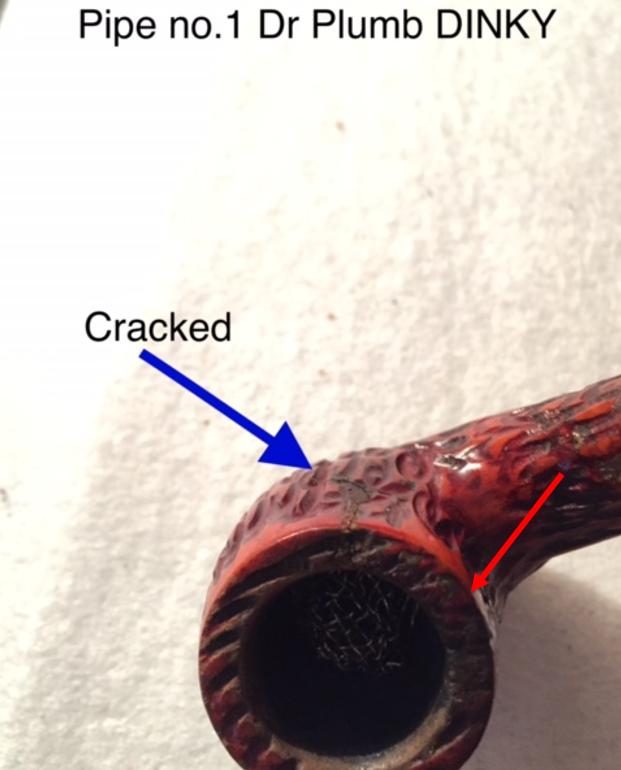
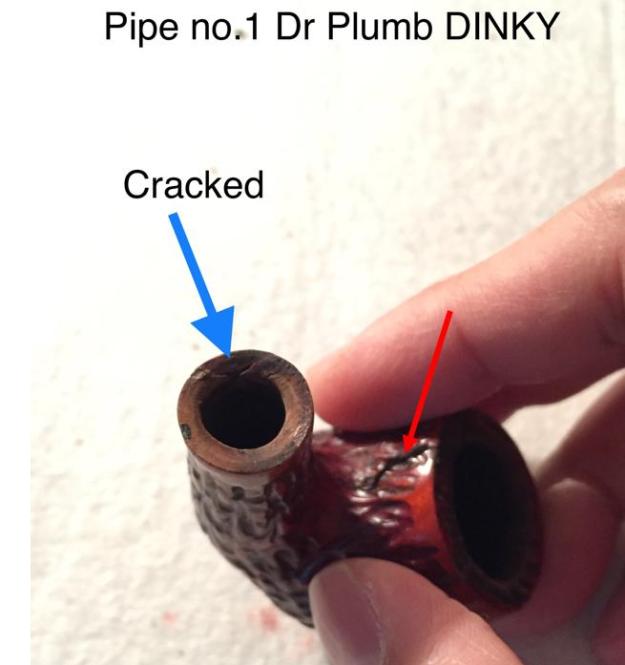
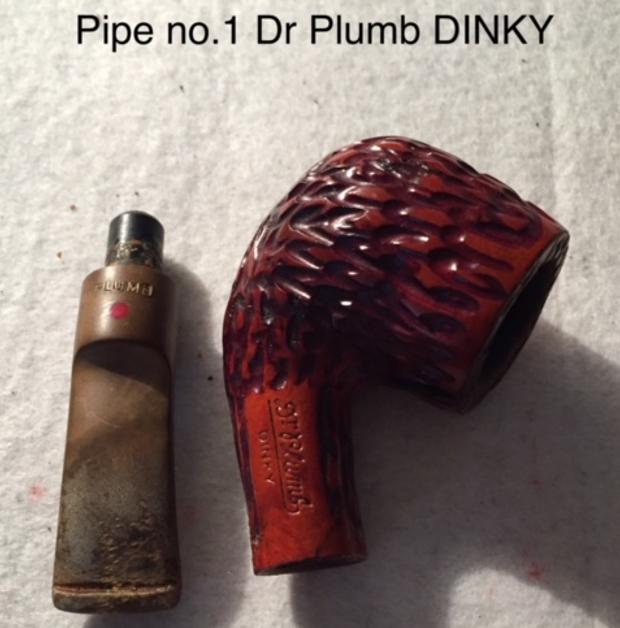
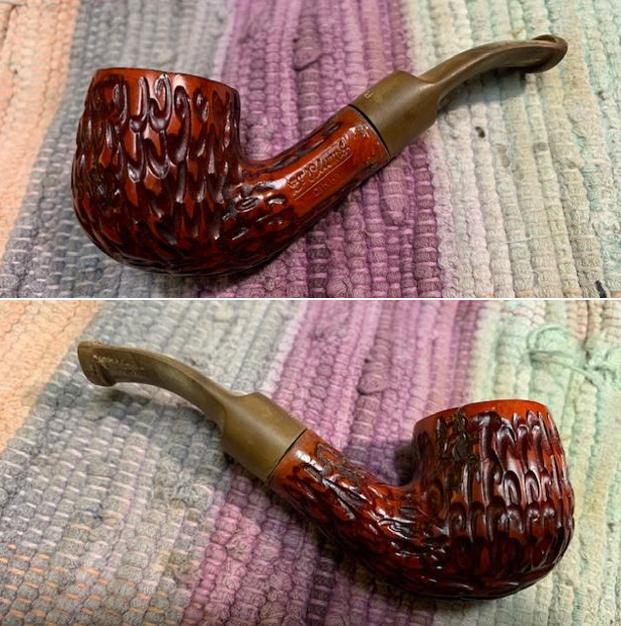
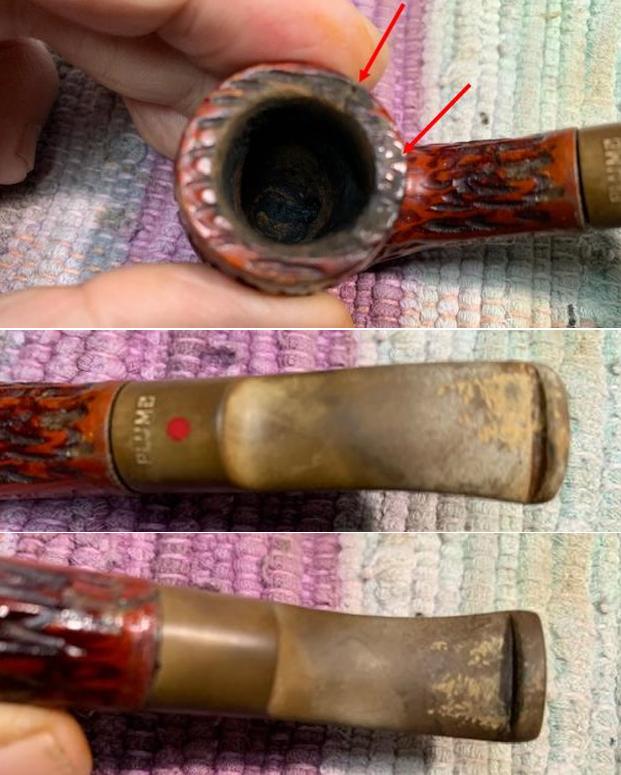
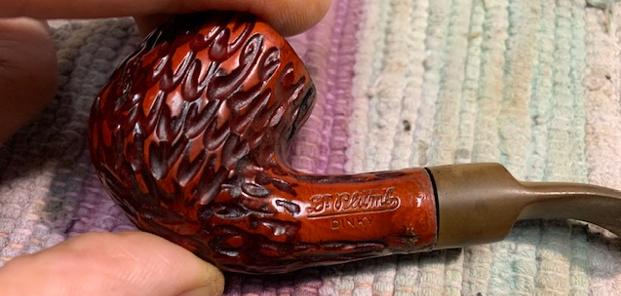
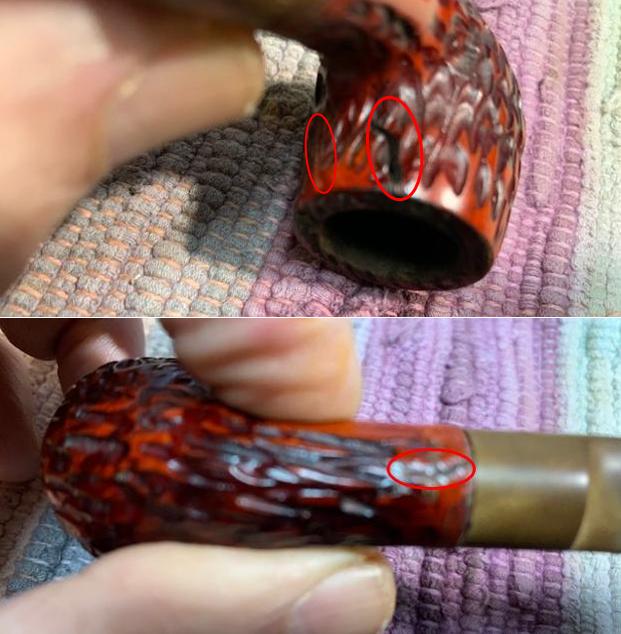
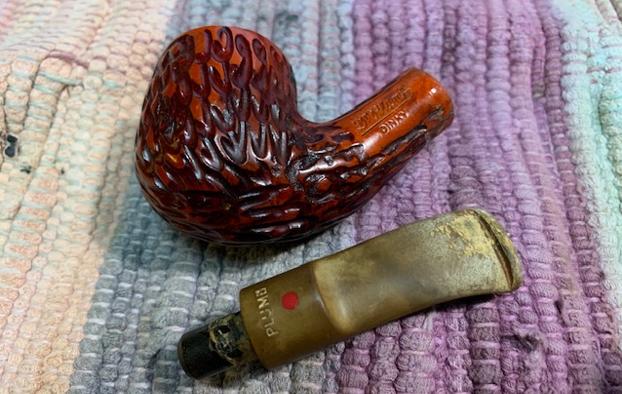
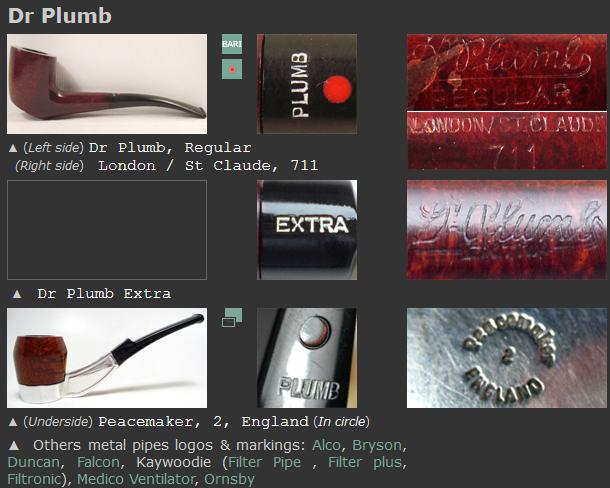
The first of them is a Dr. Plum Dinky Bent Billiard. It was probably in the roughest shape in many ways. It had a crack on the back right and middle of the exterior of the bowl. Neither were spread and they both had stopped cracking but they were significant. In the first photo below that  Keith sent he noted one of the cracks with the blue arrow. I inserted a second arrow (red) to show the location of the second crack. The second photo below also shows a crack in the shank on the underside as Keith noted with a blue arrow. That photo also clearly shows the crack on the back of the bowl that I have noted with a red arrow. Keith also included a photo of the side view of the pipe and the condition of the stem. The bowl had a thick coat of varnish that would need to be cleaned up before I repaired the cracks. The stem was heavily oxidized, calcified and had tooth marks on both sides just ahead of the button. The Dr. Plumb logo stamp was clear and readable.I took pictures of the pipe when Keith dropped it off before I started my clean up work. He had cleaned the bowl and removed the screen that was visible in the bottom of the bowl in the photos above. It was very clear from the cleaned pipe what needed to be addressed on this first one. The rim top was darkened and had debris in the carved finish.I took a close up photo of the rim to show the condition of the bowl and the rim. You can see the cracks as noted above and shown in the photo below by the arrows. I also took photos of the stem to show the general condition as noted above.I took a photo of the stamping on the left side of the shank – it read Dr. Plumb [over] Dinky and was clear and readable.The next two photos show the cracks (though a bit blurry the cracks are clear). I have circled the three cracked areas that will need to be dealt with and repaired.I removed the stem from the shank and took a photo of the pipe. There is something quite winsome about this tiny pipe.I turned to Pipephil’s site for see what I could find on the brand (http://pipephil.eu/logos/en/logo-d8.html). I quote the sidebar below followed by a screen capture of the pertinent section.

Brand created in 1925 by GBD’s Parisian sales manager J.B. Rubinovich. The Dr Plumb production was run by the Ruchon & Verguet and also Ropp factories (Saint-Claude – France). The brand now belongs to the English Cadogan group.I turned to Pipedia and looked up the brand (https://pipedia.org/wiki/Dr._Plumb%27s). I have included the additional information below.

The Dr. Plumb’s brand name is owned by A. Oppenheimer & Co., Limited, owners of Cadogan Investments, Ltd.. J.B. Rubinovich, GBD’s Parisian sales manager, created this brand in 1925. The pipes was produced by the Ruchon & Verguet and also Ropp factories (Saint-Claude, France). In 1962 a Dr. Plumb’s pipe sold for between C$3.95 and C$4.95, or $31.72 in 2015 U.S. dollars, and pipes can still be purchased from this brand for a similar price today.

These pipes have long been advertised as Dr. Plumb’s Perfect Pipe, that name coming from an aluminum tube system designed to keep the smoke cool and dry while at the same time permitting the “cooling chamber” to be cleaned by simply twisting the stem. While Dr. Plumb’s pipes were long made in France and stamped accordingly, they are now British made.

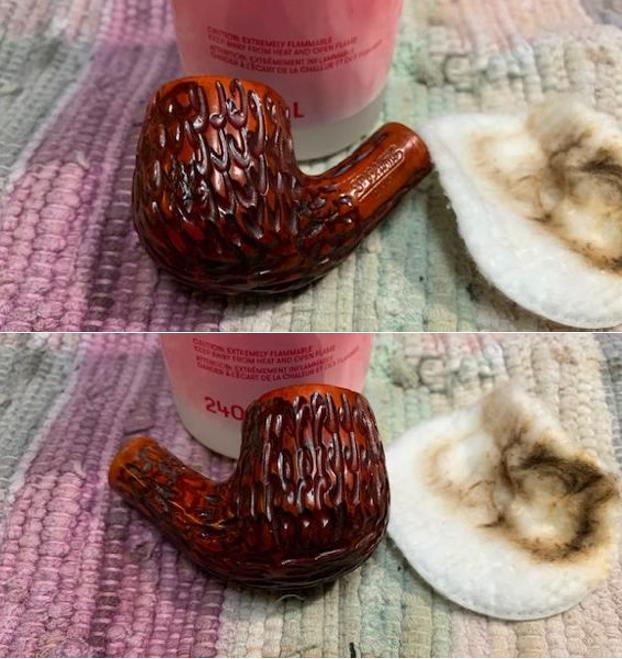
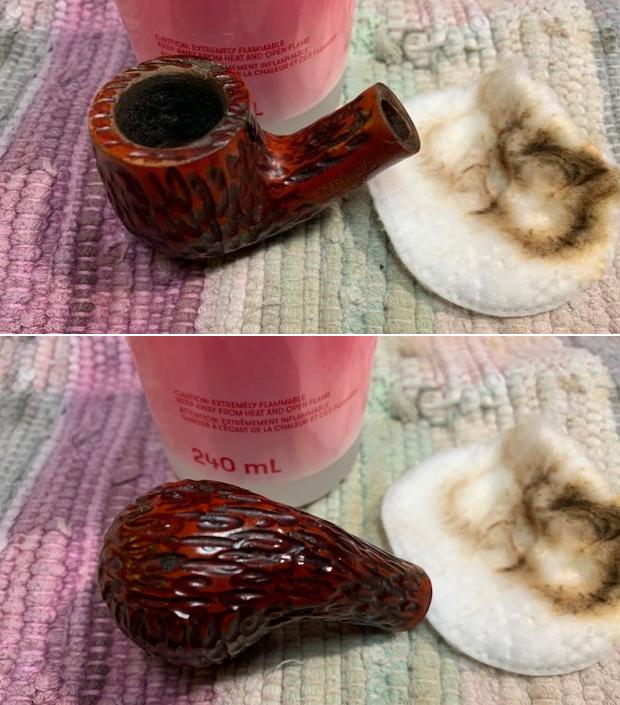
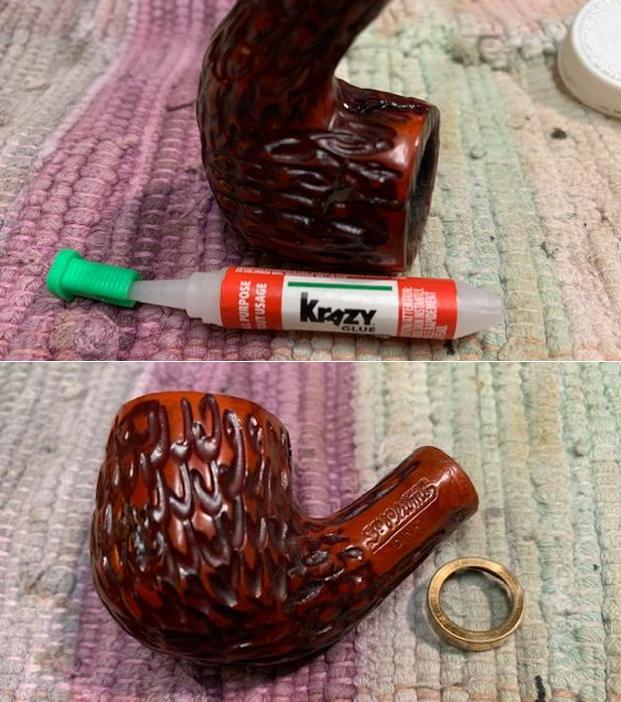
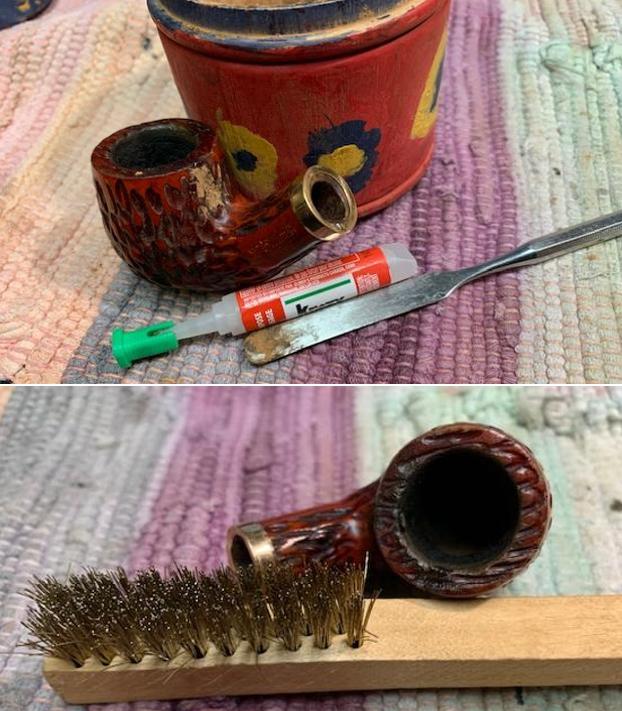
None of the sites included information on the Dinky line. I knew who made the pipe and where it was made but not anything about the tiny little pipes in this estate. Now it was time to work on the pipes. I removed all of the stems and dropped them in a bath of Briarville’s Pipe Stem Deoxidizer. I put the lid on the box and let them sit for 24 hours.I wiped the bowl down with acetone on a cotton pad to cut the shiny varnish coat. It took a lot of scrubbing and I was able to greatly reduce it but not remove it. With the bowl cleaned up it was time to address the cracks in the bowl and shank. I pressed some briar dust into the cracks on the back of the bowl and filled them in with clear CA glue. I did the same with the crack on the underside of the shank. I repeated the process until the repair was finished. I found the proper sized brass band for the shank end and dribbled some CA around the shank end and pressed the band in place on the shank.I filled in some of the spots that remained on the crack on the back of the bowl and then used a brass bristle brush to score the repairs to match the surrounding rustication. I also worked over the rim top at the same time with the brush. The repairs on the bowl are a little darker than the rest of the bowl but the repairs are solid. It dawned on me at this point that I had not cleaned the shank. I scrubbed it with 99% isopropyl alcohol, pipe cleaners and cotton swabs. It was quite dirty so I am glad I remembered.I worked some Before & After Restoration Balm into the surface of the bowl and shank with my fingertips and a horsehair shoe brush to clean, enliven and protect the briar. I let the balm sit for 15 minutes and then buffed with a cotton cloth to raise the shine. The photos show the bowl at this point in the restoration process. I set the bowl aside and turned my attention to the stem. I removed it from the deoxidizer bath and it did not really look much better. I scrubbed it down with Soft Scrub and a cotton pad. I found that the oxidation was significantly softer and came off quite easily.I scrubbed out the airway in the pipe with alcohol and pipe cleaners until it was clean. It was a well used pipe.I still needed to polish the stem with micromesh and buff the pipe but I had to put the stem on and have a look at the pipe. I took some photos so you could see what I see. I polished the stem with micromesh sanding pads – dry sanding with 1500-12000 grit sanding pads. I wiped it down after each sanding pad with Obsidian Oil. I polished it with Before & After Pipe Stem Polish – both Fine and Extra Fine. I gave it a final coat of Obsidian Oil. With the bowl and the stem finished I put the tiny GBD Made Dr. Plumb Dinky Bent Billiard back together and buffed it on the wheel using Blue Diamond to give it a shine. I gave the bowl multiple coats of Conservator’s Wax and the stem multiple coats of carnauba wax on the wheel. I buffed the pipe with a clean buffing pad to raise the shine. I hand buffed it with a microfiber cloth to deepen the shine. It really is a great looking pipe. The dimensions of the pipe are – Length: 4 inches, Height: 1 ½ inches, Outside diameter of the bowl: 1 inch, Chamber diameter: ¾ inch. The weight of this small pipe is .85 ounces /24 grams. This small Dr. Plumb Dinky is a great reminder for Keith of his Dad’s Pipe smoking and one that he can enjoy for a long time. Once I finish the other two pipes I am sure he will be excited to load them with a memorable tobacco and slip back into the memories of his Dad. Thanks for walking through the restoration with me.


Repairing a Cracked Shank on a Salstrom & Skinner Handmade Acorn


Blog by Steve Laug

Early in December I received and email from a reader of the blog about one of his first pipes. Here is what he wrote to me:

I have got a custom made briar tobacco pipe that split at the shank when I removed the pipe stem. It’s a hair line crack. Was looking to get an estimate of a repair. Was reading one of your repair articles of putting a brass ring to reinforce shank and stem connection. This is something I would like possibly have done. And what is the lead time for such a repair?… Thanks,  Jake

The story behind this being his first pipe caught my attention. I forgot to ask him what the brand was. He sent me some photos of the crack in the shank but I changed out my computer and do not have access to those photos any longer. I figured that it would be a straightforward repair so I answered him and he shipped the pipe to me. This afternoon while I was working the package arrived from Jake. I opened it after work and took some photos of the pipe. I wrote Jake an email to let him know that the pipe had arrived and asked him about the maker and the brand. He wrote me back and I am including that below.

Hi Steve! I was actually going to contact you today to see if it did, but that’s good. Glad it finally made it to you. I bought that pipe back in 2015 from an Etsy retailer that went by the name of Salstrom & Skinner. I believe they are out of Oregon. They aren’t in business anymore from what I can tell, their online Etsy shop is no longer up. And yes, that is the stem that came with the pipe. –Jake

I thanked Jake and sent him my assessment of the pipe and what needed to be done to make a repair work on the pipe. I broke my assessment down to cover the bowl and shank issues and then the stem issues. Both contributed to the crack on the underside of the shank. I include a summary of the email that I sent to him below.

The damaged shank…

  1. I cleaned out the shank to check the crack and it goes all the way through.. Fortunately it is not too long maybe 1/4-1/2 inch into the shank.
  2. The shank was quite thin walled so I decided to glue it and then band it. I would open the crack and fill it with clear CA glue and clamp it shut until the glue dried.
  3. I would fit a thin brass band on the shank end and customize the fit. Once the fit was correct I would need to press it on the shank glue it in place. That would take care of the shank damage.

The stem issues…

  1. The stem is really a mess. The tenon was quite large and poorly cut. It still had the castings on it and the Made in Italy castings. These made the fit in the shank very tight and also I believe caused the crack originally as the shank is quite thin.
  2. I would need to smooth out damage on the tenon and remove the castings.
  3. I also would funnel the entry of the airway in the end of the tenon to make the draw better.
  4. The saddle portion of the stem was very rough and not round. There were file marks and cuts all around it and it did not fit against the shank well. The diameter of the stem and the shank did not match. I would need to round the saddle and removed the cuts and the file marks.

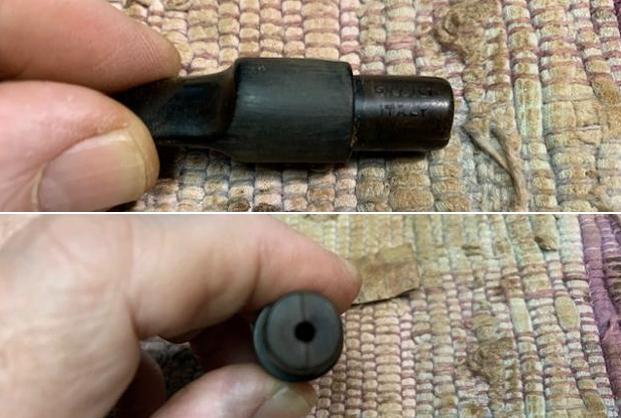
I took photos of the rim top and stem to show the general condition of the pipe. The bowl looked to be in good condition. There was some darkening and lava build up on the top back of the rim. I also took photos of the stem to show the cut marks and fill marks on the surface of the saddle.    I took some photos of the rough looking finish on the stem, its fit to the shank and the crack in underside of the shank.I removed the stem and took a photo of the pipe to have a look at the parts and overall look. I am still amazed by the thickness of the tenon. I took a photo of the castings on the tenon and on the airway entering the tenon end. It made the castings very clear.    I started my work on the pipe by addressing the crack in the shank. I put the stem on the shank and opened it up. I filled in the crack with clear super glue (CA). I removed the stem and clamped the repaired shank together until the glue cured.  Once the glue had cured and the crack was bound together I fit a brass band on the shank end. After I had fit the band to the shank I removed it and coated the shank end and inside of the band with all-purpose glue. I pressed it onto the end of the shank. I set it aside and let the glue cure.   I took photos of the band on the shank from the various angles to show what it looked like. It is a pretty addition. I set aside the repaired bowl and turned my attention to the stem. I used the blade of pen knife to funnel the airway in the tenon.I smoothed out the castings on the tenon with 220 grit sandpaper. I also smoothed out the file marks on the saddle portion of the stem and worked to make it round again.I put the repaired and newly shaped stem on the shank of the bowl and took photos of the look of the pipe. I still needed to polish it but the stem looked much better. It was time to polish the stem now. I polished it with 1500-12000 grit micromesh sanding pads. I wiped the stem down with Obsidian Oil after each pad. I finished polishing it with Before & After Stem Polish – both Fine and Extra Fine. I gave it a final coat of Obsidian Oil to protect the stem surface from oxidizing. I worked some Before & After Restoration Balm into the surface of the briar with my fingertips to clean, enliven and protect the briar. I let the balm sit for 15 minutes and then buffed with a cotton cloth to raise the shine. The photos show the bowl at this point in the restoration process.    I am excited to finish this Salstrom & Skinner Handmade Acorn. It was a rustic pipe with a lot of flaws in craftsmanship of the briar and the stem but it is looking much better. The band on the shank and the reworked stem give the pipe a sense of newly formed class and character. I put the pipe back together and buffed it with Blue Diamond on the buffing wheel. I gave the bowl and the stem multiple coats of carnauba wax. I hand buffed the pipe with a clean buffing pad to raise the shine. It is fun to see what the polished bowl looks like with the polished brass band and the black vulcanite stem was beautiful. This smooth Handmade Acorn is good looking and the pipe feels great in my hand. It is light and well balanced. Have a look at it with the photos below. The dimensions are Length: 5 inches, Height: 2 inches, Outside diameter of the bowl: 1 ¾ inches, Chamber diameter: ¾ of an inch. The weight of the pipe is 48grams/1.69oz. It is a nice looking pipe and one that I will be sending back to Jake in the next few days. I look forward to hearing what he thinks of his “resurrected first pipe”. Thanks for walking through the restoration with me as I worked over this pipe. Thanks to each of you who are reading this blog.

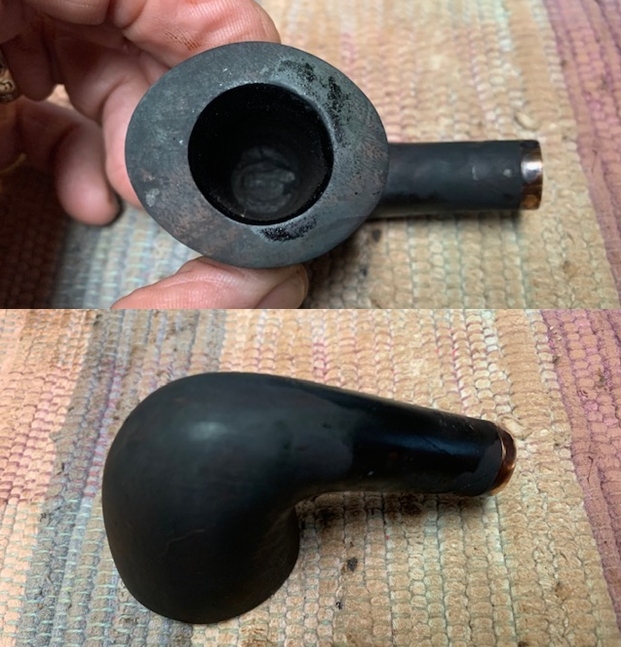
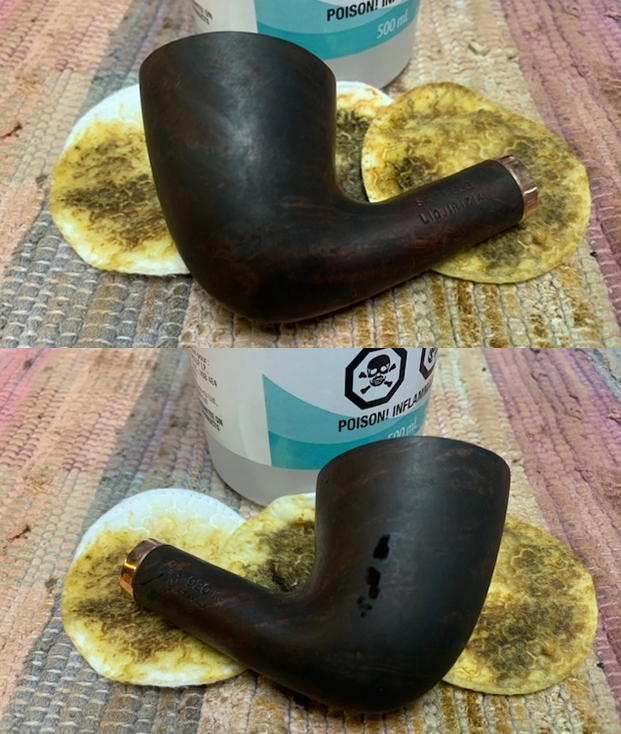
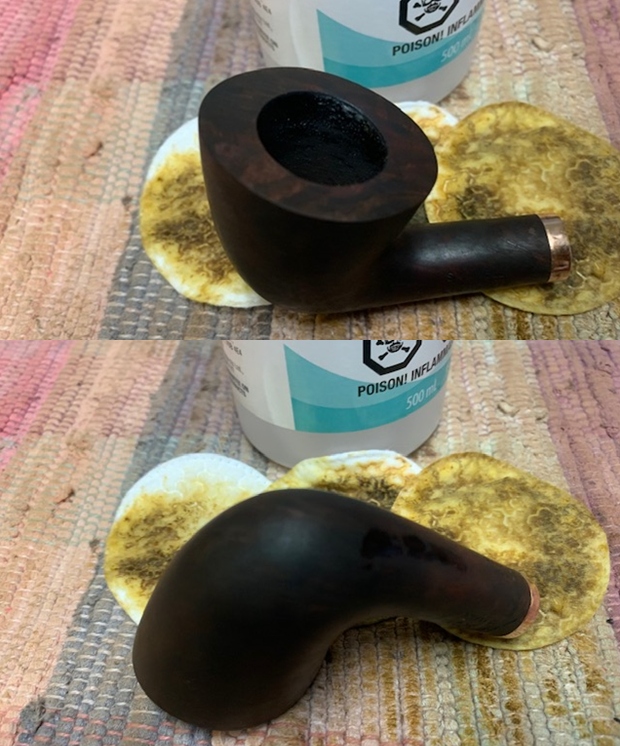
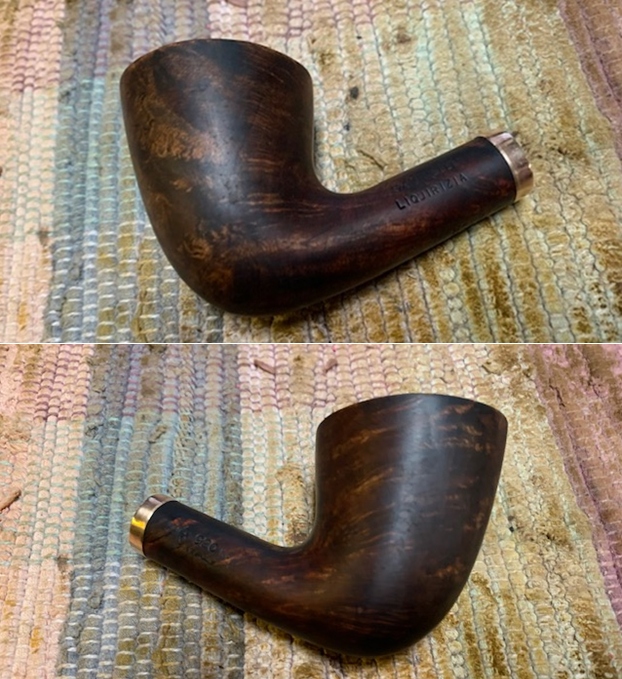
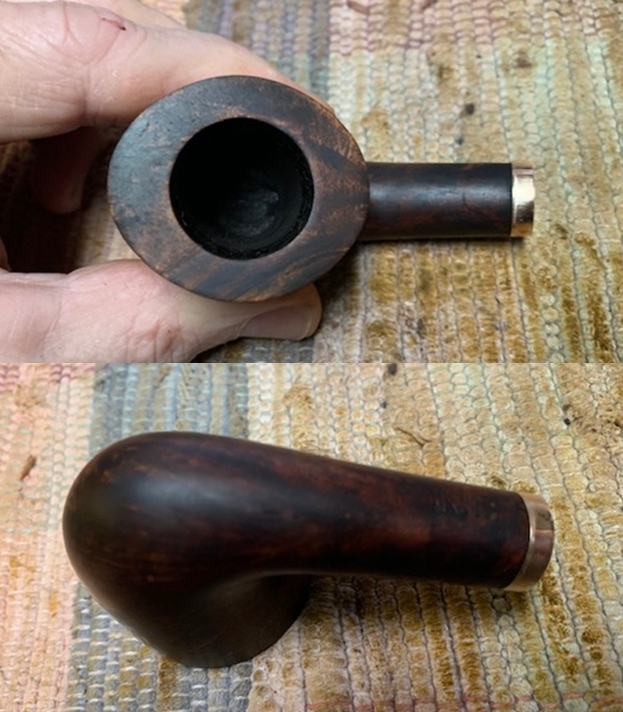
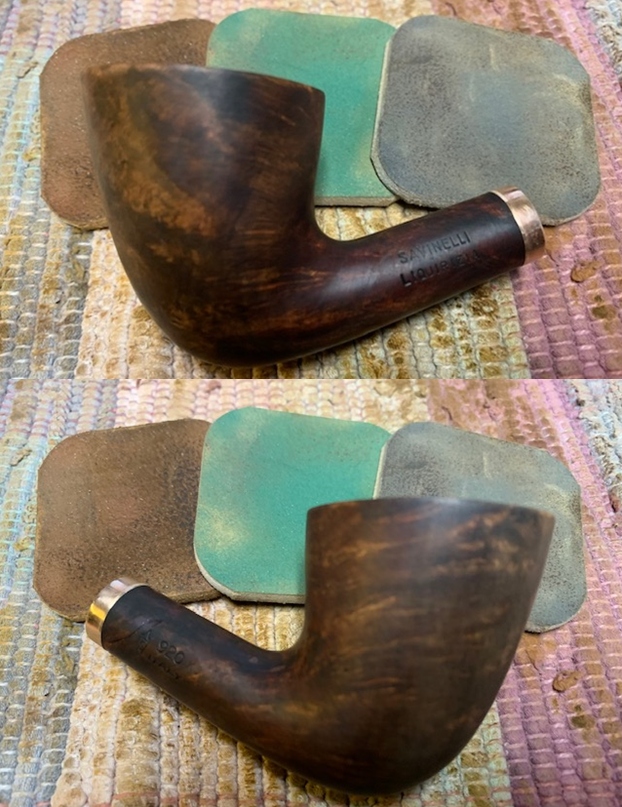
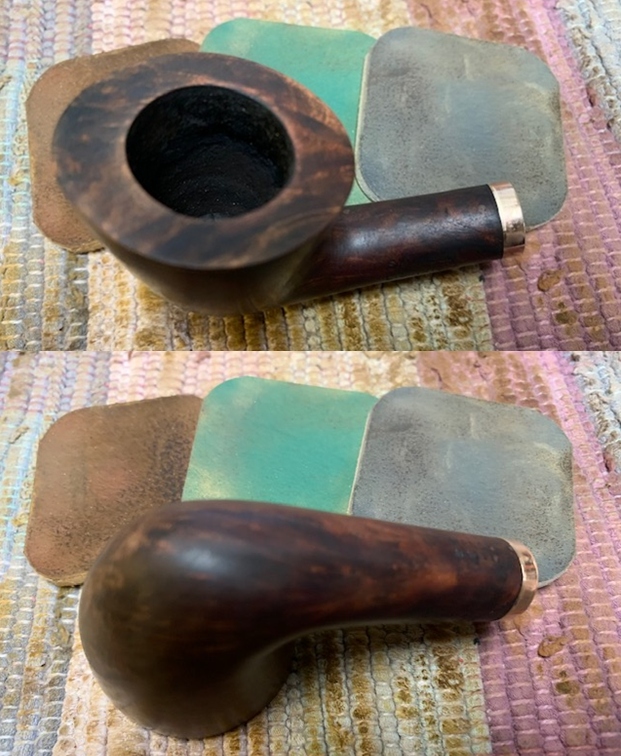
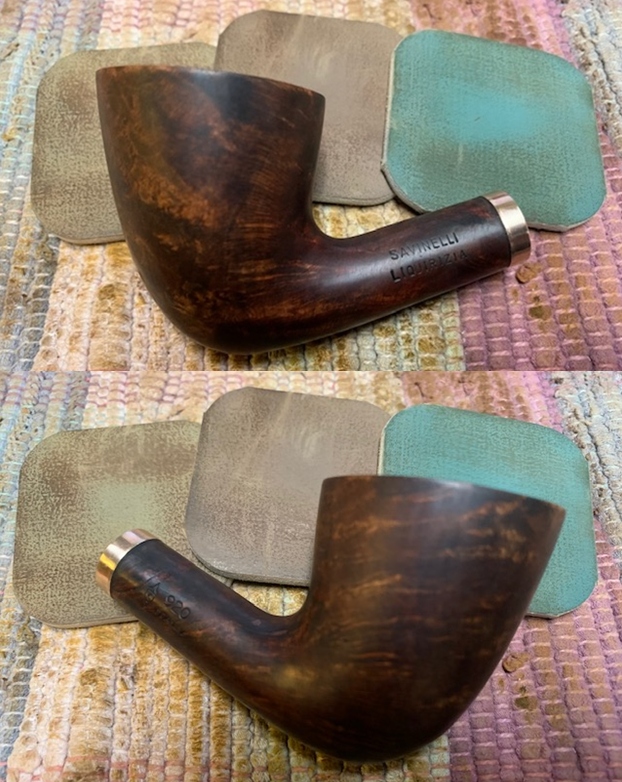
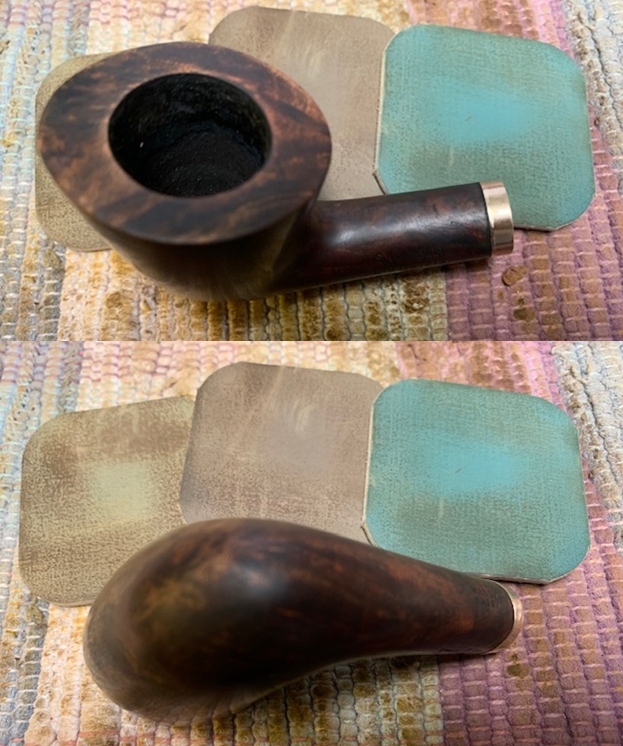
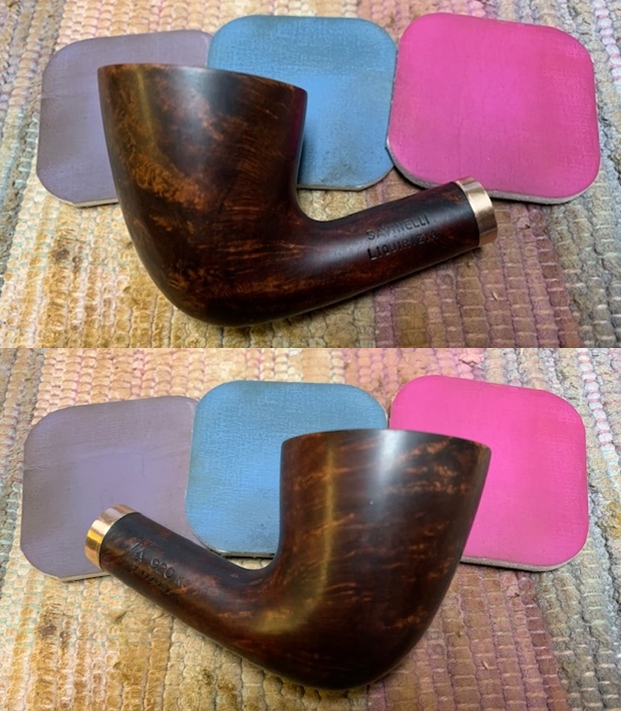
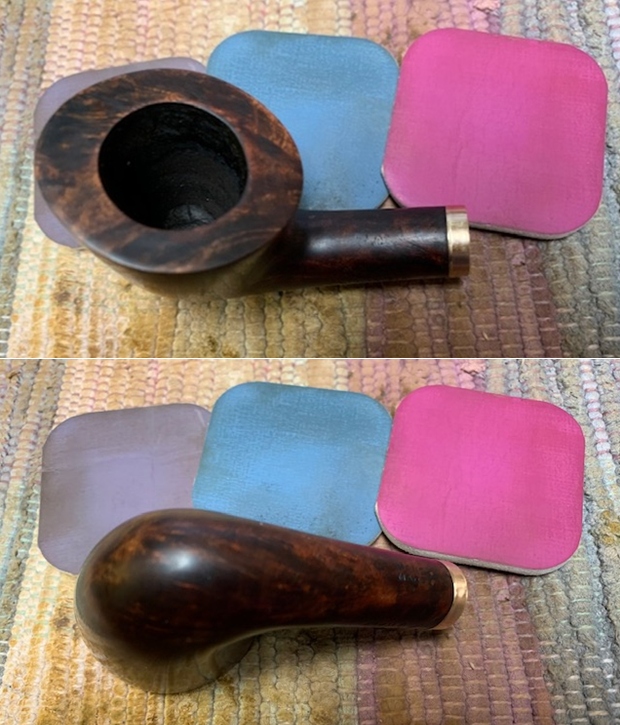
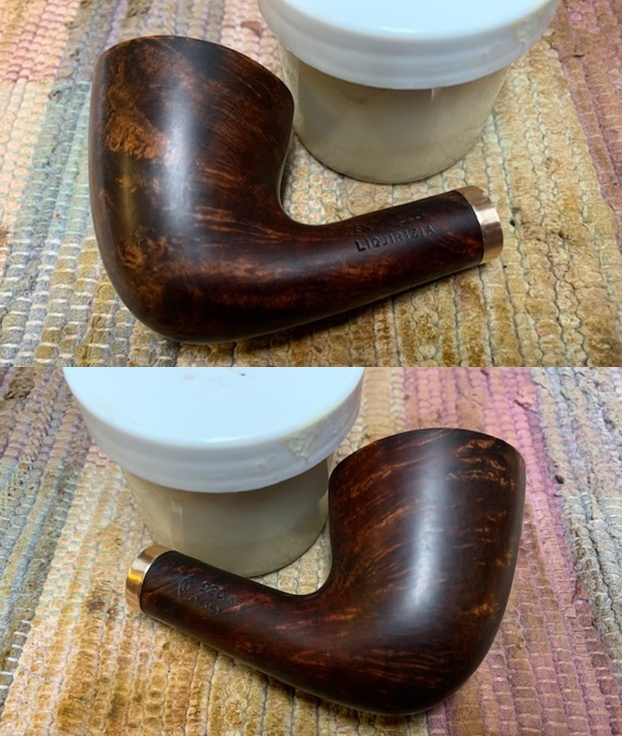
Repairing a broken shank on a Savinelli Liquirizia 920KS Dublin


Blog by Steve Laug

On Tuesday this week I received the following email from a fellow here in Vancouver regarding repairing a couple of pipes for him. He wrote as follows:

Hi Steve… You were recommended to me by our good friends at City Cigar (Vancouver).  I have 2 pipes I’d love to have rescued – if possible!  Please let me know if you could be of service.  I’ve attached a few photos.

One is a Peterson 2018 Pipe of the Year, Smooth Fishtail.  Pipe is great – except there is an unsolvable (for myself) blockage in the stem.  I think the filter is damaged.

The other is an unfortunate Savinelli; the actual wood is broken, right at the connection between pipe body and stem.

Let me know your thoughts!  I’d love to regain these to a workable state if possible; they are lovely pipes.

Thanks kindly and best regards, Zak

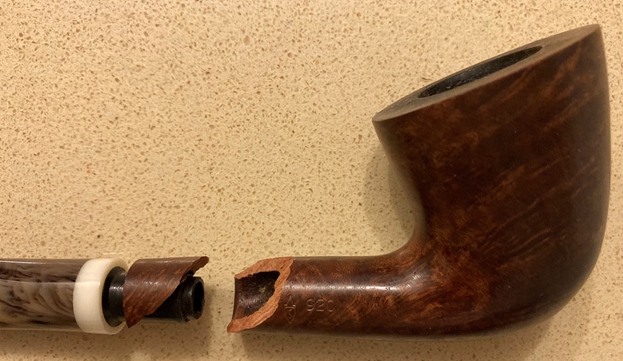
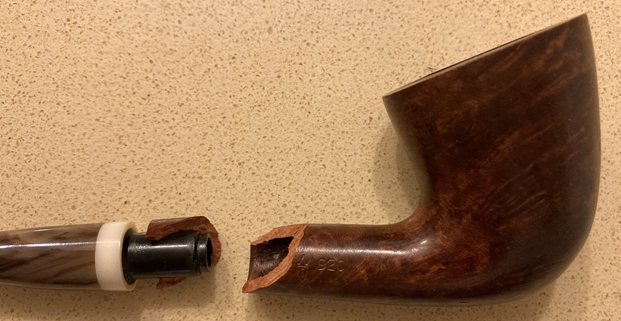
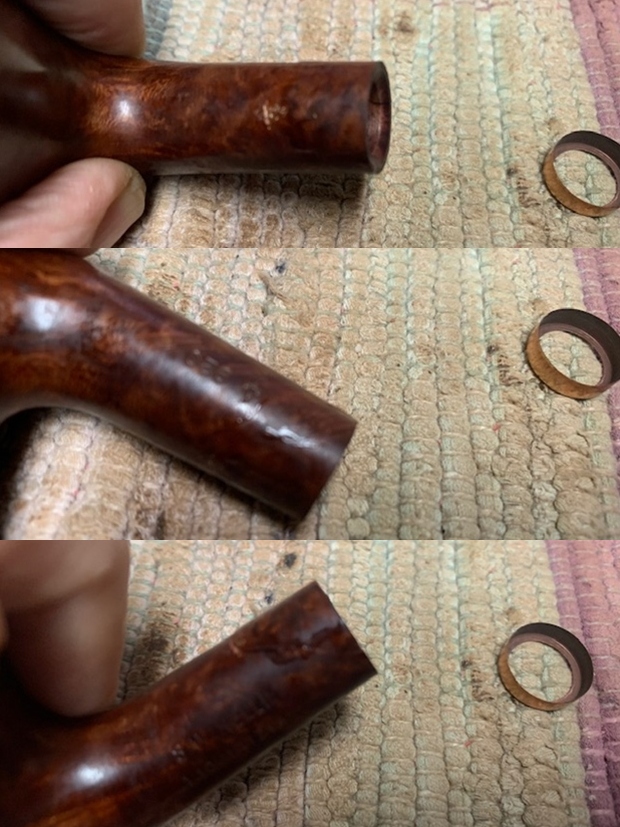
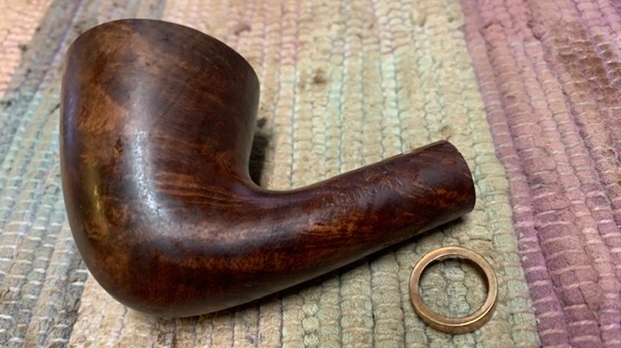
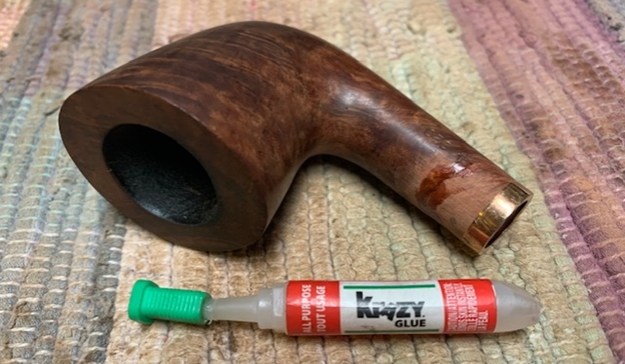
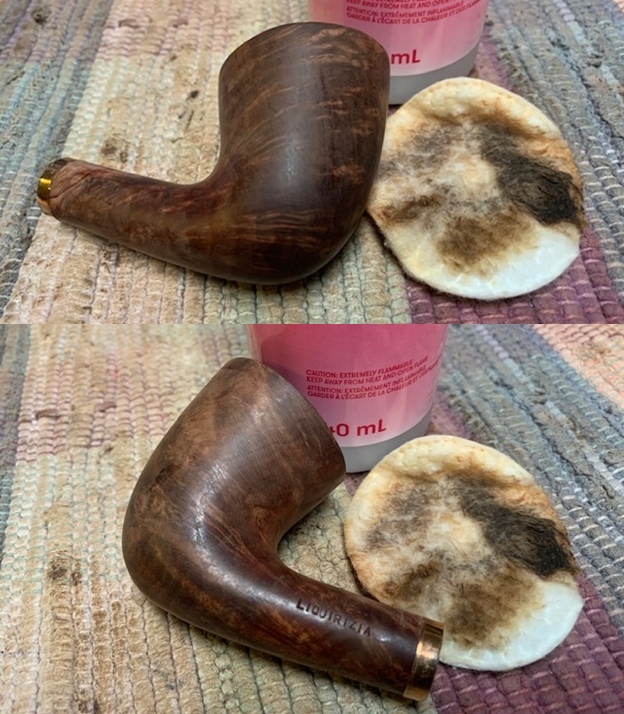
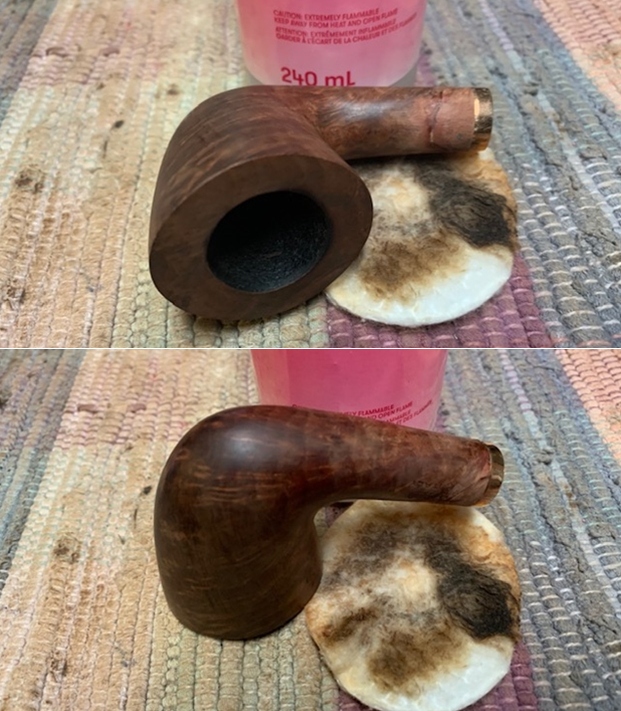
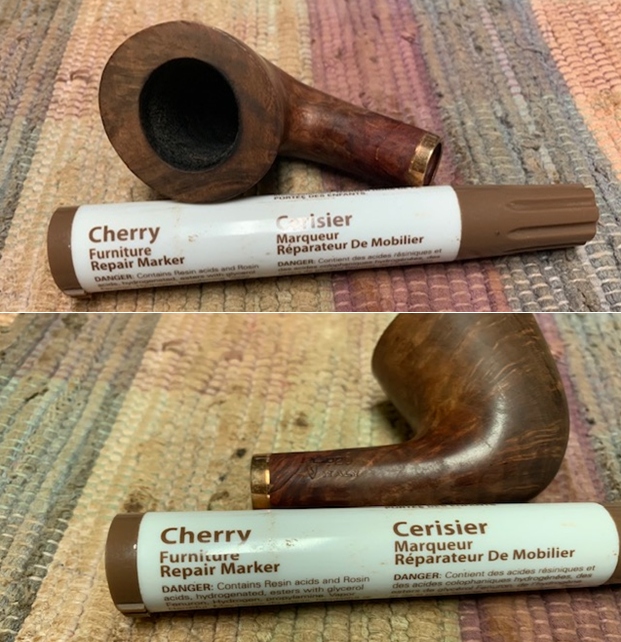
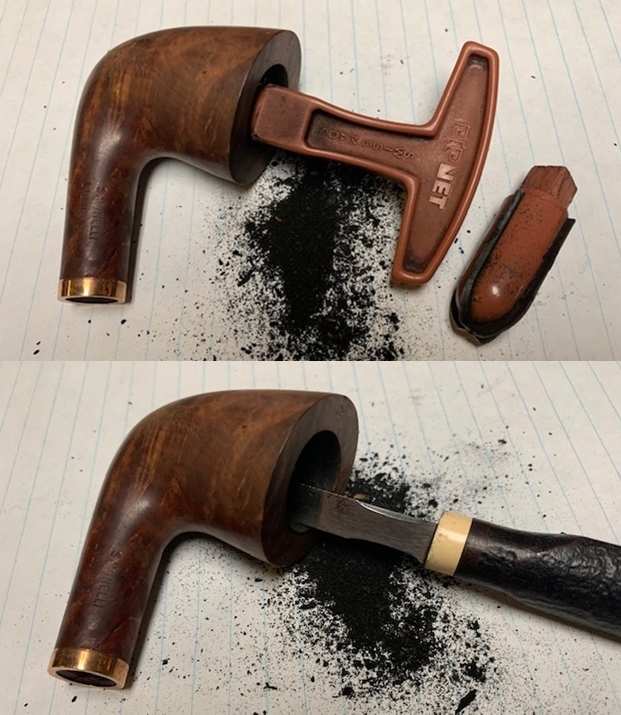
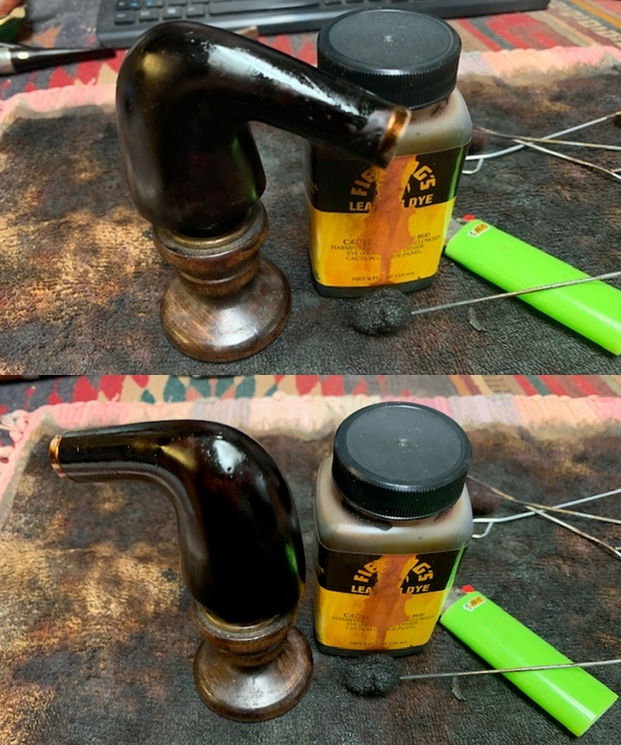
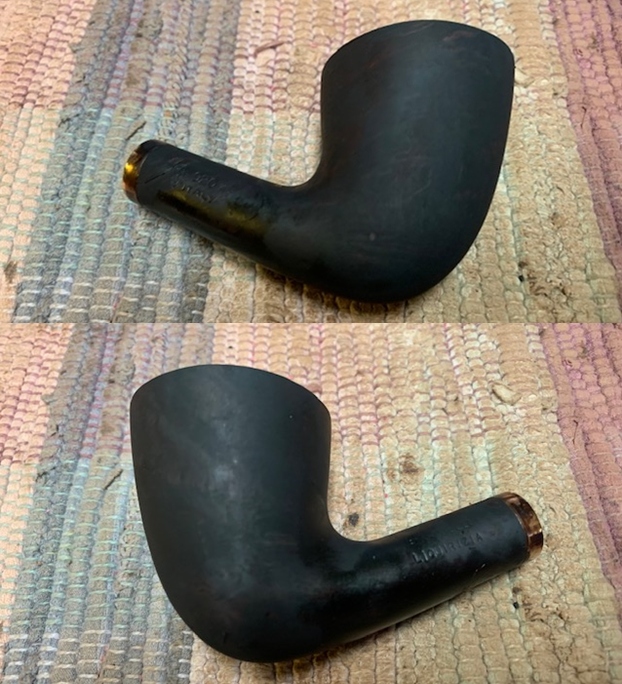
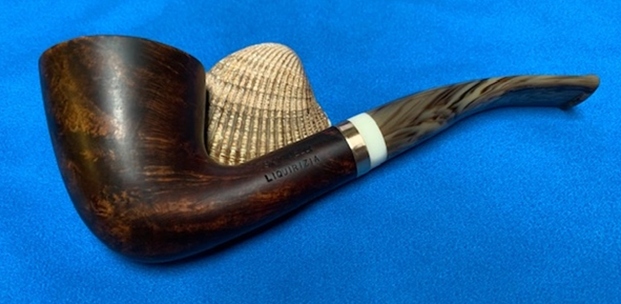
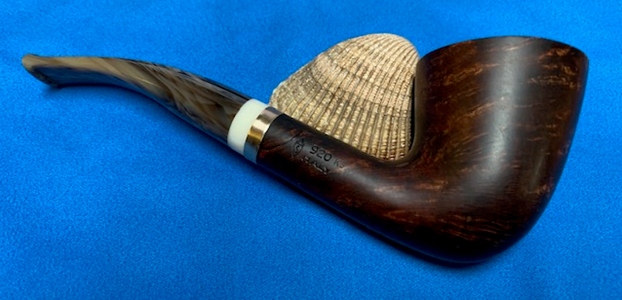
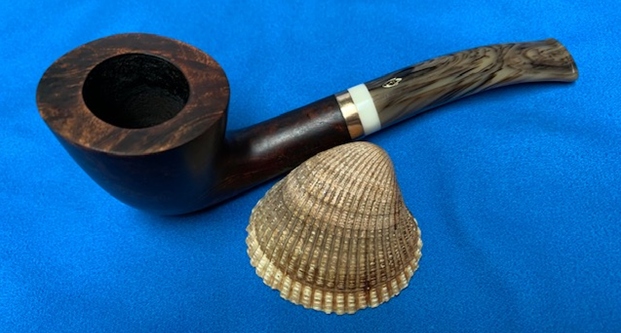
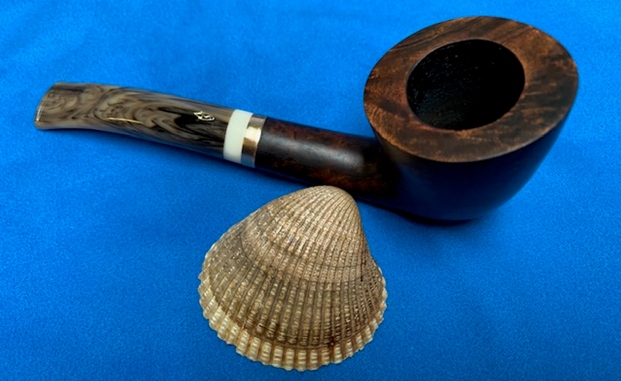
He included pictures of both pipe for me. I decided to tackle the Savinelli first. Here are the photos that Zak included with his email. As you can see the shank is snapped with a clean break about ½ inch up the shank. Zak fortunately had the pieces of the broken pipe and delivered them to me. The break had not damaged the stamping on the pipe. It read on the left side Savinelli [over] Liquirizia. On the right side it had the Savinelli Shield S logo followed by the shape number 920KS [over] Italy. On the underside of the shank it is stamped Hand Made. The pipe had a beautiful acrylic stem with a white band on the end. The tenon was Delrin and had been drilled out for a Savinelli 6mm filter or a Balsa filter. The bowl had a moderate cake and some lava on the rim top. The stem and shank had tar and oils. I cleaned out the shank and the areas of the break and glued the broken piece back in place on the shank using clear CA (super glue). The photos below show the glued shank piece.  When I repair this kind of break in a shank gluing and clamping it is not sufficient to hold. As the stem is put back in place the break will happen again due to the pressure from the tenon on the walls. I have learned that a simple band will bind it together and add strength. I have some brass bands that I picked up online that are quite thin but have and end cap that works really well to bind it all together and strengthen the joint. I went through the bag of bands I have and found the one that fit the best.I sanded the repaired area smooth with 220 grit sandpaper to blend the repair into the surface of the briar. Once the repair was smooth heated the band with a lighter and pressed it onto the shank end against my topping board to press it in place. The band added stability to the repair.I filled in a few spots with clear CA glue and resanded them with 220 grit sandpaper. Once the repairs cured I wiped the bowl down with acetone to remove the spotty varnish coat that was on the rest of the bowl. I touched up the repaired areas with a Cherry stain pen to blend it in and prepare it for a further stain coat a little later.I reamed out the uneven cake in the bowl with a PipNet reamer and cut it back to bare briar so I could inspect the interior walls. I cleaned up the remnants of the cake with a Savinelli Fitsall Pipe Knife. The walls of the bowl looked very good with no heat damage or fissures.I put a cork in the bowl and stained it with a dark brown stain. I flamed the stain to set in the briar and then repeated the process until I was happy with the coverage on the bowl. It did a great job blending the repaired area into the briar.   I set the bowl aside so the stain coat would cure overnight. Here is what it looked like in the morning when I brought it to the table.   I wiped the bowl down with isopropyl alcohol to make the finish more transparent. I began to see the grain stand out.  I continued to wipe it down until I had the variation in colour I was looking for. The grain really stood out now and the brass band was a great contrast.   I polished the briar with micromesh sanding pads – wet sanding with 1500-12000 grit pads and wiping the bowl down between each pad with a damp cloth. The contrasting colours really came alive.  I rubbed the bowl and shank down with Before & After Restoration Balm. I worked it into the surface of the bowl sides and shank with my fingertips to clean, enliven and protect the briar. I let the balm sit for a little while and then buffed with a cotton cloth to raise the shine. The Balm did its magic and the grain stood out.    I polished the acrylic stem with micromesh sanding pads – 1500-12000 grit pads. I wiped it down with a damp cloth after each sanding pad. The photo below shows the polished stem.  This nicely grained Savinelli Liquirizia 920KS Bent Dublin with a thin brass repair band and a swirled acrylic stem is a great looking pipe. The briar around the bowl is clean and really came alive. The rich brown stains gave the grain a sense of depth with the polishing and waxing. The grain really popped. The brass band binds the cracked shank repair and gives it a bit of bling. I put the acrylic stem back on the bowl and carefully buffed the pipe with Blue Diamond on the buffing wheel using a light touch on the briar. I gave the bowl and the stem multiple coats of carnauba wax on the buffing wheel. I buffed the pipe with a clean buffing pad to raise the shine. I hand buffed the pipe with a microfiber cloth to deepen the shine. The finished Savinelli Liquirizia Bent Dublin is a beauty and feels great in the hand and looks very good. Give the finished pipe a look in the photos below. The dimensions of the pipe are Length: 5 ½ inches, Height: 2 inches, Outside diameter of the bowl: 1 ½ inch, Chamber diameter: ¾ of an inch. The weight of the pipe is 44grams/1.55oz. The pipe will be going back to Zak as soon as finish the second one. He will soon, so he can enjoy it again. Thanks for reading this blog and my reflections on the pipe while I worked on it.

Breathing Life into an Italian Made Smooth Finish Bullmoose


Blog by Steve Laug

The next pipe on the table came to us from a group of pipes that Jeff picked up in an online auction in Brookfield, Wisconsin, USA. It is a chunky Bullmoose with a saddle stem. The stamping is clear and readable on the shank/stem junction and reads Made in Italy. The filthy oils and grimes are ground into the finish of the bowl. The thick grime makes the grain almost invisible but from what I can see there is some amazing grain that the Bullmoose shape follows well. There was a thick cake in the bowl and a heavy overflow of lava on the rim top. The vulcanite saddle stem was oxidized, calcified and had light tooth marks and chatter ahead of the button.  Jeff took photos of the pipe to show what it looked like before he started working on it. He took photos of the bowl and rim top to show the thickness of the cake and the lava overflow. The photos of the stem show the light oxidation and tooth marks and chatter on the surface on both sides.    The photos of the sides and heel of the bowl show the grain around the pipe. It is a beauty under the grime and dust.     The stamping on the underside of the shank is shown in the photo below. It is very readable. It reads as noted and explained above.   I turned to work on the pipe itself. Jeff had carried out his usual thorough cleanup of the pipe. He had reamed it with a PipNet reamer to remove the cake and cleaned the reaming up with a Savinelli Fitsall Pipe Knife. He scrubbed the internals of the bowl and stem with alcohol, cotton swabs and pipe cleaners. He scrubbed the externals with undiluted Murphy’s Oil Soap and rinsed the bowl off with running water. He soaked the stem in Before & After Deoxidizer and once it had soaked rinsed it off with warm water to remove the residual solution. He dried it off and rubbed it down to remove any oxidation that was still on the stem. The pipe looked very clean when I received it.  I took a photo of the rim top to show the condition. You can see the damage on the inner edge on the left front. It is roughened and chipped and out of round. The saddle stem came out looking quite good. There are light tooth marks and chatter on both sides near the button. You can also see the only stamping on the pipe in the third photo below at the shank/stem junction it reads Made in Italy. I removed the stem from the shank and took a photo of the pipe parts to show what I was working with. It is a nice looking pipe.I decided to start the restoration on this one by dealing with a crack in the shank. I have drawn a box around it in the photo below. It goes from the shank end into the shank about ½ of an inch. It is a hairline crack. I painted the shank end with some all-purpose glue and pressed a thin brass band on the shank end. I wiped the shank end down afterward with a damp cloth to remove the glue that squeezed out.I wiped down the shank with a damp cloth and dried it off. I put the stem on the shank and took photos of the pipe as it looked with the new bling.    I removed the stem from the shank and worked on the damage to the rim top. I worked the inner edge over with a folded piece of 220 grit sandpaper to give the rim edge a slight bevel. I then topped the bowl on a 220 grit sandpaper topping board. I smoothed out the top with some more 220 grit sandpaper.    I polished the briar with micromesh sanding pads. I dry sanded the bowl with 1500-12000 grit pads and wiped the bowl down with a damp cloth after each pad. The briar really took on a shine by the final pads.  With the repair completed I rubbed the briar down with Before & After Restoration Balm. I worked it into the briar with my fingertips and a horsehair shoe brush to work it into the twin lines around the bullcap. The product works to clean, enliven and preserve the briar. I let it sit for 15 minutes while I worked on the stem. After the time passed I buffed it with a cotton cloth to deepen the shine. The briar really comes alive with the balm.      I set the bowl aside and turned my attention to the stem. The stem was rough and pitted so I sanded it smooth with a folded piece of 220 grit sandpaper. I started polishing the stem with 400 grit wet dry sandpaper.    Before polishing the stem further I decided to give a slight bend to match the flow of the curve in the pipe. I heated it with a heat gun until it was pliable (I put a pipe cleaner in the airway to make sure it did not collapse).  I bent the stem the angle I wanted and set it by cooling it with running water while holding the shape. I took a photo of the new look of the stem.   I polished the vulcanite by wet sanding with micromesh sanding pads – 1500-12000 grit pads. I wiped it down with Obsidian Oil after each sanding pad. I used Before & After Pipe Polish – both Fine and Extra Fine to further polish the stem.     This Italian Made Smooth Finish Bullmoose is a beautiful pipe with a smooth finish. It is a bit of a mystery in that there is no other stamping on the pipe. It is a great looking pipe that came out looking very good. The finish on the pipe is in excellent condition. The rich medium brown stain on the bowl works well to highlight the grain. The brass band is a nice touch of bling that separates the briar from the stem. The polished black vulcanite saddle stem adds to the mix. With the dust gone from the finish and the bowl it was a beauty and is eye-catching. I put the stem back on the bowl and buffed the pipe with Blue Diamond on the buffing wheel being careful to not buff the stamping. I gave the bowl and the stem multiple coats of carnauba wax on the buffing wheel and followed that by buffing it with a clean buffing pad. I hand buffed the pipe with a microfiber cloth to deepen the shine. The finished Italian Made Bullmoose is quite nice and feels great in the hand. Give the finished pipe a look in the photos below. I can only tell you that like the other pipes I am working that it is much prettier in person than the photos capture. The dimensions of the pipe are Length: 5 inches, Height: 1 ½ inches, Outside diameter of the bowl: 1 ¾ inches, Chamber diameter: ¾ of an inch. The weight of the pipe is 58 grams/2.05oz. Thanks for walking through the restoration with me as I worked over another beautiful pipe. Remember we are not pipe owners; we are pipemen and women who hold our pipes in trust until they pass on into the trust of the next generation.

Restoring and Repairing a Carved Sultan Meerschaum Pipe


Blog by Steve Laug

This is another of those pipes that I have no idea when or where it came from. With Jeff and my penchant for picking up pipes where ever we go it could honestly be from anywhere. As for the when, that is and will remain a mystery. This is a carved figural meerschaum Sultan Head Bent pipe with an acrylic (Bakelite) stem. The pipe has no identifying stamping on the shank or stem and even on the shank end when the stem is removed. It is a dirty pipe but the bowl was surprisingly clean. The rim top had some lava and darkening around the inner edge but otherwise looked very good. There was a lot of dust and debris in the carving around the turban and the beard. The creases around the neck and eyes were also filled with dust and debris. The shank showed three hairline cracks on the top and right and left sides. None were big or deep but they were present. My guess is that they came from over tightening the stem on the shank. There were also scratches on the shoulders and collar forming the shank. The taper stem was in very good shape with a minimum or tooth chatter and marks on the top side near the button. The button edges were in excellent condition. It was overclocked slightly and that would need to be dealt with. Here are some photos of the pipe when I brought it to the work table.   I took a close-up photo of the rim to show the condition of the rim top, bowl and the inner edge of the bowl. You can see the inside of the bowl and note that it was quite clean. The rim top looked good with some darkening and developing patina on the inner edges. The stem was in decent condition.      I removed the stem from the shank and took a photo of the flow of the pipe. The pipe was going to look good once it was cleaned and polished.I have circled the hairline cracks in the photos below. They are quite light but in reality they are visible, I can also see the on the shank end with the stem removed. I went through my bands and found a thin profile brass band that had a slight cap that would go over the shank end. I used some clear super glue on the band and on the shank end and pressed the band in place on the shank. The fit was good and it should provide a cushion for the stem and tenon protecting the stem from being overturned. A side benefit was that the slight thickness of the band corrected the overclocked stem. I took photos of the pipe with the stem in place to give you a sense of what the pipe looked like. I scrubbed the exterior of the bowl with a tooth brush and undiluted Murphy’s Oil Soap to get the grime and debris out of the grooves and carving. I rinsed it with running water (keeping the water out of the bowl and shank) and dried it off with a towel. With that the outside was clean and definitely looking better… progress!    I cleaned out the mortise, shank in the briar and airway in the stem with pipe cleaners, cotton swabs and 99% isopropyl alcohol. The pipe was dirty with lots of tars and oils. I polished the meerschaum with micromesh sanding pads – wet sanding with 1500-12000 grit pads. I wiped the bowl down after each pad to remove the sanding debris.   I worked some Before & After Restoration Balm into the surface of the meerschaum with my fingertips and a horsehair shoe brush to clean, enliven and protect it. I let the balm sit for a little while and then buffed with a cotton cloth and shoe brush to raise the shine. The following photos show the bowl at this point in the restoration process. It is definitely looking better and I am very happy with the results. I set the bowl aside and turned my attention to the stem. I polished the stem with micromesh sanding pads – wet sanding with 1500-12000 grit sanding pads and wiping it down after each pad with Obsidian Oil. I wiped it down a final time with Obsidian Oil when I finished.        This Carved Sultan Head Meerschaum Figural with a Bakelite taper stem turned out to be a great looking pipe. The features of the face and the beard as well as the wraps of the turban look really good. The amber coloured Bakelite stem also turned out very well. The thin brass band adds a nice touch to the classy look of the pipe. I polished stem and the bowl lightly with Blue Diamond polish on the buffing wheel and the finish just popped and came alive. I gave the bowl multiple coats of Clapham’s Beeswax Polish and the stem multiple coats of carnauba wax. I buffed the pipe with a clean buffing pad to raise the shine. I hand buffed it with a microfiber cloth to deepen the shine. The pipe polished up pretty nicely. The pipe took on life with the buffing. The developing patina on the beard, turban and shank work well with the polished amber coloured stem. The finished pipe has a rich look that is quite catching. Have a look at it with the photos below. The shape, finish and flow of the pipe and stem are very well done. The dimensions are Length: 5 ½ inches, Height: 2 ½ inches, Outside diameter of the bowl: 1 ¼ inches wide x 1 ¾ inches long, Chamber diameter: ¾ of an inch. The interesting old Meerschaum Sultan will be going on the rebornpipes store shortly. If you are interested in adding it to your collection let me know. Thanks for walking through the restoration with me as I worked over another estate pipe.
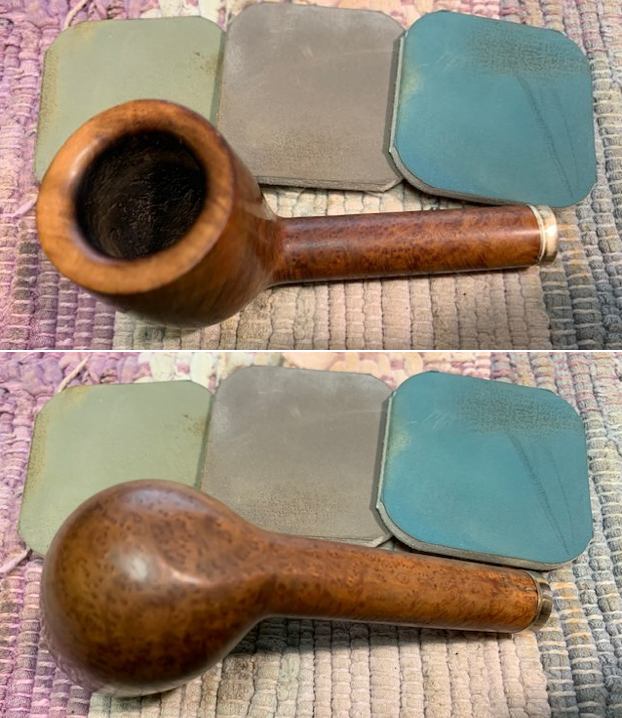
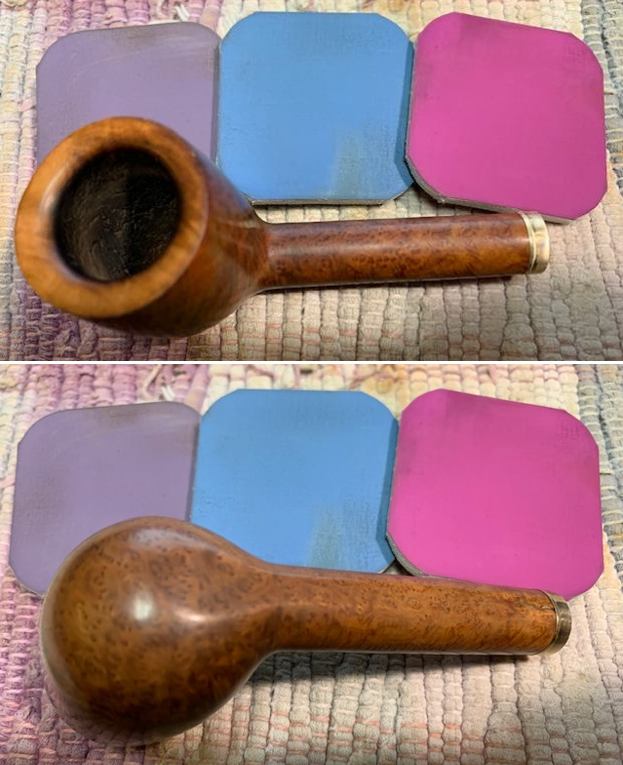
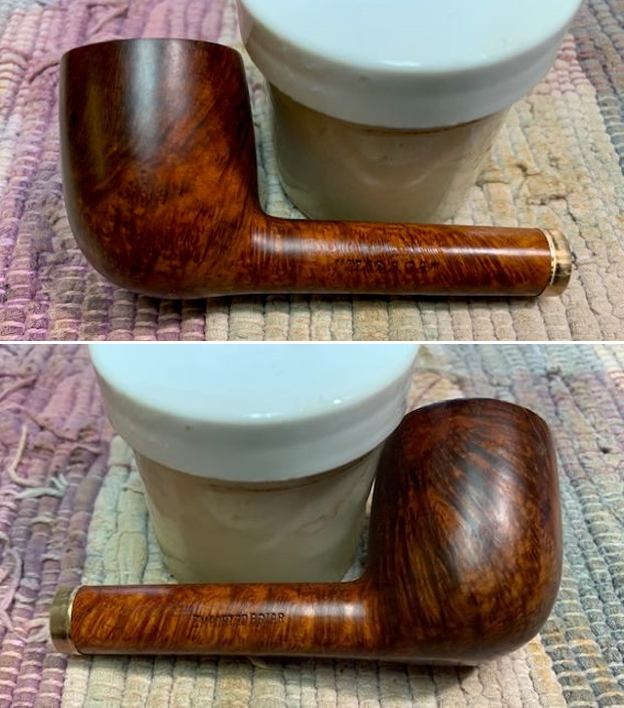
New Life for a “Malaga” Twisted Billiard with a Damaged Shank


Blog by Steve Laug

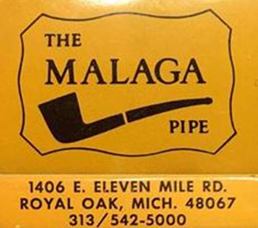
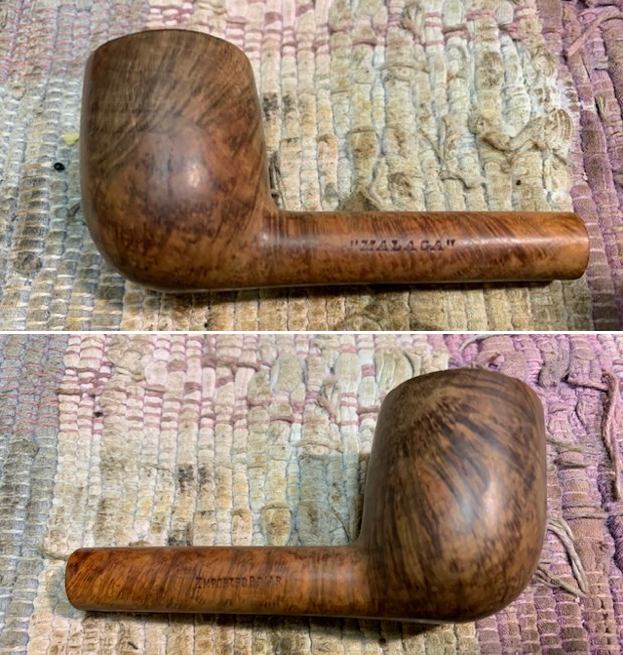
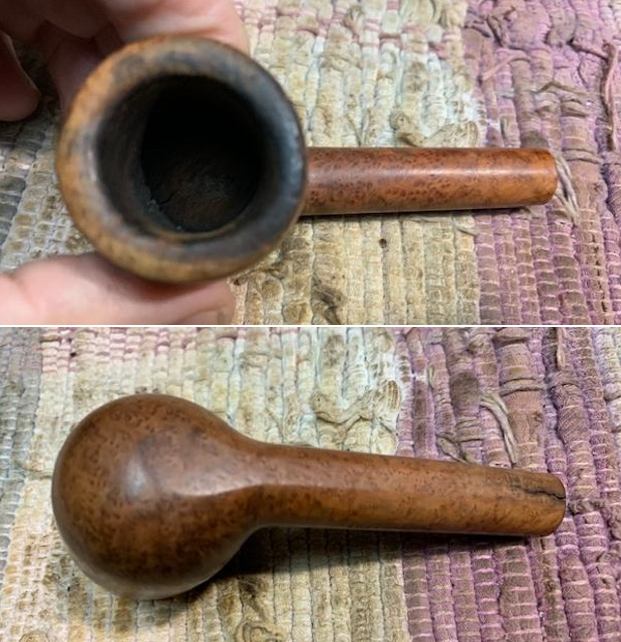
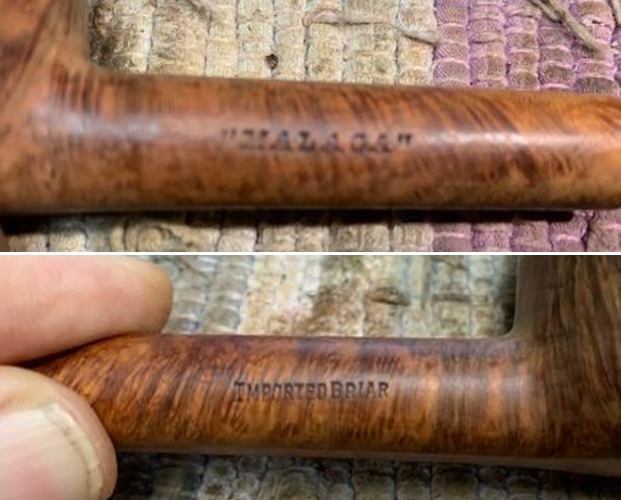
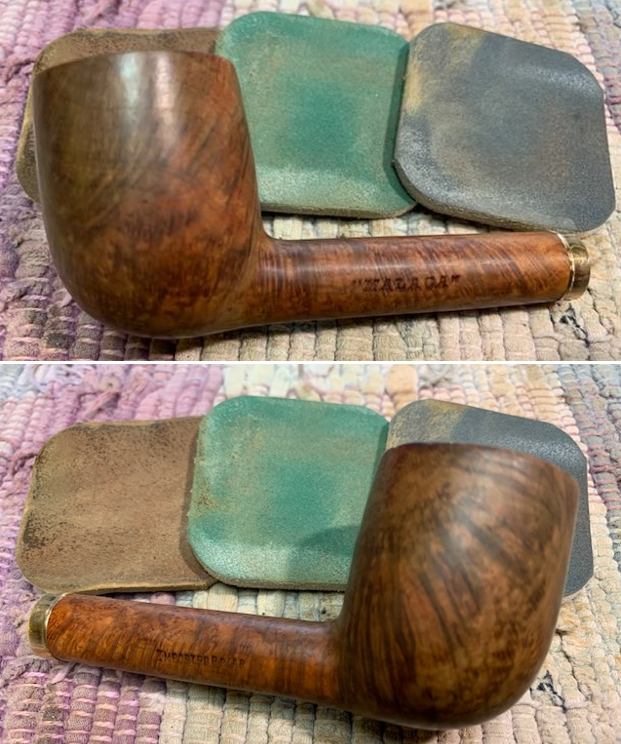
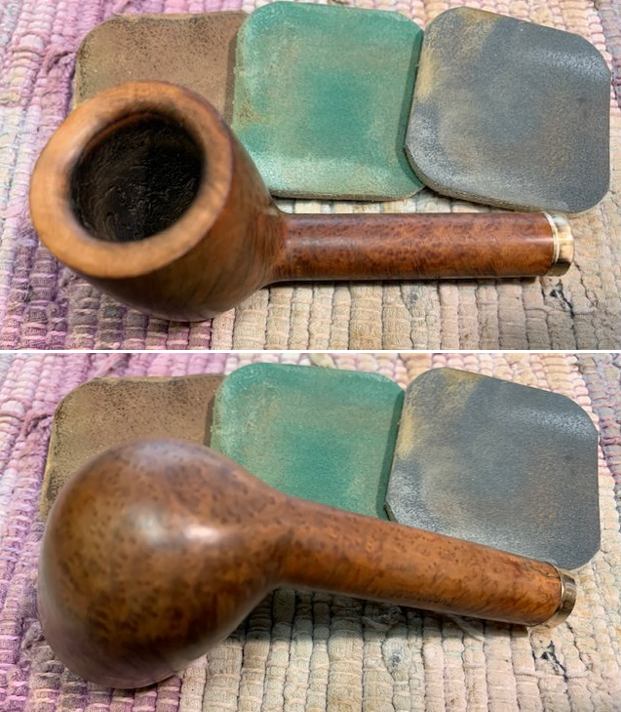
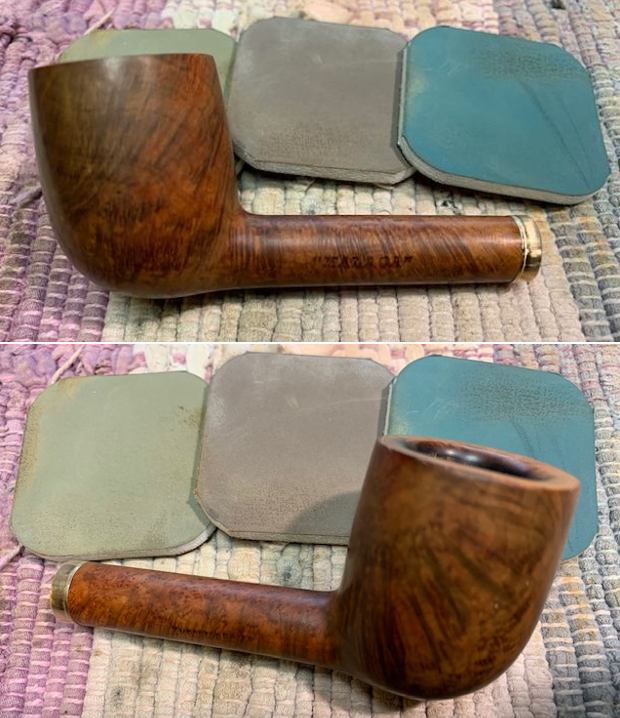
The next pipe on the table is a “Malaga” pipe that is made in a shape that I would define as a twisted billiard. It has some great cross and birdseye grain and a tapered vulcanite stem with a quarter bent. The grain around the bowl and shank combined with the stem make it a stunning pipe. The issue is that it has a huge chunk. The carver did a great job of uniquely shaping the pipe to follow the grain on the briar. The twists and turns in the bowl are well done. The bowl had a thick cake that overflowed with lava onto the rim and there was significant burn damage on the top front inner of the bowl. The sides of the bowl and shank are very dirty with grime and oils from prolonged use. The stamping on the left side of the shank read “MALAGA” with the ending quotation just ahead of the missing chunk of briar. Someone had obviously banded the pipe somewhere along the way to hide the damaged shank. By the time it came to us the band was missing and it left behind a darkened shank end on the briar. The vulcanite stem had light tooth dents and chatter on the top and the underside of the stem. The button was worn on both sides. Jeff took these photos before he started the cleanup work on the pipe. Jeff took a close up photo of the bowl and rim to capture the condition of the pipe before he started his cleanup work. The rim top had some lava overflow and darkening on the back of the bowl and some serious burn damage to the inner edge on the bowl front. The burn marks appeared to be quite deep on the inner edge on the right front side of the grimy pipe. The stem is oxidized and dirty and there is tooth damage on the button edges and surfaces. He also took photos of the sides and bottom of the bowl and shank to show the beautiful grain around the bowl. The photos show the general condition of the bowl and wear on the finish. It is very dirty but this is another beautiful pipe. Jeff took a photo to capture the stamping on the shank. The photos show the stamping “MALAGA” on the left side of the shank. The stamping is very readable. The break in the shank fortunately happens after the quotation marks on the stamping. He also took photos of the cracked and damaged shank so you can see the extent of the damages.  I am also including the link to a blog that I wrote that gives some of the history of the Malaga brand and the Malaga Pipe Shop in Royal Oak, Michigan in the USA. I have written an earlier blog to give a little history of the Malaga Brand and the pipemaker, George Khoubesser. Here is the link – https://rebornpipes.com/tag/malaga-pipes/.That blog also includes links to a catalogue and the history of the pipemaker George Khoubesser. Follow the link to get a feel for the brand and the pipemaker.
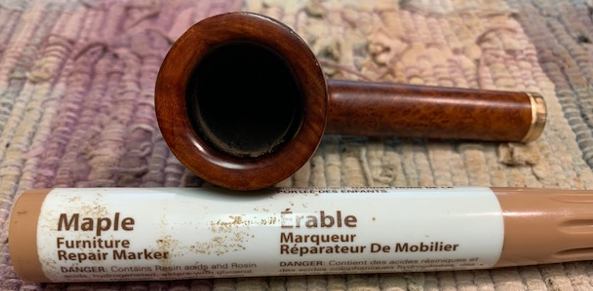
Jeff reamed the bowl with a PipNet pipe reamer and followed up with a Savinelli Fitsall pipe knife to remove the cake. He scrubbed out the mortise and the airway in the shank and the stem with alcohol, cotton swabs and pipe cleaners. He scrubbed the exterior of the bowl, rim, shank and stem with a tooth brush and Murphy’s Oil Soap to remove the oils and tars on the rim and the grime on the finish of the bowl. He rinsed it under running water. He dried it off with a soft cloth. He was able to remove the lava build up on the rim top and the flat surface of the rim looked very good. The inner edge of the rim has some serious burn damage on the front inner edge. The outer edge looked very good. He soaked the stem in Before & After Deoxidizer and rinsed it with hot water. I took photos of the pipe to show its condition before I started my work on it. I took close up photos of the bowl and rim top as well as the stem. You can see the condition of the rim top and bowl in the first photo. Jeff was able to remove all of the tar and oils but you can now see the damage on the inside rim edge. The edge is out of round. There is a burn mark that extends across the front and the back edge of the rim top at that point leaving the bowl edges out of round. The vulcanite stem had tooth chatter on both sides near and on the button surface.I took a photo of the stamping on the shank to show how good the condition is. It shows the “MALAGA” stamp on the left side. The stamping is very legible. You can see the large chip of briar out of the left side of the shank.I took a photo of the pipe with the stem removed to give a clear picture of the character of the pipe.I decided to start the restoration bu dealing with the cracked shank. I have repaired these several ways in the past. I have cut out a chunk of briar and carved it to fit the damaged area. I have also built up the area with briar dust and super glue I the past. I chose to use the briar dust and super glue method this time. I coated the edges of the cut with super glue and used a dental spatula to layer on the briar dust. I gave it a layer of glue and another lay of briar dust until I had filled in the damaged area.The repair was solid. It was thicker than necessary but it was exactly what I wanted. I would need to reshape it and bring it back into round with files and sandpaper. I shaped the inside of the shank with a needle file to bring it to round and allow the tenon to fit in the shank. Once I had the finish roughed in I smoothed it out with 220 grit sandpaper to smooth out the exterior of the finish and blend it into the surrounding briar. I went through my bands to find a brass band that would fit the shank. I wanted to band it after it was repair to protect the repaired shank and cracks from further damage with the insertion of the stem.I painted glue on the shank end pressed the band in place. The band is thin enough to protect the stamping on the shank and thick enough to protect the repair. I took photos of the bowl from various angles to show the look of the repaired and banded shank. I slipped the stem in the shank and took photos of the repaired and banded shank with the stem in place.The bowl had a wave in it so it was not possible to top it on a topping board. I used a folded piece of 220 grit sandpaper to clean up the damage on the top and on the front inner edge of the bowl. I gave the inner edge a slight bevel to repair the damage. I polished the edge with 400 grit wet dry sandpaper. The rim top and edges really looked better. There was still more work to do but it was looking better.  I polished the rim top and the briar with micromesh sanding pads. I wet sanded the bowl with 1500-2400 grit sanding pads to prepare the rim top for staining. I wiped the bowl down after each pad with a damp cloth to remove the sanding dust. I restained the rim top and edges with a Maple Stain Pen. I was able to blend it into the rest of the bowl. Polishing it with the rest of the micromesh pads would make the blend perfect. I worked some Before & After Restoration Balm into the surface of the briar with my fingertips to clean, enliven and protect it. I let the balm sit for a little while and then buffed with a cotton cloth to raise the shine. The following photos show the bowl at this point in the restoration process. I am very happy with the results. I turned to the stem to address the issues on the surface of both sides at the button. I reshaped the button edges with 220 grit sandpaper and a needle file. Once it was shaped I polished the stem with micromesh sanding pads – wet sanding with 1500-12000 grit sanding pads. I wiped it down after each sanding pad Obsidian Oil. I finished by polishing it with Before & After Pipe Stem Polish both fine and extra Fine and then wiped it down with a final coat of Obsidian Oil. This Malaga Twisted Billiard with a vulcanite tapered stem turned out to be a real beauty. It has a great grain around the bowl and the carver really maximized that with the shape of the pipe. The repaired shank looks quite good and the brass band is a nice addition to the look of the pipe. Everything about the pipe – the shape of the bowl, the beveled rim top and the cut of the briar work well to highlight the grain around the bowl sides. I polished stem and the bowl with Blue Diamond polish on the buffing wheel and the grain just popped and came alive. I gave the bowl and the stem multiple coats of carnauba wax. I buffed the pipe with a clean buffing pad to raise the shine. I hand buffed it with a microfiber cloth to deepen the shine. The pipe polished up pretty nicely. The grain took on life with the buffing. The rich oil cured colour works well with the polished vulcanite stem. The finished pipe has a rich look that is quite catching. Have a look at it with the photos below. The shape, finish and flow of the pipe and stem are very well done. The dimensions are Length: 6 inches, Height: 1 ¾ inches, Outside diameter of the bowl: 1 ½ inches, Chamber diameter: 7/8 of an inch. I will be adding the pipe to the rebornpipes store shortly. If you are interested in adding this pipe to your rack send me an email or message on Facebook. Thanks for walking through the restoration with me as I worked over another estate pipe.
Something about the grain on this one called my name – a No Name Canadian


Blog by Steve Laug

I don’t know how to explain this any other way than the title says. I looked at this pipe at least two times when Irene and I were on the Oregon coast with Jeff and Sherry. We went to this shop at least twice and each time I looked at the pipe and thought about it. I turned it over in my hands and examined it. There was no stamping on the shank or stem and it was a filthy pipe. However the grain just spoke to me and I think something about the compact shape did as well. I finally put it in the purchase pile and moved on. Jeff took the lot we found home with him to clean up and this one went along. He took some photos of the pipe before he cleaned it up and the photos revealed a crack in the shank that I had not noticed. It just goes to show you I was so caught up in the shape and grain that I missed the crack. Ah well just another pipe to fix. The photos of the rim top and bowl show the thick cake, tobacco debris and thick lava overflow on the rim top. The pipe was a mess. You can also see some chipped areas on the outer edge of the bowl and nicks in the sides of the bowl. He captured the grain around sides of the bowl in the next photos. You can also see the nicks and chips out of the briar but it is still quite pretty beneath the wear and tear and grime!The vulcanite stem was heavily oxidized and was pitted. There were tooth marks on both sides ahead of the button and some wear on the button as well.I saved the next photo for last as it shows the surprise that I don’t believe I saw when I examined the pipe in the basement of the antique mall.Jeff out did himself on the cleanup of this pipe and when I received it I was not disappointed as it showed what I had seen through the grime on the bowl. The grain was quite nice and the colour was very good. Jeff had reamed the bowl with a PipNet pipe reamer and cleaned up the debris left behind with a Savinelli Fitsall Pipe Knife. He scrubbed the internals in the shank and the stem with alcohol, cotton swabs and pipe cleaners. He scrubbed the externals of the bowl with undiluted Murphy’s Oil Soap and a tooth brush and rinsed it off with running water. He scrubbed the stem with Soft Scrub and soaked it in Before & After Deoxidizer. The pipe looked quite amazing. I took photos of it before I started my part of the restoration. I took a close up photo of the rim top to show the damaged areas and how clean it was. You can see damage all the way around the inner edge of the rim. The larger one was at the back of the bowl. There was burn damage and darkening. You can also see the damage to the outer edge of the bowl. The stem looked good other than the slight nicks on the button surface and the light chatter on the surface ahead of the button.I took the stem off the shank and took a photo of the parts. It is a great looking pipe.I decided to start on the rim edges – both inner and outer and the rim top. I built up the chipped edge on the right side and front of the bowl with super glue and briar dust. I filled them in to even out the edges. Once the repair had cured I sanded the repaired areas with 220 grit sandpaper to smooth out the repaired areas. I went through my bag of bands and found one that was oval and would work to bind together crack. It was already oval and slightly dented but it would work and I could tap it out and make it smooth again. The crack was hairline and closed so I ran a thin bead of clear super glue on it and let it soak in before banding.  I fit it onto the shank end and tapped it to fit well and be smooth against the shank and the shank end. I took photos of the pipe to show the look of the banded shank. I topped the bowl on a topping board with 220 grit sandpaper to reduce the damage on the rim top and the edges of the bowl. I also used a folded piece of 220 grit sandpaper to smooth out the rim edge and to bring the bowl back into round. The second photo below shows the rounded rim edges on the inside and outside. The rim top also looks much better though the burn spot remains.I polished the bowl and rim with micromesh sanding pads – dry sanding it with 1500-12000 grit sanding pads. I wiped it down with a damp cloth to remove the dust left behind from sanding. In order to mask the burn mark on the rim and to make the grain really stand out I stained the pipe with a Tan aniline stain. I flamed it to set it in the grain. I repeated the process until I was happy with the coverage and set it aside overnight to cure.In the morning I hand buffed the bowl with a cotton cloth to see what I was working with. I still needed to buff it on the wheel but I liked what I saw. I buffed bowl on the wheel with Blue Diamond to polish the briar and bring the grain out. I rubbed it down with Before & After Refurbishing Balm. I worked it into the briar with my fingertips and let it sit for 20 minutes. The Balm works to preserve, protect and enliven the briar. The pipe is starting to look very good at this point. I set the stained, polished and banded bowl aside and turned my attention to the stem. I sanded out the tooth marks and the oxidation remaining on the stem with 220 grit sandpaper and followed that by starting the polishing with 400 grit wet dry sandpaper.I continued polishing the stem with Denicare Mouthpiece Polish – a red gritty paste that feels a lot like Tripoli. I find that it works well to polish out some of the more surface scratches in the vulcanite left behind by the 400 grit wet dry sandpaper. I rub it into the stem surface with my fingertips and buff it off with a cotton pad.I polished the stem with micromesh sanding pads – dry sanding with 1500-12000 grit sanding pads. I wiped the stem down after each sanding pad with a cloth containing some Obsidian Oil. I finished polishing it with Before & After Pipe Stem Polish – both Fine and Extra Fine and buffed it off with a cotton cloth. This little Canadian really is a nice looking pipe. I put the bowl and stem back together again and buffed the bowl and the stem with Blue Diamond on the buffing wheel. I gave the bowl and the stem several coats of carnauba wax. I carefully buffed the entire pipe with a clean buffing pad to raise the shine. I finished buffing with a microfiber cloth to deepen the shine. The finished pipe looks very good. The grain is quite beautiful a mix of straight and flame around the bowl sides and birdseye on the rim top and heel. The pipe feels great in the hand. It has an interesting shape that fits well in either the right or left hand. The finished no name Canadian is shown in the photos below. The dimensions of the pipe are Length: 5 ¼ inches, Height: 2 inches, Outside diameter of the bowl: 1 3/8 inches, Chamber diameter: 7/8 of an inch. This great looking Canadian pipe turned out very well. It should be a great pipe. It will be going on the rebornpipes store shortly if you are interested in adding it to your collection. Thanks for reading this blog and my reflections on the pipe while I worked on it.

Continuing My Practice on Tenon Replacement… Working on a Connoisseur, NYC Pipe


Blog by Paresh Deshpande

Any learning consists of three phases; first is being taught, second is practice and the third phase is mastering!! Continuing on my learning curve, I wanted to practice replacing broken tenons on pipes to make them smoke worthy again.

The pipe that I chose to practice on is a free hand that boasts of straight / flame grains all around the stummel with bird’s eyes on the heel of the bowl with a plateau rim top. It is stamped on the left of the shank as “CONNOISSEUR” over “N.Y.C.”. These stampings are crisp and easily readable. There is no other stamping seen on either the stummel or the stem. This is the first time that I am working on a Connoisseur and am keen to know more about this pipe brand, carver and also dating this pipe. As is my habit, the first site that I visit is rebornpipes where, over the years, it seems like Steve has chronicled almost all the pipes that were and are in existence. True enough, Steve has restored and researched a pipe from this maker. Here is the link for a detailed information on this pipe; https://rebornpipes.com/2015/05/23/restoring-an-ed-burak-connoisseur-tall-stack/

Further down the write up, he also gives out the dating methodology adopted by Ed Burak and the same is reproduced for immediate reference.

I also learned on Pipephil’s website (http://www.pipephil.eu/logos/en/about-en.html) that the stamping did indeed give some information that helped in identifying the period that a particular pipe was made. There I found that one may generally separate Connoisseur pipes’ date of manufacture into three periods.

From late 1960’s until 1974: no stampings
From 1974 until 1981: CONNOISSEUR over N.Y.C.
From 1981 on: CONNOISSEUR over N.Y.C. and Ed Burak’s signature.

Thus from the above information, it’s evident that this beautiful Connoisseur pipe in my hand is from the period 1974 to 1981!

INITIAL VISUAL INSPECTION
The first and foremost issue that I noticed and was aware of from the description given by the seller is that of the broken tenon. When I saw the pictures of this pipe for the first time, I had observed, apart from the most obvious broken tenon a number of other issues which presented a challenge of their own. The briar was natural and unstained. It had darkened slightly with age. This was how the pipe had reached me…discerning readers will easily make out other major issues that need to be addressed on this pipe. The chamber has a thick uneven layer of dry and hard cake with the inner rim edge showing darkening in 6 o’clock direction (marked in yellow). The condition of the inner walls of the chamber can be checked and ascertained only after the cake has been taken down to the bare briar. However, I do not envision any damage to the chamber walls. There is heavy lava overflow and debris embedded in the plateau of the rim top surface. The condition of the inner rim edge will be commented upon once the lava overflow has been removed. There are very strong and all pervading smells of old tobacco emanating from the chamber. Hopefully this issue should be addressed once the cake has been removed and the mortise is thoroughly cleaned. The stummel boasts of beautiful straight/flame grain all around and extend over the shank surface too!! The surface is covered in lava overflow, dirt and grime. The stummel briar is without a single fill and through all the dirt and grime, exudes a very high quality briar and craftsmanship. The foot of the stummel shows beautiful bird’s eye grains and is sans any damage. The slightly tapered end of the shank has the broken end of the tenon still embedded within. A prominent crack is visible over the shank on the right side. This pipe, in all probability, has suffered this catastrophic damage as a result of having fallen in stem down position. The mortise has the broken tenon stuck inside. I did try to wriggle it out with a screw driver, but the broken tenon wouldn’t budge. This will require more invasive technique. The heavy build up of cake in the chamber, dirty plateau rim top and the sorry condition of the stem all point towards a clogged mortise. This will be ascertained once the broken piece is removed from the shank end.The fancy stem has blobs of sticky oils and tars on both the surfaces as well as in between the nooks and crannies at the tenon end. There are significant tooth indentations on both the upper and lower buttons, to the extent that they would need to be rebuild completely. The slot just does not appear correct. It appears to be a orifice, but it is not a perfect round and  there are horizontal extensions on either side. Even this opening is clogged with old oils and tars. The broken tenon end of the stem is jagged and sharp at the place where the tenon has snapped. In my opinion, there is something which is not right about this stem. The quality of the stem is not something which is to be expected on a Connoisseur pipe. THE PROCESS
I began the process of refurbishing this pipe with cleaning the internals of the stem using pipe cleaners with isopropyl alcohol (99.9% pure) and dunking the stem in to “Before and After Deoxidizer” solution developed by my friend Mark Hoover. The solution helps to draw out heavy oxidation to the surface making its removal a breeze, while the minor oxidation is eliminated to a very great extent. I usually dunk stems of 5-7 pipes that are in-line for restoration and this pipe is marked in pastel blue arrow. I generally allow the stems to soak in this solution overnight for it to work its magic.With the stem soaking in the deoxidizer solution, I decided to remove the broken portion of the tenon from the shank. I select a drill bit that was slightly bigger than the tenon airway opening and mount it on my hand held drill. Very gently holding the drill absolutely straight, I give the drill machine a few forward turns. Once the drill bit is firmly embedded in to the broken tenon, I turn the drill machine in reverse. The reverse turns pull the broken end of the tenon out from the mortise. I breathe a sigh of relief as this is a very delicate step and a lot of things can go wrong if not executed with precision and patience. I further work the stummel, reaming the chamber with my PipNet reamer using head sizes 1 to 3. Using my fabricated knife, I further ream out the cake from places where the PipNet reamer could not reach and follow it with sanding the chamber walls with a 220 grit sand paper. I wipe the chamber with isopropyl alcohol and a cotton swab to remove all the carbon dust. This final cleaning of the chamber reveals a minor indentation in the wall opposite the draught hole, a result of over enthusiastic use of pipe cleaners to clean the mortise (marked in yellow semi- circle)!! Though not a major issue now, one will have to be careful with using pipe cleaners in future. Next, I clean the mortise with hard bristled and regular pipe cleaners dipped in isopropyl alcohol. I scrub the external surface of the bowl with undiluted Murphy’s oil soap and hard bristled tooth brush and dry it using paper towels and soft cotton cloth. I carefully clean the plateau rim top with a soft brass wire brush to remove the accumulated dirt and debris from the surface. Thereafter, I clean the mortise, plateau rim top and stummel surface with anti-oil dish washing soap on a shank brush and a tooth brush. The entire stummel, including the plateau rim top, cleans up nicely. I set the stummel aside to dry out naturally. The smells from the pipe, though reduced, are still very strong. Close observation of the stummel reveals the culprit to be the now moistened accumulated gunk in the mortise. Using my dental tools, I assiduously pick out and clean the mortise of all the gunk. I also clean the mortise with q-tips and alcohol. The amount of old grime that is scraped out from the mortise itself tells the story. The mortise is now clean and smells fresh.Moving ahead, I now address the crack that is seen on the right side of the shank, extending from the shank end to nearly half distance towards the stummel. Firstly, I clean off all the debris that is lodged in the crack using dental floss. The thin floss cleans the crack of all the dirt without widening it.I follow up this cleaning of the crack by marking the end points and turning points of the crack with a sharp dental pick. These marks help to guide the drill bit when drilling the counter hole. I take care that the drill is just sufficiently deep enough to arrest the further spread of the crack and not a through hole.I fill this crack with a mix of CA superglue and briar dust. To ensure a tight fill I clamp it down with pliers till the mix had cured, which by the way, is instantaneous!! Once the repair has cured for couple of hours, I sand it down with a flat needle file to achieve a rough match with the rest of the stummel surface. I fine tune the match with  220, 400 and 600 grit sand paper.To further stabilize the crack and prevent it from splitting again, I decide to place a band over the shank end. I select a band that is a tad bit smaller than the shank end diameter. When I place this band over the shank end, I realize that the last two letters of the stamping are being masked. I decide on grinding away the excess material from the band with my sanding drum mounted on a hand held rotary tool to a size which while being appropriate to stabilize the crack will not mask the stampings. The process is long and fraught with mistakes… The band has flown out of my hands a few times, since it can not withstand the stress of the sanding drum and is deformed , not to mention the time factor involved. However, through all these difficulties, I have prevailed to shape a band for the shank end. This is the pictorial depiction of the process and the result. Once I am satisfied with the fit, I heat the band with a heat gun in order to expand it and fix it over the shank end. I have avoided gluing it securely in place just in case I may have to revisit the entire process and go for a fresh band. Here is how the band fits over the shank end. Truth be told, I am not very confident that the band would be a success given the fitting of the band over the shank end. I set the stummel aside and decide to replace the tenon on the stem. I have explained in great detail the procedure that I have learnt and followed while replacing the tenon on a Preben Holm # 7 FH pipe. To avoid repetition of the process, I would request all to refer to the write up and other literature on the subject that is available on rebornpipes.

Given below are a series of sequential pictures explaining the procedure. Here I would also like to note that as I had mentioned earlier, the quality of the stem appeared circumspect and this was corroborated while drilling the stem air way to accommodate the new tenon. The plastic or some such low quality of the stem did pose a lot of resistance during the drilling and a straight drill was very difficult. However, my persistence has paid off and I am happy with the replaced tenon. Once the tenon is replaced, I try the fit of the stem in to the mortise. The fit though snug, reveals gaps and the seating of the stem in to the mortise is not flush. No amount of tweaking and minor adjustment by sanding of the tenon can ensure a flush seating. I feel that I have botched up the banding of the shank end and that is what has caused this issue. Here is how the seating appears after all the adjustments and tweaking. At this point in restoration, I shared pictures of this issue and then later in the day had a FaceTime chat with my Guru, Steve. Steve, with his vast experience and having worked on and researched a Connoisseur pipe before, immediately commented that the stem is not the right style for Connoisseur pipes and could be a replacement stem. I have another Connoisseur pipe (which awaits restoration) with a saddle stem in my collection and when the stem of this freehand was compared, it was no where near the quality that was seen on the other saddle stem. The pictures below show the difference in quality of the stem material and finish between the two pipes. Thereafter we discussed the shank band and he suggested to reband the shank end while going in for a completely new stem. Thereafter, we went through my can of spare stems and selected one that would be the best match for this pipe. Here are the pictures of the shortlisted stem. The slightly bent stem with all the calcification is the one that would replace the one that the pipe came with. The shortlisted stem, I am afraid, is not in the best of condition. The tapered slightly bent vulcanite stem is nearly the same length as the replaced one while being very thick at the tenon end. The quality of the re-replacement stem is very good. The stem is heavily oxidized with significant calcium deposition and deep tooth indentations in the bite zone on either surfaces of the stem. A couple of deep chips are seen along the seam on either sides as well as on the lower and upper surfaces of the stem. The button surfaces on either side has bite marks and the edges are equally damaged and deformed. The tenon and the horizontal slot shows heavy accumulation of oils, tars and gunk. All in all, the refurbishing and shaping of this stem presents a ton of effort and time.I begin the refurbishing and reshaping of the stem by first cleaning the stem, both internally and externally. With my fabricated knife and a paper cutter, I remove the entire calcium sediments from the bite zone. Using a dental tool, I dislodge all the dried oils and tars from the tenon and slot end. I clean the stem internals with pipe cleaners and shank brush dipped in isopropyl alcohol. I sand the entire stem surface with a folded piece of 150 grit sand paper to remove some oxidation as well as to even out some tooth chatter from the bite zone. Once the initial cleaning is done, I move ahead for shaping/sizing the stem. The tenon is too thick for the mortise and that is my start point. I mount a sanding drum on to my hand held rotary tool and sand the tenon till I achieve a rough fit in to the mortise. During the entire process, I frequently check the progress being made as I do not want to sand too much material from the tenon, making for a loose fit.I fine tune the fit of the tenon in to the mortise by hand sanding with flat head needle file and 180 grit followed by a 220 grit sand paper. The tenon attachment with the stem is shaped with a triangular needle file. I check the seating of the stem in to the mortise after I remove the shank band. The stem fit is nice and snug. Before I move to the final fit and shaping of the stem, I decide to reband the shank end. This time I select a band that was a snug fit as against a size smaller as I have done earlier. To reduce the thickness of the band, this time I manually sand it over a 150 grit sand paper instead of using my rotary tool and a sanding drum. It does take a long time, but the end result is much better. The last letter “R” has been masked, but I shall deal with it later (will I…?). I still have not glued the band in place, just to be on the safer side!!Now with the band in place, I move ahead with shaping and aligning the stem. The first thing that I proceed to do is to shave of the excess meat from the shoulders at the tenon end. Readers, when I say excess, please be aware that the word excess does not convey the quantum of excess… It  was hell of a lot of material to shave off!! I mount a 150 grit sanding drum on to the rotary tool and go to town sanding off the material from the shoulders of the stem. Once I have achieved a rough match, I use a flat head needle file to further match the fit. I progress to manual sanding with a 180 grit sand paper to fine tune the match. This is how the stem profile matches with the shank end of the stummel…not quite there but getting close. I feel that the mid region of the stem needs to be trimmed a bit and do so with a flat head needle file and a 180 grit sand paper. Here is where I have reached at this stage. Truth be told, eye balling the shape is not the easiest way to achieve the exact shape since I am always seeing it, shaping it and matching it. It’s something akin to optical illusion that I am experiencing. There is a bit of overhang at the shoulders of the stem and I need to shave off some more material from the area above it. Also a slight gap is seen at the lower end and on the left side of the stem that needs to be addressed. I decide to take a break from all the sanding of the stem and move on to shaping the stem to match the profile of the stummel. I insert a pipe cleaner through the stem’s air way to prevent it from collapsing once the stem is heated. I first straightened the stem by heating it with a heat gun. To impart the requisite bend, I try to adopt the technique that my friend, Dal Stanton of PipeSteward fame, uses and that is to draw a diagram marked with the plane of the stummel rim top, a parallel plane that is required, the present profile of the stem and thereafter, the exact place and shape of the bend that is needed. Well, it is an attempt that I made, but ended up eye balling the exact bend to be imparted. I heat the stem with my heat gun till the vulcanite becomes pliable and gives it the necessary bend. I hold it in place till the stem had cooled down a bit and thereafter, hold the stem under cold water for the bend to set. The next issue that is addressed is of the stem repairs. I insert a triangle shaped index card covered in transparent tape in to the slot. The tape prevents the mix of superglue and charcoal from sticking to the index card. I mix superglue and activated charcoal powder and generously apply it over the bite zone, including over the button. I also fill the couple of deep chips along the seam on either sides as well as on the lower and upper surfaces of the stem with the charcoal mix and set it aside to cure. Once the mix has cured, I remove the index card from the slot. While the stem fill is set aside to cure, I polish the stummel with micromesh pads, wet sanding with 1500 to 12000 pads. This time around, I do not repeat the mistake of polishing the plateau rim top as I had done with the PH # 3 earlier! I wipe the surface with a soft cloth at the end of the micromesh cycle. The stummel looks amazing with a deep shine and beautiful straight grains popping over the stummel surface. I rub a small quantity of “Before and After Restoration Balm” in to the briar. I rub this balm deep in to the nooks and crannies of the plateau rim top surface with my fingers and let it rest for a few minutes. The balm almost immediately works its magic and the briar now has a nice vibrant appearance with the dark brown hues of the grain contrasting with the rest of the stummel surface. I further buff it with a horse hair shoe brush. The appearance of the stummel at this stage motivates me further to complete this project at the earliest. I set the stummel aside and all that remains was to shape, align and polish the stem! Now motivated with the appearance of the stummel, I turn my attention to the stem repair. The fills have cured nicely and I move ahead and began the process of filing and shaping the button end with a flat head needle file. At this stage, I get in touch with Steve on Face Time and discuss the progress on the stem. He suggests that a slightly sharper bend to the stem from near the bite zone would accentuate the shape and flow of the shank with that of the stem. He also suggests that the profile of the stem near the shoulder and mid region needs to be more slender. So, it is back to heating the end of the stem with the heat gun and giving it the desired bend, of course, eyeballing it to the desired shape!As discussed with Steve, with a flat needle file, I shave off some more vulcanite from the shoulder and the mid region of the stem. I further sand the stem with 220, 320, 400, 600, 800 grit sand papers and finally with 0000 grade steel wool. I wipe the stem with a cotton pad dipped in alcohol to remove the resultant dust and rub some extra virgin olive oil onto the stem and set it aside to be absorbed.I polish the stem with micromesh pads, wet sanding with 1500 to 12000 grit pads. I rub a little extra virgin olive oil in to the stem at the end of the micromesh pads polishing cycle. I complete the polishing regime of the stem by rubbing a small quantity of Extra Fine Stem polish developed by my friend Mark Hoover, and giving it a final polish with a soft cotton cloth. The stem is now nice, smooth and shiny.To apply the finishing touches, I first mount a cotton cloth buffing wheel on to my hand held rotary tool and apply a coat of Blue Diamond to the stummel and the stem to polish out the minor scratches. Boy, am I glad to finally have reached the home run stretch to complete this project!! I shared these images with Steve for his comment. He suggested that the shoulder overhang needs to be reduced and under belly to be straightened out more.Well, here I was back with a flat needle file and 220 grit sand papers as against carnauba wax and rotary tool!! I again diligently worked on these issues, frequently checking for progress being made. Once I am satisfied that the shoulder overhangs and under belly issues have been resolved, I check the seating of the stem in to the mortise. The seating is canted backwards. I address this issue by heating the tenon and slightly pushing it upwards (that is, in the opposite direction). I check the seating and am quite pleased by the overall appearance of the stem and its seating. Thereafter, I go through the entire regime of sanding and polishing as explained above. At the end of the micromesh pads, I complete the polishing regime of the stem by rubbing a small quantity of Extra Fine Stem polish developed by my friend Mark Hoover, and giving it a final polish with a soft cotton cloth. The stem is now nice, smooth and shiny. With a cotton buffing wheel that I use for carnauba wax, I apply a coat of carnauba wax to the stummel and stem and continue to work on it till the complete coat of wax is polished out. I mount a clean cotton cloth buffing wheel and give the entire pipe a once over buff. I finish the restoration by giving the entire pipe a rigorous hand buffing using a microfiber cloth to deepen the shine further. The finished pipe is shown below. P.S. – This project was more tedious than I had anticipated, mostly because of my own faults and errors in judgement.  But then, isn’t this the fun part of being of the learning curve? I shall be avoiding the following in my future restorations:

(a) Using a band that is a tad smaller then the shank end diameter. I would rather use a band that has a snug and perfect fit over the shank end.

(b) Using a rotary tool with a sanding drum to get the band to the desired size. It’s better, safer and precise to manually sand the band on a sand paper.

(c) Clamping the shank end after filling a crack. I am not sure, but I think that the clamping down may have caused a slight deformation that had caused me such grief with the seating of the stem.

(d) Less reliance on “eye balling” for sizing and shaping…need to get on with hunting for a “PIMO TENON TURNING TOOL” and a set of “VERNIER CALIPERS”.

I am really fortunate to be in the process of learning the nuances of pipe restoration and cannot thank Steve enough for his support and guidance.

Thanks for your patience and looking forward to input about the write up. Cheers…