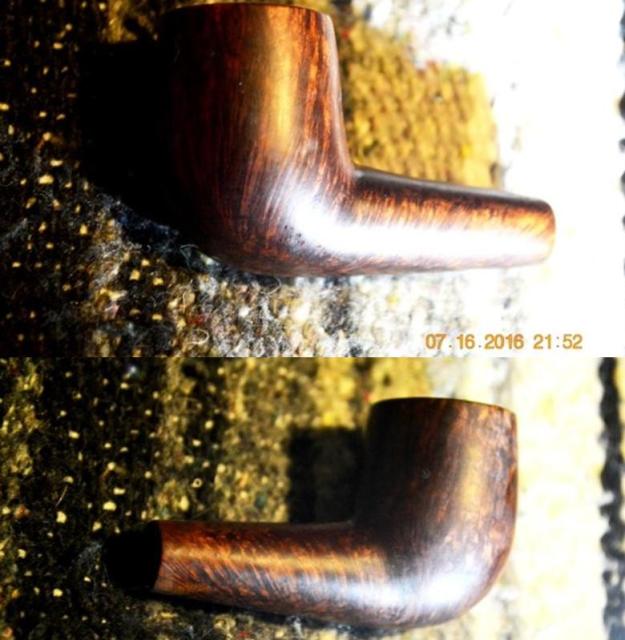
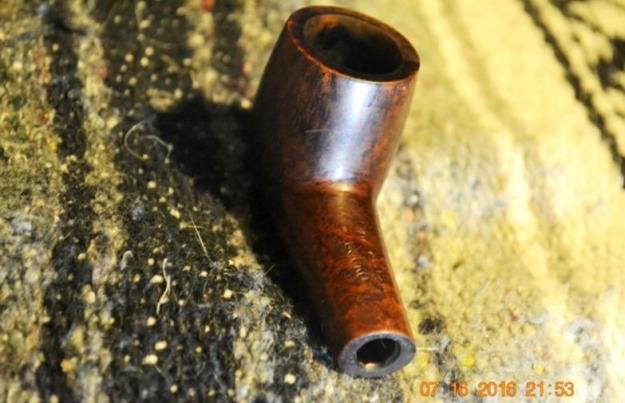
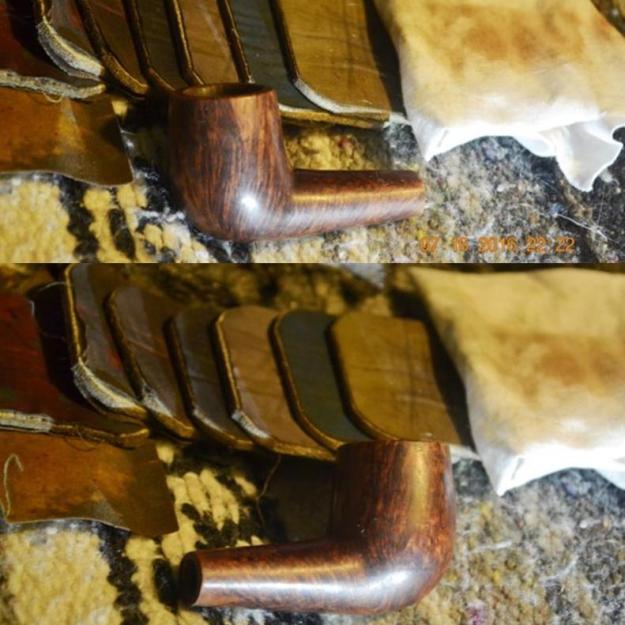
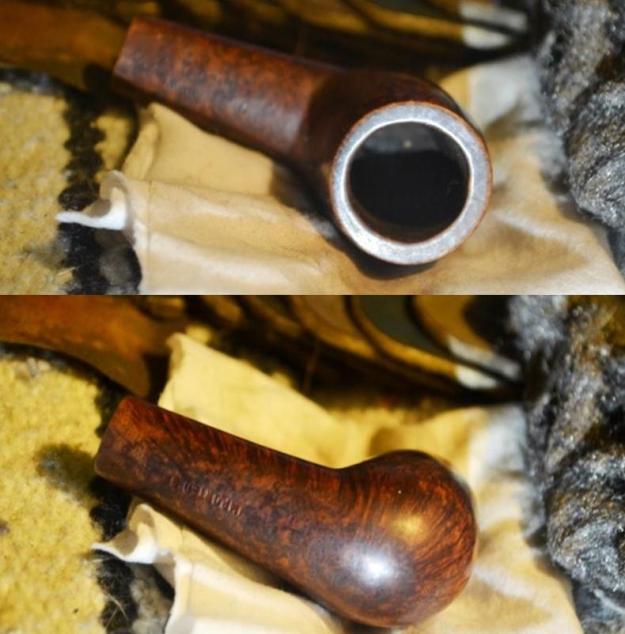
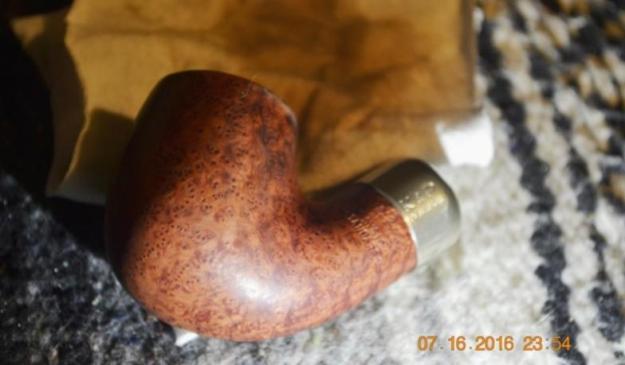
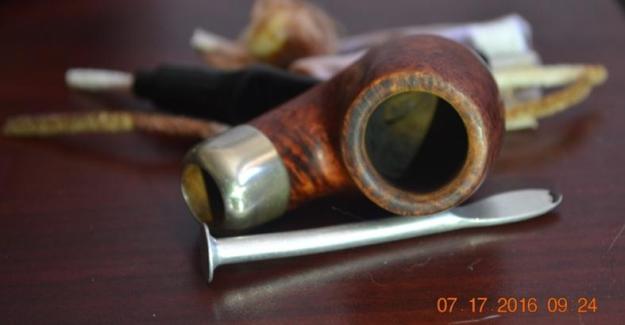
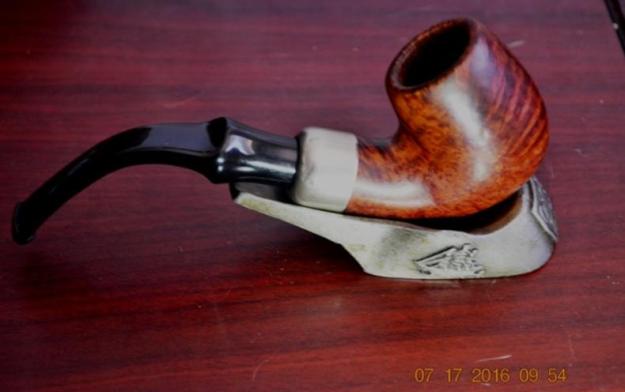
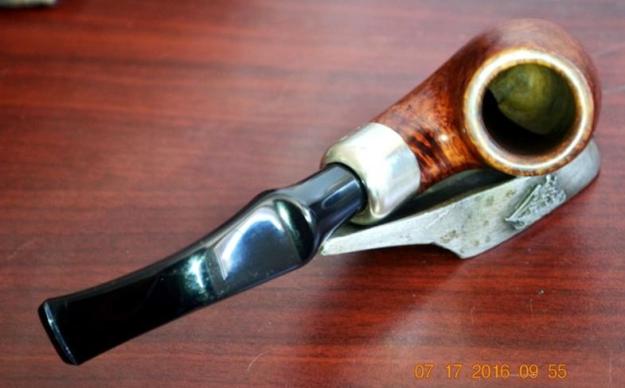
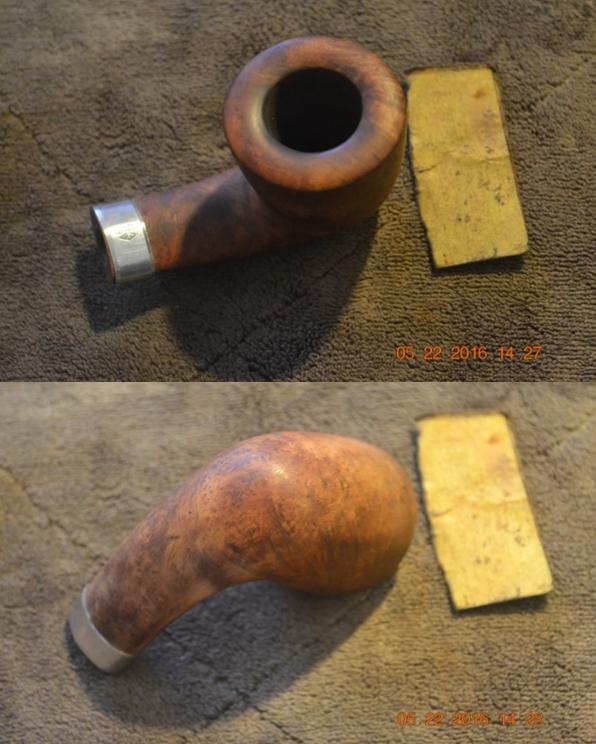
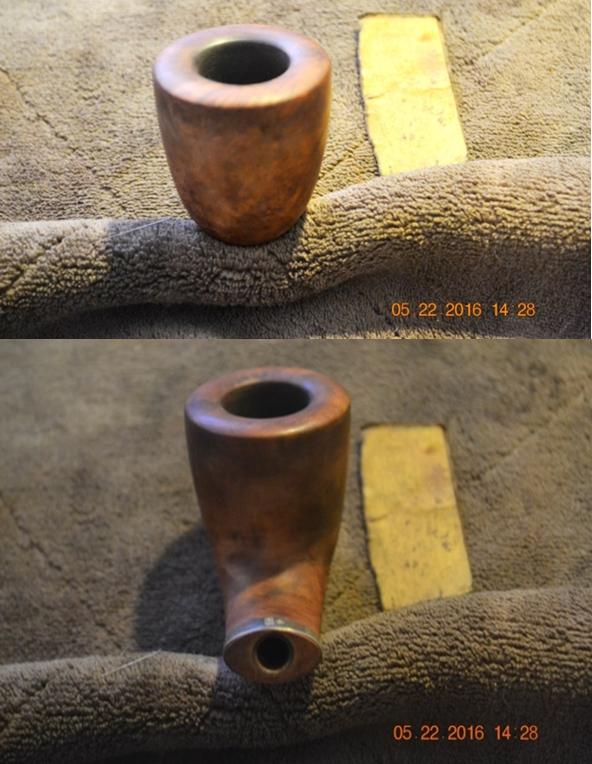
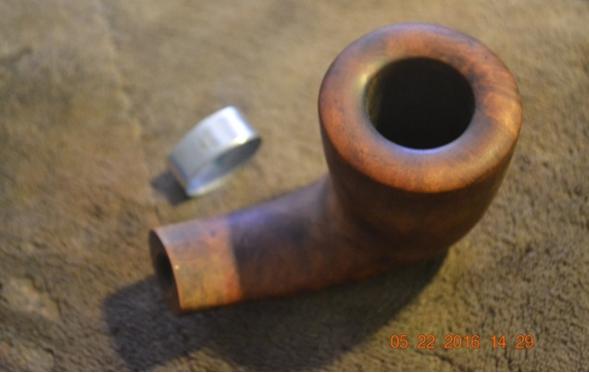
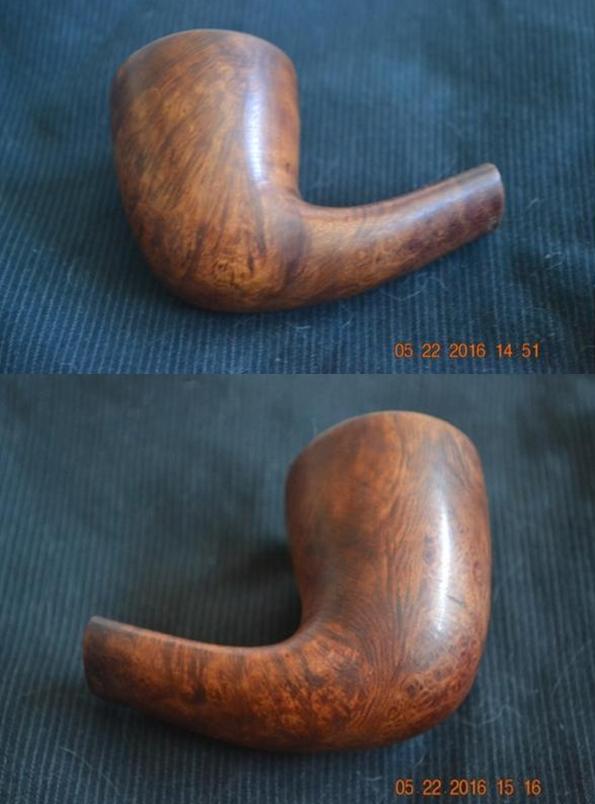
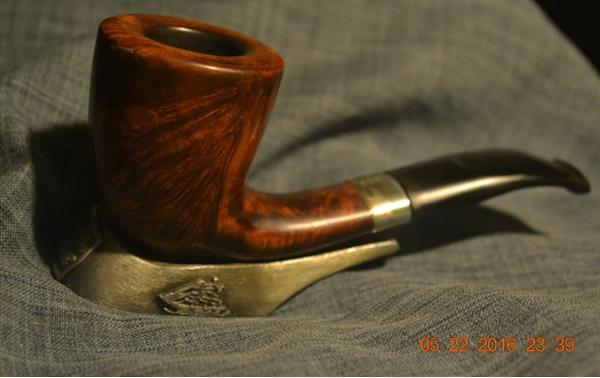
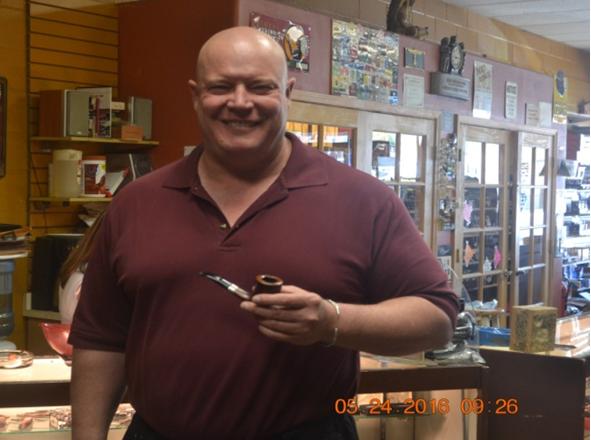
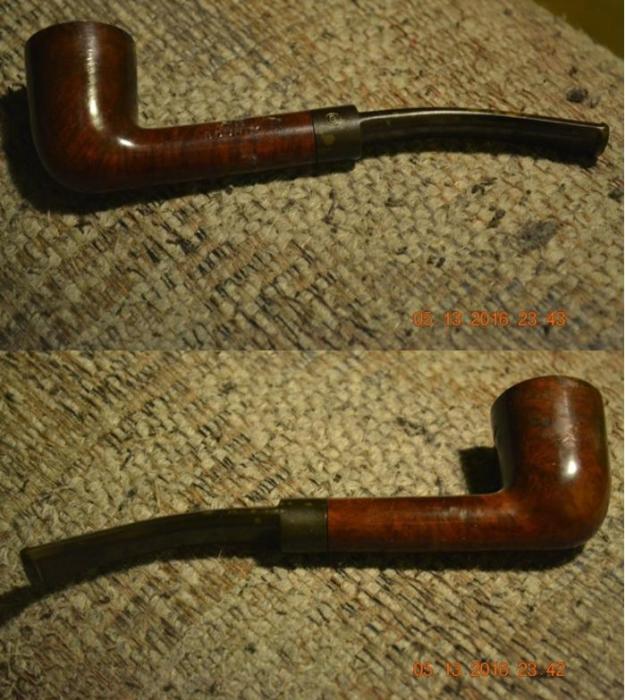
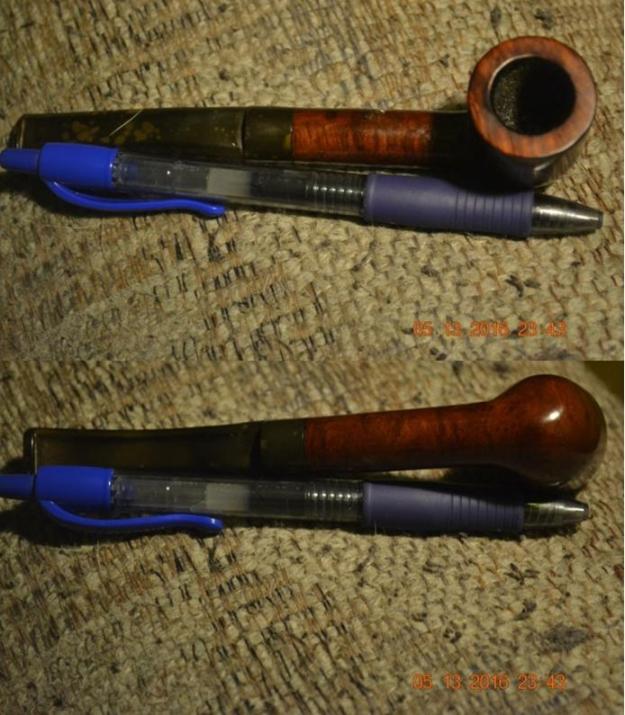
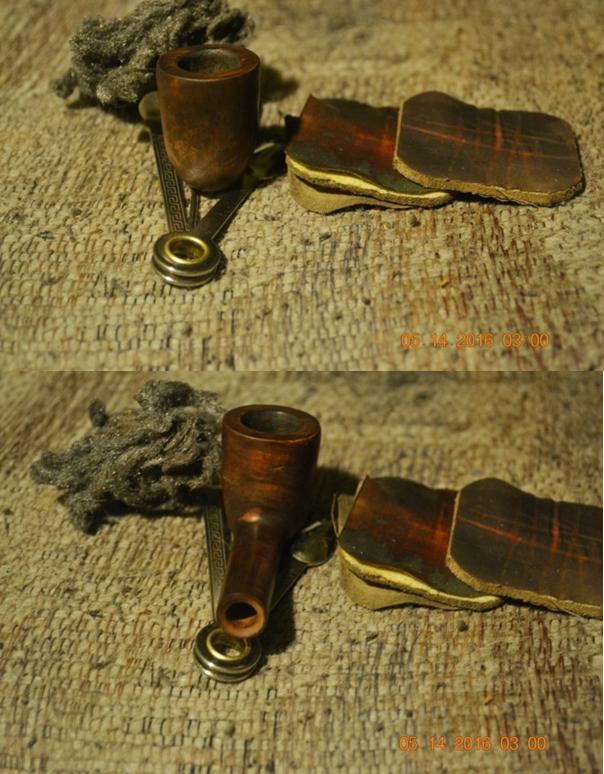
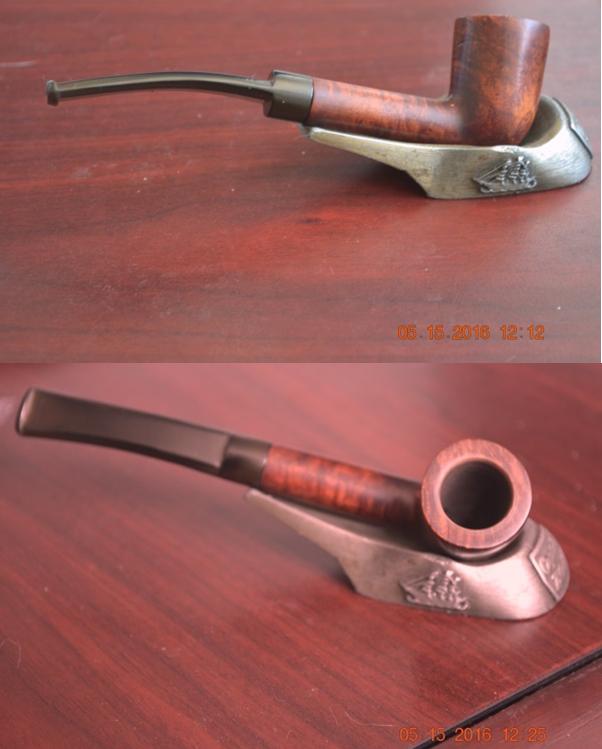
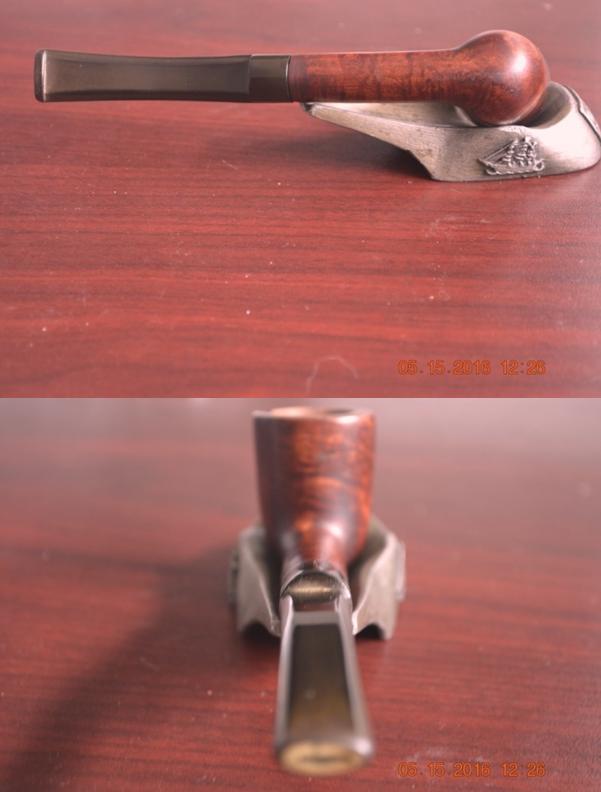
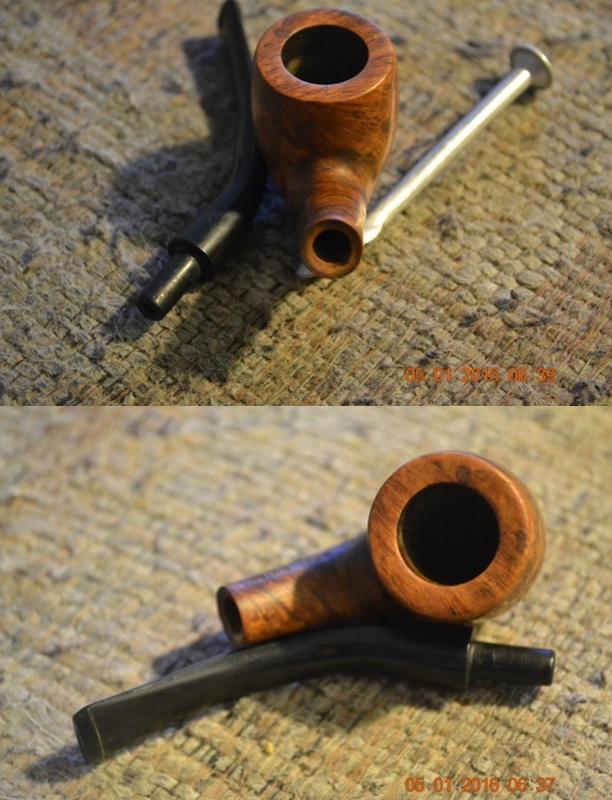
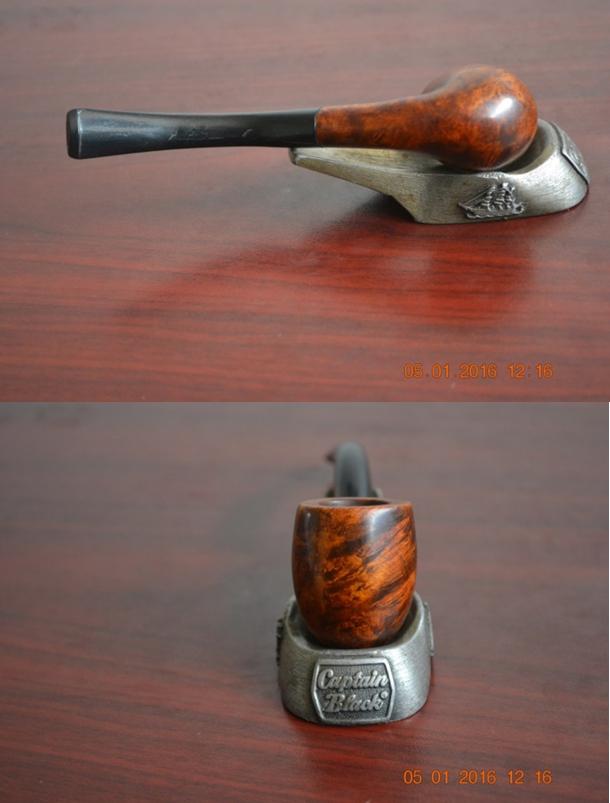
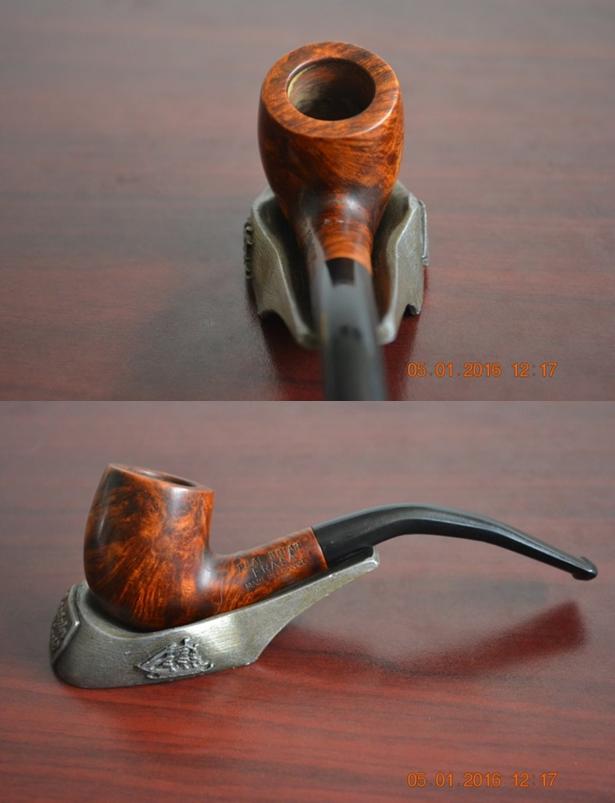
Tag Archives: article by Robert M. Boughton

The Big Sleeplessness


Guest Blog by Robert M. Boughton

Member, International Society of Codgers
Member, North American Society of Pipe Collectors
http://www.naspc.org
http://www.roadrunnerpipes21.biz  under construction
http://about.me/boughtonrobert
Photos © the Author except as noted

NOTE: ALL BUT ONE TITLE OF RAYMOND CHANDLER’S NOVELS ARE INCLUDED WITHIN THE TEXT OF THIS BLOG, THE MISSING ONE BEING IN NO WAY VIABLE WITHOUT BECOMING RIDICULOUS.  I HAVE ALSO ADDED CERTAIN LESS OBVIOUS REFERENCES FROM THE GREAT NOVEL.  I WANT TO BE THE FIRST TO POINT OUT THAT THIS SINCERE HOMAGE IS NEVERTHELESS WANTING.  AS PARTIAL COMPENSATION, I OFFER THE PIPE THAT IS THE SUBJECT OF THE RESTORATION – FREE, NO GIMMICKS OR POSTAGE – TO THE FIRST READER WHO IDENTIFIES THE MOST TITLES AND OTHER ASSOCIATIONS.  IN ORDER NOT TO MAKE THE TASK TOO EASY, I WILL LET THE READERS SOLVE THE MYSTERY OF THE SPECIAL CONNECTIONS.  ONE HINT – THE 1940S SLANG USED IS A DEAD END.  POST ANSWERS IN THE COMMENTS SECTION.  GOOD LUCK!

From thirty feet away she looked like a lot of class.  From ten feet away she looked like something made up to be seen from thirty feet away.

— Raymond Thornton Chandler (1888-1959), British-American writer of poems, essays, literary reviews, screenplays and hard-boiled detective tales, through his great character Philip Marlowe in “The High Window,” 1942

I was wearing my powder blue boxers.  I was unkempt, dirty, unshaven and sober, and I couldn’t care less who knew any of it.  The sun was a big dark orange rooster mute with nothing left to crow about other than another shot at a life filled with danger, which reminded me I had not slept going on five days.  The freshness of the Sandia foothills was fooling no one who has blown the kind of time I have in this high desert burg, even if that steady, sandy ascent into the mountains was too formless to see yet.

The temperature during the longer shifts of light than dark grew hotter with each twenty-four-hour trudge that dragged on that miserable stretch, late July into August.  The dog days neared their end with no such luck appearing on the horizon for the solar blaze.  The sultriness outside was the kind that had nothing to do with dryness or humidity.  The oppressiveness that hung over the entire overblown town was all about the barometer.  At night the blood red color of the fourth planet from the sun, and the fact that it was closer to our little world than it had been in eleven years, only made the air outside seem hotter.

The weather fat-heads kept predicting rain but I hadn’t seen any since the part of the year I liked best, what the locals called the monsoon season with the kind of cock-eyed, soppy buzz that got under my skin, right after the mere sound of a Christmas carol.  Last I heard, a monsoon was driven by large bodies of surrounding water.  The whole forsaken state was landlocked.  While I’m on the subject of things I dislike, I might as well mention I’m not a big fan of opera – excuse me, the opera.  I’ve had to scratch under the collar through my share of these shows and would be none the poorer if I never sat through another.  Carmen was okay, come to think of it.  At least you could say that little tease got what she had coming.

The torridness was part of the reason I didn’t bother to put on one of my suits.  All of them were the same straight cut, most black or gray but a few with some color to them, like a rumor about me that was going around.  Not that any of those stories played a part in my trouble sleeping  The other excuse for not making myself more decent was that every one of my flannel uniforms was at Owen’s, my tailor, being taken in because of the weight that was sapped out of me.  I was everything the well-dressed pipe restorer who lived alone ought to be.  I was waiting on an eight thousand dollar check to clear the bank, and until that happened I wasn’t going anywhere.

The case I was working was a tough nut to crack.  Sometimes a gig was all aces, but this was bad news that made a big part of me not even want to cool down.  My biz was to fix the brodie, only in this case the charge sheet of senseless brutalities was full with counts.  I’ve never hung it up unless the pipe was done for, as in ready to stoke the fireplace or campfire.  Briar is a stern wood, though, and I had to take a shot.  In the crowd she came from, the little sister looked plenty ritzy.  Away from the crowd made her more into something any group would give a wide berth.

Some creep did a real number on this one.  She still had a swell figure and I could tell she was a dish back in the day, but that was long ago and far away, as the kid from Hoboken crooned.  In my book, a nice body is the important thing anyway.  Whatever genius plugged this dame had to be whacky or a twit.  As I saw it, the heartless S.O.B. deserved the hotsquat.  I’m not one to lash out unless I’m threatened to my face, but if I had nabbed him, he wouldn’t have known I had a beef until I put the kibosh on him.  Not that I had any idea to dog the numbskull.  It’s not like I had a Geiger counter tuned to a man’s sweat, and murder is about as simple as common sense is common.  Besides, by then he was long gone.

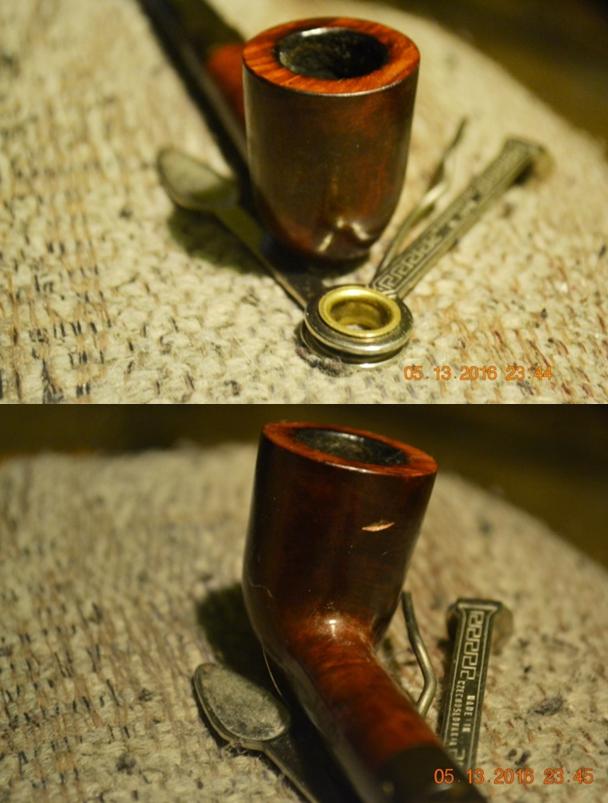
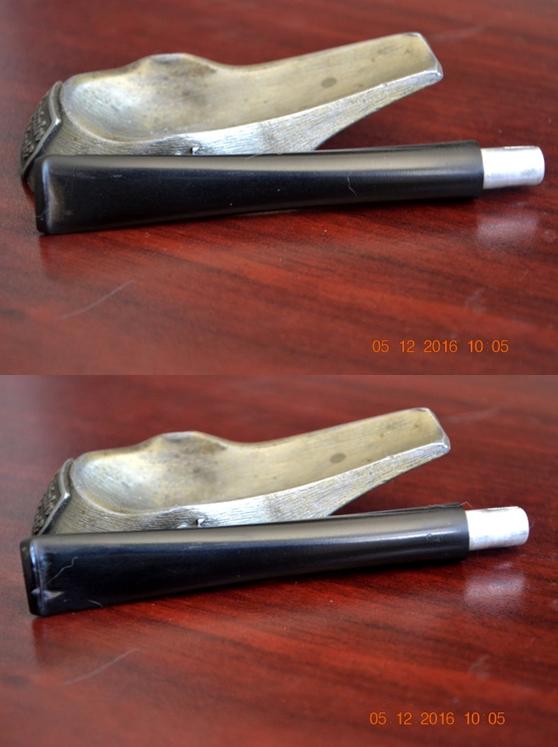
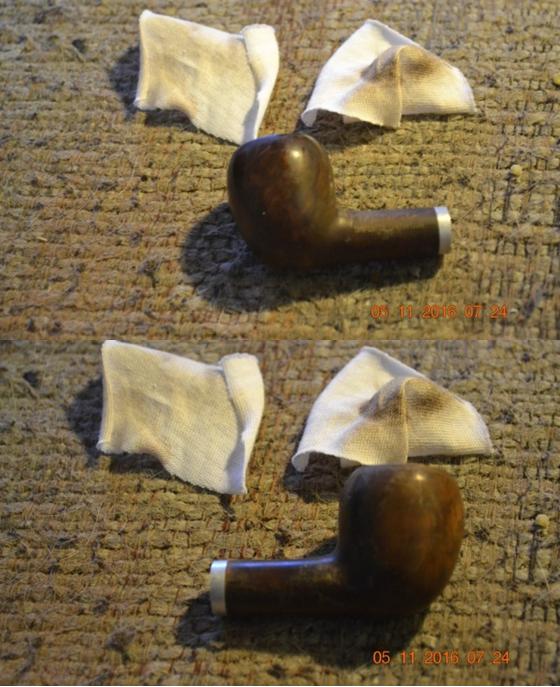
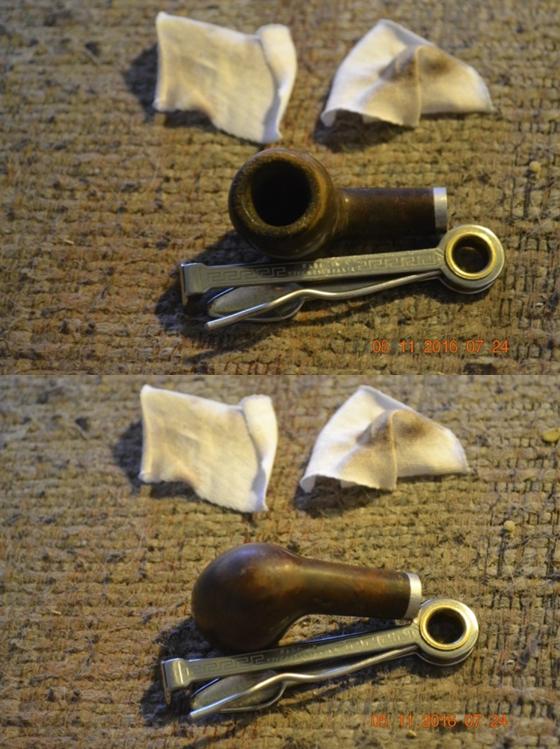
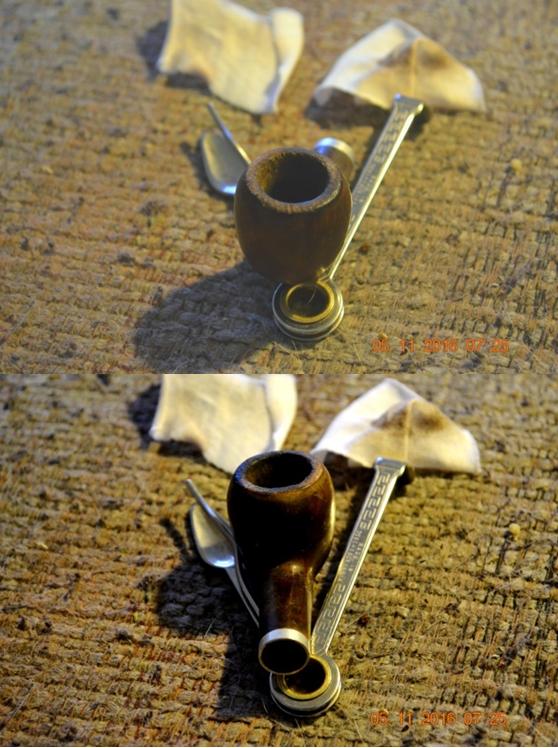
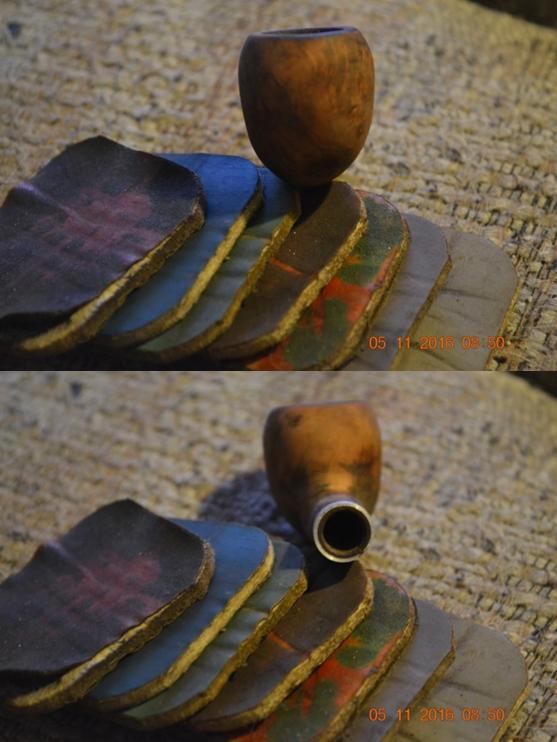
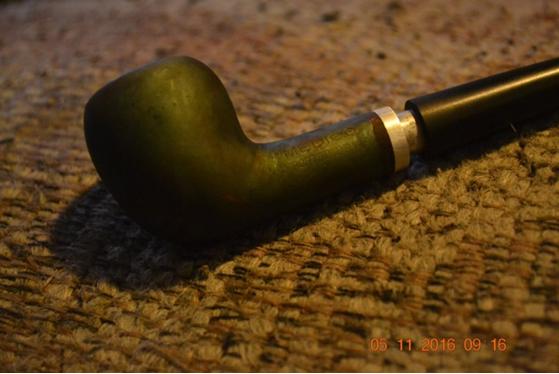
I picked the broad up for a five spot, but not for anything sappy, just to save her from the meat wagon.  I kept her wrapped up like I found her and got her safe and sound to my office on Agnes Avenue.  That’s also my cave, which makes it my castle.  My heater is the only insurance policy I carry.Amp1 Amp2 Amp3 Amp4 Amp5 Amp6 Amp7I’ll give you the dope, straight up.  She was worked over pretty good if that word can be used in this scenario.  Her kisser and most of the rest looked like a body that was dragged along a stretch of old road strewn with potholes and broken liquor bottles.  Maybe she took a dive from the high window, but that would have spelled farewell my lovely for this client.  Then there was the forehead that looked to have been pistol-whipped.Amp8This little gal, no big surprise, had a bad dose of amnesia.  The little bit of I.D. I found on her was all but eroded by years of grime on top of all the pushing around.  All of my local pipe gumshoes were sure they recognized her as Alpha, an Israeli, on account of a distinctive birthmark forming a curious A.  I’d known a couple of the type, and something about this A didn’t jibe.

I brought my friend Steve Laug, a fellow pipe investigator north-northwest of here in Canada, up to speed with my progress.  Laug was the best P.I. in the biz and had profiled more pipes than I had ever dreamed of in my humble philosophy, to crib from one okay yarn spinner.  I don’t buy a word of the stories that some fellow named Marlowe wrote any play credited to another Brit.  Anyway, Laug also had more skill patching up the abused and maimed than anyone else I knew.

He was the one who spotted the resemblance of my victim to one of the classic models from the Dr. Grabow stable, the 42 number.  Laug shot me the profile he did on one going by the name of Westbrook about a year before.  One mugshot in particular that Laug snapped of the Westbrook gal after he started cleaning her up showed the unmistakable genetic marker of my girl.  So they were related, but how?  That was for me to uncover.
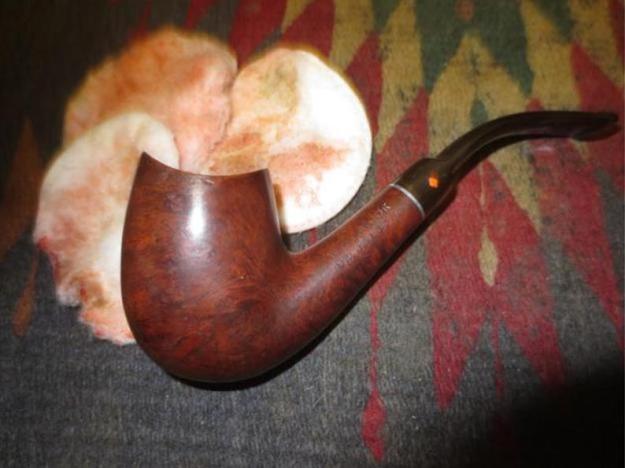
Courtesy of S. Laug, P.I.

Courtesy of S. Laug, P.I.

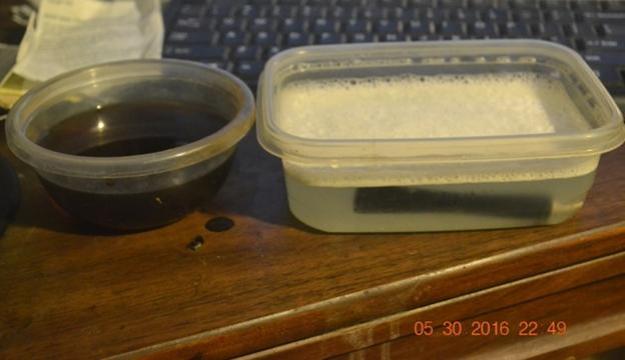
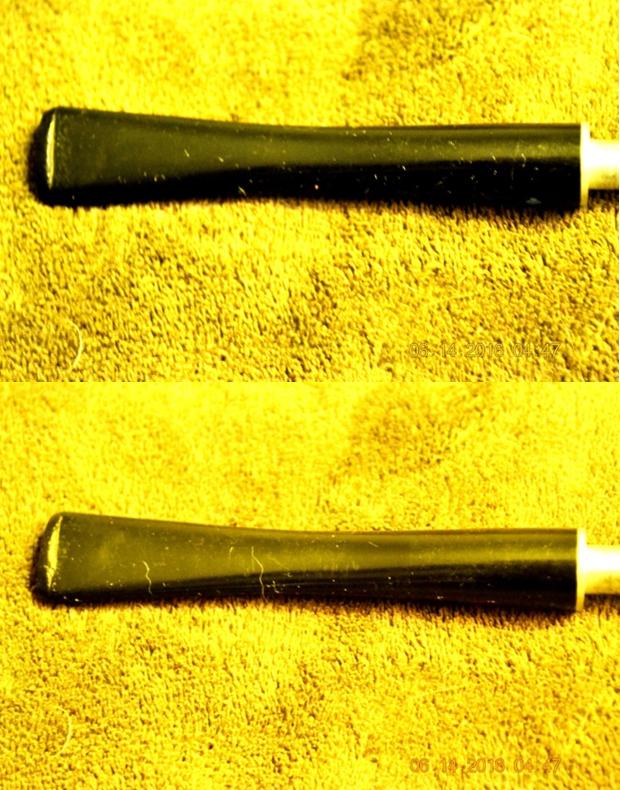
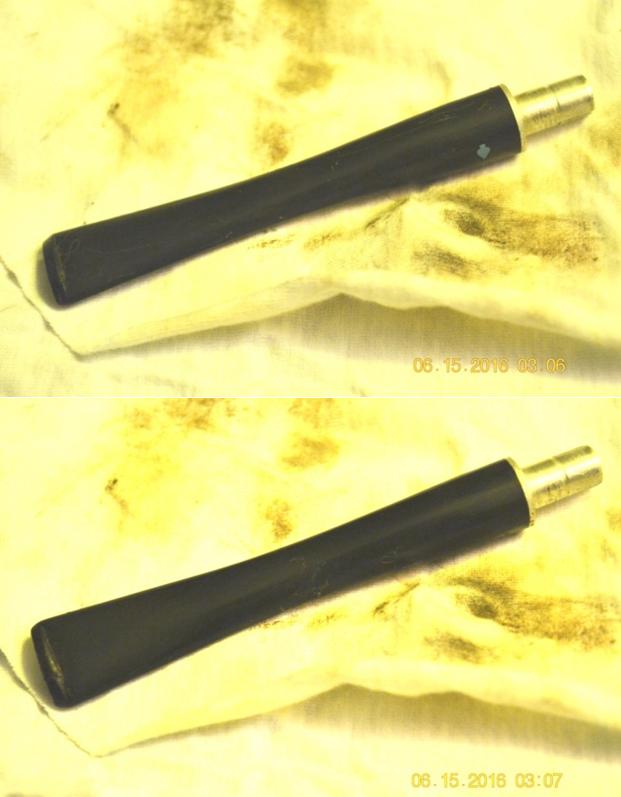
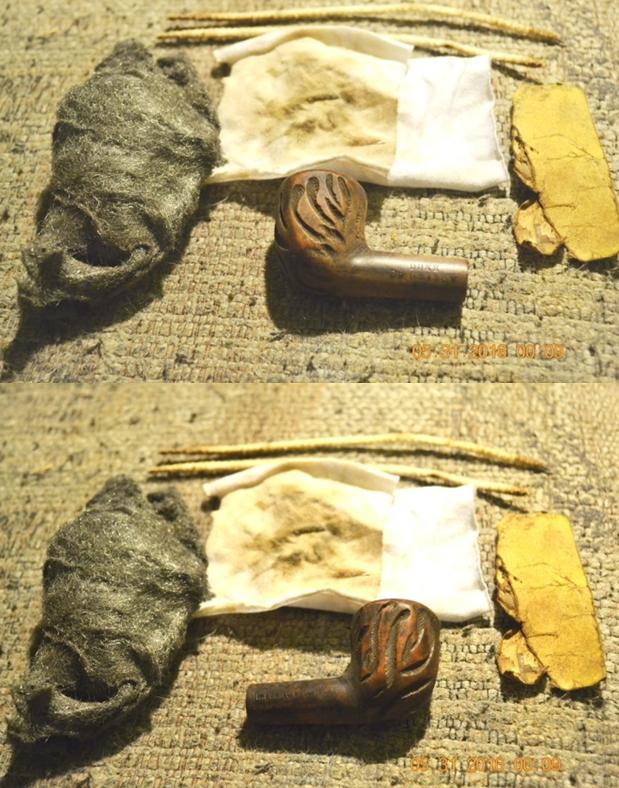
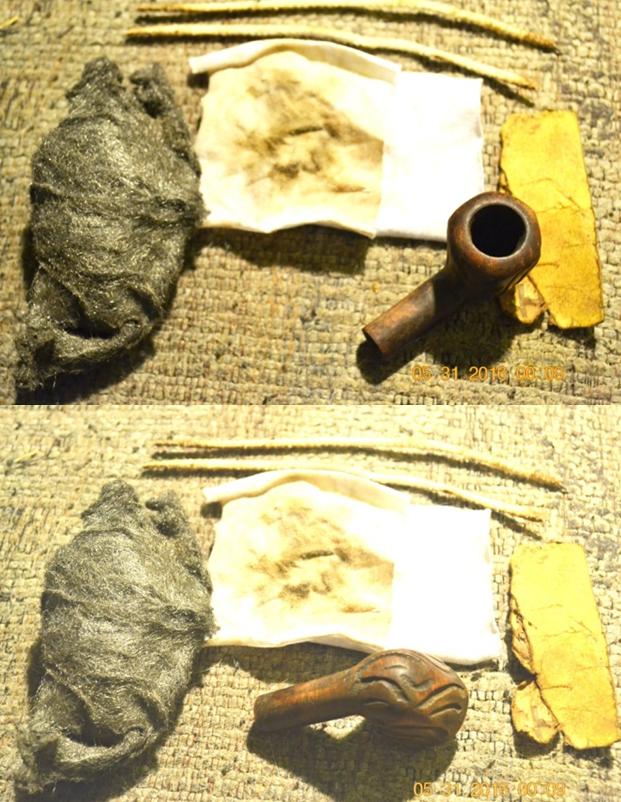
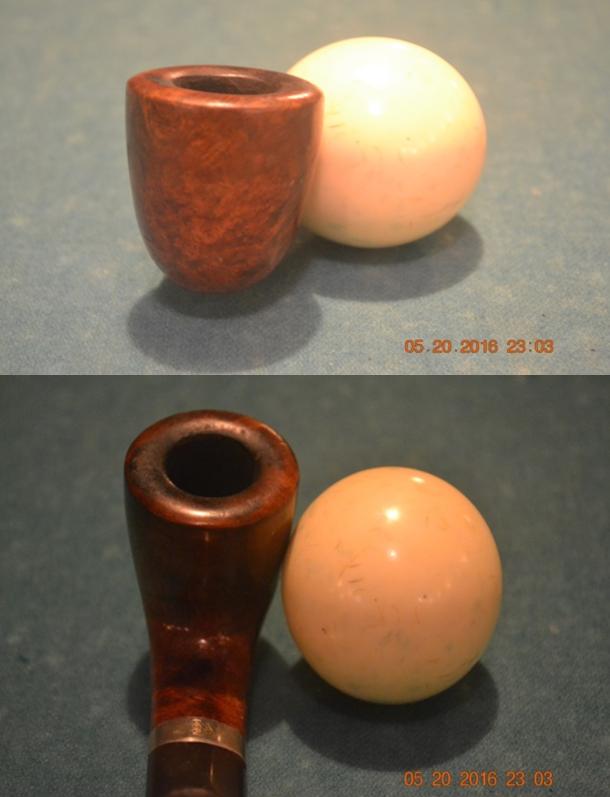
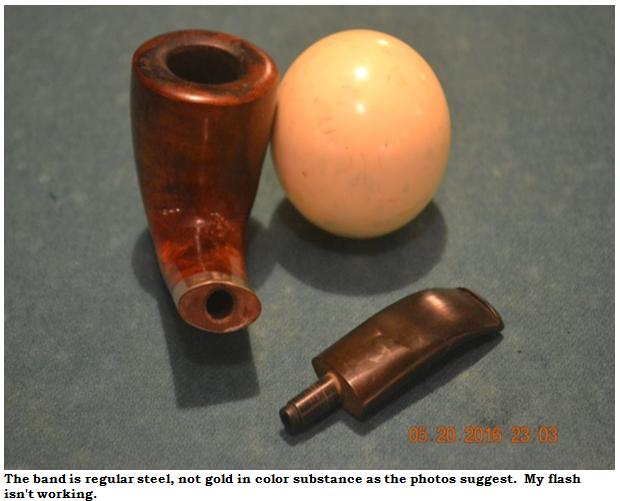
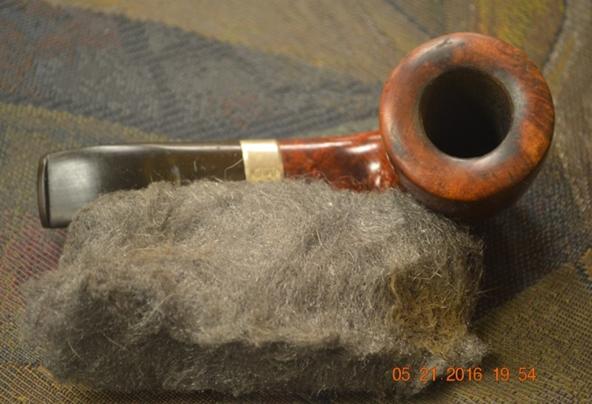
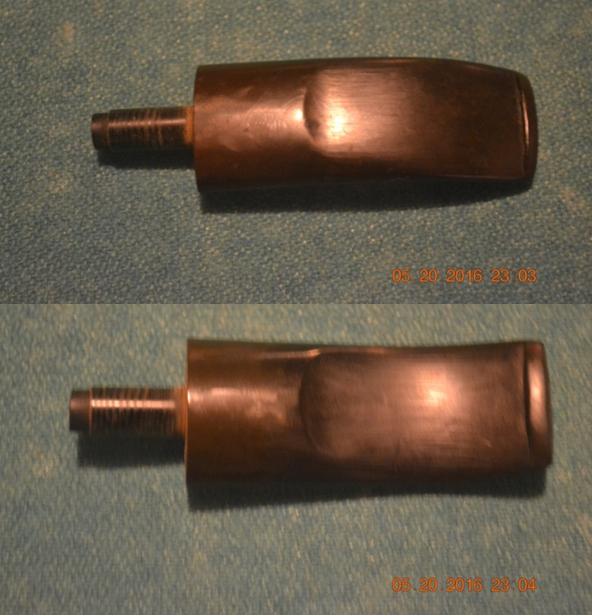
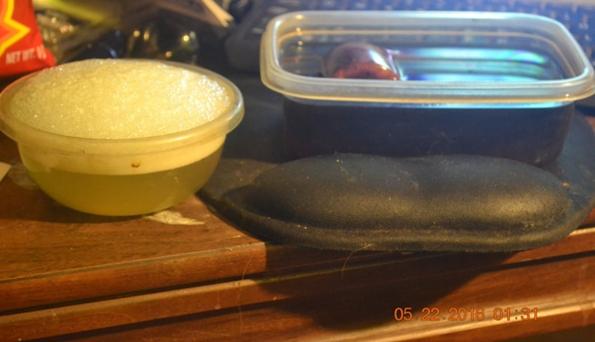
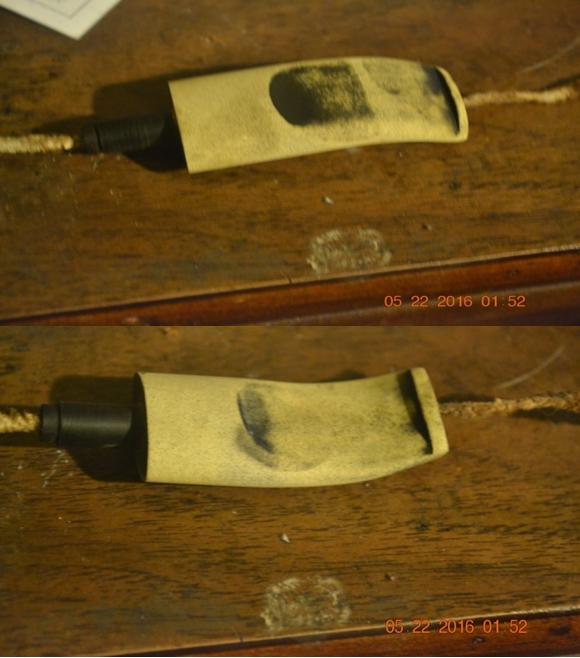
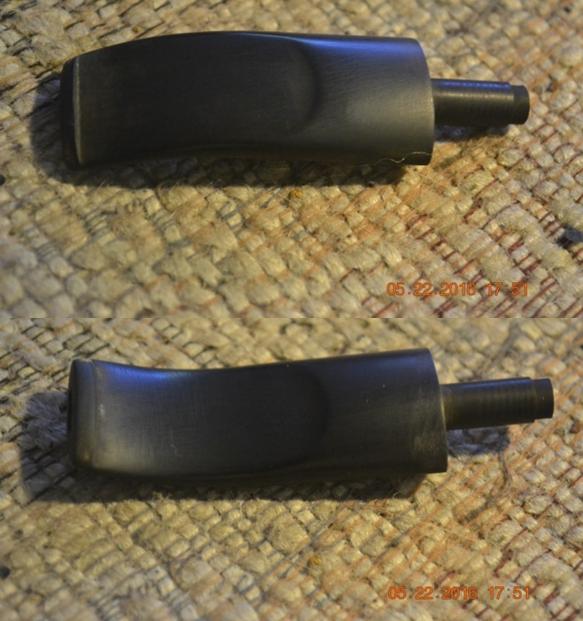
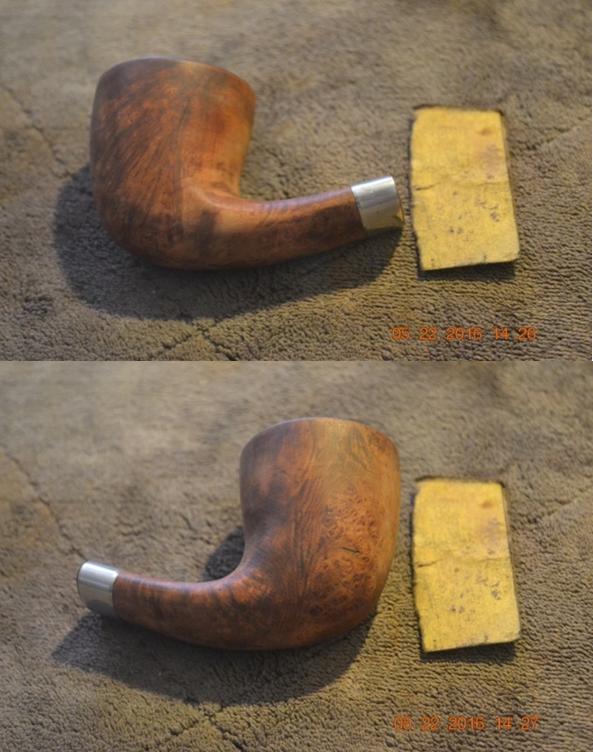
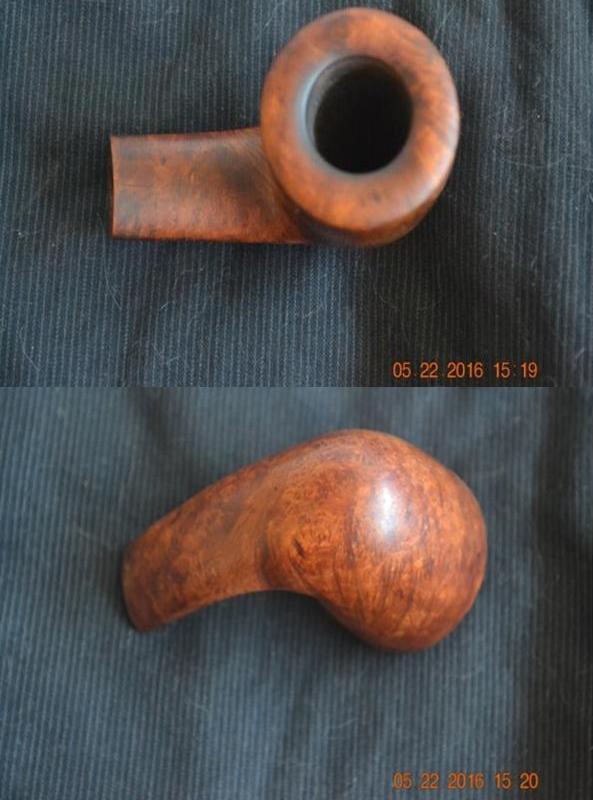
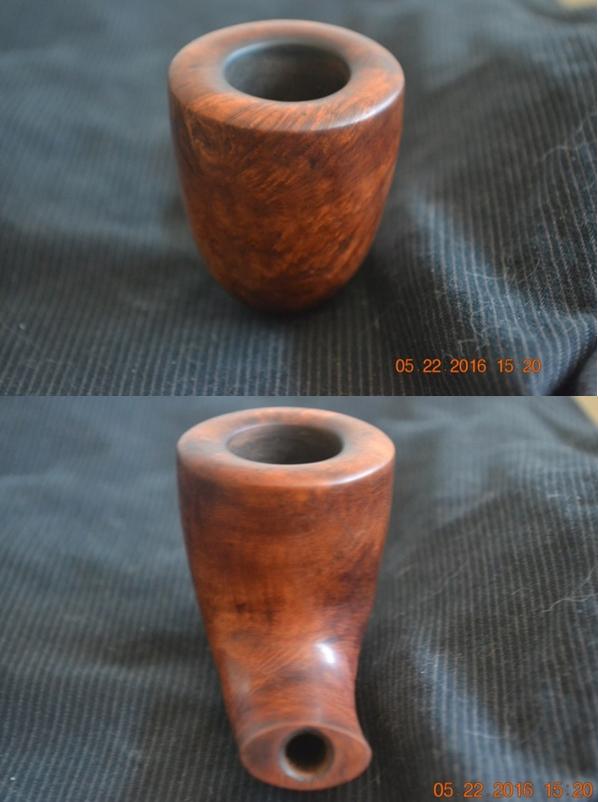
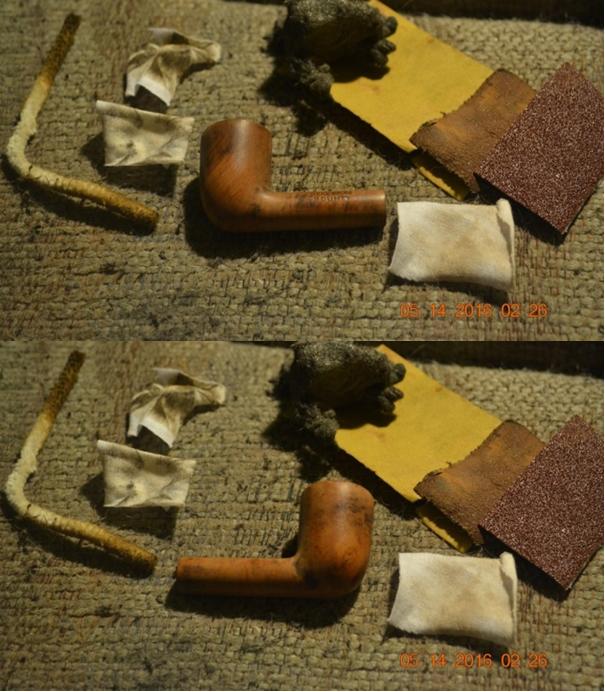
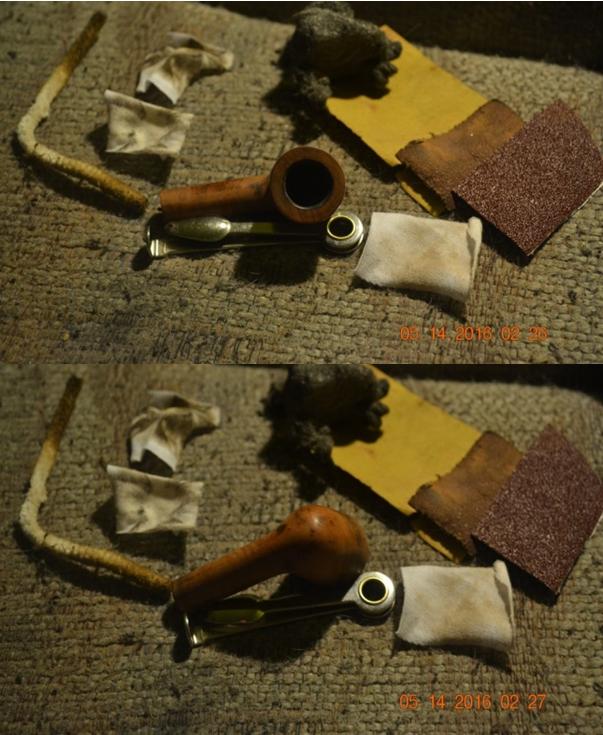
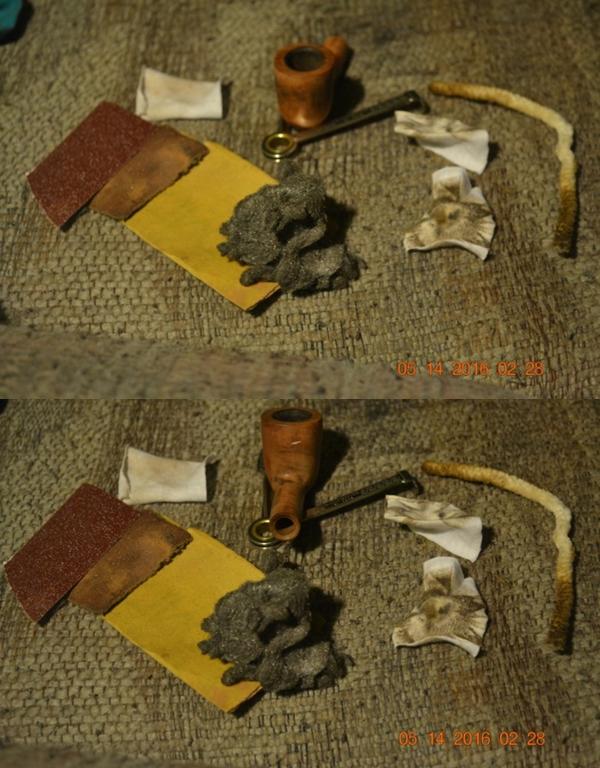
No man could miss the hot curves on Laug’s Westbrook knockout compared to those of my Jane Doe, even after someone put the screws to her.  I followed Laug’s tip to another lead that took me to a real treasure trove, including a group shot of Doc Grabow’s X Series Continental Line, class of ’81.  Letting my eyes move over the lines and curves of these gorgeous creatures clued me into why the doc rated them X, if you get my drift.aMP10Oh, so many beauties in this world, and so little time.  Still not being able to put a name to my little darling was driving me bat nuts, so I gritted my teeth and went to the archives, as I like to call the place.  It’s a reputable joint run by a Frenchman known on the streets as Pipephil.  First I inquired about Alpha and was introduced to a couple of sweet numbers that showed two styles of that outfit’s A, both about as similar as Laurel and Hardy.Amp11Roaming still deeper into the organized labyrinths of Pipephil’s place, I came across an A type that was a virtual twin of my Jane Doe, belonging to a swell called Douwe Egbert, a Dane no less.  That was when I got my big break and hit the jackpot with a connection to another part of the same clan, a blue blood great Dane from the house of Elbert Gubbels & Sons of the Royal Dutch Pipe Family.  They went belly up a few years back, but not before conceiving a certain new acquaintance of mine, even if they adopted her out and didn’t give her their own name, as if it was too good for her.  All that digging paid off.  Amphora was her name, and a beautiful one at that, from the Greek for a double-handled thingy used back in ancient times to hold wines and oils and whatnot.  I looked at the facial big boned structure on Amphora and got it right off.Amp12Relieved to have put a name to my innocent friend, I started saying it out loud, over and over, as I began the tasks of cleansing, mending and restoring Amphora to health.  It was a dirty job, as some guys liked to put it in those days, but that was my specialty.  After the initial wipe with soft cotton cloth strips soaked with purified water, I made the first definite visual confirmation.  The words were legible only because I knew what I was looking for from a gander at one very crisp tattoo on the left hip of one of Pipephil’s collection.Amp13 Amp14I never could get my Amphora’s number, maybe because she was too classy to let a man of my position become so familiar.

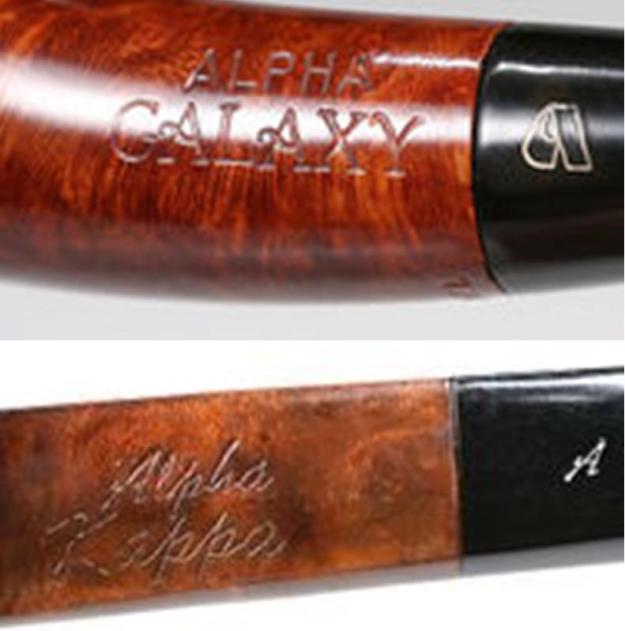
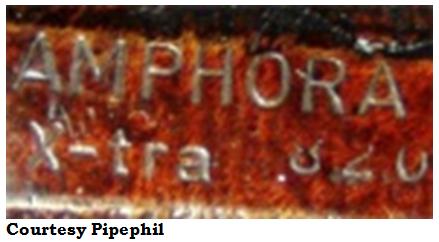
All I can say about the next step, when I finished washing her body and went to work on that wrecked forehead, is that I was glad she was still out cold.  I had to get rough, see.  There was nothing plastic about the surgery I had to perform, but it was cosmetic, alright.  The job started out gritty and got worse, about as low as I ever go, with 80 paper followed by 150 to clear away the char alone.  I’ve seen my share of bad burns, but this was as close to a crispy critter where the victim was still alive as I hope I ever see.

The harsh part was what followed.  I had no choice but to put a file to her scalp, behind the forehead that was caved in, to fix the mess the best I could.  After that part I took a deep breath and let it out, like a tea kettle giving off steam right before it hits full boil.  I stepped back to look over my handiwork so far.  The job wasn’t perfect, but that kind of work is above my paygrade.

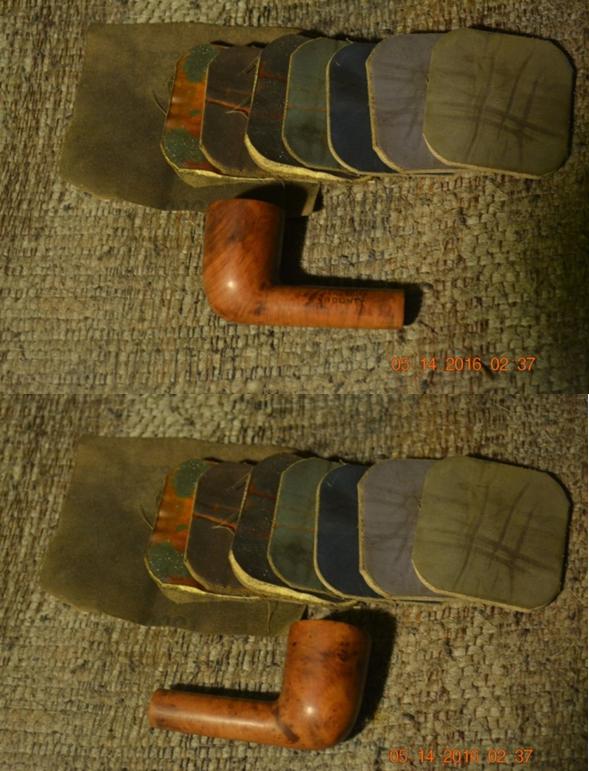
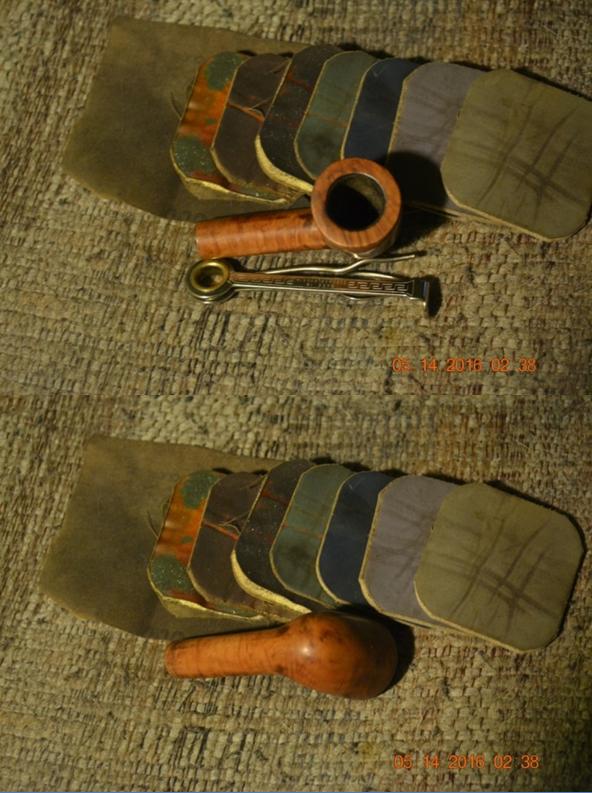
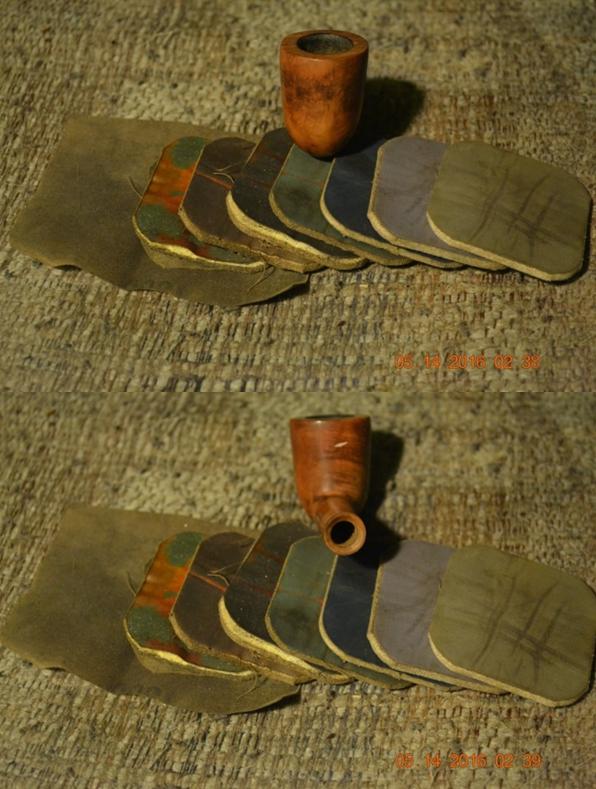
I did most of the mop-up of that scene of the unfolding drama with what seemed like endless paperwork.  Let’s face it, this job runs on paperwork.  Fine tuning with the full scale of micro mesh was a pleasure.Amp15Maybe I took a liberty at that point, but I could not control the impulse.  Besides, I told myself, Amphora might very well awaken from her ordeal of the long goodbye, which she was lucky to survive. and not even notice the patchwork I did.  That last part was if Lady Luck shined on me, but who was I kidding?  I don’t place my faith in luck and never met a dame, not the type I liked to be seen with in public anyway, who didn’t know the instant a single strand of hair went amiss.  The best I could hope for was that she would keep quiet about it.

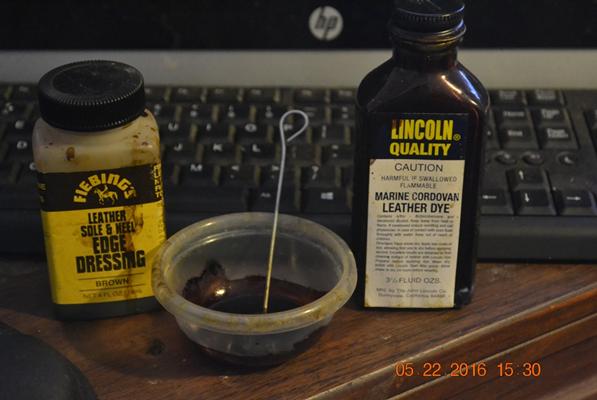
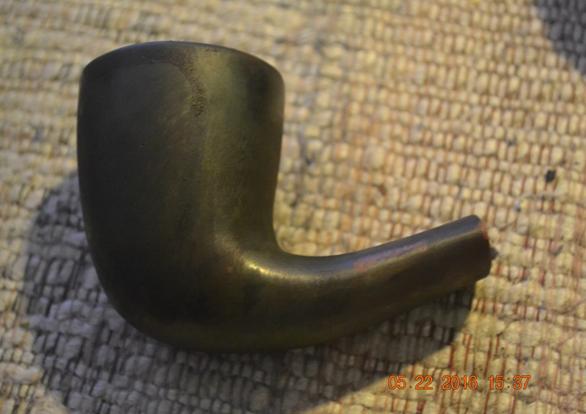
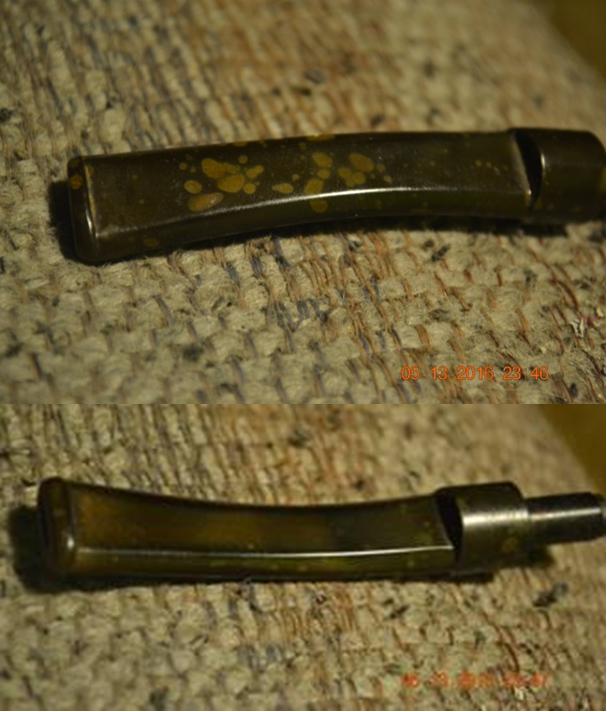
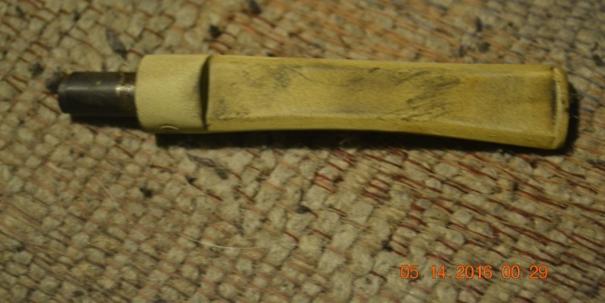
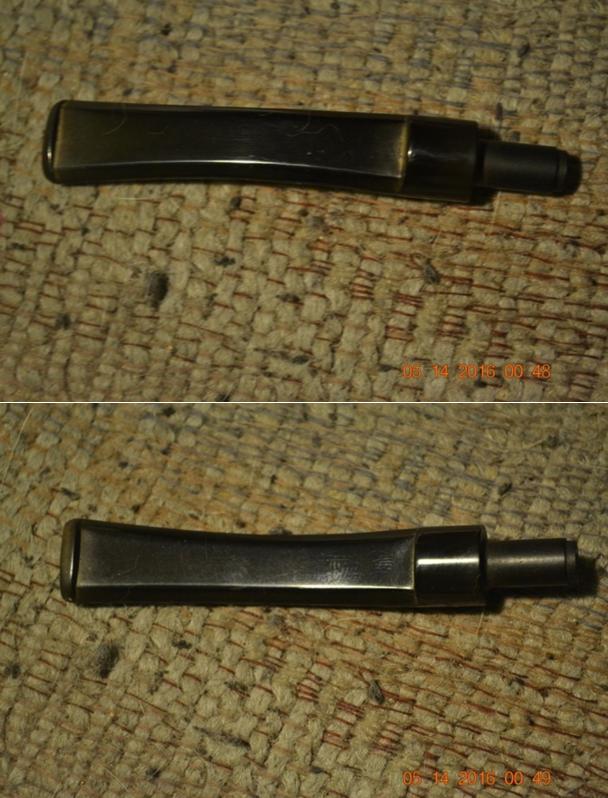
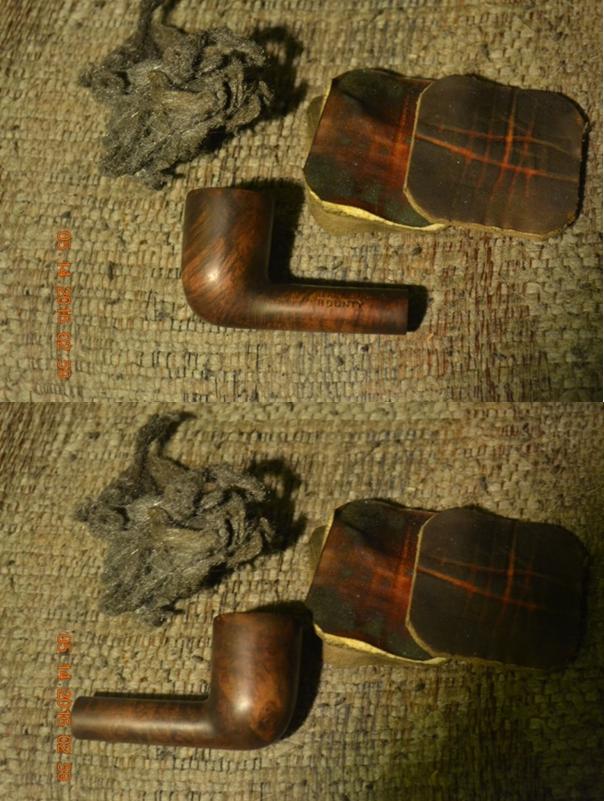
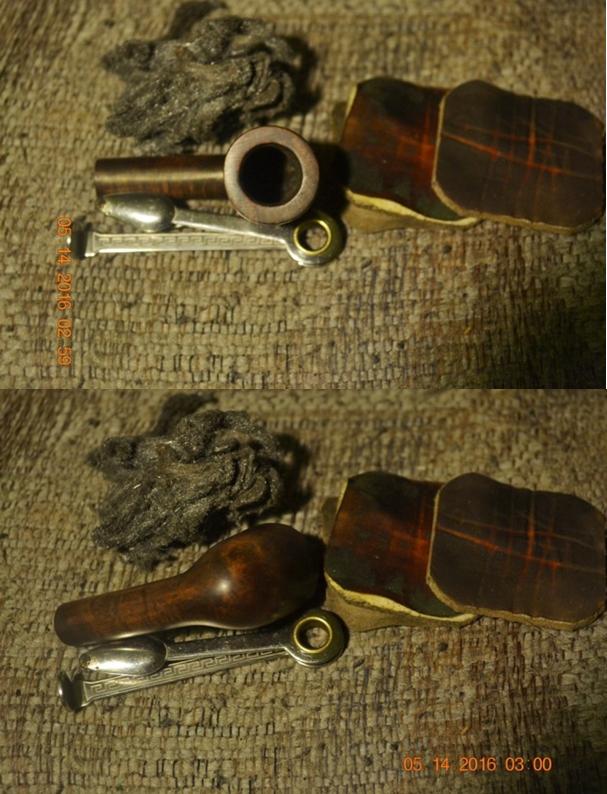
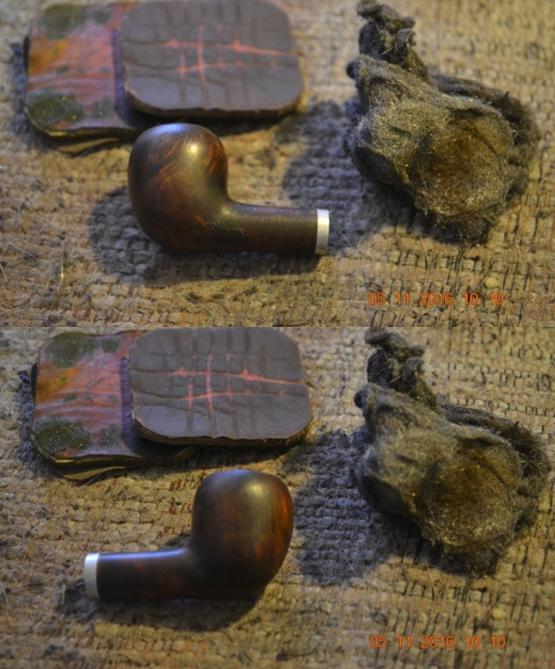
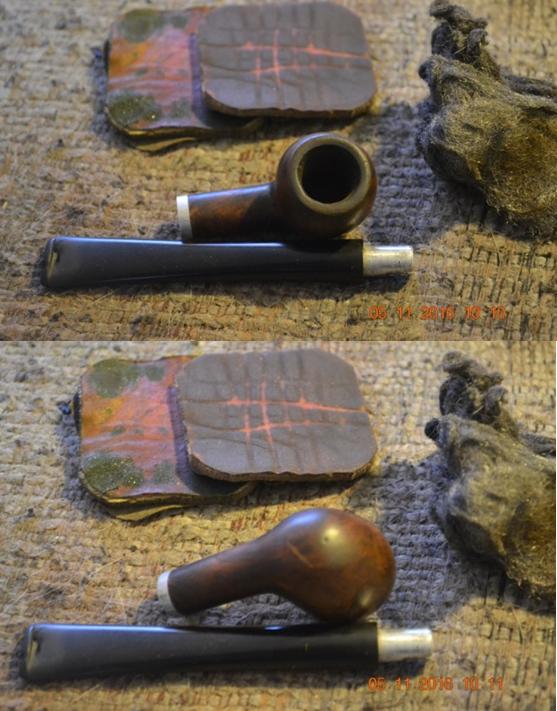
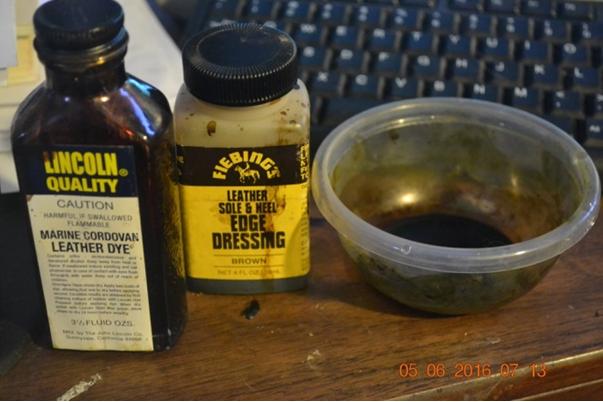
To give Amphora a healthy tone more like her old self, at least as I imagined she once was, I gave her a thick coat of high fashion skin colorizer called Lincoln, a burgundy color that I knew I could lighten to a more natural auburn.  I applied some heat to fix the solution so it wouldn’t run and with a patience that was anything but natural to my usual personality used a three-stage, six-pad micro mesh conditioner process.  I finished that part with a light rub of four-ought steel wool.Amp16 Amp17 Amp18 Amp19I saved the most slender part of Amphora for the last.  There were scratches along both sides, but no evident mayhem.Amp20This called for more paperwork, forms 180, 220 and 320 to start.Amp21I followed up with form 400 and the full treatment of micro mesh conditioner.Amp22The conditioner was old, and I could see it was out of date.  I checked my mail and found the new supply was in the box.  There’s a saying in billiards that the cue is only as good as the player, but a cue that’s an inch off from warping is plain bad news.  I would never carry a heater with a barrel that’s off, or one that’s not nice and tight all over.  I don’t even care for the 1911 .45 that’s designed that way for tactical reasons.  I had a playback, you could call it, to other times in my career when I re-stocked my supplies.
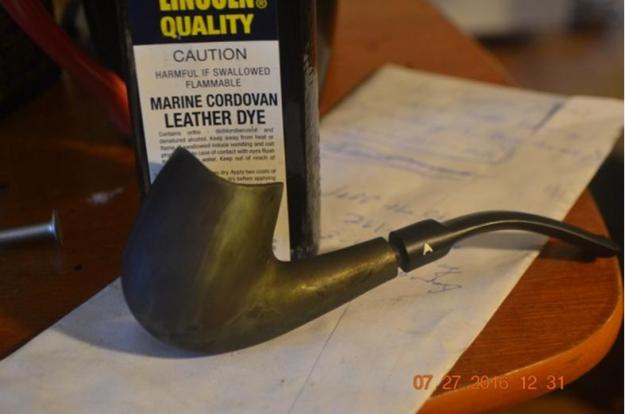
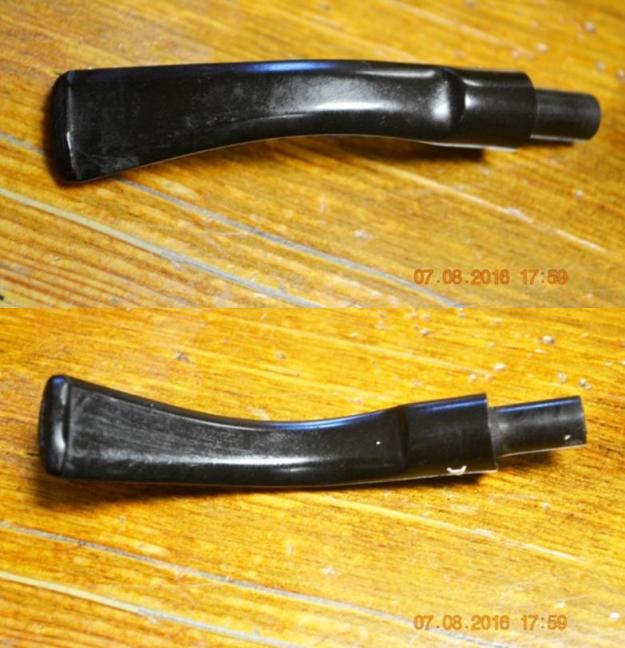
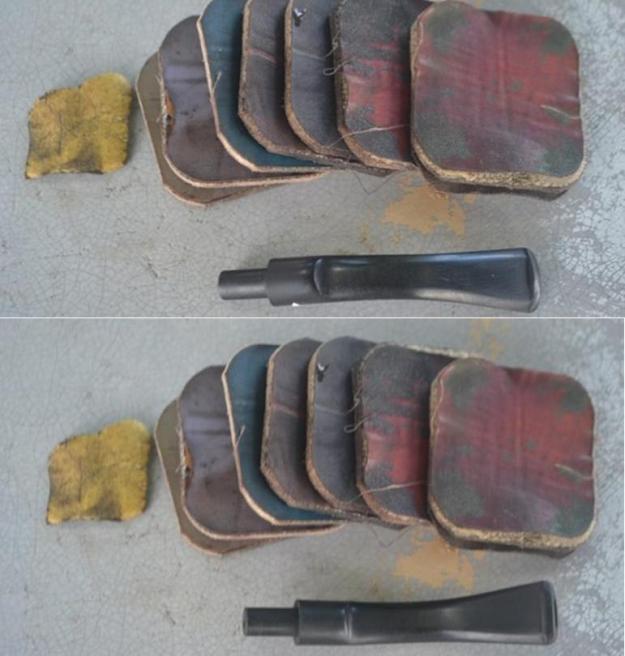
Repeating the full process with the new pads, I found that even an old dog can learn a new trick, in this case to keep your heater clean and well-oiled, if you get my meaning.Amp23Amphora was waking up and starting to squawk.  My only retort was that medicine never tastes good, and I gave it to her.Amp24 Amp25She was lucky her insides were cleaner than she had been outside, and I only had to give her the one dose.

While Amphora was still coming around, I found the makeup any lady of quality won’t leave home without putting on, just the usual compounds and waxes, and buffed her up.Amp26 Amp27 Amp28 Amp29 Amp30 Amp31My insomnia and other personal stresses had made me ready to go for the big sleep, but I was over all that and was just about to take a seat on the new recliner I bought for my new digs in a more genteel part of town, and relax with a long, full-bodied, folksy Ukrainian tiger I came across at one of those new places a man can now find such pleasures.  I even sat down with the broad in my hands, feeling her fearful symmetry that only the Master Craftsman Himself could dare frame, and was about to light her fire for a quickie before taking a nice long snooze.

That was when Amphora woke up and started to yap.

SOURCES
http://www.gutenberg.ca/ebooks/chandlerr-bigsleep/chandlerr-bigsleep-00-h.html

http://www.cultureify.com/1940s-slang-lingo-phrases/

http://graphics.latimes.com/finding-marlowe/

http://www.dailymail.co.uk/news/article-2836745/How-two-Hollywood-s-famous-detectives-Sam-Spade-Philip-Marlowe-named-inspired-black-private-eye.html

https://1fa1282d-a-62cb3a1a-s-sites.googlegroups.com/site/seanspipes/home/dr-grabow-shape-charts/1981SpartaShapeChart-continental.jpg?attachauth=ANoY7crnrqZwyaoMF6HNKflSv6JrH2Q7_rP-H_6Xxq1Sa06aylrImgtGNsFeVu_T_bqhD5Y6hzREmZd4gNHMqg8hnJsZvY1OOZ_YEhyY89J1hl6hxkkPDpByhf4a8lRCcpVWOhT8jl0dm1h8VzGTZsmNyXP2hkyYUh2qNPjvWbTB_Oe2ICpBIQvJIeuZRyXhXwUU9mg0Y7kKKFJRTa_wNVG6RMzhB5mZ1mQfDOblMM0GZrGp11FRY1RsH3x40zSzsxnvXA6ipj8iBYH4SPiuD8GaKDySNG2Fcw%3D%3D&attredirects=0

https://rebornpipes.com/2015/08/29/restoring-a-dr-grabow-westbrook-42/

https://sites.google.com/site/seanspipes/home/dr-grabow-shape-charts

https://pipedia.org/wiki/Shalom_Pipe_Factory

https://pipedia.org/wiki/Alpha
http://www.pipephil.eu/logos/en/logo-d7.html

http://www.pipephil.eu/logos/en/logo-a5.html#amphora

Three Cleanups for a Friend


Guest Blog by Robert M. Boughton

Member, International Society of Codgers
Member, North American Society of Pipe Collectors
http://www.naspc.org
http://www.roadrunnerpipes21.biz  under construction
http://about.me/boughtonrobert
Photos © the Author except as noted

How shall not the ministration of the spirit be rather glorious?
— 2 Corinthians 3:8

INTRODUCTION

As Chuck Richards, my good friend and mentor, has now worked his last official day at the local tobacconist where we enjoyed our pipes together on so many occasions – each of us often absorbed by our own thoughts – his presence is missed by many.  Almost every time I visit the shop, I see customers come in, eager to pick Chuck’s mind on one thing or another concerning pipes, only to learn that he is no longer there.  Then a young emeritus member of our pipe club, who moved away a couple of years ago to study engineering at Purdue, called a mutual friend and said he had some pipes that needed cleaning.  When he asked for Chuck, our common friend referred him to me.

Soon after, I received an email from the young man, Joe Allen, who no doubt still looks too young to be smoking a pipe by the day’s legal standards.  I found out Joe was concerned with three pipes he described as having excess cake and some rim burn and other typical problems he wanted cleaned up by someone he knows and trusts.  I made him an offer he couldn’t refuse.  No, I didn’t have to kill my friend’s horse and put its head in his bed; I have trouble picturing Joe atop that amazing species of animal, although for all I in fact know about him he could be a country boy who grew up on a farm with horses and cows and all the rest, and be outraged at the suggestion that he is in any way equestrian challenged.

All I knew about Joe’s present whereabouts was that he changed his major from engineering (thank God) and moved to Missouri to go to med school and become a surgeon.  Now, that’s more the speed of the Joe Allen I remember.Joe1For Joe, I was tempted to tell him to send them to me with a return label so I could do the work for free.  But then my senses returned.  I just can’t keep cleaning and fixing my friends’ pipes without getting something in return other than the pleasure of working on their beautiful prizes!  So we settled on $10 each, which included return postage.  I didn’t even have a clue as to the kind of pipes Joe was sending me, except of course that they were designed for tobacco.

For that and other reasons, I was excited when the insured box arrived at my Post Office several days later, $30 in cash tucked with a note in an envelope stashed inside.  When I got to my car, I used my handy flip knife to open the well-wrapped package that was padded with the exceptional care for the precious cargo one would expect from a future surgeon.  I knew from the layers of bubble wrap that stuffed the small USPS Priority Mail box, and in particular upon finding the three pipes in question wrapped in smaller taped pieces of the same material, that they were cherished and adored by Joe.  I was honored that he entrusted his treasures to me and determined not to disappoint him.

Anyone who knows me, even if only from my blogs here, might have guessed that I had to get a look at the pipes right then and there.  With complete respect and care for the contents, I removed each of the neat little bubble-wrapped pipes one at a time.  I was surprised and pleased by the variety.

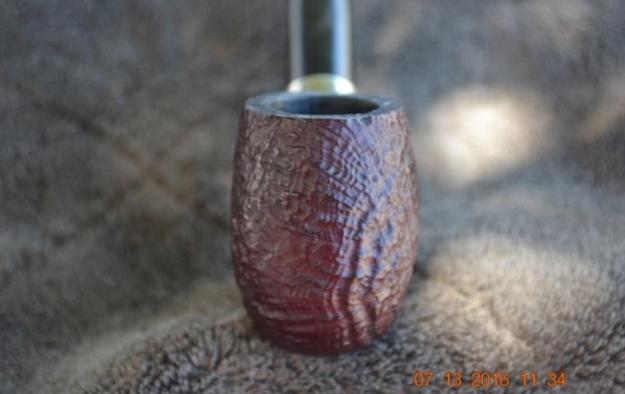
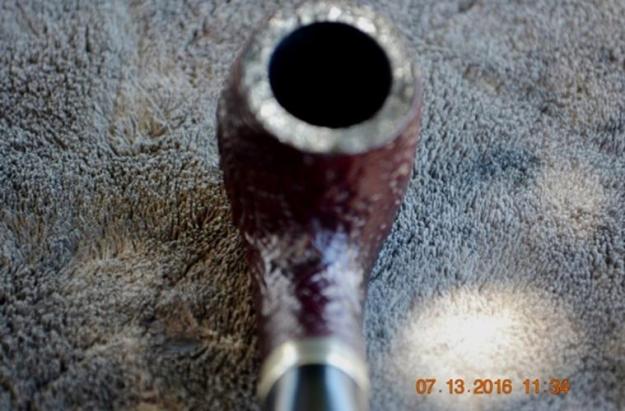
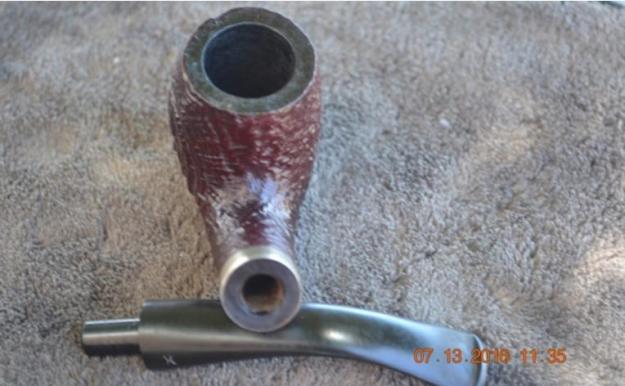
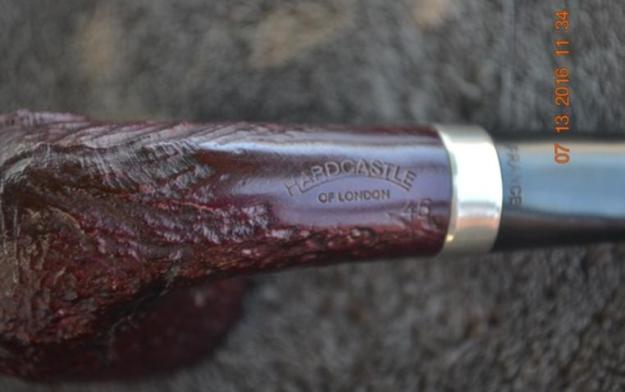
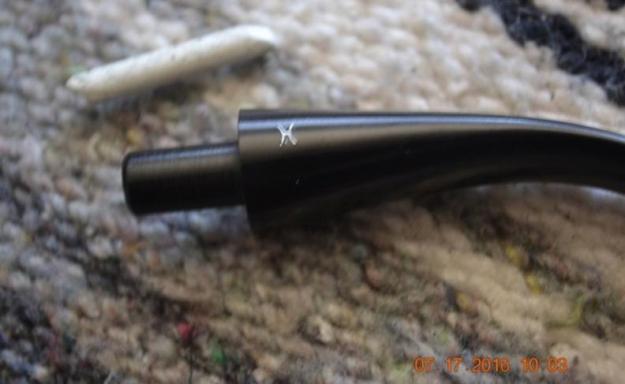
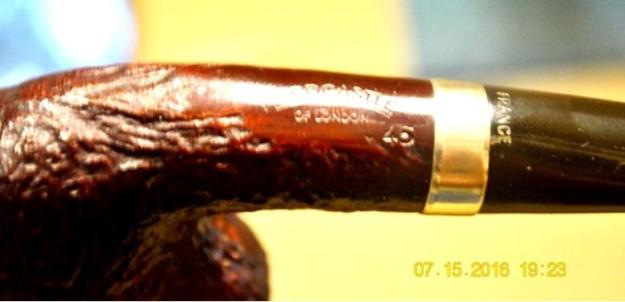
The first was a Hardcastle of London rustic bent billiard #45 of a beautiful, dark red color.  There are two stamps on the bit, an H on the left side and, in capital letters across the underside where it meets the shank, the word France.  I can find no mention of French made Hardcastles and suspect this may have been from a convenient bit supplier.  Steve confirms my guess.  But the fine briar smoker was in excellent, almost new condition that appeared to present no problems, although of course one popped up that I will describe later.

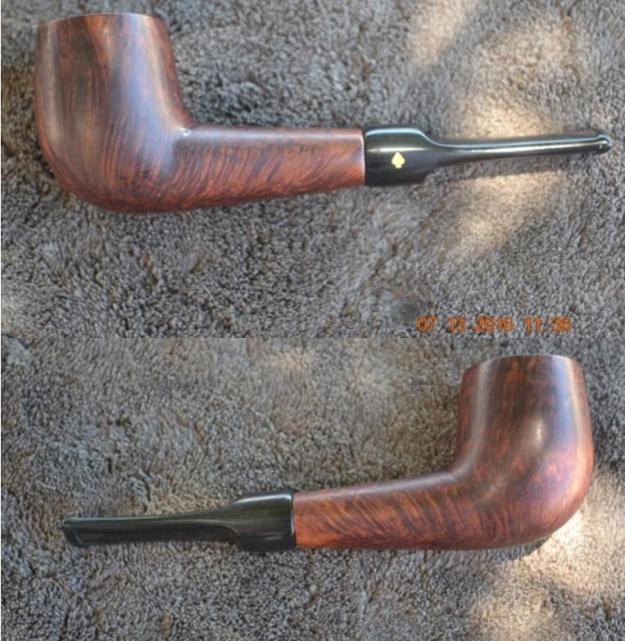
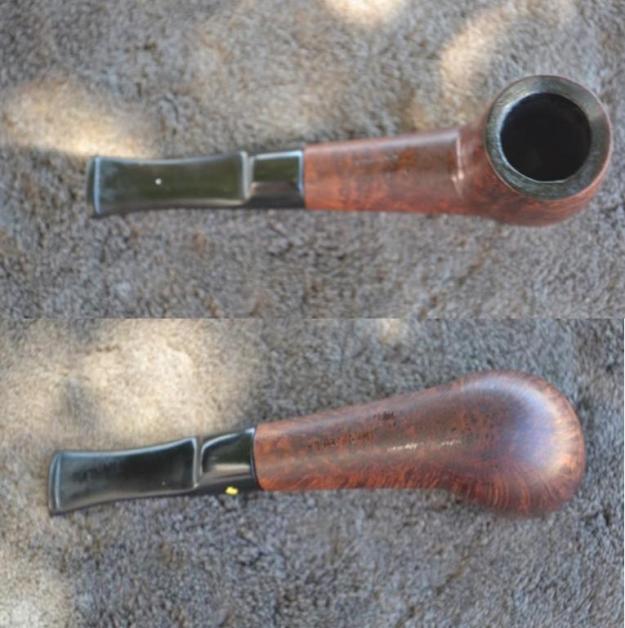
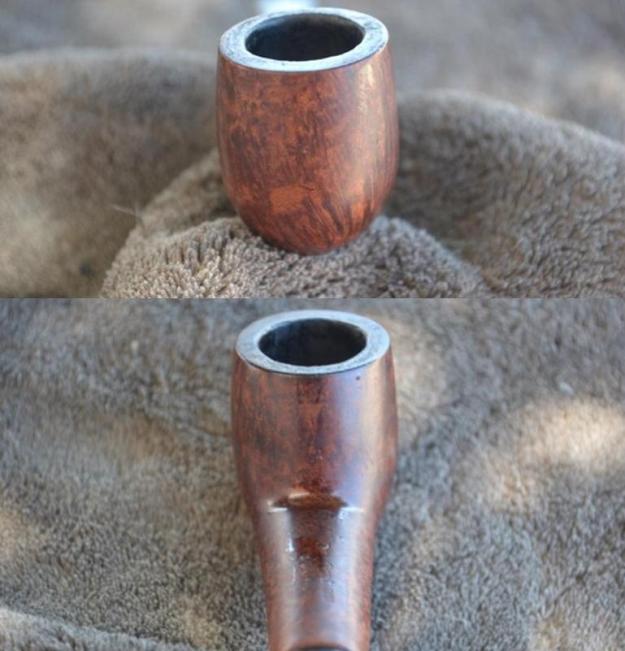
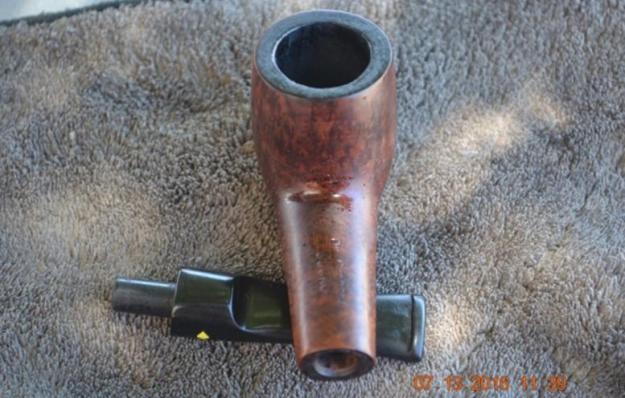
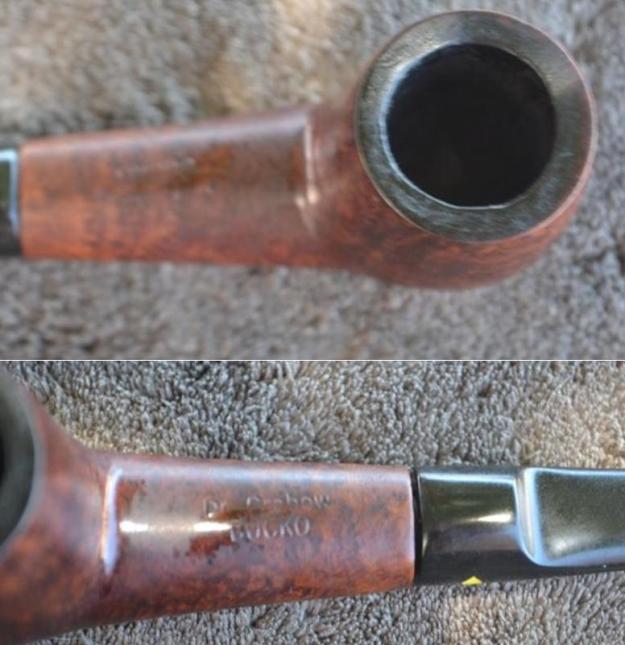
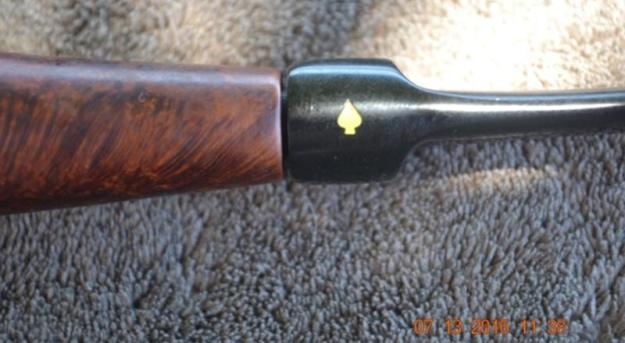
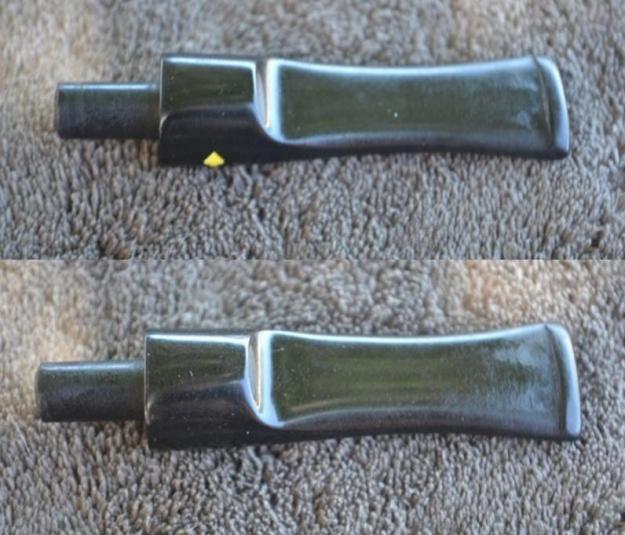
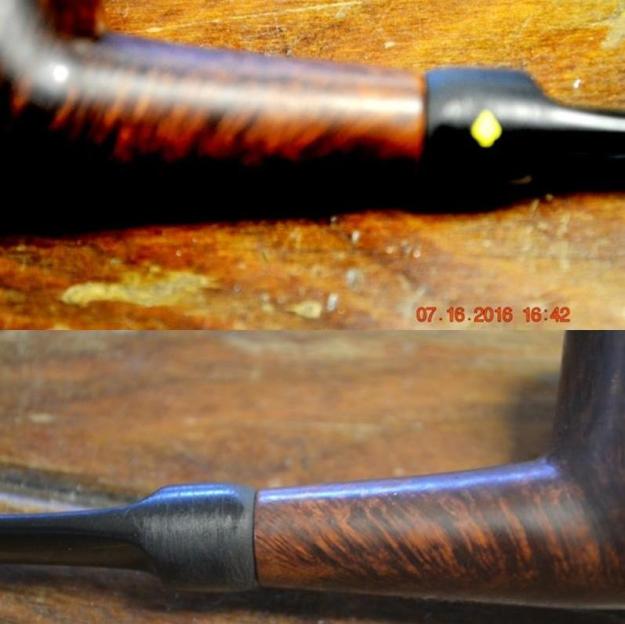
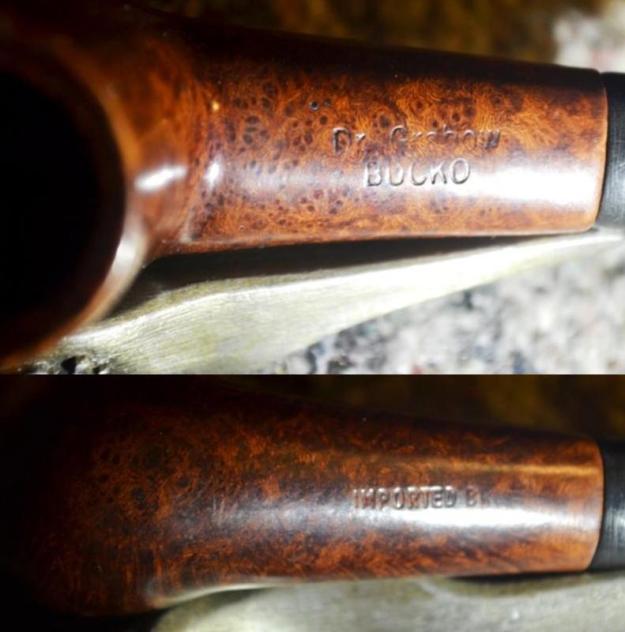
The second was a very nice Dr. Grabow smooth straight billiard with the name Bucko and a yellow spade on the left side of the bit.   My first impression of the Bucko, other than its wonderful vertical grain around both sides and the back and a nice birds-eye on the front, was that the bit seemed to be a replacement, as it was not flush with the shank opening.  I was happy, though, to see the bit rather than the shank was too big in places, just right on both sides and only extended too far on the top and bottom.  I knew I could fix that.

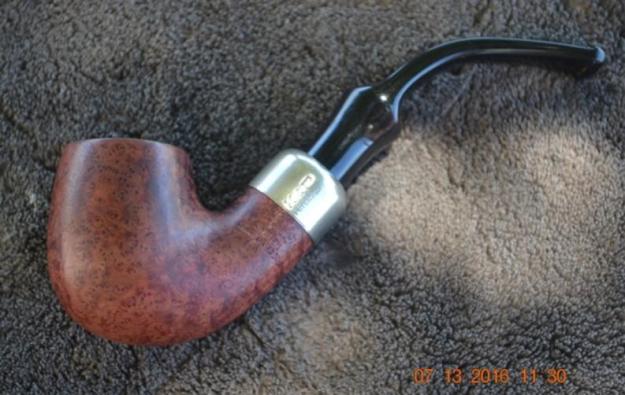
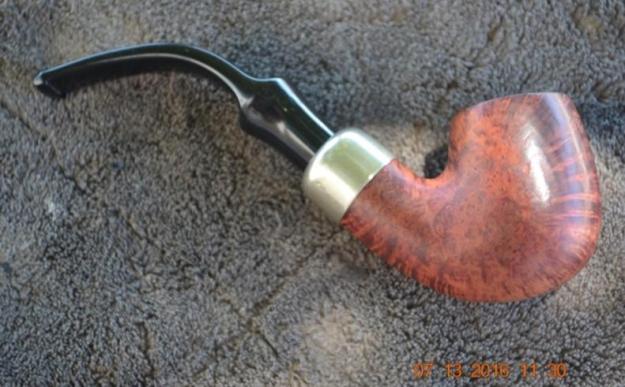
Then came the last pipe, and I even guessed the brand from feeling the shape through the bubble wrap: a classic K&P Peterson of Dublin System Standard smooth bent billiard.  Admiring it, I was startled when the bit popped out in one of my hands holding it with reverence.  Giving it an easy slight twist back into the nickel banded shank, it did it again.  And again.  Well, I ventured to guess, this little beauty was going to be an interesting challenge.Joe2I could not wait to get to work on them, having estimated a two-day turn-around.  First, of course, I had to stop by the tobacconist for a little relaxation and contemplation while I puffed one of my own pipes and studied Joe’s excellent set awaiting my gentle ministrations.  All of them, which were nowhere near as dirty or caked-up as Joe indicated, presented interesting challenges nevertheless.

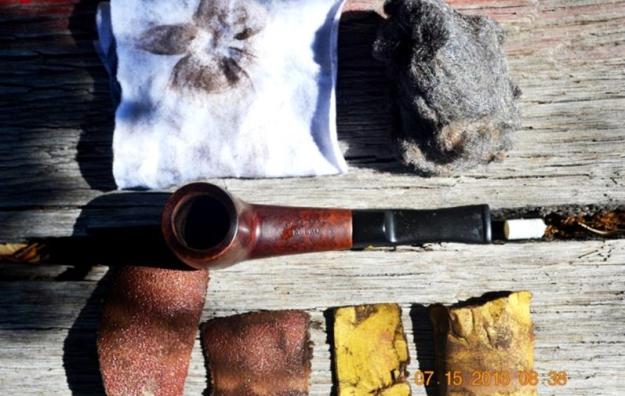
RESTORATIONS – DR. GRABOW BUCKOJoe3 Joe4 Joe5 Joe6For all the nasty talk about the brand, I have to admire the appealing visual twists on classic shapes that Dr. Grabow will throw into some of its designs, in particular the older ones.  Take this billiard, for example, with the unusual oblong aspect of the tapering shank.  At a glance, the problems that presented with the stout little Bucko were all minor.  There was slight rim darkening, far less than average chamber char, and a small amount of the original stain on the top of the shank that appeared to have been applied with some haste resulting in a shiny patch where heat drew out the liquid, which then re-dried.  Then again, perhaps the Bucko’s stummel had faded everywhere else, and that little area was all that remained of the factory finish.  Another possibility is that whoever chose the replacement bit prepped the wood for a refinish that for whatever reason was never applied.Joe7Closer inspection reaffirmed the theory of a replacement bit that was added without quite enough attention to detail, although the sides were perfect.  Again, only the top and bottom were misaligned. Joe8I began with the rim, which came clean after firmer than usual rubbing with superfine “0000” steel wool, and went for my usual approach on the chamber:  I used my Senior Reamer before sanding, first with 150-grit paper, then 180, 220 and 320.Joe9 Joe10I decided I might as well get the only real challenge with the Bucko out of the way and regarded the bit.Joe11I started with 220-grit paper to take off the excess Vulcanite on the top and bottom, but that got me nowhere.  I reached for the 180, and about a half-hour later was done with the fitting task.  I tossed the scratched bit in a preliminary OxiClean wash.  The scratches came off with wet micro meshing from 1500-12000. Joe13 Joe14 Joe15I took a close look at the scratches on the stummel.Joe16 Joe17With only the steel wool and the full range of micro mesh, wiping the wood with a soft cotton cloth between each grade, I was able to give the briar a nice, even smoothness.Joe18 Joe19Joe20 Joe21I retorted the pipe with Everclear.

Joe22After using the electric buffers to apply red and white Tripoli, White Diamond and carnauba to the bit and all of the same except for the red Tripoli to the stummel, here is the finished Bucko.Joe23 Joe24 Joe25 Joe26 Joe27 Joe28PETERSON SYSTEM STANDARDJoe29 Joe30 Joe31 Joe32 Joe33 Joe34I started by reaming and sanding the chamber and dispensing with the light rim char.  After giving my Senior Reamer a few turns in the chamber, I used 150-, 180-, 220- and 320-grit papers to make it ultra-smooth, but the steel wool was not enough to do the trick with the rim so I used a light touch of 320-git paper for the rest of the burns there.  As the second photo below shows, it turned out quite well. Joe35 Joe36There were some scratches and light pocks on the stummel that I eliminated by lightening the color of the stummel somewhat with steel wool.Joe37 Joe38Then I applied Fiebing’s Brown boot treatment to the stummel, let it cool and removed the thin layer of residue with 12000 micromesh.Joe39 Joe40The bit that appeared at first to be loose worked itself out somehow, maybe with the retort I did next.  And that was it, other than buffing the wood with white Tripoli, White Diamond and carnauba.  This was the only time I didn’t need to do anything to the bit.Joe41 Joe42 Joe43 Joe44 Joe45 Joe46HARDCASTLE OF LONDONJoe47 Joe48 Joe49 Joe50 Joe51 Joe52 Joe53 Joe54 Joe55Just to shake things up a bit, as I never start with the bit, that’s what I’m going to do.  Besides, this one is so easy, I might as well get the hardest part out of the way.

When I removed the bit the first time, I noticed it was so tight it wouldn’t budge.  Afraid of breaking either the tenon or part of the shank, I followed one of Chuck’s first lessons to me. Grasping the bit firmly in one hand – prepared to stop if I felt one more hint that a foreign substance was making the two parts stick – I turned the stummel with my other hand.  The sound was awful, but the parts came loose with a slowness I didn’t rush.  All that was needed to loosen the bit so it was easy to turn into the shank was a couple of tight turns of steel wool around the tenon.

The discoloration is shown just as it in fact appeared with my own eyes for once, rather than the camera’s POV.  In my opinion, just as a camera will add a few unwanted and unfair pounds to humans, so will it give a more flattering gloss to Vulcanite than the material often deserves. I gave it an OxiClean bath for about a half-hour.Joe56 Joe57And here it is after the bath and a brisk rub down with a soft cotton cloth.Joe58After wet micro meshing from 1500-12000, buffing on the wheel with red and white Tripoli, White Diamond and carnauba, and re-filling the empty H with a white china marker, this is the final result.Joe59I reamed and sanded the chamber and rid the rim of dark marks.  I used the same approach as the first two pipes on the chamber, and again, only steel wool was needed for the rim.Joe60 Joe61All that was left before the final buff was to retort the pipe, and as always, I was glad I did.Joe62Coating the already beautiful, rusticated red briar with Halcyon II wax, I set it aside to dry before wiping it down with a soft cotton cloth.Joe63 Joe64I was almost sad to be finished.Joe65 Joe66 Joe67 Joe68 Joe69 Joe70 Joe71CONCLUSION

Now I have to return these three fine pipes to their owner.

SOURCES

http://www.pipephil.eu/logos/en/logo-hardcastle.html

https://pipedia.org/wiki/Hardcastle


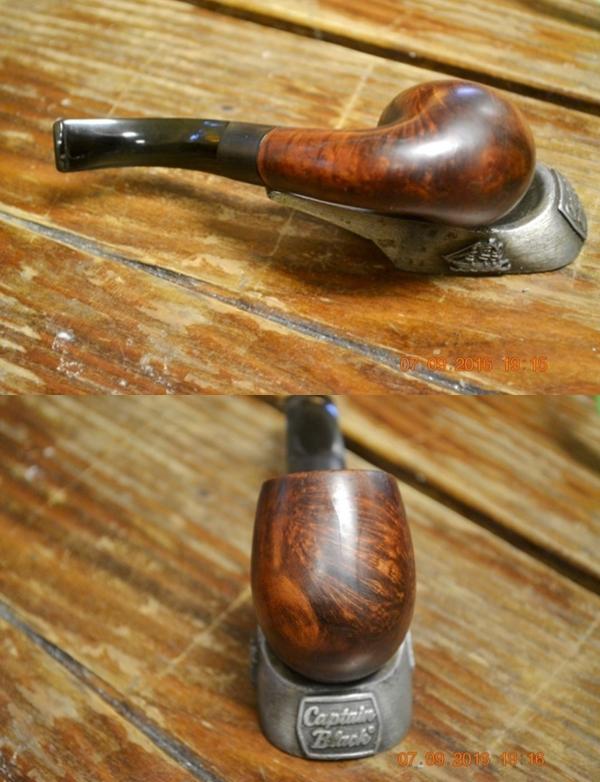
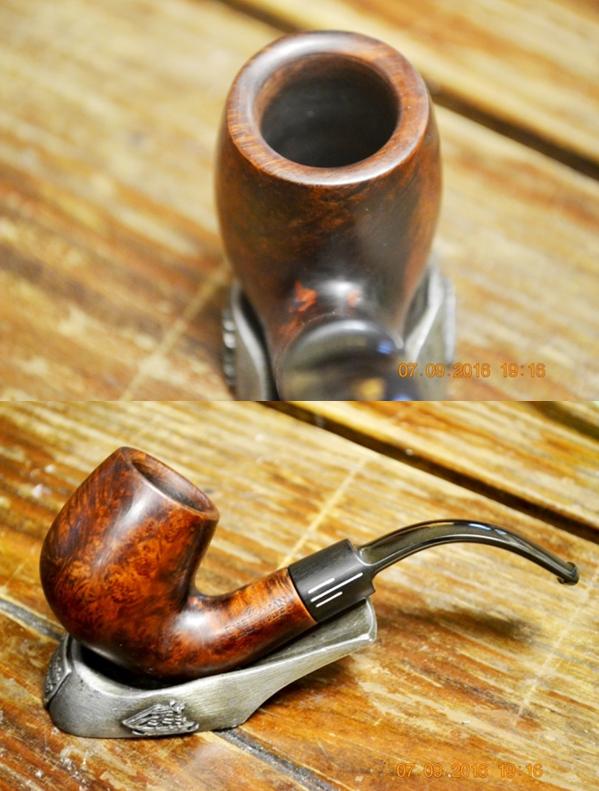
An Everyman London Pipe Un-dinged


Guest Blog by Robert M. Boughton

Member, International Society of Codgers
Member, North American Society of Pipe Collectors
http://www.naspc.org
http://about.me/boughtonrobert
Photos © the Author except as noted

“The average man, who does not know what to do with his life, wants another one which will last forever.” — Anatole France (1844-1924), French novelist

INTRODUCTION
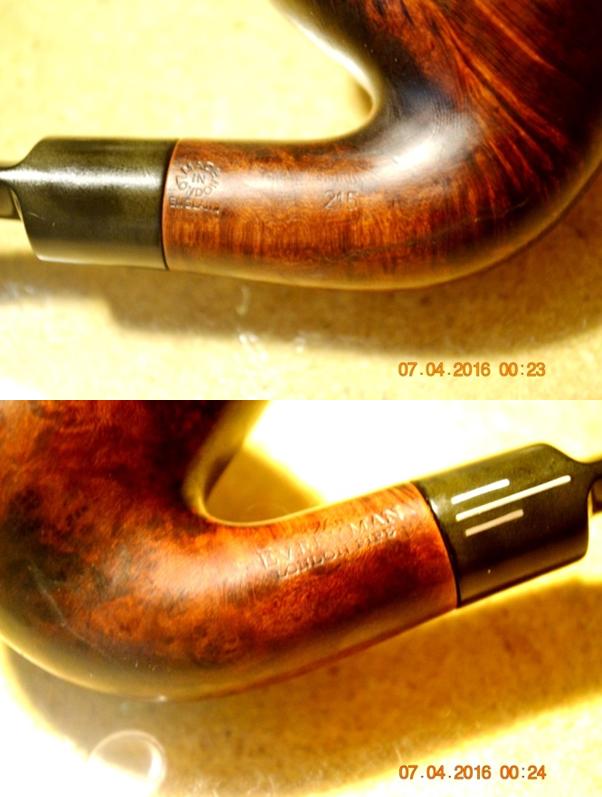
According to several sources, including Gregory Please, the circular “Made in London England” stamp on Comoy’s lines, of which this Everyman London Pipe full bent billiard is a second, was discontinued in the early 1950s.  Therefore it seems probable that the Everyman I put in my sub-group of unrestored pipes to be fast-tracked is from the same period.  This was my second Everyman London Pipe restoration, as well as one Guildhall, which leads me to suspect and there is a collective unity of pipe enjoyers out there, however nebulous, who seek out these inexpensive but fine seconds.  I make this supposition considering the speed at which all three of the Comoy’s seconds on which I’ve worked sold: within days of completion, one of each line on my old website and the other in a local transaction.  Comoy’s began, with the manufacture of clay pipes, in St. Claude, France in 1825; the company’s first briar pipe was made in 1848, and Comoy’s of London was established in 1879.  Then there are Chapuis-Comoy, founded in 1925, and the Chacom connection, starting in 1934.  But don’t let me confuse things.

By admitting this was not a difficult job, I should note that I nevertheless decided upon an Everclear strip of the old stain to uncover the many pocks and scratches that were all over the outer surface rather than sanding the entirety of the stummel.  Otherwise – although there were a couple of adjustments that needed to be made after I took the first set of “final” photos, the task was relaxing and diversionary in between some more involved projects I’m still finishing up.  The bit was in good shape and needed minimal sanding, the rim was as clean as I’ve ever seen one, and the chamber had little char.  Still, it was one dinged up pipe.C1 C2 C3 C4
RESTORATION
I soaked the wood in the alcohol and the bit in an OxyClean bath.  The bit came out first, but that’s not the order I’m recounting the process here.  After I removed the stummel and wiped it most of the way dry with small soft white cotton cloth pieces, I gave it a gentle sanding with 320-grit paper.  All of the dings went away, and I thought I got all of the scratches as well.  But I will return to that thought later.

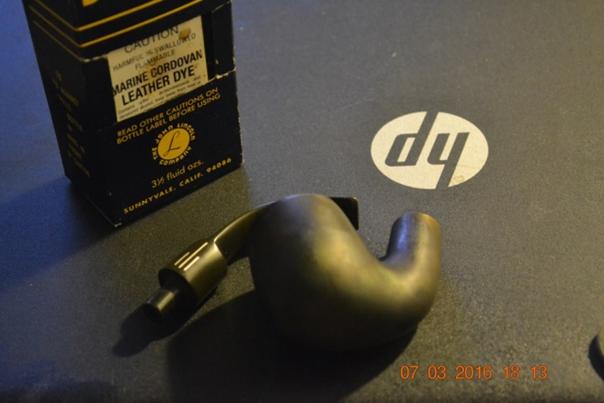
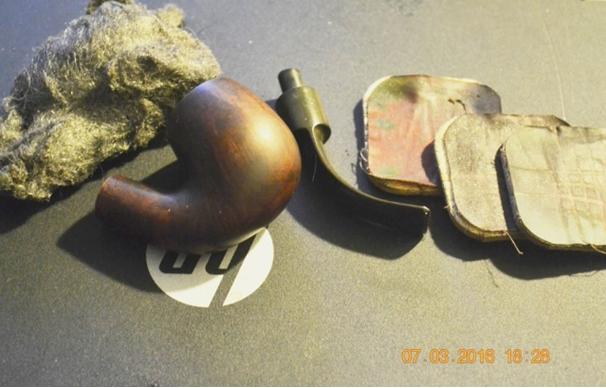
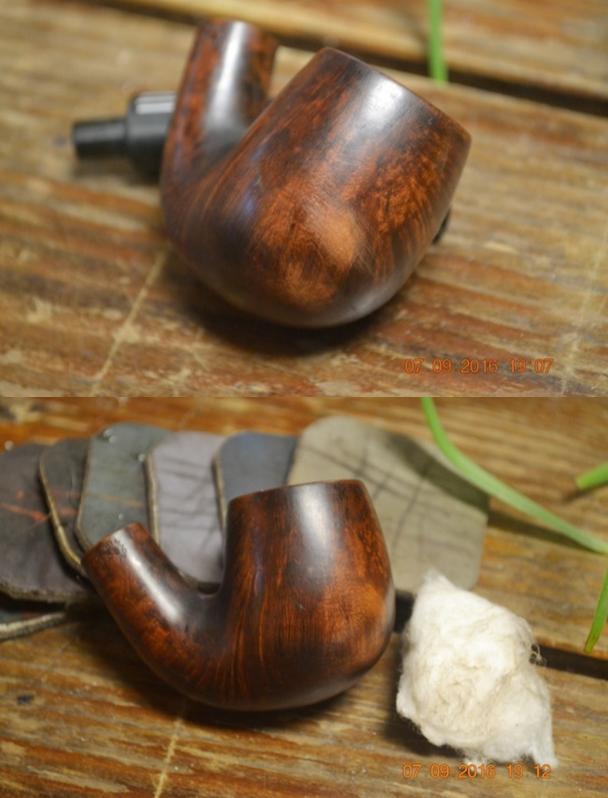
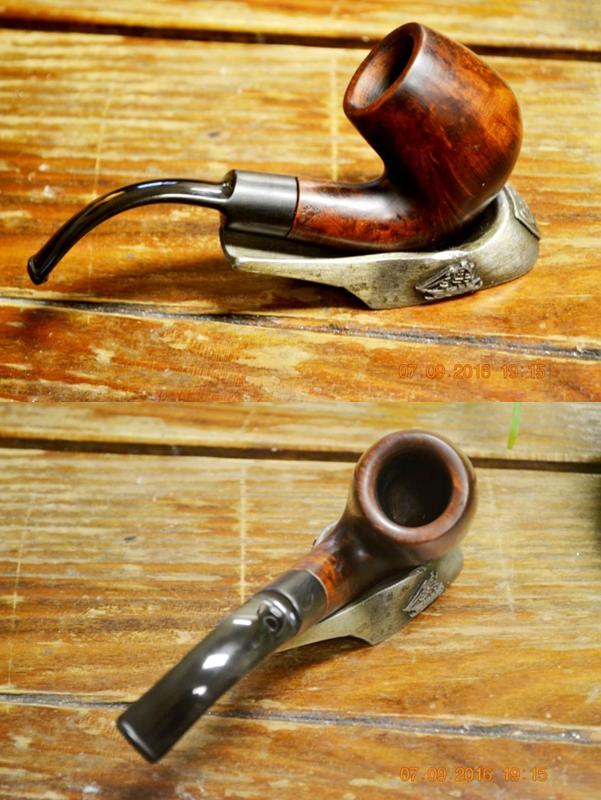
C6C7 The bit came out of the bath much cleaner and ready for wet micro mesh pads from 1500-12000. I did the same with the wood, only using dry pads.C8 I sanded the chamber with 220- and 320-grit papers and retorted the pipe. Already at the re-staining point, I chose Lincoln Marine Cordovan leather treatment, which I flamed.C9 To remove the outer layer of dark, charred stain, I used 1800, 2400 and 3200 micro mesh followed by a soft touch of superfine “0000” steel wool.C10 Now, for the first “final” shot I took showing two problems: the bit where it attaches to the shank needed more sanding and micro mesh work, and through the camera’s unblinking eye there were two glaring scratches remaining on the right side of the pipe.C11 And so I broke out a little piece of 320-grit sandpaper and went at the isolated scratches on the wood, micro meshing that area again with the full range of grits. I finished it by wiping with a cotton ball. To my surprise, I didn’t even need to rebuff the wood with the white Tripoli, White Diamond and carnauba I used in the first place.C12 I used 320-grit paper again on the rounded shank end of the saddle bit and the full line of micro mesh pads on that small section. I re-buffed the re-worked part of the bit.C13C14C15C16
CONCLUSION
The nomenclature was crisper than it seemed before the project, unlike a certain GBD Prestige brandy I was forced to keep – and often enjoy  — lest I forget.  Steve demonstrated the correct way to approach a Prestige of a different shape in one of his recent blogs, referenced below.

SOURCES
http://www.glpease.com/Pipes/Comoy.html
https://pipedia.org/wiki/A_History_Of_Comoy%27s_and_A_Guide_Toward_Dating_the_Pipes
http://www.glpease.com/Pipes/Comoy.html
https://rebornpipes.com/2016/07/06/a-stellar-find-a-gbd-prestige-1451-oval-shank-billiard/

The Scintillating Antique KB&B Redmanol Pipe


Guest Blog by Robert M. Boughton

Member, International Society of Codgers
Member, North American Society of Pipe Collectors
http://www.naspc.org
http://about.me/boughtonrobert
Photos © the Author except as noted

When life was like a summer day,
And I was under twenty,
Three loves were scattered in my way –
And three at once are plenty.
Three hearts, if offered him with grace,
One thinks not of refusing.
The task in this special case
Was only that of choosing.
I knew not which to make my pet –
My pipe, cigar or cigarette!

— Henry S. Leigh (1837-1883), British writer, playwright and lesser poet, “My Three Loves,” 1875

INTRODUCTION

As a writer, I make it a habit to look words up in the dictionary before committing to print, even when I am confident they are the best to convey my true messages.  In the process, I have often been surprised to learn how many words come nowhere close to their common usage.  I have stopped using fantastic (related to a fantasy or other such literary, delusional or wishful thinking, when I want to suggest excellent; I’ve dropped mesmerizing (named for the Australian physician/showman F.A. Mesmer, which deals with the alleged ability to place someone in a trance so deep the subject cannot feel pain, as opposed to something considered fascinating, and of course I have my pet peeve: unique, or existing as one, sole, solitary, alone.  Therefore, there can be no higher degree than unique, such as more, very or, God help us, totally unique, dude.  Thomas Jefferson’s unique literary and diplomatic exception to the same rule applied to another word, in penning the “Declaration of Independence” and referring to a more perfect Union, was a brilliant misuse of the language directed to good old King George V, whom the masterful wordsmith, diplomat and statesman knew would not miss the Colonial revolutionary’s attempt to play nice.

Somewhat of a language purist, therefore, I was disappointed upon checking the past participial adjective scintillating in the OED.  I hoped to find a meaning with common uses I have heard indicating something more alluring in a sensuous sense.  I suffer from chronic migraines and was struck by the sole usage referenced, to scintillating scotoma, the technical name for auras we who live with the often blinding, nauseating, debilitating torture of these attacks call the event that precedes the onset of the pure anguish that can last 12 hours, 24 or for days before running out of air, if you will, burning out (or more descriptive of their quality, terminating with a thermonuclear-like reaction) – and then returning, as they come in cycles of three or so for me.  Thanks to my dear Dad, however, who taught me the value of a good double meaning in any title, I moved to the verb scintillate and found more general references to sparks, flecks, twinkles and flashes of light, without the negative but illustrative connection of scintillating scotoma.

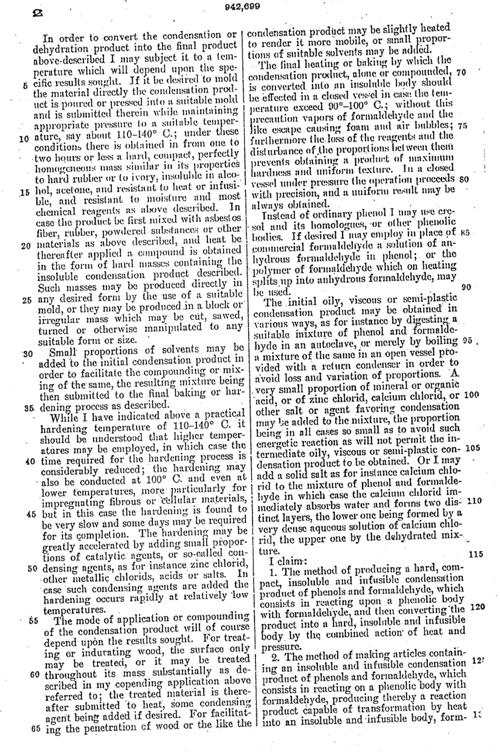
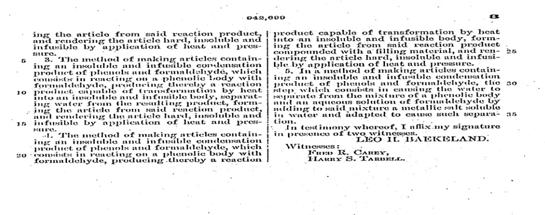
The story behind Bakelite and two of its competitors, and the Machiavellian way the three in time merged into a single Bakelite incarnation, is one for the annals of business law.  The basic original resin used to make Bakelite, a phenol formaldehyde based synthesis, was patented as such in 1900 by Leo H. Baekeland, a Belgian-American chemist.  Baekeland’s synthetic plastic, the first formulated in the world, was named in honor of its inventor and began production in 1907.   See below for the 1900 patent.

The first of many Bakelite satellite companies worldwide, the Bakelite Gessellschaft gmbH, was founded in Berlin in 1910 by Baekeland and two German companies.  Late the same year, the General Bakelite Co. was established in the U.S. by Baekeland.

Two independent chemical research and production companies in the same time period, Redmanol Chemical Co. founded by Lawrence V. Redman after whom the harder, more durable and amber-colored synthetic was called, and the Condensite Co. established by A.J. Aylesworth, developed and sold their products which included substantial differences from Bakelite although they employed the same heat process.  The hard, durable synthetic plastic redmanol was called thus after its developer and is made from the action of formin on carbolic acid.  On the other hand, condensite is formed from the action of chlorine on naphthalene.  In other words, all three have fundamental differences that make them viable as separate synthetic plastic products.

Perhaps seeing the only way to maintain ultimate proprietary control over his original Bakelite idea and not miss out on the opportunity to use newer, better variations on his theme, in 1922 Baekeland sued a distributor of Redmanol, which had a controlling interest in Condensite, for patent infringement.  Baekeland must have known the other companies could not fight the complaint in court and maintain production.  His civil action ending in success, he “arranged” for the two smaller chemical concerns to be consolidated with the formation of the Bakelite Corp.  From then on, Redmanol and Condensite products, including pipes, were stamped Bakelite – but all anyone needed to do was look at the quality of the product to know the difference.  Bakelite Corp. was consumed by Union Carbide and Carbon Corp. in 1939.

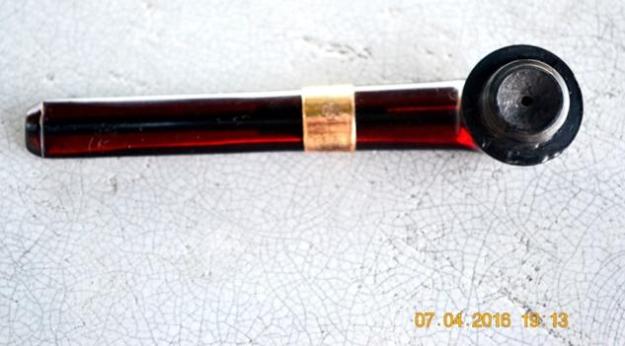
Redmanol so approximated the appearance of amber – which, remember, was prized in meerschaum and other pipes before and after the turn of the 20th century – for which Redmanol Chemical Products in its own name took out ads like one in the June 1919 issue of “The Scientific American.”  High-minded and overblown, as was the custom of the day, the ads were headed, “In Search of the Man Made Amber.”r1 r2 r3This amazing combination of all that one could hope to find in a pipe – artistry, elegance, refinement, style, class and functionality, to name a few attributes – alas does not belong to me, and I will neither hesitate nor pretend not to be jealous of the fact.  Instead, my fellow piper and friend, Darryl Loomis, is the very lucky new owner.  He loves it so much that he was willing to tolerate a somewhat bad taste he detected rather than trust it to someone to restore.  I am honored to clean it up for him.  Shocked to find I have no photo of Darryl, I suspect he will not be unhappy.

Darryl asked me to clean it up.  Well, the fact is, I got one look at it and could almost not keep my voice under control when I said I would love to do it for him if he had no plans for the project.  I admit I was jazzed to be able to take it home with me from Friday night’s local pipe get-together at the tobacconist.  But there’s one important thing I should now note about any pipe “cleaning” job I undertake, unless the owner makes it clear that’s all he wants done, period.  I don’t half-ass anything.  Even when my business site was up (and it will be again this week), I included basic refurbishing with cleaning jobs and the full works with refurbs/restores (any necessary replacement parts not included in the base price).  So that’s what’s happening here.

While we talked about the pipe, Darryl mentioned something peculiar.  He said he noticed a somewhat bad taste but seemed willing to tolerate it as he did not expect to rotate this pipe very often.  I unscrewed the bowl from the shank and saw right away where some of the unpleasant effect may have originated, but mentioning it to him, he was emphatic that he had heard the metal plate inside the shank (just as with any standard system metal, interchangeable bowl pipe such as a Kirsten) was coated with an unknown substance to keep it from overheating.

Being somewhat more curious than usual, after I was home with the pipe, I ran a cleaner through it, loaded a half-bowl of MacBaren 7 Seas Red cherry and lit up.  Very soon the nastiness Daryl had understated rose in full force, ending with such awful dottle I spat it into a handy cup.  My tentative conclusion, until I can query Daryl more, is that he trusted the person who sold it to him and didn’t considered it might never have been cleaned.

Now, for the before photos of this gorgeous, unique Kaufman Brothers & Bondy work of art – a pipe with a screw-in bowl that predates Kirstens by more than two decades.r4 r5 r6 r7 r8 r9 r10 r11 r12 r13RESTORATION

I removed the bowl and began there.  Having come across a couple of Reborn Pipes blogs, one by Troy Wilburn a year ago about a KB&B Blue Line Poker c. 1909-1914 and the other by Steve Laug concerning Redmanol bits from almost four years back, I was prepared for how to deal with the briar bowl as well as cleaning the deep red quality synthetic plastic, the cubic zirconia of the phenol formaldehyde resin world.

Steve had used nail polish remover (acetone) as a less invasive way of stripping the stain, and it worked quite well of course.  Not having any of the stuff on me, however, and being short on cash and time to do this job for gratis, I compromised.  Instead of a long, thorough soak in Everclear, I dunked the bowl in a tiny Tupperware container for a minute, removed it and scrubbed it dry inside and out with a soft cotton rifle cleaning cloth.  I did have to repeat that process, but still, the combined soak time was minimal.r14 r15 r16 r17Again I regretted not being able to follow Steve’s lead using a Pipnet reamer because I saw the good reasoning behind it…BUT, my handle broke some time ago, rendering it useless.  You get what you pay for.  Next time, I’ll invest a little more for a lot better.  But just a couple of turns of the Senior followed by 500-grit and 320 paper made the chamber baby smooth and clear of char.  I also used the 320-grit on the rim to remove some scrapes, and both papers on the bottom side which was rougher from after wear from repeated turning into the grooves of the shank.r18 r19 r20I ran a few cleaners dipped in freshener through the bit’s air hole, the first of which came out filthy, but the end result was clean.r21Next, I used wet micro mesh from 1500-12000 on the entire surface of the Redmanol shank and bowl cup.  The minimal blemishes there made that fast work.  Cleaning out the draught hole was trickier with more cleaners dipped in freshener, but the accreted gunk and juice all came out.  I tested it again later to be sure, but it was clean.  I really don’t like not being able to retort any pipe.r22 r23Near the end, I stained the pipe bowl with Fiebing’s Brown, flamed it and after it cooled gave it a gentle 3200 micro mesh buff.  I was very pleased with the color I got from the wood.r24The bell tolled the time to do that which I had put off and Steve graciously reminded me needed doing.  He suggested a little Super Glue around the sharp edges of the Redmanol ledge where the bowl was to fit would fill in the cracks.  That followed by micro mesh or light sandpaper would do the rest.  Here is the best before shot I could get with my failing flash system, but the cuts on the right side of the synthetic plastic show up well enough.  There was a matching pair on the left side, suggesting the pipe’s enjoyer was screwy in his habits or the bowl never quite fit right.r25Here’s a shot I admit is horrible with the Super Glue applied, and one after it dried.  I opted for super fine “0000” steel wool to even off the ledge.r26 r27I really can’t say what those apparent white flecks are other than that I took it in a hurry outside.

Not touching the bit with any kind of wax, I buffed the briar bowl with white Tripoli, White Diamond and carnauba.

r28 r29 r30 r31 r32 r33 r34 r35CONCLUSION

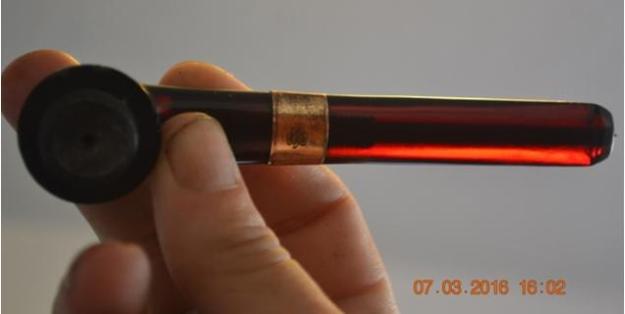
For this special pipe, instead of my usual last photo being the left side full shot, after a detail picture of the band’s KB&B stamp, I chose the close-up of the wonderful red translucence of the bit held up to the light by a friend.  The old I would have tried to take it myself despite having to hold down the flash pop-up at the same time, and the probable end would have been, well, unthinkable.  But I love those flashes, sparkles and twinkles that make the lovely amber-like bit, which is often called Bakelite because of its more famous owner, so scintillating.

HOLD THE PRESSES!  At the exact moment I was about to hit SEND and dispatch the blog to Steve, I made a connection between Redmanol and a meerschaum-lined art-deco style bulldog Chuck sold me some time back with a bottom he described as what I thought was “red menaul,” or something to that effect.  Now I understand what it was.r36

Redmanol art deco style socket bulldog

Redmanol Art Deco style socket bulldog

Here I’ve had this great, smooth and cool smoking pipe in my collection for several years and never knew what to call it.  All mysteries come to an end in time.

 SOURCES

http://www.pipephil.eu/logos/en/logo-r3.html

“Phenolic Resins Technology Handbook,” p. 6, at https://books.google.com/books?id=oYZGAQAAQBAJ&pg=PA6&lpg=PA6&dq=redmanol+chemical+products+founder&source=bl&ots=juthNFh-rW&sig=b9qO8plogjv6fj_u2TBjkdpIfCM&hl=en&sa=X&ved=0ahUKEwj-gNj4h9nNAhUM9YMKHXKjBwMQ6AEINDAE#v=onepage&q=redmanol%20chemical%20products%20founder&f=false

https://rebornpipes.com/2015/06/06/spiffing-up-a-kbb-blue-line-bakelite-poker-1908-1914/comment-page-1/#comment-18773

https://rebornpipes.com/tag/redmanol-stems/

https://www.acs.org/content/acs/en/education/whatischemistry/landmarks/bakelite.html

https://en.wikipedia.org/wiki/Bakelite

“Compton’s Pictured Encyclopedia, Vol. 2,” pp. 813-816, at https://books.google.com/books?id=11FHAQAAMAAJ&pg=PA816&dq=in+search+of+the+man+made+amber+redmanol&hl=en&sa=X&ved=0ahUKEwis5OvgmNvNAhVk0oMKHYveA6sQ6AEIIzAB#v=onepage&q=in%20search%20of%20the%20man%20made%20amber%20redmanol&f=false

“Factory and Industrial Management,” Vol. 64, p. 167, at https://books.google.com/books?id=nTs8AQAAMAAJ&pg=PA144&lpg=PA144&dq=redmanol+bakelite+infringement+judgment&source=bl&ots=TCel6fmccJ&sig=ehZijKCRrQSs-RnL6xiDbVA5aKM&hl=en&sa=X&ved=0ahUKEwi39veundvNAhUT32MKHbeiCJwQ6AEIHDAA#v=onepage&q=redmanol%20bakelite%20infringement%20judgment&f=false


Spotlight: Ladies Pipes, Part 5/7, a Vintage Dr. Grabow Carved Duke


Guest Blog by Robert M. Boughton
Member, International Society of Codgers
Member, North American Society of Pipe Collectors
http://www.naspc.org
http://www.roadrunnerpipesnm.biz
http://about.me/boughtonrobert
Photos © the Author

If a man loves you…he’s willing to profess it. He’ll give you a title after a while. You’re going to be his lady, his woman, his fiancée, his wife, his baby’s mama, something.
— Broderick Steven “Steve” Harvey (b. 1957), U.S. comedian, actor, TV and radio talk show host, writer of books on relationships, former New York public high school teacher

INTRODUCTION
I neither forgot nor gave up on this special series despite the relative vacuum of responses. Instead, I was sidetracked by developments in a portfolio of litigious necessity that might very well expand with more certainty and regularity than the universe. Returning to the subject of this blog, just the other day I chanced upon a woman with a rather off-putting appearance. Perhaps some significant other had at last given her a title she disliked. At any rate, she was chain-smoking cigarettes with almost the frenetic zealousness of the late great Lloyd Bridges near the end of the comic classic “Airplane.”

Nevertheless, by pure nature, I acquainted her with my name and part-time occupation, and of course mentioned the several new customers I came across in recent weeks, under circumstances that can only be called serendipitous, who were already free of cigarettes. Undeterred when the lady did protest – with a deceptively soft, dismissive laugh that was somehow more like a tiger stifling a yawn before it pounces – that the idea of a woman smoking a pipe did not seem very lady-like. Still not dissuaded, I pulled from my magic box the perfect specimen of a lithe, sleek, petite bent billiard that I had reserved for one other singularly odd woman who never claimed it.

“That’s why I also restore ladies pipes such as this,” I said with a hint of enthusiasm, and held it out.

With the most cursory pretense of a glance I never before had the pleasure of noting in my writer’s mental file, she gave a flick of the head every bit as memorable, so that her long, dirty blonde hair made room for a fresh cancer stick. She shoved in her mouth, so forcefully punctuating her contempt that the nasty, chemical laden coffin nail went farther into her mouth than anticipated and almost choked her. I had to admire the quick recovery with a lengthy, chic, palliative drag, so reminiscent of any one of the many Golden Age of Hollywood starlets now long dead from the same prop rather than age. I know when I’ve been shot down. But it still goes to show the progress society needs to make before a lady can be comfortable walking into a tobacconist to buy a pipe.

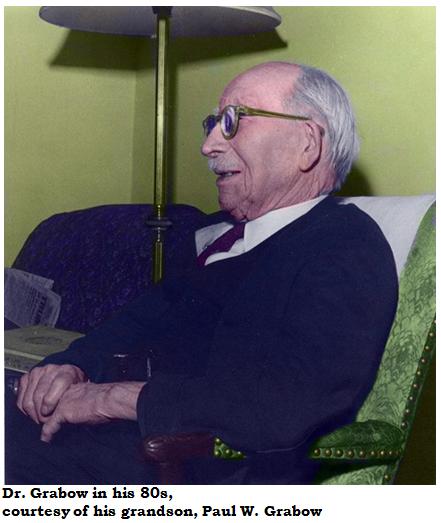
On the subject of pipes, it turns out there really was a Dr. Grabow – Paul E. Grabow, MD (1868-1965), a general practitioner in Chicago who was a friend of Louis Linkman, co-founder with August Fisher of M. Linkman and Co. in 1898. During a conversation between the two in the early years of the Great Depression, Linkman reportedly told Dr. Grabow of his idea to introduce a new and improved line of pipes that he felt would sell better if they were named after a physician. Dr. Grabow, flattered by the request to use his name, accepted. The pipe brand named for him was launched in 1932, and until his death at age 97 the good doctor was given new models whenever he wanted them. Grabow1

The free pipe perk persisted despite Linkman’s production of the brand stopping in February 1953, when the Dr. Grabow Pipe Co. filed for dissolution a month before Henry Leonard and Thomas Inc. (HLT) of Queens, New York bought the rights, and they were produced by Sparta Pipes Inc. U.S. Tobacco bought out Sparta in 1969, assuming control of the Dr. Grabow production until Lane Ltd. paid for the rights some time later. Around 2000, RJ Reynolds and British American Tobacco took over.

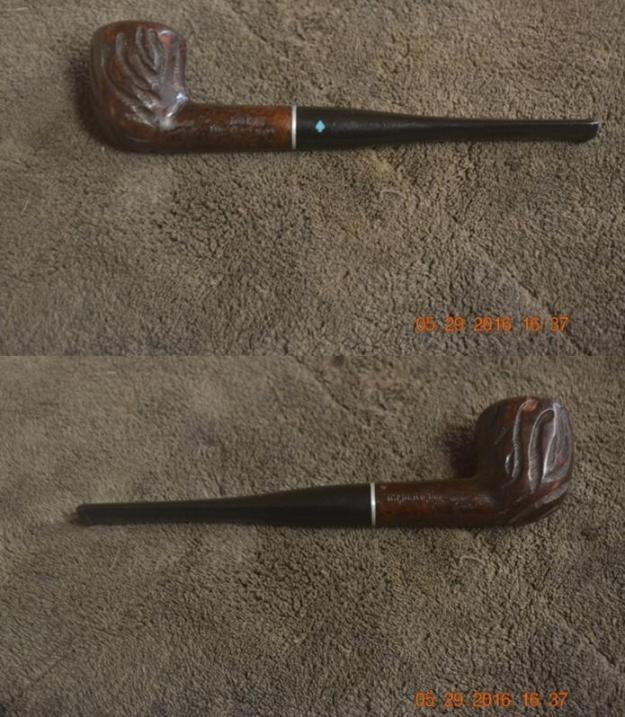
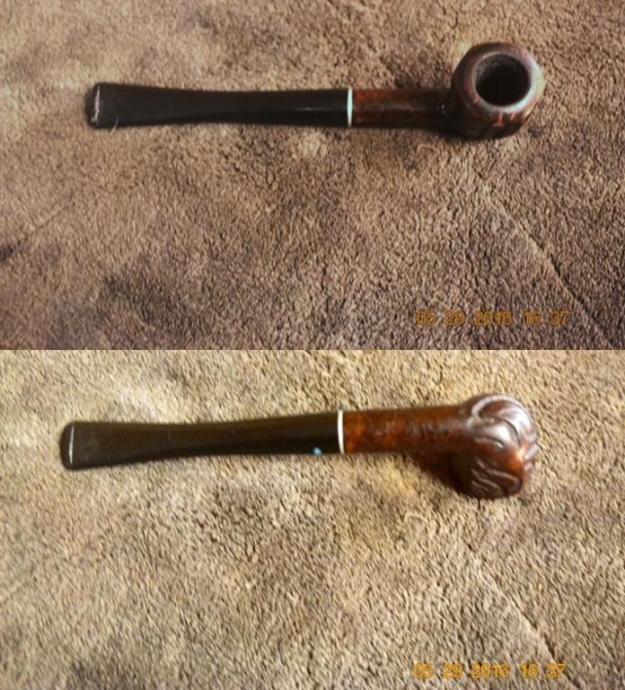
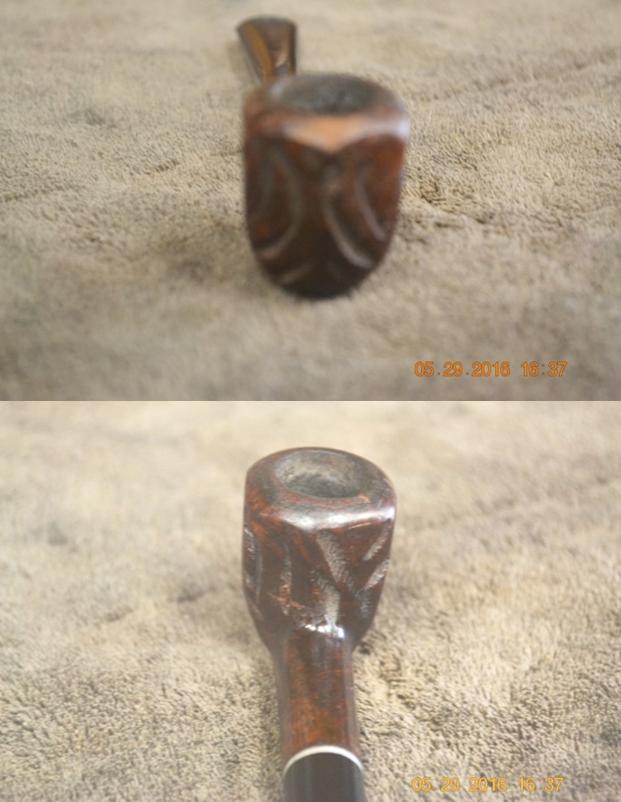
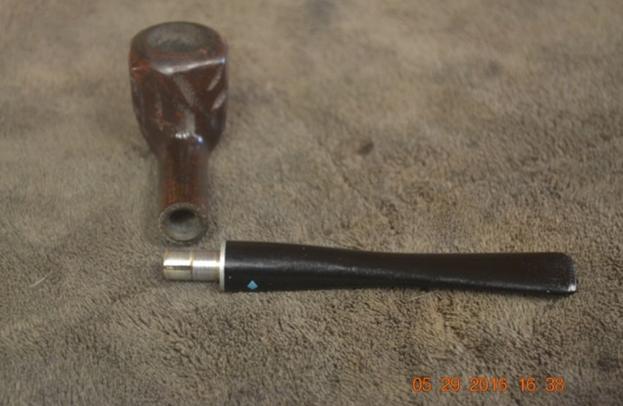
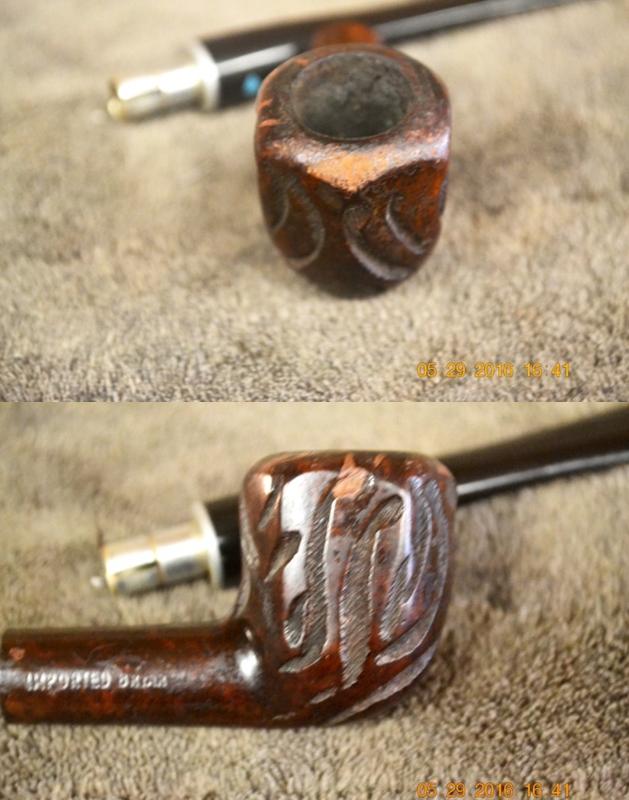
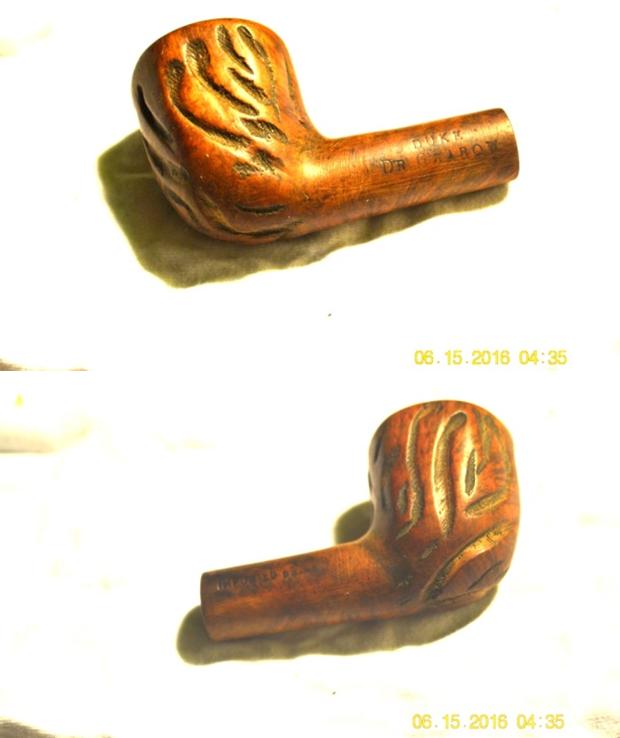
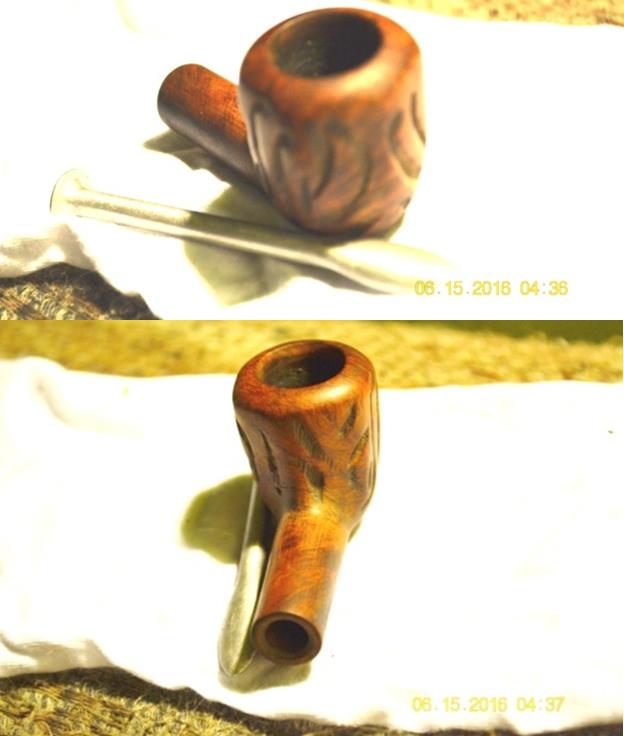
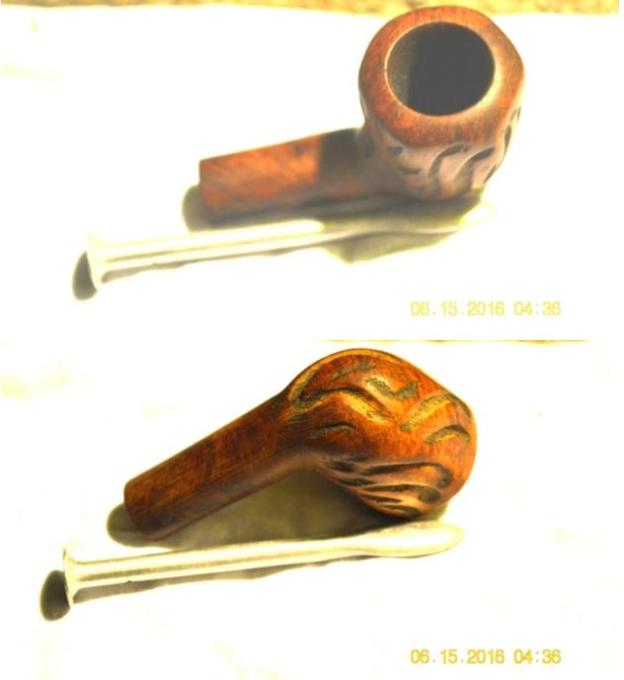
As for the peculiar little carved Duke that is the subject of this installment, regardless of its smallness, the bowl seems to have six subtle sides. I am inclined to call such a shape a panel. But the best narrowing I can do with the multitude of Dr. Grabow sites is a “textured” slim pear, shape number 74.Grabow2Grabow3Grabow4Grabow5

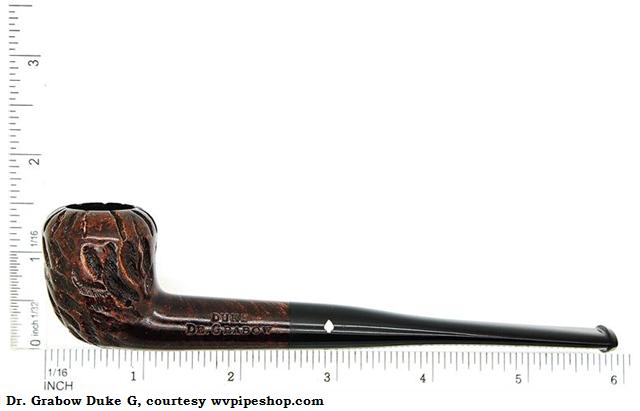
And here is a photo I found online of a Dr. Grabow “Duke G,” which appears to be the same pipe except for the white spade.Grabow6

RESTORATION
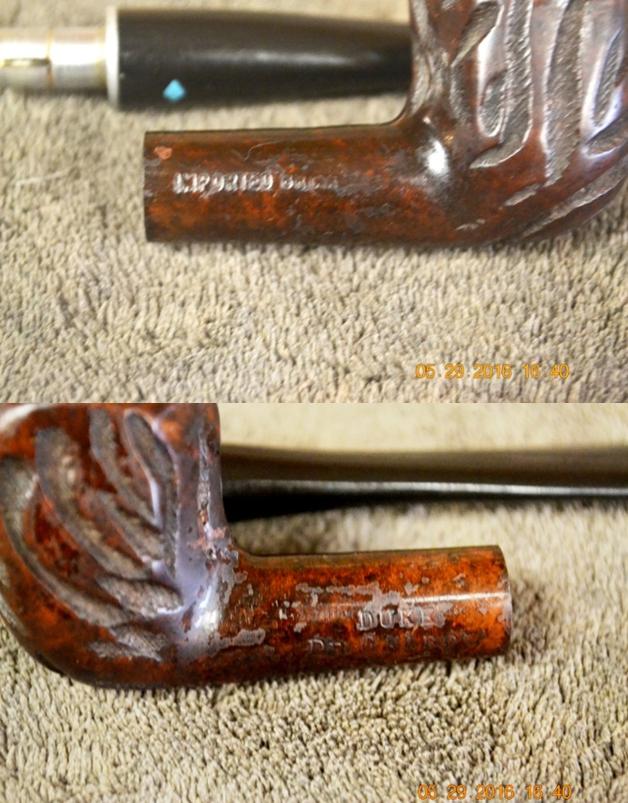
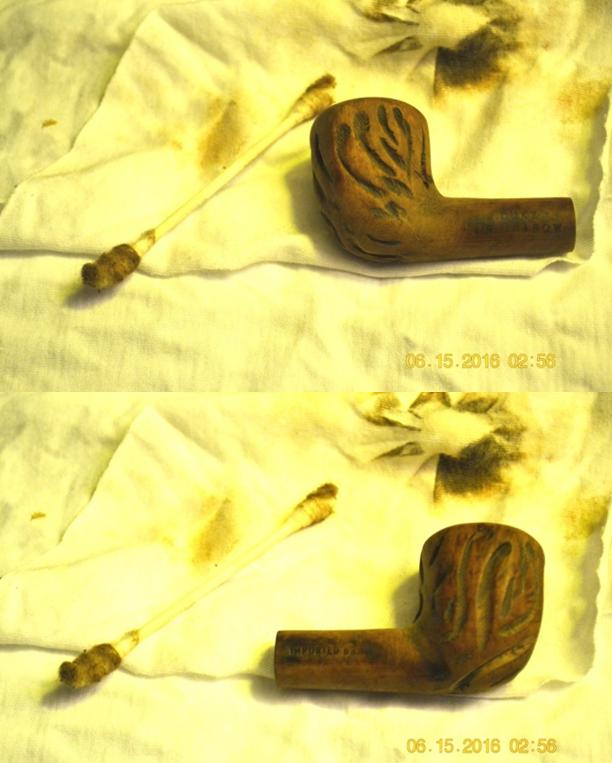
At a glance, the Duke was rough from age and unnatural wear. Here are a few close-ups of the stummel showing the thick, dark stain and some of the damages I faced, as well as the nomenclature I needed to preserve. The bit was in good shape, needing only moderate work. The six-sided paneling (two each on the front and back, and then the sides) is hard to spot by eye, but an inspection with fingers reveals the presence.Grabow7Grabow8

This kind of surface of a pipe stummel – whether it be referred to as carved, rusticated, textured or by any other designation – always poses a challenge in stripping the old stain. No matter how long the wood soaks in alcohol, at least by my concept of safe and sane standards, sanding is always still needed, in particular for the crevices. Of course, I could have started this project with an arduous application of several grades of paper, but the overdone original finish suggested the need for an Everclear soak to begin. And so that is how I commenced the task, putting the bit in an OxiClean bath at the same time.Grabow9

I removed the bit from its bath first and stuck a regular cleaner through the air hole. I was surprised by the remaining blackness of the Vulcanite, which I rubbed dry with a strip of soft white cotton rifle barrel cleaning cloth. Grabow10

I apologize for my camera’s continuing flash problems, which for the above photos required manipulation of the color and brightness settings in my editor to show the minor scratches near the lip of the mouthpiece. Here it is, again with the editor adjustments, after light sanding with 320-grit paper and wet micro mesh from 1500-12000. I know it’s hard to see the difference, but the entire surface was smooth.Grabow11

And here’s the stummel after drying with another piece of cotton cloth, running another cleaner through the shank, sanding with 200-grit paper and wiping down with 0000 super fine steel wool. The additional cleaner is from the bit. Note the still dark crevices.Grabow12Grabow13Grabow14

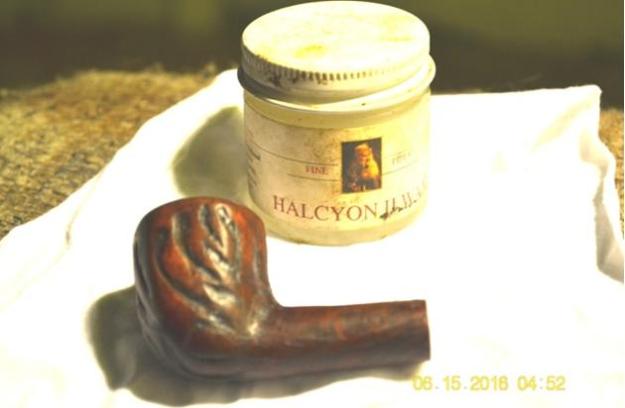
I began an assault on the crevices that turned out to be the crux of the battle to fix this nice, older Dr. Grabow. I started with super fine steel wool, squeezed into small enough edges to fit into the crevices. This was a tedious process, but it did improve the situation.Grabow15Grabow13 Grabow14I tried 180-grit paper folded to maneuver the edge into the pesky crevices, and the result was an improvement in spots but still disappointing. I only show the next photos as emphasis of the point.Grabow18 Grabow19 Grabow20For the first time in a long while, I concluded a second Everclear soak was needed, as I had not really let the first one complete. The success is clear, following another drying with cotton cloth and scrubbing the shank more with both ends of an ear cleaner. I flashed back to my childhood, at times when such cleaners came out of my ears in about the same condition.Grabow21 Grabow22 Grabow23The task of ridding the crevices of unwanted darker color accomplished, I prepared the pipe for the final steps, very gently using 320-grit paper again and the full scale of micro meshes.Grabow24 Grabow26 Grabow25I retorted the pipe, and for the re-stain used Fiebing’s brown alcohol-based leather conditioner and flamed it with a lighter.Grabow27A clean up of the char with 2400 micro mesh and a little reduction of the darkness with super fine steel wool worked well.Grabow28The fine briar was ready for Halcyon II. For once I laid it on thick.Grabow29When the wax compound had time to set in, I wrapped it in a cotton cloth and wiped it vigorously for about a minute. Then all that was left was buffing on the electric wheels, with red and White Tripoli, White Diamond and carnauba on the bit. To my eye, the wood needed a little more gloss, so I added some carnauba with the wheel, as always followed by the clean buffer. I was more happy than usual with the final results. Please excuse the unfortunate symbol in most of the following shots. I had rushed outside of the club where I was for open sunlight and didn’t notice until I saved the photos from my camera’s memory card to the computer hard drive, by which time the sun had set.Grabow30 Grabow31 Grabow32CONCLUSION
For a weathered old Dr. Grabow, this restoration provided some interesting lessons to me in working with a carved pipe. My dear friend and mentor, Chuck Richards, has always advocated a toothbrush for the crevices, but try as I have, that venerable method has never worked for me. Every situation seems a little different. This one required attacks from several different directions.

SOURCES
http://www.drgrabow.net/dr-grabow-pipes/
https://pipedia.org/wiki/Dr._Grabow
http://www.geocities.ws/lokomac8/grabow.htm
http://drgrabows.myfreeforum.org/index.php?component=content&topicid=15&postdays=0&postorder=asc&start=40
http://www.drgrabow-pipe-info.com/drgrabowp03.html
http://www.pipephil.eu/logos/en/logo-l4.html M. Linkman & Co.
http://www.pipephil.eu/logos/en/logo-drgrabow.html
http://www.drgrabow-pipe-info.com/pipenames09aa.html Date guide
https://1fa1282d-a-62cb3a1a-s-sites.googlegroups.com/site/seanspipes/home/dr-grabow-shape-charts/drg1988shapechart1.jpg?attachauth=ANoY7coHvB5qOmn44n9H_4wsnE06IzBJemJ0T5wa-FPbZh08FdvUUxghql7wG8V643ehj8Lj3Qjz4dhyUHGqC8PjXVHPy7yUihii1MNoOToCN-ZApjh36oFXVhS77OqW1r_meXdwIMaTYJP391i8GxBuwipjRfJyF-PbV4dNJrnK4684TJR7xnektgvTVNZ52aHs8nJKdigkmmVsgS06lld4DlOYIxYa2zismOQMQ1Lavw-0v_HcC4jddbKt2qVHTLKognYdJ2tD&attredirects=0 Slim Pear Shape 74

I Believe I Found an Undercover Lorenzo of Some Sort


Guest Blog by Robert M. Boughton
Member, International Society of Codgers
Member, North American Society of Pipe Collectors
http://www.naspc.org
http://www.roadrunnerpipes.net/ (Opening soon)
http://about.me/boughtonrobert
Photos © the Author

INTRODUCTION
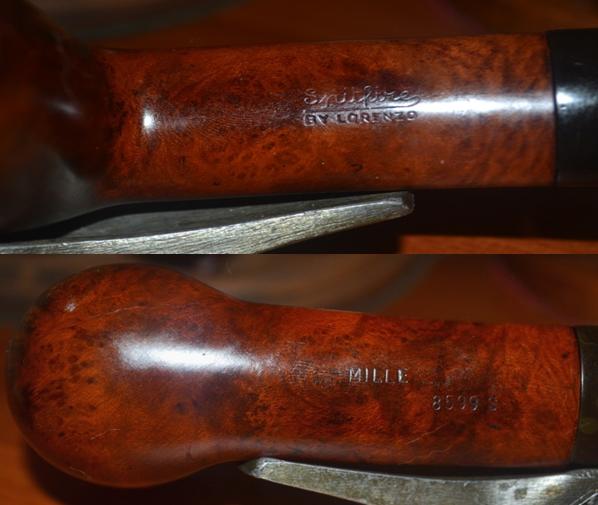
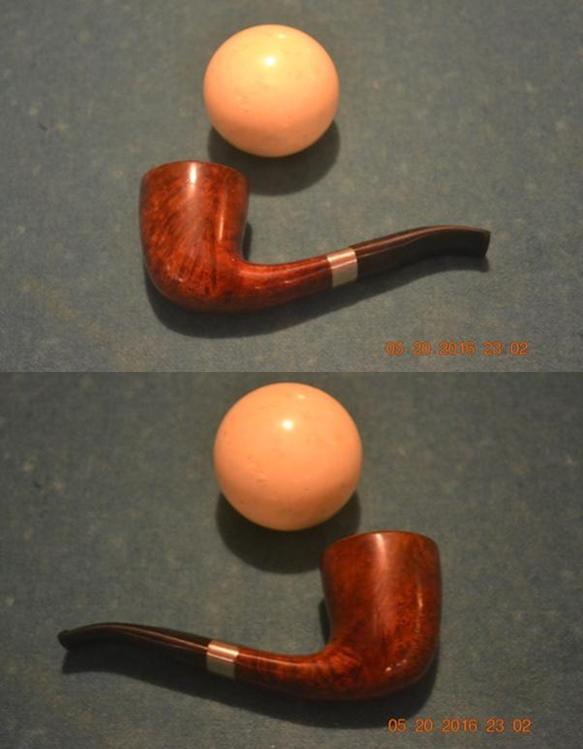
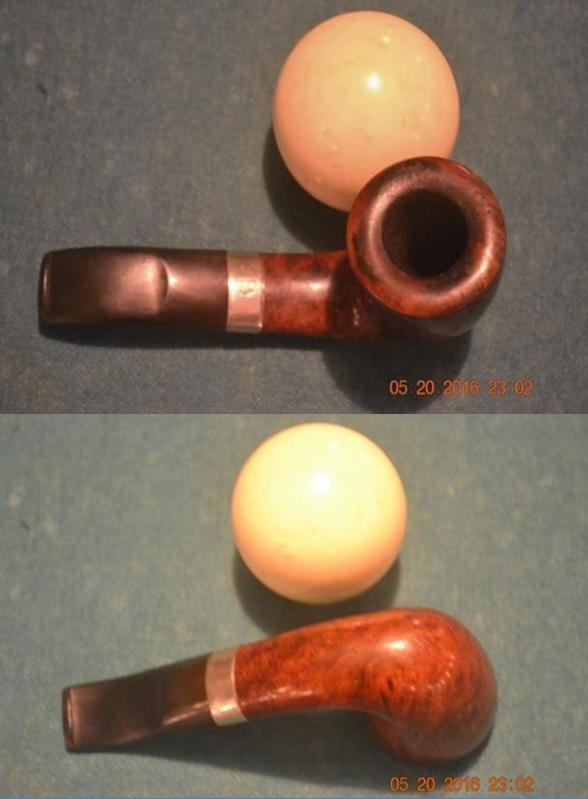
In late October of 2014, I wrote a blog here about a Lorenzo second with the name Spitfire Mille (Italian for thousand, just as Starbuck’s large drinks are designated by Venti, meaning 20 – for the number of ounces, including the ice in my With Room Raspberry Iced Americano right now).  Lorenzo, an Italian brand that has been around since 1946, makes an assortment of traditional shapes and styles but is, among my local pipe friends at least, best known for its lines of, well, enormous proportions.  Take this Spitfire, not all versions of which are so large.Lor1 Lor2 Lor3 Lor4 Lor5You can’t tell by these pictures, but although the length was near the limit of the norm at about 6”, the chamber diameter was something like 1” x 2” when I checked before adding the Spitfire to my old business website.  That’s about 6/8 (¾”) x 1” larger than usual.  Then I measured less common specifications, including the diameter of the entire rim across, bowl height and the top half of the shank leading into the bit.  Here is where the numbers became astounding: from one side of the rim to the other was a little under 2”; the height of the bowl was close to 3”, and the shank was 1” across.

If those numbers don’t sound impressive, consider three of my largest pipes, the Peterson 150th Anniversary smooth bent billiard, the Digby Six-Panel and the Soborg Danish Panel.Lor6 Lor7The Pete’s length is 7”; chamber diameter is ⅞” x 1¾”; the full rim is 1⅜”; the bowl height is 2¼”, and the shank is 1½”.  The Digby’s length is 5¾”; chamber 1” x 1¾”; rim 1½”; bowl height 2½” and square shank 1” at the halfway point.  The Soborg’s length is 7”; the chamber is ¾” x 1½”; total rim is 1¼”; bowl height is 2”, and the shank is 1”.

And so, it seems, not counting the length, the Spitfire is the overall “winner,” if size really counts.  All of this is to introduce the no-name Italian Dublin XM (by way of indicating extra monster, for lack of a better description).  This pipe without a name, perhaps the more so for that most unfortunate social status, has all the earmarks of a Lorenzo reject.  It looks like a Lorenzo; comports itself like the portlier brothers, sisters, uncles, aunts and so on and on of its fertile familia, and as it was stamped with the single word “Italy” to boot, so it must be a Lorenzo by birth if not legitimacy.

RESTORATIONLor8 Lor9 Lor10 Lor11Once again the troubles the marvelous pipe faced before it could be presented to a new owner who would cherish it were greater than met the casual eye.  The rim was just a tad crusty and therefore offered itself as the place to begin.  I chose super fine 0000 steel wool to commence the task.  Most times now I have at last embraced more popular techniques such as the wet micro mesh method, but on this occasion I did it with steel wool before I performed a little sanding with 320-grit paper with the goal of ridding the fair and rounded rim of scratches attendant to burning.  There are still other means to this end.  Yet with gentle ministration, I have found the finest steel wool an excellent first step in the process in some situations.  This was one of them.Lor12At that juncture of the growing adventure, I considered the dull state of the bit and the small but numerous scratches and dings through the original stain to the excellent Mediterranean briar beneath.  Perceiving an unusual thickness to the lovely red coating, I arrived at the clear and positive efficacy of an OxiClean bath for the bit and a concurrent but somewhat longer soak of the stummel in Everclear.Lor13 Lor14I slipped the bit and stummel into their respective Tupperware containers and the sequel to the prequel of the not only continuing but never-ending adventures of the Starship Enterprise (“Into Darkness”) in the desktop PC’s DVD player to watch – once again for me – with my new roommate.  He had somehow managed never before to see the movie, and we had some time to relax and smoke our pipes.  The roommate, Darren, became convinced by someone that he could give up the doubly negative costs of cigarettes with the far lesser expenses and greater merits of a good tobacco pipe.  Of course, he will gladly pay me tomorrow, figuratively speaking, for the pipe he savors today.

Furthermore, no less, his eyes became misty and enamored at the sight of the Albertson Belgian black rustic small bent billiard that is scheduled to be the culmination of my seven part series on ladies pipes and, despite his professions to the opposite, I knew he had to have it – oh, how I know that dewy look!  Picture this: a guy who looks and dresses and has tats like a gang banger, getting misty for a tiny little pipe that, although not specifically made for ladies, certainly fits the bill!  The fantastic sci-fi epic aside, I could only imagine what Darren must have thought of the no-doubt perplexing acts I surely appeared to be perpetrating against the once whole but weathered Dublin XM.

Here is the bit following its bath and then after sanding with 220-grit paper and wet micro meshing all the way from 1500-12000.Lor15 Lor16The stummel had the thickest stain I have ever encountered other than with some Chinese pipes on which I’ve labored.  It took longer than the 2 hr. 12 min. movie, with Darren or me (he’s decided he wants to learn about this esoteric occupation) flipping the big piece of briar over in the alcohol now and then to keep it soaking evenly, for the Everclear to eat through the barrier enough to sand the stummel lightly, also with 220.  I only found one small spot where a hole was filled.  In an email later, Steve, who had expressed some doubt that the pipe was a Lorenzo reject but suggested it might be a second, wrote that Lorenzo seconds are known for fills.  To me, given the similarity of style, stain and huge proportions of the ostensible Italian no-name (the single word ITALY was stamped almost flush with the steel band, on the underside), my theory of a Lorenzo connection was cinched in my mind at least. Lor17 Lor18 Lor19 Lor20By a stroke of good luck, as I always see it, the band came off at the end of the sanding, and I was able to make the area under it match the rest.  I got on with the next step, micro meshing from 1500-12000.Lor21 Lor22 Lor23This is where the real challenge came.  Forced to strip the stummel of its original stain to get at the scratches without creating more damage using sandpaper, I wanted to re-stain the wood as close as possible to the bright reddish tone it had, knowing that was impossible with the stains I had on hand.  I opted to mix Lincoln Marine Cordovan about three-to-one with Fiebing’s Brown alcohol-based boot dyes.  When flamed with a lighter or matches, the stain is fixed to the stummel without running as the light char is micro meshed off and again later with waxes and compounds buffed on.Lor24I also knew this combination, or even using only the burgundy color, would be so dark that none of the grain would show through.  Applying the mix liberally, I used a couple of good strong wooden kitchen matches from a box of 250 I bought at Walmart for about a dollar to flame the pipe, but the result was not the usual impressive blue flash I expected.  Still, it did the trick.  I think the alcohol in my liquid stains is evaporating with age.  I told Victor Rimkus, a successful pipe crafter/engineer here, how I needed to buy a new supply as well as other colors.  He said I could mix what was left with alcohol, which sadly only struck me as obvious when I heard the idea, or, as he does, buy the powder and mix it as needed with alcohol.  I had never heard of this powder stain before but found it online at a very affordable price.  There are even some great discounts for buying the complete kit with every color made – and the variety of colors and shades is staggering.  You know I can’t pass up a good discount.Lor25The light coat of residual char came off with 2400 and 3200 micro mesh.  Super fine 0000 steel wool gradually lessened the dark combination of stains until I concluded the color mix was still a bit off.  I deliberately took the stain down a notch lighter to add another quick layer of the brown, and when it cooled after flaming again I wiped off the char as before.  The result was much better.Lor26 Lor27 Lor28Lor29I used a couple of dabs of Super Glue spread thin around the inside of the band to reattach it.  In one of the emails I exchanged with Steve regarding the chance of this pipe being a Lorenzo relative, he pointed out that in the photo of the band I attached with a plea for help in identifying the hallmarks, the band had been placed unevenly.  Trying first to determine the meaning of the marks on my own, I had found a site that was clearly not the best.  The closest I came was a reference to a pair of brothers named Edwin and John Power, known naturally as Power Brothers, who ran a tobacconist shop and seem to have made pipes in 1900.  They marked their bands with an EP in an oval which, given the site’s other shortcomings, I considered might be – but given the year, likely was not – a misnomer for the diamond on this band.  Steve identified it as an Electro-Plate band that he thought could be an after-addition.  Studying the band and the one item of nomenclature on the bottom side of the shank – the block lettered word ITALY near the opening but above the band – I was doubtful it was indeed an afterthought.

But by that time, the restoration had progressed to the point where I had already corrected the problem.

The time to retort the odd Dublin had come, but looking at the wider than wide mouthpiece of the bit, I knew that of the three rubber tubes I have, none would work.  And so, as I have done in past situations like this, I rummaged around my spare bits until I found one from a Ropp natural cherry wood that matched the tenon size – at least halfway in.  As always, I was happy I retorted the pipe thoroughly, as this one had more than usual use on it.  I had to run six alcohol soaked regular cleaners through the shank before the last came out clean.Lor30 Lor31After buffing the bit with red and white Tripoli, White Diamond and carnauba, and the nice smooth reddish-brown wood with the same progression (I laid on a heavy coat of the red Tripoli to approximate the original color somewhat closer), here is the result.Lor32 Lor33 Lor34 Lor35
CONCLUSION
I have to say, this was nowhere near the most difficult restore I’ve ever done, but the research into Lorenzo, in my attempt to establish whether or not it is one of their rejects or a second of some sort, made the process one of the most exciting of my projects.  In my mind now, there is no doubt this conundrum of a pipe, is in fact a Lorenzo reject.  This conclusion is not based on an overwhelming desire to make the pipe more than it may be.  It is based on the evidence: the undeniable similarity of design between the Spitfire by Lorenzo Mille second; the identical color of each that has the appearance of being created specially by the maker, and the presence of somewhat erratic grain and even the single fill I found after stripping the original stain, given that Steve wrote of Lorenzo seconds tending to be known to present these defects.  Although, with due respect to Steve, I doubt this is a second because of the lack of any such nomenclature, the same standards would apply to outright rejects.  I did my best to make it once more the beautiful pipe it was when first created, but the grain certainly is less than perfect, and there is one place where briar shavings were mixed with some clear bonding element to fix a ding.  But now, neither of these facts detracts from the pipe’s allure and good fit in a large hand, which its new owner certainly has.

The Spitfire awaited a new home for months after I finished the restoration, and in the end was purchased by a New World gentleman, from Raymore, Missouri to be specific, who read my blog of another pipe and found the massive Lorenzo (second) on my site.  The lovely example of Italian flair and craftsmanship in this blog, on the other hand, was reserved prior to its restoration by a visitor to my pipe club’s monthly meeting.  His name is Evan, and here he is at the tobacco shop with his “new” pipe.  See how snug it is in Evan’s big mitt. Lor36When Evan, who resides in the much smaller town of Placitas about a half-hour’s drive from the relative metropolis of Albuquerque (close enough to commute to and from where he works here), talked to me alone in the big back room of the Moose Lodge where our official monthly pipe meeting is held, I asked if he had seen any of my pipes he found interesting.  I assumed he had not located one he wished to buy but also wanted to get an idea of what he looks for in a pipe, other than the Dunhill with its distinctive dot on the bit he enjoyed for the meeting.  I admit to thinking I might have something I put off restoring that I could perhaps expedite.

Evan was courteous enough to tell me the truth: none of the pipes I had displayed was big enough for his general taste.  That remark turned out to be the exact sort of intelligence I hoped to receive from my question, for I knew I had just what he was looking for, at my humble home and small business, waiting to be cleaned up.  I inquired if he had heard of Lorenzo pipes and added that I had restored and sold one but had another pipe like it that I believed was a reject by that company, although there was nothing wrong with its looks or quality.  Evan had not heard of Lorenzo but was intrigued by my description of the large pipe.

After getting a look at the photos I emailed to him showing the restored Spitfire and the no-name as it was before cleaning up, the good man replied with considerable enthusiasm.  In fact, considering the low price I offered him, he asked me to name the time and place he could pick it up!  I had the pleasure of presenting Evan with the finished Lorenzo or second or whatever it is Monday morning at the tobacconist shortly after the comfortable little shop opened at 10.  With any sale, online or in person, and in particular when the buyer has requested a pipe that was not yet restored, I always wonder if it – or, rather, I – will match the new owner’s expectations. I observed at once that Evan had pondered his reverse version of the same scenario from his reaction of unconcealed surprise.  In short, the pipe was just the kind he loves most – big enough to fit in his large hand, solid, possessed of an unusual shape and beautiful to behold.  I add the last part not to pat myself on the shoulder but due to Evan’s appraisal.  To my way of thinking, pipe restoration is very much the same as newspaper editing, with which I have had more experience than working on pipes: the flaws in the pipe or article are unimportant so long as all of the necessary information is there to put in order.  The best word to describe Evan’s reaction to his latest acquisition – which went on for close to a half-hour – is effusive.

SOURCES
https://www.smspipes.com/index.cfm/fuseaction/catalog.listProducts/catId/4/Lorenzo_Pipes.htm
http://vermontfreehand.com/product/powdered-dye/
http://www.pipes.ws/Lorenzo
http://www.silvercollection.it/DICTIONARYTOBACCONISTE.html Power Bros. hallmark

Spotlight: Ladies Pipes, Part 4/7, a Real Briar Bounty


Guest Blog by Robert M. Boughton
Member, International Society of Codgers
Member, North American Society of Pipe Collectors
http://www.naspc.org
http://www.roadrunnerpipes21.com
http://about.me/boughtonrobert
Photos © the Author

And old Boughton, if he could stand up out of his chair, out of his decrepitude and crankiness and sorrow and limitation, would abandon all those handsome children of his, mild and confident as they are, and follow after that one son whom he has never known, whom he has favored as one does a wound, and he would protect him as a father cannot, defend him with a strength he does not have, sustain him with a bounty beyond any resource he could ever dream of having.
— Marilynne Robinson (b. 1943), U.S. novelist and essayist, in “Gilead” (2006). She is the winner of the Pulitzer Prize for Fiction and the Library of Congress Prize for American Fiction, both this year.

BLOGGER’S NOTE: ALTHOUGH I READ AN EVELYN WAUGH NOVEL WHEN I WAS 17 AND COULDN’T HELP NOTICING THE MENTION OF A VILLAGE CALLED BOUGHTON, WHICH YEARS LATER I CONFIRMED EXISTS IN DEVENTRY, NORTHAMPTONSHIRE, “GILEAD” IS THE ONLY WORK OF FICTION IN WHICH I HAVE SEEN A CHARACTER WITH MY LAST NAME. BUT THE PART THAT TRULY GAVE ME THE WILLIES WAS FINDING WE (THE FICTIONAL PASTOR BOUGHTON AND I) SOMEHOW SHARE THE SAME GIVEN NAME AS WELL! I ALSO LIKE THE USE OF “BOUNTY.” ALL OF THE NAMES AND EVENTS IN “GILEAD” ARE FICTIONAL, AND NO RESEMBLANCE TO ACTUAL PERSONS, LIVING OR DEAD, IS INTENDED.

INTRODUCTION
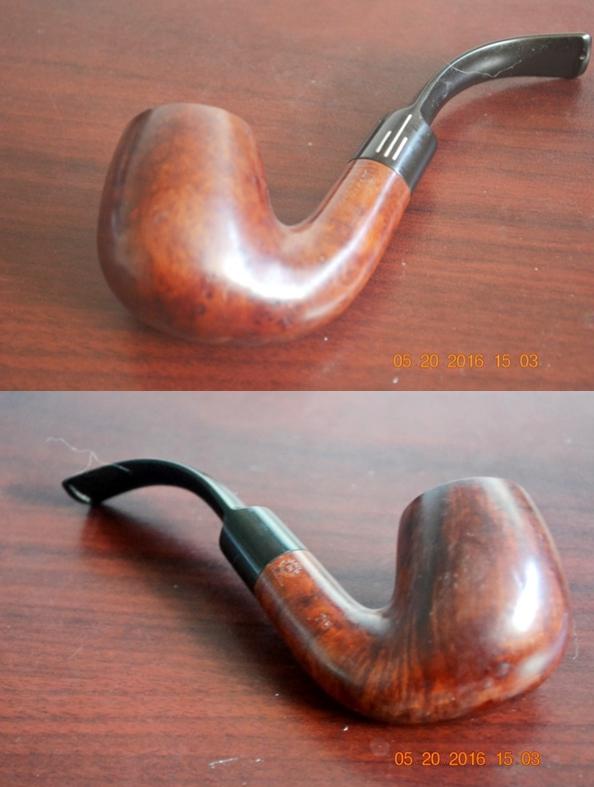
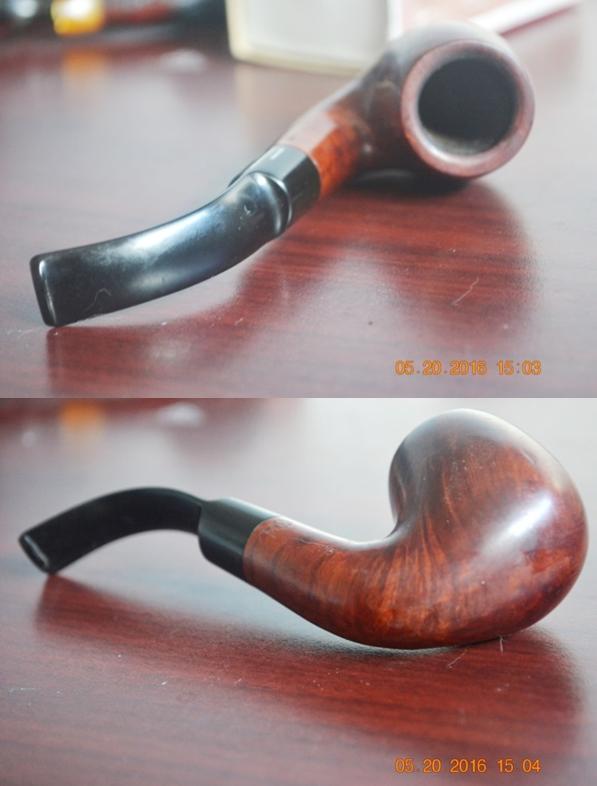
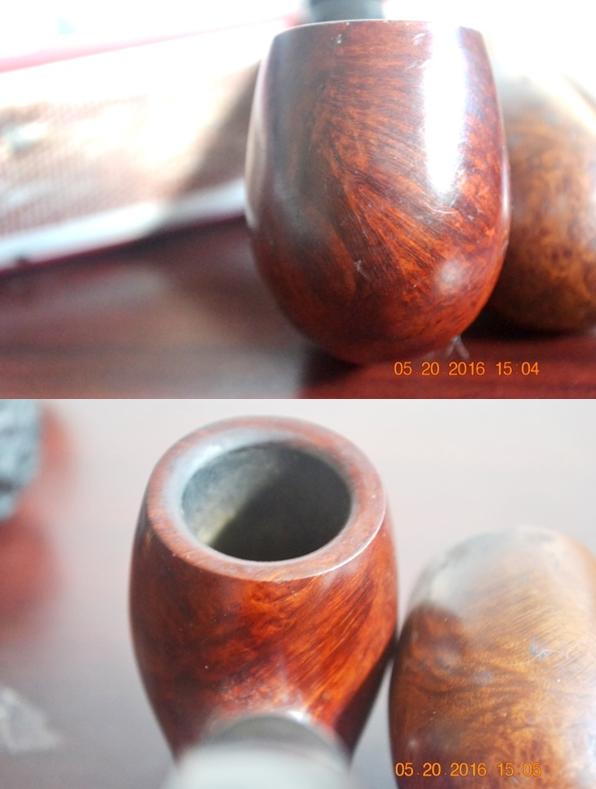
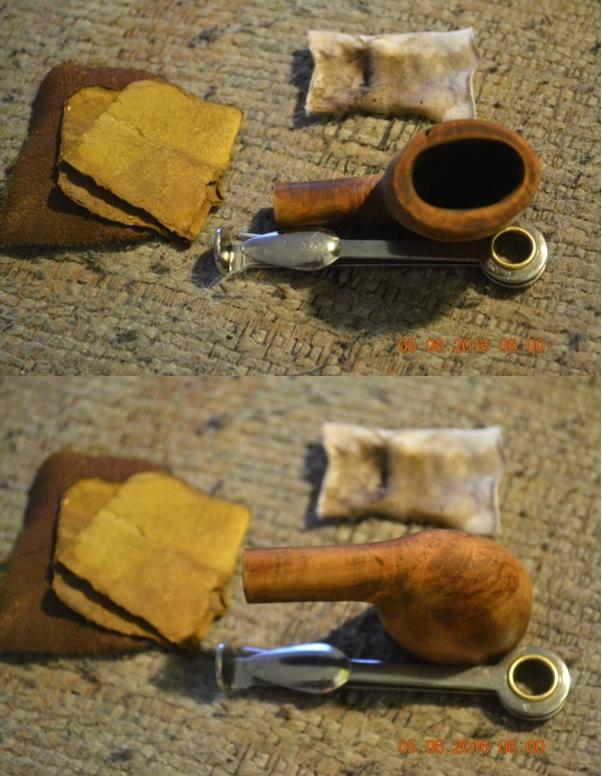
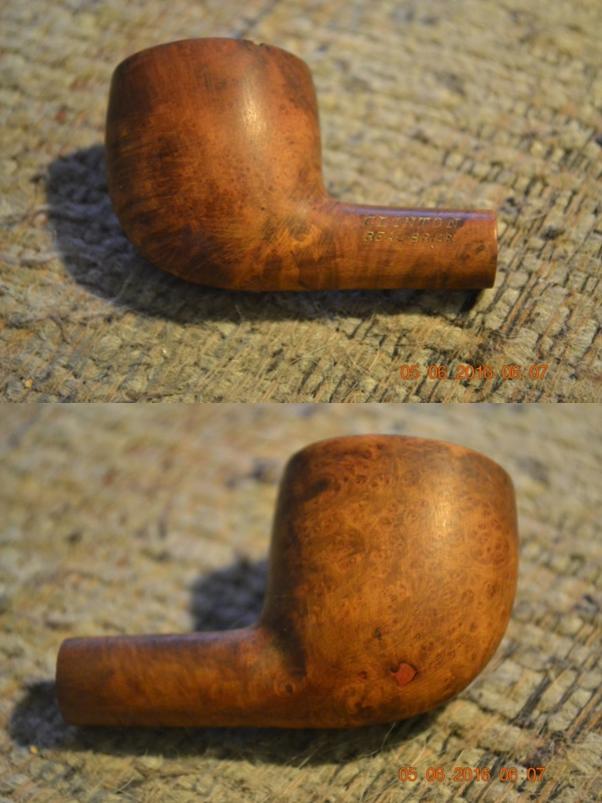
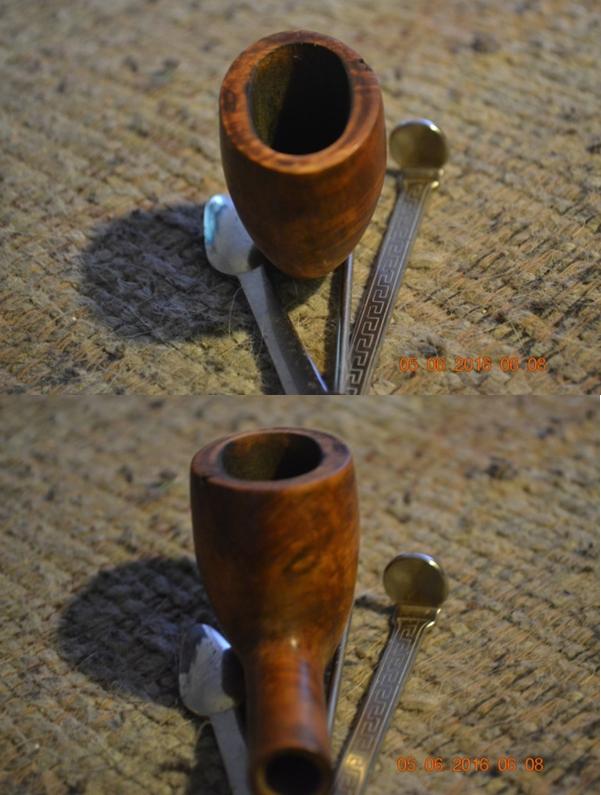
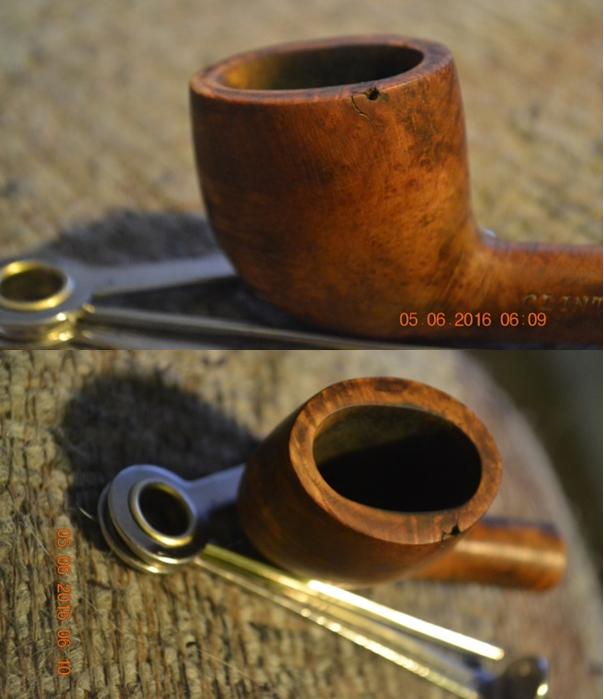
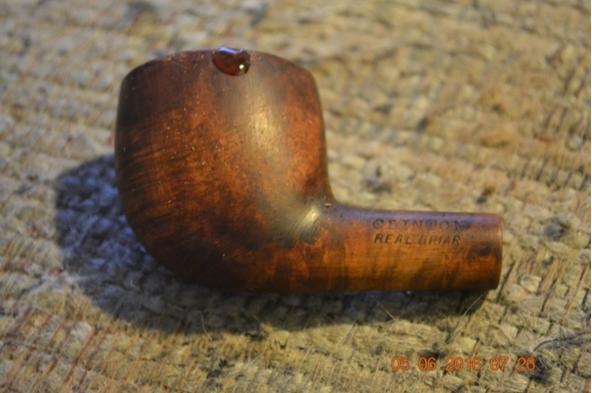
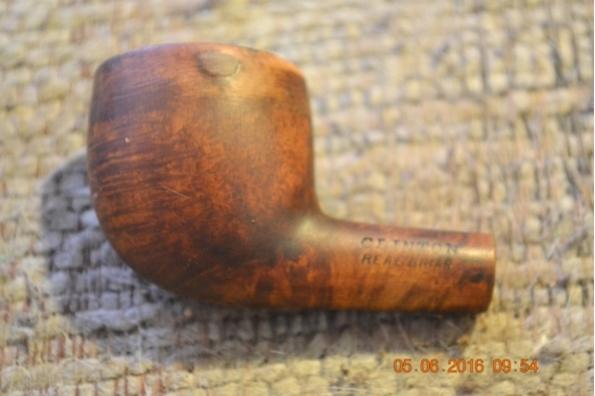
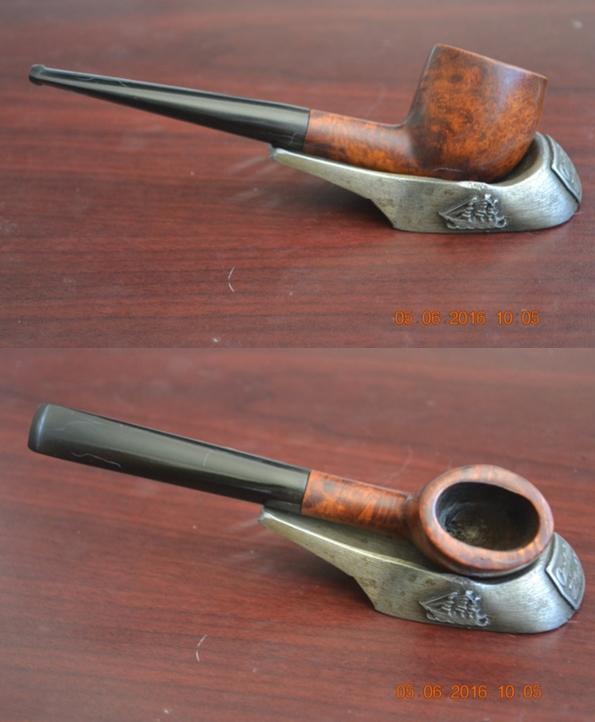
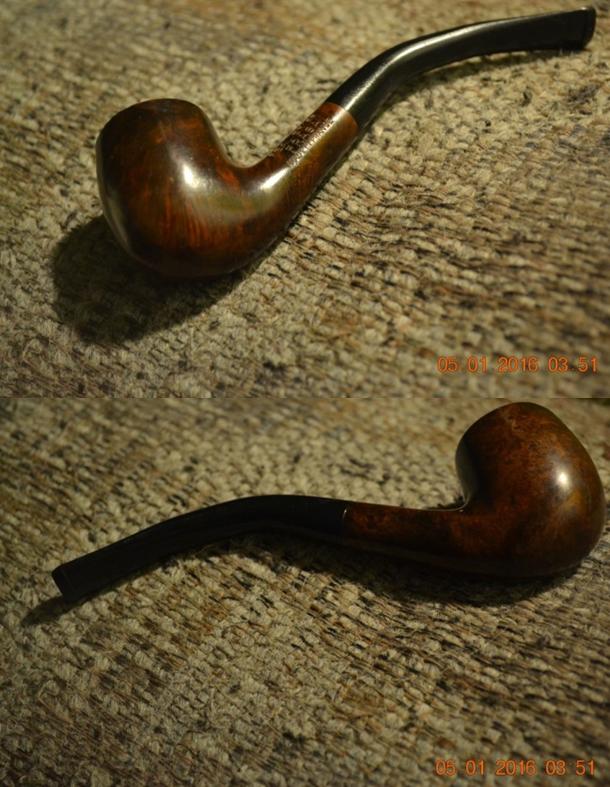
The Real Briar Bounty billiard marks the over-the-hump point of my series on ladies pipes, and a cursory examination of the well-crafted implement of exquisite pleasure as it looked when it came in the mail shows it appears almost good to go. Bounty1 Bounty2 Bounty3 Bounty4But everyone knows the frequent truth about appearances. I bought the pretty, shiny little Bounty, light in the hand and with a corresponding semblance of fragility, in 2014 among one of the many pipe lots I snatched up that single year. The brand name itself was an excellent use of the adjective, whether in the more plausible sense of a generous gift or bestowal, or the bigger mouthful, “Goodness shown in giving, gracious liberality, munificence, usually attributed to God, or to the great and wealthy….” [Oxford English Dictionary.]

I still have more than a few of those pipes in need of restoration, although I’ve made quite good headway. Most of the 2014 parade of pipe lots, selling for an average of about $20 per pipe, included one, or more, good looking big brand names. For the most part the rest were nice or odd enough to warrant the purchase. There were, to be sure, a few total losses, with fatal cracks or burnouts, but little more than I could count on a hand. Take, for examples of both name brand and just plain interesting pipes, the following picture of 11 I acquired together, containing a Kaywoodie Rustic Silhouette bent apple [top row left] and a Spitfire by Lorenzo Mille [Italian for a thousand, appropriate considering its massive size, third row left). Then there’s the gigantic no-name Lorenzo pretender [by itself at the bottom], which may in fact be a reject from that Italian maker known for outrageous sizes. As I sit here editing the text of the finished blog, I hear a chime on my laptop and check the email. There is a new message from a gentleman I met last night who visited our monthly pipe meeting. I gave him a couple of samples of excellent new flakes I had and asked if he saw any of my restored pipes he likes. Alas, none of them was big enough for his taste! And so I recalled the Spitfire and its look-alike and described both to him, promising to send email photos for his information or consideration. Well, the gentleman just replied and accepted my bountiful offer of a very low price for the no-name. That, to my way of thinking, speeds past any notion of coincidence and stops on the dime at downright mysterious. We have arranged to meet Monday morning for the transaction.Bounty5This photo is extraordinary to me on several levels more appealing than its dingy back-drop and utilitarian lack of artfulness. Have a gander at it yourselves, ladies and gentlemen, and if you have read the prior parts of this set of blogs you will hopefully recognize two of the pipes restored in them.

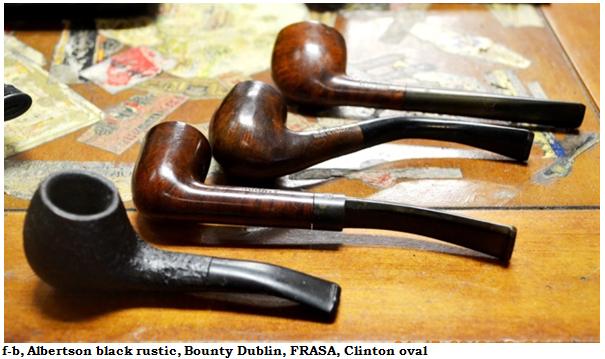
When you’re finished looking, they are, in order of their appearance in the photo: the Clinton Real Briar straight oval [top row, right] that sold to a young lady overcoming the social and medical blight known as cigarettes; the Real Briar Bounty billiard [fourth row, left] that I put on reserve for one genuine character of an older woman who belongs to a non-pipe related club of which I am a member and informed me in a Dr. Lecter sort of voice that her husband “used to smoke them all the time – but not anymore,” as well as how she quit cigarettes with the aid of her old misplaced pipe that she “also” learned to live without except for missing the feel of it in her mouth. The rather Faulknerian run-on segment of this passage begs the questions of whether the poor husband is not among the living at all and if not, why, or just not with the good lady, and other issues I dare not approach in this medium. And there is the Frasa, or FRASA as an acronym, French bent billiard [next to the Bounty], which I sold to my pipe club friend, Ashley. Another lady I caught smoking cigarettes was persuaded to purchase the Medico straight natural tiny acorn.

Wow! I just had a thought, the kind that makes me feel like an utter fool. Here I have been, wracking my brain to track down and interview unknown lady pipers in addition to Liz, and all along the obvious has been right in front of me: Ashley, the first female pipe smoker I met, in my own pipe club! Not that I don’t still need to collect some data that will allow me to get a handle on any patterns of experiences and difficulties faced by women who dare presume to invade one of the last existing perceived instances of a traditional male bastion; it’s just that now I understand I can simply post a thread on Liz’ Facebook forum asking for the input I seek from women, and then sit back and let it all pour in – or even chat with a few of the undaunted freedom fighters.

None of the ladies pipes in these blogs was picked by me for this project by looking at old photos, but rather by tunneling through the chaotic clutter on my work desk in search of diminutive pipes. Still awaiting restorations are a Willard Aristomatic rustic pot with U.S. Patent No. 2,461,905 issued in 1949, a Dr. Grabow Duke six-sided rustic panel and, last and least (in terms of length), la pièce de résistance, an Albertson Belgian bent black billiard. Try that five times fast.

Unconsidered by me at the moment of conception of the underlying theme of these blogs was any idea of ever writing such a series as this concerning the presence of women around the world who enjoy pipes every bit as much as men do, including the all-important contemplative aspect of the deeply personal experience. And so, while the details of inner visions of our most inviolate thoughts as we puff a pipe and tobacco may differ somewhat between the genders, the basic dynamic is a twin.

I do have a few words about Real Briar Bounty pipes. There are, in fact, few words I can write about the maker of these beautiful and varied works, samples of which I have found all over the Internet, for the most part members of sundry forums asking for information on the Bounty’s pedigree and receiving no coherent answer. [See Sources.] This omission of mine is not for lack of research but because of the apparent utter dearth of information. Based on the designs available for sale online, many were made for 9mm filters and some have originals included with the purchase. Then there are the references to separate ships in English history, both called The Bounty, each of which met with disastrous ends.

The few but important clues (9mm filters, an unusual number of the sources being in Europe – particularly several ebay.uk sellers – and the name itself, Bounty) embolden me to go out on a limb and suggest that the maker of this pipe is British.

A TEASER OF THINGS TO COME IN THE FINAL THREE BLOGS
For various reasons about which nobody still reading this would care to hear, I have yet to chat with any of the New Jersey Ladies of the Briar concerning their no doubt varied introductions to the wonderful world of pipes, but as I noted earlier I now have the solution to that I promise to get on it while preparing my fifth blog on the topic. To be more accurate, I should amend my previous statement with the note that my Smokers Forums U.K. friend, Liz, who founded the group, has been my sole source of information related to feminine tastes in the choices of pipes and tobaccos.

Our first few email exchanges were a bit odd. While Liz was open to my idea, at first proposing a single blog I soon knew would either turn into a New Yorker-length piece much longer even than my “The Young Man and the Pipe” tribute to Ernest Hemingway involving the restoration of a Thinbite. And so I decided upon a series. In those early emails, I remember describing, several times in different ways, the kind of information I wanted and any ideas how to go about getting it.

My mistake, a common one but inexcusable of someone with a reporter’s experience, was not asking specific questions of Liz. And so I at last understood and re-commenced with three questions.

The reply I received from Liz was candid, and also revealing of double standards and injustices I could never have dreamed up. My interests are eclectic, but there are certain areas to which I find myself constantly drawn. They include history, political science, law and, it goes without saying, everything related to pipes. I consider myself well versed in the real atrocities Mankind has committed against itself and the rest of the planet and the everyday varieties of rudeness and general foul play that abound daily. I just never considered the possibility that such attitudes had infiltrated our beloved pipe world to a real extent. Here is that first, ice-breaking, bare bottoms basic email Q&A.

Q: I know you have a penchant for minis, but what are some of your favorite pipes that you smoke regularly?
A: Currently, my go to pipe is a Dr. Plum mini Prince which I only smoke Lakelands in. Other pipes I tend to stick with are a huge Savinelli 320, Savinelli Lollo, Jirsa horn shape, Brebbia author shape and a no-name bent meer and corn cobs.

Q: What kind of pipe blends do you like?
A: I will smoke anything! But I love Lakelands and latakia blends the most. Aro[matic]s that I favor are mocha/coffee blends (McClelland 620 mocha black is my favorite) and also maple blends (Wilki Vermont Maple is my favorite). I tend to shy away from perique because it gives me a scratchy throat but I will smoke one bowl occasionally.

Q: When did you start smoking a pip? Were there any special circumstances?
A: I always wanted to smoke a pipe even when I was a child. I had seen photos of my dad smoking a pipe but he had quit smoking by the time I was born. I started smoking cigarettes in my early teens and the desire to smoke a pipe became stronger once I became an adult and started to do a lot of camping. I thought it would be very nice to sit by the campfire and smoke a pipe. But as a woman, I never felt comfortable or confident enough to go in a store and buy one. Finally in 2004 I got the nerve to go in the tobacco shop and buy a pipe. I used the excuse that I was buying it for my brother. I selected a 3/4 bent no-name Italian briar. I still have that pipe today although I don’t smoke it often since my taste is pipe shapes have changed. I had no one to teach me anything about smoking the pipe so what I learned I found on the internet. [Emphases added.]

RESTORATION
Earlier, I alluded to the smooth, fairly clean pipe with its nice glossy finish and unusually good though not thorough cleanliness. I also noted, during my first critical examination of the pipe, the bad gash on the rear of the bowl and other small scratches over the surface area. Out of nowhere, I had a bad feeling about the possibility that something other than a conventional alcohol-based stain might have been used, such as the bad habit in China of laying on Earl Scheib applications of regular varnish and – it hurts me to write this – even Shellac and, I’ve heard, paint! These coatings cause various serious damages, some of them being the destruction of the pipe’s ability to breathe, or to take in air, not to mention the inhibition of the wood’s natural expansion when it heats from use. The bit was freckled with discoloration.Bounty6The obvious starting point was tossing the bit in an OxiClean bath and the stummel in Everclear.Bounty7Then again, without the bit or the stummel, I had nothing whatsoever to do except to partake of a nice bowl of Mac Baren Bold Kentucky Flake in my Peterson’s silver band orange meerschaum Dublin. These are the times when pipe restoring can be so trying.

But I weathered the next half-hour with the stoic determination of an ancient mariner awash with kelpy brine, and got back to work. The bit was every inch a fright to behold, as I expected after its bath.Bounty8Nevertheless, I made it better with a bit of a makeover using 320-grit paper and the full progression of micro mesh.Bounty9About that time, I removed the stummel from the Everclear and stuck a pair of small soft cotton cloth squares into the chamber to twist and shout out some of the loosened mess there. I ran two more cotton cloth squares over the stummel, sanded the outside with 220-grit paper taking care to avoid the nomenclature and micro meshed all the way. The chamber was too small to fit a reamer, and so I sanded it (using a pinkie) with 150- and 320-grit paper before using a tiny edge of 0000 steel wool to finish smoothing. I put a touch of Everclear on a two-ply cotton cloth square and scrubbed out the remaining soot.Bounty10 Bounty11 Bounty12Micro meshing with my full set of pads was fun as usual and gave the wood a very nice natural shine. But as you can see, part of the big ding on the back side of the bowl remained.Bounty13 Bounty14 Bounty15I spot-sanded the ding with little pieces of 320- and 500-grit paper and a lot of elbow grease, re-micro meshed it, then micro meshed the little light but smooth spot all the way again. The time to re-stain had arrived, but what color? Why, Lincoln Marine Cordovan! I flamed the quickly drying alcohol-based boot treatment and set it aside to cool.Bounty16With 2400 and 3200 micro mesh, I removed enough of the stain-concealed grain to make out faint lines, but the pads could not do more than that. Several light applications of four-ought steel wool brought out the grain where I wanted it.Bounty17 Bounty18 Bounty19After an easy but necessary retort, the time to repair to the electric buffers had come. I used the red and white Tripoli, White Diamond and carnauba on the bit, and all but the red Tripoli on the stummel.Bounty20 Bounty21 Bounty22The last step was to touch up the circle B bit imprint with a white grease pencil as well as I could.

CONCLUSION
Close your eyes for a moment. I want you to imagine yourself standing just outside your favorite neighborhood tobacconist. You know there’s a pipe inside that you’ve always wanted. A pipe with your name, as it were. You may never have seen the pipe, but you know it’s in there. Waiting for you to buy it. For your own use. Whispering, “Come save me. I’ll be yours forever.” Maybe you remember your father or grandfather with it, relaxed and comfortable between his teeth. He’s smiling, laughing, and in his mirth has to take the pipe from his mouth for a moment. You watch as the beautiful pipe in his hand moves down in front of his chest, where the smoke subsides, but there are still faint wisps curling gently upward. And your eyes are still glued to the mysterious object of art when the hand moves up again and almost magically, without the man even looking at it, the pipe finds its way back between his happy, content lips. You reach for the doorknob to go inside.

Now, imagine you’re a woman.

SOURCES
http://www.pipetrader.de/artikelauswahl.php?kat=Estate+Pfeifen~Bounty
http://www.bestsmokingpipes.com/beautiful-real-briar-bounty-meerschaum-lined-smokers-smoking-estate-pipe-8-39
https://www.willhaben.at/iad/kaufen-und-verkaufen/d/pfeife-real-briar-bounty-157047822/
http://www.worthpoint.com/worthopedia/026-bounty-real-briar-bent-estate-463731513 9mm
http://www.cnn.com/2014/06/12/us/hms-bounty-tall-ship-sinking-investigation/
http://www.history.com/this-day-in-history/mutiny-on-the-hms-bounty
http://law2.umkc.edu/faculty/projects/ftrials/Bounty/bountyaccount.html The true story of the 1789 mutiny on the Bounty
http://globalnews.ca/news/1390913/hms-bounty-sinking-coast-guard-blames-owners-captains-decisions/

Spotlight: Ladies Pipes, Part 3/7, a Tiny Medico Acorn


Guest Blog by Robert M. Boughton
Member, International Society of Codgers
Member, North American Society of Pipe Collectors
http://www.naspc.org
http://www.roadrunnerpipesnm.biz
http://about.me/boughtonrobert
Photos © the Author

Two old buddies are heading off on their Annual Fishing Trip. For argument’s sake we’ll call them Kevin and Bob.
Bob notices that Kevin is being more grumpy than usual and tries to lighten things up by way of conversation.
Bob: “So Kev, last week was your birthday, happy belated.”
Kevin: (grudgingly) “Thanks.”
Bob: “Say, did, Laura, buy you that Estate Dunhill that you were constantly hinting at?”
Kevin: “Na”
Bob: “Well what did she get you instead?”
Kevin: “SUV.”
Bob: “New or used?”
Kevin: “New of course.”
Bob is extremely puzzled as Kevin is still driving the same beat-up pickup that was already old when Saddam was considered an ally.
Bob: “You know, Kev, you and I have been friends for a long time, and I’m entitled to say that you are an ungrateful sour puss. Laura buys you a New SUV instead of a second hand pipe, and that has you in a bad mood.”
Kevin: “Humph!”
Bob: “Well what kind of an SUV was it anyway?”
Kevin: “Socks, Underwear, Viagra”
— Thanks to mate on smokingpipes.com/forums. (I don’t know, but for some reason this struck me as a good gift idea for the next man who gives a lady grief for enjoying a pipe.)

INTRODUCTION
Steve comments now and then on the pleasure he gets from researching a pipe’s history. I know his motivation is not to tuck away, in his mind and for his own use, the information he gathers. I can’t say for sure what drives Steve, but I suspect he, also, is a natural born reporter – which is to say collector and sharer of information – with an insatiable longing to spread his news to readers as well as to supplement or in some cases create new pipe lore available online. Steve laughed at this when I suggested the notion, but I would say his crowning achievement so far is the definitive and exhaustive research that got to the bottom (which was deep) of the complex origins and Byzantine life of Brewster pipes – a close second to his exposé on the history of the Colossus Pipe Factory (CPF).

As a former freelance news reporter/photographer and still a spot news enthusiast, not to mention aspiring literary writer and pursuer of other investigative endeavors, I have a knack of my own for probing. When I can’t find any mention whatsoever of a pipe brand, I therefore become somewhat vexed. This was the case in particular with the first two pipes I restored for this series. One was a Frasa (or maybe FRASA as an acronym) French natural bent billiard;. The other was a Clinton natural straight oval that was neither the Israeli Alpha brand type nor the U.S. variety. Forever a dogged reporter at heart and also having a serious case of Obsessive-Compulsive Disorder, however, I intend to stay on these stories and others until I uncover the facts. The truth is out there.
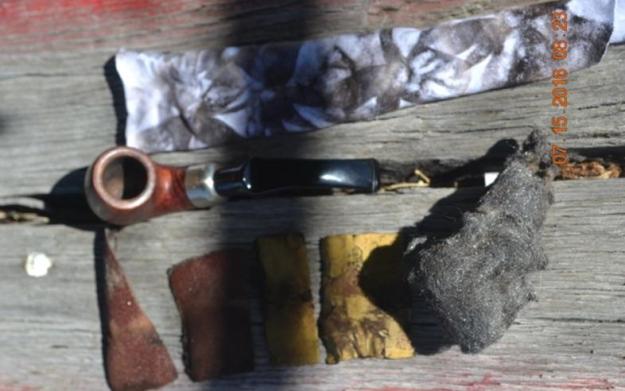
As for Medico, there is much to be found online and in actual bound and printed books on pipes and the long, glorious history of their peaceful enjoyment. Indeed, the latter tools still exist, however tenuous their future. I hope and pray they survive for as long as Mankind occupies this planet, if not beyond. The history of Medico began with S.M Frank & Co.in New York in 1851, giving S.M. Frank the claim to the oldest pipe manufacturer in the U.S. By the time Frank formed Medico Pipes in 1957, it had already consumed eight other pipe makers, some still celebrated and others less remembered: the Manhattan Briar Pipe Co. in 1922; William DeMuth & Co. (WDC) in 1937; The Kaywoodie Co. (later Kaywoodie Pipes Inc.), Yello-Bole, Kaufman Brothers & Bondy (KB&B), the Reisss-Premier Corp. and the New England Briar Pipe Co. in 1955, and the New Jersey Briar Pipes Co. in 1956.

Discussions today about Medico pipes, in person or online forums, can become downright nasty, pitting vehement supporters against rabid critics. Nevertheless, older Medicos certainly possess a certain heightened quality and charm, and the brand’s lines are still made to be inexpensive and durable. As cigarsinternational.com put it, Medicos are “no-nonsense pipes made for the everyman.” That, they no doubt definitely are, at prices ranging from $15.99-$39.99. Medico has made pipes with materials including traditional briar, Brylon (an S.M. Frank synthetic invention of high temperature resin and wood flour) and even a unique bent tall billiard covered with a mysterious material described by Pipephil as either felt, synthetic fur “or a piece of wall-to-wall carpet.” Well, that settles that. To tell the truth, I would love to own one of those, if only for show-and-tell and to be able to call myself a carpet piper, despite the risk of static-electric charges and burns.Lady1SOME FEMALE SMOKERS AND PIPE MAKERS
I have put out various general calls for help in my local and online pipe communities searching for women who smoke pipes and would be willing to share some of their experiences and preferences, and my friend Liz invited me to become a Friend of her Facebook Ladies of the Briar Group. I still need to pursue that line, but at least have four blogs left to do so.

Since my second ladies pipe blog, I have re-focused my research on areas of interest I had not even considered until some other friends mentioned them. The one was revealed to me by Jennifer, the owner of Stag Tobacconist in Albuquerque where I am a very frequent fixture. The other, suggested to me by another Smoking Forums UK friend, Ed, was a fact that struck me as so obvious I was embarrassed to have overlooked the idea. Both, I believe, will prove of great interest.

Unknown to me until Jennifer’s revelation, was that Samuel Gawith Fire Dance Flake – a Virginia mix with blackberry, vanilla and brandy flavorings that was a favorite of mine back in my aromatic-heavy days but remains a blend I still enjoy on occasion – was formulated by one of the few female tobacco blenders in the U.S. The light flavorings and Best Brown Virginia used give Fire Dance a nice little bite.Lady2Of more significance is the presence of females – ye gads, what’s the world coming to? – in the business of making pipes. Ed mentioned the following names and provided a few links, worried these were not enough, and I looked up the rest to get samples of their work: Vilma Armellini, one of three daughters of the great Italian pipe maker Mauro Armellini and who regularly assisted her father in making many of his pipes and took over the business upon his death; Anne Julie; Nanna Ivarssen, and two newcomers who have been crafting fine pipes for the past several years, Sabina Santos and Scottie Piersal. Alas, I have been unable to locate a pipe made entirely by Vilma Armellini, but the first photo below shows her father’s work that likely included her help. I will, you can bet, continue looking.Lady3 Lady4 Lady5 Lady6 Lady7In light of my severe case of P.A.D., I expect to add samples of these brilliant women’s pipe crafting art to my collection as soon as possible.

RESTORATION
Now, for the drab little Medico Real Briar acorn as I first saw it.Lady8 Lady9 Lady10 Lady11The bit looked like this close up.Lady12I put it in an OxiClean bath and the stummel in used Everclear (not to drink, but to strip prior pipes).Lady13I took the bit out after a half-hour or so and wet micro meshed it. Then I went ahead and buffed it with red and white Tripoli, White Diamond and carnauba.Lady14I apologize for the gunk in the last photo. I just noticed it, but I assure you it came off with a wipe, or I wouldn’t have sold it the next day. About an hour after putting the stummel into the Everclear, I removed it and swabbed the chamber with one small soft cotton square and the outside with another.Lady15 Lady16 Lady17As usual, there was still old stain to remove, but other than uncommon situations such as removing that awful red varnish used on almost all pipes made in China , for example, I prefer not to let the wood soak too long. A little sanding with 220-grit paper in easy, even strokes, for the most part in the same direction, worked off the rest of the drab and dreary cloaking stain on the briar that had left darkness there and nothing more, as Edgar Allen Poe wrote.Lady18 Lady19 Lady20Call me anything other than Ismael, but I always get a distinct rush when the stummel is ready for micro meshing. In an average restoration of this type, with no serious, time-consuming obstacles, micro meshing most of the time is the halfway + 1 point, or the hump of the project. However, with five steps to go before completion of the pleasant task – it was better than the movie, which I had seen 10 times already – I was exactly halfway finished. The point, however obtuse, is that in my mind I was almost to the finish line. Oh, never mind! Alright, then, I proceeded to micro mesh from 1500-12000.Lady21 Lady22 Lady23Next up was re-staining the stummel, using Lincoln brown alcohol-based shoe and boot leather dressing.Lady24I also enjoy the brief puff of blue fire after holding my Bic or a good kitchen match close to the stain-wet wood, like flaming baked apples served with ice cream. Sort of. But that doesn’t make me a pyro. I prefer to think that life is like a bowl of ice cream, even if it’s served up on fire at times. Consequently, a few minutes after torching the stummel, I started with 2400 and 3200 micro mesh to remove the charred neon green coating. That broke through to dark brown, at which time I switched to super fine four-ought steel wool to take the darkness down a few notches.Lady25 Lady26 Lady27Ready for the second to last step in this somewhat off-the-norm order of events, I retorted the pipe at last.Lady28 Lady29After running a fluffy cleaner through the shank and clearing more last-minute soot from the chamber with a cotton cloth square, I buffed the stummel with white Tripoli, White Diamond and carnauba, using the wheel I keep clean after each to work the compounds further into the briar and keep them from smudging.Lady30 Lady31 Lady32CONCLUSION
So far, by an eerie coincidence if there is such a thing, all three of the pipes I have restored for this ladies pipes series have sold. The Frasa (or FRASA) went to my good friend and fellow pipe club member, Ashley. The Medico Acorn of this installment was snatched up by another woman, Rita, whom I met last night when she saw me smoking a pipe and mentioned that her husband “used to enjoy his pipes all the time” (I took this rather ominous wording as either a sign that the good man is no longer with us or just not with Rita), as well as the fact that she gave up cigarettes by puffing on a pipe of her own with tobacco until she weaned herself off both, and she added that she missed the feeling of the pipe in her mouth. No comment. The third pipe, a Citation Real Briar oval, sold to an 18-year-young man who also approached me because of the fine pipe in my mouth at the time. Ashley reserved hers before it was even restored while the others fell victims to my persuasive sales technique and the fortuitous circumstance that I had my available pipes with me. Still, I didn’t push any of the ladies pipes on anyone. They were all picked out of the box by the happy buyers.
SOURCES
http://pipesmagazine.com/forums/topic/smoke-jokes
https://rebornpipes.com/tag/brewster-pipes/
https://rebornpipes.com/2013/04/14/some-reflection-on-the-historical-background-on-cpf-pipes/
http://www.smfrankcoinc.com/home/?page_id=2
https://pipedia.org/wiki/S.M._Frank
http://www.pipephil.eu/logos/en/logo-medico.html
http://www.smfrankcoinc.com/home/?page_id=143 Medico pipes
http://www.cigarsinternational.com/brands/1552/medico/
http://www.tobaccoreviews.com/blend/1965/samuel-gawith-firedance-flake
http://www.theitalianpipe.com/artisans/armellini.htm
http://www.annejulie.com/pipes.html
https://pipedia.org/wiki/Ivarsson,_Nanna
http://www.sabinapipes.com/
http://mypipeclub.com/forum/index.php?PHPSESSID=18ed18b6fd1b7cfa581ca18da56449f7&topic=805.0 Scottie Piersal

Spotlight: Ladies Pipes, Part 2/7, a Clinton Straight Oval


Guest Blog by Robert M. Boughton
Member, International Society of Codgers
Member, North American Society of Pipe Collectors
http://www.naspc.org
http://www.roadrunnerpipesnm.biz
http://about.me/boughtonrobert
Photos © the Author lady1

INTRODUCTION
I came across a more subtle but still rather sexist yet humorous comment concerning the perceived relationship of women to pipe enjoyment, this time in the older ad above for Flying Dutchman tobacco. No longer in production, it was an aromatic blend of Kentucky Burley, Cavendish, Virginia, Oriental Turkish and “Other/Misc.” Sounds pretty good to me. But it makes me flash on an email I received from a friend on Smokers Forums UK. Her name is Liz. She wrote:

“I always wanted to smoke a pipe even when I was a child. I had seen photos of my dad smoking a pipe but he had quit smoking by the time I was born. I started smoking cigarettes in my early teens and the desire to smoke a pipe became stronger once I became an adult and started to do a lot of camping. I thought it would be very nice to sit by the campfire and smoke a pipe.”

Here comes the sad crux of Liz’ response. “But as a woman, I never felt comfortable or confident enough to go in a store and buy one. Finally in 2004 I got the nerve to go in the tobacco shop and buy a pipe. I used the excuse that I was buying it for my brother. [Emphasis added.] …I had no one to teach me anything about smoking the pipe so what I learned I found on the internet.”

I was struck by the eloquent and poignant plight of a woman I have come to think of as supremely confident and self-assured in all matters, albeit that our friendship is based in the ether world. This is a woman I should very much like to meet some day in person. Liz’ reluctance to purchase a tobacco pipe, at a tobacconist, for herself as a woman who had always wanted to partake of the pleasures she rightly imagined she would discover (around a campfire, no less, and as an alternative to the pernicious and addictive additives in cigarettes), plucked a mournful acoustic chord in my heart like listening to Albinoni’s Adagio for guitar alone on a torrential night.

This in turn sparked a connection to the woman in my previous blog of this series, the person who inspired me to tackle the subject in the first place with her soft-spoken, somewhat tentative inquiry to Chuck, at my local tobacconist, asking if he had any ladies pipes. After I read with delight and growing admiration for the fine woman Liz’ responses revealed her to be from the several questions I posed to her as a preliminary breaking of the ice in an ongoing interview process, I played back my mental tape of Chuck’s encounter with the good lady in search of a suitable pipe, and doing so recalled the trepidation in her voice and body language. With some amazement, I realized that she had probably worked herself up for untold years to that moment when at last she was determined to ask for that which she had always wanted!

As a man, I am compelled to declare that this clear and present state of social antipathy toward women who wish only to savor a pipe – and indeed the attitude must be widespread, or else I could not have come in contact with two ladies in hardly a month with the same reluctance to buy something so basic that they fancied obtaining – is intolerable. I mean good Lord, have we come so short a distance from the days when women on their own volition and in the strength of groups protested the double standard of cigarette smoking as chic by men while the practice was viewed as vulgar by females? Alas that science was not what it is today, and many beautiful pioneering civil rights women perished early from the intrinsic impurities and carcinogens of cigarettes. And let’s not forget the infamous bra burning demonstration so popular when I was a youngster (and to my natural titillation, no pun intended). With hope, therefore, these blogs will help to alleviate the barriers.

VARIOUS BRAND LADIES PIPES
I noticed Peterson’s had at least one ladies pipe, and reader/blogger Mark Irwin, who read my previous blog on this subject, urged me to include some of them during the course of the series. Here are several samples of fine ladies pipes, starting with a Peterson I found offered in Italy, per Mark’s suggestion.lady2Paddy of SF let me know that his wife has a sweet collection of Savinelli 606 pipes, at least one for each day of the week, like the following example. BTW, Paddy writes, the missus also has “one Castello of a similar shape which she received as a gift.” Good company, indeed.Lady3 lady4And now, here is the Clinton Real Briar Oval as it came to me.Lady5 lady6 Lady7 Lady8RESTORATION
The Clinton, as well as the FRASA I restored for my first of these seven blogs, has an unusual stinger tenon, heightening my surprise that neither of them seems to have any discernible history, not even as seconds. In addition to the tenon, the Clinton also has a distinctive upside-down C on the bit.Lady9By way of synopsizing the pipe’s chief and obvious problems, the bit was badly discolored, there was a crack on the upper left side of the bowl extending from the rim downward (but not penetrating into the chamber), and the stain was far too dark for my taste, given the apparent decency of the obscured grain. And so I began by soaking the bit in an OxiClean bath and the stummel in some used Everclear I keep on hand for such occasions.Lady10The bit was ready first, about a half-hour later, and I removed it from the soak and rinsed it, then took out the stinger and ran a soft cleaner through the airway. I wiped the stinger clean with a soft cotton gun cleaner square and sanded both sides of the bit’s lip end with 200-grit paper. Then I wet micro-meshed the entire bit from 1500-12000 and had a nice bowl of D&R Two-Timer Gold in my Peterson Killarney Straight Bulldog Dress Pipe. I ordered the beautiful black “ebony” pipe online during a brief overwhelming fixation on these pipes that also landed me a sleek Nat Sherman. Both remain favorites.

That Everclear strip lasted just long enough for my consummate Burley mix to work its way down to a fine ash – or maybe I made it last the proper time, as was my prerogative! Whichever the case may have been, I had a couple more handy cotton cloth squares ready, one to stuff into the chamber with a pinkie and twist so I could clean out any residue there and hold the body in place while I scrubbed the still wet outside of the wood with the other. Look at the scum that would have ended up trapped below the stain I later applied. Some would ask what it would matter. I like to think the devil is in the details.Lady11With considerable difficulty given the tiny chamber diameter (1” in length and 1” deep but a mere 0.5” across), I coaxed a small, limp piece of 150-grit paper inside and somehow worked it up and down enough to make a difference, then switched to 200- and finally 500-grit., finishing with a cotton cloth square with a squirt of purified water to remove the extra char. On the outside, I used 200-grit paper to clear away the stubborn remaining stain and residue from the Everclear soak.Lady12 Lady13 Lady14I micro-meshed from 1500-12000.Lady15 Lady16 Lady17I was ready at last to consider the crack.Lady18It looks pretty nasty, doesn’t it? Again, the consensus was to shave down the rim. Having Executive Power of veto, I opted for a fix I never tried before with a little concerted sanding of the rim with 150-grit paper, it comes down appreciably.Lady19Then I got a wild hair to do the unthinkable. I retrieved my file, an old, wrecked briar stummel I’ve kept for several years knowing I would never dare to try restoring it and some Super Glue, and scrape off enough of the wood to make a nice pile of super fine particles. I’ll tell you right now, the first two attempts at mixing Super Glue with the briar particles and then moving the ultra-fast-drying gloop to the top hole in the Clinton didn’t turn out well. Eventually I conclude the trick is sprinkling some of the fine wood into the gap and then sealing it with a kiss of glue.Lady20I did hasten to scrape some of the excess glue into the hole and remove the rest using the edge of a business card. When it was dry, which was in almost no time at all, I retorted the pipe Before the finishing touches, I sanded it down to smoothness with 200-grit paper and re-micro-meshed.

Afterward, taking the matter under full advisement and consideration, I mulled over Lincoln Marine Cordovan (burgundy) to stain it, which might have been overkill, and a mix with that and two or three times more Feibing’s Brown. I chose the latter, of course. I mixed the two stains in my small Tupperware. Lady21Staining the surface of the Clinton stummel for the most part had a nice effect, not counting the serious accentuation it gave to the small remaining hairline crack beneath the one I sealed on the rim. Therefore, following the same process I so painstakingly learned before, only going straight to the effective method, I prepared more briar shavings and, Super Glue at the ready, set the stummel down left side up and sprinkled the dust over the area where the crack was forming. After using another business card (what else are they good for?) to get the most of the particles, I squeezed a nice precise dot of glue over the spot and spread it out to let it dry in a thin coat.Lady22Of course I was forced to sand down the resulting obnoxious big round shiny bump, and in the process some of the surrounding stained surface, but it was worth it knowing the integrity of the pipe would be sound and none of my pipe aficionado friends with their eagle eyes would spot the former crack. Here is after sanding and before touch staining.Lady23And now for the finished product, after buffing with white Tripoli, White Diamond and carnauba. Red and white Tripoli, White Diamond and carnauba gave this bit a higher than usual shine.Lady24 Lady25 Lady26CONCLUSION
However lighthearted the ad with which I opened this installment of the series was intended to be, women are not here to be led around by the nose in the pursuit of so-called manly pleasures. Granted, no doubt, for the most part the pleasure of partaking of tobacco pipes has always been more the purview of men, but to think that women are incapable of such finer sensibilities of life is sheer sophistry, and shamefully self-deceptive and fallacious reasoning at that.

Furthermore, women need not have masculine qualities to favor the subtle qualities of pipe appreciation. And although most humans are capable of normal synaptic reflexes, the electrical impulses generated do not produce identical stimuli tickling the pleasure centers of the brain and kicking out uniform reactions. On the contrary, the magnificence of the human brain is that everyone’s reaction to a given stimulus is unique.

Why, then, should anyone be deprived of the deeply personal reflections facilitated by the mere puffing of a favorite tobacco in a like pipe? These are propositions that we hold to be self-evident, that all people are created equal. I would no more give up my pipes than my gun. Call me a radical or a revolutionary, but don’t call me a redneck or late for dinner.

SOURCES
https://www.smokingpipes.com/smokingpipesblog/single.cfm/post/top-pipe-picks-for-ladies Ladies pipes

https://www.youtube.com/watch?v=eo7IJY4ZjCU The Ladies of the Youtube Pipe Smoking Community


Spotlight: Ladies Pipes, Part 1/7, a FRASA French Bent Billiard


Guest Blog by Robert M. Boughton
Member, International Society of Codgers
Member, North American Society of Pipe Collectors
http://www.naspc.org
http://www.roadrunnerpipesnm.biz
http://about.me/boughtonrobert
Photos © the Author

LadyA pipe in the mouth makes it clear that there has been no mistake–you are undoubtedly a man.
— Alan Alexander Milne (1892-1956) – English author, playwright, poet essayist and storyteller best known for Winnie the Pooh – from “Smoking as a Fine Art,” in Not That It Matters, 1919, a collection of wide-ranging and manly essays

INTRODUCTION
I admit, my choice of the above quote was calculated, but not to raise the ire of any female smokers I indeed admire and whose attention I hope to draw to this forum and others, with the goal of opening a dialogue between the genders who share at least one common love. Of course, as with all well-meaning attempts at good natured humor mixed with more than a grain of satire, I should not be surprised if this one, in the spirit of political incorrectness, backfires in my face like a good ole boy’s sawed-off shotgun packed with too much rock salt.

But no, I think my message is clear. A.A. Milne was a good man and without doubt one of the most celebrated and creative writers of children’s stories of his time, albeit the product of the languid ease and floating, hypnotic comfort of his youth in the English countryside and predetermined defining crucible at Cambridge’s Exeter College at a time when his contemporaries were such traitors as Guy Burgess and Kim Philby to name but two. Yet Milne chose the right path, whatever unavoidable world-view of woman and their “rightful places” in the homes and gardens and still grander scheme of the universe. Milne escaped the abyss of prison, execution or exile to a dacha on the steppes of Mother Russia – outside of his day-to-day harrowing home life. All in all, notwithstanding the opening and somewhat tasteless quote, Milne turned out a bit alright.
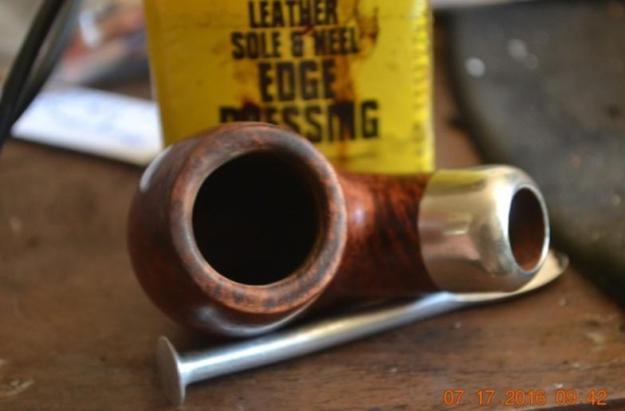
So now, a few words about the earth-shattering day at the Stag Tobacconist in Albuquerque, New Mexico, US of A, deep in the Land of Enchantment. How â propos is that, I ask? Holy Shades of a Midsummer Night’s Dream, Batman! You see, I was sitting in my customary spot with a view of the entire room against the unlikely and therefore ever-present threat of imminent attack by unknown sinister forces, which seem to lurk in every corner of this wannabe city. The place continues to groan and grumble with unnatural growing pains.

I was sitting there in my comfortable cushioned chair in the smoker’s lounge, working on my laptop, when I overheard a woman who had come in looking for a “lady’s pipe.” I wasn’t eavesdropping, I just couldn’t help overhearing, along with the rest of the conversation, although my interest was piqued and my ears pricked. From her demeanor, I guessed it was her first visit to the shop. She was a rather large lady, dressed in a heavy long black coat. I knew right off that I had exactly what she was looking for at my apartment in an assortment of nice smaller pipes that nevertheless were not minis. I knew not to interfere with Chuck Richards, my friend and mentor, who had engaged the good woman

Scanning my mental knowledge of the shop’s inventory, I settled on a few of the no-name Italians and some mini carved meerschaums in the glass case below where Chuck and the lady stood at the end of the service counter, only a few yards from my curious ears and eyes. To my immense surprise, I watched Chuck (whose lips were pulled back in a look of distaste I recognized, whether or not the woman detected it) as he produced with appropriate care the open box of one of the meerschaums. The woman made a definite sound of pleasure that was stifled by Chuck’s masterful discourse on the pros and cons of meerschaum minis. He went on about the quality of the material and their ability to burn any type of tobacco without a lingering taste; their fragility and special precautions needed to use them, and in particular their construction with small push-in tenons that can be difficult to maneuver the vital cleaners through. He demonstrated and then explained how the cleaner would also be inserted into the shank after smoking but that he couldn’t handle the surface of the pipe because of its porous nature that absorbs skin oils and dirt, leading to serious damage.

Choking back a laugh, I thought I could not have discouraged a sale better if I had tried! I happen to know Chuck despises fancy, carved meerschaums for his own collection but would never hesitate to sell one to the right person. And so he moved on to several nice, shiny, natural finish no-names of medium length and bowl size. My excitement was growing. I decided if and only if Chuck proved unsuccessful in matching the female customer with a pipe – a wholly unlikely event – would I scurry out the door after her and offer the prospective customer my card and services.

But of course, Chuck sold her a very nice pipe, albeit twice the size of those I will show in this series. Thus was conceived the idea for this series, which, in my original plans, I envisioned, as usual, in a single blog. After a mere glimpse at the boggling research needed to undertake the endeavor, however, not to mention the difficulty of blogging seven restores in one space, I had the brainstorm of splitting the project into a series.

My friend on the Smokers Forums UK (http://www.smokersforums.co.uk/), who goes by the username “im2for1” there, is a Team Member at the Forums and owner of Ladies of the Briar for women only on Yahoo Groups and Friends of the Ladies of Briar of Facebook. She is also vice president of New Jersey Fellowship of Pipe Smokers on Yahoo and Facebook. With some careful, specific prodding, I hope to elicit some invaluable intelligence from Liz as this series progresses.

Here are some pictures of the seven pipes, which I relegated to a special pile on the big work desk in my office. I automatically segregated them for their unusual small sizes but had no idea that distinction would someday come in handy.Lady1 Lady2Now, for a description of my first foray into a so-called Ladies Pipes, although it could be smoked without shame by a man (if I didn’t already sell it to one of my best customers, known to some readers here as Ashley and going back to my first real restore). This is a FRASA (from the brand mark on the shank), a French piece of work about which I can find no background. Lady3I wonder if the larger capital letters indicate an acronym. It’s a lovely, little, delicately curved, natural, dark red briar billiard.Lady4 Lady5 Lady6 Lady7 Lady8RESTORATION
This was one of the cleanest pipes I’ve ever come across in a lot, but I’ve never seen one yet on which I couldn’t improve. I showed all of the pipes I’m restoring for these blogs to Ashley at one of our weekly pipe meetings a few weeks back, and I had a good idea which one she would like best. I’ve come to know her tastes, having sold her several pipes, not to mention one to her husband, Stephen. Her hand went straight for the FRASA and her eyes sparkled with P.A.D. I knew I had her. I pointed out the clean but slightly rough to the touch chamber, which took a flashlight to determine that it had indeed been lightly smoked. Then there were some minor blemishes on the bowl. I also said I’d like to lighten it up a bit, unless she liked it the way it was.

“Go for it!” she said.

And so I tossed the bit in an OxiClean bath.Lady9Moving to the stummel, I wiped it down with purified water and soft cotton cloth gun cleaners before using 320-grit paper gently and evenly before micro-meshing from 1500-12000.Lady10 Lady11 Lady12Removing the bit from the OxiClean and rinsing it, I wet micro-meshed it to a nice dark shine.Lady13I sanded the small chamber with 200- and 320-grit papers and retorted it just to be thorough, but I didn’t expect to find anything, and I didn’t. Now, that’s a clean pipe!

I finished by buffing the stummel with white Tripoli, White Diamond and carnauba, and the bit the red and white Tripoli, White Diamond and carnauba.Lady14 Lady15CONCLUSION
In the next installment, I plan on getting more to the meat and potatoes issues of relative numbers of women who partake of the magic instrument of divine contemplation – recognizing, of course, the futility of trying to get anywhere near exact numbers. I also hope to have feedback from Liz and others like her who are as active as any men in their smoking communities, with some insights into the kinds of pipes they actually enjoy, whether “ladylike” or more “manly.” Yes, sir (or ma’am), the times, they are a-changin‘.

I’ll leave you with these parting shots of two lady smokers, one real and one – ahem – well, never mind.Lady16 Lady17