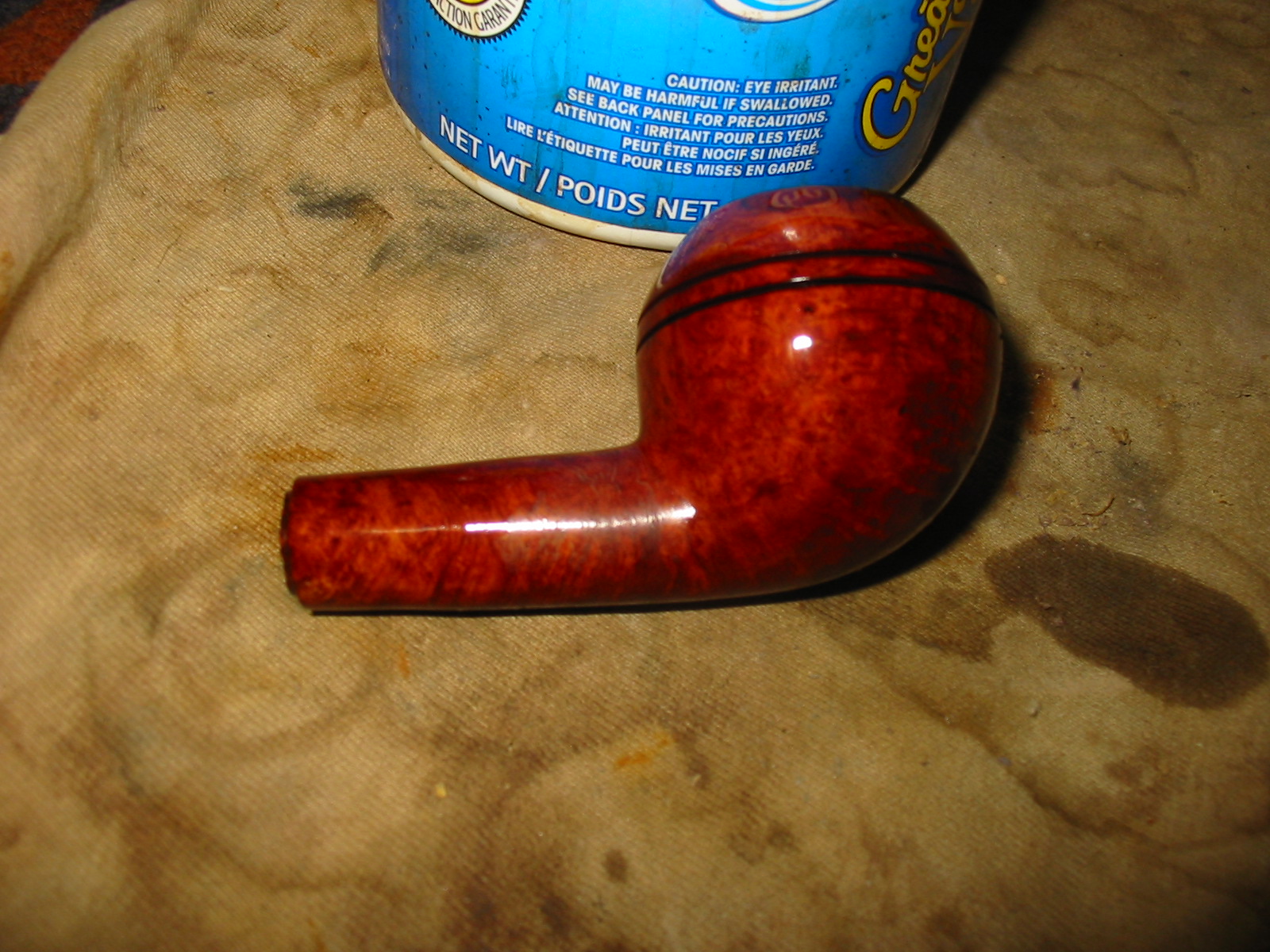
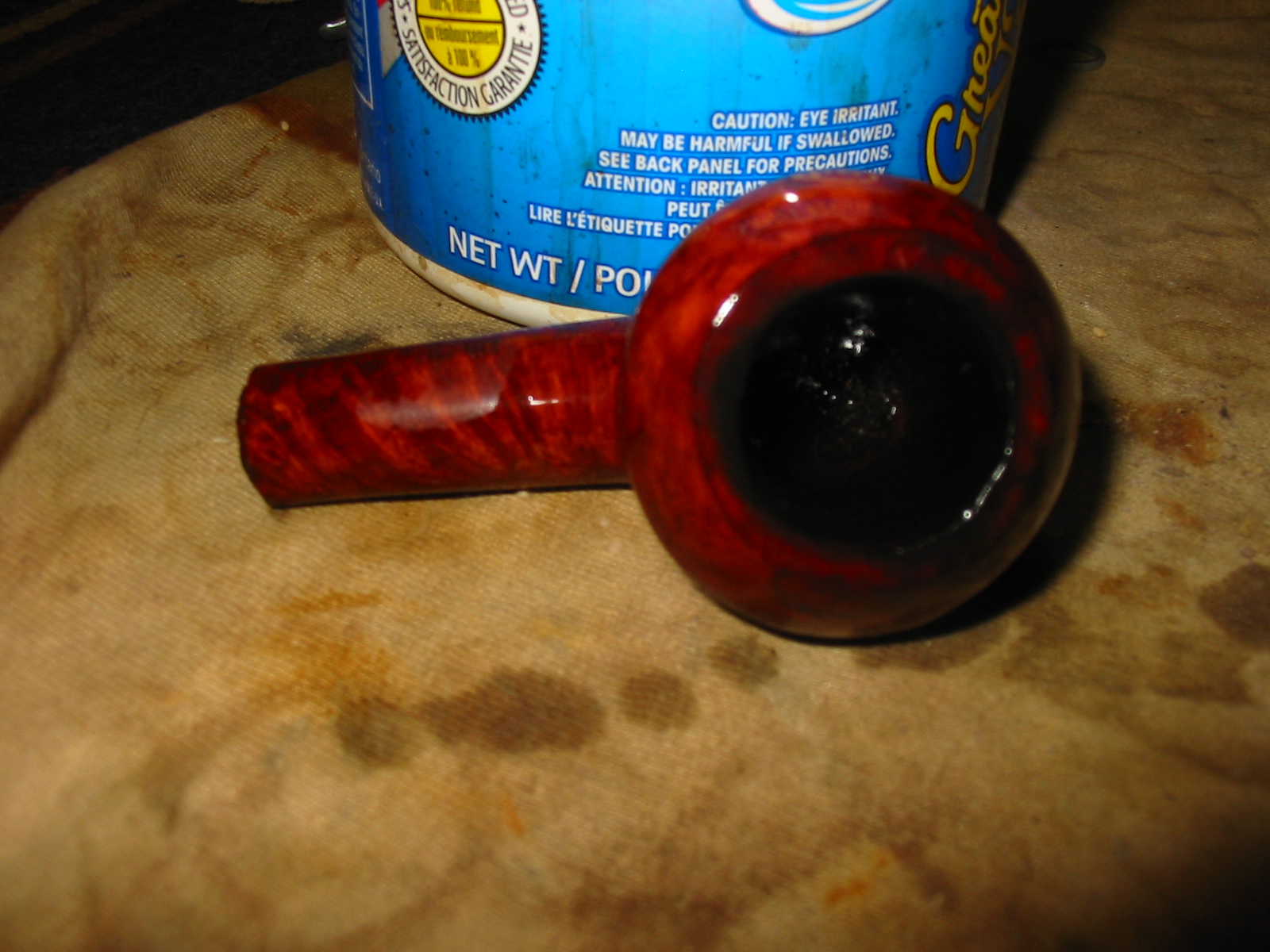
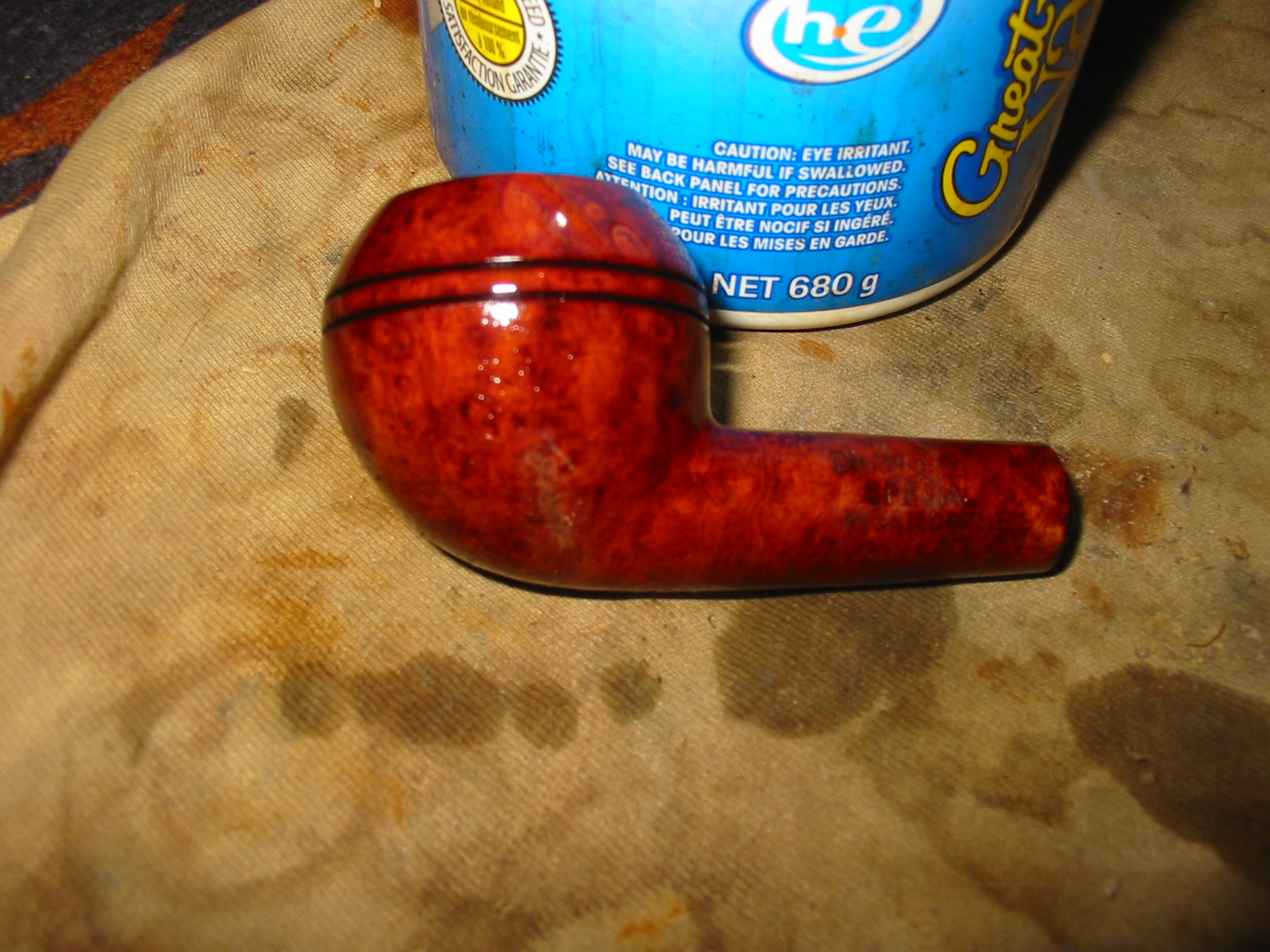
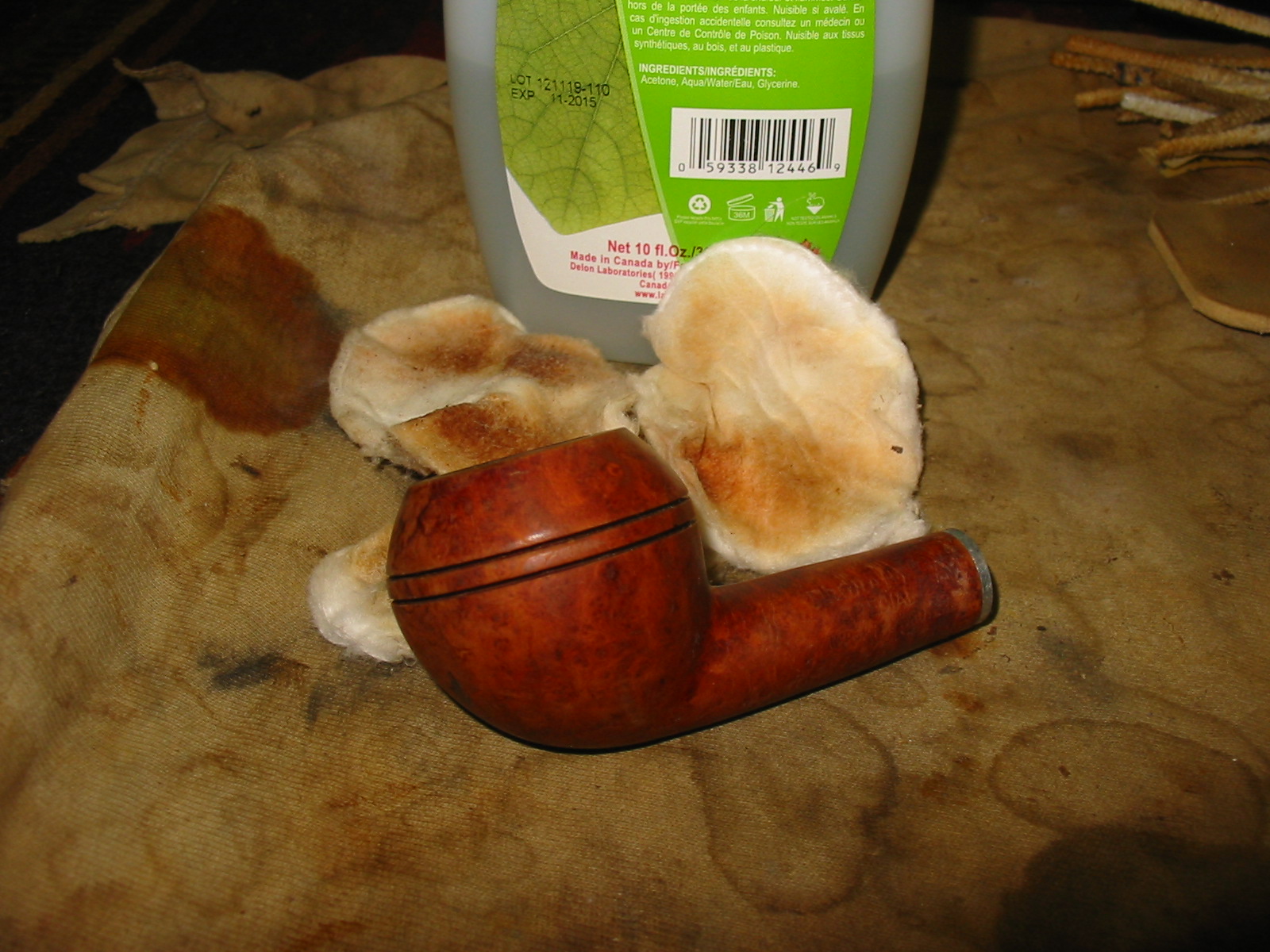
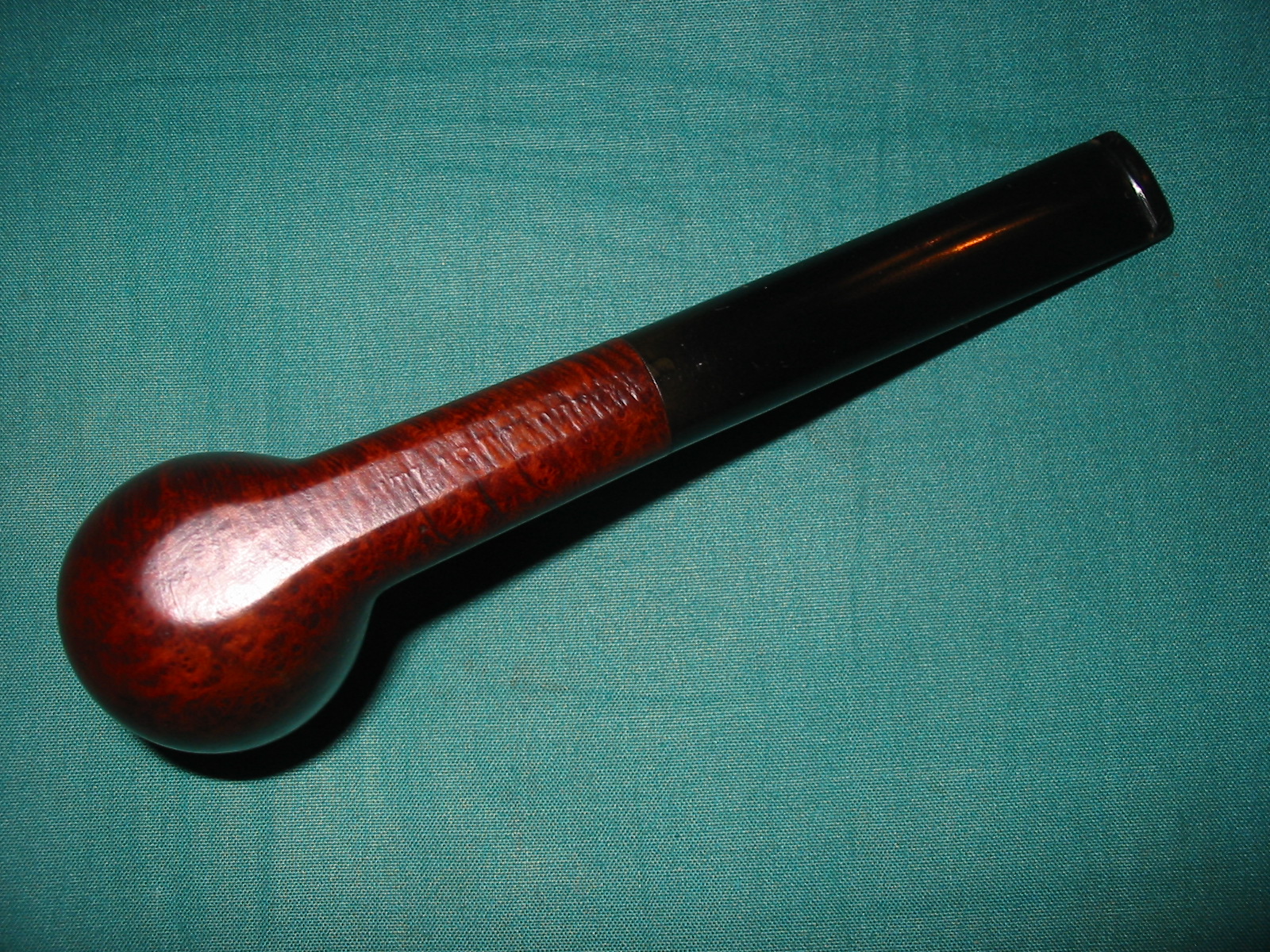
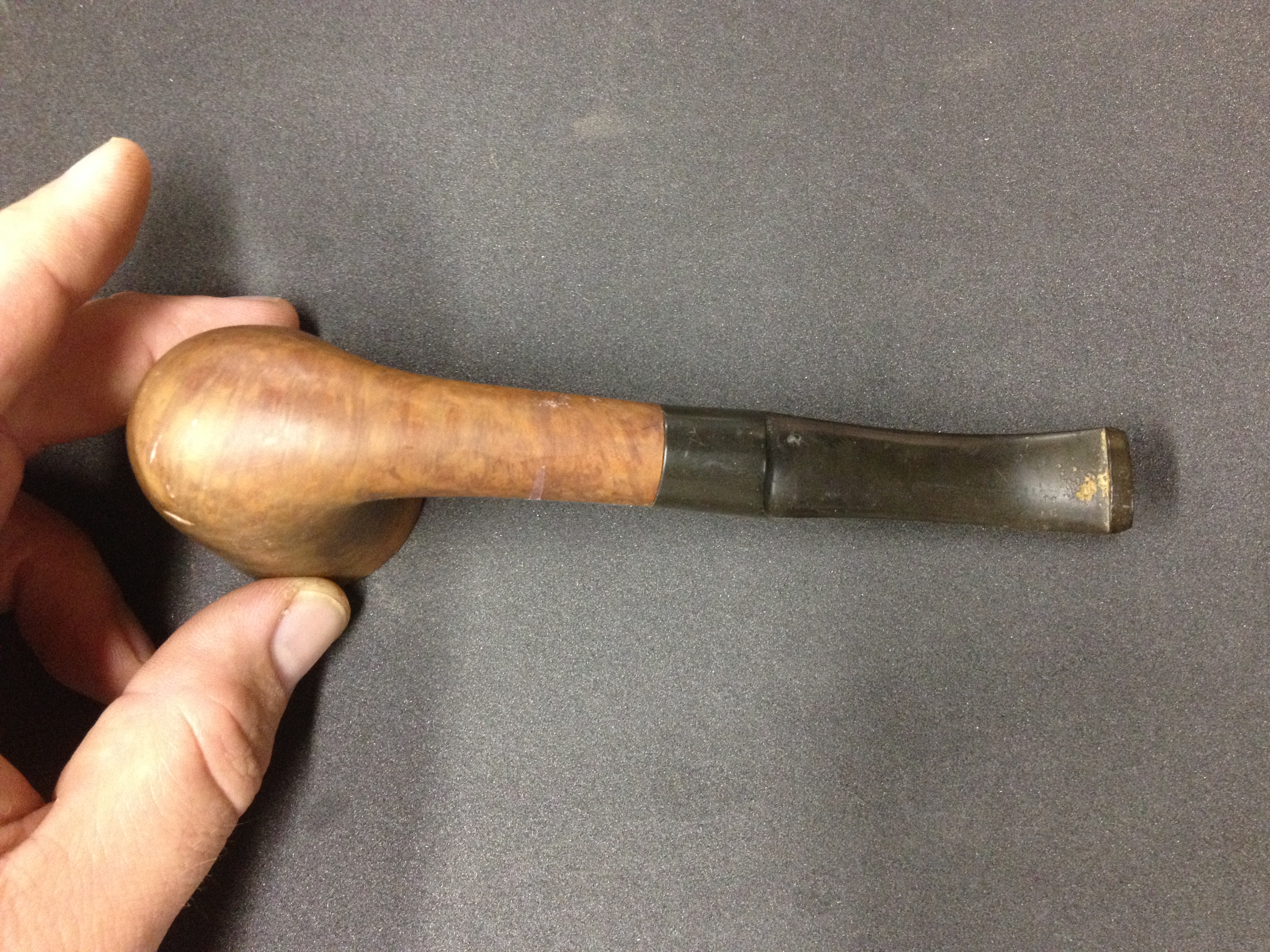
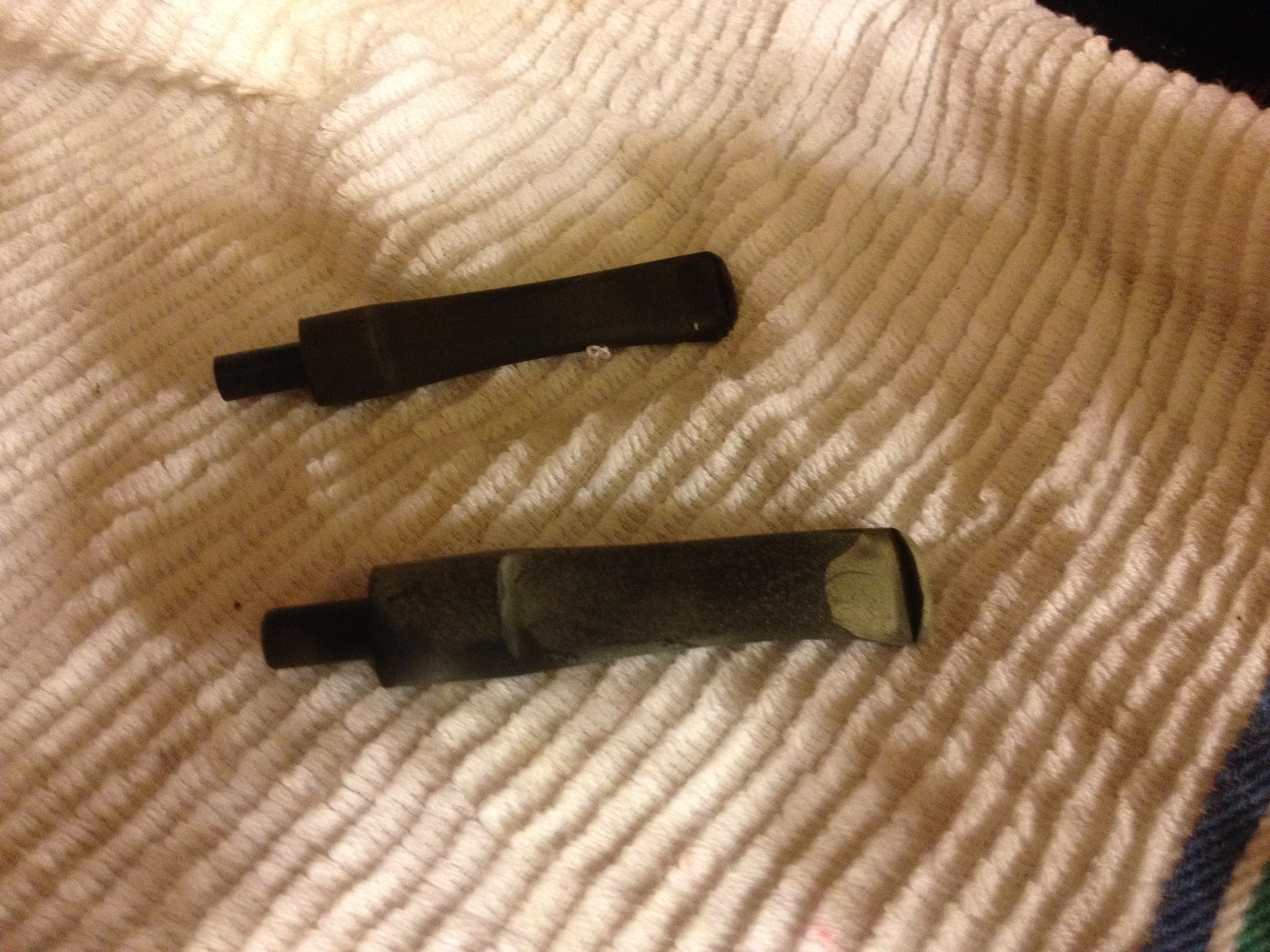
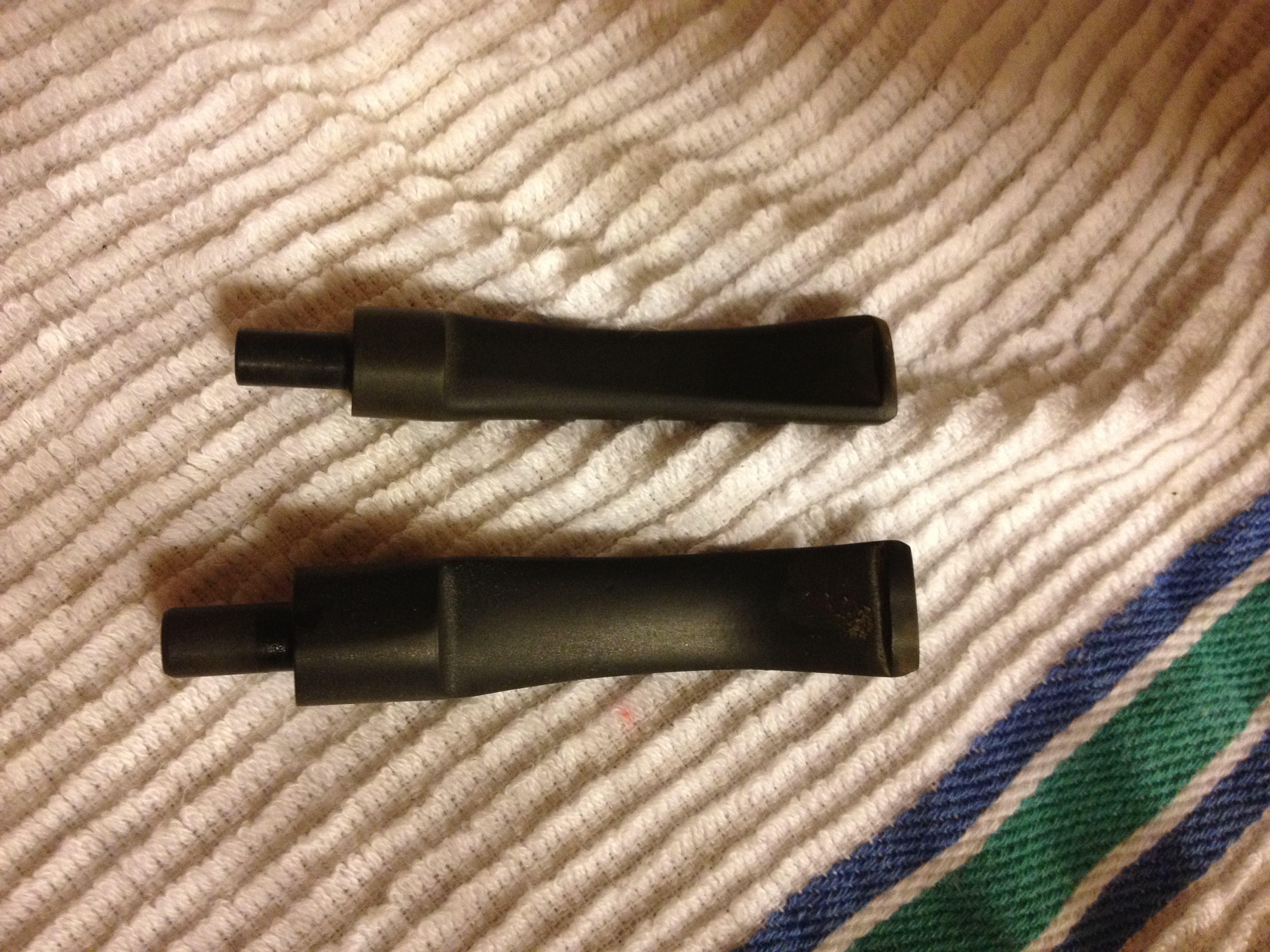
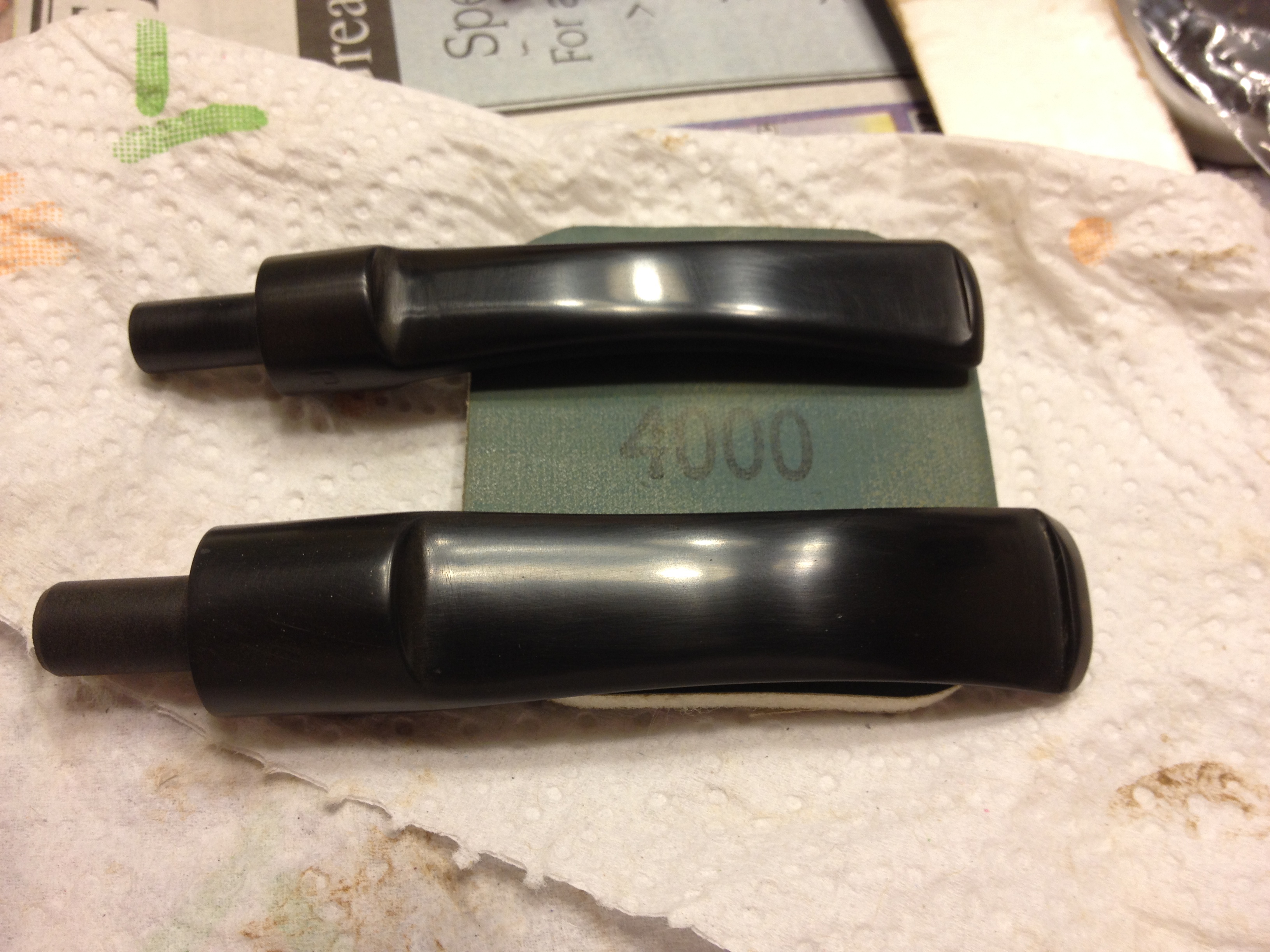
Tag Archives: Alcohol bath

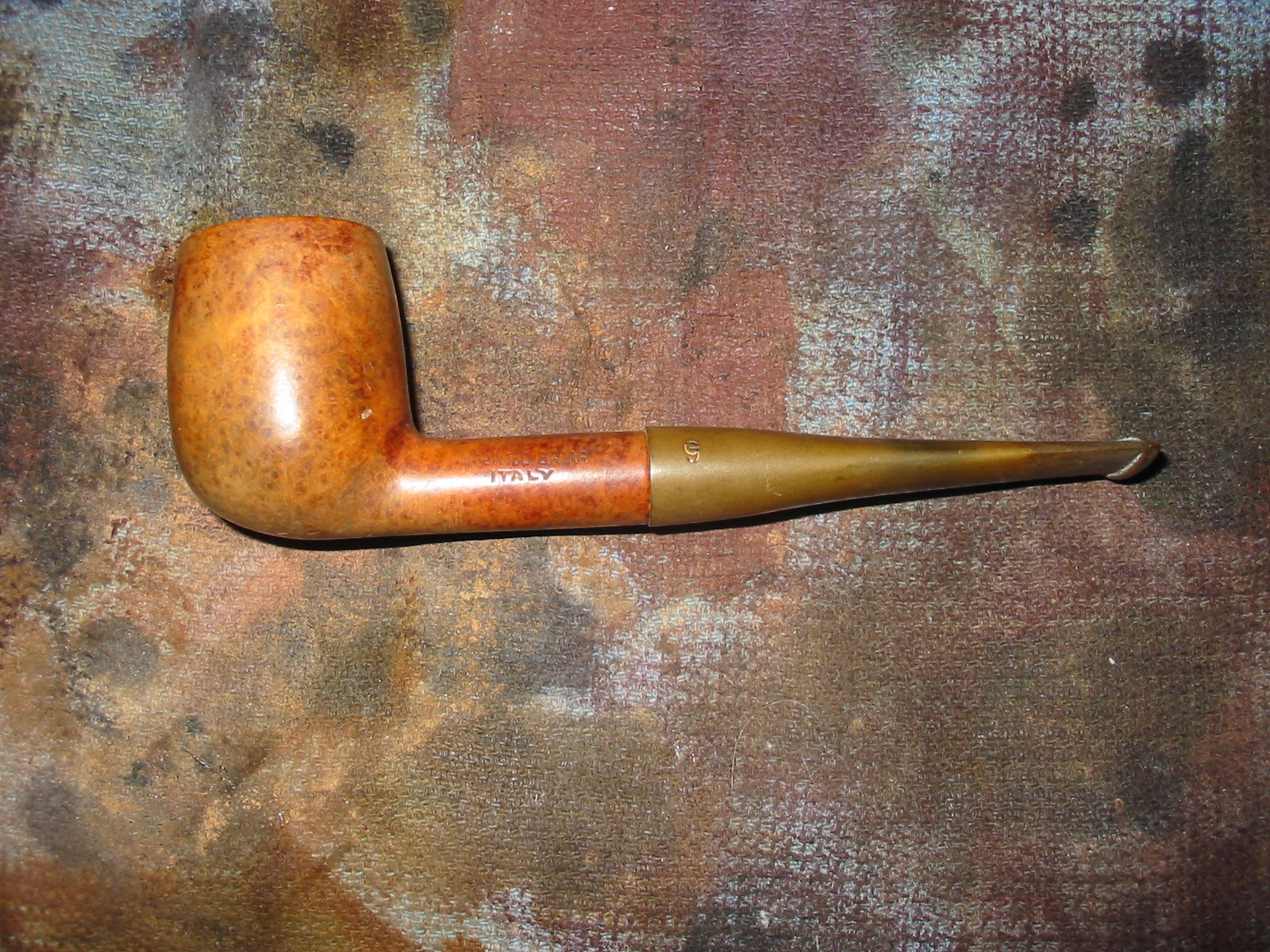
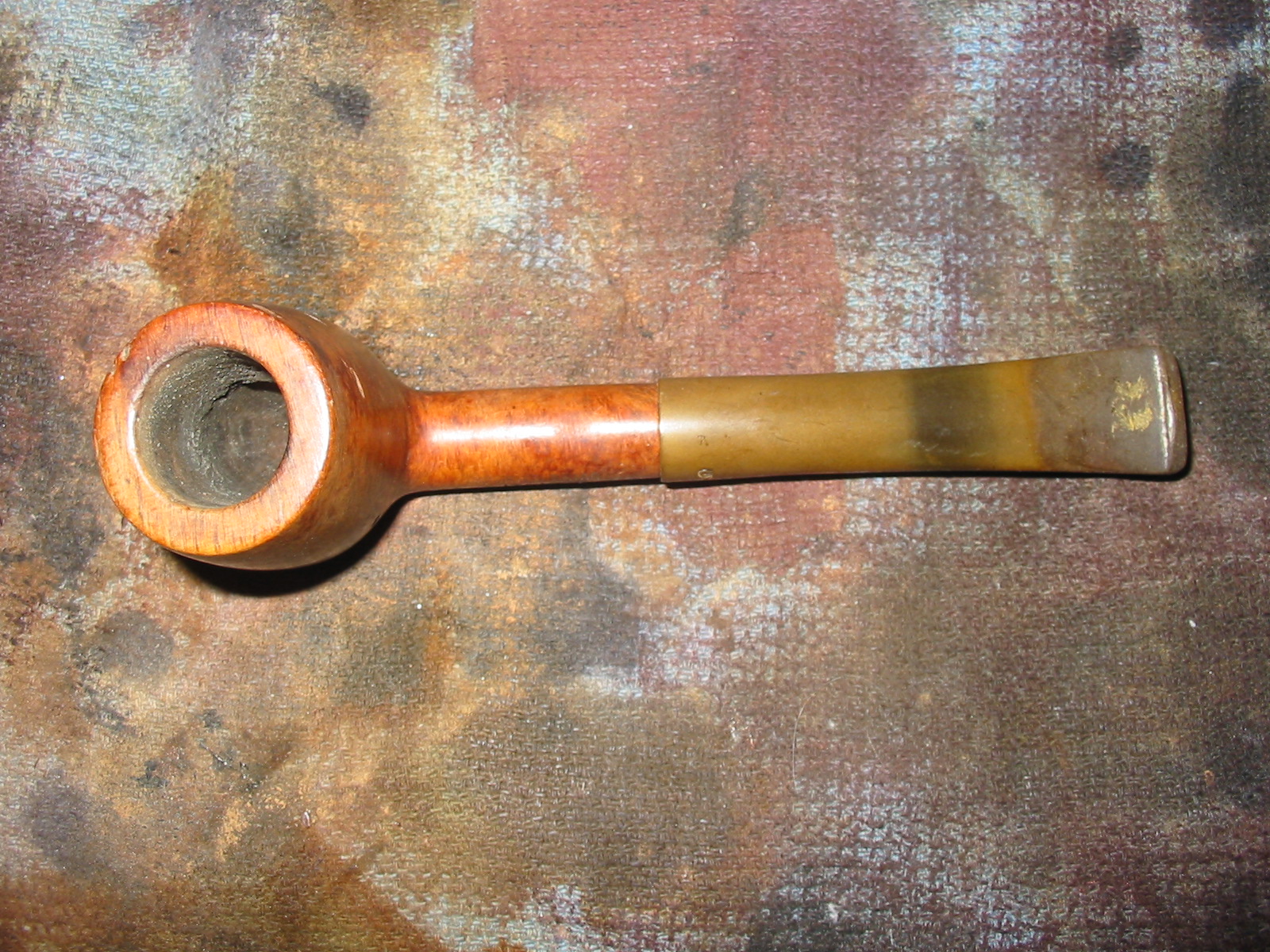
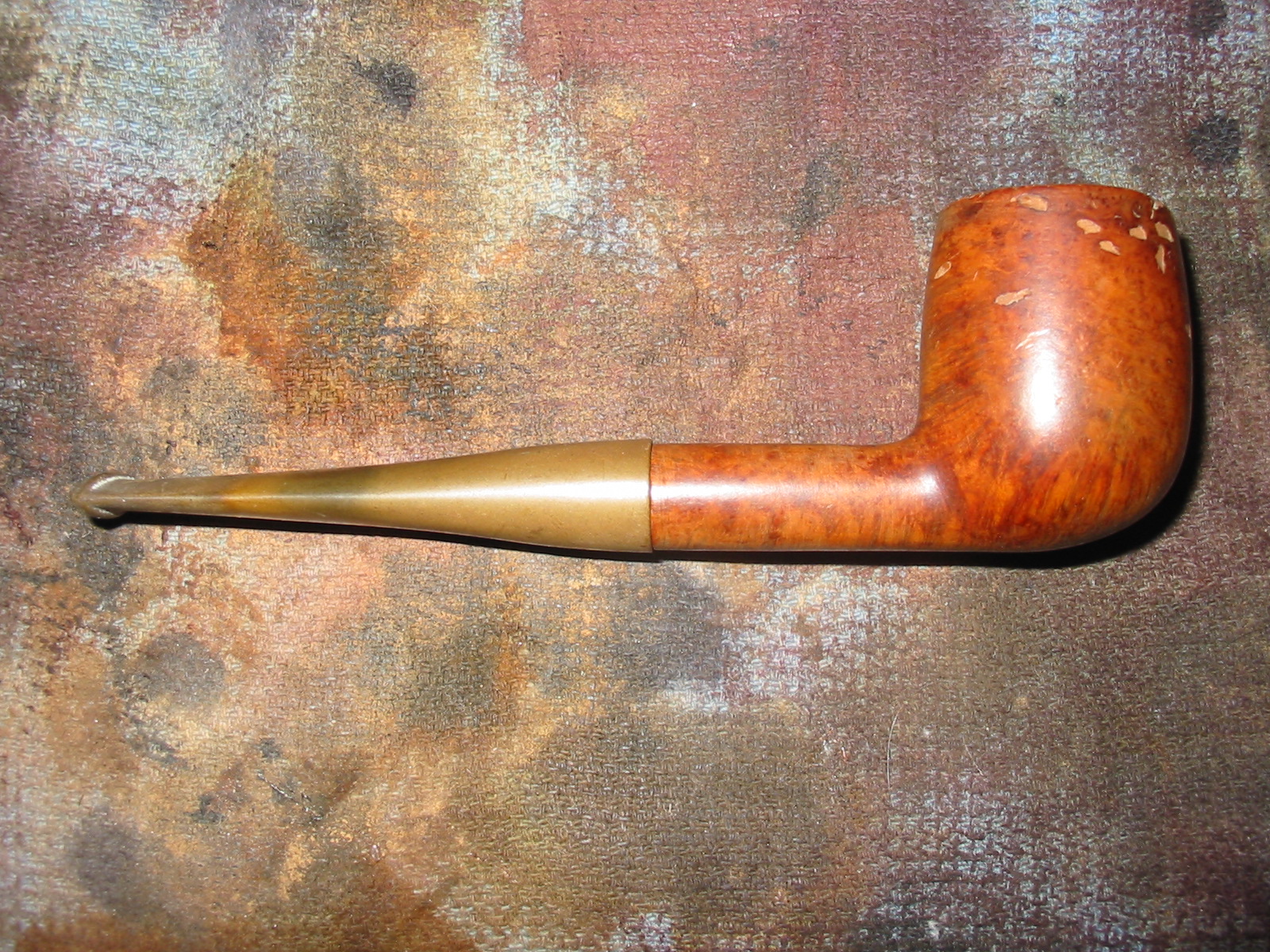
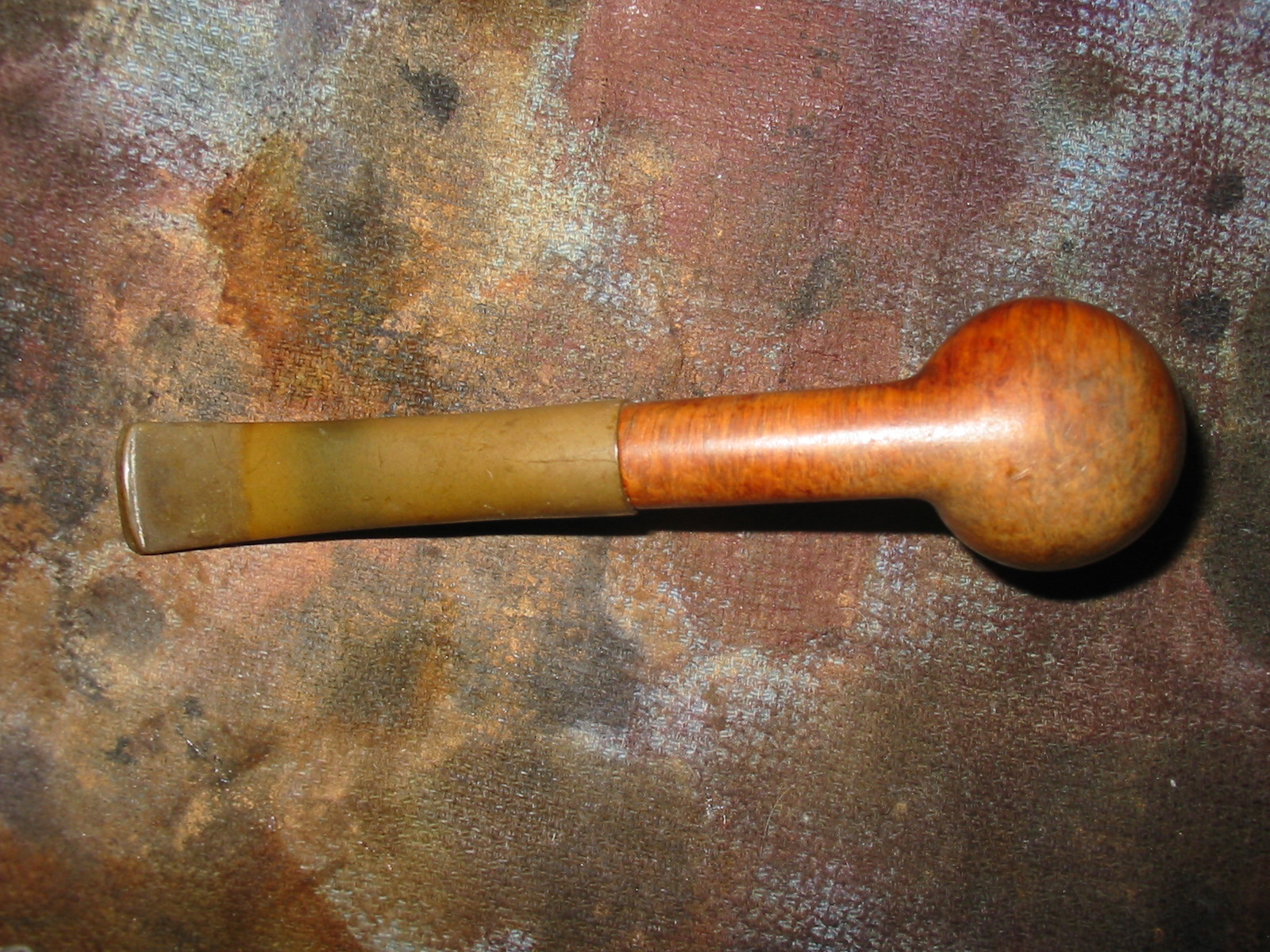
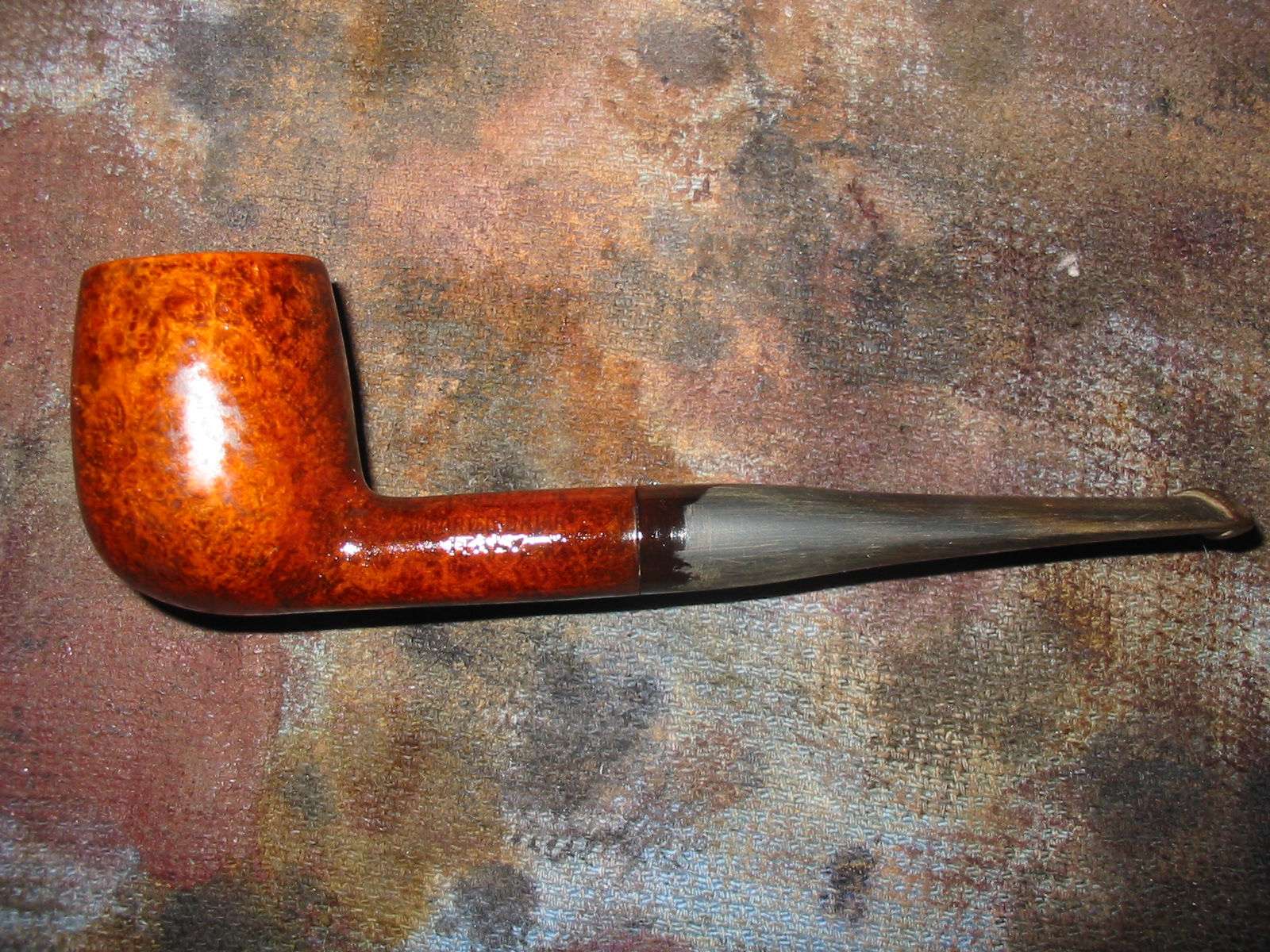
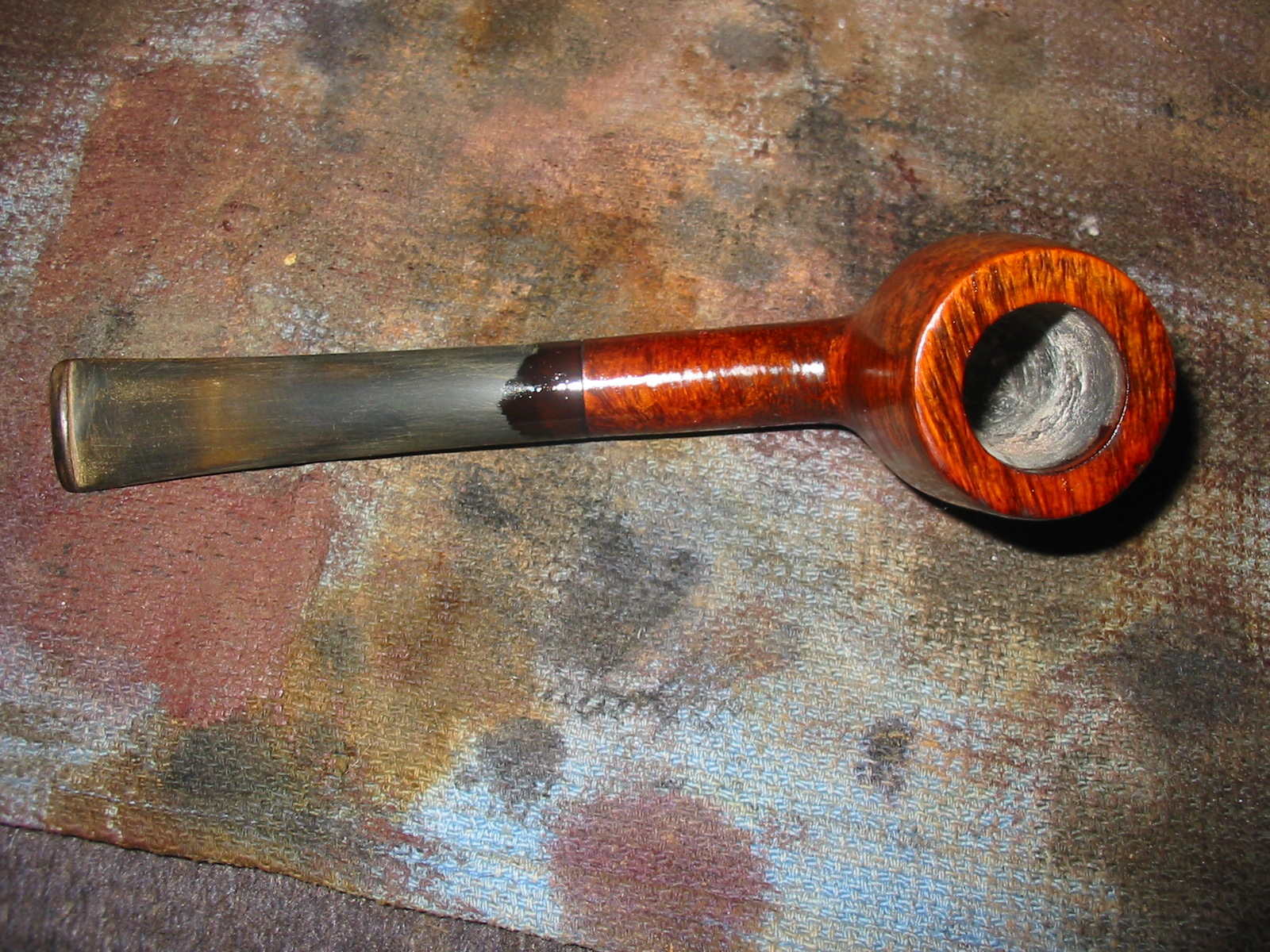
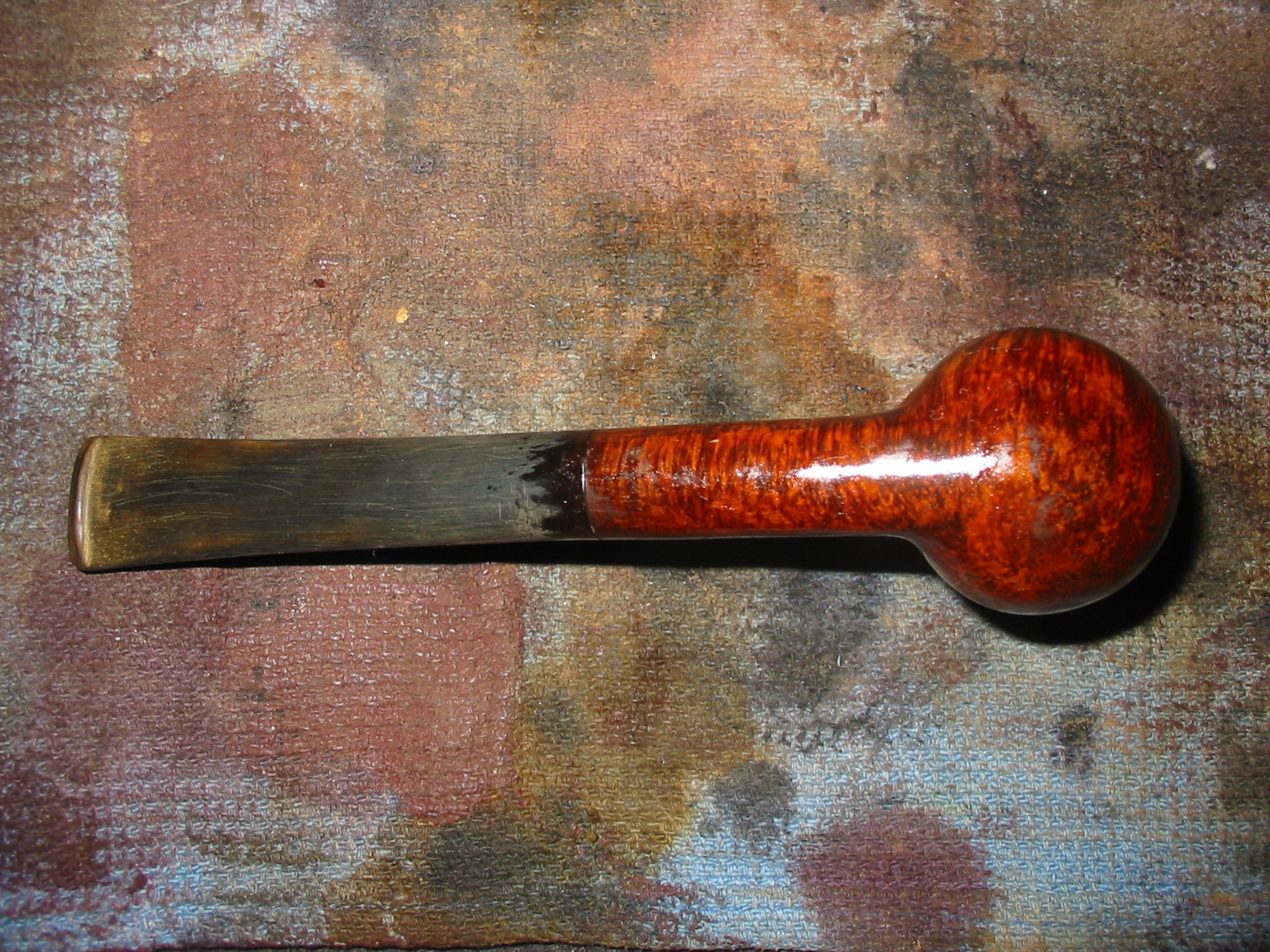
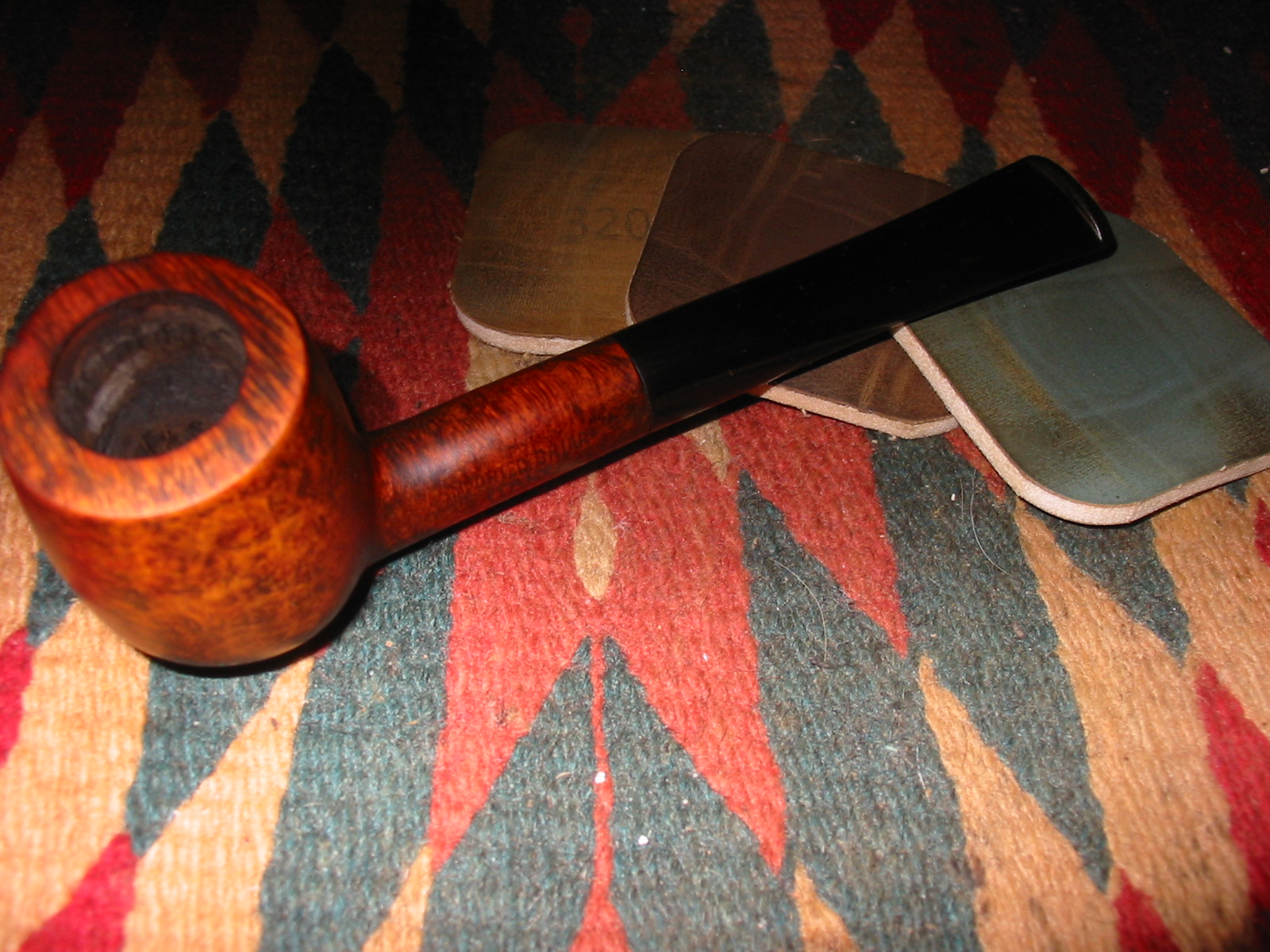
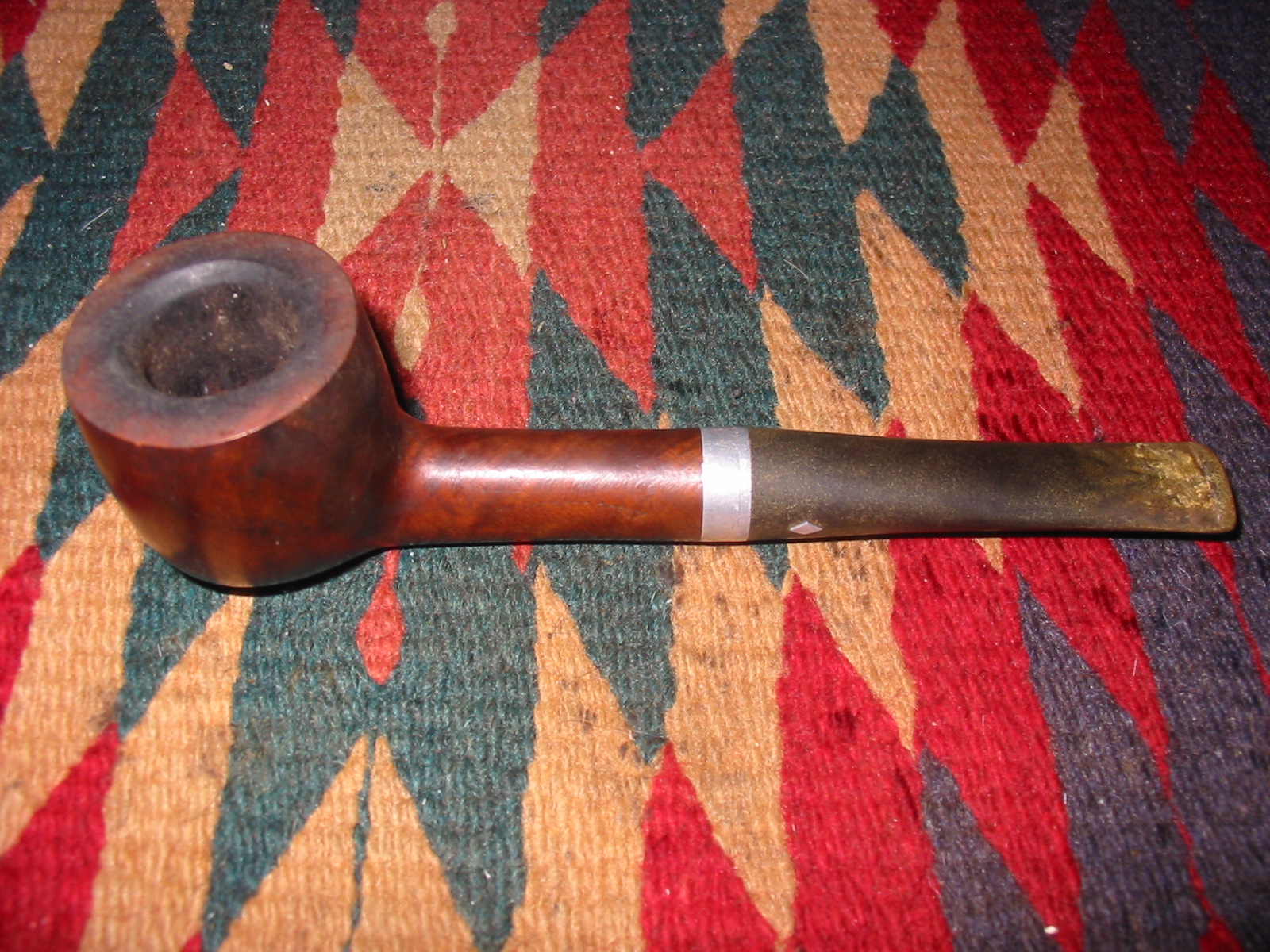
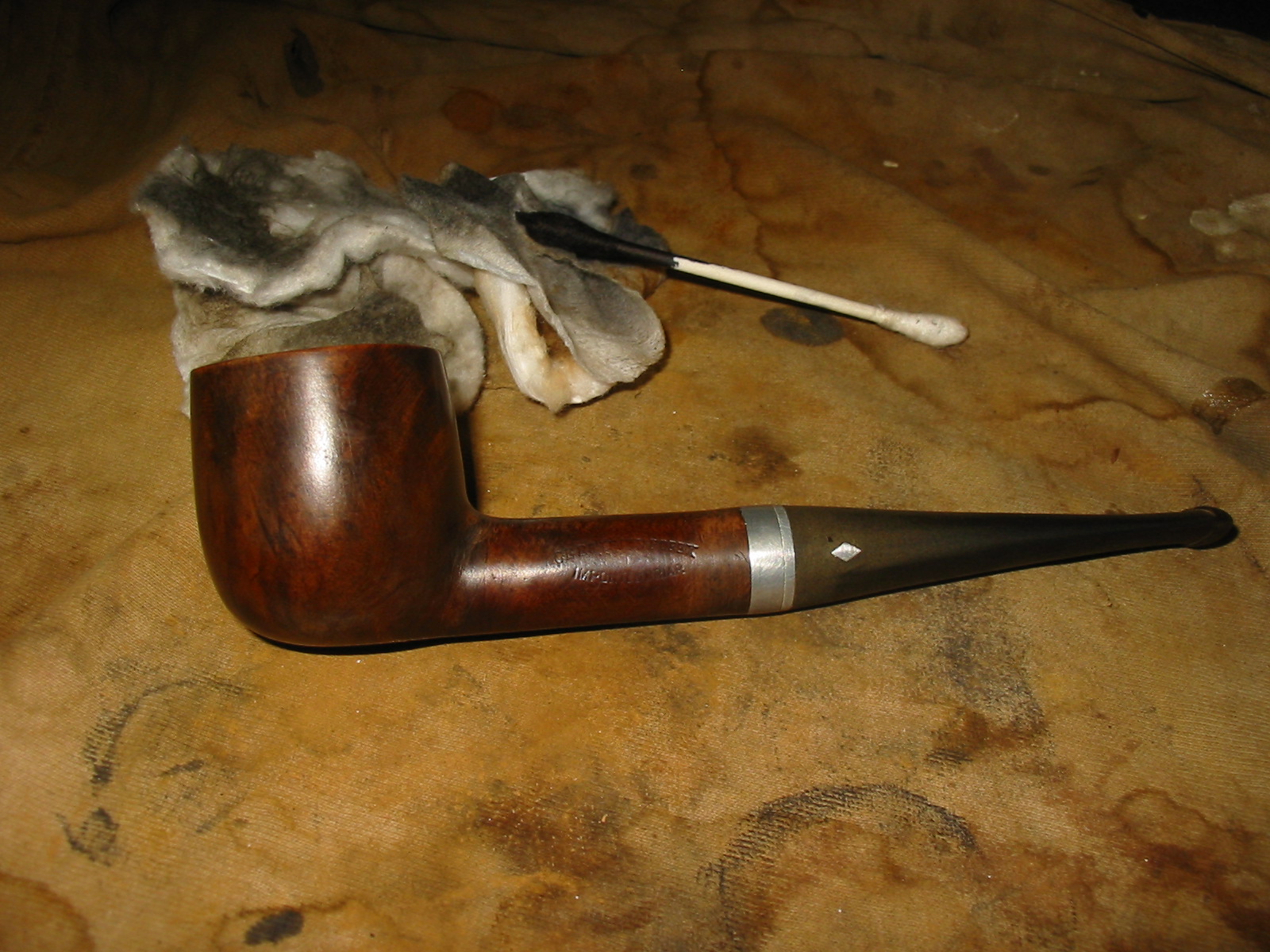
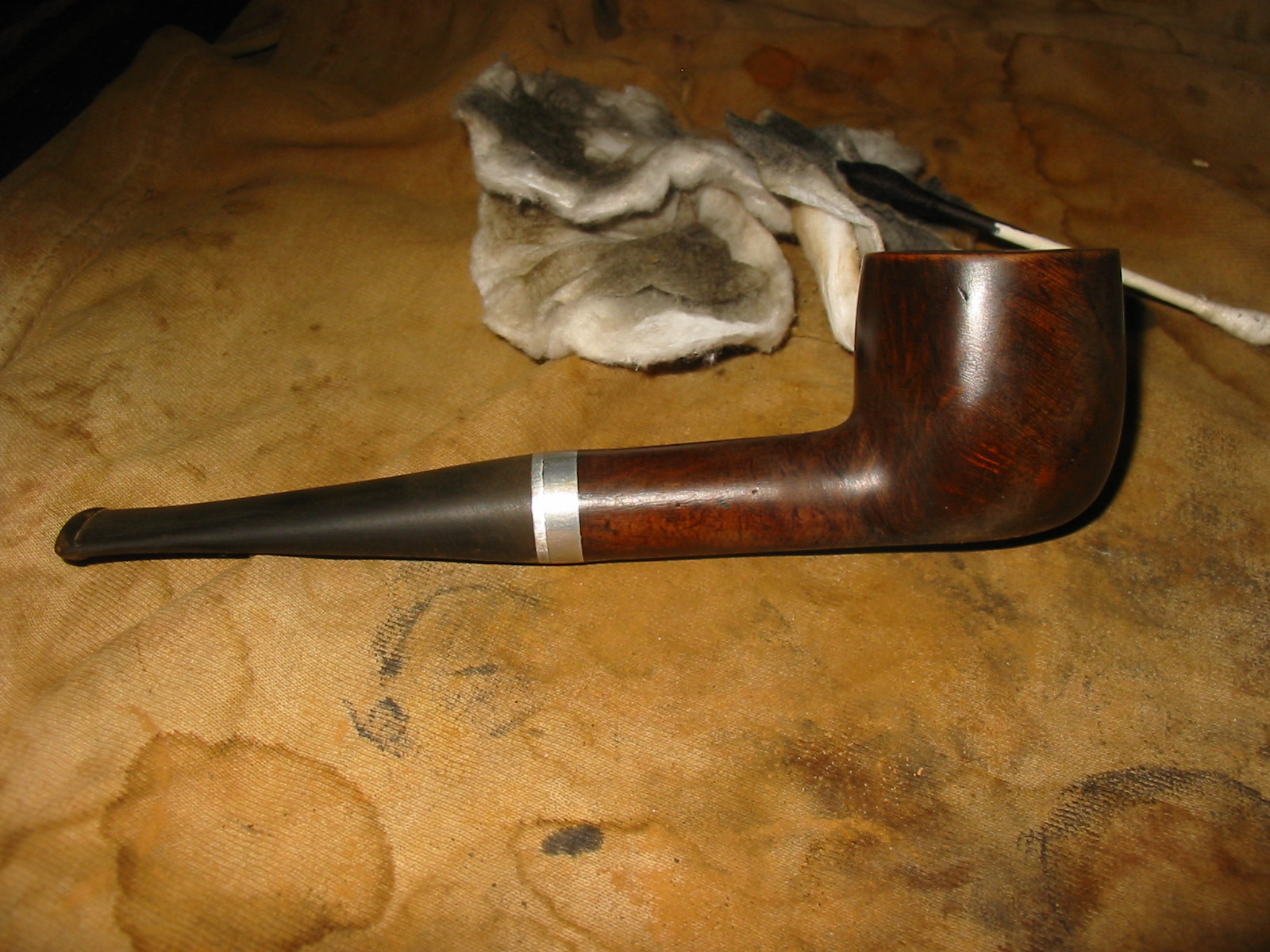
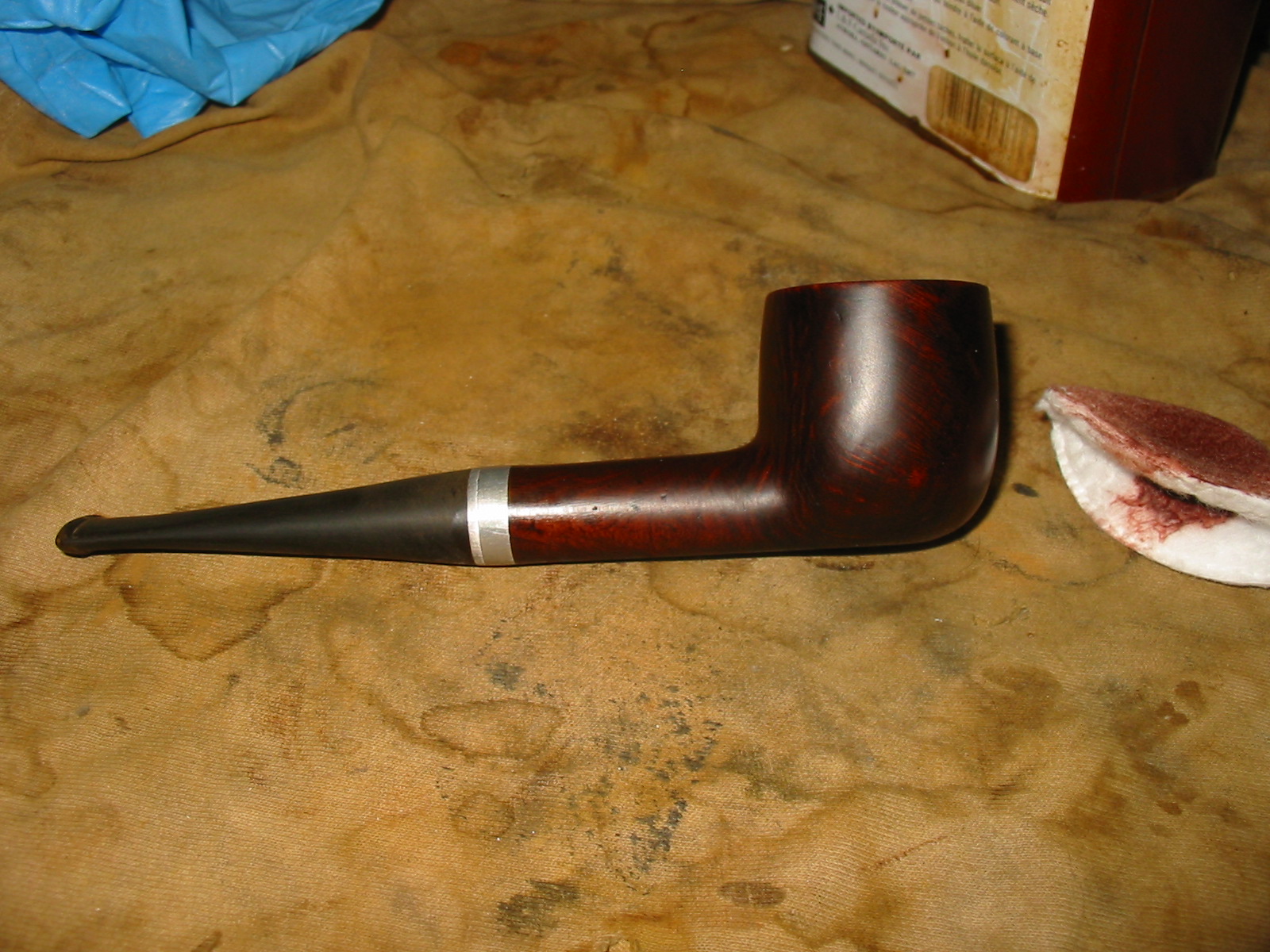
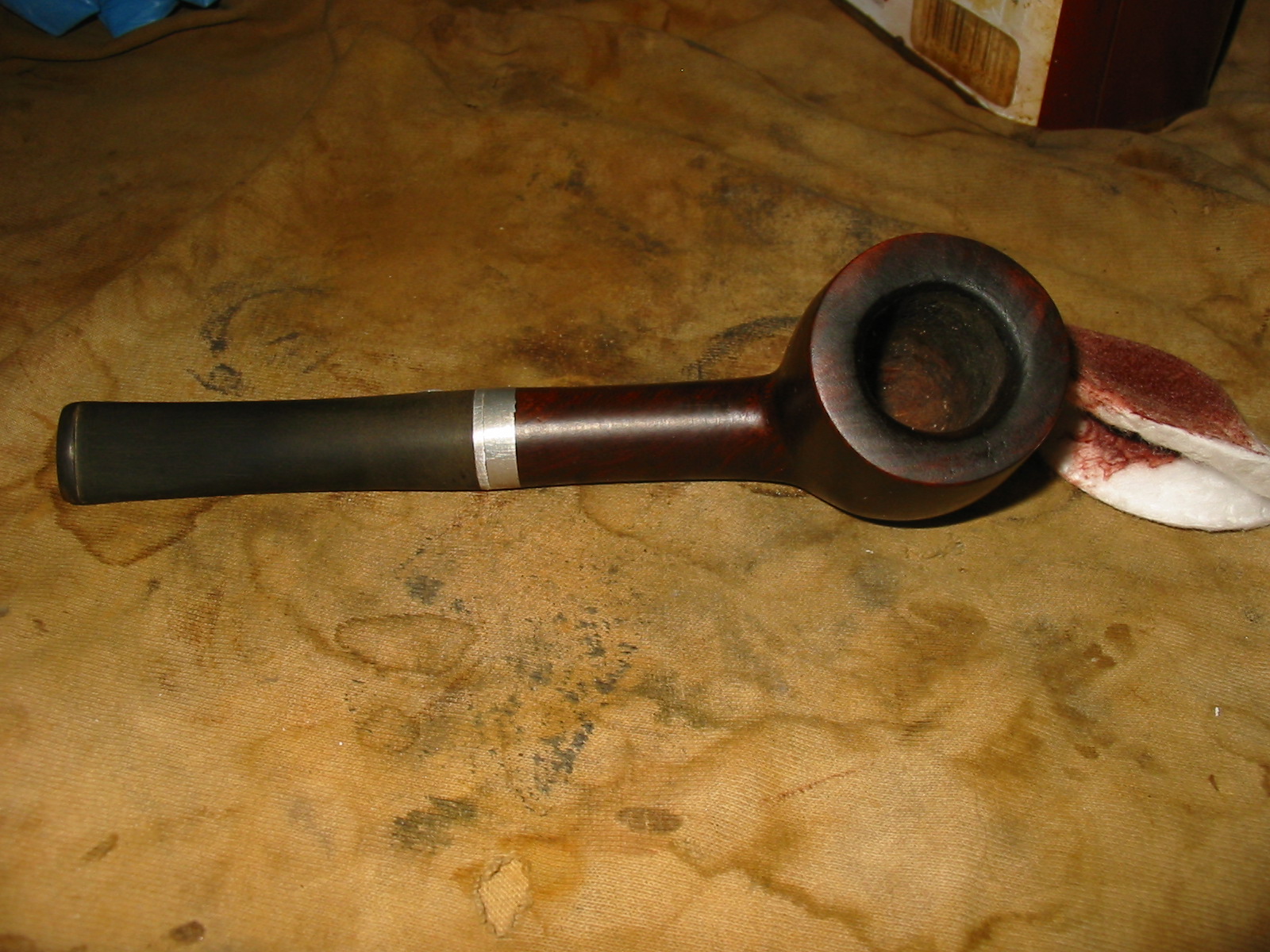
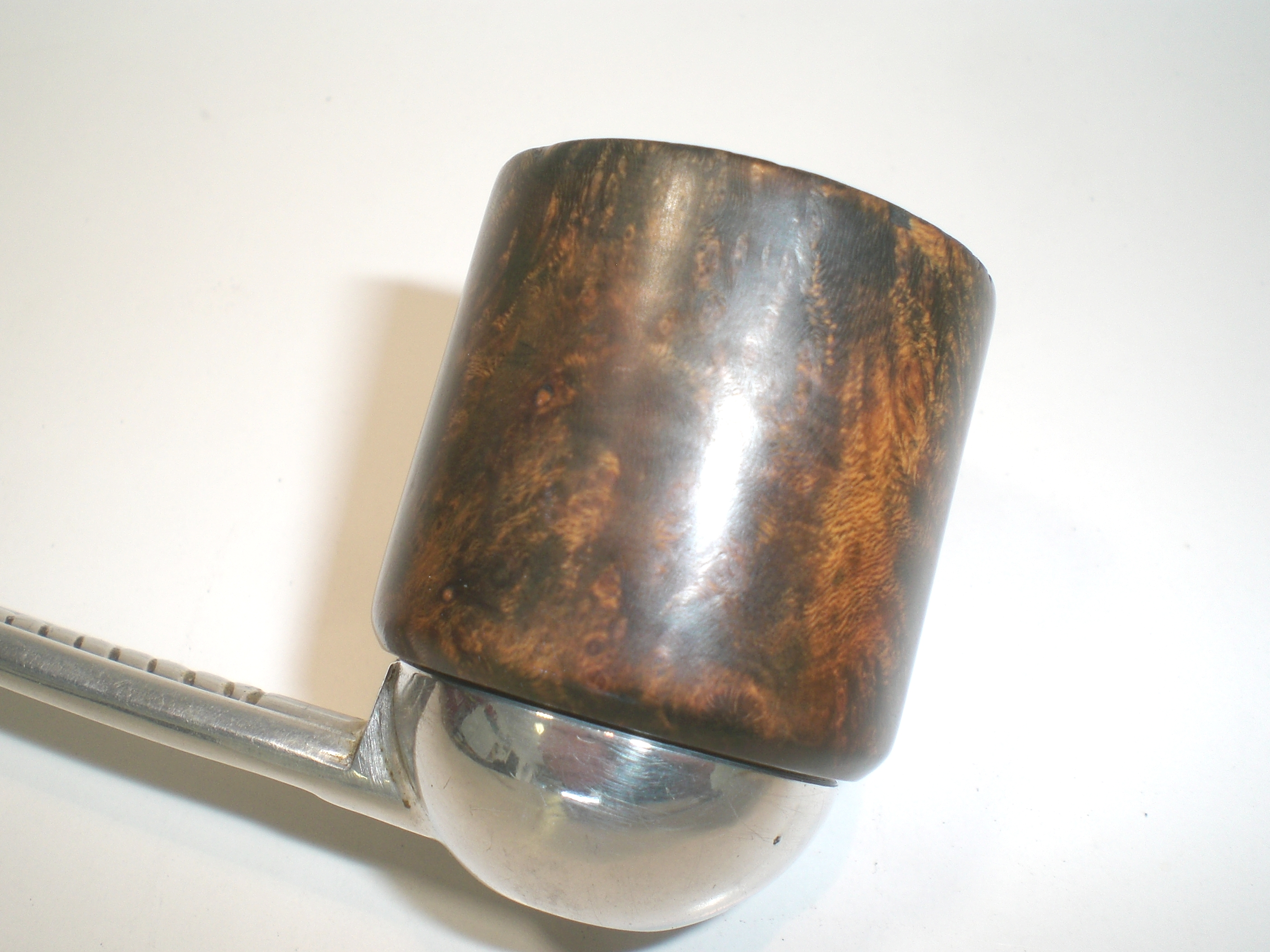
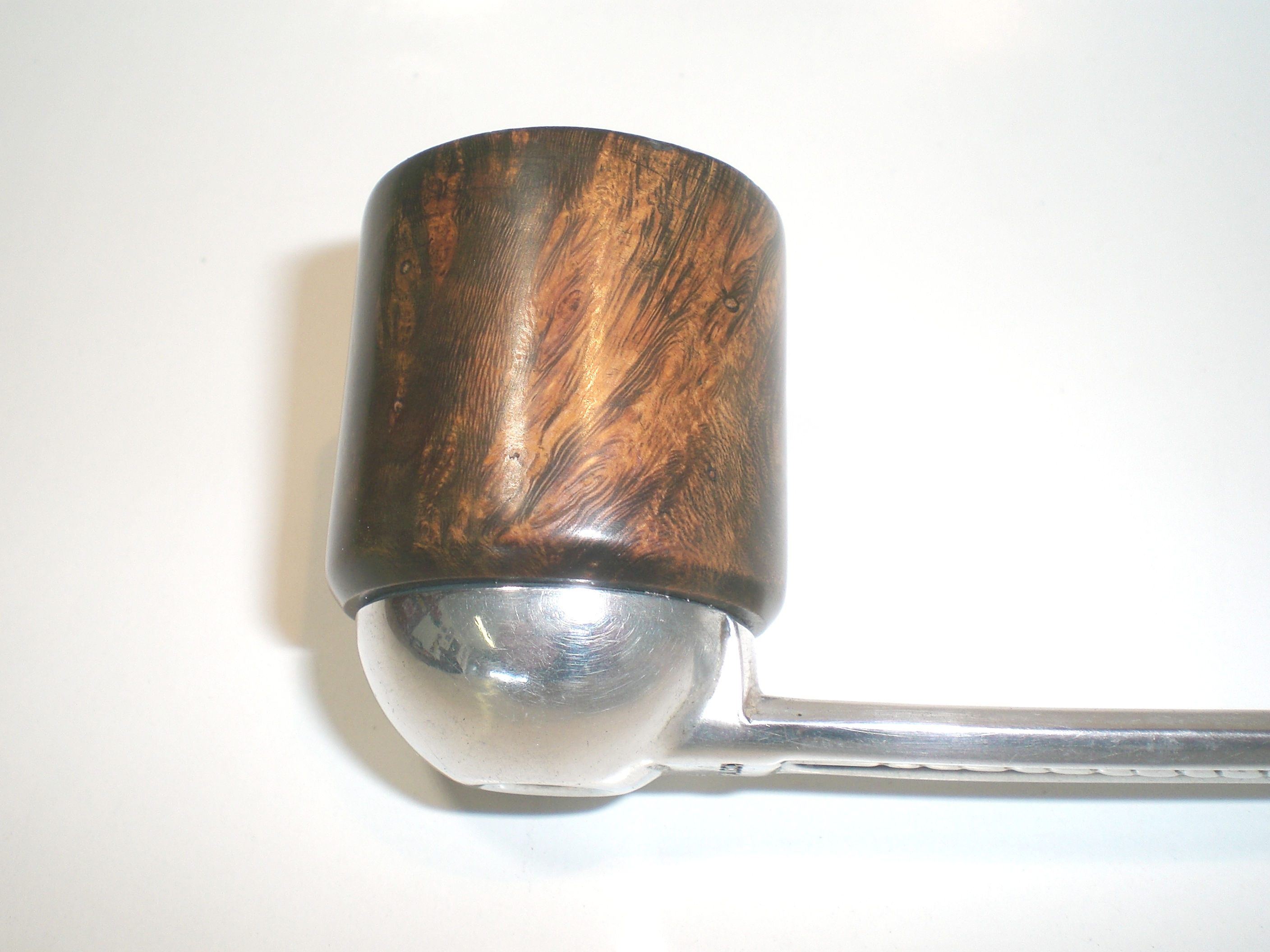
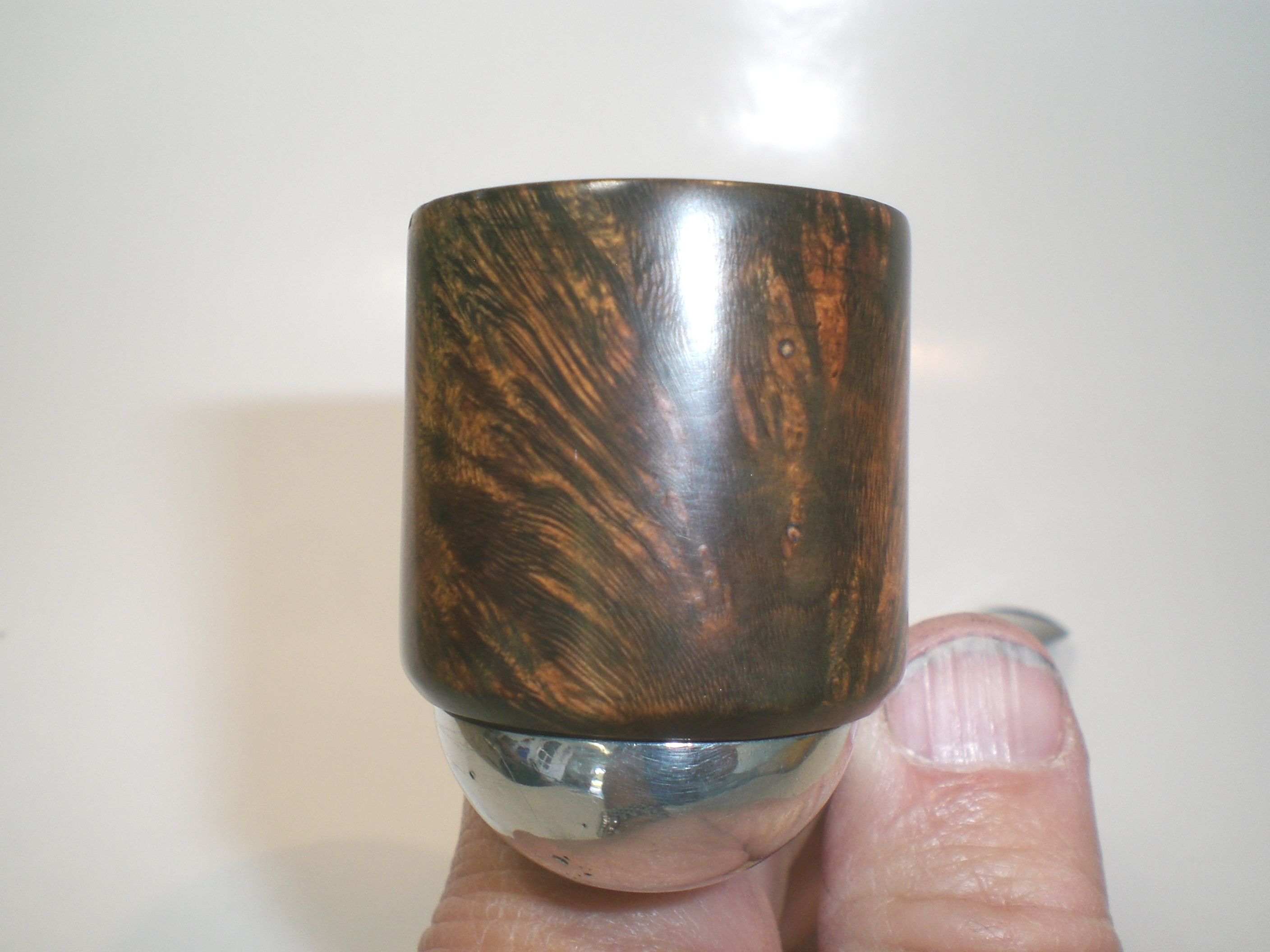
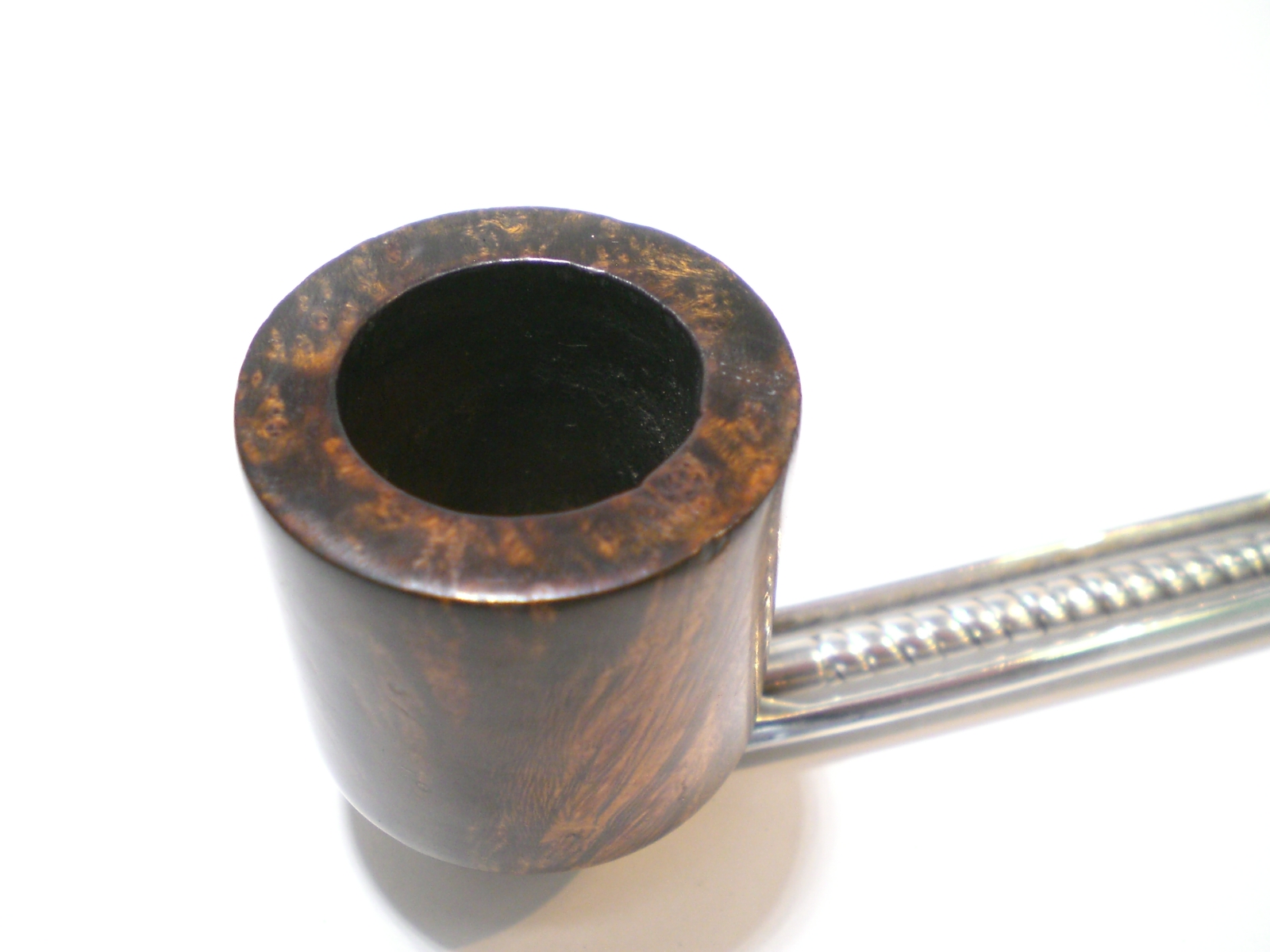
Reworking a No Name Brand Italian Billiard


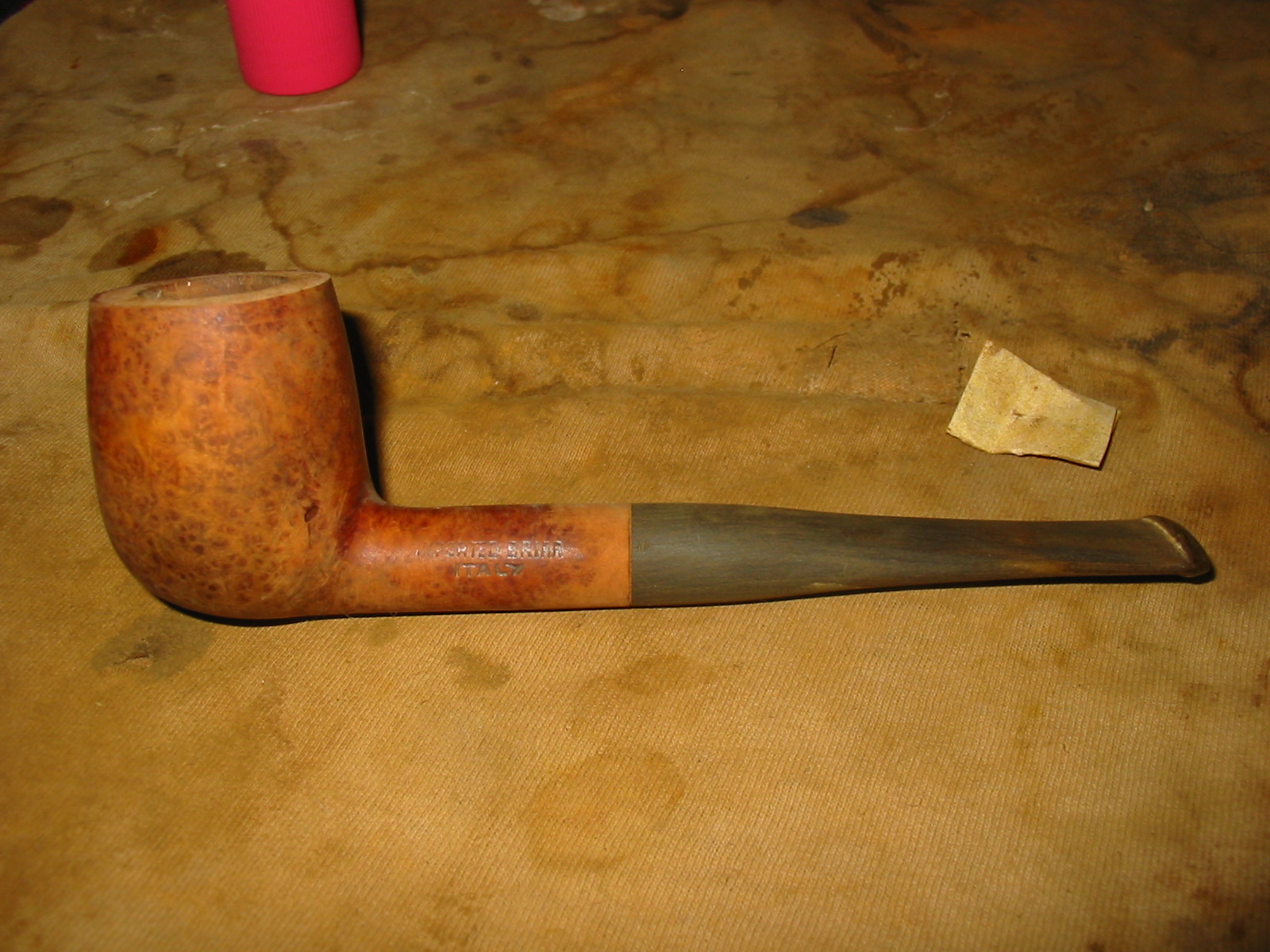
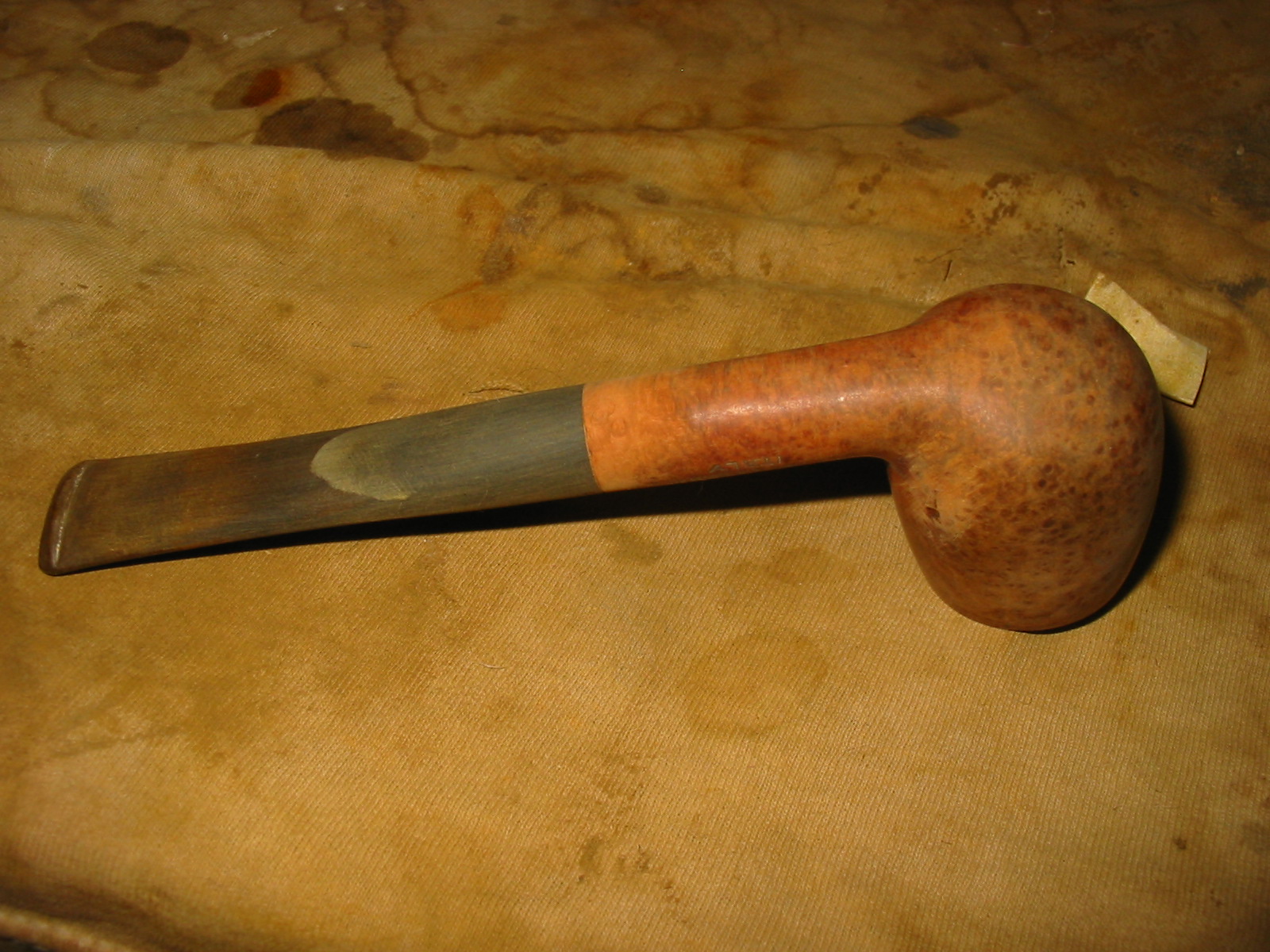
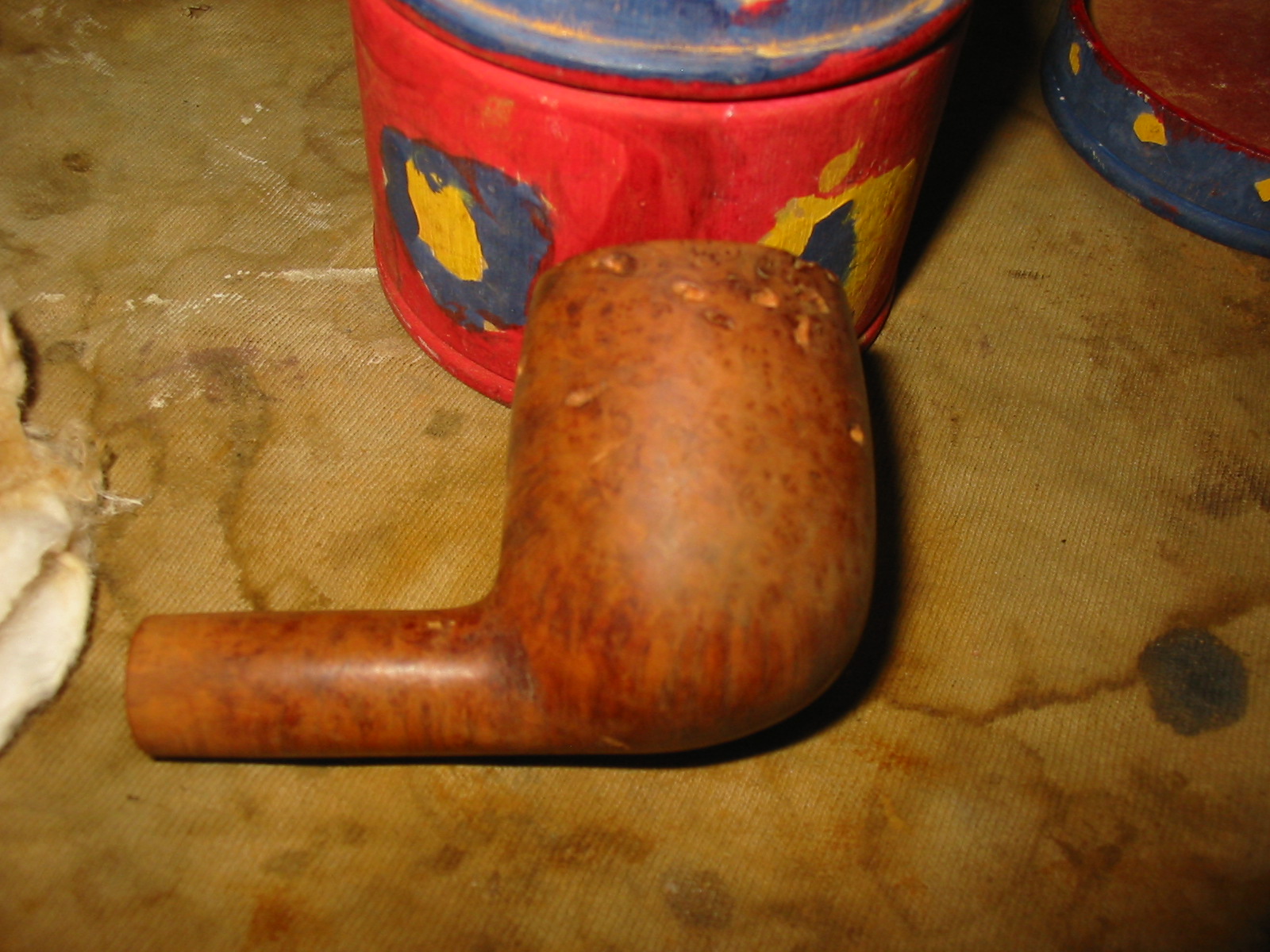
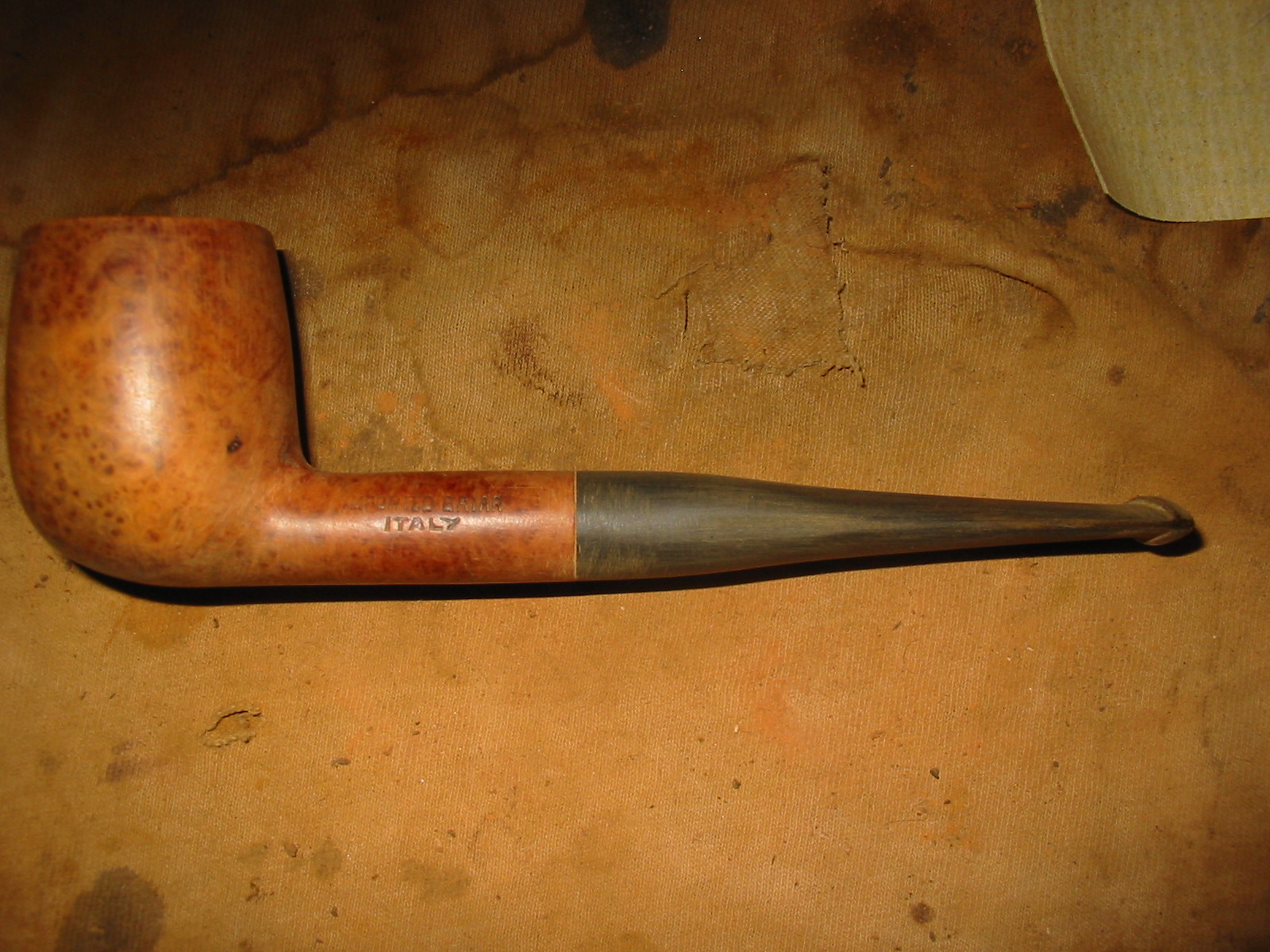
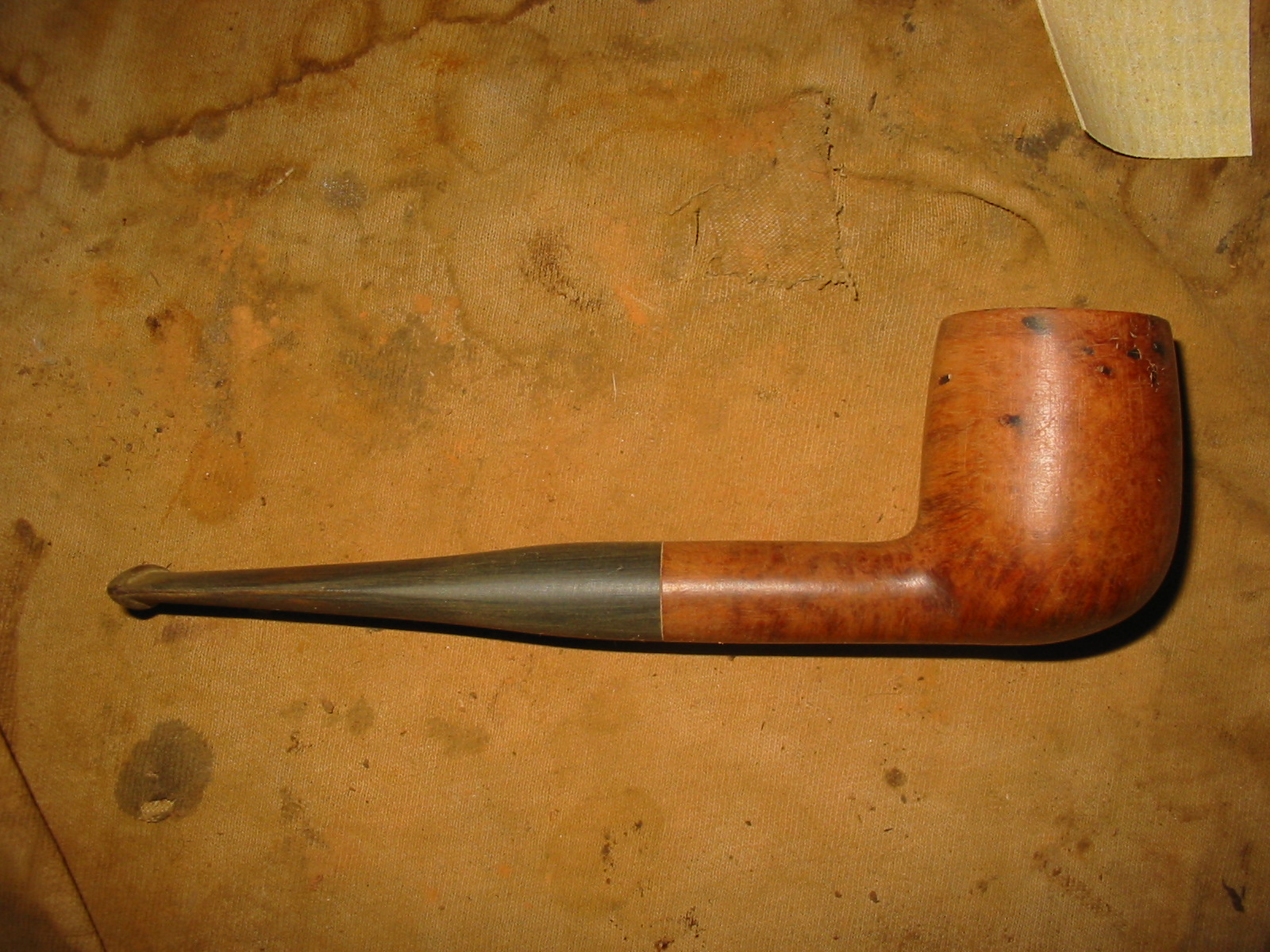
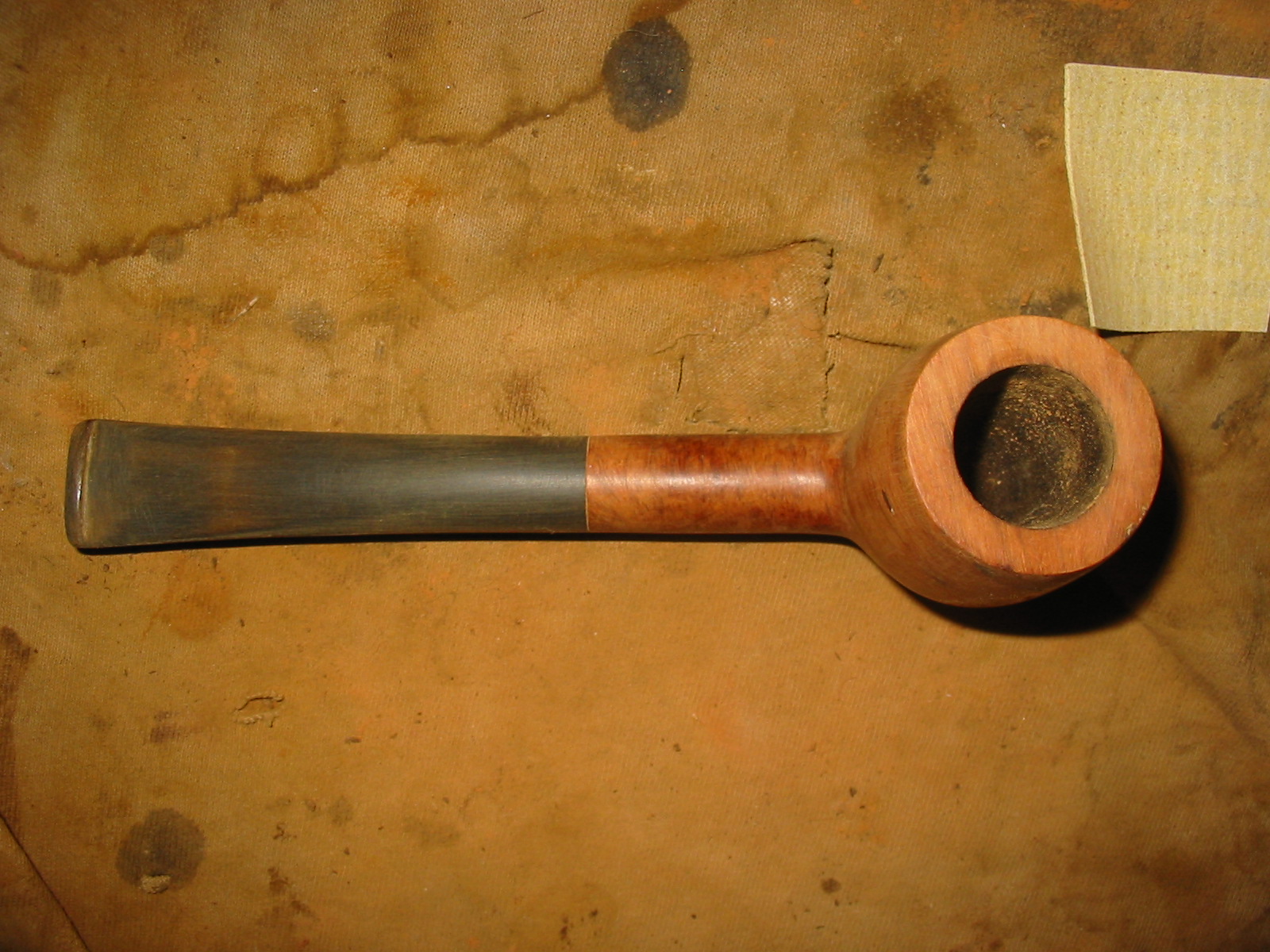
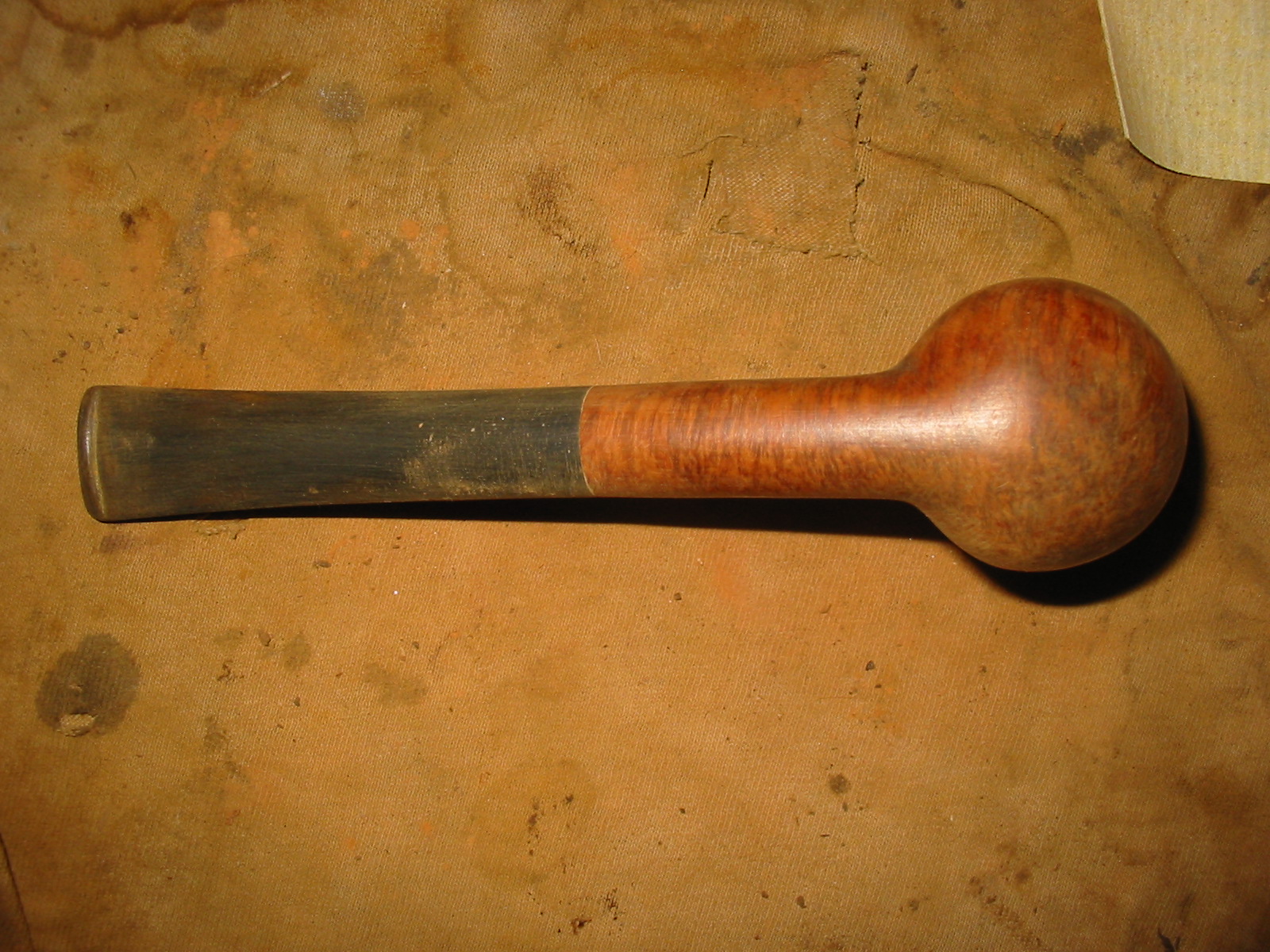
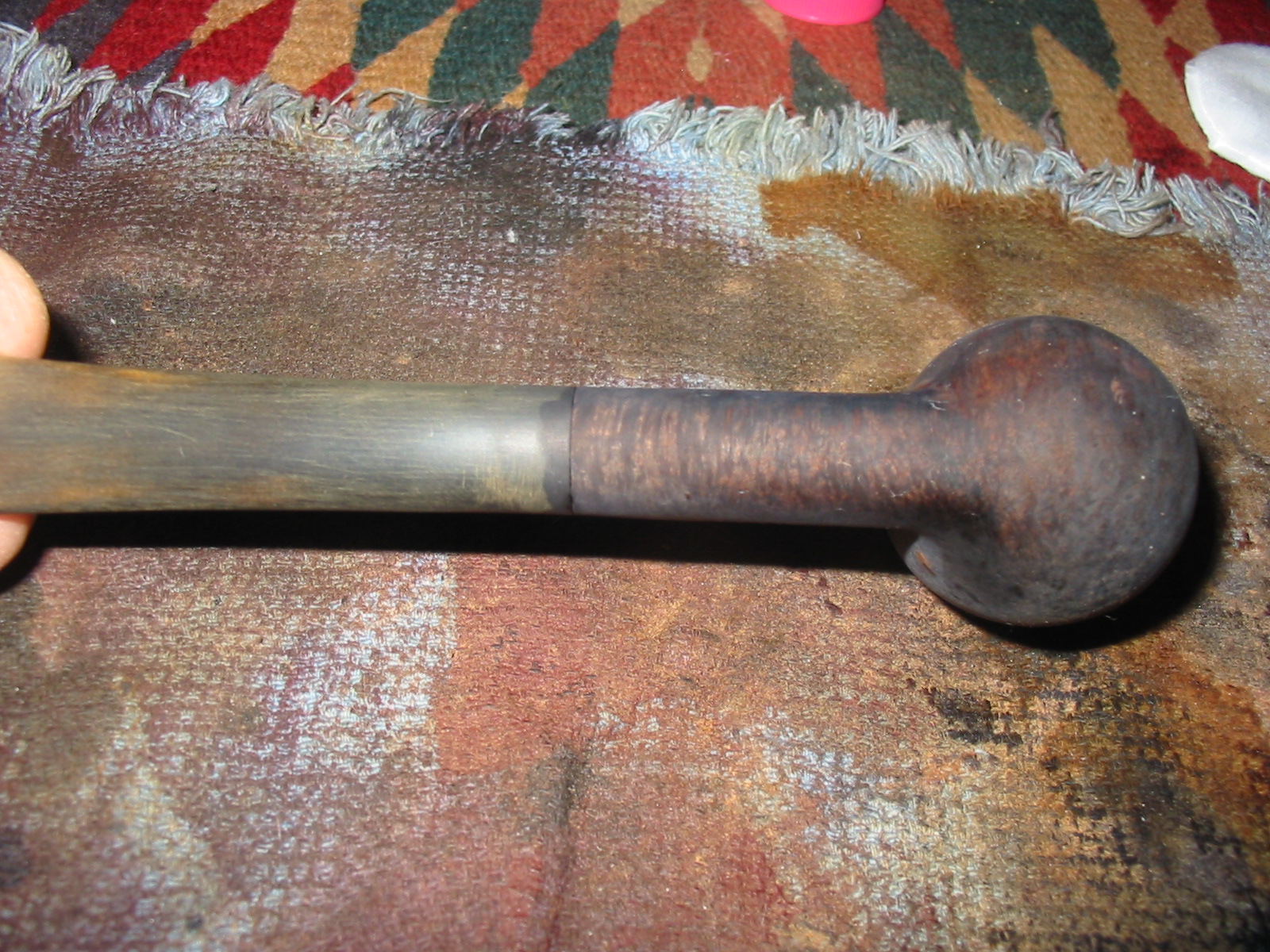
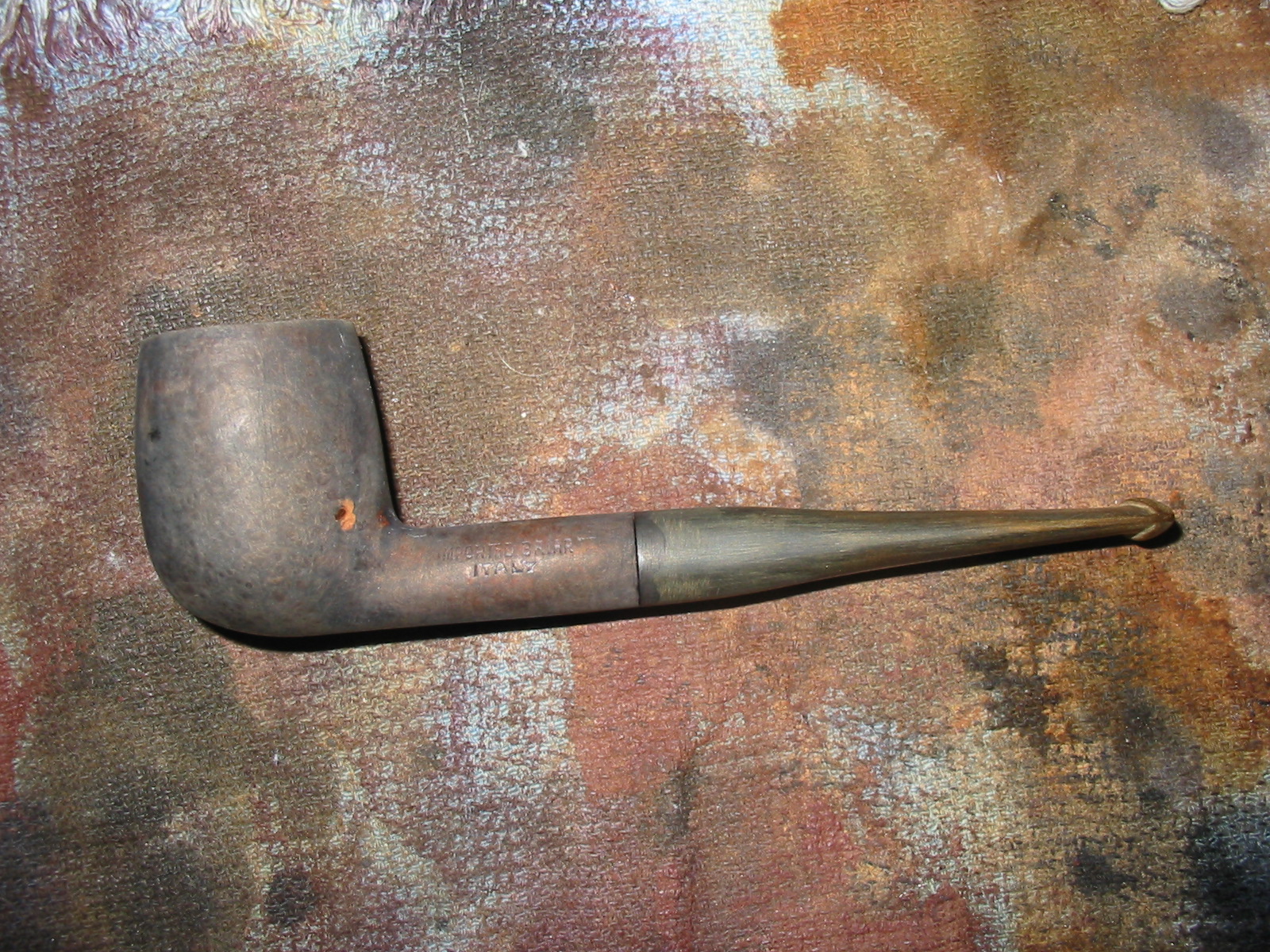
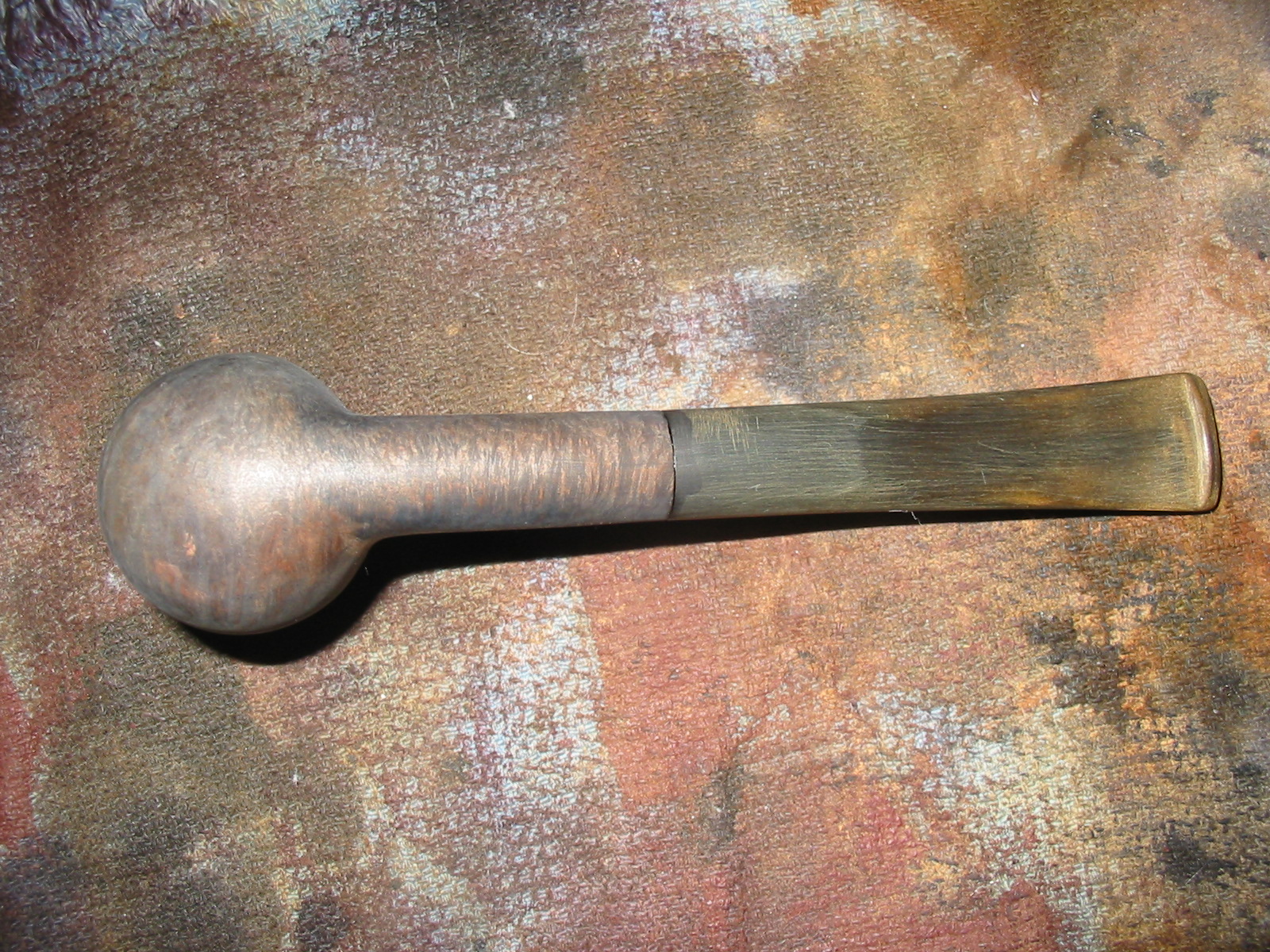
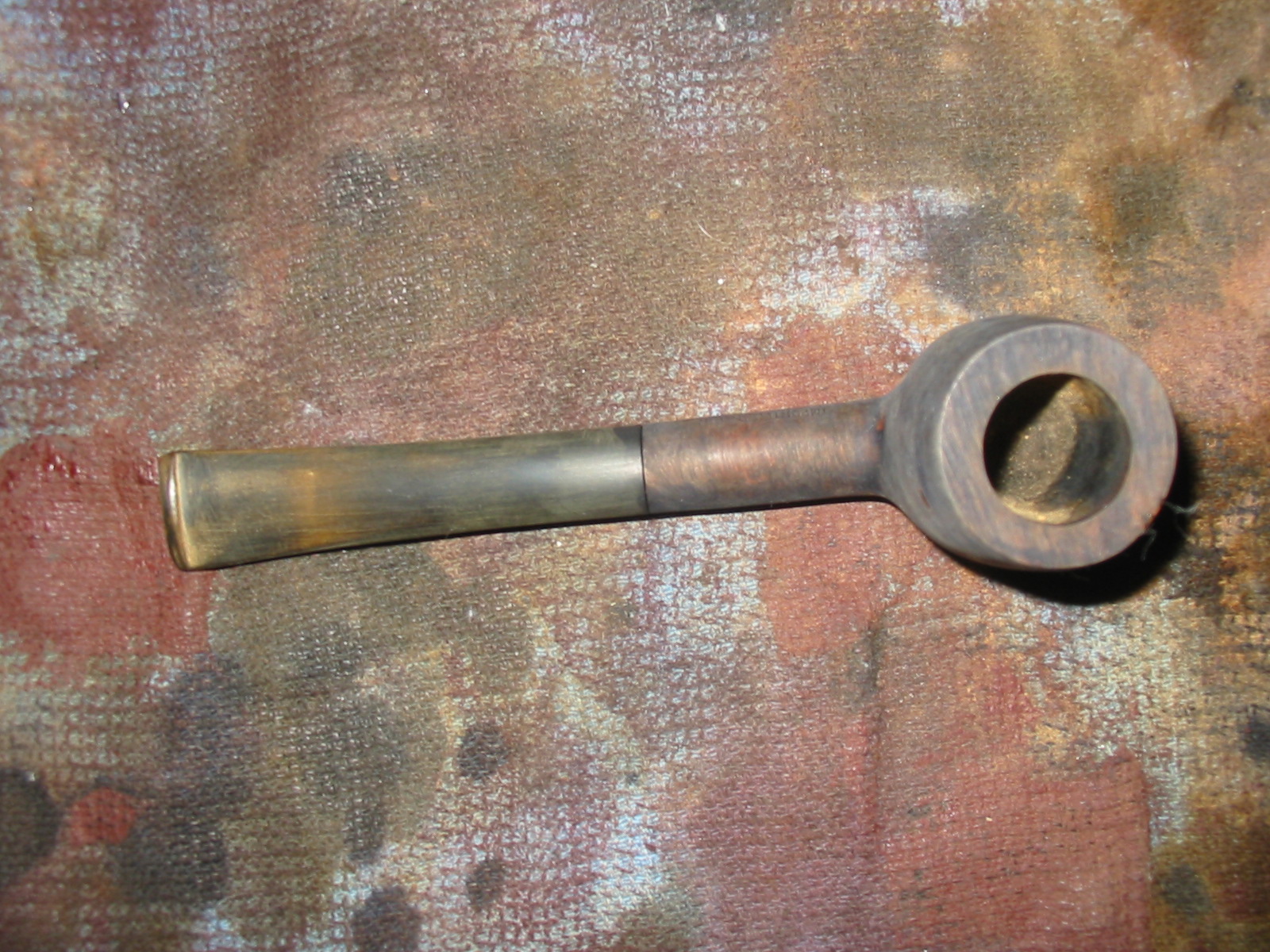
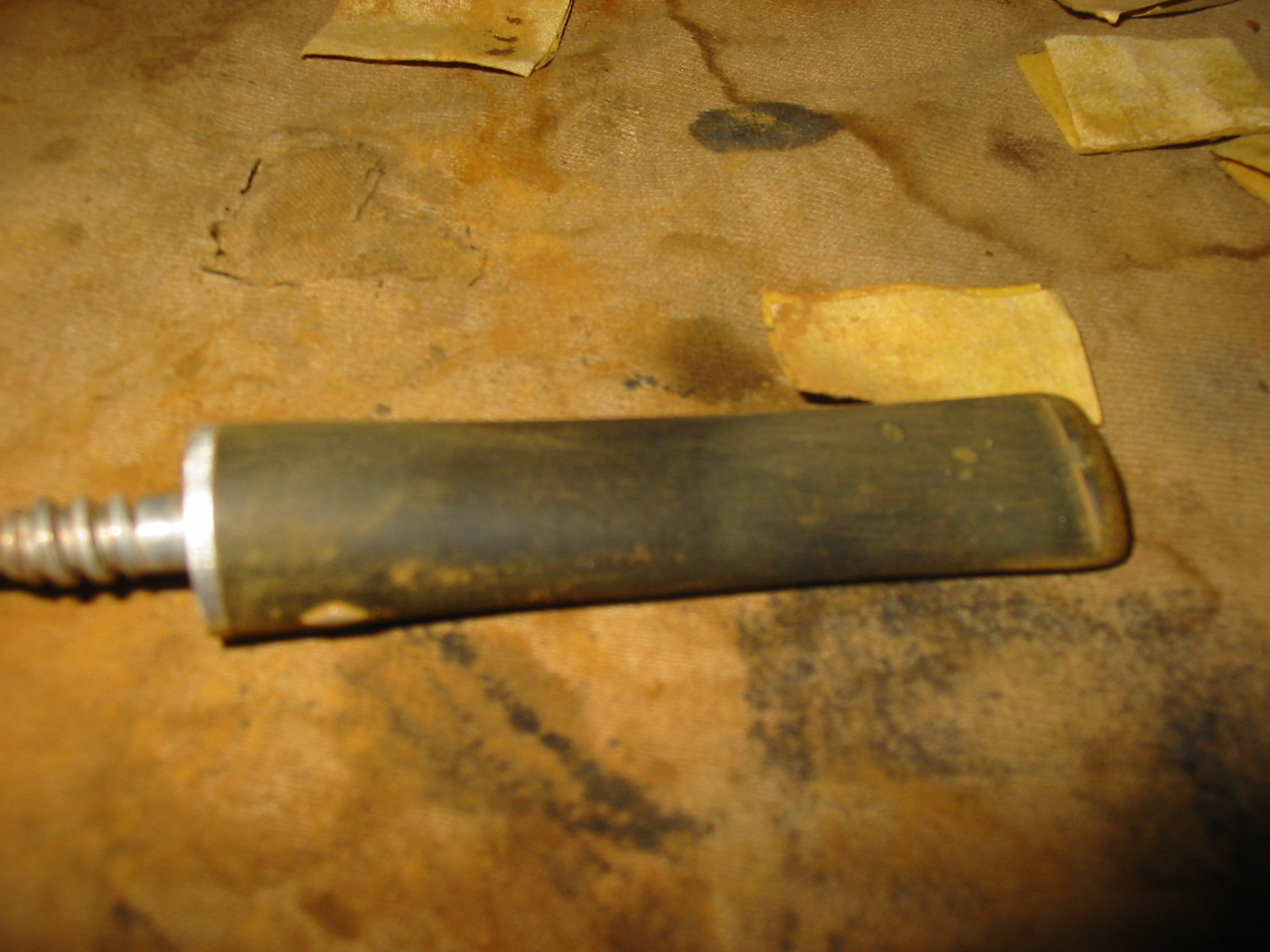
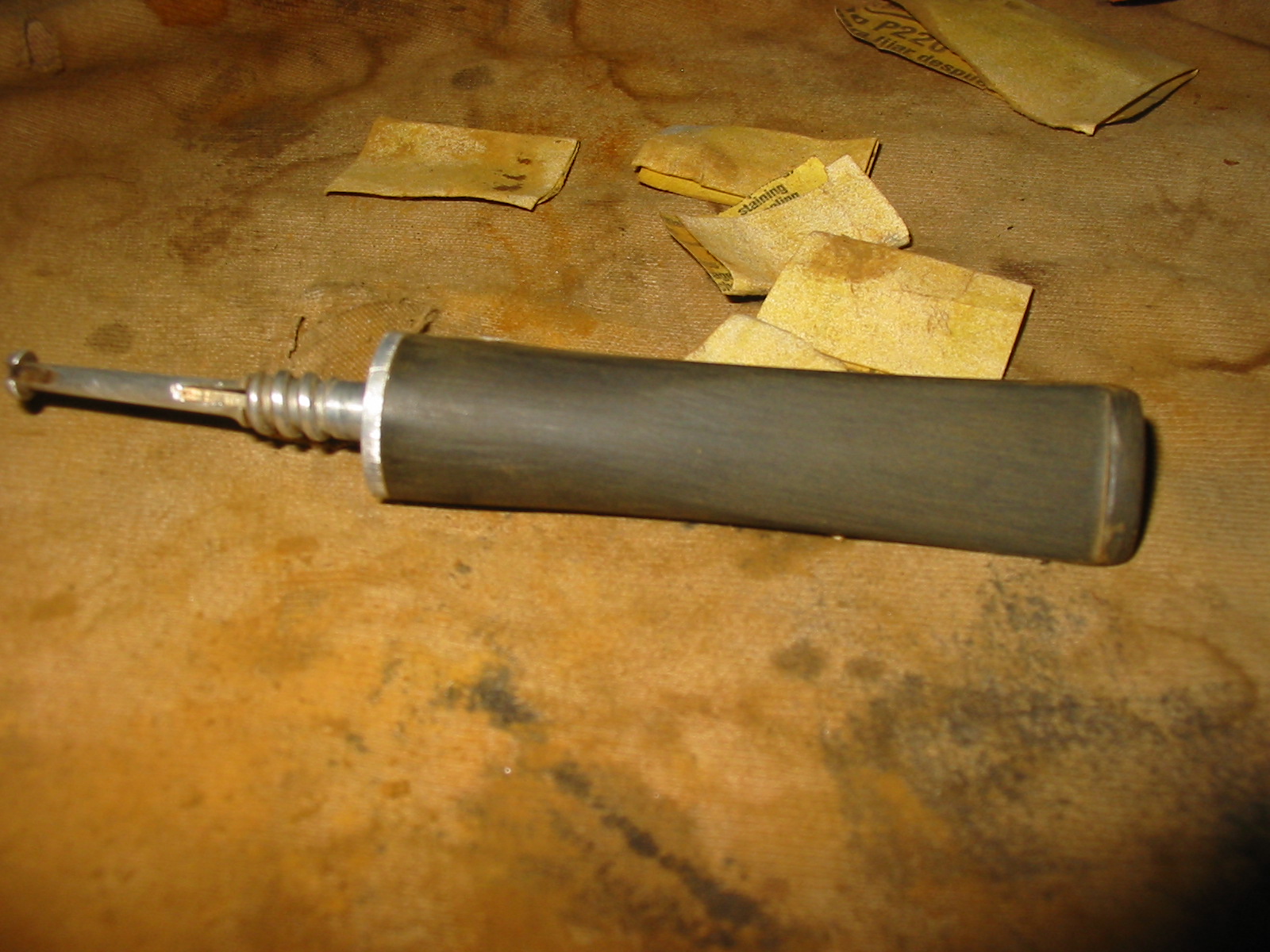
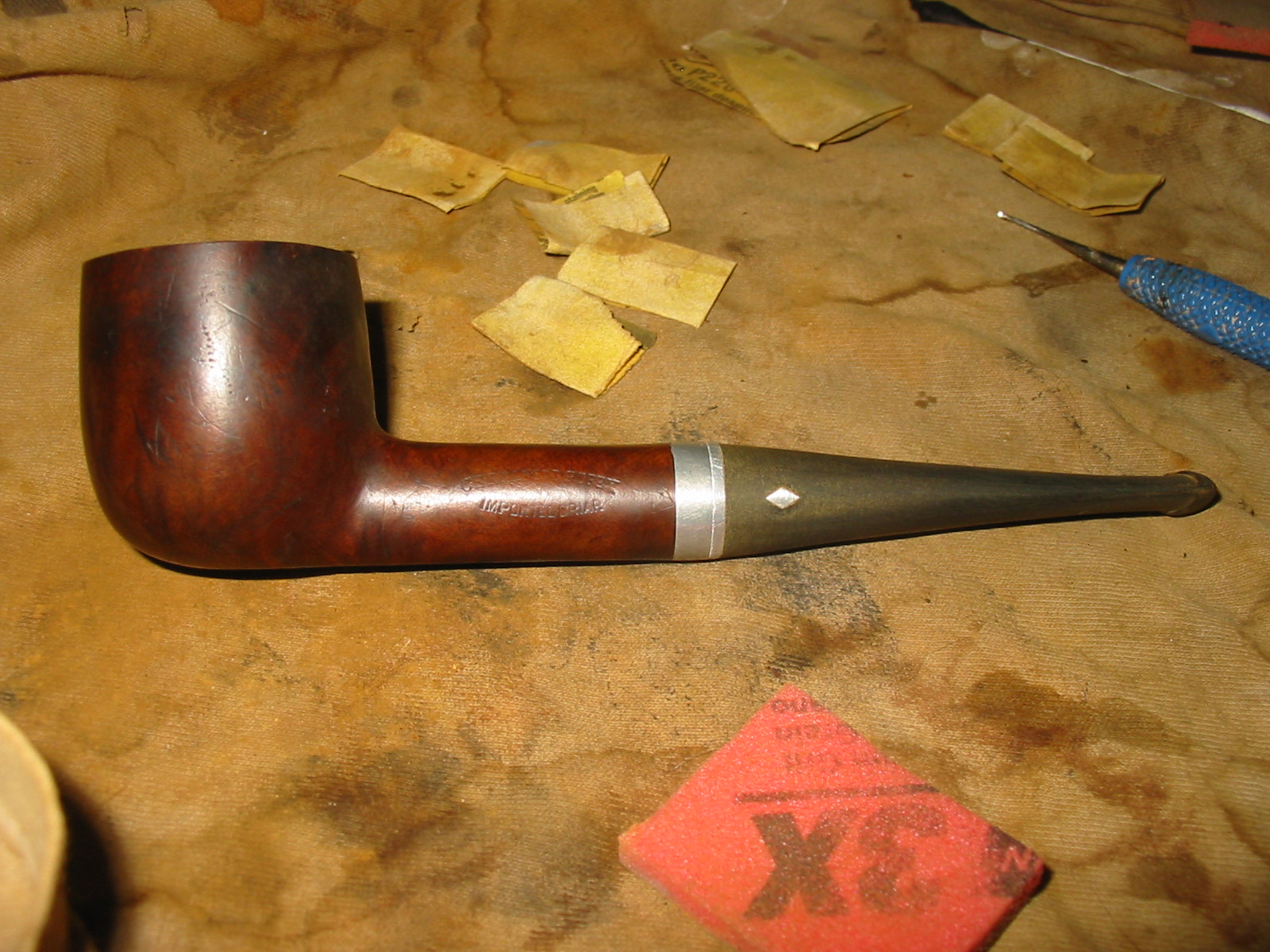
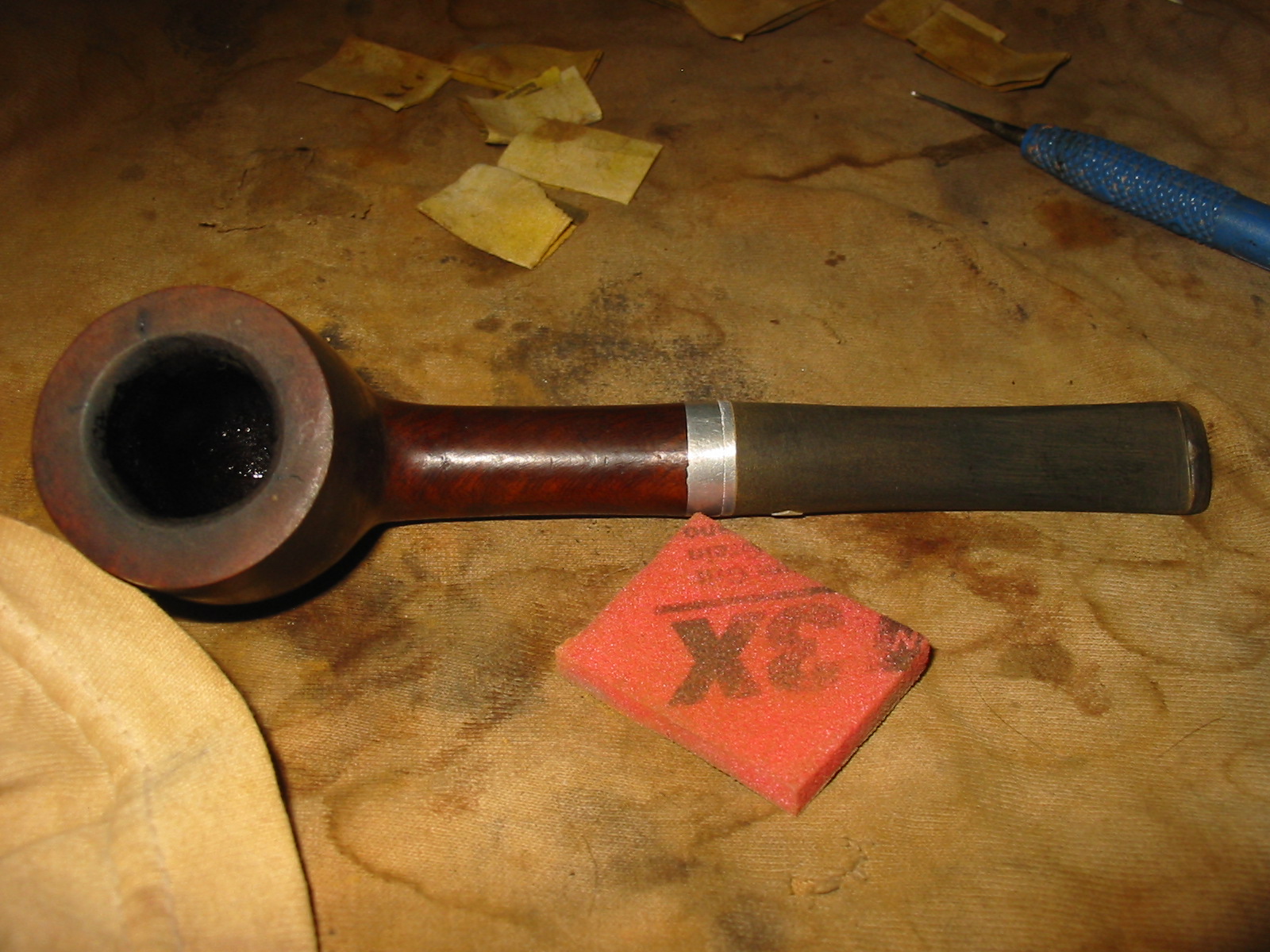
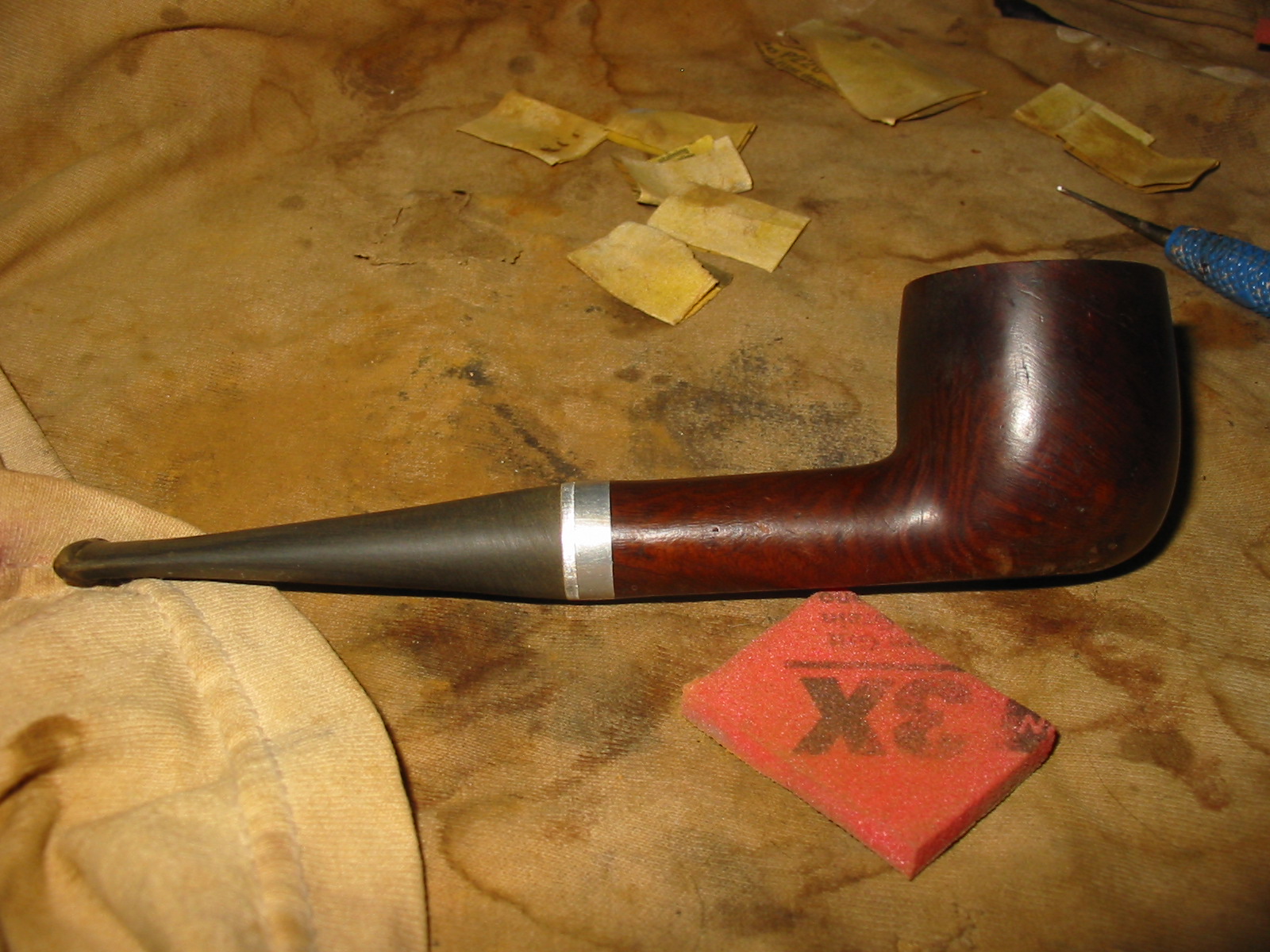
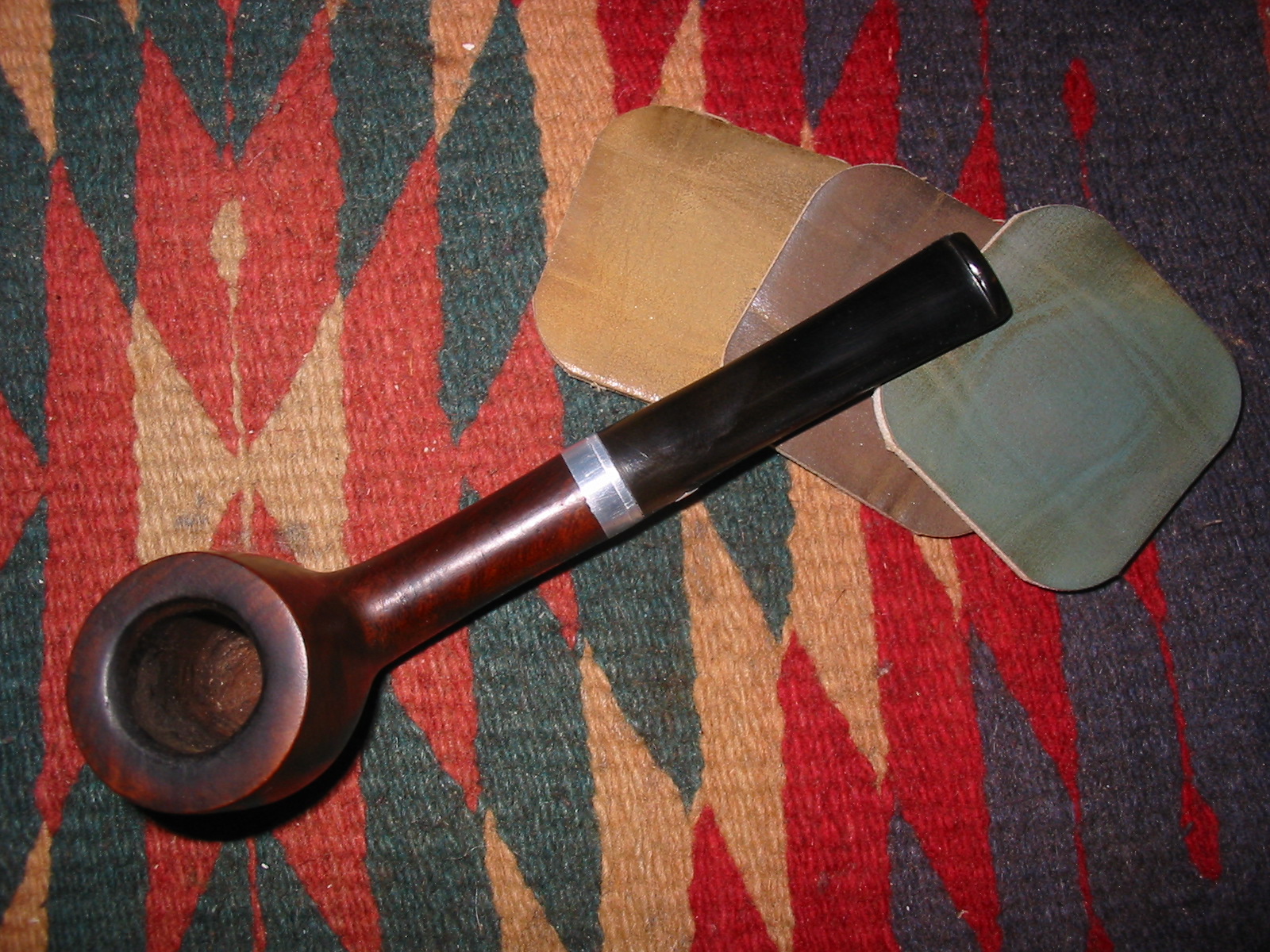
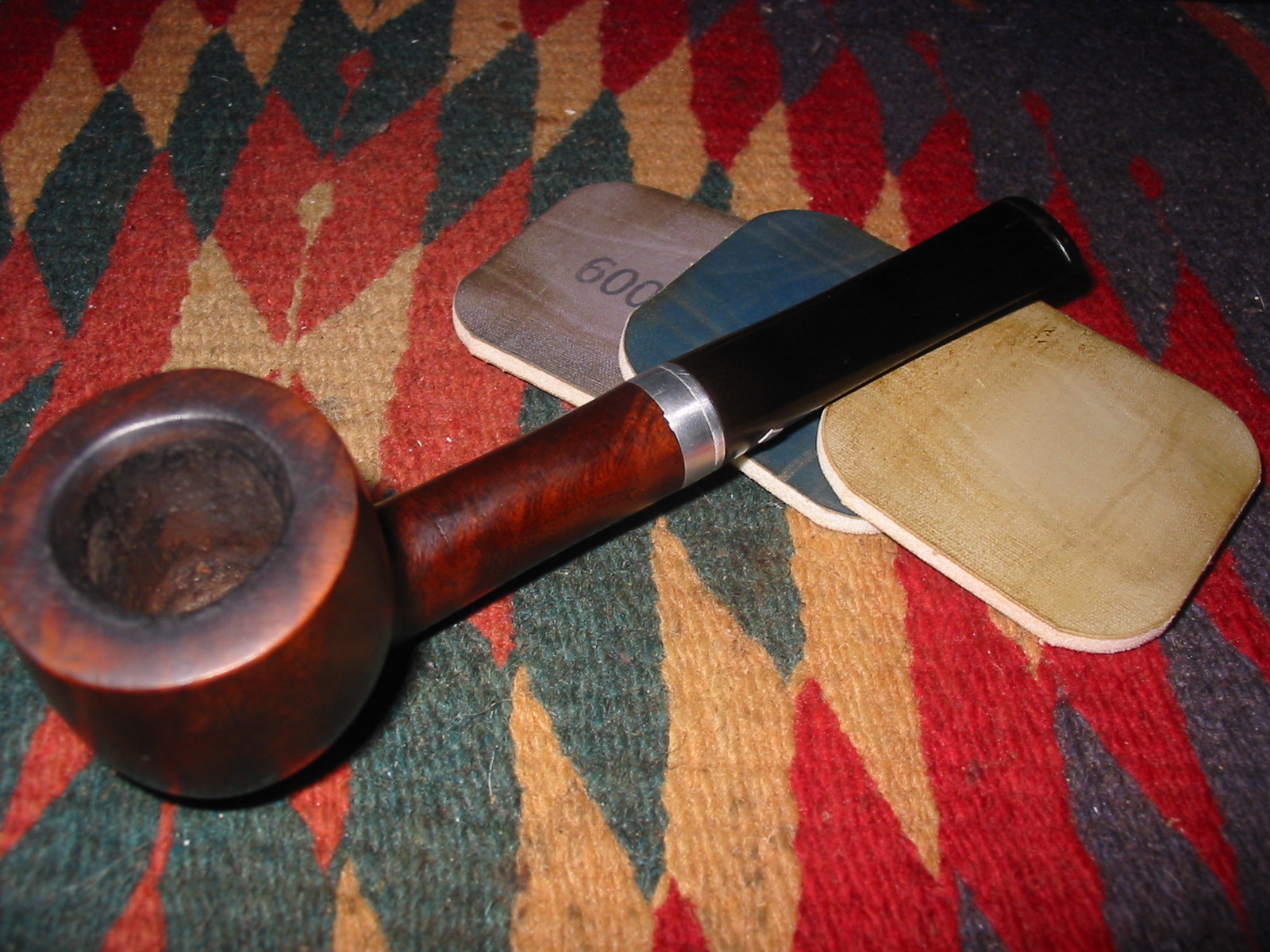
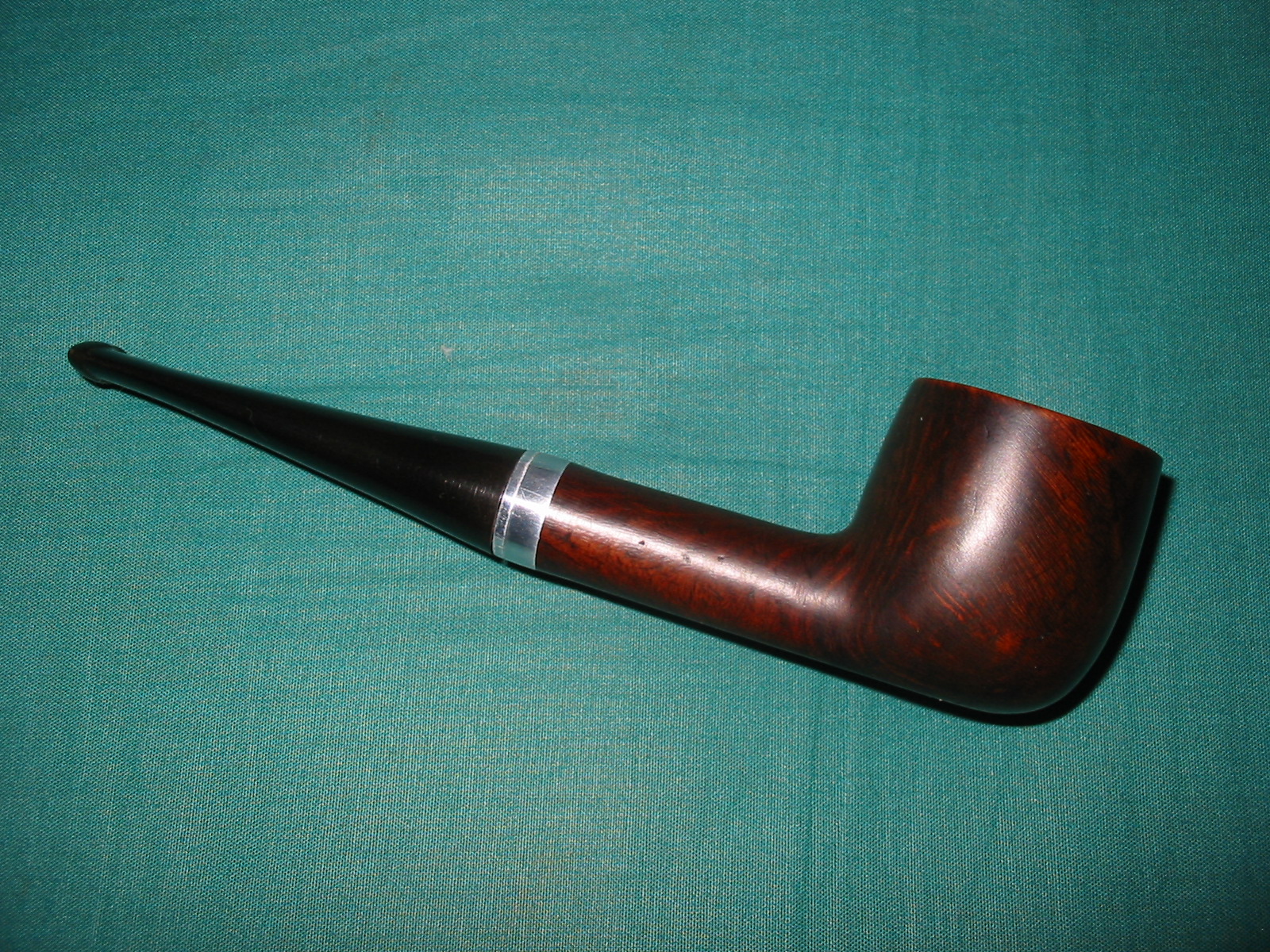
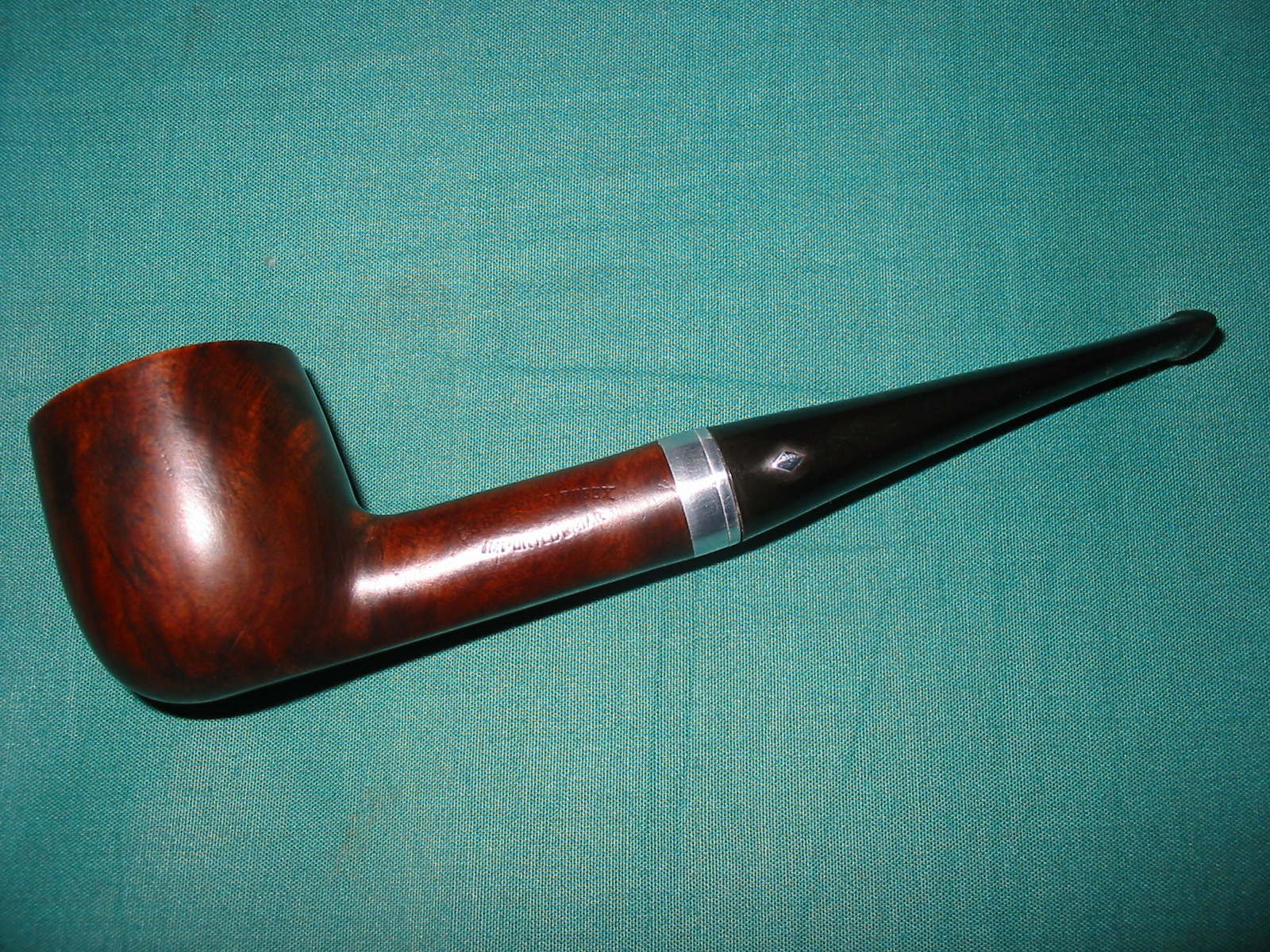
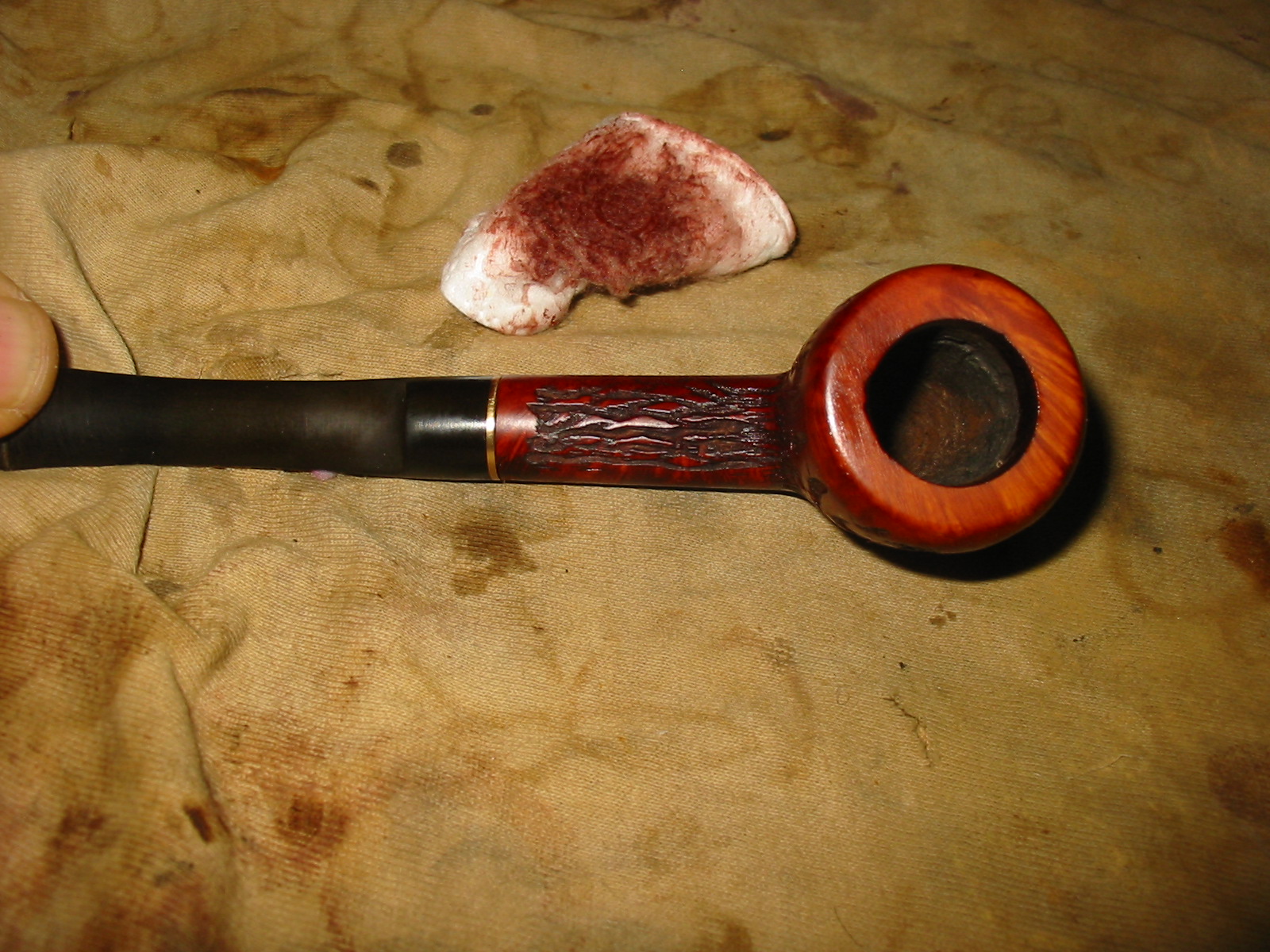
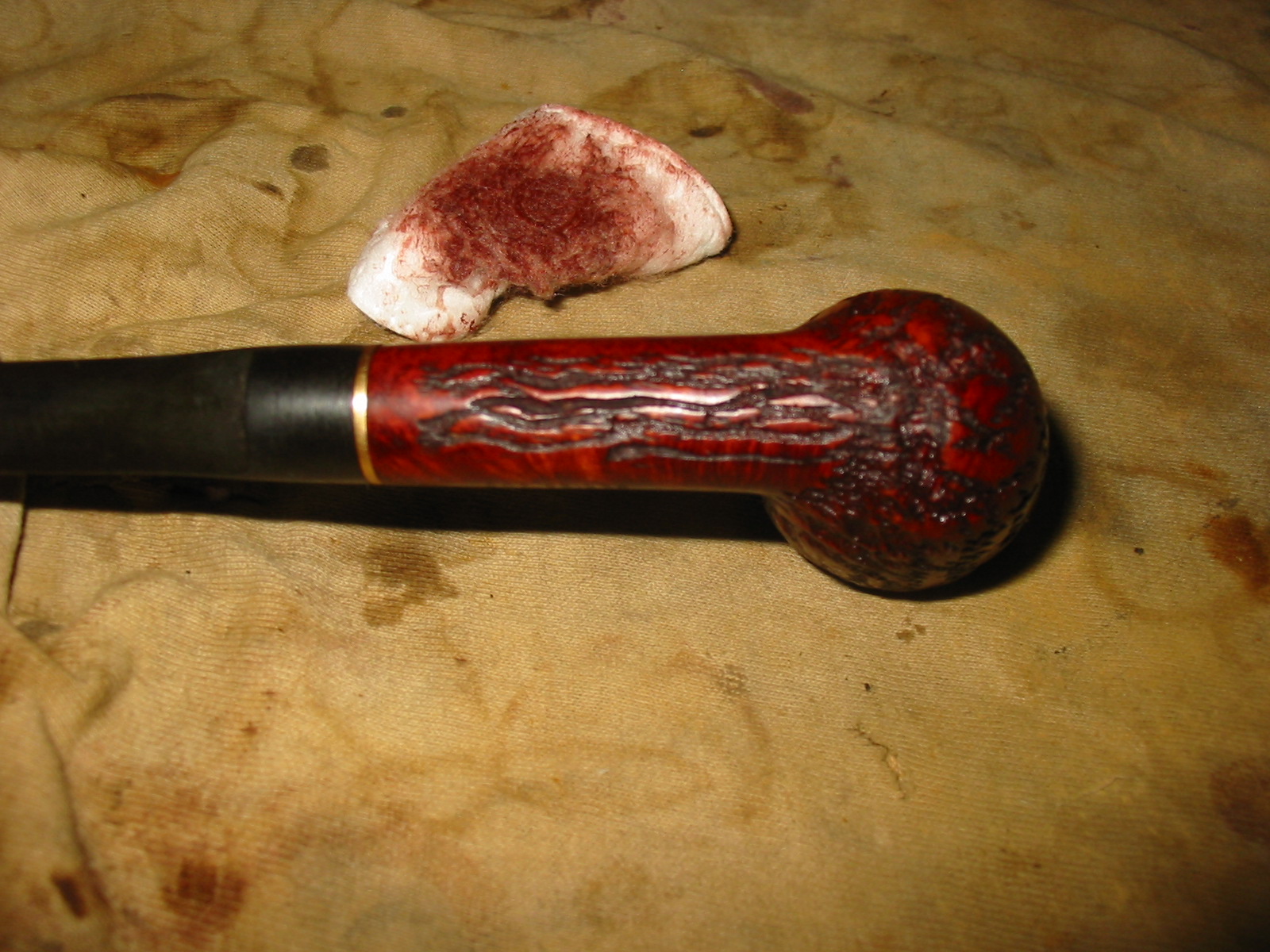
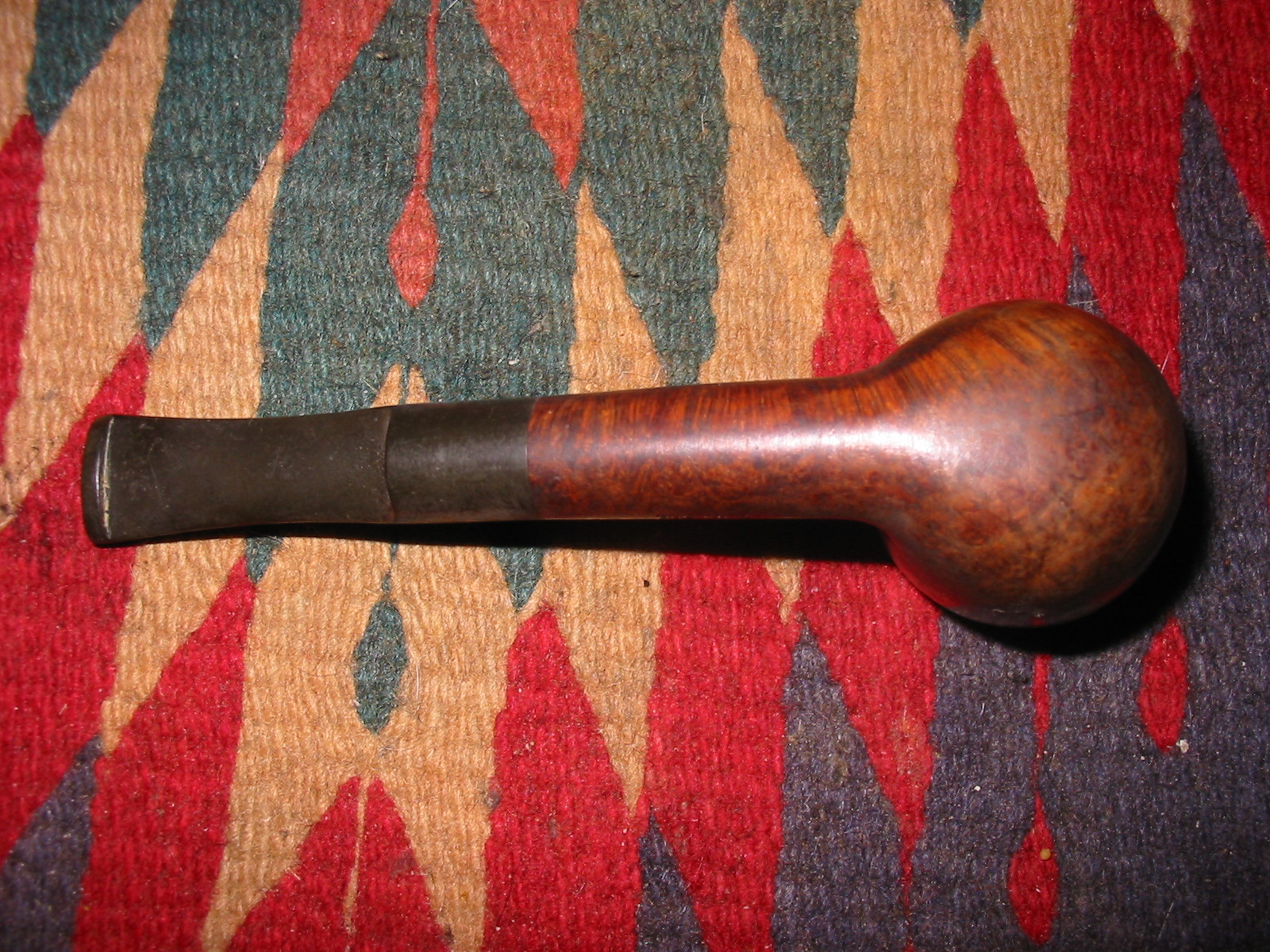
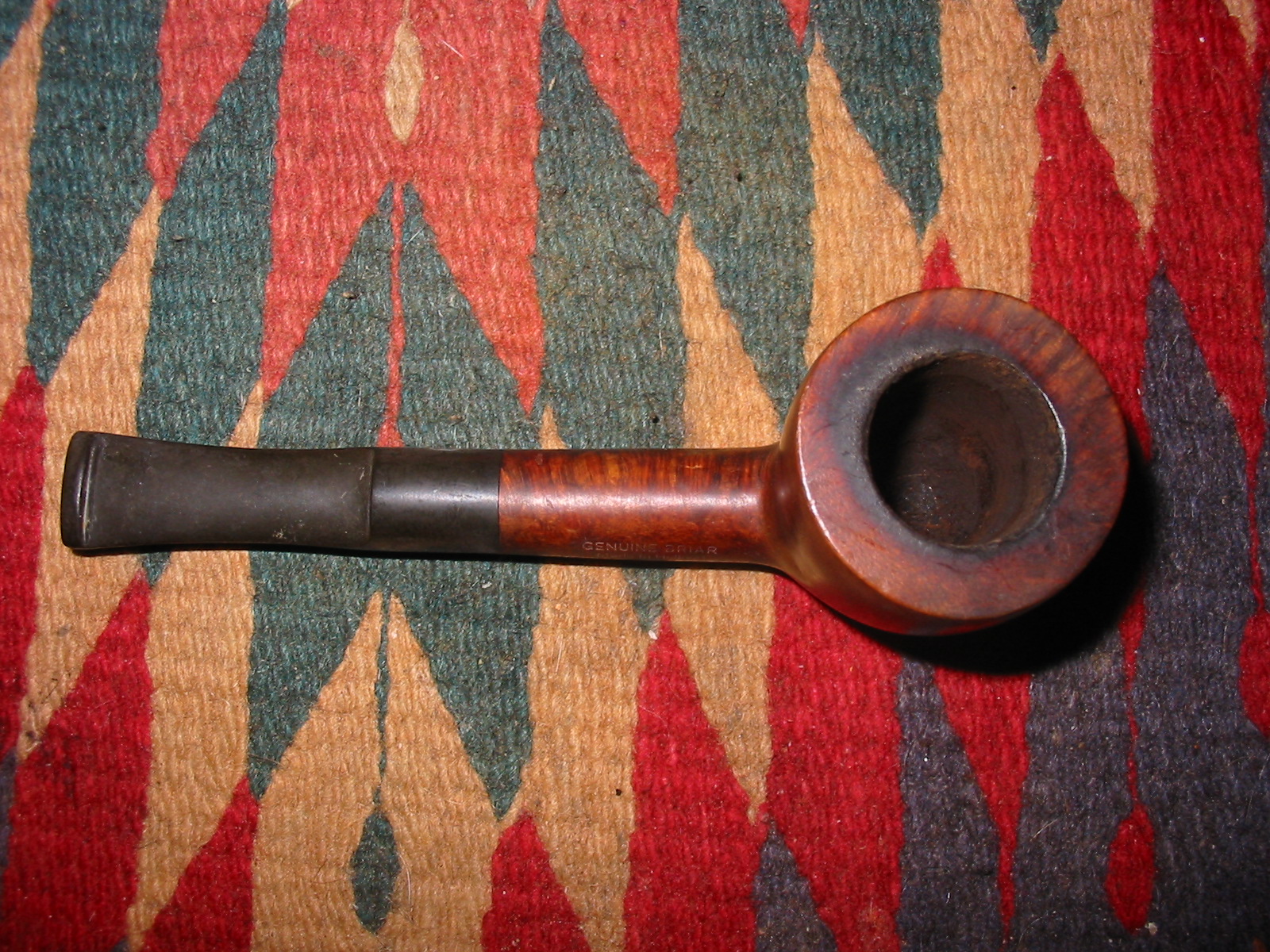
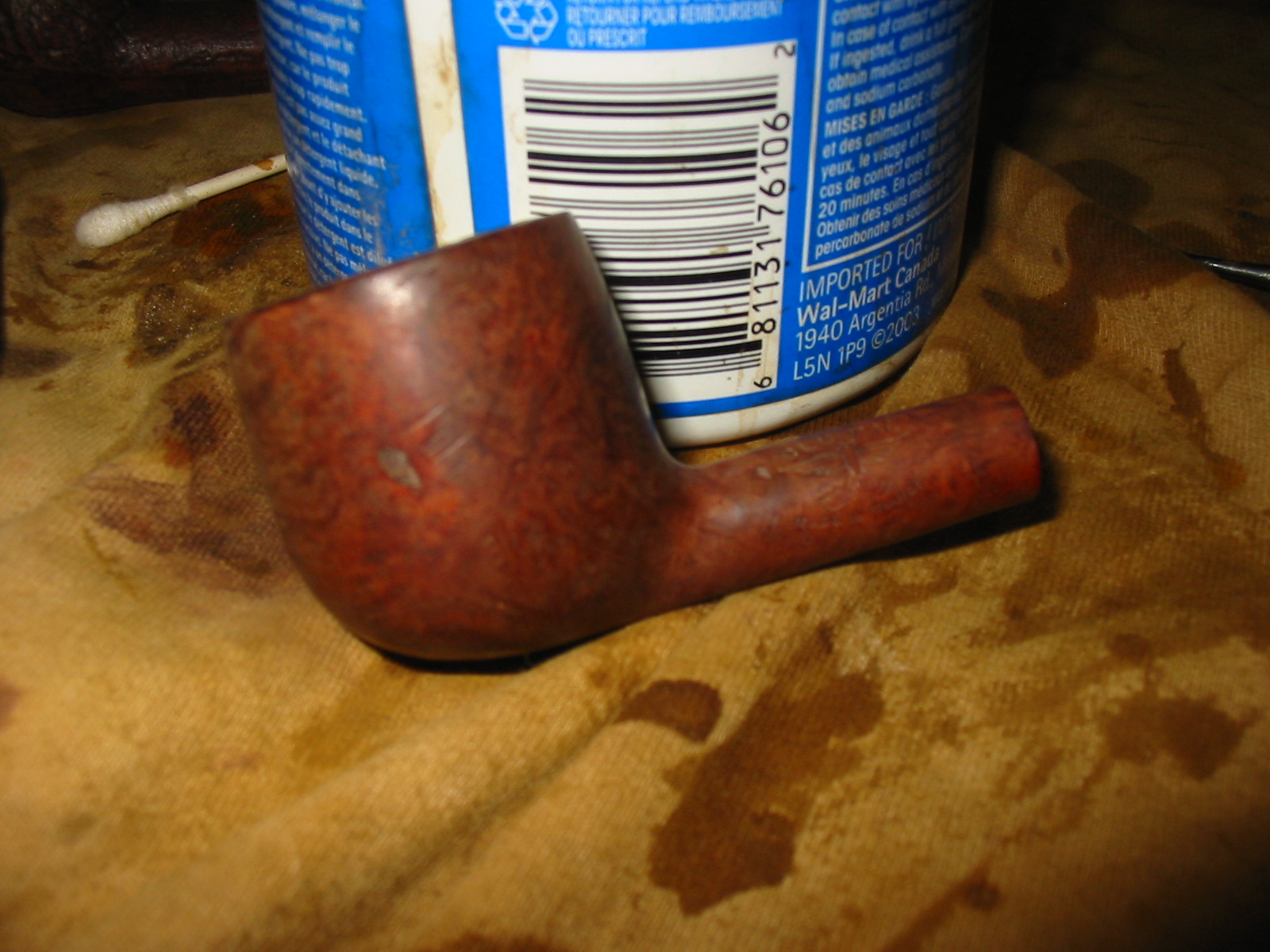
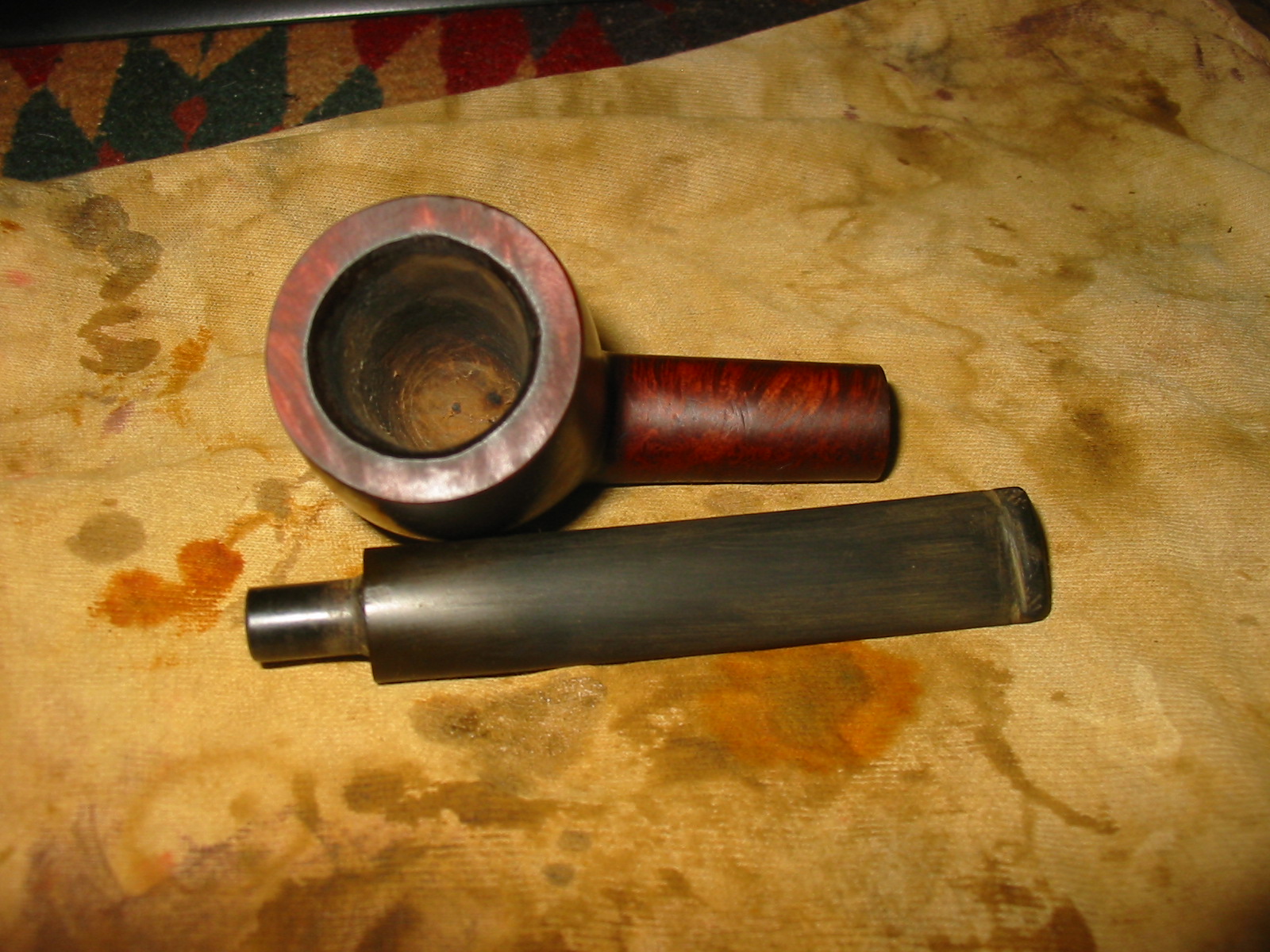
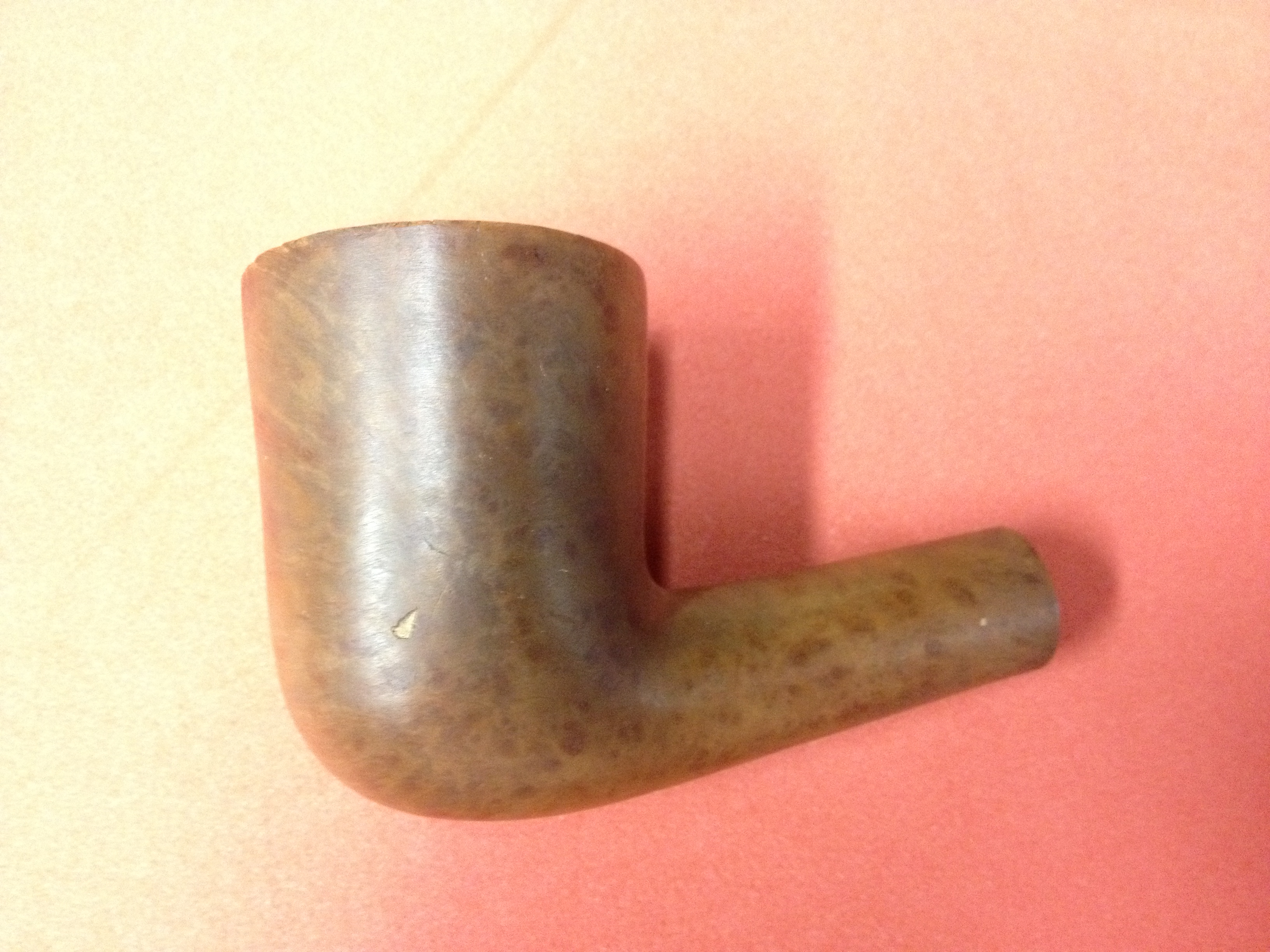
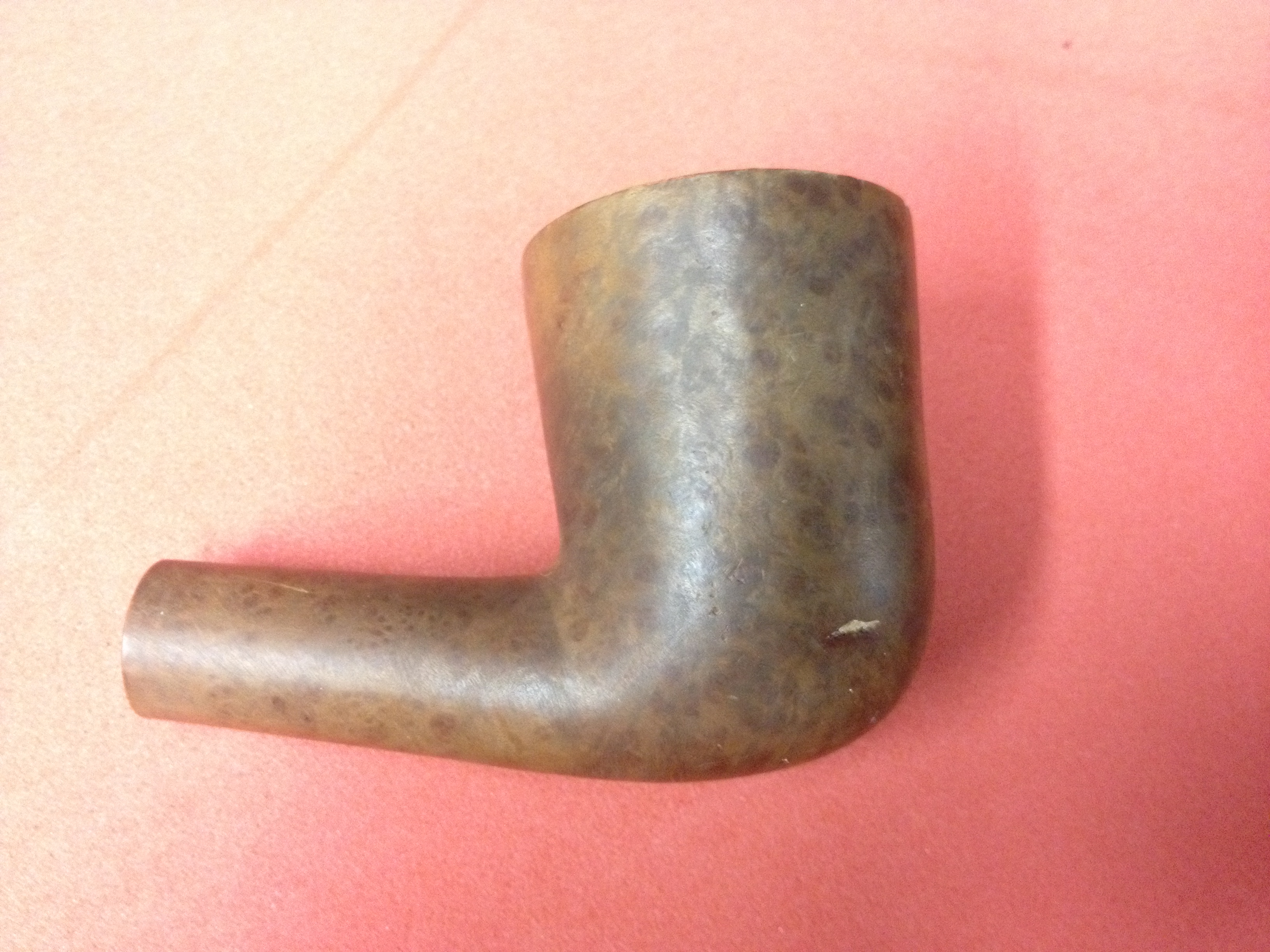
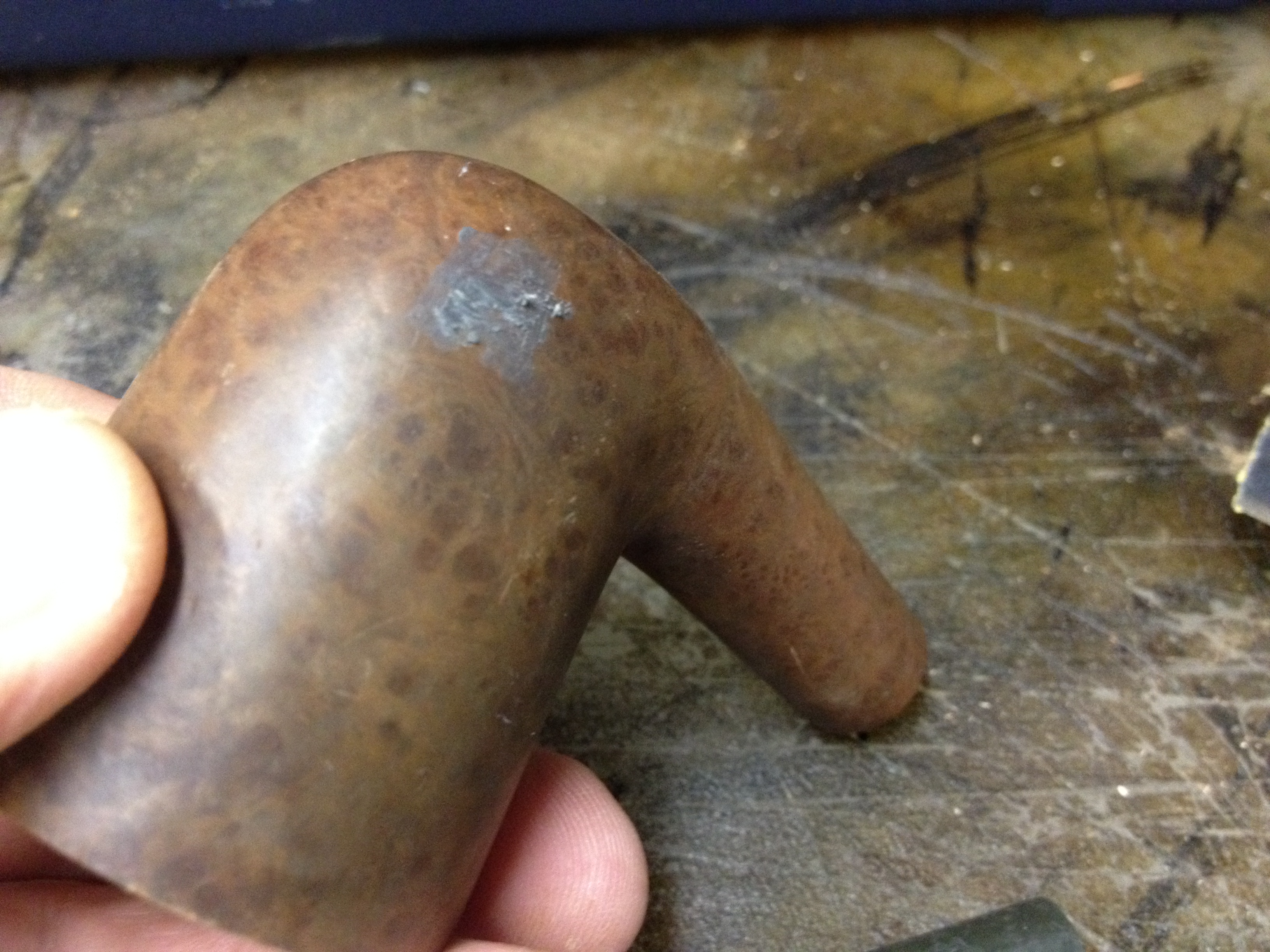
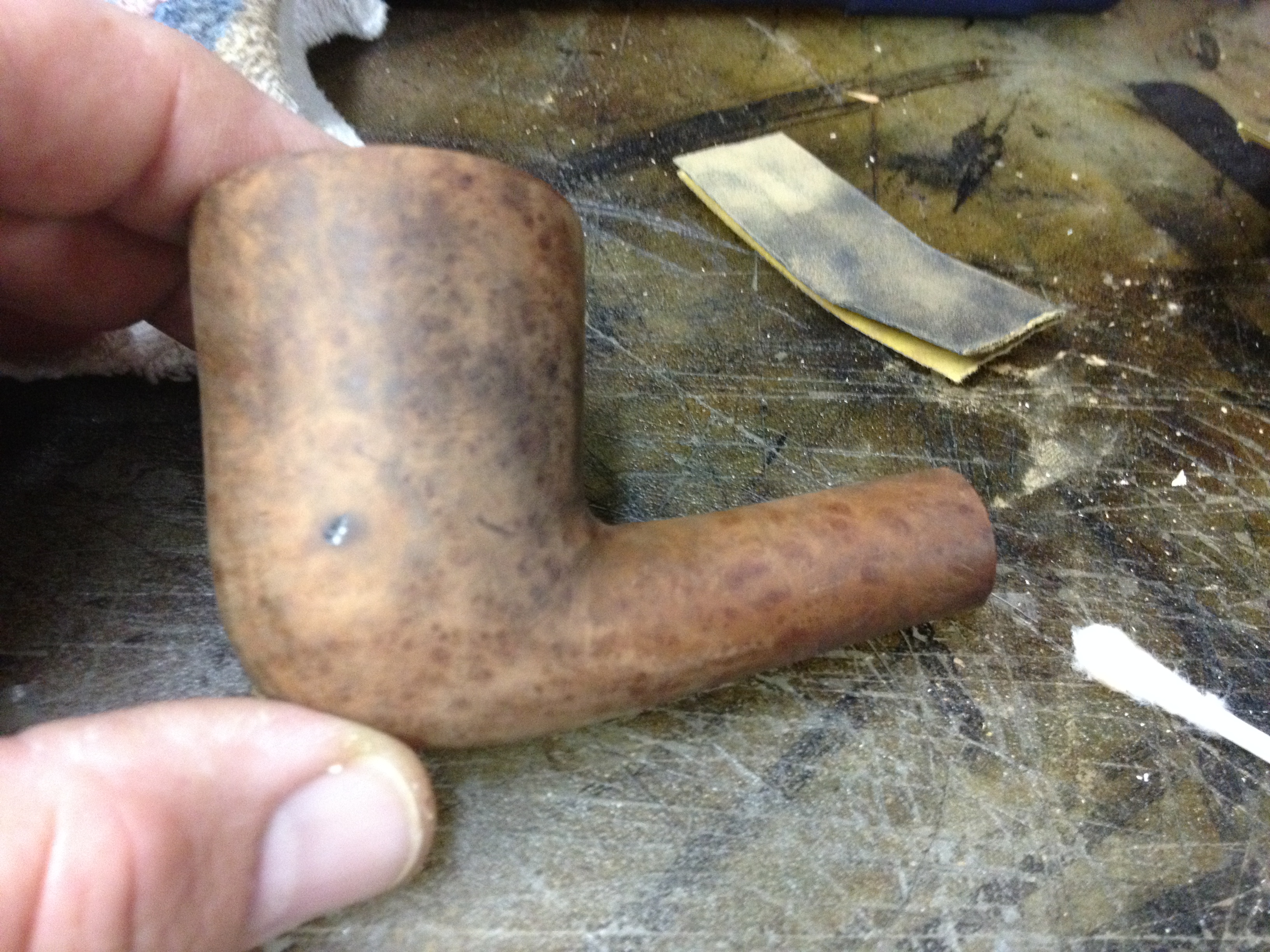
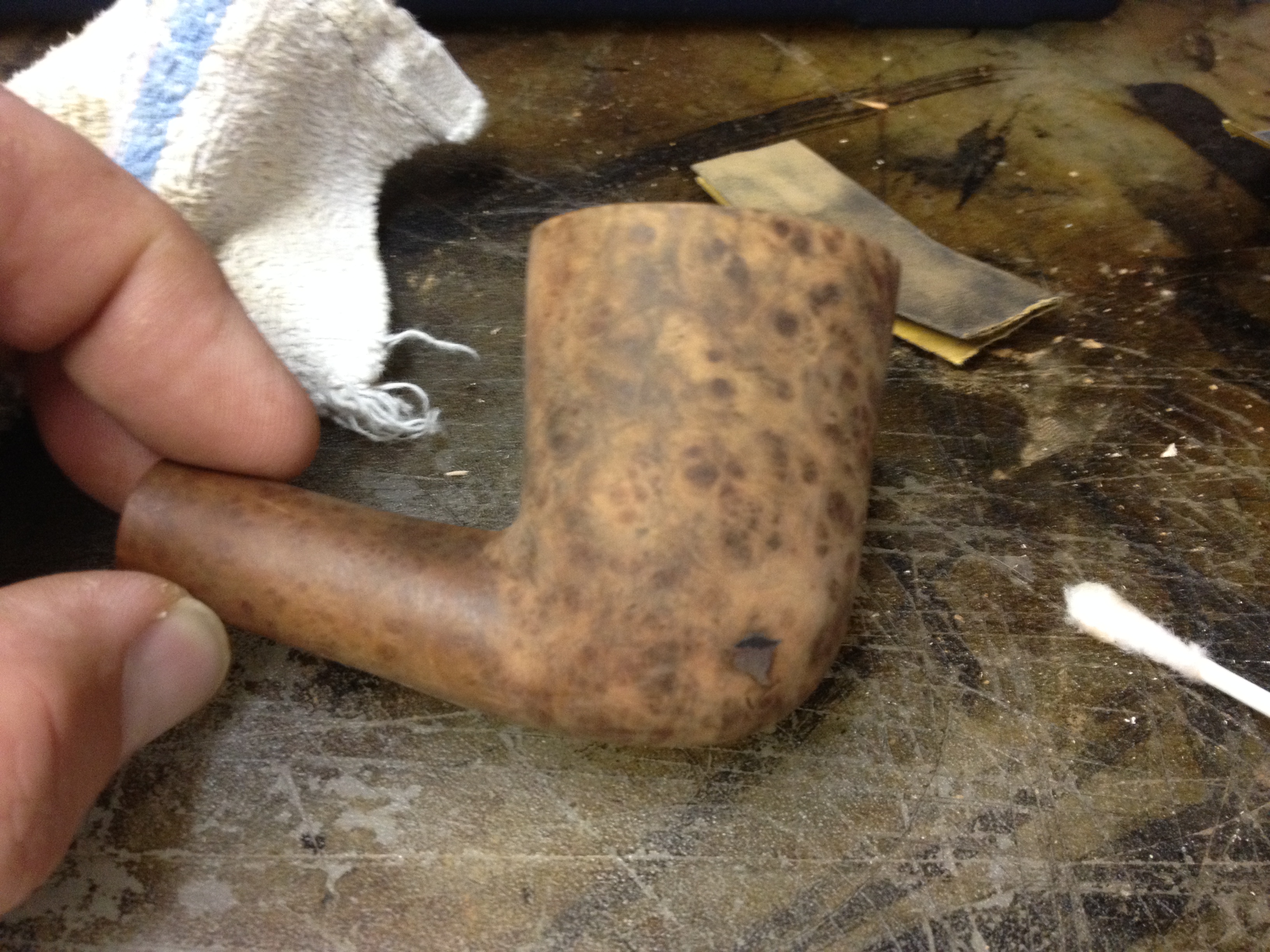
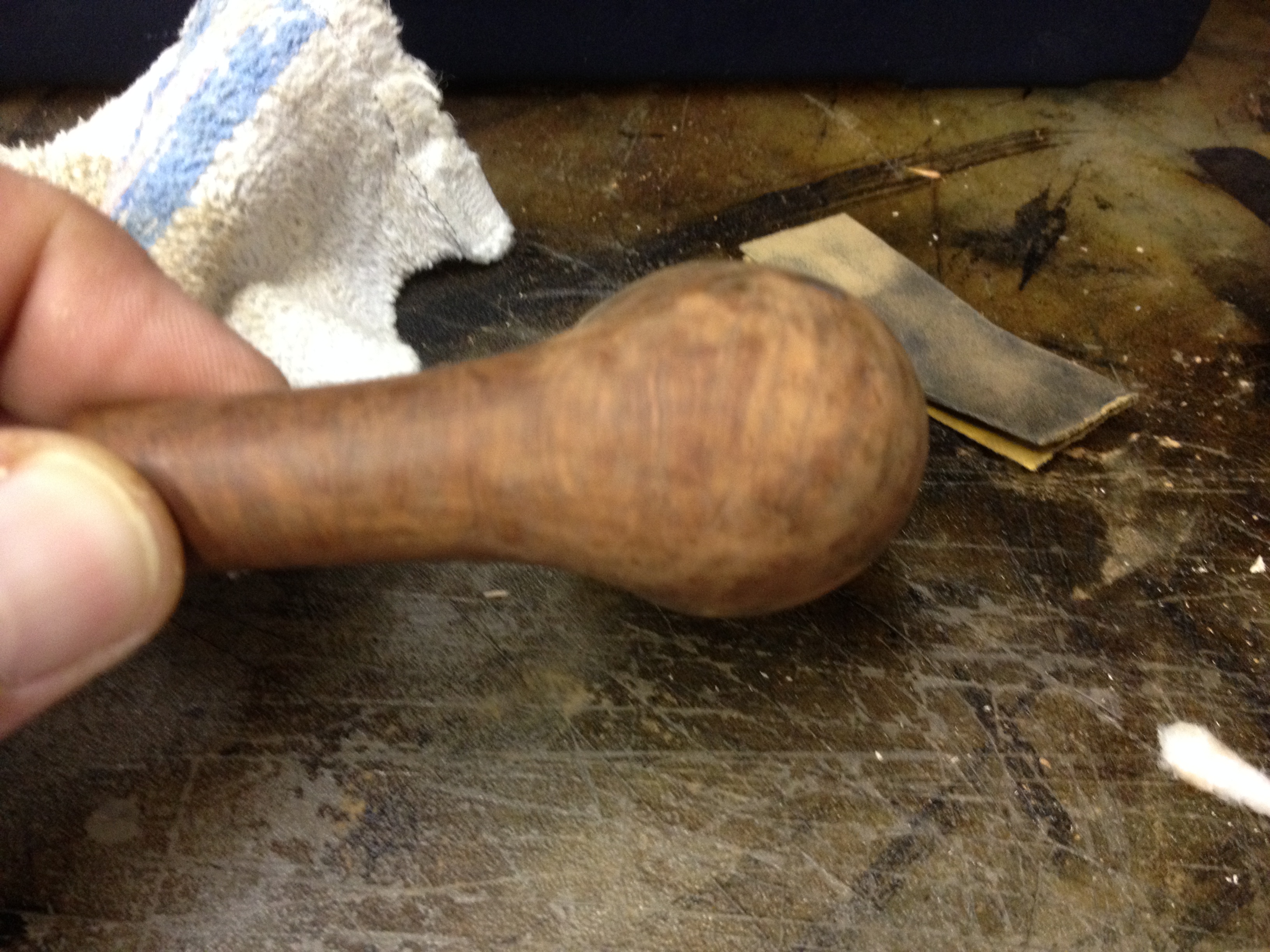
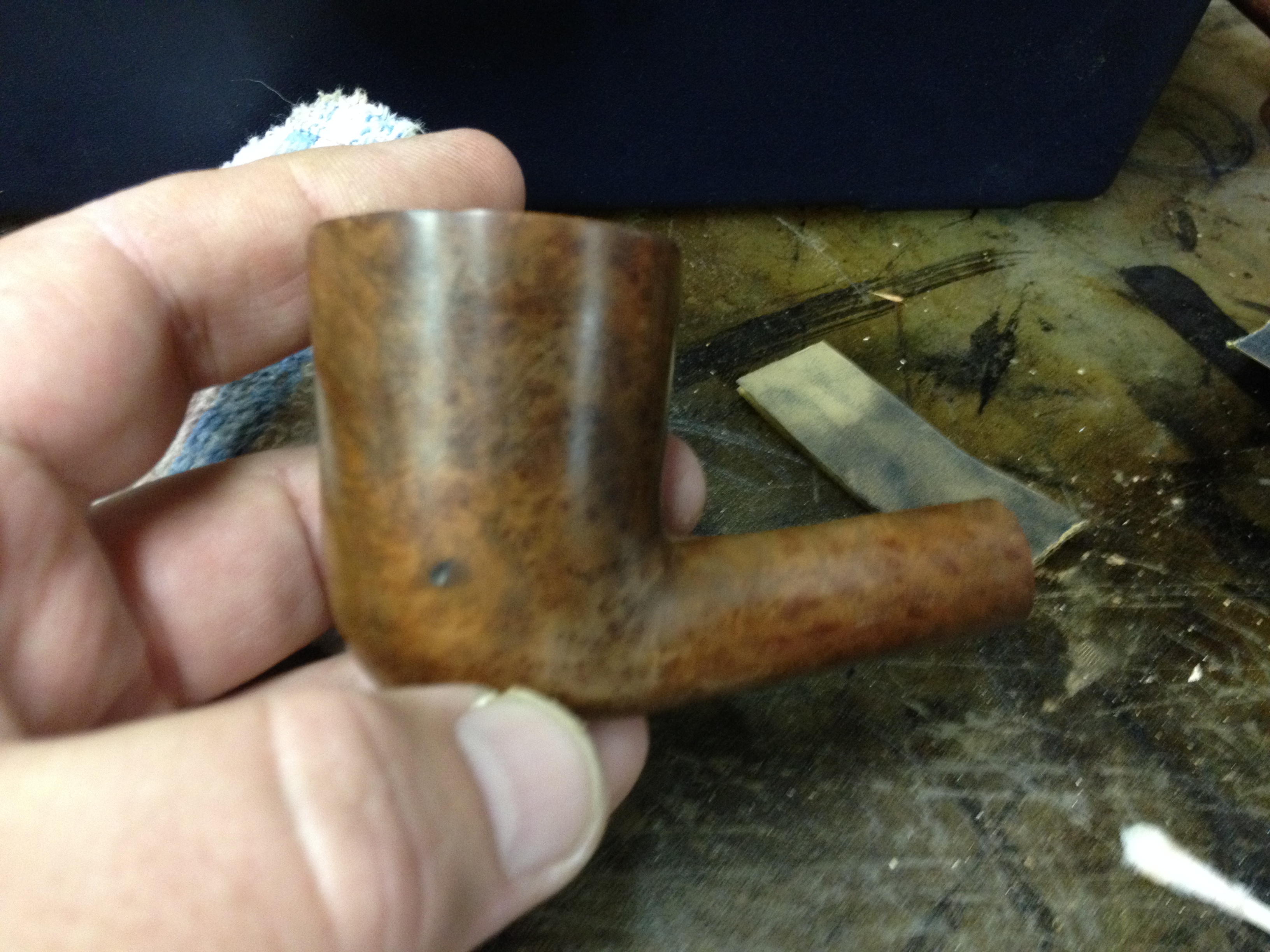
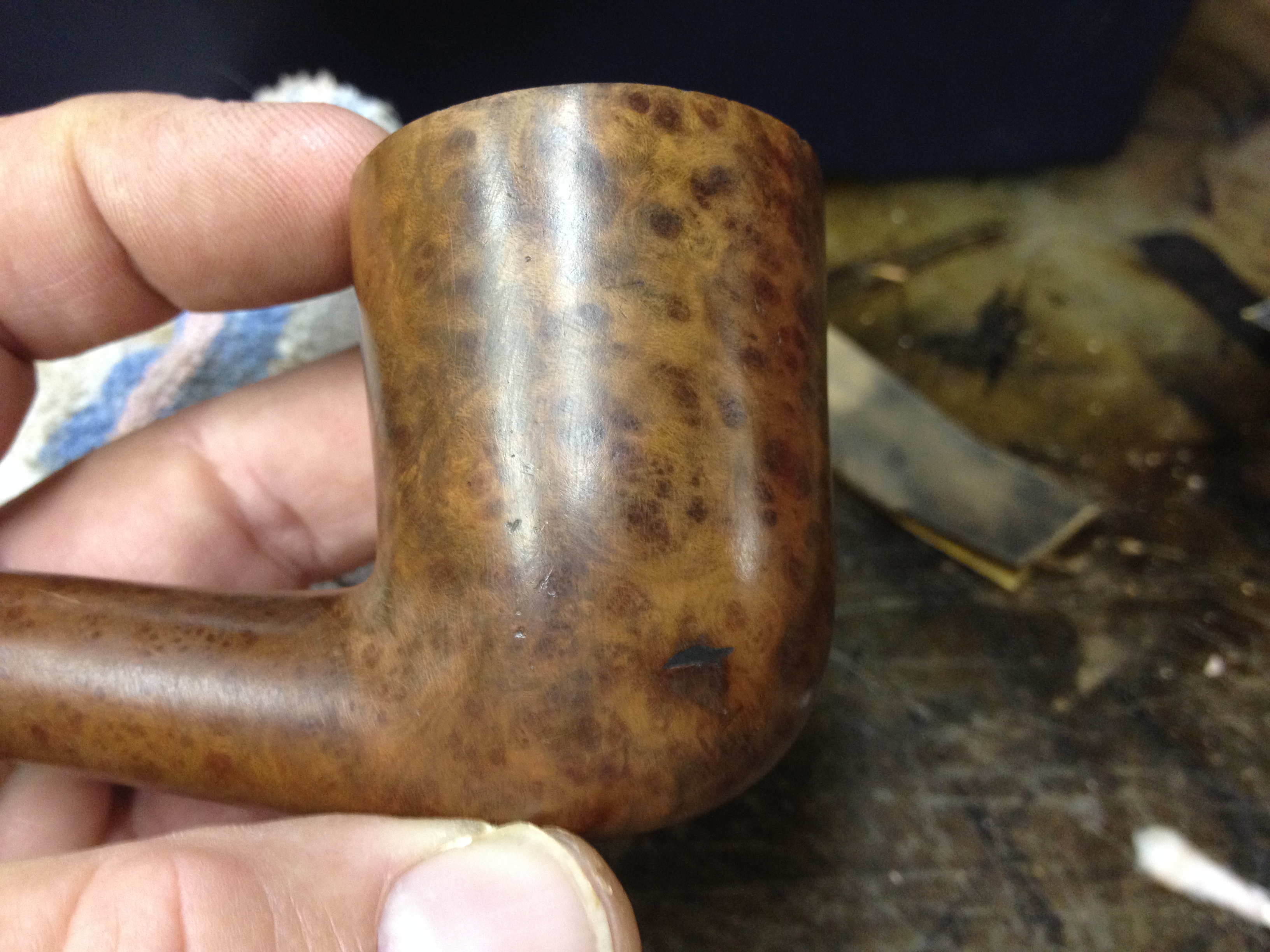
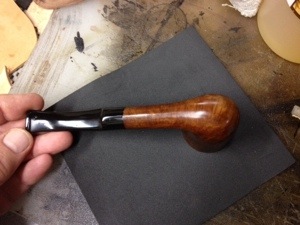
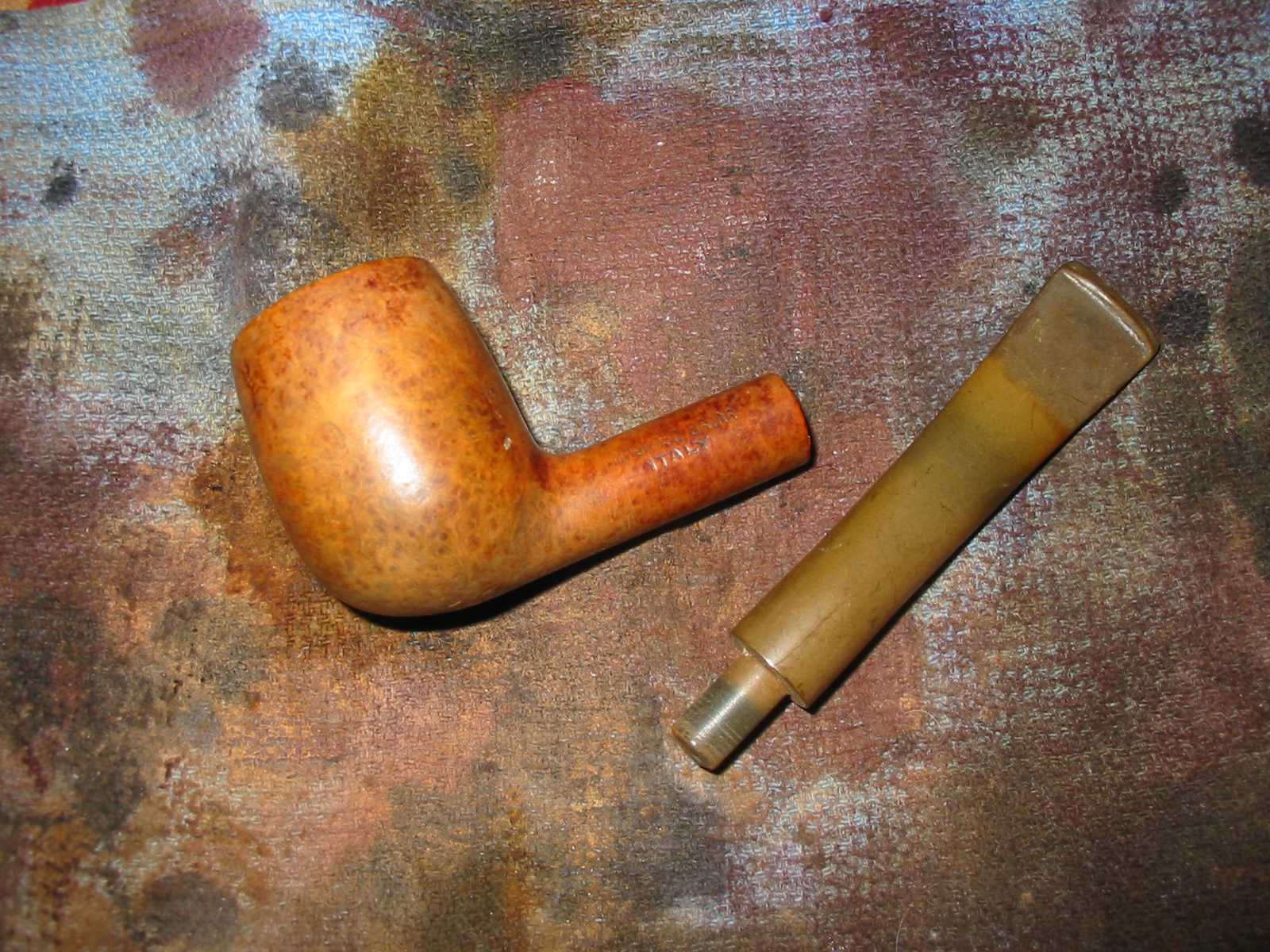
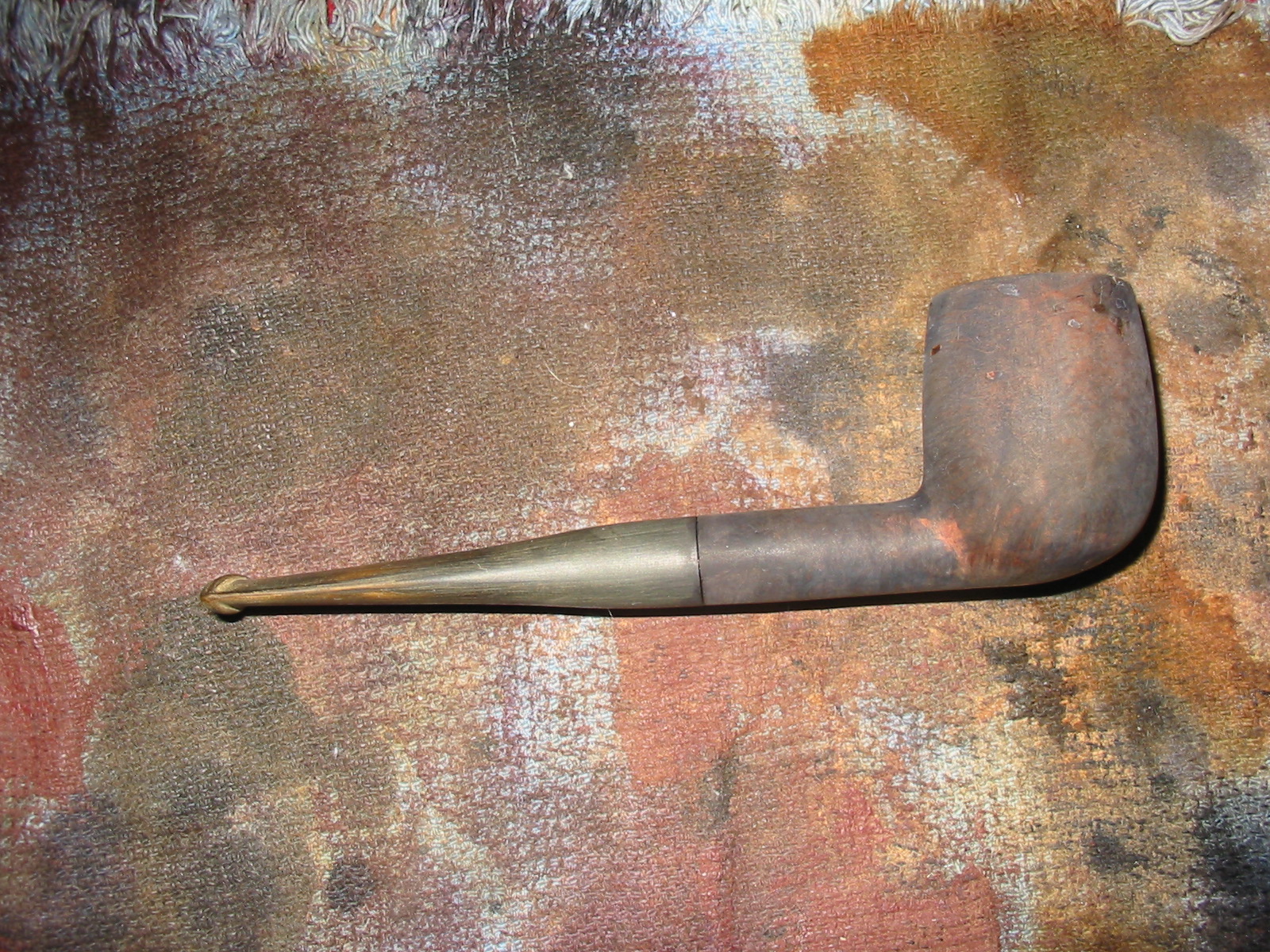
I am definitely getting to the bottom of the refurbishing box – this pipe and one other left before it is empty and I need to start hunting again for more. This old-timer is only stamped on the left side of the shank with IMPORTED BRIAR over ITALY. There is no other stamping on the right side of the shank. The bowl was in pretty decent shape – no real dents or scratches other than around the rim. The edges of the rim were rounded over. The left side showed some nice birdseye grain and the front and the back of the bowl were cross grain. The right side of the bowl was a mess. There were at least a dozen putty fills in various states of coming out of the briar. There were two on the rim that took a bite out of the outer edge of the rim. The finish was gone and the stain had faded. The bowl did not come with a stem so I hunted through my can of stems and found one that would do the trick. It took very little work to get the tenon to fit into the shank. It was a wide blade stem that previously had been on a George Jensen pipe at sometime in its life but that pipe bowl had long since disappeared. With some minor adjustments to the diameter of the stem it would make a great stem for the Italian billiard.
IMG_3288

IMG_3289

IMG_3290

IMG_3291

IMG_3292

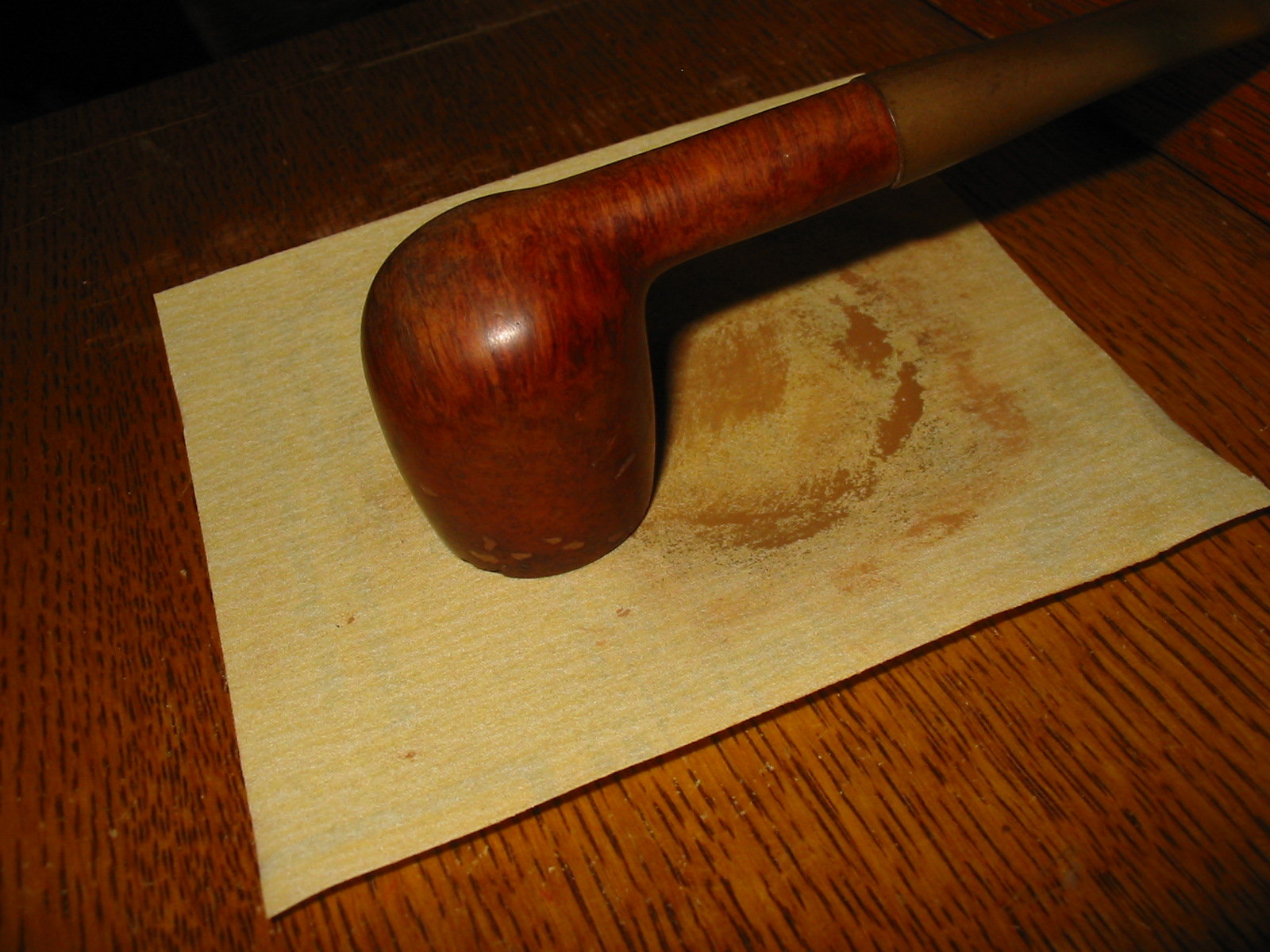
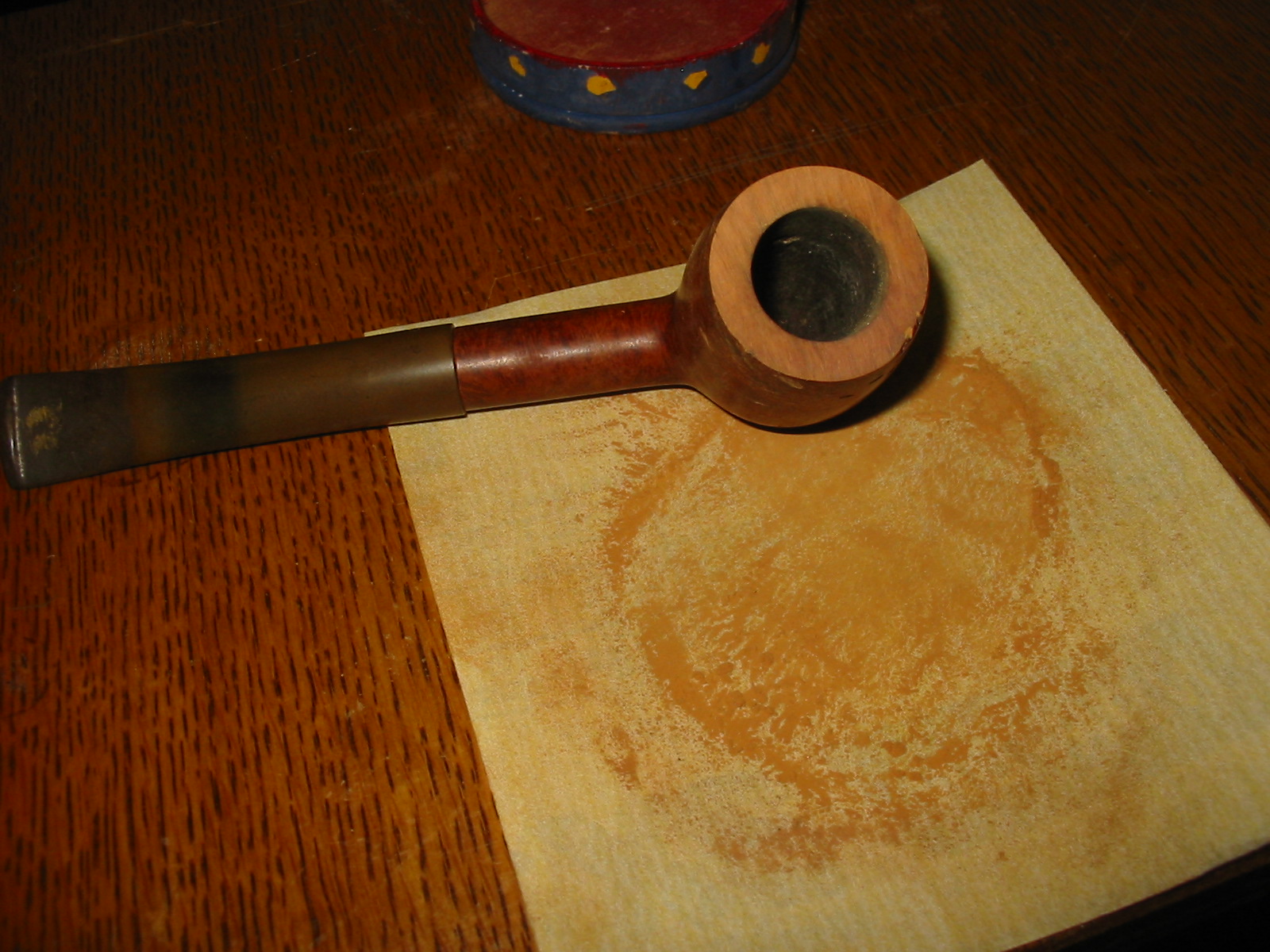
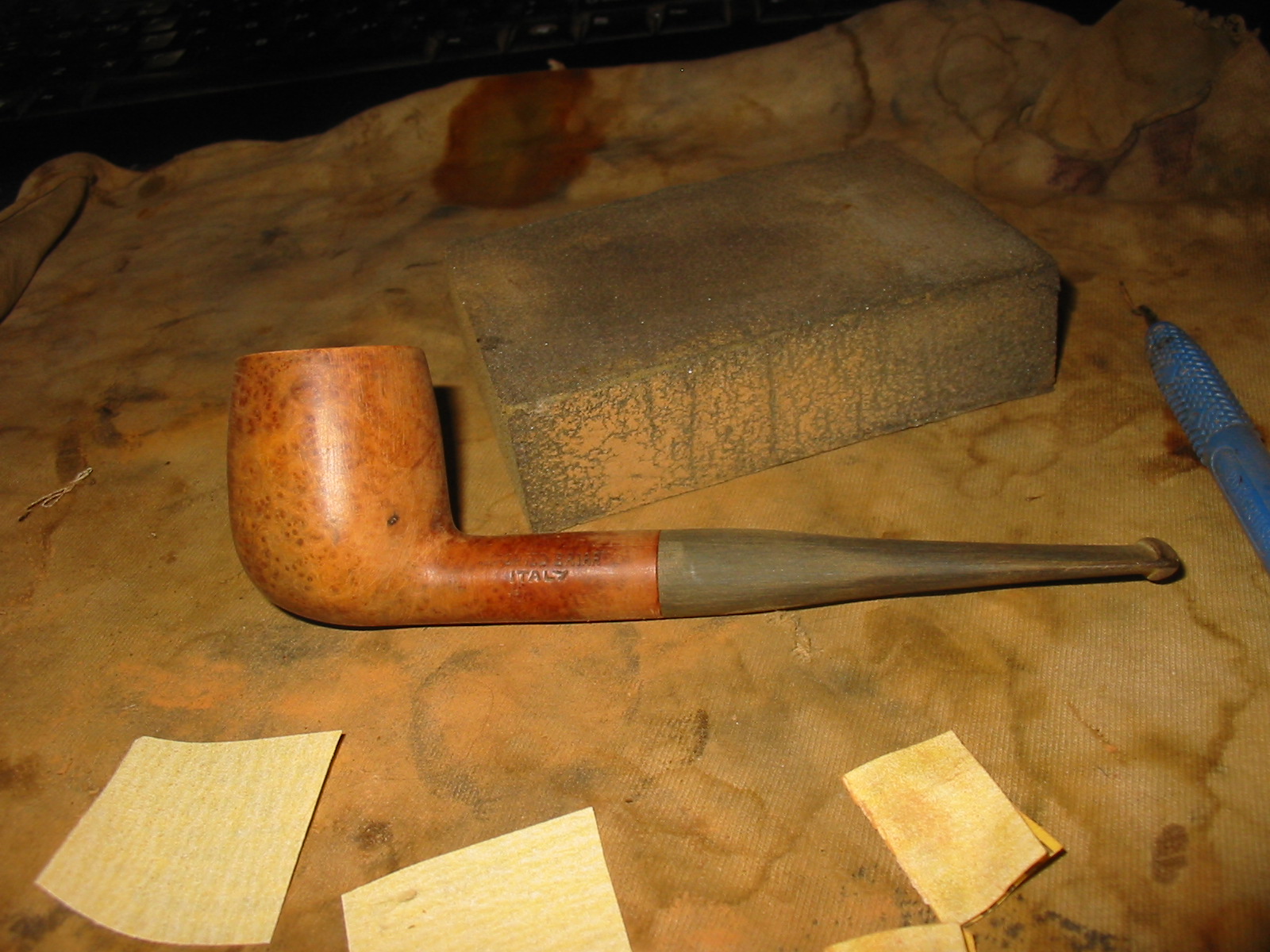
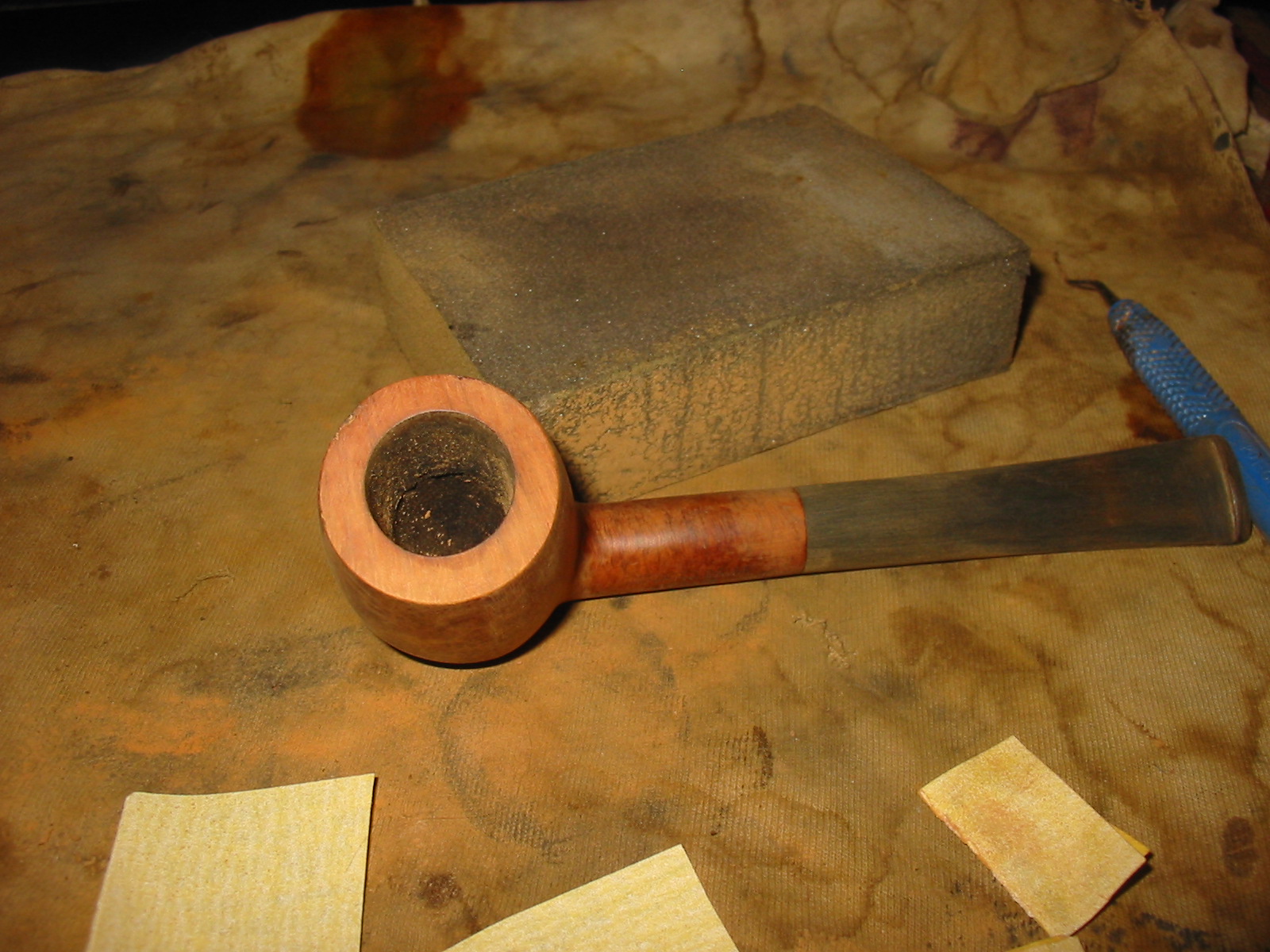
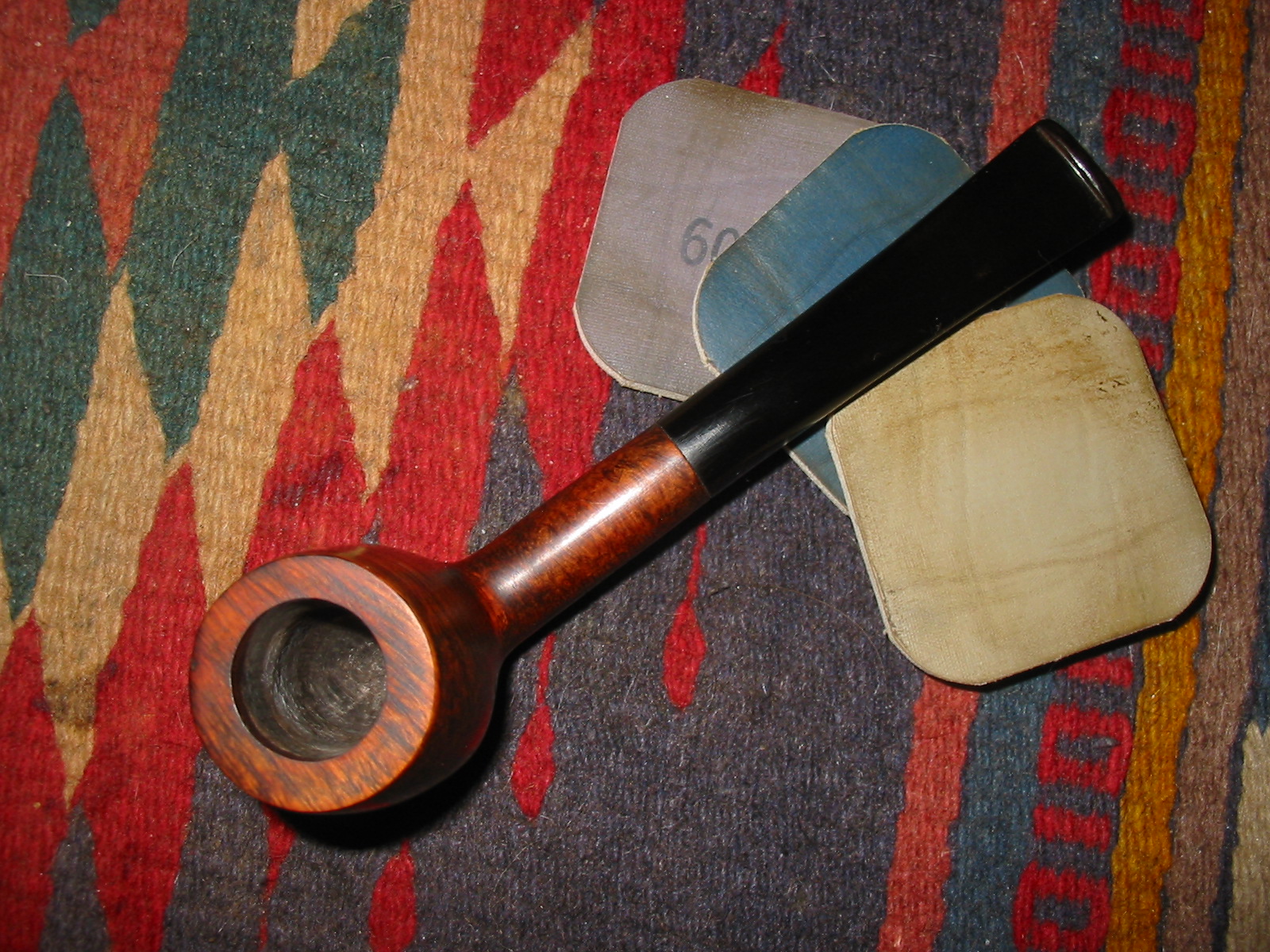
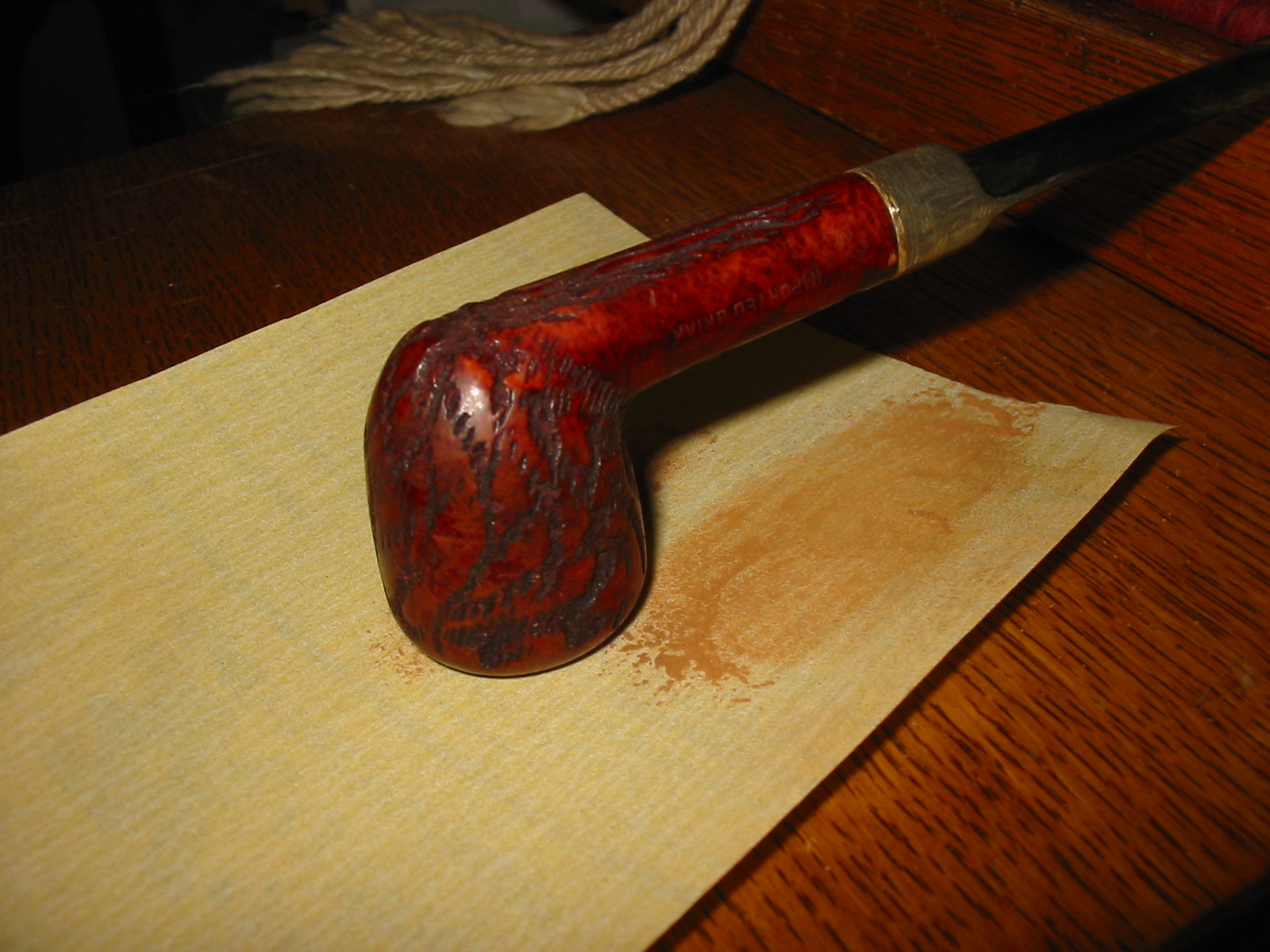
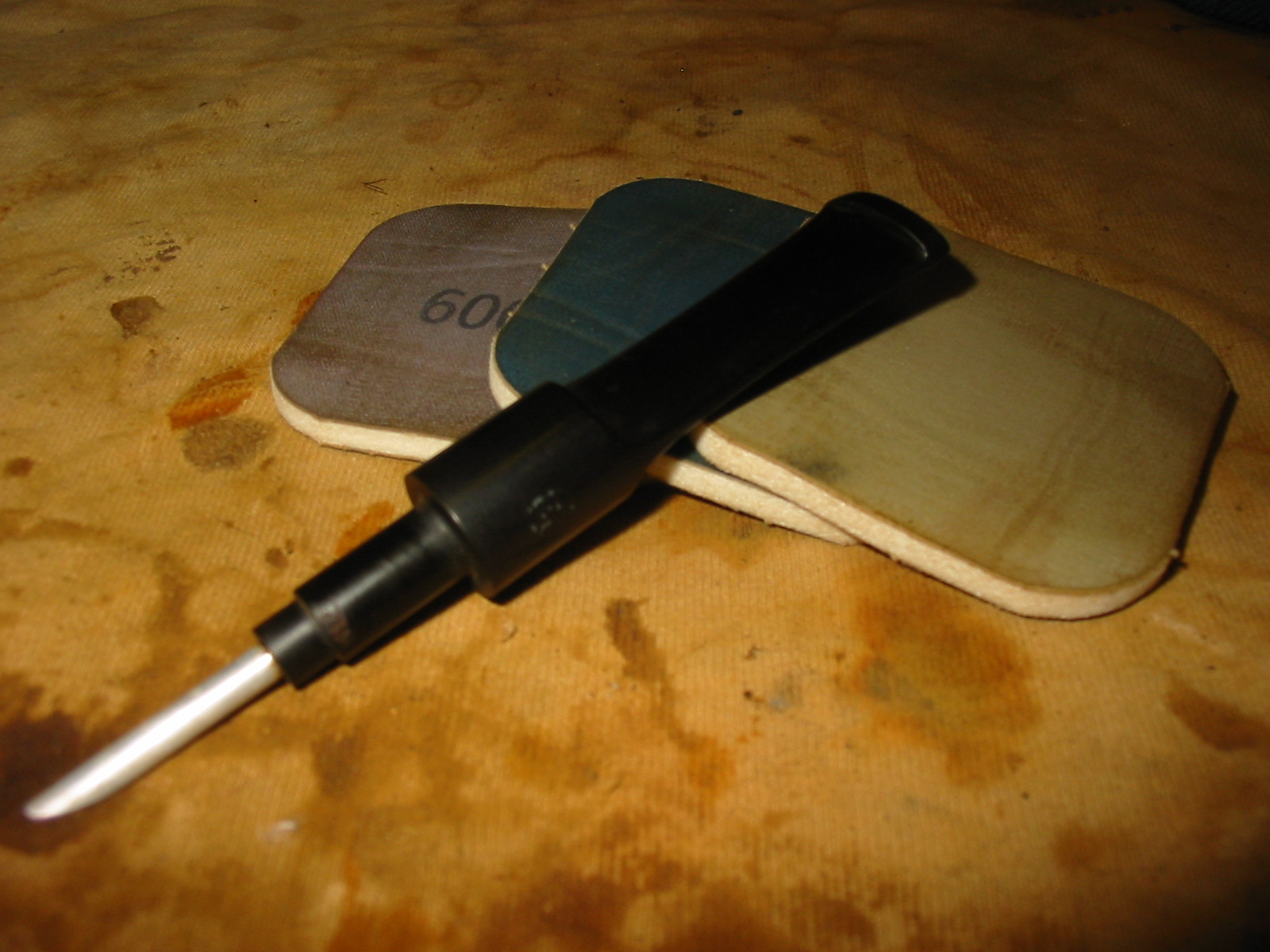
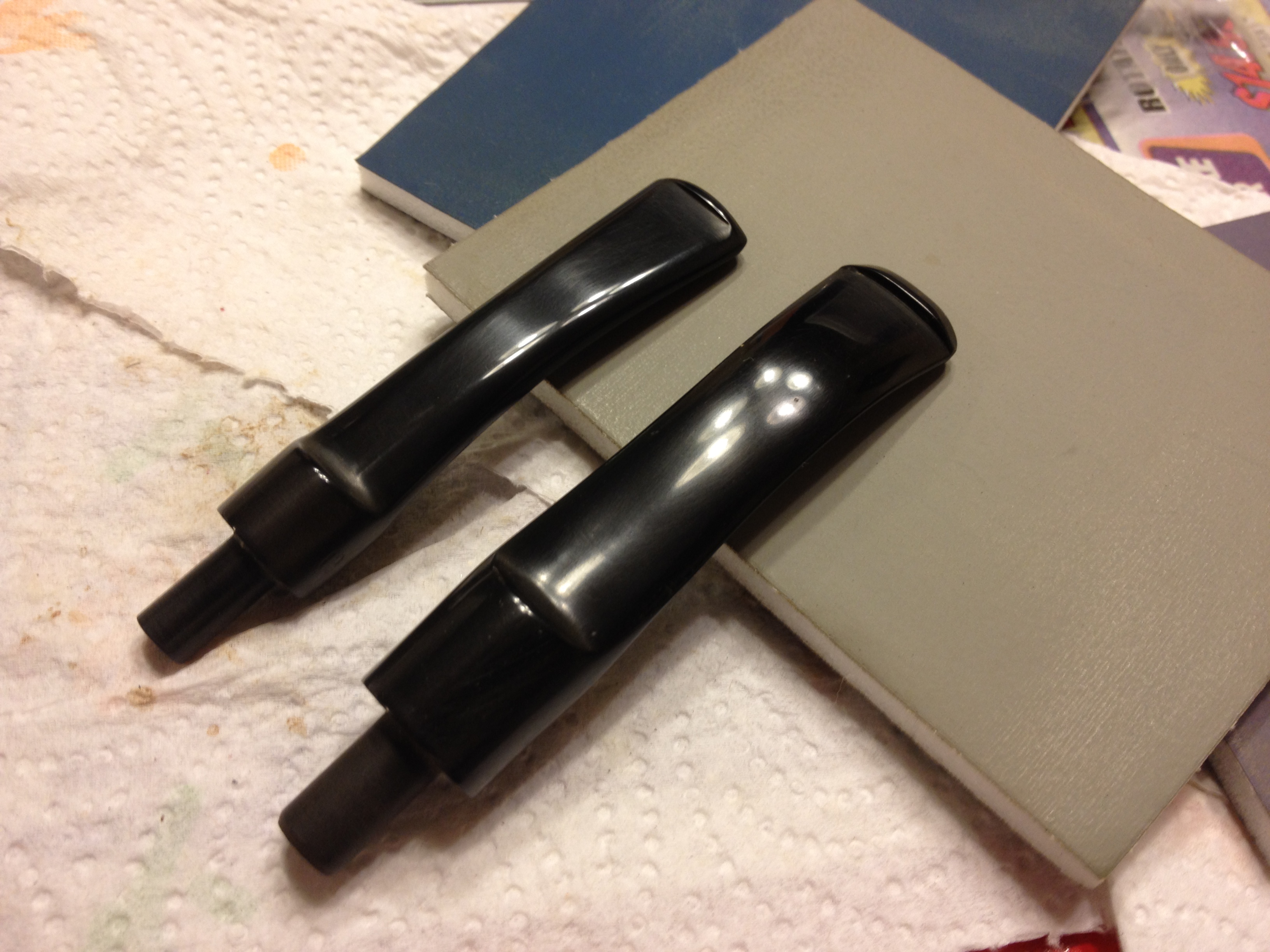
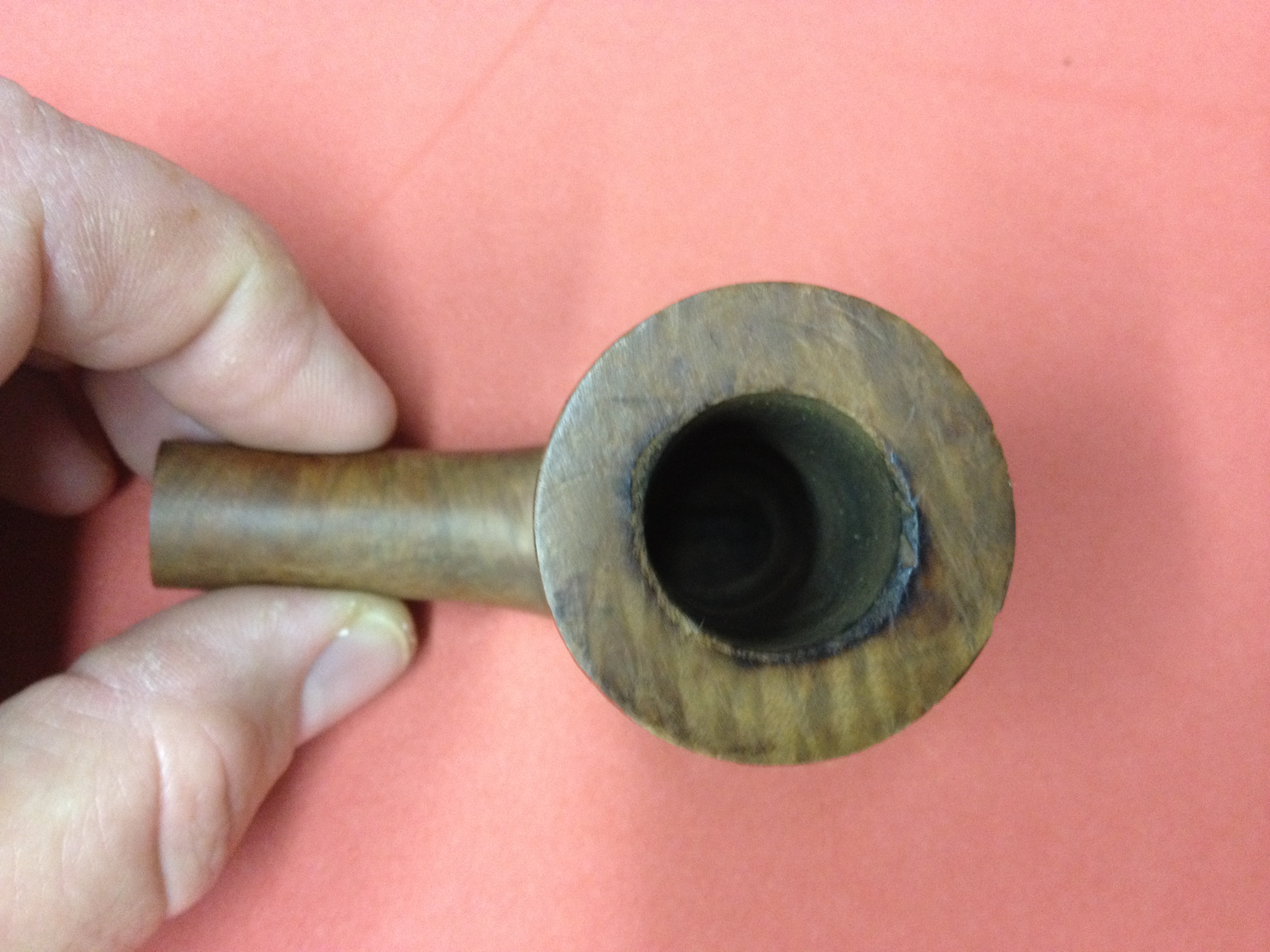
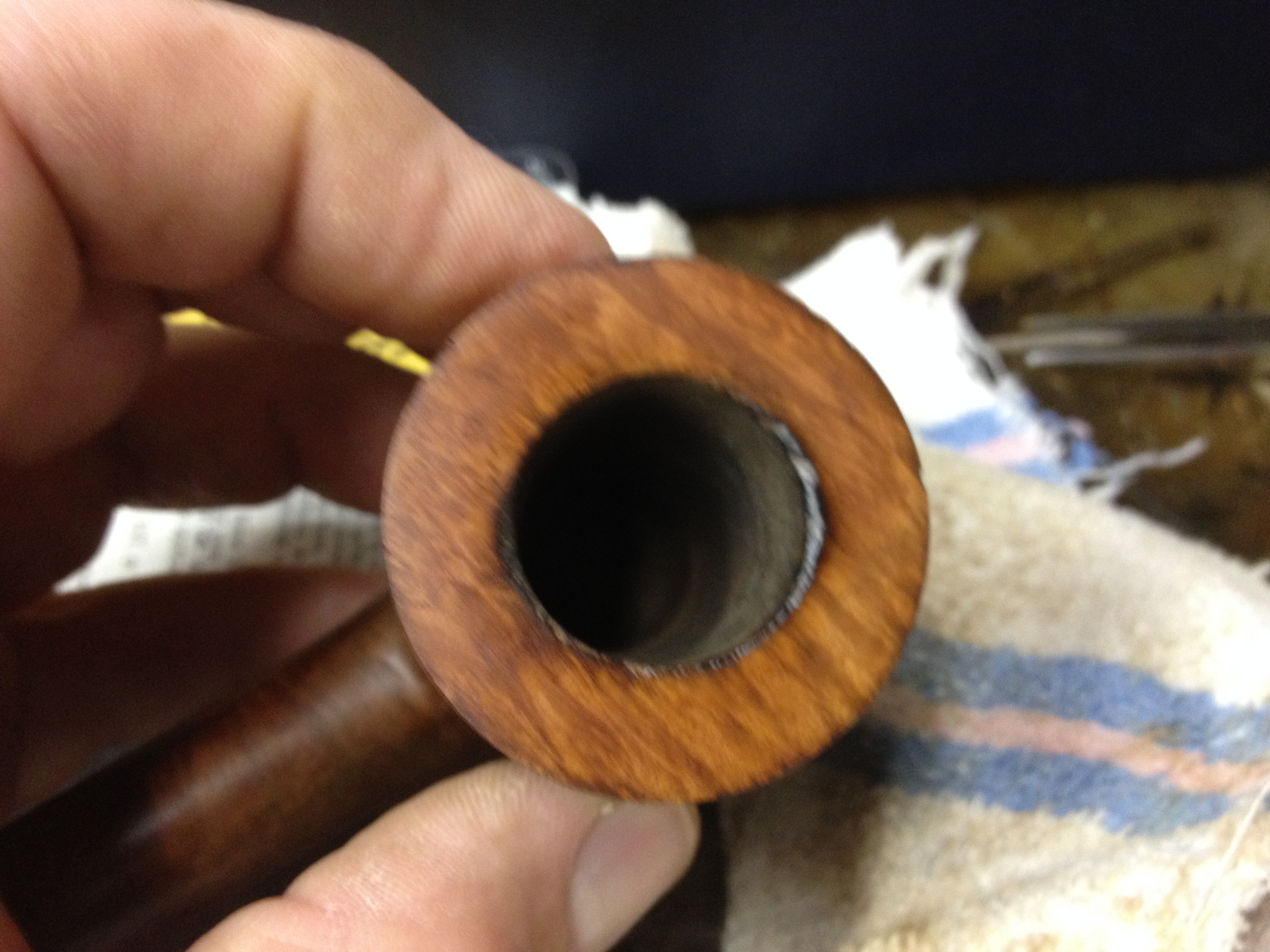
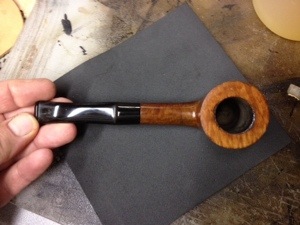
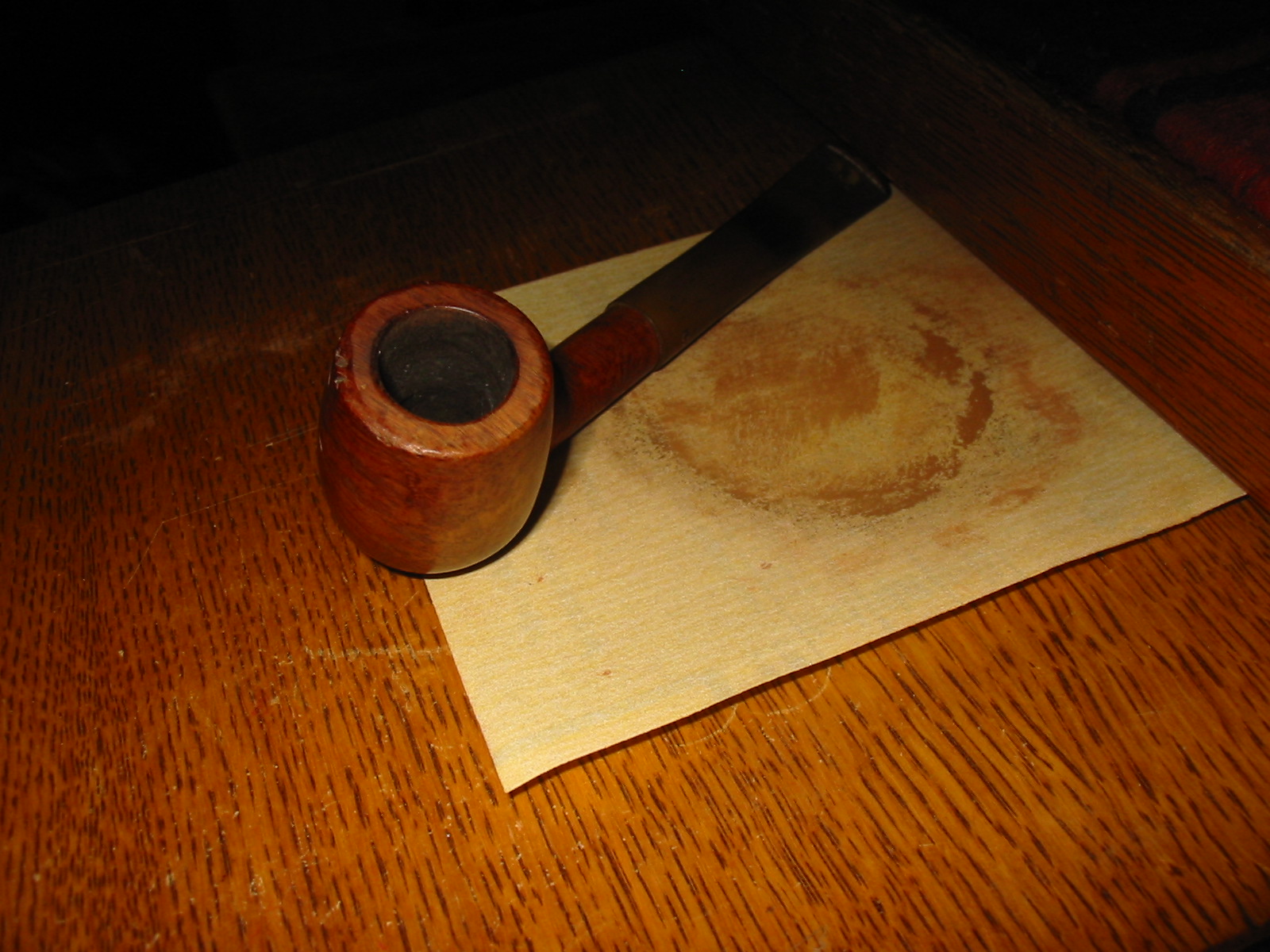
I decided to top the bowl to clean up the rounded edges on the outer rim and to minimize the damage from the two fills on the right edge. I set up my sandpaper on the flat board and turned the bowl top into the sandpaper. I work at this slowly and turn and sand and then tip the briar dust into a container that I have saved for repairs to fills. The first photo below shows the set up as well as the condition of the rim before I worked on it.
IMG_3302

IMG_3303

IMG_3304

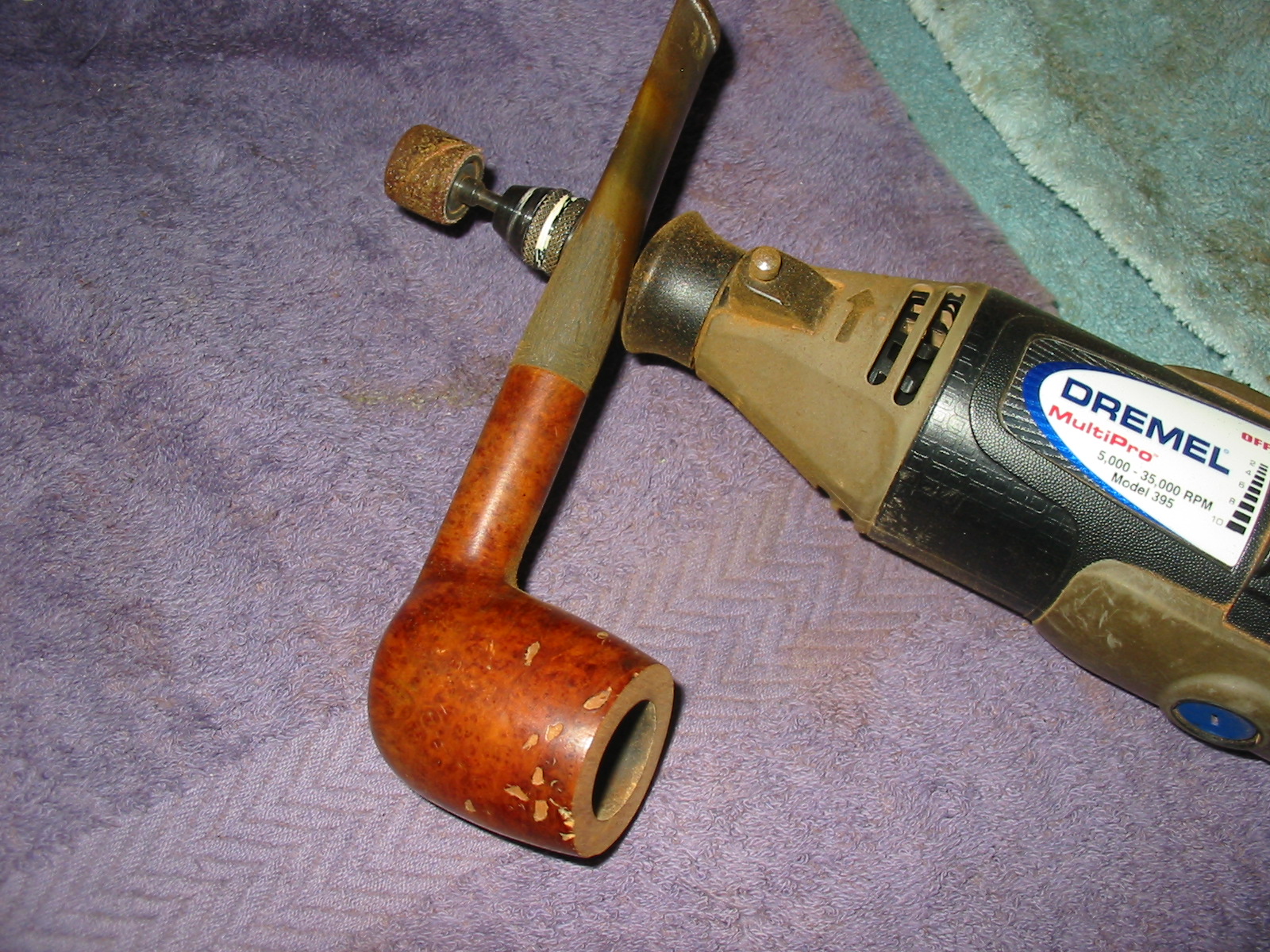
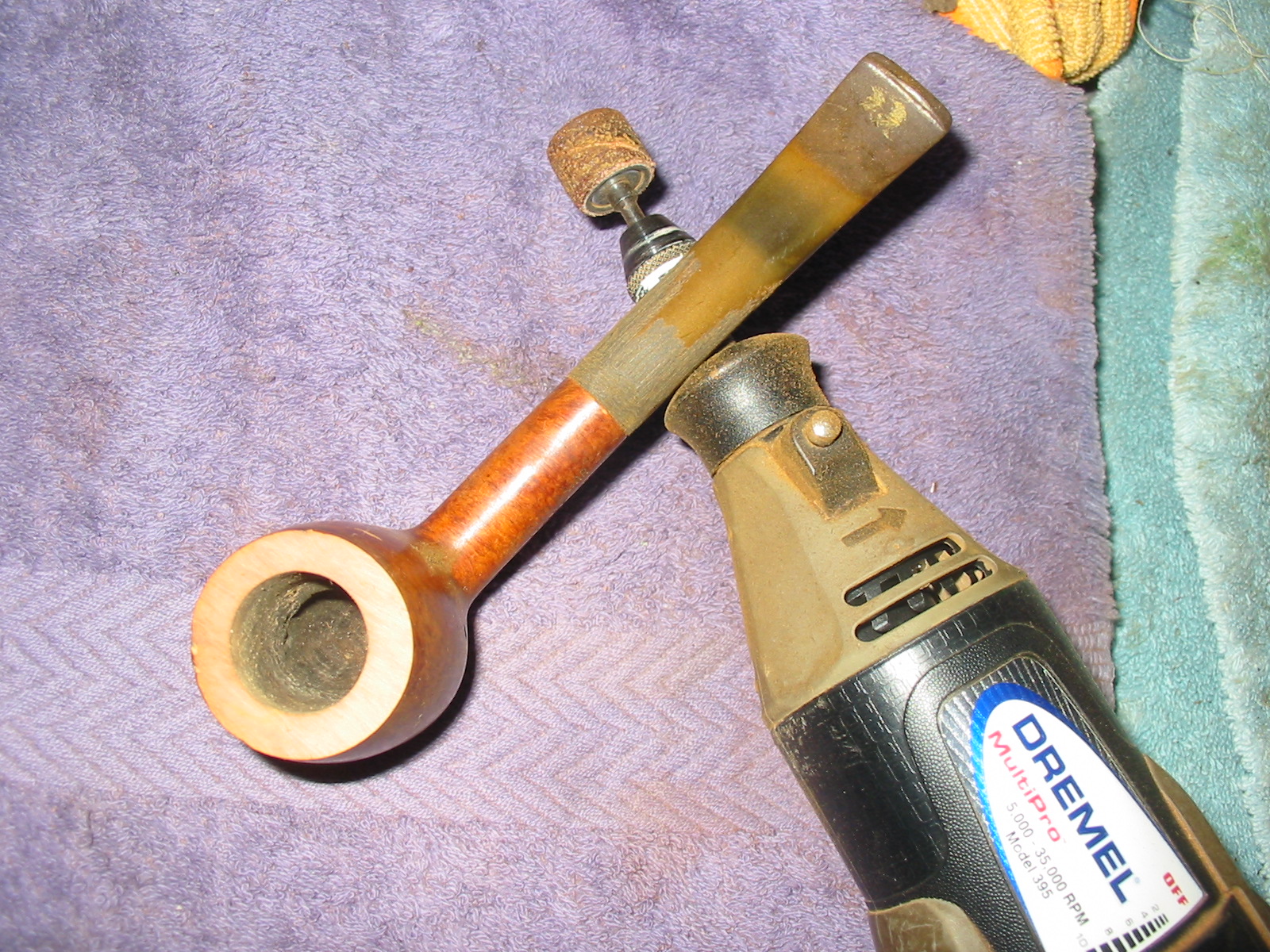
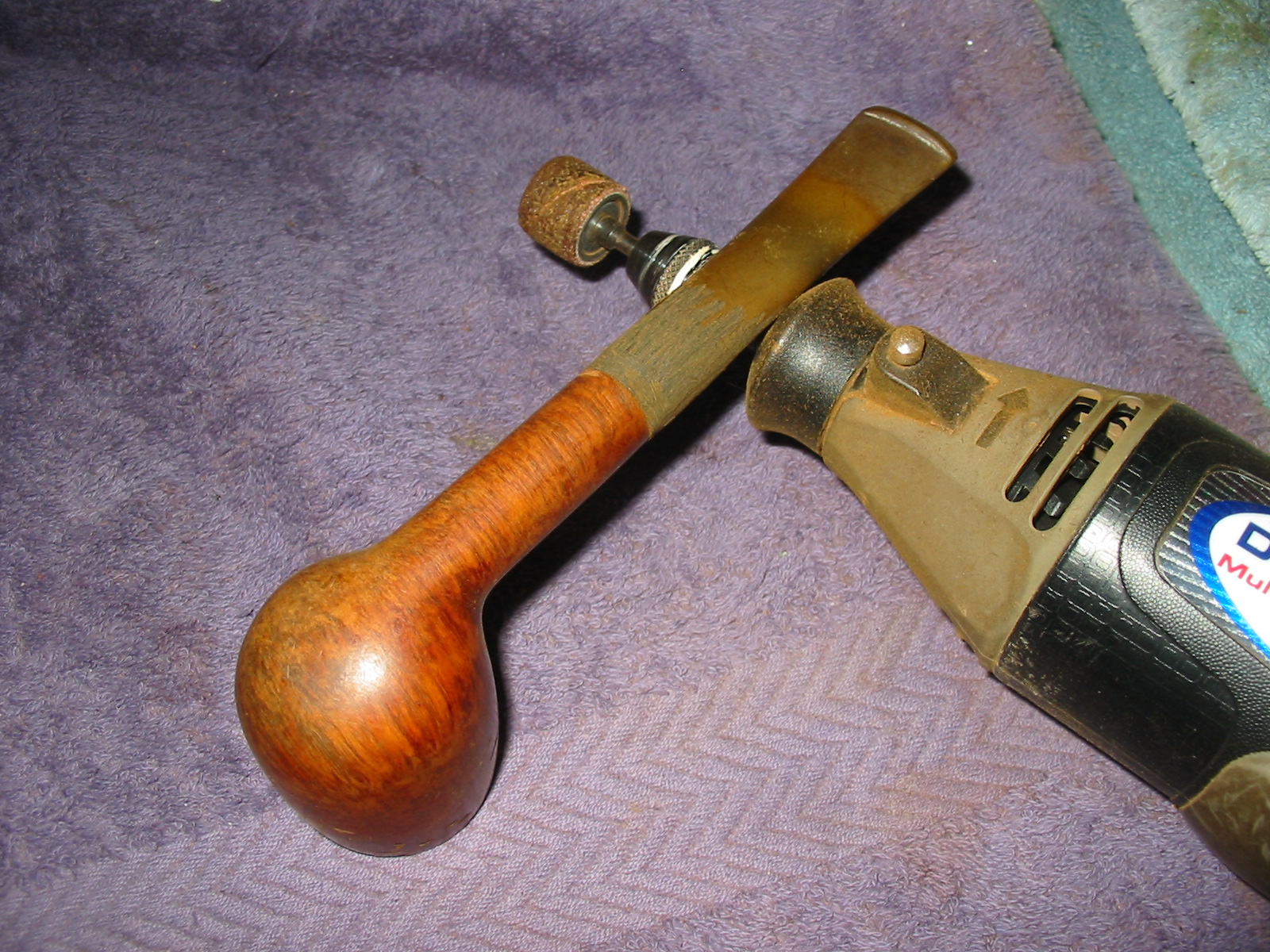
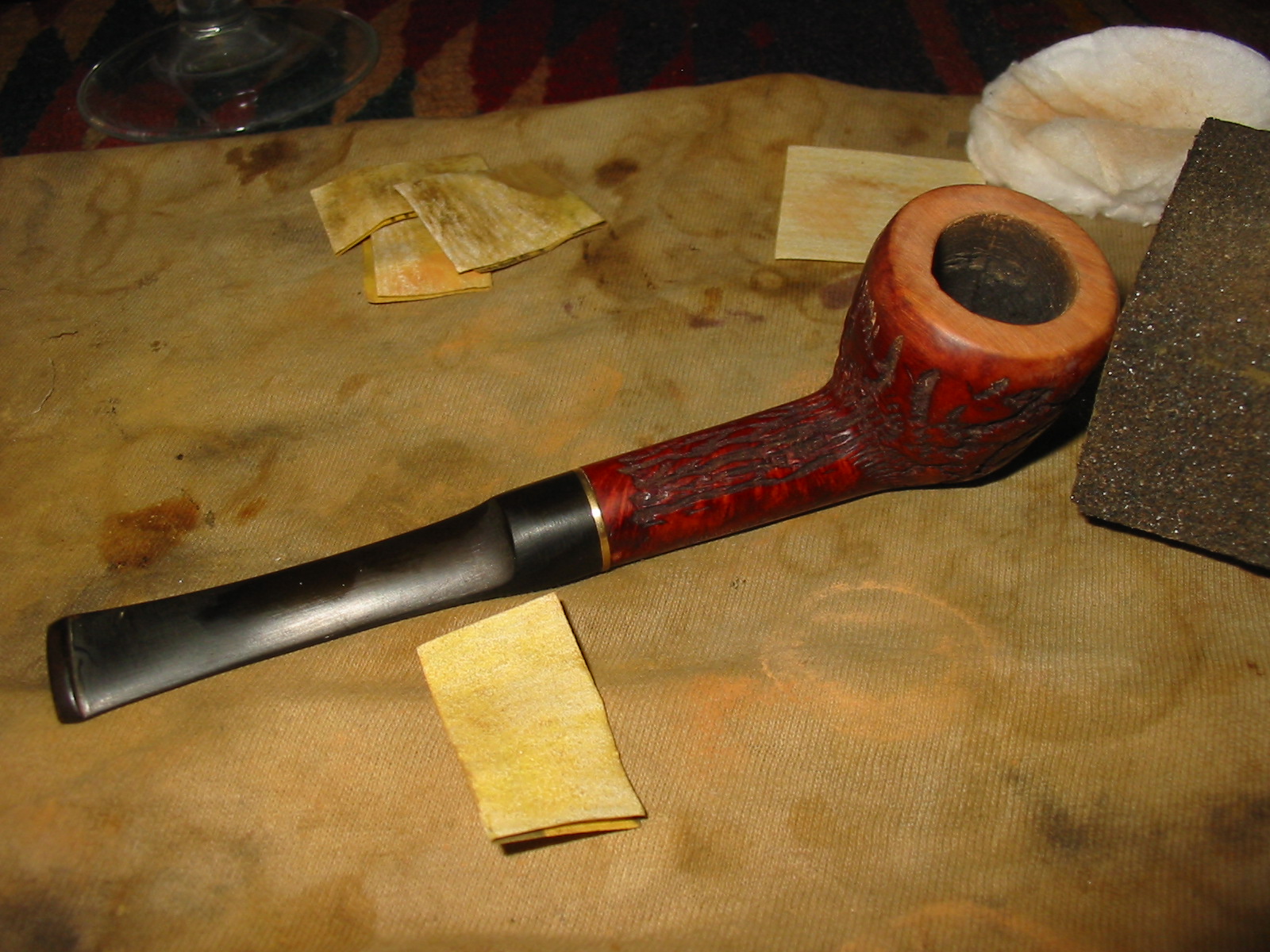
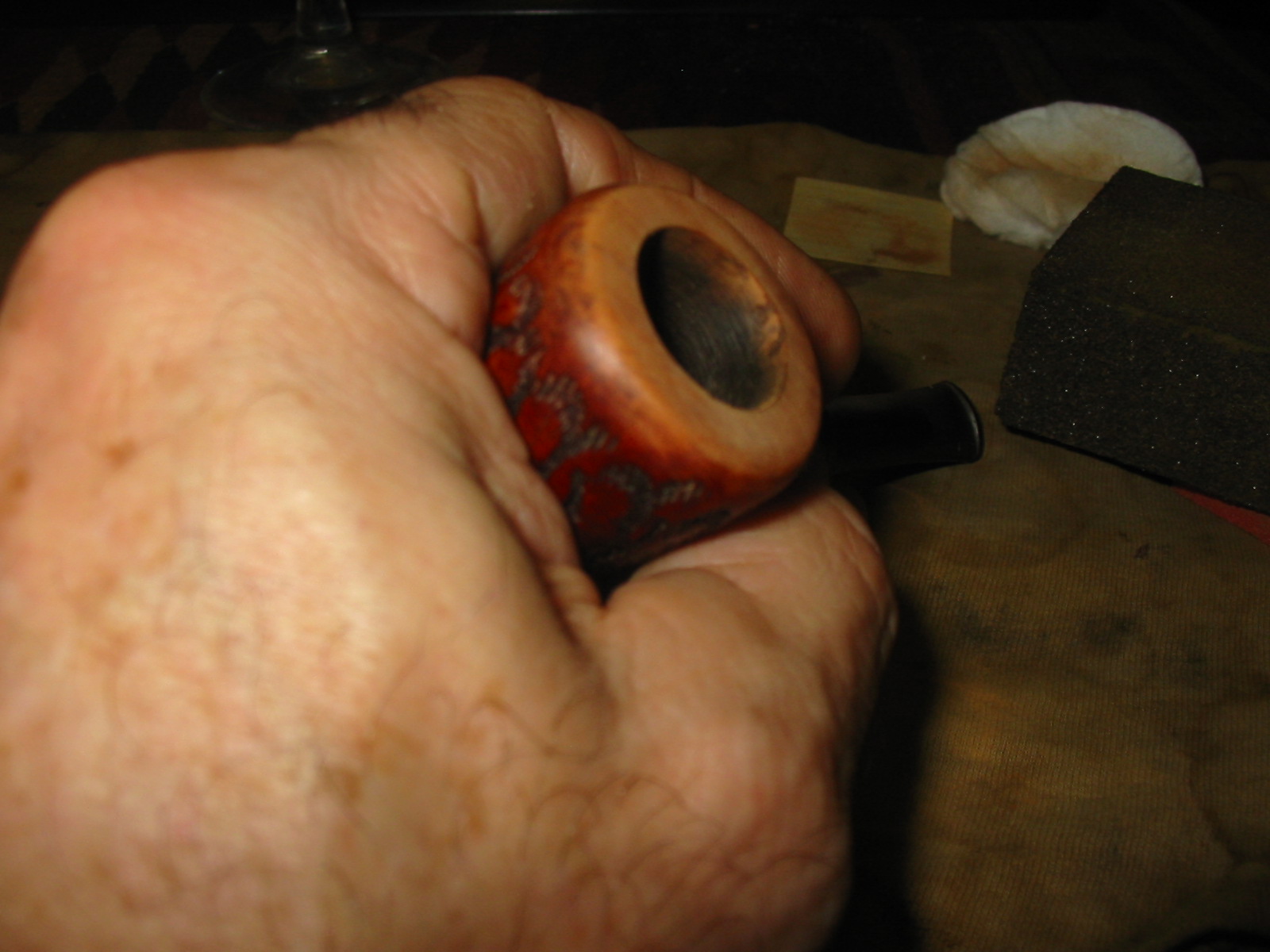
I took the top down until the outer edges of the rim were sharp and clean. The damage from the fills is still visible but I stopped before I changed the overall shape of the bowl. I used a Dremel with a sanding drum to reduce the diameter of the stem to match the shank. I take it down as far as possible with the Dremel and then do the finish shaping by hand with sandpaper.
IMG_3305

IMG_3306

IMG_3307

IMG_3308

I sanded the stem with 220 grit sandpaper to remove the oxidation and to finish shaping the area around the shank and stem junction.
IMG_3309

IMG_3310

IMG_3311

IMG_3312

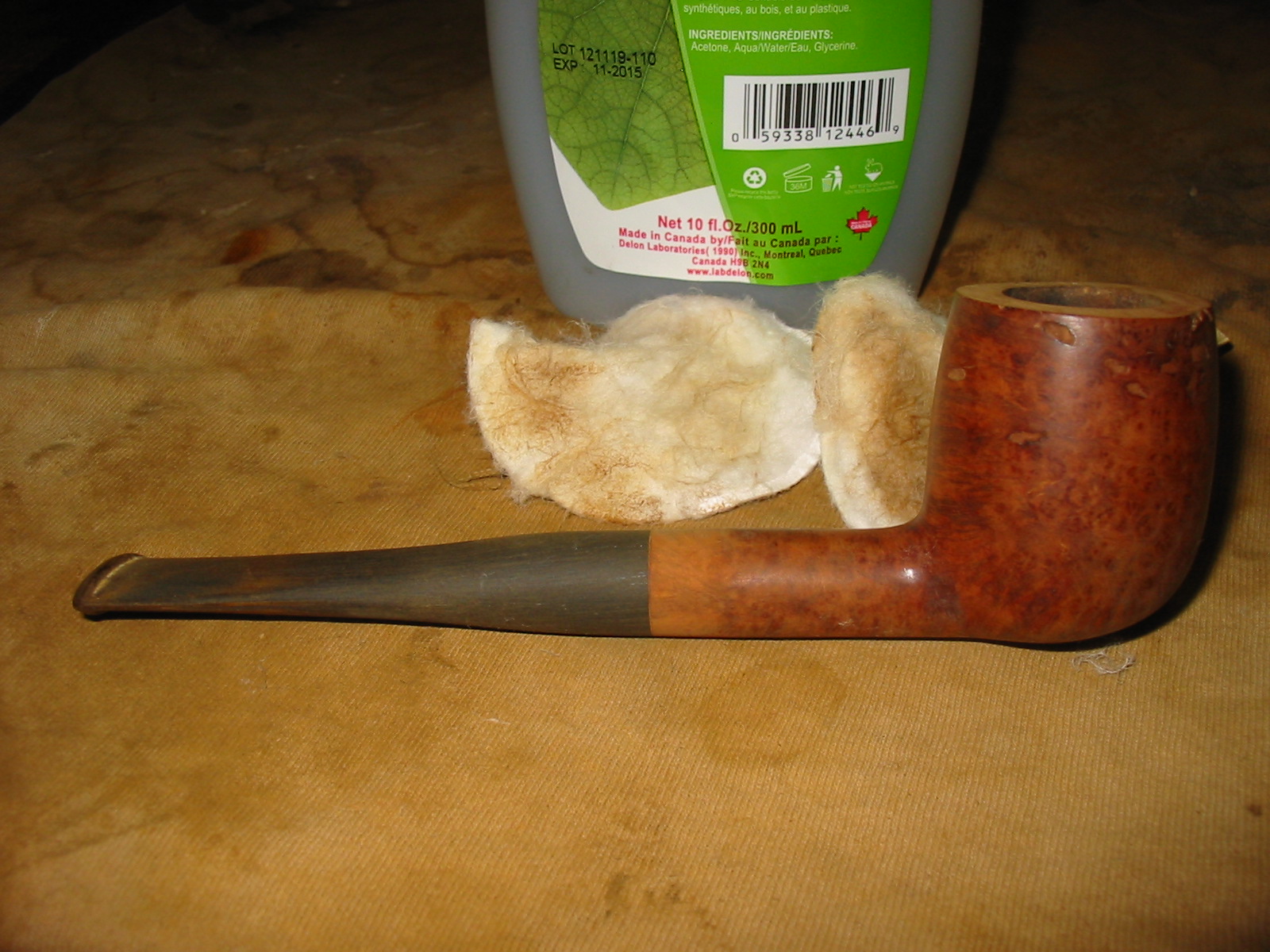
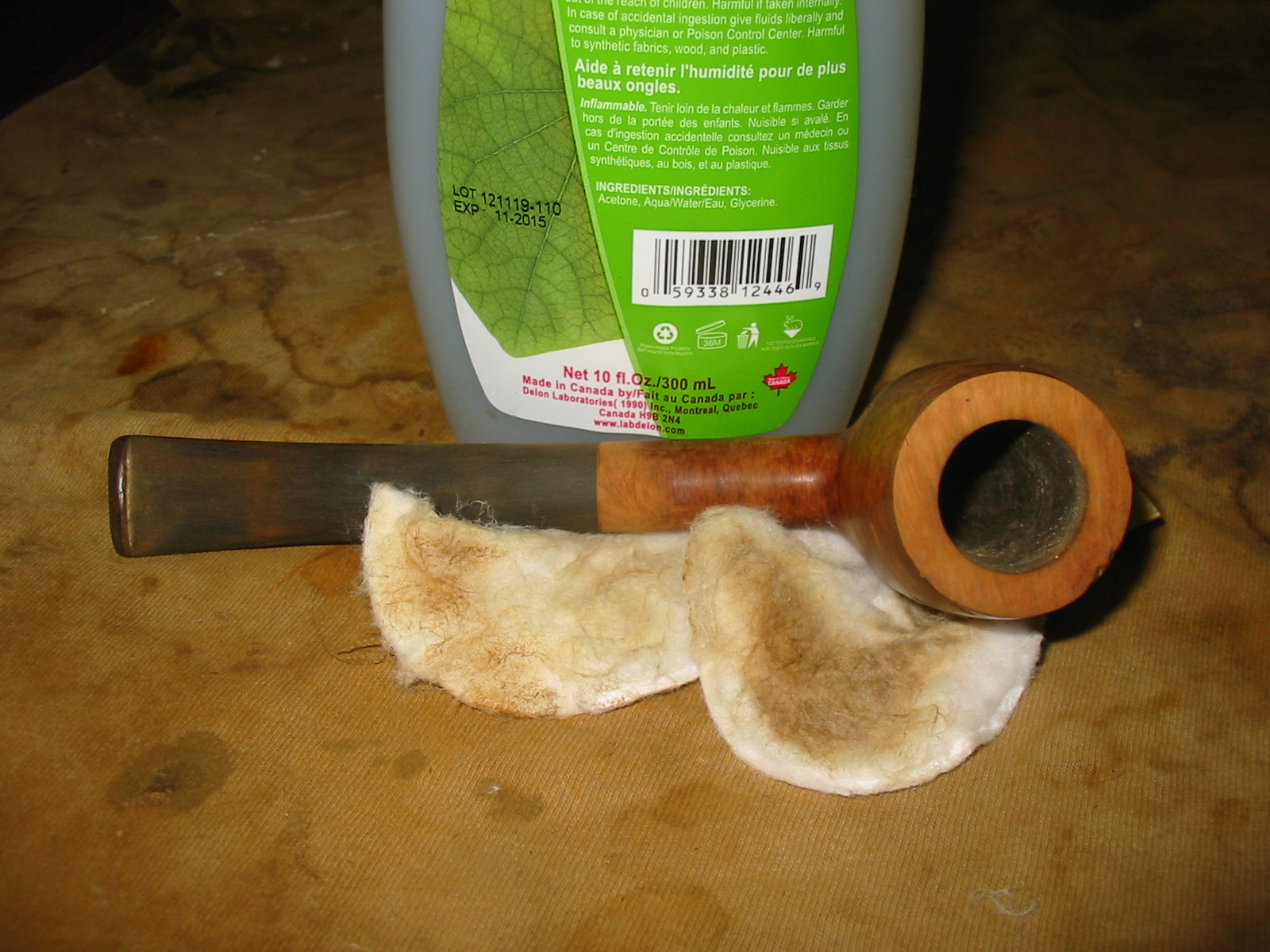
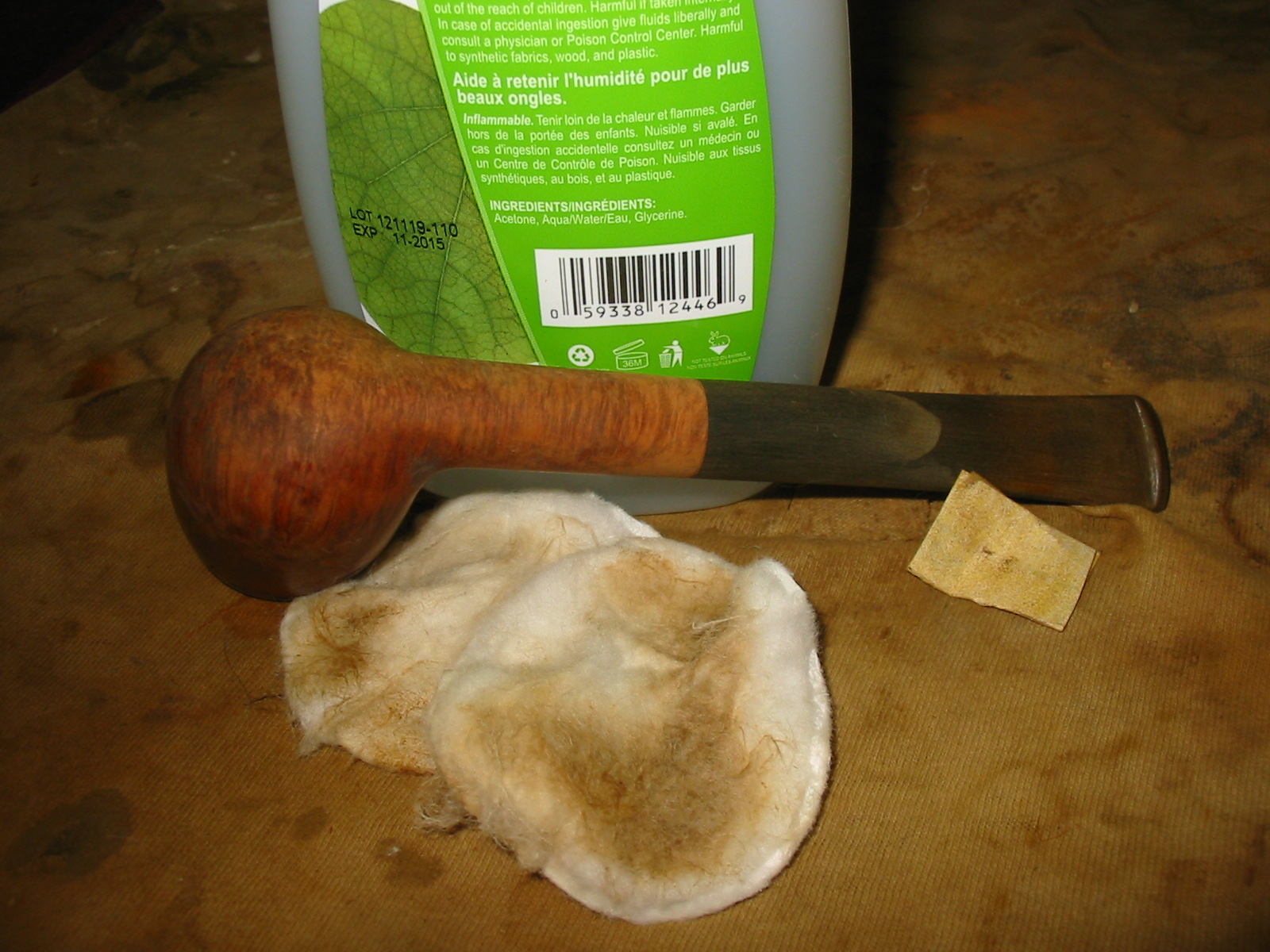
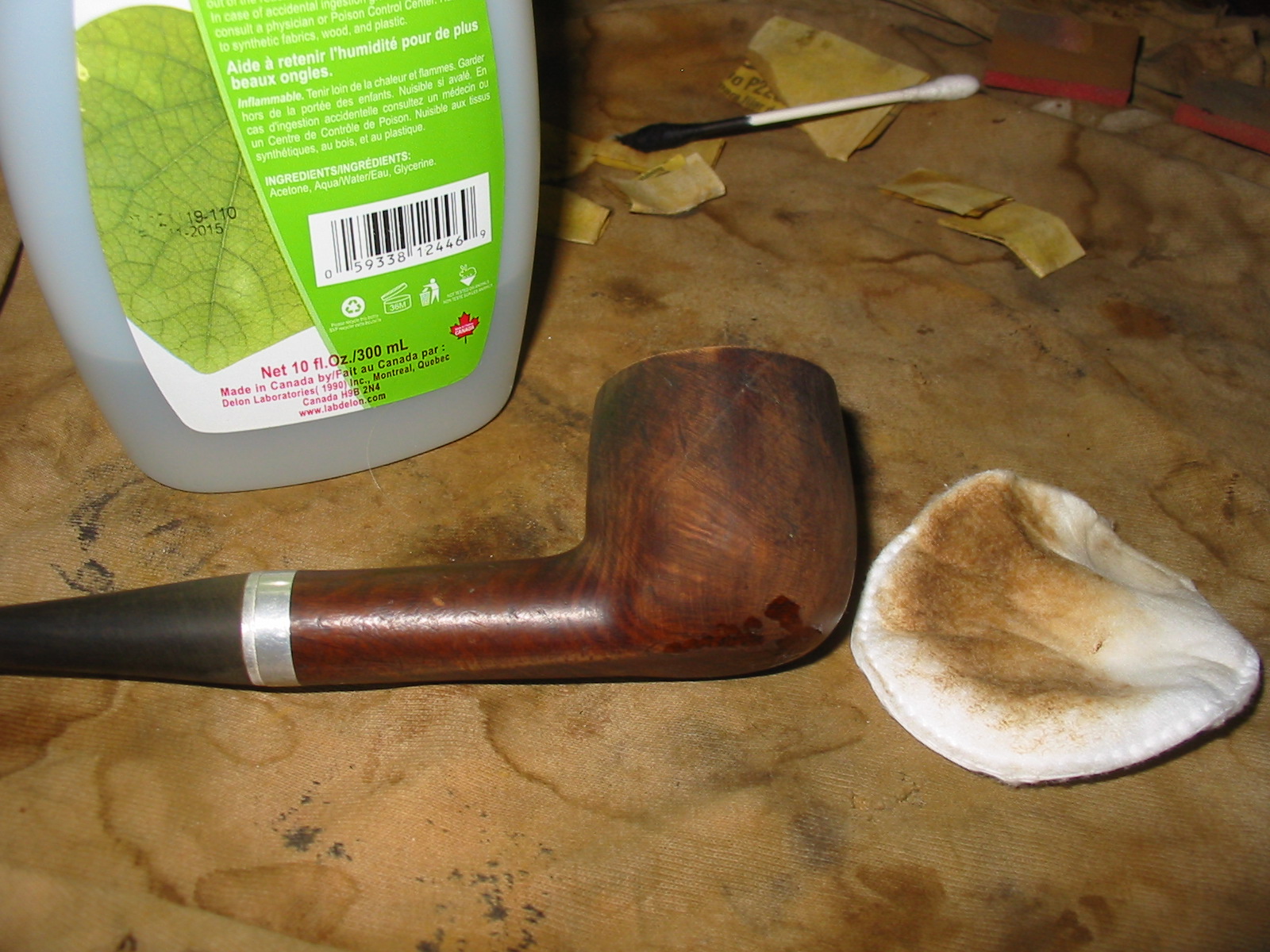
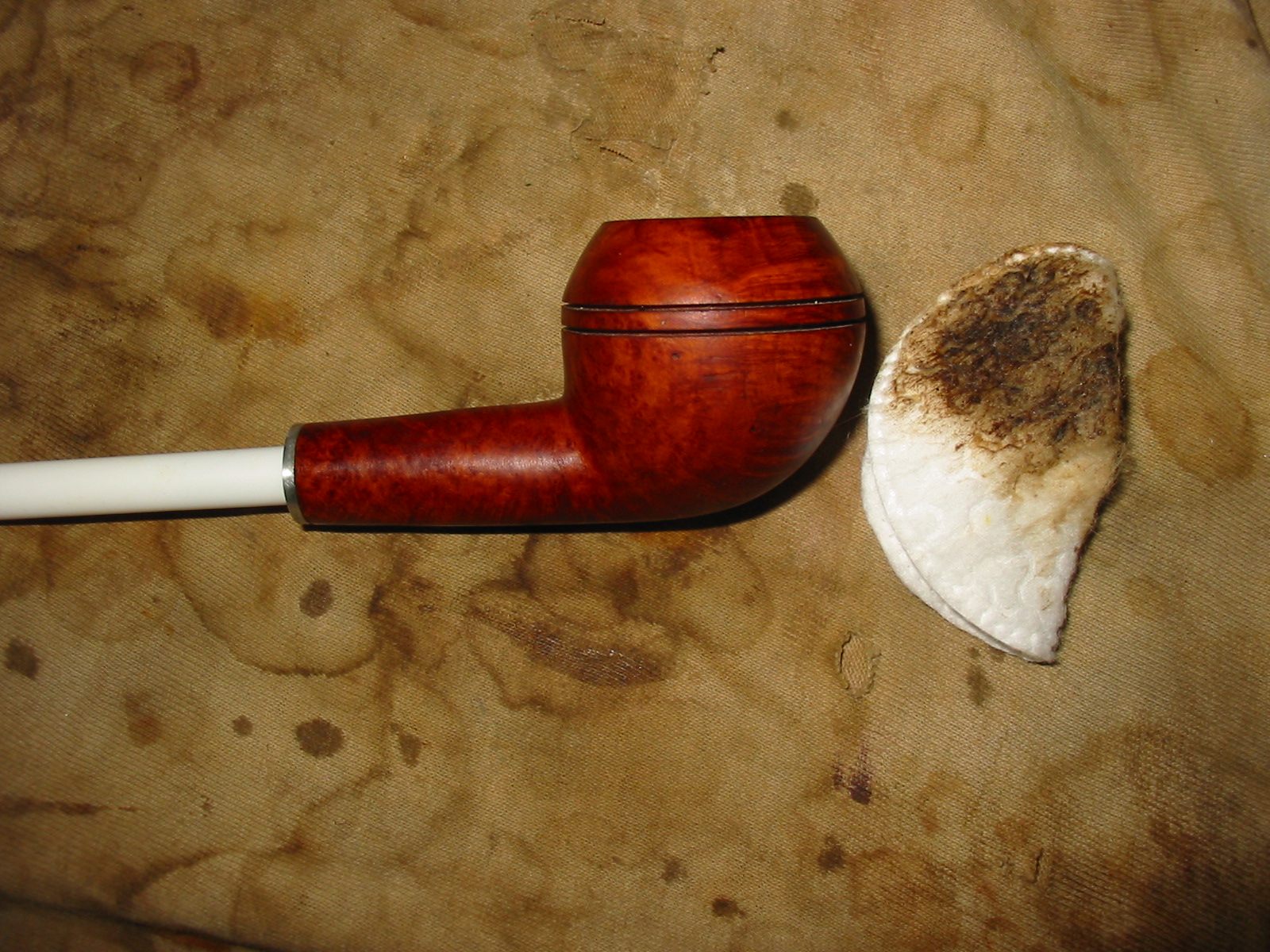
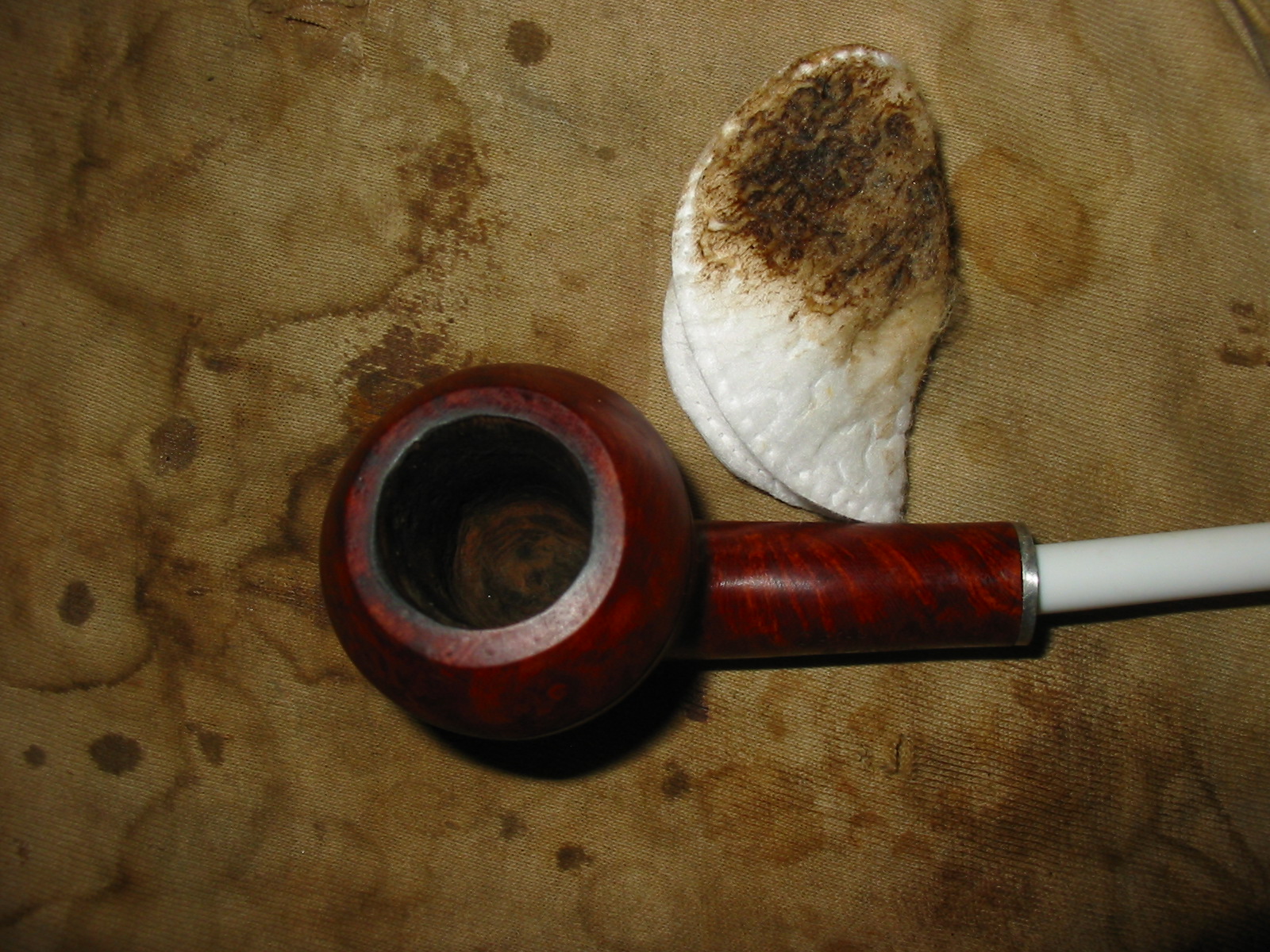
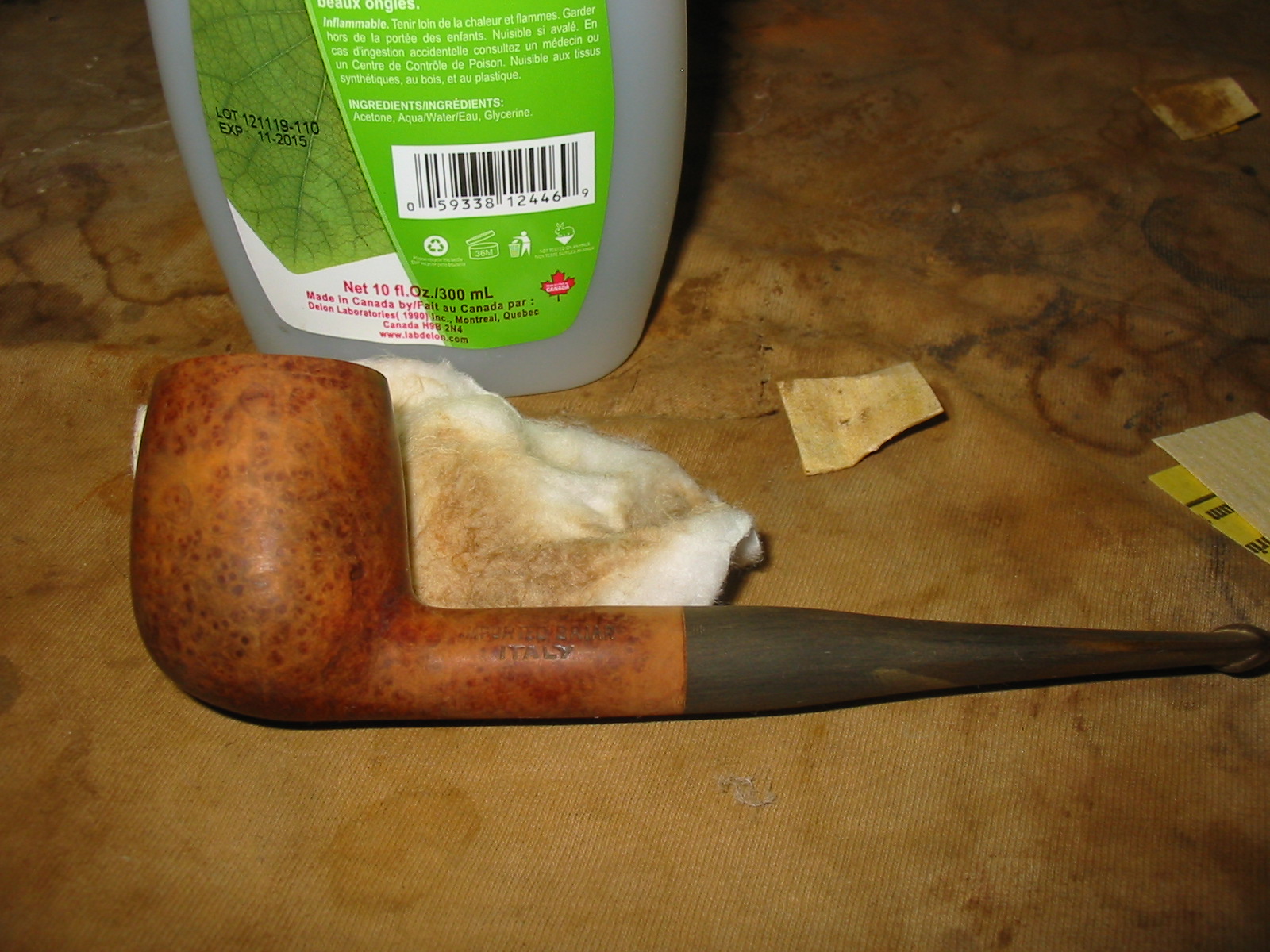
I wiped down the bowl with acetone on a cotton pad to remove the remaining finish.
IMG_3313

IMG_3314

IMG_3315

IMG_3316

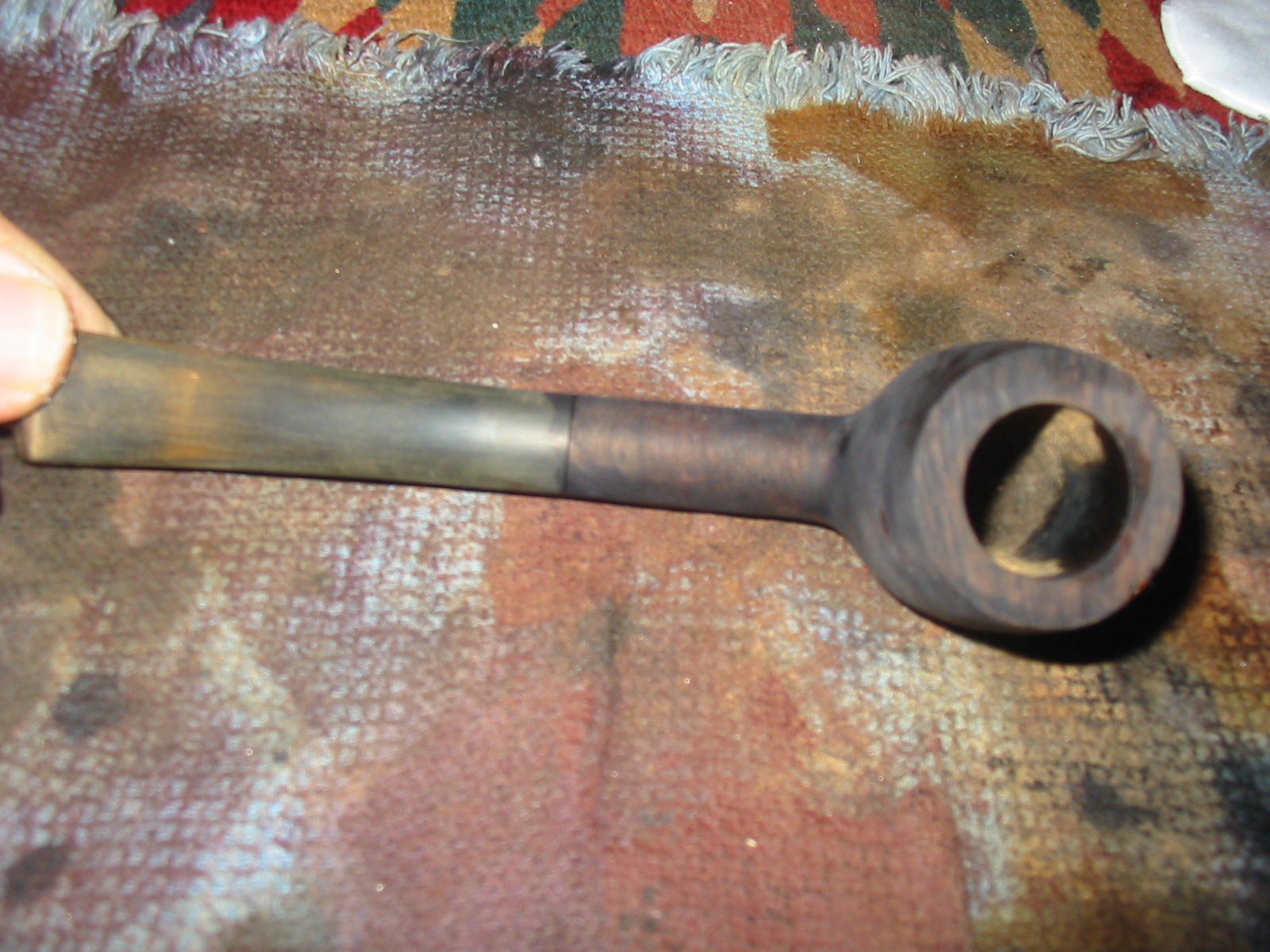
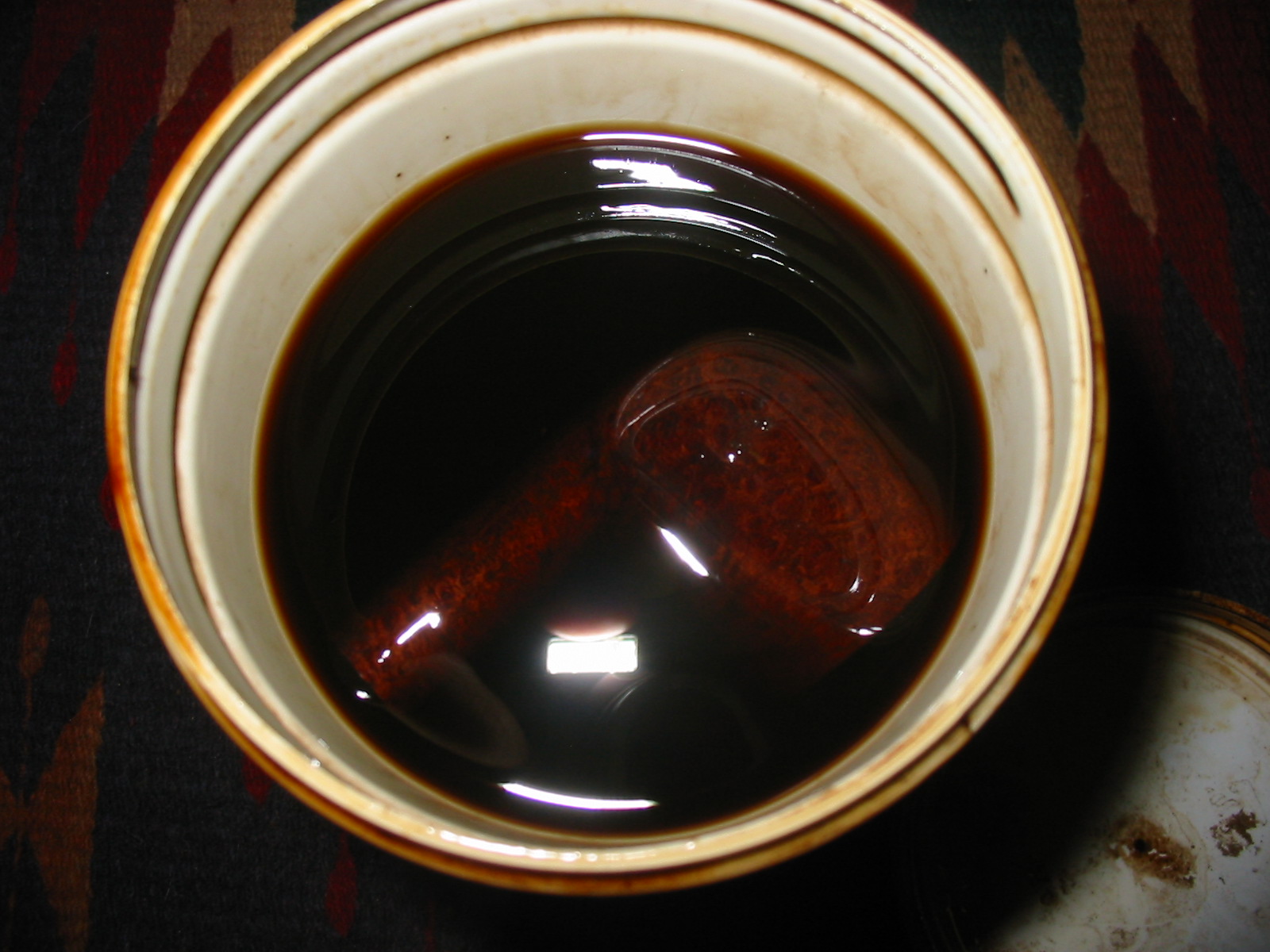
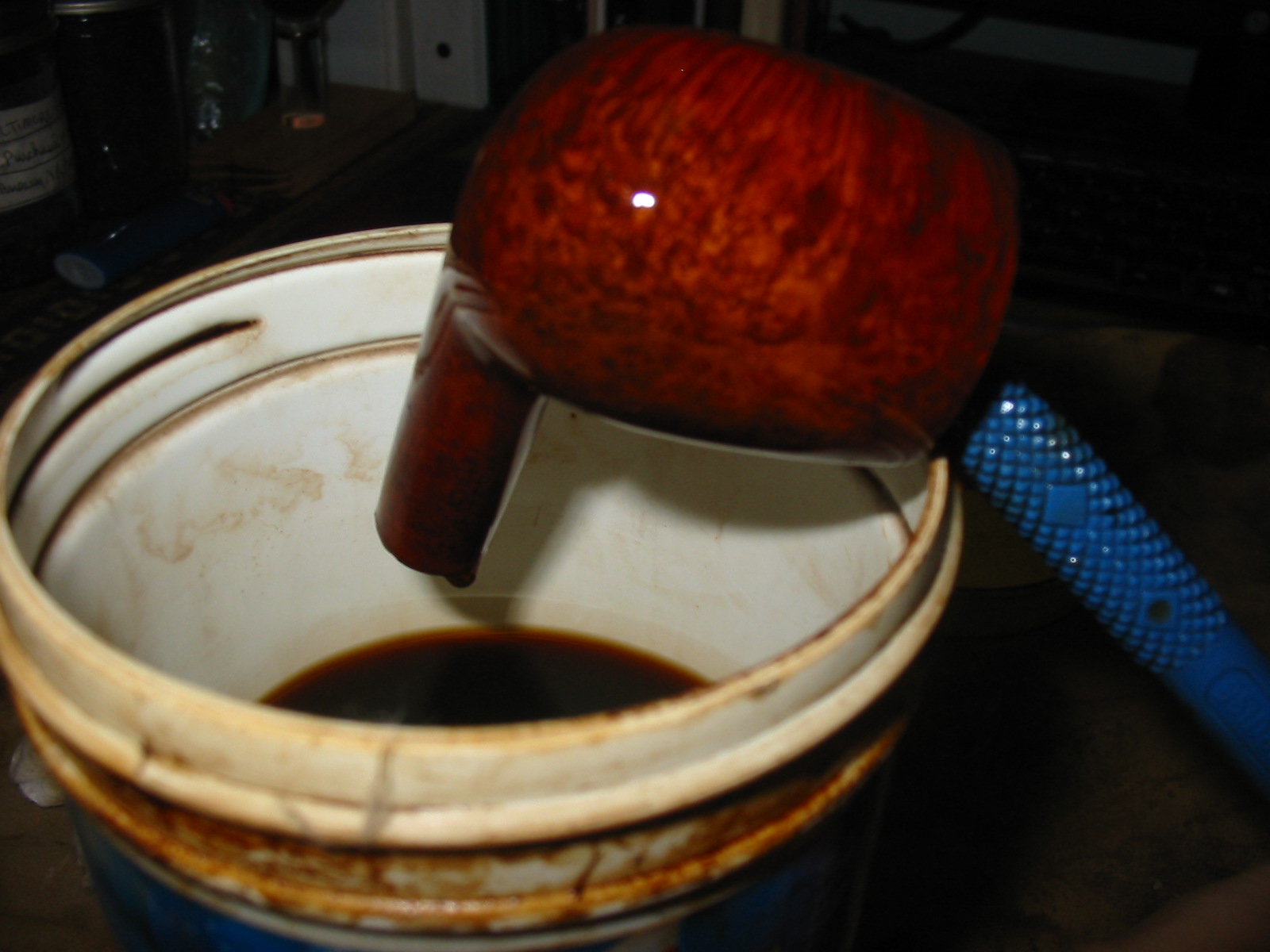
I dropped the bowl in an alcohol bath to soften the putty fills to make them easier to remove. It also removed the remaining finish to the bowl. The dark colour of the alcohol bath adds a patina to the bowl that is something that I appreciate. (I continue to use the bath and filter out the grit and grime from the alcohol every other month. The filtering removes the impurities but leaves the alcohol the colour of the stain that has been removed from the bowl. It is a uniform dark brown colour. I rarely change the bath, just refill it as the alcohol evaporates over time.)
IMG_3317

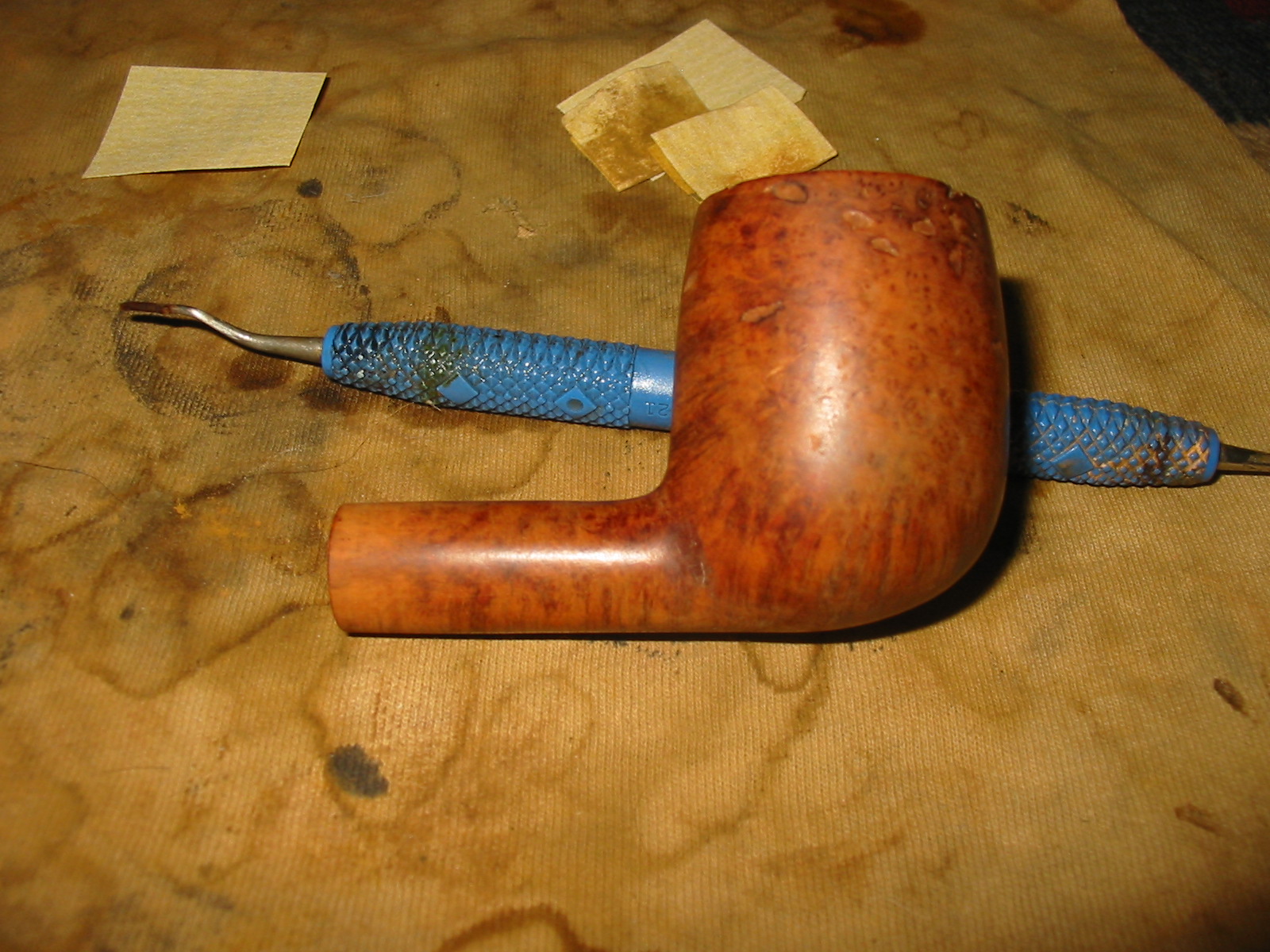
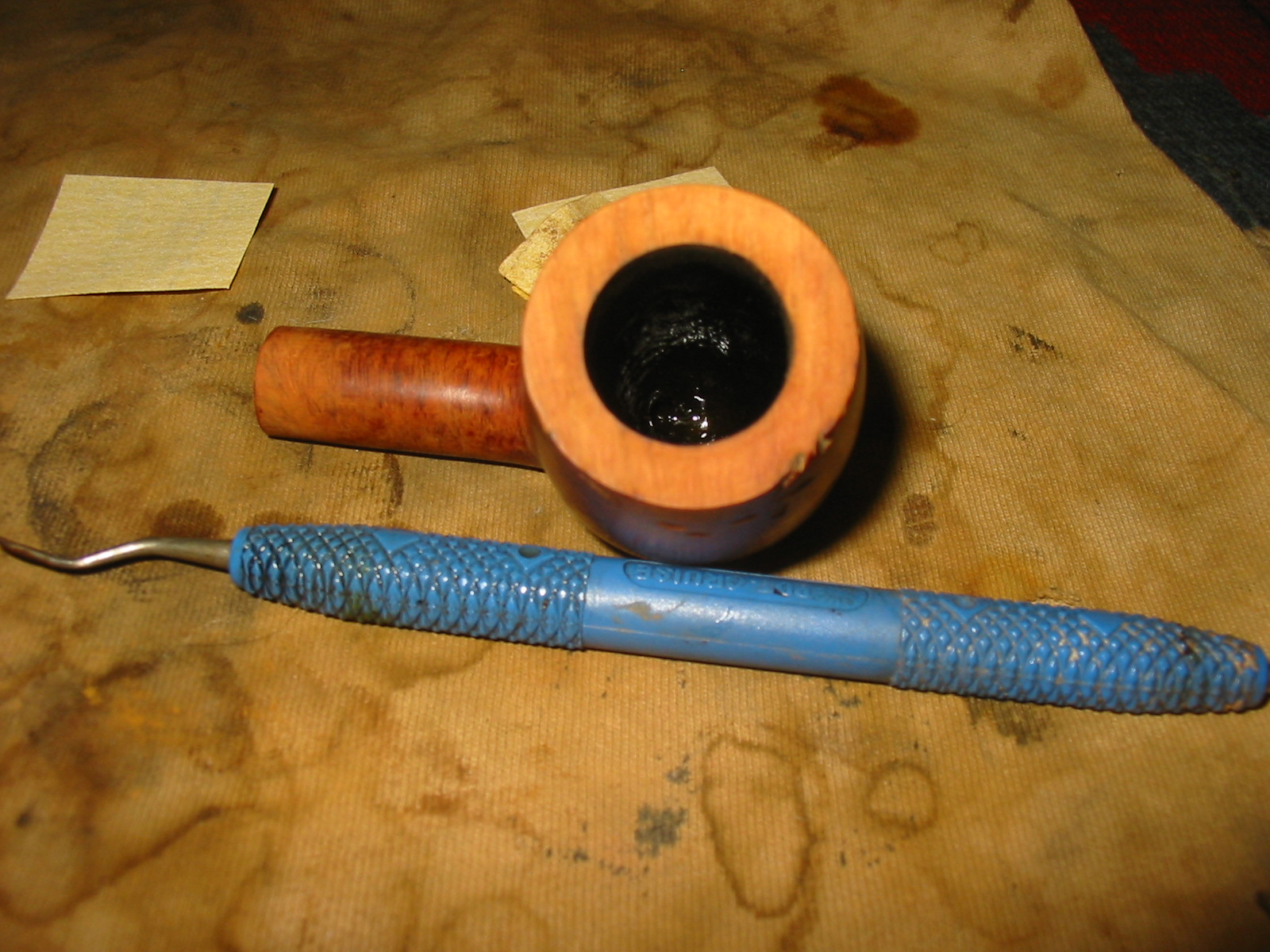
When I removed it from the bath I picked out the softened putty fills with a dental pick and lightly sanded the bowl and shank with a fine grit sanding sponge.
IMG_3318

IMG_3319

IMG_3320

IMG_3321

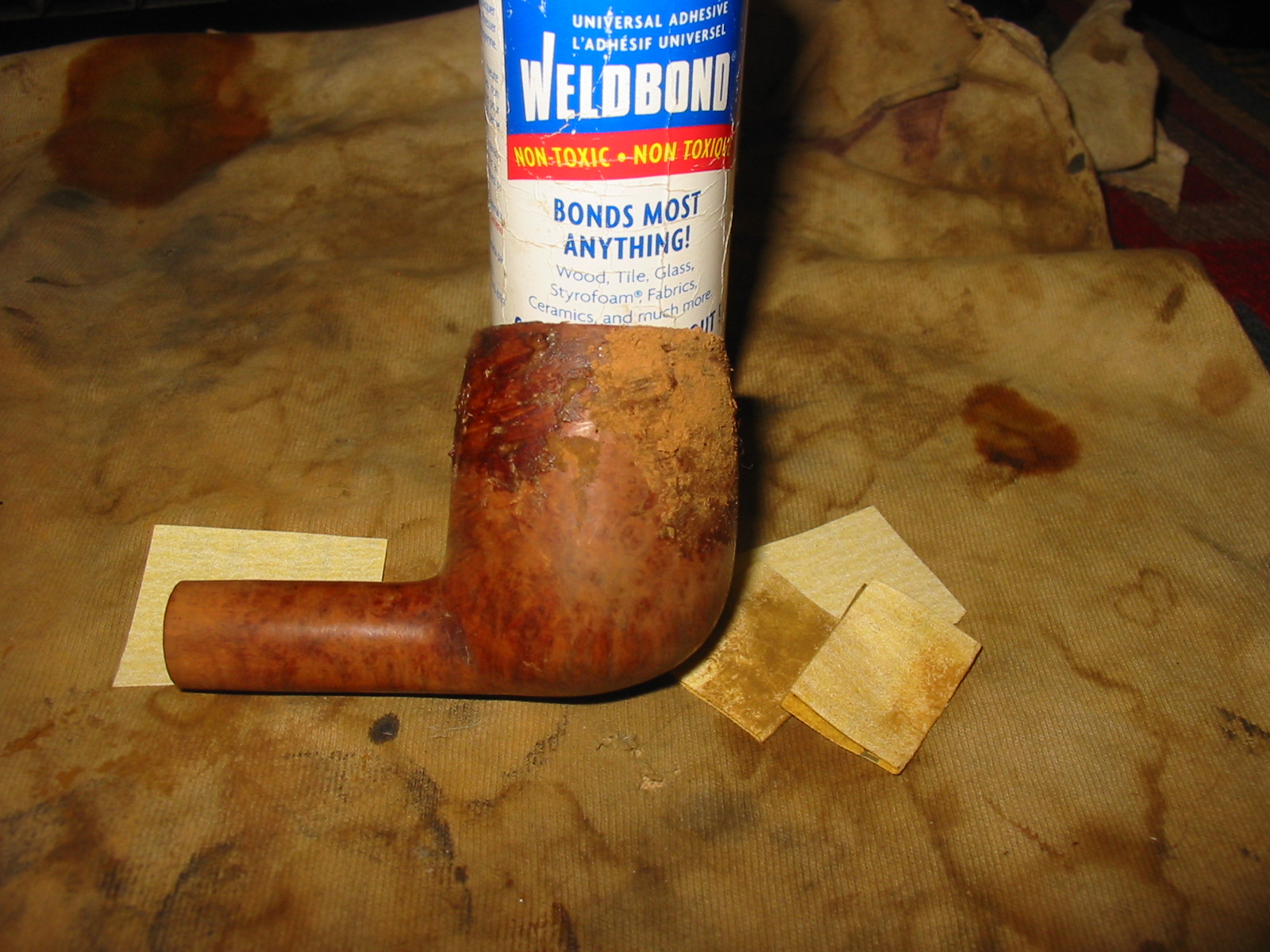
I am continuing to experiment with wood glue and briar dust combined to replace the fills. I am finding that the mixture gives virtually the same darkening of the fill as the mixture of briar dust and superglue so I am not convinced. The drawback to using the wood glue is the slow drying time. That probably is not an issue for some of you but if the result is the same I will opt for the quick results of the superglue. I packed in the briar dust, dribbled the glue into the fills and then added more dust to the mixture. When it dried I sanded it with 220 grit sandpaper to remove the buildup and smooth out the surface of the bowl. I then sanded the bowl with a fine grit sanding block to remove the scratches.
IMG_3322

IMG_3323

IMG_3324

IMG_3325

IMG_3326

IMG_3327

IMG_3328

IMG_3329

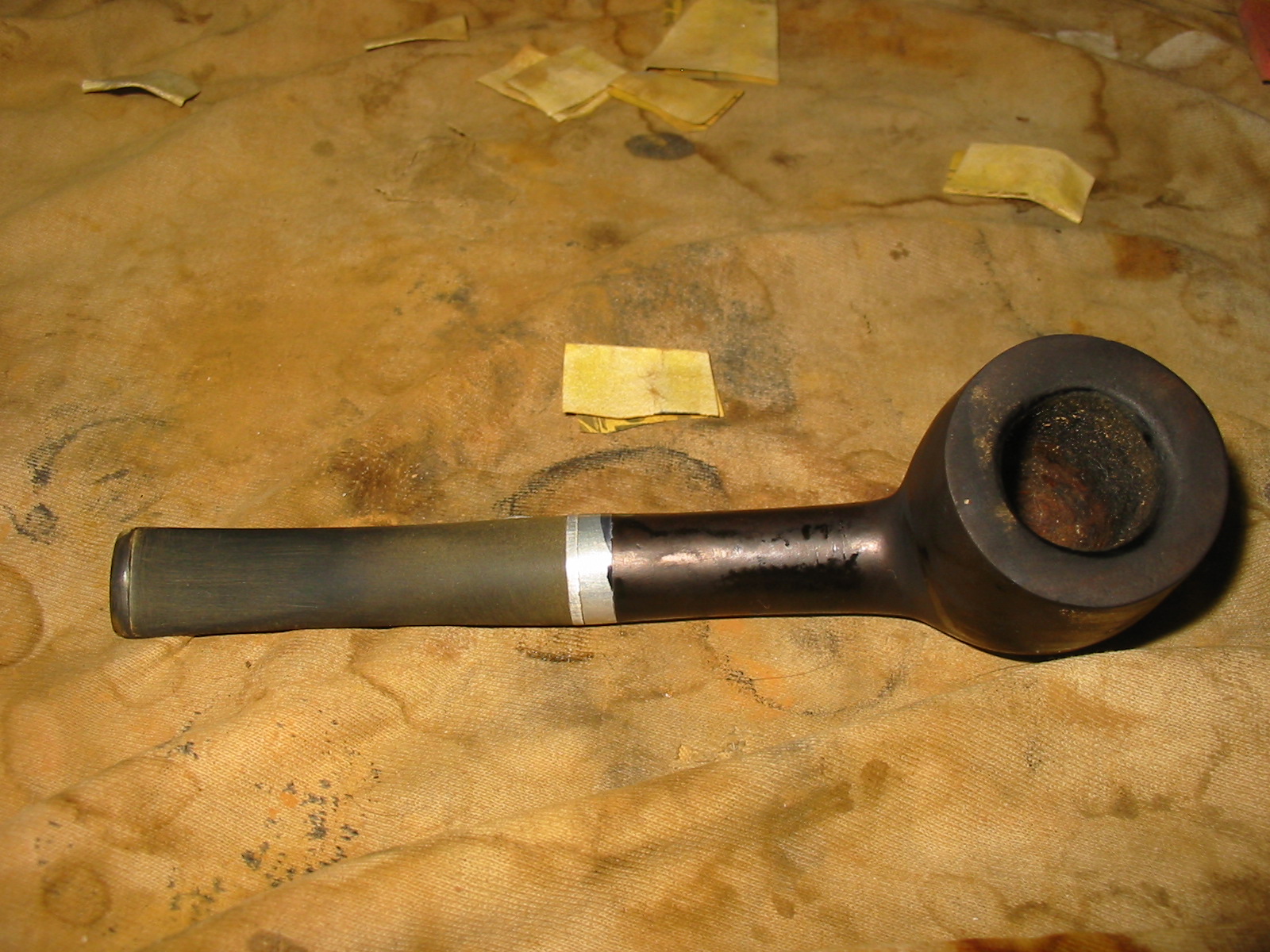
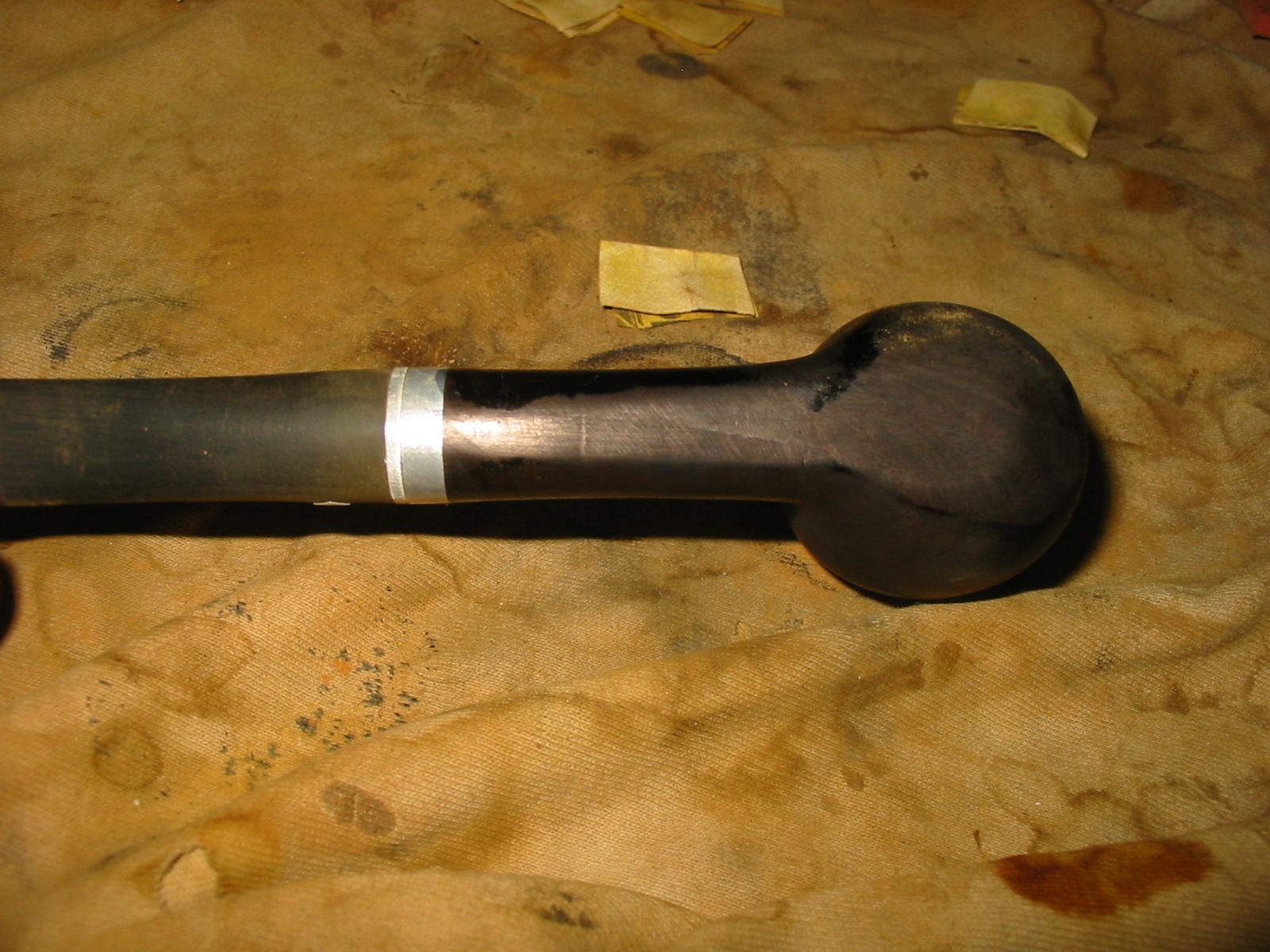
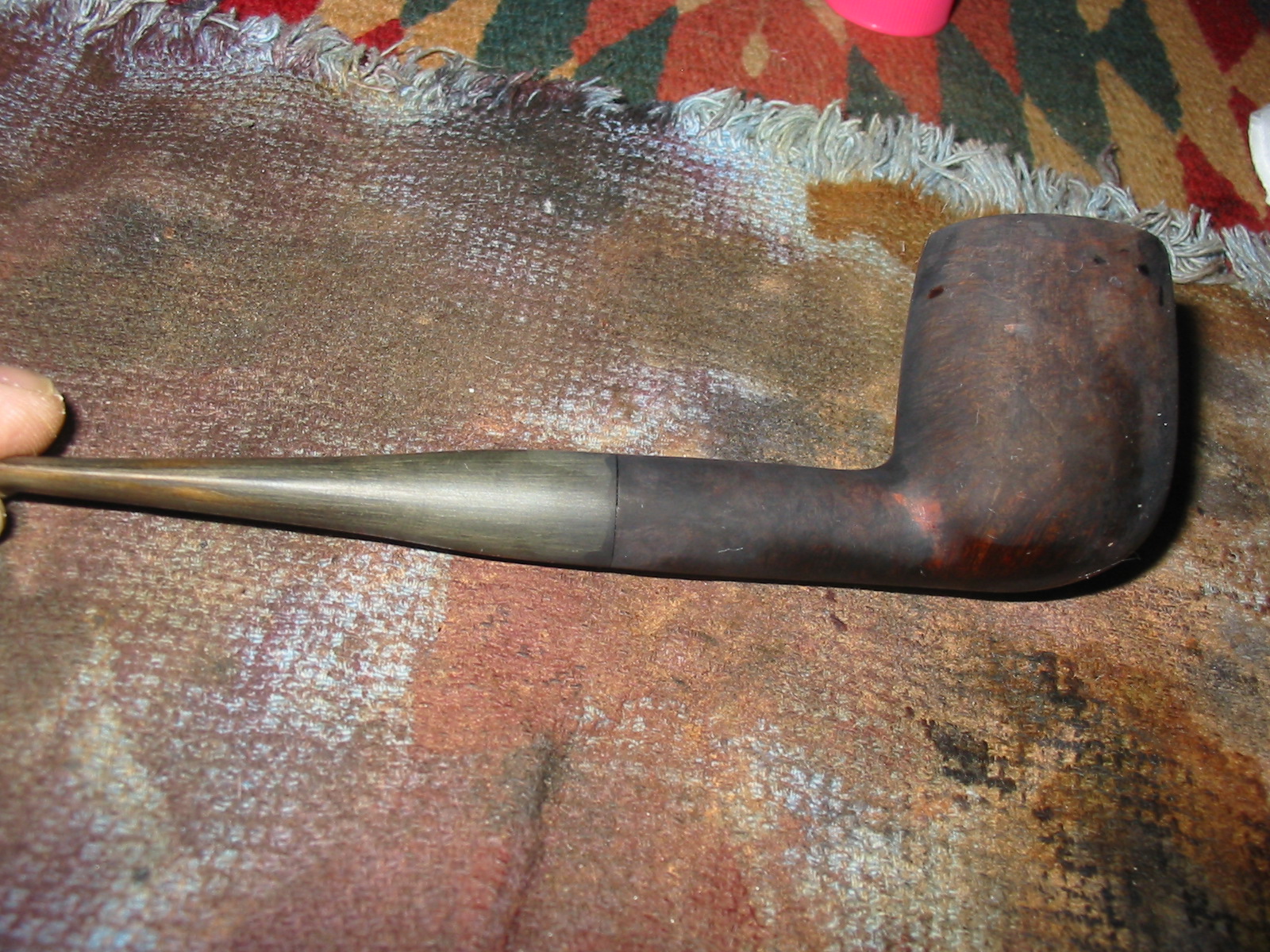
I am also continuing to experiment with the contrast staining process so I used it again on this bowl. I wanted to highlight the beautiful birdseye grain and cross grain on the bowl and hide the repaired fills as much as possible. I used a black aniline stain for the first coat of stain. I applied it and flamed it and repeated the process until I had good coverage on the bowl.
IMG_3330

IMG_3331

IMG_3332

I wiped down the bowl with Everclear on a cotton pad to remove the heavy black stain from the surface of the bowl while leaving it deep in the grain. I notice in the process that the stain did not soak into the areas around the fills where there was remnant of wood glue on the surface of the briar. It left a shiny spot of unstained briar. To remedy that I would need to sand those areas of the bowl before applying the second coat of stain.
IMG_3333

IMG_3334

IMG_3335

IMG_3336

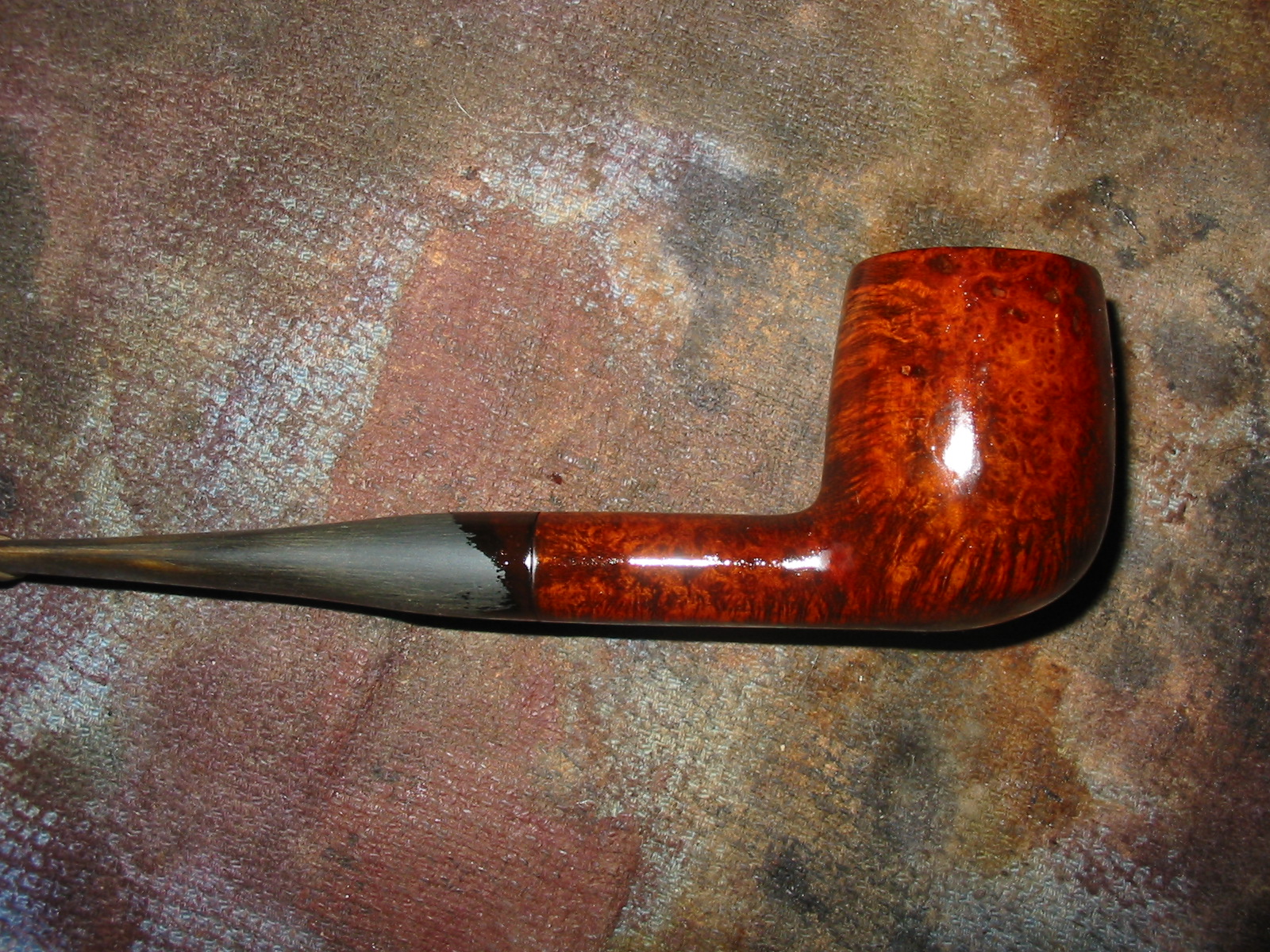
I sanded the bowl with a fine grit sanding sponge and also with micromesh sanding pads from 1500-2400 grit. I wet sanded with these grits as they work well to remove scratches in the surface and also to remove the remaining glue on the surface. Once I had the bowl sanded smooth I wiped it down with a damp alcohol pad to remove surface dust and then restained the bowl with an oxblood aniline stain. The next series of photos show the freshly stained bowl before I flamed it. The undercoat of black comes through and highlights the grain very nicely. Once the bowl was dry I buffed it lightly with White Diamond.
IMG_3337

IMG_3338

IMG_3339

IMG_3340

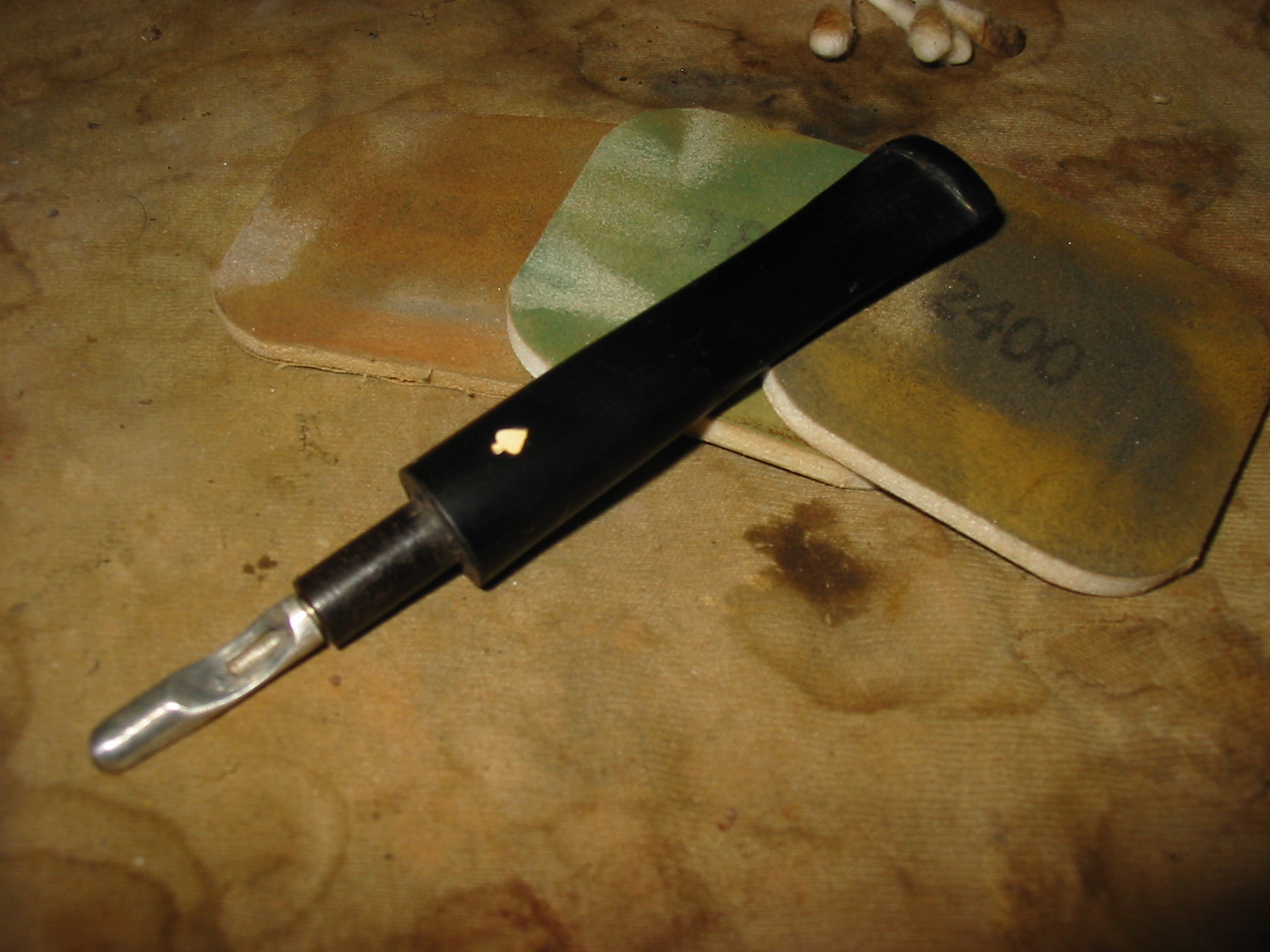
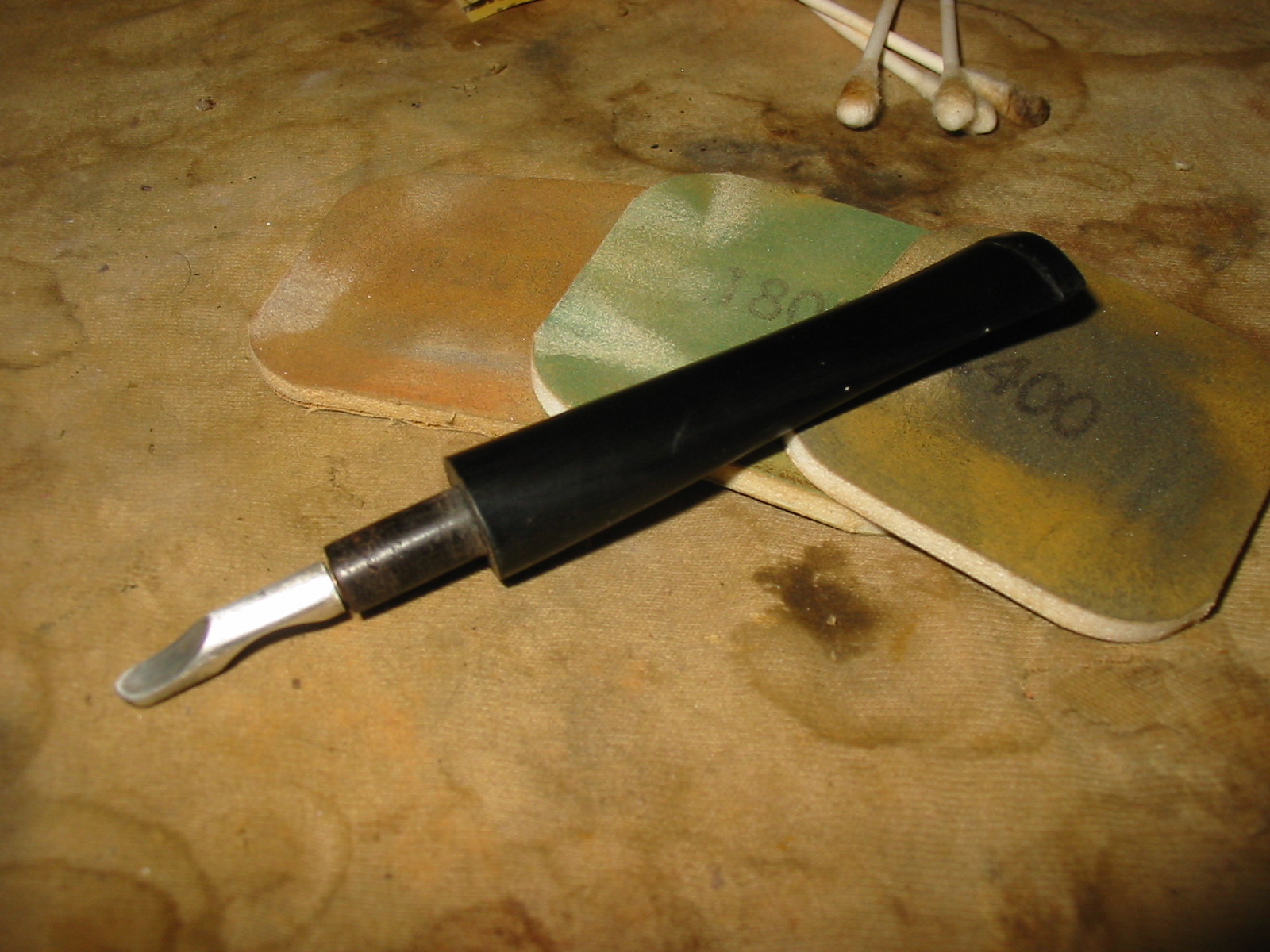
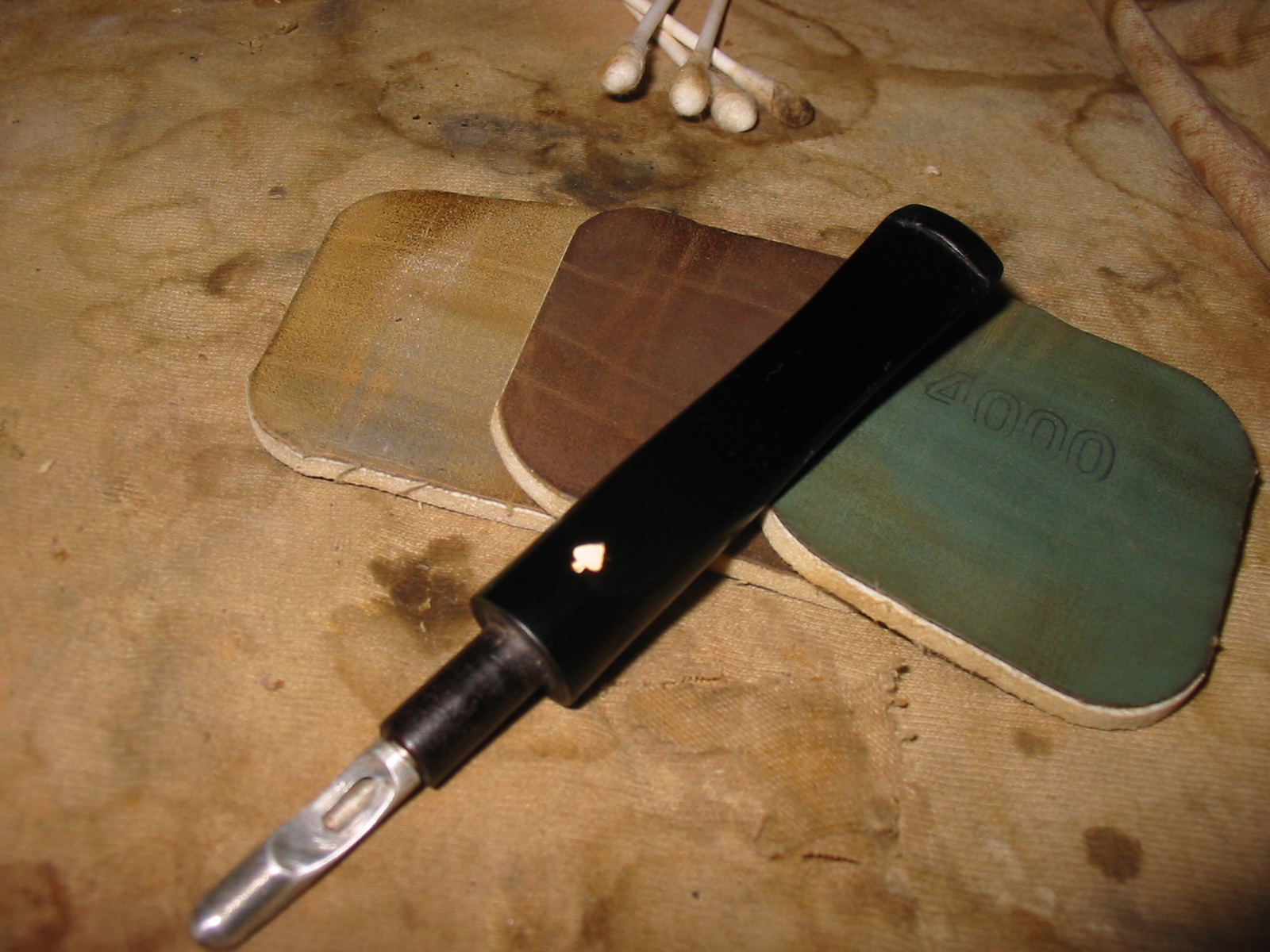
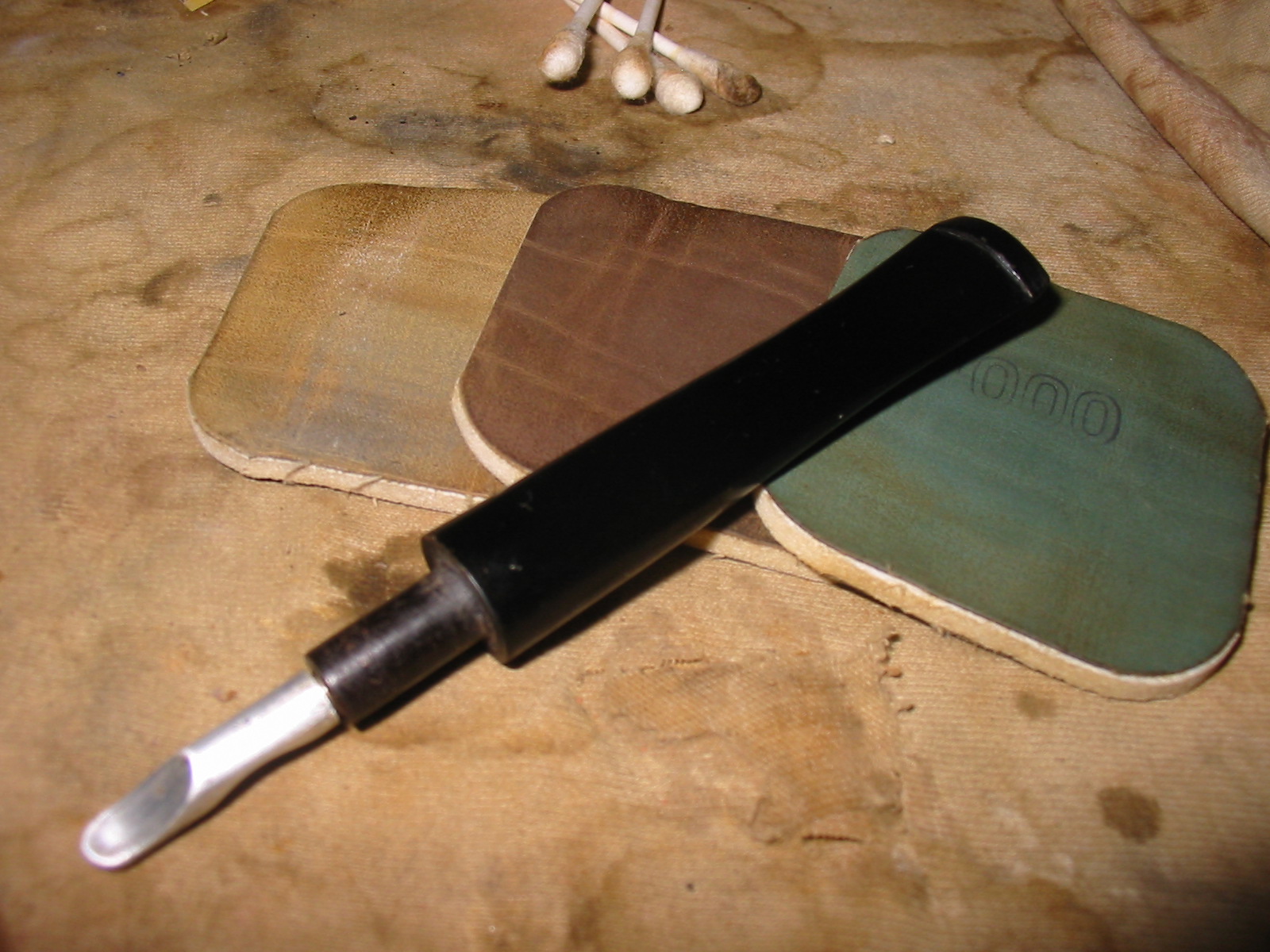
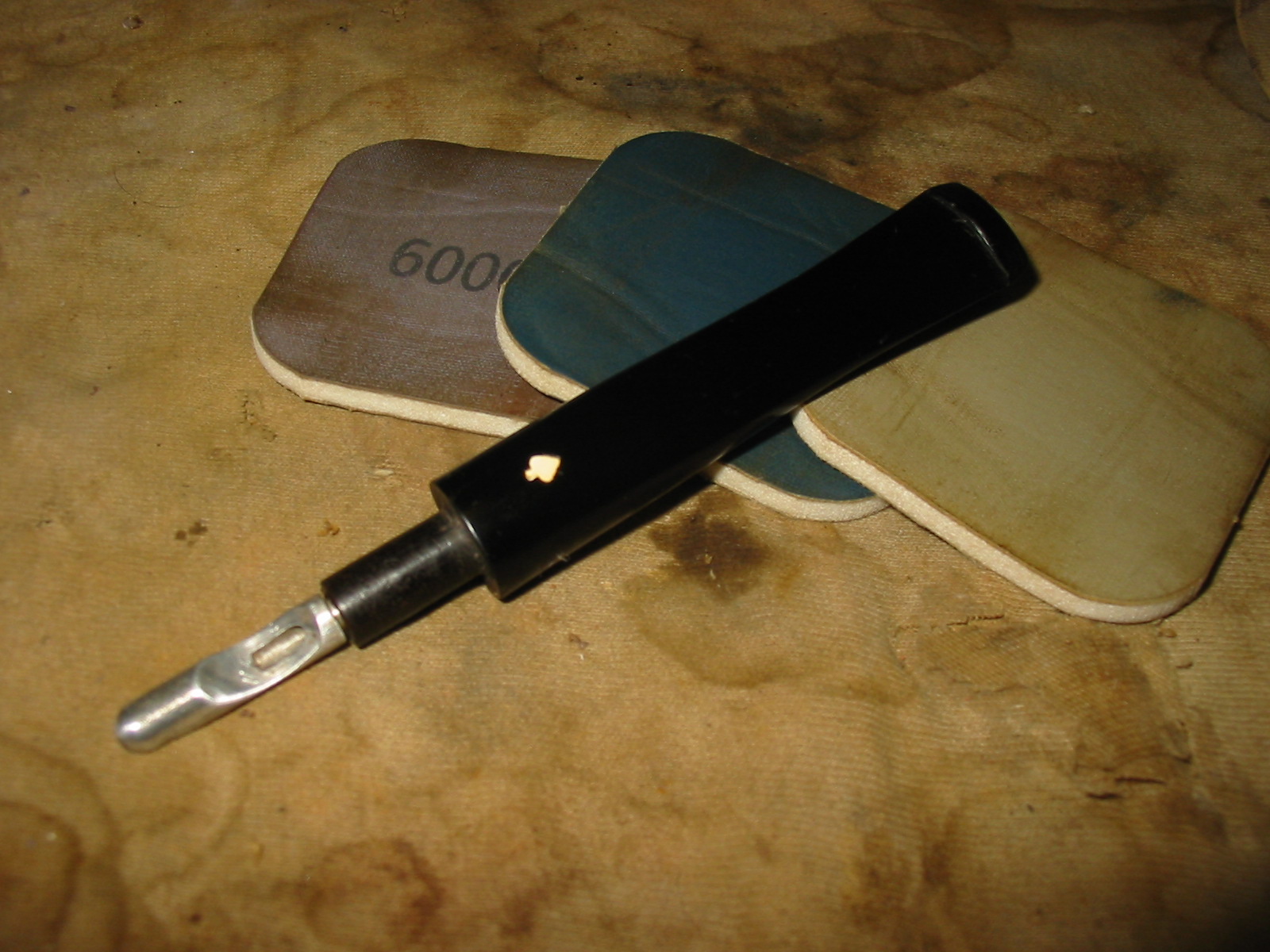
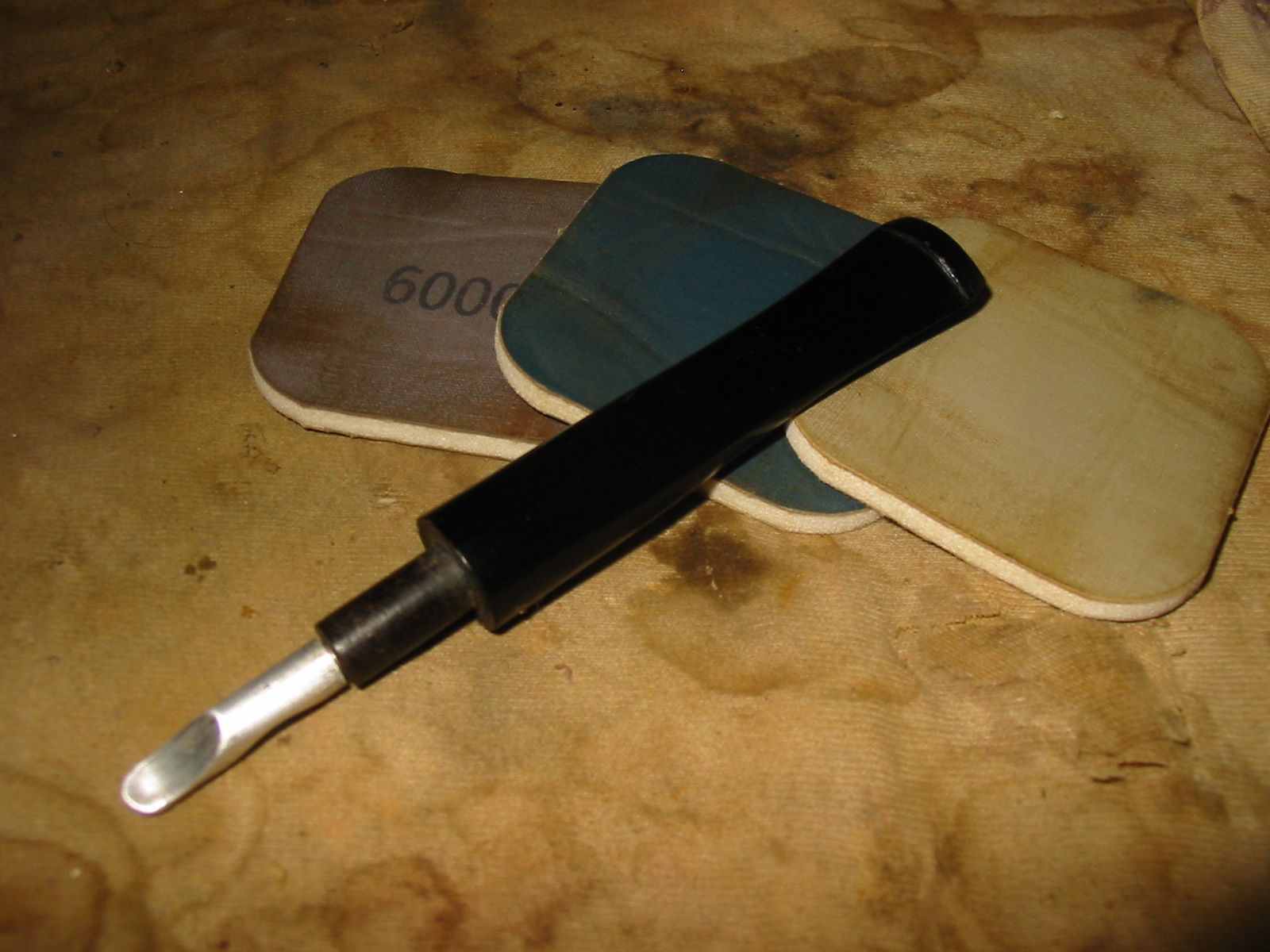
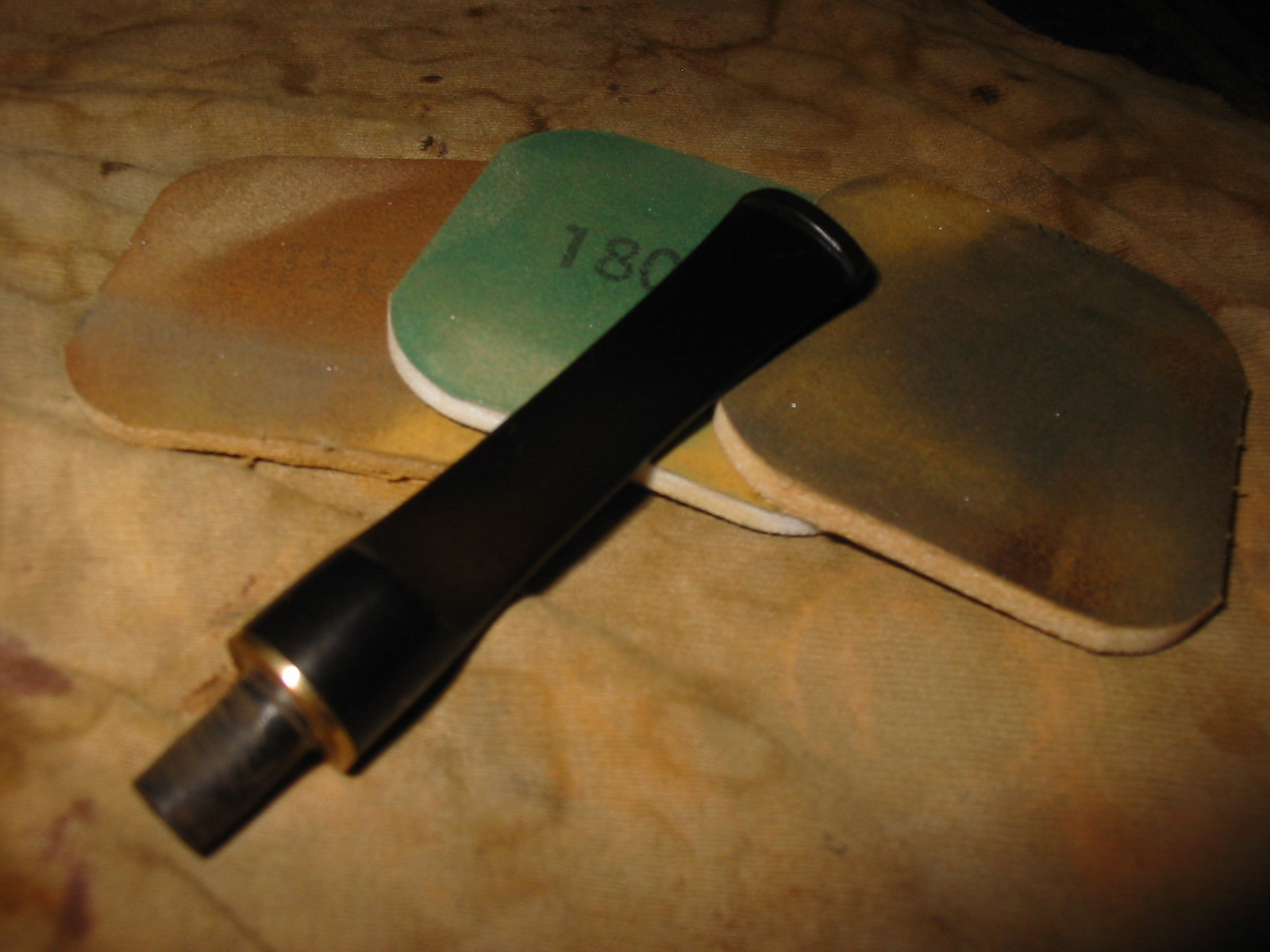
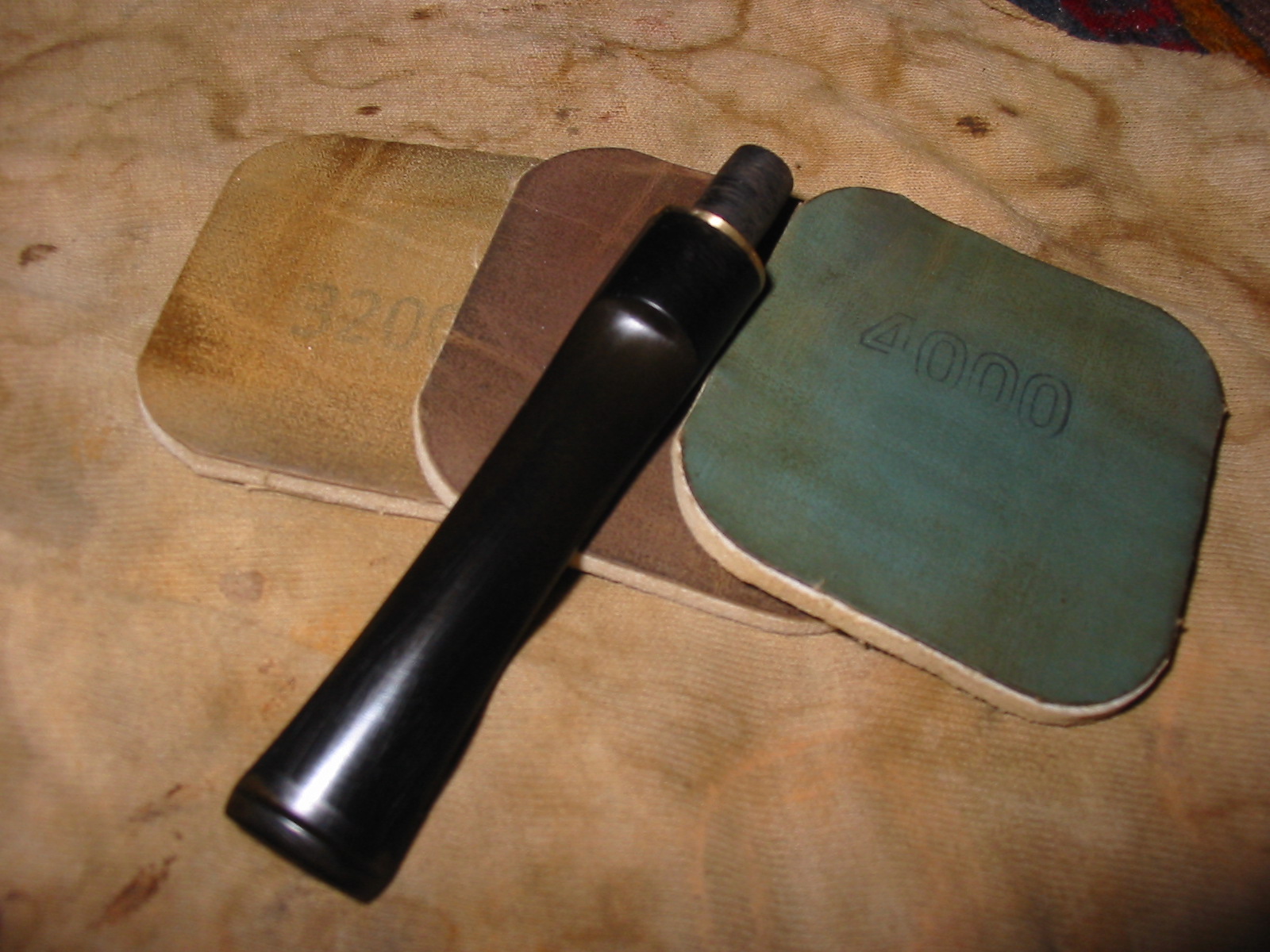
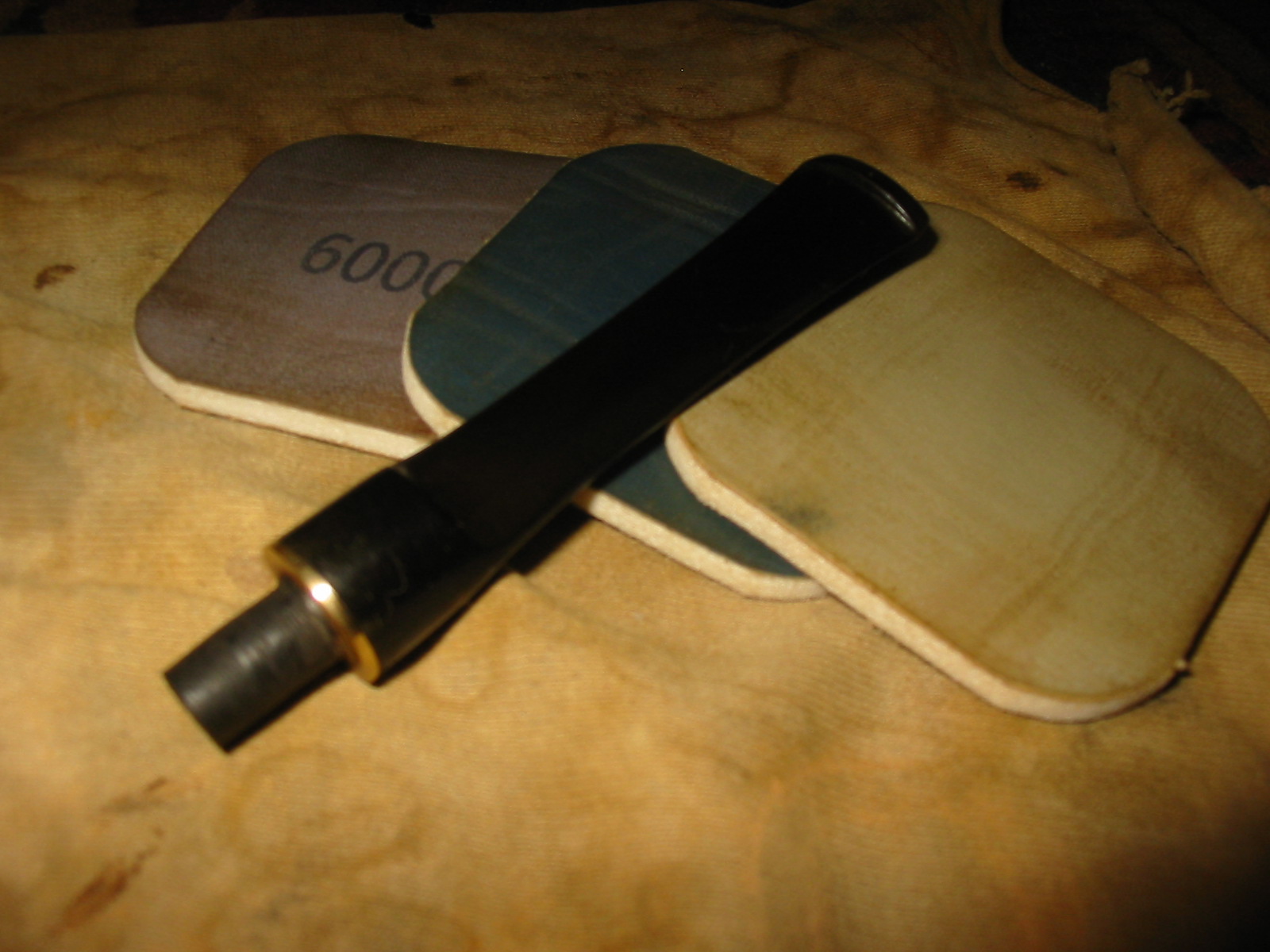
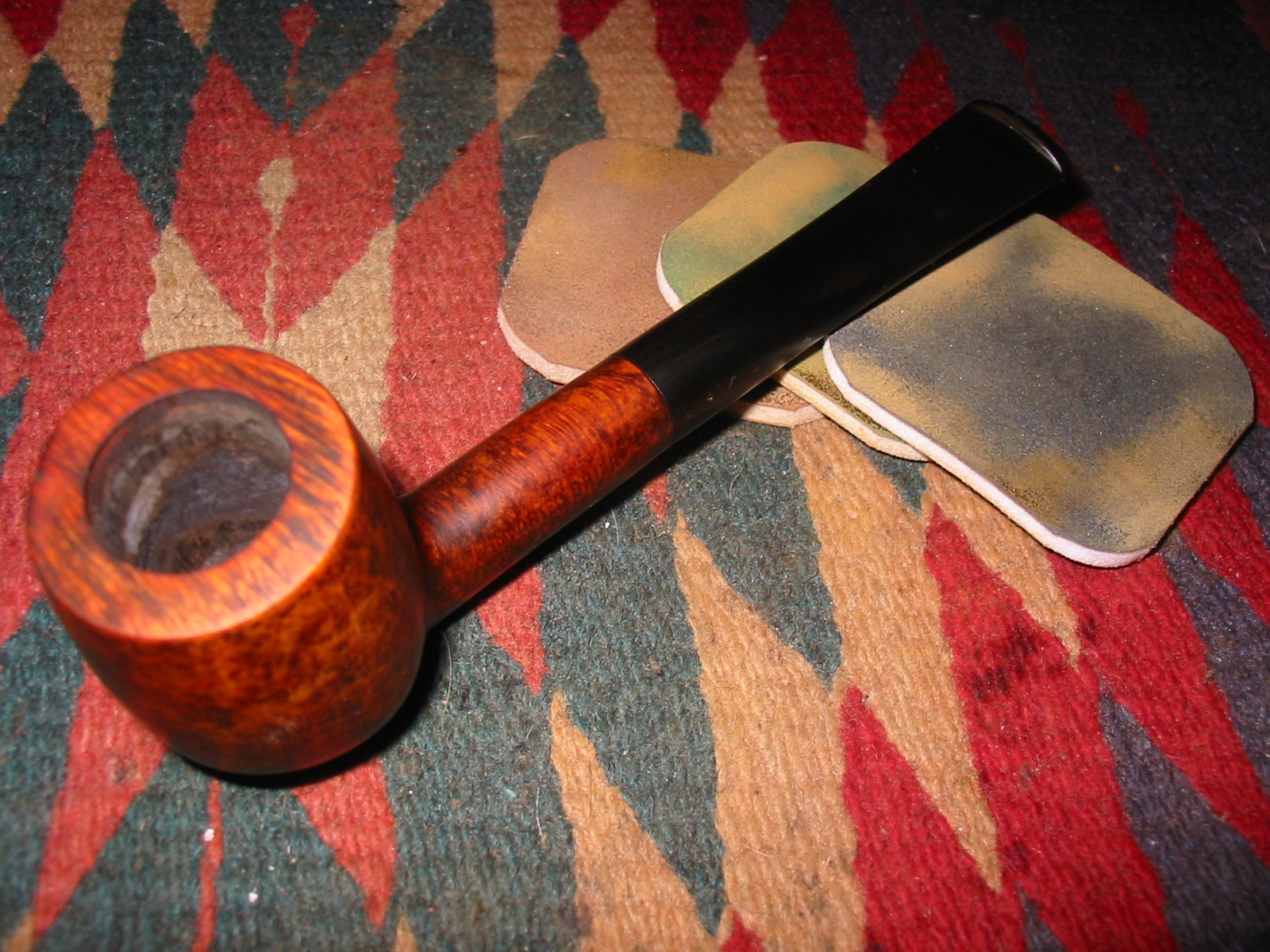
I sanded the bowl and stem with micromesh sanding pads to polish it further. I wet sanded with 1500-2400 grit and then dry sanded with 3200-12,000 grit pads. I find that the higher grit pads add a deeper level of shine with each successive grit. The next three photos show the stem and bowl after polishing with three grits of micromesh. The first photo shows 1500, 1800 and 2400 grit pads. The second photo shows 3200, 3600 and 4000 grit pads. The third photo shows 6000, 8000 and 12,000 grit pads.
IMG_3341

IMG_3342

IMG_3343

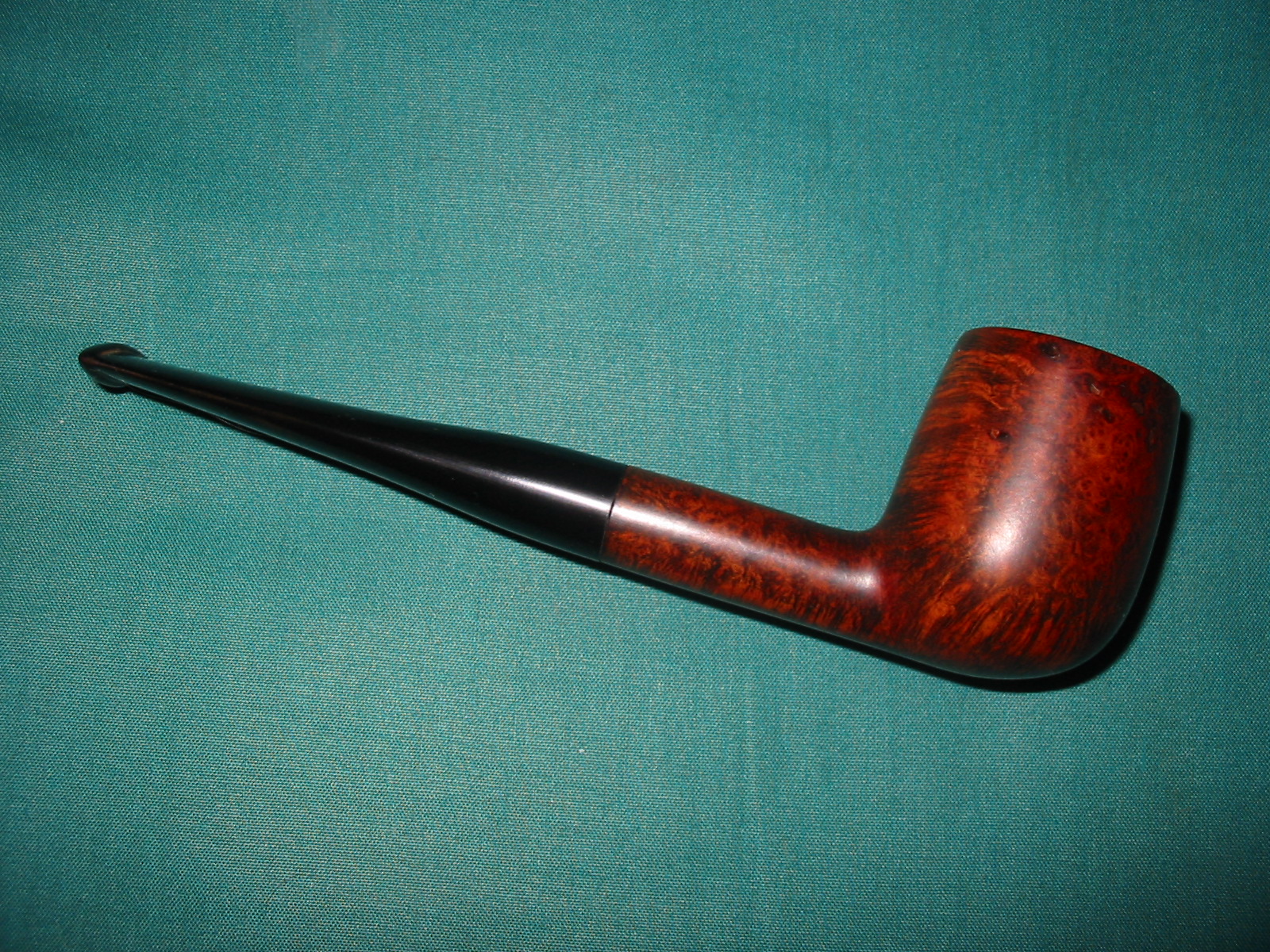
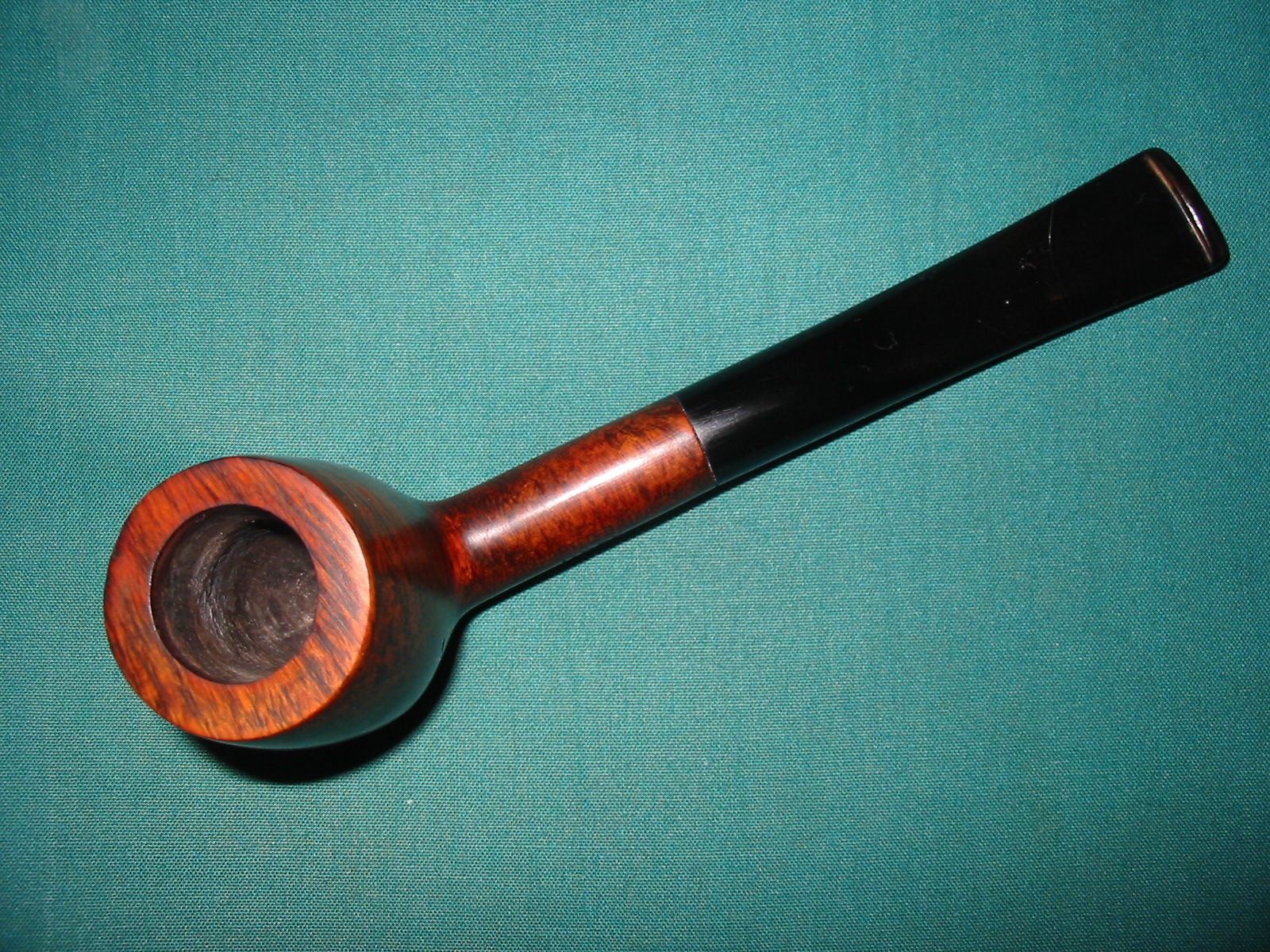
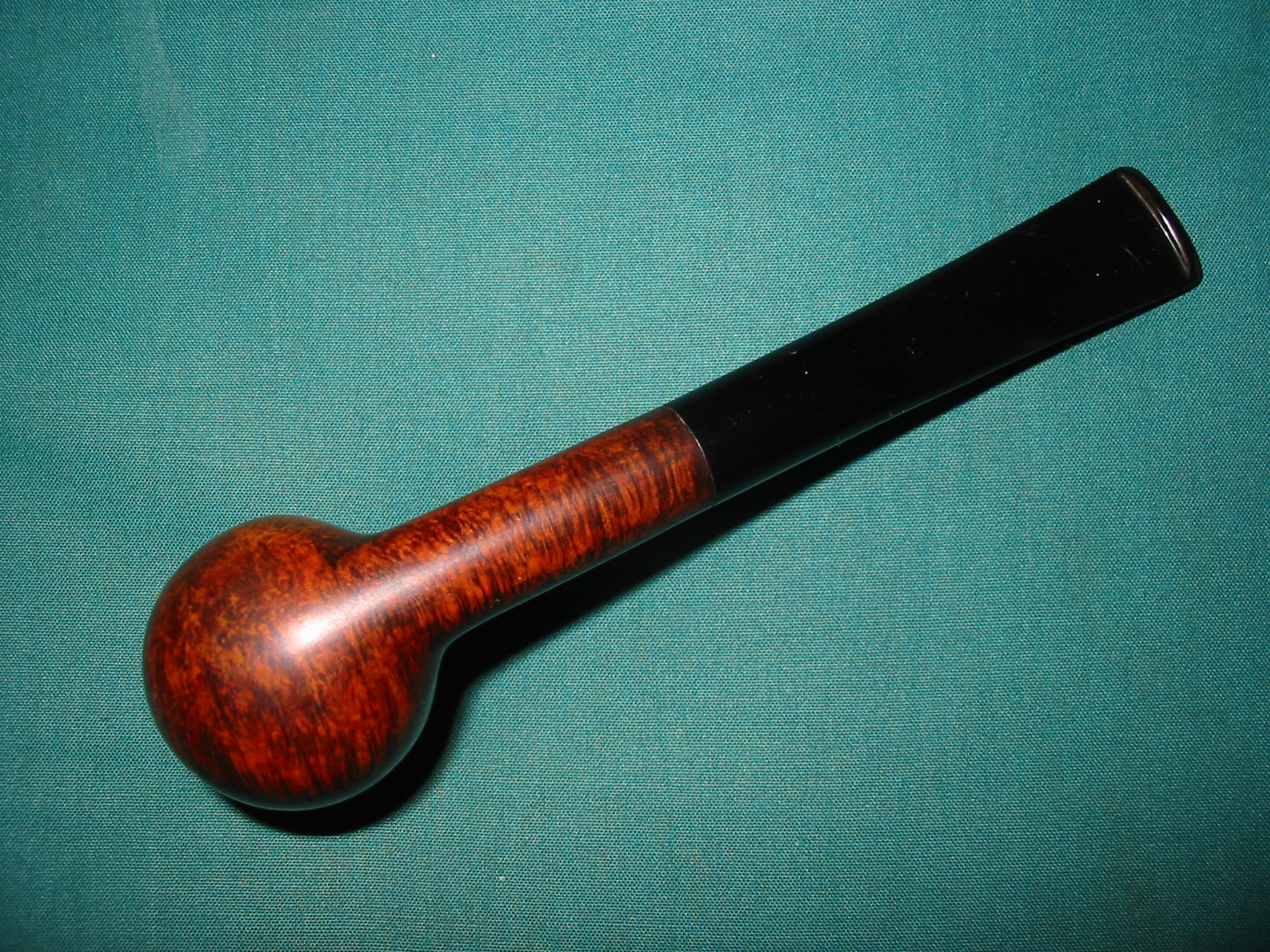
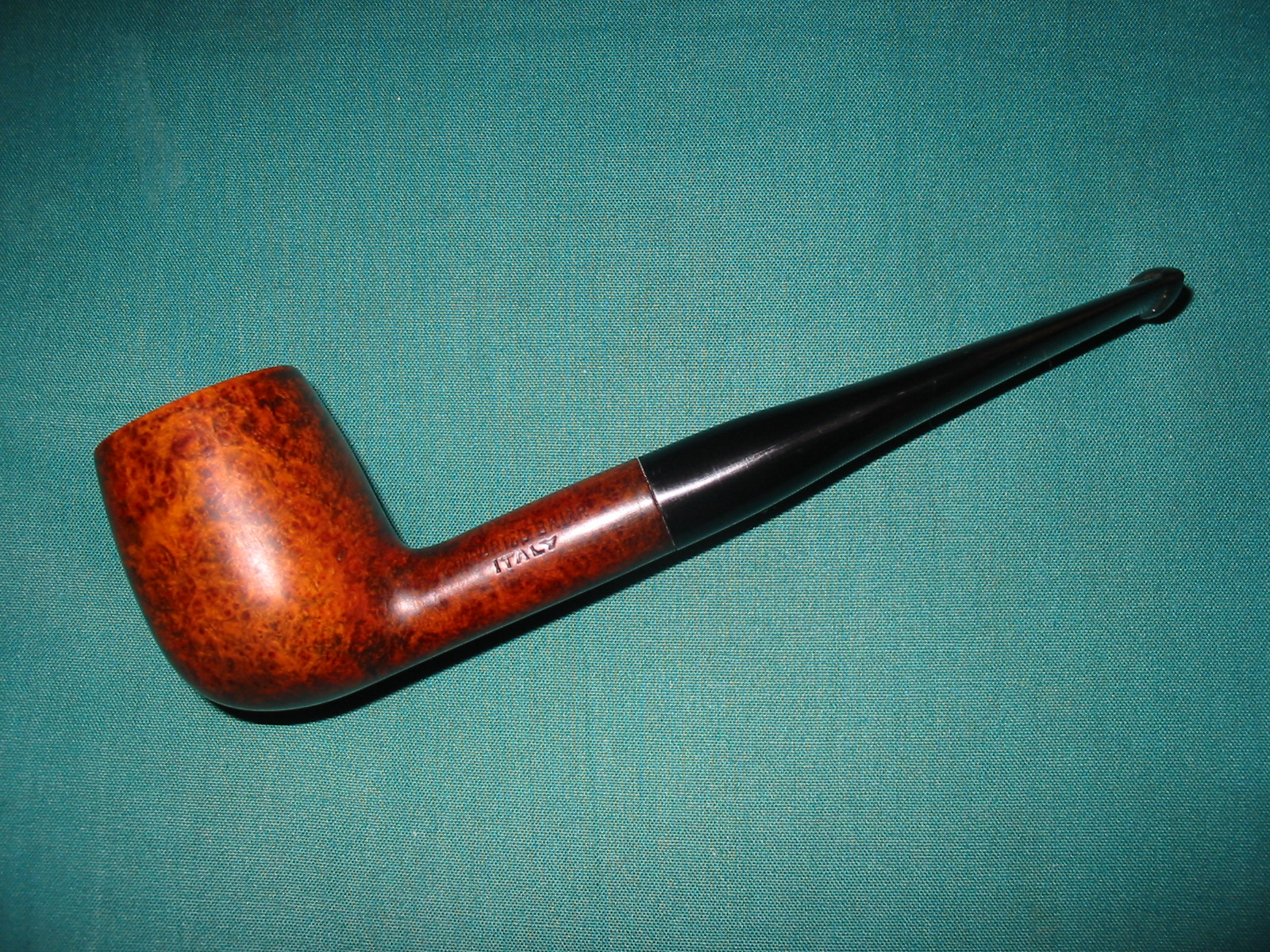
I rubbed the stem down with Obsidian Oil and when it was dry I buffed the stem and bowl with White Diamond. I gave the pipe multiple coats of carnauba wax to protect the finish and give it a shine. The contrast stain worked well with this pipe. The birdseye grain really pops and the cross grain is also highlighted. The black undercoat also minimizes the eyesore of the fills on the right side of the bowl and the small one on the left side has virtually disappeared. The final four photos below show the finished pipe. I am happy with the way it turned out – far better than I expected when I took it out of the box to refurbish.
IMG_3348

IMG_3349

IMG_3350

IMG_3351

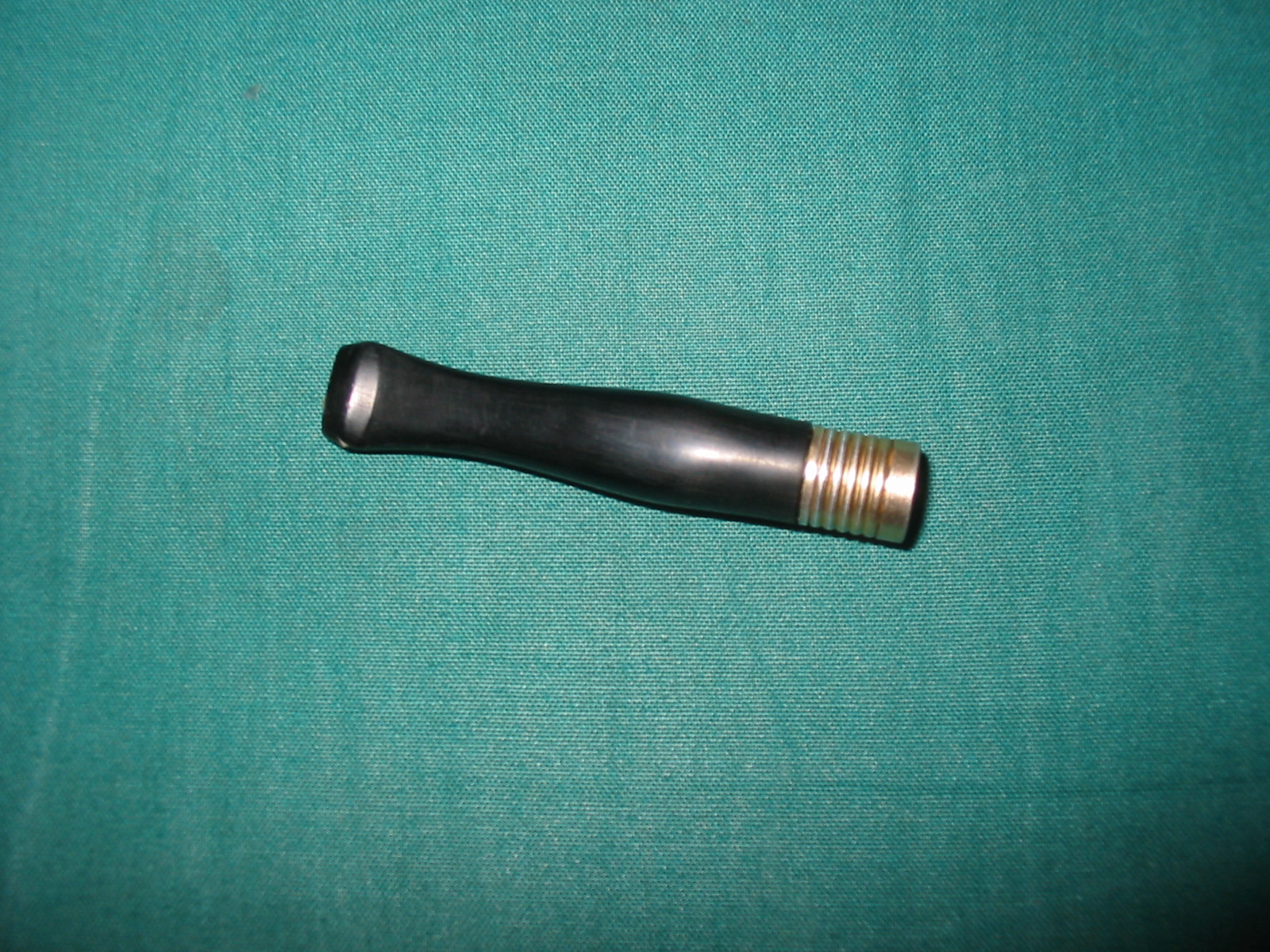
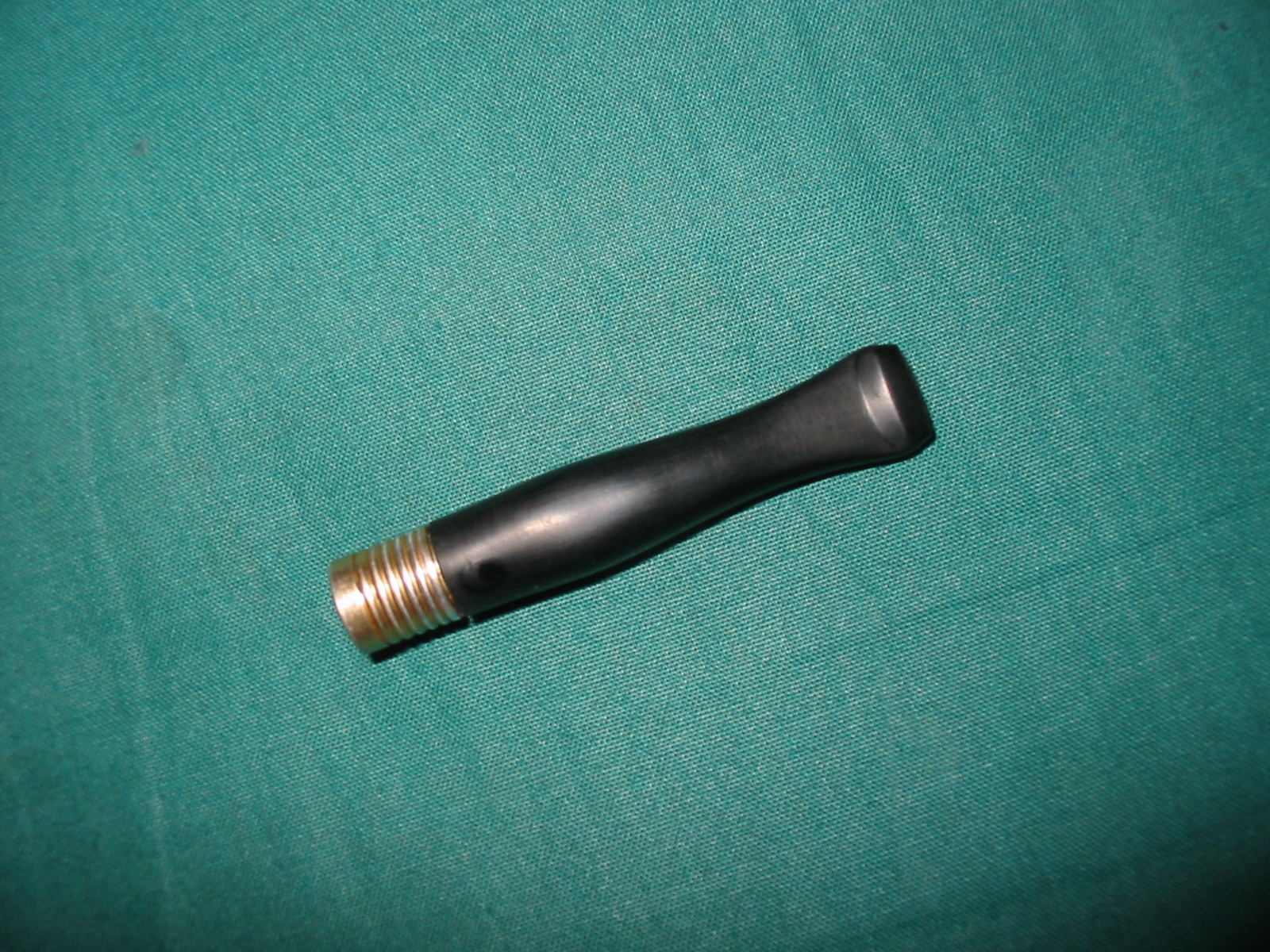
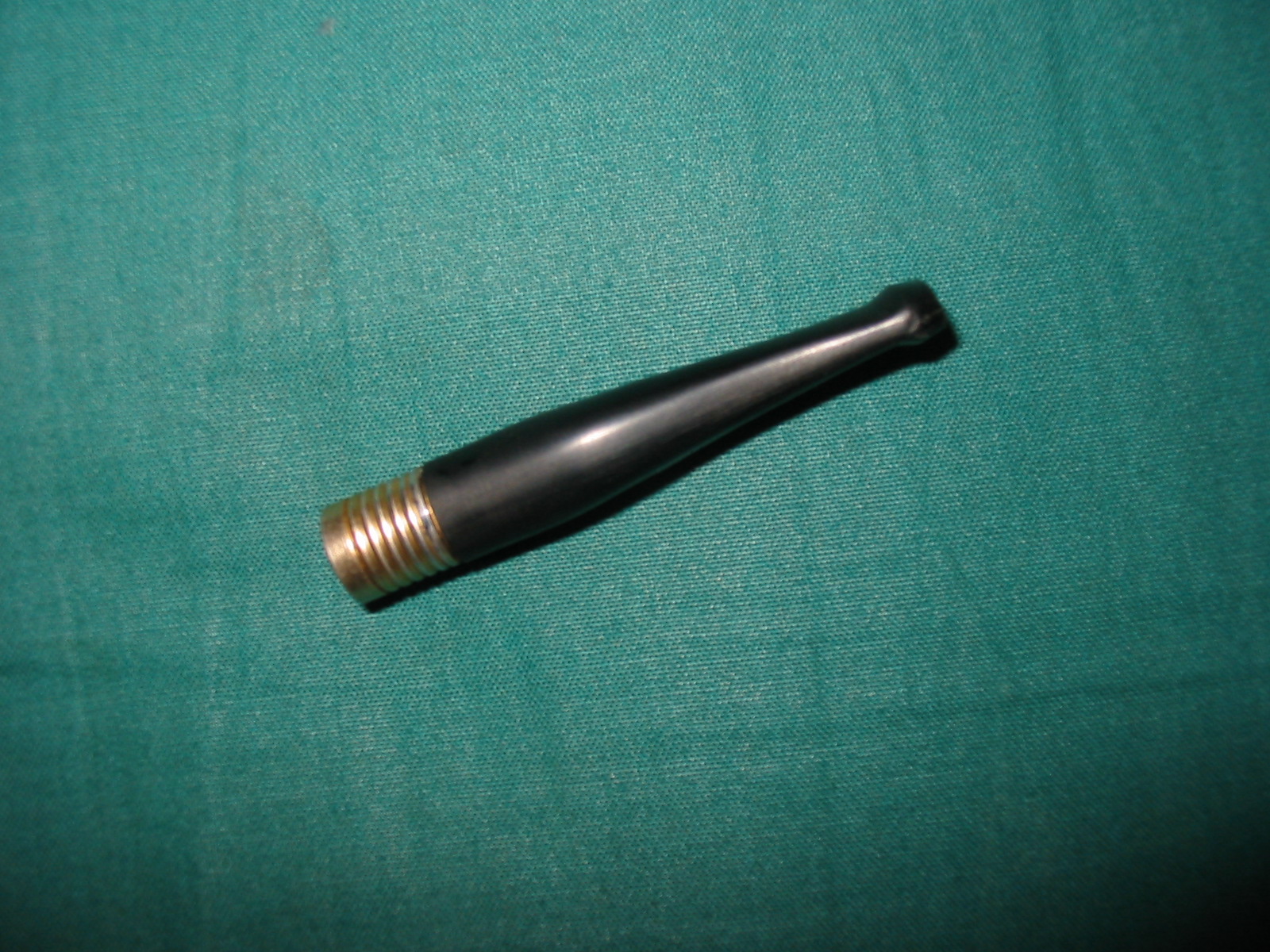
A Piece of Tobacciana – Restoring an Old Nylon Cigarette Filter/Holder


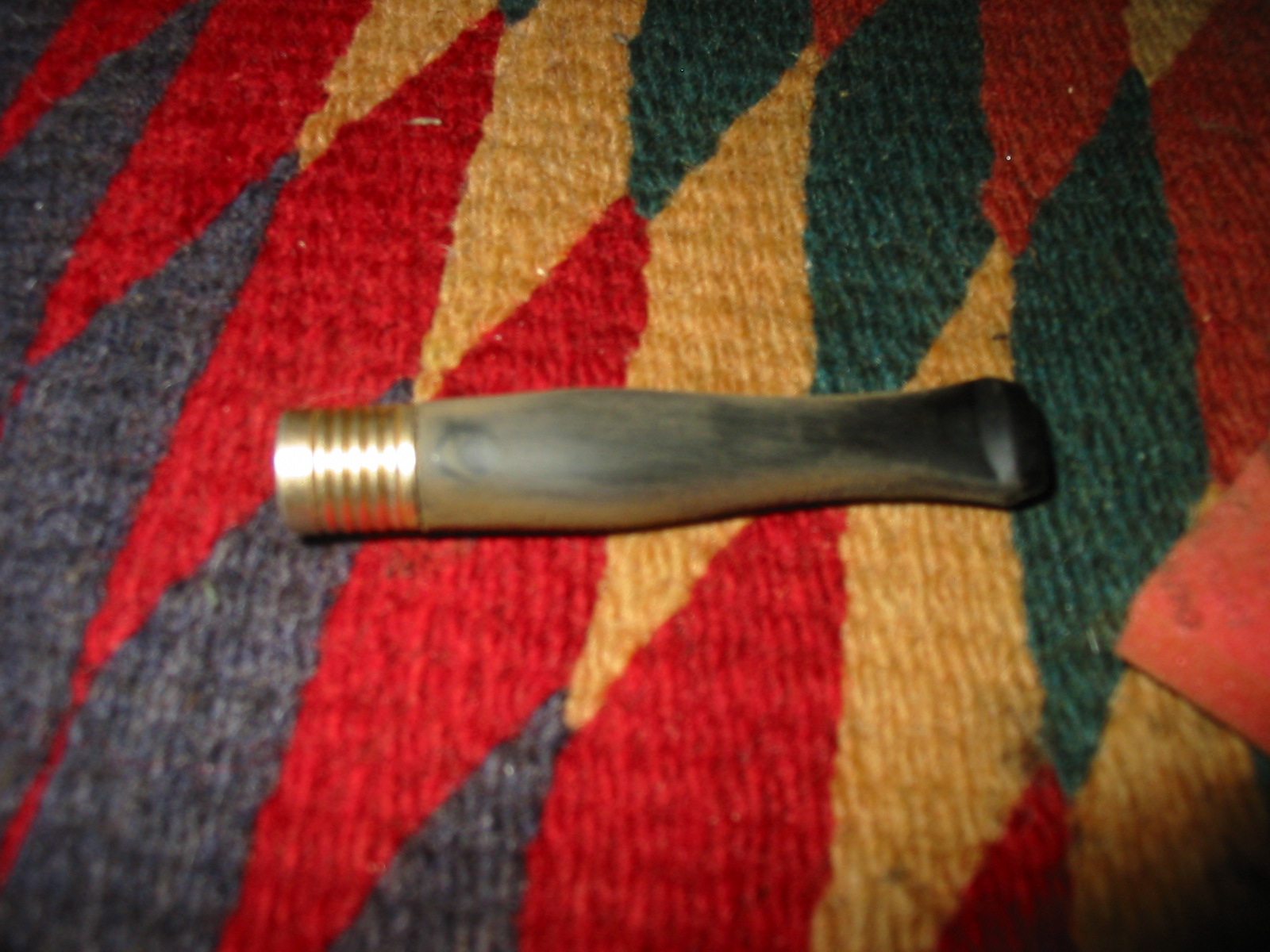
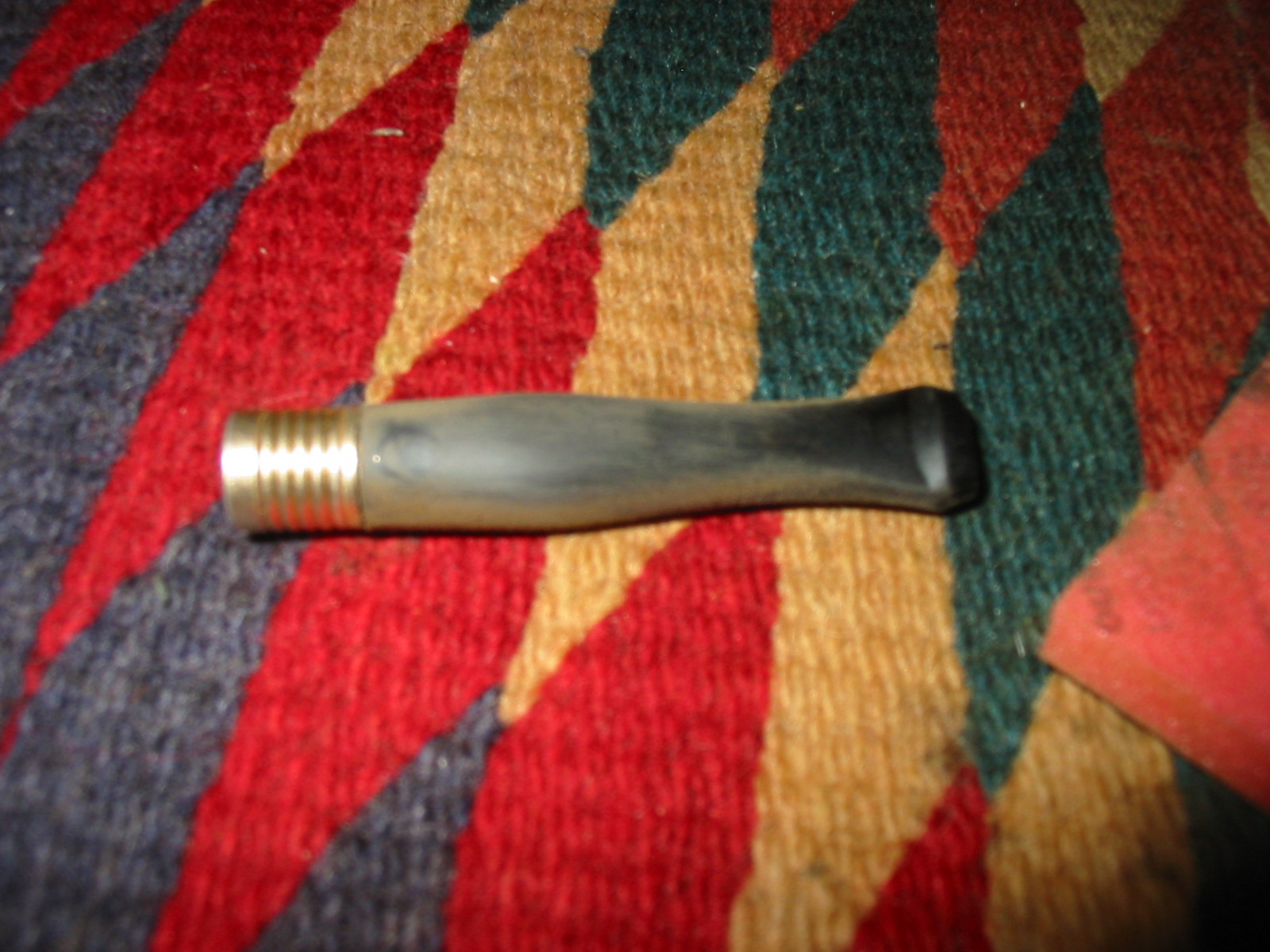
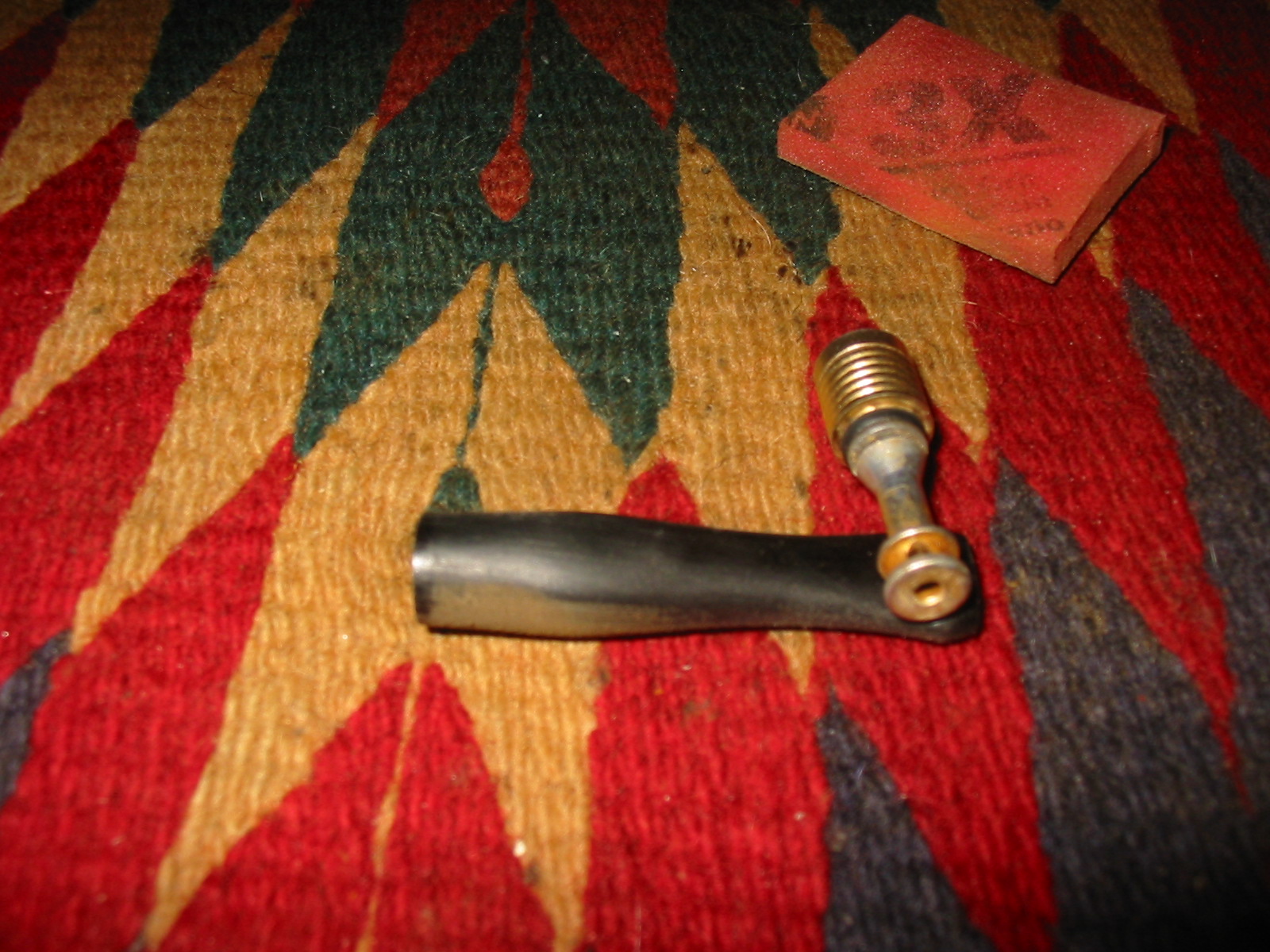
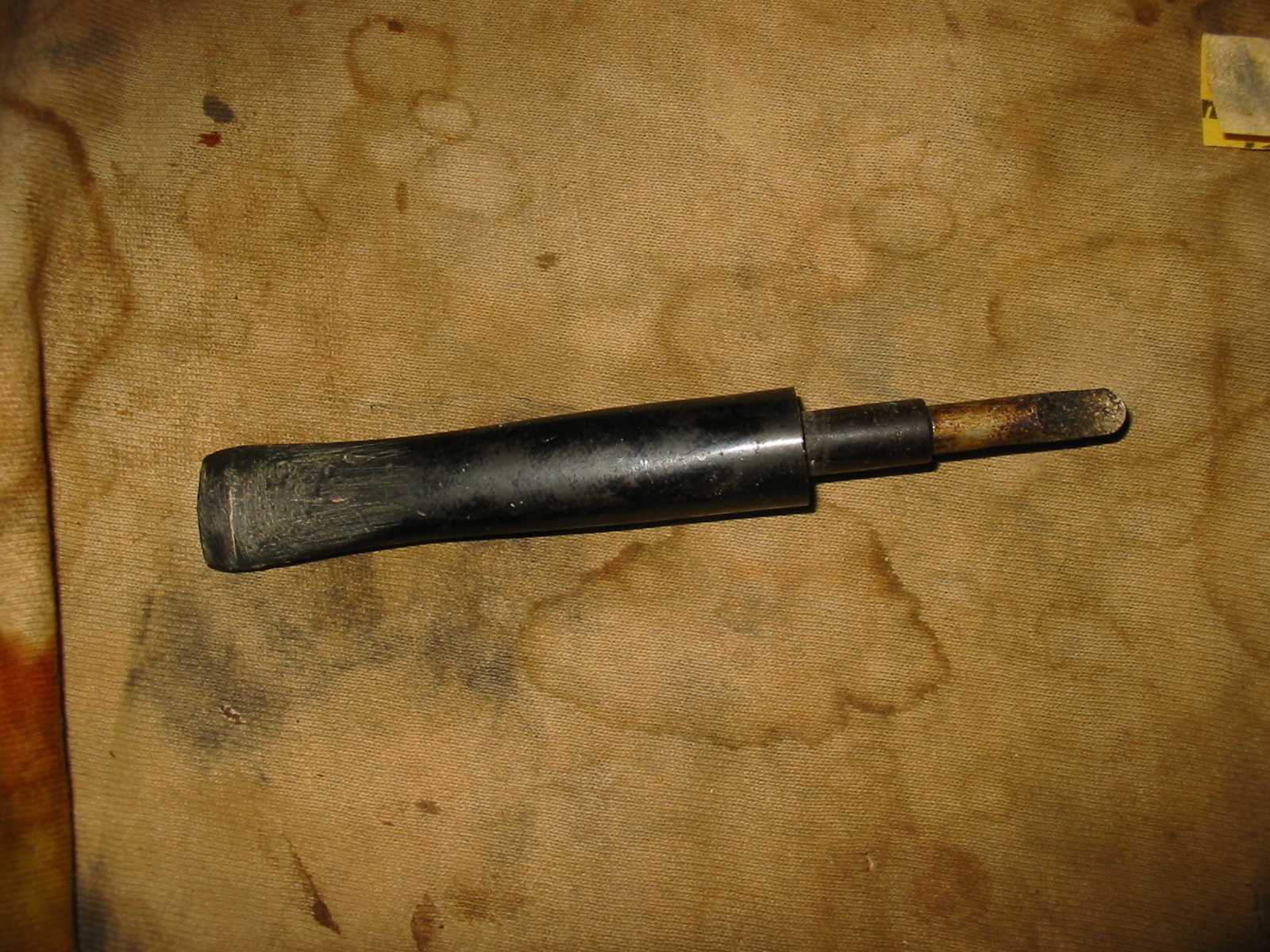
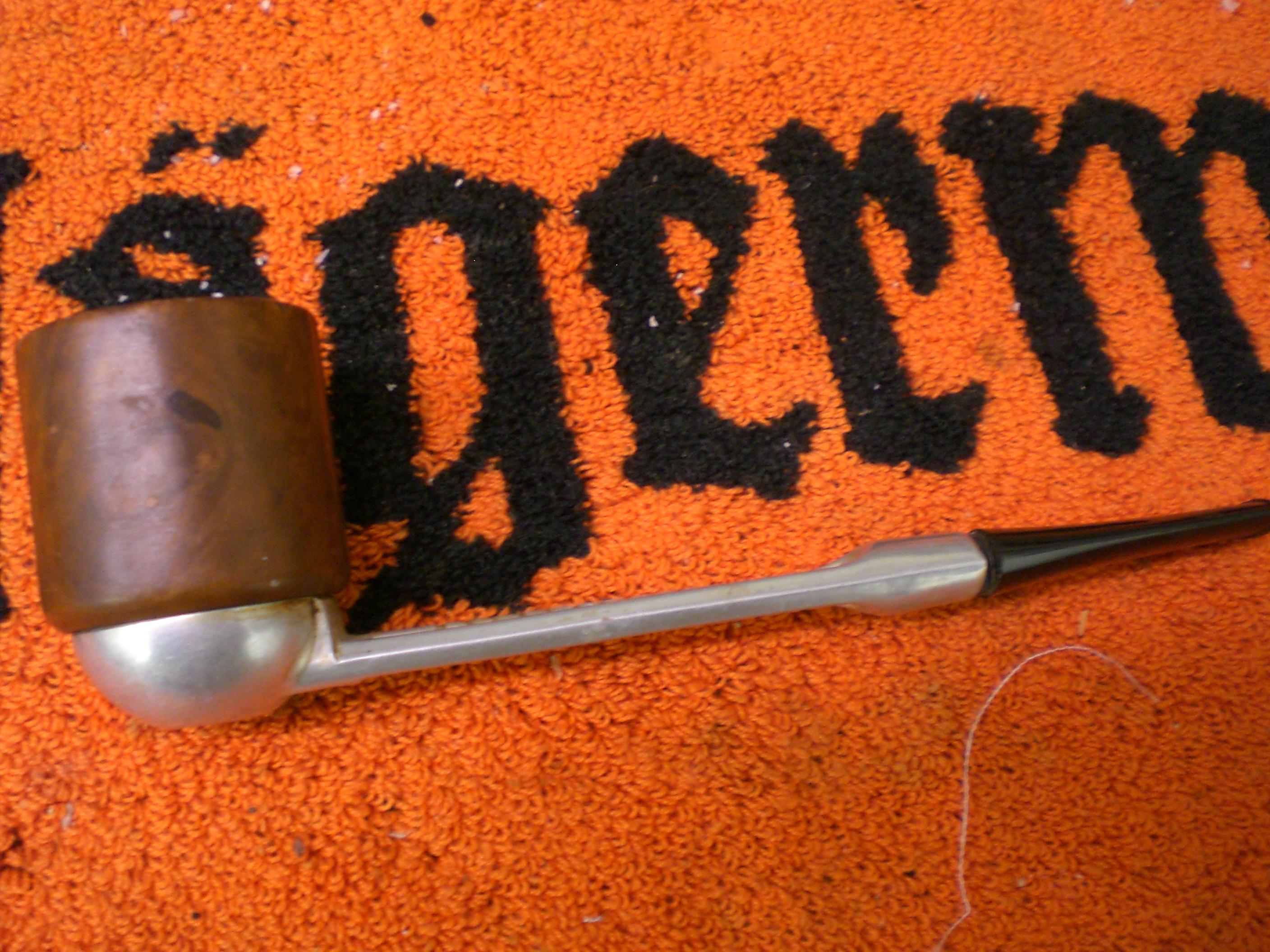
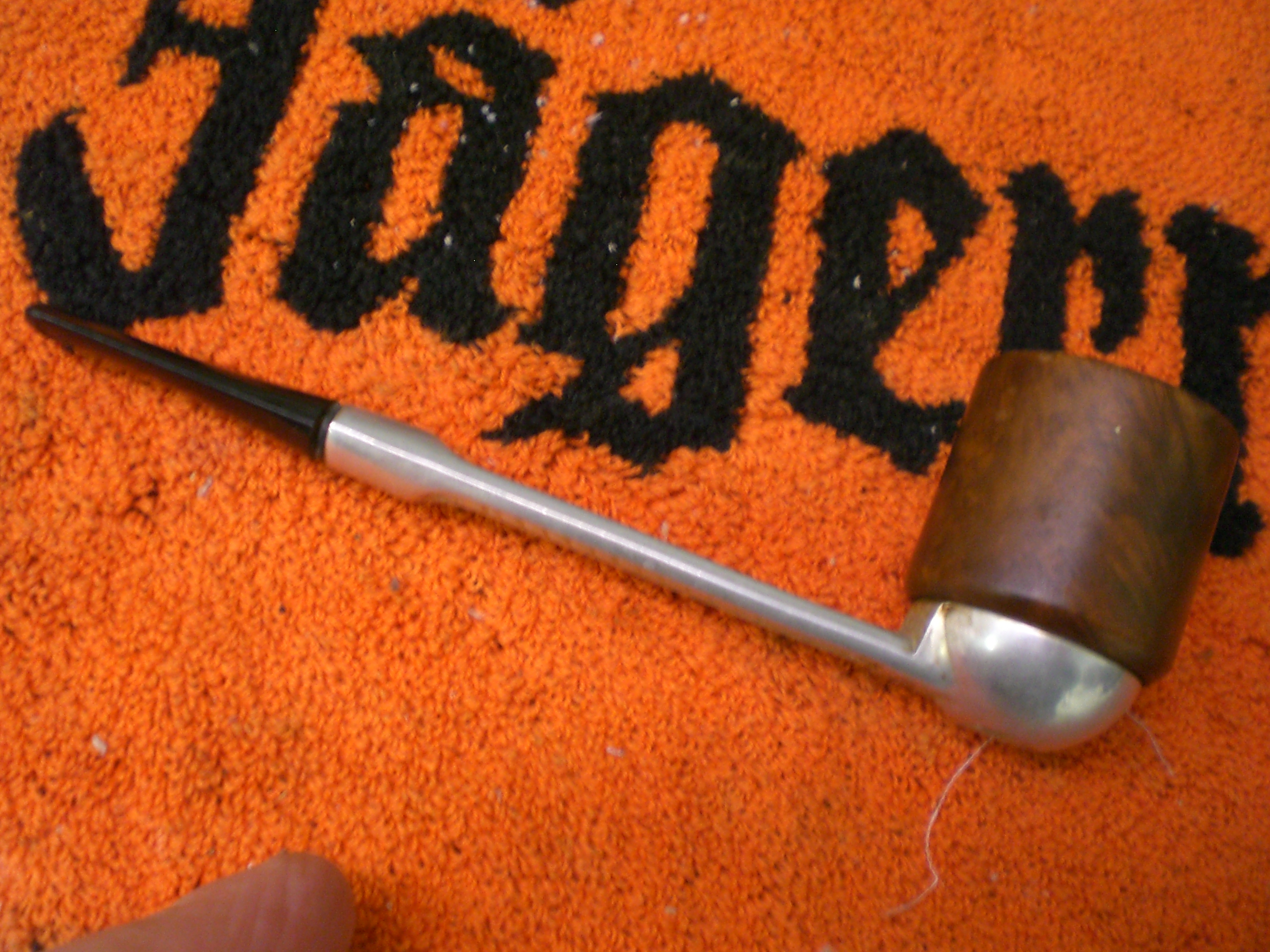
Somewhere along the way in one of the pipe lots I bought off EBay this old cigarette holder was included as a pipe stem. I put it in a drawer and forgot about it for several years at least. The other evening I was cleaning out a drawer of pipes that I had already refurbished getting them ready for my daughter to catalogue and came across the old holder. At first glance it appeared to be a cigarette holder. There was no filter apparatus present and the mouthpiece was short and condensed so I did not think there would be one inside the stem itself. I sanded down the casting marks on the side of the stem and also cleaned the stem of debris. There was one burn spot on the underside of the stem near the metal holder end. The metal holder was brass and quite clean with a slight nicotine and tar build up on the inside. The airway on the stem was plugged and no air could pass through it.
IMG_3182

IMG_3183

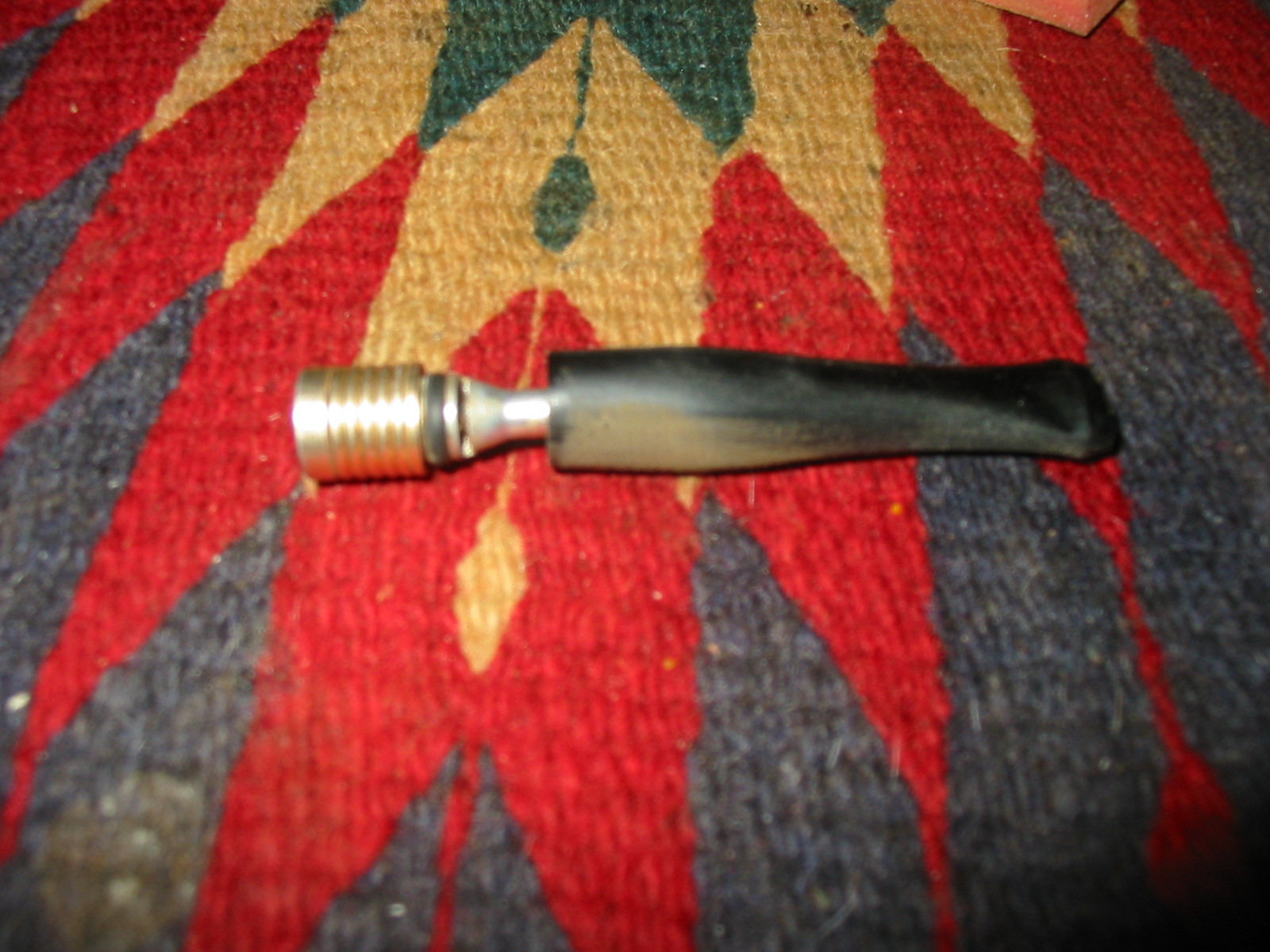
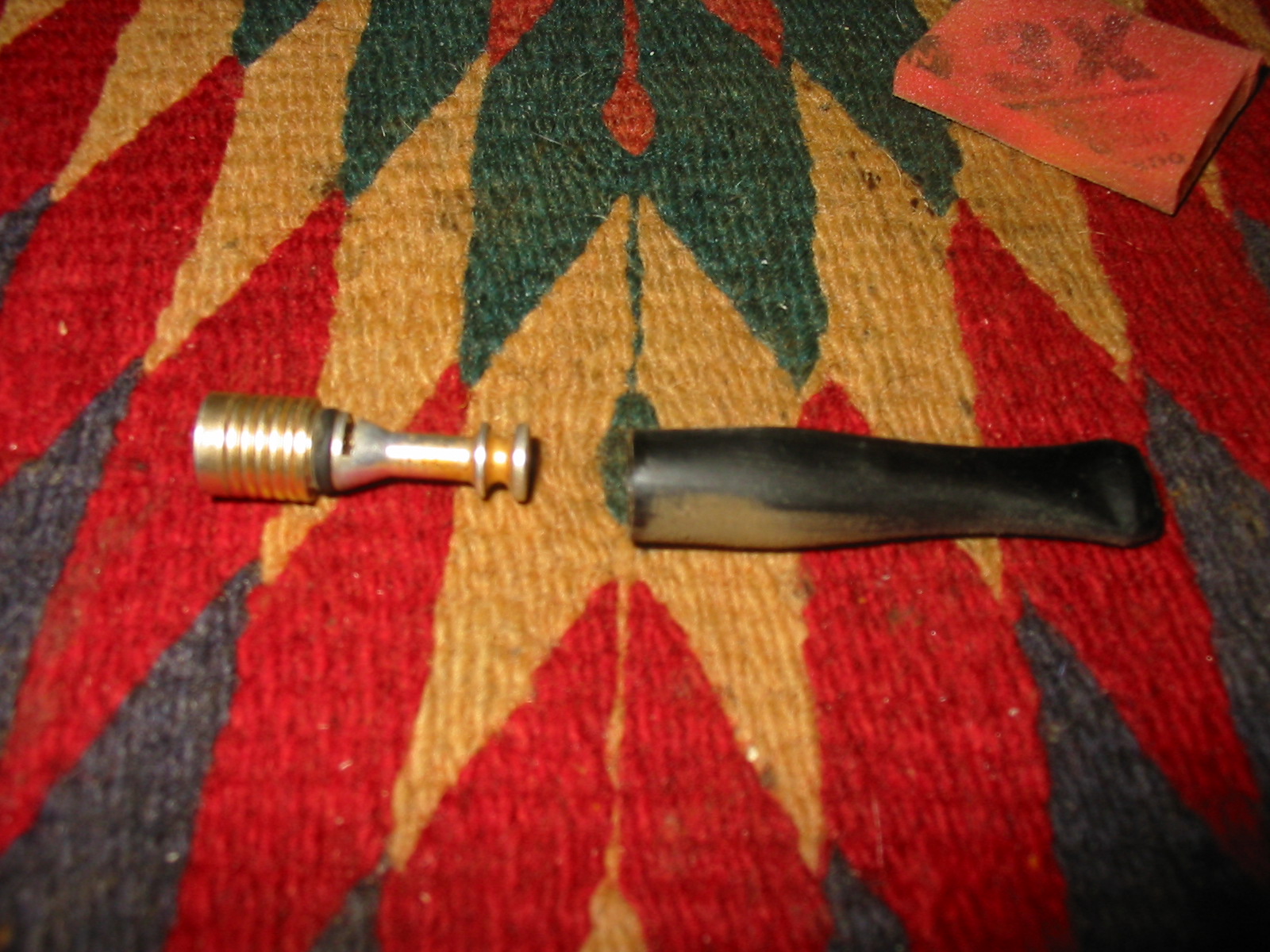
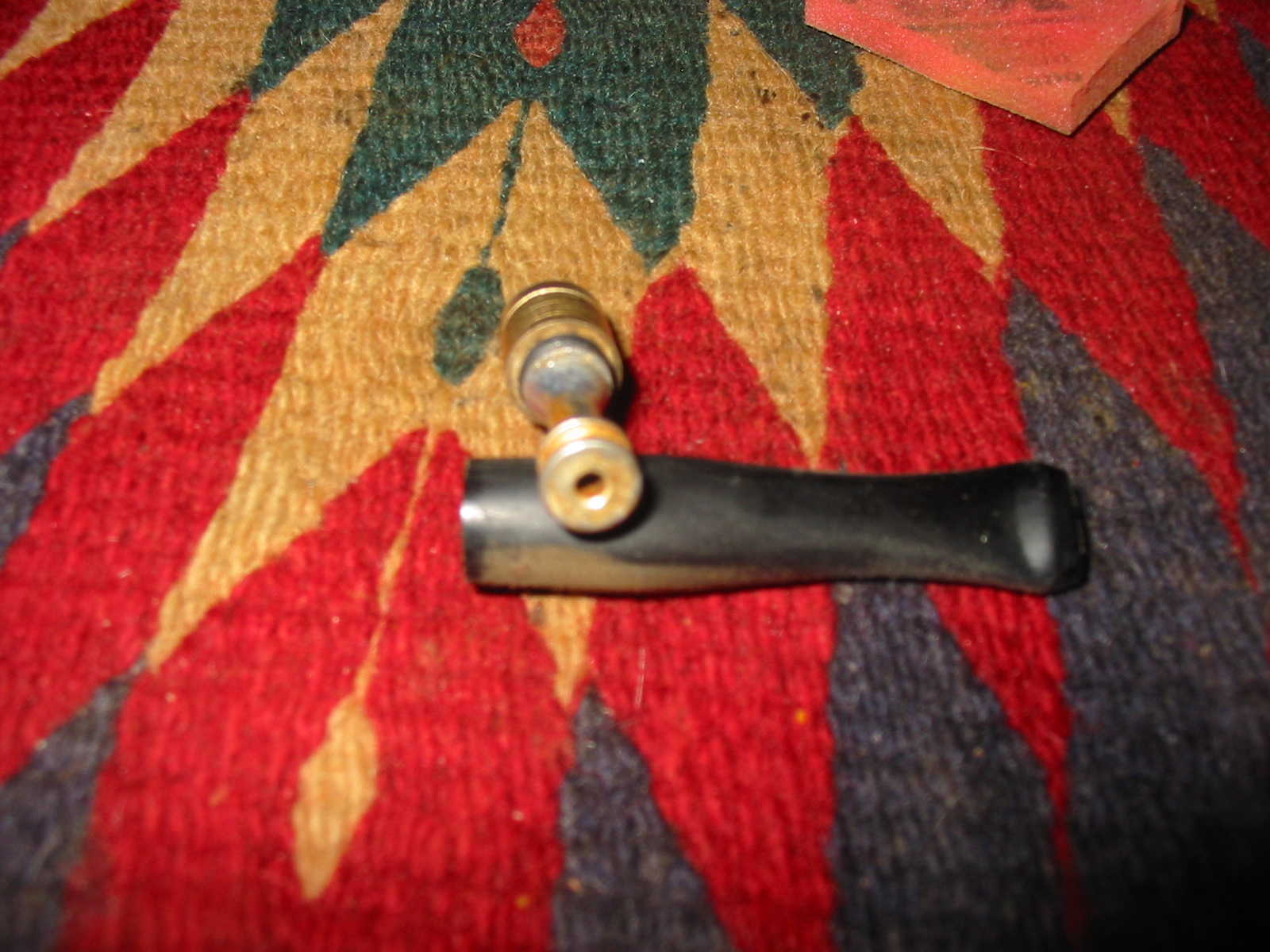
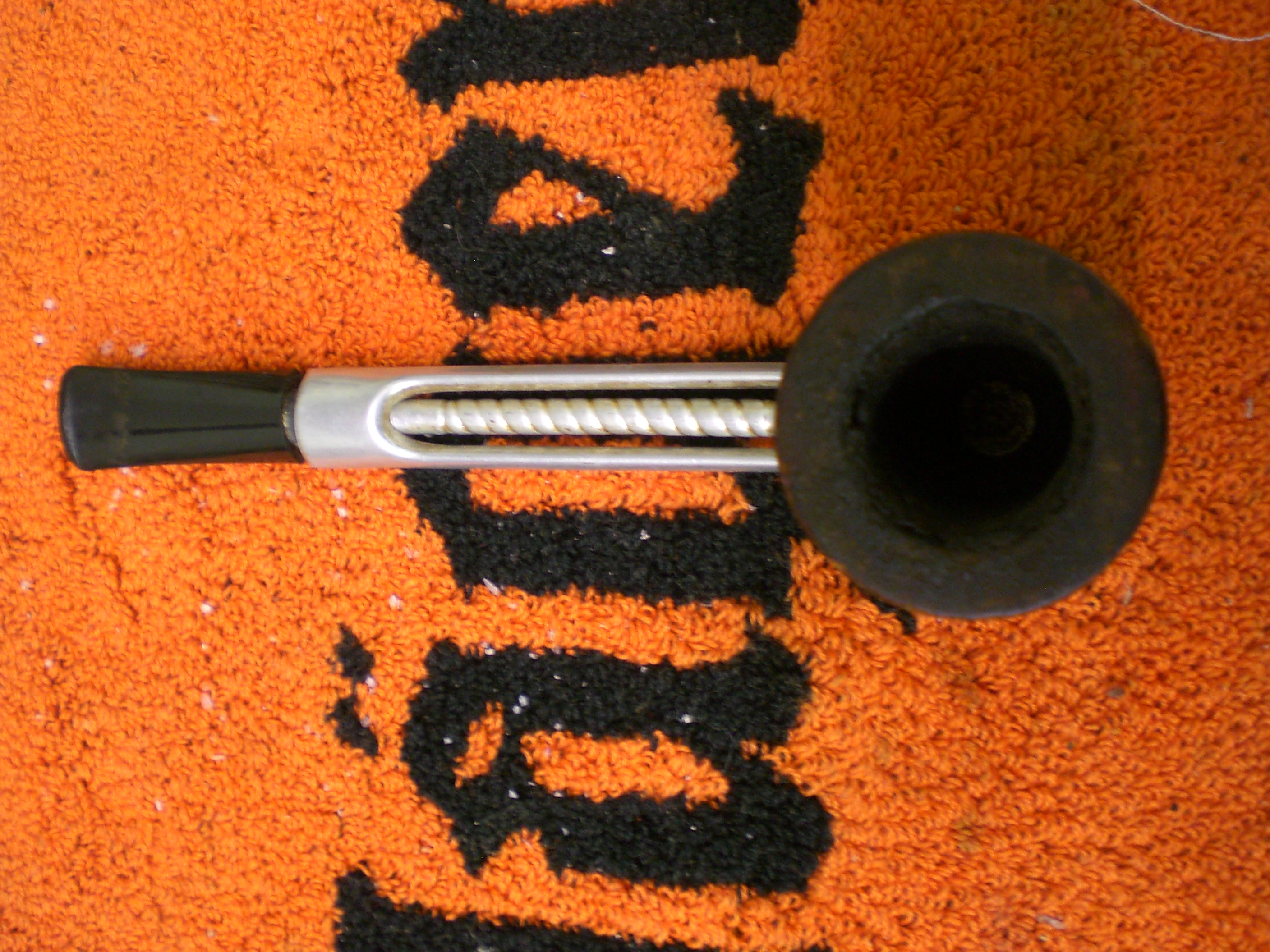
I twisted the end cap and it came free from the stem itself. Inside was a filter apparatus similar to the different stingers that one finds in American made pipes of days gone by. This apparatus was a single unit. There was a rubber o-ring around the top just below the holder top. This held the cap unit snugly in place in the stem.
IMG_3181

Once I had removed the apparatus from the stem the stinger design was visible. It extended half way down the shank of the stem. Behind the o-ring was a cut/slit half way through the aluminum of the stinger. It was clogged with tars and oils. In the middle of the slit was an opening. One on the o-ring side and one on the stem side of the slit. The aluminum then funneled down to tube that at first glance appeared to be solid. At the end of the tube were two solid rings around the tube. Between the rings there were holes on two sides in the groove. When it was inserted and clear the air would be pulled through the holder and into the stinger slit. It would circulate in the stem to cool and then move through the slit and down the tube and out the two holes. These would then disperse the smoke through the remainder of the stem and out the slot in the button. In many ways it was like an inverted stinger in shape and function to those found on pipes.
IMG_3177

The hole in the end of the stinger does not go through the stinger but rather is like a small cup on the end. It was for collecting moisture and tars if the grime buildup was any indication.
IMG_3178

IMG_3180

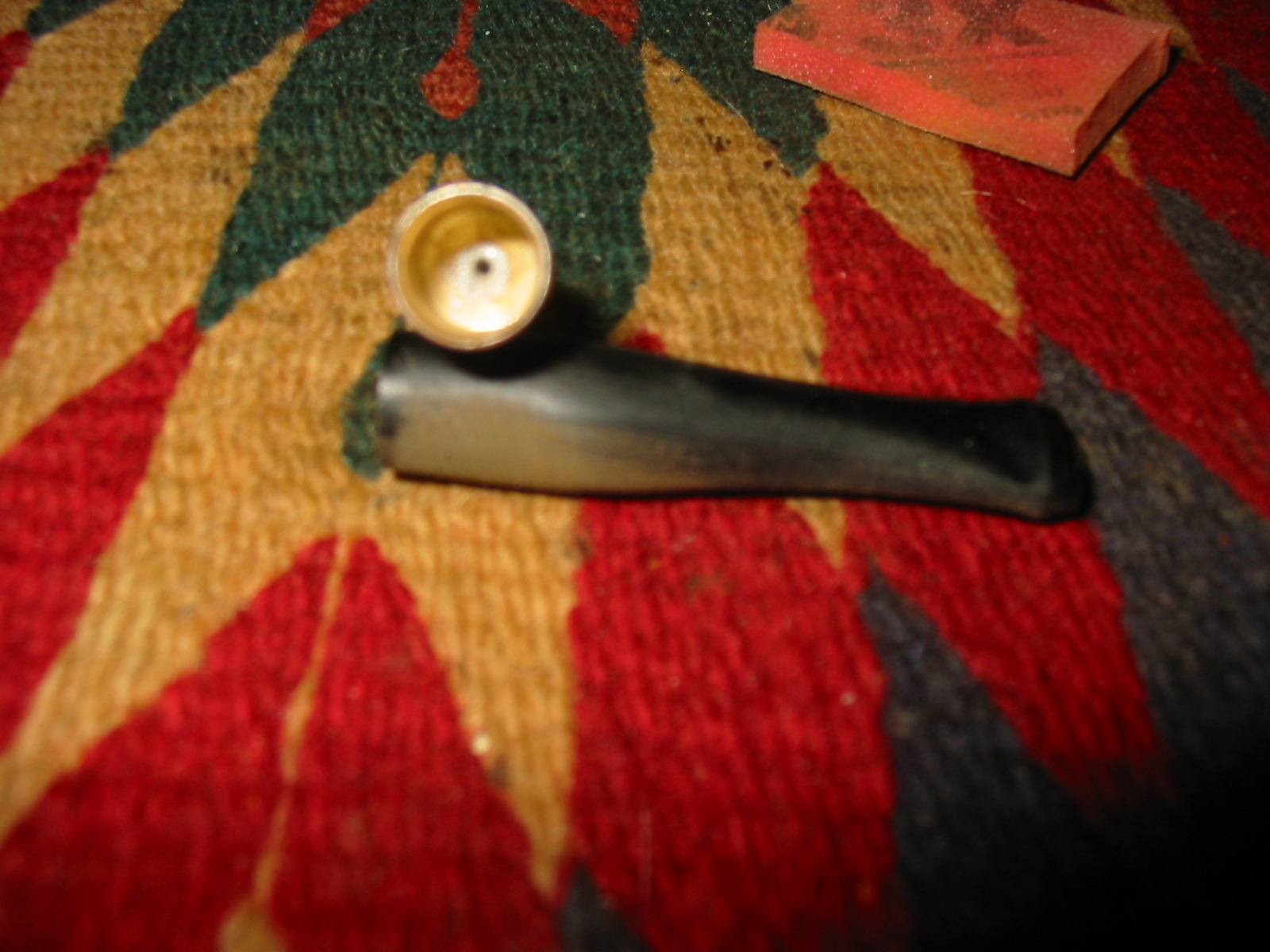
The holder cap pictured in the photo below is the depth of the filter on a modern cigarette and also the dame diameter as the end of the cigarette. I cleaned the entire apparatus and soaked it in a bath of Everclear to try to open the airway. I was able to clean out the cut in the aluminum, the holes in the end and in the cut itself using a dental pick. I scrubbed down the apparatus with a tooth brush and Everclear. I was unable to get air to pass through due to a clog in the end of the holder. In the photo below it is visible as a small hole in the bottom of the cup. It was plugged and the dental pick was too thick to go through it. I tried a thin paper clip and a needle with no success. I finally was able to open it with a tiny micro drill bit on the Dremel and pushed it through at a very slow speed. The bit came with a plastic guide that fit inside the cup perfectly and kept the drill straight as it opened the airway. Once it pushed the clog through I cleaned the inside of the airway with Everclear and was able to push air through with no effort.
IMG_3179

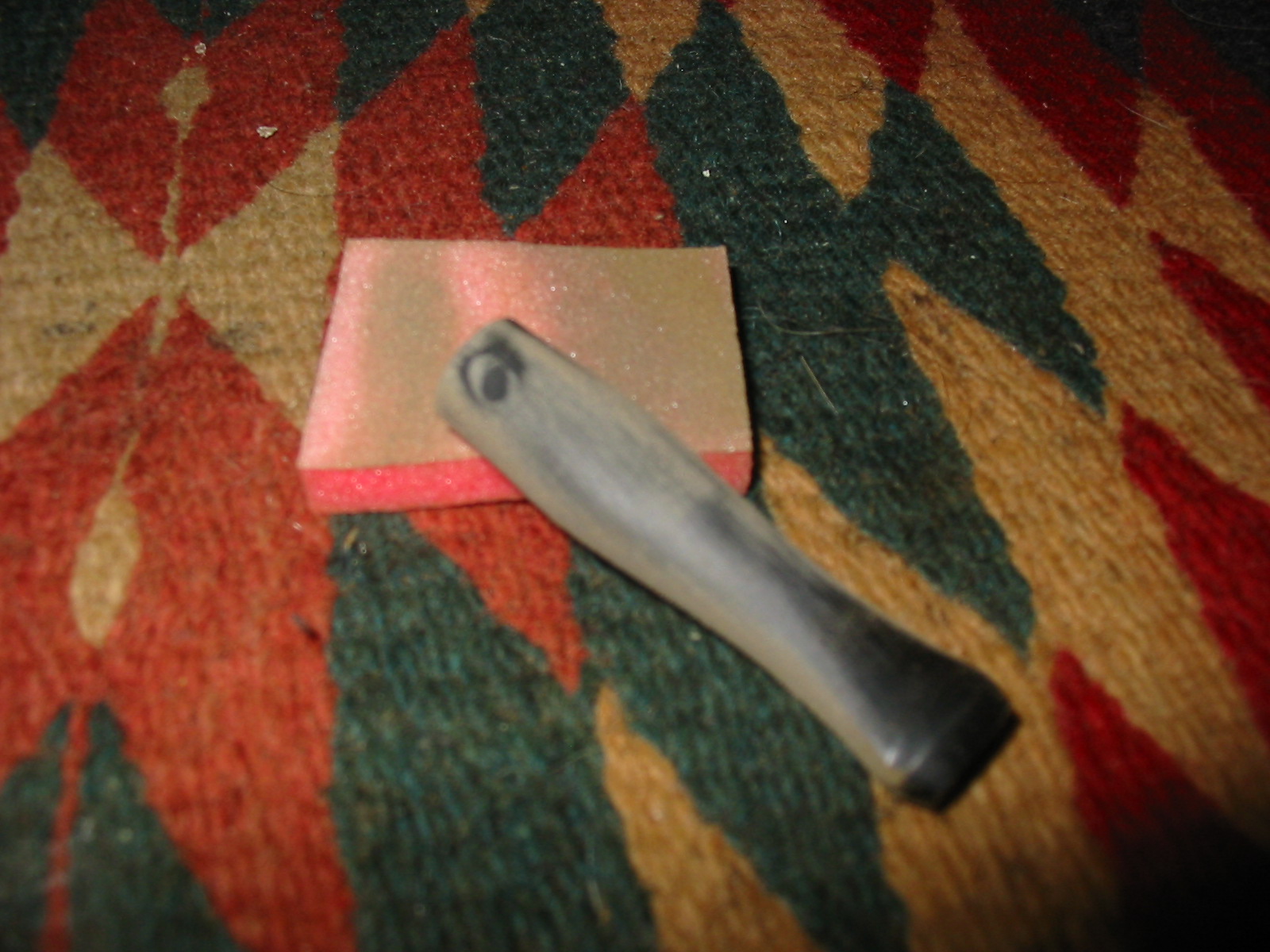
I repaired the burned spot on the stem with superglue and sanded the stem until the patch blended with the rest of the stem surface. I sanded the stem with 220 grit sandpaper and then with a medium grit sanding sponge to smooth out the scratches in the surface of the nylon stem.
IMG_3135

IMG_3136

I wet sanded the stem with micromesh sanding pads from 1500-2400 grit and then dry sanded with 3200 – 12,000 grit sanding pads. I used a plastic polish to further shine the stem once I was finished with the micromesh pads.
IMG_3184

IMG_3185

IMG_3187

I rubbed down the stem with Obsidian Oil and gave it a very light buff with White Diamond. You have to exercise a very light touch when buffing nylon as it melts with the heat of the buffing wheel. I finished by giving the stem multiple coats of carnauba wax to give it a shine. I hand buffed the shine with a soft cotton cloth. The finish filter is pictured below in the final three photos. It is not something I will ever use but it is an interesting piece of tobacciana for the collection. I have no idea of the maker of the piece or of the age but I am fascinated by the ingenuity of the product.
IMG_3188

IMG_3189

IMG_3190

Restoring an LHS Certified Purex Pot


Blog by Steve Laug

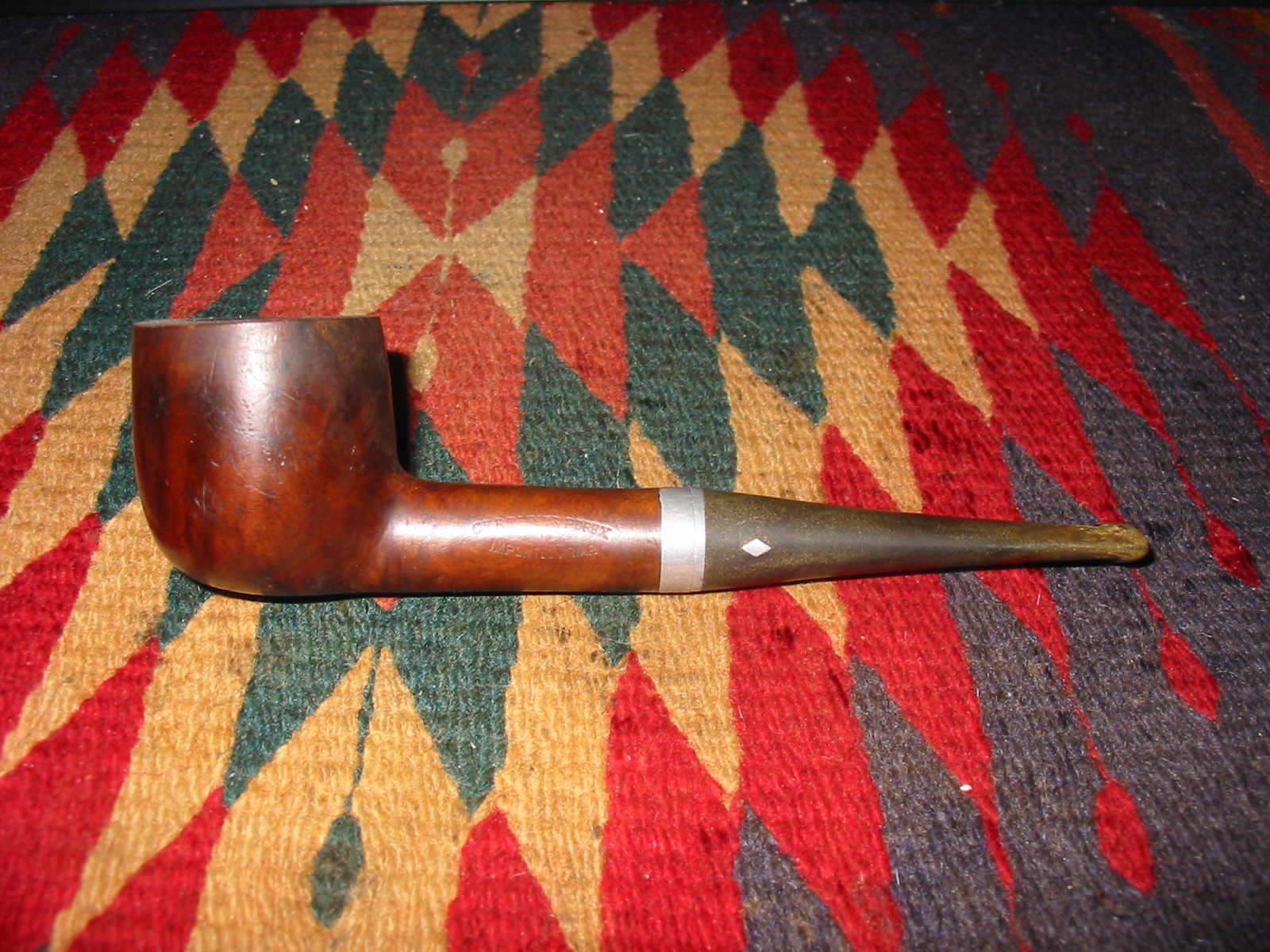
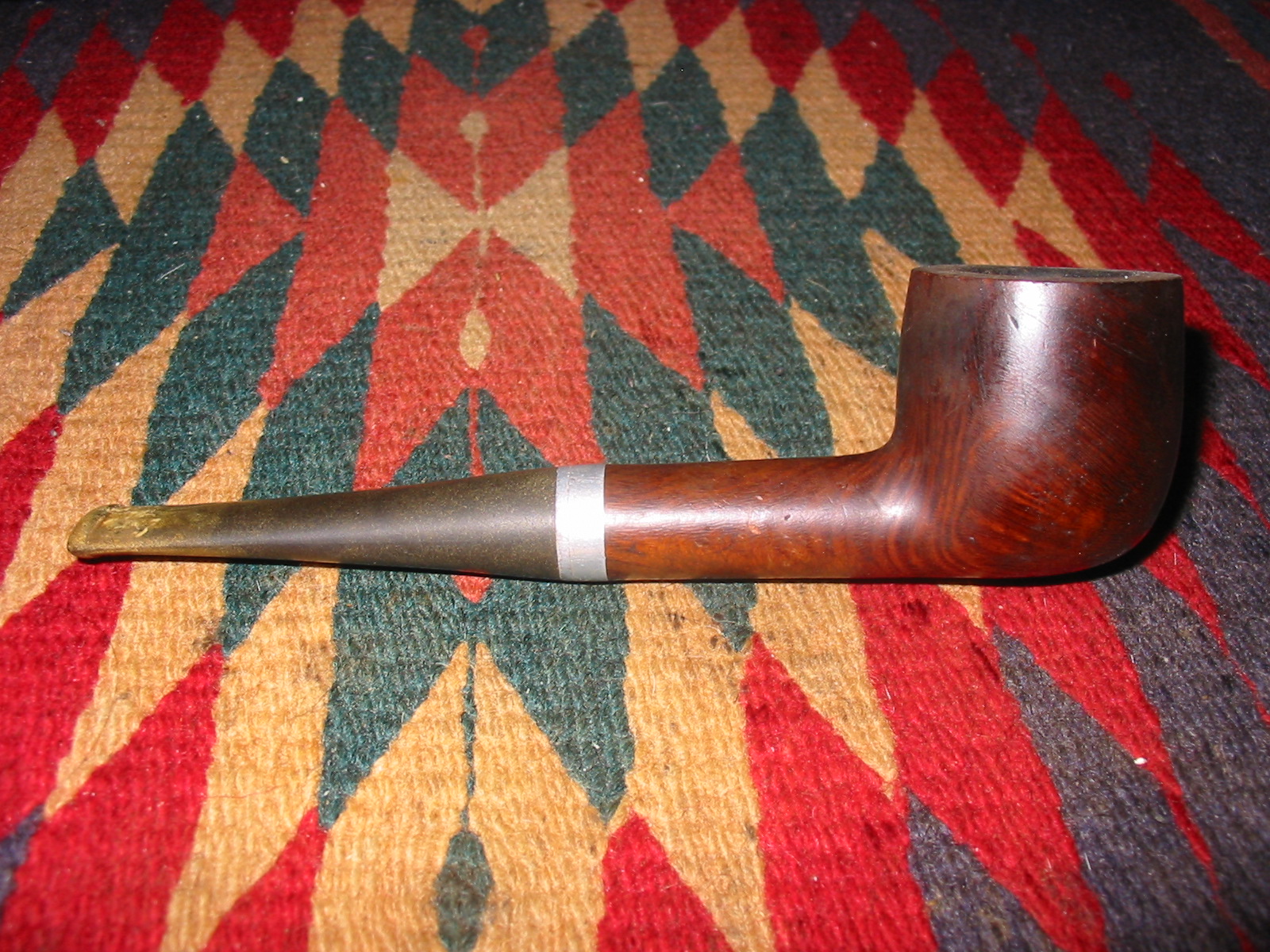
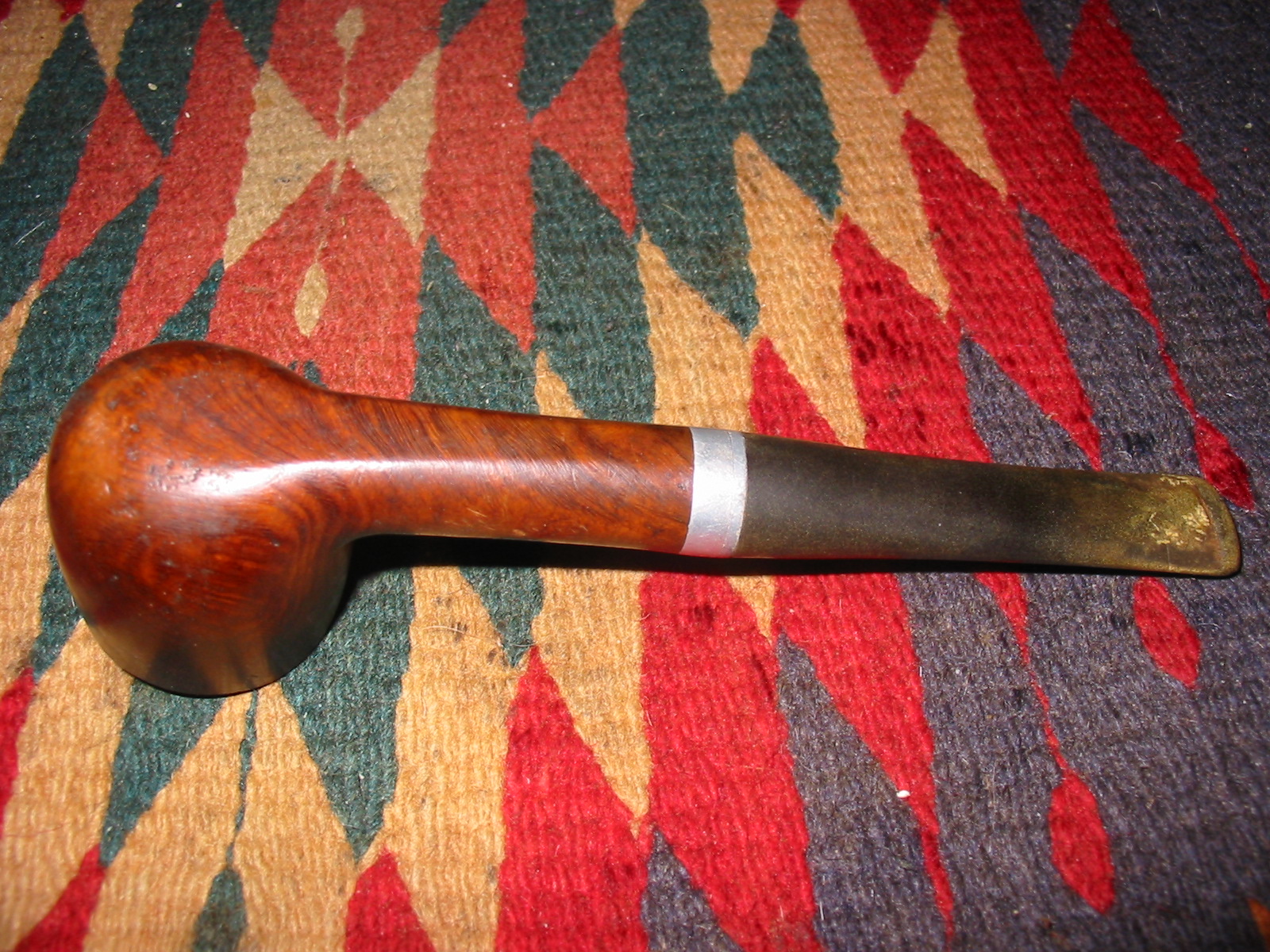
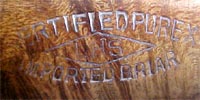
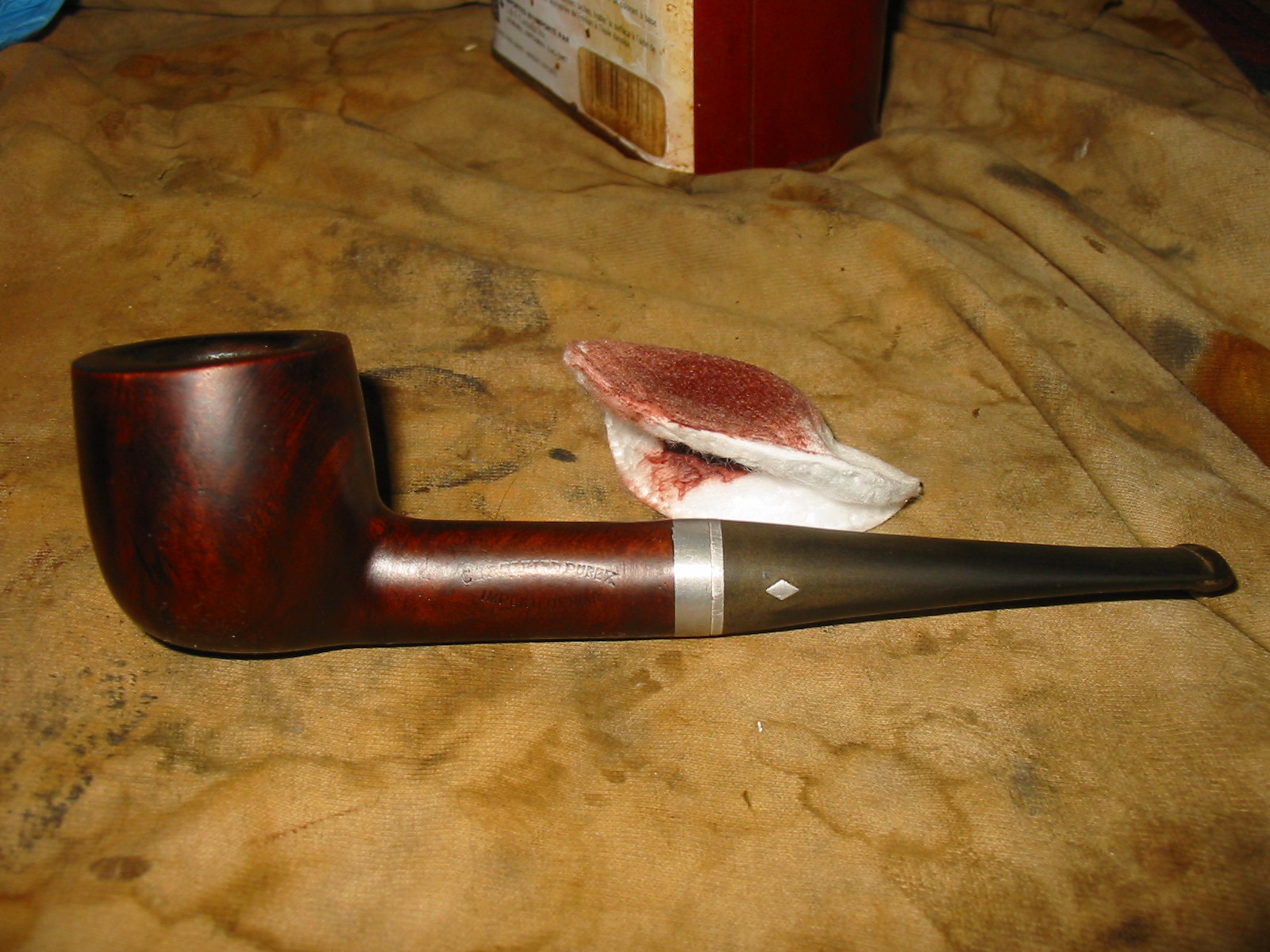
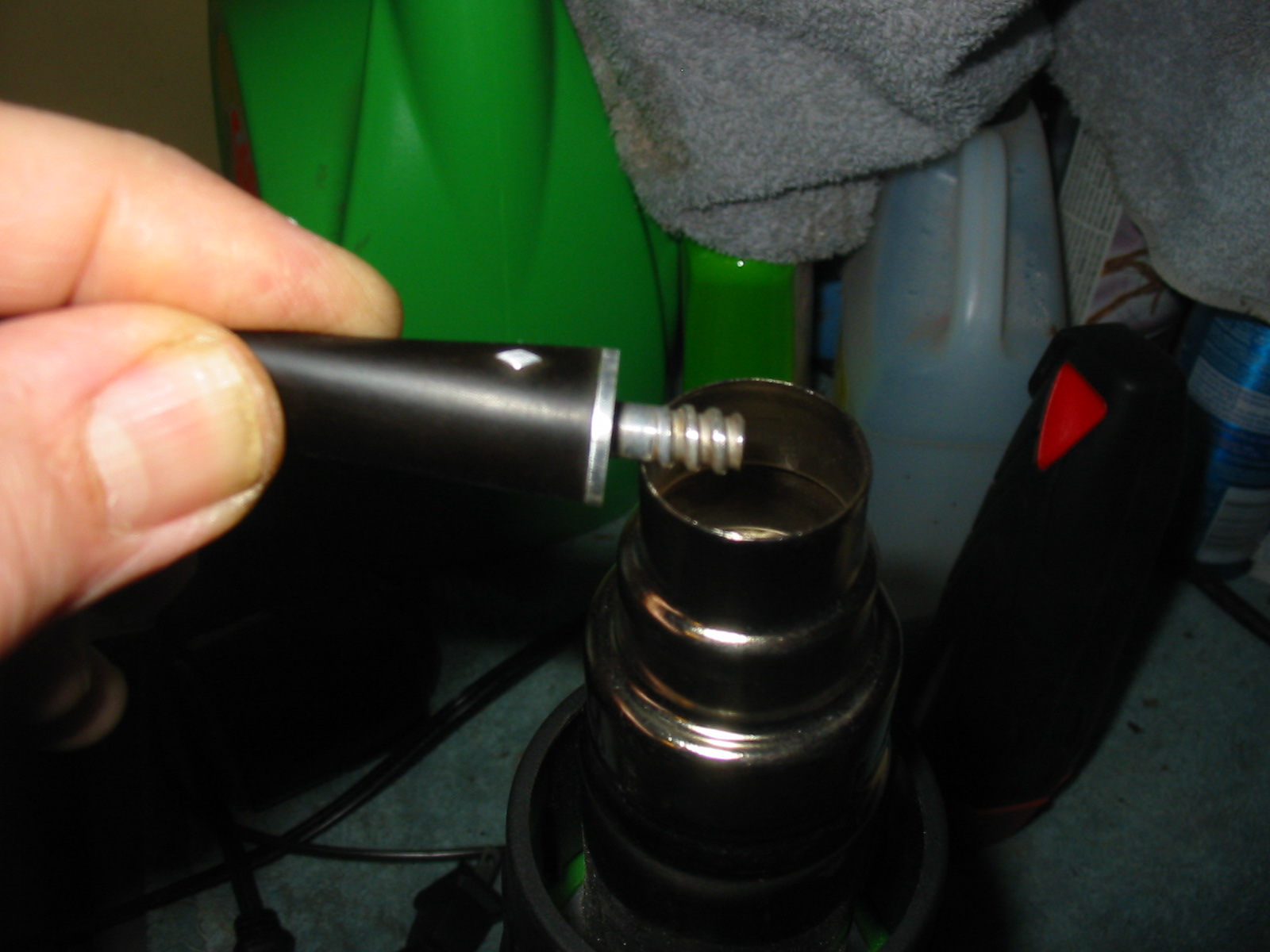
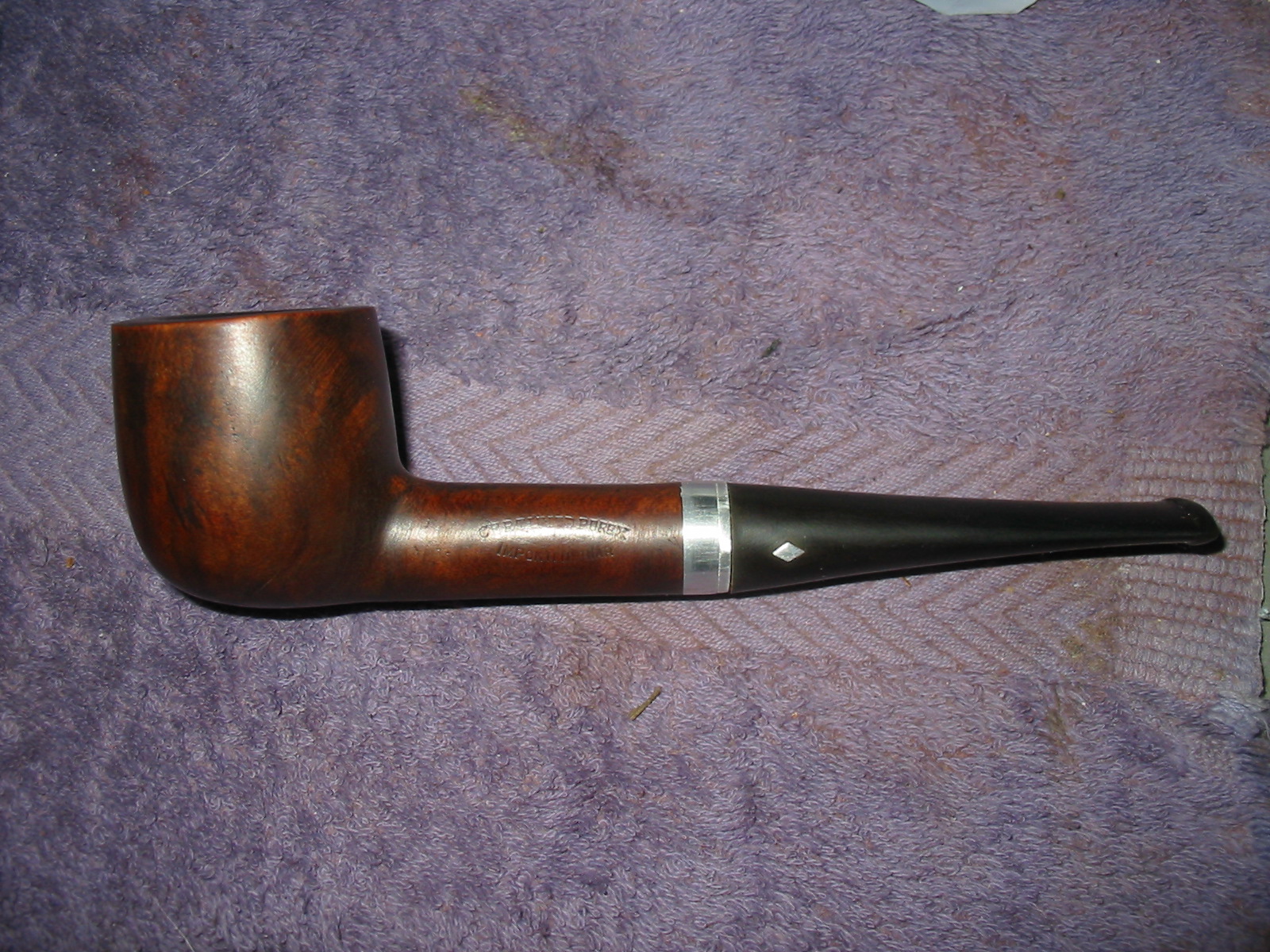
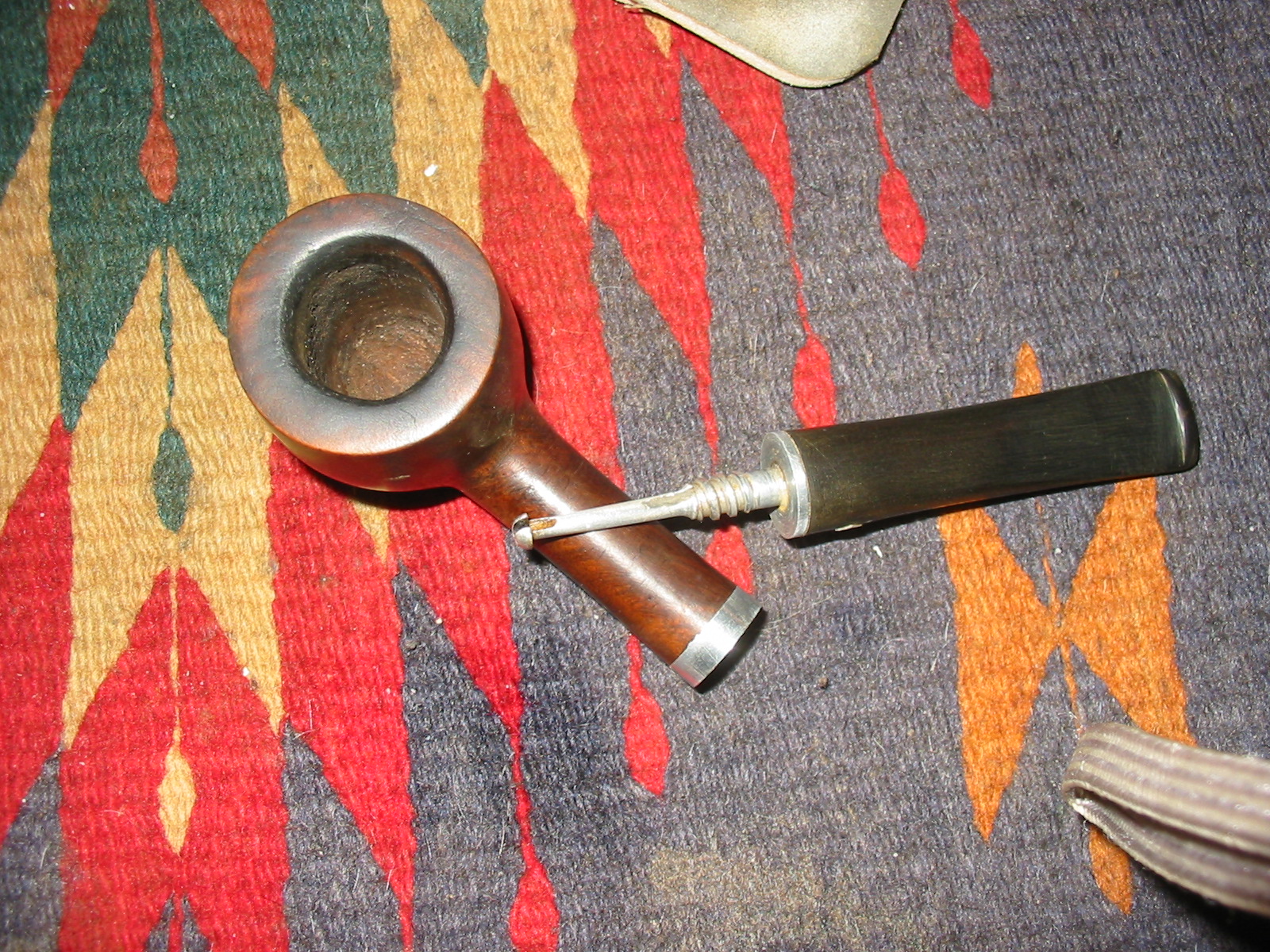
This LHS pot was another gift from a friend in exchange for restemming his pipe. It is stamped on the left side of the shank Certified Purex in a convex arc and underneath is a concave arc stamped Imported Briar. In the middle the stamping is very faint but using a magnifying lens the remnants of a diamond with the letters LHS are barely visible. The finish was very dirty and the rim was blackened but not burned. The bottom of the bowl near the front was covered with dents and pin pricks like the pipe had been tapped or dropped on concrete. There was very little cake in the bowl. The stem had a screw mount tenon with an aluminum receptor on the end of the shank. The stem itself had an aluminum end on it with a push in stinger apparatus. The stem had deep tooth marks on the top and the bottom sides and was oxidized. On the left side of the stem was an aluminum diamond that was inserted in the stem.
IMG_3137

IMG_3138

IMG_3139

IMG_3140

I looked up LHS Certified Purex pipes on Google and found the following information. The first comes from http://www.pipephil.eu/logos/en/logo-lhs.html#certifiedpurex . Phil has a page on the LHS pipes. The L&H Stern Inc. was established by Ludwig Stern (1877-1942) in 1911. His brother Hugo (1872-?) acted as vice-president & secretary. The firm moved to 56 Pearl St. Brooklyn in 1920. It closed down in the 1960s. LHS was one of the main pipe suppliers for US soldiers during WWII. LHS had several seconds lines, two of which are the London Royal and the Stanhope. Phil included the two photos below. The first is of the diamond insert on the stem. The one I am refurbishing has the same diamond. The second is of the stamping on the pipe. The top photo which is a picture of the stamping reads Certified Purex over Imported Briar with the LHS in a Diamond inside the two arcs. This stamping matches the pipe I worked on.
lhs5blhs3a Pipedia also had information on the pipes from which I summarize some additions that were not included above. L & H Stern (LHS) of Brooklyn, New York. The company’s famous logo is in a diamond. These pipes are high quality production pipes. A popular and moderately priced pipe made from 1896 through the 1960’s by the L&H Stern Company of Brooklyn, New York. Many of their later Sterncrest pipes featured silver bands and some were made with 14kt. gold bands as well. The “Diamond” series appears to be their high-end line. They had a different logo which was 3 diamonds in a row, larger in the middle. They also had Allbriar models (stem and bowl both made of briar) in the Diamond line, and these tended to have a screw type fitment with stinger, like Kaywoodie or Dr. Grabows.

With this information I took the Purex pot to my work table. I took off the stem and dropped the bowl into an alcohol bath to soak while I worked on the stem. It sat in the bath for about an hour while I addressed the issues on the stem.
IMG_3141

I sanded the stem with 220 grit sandpaper to remove the calcification around the button and up the stem for about ½ inch. I also wanted to clean up around the tooth dents to see what I would have to do to fix them. In the next two photos below the dents in the stem are clearly visible on the top and the underside of the stem. Removing the calcification made the dents very clear.
IMG_3142

IMG_3143

After examining them with a magnifying glass I could see that they were dents. I was able to heat them and lift them to some degree and then sanded what remained after heating. The next three photos show the removal of the dents and remaining marks with the sandpaper.
IMG_3144

IMG_3145

IMG_3147

I sanded the stem with a medium grit “pink” sanding sponge that is visible in the photos below. This removed the scratches left behind by the 220 grit sandpaper. In these photos the dents are no longer visible. The sanding also removed the majority of the oxidation on the stem.
IMG_3148

IMG_3150

IMG_3151

I wiped the bowl down with acetone on a cotton pad to remove the finish before I worked on the pitting and marks on the bottom of the bowl. I steamed the dents and then filled the remaining marks with superglue to smooth them out. I sanded the superglue with 220 grit sandpaper to remove the slight bubble on the super glue and also followed up that with a medium grit sanding sponge. I wet sanded the bowl with 1500-2400 grit micromesh sanding pads.
IMG_3152

IMG_3153

IMG_3154

I stained the bowl with black aniline stain and flamed it to set it deep in the grain. I repeated the staining and flaming to make sure I got a smooth and even coverage on the undercoat of stain. The black understain does a great job in hiding the small fills that were in the bottom of the bowl.
IMG_3155

IMG_3156

IMG_3157

IMG_3158

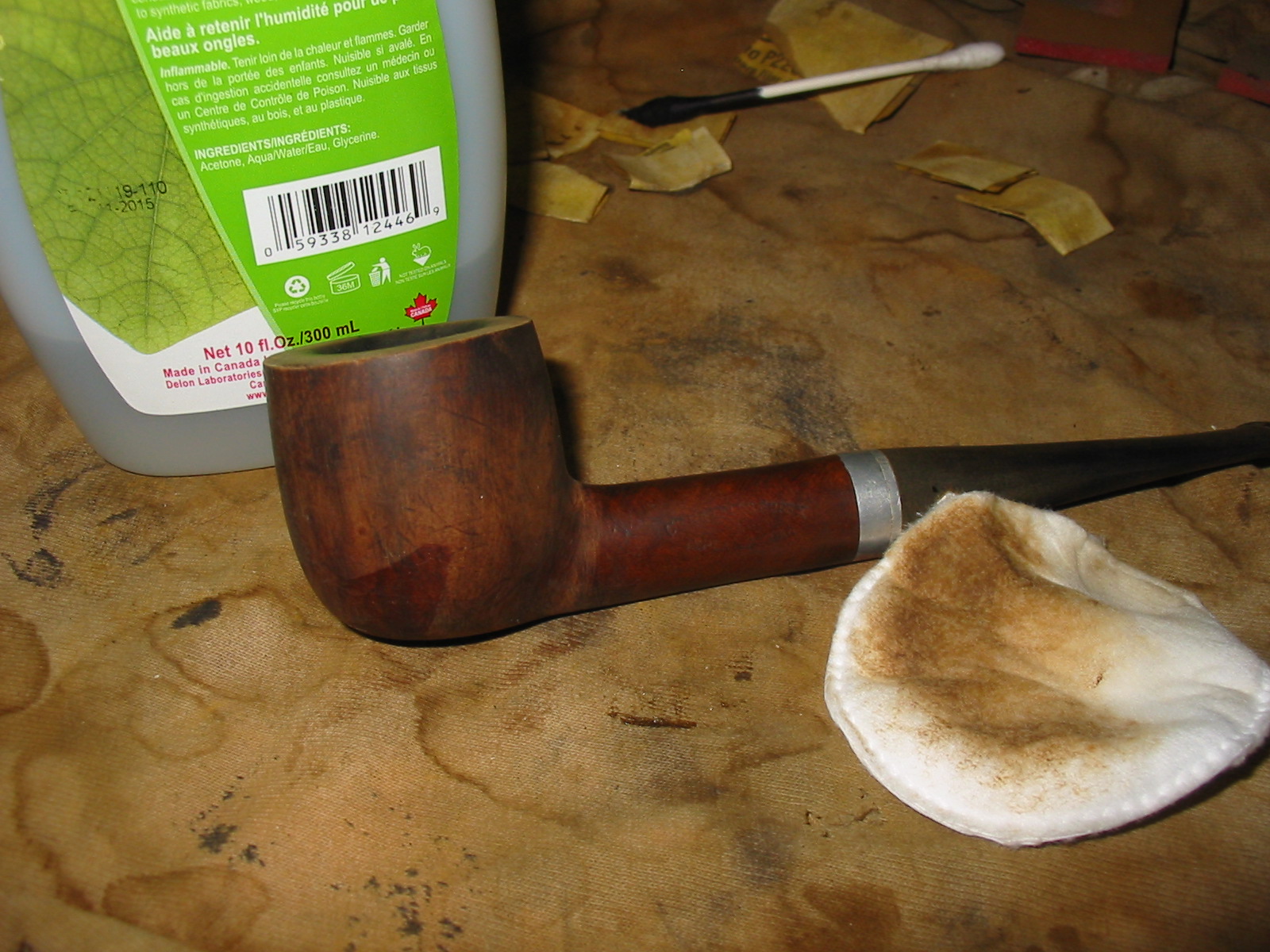
I wiped down the stain with acetone to remove the topcoat and to highlight the dark grain pattern that remained. The dents on the bottom of the bowl are not visible in the fourth photo below. The grain shows through nicely. I sanded the bowl with 1800-2400 micromesh sanding pads to remove the scratches that were still visible in the finish.
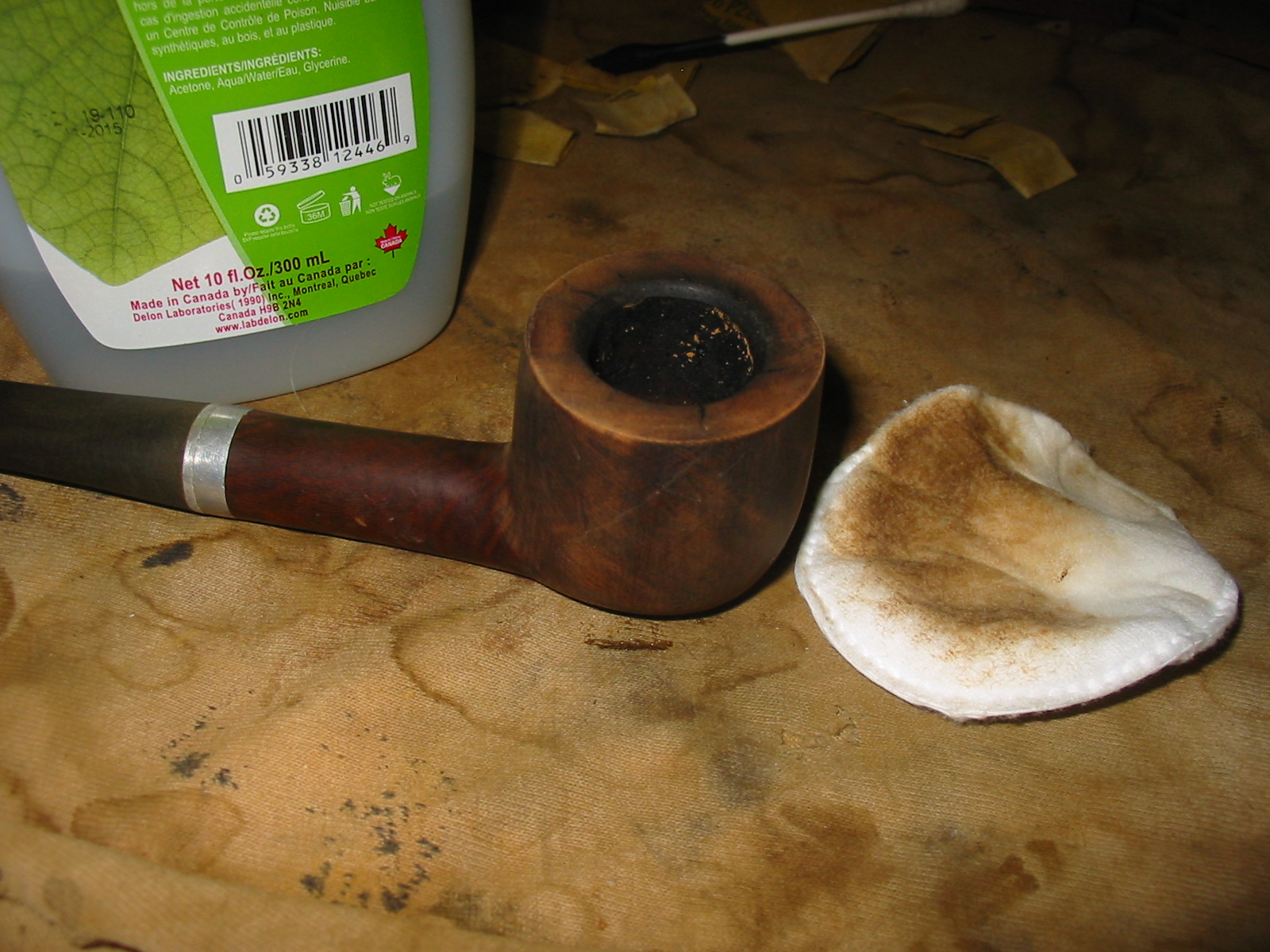
IMG_3159

IMG_3160

IMG_3161

IMG_3162

I then stained the pipe with a oxblood stain for a finish coat. I applied the stain, flamed it and reapplied it and flamed it repeatedly until I had the coverage I wanted on the pipe. The next three photos show the rich overstain. The repairs to the pits on the bottom of the bowl are no longer visible.
IMG_3163

IMG_3164

IMG_3165

The stem had been slightly overturned so I needed to heat the tenon and turn it clockwise on the shank until it lined up again. I removed the stinger and then heated the tenon over a heat gun to loosen the glue in the stem. Once it was heated I screwed it into the shank of the pipe until it was aligned again.
IMG_3166

IMG_3167

I put the stinger back in place and wet sanded the stem with 1500-2400 grit micromesh pads and then dry sanded with 3200-12,000 grit pads.
IMG_3169

IMG_3170

IMG_3171

Once I finished sanding the stem I wiped it down with Obsidian Oil and rubbed it into the vulcanite. I polished the aluminum on the shank and the stem with the higher grits of micromesh and then with silver polish. I then took the pipe to the buffer and buffed the pipe and stem with White Diamond and then with multiple coats of carnauba wax to polish and protect it. The finished pipe is pictured below.
IMG_3173

IMG_3174

IMG_3175

IMG_3176

A Dr. Grabow Special Rhodesian/Bulldog – A Makeover


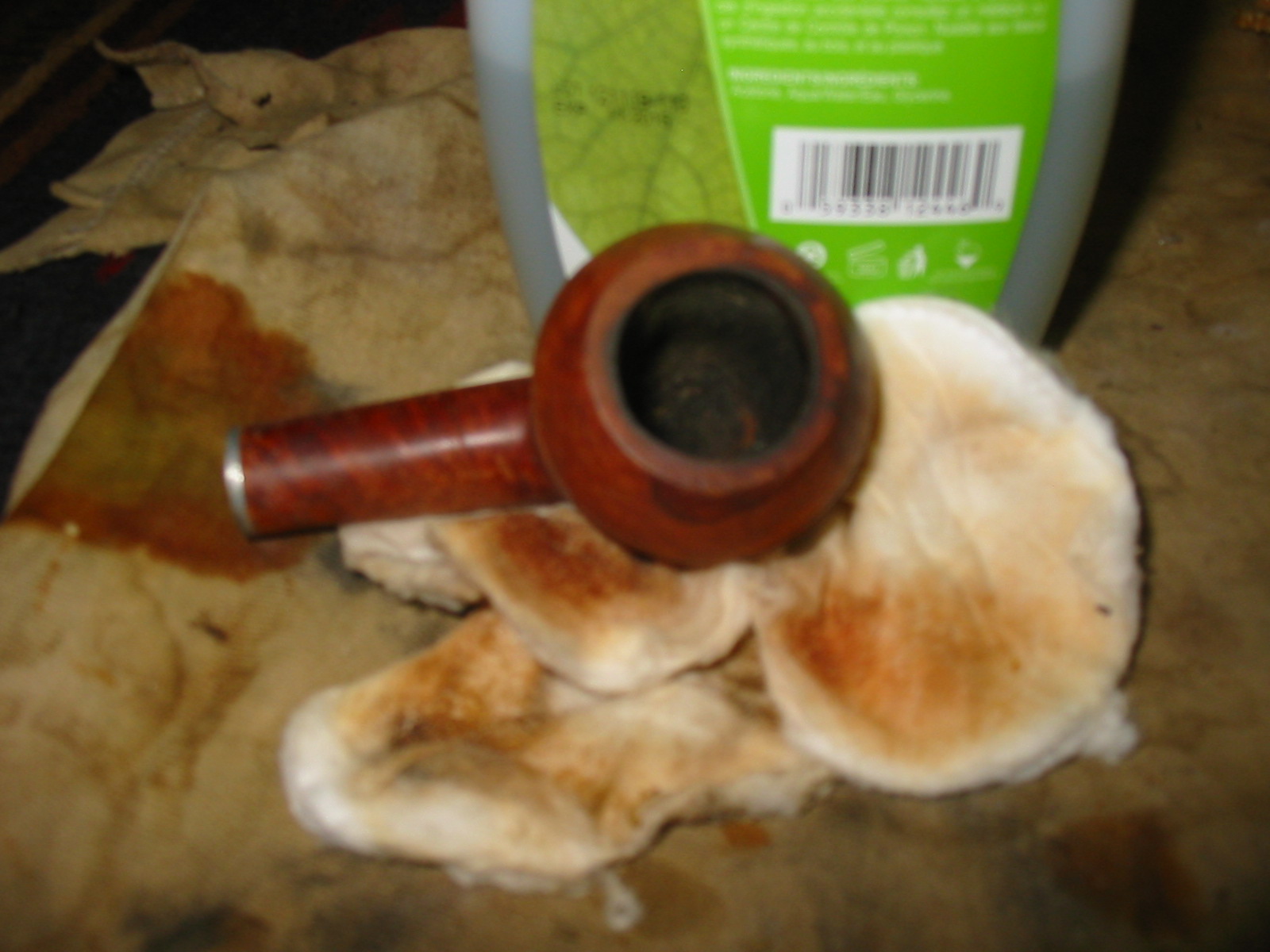
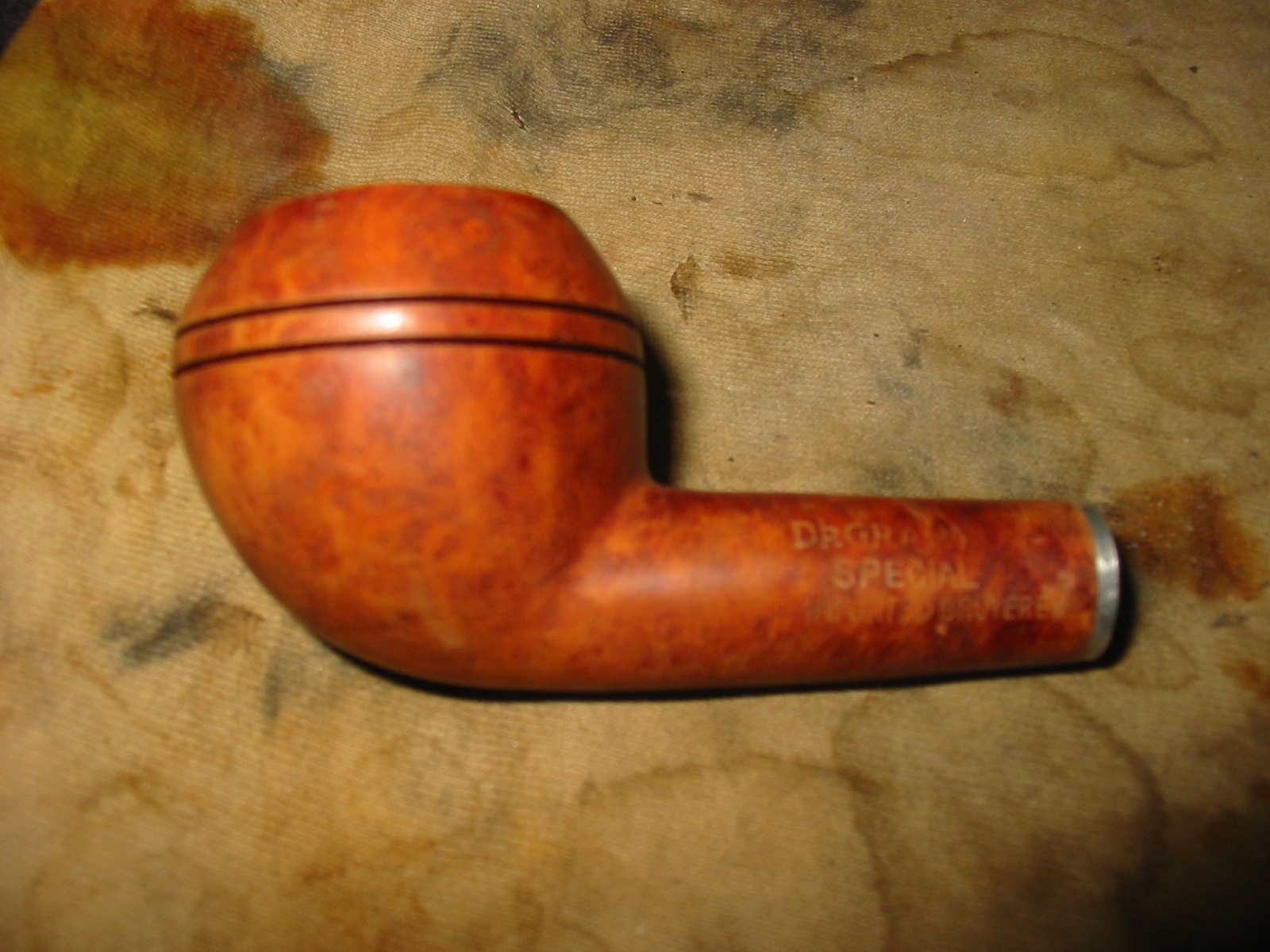
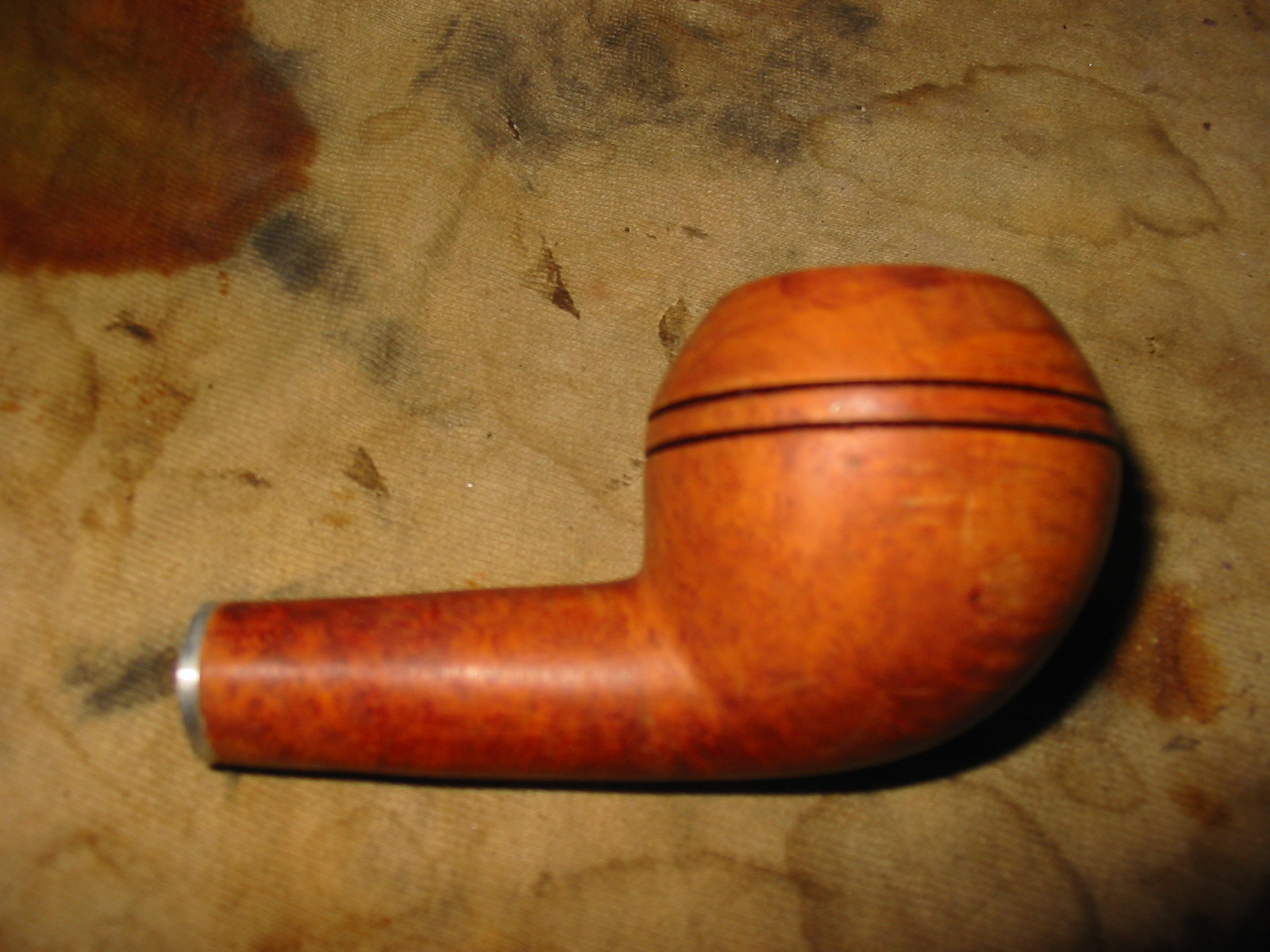
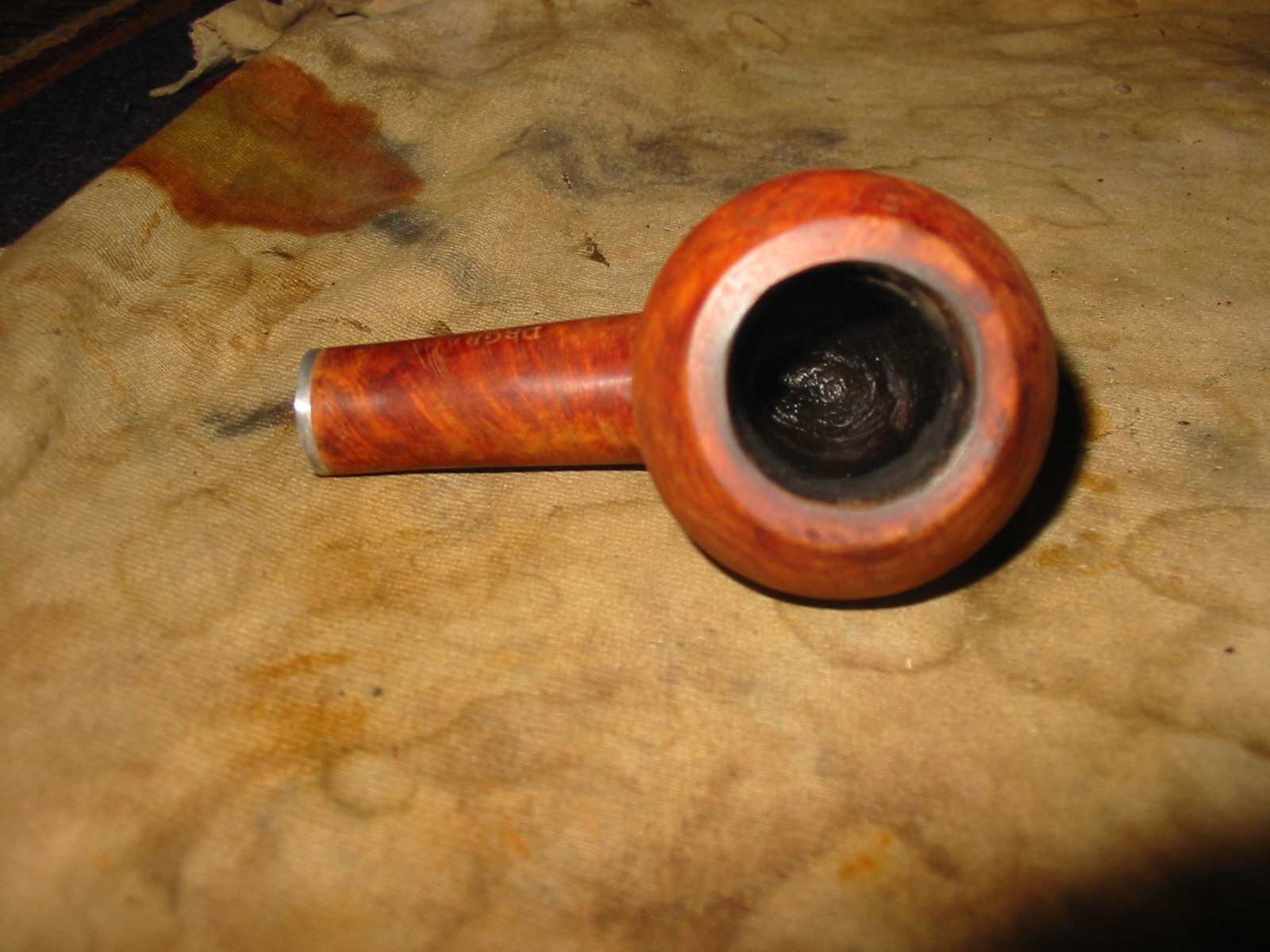
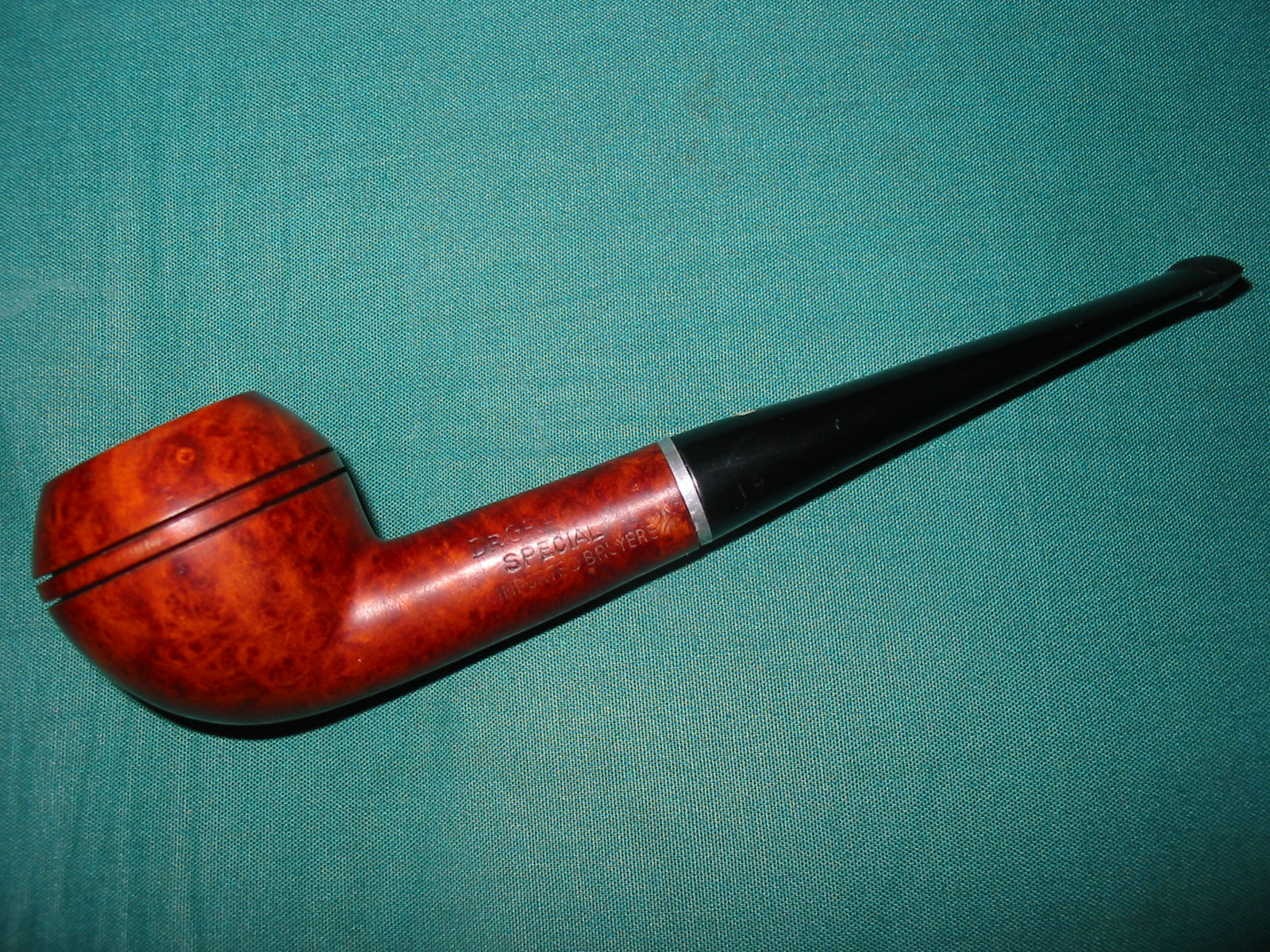
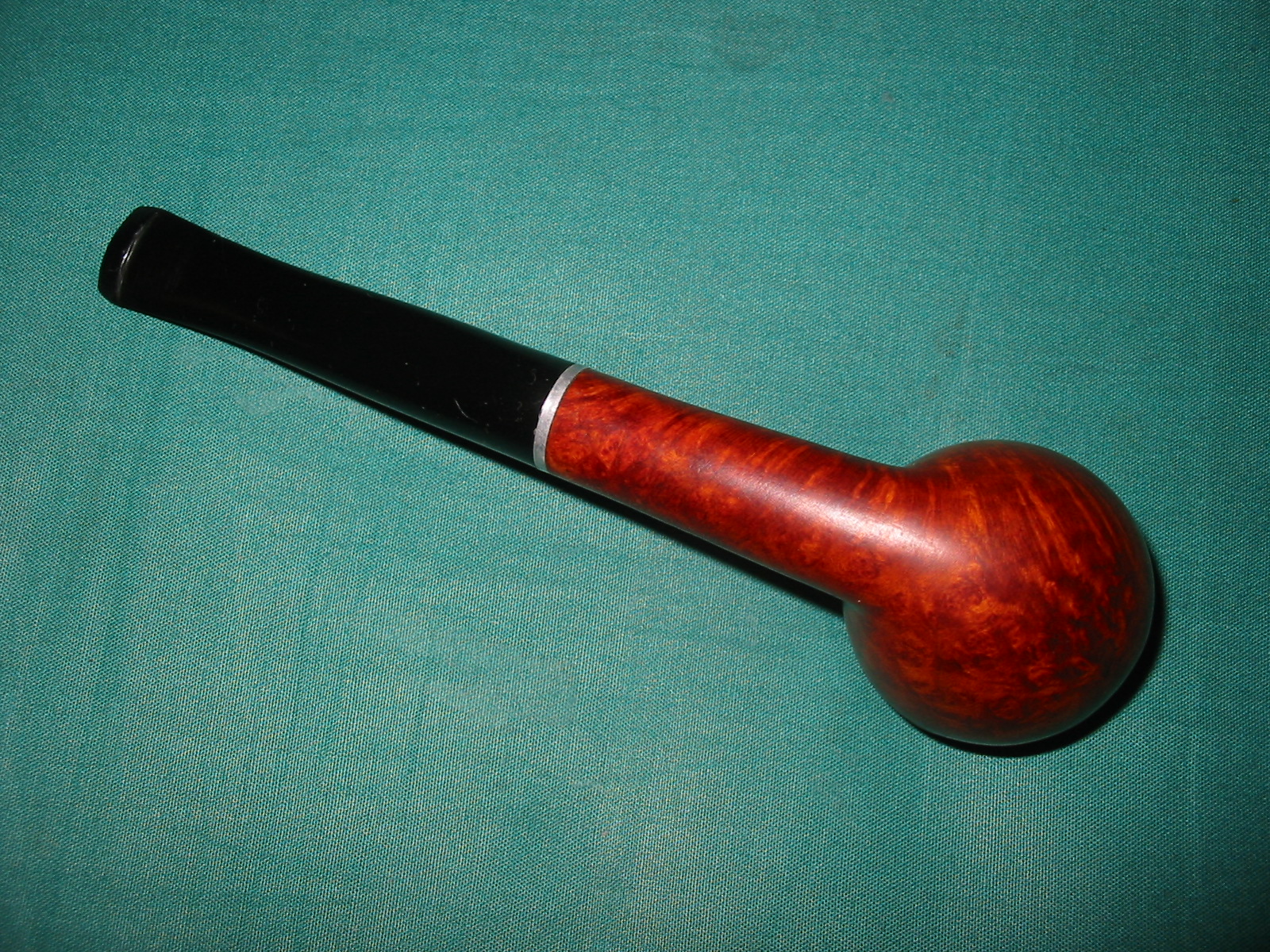
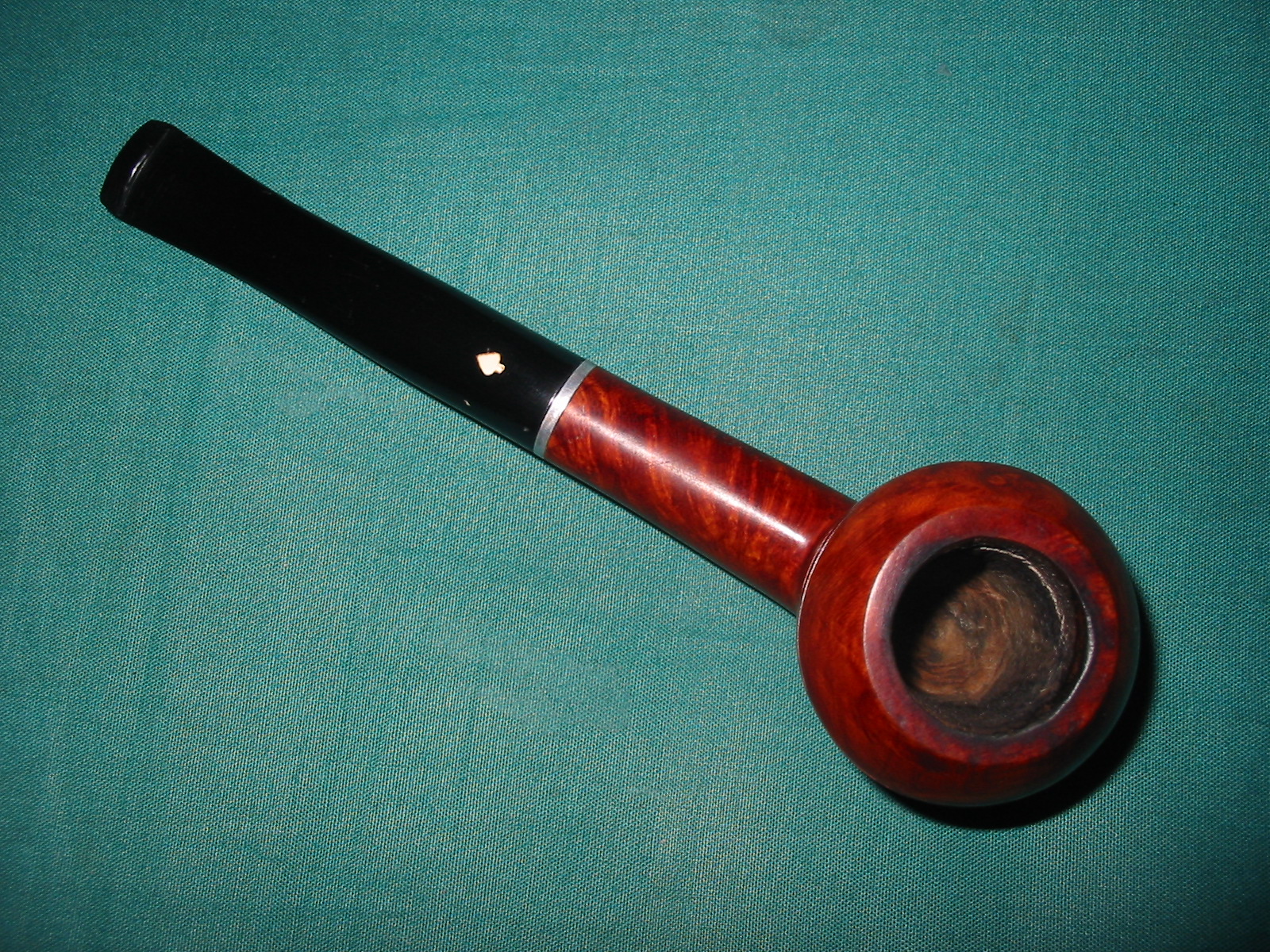
The last of the pipes from the Ebay lot below was the one in the bottom left corner of the photo. It was stamped Dr. Grabow over Special over Imported Bruyere on the left side of the shank. The finish was a varnish or polyurethane coat over the briar. It was bubbling and crackling. There was water damage on the edges of the rim. The briar itself was in good shape with no dents or roughening on the rim. The rim was slightly darkened but no dents or dings. The bowl was slightly out of round from poor reaming but very workable. The stem was a mess with chew marks on the top and the bottom for about an inch up the stem from the button. The stem was made of nylon and not vulcanite. The tenon was a push style and not a screw in stem. There was a shovel like stinger in the end of the tenon. The stem was loose in the shank and there was significant debris and buildup in the shank and in the stem. The second photo below shows the pipe as it was in the pictures from the seller.
pipes1

pipes3

I took it to my worktable this evening and went to work on it. I took the stem out and began to sand on the bite marks on the top and bottom of it. The next series of five photos show the progress of smoothing out the stem by sanding. I began with 220 grit sandpaper and worked up to a medium grit sanding sponge. By the fourth and fifth photo the bite marks are gone and some sanding scratches remain that will need to be worked out with micromesh sanding pads. I recut the edge of the button on the top and bottom with a needle file to clean up the angles. That is also visible in the last two photos. I also removed the stinger and cleaned it with 0000 steel wool and then polished it with micromesh sanding pads.
IMG_2564

IMG_2565

IMG_2566

IMG_2567

IMG_2568

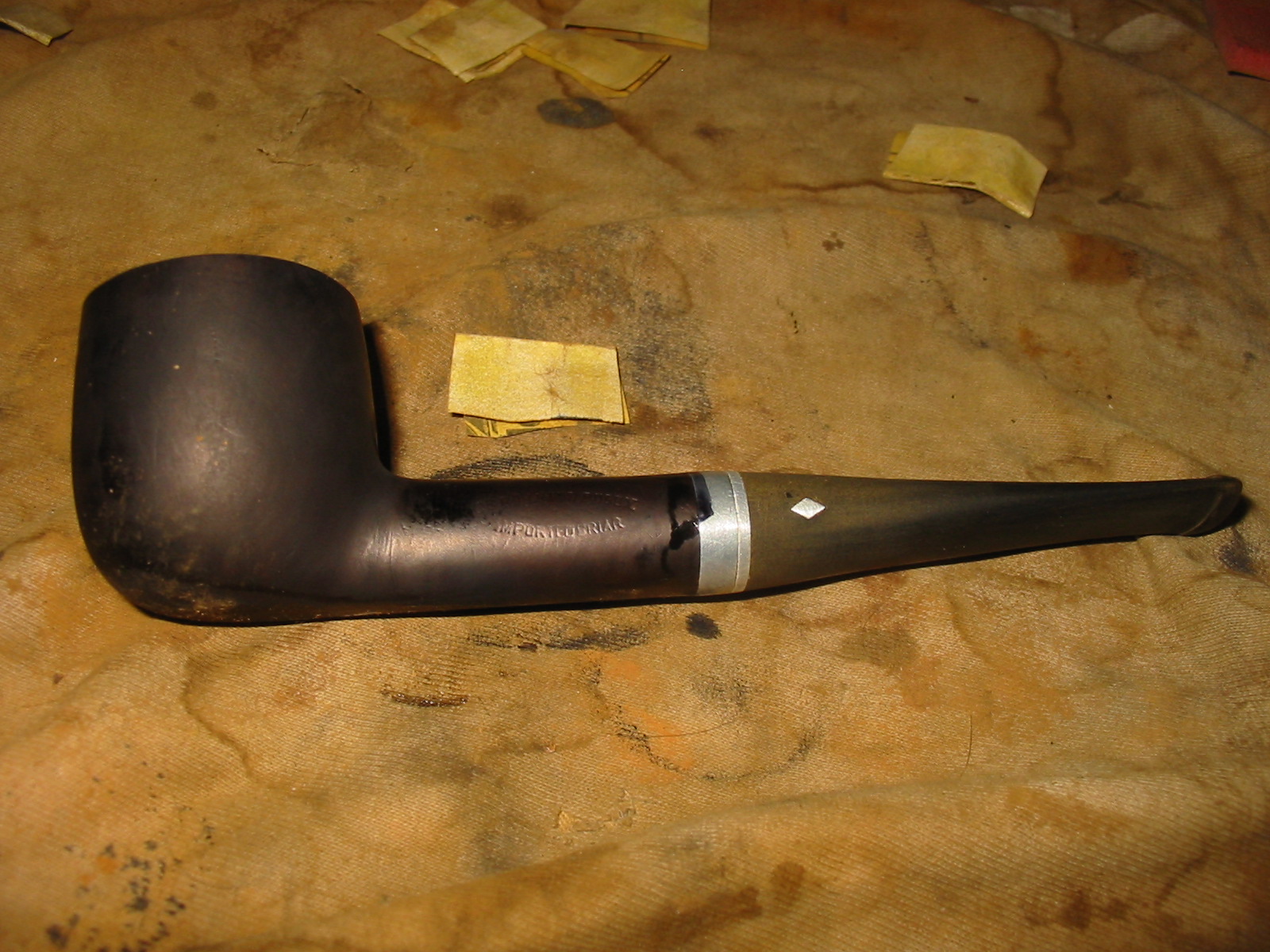
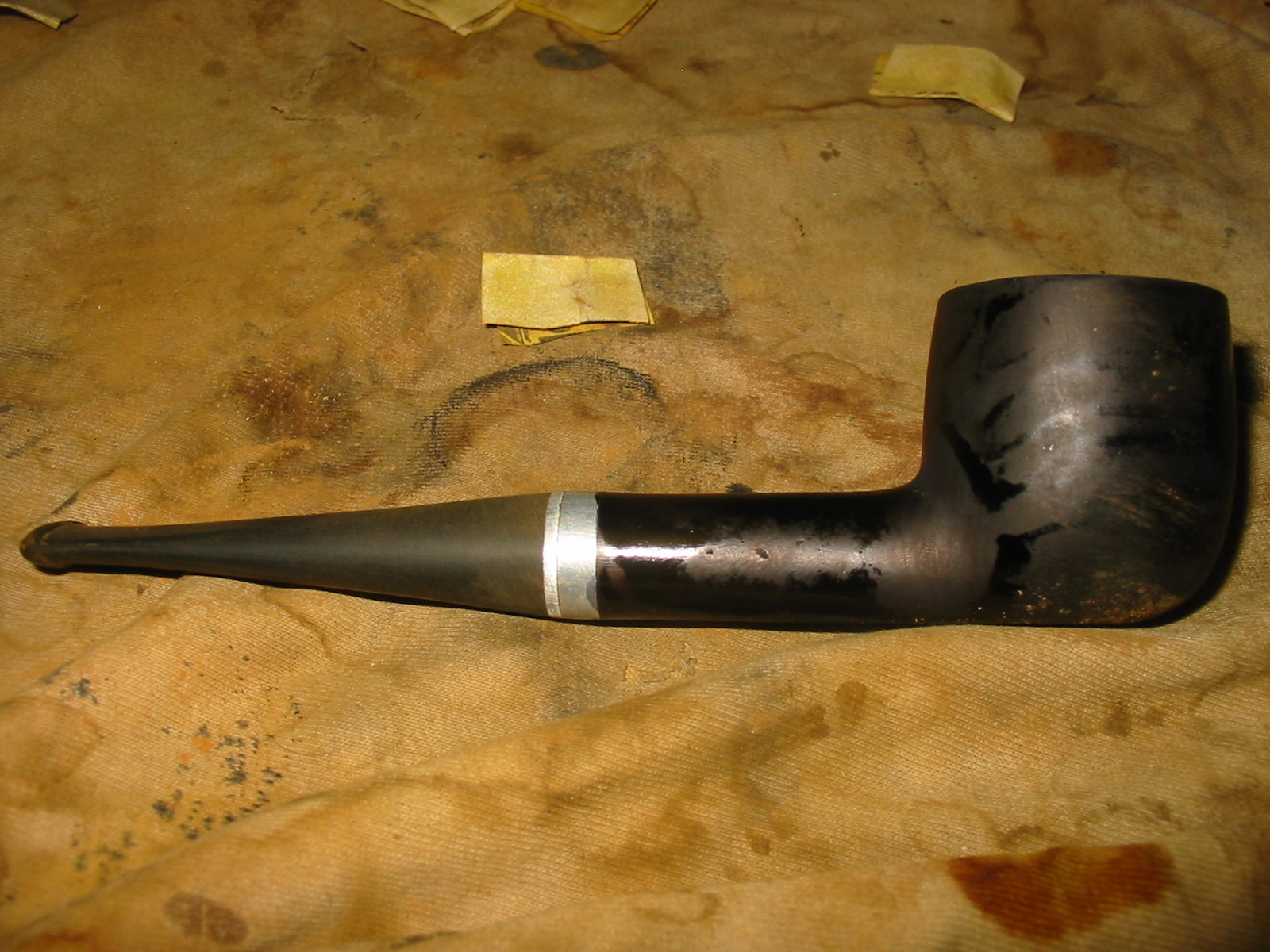
While I worked on the stem the bowl had been soaking in an alcohol bath to help loosen the varnish or urethane finish. My plan was to remove the finish totally and sand and restain the pipe once it was cleaned and sanded.
IMG_2569

IMG_2570

IMG_2571

The alcohol bath softened the finish so when I dried it off the finish was cloudy. I have found that with this kind of finish I can use acetone on a cotton pad afterward to further remove the softened finish. The next two photos show the bowl with the finish removed. There is some nice looking birdseye grain coming through. Once the briar was clean I reglued the metal decorative band back on the shank and let it dry.
IMG_2572

IMG_2574

I sanded the bowl with the medium grit sanding sponge and then with 1500-2400 micromesh sanding pads. The next series of four photos are a little out of focus but the cleaned surface of the briar is visible and the grain that was underneath the finish is quite nice. I was also able to remove the water marks/damage that was along the outer edge of the rim and down the side of the bowl in the process of the sanding. I also cleaned out the shank with cotton swabs and Everclear. I did the stem as well and cleaned until the cleaners and swabs came out clean and white.
IMG_2575

IMG_2576

IMG_2577

IMG_2579

While the glue dried I worked on the nylon stem. I was able to remove all of the tooth damage. I wet sanded it with 1500-2400 micromesh sanding pads and removed the majority of the scratches left behind by the sanding sponge. I continued to rework the stem with these sanding pads until all of the scratches were gone and the stem began to take on a shine. (Photos 1-2 below show a top and bottom view of the stem).
IMG_2581

IMG_2582

I dry sanded with the remaining grits of micromesh sanding pads from 3200-12,000 grit. The stem took on its original shine. The next series of four photos show the stem as it moves through each level of polishing.
IMG_2583

IMG_2584

IMG_2585

IMG_2586

I wiped the bowl down a final time with acetone on a cotton pad to remove the sanding dust and grit. I dried it carefully and then it was ready to stain. I decided to use a linseed oil and medium walnut stain on this pipe. I felt it would make the grain show well and give the bowl a good protective coat. I applied the stain and wiped it off, reapplied and wiped it until I got the coverage I wanted on the bowl. The next series of four photos show the stained bowl.
IMG_2587

IMG_2588

IMG_2589

IMG_2590

I buffed the bowl and shank on the buffing wheel lightly with Tripoli and then with White Diamond to give it a shine. I then buffed it with carnauba wax and gave it several coats to protect the wood. I did not buff the stem on the wheel as the nylon heats too quickly on the buffing wheel and melts. I have made a mess out of more than one nylon stem. It does not seem to matter how light a touch I use the wheel and the nylon stems do not work well together. I gave the stem a coating of Obsidian Oil and rubbed it into the stem. I then hand applied several coats of carnauba wax and hand buffed the stem with a shoe brush and a soft cotton cloth. The finished pipe is pictured below. All in all it is not a bad looking old Grabow. It is clean and should smoke very well.
IMG_2591

IMG_2592

IMG_2593

IMG_2594

Link

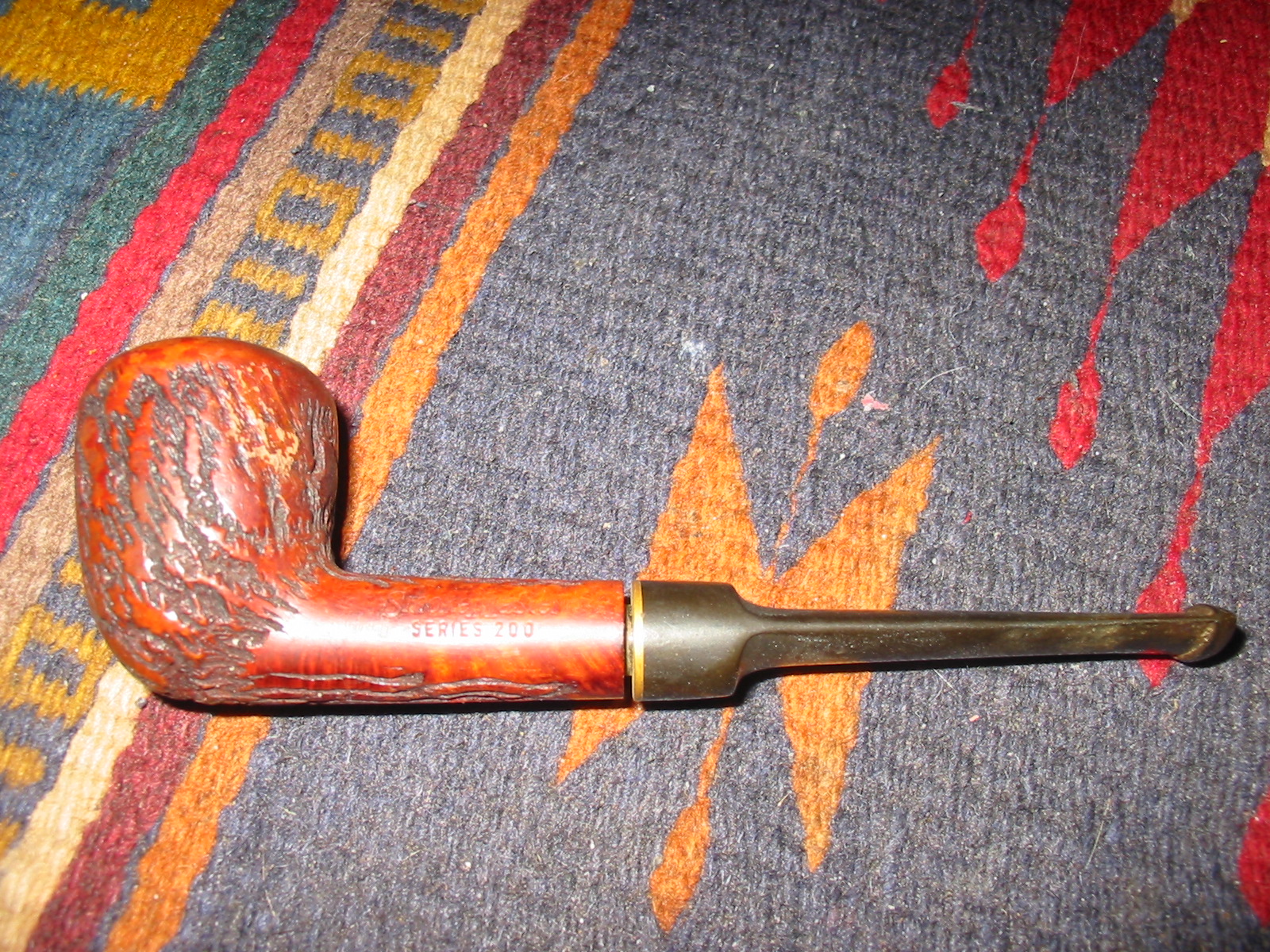
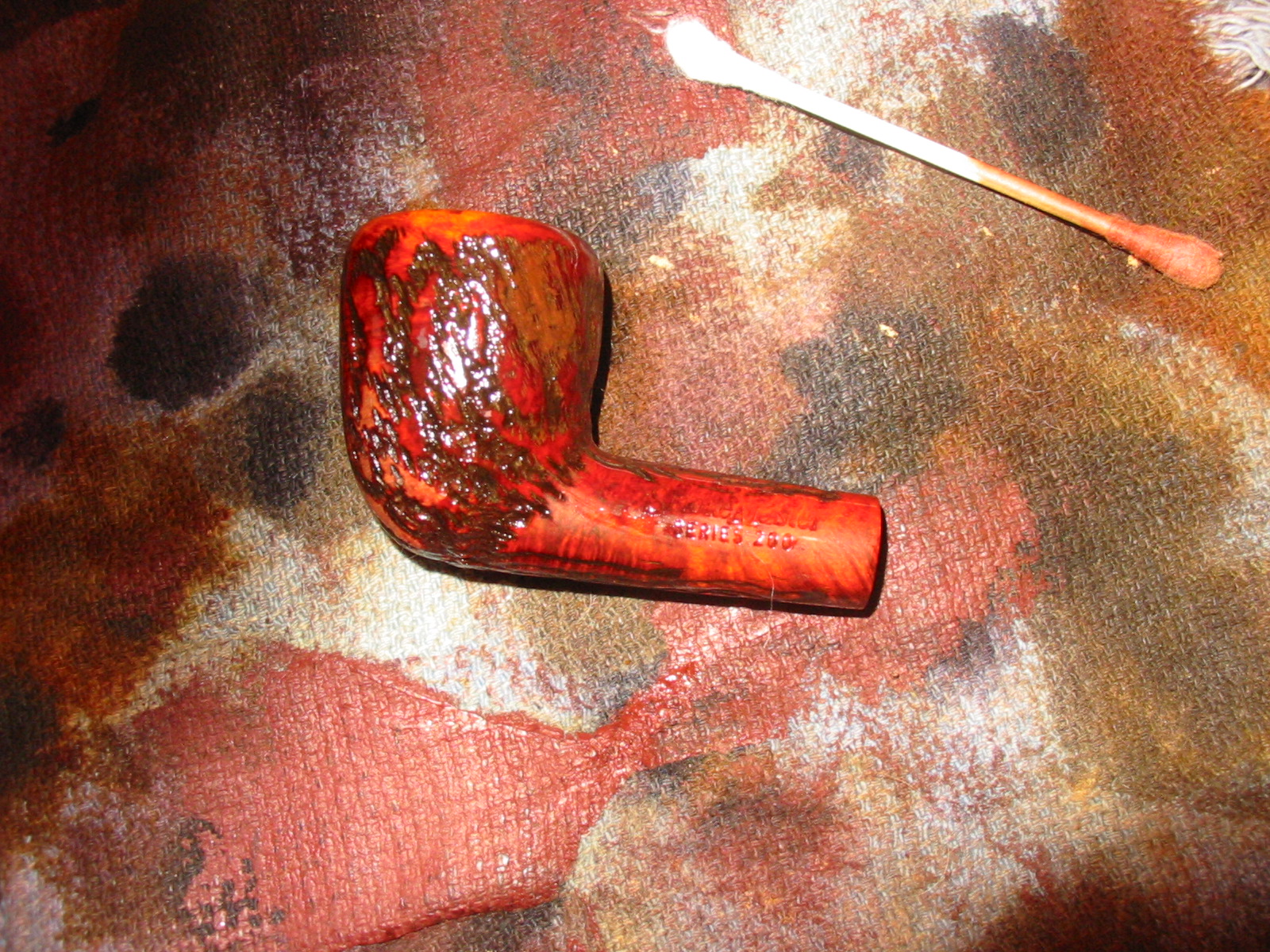
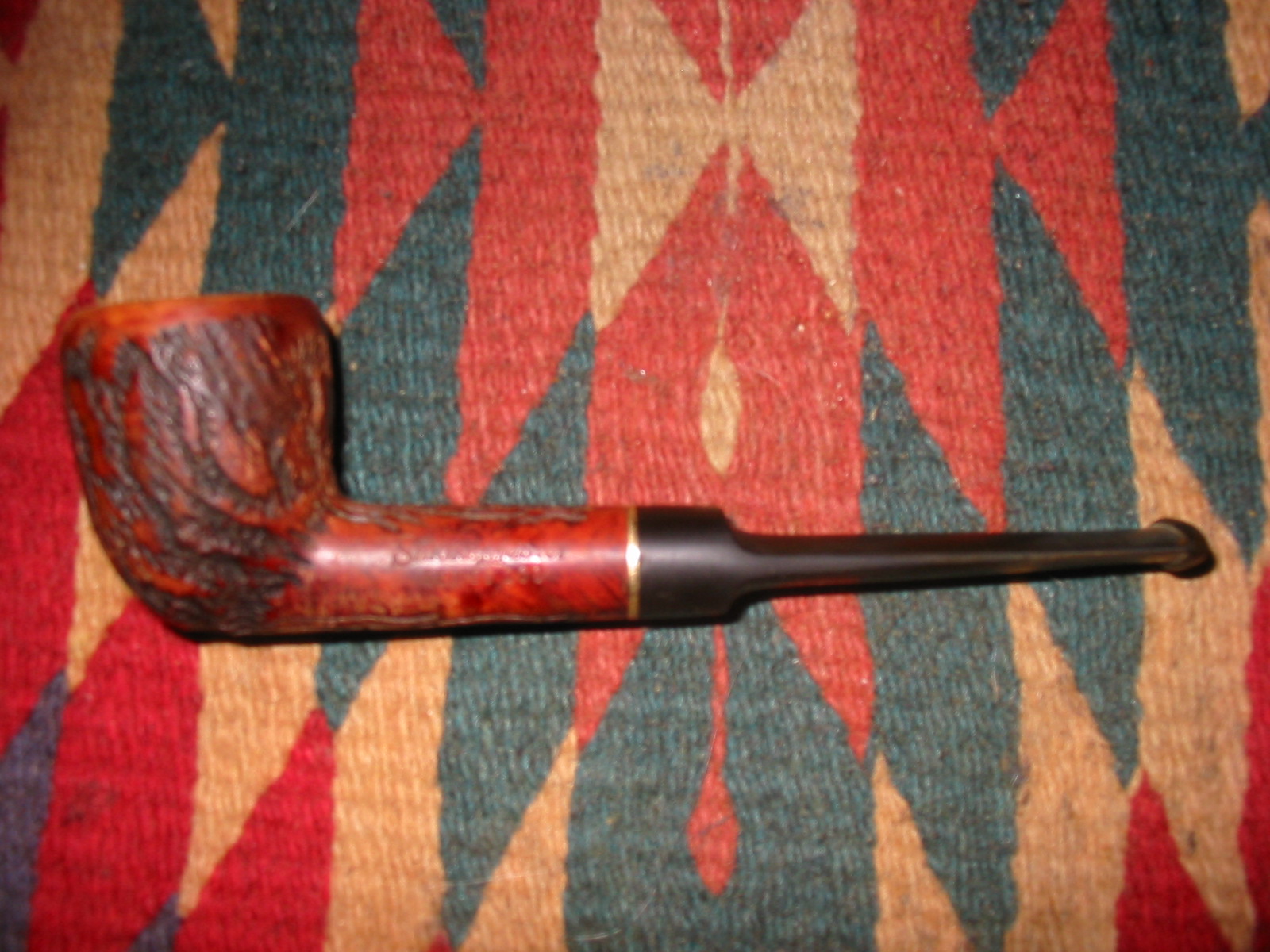
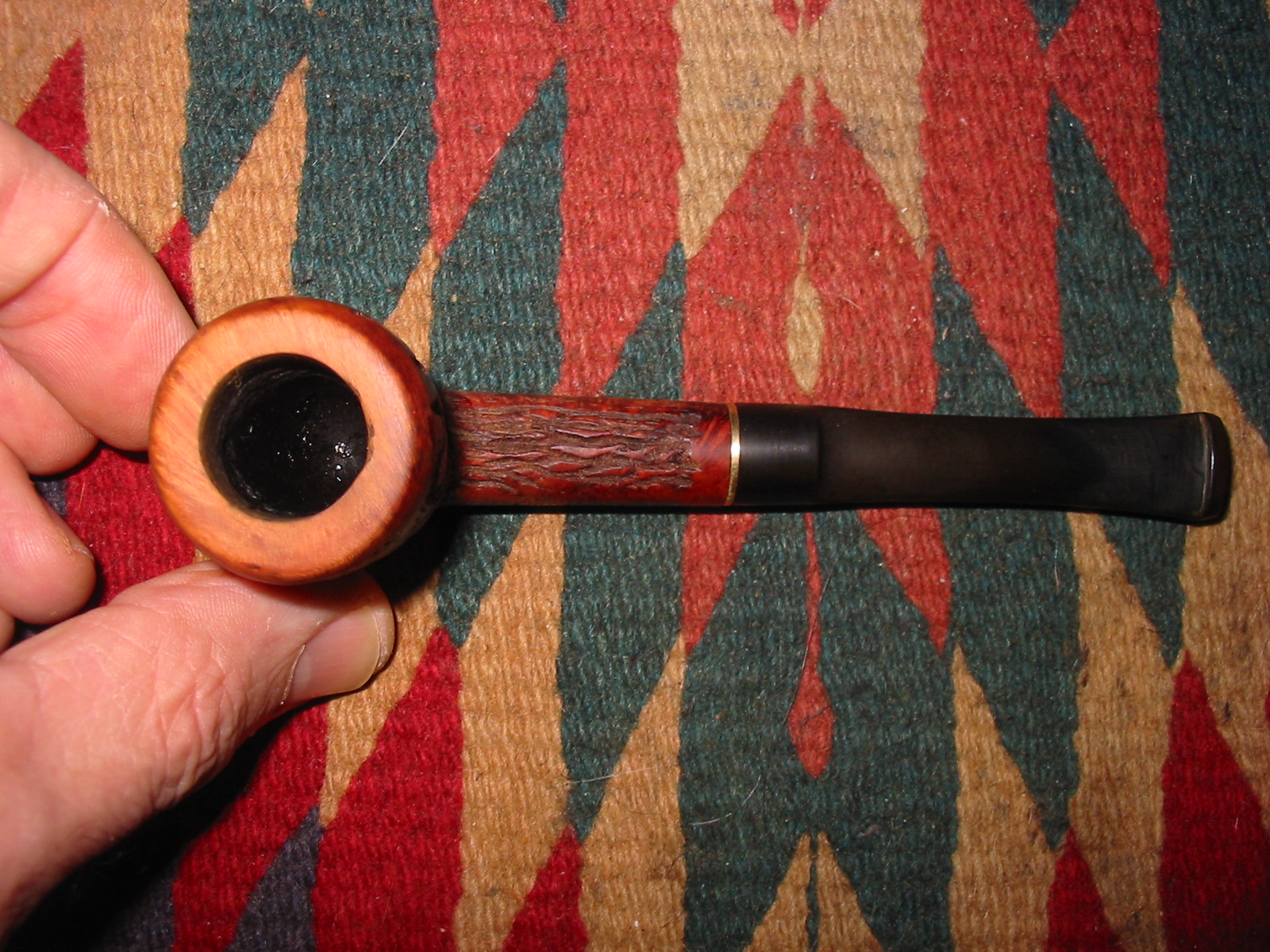
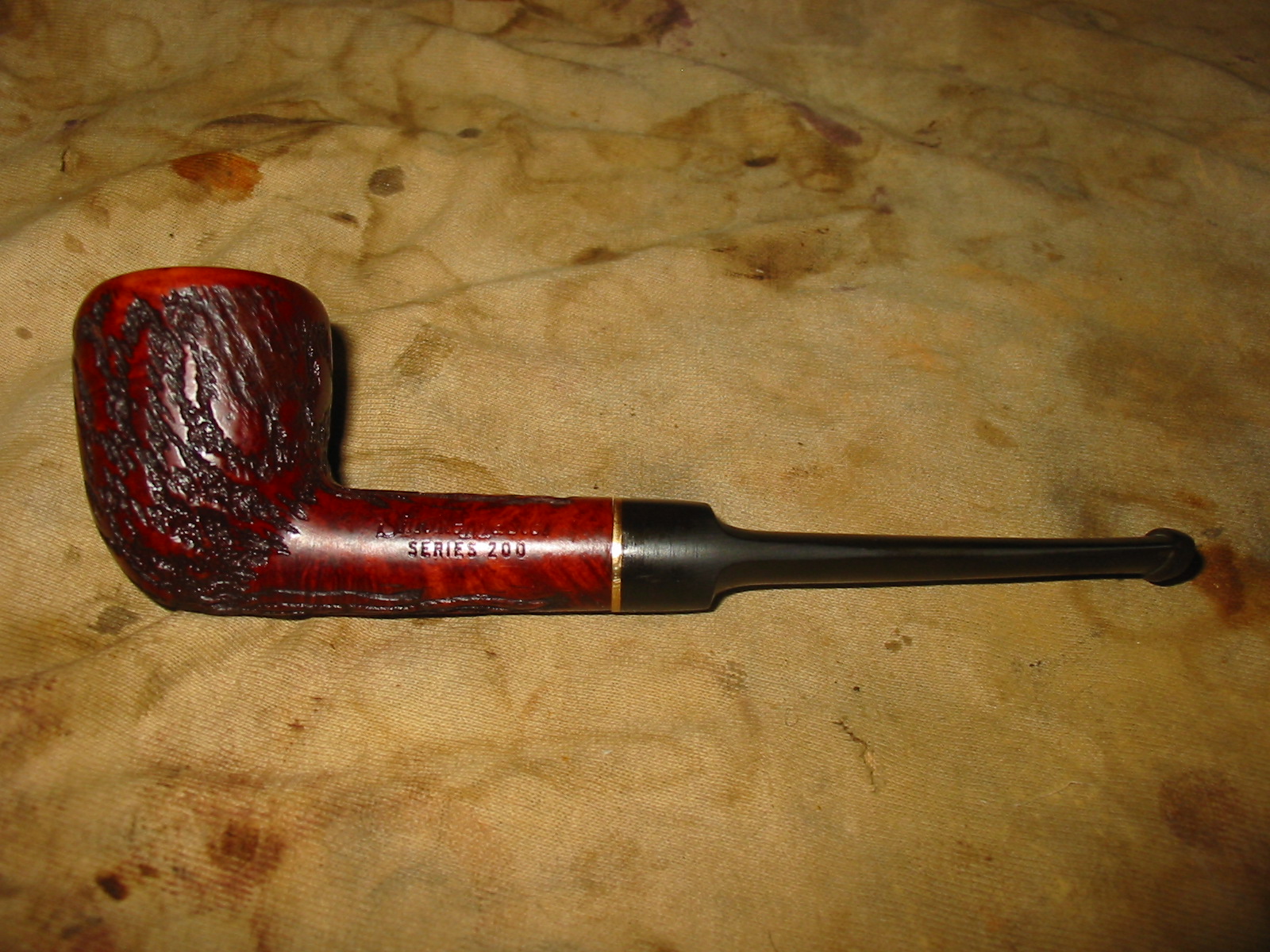
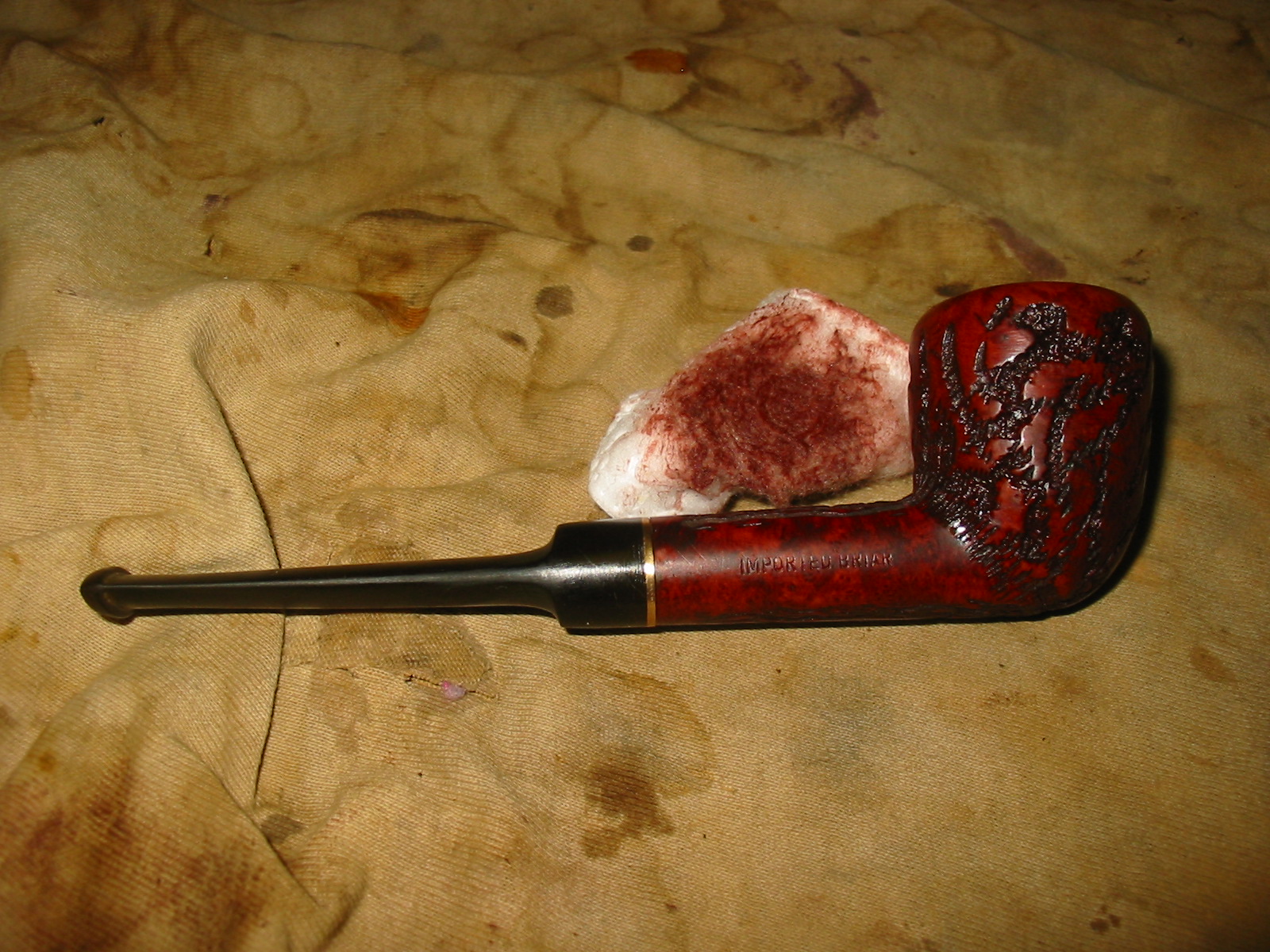
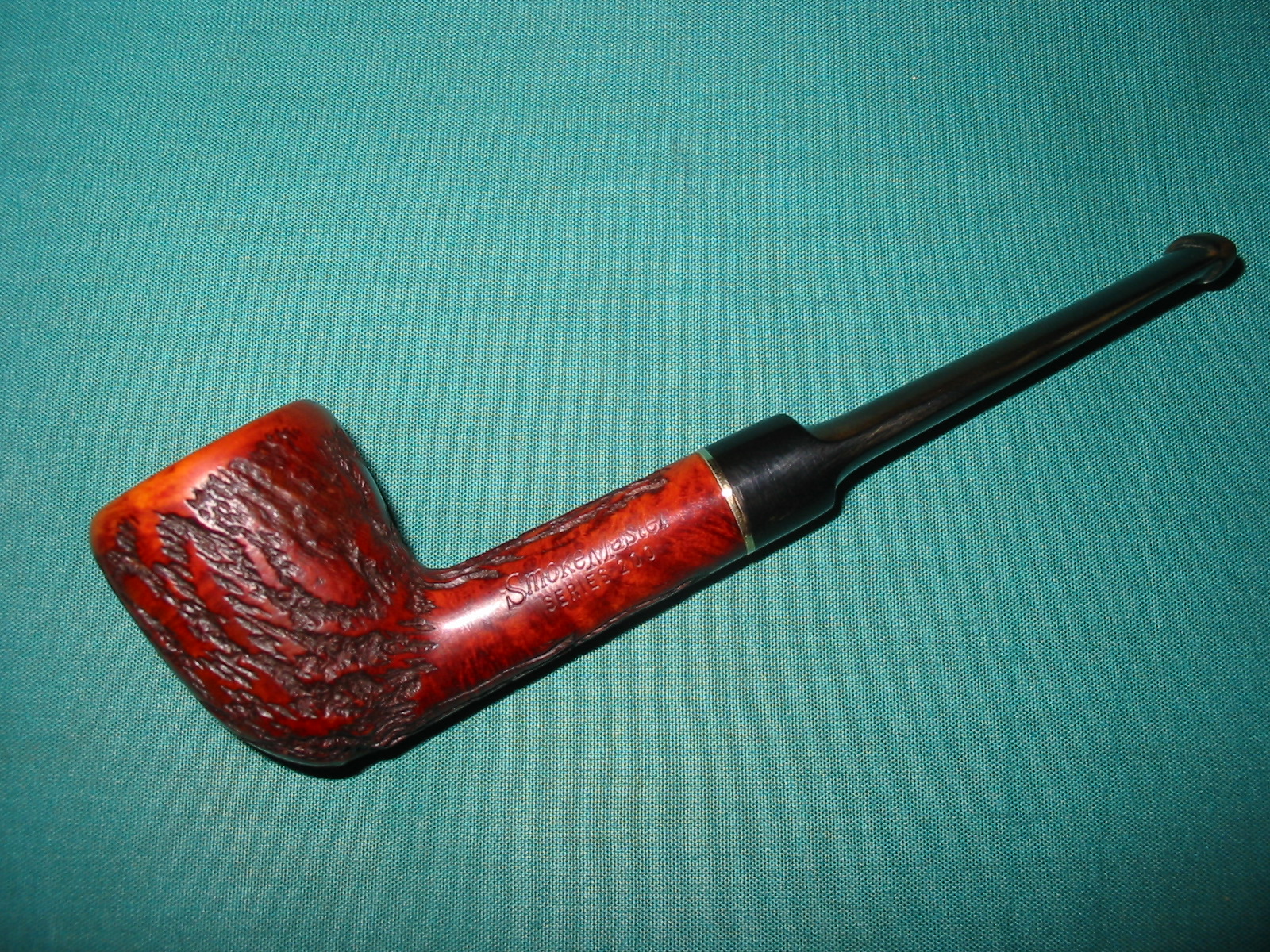
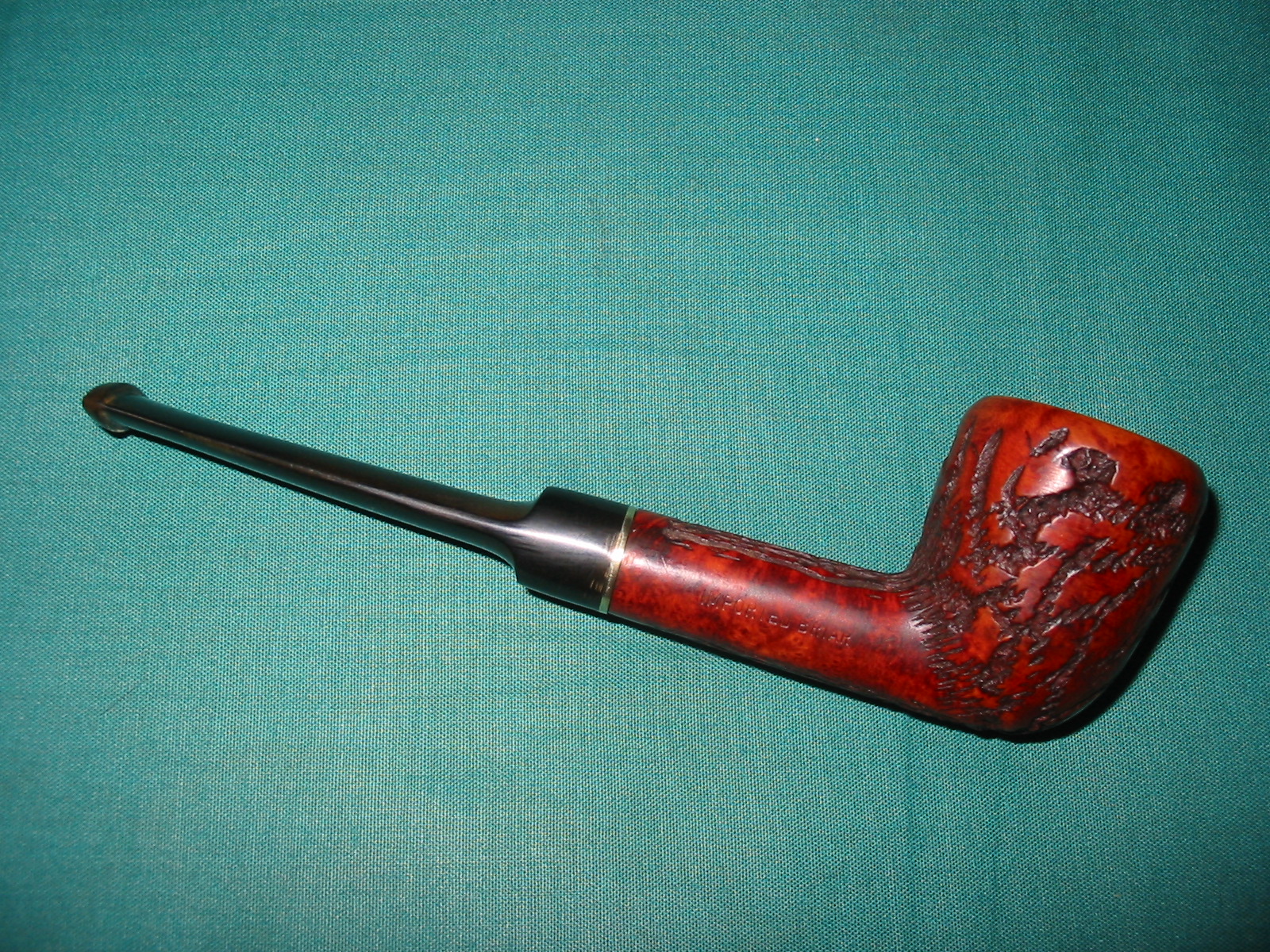
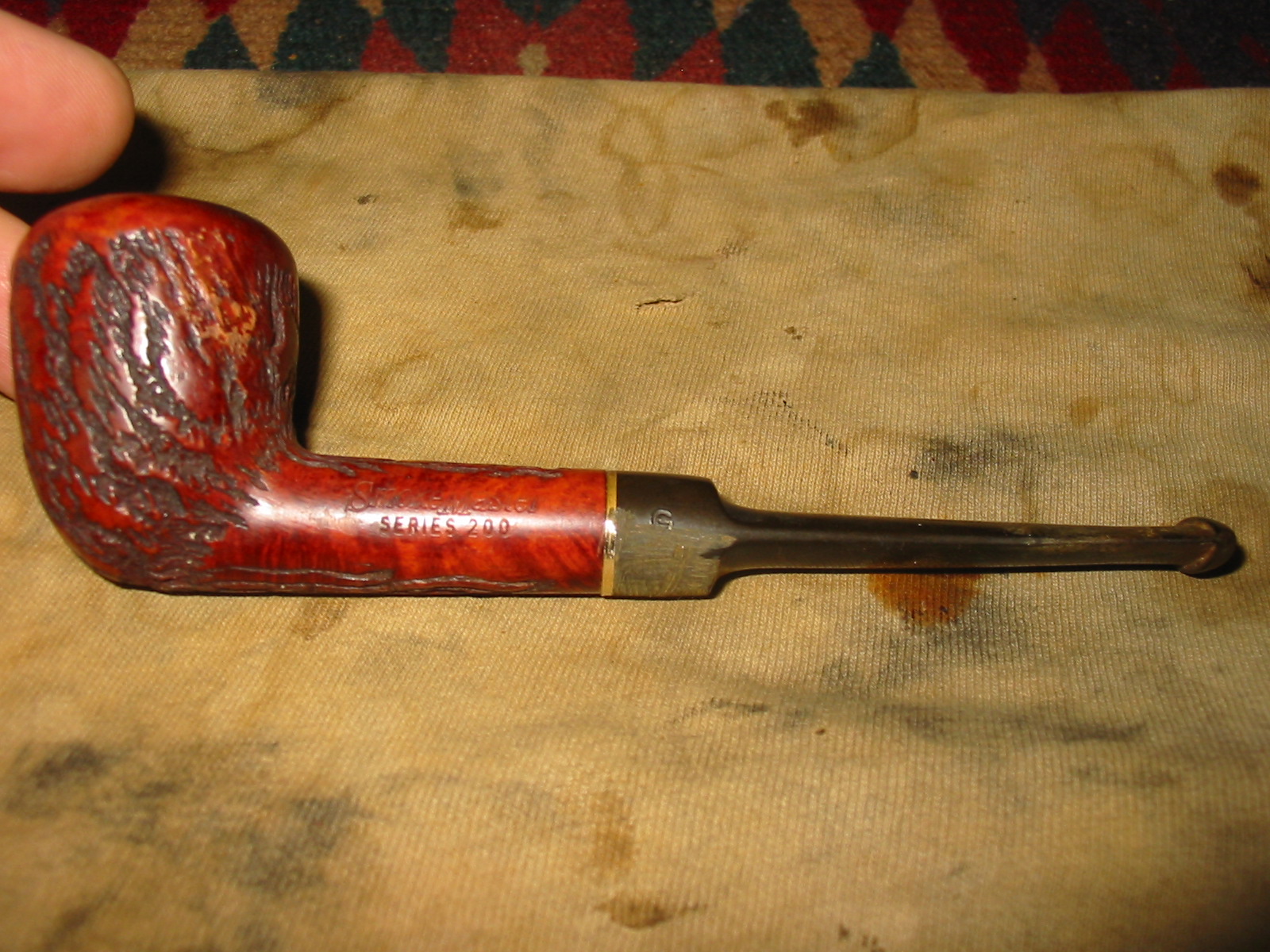
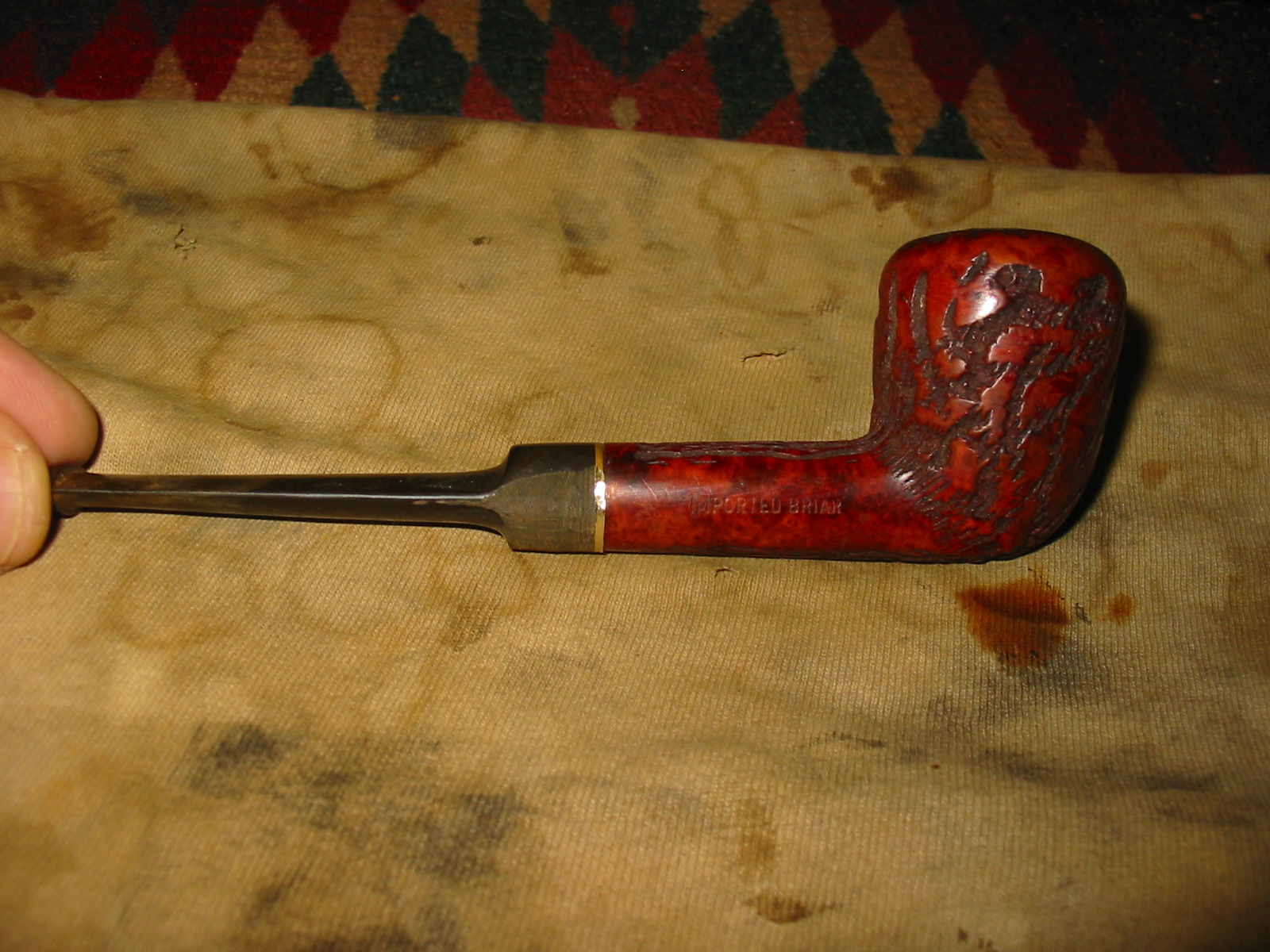
One of the pipes that I had been given years ago was stamped SmokeMaster Series 200 and was an acorn shaped rusticated bow with a smooth side on each side of the shank for stamping and a smooth rim. The left side bore the name and series number and the right side was stamped Imported Briar. The stem had been well chewed and the internal apparatus was missing. It was not useable on this pipe. I would have to restem it. I knew nothing of the brand name. My search on the internet gave me some information on the brand.

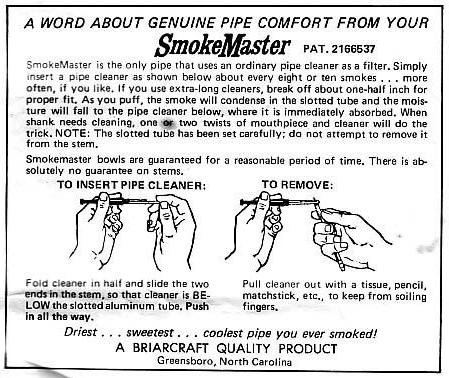
On the Dr. Grabow site ( http://drgrabows.myfreeforum.org/sutra13181.php ) I found some interesting information. I quote this post by Dave Whitney, the author of Old Briar, a book on refurbishing. “Smokemaster was a Briarcraft pipe. Richard Kliethermes Sr. was the founder of Briarcraft. First located on Pipetown Hill Rd, Spring Valley, NY, it moved later to 66 Central Ave., Spring Valley, NY. After the death of RK Sr., the business was run by Richard Kliethermes Jr. († 1943) and was quite prosperous between 1920 and 1940. The company closed in 1950. Briarcraft seconds are as follows: Airo, Arcadian, Briarmeer, Smokemaster, Cavalcade, Hallmark, Sterling Hall, and Wimbledon. The Orange off-center diamond was one of their logos.”

The link also had the following scan that shows the original design for the stems and the unique folded pipe cleaner filtration system of the original pipe. I decided to restem the pipe with a stem of my own choice rather than hunt down an original stem.
Smokemaster Patent Stem

Please forgive the poor focus on the next three photos but they still give the idea of what the pipe looked like when it arrived to my work table. It was in rough shape. The bowl finish was spotty and the varnish was coming off. The rim was out of round and the back edge of the inner rim and top were beat up and rough. The stem was gnawed off and the short length would not work with this old pipe. The cake was thick and uneven with large flakes of tobacco stuck to the inner walls of the bowl.
IMG_1015

IMG_1016

IMG_1017

I went through my stash of stems and found an old saddle stem with a built in brass band that would approximate the aluminum one on the original stem. I would need to do some work on the tenon length and the diameter of the saddle portion of the stem to get a correct fit but it was workable as the new stem.
IMG_1018

I reamed the bowl with a PipNet reamer (Photo 1 below) and a plumber’s wire brush (Photo 2 below) to clean out the debris. I used a sharp knife (Photo 3 below) to reshape the inner edge of the bowl and bring it back to round. Photo 4 shows the reshaped and cleaned bowl. I would have to top the bowl to repair the roughness to the top of the rim.
IMG_1027

IMG_1028

IMG_1029

IMG_1030

I used a sanding drum on a Dremel to shape the saddle diameter to meet that of the shank. The sanding drum worked well on the vulcanite and the brass. Due to the difference in hardness of the two materials I had to be careful to not cut the vulcanite deeper than the brass. The idea was to make a smooth transition between the two materials on the stem.
IMG_2276

IMG_2277

IMG_2279

The next photo shows the condition of the top rim of the bowl. I decided to top the bowl and then rework the rounded edge to keep the acorn shape intact. I set up a piece of sandpaper on my flat board and turned the bowl into the sandpaper. I worked it and sanded it, repeatedly checking the flatness of the rim and also the amount of briar I was removing from the rim.
IMG_2278

IMG_2280

IMG_2281

Once the roughness was smoothed out I sanded the rim with 220 grit sandpaper and a medium grit sanding block to smooth out the top and to round the outer edge of the rim to make it less abrupt and more like the original shape. The next two photos show the rim after the sanding and shaping with the sanding block.
IMG_2282

IMG_2284

At this point in the process I put the bowl into an alcohol bath and let it soak overnight to remove the varnish finish that was spotty and damaged. The next morning I took it out of the bath, dried it off and cleaned out the shank and the shank. The first photo below shows the bowl after I removed it from the bath. The second, third and fourth photos show the bowl after drying.
IMG_2286

IMG_2287

IMG_2288

IMG_2290

I restained the pipe with a Danish Oil Cherry stain applied with a cotton pad. I need to be able to work the stain into the deep rustication and also on to the smooth portions of the shank and rim. The rim took several applications to match the rest of the bowl.
IMG_2291

IMG_2292

IMG_2293

IMG_2294

I put the bowl aside to dry and worked on the stem. I sanded out the remaining scratches around the brass band on the stem with 220 grit sandpaper and then reworked it with the medium grit sanding block. Once the scratches were no longer evident I worked on the stem using the micromesh sanding pads from 1500-12,000 grit to polish the stem and prepare it for waxing and buffing. Once I finished with the 12,000 grit pad I gave the stem a coat of Obsidian Oil to seal the surface and to soak deeply into vulcanite. I buffed the stem with White Diamond to finish the shine and then reinserted it into the shank.
IMG_2295

IMG_2296

IMG_2297

I buffed the entire pipe with White Diamond and gave it a coat of Halcyon II wax for rusticated pipes. I then buffed it again with a clean flannel buff to raise the shine. The photos below show the finished pipe.
IMG_2302

IMG_2303

IMG_2300

IMG_2301

Comoys Rhodesian Restoration


Blog by Al Jones

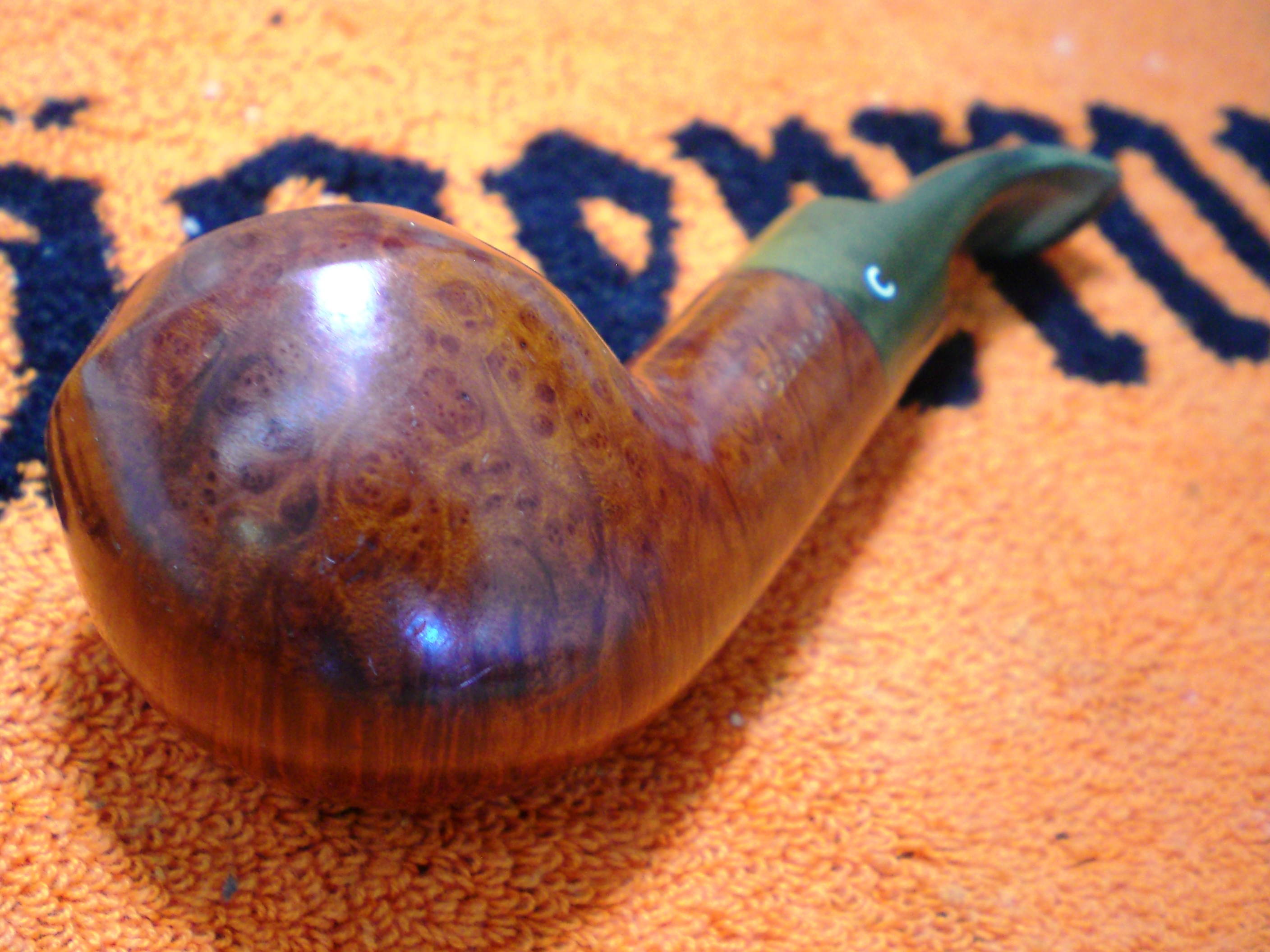
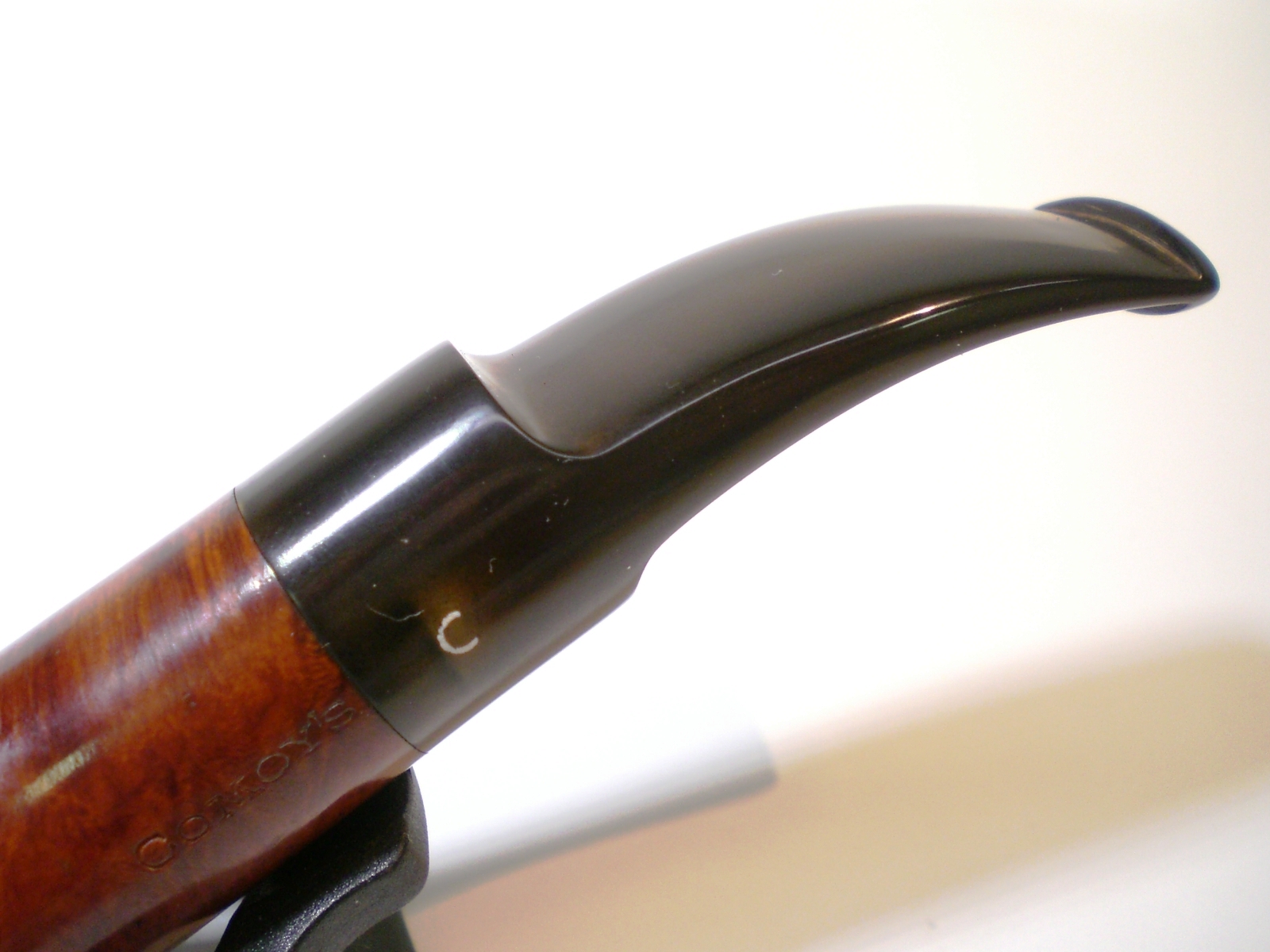
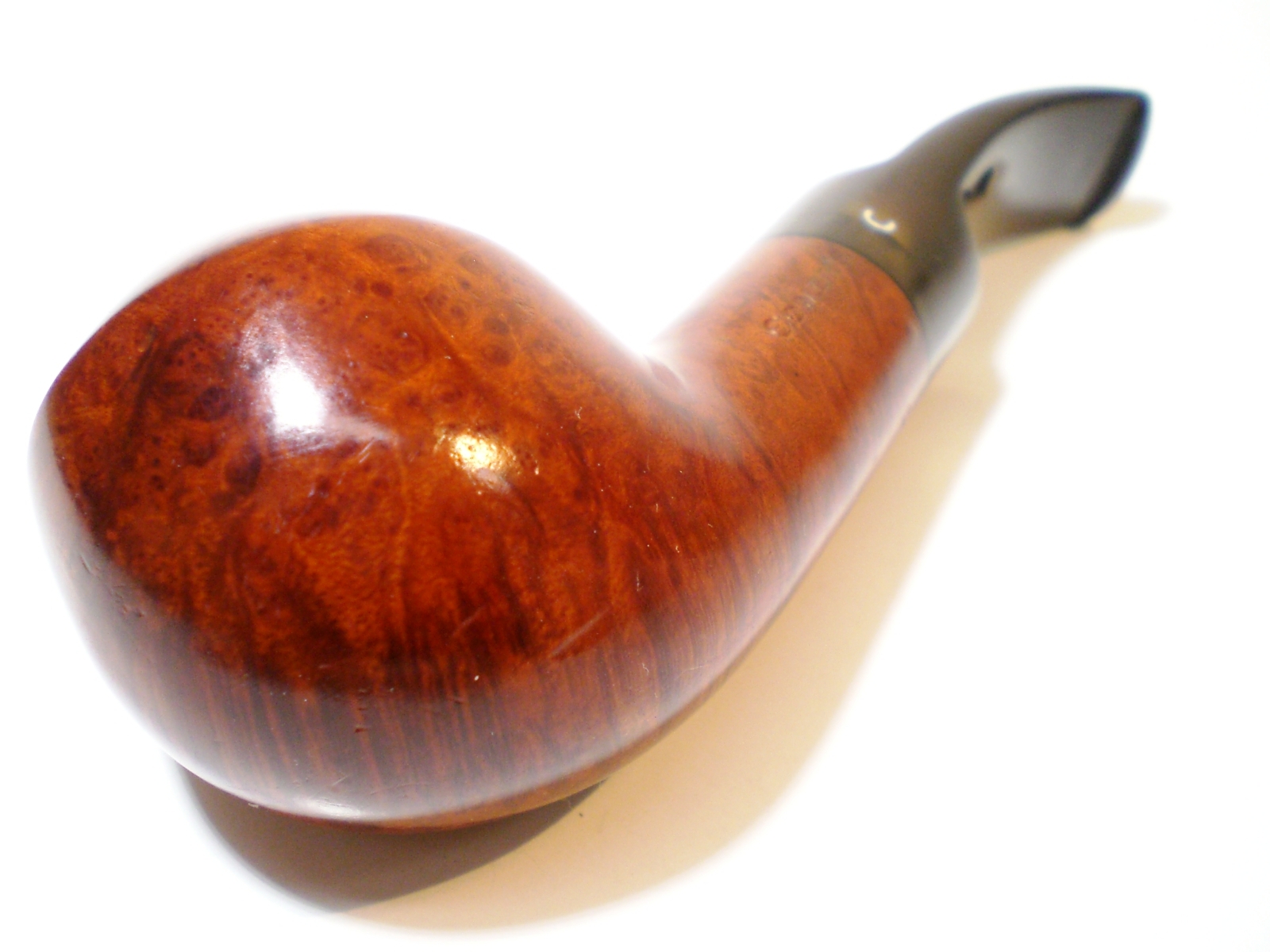
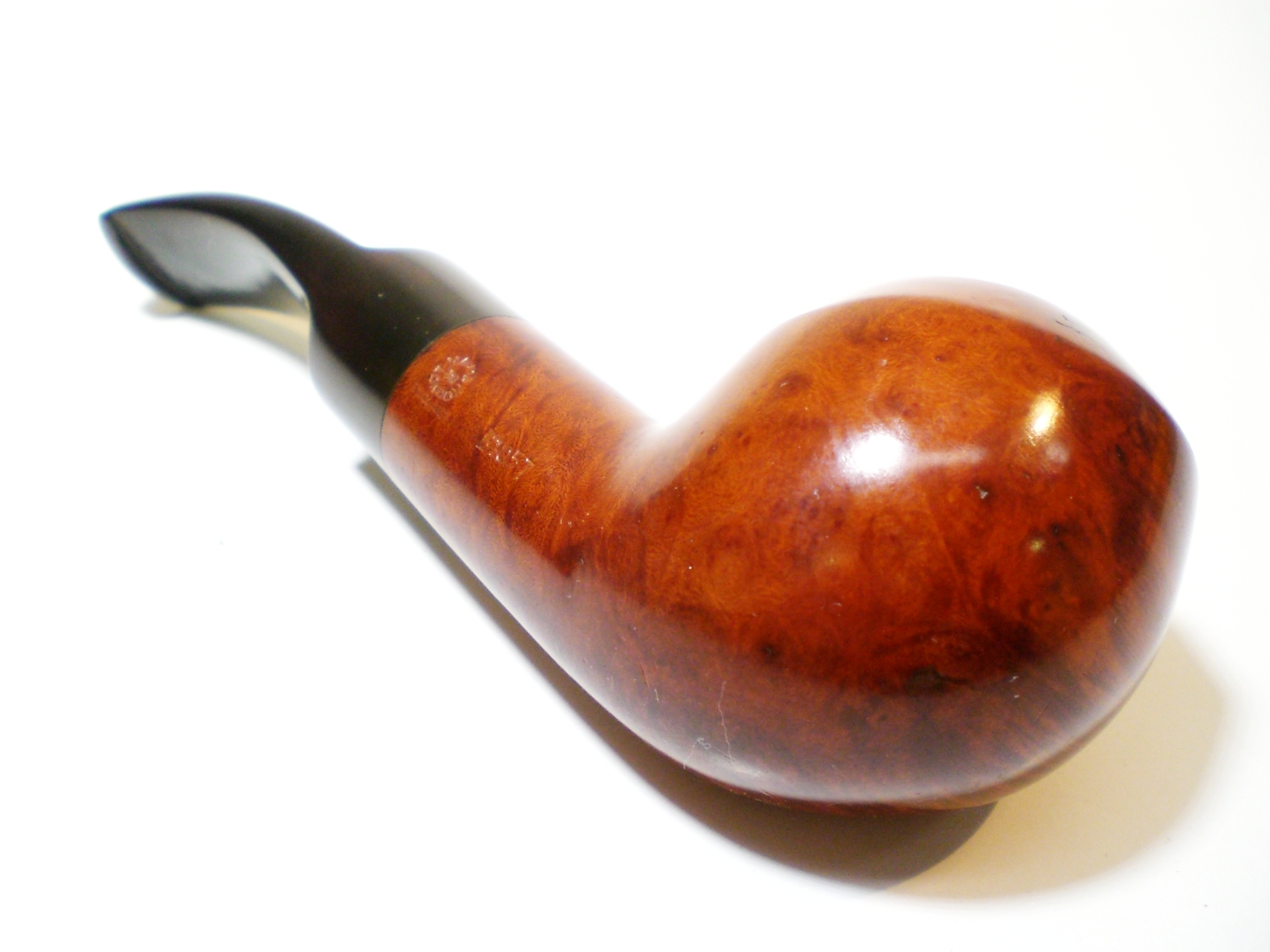
I was looking for a Christmas pipe to restore for my future son-in-law and spied this neat, chubby Comoys Rhodesian on Ebay. It is a Cadogan era Comoys with a stamped C stem logo and has shape number B1057. The shape and size remind me of the GBD 9438, but without the beading on the bowl. He has a 9438 from last Christmas, so this Comoys will make a good rack mate for it.

Comoys_B1057_Before

Comoys_B1057_Before (4)

Comoys_B1057_Before (3)

Comoys_B1057_Before (1)

Comoys_B1057_Before (5)

Comoys_B1057_Before (8)

The pipe was in pretty good shape with a little tar buildup on the bowl rim and a heavily oxidized stem. There were some teeth abrasions on the stem, but they were minimal with no heavy indention’s. Stem fitment was great. The pipe passes a cleaner nicely appears to be drilled well. The bowl showed very light use and was easy to clean.

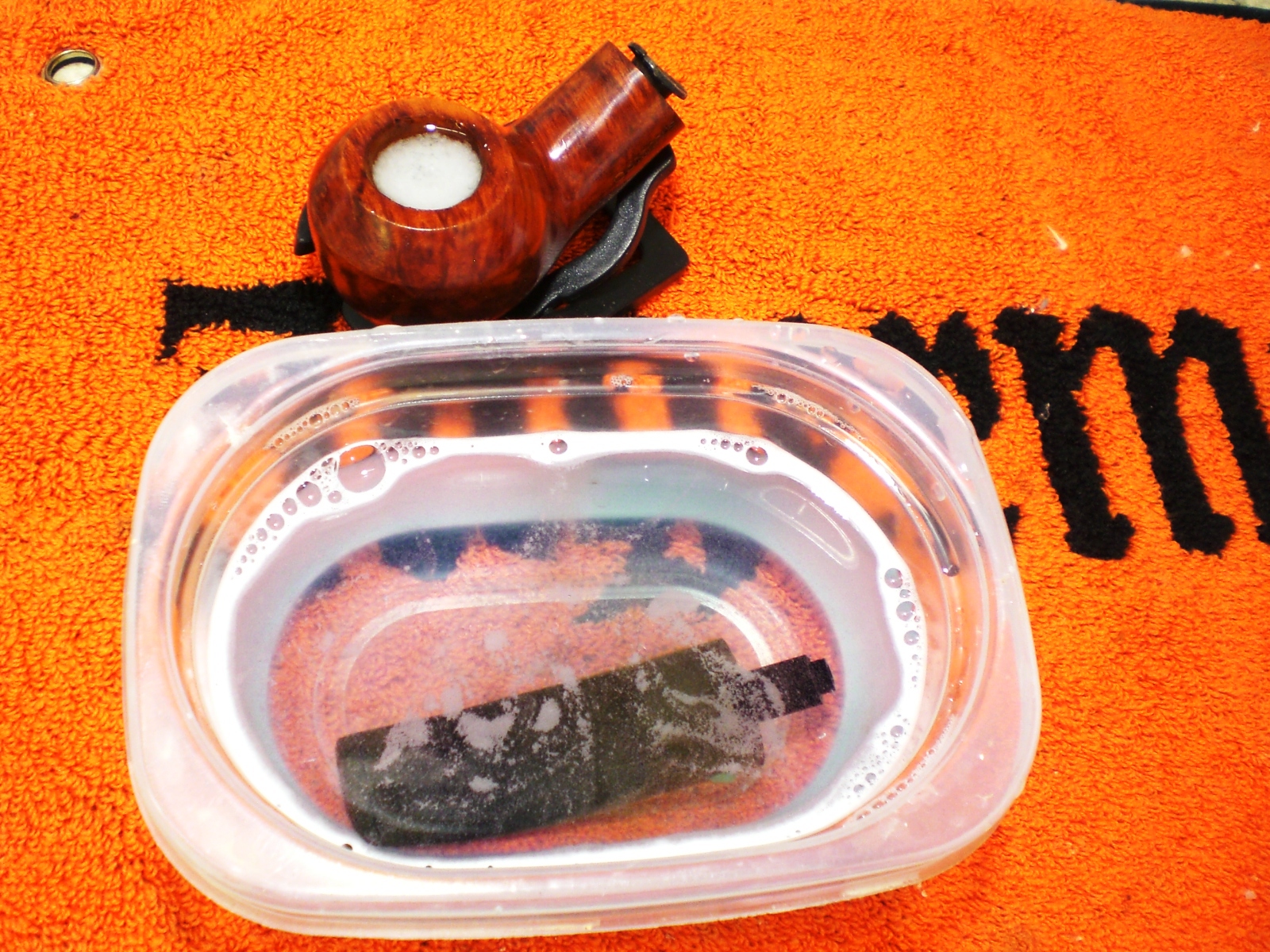
I soaked the bowl with 91% isopropyl alcohol and the stem in a mild Oxy-Clean solution. I put a dab of grease on the stem logo.

Comoys_B1057_Progress

The bowl didn’t take much, I buffed it with some white diamond and then red rouge, followed by several coats of carnuba wax. There are a few fills, but they blended in nicely and aren’t too noticeable.

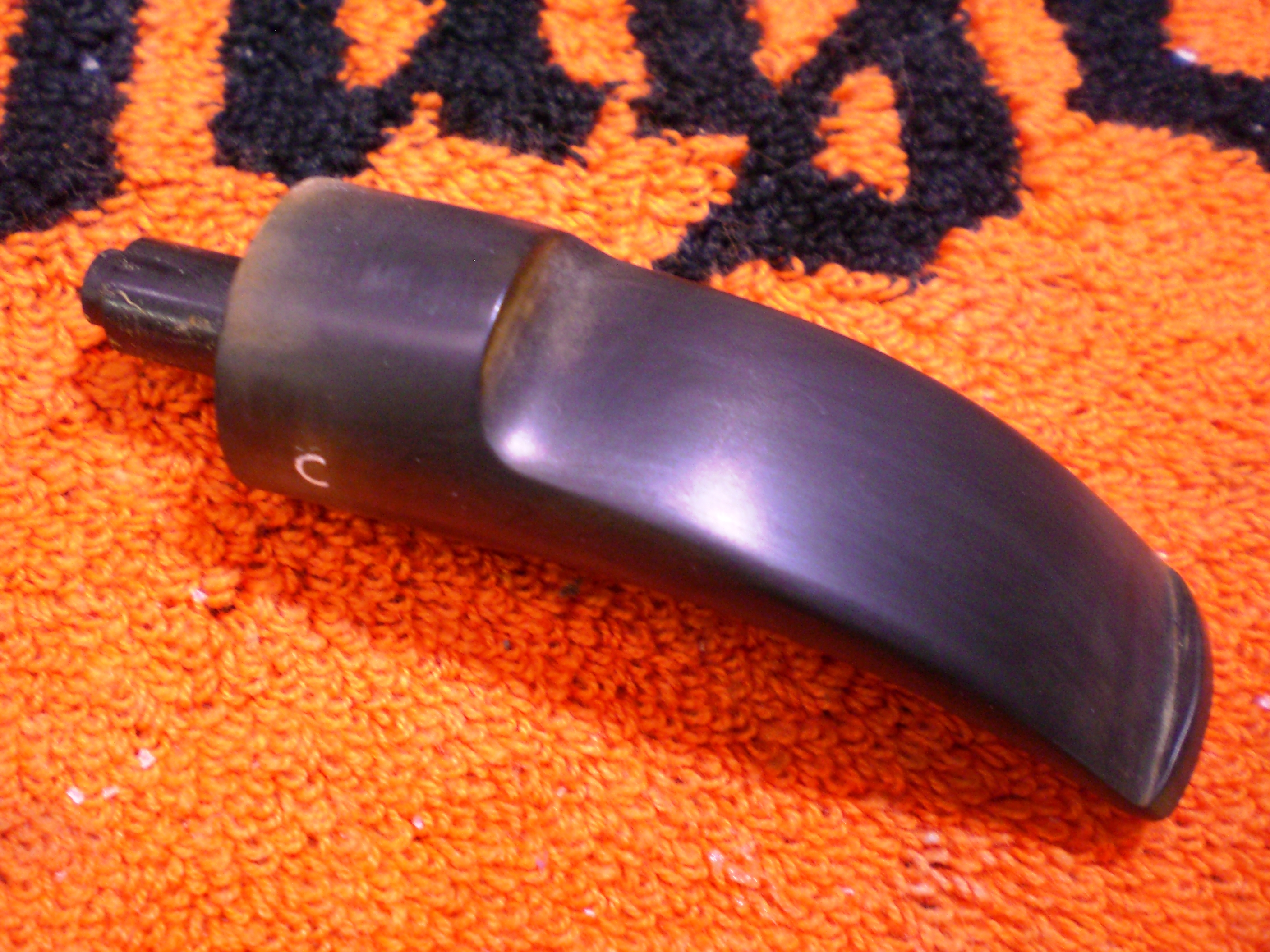
I used 800 grit wet paper to remove the first layer of oxidation. That was followed by 1500 and 2000 grade wet papers. Working around a stamped C logo is always a little tricky and I don’t think you can get all the oxidation without damaging the letter. The stem was then sanded with 8000 and 12000 grade micromesh. I then buffed the stem with white diamond and red rouge. Below is the stem after the 800 grit wet paper.
Comoys_B1057_Progress (1)

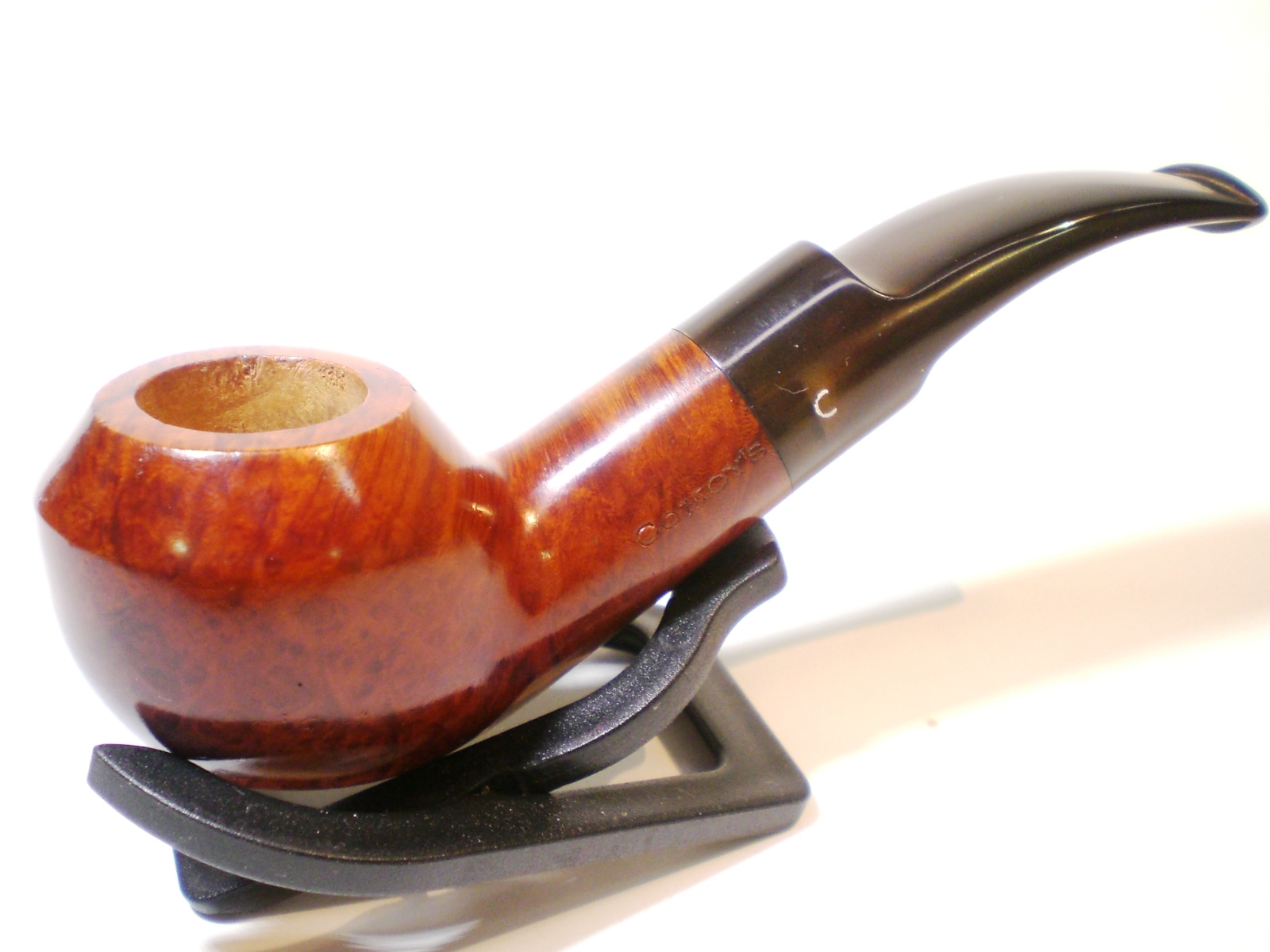
Here’s the finished pipe, ready to be wrapped for Christmas morning…shhhh, don’t tell!

Comoys_B1057_Finished

Comoys_B1057_Finished (5)

Comoys_B1057_Finished (1)

Comoys_B1057_Finished (2)

Comoys_B1057_Finished (4)

Comoys_B1057_Finished (3)

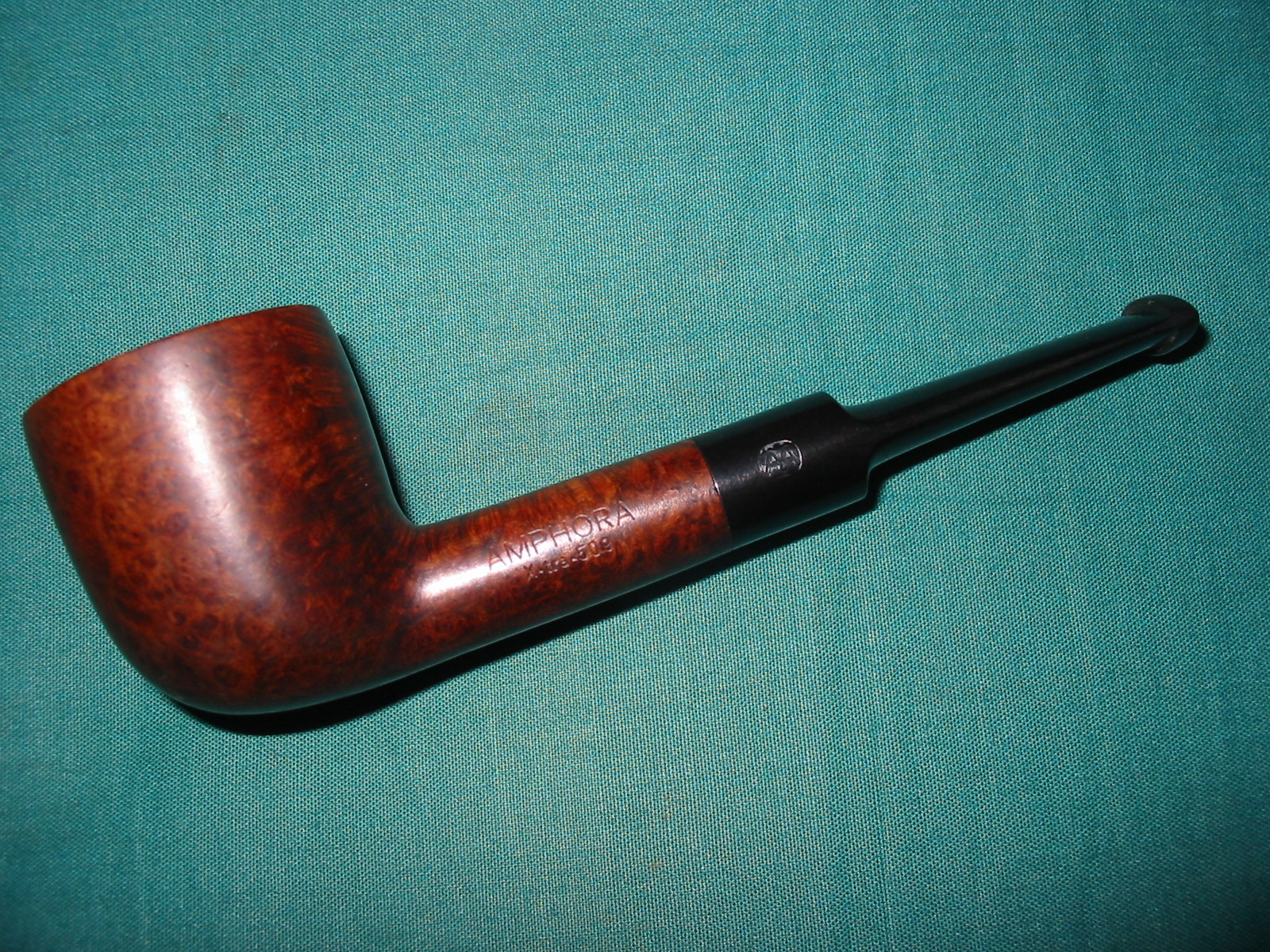
Restoring an Old Amphora X-tra 509 Pot


Blog by Steve Laug

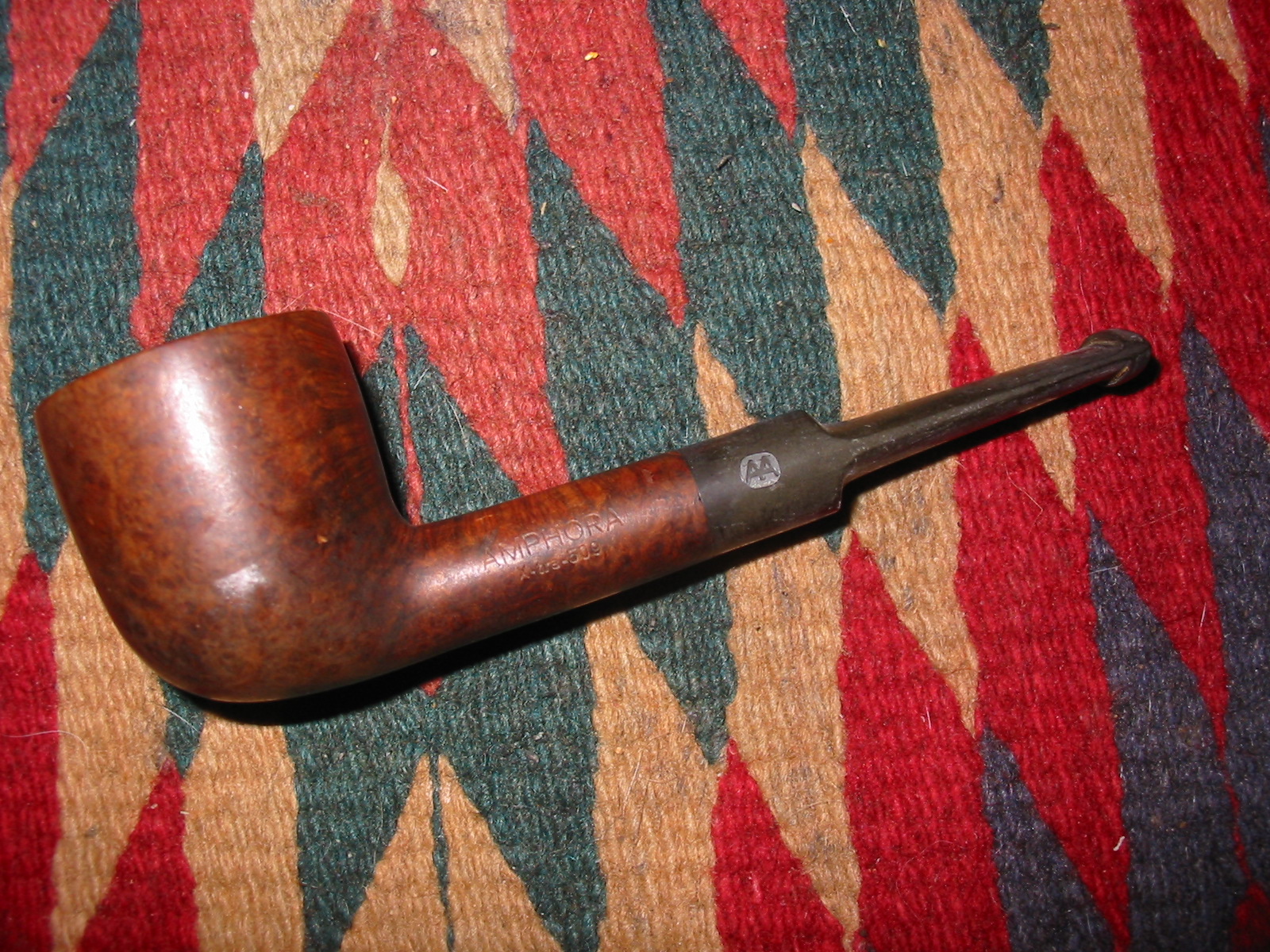
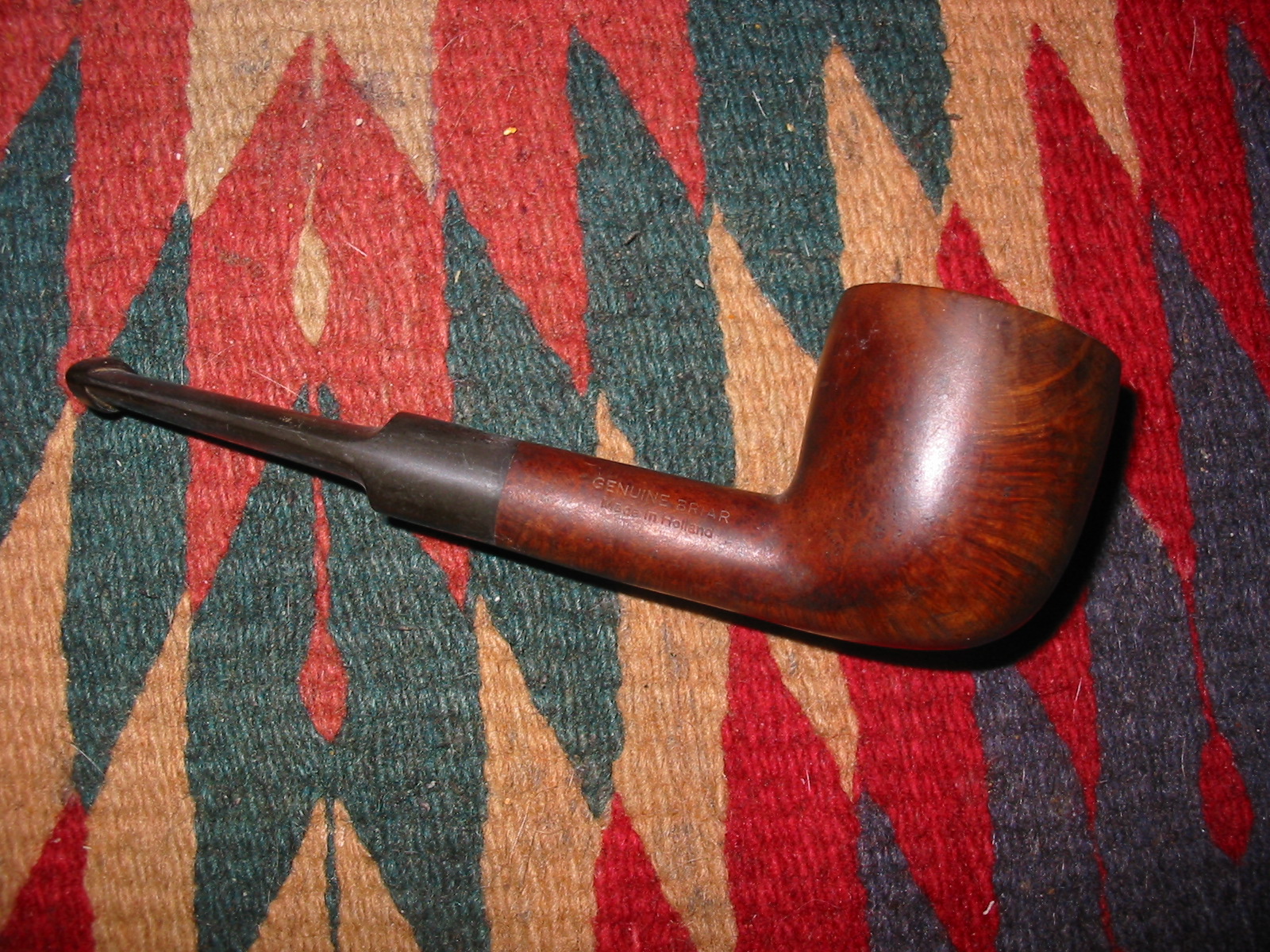
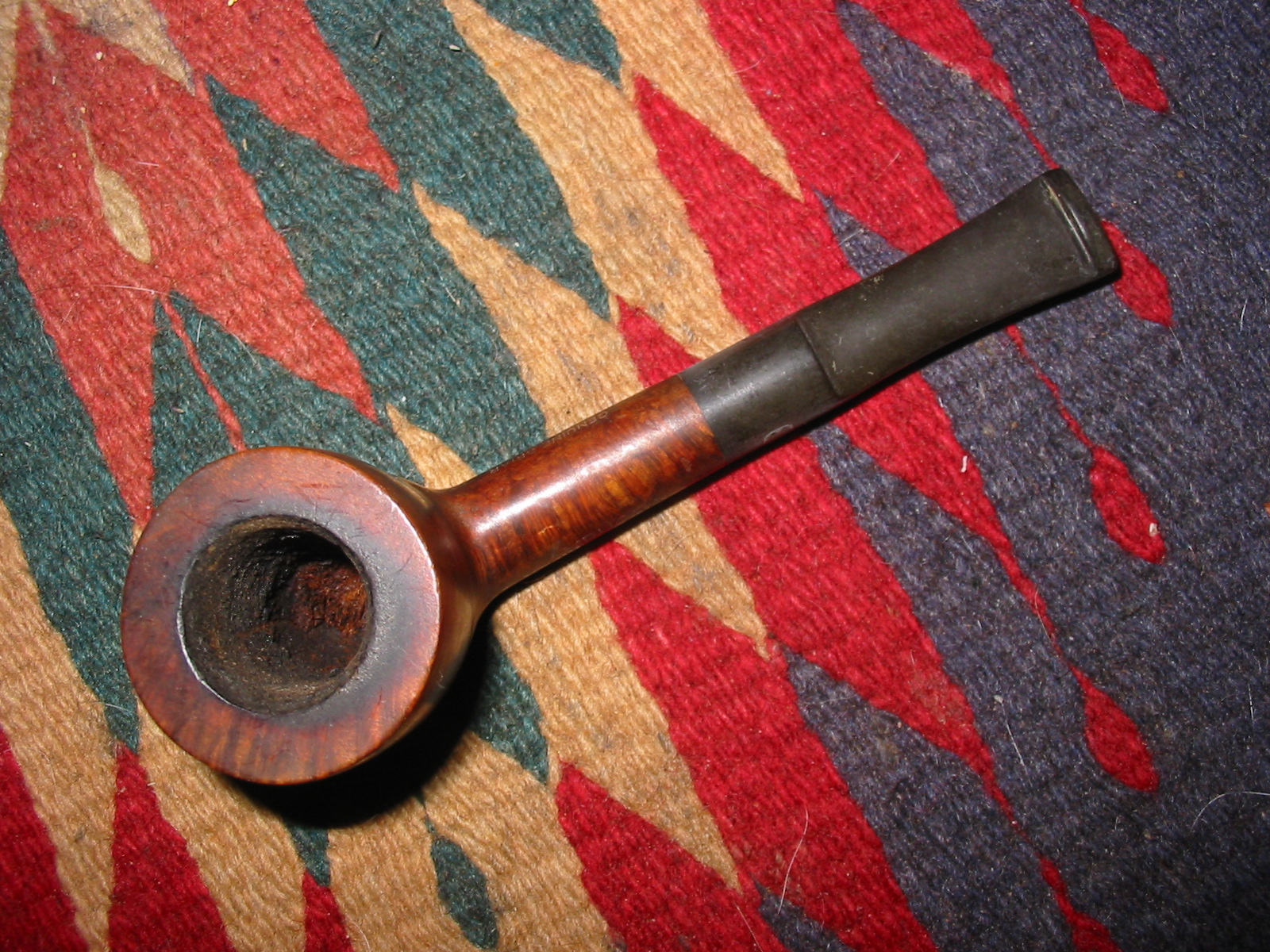
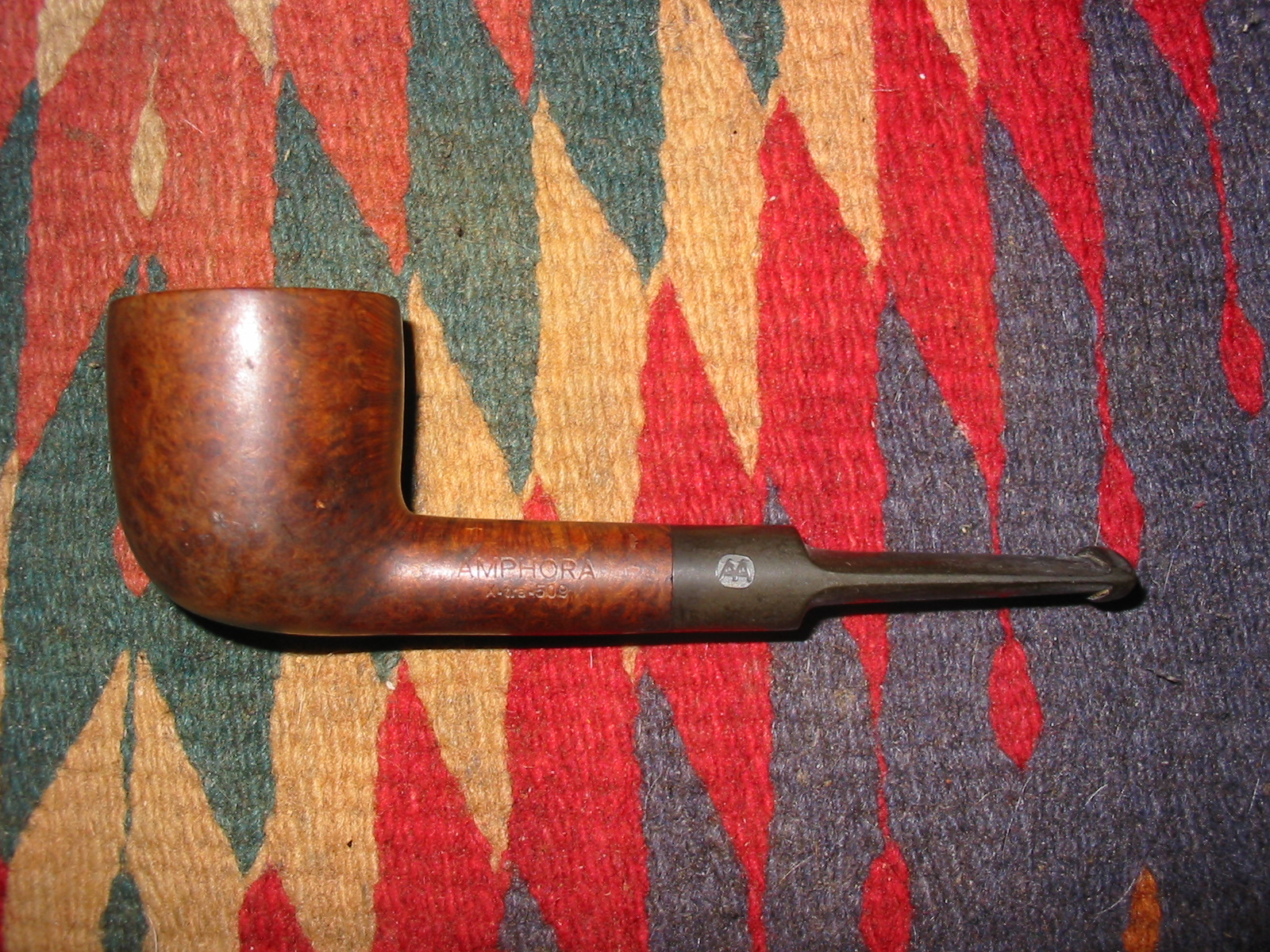
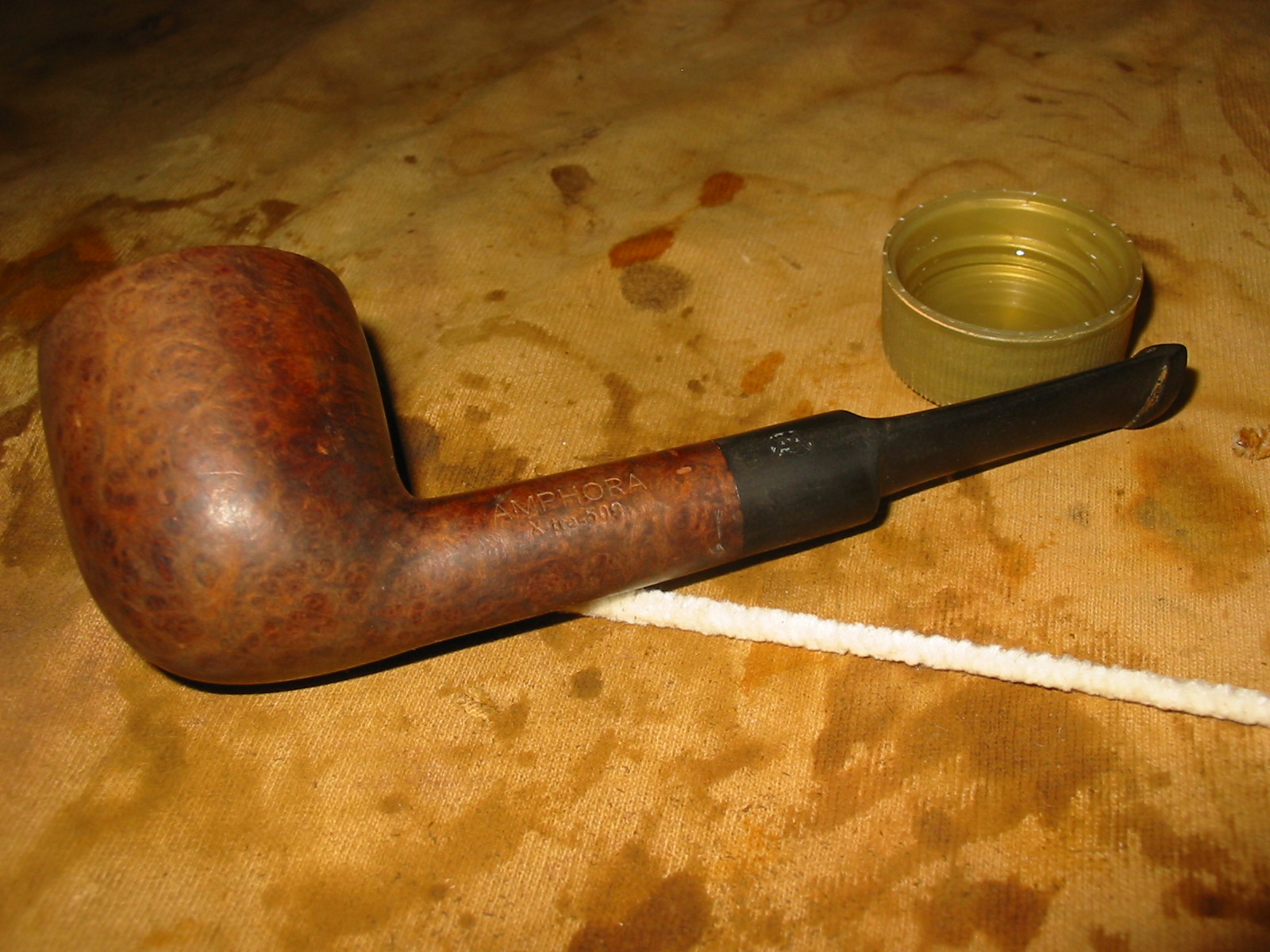
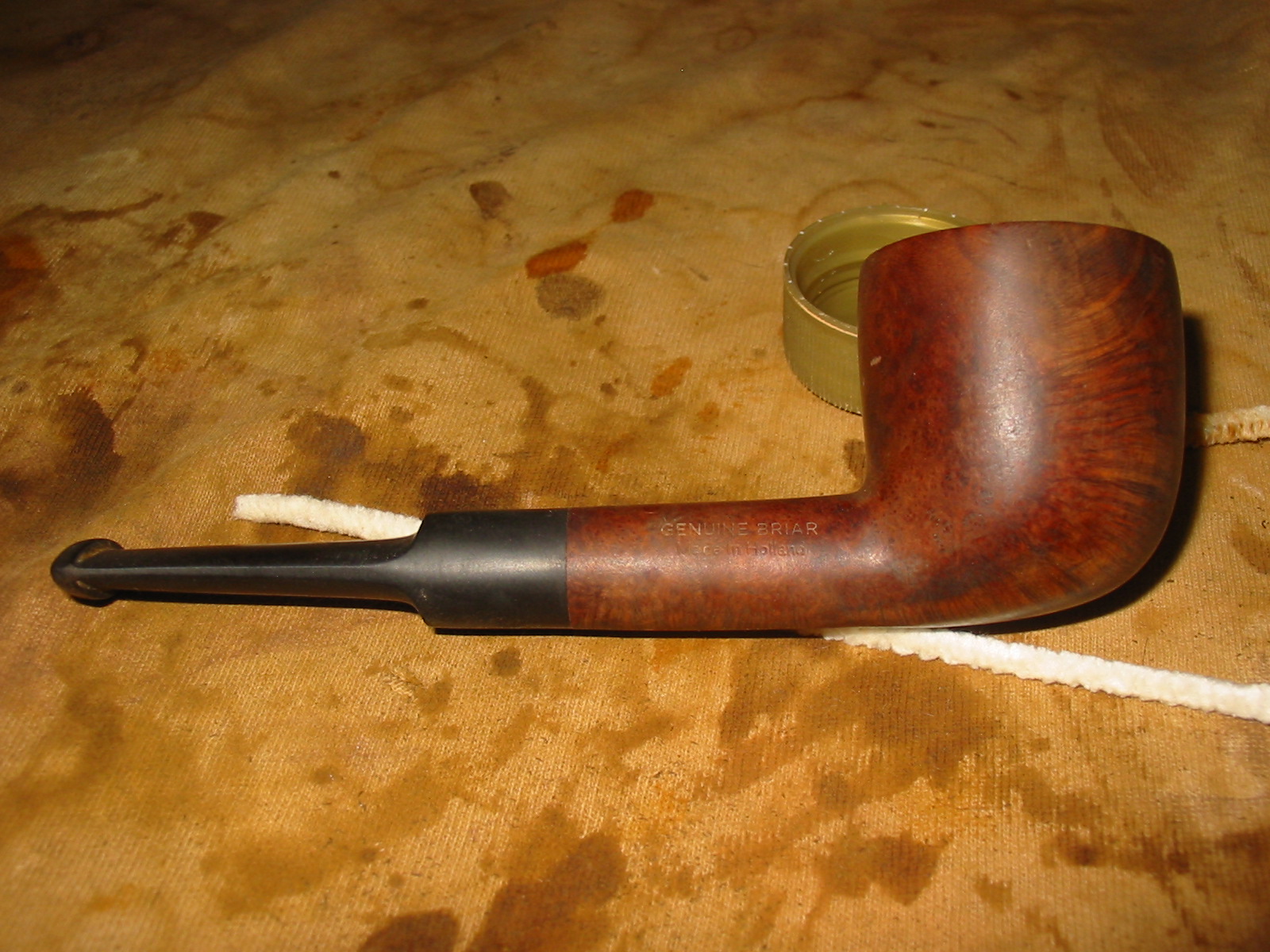
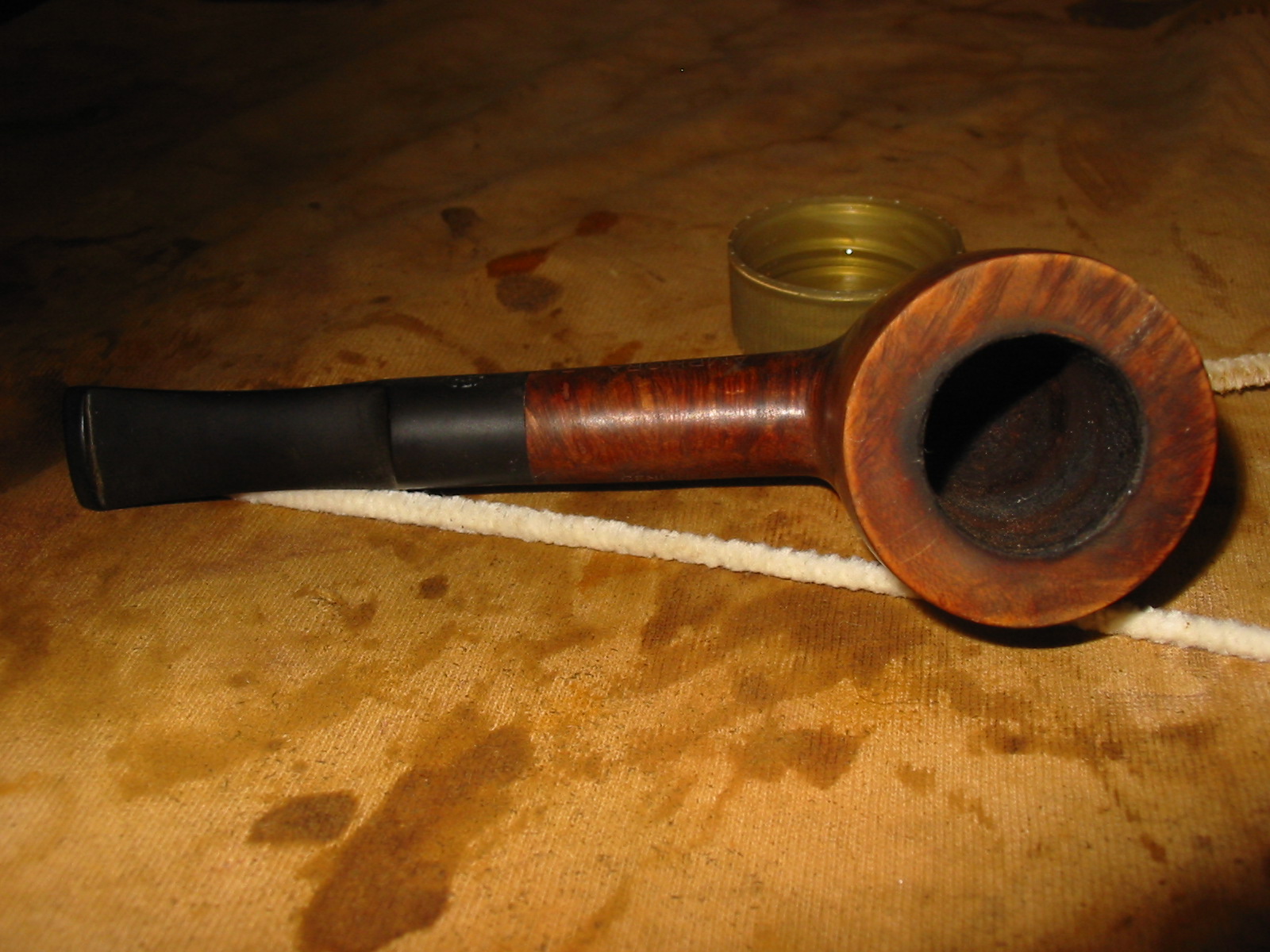
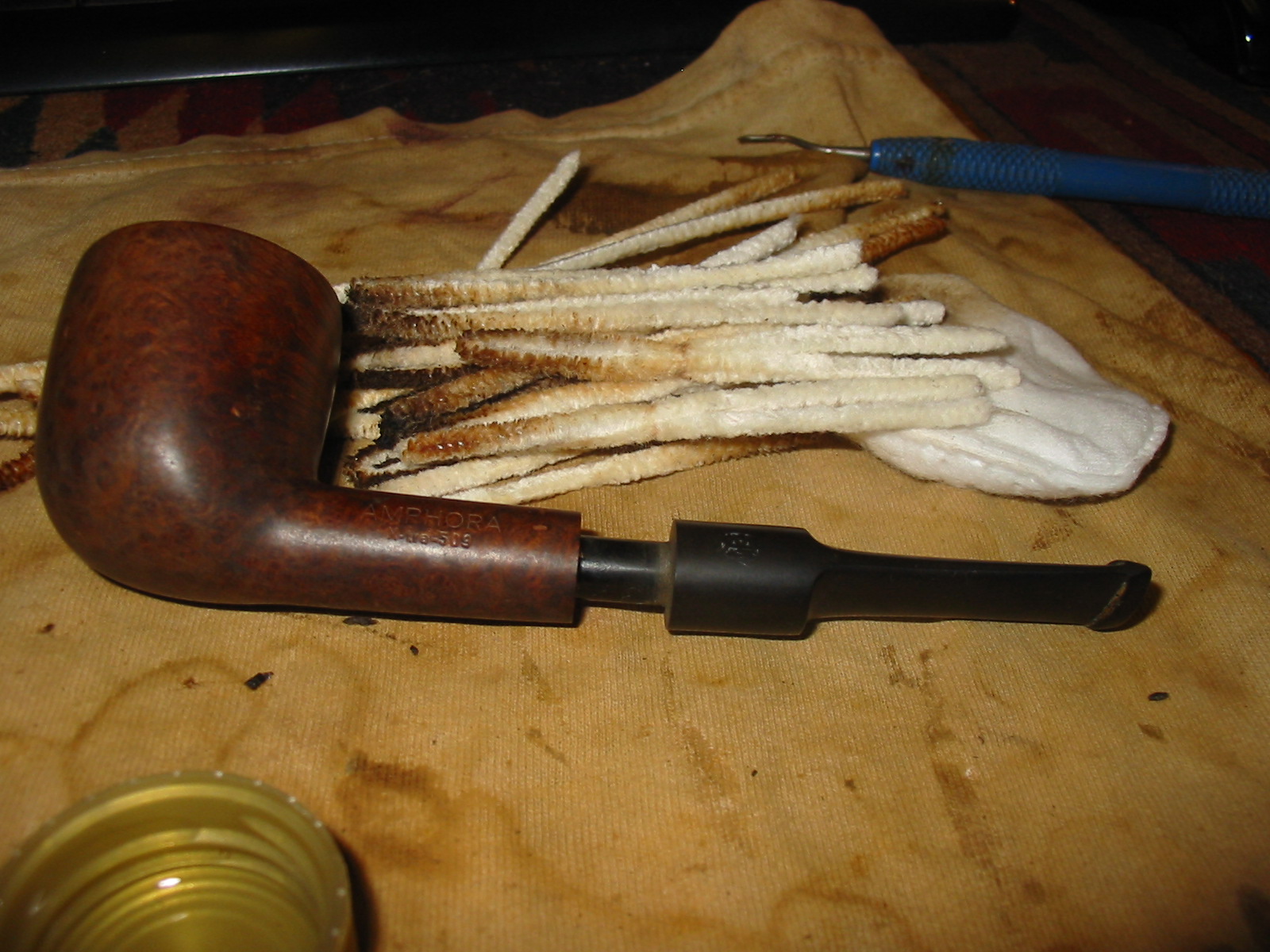
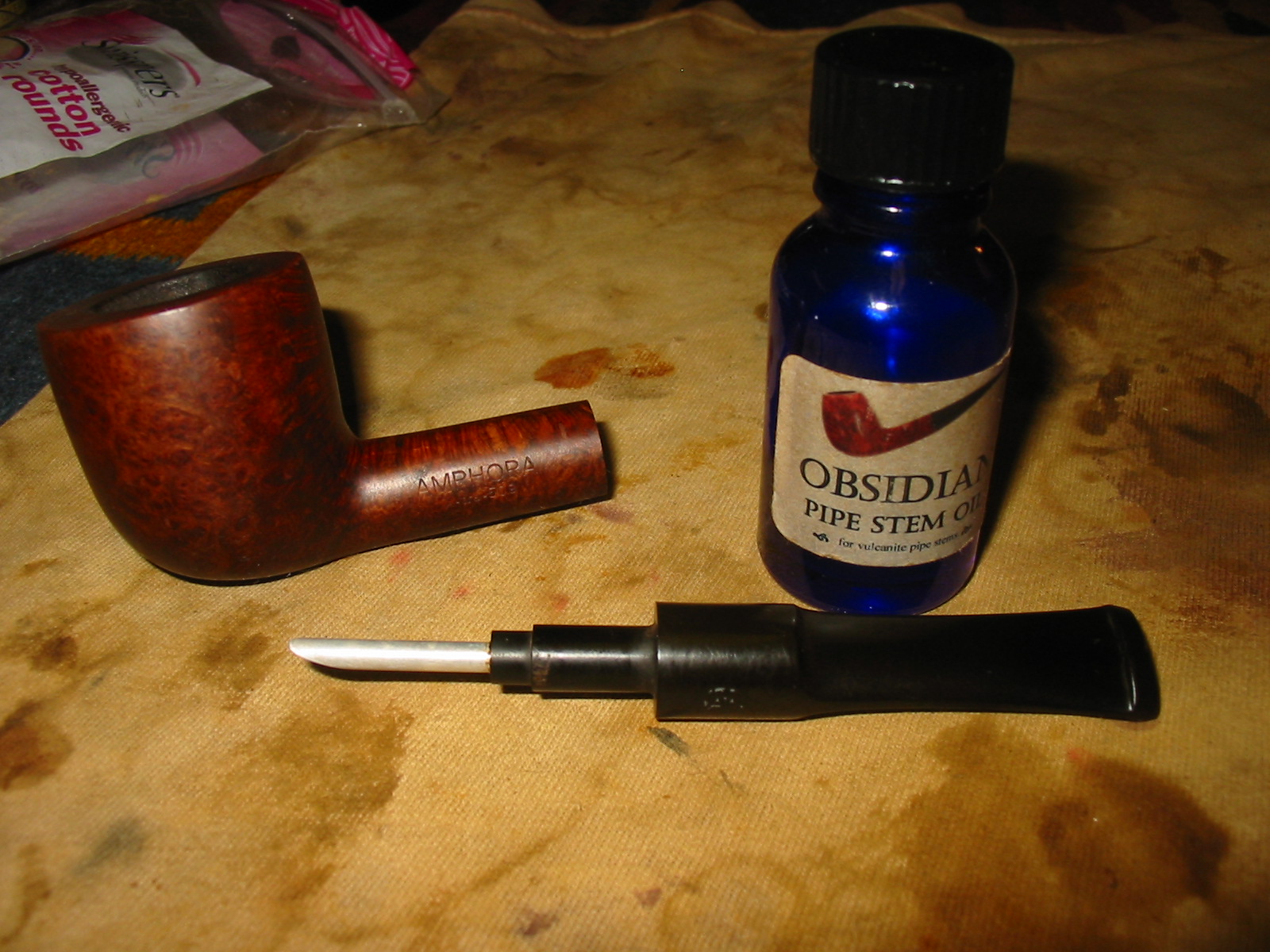
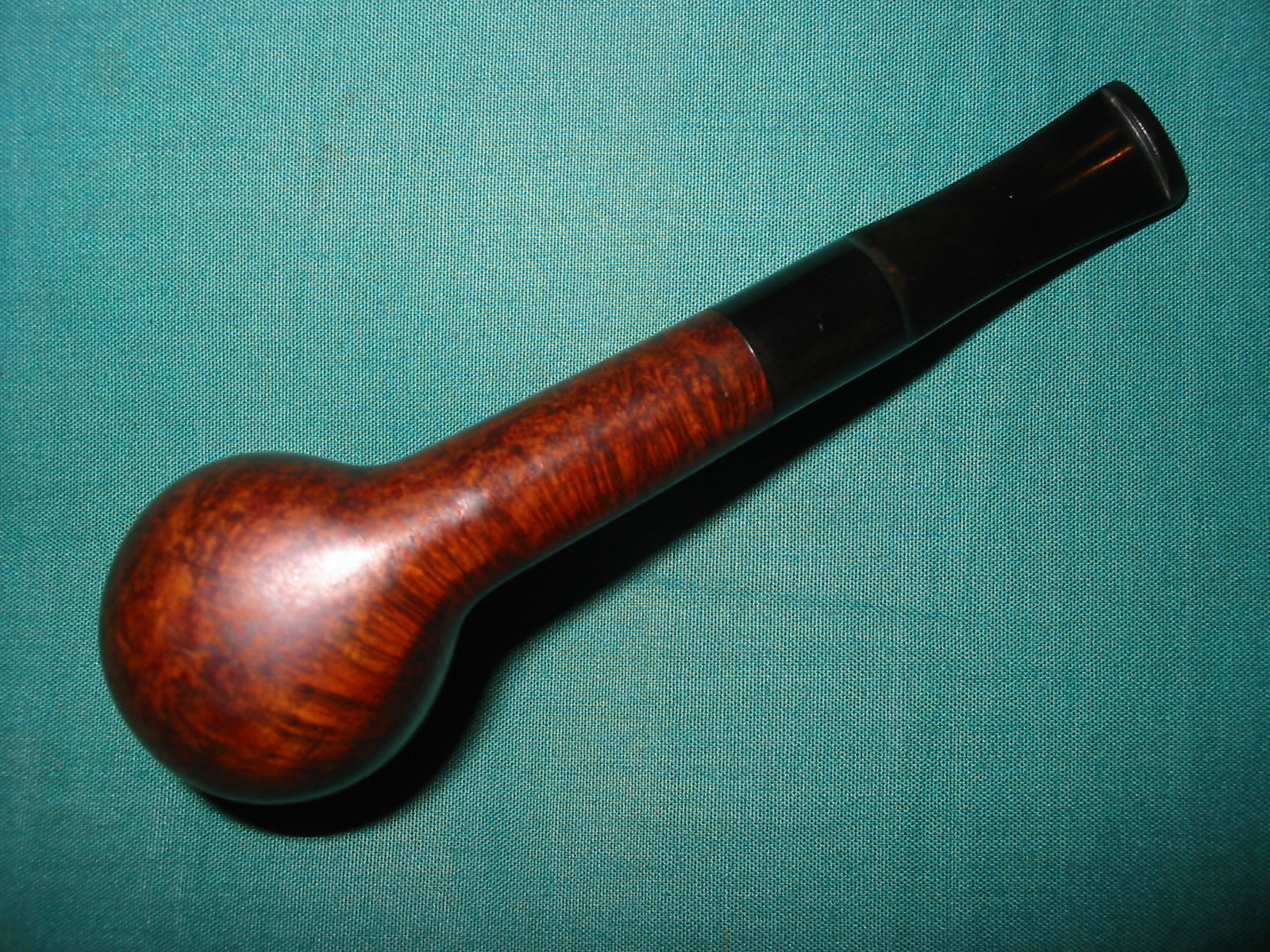
This is the last of the lot I found while on a recent trip in Northern Alberta, Canada. It is stamped Amphora X-tra 509 on the left side of the shank and on the right side it is stamped Genuine Briar over Made in Holland. The stem has an AA in a circle stamped on it (not a stamping for Amphora pipes I was familiar with). The pipe was in good shape. The rim was dirty and had a slight bit of build up on the surface. The bowl had a thin cake that was crumbly. The outside of the bowl was soiled and had some white paint on the surface. The stem was dirty and very slightly oxidized. There were no teeth marks on it so it was just dirty. The insides were also dirty. The inside of the shank and the stem were caked with a tarry buildup. There was an inner tube inserted in the tenon that extended into the shank almost as far as the airway at the bottom of the bowl.
IMG_1889

IMG_1890

IMG_1891

I used a PipNet reamer and started with the smallest cutting head and took back the cake. I followed that with the next size of cutting head and took the cake back to the bare wood in the bowl. The bottom of the bowl had some gouges in it and looked like someone had done a reaming with a knife.
IMG_2067

IMG_2054

IMG_2057

IMG_2056

IMG_2055

I removed the stem and dropped the bowl into an alcohol bath to soak overnight.
IMG_2066

I mixed a batch of Oxyclean and put the stem together with others I was working on into the bath of Oxy clean to soak at the same time.
IMG_2068

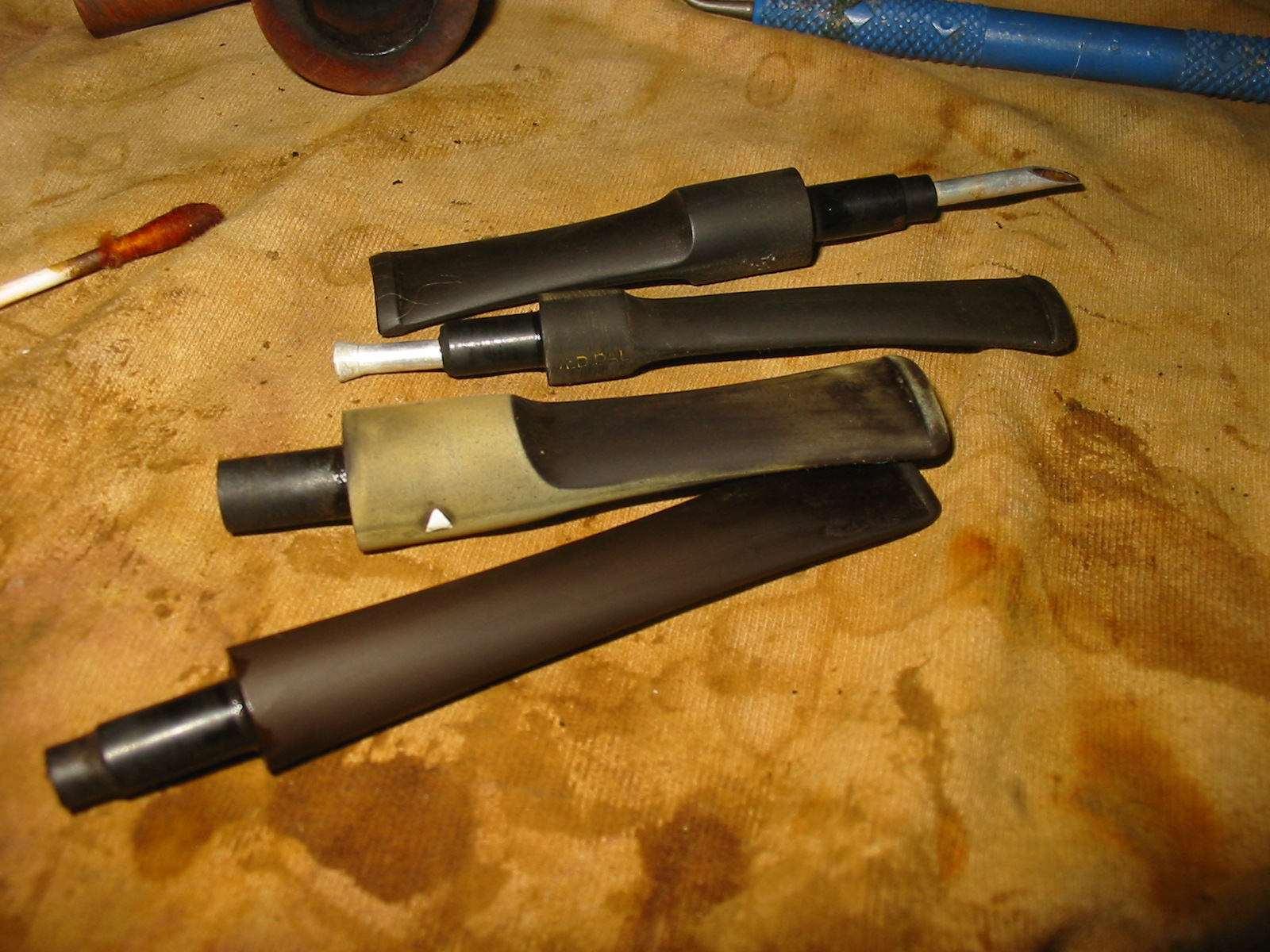
In the morning I took out the bowl and dried it off with a soft cloth. The finish was clean and the surface of the bowl free of the paint and grime that was present when I placed them in the bath. I took the stems out of the bath of Oxyclean and dried them off as well. The oxidation on the stem was softened and the stem was dark (it is the top stem in the second photo below).
IMG_2071

IMG_2080

I wiped down the bowl with acetone on a cotton pad to clean off the remaining finish. In the photo above of the bowl it appeared to have a fill on the bowl side. As I scrubbed it the surface cleaned up and the area was not a fill. The piece of briar has some great birdseye grain and a some cross grain on the front right side and the top of the bowl and shank. I also cleaned out the shank and the stem with pipe cleaners and Everclear. I scrubbed the rim to remove the tars and buildup.
IMG_2260

IMG_2261

IMG_2262

IMG_2264

I wanted to highlight the grain on this one so I decided to stain it using some Cherry Danish Oil which is Linseed oil and stain. I rubbed on the stain, rubbed it off and rubbed it on a second time. I set it aside to dry. Once it was dry I buffed it with White Diamond.
IMG_2265

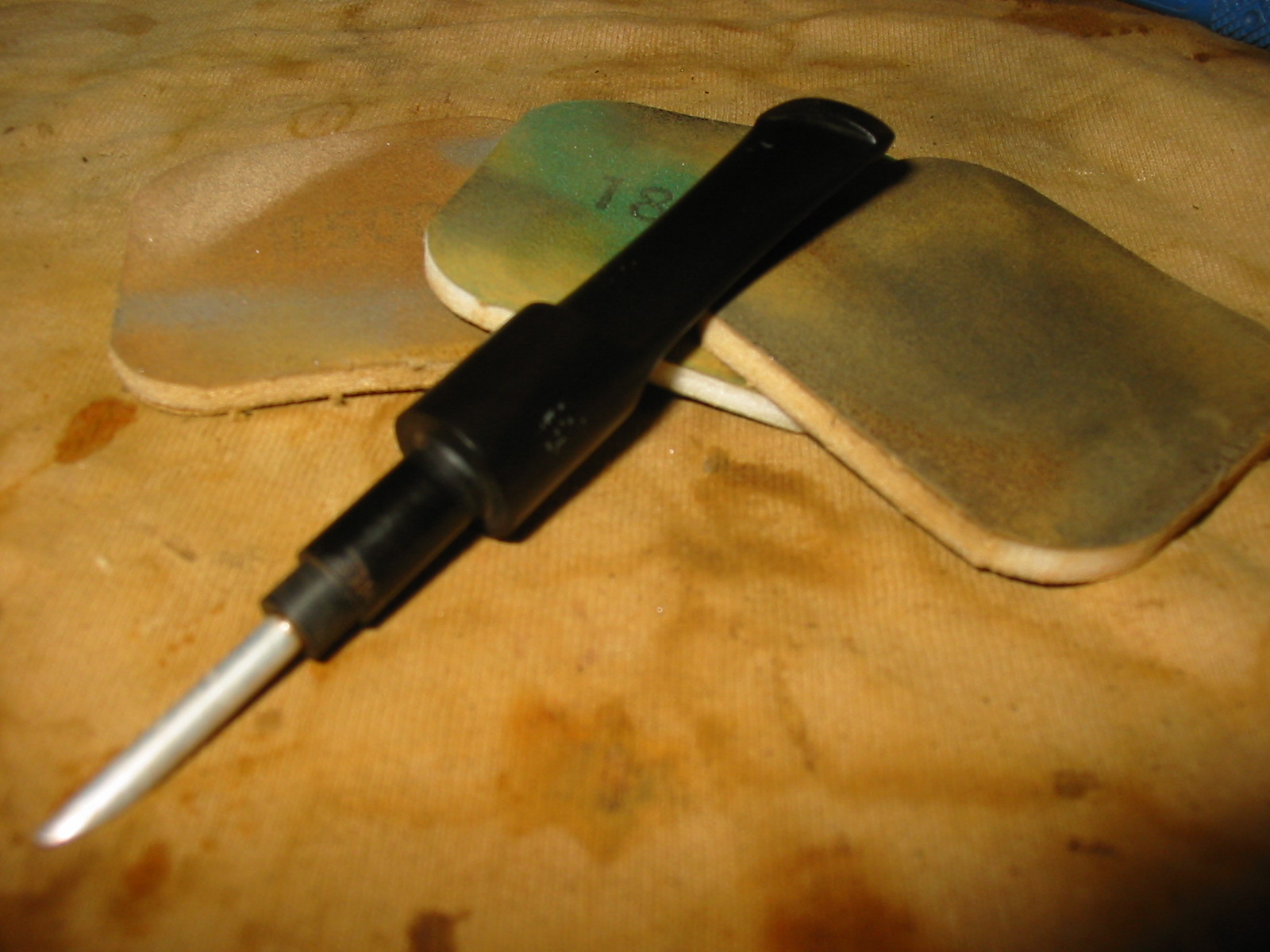
While it was drying I used micromesh sanding pads from 1500-12,000 grit to work on the stem. I worked around the double AA on the stem logo. It is faint but still visible. Once I had finished sanding I rubbed it down with Obsidian Oil and let it dry. When it was dry I rubbed it with a soft cloth to buff it by hand.
IMG_2266

IMG_2267

IMG_2268

IMG_2269

I polished the aluminum inner tube with 0000 steel wool to remove all grime that was remaining on the aluminum. I gave it a coat of wax and polished it off with a clean soft cloth.
IMG_2270

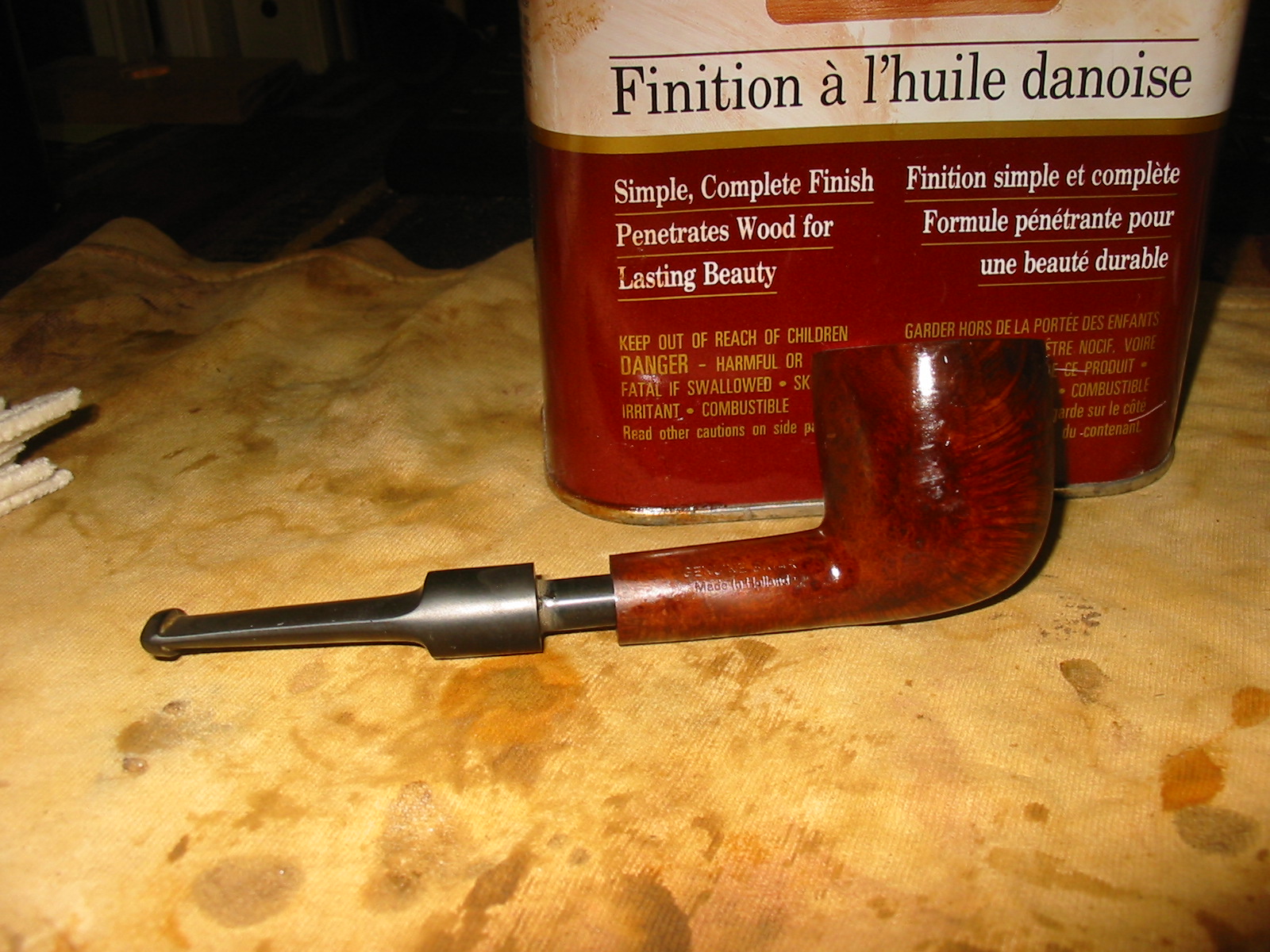
I buffed the pipe and stem with White Diamond and then gave it multiple coats of carnauba wax and then with a soft flannel buff to give it a shine. The final photos below show the finished pipe.
IMG_2272

IMG_2273

IMG_2274

IMG_2275

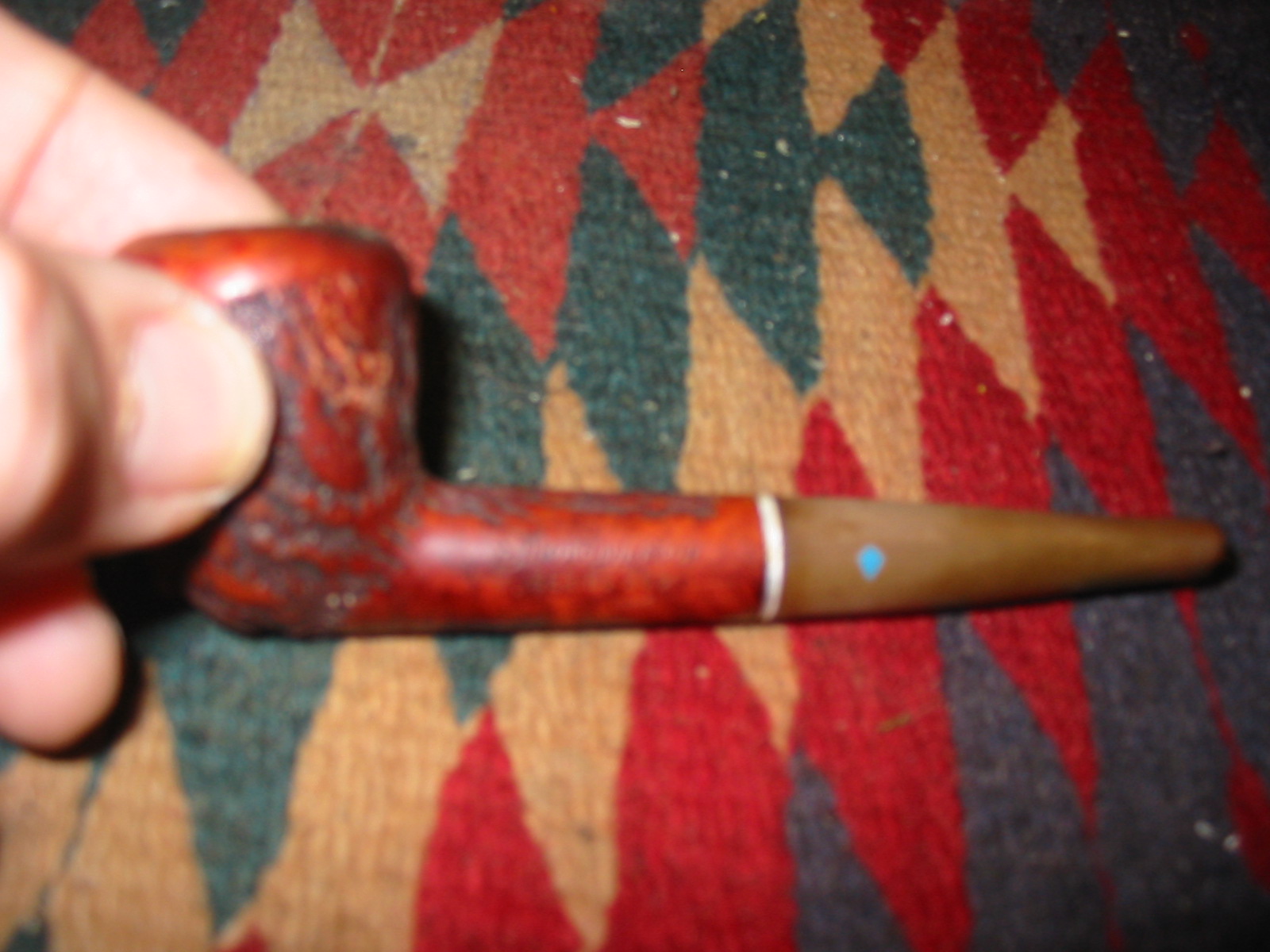
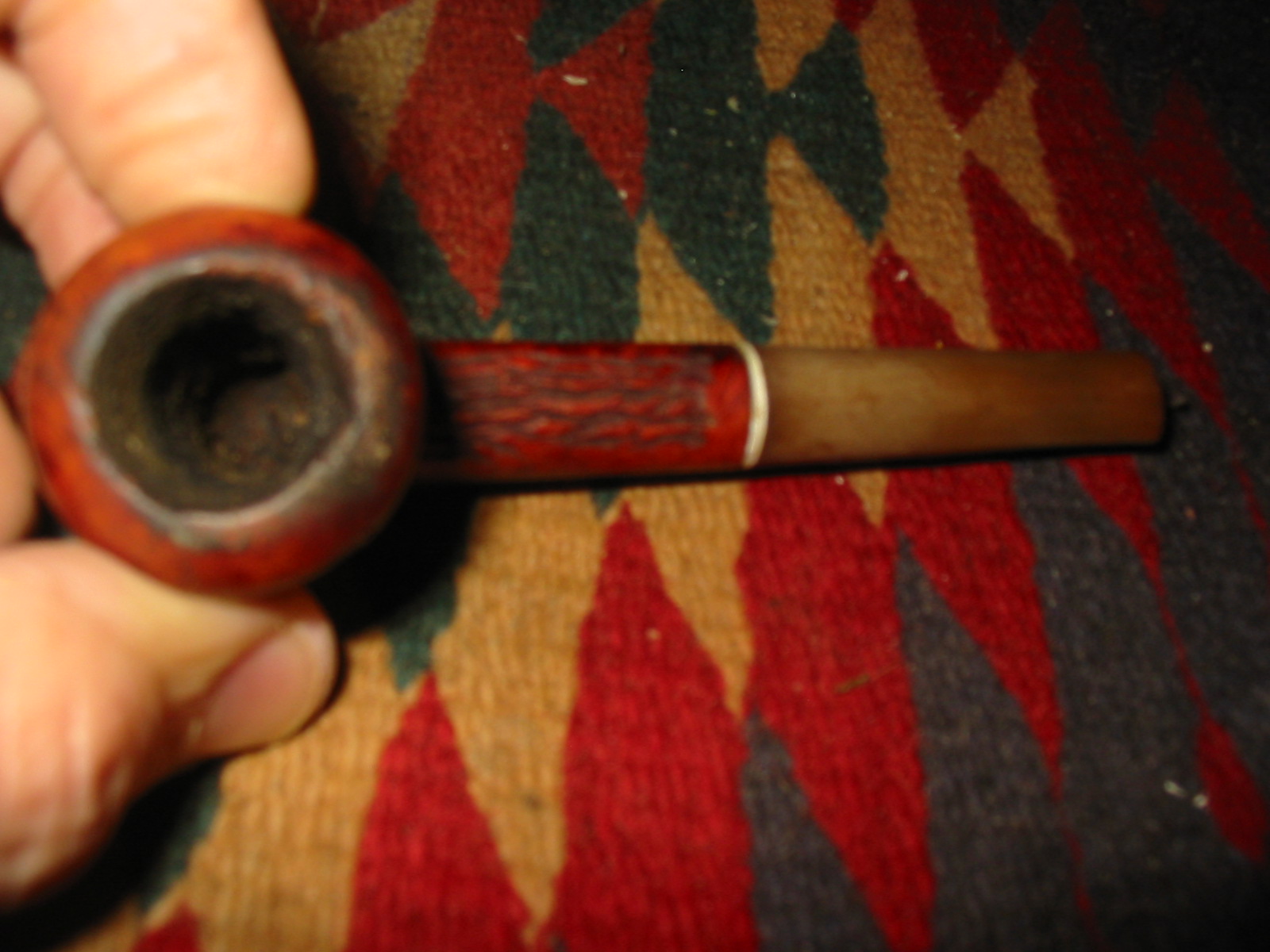
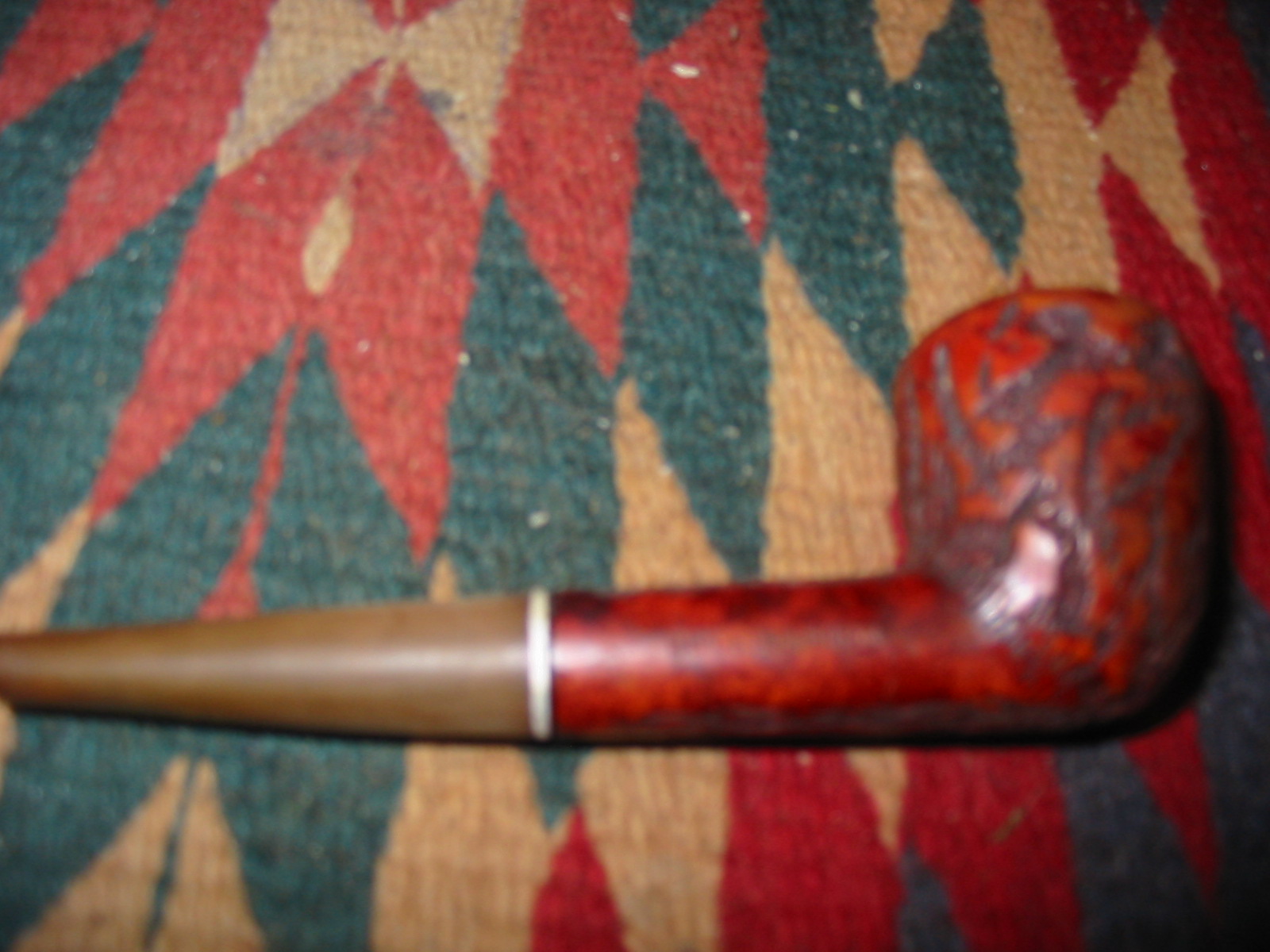
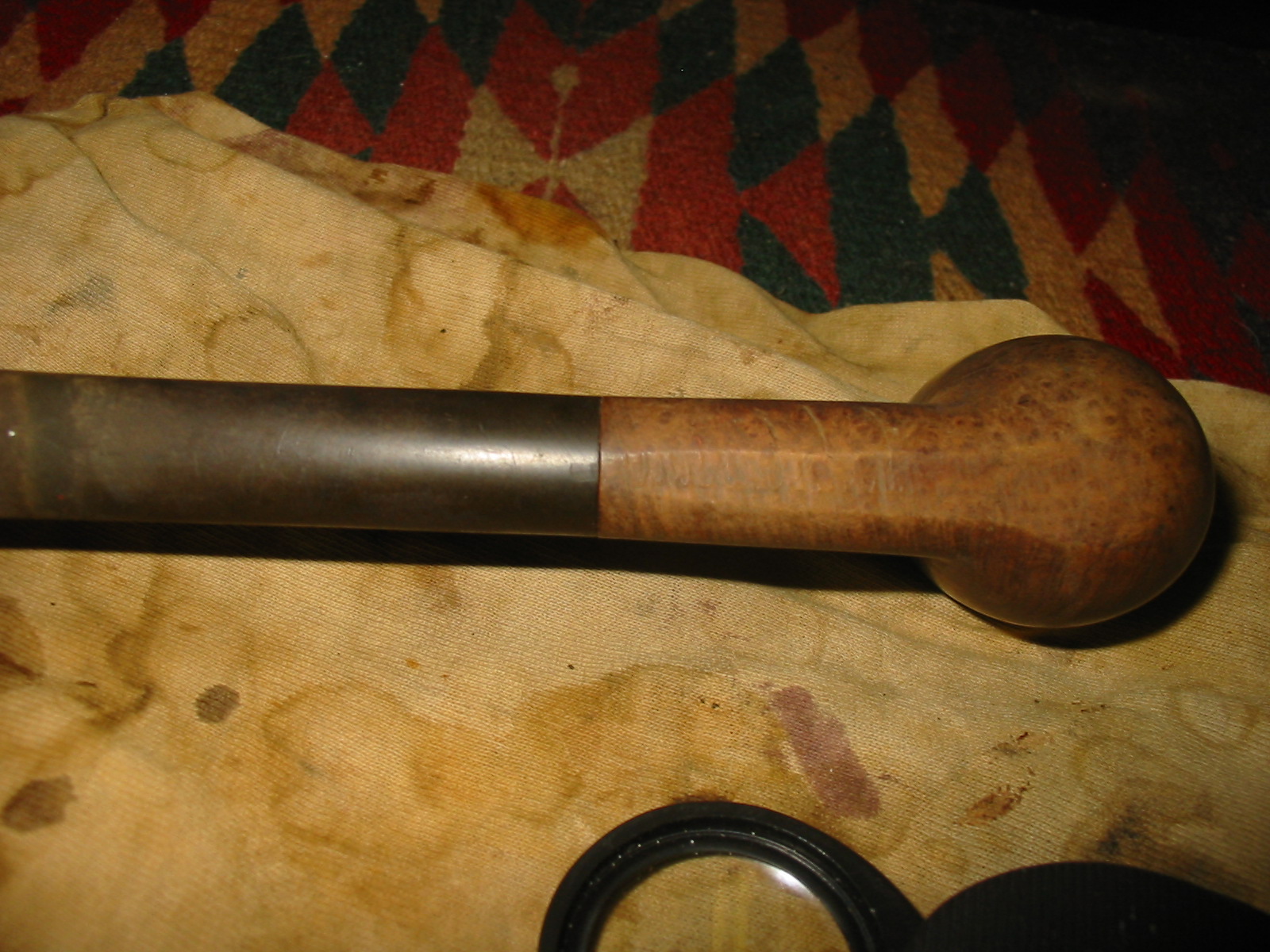
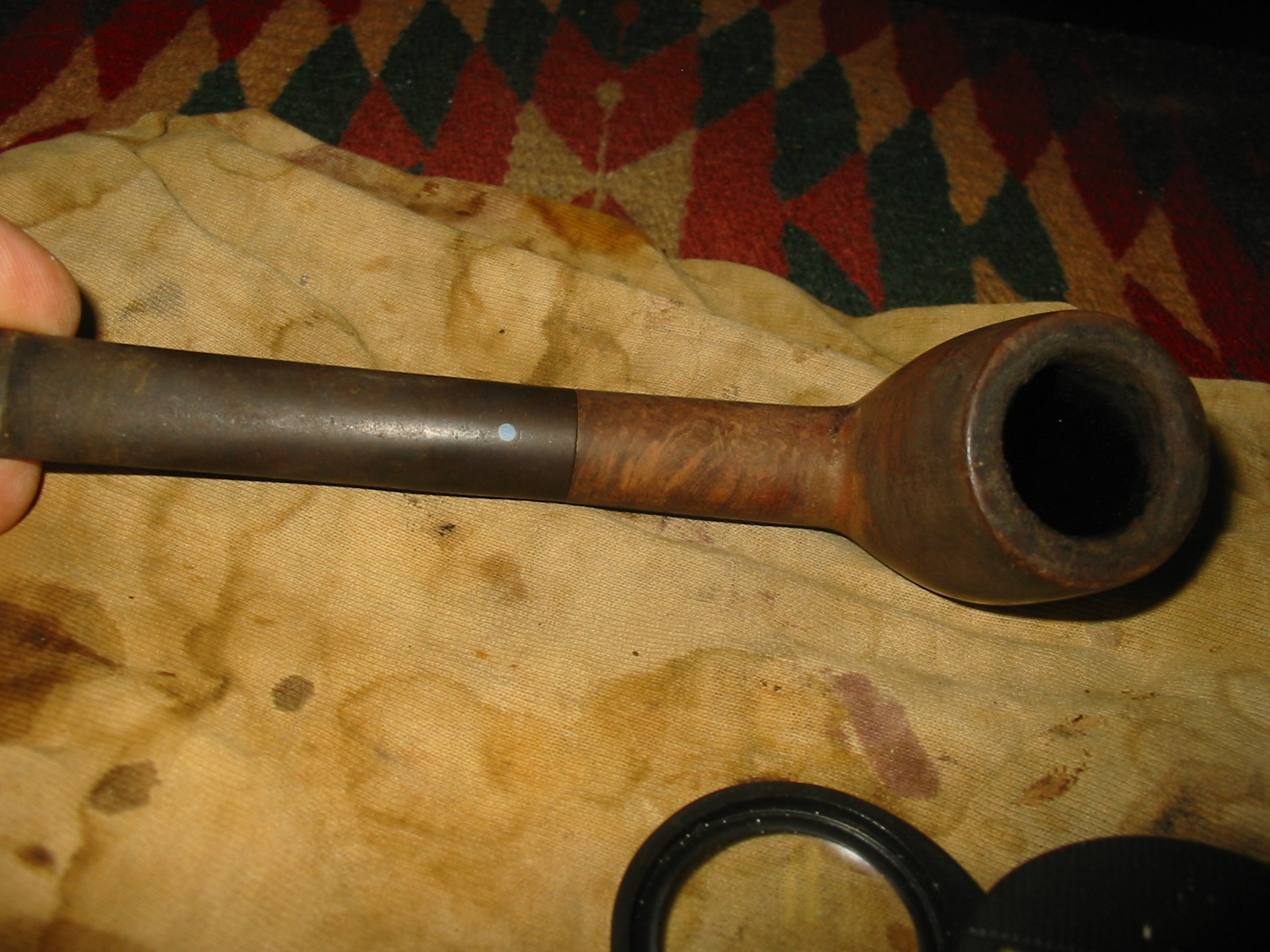
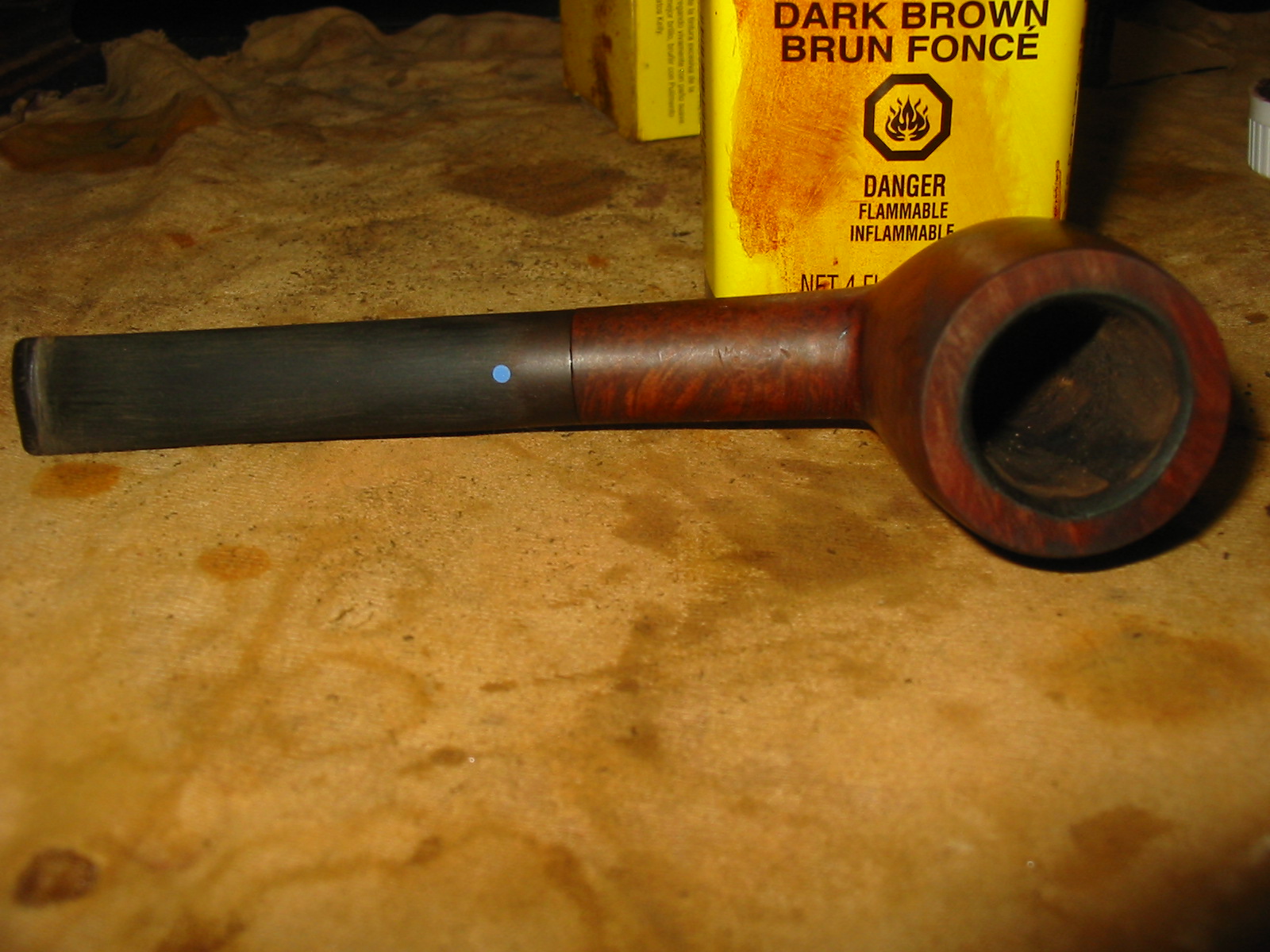
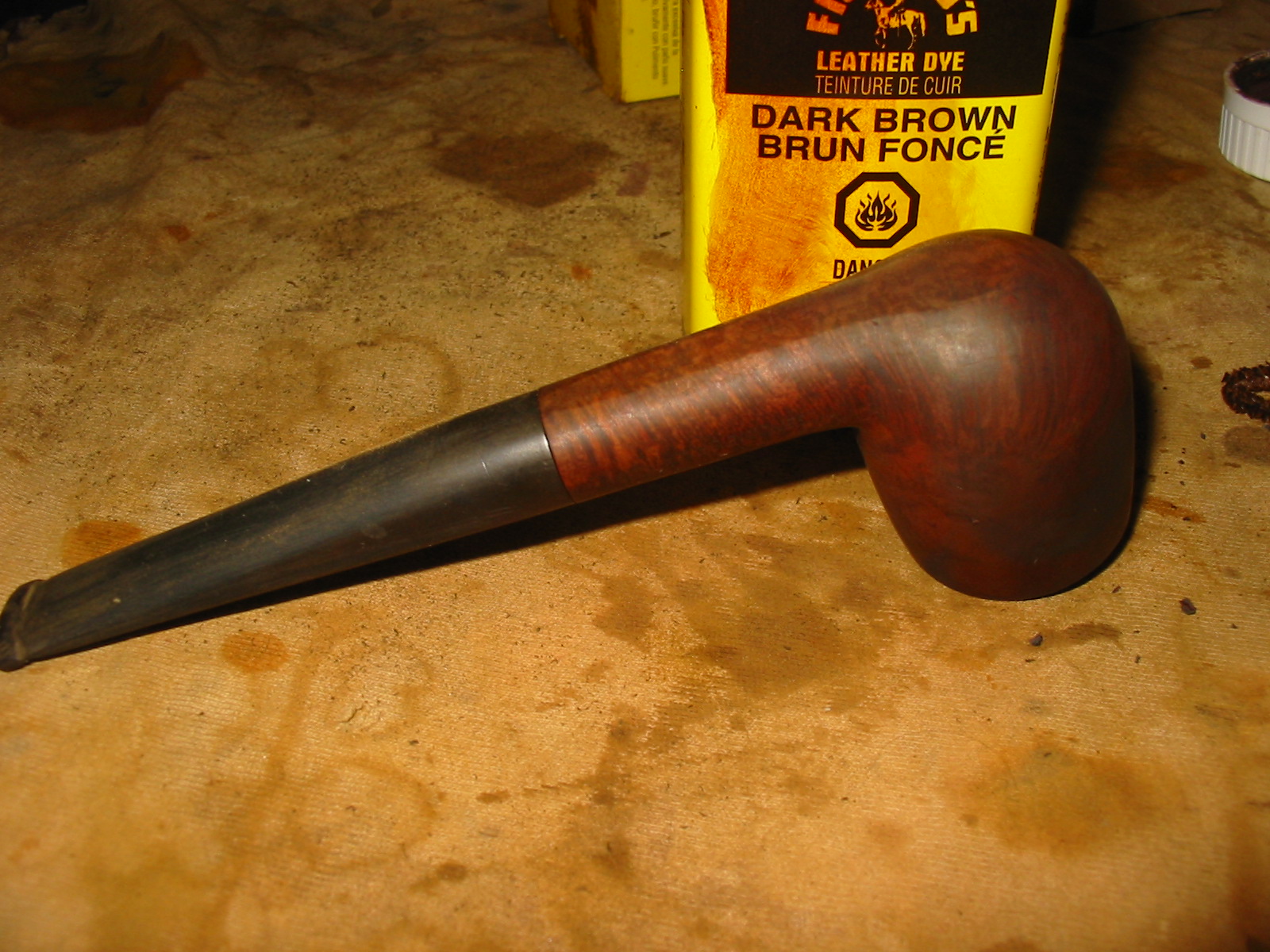
When I saw it I thought it was a Sasieni one dot billiard


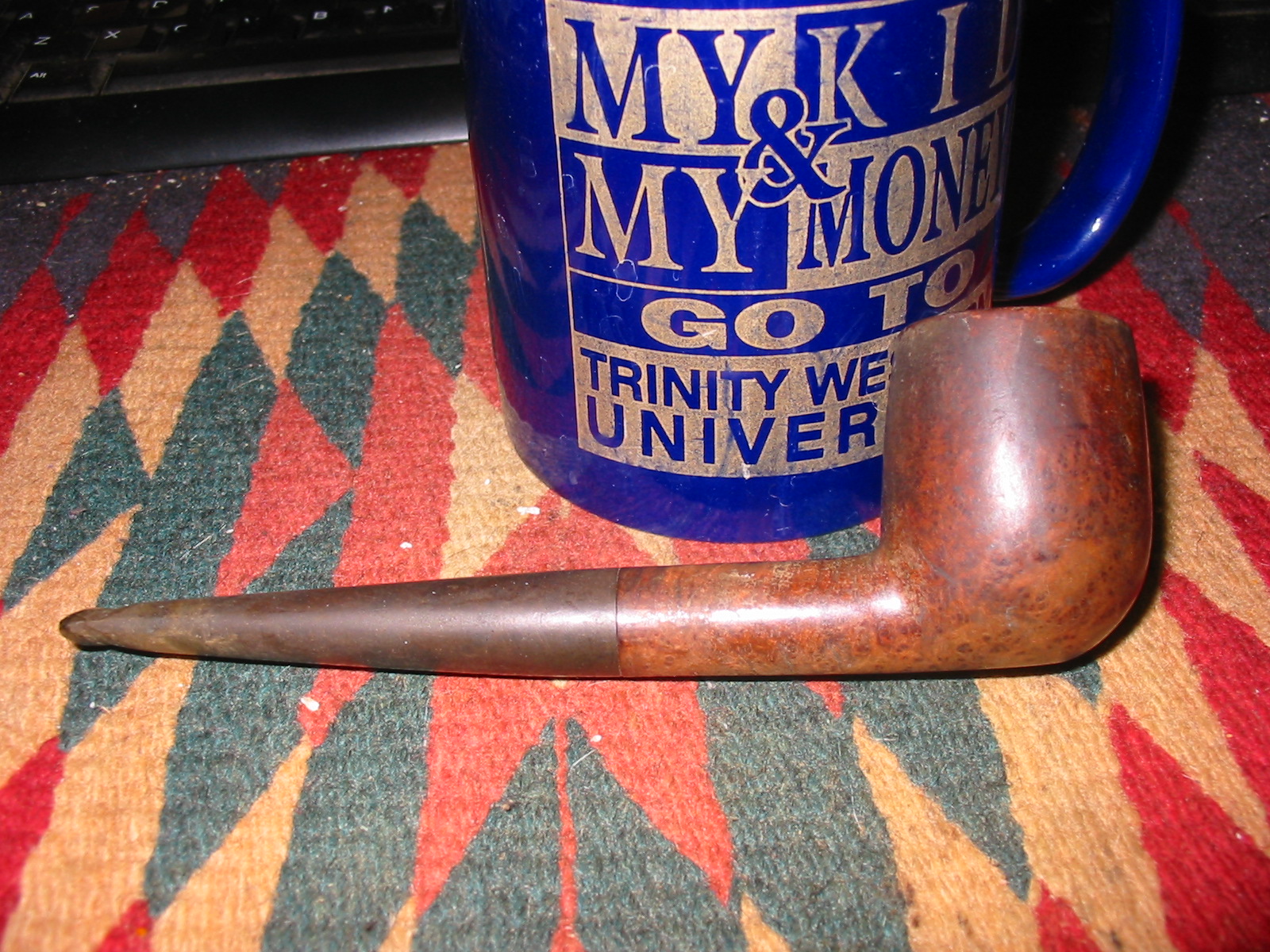
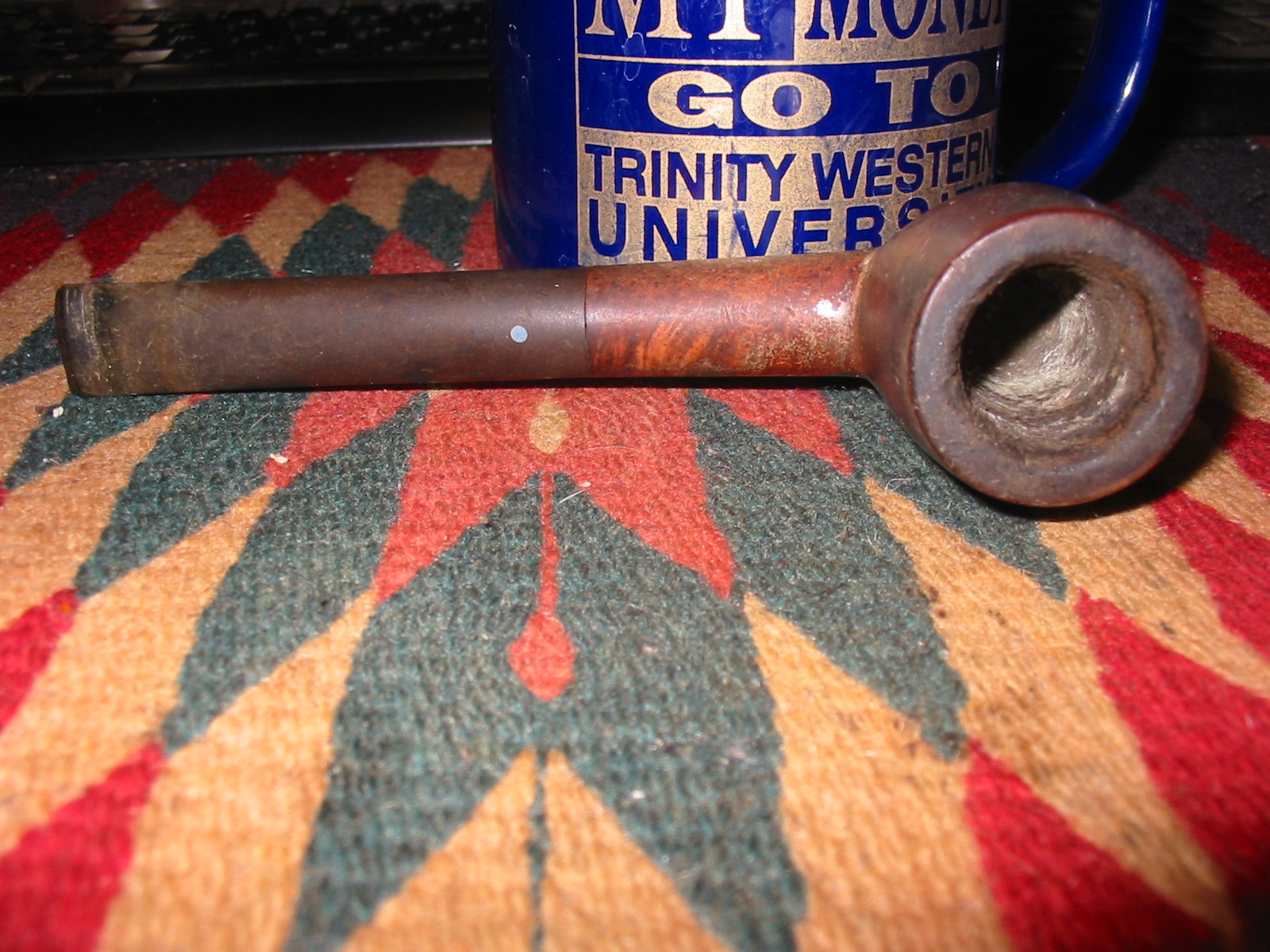
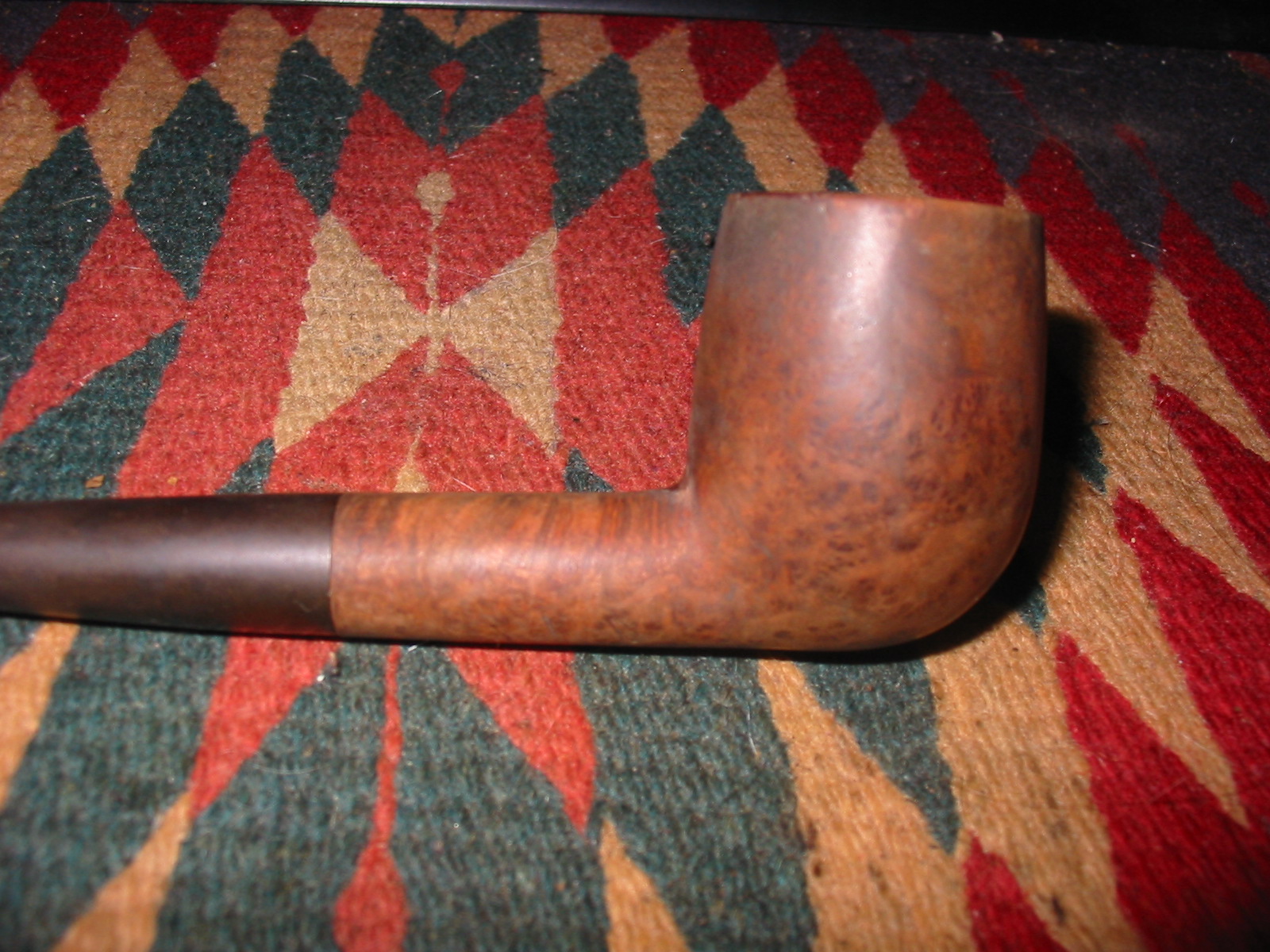
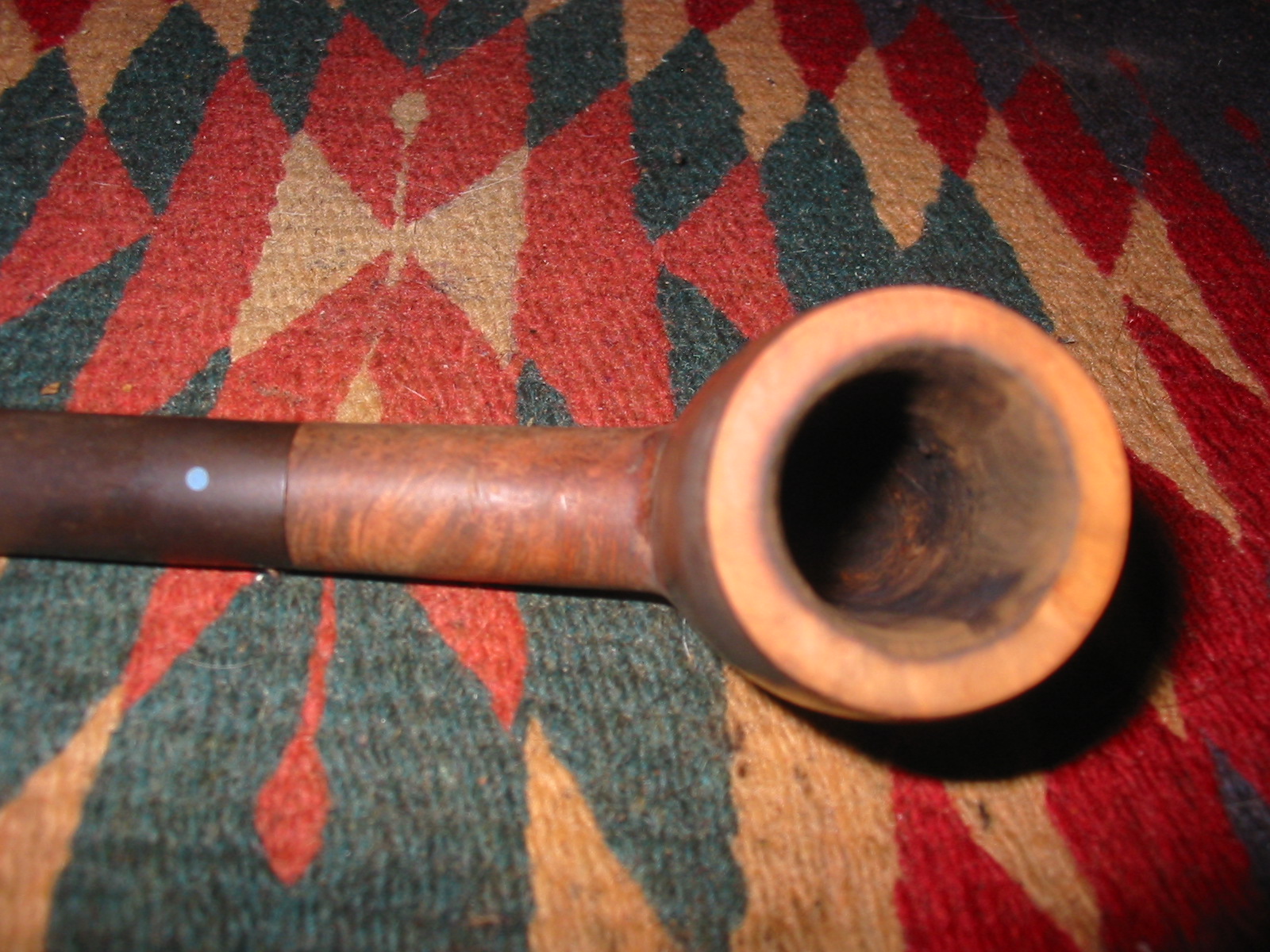
I came across this little billiard in an antique shop last weekend and when I saw the blue dot on the stem and saw the classic English shape of the bowl I truly thought I had found an elusive Sasieni one dot pipe. Lots of things about it seemed to signal that is what I had. The stamping was hard to see under the grime but there were i’s and an e. I was hopeful and I guess also wishful in my thinking. The pipe was dirty as can be seen below. The stem had obviously been damaged and cut off by the previous owner and a new button filed into the stem. The bowl was badly caked and the rim was damaged with dents and chips. I took the picture below while I was relaxing in a pub near the shop and looking over the finds of the afternoon.
IMG_0489

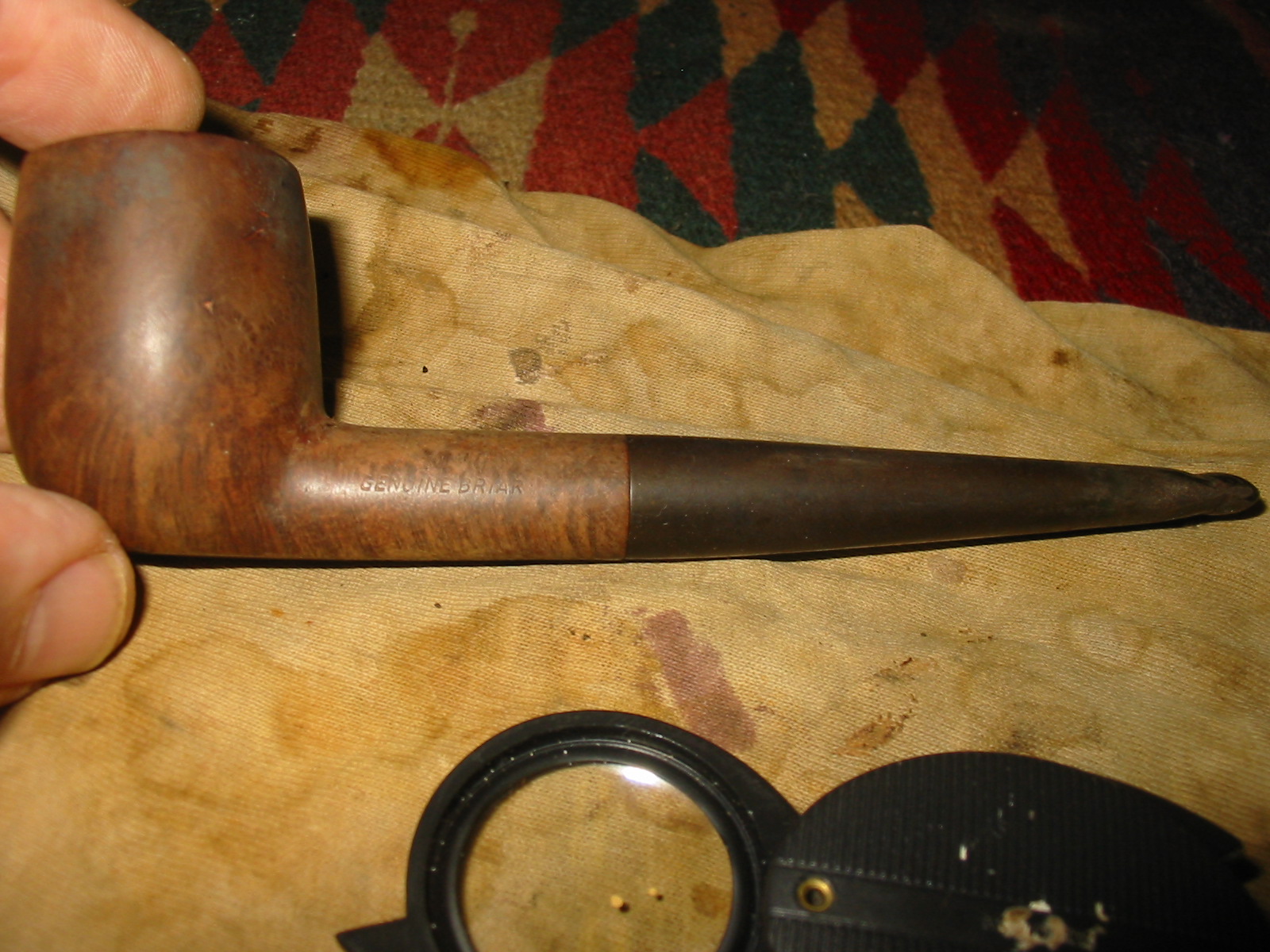
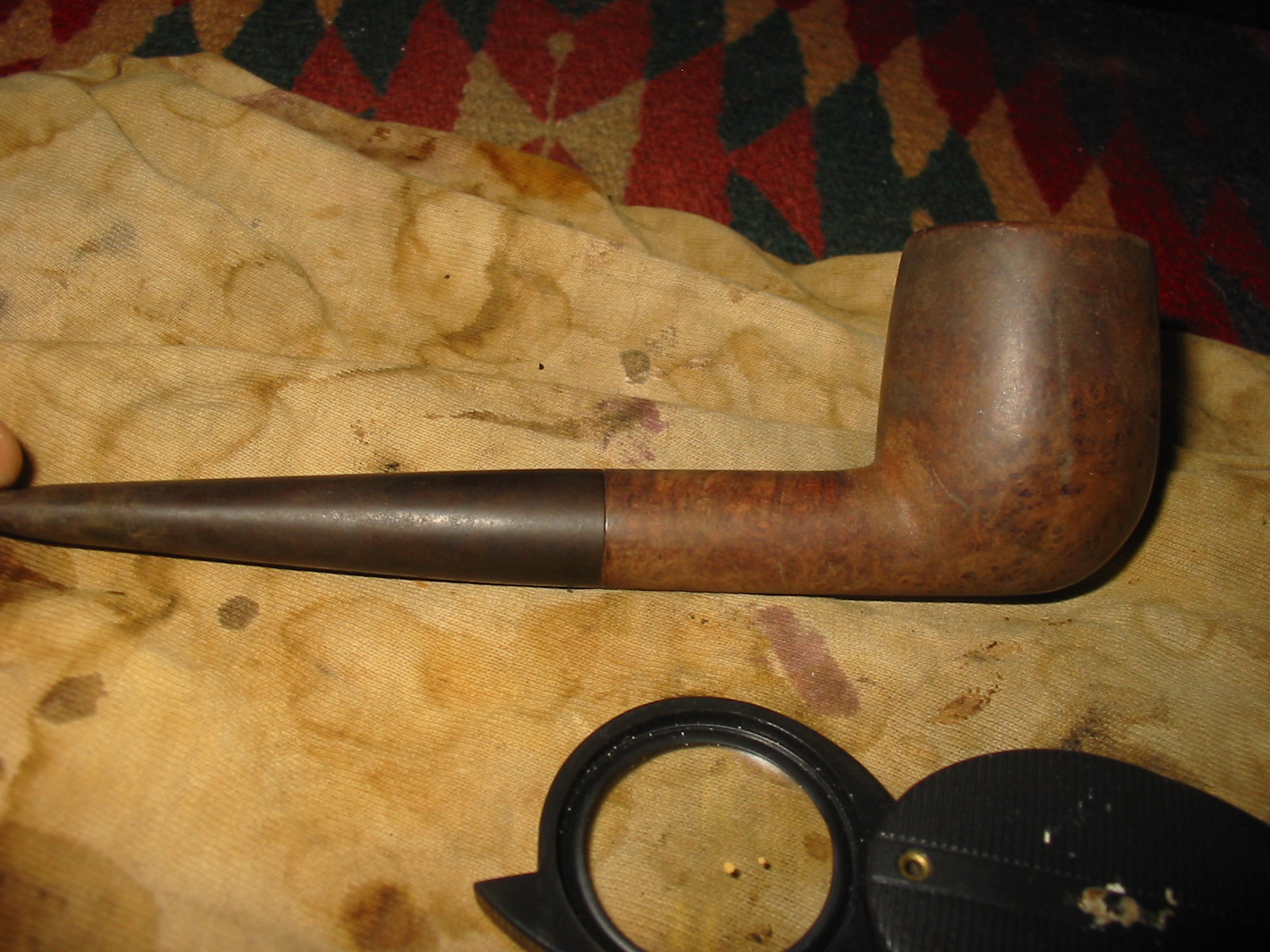
When I got home I took it to the basement and wiped down the bowl with acetone on a cotton pad to remove some of the grime. Once the outside was wiped down I tried to read the stamping with a magnifying lens. I could not make out the stamping – it was too faint. There was no stamping on the right side of the shank. On the underside it appeared that there had been stamping but it was no longer visible. The next three photos give a good idea of what the pipe looked like before I did a cleanup on the bowl and stem.
IMG_2192

IMG_2193

IMG_2194

I reamed the bowl with a PipNet reamer and took it back to bare wood. I picked at the inside of the bowl to check out the solidity of the walls and to check for potential burns. Everything looked and felt like it was solid so I dropped the bowl in an alcohol bath to soak over night.
IMG_2066

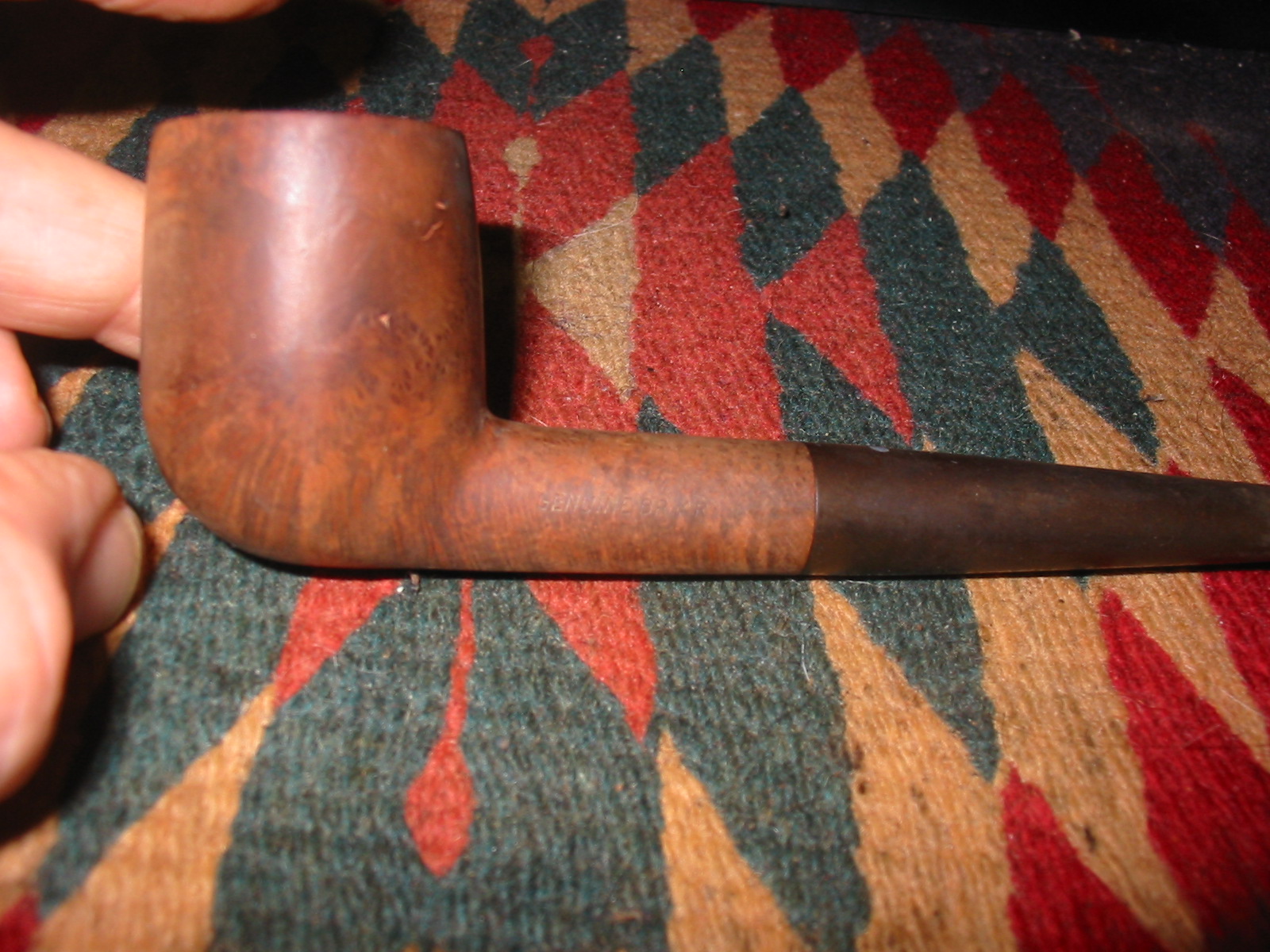
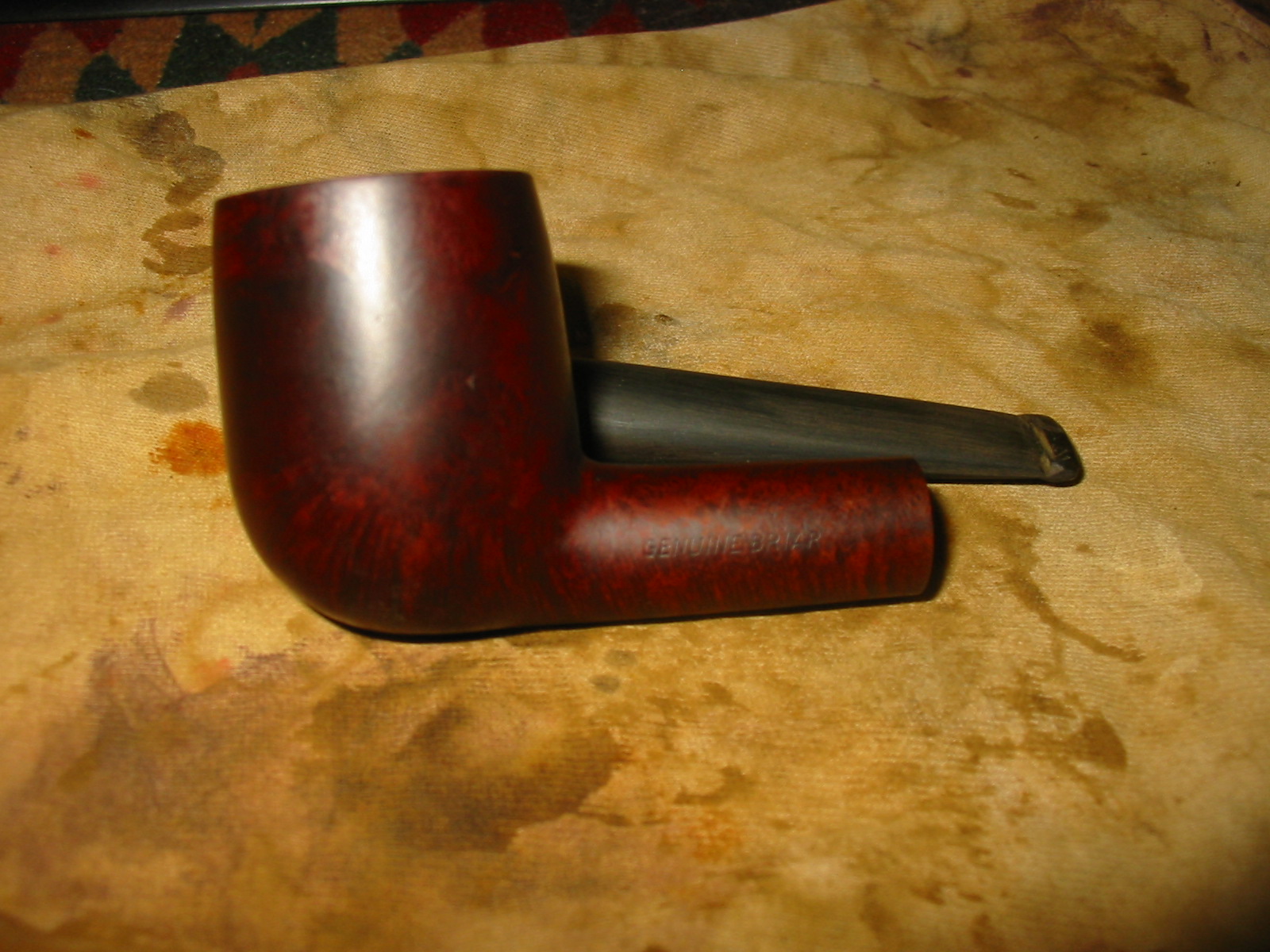
The next day I took it out of the bath and dried it off. The bath had removed the old finish for the most part. I finished by once again wiping it down with acetone on a cotton pad. After soaking part of the stamping had become visible. I was disappointed that it appeared that the pipe was not a Sasieni. The stamping that showed up after it was dry read Genuine Briar, which seemed to point to an American made pipe post WW2. I believe it is post war as that is when it became necessary to identify genuine imported briar in contrast to the Manzanita and other alternatives used by American manufacturers during the war years due to a shortage in briar. The briar was a nice piece – birdseye on one side, nice grain on other parts of the pipe and a clean shape to the bowl. I knew it would clean up nicely.
IMG_2217

IMG_2218

IMG_2219

IMG_2220

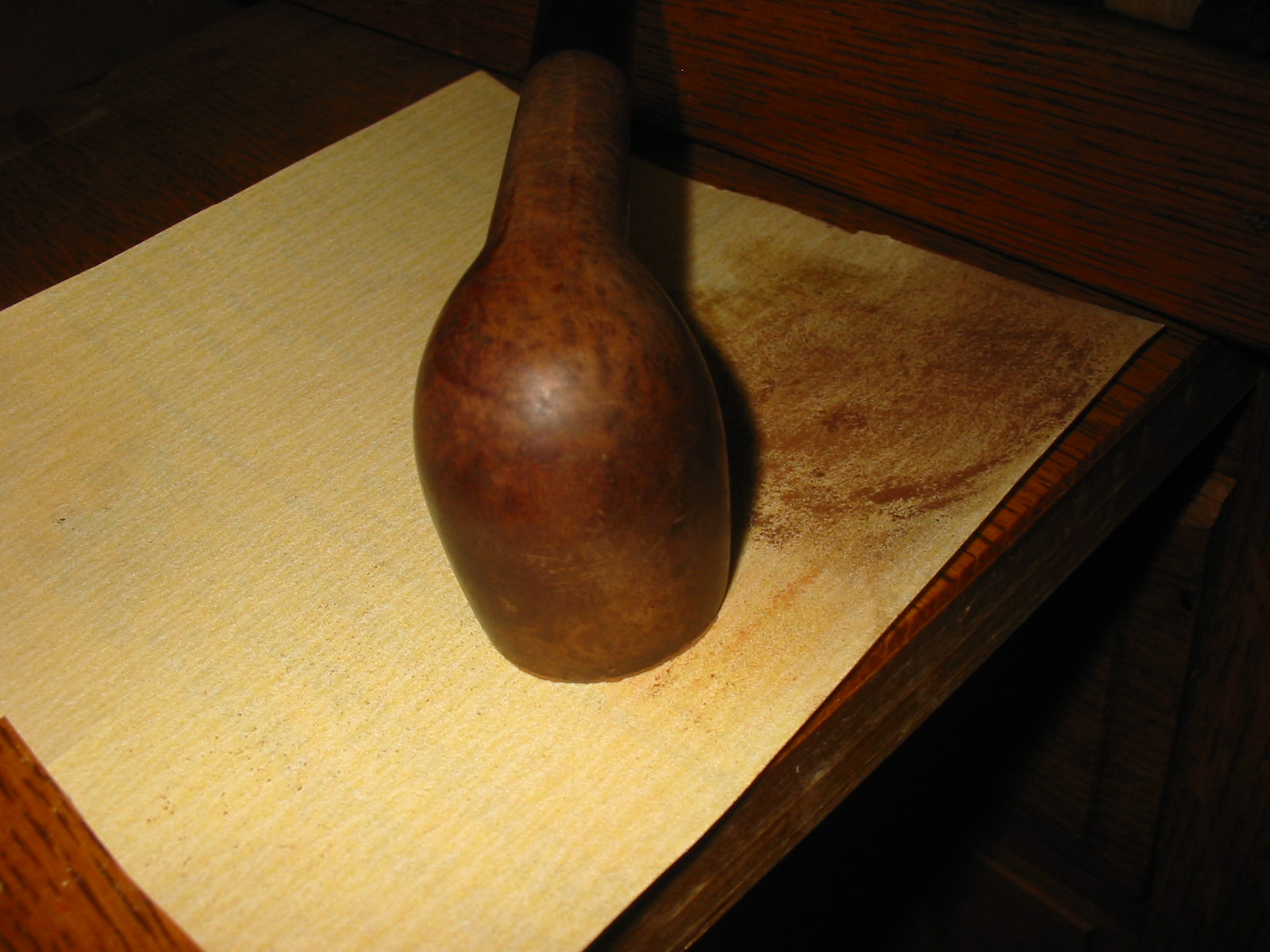
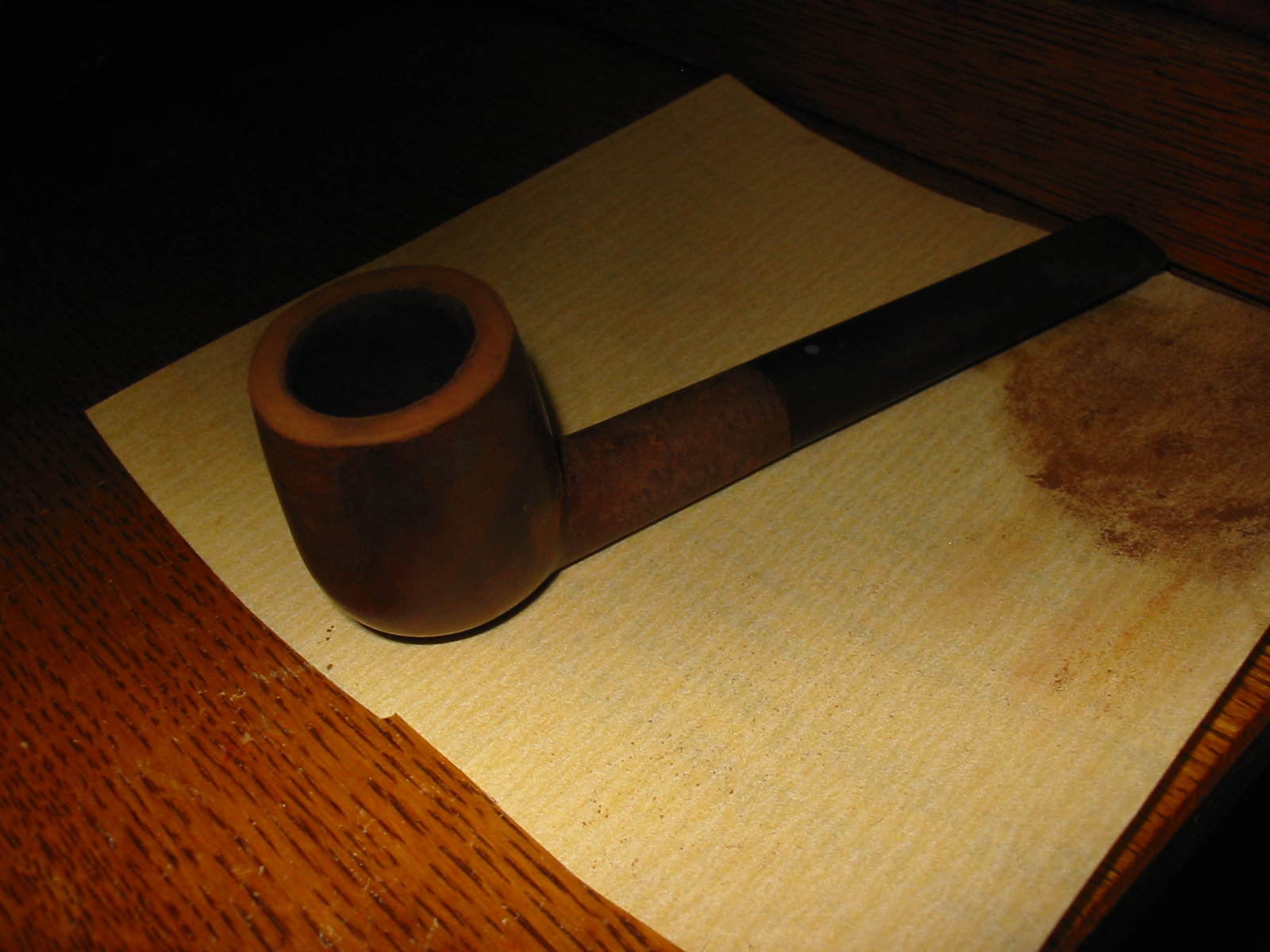
I topped the bowl using my normal method of anchoring a piece of sandpaper on a flat board and twisting the top of the bowl into the sandpaper until the top is smooth. I started with 220 grit sandpaper and then used a medium and fine grit sanding block to smooth out the rim.
IMG_2221

IMG_2222

When I had finished topping the bowl I wiped it down with acetone and a soft cotton pad to remove the sanding dust and the grime from the topping process.
IMG_2223

IMG_2224

IMG_2225

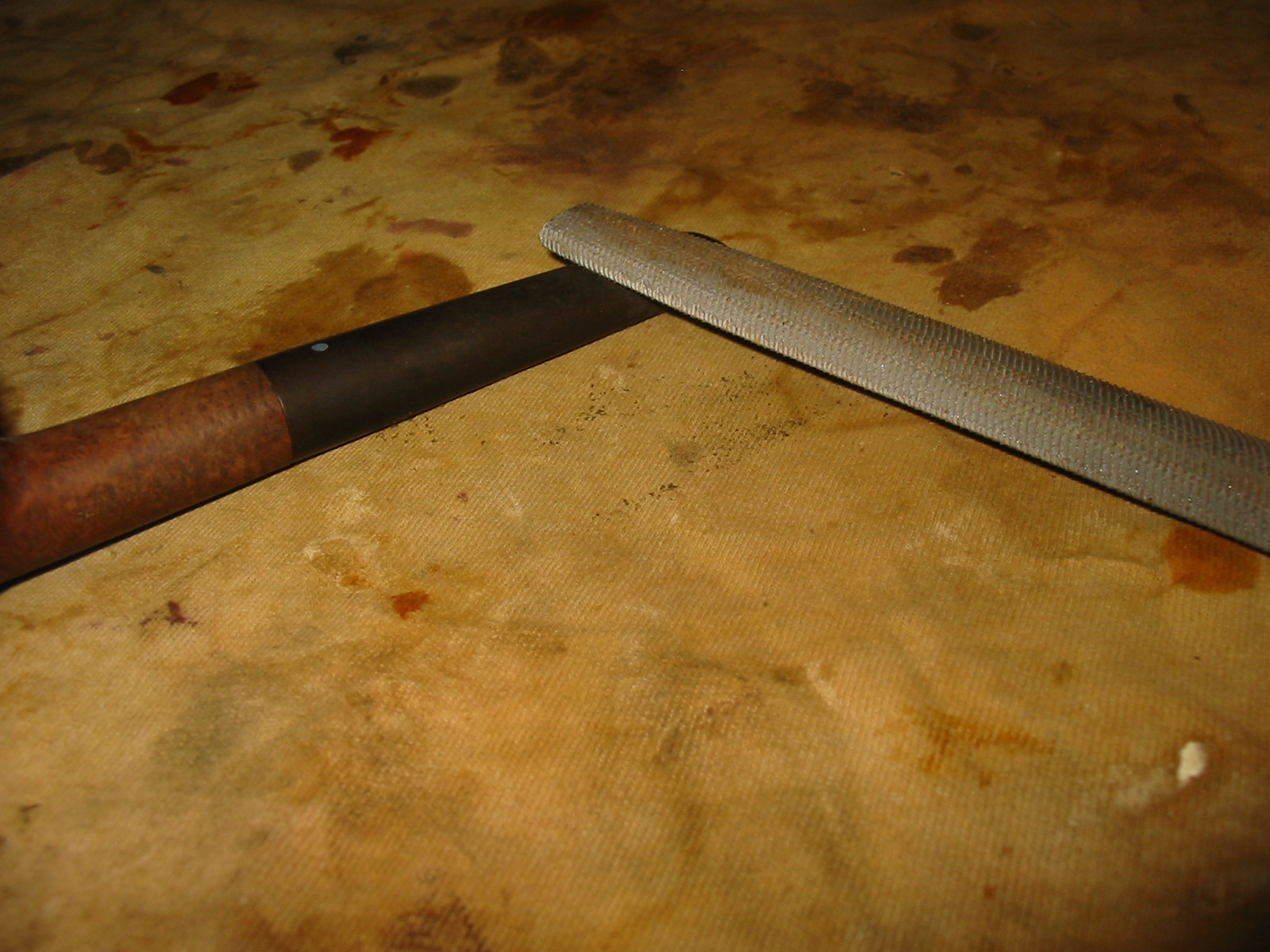
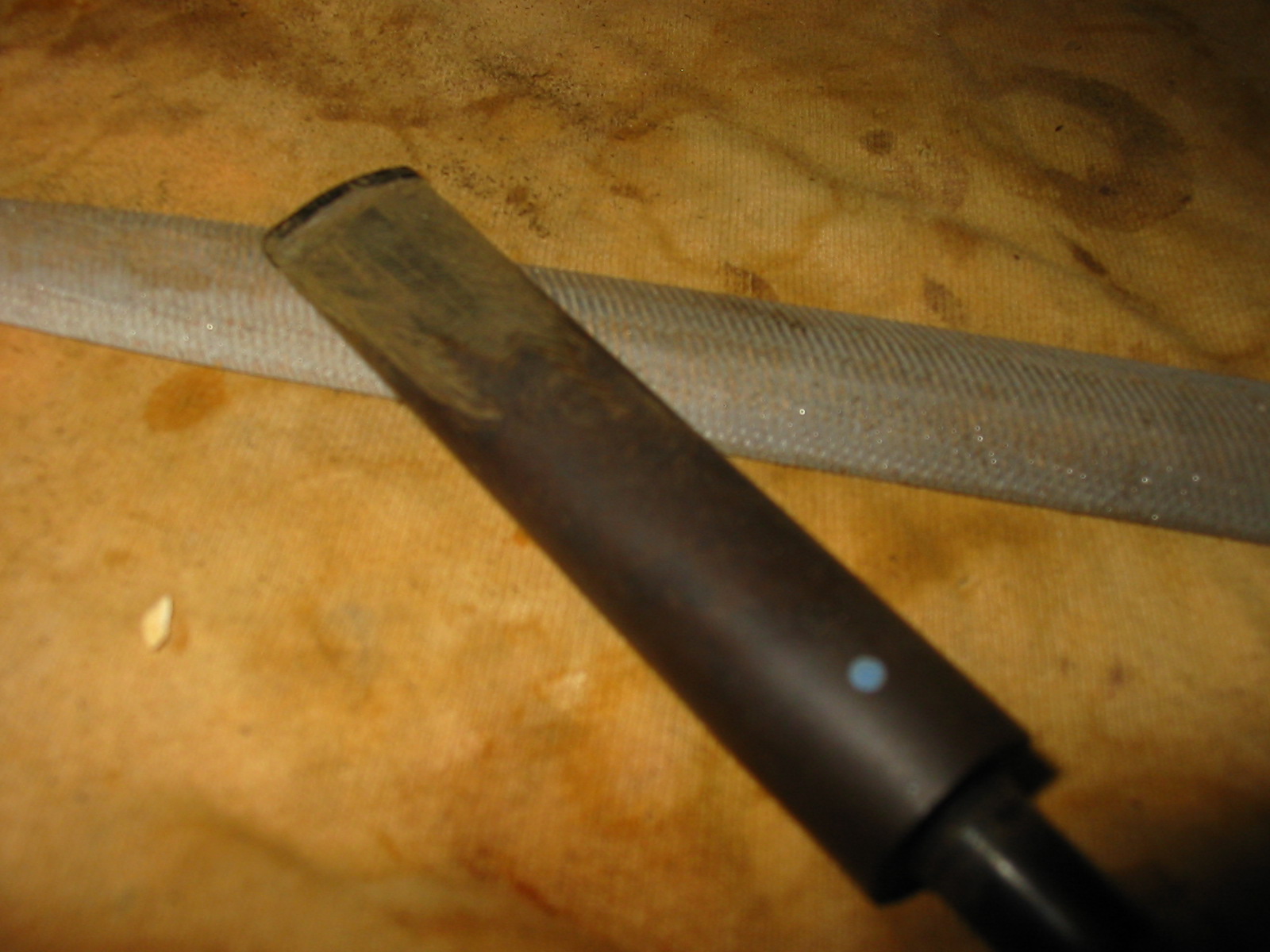
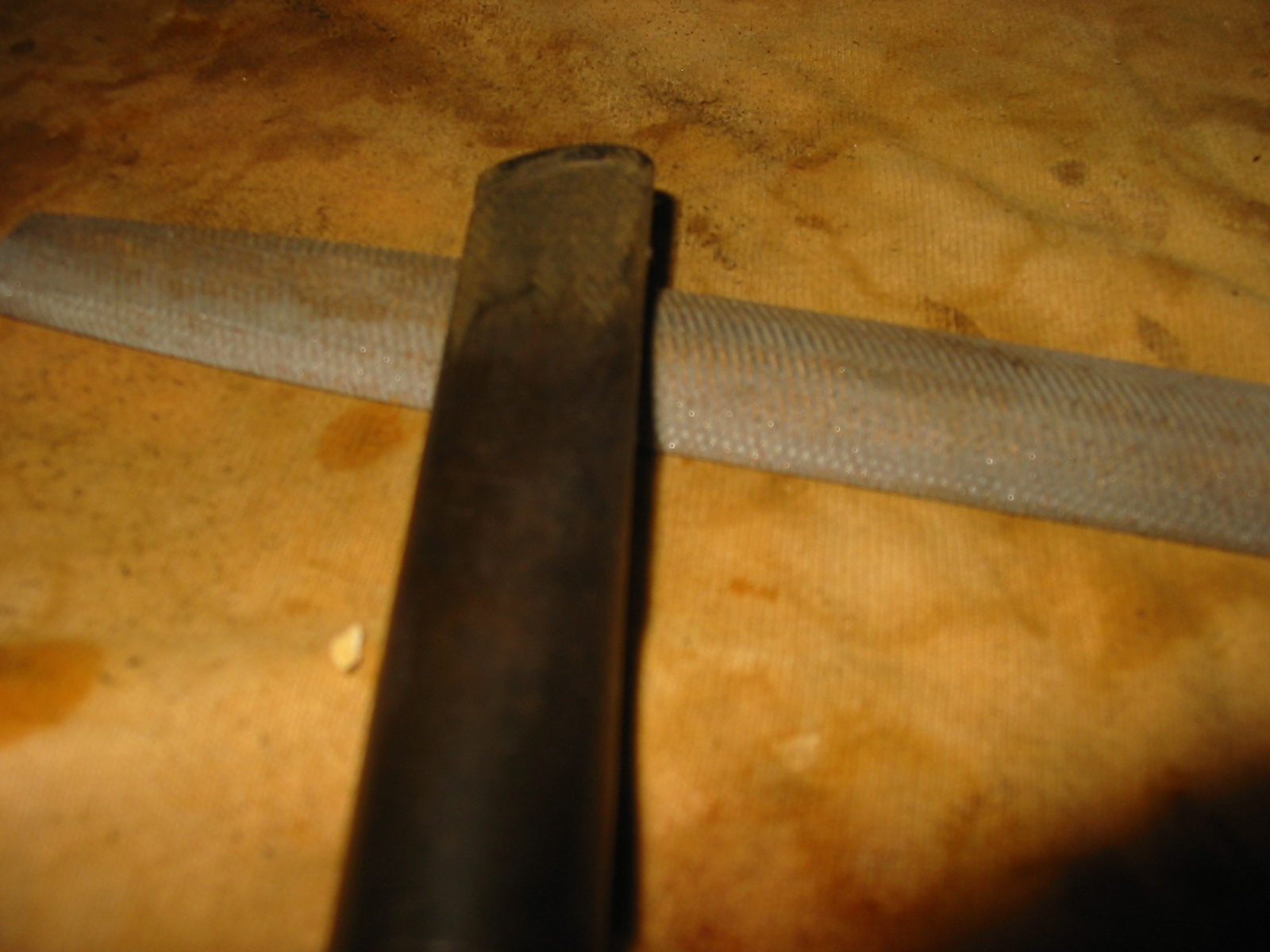
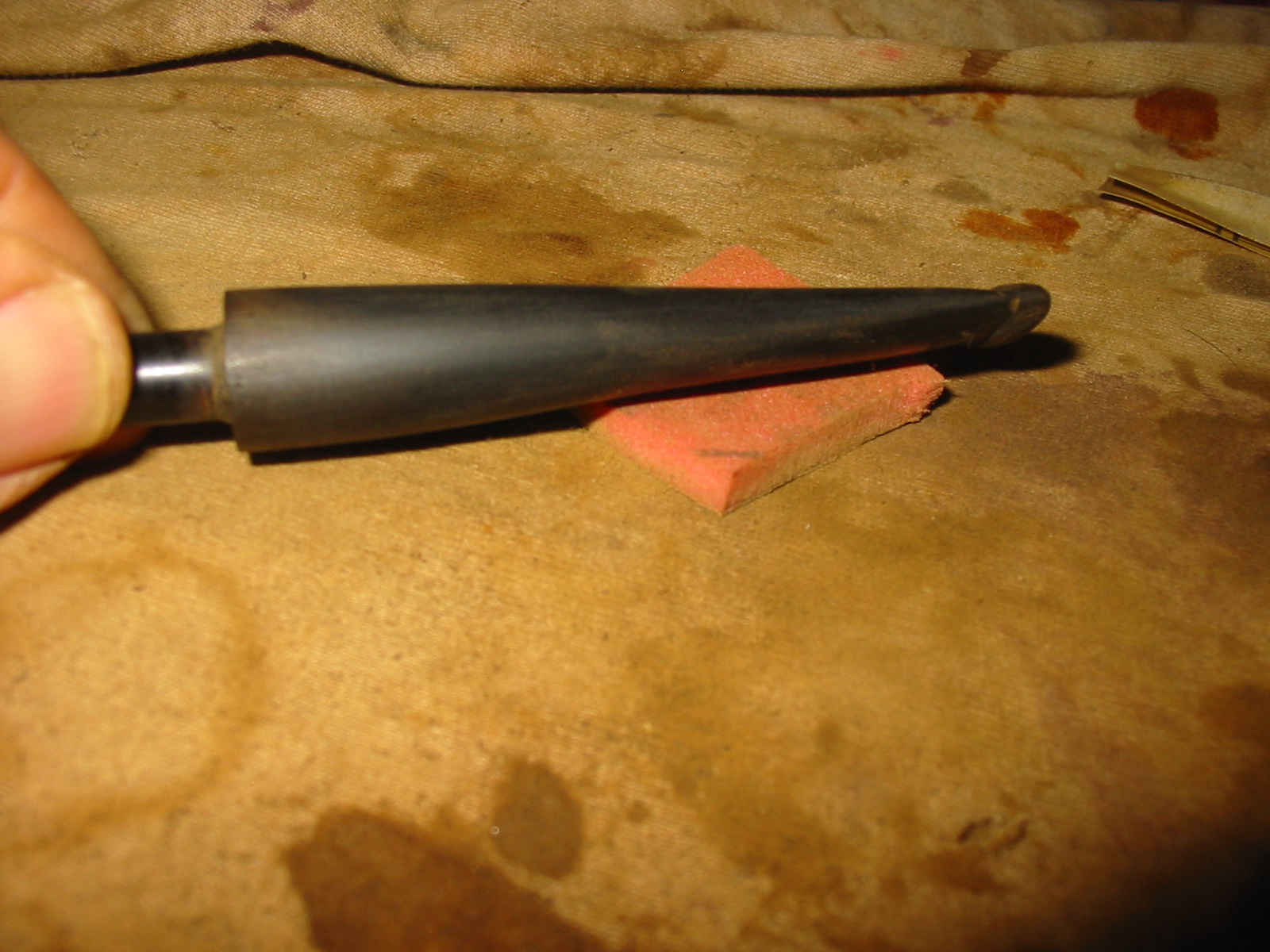
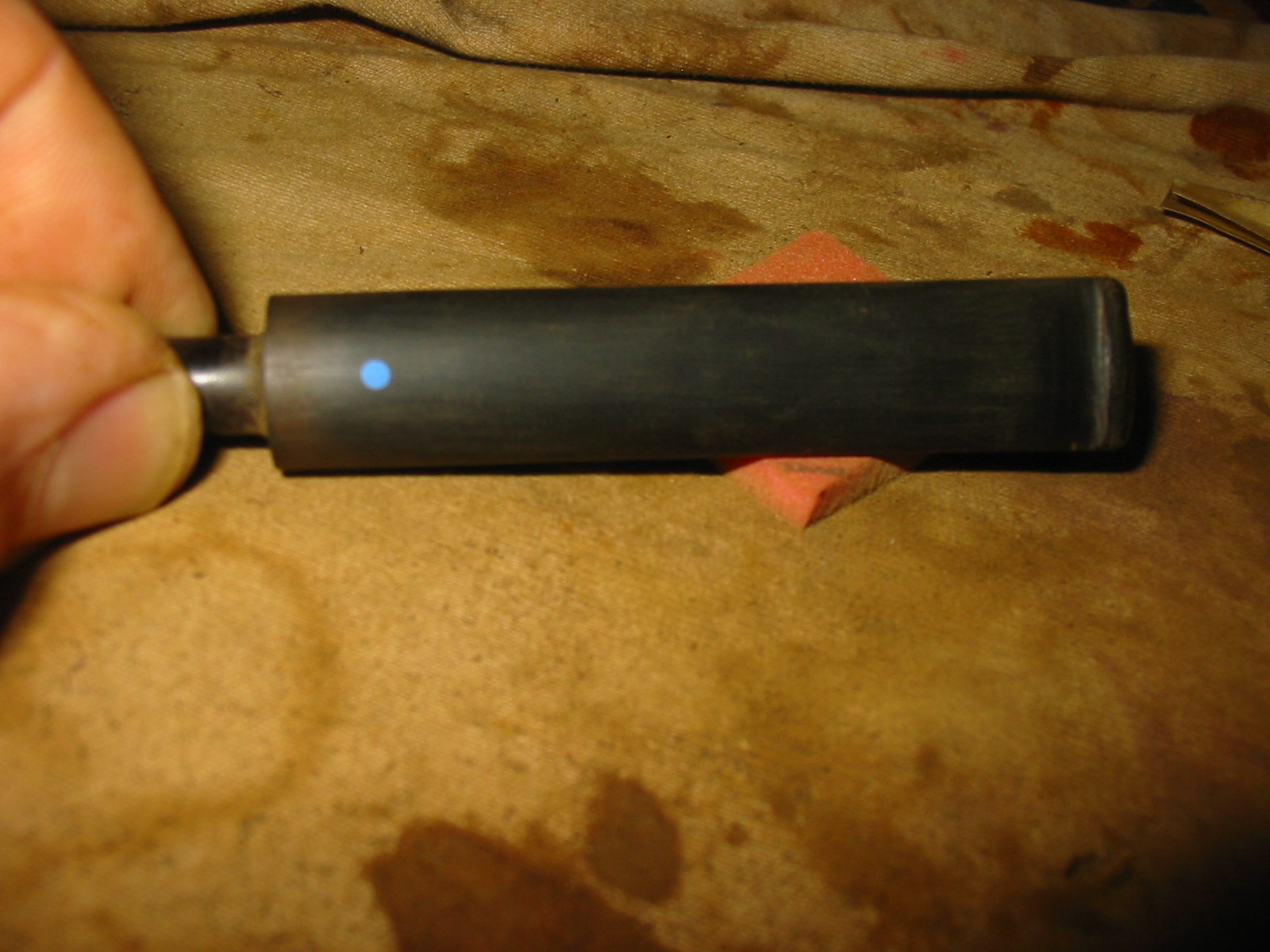
The stem had a poorly cut button on the end and the button as well as the taper on the stem needed to be reworked. I used a rasp and file to shape the taper on the stem and to take out the pinched look of the angle to the 90 degree cut on the button. The button was also not straight and not squarely cut so I also straightened out the flat edge of the button while I worked with the rasp and files. The next three photos show only the initial work on the stem and not the finished work. I removed quite a bit of the material and smooth out the slope of the taper so that it flowed evenly into the button on both the top and the bottom of the stem.
IMG_2226

IMG_2227

IMG_2228

I sanded the newly shaped stem with 220 grit sandpaper and a medium grit sanding sponge to remove the scratches left by the rasp and files. Once I had the basic shape in place I decided to restain the bowl. I warmed the briar and then gave it several coats of a dark brown aniline stain thinned 1:1 with isopropyl alcohol. I flamed it between each coats to set the stain. The rim took extra coats to match the colour of the rest of the bowl.
IMG_2240

IMG_2241

IMG_2242

IMG_2244

I buffed the newly stained bowl lightly with White Diamond and then gave it a coat of a light cherry coloured Danish Oil. Once dry I buffed it by hand and then also gave it a light buff with White Diamond to polish it.
IMG_2245

IMG_2246

IMG_2247

I then removed the stem and worked on the slot in the button. When the end of the stem had been cut off some of the flair of the original airway remained leaving the end of the button with a small rectangular opening. I used needle files to open the flair and widen the slot into more of an oval that extended the width and height of the button end.
IMG_2248

IMG_2251

IMG_2252

Once I had the slot opened the way I like it I sanded the inner edges with a folded piece of sandpaper to smooth it out. I also did some more shaping with files to the taper of the stems. I sanded it with 220 grit sandpaper until I had the slope well-defined from the tenon back to the button. I also shaped the externals of the button to clean up the angle at the point the button and stem taper met. I also sanded it with a medium grit sanding sponge to remove the scratches left behind and to also remove the oxidation at the stem shank junction.
IMG_2249

IMG_2250

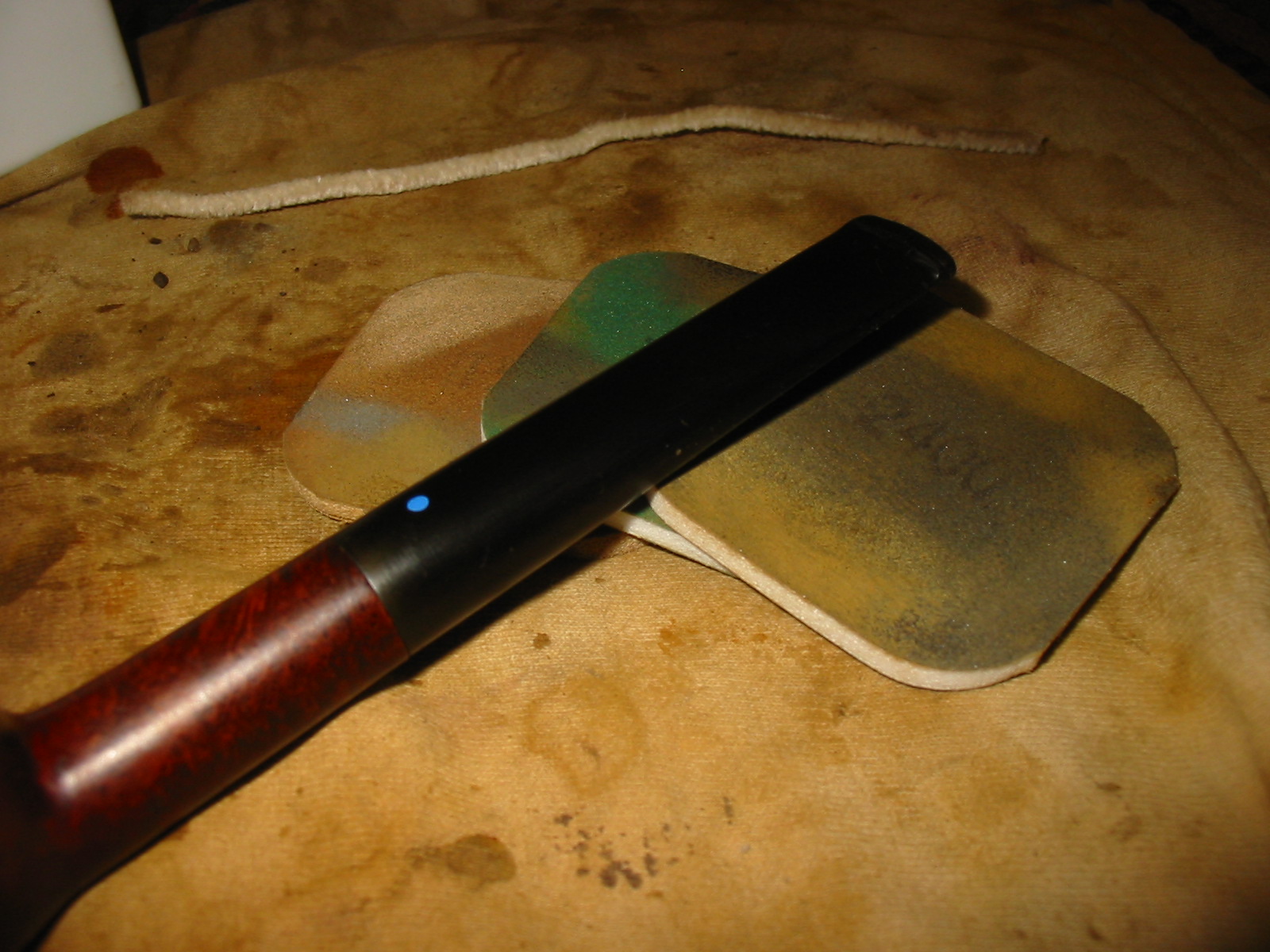
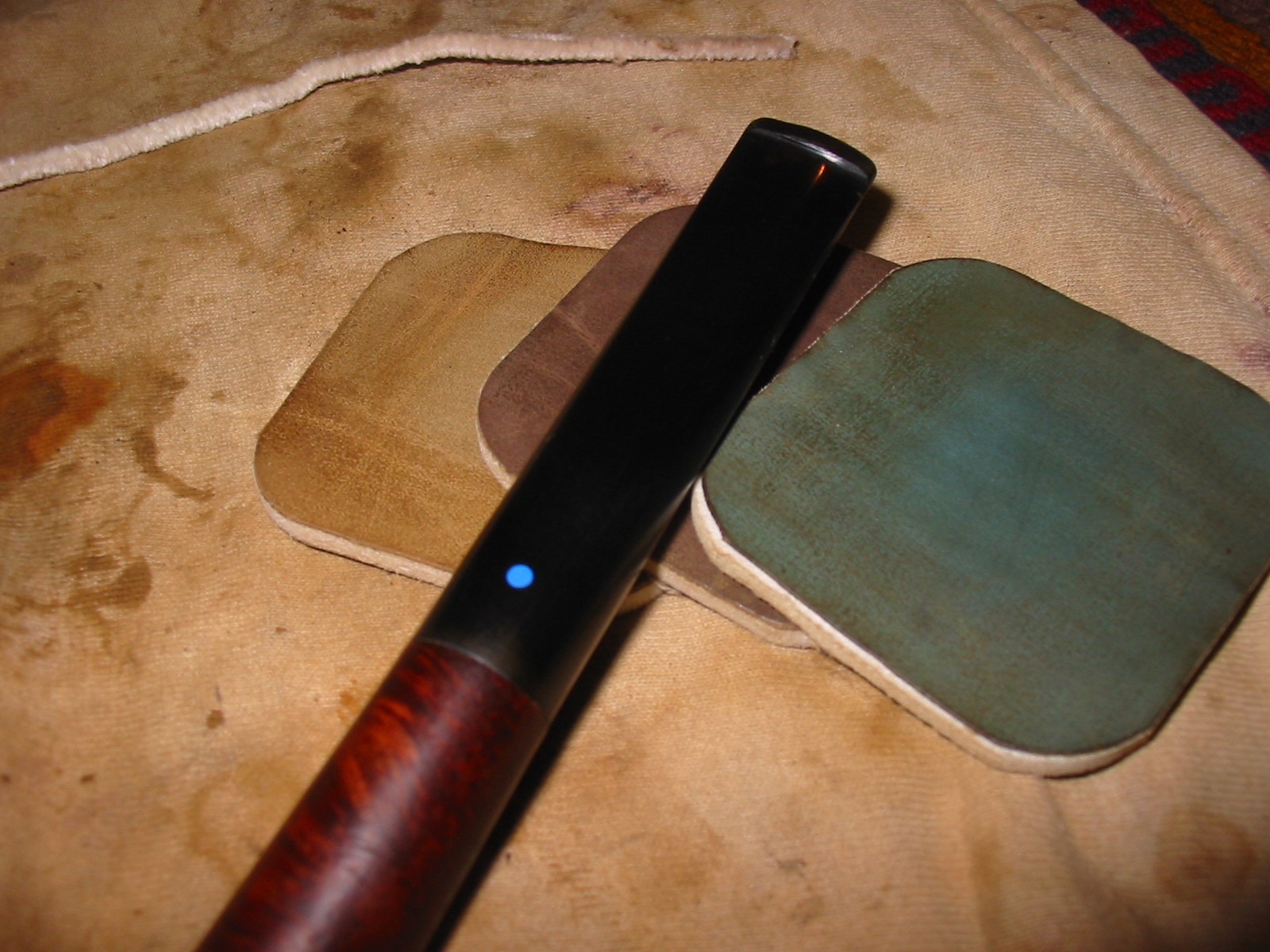
When I had the scratches removed as far as possible with the sanding sponge I went on to sand the stem with micromesh sanding pads. I wet sanded the stem with 1500, 1800 and 2400 grit sanding pads and the dry sanded with the remaining grits.
IMG_2253

IMG_2254

IMG_2255

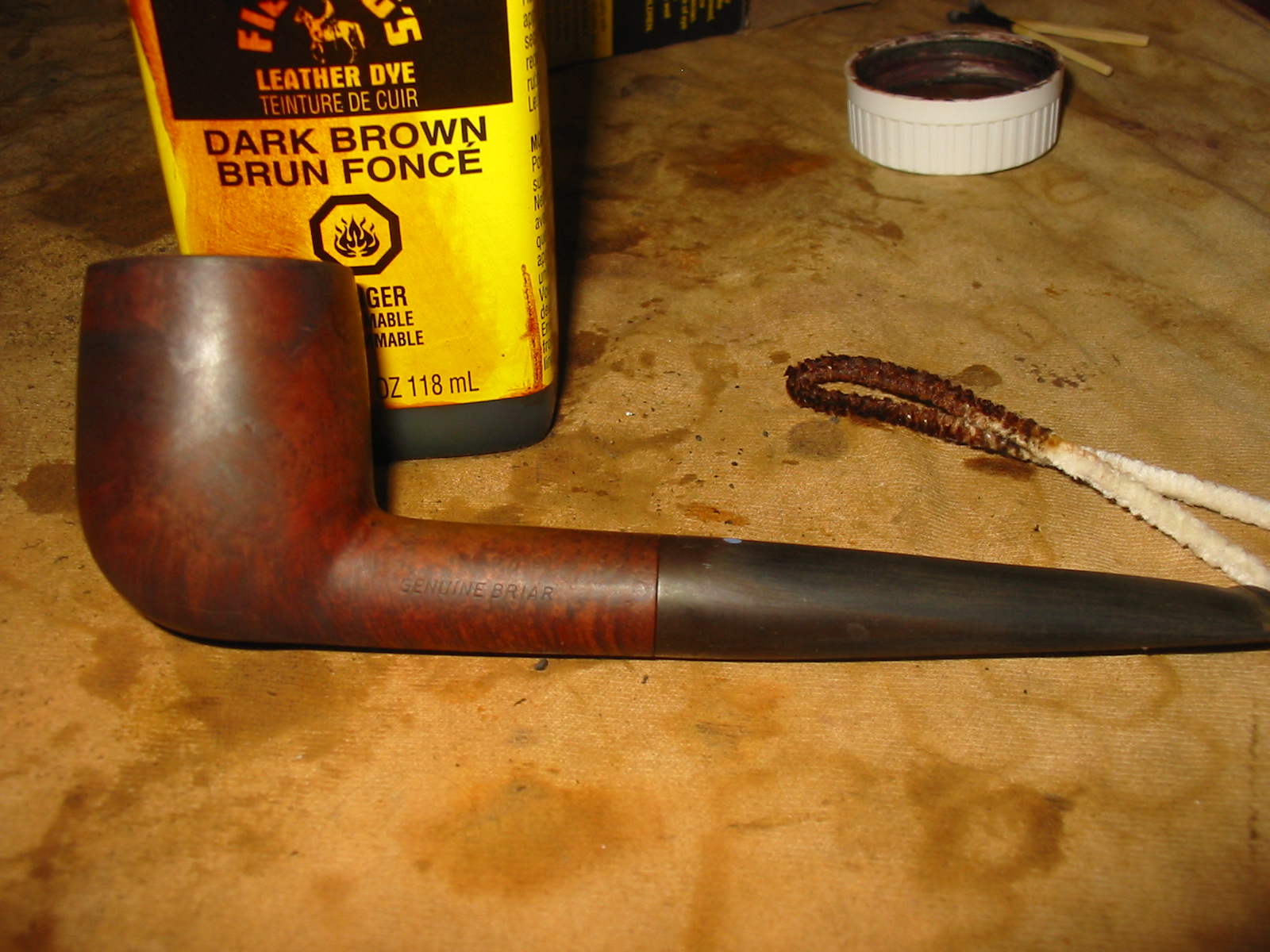
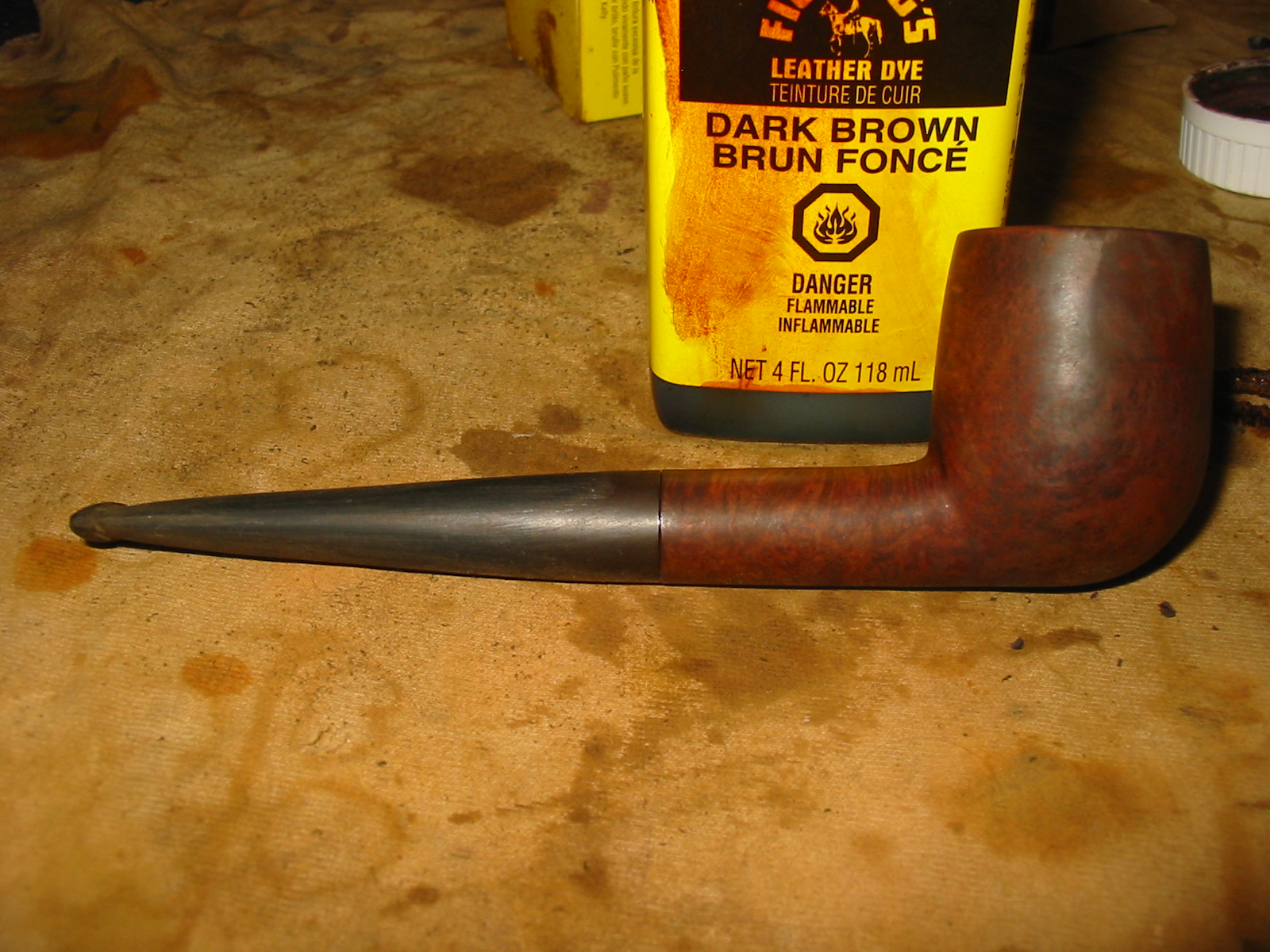
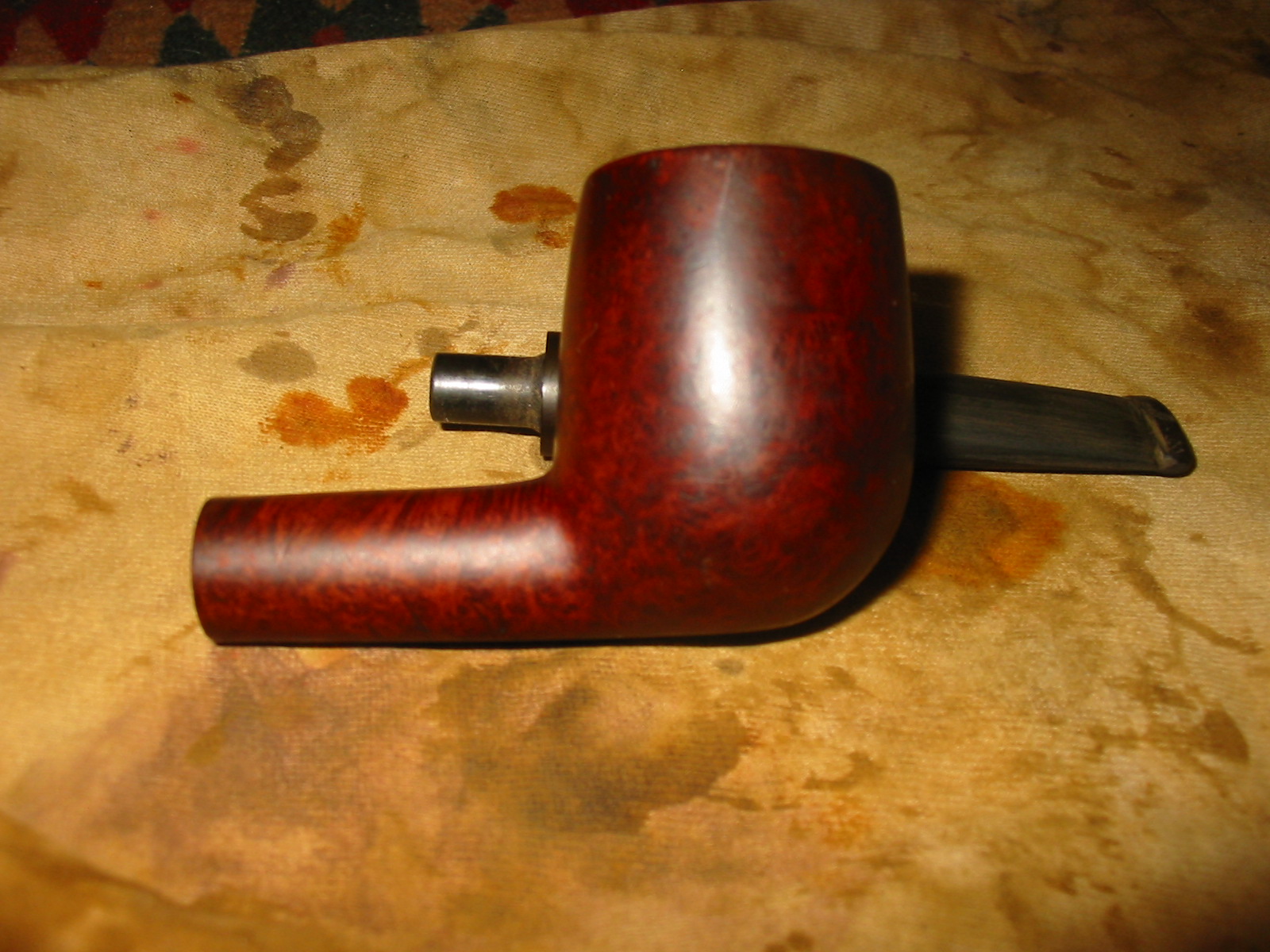
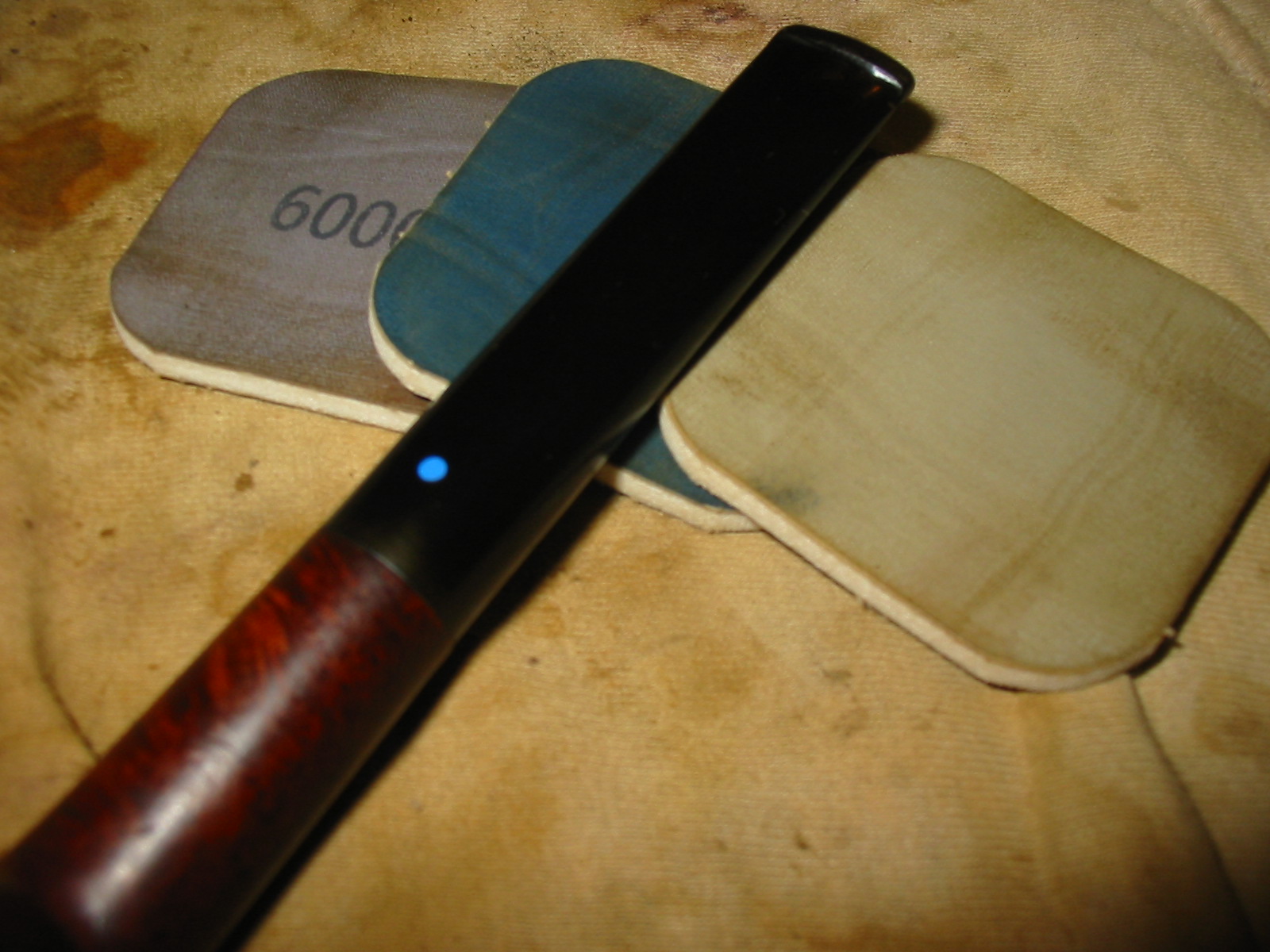
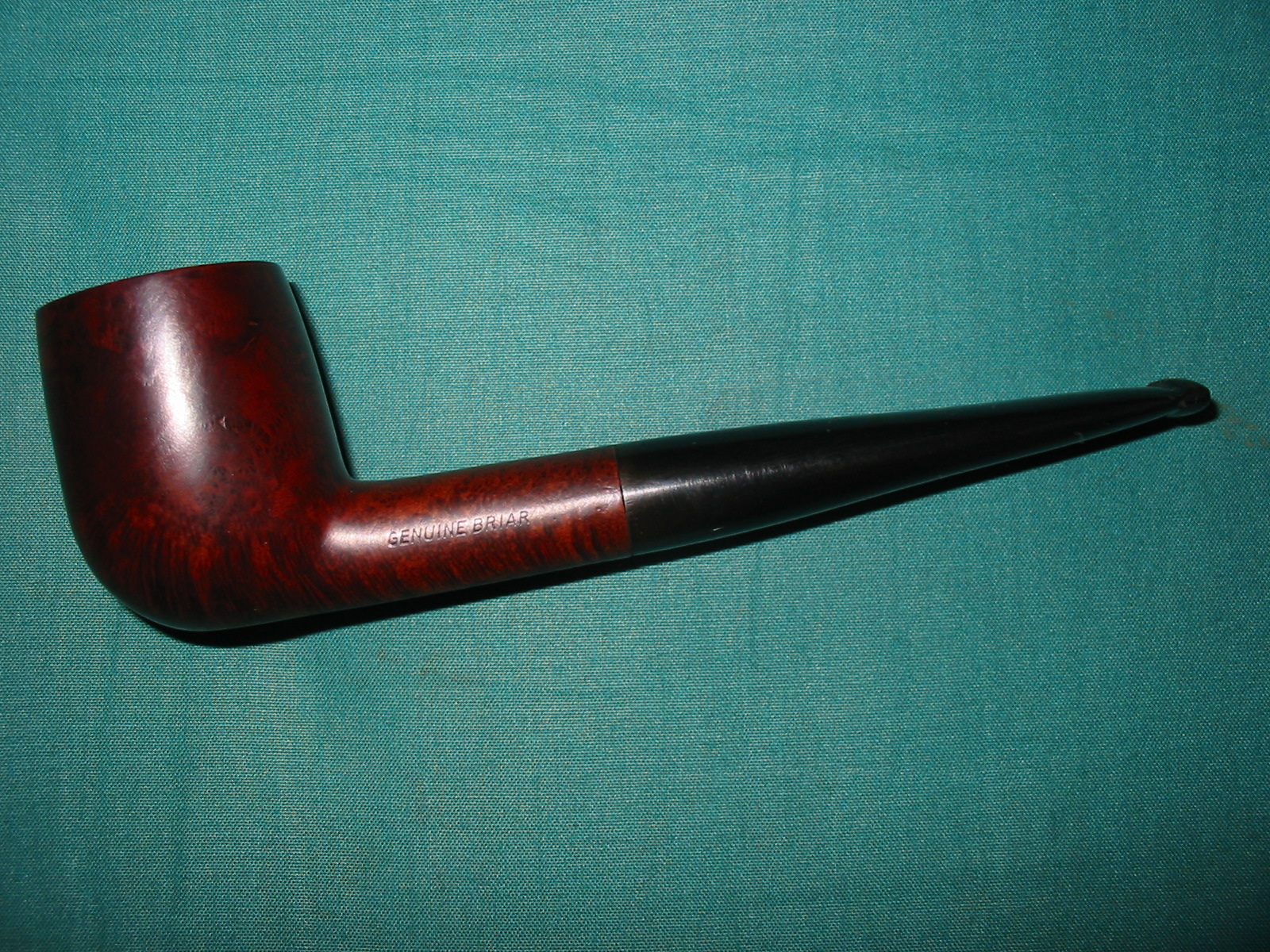
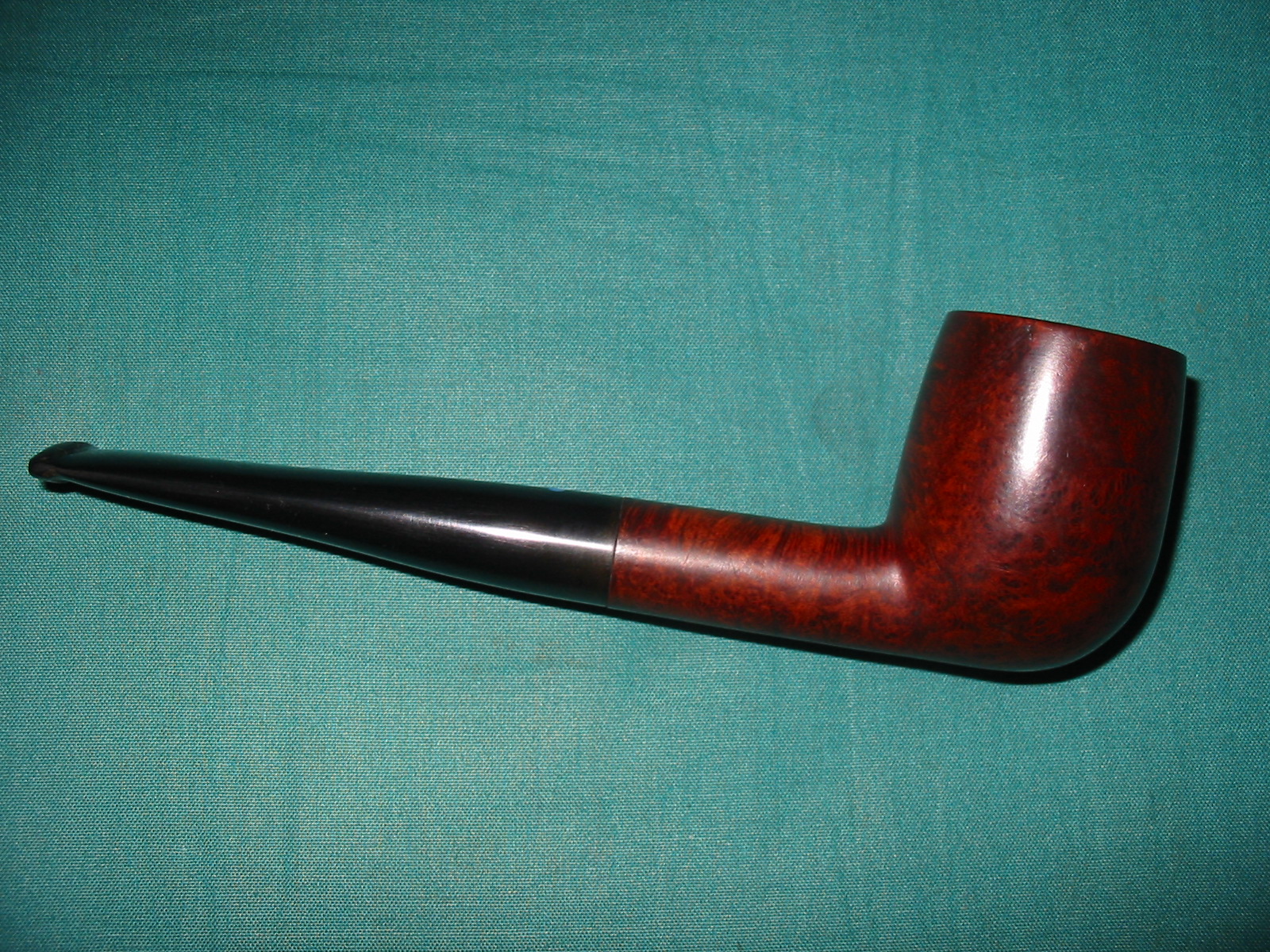
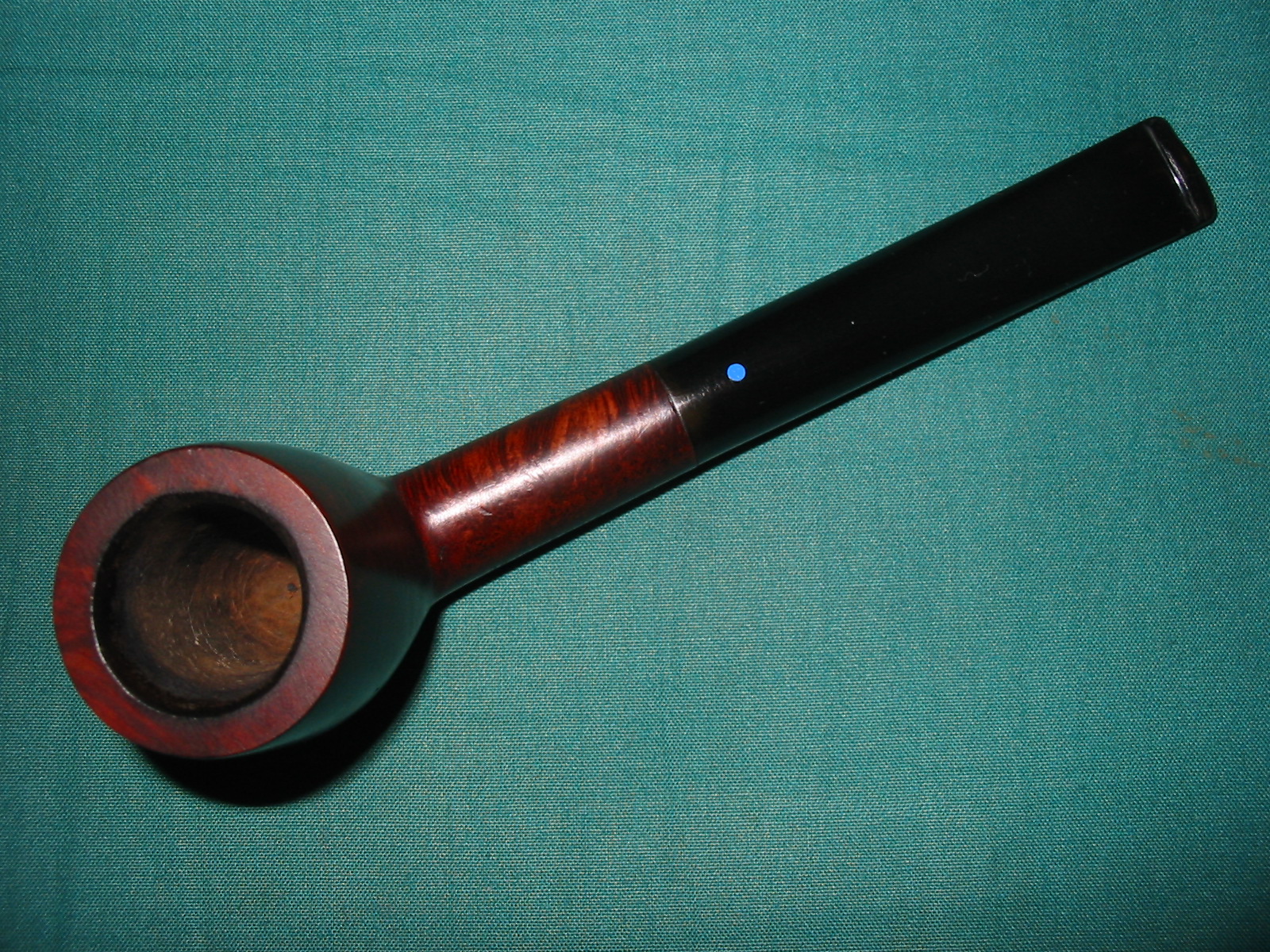
I rubbed the stem down with Obsidian Oil and rubbed it into the surface of the vulcanite. I took it to the buffer and buffed the stem with White Diamond. I gave the bowl and the stem multiple coats of carnauba wax and polished the pipe with a clean flannel buff to bring up the shine. The finished pipe is pictured below. I still wish I knew what the stamping says in full. That blue dot certainly is a symbol of some unknown to me brand of pipe. The mystery remains but in the mean time I have a great little billiard to enjoy.
IMG_2256

IMG_2257

IMG_2258

IMG_2259

Falcon Restored


Blog by Al Jones (aka “upshallfan”)

We had some glorious weather in the Maryland/Virgina area in September and one beautiful Sunday, the wife and I drove down to Winchester, VA in the MGB. We toured Patsy Cline’s home (that has been on our list). Winchester is also home to JB Hayes Tobacconist, a fine pipe shop. I didn’t find anything there, but we also made several antique/junk shop stops as I was on the hunt for an old cabinet to re-purpose for my pipe collection. I didn’t have any luck with a cabinet, but did spy this old Falcon in a case. For a few bucks, it was mine ($3 from memory).

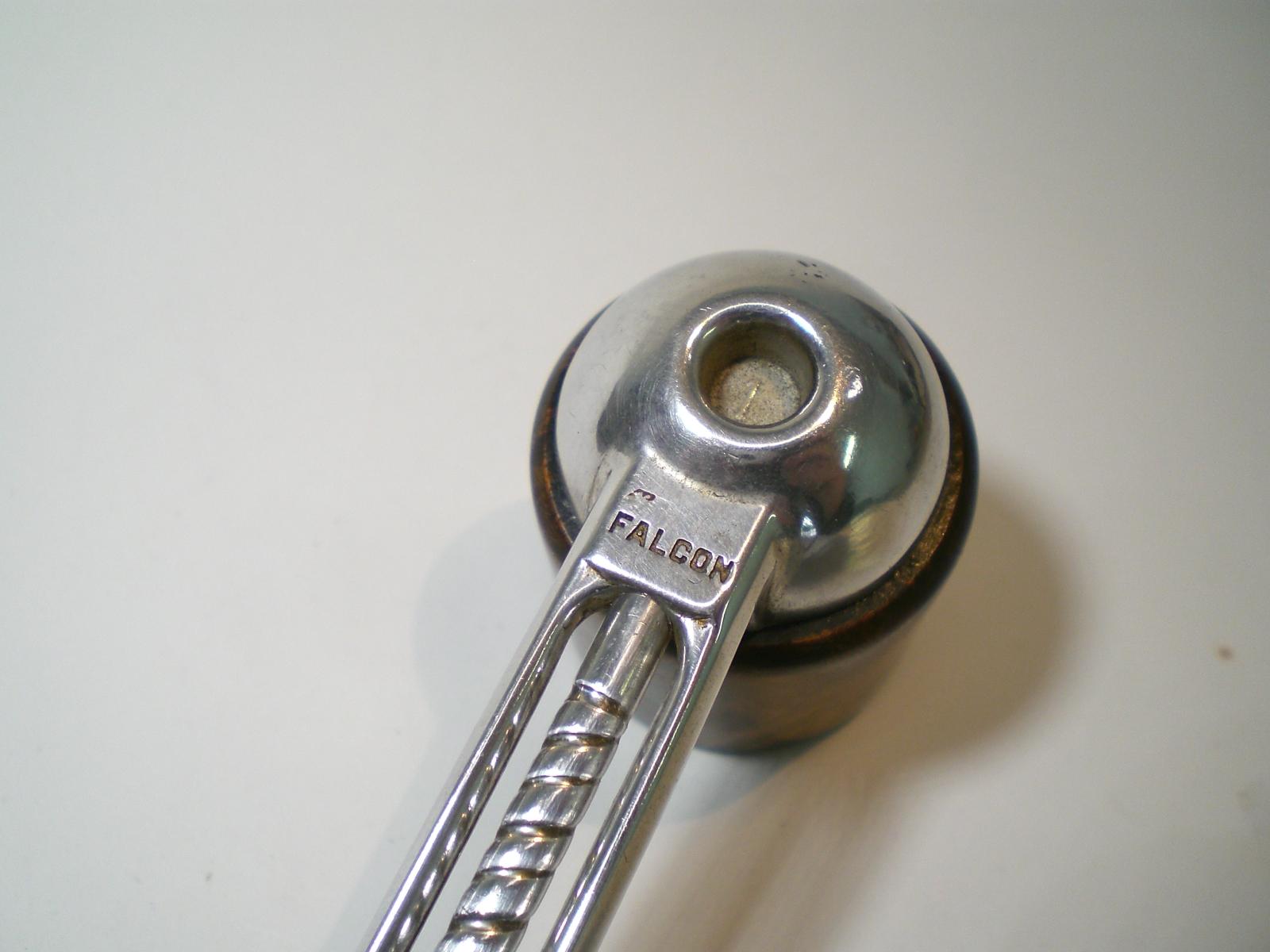
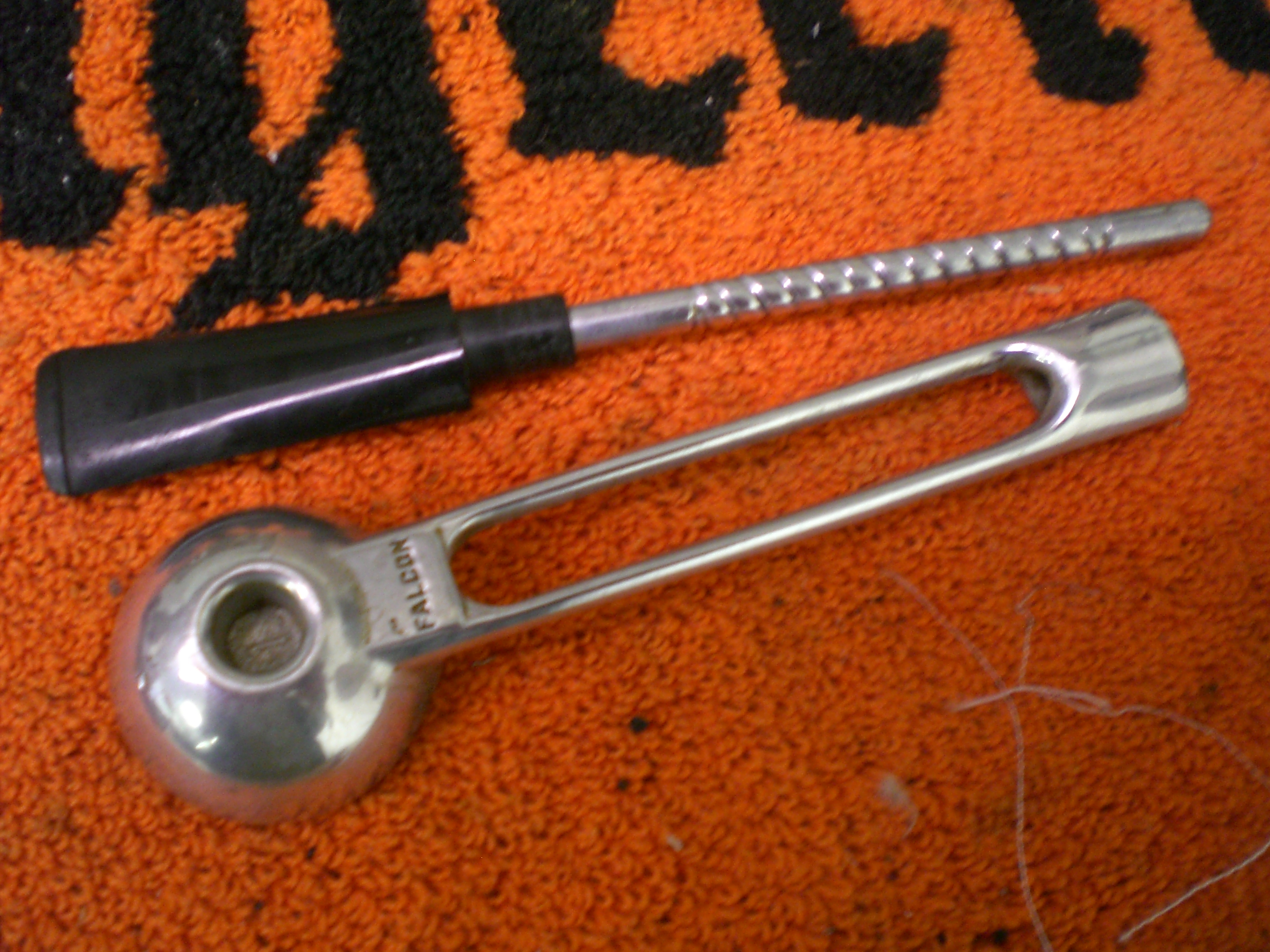
The bowl top was pretty beat up and scorched, but the rest of the pipe and stem looked in decent shape. I had never seen a metal pipe in person to this point and was curious as to how it was assembled or if it held any restoration challenges. Here are some pictures of the pipe as I found it.

Falcon_Before

Falcon_Before (1)

Falcon_Before (2)

Falcon_Before (3)

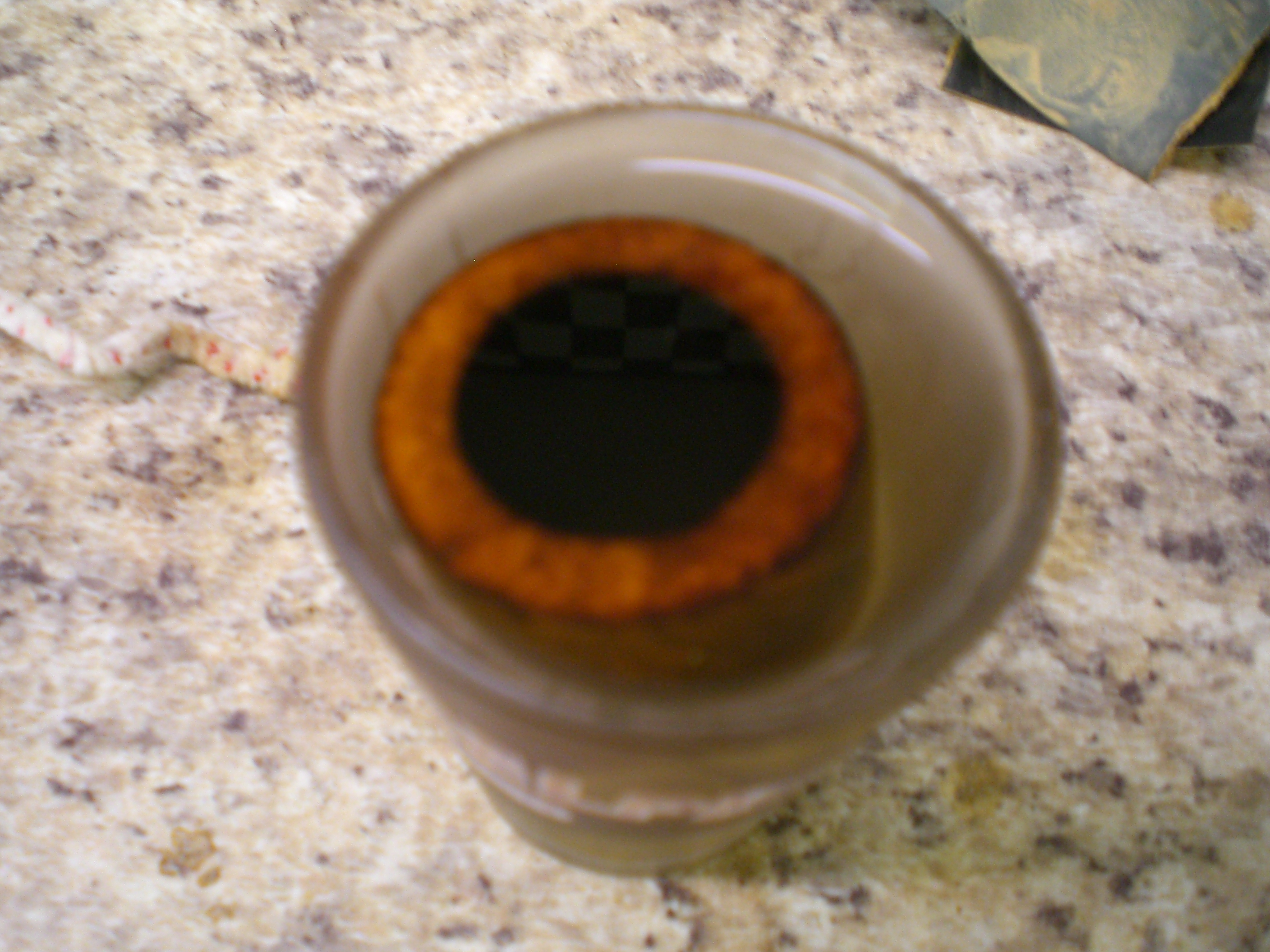
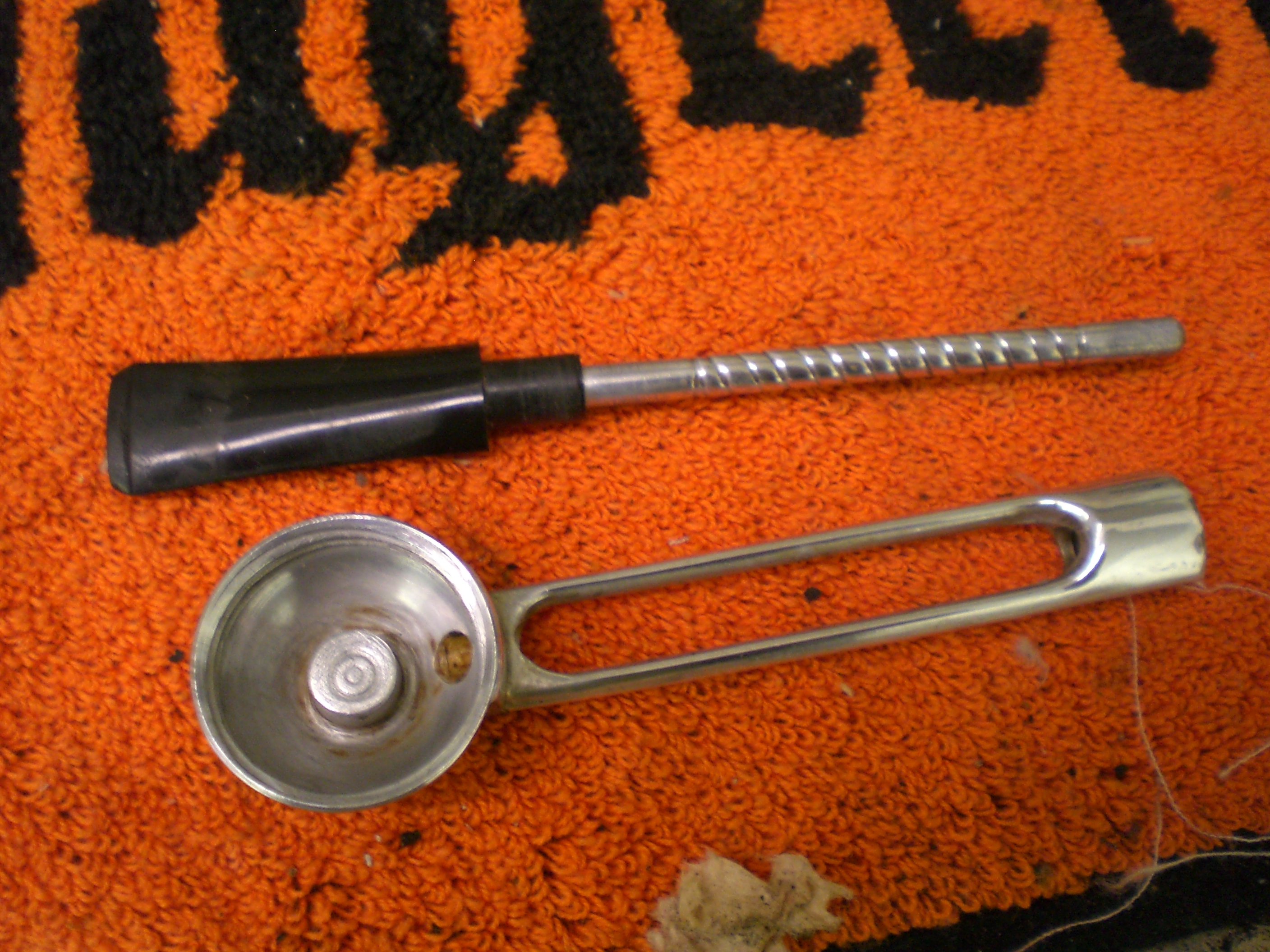
The pipe broke down without drama and the bowl top screwed off nicely, but the threads were just about perfect. I reamed the bowl, which has a fairly thick cake. The bowl was quite tall and I thought it would look best topped and refinished. I sanded the bowl top smooth with some 320 grit paper flat on my workbench, followed by 800 grit wet paper, using water. I immersed the bowl in a shot glass full of isopropyl alcohol, you can’t do that with a briar pipe!

Falcon_Progress (2)

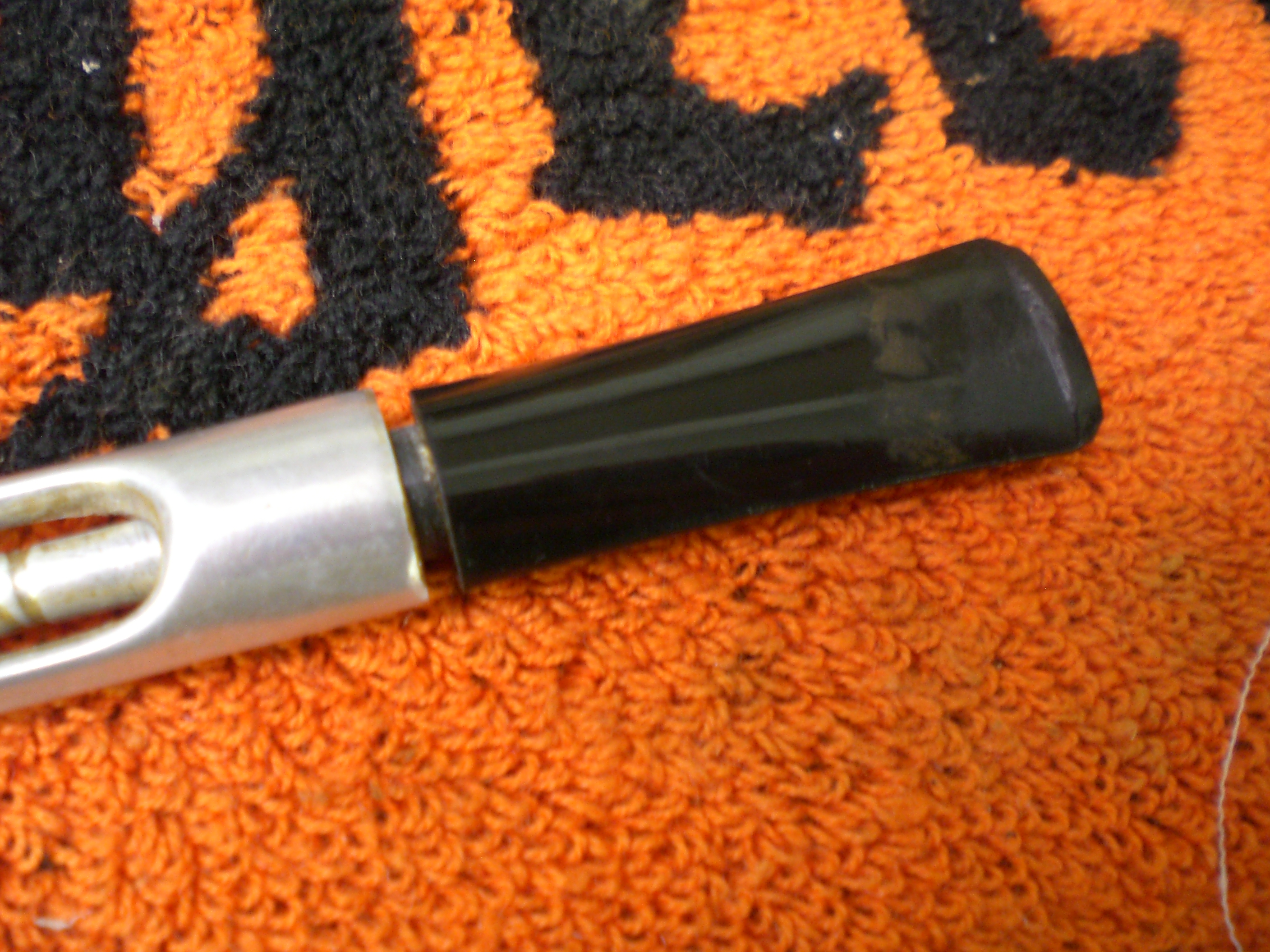
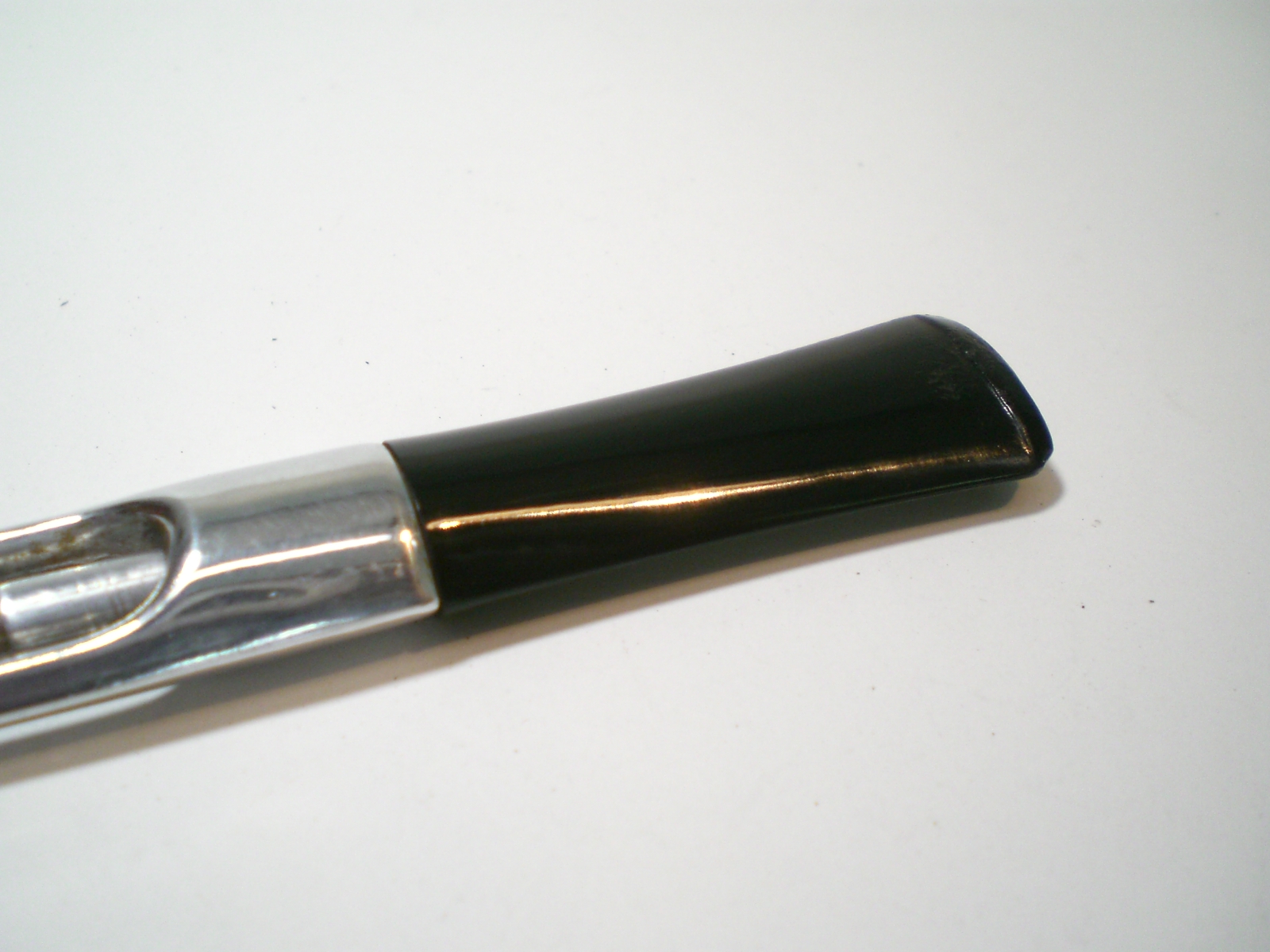
While the pipe bowl was soaking, I turned my attention to the metal bowl and stem. The stem had some teeth abrasions but no real dents. To me, the stem was somewhat “plasticky” but the fellow who ended up purchasing this one said they are quite durable and clenching doesn’t seem to harm them. The bottom of the metal bowl had some mild build-up, which I removed with some fine steel wool. I buffed the metal parts with white diamond and then red rouge. The metal shined up nicely, but I suspect will dull quickly over time.

Falcon_Progress

Falcon_Finished (6)

Falcon_Progress (1)

I used 1500 and then 2000 grit wet sandpaper on the stem and was able to remove most of the abrasions. I then polished it with 8000 and 12000 grit micromesh cloth. It was also buffed with white diamond.

Falcon_Finished (1)

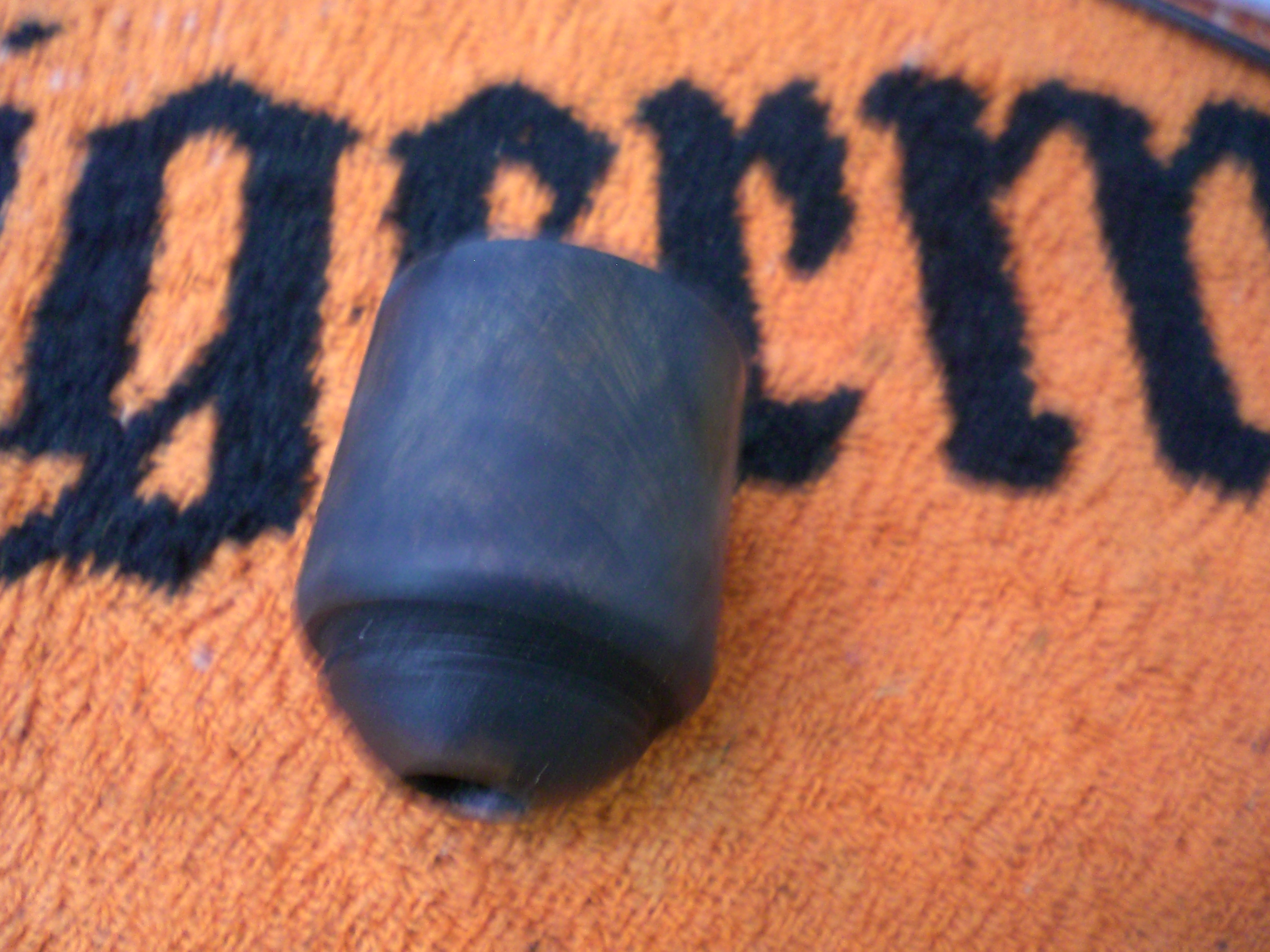
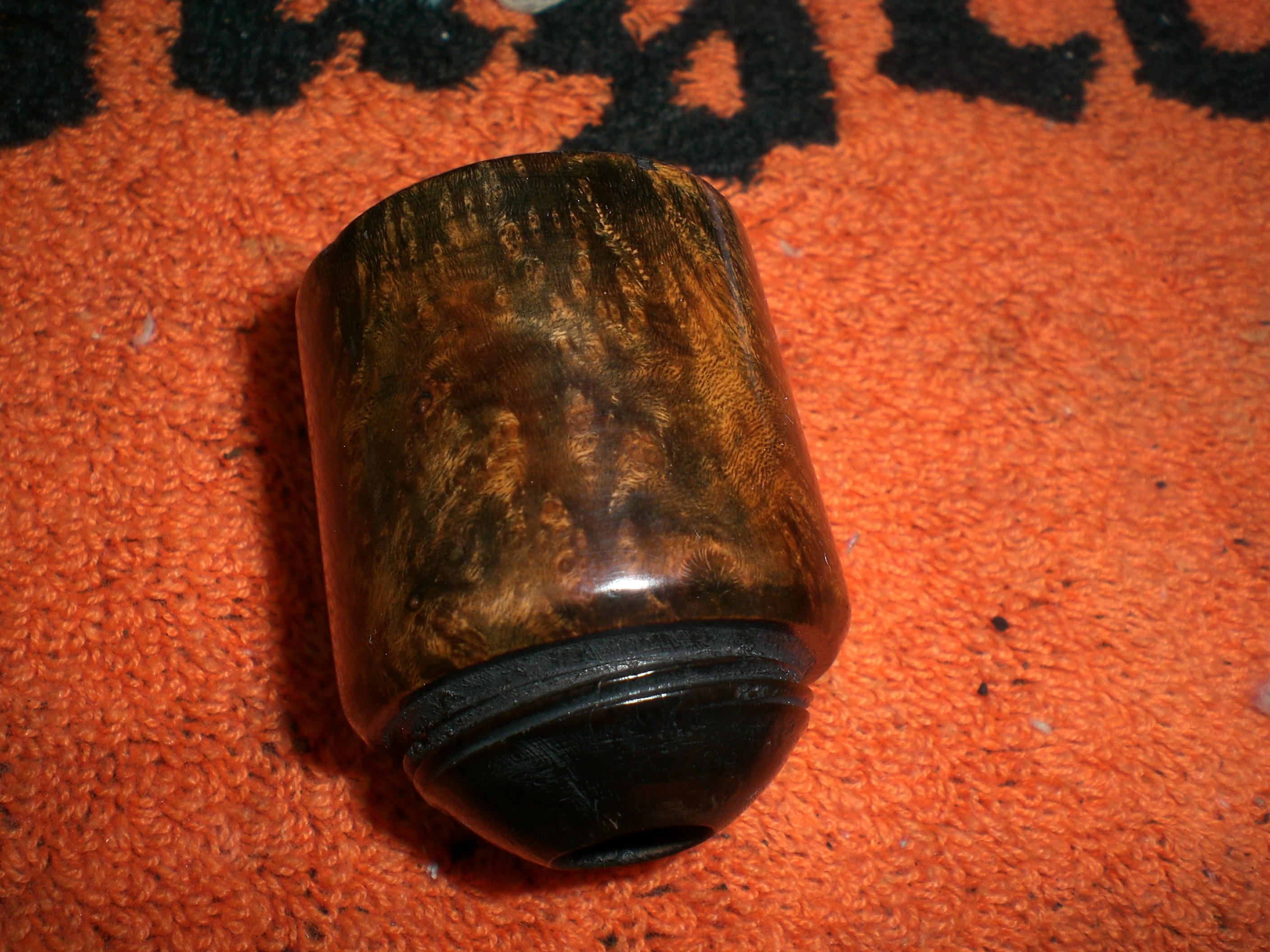
Once the bowl was soaked, the stain sanded off nicely with 800 grit paper. This revealed a number of fills. I decided a two-stage stain would cover up those fills nicely. I warmed the bowl with a hair dryer, then applied a full coat of black stain. I lit the stain with flame to “set” it into the grain. After it dried, I sanded the stain off with alcohol and 800 grit paper. I then removed more of the black stain with tripoli on the buffer. A very light, almost transparent coat of brown stain was applied over the black.

Falcon_Progress (3)

Falcon_Progress (5)

Once dry, the bowl was buffed with white diamond and then several coats of carnuba wax. I’m very pleased with the finish and the two stage stain hid the fills nicely.

Falcon_Bowl_Pix (2)

Falcon_Bowl_Pix (1)

Falcon_Bowl_Pix

Falcon_Finished (2)

And finally the finished pipe.

Falcon_Finished

A Handmade Denmark Dublin Reborn


Blog by Greg Wolford

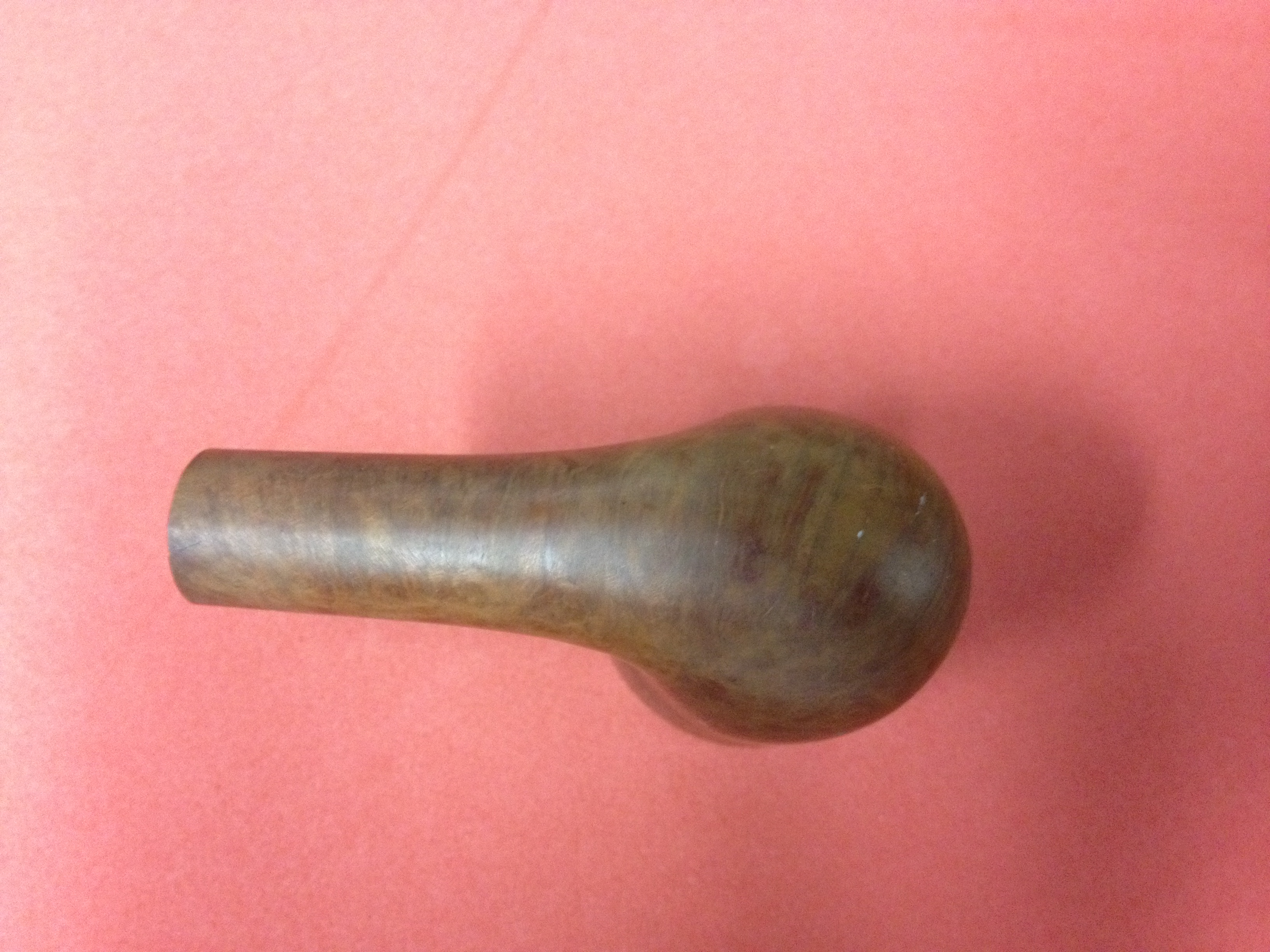
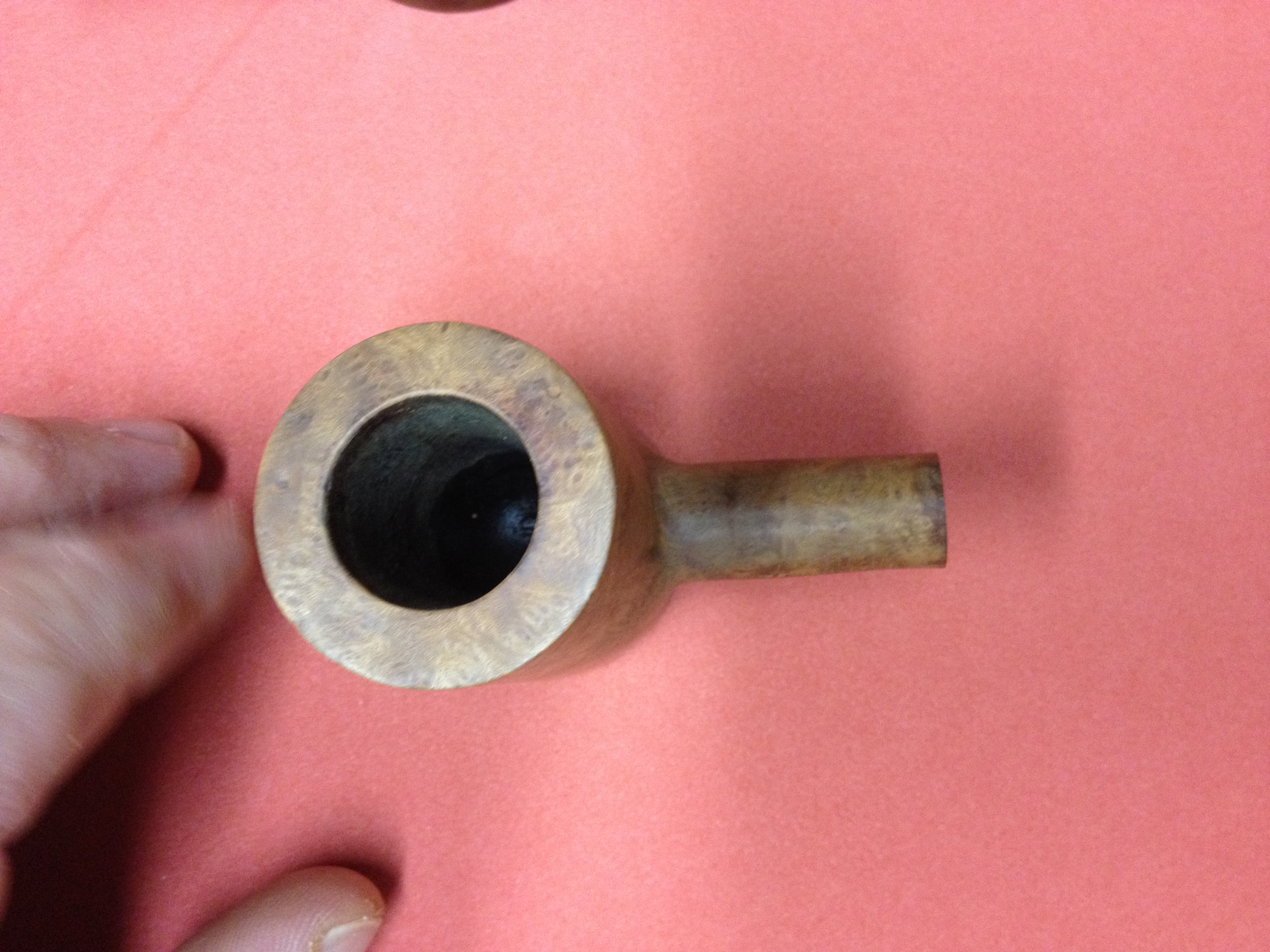
A week or so ago I went into a local antique shop that houses a variety of vendors. In the past I have found a few decent pipes here so I always have high hopes when I go there. This trip yielded a nice little haul of four pipes which I plan to restore over the next few weeks as i have time. The first two have already been started one: one completed and one still in the process. This post will mainly focus on a Dublin shape that is stamped on the shank Handmade over Denmark, with no other information on the pipe or stem. This is the pipe as it looked when I got it home:

Image

ImageImageImage

As you can see, it was heavily caked and had what I thought were some deep scratches on it, the rim was charred and damaged from knocking out the dottle, the finish was gone, and the stem was oxidized but had little chatter on it. I decided to start with reaming the back the cake. This bowl is a tapered one, as many Dublins are, and required the use of all four of the bits on my Castleford reamer. After reaming the cake back considerably, to an even, thin layer, I decided to sanitize it with my retort. And since one of the other of the lot I picked up needed very little work other than cleaning (or so I thought at the time) I decided to go ahead and retort it (no reaming needed on this one) while I had the equipment out and also do both stems at this time, too. The Dublin took several “runs” with the retort to produce a clean tube of alcohol at the end; the cherrywood that I was also doing only took two tubes, but I knew it hadn’t been used much and wouldn’t be very dirty.

After I finished the work with the retort I dropped the stems in a OxyClean bath and left them to soak while I cleaned the shanks out. The retort had done a nice job of taking out most of the gunk in the shank of the Dublin; it took comparatively fewer pipe cleaners and cotton swabs than most restorations. I expected the shank from the cherrywood to be all but clean with one or two passes and it sort of was; instead of tar I found the alcohol had “raised” a mahogany-like stain inside the shank – and a lot of it. I then noticed that there was some of this same color on the outside, bottom edge of the shank. The pipe itself wasn’t a reddish color but a more maple, orange-ish one and I hadn’t planned on refinishing it since the color was nice and I didn’t really see a need – until now. Once I noticed the red color it had to come off the outside and out of the shank. Now the entire finish was going to have to be removed so both pipes got wiped down several time with acetone and then put into the alcohol bath overnight.

Several hours later I removed the stems from their soak to begin to make them look new again. I was disappointed to see that the thin layer of petroleum jelly I’d put over the logo on the cherrywood’s stem had washed away and the “white” which had been there was now gone; the stem logo had only been about 60% colored and I’d have had to apply more white anyway so I suppose it wasn’t that big of a deal. I washed the stem well with dish soap and then sprayed them with some liquid Bar Keeper’s Friend, a new product to me (I’ve tried the powdered form before but not the spray). I scrubbed them off with a Miracle Eraser hoping for the good results I had gotten last time I used the eraser but they weren’t as good, though a lot of the oxidation had softened and been removed.

ImageImage

I now moved onto using the micro mesh pads, wet sanding them with 1500 & 1800 grit. At this point I noticed there was some oxidation that hadn’t come out well so I took some 400 grit wet/dry paper to the stems, then “painted” them with a Bic lighter, and then back to the 400 grit paper until the oxidation spots were gone. I then went back to wet sanding with the micro mesh 1500-3200 grits. After the 3200 grit I polished the stems with plastic polish and then dry sanded with the remaining grits through 12,000. Here are a few photos of the shine progression:

IMG_7744  IMG_7745IMG_7746

I now set the stems aside until the next day when the stummels would come out of their bath.

After removing the stummels from the alcohol bath I wiped them down and them dry a bit. Then I began cleaning the shanks again to make sure all the tar, gunk, and stain were gone.  I also cleaned as much gunk off the rims as I could so I could see what their condition really was; fair on the cherrywood and poor on the Dublin.  I decided to top the bowl of the Dublin and set the cherrywood aside to finish later. This what the Dublin looked like at this point:

IMG_7748 IMG_7749 IMG_7750 IMG_7751

You can see much better the condition of the rim here. You can also see that the “scratches” I referred to earlier are in reality fills that have fallen out; I scraped them with my dental pick to be 100% certain. These would have to be dealt with after I topped the bowl.

I used 400 girt wet.dry paper to top the bowl, checking it often to see how it progressed. The char marks wouldn’t come out completely but were reduced substantially. And the dings in the rim were nearly sanded out, in good enough shape that I was happy with them; the one on the outside edge would require me to sand at least another 1/16″ off the entire bowl and I didn’t want to remove anymore material than I already had.

IMG_7752

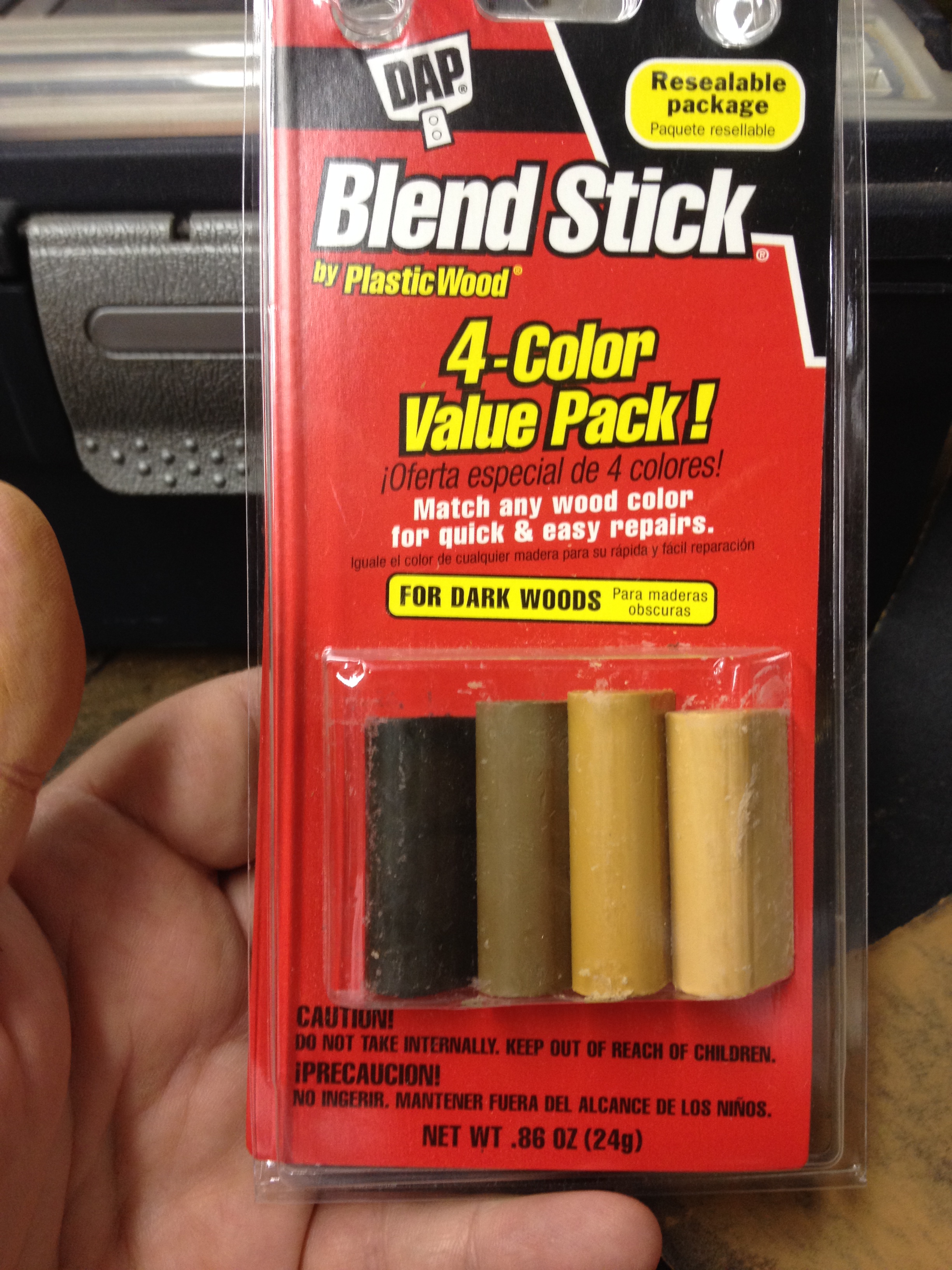
Now I turned my attention back to the fills. Taking the dental pick, I picked out the remaining fill material. I recently picked up a new product that I wanted to try on fills made by DAP and I thought this would be a good opportunity.IMG_7757

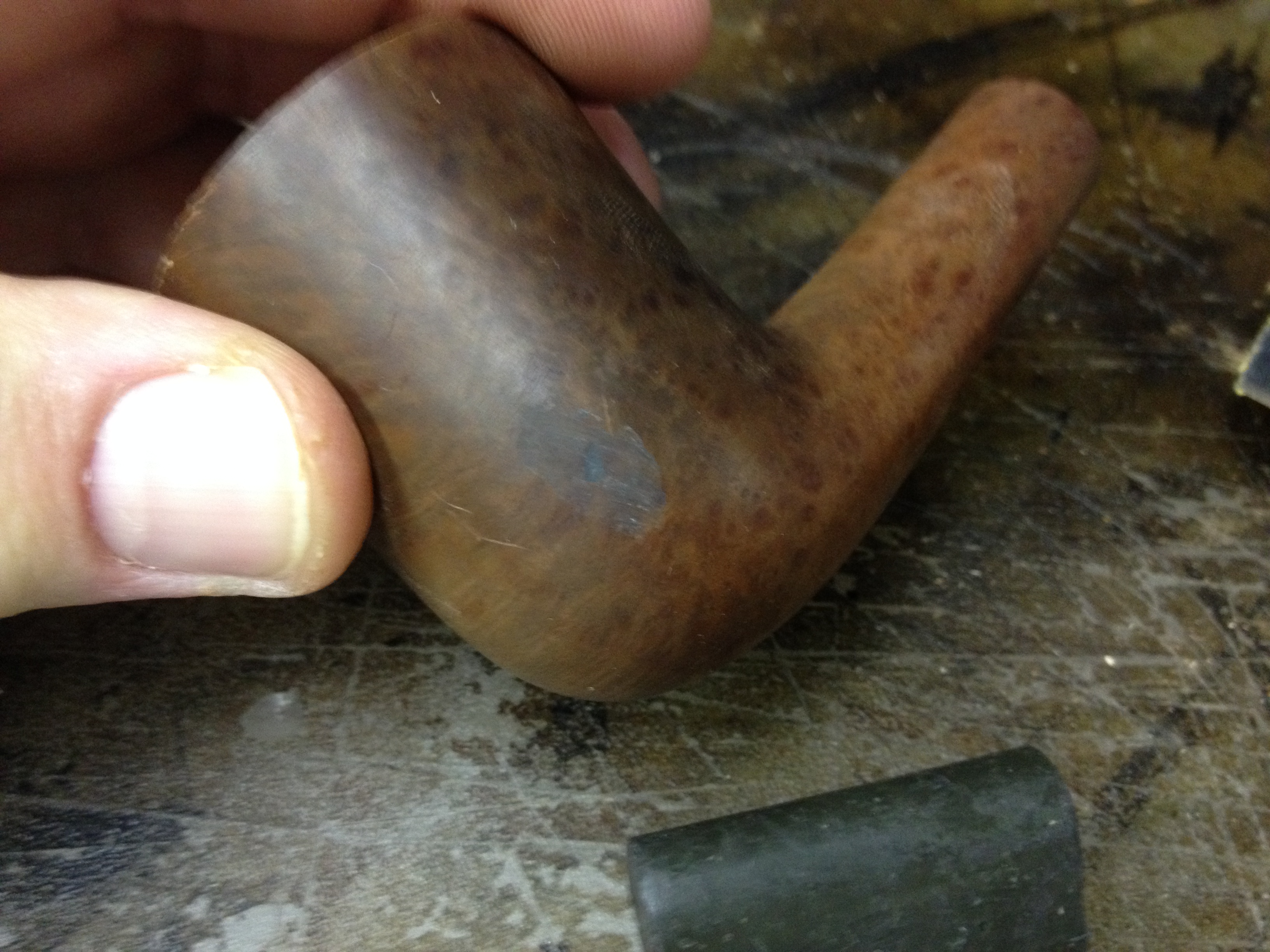
These sticks are a wax-like substance that softens with heat/friction. I chose the darkest of the four sticks and rubbed it into the two largest fill areas. The sticks worked easily into the areas that needed filled:

IMG_7758 IMG_7759

I buffed the excess off lightly with an old cotton rag, getting it into the fill well and just below the surface. I then put a bit of super glue over the new fills and let it dry. After it dried I sanded the fills back down to flush. There were also some areas that needed small scratches/marks sanded out on the bottom of the stummel so I did that at this time, too.

IMG_7764 IMG_7765 IMG_7766

I avoided sanding around the nomenclature and the shank in general. As you can see, the spot sanding left some obvious differences in the finish. But I didn’t want to sand any more than I needed to and knew that as it was I’d have to blend the stain. I decided to use the new-to-me wood stain markers for this job as well as the bowl’s rim. I applied the stain from the marker in small sections and blended it immediately with my finger after I put it on; I did this with all of the fills, spot sanding and the rim. The stain from the markers is very easy to apply in just the area you want it and blending by “finger” was very smooth and didn’t take long at all. I think that the pens did a great job and they have earned a permanent place in my restoration arsenal!

IMG_7767 IMG_7768 IMG_7773

I know took the entire pipe to the buffer and buffed the stummel with Tripoli and then the pipe with white diamond and carnauba wax, finishing with a few passes on a clean soft buff. This is the finished pipe:

20131023-160821.jpg20131023-160835.jpg

20131023-160848.jpg  20131023-160901.jpg

The DAP fill sticks did a pretty good job I think. In retrospect, I should have, perhaps, used a lighter color; the fills were so near the grain I thought darker would be better. I do think that they are something that I will explore using further and believe they have potential for some good results.