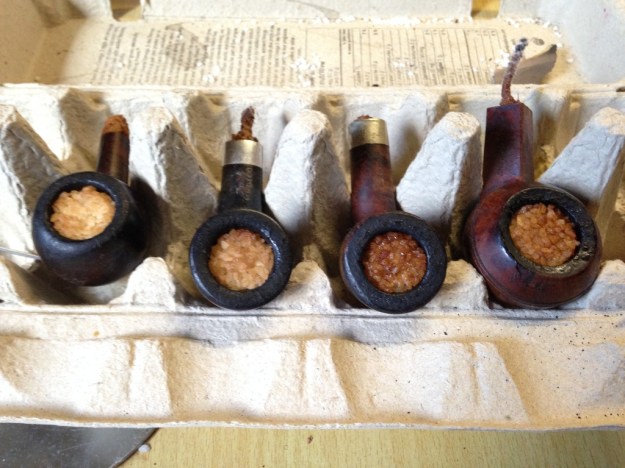
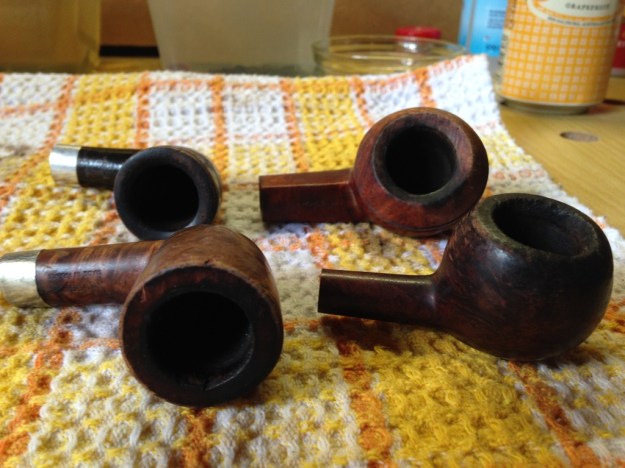
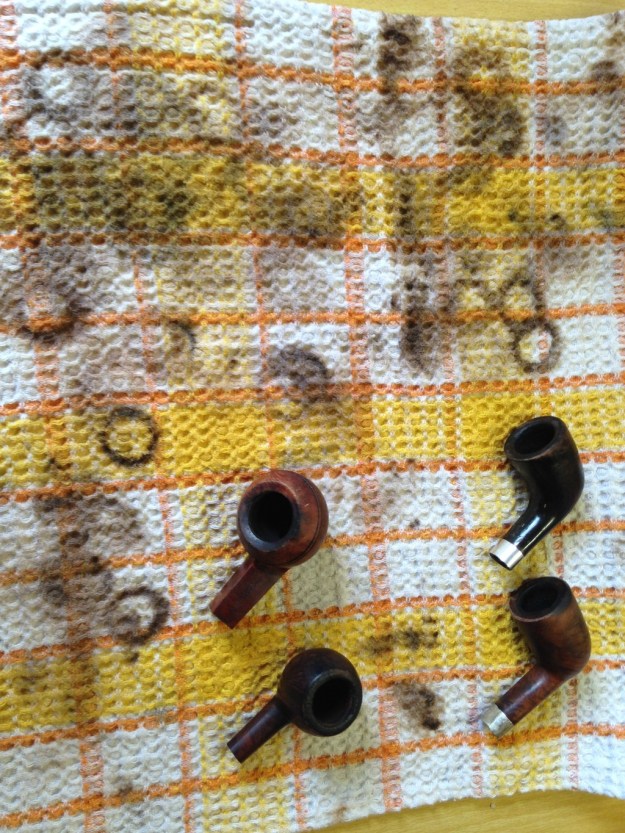
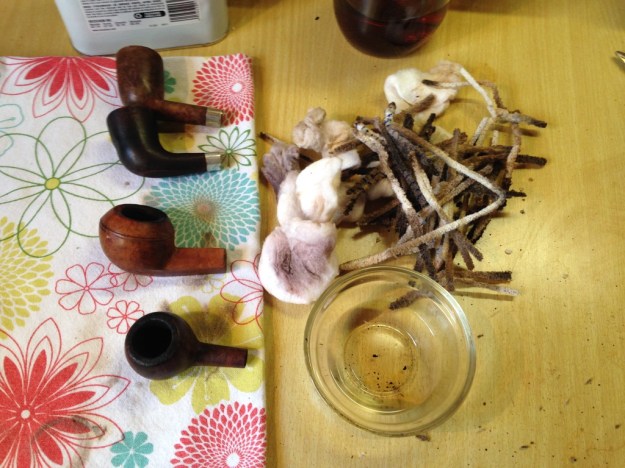
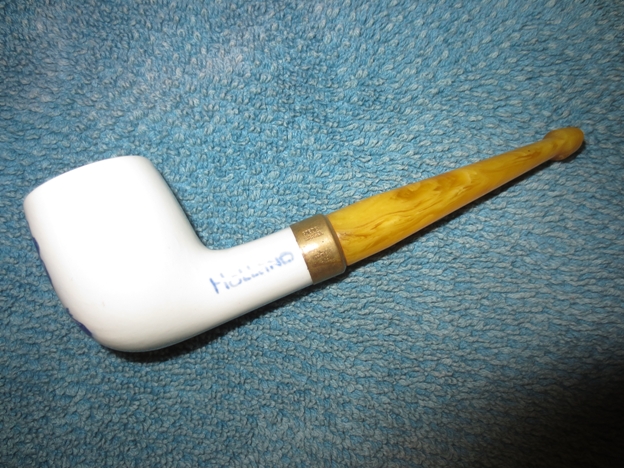
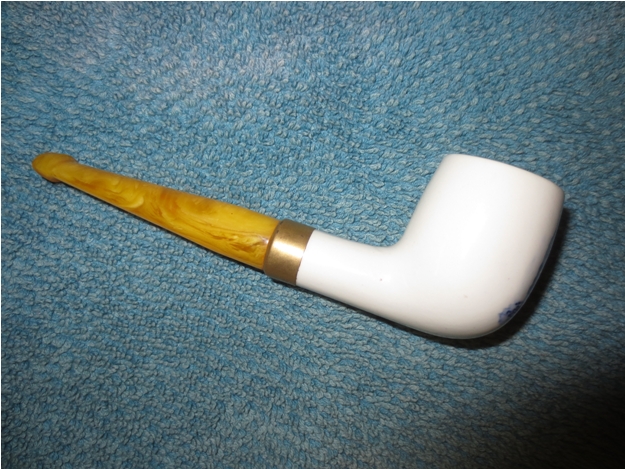
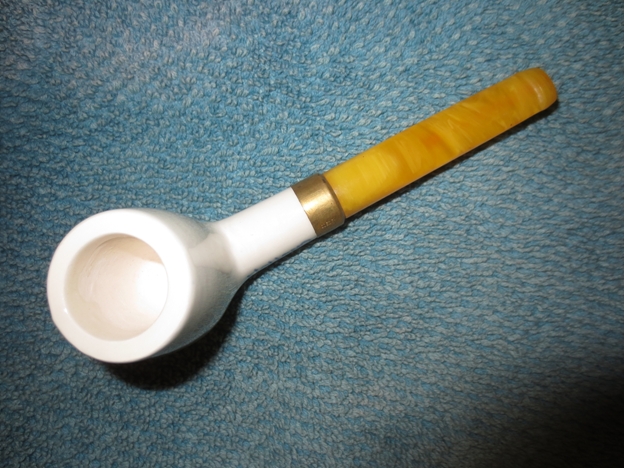
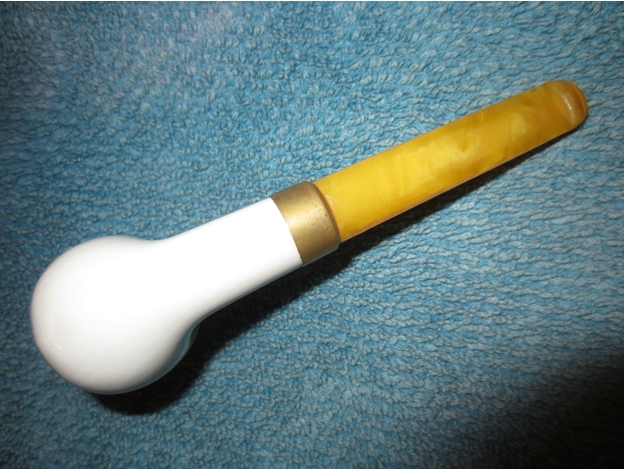
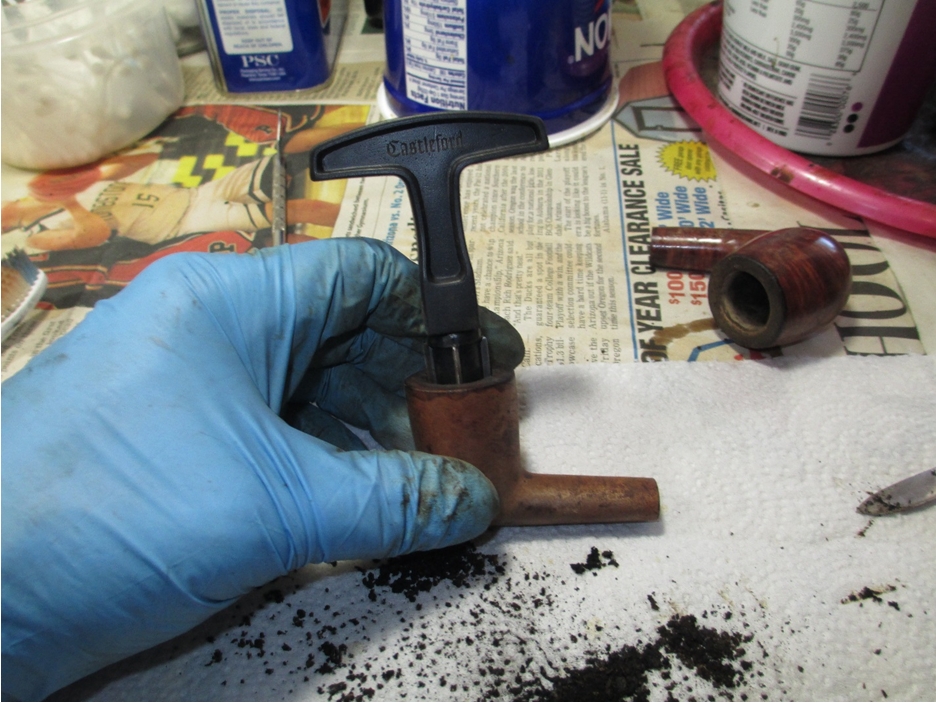
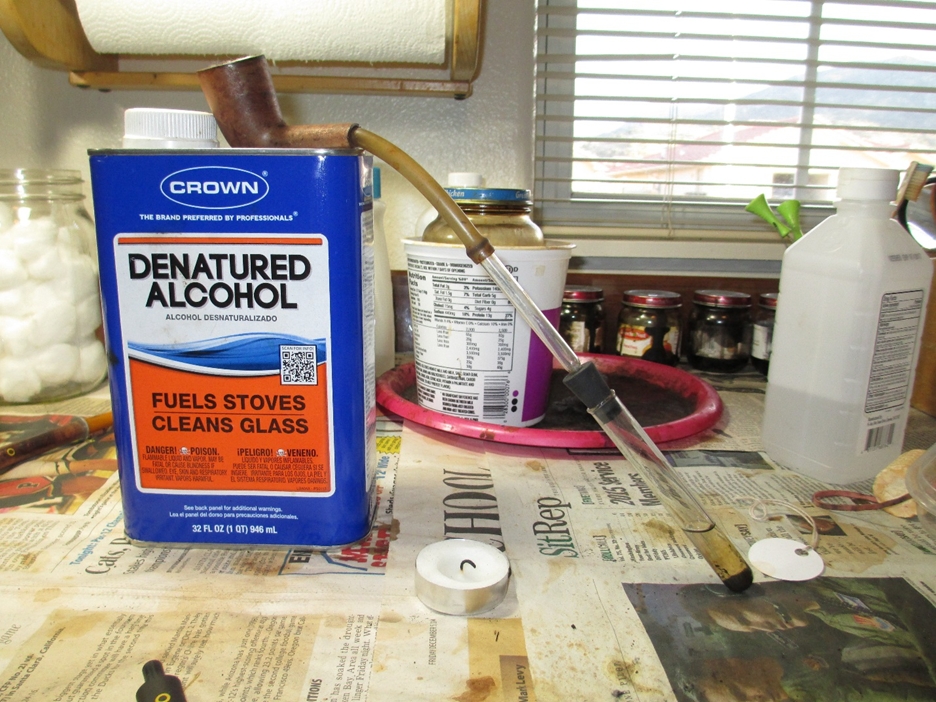
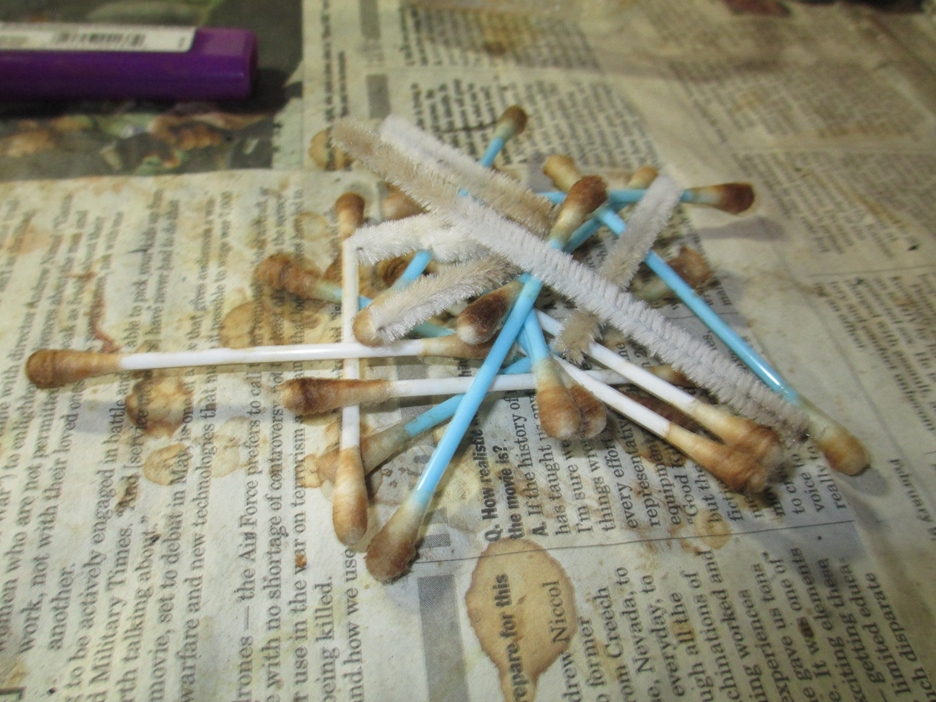
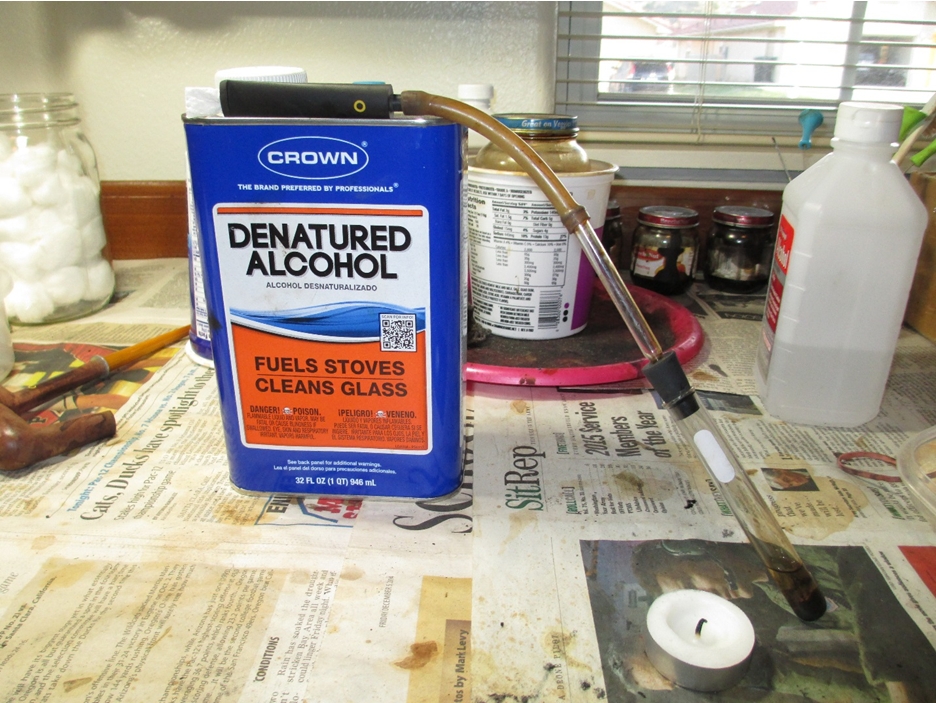
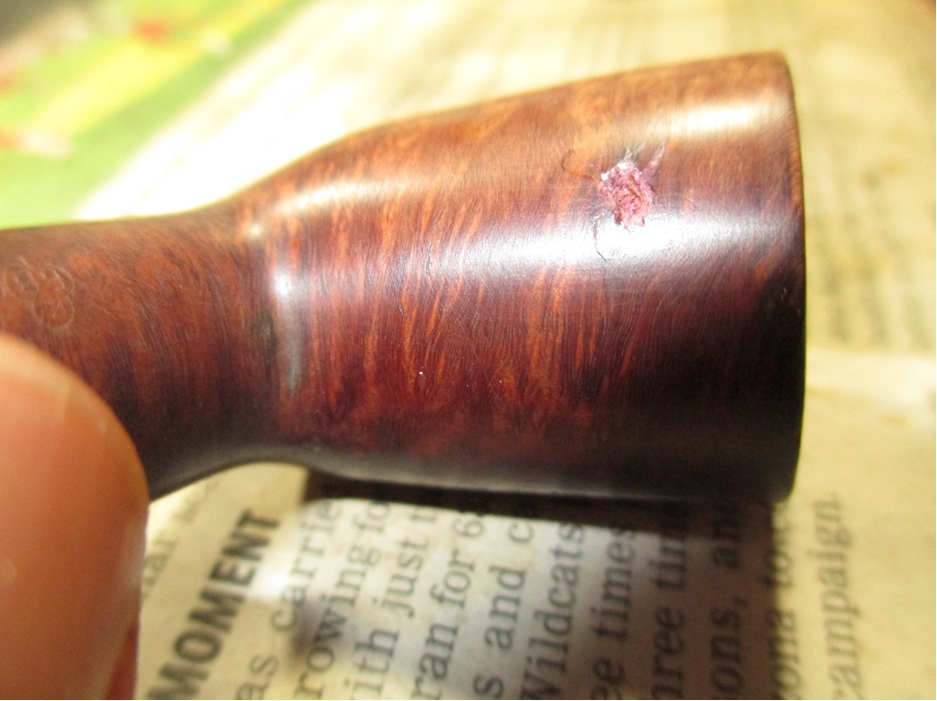
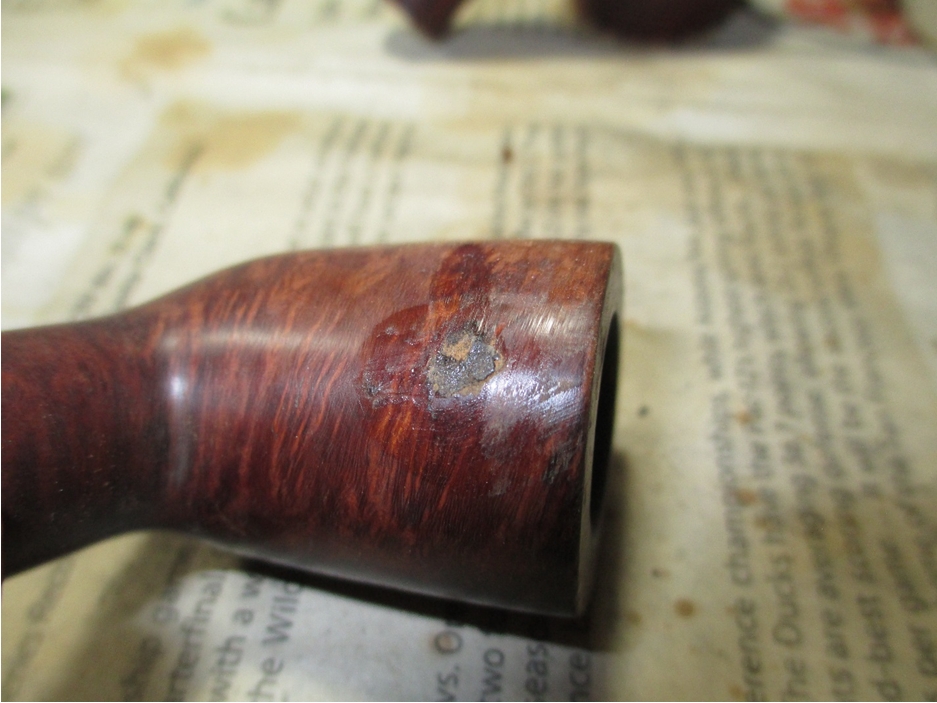
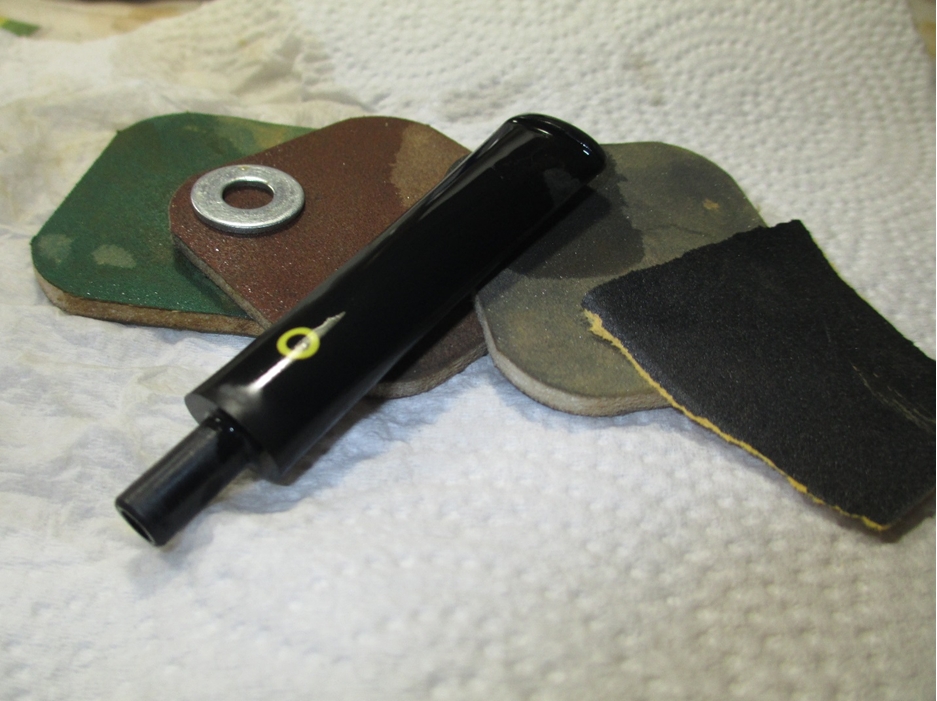
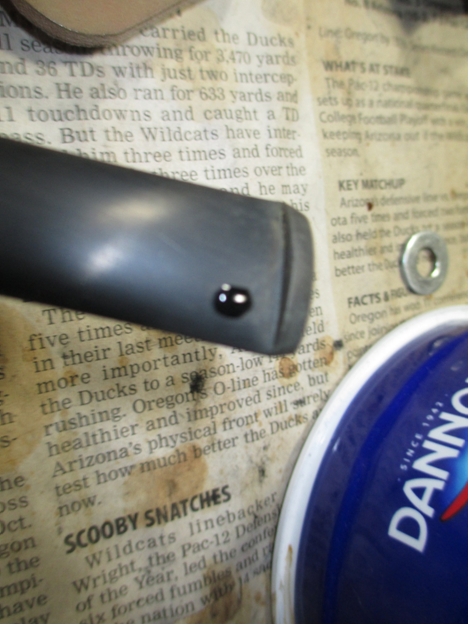
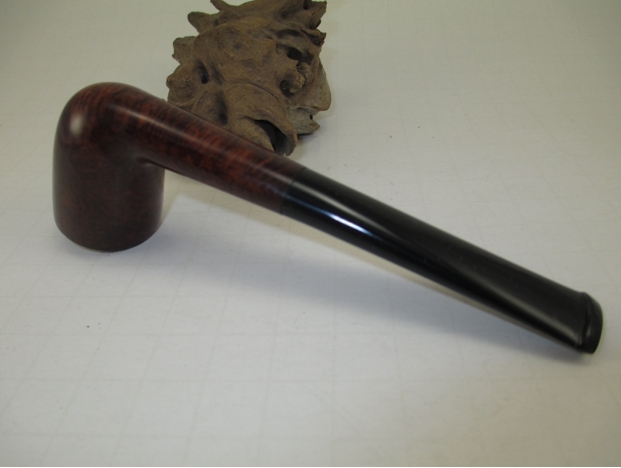
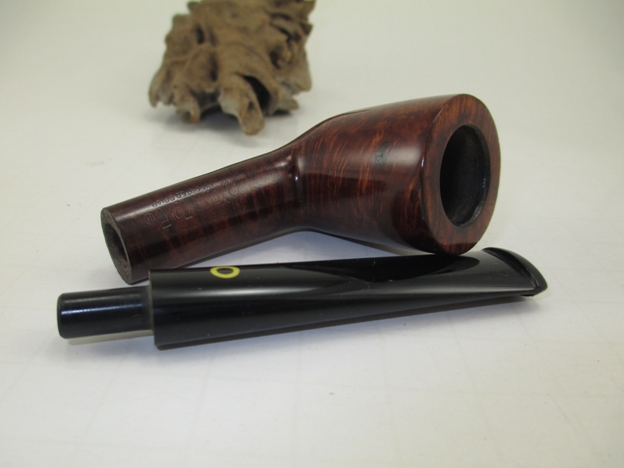
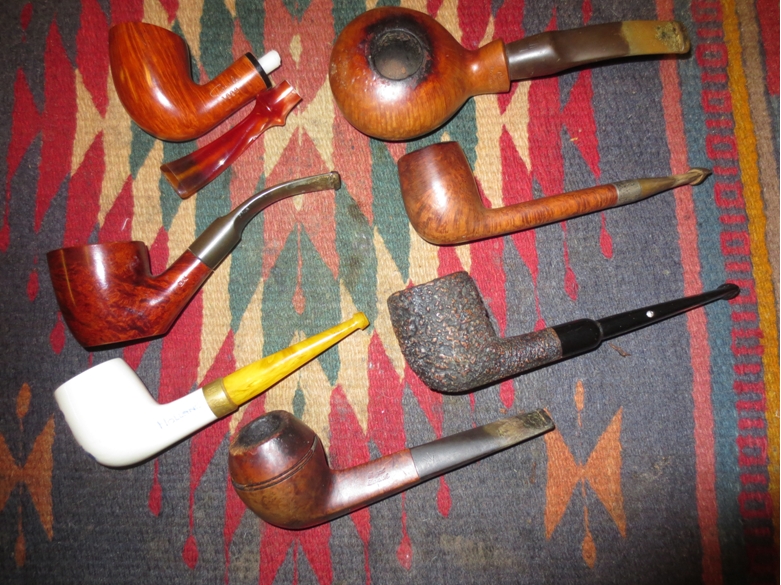
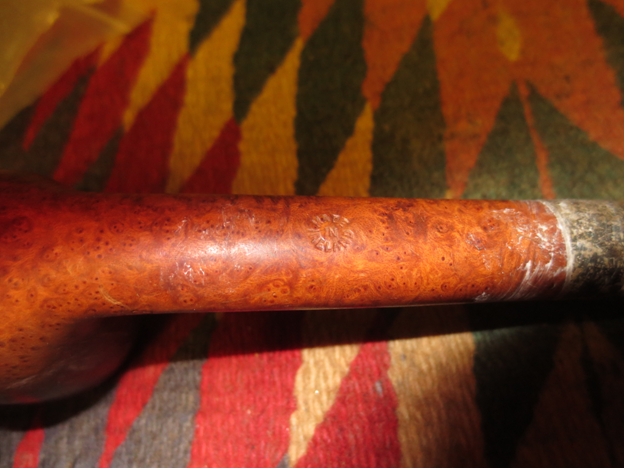
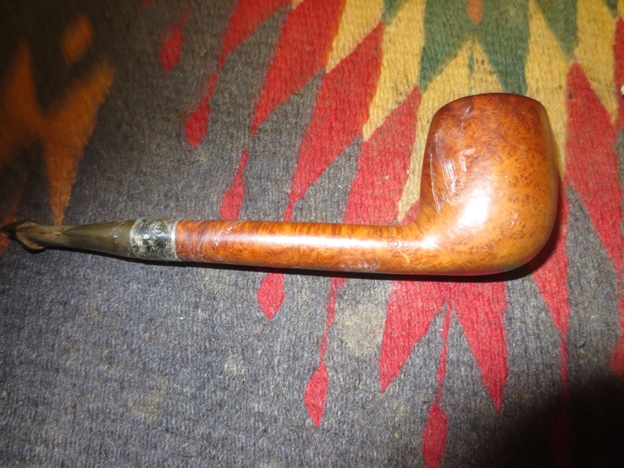
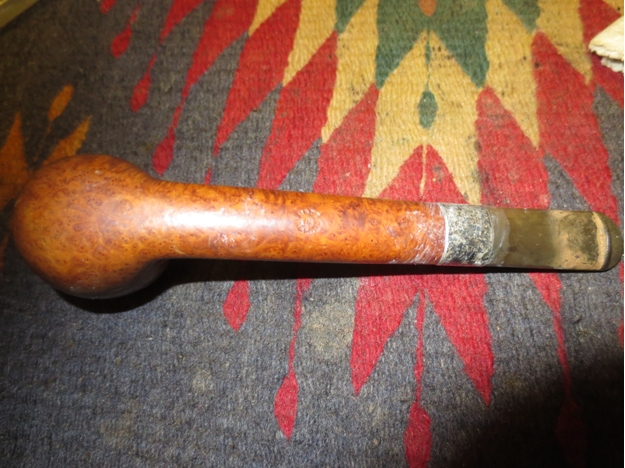
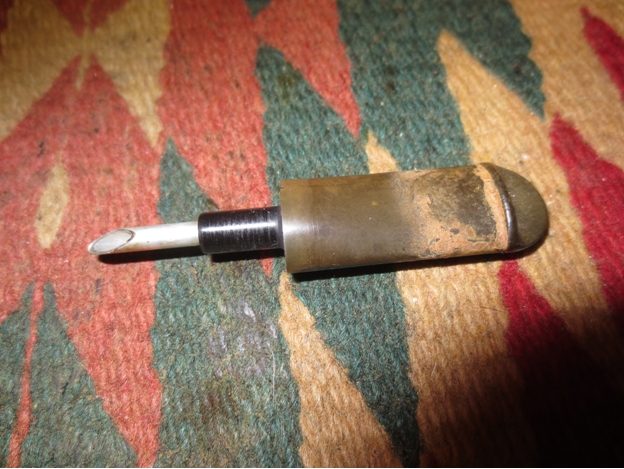
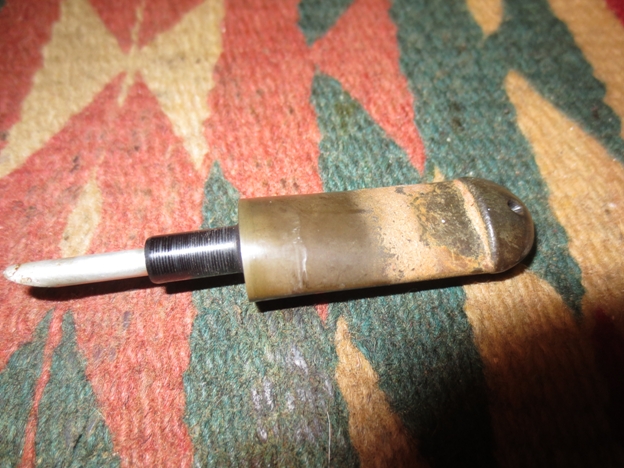
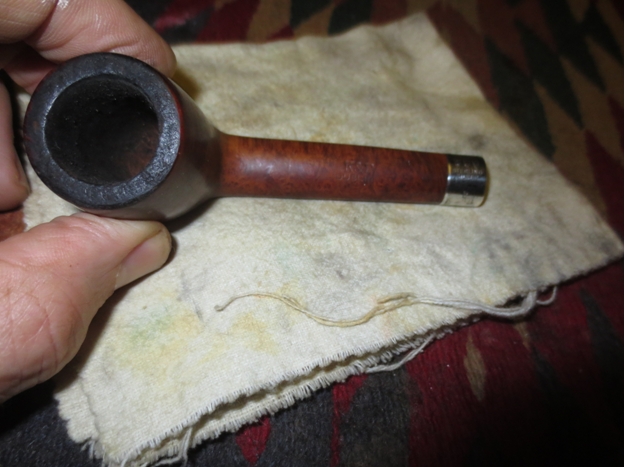
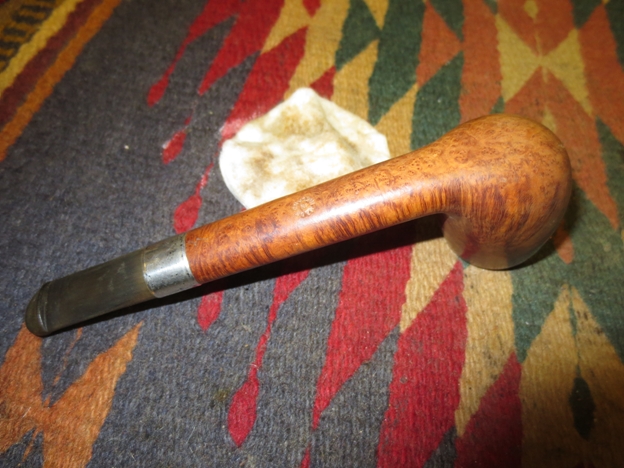
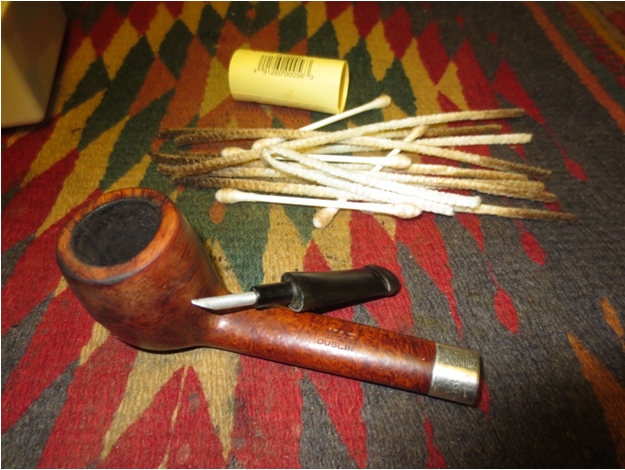
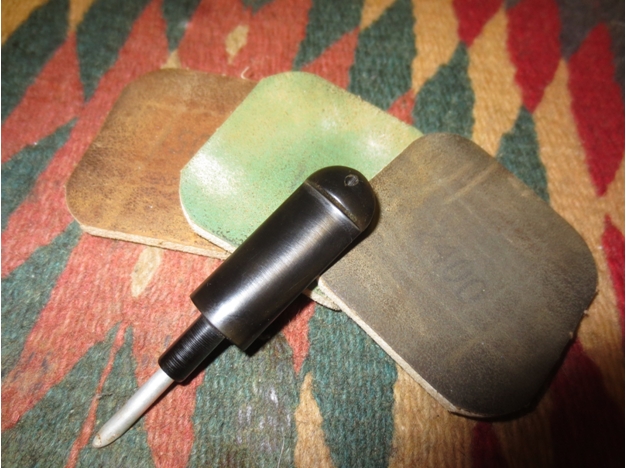
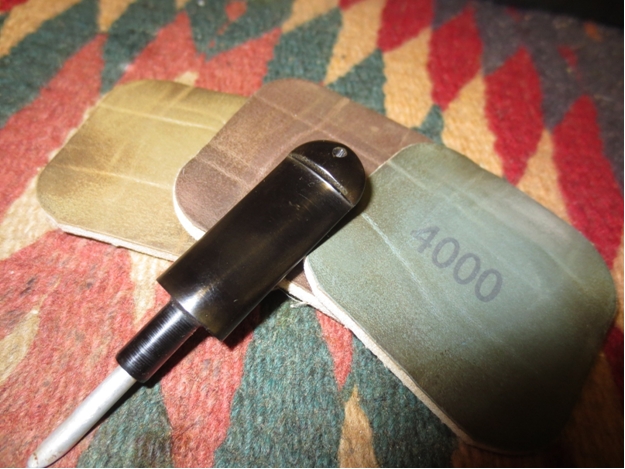
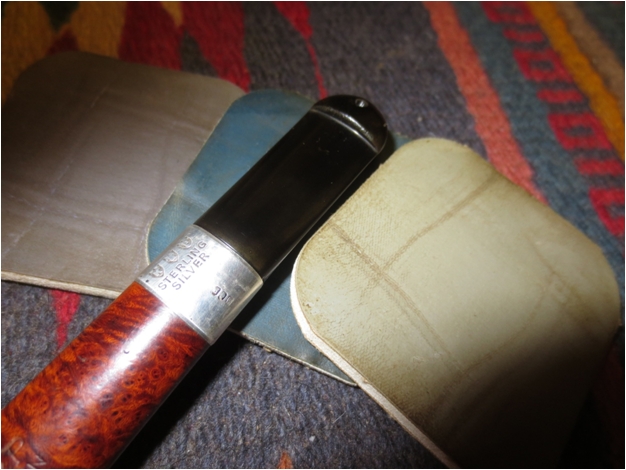
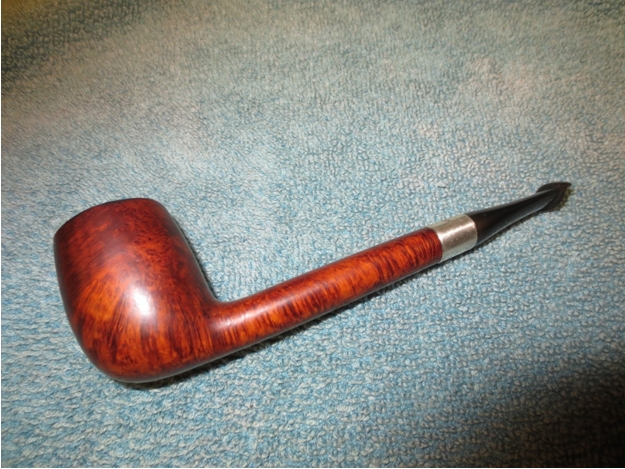
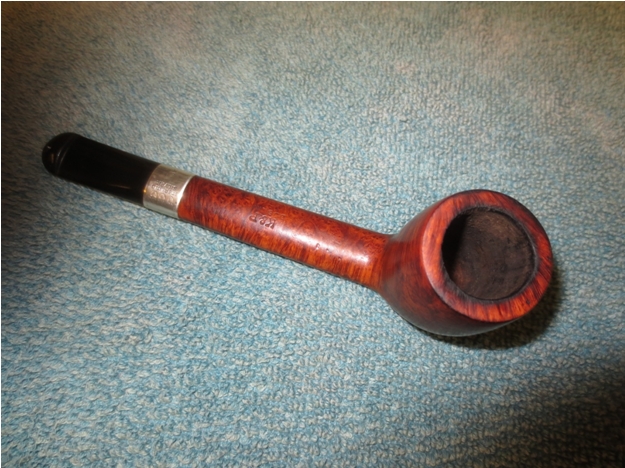
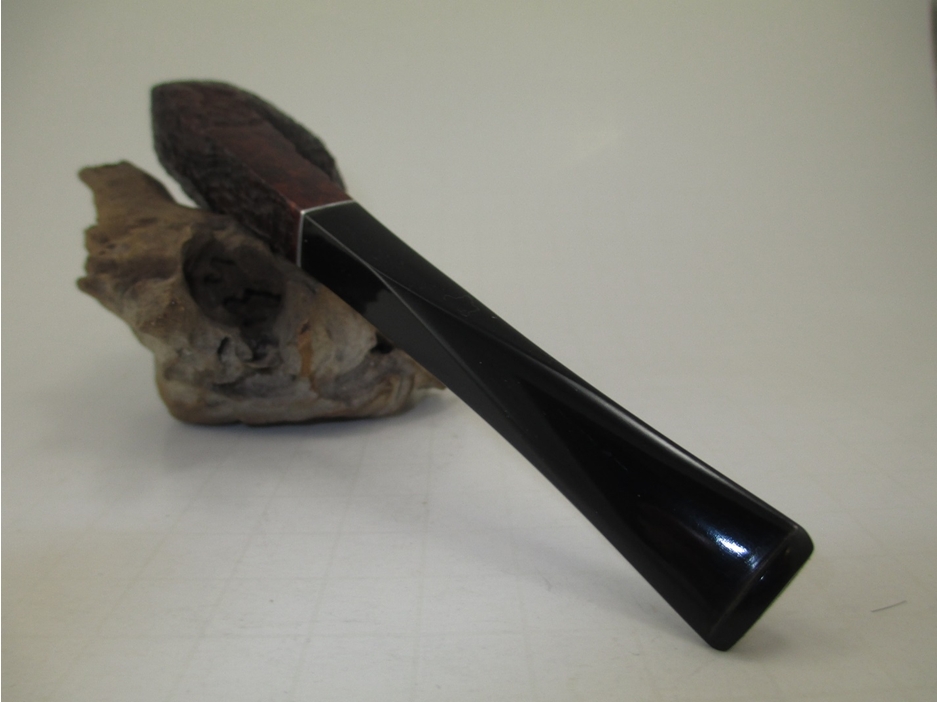
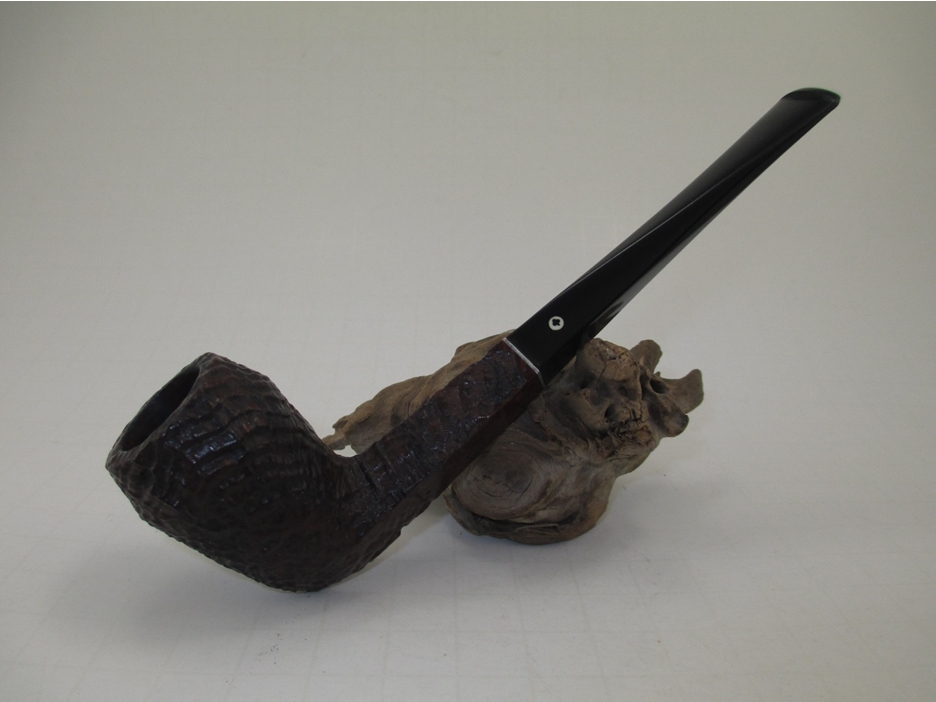
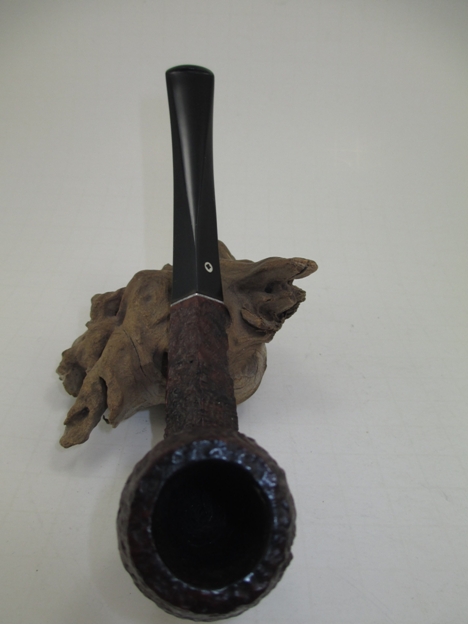
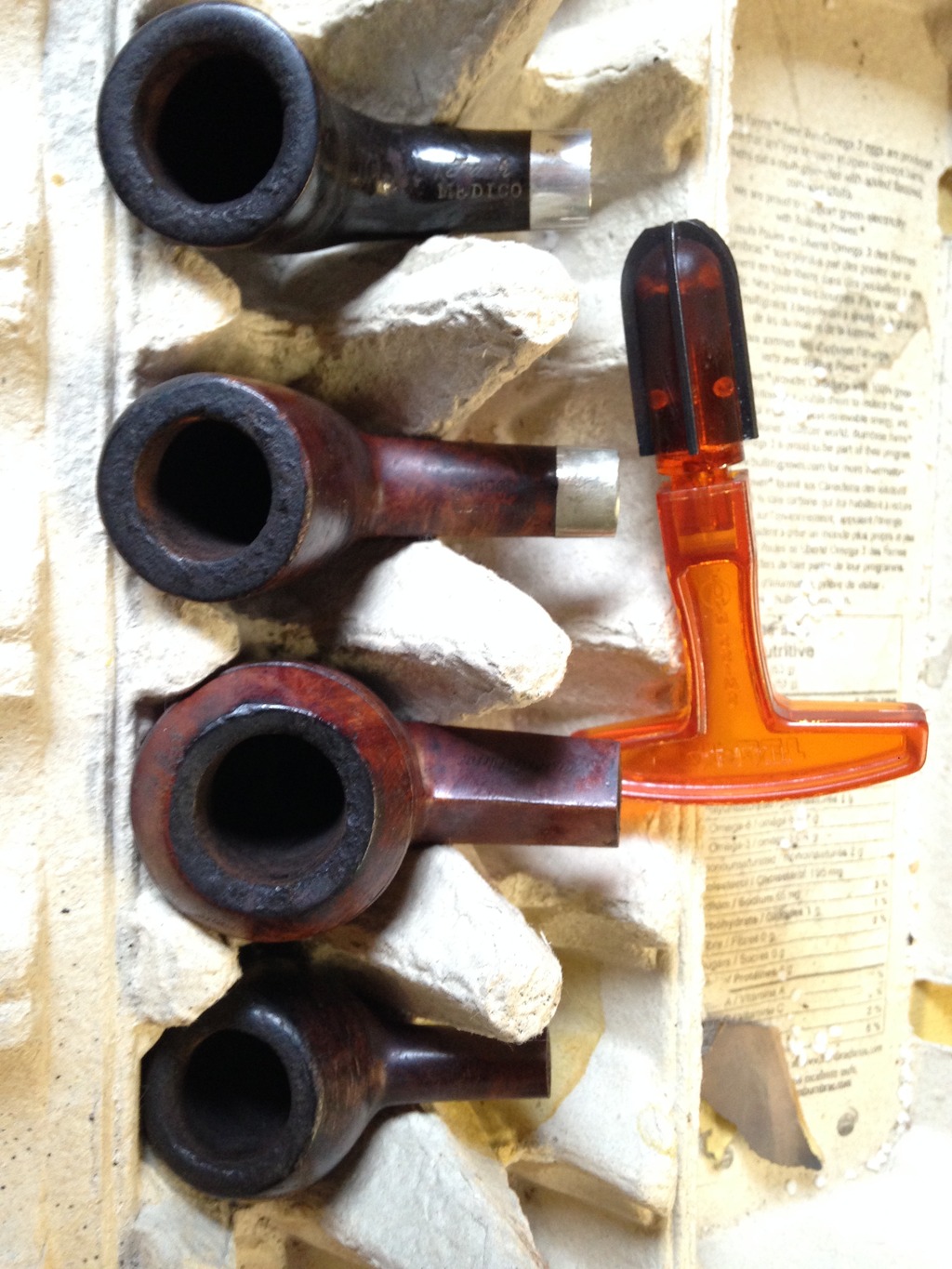
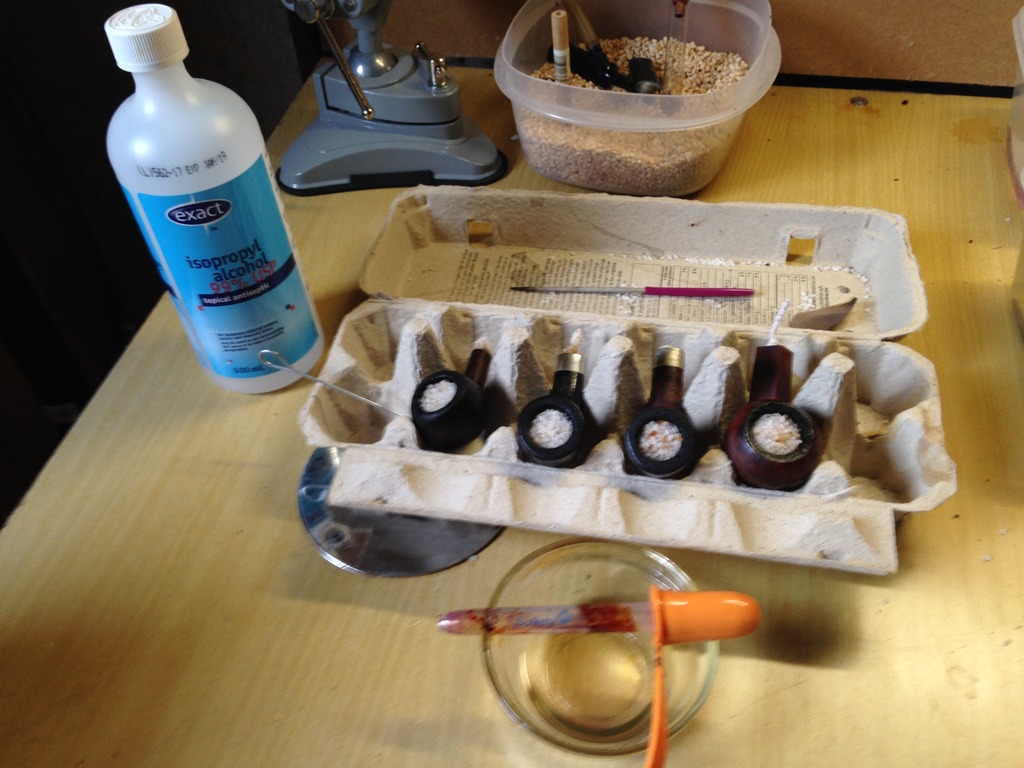
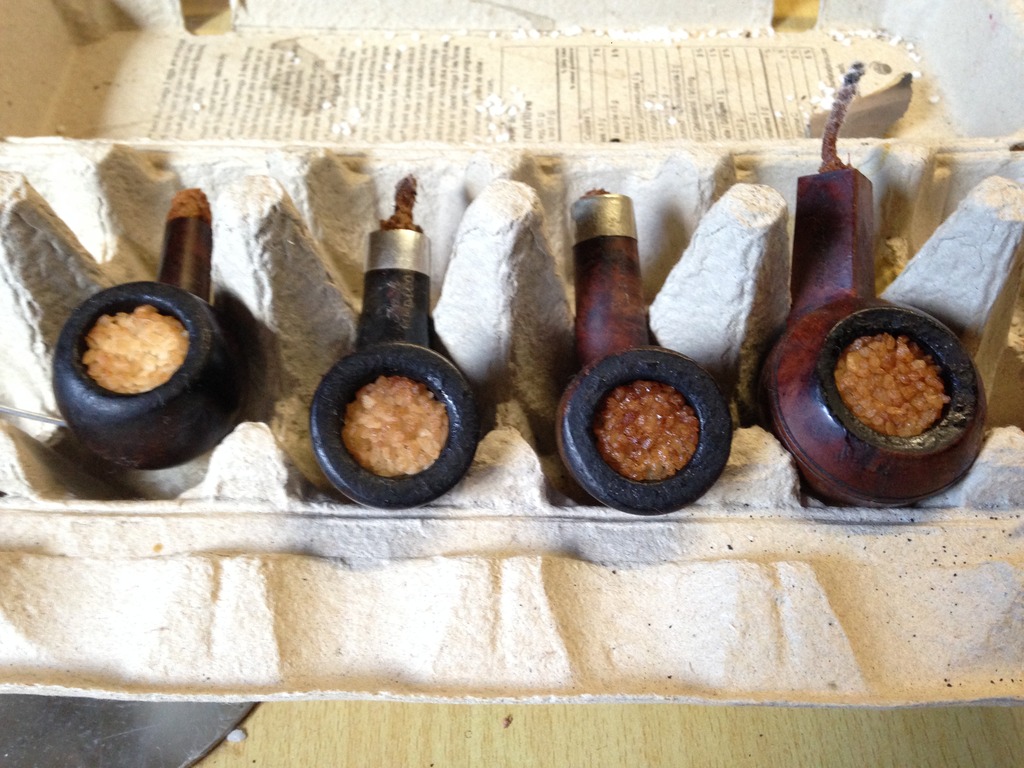
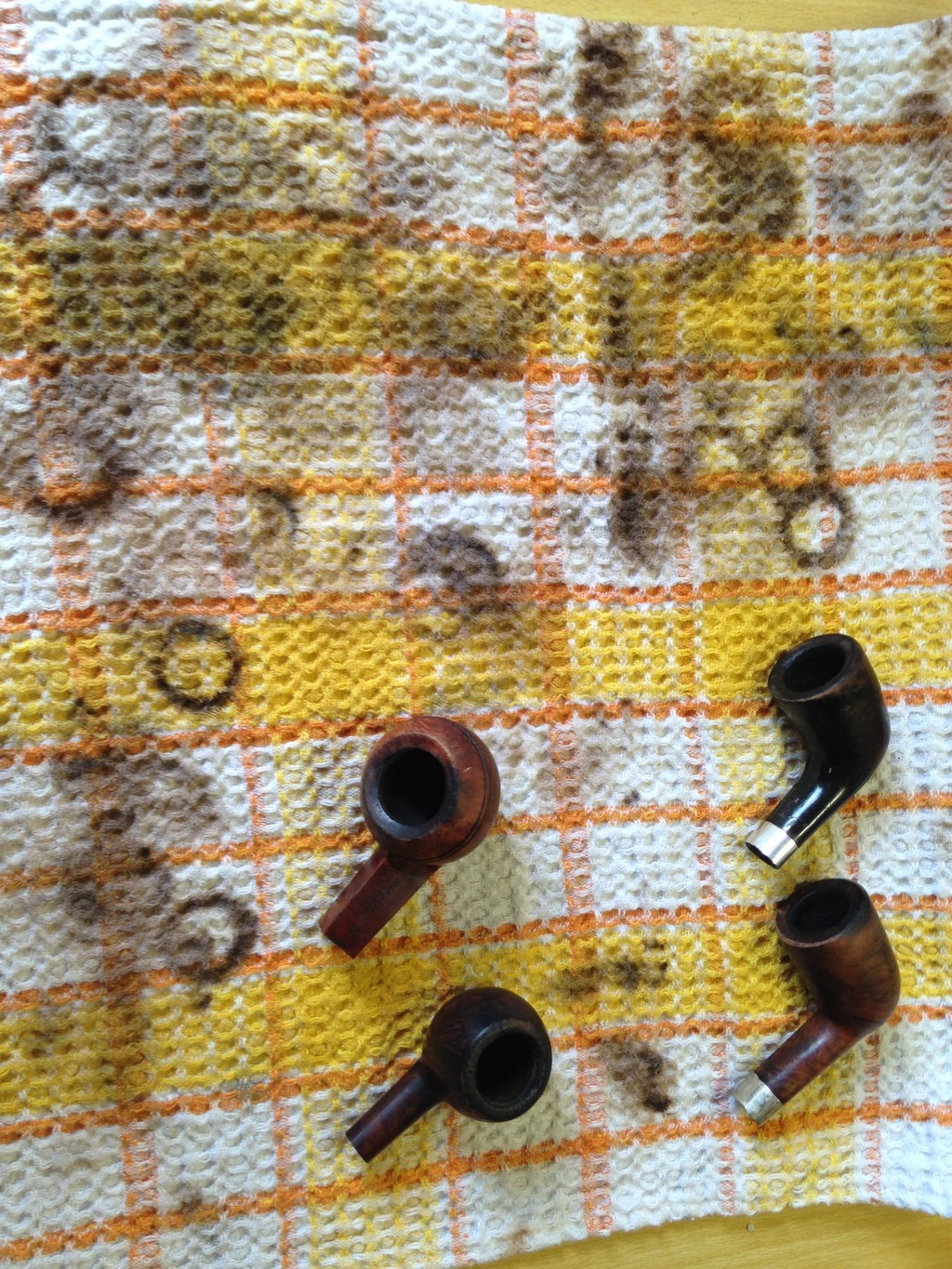
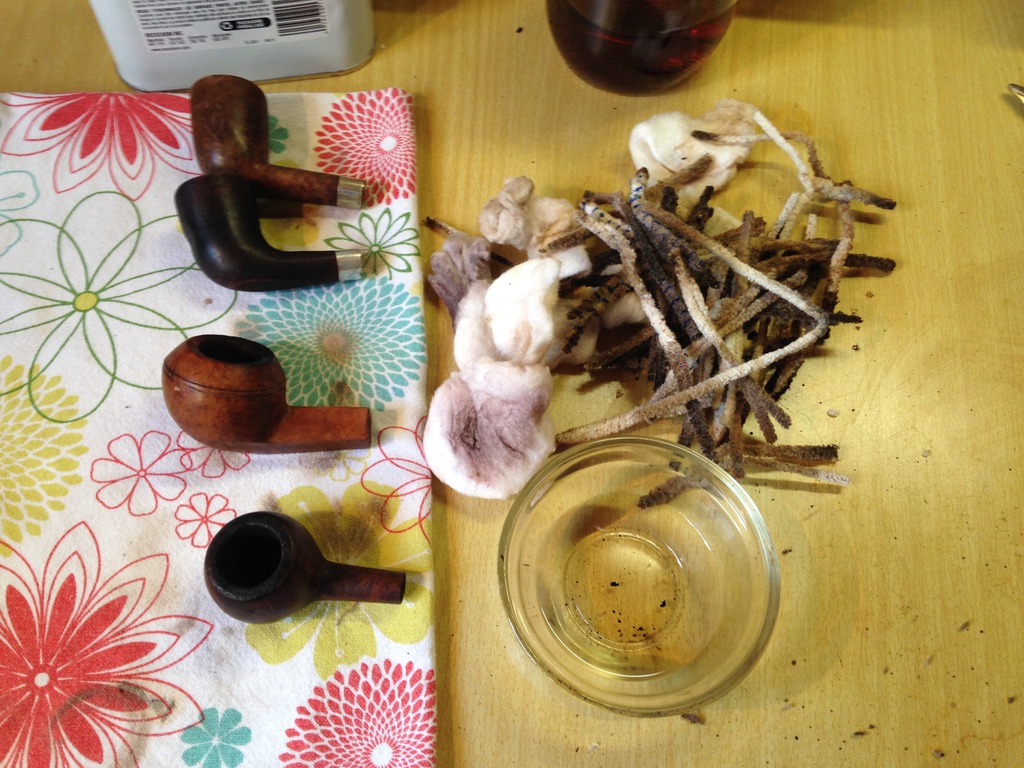
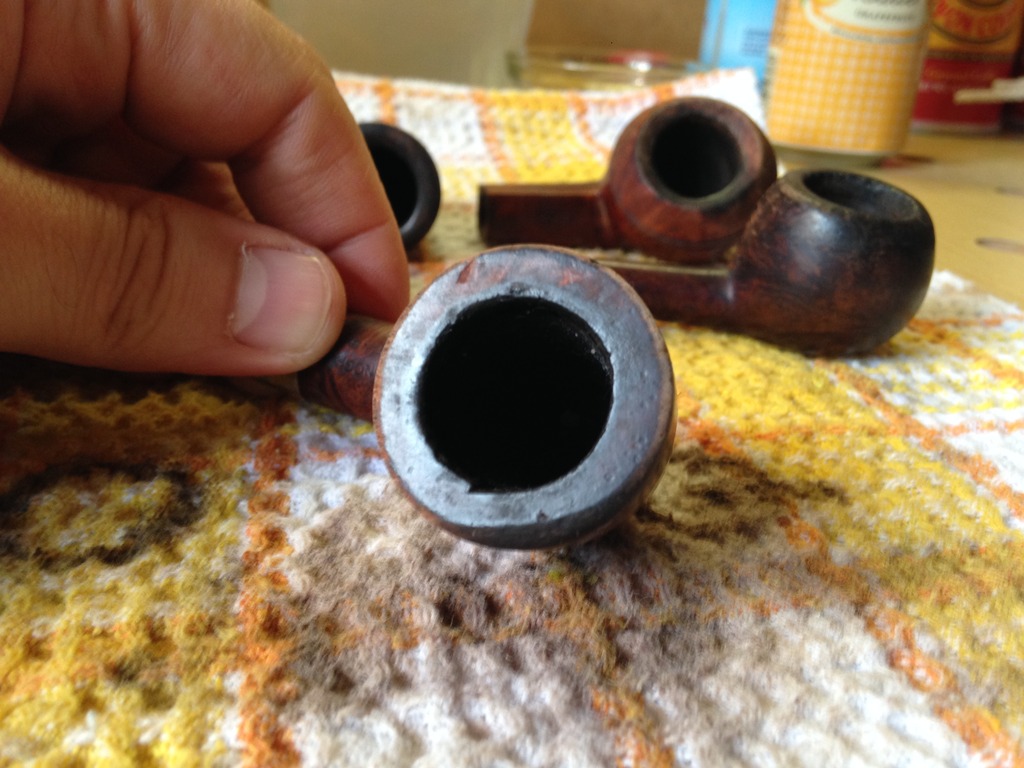
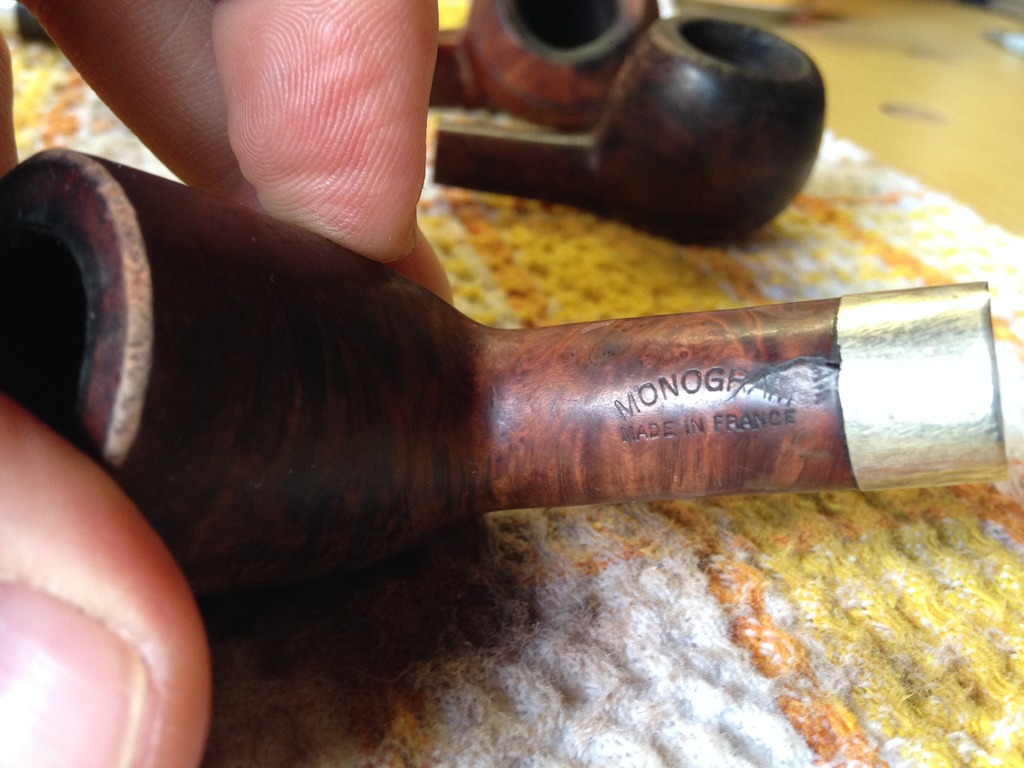
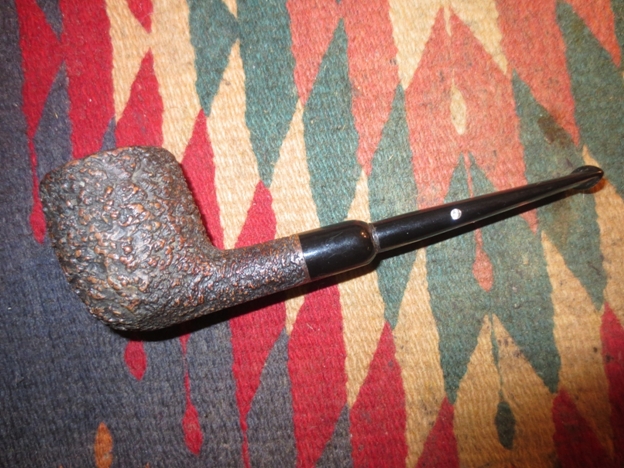
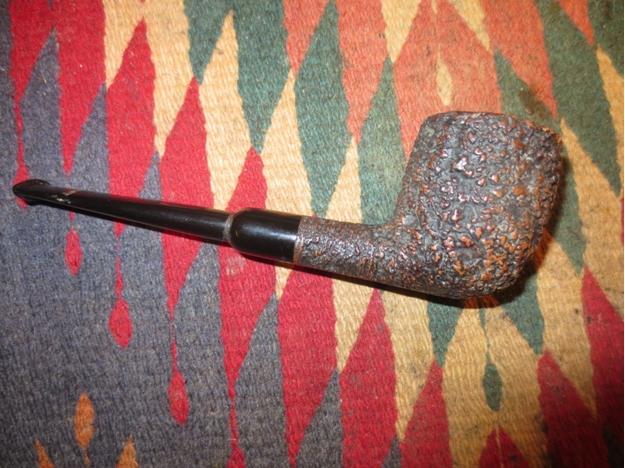
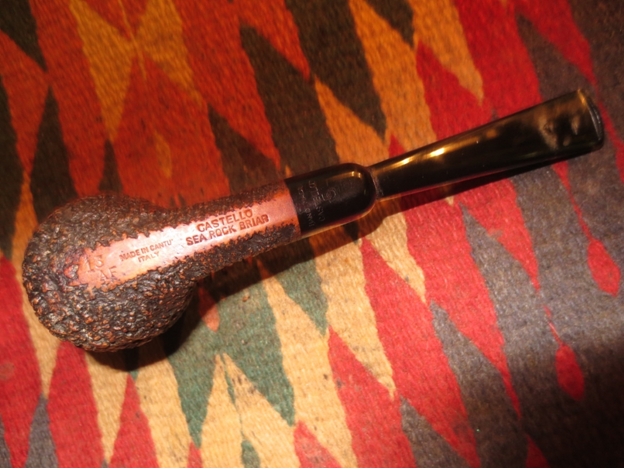
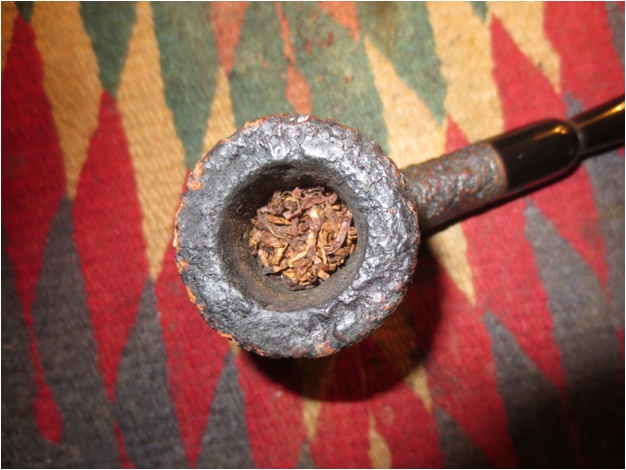
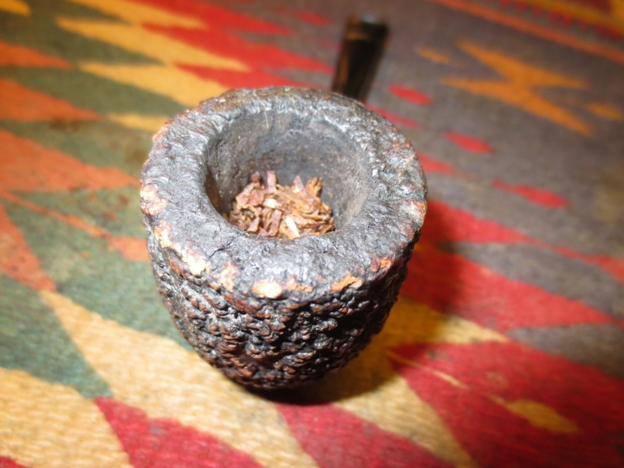
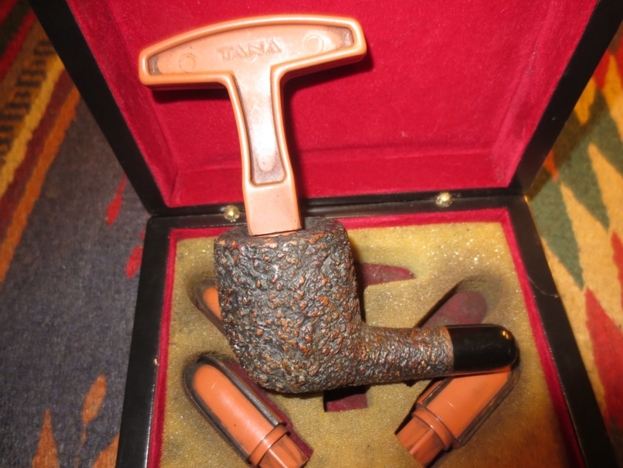
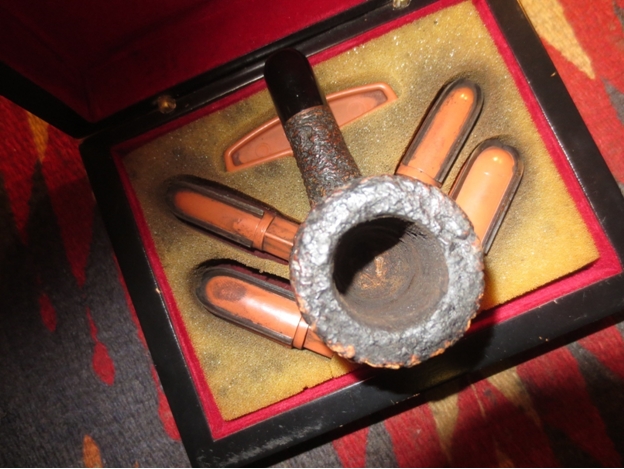
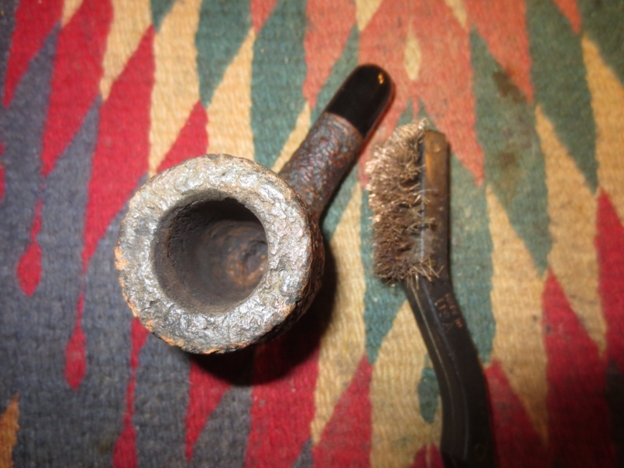
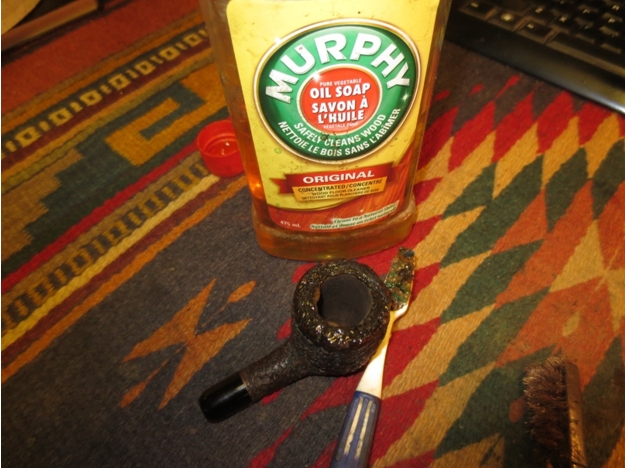
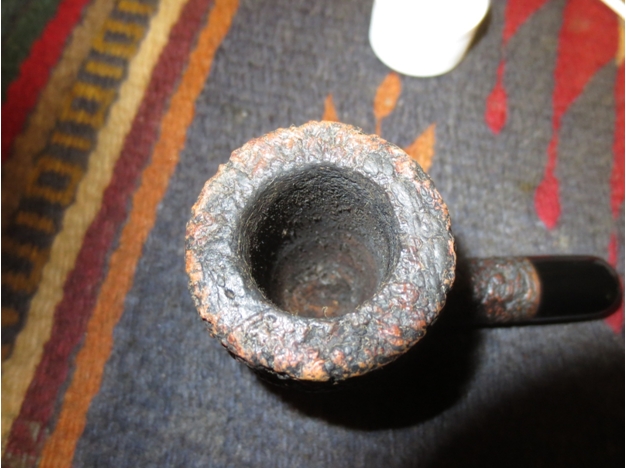
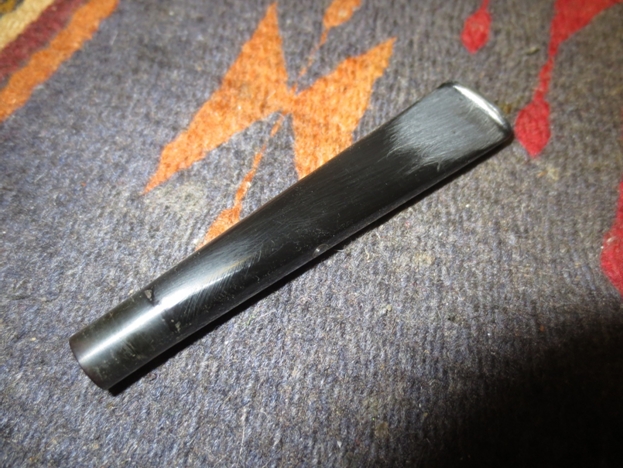
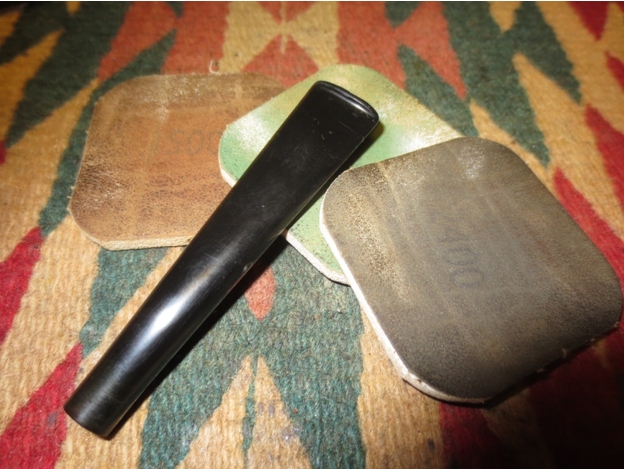
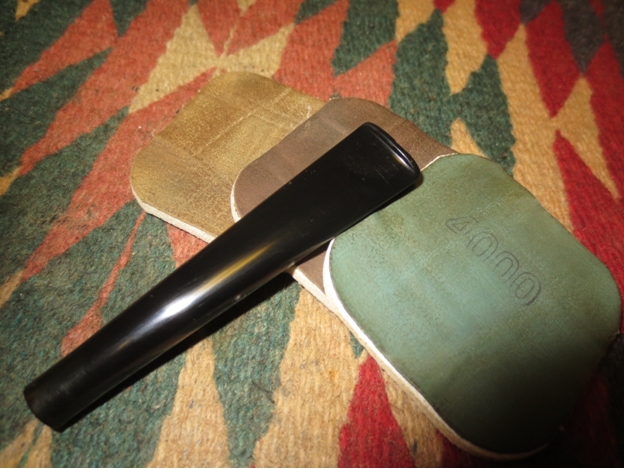
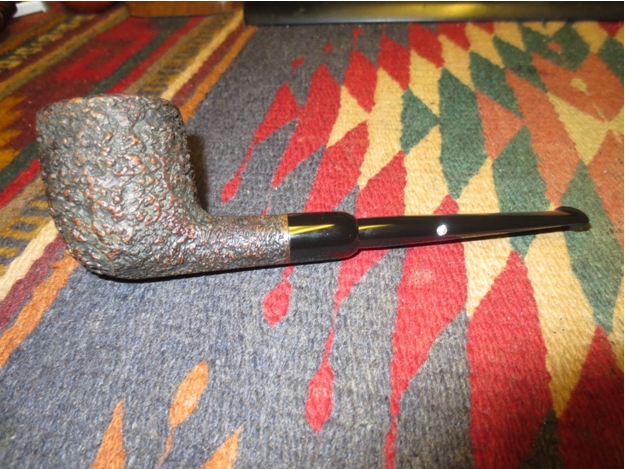
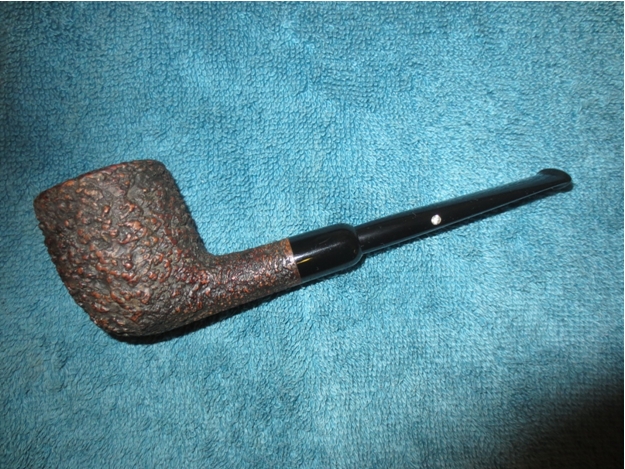
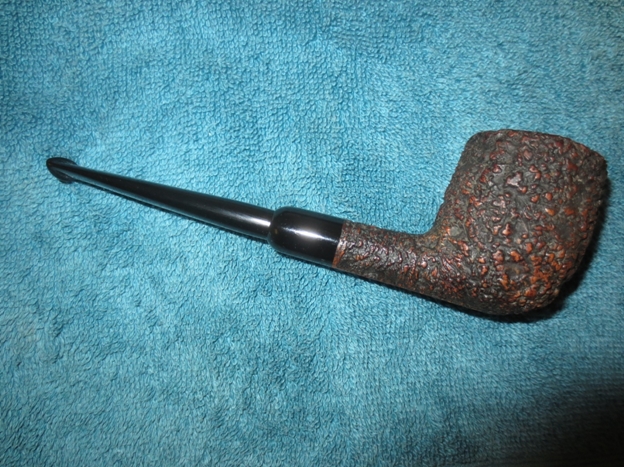
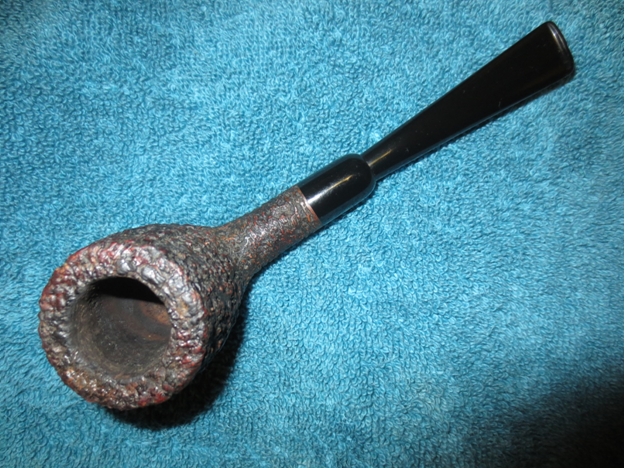
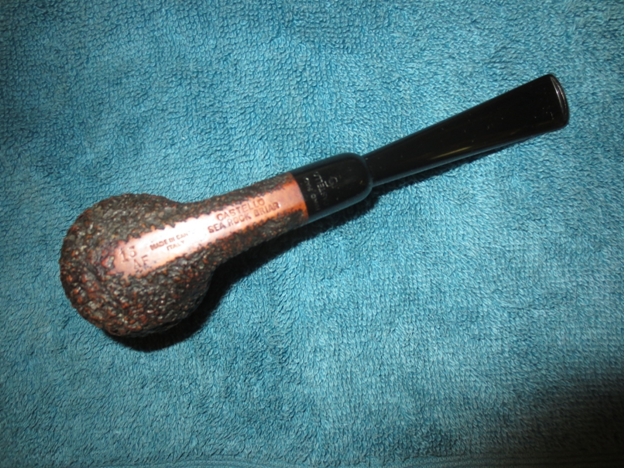
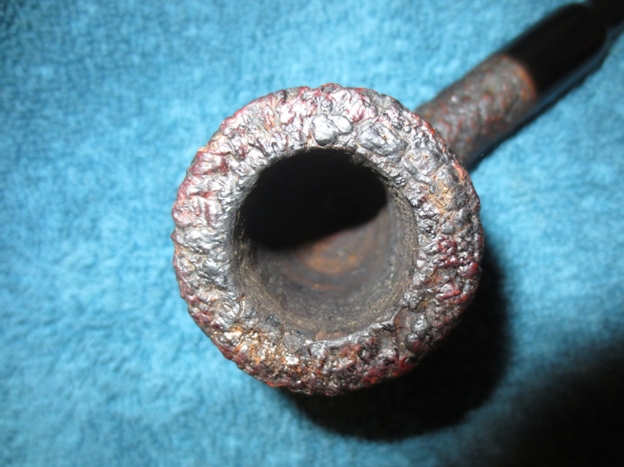
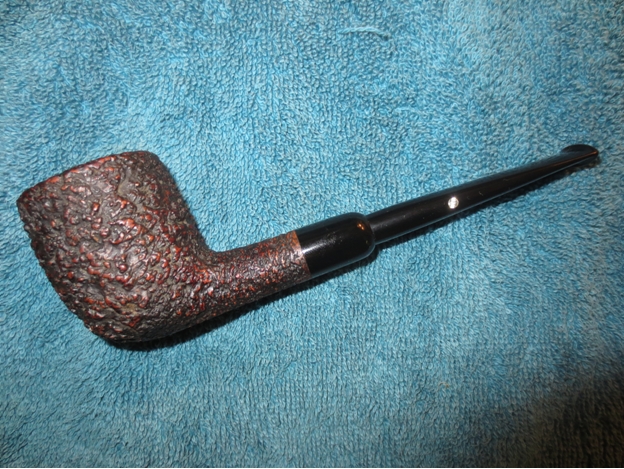
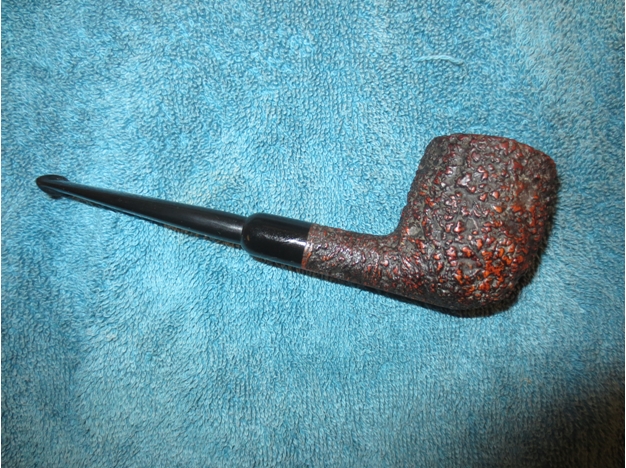
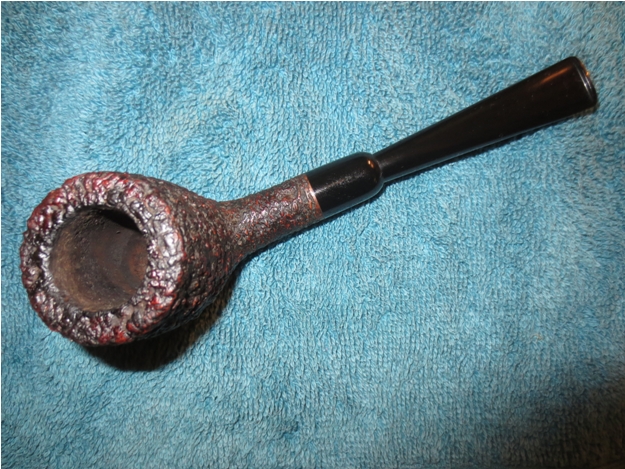
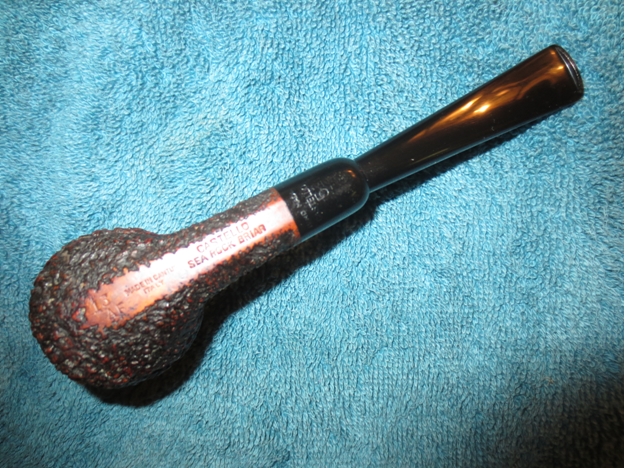
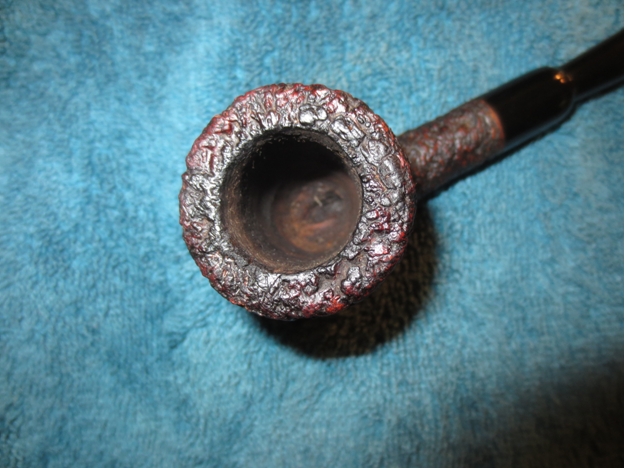
An Instruction Sheet for using a Pipe Retort


Blog post by Steve Laug

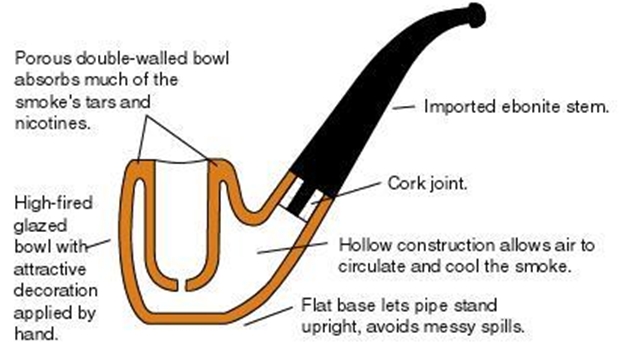
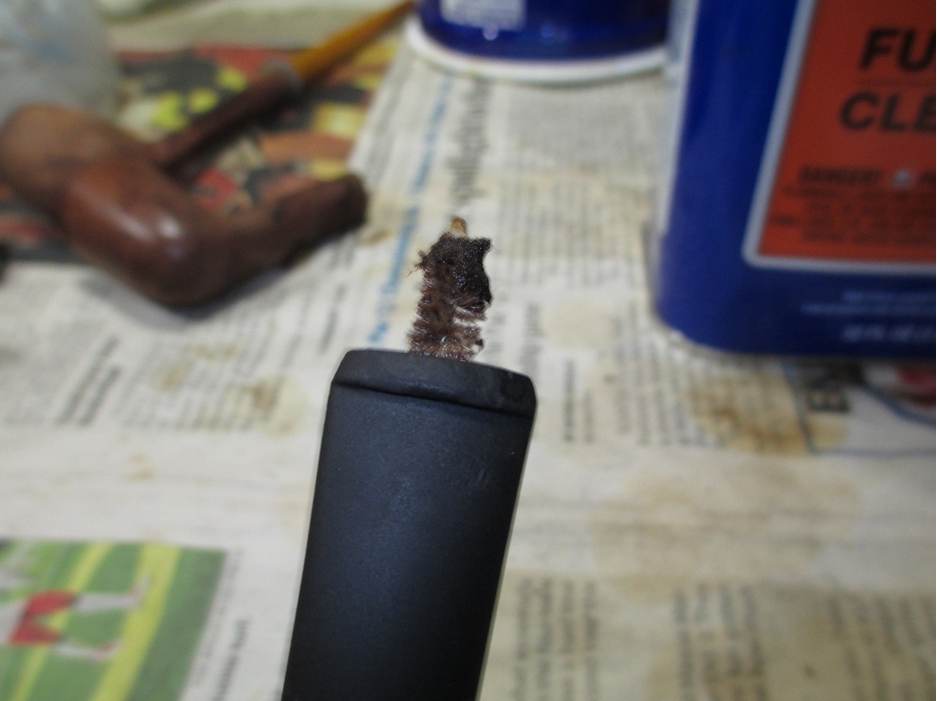
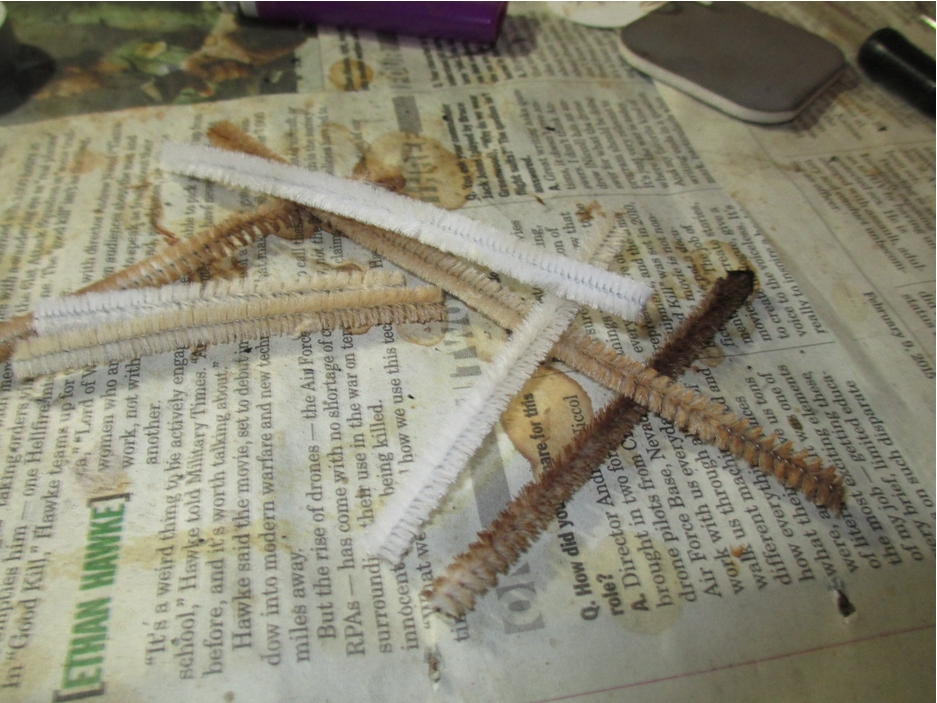
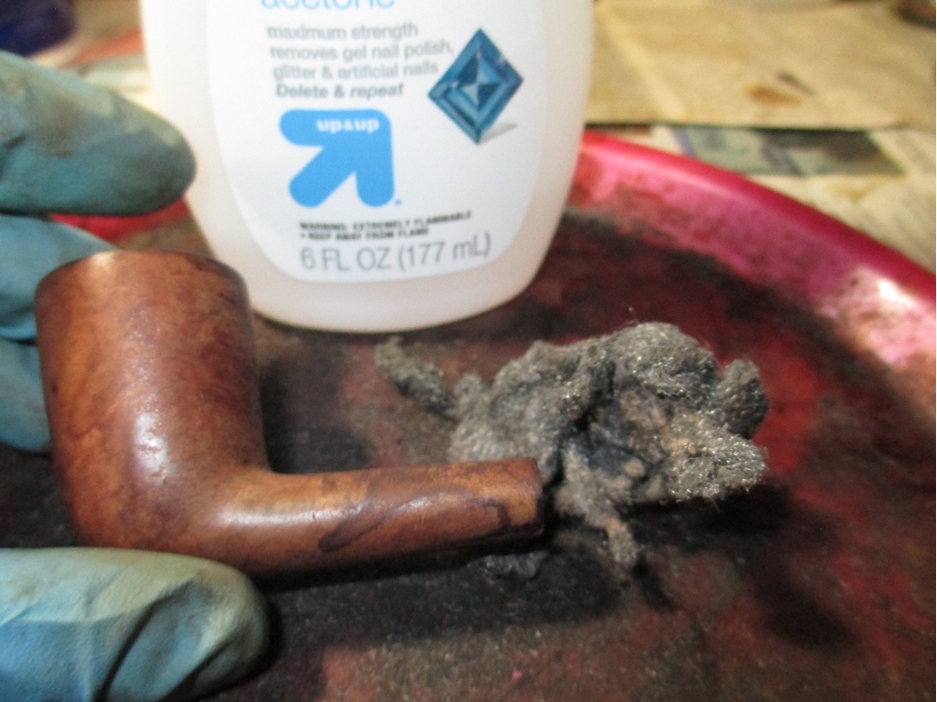
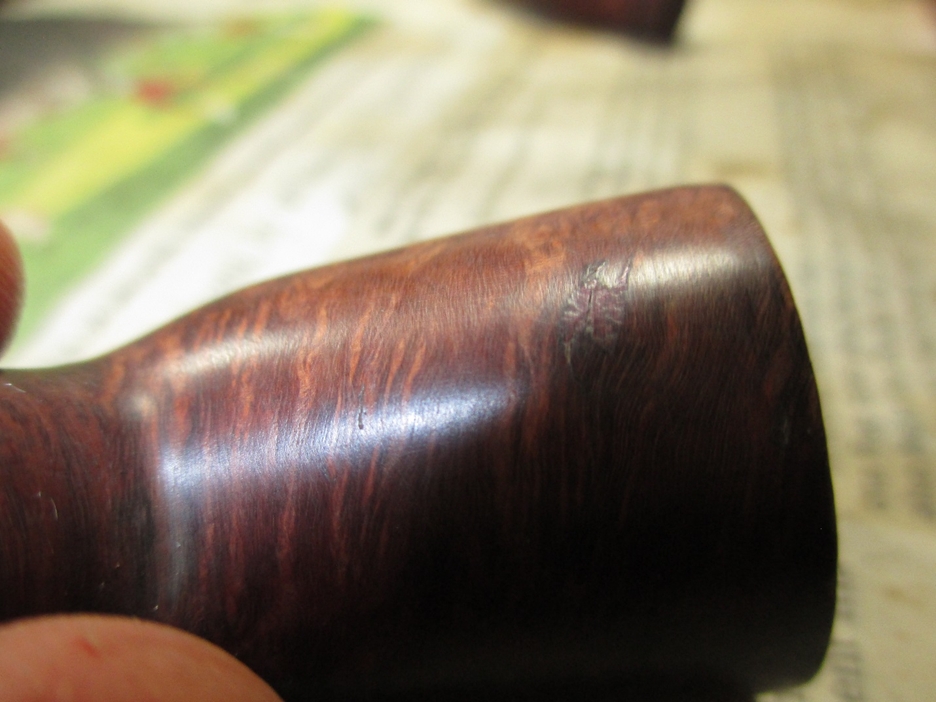
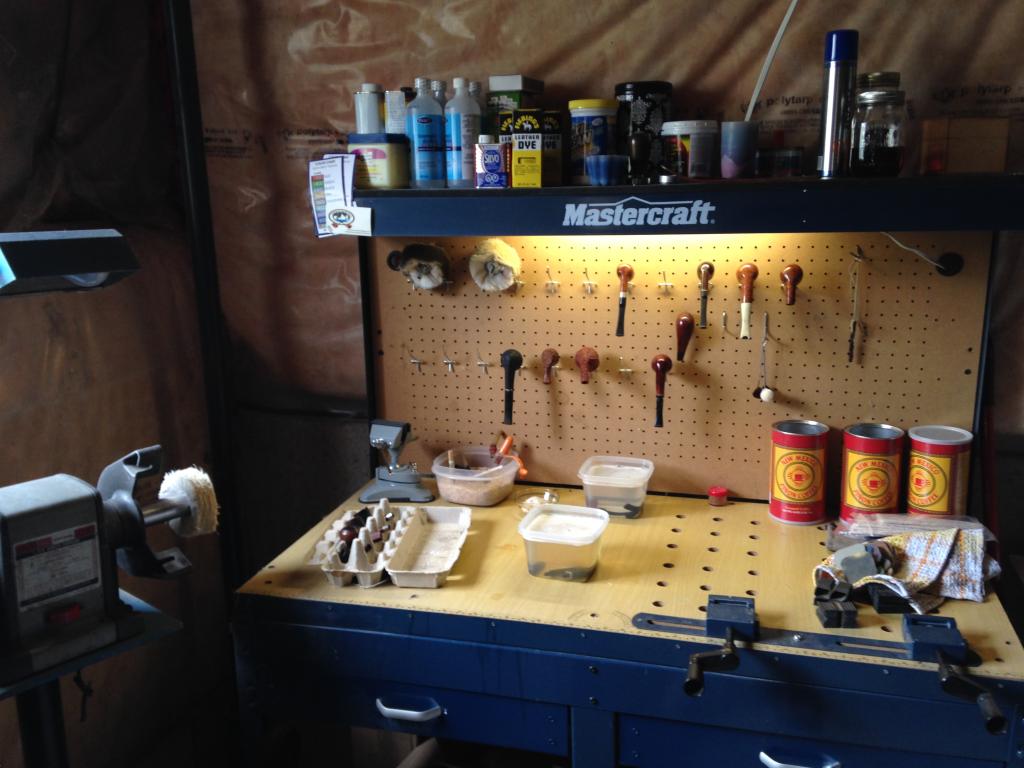
When I purchased my Pipe Retort from SUNA they included this document with the product. I found the document when I was sorting through papers in my filing cabinet. It is a helpful set of directions that I thought I would post here. new doc 3_1

Restoring a Wally Frank Natural Sun Cured Algerian Made Pot


Blog by Steve Laug

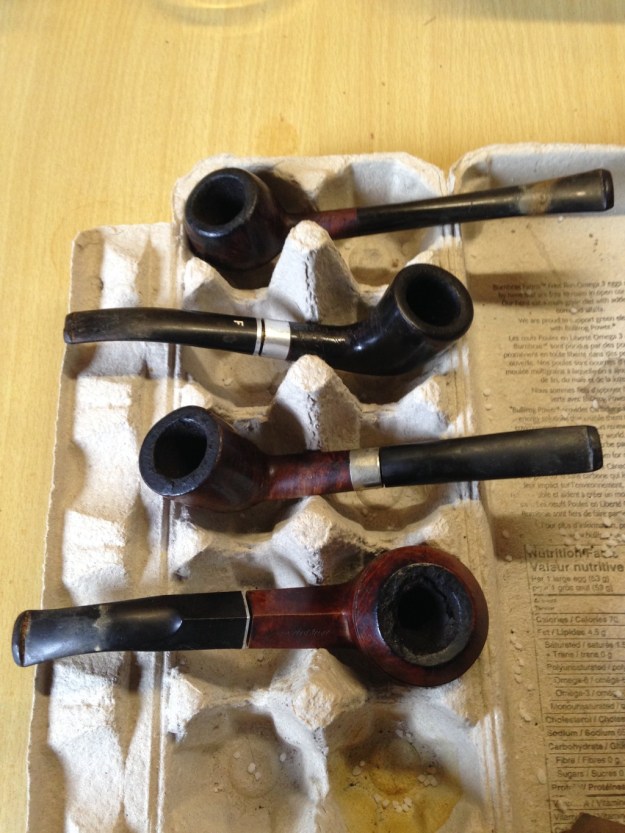
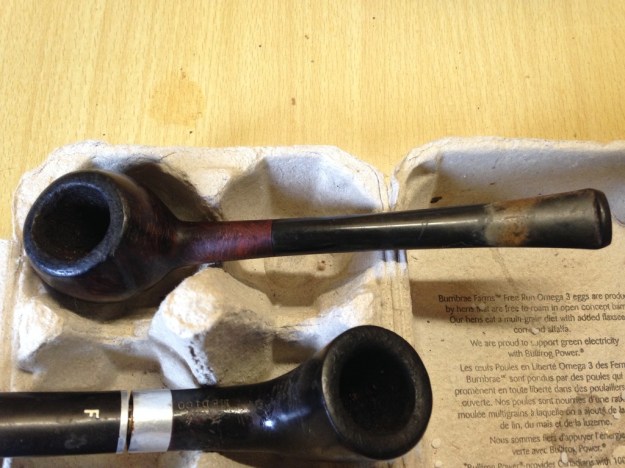
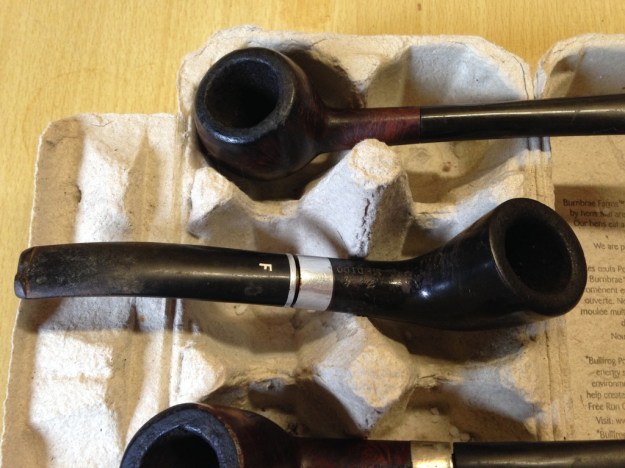
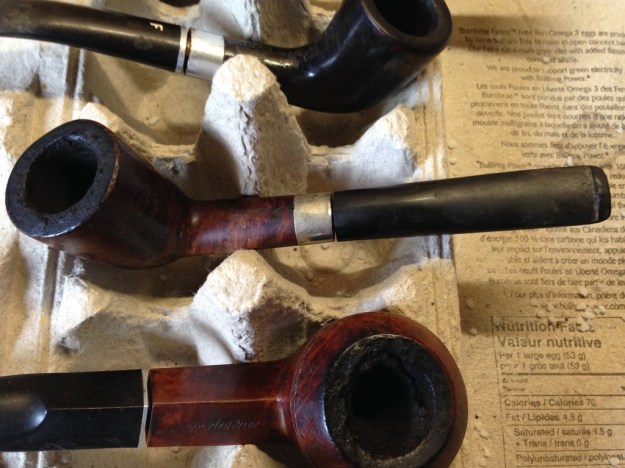
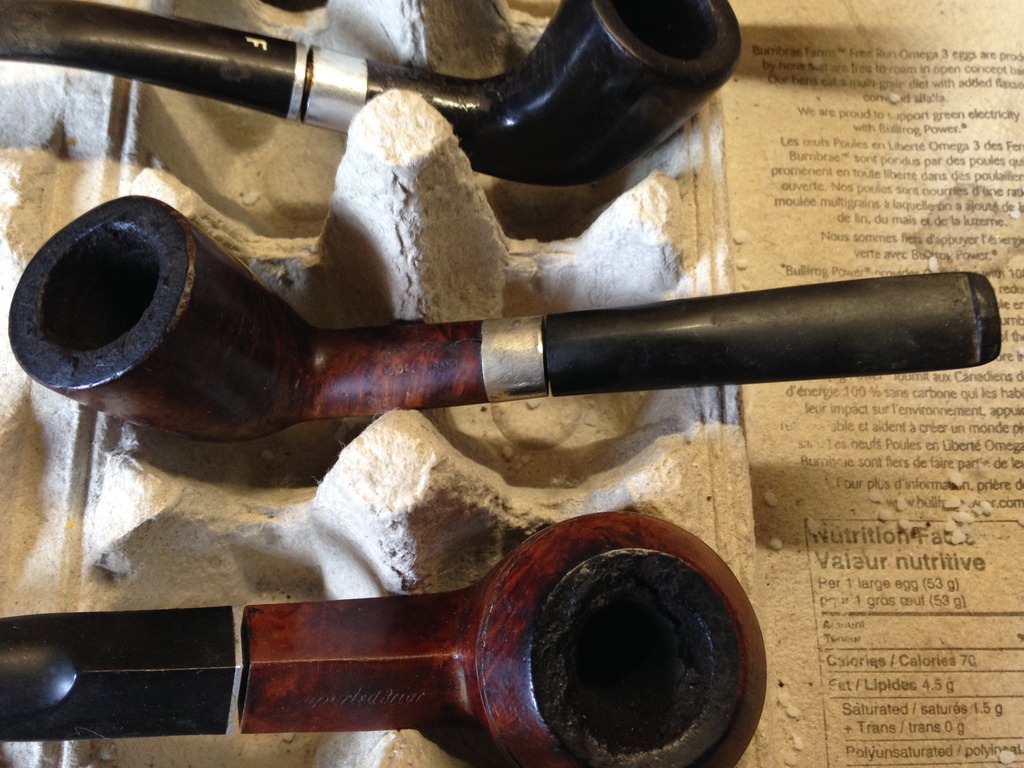
This older Wally Frank Pot shaped pipe came in the same gift box as the little no named prince that I restored recently. In fact it was the second pipe in the photos included with the prince. It was a fairly decent piece of briar with one large fill on the top of the shank in the middle. The putty used was brown rather than pink coloured putty so it would blend fairly well. The briar was darkened from use with oils and dirt. There was a thick build up of tar and oil on the rim that was rock hard. The cake in the bowl was thick and hard. The stem was good quality vulcanite and did not have much oxidation. There were deep scratches around the stem near the stem shank junction. There were also flecks of metal in the vulcanite that makes me think that the pipe is a war years pipe as often the rubber stems were made from recycled tires. There was a slight buildup of calcium on the stem just ahead of the button. The tenon had an aluminum inner tube that sat ran the length of the shank and ended with a diagonal cut end in the bottom of the bowl.Frank1

Frank2

Frank3

Frank5 The next three photos show the stamping on the pipe. The pipe was stamped on the left side of the shank Natural over Sun Cured and on the right side Wally Frank Ltd. On the underside of the shank it was stamped Second and Made in Algeria. I have seen plenty of pipes that were stamped Algerian Briar but this is the first stamped Made in Algeria that I have seen.Frank6
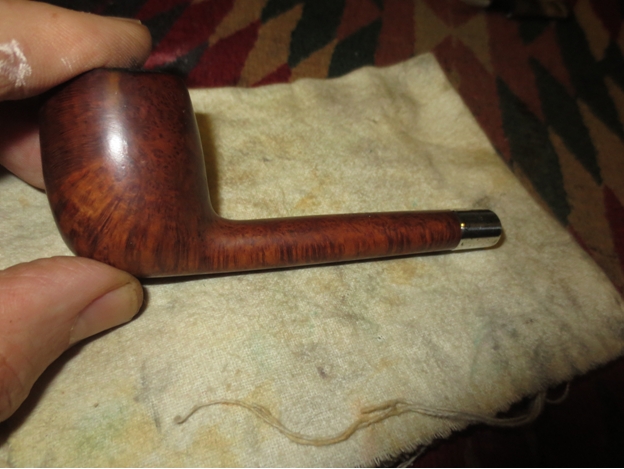
Frank7

Frank8 The next photo is a close-up of the rim and bowl. It shows the cake and the build-up on the rim as well as the inner tube sitting in the bottom of the bowl.Frank9 I reamed the bowl with a PipNet reamer starting with the smallest cutting head and working up to the head that was the same diameter as the bowl. I reamed the bowl back to bare wood and wiped down the inside of the bowl with cotton swabs and alcohol to remove the dust that remained in the bowl.Frank10 I scrubbed the exterior of the bowl and rim with acetone on cotton pads. I scrubbed until the oils and dirt were gone from the bowl and the rim was clean. There was some nice grain showing on the bowl – cross cut on the side and birdseye on the front and back.Frank11

Frank12

Frank13

Frank14 I sanded the stem and shank with 220 grit sandpaper to remove the scratches around the stem at the junction. I sanded both the shank and stem with medium and fine grit sanding sponges. I sanded the bowl and rim with a fine grit sanding sponge. I cleaned out the shank and the stem with pipe cleaners, cotton swabs and alcohol until they came out clean. The shank was remarkably clean considering how caked the bowl was. I wonder if the inner tube was not responsible for that.Frank15 The next two photos show the pipe along with the no name prince that I recently restored. Both had a natural finish that probably was oiled originally.Gen13

Gen14 I decided to rub this pipe down with olive oil as I did the prince. I rubbed on the oil with a paper towel and let the wood absorb it. I wiped off the excess and hand rubbed it until the wood had a rich glow.Frank16

Frank17

Frank18

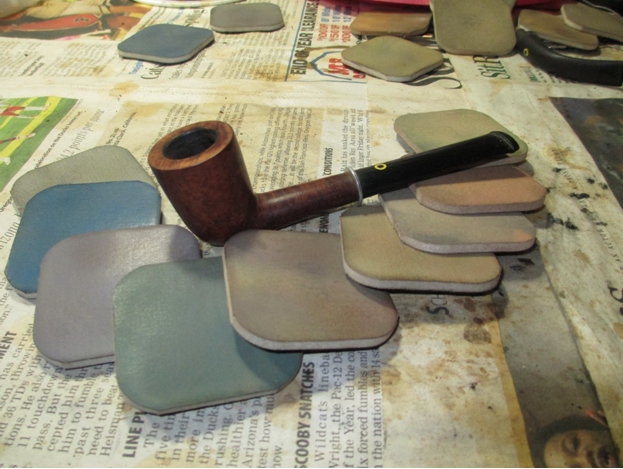
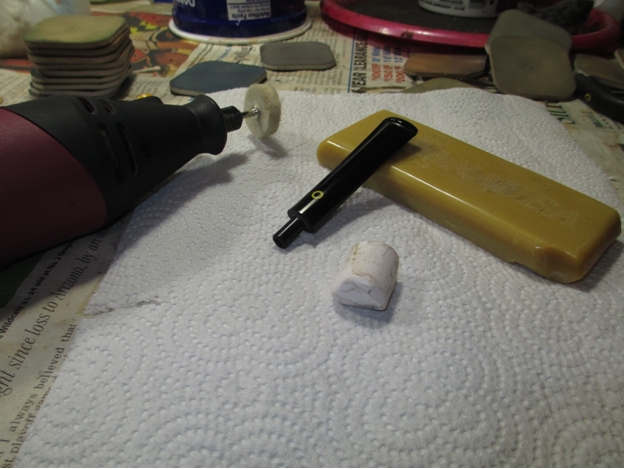
Frank19 I buffed the bowl with White Diamond to give it a shine and then gave it a coat of carnauba wax. I then worked on the stem with micromesh sanding pads. I wet sanded the stem with 1500-2400 grit sanding pads and dry sanded with 3200-12,000 grit pads. I rubbed it down with Obsidian Oil between each set of three pads.Frank20

Frank21

Frank22 I buffed the pipe and stem with White Diamond and worked it over the stem and bowl until the feel was smooth. I also buffed it with Blue Diamond. I gave it several coats of carnauba wax and buffed it with a soft flannel buff to raise the shine. The finished pipe is shown in the photos below.Frank23

Frank24

Frank25

Frank26

Frank27

Frank28

Frank29

Frank30

Frank31

Frank32

Frank33

A Fresh Start for a no name Imported Briar Prince


Blog by Steve Laug

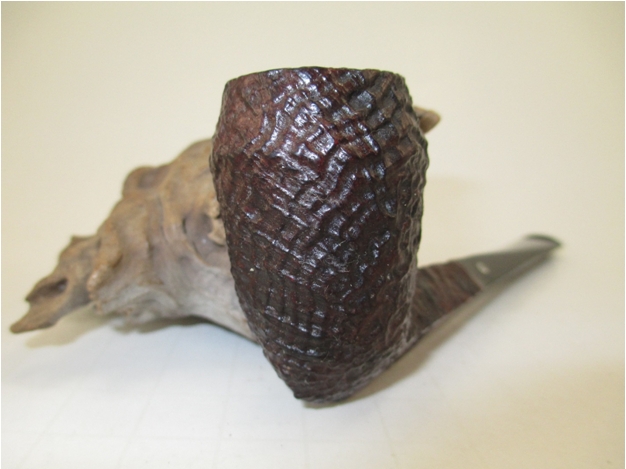
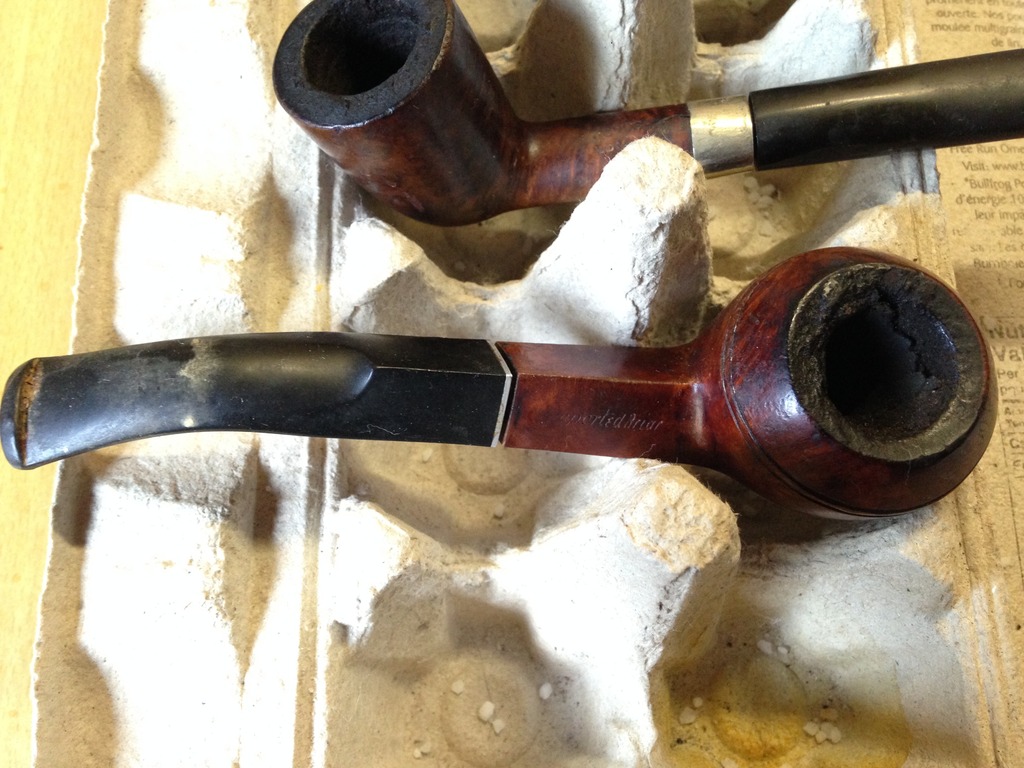
The next pipe on the work table is a little prince with no stampings other than Imported Briar on the left side of the shank. It has the characteristic worm trail carvings that were used in days gone by to cover imperfections in the briar. I have never been a fan of these carvings and would much rather have had the original sand pits or rough areas exposed. This pipe had a natural finish – unstained. It looked like it had originally sported and oil finish. The rim was damaged and had a small crack that went into the surface across the top right front edge. The transition between the stem and the shank was not smooth. The vulcanite stem was higher than the briar on the underside and the sides of the shank. The stem itself was made of good quality vulcanite and was not oxidized and did not have tooth marks or chatter.Gen1

Gen2

Gen3

Gen4 The next photo shows a close-up of the rim surface and gives a clear picture of the crack on the rim. It looks far worse than it actually was. The crack did not go too deeply in to the rim surface. It certainly was there and went into the bowl on the inside and into the worm trails on the outside of the bowl. I figured I could top the bowl and remove most of the cracked portion.Gen5 I reamed the bowl with a PipNet reamer starting with the cutting head that was closest in diameter to the bowl. I reamed it back to bare wood so that I could examine the crack on the inside edge of the rim.Gen6 I topped the bowl on a topping board using 220 grit sandpaper. I wanted to remove as much of the damaged area as possible without altering the profile of the pipe.Gen7

Gen8 I cleaned of the rim with isopropyl alcohol to remove the sanding dust. I dripped some clear superglue into the shallow surface of the remaining crack in the rim. I cleaned out the shank with cotton swabs, pipe cleaners and alcohol. Once the glue dried I topped the rim a final time to remove the excess glue and smooth out the rim. I also wanted to remove a bit more of the damaged area.Gen9

Gen10 Over the years when I have come on pipes with the worm trail carvings I have decided to highlight them since I cannot hide them. I have never liked them but figured why pretend that they are not present. I use a black permanent marked to trace the carving in the trails. I go over the carvings until the black has a good coverage on the surface of the carvings. At this point in the process it always looks quite stark against the lighter reddish brown of the briar but once I am finished it looks far better in my opinion.Gen11

Gen12 I wiped the bowl down with acetone on a cotton pad a final time to clean off the dust and to clean up the markings from the Sharpie.Gen13

Gen14 Since this pipe originally had a natural finish – possibly oil finish I decided to return it to that state. I rubbed the bowl down with a light coat of olive oil.Gen15

Gen16

Gen17

Gen18 I have read others talk about the oil going rancid on the briar but I have never had that happen. Rather, I have found that when I rub it on to the surface of the briar and rub it in by hand the heat of my hands rubbing it quickly cause the oil to be absorbed and the result is that the grain is highlighted and the briar has a rich reddish brown hue once it is buffed and polished.Gen19

Gen20

Gen21

Gen22 I sanded the shank stem junction earlier in the process with 220 grit sandpaper and also with a medium and fine grit sanding sponge. I sanded the entire stem in the process of adjusting the fit with the shank. I now used the micromesh sanding pads to polish the stem. I wet sanded the stem with 1500-2400 grit pads and also sanded the bowl and shank at the same time.Gen23 I dry sanded the stem, shank and bowl with 3200 -12,000 grit sanding pads. The bowl and the stem began to take on sheen with each successive step up in grit of micromesh pad. I rubbed the stem down with Obsidian Oil between each set of three pads and continued to sand until the stem was finished. I gave it a final coat of Obsidian Oil and gave the bowl a final wipe down with olive oil on the towel to remove any sanding dust from the polishing.Gen24

Gen25 I buffed the stem and bowl with White Diamond on the wheel and then gave both multiple coats of carnauba wax. I buffed the pipe to a shine with a soft flannel buffing wheel. The finished pipe is shown below. You know, on this one after the refinish, the worm trails don’t look too bad!Gen26

Gen27

Gen28

Gen29

Gen30

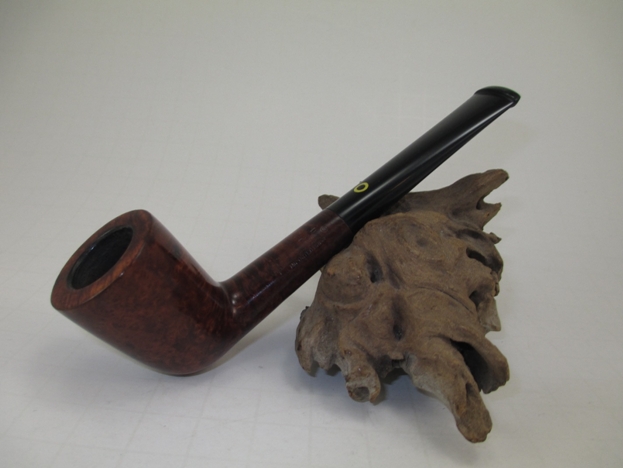
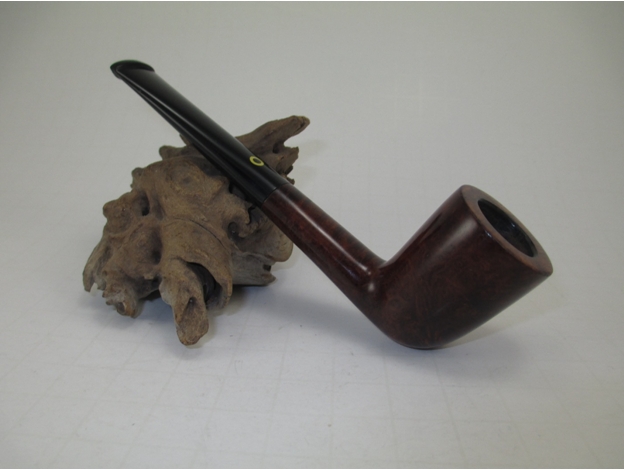
Gen31 I decided to take a lesson from Andrew Selking and his pipe photos for the final pictures of the pipe. His signature is the nice piece of drift wood in the photos. I don’t have one of those but I do have an old cast iron frog that my grand dad gave me years ago. I decided to use it as a prop in the photos to hold up the pipe.Gen32
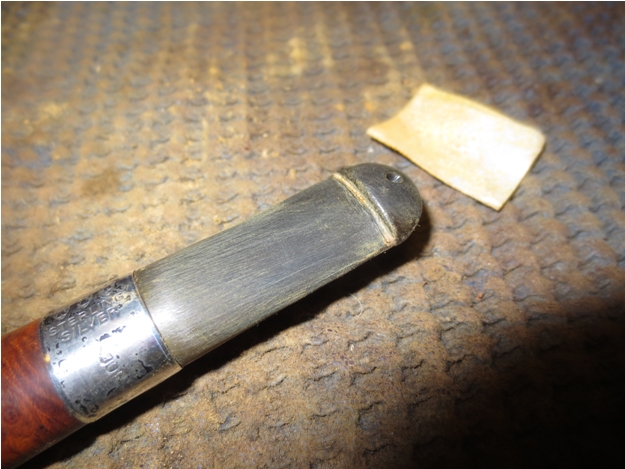
Gen33

Gen34

Stem Reconstruction on an Ehrlich Billiard


Blog by Andrew Selking

“He’s not dead, just mostly dead.” Miracle Max The Princes Bride

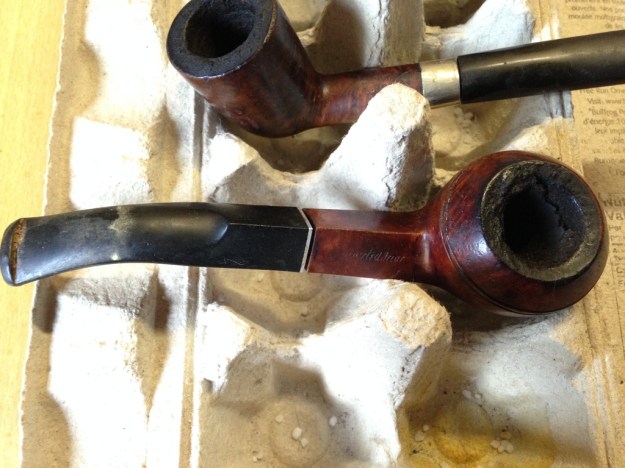
I like the way the pipe looked in the auction pictures, but when I first examined it I thought the stem was beyond help. This is not a little pipe, but the previous owner was obviously a clencher. The top and bottom of the stem had a hole, as you can see by these pictures.Andrew1

Andrew2

Andrew3

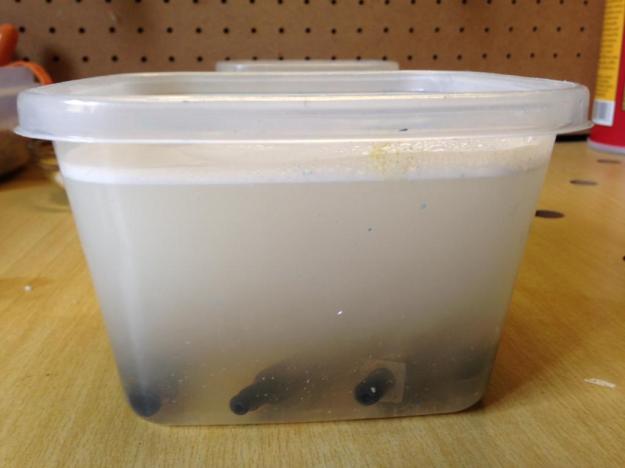
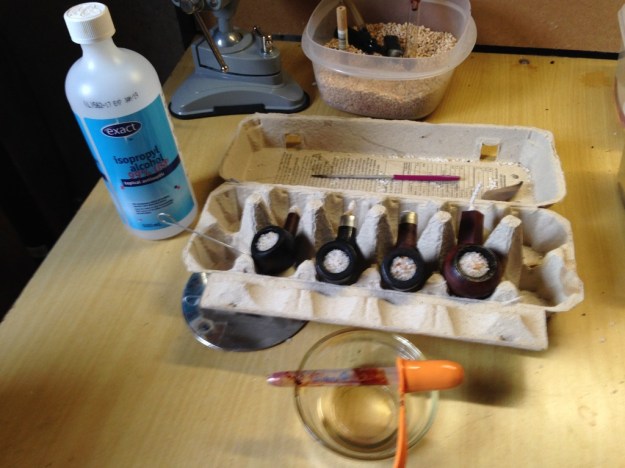
Andrew4 Before getting into the stem repair, I soaked the bowl in alcohol.Andrew5 Although I have done simple repairs on tooth marks, I had never tackled anything this complicated. The holes were far enough down that it wouldn’t be practical to cut a new button. The stem is fat enough that finding a replacement was also out of the question. The one thing the stem had going for it was the edges were still in good shape. I decided to do a complete reconstruction of the stem.

I don’t claim to be an expert on these things, so I turned to one of the how-to articles on Pipe Smoker’s Unlimited. The one gentleman used activated charcoal with super glue, so I decided to try it. I found a large container of activated carbon, which is the same thing, in the pet department of my local Walmart. It came in small pellets, which needed to be ground into a fine powder.Andrew6 This is what it looked like after grinding.Andrew7 I took some wax paper and folded it to fit inside the stem. Once I got the fit I wanted, I sprayed the wax paper with cooking spray and put it back inside the stem.Andrew8 I used a couple drops of clear super glue on the bottom of a plastic cup, mixed in some charcoal dust, and applied it to the hole. I added a couple of drops of glue accelerator and set it aside to cure.Andrew9 I did the same thing with the other side. I’ve found that even with accelerator, it’s a good idea to let the glue cure for at least 24 hours. You can work it sooner than that, but it has a tendency to come out when you’re sanding it.Andrew10 I used several applications of the glue and charcoal paste.Andrew11

Andrew12 Once the hole was filled in I sanded it down.Andrew13

Andrew14 As you can see the charcoal left a few pits. To fill them in I applied a thin layer of super glue over the pits and sprinkled charcoal dust directly on top of it.Andrew15

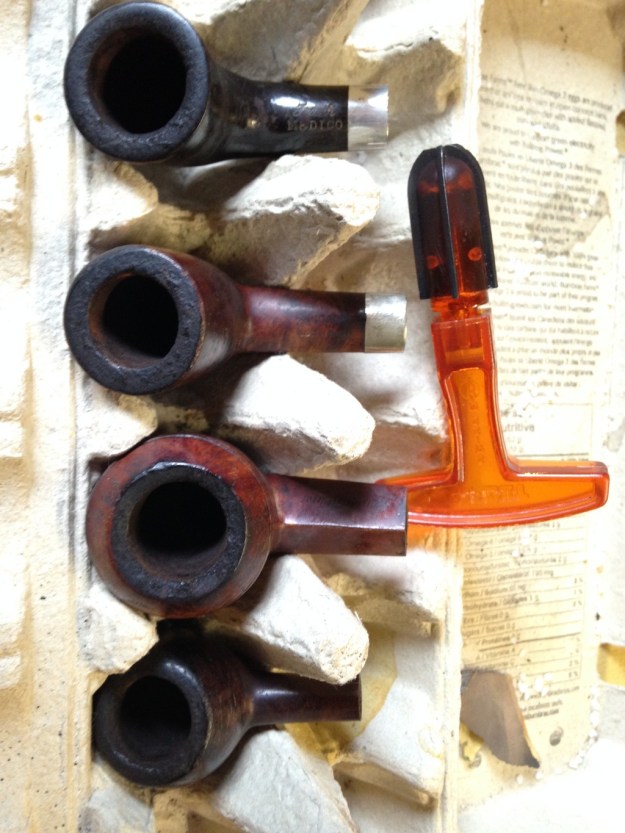
Andrew16 This is what it looked like after sanding.Andrew17 The stem was still far from finished, but it was good enough to start cleaning the insides.Andrew18 I went ahead and retorted the bowl first.Andrew19 The brush came out fairly clean.Andrew20 I learned a hard lesson while cleaning this shank. In spite of the large diameter, the inner hole was smaller than the q-tip I tried to stick inside it. The end came off and it took a lot of effort to get it out. The moral of the story is, if it doesn’t fit don’t try to make it fit.

In spite of the minor set-back, the shank was pretty clean.Andrew21 Next I retorted the stem.Andrew22 It had a lot of tar inside it, so repeated the process an additional two times. It was easy to clean after that.Andrew23 With the inside cleaned, it was time to finish smoothing out the stem. I used 400 grit wet/dry with water, followed by 1500-2400 grit micro mesh pads with water. To prevent rounding the edges of the stem I held a rubber washer over the end of the tenon.Andrew24 While the stem dried I turned to repairing the rim damage.Andrew25 I used 150 grit sand paper on a piece of glass to remove the worst of the damage.Andrew26 Once I had the edge almost where I wanted it, I switched to 400 grit sand paper. This is what it looked like after sanding.Andrew27 I have become a big fan of natural finished pipes, especially when they have nice grain like this one does, so I used acetone and 0000 grit steel wool to clean the bowl.Andrew28 After cleaning the finish, I noticed a couple of dents on the front of the bowl.Andrew29 I used my wife’s iron and a wet cloth to steam out the dents.Andrew30 After allowing the wood to dry out overnight, I polished the bowl and stem with a progression of 3200-12,000 grit micro mesh pads.Andrew31 I know Steve uses Obsidian oil on his stems during this step and also uses olive oil to bring out the grain of the bowl. I’ve been experimenting with mineral oil for the same purpose. It doesn’t take much, just a little bit on the tip of your finger. I used one coat after the first three pads on both the bowl and the stem. After the final pad, I repeated the process. I really worked the bowl in my hand to bring out a beautiful reddish brown color.Andrew32 I used a soft cloth to buff the pipe and remove any excess oil before the final buffing stage. I buffed the bowl on my buffing wheel with white diamond and carnauba wax. I used my rotatory tool with white diamond and carnauba wax on the stem. I gave the whole pipe a final coat of Halcyon II wax and filled the E on the stem with a white out pen. This is the result.Andrew33

Andrew34

Andrew35

Andrew36

Andrew37

KBB Yello Bole Restoration


Blog by Al Jones (aka upshallfan)

This Yello Bole belongs to a pipe forum friend, Walt, who lives in Florida.  It is the first of that make to land on my work bench.

On examination of the pipe, it had some issues that took some thought and a little experimentation on how to resolve them.  Somehow in the pipe’s journey, the bottom and side of the pipe had been scuffed and scratched.  It was if someone had used some rough grade sandpaper or steel wool on the finish.  The top of the bowl top had some scorching and the stem had only a slight layer of oxidation.  Otherwise it was in excellent shape

Yellow-Bole_Before (1) Yellow-Bole_Before (3) Yellow-Bole_Before Yellow-Bole_Before (2)

At first, I thought the bowl would need to be stripped and restained.  I was preparing to soak the bowl in alcohol but wondered what effect buffing the pipe with Tripoli compound would do to the light surface scratching.  Tripoli is not a rouge that I use very often on pipes as it is too aggressive and sometimes can cause more damage than good.  (it is an important step when buffing metal).  At that point, I thought the Tripoli couldn’t make the issue any worse, as long as I stayed away from the nomenclature which was in great shape.  To my surprise, the Tripoli completely removed the scratching, without damaging the rest of the finish.

I used some worn 8000 grit paper on the bowl top to remove the scorching.  This method is also the least damaging to the finish.    There were a few dents and dings on the briar.  I used an iron and a wet cloth to minimize those marks but they would not raise completely.

There was  a slight discoloration in the briar where it was buffed with the Tripoli and micromesh.  I put on a coat of diluted “Medium Brown” Fieblings stain and let it dry.  That was then buffed to a shine with White Diamond and then several coats of Carnuba wax.  This gave the briar a nice luster without completely removing the patina (or exposing any fills as a restain might have done).

I removed the oxidation of the stem with some 800 grit paper, moving to 1500 and 2000 grades and finally 8000 and 12000 grade micromesh sheets.  The stem was then buffed with White Diamond and Meguiars plastic polish.  As I had not worked with a Yello Bole previously, I was pleased to find the inset stem logo to be quite durable, perhaps even more so than the Kaywoodie logo.

Here is the finished pipe.   Walt has received it in Florida and was also pleased with the results.
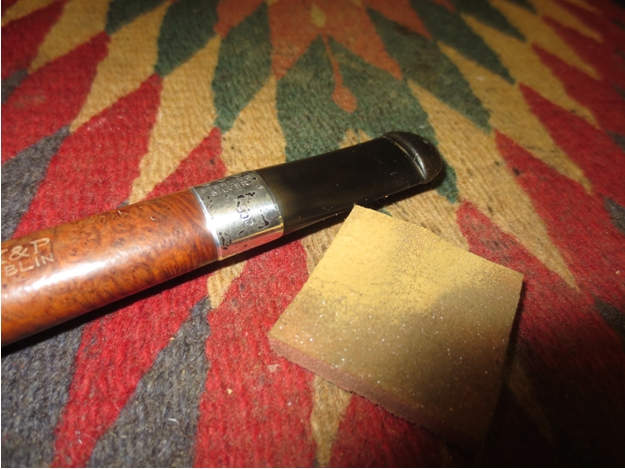
Yellow-Bole_After Yellow-Bole_After (3) Yellow-Bole_After (2) Yellow-Bole_After (5) Yello_Bole_After (6) Yello_Bole_After (7) Yellow-Bole_After (1) Yellow-Bole_After (4)


Breathing New Life into a Wally Frank De Luxe Saddle Billiard


Blog by Steve Laug

I am slowly working my way through the gift box of pipes I received. The one that caught my eye next was a small Wally Frank De Luxe saddle billiard. The stem was not in too bad shape – just a bit of tooth chatter on the top and bottom of the stem along with a deep tooth mark on the underside near the button. It was lightly oxidized. The metal threaded tenon had a pressure fit metal stinger in place that was stuck. The stem was slightly overturned. The bowl was dirty – the finish spotty and damaged. There were scratches but they did not go deep in the briar. The rim had a thick build up of “lava” (tars and oils) that came out of the bowl and over the rim. The bowl was thickly caked. The left side of the shank was stamped WALLY FRANK over DE LUXE. On the saddle of the stem was worn and light stamping of what appears to be WF in a circle but the right side of the stamping is missing. On the right side of the shank it is stamped Imported Briar. The bottom of the bowl and the shank are flattened making the pipe a sitter.Wally1

Wally2

Wally3

Wally4 I took two close-up photos of the rim and the stamping on the left side of the shank to show the state of the pipe when I brought it to the work table.Wally5

Wally6 I unscrewed the stem from the shank and dripped alcohol on the stinger to loosen it from the tenon. Once it soaked a few moments I was able to carefully pull it out of the tenon. One side of the stinger insert was missing but it still fit in the tenon tightly.Wally7 With the stinger removed I heated the tenon with a lighter to soften the glue and correct the over turned stem. It did not take long to heat it enough to screw it into the shank and turn the stem on the tenon until it lined up correctly.Wally8 I reamed the bowl with a PipNet pipe reamer starting with the smallest cutting head and working up to the head that would take the cake back to bare wood.Wally9

Wally10 With cake cleaned I scrubbed the rim with alcohol on a cotton pad to remove the buildup of tars and oils. I was able to remove the majority of the overflow on the rim with elbow grease and persistence. There was some slight inner rim damage that would be easy to clean up with a light sanding. I also scrubbed the bowl with acetone on cotton pads and then with alcohol. It took off the grime and some of the mess but left the stain intact.Wally11 The shank was very dirty and the aluminum on the tenon, stinger and end of the mortise insert was oxidized. I scrubbed those with 0000 steel wool and then put the pipe back together in order to use the retort on it.Wally12 I set up the retort using a jar to lift the pipe up above the flame of the candle I used to heat the alcohol. I filled the test tube 2/3 of the way full with isopropyl alcohol and inserted the rubber stopper in it. I pulled the surgical tubing over the end of the stem and put a cotton ball loosely in the bowl. I heated the alcohol over the candle flame until it boiled through the shank and bowl. I changed the alcohol four times before I was able to get the shank clean and the alcohol coming out clean.Wally13

Wally14

Wally15 Finally the shank and stem was clean. I removed the retort and ran pipe cleaners through the stem and shank. I used pipe cleaners, cotton swabs and alcohol to remove the leftover tar and oil from both. Finally they were clean and came out as white as they were when I put them into the shank and stem.
I decided to stain the bowl and rim with a oxblood stain. I applied it to the pipe with a cotton pad and then flamed it to set it in the grain. I reapplied it until I had the coverage I wanted with the colour.Wally16

Wally17

Wally18

Wally19 I set the bowl aside to dry for a while and worked on the stem. I sanded the tooth chatter and oxidation with a medium and fine grit sanding sponge. They were hard to remove so I used a folded piece of 220 grit sandpaper to work on the tooth chatter and tooth mark on the underside of the stem. I had to use a small drop of clear super glue to fill the tooth mark. Once it dried I sanded it smooth with 220 grit sandpaper and then began the work of polishing the stem with micromesh sanding pads. I wet sanded with 1500-2400 grit pads and dry sanded with 3200-12,000 grit pads. I rubbed it down between each set of three pads with Obsidian Oil before sanding with the next set of three pads.Wally20

Wally21

Wally22 I put the stem back in the shank after sanding with the 12,000 grit pad and then buffed the pipe with White Diamond and Blue Diamond before giving the bowl and stem multiple coats of carnauba wax. I finished by buffing it with a soft flannel buff to raise a shine. The finished pipe is shown below. The new stain coat, the wax and the polished stem give it a new look and the cleaned interior a new life. This one should be a great smoker if the amount of cake and gunk I removed from the bowl and shank are any indication.Wally23

Wally24

Wally25

Wally26

Wally27

Wally28

Wally29

Wally30

Wally31

Sasieni Moorgate Rustic Restored


Blog entry by Al Jones

This Sasieni “Moorgate” shape in Rustic finish is the second pipe from the shop in Albany and part of the General Electric executives estate.  The nomenclature shows that the pipe is from the “Family Era” and made between 1946 and 1979.

The “Rustic” finish is a hand carved, rusticated finish done completely by hand.  This work must have been painstakingly slow with the carving following the briar grain lines.

The Moorgate shape is most typically seen with a saddle stem which adds an “S” designation after the shape name.  I also don’t usually see “Rustic” pipes with a polish bowl top, but that is a feature of every Moorgate shape I found in a Google search.

The pipe was smoked in the past, but there was still uncaked wood visible in the bowl.  The stem was nearly mint, with only some mild oxidation.

Sasieni_Moorgate_Rustic_Before Sasieni_Moorgate_Rustic_Before (1) 20150223_205814

I put a dab of grease on the dots and soaked the stem in a mild solution of Oxy-Clean.  I used 800 grit paper to remove the oxidation from the stem, which was more stubborn than it initially appeared.  I then used the 1500 and 2000 grade wet papers.  The next step was to finish with 8000 and 12000 grade micromesh sheets.  The stem was then buffed lightly with White Diamond rouge and Meguiars plastic polish.  The Four Dots have a beautiful light blue sheen.   The bowl only required a hand polish with Halycon wax.

As I’m a fan of straight pipes or the Pot shape, I listed this one on Ebay and sold within 24 hours to a gentleman from Asia.  I suspect he will be very pleased with this Sasieni.

Sasieni_Moorgate_Rustic_Finished Sasieni_Moorgate_Rustic_Finished (3) Sasieni_Moorgate_Rustic_Finished (2) Sasieni_Moorgate_Rustic_Finished (4) Sasieni_Moorgate_Rustic_Finished (5) Sasieni_Moorgate_Rustic_Finished (1) Sasieni_Moorgate_Rustic_Finished (8)


GBD Tapestry 9438 K


I love the look John got on this pipe with the contrast stain. Great work.

ReserectedPipes's avatarReserectedPipes

This is my latest eBay buy.

You can see that this is in need of more of a good cleaning than a reserection. The bowl is in good shape and the stem, while very oxidized, has no major dents or scrapes and the emblem is in good shape as well.

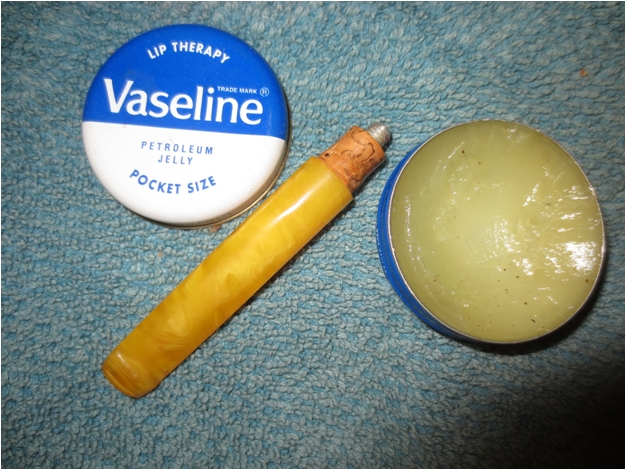
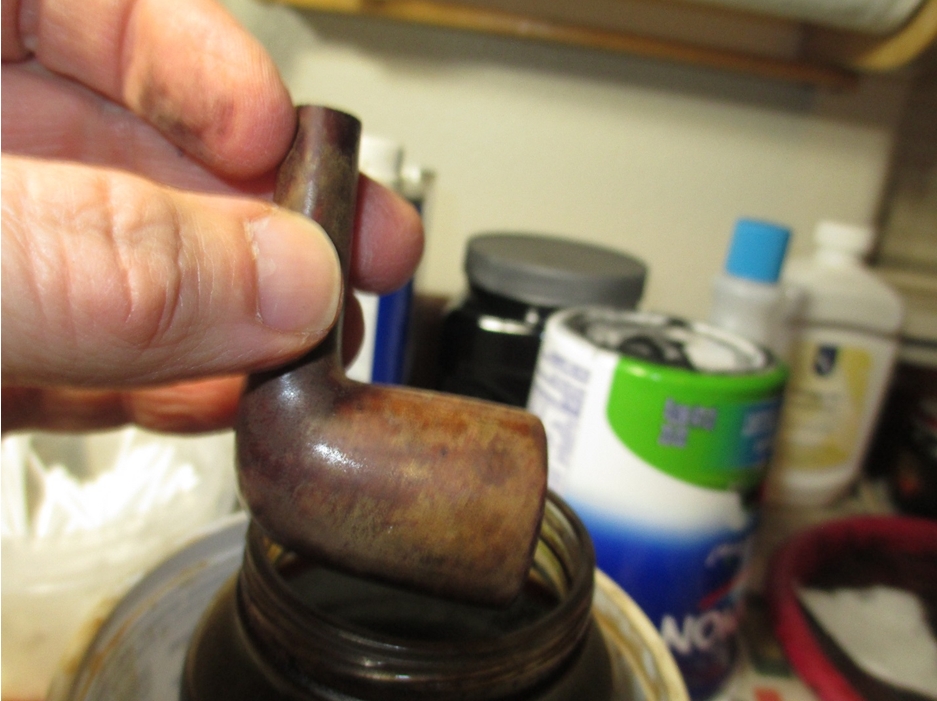
First up was to ream the bowl and give it an alcohol cleaning with pipe cleaners and Everclear. The stem I inspected and covered the logo with Vaseline to soak in an Oxyclean / water solution to loosen the oxidation. The next step was to immerse the bowl in isopropyl alcohol and let it soak for a couple of hours. When I took it out it went into a rice container to help dry it. The rice will pull out the moisture and dry it nicely. This is a trick electronics techs use when they get wet and you want…

View original post 250 more words

Masking Fills in Briar Using Acrylic Paint


Blog by Troy Wilburn & Steve Laug

One of the things I love about rebornpipes is that I learn something not only in the refurbishing of the pipes that I do but also in the work of others who contribute here. I am always looking for innovative and untried by me ways to address issues in the pipes we refurbish.While reading Troy’s latest blog on refurbishing the Dr. Grabow Belvedere Apple there was one particular part of it that I wanted to highlight. Most of the steps he takes many of us use when working on estate pipes. But there was one step that was new to me – a different way in which he deals with fills to blend them or mask them into the finish of the pipe. I have found that for me when something like this is included in the ongoing text of a refurb it is easy to lose sight of and it is forgotten. I have never tried his method of masking the fills on the pipe using acrylic paint. I thought I would pull out the process he enumerated from his post and use his photos to show the step by step process that he employed. I wrote and asked Troy if I could do this and he gave his permission. With that all taken care of here is the process. The majority of the text is from Troy’s blog. I have added my comments to his or put them in parentheses following the text.
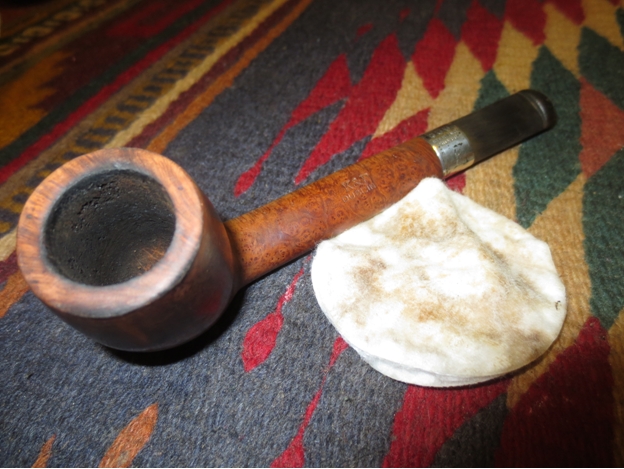
1. The fills are present in the pipe in hand and they are truly eyesores. I generally pick them out and refill them with my own dark mix or the pipe gets rusticated. But that is not Troy’s tact. He cleaned the surface of the bowl with isopropyl alcohol.Troy2

Troy3 2. The next steps are taken from his own description of the process in the original blog. Mineral oil is applied to highlight the damage to the bowl and the fills for examination.Troy7 3. I then took some acrylic paint from Walmart and mixed up a color that would help blend the fills in somewhat.Troy14

Troy15 4. I applied the blended paint to the fills using a small brush.Troy16
5. Once all the fills were covered by the paint I set the pipe on the heater for drying.

6. After the paint had dried I wet sanded the pipe again with mineral oil and 2500 grit sandpaper to blend out the paint. I sanded the paint very lightly though, as it does not take much to smooth it out. (In the photo below you can see lightly sanded fills. There were a lot of them on this bowl.)Troy18 7. I applied a couple of coats of wax to the bowl and shank and after that the fills don’t look too bad.Troy19 8. I buffed the finished pipe and though the fills are still present they are well blended into the surface of the bowl and shank. (The photos below show different views of the bowl and shank that match those shown above where the fills were very obvious.)Troy21

Troy23

Troy27

Troy28

Troy29

First Barling’s – “Special” 225 L


Blog entry by Al Jones

I struck British pipe gold at a shop in Albany NY a few nights ago.  They always have some decent estates and I try to stop by when I am working in the area.  On this visit, two pipes immediately caught my attention, this Barling’s and a Sasieni.  This is a “Special” grade,  Shape 225 in size “L” and my first Barling’s brand pipe.
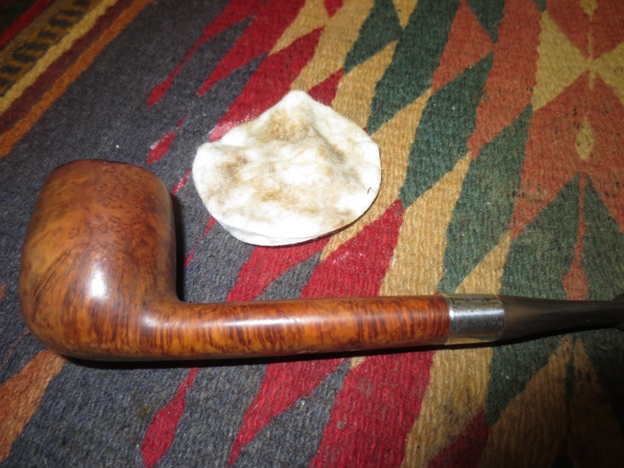
One of the current authorities on Barling’s pipes is Jesse Silver.  Jesse co-authored the update to the Barling’s page on Pipepedia and participates on several pipe forums I frequent.  A few years ago, I learned to read everything he wrote about British pipes and saved quite a few of his threads for reference.  As soon as I saw the nomenclature, I knew this one was a winner.   I only occasionally encounter Barling’s pipes, but I’ve learned that bent pipes are rare.
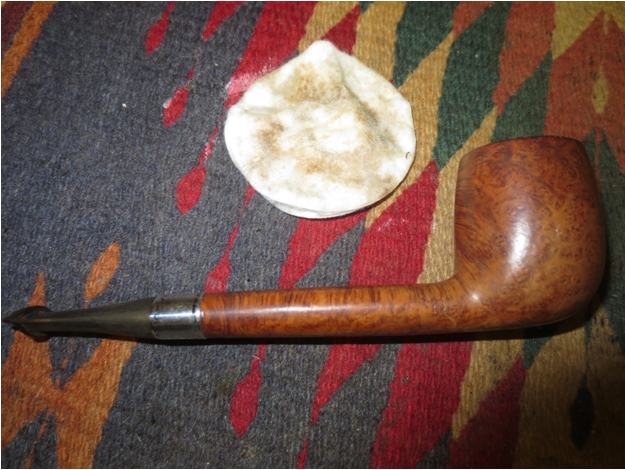
The nomenclature reflects that this pipe is from the pre-Transition era.  It includes the “REGd 98046” stamp on the stem, which was used from 1936 to 1949.    The “L” stamp indicates a Large sized pipe.  This one is about a Dunhill Group 3 and weights a svelte 29 grams.   The three digit shape stamp indicates the pipe was made for the US Market.
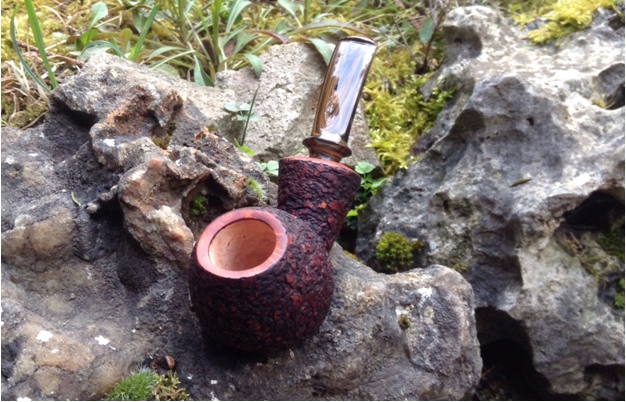
The shop owner told me that these pipes came from the estate of an executive at the nearby General Electric plant in Schenectady, NY.

Pipepedia referes to the “Special” grade as:


  • Ye Olde Wood Special (“Special” in script) – pipes with a nicer grain figure, often pipes with a combination of cross-graining and birdseye grain, and which were generally left natural or lightly stained, rather than stained dark.

The pipe was in terrific shape.  The stem had a slight layer of oxidation, but was free from any teeth marks.  Most importantly, the Barling’s cross was still visible in addition to the REDd number.  The nomenclature was mint.

Barling's_225_Special_Before Barling's_225_Special_Before (2) Barling's_225_Special_Before (3)


I soaked the bowl with sea salt and alcohol, but the pipe was so clean, I don’t think it was really necessary.

The stem was shined with 1500 and 2000 grit wet papers, than the 8000 and 1200 grade of micromesh sheets.  I was careful to stay away from the logo, which meant a slight bit of oxidation had to remain.   The flat section was buffed with White Diamond and Meguiars Plastic polish.

The bowl was polished lightly with White Diamond rouge, again staying clear of the nomenclature.  Then, several coats of carnuba wax were applied.  I thought the bowl looked pretty good, but was surprised as to the depth of shine the White Diamond brought out.

Here is the finished pipe.
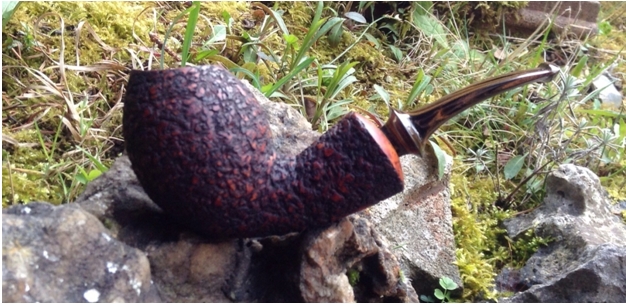
Barling's_225_Special_Finished Barling's_225_Special_Finished (3) Barling's_225_Special_Finished (4) Barling's_225_Special_Finished (9) Barling's_225_Special_Finished (6) Barling's_225_Special_Finished (5) Barling's_225_Special_Finished (7) Barling's_225_Special_Finished (8)