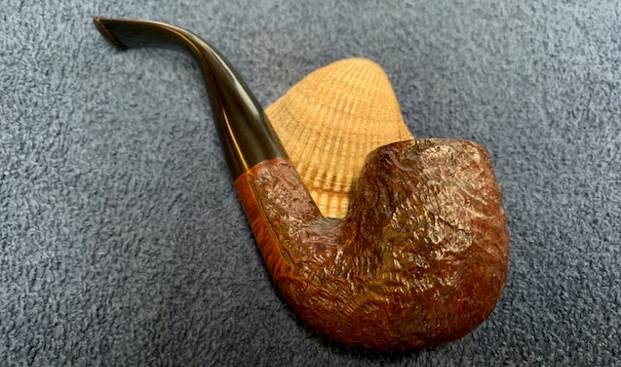
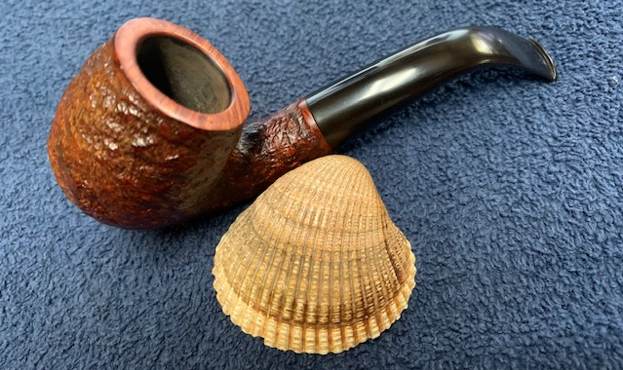
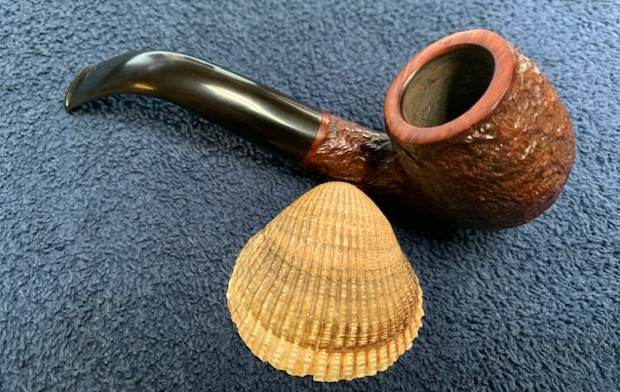
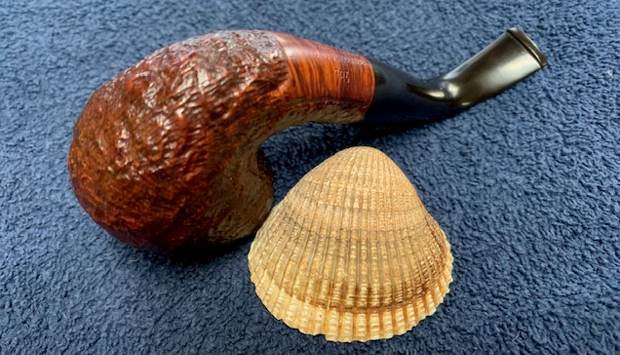
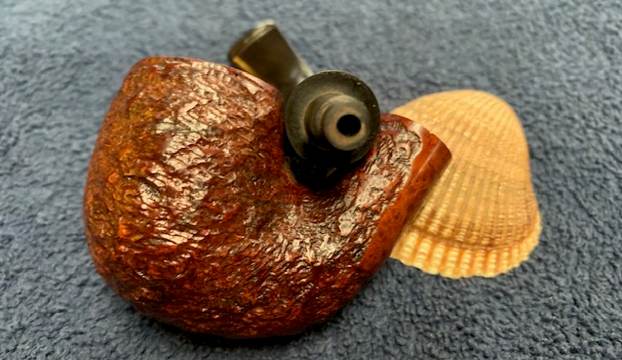
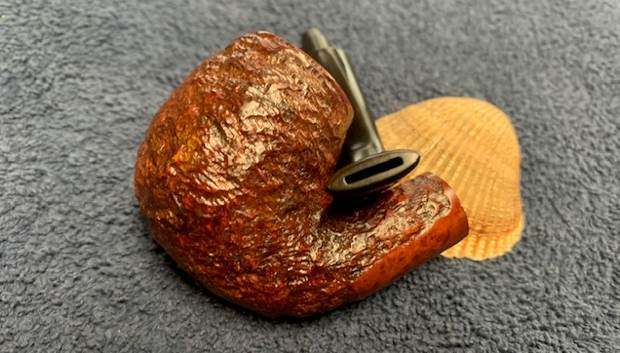
Paint It Black!


Blog by Kenneth Lieblich

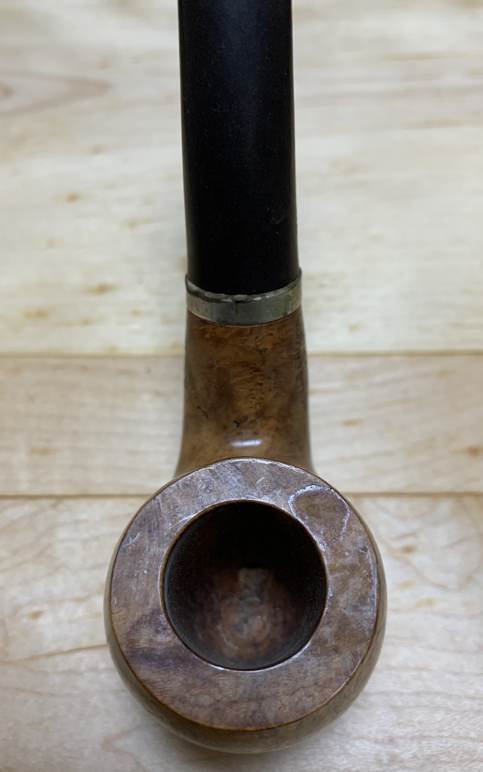
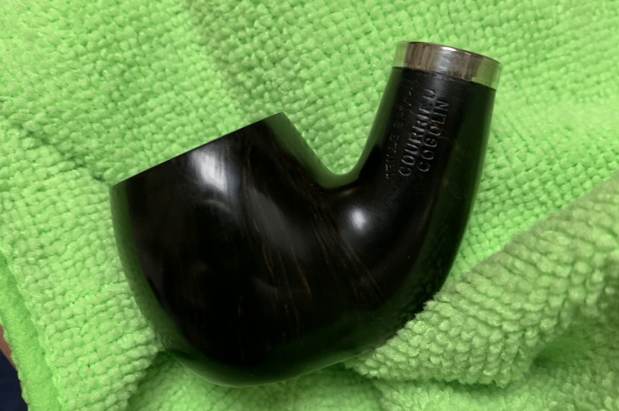
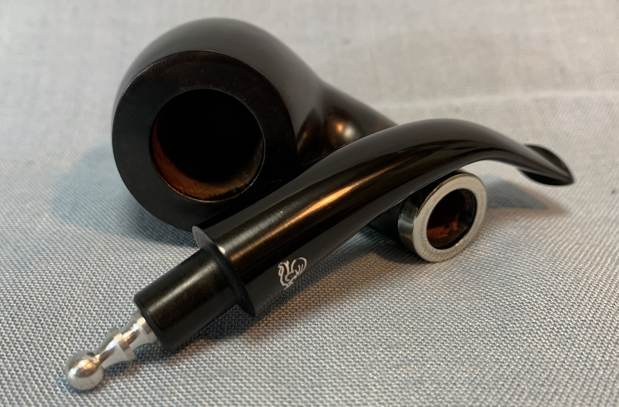
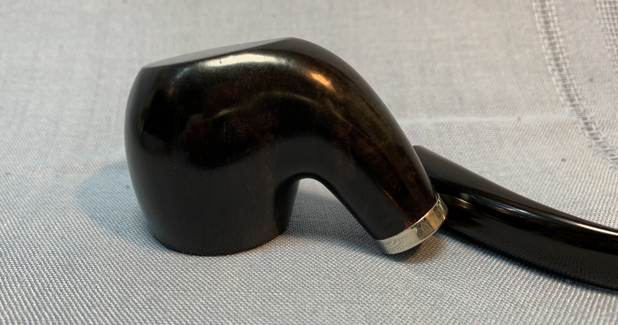
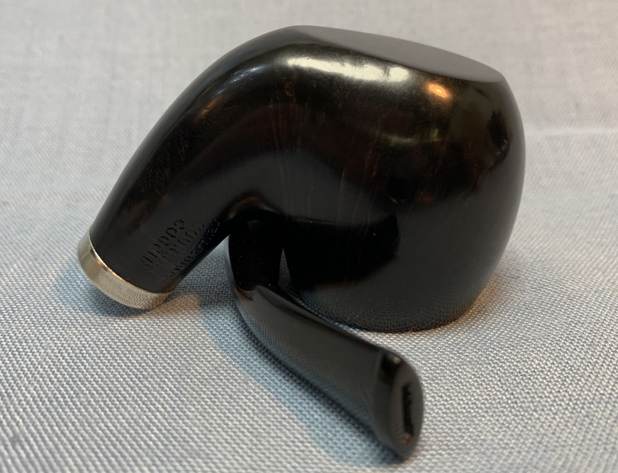
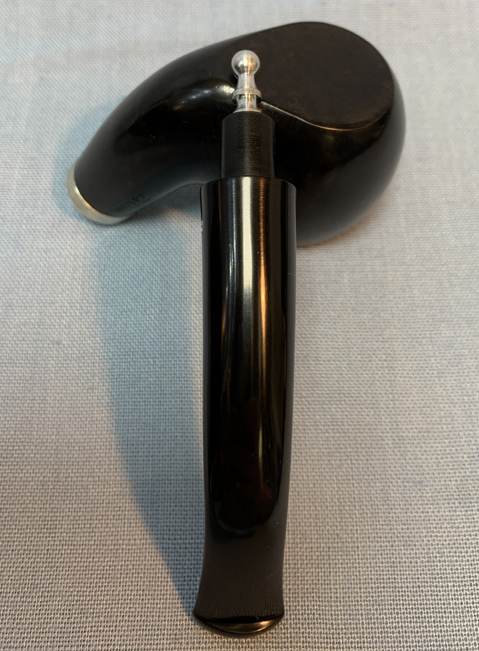
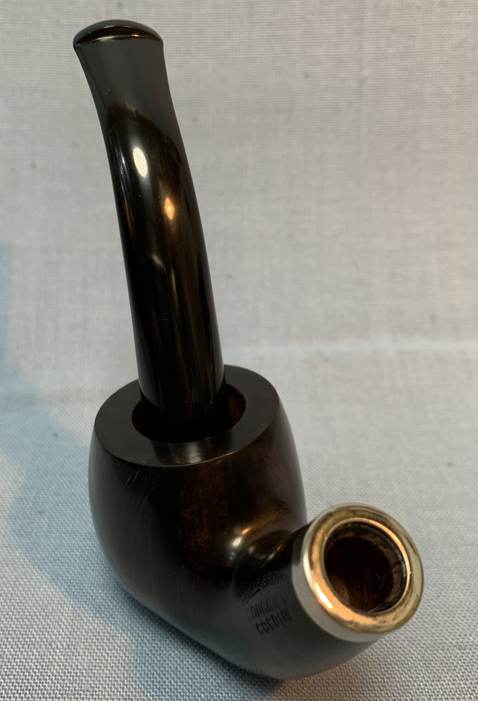
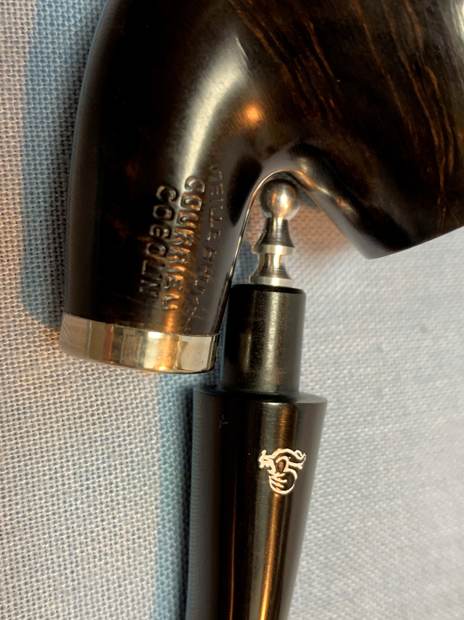
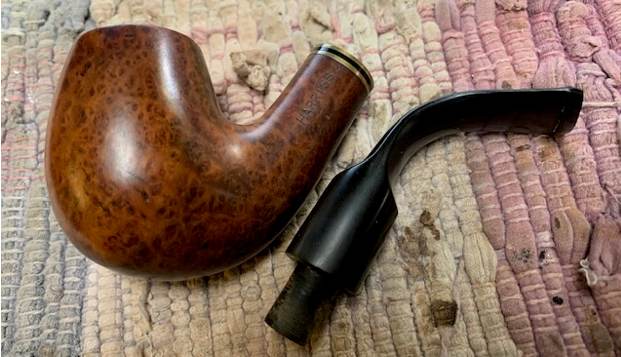
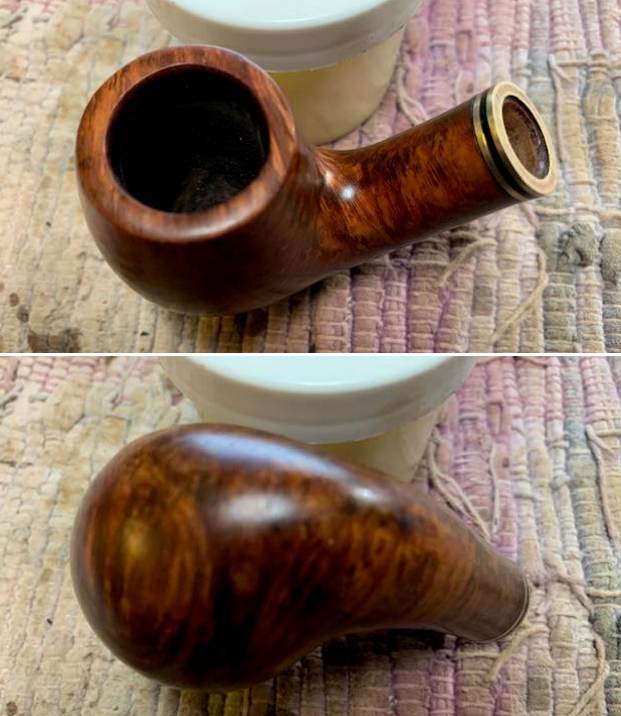
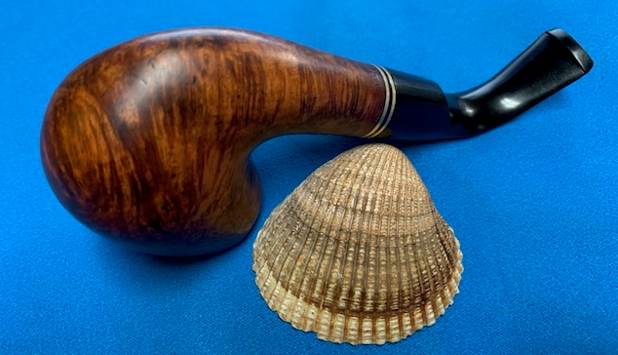
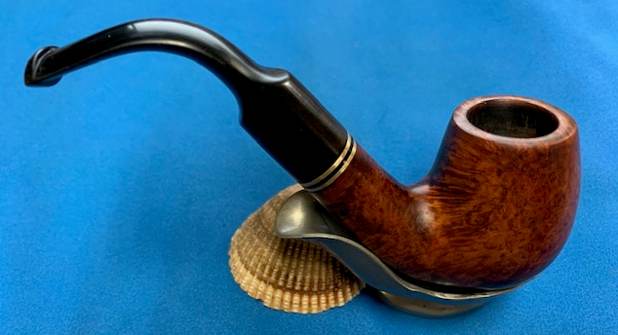
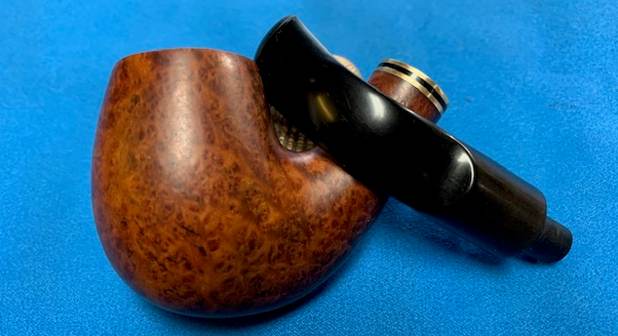
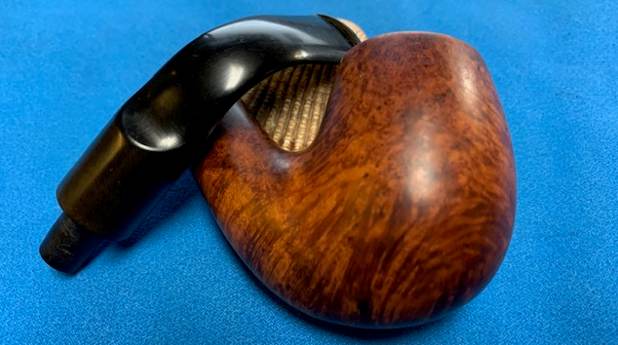
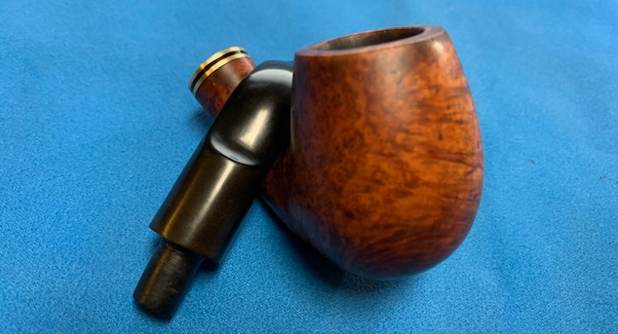
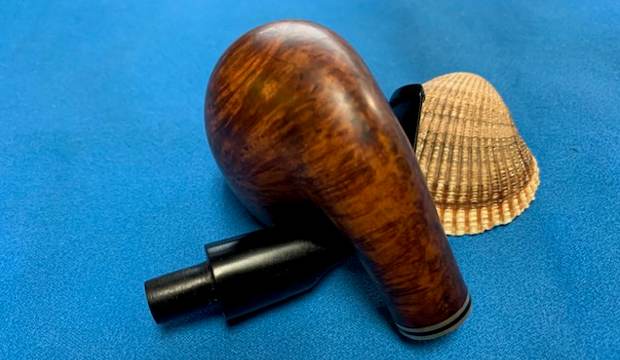
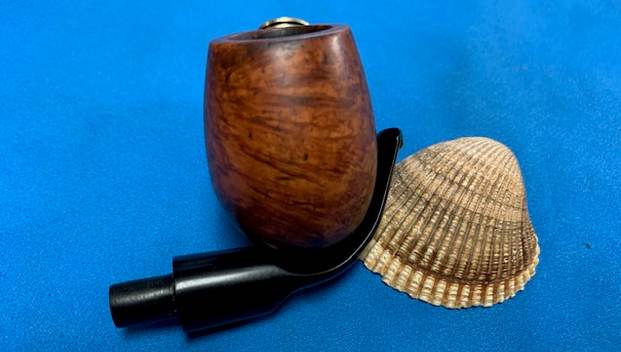
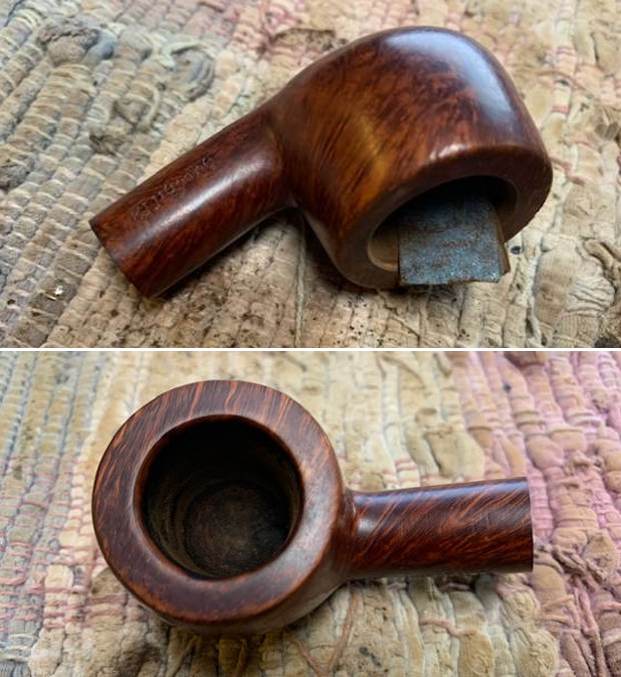
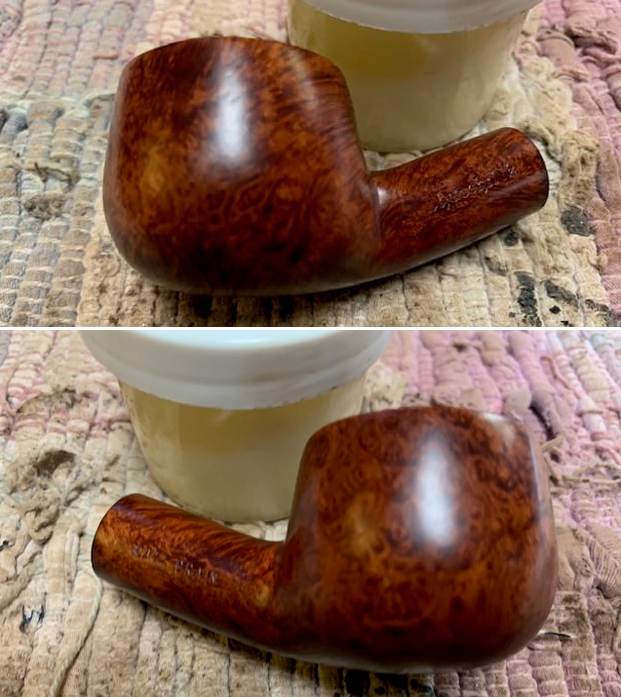
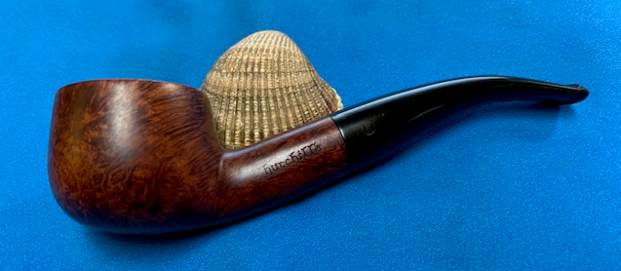
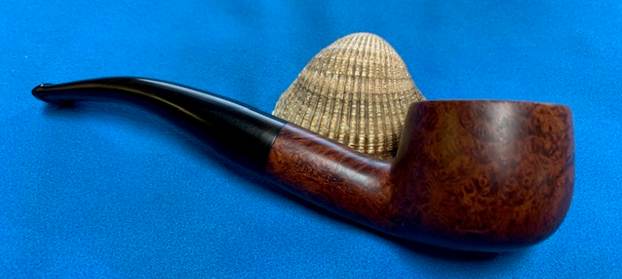
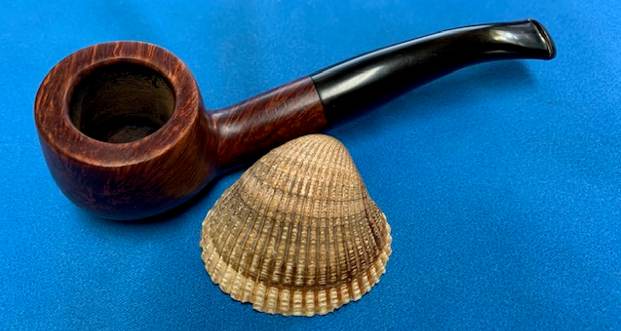
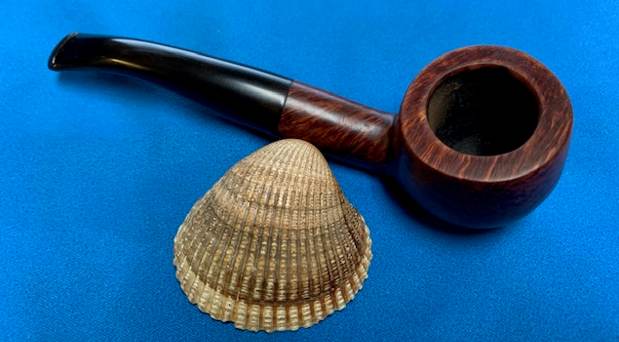
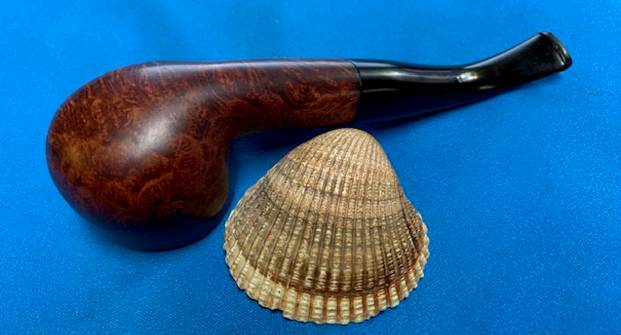
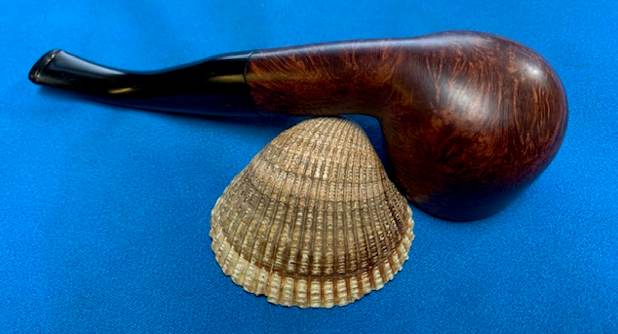
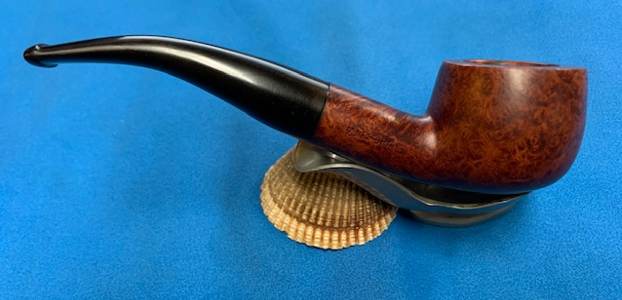
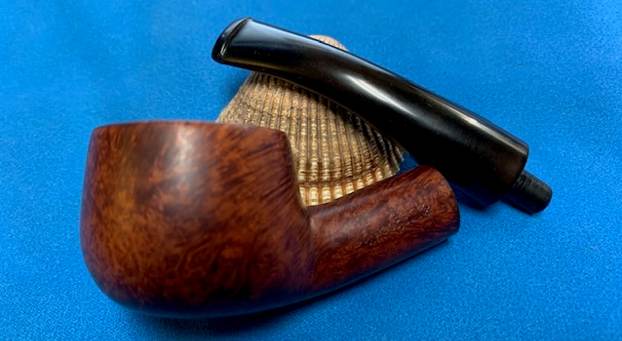
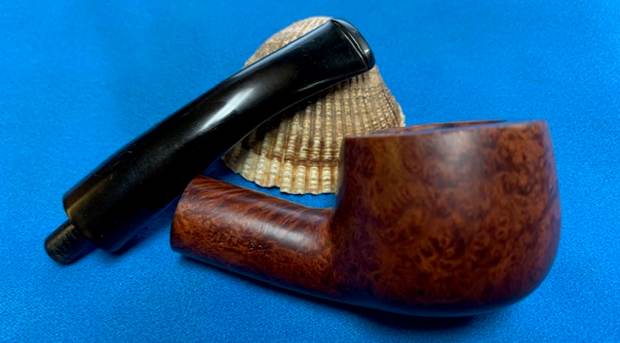
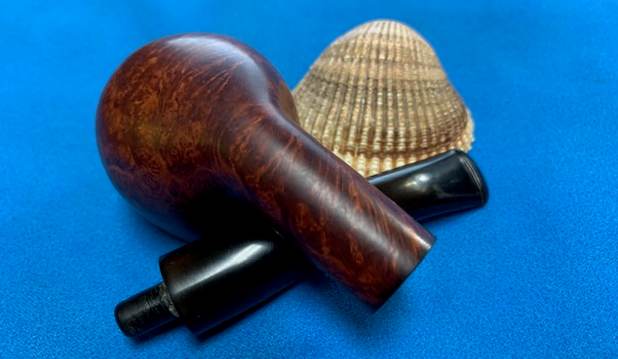
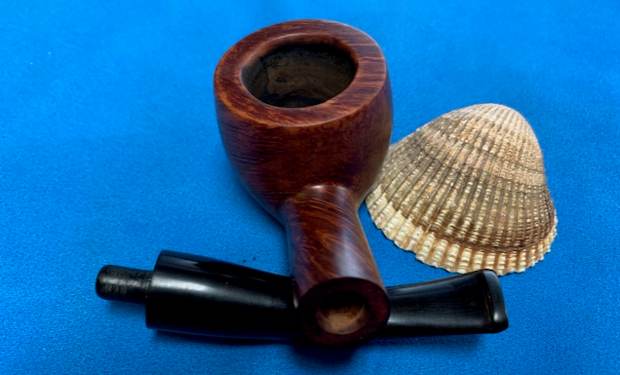
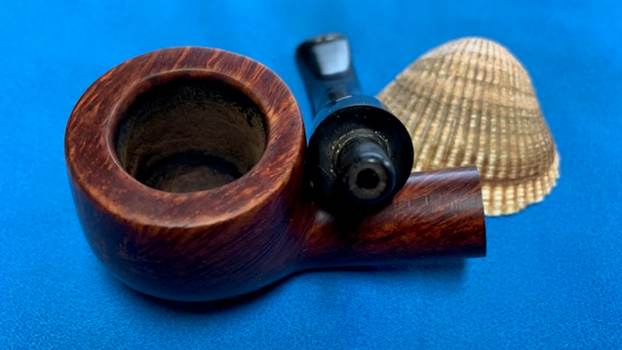
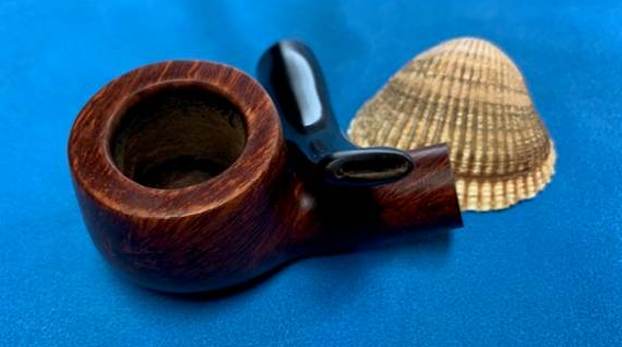
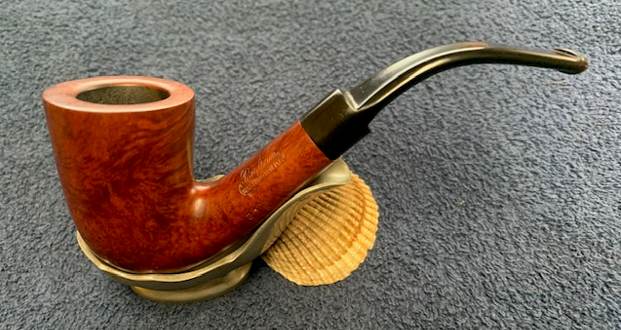
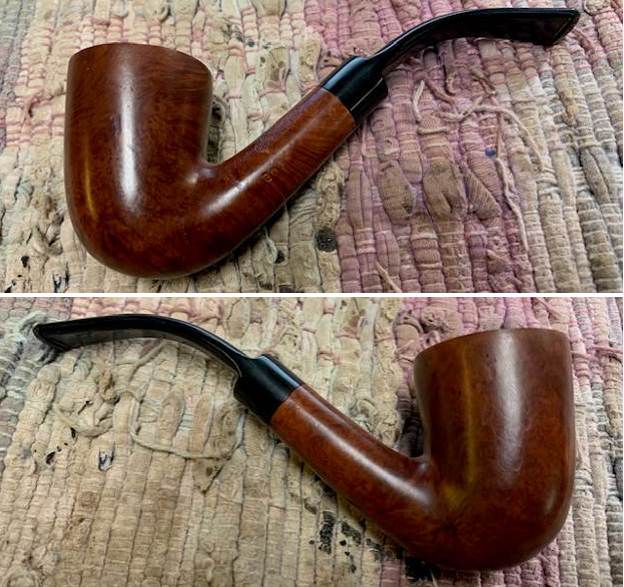
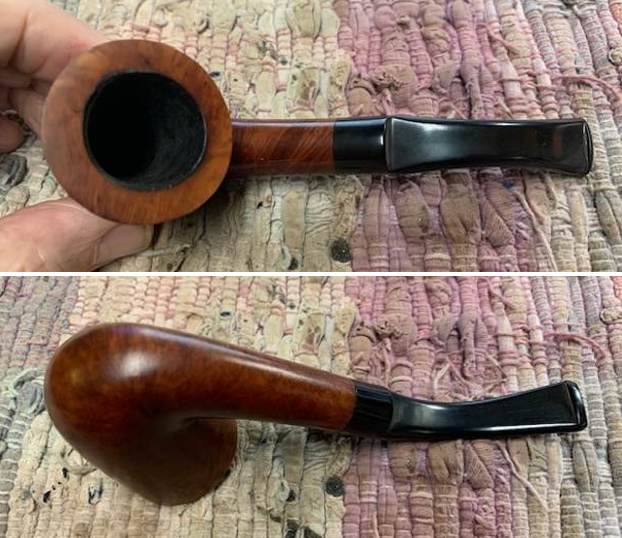
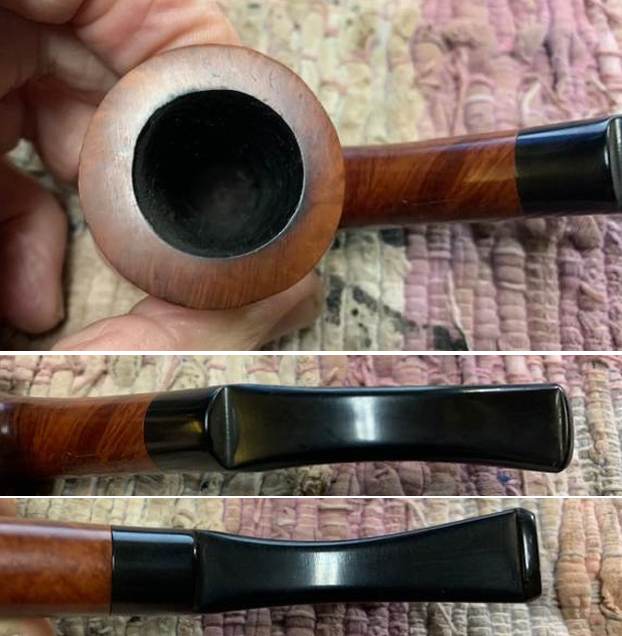
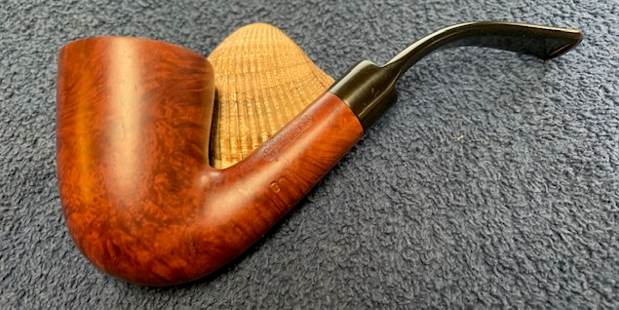
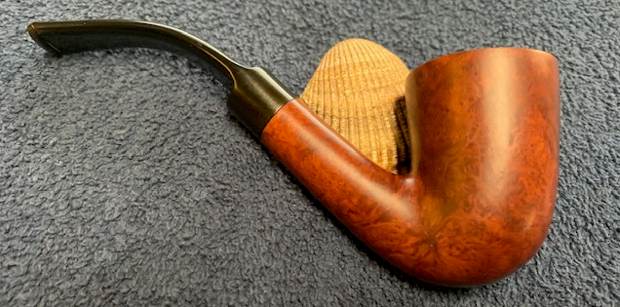
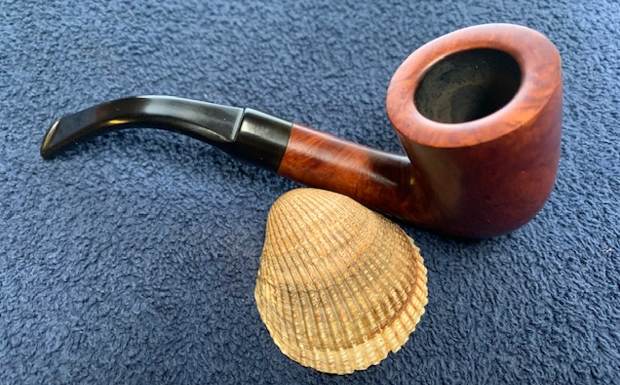
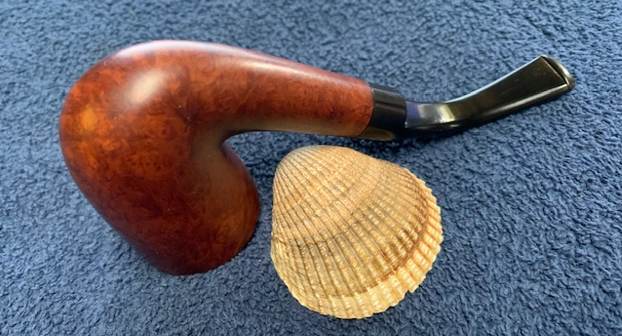
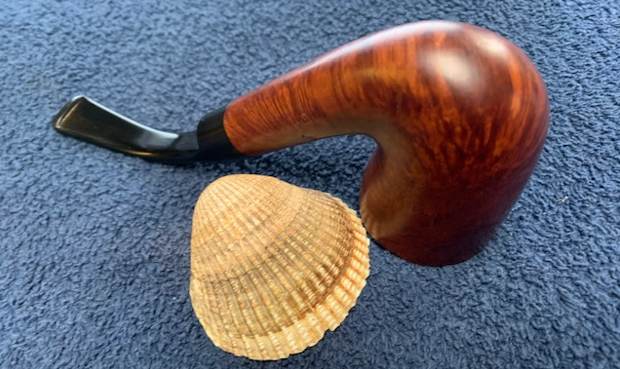
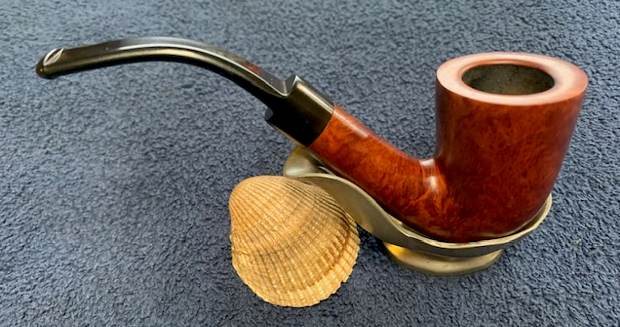
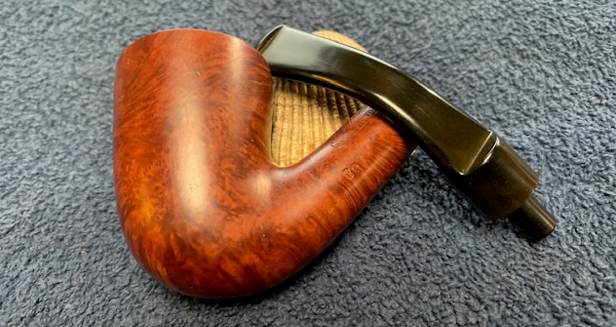
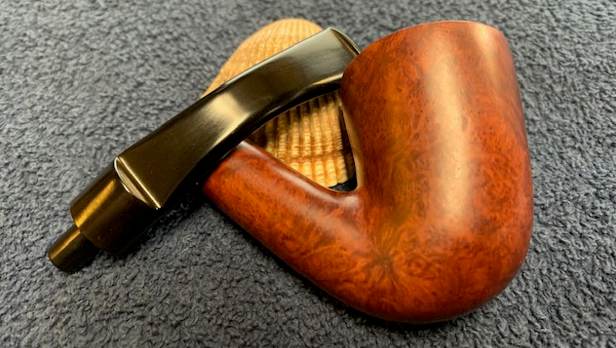
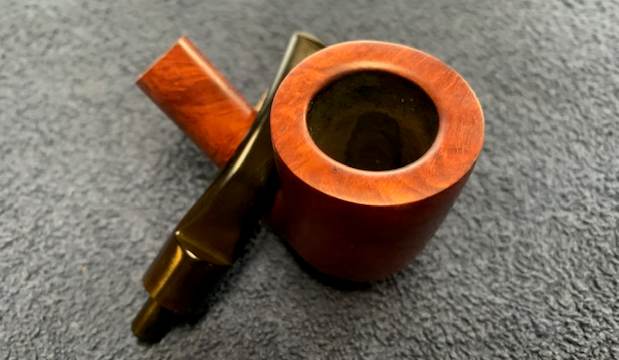
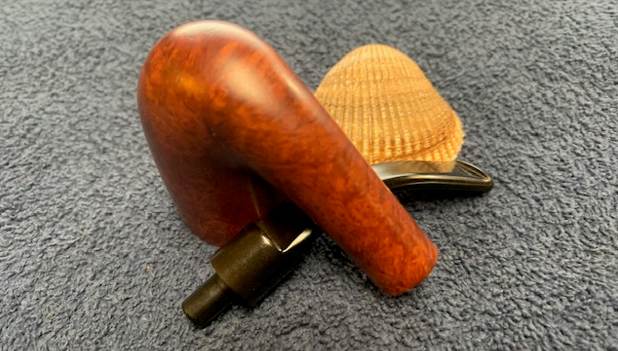
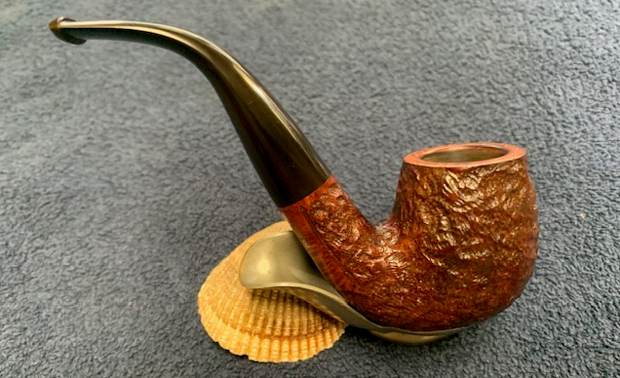
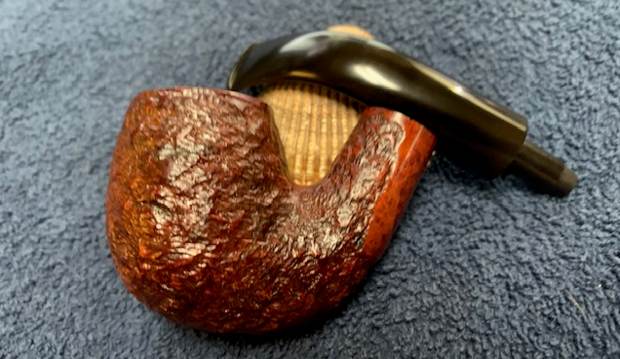
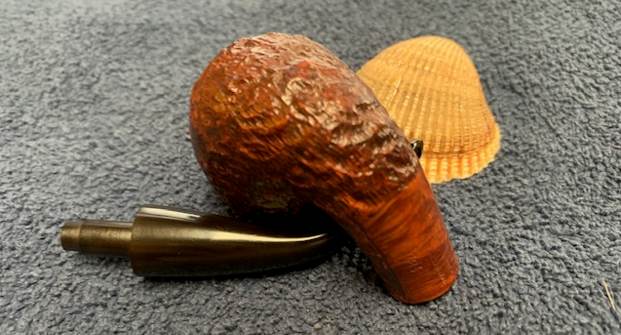
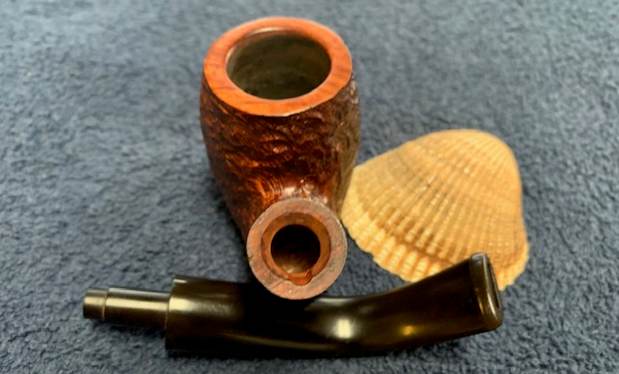
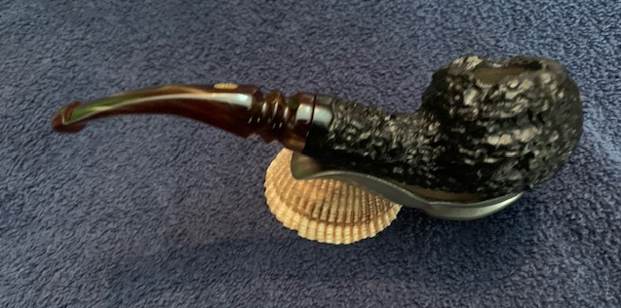
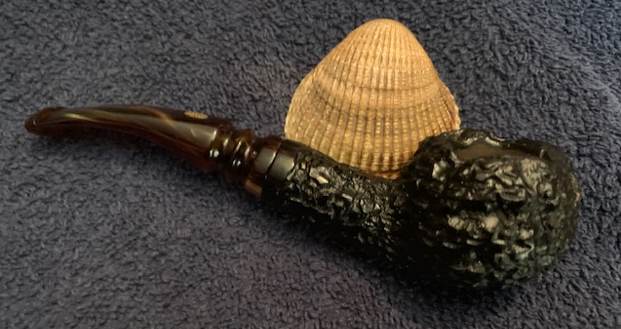
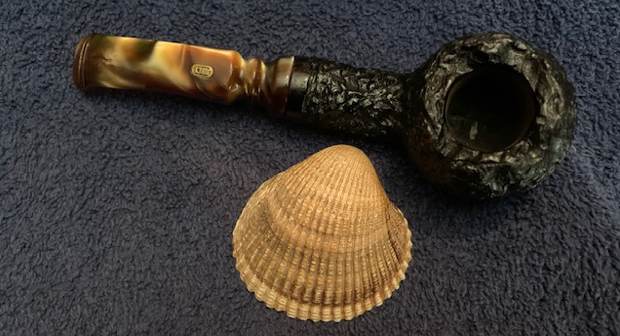
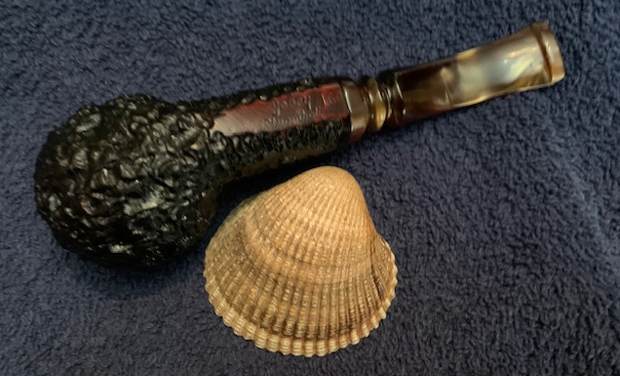
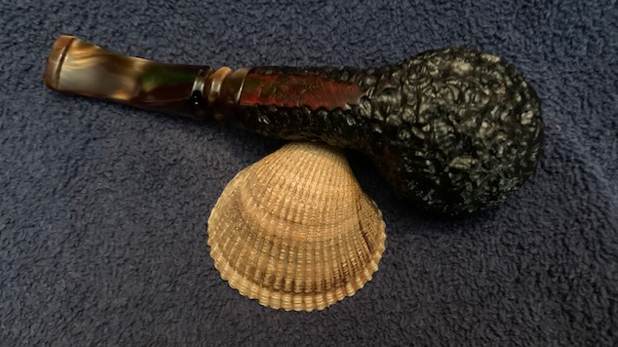
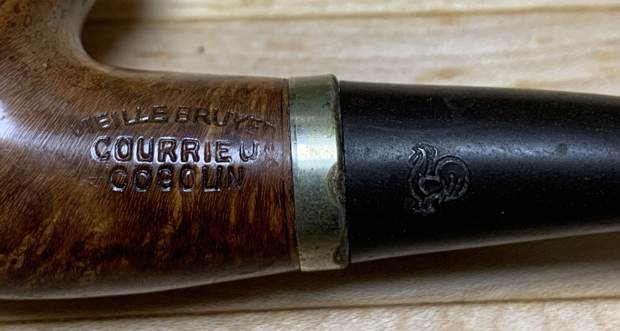
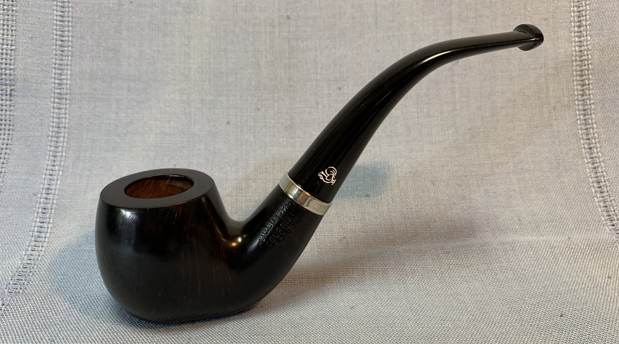
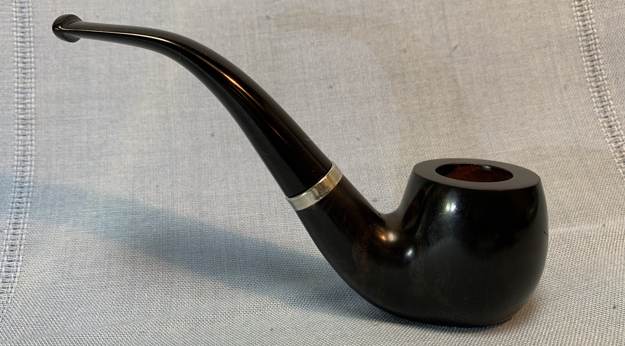
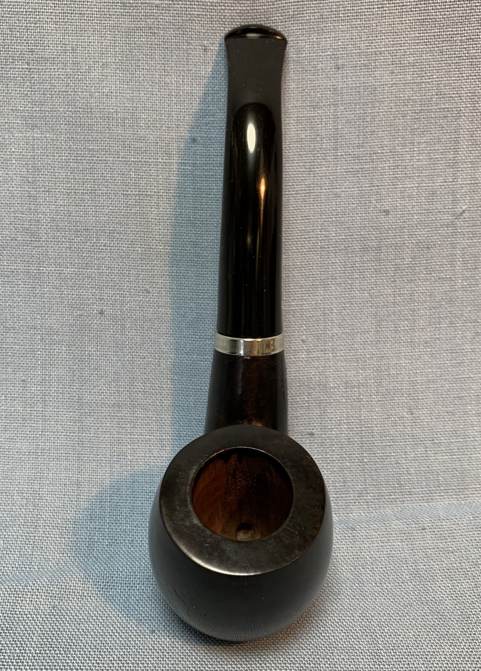
Next on the chopping block is a very pretty, unsmoked bent apple sitter from the French company, Courrieu, based in the Provençal town of Cogolin. A customer of mine wanted an attractive yet inexpensive pipe – he decided on this one, as it was both unsmoked but flawed, and therefore inexpensive. The markings were as follows: on the left side of the shank were the words Vieille Bruyere [over] Courrieu [over] Cogolin. The right side had no markings, but the left side of the stem had the image of a Gallic rooster – a national symbol of France and, subordinately, traditionally associated with Courrieu.Pipephil gave me a brief overview of the Courrieu brand:Ulysse Courrieu started carving pipes in Cogolin in 1802. Courrieu certainly is the oldest French briar pipe factory. The family corporate is managed (2009) by René Salvestrini who married a Courrieu daughter.
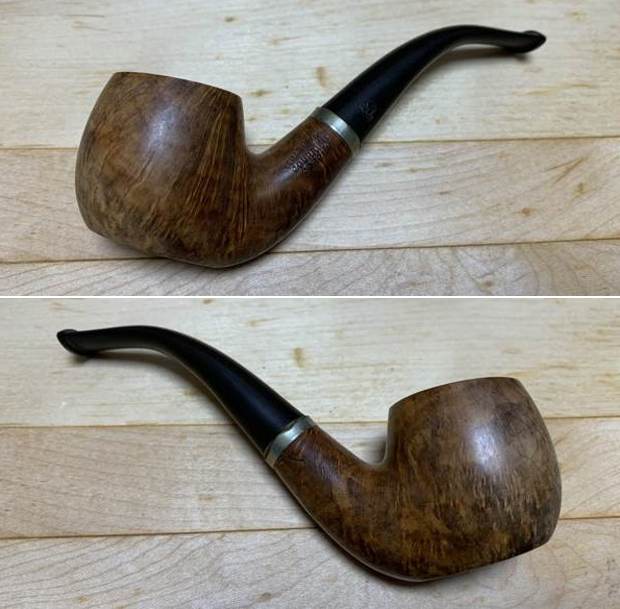

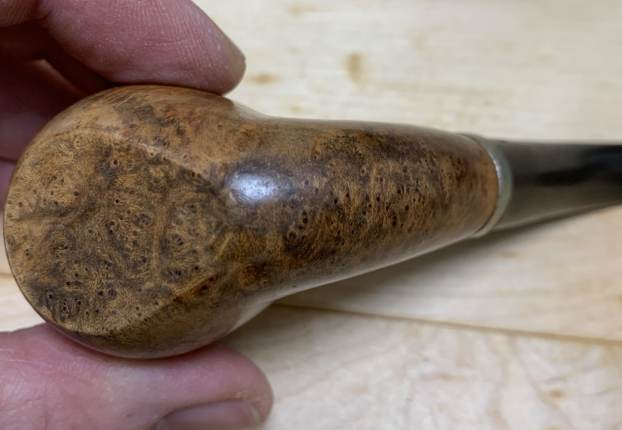
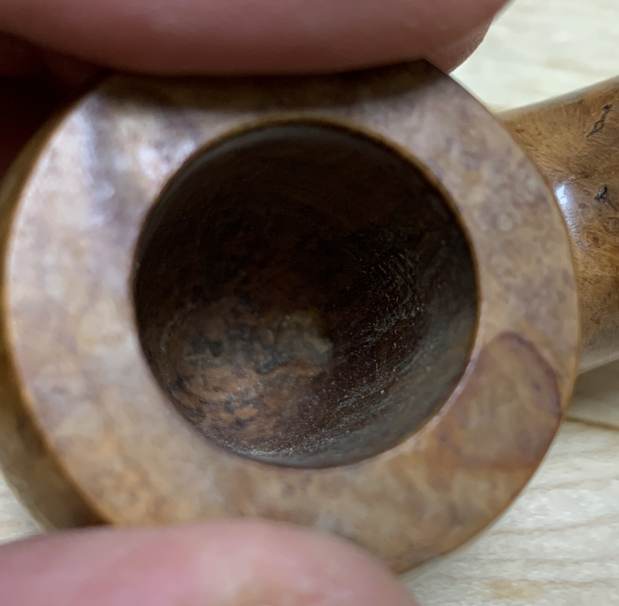
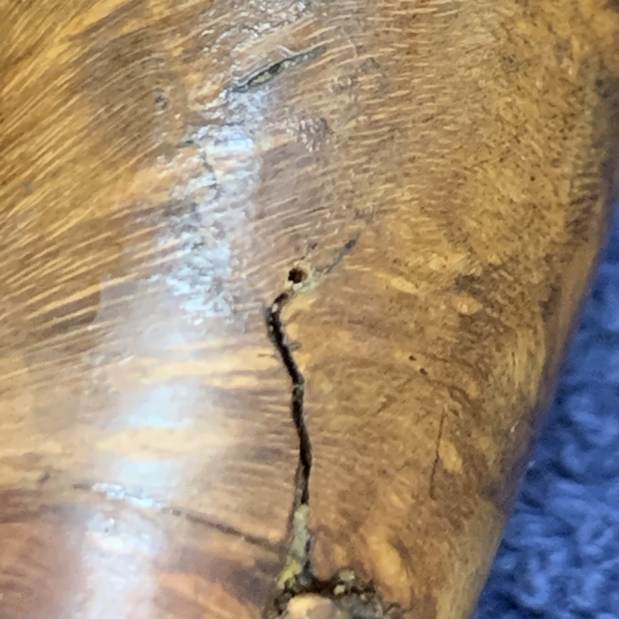
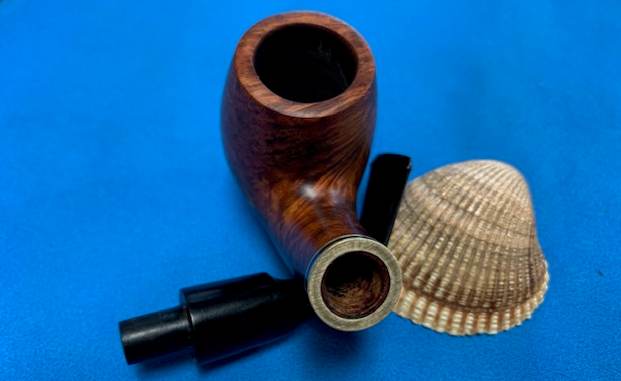
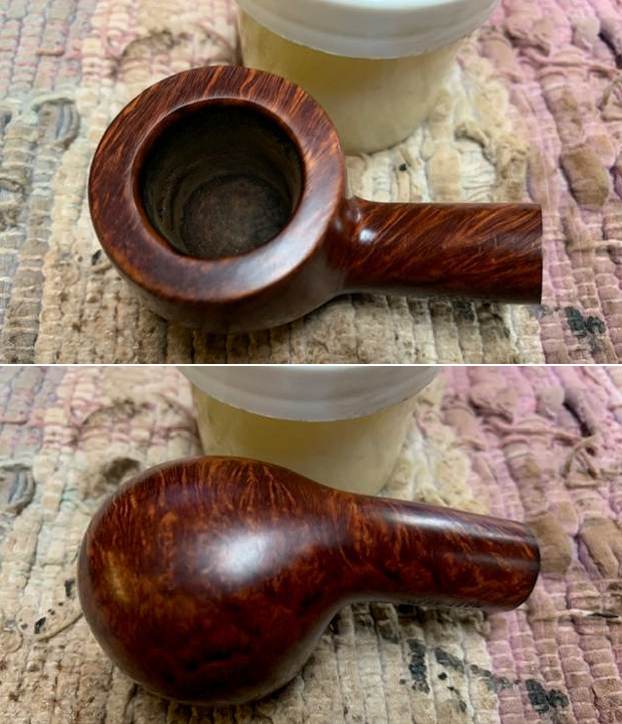
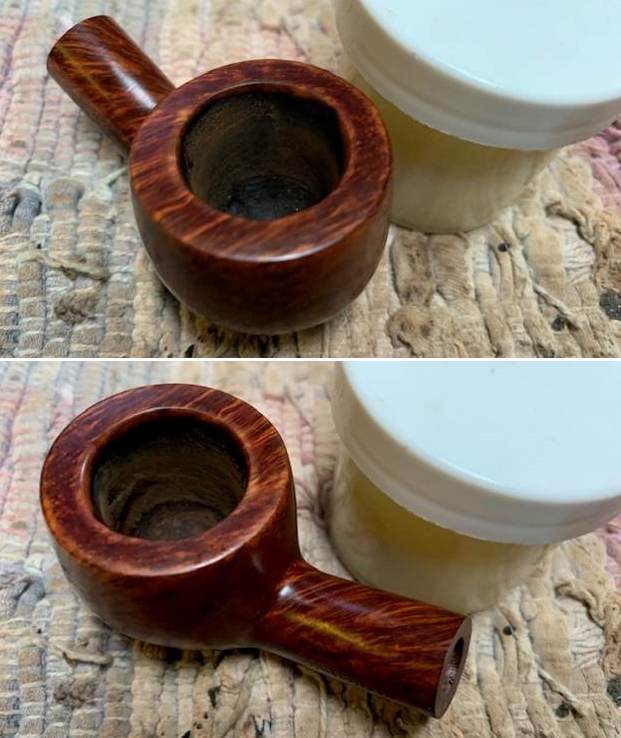
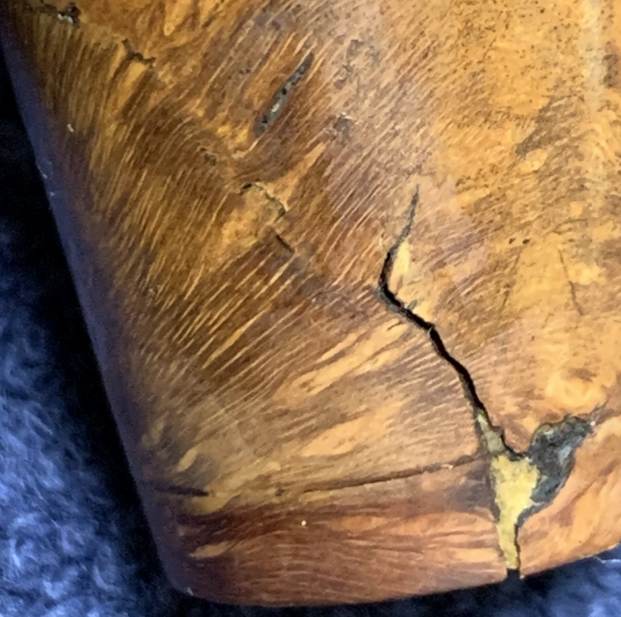
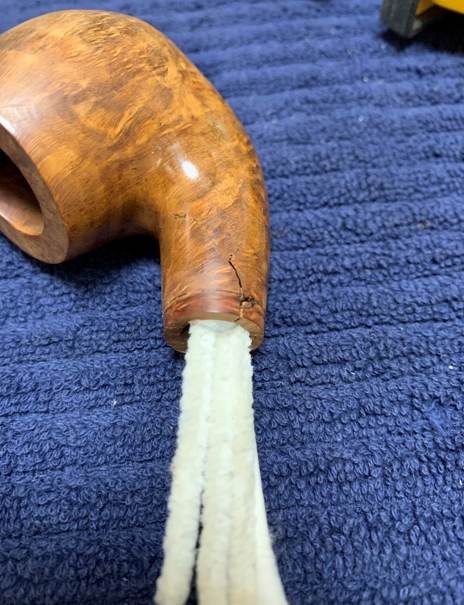
This pipe had some fine briar wood and looked like a well-made pipe. However, despite being unsmoked, this pipe still had some issues. The stem was clearly unused but had acquired some minor oxidation over time. The band around the shank was heavily tarnished; so much so that I was unsure if it was tarnished, or actually damaged, and if I would need a new band.There were also some minor abrasions and staining. Most notable, however, was a substantial crack in the shank, as shown in the photographs. The crack extended through the wood into the mortise and would require some careful work to repair successfully. On a pleasant note, the stinger was in immaculate condition. Other than buffing it with a microfiber cloth, it needed nothing else. One of my customer’s stipulations was to stain the pipe black. No problem as far as I was concerned. However, many people don’t quite understand what they will get when they request a black pipe. They often think that the pipe will end up as some sort of shiny lacquered item, but that’s not the way it works with me. I won’t use lacquer on pipes and I need to make it beautiful in other ways. Fortunately, my friend was aware of this and I endeavoured to make it as attractive as possible.
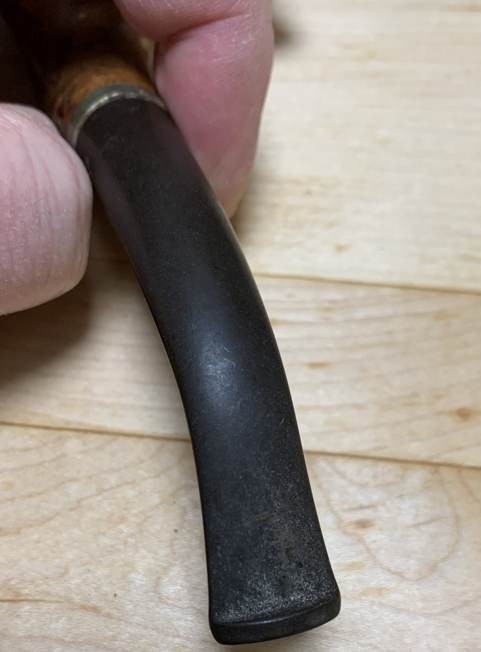
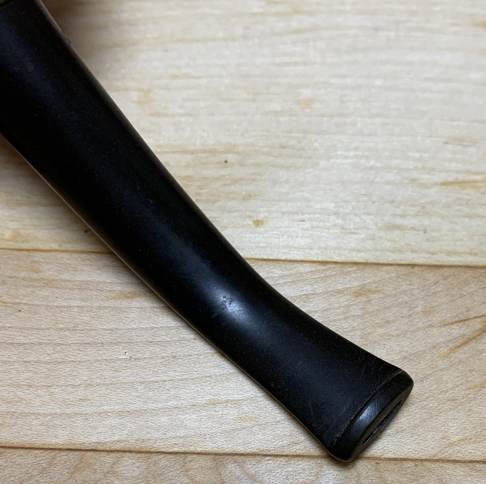
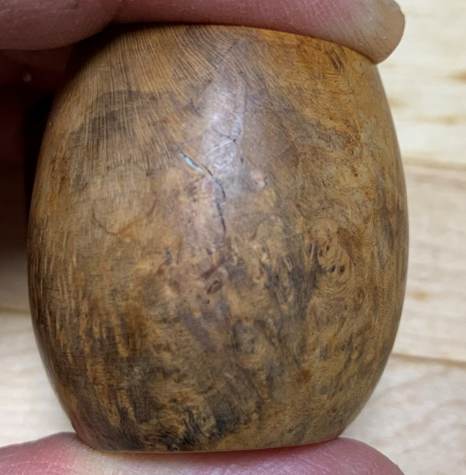
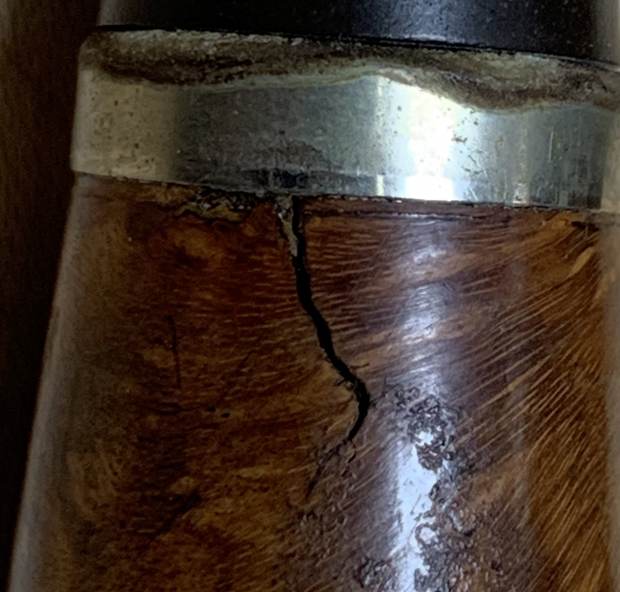
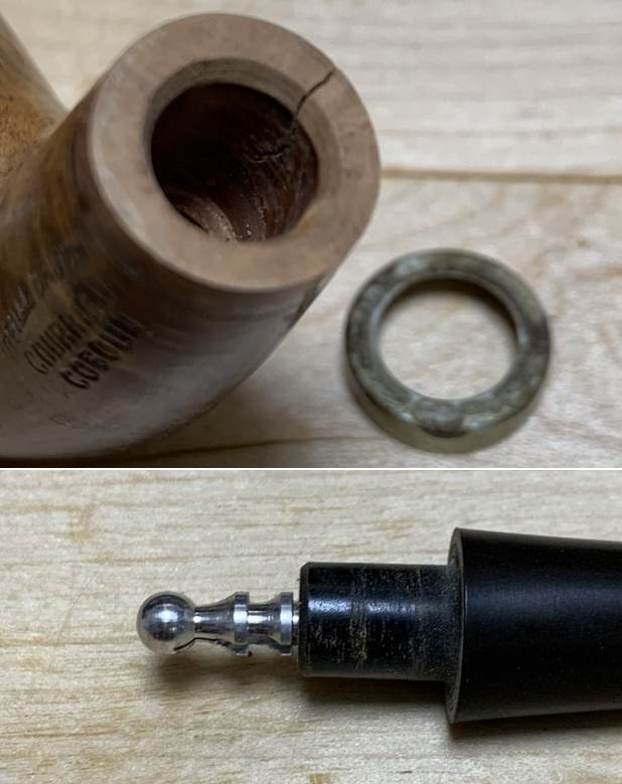
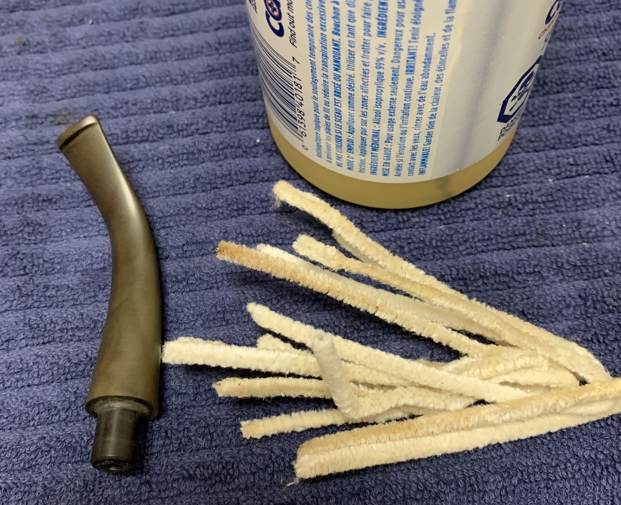
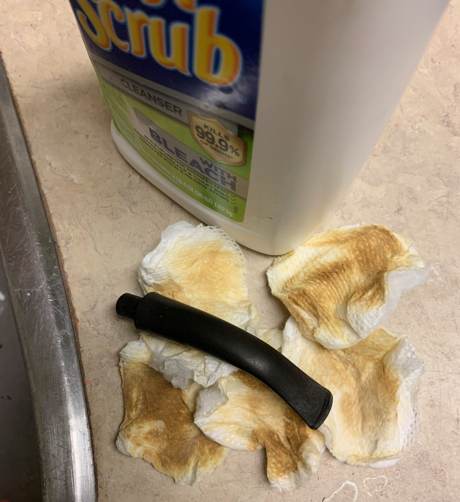
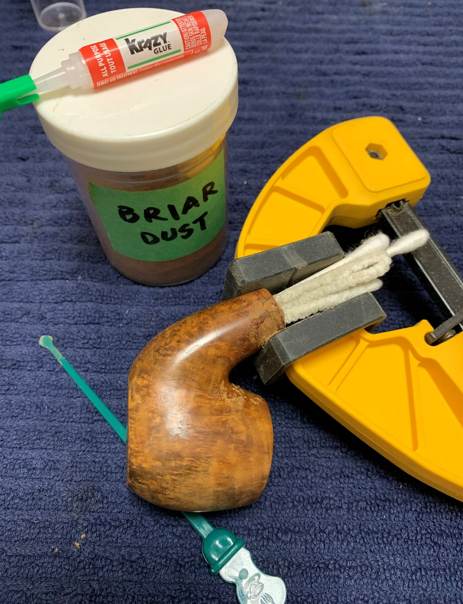
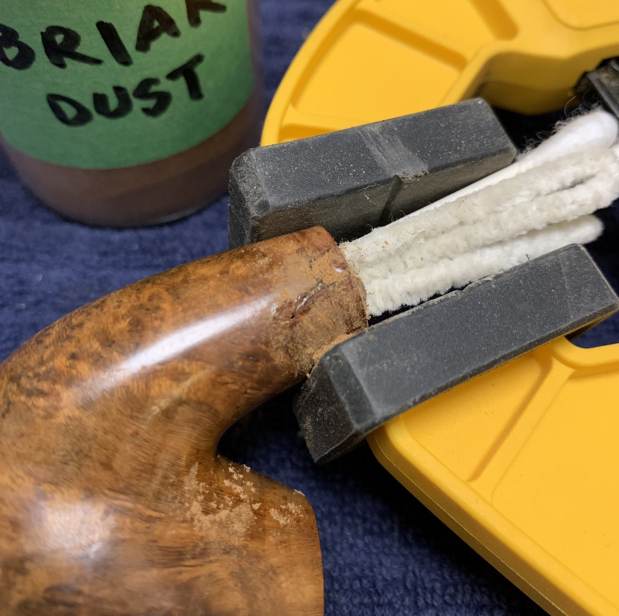
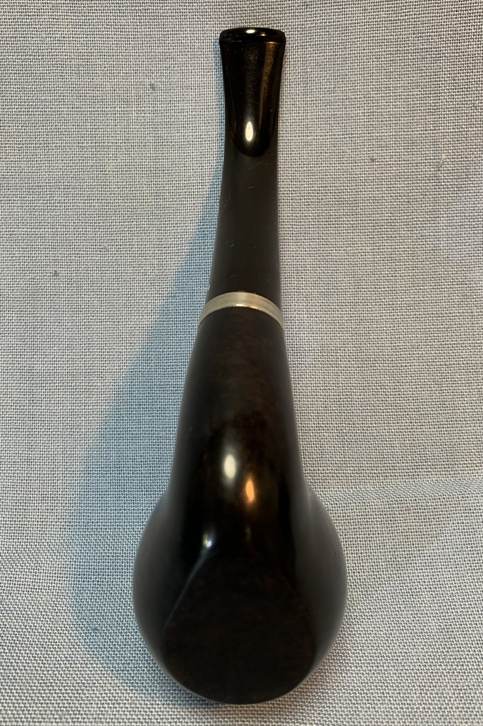
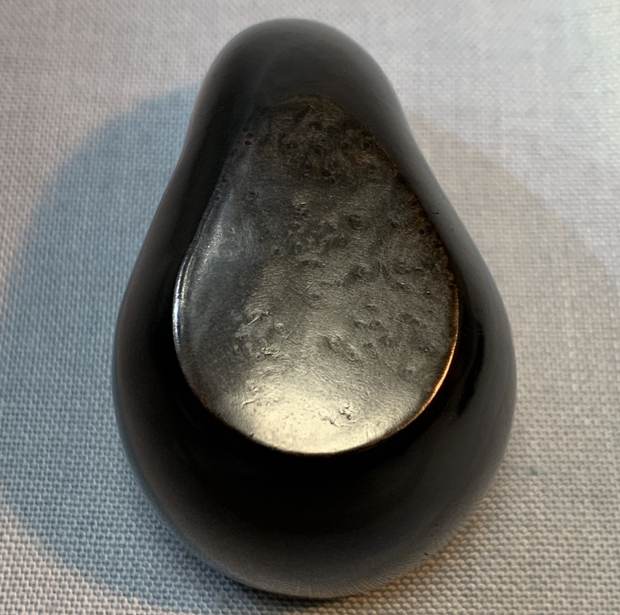
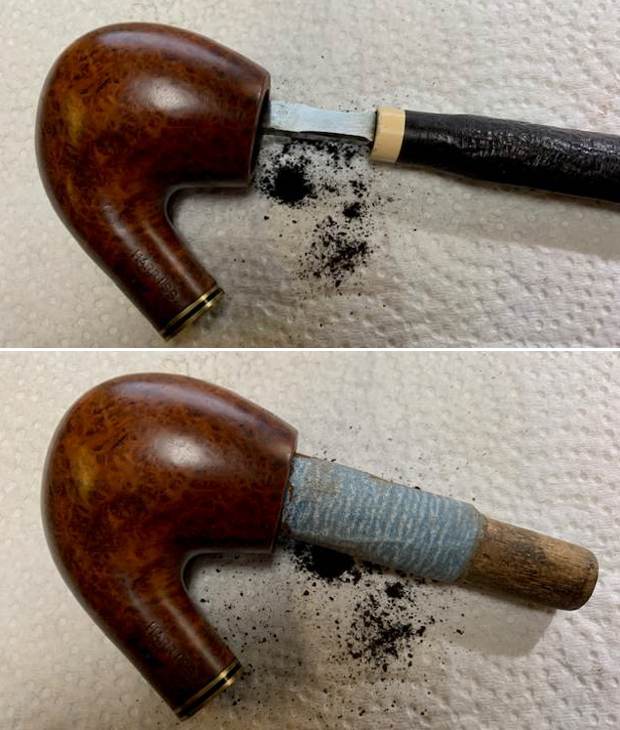
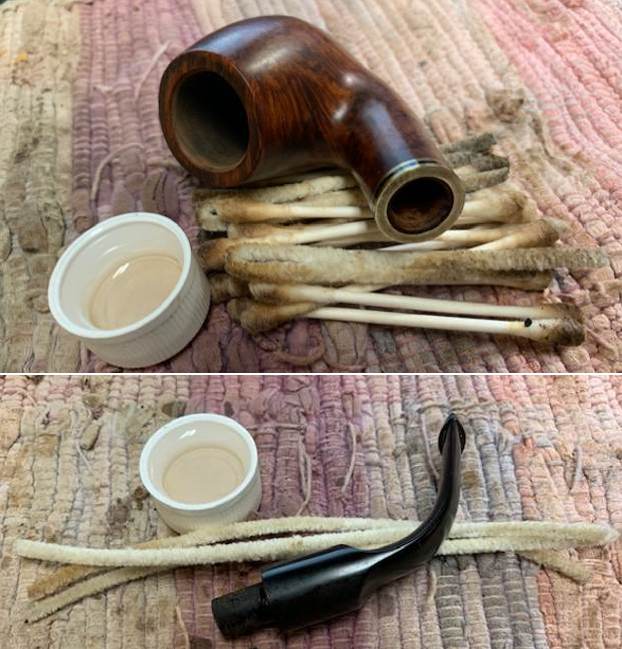
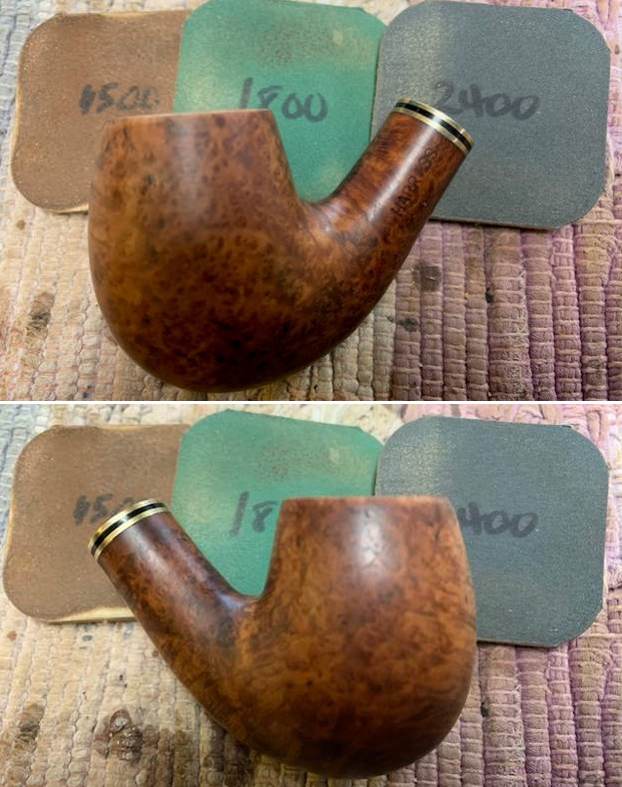
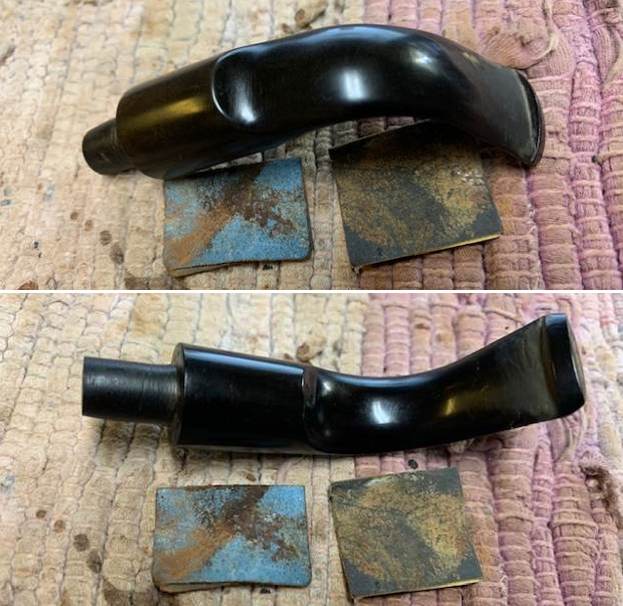
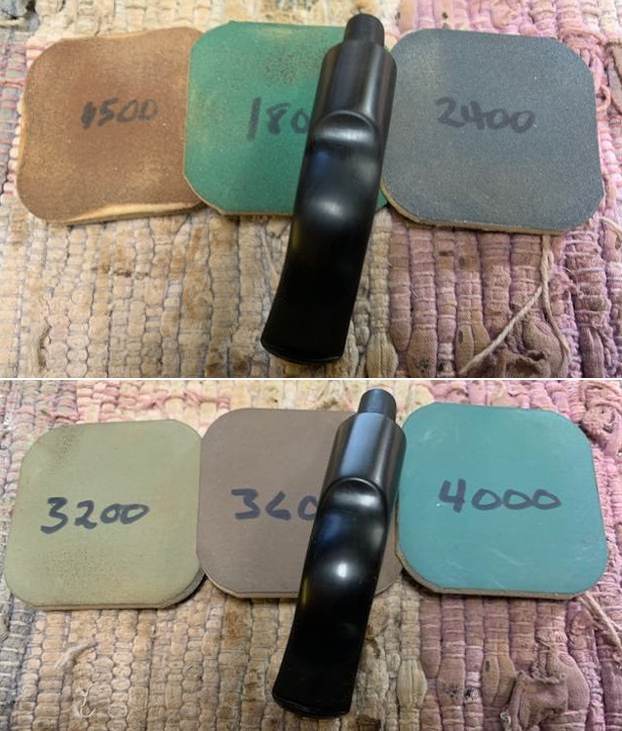
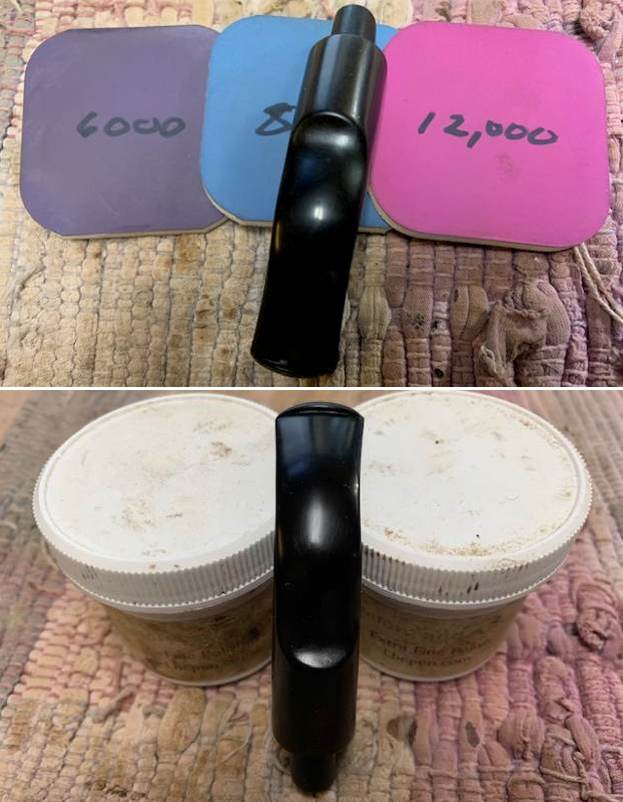
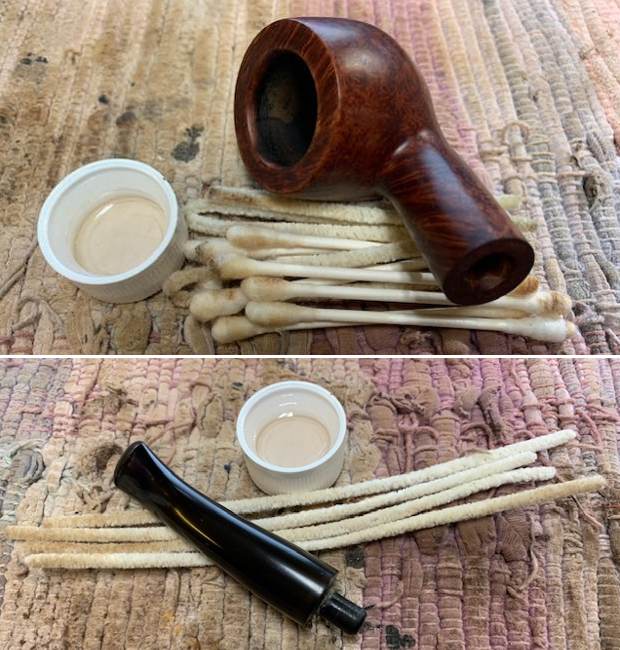
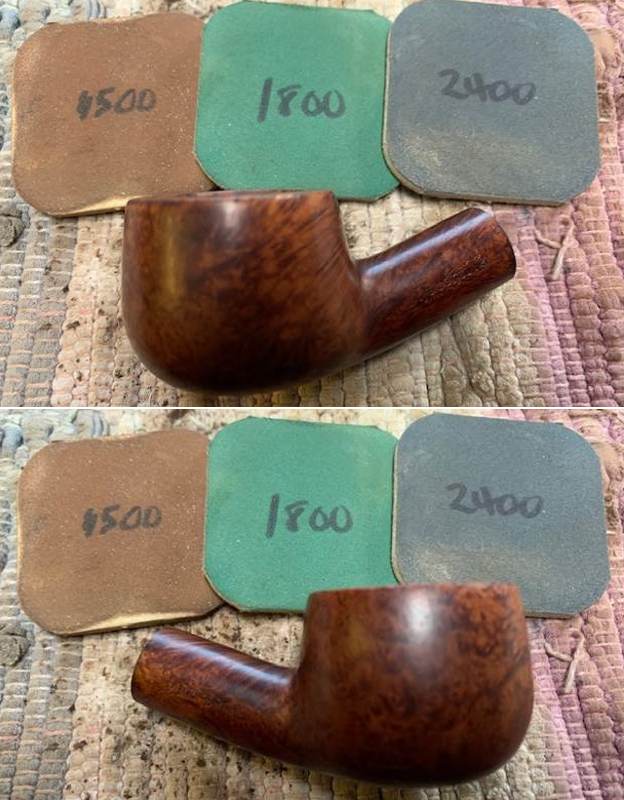
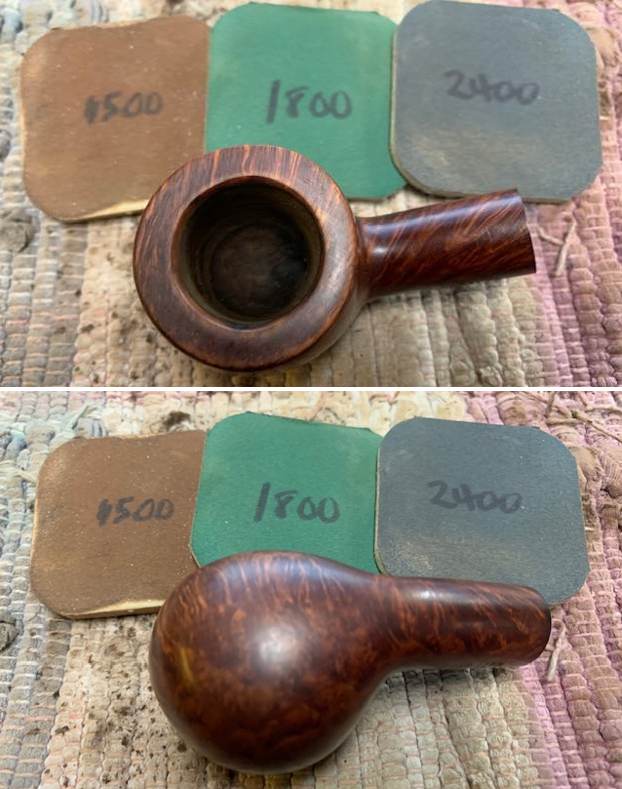
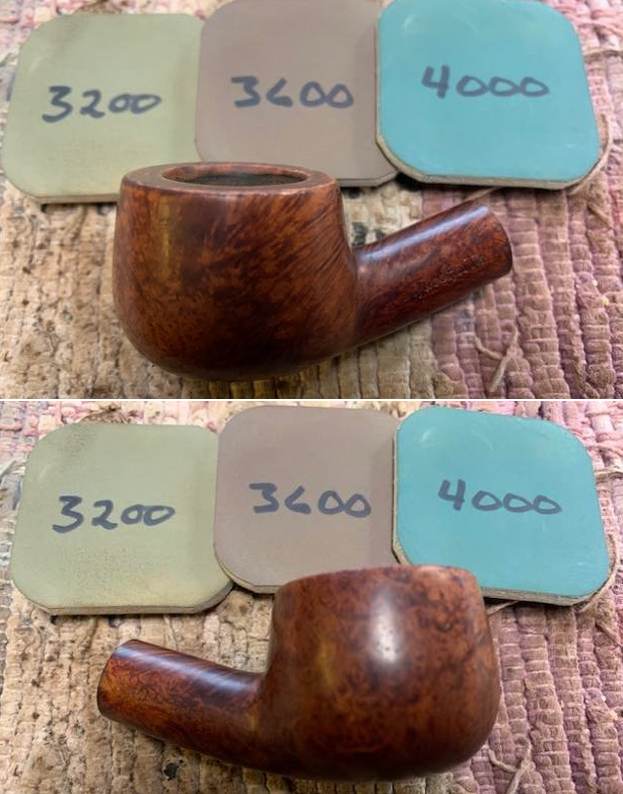
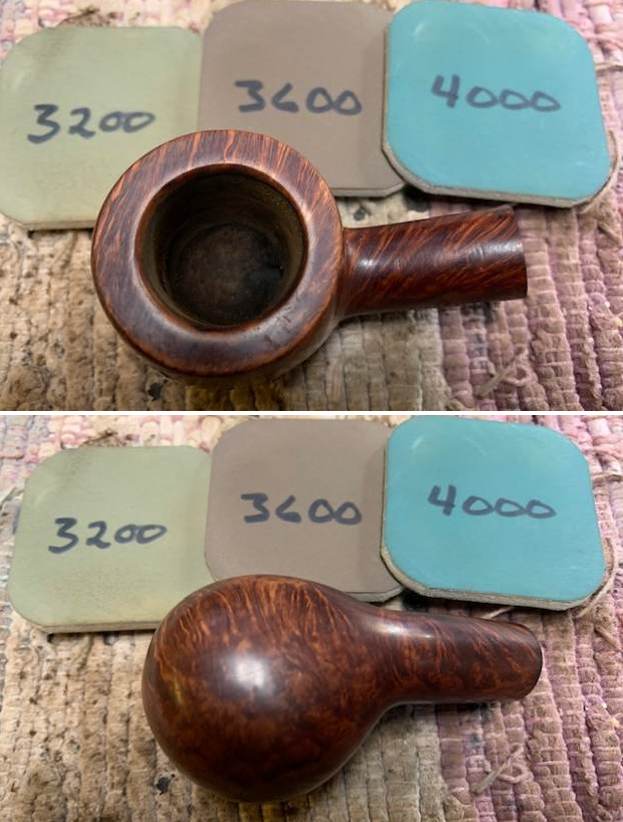
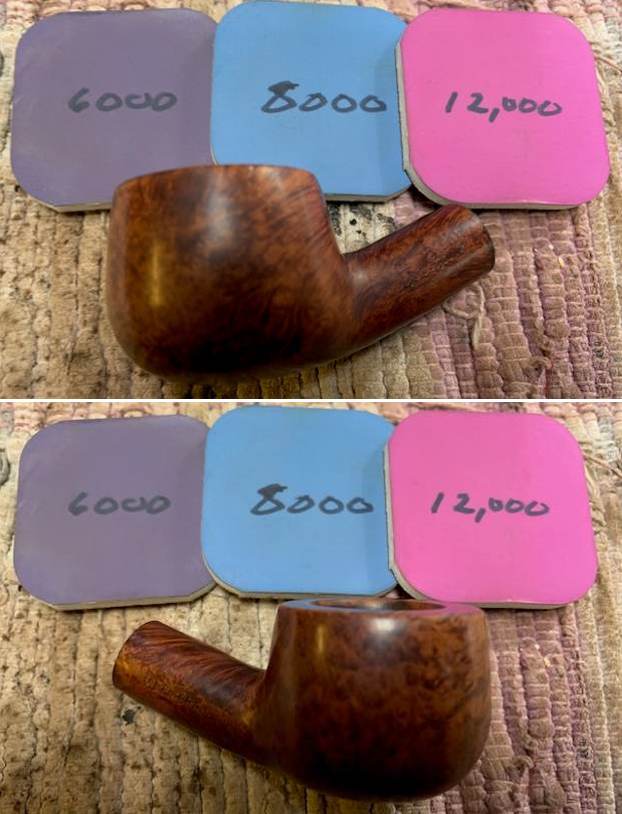
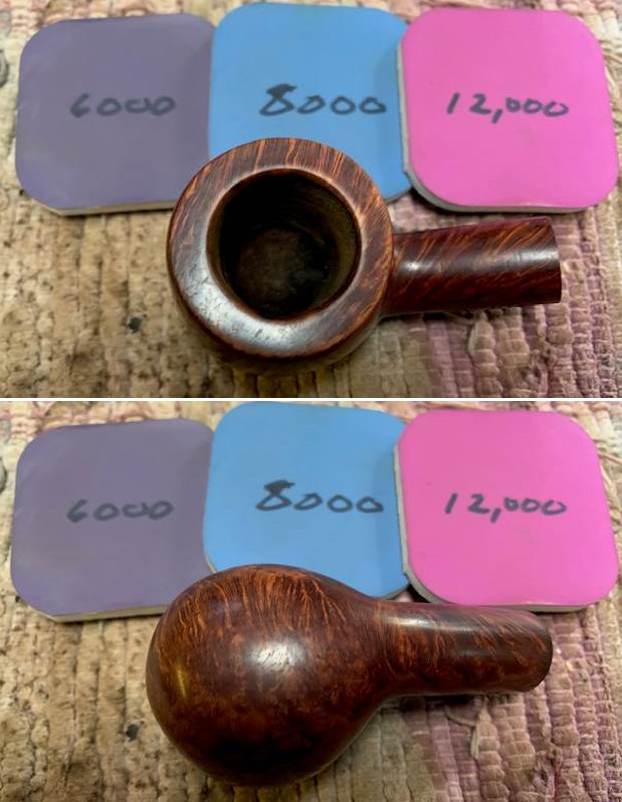
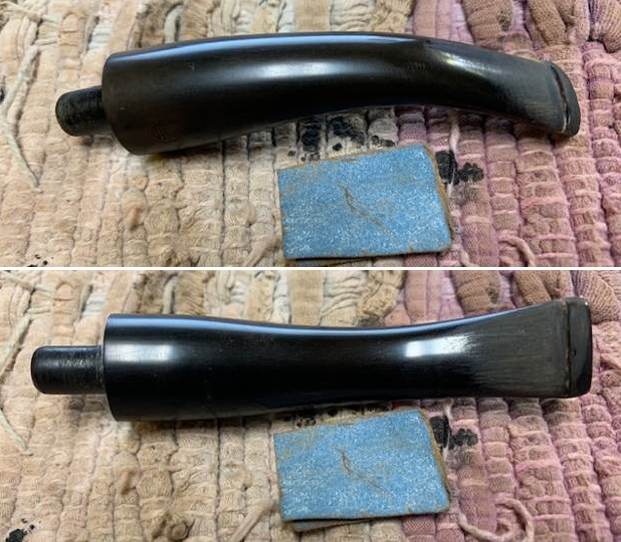
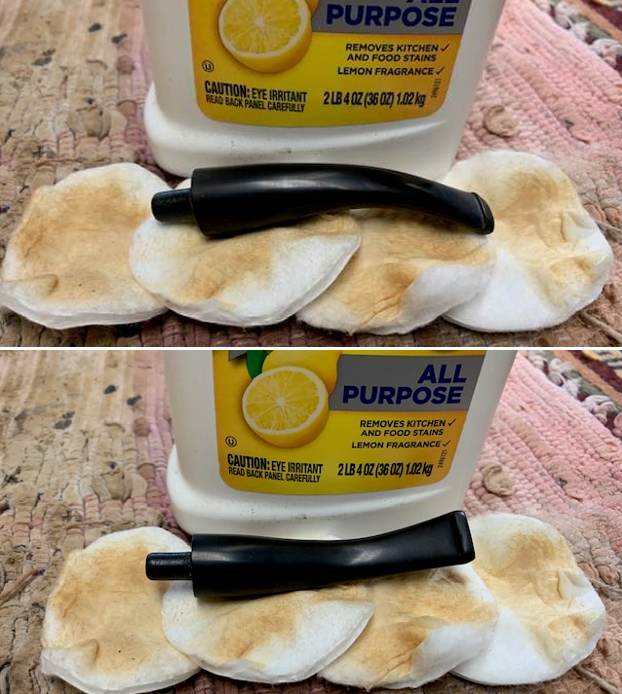
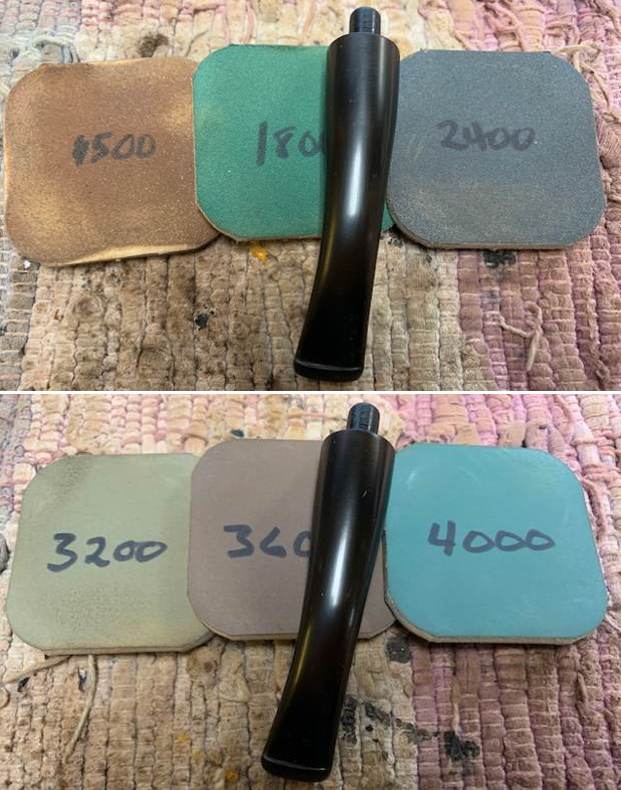
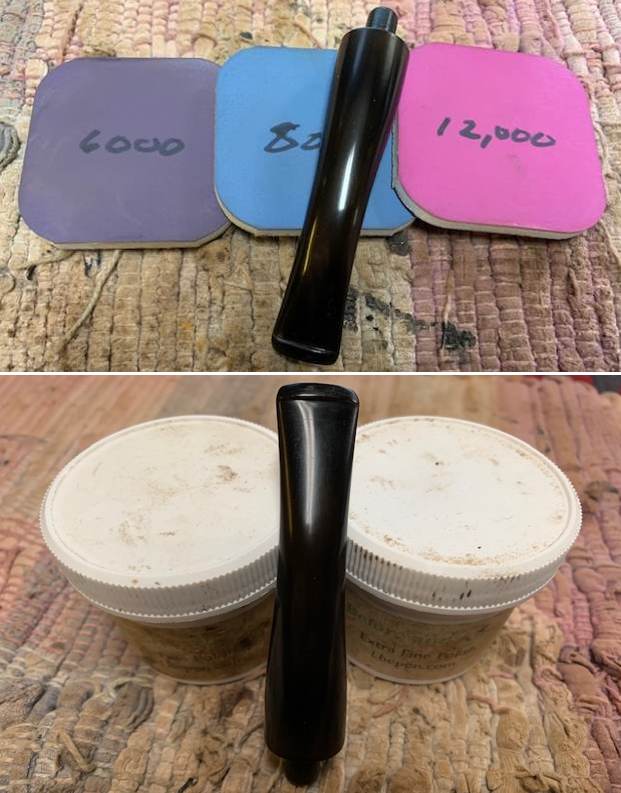
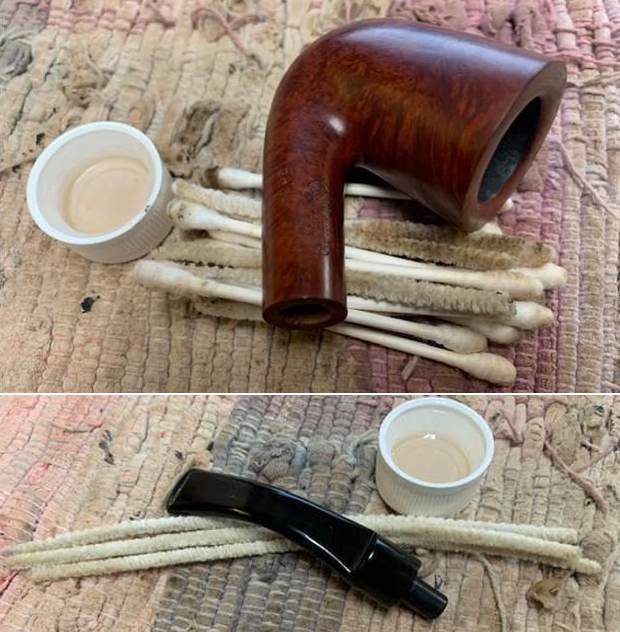
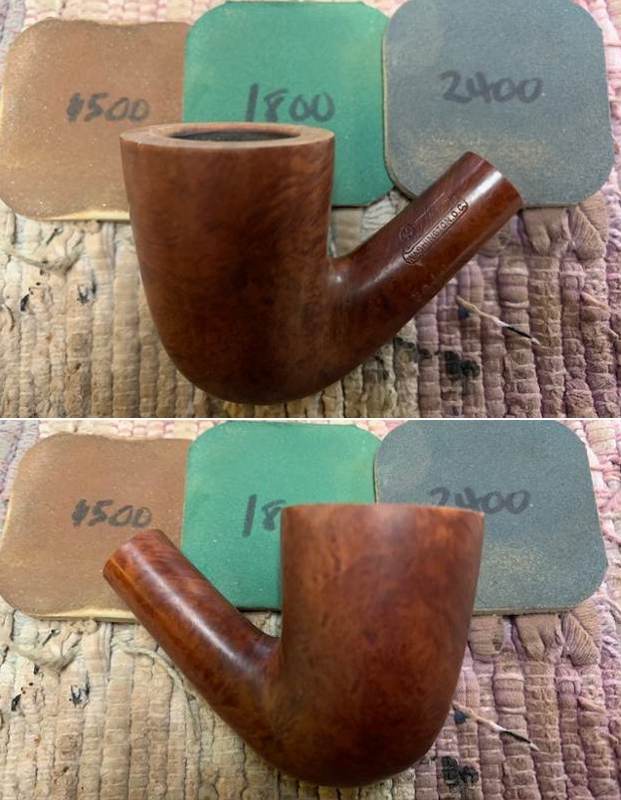
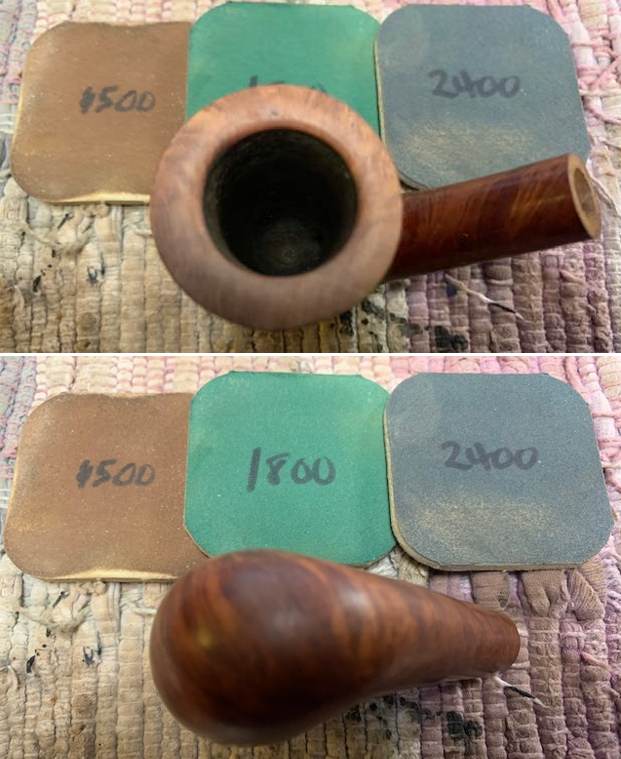
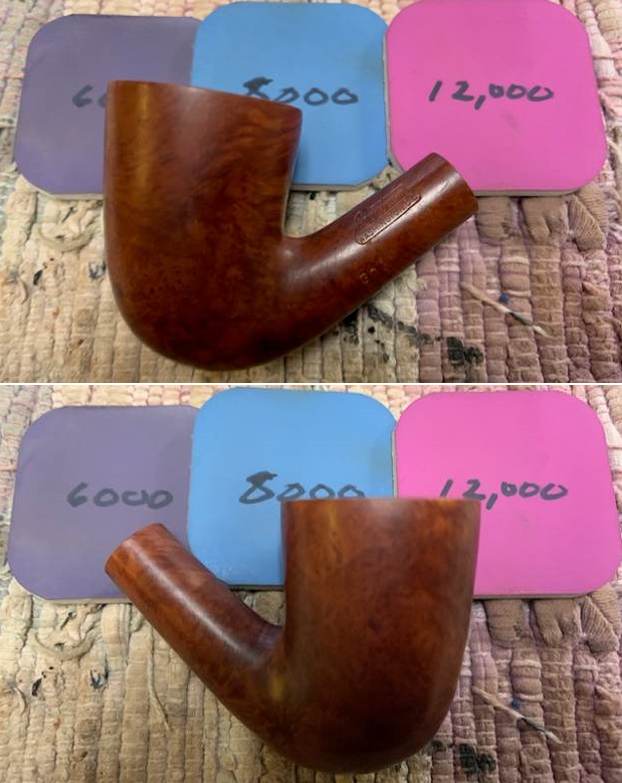
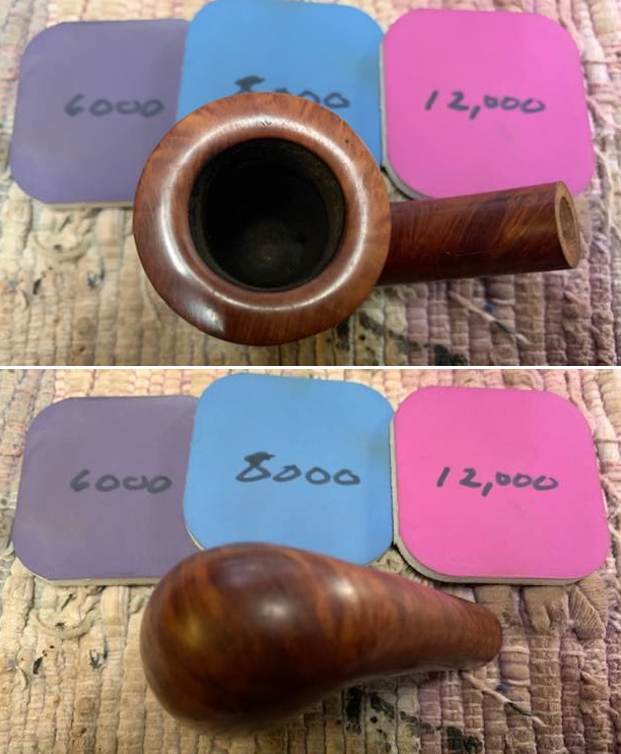
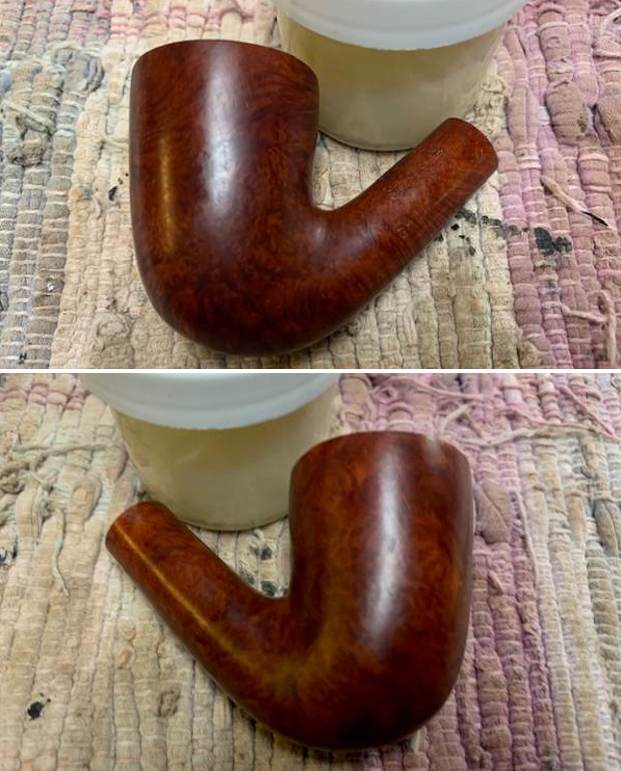
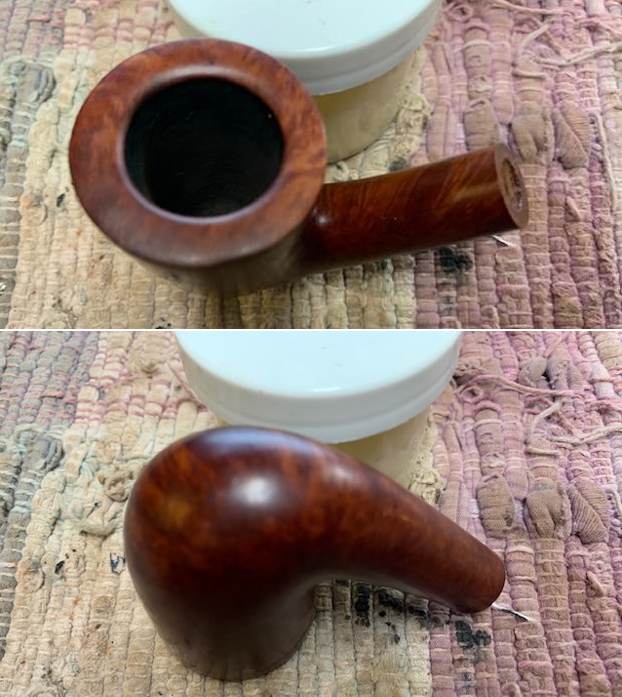
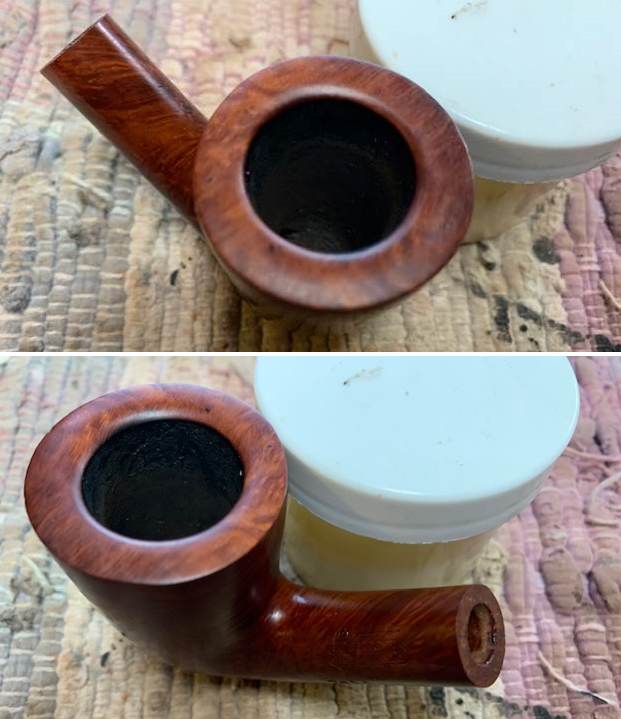
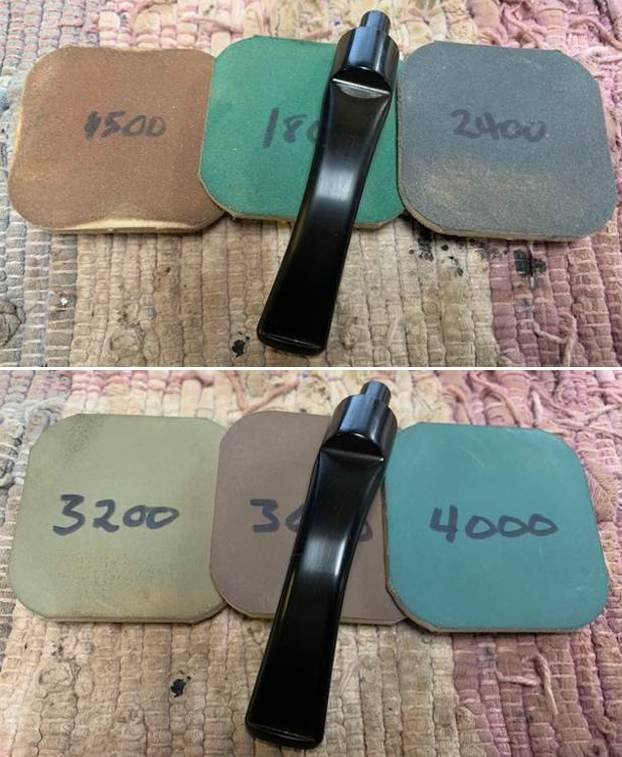
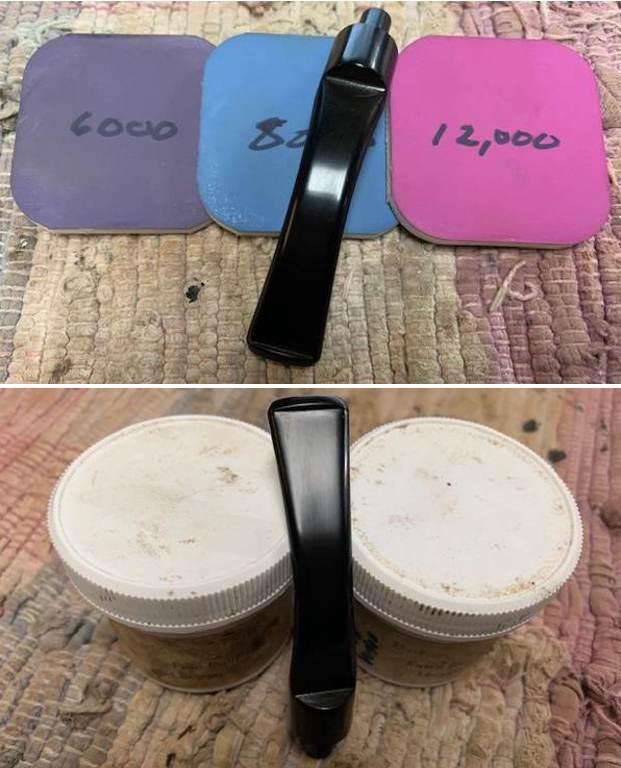
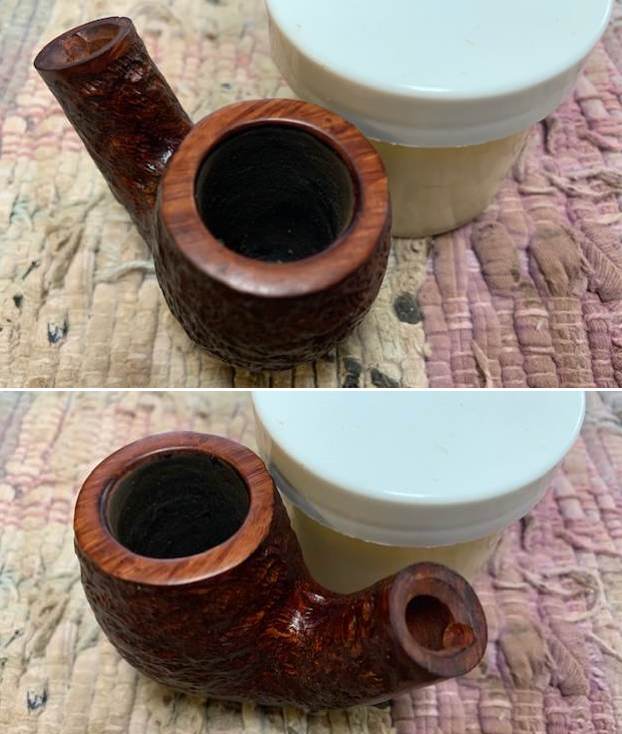
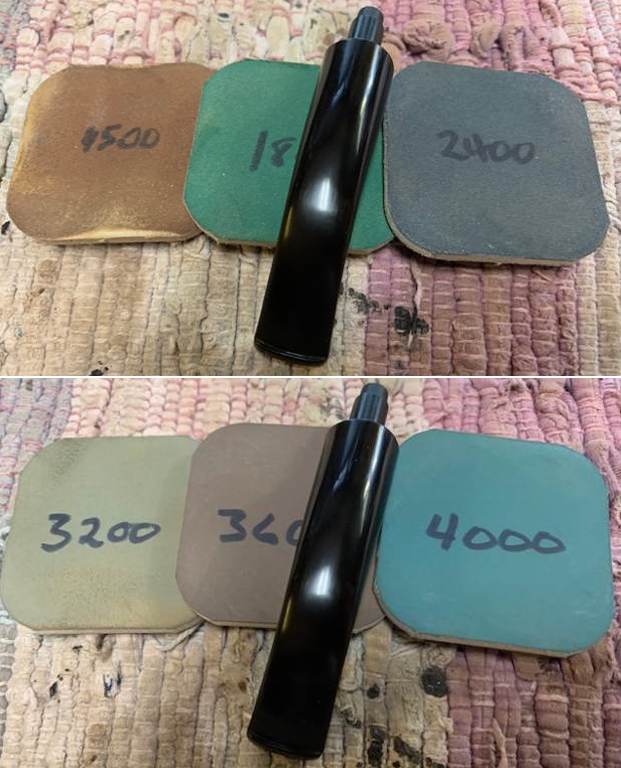
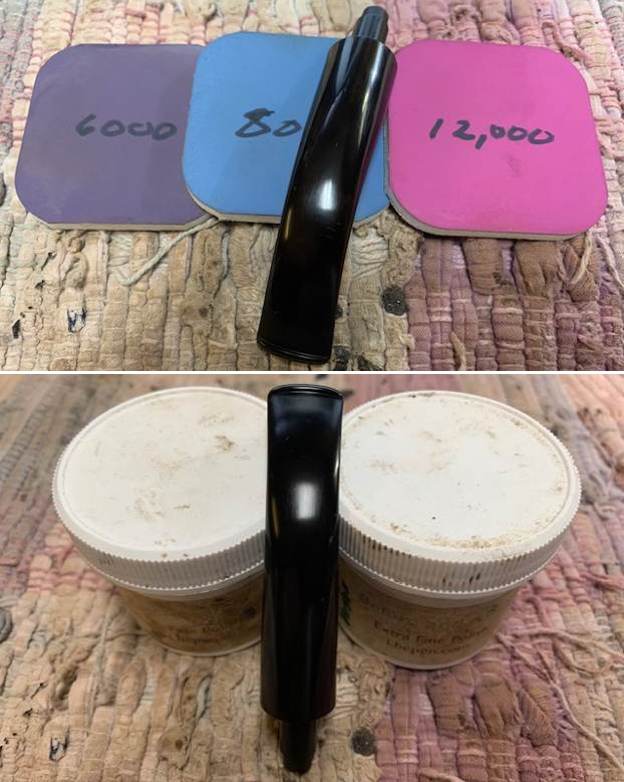
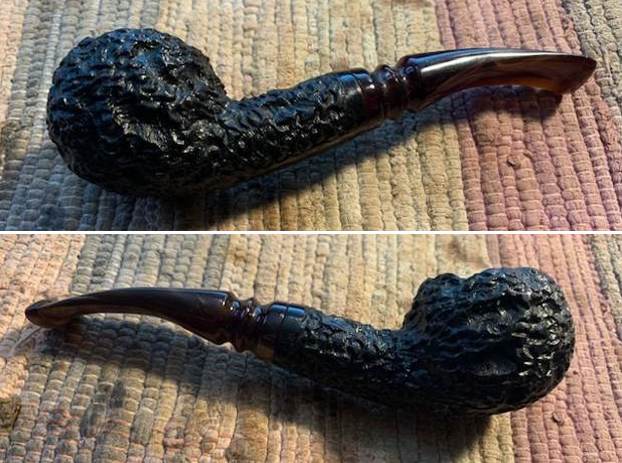
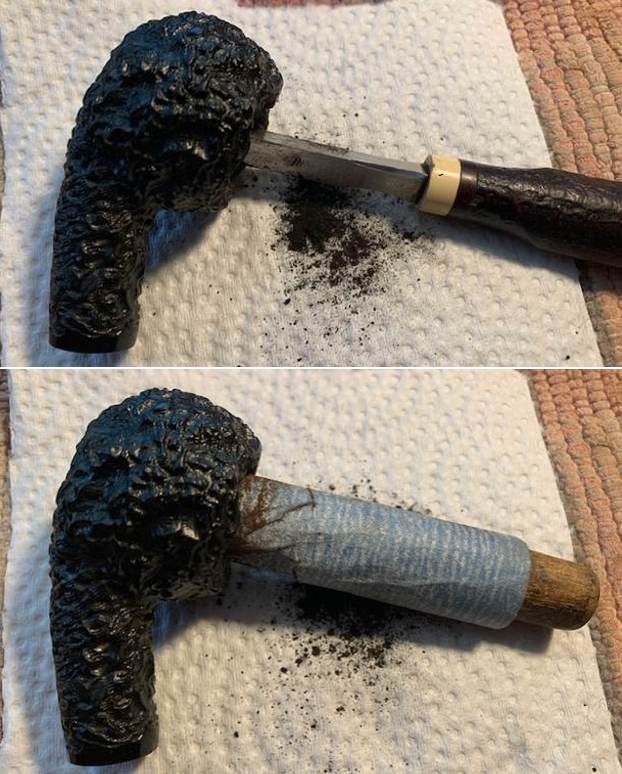
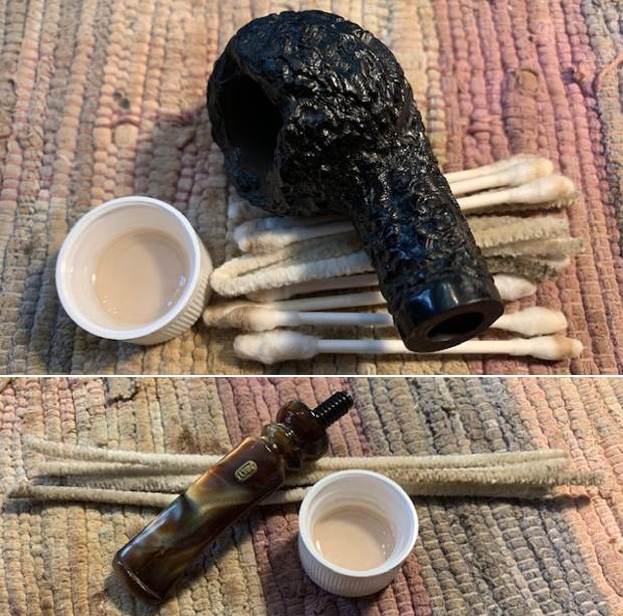
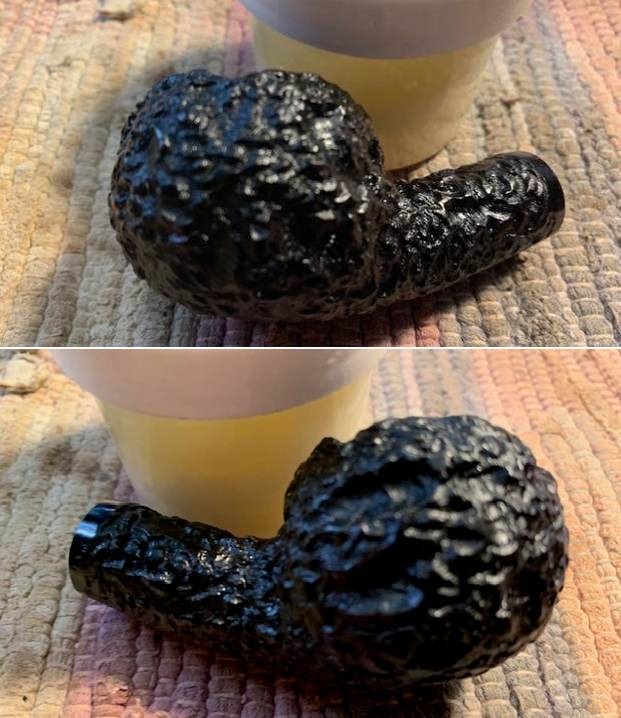
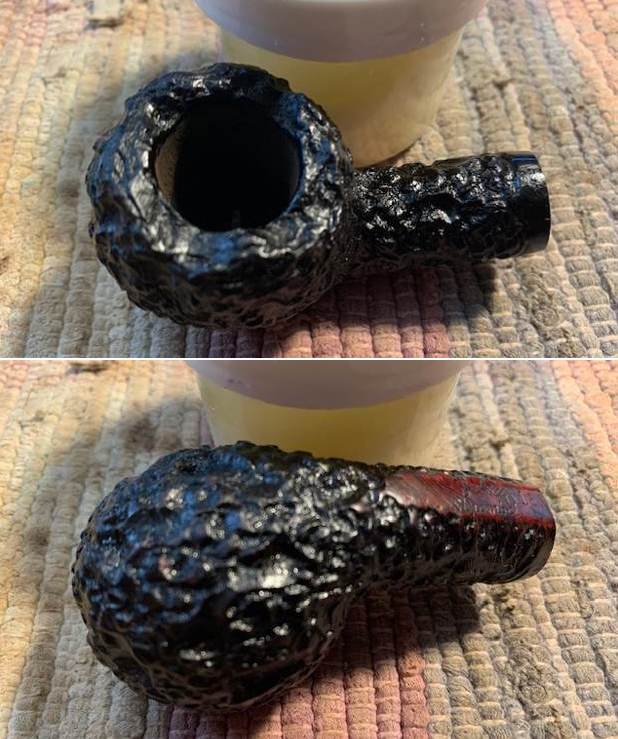
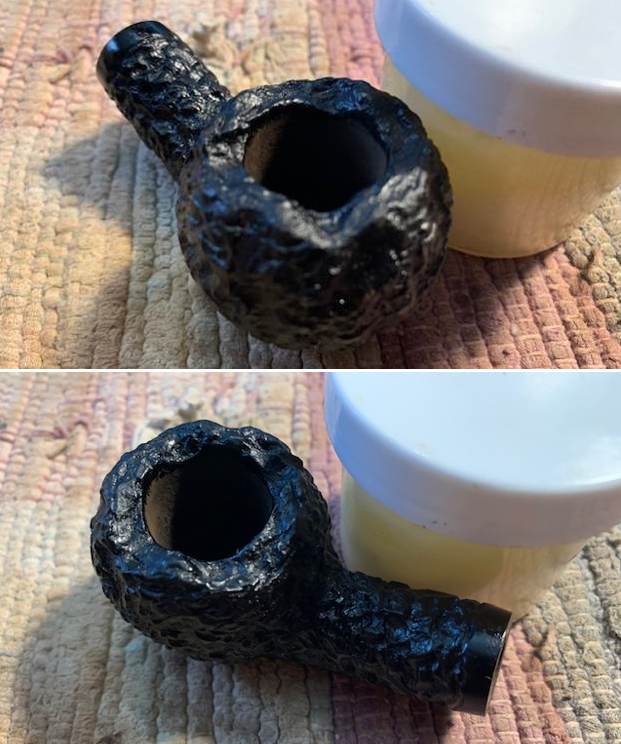
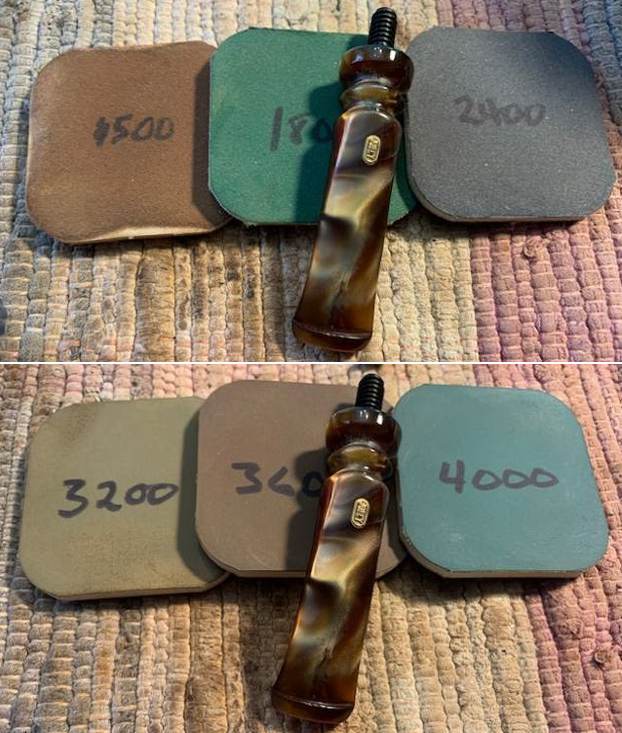
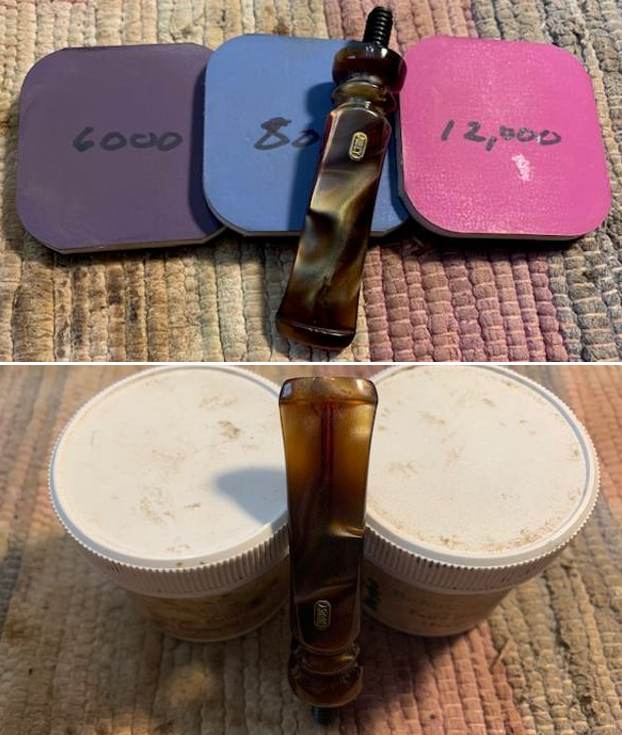
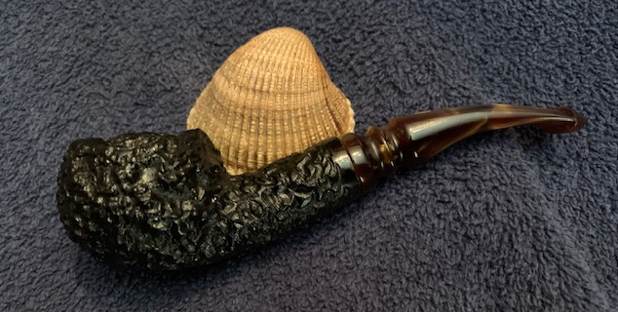
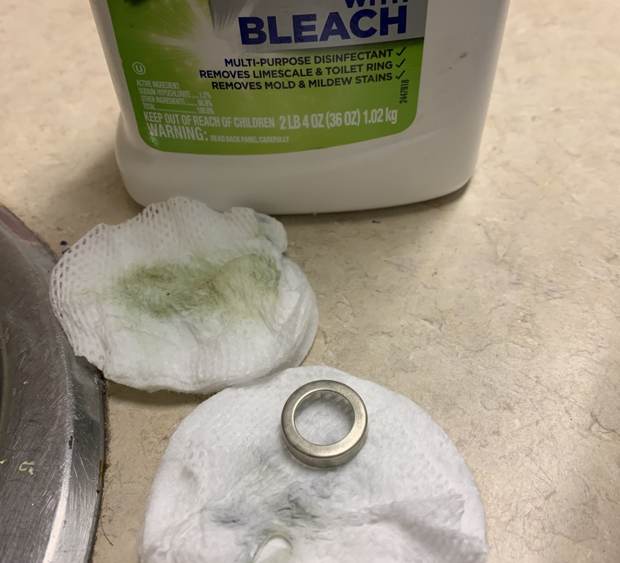
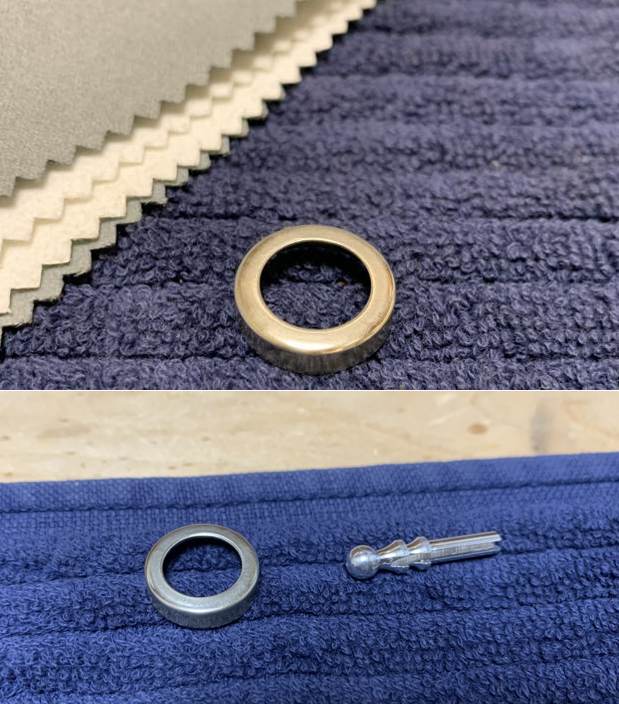
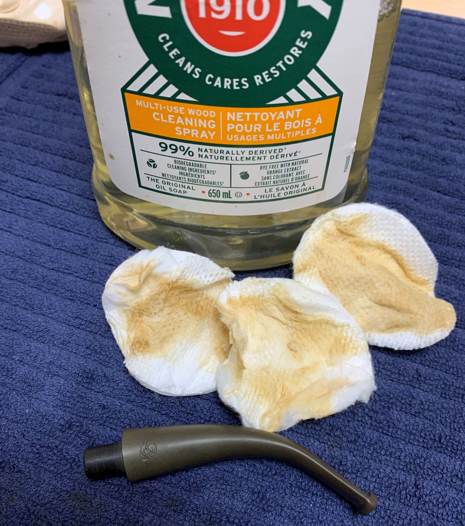
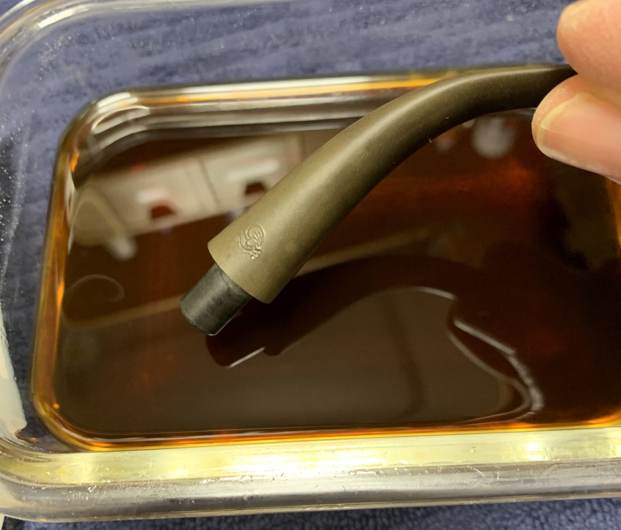
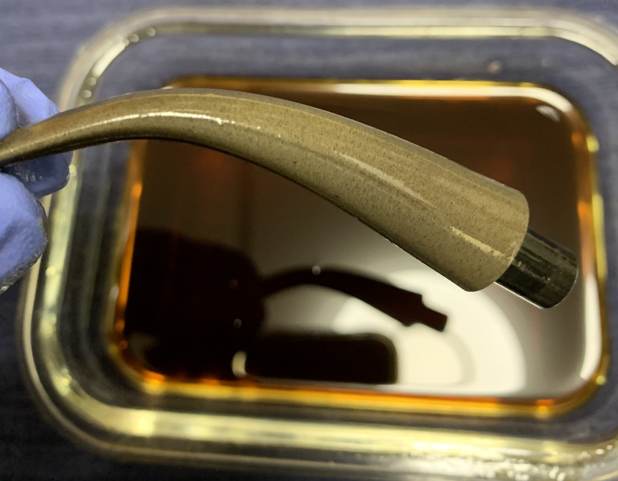
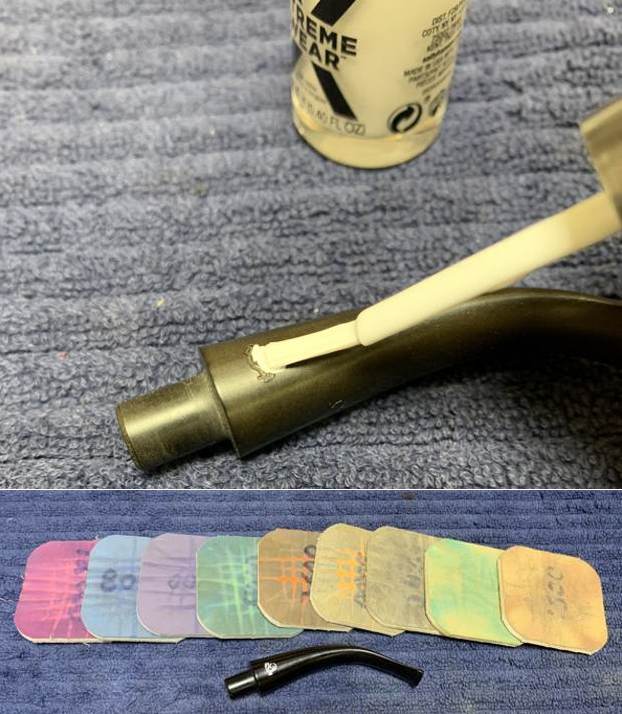
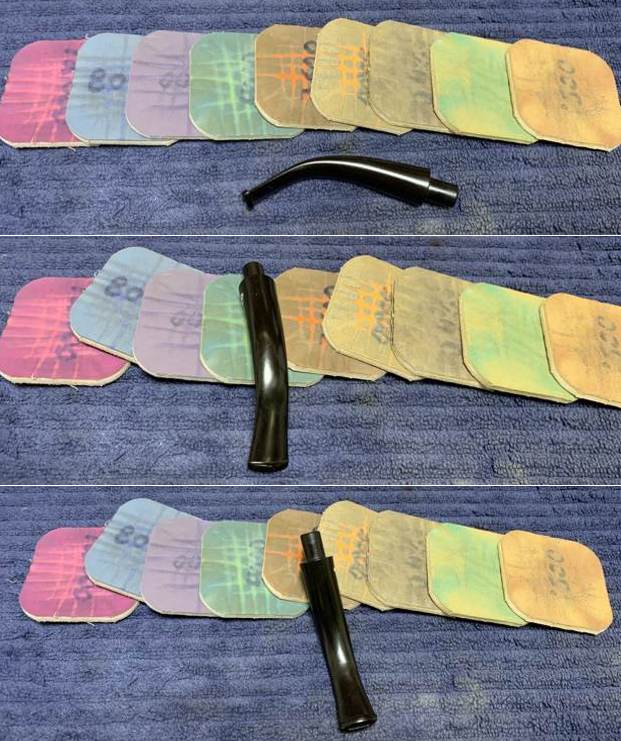
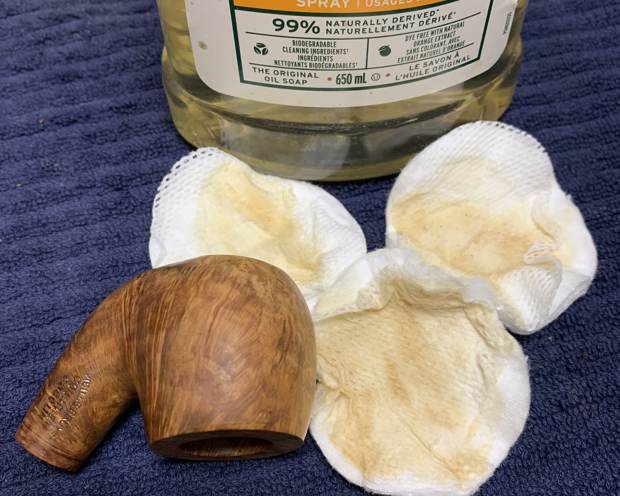
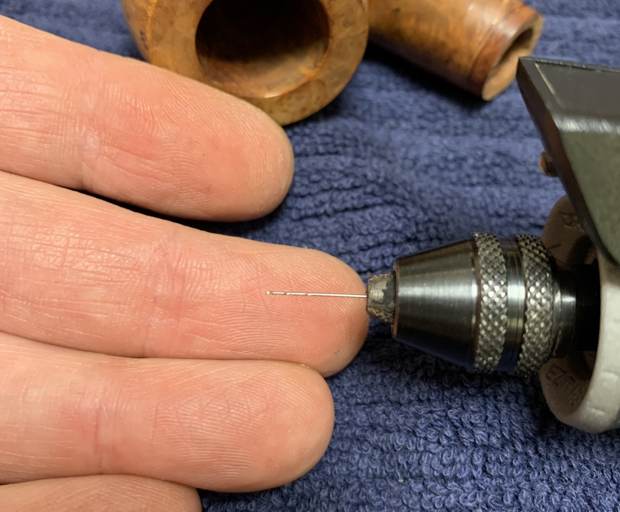
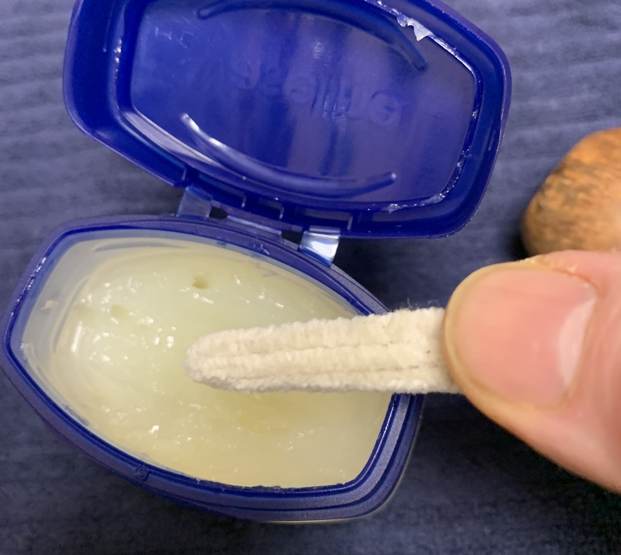
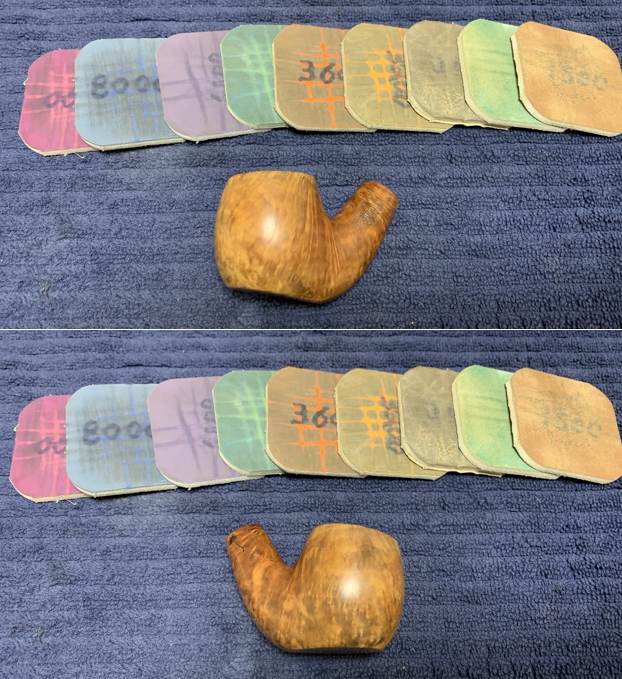
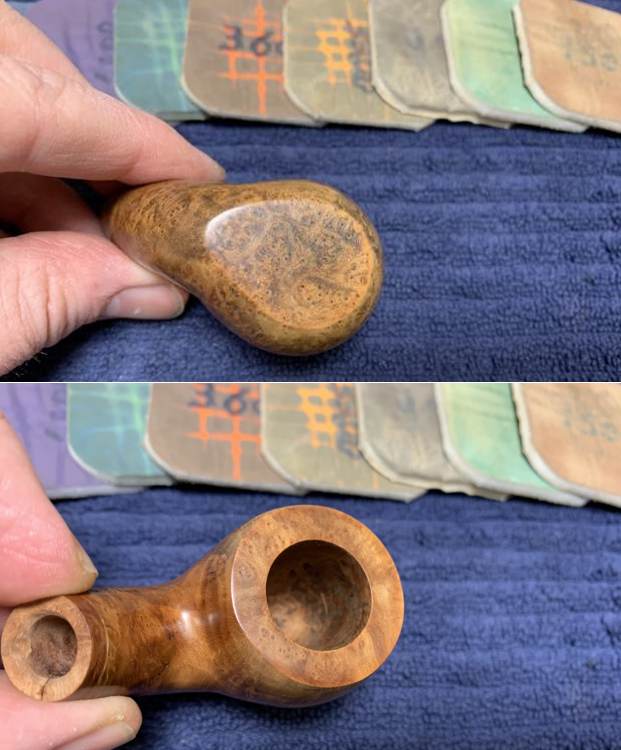
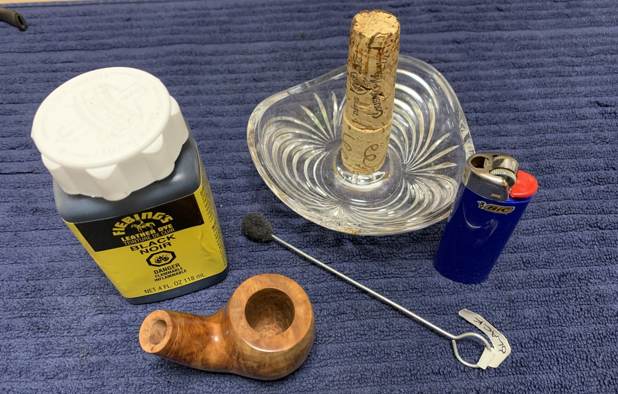
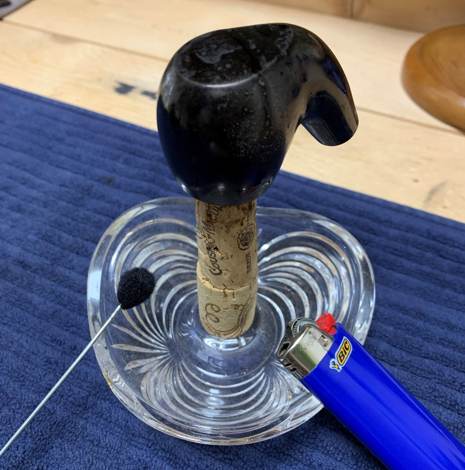
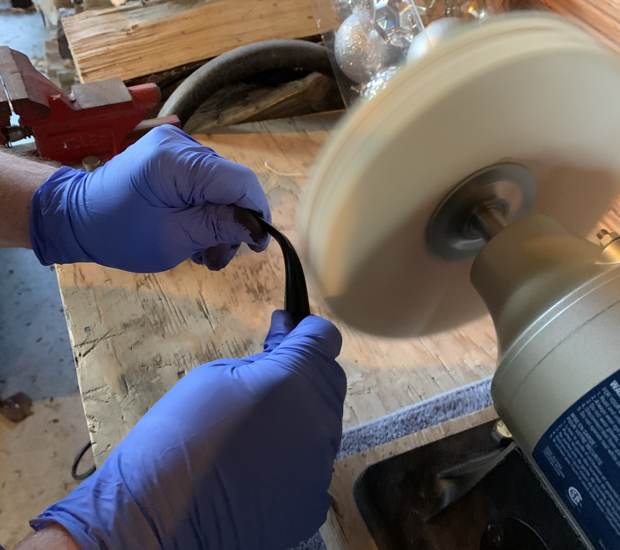
Now to work! As you saw, the band was pretty awful, so I brought out some SoftScrub on a cotton round and duly scrubbed away, taking care not to bend the soft metal. I was delighted at how well that turned out, as I had feared that the band was damaged beyond repair. Once clean, I buffed it with a jewelry polishing cloth and it looked like new. Hurray! Even though the stem had never been smoked, I ran a few pipe cleaners through it to ensure maximum cleanliness. There was some latent dust, but it was easily dealt with. I used some cotton rounds and Murphy’s Oil Soap to remove the top layer of oxidation. Then the stem went for an overnight bath in the Pipe Stem Oxidation Remover. The following day, I cleaned all of the de-oxidizing mess off with alcohol, pipe cleaners, et cetera. The oxidation had migrated to the surface and would be straightforward to remove. I scrubbed with SoftScrub on some cotton pads to remove the leftover oxidation. After this, I used some white nail polish and carefully painted the embossed Gallic rooster on the stem. I painted the area carefully and let it set for a few minutes. I then used all nine Micromesh pads (1,500 through 12,000 grit) to bring out the lovely black lustre on the stem. I also used Obsidian Pipe Stem Oil in between each pad scrubbing. Then I set the stem aside and moved on to the stummel. The next order of business was to scrub the outside of the stummel with some cotton rounds and Murphy’s Oil Soap. Despite being unsmoked, the stummel was reasonably dirty from sitting abandoned for decades.Then it came time to address the crack in the shank. To ensure that any crack repair is successful, I need to make sure that the crack won’t elongate. I took a micro-drill bit and drilled a hole through the wall of the shank into the mortise, at the very end of the crack. By doing this, I prevent the crack from growing any further. Look how tiny the drill bit is! You can also see the drilled hole at the end of the crack. I also removed the old yellow adhesive you can see below. I needed to apply cyanoacrylate adhesive to the crack to seal and repair it. First, however, I stuffed the mortise area with some folded pipe cleaners, coated with petroleum jelly. This would prevent the adhesive from dripping inside the shank and creating further problems. After that, I carefully applied a bead of adhesive to the tiny hole and the length of the crack. Finally, I clamped it shut and let it sit overnight to cure. This was a great success – obviously, the crack would always be there, but I was really pleased with how the repair looked. I then sanded the adhesive down, as well as the stummel. Just like the stem, I used all nine Micromesh pads (1,500 through 12,000 grit). Having completed that, it was time for the staining. First, I brought out my heat gun and spent a couple of minutes thoroughly heating the wood, so it would be as receptive as possible to the stain. I needed the black to penetrate well into the wood, to give the best results. I applied Fiebing’s Black Leather Dye with a cotton dauber. I flamed it with my Bic lighter, let it set, then coated it again with dye, flamed it again, and let that set too. I decided to let the pipe sit overnight. Upon the morrow, I stained and flamed the pipe another two times, always making sure I warmed the pipe with my heat gun first. This dye is alcohol-based, so I used isopropyl alcohol to wipe down the pipe and remove excess stain. I am very happy with the results. Then it was off for a trip to the buffer. A dose of White Diamond and a few coats of carnauba wax were just what this pipe needed. I think the black came out very well on this pipe. I know that the new owner will enjoy smoking it for many years to come. I hope you enjoyed reading the story of this pipe as much I as I did restoring it. The approximate dimensions of the pipe are as follows: length 4½ in. (114 mm); height 3½ in. (89 mm); bowl diameter 1¼ in. (32 mm); chamber diameter ⅝ in. (16 mm). The weight of the pipe is 1½ oz. (43 g). If you are interested in more of my work, please follow me here on Steve’s website or email me directly at kenneth@knightsofthepipe.com. Thank you very much for reading and, as always, I welcome and encourage your comments.
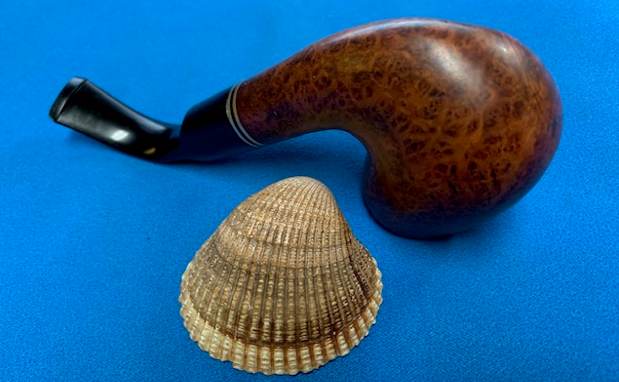
Bringing Life to a Whitehall Gulf Stream Imported Briar Sculpted Dublin


The next pipe on the worktable came from the US auction block in January of 2018, from a seller in Warsaw, New York.  I was attracted to this pipe …

Bringing Life to a Whitehall Gulf Stream Imported Briar Sculpted Dublin

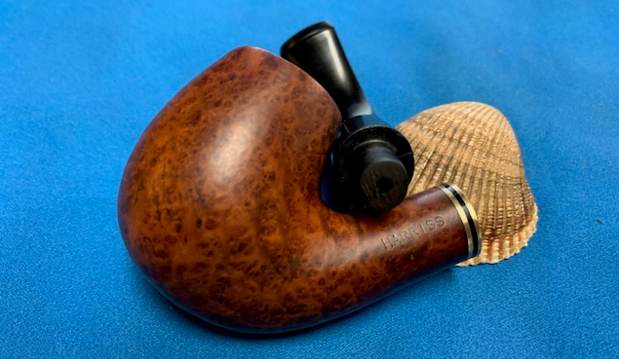
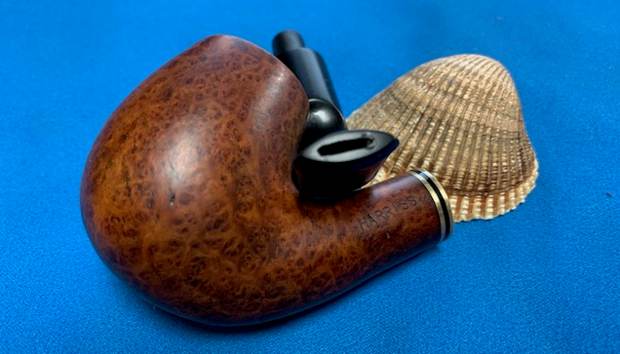
Moving yet another one of my own – Harriss 863 Bent Billiard


Blog by Steve Laug

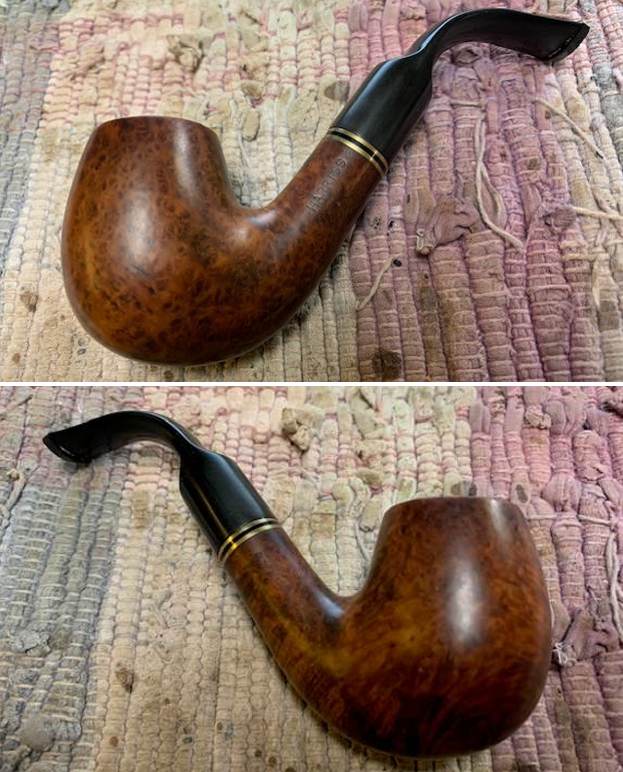
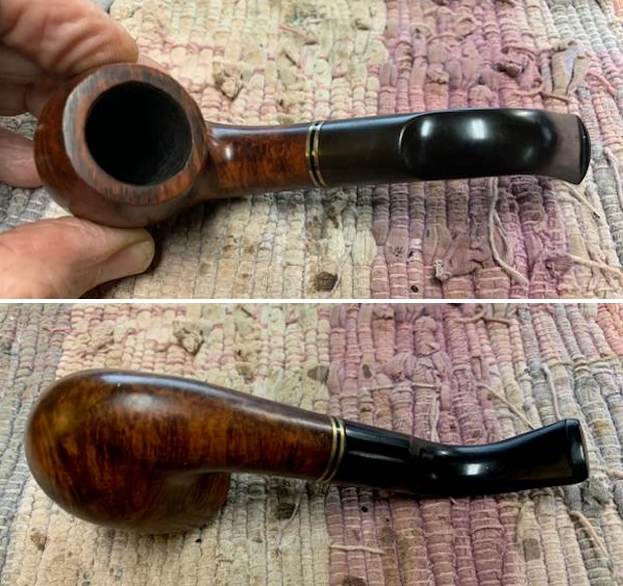
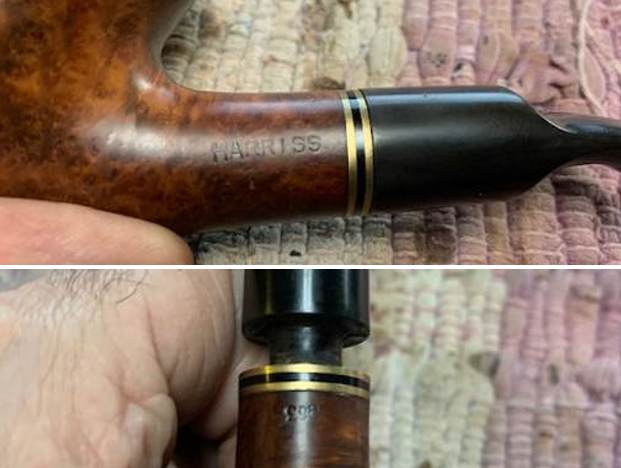
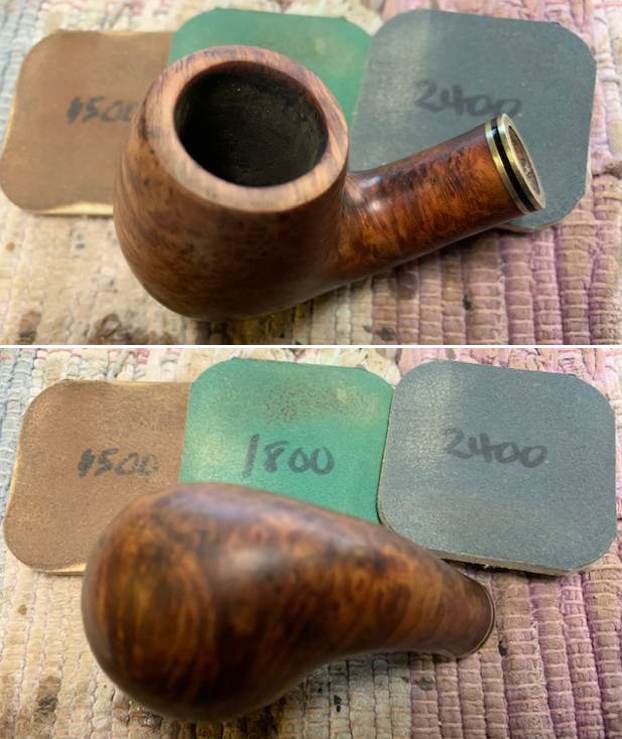
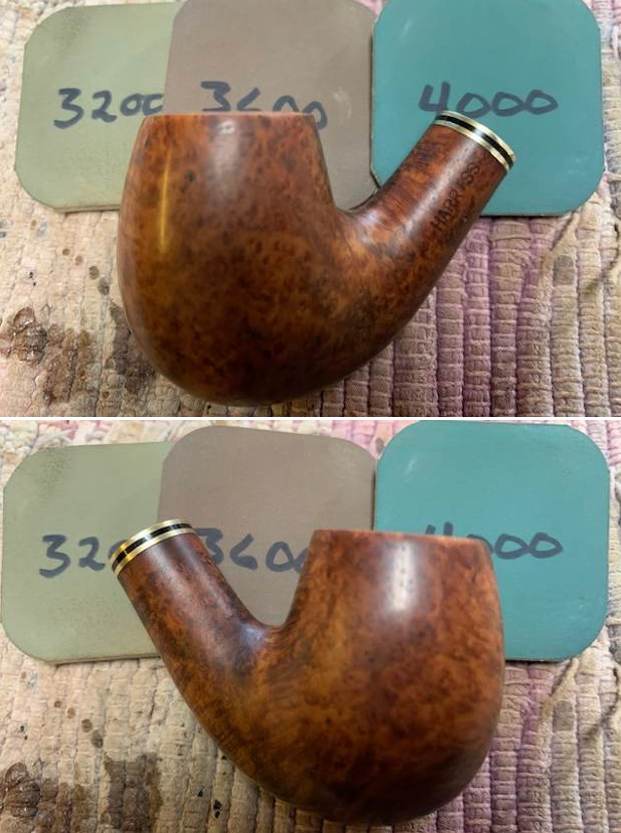
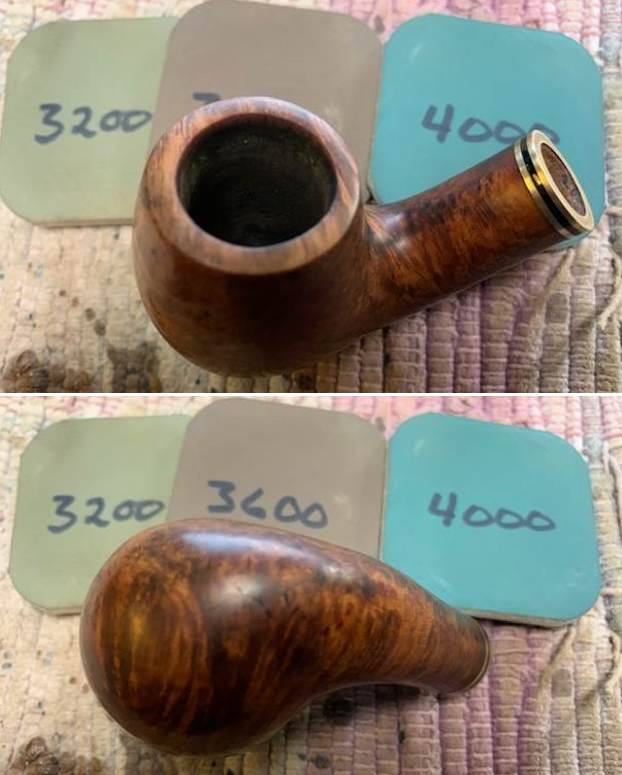
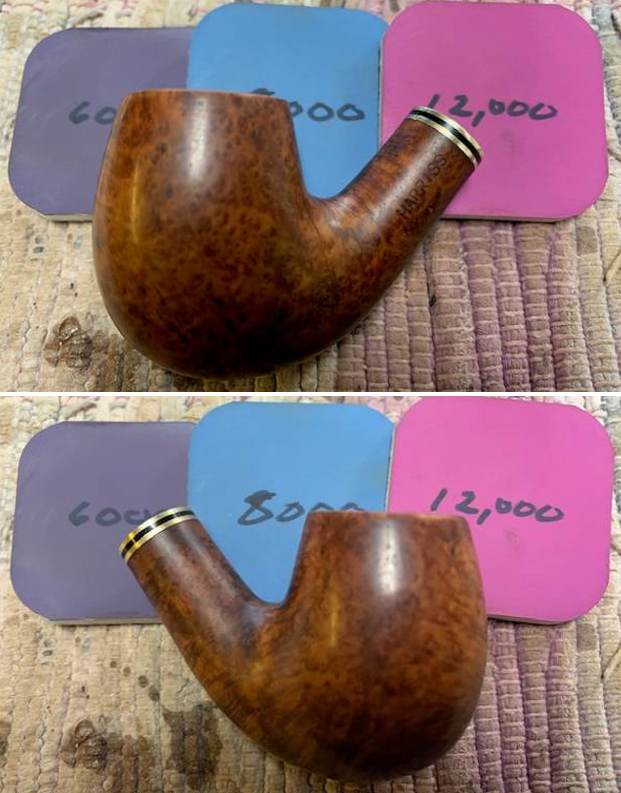
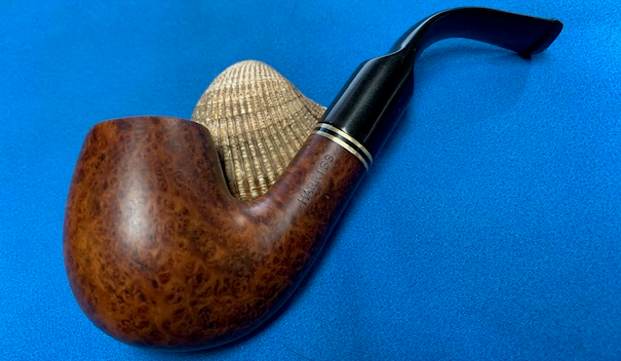
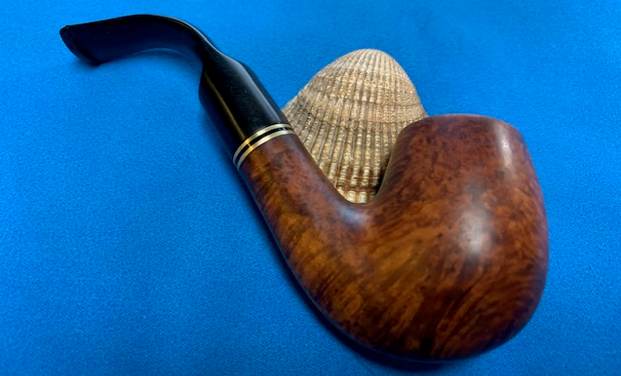
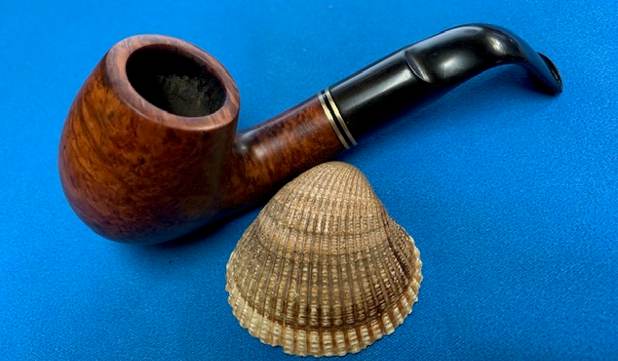
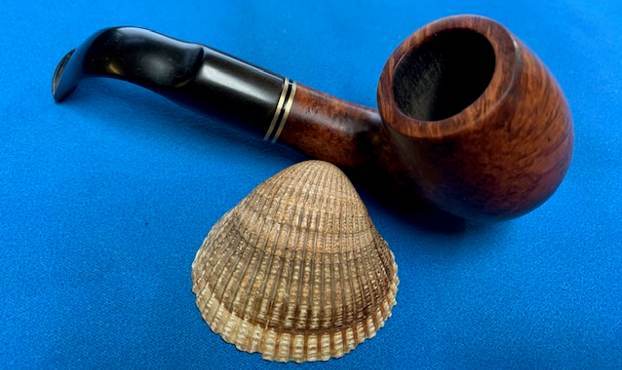
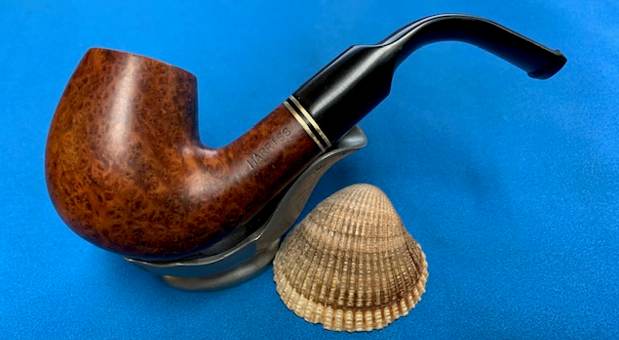
This is another pipe that I have taken out of my personal collection as I just do not use enough to warrant keeping it. This pipe was one that I purchased on a pipe hunt many years ago. I honestly can’t remember when or if I even smoked it. But I know from its condition it has not been smoked much. The airway in the shank and the mortise were quite clean. The smooth finish and rim top were in good condition. There was some damage to the inner edge of the bowl and it was slightly out of round. The stamping on the pipe is very simple on the left side of the shank it is stamped Harriss in block letters. On the underside it is stamped with a shape number 863. There nothing stamped on the stem on either side or the top. The rich brown finish goes well with the vulcanite saddle stem. It is in good condition with some light tooth chatter and some tooth marks ahead of the button on both sides. I took photos of the pipe before I did my clean up work on it. I took a photo of the bowl and rim top to verify the description above. I also took photos of the stem surface showing the light chatter and tooth marks on both side. I took a photo of the stamping on the sides of the shank. It is clear and readable as noted above.  I took the stem off the bowl and took a photo of the pipe to give a sense of proportion of the pipe. You can also see the deep and rugged rustication on the briar and it is a beauty.Now it was time to work on the pipe. I worked on the inner edge of the bowl 220 grit sandpaper to give the inner edge a slight bevel and clean up the damage that was present there. The rim came out looking quite good. I reamed the light cake in the bowl with a Savinelli Fitsall Pipe Knife. I sanded the walls of the bowl to smooth them out with a piece of 220 grit sandpaper wrapped around a dowel.I cleaned the mortise and airways in the shank and stem with cotton swabs, pipe cleaners and isopropyl alcohol to remove the debris and tars from my smoking. You can see that it was not too bad as I tend to keep my pipes clean. I polished the rim top and the briar with micromesh sanding pads – dry sanding with 1500-12000 grit pads. I wiped the bowl down with a damp cloth after each sanding pad to remove the dust and debris. The rim top polished out and matched the oil cured look of the bowl and shank. The bowl was in such good condition that decided to give the bowl and shank a coating of Before & After Restoration Balm. I worked it into the surface of the briar with my fingertips to clean, enliven and protect the briar. I let the balm sit for 15 minutes and then buffed with a cotton cloth to raise the shine. The photos show the bowl at this point in the restoration process. I set the bowl aside and sanded out the tooth marks and chatter on the stem surface and button with 220 grit sandpaper. I started polishing the stem with 400 grit wet dry sandpaper. I was able to smooth out the marks on the surface of both sides.I polished the stem with micromesh sanding pads – dry sanding with 1500-12000 grit pads. I rubbed it down between pads with Obsidian Oil. I polished it with Before & After Fine and Extra Fine Pipe Stem Polish. I wiped it down with some Obsidian Oil and buffed it off. It is a beautiful stem. I am excited to put the final touches on the Harriss 863 Bent Billiard. I put the pipe back together and buffed the stem with Blue Diamond on the buffing wheel. I gave the bowl and the stem multiple coats of carnauba wax. I hand buffed the pipe with a clean buffing pad to raise the shine. It is fun to see what the polished bowl looks like with the beautiful grain, the triple sandwiched brass and black acrylic band on the shank end and the polished vulcanite saddle stem. This smooth Harriss Bent Billiard is great looking and the pipe feels great in my hand. It is light and well balanced. Have a look at it with the photos below. The dimensions are Length: 5 inches, Height: 2 inches, Outside diameter of the bowl: 1 1/8 inches, Chamber diameter: ¾ of an inch. The weight of the pipe is 52 grams/1.80 ounces. It is a beautiful pipe that I will soon be putting on the rebornpipes store in the English Pipe Makers Section. If you are interested in adding it to your collection send me an email or a message. Thanks for walking through the restoration with me as I worked over this pipe. Thanks to each of you who are reading this blog.
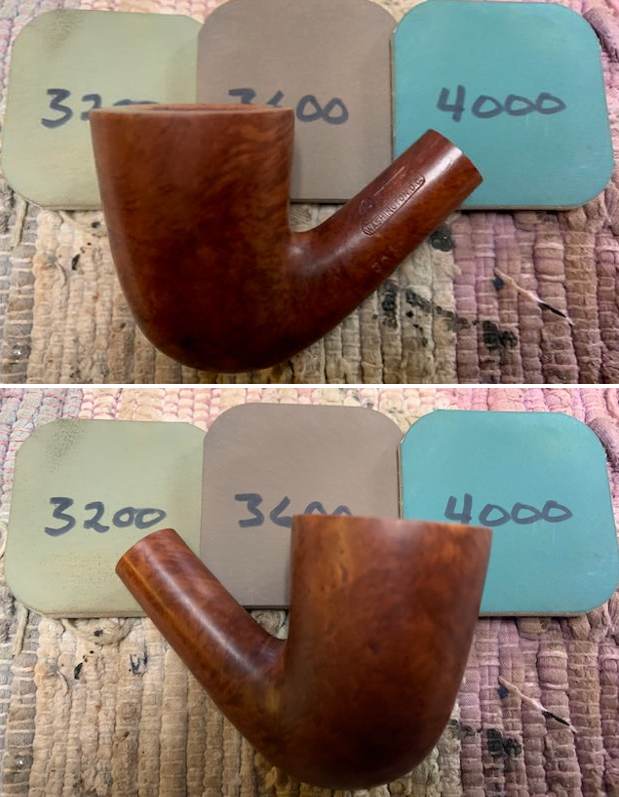
When Repair Doesn’t Work, Make a New Stem


Nice work on this one Charles.

The art of estate pipe restoration is constantly evolving as creative restorers come up with inventive techniques and test new products, but sometime…

When Repair Doesn’t Work, Make a New Stem

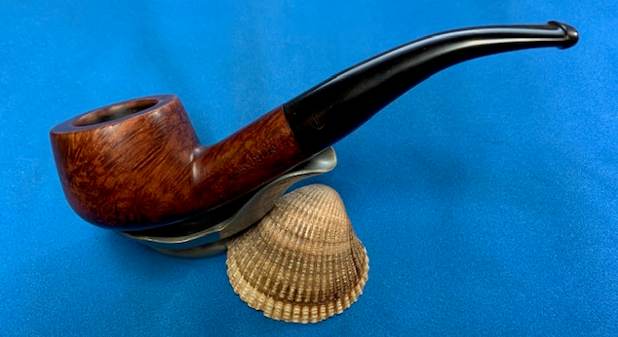
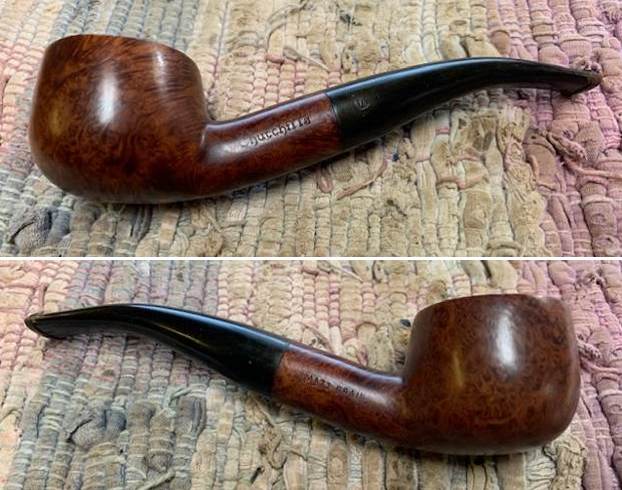
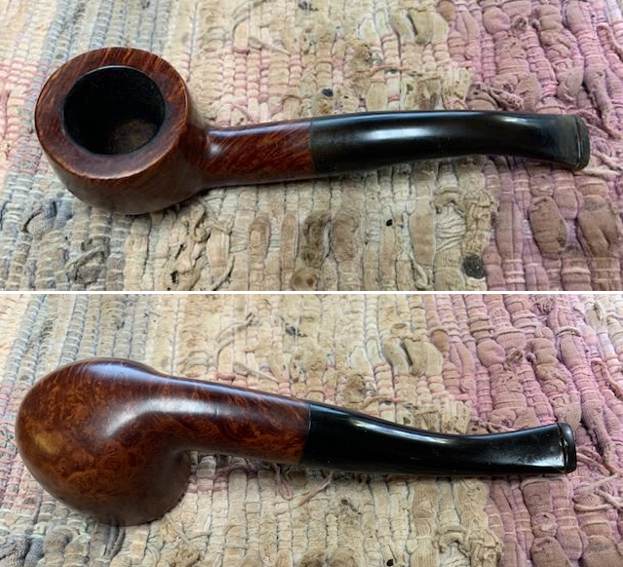
Moving yet another one of my own – Churchill’s Matt Grain ¼ Bent Pot


Blog by Steve Laug

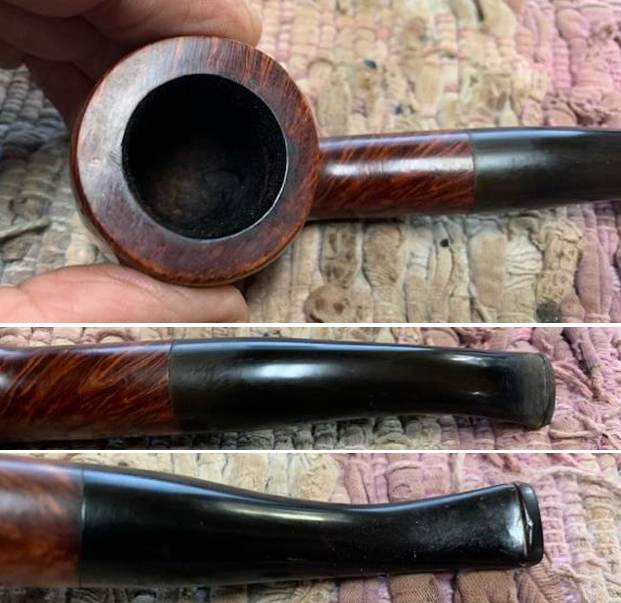
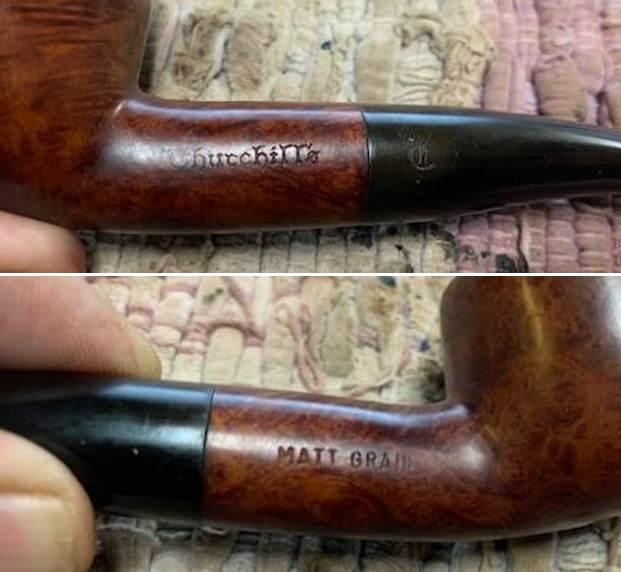
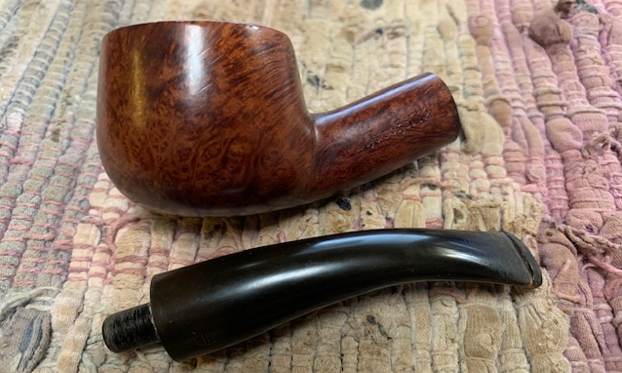
This is another pipe that I have taken out of my personal collection as I just do not use enough to warrant keeping it. This pipe was one that I kept from a group of pipes Jeff and I purchased a few years ago. It was not used very often but when I smoked it I used it solely for Virginia tobaccos so there is no real ghost in the pipe. The airway in the shank and the mortise were quite clean. The smooth finish and rim top were in good condition. There was some darkening on the inner edge of the bowl. The stamping on the pipe is very simple on the left side of the shank it is stamped Churchill’s and on the right side it is stamped Matt Grain. There was an old English style C stamped on the stem (faint but still readable). The finish is a natural brown with just time and some light  polishing adding colour. The rich brown finish goes well with the vulcanite taper stem is in good condition with some light tooth chatter and some tooth marks ahead of the button on both sides. There was some oxidation on the stem near the shank. I took photos of the pipe before I did my clean up work on it. I took a photo of the bowl and rim top to verify the description above. I also took photos of the stem surface showing the light chatter and tooth marks on both side. I took a photo of the stamping on the sides of the shank. It is clear and readable as noted above.  I took the stem off the bowl and took a photo of the pipe to give a sense of proportion of the pipe. You can also see the deep and rugged rustication on the briar and it is a beauty.Now it was time to work on the pipe. I worked on the inner edge of the bowl 220 grit sandpaper to give the inner edge a slight bevel and clean up the damage that was present there. The rim came out looking quite good. I cleaned the mortise and airways in the shank and stem with cotton swabs, pipe cleaners and isopropyl alcohol to remove the debris and tars from my smoking. You can see that it was not too bad as I tend to keep my pipes clean. I polished the rim top and the briar with micromesh sanding pads – dry sanding with 1500-12000 grit pads. I wiped the bowl down with a damp cloth after each sanding pad to remove the dust and debris. The rim top polished out and matched the oil cured look of the bowl and shank. The bowl was in such good condition that decided to give the bowl and shank a coating of Before & After Restoration Balm. I worked it into the surface of the briar with my fingertips and a horsehair shoe brush to clean, enliven and protect the briar. I let the balm sit for 15 minutes and then buffed with a cotton cloth to raise the shine. The photos show the bowl at this point in the restoration process. I set the bowl aside and sanded out the tooth marks and chatter on the stem surface and button with 220 grit sandpaper. I was able to smooth out the marks on the surface of both sides.I scrubbed the oxidized portions of the stem from the shank end back almost an inch using some Soft Scrub cleanser. I was able to remove the oxidation from the vulcanite. It was quite dirty and the majority of it was gone. I polished the stem with micromesh sanding pads – dry sanding with 1500-12000 grit pads. I rubbed it down between pads with Obsidian Oil. I polished it with Before & After Fine and Extra Fine Pipe Stem Polish. I wiped it down with some Obsidian Oil and buffed it off. It is a beautiful stem. I am excited to put the final touches on this great looking Churchill Matt Grain ¼ Bent Pot I put the pipe back together and buffed the stem with Blue Diamond on the buffing wheel. I gave the bowl and the stem multiple coats of carnauba wax. I hand buffed the pipe with a clean buffing pad to raise the shine. It is fun to see what the polished bowl looks like with the beautiful grain and the polished vulcanite taper stem. This smooth Churchill Matt Grain Pot is great looking and the pipe feels great in my hand. It is light and well balanced. Have a look at it with the photos below. The dimensions are Length: 6 inches, Height: 1 ½ inches, Outside diameter of the bowl: 1 ½ inches, Chamber diameter: 1 inch. The weight of the pipe is 44 grams/1.55 ounces. It is a beautiful pipe that I will soon be putting on the rebornpipes store in the English Pipe Makers Section. If you are interested in adding it to your collection send me an email or a message. Thanks for walking through the restoration with me as I worked over this pipe. Thanks to each of you who are reading this blog.

Moving yet another one of my own – A Bertram 30 Bent Dublin


Blog by Steve Laug

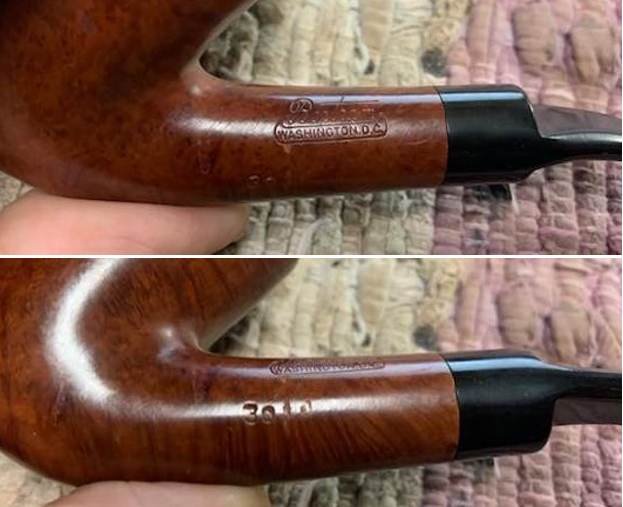
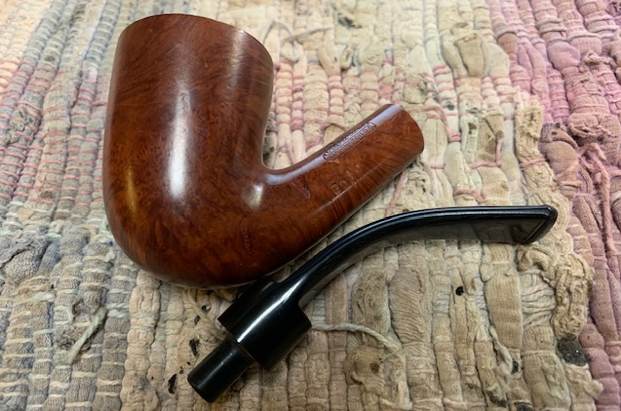
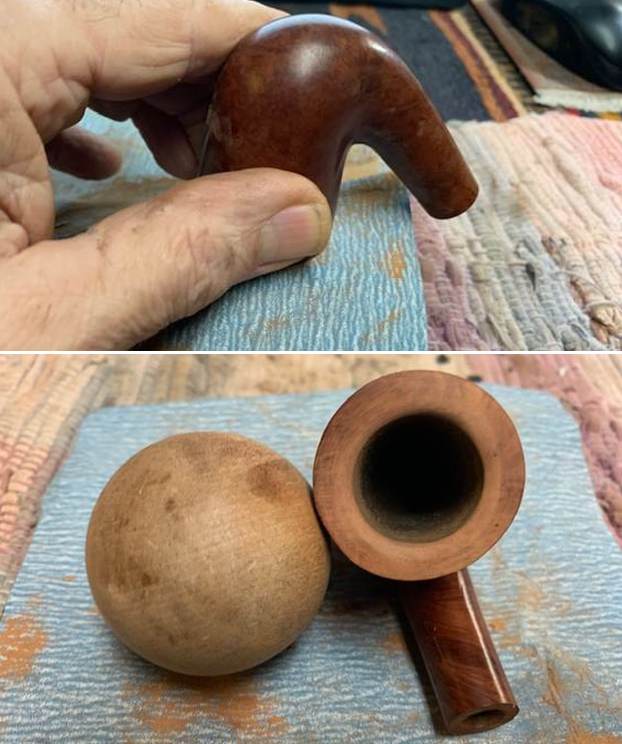
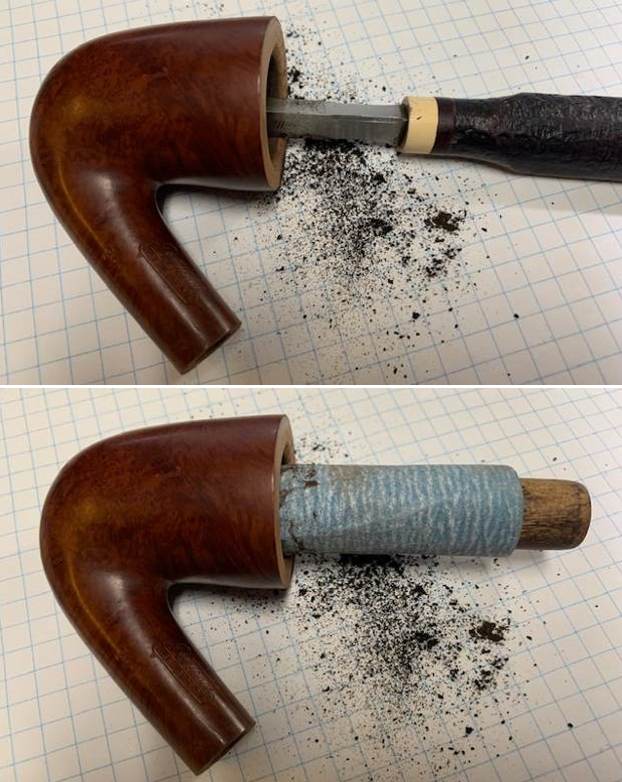
This is another pipe that I have taken out of my personal collection as I just do not use enough to warrant keeping it. This pipe was one I picked up in a lot of over 100 Bertrams that Jeff and I purchase a few years ago. It was used solely for Virginia tobaccos so there is no real ghost in the pipe. The airway in the shank and the mortise were quite clean. The smooth finish and rim top were in good condition. There was some darkening/burning on the front right and rear of the inner edge of the bowl. It is stamped on the left side of the shank and reads Bertram in script [over] Washington, D.C. [over] the grade number 30. The finish is a natural brown with just time and some light  polishing adding colour. There are a few small flaws and fills in the shank and heel of the bowl. There was a light cake in the bowl but the top and inner edge of the bowl clean of lava. The rich brown finish goes well with the vulcanite saddle stem is in good condition with some light tooth chatter ahead of the button on both sides. I took photos of the pipe before I did my clean up work on it. I took a photo of the bowl and rim top to verify the description above. I also took photos of the stem surface showing the light chatter on either side. I took a photo of the stamping on the underside of the shank. It is clear and readable as noted above.  I took the stem off the bowl and took a photo of the pipe to give a sense of proportion of the pipe. You can also see the grain of the briar and it is a beauty.Now it was time to work on the pipe. I worked on the inner edge of the bowl 220 grit sandpaper and a wooden ball to give the inner edge a slight bevel and clean up the damage that was present there. The rim came out looking quite good.I cleaned up the light cake in the bowl with a Savinelli Fitsall Pipe Knife. I sanded the bowl walls with a piece of dowel wrapped in 220 grit sandpaper.  I cleaned the mortise and airways in the shank and stem with cotton swabs, pipe cleaners and isopropyl alcohol to remove the debris and tars from my smoking. You can see that it was not too bad as I tend to keep my pipes clean. I polished the rim top and the briar with micromesh sanding pads – dry sanding with 1500-12000 grit pads. I wiped the bowl down with a damp cloth after each sanding pad to remove the dust and debris. The rim top polished out and matched the oil cured look of the bowl and shank. The bowl was in such good condition that decided to give the bowl and shank a coating of Before & After Restoration Balm. I worked it into the surface of the briar with my fingertips and a horsehair shoe brush to clean, enliven and protect the briar. I let the balm sit for 15 minutes and then buffed with a cotton cloth to raise the shine. The photos show the bowl at this point in the restoration process. Since the stem was in quite good condition other than tooth chatter I polished out the chatter with micromesh sanding pads – dry sanding with 1500-12000 grit pads. I rubbed it down between pads with Obsidian Oil. I polished it with Before & After Fine and Extra Fine Pipe Stem Polish. I wiped it down with some Obsidian Oil and buffed it off. It is a beautiful stem. I am excited to put the final touches on this great looking Bertram Washington, DC Grade 30 Bent Dublin I put the pipe back together and buffed the stem with Blue Diamond on the buffing wheel. I gave the bowl and the stem multiple coats of carnauba wax. I hand buffed the pipe with a clean buffing pad to raise the shine. It is fun to see what the polished bowl looks like with the beautiful grain and the polished vulcanite saddle stem. This smooth Grade 30 Bertram Bent Dublin is great looking and the pipe feels great in my hand. It is light and well balanced. Have a look at it with the photos below. The dimensions are Length: 5 ½ inches, Height: 2 inches, Outside diameter of the bowl: 1 ½ inches, Chamber diameter: 5/8 of an inch. The weight of the pipe is 48 grams/1.69 ounces. It is a beautiful pipe that I will soon be putting on the rebornpipes store in the American Pipe Makers Section. If you are interested in adding it to your collection send me an email or a message. Thanks for walking through the restoration with me as I worked over this pipe. Thanks to each of you who are reading this blog.

318. Ken Siegel, CPG: “And So Begins My Peterson Pipe Journey…”


While revisiting places in Dublin from her college days, my wife Sarah Kelly and I came upon the Peterson Store. Once inside, odd pieces and parts …

318. Ken Siegel, CPG: “And So Begins My Peterson Pipe Journey…”

Ken has begun a friend who is great to chat with and enjoy working on pipes with. This a great piece. Thanks for posting it Mark.

Moving yet another one of my own – an Old Port “Avant Garde” Rusticated Bent Billiard


Blog by Steve Laug

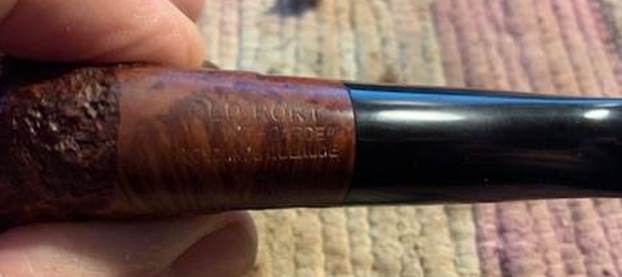
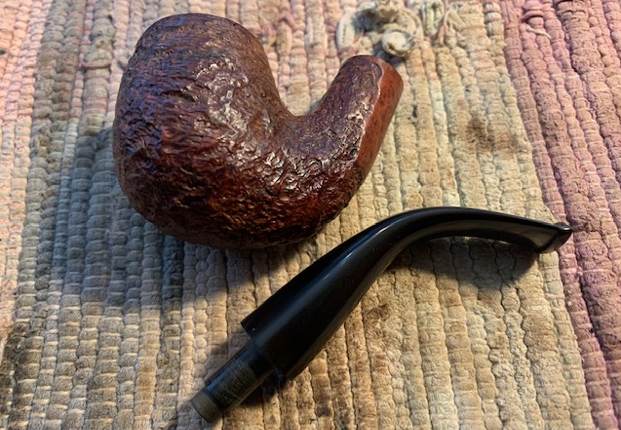
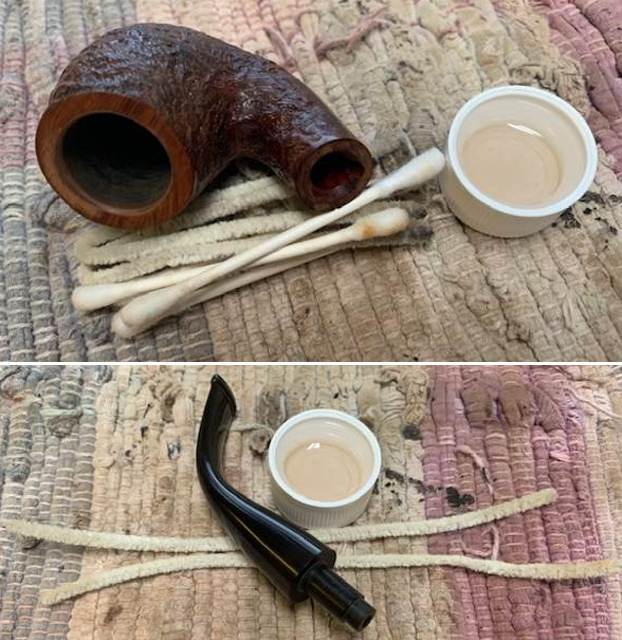
This is another pipe that I have taken out of my personal collection as I just do not use enough to warrant keeping it. This pipe was one I picked up in some of my pipe hunting adventures. It is from a period of my journey where I smoked solely Virginia tobaccos so it is quite clean. The airway in the shank and the mortise were quite clean. The rusticated finish and smooth rim top were in good condition. There was some darkening/burning on the front inner edge of the bowl. It is stamped on the underside of the shank and reads OLD PORT [over] “AVANT GARDE” [over] London/St. Claude [over] the shape number 783. The shape number and research confirms that this is a Comoy’s Made pipe. There was a light cake in the bowl but the top and inner edge of the bowl clean. The rich brown finish goes well with the vulcanite taper stem is in good condition with some light tooth chatter ahead of the button on both sides. I took photos of the pipe before I did my clean up work on it. I took a photo of the bowl and rim top to verify the description above. I also took photos of the stem surface showing the light chatter on either side.I took a photo of the stamping on the underside of the shank. It is clear and readable as noted above.  I took the stem off the bowl and took a photo of the pipe to give a sense of proportion of the pipe. You can also see the deep and rugged rustication on the briar and it is a beauty.Now it was time to work on the pipe. I cleaned up the light cake in the bowl with a Savinelli Fitsall Pipe Knife. I sanded the bowl walls with a piece of dowel wrapped in 220 grit sandpaper.  I cleaned the mortise and airways in the shank and stem with cotton swabs, pipe cleaners and isopropyl alcohol to remove the debris and tars from my smoking. You can see that it was not too bad as I tend to keep my pipes clean. I worked on the inner edge of the bowl with a folded piece of 220 grit sandpaper to clean up the burn damage on the front inner edge. I gave it a light bevel to blend it into the rest of the bowl edges. I polished the rim top with micromesh sanding pads. The rim top looks very good. The bowl was in such good condition that decided to give the bowl and shank a coating of Before & After Restoration Balm. I worked it into the surface of the briar with my fingertips and a horsehair shoe brush to clean, enliven and protect the briar. I let the balm sit for 15 minutes and then buffed with a cotton cloth to raise the shine. The photos show the bowl at this point in the restoration process. Since the stem was in quite good condition other than tooth chatter I polished out the chatter with micromesh sanding pads – dry sanding with 1500-12000 grit pads. I rubbed it down between pads with Obsidian Oil. I polished it with Before & After Fine and Extra Fine Pipe Stem Polish. I wiped it down with some Obsidian Oil and buffed it off. It is a beautiful stem. I am excited to put the final touches on this great looking Comoy’s Made Old Port Avant Garde 783 Bent Billiard. I put the pipe back together and buffed the stem with Blue Diamond on the buffing wheel. I gave the bowl multiple coats of Conservator’s Wax and the stem multiple coats of carnauba wax. I hand buffed the pipe with a clean buffing pad to raise the shine. It is fun to see what the polished bowl looks like with the rugged rustication all around it. Added to that the polished brown/ gold/tan acrylic stem combined with the bowl and make a stunning pipe. This rusticated Old Port Avant Garde 783 is great looking and the pipe feels great in my hand. It is light and well balanced. Have a look at it with the photos below. The dimensions are Length: 5 inches, Height: 1 ¾ inches, Outside diameter of the bowl: 1 ¼ inches, Chamber diameter: ¾ of an inch. The weight of the pipe is 45 grams/1.52 ounces. It is a beautiful pipe that I will soon be putting on the rebornpipes store in the British Pipe Makers Section. If you are interested in adding it to your collection send me an email or a message. Thanks for walking through the restoration with me as I worked over this pipe. Thanks to each of you who are reading this blog.

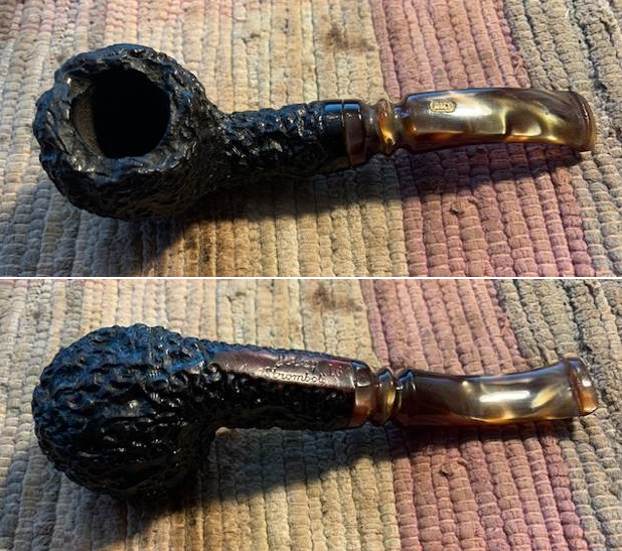
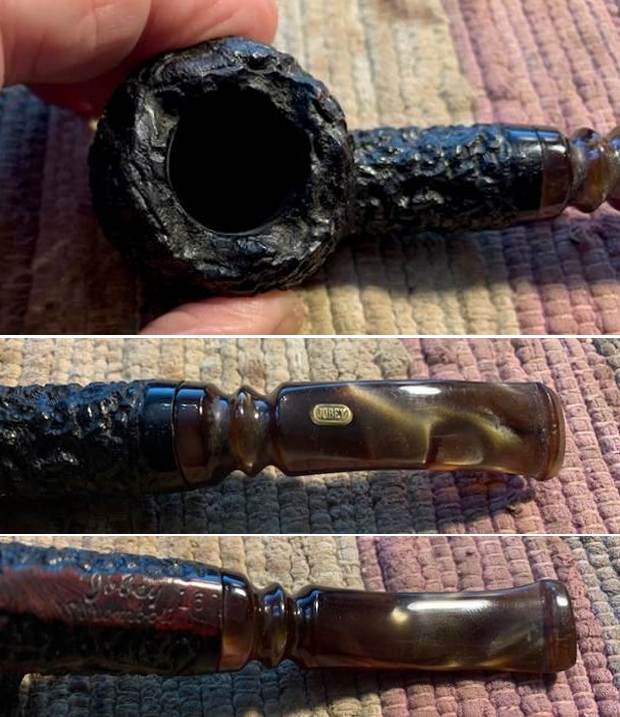
Moving another one of my own – a Jobey Stromboli 160 Bent Author


Blog by Steve Laug

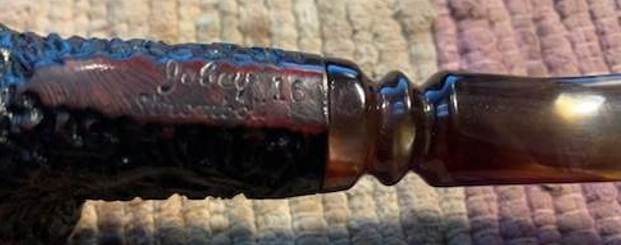
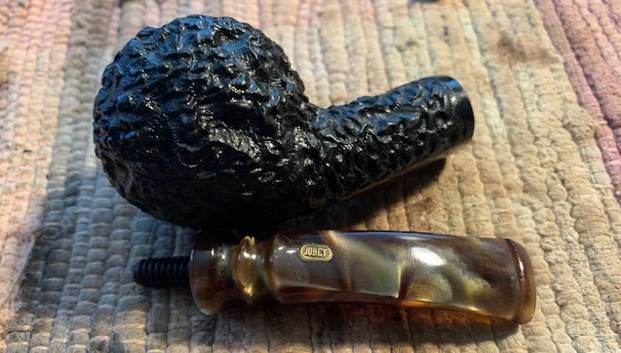
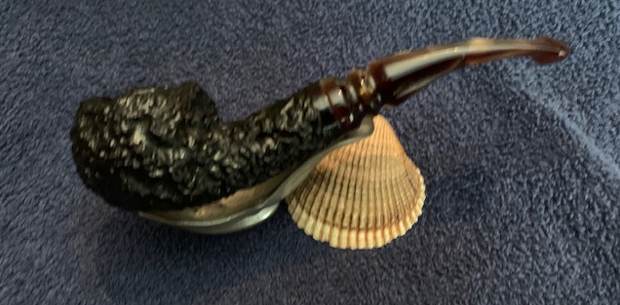
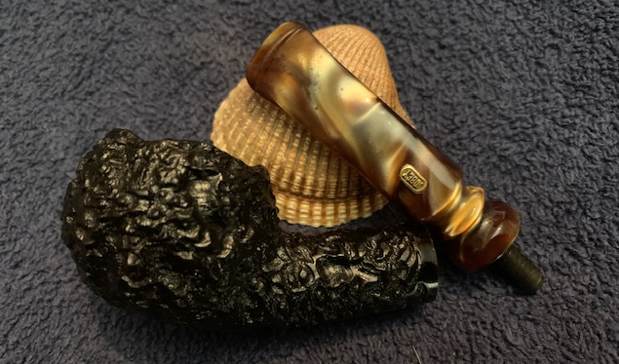
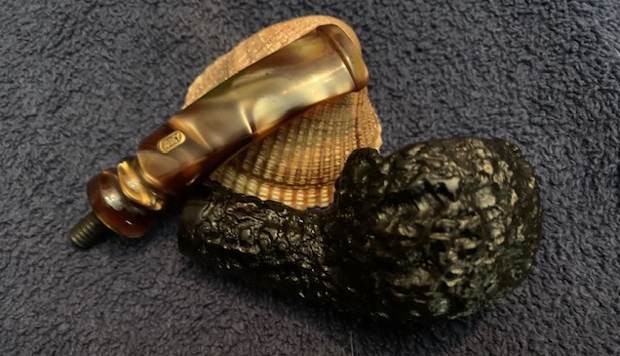
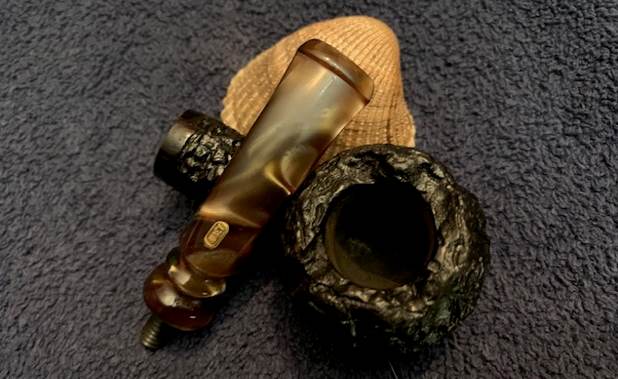
This is another pipe that I have taken out of my personal collection as I just do not use enough to warrant keeping it. This pipe was given to me in a group of pipes and I used it a bit when it came in. It is from a period of my journey where I smoked solely Virginia tobaccos so it is quite clean. The airway in the shank and the mortise were quite clean. The rusticated finish and rim top were in excellent condition. It is stamped on the underside of the shank and reads Jobey in script [over] Stromboli. The shape number 160 follows that. There was a light cake in the bowl but the top and inner edge of the bowl clean. The Jobey link system is in the shank and the stem slides on to it. The variegated brown/tan/gold acrylic stem is in good condition with some light tooth chatter ahead of the button on both sides. I took photos of the pipe before I did my clean up work on it. I took a photo of the bowl and rim top to verify the description above. I also took photos of the stem surface showing the light chatter on either side.I took a photo of the stamping on the underside of the shank. It is clear and readable as noted above.  I took the stem off the bowl and took a photo of the pipe to give a sense of proportion of the pipe. You can also see the deep and rugged rustication on the briar and it is a beauty.Now it was time to work on the pipe. I cleaned up the light cake in the bowl with a Savinelli Fitsall Pipe Knife. I sanded the bowl walls with a piece of dowel wrapped in 220 grit sandpaper.I cleaned the mortise and airways in the shank and stem with cotton swabs, pipe cleaners and isopropyl alcohol to remove the debris and tars from my smoking. You can see that it was not too bad as I tend to keep my pipes clean. The bowl was in such good condition that decided to give the bowl and shank a coating of Before & After Restoration Balm. I worked it into the surface of the briar with my fingertips and a horsehair shoe brush to clean, enliven and protect the briar. I let the balm sit for 15 minutes and then buffed with a cotton cloth to raise the shine. The photos show the bowl at this point in the restoration process. Since the stem was in quite good condition other than tooth chatter I polished out the chatter with micromesh sanding pads – dry sanding with 1500-12000 grit pads. I rubbed it down between pads with Obsidian Oil. I polished it with Before & After Fine and Extra Fine Pipe Stem Polish. I wiped it down with some Obsidian Oil and buffed it off. It is a beautiful stem. I am excited to put the final touches on this great looking Jobey Stromboli Rusticated Author. I put the pipe back together and buffed the stem with Blue Diamond on the buffing wheel. I gave the bowl multiple coats of Conservator’s Wax and the stem multiple coats of carnauba wax. I hand buffed the pipe with a clean buffing pad to raise the shine. It is fun to see what the polished bowl looks like with the rugged rustication all around it. Added to that the polished brown/ gold/tan acrylic stem combined with the bowl and make a stunning pipe. This rusticated Jobey Stromboli is great looking and the pipe feels great in my hand. It is light and well balanced. Have a look at it with the photos below. The dimensions are Length: 5 ½ inches, Height: 1 ½ inches, Outside diameter of the bowl: 1 ½ inches, Chamber diameter: ¾ of an inch. The weight of the pipe is 43 grams/1.52 ounces. It is a beautiful pipe that I will soon be putting on the rebornpipes store in the American Pipe Makers Section. If you are interested in adding it to your collection send me an email or a message. Thanks for walking through the restoration with me as I worked over this pipe. Thanks to each of you who are reading this blog.

Moving another one of my own – an American Artisan Rusticated Cherrywood Pipe


Blog by Steve Laug

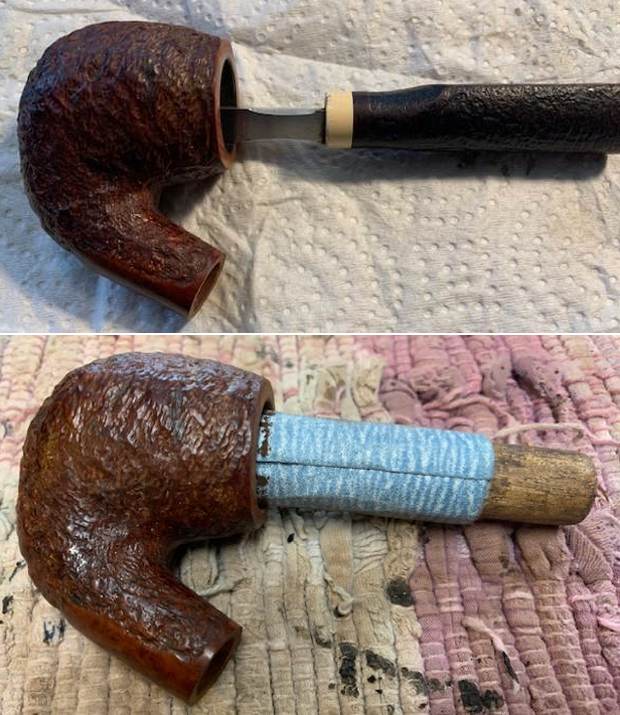
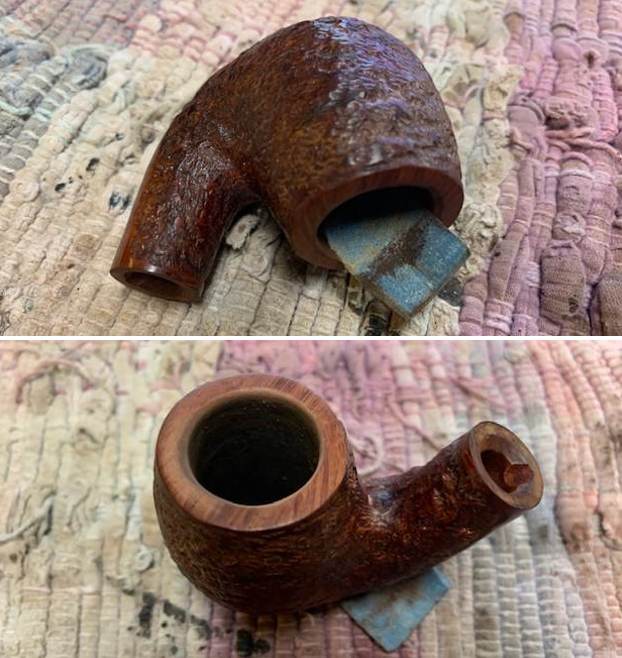
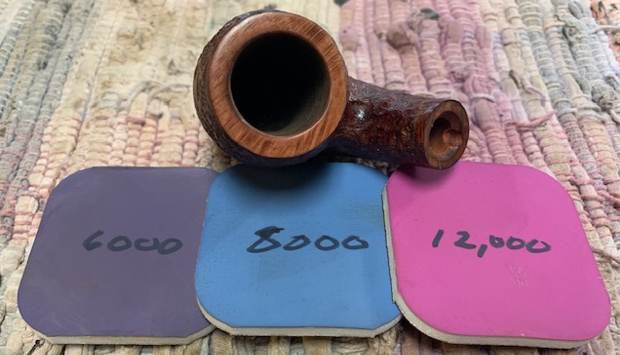
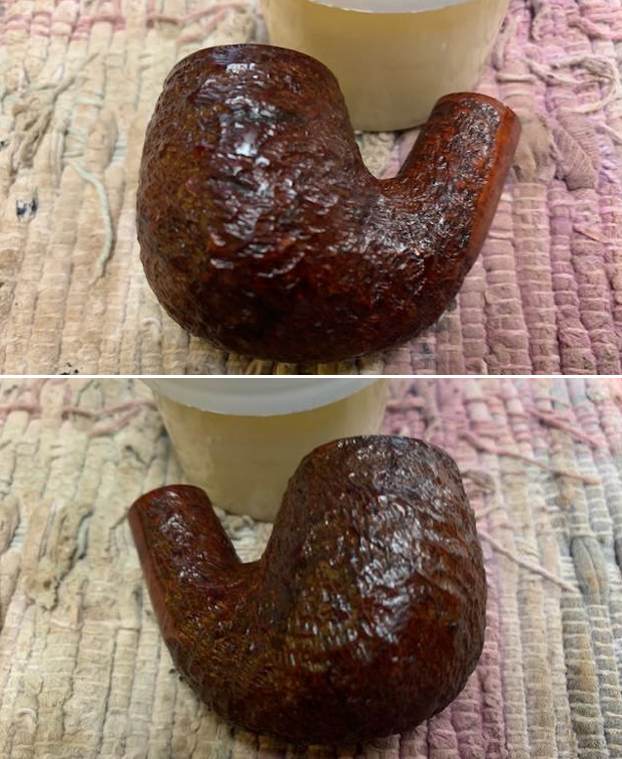
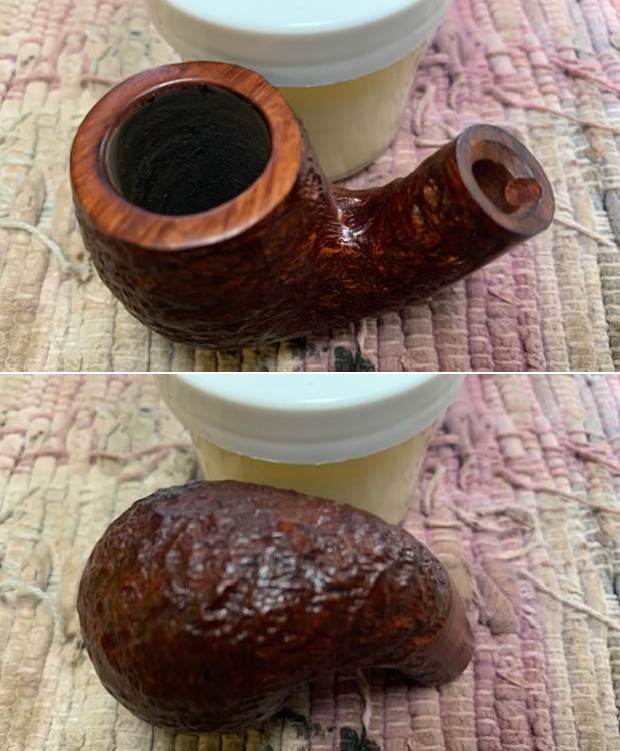
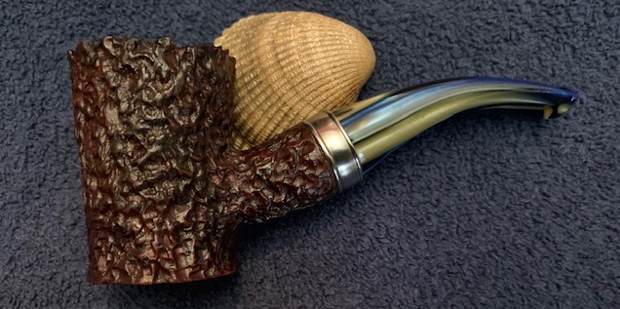
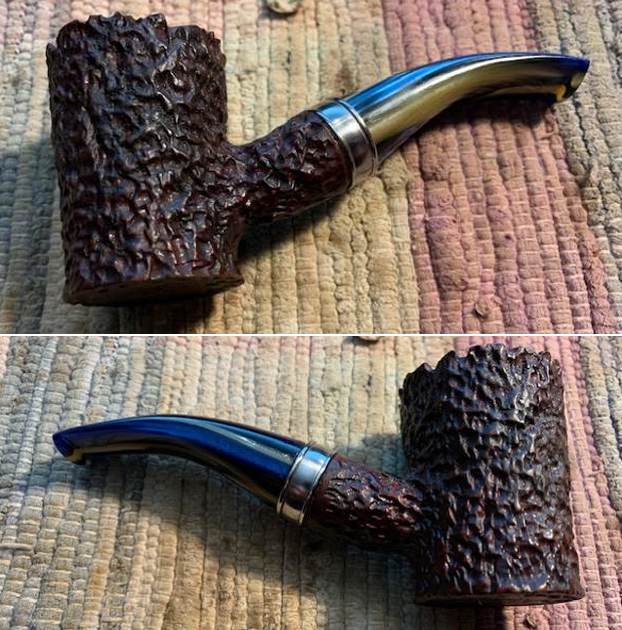
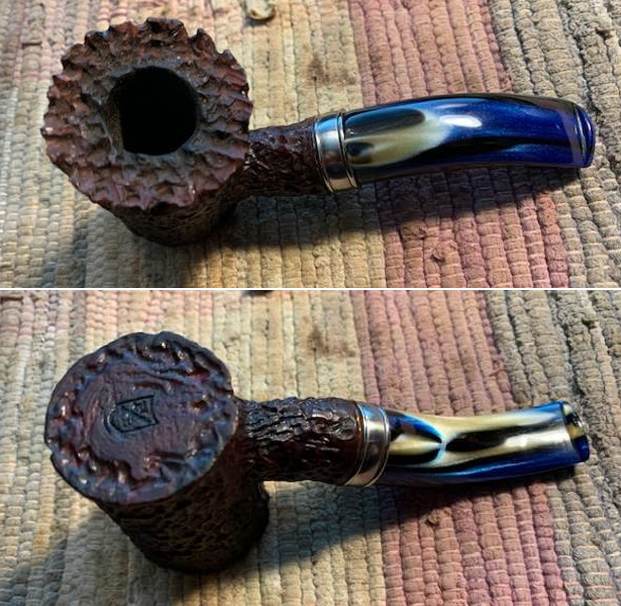
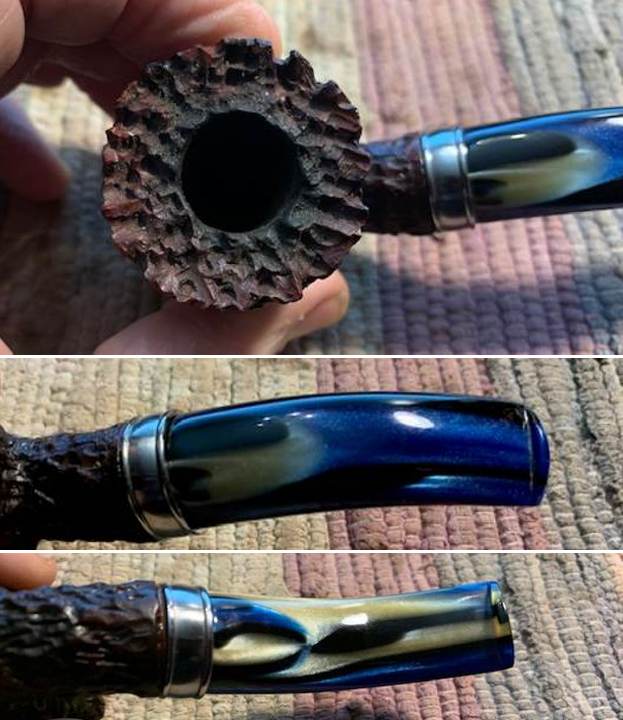
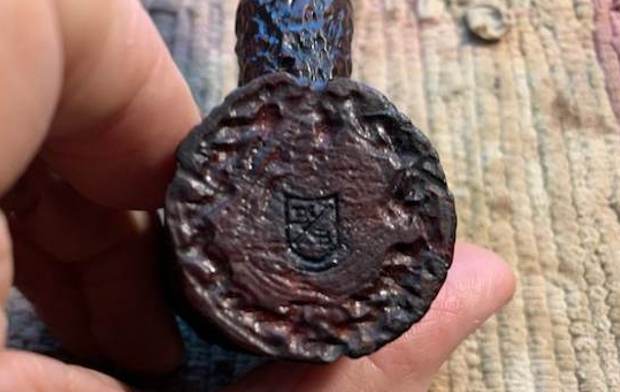
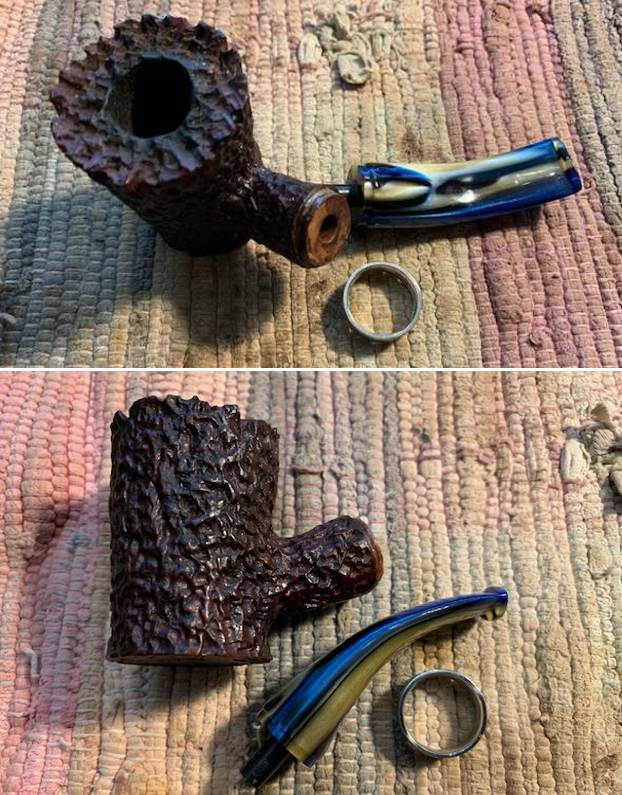
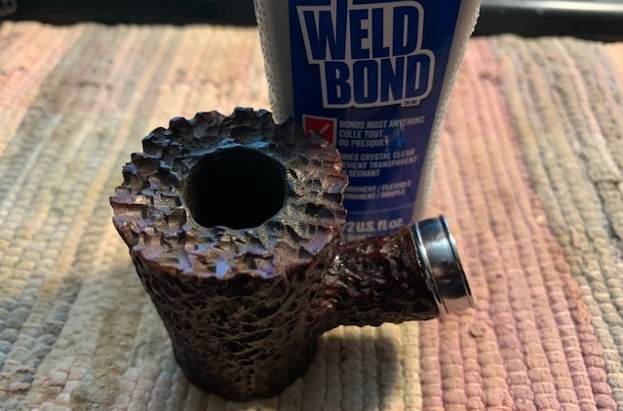
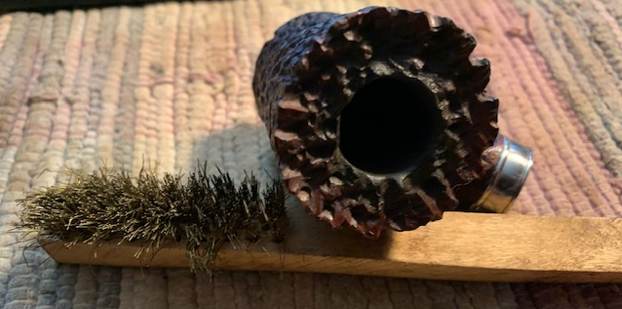
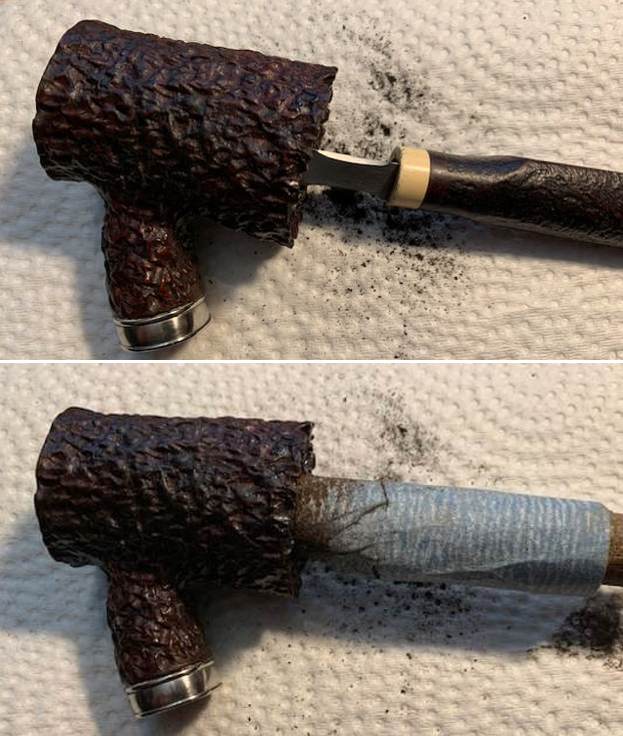
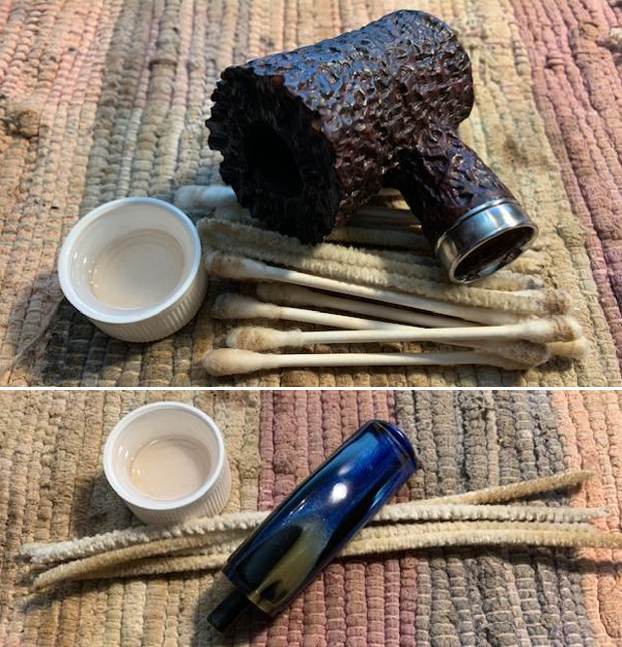
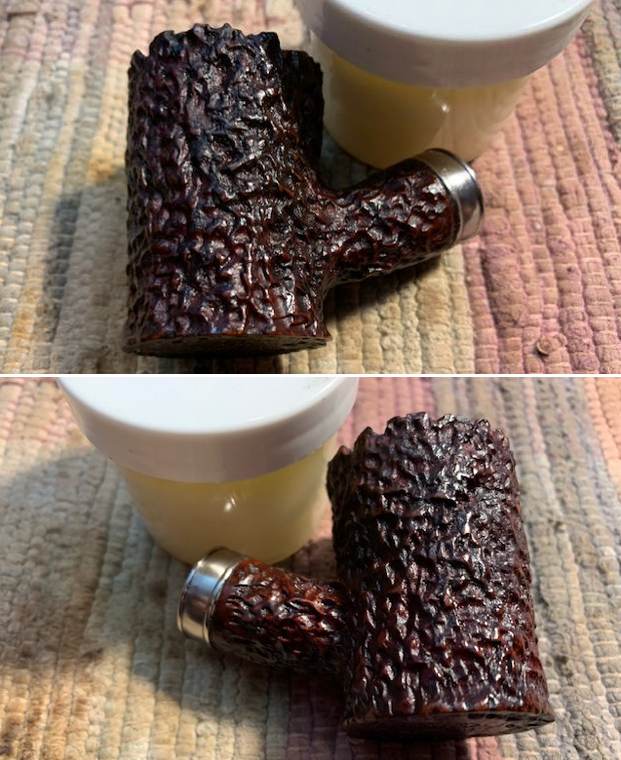
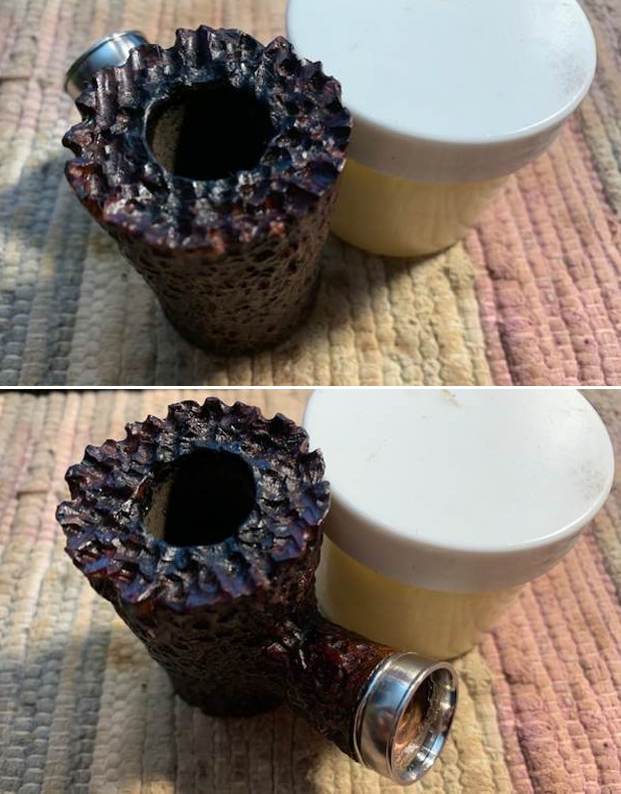
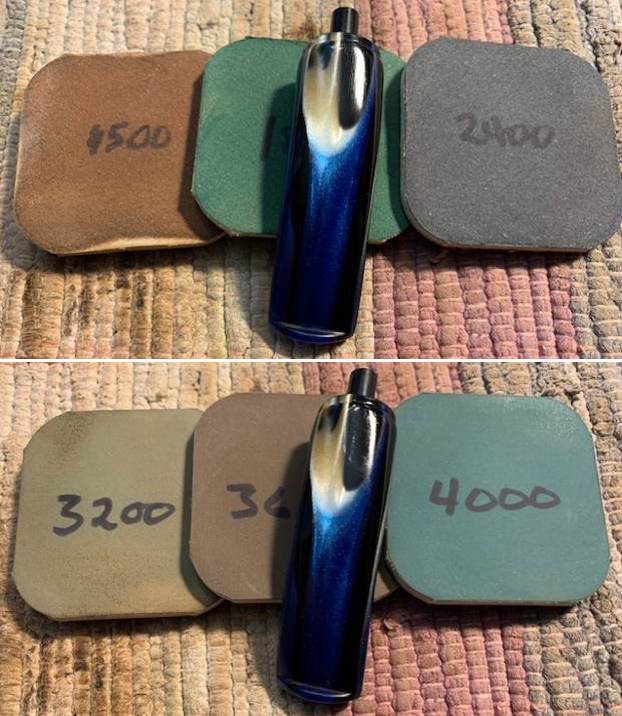
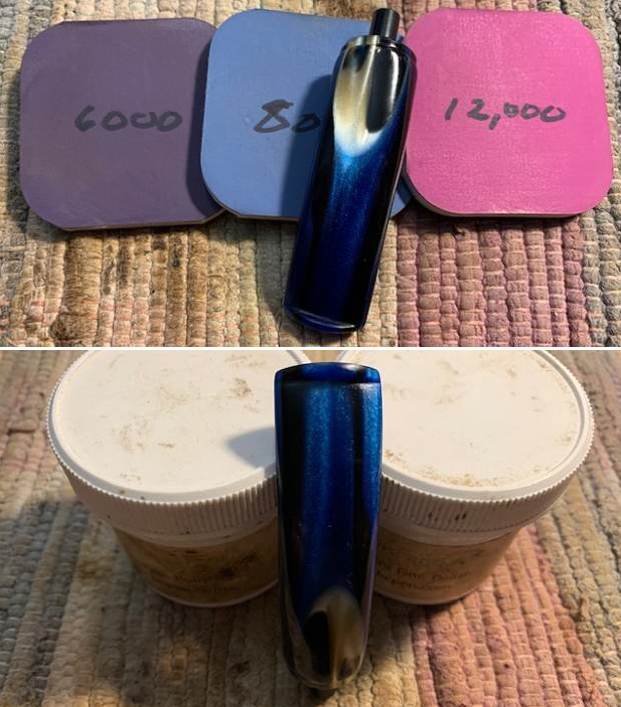
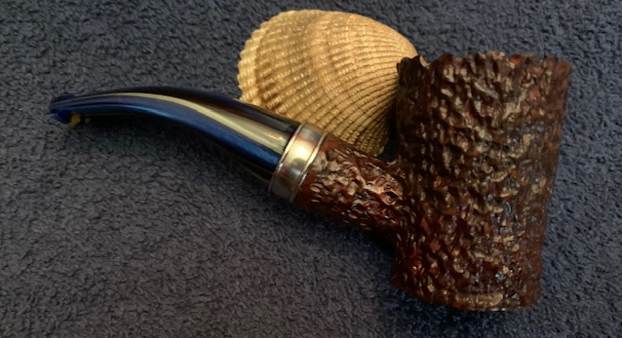
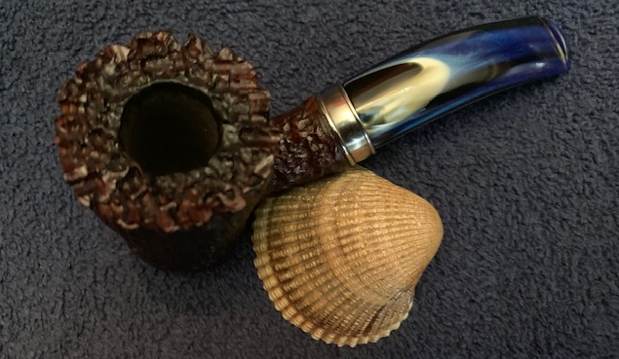
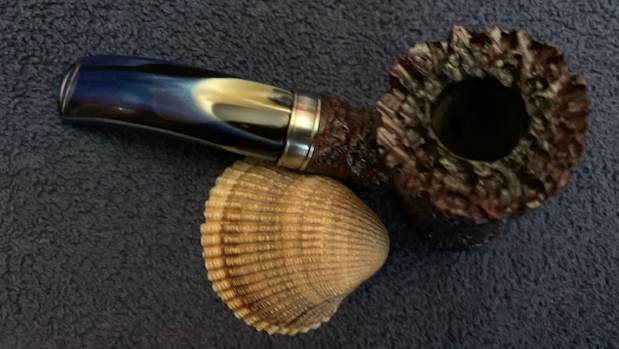
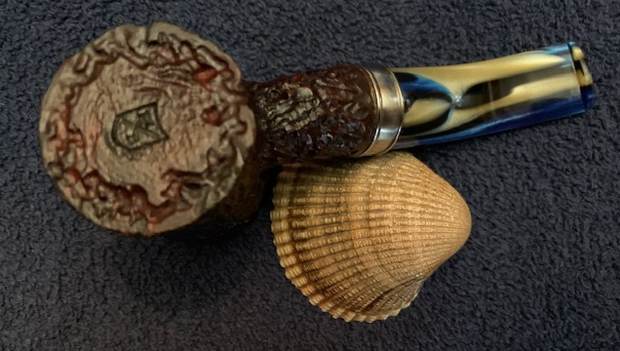
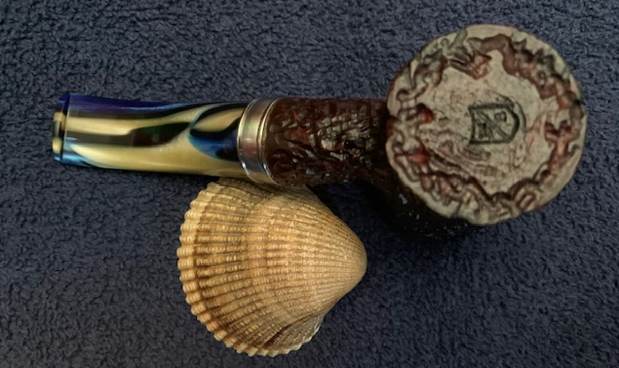
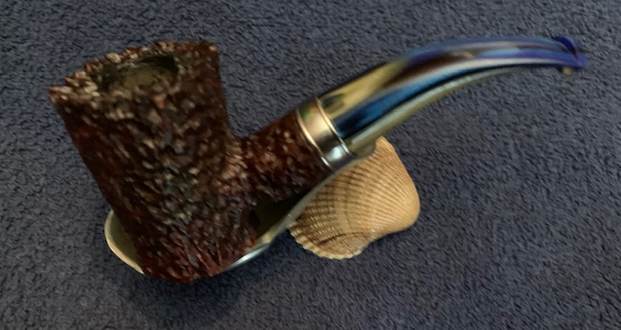
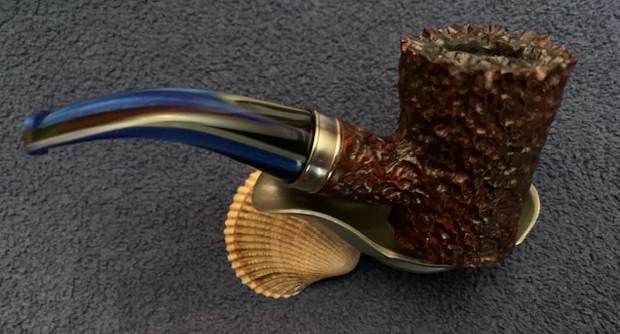
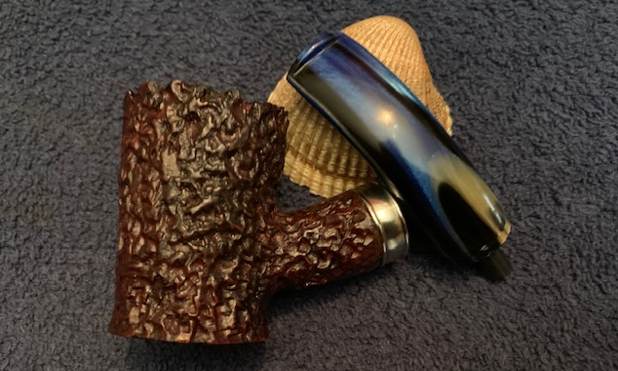
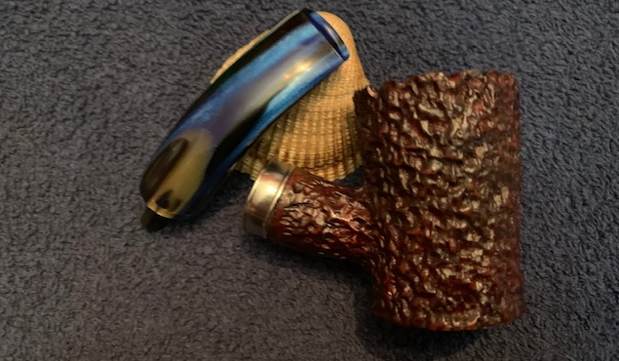
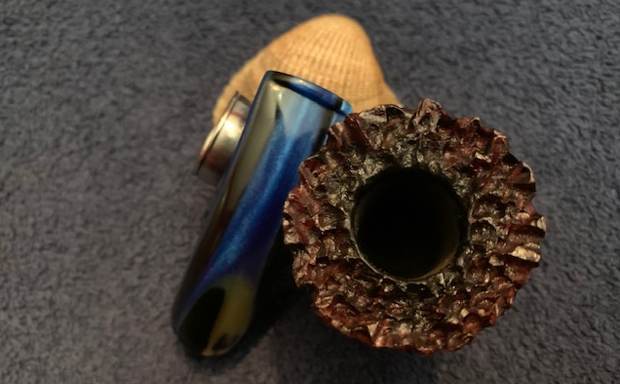
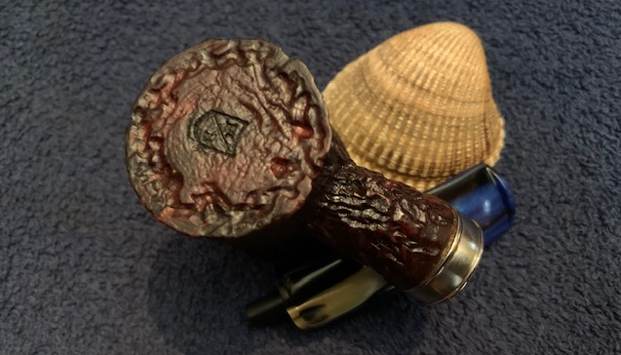
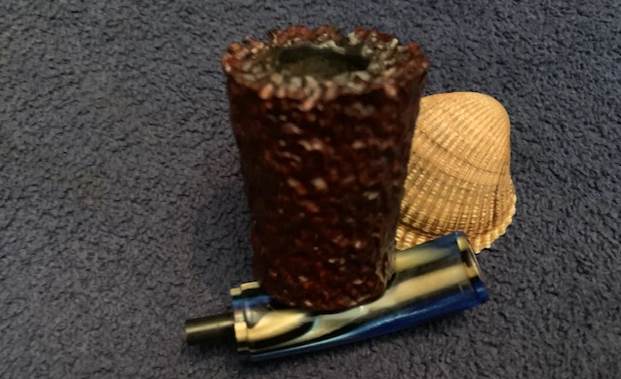
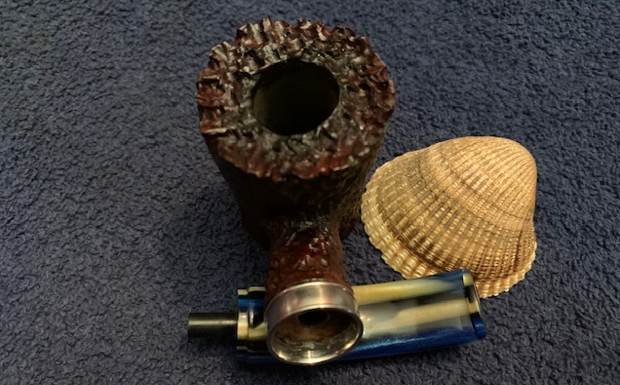
This is another pipe that I have taken out of my personal collection as I just do not use enough to warrant keeping it. This pipe was given to me in a group of pipes and I used it a bit when it came in. It is from a period of my journey where I smoked solely Virginia tobaccos so it is quite clean. The airway in the shank and the mortise were quite clean. The rusticated finish and rim top were in excellent condition. I don’t remember who made the pipe but I do remember it was a relatively new artisan American carver. It is stamped on the heel of the bowl with the letters B/B in a shield. There was a light cake in the bowl but the top and inner edge of the bowl clean and a bit faded. There is a polished steel band on the shank end. It is loose and the attachment is a bit odd. The shank end and stem end are both stepped down to receive the band. The blue and gold/tan acrylic stem is in good condition with some light tooth chatter ahead of the button on both sides. It has a inserted Delrin tenon that is a great fit in the shank. I took photos of the pipe before I did my clean up work on it. I took a photo of the bowl and rim top to verify the description above. I also took photos of the stem surface showing the light chatter on either side.I took a photo of the stamping on the heel of the bowl. It is clear and readable as noted above.  I took the stem off the bowl and took a photo of the pipe to give a sense of proportion of the pipe. You can also see the loose band and the step down area on the shank end and stem end. There was still some bits of glue on the shank end that I would clean off when I reglued the band. I used a toothpick to spread some Weld Bond all purpose glue around the shank end.I pressed the band on the shank end and wiped off the excess glue around the edge of the band.I cleaned up the rustication on the rim top with a brass bristle wire brush. It looked cleaner and more distinct.I touched up the stain on the rim top and worked it into the faded spots on the rim top, working it down into the valleys of the rustication.Now it was time to work on the pipe. I cleaned up the light cake in the bowl with a Savinelli Fitsall Pipe Knife. I sanded the bowl walls with a piece of dowel wrapped in 220 grit sandpaper.I cleaned the mortise and airways in the shank and stem with cotton swabs, pipe cleaners and isopropyl alcohol to remove the debris and tars from my smoking. You can see that it was not too bad as I tend to keep my pipes clean.The bowl was in such good condition that decided to give the bowl and shank a coating of Before & After Restoration Balm. I worked it into the surface of the briar with my fingertips and a horsehair shoe brush to clean, enliven and protect the briar. I let the balm sit for 15 minutes and then buffed with a cotton cloth to raise the shine. The photos show the bowl at this point in the restoration process. Since the stem was in quite good condition other than tooth chatter I polished out the chatter with micromesh sanding pads – dry sanding with 1500-12000 grit pads. I rubbed it down between pads with Obsidian Oil. I polished it with Before & After Fine and Extra Fine Pipe Stem Polish. I wiped it down with some Obsidian Oil and buffed it off. It is a beautiful stem. I am excited to put the final touches on this great looking American Made Artisan BB Rusticated Cherrywood. I put the pipe back together and buffed the stem with Blue Diamond on the buffing wheel. I gave the bowl multiple coats of Conservator’s Wax and the stem multiple coats of carnauba wax. I hand buffed the pipe with a clean buffing pad to raise the shine. It is fun to see what the polished bowl looks like with the rugged rustication all around it. Added to that the polished blue and gold/tan acrylic stem combined with the bowl and make a stunning pipe. This rusticated BB Cherrywood is great looking and the pipe feels great in my hand. It is light and well balanced. Have a look at it with the photos below. The dimensions are Length: 5 inches, Height: 2 inches, Outside diameter of the bowl: 1 ½ inches, Chamber diameter: ¾ of an inch. The weight of the pipe is 59 grams/2.08 ounces. It is a beautiful pipe that I will soon be putting on the rebornpipes store in the American Pipe Makers Section. If you are interested in adding it to your collection send me an email or a message. Thanks for walking through the restoration with me as I worked over this pipe. Thanks to each of you who are reading this blog.