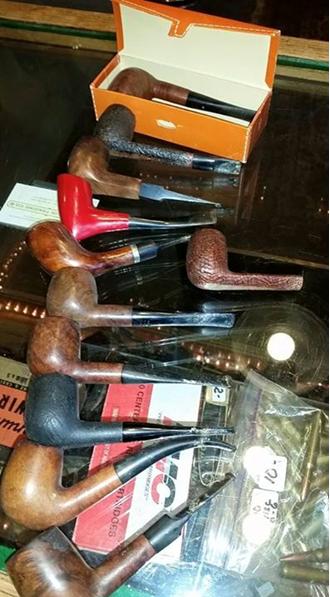
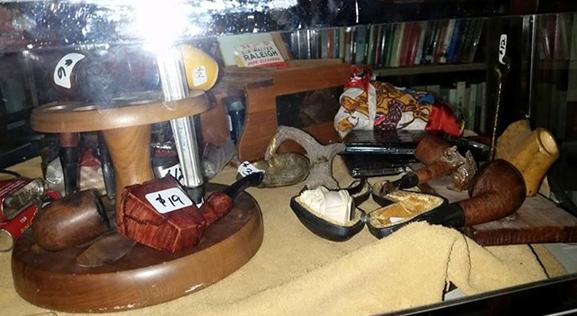
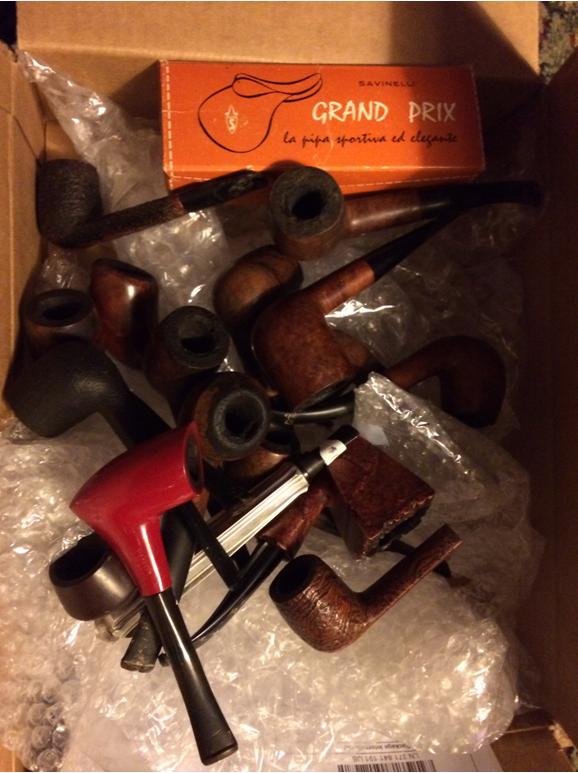
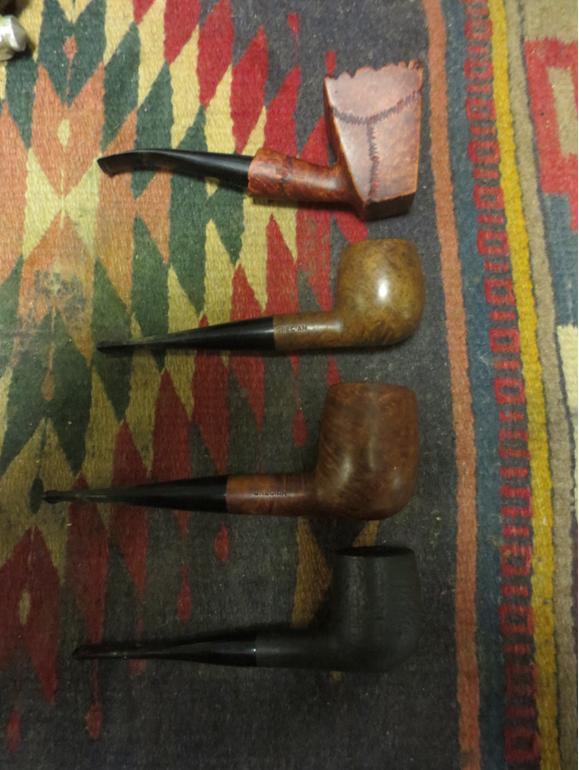
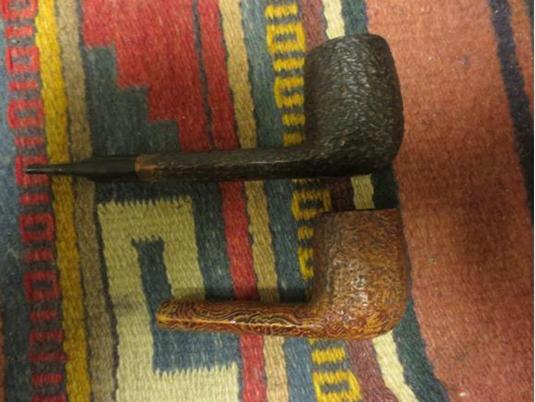
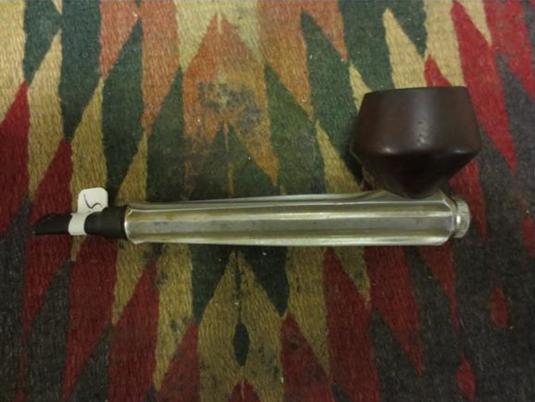
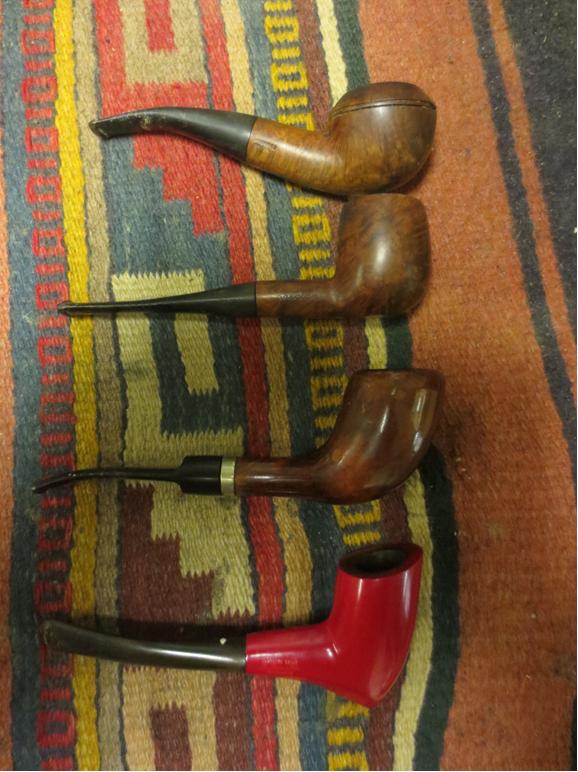
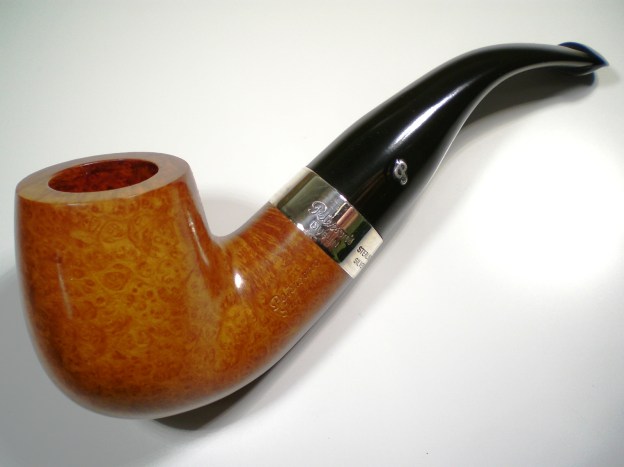
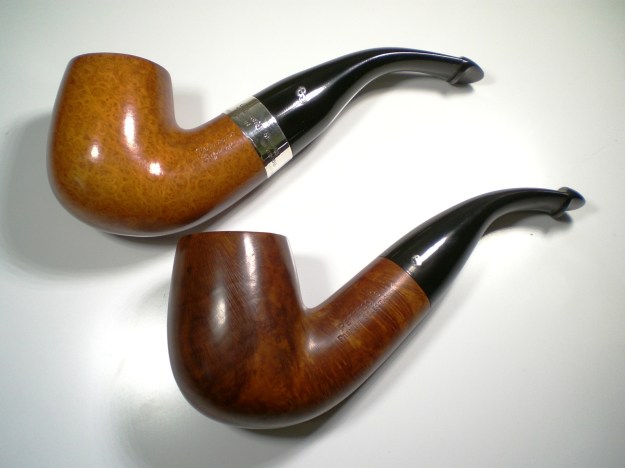
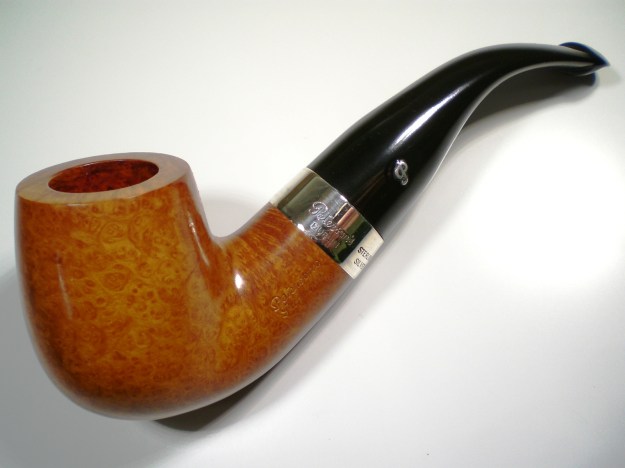
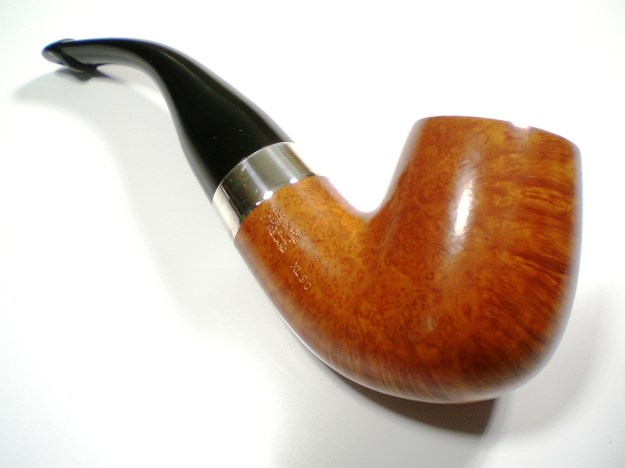
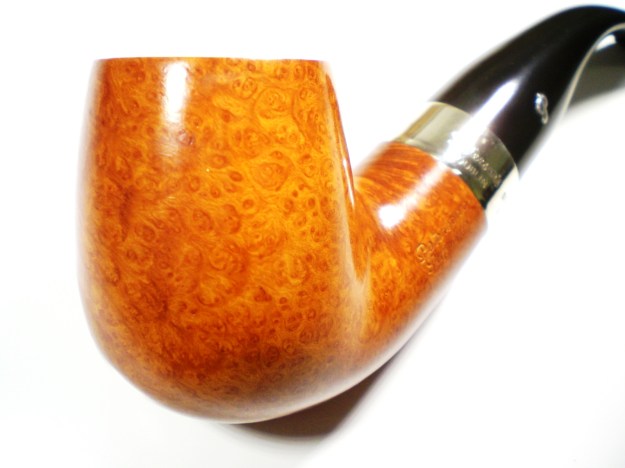
Category Archives: Pipe Refurbishing Essays

Essays and pictorial essays on the art of refurbishing

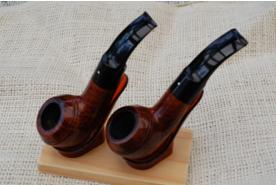
A Pair of Millard Perfect Pipes – A Sandblast Apple and Dublin


Blog by Steve Laug

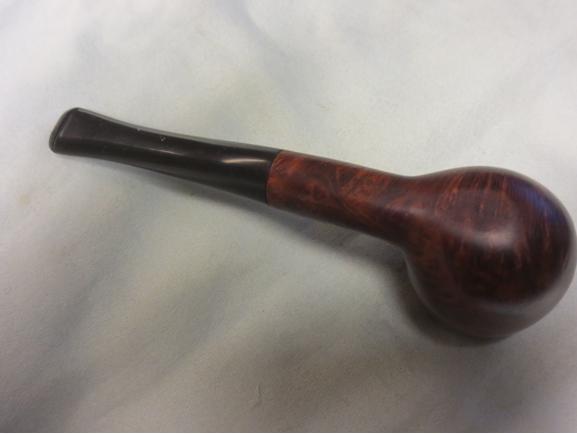
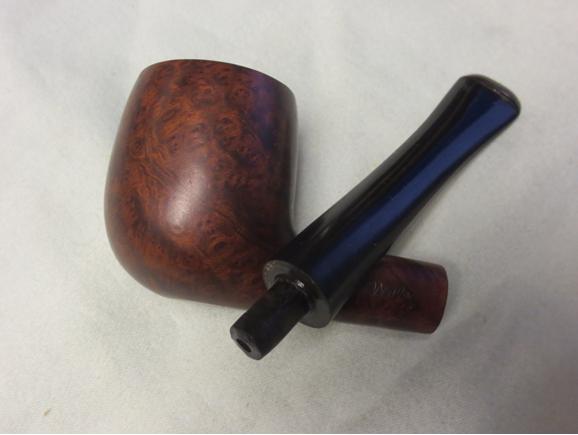
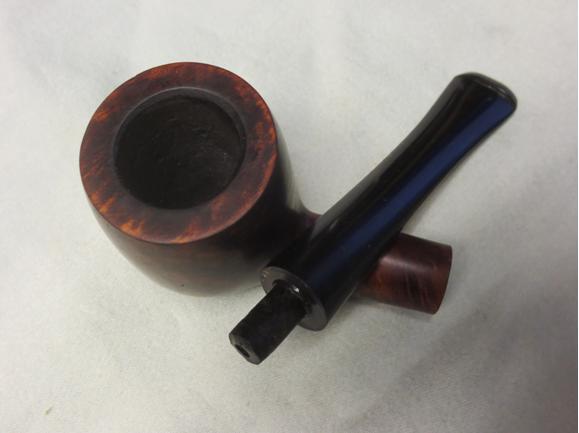
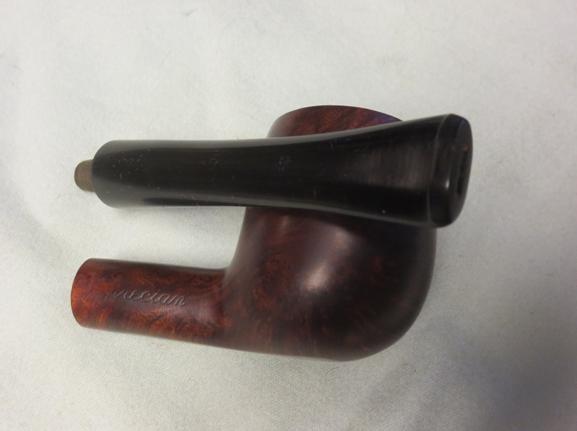
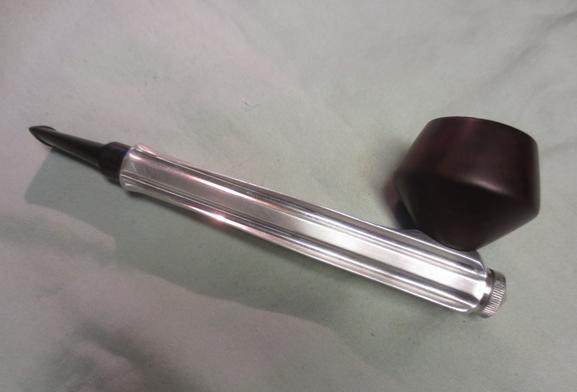
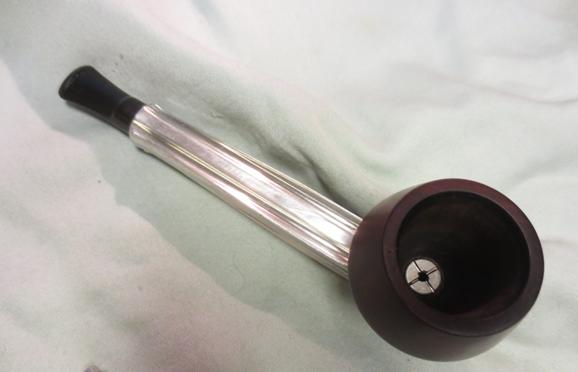
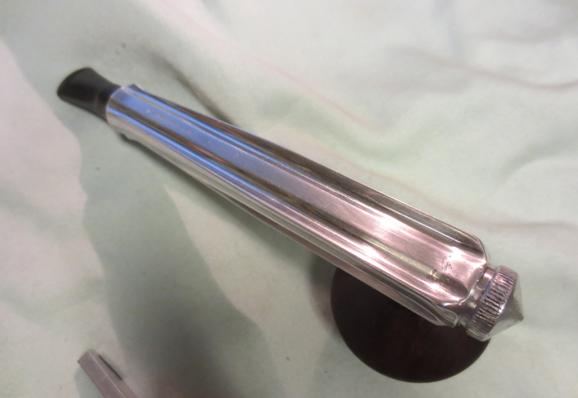
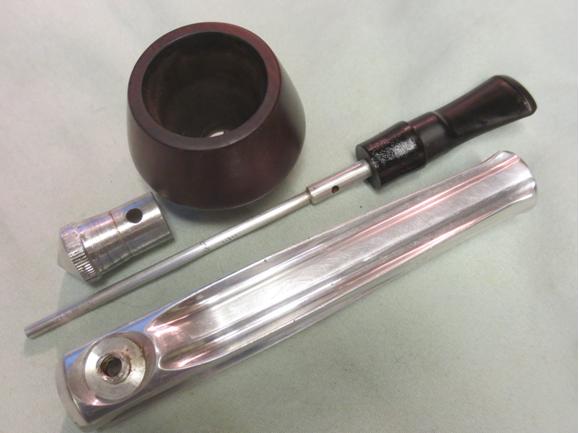
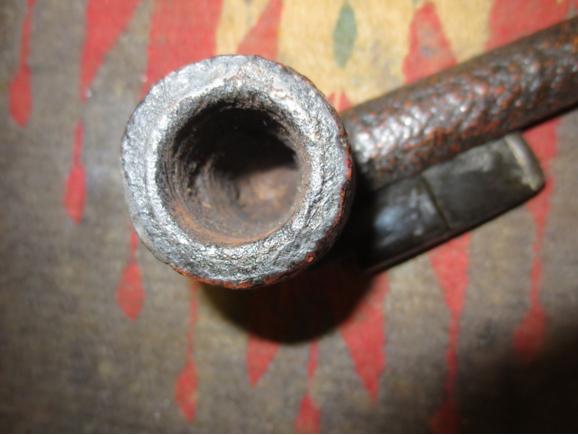
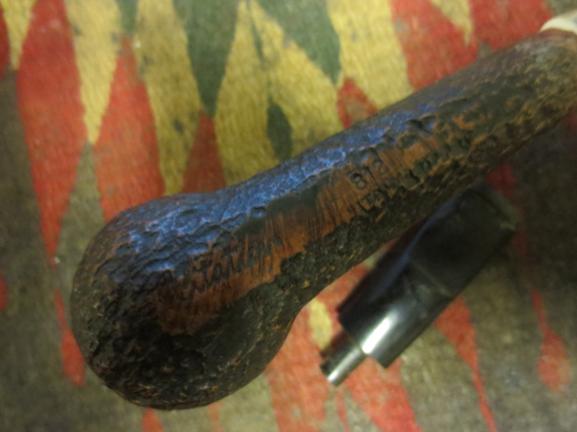
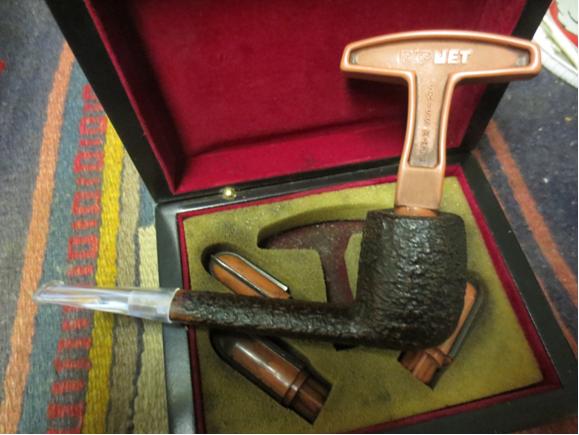
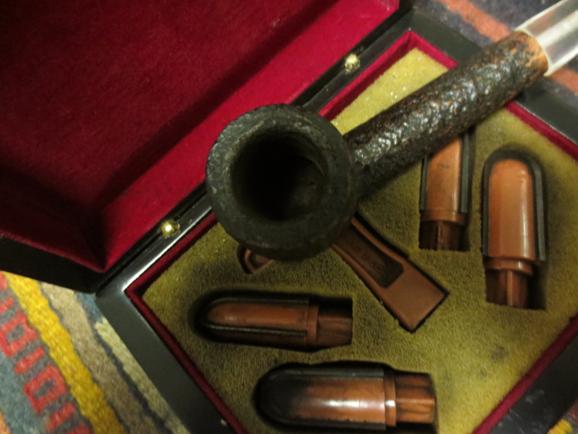
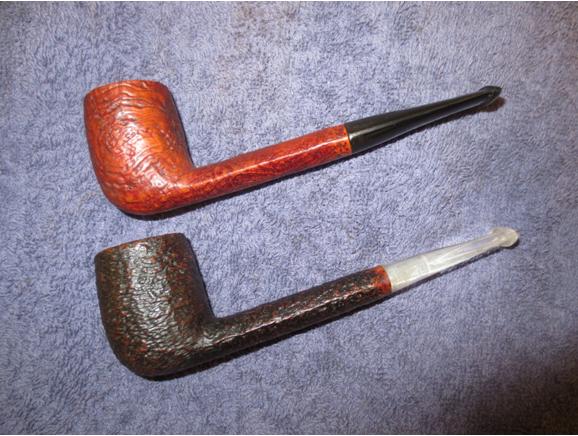
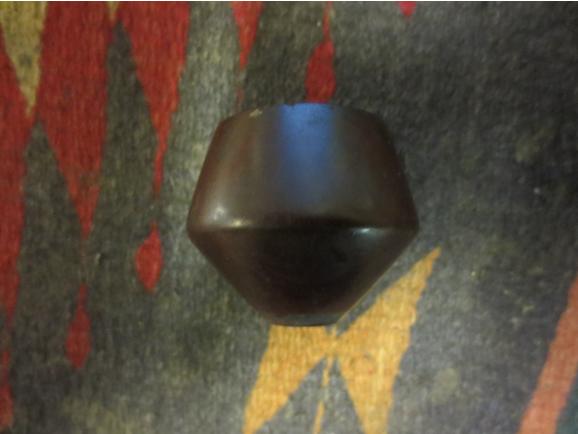
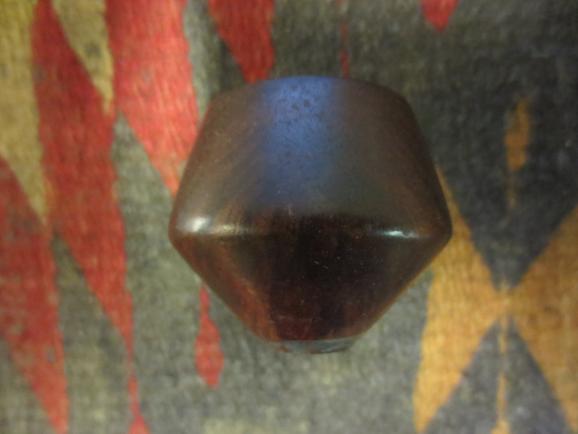
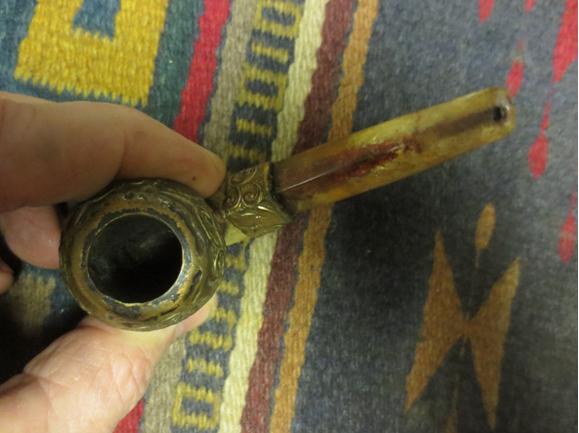
When I came across the Millard – the Perfect Pipe coupon in the two boxes of Kentucky Club that I found I was fascinated with the look of the pipe. It reminded me of the Keyser Hygienic pipes that I had restored over the years. The stem that fit into the metal mortise shank insert and the tubes on the inside of the stem and the shank were similar. While the Keyser tubing in the shank looked identical the one in the stem was different. Keyser was directed downward while the Millard was two straight tubes that met in the mortise. They did not touch but the metal chamber became a condensing chamber, or as they call it an Action Trap, for the smoke and collected the moisture before it continued through the tube in the stem. I looked up the brand online and found the following advertisement postcard that shows the way the system works. I found that the stems were interchangeable between the shapes that the pipe came in. The straight stems could be easily transferred from pipe to pipe. In fact the pipe originally came with an extra or replacement stem. The pipe came in a sandblast and a smooth finish in six shapes – apple, Dublin, billiard, pear, pot and bent. It came in two sizes: medium or large. In the advertisement below you can see that the pipe cost $3. I also found that Mastercraft supplied the pipes through the coupon sales. Knowing a bit of history about the company I know that they did not make pips so they were sourced from the original manufacturer.Millard1I mentioned in the Kentucky Club Blog that I would love to get my hands on one of these. I received a comment from one of the readers, Pam who offered to send me one. She had picked one up in a lot of pipes she was working on restoring. I could have it. I thanked her and she sent me the following photos of the pipe. It is a little (or what Kentucky Club called Medium in the advertisement above). It was a sandblast apple. It was in decent shape and would clean up quite nicely. The finish was spotty and the stain was lightened and missing in some spots. The rim had some buildup of tars. The cake was quite thick. The inner rim edge was out of round. The stem was oxidized and had some calcification in front of the button.Millard2
Millard3

Millard4 While I awaited the arrival of Pam’s gift I took a look on eBay and found that the pipe that I had pictured in the Kentucky Club Blog was for sale. The seller wanted $12 for the pipe. It was a Dublin shaped pipe with a smooth finish. It looked to be a Medium sized Millard as well. On a whim I put a bid on it and won. The seller said that it was restored but my past experience with these kinds of sales made me pretty certain that all that it meant was that it was polished. Now I went from no Millard pipes to two in a matter of days. The photos that follow were from the seller. The pipe looked sound. The finish was pretty decent though there were ripples and dents on the bowl sides. The beveled rim was not clean and there were still spots where the tars had been left and polished. The inside of the Action Trap was dirty with tars and oils. The stem had some tooth chatter and dents. Once the pipe arrived I would have a better idea of what I had to work with on this one.Millard5

Millard6

Millard7

Millard8

Millard9

Millard10 Pam’s gift pipe arrived first. It was a beautiful smaller sized apple (even though the advertising from Millard called it a Medium). The length was 6 inches. My original assessment from the photos proved to be pretty accurate. The finish was worn but the sandblast was quite nice – shallow but still tactile. The light spots on the top of the shank were spots where the finish was gone but the blast was still present. The cake was thicker than I thought it would be, particularly in the bottom of the bowl. The bowl was more out of round than I had guessed and had a burn spot on the back middle inner edge that contributed to the misshapen inner edge. The tar build up was deep and there appeared to be a burn spot on the top of the rim at the front right side. The inside of the shank, the Action Trap, was dirty and had tar, oil and tobacco shellac. The airway was tight and constricted when I blew air through it. The stem was oxidized and under the calcification there were some deep tooth marks and cuts that would need to be addressed. The inside of the stem has a chamber with the tube in the middle and that area was dirty with tars and oils. The airway was constricted even more than the one in the shank. I was pretty sure that something was clogging it and causing the constriction. The slot had been reduced by half with the buildup of grime.

The second pipe arrived at my home a short time after Pam’s. It too proved my original conjecture about the concept that some people have of what “restored” means. This pipe had been given a light polish on the briar and the stem. The polish had merely wiped over the dents, dings and scratches on the briar. There were ripples along the top of the shank. The rim still had spots of tarry buildup that had been polished and there were scratches from what looked like a quick scrub with a coarse scrubber. The bowl had a slight ridge around the inside just below the rim from an incomplete reaming. The inside of the Action Trap was dirty and the oils and tars had hardened. The airway was constricted and dirty and the opening in the bowl bottom was plugged with grit. The aluminum mortise insert was oxidized and dull. The stem was oxidized and there were ripples in the surface from where someone had either buffed hard or tried to remove tooth chatter or tooth marks. The inside of the stem chamber was dirty with tars and oils and the inside of the stem looked as if it had never seen a pipe cleaner. So much for the term “restored”.

I decided to work on both pipes at the same time so that I could compare the internals and the briar on them. It would be a fun project to do them both together and watch the truly restored pipes emerge from the tired pipes that had arrived at my work table. The next four photos show the pair together.Millard11

Millard12

Millard13

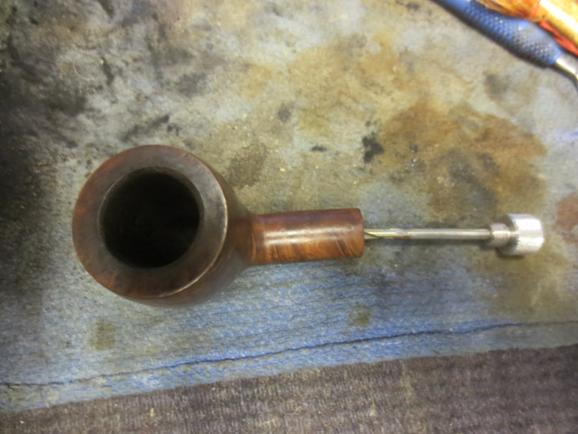
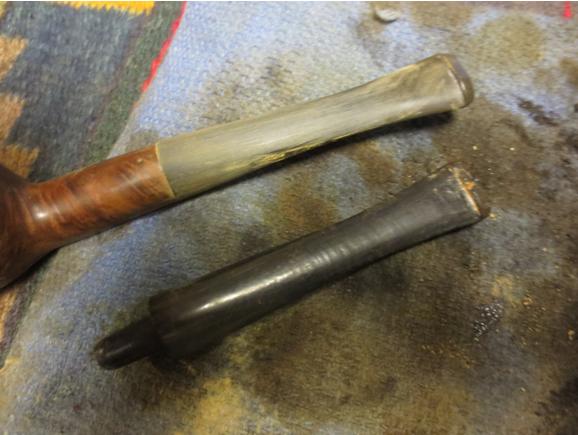
Millard14 I took some close up photos of the two bowls to show what I would be working on. The first photo shows the bowl of the apple shaped pipe. You can see the cake and the damage to the top of the rim. The bowl is out of round. The second photo shows the rim of the Dublin and you can see the scratches and the incomplete cleaning of the rim tars.Millard15 The next photo shows the stems removed from the shanks. The stems are interchangeable so as I had expected from the advertisement shown above one stem size and shape could be used interchangeably on any of the straight pipes.Millard16 I took a photo of the internals of the mortise insert to show the tube inset in the middle of the aluminum chamber. This is the Action Trap that the adverts spoke of. The “restored” Dublin was just as dirty inside as the untouched apple sent by Pam. While both look the same the tube in the Dublin extends further into the Trap than the one in the apple. The second photo shows the end view of the two stems. You can see the tube inset in the middle of the stem. Again the tube in the Dublin stem is shorter than the one in the apple. I am not sure the reason for this as when both are interchangeably inserted in the bowl the draw and fit is identical so it may well be just inconsistency in the manufacture.Millard17 I cleaned up the inside of the Dublin bowl with a PipNet reamer to remove the ridge along the top portion of the bowl just below the beveled rim. I scrubbed the rim with saliva and cotton pads to work on the tars left behind. I found that they were hard so I used a 1500 grit micromesh pad to sand and work on the deposits until they were gone and the rim was smooth. It also worked to remove the scratching on the rim that had been left behind by the previous “restoration”.Millard18 I reamed the bowl on the apple with the PipNet reamer and took the cake back to bare briar. The second photo shows the large amount of carbon that I removed from the bowl.Millard19

Millard20 With the bowl reamed you can see the damage to the inner edge that left the bowl out of round. There was a burned area on the rim at that point that did not go too deeply into the bowl but it was present. I scrubbed the rim with a brass bristle tire brush to remove the overflow of cake on the rim.Millard21

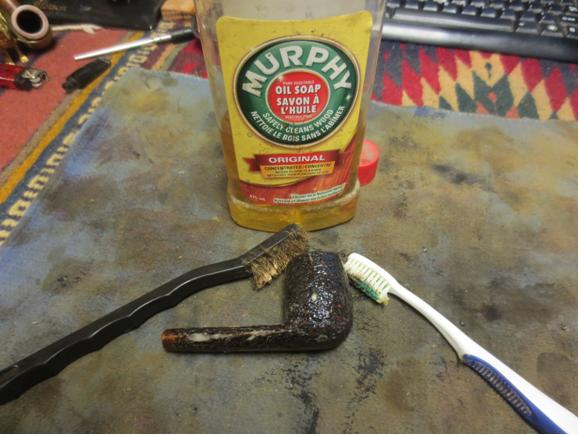
Millard22 I scrubbed both bowls with a tooth brush and Murphy’s Oil Soap to remove the spotty finish on the apple and the grime on both bowls. I also removed the polish that had been applied to the Dublin so I could work on the scratches and dings. After scrubbing them I rinsed them under warm water in the sink to remove the soap and the grime that had been loosened.Millard23

Millard24

Millard25

Millard26 I scrubbed both bowls with acetone on a cotton pad to remove the remaining finish and clean up the briar. The finish on the Dublin was pretty clean. The one on the apple came off with the scrubbing and the remaining finish was removed.Millard27

Millard28 With the bowls and finish cleaned up it was time to address the internals. I used pipe cleaners, cotton swabs and alcohol to clean out the debris in the shank and the mortise of both pipes. I used a folded pipe cleaner and a cotton swab that I thinned the cotton on to get inside of the mortise to clear out the build up there.Millard29 To address the damaged rim on the apple I decided to top the bowl. I set up the topping board and a piece of 220 grit sandpaper and worked on the rim to flatten it and remove the damaged areas. In doing this I found another burned spot on the front right top of the rim. I worked on the inner edge of the rim with a folded piece of sandpaper to correct the out of round condition. When I was finished the rim looked far better. Now I needed to work on rusticating the rim to match the sandblast on the finish of the pipe.Millard30

Millard31 To rusticate the rim I used a dental burr in my Dremel and carefully worked it over the surface of the bowl rim. It had to be deep enough to show, tight enough to look like a sandblast and somehow blend into the bowl finish. I carefully worked the Dremel over the surface being careful to keep it on the flat rim and not damage the edges of the inside or outside of the bowl. The next two photos show both the burr and the work done on the rim. Though it is a little hard to see the rustication came out really well. It will become clear in later photos.Millard32 I stained the bowl and rim with a dark brown aniline stain. I applied the stain and flamed it. I reapplied it and reflamed it.Millard33

Millard34

Millard35 The next photo shows the rustication very clearly. I touched it up with a dark brown stain pen and then waxed the bowl and rim with a microcrystalline Conservators Wax. The bowl was looking far better.Millard36

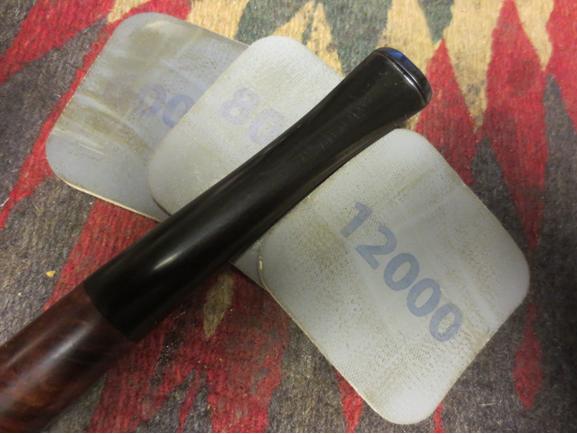
Millard37 With the basic work done on the bowls and rims I turned my attention to the stems. I cleaned both stems with pipe cleaners, alcohol and cotton swabs until they were clean. I picked out the slots on both stems with a dental pick to make sure they were wide open. The stem on the Dublin had a very tight draw. I ran a straightened paper clip through the stem and a large chunk of tar and cotton from pipe cleaners dropped out of the end. The draw was unconstricted and the airflow was clear in both stems.Millard38 I sanded both stems with 220 grit sandpaper to remove the oxidation and also clean up the tooth marks and ripples in the surface of the vulcanite. I sanded them with a medium and fine grit sanding sponge to remove the scratches left behind by the sandpaper. I repaired the tooth damage and the cuts in the surface of the stem for the apple with black super glue. After the repair had dried I sanded it with 220 grit sandpaper and the sanding sponges once again.Millard39 I wet sanded the stems with 1500-2400 grit micromesh sanding pads. I rubbed the stems down with Obisidian Oil and then dry sanded with 3200-4000 grit pads. I gave the stems another coat of oil and dry sanded with 6000-12000 grit pads. I buffed the stems with Blue Diamond on the buffing wheel and then gave them several coats of carnauba wax. I buffed them with a clean flannel buffing pad and then a microfibre cloth.Millard40

Millard41

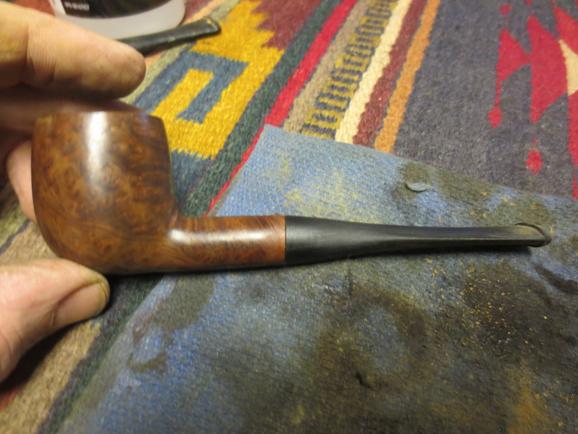
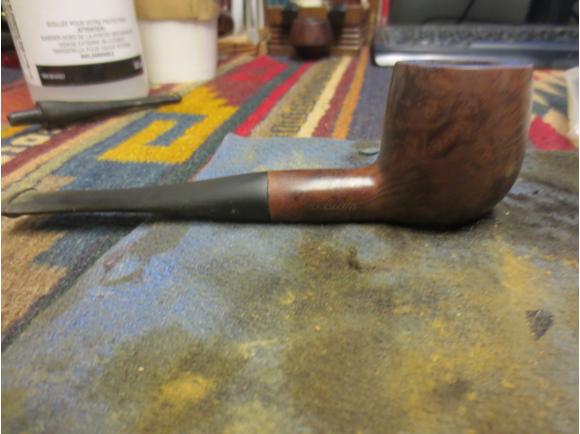
Millard42 I polished the aluminum ferrule/mortise inserts on the shanks with the last three grits of micromesh sanding pads and then rubbed them down with a jeweler’s cloth. I lightly buffed the stems and bowls with Blue Diamond and then gave the entire smooth pipe several coats of carnauba wax. I buffed the two pipes with a clean flannel buff and then with a microfibre cloth to raise the shine. The inside of the Active Trap is stained but it is clean. These are a couple of great looking pipes now. The rusticated rim worked really well with the finish on the bowl and gives the apple a clean look. The clean beveled rim on the Dublin has a rich shine that shows the grain off very well. The finished pipes are shown in the photos below. Thanks for looking.Millard43

Millard44

Millard45

Millard46

Millard47

Millard48

Millard49

Millard50

Millard51

Sasieni Ashford Natural Find (Unsmoked)


By Al Jones

As a fan of the classic British Author shape, the Sasieni Ashford is one of my favorite pipe shapes. The Ashford is also known as Shape 88 on the Sasieni shape chart. Sasieni made pipes in several finishes, most notably the Ruff Root (sandblast), Walnut (dark smooth) and the Natural (clear stain). The Natural finish was the top of the Sasieni grading system, second to the “Straight Grain” pipes. The “Four Dot” stamping also denoted a top of the line Sasieni pipe.

I recently acquired this Ashford Natural, in an unsmoked condition. Unsmoked doesn’t always mean pristine, and many times an older pipe picks up handling marks, dings, dents, etc. Fortunately this piece was in mint condition on all accounts.

The nomenclature combination of “Four Dot”, the “Sasieni” script, use of the Ashford town shape were all used between 1946 and 1979. The Ashford was also available with a saddle stem and an added “S” by the town name. My preference is a tapered stem.

I have two other Ashford shapes, the Ruff Root and Rustic. My Walnut Ashford was sold to fund this purchase. You can read that blog entry in the link below. Curiously, this Natural pipe is slightly longer, and less chubby than the other two. It also weighs a few more grams (43 grams). To my eye, the shape is similar to the Comoys 256 Author, a shape that still eludes me.

Sasieni Ashford Shapes

As you can see from photograph of the bowl, Sasieni did “carbonize” their bowls. I was unaware of this Sasieni practice and a thread on the PipesMagazine.com forums brought some interesting information to light. One forum member found this description in a 1960’s Sasieni catalog, from the Chris Keene Pipe Pages, as below.

Sasieni Bowl Coating Thread – PipesMagazine.com

“One of the processes to which all of our bowls are subjected is the special Sasieni carbonising process. During this treatment the bowls are subjected to high temperatures under scientifically controlled conditions. As a result the interior of the bowl is carbonised to the exact degree necessary to ensure a sweet mellow smoke from the start. This treatment also serves to remove the last vestiges of bitter oils or sap and also uncovers any hidden flaws which might otherwise pass unnoticed.”

I enjoy my other two Ashford shapes, so for now, this one will remain unsmoked. I’ll wait for a significant life event to enjoy this one.

Sasieni_Ashford (1)

Sasieni_Ashford (5)

Sasieni_Ashford (7)

Sasieni_Ashford (6)

Sasieni_Ashford (4)

Sasieni_Ashford (8)

Sasieni_Ashford (2)

Sasieni_Ashford (3)

?

?

?

?

Sasieni_Ashford (9)

Repairing Cracks in a Large WDC Wellington Bent


Blog by Steve Laug

Through Facebook I connected with a new friend Warren. He wrote me about how to repair a crack in a pipe that he was reworking for a friend of his. As I described the process he asked if he could send it to me to work on. At that point my refurbishing box was getting low as I had repaired and moved out a lot of the pipes that had been there. So I agreed. Last week it arrived here. A funny side note is that I have a stem for the same pipe and have been looking for a bowl for the stem for a while now. Now I get the opportunity to work on a pipe with the same stem. It is stamped WDC in a triangle on the stem with Wellington arced below the triangle. It is also stamped on the left side of the shank with the WDC triangle and Wellington in script to the right of the triangle. Underneath the script it reads Imported Briar. There is no other stamping on the pipe. It is a large pipe with a length of over 10 inches and a bowl height of 2 inches. The diameter of the bowl is 7/8 inches. The third picture below shows a comparison of a 5 ½ inch long pipe and average bowl so you can see how big this pipe truly is.Wellington1

Wellington2

Wellington3 The briar had some attractive grain in it but there were some issues as well. It had a lot of fills on the front left, front right and bowl front. There was some damage to the surface of the rim that looked as if the pipe had been dropped on concrete. The outer edge of the rim on the front had some damage and was rounded over and the inner back edge of the rim had burn damage that made that portion out of round. Fortunately it was not a deep burn and would be relatively easy to address. There was also a ¾ inch crack on the underside of the shank that had one ¼ inch branch going toward the left side of the shank.Wellington4

Wellington5 I took a series of close up photos to show the damaged areas of the pipe. The first shows the damage to the rim surface and edges. The second shows the crack in the shank. The third photo shows the missing fills and divots in the bowl sides.Wellington6

Wellington7

Wellington8 I decided to address the crack in the bottom of the shank first. I used a micro drill bit on my Dremel to drill some small holes at the end of the crack and the branches of the crack to stop the damage from spreading further. The bit is very tiny as can be seen from the holes that are left behind after drilling. I drill two holes on each end because after the first hole I examined it with a lens and could see that extended slightly beyond my first hole. I picked out the damaged putty fills with a dental pick and wiped the bowl down so that I could repair the crack and the fills. I used a clear super glue and fine briar dust to replace the fills and to fill in the drill holes on the shank bottom. In each case I over filled the holes so that as the glue and dust were sanded I would not need to repeat the process due to shrinkage.Wellington9

Wellington10

Wellington11

Wellington12 My intention was to restain the entire bowl so I sanded the bowl and the repairs with 220 grit sandpaper to smooth out the repairs. I followed that by sanding the bowl and repairs with a medium and a fine grit sanding sponge.Wellington13

Wellington14

Wellington15 I reamed the bowl with a PipNet reamer starting with the head that would fit and working up a head that took the cake back to bare briar. In looking at the back side of the bowl I could see a small hairline crack and I wanted to know if it went all the way through.wellington16

Wellington17 I topped the bowl with the topping board and took off all of the damage to the inside and outside rim as well as the rim surface. I sanded it with the medium and fine grit sanding sponge as well to smooth out the scratches.Wellington18

Wellington19 After sanding and topping the bowl I could see that indeed there was a hairline crack that went across the rim at 5 o’clock and went down the back side of the bowl about ¾ of an inch. It was small and did not separate. It looked like it went all the way through to the inside of the bowl but upon examination appeared to only extend about 1/16th of an inch into the bowl. I topped it a little bit more to take care of the internal crack. I drilled the back side of the bowl at the bottom of the crack to stop it from going further down the bowl.Wellington20 I wiped down the bowl side and then picked out the crack with a dental pick. I filled it with super glue and briar dust and sanded it down with 220 grit sandpaper and the medium and fine grit sanding sponges until it blended into the surface of the bowl. I picked out the rim crack as well and filled it with the same mix. I sanded it with the topping board once again and then with the medium and fine grit sanding sponge.Wellington21

Wellington22 I scrubbed the bowl with acetone on cotton pads to remove the remaining finish on the briar and to clean up the dust from all of the sanding of the fills. There was some beautiful grain that was showing through. The patches and fills actually looked much better.Wellington23

Wellington24

Wellington25

Wellington26

Wellington27 I cleaned out the shank, bowl and airway in the shank and stem with alcohol, cotton swabs and pipe cleaners.Wellington28

Wellington29 I sanded the stem with 220 grit sandpaper and a medium and fine grit sanding sponge being careful not to damage the stamping. I went over that area with a 1500 grit micromesh pad. I then use an antique gold oil based product called Rub and Buff to fill in the stamping. The next photo shows the finished rework of the gold in the stem stamp.Wellington30 I put the stem in place on the bowl to get an idea of the improvement that the repairs, fills and stem work had done. I wanted to see what the pipe would look like as I finished.Wellington31

Wellington32

Wellington33

Wellington34 I wiped the bowl down with a final wash of isopropyl alcohol and then heated it so that I could give it a stain coat. I stained it with a dark brown aniline stain thinned by 50% with isopropyl alcohol. I applied it and flamed it. I reapplied the stain and flamed it again and then set it aside to dry.Wellington35

Wellington36 When it had dried I gave it a light buff with a microfibre cloth to see what the colour looked like. It was still a bit dark to my liking but the coverage was good. The repairs and fills while visible looked far better than when I started.Wellington37

Wellington38

Wellington39

Wellington40

Wellington41 I wiped the bowl down with alcohol on a cotton pad to make it a bit more transparent and make the grain shine through. It did not take much to coax the grain to the surface and highlight the beauty of the pipe.Wellington42

Wellington43

Wellington44

Wellington45 I worked on the long stem. To clean it thoroughly I had to wrap pipe cleaners together to extend the length of the stem. I wet sanded it with 1500-2400 grit micromesh sanding pads to clean up the oxidation and scratches in the stem. I rubbed it down with Obsidian Oil afterwards and then dry sanded with 3200-4000 grit micromesh pads. I gave it another coat of oil and then finished sanding it with 6000-12000 grit pads. I gave it a final coat of the wax and set aside to dry.Wellington46

Wellington47

Wellington48 At this point I laid the pipe on top of the current issue of the Pipe Collector and took a series of photos to show it before I buffed it.Wellington49

Wellington50

Wellington51

Wellington52 I polished the nickel ferrule with a silver polishing cloth and gave it and the bowl several coats of carnauba wax. A light touch is imperative on the nickel as it will darken the buffing pad and then transfer to the bowl. I hand buffed the bowl and ferrule with a microfibre cloth. I buffed the stem with Blue Diamond polish on the wheel and then gave it several coats of carnauba as well. I buffed the stem with a clean flannel buff and then with the cloth as well. The finished pipe is shown below. It is repaired and serviceable for many years to come. Thanks for looking. Thanks for the challenge Warren.Wellington53

Wellington54

Wellington55

Wellington56

Wellington57

Wellington58

Wellington59

Wellington60

What a Mess – A Vanguard Reg’d. Lumberman with a Bit of History


Blog by Steve Laug

I recently came across an EBay lot of bowls without stems and broken tenons still in the shanks. In the lot was one that intrigued me. It was the only one with a stem. The stem was short and tapered. It was very narrow and the button and slot made me think that it was old. The lot had the look of older English pipes but there was no information on the stamping. When the lot arrived in Vancouver, the stemmed pipe was stamped Vanguard over Reg’d on the left side of the shank. All other stamping, if there had been any, was lost.lot1 The bowls finish was gone. The colour was almost grey and there were spots all over this bowl and the others as can be seen in the photo below.lot3 From the third and fourth photo provided by the seller I could see that the shank was cracked and would need to be addressed. The rim appeared to be very thickly covered with lava and the outer edge had been damaged and rounded.Lot5 The next photo shows the large crack that was present in the shank of the pipe. It had started to open and the edge of the shank where it met the stem had some nicks.lot8 When the box arrived the pipe was actually in worse shape than the photos had shown. The bowl rim was not all that was caked with tars. The bowl itself was almost 1/3 full of half burned tobacco, dottle that was rock hard and filled the bottom of the bowl. The cake on the rest of the bowl was not thick but was very hard. The finish was not only grey and spotty but was dented and rough to the touch. I could feel the ridge where the sides of the crack in the shank had separated. The rim edges were not only damaged and rounded but were also rough from banging out the burnt tobacco against something hard. The stem had tooth marks and chatter on both sides of the stem at the button. The button and slot were intact. The stem appeared to be as old as or older than I first thought. This was going to be a challenge to bring back to life but the age of it made it something I could not wait to tackle.Van5

Van6

Van7

Van8 I took some close up photos of the state of the rim and cracked shank once the pipe arrived. It was a mess that is for sure. The rim and bowl were in bad shape and smelled awful. The shank crack was worse than I had imagined. The first photo of the cracked shank is from the top and the second photo is from the side.Van9

Van10 I looked up the Vanguard name in Who Made That Pipe and found that there were two makers. There was a French maker and an English maker. The French pipe was made by Marchal, Rouchon 1907 and the English one was made by A. Oppenheimer/Bernhardt & Meyers. Given that I cannot be definitive as to which maker crafted this pipe. But the interesting thing is that the Marchal & Rouchon Cie which later became GBD France came under control of Oppenheimer in Great Britain. So you can see that though I may not know which one ultimately made the pipe the fact is that the two brands came together in 1902 when Marchal & Rouchon Cie sold out to Oppenheimer. I now have in my collection a pipe which may well have bridged the union of the two companies. The Vanguard thus could easily bear both the French and the English stamping. The lack of a “Made in…” stamp may well signify the years that the companies joined. That in itself made cleaning up and restoring this old-timer interesting for me.

I decided to start the clean up by reaming back the cake and cleaning out the dottle from the bowl. I used a PipNet reamer and started with the smallest head and worked up to the one that fit the bowl. I took the cake back to bare wood to check for damage to the inside walls of the bowl. With a pipe this worn I find that this is extremely necessary. I do not want any surprises after I have cleaned it up.Van11

Van12 To repair the damaged shank I opened the crack as much as possible without making it worse and used a dental pick to push super glue into the crack. I pressed it together until it dried. I then used the sanding drum on the Dremel to take down the shank slightly so that a band would fit snugly on the shank and hold the crack tightly together. I pressed the band onto the end of the shank and took the picture below before I heated the band and pressed it into place.Van13 I heated the band with a heat gun and then pressed it against a flat surface until the band was in place on the shank. I pressed it onto the shank and then used a folded piece of sandpaper to clean up the edge of the band and shank. I left about 1/8th of an inch of the band extending past the shank to deal with the chipped and damage shank end. The stem would not have had a clean fit against the shank because of the damage. When the stem was in place it fit inside of the band against he shank and looked great.Van14

Van15

Van16 With the band in place the shank was repaired and the tenon would no longer fit in the mortise. The contraction of the briar by the band cleaned up the crack and tightened up the loose fitting stem. I lightly sanded the tenon with a sanding drum on the Dremel and then by hand to get a snug fit in the shank.Van17

Van18

VaN19

Van20

Van21 I scrubbed the surface of the briar with acetone and cotton pads to remove the grime, spotting and remaining finish. There was some interesting grain under the grime.Van22

Van23

Van24

Van25 The damaged rim surface and outer edge required that the bowl be topped. I used the topping board and 220 grit sandpaper to remove the damaged surface and sharpen the edge of the bowl.Van26

Van27 I scrubbed the surface of the bowl down again with acetone and cotton pads to remove the dust and grime from topping.Van28

Van29

Van30 I cleaned the inside of the shank and the stem with alcohol, cotton swabs and pipe cleaners. I used the drill bit from the Kleen Reem pipe reamer to clean out the airway from the mortise to the bowl. When I was finished I swabbed out the bowl with cotton swabs and alcohol and was pleased to find that the rank smell was gone.Van31 I sanded the bowl and stem with 220 grit sandpaper and a medium and fine grit sanding sponge to remove the tooth marks on the stem and scratches in the briar. I steamed the dents in the briar with a knife blade and wet cloth.Van32

Van33

Van34

Van35 I sanded the stem with micromesh sanding pads – wet sanding with 1500-2400 grit pads and dry sanding with 3200-12000 grit pads. I rubbed the stem down with Obsidian Oil between each grit and then continued sanding until I had worked through the lot of pads.Van36

Van37

Van38 I wiped the bowl down with a light coat of olive oil and then sanded it with 1500-2400 grit micromesh pads and then continued through the rest of the grits of pads. I continued to polish the bowl with the remaining grits of micromesh.Van39

Van40

Van41

Van42 I buffed the pipe with Blue Diamond polish on the wheel and then gave it several coats of carnauba wax. I buffed it with a clean flannel buff and then hand buffed it with a microfibre cloth. The finished pipe is shown in the photos below. It came out well for a pipe that potentially was made 108 years ago. Thanks for looking.Van43

Van44

Van45

Van46

Van47

Van48

Van49

Van50

Procrastination & Restoration


Blog by James Gilliam of JSEC Pipes

What can I say, I really enjoy making pipes. The time I’m afforded for sitting in front of a sanding wheel, at the lathe and sitting at my desk doing detailed work are some of my most relaxing moments. The creative juices are flowing and at times I feel as if I’m breaking new ground with Shape X or Following Line Y, all the while the end goal is just to create a pipe that will become a cherished object of relaxation by its owner.

And here we are, writing up a little story for Steve’s Blog. It isn’t often that I venture down the restoration path, and when I get stumped I end up asking Steve a question or two. So, on to my story……. Our neighbor’s husband recently passed away and soon after the funeral she come over and gave me his pipes. I was elated that she even considered that and wanted to do them justice by addressing some minor cosmetic issues the pipes had.

The trio consisted of (from top to bottom): a Davidoff 152 Sandblasted Bent Billiard, a Charles Fairmorn – Made in Denmark Bent Egg, and a Charatans Make 4402DC Silver Banded Lovat. And as you can see by the first picture, they were enjoyed by their previous owner. They all had been taken care of but It had been a few years since they had been smoked. They were lovingly displayed in his corner of the living room. A remembrance, I guess, for those days when he did smoke his pipes. He still enjoyed them, just didn’t smoke them anymore.James1

James2 The first order of business was addressing the oxidation on the stems. And I was stumped, as I’ve never seen oxidation this bad before. So after reading through the rebornpipes blog posts and contacting Steve I found what I needed to give the stems a little bath. I’m glad I sent Steve the email, as the bath that was enjoyed by all the stems made my efforts for oxidation removal rather easy. The best part is “most” of the stamping on the stems was savable, albeit on some a little fainter and not so pronounced as before. Had I just sanded the oxidation off, as I was inclined, there would be nothing else there. The oxidation really took its toll on the Davidoff stem, and about 1mm of diameter was no longer there after it was removed with a light sanding….. and I personally don’t find the new stem-shank junction off putting even though it was no longer flush.James3

James4

James5

James6 The next issue to tackle was outer appearance. The Fairmorn Egg and the Charatan Lovat were the easiest to address as they simply needed an alcohol bath and scrubbing to remove some dirt and grime. A light sanding was in order for the Fairmorn Egg and that was followed by restaining. The best part was the Charaton retained it’s original color. A buffing with various pastes made them shine.

The Davidoff Bent Billard was a different story. Color wise It is, in my opinion, one of the ugliest pipes I’d seen. I scrubbed and scrubbed and scrubbed with alcohol to remove the underlying stain as best I could, to no avail. So I just decided to restain it a light brown….. and am glad that I did as the result came out rather nice…. At least I think so.James7

James8 All in all, I’d say the pipes cleaned up rather well. Below is a picture of the complete set that I was gifted. My neighbor was more than elated to see them returned to their previous luster, and I was pleased that I could restore something from someone who meant so much to her.

The leather pipe stand still needs a foot/let on the rear left side, as the original fell off at some time in the past and the tobacco jar needs cork reapplied inside the top of the lid. It’ll get done, as the tobacco jar is the cat’s meow…..

Sorry it took so long to write up the story Steve and may you all have a joyful Christmas Season. Surround yourself with those you love, enjoy the time you are able to spend with them, and smoke a bowl in remembrance of those that were close to you and your family. Oh yea, and overlook Uncle Rufus this year… just chuckle and relight.

Merry Christmas and Happy New Year
JamesJames9

GBD Meerschaum Pipe


By Al Jones

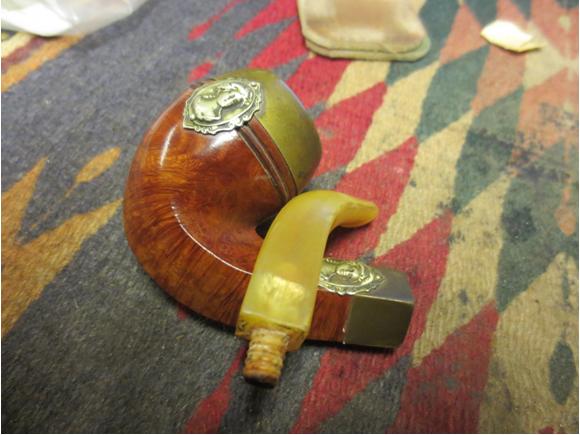
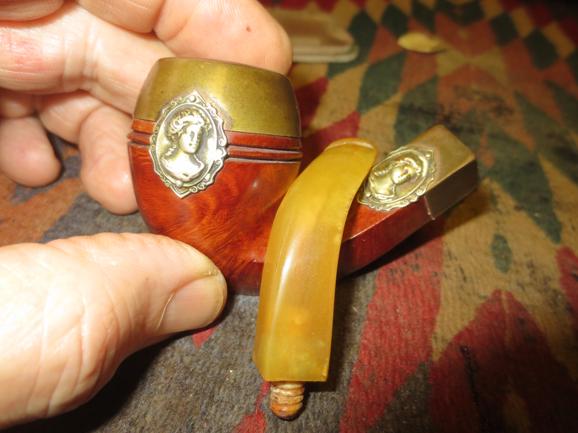
I am not a collector of meerschaums and indeed this is only the second meerschaum that I’ve owned. However I couldn’t resist when a pipe forum friend notified me about this carved bent Billiard shape, complete with a brass rondell on eBay. While not a restoration, I thought readers of the blog might find this GBD interesting.

According to Pipepedia, the three principals of GBD: Ganneval, Bondier and Donninger established the firm to the making of meerschaum pipes. Most fans of the brand know GBD for their briar pipes or perhaps meerschaum lined pipes. This is the first carved GBD meerschaum pipe that I have encountered. Typically, the GBD meerschaum pipes I have seen on Ebay or elsewhere are colored and don’t have the brass rondell. Those pipes, which are not usually carved, are thought to be made from African or Tanganyika meerschaum. This type of meerschaum is considered to be inferior to Turkish meer.

A Google search yielded only one similar, carved GBD meerschaum which was sold by SmokingPipes. They advertised the pipe as a “Turkish” estate. The carving, color and stem are very close in appearance to the pipe that I purchased.

GBD_Carved_Meerschaum_Brass_Rondell

The pipe arrived in excellent condition and very clean inside. I had read several of Steve Laugs articles on cleaning meerschaum pipes but nothing was required to this one.

The carvings are very similar to those found on SMS meerschaum pipes but I’m not sure if that is a SMS trademark or just a typical meerschaum carving technique.

The pipe as delivered, which included a nice, fitted, leather case. I’ve smoked it once and found the draw, stem and button to quite comfortable. I have wondered if the pipe would be improved with the addition of a proper vulcanite stem, like a George Dibos could create (and move the GBD brass rondell).

GBD_Meerschaum_Bent_Billiard_Gallery

GBD_Meerschaum_Bent_Billiard (4)

GBD_Meerschaum_Bent_Billiard (3)

GBD_Meerschaum_Bent_Billiard (5)

GBD_Meerschaum_Bent_Billiard (2)

GBD_Meerschaum_Bent_Billiard (6)

GBD_Meerschaum_Bent_Billiard (7)

Restemming & Restoring -Antique Egg & Claw Meerschaum


Blog by Steve Laug

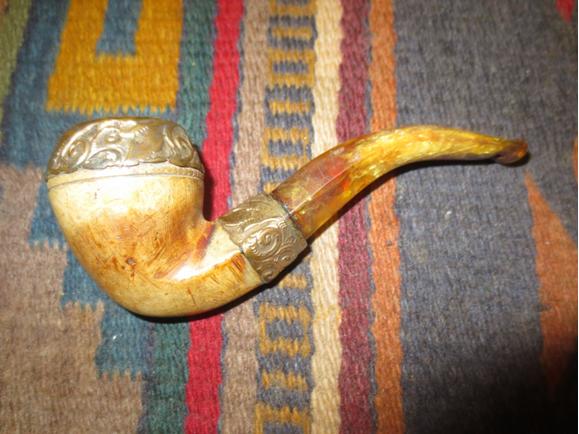
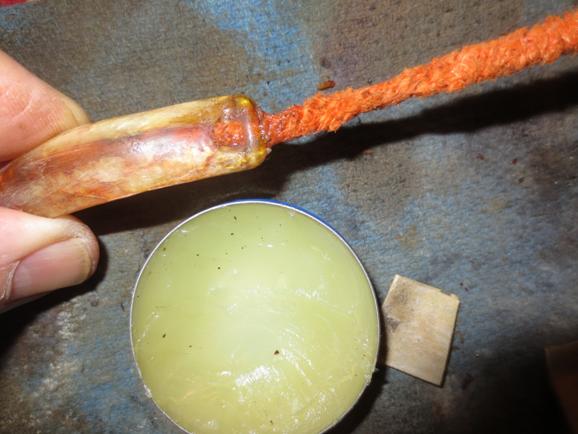
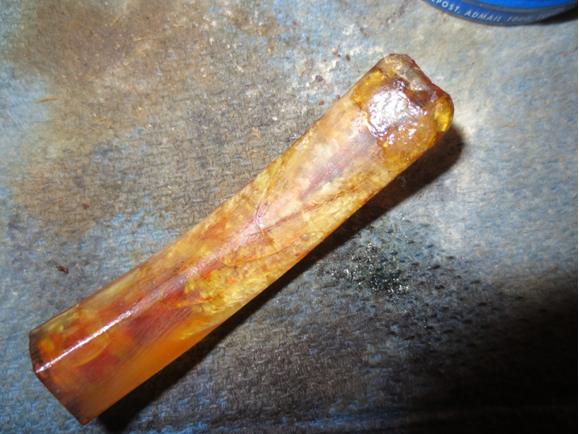
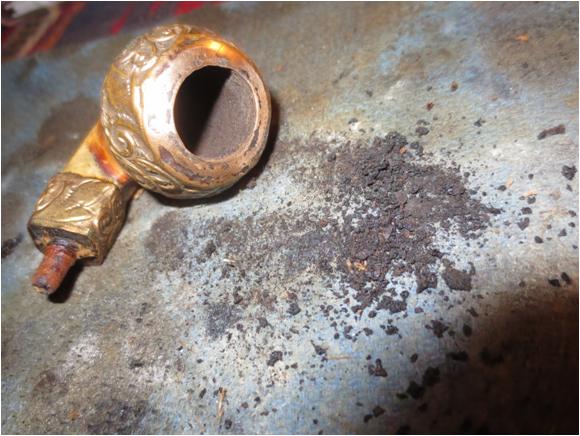
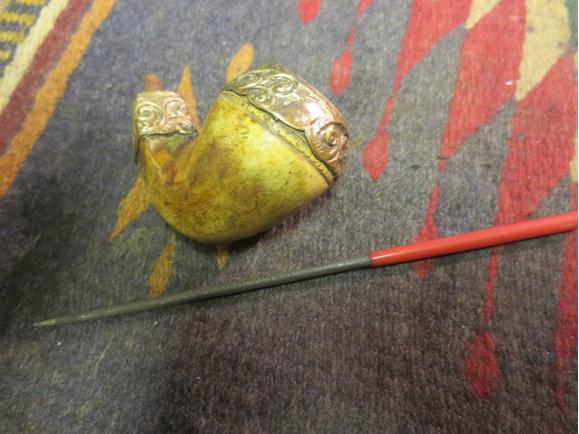
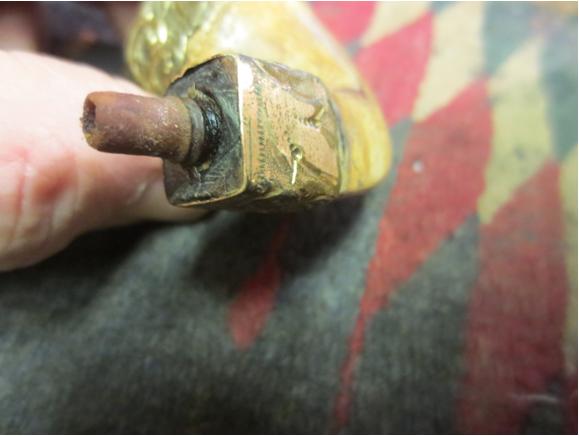
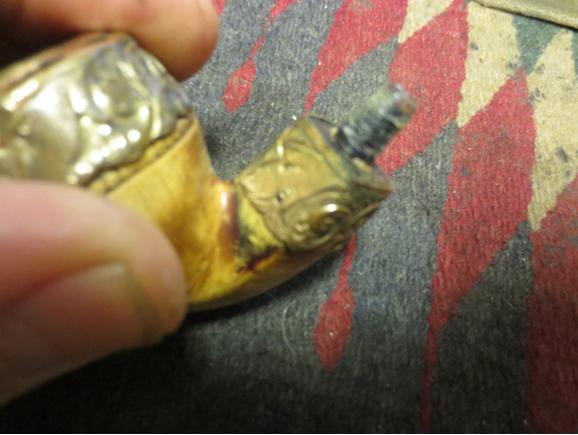
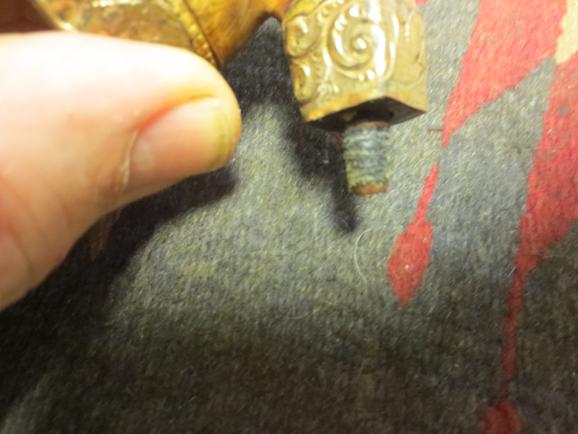
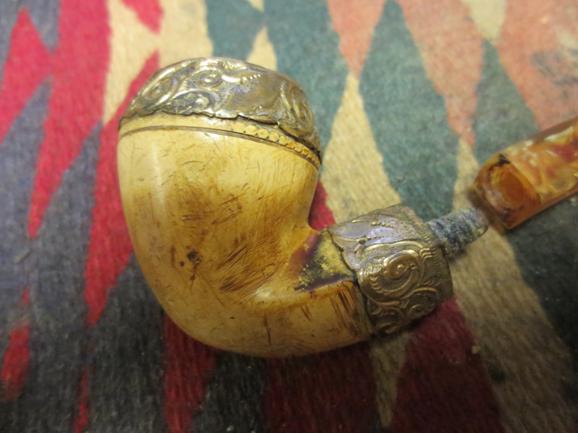
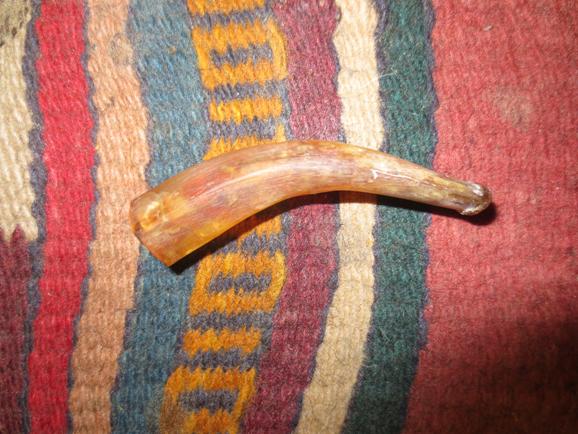
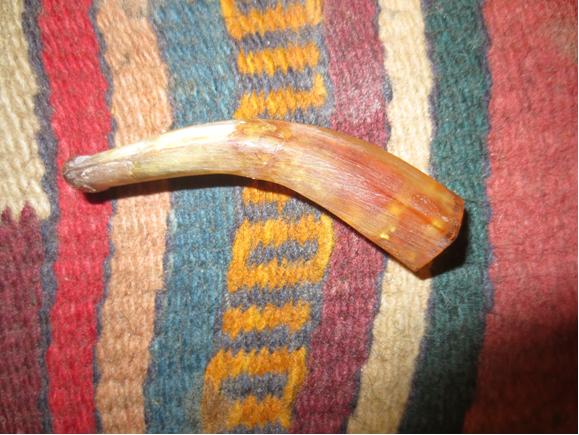
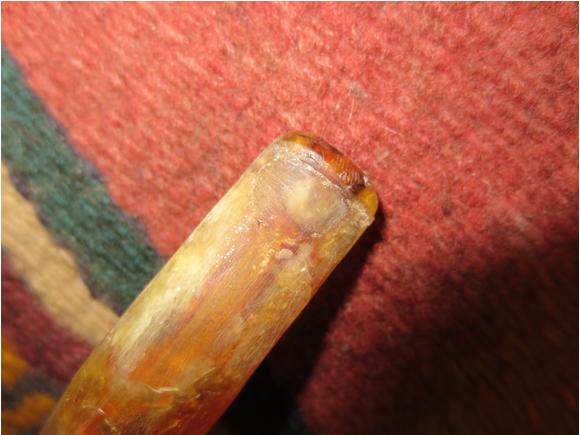
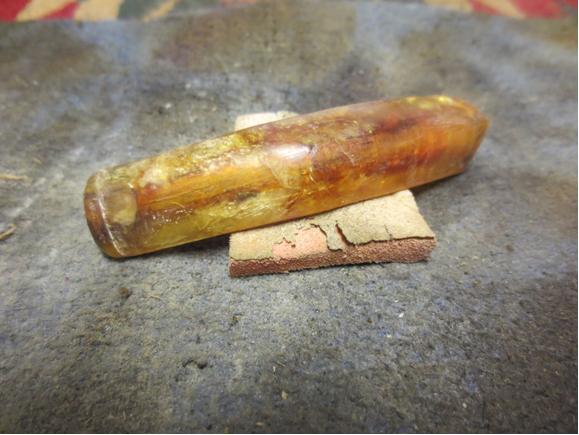
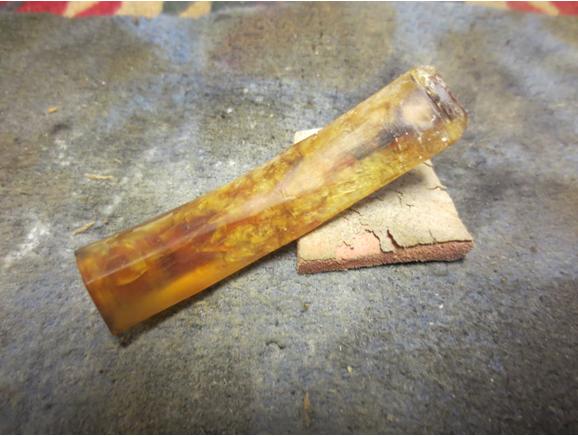
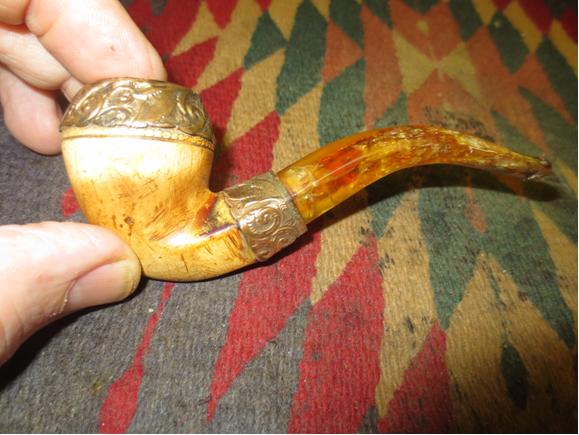
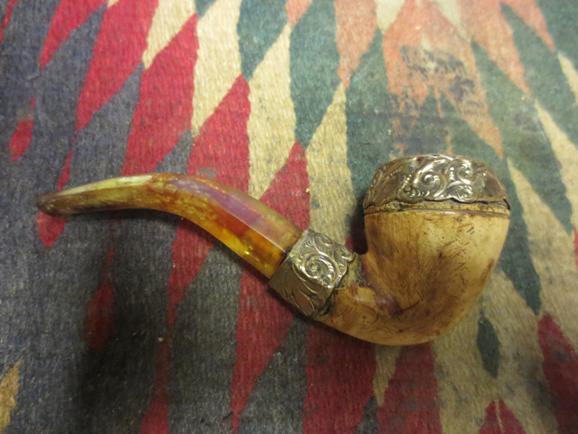
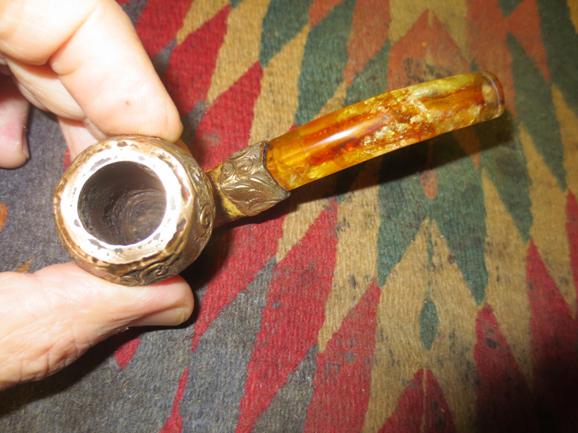
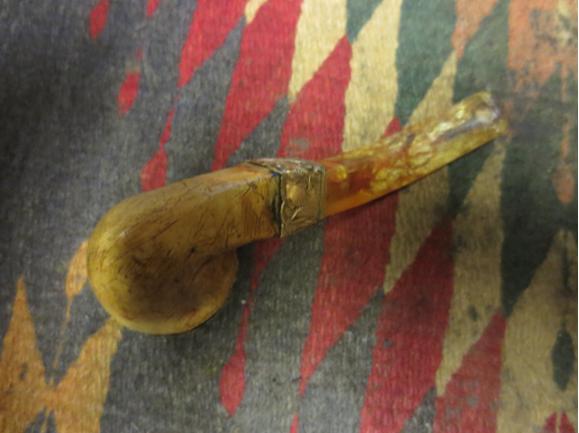
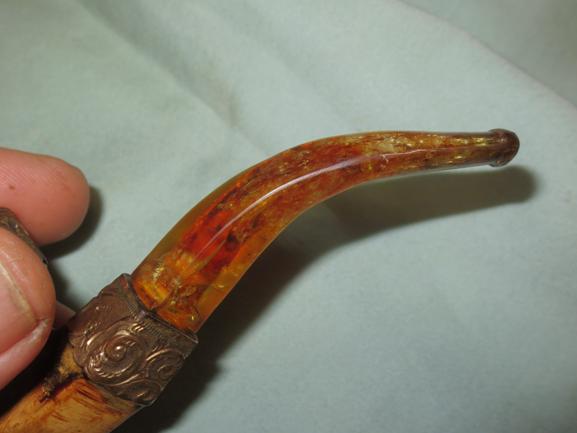
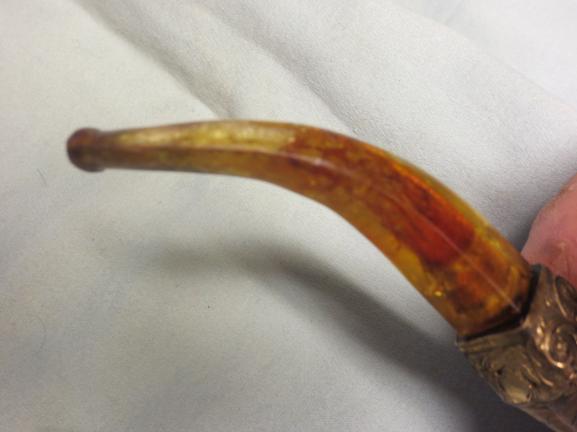
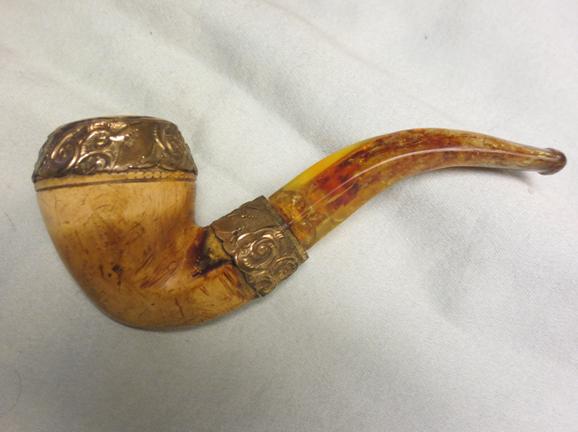
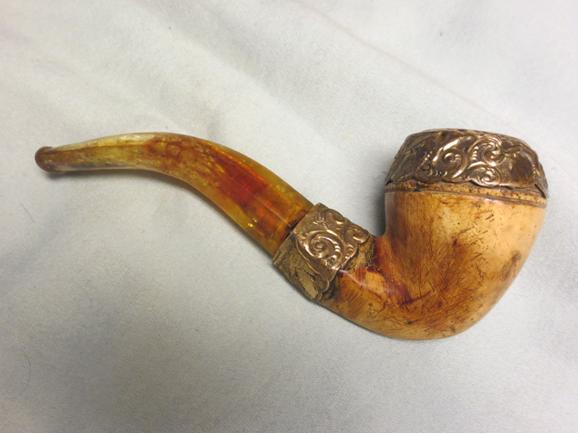
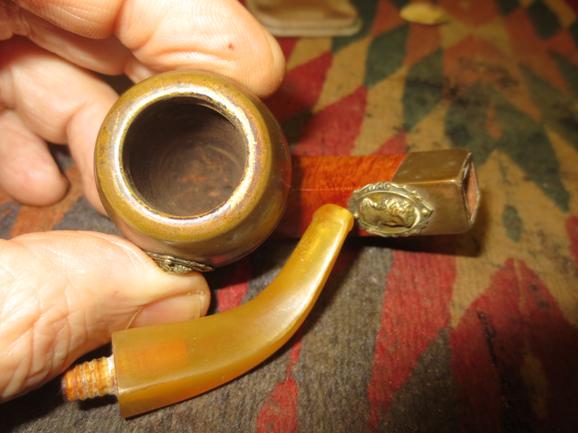
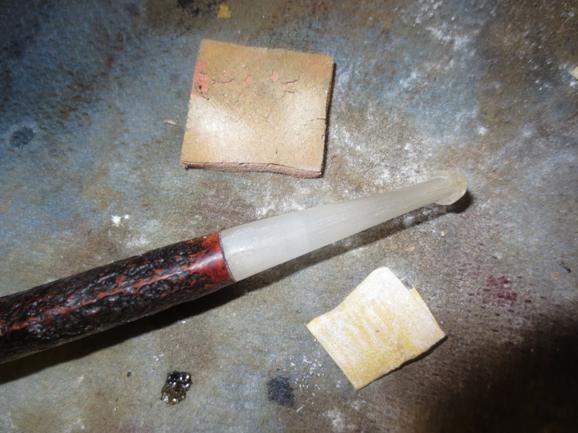
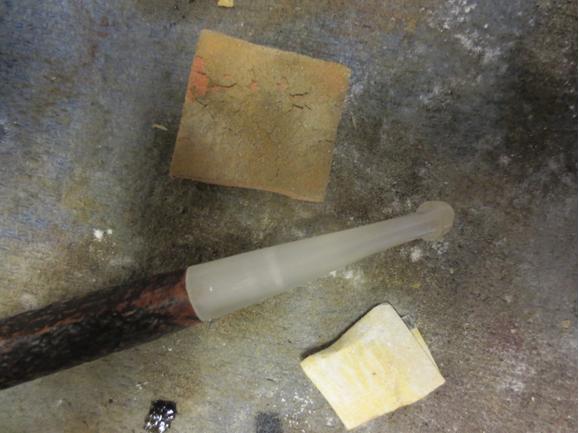
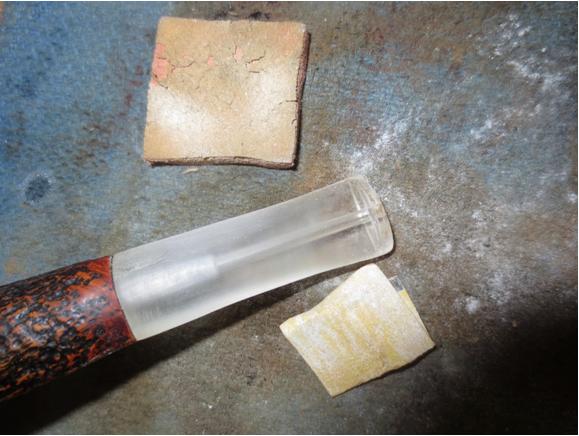
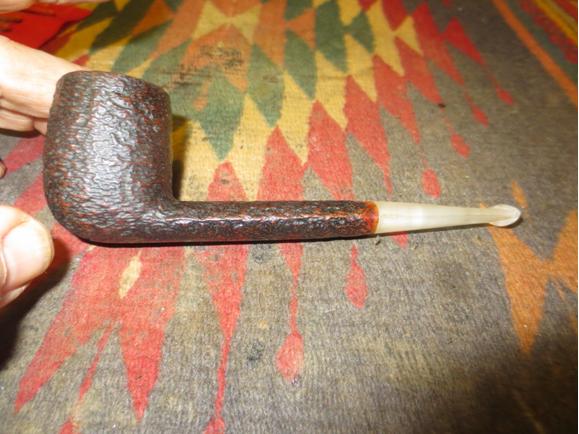
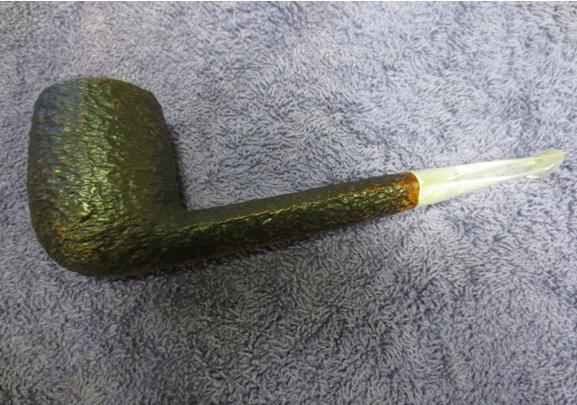
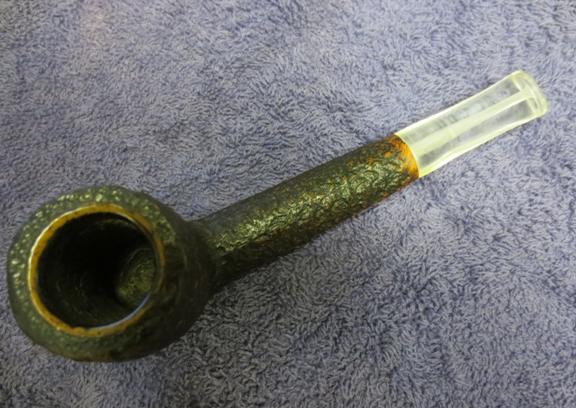
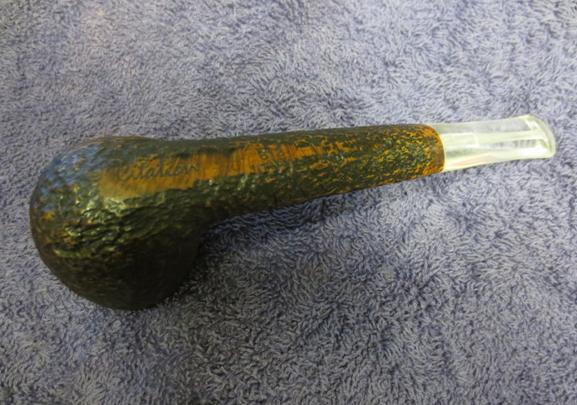
My brother Jeff picked up a beautiful old Meerschaum pipe when he was in Austin, Texas. There was something about the old pipe that caught his eye and he wanted it. The patina of age was forming around the claws and the egg. The feathers on the bottom of the foot that held the claws was also colouring nicely. The browns of a well smoked meerschaum were changing the shadows around the bowl of the pipe. The shank also showed some signs of the colourng. It was almost a meerschaum collar out of which the feather foot extended. The cross hatched look of skin extended beyond the collar on the sides of the shank and the small claw held the bowl at the back. The bowl blackened but the cake was scraped clean other than a slight buildup around the top portion of the bowl. The rim was blackened with tars and there was some road rash on the top right side of the bowl toward the front. The tip of one of the feathers holding the claw on the front of the bowl also had a small chip but it had coloured like the rest of the feathers so it was blended in. The pipe itself was an old timer that was clear.Claw1 The anomaly for me is that it should have had an amber stem. There is no way a pipe this age would have had a Lucite stem. The yellow Lucite stem looked that it had been adapted from a free hand pipe. The end had been drilled out to hold a replacement push tenon. It was set deep in the stem. The stem also had been counter sunk to cover the replacement threaded mortise in the shank. Instead of trimming it off to be flush with the end of the shank it stuck out about 1/8 of an inch or more. The stem maker had drilled the end of the stem so that with the tenon threaded in and the stem pushed into the mortise it would hide the mortise extension. The airway in the stem was pretty clogged and had blackened with tars. The stem had served the previous owner well. To my eye it just did not go with the either the age or the look of the pipe. It looked like two centuries had collided and joined to very different generations together with this stem and bowl.Claw2 The shank itself was clean though the tars had stained the tenon. The airway in the shank was open and clean. It was as if someone had cleaned out the inside of the shank and bowl before putting the pipe up for sale at the antique shop. There were signs also that the bowl itself had been wiped down on the outside as the colouration bore signs of scratching from scrubbing the exterior with something like ScotchBrite pads. There were a lot of scratches and scrapes around the rim edges. Fortunately whoever had cleaned it had not removed too much of the patina. This pipe deserved some tender loving care to bring it back to life and restore the appearance to more of its stately form. The stem would definitely have to go and in its place an amberoid or amber coloured Lucite stem would have to be shaped to take its place.

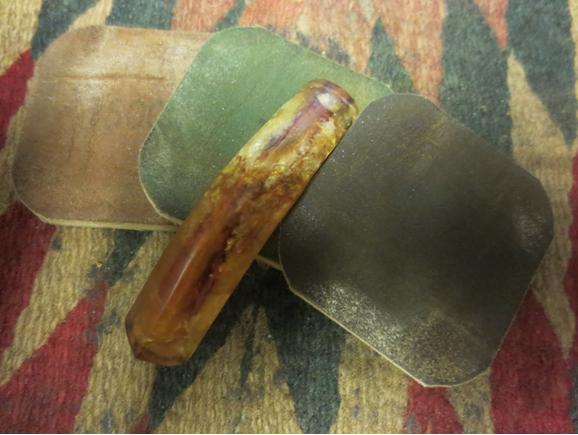
I called Tim West at JH Lowe to talk with him about ordering a stem and what would look best with this old timer. Tim suggested a tortoise shell amber Lucite stem. He said the chocolate swirls in the material would look good with the patina of the old meer and as the bowl darkened more would continue to look good. I gave him the dimensions that I was hunting for and ordered a tapered stem. As usual Tim was quick in getting the materials I ordered shipped to me. It did not take long for it to arrive. I knew that it would be longer than I wanted and would need to be cut down and shaped but the colour would be perfect.

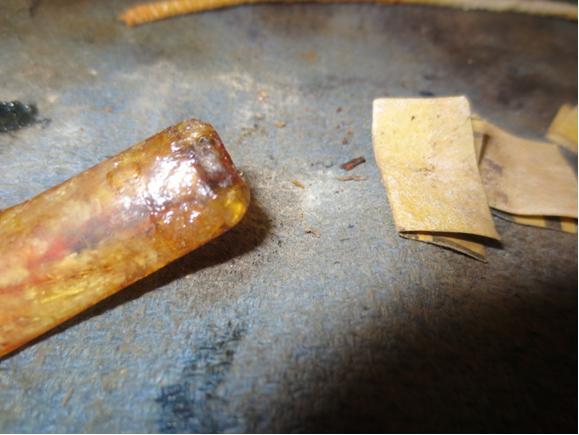
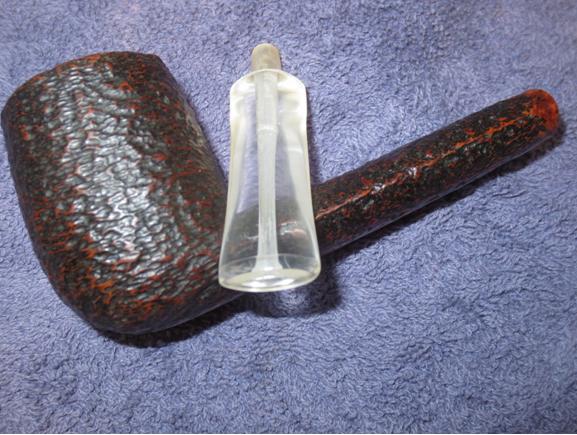
I got home from work on Monday to find Tim’s package had arrived. I opened it and took a picture of the new stem blank, the stem that I was retiring and the old bowl. You can see from the photo below that it is about an inch longer than the previous stem. The taper shape should work well with the pipe. Lots of drilling and shaping will need to be done before it fits the shank well.Claw3 I am pretty limited in terms of a shop – no saws or power tools to make things simpler so I am left to resort to doing things by hand. I measured the length of the stem that I wanted and use a small hacksaw to cut off the excess stem material. Once it was removed I faced the newly cut end on my topping board to smooth it out and square it off. This is the hard way to do things I know but with careful attention to the verticality of the stem it is possible to get a smooth surface that is square to the shank end.Claw4

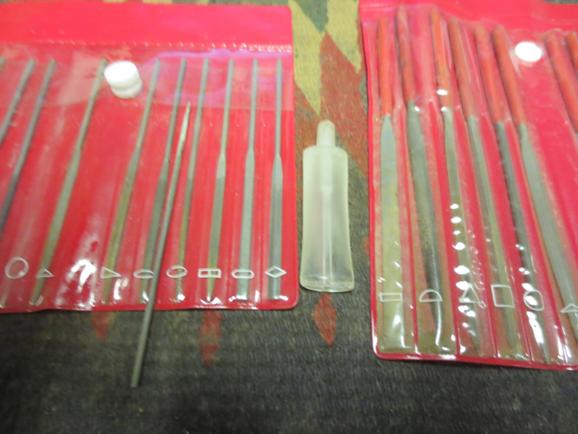
Claw5 The push tenon and mortise was smaller than any that I had in my stash so I removed the push tenon from the old stem. It was not difficult to do as it was threaded and could be unscrewed. The mortise was threaded into the shank but extended beyond the end of the shank. I would need to sand that smooth and bevel it inward to give a good fit to the new stem. I took the next two photos below to show the two stems side by side and give an idea of the length.Claw6

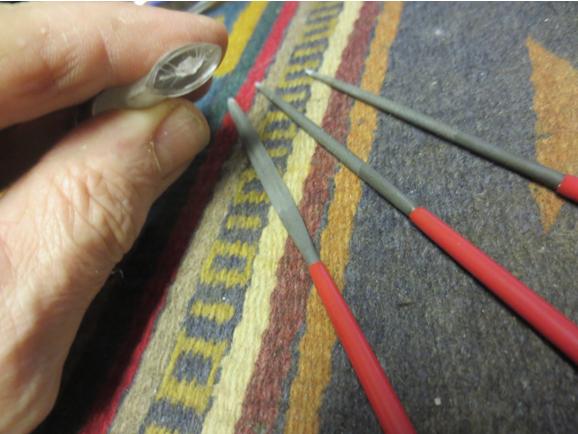
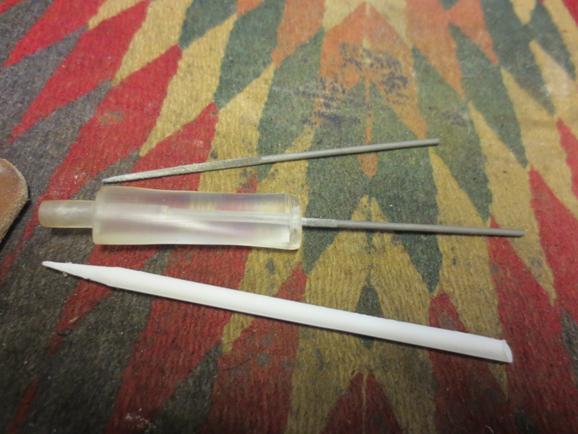
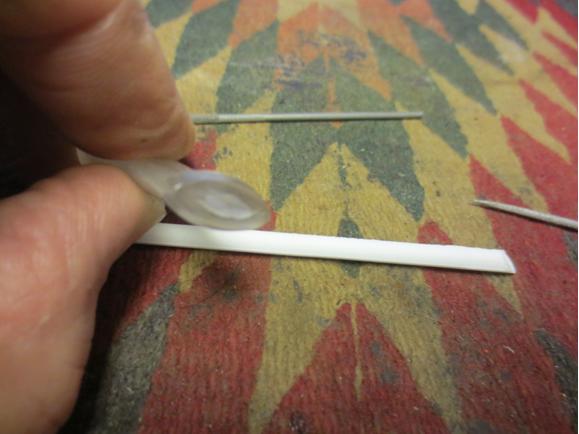
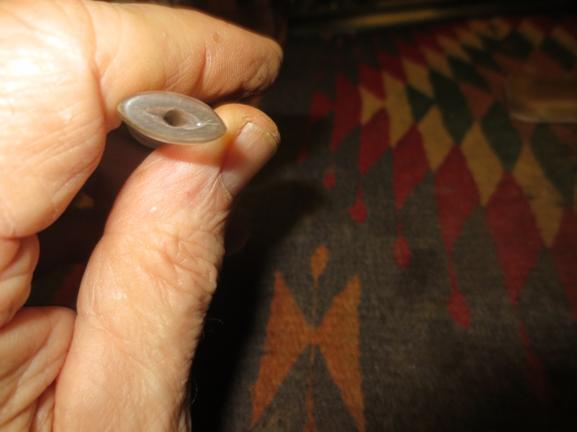
Claw7 With the length cut and the surface faced it was now time to start the drilling. I needed to drill the airway in the new stem to accommodate the diameter of the push tenon. Once it was drilled I would be able to thread it with a tap. The airway would also need to be drilled a second time to receive the collar on the tenon and give a flush fit with the stem end. I set up my cordless drill with a small drill bit to begin with and then worked up to the one that was the correct size for the tenon. I used a larger bit to countersink the end of the stem to take the collar on the tenon.Claw8 The photo below shows the roughed in drilling of the stem. I would still need to clean up the edges of the countersink and also the roughness of the area that I would be using the tap on. I used needle files to bring the countersink into round, smooth out the edges and the airway.Claw9 When I had finished with the airway I screwed the tenon into place and used a Dremel and sanding drum to begin smoothing out the mortise insert.Claw10 I sanded the end of the mortise insert by hand to bring it to the same height as the rest of the shank end. I cleaned up the area around the tenon so that when I put the two pieces together I would have a pretty flush fit.Claw11 I took the next photo to show the initial fit of the tenon in the stem. More sanding would need to be done to make the inner edges clean on the countersink.Claw12 I pushed the stem into the mortise and took the photos below to have a look at the new stem and its fit on the pipe. There was still a gap in between the stem and the shank – it showed light so more work would need to be done to bring it flush against the shank. The overall look of the new stem worked for me. I like the tortoise shell look of the stem with the patina of the meer.Claw13

Claw14

Claw15

Claw16 I carefully scraped the bowl with a pen knife to remove the small cake that was present in the bowl. It was more of a ridge than a full cake so I wanted to smooth out the sides of the bowl.Claw17 I used the knife to begin the bevel on the mortise insert at this time as well. I would need to give it more of a slope to accommodate the tenon but it was getting there.Claw18 I inserted a pipe cleaner in the stem and set up my heat gun. (I set it up on top of the dryer in our laundry room so forgive the socks and dishtowels in the background. I held the stem about 5 inches above the heat so that Lucite would not bubble (it did even at this height). When it was flexible I bent it to the same angle as the previous stem using an old rolling pin that I saved for this purpose. It took several time of heating it to get the angles correct so that the bend of the stem would match the curves of the bowl.Claw19

Claw20 I put the newly bent stem on the pipe and took some photos so I could see if I got the angles correct. I find that the distance of a photo gives me clearer perspective than just holding it in hand.Claw21

Claw22 With the fit of the stem and the bend roughed in it was time to work on the stem itself. The sharp edges of the taper and the thick button would need to be sanded and shaped. I would also need to get rid of the bubbles that happened when I heated and bent the stem. I started with emery cloth to quickly shape the button and take down the sharp edges. I also thinned the stem with the emery cloth and worked on the sides of the taper. I sanded it with 220 grit sandpaper to smooth out and further shape it and then followed up with a medium and fine grit sanding sponge.Claw23

Claw24

Claw25 I cleaned up the mess left behind by the stem sanding and worked on the scratches in the meer bowl and the heavy build up on the rim. I used 1500-2400 grit micromesh to sand the rim and the area of road rash on the top of the bowl at the right side. I also sanded the scratches along the claws to clean up the mess that had been left behind. I was careful to no sand too much so as to keep the patina intact.Claw26

Claw27

Claw28

Claw29 I scrubbed the bowl and rim with a cotton pad and saliva to remove some of the grime and dirt left behind on the bowl.Claw30 I used a sharp Buck Knife to clean up the bevel of the mortise insert so that the stem would fit snugly against the shank.Claw31 I sanded and polished the stem with micromesh sanding pads- wet sanding with 1500-2400 grit pads and then dry sanding with 3200-4000 grit pads. I wiped the stem down with a little Obsidian Oil to give the final 6000-12000 grit micromesh pads traction in the final polishing.Claw32

Claw33

Claw34 I also polished the meerschaum bowl with the micromesh pads to clean up and minimize the scratches. Here is a photo of the bowl with the 3200-4000 grit pads.Claw35

Claw36 I buffed the stem with Blue Diamond polish on the wheel and then gave it a light coat of carnauba wax. I hand waxed the bowl with carnauba and buffed it with a microfibre cloth to raise the shine. The finished pipe is shown in the photos below. I definitely like the look with the new tortoise shell stem. It just seems to fit the age of the bowl better than the free hand stem that came with it. Thanks for looking.Claw37

Claw38

Claw39

Claw40

Claw41

Claw42

Claw43

Claw44

Claw45

Cleaning Up a Pair of Brigham Bulldogs


I am a sucker for Brigham pipes and for bulldogs. Charles did a great job on these two. It is cool to see him use and modify most of the methods that I have used over the years. Thought I would share his work.

Charles Lemon's avatar

I bought these two bulldog pipes separately, but as the restorations proceeded almost identically, I thought I’d write them up together. Both pipes are from the late 1970’s or early 1980’s – the unique rusticated stummels with wave-shaped smooth features are illustrated in this Brigham catalog from 1978. I’m working here on a 316 Straight Bulldog and a 426 Bent Bulldog.

brigham-4

The bent pipe is stamped “Brigham” over “Made in Canada” along with “426”, denoting a Shape # 26 on a 400-series pipe. The straight bulldog is likewise stamped “Brigham” and “316” (shape # 16, 300-series). Curiously, this pipe is missing its Canada stamp, though the aluminum tenon clearly identifies it as having been made in Toronto.

Both pipes came to me in good to very good condition with no big dents or gouges in the briar and no fills in need of repair. In fact, I couldn’t find any…

View original post 787 more words

An Admitted Relative Beginner’s Utterly Subjective Review of Pipes


Guest Blog by Robert M. Boughton
Member, International Society of Codgers
Member, North American Society of Pipe Collectors
http://www.naspc.org
http://www.roadrunnerpipes.com
http://about.me/boughtonrobert
Photos © the Author

CRITIC: n. A person who boasts himself hard to please because nobody tries to please him. ― From “The Devil’s Dictionary” (compiled 1881-1906), by Ambrose Bierce (1842-1913), U.S. printer’s devil, Union soldier [private-first lieutenant], Civil War hero, Federal Treasury agent and other low-pay money transport jobs, newspaper-magazine columnist, short story writer, fabulist, satirist, heavy drinker, brawler, daredevil

OPENING REMARKS
In a word, Ambrose Bierce was a gun-toting card, in the sense of a character, one-of-a-kind, clever or audacious; or, as one might say nowadays, a sociopath. I suspect Bierce would have approved of the latter term, and he is one cultural/historical figure I would like to meet if I could somehow arrange an interview – although, given his mercurial proclivities, I doubt I would want the rendezvous to occur in the region of the Hereafter where he might very well find himself. Besides, Bierce almost certainly would consider me too daring (“one of the most conspicuous qualities of a man in security,” meaning safety) for his tastes, wherever he is now.

Neither Bierce’s definition of critic, nor the long-standing common misconception that to criticize necessarily implies a negative bent, applies to this humble attempt to categorize my own personal favorites from among some of the pipe brands I have tried and collected. Call this a critique, then, to clarify my well-intended endeavor to review, based on my experiences, limited lists of brands in general and individual pipes.

I will be the first to admit the present list is somewhat meager, in particular considering my impossible dream of someday acquiring every pipe suggested to me by a wildly out of control case of Pipe Acquisition Disorder. In fact, I am already certain I will, maybe sooner than later, look back on this patently subjective exercise with the shiver of self-censure usually reserved for old drafts of literary attempts.

Then again, I’ve never been one to retreat from a challenge, even when I’m the one to throw down the gauntlet. Therefore, do not be surprised to find your own choices way out of order, so to speak, if not missing altogether. There are countless brands and styles I want to try, many of which are difficult to find outside of the high three-digit or even into the four and five figure price range. To those in that rarefied category of collecting, I can only say, more power to you, and may you enjoy your prizes for many years to come. I will provide more on a few of these hopeful future acquisitions later.

Which brings me to my next point: the origins of some of the pipes I have appreciated most, and indeed have come to cherish more as time passes, have proved to be untraceable, despite my concerted and ongoing efforts. A few – dare I say it? – can only be categorized as no-names. In other words (as I often find myself counseling clear newcomers to the thrilling world of pipe enjoyment, online at my own restored pipe sales business or even at my local tobacconist when opportunity knocks), the price tag is irrelevant.

STANDARDS OF REVIEW
My simple standards of review, by necessity, will rely on the following qualities.

• Is the pipe well-engineered? This refers not only to the alignment of the bit’s smoke channel, through the shank’s mortise and draught hole and ending flush with the bottom of the chamber; it includes construction elements such as materials used, bowl thickness, design and various factors effecting the ability to enjoy a good, thorough smoke without overheating, and the attendant tobacco performance issues of that problem.
• Does the pipe reflect my own sense of identity? Only a few times since I first smoked a pipe in 1989, when I was a non-traditional undergrad at New Mexico State University, have I been told by a fellow local club member that a particular pipe “looks good on me.” Now, there’s an interesting misnomer! I try not to end up wearing a pipe, though I have dropped more than a few with red-hot ashes in my lap and even scorched a shirt or two when a loose bit ran amok. One of these appreciated comments, as I recall, concerned a BBB Special Make 1982 Christmas Pipe, and another referred to a Peterson’s Sherlock Holmes Baskerville. Based on those two, I have to assume that a sturdier bent briar pipe looks good on me. But the fact is that most of the pipes I go back to over and over are straight, but I have to say the above complimented members of my growing collection are among my favorites, which vary in shape and from briar to meerschaum and other materials.
• Is the pipe comfortable in my mouth and hand?

I think that about covers that, although in no vital order.

FAVORITES BY BRAND – IN A SORT OF ORDER
Again, I feel a need to qualify this list as being based on the sheer numbers and relatively consistent qualities of the products made by these crafters. There are, to be sure, exceptions. Each brand is followed by its country or countries of origin and/or various manufacturing, and the year or approximation of establishment.

1. SAVINELLI (IT, 1876): Call it luck or what you may, but as Will Rogers suggested, I have never met a pipe created by this legendary maker that I didn’t like. That is to say, every Savinelli I ever smoked performed with excellence in engineering and taste.

2. PETERSON (IE, 1865): First Kapp Brothers, then Kapp & Peterson and finally its present incarnation, Peterson pipes by any name are almost tied with the second largest part of my collection, the other being meerschaums that I can’t include as a brand but would if there were any way I could rationalize doing so. I am quite fortunate to have chosen my Petersons well over the years from estate pipes restored by my good friend and mentor, Chuck Richards, as well as some used collector’s editions I bought from other restorer friends. Of course, there are also those I bought on eBay and cleaned up myself, and some choice new models pre-checked for perfect engineering by Chuck. The results have almost always been top-notch, despite the fact that each year when the time rolls around to examine all 120 or so pipes supplied to our tobacconist by its Peterson supplier for the annual Christmas sale, Chuck returns a surprising number. Some of these, he says, are defects in drilling; others are from the wear and tear of salesmen’s car trunks. Either way, the lesson I’ve learned is to check out pipes carefully whenever possible before paying.

3. KAUFMAN BROTHERS & BONDY (US, 1851): Creator of the Kaywoodie line in 1919 and Yello-Bole in 1932, KB&B has been an innovator of premier pipes for almost 165 years.

4. KAYWOODIE (US, 1919): From a 1930s Super Grain Lovat to some beautiful meerschaums, Kaywoodie has never disappointed me.

5. BUTZ-CHOQUIN (FR, 1858): While aware of fluctuations in quality throughout the history of BC, I have found none that isn’t an excellent example of everything a pipe should be, including a huge gourd calabash church with cork lining in the chamber and an exquisite meerschaum bowl insert. I concede that one is high-maintenance as far as cleaning is concerned.

6. BEN WADE (UK, 1800s, DK, c. 1989): What can I say? I just love Ben Wades, again choosing with care. My absolute favorites of these are a Town & Country Bent Dublin with a Barling Cross gold band accidentally placed on it in the factory, and a gorgeous Preben Holm Danish freehand made on the sly for Ben Wade.

7. STANWELL (DK, 1942): Whenever I look at these or find one in my rotation – the bamboo shank cherry wood, the Kyringe No. 1 beech wood Bulldog Commemorative or the Billiard #88 with tortoise shell ferrule, for example – I can’t imagine the collection I’ve cobbled together so far without them.

8. COMOY and CHAPUIS-COMOY (UK, 1825 and 1925, respectively): Say what you will about some of these pipes, I have yet to experience problems, not even with the splendid orange pebbled London made Panel I have often regretted gifting to a friend.

9. DUNHILL (UK, c. 1902-1907): Undoubtedly one of the greatest if at times inconsistent brands

10. GBD (UK, 1850): Named for three gentlemen who designed the original (Ganneval, Bondier and Donninger), GBD was begun by Chapuis-Comoy. This is a very popular brand, and from my dabbling with it I understand.

11. KARL ERIK (DK, 1965-1966): In my opinion, this is one of the most under-rated lines of mostly free-hands. Maybe now that he passed on, they will come to be admired more.

12. ROPP (FR, 1890): I happen to be an unabashed fan of the natural cherry wood line of Ropps (the thicker the bowl, the better – all of which smoke cool and are versatile with tobaccos. I also adore my old Eug. Ropp Signature that was one of my best restorations.

13. FALCON (metal – US, 1936, UK): I doubt I will meet much resistance with this brand, other perhaps than its placement on my list! Since Kenley Bugg invented this metal system pipe in the U.S. in 1936, it has sold tens of millions worldwide, not counting the spin-offs.

14. BEST BRITISH BRIAR (UK, 1847): Anything with three initials – BBB, LHS, KB&B – seem to fly off of my virtual sales shelves, and I can appreciate the reasons.

15. L&H STERN (US, 1911): Founded in NYC, this venerable pipe maker moved to a permanent Brooklyn factory in 1925 until it dissolved in 1960, and is still regarded as one of the best. I have to agree.

16. JOBEY (US, FR, DK, UK): This name may not be a smoker’s household word, but I’ve had good luck with them…and they sell well, too.

17. EHRLICH (US), 1868: Another lesser-known brand, Ehrlich makes great pipes with consistent quality. The company closed in its centennial year, 1968.

18. PARKER (UK, 1926): Dunhill seconds, these pipes may actually be more consistent than their famed creator.

19. RIMKUS PIPES (US, c. 2007): I know Victor Rimkus from my local pipe club in Albuquerque, New Mexico and have purchased four pipes from him (three of them early works and the fourth a commissioned double-chamber). Victor, being a perfectionist who constantly hones his innate talent crafting blocks of briar into works of art enhanced by his long experience as an engineer, discredits his earlier efforts at pipe making, but I can attest that even they are among the finest pipes I have ever smoked. He fashions everything, the wood and bits, by hand, employing tasteful additions including turquoise, bamboo and varied ferrule materials. The grain of his natural pipes is exquisite, and his finish work makes the final products stunning. Shapes include traditional, unique and variations on the two. One of Victor’s engineering standards allows for the ability to insert a cleaner with ease all of the way through the assembled pipe, from the hole in the lip of the bit and always ending up flush with the bottom of the chamber. The only reason I add Rimkus Pipes to the end of my favorites list is that they remain relatively unknown to the pipe world as a whole, although he is well-known at all of the major pipe shows and to discerning collectors of American pipes. But the fact remains they are among the very best. http://rimkuspipes.com/index.html. By the way, Victor’s son, Nathan, following his own path, also makes exquisite pipes. I’m still hoping he will craft a double-bowl pipe for me and presently have first right of refusal when he decides to take me up on the commission offer! http://www.nwrpipes.com/index.html.

20. Don Warren Pipes (US, ?): Another Albuquerque master and friend from our club, Don’s original website notes that his pipes – briar, cherry, morta, hickory, maple, pecan, oak and walnut – are designed in the Danish freehand tradition, but really, many of them transcend that description. Unfortunately, I only own one of Don’s works (which he calls a Fine Figured Maple Gilpin), and look forward to buying many more of his unique and finely-engineered works. Other Don Warren products include bowls for Kirsten metal pipes. For basic information, see his old site at http://dwpipes.com/index.html. He now sells at https://www.etsy.com/shop/DonWarrenPipes, http://stores.ebay.com/dwpipes/_i.html?_dmd=1&_sid=122905250&_sop=10 and http://donwarrenpipes.com/html/pipes_4_sale.html.

Oh, I can hear the uproar, grumbling and outright scoffing starting now. Look at all the missing giants! And what kind of order is this, in the name of all that’s holy! I can only ask by way of defense that the reader give me time. I’ll get there, and hopefully make updates as I progress! Also, after the top four, I found it very difficult to assign a number to most of these brands. Don’t get me wrong. I love and enjoy each and every one of the pipes I own, including my five Dunhills, four of which are especially prized if only for the sentimental value associated with the genuine old codger who gifted them to me. But mine do tend to smoke a bit hot.

SIDEBAR
Larry – as I will refer to my Dunhill benefactor due to his desire to keep professional details of his life separate from personal web information such as this – at age 91 chose, with great sadness but the better part of valor, to give up the pipe instead of the ghost just after his cardiologist threw a conniption fit when he found out my good friend had taken up his pipes again despite a genuine predisposition for heart disease. Larry (see https://rebornpipes.com/2014/09/16/ponderings-on-an-almost-lost-generation-of-pipe-smokers-with-a-restoration-thrown-in-robert-m-boughton/) experienced his first taste of the briar social elixir, as in “the quintessence or soul of a thing” [OED], when he was 18 and FDR was president. That’s a boggling idea for most of us to wrap our minds around, even those who know what FDR stands for.

I called Larry on Friday to see how he is doing, and he was as spry and full of good humor as ever. I told him I was getting constant questions about him and that everyone missed his warm personality and wonderful humor. He quipped, “You miss me for my wisdom!” and offered to drop by that night’s pipe meeting, as an emeritus (my word). Larry’s 92nd birthday was the next Monday, November 30, and I greatly admire his eventful, fascinating life so far. Sadly, we were the only two people there other than Candace, who was on duty, but we had a very pleasant chat with much humor. When Larry promised to return a week later, I knew I could count on him, and again look forward to the event.

I received the four lovely Dunhills, wrapped tightly in a plain brown paper bag, waiting for me at the tobacconist almost a year ago when I arrived for the regular weekly meeting and learned that Larry would no longer be able to attend. I procrastinated a serious attempt to date them until this writing, but never forgot the clear facial indications of shocked awe on those in my pipe club who know pipes far better than I, as they examined them when I passed the quartet around the large group. More telling was the general agreement that I should consider selling them! My eyes actually watered up at the mere notion of such a betrayal, not to mention the unending sense of guilt and loss I would experience. That is the despicable sort of habit I fell into before I began to recover from alcoholism coming up on 28 years ago.

At any rate, taking advantage of my private audience with Larry this Friday past, I asked if he had any idea how old they were. He told me three were from the 1970s, and one from the ’30s.

As was true with this blog, when I write I tend to make mental notes to return to parts that need additions. And so when I inserted the photos below with the models’ basic descriptions, I determined to date them no matter what it took. At last finding a reliable way to accomplish the task on my own, I used the two-digit year code usually found just to the right of the D in ENGLAND, or after the Patent Number. http://www.pipephil.eu/logos/en/dunhill/cledat-en1.html.

A Dunhill Inner Tube, 1912, Courtesy of Pipephil.eu

A Dunhill Inner Tube, 1912, Courtesy of Pipephil.eu

As it turned out, I tentatively guessed the pipe made in the 1930s but was flabbergasted by my full findings. I just emailed Larry my discovery.

Root Briar #433 – 1916

Root Briar #433 – 1916

Shell Briar #114 – 1917

Shell Briar #114 – 1917

Bruyere #4103 – 1925

Bruyere #4103 – 1925

Shell Briar Canadian #34 – 1934

Shell Briar Canadian #34 – 1934

As I already clarified, I value these Dunhills above almost all of my other pipes, and with more virtuous motivations than their extreme age and potential resale value. I would never consider parting with them because of how they came to me. Still, as they are my only experiences with the Dunhill brand and all seem to smoke on a notably hot side, I have to be practical and as unbiased as possible in my judgment – which perception a little voice in my ear whispers is most liable to change with more exercise of my P.A.D. Still, #9 isn’t shoddy!

INDIVIDUAL FAVORITES
For those who enjoyed my favorite brands list, the subjectivity of this part should come as a real treat. (That’s semi-facetious!) However, on the plus side is that a far greater number of pipes, brands, shapes and materials will be represented, and by the very nature of that variety, the potential for redeeming the very possible negative perception of my judgment will be decided. And so, for better or worse, here they are.

1. Cavicchi 4C Silver Band Freehand (IT)rob6
2. Castello Old Antiquari KKKK (IT)rob7
3. Sasieni Four-Dot Rustic (IT)rob8
4. Savinelli Autograph Grade 4 Rusticated Bottom (Restore) (IT)rob9
5. Savinelli deluxe Milano Panel #515KS (Restore) (IT)rob10
6. CANO A. OZGENER (CAO) Silver Band Lattice Meerschaum (US)rob11
7. Barling Special Make 1982 Christmas Pipe (UK)rob12
8. Butz-Choquin Meer Insert Gourd Calabash Church (FR)rob13
9. BC Regence Extra Curved Billiard (FR)rob14
10. Ben Wade Town & Country Dublin with Gold Barling Cross Band (UK)rob15
11. BW Preben Holm Danish Freehand (DK)rob16
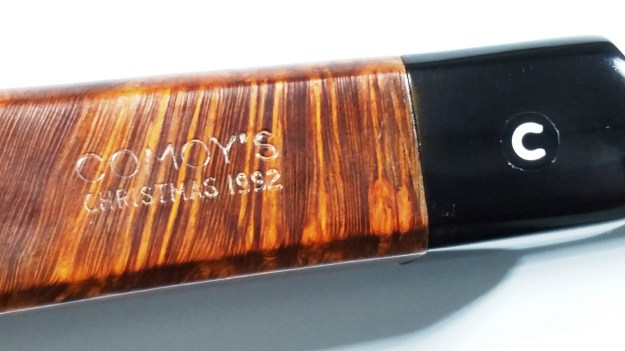
12. Comoy’s Satin Matte (Restore) (UK)rob17
13. GBD Super Q Bent #9456 (UK)Rob18
14. Kaywoodie Vintage Small Meer Billiard (Restore) (US)rob19
15. Rusticated Red/Brown Meerschaumrob20
16. The Doodler (Restore) (US)rob21
17. No-Name Italian German Folk Wine Pipe (Restore) (IT)rob22
18. La Grande Bruyere Vintage Mini (CZ)
My first restore before:rob23
After:rob24
19. No-Name “The Beak” (Restore) (IT)rob25
20. Peterson Sherlock Holmes Baskerville (Restore) (IE)rob26
21. Stanwell Kyringe Beech Wood Bulldog #1 Commemorative (DK)rob27
22. V. Rimkus Double Chamber (US)rob28
23. Sjoborg Danish Panel (Restore) (DK)rob29
24. WDC Wellington Custom Deluxe Pot (Restore) (US)rob30
25. Lepeltier Glazed Ceramic (US)rob31
26. Jobey Rustic Apple (Restore) (US)rob32
27. Johs Semi-Rustic Danish Billiard (DK)rob33
28. Dr. Grabow WWII Era Birch Dublin (US)rob34
29. Kaywoodie Super Grain 1930s Lovat (Restore) (US)rob35
30. Ser Jacopo Maxima Delecta Fatta a Mano (IT)rob36
31. Stefano FX Bean Pot (IT)rob37
32. Royal Goedwagen Ceramic Billiard (Restore) (NE)rob38
33. Don Warren Fine Figured Maple Gilpin (US)rob39
34. Playboy African Meer (Restore) (UK?)rob40
35. Falcon, c. 1930s-1940s (US)rob41

WHEN I’M RICHER
These are a few of the more expensive pipes on my wish-list. The two Russian pipes shown had no price, but the styles and quality usually have four-digit tags.

1. Buddha Bamboo Shank Pipe – Doctor’s Pipes (RU)add1

2. Evgeniy Looshin Pipe (RU)add2

3. Dunhill Christmas Pipe 2015 Kit — $2,150Add3

CLOSING REMARKS
I could go on and on with photos of my favorite individual pipes, but I think I demonstrated that my tastes are at least eclectic if not fully satisfied. With hope, they never will be.

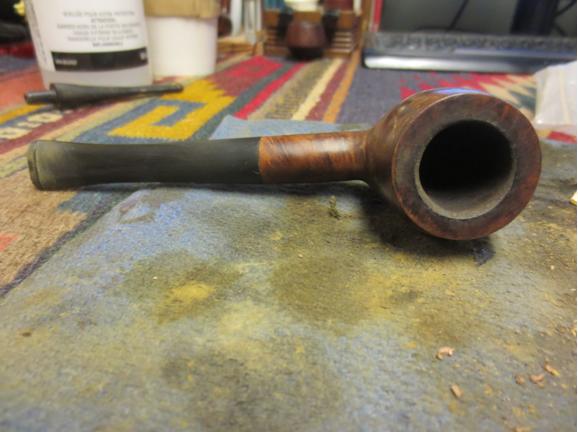
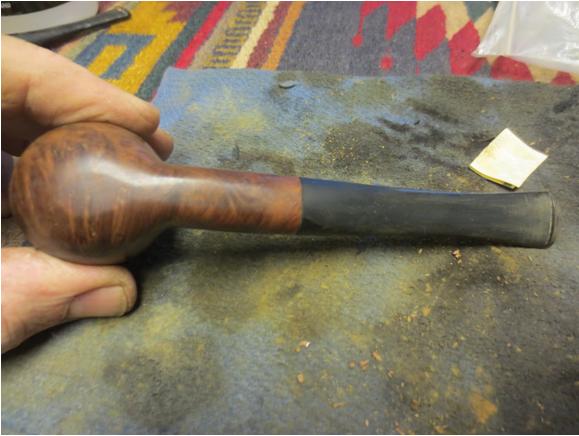
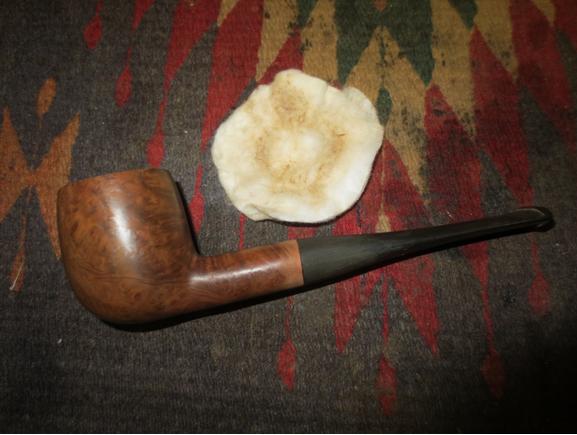
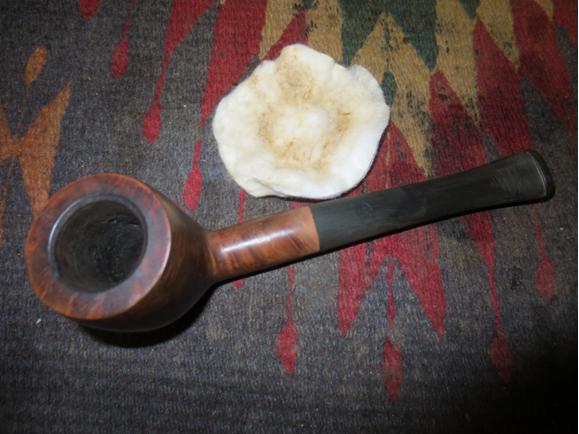
Restoring a White Cloud Imported Briar Pot


Blog by Steve Laug

The next pipe up for refurbishing is a small pot shaped pipe. It is stamped on the left side of the shank with the words White Cloud over Imported Briar. There are no other stampings on the right side and underside of the shank. I have looked for the brand in WMTP and found the name but that it is an unknown maker from the US. I also on PipePhil’s site and found no additional information. I also did some searching on the web for information and found absolutely no information on the brand. Do any of you know anything about it? Any information would be greatly appreciated. Thank you.

The pipe was in good shape underneath the thick coat of varnish. The stem was oxidized and dirty. The varnish on the rim was peeling and bubbling. There was damage to the rim in terms of darkening and potential burn. The bowl had some cake but it was bare wood at the bottom third of the bowl. The stamping was very clean and readable. There were some dings and fills on the bowl sides but nothing huge. They would clean up adequately. The metal tenon and stinger were a very interesting looking piece of plumbing. They were dirty and tarred. The inside of the shank and stem also had a lot of grime. The stinger was stuck in the tenon so it would need to be heated to be able to clean the airway in the stem thoroughly.Cloud1

Cloud2

cloud3 I took the close up photo of the rim and bowl to show the damage to the rim surface and the cake that was present.cloud4 The next photo shows the stinger apparatus. It is a unique set up that is different from the collection of other stingers that I have here.cloud5 The stem was slightly underclocked so I heated the tenon with a lighter and corrected the fit of the stem in the shank.Cloud6 I removed the stem and dropped the bowl in an alcohol bath to soak overnight. I wanted to loosen the varnish on the bowl and knew that while the alcohol would not remove it, it would soften it and make it easier to sand off.cloud7 In the morning I removed the bowl from the bath and dried it off. The shiny coat of varnish was unscathed by the alcohol but I knew that it would be easier to remove. You can see the interesting grain on the bowl sides in the photos that follow. You can also see the nicks and fills that would need to be dealt with in the restoration.cloud7

cloud8

cloud9

cloud10

cloud11 I sanded the rim and the bowl with a medium grit sanding sponge to begin the process of removing the varnish. It worked well to break the seal on the varnish coat. Once that is done it comes off quite easily with acetone.cloud12

cloud13

cloud14

cloud15 I needed to lightly top the rim to remove the burn mark and rounding on the front outer edge of the rim. It did not take much to clean up the rounded edge and give the rim a crisp profile.cloud16

cloud17 I wiped the bowl down with acetone on a cotton pad and was able to completely remove the varnish coat. The alcohol had softened it and it came off very easily.cloud18

cloud19

cloud20

cloud21 I heated the stinger in the tenon until I was able to wiggle it free of the airway. One side of the two prongs that held in place in the tenon was cracked so I repaired it and set it aside to dry. I cleaned out the shank and the stem with pipe cleaners, cotton swabs and alcohol.cloud22 I sanded the stem with 220 grit sandpaper to remove some of the wavy marks from previous repairs to tooth damage. I sanded until the stem was smooth and then sanded it with a medium and a fine grit sanding sponge. I also sanded the bowl with the same sanding papers and sponges to minimize the dents and scratches in the finish.cloud23

cloud24

cloud25

cloud26

cloud27 I reamed the bowl with a PipNet reamer to remove the cake on the upper portion of the bowl.cloud28

cloud29 I sanded the bowl and rim with micromesh sanding pads- wet sanding with 1500-2400 grit pads. I wiped the bowl down with a light coat of olive oil before proceeding to sand with 3200-4000 grit pads. I rubbed it down a second time and then sanded it with 6000-12000 grit pads. I buffed it by hand to see what the finish looked like at this point.cloud30

cloud31

cloud32

cloud33

cloud34

cloud35

cloud36

cloud37 I sanded the stem with micromesh sanding pads – wet sanding with 1500-2400 grit pads and then rubbed it down with Obsidian Oil. I dry sanded with 3200-4000 grit pads and gave it another coat of the oil. I checked the stinger and for some reason there was some dark grime that appeared in the slot in the stinger. I cleaned it again with pipe cleaners before sanding some more with 6000-12000 grit pads. I gave the stem a final coat of Obsidian Oil and set the pipe aside to dry.cloud38

cloud39

cloud40 I buffed the pipe with Blue Diamond on the buffing wheel and then gave the bowl and stem multiple coats of carnauba wax. I buffed it to a shine with a clean flannel buffing wheel. When I finished buffing it on the wheel I took it back to the work table and buffed it by hand with a microfibre cloth. The finished pipe is shown in the photos below. It should deliver a good smoke to whoever adds it to their rack. The briar is certainly interesting to look at now that the finish has been stripped and the bowl polished. Thanks for looking.cloud41cloud42cloud43cloud44