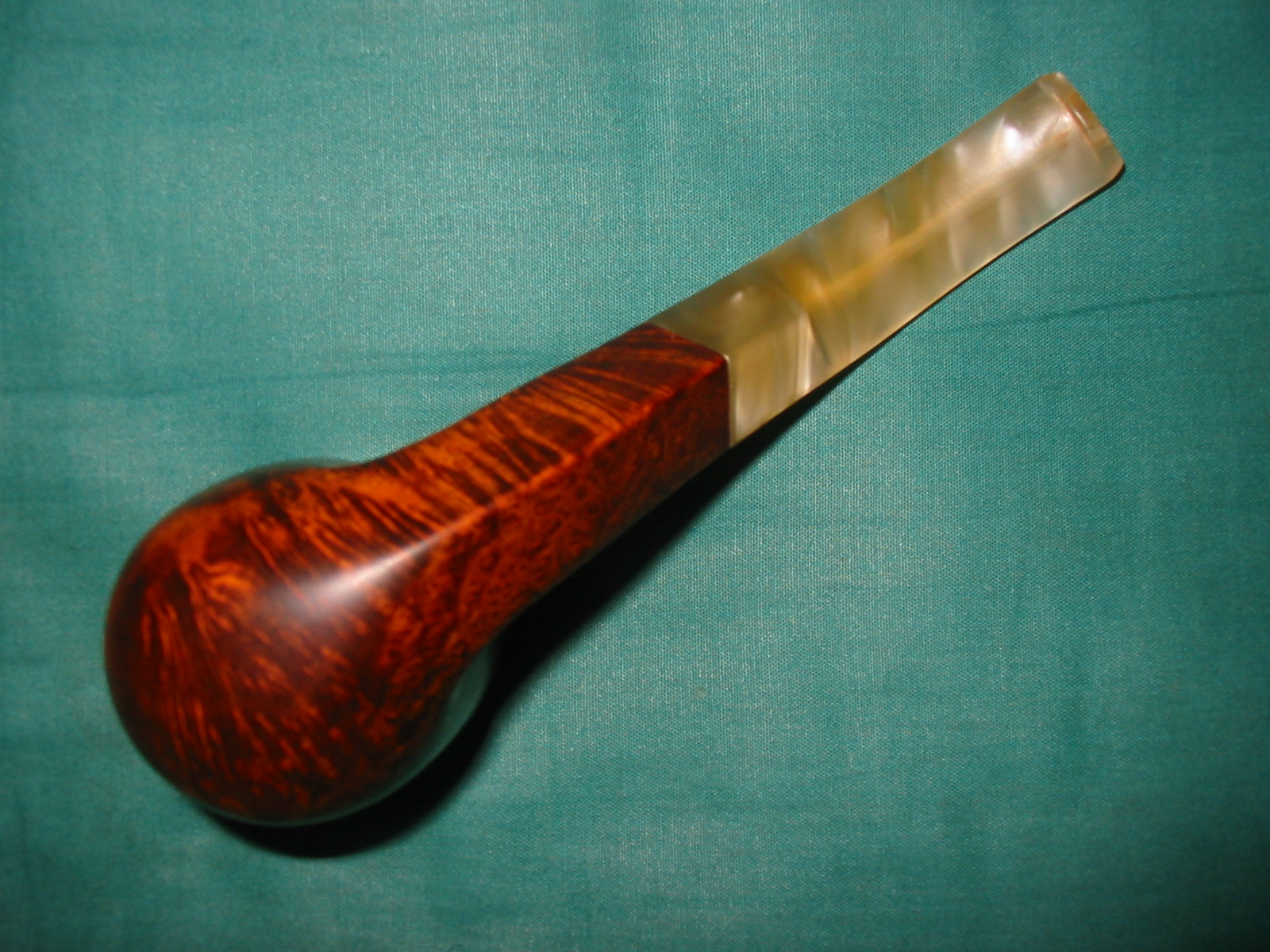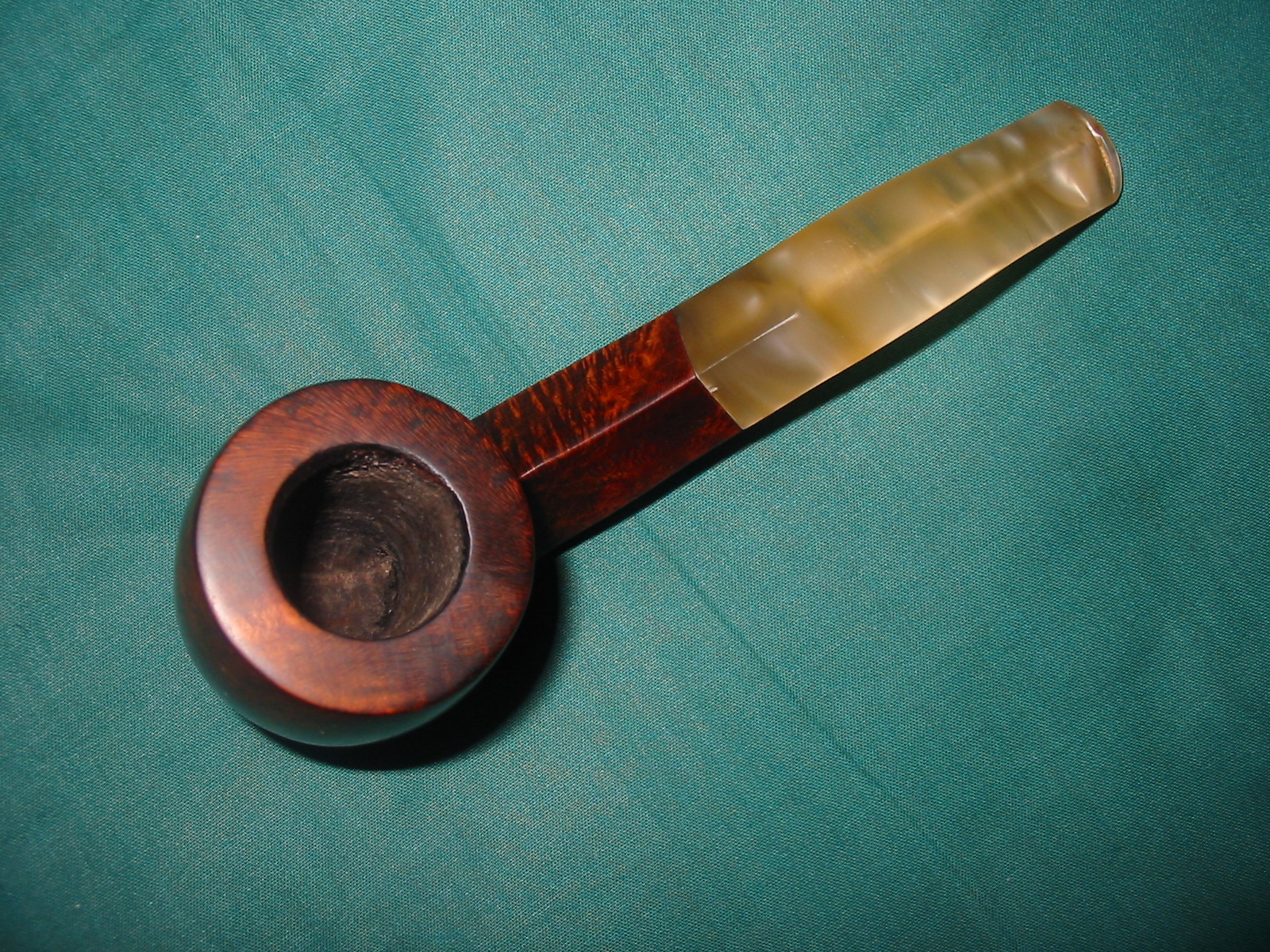
Category Archives: Pipe and Tobacco Historical Documents

A Unique Piece of Pipe History Almost Lost – A Hardcastle’s Dental Briar Reg. Design No. 857327


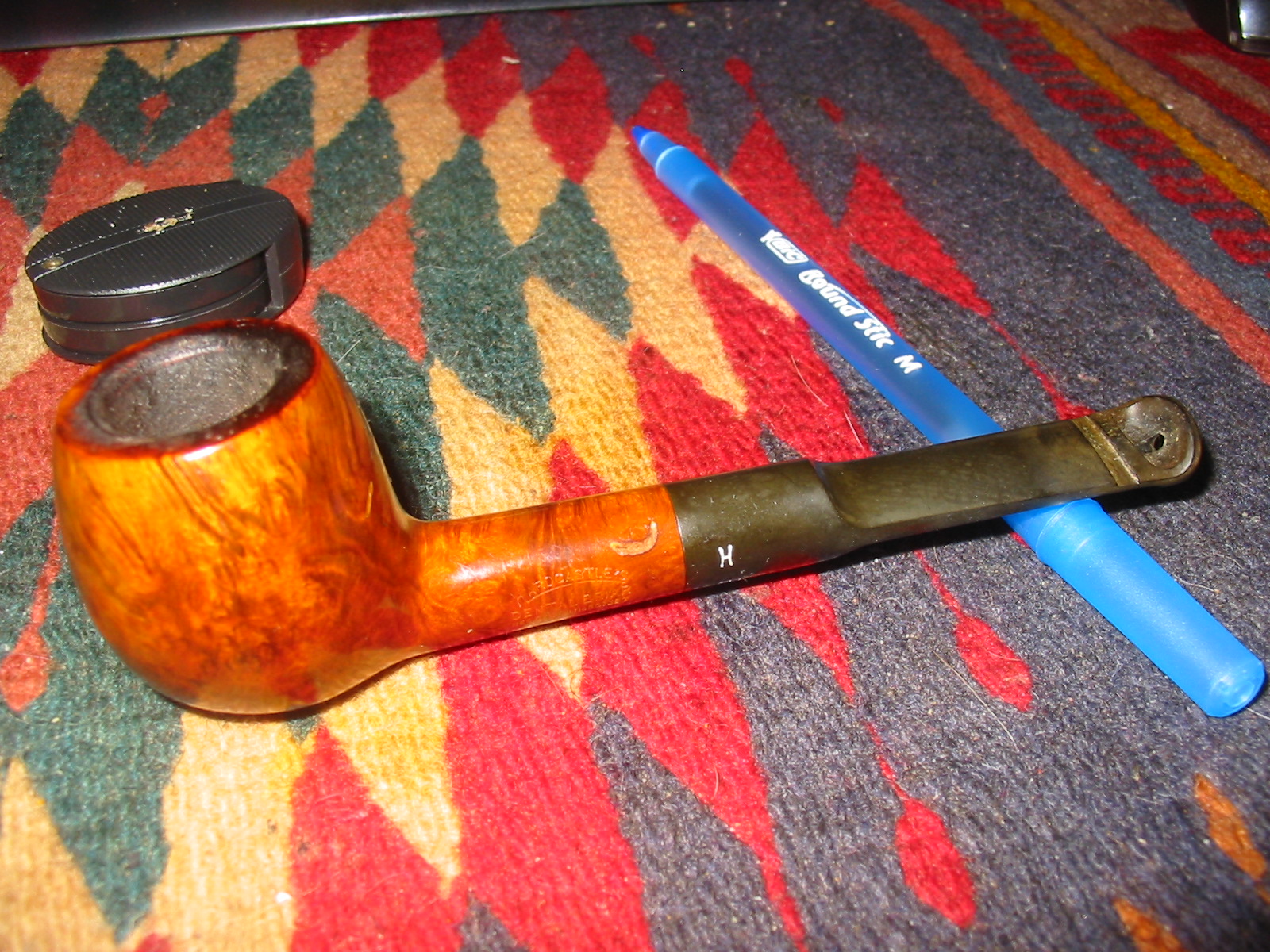
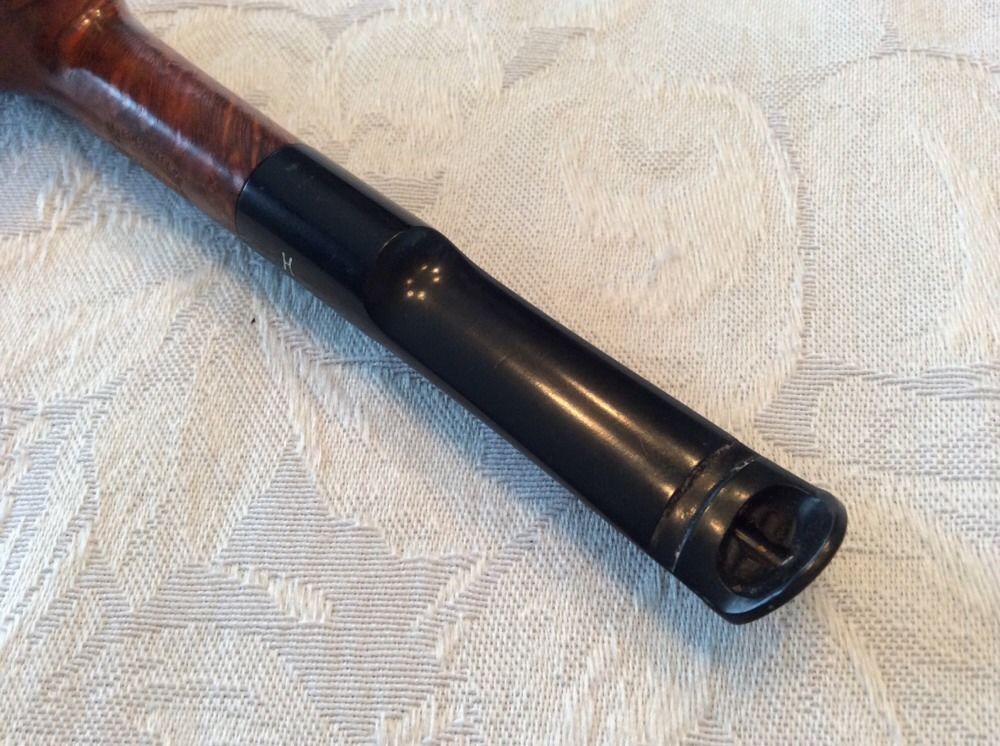
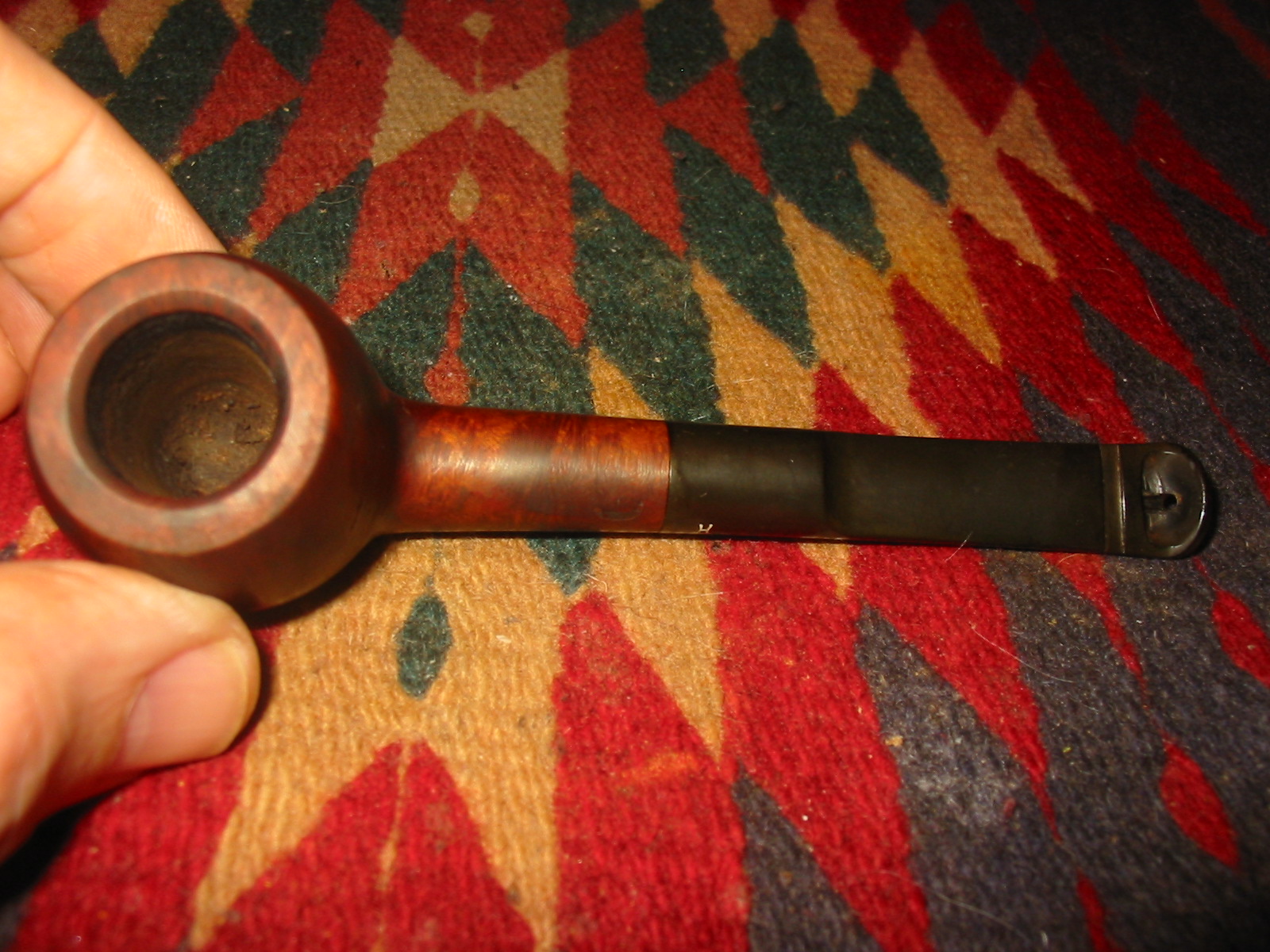
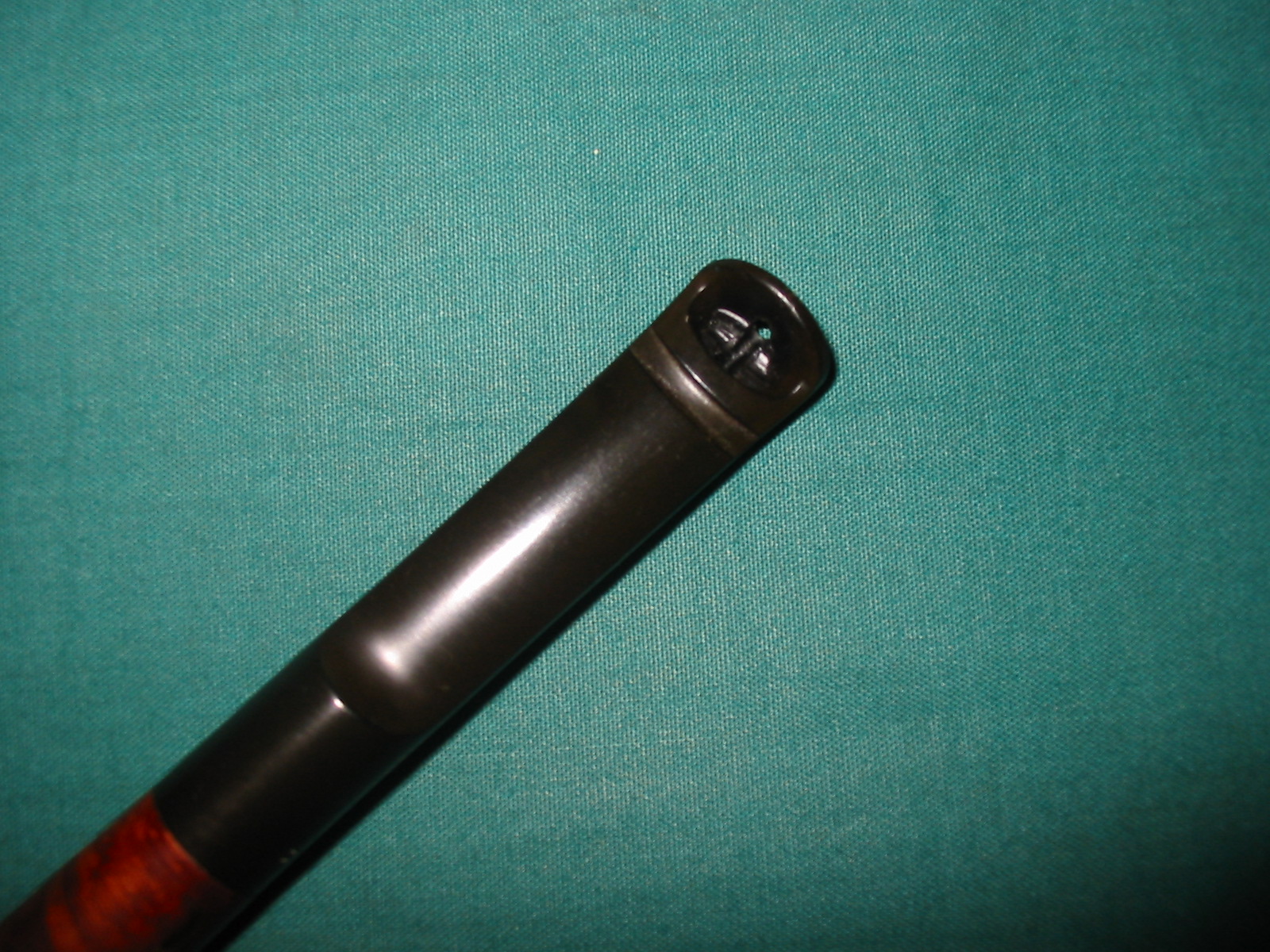
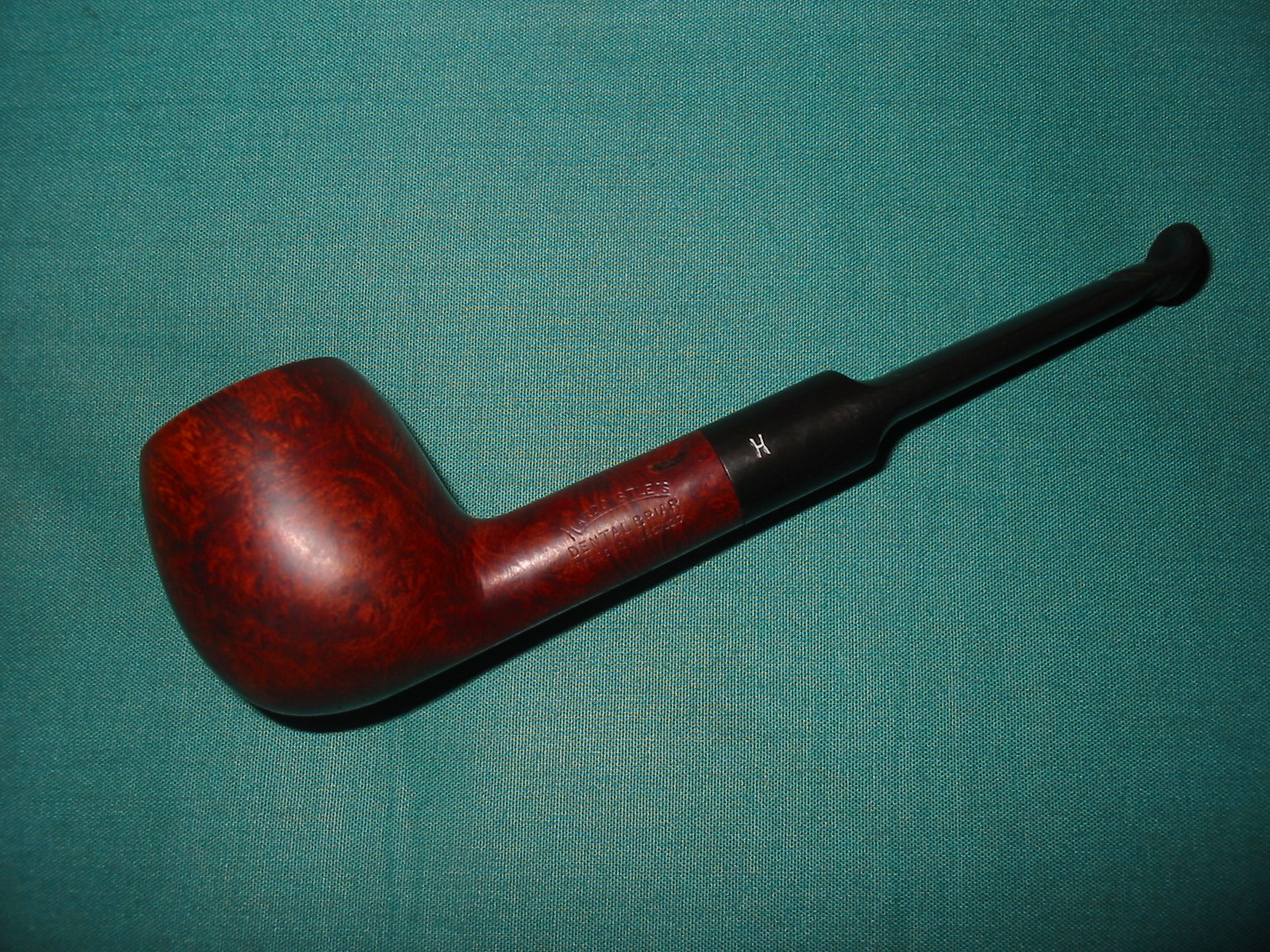
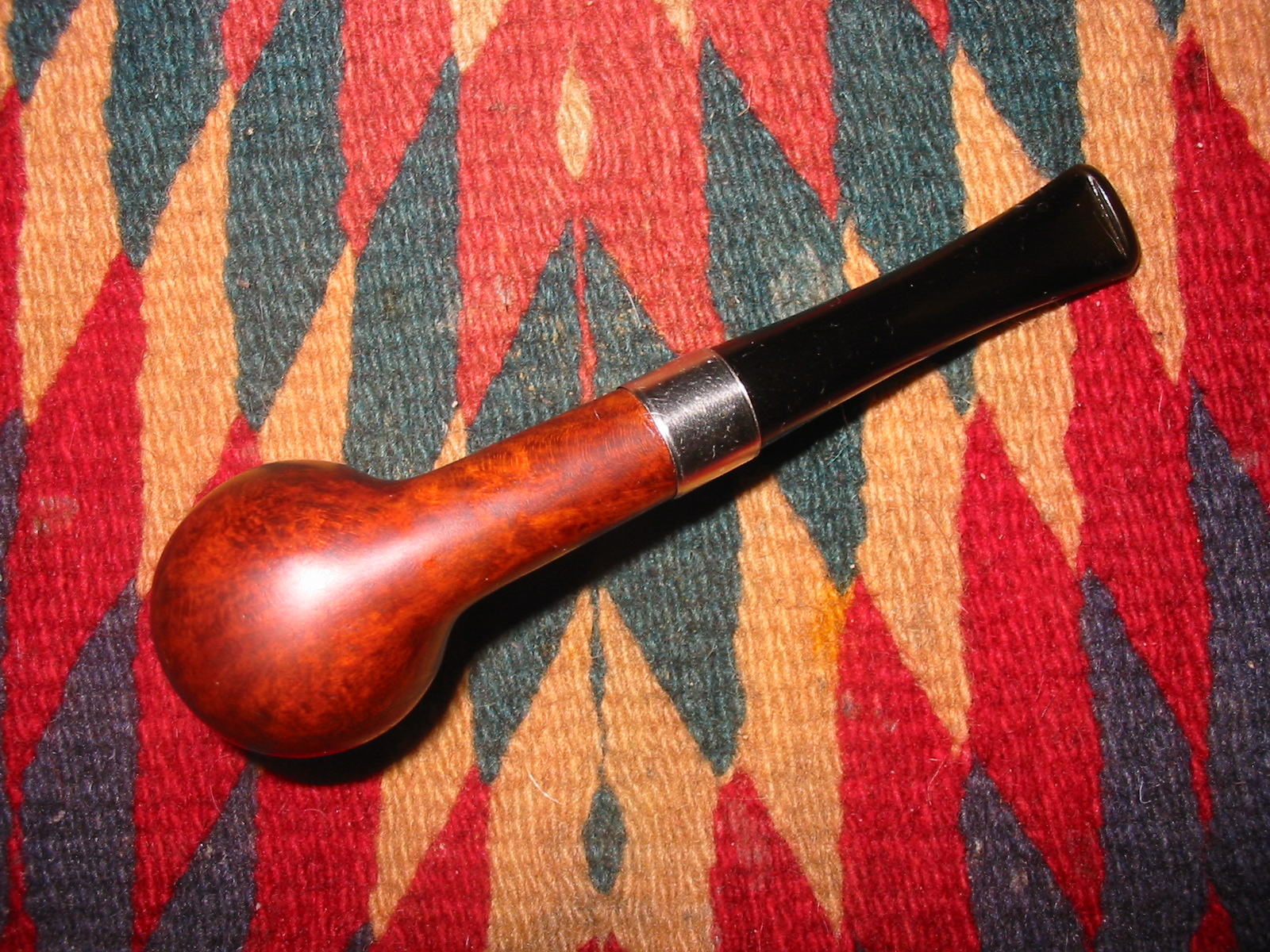
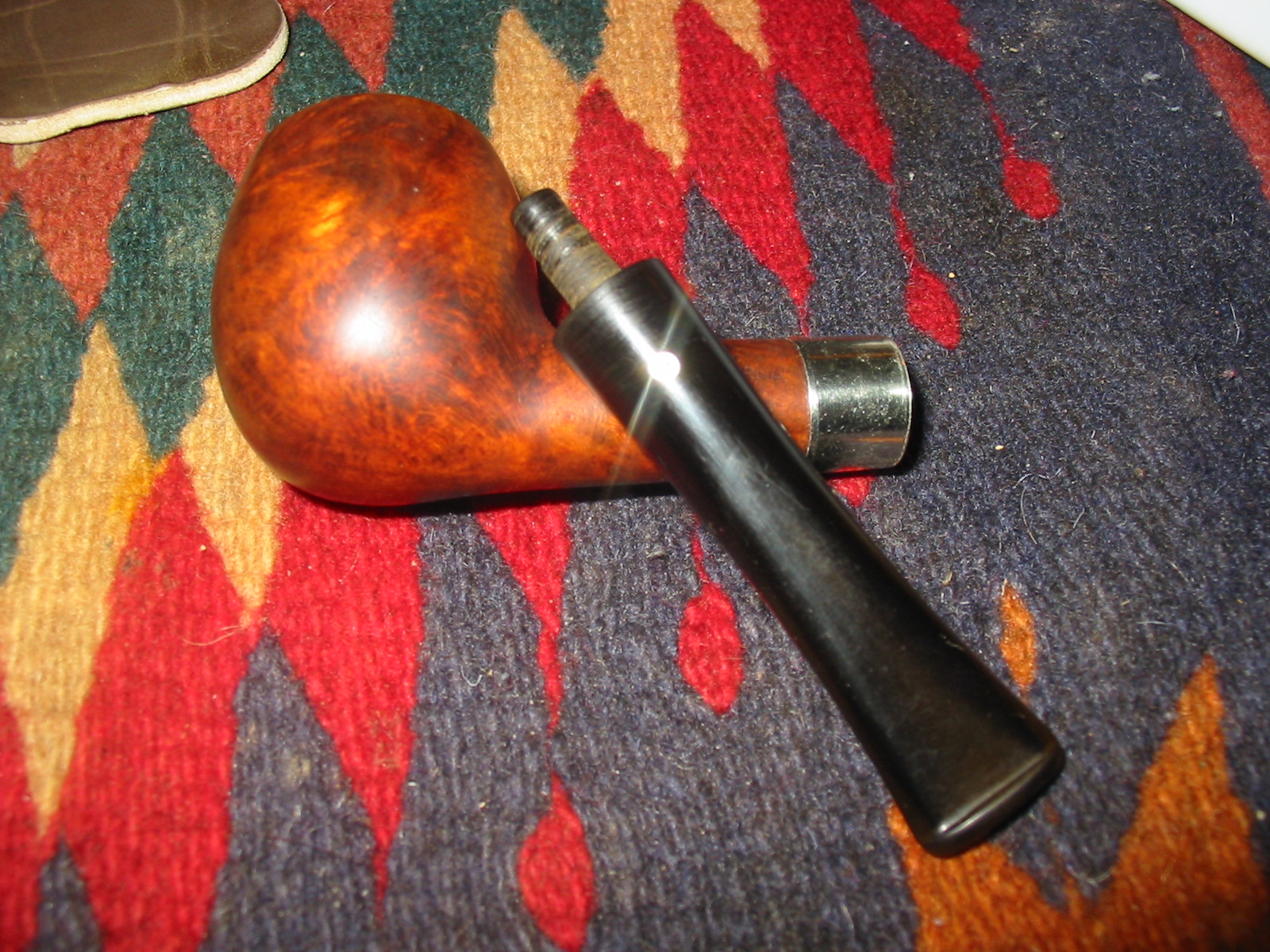
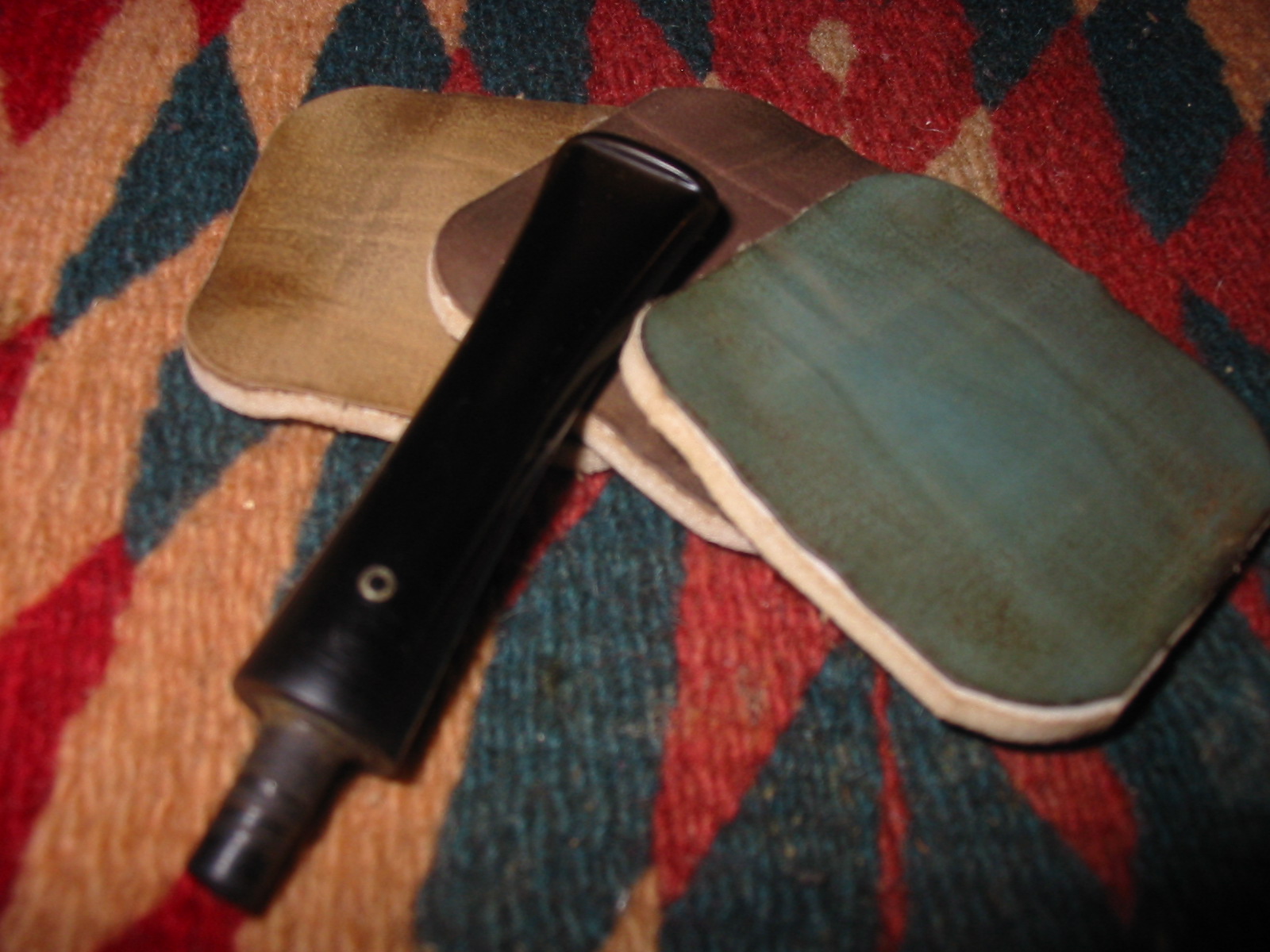
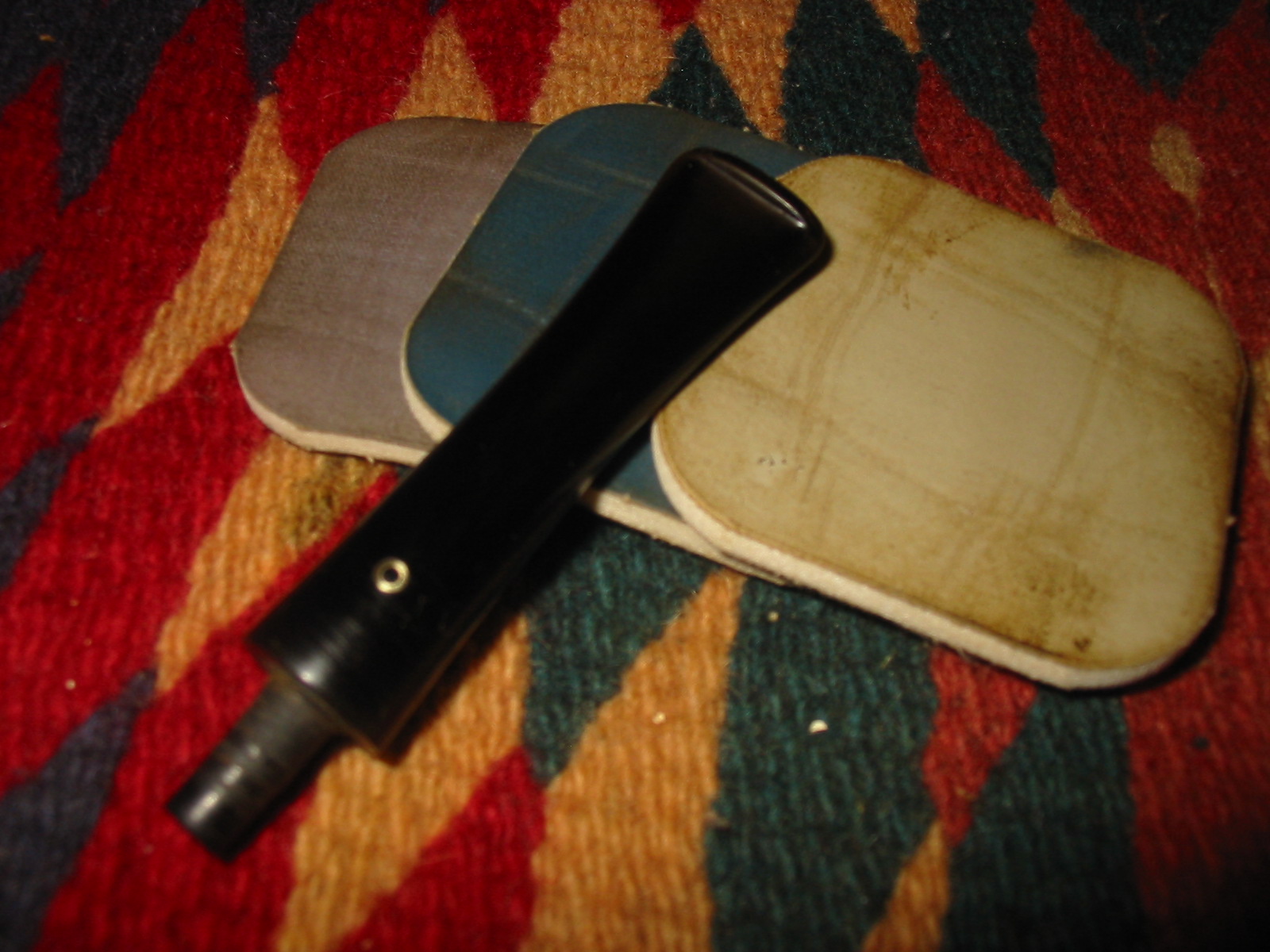
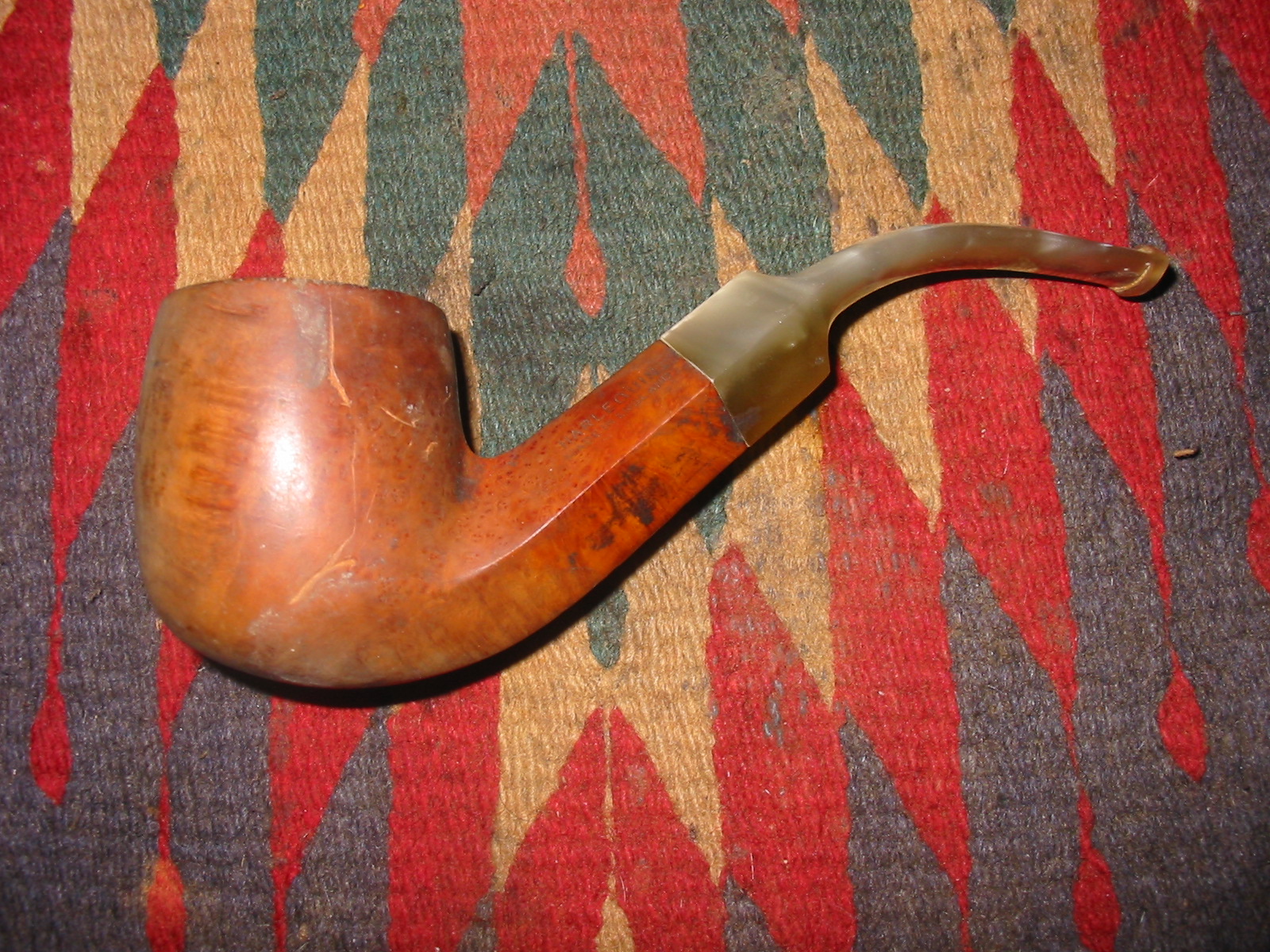
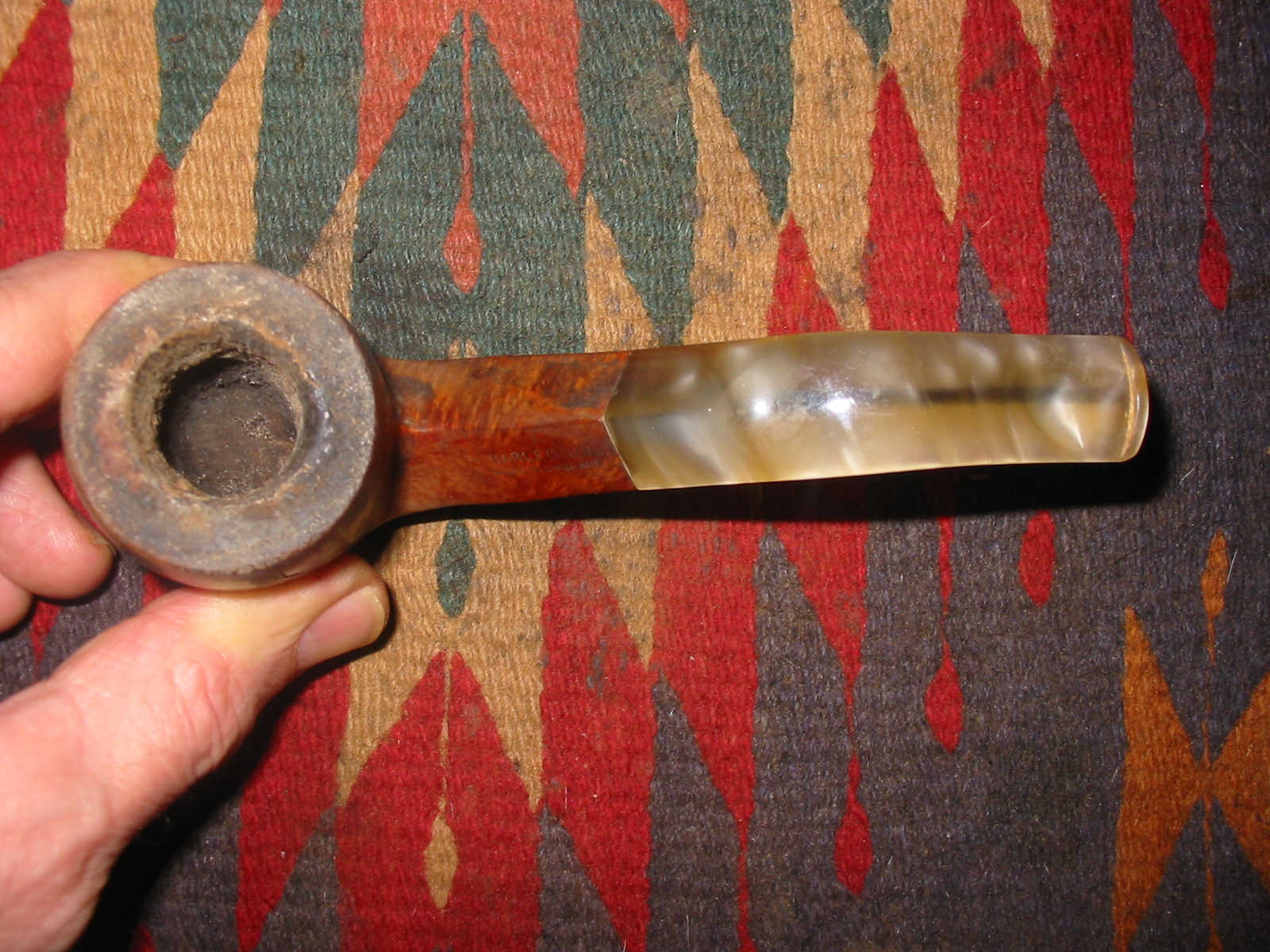
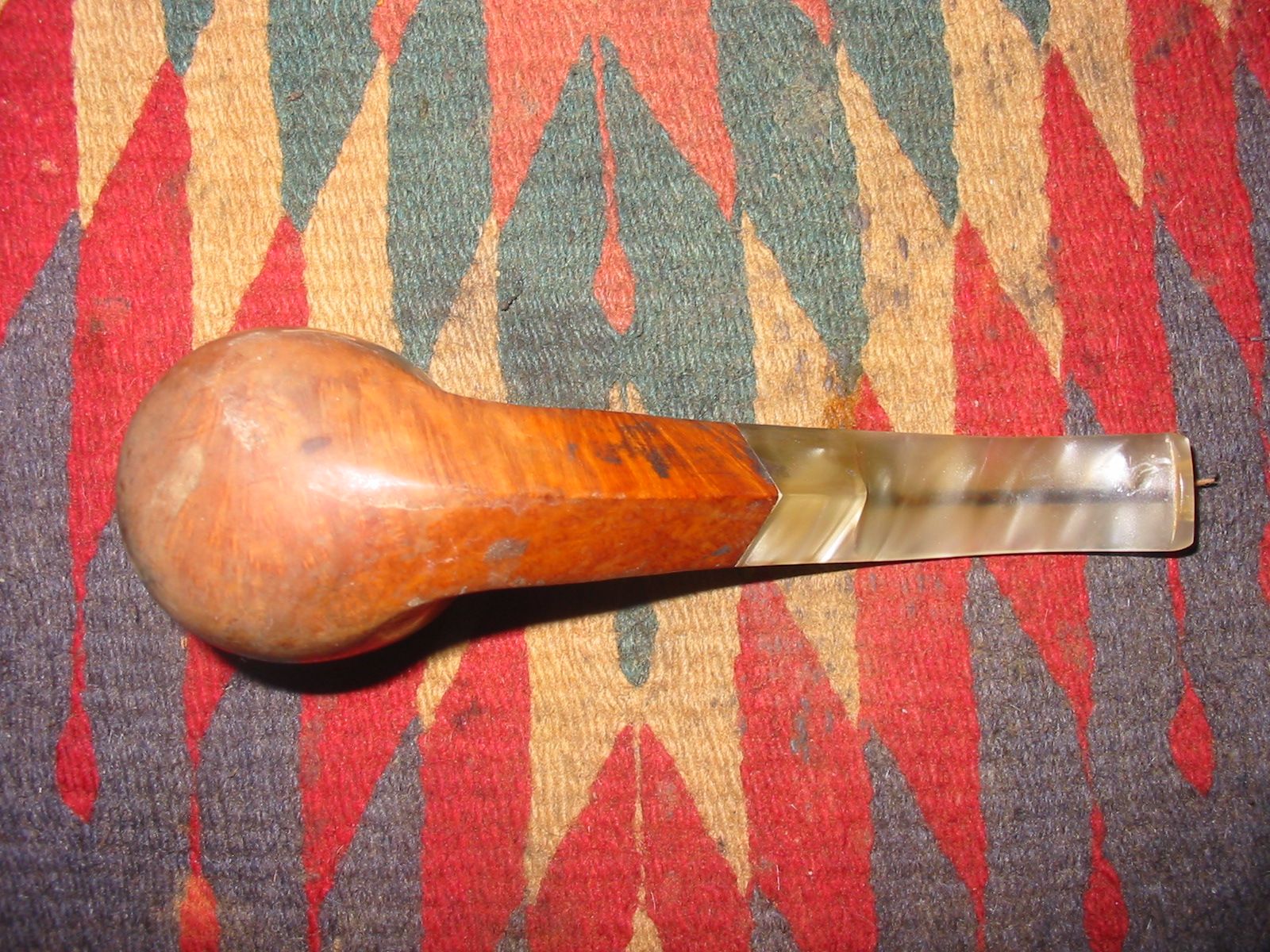
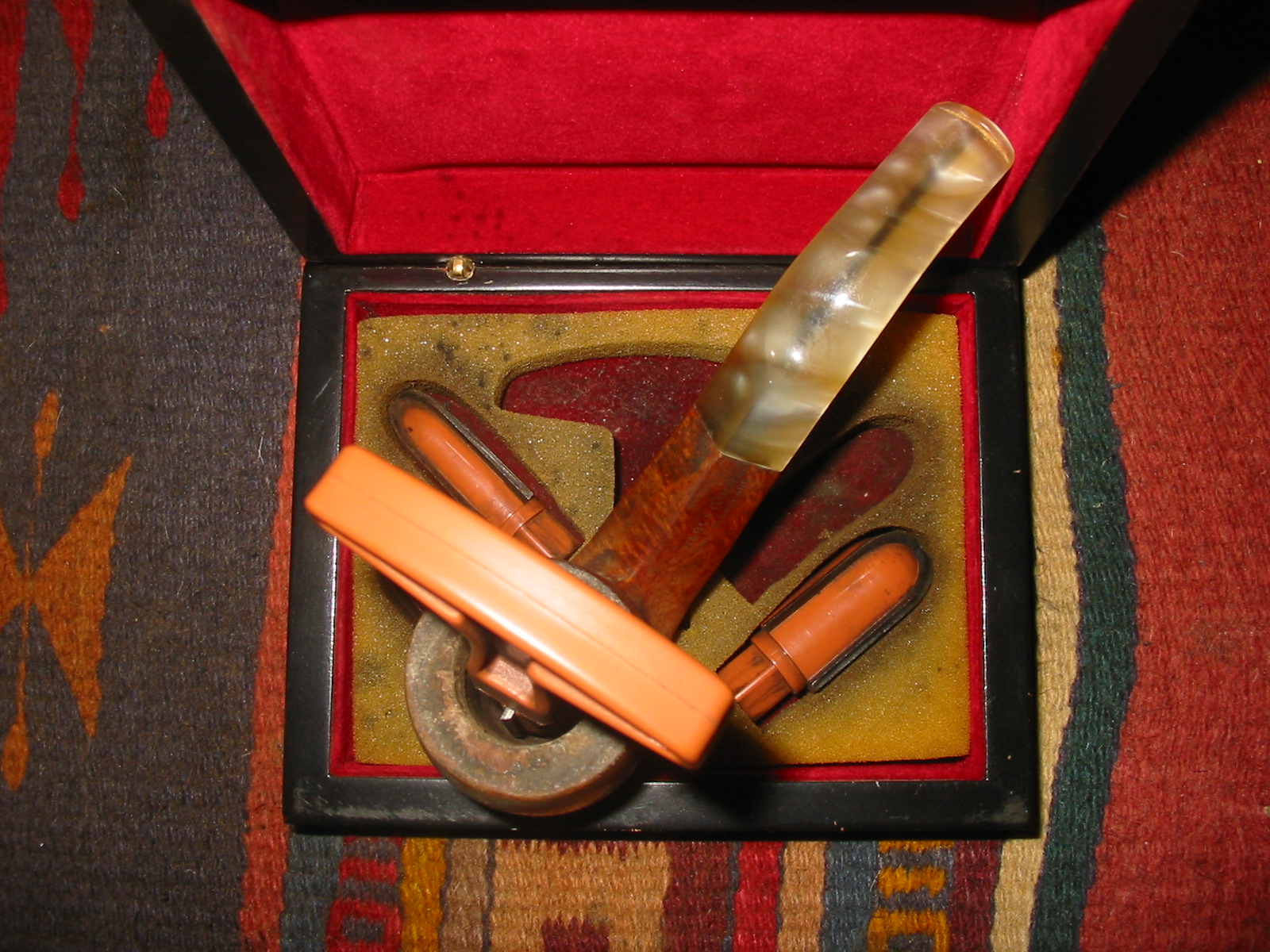
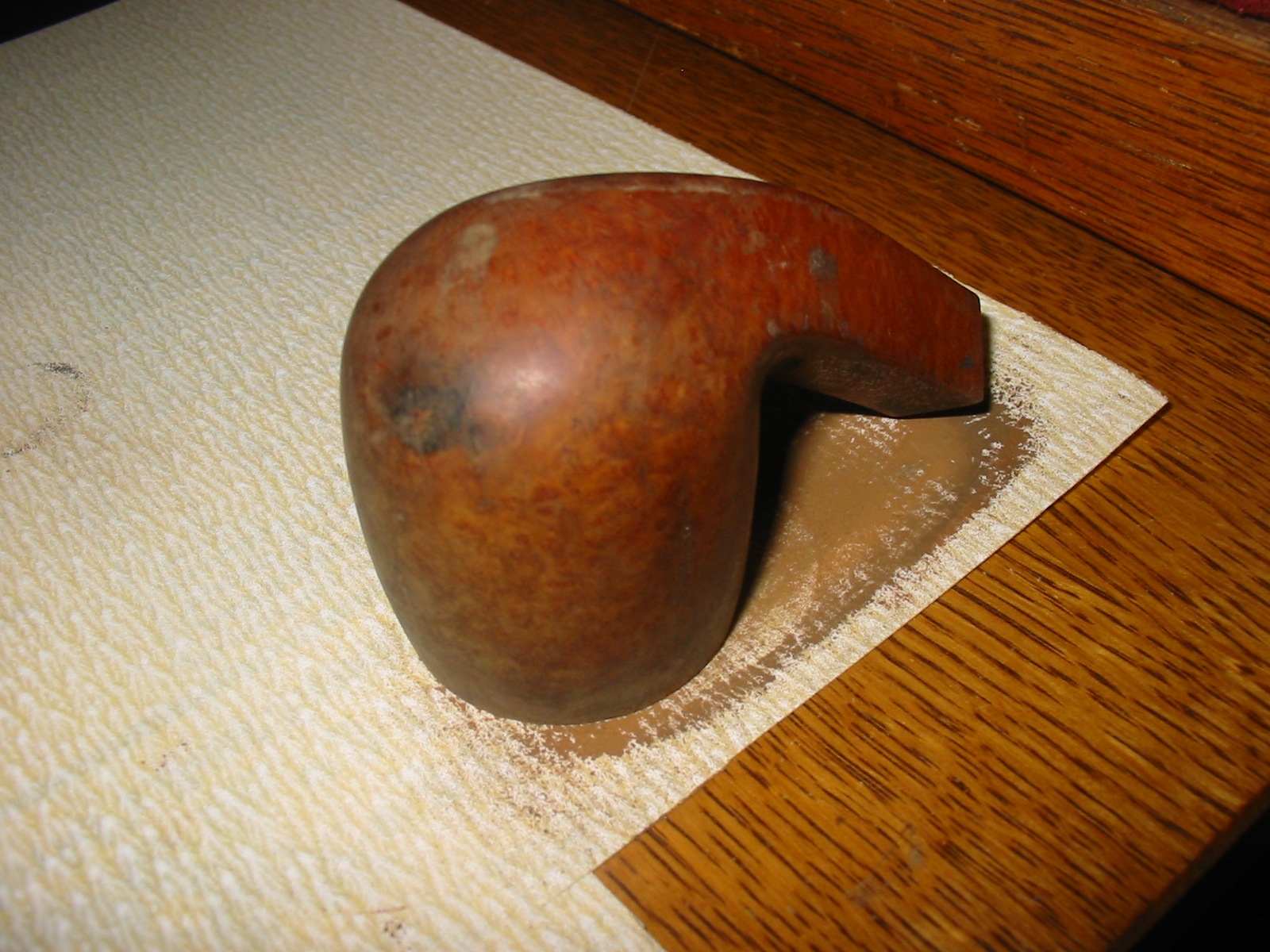
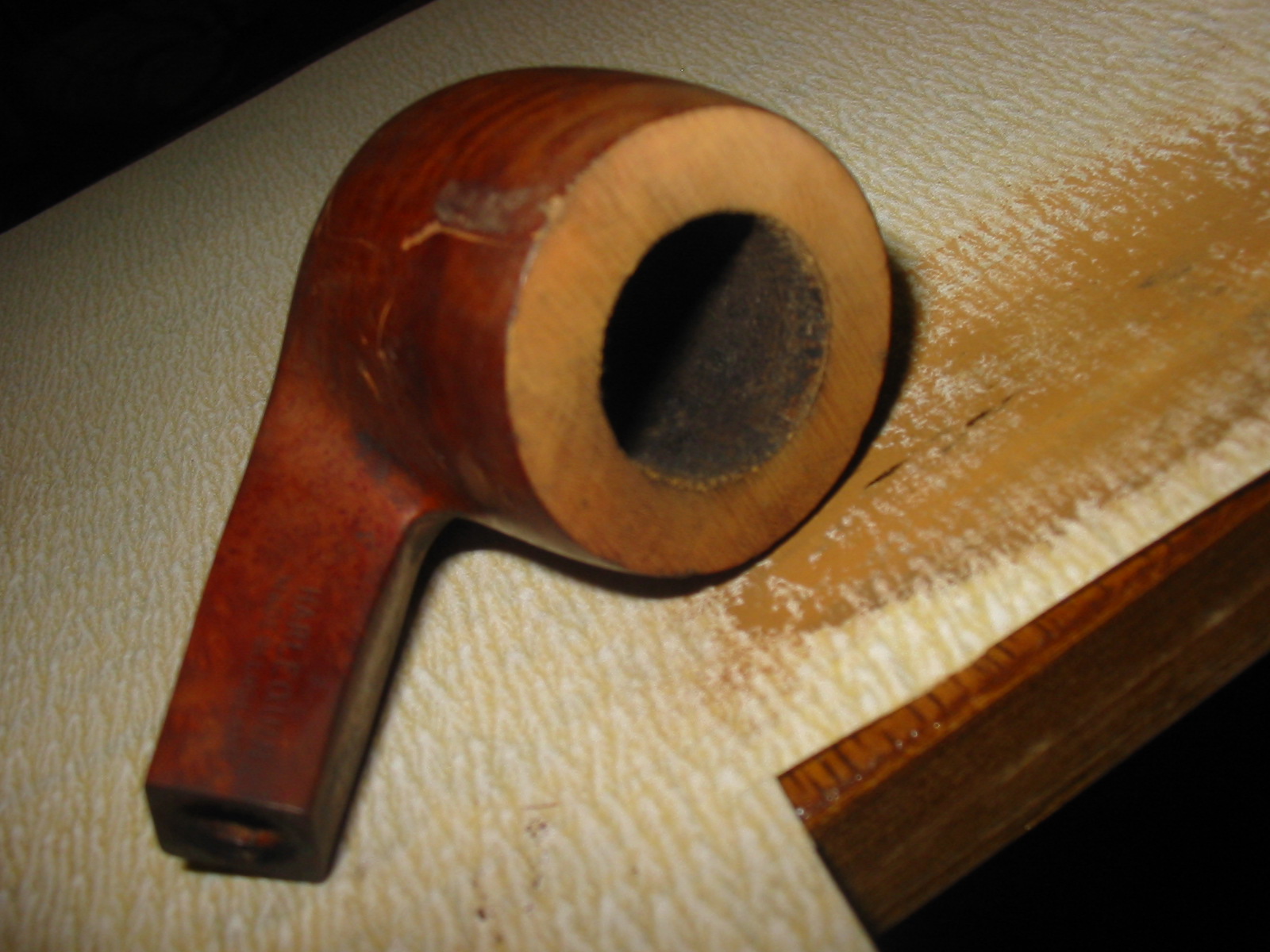
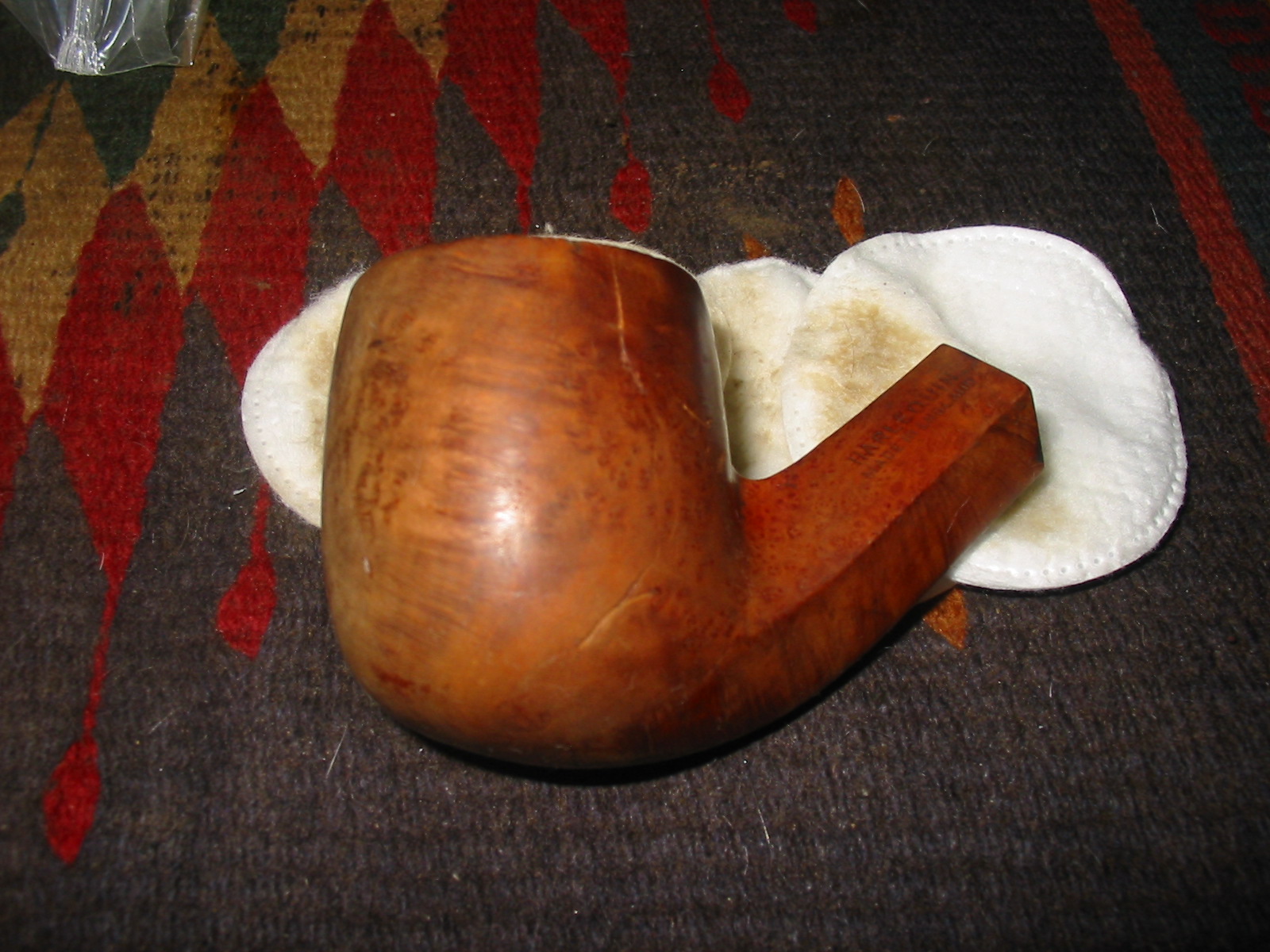
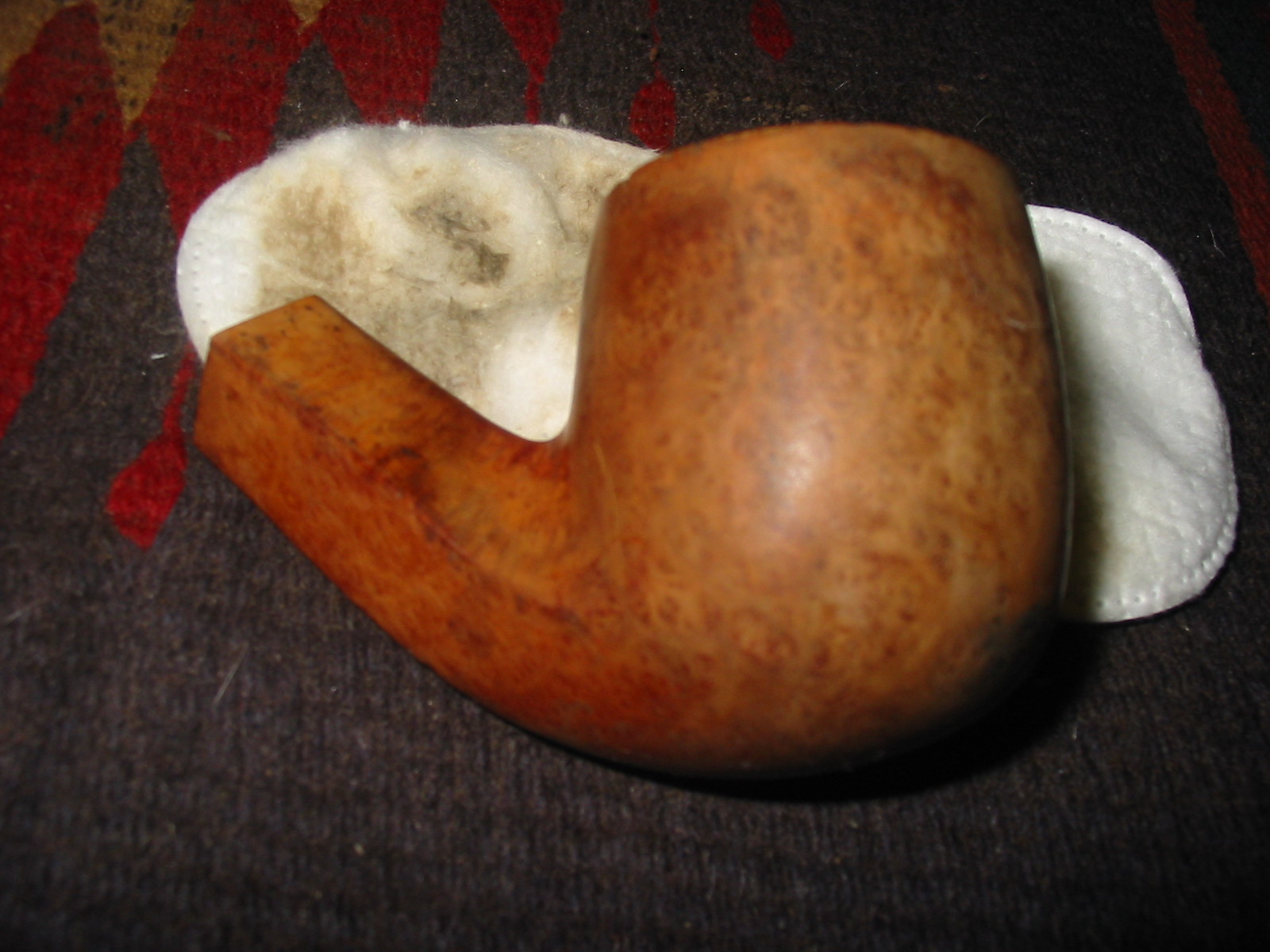
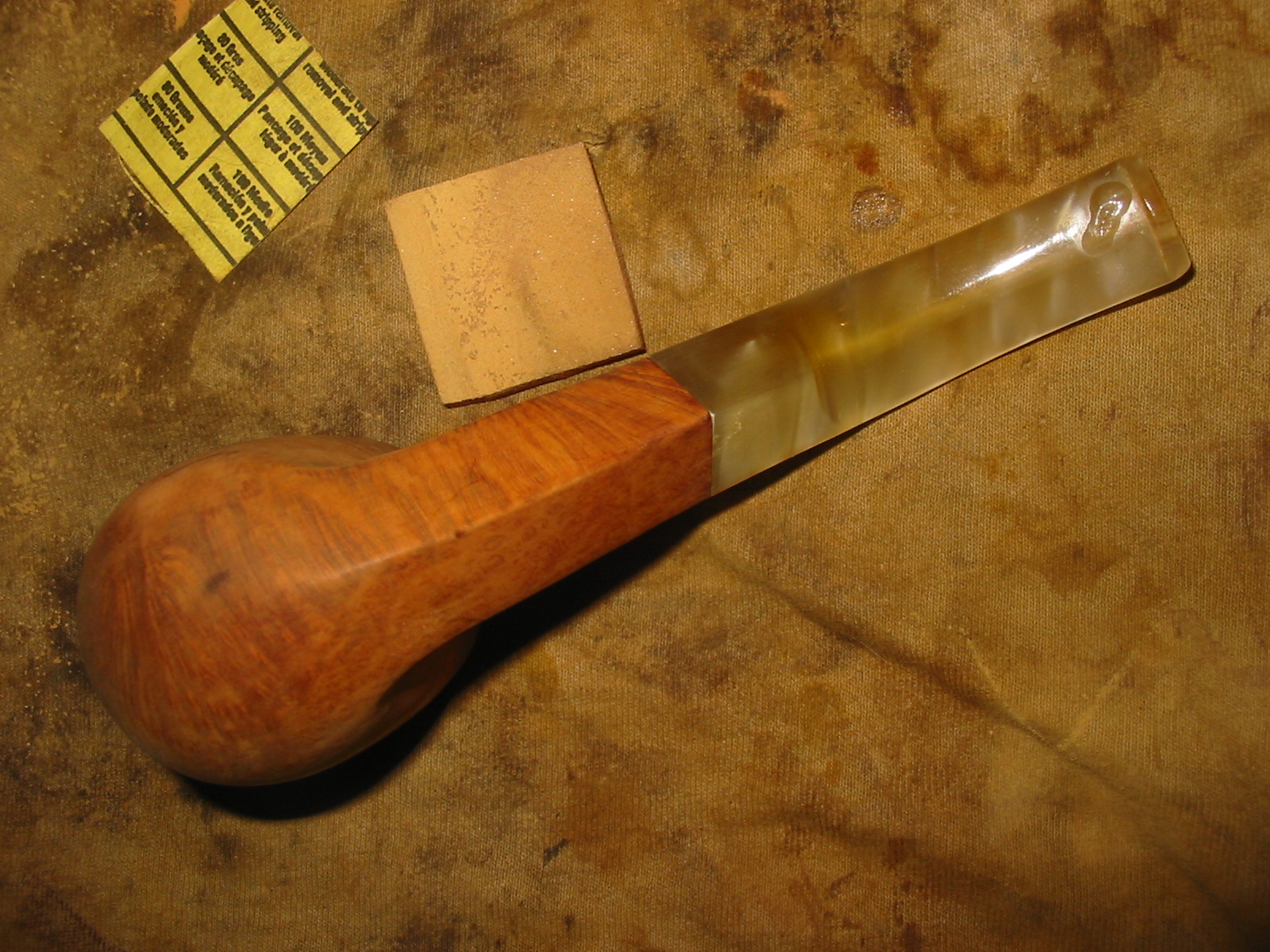
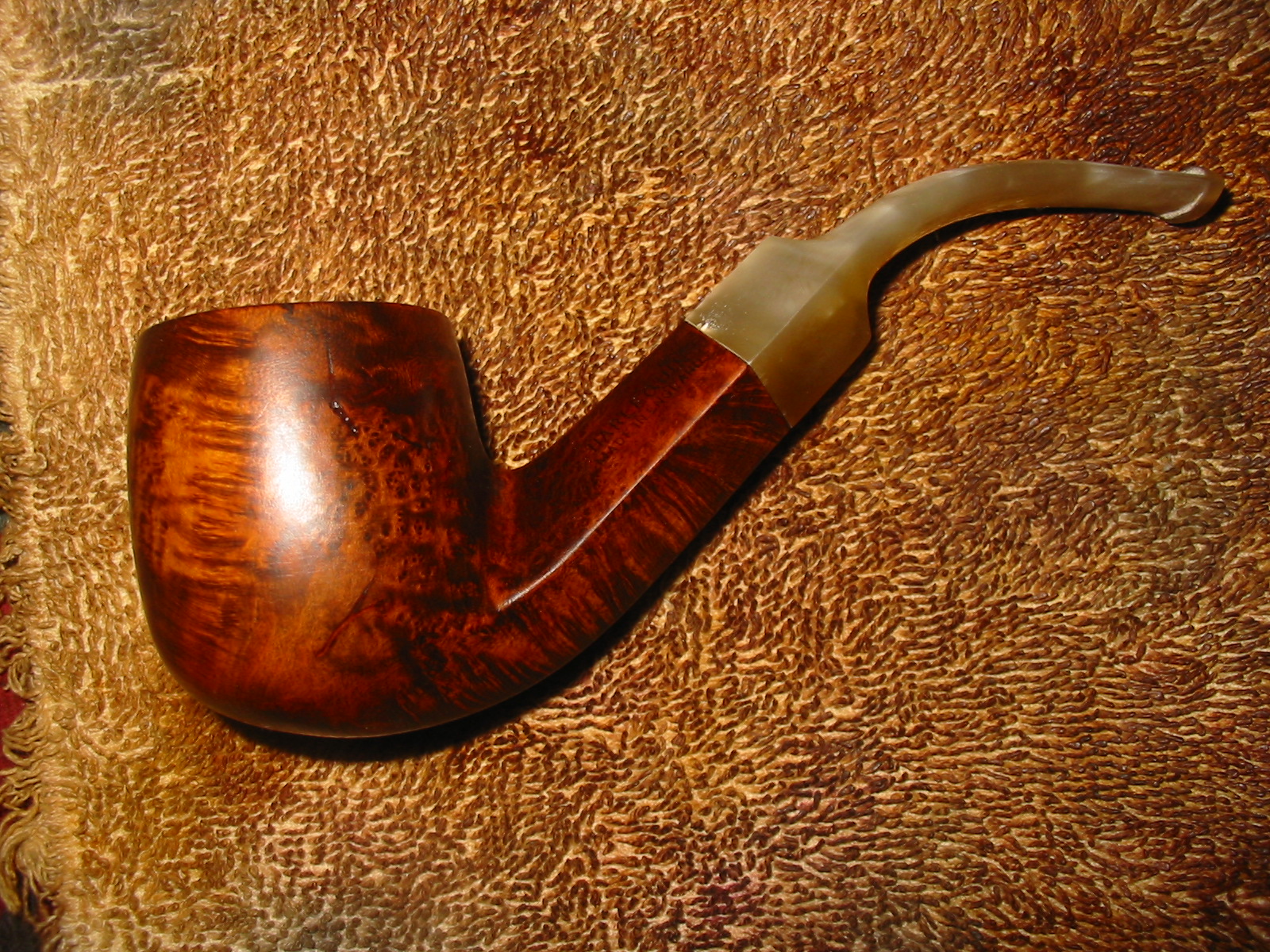
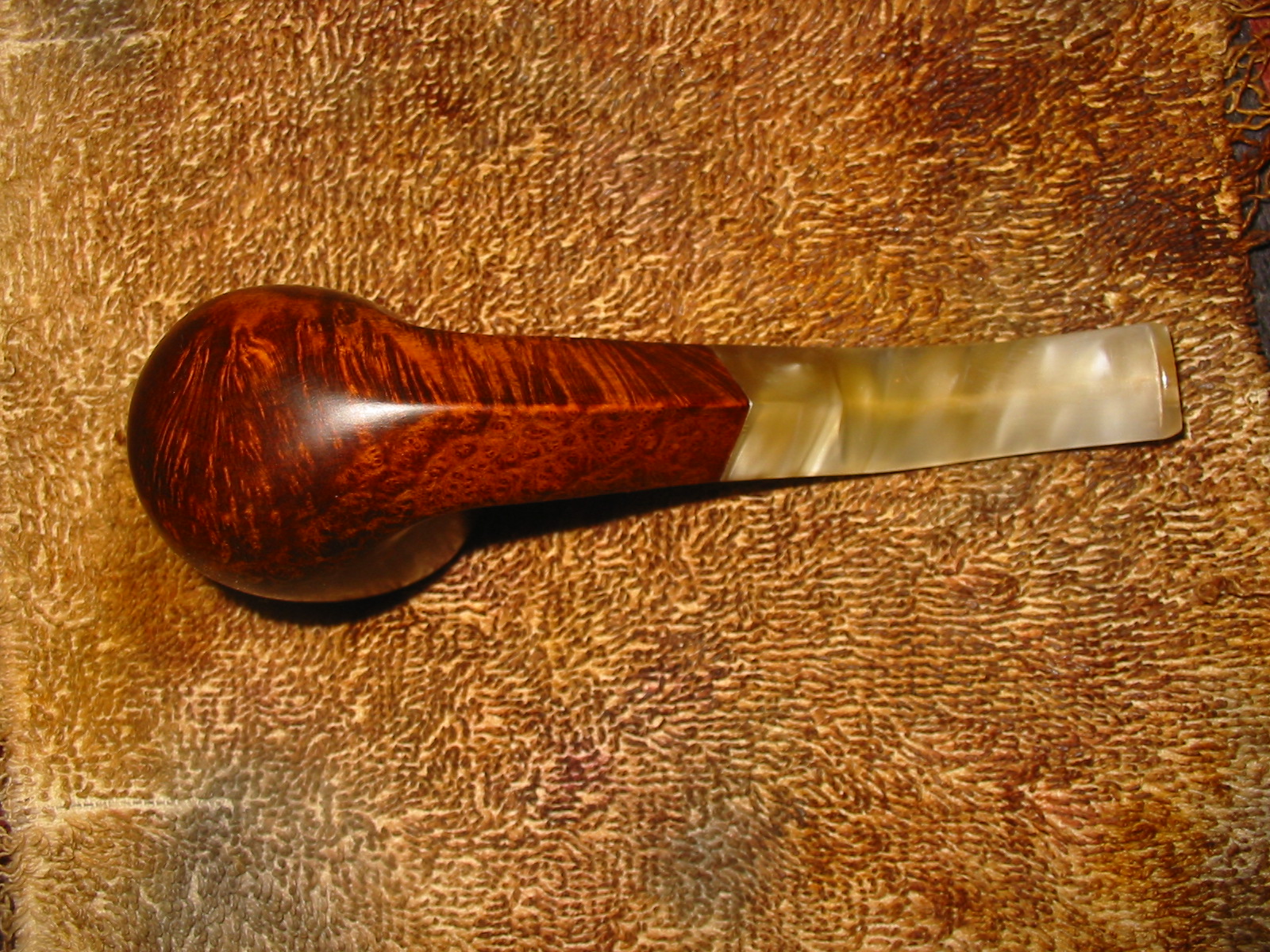
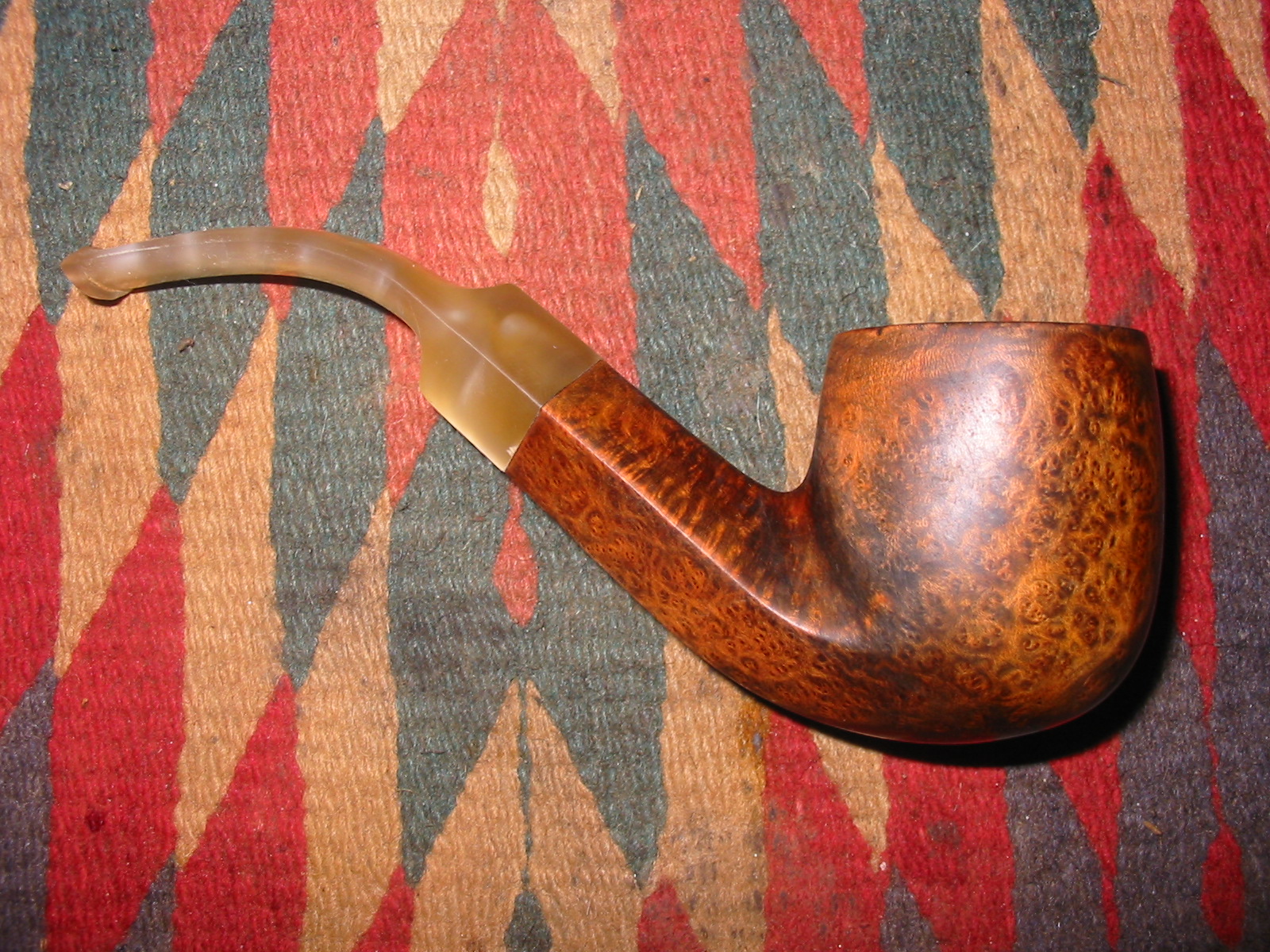
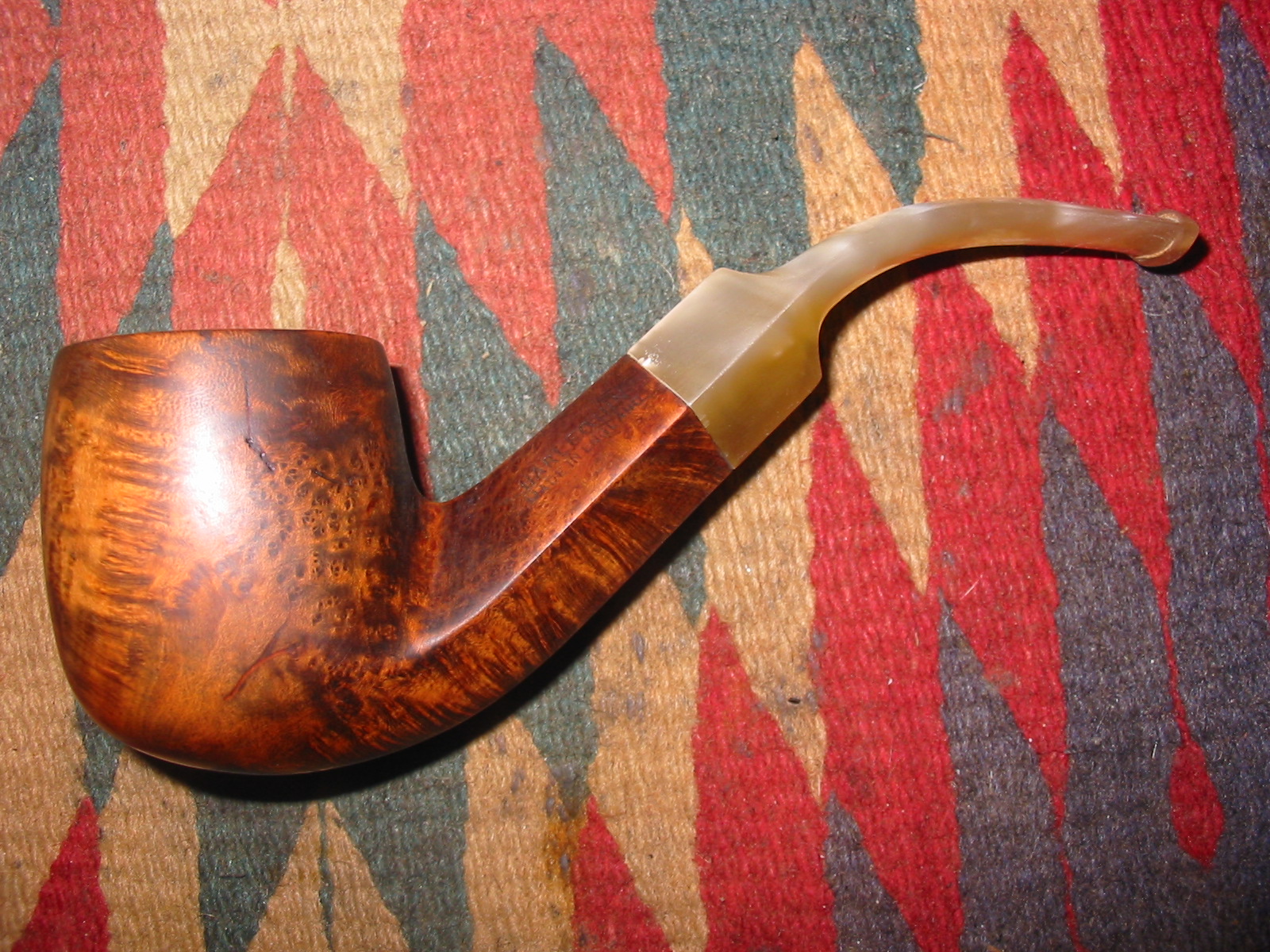
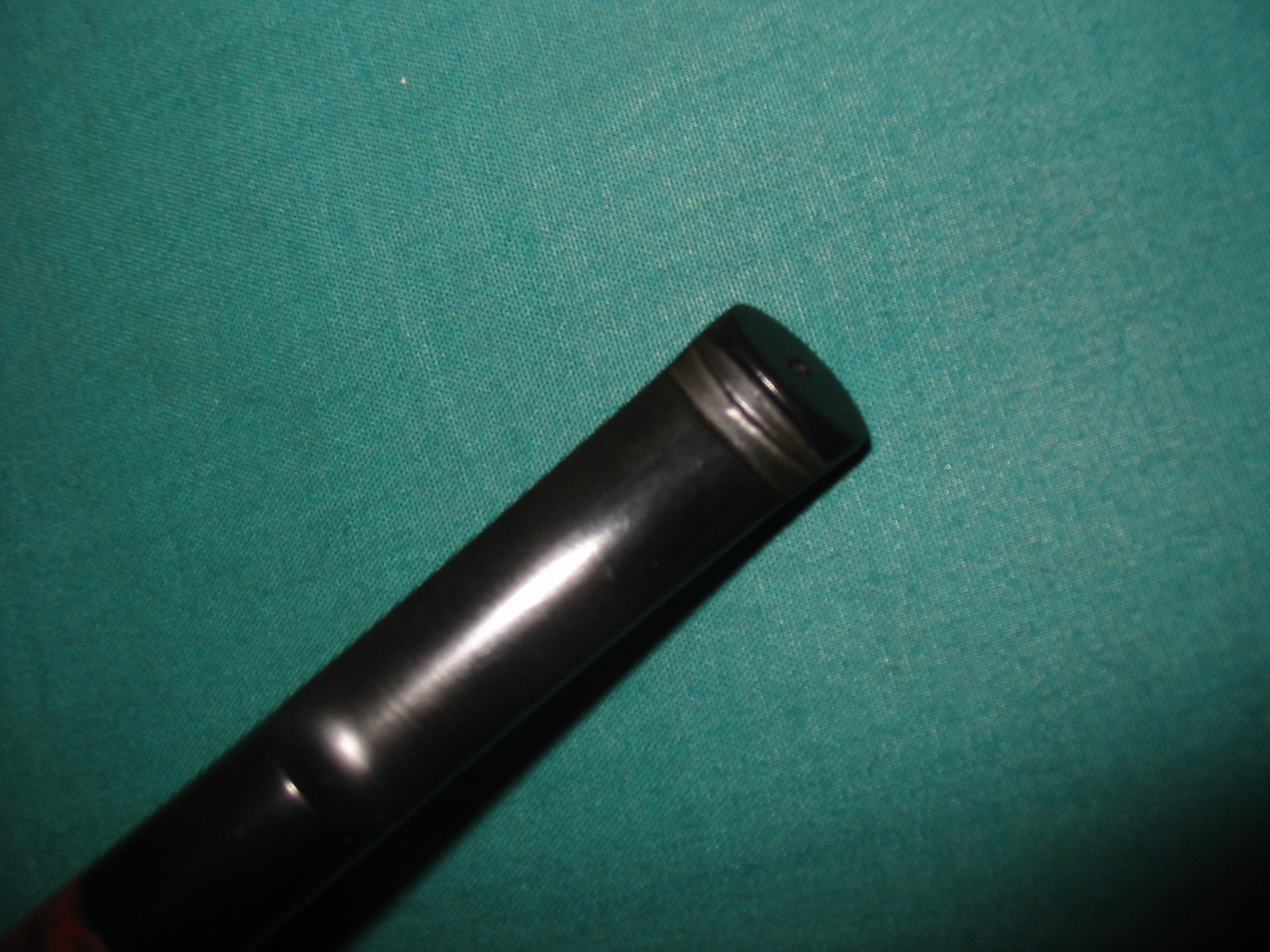
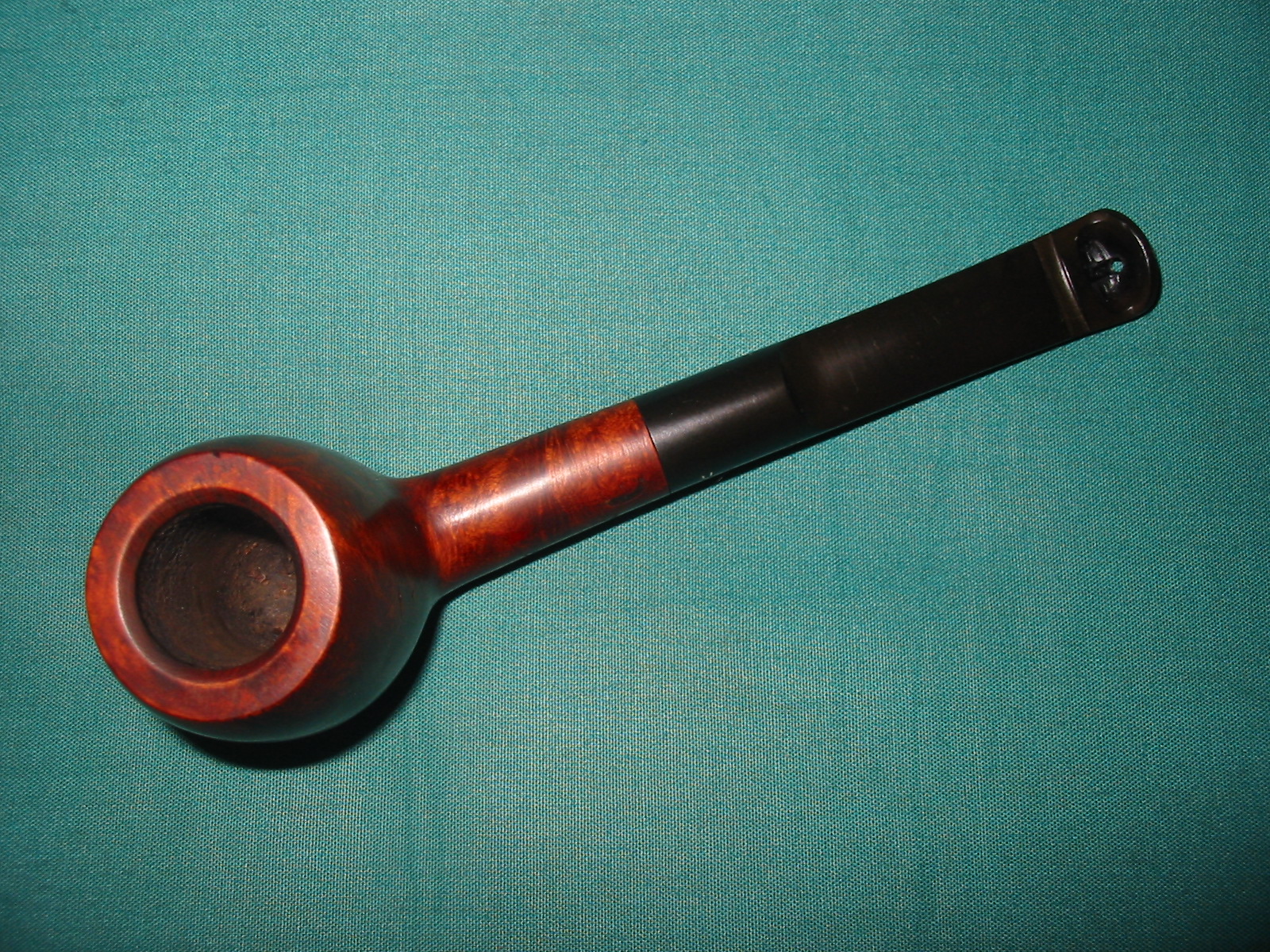
I was gifted a little Hardcastle Apple by a friend on Pipe Smokers Unlimited and a reader of the blog, Bill Tonge. It had the most unusual stem that I think I have ever seen on a pipe. In some ways it looked like a classic dental bit like those seen on other pipes. It had the higher curved upper edge of the button that worked to hang behind an upper plate and the grooves on the under and upper side of the stem for the plate to hook into. But that was all it had in common. The end of the stem, viewed from the button end had a single orific opening rather than a slot. It was a flat upright wall of vulcanite with a single hole in the middle. On the flat surface of the stem just ahead of the button was a large open area where it looked as if a piece of the vulcanite had broken or been removed. The airway was exposed. The gap between the dental end and the open end of the airway was a good ¼ inch. Both Bill and I were convinced it was a candidate for a stem replacement, cutback and reshaped button or as a guinea pig for me to practice on using Jacek’s stem splicing procedure.
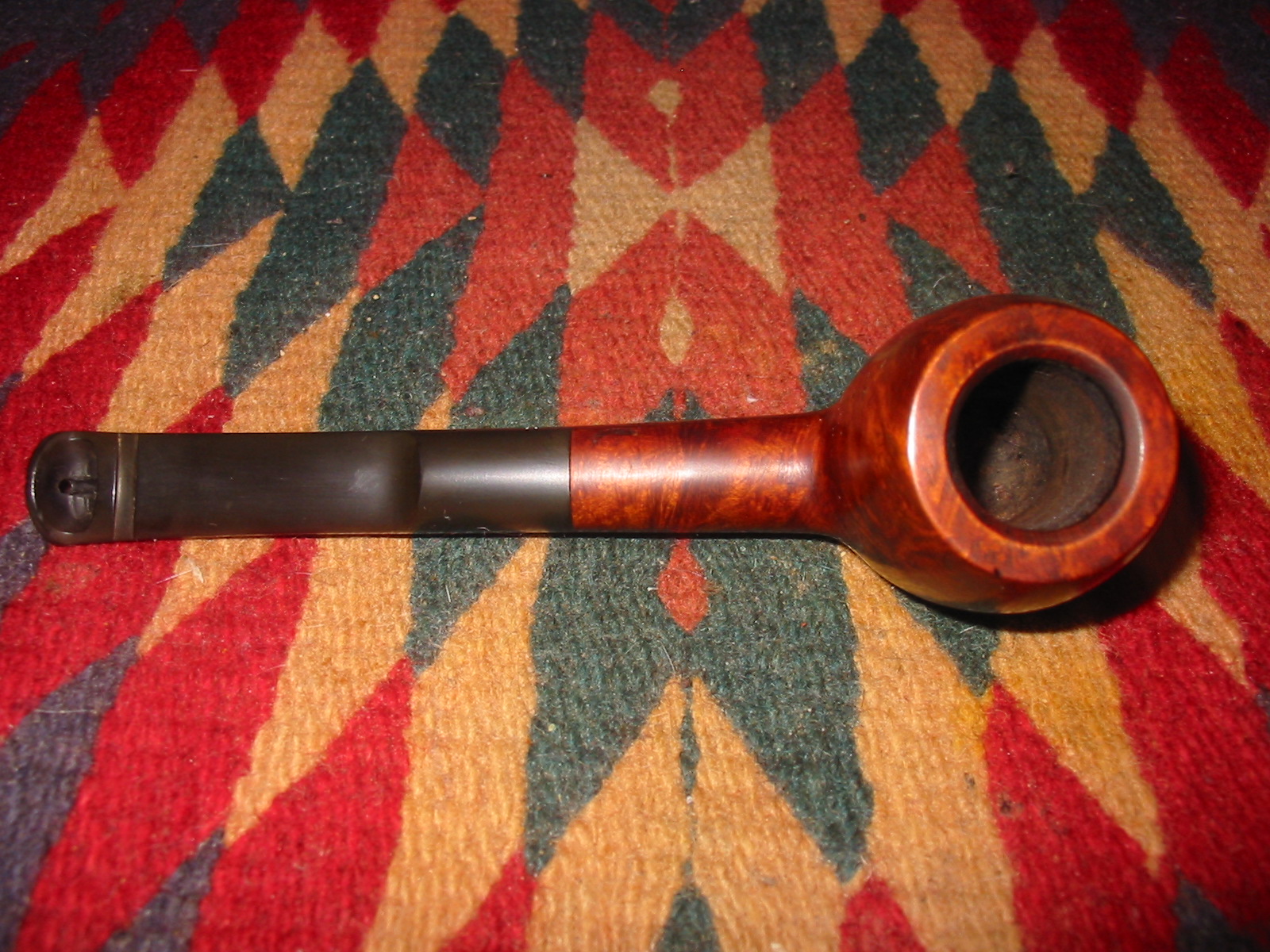
IMG_6943
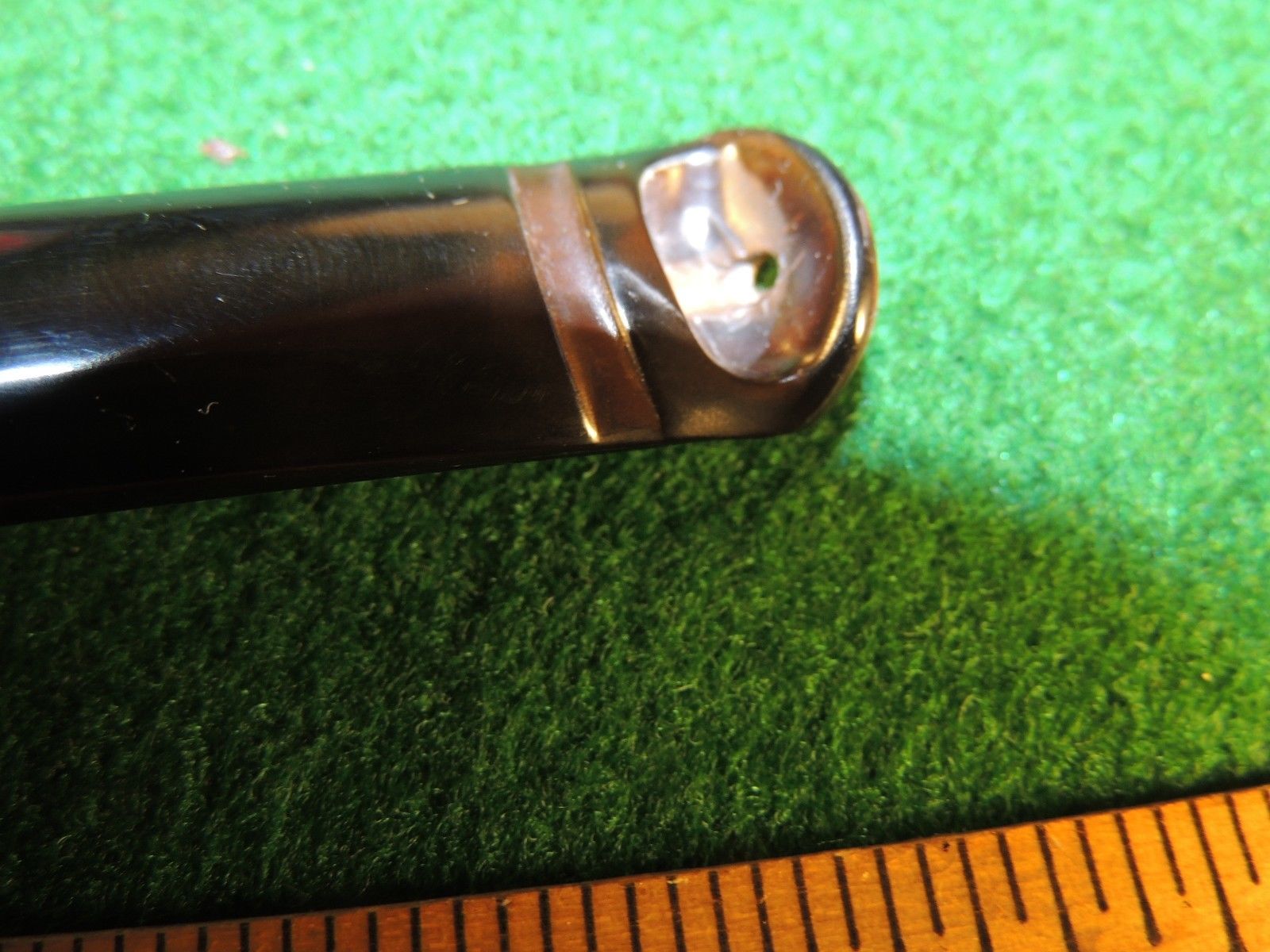
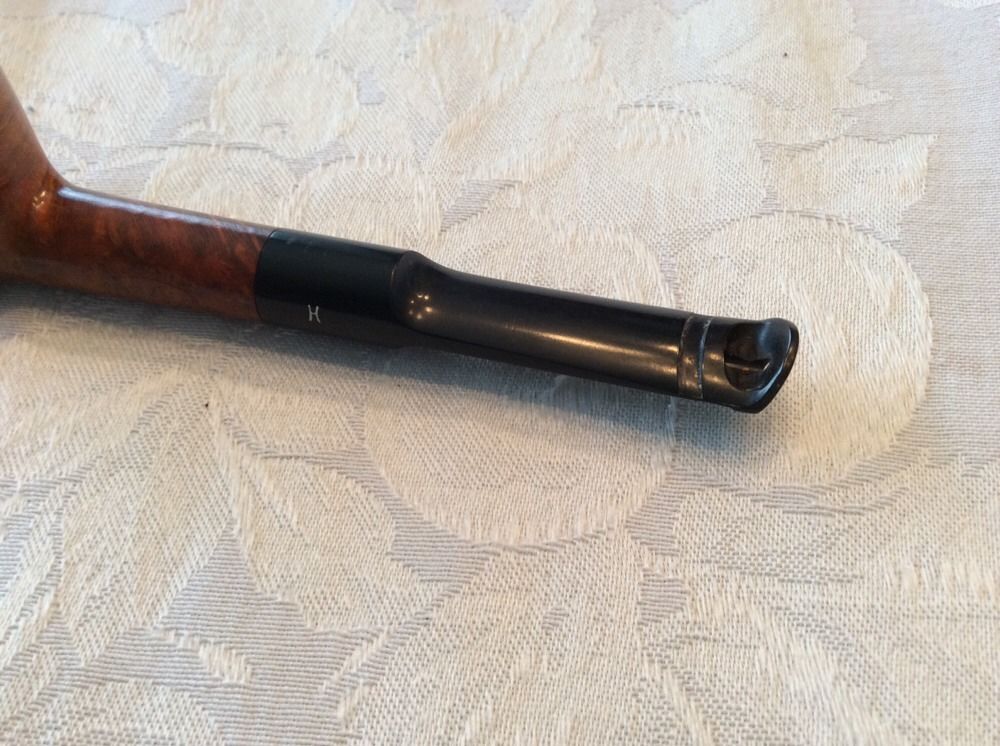
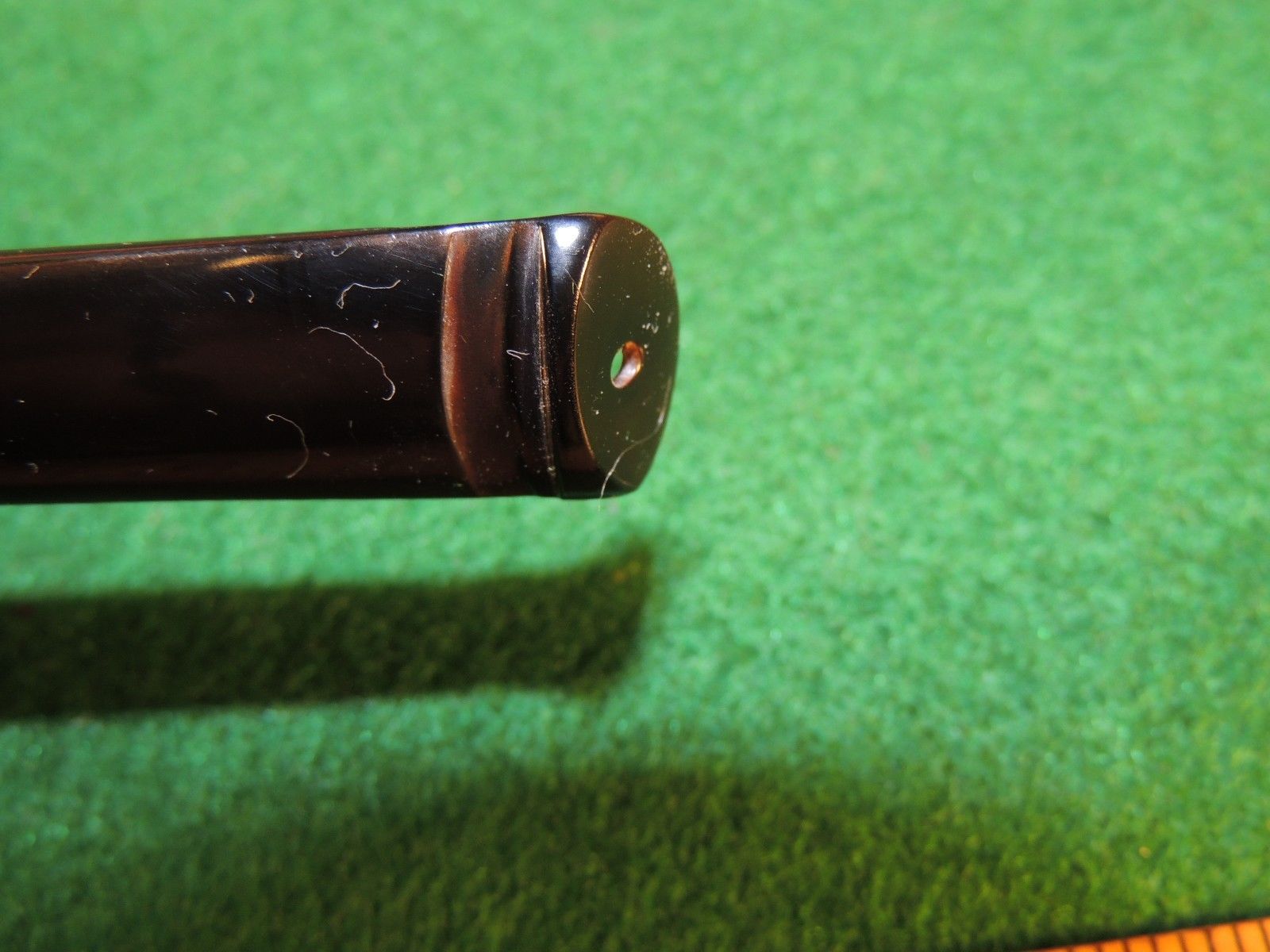
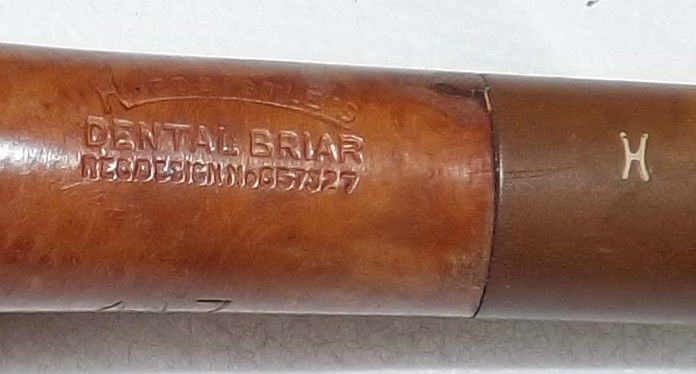
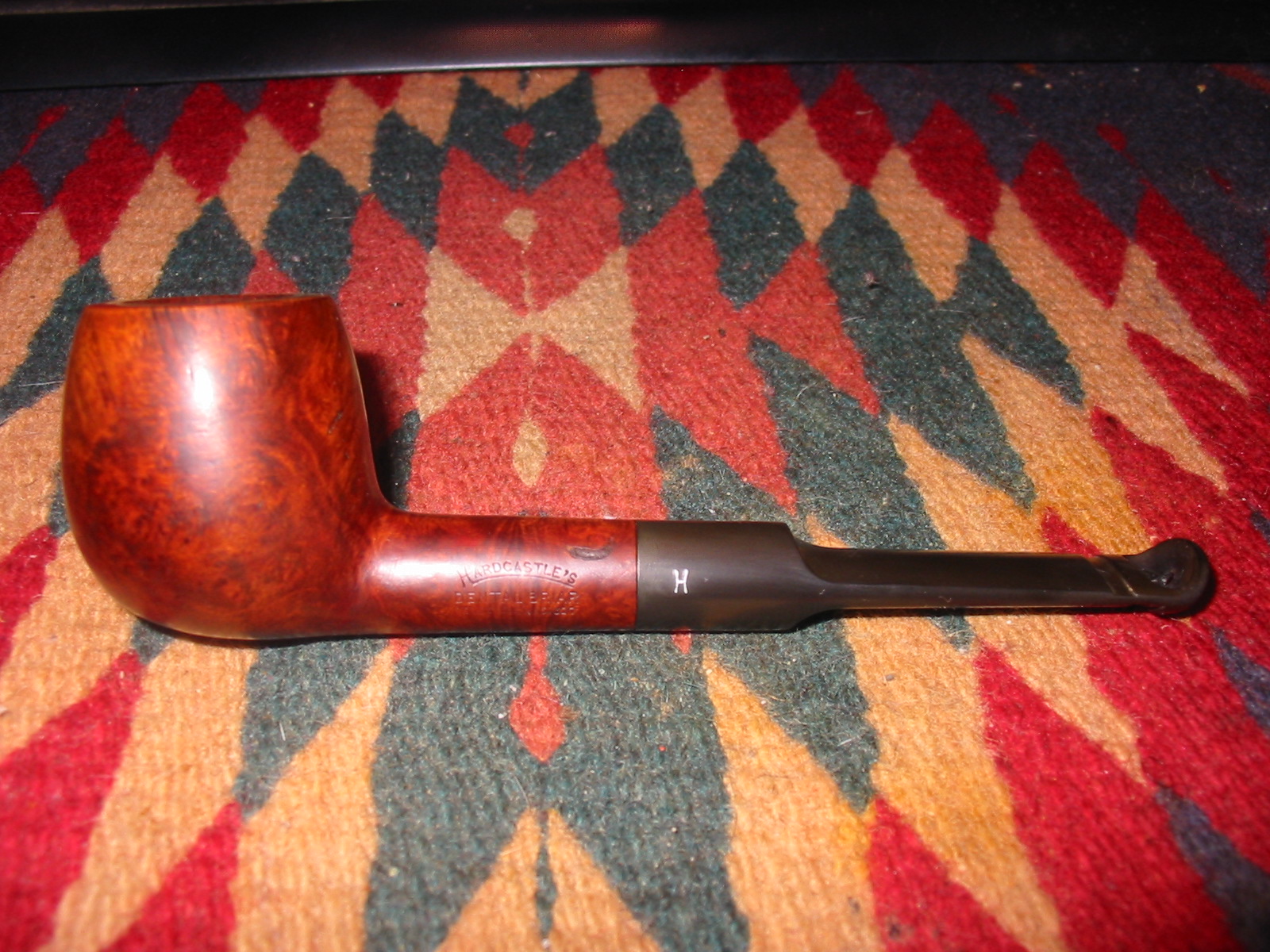
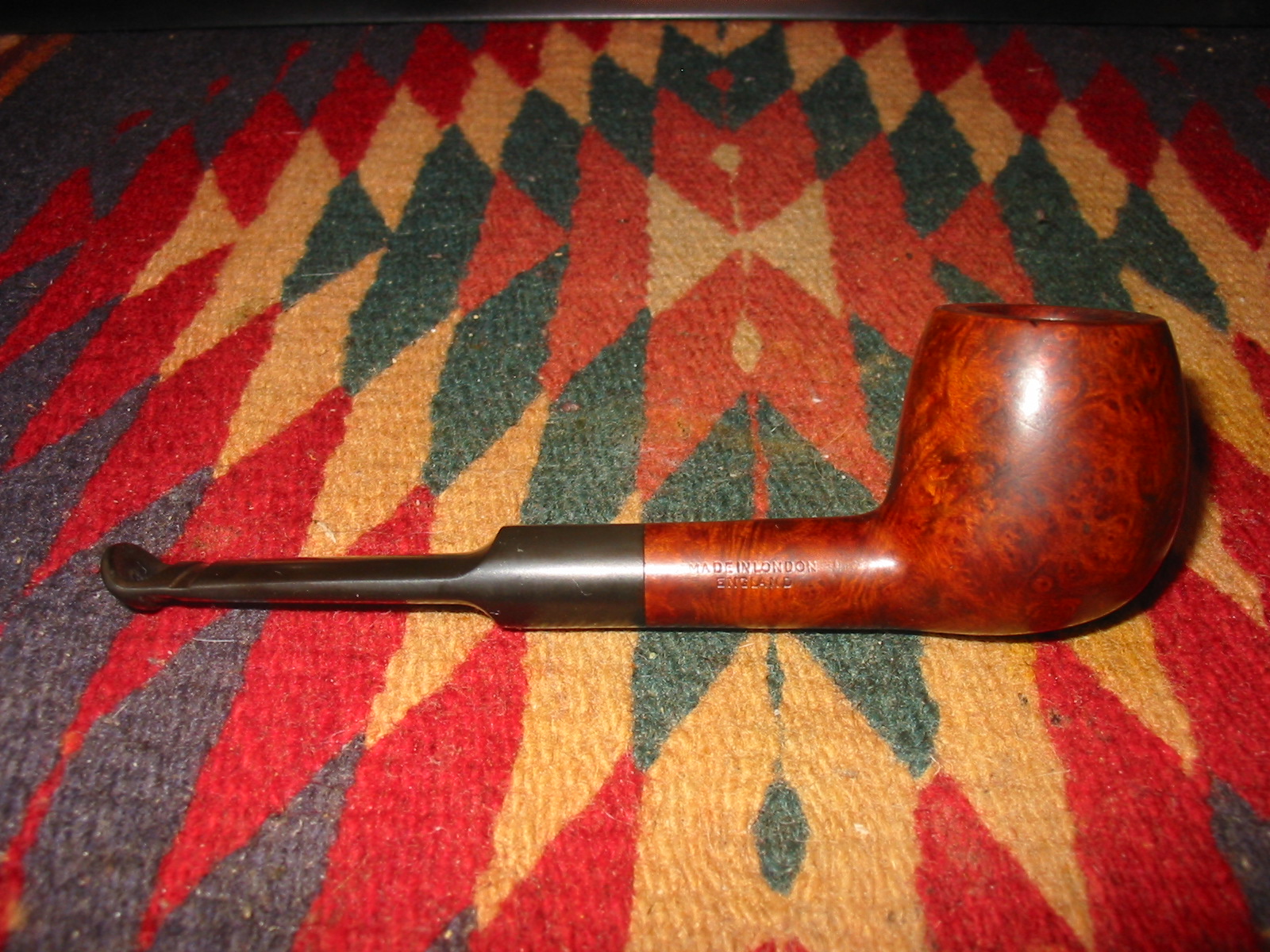
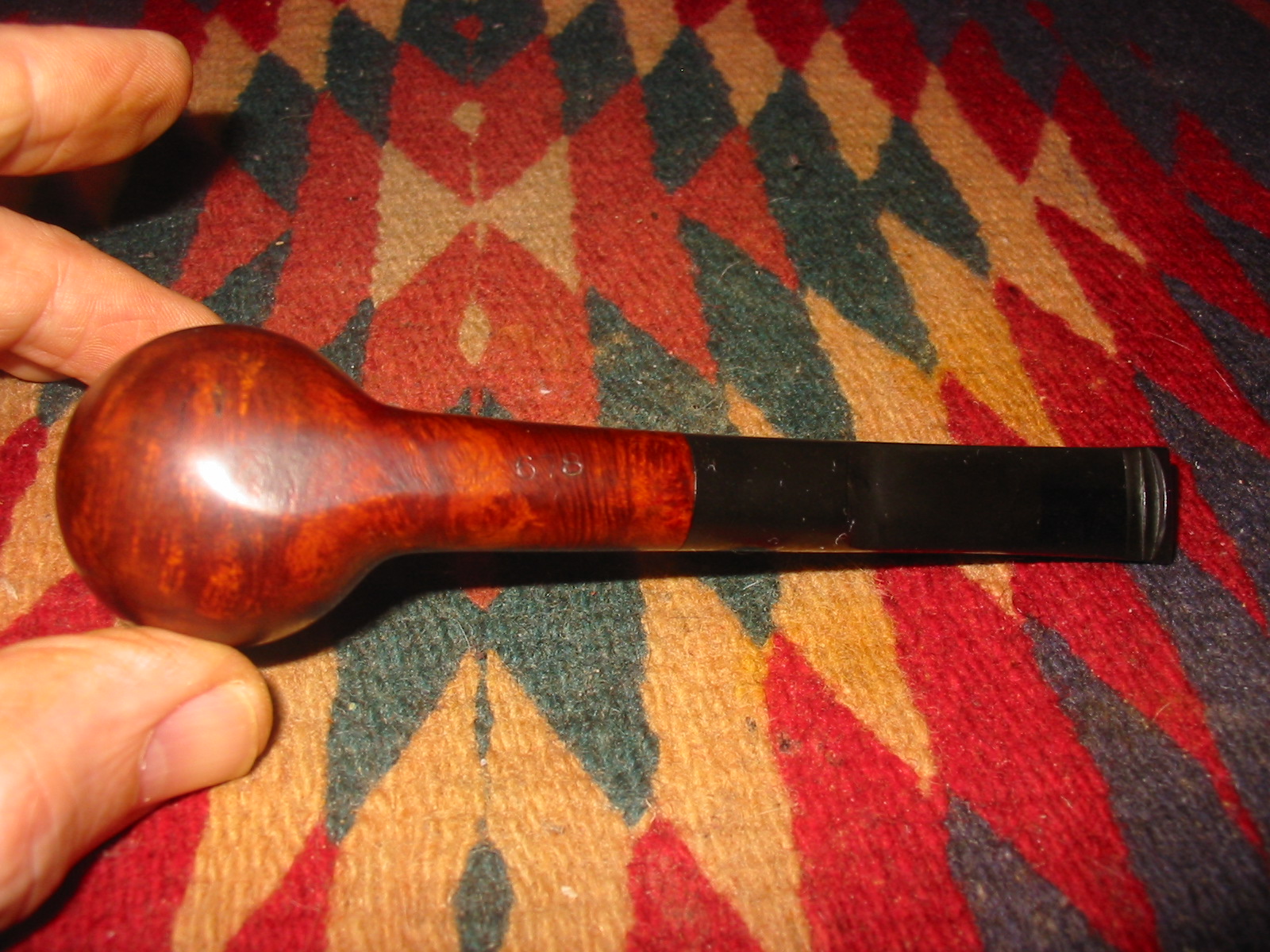
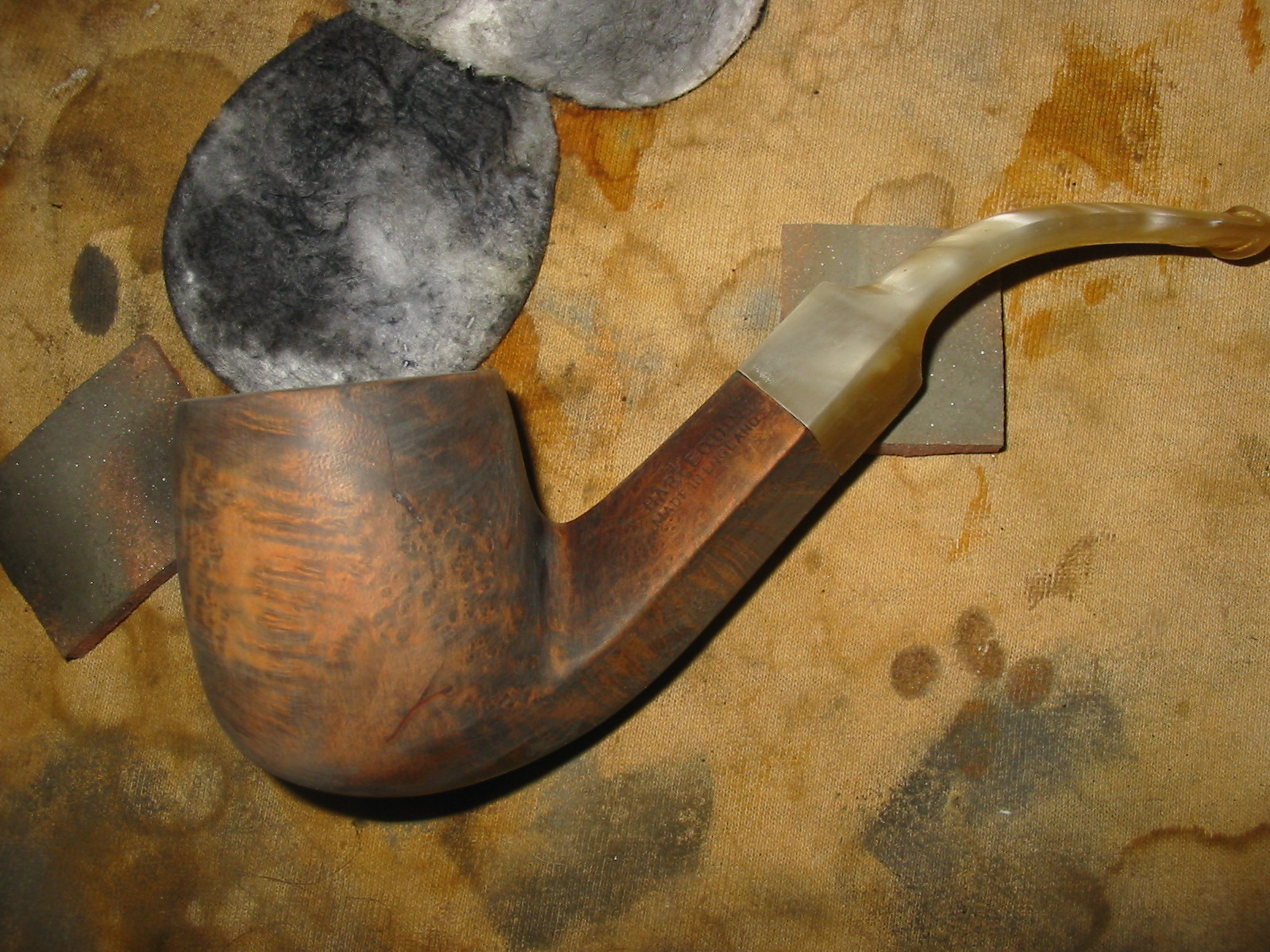
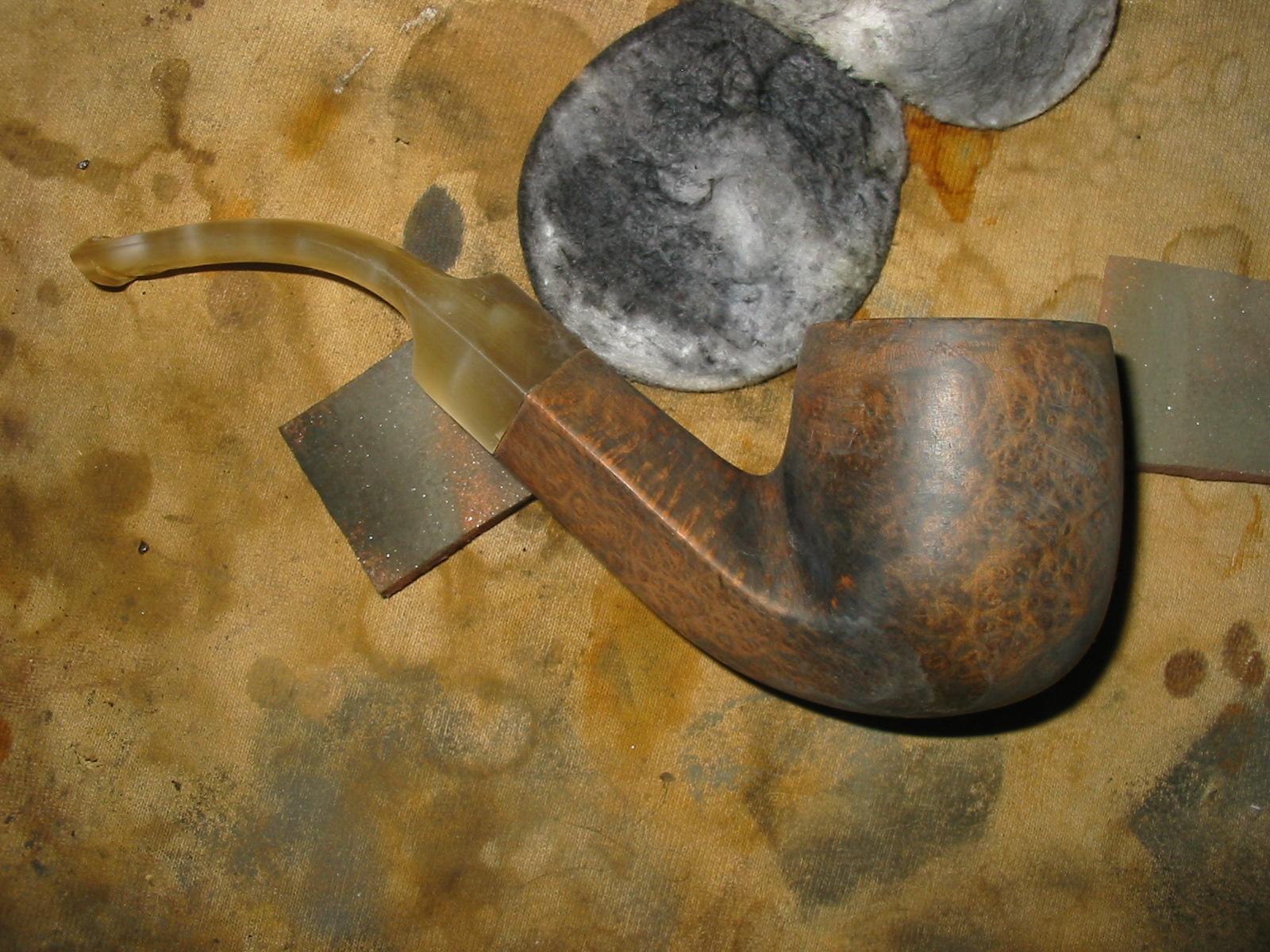
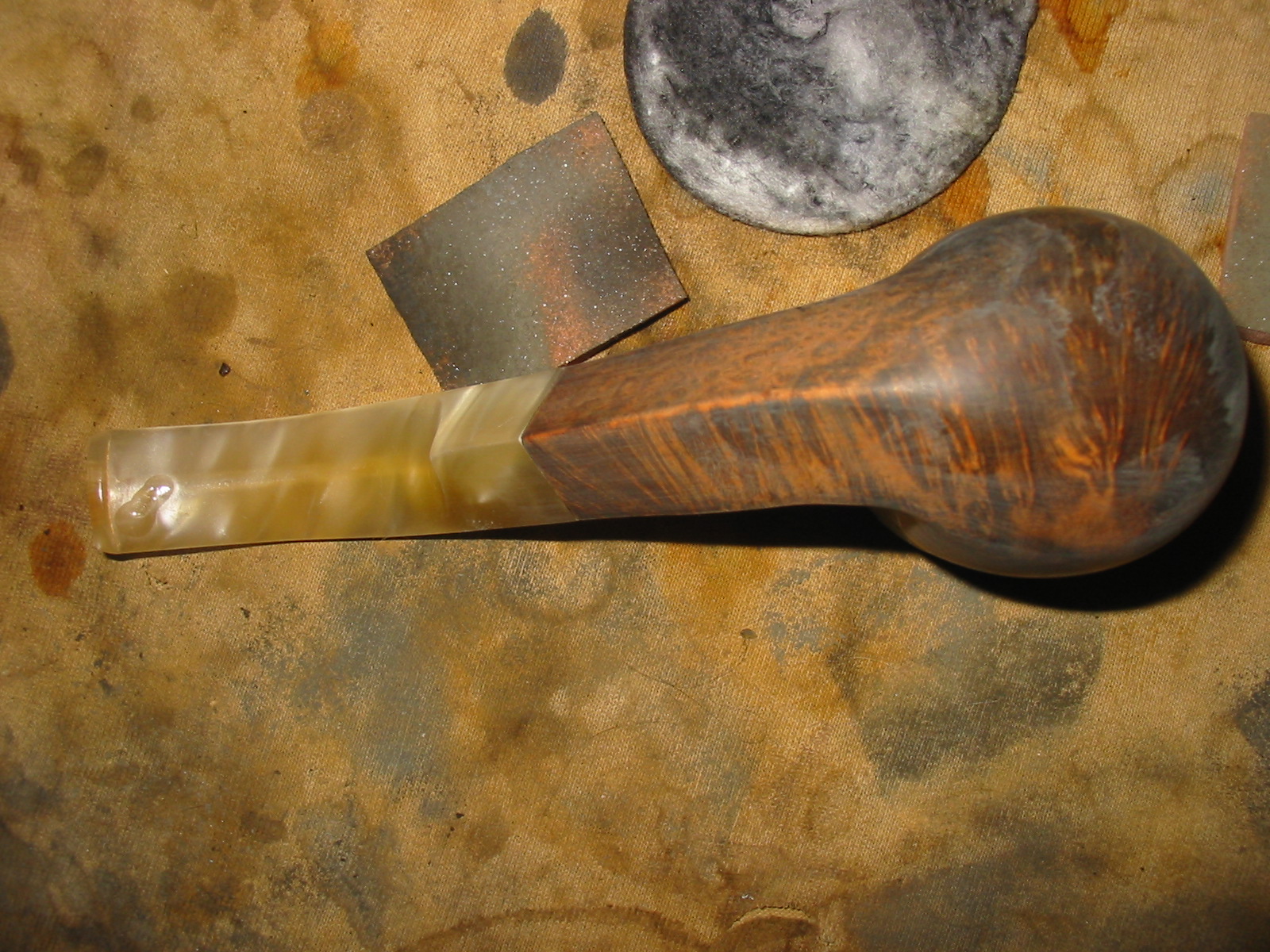
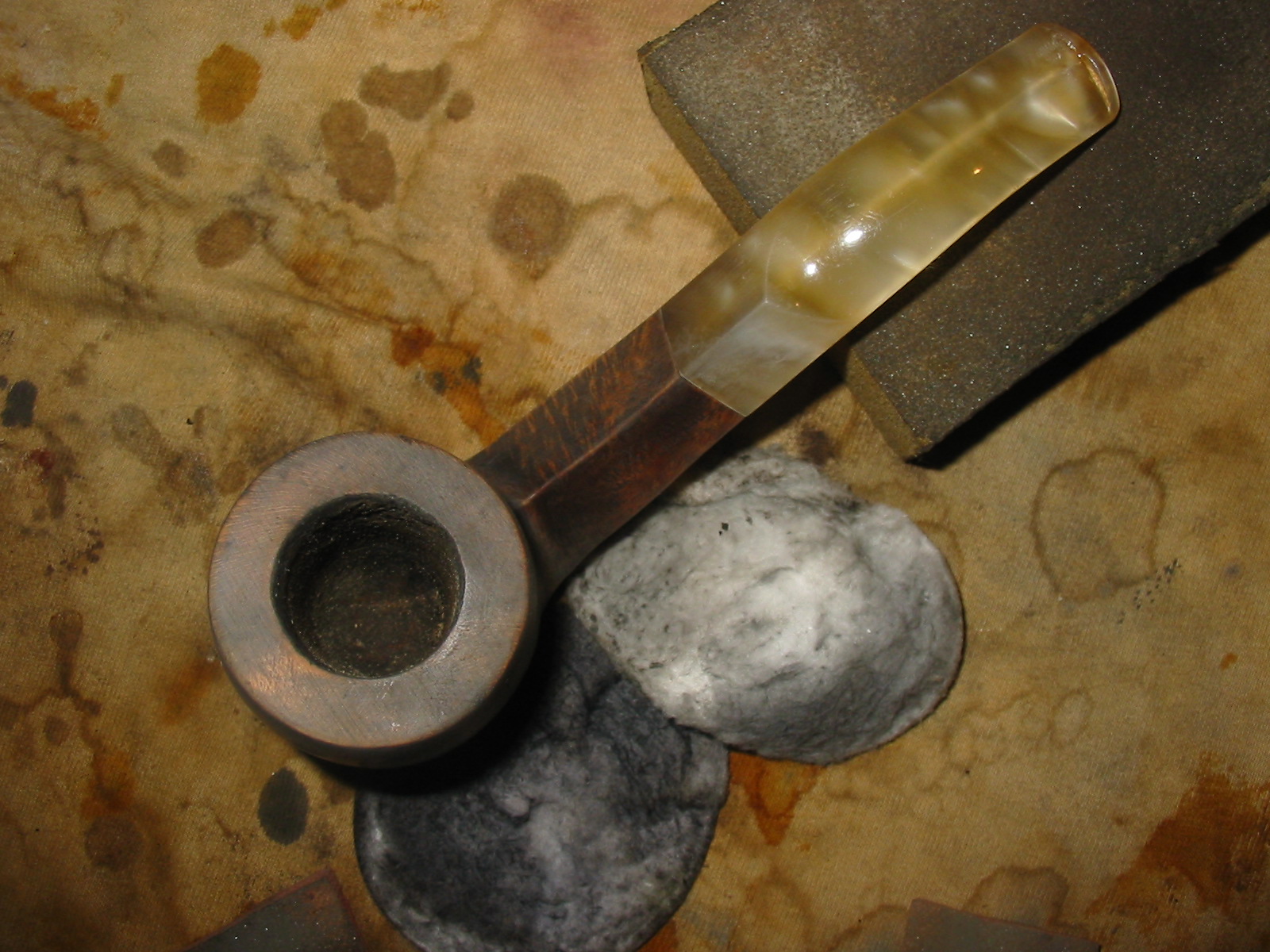
I can’t tell you how many times I took it out of the repair box to have a look. I would turn it over in my hands and think about the three ways to repair what appeared to be damage. I even sketched out a splice on paper at work on my lunch hour. Then last evening I was looking it over thinking the time had come for the work. As I looked it over I noticed that everything was just too evenly cut. The grooves on the top and bottom did not line up. The top one made allowances for the open area. The open area was also very clean and regular. There were no jagged edges on the area. It was clearly cut that way on purpose. So before I started doing anything with the stem I decided to do a bit of digging.I have included some photos of the stem taken from two different Ebay sales of a Dental Briar Pipe. The first two are a top view of the stem and the last two are of the underside. These show the design of the stem and what I commented on above. The pipe on my table has exactly the same stem and stamping at the ones pictured below.
Hardcastles Dental 1

Hardcastles Dental 3

Hardcastles Dental 2

Hardcastles Dental 4
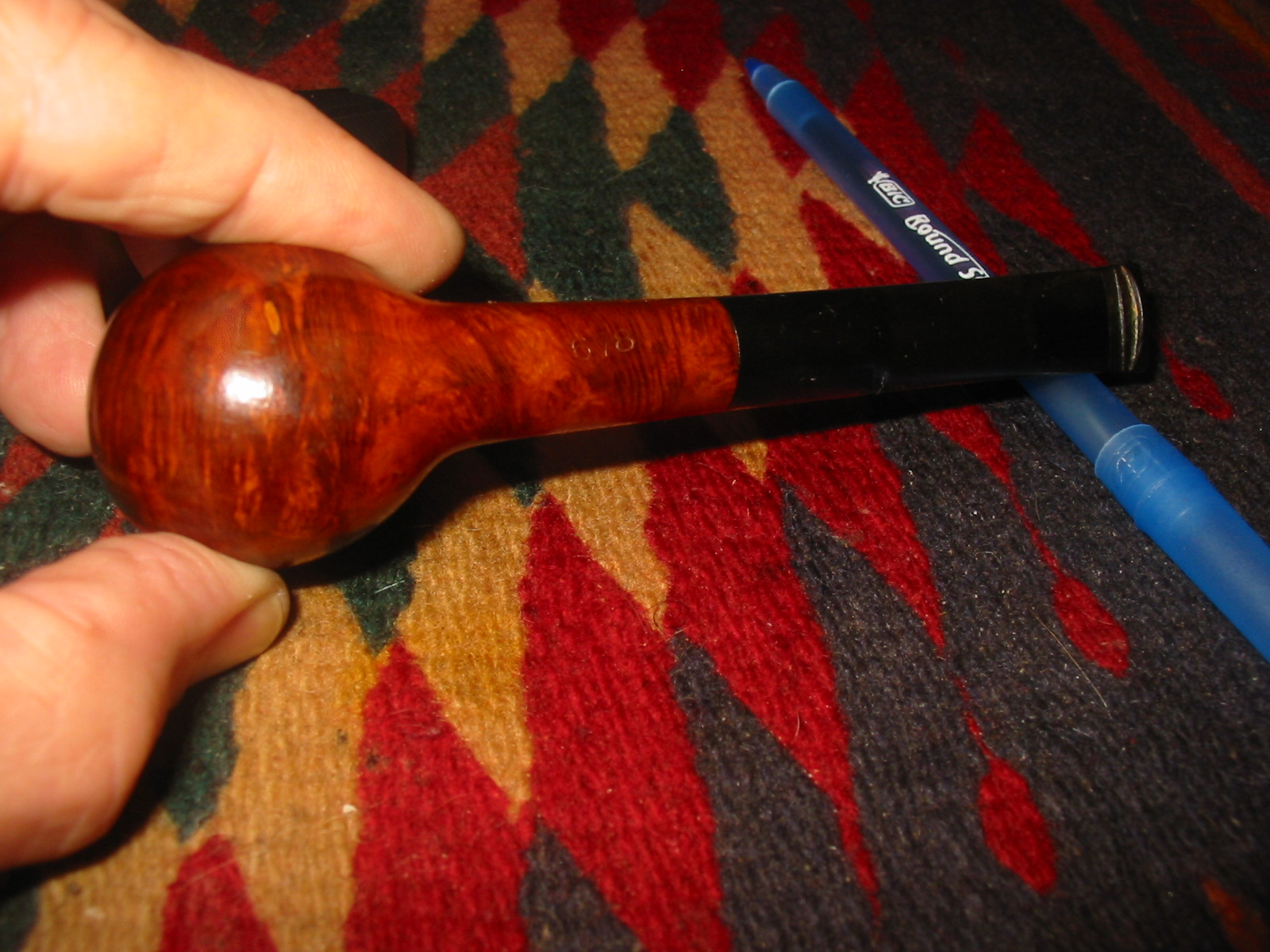
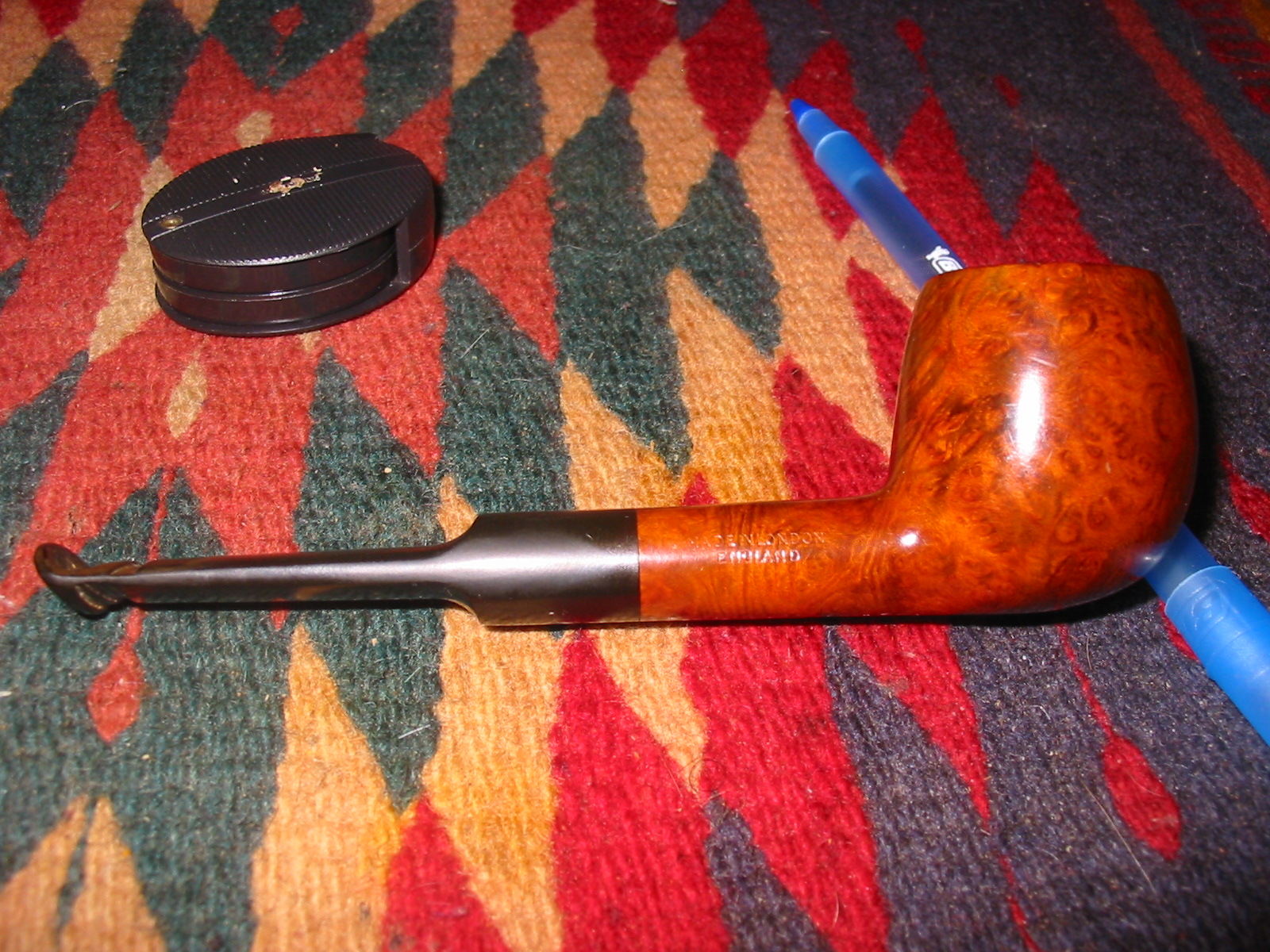
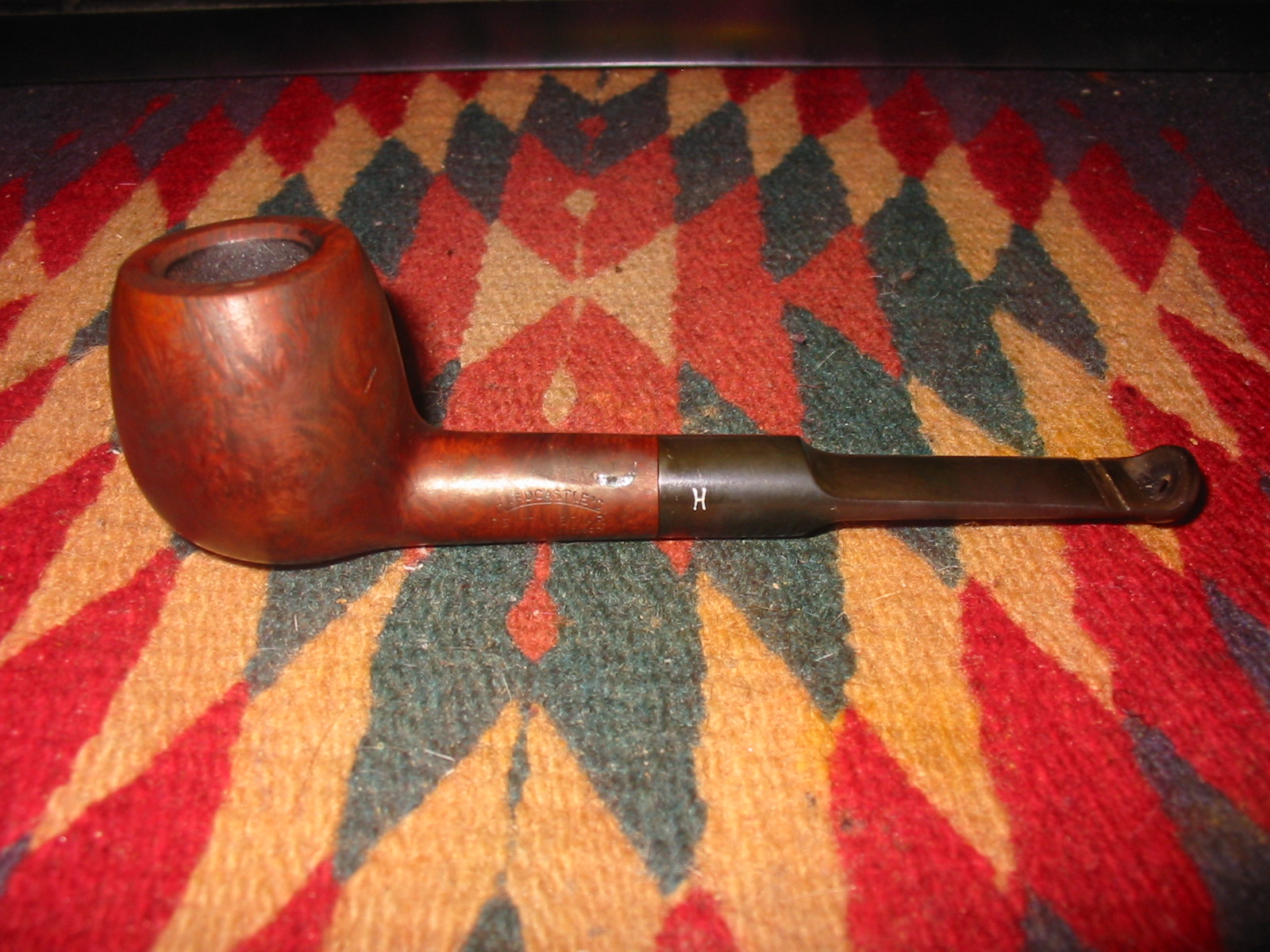
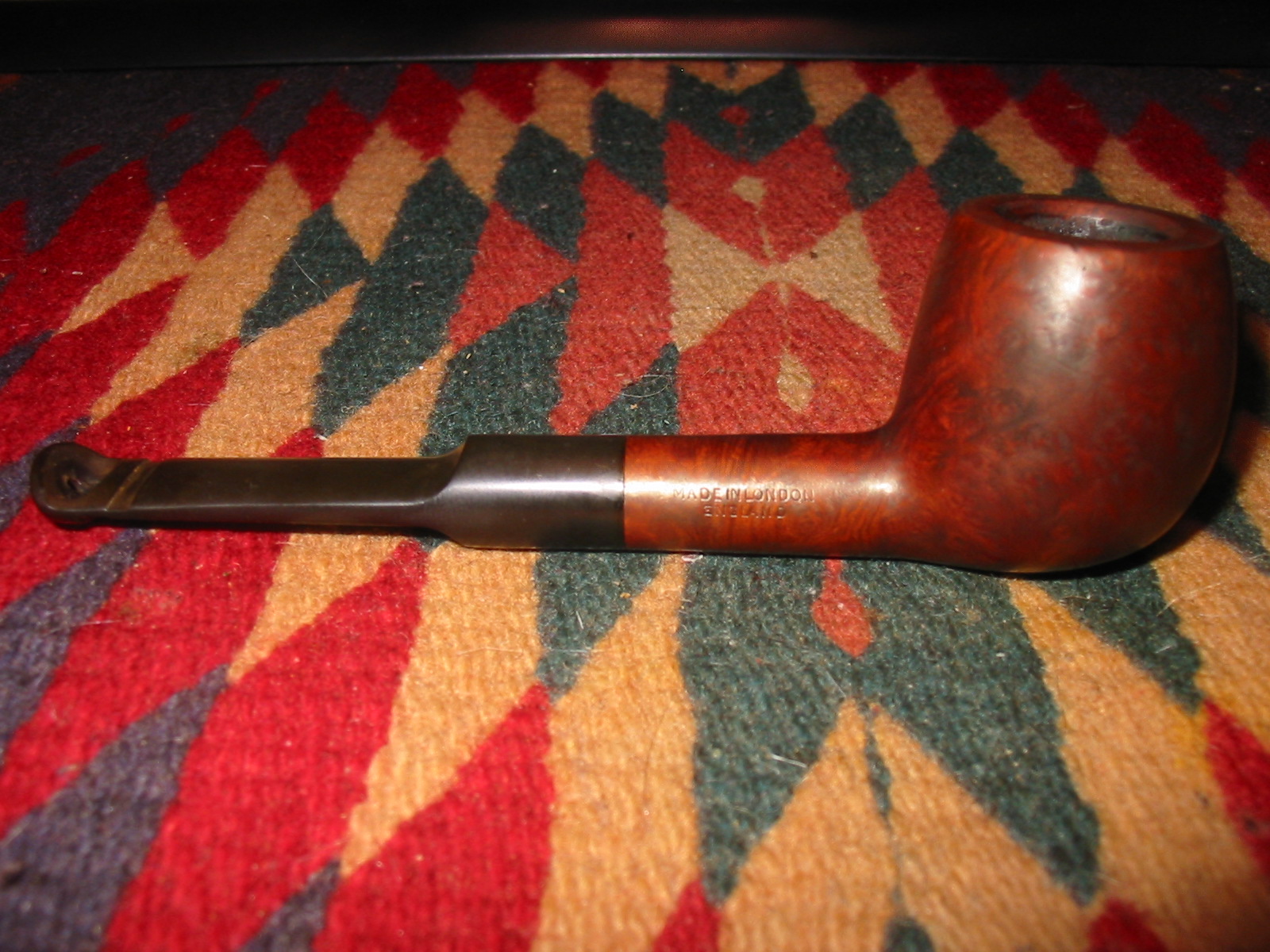
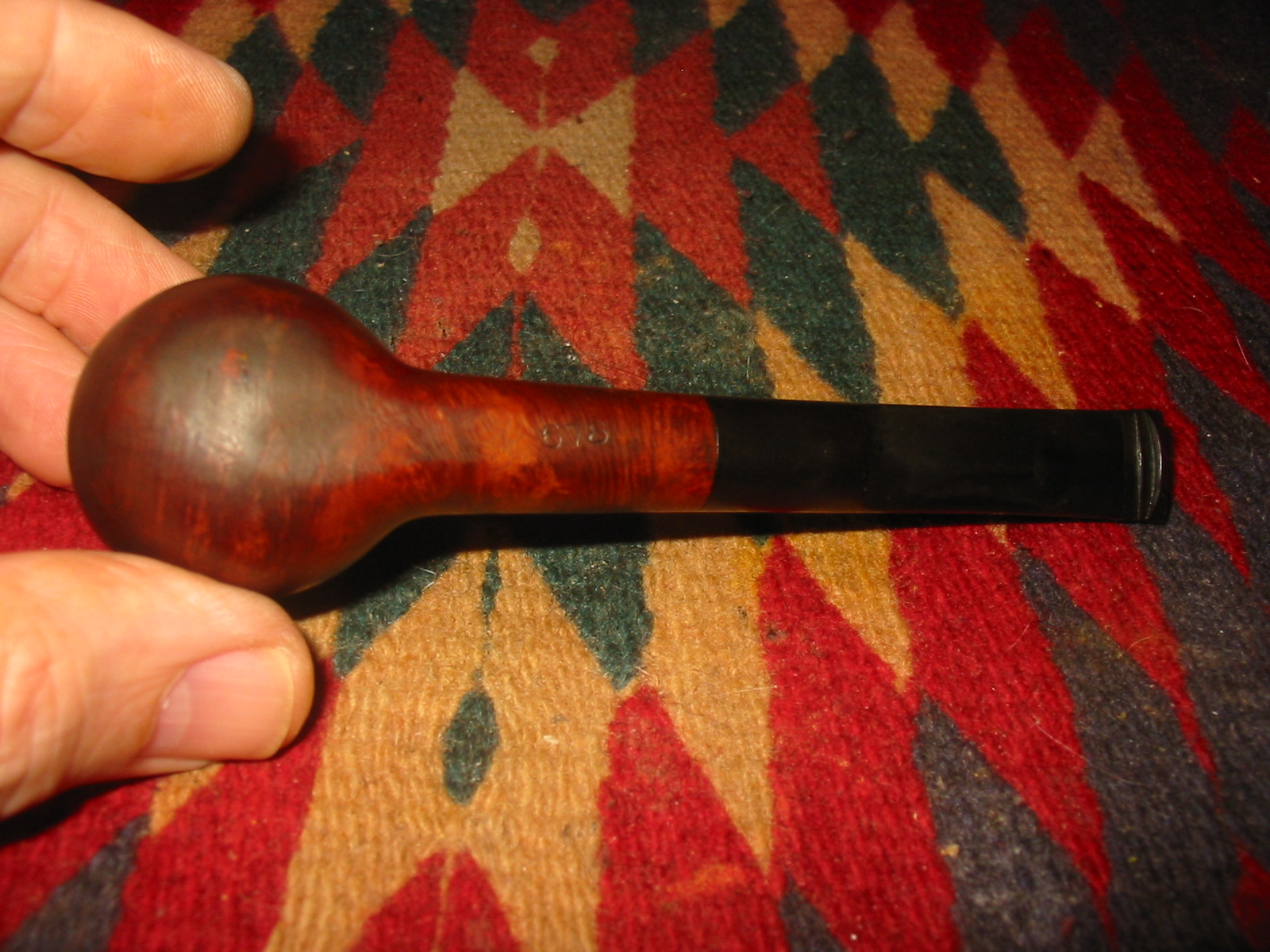
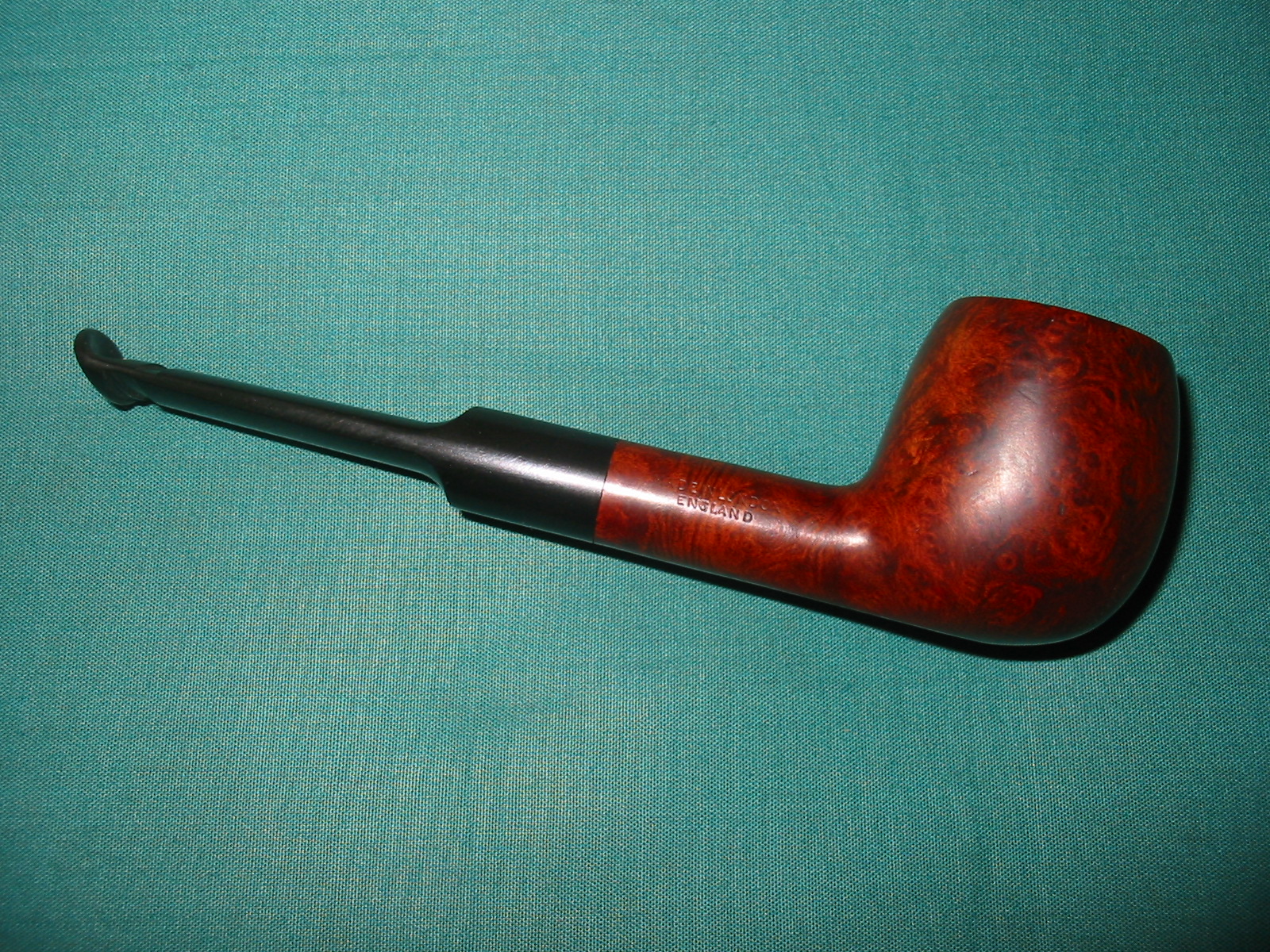
I looked it over and here is what I found. The pipe was stamped on the left side of the stem HARDCASTLE’S over DENTAL BRIAR over Reg. Design No.857327. On the right side it was stamped MADE IN LONDON ENGLAND. On the underside of the shank it is marked with the number 678, a shape number. Stamped on the vulcanite saddle stem is the Hardcastle’s H. The Reg. Design No. was a clue for me to start my hunt. (See the photo below of a pipe that is stamped identically to the one I have.)
Hardcastles Dental 5
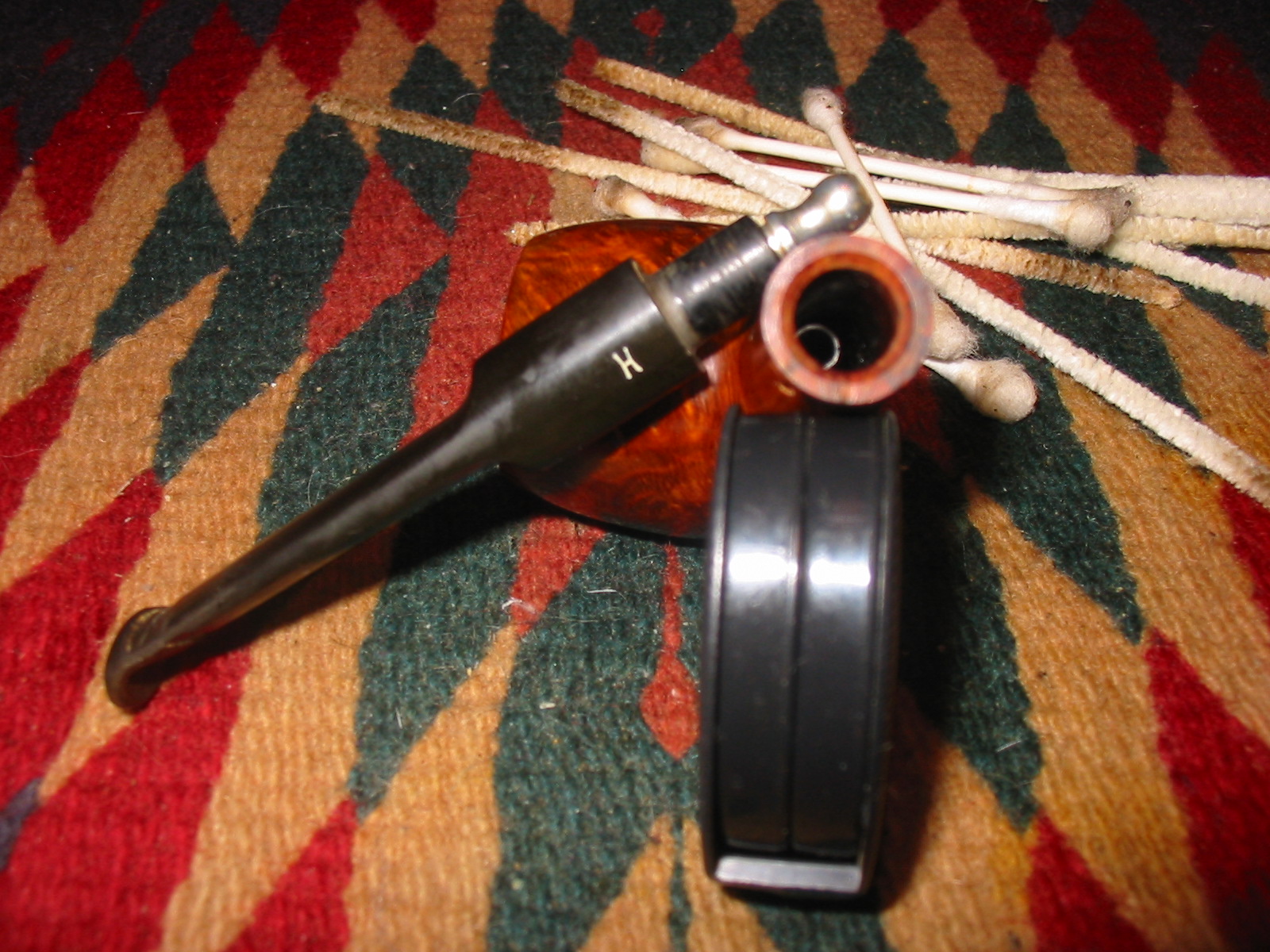
I Googled for information on how to find out about a Registered Design Number. I figured that it would be like finding out patent information. One of the first links came up was to the National Archives. http://www.nationalarchives.gov.uk/records/research-guides/reg-design-trademark.htm I read through the various pages and put in the design number. I found that the designs having number beginning with 857,000 numbers come from 1949. This number was 857,327 so it was pretty clear to me that the design was registered in 1949. At least I had found that the pipe was a made during the time the Hardcastle family owned the brand. At first I thought the design was solely for the stem but when I removed the stem I found that it was far more than that. It included an inserted metal tube deep in the shank that rested against the airway in the bowl. It extended into the shank where it was met by a metal stinger like apparatus in the tenon. This apparatus was set in the tenon. It was a ball on the end of a short tube – the difference being that it was hollow. The end of the ball that rested against the tube in the shank was open thus connecting the airway in the bowl to the airway in the stem through a metal tube that gave a cool material to wick out the moisture in the smoke before it was delivered to the wide open end of the dental bit.
IMG_6947

IMG_6948
From there I went to the link for the British Intellectual Property Office. Now the problems arose for me. I could not find the Registered Design Number on that site. Nothing came back listed with that number on any British patent or registration sites. I was hoping to find at least a diagram of the pipe stem and internals as well as a patent/registration application. But there were none to be found on the sites. I wrote an email to the BIPO in hopes that they respond with some information. They wrote back saying that the design was too old and not in their records. They suggested the National Archives. I searched there again and could not access the files on this number. A dead end? Potentially but I would see if I could go at it from a different route.

I searched and read some of the history of the brand. One of the sites I turned to was Pipedia because I have found that they generally have good concise summaries of a particular brand or the lines in a brand. I found some helpful information on the different time periods of Hardcastle’s production. http://pipedia.org/index.php?title=hardcastle. I quote in part below:

“Hardcastle was founded in 1908 by Edmund Hardcastle and built itself a good reputation among the numerous British mid-graders. In 1935 Dunhill started to build a factory next door to Hardcastle in Forest Road, Walthamstow, London E17. The family owned Hardcastle Pipes Limited sold 49% of its equity to Dunhill in 1936.

Along with closing down its pipe factory in Notting Hill in 1946 Dunhill bought the remaining shares turning Hardcastle into a 100% Dunhill subsidiary. As members of the Hardcastle family continued as executives in the company’s management Hardcastle retained a certain independence.

This ended in 1967. Dunhill merged Hardcastle with Parker (100% Dunhill as well). The new Parker Hardcastle Limited also absorbed the former Masta Patent Pipe Company. Hardcastle’s Forest Road plant was immediately given up and the production of Hardcastle pipes was shifted to Parker’s nearby St. Andrews Road factory – now consequently called Parker-Hardcastle factory.

In fact this put a definite end to Hardcastle as an independent pipe brand and no one other than Edwin Hardcastle, the last of the family executives, spoke frankly and loudly of Hardcastle pipes being degenerated to an inferior Dunhill second. Today Hardcastle pipes use funneled down bowls that are not deemed suitable to bear the Dunhill or even the Parker name as well as obtaining briar from other sources.”

Now that I had a bit of a timeline for the brand it was time to see if I could find information on the various models & grades of Hardcastle pipes before the takeover by Dunhill – a time known as the Family Period. On the Pipedia site they listed that during that time the following models/lines were produced. Straight Grain, Supergrain, Leweard, Nut Bruyere, De Luxe, Royal Windsor Sandhewn, Royal Crown, The Crown, Phito Dental, Old Bruyere, Jack O’London, Dental Briar, Phito, Dental, Dryconomy, Drawel, Phithu, Telebirar, Camden, Lightweight, The Table, Dovetail, Dental, Crescent Extra, Lonsdale, Welard De Luxe . I have marked the Dental Briar in bold in the list above to make it stand out in the list. It was produced during this time. It appears that the Hardcastle was taken over by Dunhill in 1946. At that time, family still retained some control but the brand changed. In 1967 the brand was merged with Parker and became Parker/Hardcastle. With this merger Hardcastle as a distinct brand disappeared and the pipe became a line of seconds for Dunhill.

That information at least gives something of a timeline for my pipe. I know that it was made between the year that Registered Design Number gave of 1949 and the merger date of 1967. That is as close a date as I can ascertain at this time.

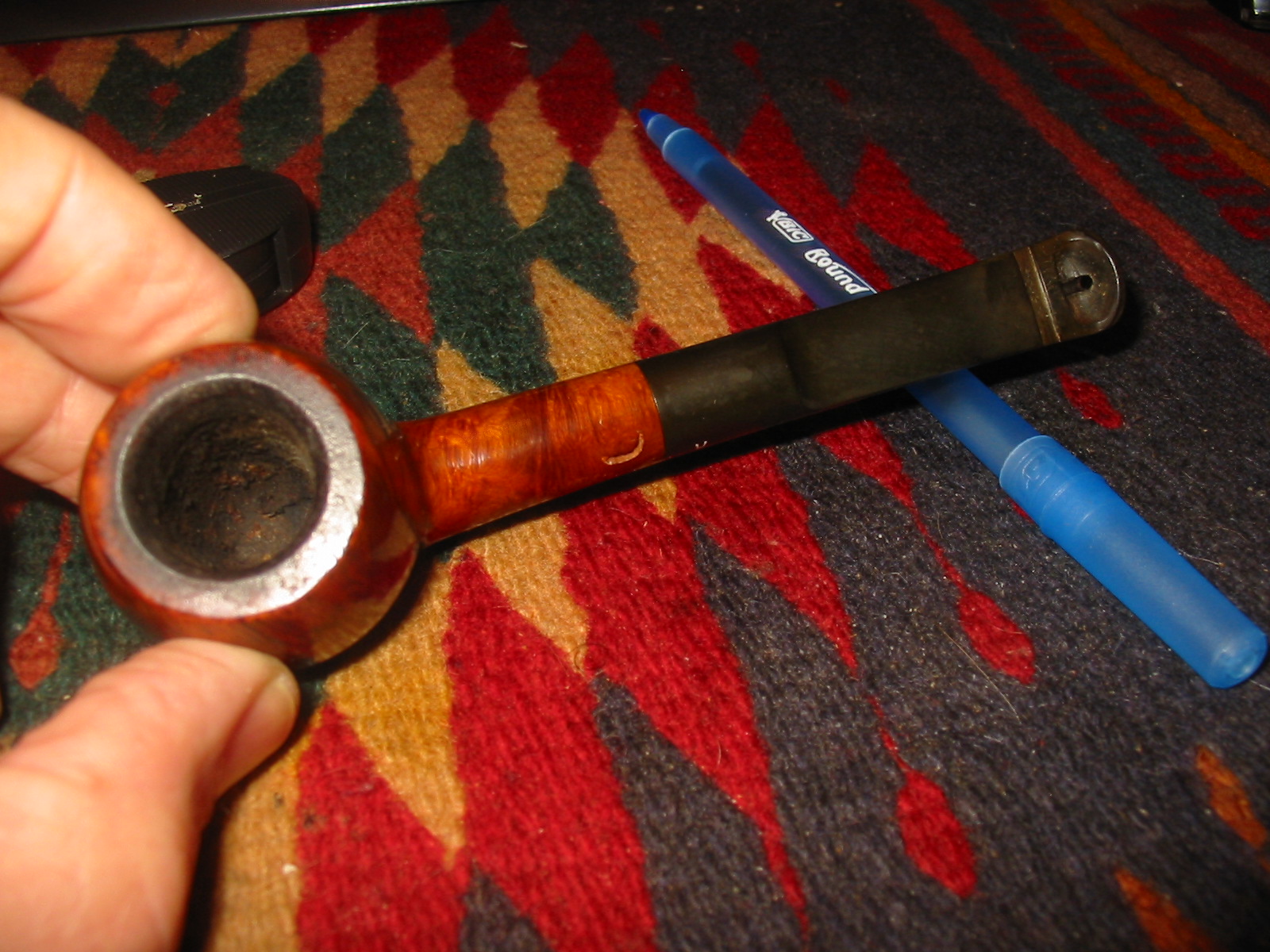
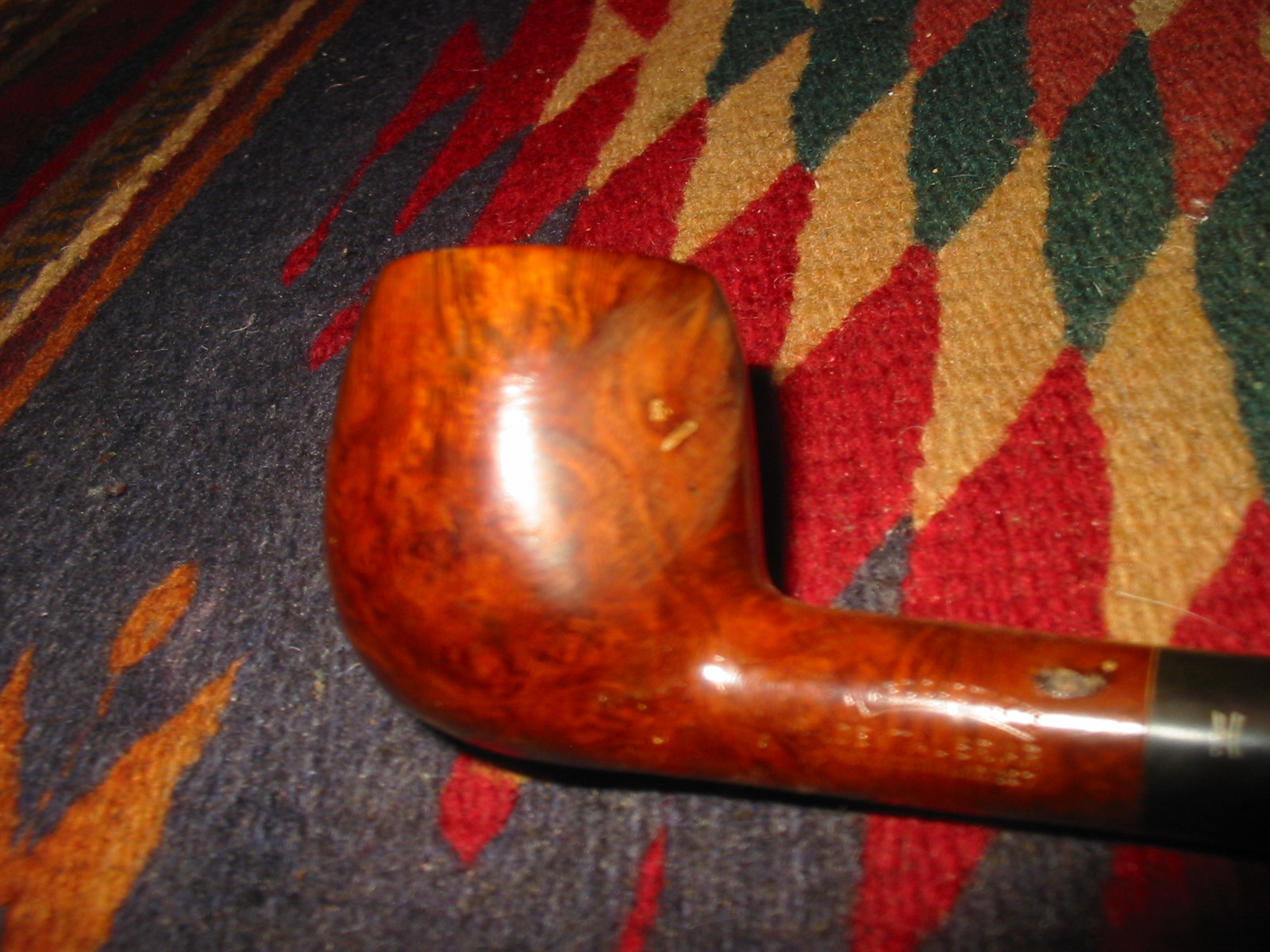
It seemed that I had found all I would find out about this pipe for the moment. It was time to work on the pipe itself and do the cleanup and restoration. I took the pipe to my worktable and quickly looked it over to see what I needed to address in this refurb. The bowl had an uneven cake in it – heavy in the middle and light at the top and the bottom of the bowl. The briar had several fills that had fallen out or somehow been dislodged along the way – one on the shank visible in the photo below next to the stem, one on the back side of the bowl and one on the bottom of the bowl. The rim was undamaged and quite clean other than a slight build up of tars and oils. The next series of three photos give a good picture of the state of the pipe when I began the work on it.
IMG_6944

IMG_6945

IMG_6946
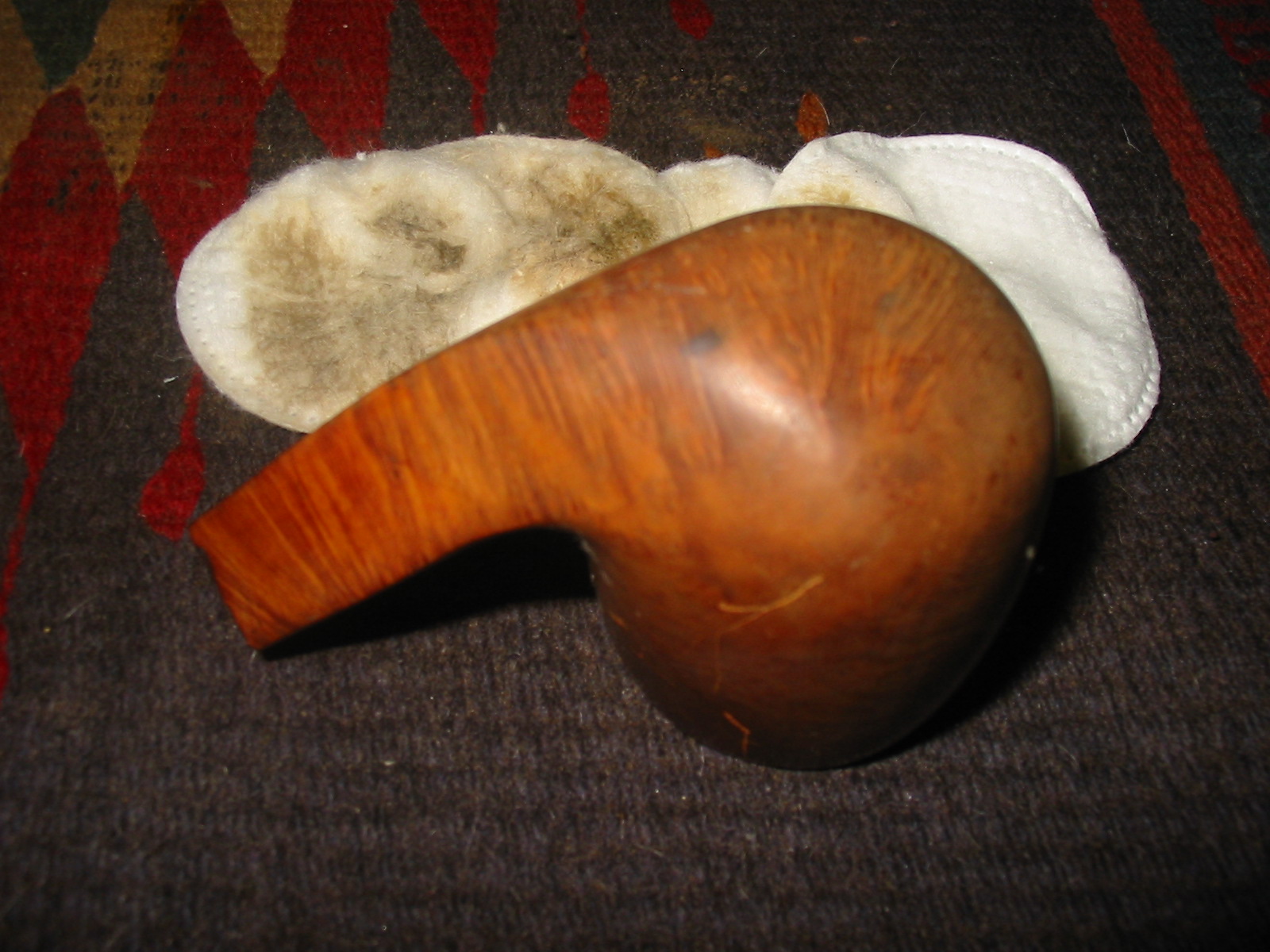
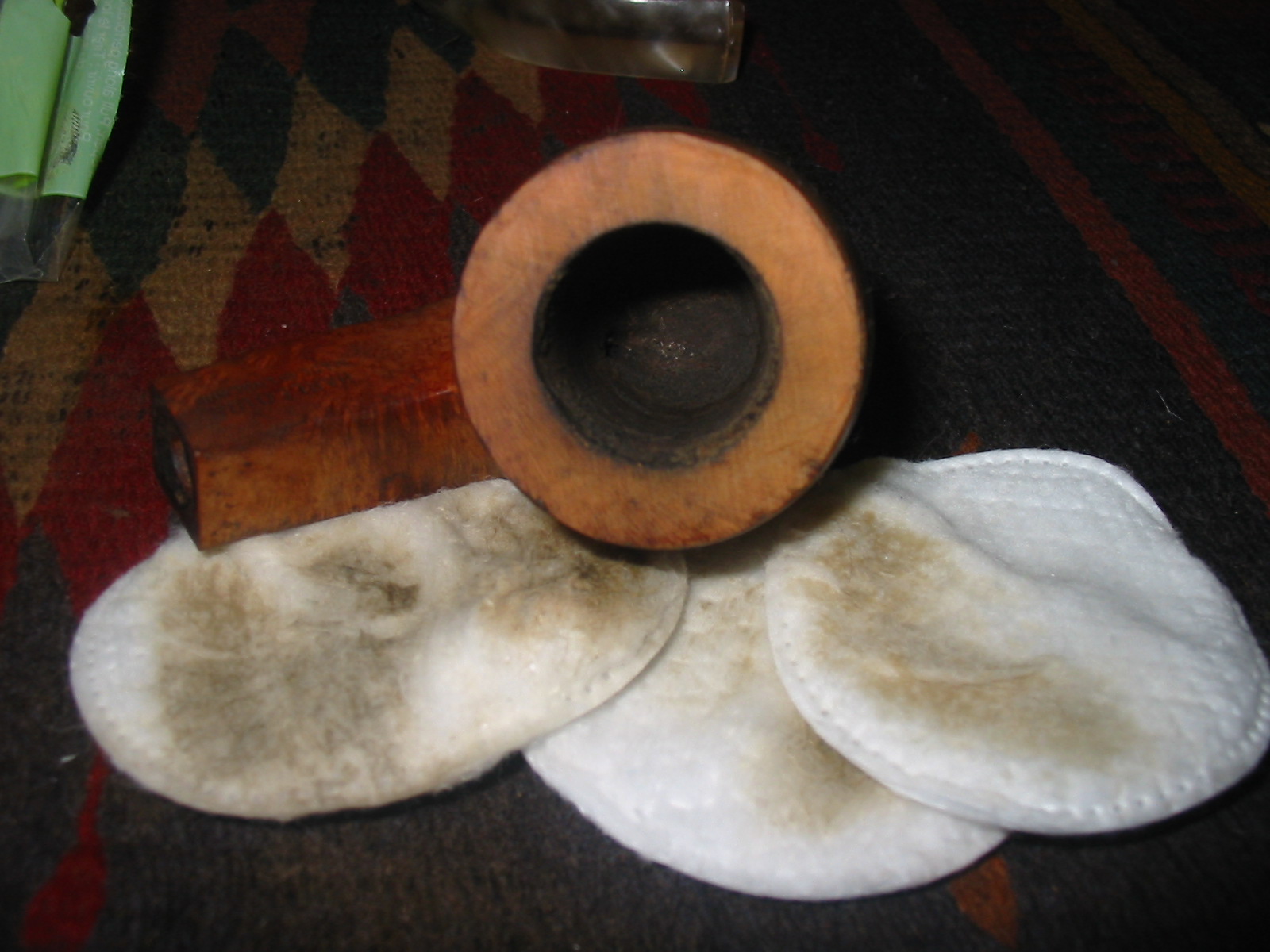
I removed the stem and cleaned out the shank and stem with pipe cleaners, cotton swabs and isopropyl alcohol. I scrubbed until they came out clean and unblemished. Then I reamed the bowl and wiped down the inside of the bowl with cotton swabs and alcohol and ran several more pipe cleaners through the shank to remove any carbon dust.
IMG_6949
I cleaned out the damaged fills in the briar on the shank, back of the bowl and the bottom of the bowl with a dental pick. I wiped the bowl down with alcohol to clean off the dust and give the glue a clean surface to stick. I then packed briar dust into the crevices and dripped super glue onto the briar dust. I quickly put more briar dust on top of the glue before it dried. I have found that sandwiching the glue between briar dust enables the stain to have a better chance of taking on the patch.
IMG_6950

IMG_6951
I sanded the patches with 220 grit sandpaper, medium and fine grit sanding sponges and then with 1500-2400 grit micromesh sanding pads to smooth out the patches and blend them into the surface of the bowl.
IMG_6952

IMG_6953

IMG_6955
When I had finished sanding the bowl I wiped it down with acetone to break down the finish and remove the waxes on the bowl to prepare it for restaining. When I do this kind of patches on a bowl I restain the entirety of the bowl rather than trying to match the stain in the spots to the whole.
IMG_6956

IMG_6957

IMG_6958
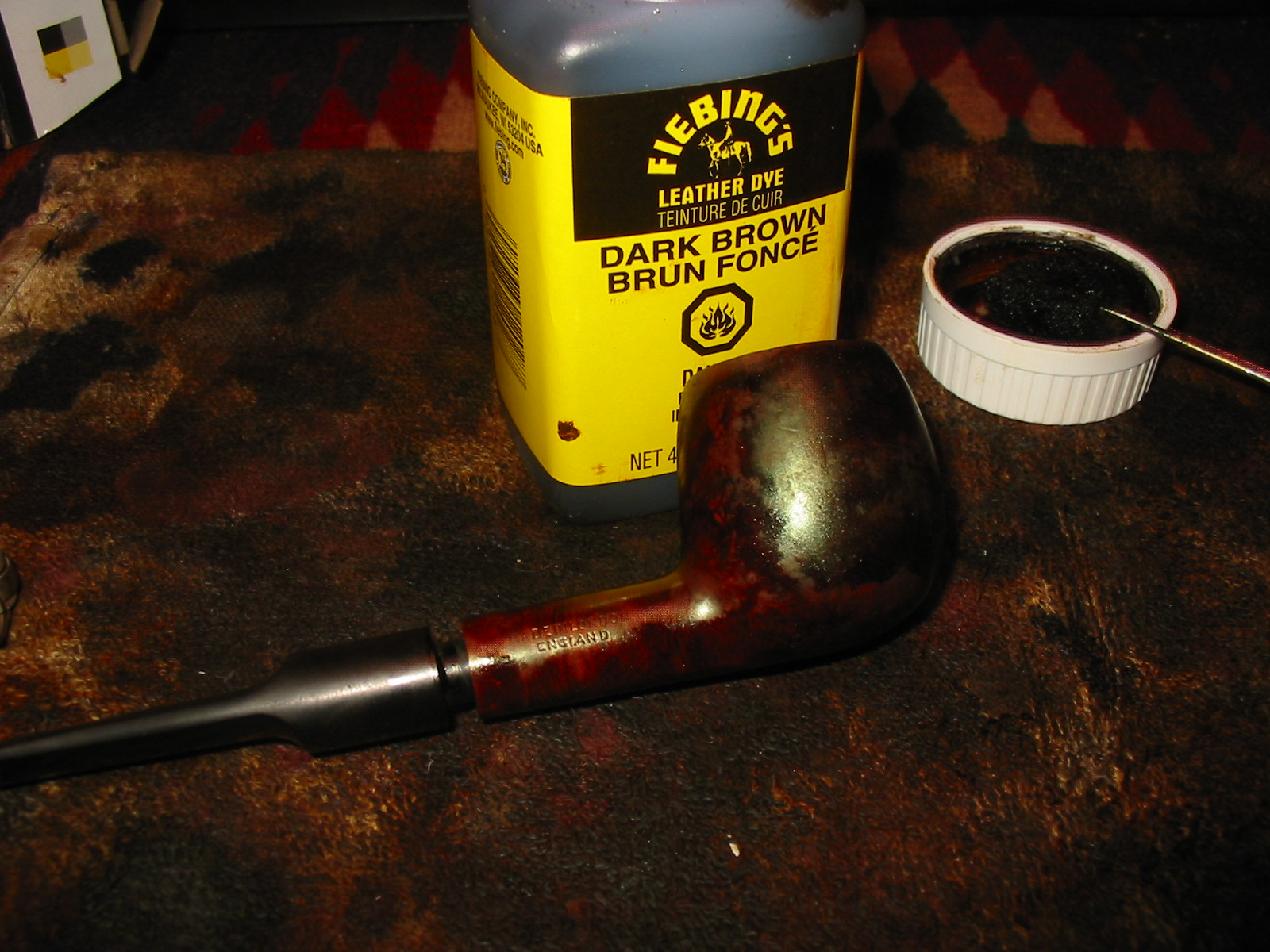
I stained the bowl with a dark brown aniline stain. I heated the briar, applied the stain, flamed it and repeated the process to get a good solid, even coverage on the briar.
IMG_6959
When it dried I wiped it down with a cotton pad and alcohol to lighten the stain and make the grain more visible.
IMG_6960
At this point in the process I buffed the bowl and stem with red Tripoli and then White Diamond to even out the stain and make it flow better on the bowl. The briar dust and superglue patches blended in quite well on the bottom and back side of the bowl. The one on the shank was visible but at least it was smooth and dark. With some work on the finish I would be able to get it blend better.
IMG_6961

IMG_6962

IMG_6964

IMG_6965
I sanded the bowl with 1500-2400 grit micromesh pads to smooth out the finish and to lighten the stain on the bowl. I was aiming to bring it back as close as possible to the original finish which had red highlights. When I had finished sanding the bowl I gave it a second buff with White Diamond to see where I stood. At this point the work on the bowl was finished and I was pleased with the results. The grain showed clearly and the stain gave a pleasant contrast of dark and light. The patches looked much better and though visible blended in far better with the stain and the grain patterns. The rim and the inner bevel looked excellent.

Now it was time to address the stem. I scrubbed it down with Brebbia Pipe and Mouthpiece Polish. It has a fine grit in the paste and when it is rubbed into the stem works quite well to remove the surface oxidation and buildup. I worked it into the grooves and the dip on the end of the stem with a soft bristle tooth brush. I let it dry for a short time and then rubbed it down with cotton pads. The photos below show the stem after this initial polishing with the Brebbia Polish.
IMG_6966

IMG_6967

IMG_6968

IMG_6969
I scrubbed the stem with Meguiar’s Scratch X2.0 and when it dry buffed it off with a cotton pad. I repeated this process several times, scrubbing the grooves and dip on the end of the stem with the same tooth brush. I rubbed the stem down with Obsidian Oil and when dry took it the buffer for another buff with White Diamond. I gave it several coats of carnauba wax, buffing it with a soft flannel buff between coats. I found it very hard to remove some of the oxidation from the channels/grooves on the top and bottom of the stem. Under the flash it is clear that there is still some oxidation at that point. I rubbed it down with another coat of Obsidian Oil being careful to get deep into the edges of the grooves and the dip on the top of the stem.
IMG_6978

IMG_6979
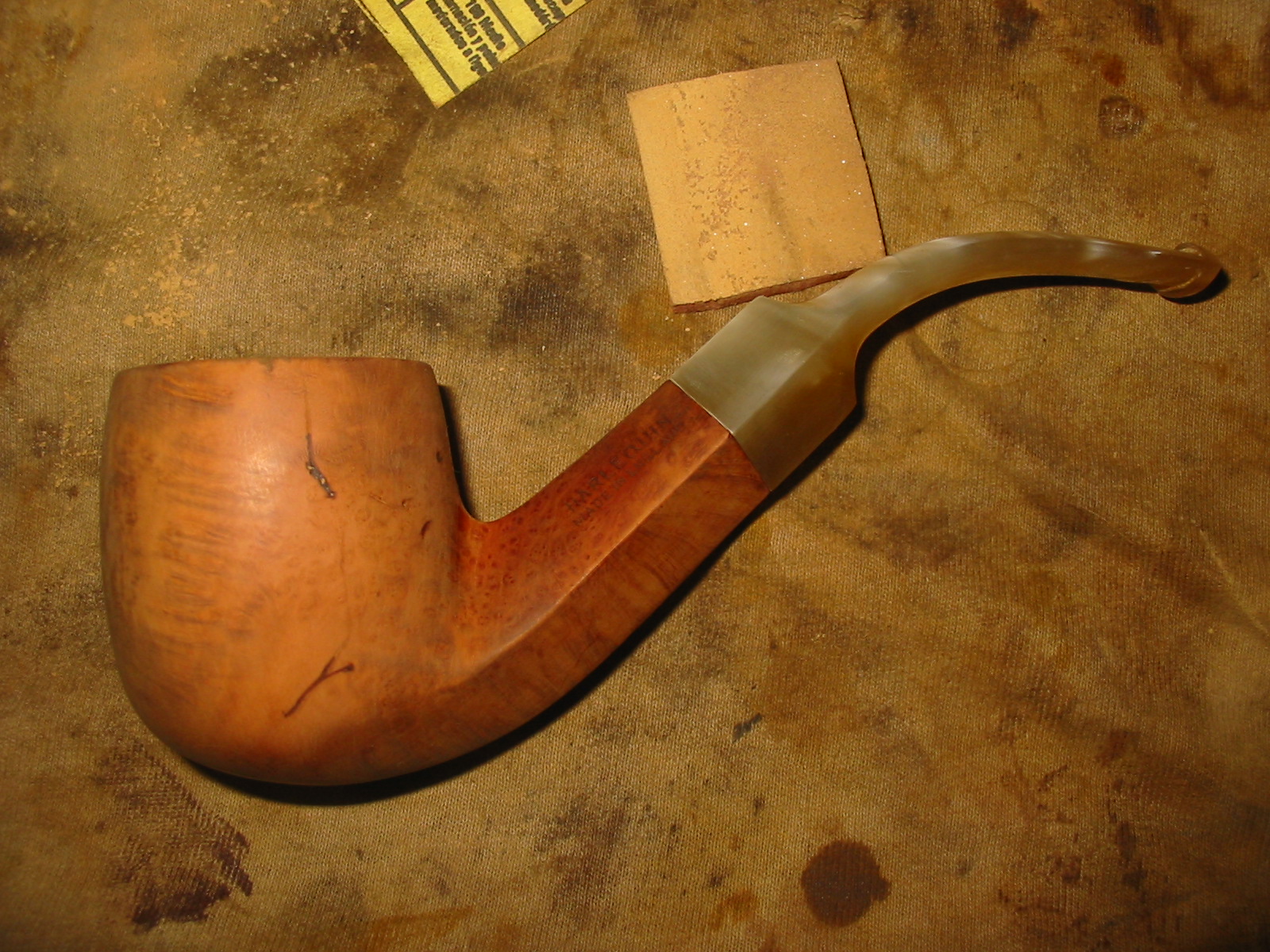
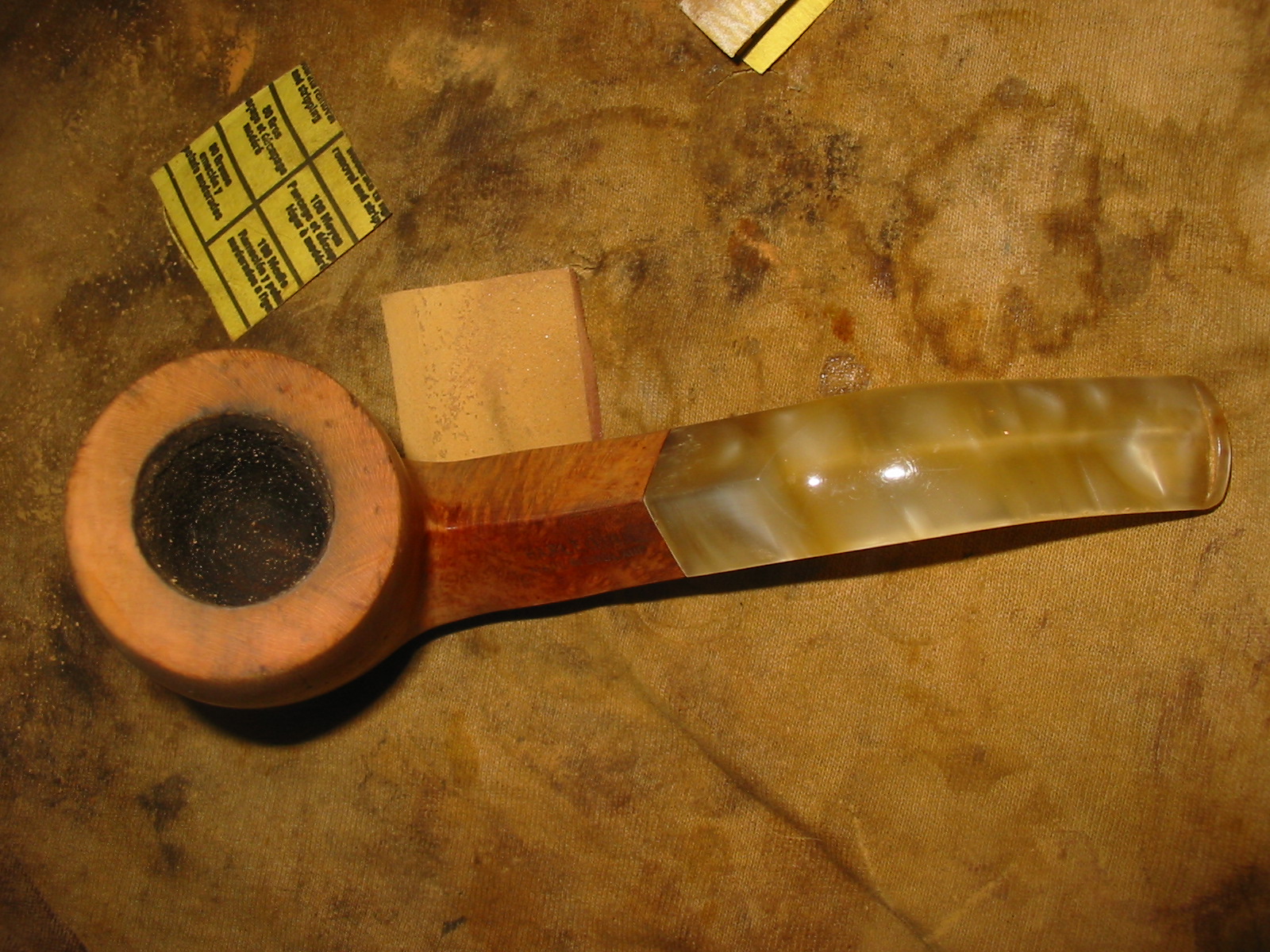
The finished pipe is shown in the last series of photos below. I am happy with how this old timer turned out. I am so glad I did my research before cutting off the stem and recutting a new button or splicing in a new button. I would have ruined a unique piece of pipe history and lost the opportunity to learn yet another piece of the history of our fascinating hobby. Now instead it is a restored piece that shows the creativity of those seeking to create a more comfortable pipe. Now I have to load a bowl and give it a try.
IMG_6974

IMG_6975

IMG_6976

IMG_6977

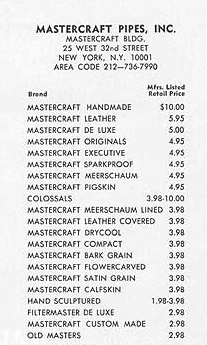
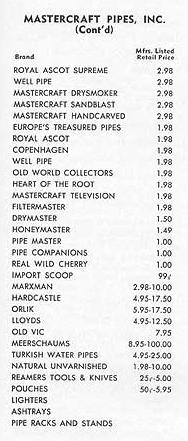
A Mastercraft Pipe Lines Hierarchy


Blog by Steve Laug

One of the things I am always looking for online is information on the various lines of a brand of pipes. I have been working on one for Marshall Field Pipes and an amended one for other little known American lines. It is just something I do when I clean up pipes. I collect the data until I get a pretty comprehensive list. So when I found the little Mastercraft pot stamped Executive Choice it was a pretty natural thing for me to hunt down information regarding where it stood in the hierarchy of the brand. Not only do I find the information a fun part of the process for me I also find that understanding its place in the list of pipes made by a particular company gives me the desired background colour in the pipes I restore. It can give me much needed details regarding the stains and finishes used in a particular line. Here is the list Mastercraft pipes what I have called the Mastercraft Pipe Lines Hierarchy.

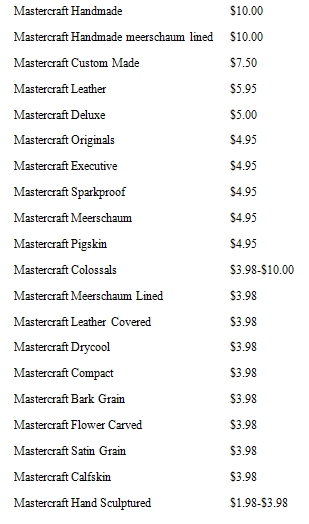
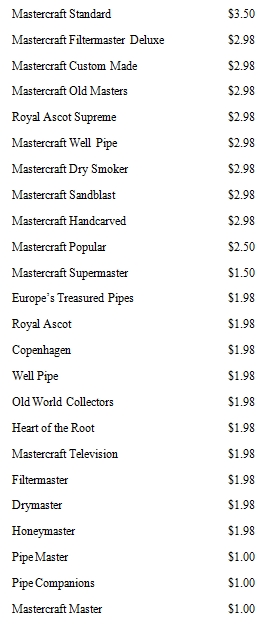
MASTERCRAFT PIPE LINES HIERARCHY (arranged from highest to lowest price)
MC1
MC2

If you happen to have either examples of any of the pipes on the list or additions or corrections please post them here.

Learned a bit of American Pipe History – Mastercraft Executive Choice Pot Restored


Blog by Steve Laug

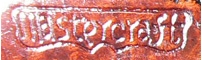
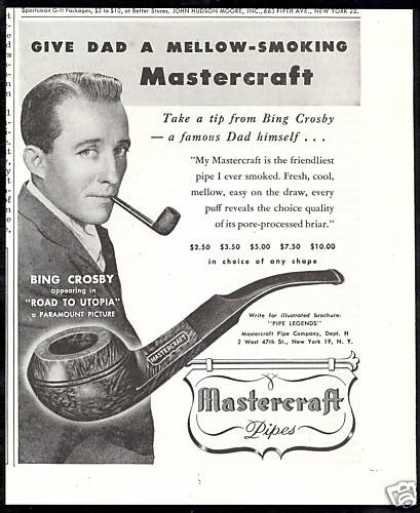
Another pipe I picked up along with the two pairs I have written about lately is a nice little Mastercraft Pot. I am generally not taken by the pot shaped bowl but this one has a nice bevel to the rim that shows off the grain on the rim. It has some nice grain on the sides, back and front. It is stamped on the left side of the shank Mastercraft in a shield. mastercraft4bUnderneath it is stamped Executive Choice. On the right side it is stamped Imported Briar over Italy. The stem bears the MC silver oval inserted in the side of the stem on the left side.mastercraft1aThe bowl was heavily caked and the beveled rim was covered with tars and buildup. The finish was in good shape. There were no deep scratches or dents. There were several fills but they were dark and did not stand out. The bowl was shiny but worn in some places. The stem was not too badly oxidized but it was dirty and seemed to have has a rubber bit guard on it at sometime in its life as it had left a line behind on the stem. There were no tooth marks or chatter on the stem.IMG_6900IMG_6901IMG_6902IMG_6903I have cleaned up quite a few Mastercraft pipes over the years but did not really know anything about their history. I assumed that they were American made. I had heard somewhere that Bing Crosby owned stock in the company and smoked their pipes but I was not even sure of that. So I went to work digging into the background on the internet. The first thing I found was this old advertisement for the pipes with the old crooner himself.
6mh04k9nm8qo8q I continued through the Google list for Mastercraft and one of the next listing was in Pipedia. http://pipedia.org/wiki/Mastercraft

In the article the author wrote the following: “Bing Crosby smoked Mastercraft pipes and can be seen in their magazine ads from the fifties. That isn’t a lot of info so I went looking and found a thread with posting by “Ted” — the former Exec VP of Grabow/Mastercraft http://drgrabows.myfreeforum.org/viewtopic.php?t=155&start=0

It doesn’t appear it was ever a manufacturer and bought pipes from multiple factories — mostly French and English. It survived briefly the post war recovery and then was acquired by Grabow.

The following is quoted from the thread: First a confession. From 1974 till 1984 I had several positions with Mastercraft including Executive Vice President. I also worked for Grabow from 66 till 74 and from 84 till I retired in 91. In 91, with retirement, I was President and COO for the corporation that was called “Sparta Industries”. I have seen both sides of the “fence”, and even though I never left the “employ” of Grabow, my loyalties for 10 years were with M/C.

United States Tobacco(UST)(Skoal and Copenhagen) bought Grabow in 69′ from the Lavietes family. In 74′ they bought M/C from Bernard Hochstein and moved it into the EXACT facility Grabow occupied. I was named “operations manager” and we were in the basement of a 4 story building in Sparta, NC.

M/C was STRICTLY an importer of pipes and pipe related merchandise. In 74′ when M/C moved from NYC to NC the inventory of finished goods was stored in a facility in Winston Salem, NC. Lentz Moving and Storage. Stacked 10 feet high the inventory covered 180,000 square feet….FINISHED. In my time at Grabow I had never seen that much finished stock, and the shapes, manufacturers, finishes. Heaven for a pipe smoker…..Damn right. You would have had to slap me really hard to get the grin off my face.
I’ll just list a few Manufacturers/names of the inventory. England ….Parker/Hardcastle(Dunhill) …Orlick…France…Jeantet…Jima…Cherrywoods…Italy…GIGI pipe…Radica…Rossi…Federico Rovera…Emilio Rovera…Santambrogio.Brebbia..Meerschaums from Austria…. Strambach… Lighters from Japan…Pouches and accessories from Hong Kong…and the Israeli pipes from Mr. Hochstein’s sons. Trust me…this is only a small sample of the things M/C had, and bought into inventory.
Now the connection. Since M/C and Grabow shared a building, and I was an employee of Grabow we compared notes. Grabow copied a BUNCH of M/C items fully with my help and some skills I had developed.
First was Omega…A copy of a well pipe made by Federico Rovera (FERO.com)….Freehand by the Alpha/Shalom factory…Meerschaum Lined from M. Gasparini, and later GIGI PIPE. These were originally imported by M/C for Grabow and stamped Grabow, but also stamped ITALY. Later models…better finish were made in the USA. Bucko…copied from M. Gasparini… (Gasparini, to my knowledge is the only maker of leather covered pipes in the world). If you buy a leather covered pipe it was, most assuredly covered by M/G. And you thought the wood in the Grabow COLOR was bad…..oughta unwrap one of these scrappers. There is a lot more. Questions will be answered following the presentation.

Now the other way. Grabow to Mastercraft. M/C never really had a source of continuing supply. The foreign manufacturers would make a line for a while and then quit. Never do it again, no matter how well it sold, no matter the demands we put on em’. Grabow gave M/C a source of stability and a nice profit for both companies. A lot of these you will not have heard of, but maybe….Seville, for M/C all smooth, for Grabow all rustic Hillcrest…. Freehand, For M/C Andersen and (a few Mastersen), for Grabow, Freehand with a DRB tampon. New finishes… New shapes, New bits…..Mastercraft showed Grabow how to use LUCITE for stems… Royalton…Again, these are just examples.

Ted also said: Several years before UST bought Mastercraft, M/C had acquired Marxman Pipes. A wonderful kind man, Bob Marx was still working as a salesman in NYC, and I was fortunate to make a few sales calls with him. You all remember Charles Atlas? Bob Marx was about 76 and had just been awarded the (I think) Atlas Award for being the finest specimen of manhood over 70 years old in NYC, or maybe the state.

M/C had some inventory of Marxman stuff, but not a lot. I know very little about Marxman. Did they make, import, or both?

M/C was included in all the major Christmas catalogues…Sears… Spiegel… Penney… Ward… Aldens. This was from about 70′ till 80′. We usually would have a 2 pc. Massa (pressed) Meerschaum sets from Robert Strambach, A water pipe from Brebbia, a huge Well pipe (saw one on e-bay a few days ago), and various odds and ends to fill about 6 – 8 spaces.

Let me also say one more thing about the 180,000 sq. ft. That wasn’t all pipes. It included display cases for our sets, which were made in England, and took up lots of space. Regular boxes, bags, and display material were a part, and pouches and accessories took up quite a bit.

In about 78′ UST put together a “premium products” sales force. They sold, mostly to pipe shops, products that UST owned. Tobacco from a plant in Richmond, Don Tomas cigars from Honduras, House of Windsor cigars from Red Lion PA., and M/C pipes. I think the force was 11 or 12 men and this was the heyday for M/C. What we had what EVERYONE in the pipe business wanted.

After the sales force was disbanded, M/C struggled some. This is about the time that Grabow and M/C realized what an asset we were to each other. Sales stayed pretty good for a while because of the relationships Judy Weinberger (NYC sales office and VP Mastercraft) and I had developed with the pipe shop owners.

Most of the Mastercraft pipes I have seen/bought at the bid place have an Algerian Briar stamping which makes them an attractive buy in this era. They are very reasonable and everyone has been well made with a nice draw and fine centering.”

I continued to look through various links on the web and followed this link to Pipesmokers Forum. http://pipesmokersforum.com/community/threads/mastercraft-pipes.3773/
This post from the same Ted as above appeared there. In it he confirmed some of the same information as he did in the extended post on Pipedia. He wrote: “To most pipe smokers Mastercraft Pipes are small cheap pipes, signified by the oval aluminum “MC” on the shank. Absolutely nothing special.

But Mastercraft was much more. As an importer of finished pipes M/C worked with many of the world’s foremost pipe makers and had in inventory finished product from the likes of… England, Hardcastle and Orlik. France, Ropp, Jeantet, Jean LaCroix. Italy, Lorenzo, Gasparini, Federico Rovera, Emilio Rovera, GIGI Pipe, Brebbia, Santambrogio, Fratelli Rossi. Israel, Shalom and Alpha. Plus all the tools, pouches and lighters from Hong Kong and Japan. The list of suppliers is enormous, but these are the ones I can remember after 30 years, and very few of these great pipes were ever stamped Mastercraft (some from Rossi).

Please don’t discount the importance of Mastercraft in this wonderful hobby we enjoy. Mastercraft, like Grabow, made many of our fathers pipe smokers. We all carry on the tradition…Thanks…Ted”

I also found some older RTDA Almanac pages on Chris’ Pipe Pages site. http://pipepages.com/index.html The first of these shows the address of the Mastercraft Pipe Company in New York before the move and purchase that Ted mentions above. It is a listing of different brands sold by the pipe company. I clipped this image from the 1949 RTDA Almanac. It is an early catalogue listing since the brand was created in 1941.
mc The next two photos were clipped from the 1969 RTDA Almanac. I included these as they show a list of various MC pipe lines. Note the inclusion in this list of the Executive line. It is the fifth pipe in the list below and sold for $4.95. I am assuming that the Executive Choice could be a subset of this line. The one I have is Italian made and imported to the US. The time frame fits the pipe that I refurbished so it may well be a 1969 pipe. The Italian pipes were made for Mastercraft by such Italian pipe makers as: Lorenzo, Gasparini, Federico Rovera, Emilio Rovera, GIGI Pipe, Brebbia, Santambrogio, Fratelli Rossi.

mc2 mc3
Now that I had found out some of the history of the Mastercraft brand I was intrigued. I went to work on the pipe with a new interest. I find that often a bit of history of the brand fuels my clean up and restoration work. The photo below shows the cake and the tars buildup on the rim. The rim itself was beveled inward and appeared to be unharmed under the tars. The grain was quite nice on the bevel.

IMG_6904I reamed the bowl with a PipNet reamer. For this bowl I used three of the reaming heads to take the cake back to bare briar so that I can build up a hard and even cake.
IMG_6905
I scrubbed the tar on the rim with Murphy’s Oil Soap to soften and remove it. It took a lot of scrubbing to break through the tar and hard carbon buildup. I put the oil soap on cotton pads and worked them against the bevel of the rim. After much scrubbing the rim was finally clean. The photo below shows the finished rim. I scrubbed down the rest of the bowl to remove the grime on the surface.
IMG_6906
I cleaned out the shank and the bowl with pipe cleaners, cotton swabs and isopropyl alcohol. I scrubbed out the stem at the same time. Once the pipe was clean inside and out I found that the finish was covered with a thick varnish coat in a rather surprising way.
IMG_6907
I decided to do a bit of touching up the rim edges and bevel with a dark brown aniline stain. It went on spotty and when I flamed and hand buffed it things did not feel or look right with the rim. I wasn’t sure what the issue was, the bowl had been quite shiny when I started but with the oil soap it had dulled slightly.
IMG_6908
I found that the finish was covered with a thick varnish coat. I did not figure that out until I did a touch up stain on the rim and took it to the buffer to polish the rim. I gave the entire bowl a buff with red Tripoli. As I buffed it the finish began to bubble and peel. I have to tell you this was very frustrating and irritating at the same time. The photo below shows the bubbling of the finish on the back side of the bowl. It appears almost white in the photo.
IMG_6909
I took the pipe back to the work table to remove the varnish coat. I wiped the bowl down with acetone on cotton pads to remove the finish. Thankfully it was a varnish and not a urethane based finish. It came off quite easily with a little scrubbing of the bowl, rim and shank. The next series of four photos show the bowl after the finish was removed. I decided I liked the colour of the bowl at this point so I did not restain it once it was clean. The rim and the bowl matched so it became unnecessary.
IMG_6910

IMG_6911

IMG_6912

IMG_6913
I sanded the stem with 220 grit sandpaper, medium and fine grit sanding sponges to remove the buildup on the stem. I then went on to sand it with micromesh sanding pads. I wet sanded it with the 1500-2400 grit pads and dry sanded with the 3200-12,000 grit pads.
IMG_6914

IMG_6915

IMG_6916
I rubbed the stem down with Obsidian Oil and when it had dried I took it to the buffer and buffed the bowl and stem with White Diamond. I was careful in the buffing on the shank as I did not want to damage the stamping. When the bowl and stem shone I gave them multiple coats of carnauba wax. I gave it a final buff with a soft flannel buffing pad. The finished pipe is shown in the photos below. The first photo is a close of the beveled rim. I find that feature of this pipe to be one of its most beautiful features. The final series of four photos show various views of the finished pipe. It turned out to be a beautiful pipe with interesting grain and once the varnish was removed a more natural finish. The pipe is now ready to enter the next phase of its journey in time and be smoked by me until I pass it on to whoever comes next in its life.
IMG_6921

IMG_6917

IMG_6918

IMG_6919

IMG_6920

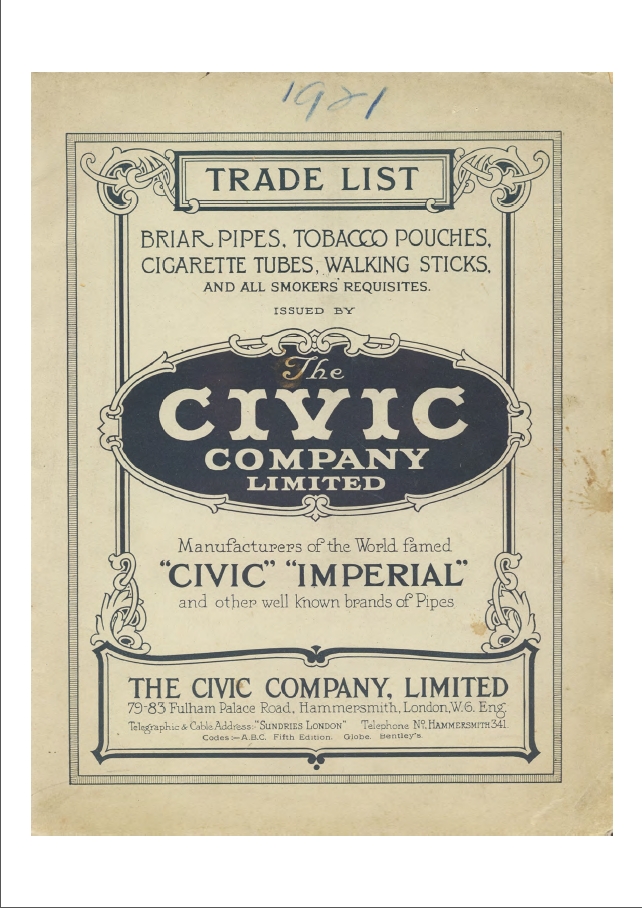
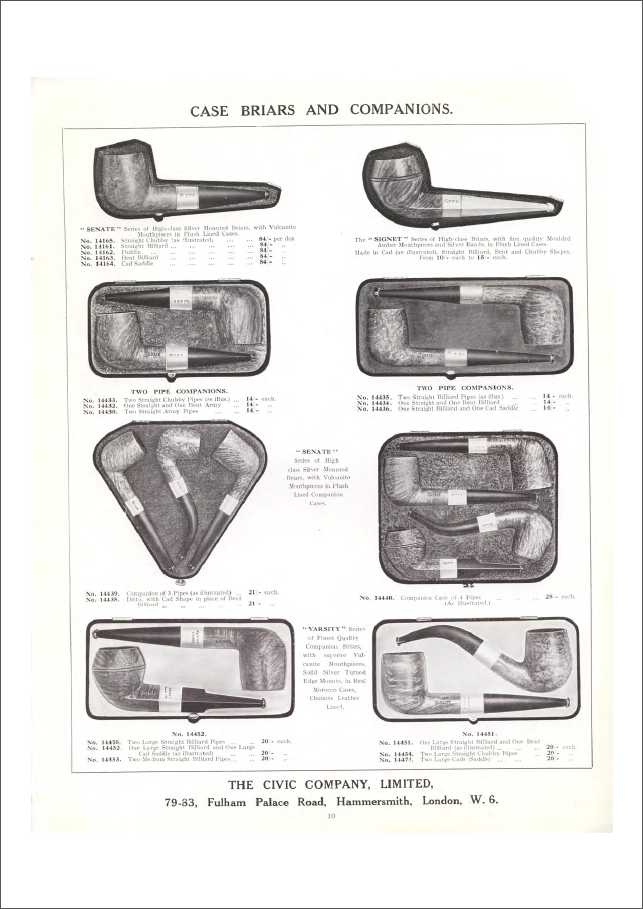
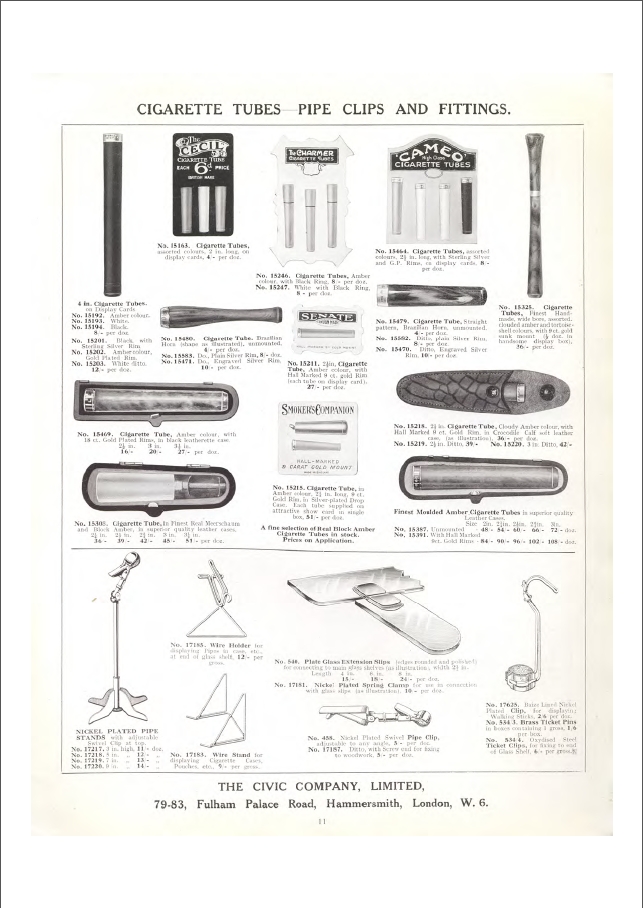
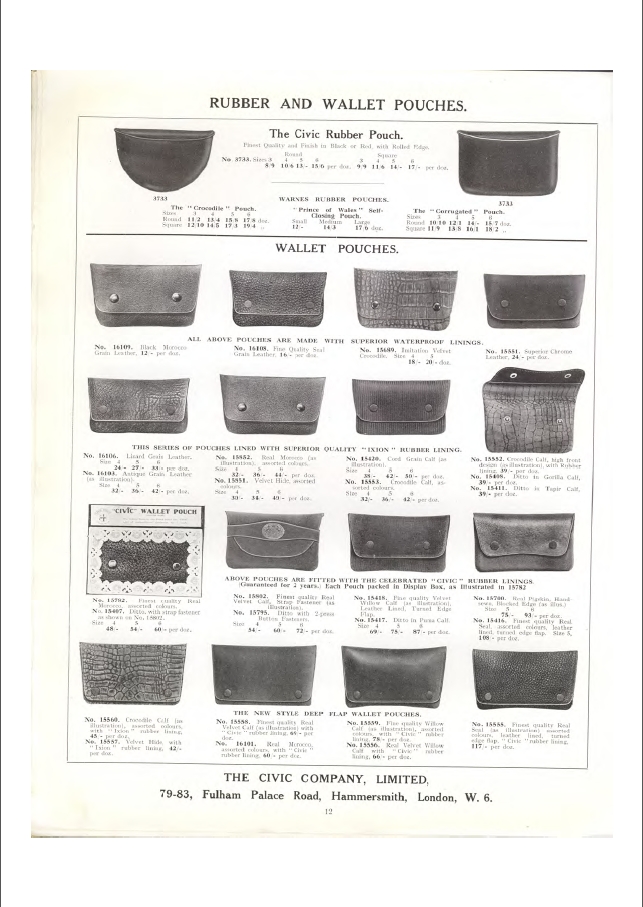
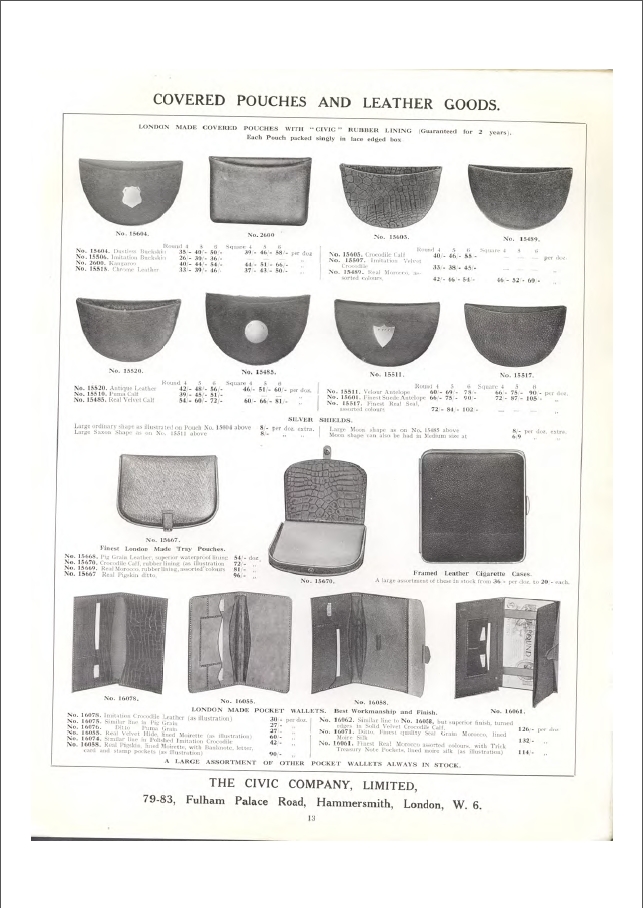
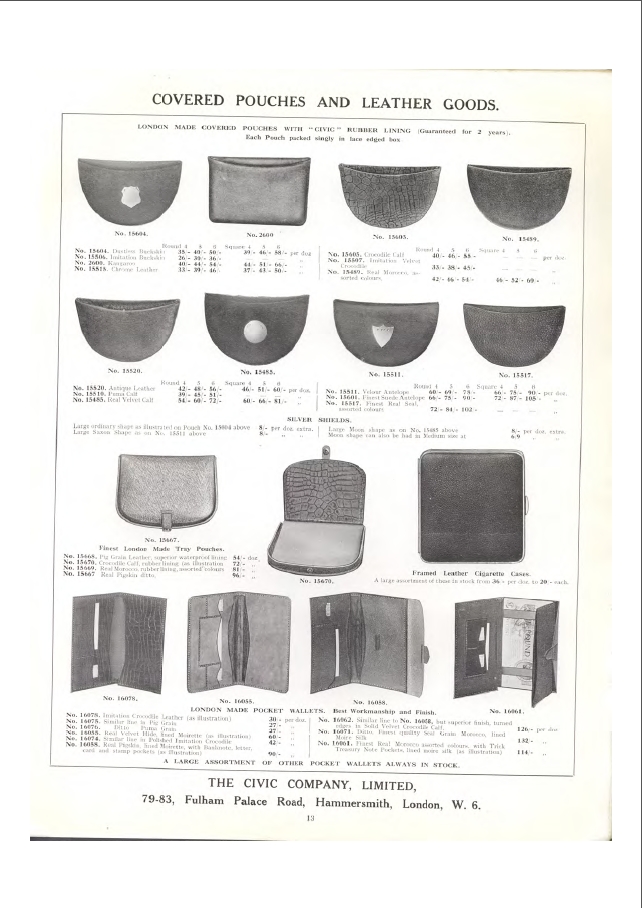
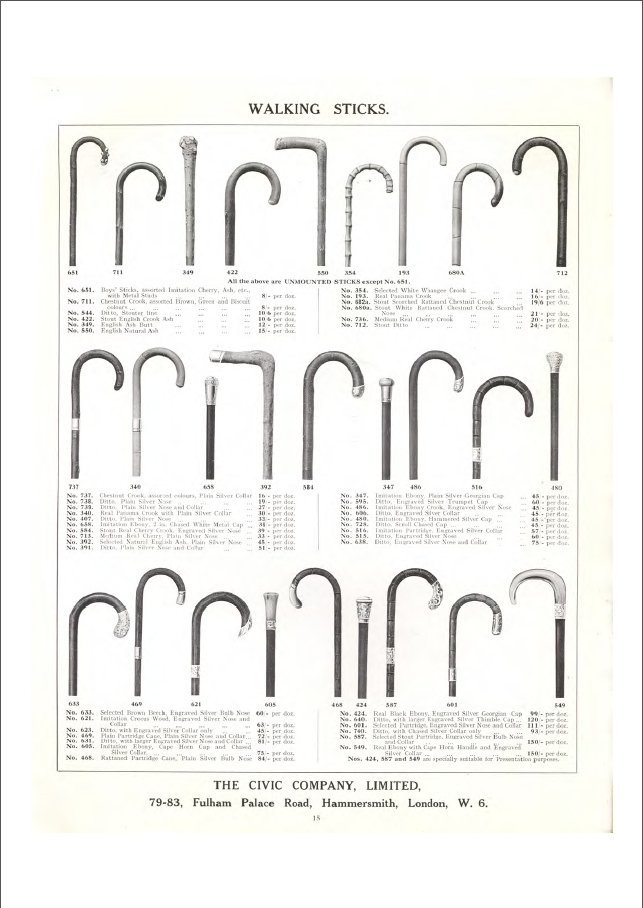
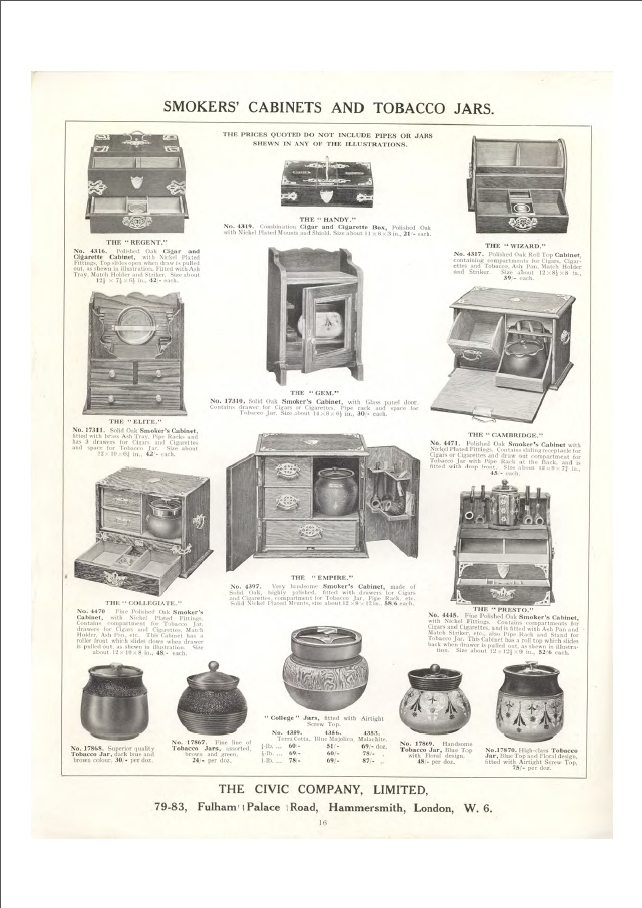
Civic Company 1921 Trade List


Blog by Steve Laug

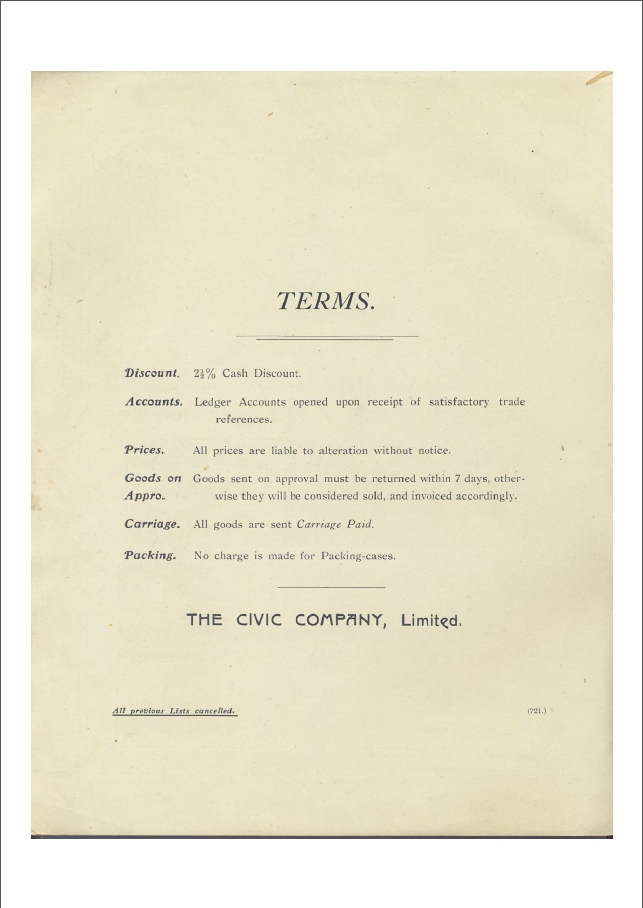
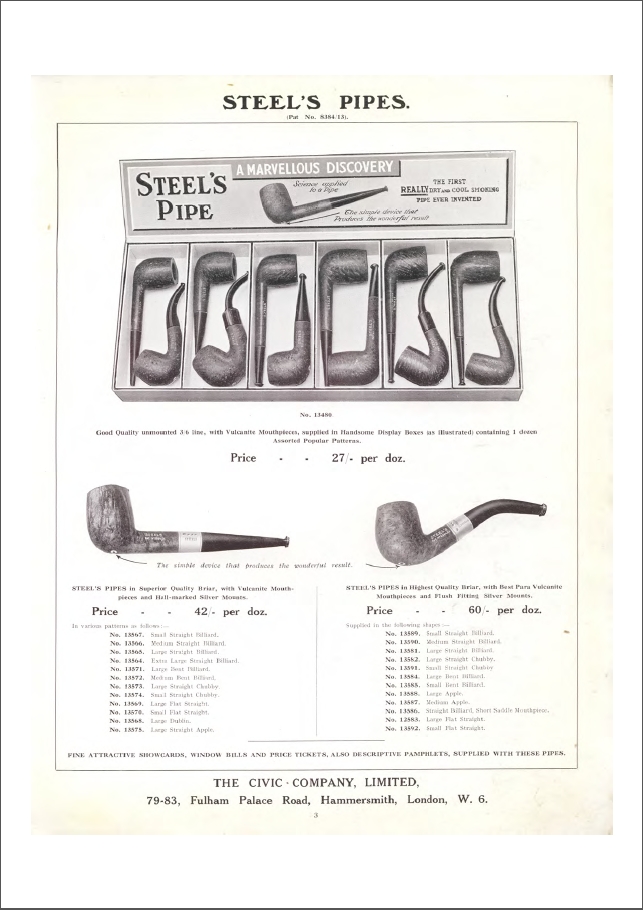
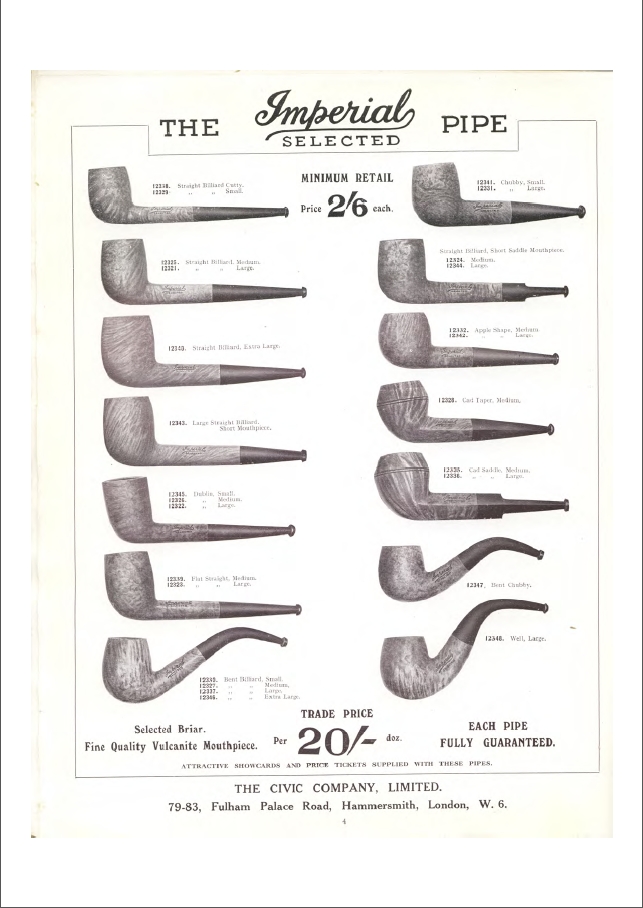
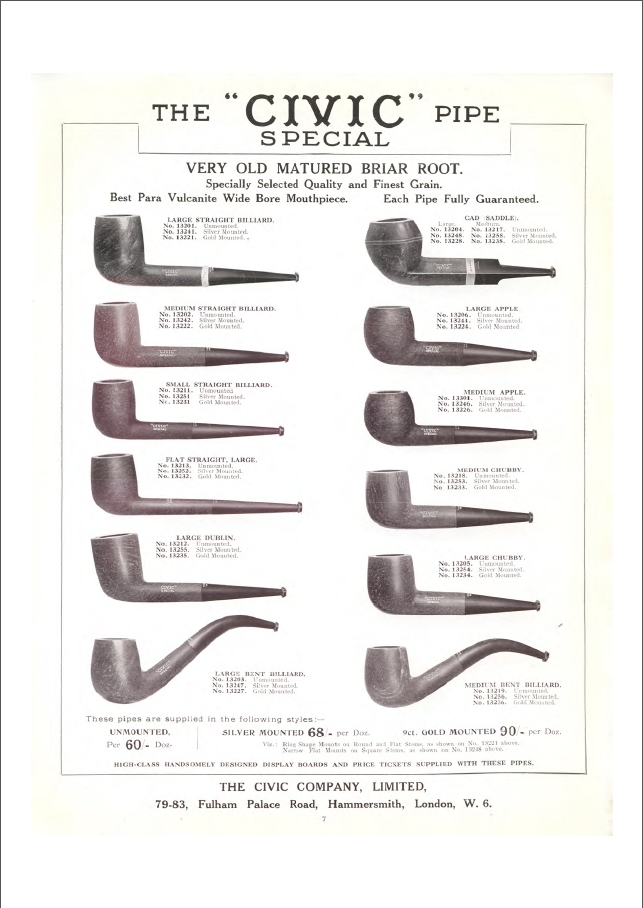
In the course of refurbishing some Imperial Pipes and some French Briar pipes my research unearthed this document. It is a 1921 Trade List or catalogue of Civic Pipes. The introductory page from the scan says the following:

The 1921 Price List is owned by John Adler.
All of these pages, including both sides of the cover and the flyer have been scanned as JPEG and
PDF files and lodged in the National Pipe Archive in Liverpool.
P J Davey/21 April 2010

I found the scanned document on the Academie Internationale de la Pipe website. http://pipeacademy.org/ They have a large repository of old pipe materials that I have found invaluable. I saved the document to my hard drive as a pdf and have included the pages here for others to use.
Civic 1

Civic 2

Civic 3

Civic 4

Civic 5

Civic 6

Civic 7

Civic 8

Civic 9

Civic 10

Civic 11

Civic 12

Civic 13

Civic 14

Civic 15

Civic 16

Civic 17

Civic 18

Civic 19

Civic 20

Civic 21

Civic 22

From Annoyance to Enjoyment – the British Buttner Pipe


At least that is the headline for an advertisement for the British Buttner Pipe. I was going through some of my files on the computer and came across this old insert for the Buttner pipes. I remember finding it but don’t remember where. It is a fascinating read and well worth a laugh. It is part of the ongoing saga of building a “better mouse trap” or pipe as the case may be. What made the ad interesting to me is that I have two of these old pipes in my collection and they are certainly a novelty. I am not sure that they fulfill the claim to remove annoyance. As you can see in the photos they are quite a complicated contraption. The outer bowl, or stem and keeper are Bakelite. The inner lining is a replaceable clay bowl that can readily be cleaned like any clay pipe by hot fire. This clay liner sits inside the Bakelite base and then there is an insert that is also clay that can be set into the clay bowl. The tobacco burns in this final bowl and the oils and tars are trapped by the clay insert and a cool clean smoke is delivered through the stem to the smoker. The airway in the final bowl is centered in the bottom.
buttner2a

buttner2b
Here are some photos of my pair and a replacement inner bowl lining. The first photo shows a top view of the pipes and the added insert. The insert came in a metal tin with a Bakelite lid that is pressure fit. The inner clay insert is pristine white and there is a piece of clay that sits in the middle of the bowl. I have never seen these in a functioning pipe so I think that they were part of the packing of the inner lining for shipping. The pipe on the left has a vulcanite stem while the one on the right has a Bakelite stem. The left one is somewhat newer in age than the right pipe. The second photo gives a side view of the pipe.
IMG_6657

IMG_6658
The next two photos show the pipe in an exploded view. The first one I have unscrewed the tobacco chamber or bowl from the Bakelite outer keeper. You can see the ring of Bakelite that encases the clay bowl of the tobacco chamber. The chamber itself is shaped like a meerschaum cup. Inside each Bakelite bowl is the clay inner liner. The one on the left is worn and has some damage though it is still smokable. The one on the right is intact. I tried to burn out the tars on this one in my barbeque and was able to remove much of the black buildup on the inside of the liner.
IMG_6659
The next photo shows the inner liner removed from the Bakelite keeper. All three parts of the Buttner system are clearly shown in this photo. Sadly the extra clay inner liner does not fit either of the bowls that I have. You can see the scalloped edge on the liner on the right. When it is in place smoke is drawn from the hole in the bottom of the tobacco chamber into the clay liner where it circulates and tars and oils are collected in the clay. The smoke then exits the liner through the scallops around the upper edge of the liner and is drawn into the airway in the shank and stem. Having smoked these pipe several times I can say that it delivers a dry and cool smoke. As for freeing the pipeman from annoyance – well that is certainly a matter of opinion.
IMG_6660

A New Aspect of the Hobby (at least to me) – Tobacco Stamps


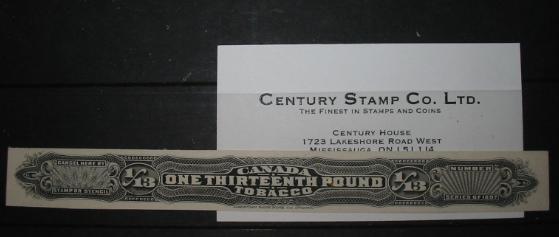
A part of this hobby that never crossed my purview was the collecting of old tobacco stamps. I don’t know why it never occurred to me that others would collect them but it never did. I have seen them on the old tins I have purchased and never given them much thought other than using them to date the tins. Then several years ago in a deal with Emil of Century stamps he sent me this mint tobacco tax stamp. We had corresponded and then eventually met at the Chicago Pipe Show. He had picked up some pipe from me and we had shared some bowls of tobacco and enjoyed the fellowship of the pipe. He had introduced me to his friend Mike who also bought a few pipes – even a birth year Dunhill purchased for him by his wife for his birthday. I knew Emil had a stamp shop in Mississauga, Ontario but I figured that was for postage stamps – something that I had collected as a lad and somehow laid aside in the business of adult life.

Then one day I was looking for a humidor for cigars and Emil had one that he said he would send me. It was a beautiful inlaid box that would take my meager cigar collection to a new level. Included in that package or maybe following it a short time later was a small package containing the Tobacco Tax Stamp pictured below.
Tax Stamp
Since receiving it I have done some reading on the internet regarding tax/excise stamps and found it really interesting. I found the link below when I was trying to date a tin of tobacco that I had found in an antique shop. It seems to be a living part of the stamp collecting hobby with cross over into the pipe and tobacco hobby.

http://www.canadarevenuestamps.com/product/search3.php?category=Tobacco+and+Liquor

These stamps give a feeling of another era, of a time when things moved more slowly. The look of the stamp in terms of colour and type hark back to another time. It is one, that at least in terms of the pipe and tobacco, sometimes I would not have mind living through.

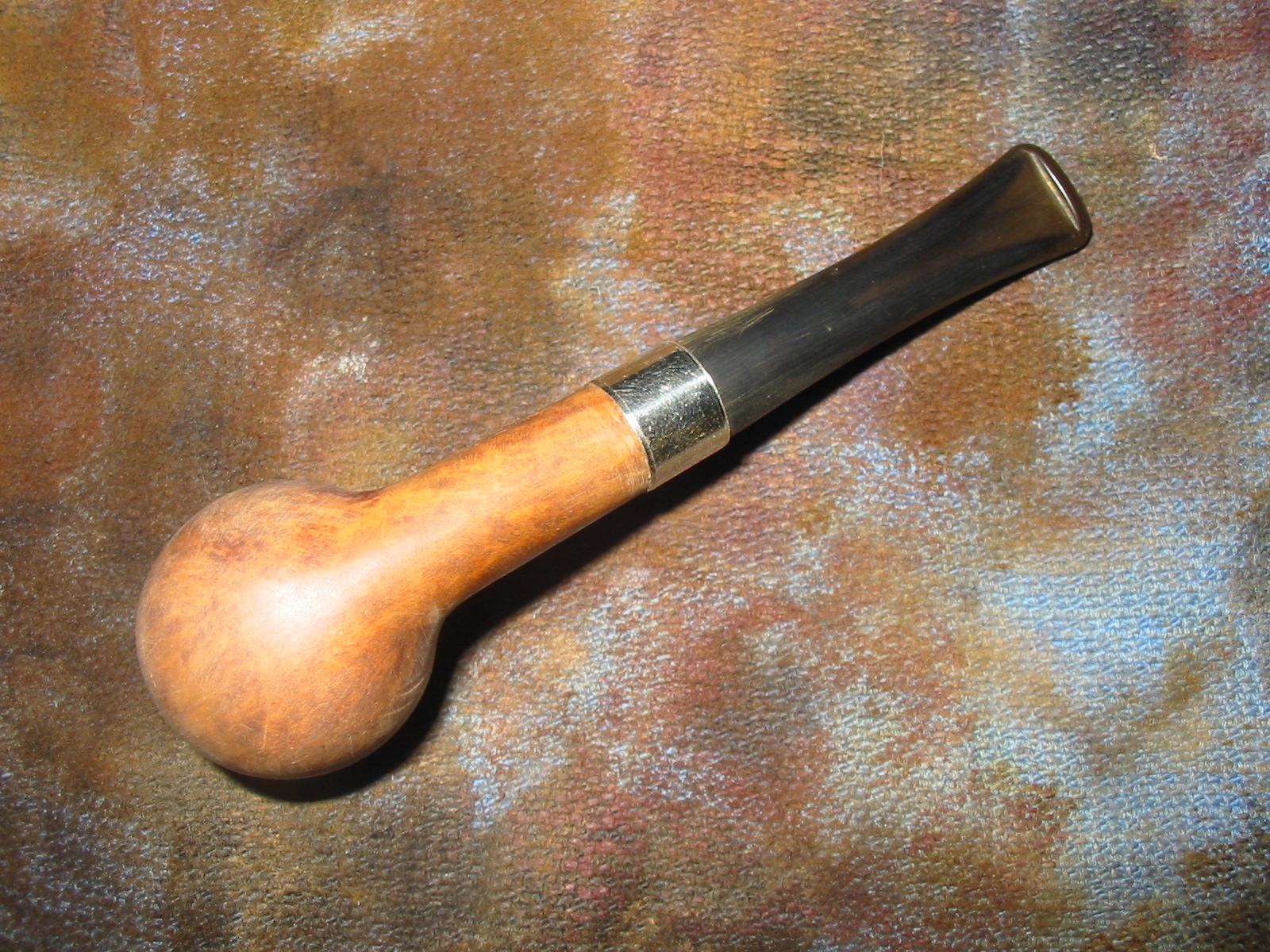
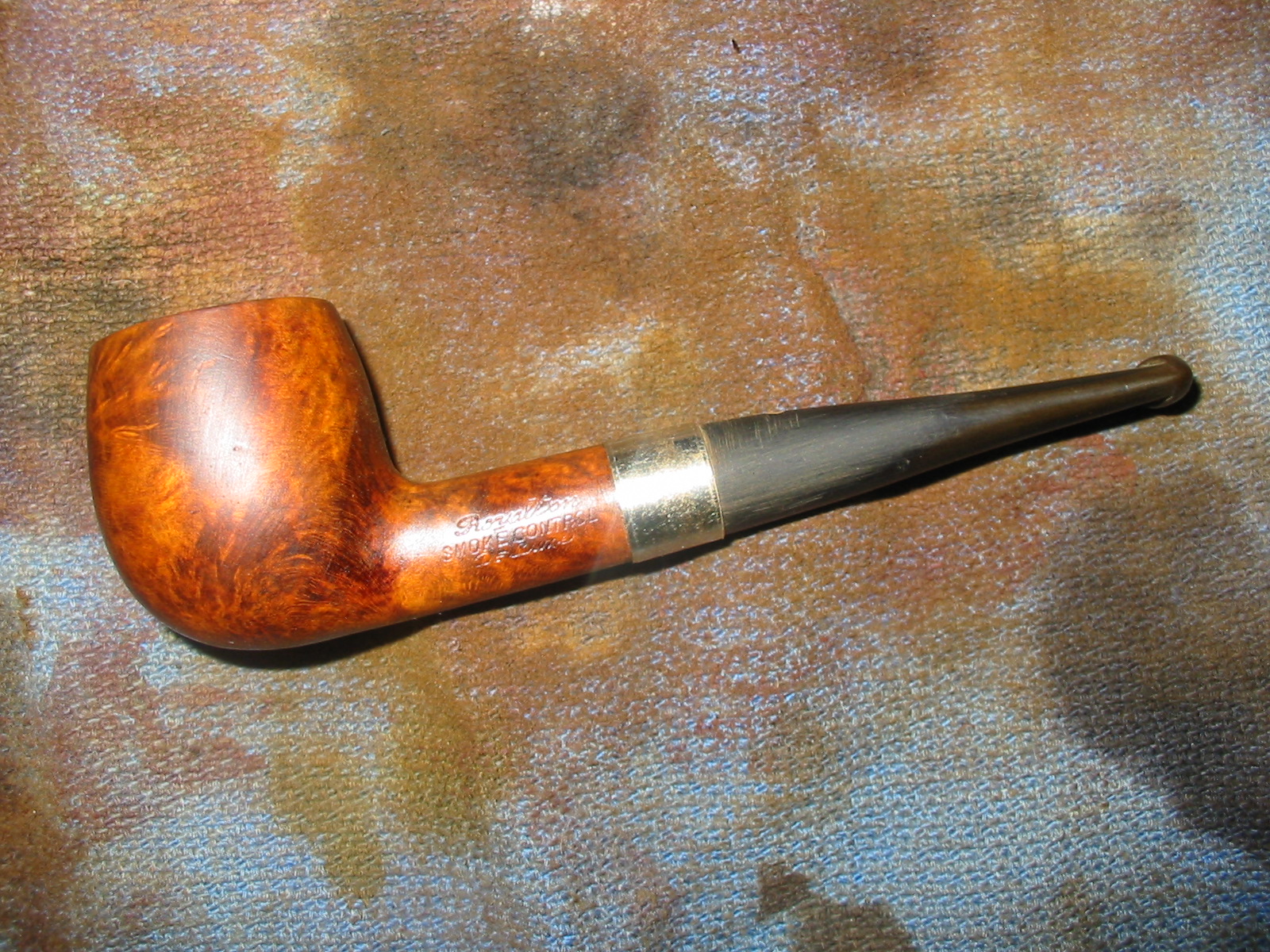
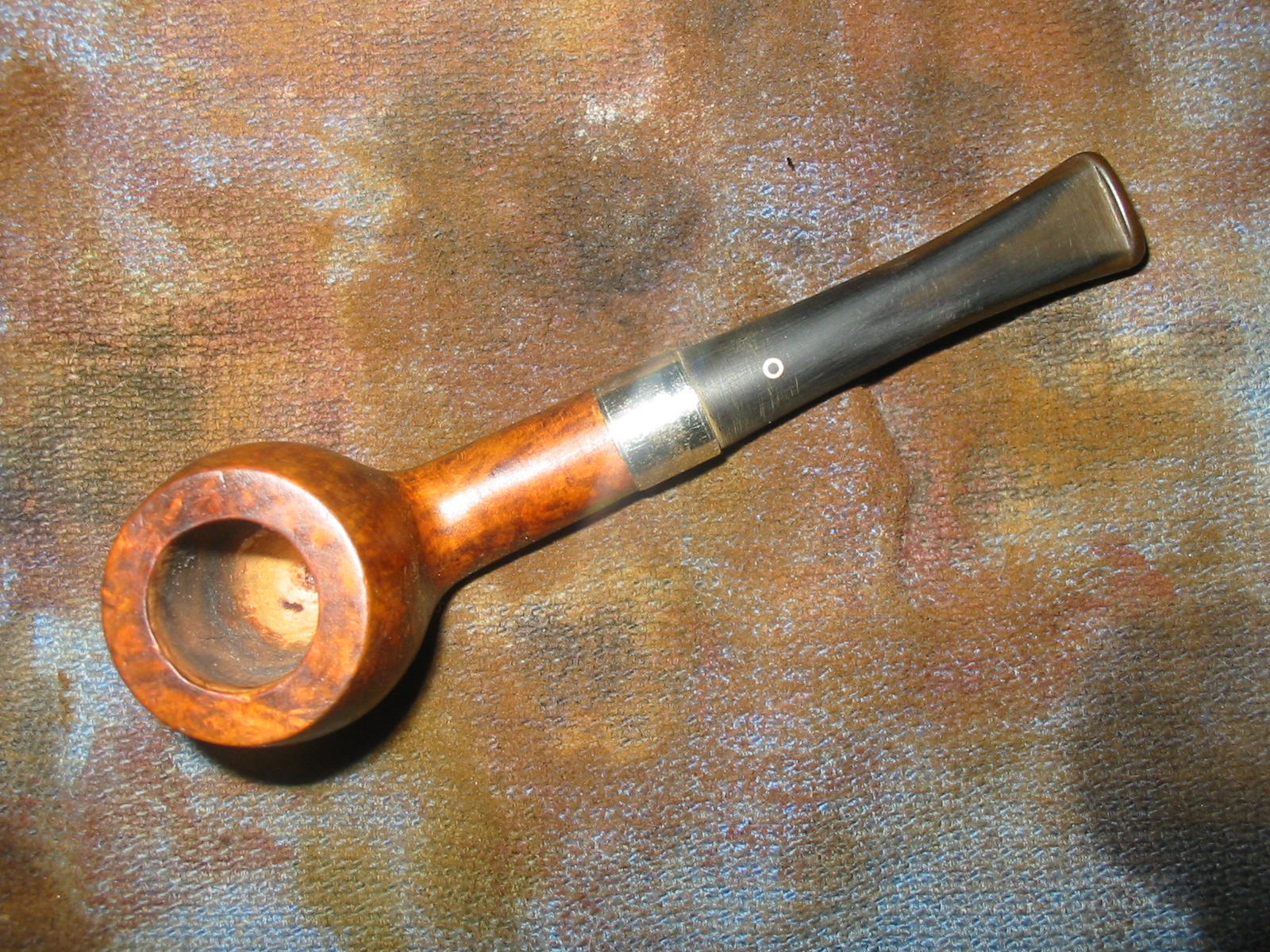
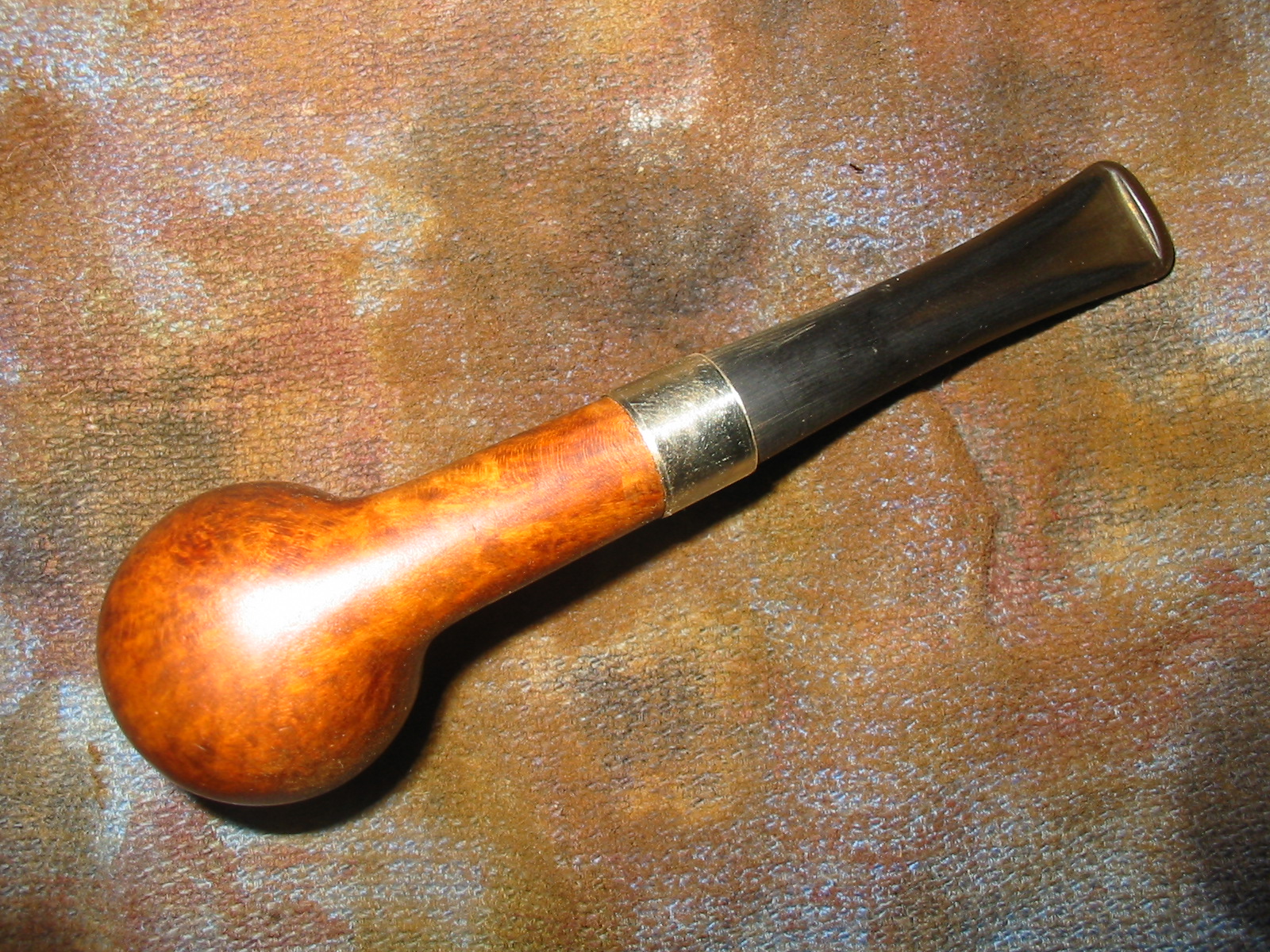
I Had Heard of Royalton but not of the Smoke-Control Deluxe


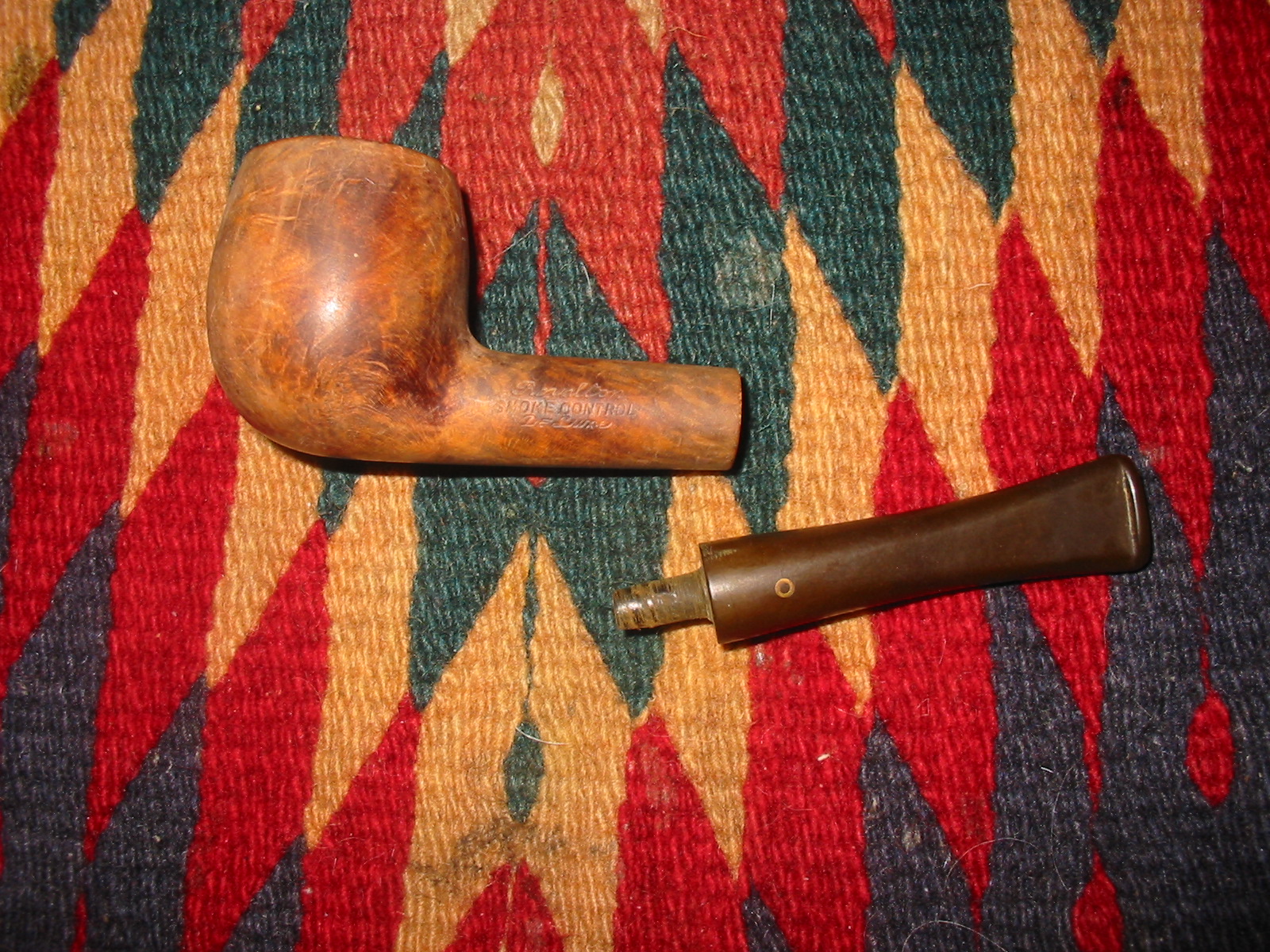
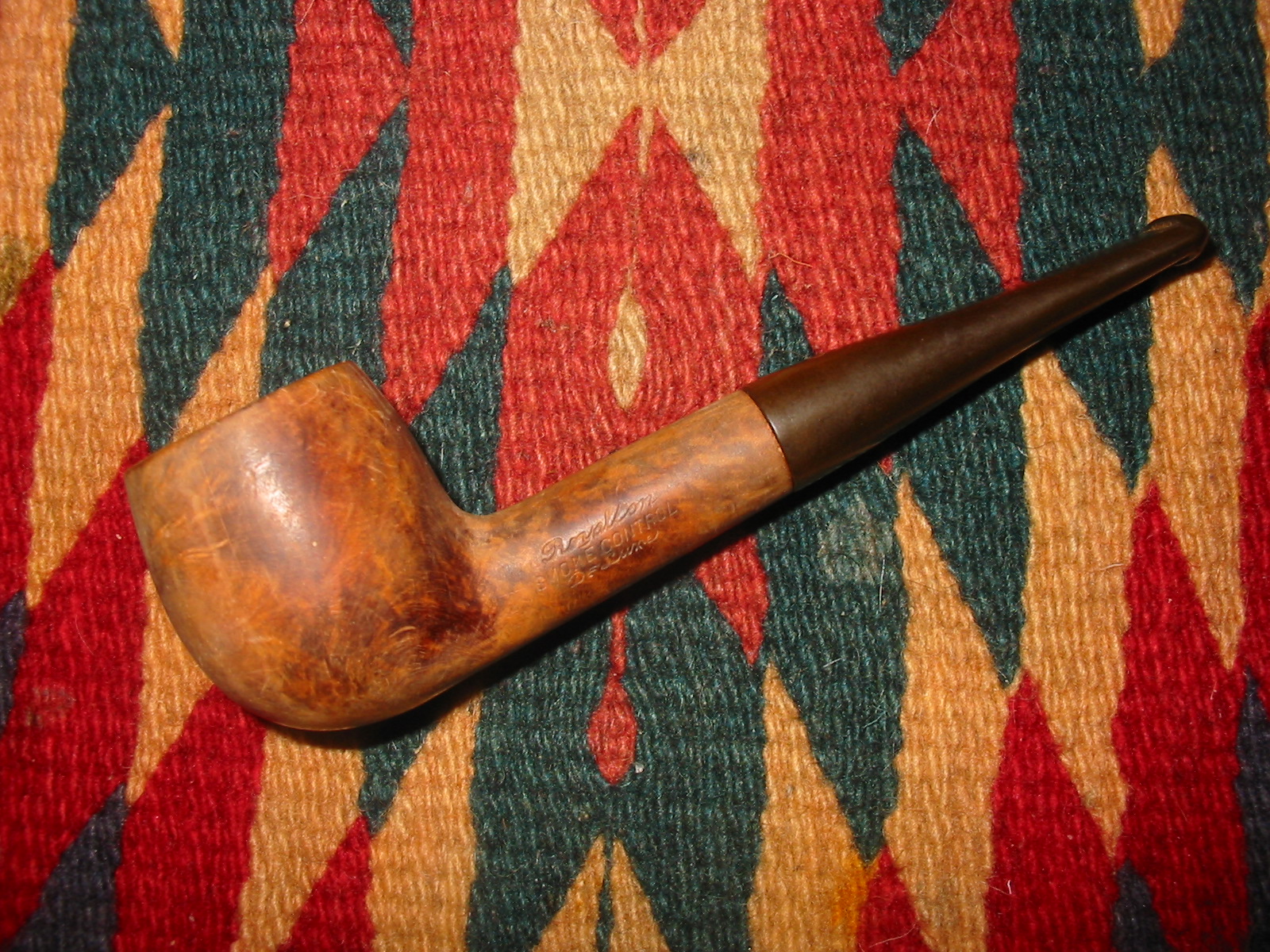
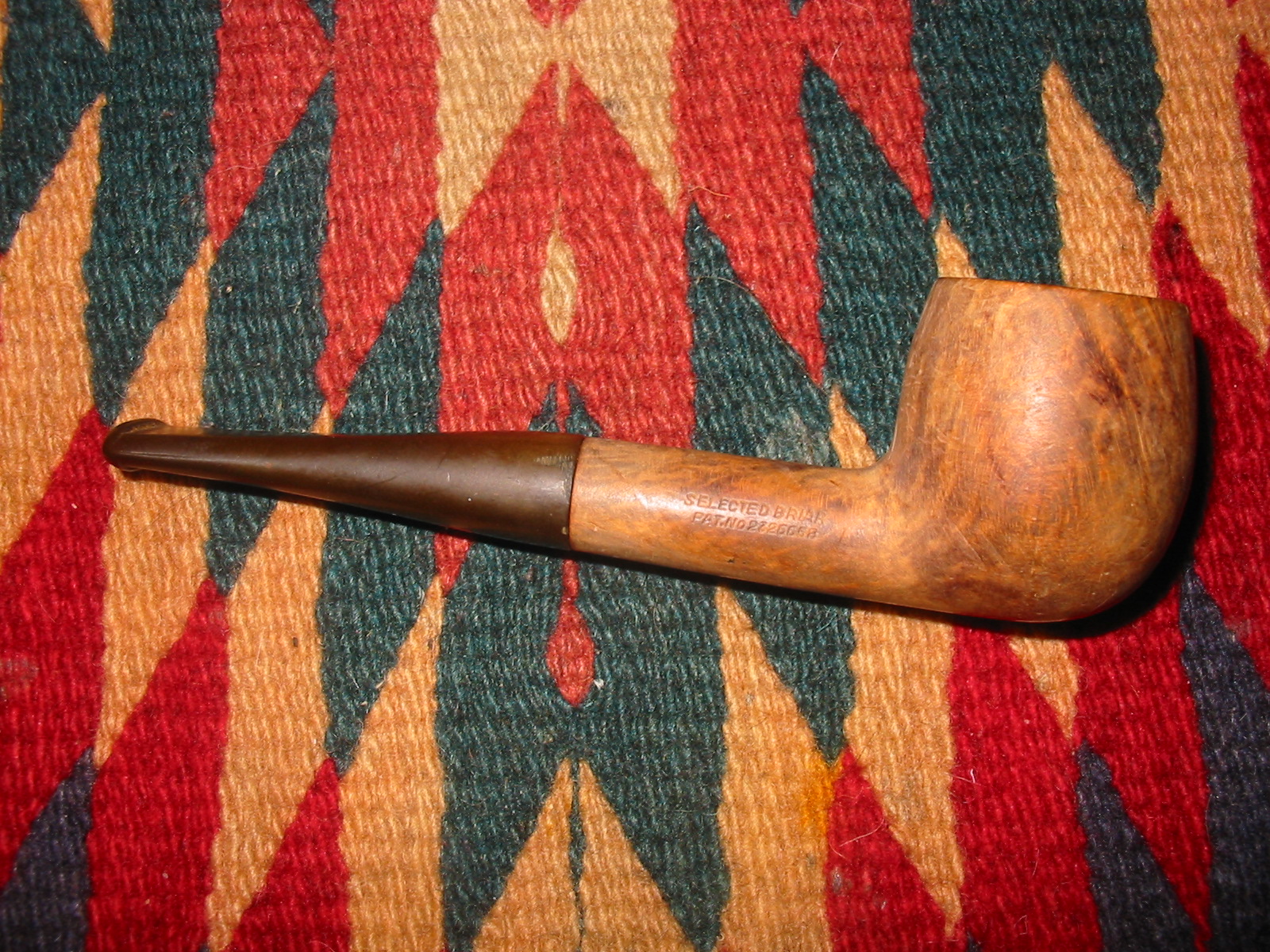
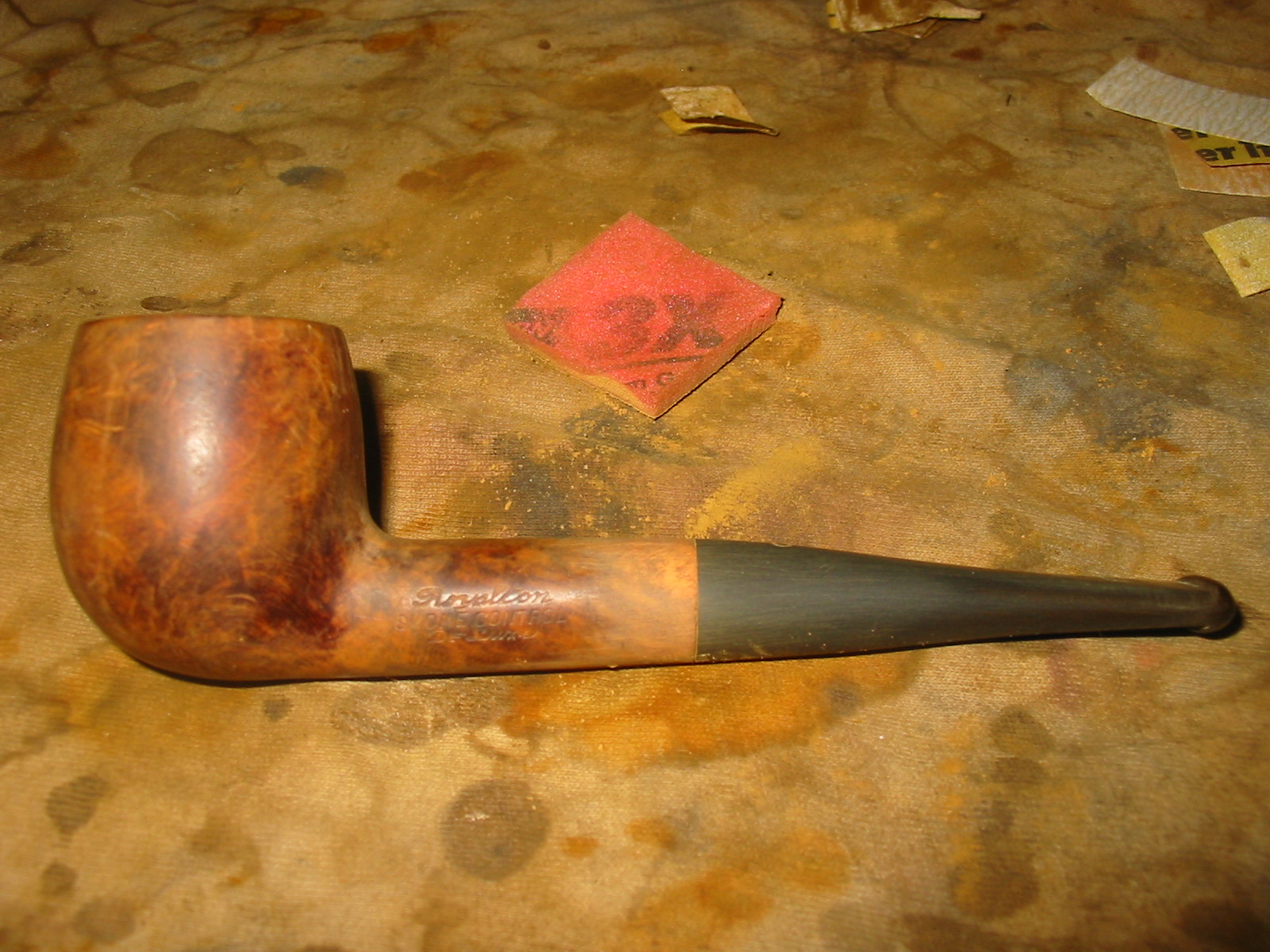
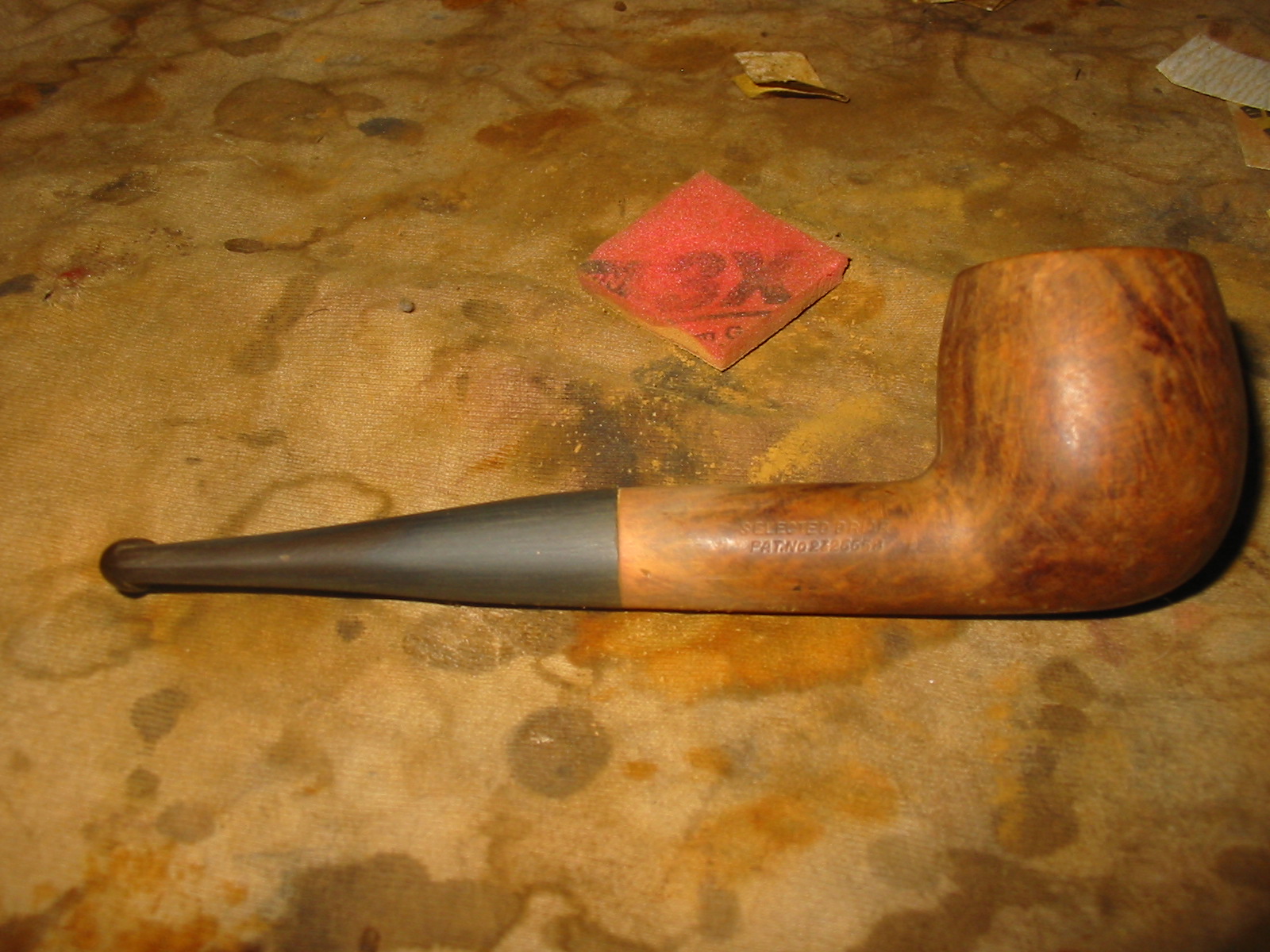
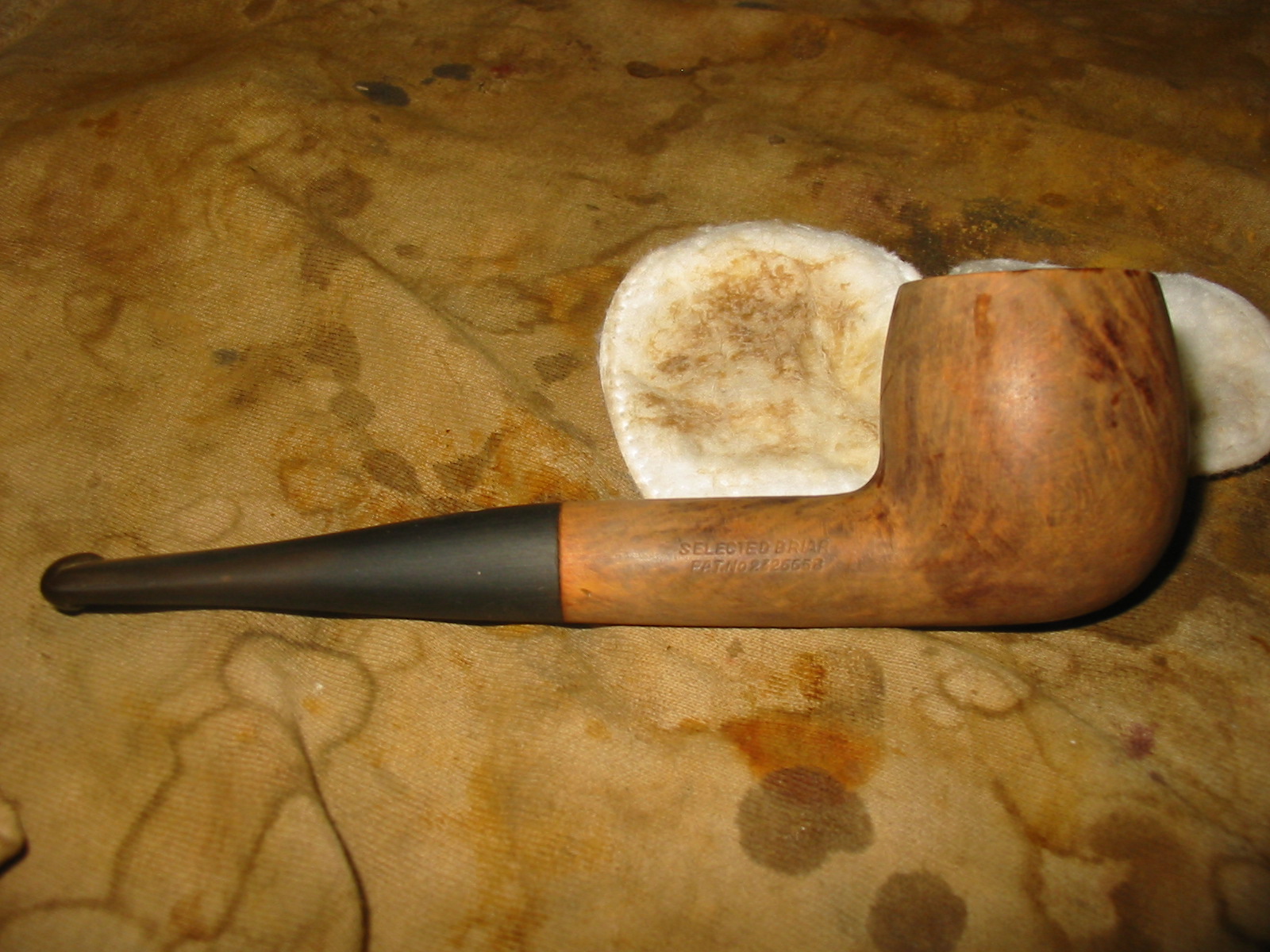
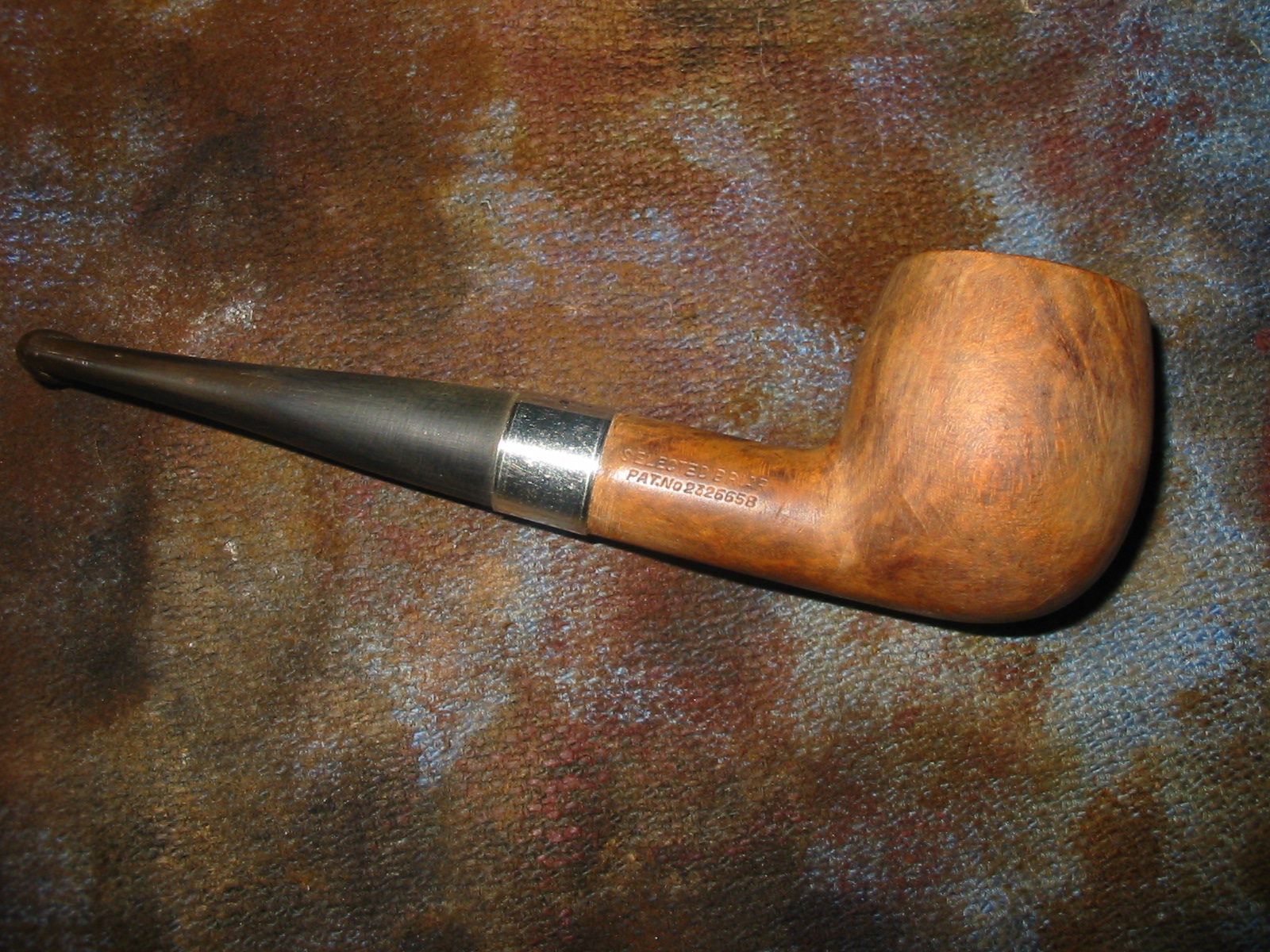
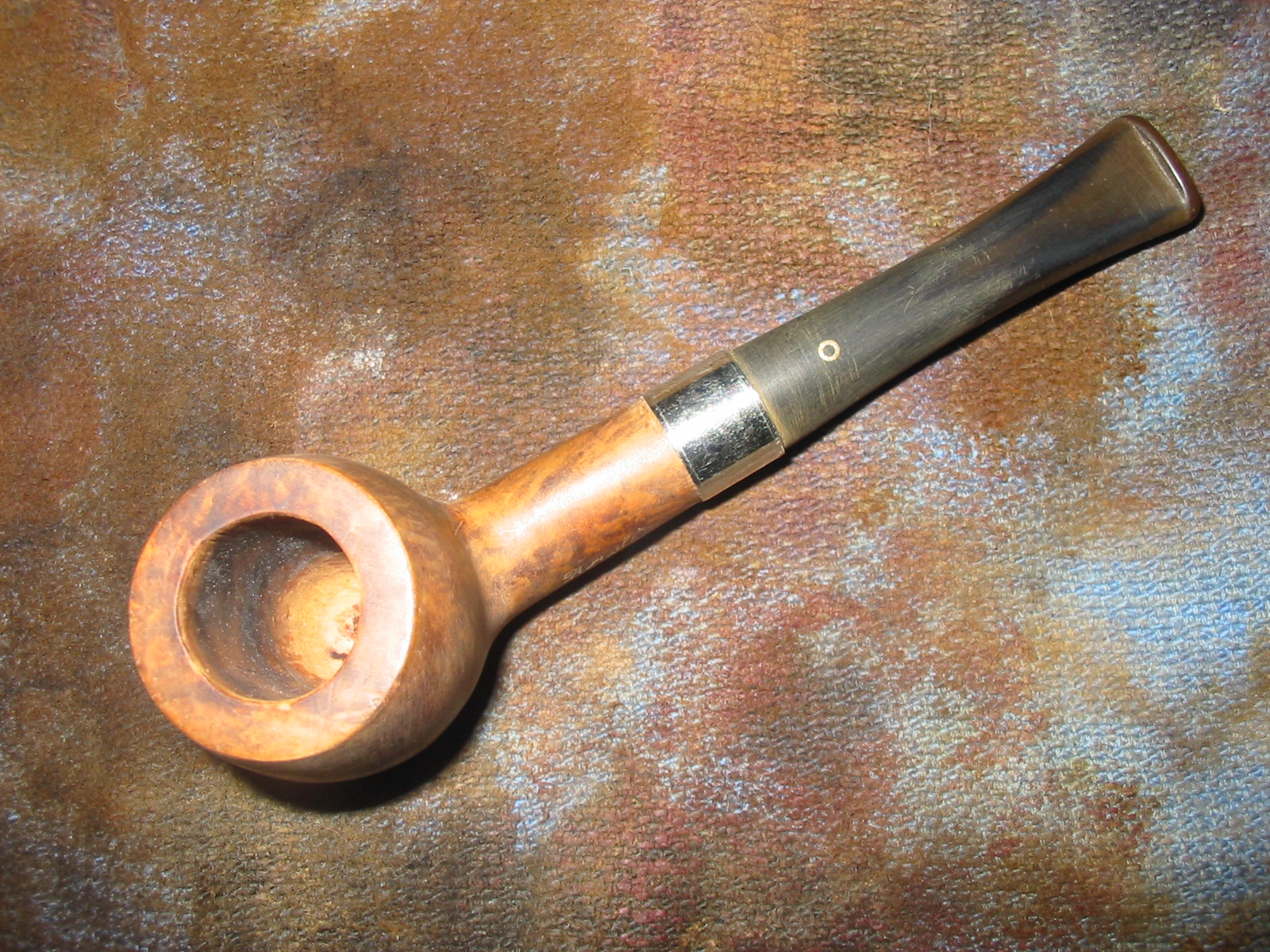
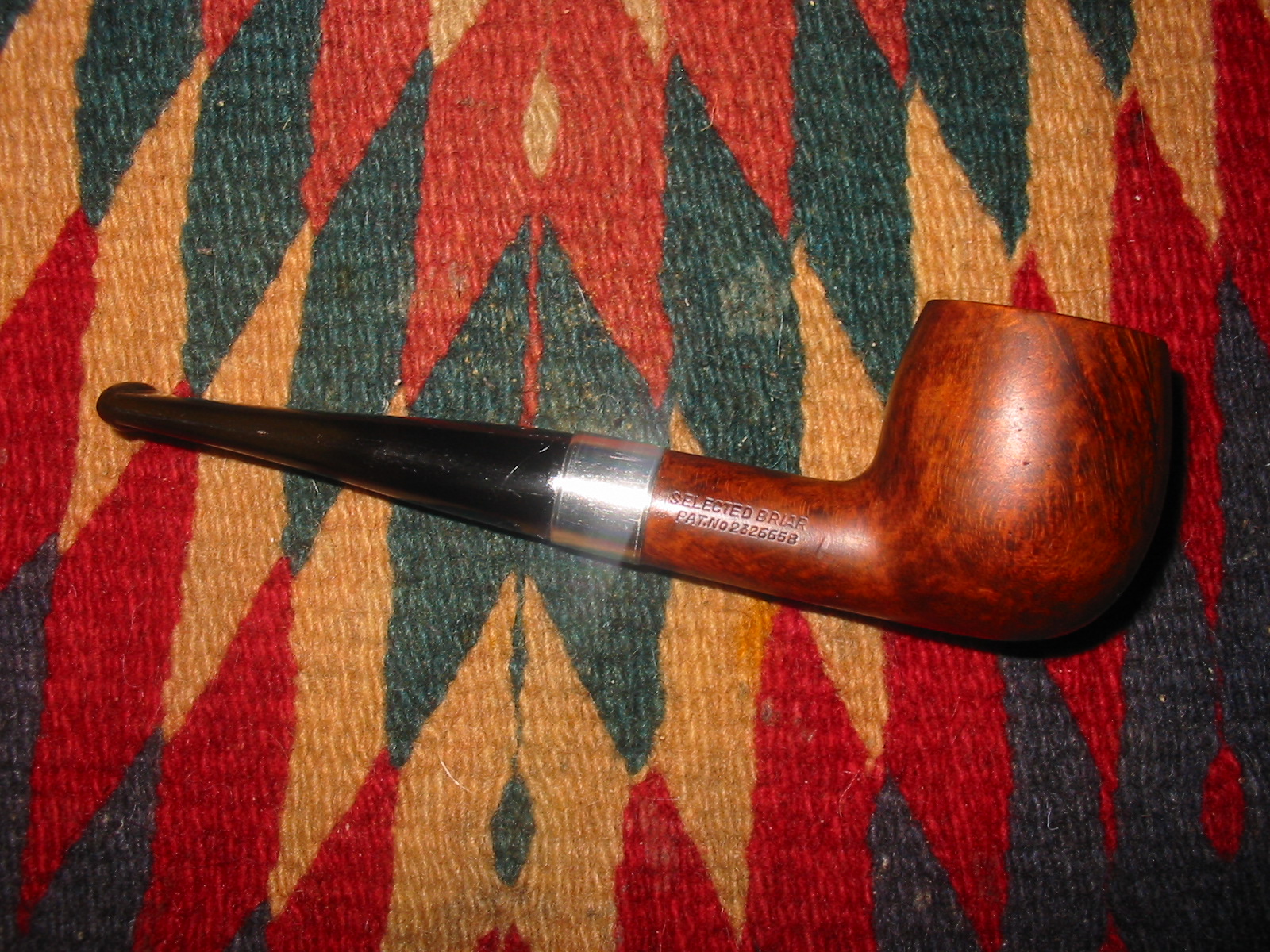
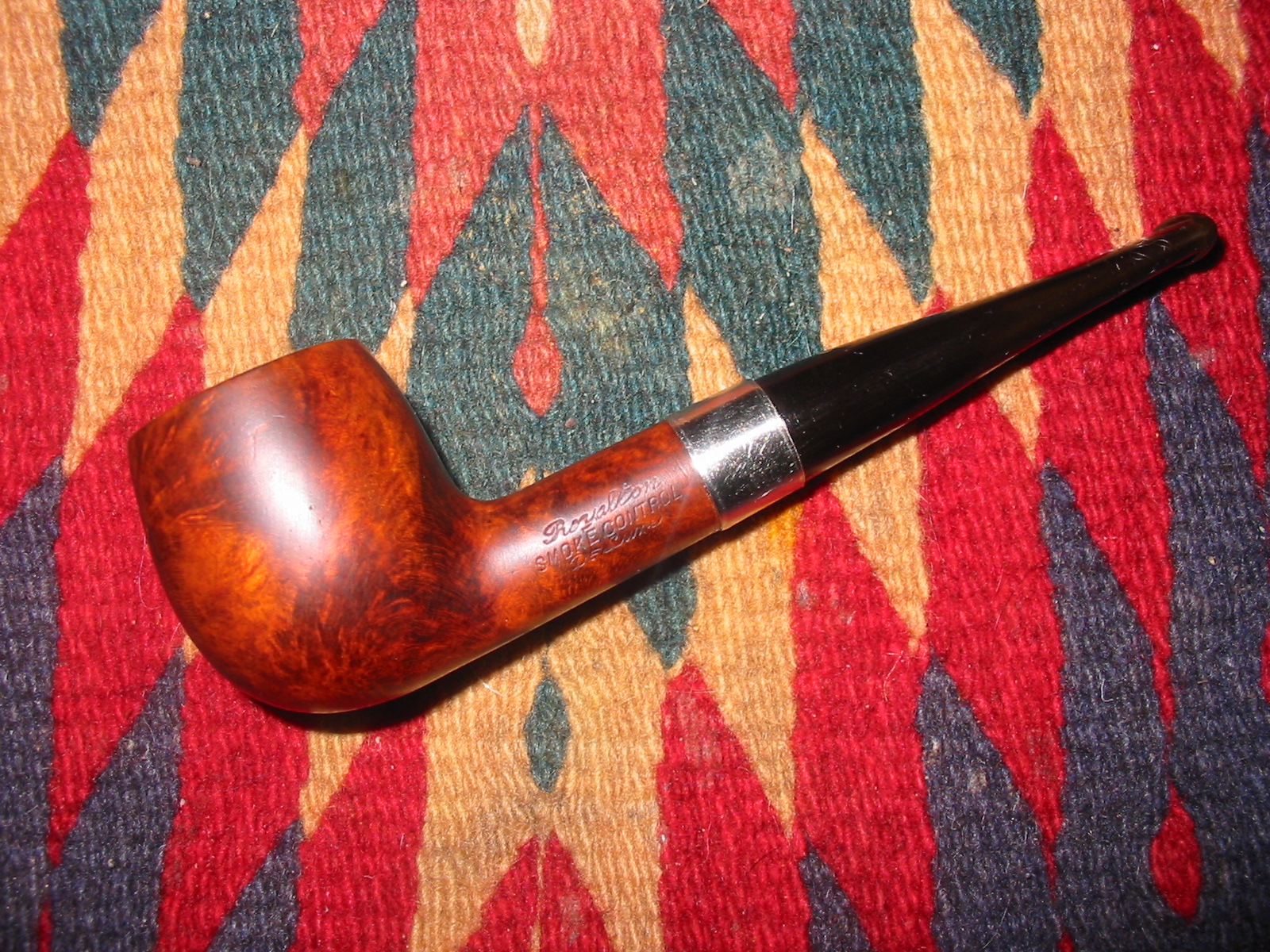
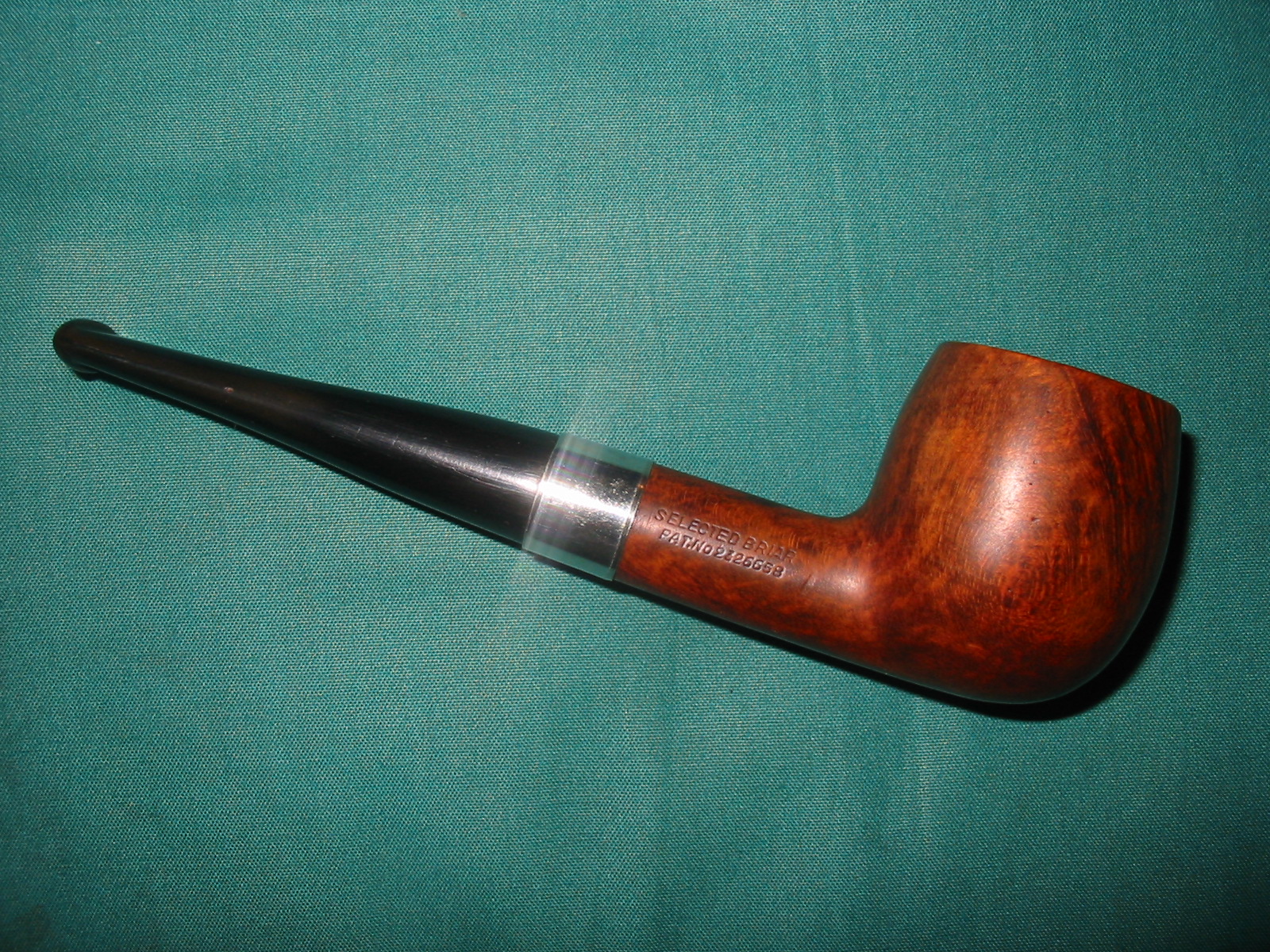
In my antique mall grab bag was the bowl that is pictured below. It is stamped on the left side of the shank, Royalton over Smoke-Control over Deluxe and on the right side of the shank, Selected Briar over Pat. No.2326658. I had heard of Royalton pipes and have cleaned up a few of them in the years that have gone by. But I had never heard of the Smoke-Control or the Smoke-Control Deluxe. Obviously it was a system pipe of sorts, one of those creative ideas that lasted about as long as its maker. It never seemed to have caught on because in all the years I have been hunting and refurbishing pipes I have never come across one even to walk by in my prowls of thrift, junk or rummage shops. It was a brand unknown to me.

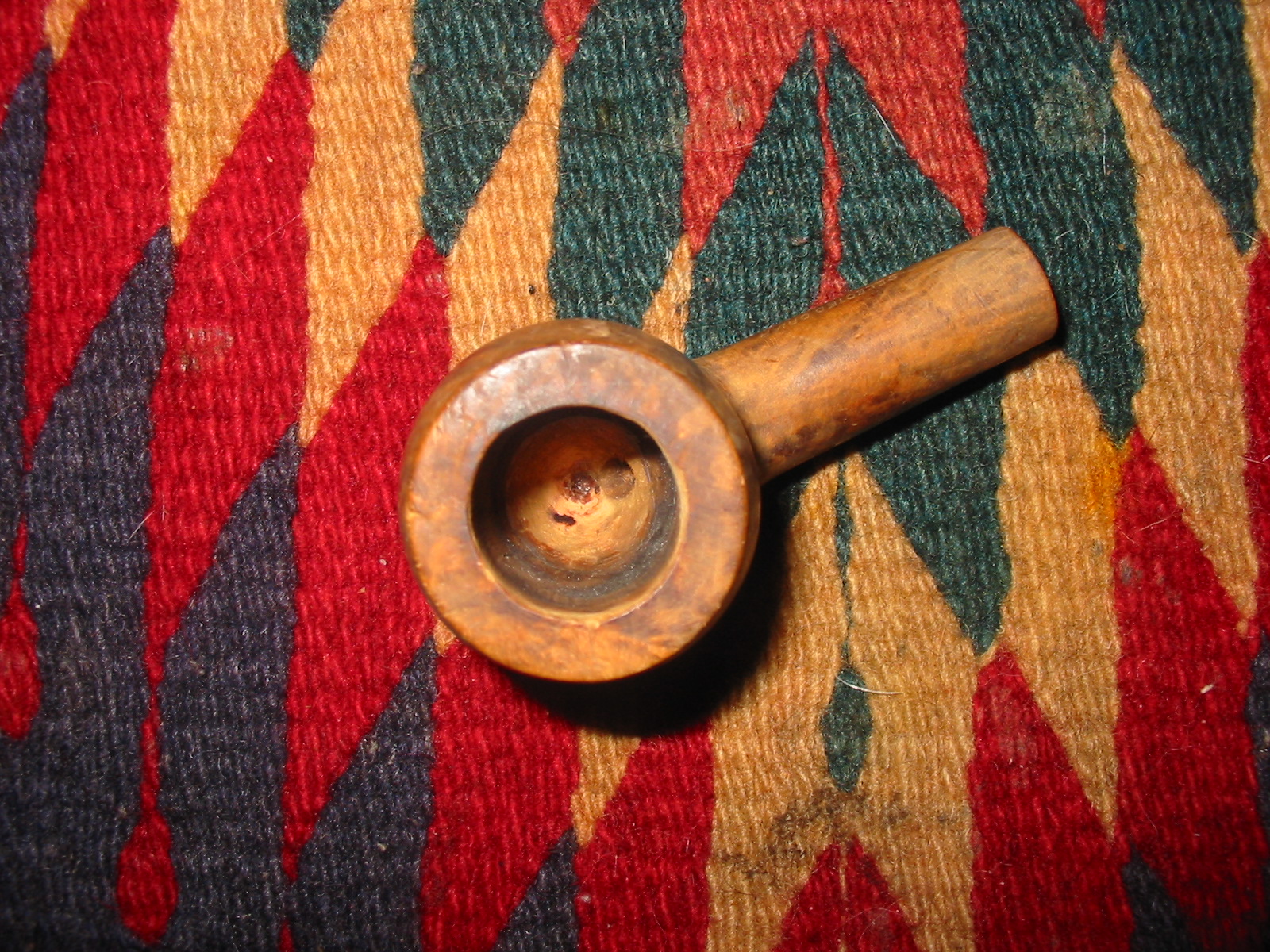
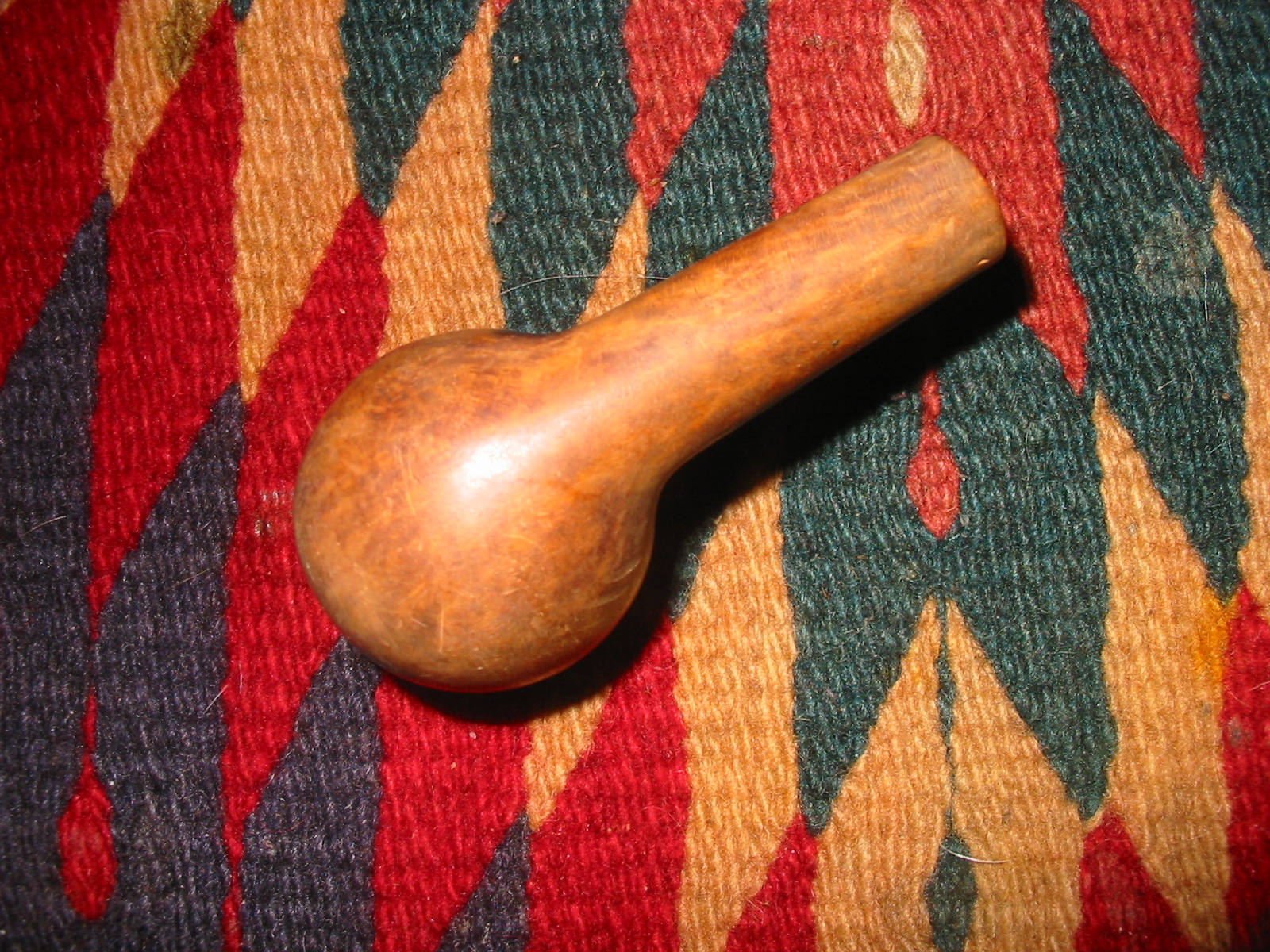
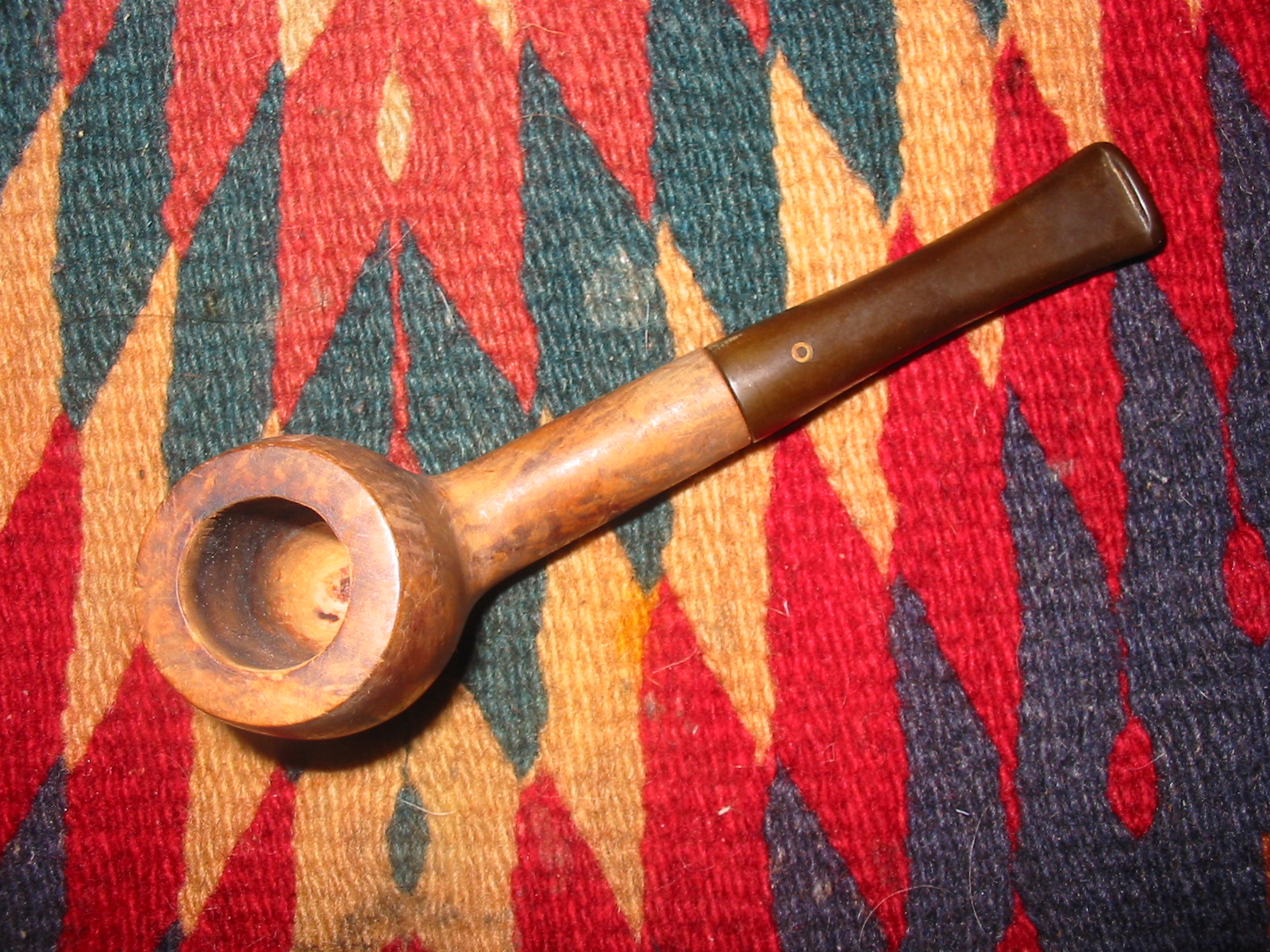
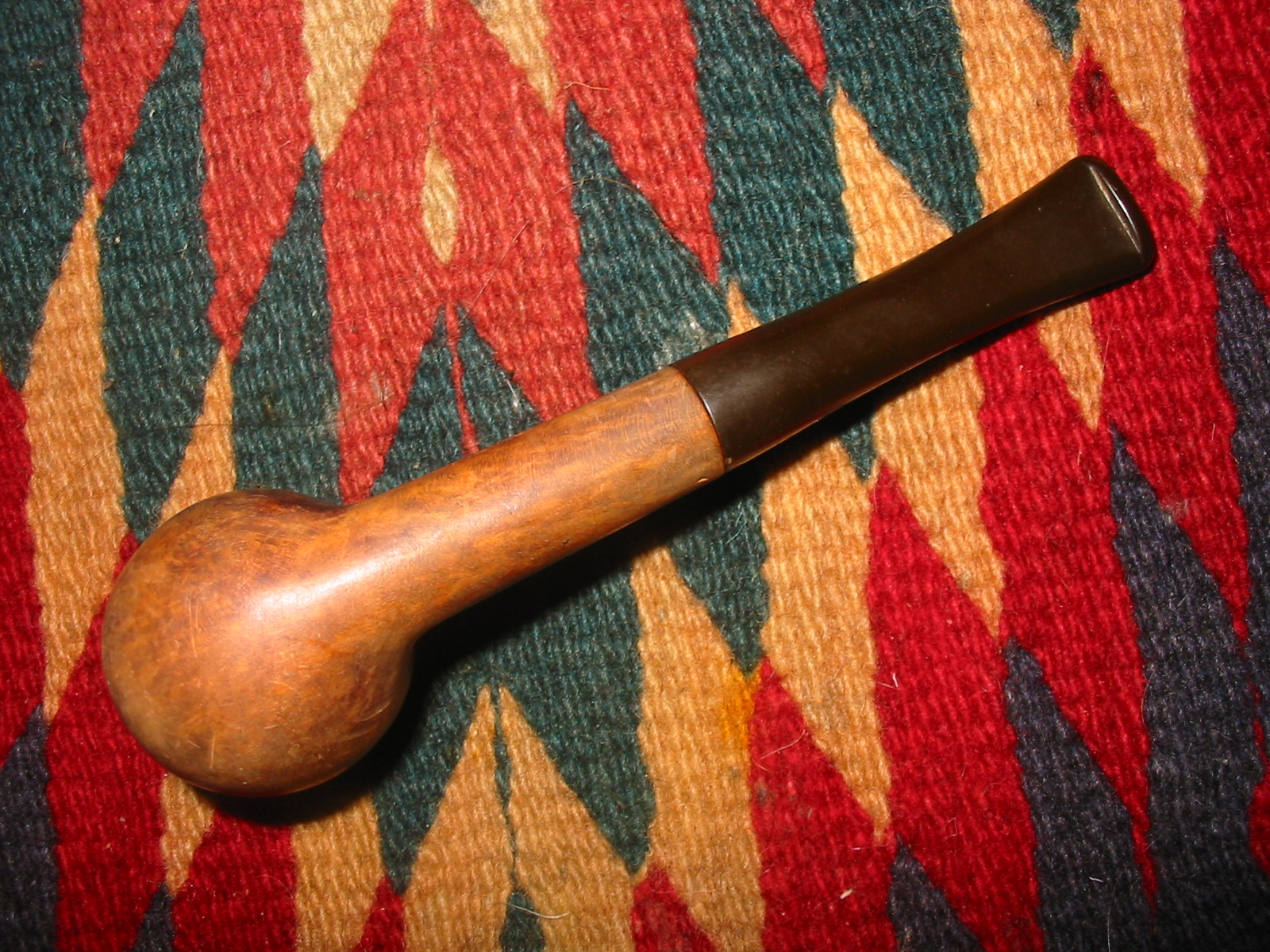
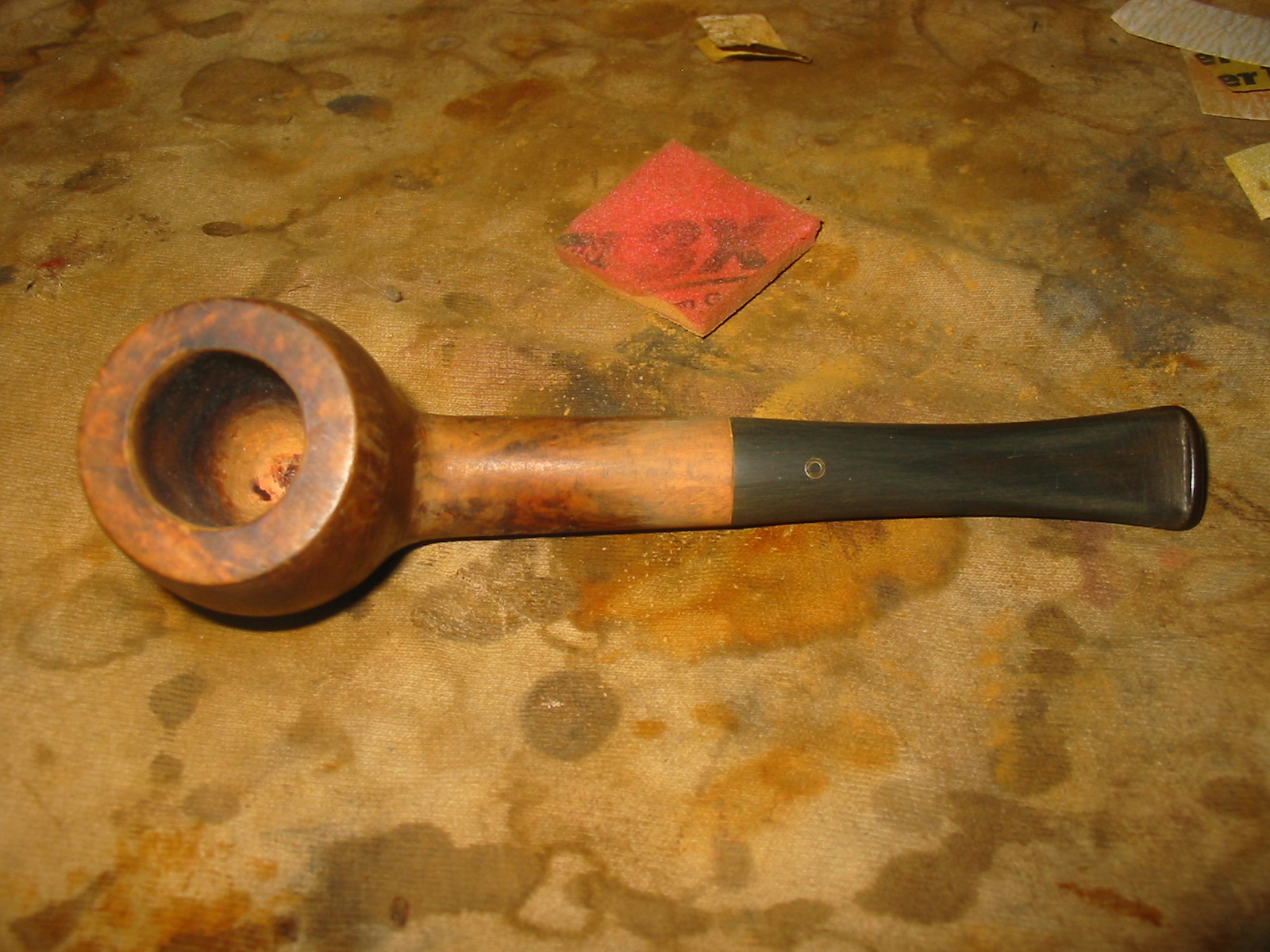
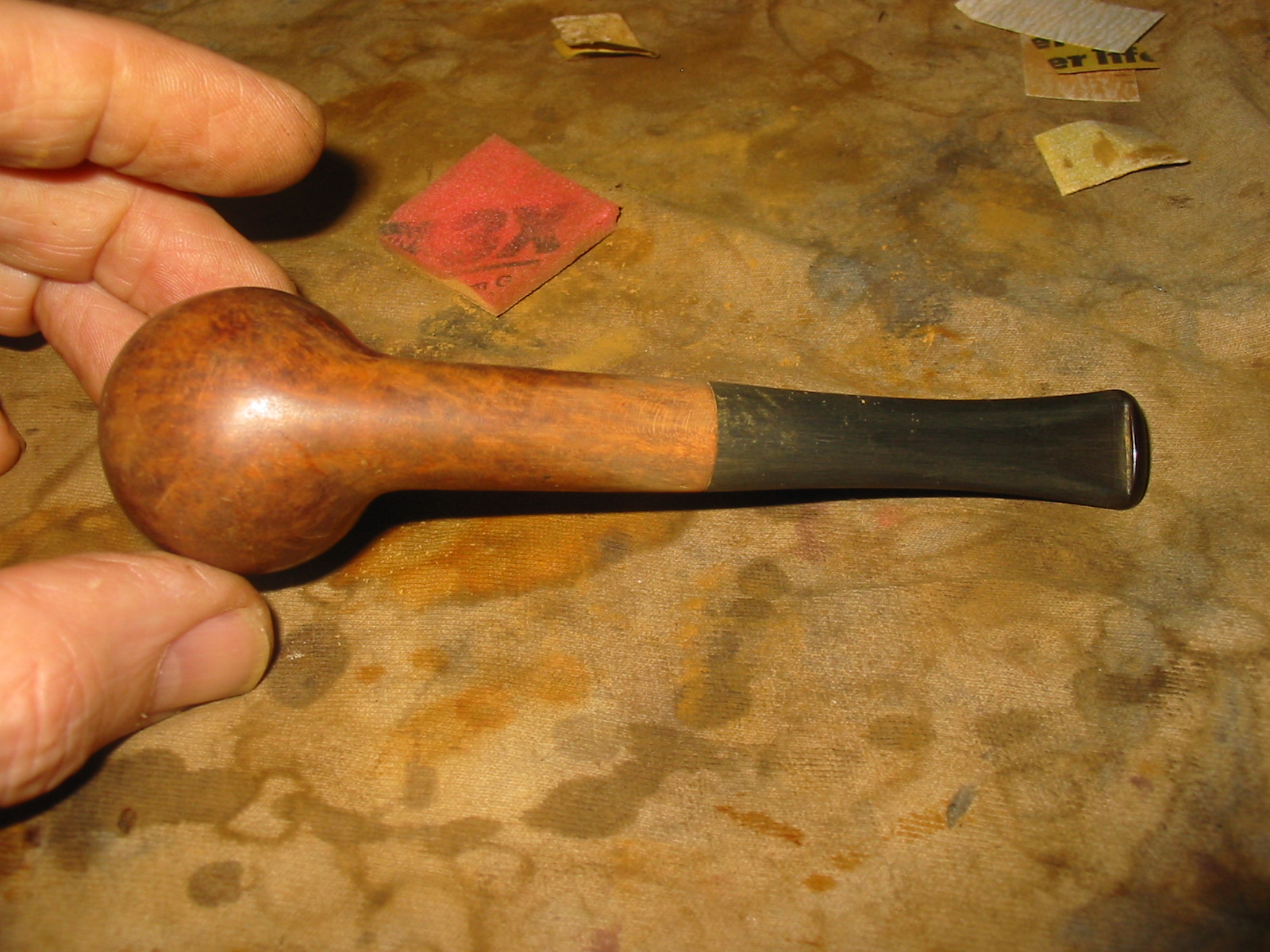
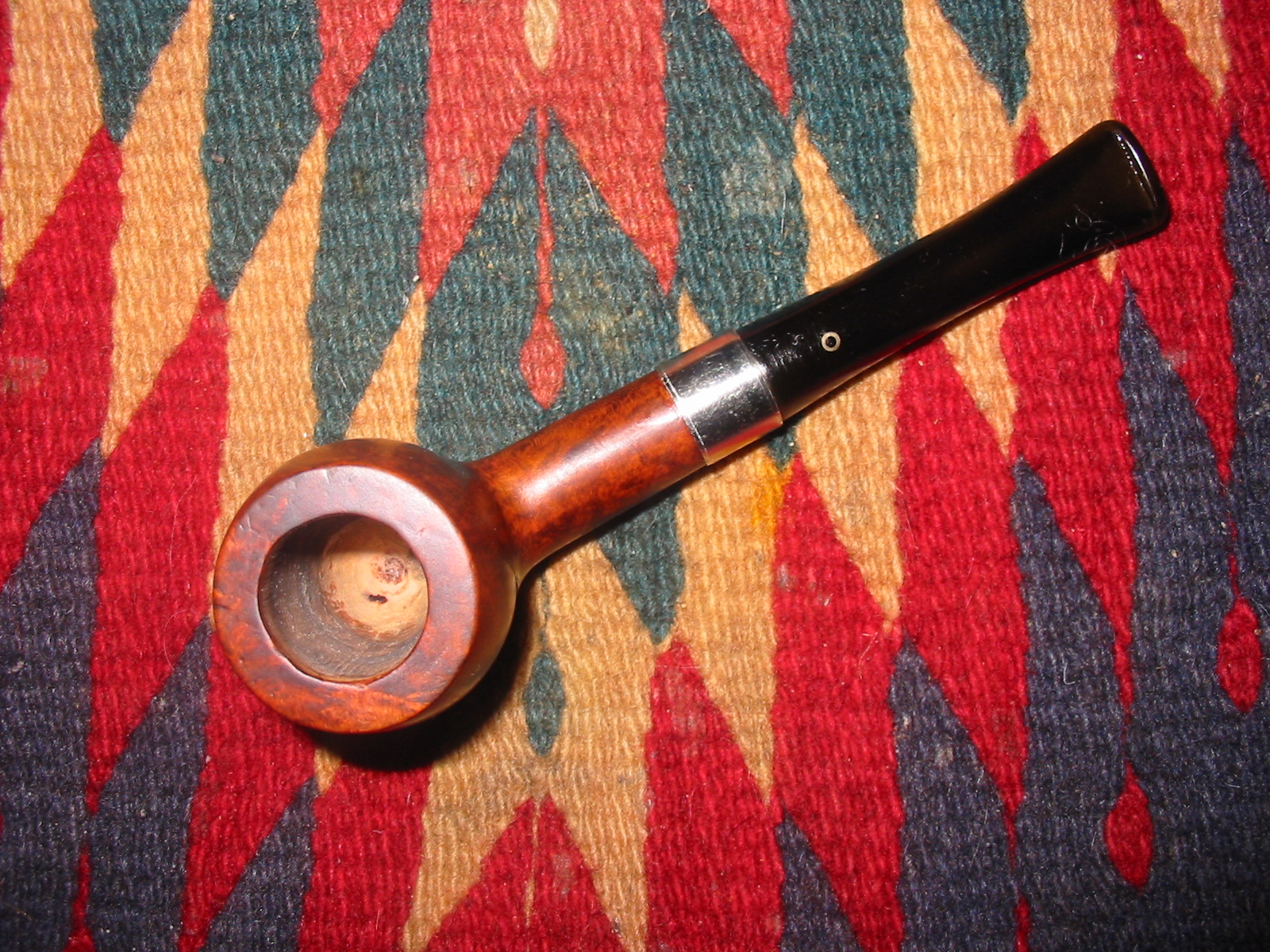
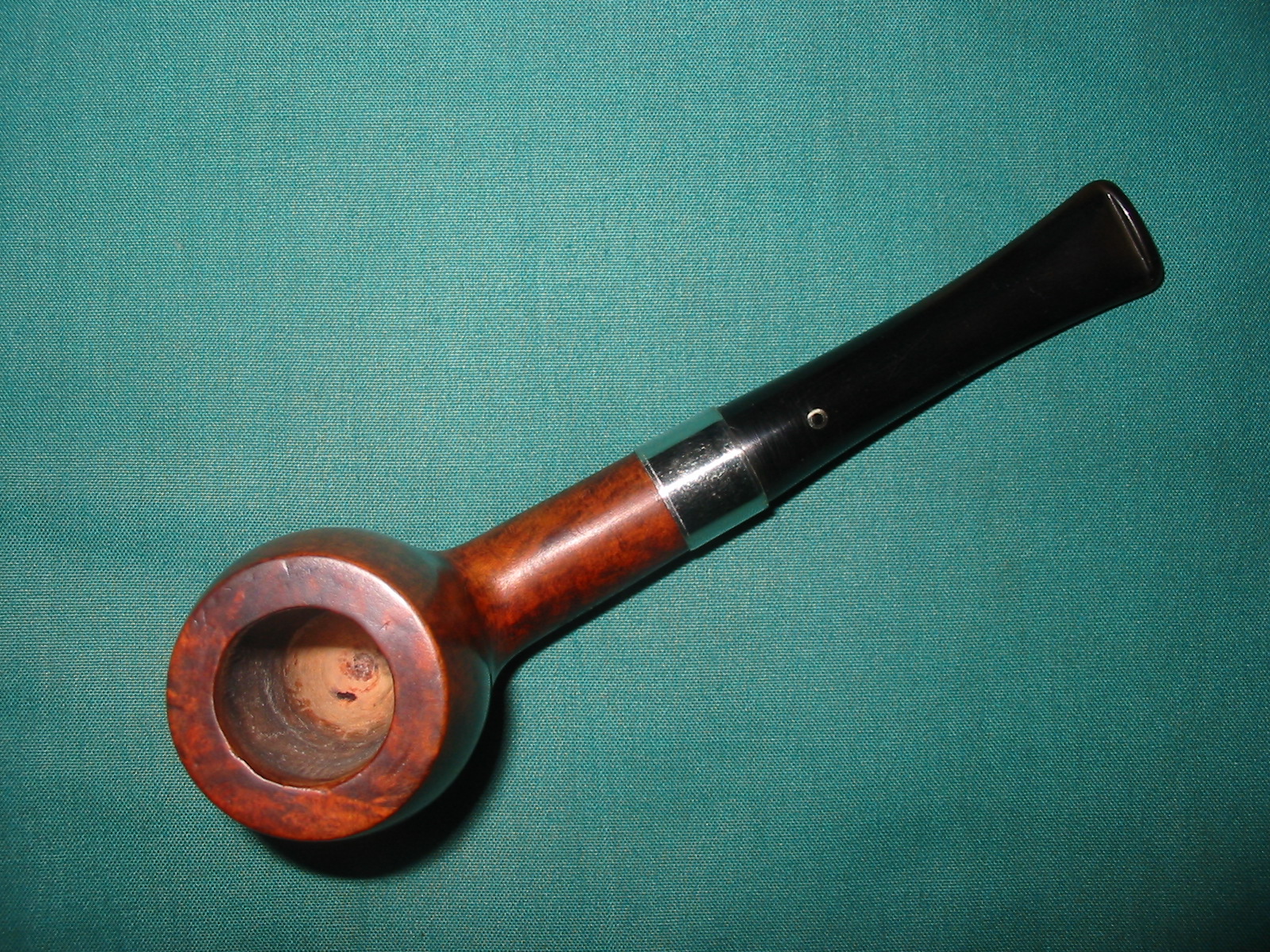
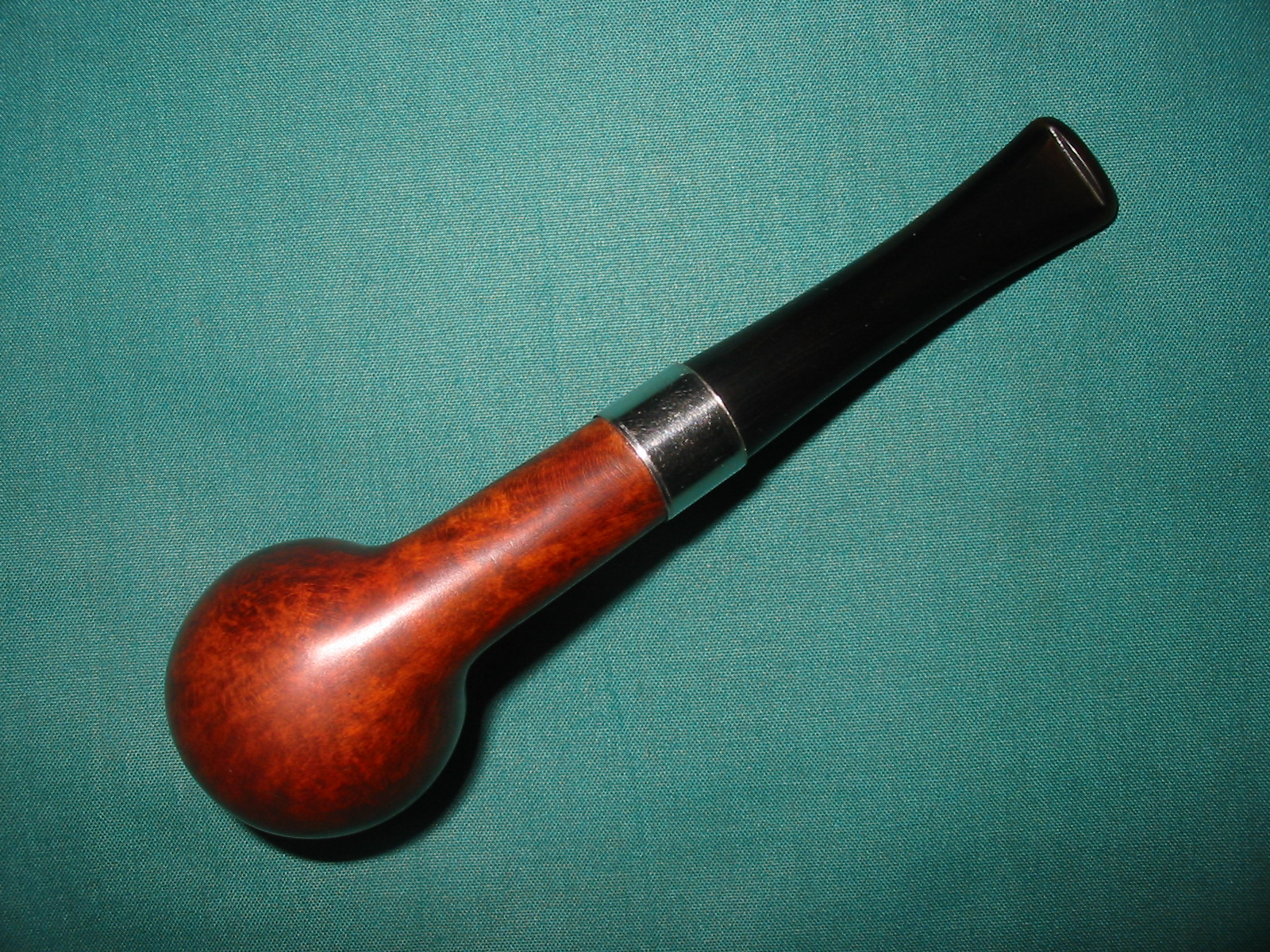
The bowl was in excellent shape and had not even been smoked to the bottom of the bowl. The bottom half of the bowl was bare briar. The top half was darkened but not carbonized at all. It was for all intents and purposes a new pipe. The shank was clean and contained a strange metal apparatus that filled the mortise and then stepped down to fill the airway all the way to the smoke hole in the bottom of the bowl. It was aluminum, the first ¼ inch was smooth and then it had threads that went to the bottom of the mortise. The airway was smooth. The finish on the bowl was non-existent. Whatever stain or coating had been on the bowl was no long present. The stamping was crisp and readable. There were no fills in the briar but there was a nice swirling mix of grain all around the bowl. The rim was clean and showed no burn or dent marks. The pipe was missing the stem. Judging from the mortise the stinger apparatus on this stem must have been a unique looking piece of hardware.
IMG_6315

IMG_6316

IMG_6318

IMG_6319
Since I had no idea what I was working on I decided to do a bit of digging on the internest and see if I could find out about the brand and kind of stem and stinger apparatus that it had. I wanted to know what the patent on the shank covered so that once I had a clear picture in mind I could hunt down a stem or work on one that would fit the shank in the meantime. I found out that Royalton pipes were manufactured by Henry Leonard & Thomas, Inc. (HLT) of Ozone Park, New York. HLT manufactured other brands as well including Dr.Grabow, Bruce Peters, Broadcaster and Vox Pop. I found on Pipephil’s logos page the two photos below that showed the stamping on the stem and the shank. The stamping on the bowl I had was a Smoke-Control with a hyphen rather than the one picture below and also was a Deluxe rather than a Supreme.
royalton1a

royalton1bMine was also stamped Selected Briar instead of Imported Briar. I could see that the stem had an aluminum faux band that sat between the stem and shank.
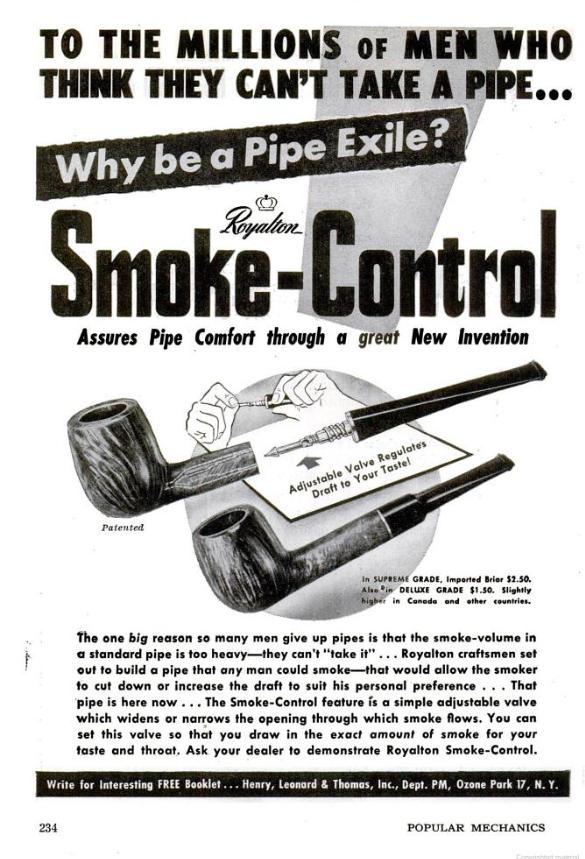
So far I had learned the manufacturer and the stamping on the stem and the faux band. I had not seen the stem. I did a bit more digging and found several advertisements that showed more of the stem. The first is from Popular Mechanics and it gave a clear description of the purpose of the pipe as well as the meaning of the Smoke-Control feature. The pipe had an adjustable valve that regulated the daft on the smoke to match personal taste and preference.
Smoke Control Advert
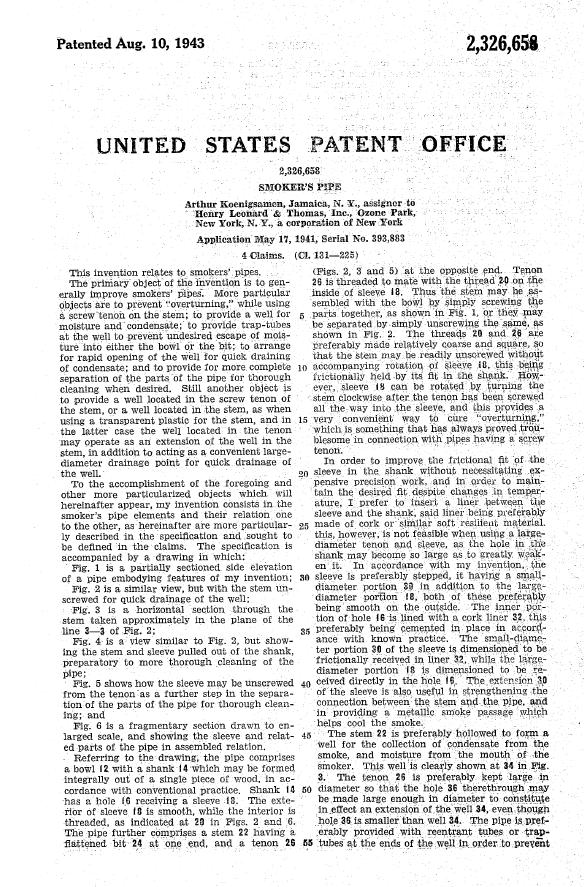
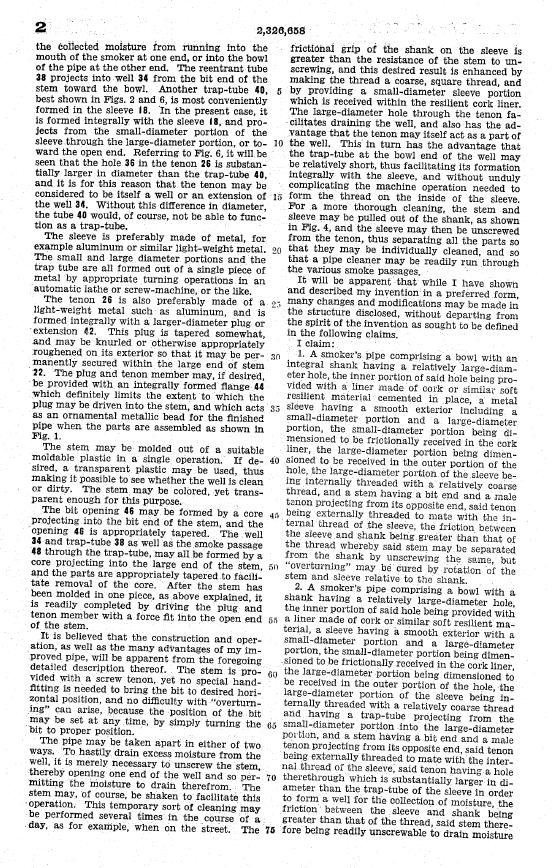
This advertisement spoke of both the Supreme Grade and the Deluxe grade of the pipe. The stinger that is shown in the picture could have been similar to the one in the bowl that I had found but it was not quite the same in terms of the sketched in lines on the shank of the top pipe in the picture. My bowl’s interior was different from the one in the picture so the stinger apparatus too must have been slightly different in the one I found. I went to the US Patent web site and did some more research and found the Patent Number of the pipe that I had. There was a description and a diagram of the pipe. The patent was taken out on August 10. 1943 by Arthur Koenigsamen of Jamaica, New York, assigner to Henry Leonard & Thomas Inc. of Ozone Park, New York. Reading the patent data, I am struck by the familiar hunt to develop a better smoking pipe to deliver a dry and cool smoker to the mouth of the pipe smoker and to make pipe smoking more appealing to those who might not try it otherwise. Have a look at the details of the patent and pay attention to each part of the apparatus in the shank and on the end of the stem. There are some unique features that are not visible in the pipe that is shown in the advertisement from Popular Mechanics.
Smoke Control Patent Page 1

Smoke Control Patent page 2

Smoke Control Patent photo
The stem in the above drawing in Fig. 2 shows the tenon that would fit in the mortise in the bowl I have. It is threaded about mid-tenon with three bands. Before and after the threaded portion the tenon is smooth. The apparatus goes into the stem as well, Fig. 3, in a way that was not shown in the advertisement above. It appears that there is a cooling reservoir in the stem that traps moisture and delivers a cool smoke out the wide slot in the end of the stem. The mortise in the bowl I have looks exactly like the one in Fig. 5 and screwed onto the tenon in Fig. 4. The shank on the bowl that I have is set up precisely like the nipple unit in Fig. 5. It is aluminum and set in the shank. I have included the photo below showing and end view of the shank to show what the insert looks like. You can see the flat area, the step up to the threaded portion and then the step up to the airway just as is shown in Fig. 5 above.
IMG_6322
My problem was that the bowl did not come with the unique stem unit that fit the shank. I tried several older Dr. Grabow stems and a Kaywoodie stem that I had here and the threads did not match those found in the shank. I had a choice to make, save the bowl until I found a stem someday by chance or to try to work on a stem and jerry-rig it to fit the shank system. I figured I had nothing to lose so I chose to work on a stem. I had just the right stem in my can of stems. It was a chubby stem from an Orlik pipe and the tenon was already shaped partially for a shank like this. The end of the tenon was slightly smaller in diameter than the portion of the tenon next to the stem itself.
IMG_6323
I slowly turned the vulcanite stem into the metal mortise, being careful to hold the stem straight as I turned it in place. I figured that by doing so I could score the vulcanite with the metal threads of the mortise and in so doing tap thread the tenon on the vulcanite. Low and behold it worked. The stem fit tightly against the face of the shank. The diameter of the stem would need to be adjusted but otherwise the fit was good.
IMG_6325

IMG_6326

IMG_6327

IMG_6328
I carefully sanded the stem and the shank avoiding the stamping. I did not want to damage the stamping on either side of the shank. I sanded with 220 grit sandpaper and a medium and fine grit sanding sponge. I sanded the rest of the bowl and the rim as well. When I finished the fit of the stem at the shank was smooth.
IMG_6329

IMG_6330

IMG_6331

IMG_6332
I wiped the bowl down with acetone on cotton pads to remove any remnants of the original finish on the bowl and to remove the sanding dust.
IMG_6333

IMG_6334

IMG_6335

IMG_6336
At this point in the process things were going too well! Everything was working without a hitch and the pipe was looking really good. This is when things inevitably take a turn for the worse and they certainly did in this case. I unscrewed the stem from the shank in preparation for staining the bowl. I wanted to clean out any briar dust that was trapped between the stem and the shank. I cleaned out the dust and blew air through the mortise. I then slowly and carefully screwed the stem back in place in the shank. They no longer lined up! The fit of the stem against the face of the shank was not tight. The smooth transition between the shank and stem was no longer there. The fit was not right. I took the stem off and examined the mortise and tenon. I could see that the insert in the shank had definitely been pushed deeper into the mortise. When I started it was even with the face of the end of the shank and now it was sunk in and the mortise bevel showed as it probably should have from the start. Arggghhh. Now the fit was off and the diameter of the stem would have to be corrected again. The big problem was that the way the stem fit against the end of the shank was no longer perfect. There was a gap that I could not correct no matter what I did in adjusting the insert or the stem.

I decided that I would have to band the shank, not as a repair on a bad shank but as a cosmetic measure to clean up the fit of the stem and the shank end. This irritates me to no end in that as you could tell from the above photos it was perfect! Ah well so goes the life of the pipe refurbisher who is restemming old pipes with replacement stems. I adjusted the diameter of the shank to fit the flow of the shank without the band. Once again it was round and smooth. If there had not been a gap at the bottom of the shank/stem union a band would not have been necessary. I looked through my box of bands and found a band that would fit and not go to deeply up the shank as to cover the stamping. I found just the right band. I put all purpose white glue on the shank and pressed the band in place. Once the glue had set I screwed the stem on to the shank and lined everything up. The fit and finish of the stem and shank looked good. I actually liked the band on the shank as it broke the line between the shank and the stem and added a bit of bling to look of the old bowl. I guess I can live with the look of the pipe after all. It is not what I wanted when I started but it would do.
IMG_6337

IMG_6338

IMG_6340

IMG_6341
I wiped down the bowl with isopropyl alcohol on a cotton pad to remove any excess glue that had seeped out around the band and removed grime from my finger prints on the bowl. I gave the bowl a first coat of dark brown aniline stain thinned 1:1 with alcohol. I flamed the stain and then wiped it down with an alcohol pad. I buffed it with White Diamond to see what the finish looked like with the brown stain. While I liked the look, the mottled look of the grain seemed to need some more colour and contrast to make it look right. I was not sure what I would use for a top coat so I set it aside and worked on the stem.
IMG_6343

IMG_6344

IMG_6345
I sanded the stem with 220 grit sandpaper to remove the oxidation that remained after cleaning and then sanded it with a medium and a fine grit sanding sponge. Once I had finished this I wet sanded it with 1500-2400 grit pads. Several times mid stream I went back and sanded with the sanding sponges and started over with the pads to clean up places where the scratching still showed or where the oxidation was stubborn. When I finished with the first three pads I rubbed down the stem with Obsidian Oil and screwed it back on the bowl.
IMG_6346
Now most of you probably would have just finished sanding the stem with the remaining micromesh pads but not me. I got distracted with the stem back on the bowl and decided to give it the second coat of stain. I took it to the buffer and buffed the bowl and the stem with Tripoli and White Diamond before going back to the work table to give it a second coat of stain. For the second coat of stain I decided to use an aniline based oxblood stain. The rich read colour would go well with the mottled grain of the bowl. I applied the stain, flamed it, applied it again and flamed it again as often as necessary to get an even finish. Once it was dry I wiped it down with an alcohol wet pad to remove the excess stain and make it more transparent. I buffed it with White Diamond. This stain coat had the desired effect and I liked the finished look of the bowl.
IMG_6348

IMG_6351

IMG_6354

IMG_6356
I took the photo below to show the threads that were cut into the vulcanite tenon to give an idea of what the finished tenon looked like after all was said and done. The fit in the mortise is snug and the stem screws into the mortise easily.
IMG_6367
I went back to sanding the stem with the remaining grits of micromesh pads. I dry sanded with 3200-12000 grit pads and once again had to go back and sand with the sanding sponges near the button to deal with the stubborn oxidation. This involved having to start over with wet sanding with 1500-2400 grit pads but once I had finished the oxidation was gone. I rubbed the stem down with Obsidian Oil again and when it was absorbed into the vulcanite I buffed the stem and bowl with White Diamond.
IMG_6368

IMG_6369
I polished the nickel band with silver polish and gave the bowl and stem multiple coats of carnauba wax to protect and give it a shine. When finished I buffed it with a soft flannel buffing pad and brought it back to the work table for the final photos. The old Smoke-Control Deluxe is back in action. The bowl looks great; the stem works even though it is not original. The band gives just the pipe an air of elegance that I had not expected. I look forward to breaking it in and enjoying a smoke in what for all intents and purposes is a new old stock bowl.
IMG_6370

IMG_6374

IMG_6375

IMG_6376

Restoring an old Harlequin Pipe and Trying to Unravel the Mystery of its Origin


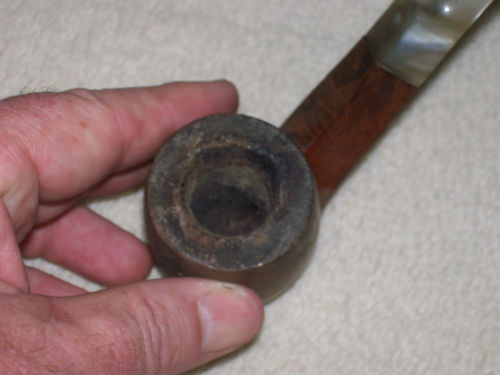
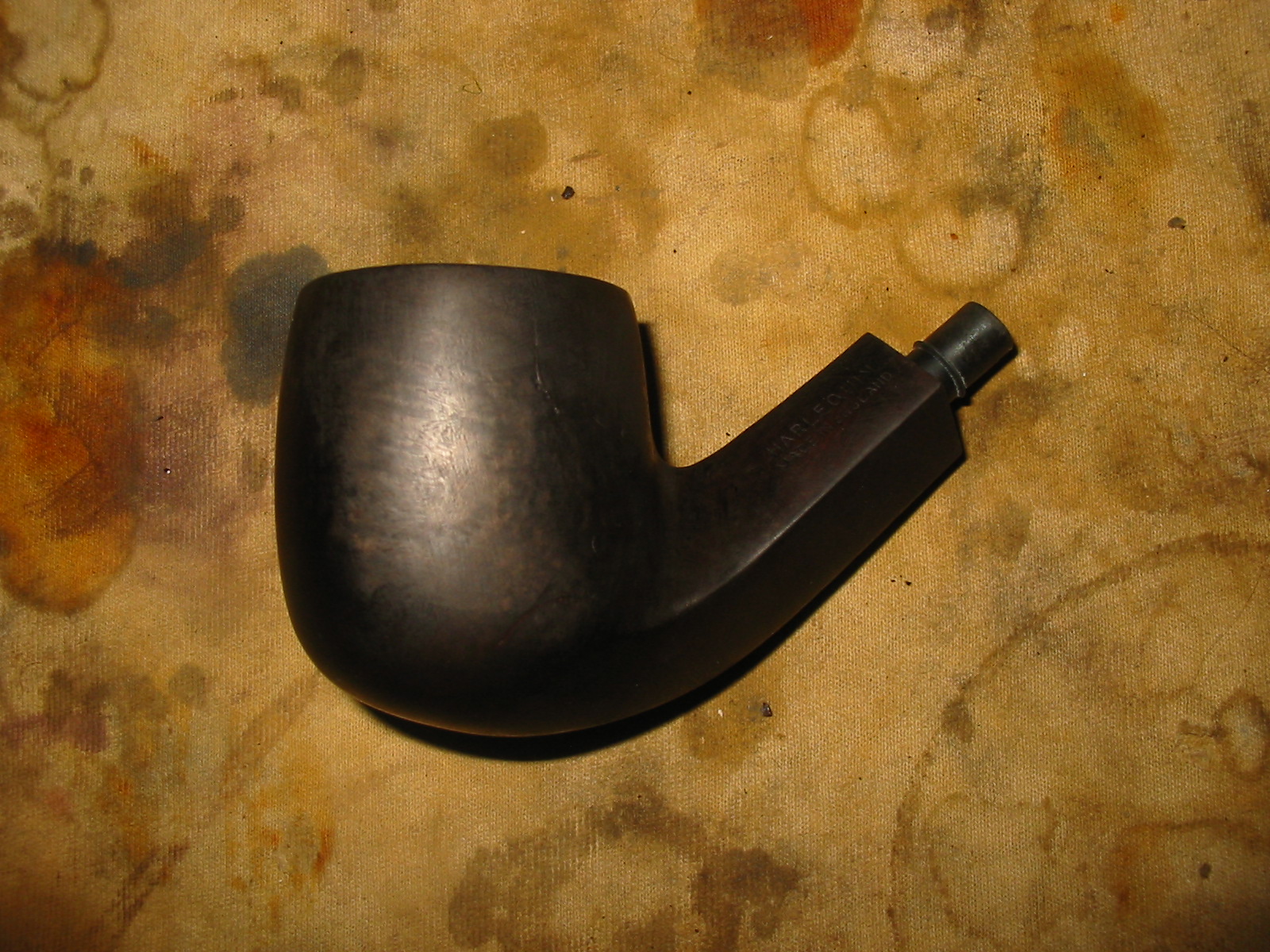
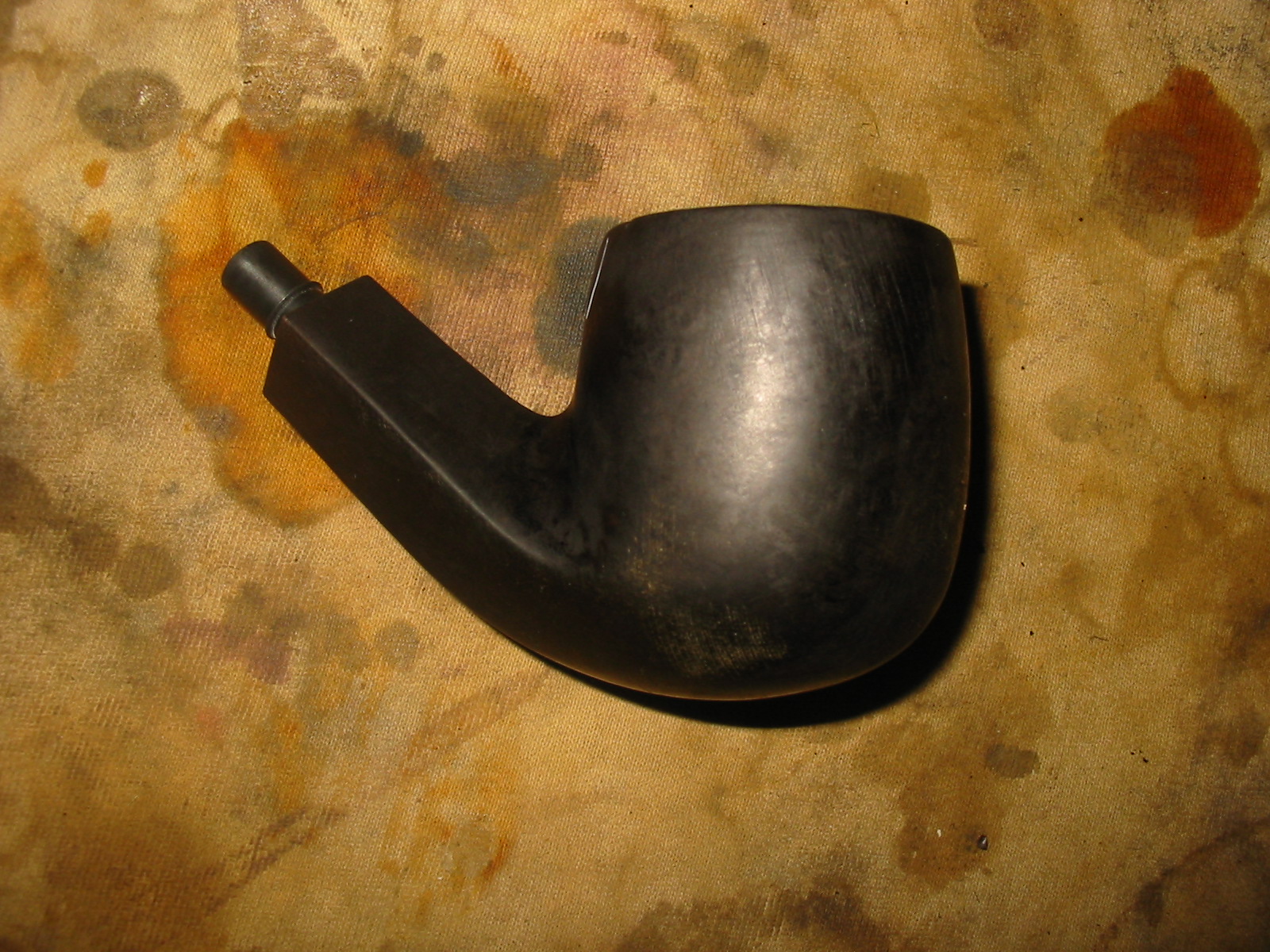
When I saw this old pipe on eBay something about it caught my eye. I could see that it was structurally sound. There were no cracks or significant problems with the bowl or shank. The rim was dirty and the bowl very caked but there did not appear to be any damage to the surface of the rim. The outer edge had been tapped out a few times and showed some minor denting around the bowl. There were some gouges/scratches on the left side of the bowl. It looked as if a sharp instrument had scored the briar. There were some dark stains on the briar that easily could have been burn marks but did not appear to be so from the photos. These stains were on the underside of the shank near the junction of the shank and stem on the left side, on the lower right side of the right side and on the lower left side of the front of the bowl. It looked like stains in the grain rather than burns in the photos so I took a chance on it. The stem looked like it was grey/silver Lucite in the photos and that also intrigued me. The tobacco juices had stained the airway dark. Other than that the stem appeared to be undamaged and would be a pretty easy clean up.
Harlequin1

Harlequin2

Harlequin3
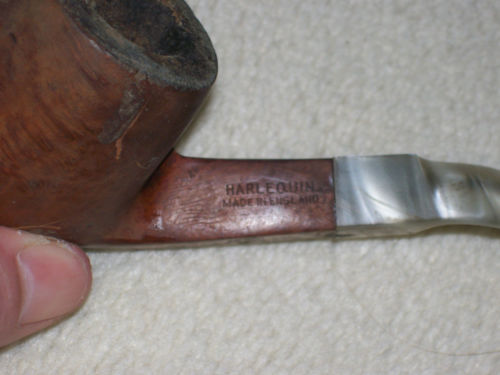
The stamping on the shank was the mystery to me. I had never heard of Harlequin pipes and this one was clearly stamped Harlequin in block letters over Made in England. I wanted to see what I could find out about the brand so I went to my usual sources of information. I checked in “Who made that Pipe” by Wilczak and Colwell and “Pipes Artisans and Trademarks by Lopes to see if either of them identified the maker. Both books had nothing listed for the brand. I went on the British Trademark site and read through many of the listings for Harlequin and found that the name was used by many companies for things from wallpaper to graphics design. There were lines of greeting cards, children’s toys and clothing all bearing that name. I found nothing listed that hinted that the pipes were a registered name. I posted on several online forums that I frequent to see if anyone had any ideas. Several folks on the forums recalled that Gallaher’s Tobacco Limited in Ireland had made a tobacco for years called Harlequin. I did some research to see if they had made pipes.
Harlequin4
As I dug through various sites on the hunt for information I received some responses on the forums. One person responded that several English tobacco brands also sold pipes – St. Bruno for one did that. Another respondent on Smokers Forums, Chris (flatticus) posted a couple of links to Gallaher’s that confirmed that they had not only made tobacco products but had made pipes or had them made. He included this information:

Ok, so Gallaher’s made at least some pipes into the early 70’s. And according to this link: http://books.google.com/books?id=LAO…20pipe&f=false

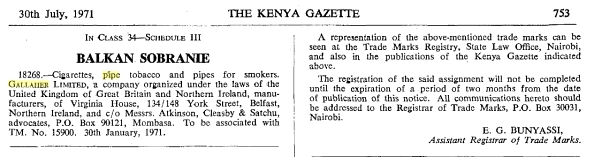
They made a Balkan Sobranie pipe. Or at least intended to enough to register the trademark, and along with the trademark for the tobacco itself. Certainly adds a bit of credence to the idea of a tobacco and pipe sharing the same brand name and stamp.

I have included the information cited above from the link to Google books – the Kenya Gazette and have posted it below. In correspondence from E.G. Bunyassi, Assistant Registrar of Trade Marks he clearly states under the heading of Balkan Sobranie that Gallaher’s Limited, a company organized under the laws of the UK of Great Britain and Northern Ireland had made cigarettes, pipe tobacco and pipes.
Gallaher pipes
I asked on the forum whether anyone knew whether the company made pipes. Chris (flatticus) responded again with the following information:

Interesting question, I don’t honestly know, but Gallaher’s used that trademark for like 70 years, and they were a big, big company. Actually from Northern Ireland, and had the biggest tobacco factory in the world in 1896 in Belfast, didn’t completely disappear until they were bought out by Japan Tobacco in 2007, but before that had a distribution conglomerate with RJ Reynolds for their cigarettes and were pretty gigantic. But they didn’t let the Harlequin mark until at least after 1963, when they last registered it. If I had to guess, they probably let it die after 1969 when American Brands, who I think owns Lucky Strike and similar brands, bought them out. They let the mark expire in 1980, but I see no record of anyone else buying it, and apparently it’s still available.

So, blindly guessing, I’d be surprised if anyone had the guts to use the same mark in a same or similar industry other than Gallaher’s. At least not in Ireland or the Commonwealth. But, that said, I can’t find a record or advertisement suggesting they ever made a pipe. However, I did find this thread, containing a quote from Gallaher himself talking about making pipes as a possible future avenue to address the “aging” nature of pipe smokers. http://christianpipesmokers.net/modu…wtopic&t=24081
Perhaps this was part of the “pipe renaissance” project he was talking about, made to get new pipe smokers interested. I checked harlequin ads, there a few vintage ones out there in images, but none of them referenced a pipe, just the tobacco. But the idea of a free pipe with tobacco, or at least a cheap or, as he put it, “disposable” pipe does seem to fit nicely with his intention there. Any way you slice it, though, it’s a nice bit of mystery to ponder. One of my favorite things about estate pipes, hands down.

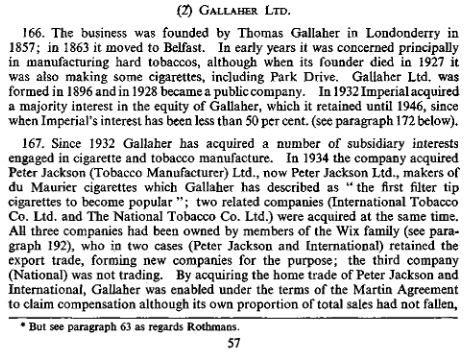
In another link there was information on the Gallaher Company. I copied that information and have posted it below. It makes an interesting read in terms of history of this old brand. I have one chunk of Gallaher’s Irish Roll Cake here that is a good strong smoke. I also have some of their other tobaccos in my cellar but sadly it is no more. I think the likelihood is that the Harlequin pipe was made by them and matched the Harlequin Tobacco blend they sold.
Galahers1

Gallahers2

Gallahers3

Gallahers4
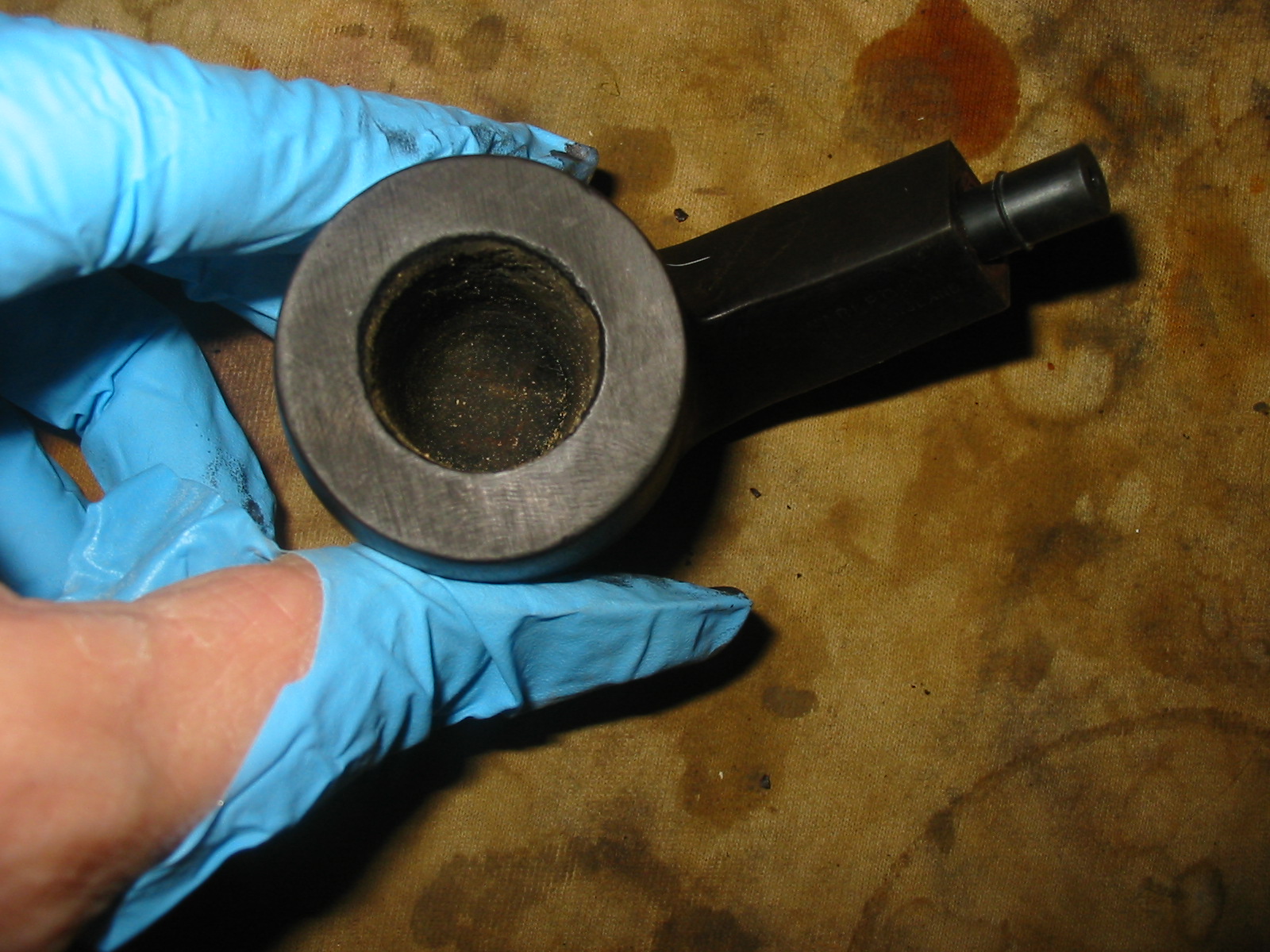
Once the pipe arrived I unpacked it and took it to the work table to begin the clean up. I was surprised that the stem was not grey but in real life almost a light green with heavy black tars in the airway. There were also some tooth marks on the top and bottom of the stem that would need to be repaired. The fit of the stem to the shank was snug and smooth. The bowl was badly caked and the rim covered with thick tar. The bowl had some deep gouges that had appeared in the photos on eBay but they were not as deep as I expected. The grain was far better than I expected. Underneath the dark marks, which appear to be ink stains rather than burn marks was some beautiful cross grain and birdseye as well as mixed grain. It would look beautiful when it was cleaned up and refinished. There were several spots on the briar that had large sticky spots of a glue-like substance.
IMG_6195

IMG_6196

IMG_6197

IMG_6198
I reamed the bowl with a PipNet reamer to remove the cake. It was surprisingly soft and crumbly. I took it back to a very thin cake to form the base for a new cake.
IMG_6199
I set up a topping board with 220 grit sandpaper to clean off the build up on the rim. It was hard and no matter how hard I scrubbed it, it would not come off. The outer edges of the rim were also damaged from knocking out the bowl after smoking. The light topping would smooth out the edge damage and minimize the effect without changing the look of the bowl.
IMG_6200

IMG_6203
I scrubbed the exterior of the bowl down with acetone on cotton pads to remove the ink and sticky build up on the finish. I also decided to remove the finish so I scrubbed it until the majority of the finish was gone.
IMG_6204

IMG_6205

IMG_6206

IMG_6207
I cleaned the stem with cotton swabs and pipe cleaners and isopropyl alcohol. I was able to scrub out the airway and the slot in the button removing the stains. I also scrubbed the end of the tenon to clean out the staining there. I scrubbed the mortise with alcohol and cotton swabs as well until they came out clean. The internals were cleaned and smelled fresh rather than smelling like old aromatic tobacco.

Once it was clean, I tried to steam out the gouges in the bowl but they would not lift. I could have sanded them out but that would have changed the profile of the bowl so I opted on repairing them with super glue and briar dust.
IMG_6212
I sanded the repairs with 220 grit sandpaper and then followed that by sanding with medium and fine grit sanding sponges to blend the surface of the fill with the rest of the surrounding bowl. After sanding the fills I sanded the entire bowl with the medium and fine grit sanding sponge to remove the rest of the finish on the bowl. I carefully worked around the stamping so as not to damage it.
IMG_6213

IMG_6214

IMG_6215
I used clear superglue to repair the deep tooth marks on the top and bottom sides of the stem near the button. The bottom repair can be seen in the photo below. I later sanded it with 220 grit sandpaper and the sanding sponges to blend it into the stem surface.
IMG_6216
I decided to use the contrast stain process I have been working on to highlight the grain on this beautiful pipe. I gave it an under coat of black aniline stain. I used a Delrin tenon for a handle in the shank to be able to turn the bowl while I was staining. I applied the stain, flamed it, applied it and flamed it again until the coverage was even.
IMG_6217

IMG_6218

IMG_6219

IMG_6220
When the stain had dried I sanded it with a medium grit sanding sponge to remove the surface stain while leaving the grain highlighted with the black. I wiped it down repeatedly with isopropyl alcohol on cotton pads to check and see what the grain was looking like after sanding. This process took far longer than the staining and initial preparation. I sanded and washed, sanded and washed the bowl and shank until the grain stood out against the briar.
IMG_6221

IMG_6222

IMG_6223

IMG_6224
I sanded the bowl with micromesh sanding pads – wet sanding with 1500-2400 grit to further remove the black stain that was stubbornly sticking in the angles of the bowl and shank. I then gave the bowl a top coat of oxblood stain. My thinking was that the contrast between the black in the grain and the red in the other portions of the briar would make the grain stand out.
IMG_6225

IMG_6226

IMG_6227

IMG_6228
When the oxblood stain dried I dry sanded the bowl with micromesh sanding pads to remove some more of the dark stain and make the grain stand out even more. I rubbed the bowl down with olive oil and used it as a medium for the sanding. It worked well to remove the darker areas of the bowl near the shank and along the top edge and rim.
IMG_6229

IMG_6230

IMG_6232
After sanding I took the pipe to the buffer and buffed the bowl and stem with White Diamond to polish the briar and the Lucite stem. I had previously sanded the stem repairs with the sanding sponges to remove the bump of the glue and blend it into the surface. I followed that with sanding the stem with all grits of micromesh from 1500-12000. I wiped the stem down with Obsidian Oil and then gave the bowl and stem multiple coats of carnauba wax to protect and polish it. I finished by buffing the pipe with a clean soft flannel buffing pad. The finished pipe is shown in the photos below. It is cleaned, stained and ready to smoke. I am really pleased with the finished look of the pipe. The yellow mother of pearl looking stem works well with the contrast stain on the bowl.
IMG_6234

IMG_6235

IMG_6236

IMG_6237

IMG_6238

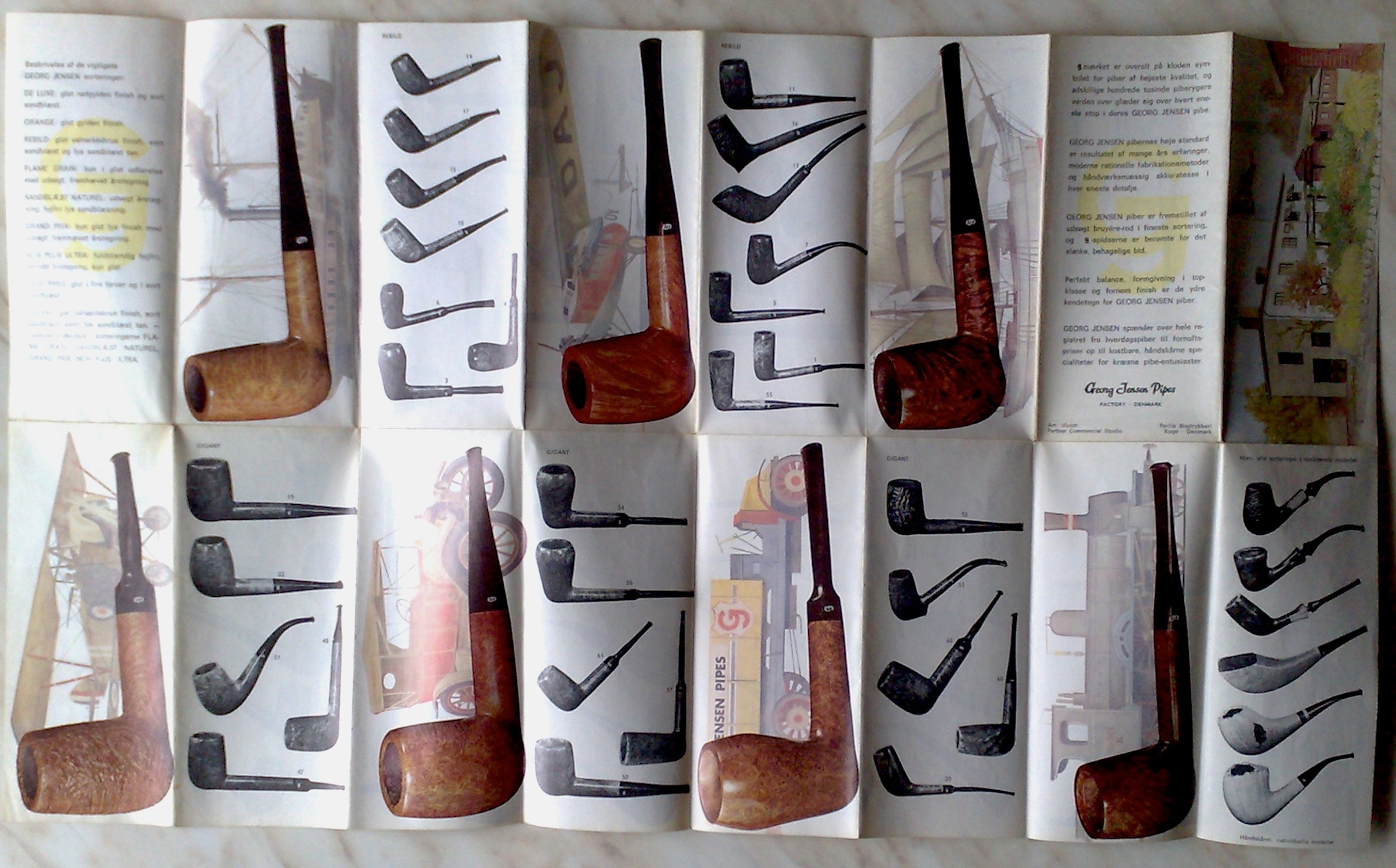
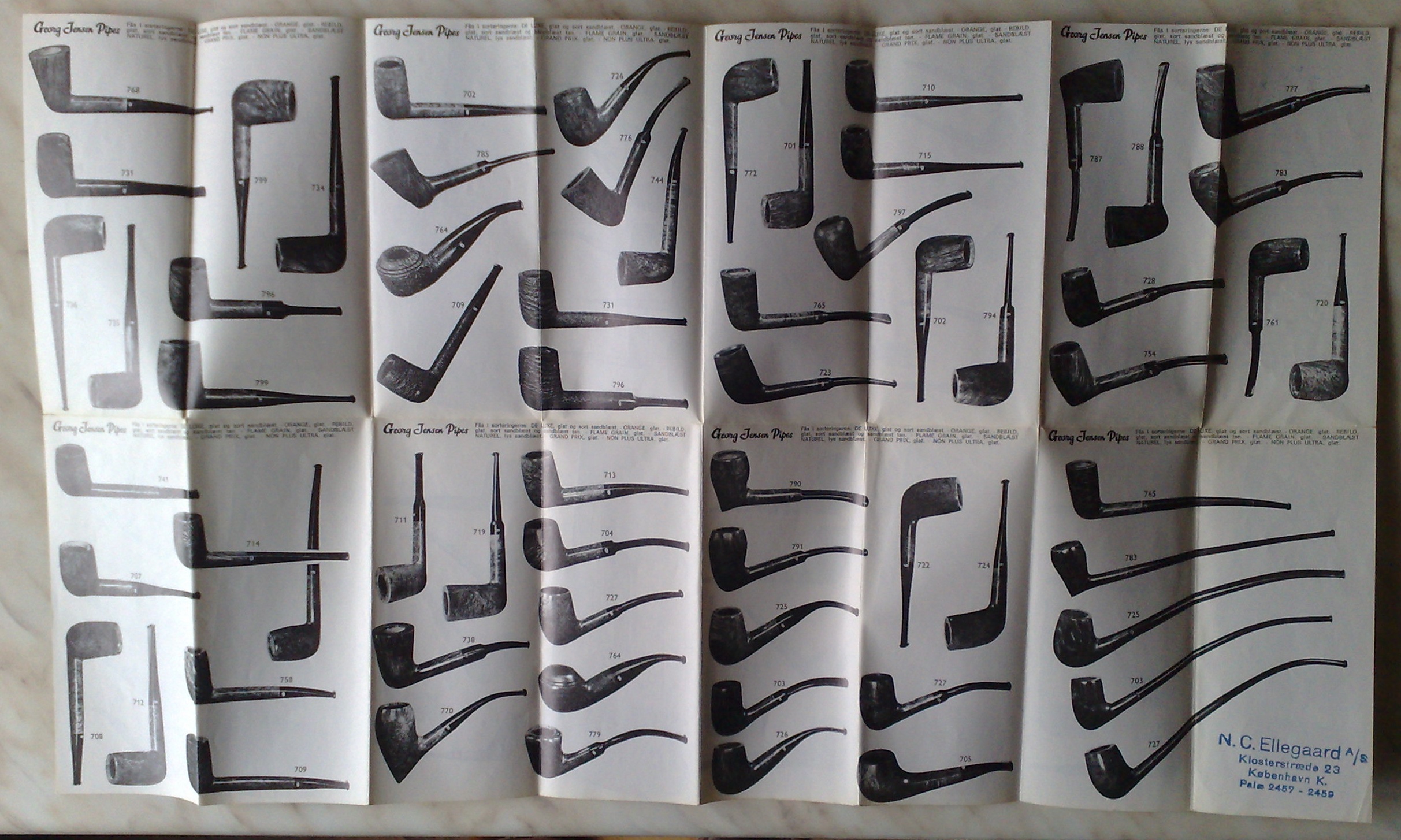
Georg Jensen Pipe Brochure – Jacek A. Rochacki


It is great to have Jacek back and once more he provides us with great piece of tobacciana, pipe history with his scans of a Georg Jensen piece. In years past I have hunted for such information to help identify some of the Jensen pipes that I have come across. There was next to nothing available to help me in my quest. So, I for one say thank you to Jacek for providing this for us.

I did not find any booklets or pamphlets with pictures of Georg Jensen* pipes at Chris Keene’s Pipe Pages. All I found on the internet was this nice brochure from ca.1970: http://www.danishpipemakers.com/pdf/Georg-Jensen.pdf

So I thought that this modest pamphlet that I got in 1970 in Copenhagen might be useful for those of us who are interested in Georg Jensen pipes.
——
* “our” Georg Jensen – the pipe maker is not this famous Georg Jensen – Danish designer, silversmith and sculptor. More info is available here: http://thepipesmoker.wordpress.com/2011/10/15/old-george/
G Jensen pipes 1

G Jensen pipes 2

A Book Review – Tobacco, Pipes and the Pleasures of Pipe Smoking


IMG_5918 This beautifully illustrated little book was produced in Canada to be given as a gift to pipe smokers by the – Turmac Tabakmaatschappij Canada Ltd. In their introductory preface they declare their intent to give it as a gift to be enjoyed as much as they enjoyed collecting all the stories and anecdotes about pipes and pipe smoking. They end their paragraph with the words; “We hope that it will add new pleasure and meaning to your pipe smoking”.

On the inside fly page there are these words: “I keep a friend in my pocket… my pipe. When I sit out on the porch at the cottage and the evening is quiet, I like to take my friend out of my pocket, tamp in bright, golden shreds of tobacco, and light up.
Then, when the bowl glows red in the dusk, when the bit tastes warm, and fragrant wisps of smoke trail in the still air, peace comes to me and my friendly pipe.”

The book is a short 35 page overview of the field of pipes, tobaccos and pipe smoking itself. It is not divided into chapters but rather into sections. Virtually every page is filled with beautiful photos, engravings and pen drawings of pipe history. A wide variety of photos of pipes grace the pages – from ancient clay to modern clay, from briar to meerschaum.

The book begins with a brief history of tobacco and the art of smoking it. It development is traced across the continents on both sides of the Atlantic, or Pacific as the case may be! There is a quick walk through Columbus and the discovery of tobacco and its use among the indigenous population of the Americas. The name tobacco comes from what these people called their smoking tubes – Tobaga. It later morphed into our now well known term tobacco. The text quickly moves to Sir Walter Raleigh’s impact on the use of tobacco in the British Isles. The entire history is brief and well written. It moves through 8 pages and covers a broad scope of history in a way that is a pleasure to read – interspersed with quotations from early journals and drawings and photos from the time periods discussed.

From there the book turns to the history of the pipe itself. In a section entitled “From Coconut to Seafoam”, the authors give a brief introduction of the materials that have been used in making pipes. The section moves through the materials in quick order in a compact and entertainingly written piece. It begins with the coconut used in Nargilehs in the orient to clay, porcelain, iron, steel, bone, stone, silver, copper and bamboo and finally to the meerschaum and then the briar. The section then develops longer treatments on each of the major materials – clay, porcelain, meerschaum and finally briar.

I found it particularly interesting to read the well written discovery of the meerschaum pipe. A Budapest Shoemaker named Carl Kovac was the first man to carve a meer pipe. This section reads like a well written short story.
There is a short section on Pipe Smoking and Fine Art in which the writers quickly summarize the presence of the pipe in fine art. Again it is not the breadth that gives the subject its interest but the choice of what to cover. In a short paragraph the Dutch masters, Rembrandt and Honore Daumier are all mentioned.

The section on the pipe ends with a description of the briar pipe and its development from burl to pipe. In a succinct section the process of pipe making is delineated with enough information to be entertaining and informative.
From the discussion of the pipe the book turns to discussing what we smoke in our pipes. IN very short and descriptive sentences tobacco growth and processing is covered with a brief glimpse of Virginia, Burley and Oriental tobaccos and how they are processed to the leaf we smoke.
The next section is pictured below and is entitled “A Guide to Tobacco Blending”. The descriptions are well written and concise. I don’t think I have ever read this kind of compact and clear writing that is also entertaining and direct.
IMG_5919
Once the details on various blends are explored the text turns to the art of choosing a tobacco. I had to laugh when I first opened the book and found the tobacco placard below inserted at this point in the story. It was almost like a bookmark and of course is one of the blends that gifter of the book manufactures.
IMG_5923
The section on choosing a pipe was fascinating reading. Again in the style of English that is clear and pointed the authors give the major things to keep in mind when choosing a pipe of a particular shape and finish. They provided the following diagram as a part of the book that is helpful.
IMG_5920
The last sections of the book can be summarized as tips for pipe smokers and includes all the information necessary to load and light a pipe as well as what is necessary to take care of it as you use it in the course of your life. There are tips on how to have and maintain a dry smoke, how to care for the cake in your pipe – proper reaming procedures etc are diagrammed to help the pipe smoker visualize how to keep their pipe functional and delivering the best possible smoke that it is able to deliver. It also includes a section on accessories that are necessary for having a great smoke. These include pipe cleaners, liquid pipe cleaner, humidors, tobacco pouches, ash trays, pipe tools, pipe racks and of course the pipe collection!

The closing paragraphs of the book bear quoting. They give both a great conclusion to the book and a clear picture of the writing style of the book. It is that which captured me the first time I read it and that which keeps me coming back. I quote:

“ A day can never be completely without brightness as long as there is a glowing pipe in hand, nor can a man be alone, for in a good pipe there is companionship, its warmth is like a glowing hearth where in there is deep understanding and peace.

You like the friendliness of a man with a pipe and what better compliment to a friendship than for a man to offer you some of his own special tobacco. Just this one simple act will tell you he is gracious, reliable, unselfish and, above all, considerate.

A good pipe and a good tobacco say good things of a man. And the good things that it does are many: it gives heart to the man at work, it accompanies his leisure hours and brightens his fireside at night.

His cares, his worries drift away in the air, weariness floats away and disappears, it brings hope for the days ahead and the contentment of well-being. It is a brightener of conversation, the maker of friendship.

In its aroma there is comradeship, and in the goodness of its taste there is unending pleasure.
Indeed a simple pleasure with deep satisfaction, and priced so that a man may enjoy the contentment of hours, if he has but two silver quarters.”

I think that well summarizes the beauty and pleasure of this small book. If you can find a copy you will not do wrong to buy it whatever the cost. It is a treat to read and has the ability to lift you from the mundane of your days. The following drawing in on the end piece of the book.
IMG_5922