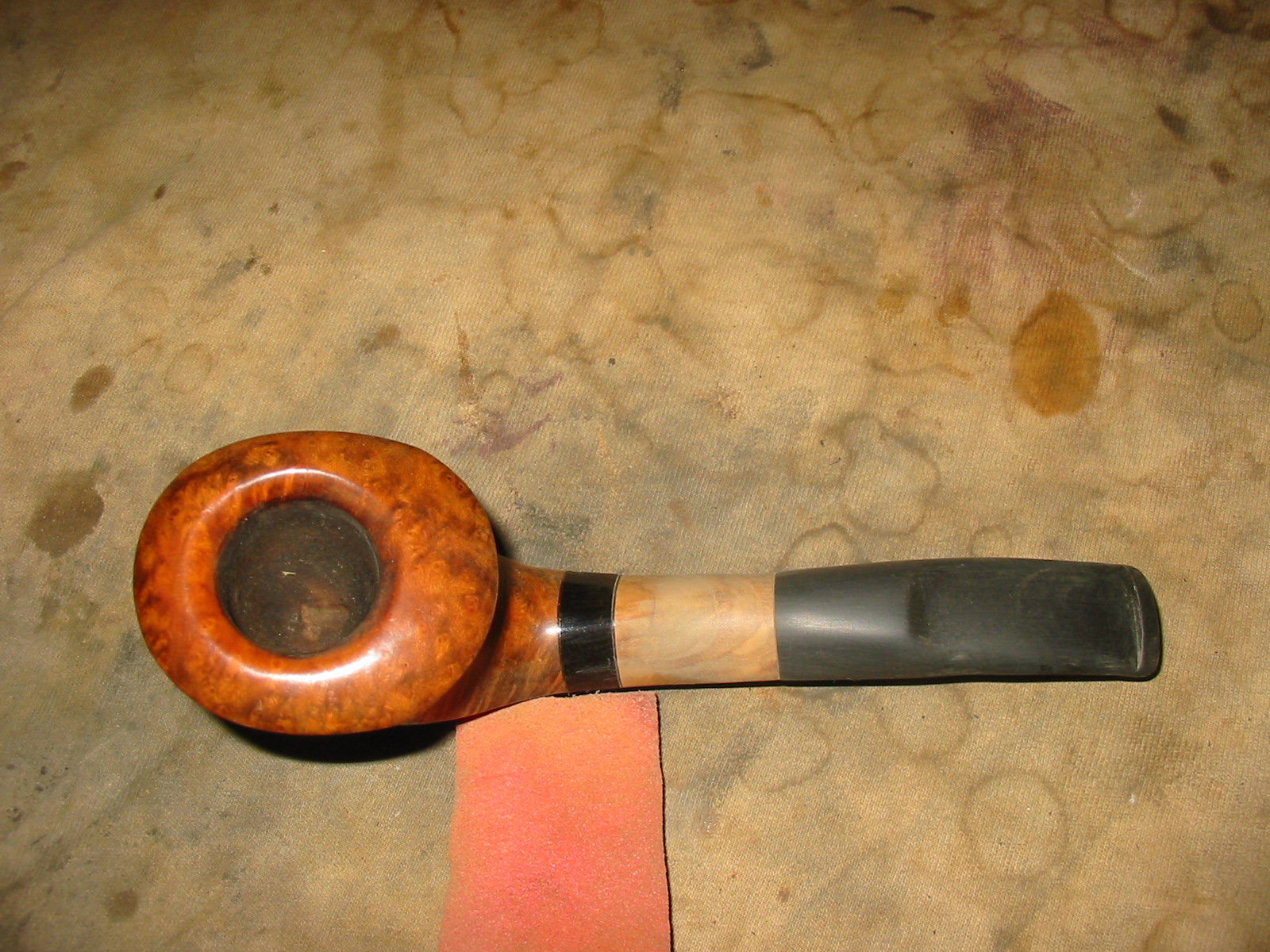
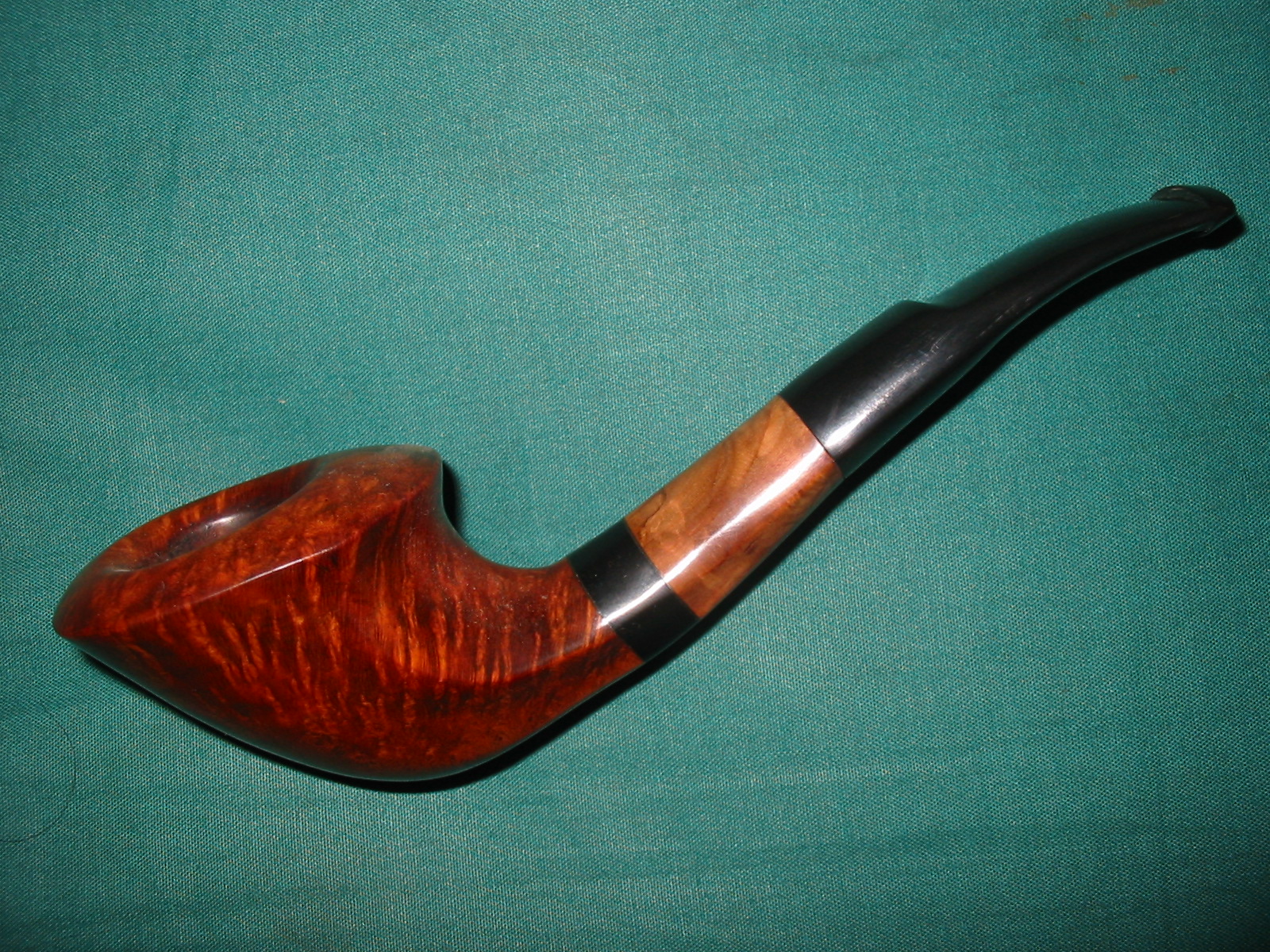
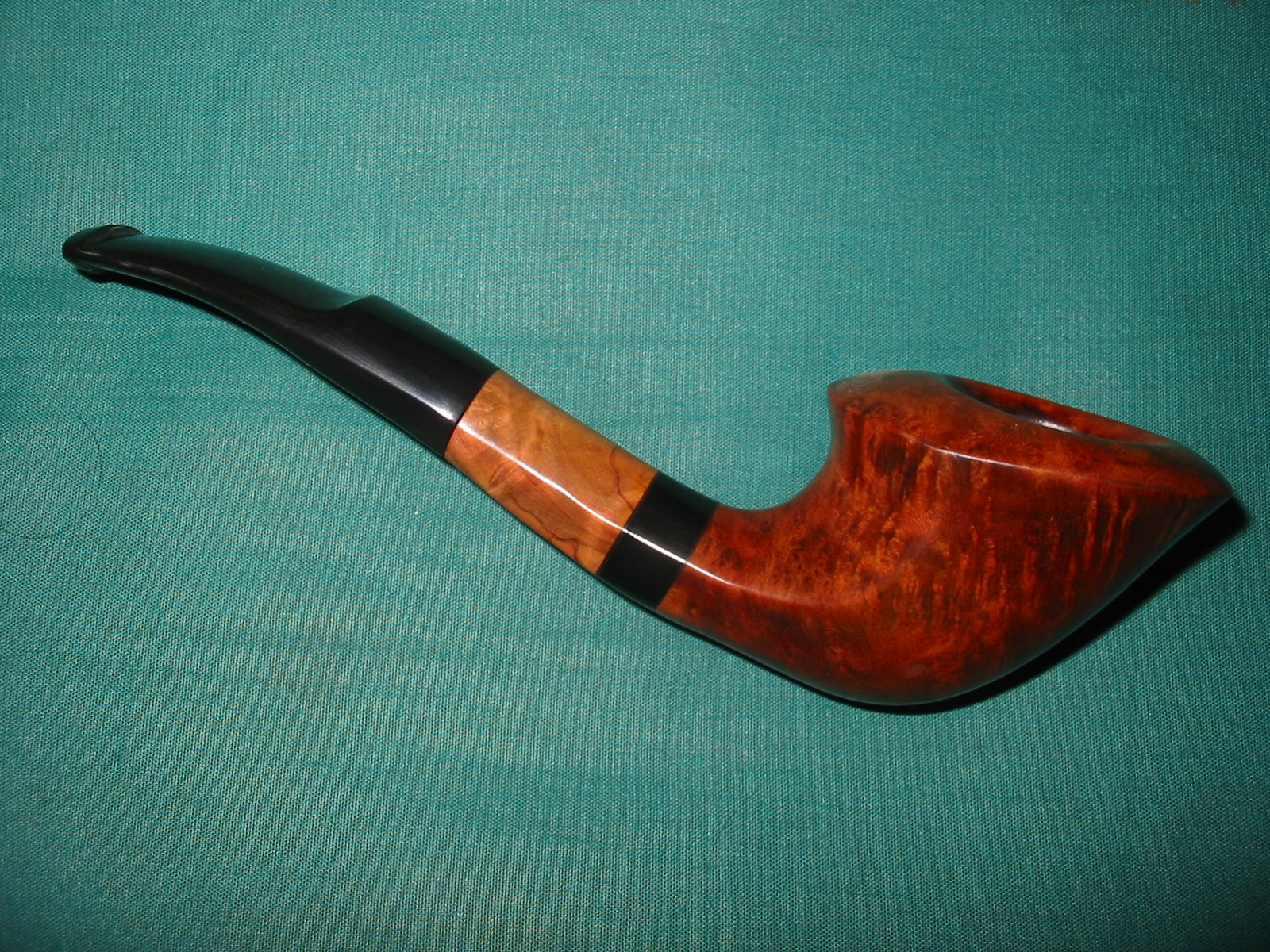
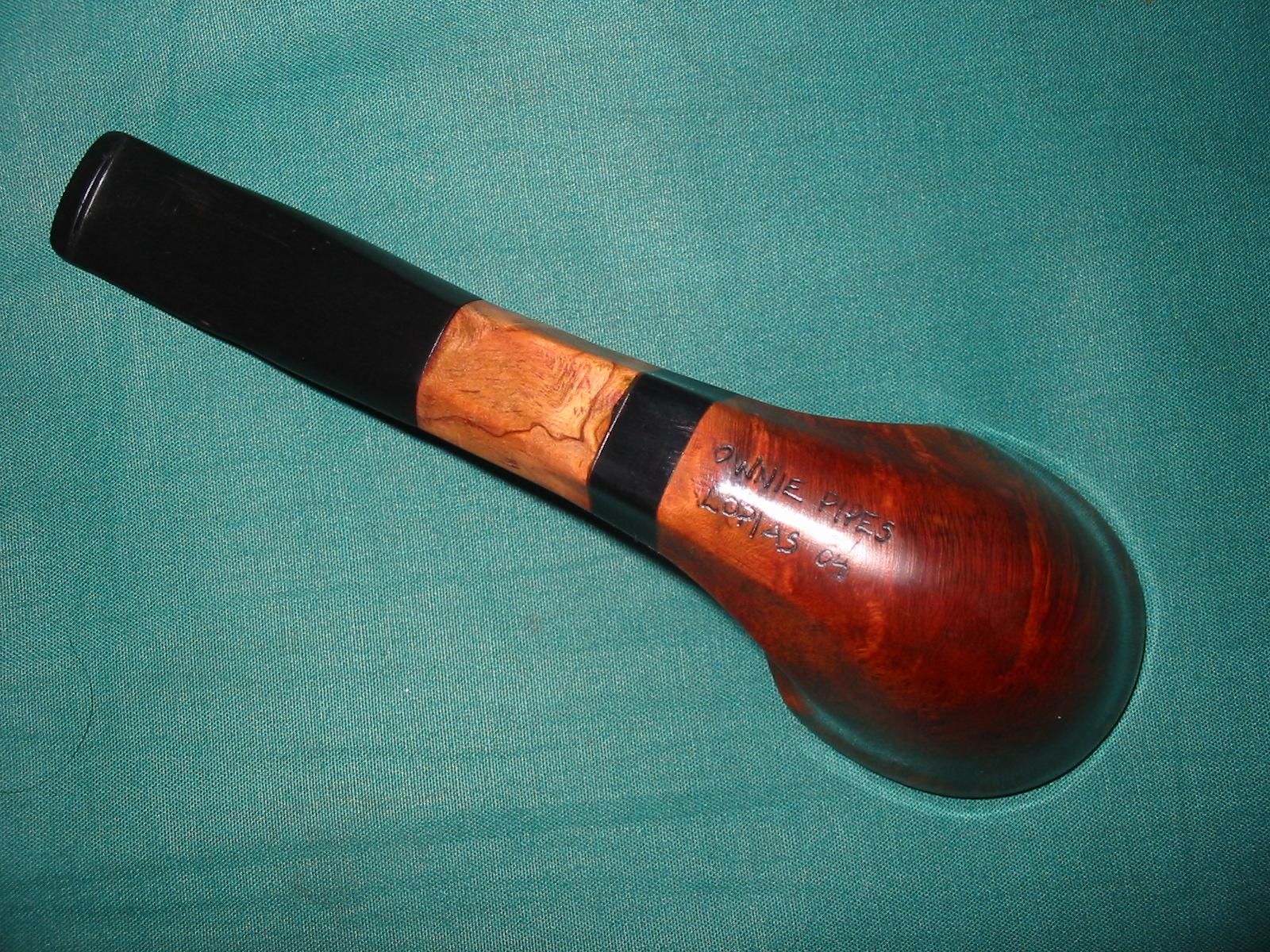
Author Archives: rebornpipes

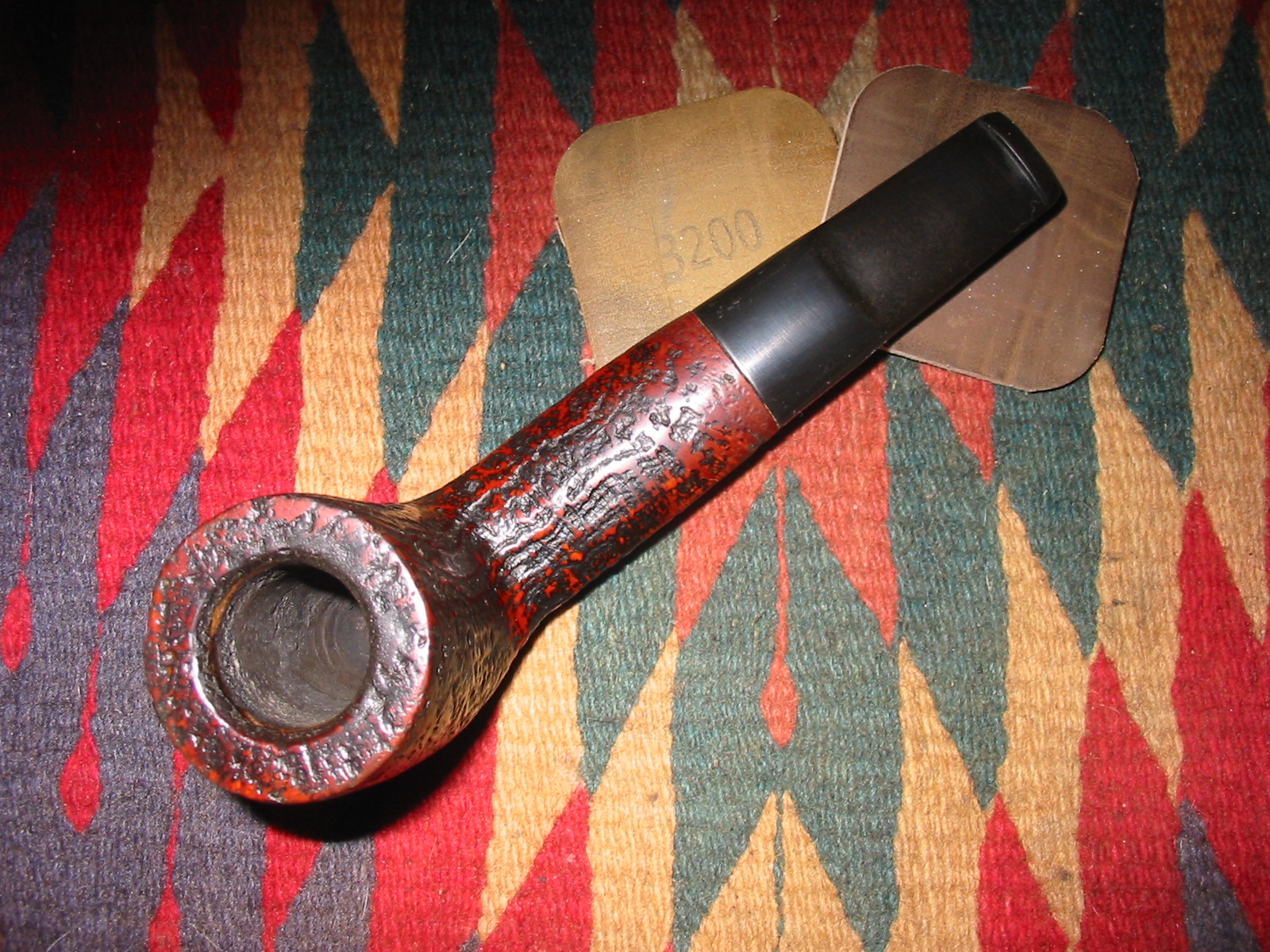
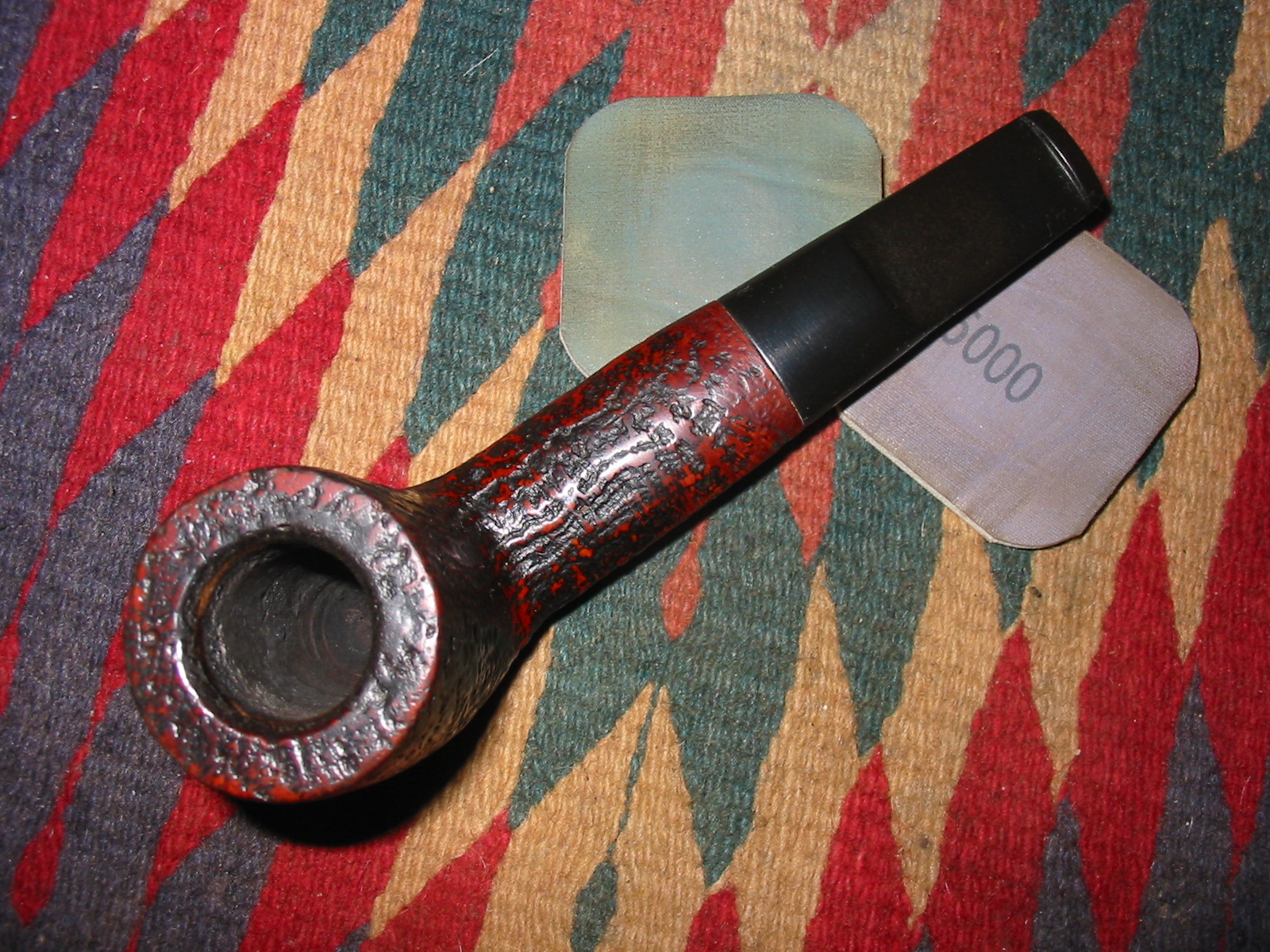
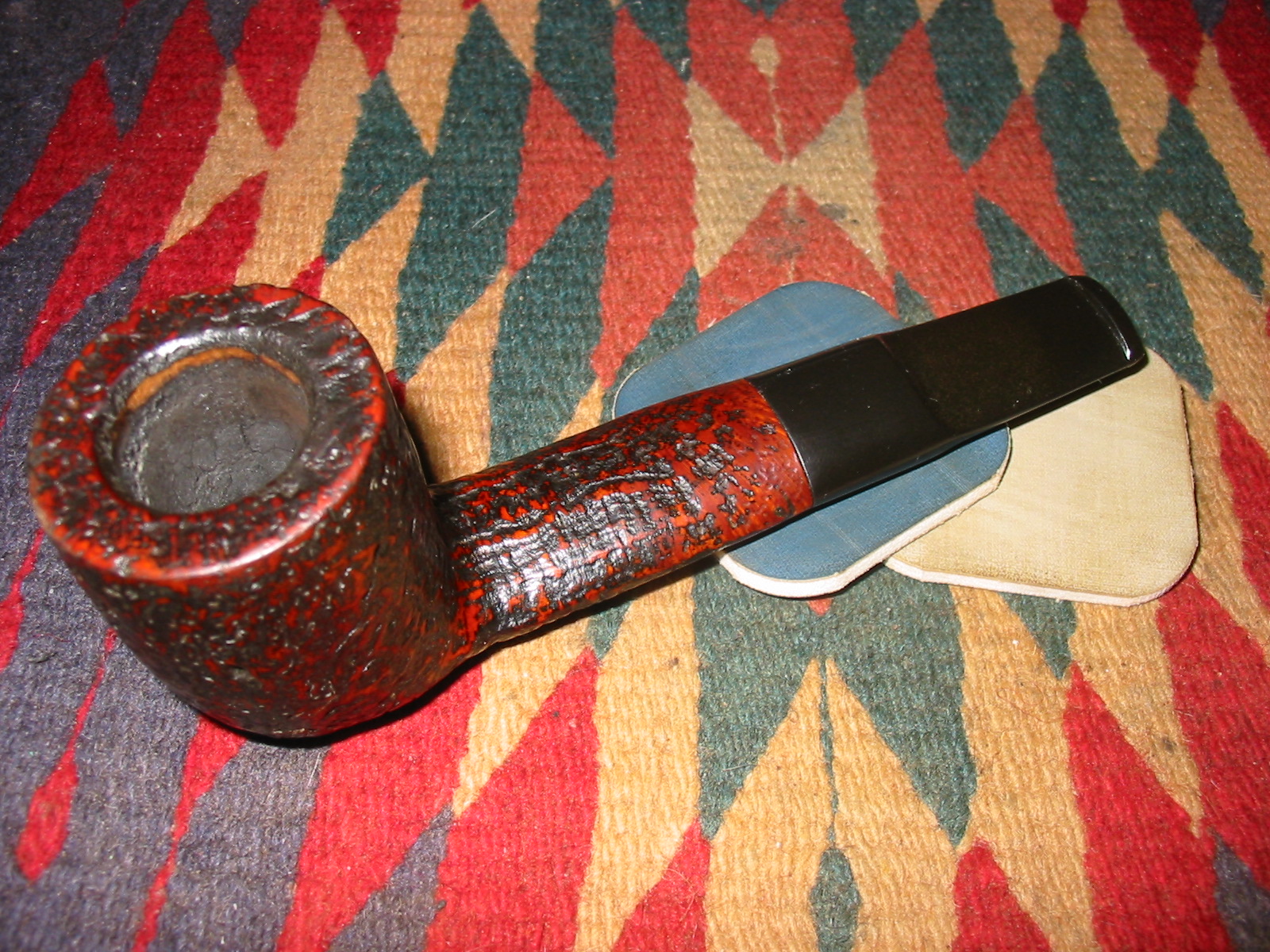
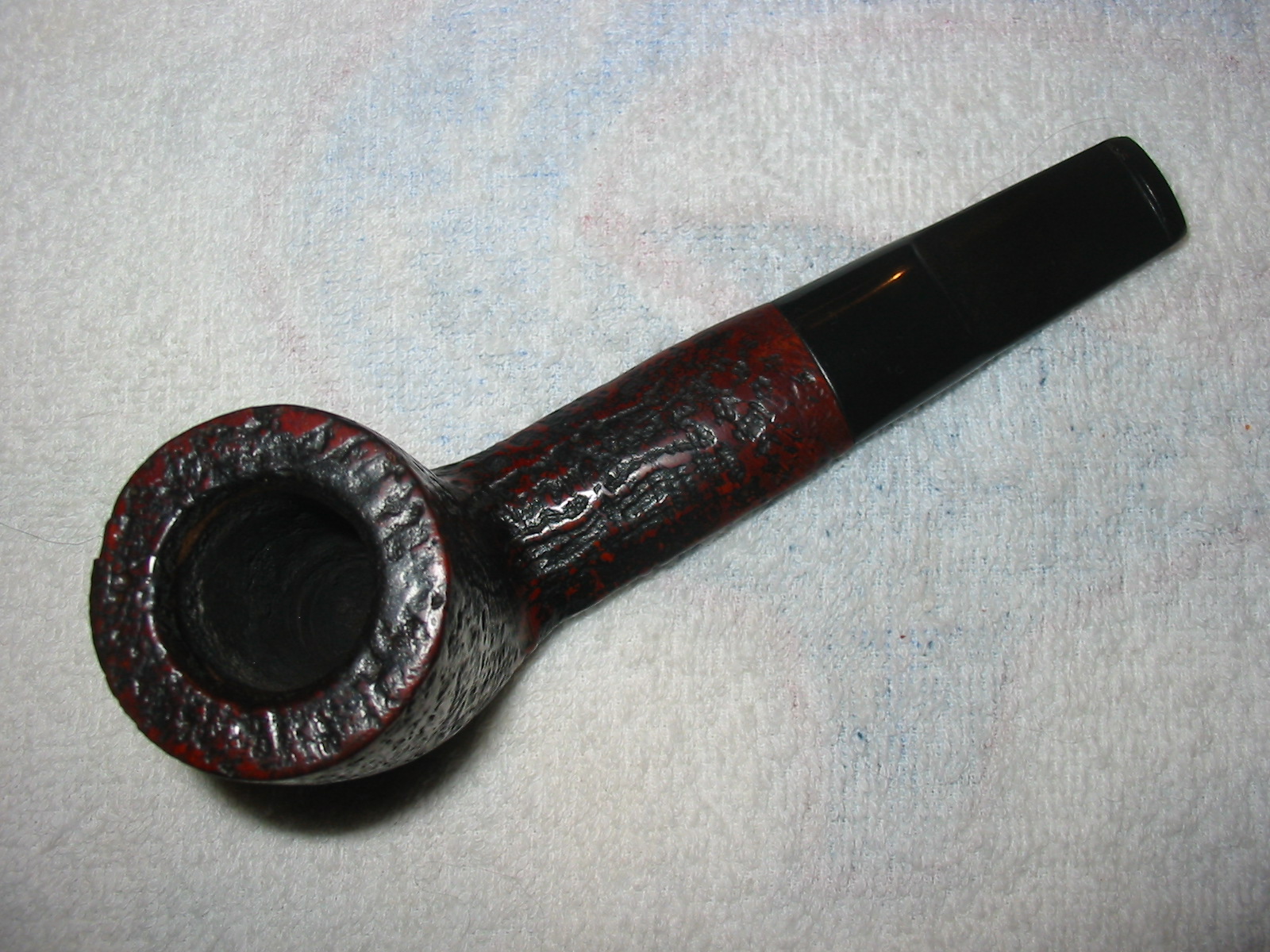
Italian Made Sandblasted Canadian Brought Back to Life


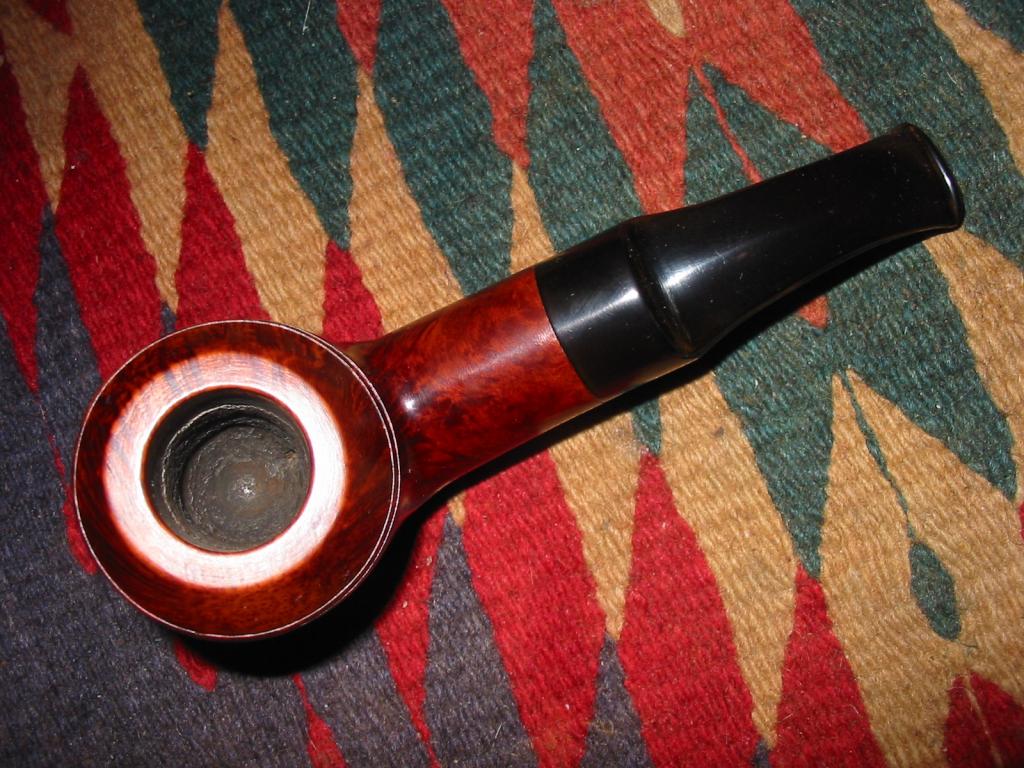
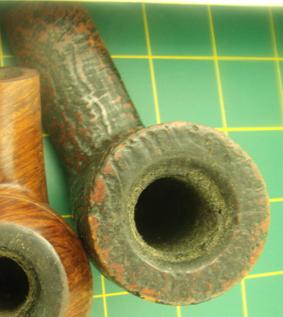
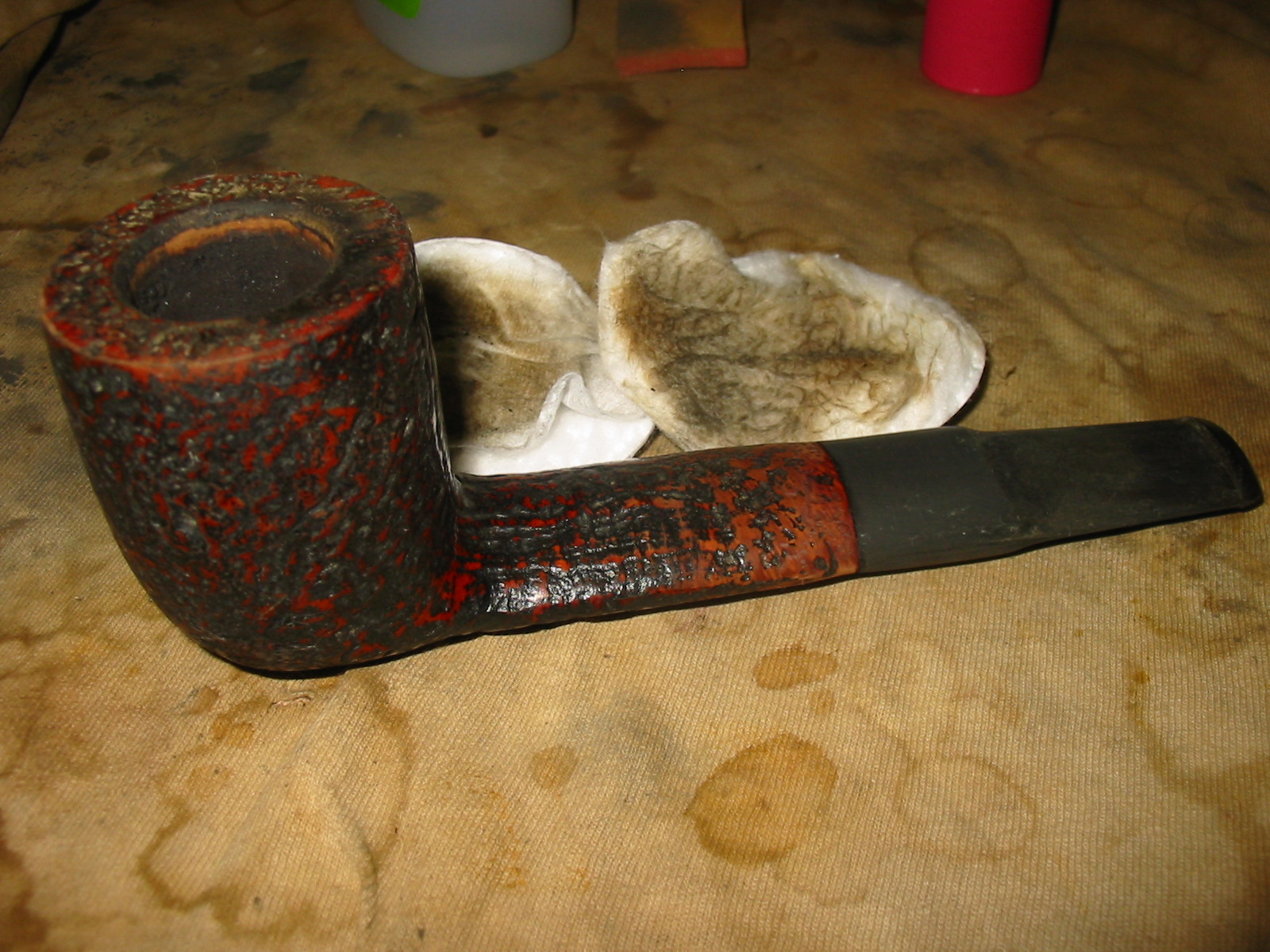
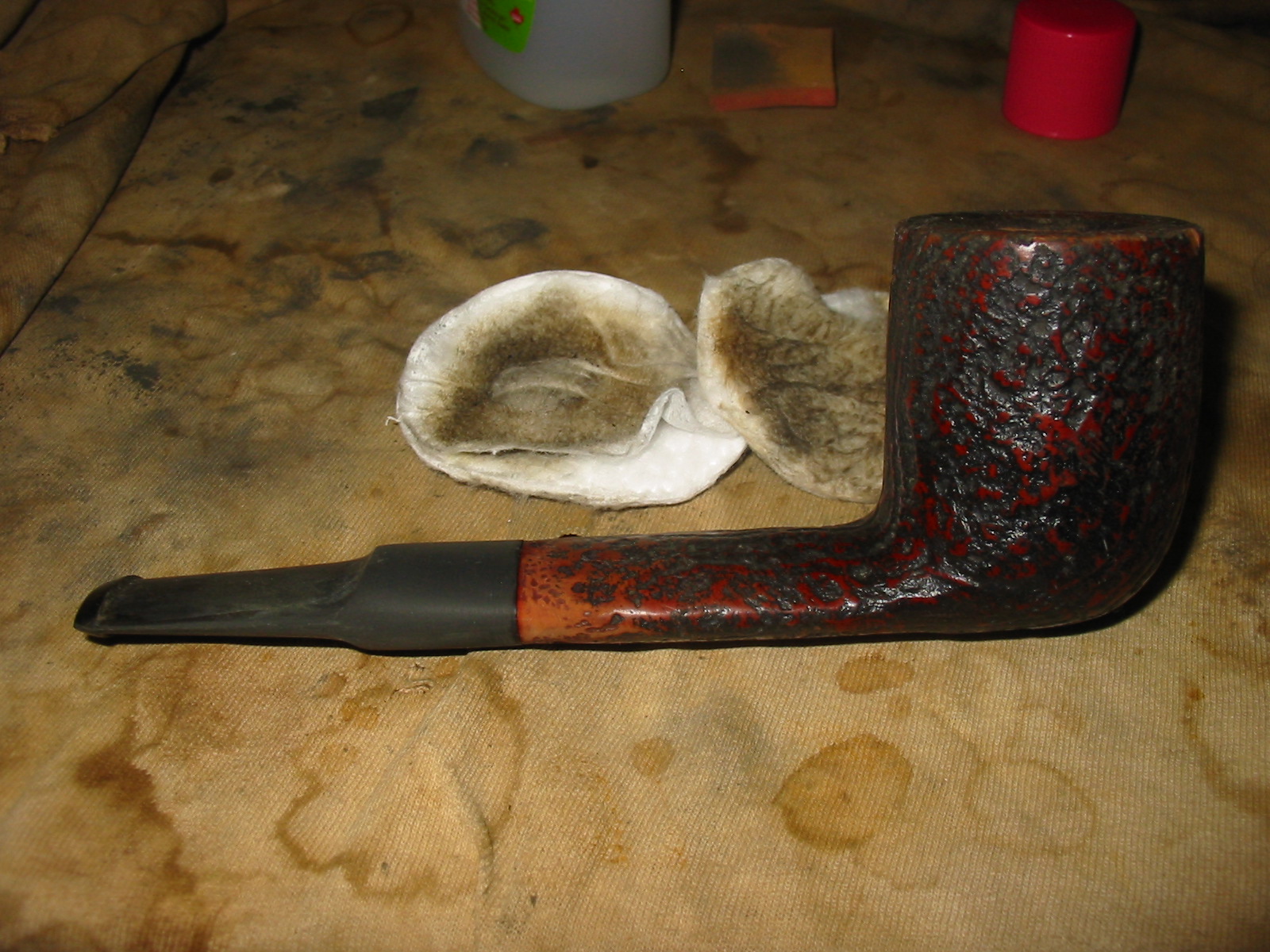
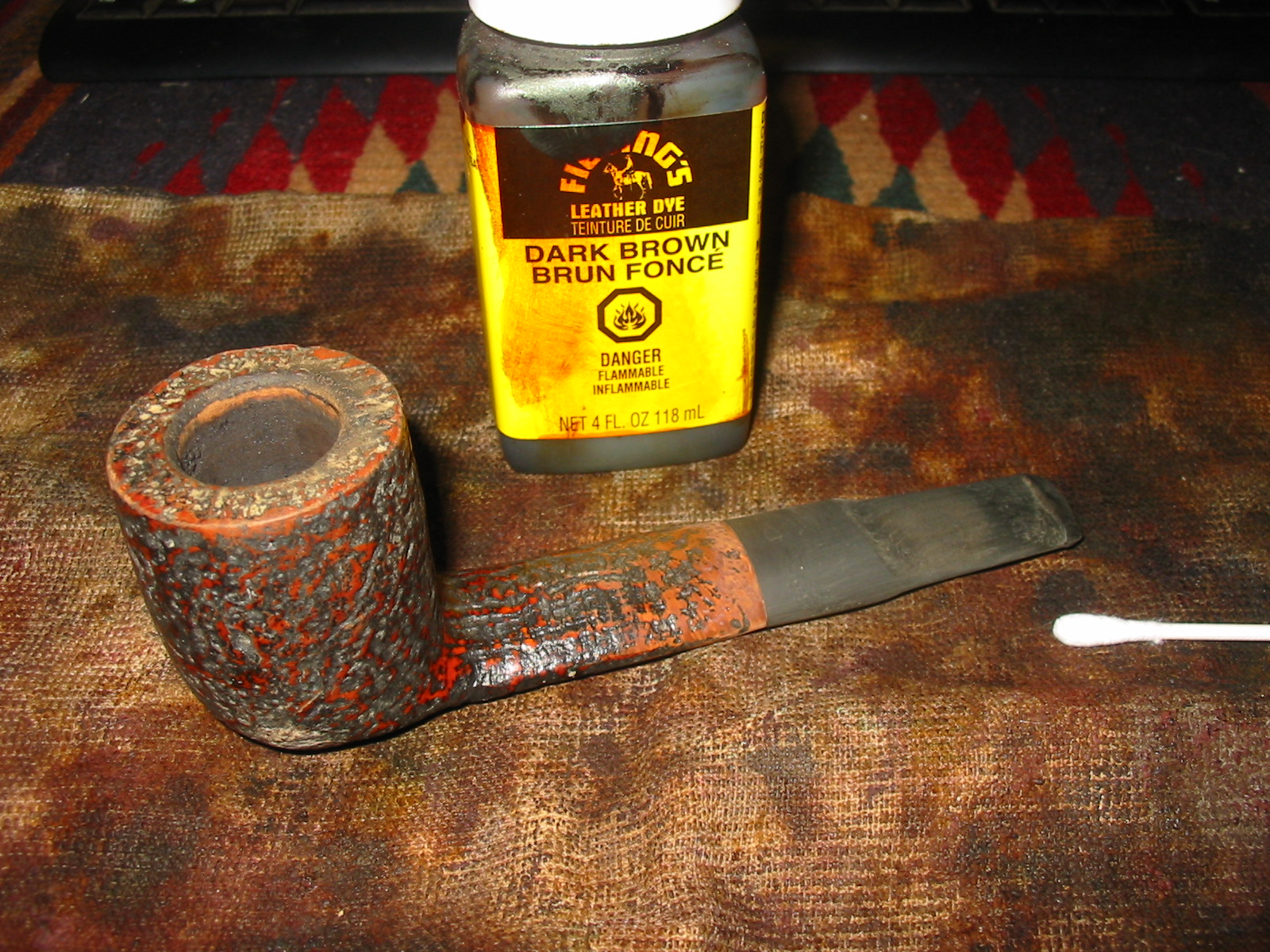
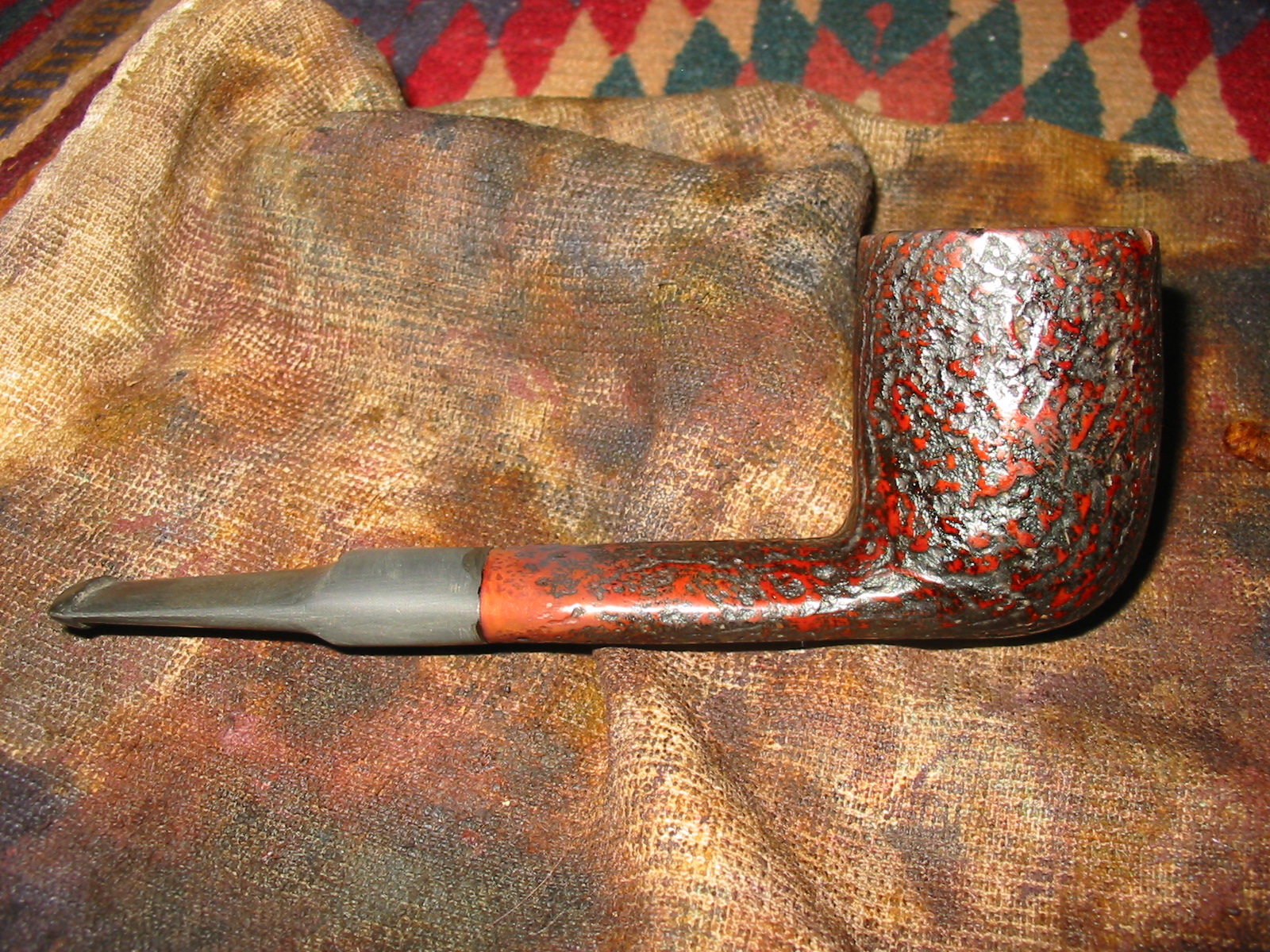
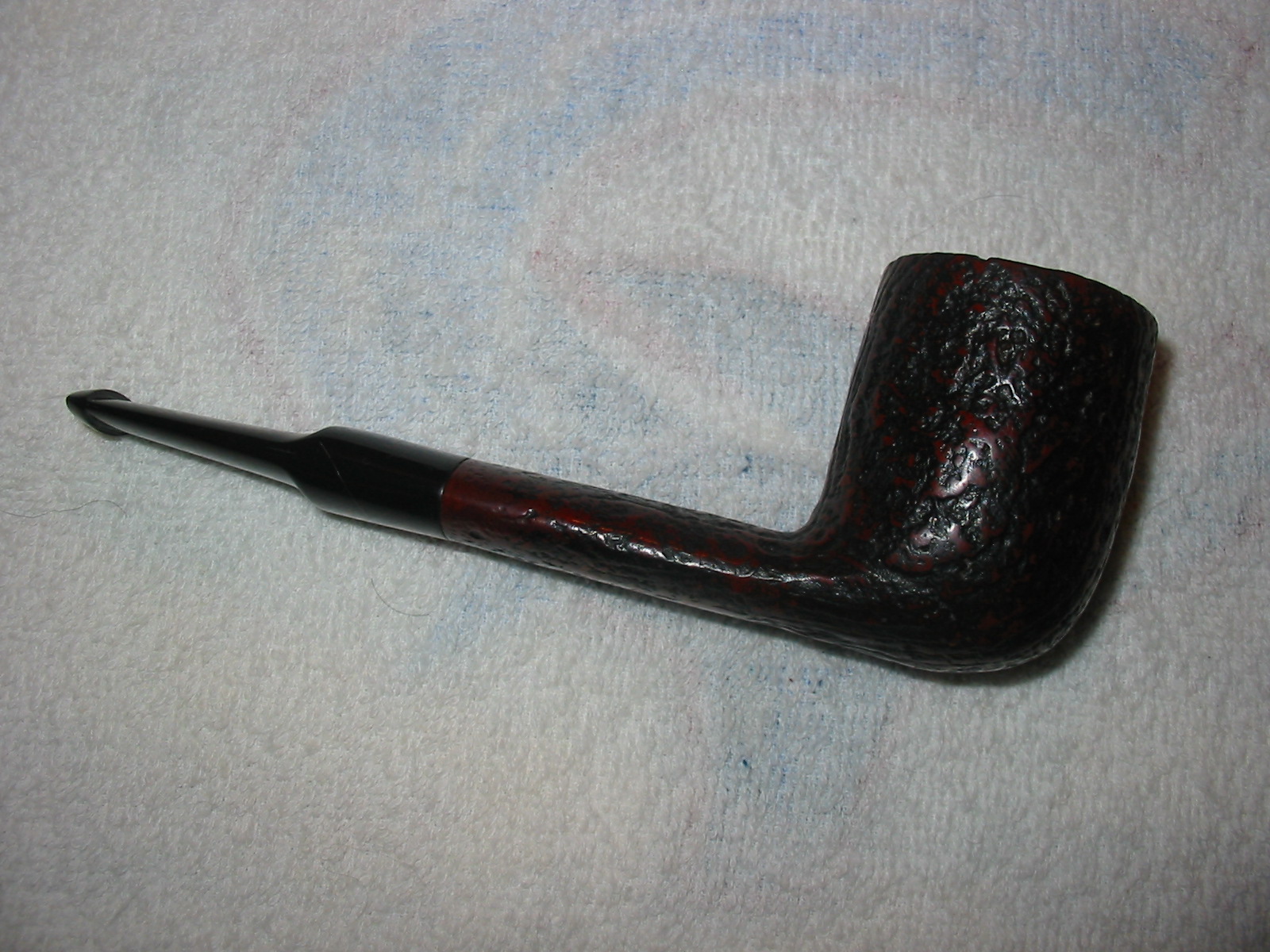
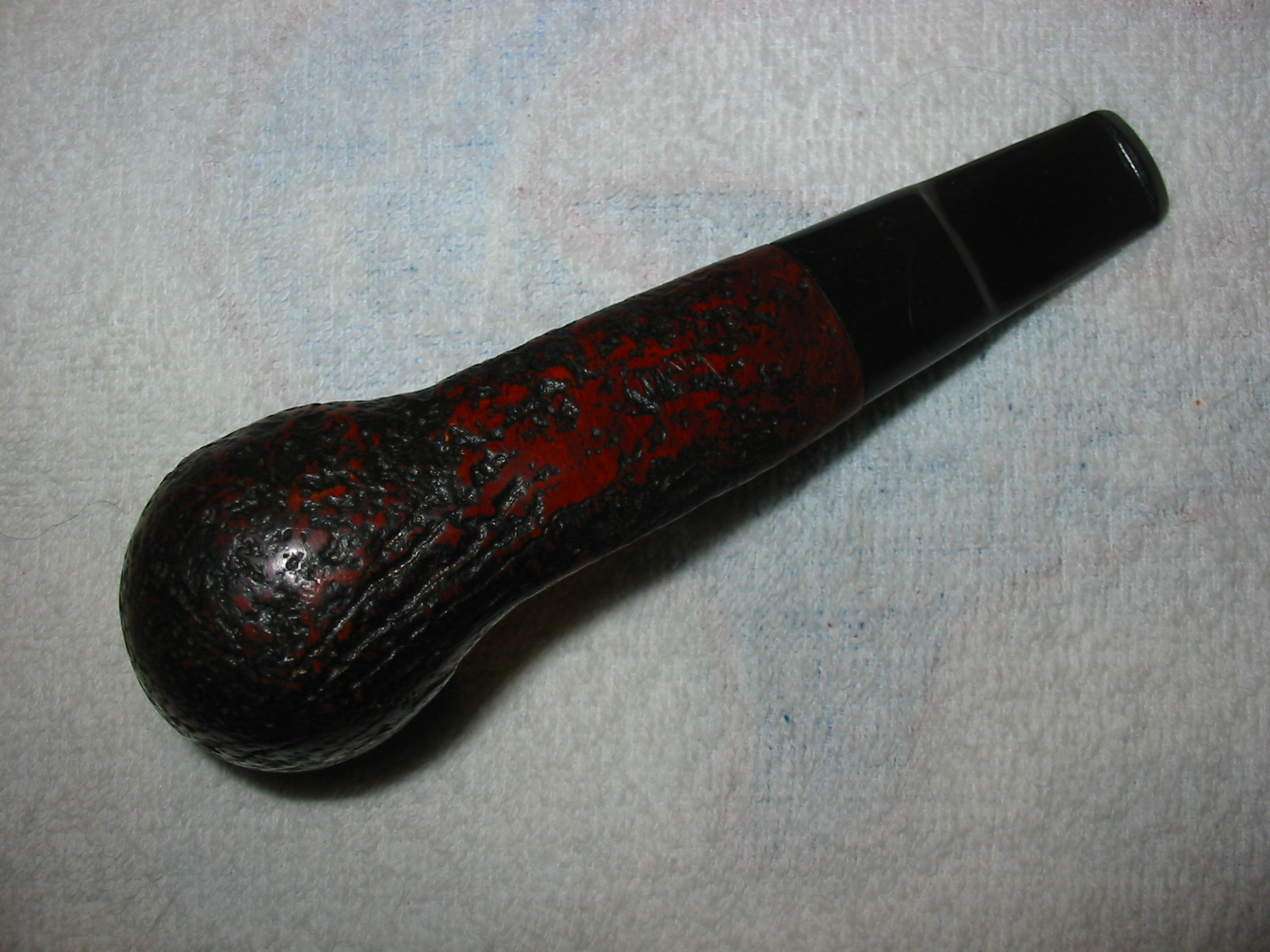
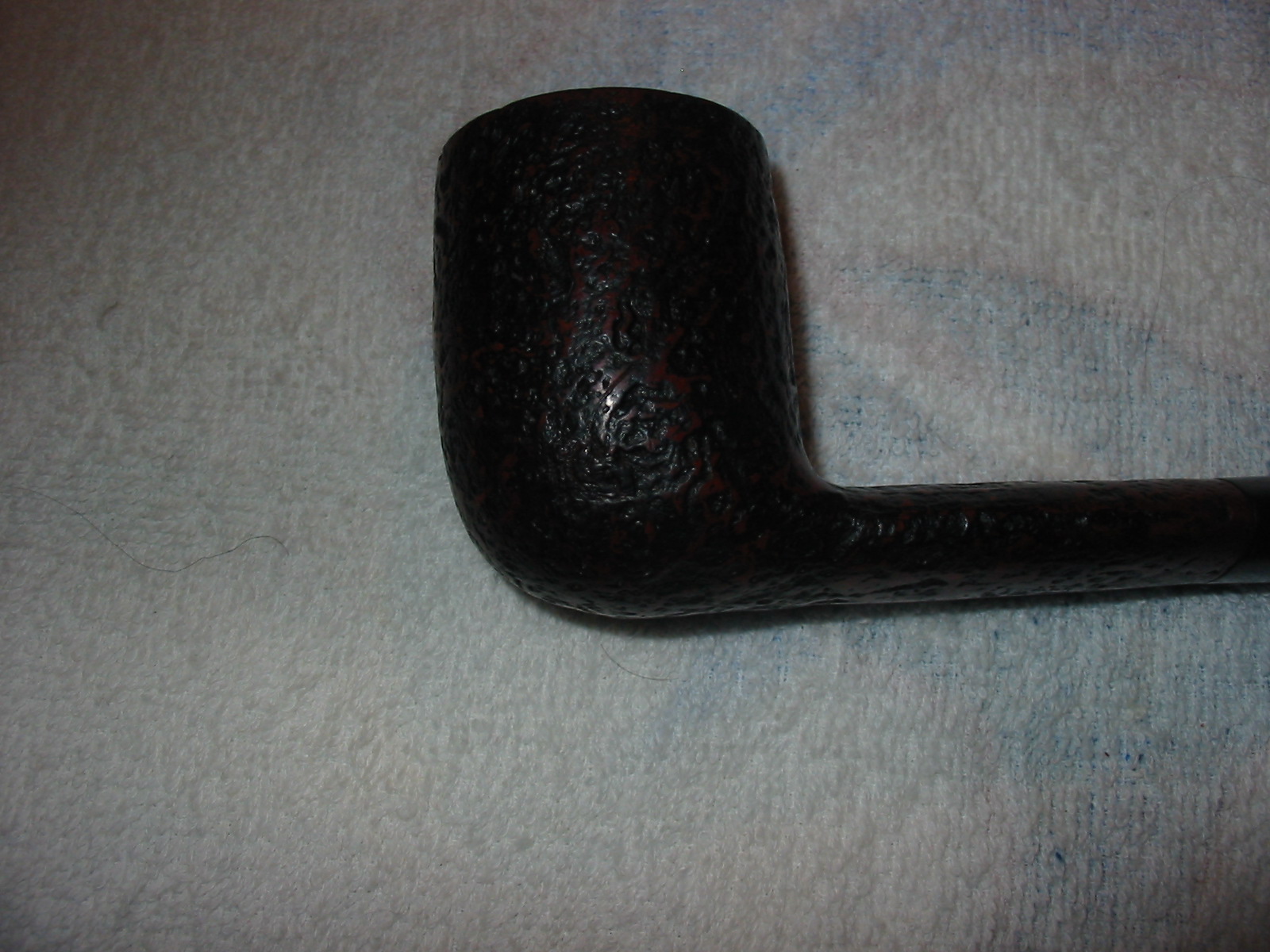
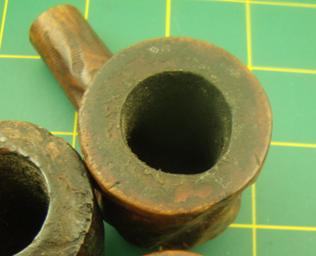
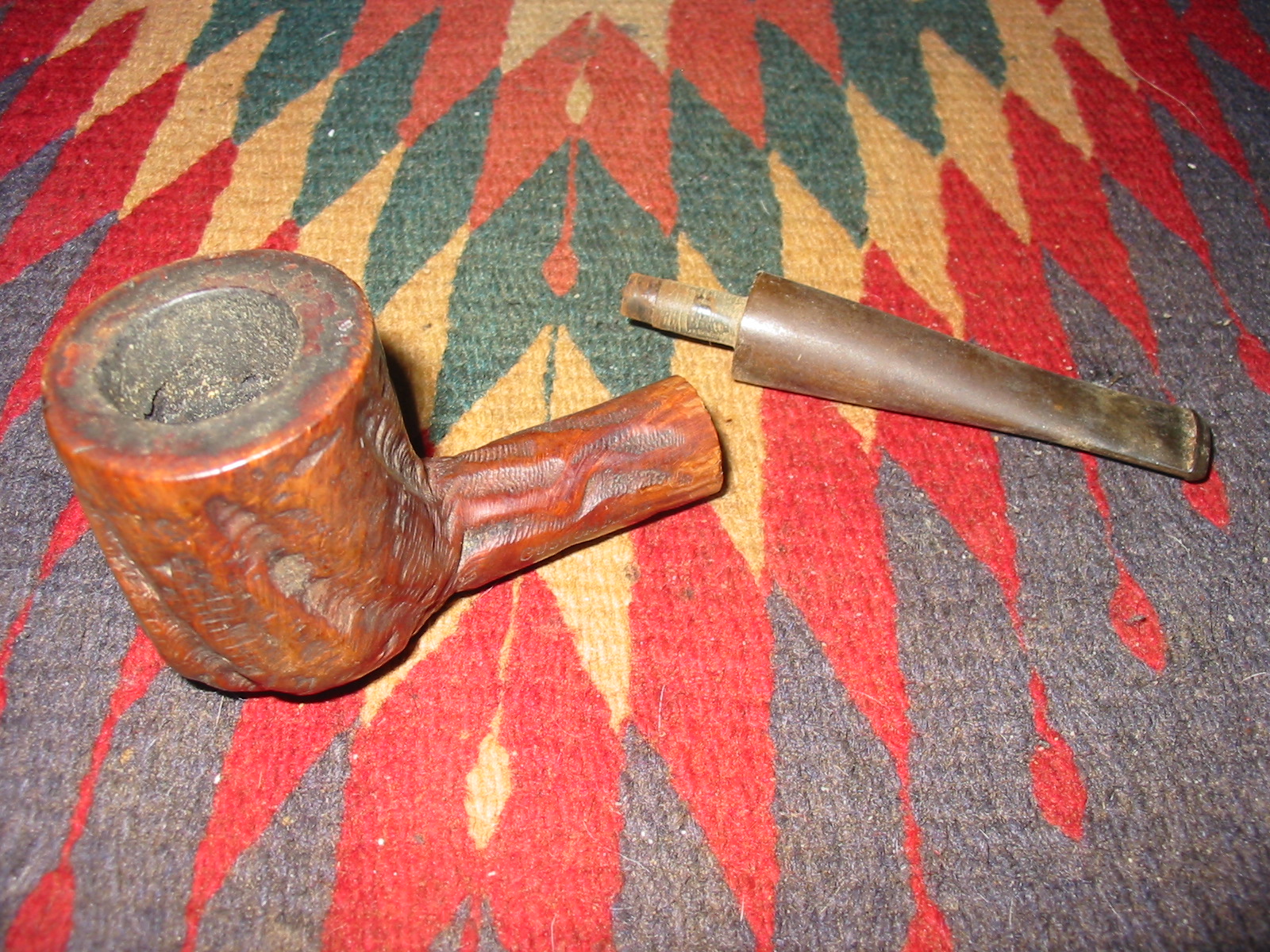
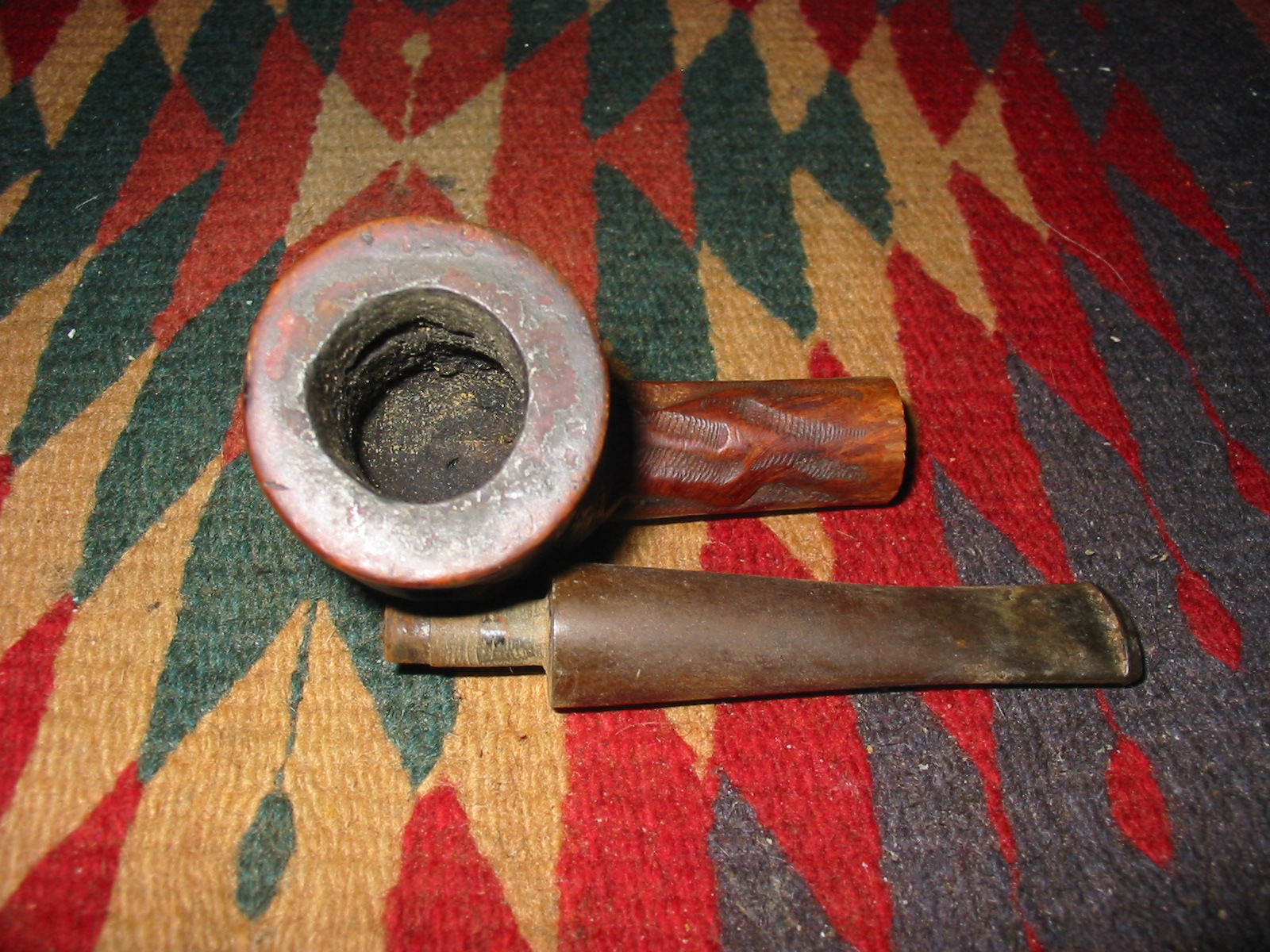
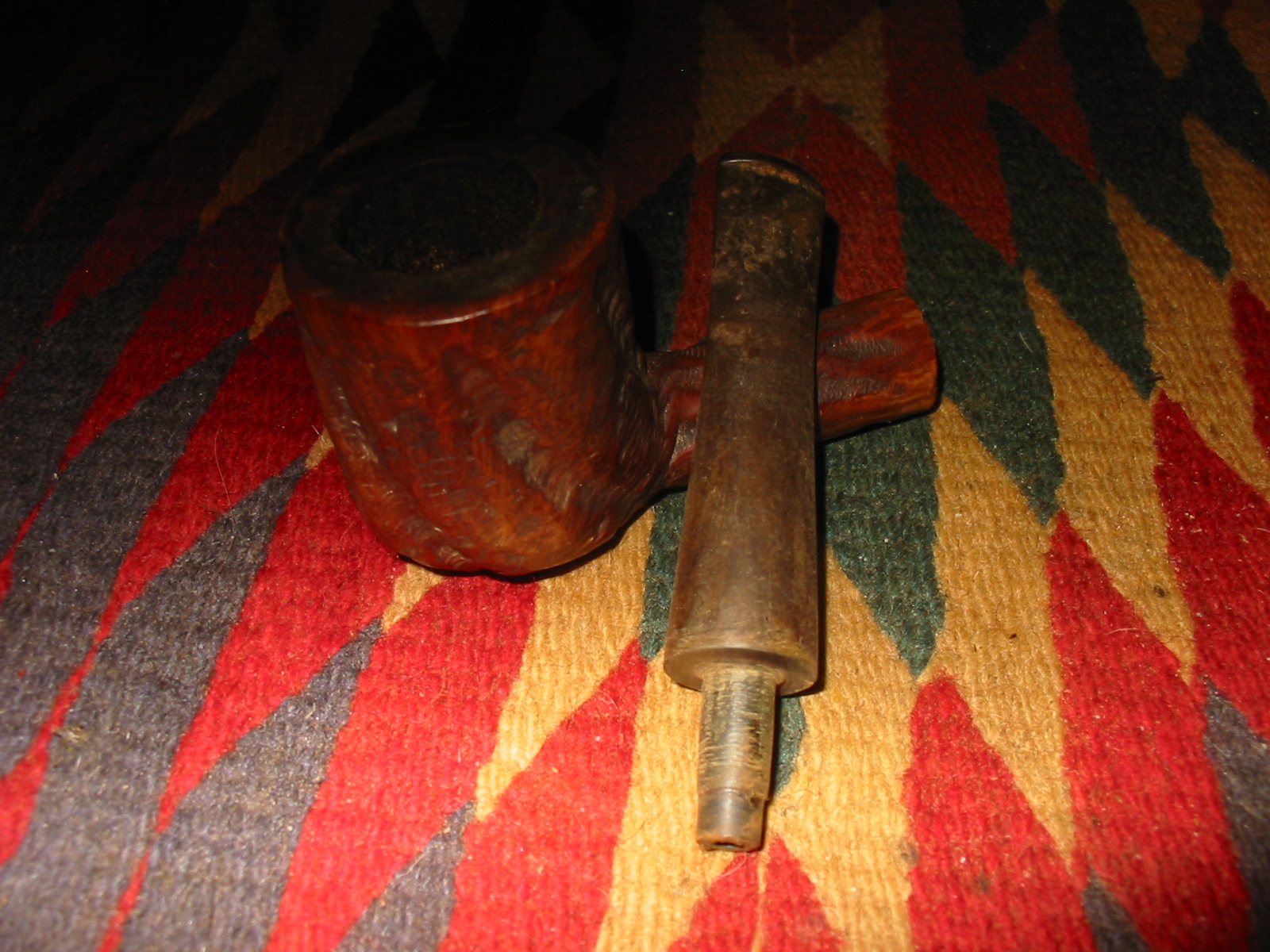
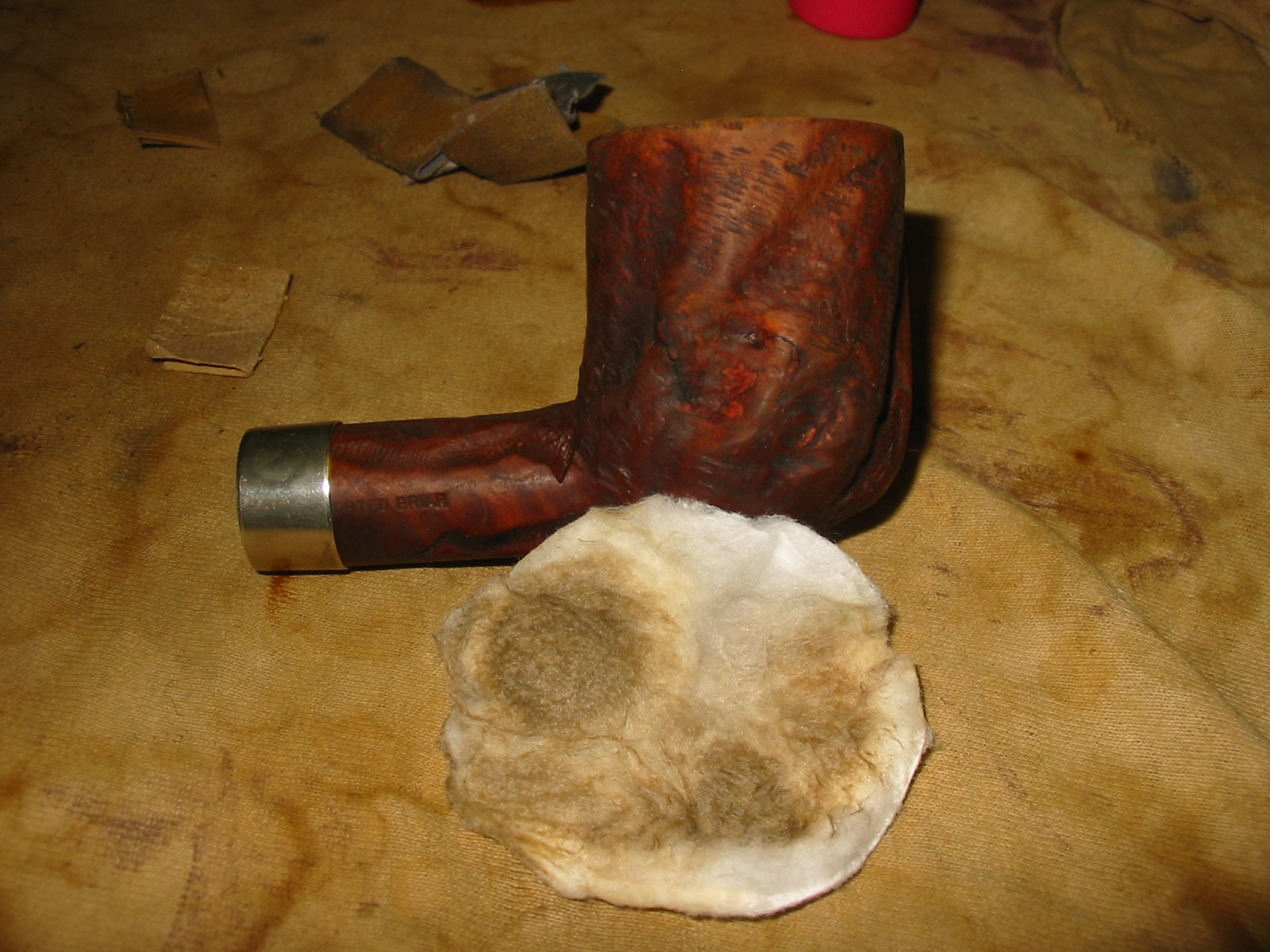
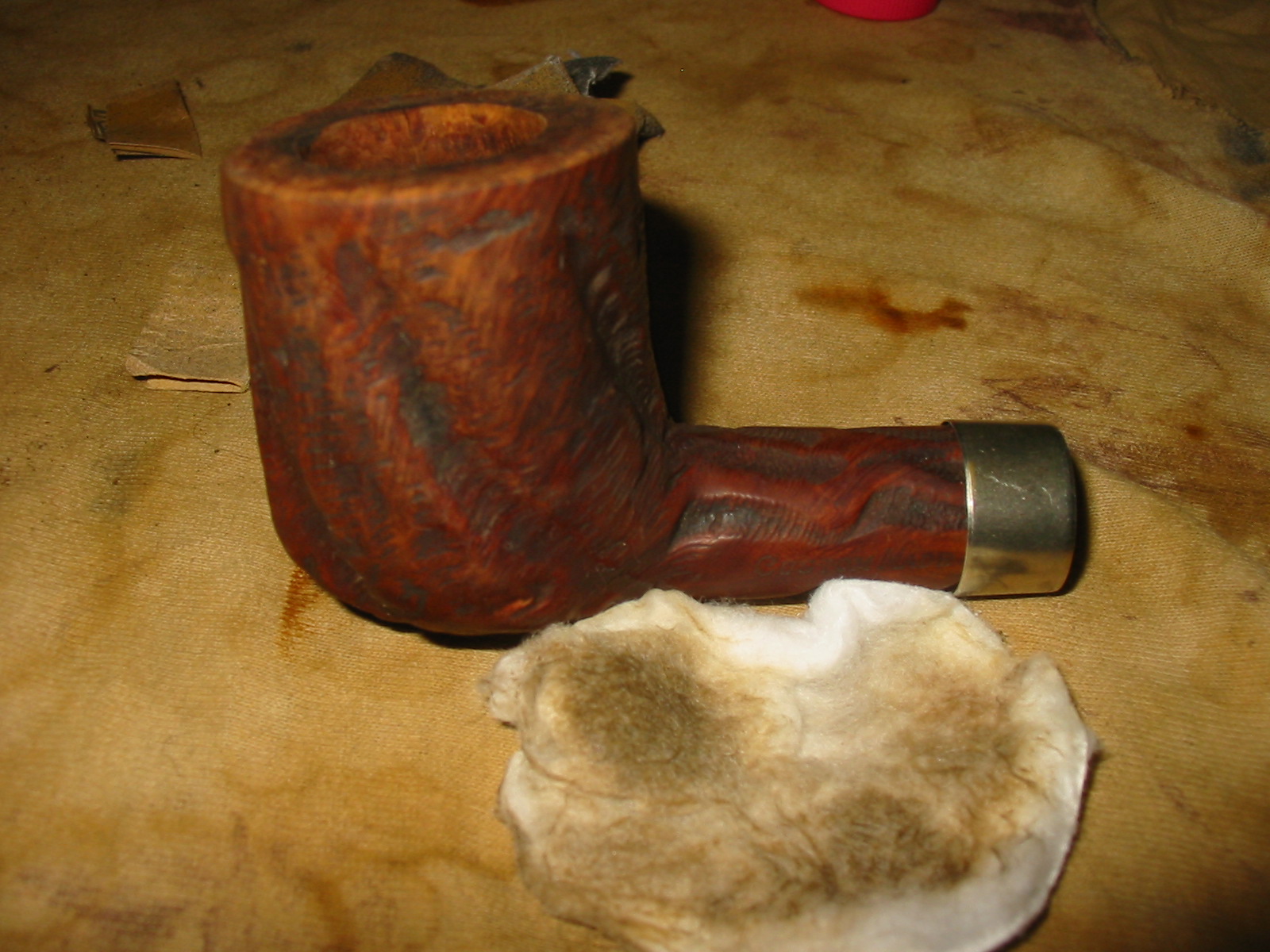
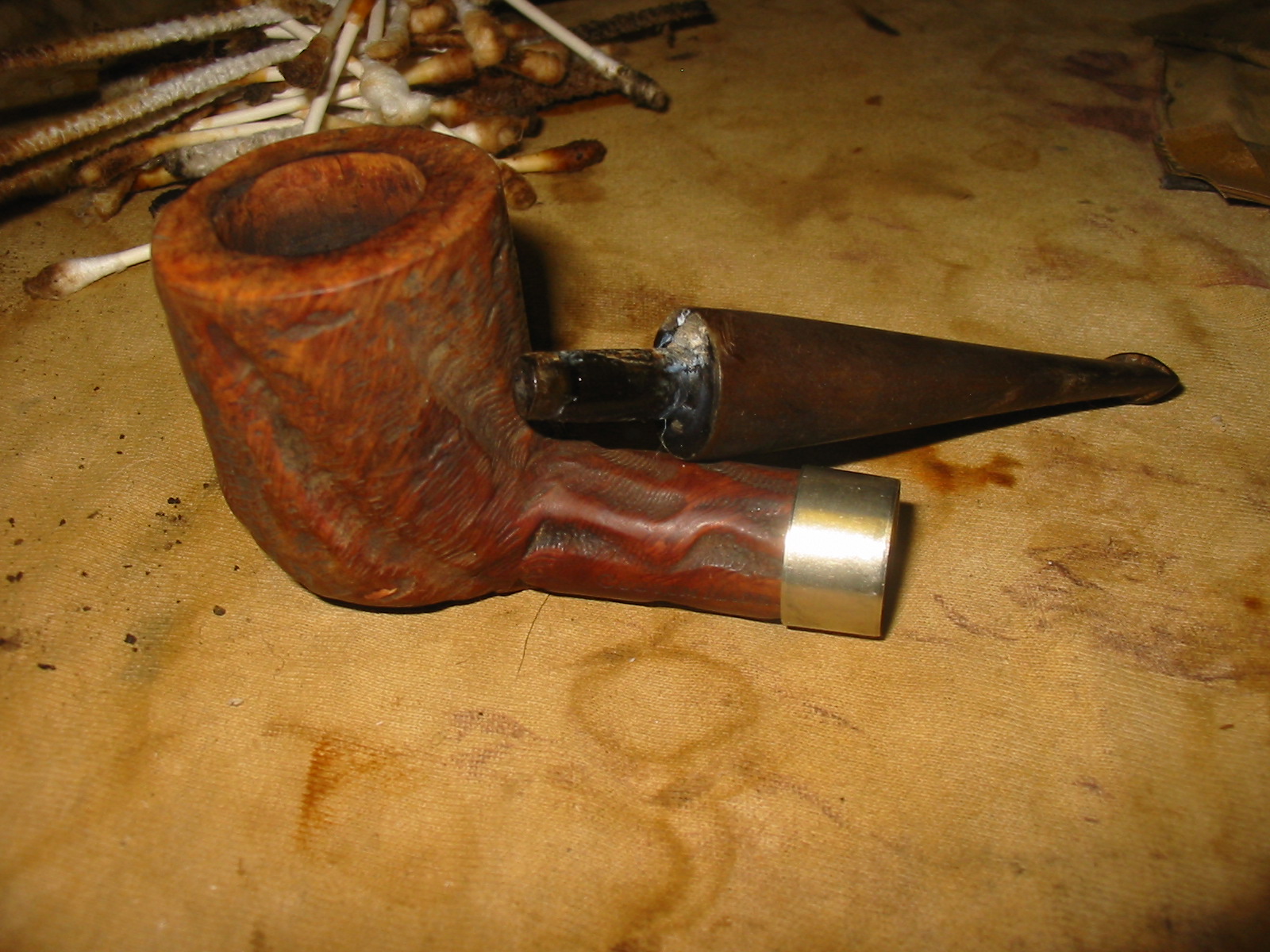
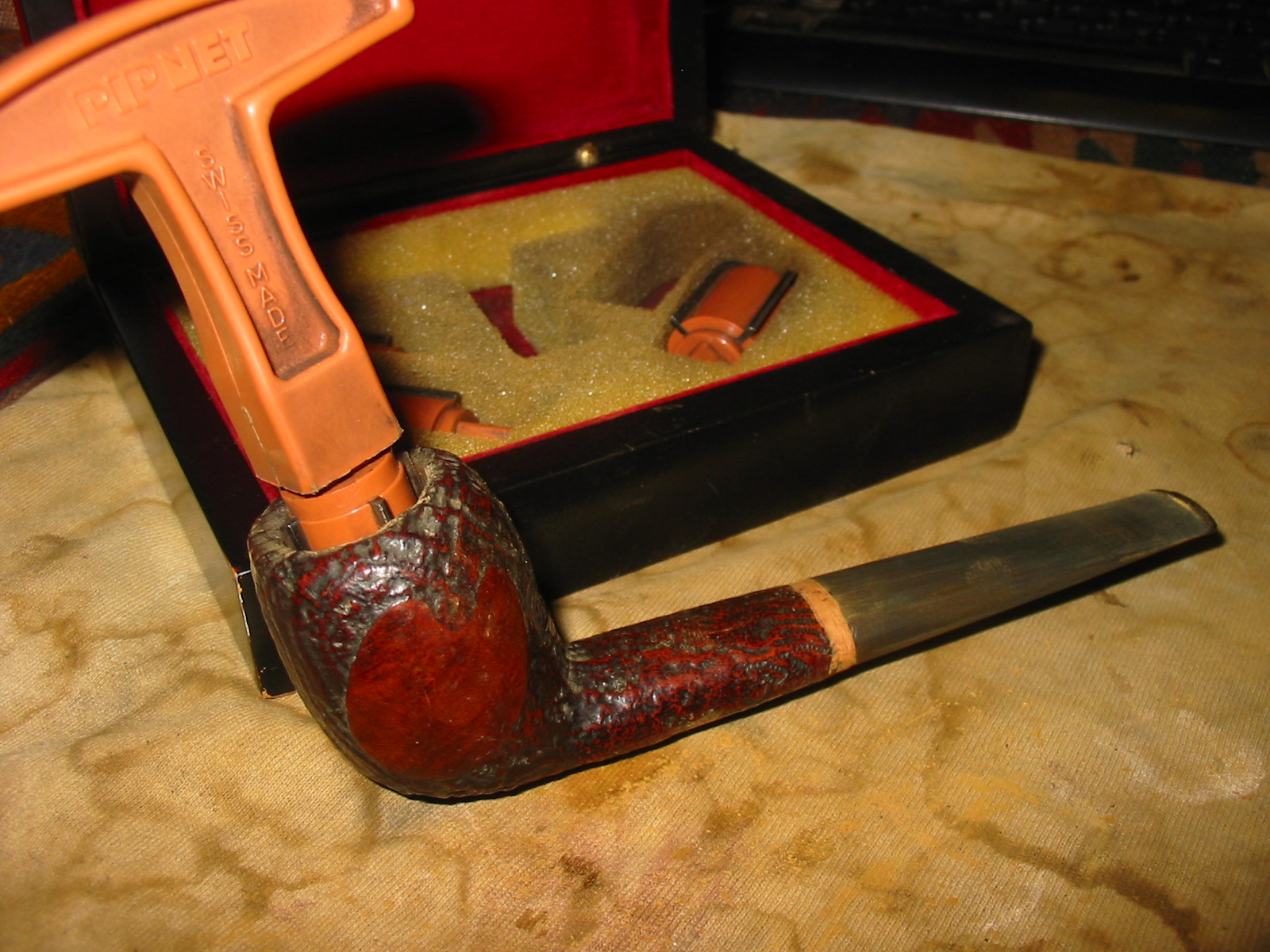
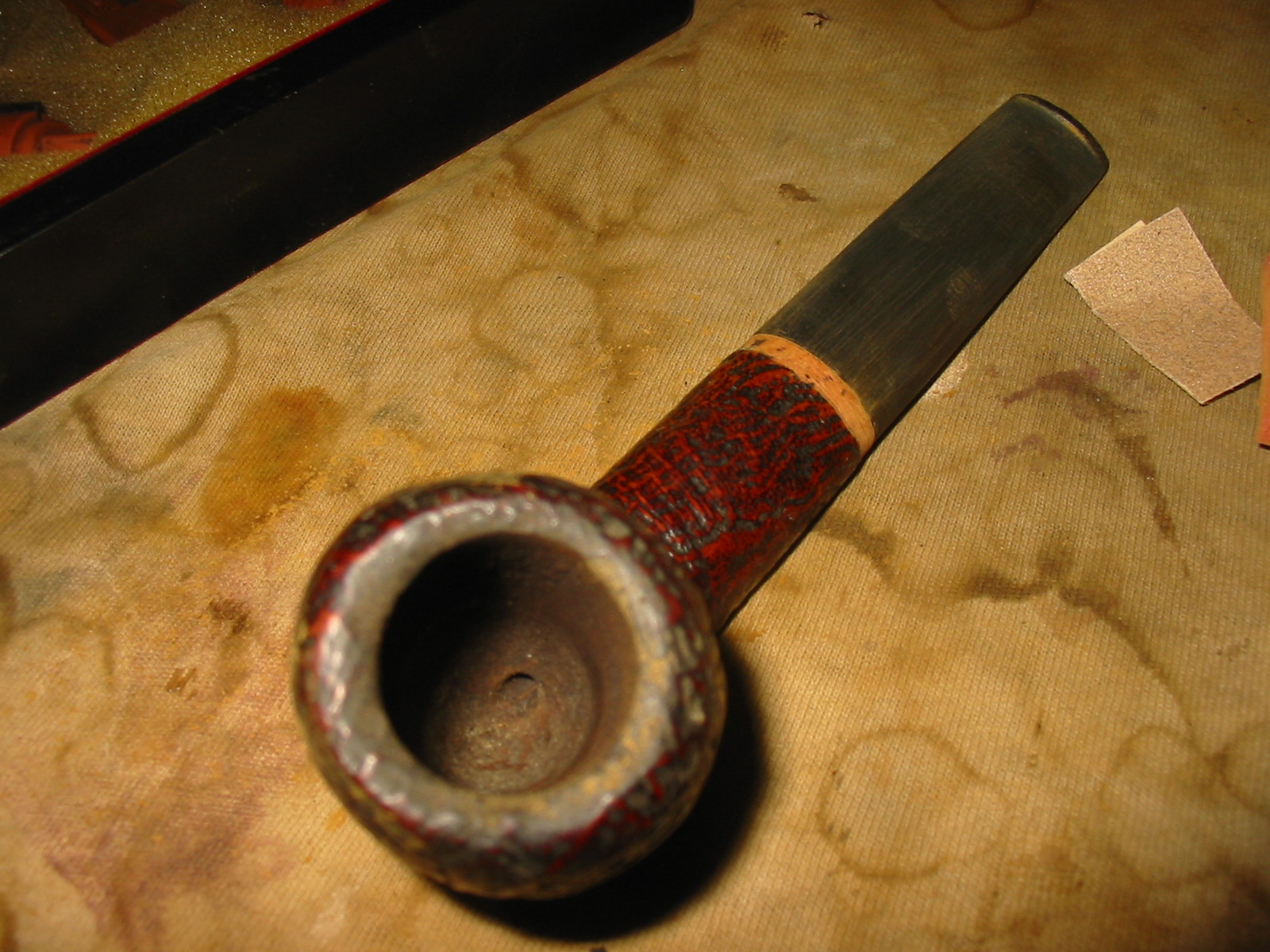
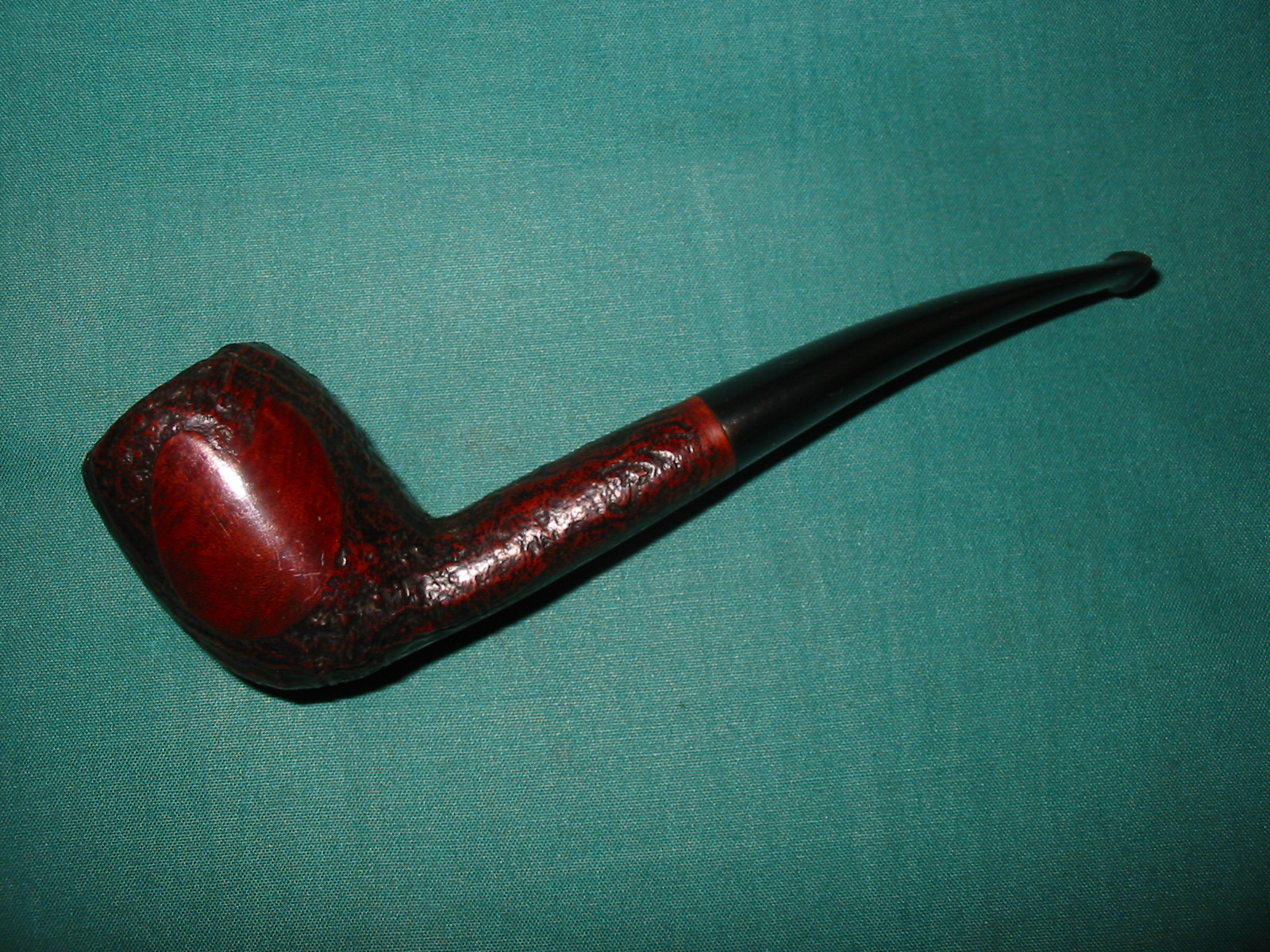
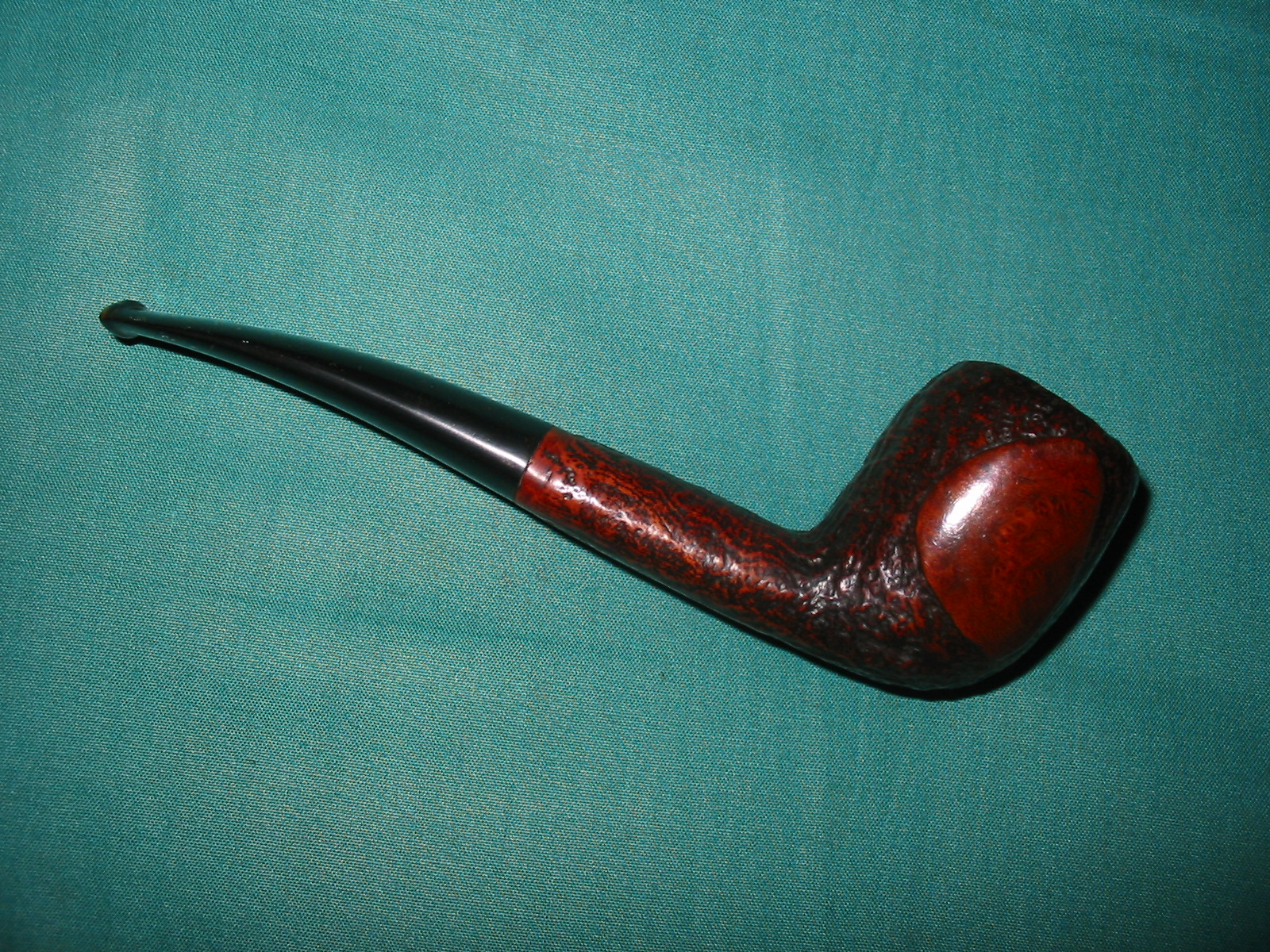
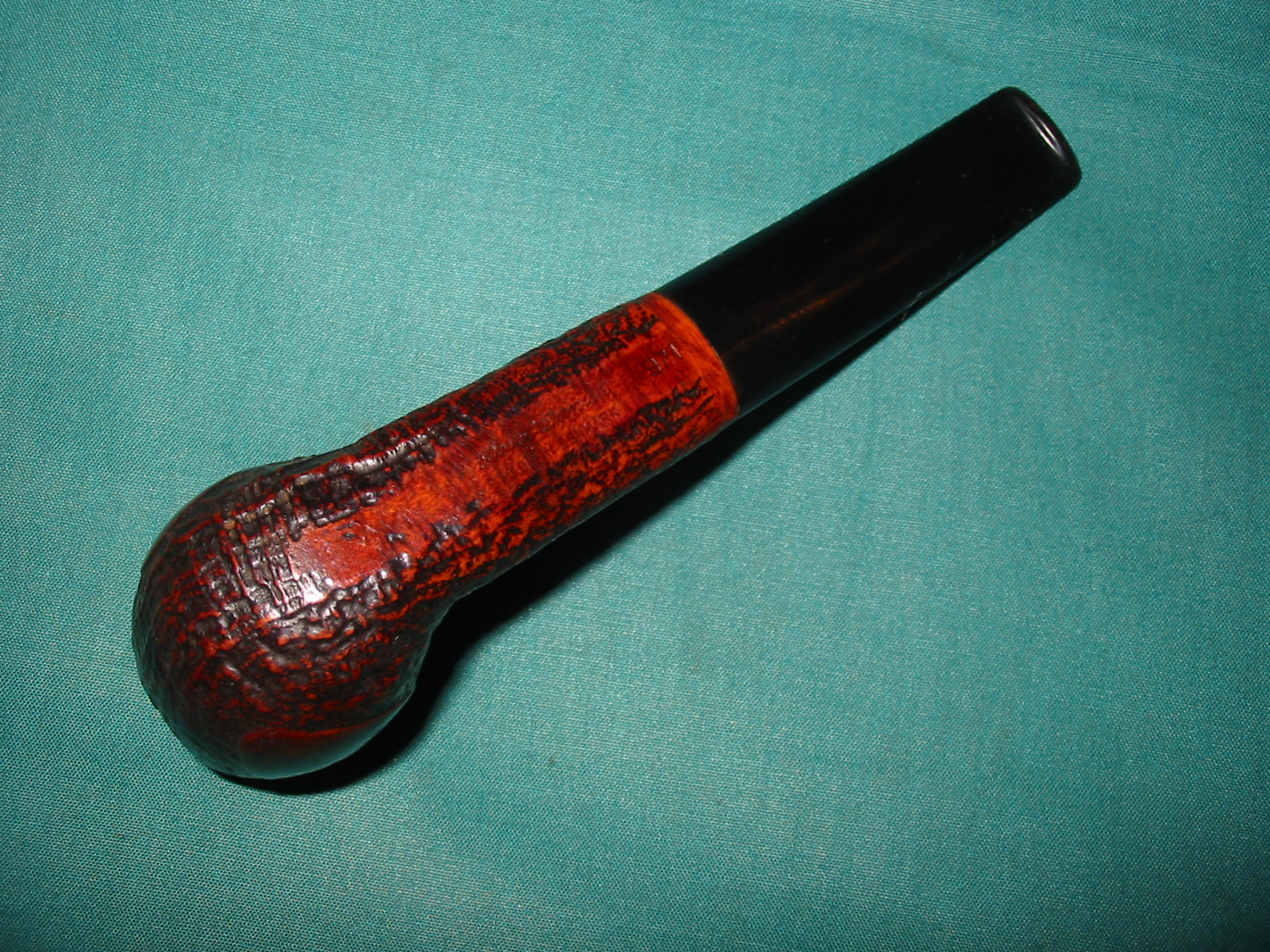
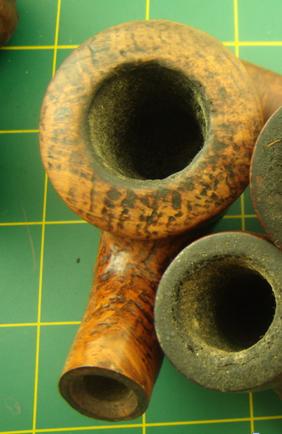
This pipe is another that came in that EBay lot of bowls that I purchased. Once I was finished with this one I have two more left to restem. It is a large oval shanked pipe with a large bowl. The sandblast is not deep and is particularly shallow on the shank where it meets the stem. The bowl was heavily caked and the finish was dirty and faded. There was a deep divot out of the left side of the bowl toward the bottom. It was a chipped out spot that looked like the pipe had been knocked hard against something when it was dropped. There was also a chip on the edge of the front right side of the outer rim. It is pictured below in the first photo and is the first pipe in column one on the left. The second photo shows the state of the bowl when I started working on it. The cake was hard and thick.

bowls1

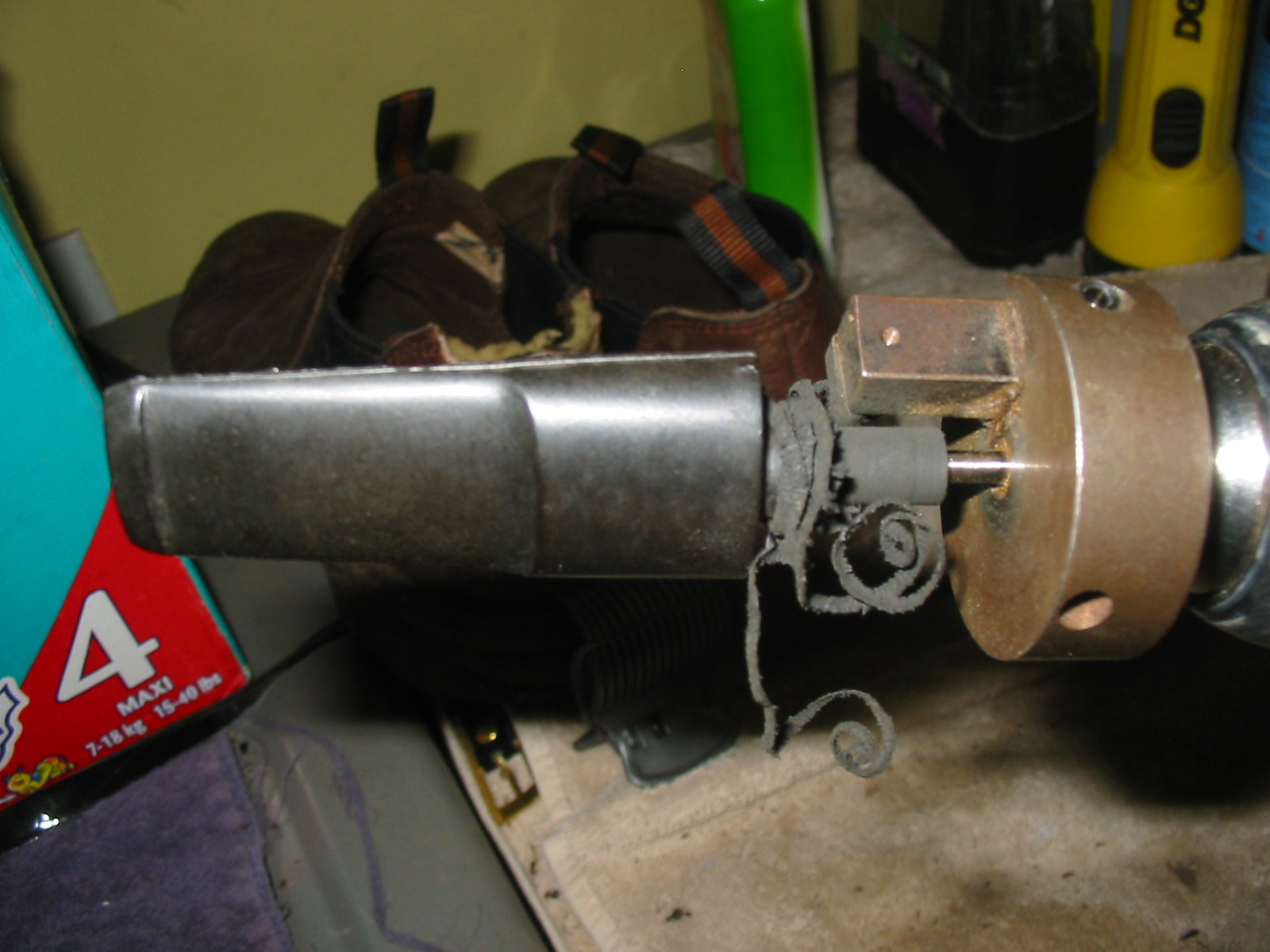
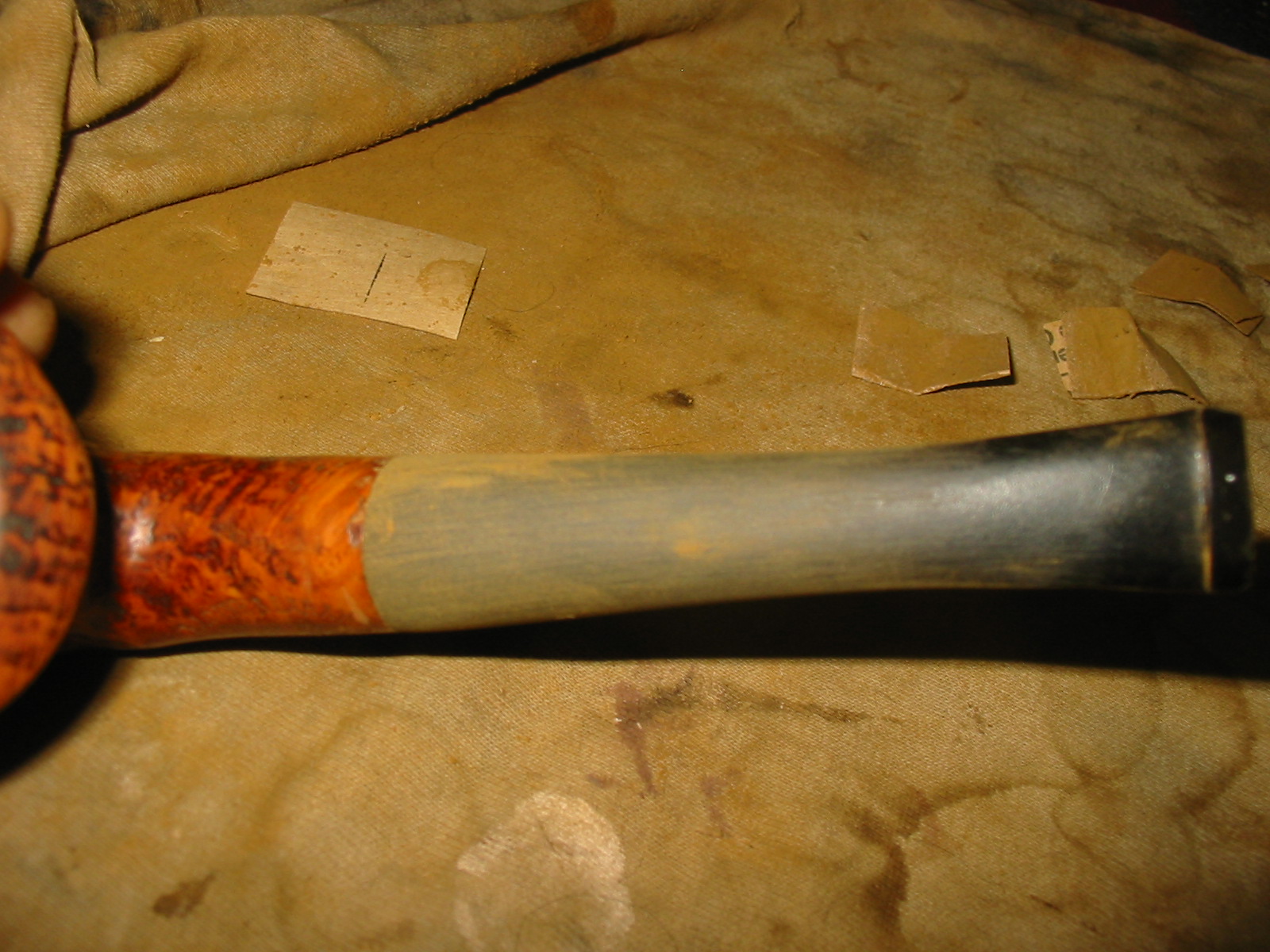
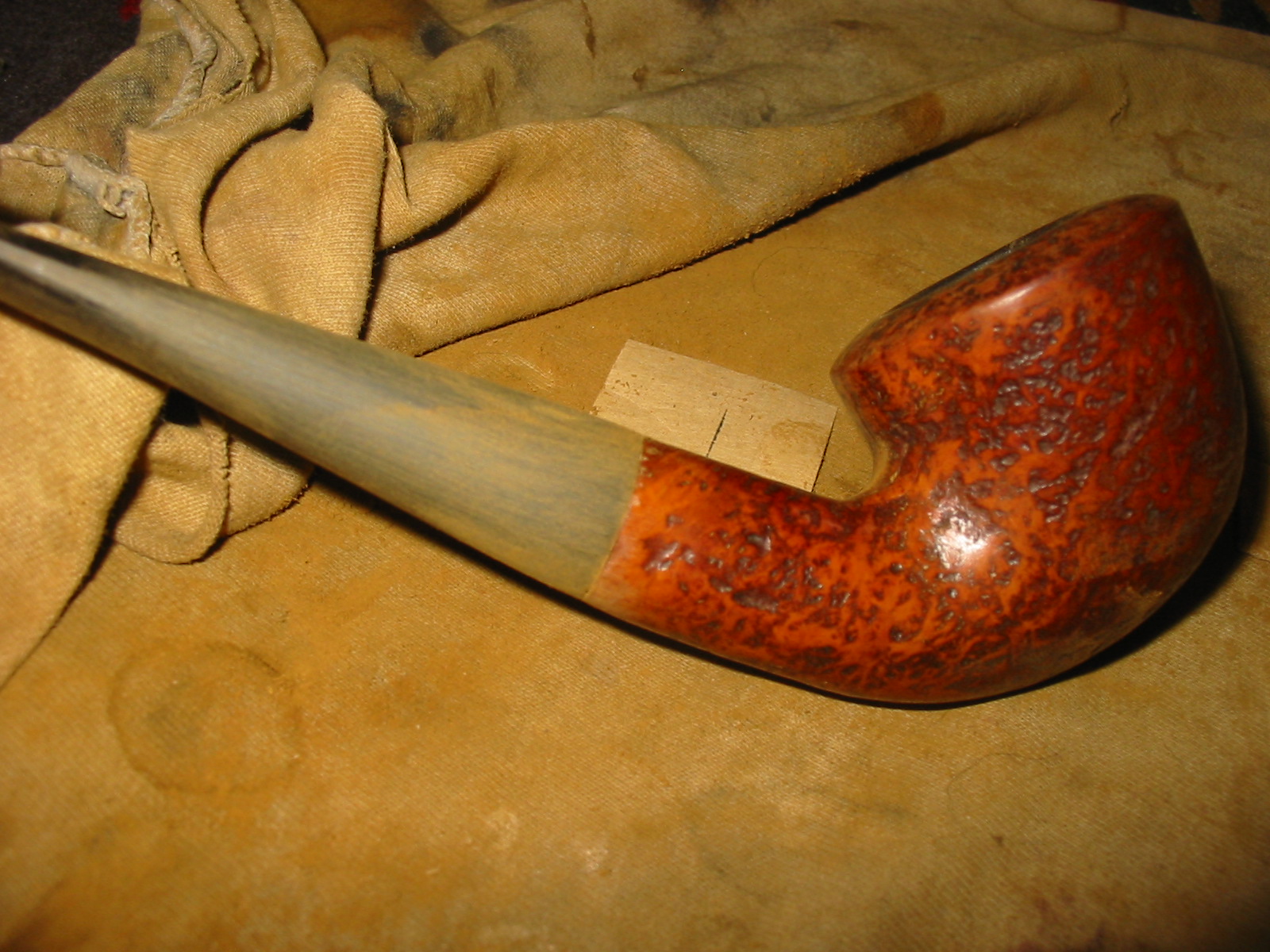
Italian I sorted through my box of stems and found a wide oval stem blank that would fit the curves and width of the shank. The first photo below shows the new stem before any work was done on it. The second photo below shows the tenon being turned on the PIMO tenon turning tool. I removed enough material from the tenon to get it close to fitting. I hand sanded it to get a snug fit in the shank. The tenon turner literally peels the vulcanite back to the right diameter. The third photo below shows the newly turned tenon before the hand sanding to fit it in the shank. The fourth photo shows the fit of tenon. It still needed to be shaped to match the diameter of the shank but the fit was good and tight.

IMG_1384

IMG_1385

IMG_1386

IMG_1387

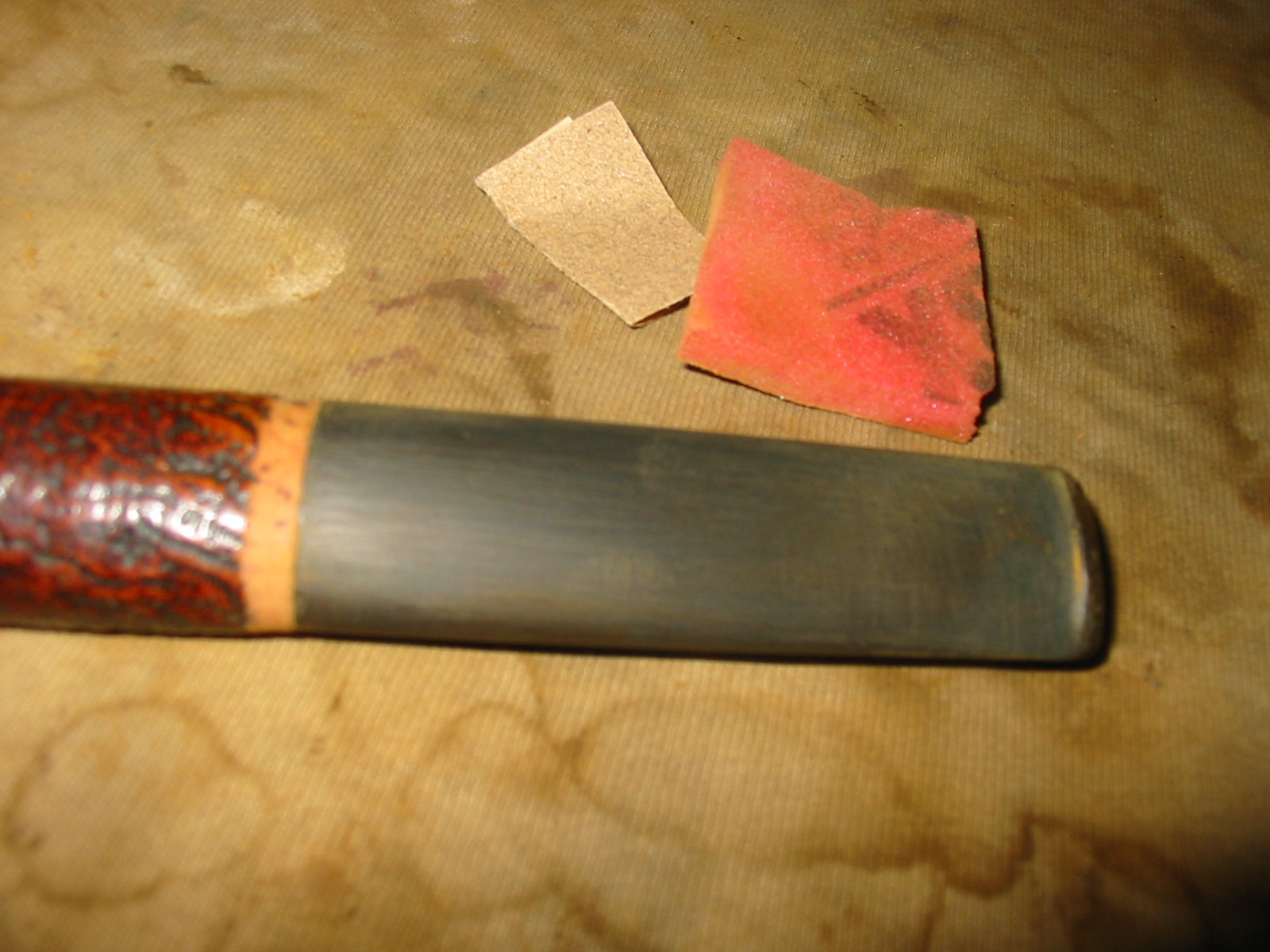
I removed the excess of vulcanite and shaped the stem close to the diameter of the shank with a Dremel with a sanding drum. I carefully worked the drum against the stem and worked to get it as close to the shank shape as possible without damaging the shank. Once I had it close I worked on the fit with emery paper to remove the marks left by the sanding drum. The next series of four photos show the shaping of the stem to fit the shank with the Dremel and the emery paper.

IMG_1389

IMG_1390

IMG_1388

IMG_1394

I reamed the bowl with a PipNet reamer. I started with the smallest head on the T handle and worked my way up to the largest head that would fit the bowl. The next series of three photos shows the reaming of the bowl and the finished reamed bowl.

IMG_1391

IMG_1392

IMG_1393

I cleaned out the divot on the side of the bowl with a dental pick and then packed in briar dust with a dental pick and added drops of super glue. I created a briar dust and super glue fill for the divot. The next series of five photos show the progress of the patch. Once it was filled and even with the surrounding area I used a dental pick to scratch in grooves and crevices to match the sand blasted finish of the surrounding bowl. I wiped down the surface with Everclear and scratched the surface until the finish matched.

IMG_1395

IMG_1396

IMG_1397

IMG_1398

IMG_1399

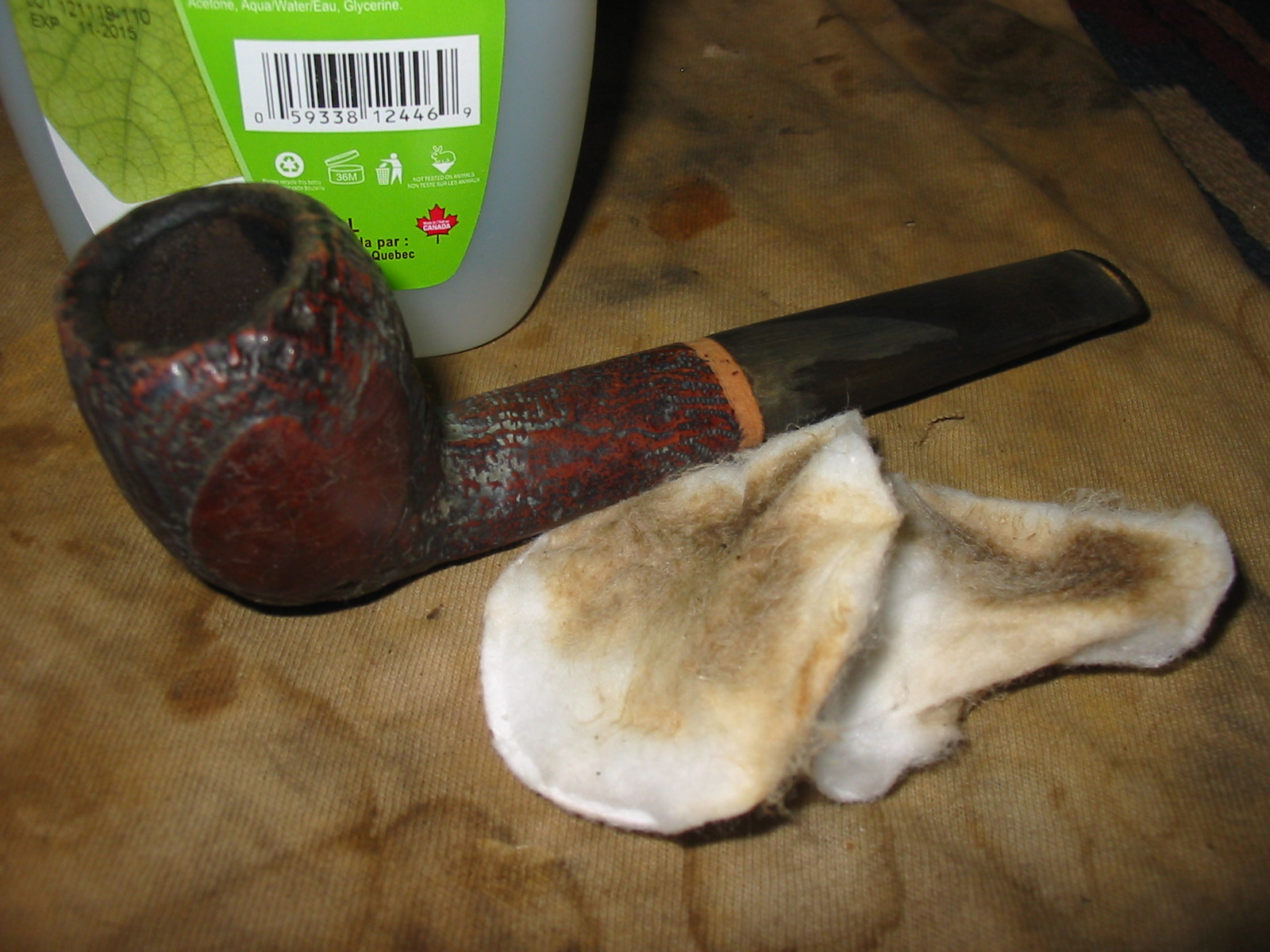
I wiped down the entire bowl with acetone on a cotton pad to clean up the finish on the bowl and prepare if for the new stain that I would add once the surface was clean. Note how well the patch on the left side of the bowl matched the grain of the sand blast on the rest of the bowl in first photo below.

IMG_1400

IMG_1401

I chose to restain the bowl with a dark brown aniline stain that I thinned with two parts isopropyl alcohol to one part stain. From experimenting I had found that this colour matched the original stain on the bowl. I heated the bowl with a heat gun, applied the stain, flamed it and stained and flamed it a second time. I put more stain on the shank near the stem as the smoother portion of the finish seemed to not hold the stain as well as the blasted areas. There had also been a black under stain on the bowl from the original and the thinned dark brown worked well with that under stain to give some depth to the finish of the bowl. I hand buffed the bowl with a shoe brush to give it the initial shine.

IMG_1402

IMG_1403

IMG_1404

IMG_1405

I sanded the stem with micromesh sanding pads from 1500-12,000 grit to polish the stem. Each successive grit of micromesh deepened the shine of the stem. Between the 2400 and the 3200 grit micromesh I polished the stem with Maguiar’s Scratch X2.0 – a plastic polish that I have used to polish stems. I then sanded with the remaining grits of micromesh.

IMG_1406

IMG_1407

IMG_1408

IMG_1409

IMG_1410

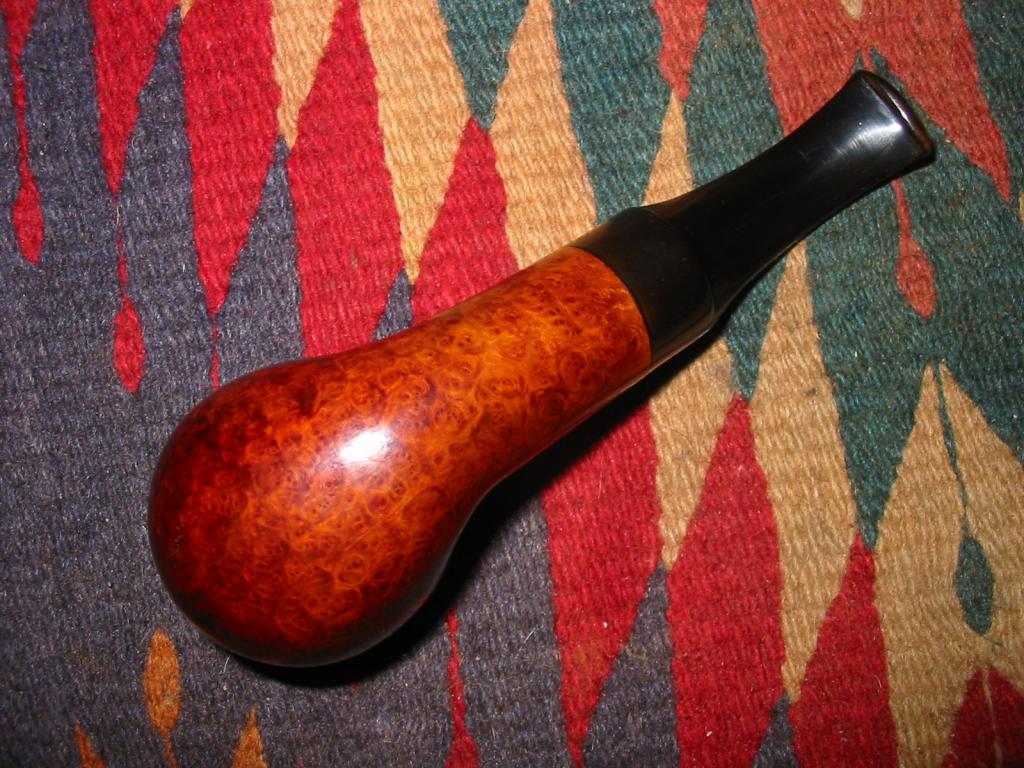
After sanding, I buffed the bowl and stem on the buffer with White Diamond and then gave the stem several coats of carnauba wax on the buffing wheel. I used Halcyon II wax on the sandblasted finish on the bowl and shank. I finished the pipe by buffing it with a clean flannel buff to raise the shine of the wax. The finished pipe is pictured below.

IMG_1411

IMG_1412

IMG_1413

IMG_1414

The final photo below shows the repaired divot on the bowl. It is utterly merged in the side of the bowl and the finish and stain make it invisible.

IMG_1415

Maximizing Your Use of the articles on rebornpipes


rebornpipes is over a year old and currently there are over 450 articles on the blog. The site continues to grow as the nine blog writers and additional guest writers share their refurbishing work in articles on the blog. The original vision of rebornpipes being a place to share ideas and processes of refurbishing continues to come to fruition as those who read the blog contribute their comments and also write ups about their own refurbishing work. The collection of tips, tricks, use of tools and processes continues to grow over time. As it grows and deepens I am becoming more and more aware of how easily the good tips and tricks will become lost in the sheer volume of material.

With that in mind I am working on several ideas that will help to maximize your experience with the blog. The first of these involves encouraging users to utilize the search feature on the home page. It is a great help as you seek to find information on whatever topic that you are looking for on the blog. The data here is truly a gold mine of ideas and as it grows I can see it becoming an expanding source of know how information to address the needs of anyone who wants to either refurbish their own pipes or those of others. The search feature is a definite help.
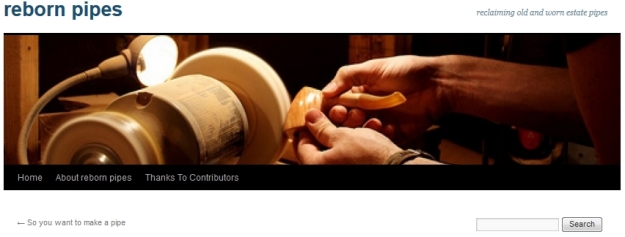
search

But the search engine is only as good as the systematized organization that accompanies the articles on the blog. The underlying structure needs to be seamlessly integrated in a way that makes wealth of materials easily accessible to the viewer/user. To make the search feature even more robust I am in the process of reworking the tags on the articles to facilitate this process. WordPress allows blog writers to set up tags for every article that is written on the blog. Tags are the key ideas or concepts that are covered by the articles. It is the tags that make the data more easily searchable. These tags not only work for the search engine on the blog but also for Google and other online search engines.

An example of how tags work may help illustrate this. If on a pipe restemming article the tag was simply restemming a pipe it would bring up a multitude of articles on restemming that may or may not have the information you are searching for. However, if that tag was broken down into multiple tags such as – using a Dremel to shape a stem, turning a tenon, tenon turing tools, shaping a button, cutting a slot, you could search under any of the parts of the work of restemming that might interest you for further details that are involved. I am working on systematizing the tags so that readers of the blog can easily search for what they are looking for on each topic of interest. As I read through the various articles again on the blog I have found that each has the potential to have unlimited numbers of tags that help to organize the topics covered in that article. But there is a need to standardize these tags to make the connections between articles easy to find.

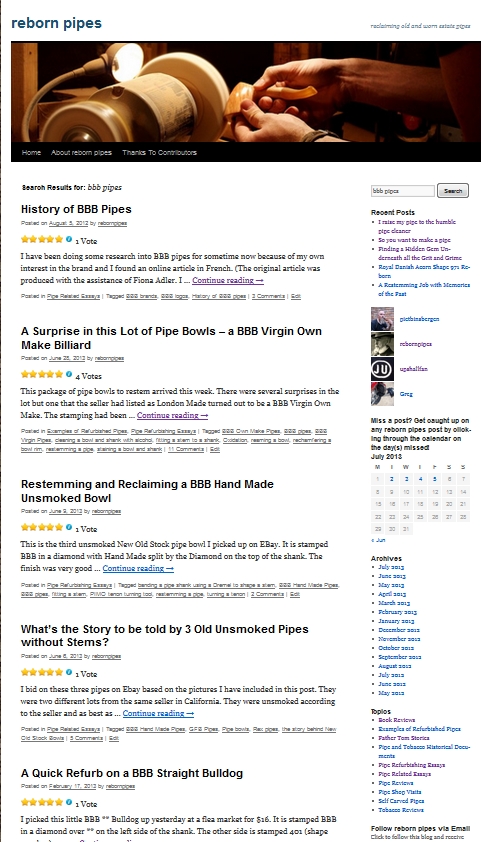
A reader should be able to put in a word, term or group of terms in the search box on the opening page of the blog and find a listing of all the articles on that idea as well as articles that use parts of the idea in the work on a particular pipe or process. This should include not only the main article on it but also every other article that mentions that particular topic. To help visualize this process I used screen capture to show an example. In the first picture below I entered a search for BBB pipes and the search came back with several pages of articles on the blog on that topic. The picture below shows the first page of the list. I could specialize that search to a specific model of BBB or a repair on a BBB pipe and have a smaller list of specialized information. You can see that the process can greatly facilitate finding material on the blog.
search2

To make the search even more specific and usable I am in the process of entering tags for every article on the blog that breaks down the specifics to include the make of the pipe, the model, the work done on it, stem repairs, restaining the bowl, etc. The addition of the multi-tags should make searching more easily done. I have included an outline below of the tag systematization that I am working from in the process. I want to seek to develop continuity among all of the articles. When I am finished with it the search feature will be more precise and helpful in yielding the information that you might be searching for.
I would encourage you to give the search feature a try while I continue to work on the tags for all of the articles. Type in a topic of choice and see what is present in the blog archives. Check back often as I continue to refine the tags and make the search more functional.
Here is the outline for the tags that I am working on presently. It is still in development so I am confident that new sub categories will be added in the process of entering these tags for the articles now present.

1. Stem work

a) Shaping a stem with a Dremel
– Shaping a saddle stem
– Shaping a diamond stem
– Shaping a taper stem

b) Shaping a stem with files and sandpaper

c)Using a tenon turner to cut a new tenon on a stem blank
– PIMO tenon turning tool
– PME tenon turning tool
– Lathe

d) Replacing a broken tenon
– Using a threaded tenon replacement
– Using a Delrin tenon replacement

e) Fitting a stem to the shank

f) Polishing the stem
– With a buffer
– Without a buffer
– Micromesh sanding paper/disks
– Polishes and compounds

g) Removing oxidation from the stem
– Bleach
– Oxyclean
– Bic Lighter

h) Cutting a new button on the stem
– Cutting a new button with needle files
– Shape a button with needle files and sandpaper

i) Opening up the airway in the stem

j) Shaping the slot in the button

k) Orific openings in the button

l) Using estate stems to restem pipes

m) Using stem blanks

n) Repurposing stems – saddle to diamond shaped, billiard to lovat

o) Lifting tooth marks – using heat – heat gun, boiling water, Bic lighter

p) Repairing bite throughs/holes with superglue

q) Repairing holes with vulcanite dust and superglue

r) Repairing holes with vulcanite dust and epoxy

s) Filling dents with superglue – clear/black

t) Filling dents with vulcanite dust and superglue/epoxy

u) Drilling and setting a Delrin replacement tenon

v) Cleaning the inside of the stem – tools

w) Protecting stem logos and stamping

x) Bending stems with heat – heat gun, oven, flame, boiling water
– Bending acrylic stems
– Bending vulcanite stems

y) Repairing P-lip stems

2. Bowls – Refinishing

a) Removing a finish
– An alcohol bath
– Acetone washes
– Sanding

b) Refinishing a bowl
– Sanding with micromesh
– Sanding with wet dry sandpaper

c) Staining a bowl
– Applying the stain
– Aniline stains
– Flaming the stain
– Lightening a stain – diluting, washing
– Matching stains

d) Rusticating a bowl
– Rustication tool options
– Finishing a rusticated bowl
– Staining a rusticated bowl
– Polishing a rusticated bowl
– Waxing a rusticated bowl

e) Sandblast bowl
– Cleaning a sandblast finish with Oil soap and a toothbrush/tire brush
– Polishing a sandblast
– Staining a sandblast
– Waxing a sandblast

f) Topping a bowl
– Sanding the rim
– Sanding setup
– Staining the rim
– Polishing/waxing the rim
– Beveling the inner edge of the rim

g) Steaming out dents
– Tools needed for steaming dents
– Process of steaming dents

h) Replacing fills
– Removing old putty fills
– Replacing old fills with a mix of briar dust and super glue

3. Bowls – Internals

a) Reaming bowls
– Different types of reamers
– When to ream

b) Bowl Coatings
– Removing bowl coatings
– Making and applying bowl coatings

c) Sweetening a bowl
– Salt and alcohol treatment
– Cotton bolls and alcohol treatment
– Activated charcoal

d) Pipe Retorts
– What is a retort
– How to use a retort
– How to make your own retort

e) Repairing cracked bowls

f) Chamfering the rim

g) Repairing an over reamed or over drilled bowl
– Making and using pipe mud

h) Repairing an out of round bowl

i) Cleaning bowls and shanks
– Pipe cleaners and cotton swabs
– Sanding paper
– Pipe retorts

j) Alcohol bath – how to make one and use it

k) Opening an airway

l) Coping with an off centre airway

4. Bands

a) Repairing a cracked shank
– Delrin/stainless insert
– Glue
– Bands

b) Pressure fitting a band
– Heating the band – heat gun, flame
– Pressing the band in place
– Removing dents and dings in a band

c) Polishing a band/ removing tarnish and scratches
– Silver polish
– Polishing cloths
– Micromesh sanding pads

d) Shank Extensions and banding

e) Repairing a broken shank
– Shortening the shank
– Regluing a broken shank
– Adding a shank extension

5. Documents

a) Historical documents

b) Catalogues – shops and brands

c) Patent information

d) Brochures

e) Instruction manuals

6. Stories and Essays

a) Father Tom stories

b) Short stories

c) Pipe reviews

d) Tobacco reviews

e) Book reviews

f) Pipe related topics

g) Pipe Shop visits

7. Self-carved pipes

a) Carved from kits

b) Carved from briar blocks

c) Reimagined pipes

If you come up with additional topics that should be added as you read this please post them in the comments and I will add them to the list. This is a work in progress and will take time to fully implement but I think it will be an aid to finding materials here.

Custom Made Billiard Back into Service


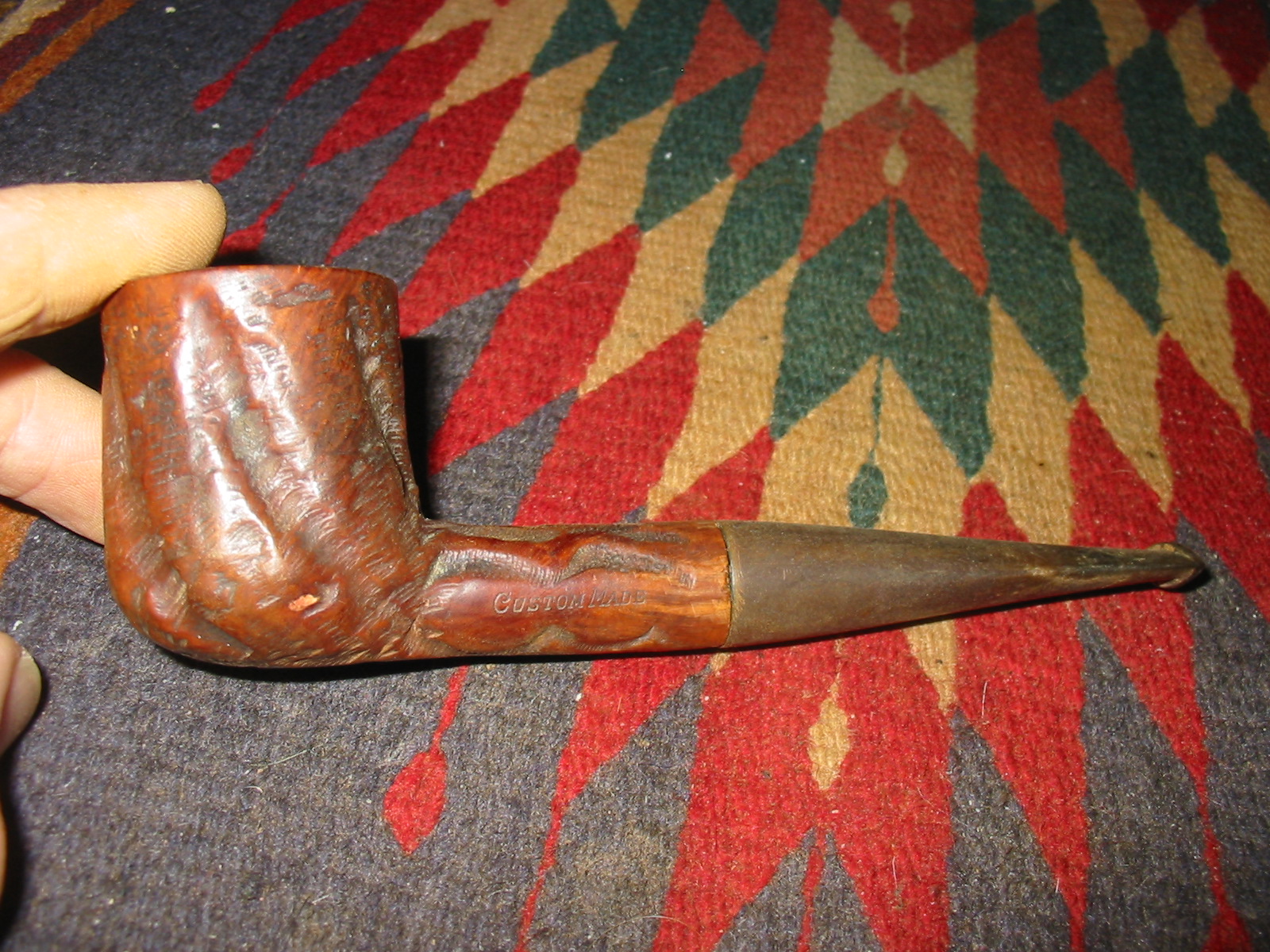
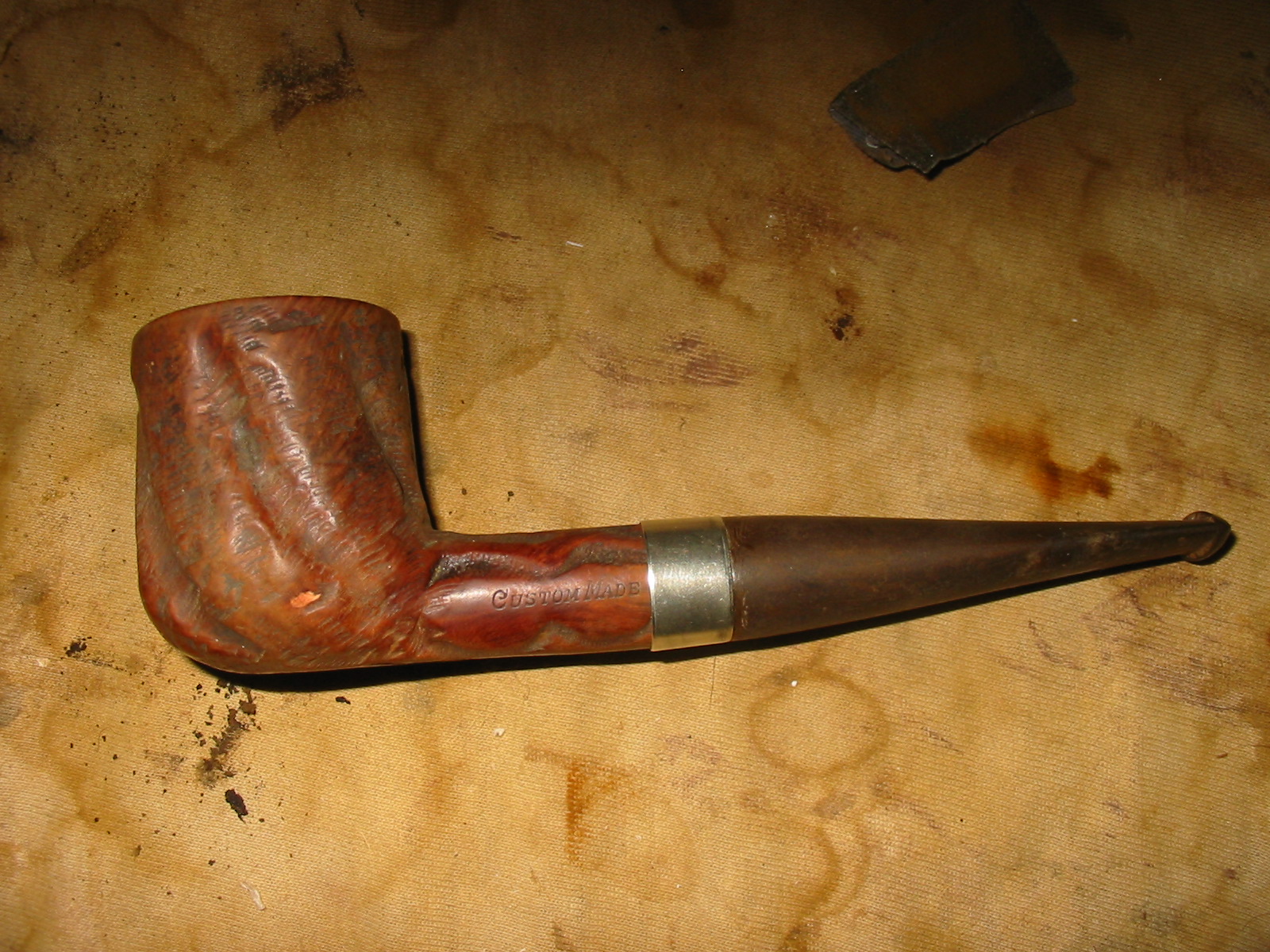
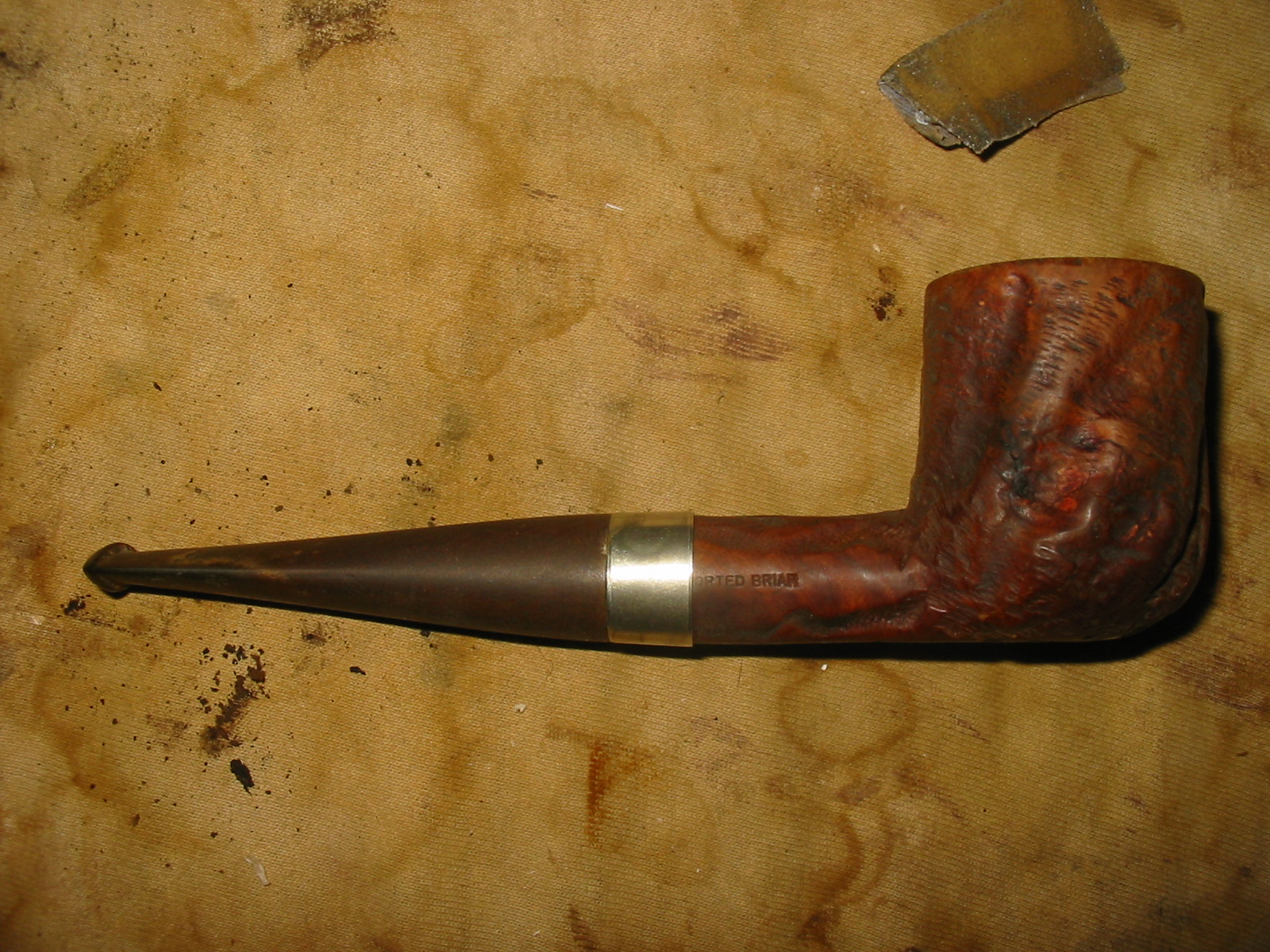
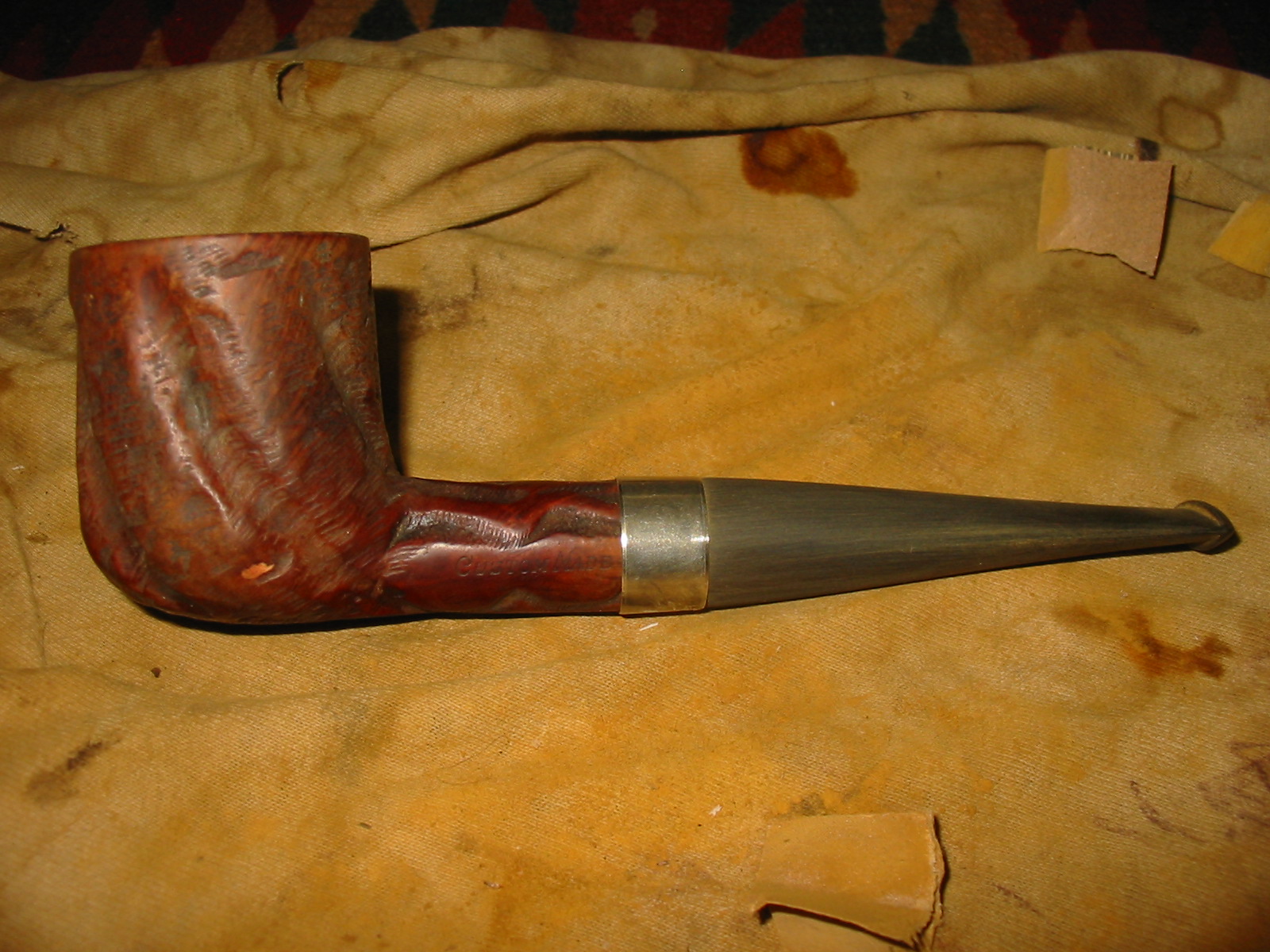
The next pipe in the lot that I refurbished was the top pipe in the centre column in the photo below. It was a Custom Bilt like billiard. It is stamped on the left side of the shank Custom Made and on the right side of the shank Imported Briar. That stamping tells me that it is an American Made Pipe. I cannot find any information on the stamping on the internet but will continue to look and see what I can find.

bowls1

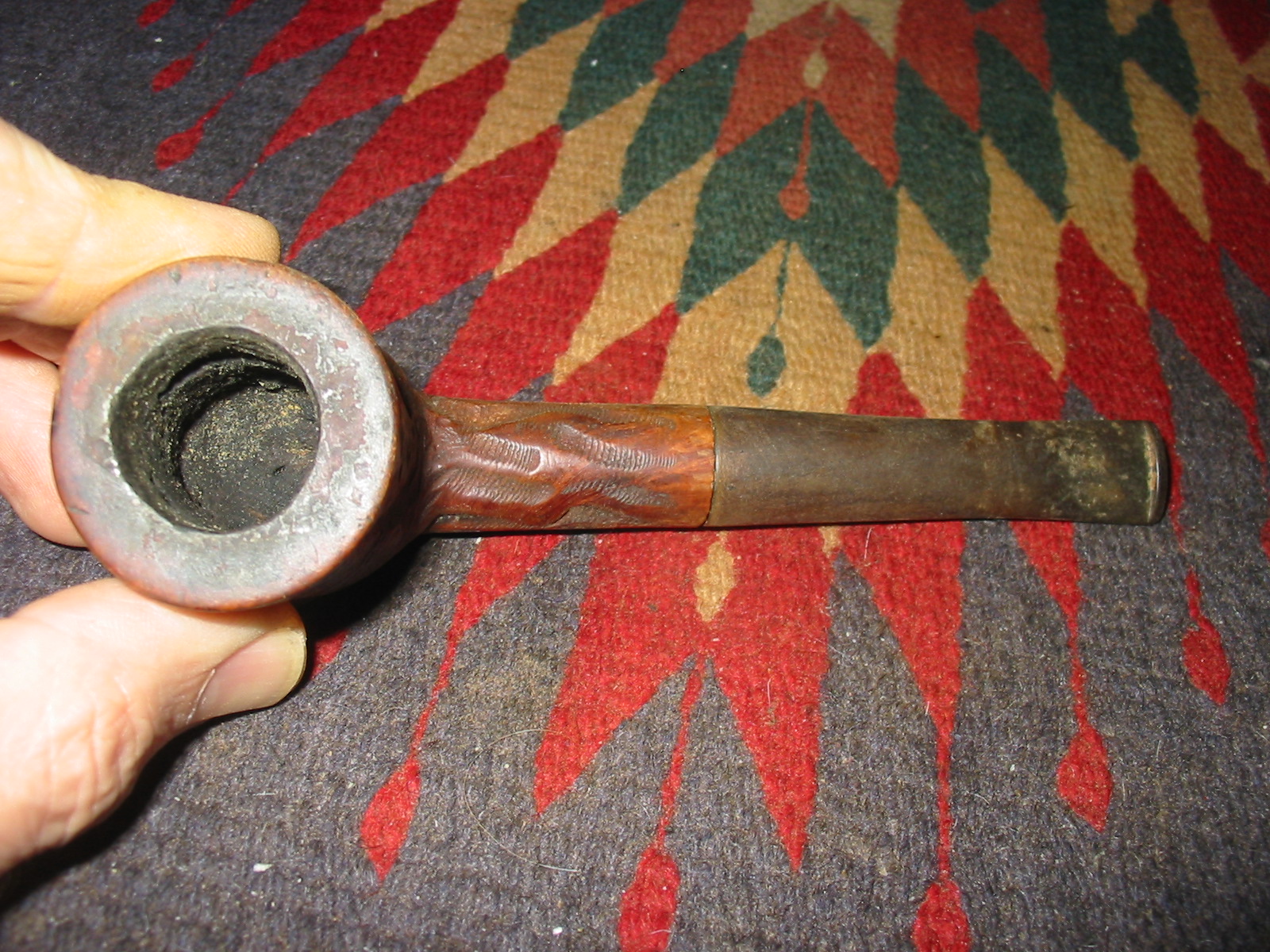
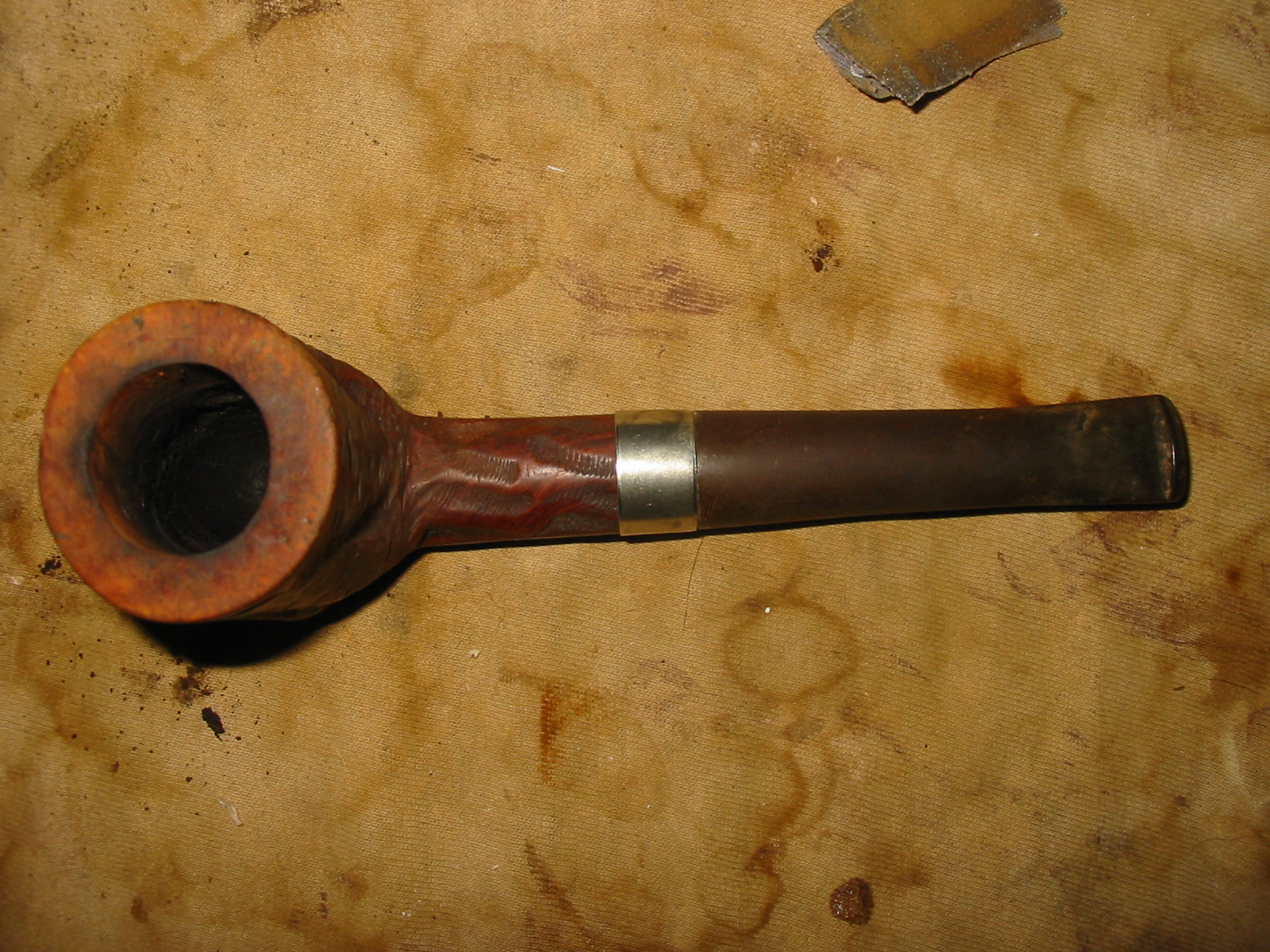
Custombilt The pipe was dirty. The bowl was badly caked – meaning that the cake was very crumbly and uneven. The bowl was out of round as can be seen in the photo below. I would need to ream it out completely to reshape the bowl. The finish was dirty in all of the worm trail carving that is found in these old rustic pipes. It looks a lot like a Mincer Custombilt but I am not sure. The rim surface is tarry with build up and the front inner edge of the bowl is burned. The shank looks good in these photos but there is a divot out of the briar on the left side where it will meet the stem. It did not have a stem when I picked it up on Ebay. I will need to make some decisions about what to do with the new stem and the match at the shank.

I went through my box of stems to find one that would fit the shank with little adjustment. I had just the stem there. The fit would be great as it was the same diameter as the shank. The stem was oxidized and dirty inside but there were no tooth marks. There was also a calcification on the stem near the button that would have to be dealt with when I got the stem fit to the shank. The next five photos show the “new” stem. I had to hand sand the tenon to get it to fit snugly in the mortise. The third photo below shows the sanded tenon. I used emery paper to sand the tenon back until it fit in the shank. The fourth and fifth pictures show the fit of the stem to the shank. The divot is visible in the fourth photo. It is mid shank on the left side of the pipe. No amount of fitting the stem would make that disappear. I could sand down the shank at that point to make a cleaner fit but I was not sure that is what I wanted to do. To do the sanding would change the chunky appearance of the pipe. So I decided not to sand the shank. I went on and cleaned the inside of the pipe before I made the final decision on the shank.
IMG_1330

IMG_1331

IMG_1332

IMG_1333

IMG_1334

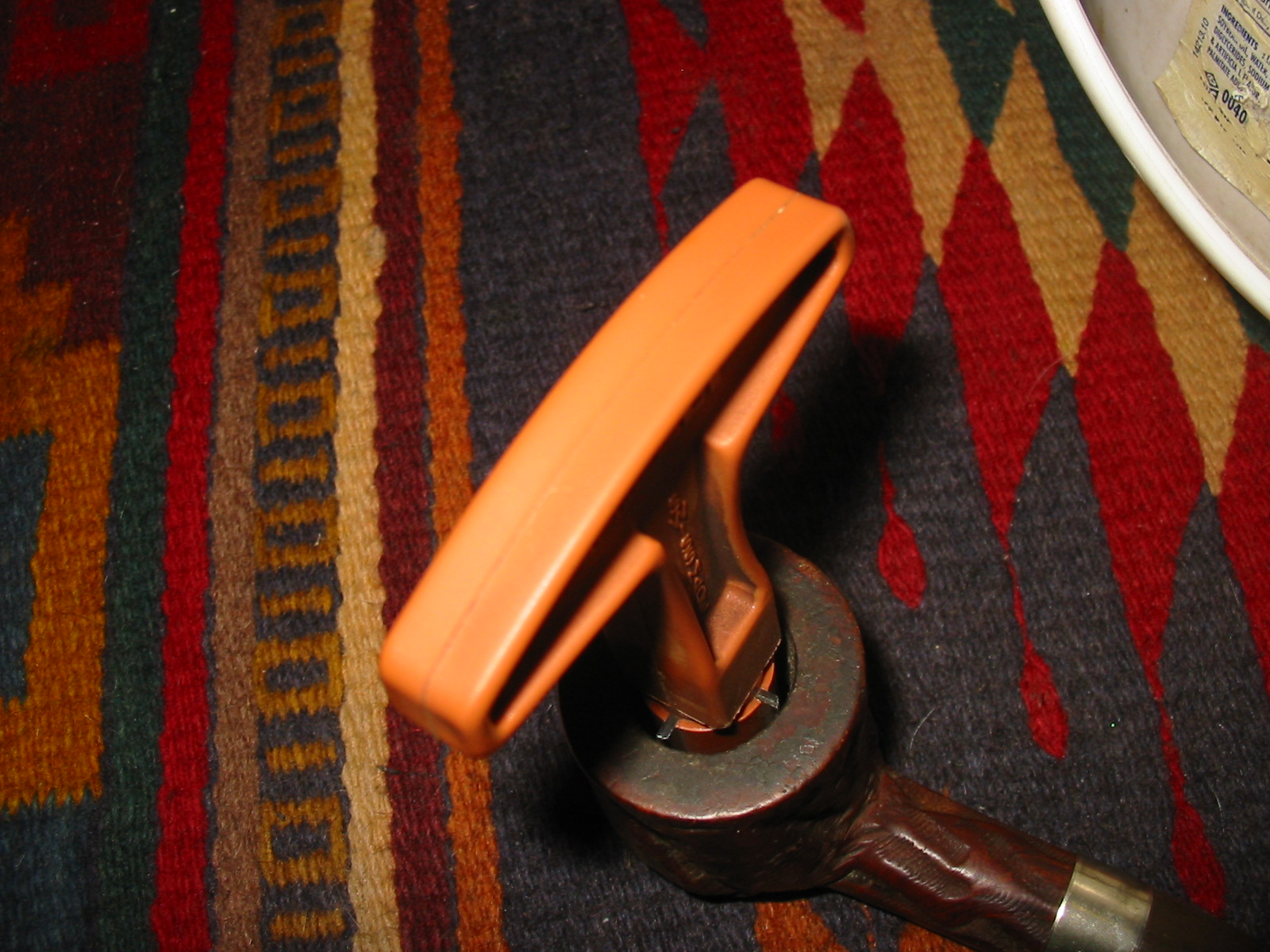
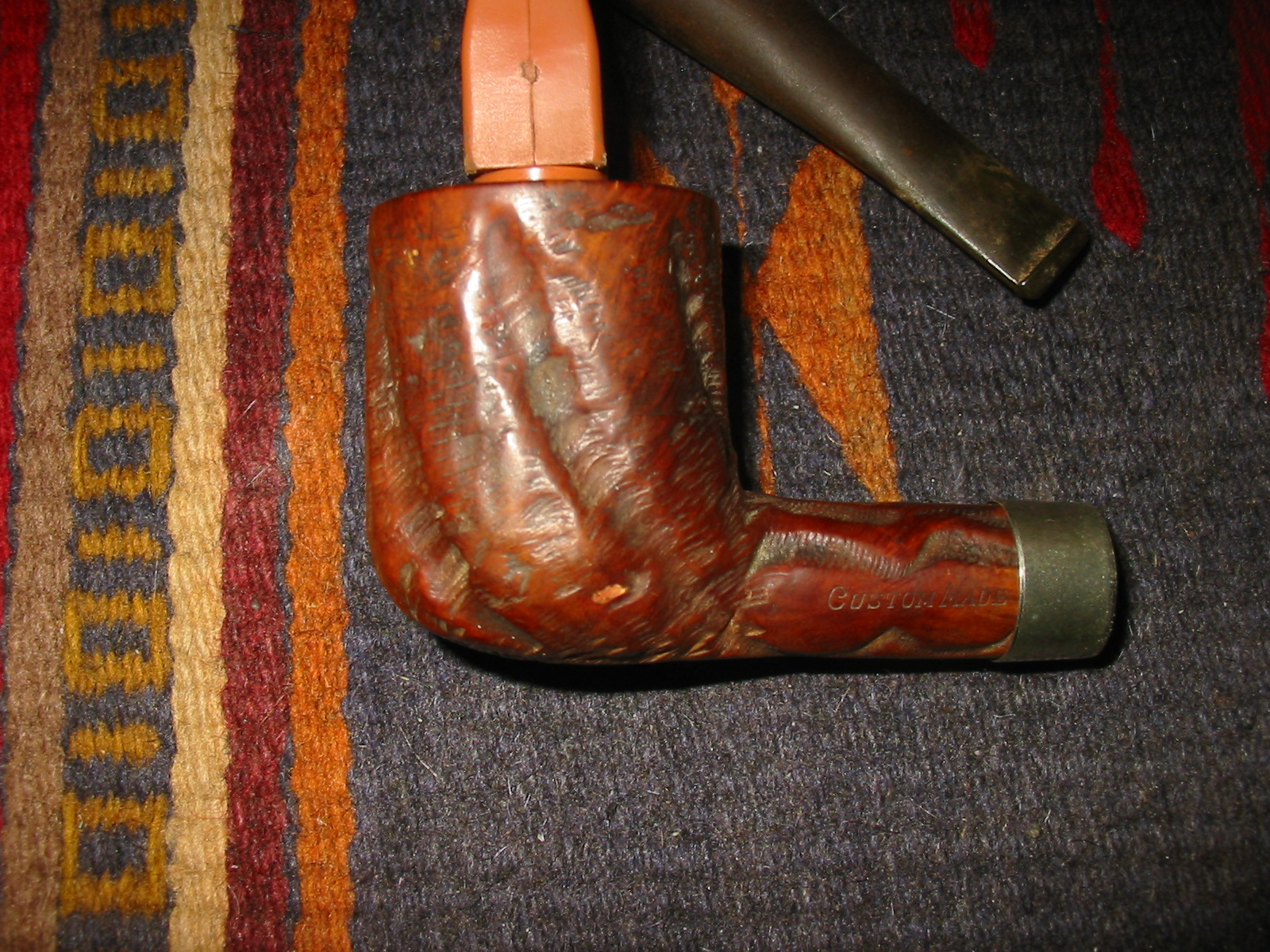
While I was prepping to ream the bowl I took out a nickel band to see what it would look like on the shank. I liked the overall look. I left it on the shank while I reamed the bowl. I used a PipNet reamer – a T handle with various cutting heads to ream the bowl. I started with the one that fit the easiest and then worked up to the third head which was the same diameter as the bowl. I reamed it back to bare wood (Photos 1 and 2). I then heated the band with the heat gun and pressed on the shank to give me a smooth transition between the stem and the shank (Photos 3 and 4).

IMG_1337

IMG_1338

IMG_1339

IMG_1340

I worked on the inner rim with a folded piece of 220 grit sandpaper. I sanded the top of the bowl with the same sandpaper and the fine grit sanding sponge to remove the build up on the rim (Photos 1 and 2). The third photo below shows the inner edge of the rim after the sanding with the 220 grit sandpaper. I was able to get the bowl close to round. I also used the sanding drum on the Dremel to even things out so the third photo shows the finished repair to the inner rim edge.

IMG_1341

IMG_1342

IMG_1343

I wiped the exterior of the bowl down with acetone on cotton pads. I wanted to clean out the buildup in the crevices of the trails on the bowl. The dirt and finish that came off is visible in the two photos below. Two obvious fills also showed up in the bowl. These would need to be taken care of to hide them under the new stain once I was finished.

IMG_1344

IMG_1345

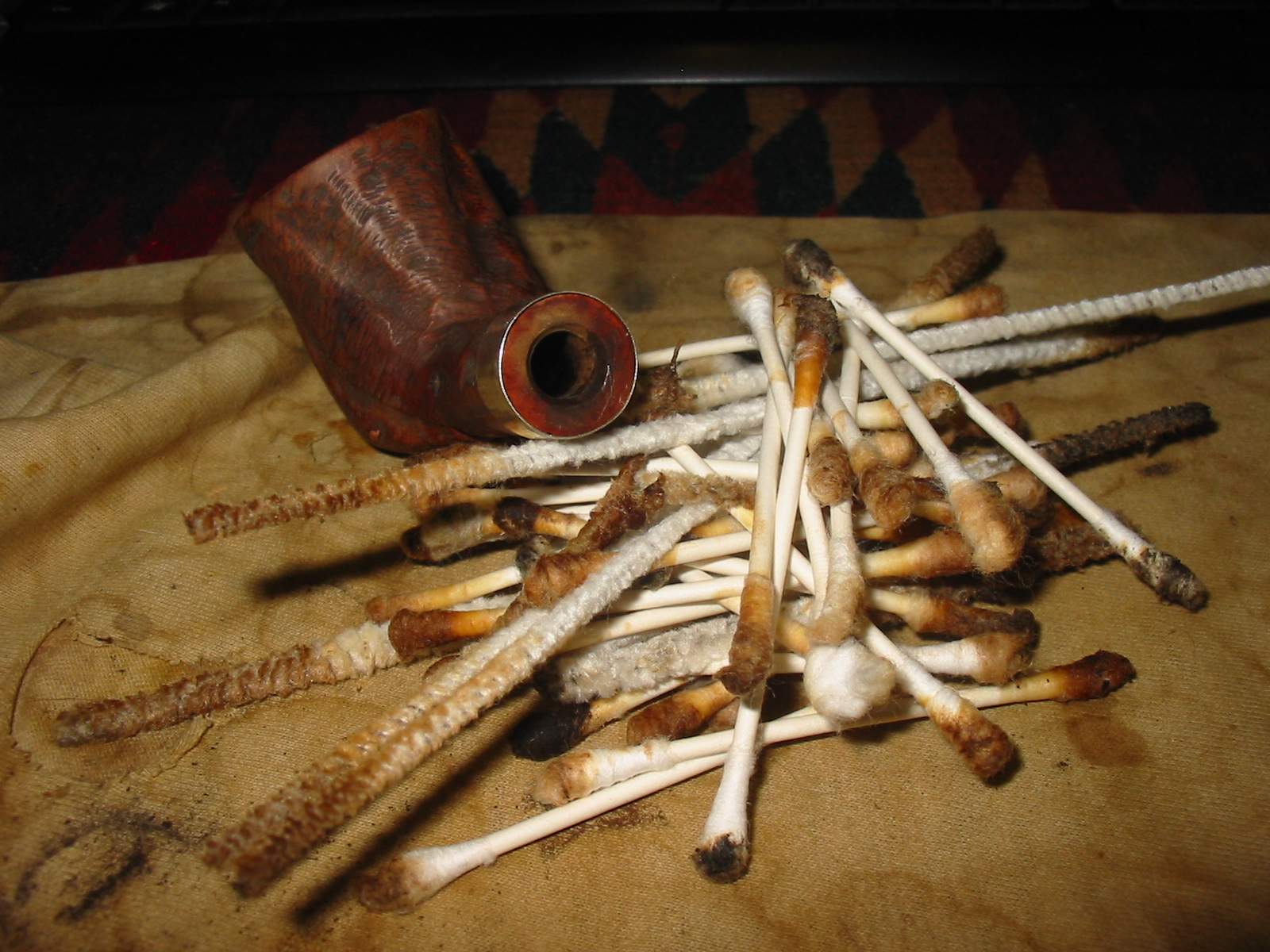
With the finish removed it was time to clean out the shank and airway of the pipe. I used pipe cleaners, cotton swabs and also the drill bit from the KleenReem Pipe reamer to remove the tars and oils that had built up in the shank. I probably could have used a retort but the shank did not smell sour or rank. It smelled like Virginia tobaccos had been smoked in this so I just used a lot of pipe cleaners and cotton swabs dipped in Everclear until they came out spotless. I wiped down the tenon on the “new” stem as well with the Everclear.

IMG_1346

IMG_1347

Once the insides were clean I inserted the stem in the shank to see if I still had a snug fit. Sometimes when the grime is removed the fit is not as good as it was before cleaning. I have learned the hard way to leave the stem tight and when it is cleaned the fit will be perfect. I sanded the stem with fine grit emery paper to remove the calcified buildup and the oxidation on the stem. The next three photos show the stem after the sanding with the emery paper.

IMG_1348

IMG_1349

IMG_1350

I then sanded the stem with 220 grit sandpaper to remove more of the oxidation and also the scratches left behind by the emery paper. The next series of three photos show the stem after sanding with the sandpaper.

IMG_1351

IMG_1352

IMG_1353

I went back and cleaned the stem with pipe cleaners and Everclear. I should have done that when I was cleaning the shank but honestly I forgot to do so. Never too late however so I did it next. The next four photos show the pile of pipe cleaners that it took to clean the stem. I also wiped the bowl and shank down with Everclear on a cotton pad to prepare it for staining.

IMG_1354

IMG_1355

IMG_1356

IMG_1357

I restained the pipe with a dark brown aniline stain. I thinned the stain with 1 part alcohol to 2 parts stain to get the brown I wanted for a colour. I wanted it dark enough that the fills would blend into the finish but also transparent enough to show the grain through the stain. I used a black permanent marker, called a Sharpie here in Canada to give the fills a dark top coat before applying the stain. I have learned that this method makes the fills blend into the bowl better on these rusticated bowls. I applied the stain with a cotton swab, flamed it with my lighter and reapplied it and flamed it again. It took three applications of the stain to give good coverage to the bowl. The next three photos show the unstained pipe (Photo 1) and the newly stained pipe (Photos 2 and 3).

IMG_1358

IMG_1359

IMG_1360

Once the stain was dry I hand buffed it with a shoe brush to see if I needed to add any more stain to some of the spots on the bowl and rim (Photo 1). The next three photos show the buffed bowl and the finished colour. The coverage was good so I buffed it by hand and then went back to work on the stem.

IMG_1361

IMG_1362

IMG_1363

IMG_1364

The next series of six photos show the progressive polishing of the stem with micromesh sanding pads from 1500-12,000 grit.

IMG_1365

IMG_1366

IMG_1367

IMG_1368

IMG_1369

IMG_1370

I took the pipe to the buffer and buffed the stem with White Diamond and then rubbed it down with Obsidian Oil to preserve it. I gave the bowl a coat of Halcyon II wax and the stem several coats of carnauba wax to prevent oxidation. I buffed the entire pipe lightly with a soft flannel buff. The finished pipe is pictured in the last four photos.

IMG_1371

IMG_1372

IMG_1373

IMG_1374

A Phoenix Rises – Reworking a Pipe


This post may be controversial to some folks as it is about the reworking of a pipe from a living artisan. I know that many would never do such a thing and would either sell the pipe or leave it in the collection. I chose to do neither of those things. Knowing that when Stephen gave it to me it was not one that he was going to sell and that in some ways he saw as problematic made this adaptation an easy choice for me.

Quite a few years ago now – enough years have passed that I am not sure when – I used to visit Stephen Downie when he lived in Vancouver. We had connected through the Vancouver Pipe Club and I enjoyed his company. When I visited I would pick up tips on pipe making that I could use in my pipe refurbishing – stem making, sanding techniques, staining processes, etc. I enjoyed looking through his box of throw away stummels that for one reason or another had problems and did not make the grade. He would often give me one or two to use to practice carving. I enjoyed the process of working with these blocks just to learn about briar and how it responds when cut and sanded. I learned about sand pits and flaws in the block and got to play around with the tools to remove the flaws as much as possible and craft a passable pipe for me to smoke.

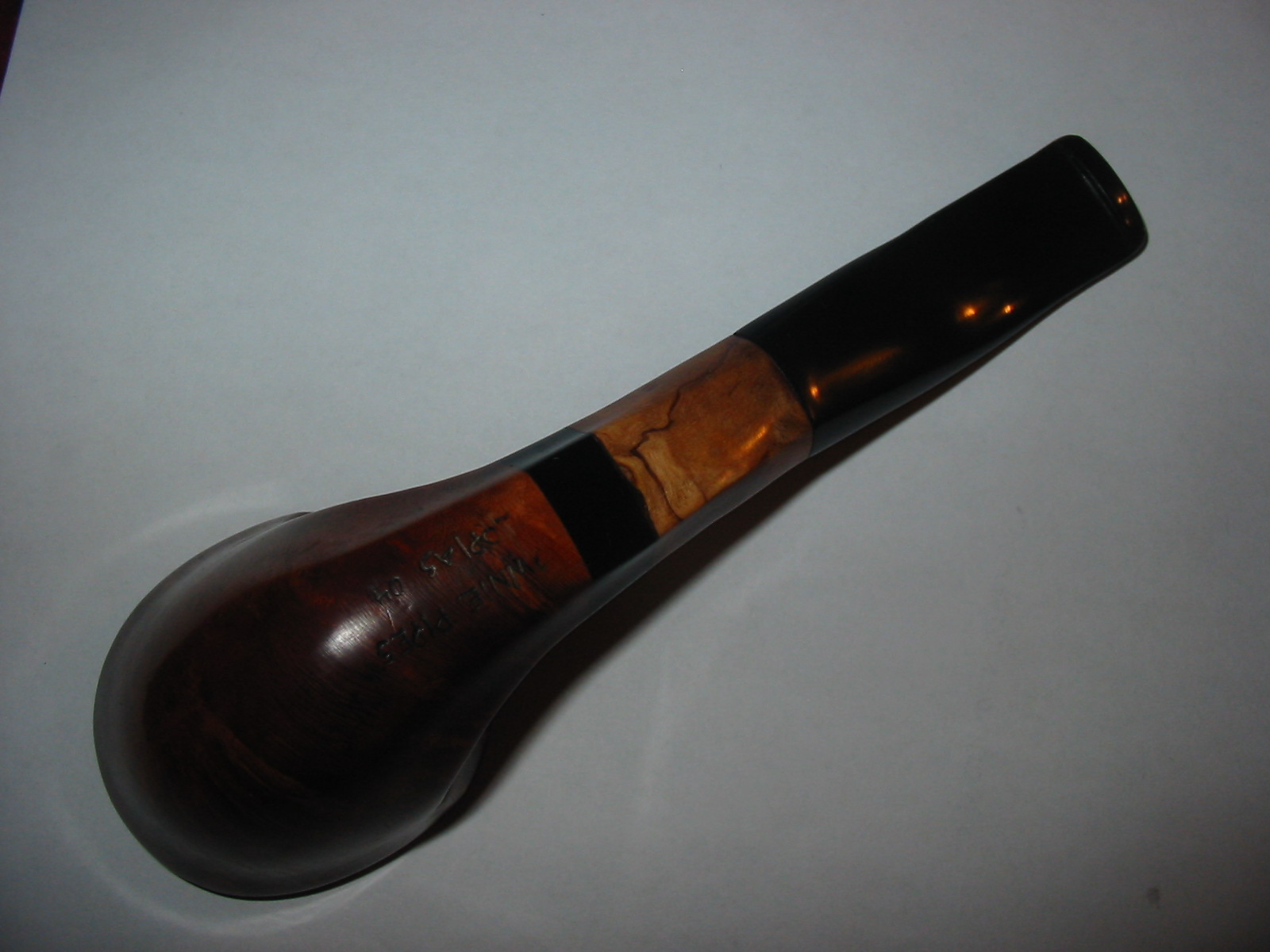
One day when I was going through the box he gave me this pipe that he had made in 2004. If memory serves me correctly, Stephen said that he thought that the drilling of the bowl had left it too thin in the bottom front. As such he would not place it on his site for sale. He figured that it would still smoke well if broken in carefully. I gladly took it home with me, smoked a few bowls and then put it in the pipe cupboard. Over the years I have rarely smoked it much as I found the hanging tail fin on the underside very uncomfortable to hold. I took it out of the cupboard when I was choosing a pipe to smoke. Sometimes I picked it up and smoked it but it never quite made it into the rotation. The pipe smokes very well so it was not a matter of mechanics that kept me from picking it up more often, but it just seemed that the fin was in the way.

Fast forward to a wedding I did just a few months ago (2013) for a couple of good friends of mine here in Vancouver. At the reception dinner I connected with Stephen and his wife. We talked about life in general, books we were reading and writing and pipes we were enjoying. We talked of the pipes Stephen was carving and the ones I was refurbishing. We laughed over different details of the work while we sipped our drinks and ate the buffet supper.During the course of our conversation Stephen talked about an idea he had about reworking pipes for people and giving them new looks and improved feel. If they had a pipe in their collection that just did not get smoked often for whatever reason he would reimagine and rework it for them. He called his idea a Phoenix pipe. As we talked about it I found that I liked the idea a lot. When I went home that evening I could not get it out of my mind. I looked over some of my old pipes that for one reason or another have not seen the use they deserve. I sorted through them to see if one of them might be a candidate for this idea of his. I picked up the old finned pipe that he had given me many years before. As I looked it over I had several ideas of how to rework it. I put it back in the cupboard and let it sit for several months while I thought about what do about it.

I picked it up again several days ago and looked it over. I like colour of the stain but wondered what it would look like if I darkened it. I like the feel of the bowl in the hand. I liked the curves of the rim and the bowl to the shank. I liked the flow of the curve to the stem. I liked the shape of the shank and the black acrylic insert and the olive wood extension on the shank. The mortise was Delrin lined and the drilling was vintage Downie – well drilled, straight and clean. The fit of the stem was stellar. The stem was also comfortable and the button thin as is my preference. The Cumberland colour and material suited the pipe well. There were many things I liked about it. I turned the ideas over in my mind of what I might do to rework it. I thought that I would remove the fin on the bottom of the shank and the nob on the bottom of the stem and I would have it done. I thought about calling Stephen and setting up a meeting to drop the pipe off for him to reimagine – do his Phoenix work on it and see what he could do with it. But after looking it over for a while I decided rather than sending it to him I would do a Phoenix rework on it myself.
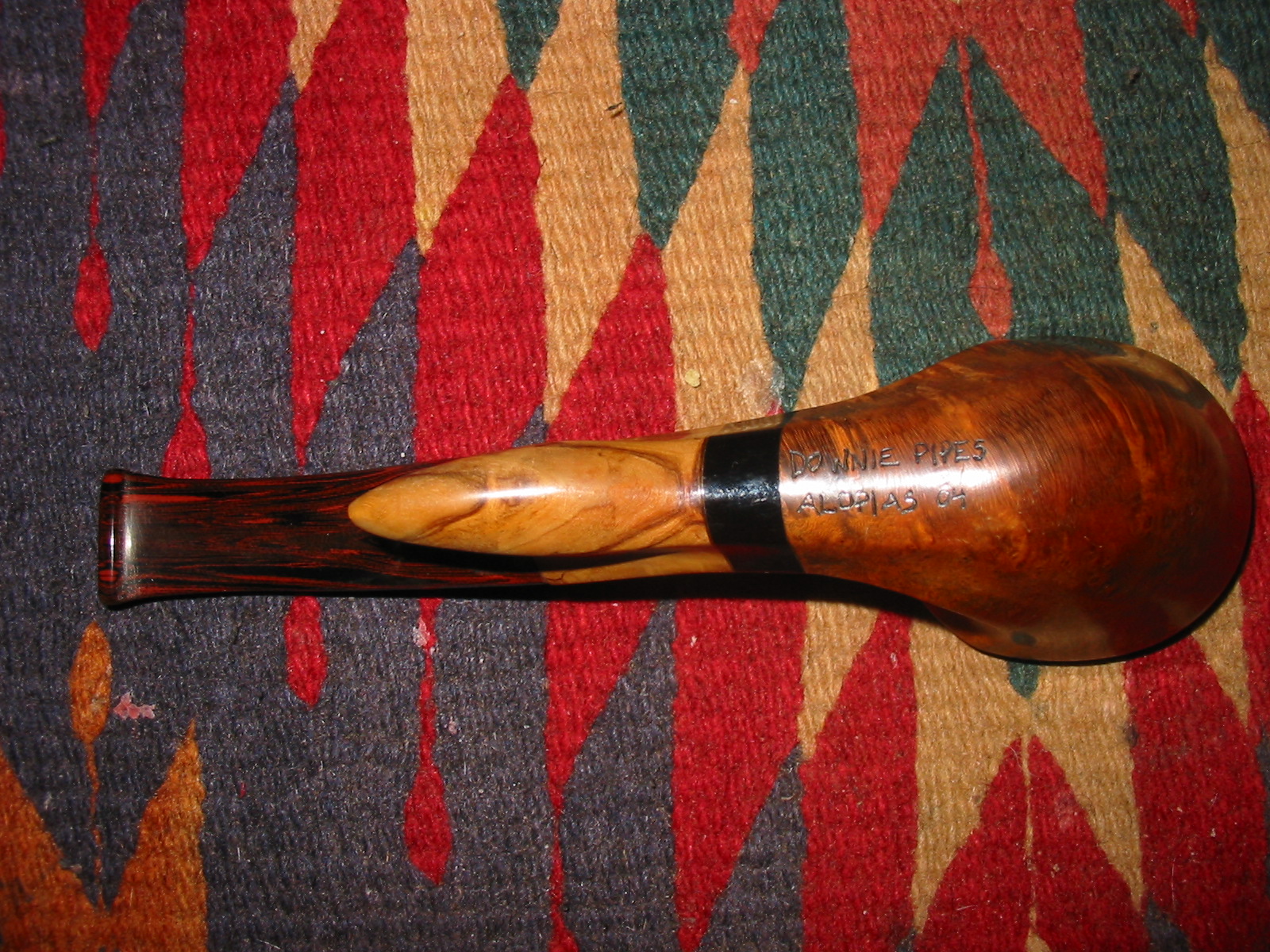
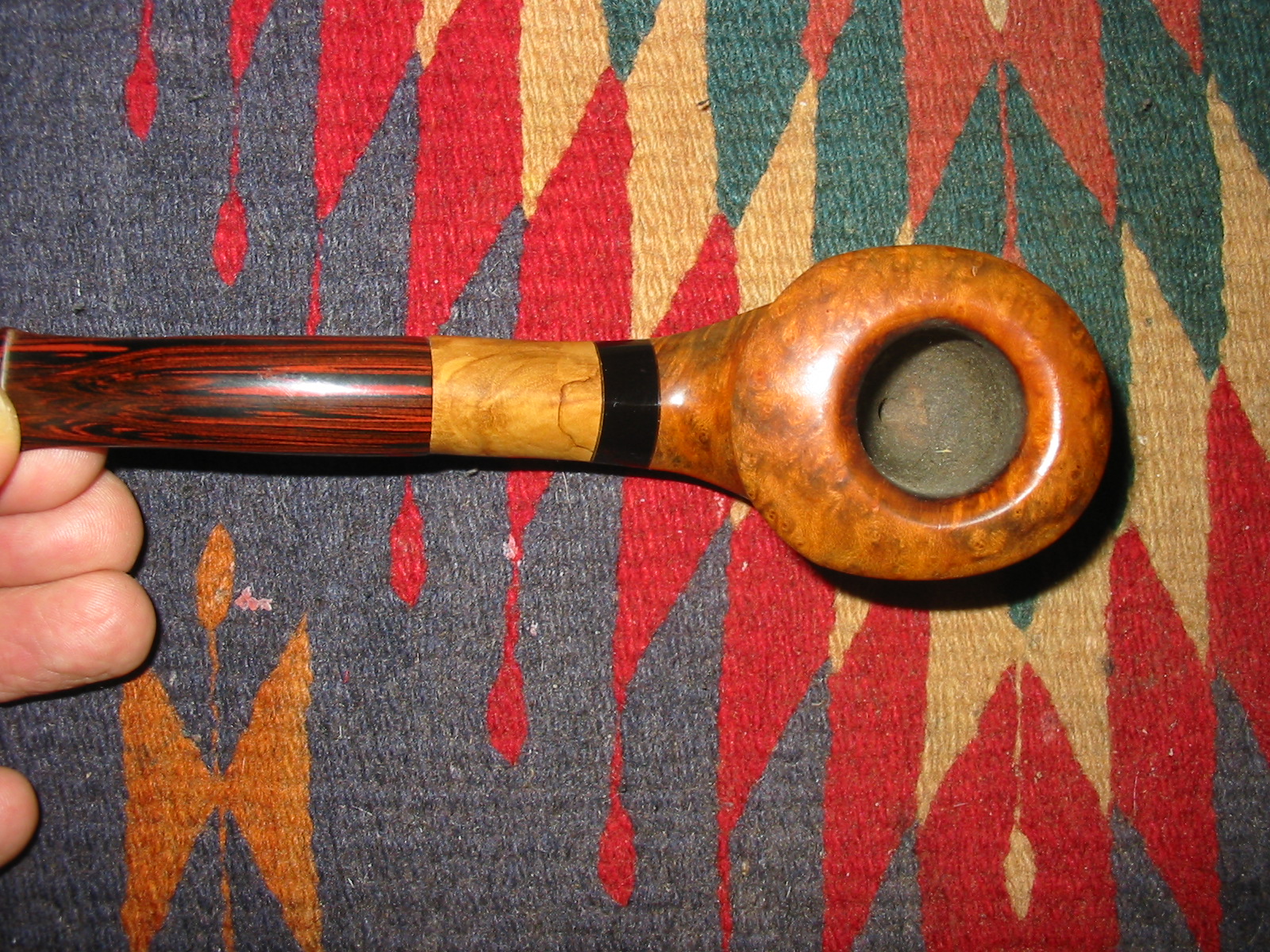
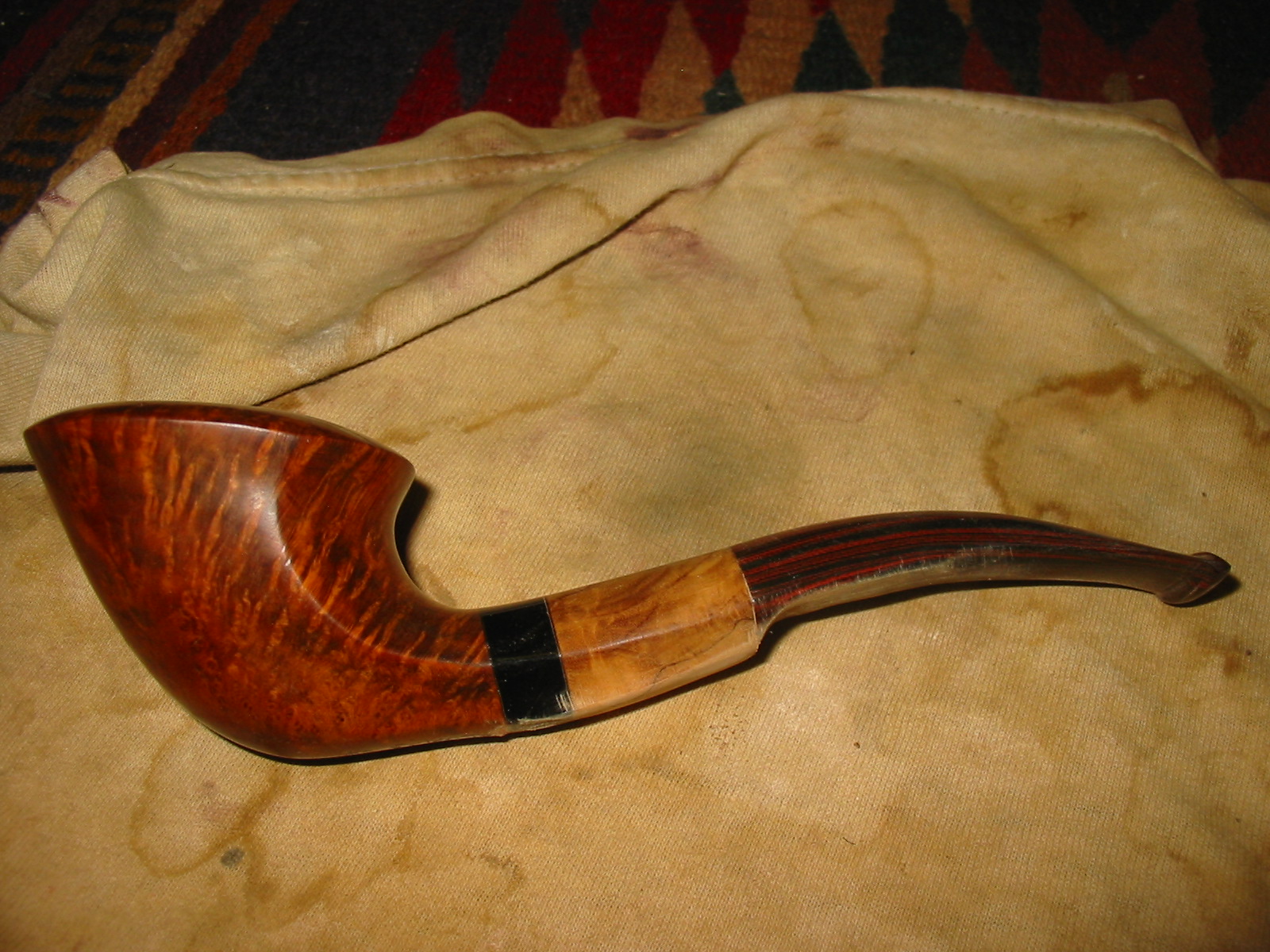
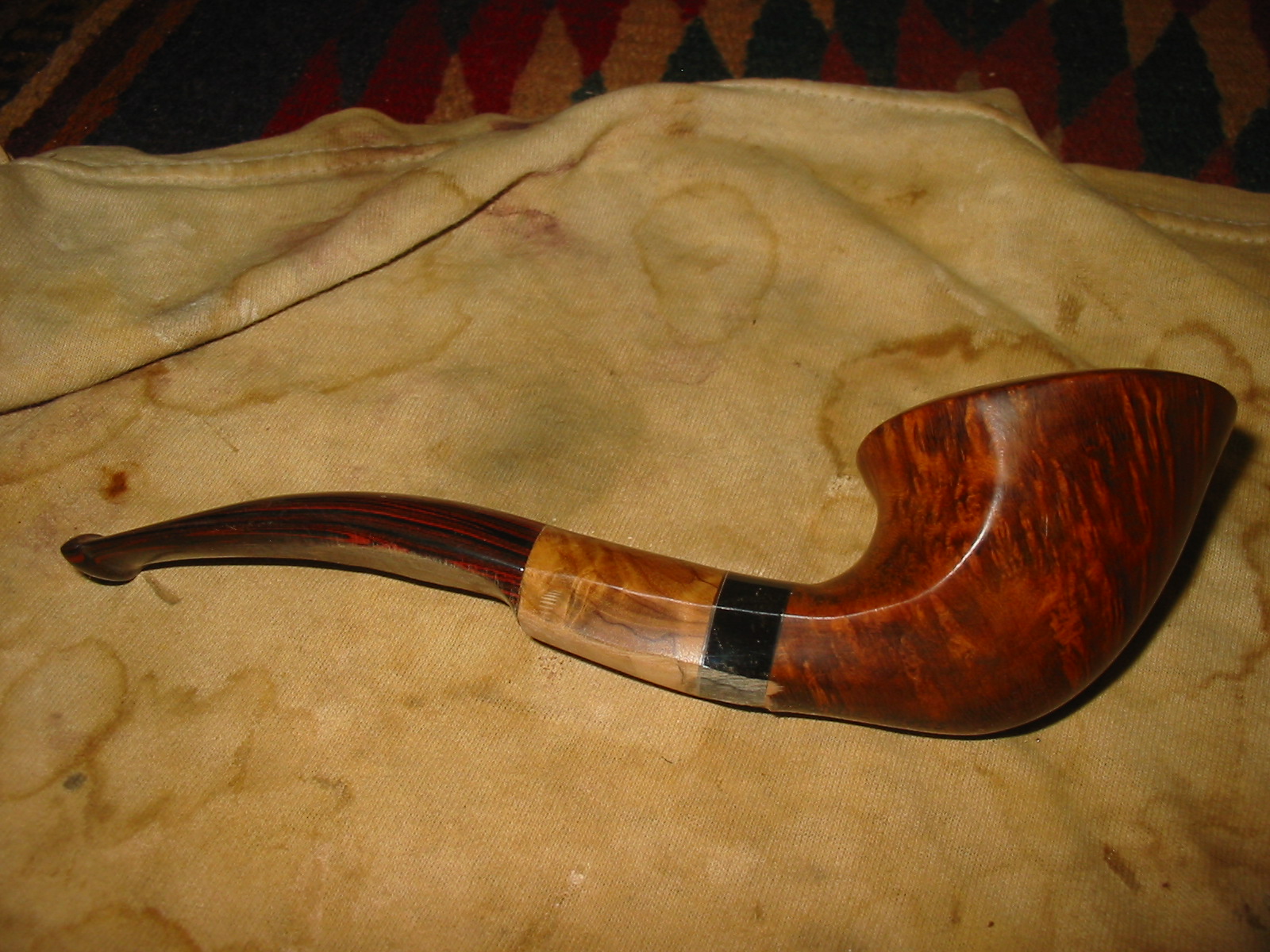
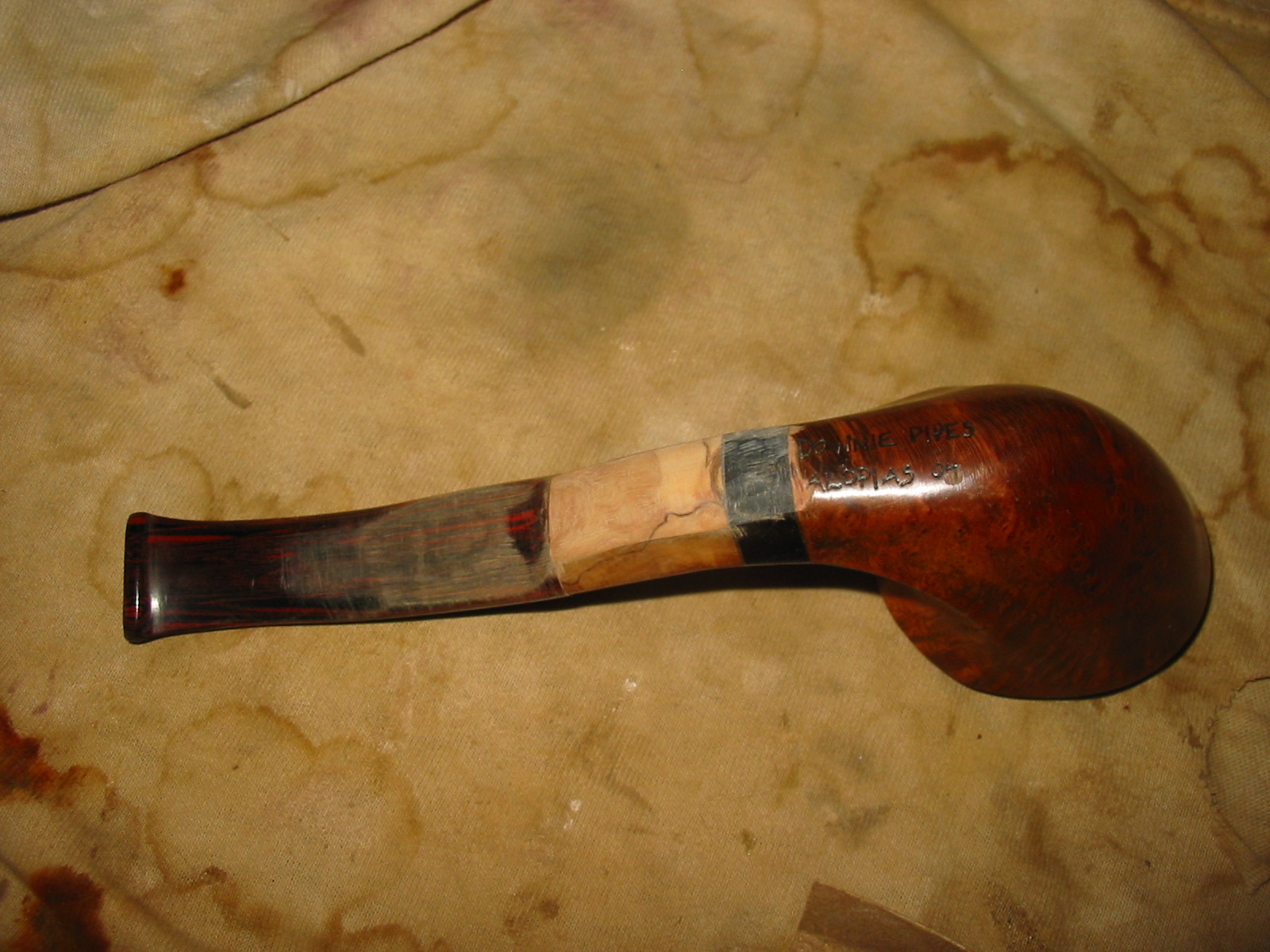
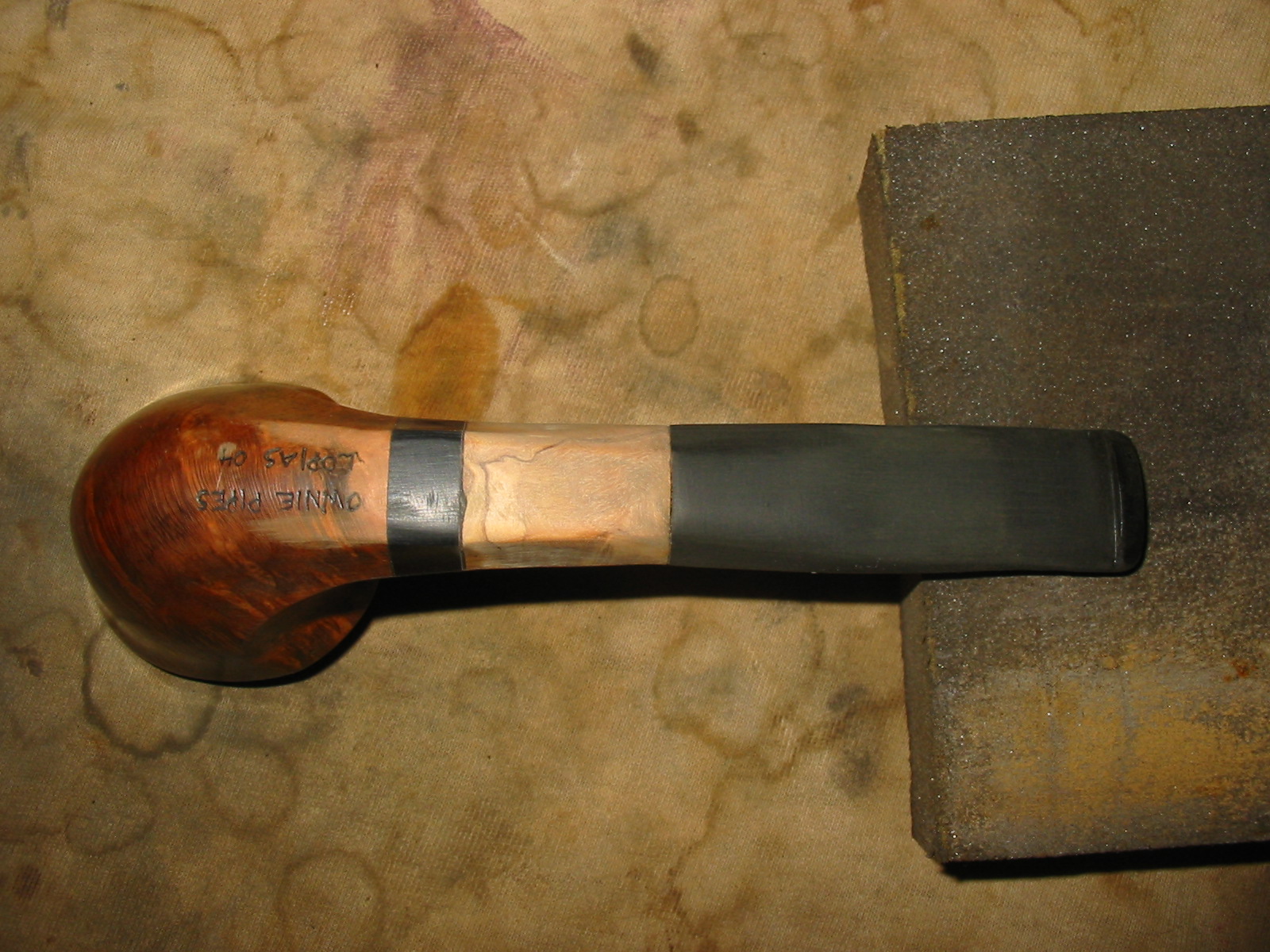
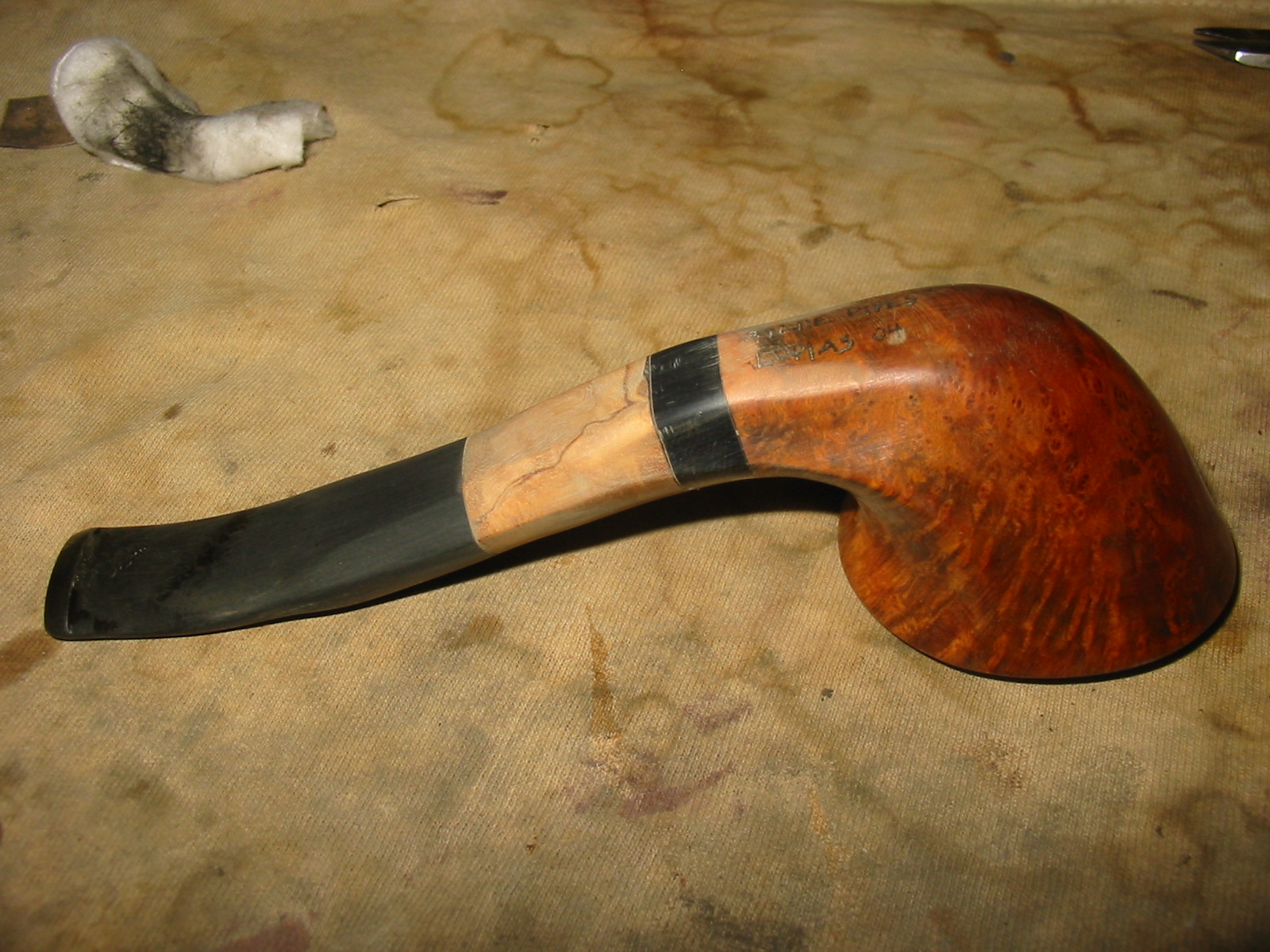
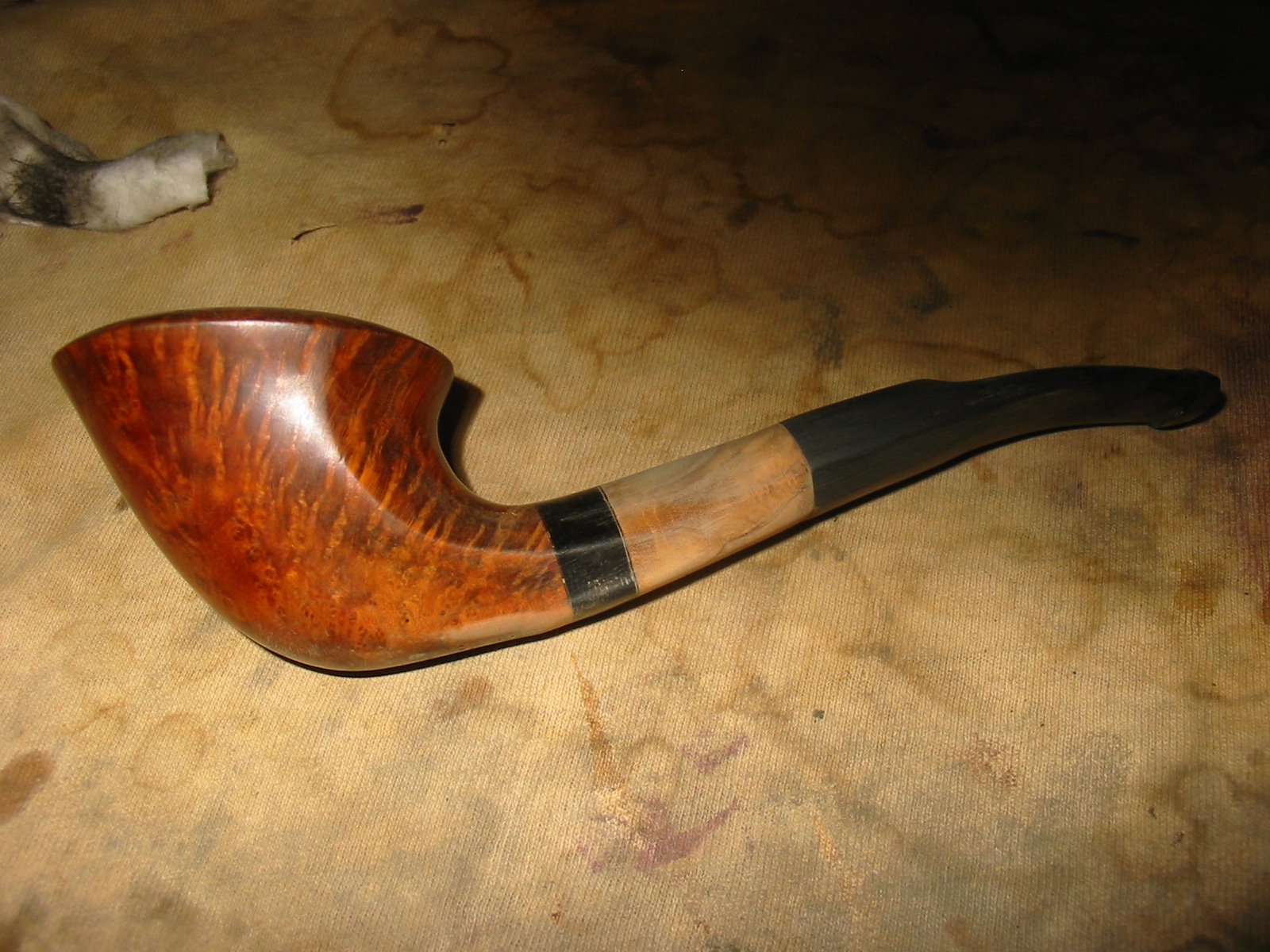
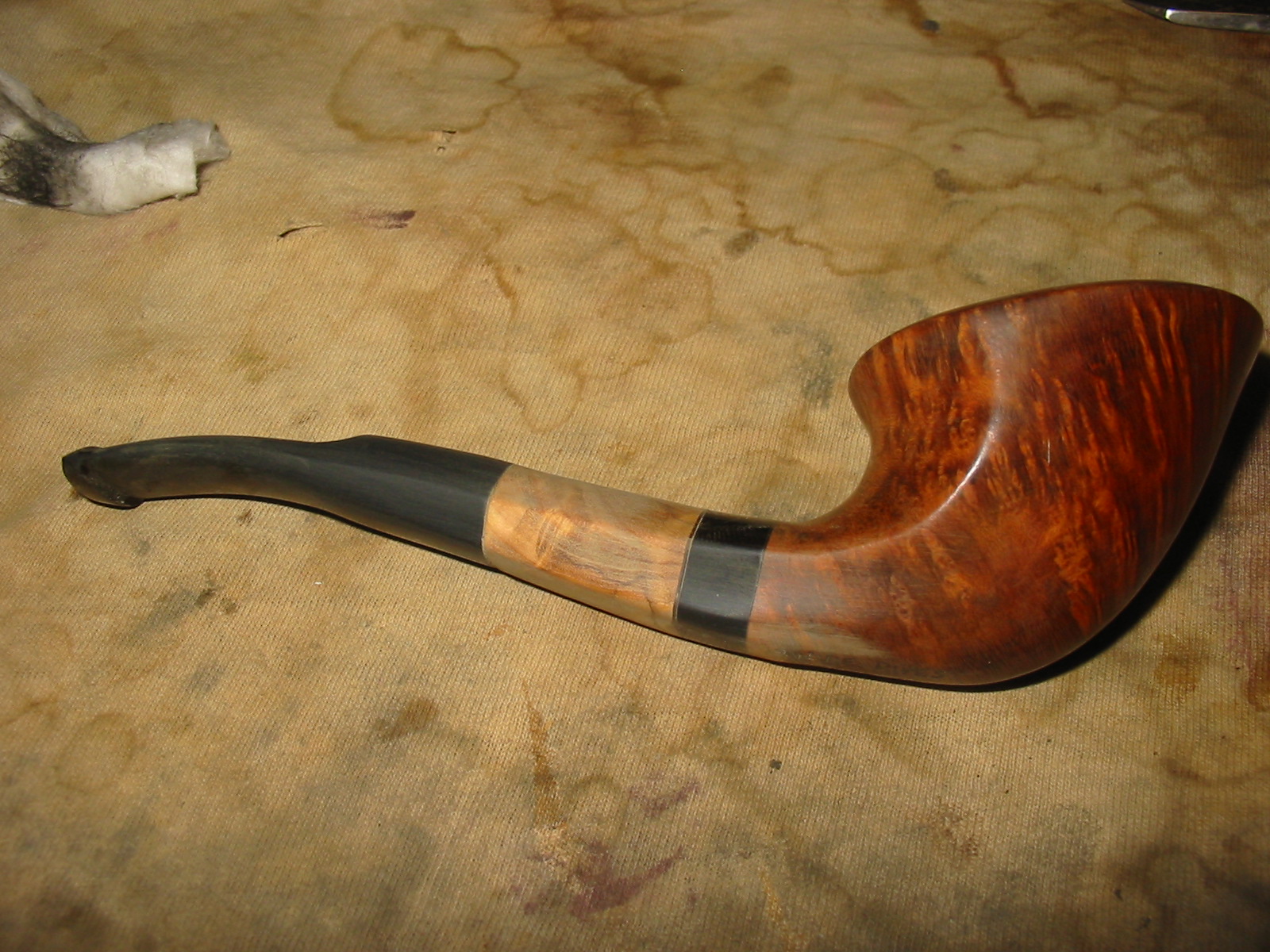
The first series of four photos are of the pipe Stephen named the Alopias (named after a Thresher Shark). This is what it looked like when I took it from the cupboard to work on it.

IMG_0933

IMG_0934

IMG_0935

IMG_0936

I used a Dremel with a sanding drum to take down the fin on the shank and the nob on the Cumberland stem. I figured that would be fairly straight forward work – not a big deal to do with the Dremel. And it certainly worked easily enough. Removing the two parts of the pipe was pretty quick work. I finished with the sanding drum and left a little extra on the shank and stem that I would sand away by hand. I wanted to make sure that I could match the flow and shape of the shank and stem. The next three photos show what the pipe looked like after I had removed the fin and nob. It certainly changed the appearance and the hand feel of the pipe. I began to think that my reimagining was going to work out well.

IMG_0937

IMG_0938

IMG_0939

I took the pipe to my work table and sanded the stem and shank with medium grit emery paper and also with 220 grit sandpaper to further shape the flow of the shank and stem. I wanted to sand a gentle taper from the shank into the stem. I worked at the slope to get it the way I saw it in my head. Once I had that done I sanded it with a medium grit sanding sponge to smooth out the scratches and marks in the briar and the Cumberland. I really like the way the pipe was beginning to look. As I looked at the pipe I thought that a little more sanding of the slope would really make the pipe look proper.

But that is when the job became more than I had bargained for. In order to accomplish what I had in mind I would have to sand down the shank a bit more. To match the stem and shank flow it would need to have some more of the shank extension sanded away. That is when it hit! MAJOR PROBLEM! When I took the stem off the shank to check things before sanding I saw that there was not enough olive wood on the extension between the Delrin insert and the outside of the shank to take any more material off the shank. If I continued to sand it as I had been doing would expose the Delrin and ruin the shank. Even the amount of sanding and sloping that I had done had made the wood very thin on the underside of the shank. I could not do any more sanding on it without ruining it. So that is where this Phoenix took a turn and a new solution had to be worked out.
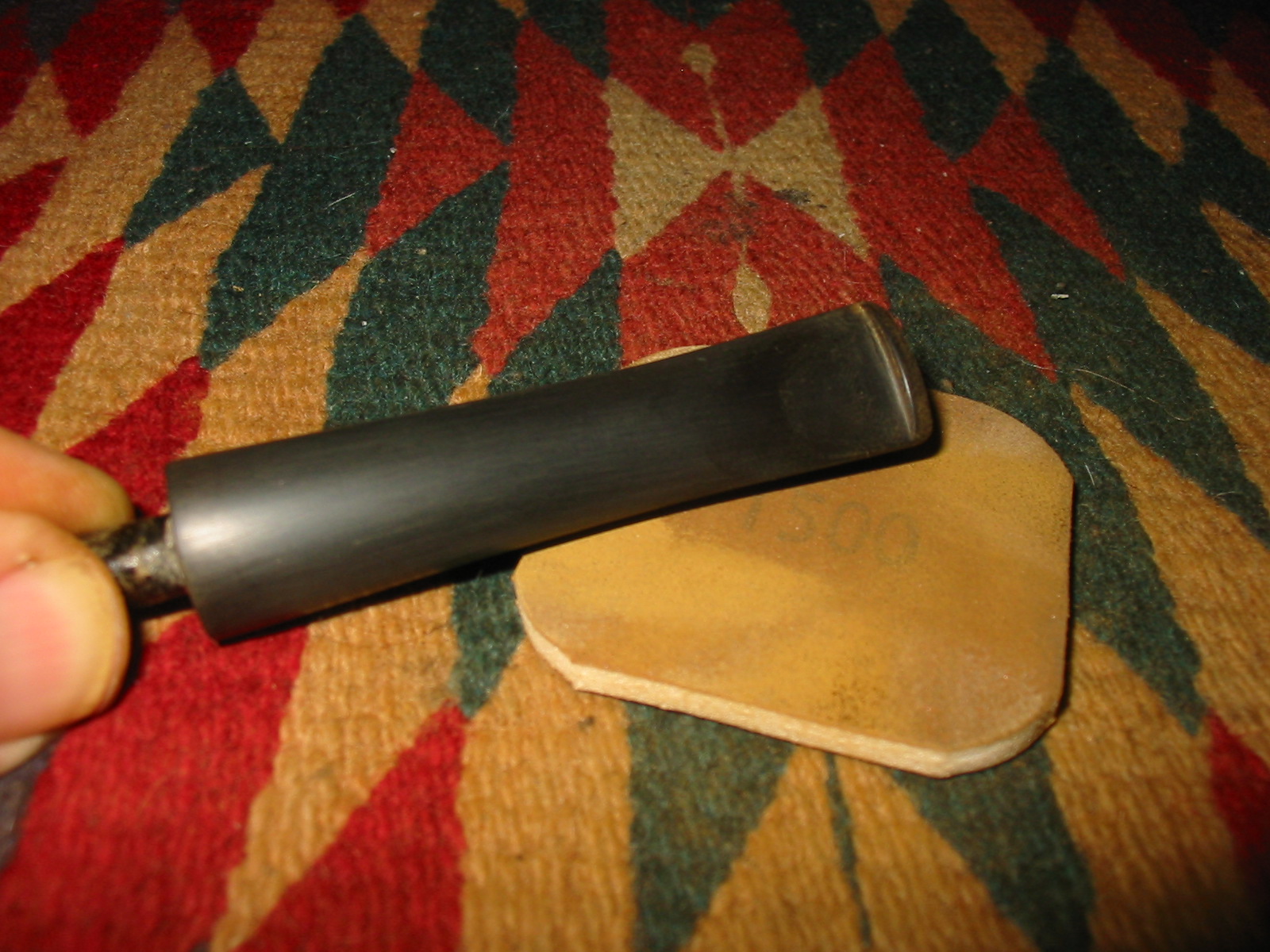
I looked at it and scribbled out some sketches of how to rework things. I thought about shortening the shank but really did not want to do that. So in the end I decided to remove the old stem altogether and shape a vulcanite stem for the pipe. The polished black of the vulcanite would match the band of black on the shank. It would also bookend the olive wood shank extension. So I found an oval saddle stem in my box of stems and turned the tenon with the PIMO tenon tool. Once I had a good fit on the tenon, I used the Dremel with the sanding drum to shape the stem to the shank. I decided to make the stem a half saddle by removing the saddle portion on the underside of the stem. This was tedious and slow work as I did not have any margin for damage on the shank itself. Once I had sanded the stem to a close fit with the Dremel I did the rest of the work by hand with files and sandpaper. The next four photos show the new vulcanite stem after all the fitting and shaping work had beencompleted. I still needed to polish and bend the stem to make the angle similar to the original.
IMG_0940

IMG_0941

IMG_0942

IMG_0943

At this point in the process I wiped down the bowl with an acetone soaked cotton pad to remove the wax and finish from the pipe so that I could restain and blend the sanded portion of the shank on the bottom with the stain on the bowl. I also chose to stain the olive wood with the same stain to add a patina like quality to the look. The next three photos show the pipe after it has been wiped down and is ready to be stained.

IMG_0946

IMG_0944

IMG_0945

I did some more sanding on the shank and stem using a fine grit sanding sponge to smooth out any of the remaining surface scratches.I followed up by sanding the shank and the stem with micromesh sanding padsand then wiped it down a final time to remove the sanding dust and other debris before staining.The photo below shows the bowl and shank ready for staining.

IMG_0947

I stained the bowl and shank with an oxblood stain to give a reddish over stain to the brown undercoat. I wiped it on, flamed it, wiped it on again, and flamed it again. The red overcoat gave a depth to the colour on the bowl that had not been present before. It also gave a patina to the olivewood that really highlighted the grain in the wood. After the stain had dried I took the pipe to the buffer and buffed the bowl and stem with Tripoli and with White Diamond. The next series of four photos show pipe after I had buffed it. The new look seemed to work with the pipe. From the photos I could see that I also needed to make some adjustments to the underside of the shank to give it a better flow.

IMG_1223

IMG_1224

IMG_1225

IMG_1226

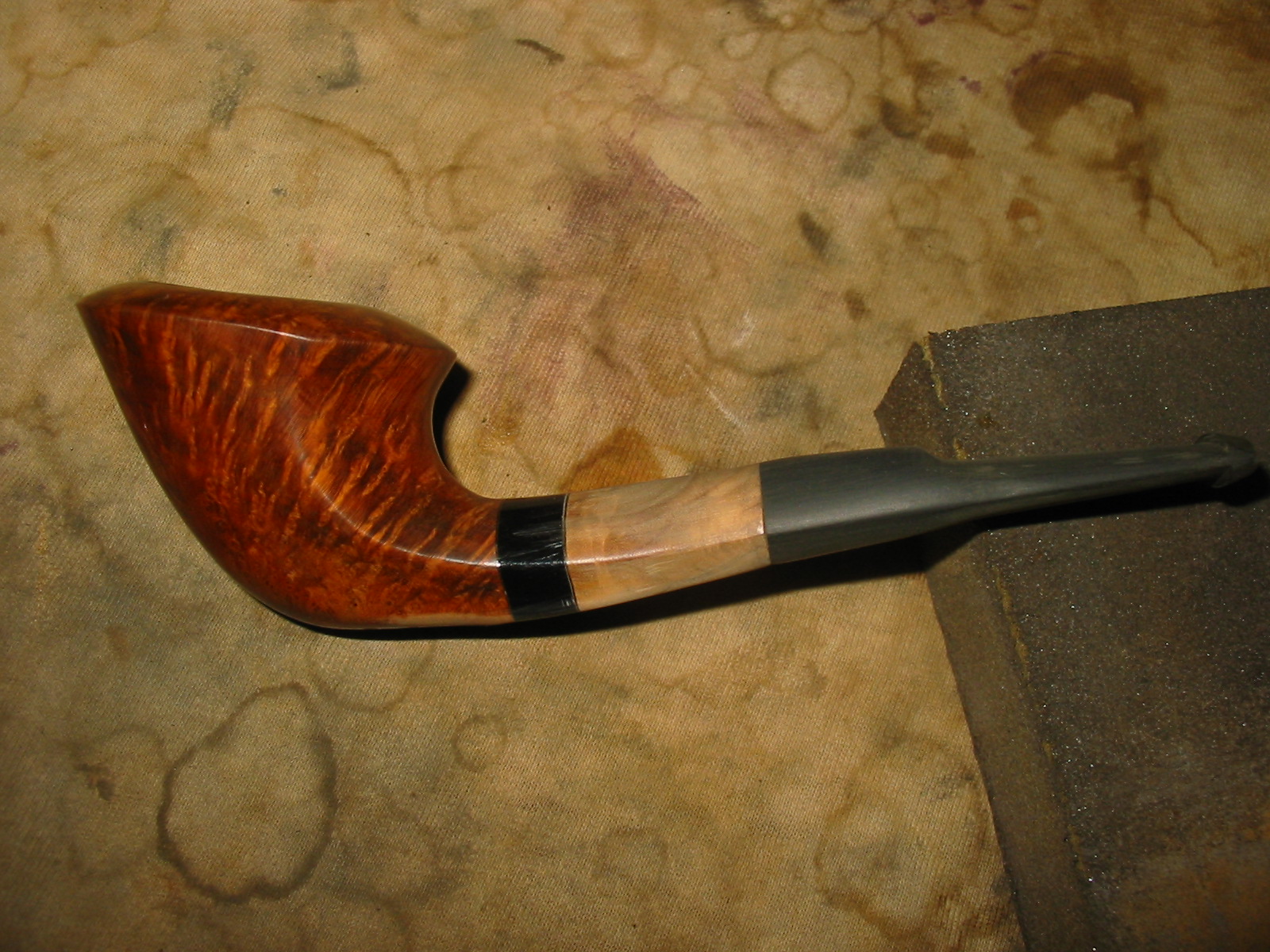
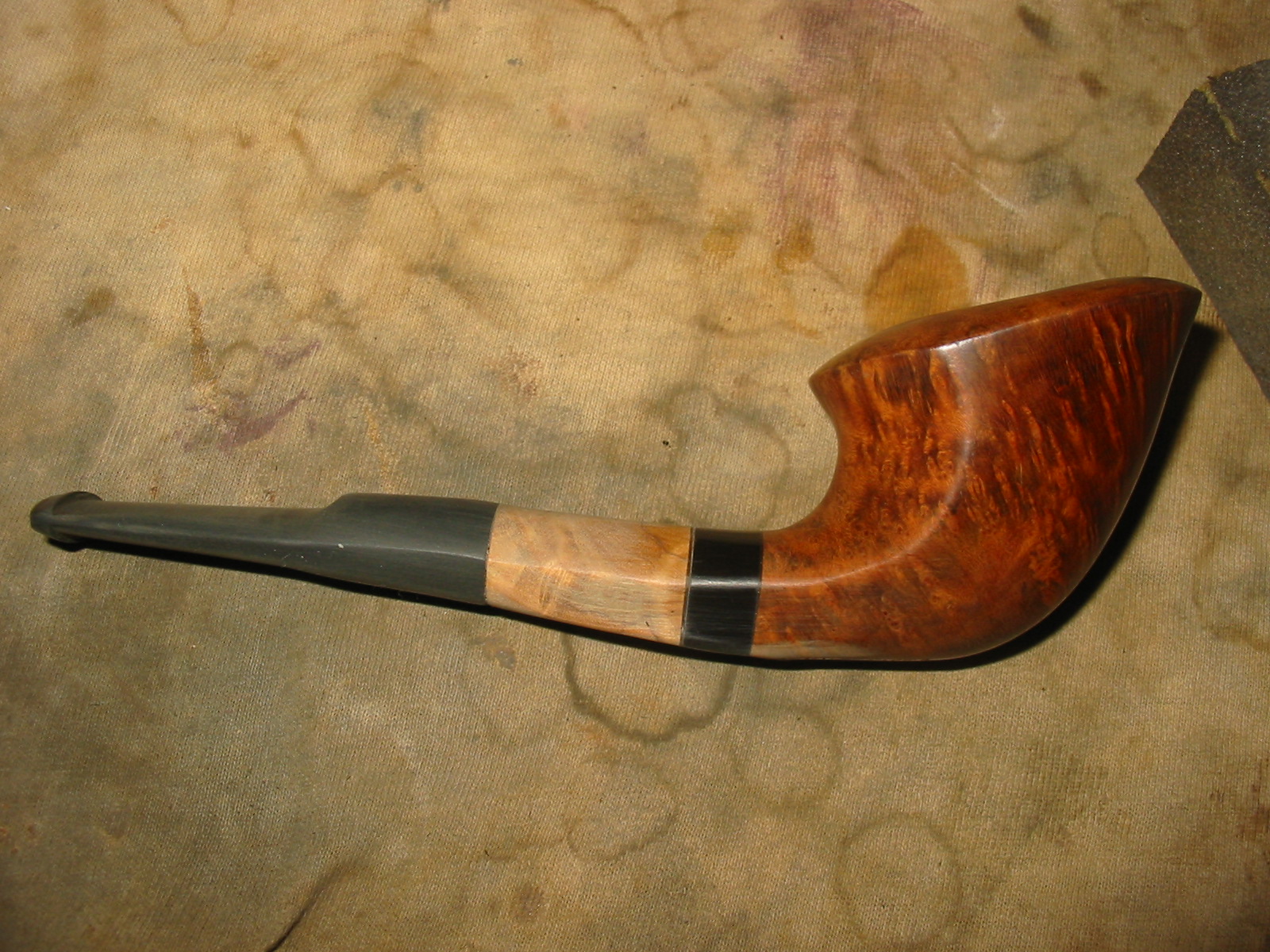
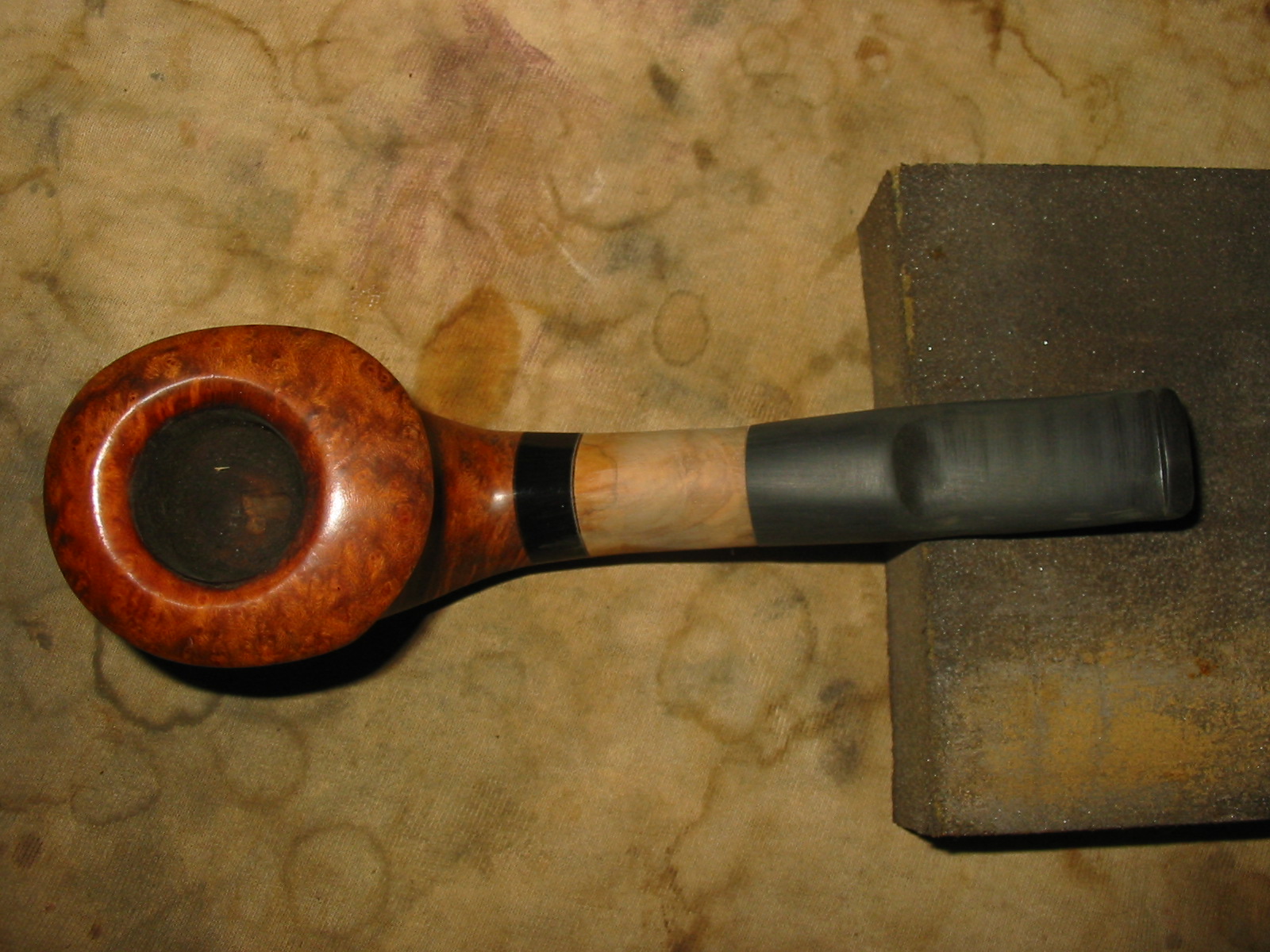
In the above photos it is evident that there was still a slight hump on the bottom of the shank on both sides of the acrylic band. That hump bothered me so I took it back to the Dremel and sanding drum and removed some more of the material on the shank around the acrylic band. I wanted to smooth out the flow of the bottom of the shank from the tip of the stem to the bottom of the bowl. One of the issues that I had to think through in doing this was that some of the original Downie stamp would lost. I would not remove all of the stamping but some of the letters on the stem side of the shank would be lost. I decided that I had made enough changes to the pipe that to not finish would leave the job half done. Sanding it down definitely improved the way it looked. After I finished sanding with the DremelI sanded the entire underside of the shank with 220 grit sandpaper, a medium and fine grit sanding sponge and then micromesh sanding pads 1500-3200 grit. I stained the portion I had sanded with the oxblood stain to match the rest of the pipe and then buffed it with White Diamond. I gave the entirety several coats of carnauba wax and then buffed with a soft flannel buff to polish it. The final series of four photos show the finished pipe.

IMG_1326

IMG_1327

IMG_1328

IMG_1329

I raise my pipe to the humble pipe cleaner


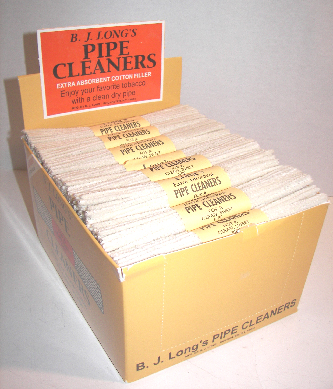
BJLongBulkBox It seems that every time I make a trip to a pipe shop I inevitably pick up some bags or bundles of pipe cleaners. It seems that I can never have enough of them around. Thin, fluffy, regular or bristle I buy them every single time. I use them for my own pipes and go through many of them as I work on estate pipes. They are an indispensable tool of my hobby and craft. There was a time in the past when I ran out of pipe cleaners and had to go hunting for them. The nearby shops did not have them. The craft shops wanted way too much for inferior ones and I did not have a vehicle available to run down to the local pipe shop to pick up a bunch. When that happened I decided I would never let it happen again. So to this day I have a case of pipe cleaners like the one in the picture on the left that I am constantly refilling.

The other day I was checking my supply of pipe cleaners and adding the new bunches I had purchased to the case. It has become a habit to check it regularly. But this time I paused for a moment and wondered about the invention of this amazingly simple device. Where did the idea come from? When was the pipe cleaner invented? Who came up with the idea for the design? Why? This wondering always leads me to “Google” the information and research for the answers to my questions. For me this is as much a part of the hobby as the pipes themselves. The questions lead me to interesting discoveries and information in the process.

I have heard for many years that in times past pipe smokers used chicken feathers (and I suppose other feathers as well) to clean out their pipe stems and shanks. This makes perfect sense when you think about the stiff feather shank and the soft “bristles” of the feather. They function well as a brush when turned inside of the pipe. I am sure many a pipeman used them and threw them away until they needed another. I can almost envision them going out to the henhouse in the yard and either plucking a feather or picking one up, wiping it off and thrusting it into the stem to clean up before or after a smoke.

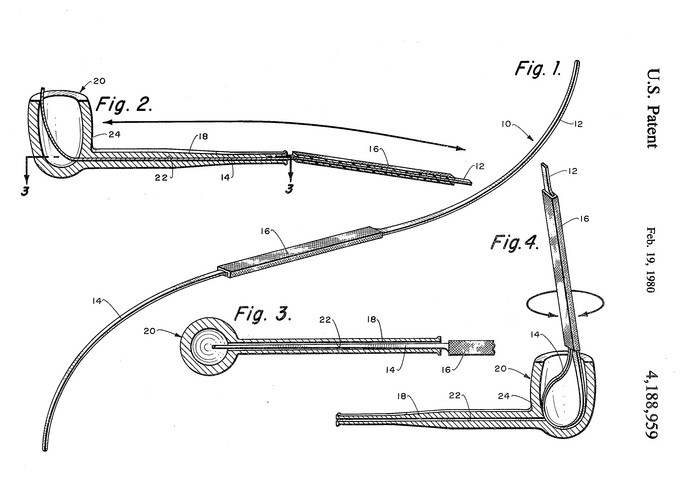
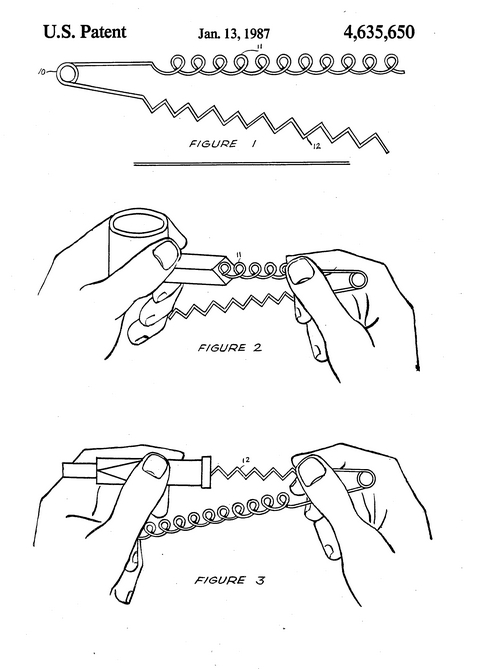
I discovered through my research several things that were fascinating to me. There is no end to the different tools that inventive pipe smokers have come up with to clean out their pipes. Some of them seem way too complicated to my mind to be a tool that I would use. Others are quite simple but in my life I have never seen them. Pipemen seem to continually come up with ideas for a better pipe cleaner. The have bent and twisted wire, made creative twists and turns of metal, and designed tools that looked like cutting saws for the purpose of cleaning a pipe bowl. I came across many patents for unique designs. A quick Google search for tobacco pipe cleaners will give you ample opportunity to have a look at the wild creativity of designs for a simple tool. I have included two of the more recent patent diagrams from the 1980s that show that the search for the perfect cleaner continues to go on. I am convinced that pipemen will always be looking for a better tool and thus there will always be new inventions that flood the patent office.

pipe cleaner 1

Pipe cleaner 2

There are many more unique and quirky versions of pipe cleaners that have been on the scene for a long time. I have several in my collection that are quite unique but nonetheless no longer made as they did not gain a following. For example, people have put spring cutting blades inside Bakelite cups to collect the scrapings of the blades. But there are also ones that have a growing following. These include such items as small shank brushes that can be washed and reused and also small barrel brushes like those used in cleaning firearms that can be run through the shank and the stem to clean out the debris left behind by the combustion of tobacco. Each of these two tools work quite well and have their place in the refurbishing kit.

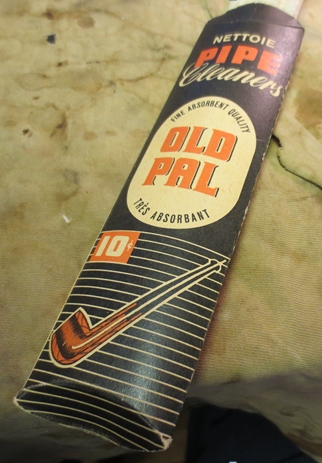
IMG_1348 But even with all this creativity and inventiveness churning out new and “better” pipe cleaners none of them have displaced the fuzzy cotton pipe cleaner. For its band of supporters it will never be replaced by any manner of new-fangled notions. It is to the pipe cleaner alone that title of “old pal” has can be given. If you come across a pipe smoker in your travels you will inevitably find pipe cleaners near at hand.

But what triggered the design. I cannot prove this assumption on my part but it seems to me that the idea of the pipe cleaner came as a spinoff of the chicken feather. Its design is kind of a modern art version of the feather. It works in the same way as the feather – a central shaft with brushes attached that can fit in the stem and shank doing exactly what the feather did for those who used it in their pipes. Can’t you imagine it as a “modern” manmade feather?

But who invented it? After a bit of research on the web I found that they were invented by John Harry Stedman (b. 1843, d. 1922) & Charles Angel in Rochester, New York in the early 1900’s. Stedman was a creative inventor who throughout his life invented not only the fuzzy pipe cleaner but also the streetcar transfer ticket in 1892. He sold the pipe cleaner rights to BJ Long Company who has continued to make them for over 60 years and still makes them today. A quick look at their website shows the expansion of the pipe cleaner’s uses to include medical and craft areas. Their product has wide uses and diverse purchasers. To me this brand epitomizes the pipe cleaner. I am sure many of us are familiar with it as most pipe shops in North America sell BJ Long pipe cleaners in bundles and they are sold across the World Wide Web in online shops and on EBay as well.

bjlong

912

Pipe cleaners are normally made from some absorbent material, usually cotton. Bristles of stiffer material like nylon\plastic are added to the bristle version of the cleaner to enable the pipeman to scrub out the shank and stem of their pipes. Typically the cleaner is used by pipemen after a smoke of their pipe or when cleaning their pipes. It is used either dry or it is dipped in alcohol or is wetted with the tongue before it is inserted into the airway. The cleaner absorbs the moistures and oils from the stem and shank. It can also be folded and used in the bowl to knock out debris left behind once the dottle has been dumped. Some pipe cleaners are tapered so that one end is thick and one end thin. The theory behind the design is simple – the thin end is for cleaning the smaller airway of the stem and the thick end for the shank. Some are thin and some are fluffy. The designs are made for different sized airways and stem designs. Pipe cleaners are designed to be thrown away after use though there are many tales of them being washed and reused.

001-545-0102

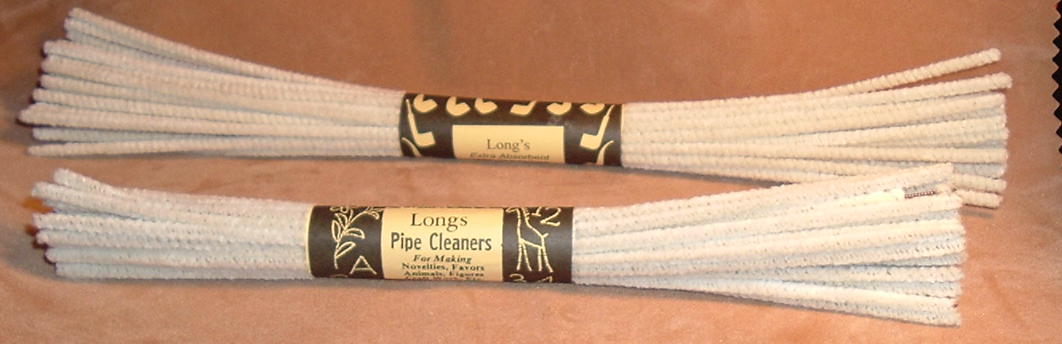
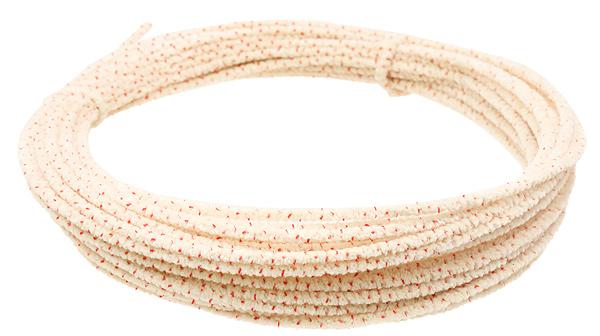
The construction of pipe cleaners is simple and involves two lengths of wire, called the core, twisted together trapping short lengths of fibre between them, called the pile. Pipe cleaners are usually made two at a time, as the inner wires of each pipe cleaner have the yarn wrapped around them, making a coil; the outer wires trap the wraps of yarn, which are then cut, making the tufts. Chenille yarn is made in much the same way, which is why craft pipe cleaners are often called “chenille stems”. Some pipe cleaner machines have actually been converted into chenille machines. The pipe cleaners produced vary from machine to machine type. Some machines produce very long pipe cleaners which are wound onto spools. The spools may be sold as-is or cut to length depending on the intended use. Other cut the pipe cleaners to length as they come off the machines. The pipe cleaners used by pipe smokers and refurbishers are usually 15 – 17 cm (6 – 7 inches) long while the ones used for crafts are often 30 cm (12 inches) and can be up to 50 cm (20 inches). I have found that these longer pipe cleaners work well in cleaning church warden pipe stems so I have a few always on hand.

I have no idea what you might think about the pipe cleaner or if you even do. It may well be a silent partner in your smoking/cleaning regimen but to me the history and manufacture of them is an interesting piece of our hobby. So to the humble pipe cleaner I raise my pipe!

So you want to make a pipe


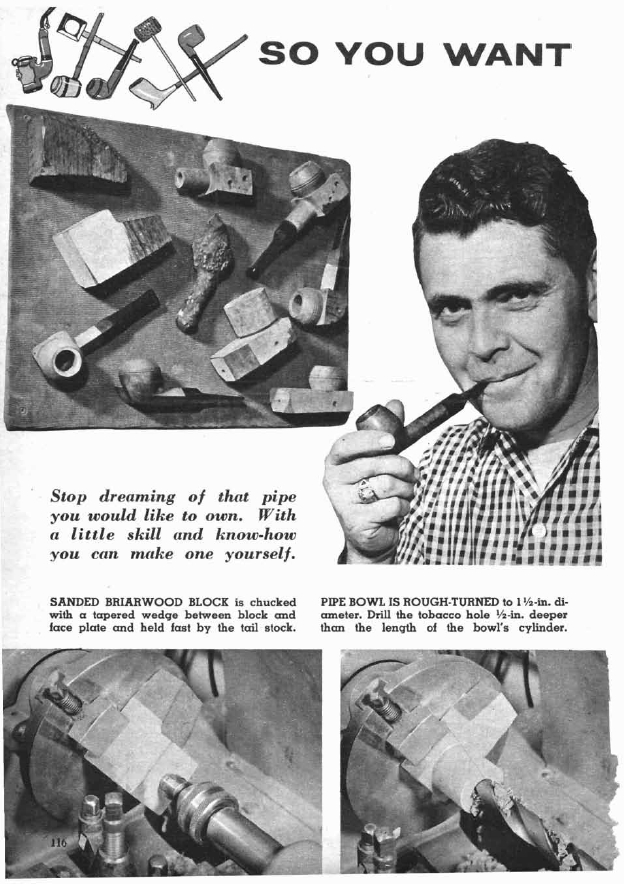
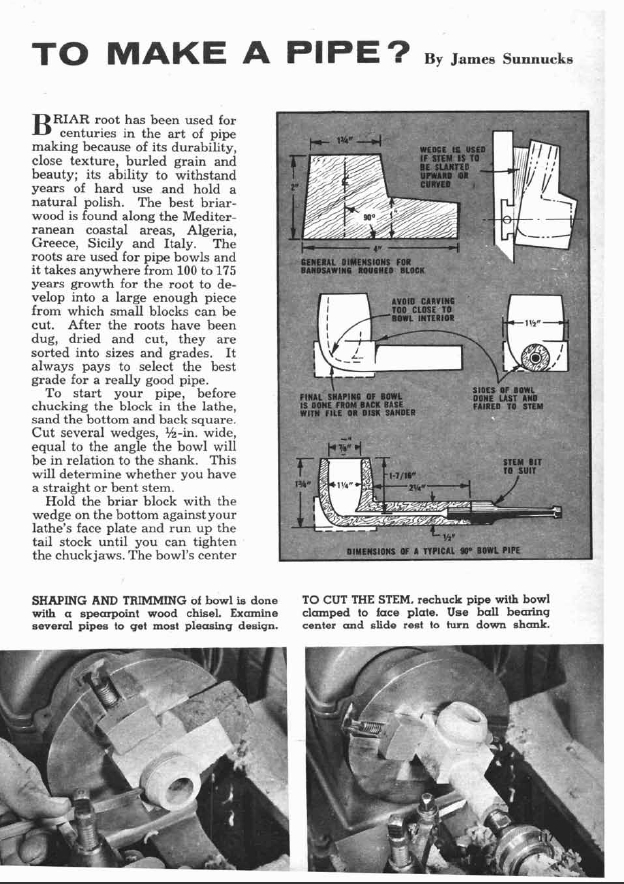
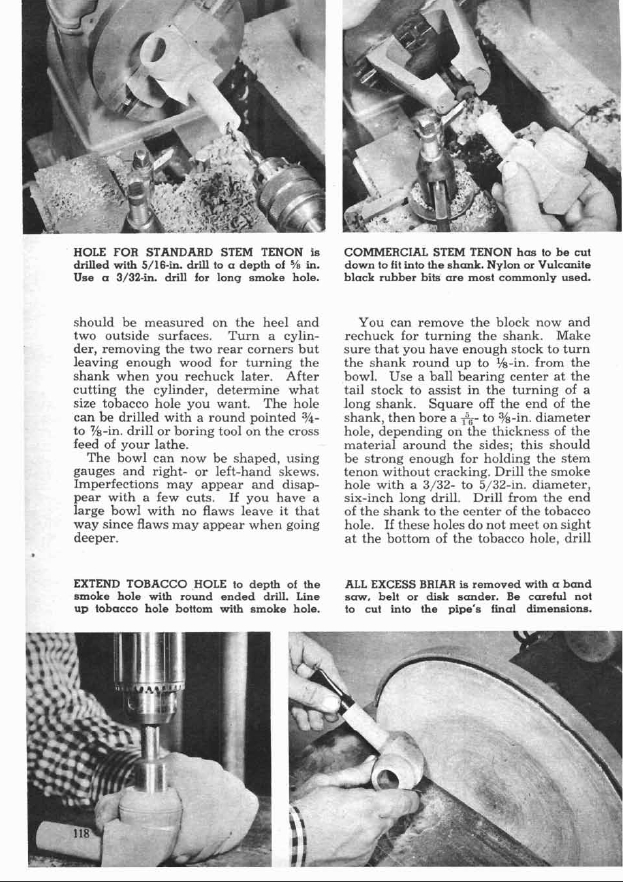
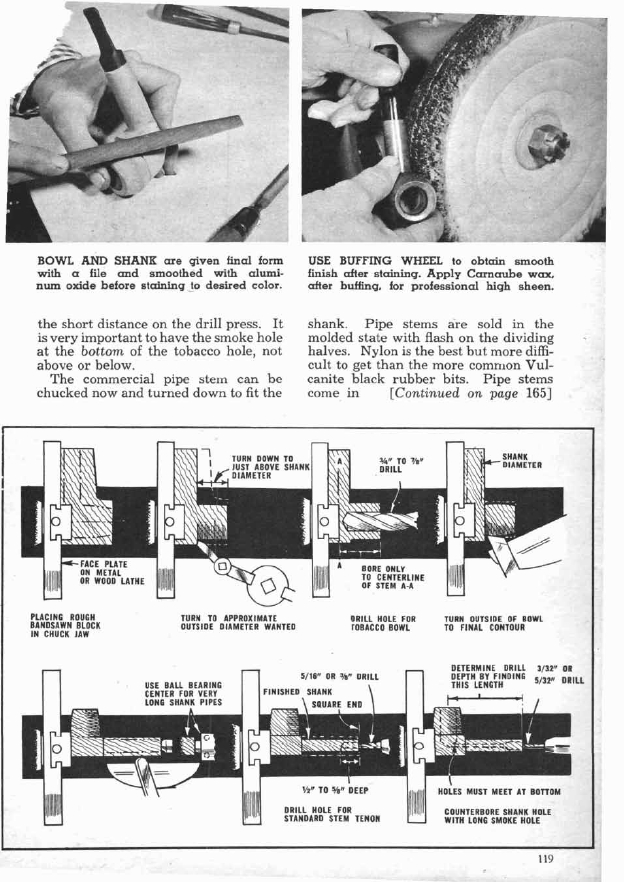
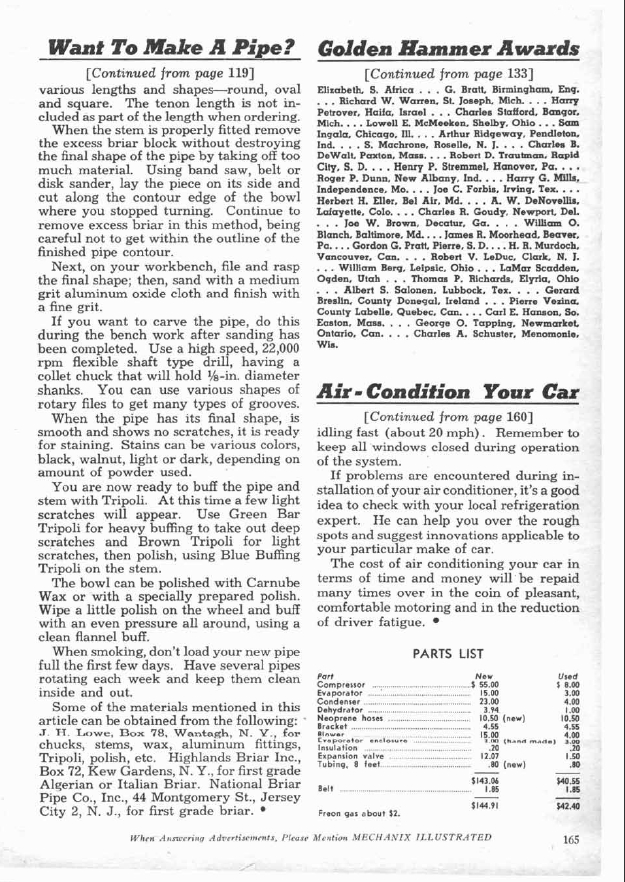
Periodically I come across old articles that are fascinating reading – at least to me. This is one from Mechanix Illustrated and was written by James Sunnucks. I find it interesting to see how he spells out the process. Great black and white illustrations and from the photos I would guess the article is from the 50’s. I thought I would pass it on.
Pipe1

Pipe2

pipe3

Pipe4

Pipe5

Finding a Hidden Gem Underneath all the Grit and Grime


I went to work on the third pipe down in the far right column. It was one that I almost bypassed because of the shape it was in, but decided to take a chance and see what was underneath all of the mess. The stamping was long ago worn away by buffing. It had originally had a ferrule on the shank and that was missing. The bowl was badly caked and it was out of round from overzealous reaming. The finish was shot with thick black grime impregnated into the bowl finish all the way around. Underneath there appeared to be some nice grain. The missing ferrule left behind remnants of the glue that had held it in place. In the shank where the ferrule was missing were several fills – the only ones in the pipe. The size of the pipe is about a group 2 – kind of the classic size of an older billiard. The stem was missing so it would need to have one made to fit.

bowls1

Noname

The next series of photos shows the build up on the outside of the bowl. Not only was it badly caked it also was covered with a grey/black grime that would be challenging.

IMG_1258

IMG_1259

IMG_1255

IMG_1256

IMG_1257

I used acetone and cotton pads to remove the external grime on the bowl (Photos 1 – 2 below). There was actually some nice grain underneath all the grime. I reamed the bowl with a PipNet reamer starting with the smallest cutting head and working my way up to the largest that would fit the bowl. I wanted to ream it back to bare wood so that I could work on the damaged inner rim (Photo 3 below). I topped the bowl to remove the damage to the top of the rim and clean up the outer edges of the rim. I used my normal method of a piece of sandpaper on a flat surface and pushing the bowl into the sandpaper and rotating it to remove the damaged briar (Photo 4 – 5). I also push a nickel band onto the shank part way. I would later need to heat it to get a pressure fit deep on the shank. This band would both strengthen the thin walls of the mortise at the end and also cover the only fills present on the pipe.

IMG_1260

IMG_1261

IMG_1262

IMG_1263

IMG_1264

I used a Dremel with a sanding drum to work on the roundness of the bowl. I worked to even out the distance between the inner edge of the rim and the outer edge. Once this was completed I used sandpaper to smooth out the edge and give it a slight bevel (Photo 1). I wiped down the bowl and rim with acetone on a cotton pad to clean off the last of the dust and grime from the reaming and sanding (Photos 2 – 3).

IMG_1265

IMG_1266

IMG_1267

I set up the heat gun and turned it to the high setting. I held the band over the heat and rotated it to evenly heat the entire band (Photo 1). Once it was heated (just a few minutes) I then took it to the work table and pressed the band in place on a metal plate I use for setting the bands. Sometimes this takes several trips between the heat and the plate but this time one trip was all it took and the band was set (Photos 2 – 3).

IMG_1268

IMG_1269

IMG_1270

I used a PIMO tenon turning tool to turn the tenon to fit the mortise. I generally turn it until it is close and then finish the fit by hand with sandpaper (Photo 1). After sanding the stem fit quite well in terms of the tenon. It was snug and flush against the shank – no light showing through (Photos 2 -3). I used the Dremel with a sanding drum to remove the excess vulcanite on the stem and to shape it to match the diameter of the shank. I sand carefully with the sanding drum to bring it as close as possible to the size I want. You have to be careful and steady so that you do not nick the shank or the band while doing this. The finishing fit is done by hand with files and sandpaper (Photos 4 – 5).

IMG_1275

IMG_1276

IMG_1277

IMG_1278

IMG_1279

The next series of seven photos show the shaping process. I begin with a medium grit emery paper and sand out the scratches left behind by the Dremel. I shape the stem with this paper to the point where the flow and fit of the stem is what I am looking for (Photos 1 – 2). I then move on to 220 grit sandpaper and continue to remove the scratches and shape the stem (Photos 3 – 4). It then finish this shaping with a fine grit sanding sponge and polish out more of the scratches. Each grit of paper brings the stem closer to the finished shape (Photos 5 – 7).

IMG_1280

IMG_1281

IMG_1289

IMG_1290

IMG_1293

IMG_1294

IMG_1295

I apologize for the graininess of the next two photos but they show the bowl after I had stained it. I used a dark brown aniline stain thinned with one part alcohol. I wanted a rich reddish brown colour on this old timer so I thinned the stain to match the colour I wanted. I applied it to the bowl and rim, flamed it, reapplied it and flamed it again.

IMG_1299

IMG_1300

IMG_1301

I worked on the stem with micromesh sanding pads. I also sanded the nickel band to bring out a polish to it as well. The next series of seven photos shows the progressive shine that comes to the stem with each successive grit of micromesh from 1500-12,000 grit. I wet sanded with the 1500-2400 grit and then dry sanded with the remaining grits.

IMG_1313

IMG_1314

IMG_1315

IMG_1316

IMG_1317

IMG_1318

IMG_1319

I sanded the bowl with the higher grits of micromesh and then buffed the pipe with White Diamond to give the entirety a rich shine. I applied several coats of carnauba wax and buffed it with a soft flannel buff. The stain really highlights some of the beautiful grain on this pipe. I am glad I took the risk to bring this one back to life.

IMG_1321

IMG_1322

IMG_1323

IMG_1324

Royal Danish Acorn Shape 971 Reborn


Blog by Steve Laug

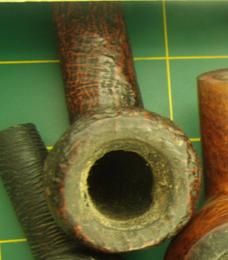
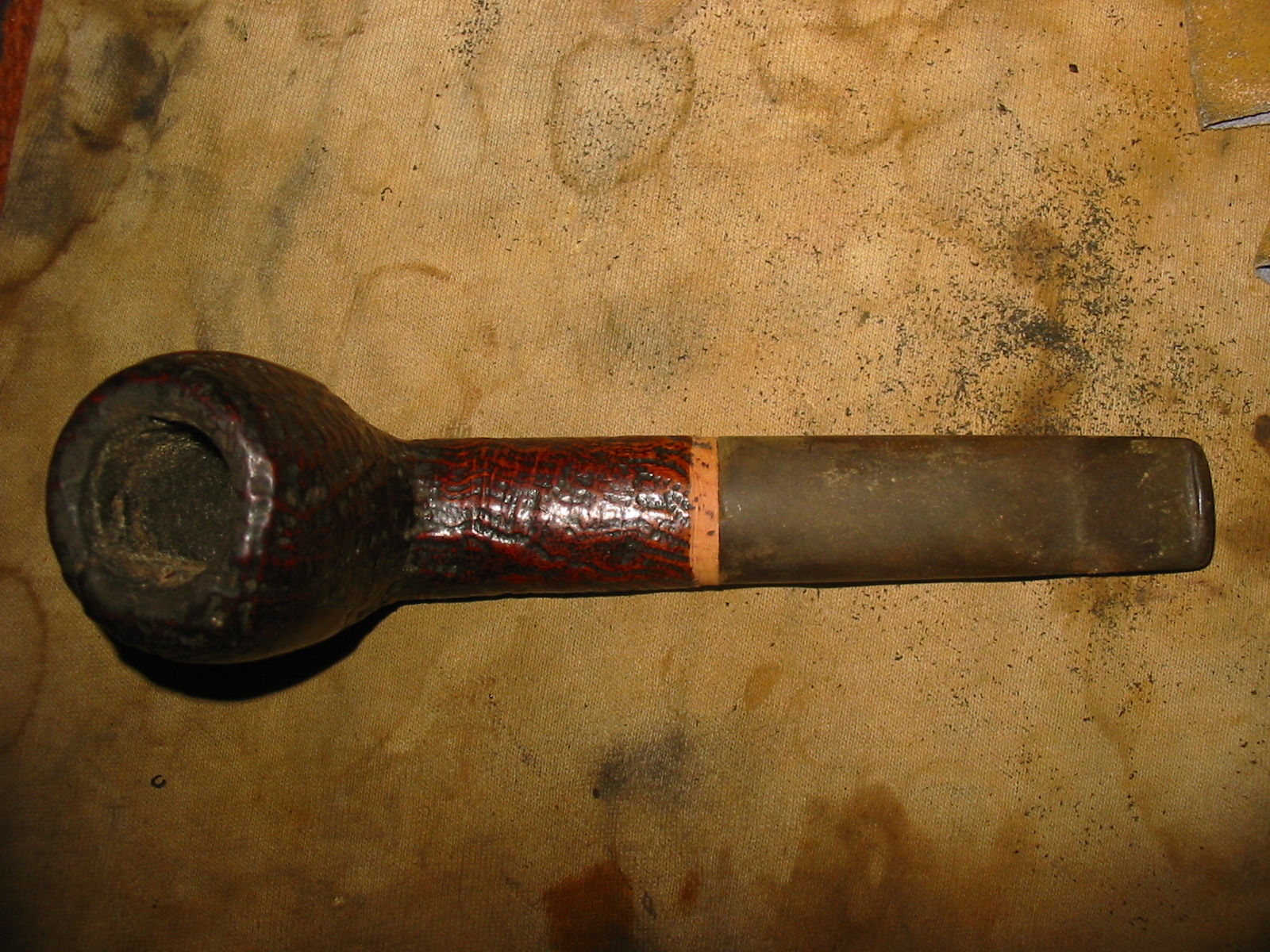
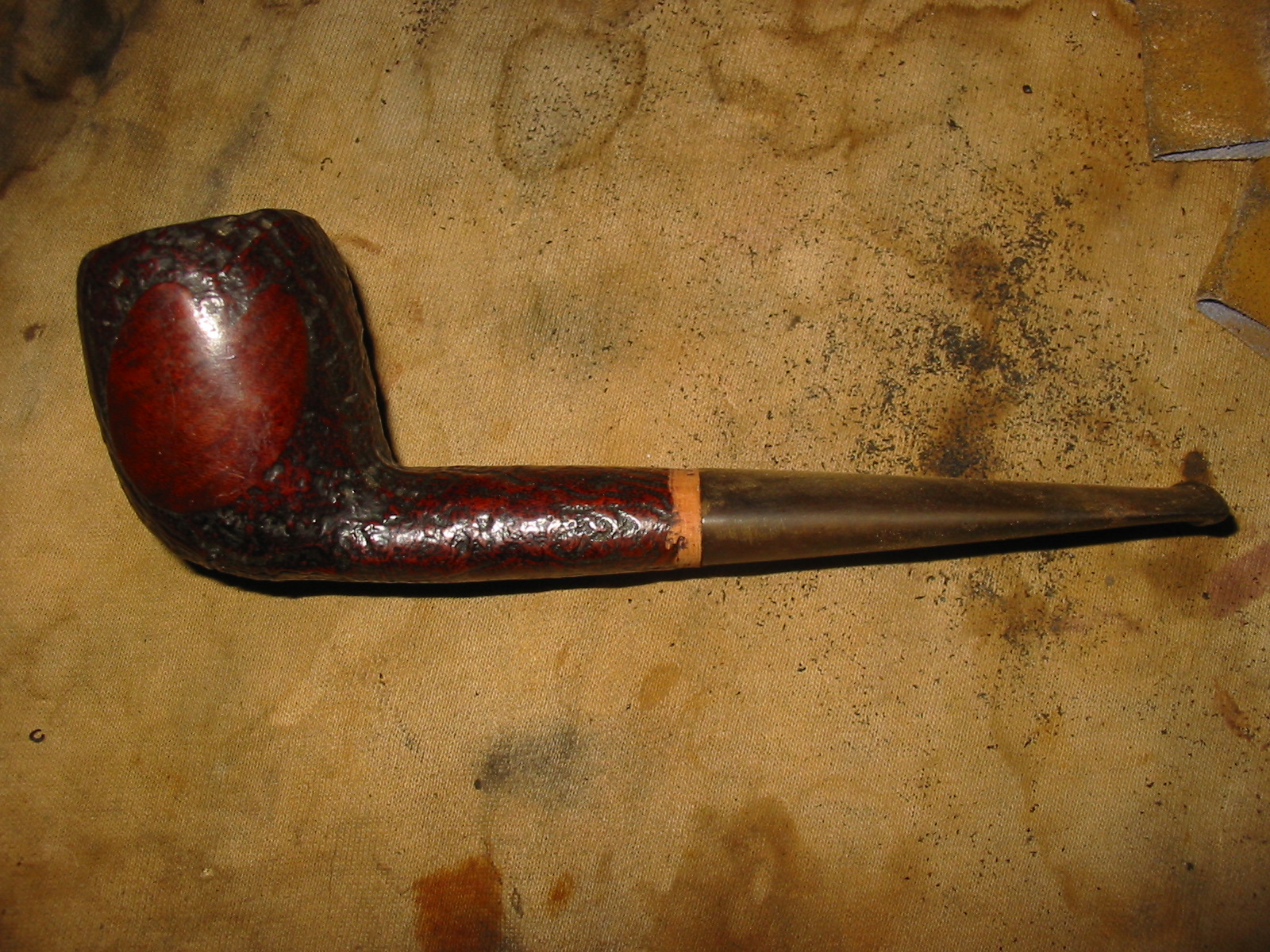
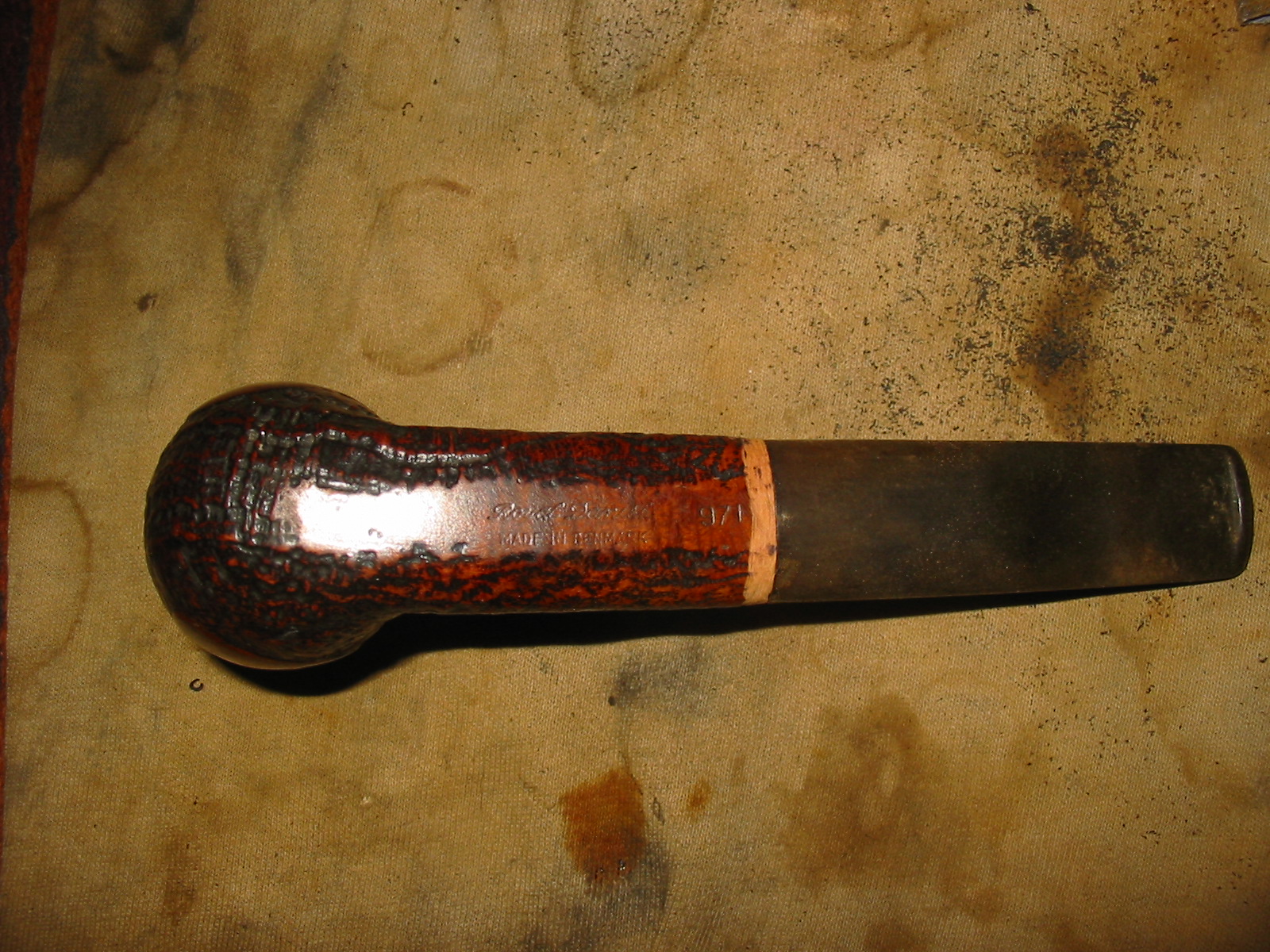
This is another pipe from the lot I picked up on Ebay not long ago. The lot is pictured in the photo below and this one is the third pipe down on the first column, left side. It is stamped Royal Danish in script over MADE IN DENMARK on the underside of the shank. It is also stamped 971. To me the shape is an oval shanked acorn. It has a sandblast finish with a smooth area on each side of the bowl and on the area that bears the stamping on the shank. The bowl was heavily caked as can be seen in the second photo. The finish was not in bad shape just dirty and the smooth areas had small scratches on the surface. The rim was caked with spill over from the bowl and would need to be scrubbed to remove the build up and make the sand blasted rim visible again. The bowl came without a stem.

bowls1

Danish

I sorted through my box of stems to see if I had one that was suitable for this pipe and found an estate stem that would work with a little cleanup. It was heavily oxidized and had some tooth chatter on the surface of the stem that became very visible as I cleaned it. The stem was clogged with tar and oils and I would have to unclog it to make it work. I used a paper clip that I straightened out to clean out the build up in the stem then sanded the tenon until the stem fit the pipe. I lined it up with the curves on the shank. Because of the sandblast on the shank the stem would not line up perfectly so I decided to sand a smooth band around the shank for the stem to line up with. I used a Dremel with a sanding drum to smooth out the edge of the shank. The next four photos show the finished band around the shank. Once it was stained I thought it would be a good contrast with the stem and the finish of the sandblast.

IMG_1282

IMG_1283

IMG_1284

IMG_1285

I reamed the bowl with a PipNet reamer. I began with the smallest cutting head and worked my way up to the second cutting head (first photo below). Once I had the bowl cleaned out I worked on the stem to clean up the oxidation and work on the tooth marks. I sanded it with 220 grit sandpaper and then with a fine grit sanding sponge (photos 2 and 3 below). I also sanded the banded area that I cut with the sanding drum.

IMG_1286

IMG_1287

IMG_1288

I wiped the bowl and shank down with acetone and a cotton pad. I wanted to remove the grime in the crevices of the blast on the shank and bowl. I used a soft bristle tooth brush and acetone to clean up the rim of the pipe. I scrubbed it until the finish was clean. Photos 1 and 2 below show the finish after the cleaning. The grey is the finish after it broke down with the acetone. I continued to scrub it until the finish was clean.

IMG_1291

IMG_1292

I set up the heat gun and heated the stem and bent it over the rolling pin that I use to get a good straight bend in the stem. I also buffed the stem and bowl with White Diamond. I used a light touch on the stem as I intended to keep sanding it with the micromesh sanding pads. I took it back to the work table and restained it with a dark brown aniline stain thinned with isopropyl alcohol. The mix was my attempt to match it to the original stain. I wanted the dark stain in the grooves of the blast to stand out against the brown over stain. The next three photos show the bend in the stem and the restained bowl. The band that I sanded in the shank is a nice contrast to the sandblast and the black of the vulcanite stem.

IMG_1296

IMG_1297

IMG_1298

I sanded the stem with micromesh sanding pads from 1500-12,000 grit. I wet sanded with the 1500-2400 grit pads and then dry sanded with the 3200-12,000 grit pads. The next series of four photos show how each progressive grit of sanding pads bring a deeper shine to the stem.

IMG_1304

IMG_1305

IMG_1306

IMG_1307

I wiped the stem down with Obsidian Oil to protect the new shine against oxidation and then once it was dry took it to the buffer and buffed the stem with White Diamond. I finished by buffing the bowl and stem lightly with White Diamond a second time. It took the pipe back to my work table and gave it several coats of Halcyon II Wax. I have found that it does a great job on sandblast and rusticated finishes. When it was dry I hand buffed it with a shoe brush until it had a rich shine. The next series of photos show the finished pipe. I like the new look to the shank and bowl and the new stem looks like it came with the pipe!

IMG_1309

IMG_1310

IMG_1311

IMG_1312

A Restemming Job with Memories of the Past


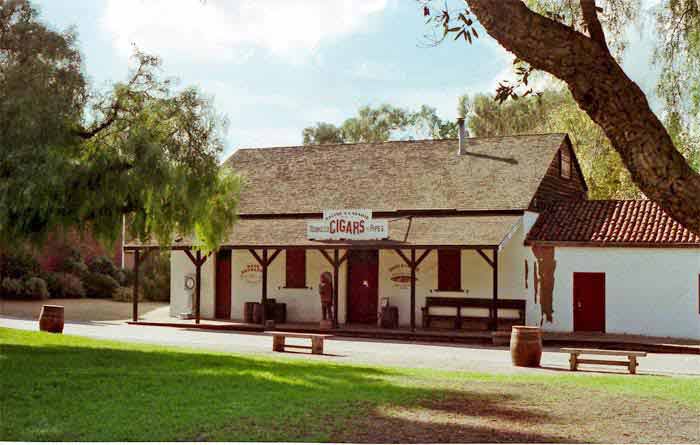
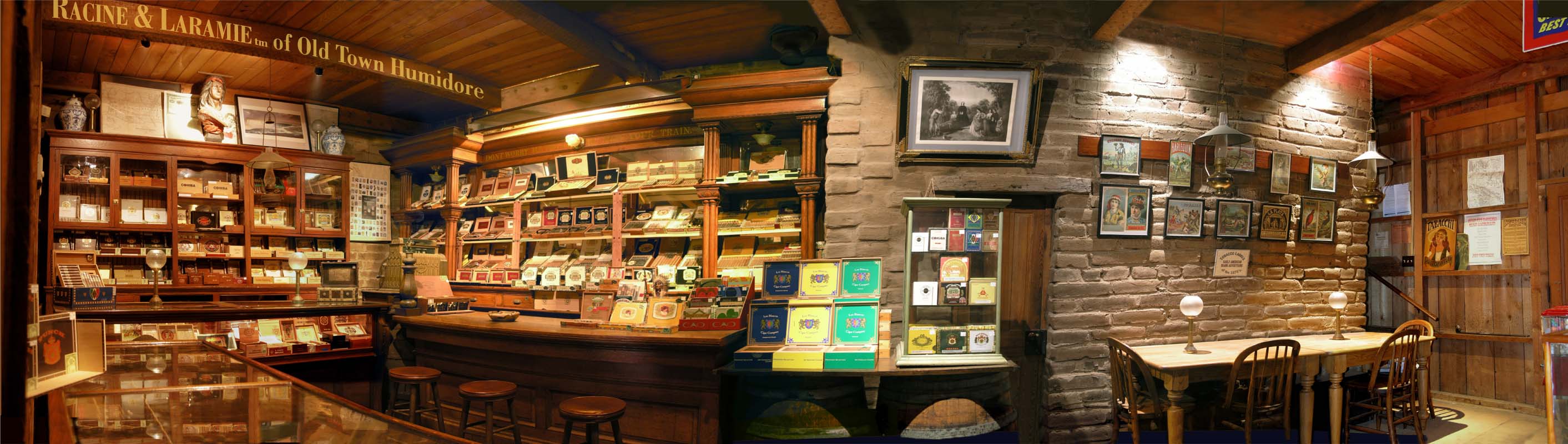
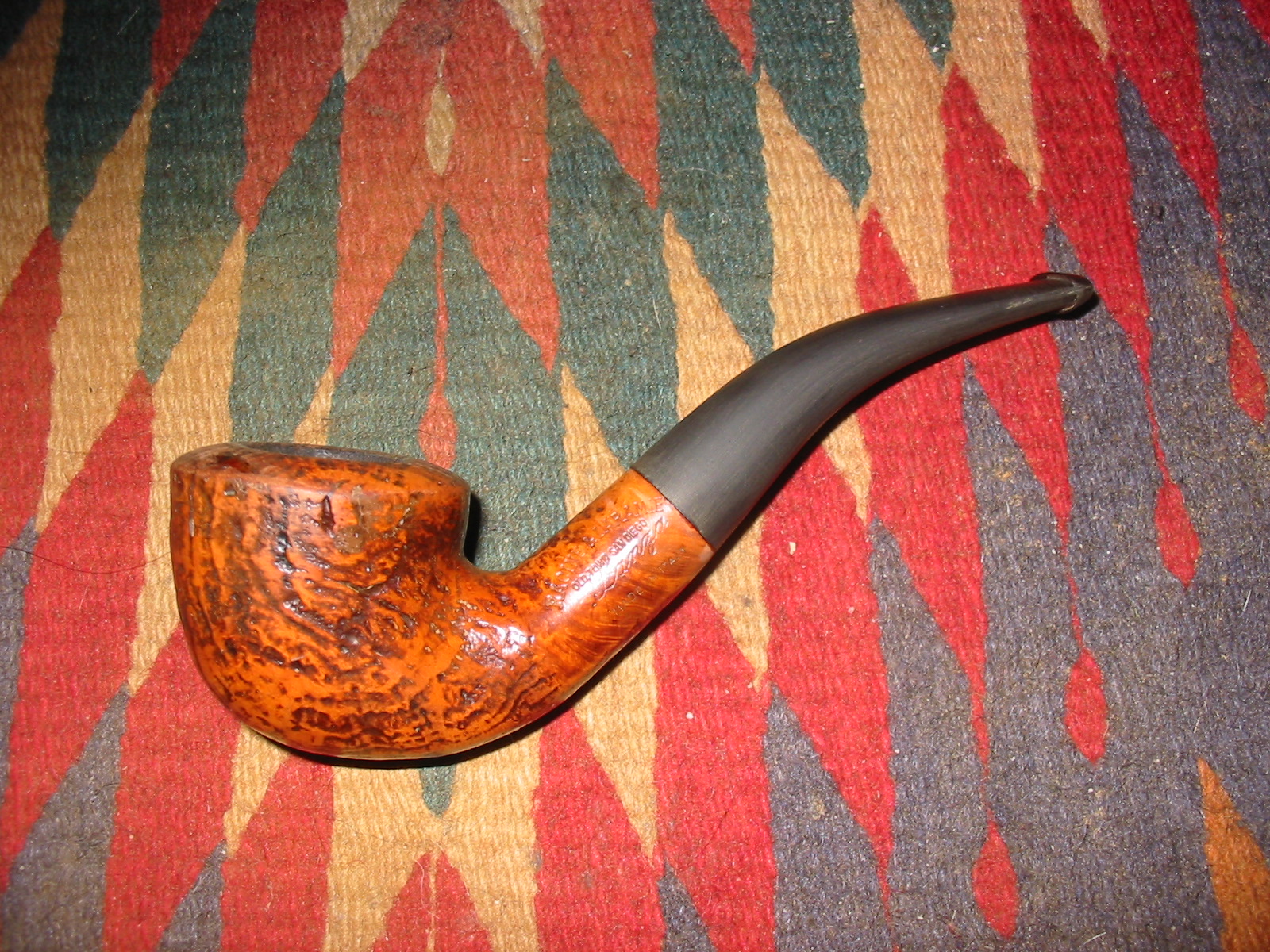
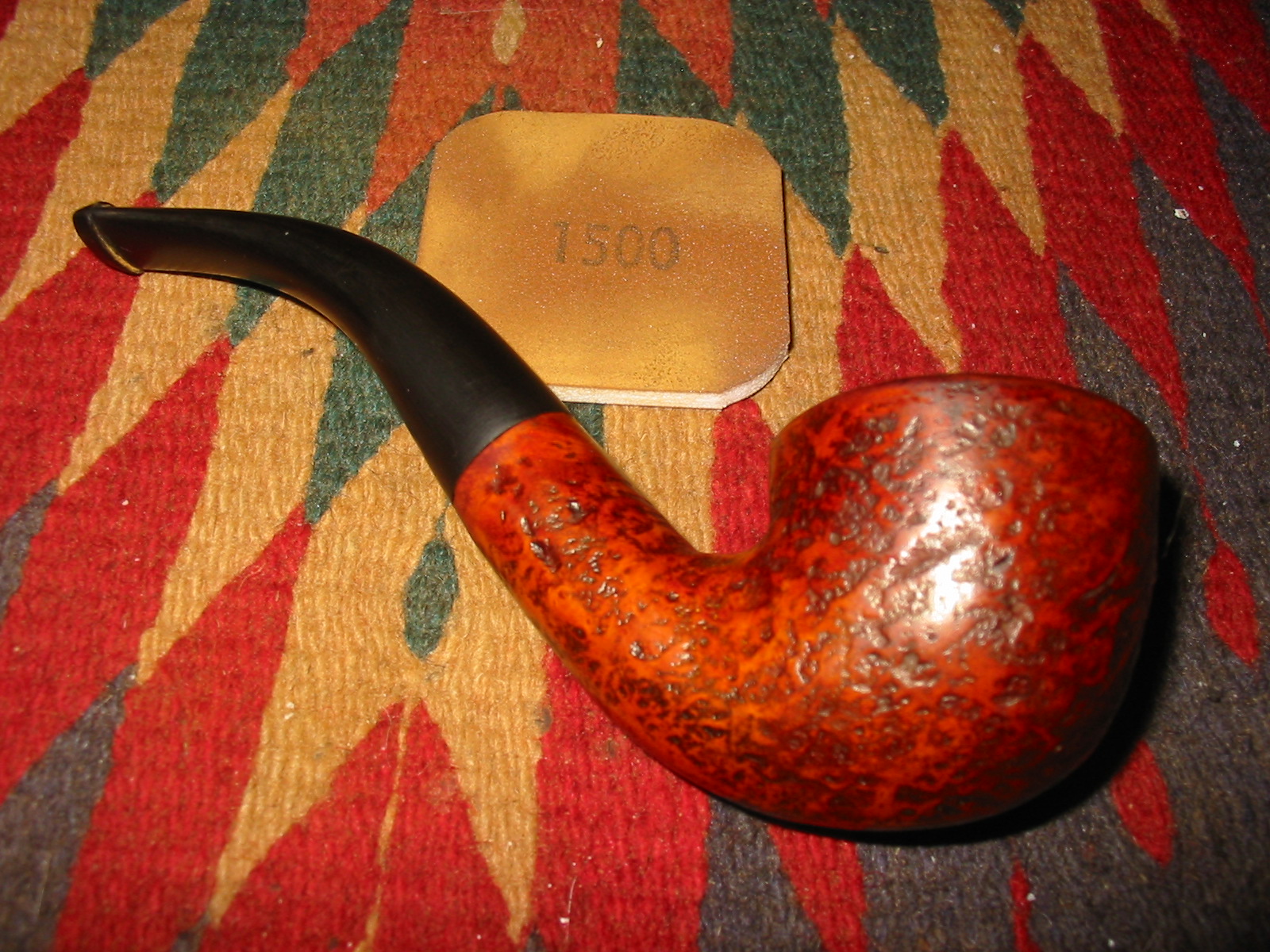
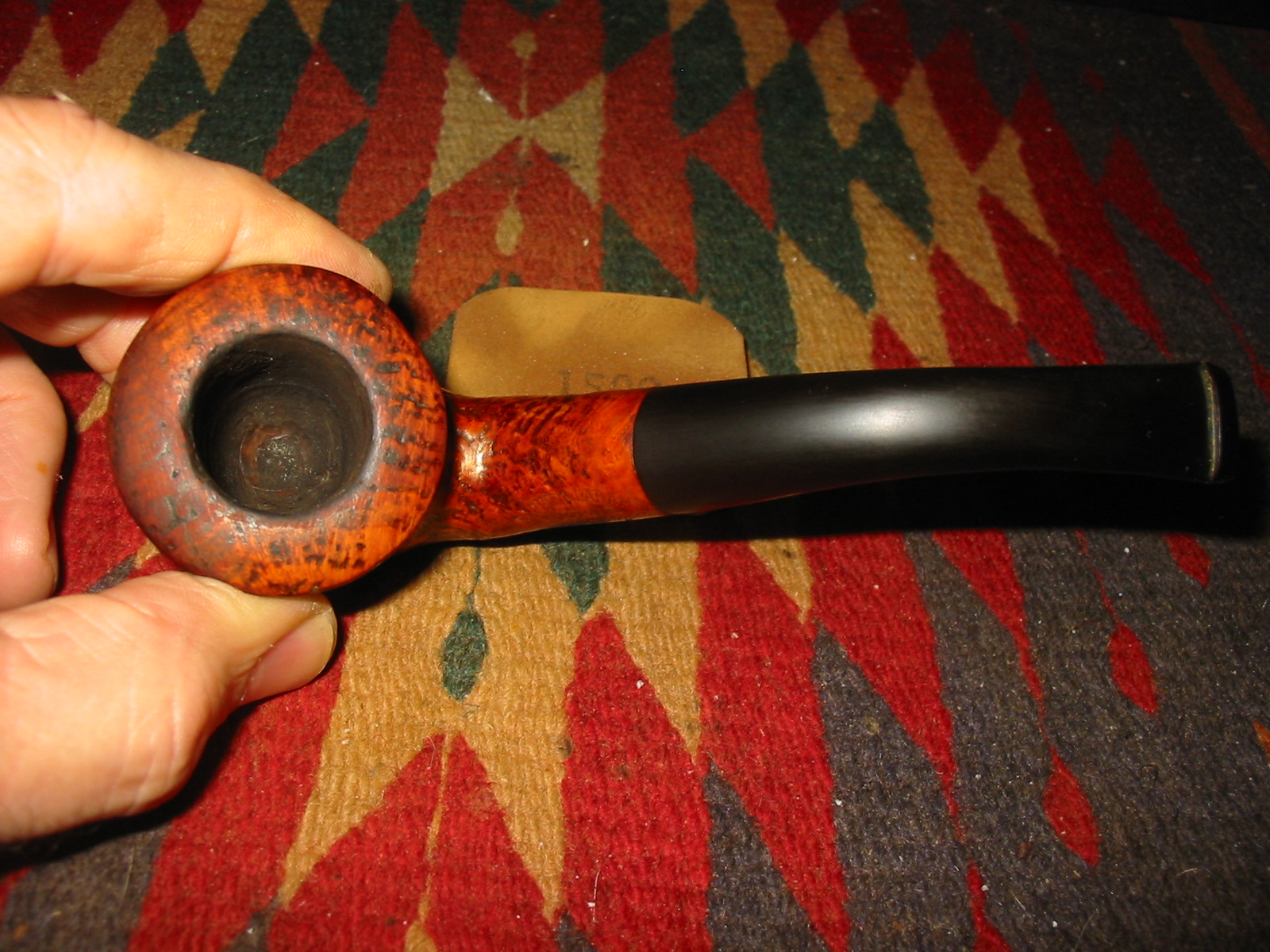
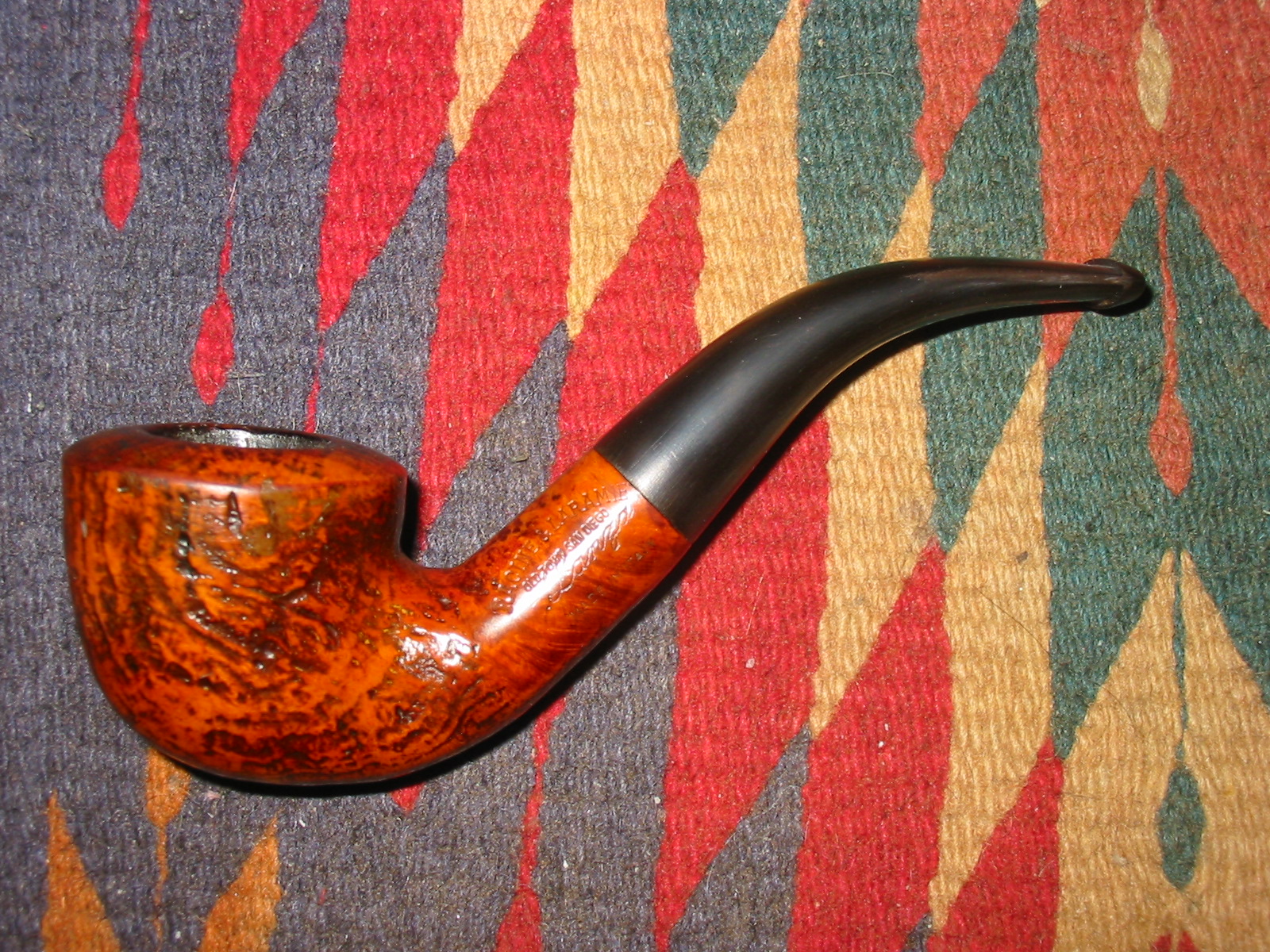
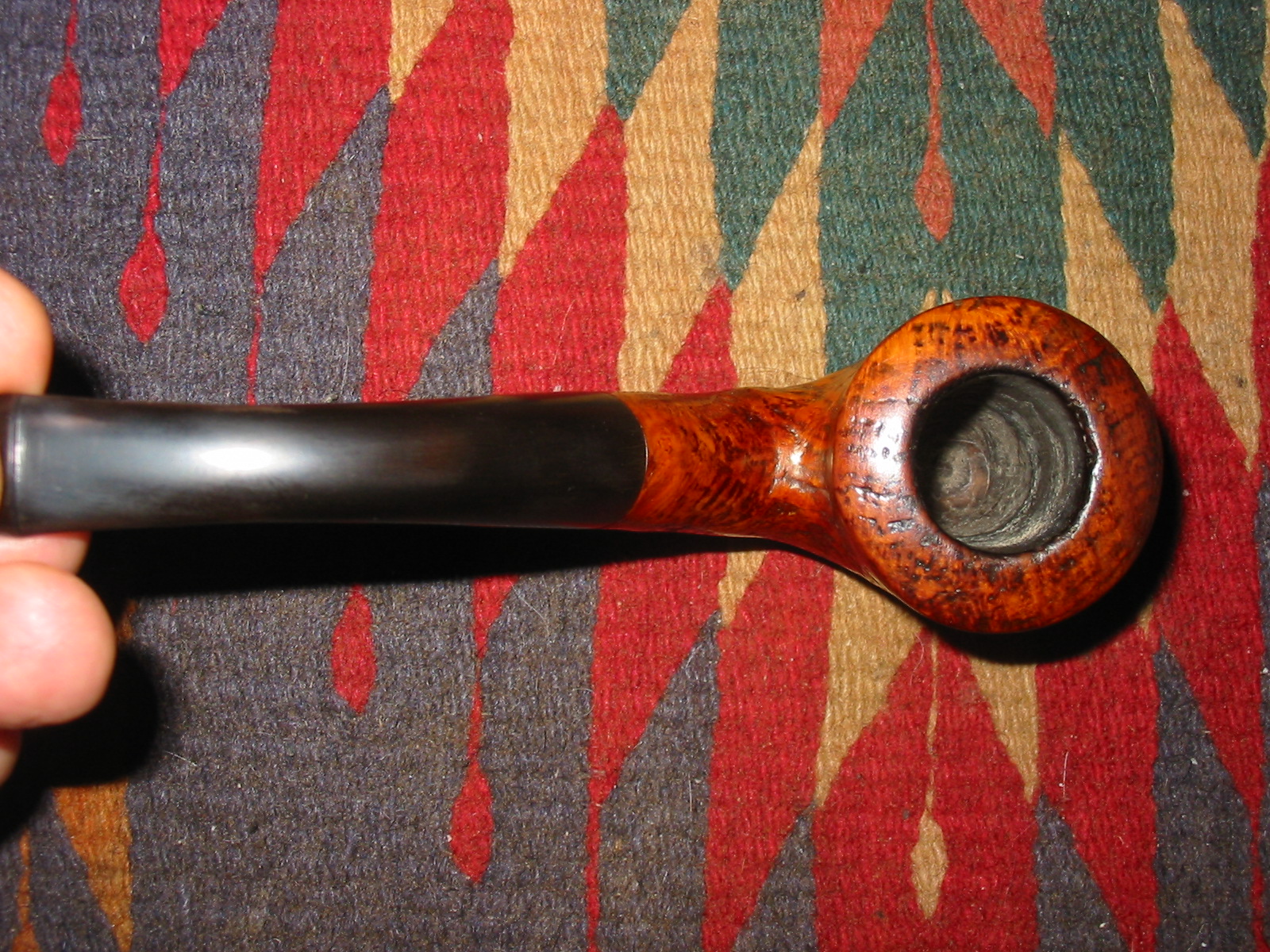
The third pipe I worked on in the lot below is the second one down in the third column. It is a Dublin like shape but probably properly is a freehand. It has a shallow sandblast finish with a two-tone stain. The undercoat is black and the top coat is brown. It is stamped on the left side of the shank Racine & Laramie in an arch over OLD TOWN SAN DIEGO over Banza in a script and then a line stamped Made in Italy. The look and feel of it says to me it is made by Lorenzo but I am not sure. When I read the stamping is when the memory came back. I have been in the Racine & Laramie tobacco shop in Old Town San Diego, California. It is a museum like tobacco shop that has a wide range of tobaccos and pipes in an old California mission style village setting. You can almost imagine cowboys riding up and tying up their horse to go in and get a pouch of fixin’s. The picture below is what I remember of the shop. It is from the website http://www.racineandlaramie.com/

Racine & Laramie

The following excerpt on the history of the shop comes from the website as well. I find it incredibly interesting reading.

History of Racine & Laramie
In 1868 Racine & Laramie became San Diego’s first Cigar Store. Having come from eastern Canada in the prosperity following the War Between the States, Messrs. Racine and Laramée sold cigars, tobacco, stationery, pipes, cutlery and gentlemen’s furnishings. The adobe they rented had been built in the 1820’s as the retirement home for leather-jacket soldier, Juan Rodriguez of the Royal Presidio. It was one of the first six buildings in the small pueblo, 500 registered voters, thousands of Kumeyaay. The Rodriguez family held ownership through periods of depression and Gold Rush boom, and their son, Ramon, was on the City Council. The widow Rodriguez had the building remodeled in 1867 and rented to Racine & Laramie and the Bank Exchange saloon. All was lost in the fire of 1872.

Using archeology, historic research and photographs this building has been reconstructed with the interior furnished and stocked as it may have been in that remote, frontier Pacific port. This picture gives a panoramic view of the interior of the shop looking at the cigar humidor.

Humidore

It was this shop that I visited many times over the years. It is like stepping back in time to enter the old town and then to walk into the shop itself. I think the last time I was there was about six years ago now. I took the train from the downtown harbor area to the old town site. I walked through the reconstructed village. I must have spent 3 or 4 hours wandering around the site and ending up in the old tobacco shop. I looked at pipes and tobaccos before settling on a couple of tins. I think I picked up some Dunhill EMP and maybe a tin of McClelland Dark Star before catching the train back into town.

Needless to say when I found this pipe bowl among the lot pictured below I restemmed it and while working on it relived my visits to the pipe shop in Old Town San Diego.

bowls1

The finish on the pipe was in pretty good shape – slight wear on the shank area and on the rim left the stain spotty in those areas. The bowl was caked – but differently than most of the pipes I work on. Its cake was primarily in the bottom half of the bowl. The bottom half was thickly caked while the top was not as bad. The photo below shows the bowl as it was when I took it to the work table. The sandblast is either worn from use or it is a lightly blasted finish. The shank was in very good shape and there were no cracks of damage to the inside. The drilling is a bit funny on this as well. It is drilled with a relatively deep mortise and the airway is drilled at the top of the arc of the mortise. It then drops at a sharp angle into the bowl coming out just left of centre in the bottom of the bowl. Because of the high drilling the mortise acts as a sump similar to the Peterson sump in the shank of the system pipes. It was dirty but not with any aromatic residue. Rather the pipe smelled of Virginias and would take little to clean it up.

new1

This pipe that took me several tries to get a stem that would work. This was not due to the look or feel of the stem but due to unforeseen troubles. The first was a nice saddle stem. I turned the tenon and had a great fit on it. I heated it with my heat gun and tried to bend it over my rolling pin to aid in getting the right angles on it. The heat made it very flexible and as I bent it to the correct angle it just snapped in two parts. Those things happen and in this case it was a frustration to be sure – so back to the drawing board. This time I chose a tapered stem. I turned the tenon and fit it to the mortise. I then used the Dremel with the sanding drum to remove the excess material and fit it to the diameter of the shank. I then sanded it with 220 grit sandpaper to finish the fit of the stem. The next three photos show the newly fit stem.

IMG_1227

IMG_1228

IMG_1229

I reamed the pipe with the PipNet reamer and cleaned out cake from the bottom of the bowl. I had to use two different cutting heads on the reamer to get it to remove the cake. The smallest head fit into the bottom half of the bowl and I was able to cut it back until the third head fit and removed cake from the top half and the remaining cake on the bottom half.

IMG_1230

I wiped down the bowl and shank with acetone on a cotton pad to remove some of the top coat of stain and even out the lighter areas and the darker areas where the stain was still present. My goal was not to remove all of the stain present but merely even out the top coat so that I could more easily blend in the new stain coat.

IMG_1231

Then with a bit of fear and trepidation, after breaking the first stem, I took the stem to the heat gun and heated it so that I could bend it into shape. I inserted a pipe cleaner in the airway as the bend would be quite significant and I did not want to risk having the airway collapse or kink. I heated it a high heat setting until the stem was flexible. I want the bend to be quite high up the stem toward the shank and not just on the thin portion of the stem so it took some time over the heat to make the stem bendable. I kept the stem moving over the heat as I did not want to burn the vulcanite. Once it was pliable I bend it over an old rolling pin that I have absconded with for that purpose. I have a heavy cardboard tube over the pin so that the surface is very smooth for the bend. Any cracks or rough spots on the rolling pin translate into wrinkles in the hot vulcanite.

IMG_1232

IMG_1233

IMG_1234

In the first photo below the bend in the stem can be seen after the first heating. I took it back to my worktable and took the photo below so that I could have a clear look at the bend in comparison with the curves in the bowl. It was not bent enough so I took it back to the heat gun, reheated it and bent it further. The second and third photos below show the final bend that I was aiming for. The bend in the stem reflects the curve of the bottom of the bowl and gives the pipe a pleasant flow. It is also bent perfectly for the pipe to sit well in the mouth.

IMG_1235

IMG_1236

IMG_1237

With the stem bent to the proper angle I worked on its finish with the micromesh sanding pads. I wet sanded the stem with 1500 grit until the major surface flaws were no longer present. The scratches left behind by the sandpaper were gone when I had finished wet sanding it.

IMG_1239

IMG_1240

IMG_1241

IMG_1242

I restained the bowl with a dark brown aniline stain thinned to 2 parts stain to 1 part isopropyl alcohol to match the existing stain on the bowl. I applied the stain with a cotton swab, flamed it with a lighter, reapplied more stain and then flamed it again to get the match correct. When finished I took the pipe to the buffer and buffed the pipe and the stem with White Diamond. The next three photos below show the pipe as it stood at this point in the process. The finished shape is very clear in these photos.

IMG_1243

IMG_1244

IMG_1245

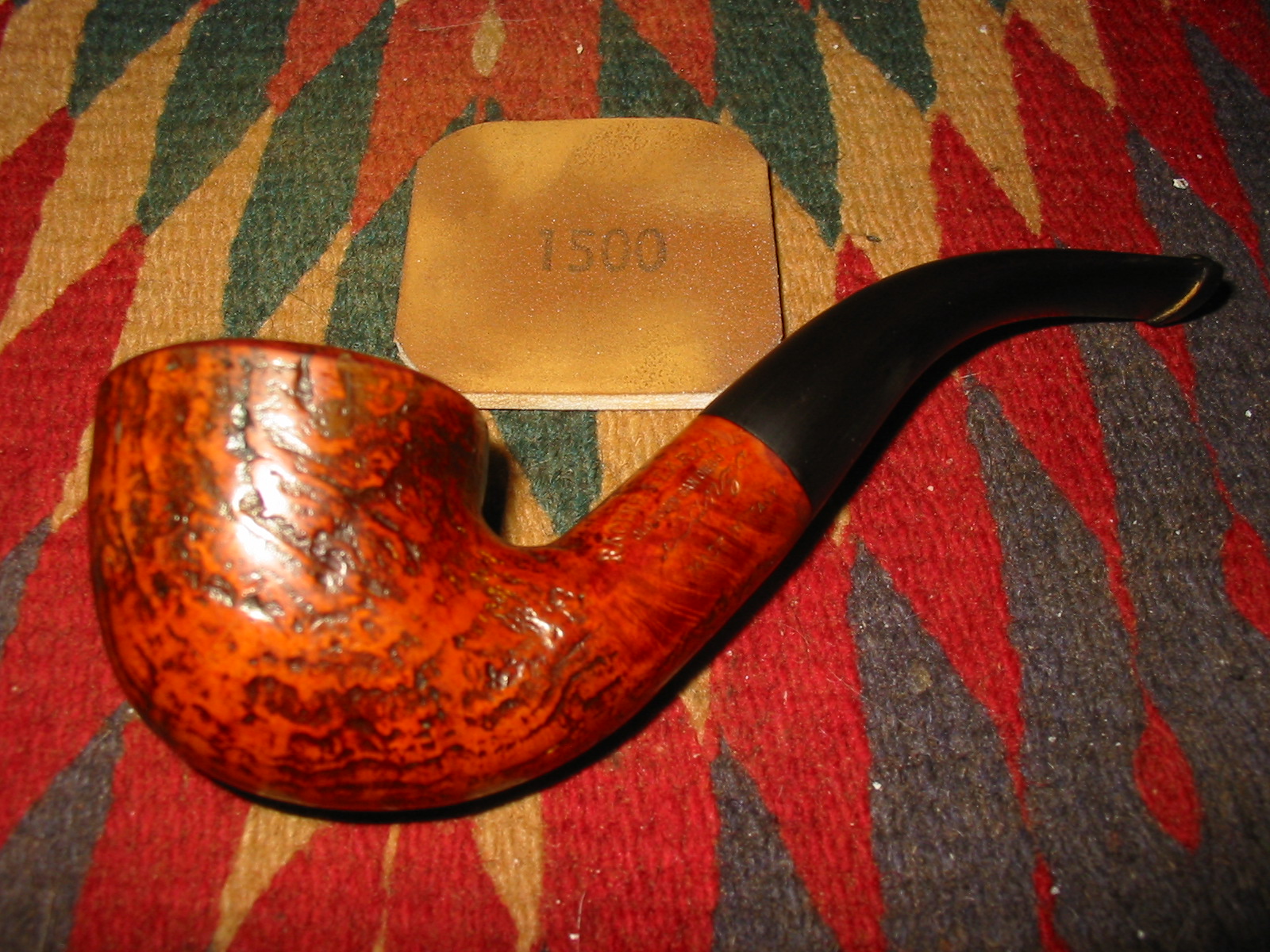
I brought it back to the worktable and continued sanding with the micromesh sanding pads. I wet sanded the stem with 1800 and 2400 grit sanding pads. I wiped the stem down between sanding to see how it was progressing. Then I dry sanded with 3200-12,000 grit sanding pads to finish polishing the stem. The next series of four photos show the progressive shine on the stem.

IMG_1246

IMG_1247

IMG_1248

IMG_1249

Once the stem was polished I buffed it a second time with White Diamond and then coated the stem with a rub down of Obsidian Oil and let that soak in. After it was dry I rubbed down the stem with a clean cotton rag to bring out the shine even more.

IMG_1250

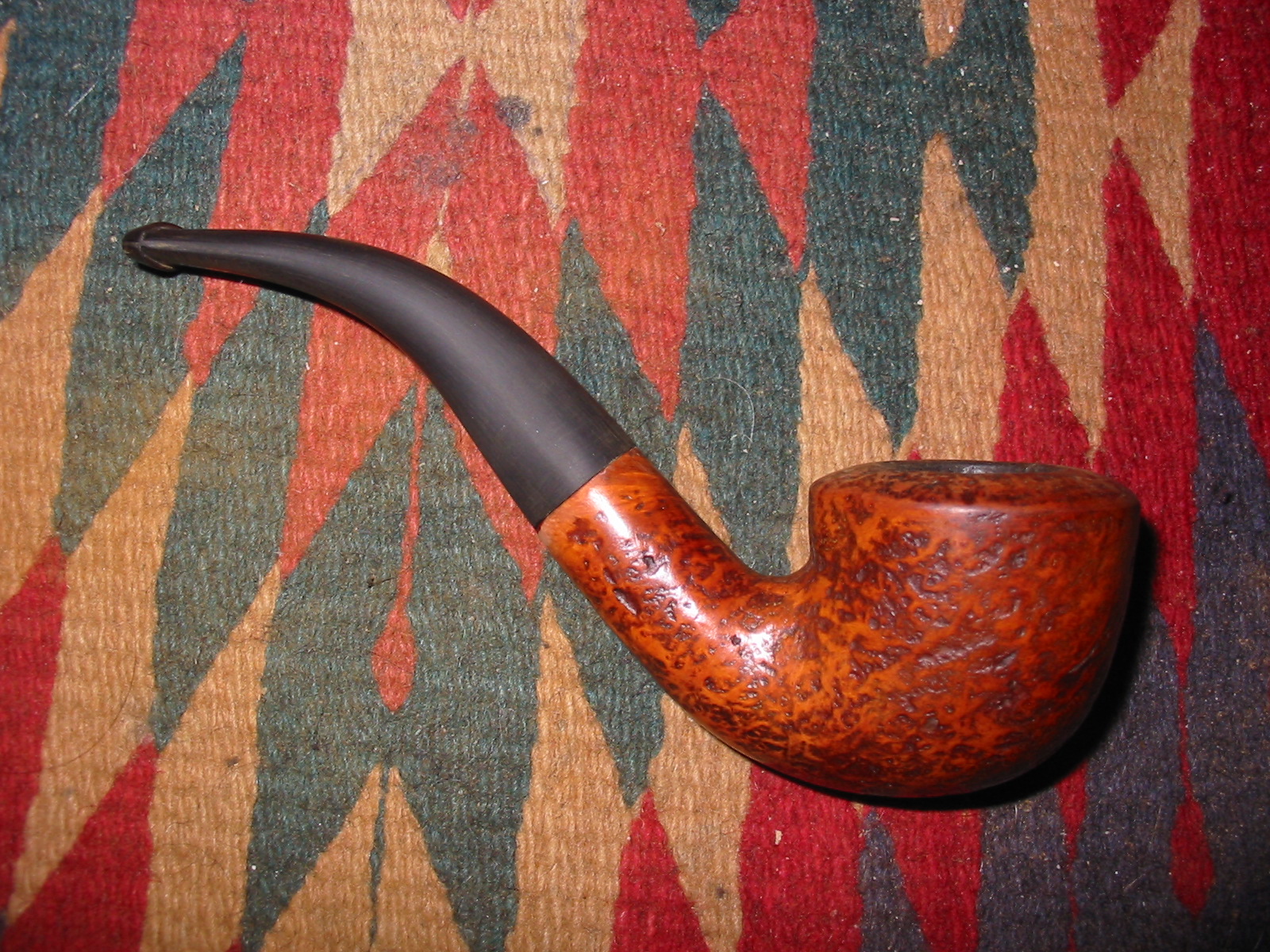
The final four photos show the finished pipe with its new stem. The old Racine & Laramie pipe was back in action and ready to smoke. The back story to this one is as interesting as the old pipe. I wonder the path it took from San Diego to Chicago area and then up to Vancouver, British Columbia. I wonder where it lost its stem along the path it travelled. I only wish it could tell the stories of its travels and the pipemen who smoked it along that journey. I will probably never know the story but at least my imagination can create a suitable tale for the pipe before I too send it on its way, for I am sure it will outlive me as it passes into the hands of future pipemen who come after me.

IMG_1251

IMG_1252

IMG_1253

IMG_1254

Savinelli deluxe Milano Stack Restemmed & Renewed


Blog by Steve Laug

The second pipe in the lot pictured below that I chose to work on was the one on the top of the right column. It is stamped on top of the shank Savinelli de luxe Milano and on the underside the Savinelli shield and next to that is it stamped 130KS Italy. The finish was dull and mostly gone. The rim was not charred at all but had a heavy build up of tars. The bowl was caked – interestingly for a pipe this deep it was caked all the way to the bottom of the bowl. The dimensions of this bowl are: height 2 1/4 inches, outer diameter of the bowl 1 ½ inches, diameter of the chamber ¾ inches. It smelled of sweet aromatics so it would need to be reamed and cleaned well. There was no stem with it but there was a broken tenon stuck in the shank. I would have to pull the tenon and fit a new stem on the bowl. It was made of a good piece of briar – no fills or sand pits. The grain is cross grain on the front and back of the bowl and the top and the bottom of the shank. It had some very nice birdseye grain on each side of the bowl and the shank. The shape of the shank was a modified oval shape.

bowls1

Savinelli top

Before I cleaned the bowl and shank I removed the broken tenon that was stuck in the mortise. I have a screw that works perfectly for this process. I turn it into the tenon by hand or a screw driver and then work it out by hand or with a pair of pliers. If the tenon is stuck and will not move I put it in the freezer for 30 minutes or more and generally it will pop out quite easily. In this case it came out quite simply and I was able to move on in the process of cleaning.

IMG_1323

IMG_1324

I sorted through my collection of old stems to find an oval one that I could modify to fit the style of the shank. I had looked on line and found that this particular model of Savinelli had a taper stem (see the first photo below). I did not have any oval tapered stems that would fit, nor did I have large enough round stems that could be modified. I chose an older oval saddle stem that I believed would look good. I think that originally it was on a Dr. Plumb pipe but the logo was worn off and my modifications would remove the red dot on the stem (second photo below).

$T2eC16JHJHUFFfhDpWd3BR)N9Jwnpw~~60_57

IMG_1325

I sanded the tenon with 220 grit sandpaper until I had a good snug fit on the shank. The next four photos show the stem before I began to shape it to fit. The fit against the shank was good and tight. The look of the pipe and stem worked for me so I was good to go.

IMG_1326

IMG_1327

IMG_1328

IMG_1329

I do the initial shaping of a stem with a Dremel and sanding drum. I set the speed about mid mark on the speed control of the Dremel and slowly work at the surface of the stem. I do this initial shaping with the stem on the shank. I want to shape it as closely as possible to the shank shape before doing the finish shaping by hand. The next three photos show the stem after this initial shaping. There was still much work to do in bring the stem and shank to a proper fit and the width of the stem to a match with the taper of the shank. This work had to be done by hand using sandpaper and files.

IMG_1330

IMG_1331

IMG_1332

The depth of the bowl on this stack made it impossible for me to get to the bottom of the bowl with my reamers. The PipNet reamer went about 2/3 of the way down the bowl and the KleenReem or Senior reamer did the same. I have used a plumbing tool that is used to clean up pipe after cutting it to ream deep bowl. It is a ¾ inch cone shaped wire brush with a handle that I can turn into the bowl and go to the bottom to remove the cake evenly. It works exceptionally well for this purpose.

IMG_1337

IMG_1338

IMG_1339

IMG_1333

I cleaned up the rim of the pipe with 220 grit sandpaper and also worked on the shank stem fit with the same sandpaper. As I was planning to refinish the pipe bowl and shank I did not care if I removed a bit of the finish while sanding the stem and shank. The next three photos show the stem/shank fit after I had sanded it with the sandpaper. I really liked the look of the pipe at this point and only needed to do the stem polishing and the finish sanding and cleaning of the bowl.

IMG_1334

IMG_1335

IMG_1336

I used acetone on cotton pads to remove the finish on the pipe. I wiped it down until it was the same colour as the sanded portion of the shank. This would make blending the stain much easier to do. The first two photos below show the bowl after the initial wipe down with acetone. Photos 3-5 show the pipe after the finish has been removed from the pipe and it is ready to be stained.

IMG_1340

IMG_1341

IMG_1342

IMG_1343

IMG_1344

When I sanded the stem I found that there was one small tooth mark on the top of the stem near the button that no amount of heat would lift up. I sanded the spot with the 220 grit sandpaper until it was clean and then buffed it with Tripoli until it was very clear the breadth of the spot. I filled the indentation with clear super glue and sanded it once it was dry. The two photos below show the stem repair after the initial sanding and then after it was ready to be polished. Once the polishing was done the repair would be virtually invisible.

IMG_1345

IMG_1346

I cleaned the internals of the stem and the shank with pipe cleaners, cotton swabs and Everclear until the shank and the internals of the stem were clean. I used a dental pick to clean out the areas inside the button and the flare of the airway in the button.

IMG_1347

IMG_1349

Once the insides were clean I wiped the bowl down with Everclear and removed any possible grime that I added to the surface in the cleaning process. The next three photos show the pipe after all of the cleaning. It is beginning to look like the stem and pipe were made together.

IMG_1350

IMG_1351

IMG_1352

Because of the amount of grime that I cleaned out of the shank and the stem I decided to use a retort on it to give it a more thorough cleaning. The next series of three photos show the set up of the retort system. I use isopropyl alcohol in the test tube and heat the tube with a small tea light candle. I use a block of ebony that I have here to support the pipe and retort during the process. The alcohol is boiled through the pipe until it comes out clean. Generally this takes 2-3 fresh test tubes of alcohol.

IMG_1353

IMG_1354

IMG_1355

After removing the retort I cleaned out the bowl, shank and stem with pipe cleaners and cotton swabs a final time to remove any of the alcohol and oils that remained. I then sanded the stem with 1500 and 1800 grit micromesh sanding pads to begin polishing the surface and to remove any of the debris left from the surgical tubing on the stem.I continued to sand the stem with the micromesh sanding pads from 2400-12,000 grit in preparation for staining.

IMG_1356

IMG_1357

IMG_1358

IMG_1359

IMG_1360

IMG_1361

IMG_1362

I stained the pipe bowl and shank with dark brown aniline stain mixed 2 parts stain to one part alcohol to get the brown colour that was previously on the pipe. I wanted it thin enough that the grain would really stand out and give the pipe a uniform look after the sanding. The pipe has some beautiful cross grain on the front and back of the bowl and the top and bottom of the shank with birdseye grain on the sides. I wanted the stain to highlight that. I stained the pipe, flamed it and restained and reflamed it to set the stain in the grain.

IMG_1363

IMG_1364

IMG_1365

Once the stain was dry I took the pipe to the buffer and buffed the bowl and the stem with White Diamond to polish the stem and the stained bowl. Afterwards I gave it multiple coats of carnauba wax and buffed it with a clean flannel buff. For a final touch I hand buffed it with one last coat of wax and shoe shine brush. The final photos below show the finished pipe. It is cleaned, renewed and ready to go out to a good friend who loves this shape!

IMG_1368

IMG_1369

IMG_1370

IMG_1371