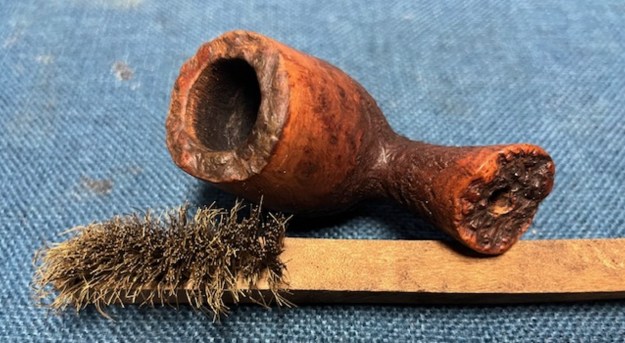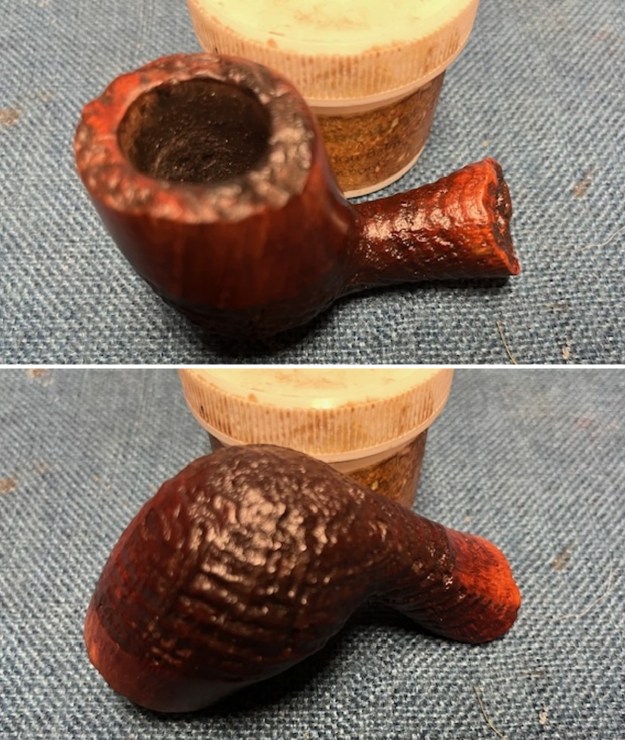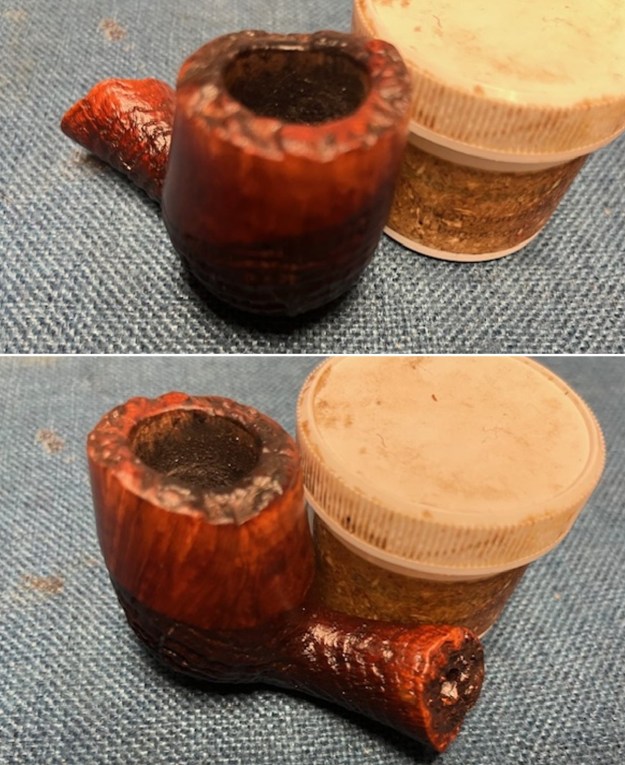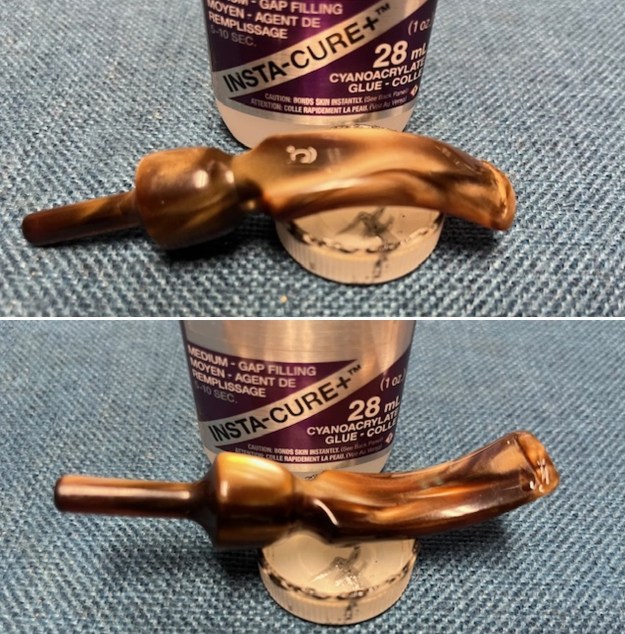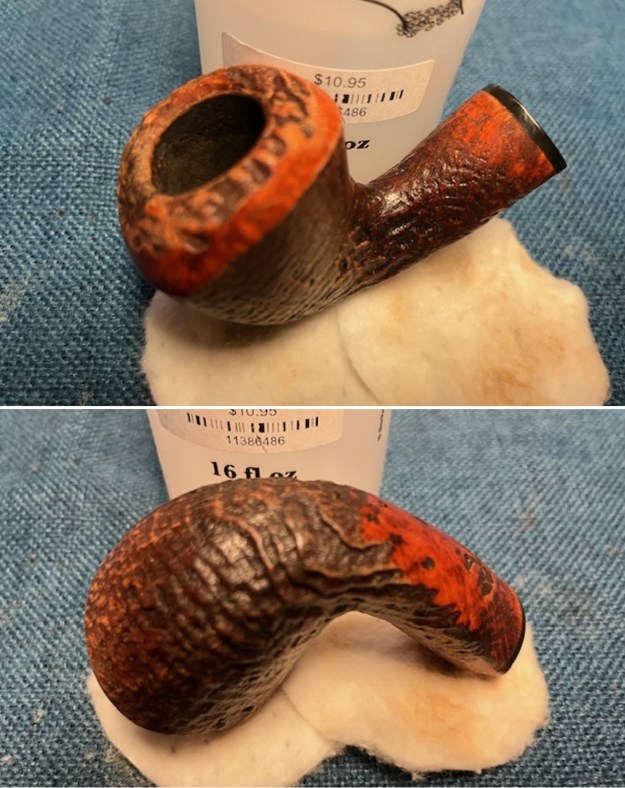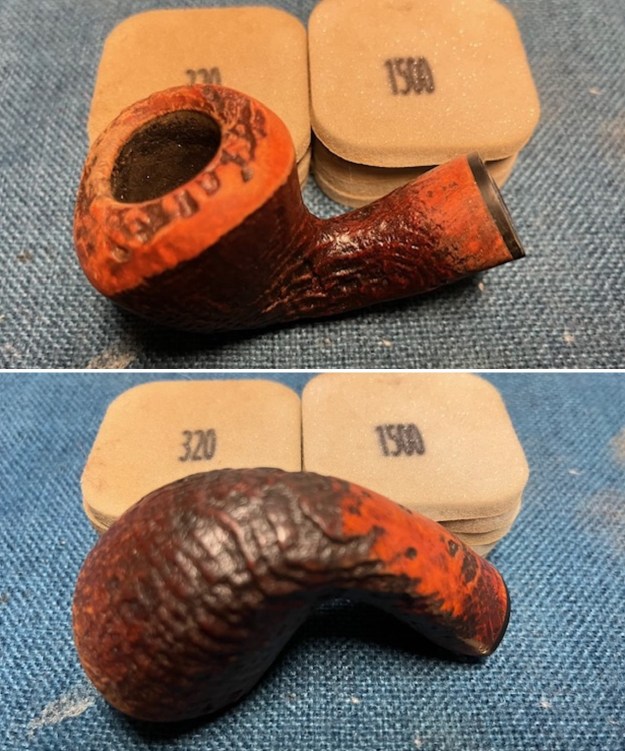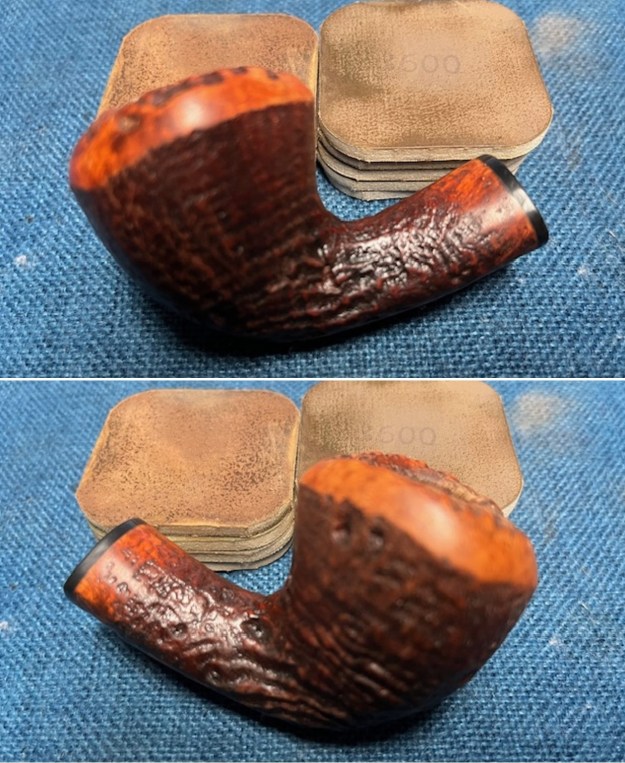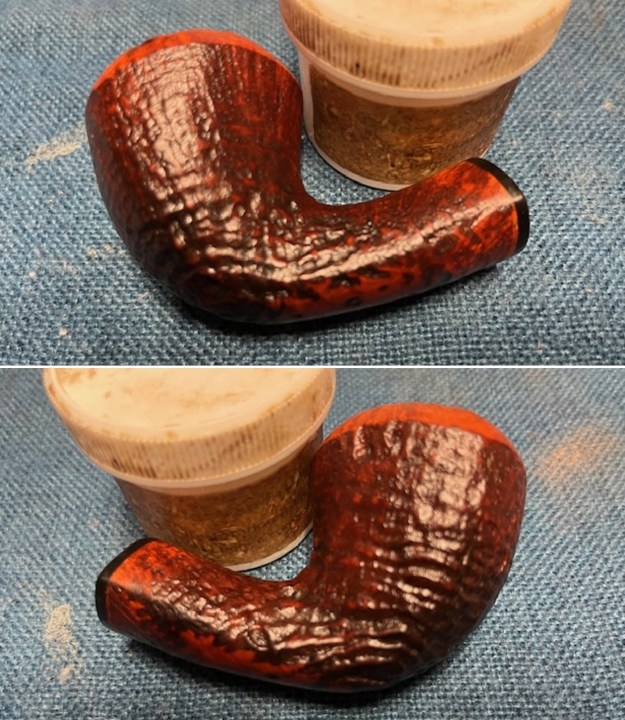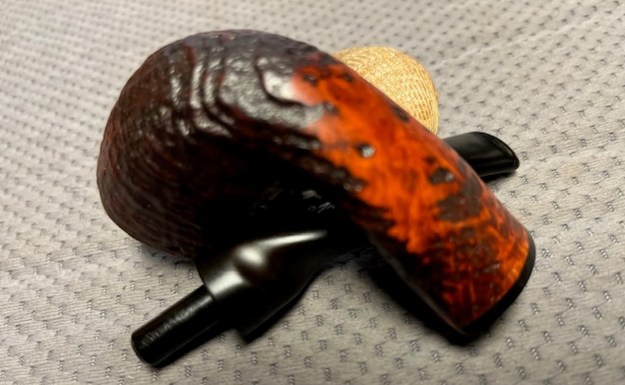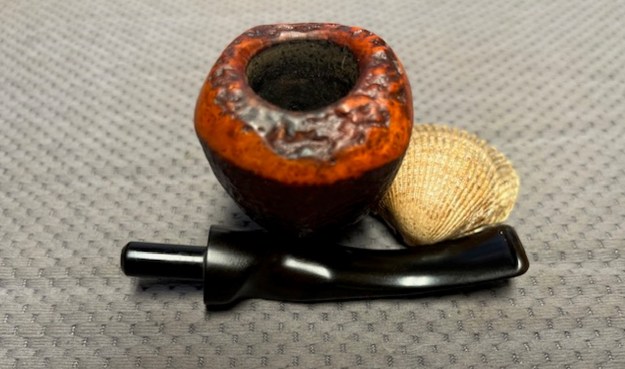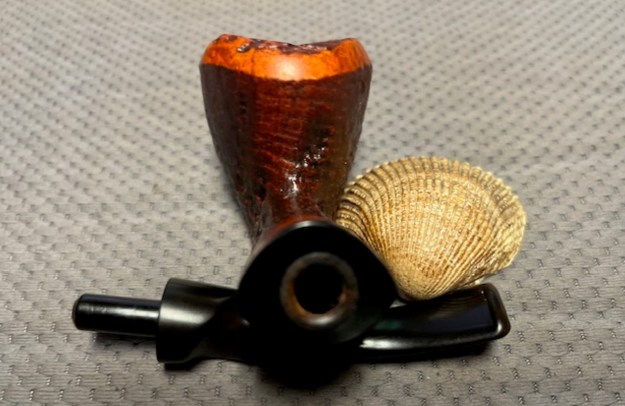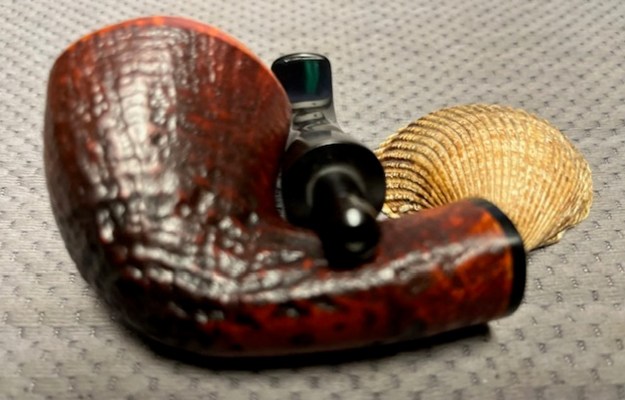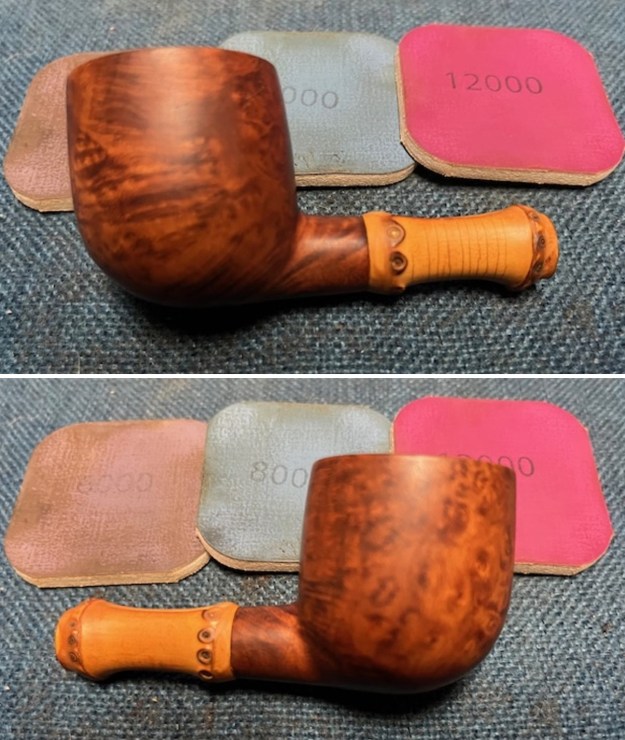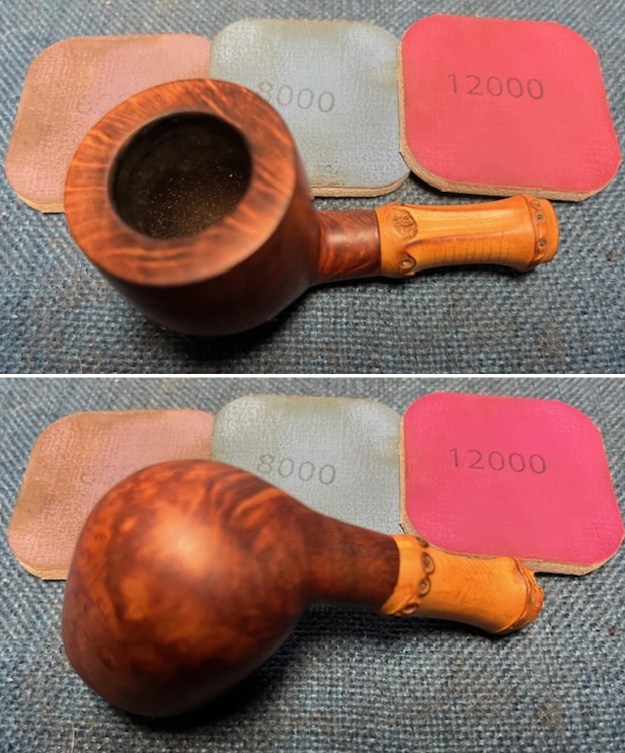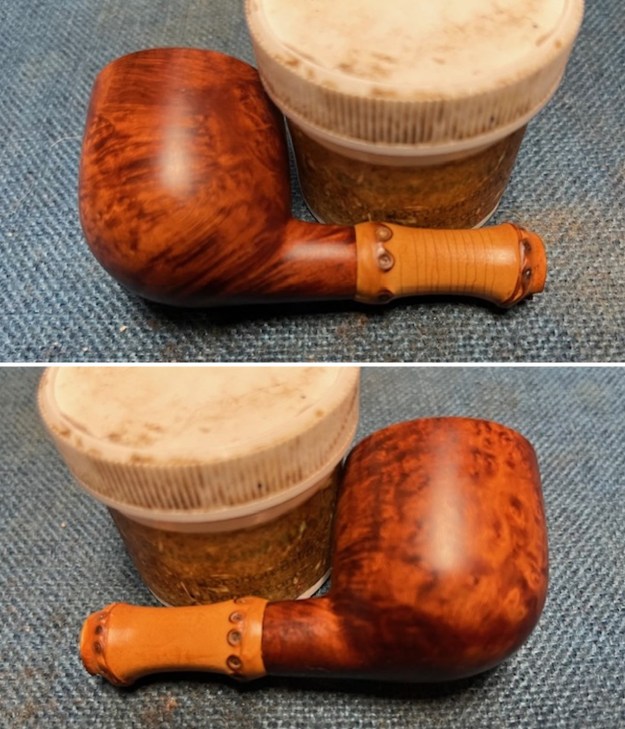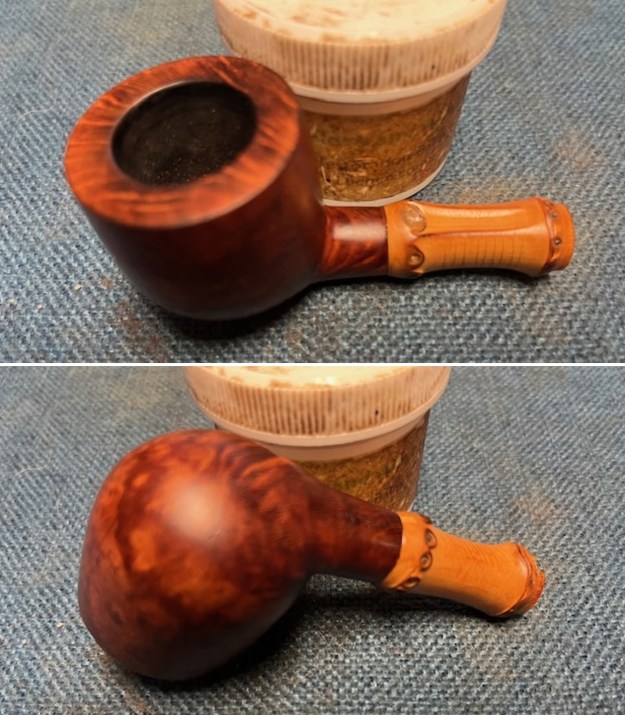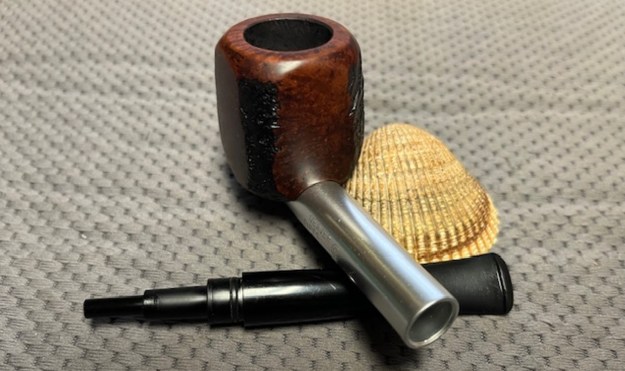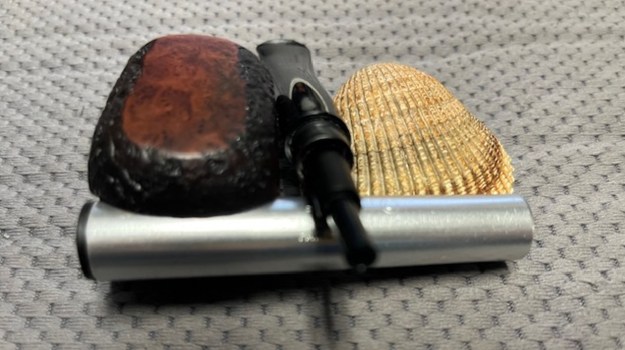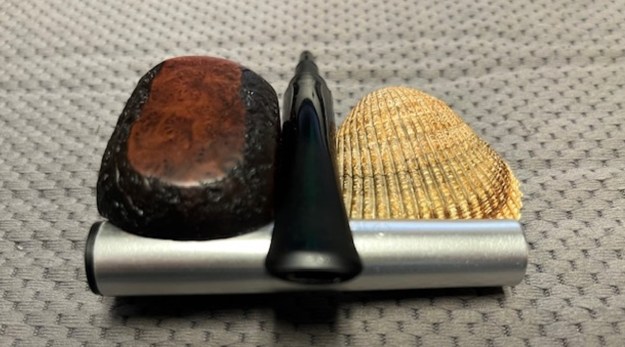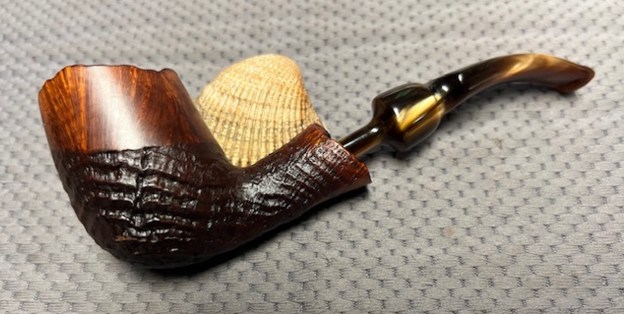
Author Archives: rebornpipes

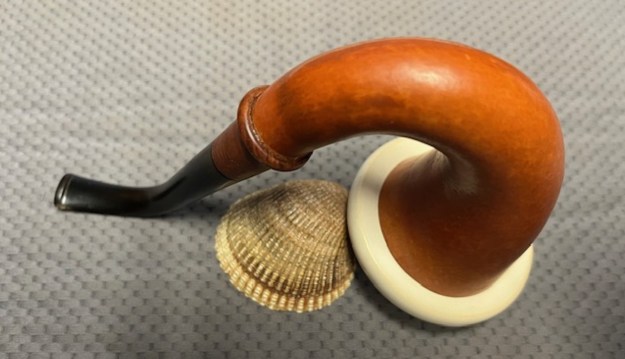
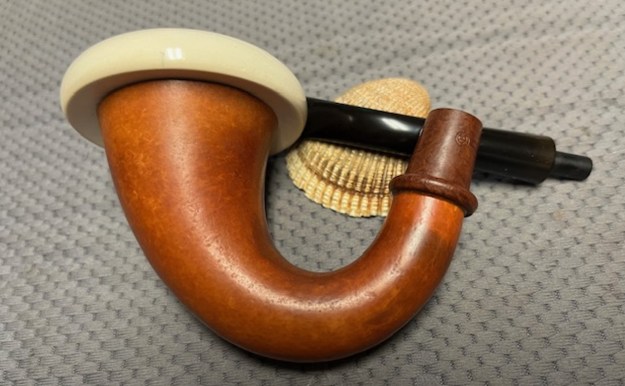
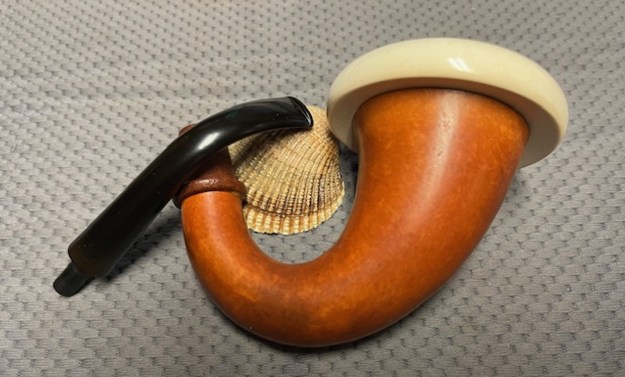
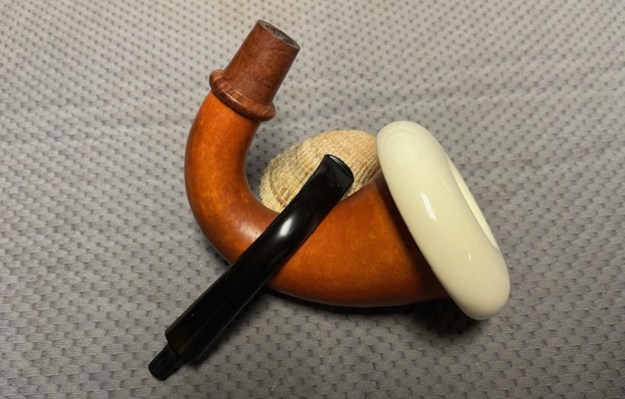
Restoring and fitting an AB Gourd Calabash with a new Meerschaum Bowl


by Steve Laug

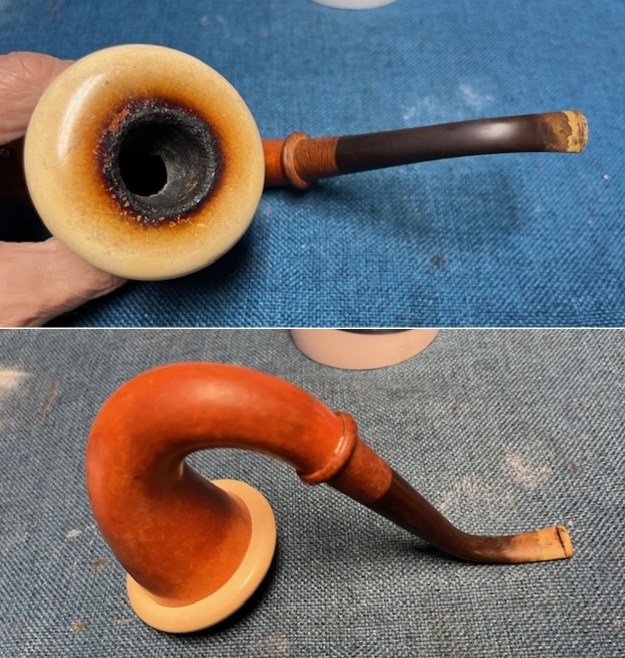
A few days ago, I received an email from our local pipe and cigar shop regarding a repair that needed to be done for a customer. Joe included some photos with his email to help me see what he was looking at. I have included the email and the photos below so you can read and see what I read and saw.

Good afternoon Steve! How’ve you been?

Seems like it was every other day I’d email you about a broken pipe, and you’ll never guess….

A gentleman dropped off a beautiful Calabash Meerschaum pipe, I believe he said a part of the bowl cracked when he dropped it. Regardless, I can’t really tell what’s wrong with it from looking at it. I’ve attached a couple pictures, and was wondering if you could help us with it. 

All the best,

Joe

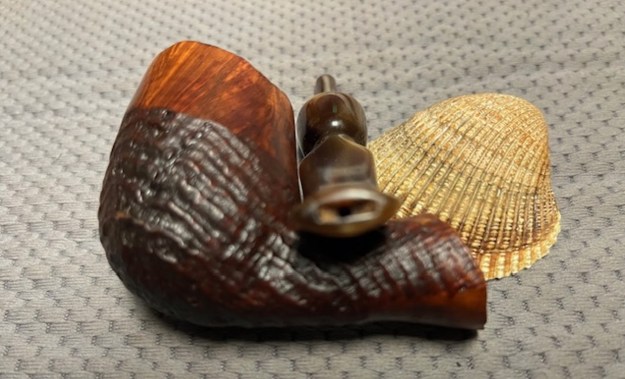
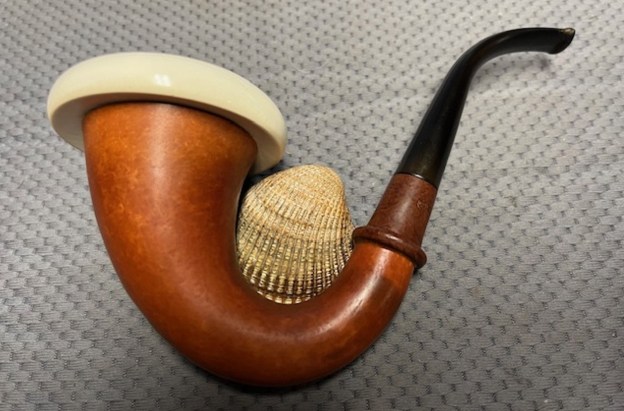
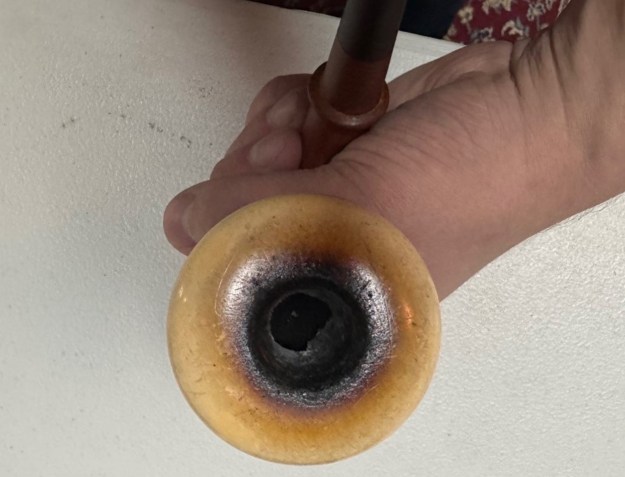
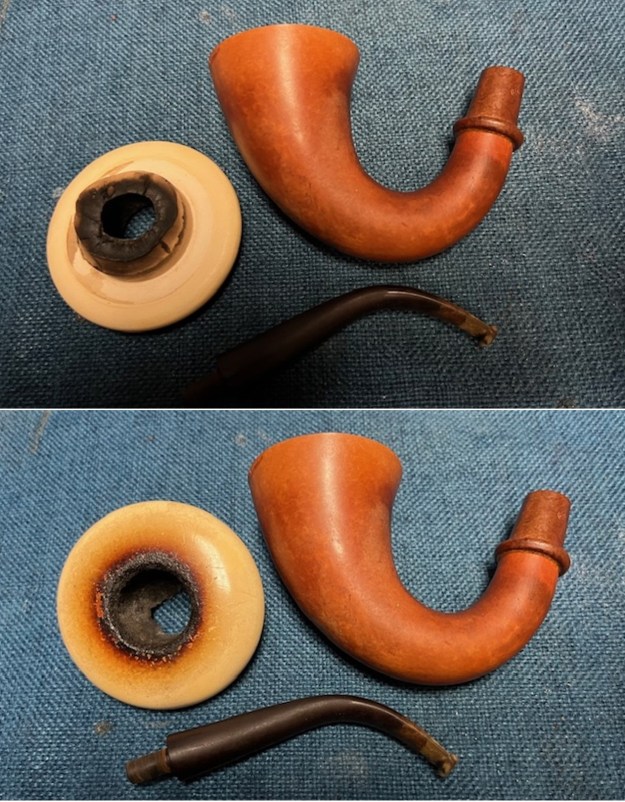
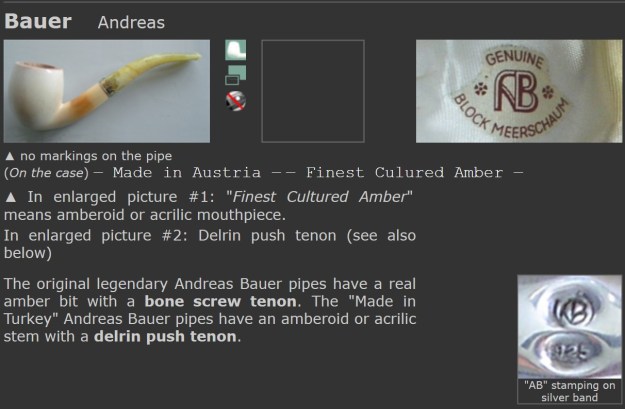
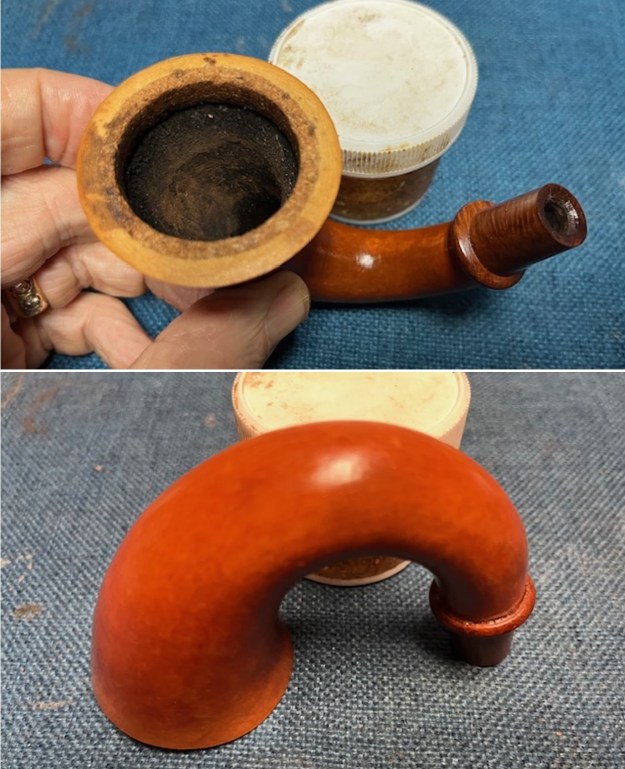
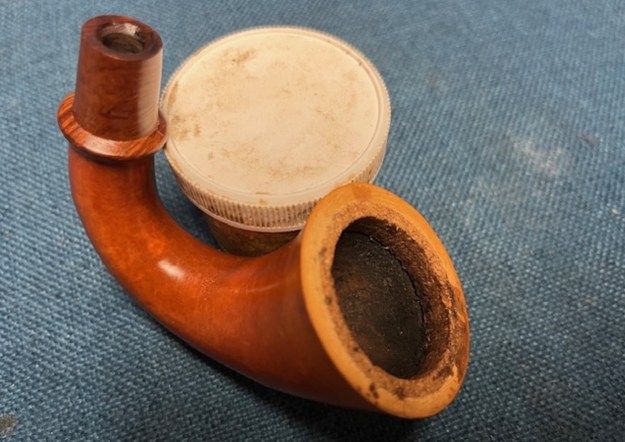
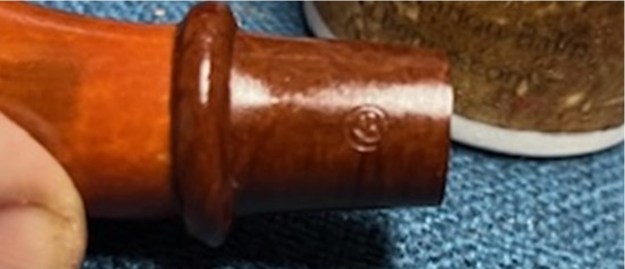
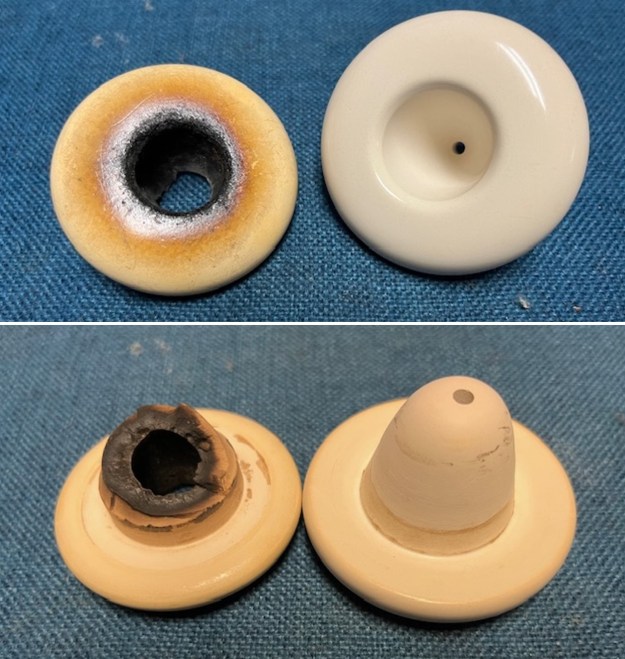
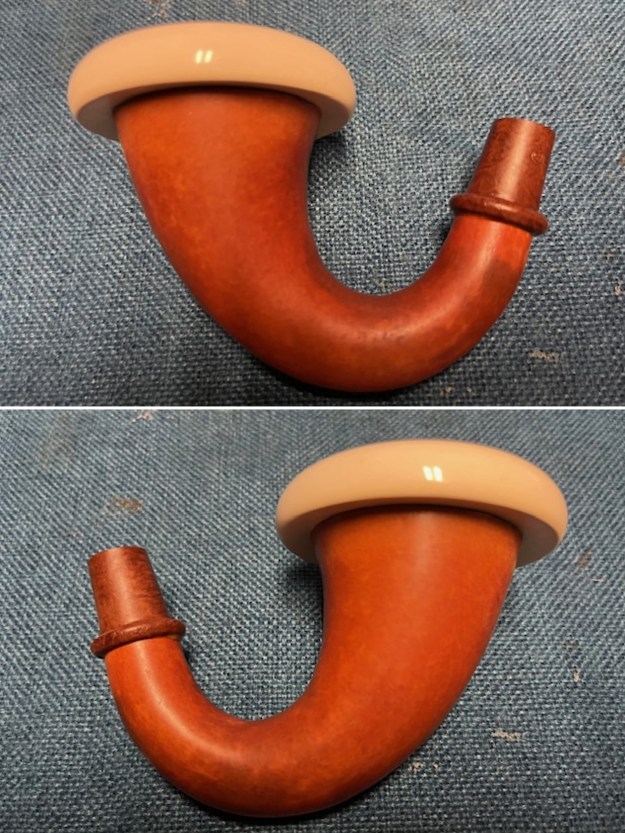
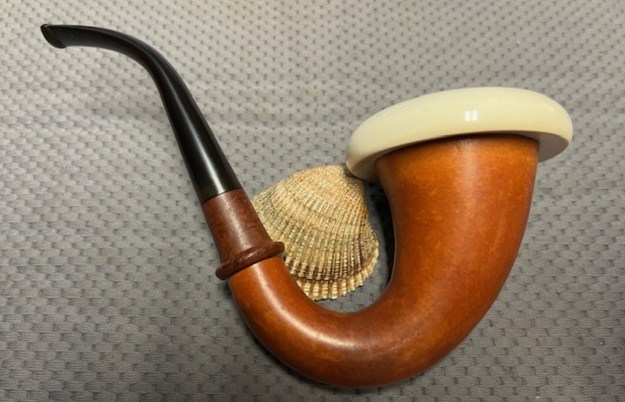
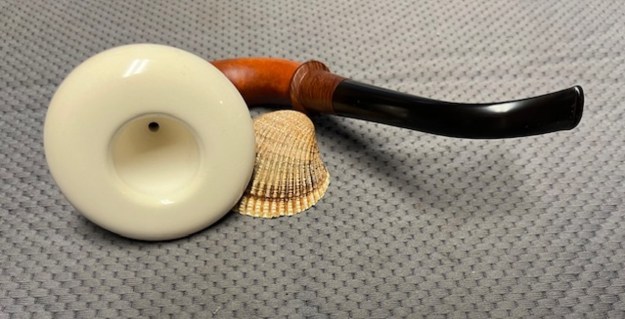
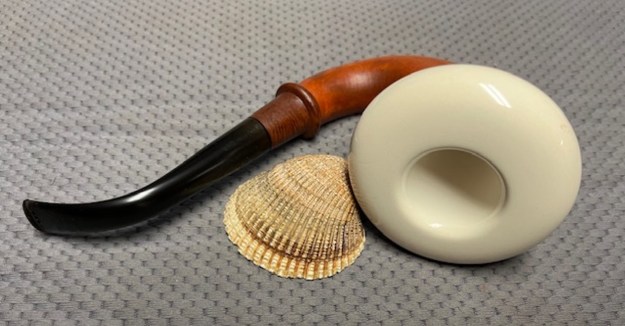
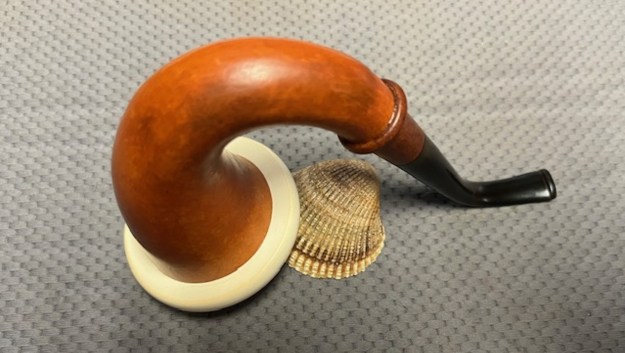
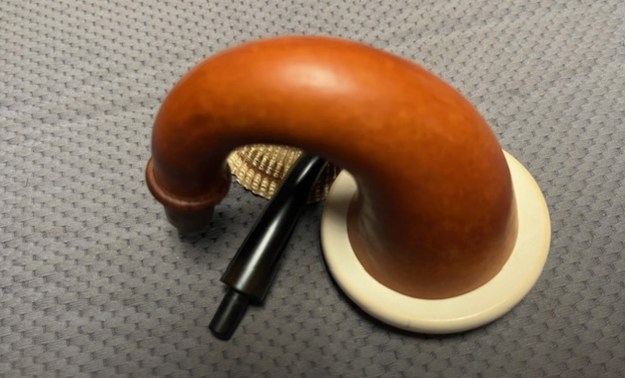
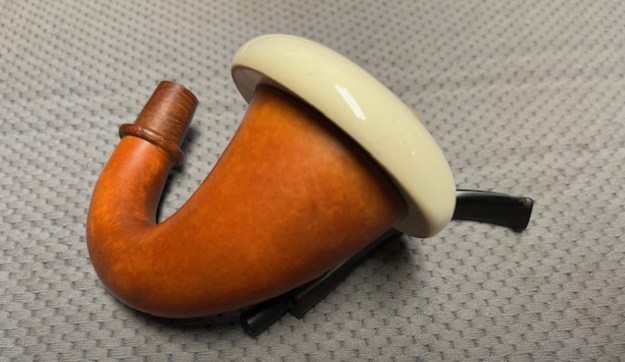
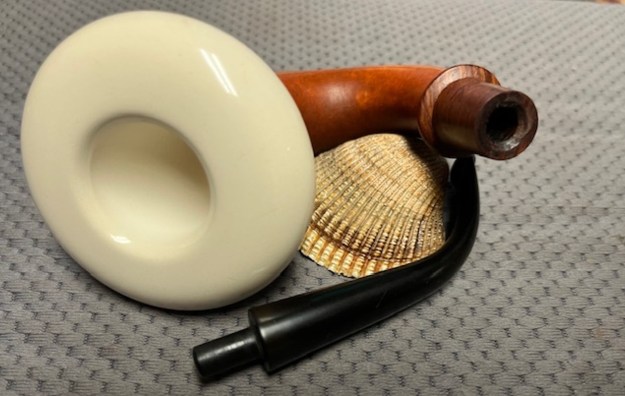
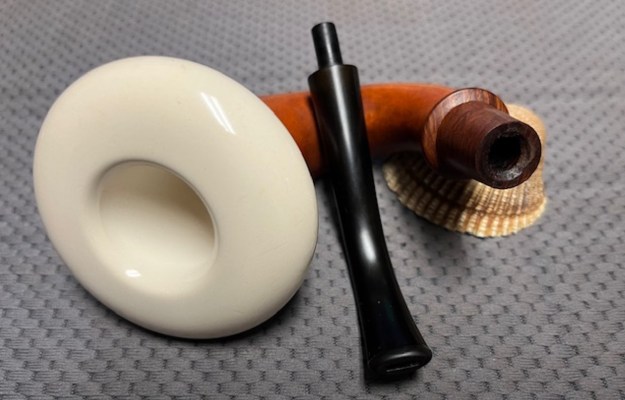
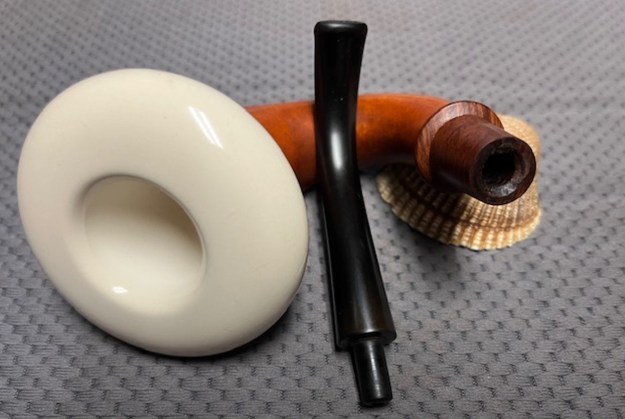
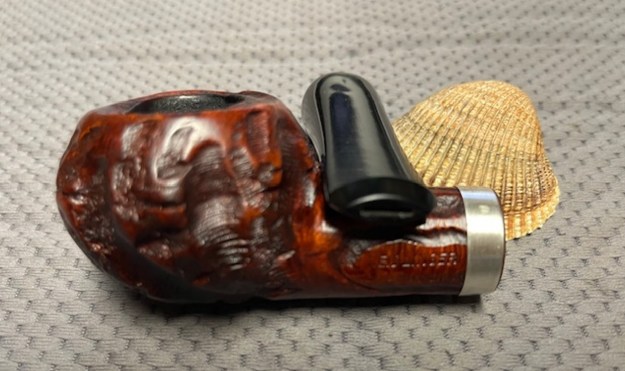
I looked over the pipe photos to see what I was going to have to work on. It was a nice-looking Meerschaum Gourd Calabash. The gourd was dry and dirty with some discoloring around the sides from the top to the shank. The shank end was a briar extension that looked nice, but also dirty. The stem was well bent but was oxidized, calcified and had light marks and chatter on both sides ahead of the button.The photo of the bowl from the top down seems to show the bottom has broken out of the bowl and it too was very dirty. I was curious to see what the pipe looked like once I had it in hand. Perhaps I would have a replacement bowl here that could be used in the bowl.Joe dropped the pipe by this afternoon and I had a look. I was very interested in seeing what I could do with it. I took photos of the pipe before I started working on it to show what I saw. It really is a pretty pipe. The stem is as I noted above and the Meerschaum Bowl was missing its bottom and the nipple that fit into the gourd. The briar shank extension was stamped on the left side with an AB in a circle. That interested me even more in that it pointed me to a well Austrian Meerschaum carver Andreas Bauer. I would need to do some more checking on that but that is what I remember at this point in the process. I took the pipe apart and took photos of the parts. You can see the badly damaged meerschaum bowl. It truly was broken when the bowl was dropped.Before I started working on the pipe I turned to Pipephil’s site to see what I could learn about my AB guess pointing to Andreas Bauer (http://www.pipephil.eu/logos/en/logo-b2.html). I did a screen capture of the information on the site and included the sidebar info below the photo. Company founded in Vienna (Austria) by Andreas Bauer in 1906. In 1942 Ernst Bauer, the founder’s son, took over the management of the enterprise until early 1970s when Turkish law banned the export of raw meerschaum. At this time Otto & Kopp Gmbh bought the trademark. They were a large Meerschaum distributor to the German tobacconists and good customer of the Turkish Konçak Meerschaums. Lastly Sedat Konçak bought the trademark in 1990. Unfortunatly the pipes carved in Turkey continue to be labeled “Made in Austria” (pipe next).

It is indeed an Andreas Bauer pipe and it looks like it may be one that was made either in the 1970s by Otto & Kopp Gmbh who bought the trademark or by Koncak Meerschaums in the 1990s who also bought the mark. Even though made in Turkey Koncak still labled the pipes as Made in Austria.

Now it was time to work on the pipe itself.

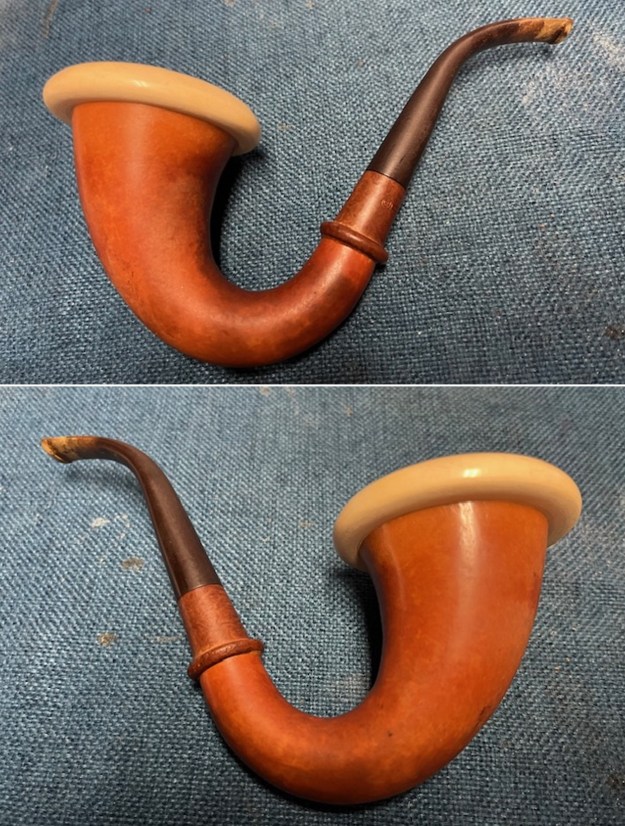
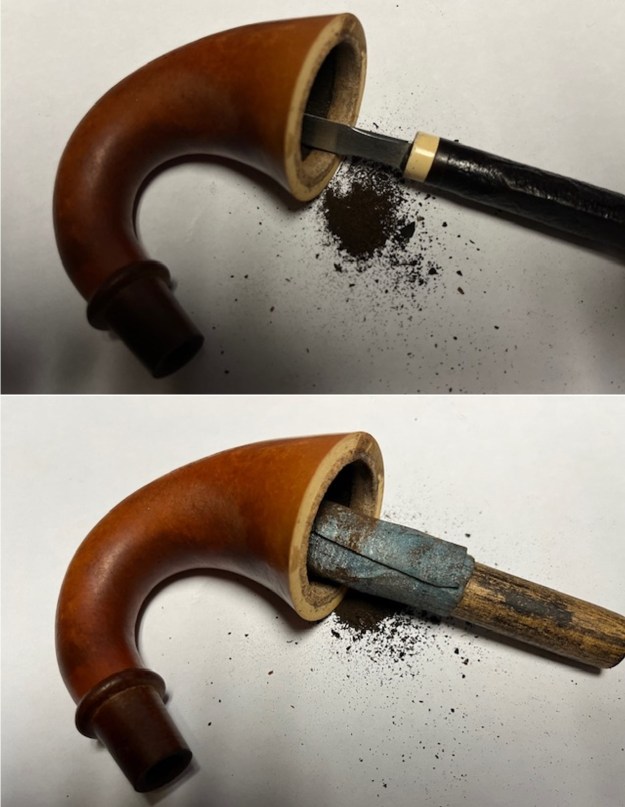
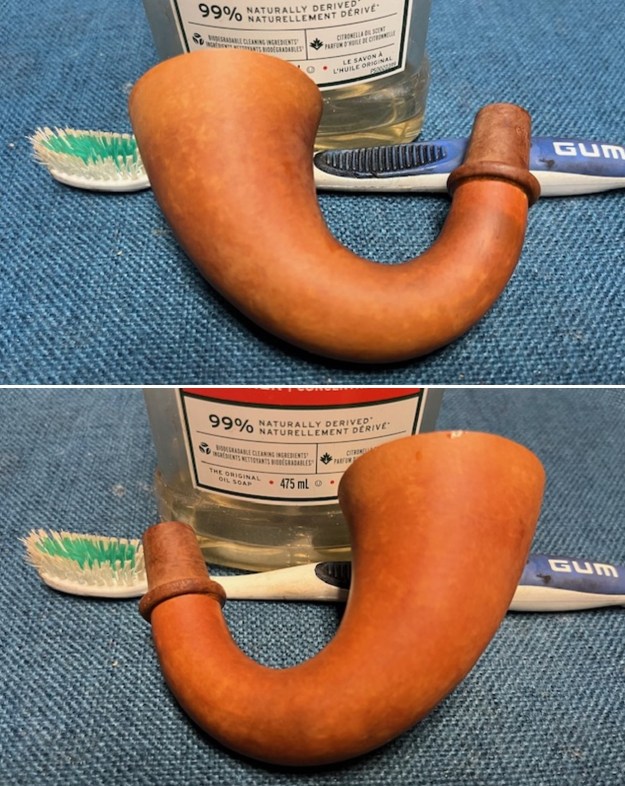
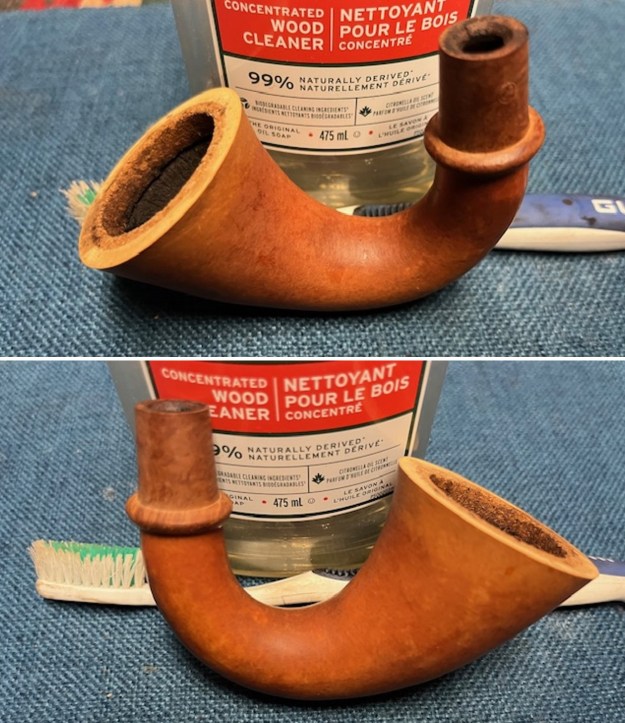
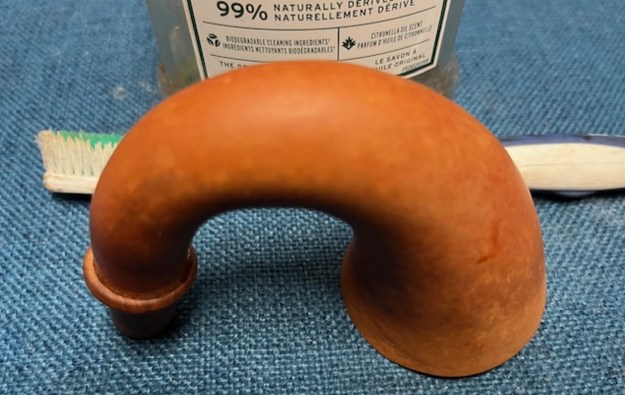
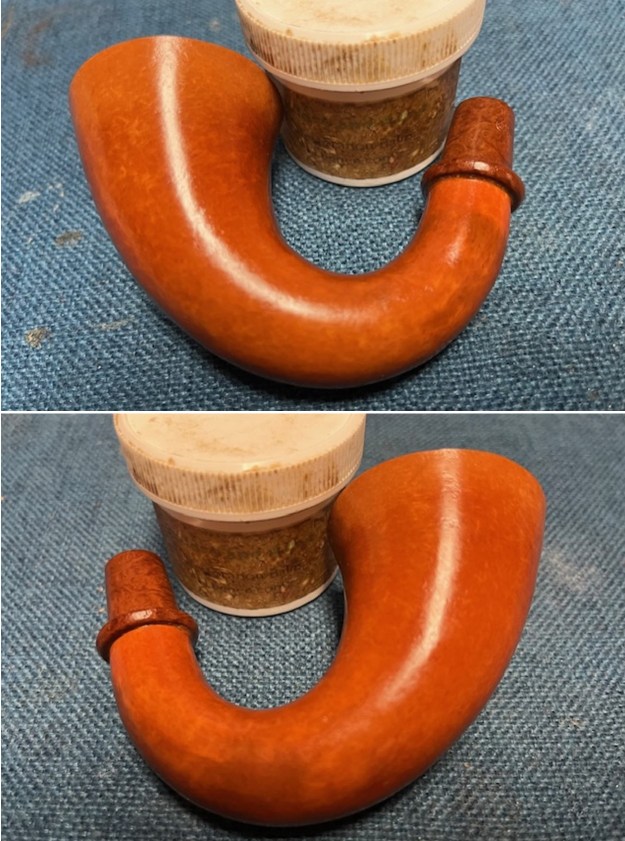
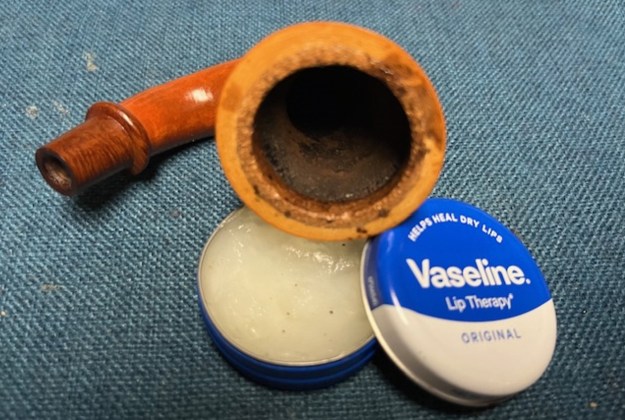
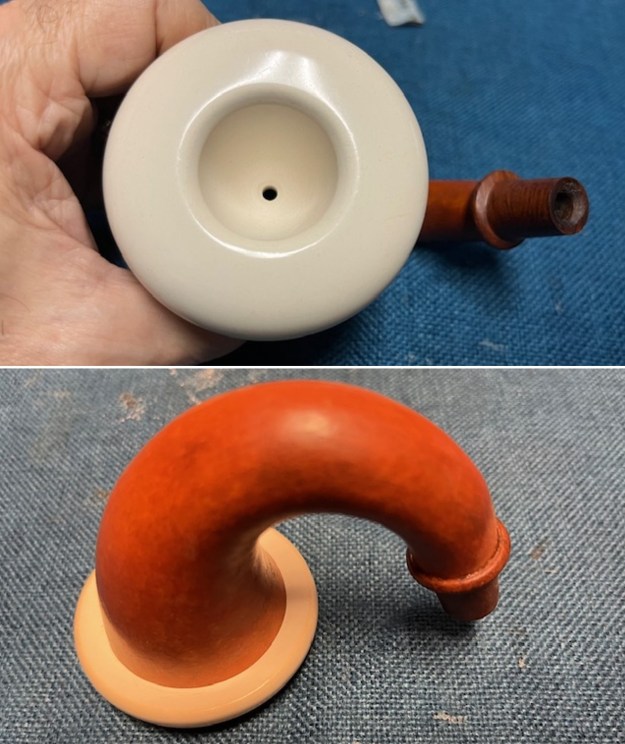
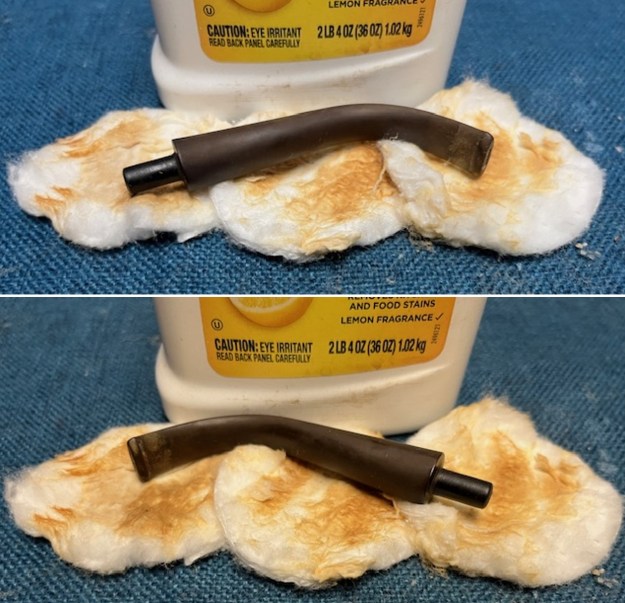
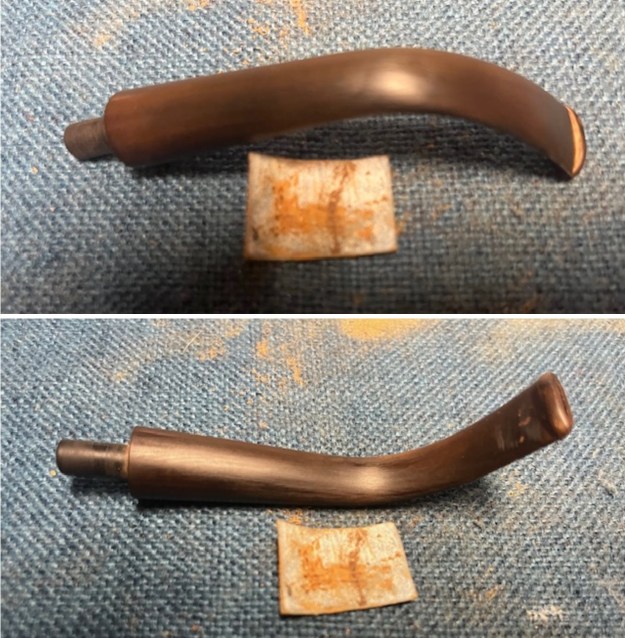
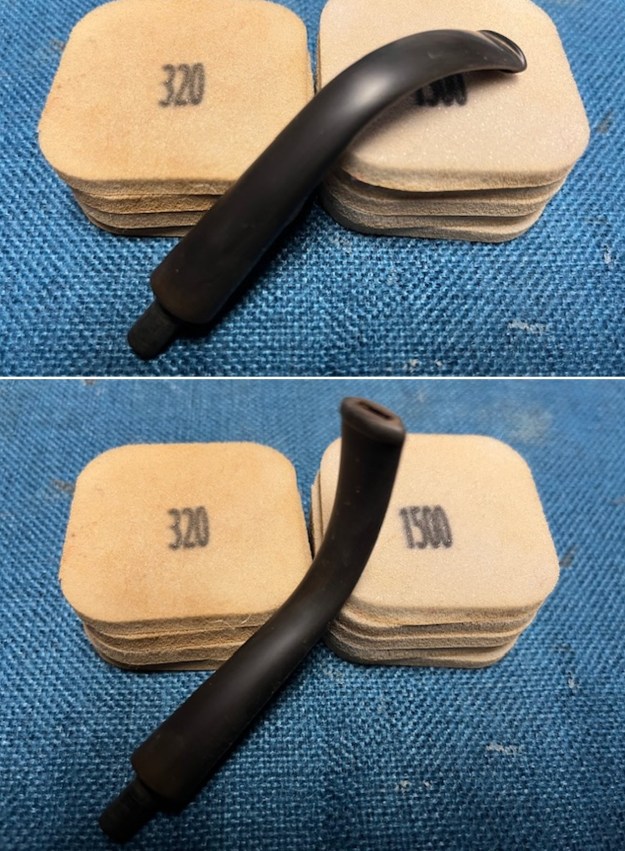
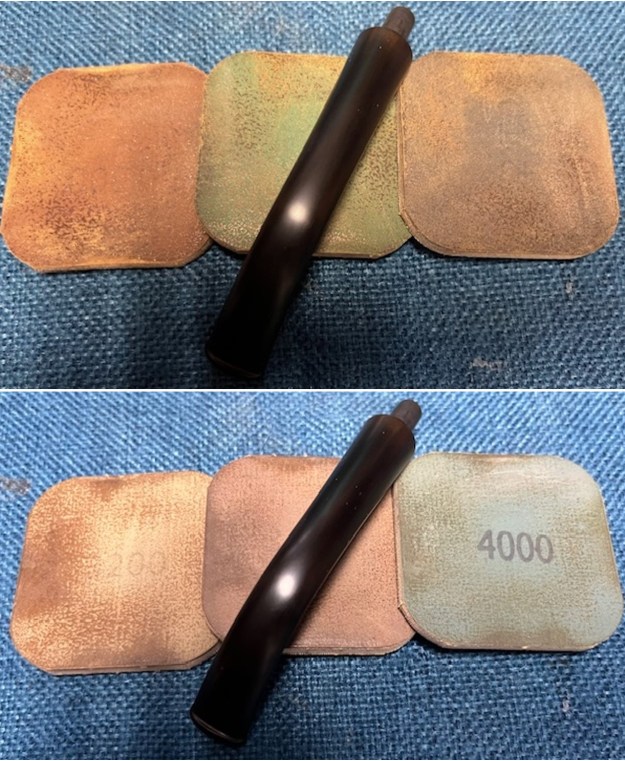
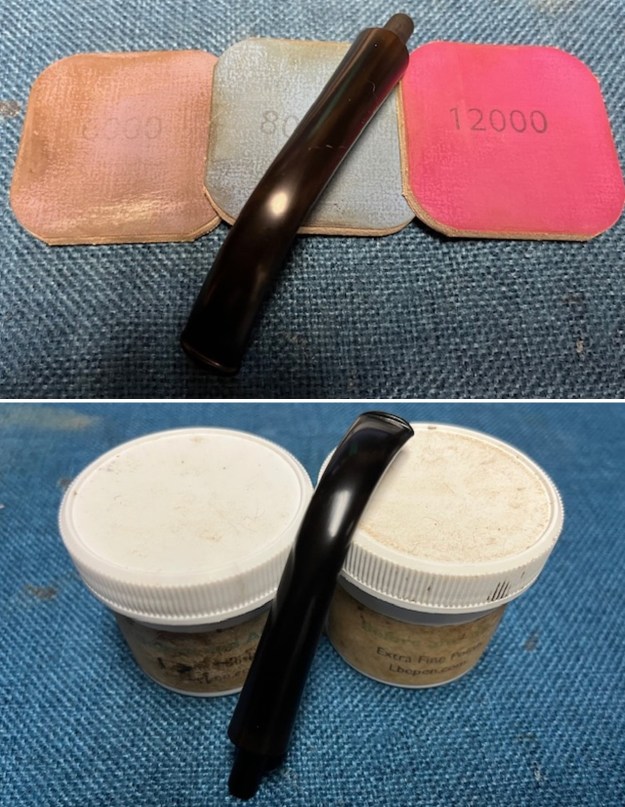
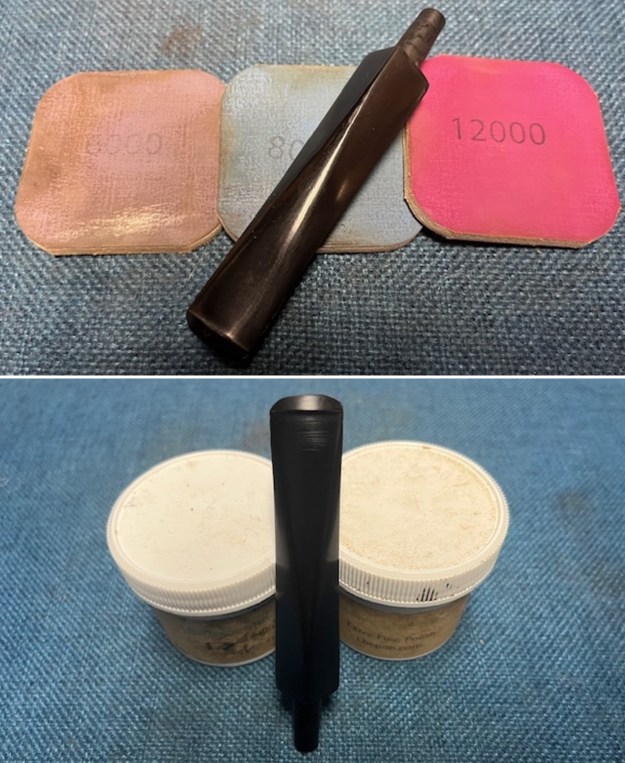
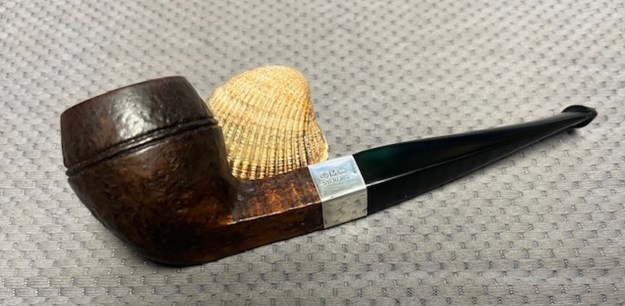
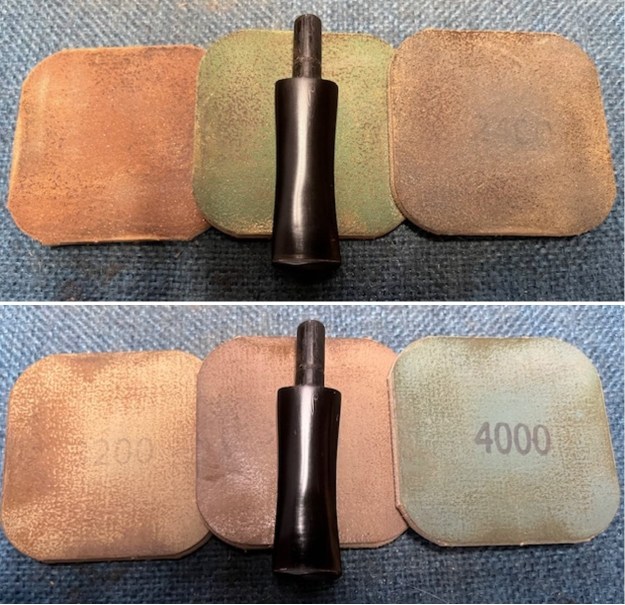
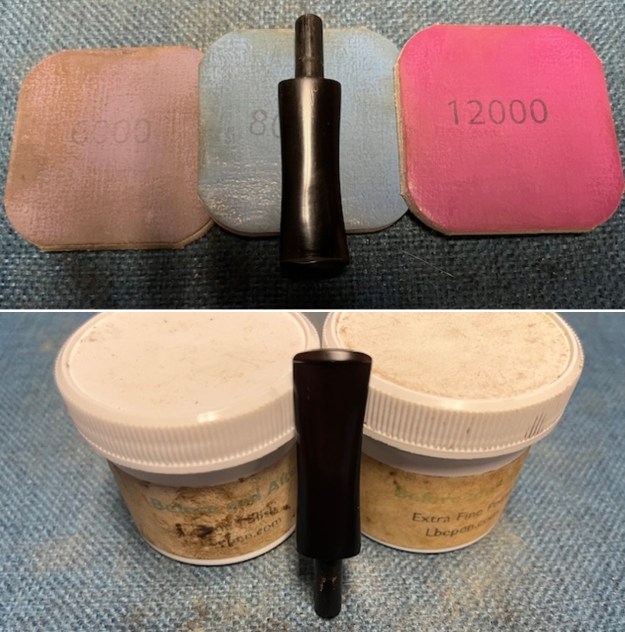
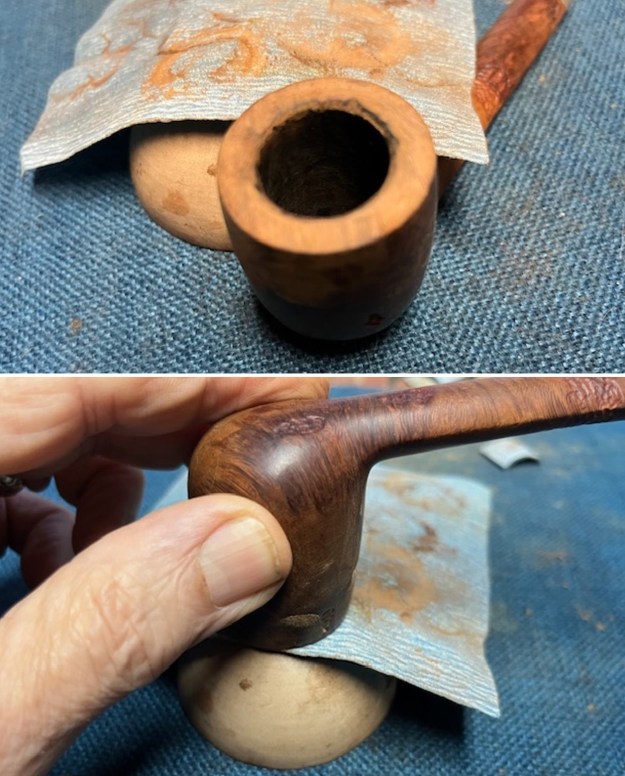
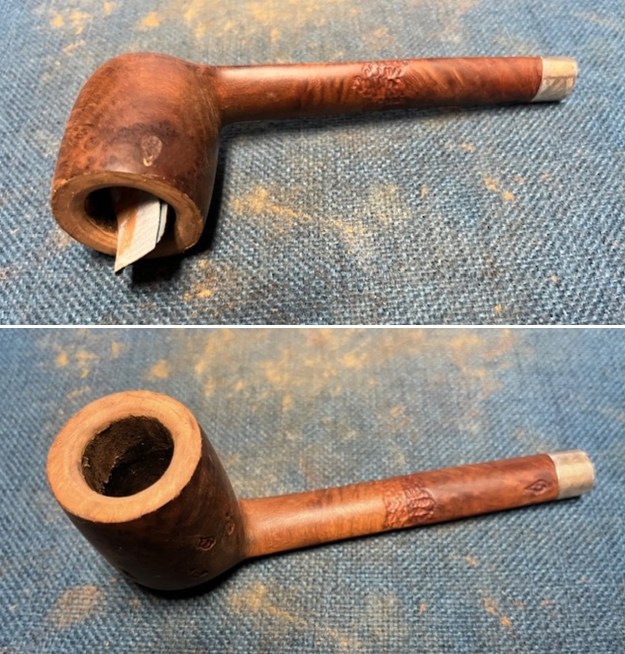
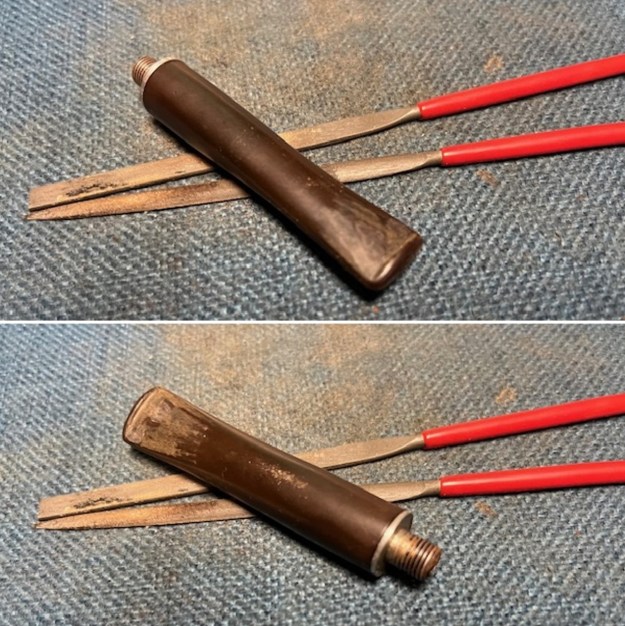
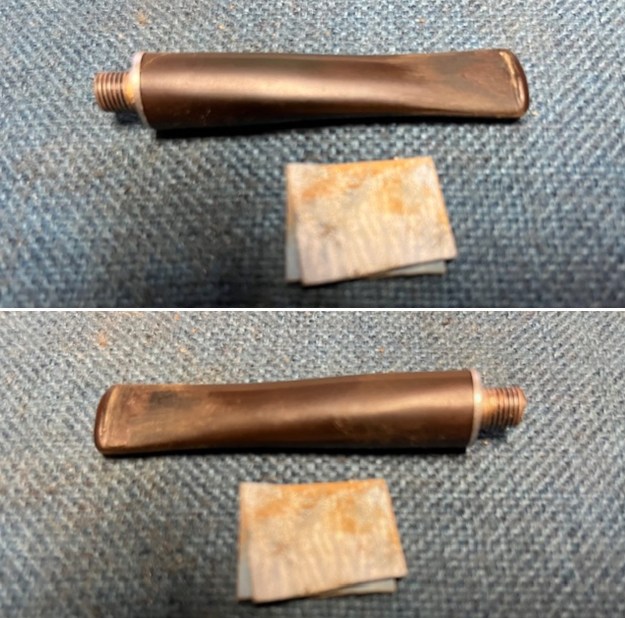
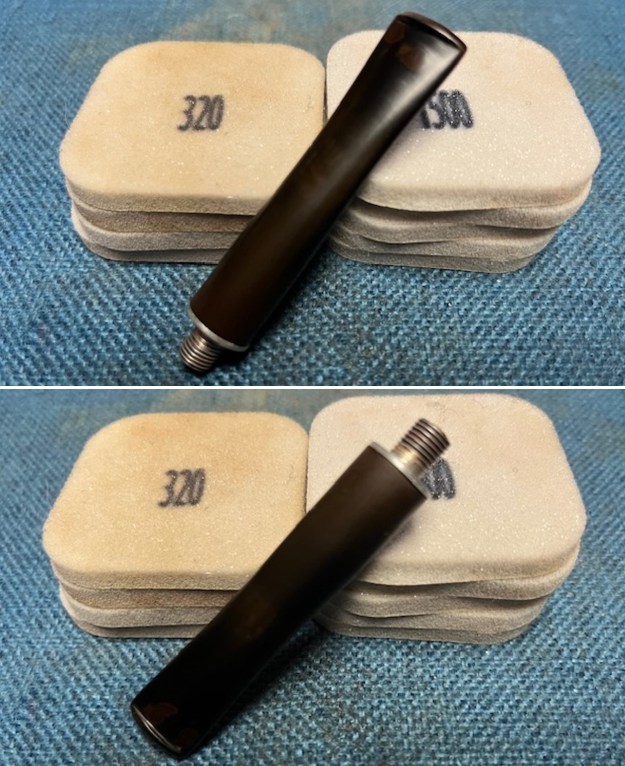
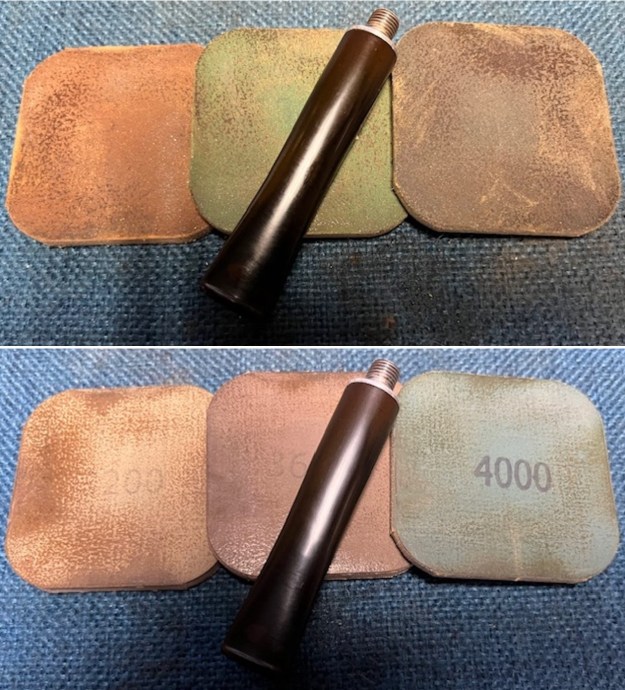
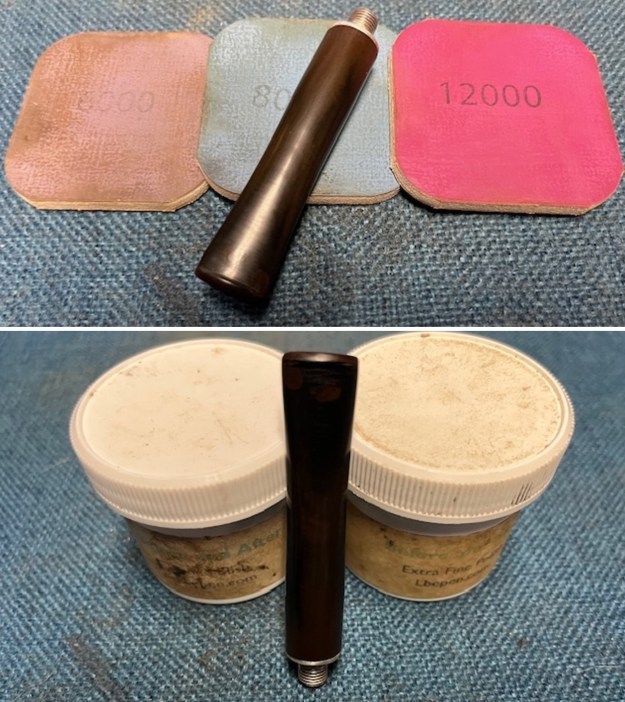
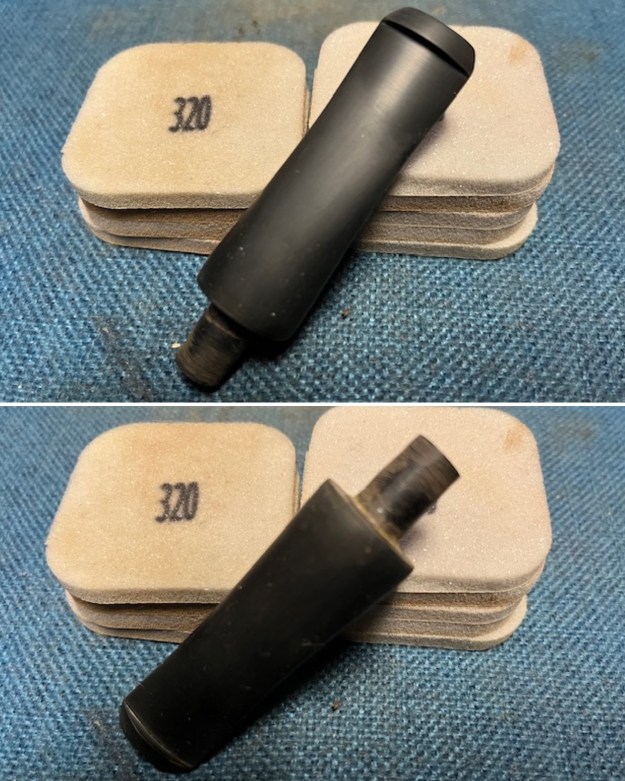
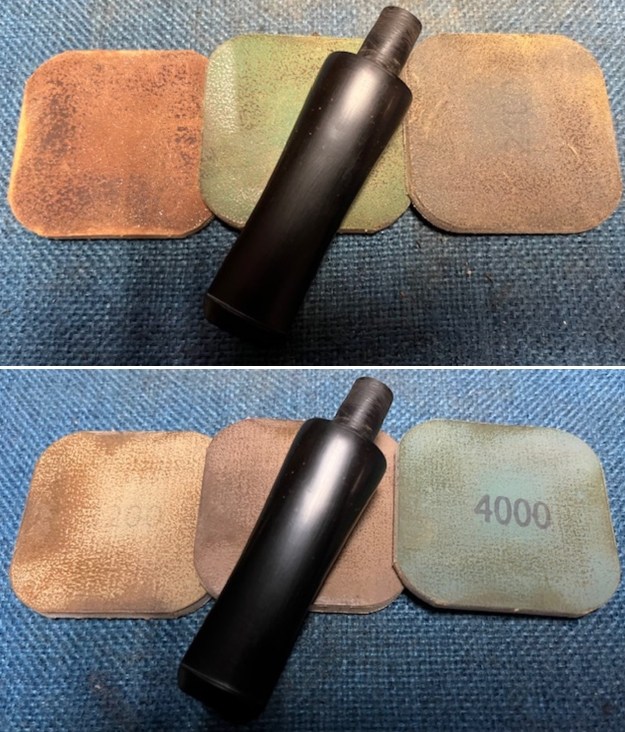
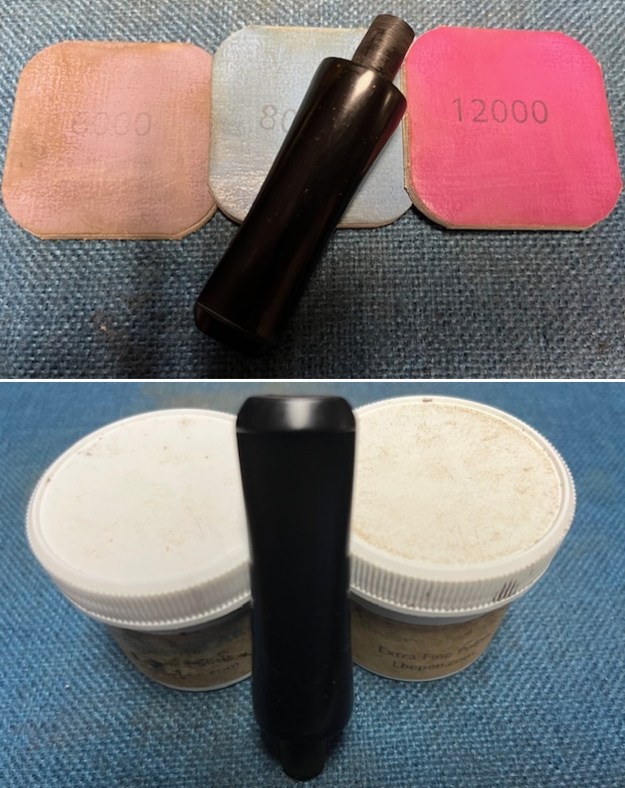
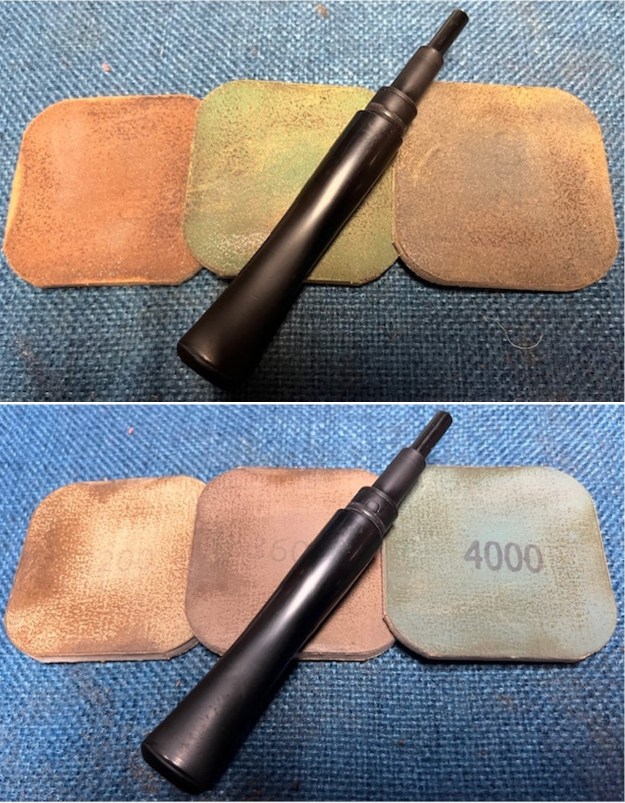
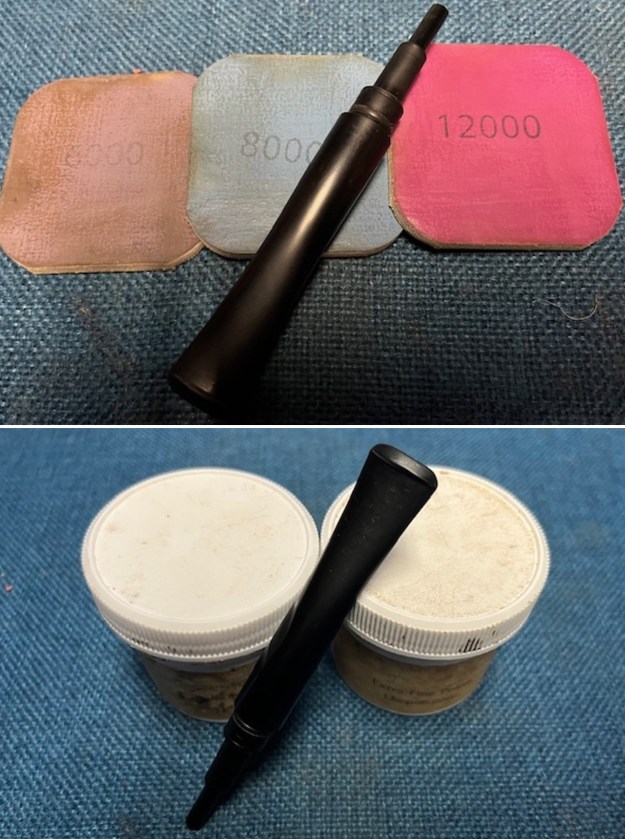
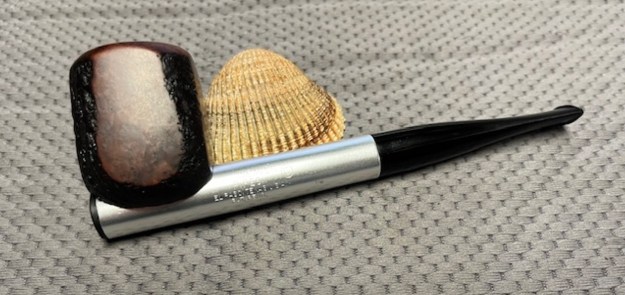
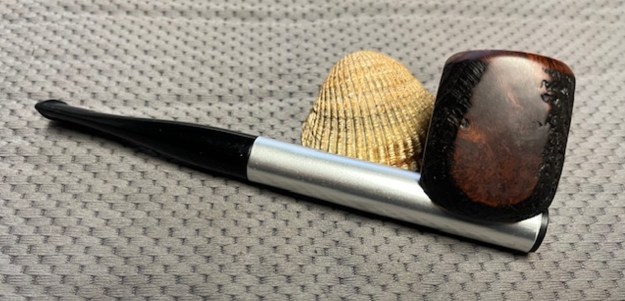
To prepare the pipe for the replacement bowl I need to clean up the gourd and shank to be ready for the replacement. I scraped out the build up inside the gourd with a Savinelli Fitsall Pipe Knife. I followed that up with some 220 sandpaper wrapped around a dowel. I was able to sand the walls smooth. It looked much better.I scrubbed the exterior of the gourd with a tooth brush and undiluted Murphy’s Oil Soap. I was able to remove the debris in the gourd and the briar extension. I rinsed off the soap and the debris with warm running water. I carefully dried off the gourd inside and out with a soft cloth. I worked some Before & After Restoration Balm into the surface of the Gourd Calabash with my fingertips on the smooth gourd surface. The product works to clean, enliven and protect the gourd. I let the balm sit for 15 minutes and then buffed with a cotton cloth to raise the shine. The photos show the bowl at this point in the restoration process. After the clean up and rub down with Before & After Restoration Balm I took a photo of the AB stamp on the left side of the shank extension. It is clear and readable. I worked Vaseline Petroleum Jelly into the cork gasket on the inside of the Gourd Calabash. The cork would swell and come alive with the Vaseline and hold the Meerschaum bowl or cup in place in the gourd. I worked it into the cork and set it aside for the evening to be absorbed. In the morning I would fit the new Meerschaum bowl into the Gourd.I went through my Meerschaum bowls that I have in boxes here. I have bought quite a few over the past years so I was pretty sure that I had one that would fit in the gourd. Sure enough, I had a bowl that had the same nipple/cone that fit the gourd perfectly. The height of the Meerschaum cup or bowl is a bit taller but it looks good. I cleaned out the shank extension and shank of the gourd and the inside of the stem with alcohol and pipe cleaners.I fit the new meerschaum cup in the gourd calabash base. The fit was actually very good and it looked like new once more. I worked on the oxidation and calcification on the stem with Soft Scrub and cotton pads. I was able to remove the majority of it using this process. It was looking significantly better.I sanded out the tooth chatter and marks in the surface of the button with 220 grit sandpaper. I wiped it down with an Obsidian Oil cloth before moving on to the next step.I followed that by sanding it with 320-3500 grit sanding pads to further blend down the sanding areas. I wiped the stem down between pads with an Obsidian Oil cloth to remove the sanding debris from the stem.I polished the stem with micromesh sanding pads – dry sanding with 1500-12000 grit sanding pads. I wiped it down after each sanding pad with Obsidian Oil. I polished it with Before & After Pipe Stem Polish – both Fine and Extra Fine. This Andreas Bauer Gourd Calabash with a replacement Meerschaum bowl and a vulcanite taper stem is a beautiful pipe. The waxed and polished gourd and calabash looks stunning. I put the stem back on the bowl and carefully buffed the pipe with a clean buffing pad. I hand buffed the pipe with a microfiber cloth to deepen the shine. The finished Bauer Gourd Calabash fits nicely in the hand and feels great. Give the finished pipe a look in the photos below. The dimensions of the pipe are Length: 6 ½ inches, Height: 3 ¼ inches, Outside diameter of the bowl: 2 ½ inches, Chamber diameter: 1 inch. The weight of the pipe is 102 grams/ 3.60 ounces. I will be calling the local pipe shop and Joe will pick up the pipe very soon. I look forward to hearing what he has to say and what the customer thinks. Thanks for reading this blog and my reflections on the pipe while I worked on it.

Restemming and Restoring a Unique Venezia Bruyere Garantie Thick Shank System Billiard


by Steve Laug

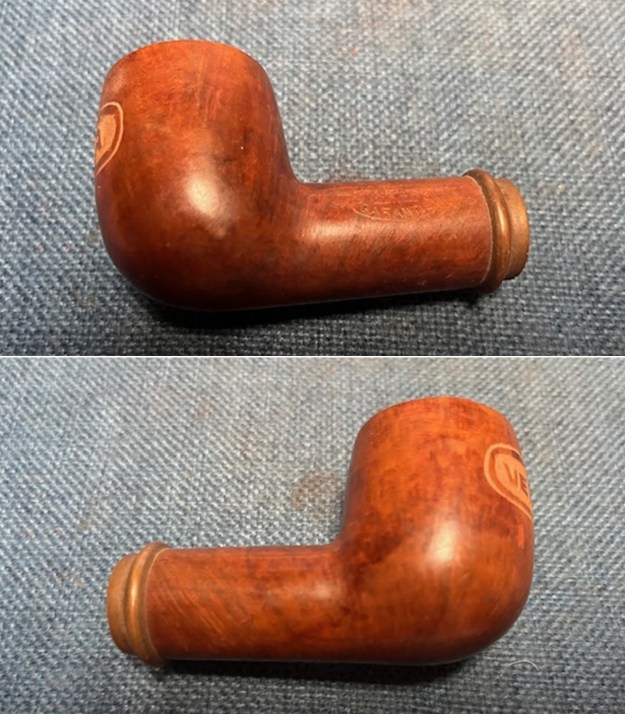
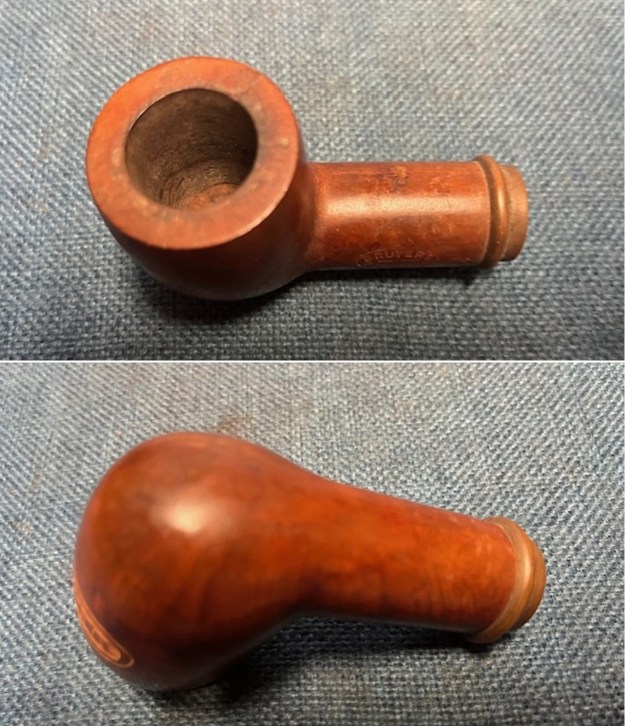
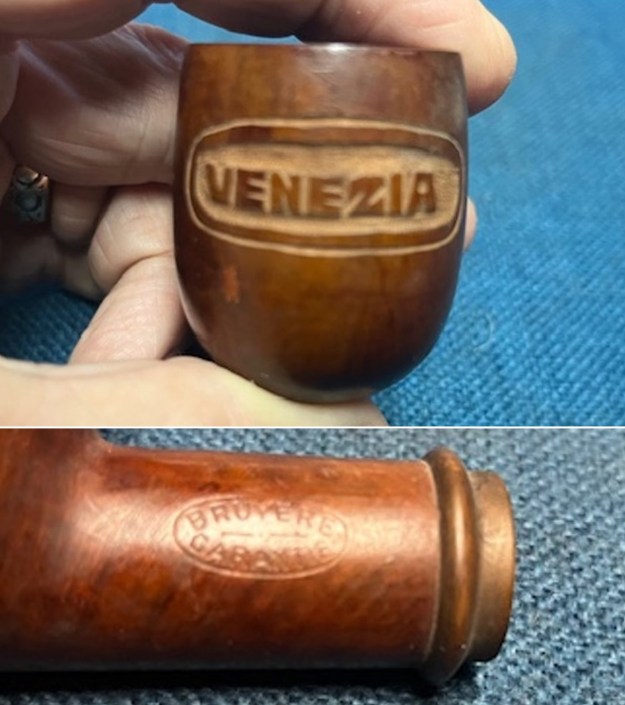
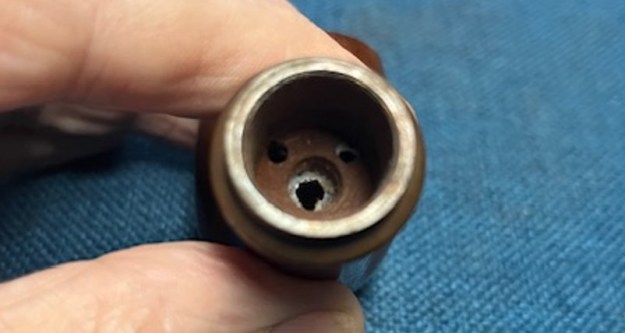
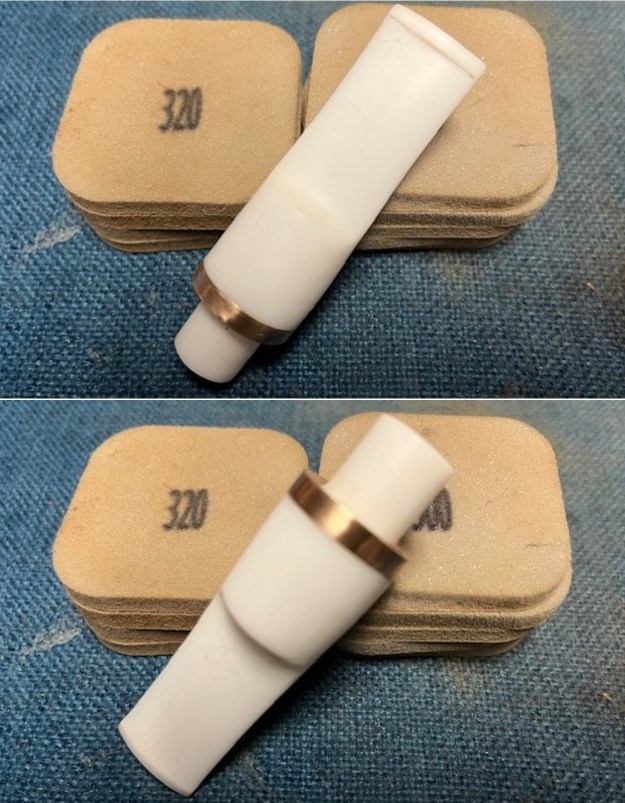
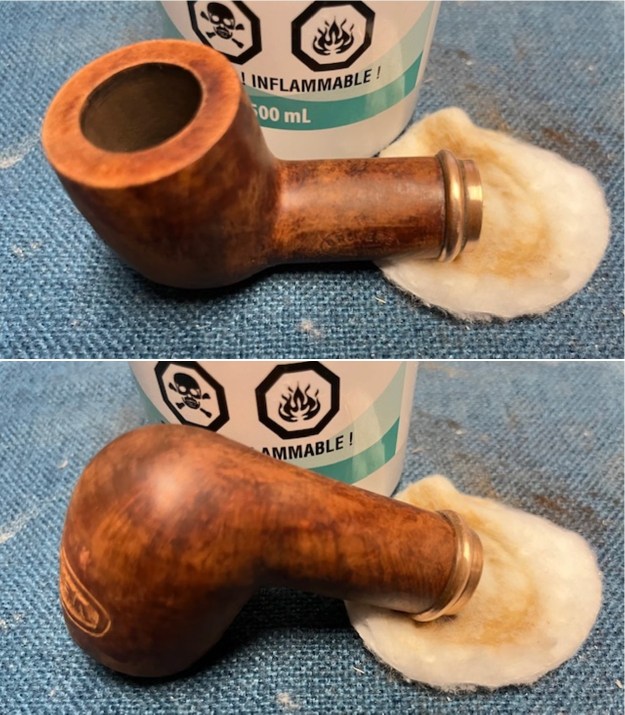
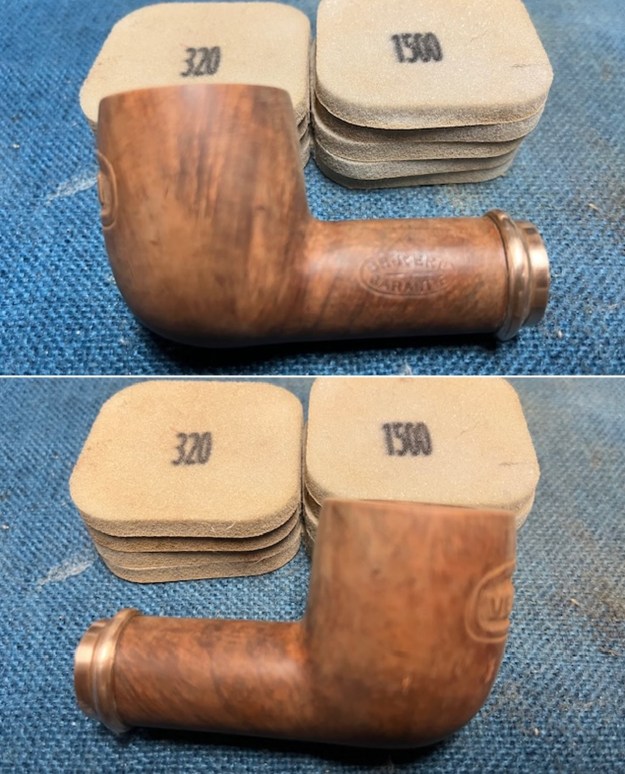
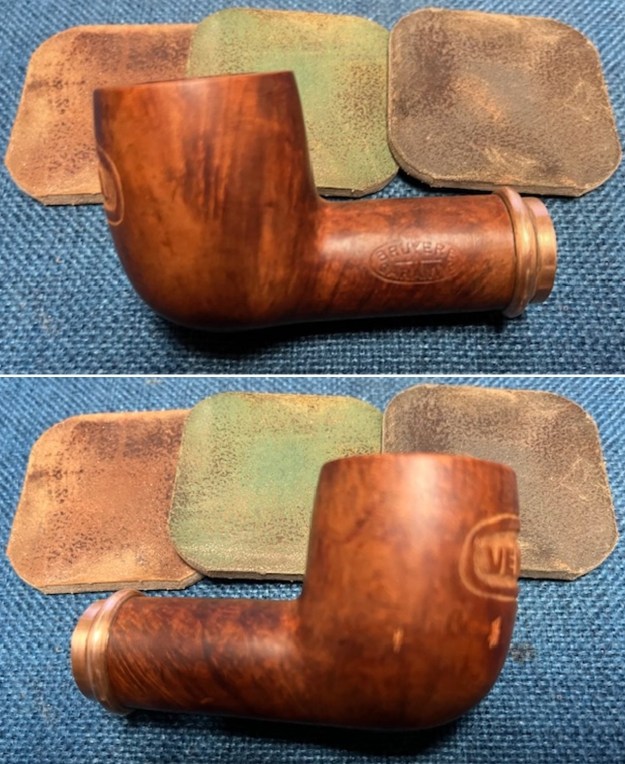
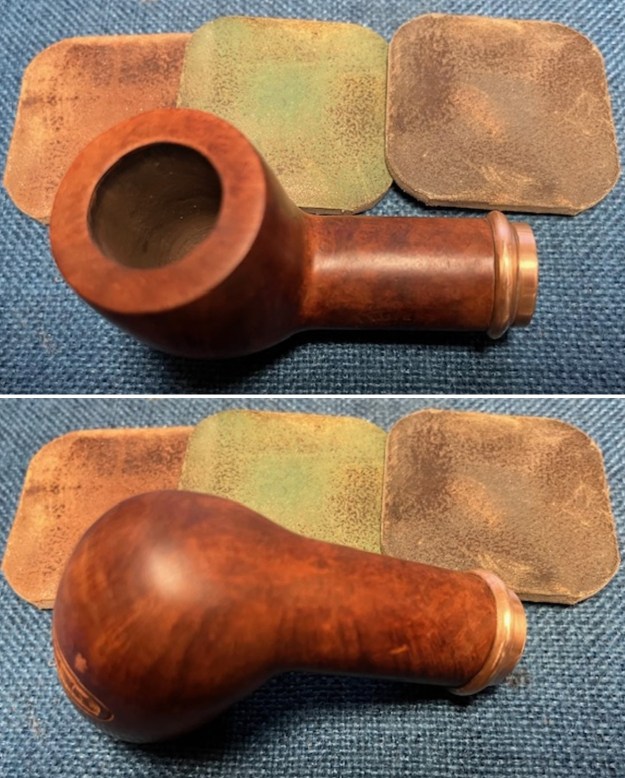
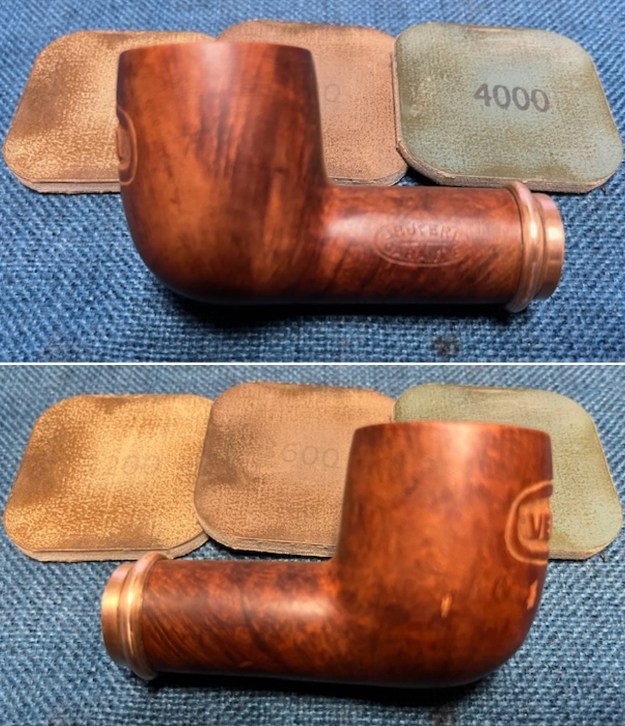
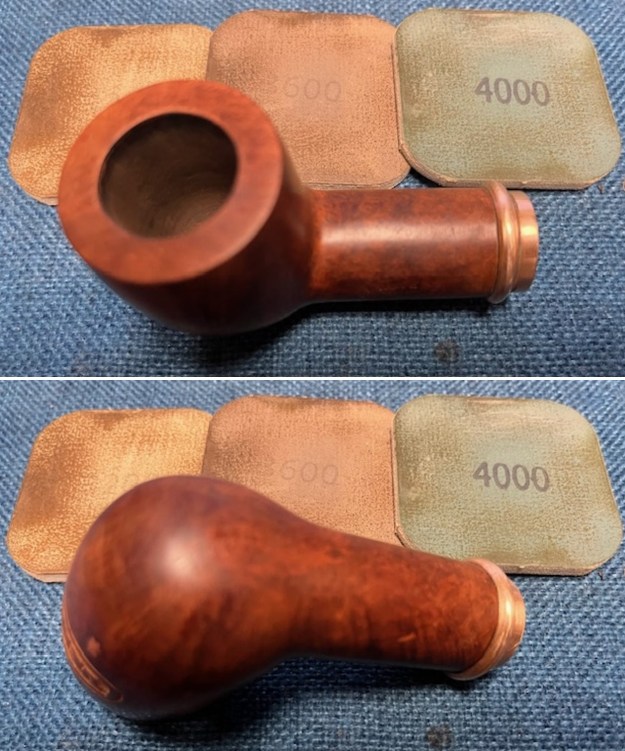
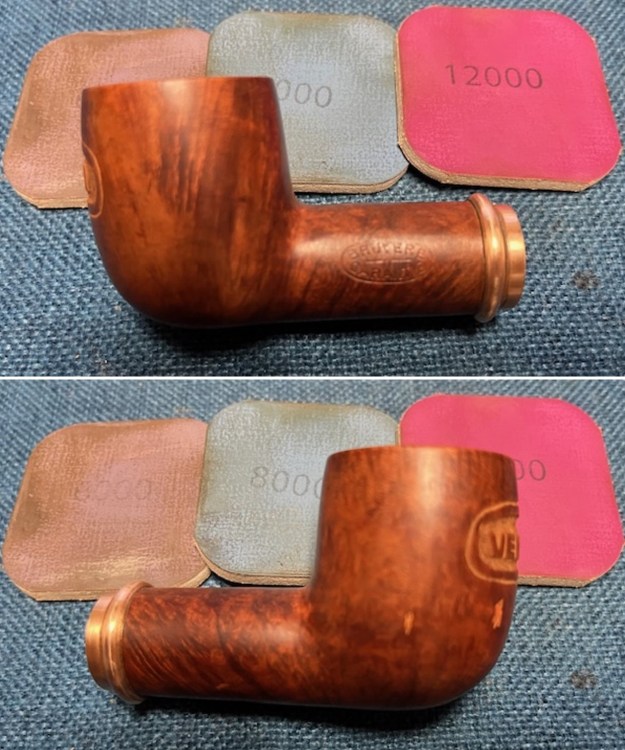
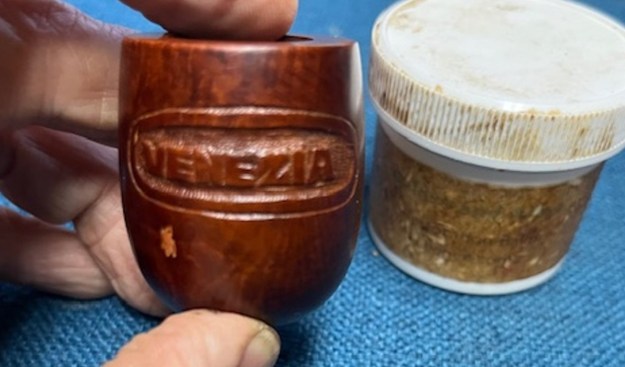
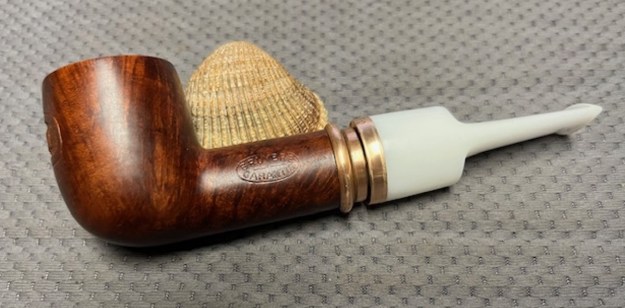
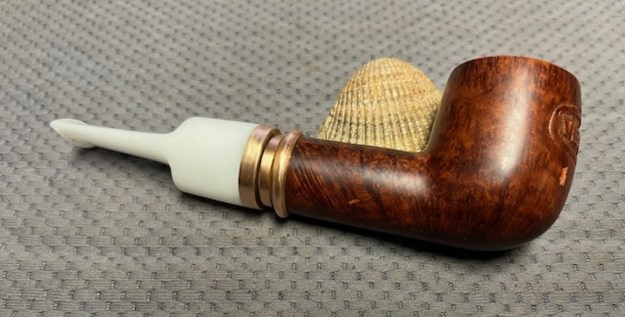
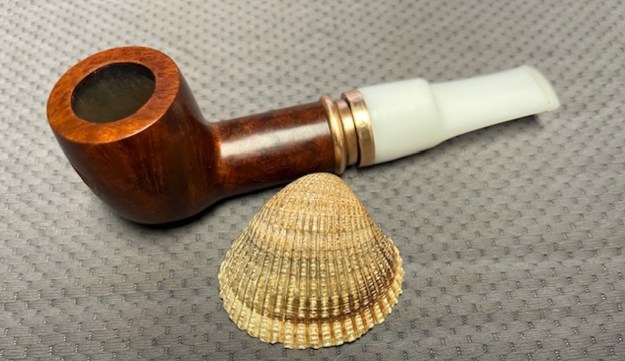
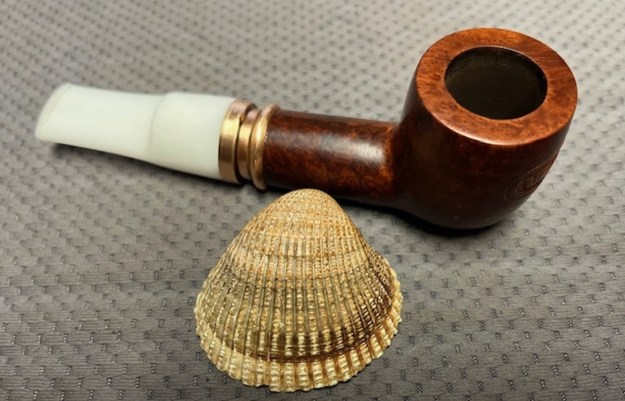
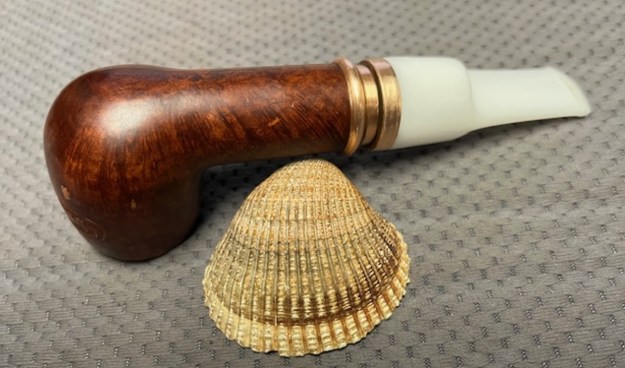
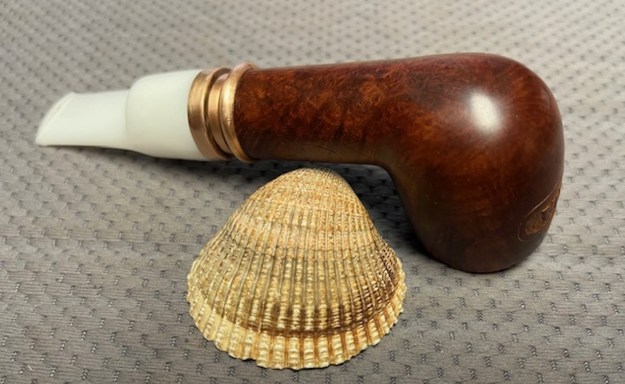
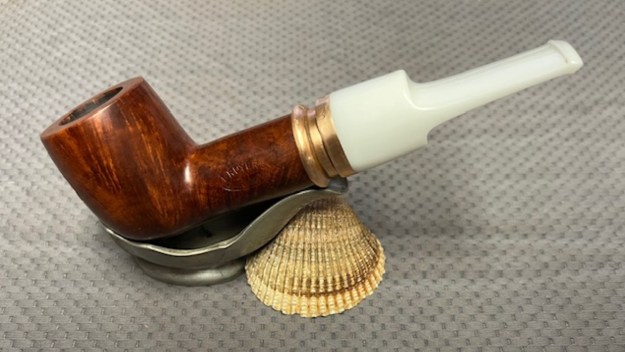
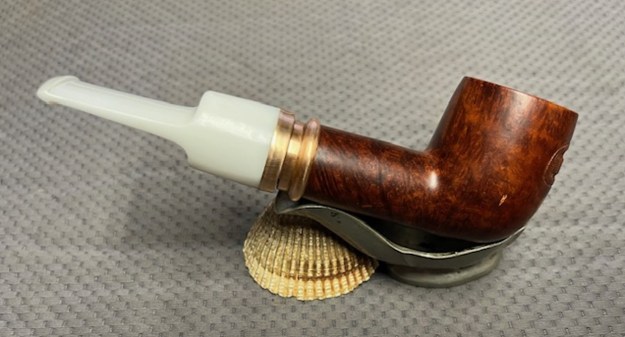
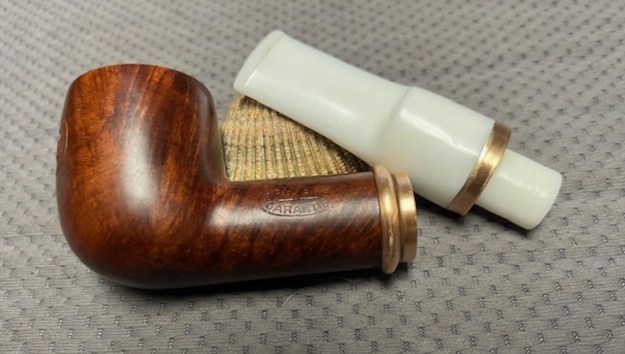
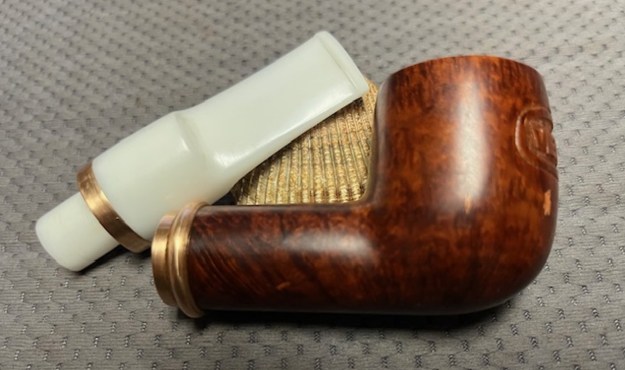
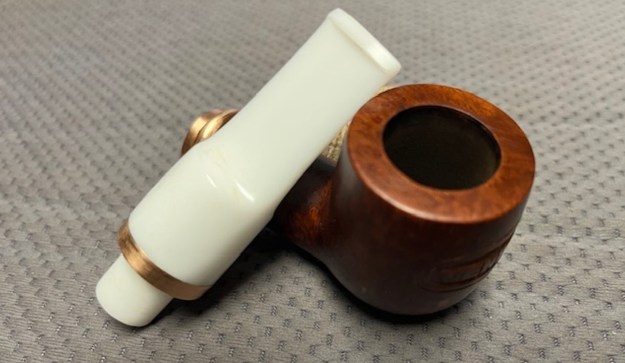
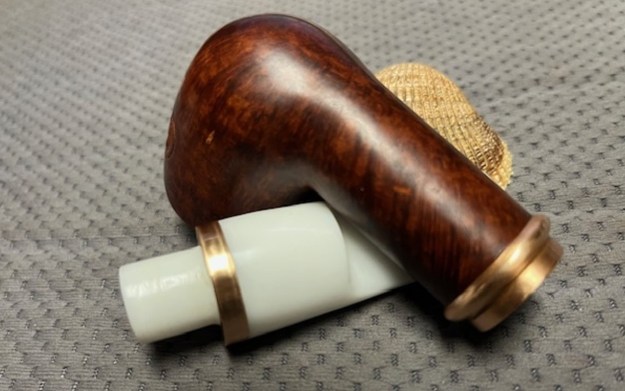
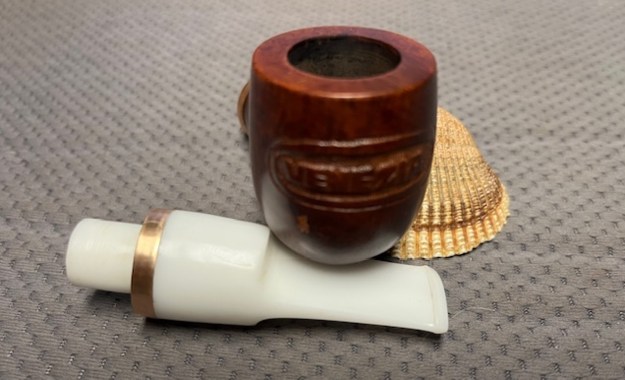
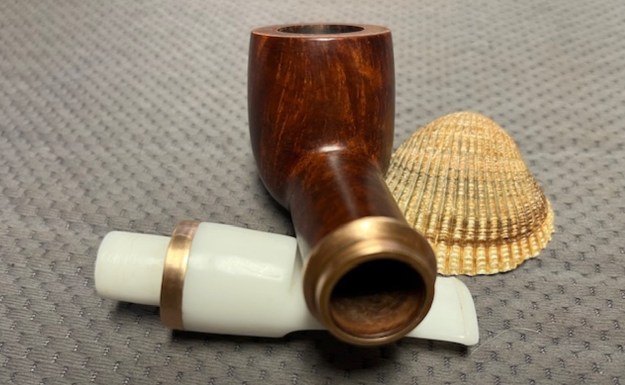
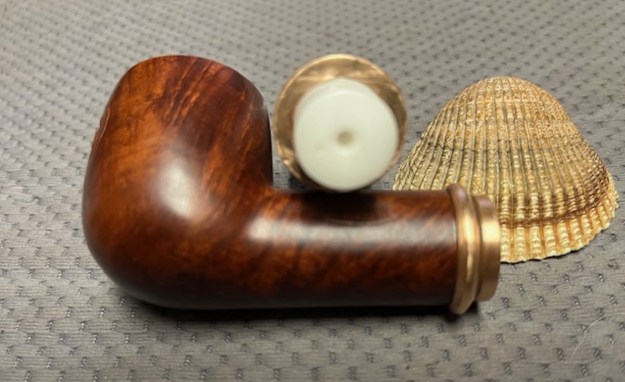
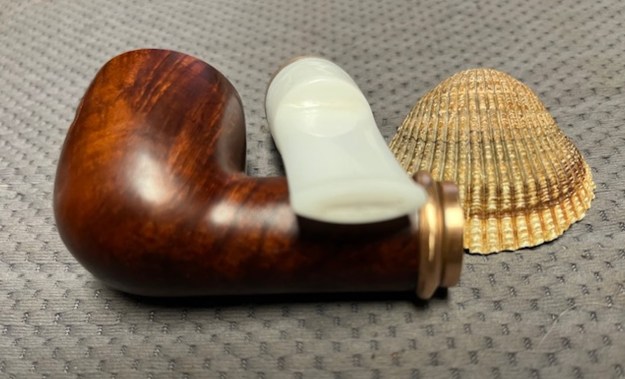
Once again, I am breaking the rhythm of restoration of pipes that Jeff has sent to me work on a bowl that I have in a very big box of bowl without stems. There are probably about 100 bowls that I have been chipping away at for a long time now. Yesterday I had to urge to restem a few of the bowls. The next bowl I chose was this interesting thick shank Billiard bowl that was a system style pipe that had two airways entering the bowl and shank. I ran a pipe cleaner through each airway in the shank and the came out in the bowl bottom. The shank end had a thick step-down brass fitting that was oxidized and greenish coloured. The stamping on the left side of the shank was an oval that reads Bruyere [over] Garantie. The front of the bowl was carved with the word VENEZIA (smooth) in a rusticated oval. Somewhere along the way Jeff had reamed and cleaned the bowl and it was waiting a new stem. The briar was dirty from sitting in my box for years. The rim top had a bit of debris and darkening on the surface that was probably present after Jeff’s previous cleanup. I examined the brass shank end for any stamping and there was nothing in the brass as it was unmarked.

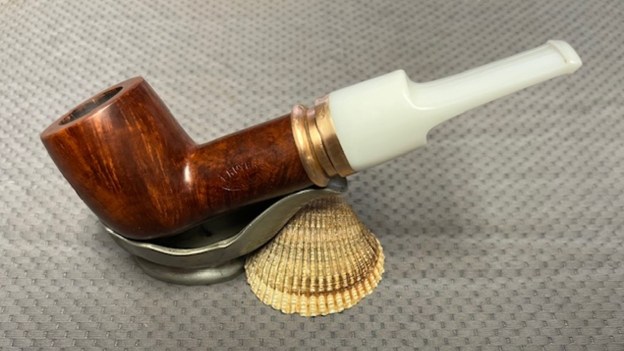
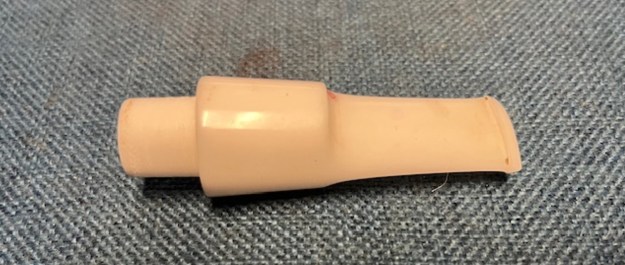
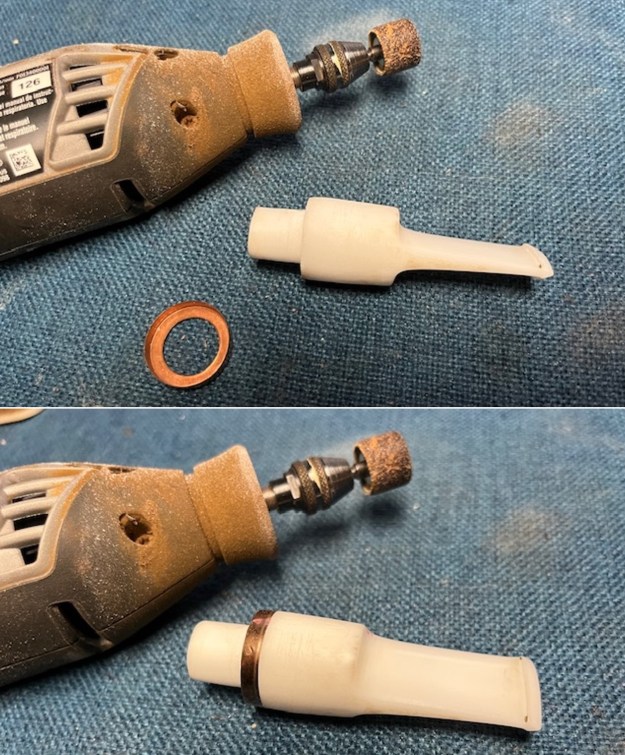
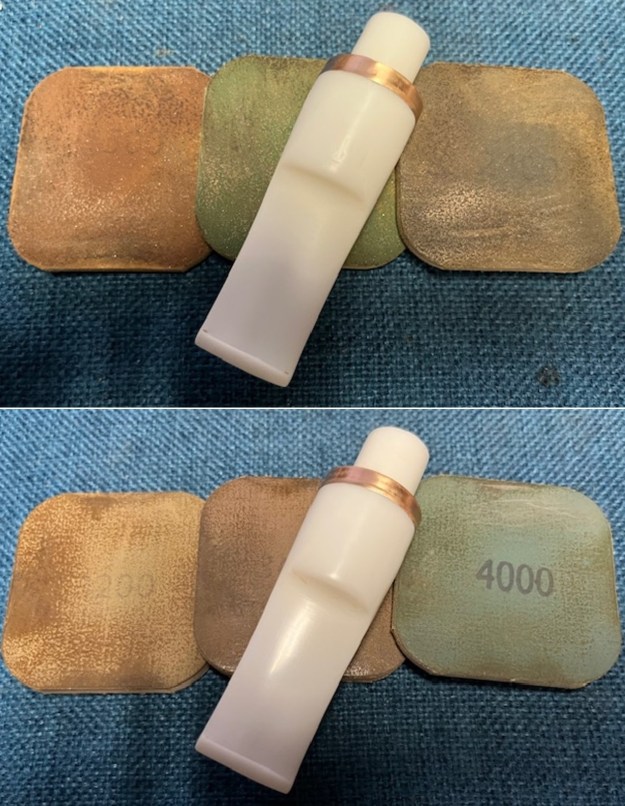
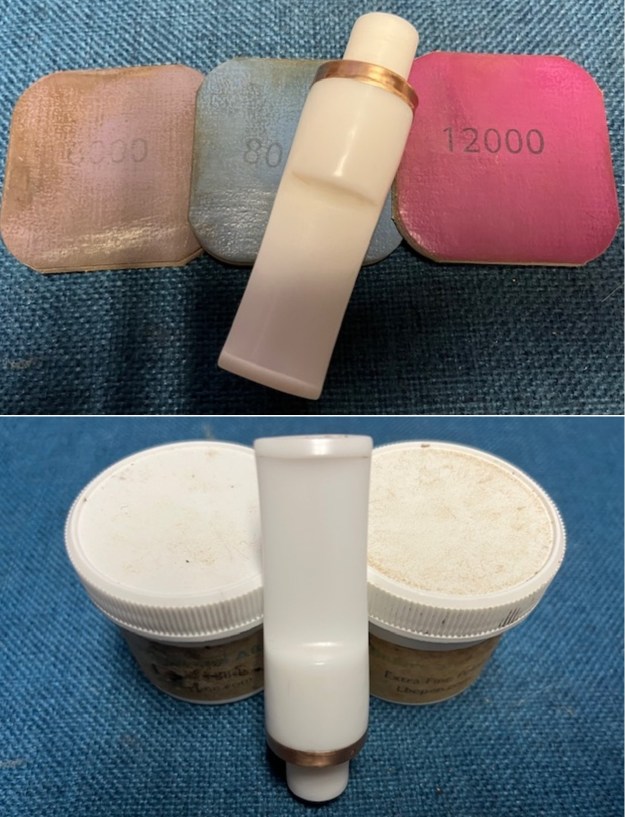
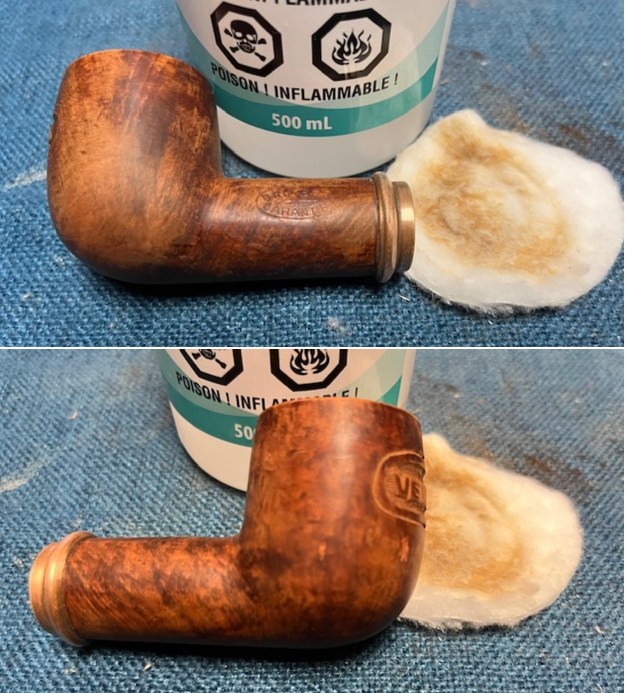
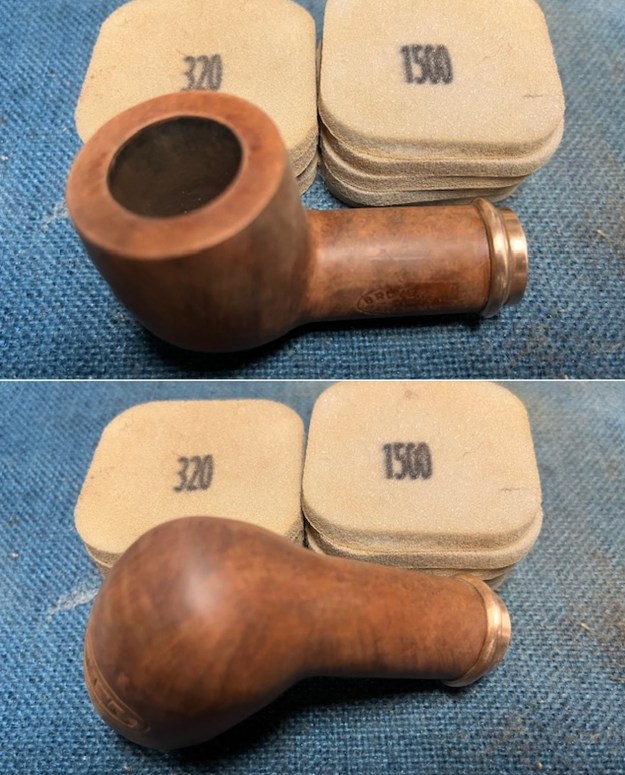
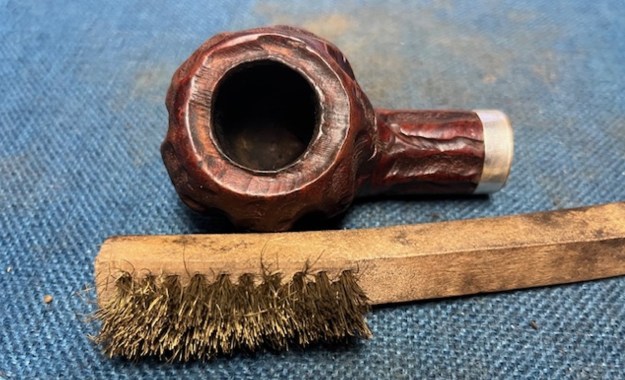
I found the VENEZIA carving interesting, which is what drew me to it in the first place. I have worked on Savinelli pipes that were in a line called VENEZIA and I have worked on a folding pocket pipe from my late friend Chuck (https://rebornpipes.com/2012/09/05/chucks-gift-pipes-part-1-venezia-vogini/) that also bore that name along with Vogini. I have done a bit of digging and I cannot put a finger on the maker other than it is separate from the Savinelli Line. The one thing I know is that they have certainly made some unique pipes. This System Pipe is certainly another unique and special looking pipe. My guess is that it probably had a horn stem with a plunger in the centre of the tenon and an airway on the top left and right of the centre dropping the smoke into the rest of the airway in the stem as cool and dry. I took a photo of the carving on the front of the bowl and the left side of the shank. They are clear and readable as noted above.I took a photo of the airways as they entered the shank. You can see one at the top right and top left. There is also fitment at end of the mortise that looks like it held a pin in the centre as a condenser that fit in the mortise.I went through my stems and found an interesting white acrylic saddle stem that would look good with this bowl and the brass shank end. I would need to reduce the diameter of the tenon to fit in the large mortise and would also need to reduce the diameter of the saddle portion to reflect the diameter of the shank.I used a Dremel and a sanding drum to take down the diameter of the saddle portion of the stem and also the tenon. I decided to try something a bit different – to fit the end of the stem with a reversed shank band/ferrule. I reduced the stem diameter enough to press the band onto the end of the stem.I sanded the stem with 220 grit sandpaper to smooth out the marks from the Dremel. I followed that by sanding it with 320-3500 grit sanding pads to further blend down the sanding areas. I wiped the stem down between pads with an Obsidian Oil cloth to remove the sanding debris from the stem.I polished the stem with micromesh sanding pads – dry sanding with 1500-12000 grit sanding pads. I wiped it down after each sanding pad with Obsidian Oil. I polished it with Before & After Pipe Stem Polish – both Fine and Extra Fine. I set the stem aside and turned my attention to the bowl. I wiped down the bowl with alcohol to remove the spotty finish and the debris on the bowl sides. It began to look much better. I sanded the bowl with 320-3500 grit 2 x 2 inch sanding pads. I wiped the bowl down after each sanding pad with a damp cloth to remove the sanding debris. It began to take on a rich shine. I polished the briar with micromesh sanding pads – dry sanding with 1500-12000 grit pads. I wiped the bowl down after each pad with a damp cloth to remove the sanding dust. By the end of the process the pipe bowl looked very good. I worked some Before & After Restoration Balm into the surface of the briar with a shoe brush to get into the carving on front of the bowl and my fingertips on the smooth. The product works to clean, enliven and protect the briar. I let the balm sit for 15 minutes and then buffed with a cotton cloth to raise the shine. The photos show the bowl at this point in the restoration process. This Unique Vezania System Bowl with the new White Acrylic stem is a great looking pipe now that it has been restored. The rich finish gives the shape an elegant look. The flow of the bowl and the new stem have a great hand feel. I put the stem back on the bowl and carefully buffed the pipe with Blue Diamond on the buffing wheel using a light touch on the briar. I gave the bowl and the stem multiple coats of carnauba wax on the buffing wheel. I buffed the entire pipe with a clean buffing pad. I hand buffed the pipe with a microfiber cloth to deepen the shine. The finished Vezana System Bowl and new stem fits nicely in the hand and feels great. Give the finished pipe a look in the photos below. The dimensions of the pipe are Length: 5 ½ inches, Height: 1 ¾ inches, Outside diameter of the bowl: 1 ¼ inches, Chamber diameter: ¾ of an inch. The weight of the pipe is 59 grams/2.08 ounces. This is unique enough that for the time being I am going to hold on to it and enjoy its look, feel and smoke it! Thanks for reading this blog and my reflections on the pipe while I worked on it.

New Life into a Handmade by Erik Nording Made in Denmark Freehand


by Steve Laug

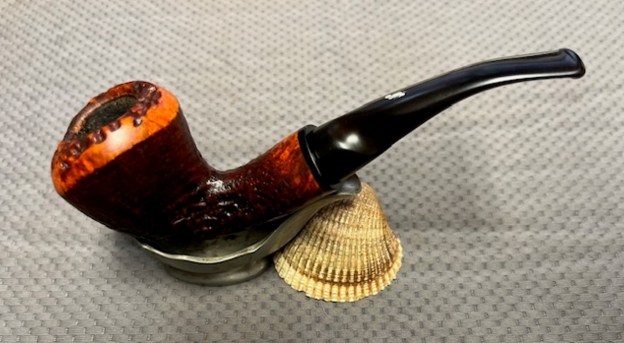
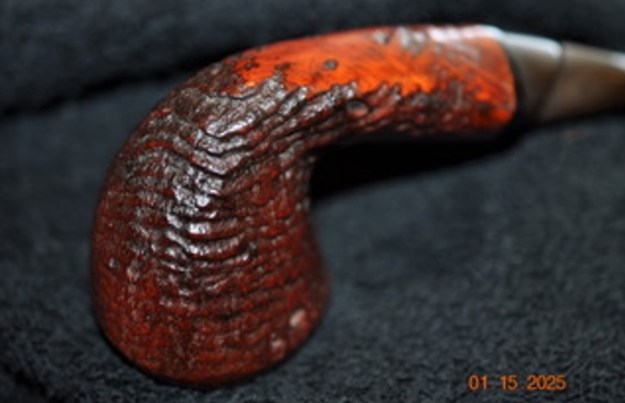
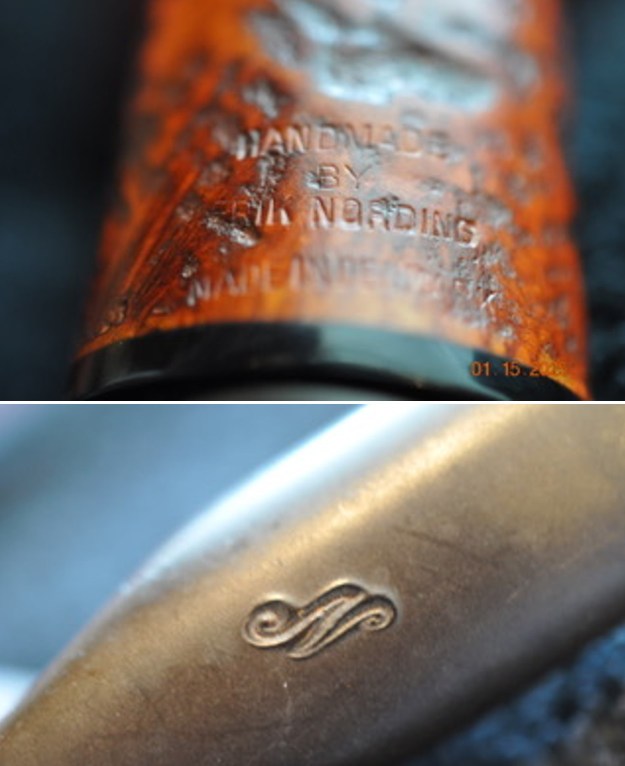
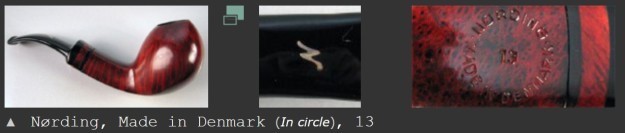
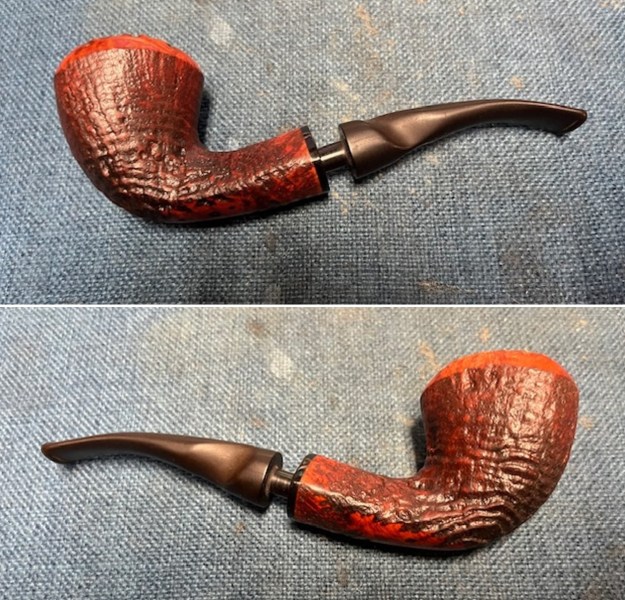
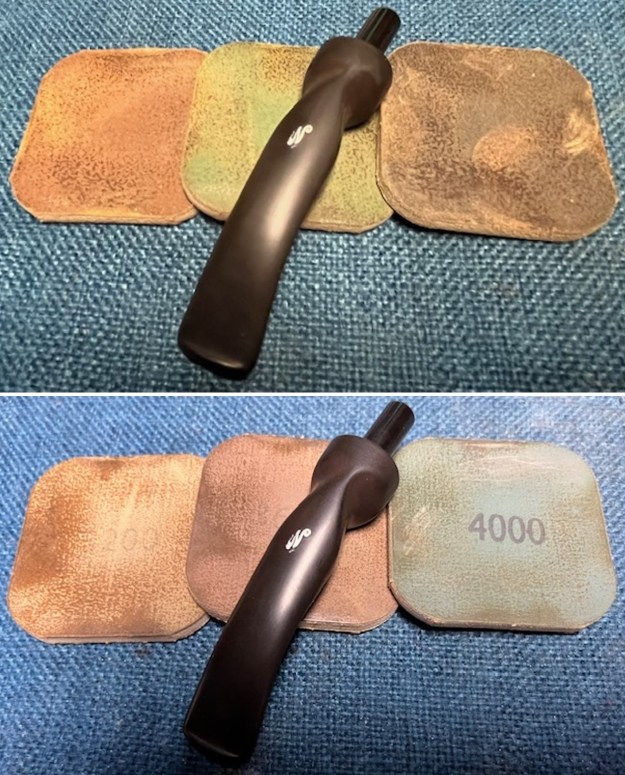
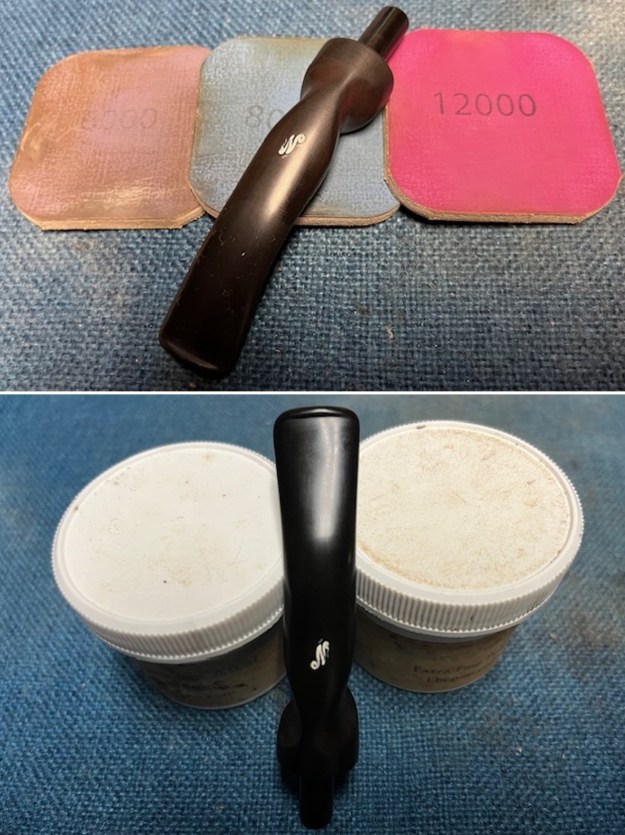
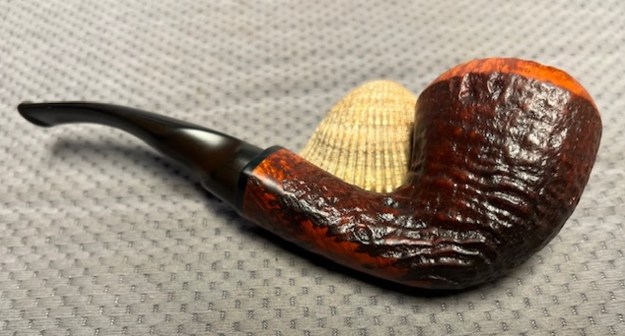
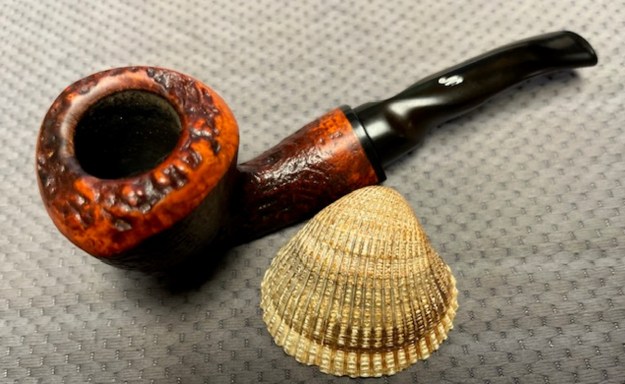
The next pipe is on the table is an interesting looking sandblast Freehand shaped pipe with a vulcanite saddle stem with a twist. Jeff and I purchased it on 09/12/2021 from a seller in Wilkes Barre, Pennsylvania, USA. The pipe is well shaped and has nice grain showing through the sandblast around the bowl. It has a crowned rim top with plateau on the top of the rim. The shank end has a black acrylic spacer. The pipe is stamped on the underside of the shank and reads Hand Made [over] By [over] Erik Nording [over] Made in Denmark. There was grime and dust ground into the sandblast finish of the bowl and shank as well as in the plateau on the flat portion of the rim. The bowl was heavily caked with lava on the rim top and edges. The inside edge looks like it may actually be undamaged under the lava coat. The twisted vulcanite saddle stem was oxidized, calcified and had tooth chatter and marks on the top and underside near the button and on the button edge. There was a Nording “N” logo stamped on the stem top after the twists. The pipe showed a lot of promise but it was very dirty. Jeff took some photos of the pipe before he started his cleanup work. He took photos of the rim top and bowl to give a clear picture of the thickness of the cake and tobacco debris as well as the lava in the plateau on the rim top. He also took photos of the top and underside of the stem. The photos show the overall condition of the stem. Jeff took photos of the sides and heel of the bowl to give a picture of what the sandblast on the briar looked like. It truly has some nice grain highlighted with the blast around the bowl and shank. The stamping on the underside of the shank is clear and readable and read as noted above. Jeff took a photo to capture the stamping on the underside of the shank and the “N” logo on the top of the stem.I turned first to Pipephil to get a quick review of the brand (http://pipephil.eu/logos/en/logo-n2.html). The pipe was carved by Erik Nording. Nording is a prolific carver who continues to make pipes and sell them globally. The screen capture below shows a Nording with stamping like the one I am working on. The one here is lacking the shape number in the middle of the circle but otherwise it is the same.I then turned to Pipedia to have a look at the history of the Nording brand and see if there were any pipes like the one in hand (https://pipedia.org/wiki/N%C3%B8rding). The history was worth a read, though there were no photos of the pipe that I had.

With the information I learned in the above articles I had the background on the pipe. Now it was time to work on it.

I am really happy to have Jeff’s help on cleaning up the pipes that we pick up along the way. He reamed the bowl with a PipNet pipe reamer and cleaned up the reaming with a Savinelli Fitsall Pipe Knife. He scrubbed out the internals with alcohol, pipe cleaners and cotton swabs until the pipe was clean. He scrubbed the exterior of the bowl with Murphy’s Oil Soap and a tooth brush to remove the grime and grit on the briar and the lava on the rim top. The finish on the shank and bowl sides was quite coated with varnish and was shiny. The rim top was heavily burned and the inner edge was badly burned. The lightly rusticated portion on the right side was almost smooth from the burn damage. It was a huge mess. Jeff scrubbed the stem with Soft Scrub All Purpose Cleaner to remove the majority of the grime. When the pipe arrived here in Vancouver it looked very good. I took some close up photos of the rim top and the stem surface. The rim top looked quite good. You can see the plateau on the rim surface and the contrast with the smooth crown of the rim. I took close up photos of the stem to show the condition of the surface and button. The stem was very clean on both sides with some light oxidation.I took the pipe apart and took a photo of the pipe. It is a good looking pipe and has an interesting finish on the bowl and shank.I stripped the varnish coat on the bowl and shank with acetone on cotton pads. I was able to remove the full shiny coat and it looked significantly better. I sanded the rim top and smooth portions of the shank with 320-3500 grit 2×2 inch sanding pads. It really started to be smooth and looked amazing. I polished the smooth briar with micromesh sanding pads – dry sanding with 1500-12000 grit pads. I wiped the bowl down after each pad with a damp cloth to remove the sanding dust. By the end of the process the pipe bowl looked very good. I worked some Before & After Restoration Balm into the surface of the briar with a shoe brush to get into the carving on the rim top and shank end and my fingertips on the smooth. The product works to clean, enliven and protect the briar. I let the balm sit for 15 minutes and then buffed with a cotton cloth to raise the shine. The photos show the bowl at this point in the restoration process. I set the bowl aside and turned my attention to the vulcanite stem. I sanded the stem with 320-3500 grit sanding pads to remove the tooth marks and chatter against the button edge. I wiped the stem down between pads with an Obsidian Oil cloth to remove the sanding debris from the stem. I touched up the “N” logo stamp on the top of the stem surface with white acrylic fingernail polish. Once it cured I scraped off the excess and sanded over the surface with a worn 1500 grit micromesh sanding pad to remove the excess. I polished the stem with micromesh sanding pads – dry sanding with 1500-12000 grit sanding pads. I wiped it down after each sanding pad with Obsidian Oil. I polished it with Before & After Pipe Stem Polish – both Fine and Extra Fine. I gave it another wipe down with Obsidian Oil. This Sandblast Erik Nording Handmade Freehand with a plateau rim top is a great looking pipe now that it has been restored. The rich finish gives the shape an elegant look. The flow of the bowl and stem are well done make for a great hand feel. I put the stem back on the bowl and carefully buffed the pipe with Blue Diamond on the buffing wheel using a light touch on the briar. I gave the bowl and the stem multiple coats of carnauba wax on the buffing wheel. I buffed the entire pipe with a clean buffing pad. I hand buffed the pipe with a microfiber cloth to deepen the shine. The finished Erik Nording Freehand fits nicely in the hand and feels great. Give the finished pipe a look in the photos below. The dimensions of the pipe are Length: 6 inches, Height: 2 inches, Outside diameter of the bowl: 1 ¾ inches, Chamber diameter: 7/8 of an inch. The weight of the pipe is 50 grams/1.69 ounces. It is a great looking and light weight pipe. I will be putting it on the rebornpipes store in the Danish Pipemaking Companies Section shortly. If you are interested in adding this pipe to your collection send me a message or an email. Thanks for reading this blog and my reflections on the pipe while I worked on it.

Restemming and Restoring a GBD Prehistoric Bulldog with a Cracked Shank


by Steve Laug

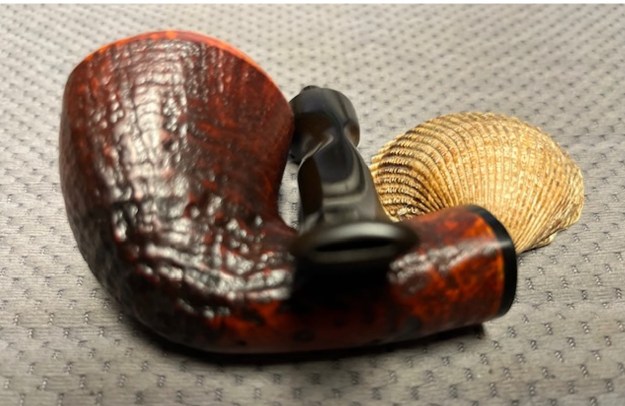
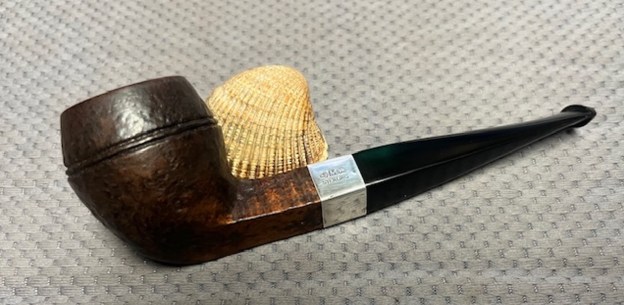
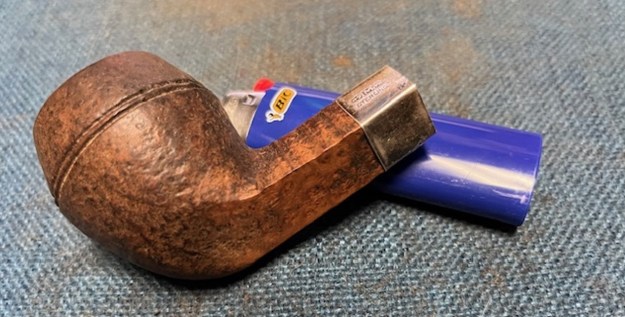
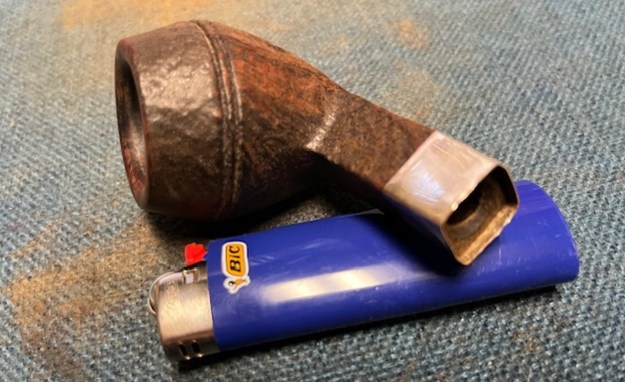
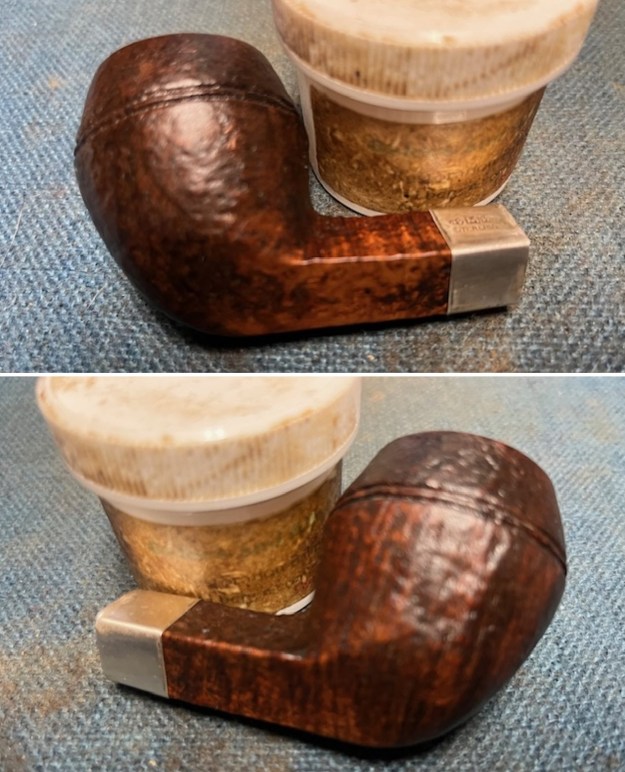
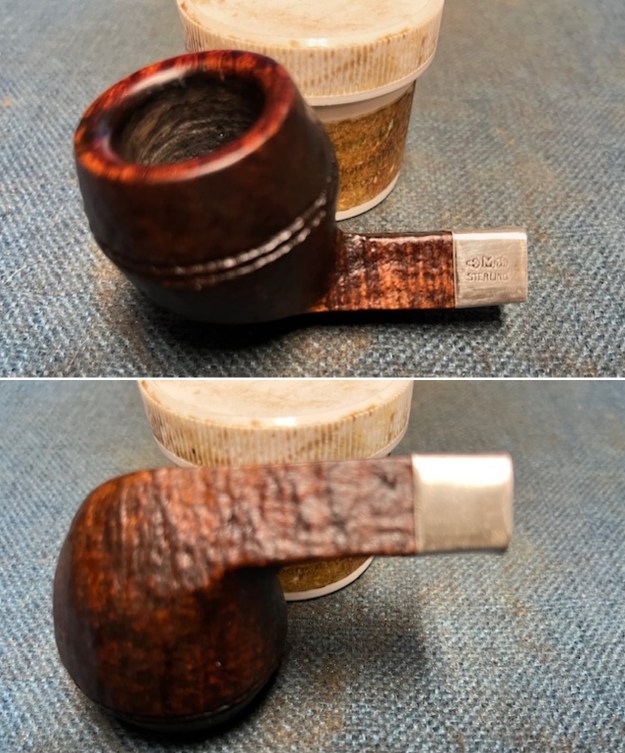
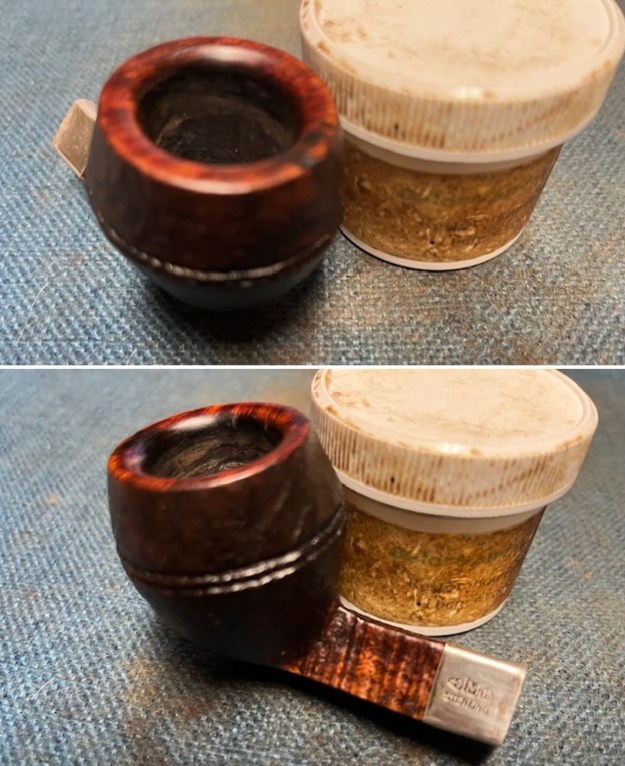
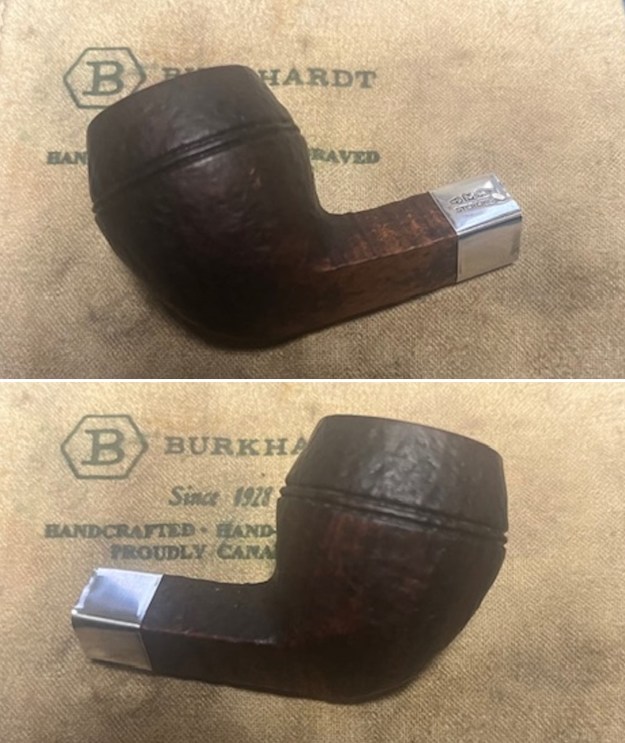
The next pipe on the work table was another bowl I had sitting in the box. This one was a nice-looking bulldog with beveled rim top and a sandblast finish on the bowl. There was a very faint stamp on the left underside of the shank. It had the GBD oval logo [followed by] Prehistoric [over] Made in England. The bowl had been reamed and cleaned. Jeff had thoroughly cleaned it before it went in the box. The rim top was smooth and other than a few small nicks was in good condition. The twin rings around the cap were also perfect. The sandblast finish was worn and the stain was faded. The shank had a crack on the right and the left top side. I had an old silver band that would fit the diamond shank well. I was so excited to fit the band on the shank that I did not take any before photos. I did however take photos of the band once it was in place on the shank. I heated it with the flame of a lighter and pressed it onto the shank end. The band is oxidized and is stamped with three hallmarks – an anchor, an M and a rampant lion [over] Sterling. I went through my can of stems and found a nice diamond taper stem that was unused. The tenon had been worked on but the rest of the stem still had the casting marks and debris on the angles and the button. Only later did I figure out that it was a twin bore or bite proof stem. I really liked the look of it and with the banded bulldog it worked well. The photos also show the condition of the bowl at this point in the process. I started on the bowl. I polished the smooth portions of the rim with micromesh sanding pads – dry sanding with 1500-12000 grit pads. I wiped the bowl down after each pad with a damp cloth. It really began to take on a rich shine. I worked some Before & After Restoration Balm into the surface of the briar with my finger tips and a shoe brush to get into the depths of the sandblast on the bowl and shank. The product works to clean, enliven and protect the briar. I let the balm sit for 15 minutes and then buffed with a cotton cloth to raise the shine. The photos show the bowl at this point in the restoration process. I polished the silver band with 1500-3000 grit micromesh sanding pads and then finished with a jeweller’s cloth to raise the shine and protect it from further oxidation.I set the bowl aside and turned to the stem. I used the Dremel and sanding drum to clean up the tenon angles and smooth them out. I also used it to remove the excess vulcanite on the shank end of the diamond stem. I was excited and totally forgot to take any photos of the process. For that I apologize.

Once finished I sanded out the marks from the Dremel and the scratches with 220 grit sandpaper. I worked on it for quite a while to smooth out the surface and get the fit to the shank correct. I wiped the stem down with an Obsidian Oil cloth. I sanded it with 320-3500 grit sanding pads to further blend down the sanding areas. I wiped the stem down between pads with an Obsidian Oil cloth to remove the sanding debris from the stem.I polished the stem with micromesh sanding pads – dry sanding with 1500-12000 grit sanding pads. I wiped it down after each sanding pad with Obsidian Oil. I polished it with Before & After Pipe Stem Polish – both Fine and Extra Fine. This Sandblast GBD Prehistoric Bulldog is a great looking pipe now that it has been restored and restemmed. The rich finish and Sterling silver give the pipe an elegant look. The Twin Bore stem works with the pipe and is unique. The flow of the bowl and stem make for a great hand feel. I put the stem back on the bowl and carefully buffed the pipe with Blue Diamond on the buffing wheel using a light touch on the briar. I gave the bowl and the stem multiple coats of carnauba wax on the buffing wheel. I buffed the entire pipe with a clean buffing pad. I hand buffed the pipe with a microfiber cloth to deepen the shine. The finished GBD Prehistoric Bulldog fits nicely in the hand and feels great. Give the finished pipe a look in the photos below. The dimensions of the pipe are Length: 6 inches, Height: 2 inches, Outside diameter of the bowl: 1 ¼ inches, Chamber diameter: 7/8 of an inch. The weight of the pipe is 47 grams/1.62 ounces. It is a great looking and light weight pipe. I will be putting it on the rebornpipes store in the British Pipemakers Section shortly. If you are interested in adding this pipe to your collection send me a message or an email. Thanks for reading this blog and my reflections on the pipe while I worked on it.

Restemming and Restoring a Savinelli Extra Lumberman


by Steve Laug

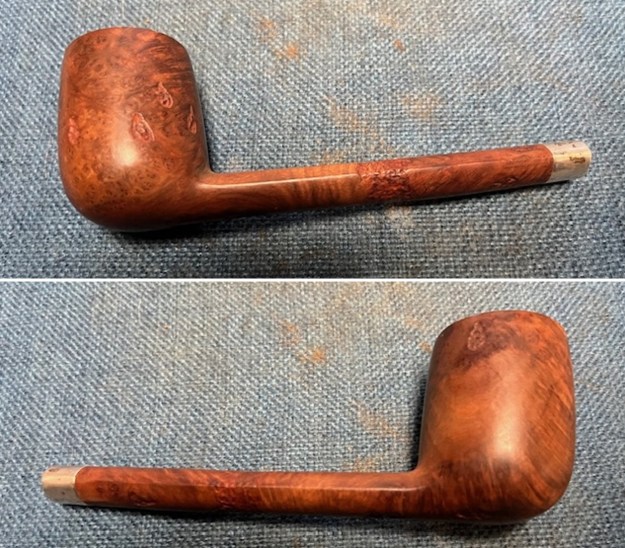
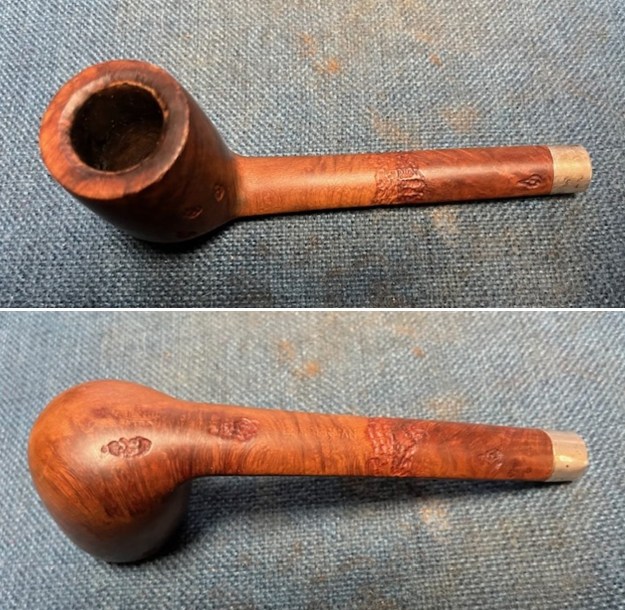
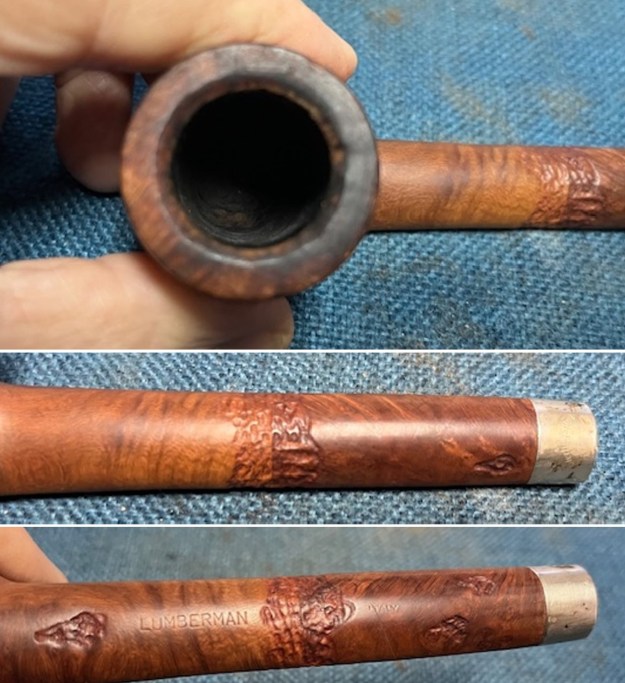
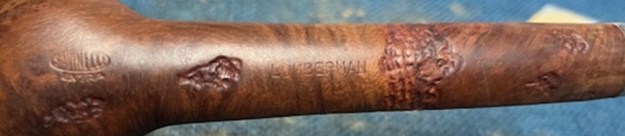
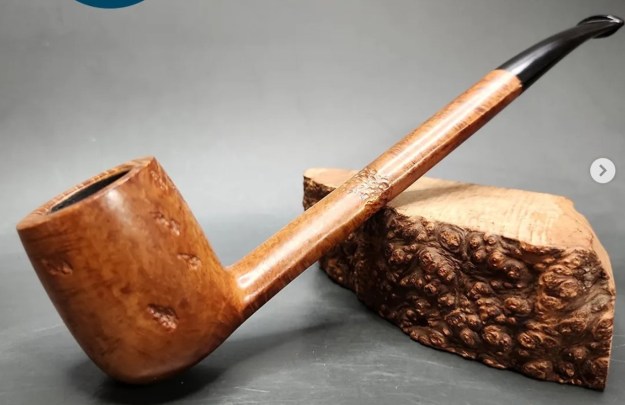
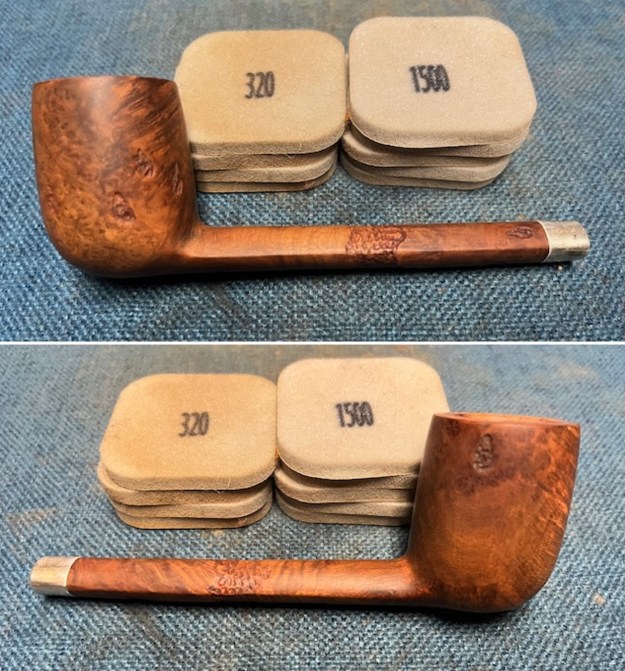
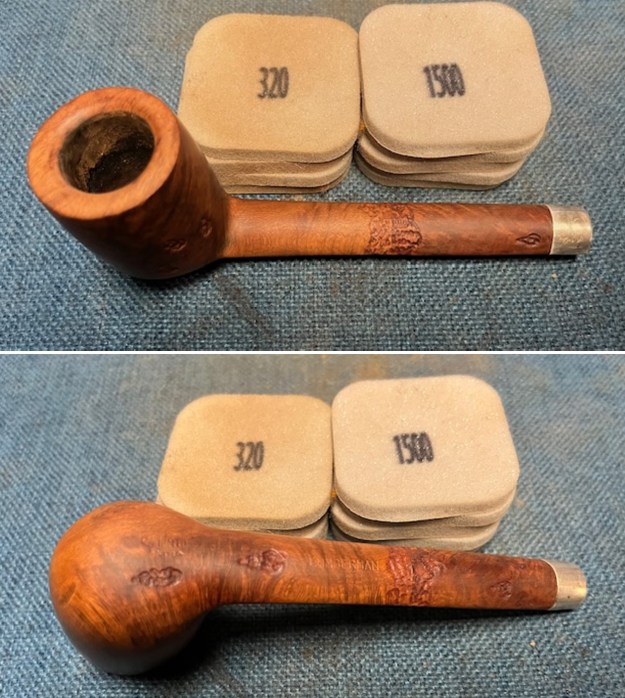
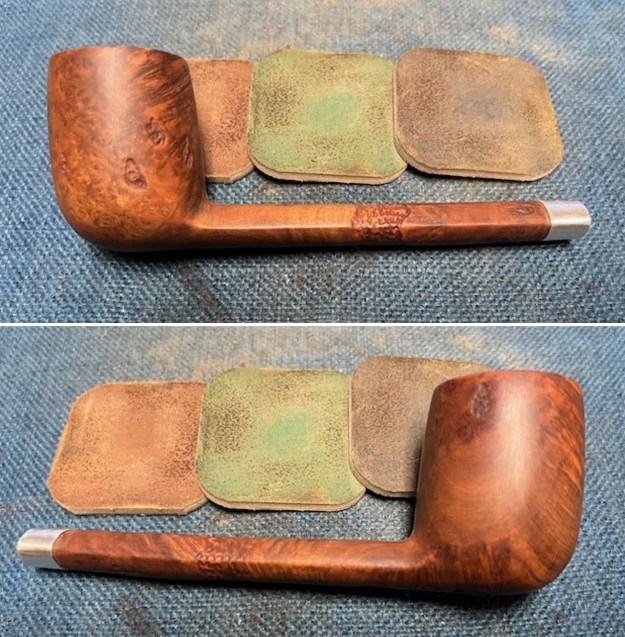
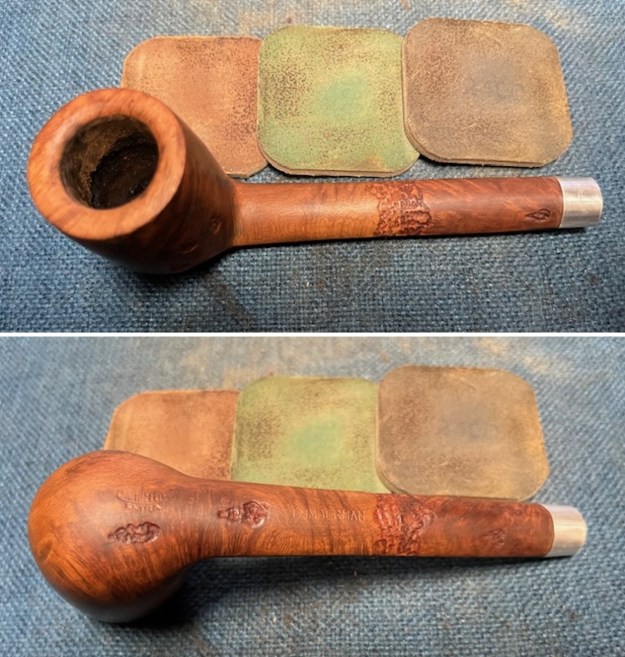
My brother and I have picked up a lot of bowl without stems over the years and boxed them for potential restemming at a later date. Unfortunately, we did not record where we picked them up. This one was a long shanked Canadian. Jeff had reamed and cleaned the pipe before we boxed it so it was clean, just needing finishing and restemming. It spots of rustication around the bowl sides and the shank. There was also a joint mid shank that was “hidden” under the rustication. The pipe was stamped on the underside of the bowl and shank and read Savinelli [over] Extra on the bowl heel [followed by] LUMBERMAN [followed by] Italy. The briar was clean and the rustications were also clean. The rim top had damage on the bevelled inner edge and some darkening on both. The joint of the two parts was well done and the rustication did a great job hiding it. There is a silver band on the shank is a repair band I believe that was added after carving. It is stamped with an arched Sterling Silver on the topside. I took some photos of the bowl before I started working on it. I took photos of the rim top and inner edge to show the condition of the bowl and rim. I also took photos of the junction of the two parts of the shank. Note the condition of the union of the two parts of the long shank. It is very well done and the connection is clean and undamaged.I took a photo of the stamping on the underside of the shank. It was clear and readable as noted above. I did a google search on a Savinelli Extra Lumberman and found one on MBSD’s Instagram account (https://www.instagram.com/p/DBu1kPTPCFF/). I captured one of the photos from the site and also the pertinent descriptive information that was in the side bar for the pipe.….…This is an interesting Savinelli. Though technically a Canadian, this extra long Lumberman model is not one you’ll find on Savinelli’s contemporary shape chart. In fact, I think this is a shape from before 1970 and the advent of the chart that Savinelli uses as standard today. It also features something that Savinelli has not done for a long time: spot carving. I.e., partial rustication, which lends the pipe a slightly rugged look, juxtaposed nicely with its virgin blonde stain. Finally, the pipe has vulcanite stem, which is also not very common on Savinellis anymore.

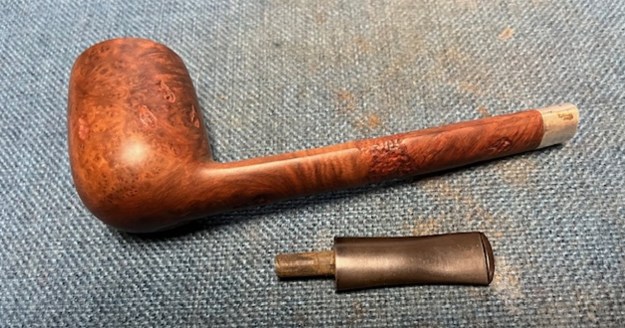
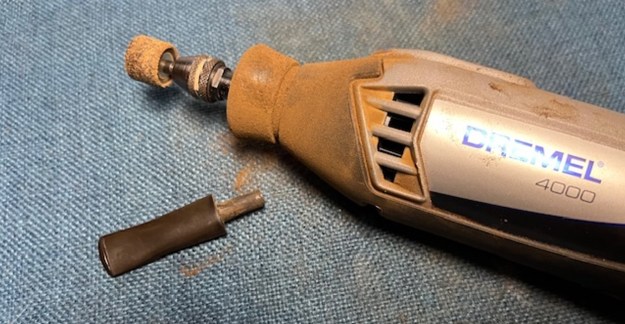
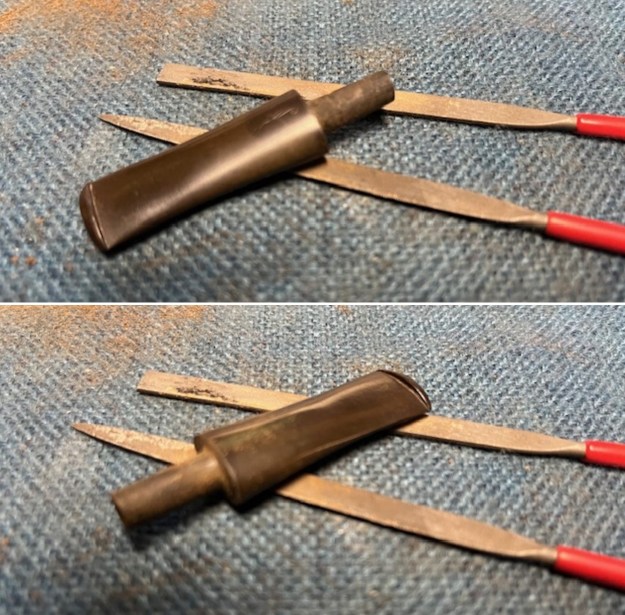
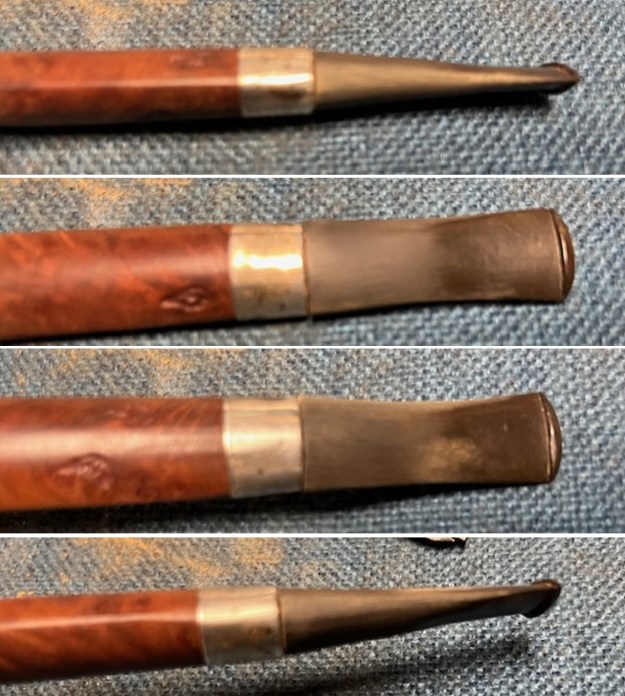
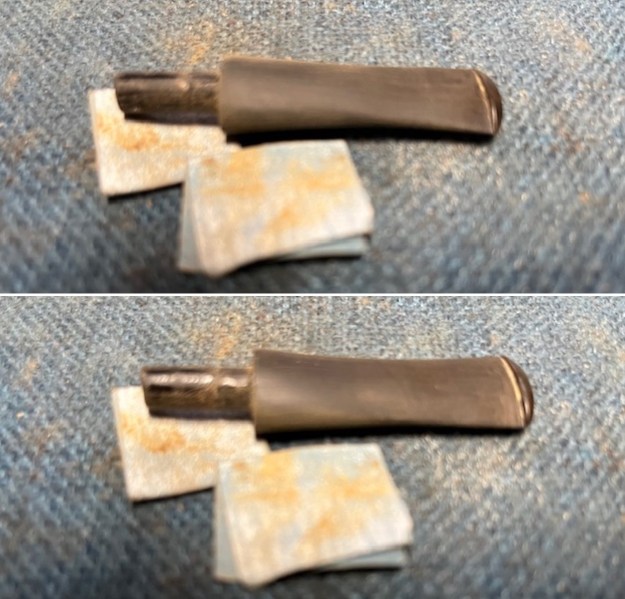
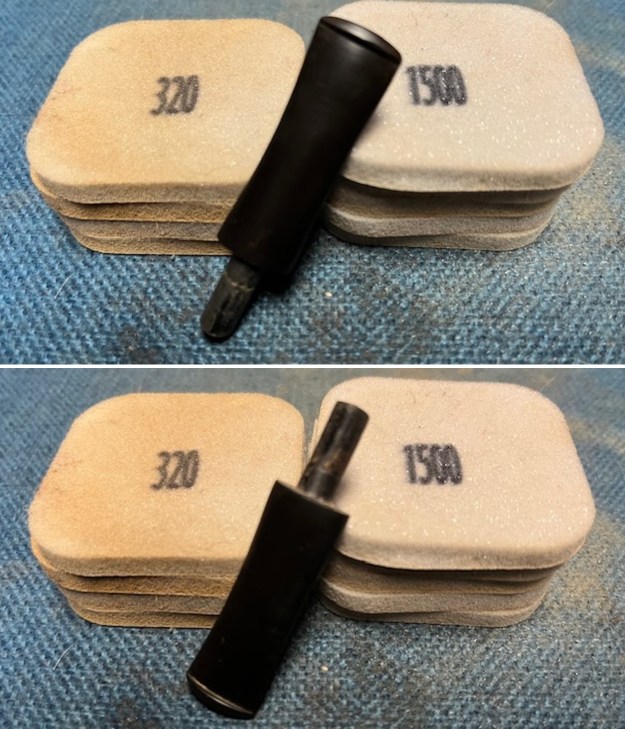
Now it was time to restem the pipe. I went through my can of stems to find a stem that would fit this pipe both in terms of the airway and the shank fit. I found a nice taper stem that would work well with this long shank Canadian. With a bit of work it would fit very well. It was close to a fit so I used a Dremel and sanding drum to reduce the diameter of the tenon for a shank fit. I adjusted it further with some small flat files. Once I completed the clean up of the tenon I fit it in the shank on the pipe and took photos of the pipe at this point in the process. I still needed to adjust the width of the stem at the shank as well as the overall shape to match the shank end.I used 220 grit sandpaper to shape and adjust the stem to match the shank end. It took a lot of sanding and shaping but it began to look very good.I sanded the stem with 320-3500 grit 2×2 inch sanding pads. I wiped the stem down after each pad to check the progress of the fit to the shank. It began to look very good.I polished the stem with micromesh sanding pads – dry sanding with 1500-12000 grit sanding pads. I wiped it down after each sanding pad with Obsidian Oil. I polished it with Before & After Pipe Stem Polish – both Fine and Extra Fine. I set the stem aside and turned my attention to the bowl. I used a piece of 220 grit sandpaper and a half sphere to work over the inner bevelled edge on the bowl. Then I used a folded piece of 220 grit sandpaper to smooth out the inner edge some more. It started to look very good at this point. I sanded the briar with 320-3500 grit 2×2 inch sanding pads to smooth out the scratching in the surface. I wiped the briar down after each pad with a damp cloth to remove the dust and debris. I polished the briar with micromesh sanding pads – dry sanding with 1500-12000 grit pads. I worked over the inner and outer edge of the rim as well. After each pad I wiped the bowl down with a damp cloth to remove the sanding debris. It really took on a shine by the last three sanding pads. I worked some Before & After Restoration Balm into the surface of the briar with my finger tips and a shoe brush to get into the carving on the bowl and shank. The product works to clean, enliven and protect the briar. I let the balm sit for 15 minutes and then buffed with a cotton cloth to raise the shine. The photos show the bowl at this point in the restoration process. I polished the silver band on the shank with micromesh sanding pads – dry sanding with 1500-12000 grit pads. I wiped it down after each sanding pad with a jeweller’s cloth to remove the debris and to polish the silver and remove the oxidation and prevent more from developing. I am excited to finish restemming and restoring this Savinellil Extra Lumberman. I put the pipe back together and buffed it with Blue Diamond on the buffing wheel. I gave the bowl and the stem multiple coats of carnauba wax. I hand buffed the pipe with a clean buffing pad to raise the shine. It is fun to see what the polished bowl looks like with beautiful mixed grain all around it with just a few small flaws in the briar. The polished grain on the pipe looks great with the black vulcanite stem. This smooth Savinelli Extra Lumberman with spot rustications is great looking and the pipe feels great in my hand. It is light and well balanced. Have a look at it with the photos below. The dimensions are Length: 7 inches, Height: 2 inches, Outside diameter of the bowl: 1 ¼ inches, Chamber diameter: ¾ of an inch. The weight of the pipe is 45 grams/1.55 ounces. It turned out to be a beautiful pipe. I will soon be putting it on the rebornpipes store in the Pipes by Italian Pipe Making Companies Section. If you are interested in adding it to your collection let me know.

Remember we are the next in a long line of pipe men and women who will carry on the trust of our pipes until we pass them on to the next trustee. Thanks for your time reading this blog.

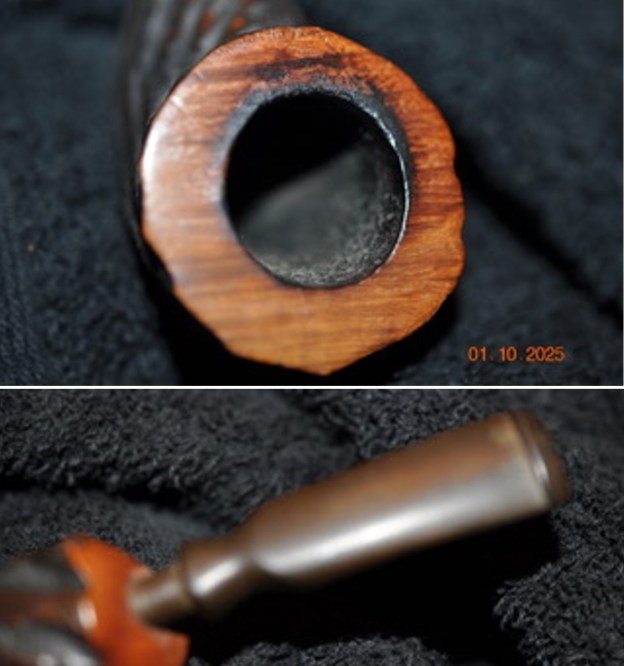
Restoring a No Name Rusticated Long Shank Scoop


by Steve Laug

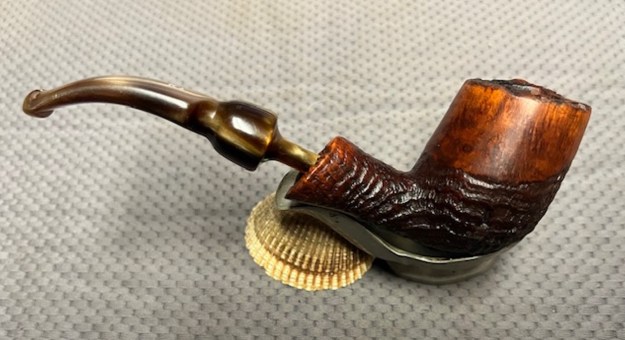
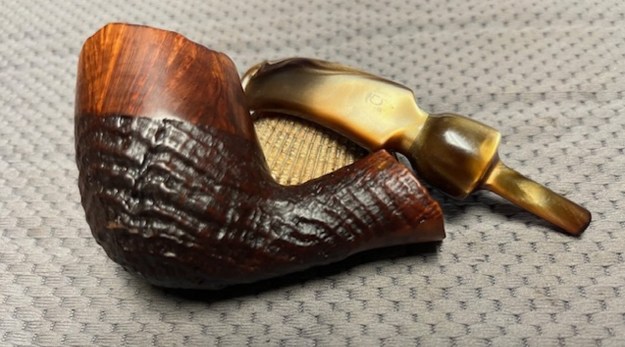
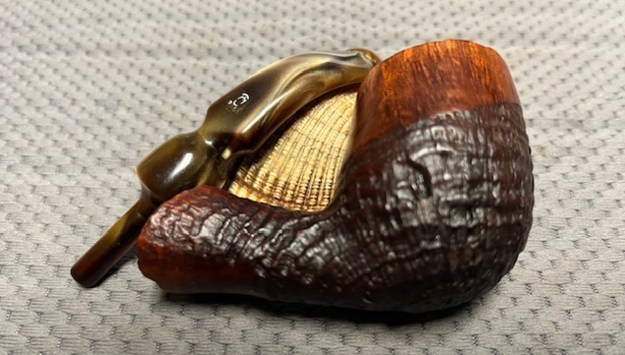
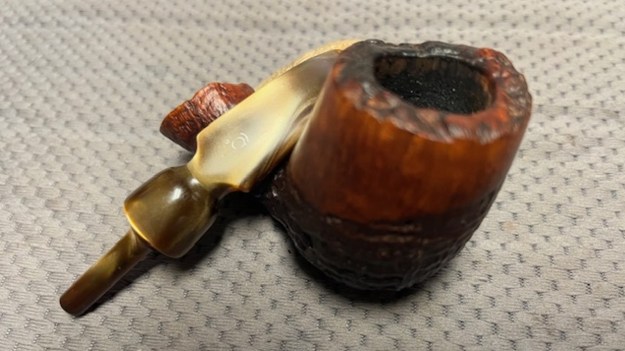
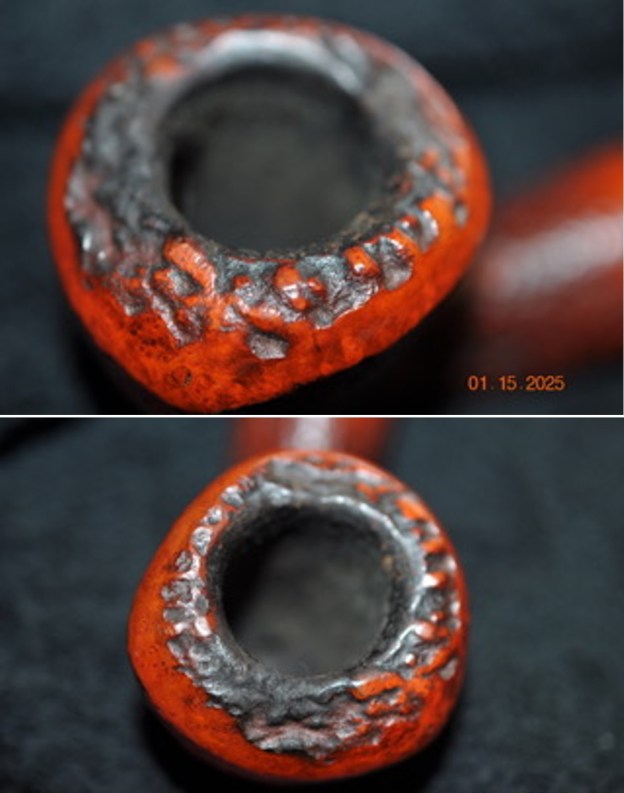
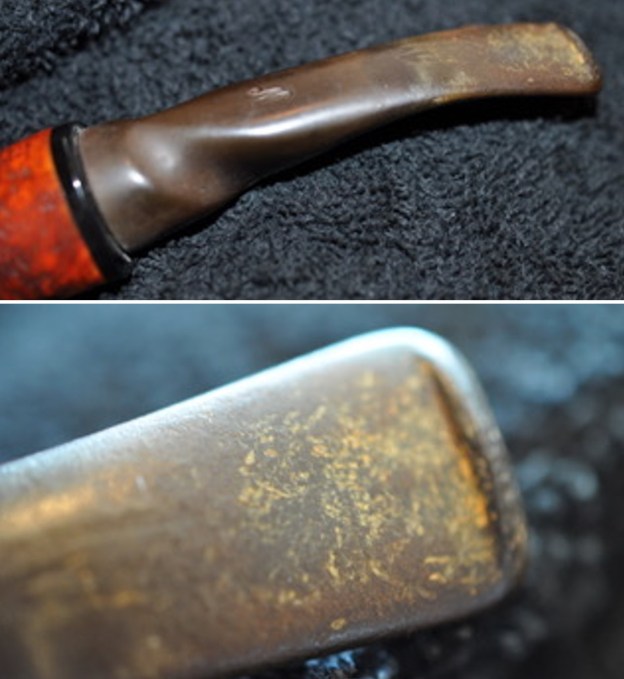
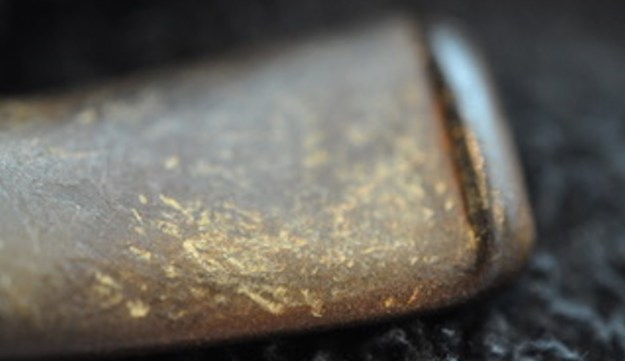
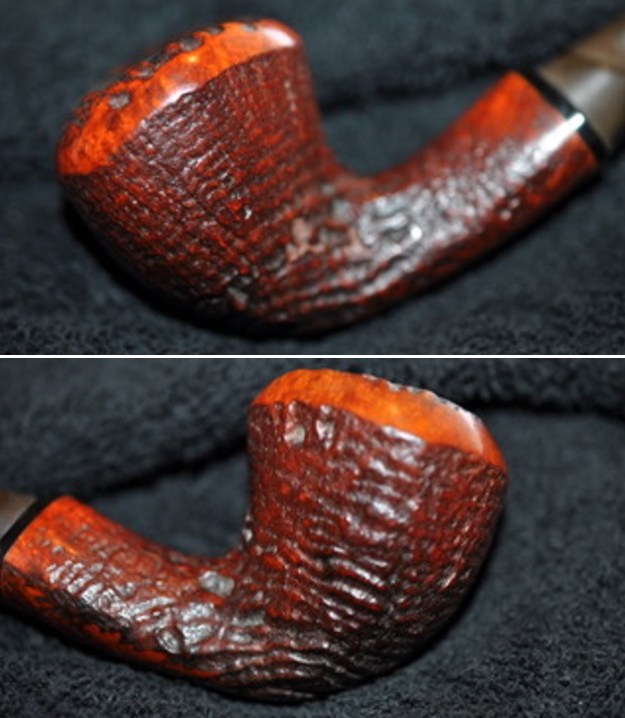
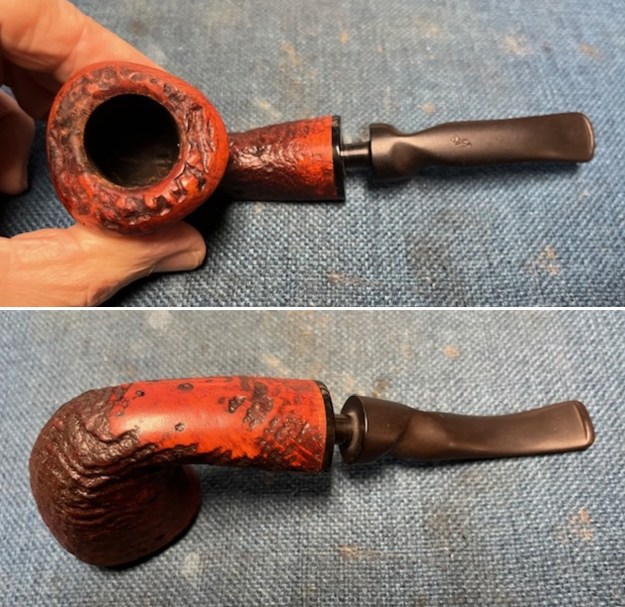
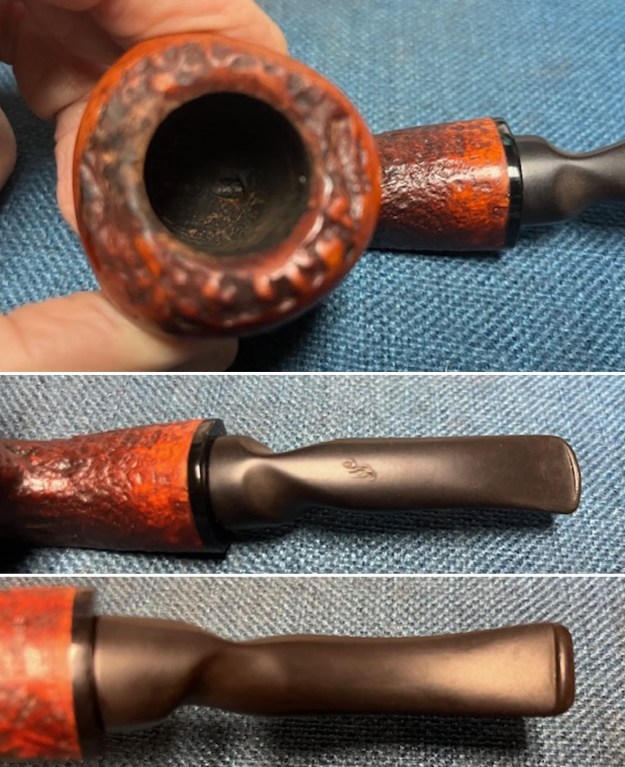
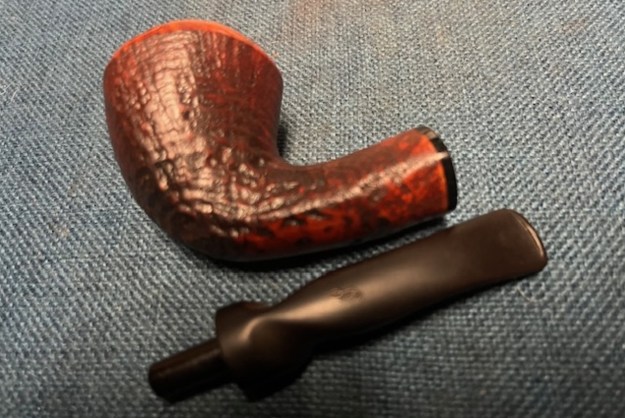
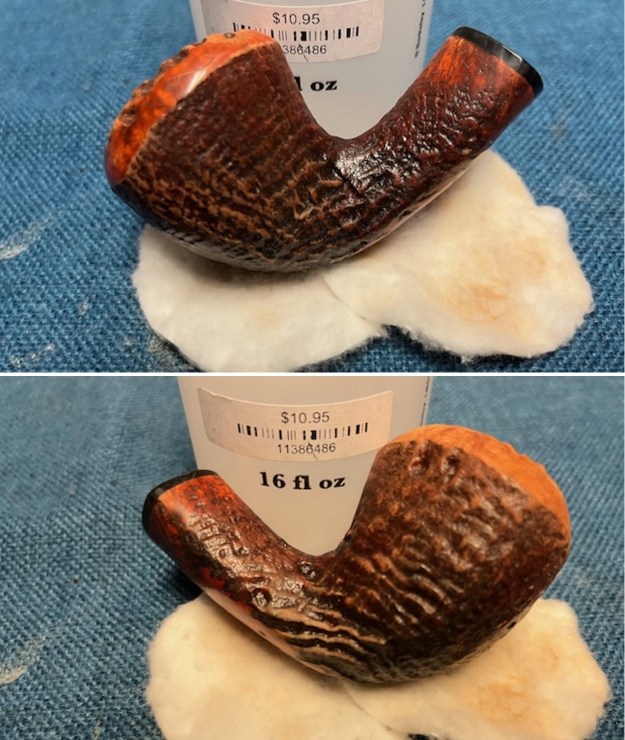
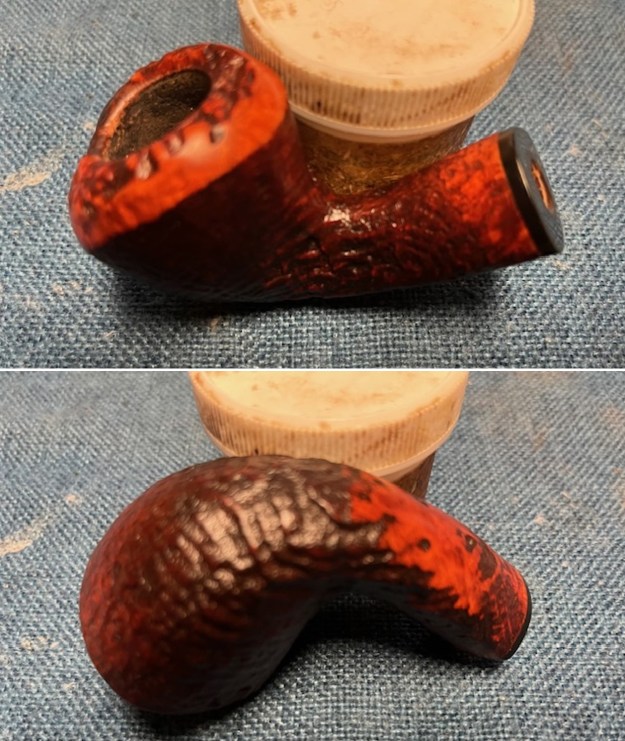
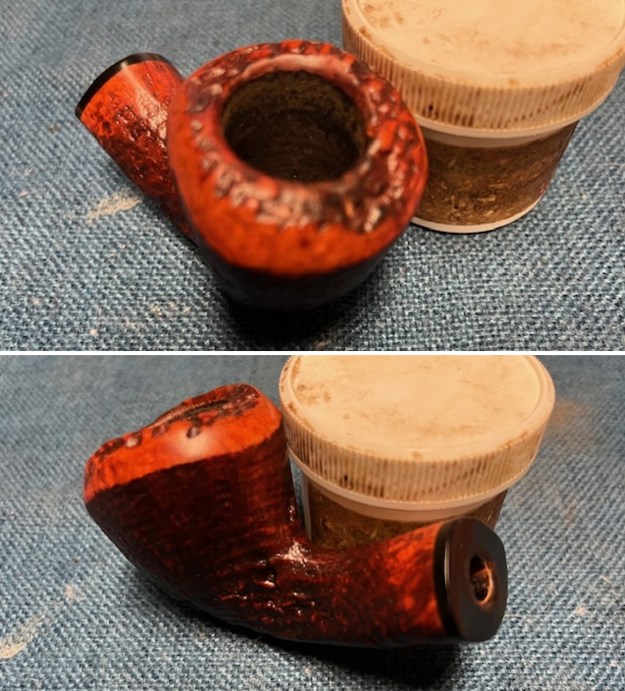
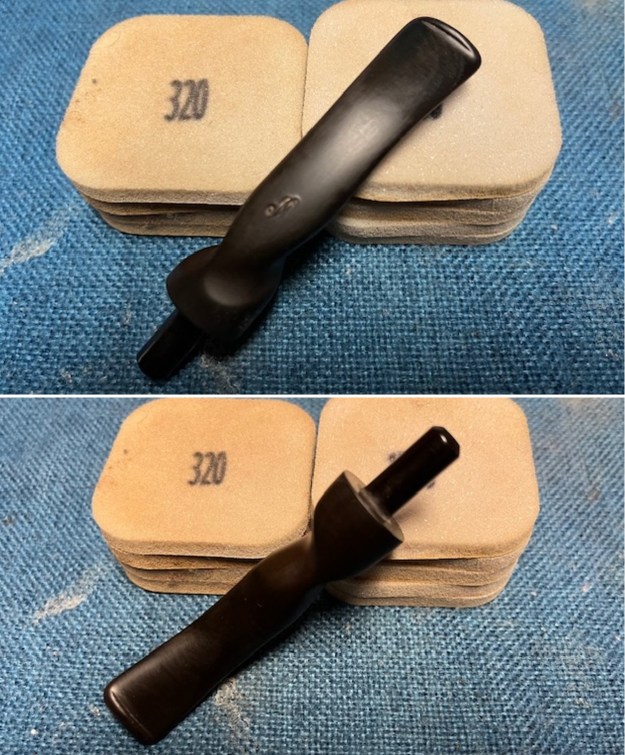
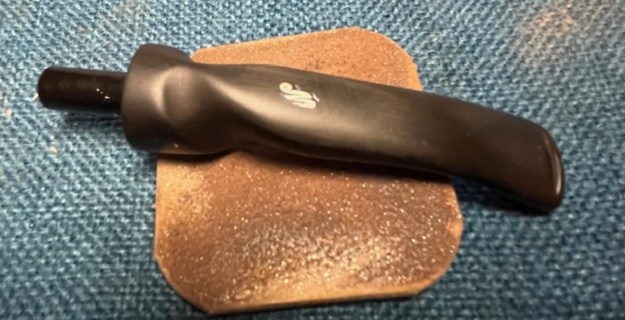
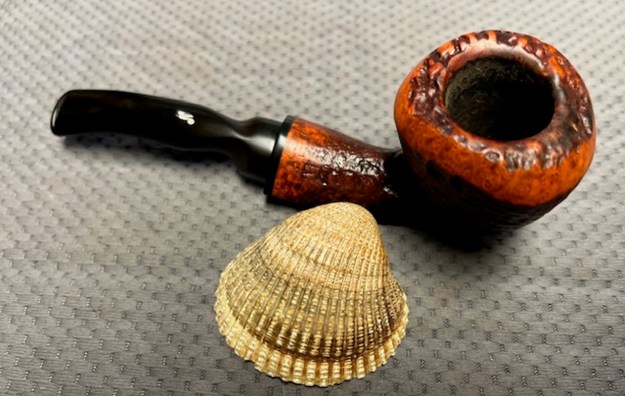
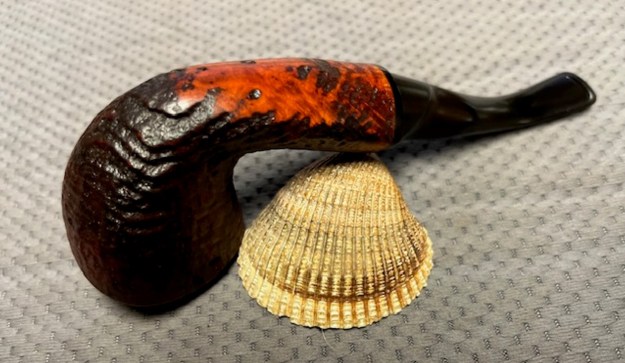
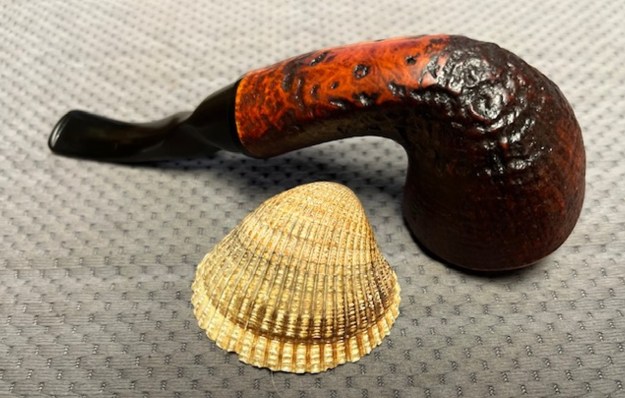
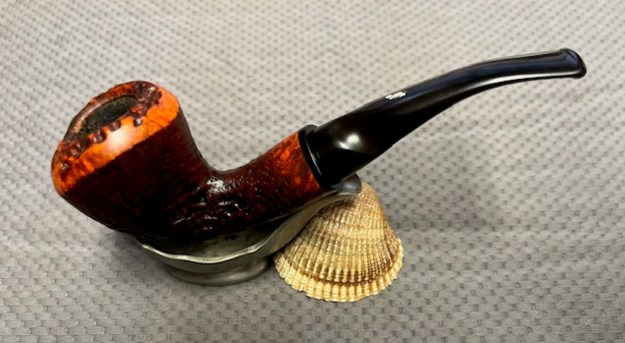
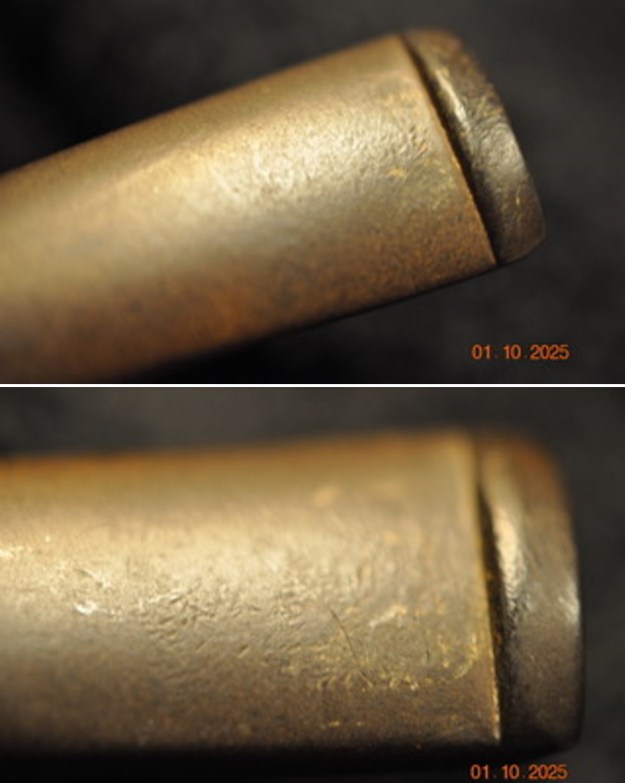
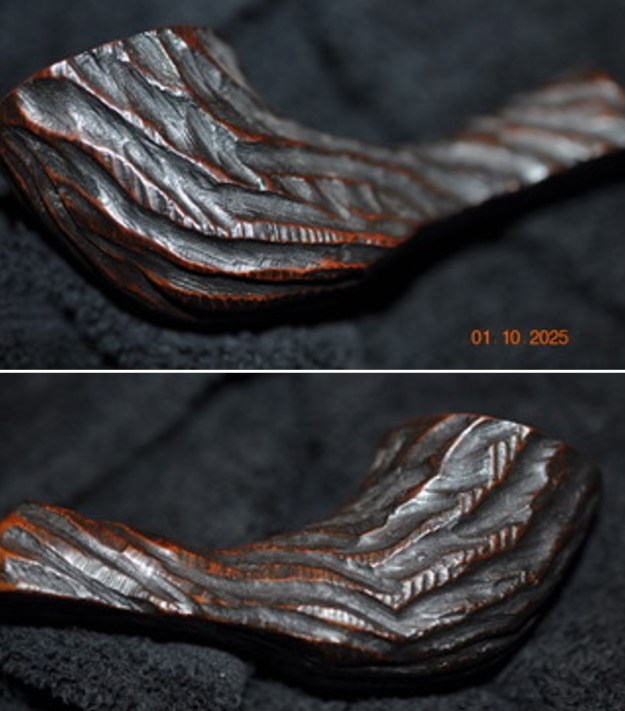
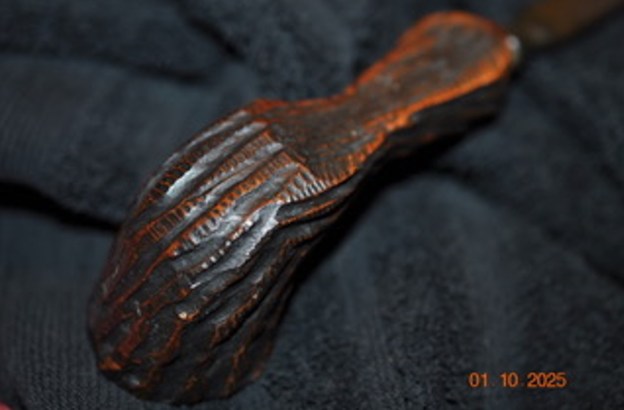
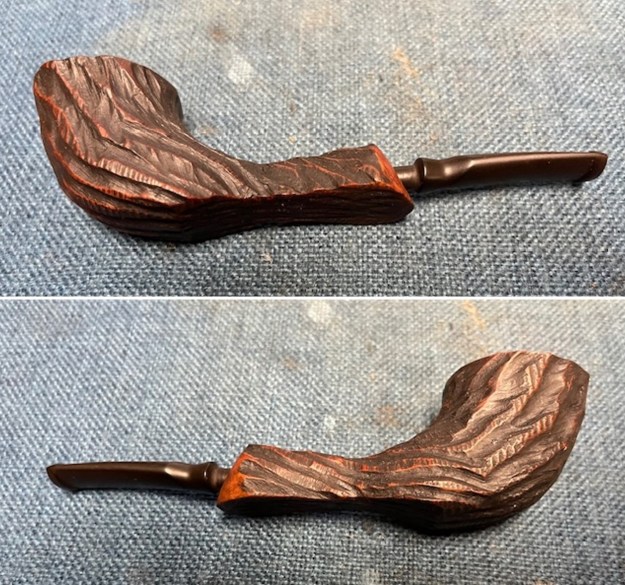
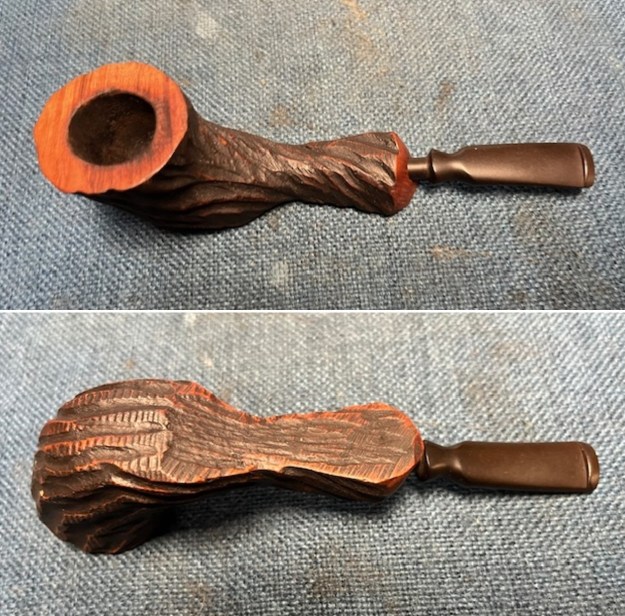
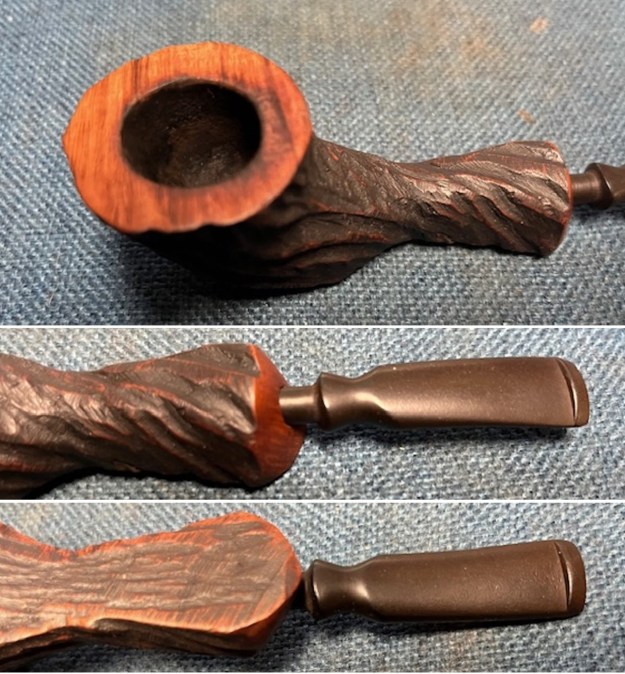
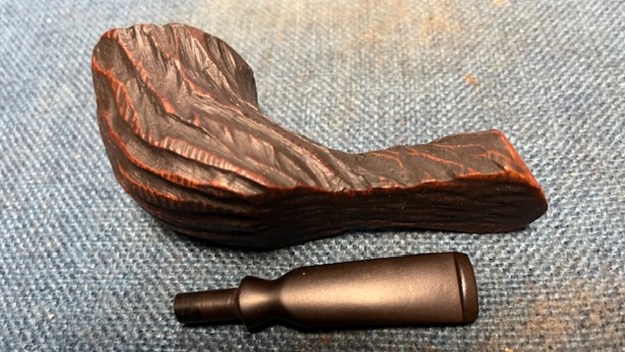
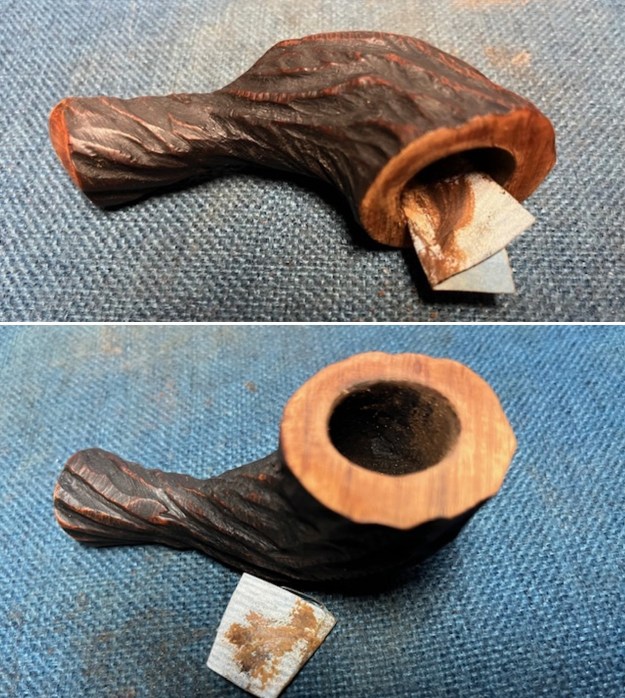
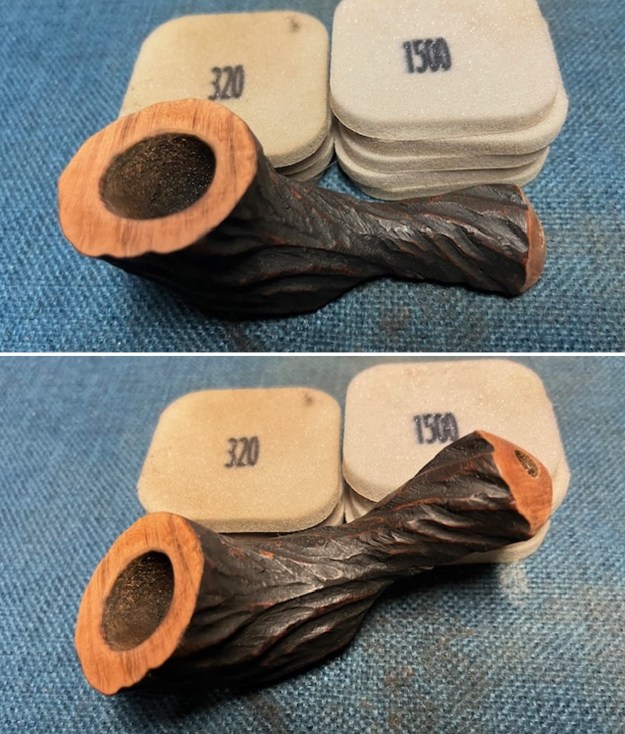
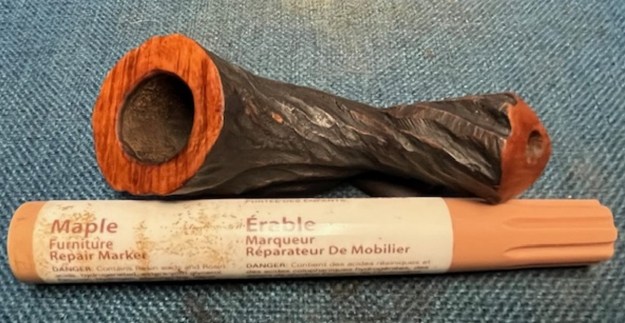
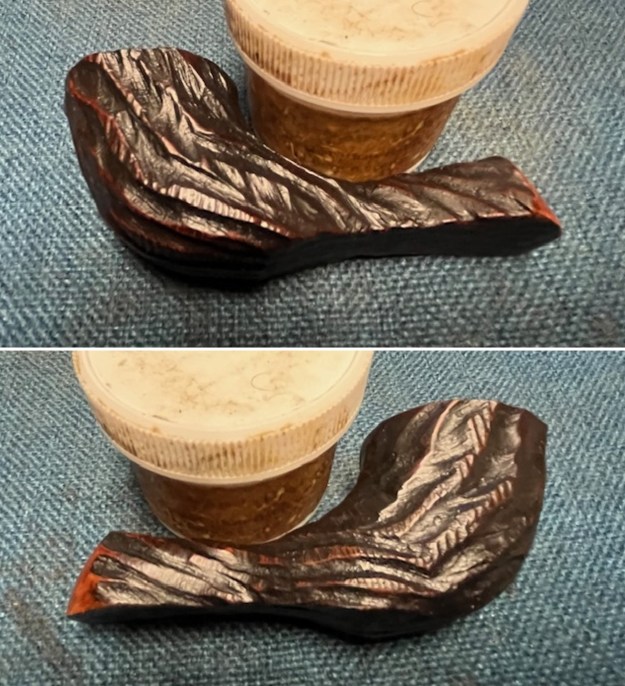
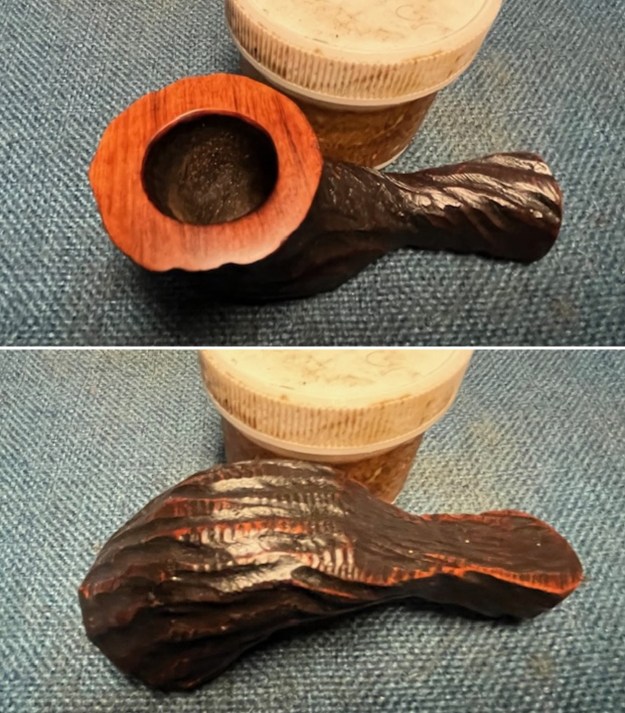
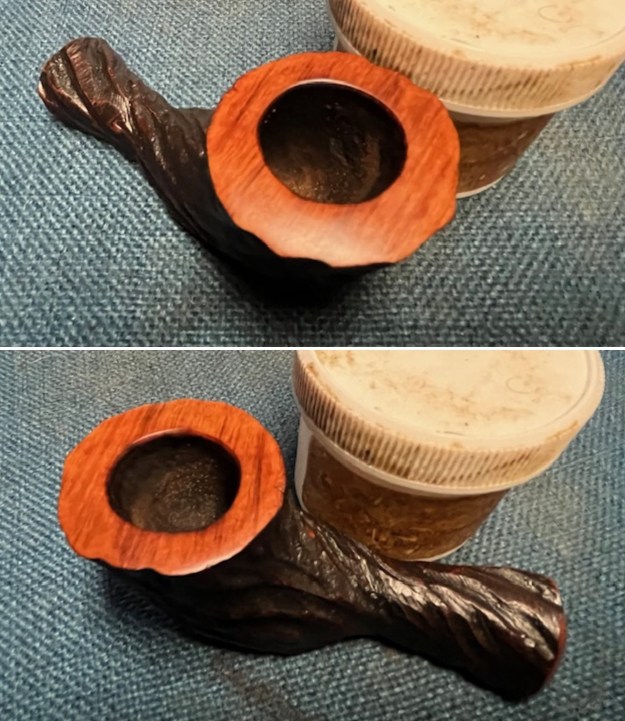
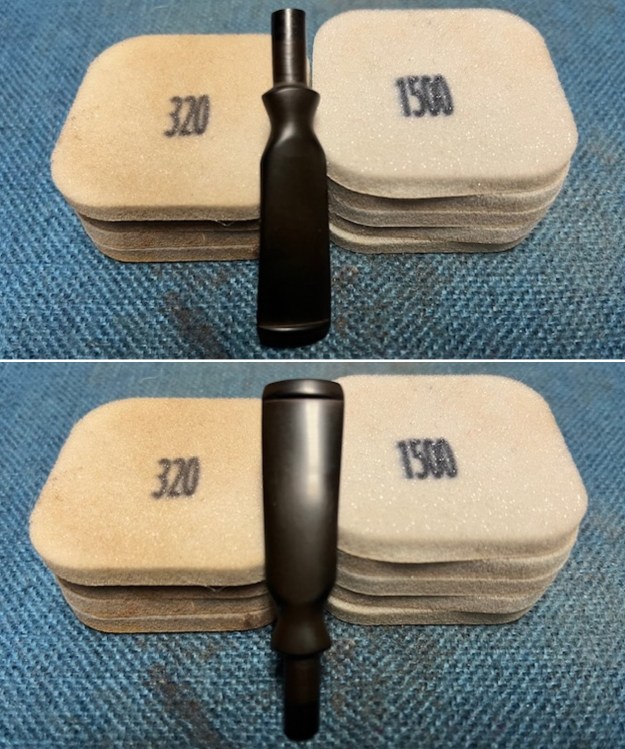
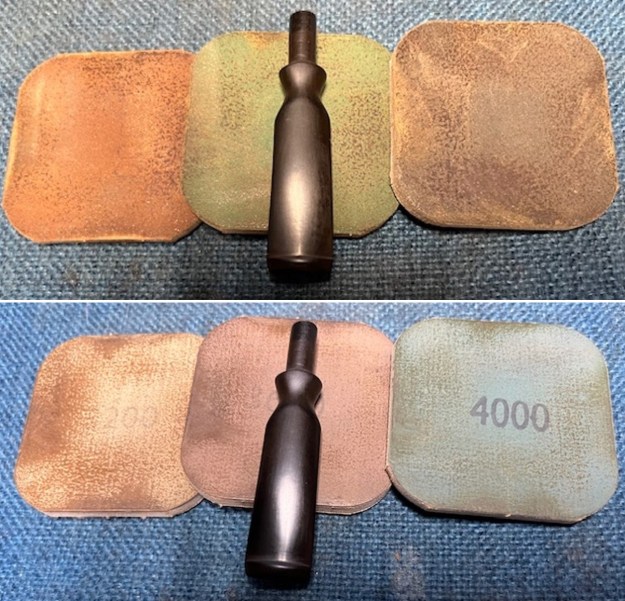
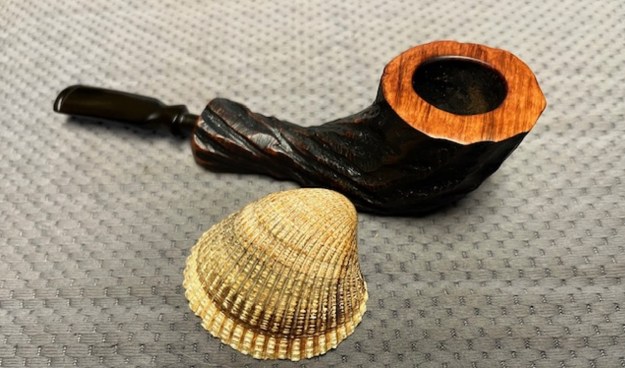
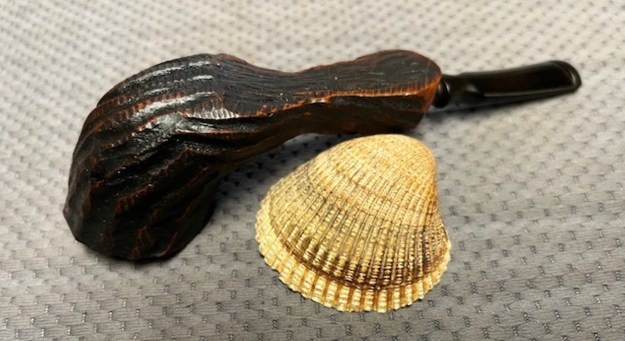
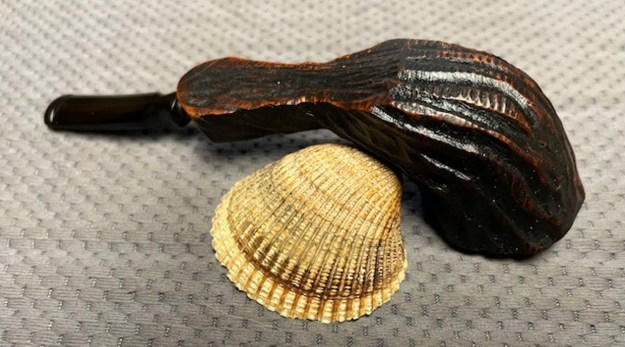
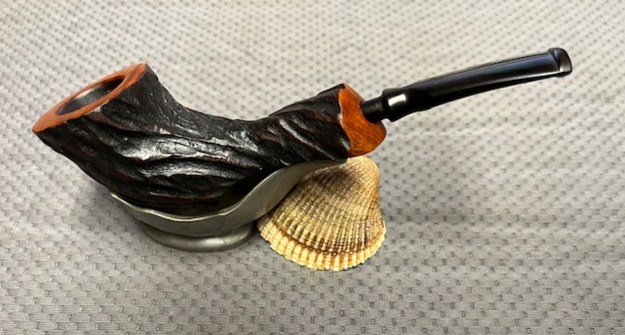
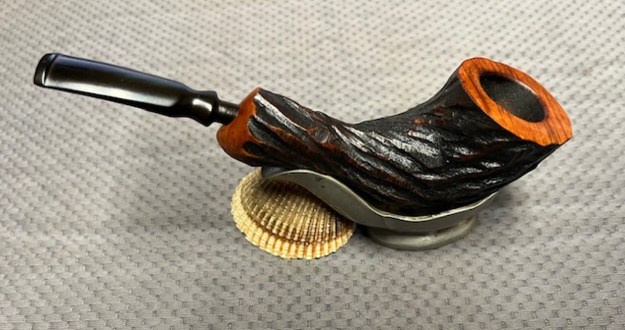
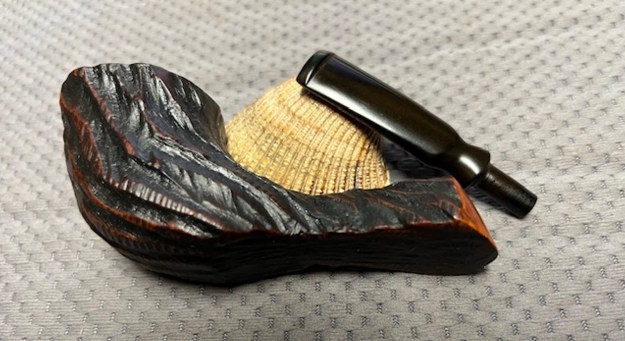
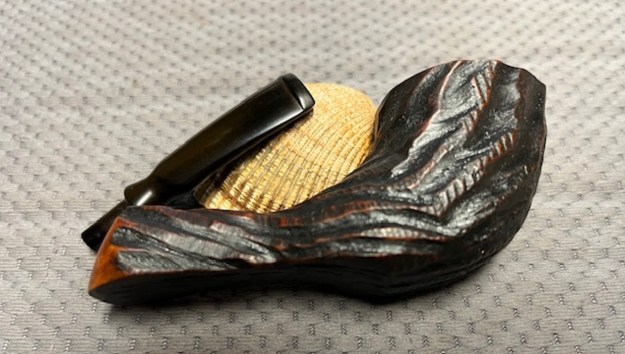
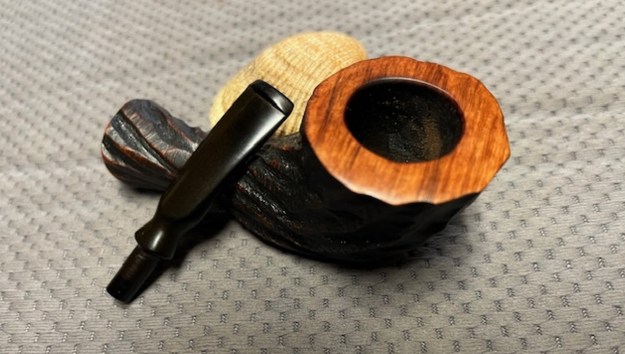
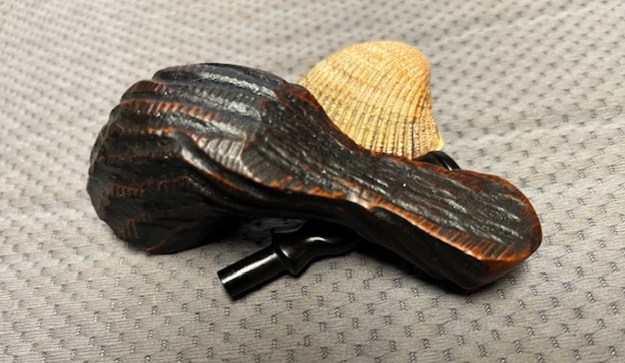
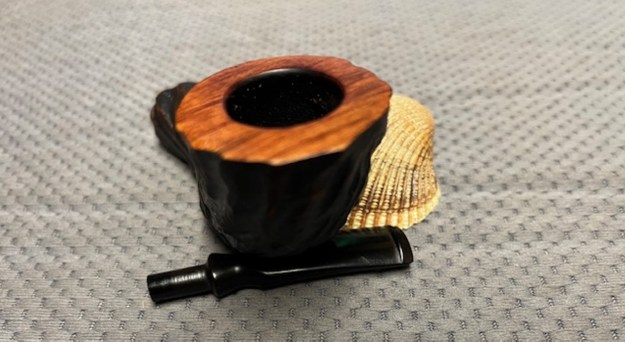
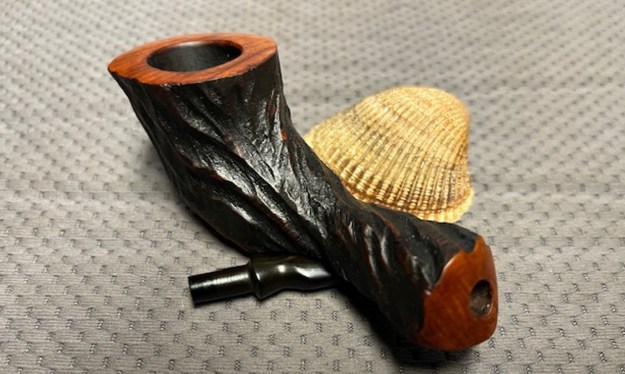
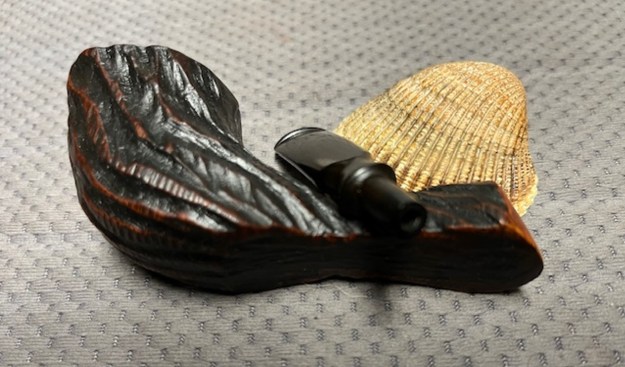
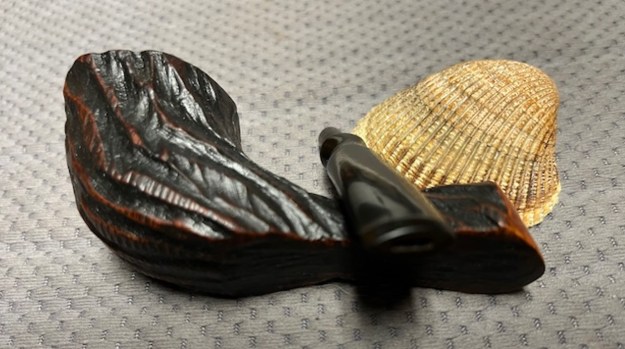
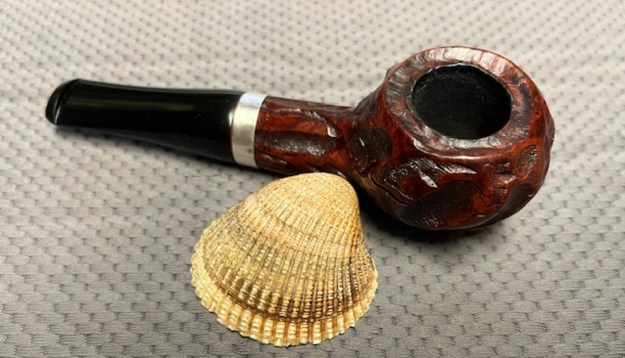
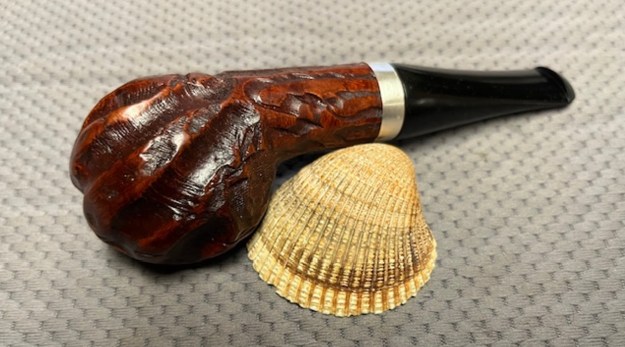
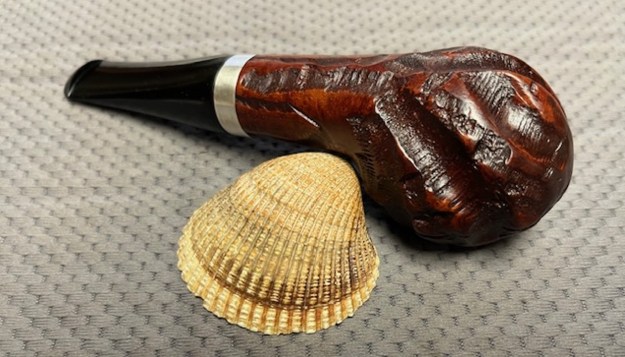
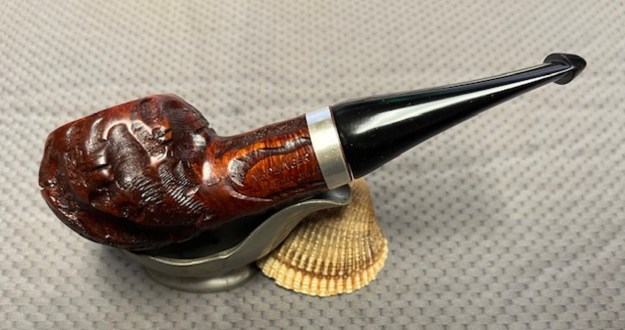
The next pipe on the table is a No Name Rusticated Freehand Scoop with unique carving around the bowl. We picked it up from a seller in Ogden, Utah, USA on 12/12/2024. The rim top was smooth as was rounded shank end. It is a unique and strangely pretty pipe. The bowl had a moderate cake and there was some lava on the rim top and some darkening on the inner edge but no real damage. The rusticated grooves that ran with the curves of the bowl and shank were rusticated on both the high parts and in the valley of the grooves. The briar was dirty from use and the bowl looked dull. The stem is a short fancy saddle style – rounded first then tapering into a triangle and flat blade to the button. It was oxidized and had light tooth marks and chatter on the top and underside ahead of the button. It was short and fit the long shank very well. Jeff took photos of the pipe before he started his work on it. He took photos of the rim top and the stem to show the condition. You can see the moderate cake in the bowl and darkening and grime on the rim edge. The photos of the stem show the tooth marks and chatter on the top and underside ahead of the button. Jeff took photos of the finish around the bowl sides to show flow of the rustication around the bowl and shank. You can also see the dust and debris in the finish. Now it was my turn to work on the pipe. Jeff had done an amazing cleanup of the pipe. He reamed the cake with a PipNet reamer and cleaned up that with a Savinelli Fitsall Pipe Knife. He scrubbed the internals of the bowl and stem with alcohol, cotton swabs, shank brushes and pipe cleaners. He scrubbed the externals with undiluted Murphy’s Oil Soap and a tooth brush. He rinsed the bowl off with running water. He soaked the stem in Briarville’s Pipe stem Deoxidizer and once it had soaked, rinsed it off with warm water to remove the residual solution. He dried it off and rubbed it down to remove any oxidation that was still on the stem. The pipe looked very good when I received it. I took photos of the bowl and the rim top as well as both sides of the stem to show the condition of the pipe before I started my work. The rim top was very clean and the inner edge and top look much better. The stem showed light tooth marks on the top and underside near the button. I took the stem off the bowl and took a photo of the parts. It is an interesting pipe. I used a folded piece of 220 grit sandpaper to clean up the rim top darkening and the light damage to the inner edge of the rim. It looked better.I sanded the smooth portions of the bowl with 320-3500 grit sanding pads. I dry sanded with each pad and wiped it down with a damp cloth afterwards.I used a Maple Stain pen to touch up the shank end and rim top and bring a good match to the two parts and reflect some of the undercolor of the bowl sides. I rubbed the briar down with Before & After Restoration Balm. I worked it into the smooth rim top and shank end with my fingertips. I worked it into the rustication around the bowl and the shank with a shoebrush. The product works to clean, enliven and preserve the briar. I let it sit for 10 minutes then I buffed it with a cotton cloth to deepen the shine. The briar really comes alive with the balm. I set the bowl aside and turned my attention to the stem. I sanded out the tooth chatter and also smoothed out the remnants of tooth damage with 320-3500 grit sanding pads. I wiped the stem down after each pad with Obsidian Oil.I polished the vulcanite stem with micromesh sanding pads – 1500-12000 grit pads. I wiped it down with Obsidian Oil after each sanding pad. I used Before & After Pipe Polish – both Fine and Extra Fine to further polish the stem. This nice looking No Name Freehand Scoop with a fancy turned saddle vulcanite stem is a great looking pipe now that it has been restored. The briar is clean and the grain really came alive on the rim top and heel of the bowl. The rich stains gave the finish a sense of depth on the rustication with the polishing and waxing. I put the stem back on the bowl and buffed the pipe with Blue Diamond on the buffing wheel using a light touch on the briar. I gave the bowl and the stem multiple coats of carnauba wax on the buffing wheel. I buffed the pipe with a clean buffing pad to raise the shine. I hand buffed the pipe with a microfiber cloth to deepen the shine. The finished No Name Freehand Scoop really is a beauty and feels great in the hand and looks very good. Give the finished pipe a look in the photos below. The dimensions of the pipe are Length: 5 ¾ inches, Height: 1 ½ inches, Outside diameter of the bowl: 1 ½ inches, Chamber diameter: ¾ of an inch. The weight of the pipe is 38 grams/ 1.34 ounces. This beautiful Freehand pipe will soon be on the rebornpipes store in the American (US) Pipemakers Secton. It should make a great smoker for the next trustee. Thanks for reading this blog and my reflections on the pipe while I worked on it. It was a fun one to work on.

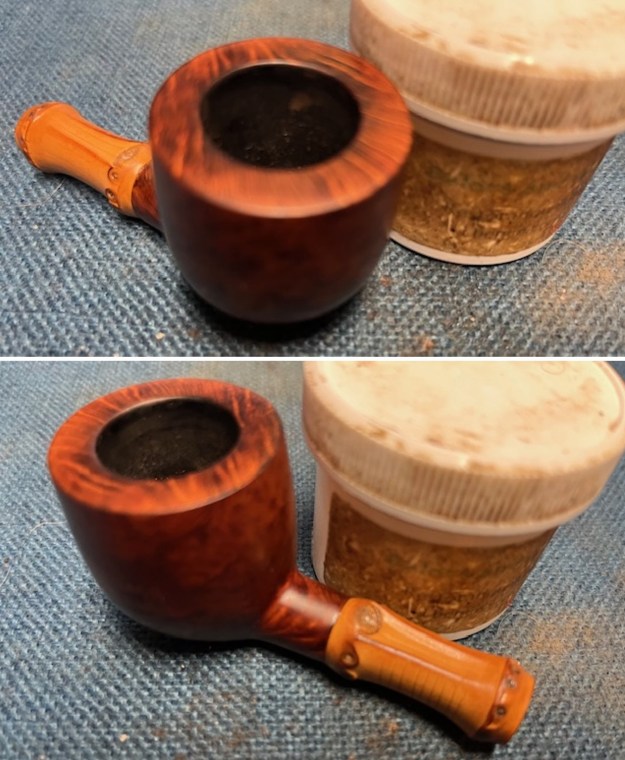
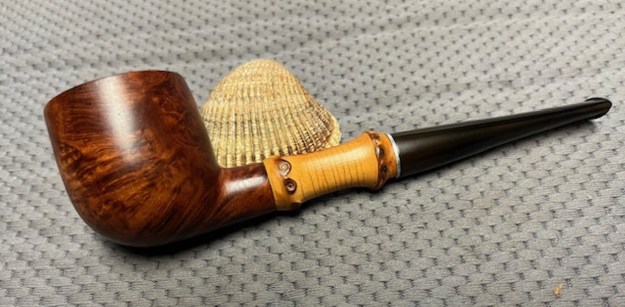
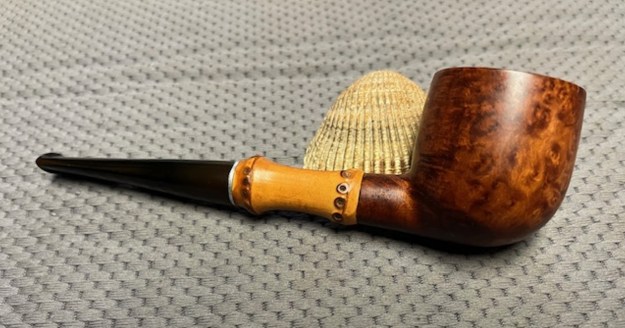
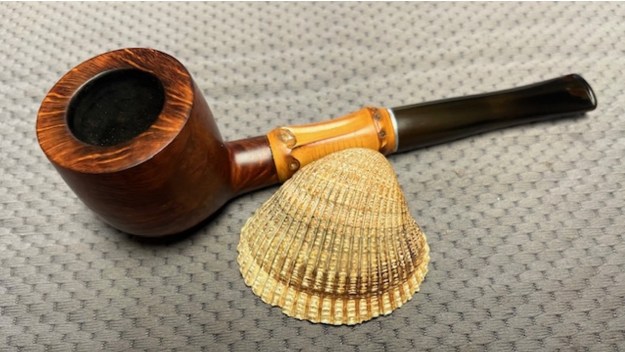
Restoring a Kaywoodie Mandarin with Bamboo shank and loose stem


by Steve Laug

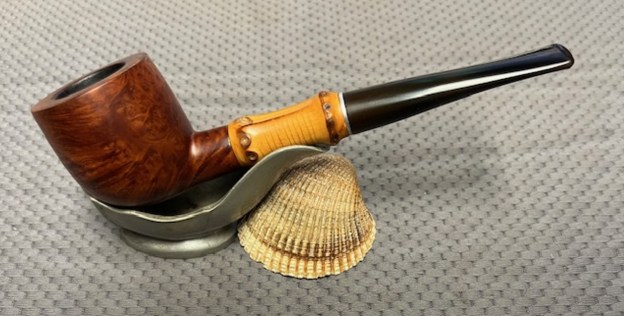
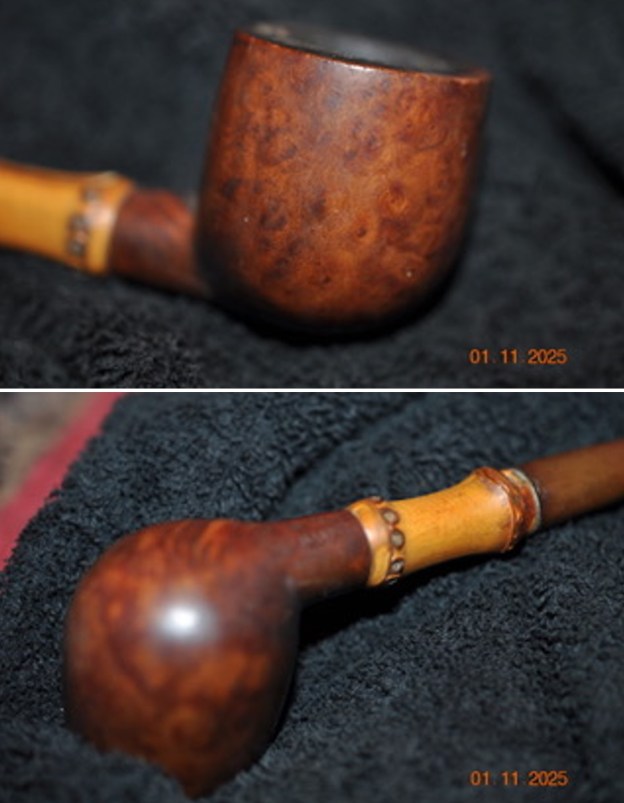
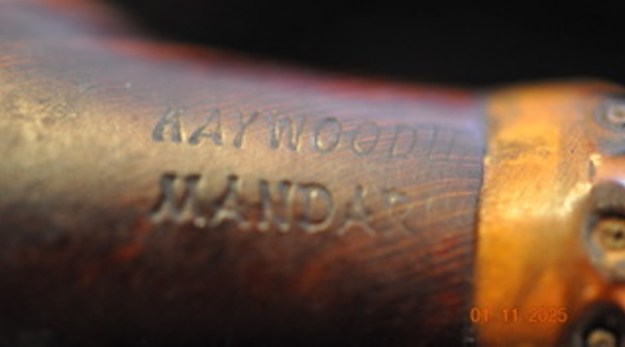
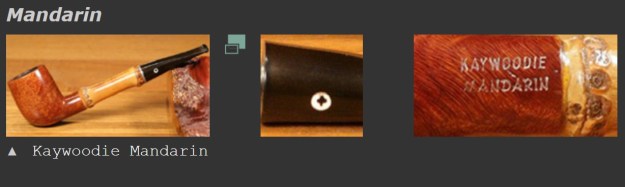
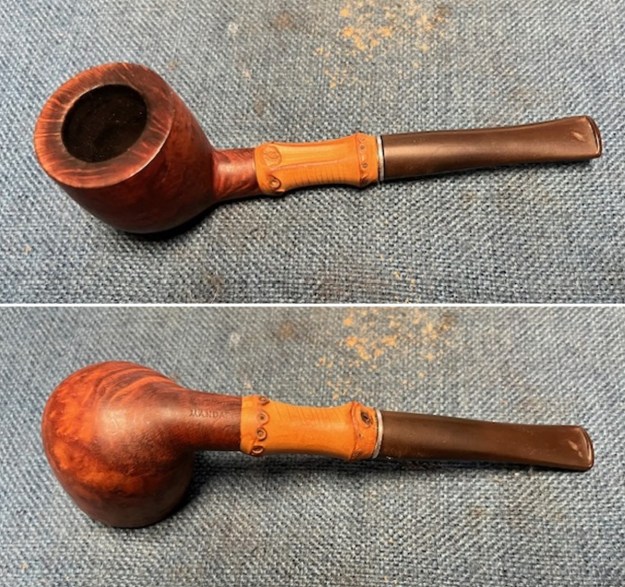
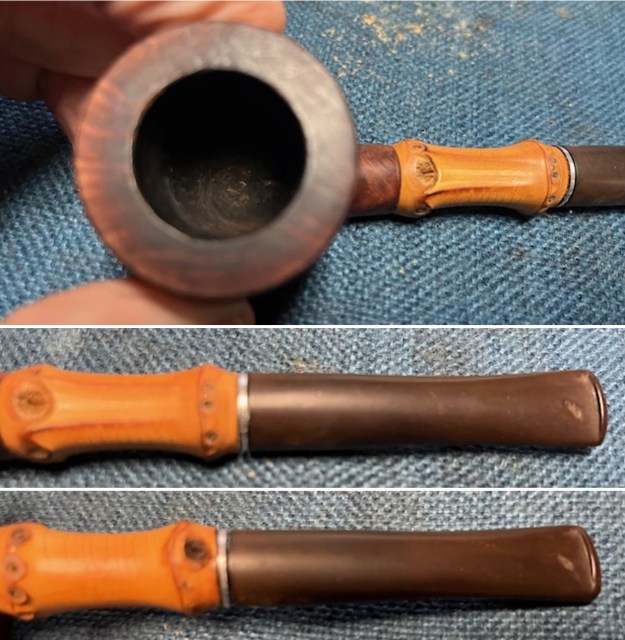
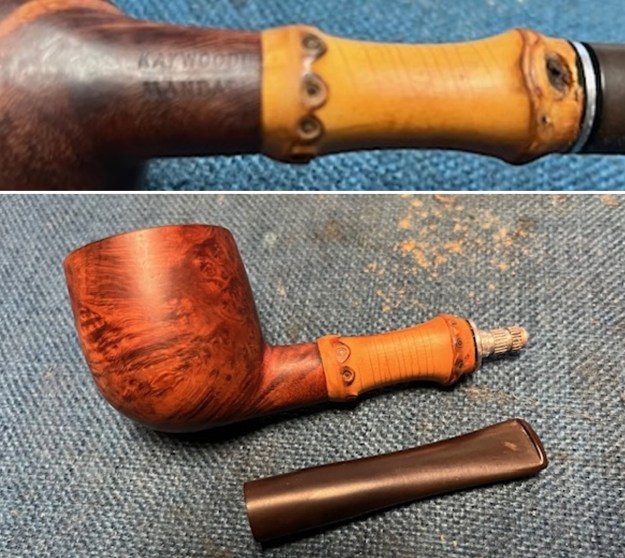
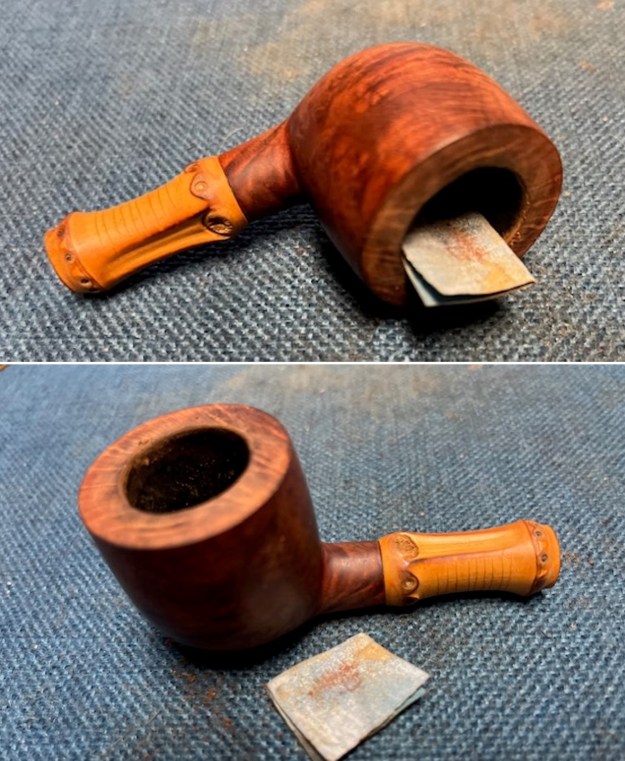
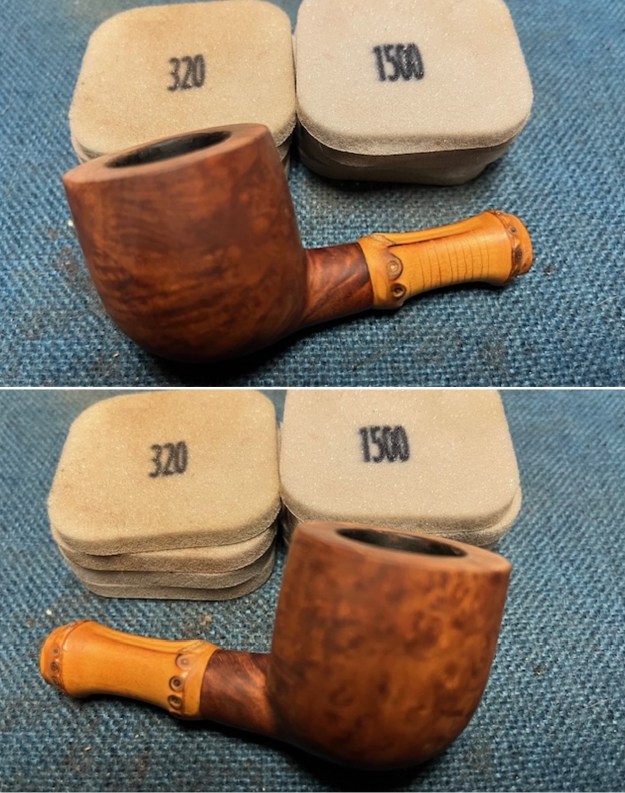
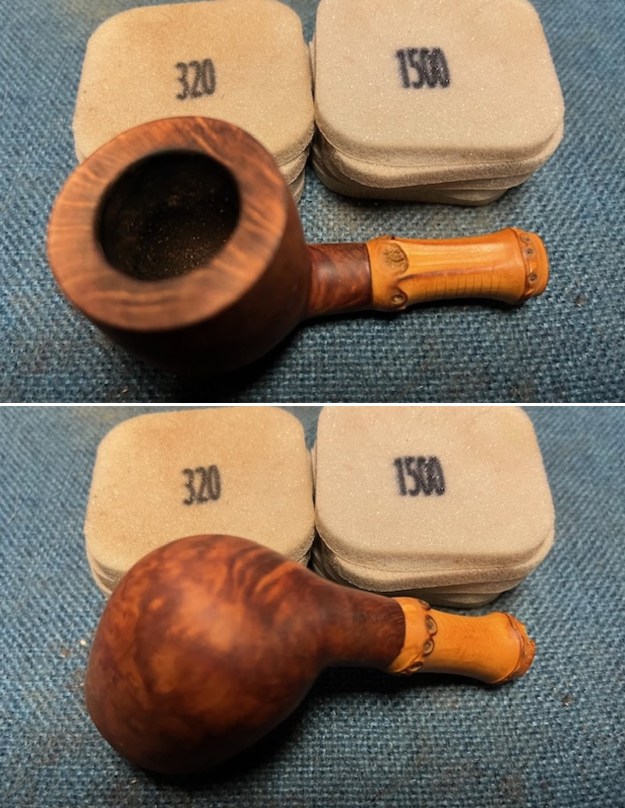
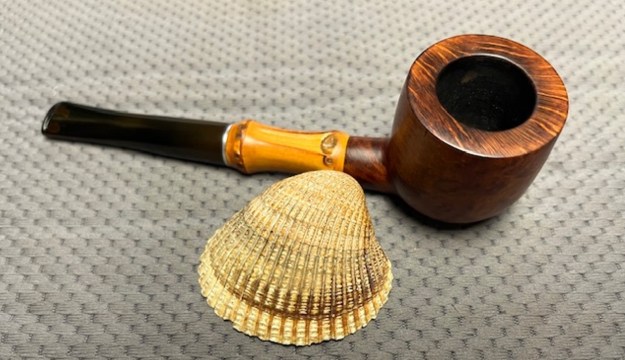
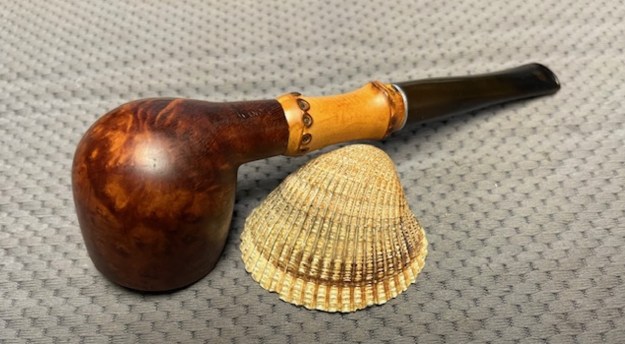
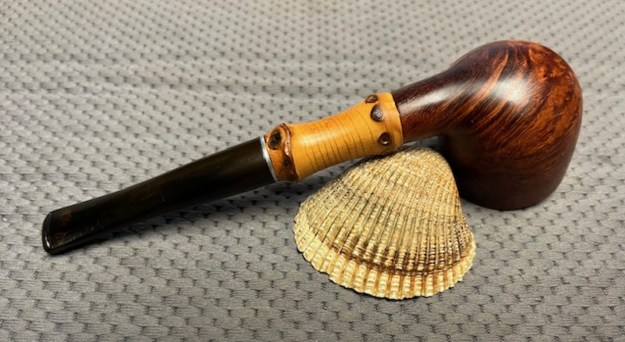
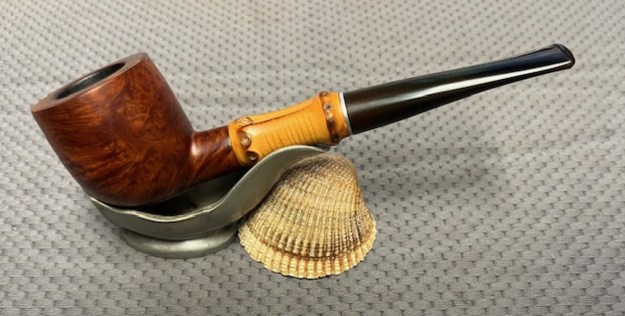
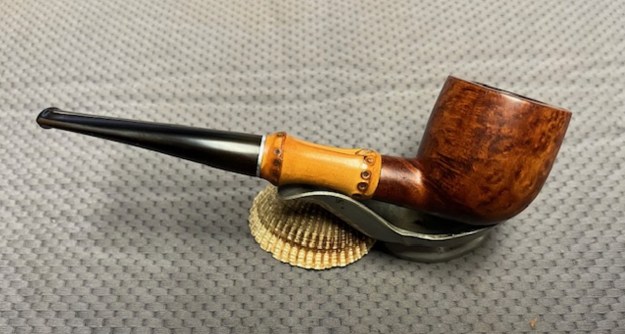
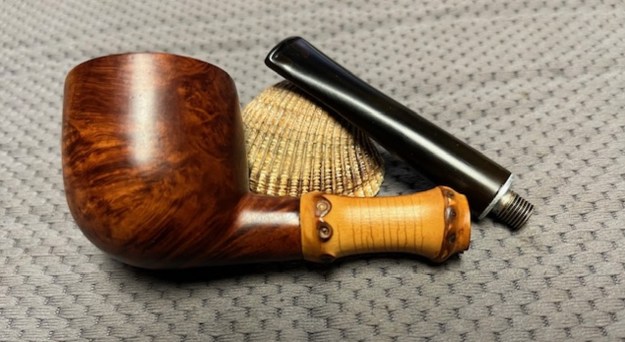
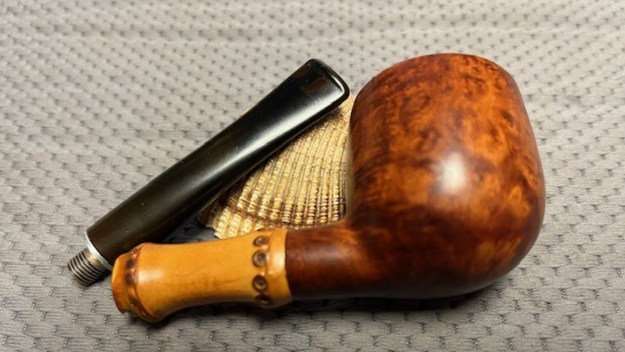
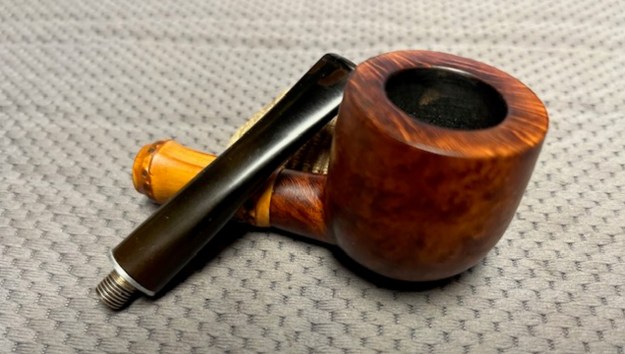
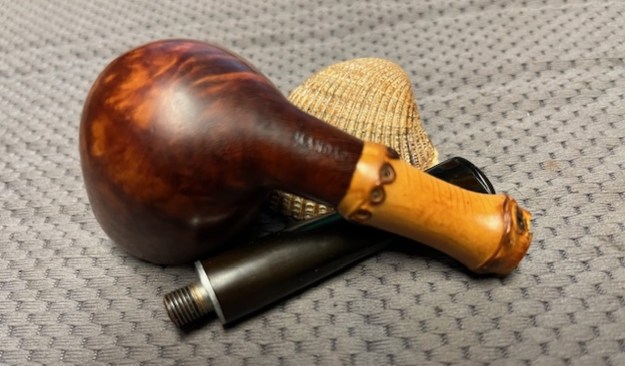
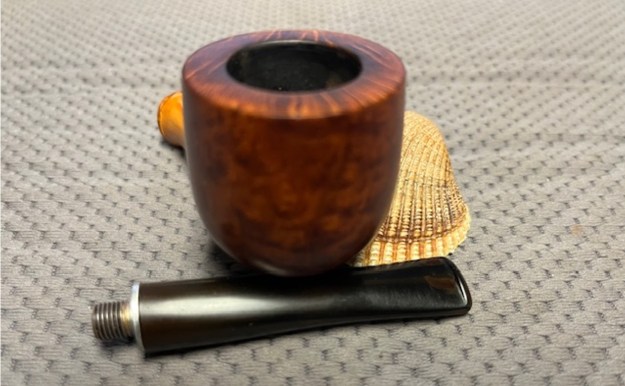
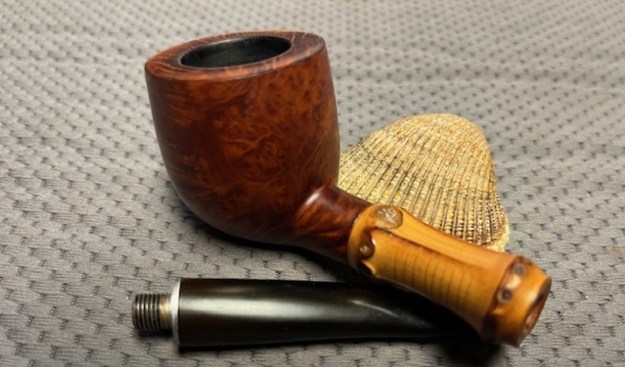
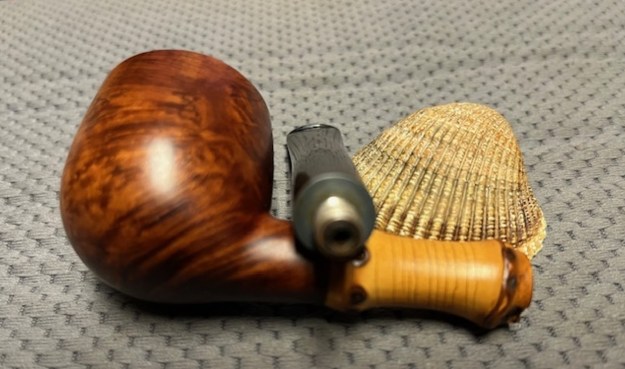
The next pipe is on the table is a great looking Pot shaped pipe with a Bamboo\d shank and a vulcanite taper stem. Jeff and I purchased it from an auction in Atlanta, Georgia, USA. The pipe is well shaped and has nice grain around the bowl. It has a flat thin rim top and a rounded heel on the bowl. The pipe is stamped on the underside of the shank and reads Kaywoodie [over] Mandarin. There was grime and dust ground into the smooth finish of the bowl and shank. The bowl was heavily caked with thick lava on the rim top and edges. The inside edge looks like it may actually be undamaged under the lava coat. The outer edge looks very good. The vulcanite taper stem was oxidized, calcified and had tooth chatter and marks on the top and underside near the button and on the button edge. The tenon was a Kaywoodie style metal screw tenon, without a stinger apparatus. It was loose in the stem and stuck in the shank. There was no logo or stamping on the stem at all. The pipe showed a lot of promise but it was very dirty. Jeff took some photos of the pipe before he started his cleanup work. He took photos of the rim top and bowl to give a clear picture of the thickness of the cake and tobacco debris as well as the inner edge of the rim. You can see the thick lava coat on the rim top and inner edge. It is obviously a well loved and heavily smoked pipe. He also took photos of the top and underside of the stem. The photos show the overall condition of the stem. Jeff took photos of the sides and heel of the bowl to give a picture of what the briar looked like under the grime on the surface. It truly has some nice grain around the bowl and shank. The stamping on the underside of the shank is clear, though faint in spots. It is still readable and read as noted above. Jeff took a photo to capture the stamping on the underside of the shank.I wanted to confirm a possible date for both of these pipes. I turned to Pipephil to see what he had to say about the brand (http://www.pipephil.eu/logos/en/logo-kaywoodie-2.html). I have included a screen capture of the listing on the site as well as the sidebar notes. The Mandarin line was produced from 1958 to 1967.

I turned next to Pipedia to check out the Kaywoodie Collector’s Guide to see if I could get some more information on the Mandarin line. I found an interest monograph there called Notes on Kaywoodies Introduced between 1955 and 1968. It included reference to the Mandarin line. I include that in part below (https://pipedia.org/wiki/Collector%27s_Guide_to_Kaywoodie_Pipes). I have highlighted and underlined the Mandarin in the list below. Both of the pipes I am working on are the smooth versions.

NOTES ON KAYWOODIES INTRODUCED BETWEEN 1955 AND 1968

The material presented in this monograph is extracted from 1936, 1947, 1955, 1968-69, and four undated Kaywoodie catalogs. Based on a comparison of prices in the 1955 and 1968-69 catalogs, the four undated catalogs appear to span the period from the late 1950’s to the late 1960’s (i.e., after 1955 but before 1968). This section presents a brief summary of the Kaywoodie Pipes that appeared in these undated catalogs, but did not appear in either the 1955 or 1968-69 catalogs…

Here is a list of pipes from this time period.

…Hi-Bowl. Tall, tapered bowl in six shapes (see Table 5). Available in smooth or “rough” finish ($10).

Mandarin. Smooth or relief grain finish with burnished-bamboo shank ($10).

Setter. No shank, just a ridged hole for a slender, filter-free, push-bit. Available in “flat bottom” (hence, “Setter”) panel, billiard, and poker shapes. Smooth or textured finish ($10).

Tuckaway. The 1955 catalog shows a Drinkless Tuckaway that was simply a smaller version of other Kaywoodie styles. The Tuckaways of the 1955-1968 period had military mountings, filter-free see-thru bits, and were packaged in a leatherette case. Available in Standard, Relief Grain, and Super Grain grades ($6-$8, depending on grade). Miniatures. Two-inch miniature replicas of “their big brother”, complete with the Drinkless fitment and Synchro Stem. The catalogs show these as individually-cased pipes but multiple pipe sets were apparently available. Price: $5.

Miniatures. Two-inch miniature replicas of “their big brother”, complete with the Drinkless fitment and Synchro Stem. The catalogs show these as individually-cased pipes but multiple pipe sets were apparently available. Price: $5.

Colossal Super Grains. Available in three “oversize” shapes (see Section 3.2) in hand-carved or smooth finishes ($5).

Now I knew that the pipe came from this time period. It was made between 1955-1968. Somewhere along the way I assumed the stinger disappeared and only the threaded portion was present. There was also no logo on the side of the stem though it appears to be original.

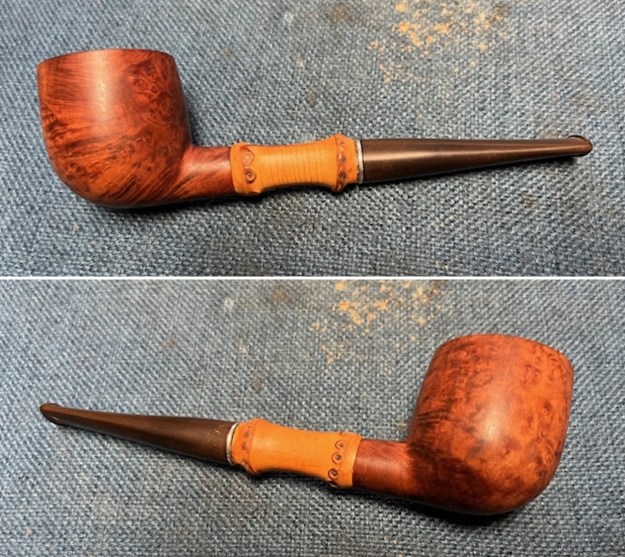
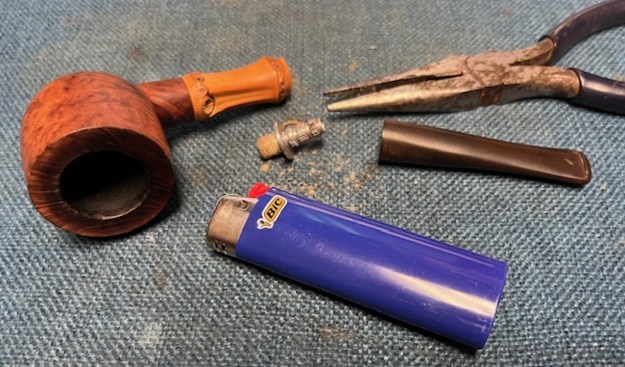
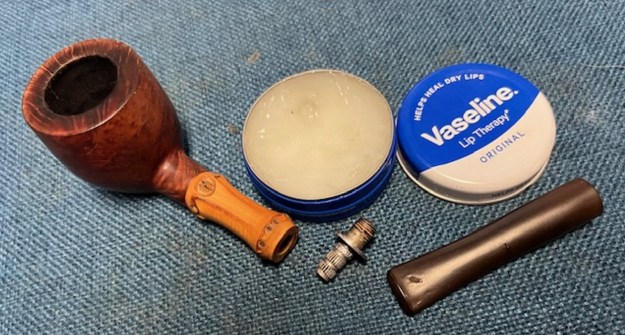
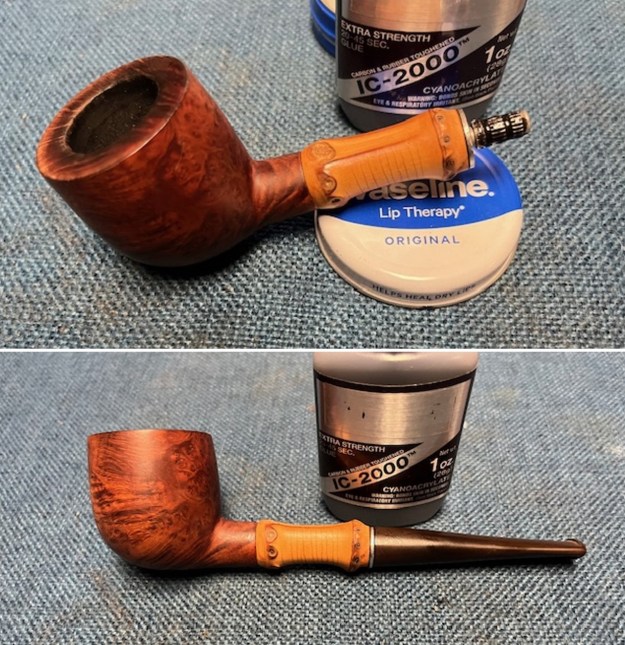
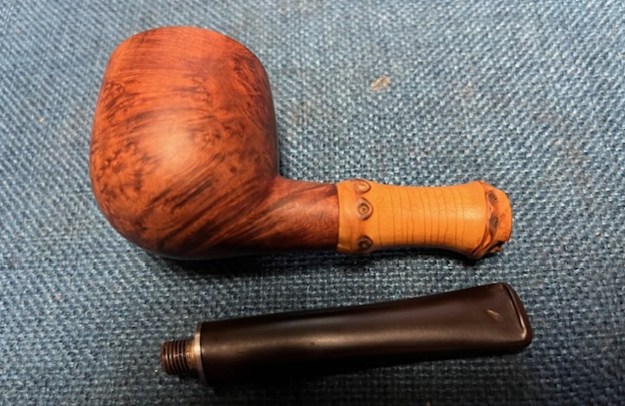
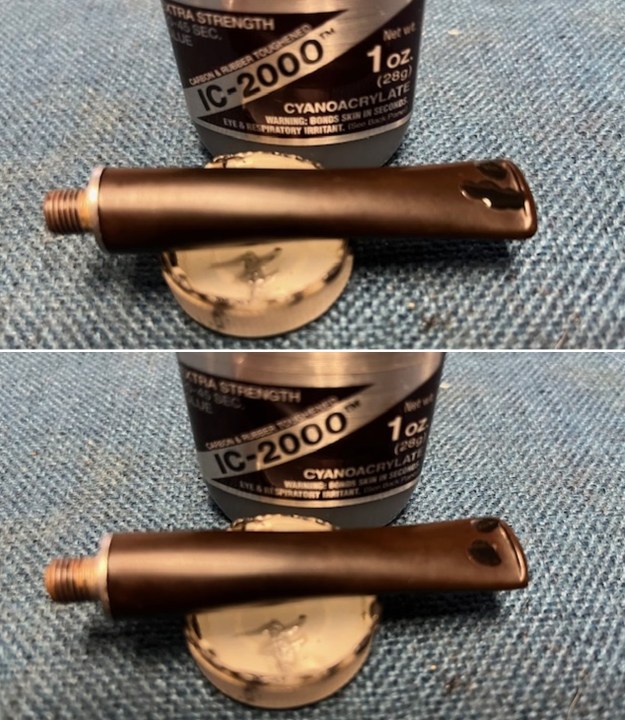
Jeff reamed the bowl with a PipNet pipe reamer and followed up with a Savinelli Fitsall pipe knife to remove the cake. He scrubbed out each mortise and the airway in the shanks and the stems with alcohol, cotton swabs, shank brushes and pipe cleaners. He scrubbed the exteriors of the bowl, rim, shank and stem with a tooth brush and Murphy’s Oil Soap to remove the oils and tars on the rim and the grime on the finish of the bowl of each pipe and bamboo shank. He rinsed them under running water. He dried them off with a soft cloth. He was able to remove the lava build up on the rim top. He scrubbed the stem with Soft Scrub and soaked it in Briarville’s Pipe Stem Deoxidizer. He rinsed it off with warm water and ran pipe cleaners through it once again. It looked much better.  I took photos of the pipe to show its condition before I started my work on it. It really has a great look and the patina on the bamboo shank crackles and looked aged. It is a pretty pipe. I took close up photos of the bowl and rim top as well as the stem on the pipe. You can see the condition of the rim top and bowl in the first photo of each pipe. Jeff was able to remove all of the lava but there was darkening on the rim top. The vulcanite stem had some chatter and several deep tooth marks on the top and underside ahead of the button.The stamping on the underside of the shank is faint in spots but is nonetheless readable. It is stamped as noted above. I removed the stem and took a photo of the pipe to give a sense of the whole. The taper stem is nice and the photo gives a sense of what the pipe looks like.I needed to free the threaded tenon from the bamboo shank so I could glue it in place in the stem. It had long ago come free of the stem and it would no longer hold the stem in place. I heated the tenon with a lighter flame until the goop in the shank loosened and then unscrewed it with needle nose pliers. It came out quite easily and the threads from the bamboo were covered with debris. All looked good in the shank and the tenon.I cleaned up the thread on the tenon with a brass bristle wire brush and greased it with some Vaseline to make the threads turn more easily into the shank. I screwed it in place. Once it was snug I painted the stem end with black, rubberized CA glue and push the stem in place and aligned it on the shank. I set it aside to allow the glue to cure before unscrewing the stem. Last evening after the glue had cured holding the tenon in the shank I unscrewed the stem from the shank. The bond was very well done and well cured. It was solid and the stem lined up well when it was screwed onto the shank.I filled in the deep tooth marks on both sides of the stem ahead of the button with black rubberized CA glue. I set it aside to cure. Once cured I used a file to recut the button edge and flatten out the repairs in the surface. I sanded them smooth with a folded piece of 220 grit sandpaper. They blended into the stem surface very well. I sanded the stem with 320-3500 grit sanding pads to further blend the repairs into the surface. I wiped the stem down between pads with an Obsidian Oil cloth to remove the sanding debris from the stem.I polished the stem with micromesh sanding pads – dry sanding with 1500-12000 grit sanding pads. I wiped it down after each sanding pad with Obsidian Oil. I polished it with Before & After Pipe Stem Polish – both Fine and Extra Fine. I set the stem aside and turned my attention to the bowl. I used a folded piece of 220 grit sandpaper to smooth out the damage to the rim top and the inner edge and to remove the darkening. It started to look very good at this point.I sanded the briar with 320-3500 grit 2×2 inch sanding pads to smooth out the scratching in the surface. I wiped the briar down after each pad with a damp cloth to remove the dust and debris. I polished the briar with micromesh sanding pads – dry sanding with 1500-12000 grit pads. I worked over the inner and outer edge of the rim as well. After each pad I wiped the bowl down with a damp cloth to remove the sanding debris. It really took on a shine by the last three sanding pads. I rubbed the bowl down with Before & After Restoration Balm. I worked it into the surface of the briar with my fingertips where it works to clean, restore and preserve the briar. I let it do its magic for 15 minutes then buffed it off with a cotton cloth. The pipe looks incredibly good at this point in the process. I am excited to finish this Kaywoodie Mandarin Pot with a Bamboo shank. I put the pipe back together and buffed it with Blue Diamond on the buffing wheel. I gave the bowl and the stem multiple coats of carnauba wax. I hand buffed the pipe with a clean buffing pad to raise the shine. It is fun to see what the polished bowl looks like with beautiful mixed grain all around it with just a few small flaws in the briar. The polished grain on the pipe looks great with the black vulcanite stem. This smooth Kaywoodie Mandarin Pot is great looking and the pipe feels great in my hand. It is light and well balanced. Have a look at it with the photos below. The dimensions are Length: 6 inches, Height: 1 ½ inches, Outside diameter of the bowl: 1 ½ inches, Chamber diameter: 7/8 of an inch. The weight of the pipe is 39 grams/1.38 ounces. It turned out to be a beautiful pipe. I will soon be putting it on the rebornpipes store in the US/American Pipe Makers Section. If you are interested in adding it to your collection let me know. Remember we are the next in a long line of pipe men and women who will carry on the trust of our pipes until we pass them on to the next trustee. Thanks for your time reading this blog.

Restemming and Restoring a Neidlinger Imported Briar Rhodesian Bowl


by Steve Laug

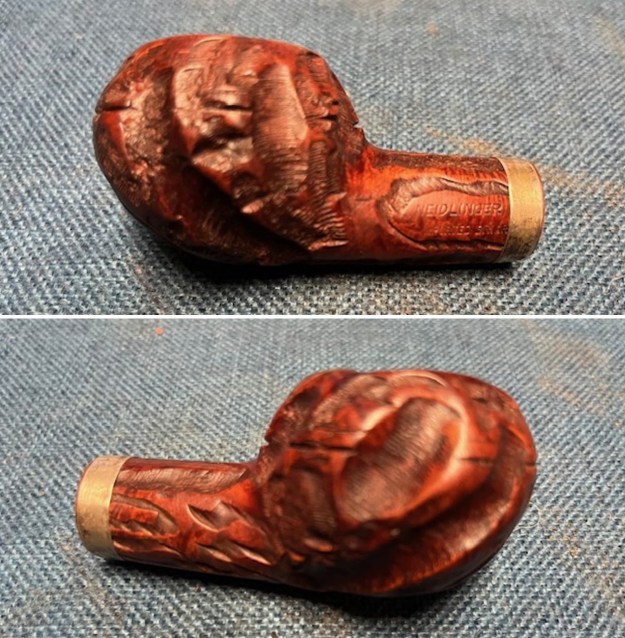
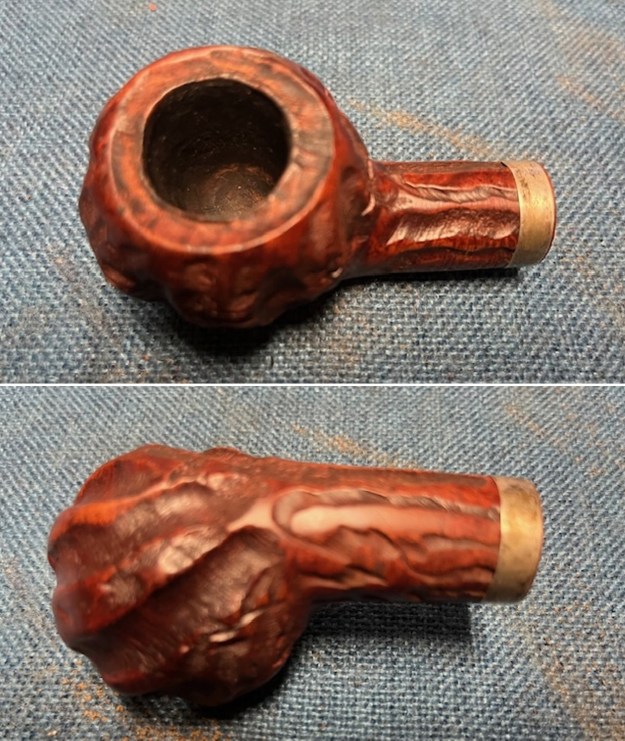
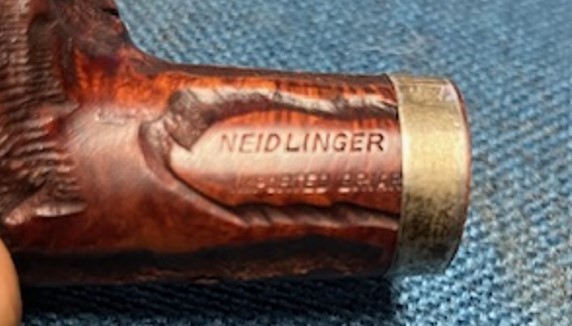
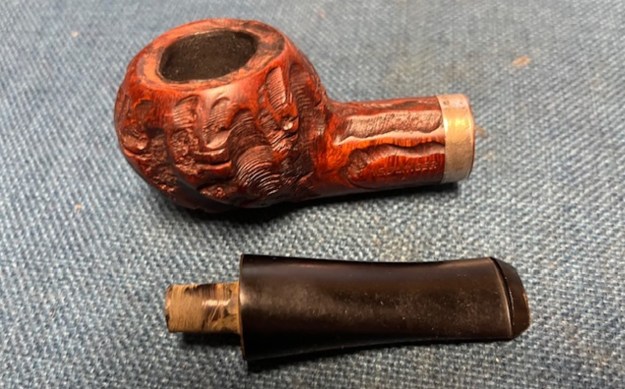
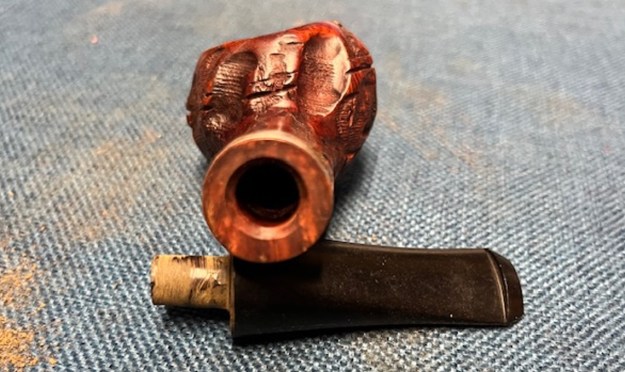
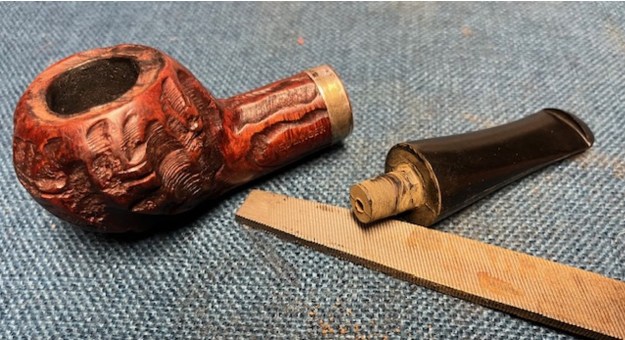
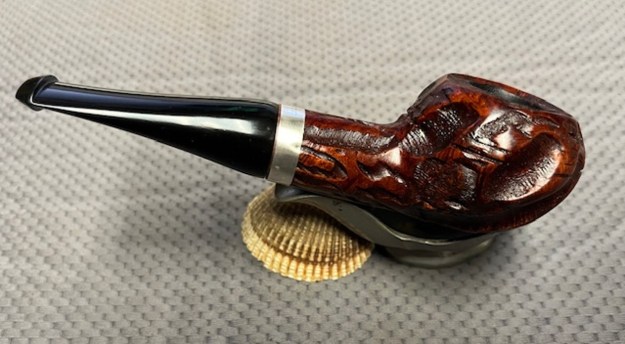
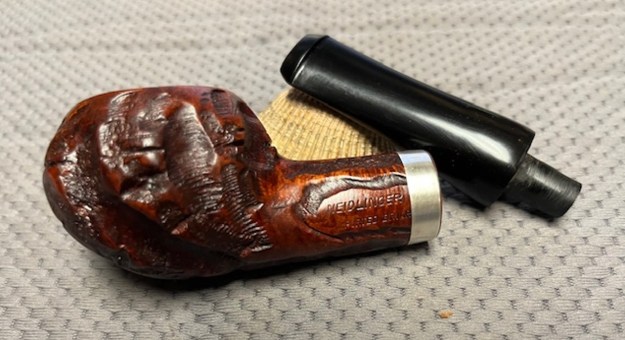
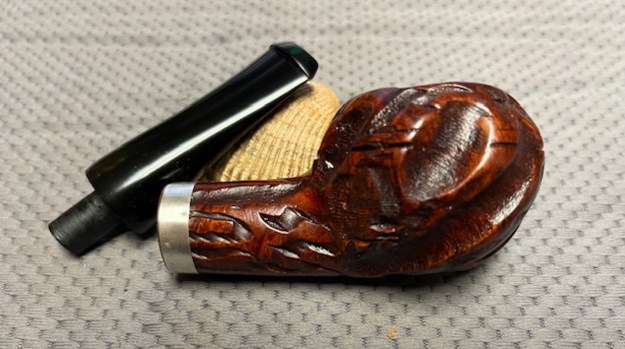
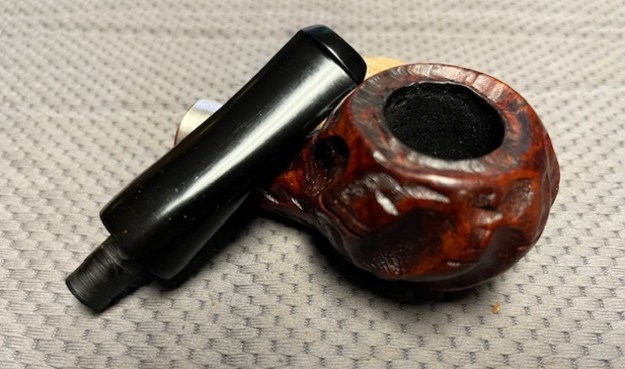
Once in a while I break the rhythm of restoration of pipes that Jeff has sent to me work on a bowl that I have in a very big box of bowl without stems. There are probably about 100 bowls that I have been chipping away at for a long time now. Yesterday I had to urge to restem a few of the bowls. The first of them was this interesting rusticated Rhodesian bowl that looked a lot like some of the rustication on Custombilt pipes though with a bit of variation that separates it from them. It bears an oxidized Sterling Silver band on the shank that will need some attention. The stamping on the left side of the shank reads NEIDLINGER [over] Imported Briar. Somewhere a long the way Jeff had reamed and cleaned the bowl and it was waiting a new stem. I examined the silver and it was stamped across the top of the band and read STERLING. I took a photo of the stamping on the shank side. It was clear and readable as noted above.I went through my can of stems and found one that that was close to the diameter I needed and the tenon would need a slight adjustment for it to fit in the shank. I used a file to reduce the diameter of the tenon. I cleaned up the tenon diameter with my Dremel and a sanding drum. It did not take much for the stem to fit well in the shank. I put it in place and took photos. You can see in the photos that the stem diameter will need to be adjusted as the shank is not round and the stem is. I worked on the adjustment of the outside diameter of the stem with my Dremel and a sanding drum. I took off the majority of the excess vulcanite that way. The rest would need to be done with files and sanding pads. I sanded the stem with 220 grit sandpaper to smooth out the marks from the Dremel. I followed that by sanding it with 320-3500 grit sanding pads to further blend down the sanding areas. I wiped the stem down between pads with an Obsidian Oil cloth to remove the sanding debris from the stem.I polished the stem with micromesh sanding pads – dry sanding with 1500-12000 grit sanding pads. I wiped it down after each sanding pad with Obsidian Oil. I polished it with Before & After Pipe Stem Polish – both Fine and Extra Fine. I set the stem down and turned my attention to the clean bowl. I used a brass bristle wire brush to work over the rim top and remove the debris in the carving. It looked cleaner.I polished the silver band with 1500-3000 grit micromesh sanding pads and then finished with a jeweller’s cloth to raise the shine and protect it from further oxidation. I worked some Before & After Restoration Balm into the surface of the briar with my finger tips and a shoe brush to get into the carving on the bowl and shank. The product works to clean, enliven and protect the briar. I let the balm sit for 15 minutes and then buffed with a cotton cloth to raise the shine. The photos show the bowl at this point in the restoration process. This Rusticated Neidlinger Imported Briar Rhodesian is a great looking pipe now that it has been restored and restemmed. The rich finish gives the shape an elegant look. The flow of the bowl and stem are well done make for a great hand feel. I put the stem back on the bowl and carefully buffed the pipe with Blue Diamond on the buffing wheel using a light touch on the briar. I gave the bowl and the stem multiple coats of carnauba wax on the buffing wheel. I buffed the entire pipe with a clean buffing pad. I hand buffed the pipe with a microfiber cloth to deepen the shine. The finished Neidlinger Rhodesian fits nicely in the hand and feels great. Give the finished pipe a look in the photos below. The dimensions of the pipe are Length: 6 inches, Height: 1 ¾ inches, Outside diameter of the bowl: 1 ½ inches, Chamber diameter: 7/8 of an inch. The weight of the pipe is 64 grams/2.26 ounces. It is a great looking and light weight pipe. I will be putting it on the rebornpipes store shortly. If you are interested in adding this pipe to your collection send me a message or an email. Thanks for reading this blog and my reflections on the pipe while I worked on it.

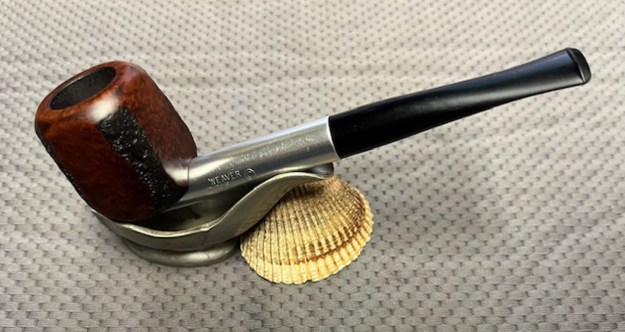
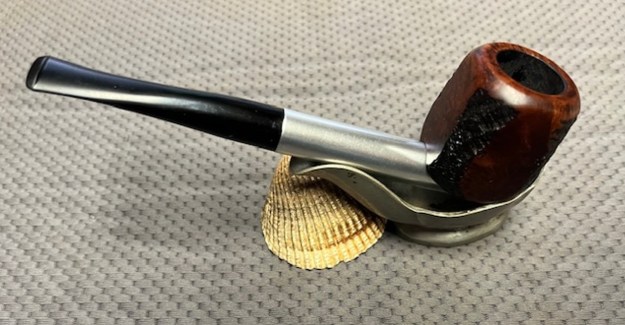
Restoring a Unique Weaver Pipes © El Paso Texas USA Pat Pend Billiard


by Steve Laug

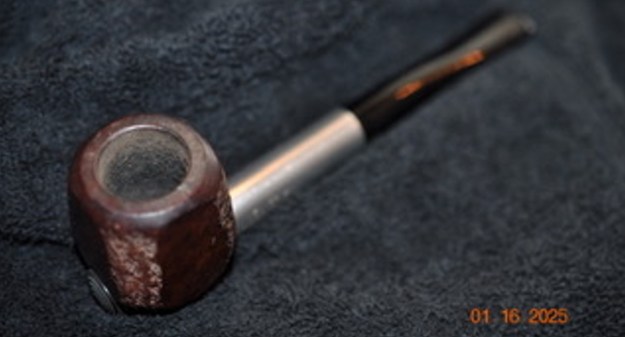
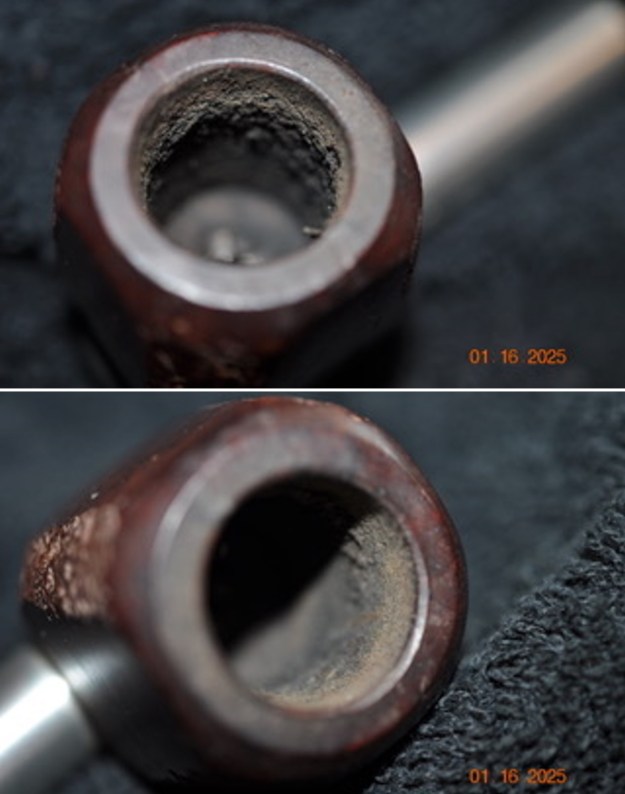
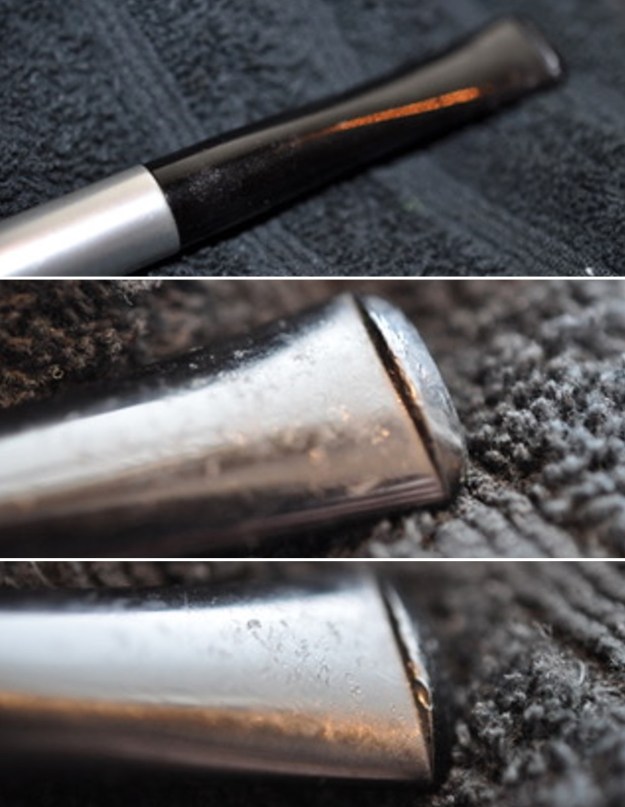
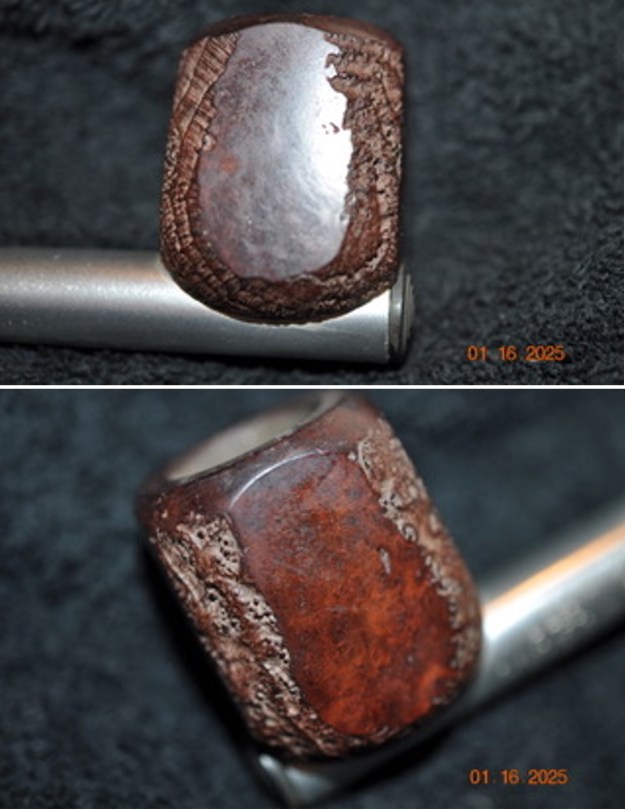
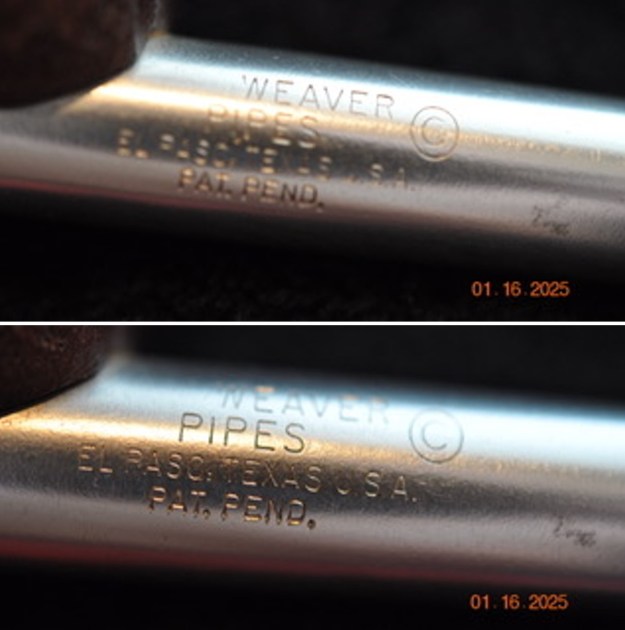
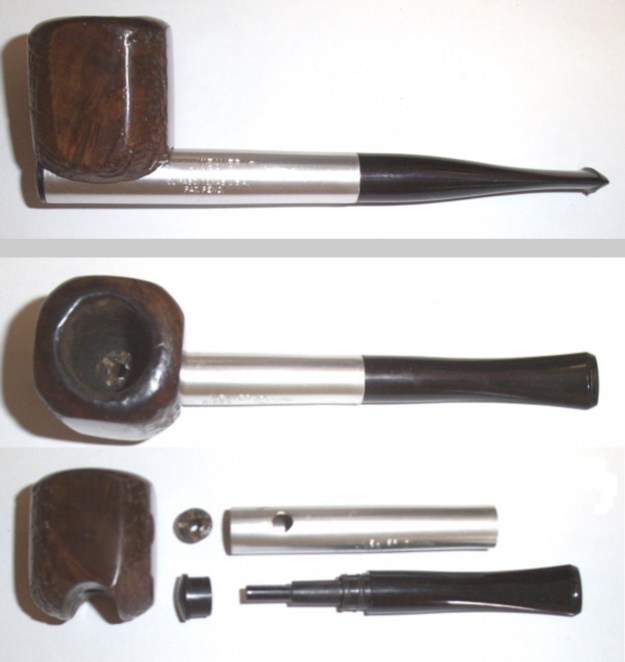
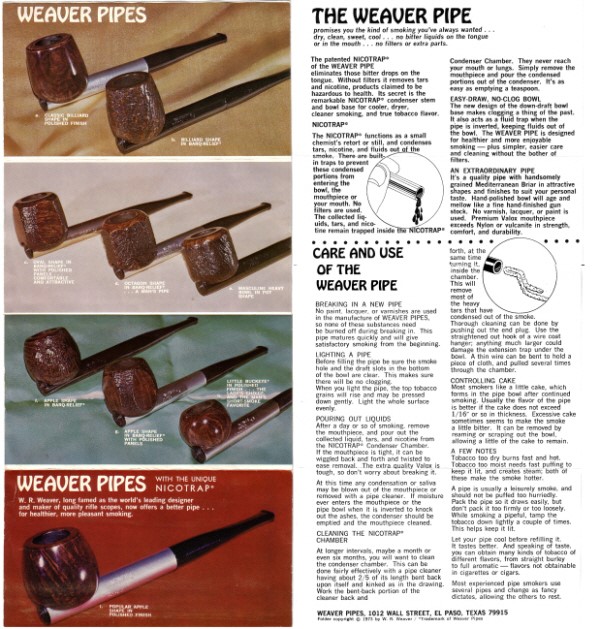
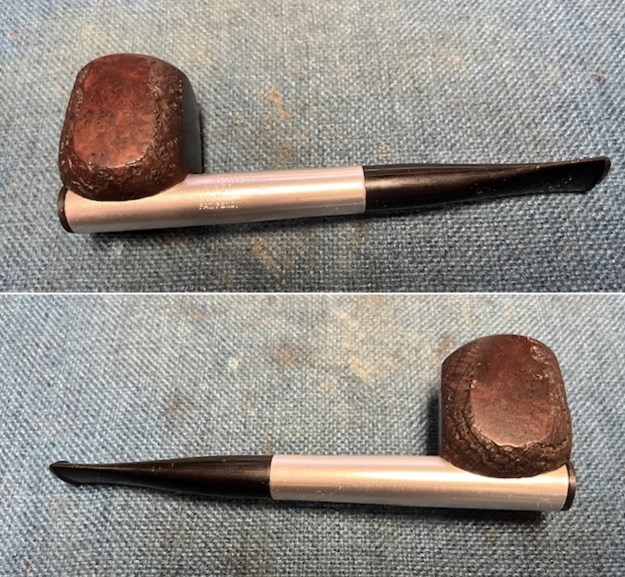
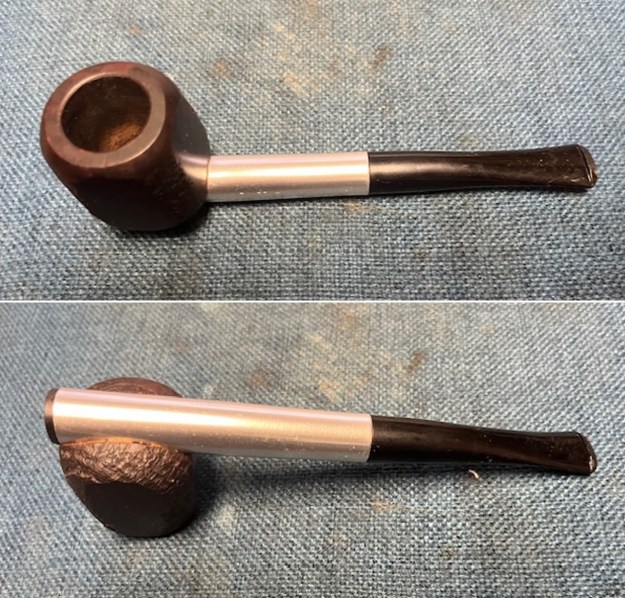
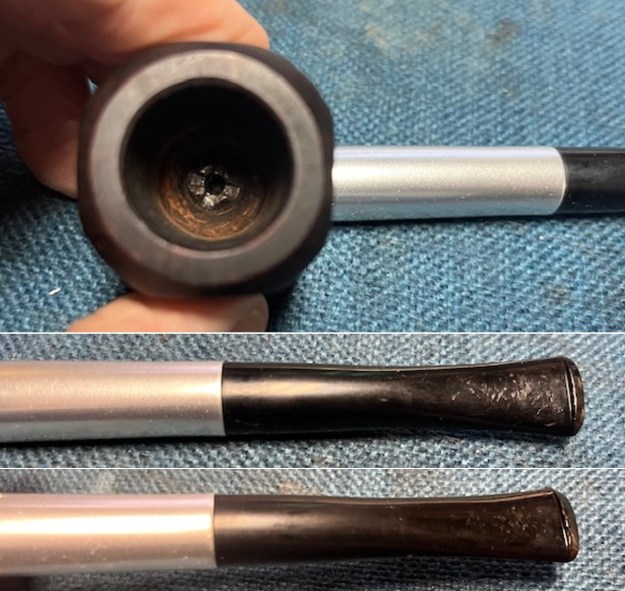
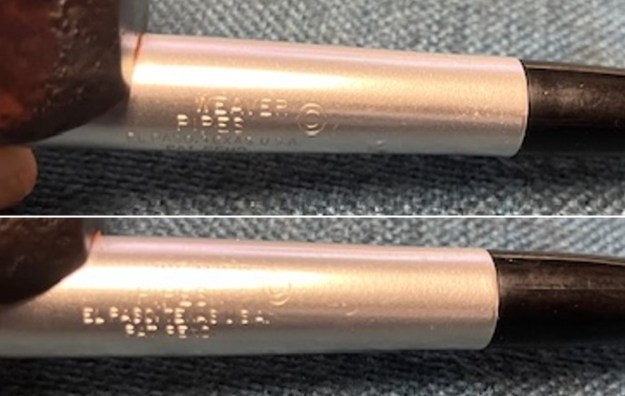
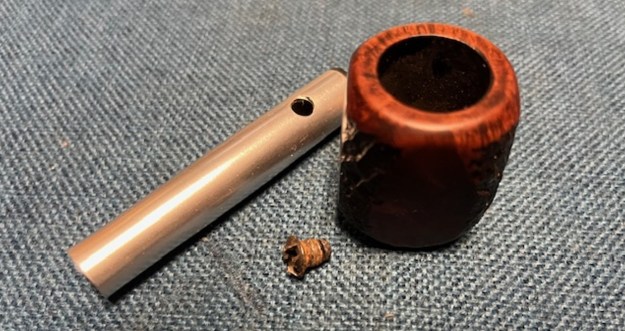
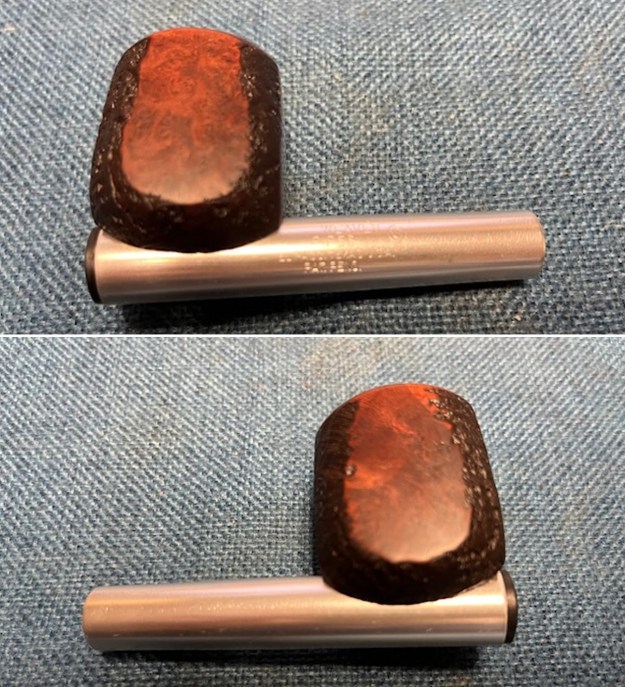
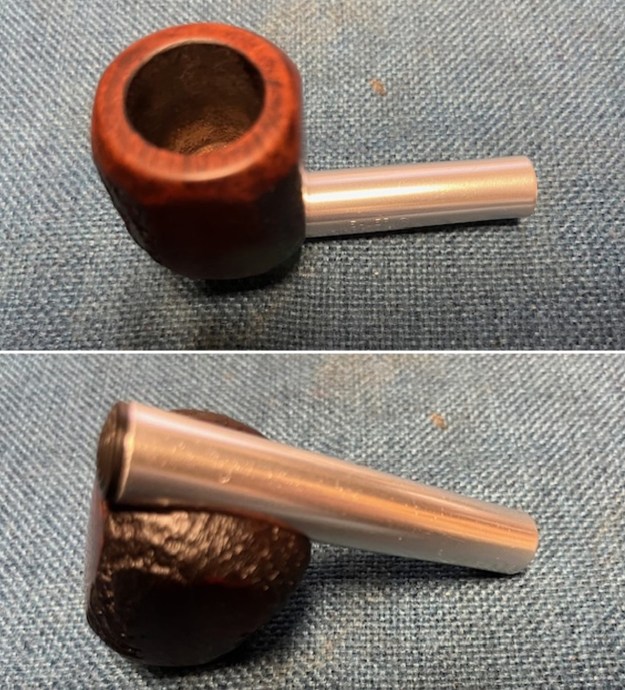
The next pipe is on the table is an interesting looking metal pipe with a briar bowl, metal shank tube and a rubber taper stem. We purchased it on 03/05/2021 from Antique Store in Logan, Utah, USA. The pipe is well shaped and has nice grain around the panelled bowl. Each corner on the bowl is rusticated from the top edged around the bottom of the bowl. It has a flat rim top and a heel on the bowl that slides over the metal tube. There is a screw that holds the bowl to the shank like those in Kirstens. The end of the metal tube has an end cap that is pressure fit in place. The pipe is stamped on the left side of the shank and Weaver [over] Pipes © [over] El Paso Texas USA [over] Pat. Pend. There was grime and dust ground into the smooth finish of the bowl and shank. The bowl was heavily caked with lava on the rim top and edges. The inside edge looks like it may actually be undamaged under the lava coat. The rounded outer edge looks very good. The stem was calcified and had tooth chatter and marks on the top and underside near the button and on the button edge. There was no logo or stamping on the stem at all. The pipe showed a lot of promise but it was very dirty. Jeff took some photos of the pipe before he started his cleanup work. He took photos of the rim top and bowl to give a clear picture of the thickness of the cake and tobacco debris as well as the inner edge of the rim. He also took photos of the top and underside of the stem. The photos show the overall condition of the stem. Jeff took photos of the sides of the bowl to give a picture of what the briar looked like. It truly has some nice grain around the bowl and shank.He also took photos to capture the stamping in the metal of the shank. It is clear and readable as noted above.The only information I could find was on the smokingmetal UK website (http://www.smokingmetal.co.uk/pipe.php?page=176). I have included that information below as well as the photos that were there. The flyer I have included also is readable and interesting.

WEAVER, from Weaver Pipes, 1012 Wall Street, El Paso, Texas 79915 USA

Their brochure was copyrighted in 1973 by W R Weaver (originally makers of rifle scopes) so one presumes this was the year of introduction of the pipe

A simple alloy tube, push fit bit and removable plastic end cap. According to the packaging it also came with a cleaning brush which could be used to push out the end cap. The makers call the bit material Valox.

9 bowls available, Classic Billiard (smooth and Barq-relief) Oval shape in Barq-relief with 4 polished panels, Octagon Shape in Barq-relief, Masculine Heavy in Pot shape Barq-relief, Apple shape in Smooth or Barq-relief, Apple in Barq-relief with 4 polished panels and a Littel Buckeye in polished finish

Stamping on left side of pipe Weaver Pipes El Paso Taxas USA pat pend.

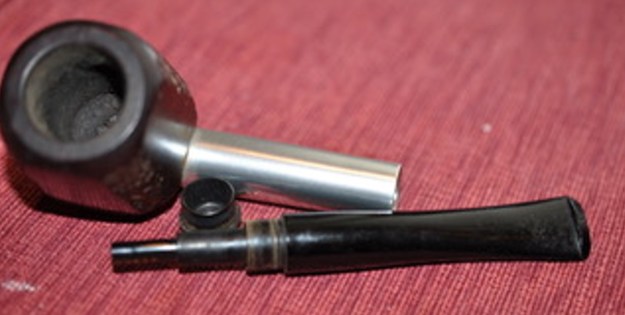
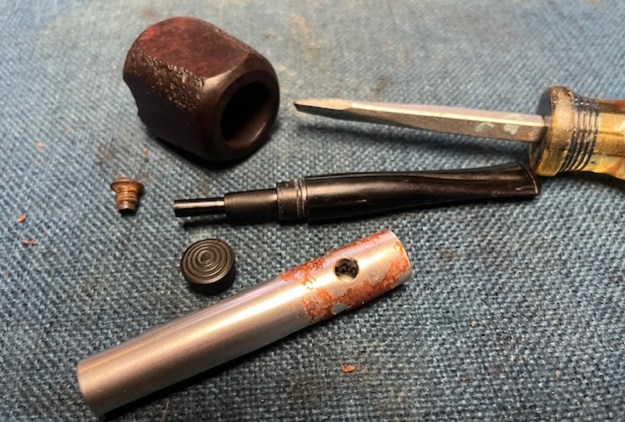
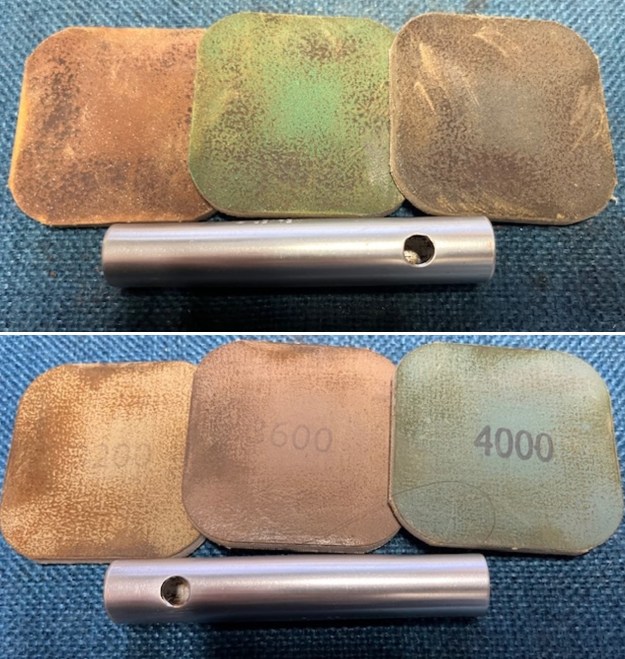
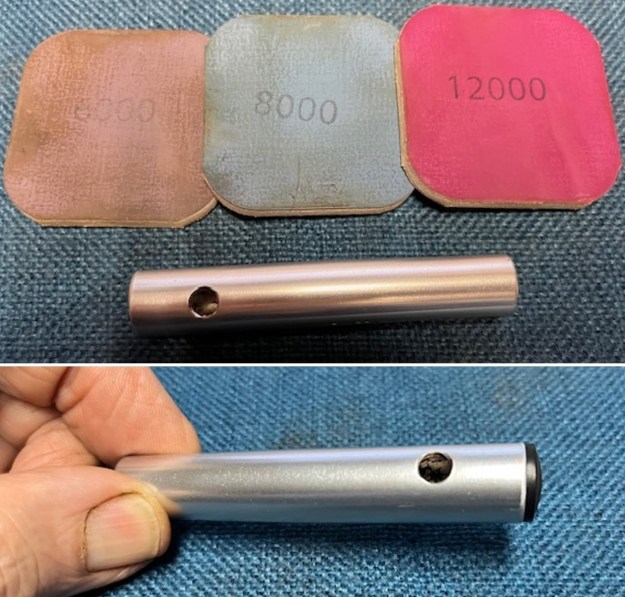
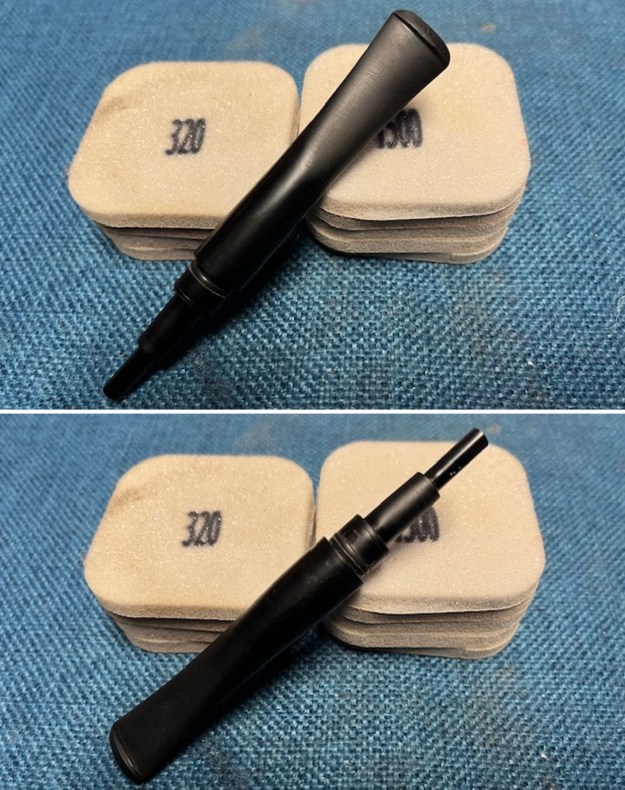
Overall length 5 5/8 inch (143 m/m) Jeff had cleaned up the pipe with his usual penchant for thoroughness. He reamed the pipe with a PipNet pipe reamer and removed the rest of it with a Savinelli Fitsall Pipe Knife. He scrubbed the bowl and shank with undiluted Murphy’s Oil Soap with a tooth brush. He rinsed it under running warm water to remove the soap and grime. He cleaned out the inside of the shank and the airway in the stem with alcohol, cotton swabs, shank brushes and pipe cleaners. He soaked the stem in a Briarville’s Pipe Stem Deoxidizer bath and rinsed it off with warm water. I took photos of the pipe before I started my part of the restoration work. It looked very good. The rim top cleaned up really well. The rim top, inner and outer edge of the bowl are in excellent condition. The stem surface looked very good with a few tooth marks and chatter on both sides near the button. There was also some remaining oxidation. The stamping on the shank side is very readable. It is stamped as noted above. I removed the stem and took a photo of the pipe to give a sense of the whole. The taper stem is nice and the photo gives a sense of what the pipe looks like.I used a screwdriver to unscrew the screw holding the briar bowl to the metal tube. I used a large slotted screwdriver to break it free. Once I had the screw out I was able to remove the bowl from the metal shank. You can see the buildup of “crud” on the tube where the bowl had been sitting. It was hard and needed to be scraped off. I took a photo of the parts to show what I was dealing with at this point. I scraped the red build up on the metal shank with sharp blade. I polished the metal with micromesh sanding pads – dry sanding with 1500-12000 grit sanding pads. I wiped the shank down with a damp cloth after each pad. I gave it a final buff with a soft cloth. It really has a nice shine at this point. I fit the end plug in the shank end and pressed it in place. I set the shank aside and turned my attention to the bowl. I sanded the smooth rim and sides of the panel bowl with 320-3500 grit 2 x 2 inch sanding pads. I wiped the bowl down after each sanding pad with a damp cloth to remove the sanding debris. It began to take on a rich shine. I polished the briar with micromesh sanding pads – dry sanding with 1500-12000 grit pads. I wiped the bowl down after each pad with a damp cloth to remove the sanding dust. By the end of the process the pipe bowl looked very good. I worked some Before & After Restoration Balm into the surface of the briar with a shoe brush to get into the rustication on the four corners of the panel bowl and the heel and my fingertips on the smooth. The product works to clean, enliven and protect the briar. I let the balm sit for 15 minutes and then buffed with a cotton cloth to raise the shine. The photos show the bowl at this point in the restoration process. I pulled together the polished shank and cleaned screw as well as the briar bowl. It looked significantly better and was ready to put those parts together. I put the parts together and tightened the screw in the bowl and into the threads on the tubular metal shank. It really is an interesting looking pipe. I set the bowl aside and turned my attention to the vulcanite stem. I sanded the stem with 320-3500 grit sanding pads to remove the tooth marks and chatter against the button edge. I wiped the stem down between pads with an Obsidian Oil cloth to remove the sanding debris from the stem.I polished the stem with micromesh sanding pads – dry sanding with 1500-12000 grit sanding pads. I wiped it down after each sanding pad with Obsidian Oil. I polished it with Before & After Pipe Stem Polish – both Fine and Extra Fine. This smooth, nicely grained Briar Bowl Metal Base Weaver © El Paso Texas USA Pat Pend Billiard is a great looking pipe now that it has been restored. The rich finish and rusticated corners give the shape an elegant look. The flow of the bowl and stem are well done make for a great hand feel. I put the stem back on the bowl and carefully buffed the pipe with Blue Diamond on the buffing wheel using a light touch on the metal and normal touch on the briar. I gave the bowl and the stem multiple coats of carnauba wax on the buffing wheel. I buffed the entire pipe with a clean buffing pad. I hand buffed the pipe with a microfiber cloth to deepen the shine. The finished Weaver Metal Pipe with a Briar Bowl fits nicely in the hand and feels great. Give the finished pipe a look in the photos below. The dimensions of the pipe are Length: 5 ¾ inches, Height: 1 ¾ inches, Outside diameter of the bowl: 1 ¼ inches, Chamber diameter: ¾ of an inch. The weight of the pipe is 39 grams/1.41 ounces. It is a great looking and light weight pipe. I will be putting it on the rebornpipes store in the Pipes by Various Makers Section shortly. If you are interested in adding this pipe to your collection send me a message or an email. Thanks for reading this blog and my reflections on the pipe while I worked on it.
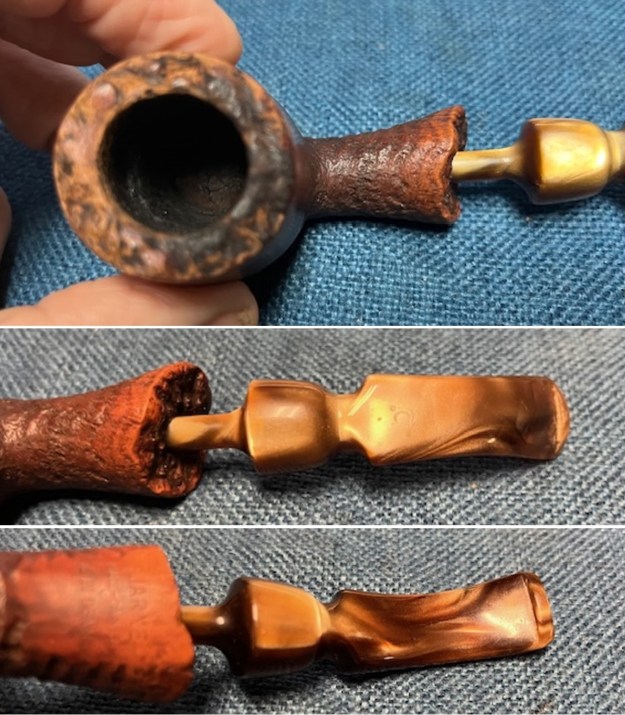
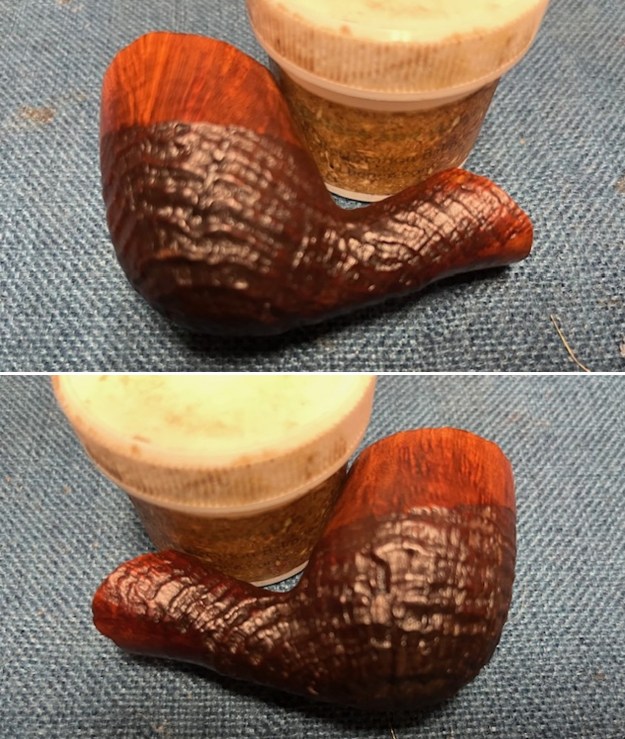
Restoring a gorgeous Amphora X-tra 821 Bent Scoop


by Steve Laug

The next pipe on the table is one we picked up on 04/12/2024 from a pipe seller in St. Cloud, Florida, USA. It is an interesting looking pipe with the rim top scooped and some beautiful grain around the bowl and shank. It is stamped on the left side and reads Amphora [over] X-tra [followed] by the shape number 821. On the right side it is stamped Genuine Briar. The finish is dirty and the varnish coat is spotty and peeling on the front and back of the bowl. There are a few small fills in the surface but nothing too huge. The rim top and edges look good with some darkening on the top. There is a light cake in the bowl that should be an easy clean up. The stem is a vulcanite saddle and it is in good condition with light tooth chatter on both sides. It is a neat looking little pipe that will soon be looking for a new home. I took photos of the rim top and bowl to give a clear picture of the thickness of the cake and tobacco debris as well as the inner edge of the rim. I also took photos of the top and underside of the stem. The photos show the overall condition of the stem. The stamping on the sides of the shank is clear and readable and read as noted above. I took several photos to capture the stamping on the sides of the shank. I took the stem off and took a photo of the pipe to show the beauty of the piece. I turned to Pipephil’s site to see what I could learn about the pipe and its maker. The photos did not show the same pipe but the information was helpful (http://www.pipephil.eu/logos/en/logo-a5.html). I did a screen capture of the section and the side bar notes are shown below the photo.A brand of Elbert Gubbels & Sons – Royal Dutch Pipe Factory who has gone bankrupt on March 2012. See also: Big-Ben, Humbry, IRC, Roermond, Royal Dutch, Thompson and Porsche Design

From there I turned to Pipedia (https://pipedia.org/wiki/Amphora) to see what I could add to the information. I quote below:

Amphora pipes are made in Holland by the Jos. Gubbels organization. The pipes are produced in relatively small numbers to a high standard and not commonly found. They were used primarily in promotions and incentives for Amphora tobacco.

The Royal Dutch Pipe Factory Elbert Gubbels & Sons B.V. is the only manufacturer of briarroot tobacco pipes in the Benelux countries where pipes of high quality are made under the brands Big Ben, Hilson, Royal Dutch and Amphora. They also supply numerous smokers’ accessories of high quality.

There was nothing specific about this shape but it gives some background. The pipes were made by the Royal Dutch Pipe Factory – Gubbles and Sons in Holland. From what I can find the shape is a bit of a rarer one with few made. Now it was time to work on the pipe.

I reamed the light cake with my Pipnet reamer and the first cutting head. I took it back to bare walls. I cleaned up the remnants with a Savinelli Fitsall pipe knife and finished by sanding the walls with 220 grit sandpaper wrapped around a small dowel. The walls looked very good. I cleaned out the airway in the shank, the mortise and the airway in the stem with pipe cleaners, cotton swabs and alcohol. It came out smelling cleaner and the passages were clean.To remove the spotty varnish coat, I wiped the bowl down with acetone on a cotton pad. I always like a pipe that has the natural shine of wax versus the shiny varnish coat. In this case the spotty, peeling varnish gave me the incentive to remove it! I scrubbed the externals of the bowl and shank with undiluted Murphy’s Oil Soap and a tooth brush to remove the residual grime in the grain. I rinsed it with warm running water. The grain really stood out and the bowl was clean and smooth to touch. The pipe is was in such good shape that I started my work on it by sanding the bowl with 320-3500 grit 2 x 2 inch sanding pads. I wiped the bowl down after each sanding pad with a damp cloth to remove the sanding debris. It began to take on a rich shine. I polished the briar with micromesh sanding pads – dry sanding with 1500-12000 grit pads. I wiped the bowl down after each pad with a damp cloth to remove the sanding dust. By the end of the process the pipe bowl looked very good. I worked some Before & After Restoration Balm into the surface of the briar with my fingertips on the smooth. The product works to clean, enliven and protect the briar. I let the balm sit for 15 minutes and then buffed with a cotton cloth to raise the shine. The photos show the bowl at this point in the restoration process. I set the bowl aside and turned my attention to the vulcanite stem. It was in great condition other than some light tooth chatter. I polished the stem with micromesh sanding pads – dry sanding with 1500-12000 grit sanding pads. I wiped it down after each sanding pad with Obsidian Oil. I polished it with Before & After Pipe Stem Polish – both Fine and Extra Fine. This smooth, nicely grained Amphora X-tra 821 Bent Scoop is a great looking pipe now that it has been restored. The rich finish gives the shape an elegant look. The flow of the bowl and stem are well done make for a great hand feel. I put the stem back on the bowl and carefully buffed the pipe with Blue Diamond on the buffing wheel using a light touch on the briar. I gave the bowl and the stem multiple coats of carnauba wax on the buffing wheel. I buffed the entire pipe with a clean buffing pad. I hand buffed the pipe with a microfiber cloth to deepen the shine. The finished Amphora X-tra 821 fits nicely in the hand and feels great. Give the finished pipe a look in the photos below. The dimensions of the pipe are Length: 5 ½ inches, Height: 2 inches, Outside diameter of the bowl: 1 ¼ inches, Chamber diameter: ¾ of an inch. The weight of the pipe is 38 grams/1.31 ounces. It is a great looking and light weight pipe. I will be putting it on the rebornpipes store in the Pipes from Various Makers Section shortly. If you are interested in adding this pipe to your collection send me a message or an email. Thanks for reading this blog and my reflections on the pipe while I worked on it. There are many more to come!