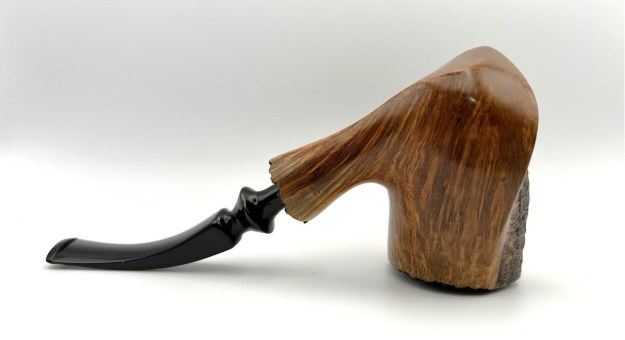
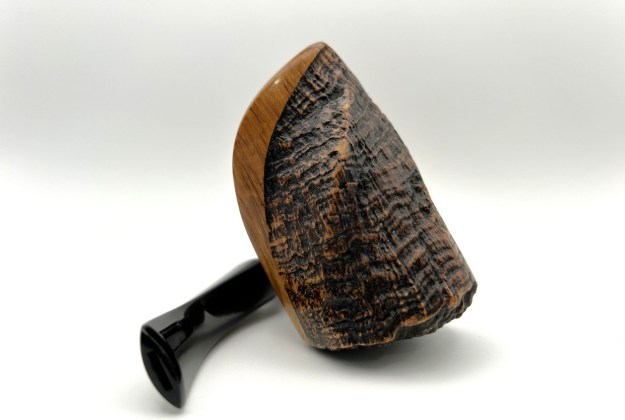
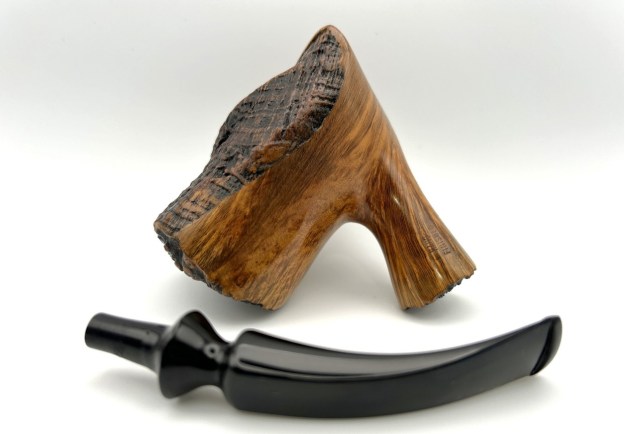
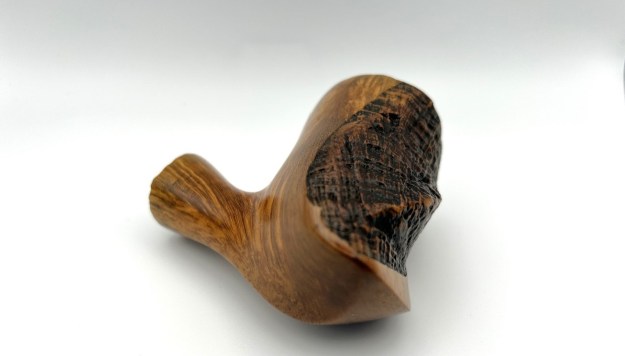
Monthly Archives: October 2025

Restemming an Old Clay Egg and Claw Pipe with a Nickel Ferrule


by Steve Laug

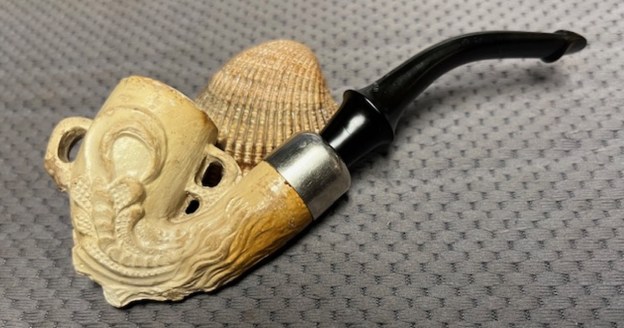
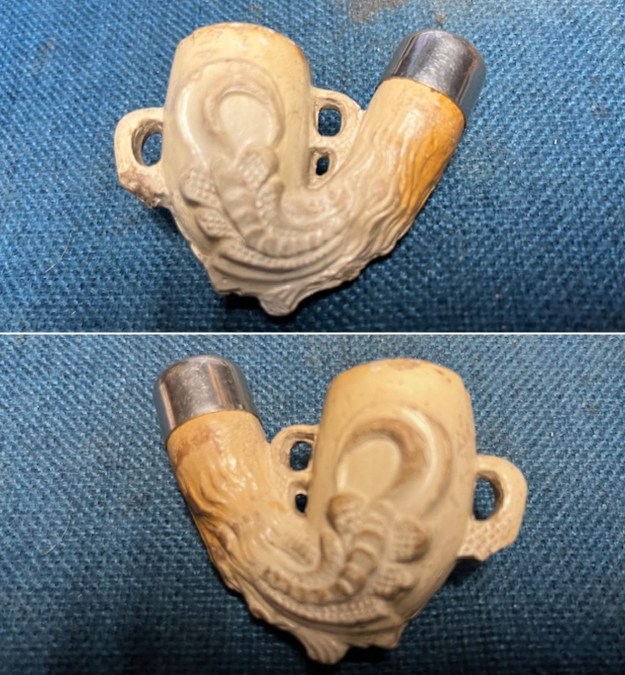
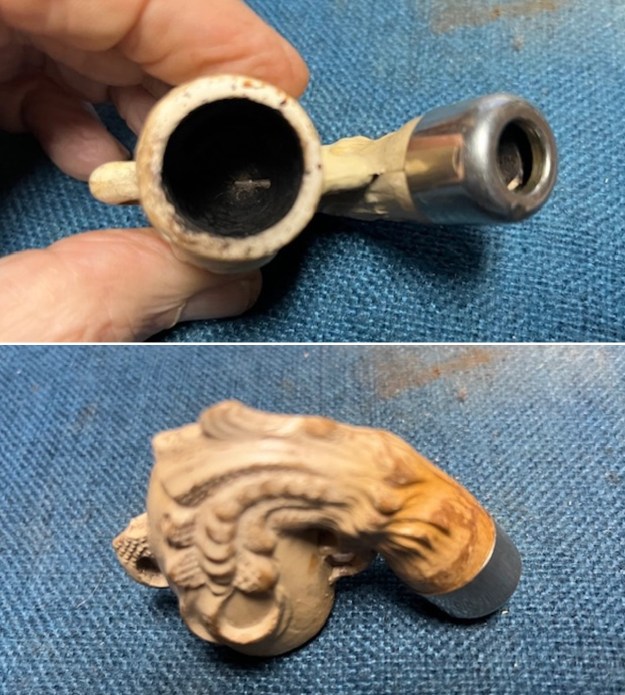
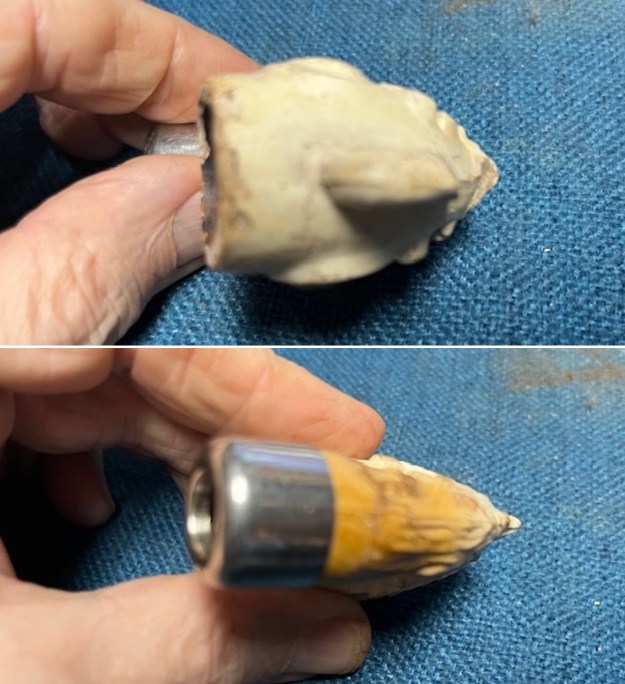
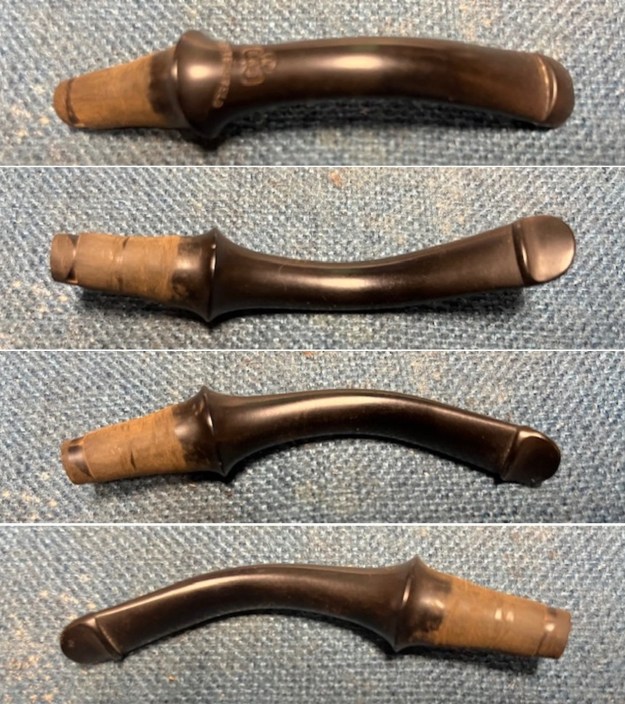
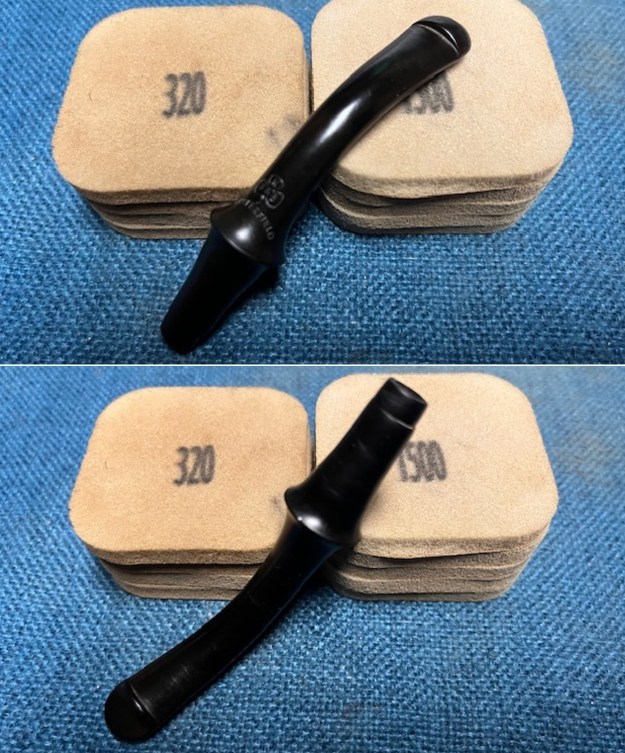
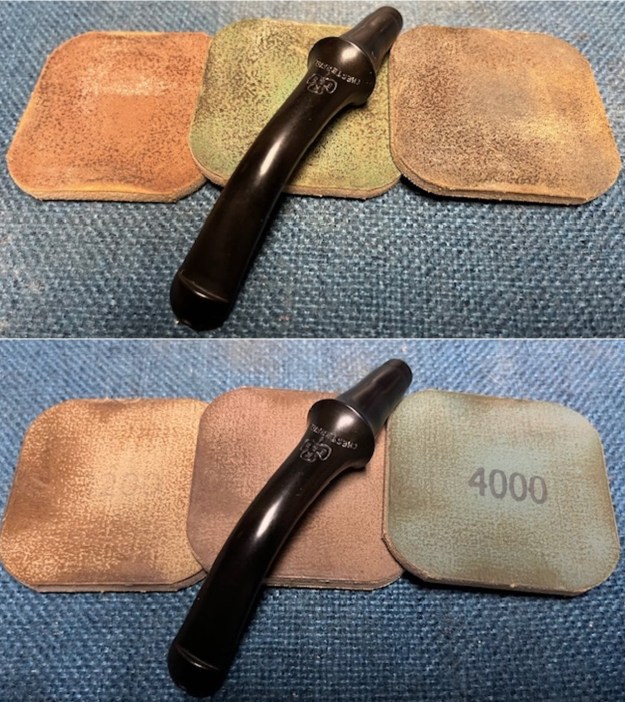
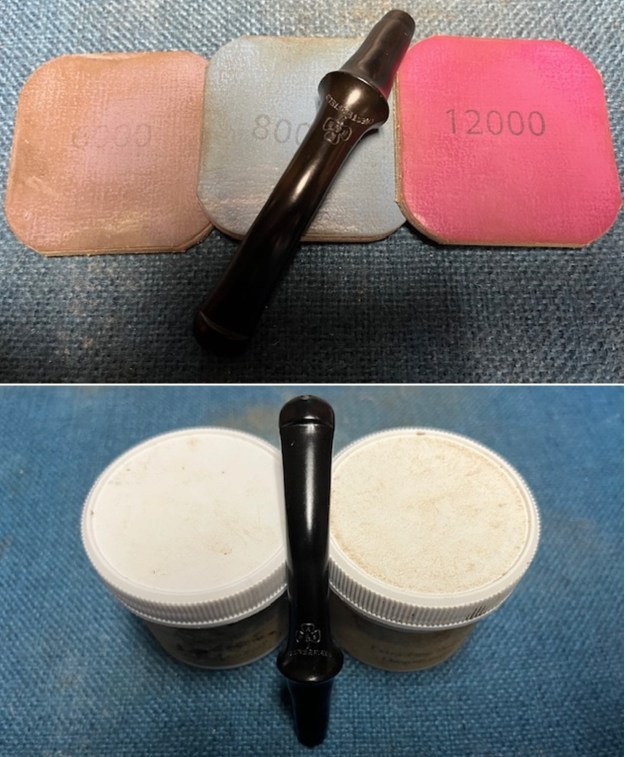
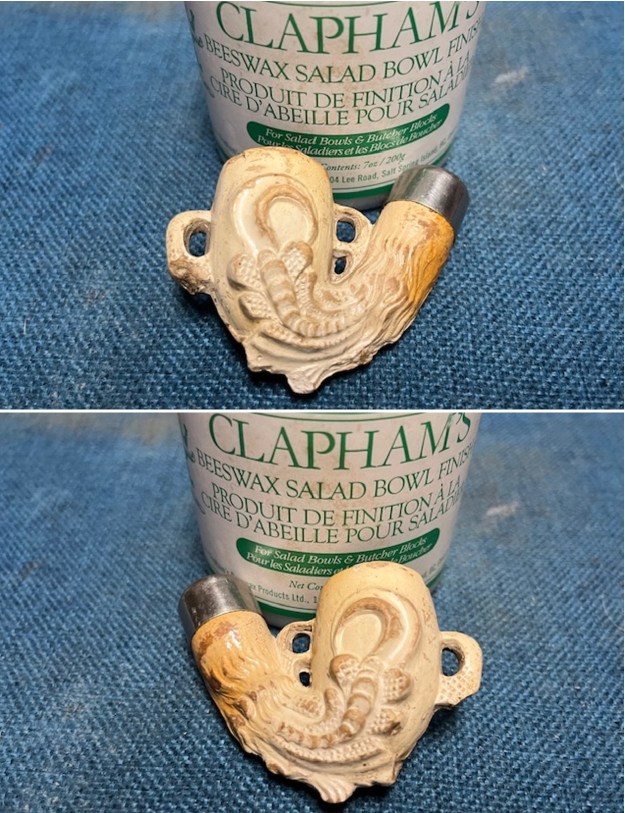
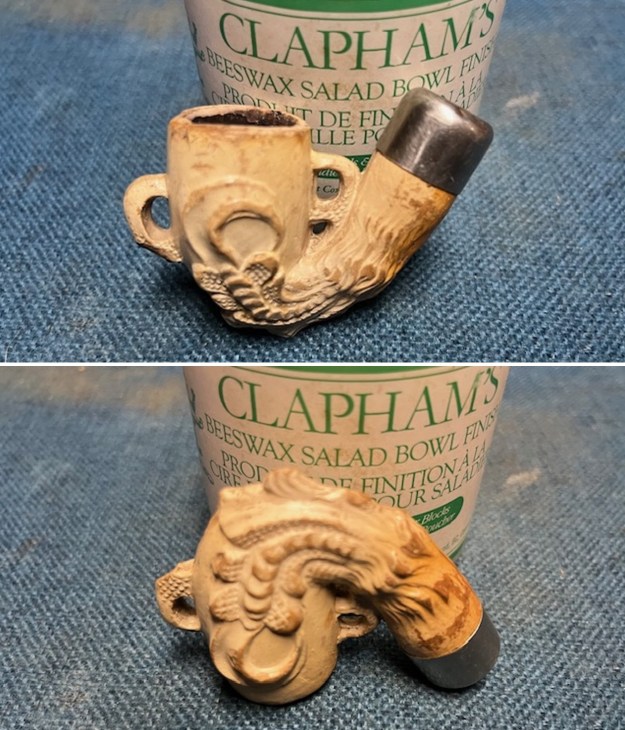
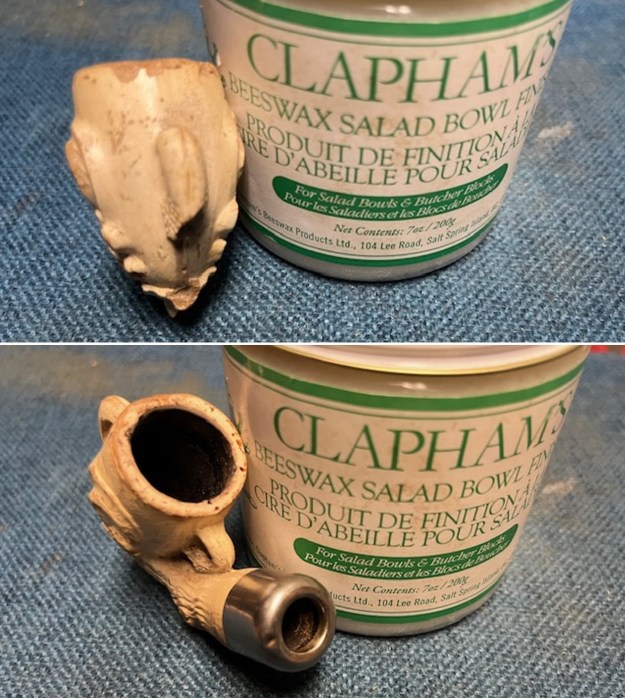
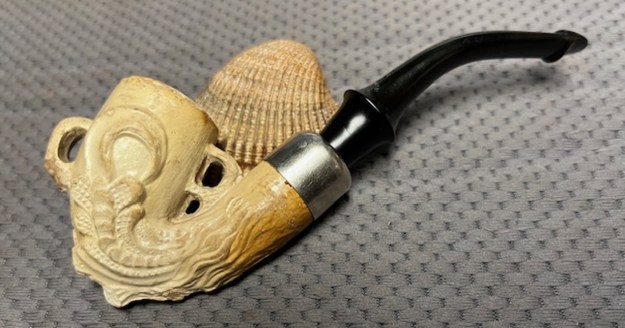
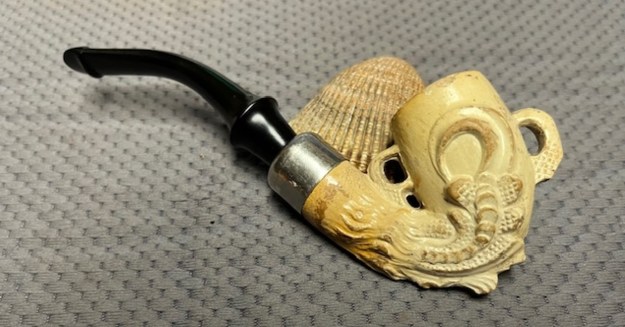
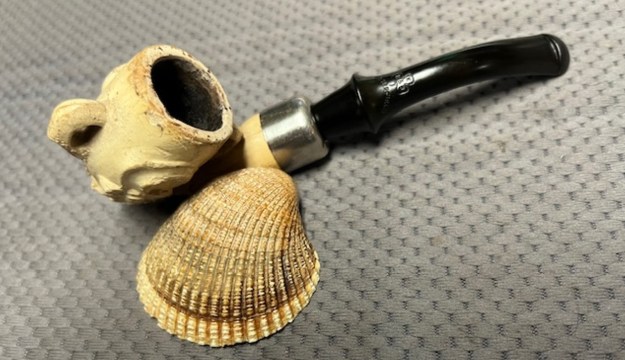
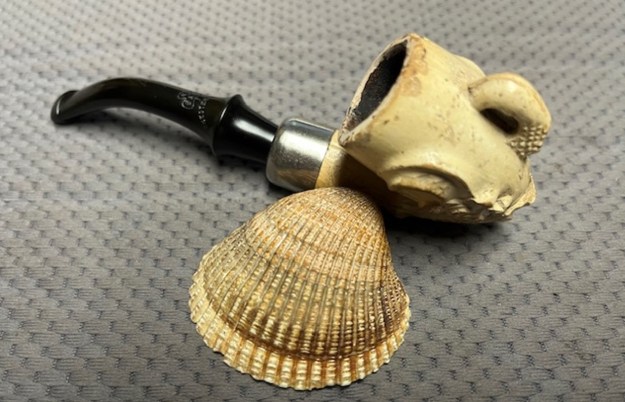
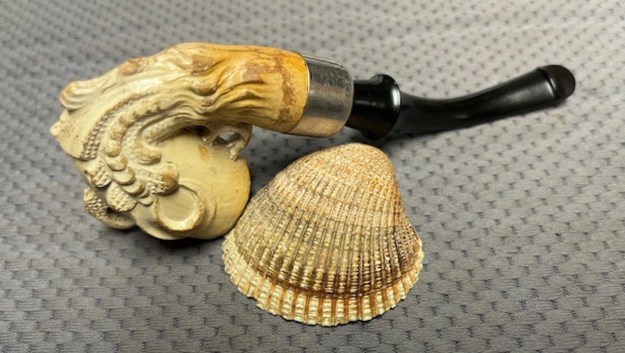
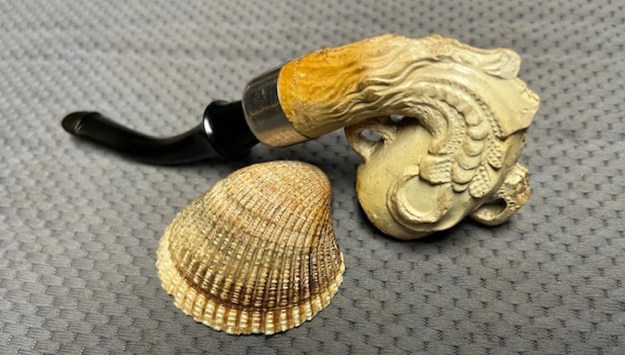
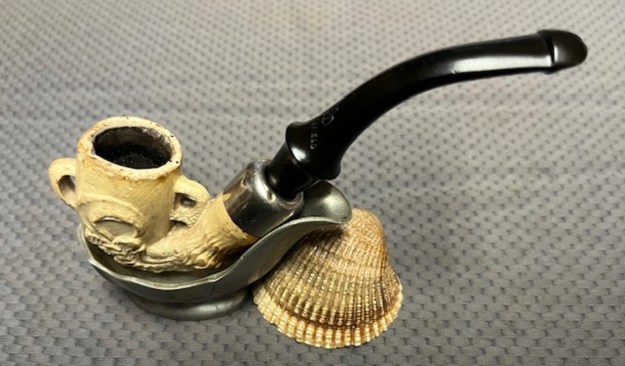
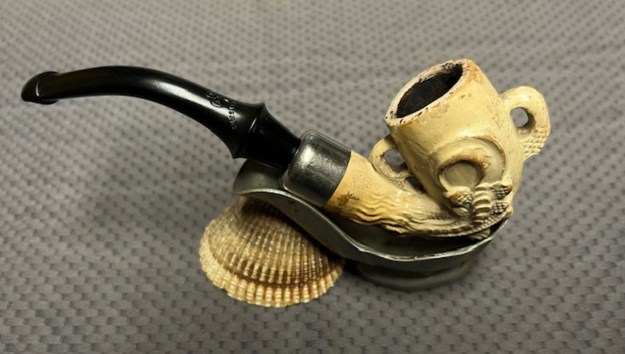
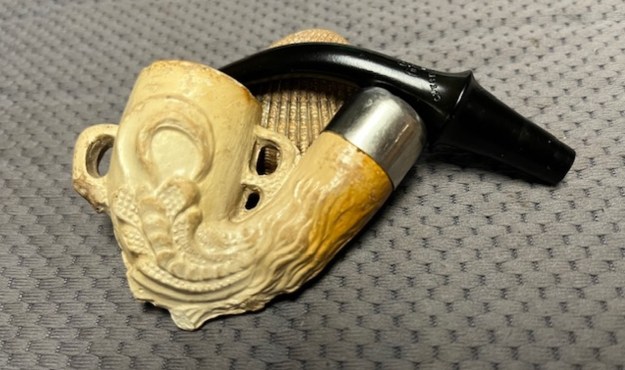
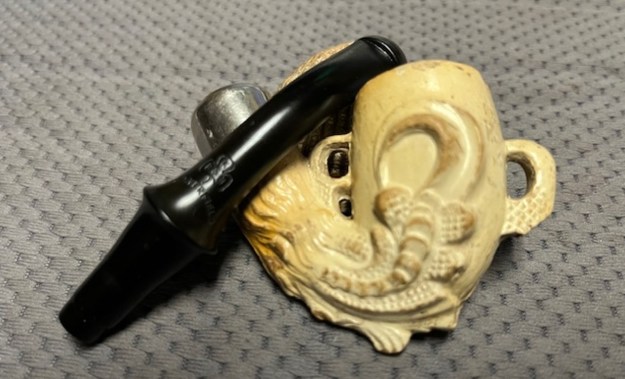
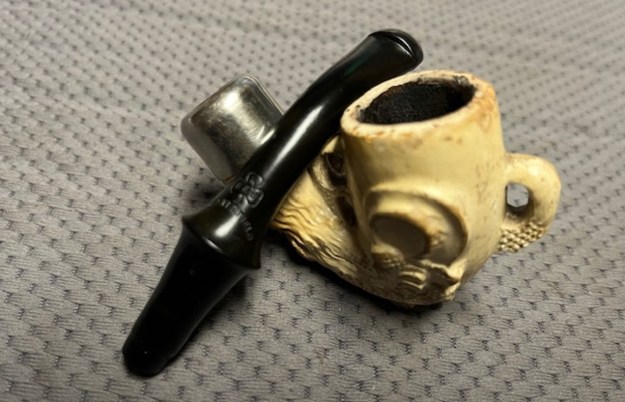
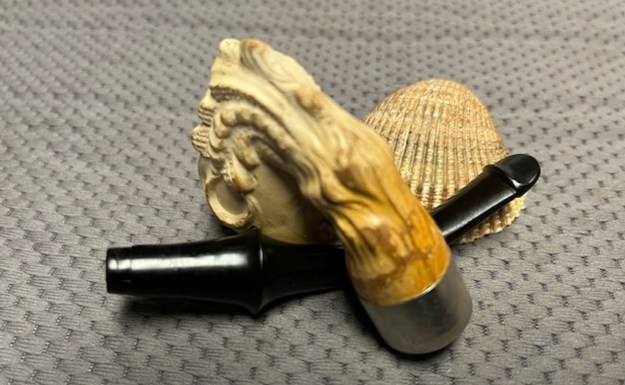
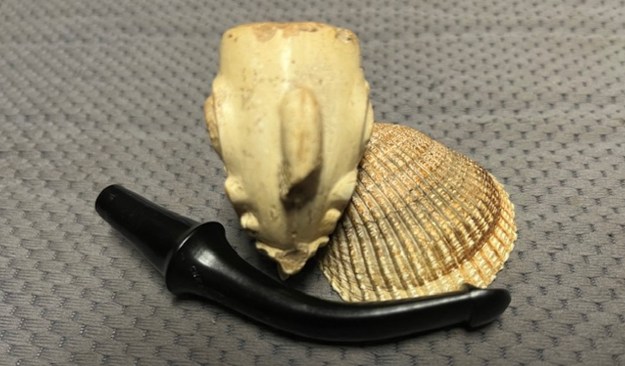
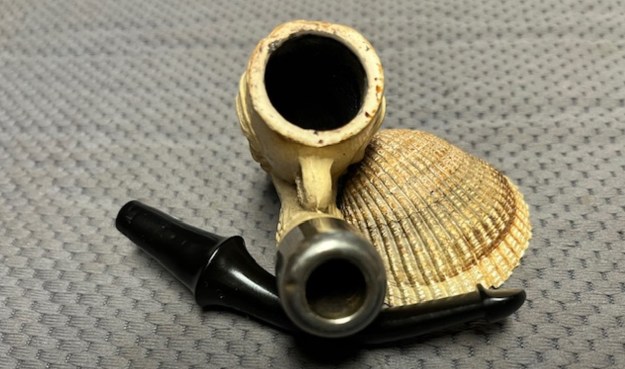
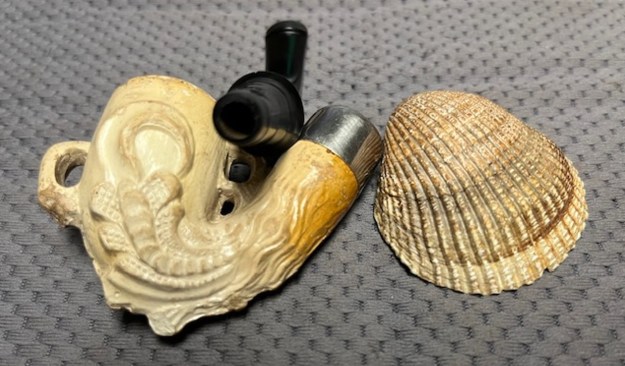
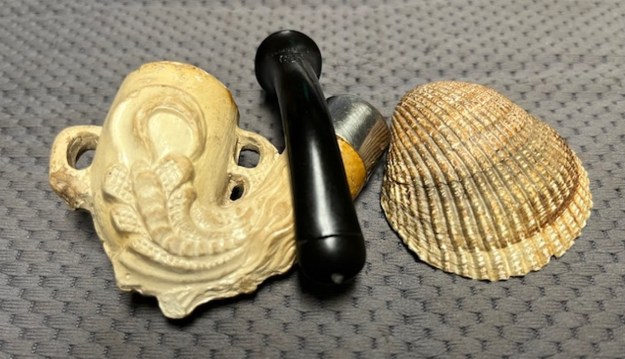
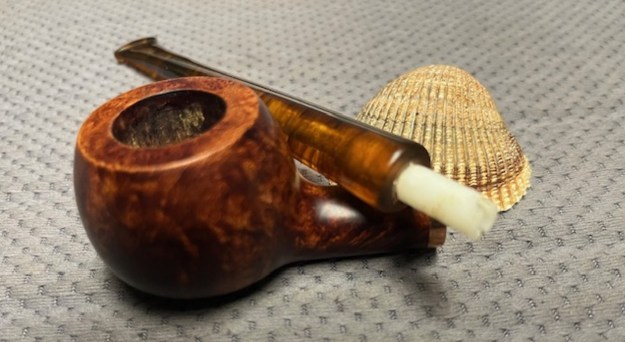
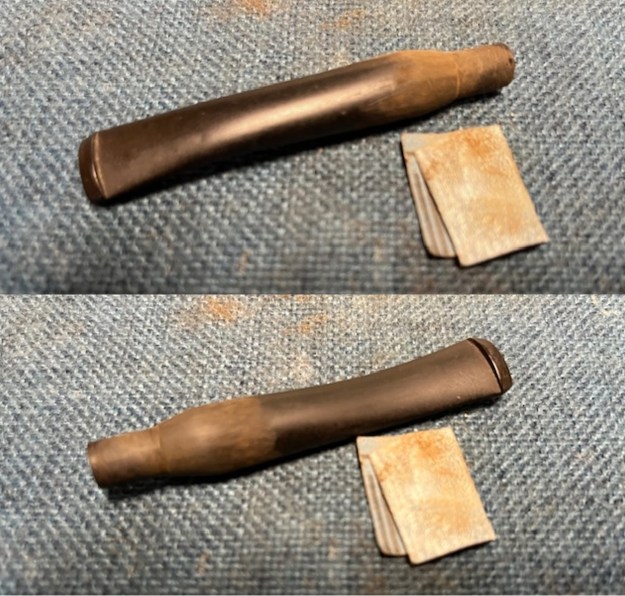
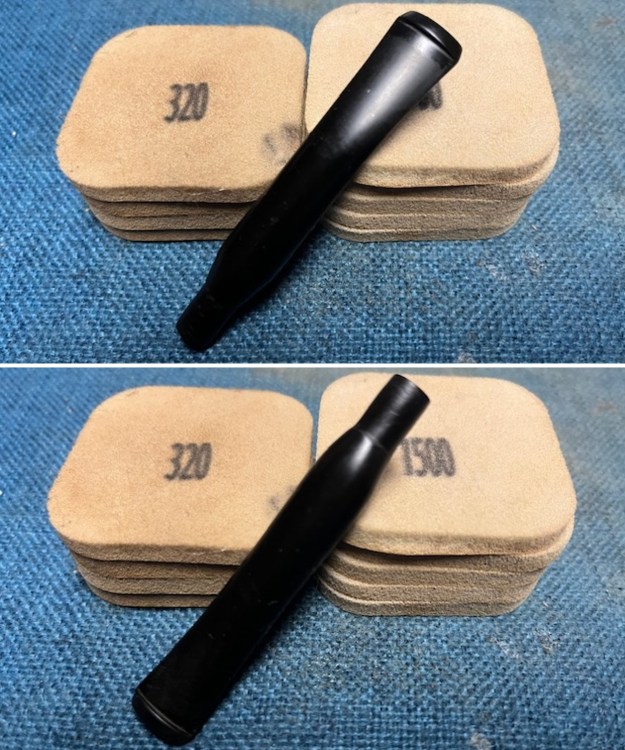
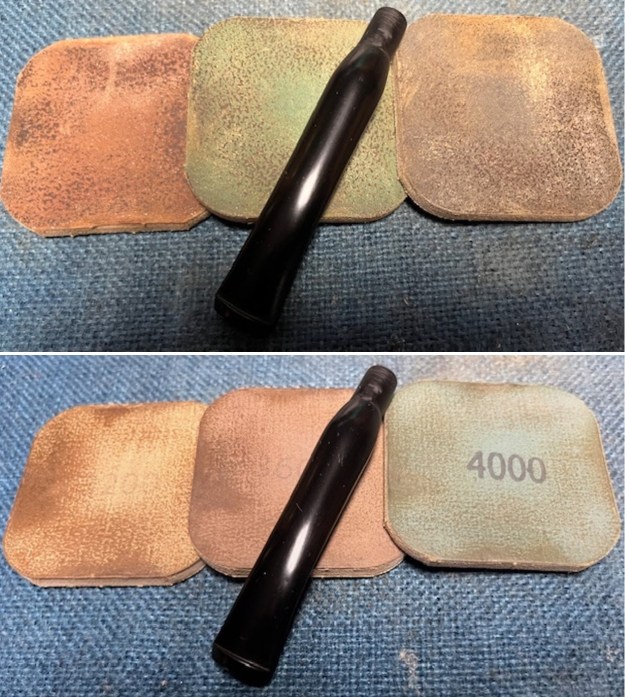
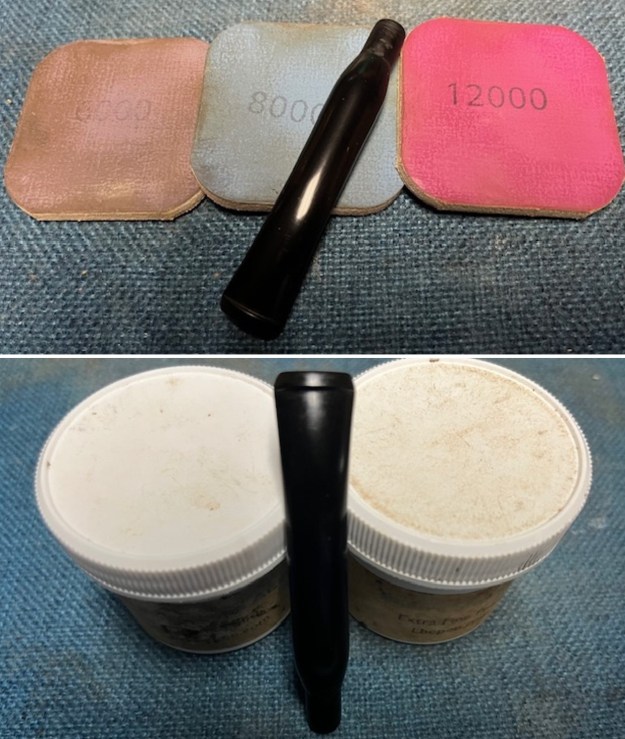
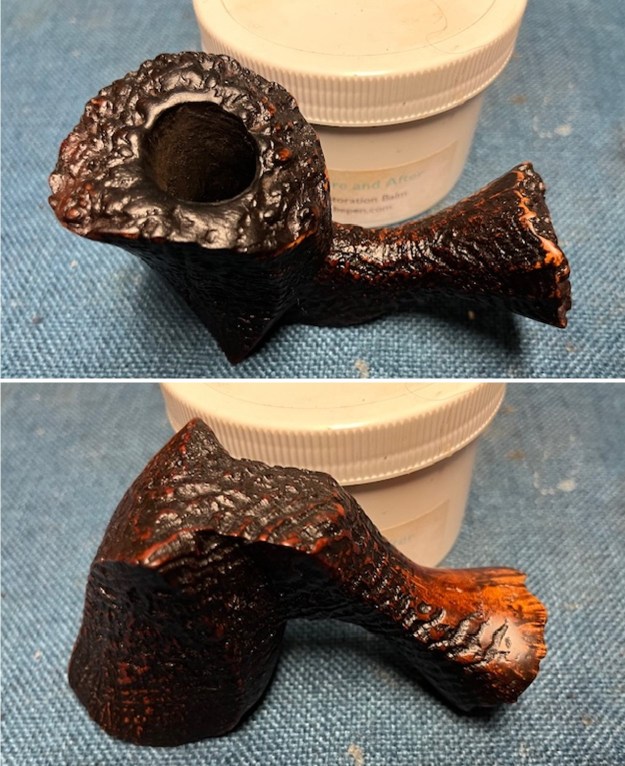
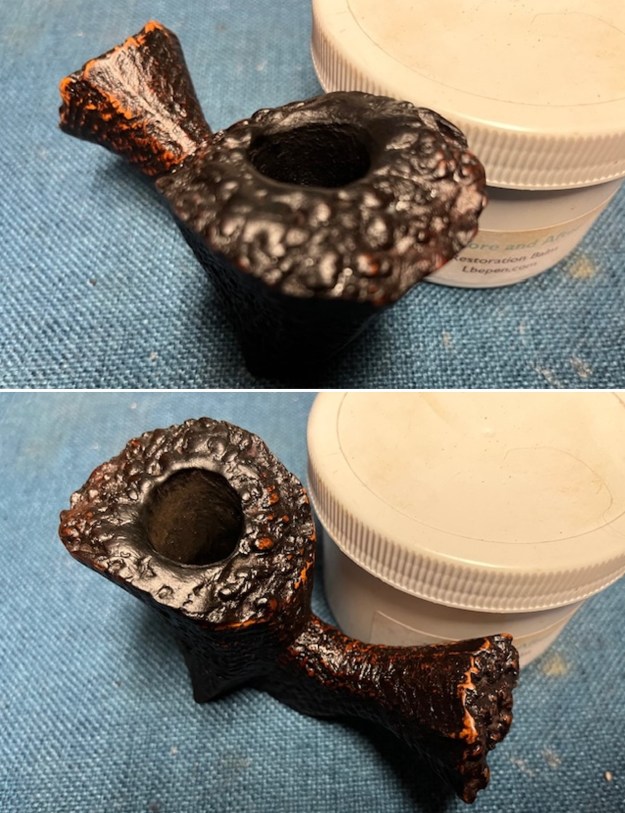
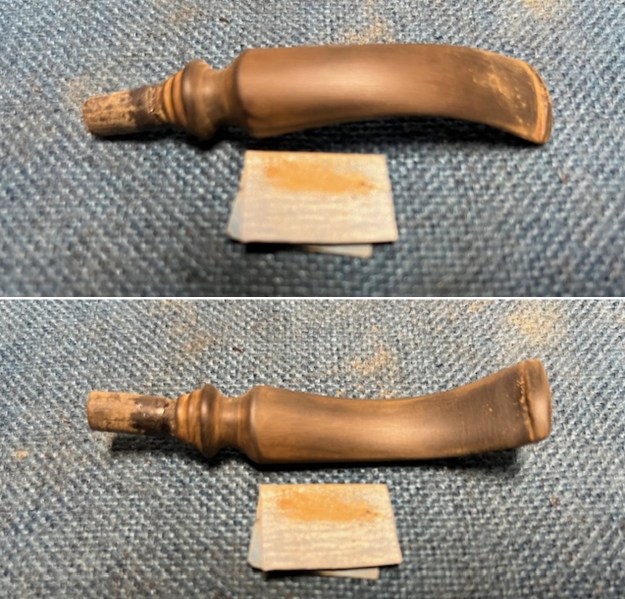
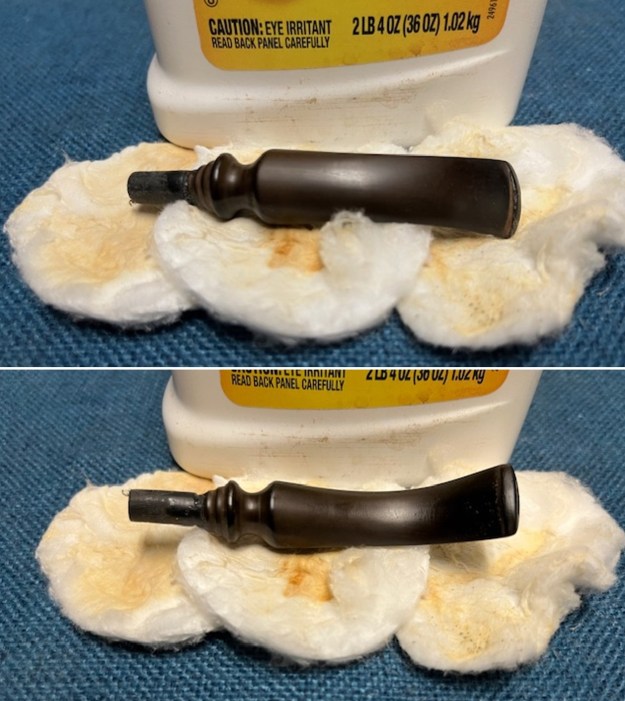
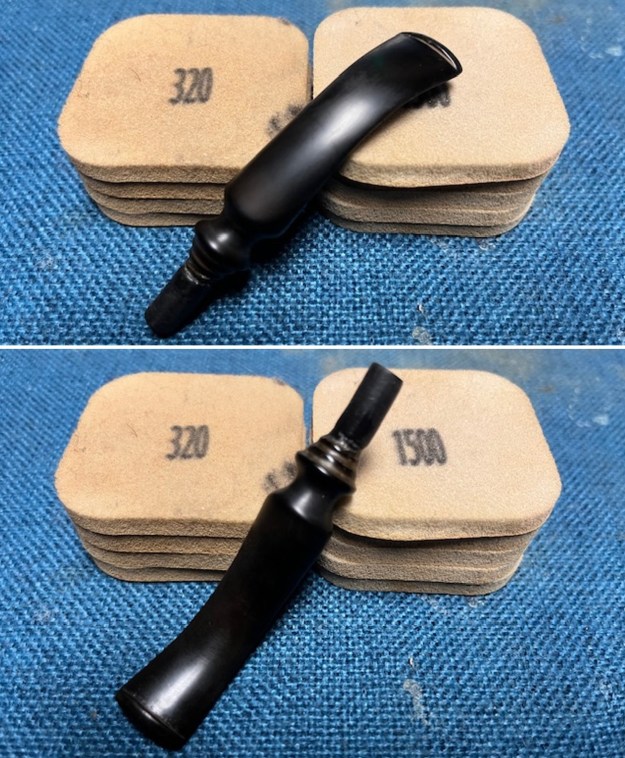
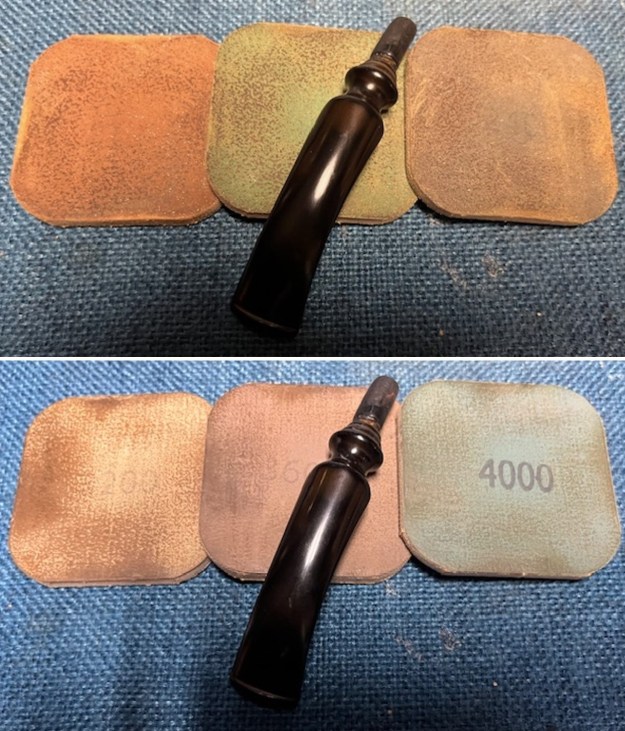
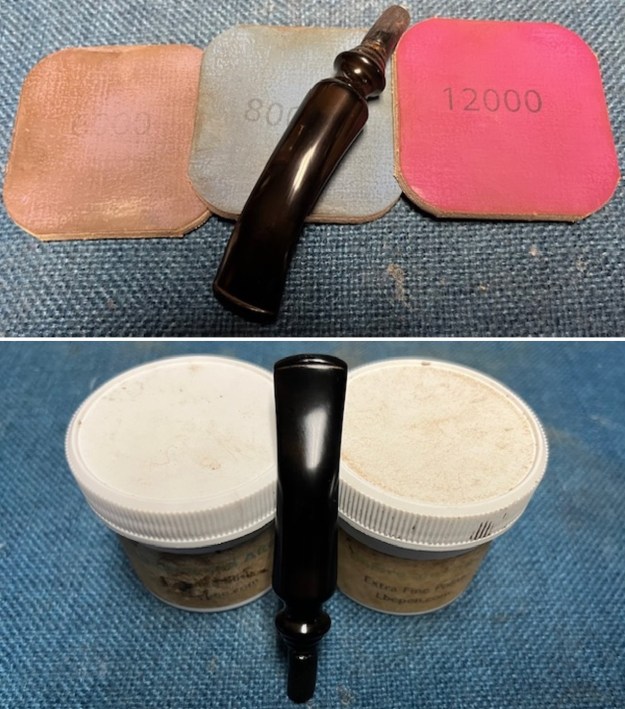
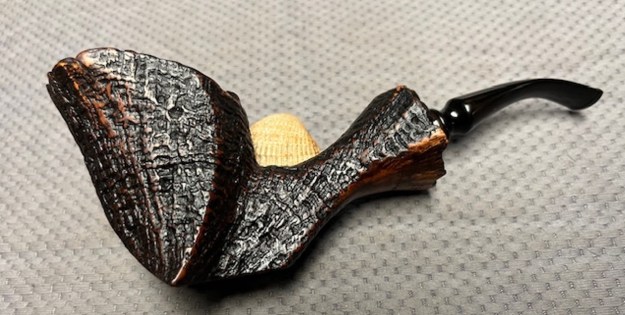
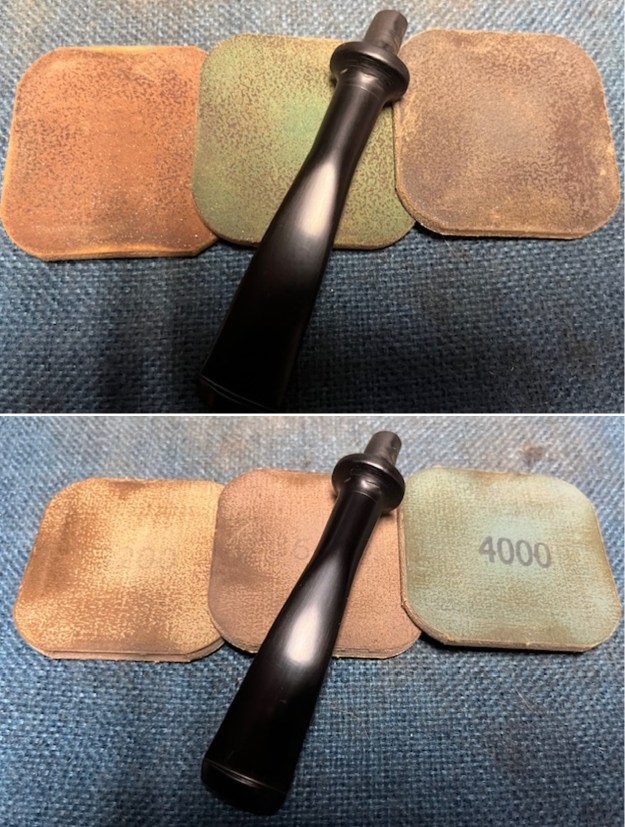
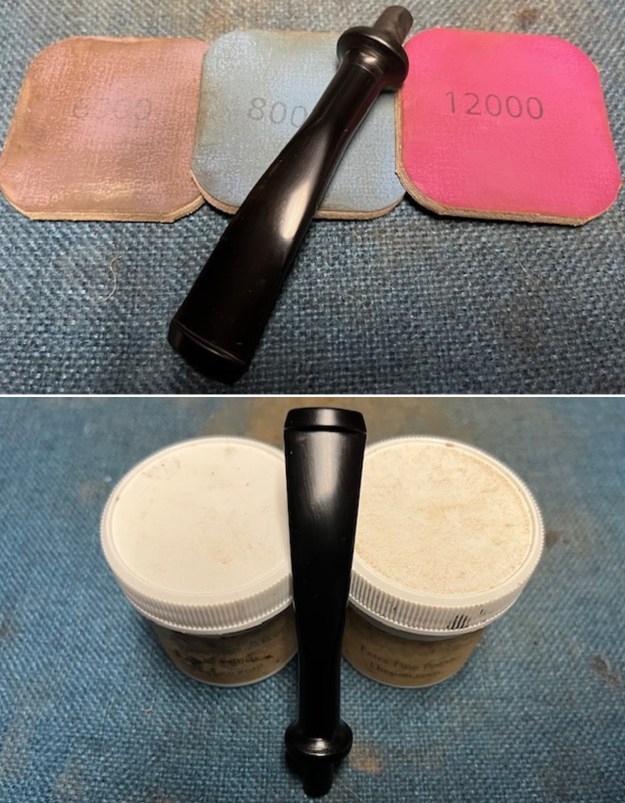
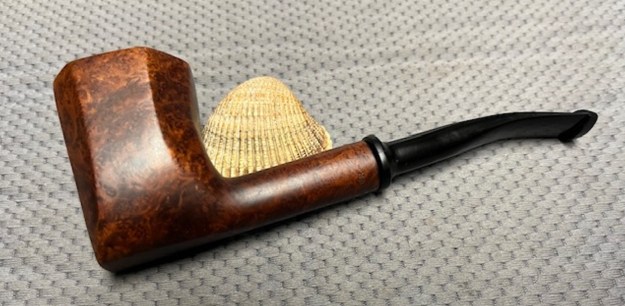
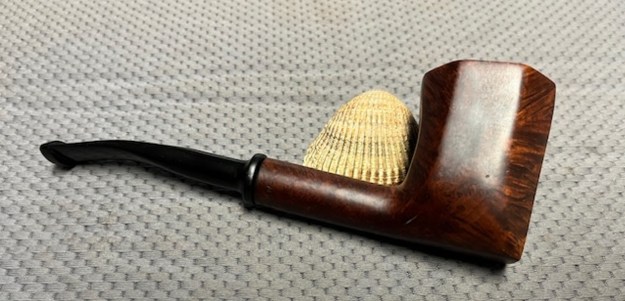
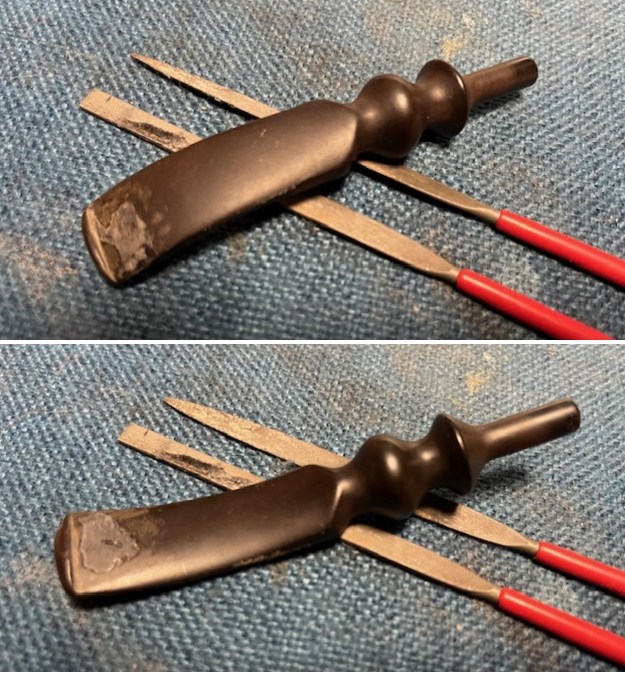
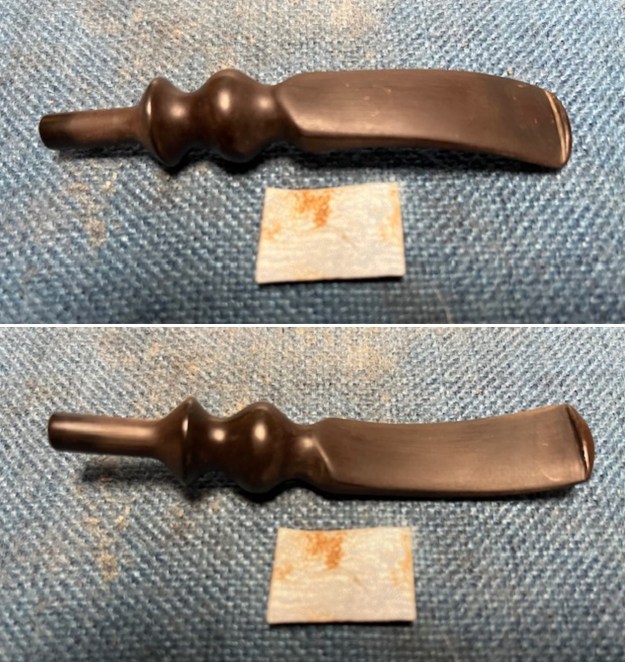
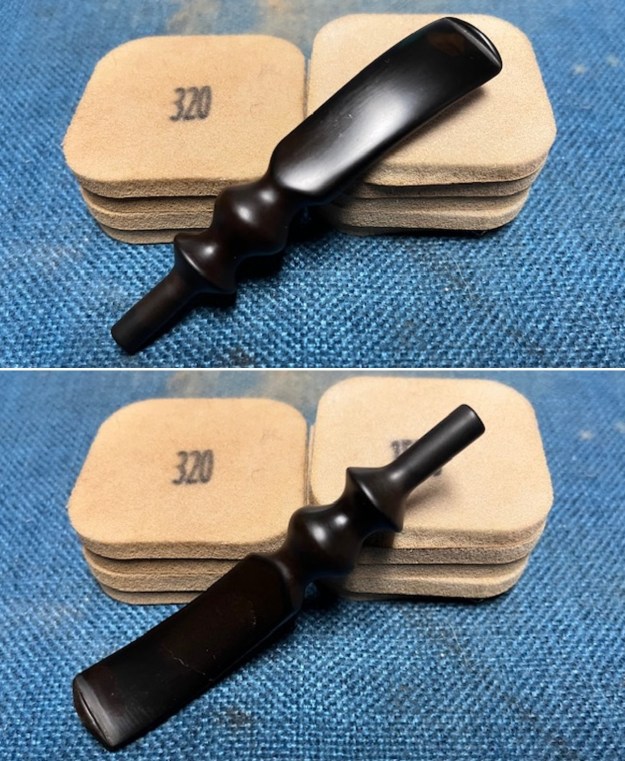
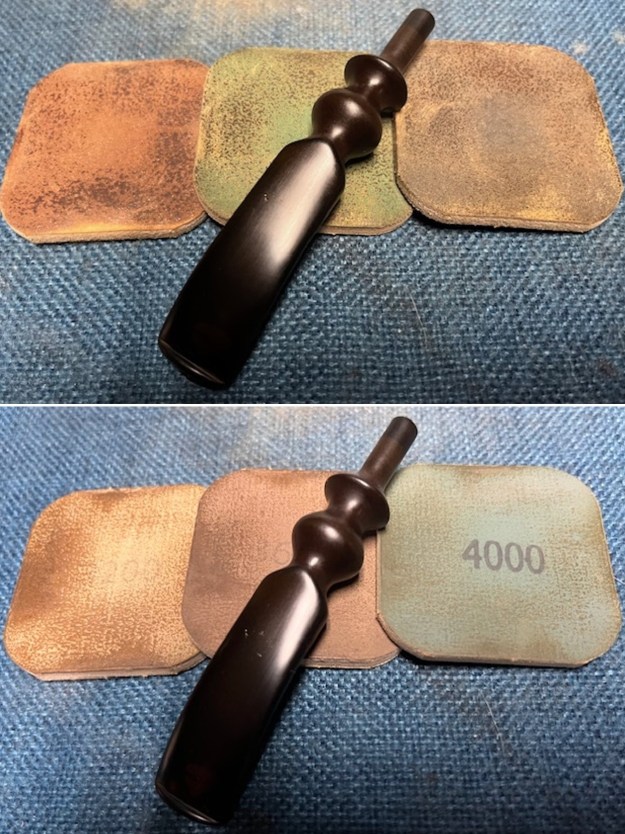
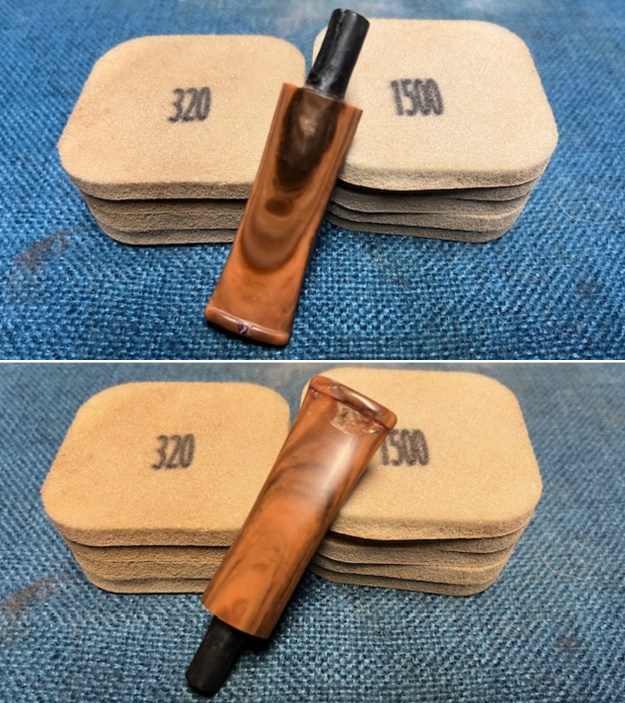
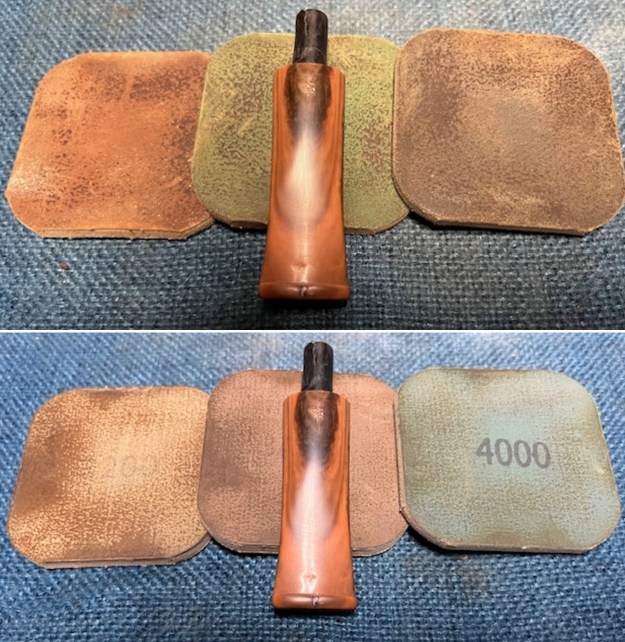
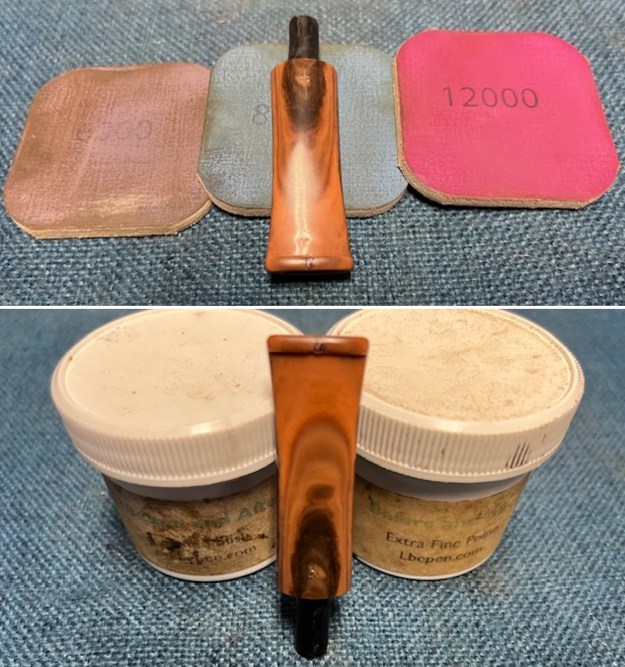
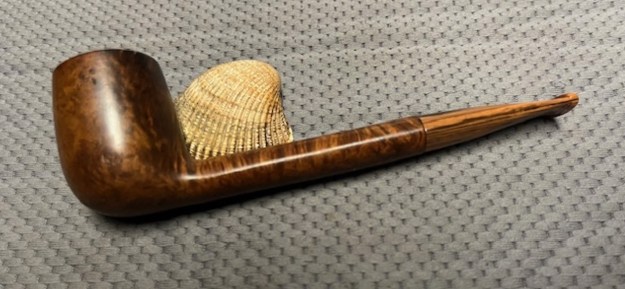
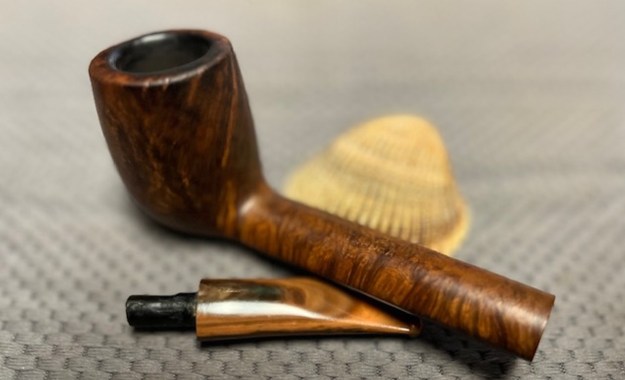
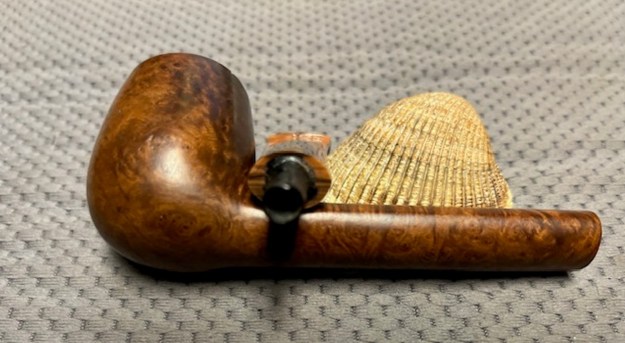
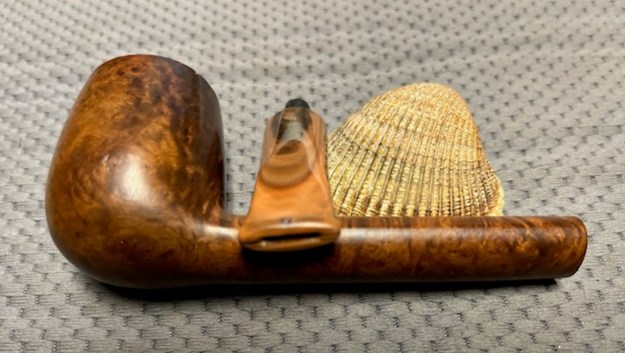
The next pipe on the table was an Egg and Claw Clay Pipe Bowl with a nickel Ferrule. I have had it in my box of bowls to be restemmed for a long time. There is no stamping or markings on the side of the bowl or shank. The maker of the pipe is a of a mystery. The pipe had been reamed and cleaned by my brother Jeff many years ago. It had been moderately smoked so it was very clean. The rim top and the inner edge were very clean and had just a few nicks in the surface of the rim. The finish had been scrubbed and the internals were very clean. I would need to find a suitable stem to fit it and figured I would use an old, small WDC stem or KBB stem that I had in my can of stems. I found a stem in my can of stems that almost fit. It had already been sanded and would just need some adjustments. I took some photos the new stem before I started working on it. It was stamped on the top and read KBB in a cloverleaf with Chesterfield arched above it. It had the airway exiting on the stem end even though it looked like a P-lip style was uniquely like a WDC style stem. I would work perfect.I worked on the shape of the stem to fit in the shank and beginning the polislhing. I used 320-3500 grit 2×2 inch sanding pads to shape and polish the stem shape. Each sanding pad brought it into shape and the fit to the shank worked well. The scratches and marks in the vulcanite began to blend into the surface.I polished the stem with micromesh sanding pads – wet sanding with 1500-12000 grit sanding pads. I wiped it down after each sanding pad with some Obsidian Oil. I finished polishing it with Before & After Pipe Stem Polish – both Fine and Extra Fine and buffed it off with a cotton cloth. I wiped it down with Obsidian Oil to protect the stem and slow down the oxidation. I waxed the clay bowl and the nickel ferrule with Clapham’s Beeswax/Carnauba mixture. I worked it into the carving/pressing on the clay bowl with a shoebrush. I let it sit for 10 minutes then I buffed it with a soft cloth to polish it. It really began to take on a shine. This restemmed, Egg and Claw Clay Pipe is a beautiful looking pipe that combines carved finish with a nickel ferrule and an old Chesterfield Vulcanite Stem. The clay has a patina on the bowl that works well to highlight the carving. I put the newly finished stem on the bowl and buffed it with Blue Diamond on the buffing wheel being careful to not to damage the clay. I gave the bowl multiple coats of Clapham’s Wax and the stem multiple coats of carnauba wax on the buffing wheel and followed that by buffing it with a clean buffing pad. I hand buffed the pipe with a microfiber cloth to deepen the shine. The finished pipe is quite nice and feels great in the hand. Give the finished pipe a look in the photos below. The dimensions of the pipe are Length: 5 ½ inches, Height: 2 inches, Outside diameter of the bowl: 1 inch, Chamber diameter: ¾ of an inch. The weight of the pipe is 44 grams/1.55 ounces. Thanks for walking through the restoration with me as I worked over another beautiful pipe.

Remember we are not pipe owners; we are pipemen and women who hold our pipes in trust until they pass on into the trust of the next generation.

Restemming and Converting an Unbranded Made in London England 97 Apple into a Churchwarden


by Steve Laug

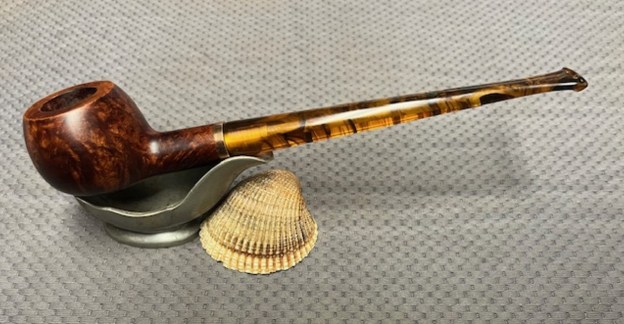
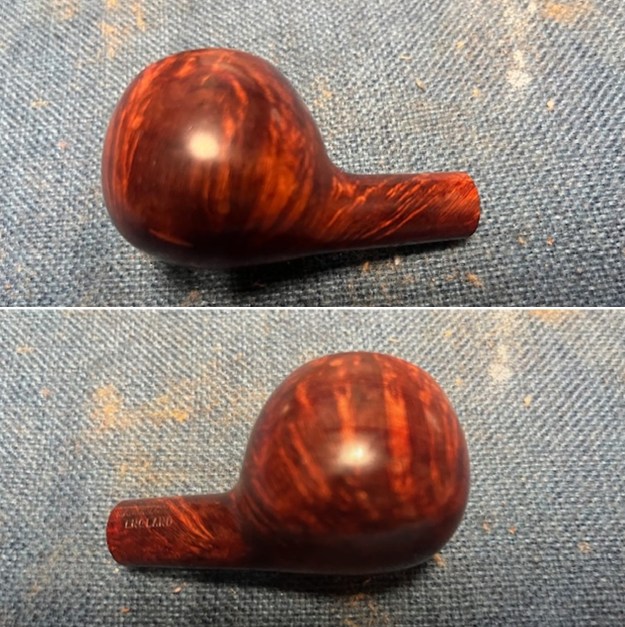
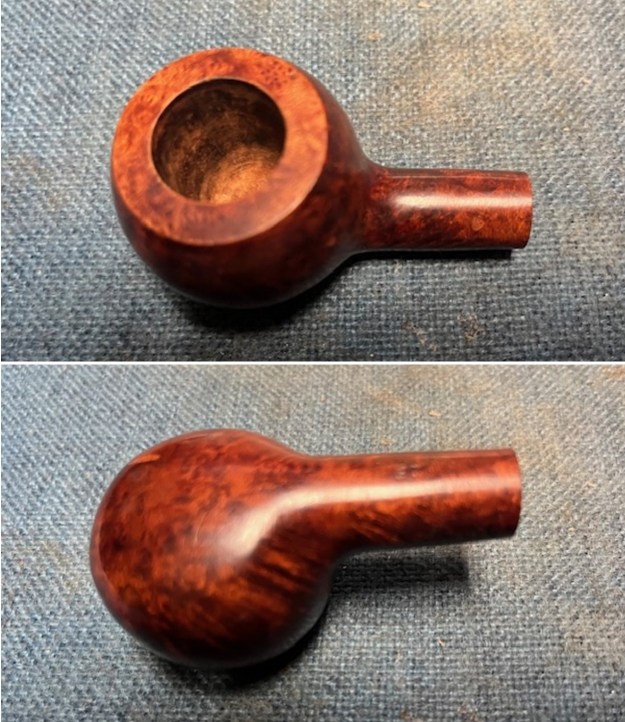
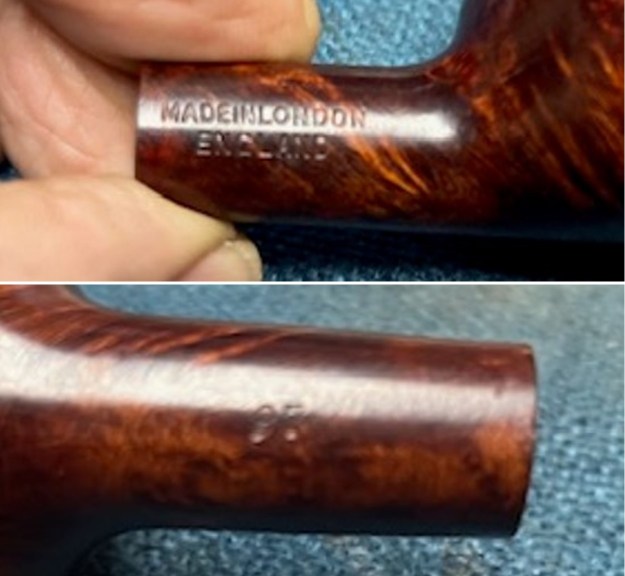
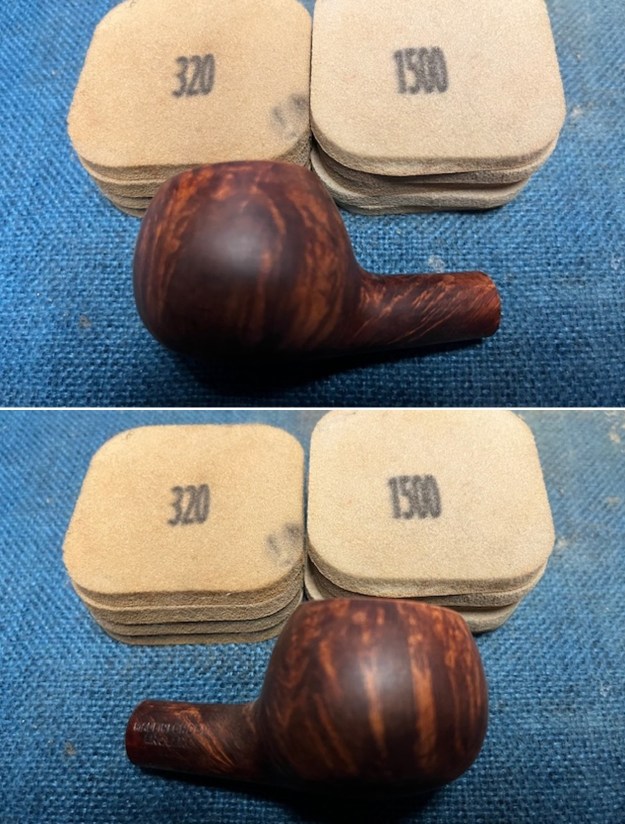
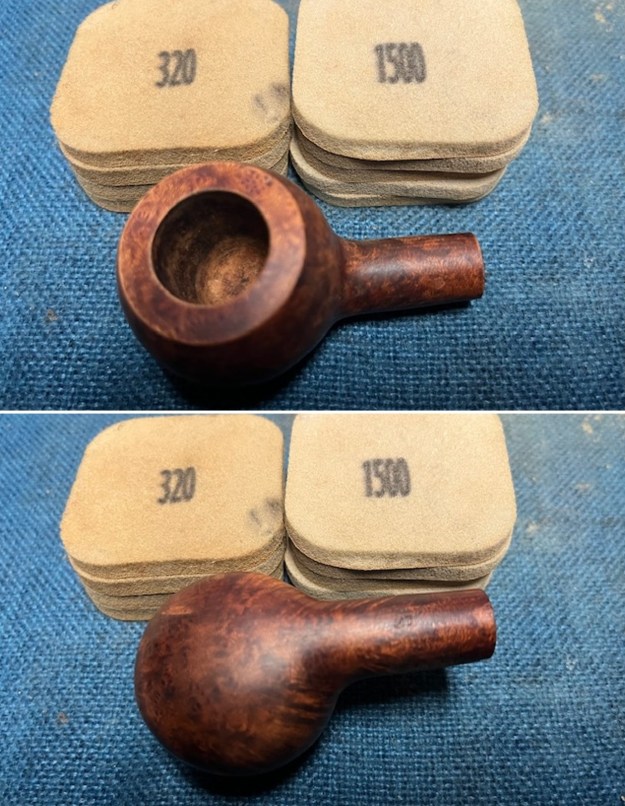
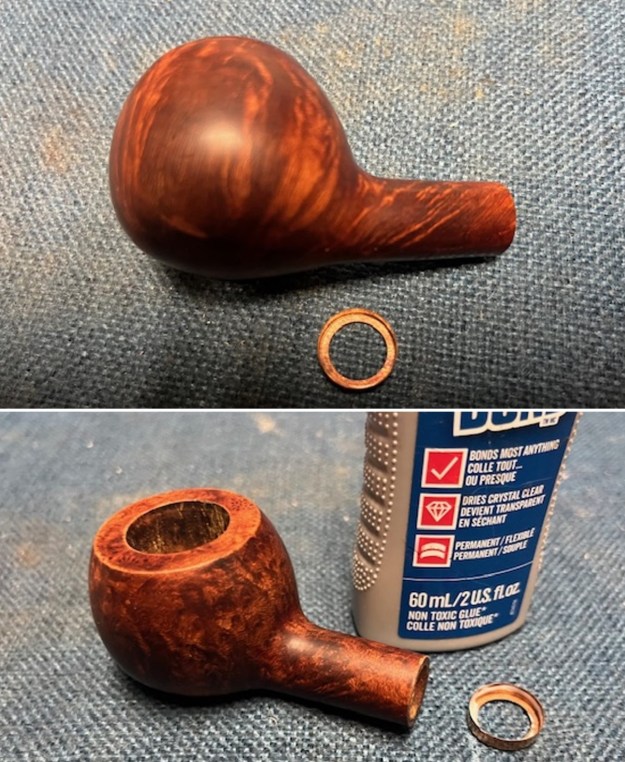
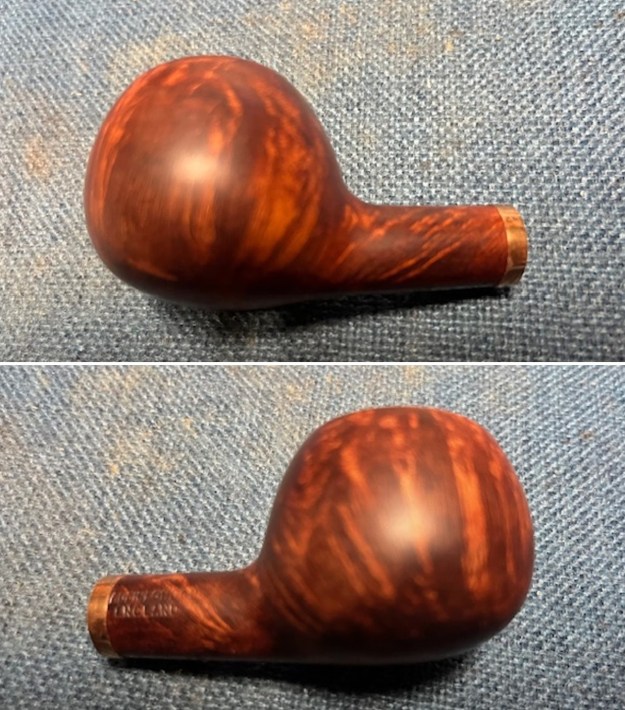
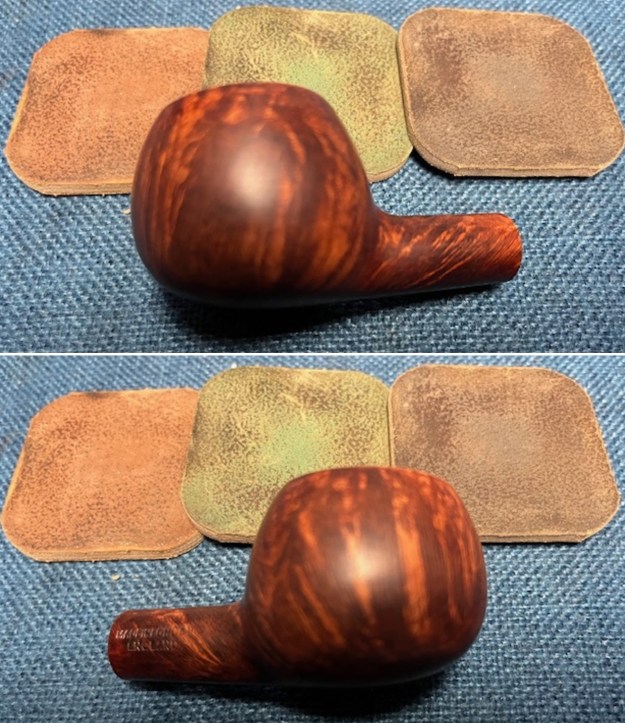
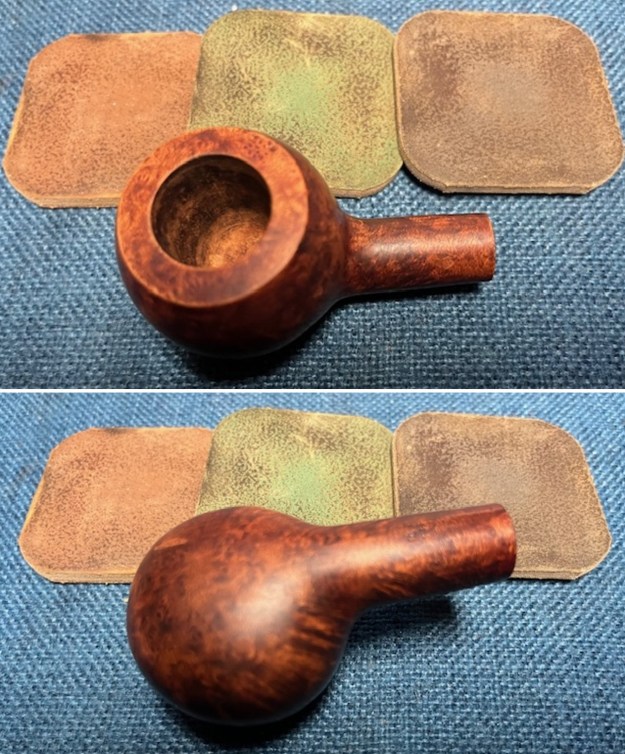
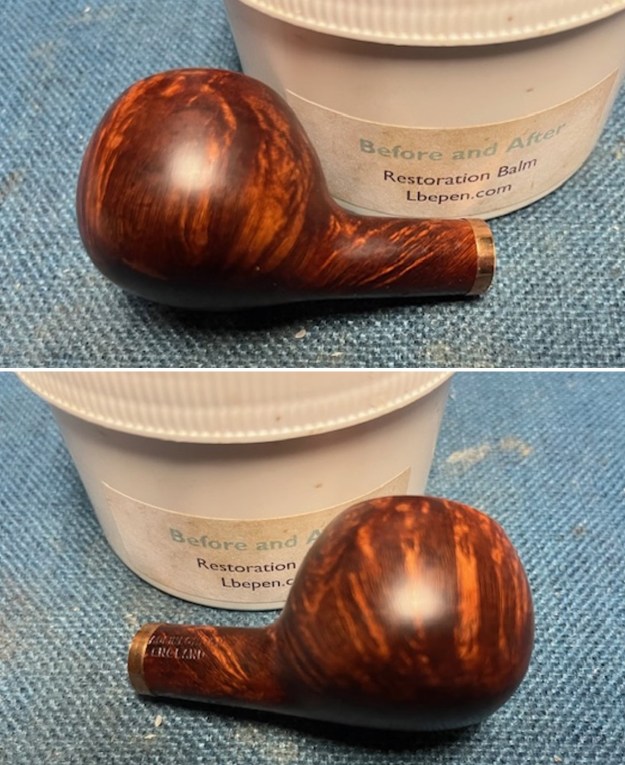
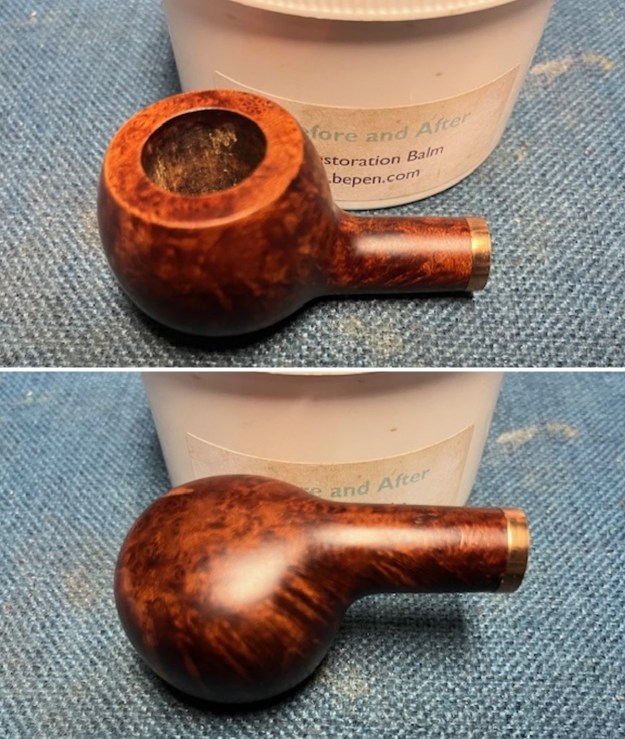
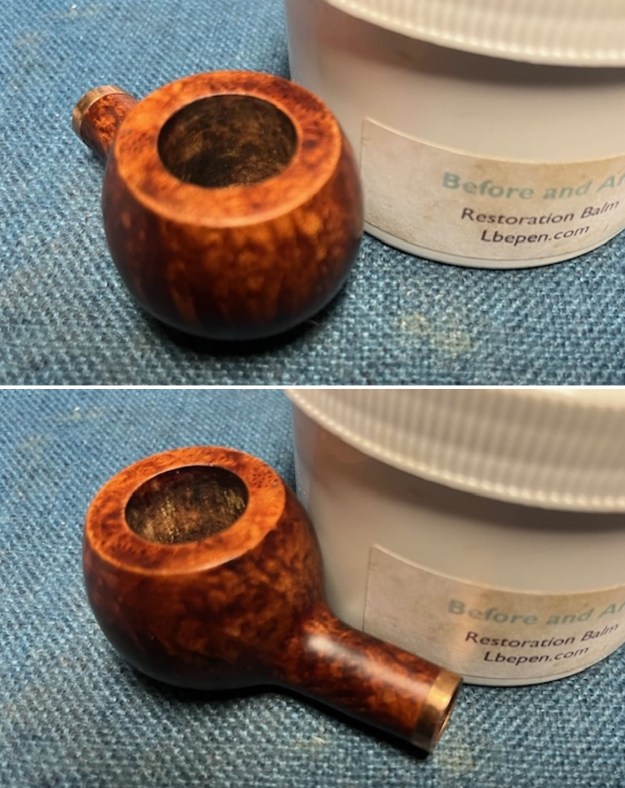
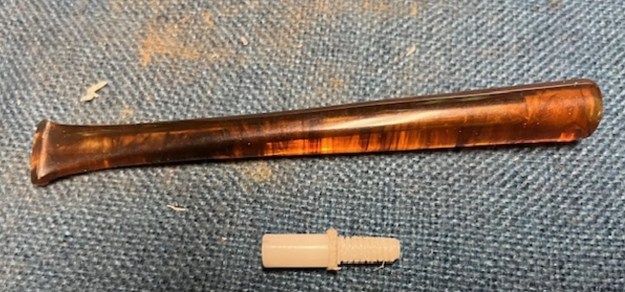
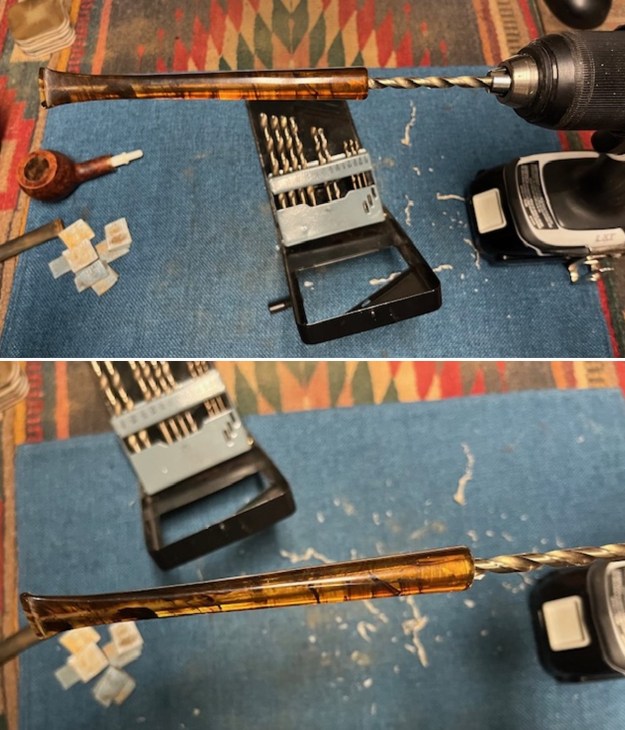
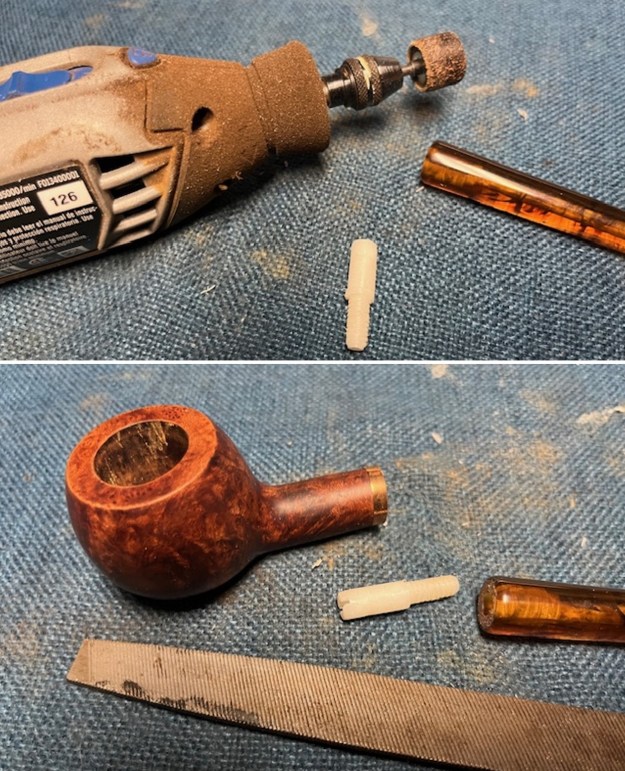
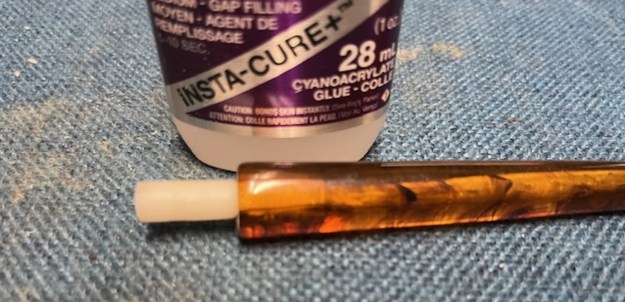
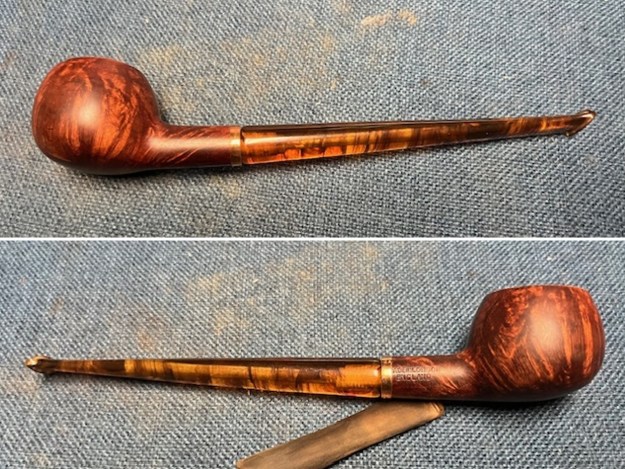
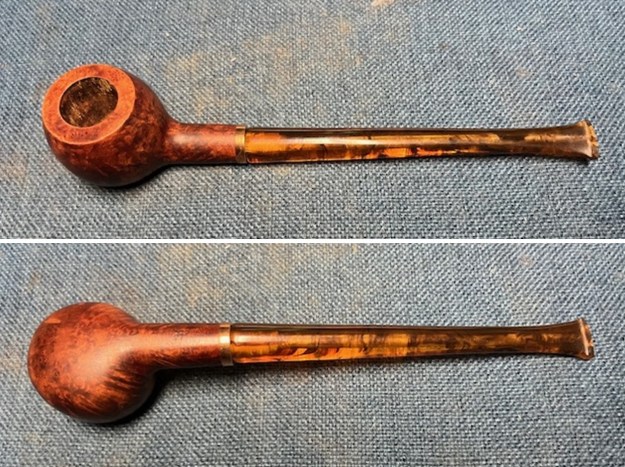
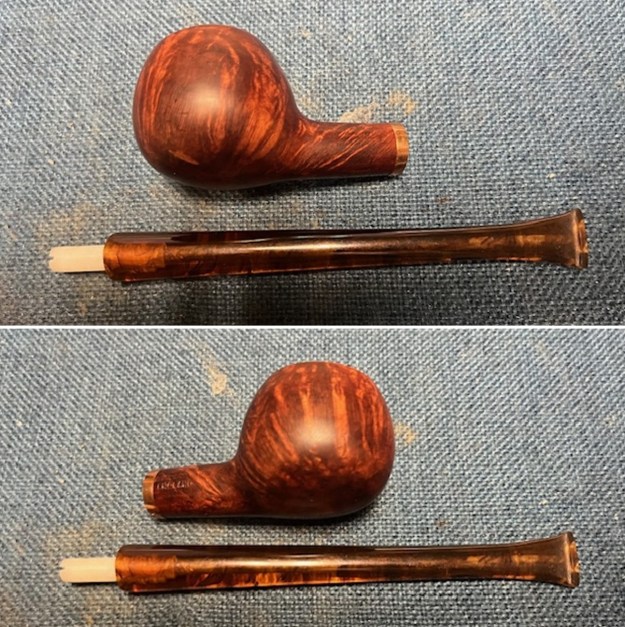
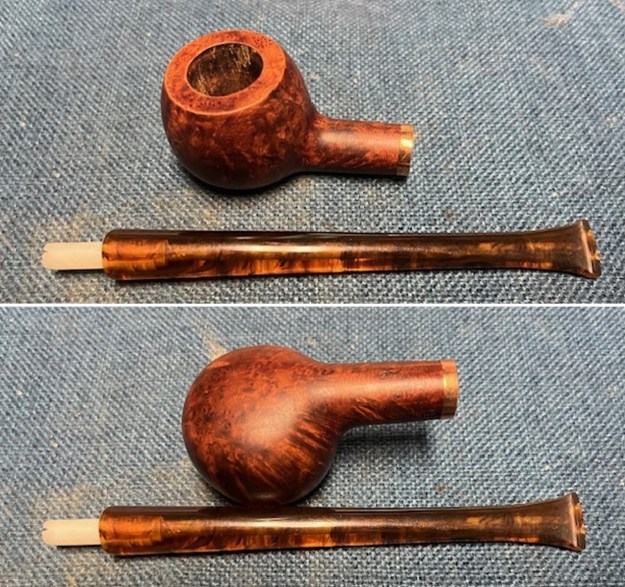
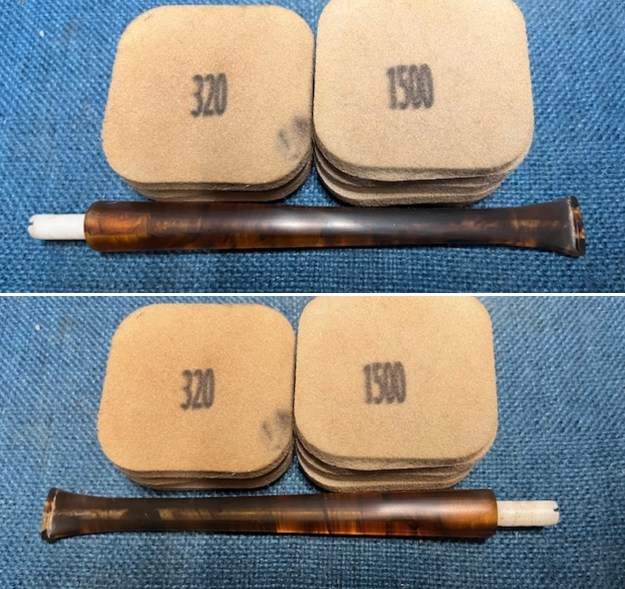
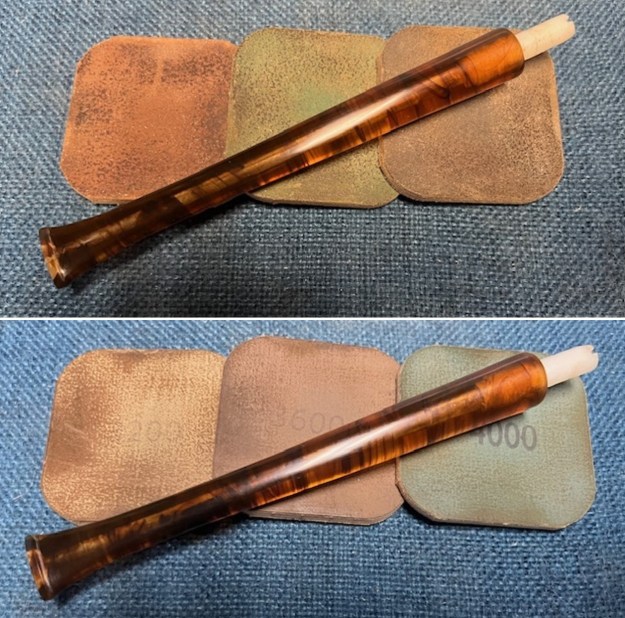
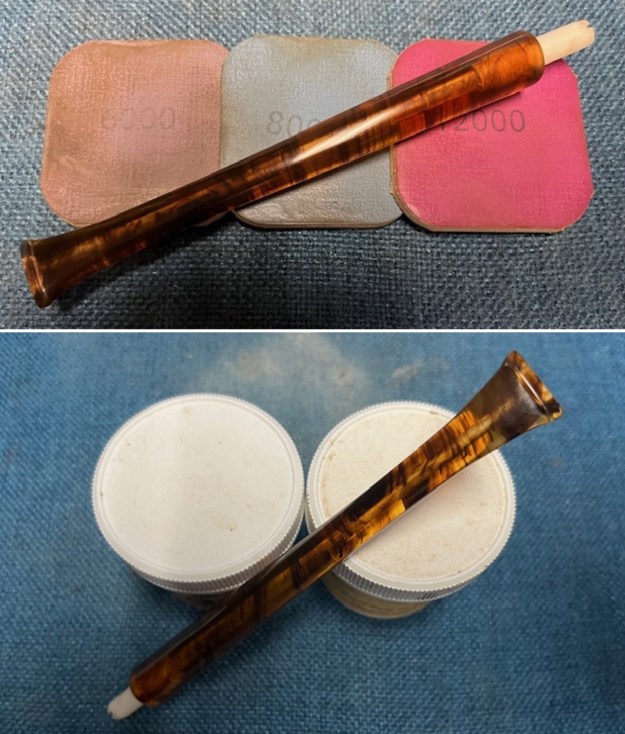
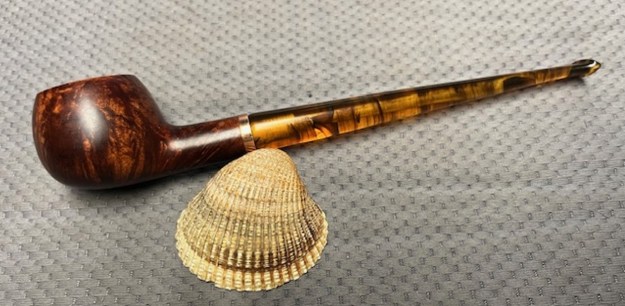
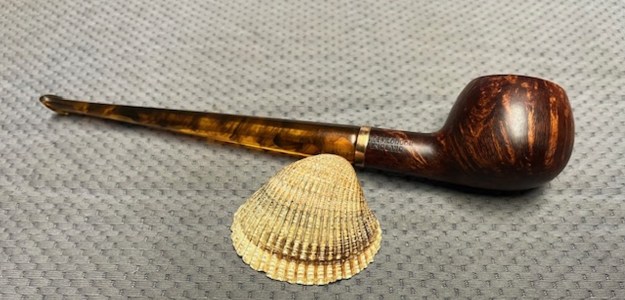
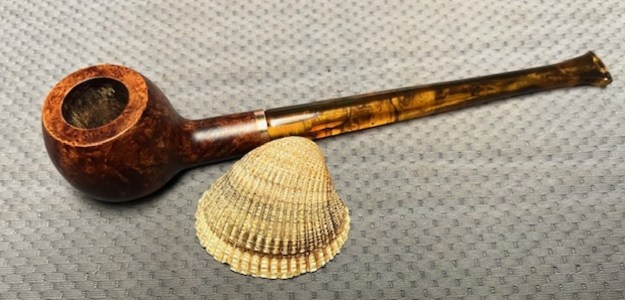
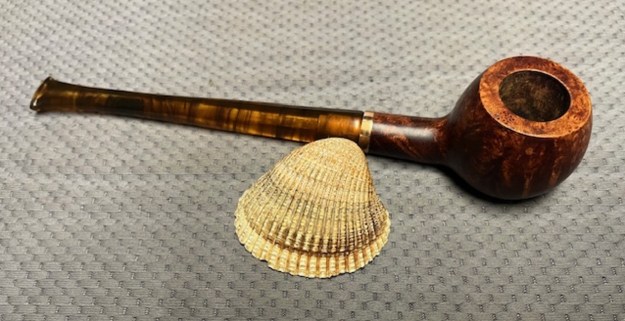
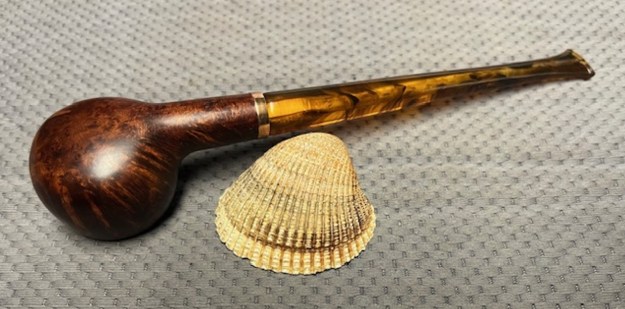
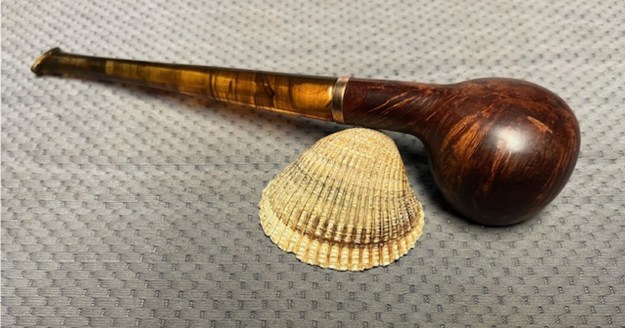
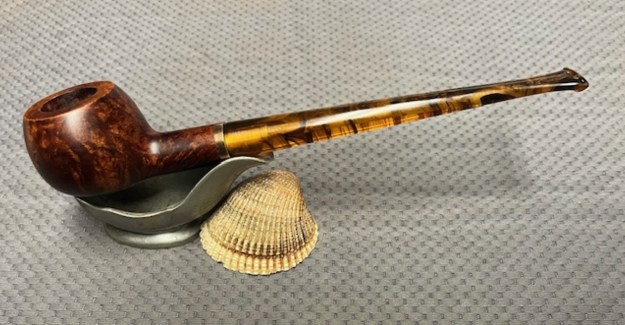
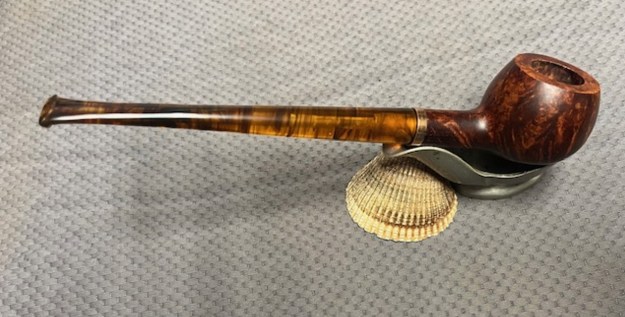
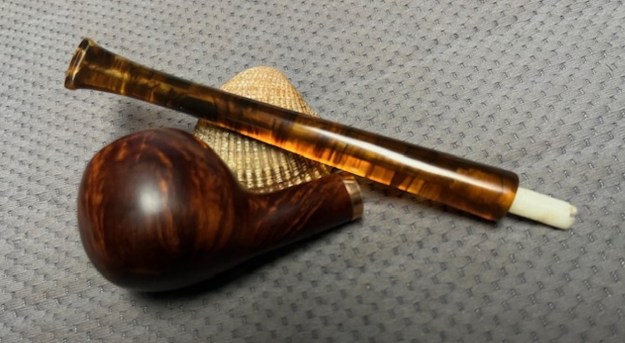
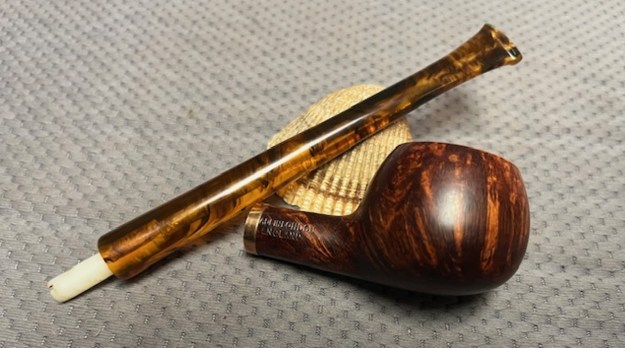
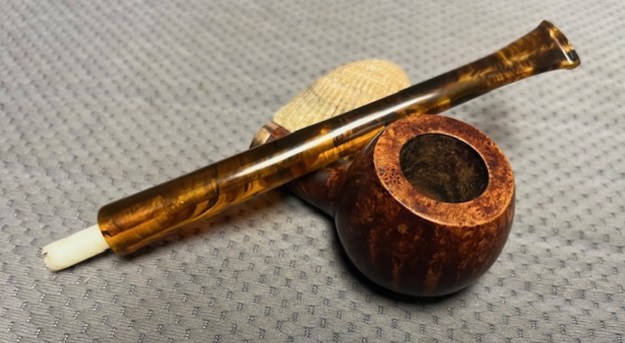
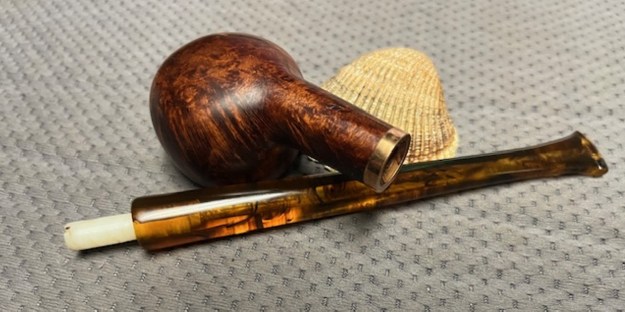
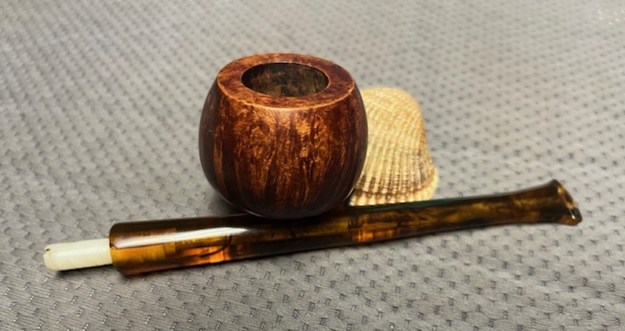
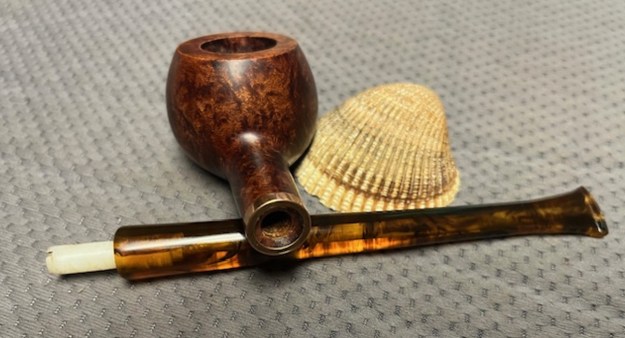
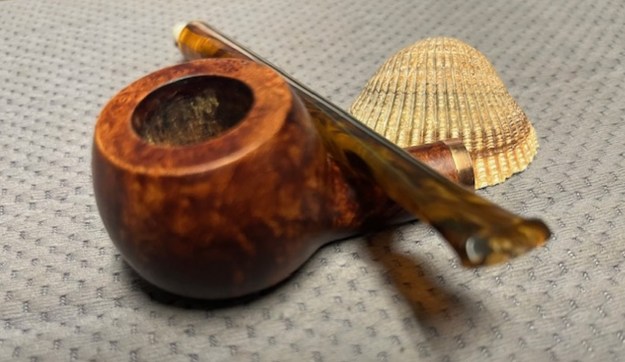
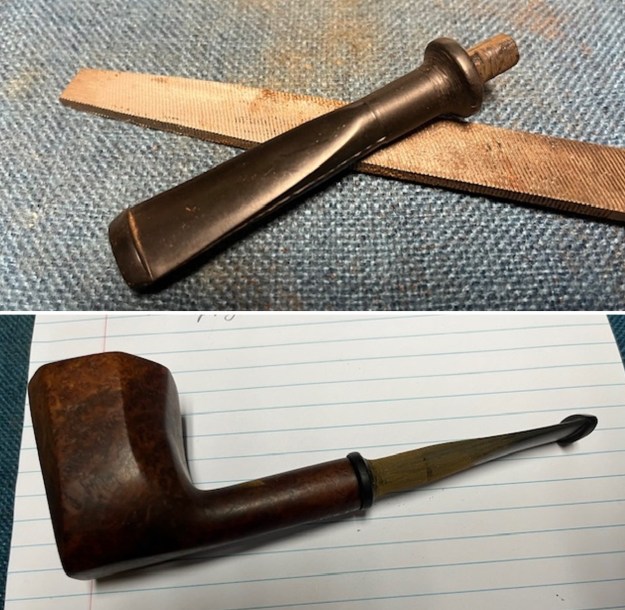
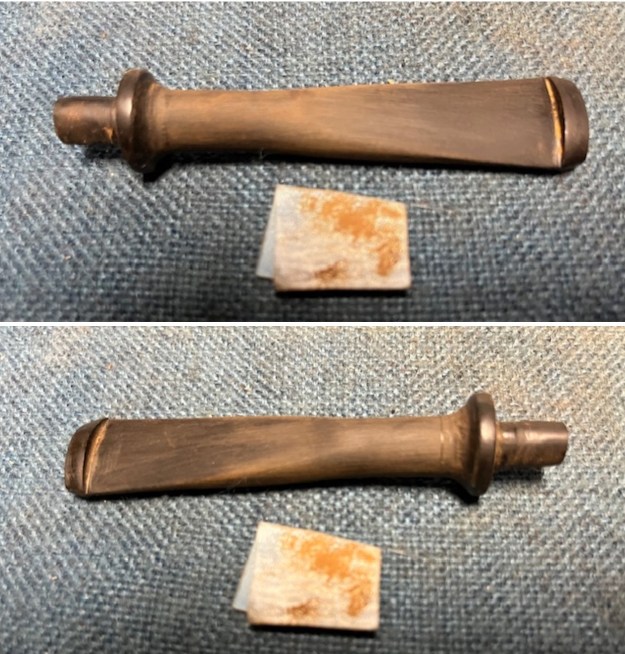
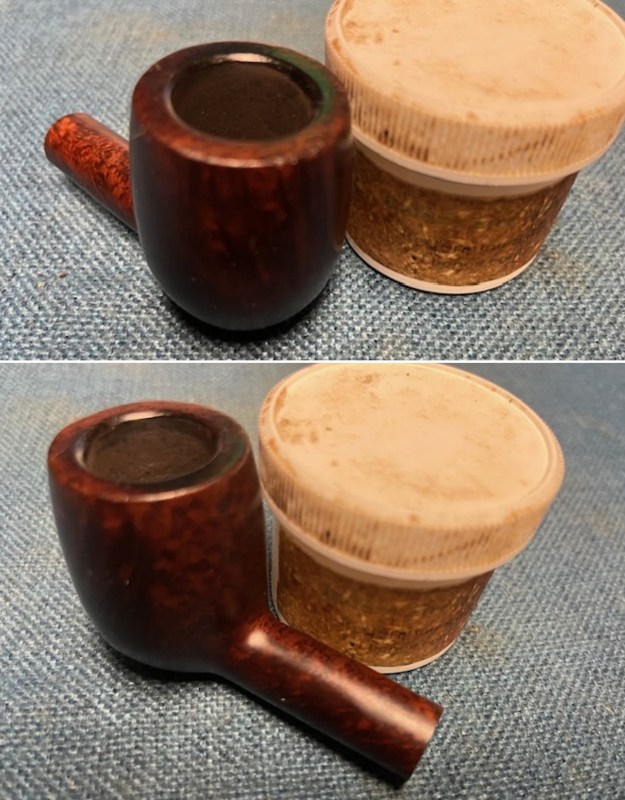
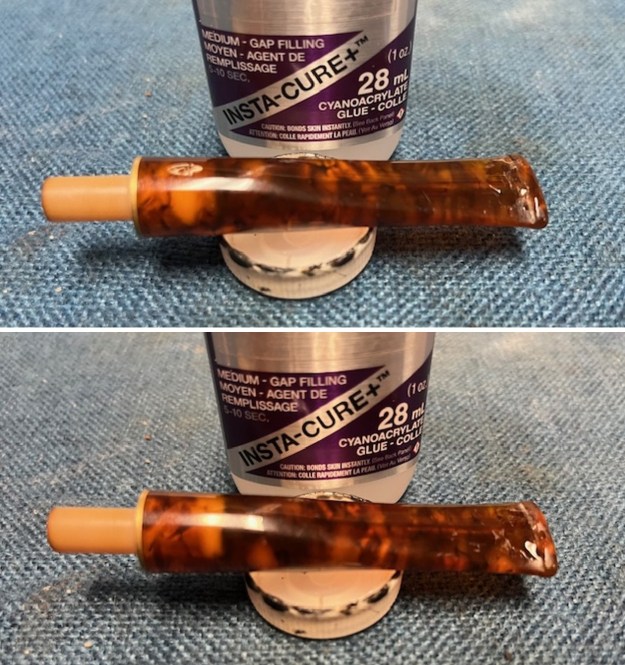
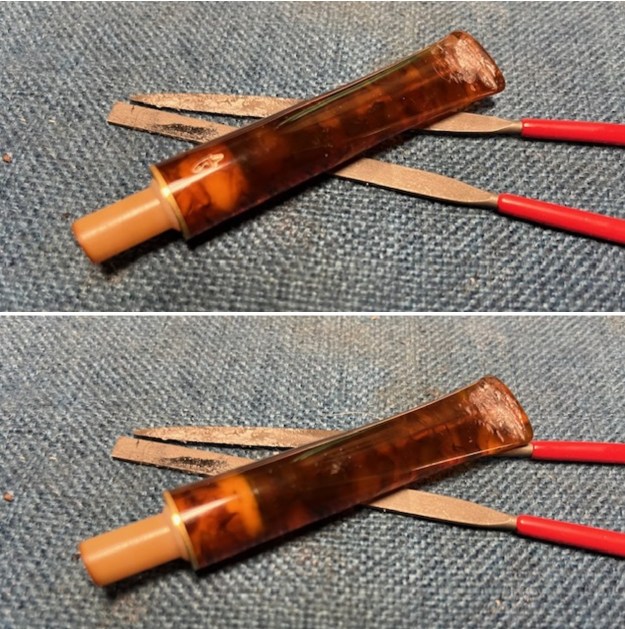
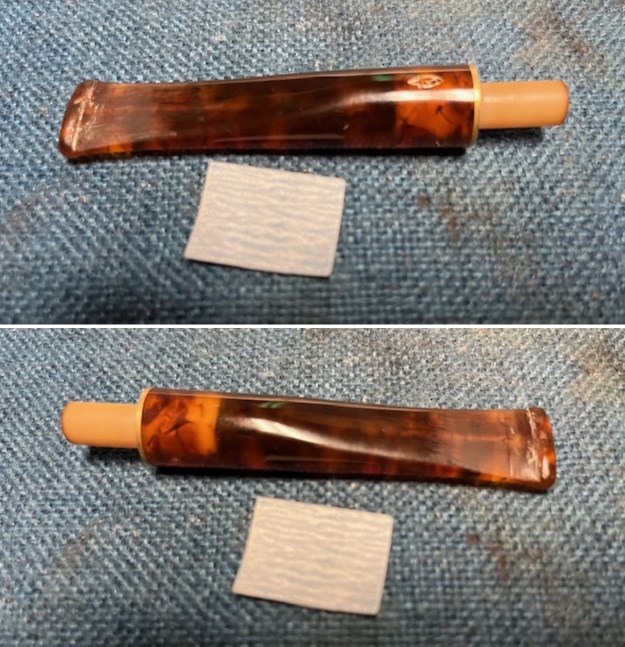
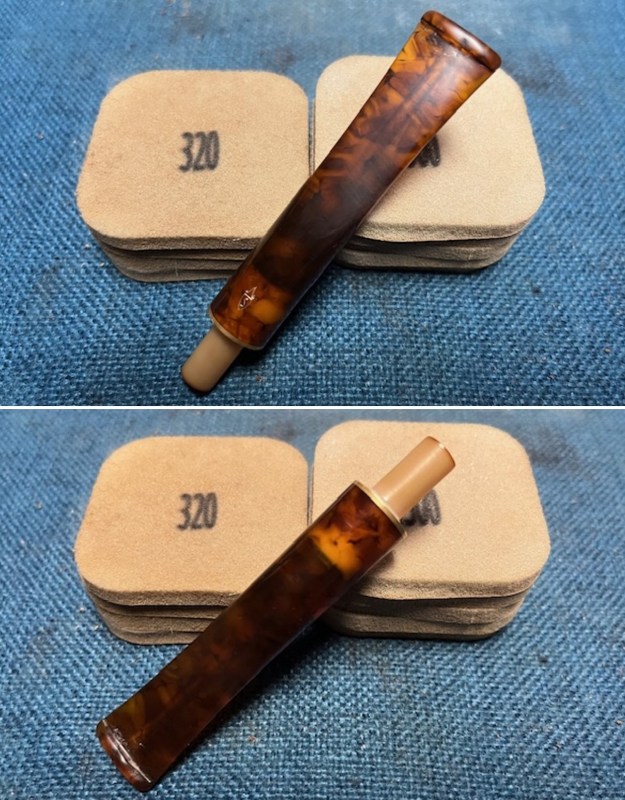
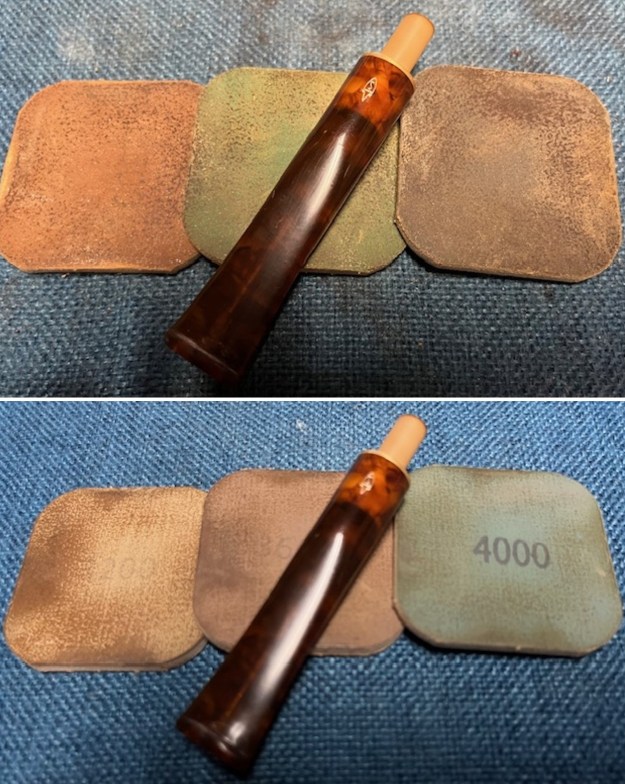
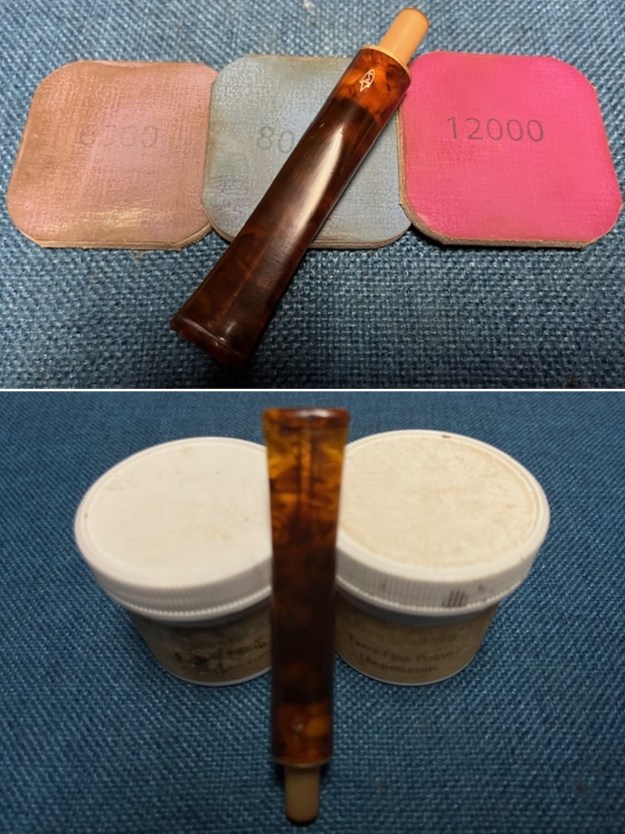
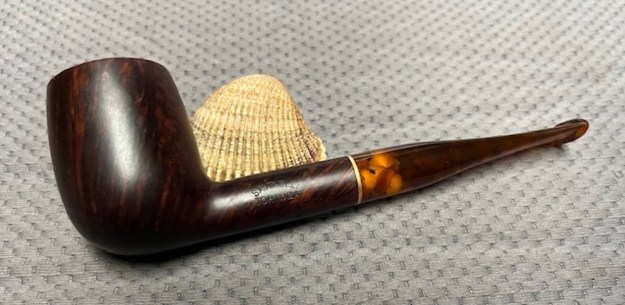
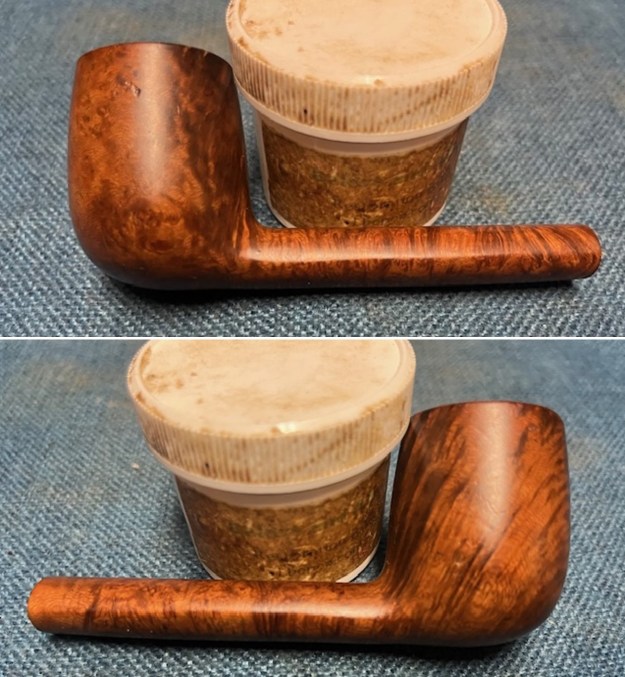
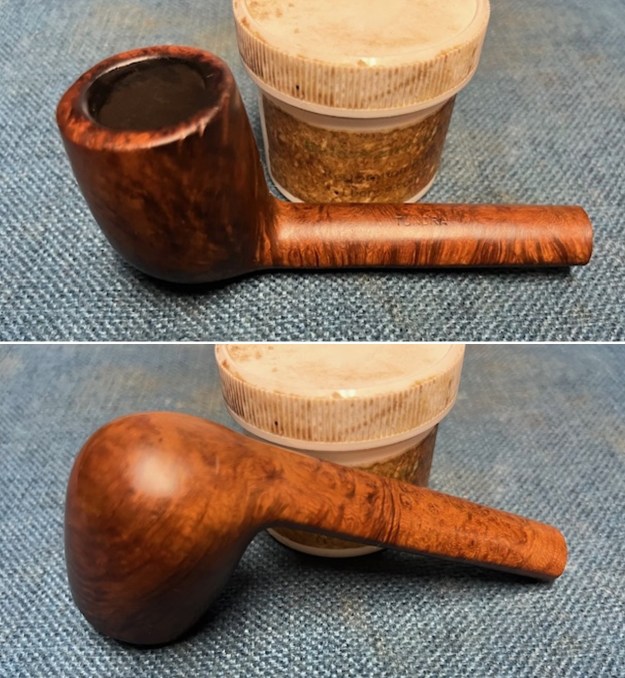
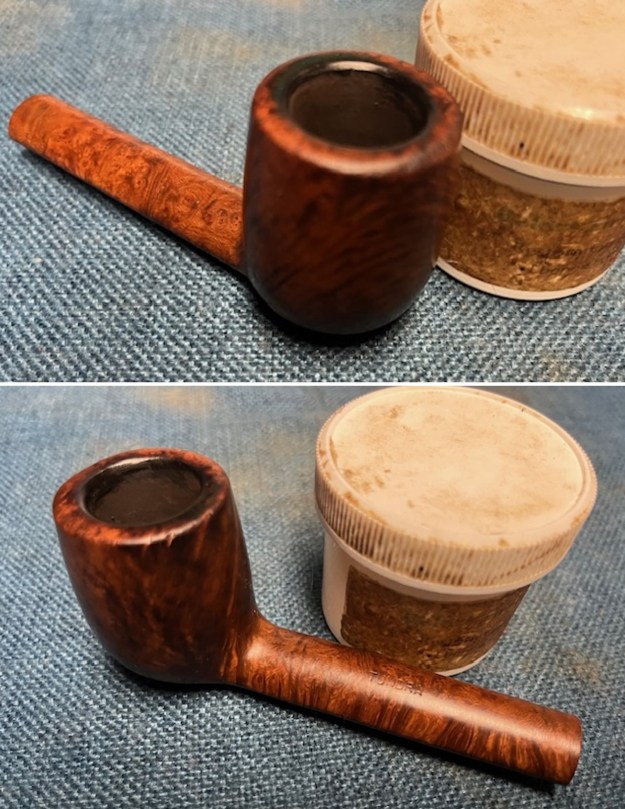
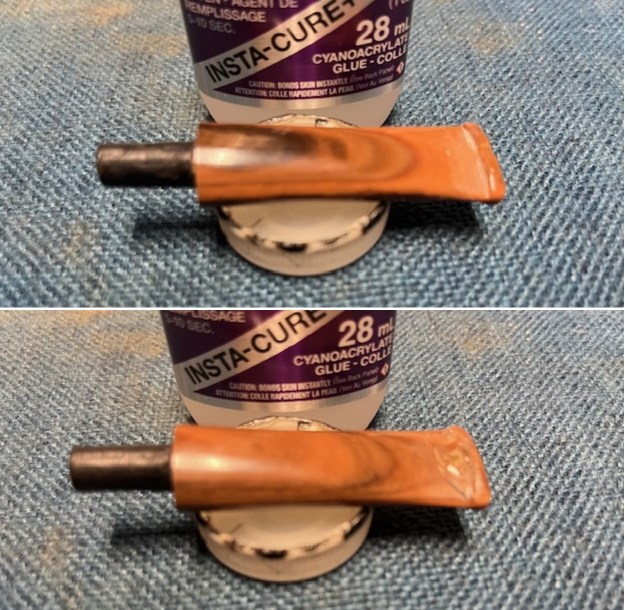
The next pipe on the table was a bowl sans stem that I have had in my box of bowls to be restemmed. It is stamped on the right side of the shank and reads Made in London [over] England and on the underside is stamped the shape number 97. The maker of the pipe is a bit of a mystery. The pipe had been reamed and cleaned by my brother Jeff many years ago. It had been lightly smoked so it was very clean. The rim top and the inner edge were very clean. The finish had been scrubbed and the internals were very clean. I found a long, acrylic, amber, acrylic taper stem in my can of stems that would work with some adjustments. It would need some shaping and polishing but the size and shape of the stem were perfect to start with. I took some photos of the bowl before I worked on it and the new stem. I took photos of the stamping on the pipe right side and underside. It is clear and readable as noted above.I sanded the bowl and shank extension with 320-3500 grit 2×2 inch sanding pads. I wiped the bowl and shank down with a damp cloth after each sanding pad to remove the sanding debris. The pipe began to look much better. I decided to make this little bowl into a Churchwarden and to set of the stem I had chosen I decided to add a thin brass band on the shank for decorative purposes. I picked a band that fit the shank snuggly and glued it in place on the shank. I took photos of the pipe with the band in place on the shank. I think it is going to look very good with the stem I have chosen. I polished the bowl ands shank extension with micromesh sanding pads – wet sanding with 1500-12000 grit pads. I wiped the briar down after each pad with a damp cloth. The bowl is starting to look very good. I worked some Before & After Restoration Balm into the surface of the briar with my fingertips to clean, enliven and protect it. I let the balm sit for a little while and then buffed with a cotton cloth to raise the shine. The photos show the bowl at this point in the restoration process. I turned to the new stem. I went through my can of stems and found a longer amber, acrylic taper stem that would work for the pipe. It had never been used and needed to have a tenon fit in the end that would work in the shank of the pipe. I decided to use a white Delrin tenon as it would be less visible in the stem. I drilled the end of the stem with a drill bit on my cordless drill to fit the end of the tenon.I reduced the diameter of the tenon slightly with a Dremel and sanding drum so that it would fit snugly in the shank of the pipe. I cleaned up the tenon with a flat file. I glued the tenon in the stem with clear CA glue and set it aside to cure. Once the tenon cured in place on the stem I fit it on the shank and took some photos of the new look. I took the stem off the shank and took photos of the look of the pipe and its proportions. It looks good with the brass band and the new amber acrylic stem. I sanded out the scratching on the stem with 320-3500 grit 2×2 inch sanding pads. I wiped the briar down after each pad with a damp cloth to remove the sanding dust and debris. I wiped it down with an Obsidian Oil cloth. It began to look very good.I polished the stem with micromesh sanding pads – wet sanding with 1500-12000 grit sanding pads. I wiped it down after each sanding pad with some Obsidian Oil. I finished polishing it with Before & After Pipe Stem Polish – both Fine and Extra Fine and buffed it off with a cotton cloth. I wiped it down with Obsidian Oil to protect the stem and slow down the oxidation. This restemmed, smooth Made in London England Apple Churchwarden is a beautiful looking pipe that combines a smooth finish with a thin brass band and an amber acrylic stem. The brown stains on the bowl work well to highlight the finish. I put the newly finished stem on the bowl and buffed it with Blue Diamond on the buffing wheel being careful to not buff the stamping. I gave the bowl and the stem multiple coats of carnauba wax on the buffing wheel and followed that by buffing it with a clean buffing pad. I hand buffed the pipe with a microfiber cloth to deepen the shine. The finished pipe is quite nice and feels great in the hand. Give the finished pipe a look in the photos below. The dimensions of the pipe are Length: 8 inches, Height: 1 ½ inches, Outside diameter of the bowl: 1 ¼ inches, Chamber diameter: ¾ of an inch. The weight of the pipe is 42 grams/1.55 ounces. I will soon be adding it to the British Pipe Makers Section of the rebornpipes store. Thanks for walking through the restoration with me as I worked over another beautiful pipe.

Remember we are not pipe owners; we are pipemen and women who hold our pipes in trust until they pass on into the trust of the next generation.

Restemming and Restoring a Savinelli Made ICE AGE 644 Volcano


by Steve Laug

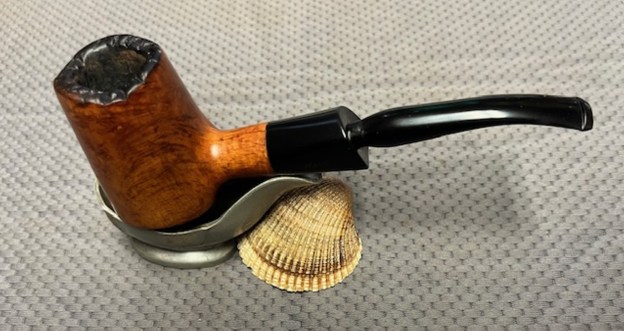
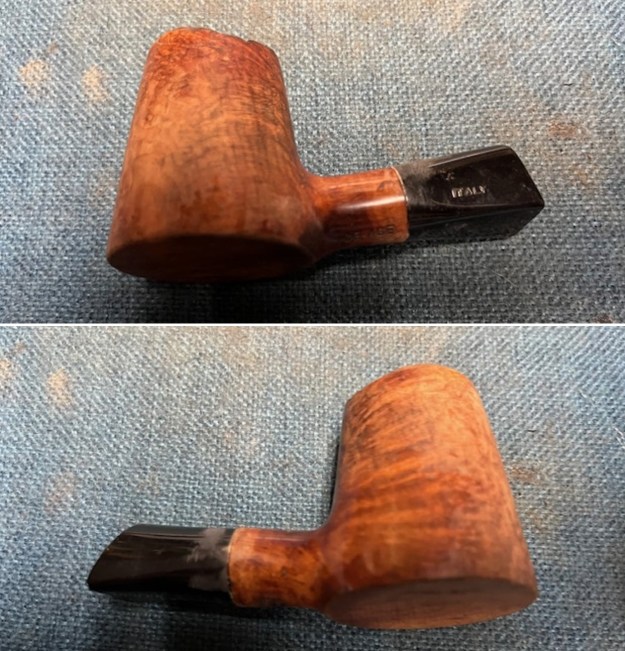
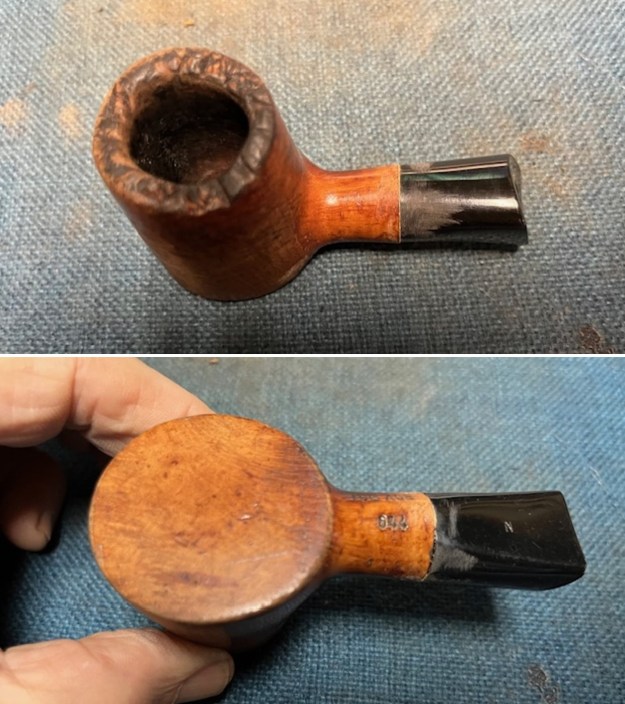
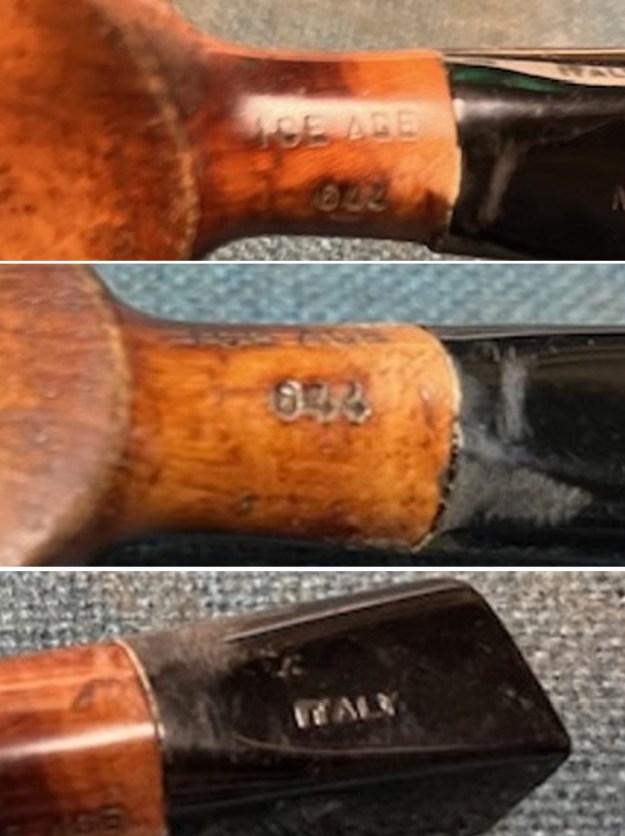
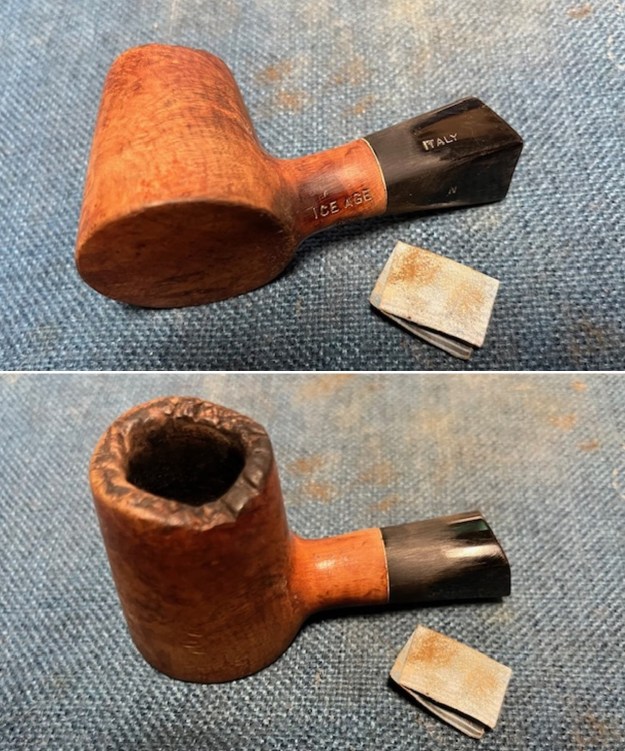
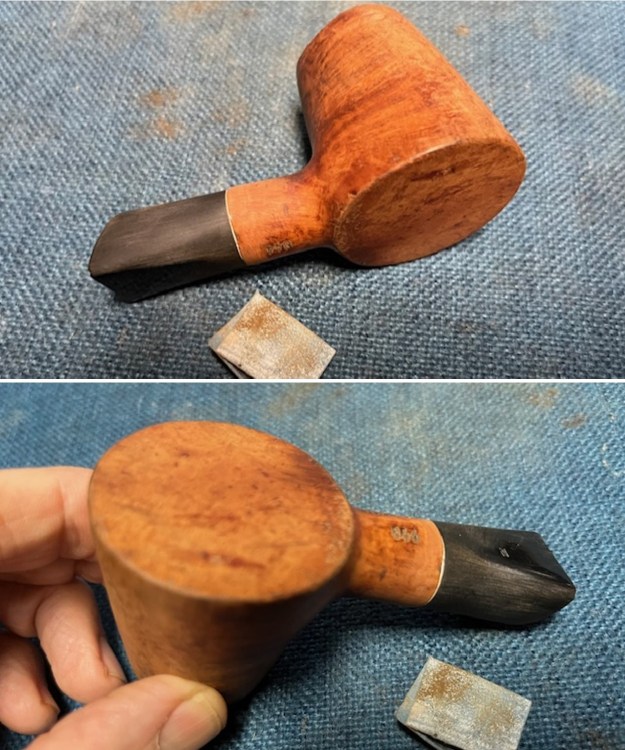
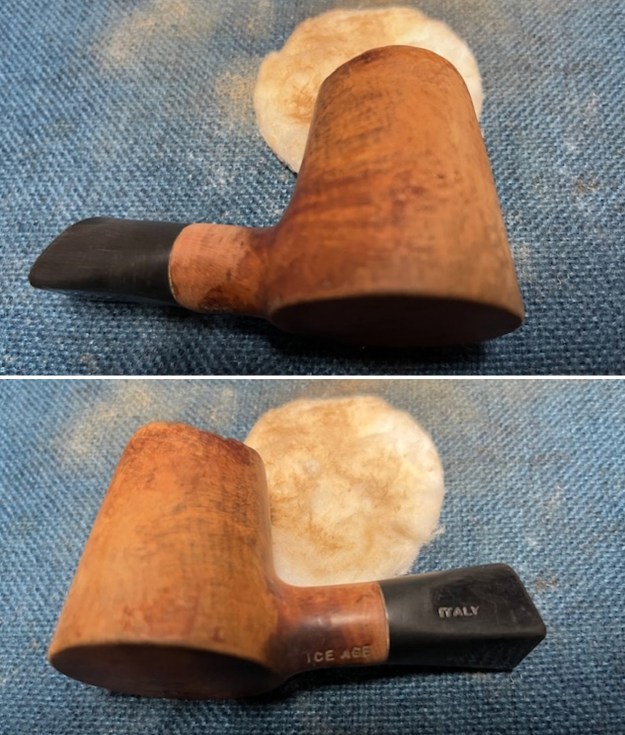
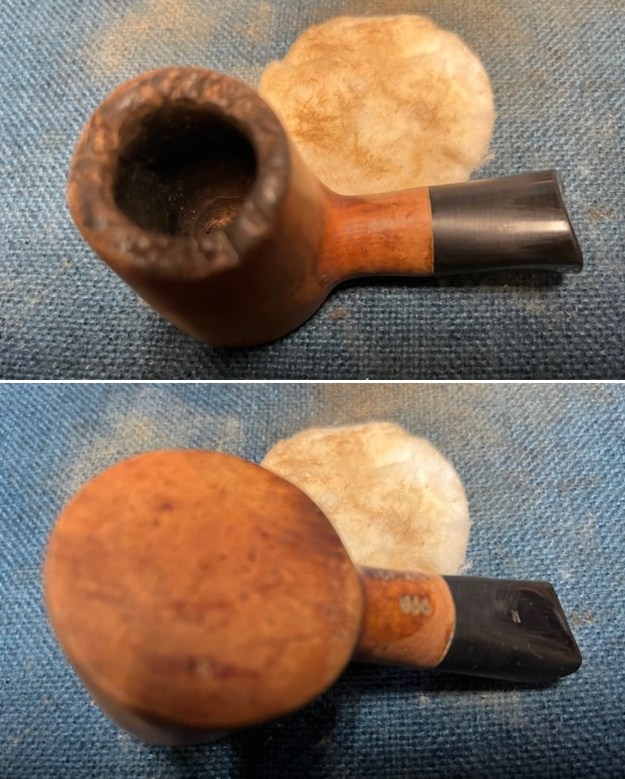
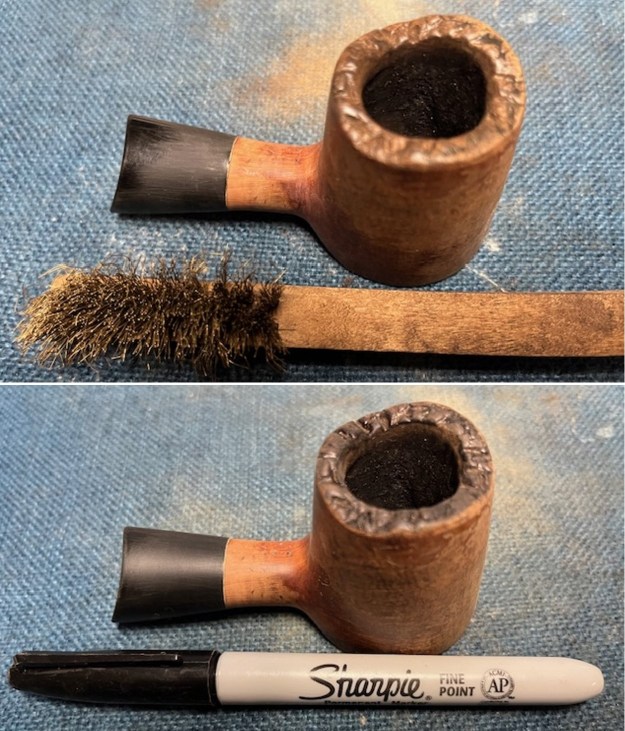
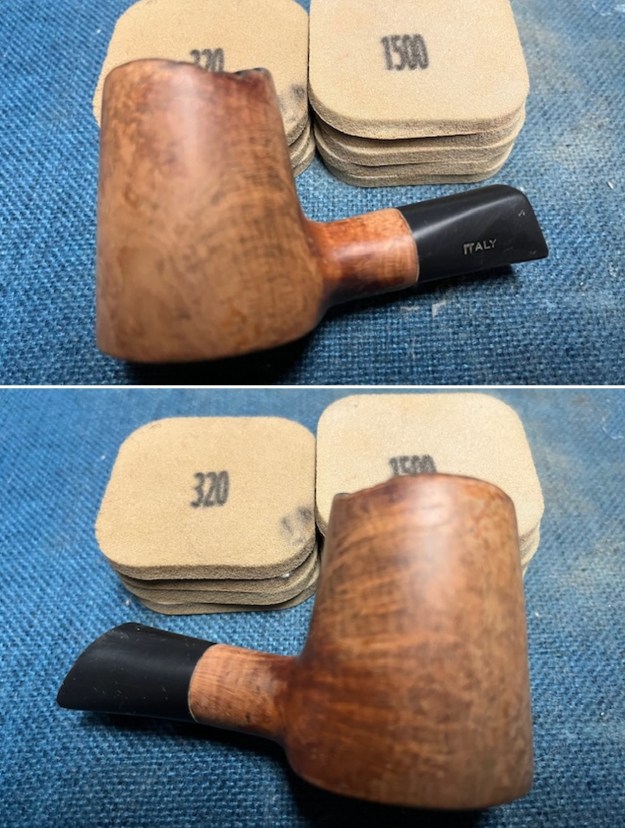
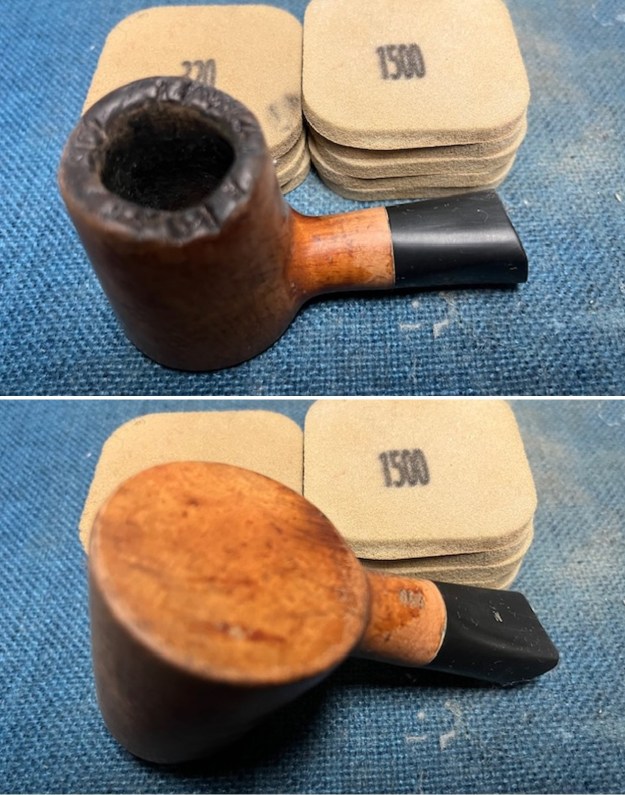
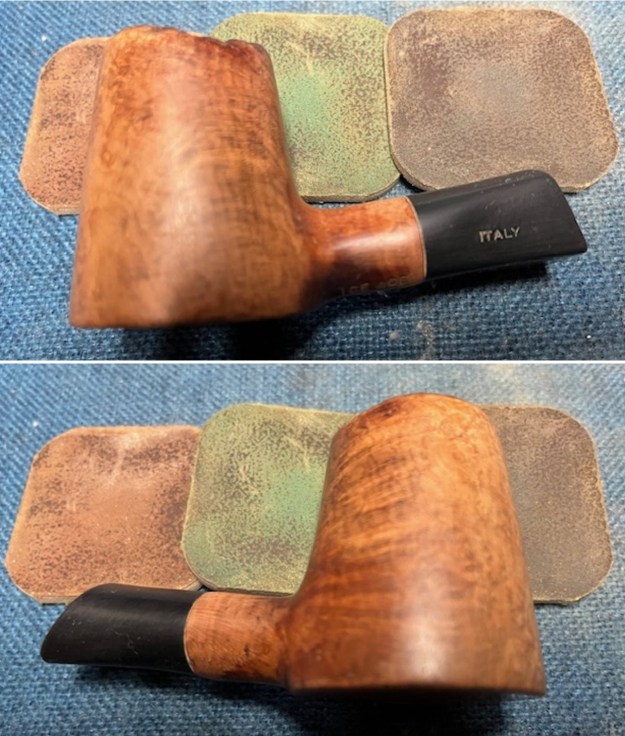
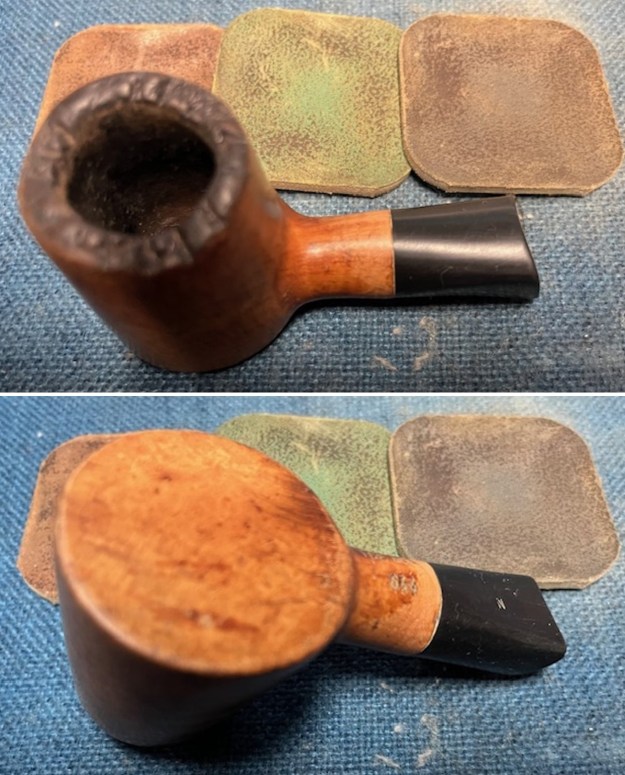
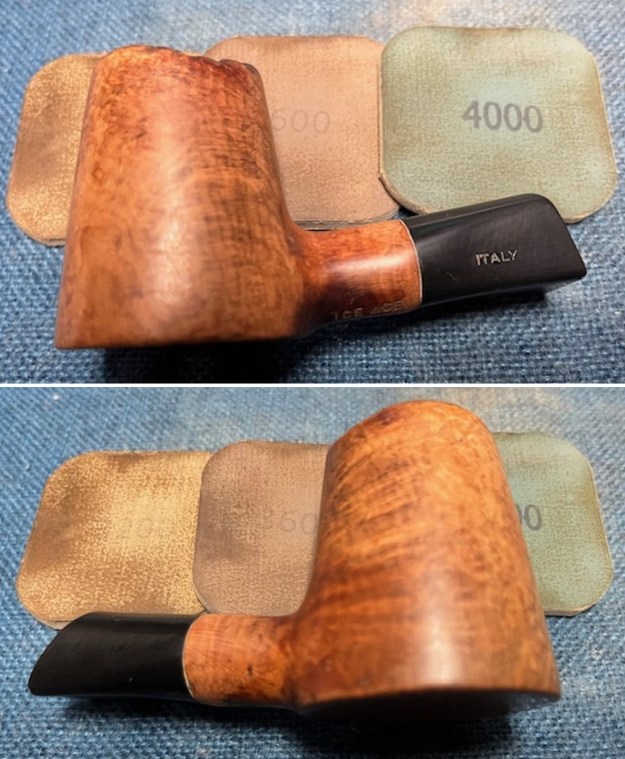
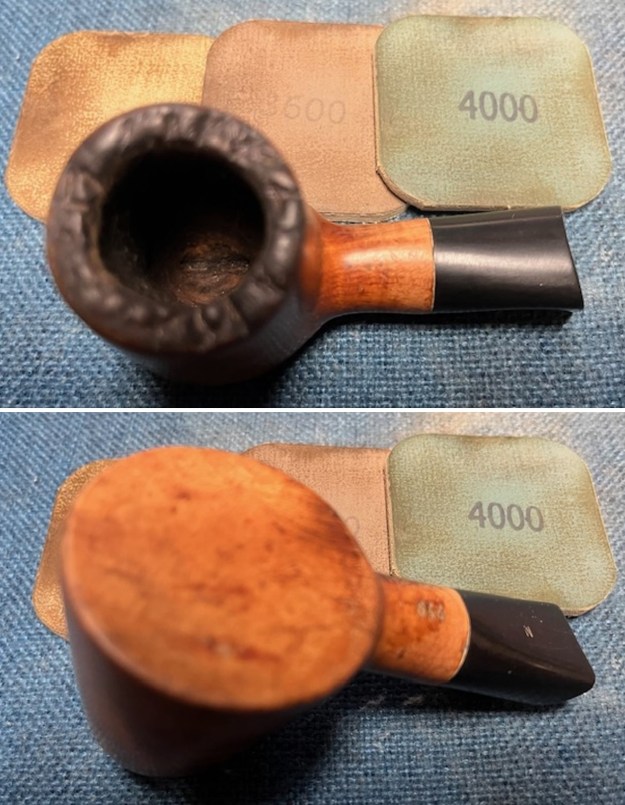
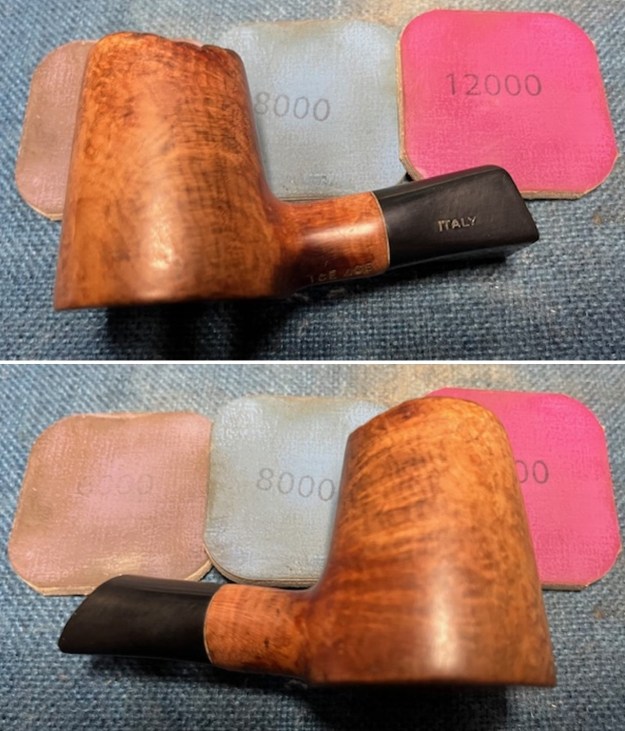
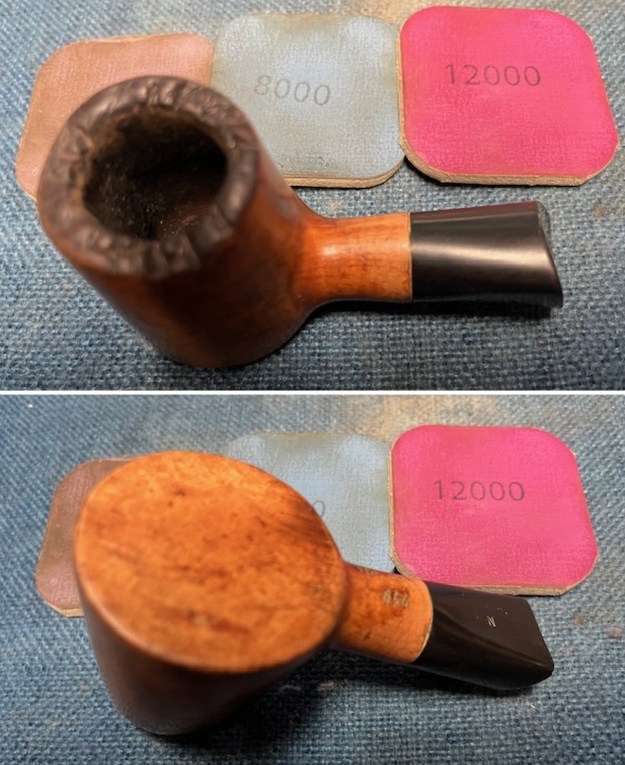
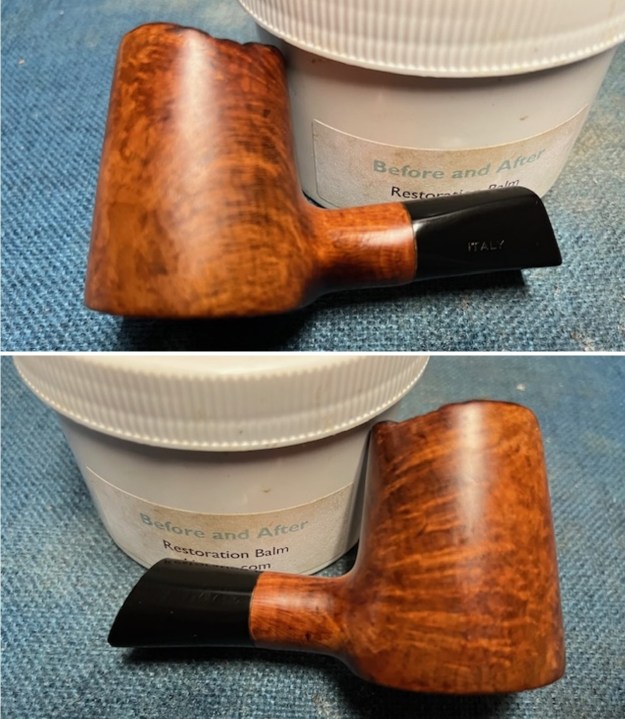
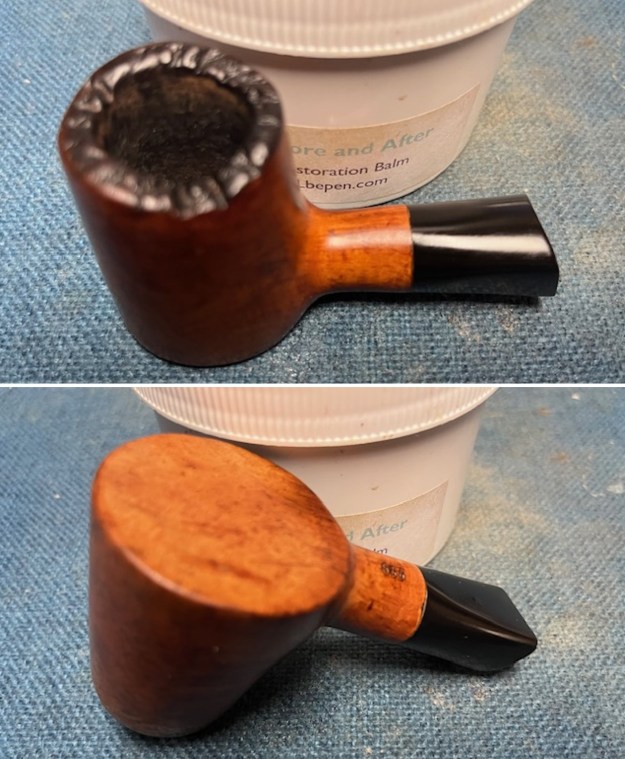
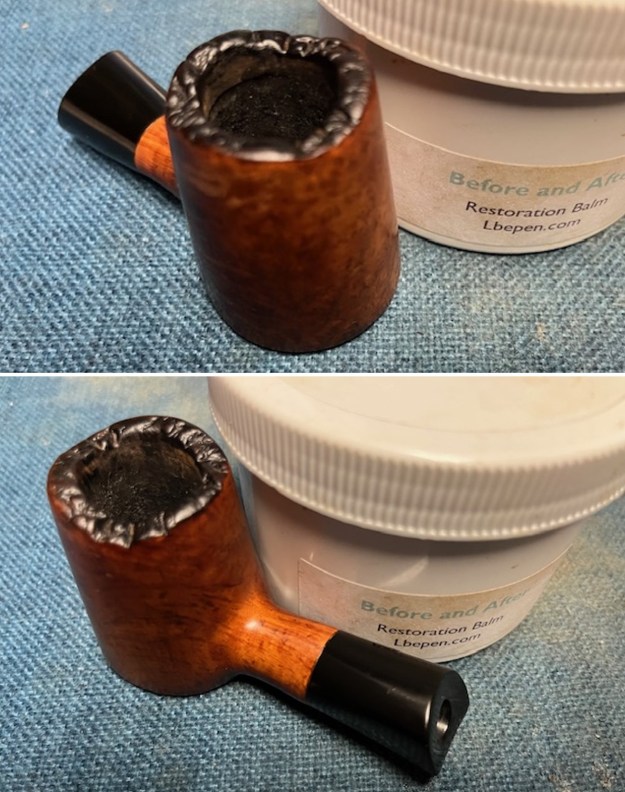
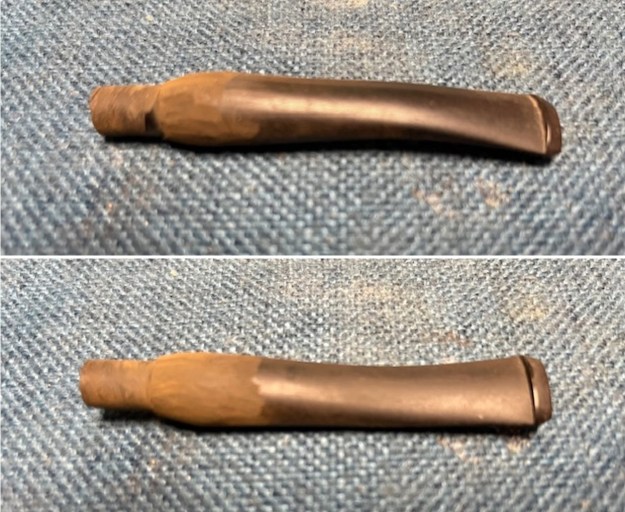
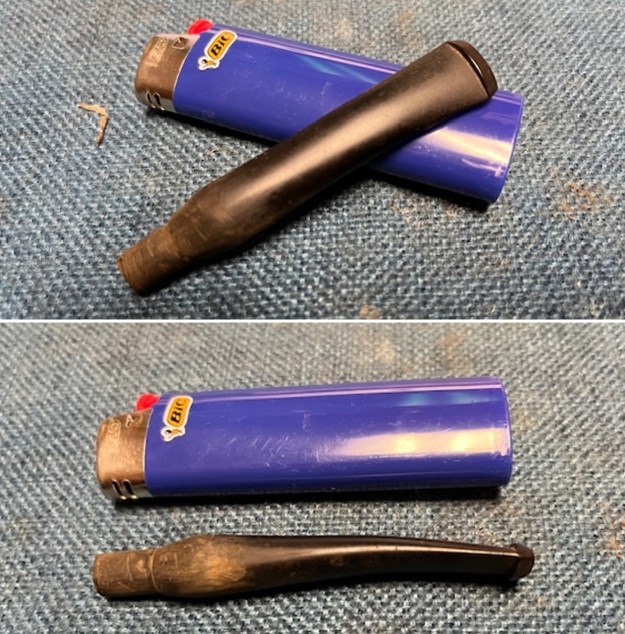
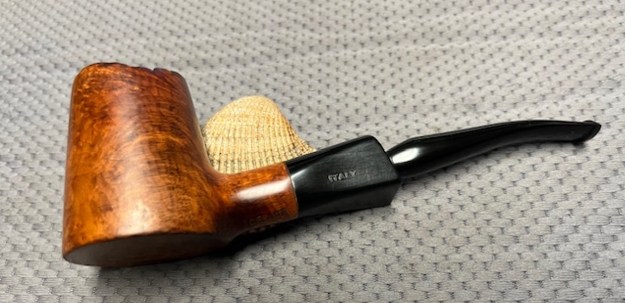
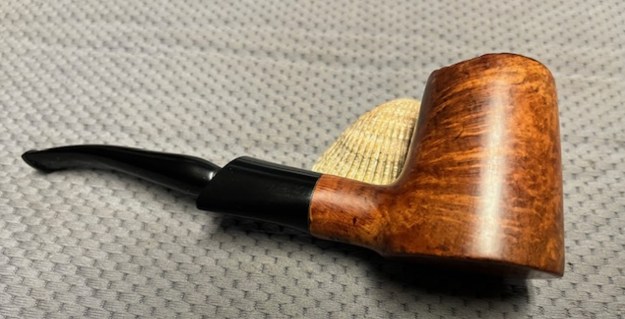
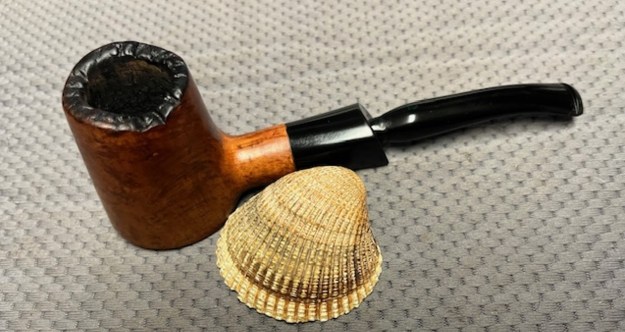
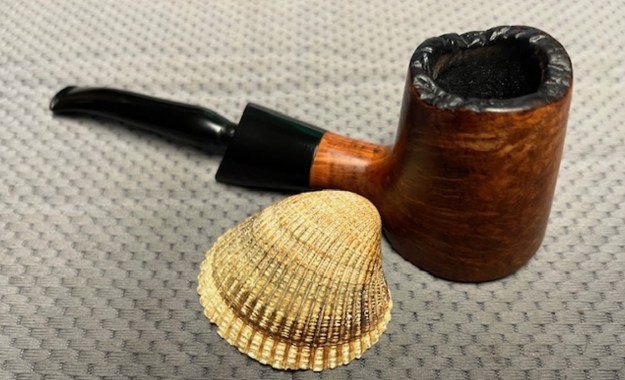
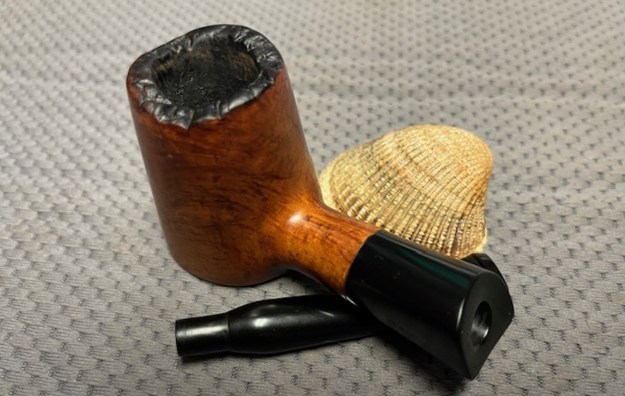
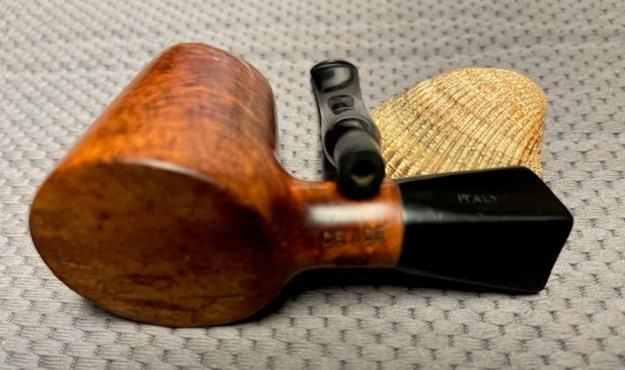
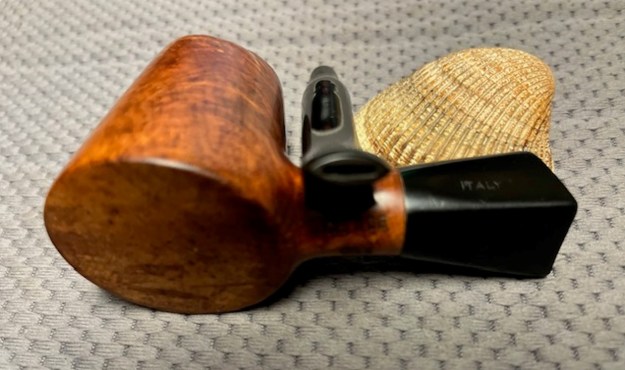
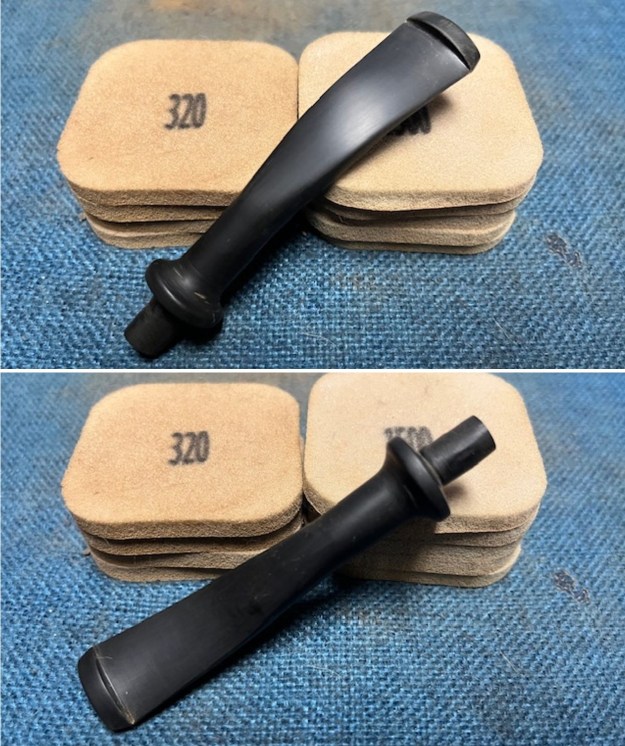
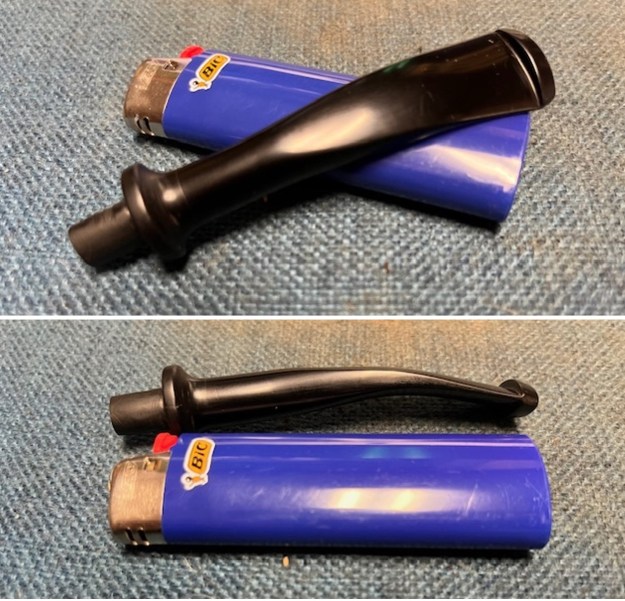
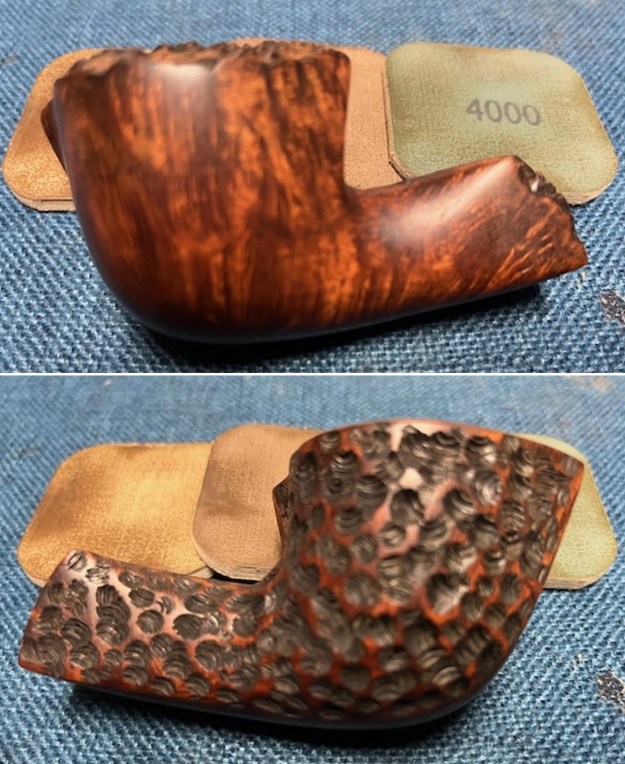
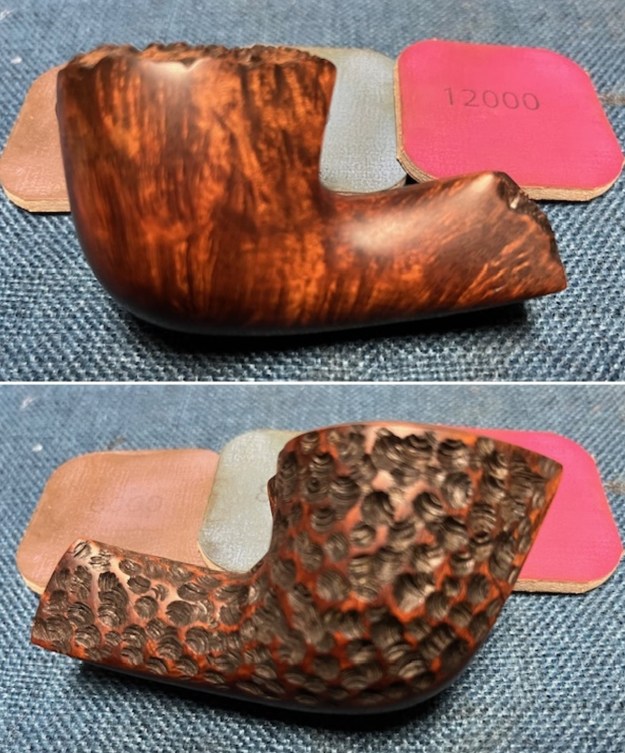
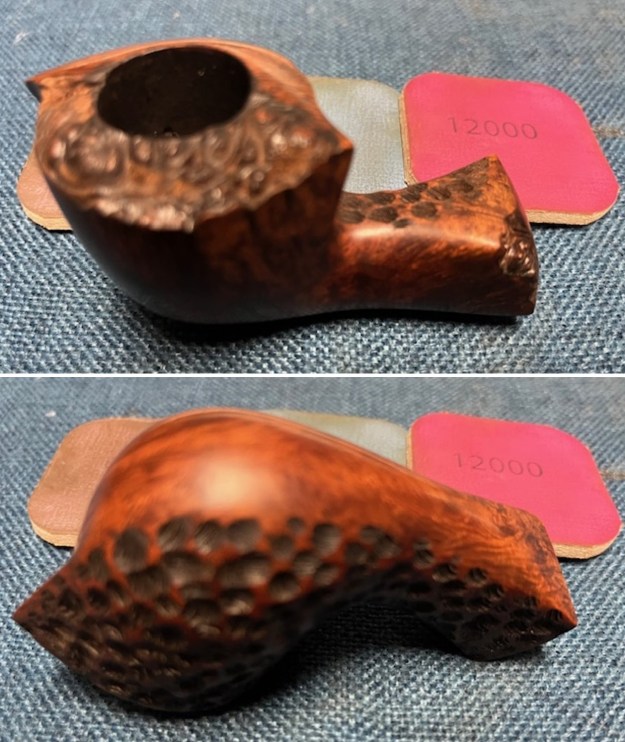
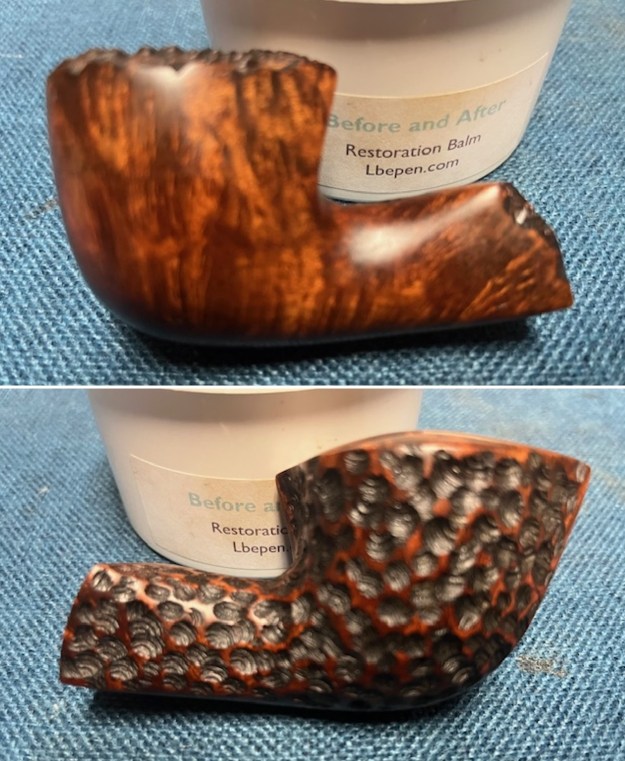
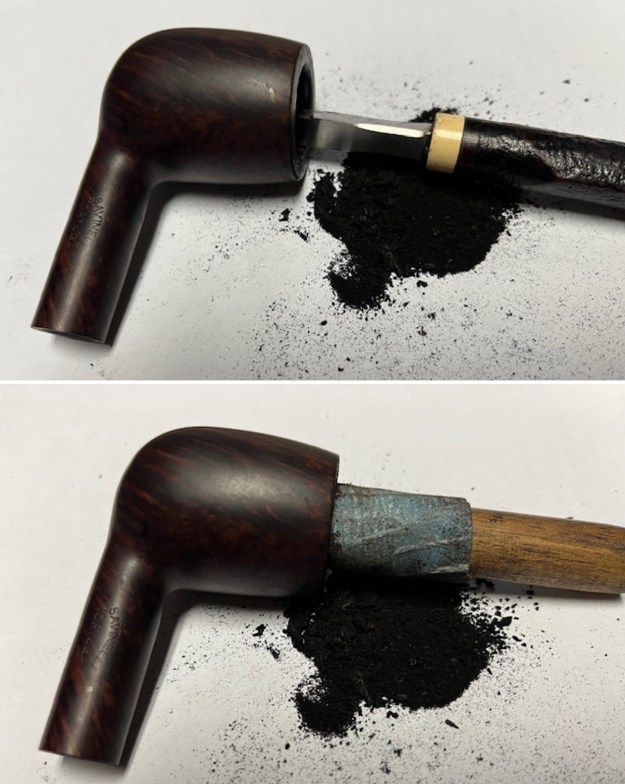
The next pipe on the table was a bowl sans stem that I have had in my box of bowls to be restemmed. It is stamped on the left side of the shank and reads ICE AGE and on the underside is stamped the shape number 644. On the acrylic shank extension left side it is stamped Italy and on the underside of the extension it is stamped N. From my previous work on one of these I knew that I was dealing with a Savinelli product. The pipe had been reamed and cleaned by my brother Jeff many years ago. The rusticated rim top had some darkening around the top and the inner edge but otherwise was clean. The finish had been scrubbed and there was a peeling coat of varnish around the sides and heel. The acrylic shank extension was loose and there was a threaded metal tenon that it screwed onto. I would need to align the extension and shape it to fit smoothly with the shank.  I found a vulcanite taper stem in my can of stems that would work with some adjustments. It would need some shaping and tapering but the size and shape were perfect to start with. I took some photos of the bowl before I worked on it and the new stem. I took photos of the stamping on the pipe and the acrylic shank extension. It is clear and readable as noted above. You can see from the photos that the shank extension is snug but does not line up with the round shape of the shank very well. Work will need to be done on it.I adjusted the fit of the shank extension to the shank with 220 grit sandpaper. It took a lot of hand sanding to get the fit correct. It lines up well and the fit to the shank is snug. I glued it in place on the metal tenon in the shank so that the fit did not move. I wiped the bowl down with acetone on cotton pads to remove the spots of varnish on the bowl and shank. It looked much better when I was finished. I cleaned the rim top with a brass bristle wire brush to remove the debris. It looked much better. I stained the rim top with a black Sharpie Pen. I went over it once again with the brush and it looked much better.I sanded the bowl and shank extension with 320-3500 grit 2×2 inch sanding pads. I wiped the bowl and shank down with a damp cloth after each sanding pad to remove the sanding debris. The pipe began to look much better. I polished the bowl ands shank extension with micromesh sanding pads – wet sanding with 1500-12000 grit pads. I wiped the briar down after each pad with a damp cloth. The bowl is starting to look very good. I worked some Before & After Restoration Balm into the surface of the briar with my fingertips and into the plateau rim top and shank end with a horsehair shoe brush to clean, enliven and protect it. I let the balm sit for a little while and then buffed with a cotton cloth to raise the shine. The photos show the bowl at this point in the restoration process. I turned to the new stem. I went through my can of stems and found a taper stem that would work for the pipe. I gave the stem a smooth angle from the tenon up to the stem. I used a Dremel and sanding drum to give it a new shape.I heated the stem with the flame of a Bic lighter until it softened. I gave it a slight bend so that it followed the flow of the pipe. I sanded the stem with a folded piece of 220 grit sandpaper. I sanded the stem with 320-3500 grit 2×2 inch sanding pads. I wiped the briar down after each pad with a damp cloth to remove the sanding dust and debris. I wiped it down with an Obsidian Oil cloth. It began to look very good.I polished the stem with micromesh sanding pads – wet sanding with 1500-12000 grit sanding pads. I wiped it down after each sanding pad with some Obsidian Oil. I finished polishing it with Before & After Pipe Stem Polish – both Fine and Extra Fine and buffed it off with a cotton cloth. I wiped it down with Obsidian Oil to protect the stem and slow down the oxidation. This restemmed, smooth Savinelli Made Ice Age 644  Volcano Italy is a beautiful looking pipe that combines a smooth finish with a unique shaped acrylic shank extension. The brown stains on the bowl work well to highlight the finish. I put the newly finished stem on the bowl and buffed it with Blue Diamond on the buffing wheel being careful to not buff the stamping. I gave the bowl and the stem multiple coats of carnauba wax on the buffing wheel and followed that by buffing it with a clean buffing pad. I hand buffed the pipe with a microfiber cloth to deepen the shine. The finished pipe is quite nice and feels great in the hand. Give the finished pipe a look in the photos below. I can only tell you that like the other pipes I am working that it is much prettier in person than the photos capture. The dimensions of the pipe are Length: 6 inches, Height: 2 inches, Outside diameter of the bowl: 1 ¼ inches, Chamber diameter: ¾ of an inch. The weight of the pipe is 54grams/1.90ounces. I will soon be adding it to the Italian Pipe Makers Section of the rebornpipes store. Thanks for walking through the restoration with me as I worked over another beautiful pipe. Remember we are not pipe owners; we are pipemen and women who hold our pipes in trust until they pass on into the trust of the next generation.

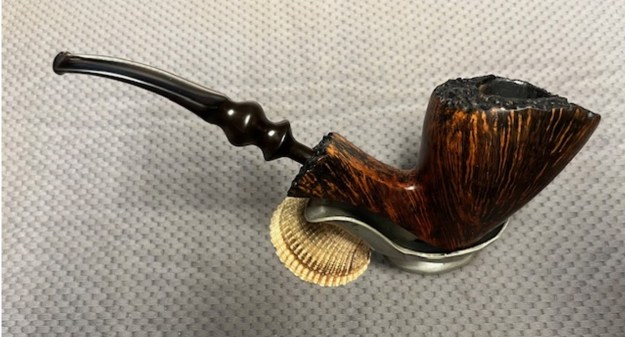
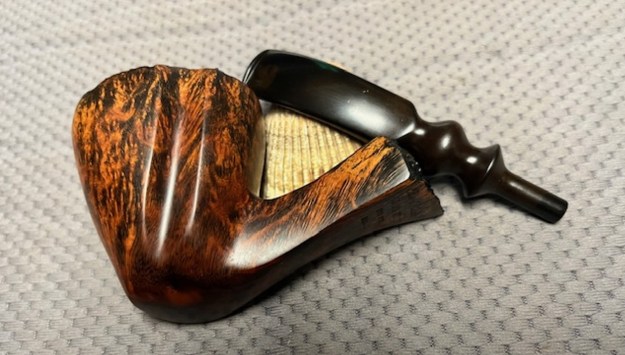
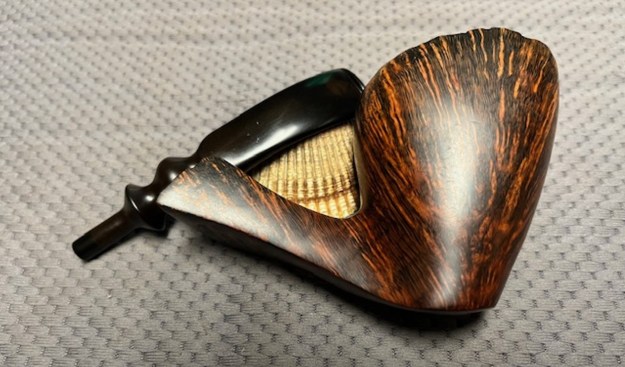
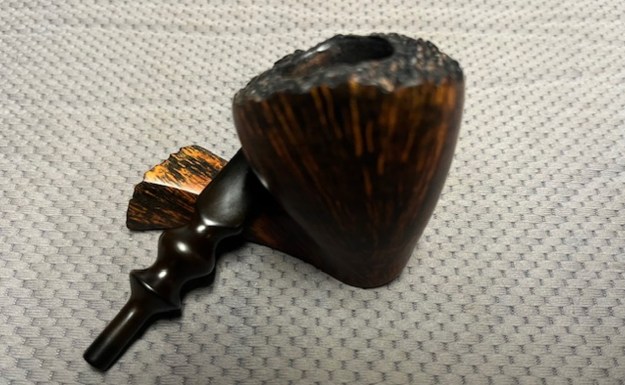
Replacing a broken tenon on a Karl Erik Carved Jobey Dansk 1 Sandblast Freehand


blog by Steve Laug

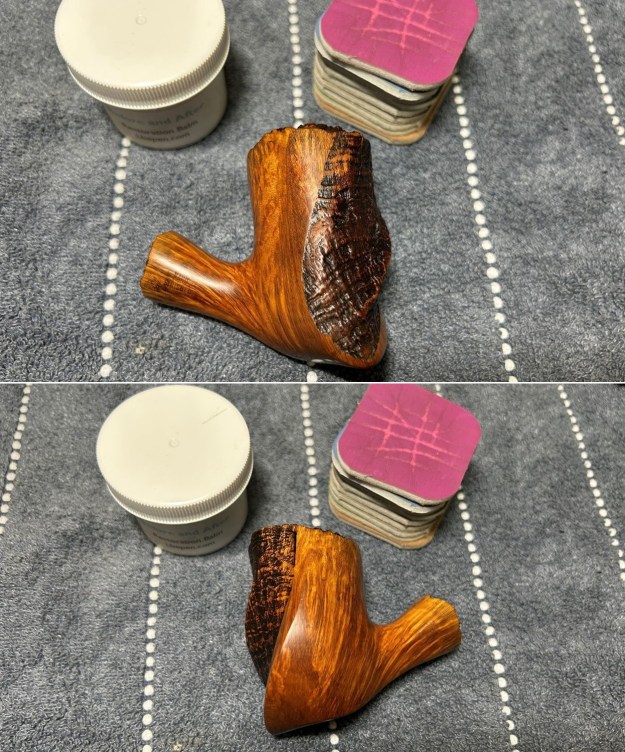
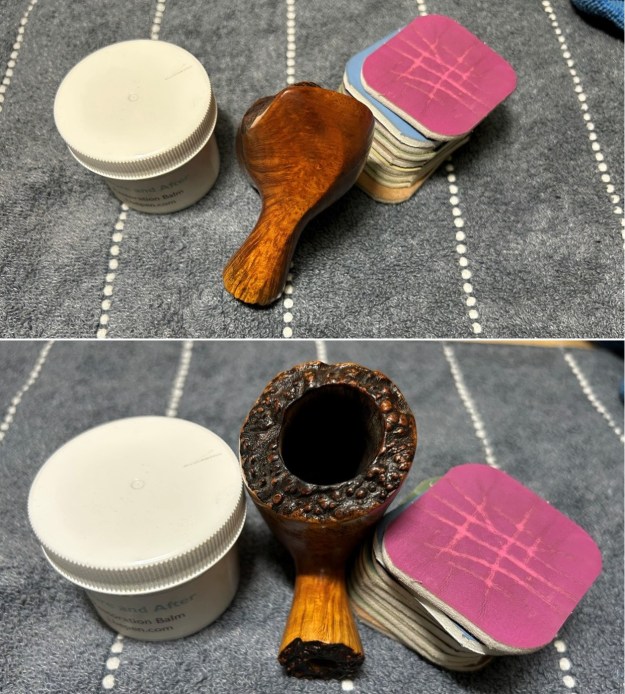
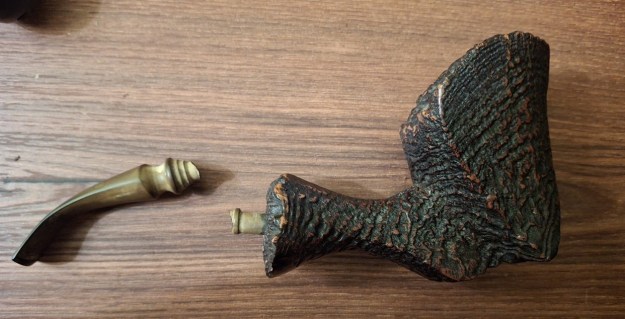
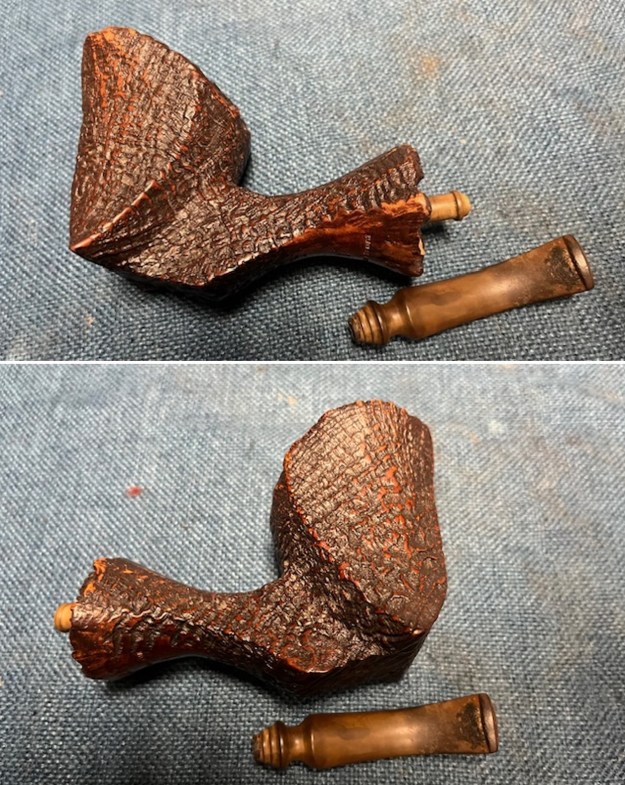
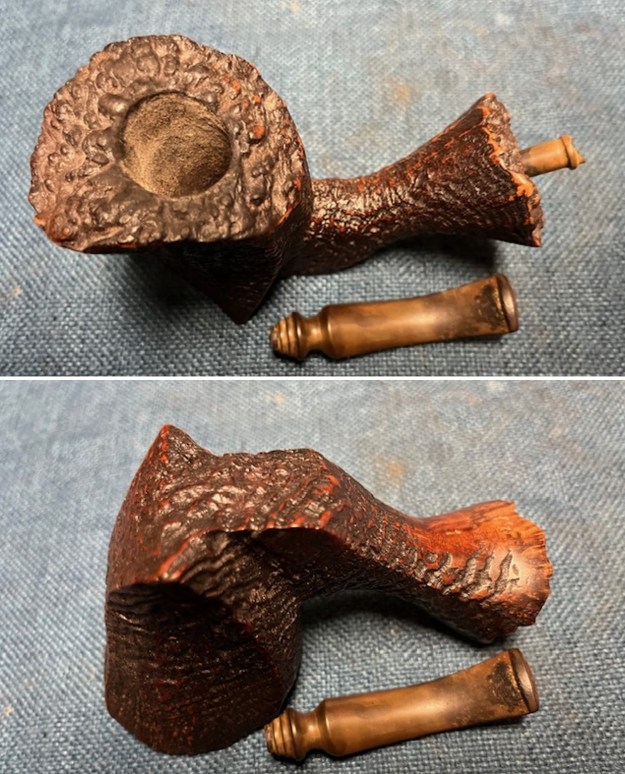
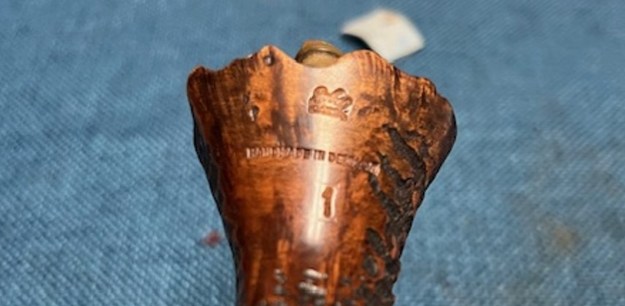
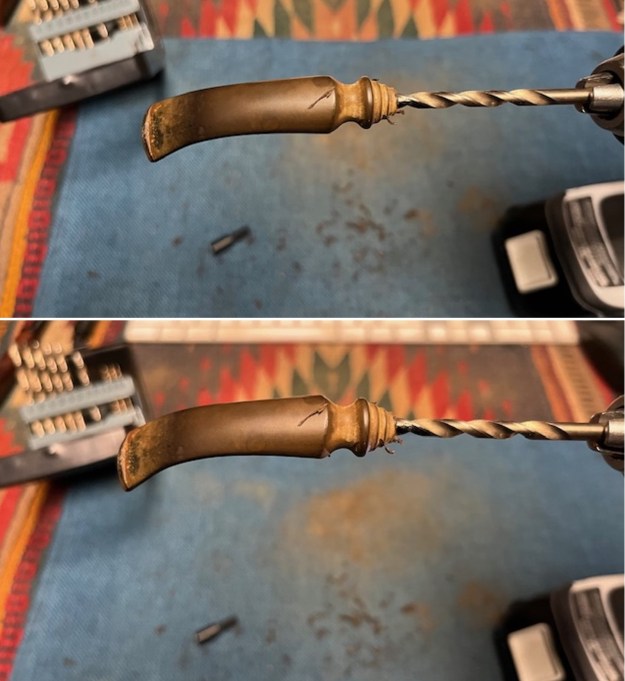
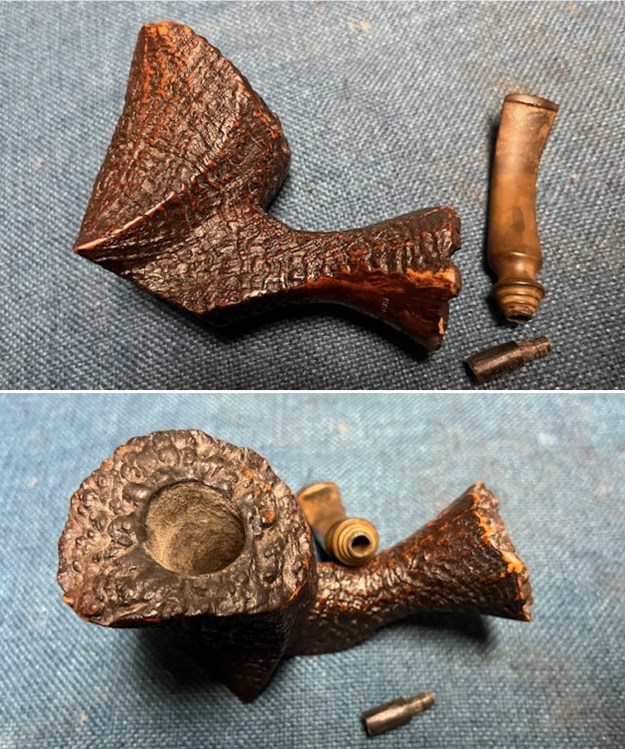
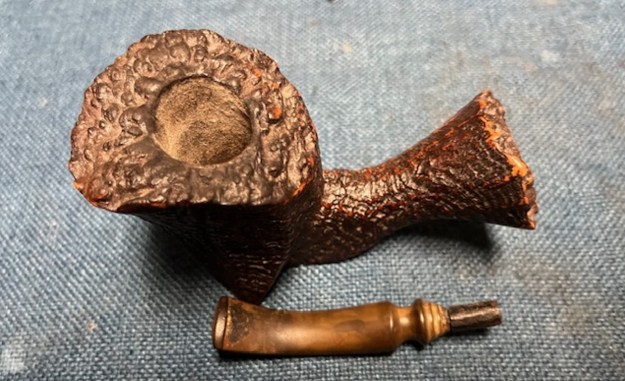
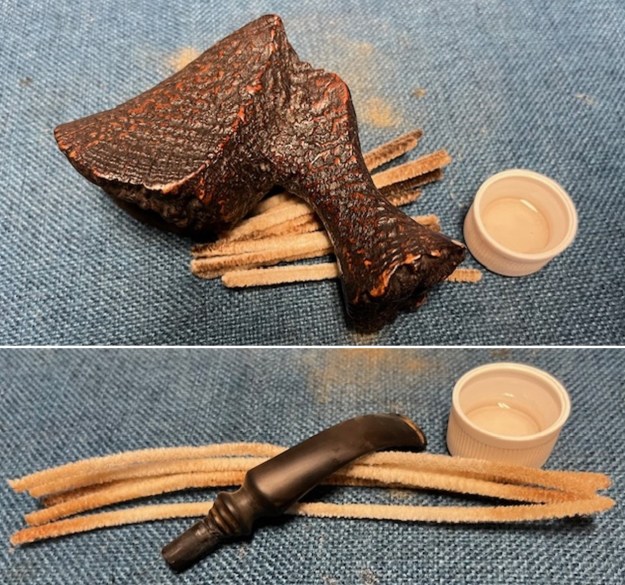
Late in September I received an email from Al about a broken stem on his Jobey Dansk 1 Handmade Freehand. I asked him to send me a photo of the pipe showing its condition and what it needed. We emailed back and forth and I told him I could replace the tenon and use the existing stem. He sent the pipe and parts just before Canada Post went on strike so it took forever to get here. This weekend the pipe arrived and I was excited to work on it. It had really nice sandblast finish on the bowl and shank and plateau on the top of the rim and on the end of the shank. It was stamped on the underside of the shank and read Jobey in script [over] Dansk. Underneath it read Handmade in Denmark [over] 1. The carving followed the flow of the sandblast grain very well and really served to showcase it. There was something familiar about the style of carving that reminded me of other Danish Freehand pipes I have worked on. I remembered that Jobey Dansk pipes were carved by Karl Erik. There was some dust in the valleys of the plateau and the sandblast. The bowl was lined with a thin cake. The stem snapped off and the tenon was stuck in the shank end. The break was not quite square but it was clean with no cracks in the stem portion. I have included a photo of the pipe that Al sent me to show the overall condition of the bowl and stem.I unpacked the pipe from the carefully packed box that had been opened by Canadian Customs and had its customs tape on the bottom of the box. I unwrapped it and laid it on the work table so show its condition. You can see the snapped tenon in the shank and the stem showing the break. I took photos of the pipe as it looked before I started. I took a photo of the stamping on a smooth panel on the underside of the shank to show the clarity and readability of the words. It read as noted above and is very clear.I used a pair of pliers to pull the broken tenon out of the shank. I flattened the end of the stem so that it was flat and then used a series of drill bits to open the end of the stem to receive the new tenon. I began with a bit slightly larger than the airway and ended with one that was the size of the threaded tenon that would go in the airway.I used a Dremel and sanding drum to reduce the diameter of the threaded portion of the insert end and also the diameter of the tenon. I took photos of the parts before I put them together. I took a photo of the tenon inserted in the stem. I coated the threaded end of the new tenon with black rubberized CA glue and then pressed it into the open airway in the stem. I adjusted it so the tenon was straight and then set it aside to let the glue harden.I wanted to look at who had carved the Jobey Dansk line to confirm my suspicions I had about it. I had a feeling that the pipes were carved by a Danish carver known as Karl Erik. I looked up the Jobey listing on Pipedia (https://pipedia.org/wiki/Jobey) and found the following information. I quote a portion of the article that is pertinent as follows.

English – American – Danish – French… Information about the brand Jobey are only to be found in form of smithereens… Probably established in England around 1920(?) the brand hiked into the USA later. In the course of time owner, distributor and manufacturer changed repeatedly. As far as known:

George Yale Pipes & Tobacco, New York (1942)

Norwalk Pipe Co., New York (1949)

Arlington Briar Pipes Corp., Brooklyn (when?)

Hollco International, New York (1969).

Weber Pipe Co., Jersey City, NJ (1970’s)

The Tinder Box, (1970’s – 80’s).

Throughout decades Jobey pipes were mainly sold in the USA, Canada and England but remained almost unknown in continental Europe. The bulk of Jobeys was predominantly made according to classical patterns and mainly in the lower to middle price range. The predominant judgment of the pipe smokers reads: “A well-made pipe for the price.” So, there is hardly anything very special or exciting about Jobey pipes although a flyer from ca. 1970 assures: “The briar root Jobey insists upon for its peer of pipes is left untouched to grow, harden and sweeten for 100 years. […]Jobey uses only the heart of this century old briar and only one out of 500 bowls turned measures up to the rigid Jobey specifications.” 99.80% of cull… that makes the layman marveling!

Yet then there are partially really exciting Freehands mainly in the seventies, that Jobey – Weber owned back then – bought from Danish pipe genius Karl Erik Ottendahl. These pipes were offered as Jobey Dansk – ’70’s pure! (BTW waning sales caused Ottendahl to discontinue exports to the United States in 1987.)

From that information, my suspicions were confirmed. The pipe that I was working on was carved by Karl Erik Ottendahl. There were some similarities to the Karl Erik pipes that I have worked on in the past. The dating of the pipe line in the 70s fits well with the pipe I have in hand.

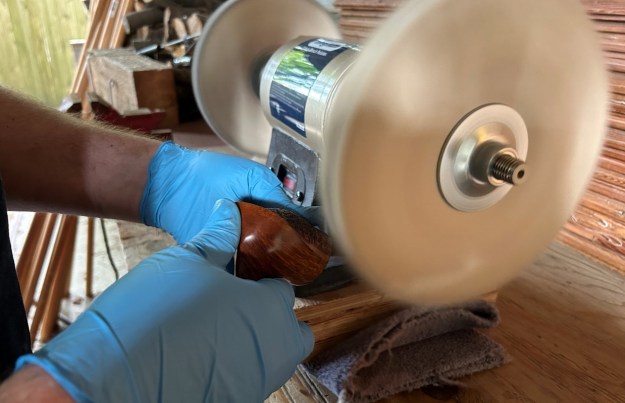
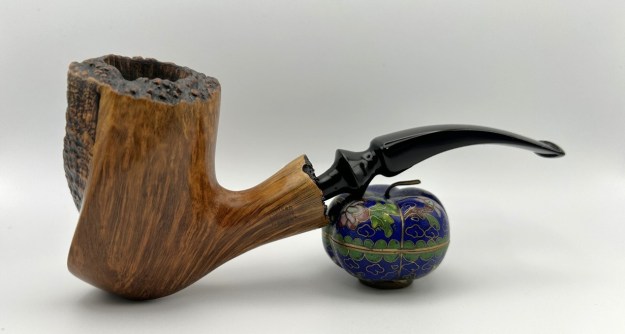
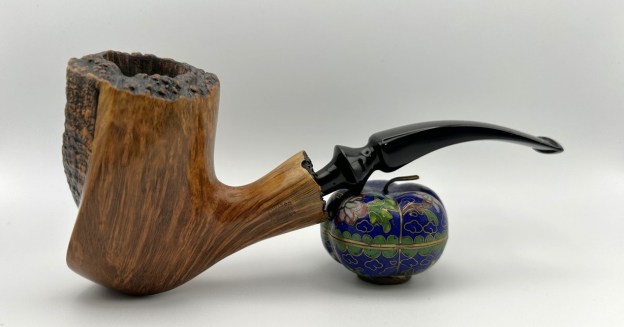
I cleaned out the airway in the shank and stem with alcohol, cotton swabs and pipe cleaners. I wiped out the inside of the bowl with a damp cloth.I scrubbed the externals of the bowl with undiluted Murphy’s Oil Soap and a tooth brush. I rinsed it off with running water and dried the bowl with a soft cloth. I worked over the plateau on the rim top and shank end with a brass bristle wire brush to clean out the hard lava that seems have filled in some of the crevices. It came out looking much better at this point in the process.I worked some Before & After Restoration Balm into the surface of the sandblast and plateau surface of the briar with my fingertips and with a horsehair shoe brush to clean, enliven and protect it. I let the balm sit for a little while and then buffed with a cotton cloth to raise the shine. The photos show the bowl at this point in the restoration process. I set the bowl aside and turned my attention to the stem that I had repaired. I sanded out the tooth chatter and light marks ahead of the button on both sides with 220 grit sandpaper.I scrubbed the stem and the new tenon with Soft Scrub Cleanser and cotton pads to remove the oxidation in the grooves of the turned saddle stem. It looked much better at this point in the process.I sanded the stem with 320-3500 grit 2×2 inch sanding pads. I wiped it down after each sanding pad with an Obsidian Oil cloth to remove the dust and debris.I polished the stem with micromesh sanding pads – wet sanding with 1500-12000 grit sanding pads. I wiped it down after each sanding pad with some Obsidian Oil. I finished polishing it with Before & After Pipe Stem Polish – both Fine and Extra Fine and buffed it off with a cotton cloth. This is a beautiful Sandblast Jobey Dansk 1 Handmade by Karl Erik with a fancy, turned, black vulcanite stem. It has a great look and feel. The shape fits well in the hand with the curve of the bowl and shank junction a perfect fit for the thumb around the bowl when held. I polished stem and the bowl with Blue Diamond polish on the buffing wheel. I gave the sandblast bowl and the plateau on the rim top and shank end multiple coats of Conservator’s Wax. I gave the stem multiple coats of carnauba wax. I buffed the pipe with a clean buffing pad to raise the shine. I hand buffed it with a microfiber cloth to deepen the shine. The pipe polished up pretty nicely. The rich combination of browns and black in the smooth finishes and the plateau areas took on life with the buffing. The rich colour of the briar works well with the polished vulcanite stem. I like the grain and finished look of this Jobey Dansk 1 Sandblast Freehand pipe. Have a look at it with the photos below. The shape, finish and flow of the pipe and stem are very well done. The dimensions are Length: 7 inches, Height: 2 ¾ inches, Outside diameter of the bowl: 2 inches wide x 2 ¾ inches long, Chamber diameter: ¾ of an inch. The weight of the pipe is 3.17 ounces /91 grams. This Danish Freehand is a real beauty. Thanks for walking through the restoration with me as I worked over another beautiful pipe. This one will be going back to Al shortly. I look forward to hearing what he thinks. Thanks for your time.

Rebirthing a French made DM over UNIC Algerian Briar Panel Sitter


by Steve Laug

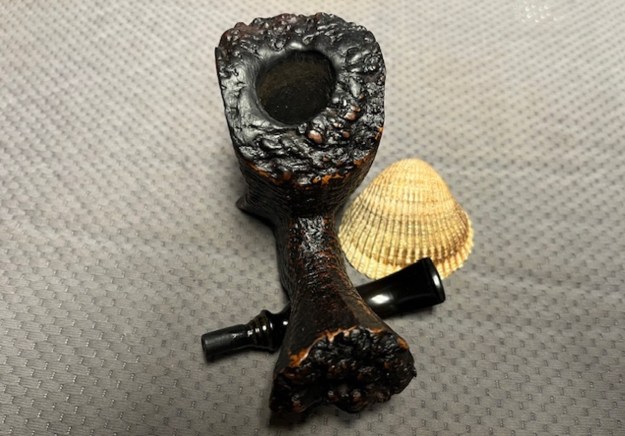
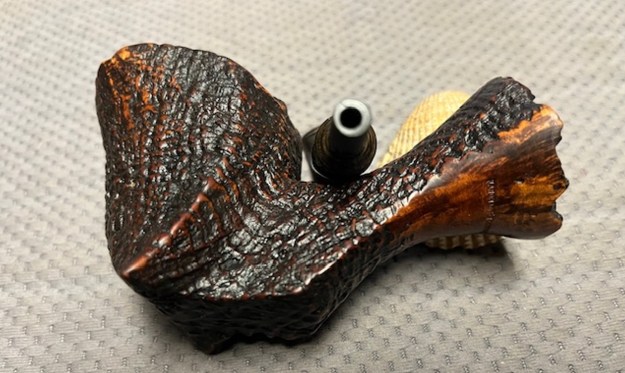
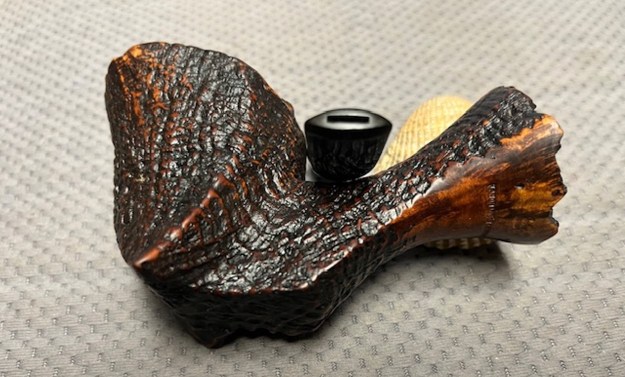
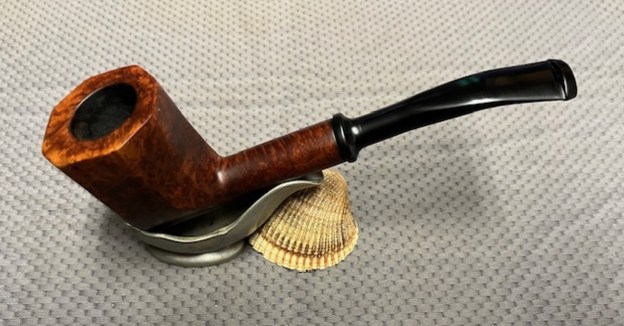
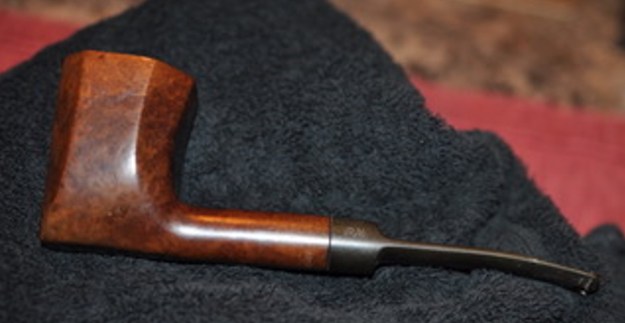
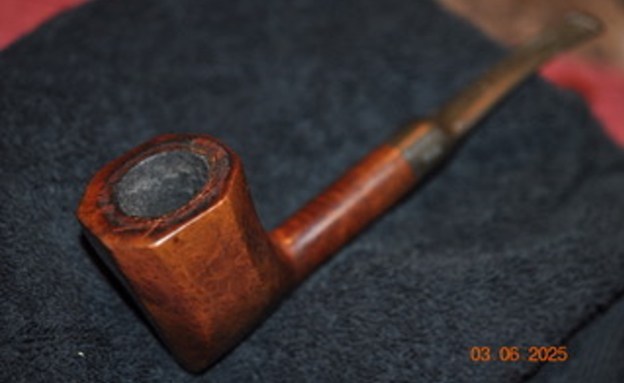
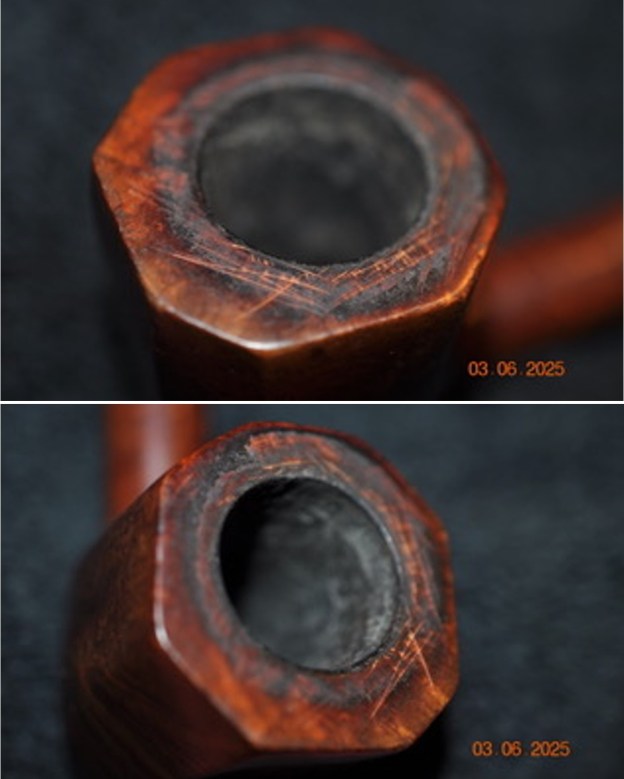
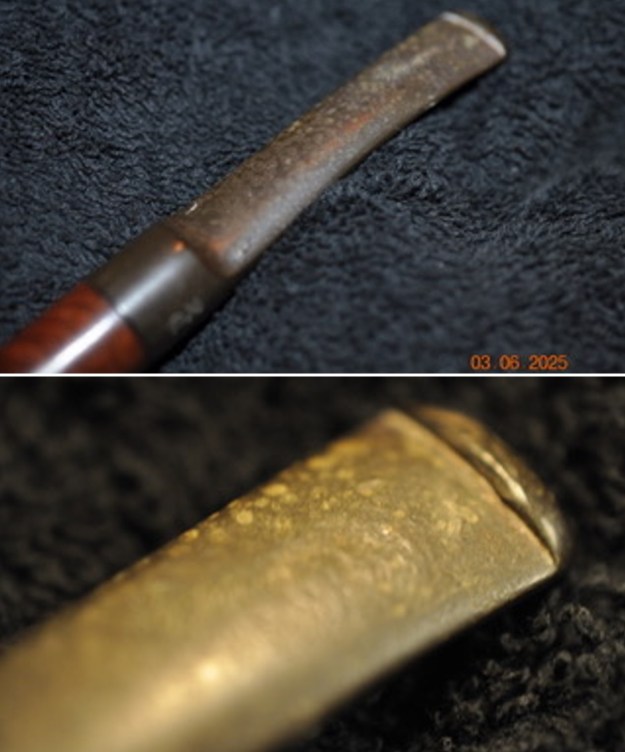
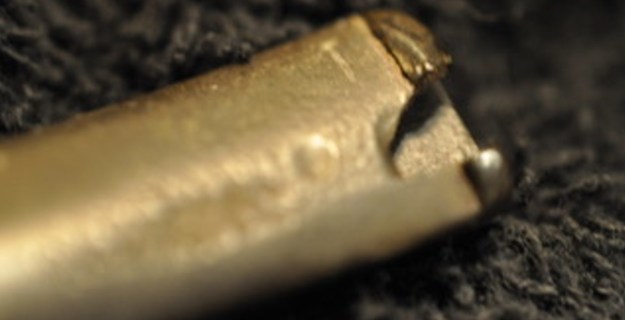
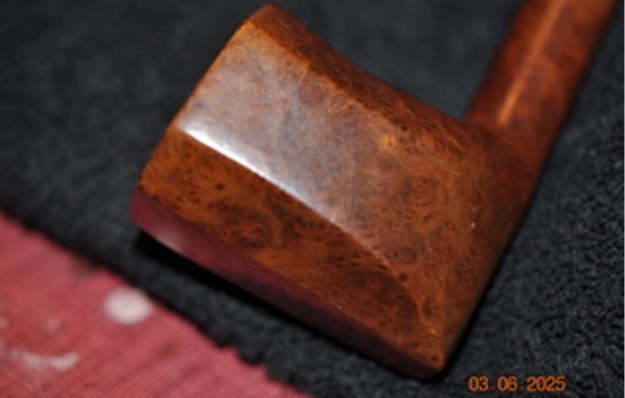
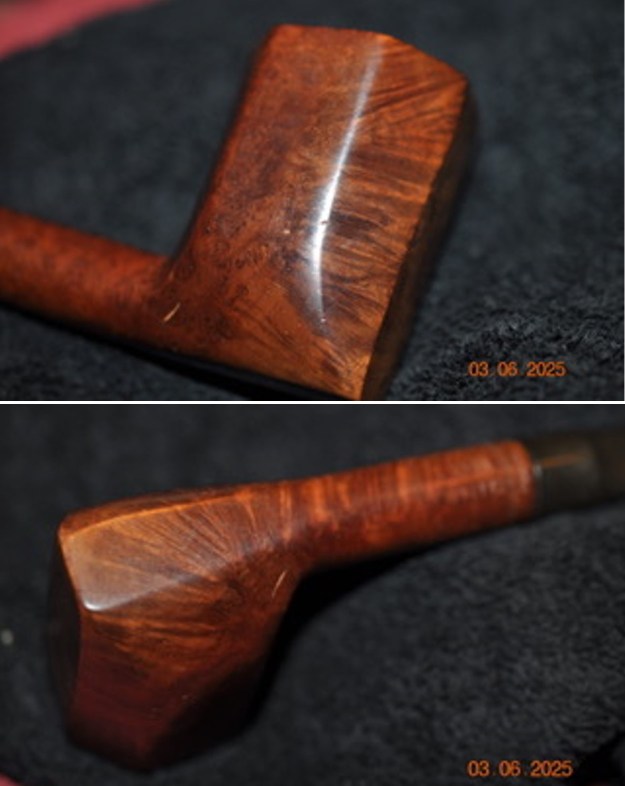
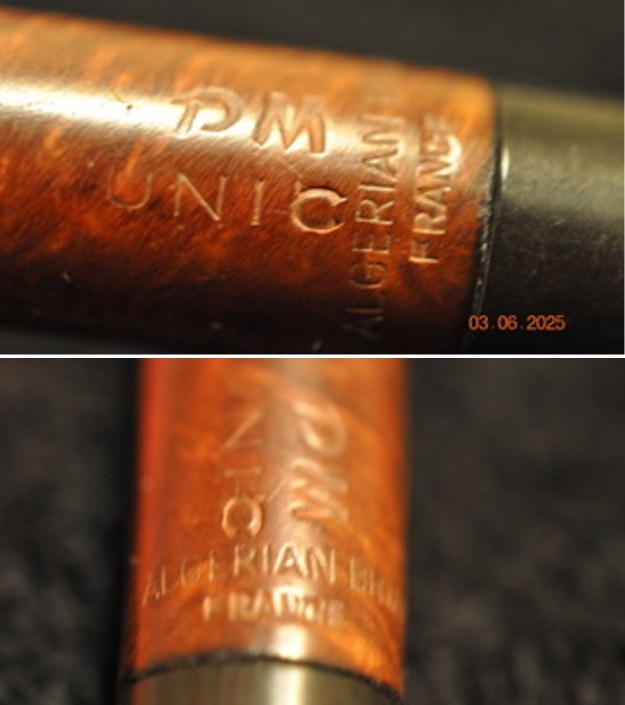
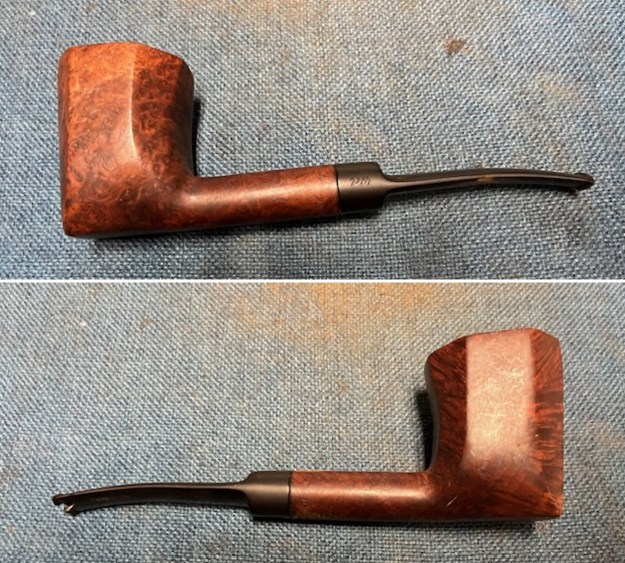
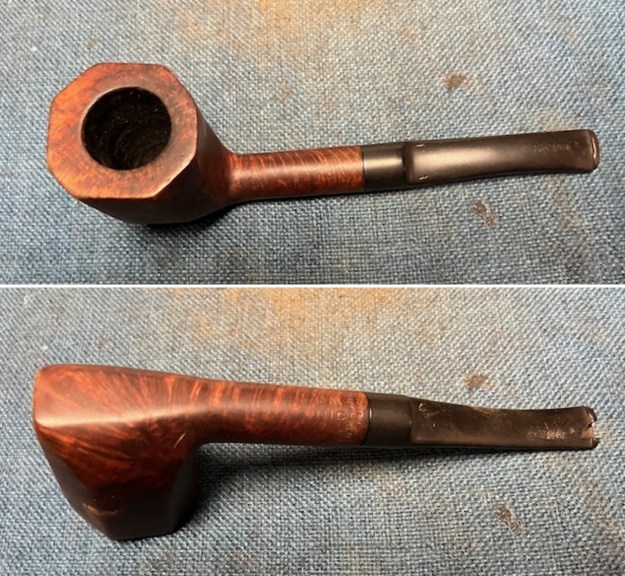
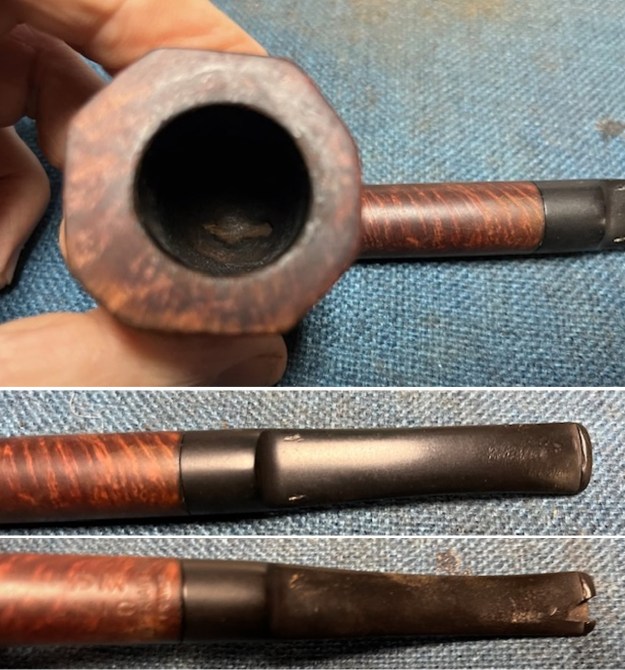
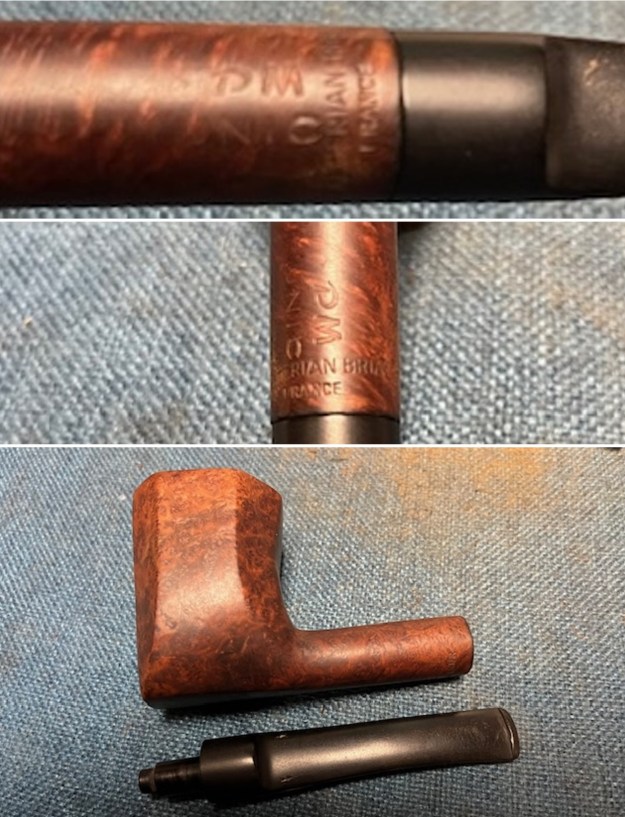
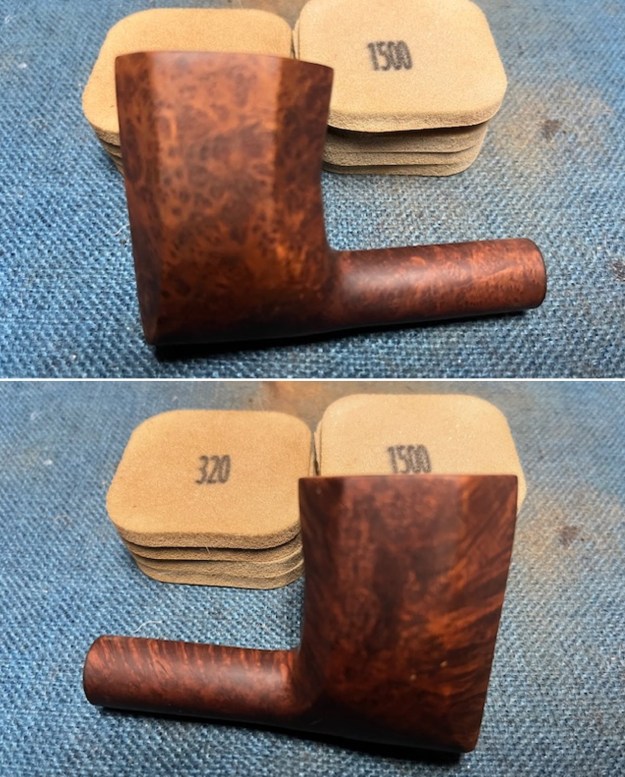
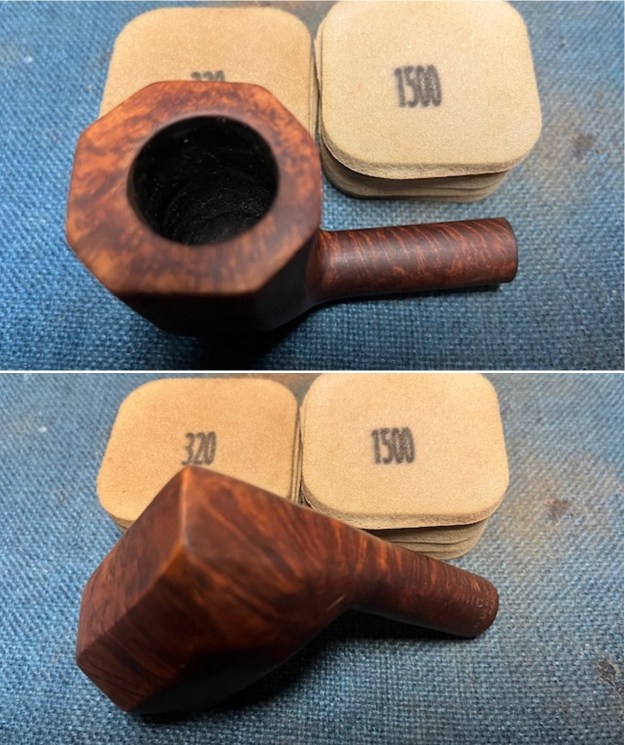
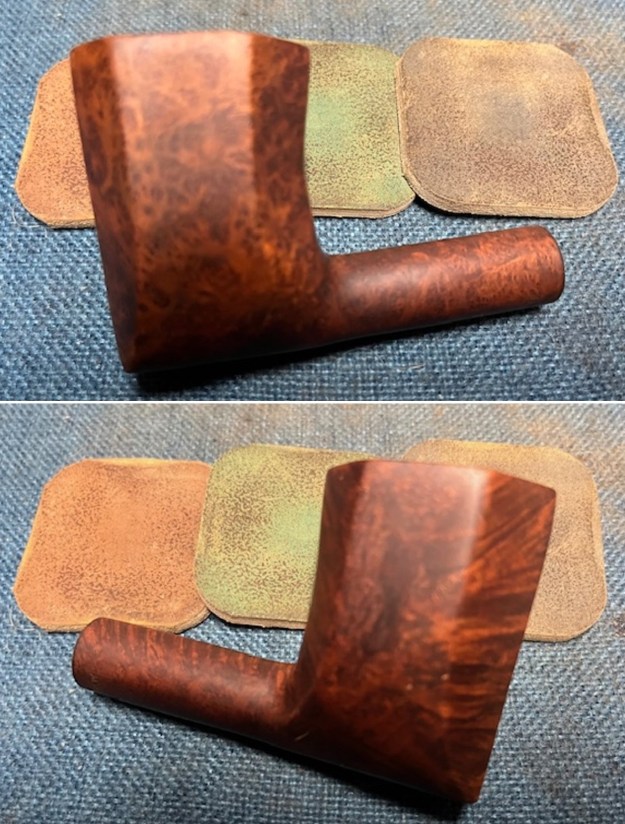
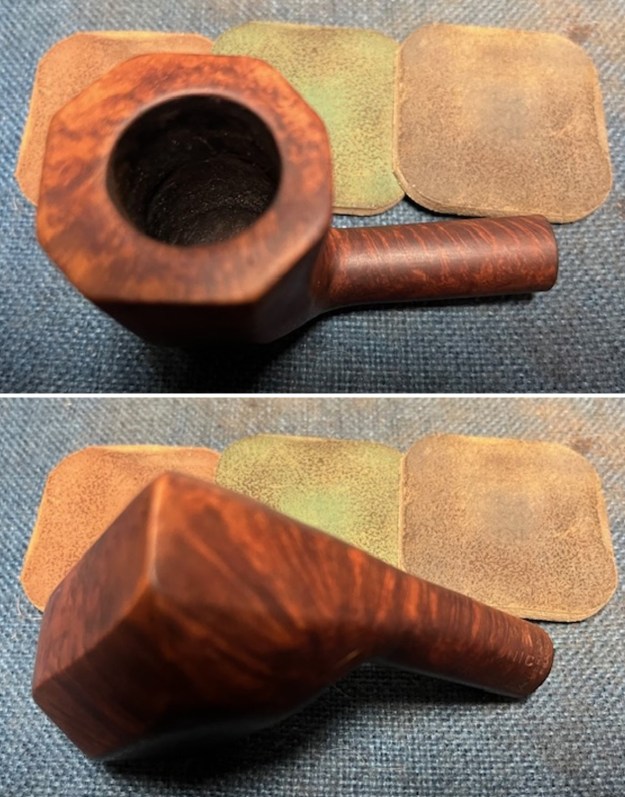
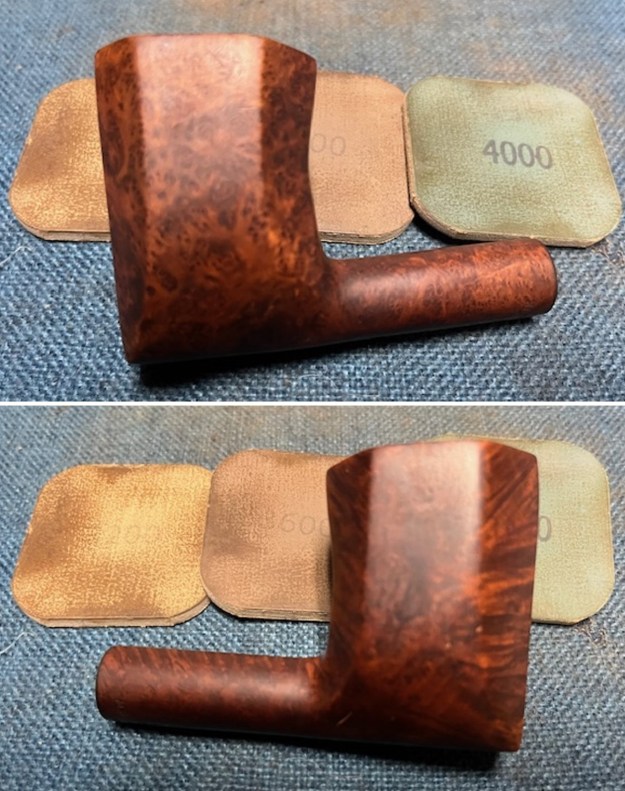
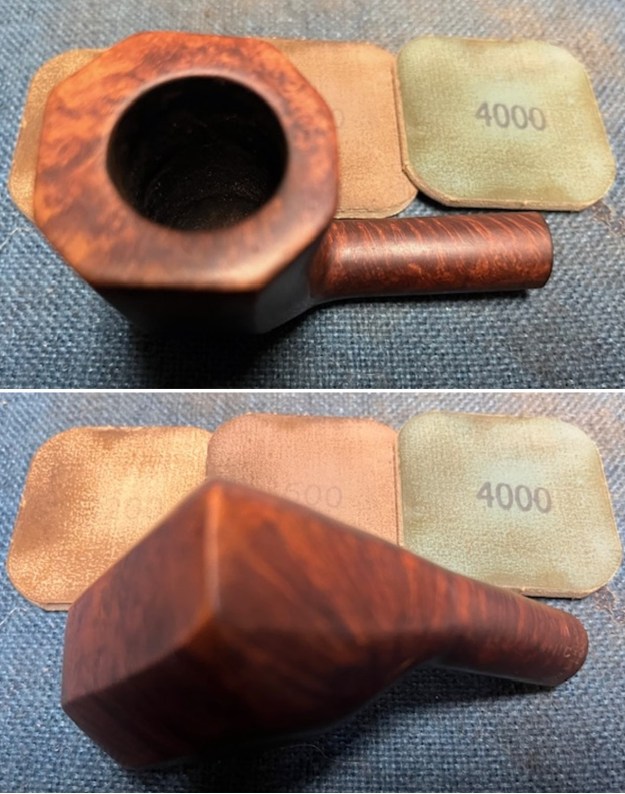
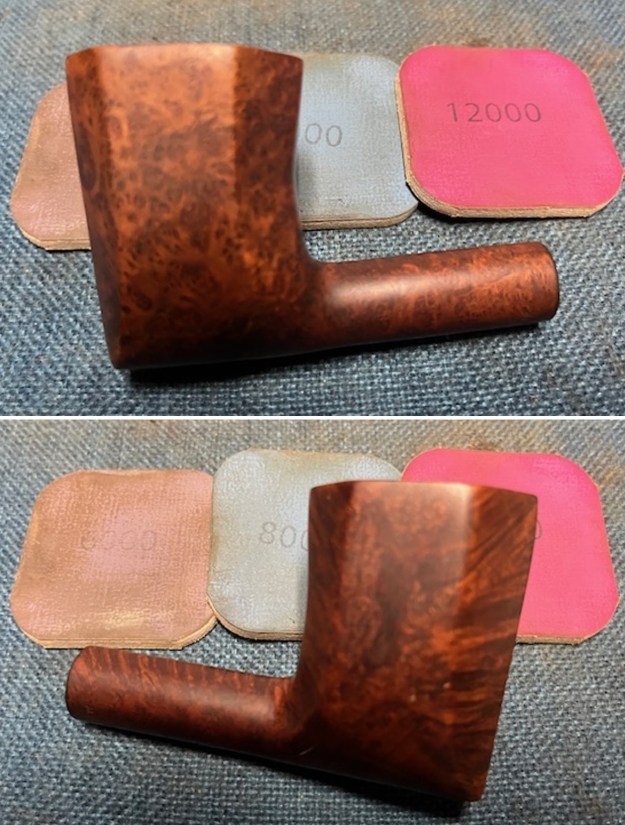
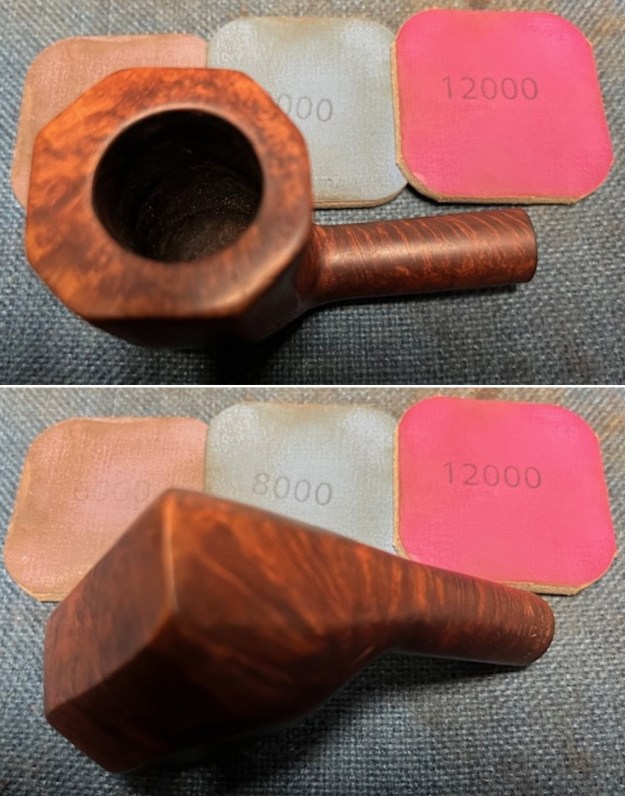
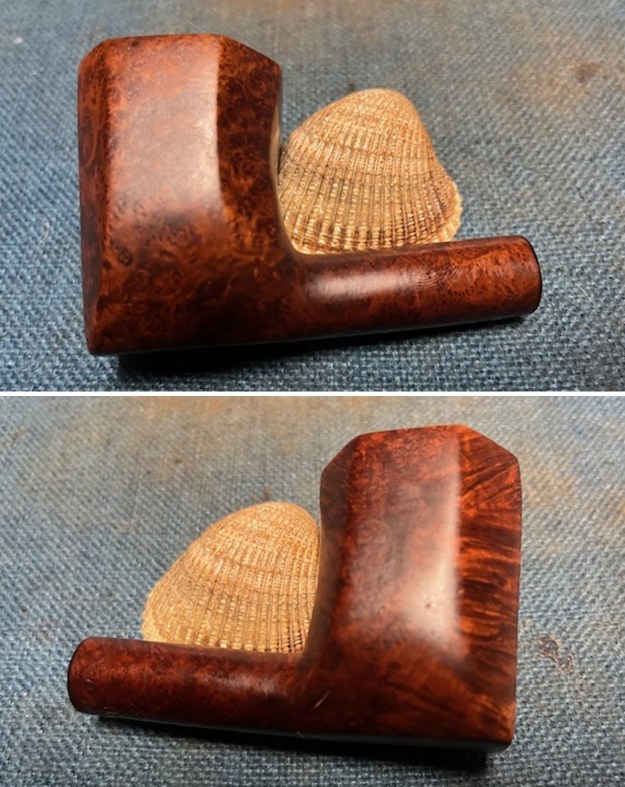
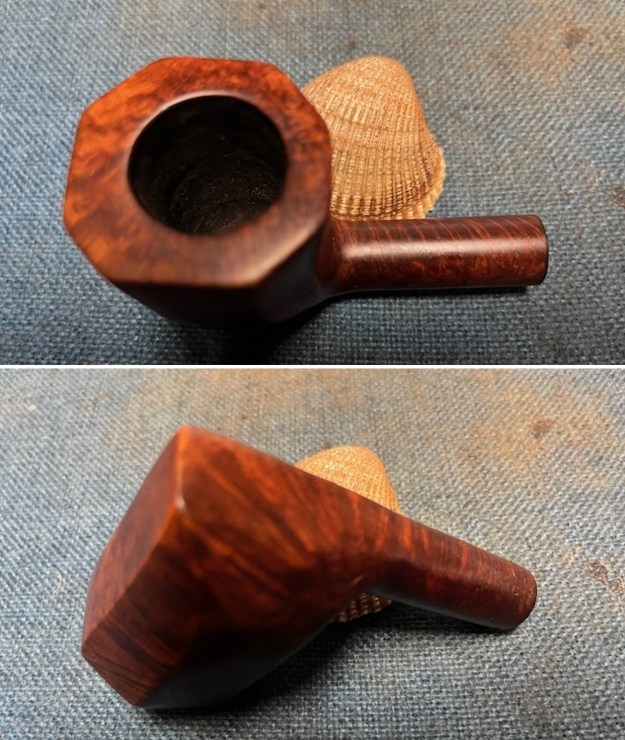
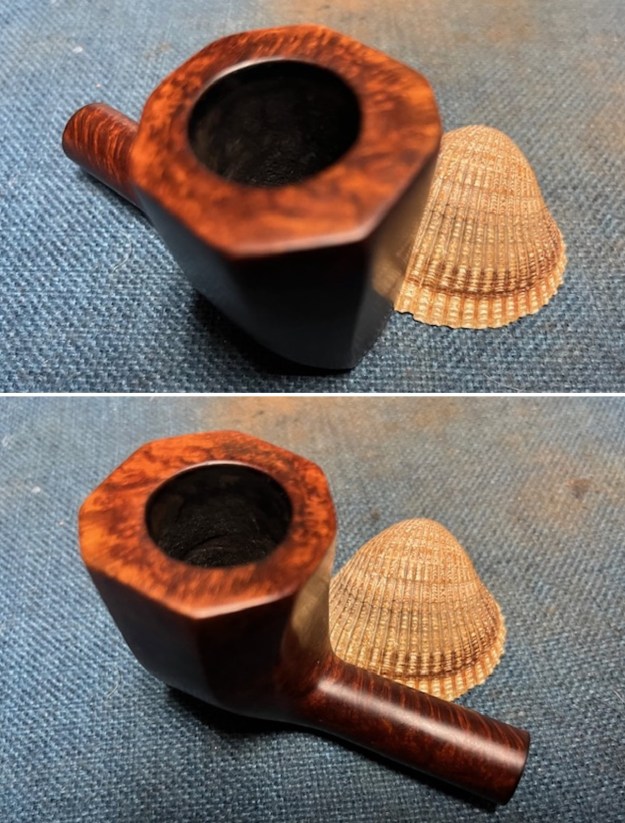
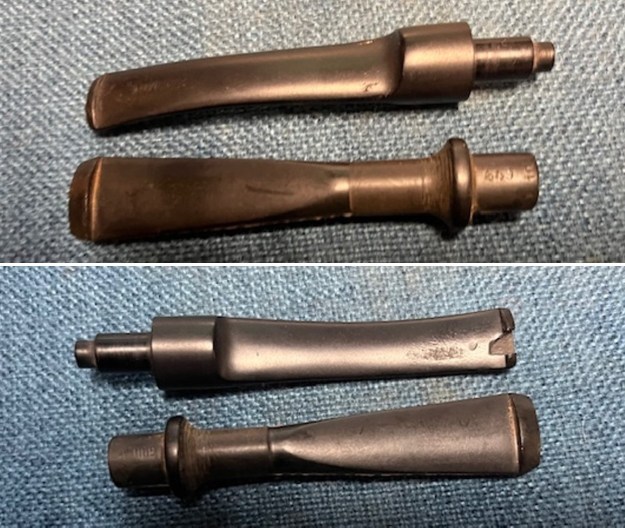
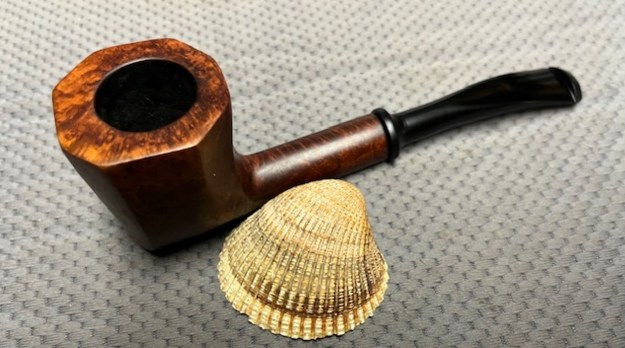
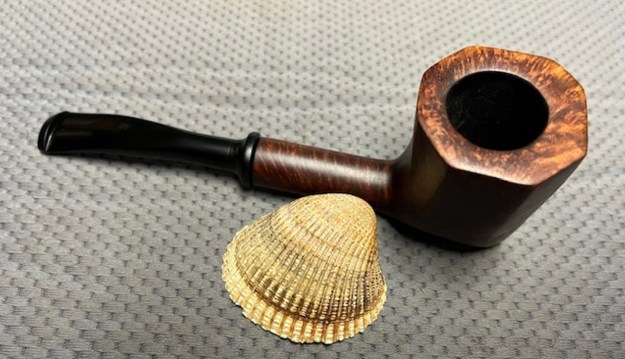
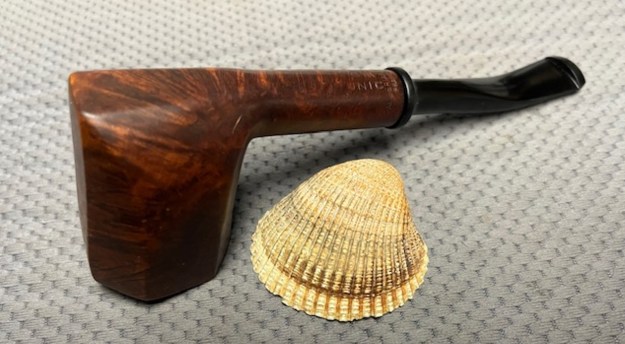
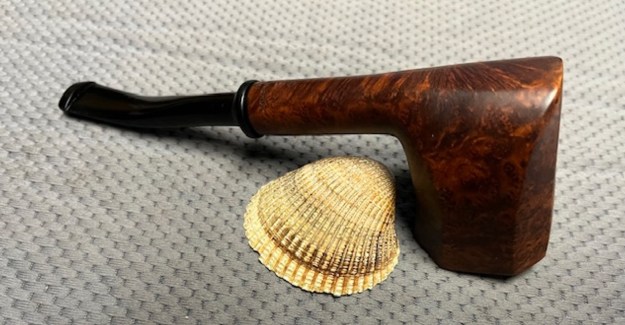
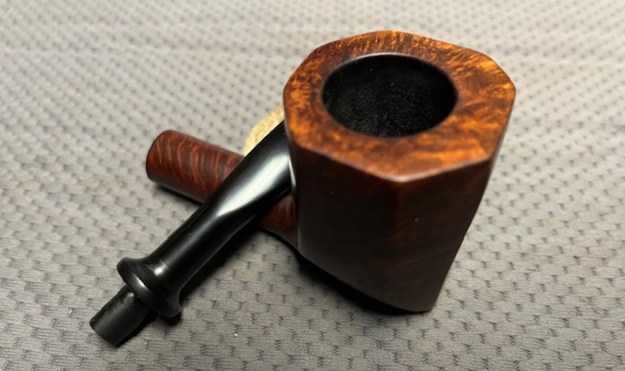
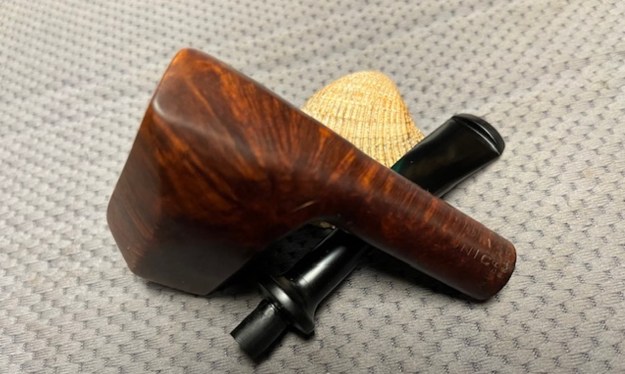
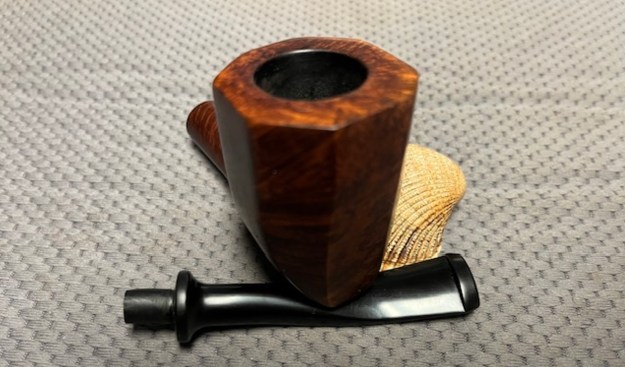
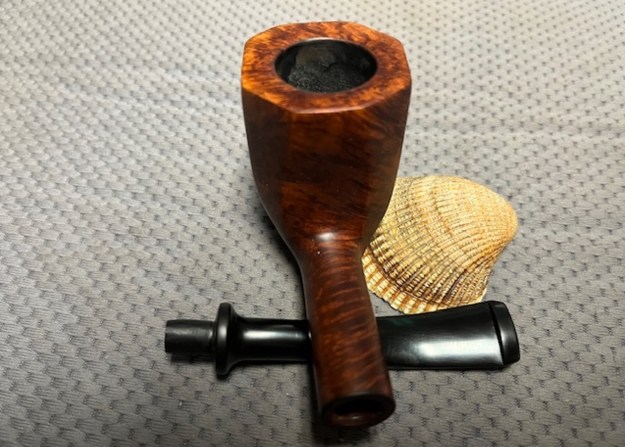
The next pipe I chose to work on was an interesting octagonal Panel. We picked the pipe up from a seller in Saint Cloud, Florida, USA on o4/12/2024. The finish was very dirty but some great mixed grain stood out around the bowl and the shank. The pipe is stamped on the underside of the shank and reads either DN or PM horizontally and vertically it is stamped UNIC. I have never heard of the brand at this point. Below these stamps it is stamped Algerian Briar [over] France. There was also a faint DN or PM in an oval stamped on the side of the saddle stem. The bowl had a moderate cake with some light lava overflow and scratching on the rim top.  The shape is almost a Skater but the Octagonal panels take away the shape point of the nose on the heel of the bowl. It had a vulcanite push saddle stem. The stem was oxidized and it was rough to touch. There were also some gouges in the top near the saddle that looked like marks from pliers and tooth marks and chatter. The worst part was that there was large chip from the button forward on the underside of the stem that gave me pause and made me think it would need to be restemmed. Jeff took some photos of the pipe before he started his clean up work. He took some photos of the rim top and bowl from various angles to give me a clear picture of the condition of the rim top and bowl. You can see the cake in the bowl and the darkening, scratches and light lava coat on the inner edge and rim top. He also took photos of the stem. It is dirty and has a large chunk out of the underside of the stem from the button forward. Jeff took some photos of the sides of the bowl to show the condition of the finish on the pipe. The photos show the smooth finish on sides and heel of the bowl and shank, highlighting grain. Under the dust it was some great looking briar on the panel sides of the octagonal bowl. Jeff took photos of the stamping on the underside of the shank. It is clear and readable as noted above. The DM or PM stamp over UNIC does not ring any bells with me in terms of the maker. Any help would be greatly appreciated…Jeff did a thorough clean up on the pipe before he sent the box to me. He reamed the bowl with a PipNet pipe reamer and got rid of the cake. He cleaned up the reaming with a Savinelli Fitsall Pipe Knife so that we could see the walls of the bowl and assess for damage. It was smooth and in great condition. He cleaned the internals of the shank and stem with alcohol, pipe cleaners, shank brushes and alcohol. He scrubbed the exterior with undiluted Murphy’s Oil Soap and a tooth brush. He rinsed the pipe under warm water. He dried it off with a cloth and then let it air dry. The stem was scrubbed with undiluted Murphy’s Oil Soap and a tooth brush at the same time as the bowl. He soaked it in Briarville’s Pipe Stem Deoxidizer. Once it was rinsed off, it came out looking very good. The finish on the bowl and the rim top cleaned up nicely. The damage on the stem underside was clearly visible. I took pictures of the pipe to show how it looked when I unpacked it. I took close-up photos of the bowl and rim top to show the condition after cleaning. It looked great. I also took photos of the stem surface to show the condition of the stem and the large chip on the underside. I took photos of the stamping on the underside of the shank. It was clear and readable as noted above. I also took a photo of the pipe with the stem removed to give a sense of size and perspective.I sanded the rim top and sides of the bowl and shank with 320-3500 grit 2×2 inch sanding pads. I wiped the stem down after each sanding pad with a damp cloth to remove the debris. I polished the smooth side of the bowl and shank with micromesh sanding pads – dry sanding with 1500-12000 grit pads and wiping it down after each sanding pad with a damp cloth. It really began to take on a real shine. I worked some Before & After Restoration Balm into the surface of the smooth briar with my finger. I let it sit on the bowl for 10 minutes and then buffed it off with a paper towel and soft cloth. The product is a great addition to the restoration work. It enlivens, enriches and protects the wood while giving it a deep glow. It is a product I use on every pipe I restore. Now I had a decision to make regarding the stem. I could try a repair on the huge chip but I was uncertain how well it would hold up. I could try though. I could also fit a new stem on the pipe. I could not find any stem that was similar but I found one that would give the pipe a jaunty look. Here is a photo of the two stems. I decided to fit the new stem to the shank just to have a look at its appearance. I really wanted to know if the stem would work and what the pipe would look like with the stem. The pipe almost has the appearance of an interesting cross between a French and a Danish pipe.I sanded the casting marks and marks on the new stem with 220 grit sandpaper and files to clean it up and make it look fitting. The change of appearance was quite different. I am excited to see how the finished stem looks on the bowl.I sanded the stem with 320-3500 grit 2×2 inch sanding pads. I wiped the briar down after each pad with a damp cloth to remove the sanding dust and debris. I wiped it down with an Obsidian Oil cloth. It began to look very good.I heated the stem with the flame of a lighter and then bent it over the curve of the lighter. The bend was perfect and once polished I looked forward to see what it would look like on the finished pipe.I polished it with micromesh sanding pads – dry sanding with 1500-12000 grit sanding pads. I wiped it down after each sanding pad with Obsidian Oil. I polished it with Before & After Pipe Stem Polish – both Fine and Extra Fine. I buffed the stem with a soft cloth to raise the shine. I gave it a final wipe down with Obsidian Oil to protect it. I don’t know what it is about finishing a restoration but I have to tell you that it is my favourite part of the process. It is the moment when everything that I have worked on comes together. I can compare it to where I started and there is always satisfaction that it looks better than when we picked it up. As always, I put the new stem on the DM UNIC Algerian Briar France and buffed it with Blue Diamond on the buffing wheel. I gave the bowl and the stem multiple coats of carnauba wax. I buffed the pipe with a clean buffing pad and hand buffed it to raise the shine. It is fun to see what the polished bowl looks like along with the polished All Briar stem. This DM Algerian Briar French Octagonal Panel is a great looking pipe and I am sure that it will be comfortable in hand when smoking as it is light and well balanced for a pipe of this size. Have a look at it with the photos below. The dimensions are Length: 6 ½ inches, Height: 2 ¼ inches, Outside diameter of the bowl: 1 ½ inches, Chamber diameter: 7/8 of an inch. The weight of the pipe is 2.29 ounces/65 grams. It is another beautiful pipe and one that will be on the rebornpipes store soon. You can find it in the section of Pipes by French Pipe Makers. If you are interested in adding it to your collection let me know. Thanks for walking through the restoration with me as I worked over this pipe. Thanks to each of you who are reading this blog.

As always, I encourage your questions and comments as you read the blog. Thanks to each of you who are reading this blog. Remember we are not pipe owners; we are pipe men and women who hold our pipes in trust until they pass on into the trust of those who follow us.

Cleaning up a unique Byron Harwood Cats Eye Freehand.


by Steve Laug

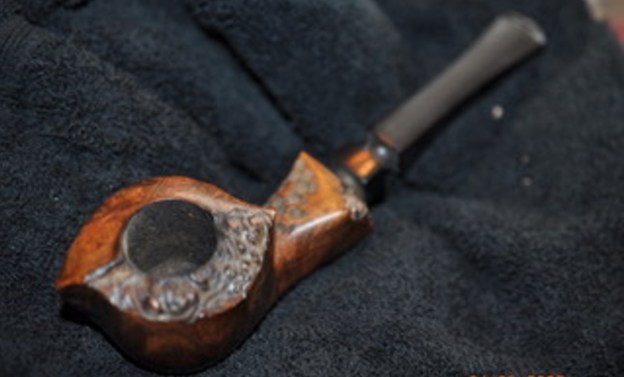
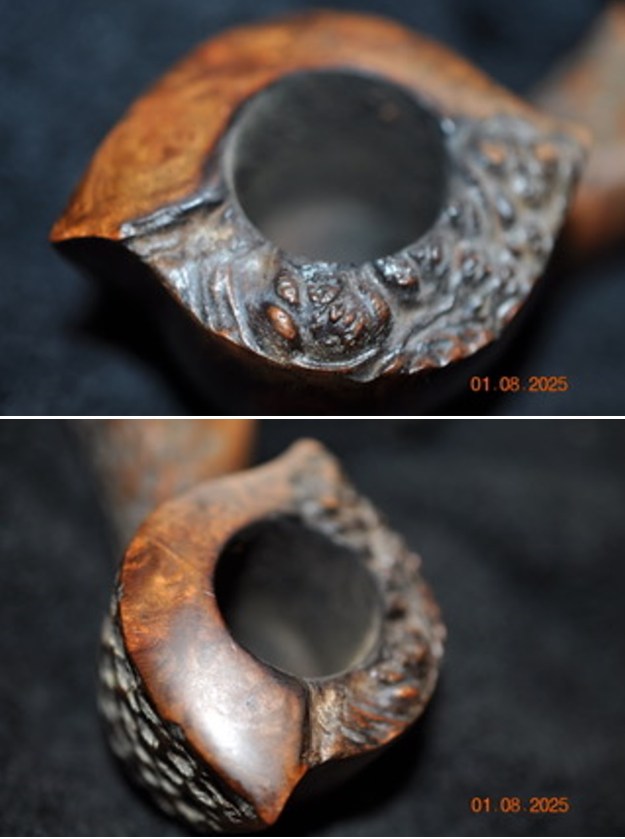
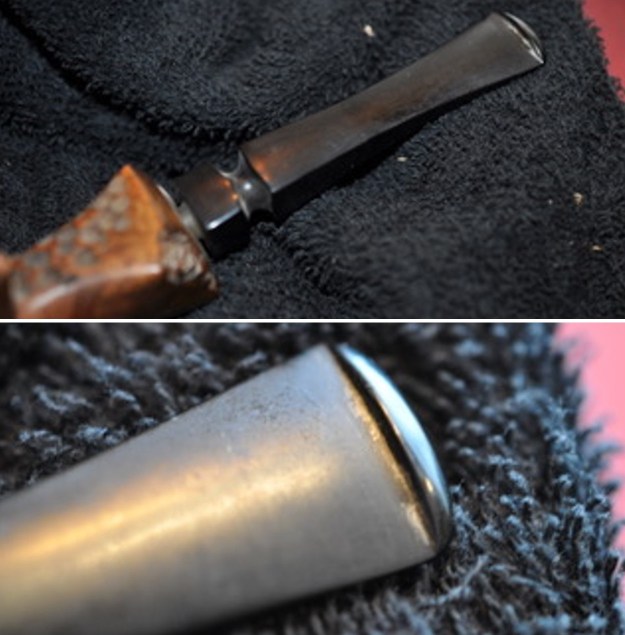
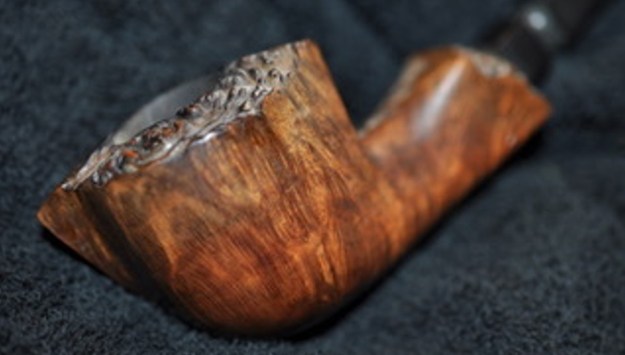
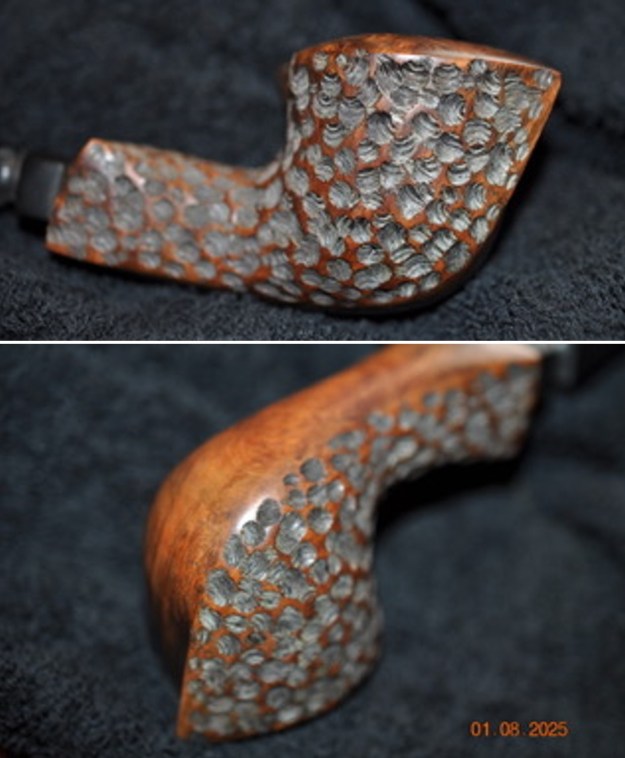
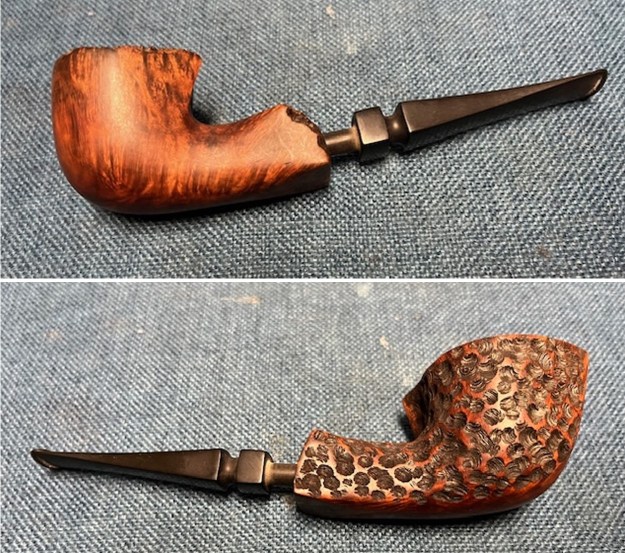
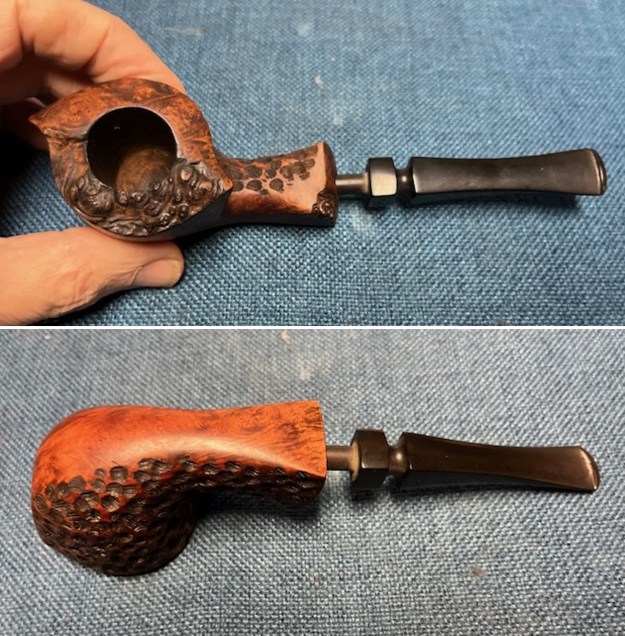
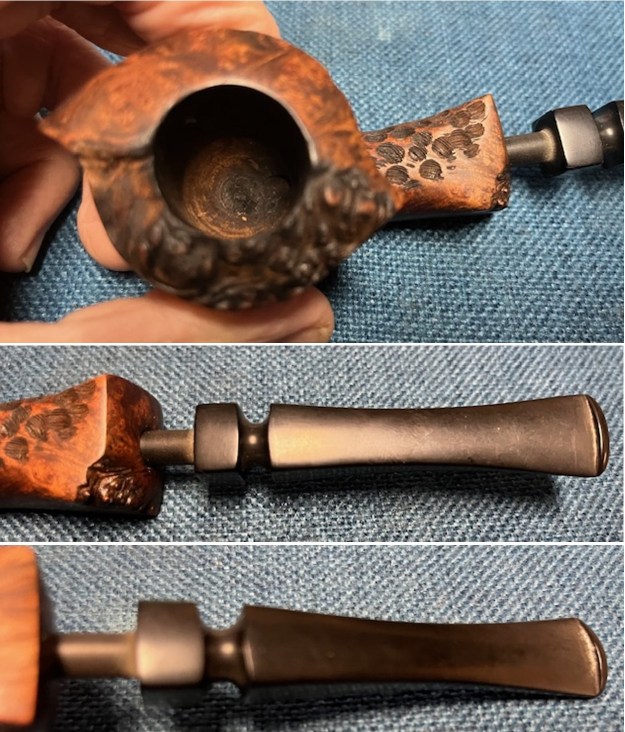
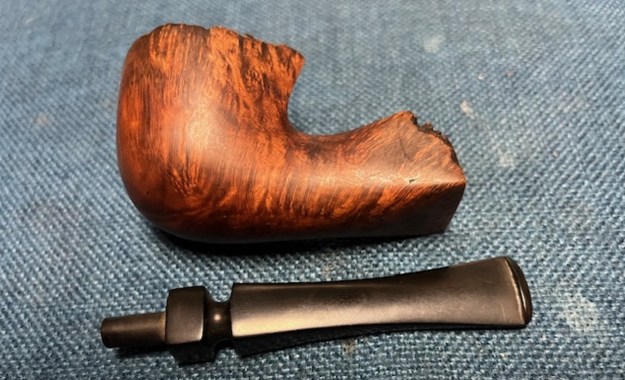
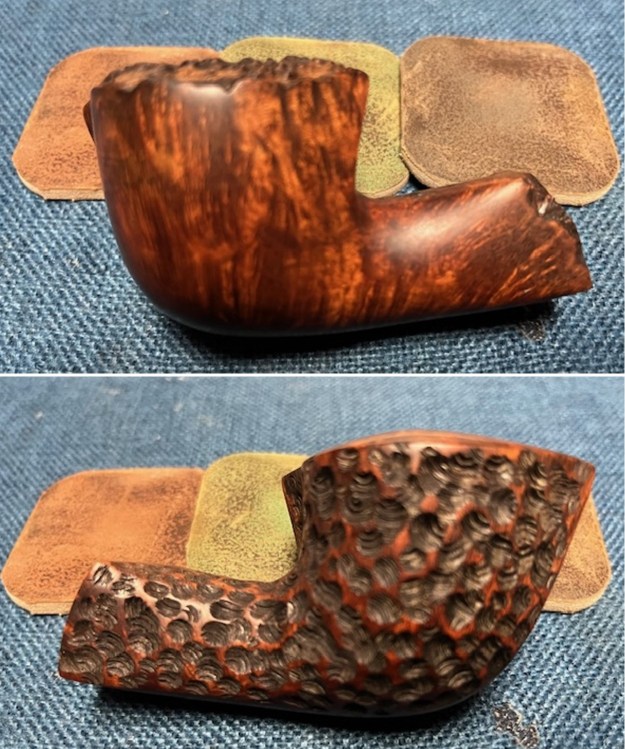
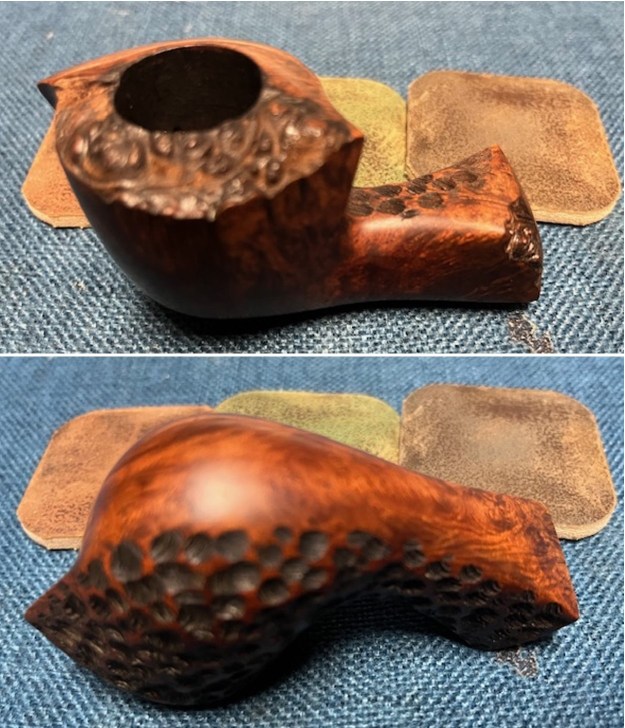
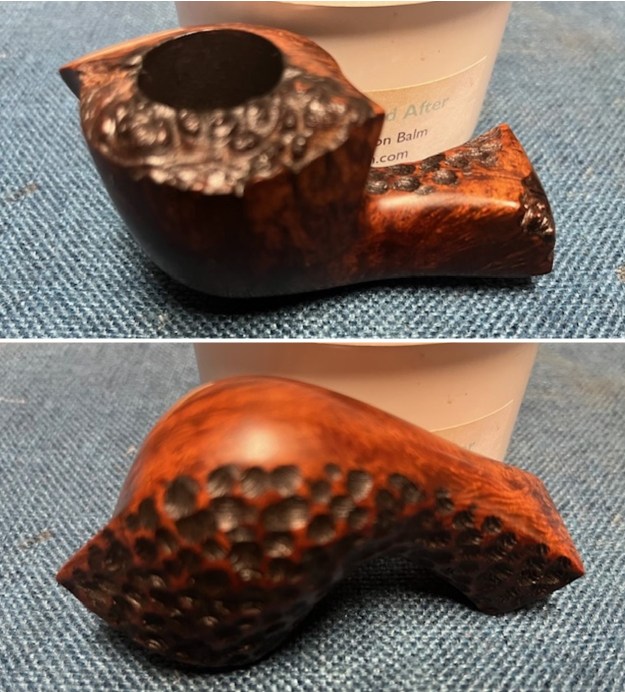
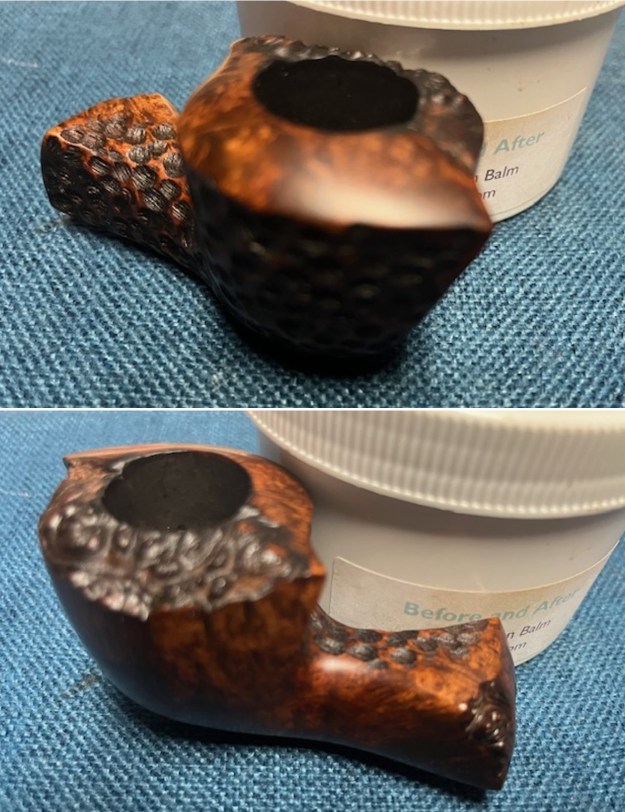
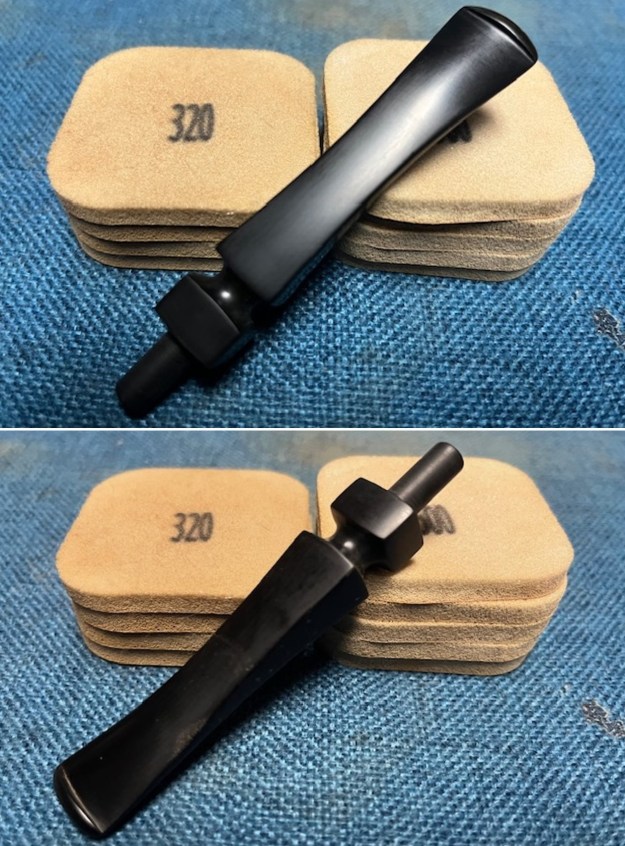
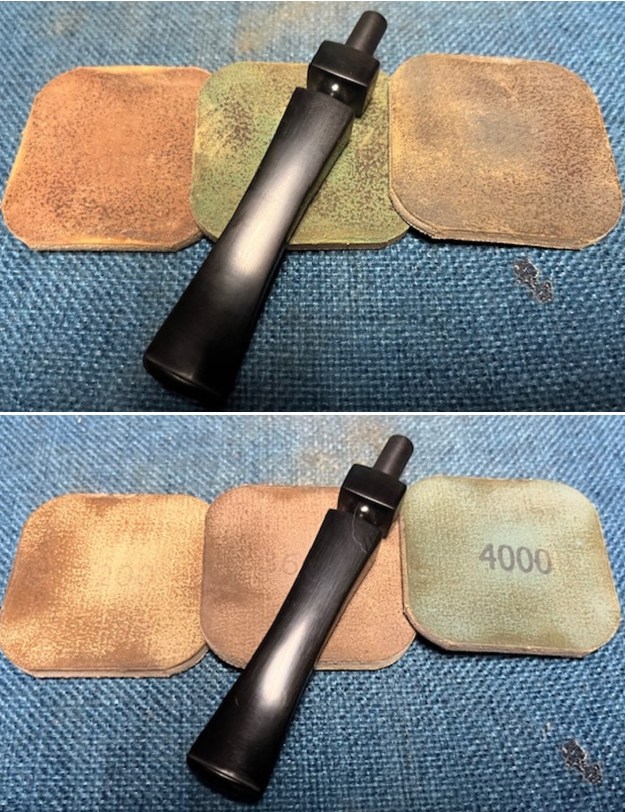
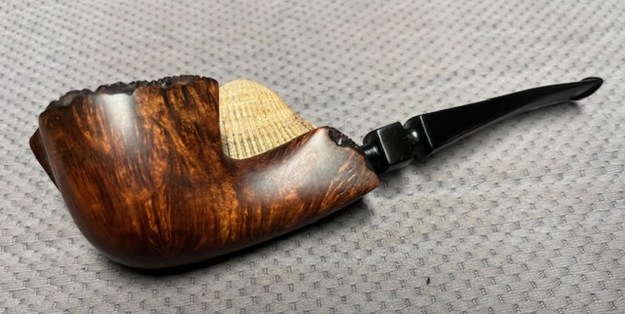
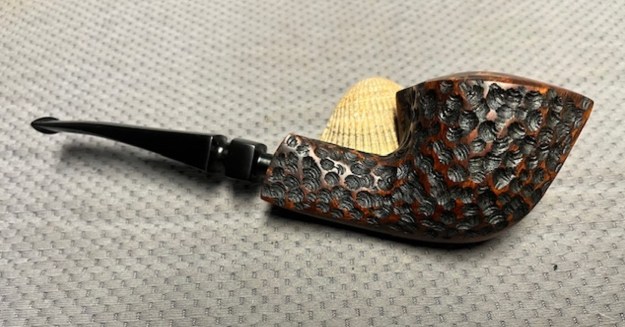
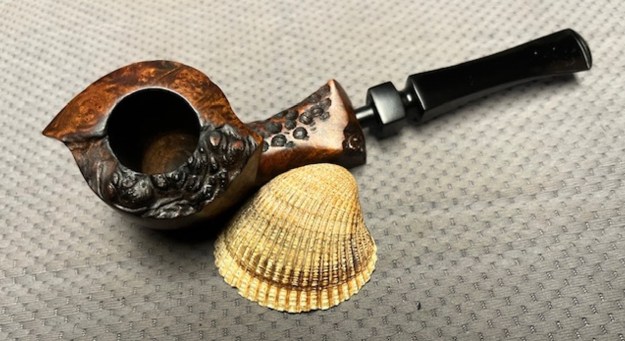
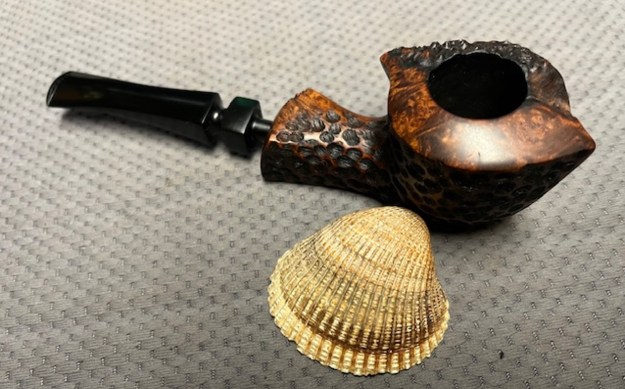
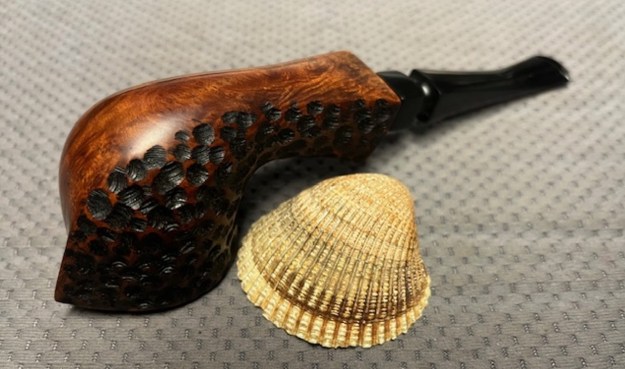
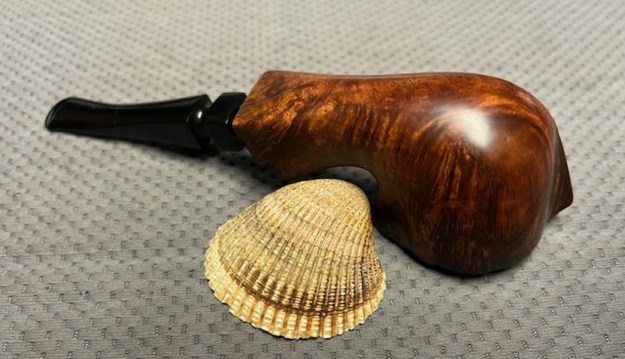
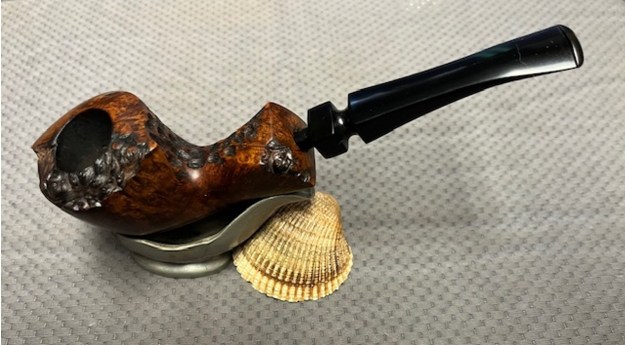
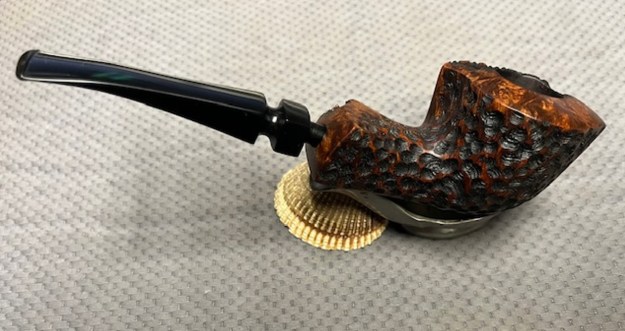
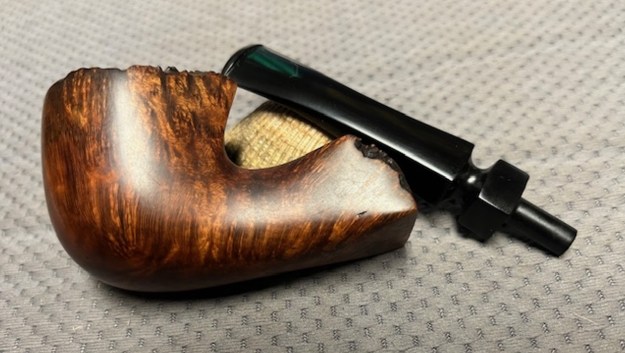
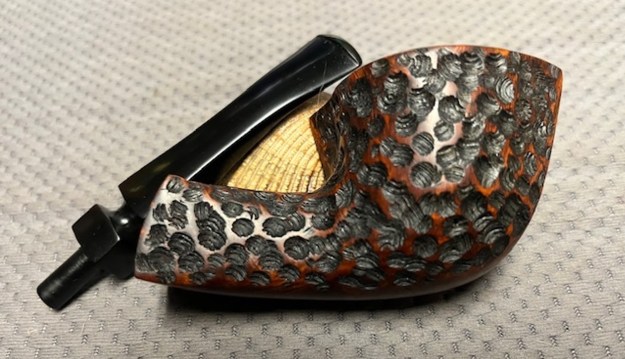
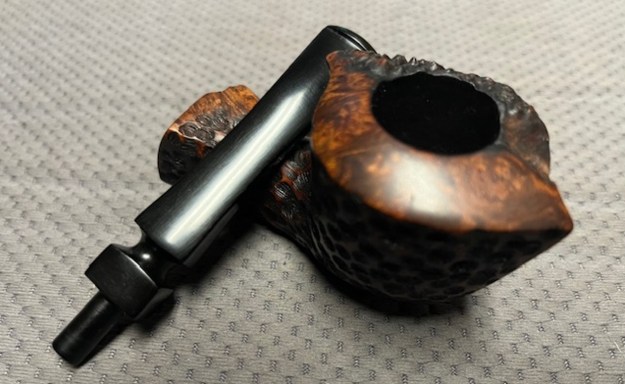
The next pipe I chose to work on was one that we purchased on 12/28/2024 from as part of an estate that belonged to a pipeman and carver, Byron Harwood from Missoula, Montana, USA. This uniquely shaped mixed finish Freehand was one of Byron’s own handmade pipes. As with the previous pipes of Byron’s that I have worked on, this one does not bear any stamping. It is a lovely piece of briar that cat’s eye shaped bowl with the rim top finished smooth on the right side and plateau on the left side to highlight the grain. There is a peak on the front and back of the bowl that gives it the unique eye shape. The finish on the bowl is smooth on the left side with a smattering of plateau on the shank end and hand rusticated on the right side with divots that bear rustication in each divot as well – you could say it was double rusticated, The airway in the mortise and shank are well executed and the draught is very good. The bowl had a moderate cake and there was some darkening and lava around the inner edge of the bowl and top. The saddle stem is rectangular shaped and quite nice. The button is well finished and the exit of the airway is slotted. The pipe fit well in the hand and was rustication was very tactile. There was a charm to it! Here is what it looked like when Jeff received it. He took some photos of the rim top and bowl from various angles to give me a clear picture of the shape of the bowl and rim and its condition. You can see the cake in the bowl and the darkening and light lava coat on the inner edge and rim top. He also took photos of the stem. It is dirty and has light tooth chatter on both sides ahead of the button. Jeff took some photos of the sides of the bowl to show the condition of the finish on the pipe. The photos shows the smooth finish on the left side of the bowl and shank, highlighting grain and the unique rustication on the right side. Under the dust it was a great Freehand. It is on pipes like this that I really appreciate Jeff’s thorough cleaning process. It gives me real freedom in dealing with pipes when they arrive here. He reamed it with a PipNet pipe reamer and got rid of the cake. He cleaned up the reaming with a Savinelli Fitsall Pipe Knife so that we could see the walls of the bowl and assess for damage. He cleaned the internals of the shank and stem with alcohol, pipe cleaners and alcohol. He scrubbed the exterior with undiluted Murphy’s Oil Soap and a tooth brush. He rinsed the pipe under warm water. He dried it off with a cloth and then let it air dry. The stem was scrubbed with undiluted Murphy’s Oil Soap and a tooth brush at the same time as the bowl. Once it was rinsed off, it came out looking very good. The finish on the bowl and the rim top cleaned up nicely. I took pictures of the pipe to show how it looked when I unpacked it. I took close-up photos of the bowl and rim top to show the condition after cleaning. It looked great. I also took photos of the stem surface to show the light chatter ahead of the button on both sides. I to a photo of the pipe with the stem removed to give a sense of size and perspective. I polished the smooth side of the bowl and shank as well as the smooth half of the rim top with micromesh sanding pads – dry sanding with 1500-12000 grit pads and wiping it down after each sanding pad with a damp cloth. I worked some Before & After Restoration Balm into the surface of the smooth briar with my finger tips and the plateau and rustication with a shoe brush. I let it sit on the bowl for 10 minutes and then buffed it off with a paper towel and soft cloth. The product is a great addition to the restoration work. It enlivens, enriches and protects the wood while giving it a deep glow. It is a product I use on every pipe I restore. I sanded the stem with 320-3500 grit 2×2 inch sanding pads. I wiped the briar down after each pad with a damp cloth to remove the sanding dust and debris. I wiped it down with an Obsidian Oil cloth. It began to look very good.I polished it with micromesh sanding pads – dry sanding with 1500-12000 grit sanding pads. I wiped it down after each sanding pad with Obsidian Oil. I polished it with Before & After Pipe Stem Polish – both Fine and Extra Fine. I buffed the stem with a soft cloth to raise the shine. I gave it a final wipe down with Obsidian Oil to protect it. I don’t know what it is about finishing a restoration but I have to tell you that it is my favourite part of the process. It is the moment when everything that I have worked on comes together. I can compare it to where I started and there is always satisfaction that it looks better than when we picked it up. As always, I put this Byron Harwood Mixed Finish Freehand back together and buffed it with Blue Diamond on the buffing wheel. I gave the bowl and the stem multiple coats of carnauba wax. I buffed the pipe with a clean buffing pad and hand buffed it to raise the shine. It is fun to see what the polished bowl looks like along with the polished the vulcanite saddle stem. This Byron Harwood Freehand is a great looking pipe and I am sure that it will be comfortable in hand when smoking as it is light and well balanced for a pipe of this size. Have a look at it with the photos below. The dimensions are Length: 7 inches, Height: 1 ¾ inches without the cap and 2 inches with the cap, Outside diameter of the bowl: 1 ¾ inches wide x 2 ¼ inches long, Chamber diameter: 7/8 of an inch. The weight of the pipe is 2.29 ounces/65 grams. It is another beautiful pipe and one that will be on the rebornpipes store soon. You can find it in the section of Pipes by American Pipe Makers. If you are interested in adding it to your collection let me know. Thanks for walking through the restoration with me as I worked over this pipe. Thanks to each of you who are reading this blog.

As always, I encourage your questions and comments as you read the blog. Thanks to each of you who are reading this blog. Remember we are not pipe owners; we are pipe men and women who hold our pipes in trust until they pass on into the trust of those who follow us.

Breathing New Life into a Ben Wade Golden Walnut Hand Made in Denmark Freehand


by Steve Laug

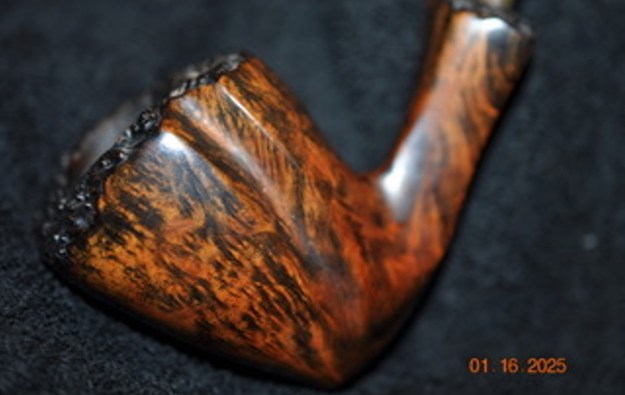
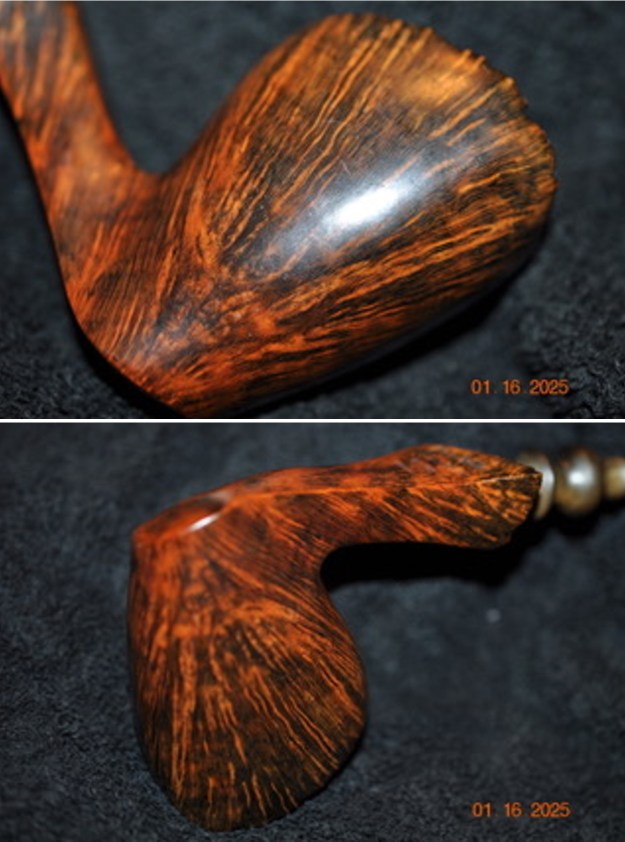
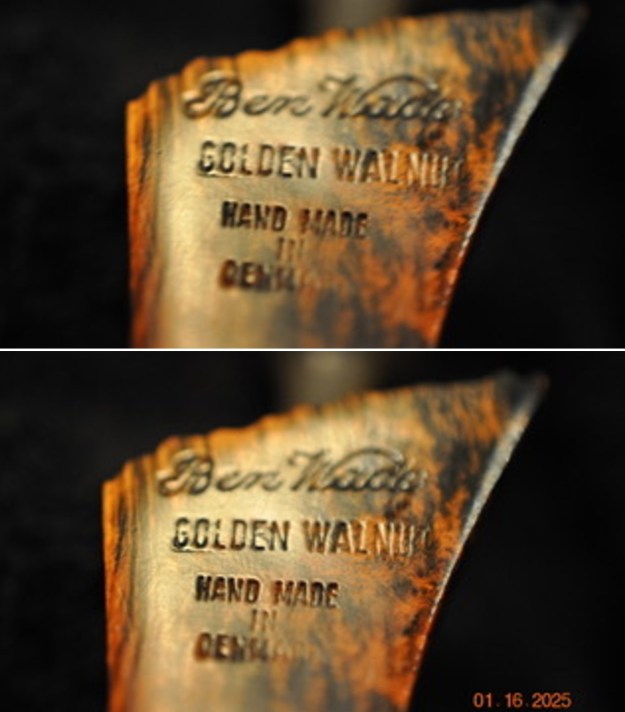
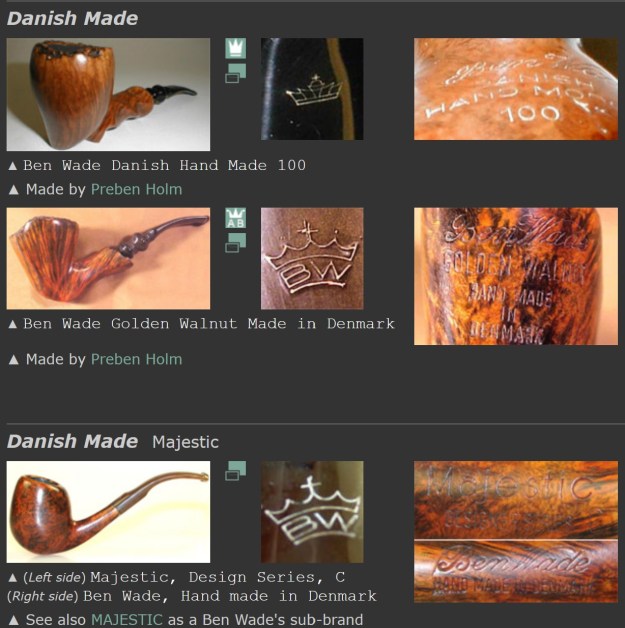
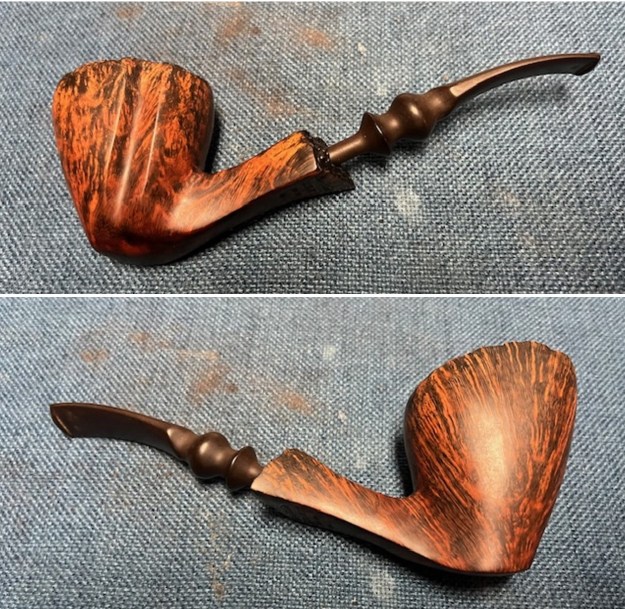
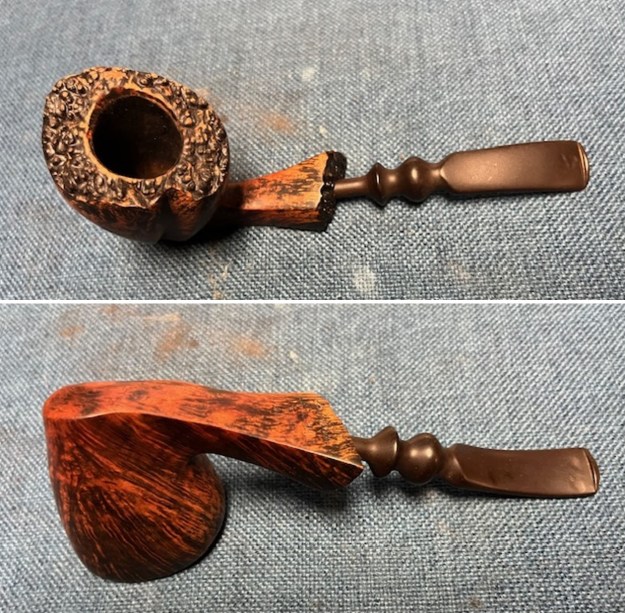
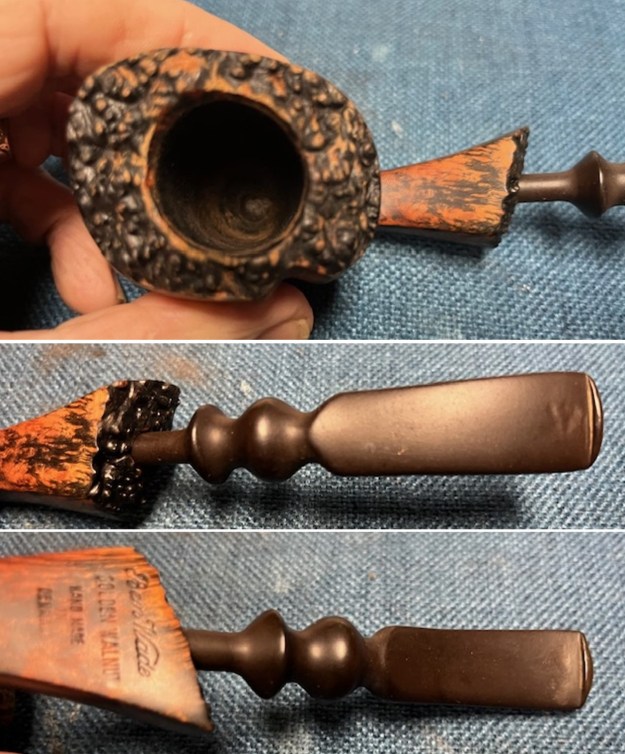
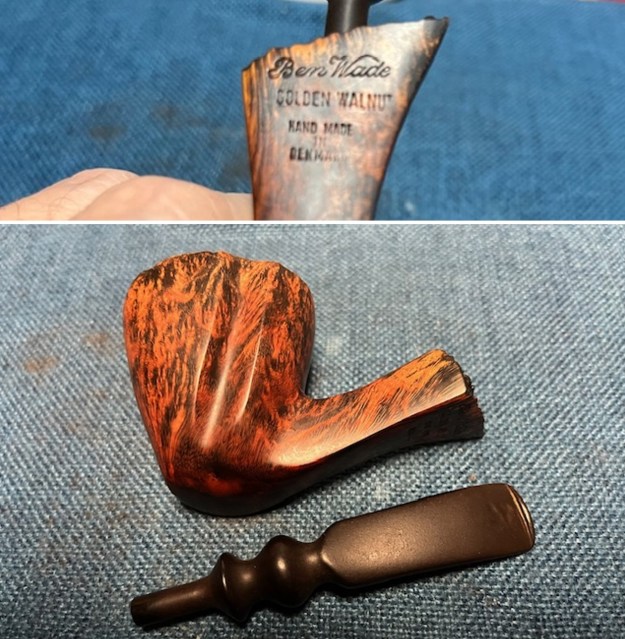
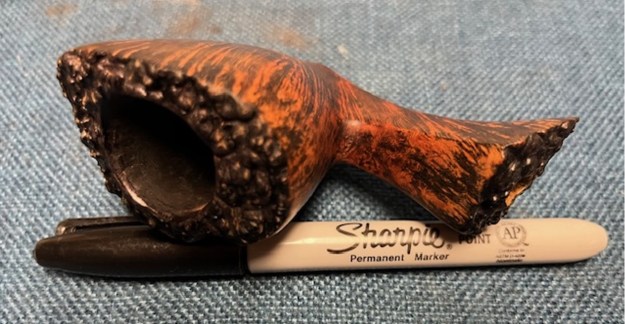
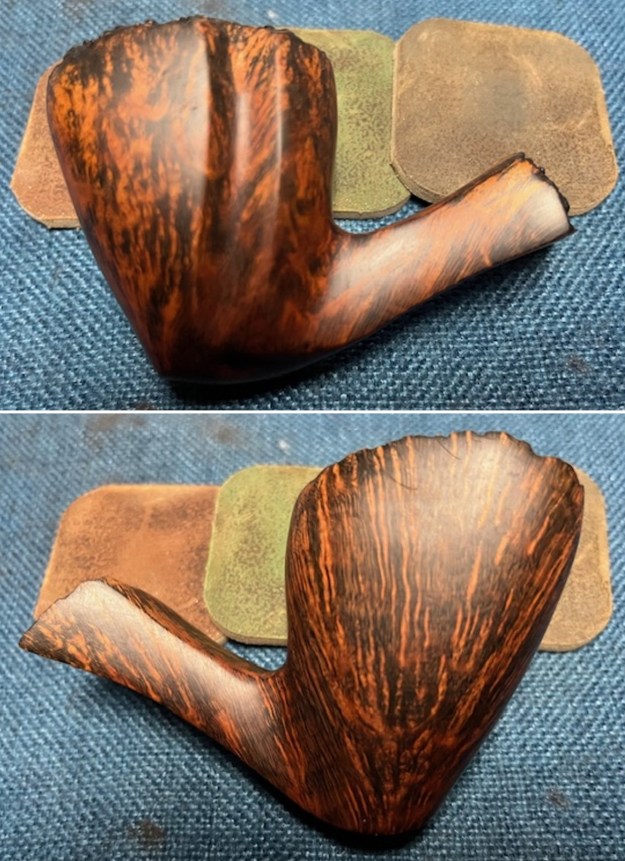
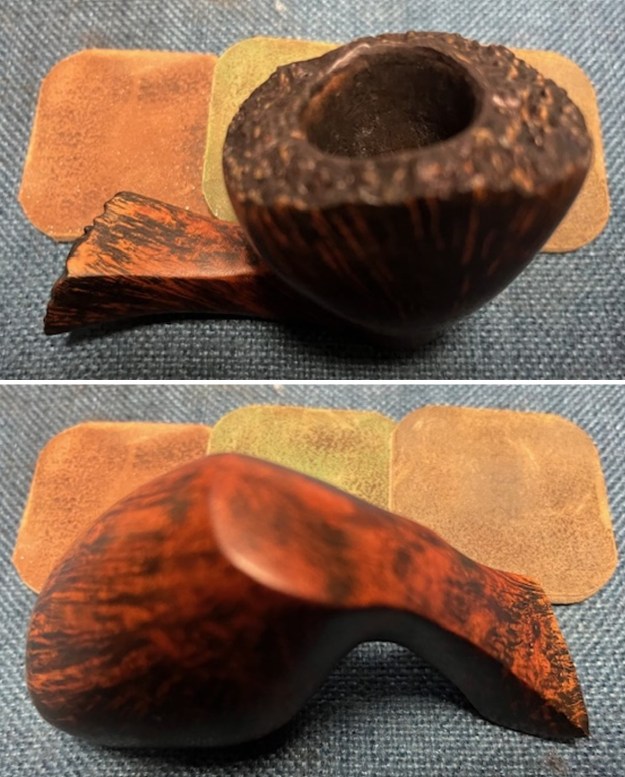
To me there is always something electric about handling and working on a pipe designed and carved by Preben Holm. I can’t describe adequately the feeling I have when I turn the bowl and stem over in my hands even before I start working on the pipe. There is an energy that flows through the way he carved and shaped the pipes of his making. This Ben Wade pipe was no exception. We picked it from an Antique Shop in Ogden, Utah, USA on 09/16/2019. It has a smooth finish with a carved groove on the right side of the bowl. It has plateau on the rim top and the shank end. The shank is almost rectangular. The combination of dark and medium stains highlights grain that runs like flames across both sides of the bowl culminating at the flat heel of the bowl. This is another well-loved pipe as you can see from the thick cake in the bowl and the lava on the rim top. It is hard to know the condition of the inner edge of the bowl due to the lava on the edges. The outside of the bowl and plateau portions are dirty and dusty but the grain pops through. The vulcanite stem was oxidized, dirty and dusty with tooth marks on the blade just ahead of the button on both sides. Jeff took these photos before he started his part of the restoration. He took close up photos of the bowl and rim top from different angles to show the condition of the plateau finish. The bowl has a thick cake that lining the walls and overflowing into lava. There was lava and build up on the rim top and flowing over the inner edge of the bowl onto the plateau. It is hard to know if there is damage or if the lava protected it. He also took photos of the stem to show the surface of the top and underside of the vulcanite stem. You can see the tooth marks and damage both sides ahead of the button. He took photos of the sides and heel of the bowl to show the lay of the grain around the pipe. It is a beautiful piece of briar. The top of the bowl is craggy and rugged looking. Unique! The shank end is also a unique mix of plateau and smooth. Jeff took several photos of the stamping on the underside of the shank to capture all of the stamping. It was clear and read Ben Wade in script at the top. Under that it read Golden Walnut. Under that was stamped Hand Made in Denmark. I turned to Pipephill’s site (http://www.pipephil.eu/logos/en/logo-benwade.html) and did some looking at the section on Ben Wade Pipes. The second photo in the screen capture below is a Golden Walnut Pipe.  The finish and overall look is the similar. The stem I have is not stamped, or at least it is worn from buffing. The stamping on the shank is identical.I am including the background history that I included on the previous blog. It includes the idea that the Preben Holm pipes were marketed under the Ben Wade label in the US and imported through Lane Ltd. I quote below:

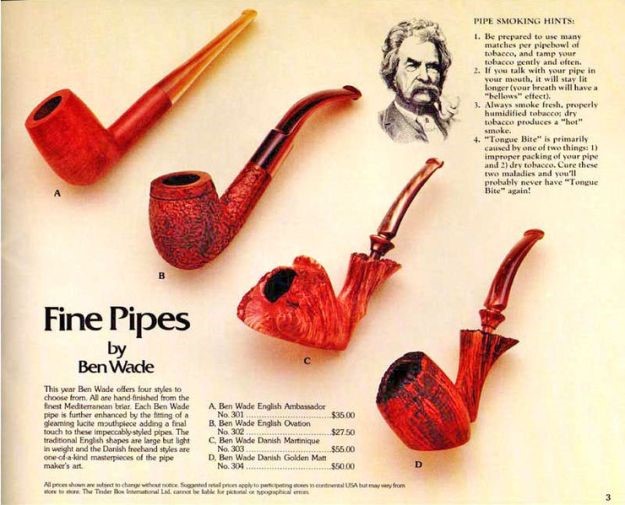
I turned to Pipedia and read the listing on the brand to refresh my memory and flesh out the knowledge of the brand (https://pipedia.org/wiki/Ben_Wade). I have included a photo from that site that was taken from a Tinderbox advertisement.

Ben Wade Ad in a Tinder Box catalog, courtesy Doug Valitchka

I quote the portion of the article that summarizes the history of the brand.

Young Copenhagen master pipemaker Preben Holm had made a meteoric career heading a pipe manufacture employing 45 people at the age of 22! But around the turn of 1970/71 he was in major financial difficulties. His US distributor, Snug Harbour Ltd. in New York City, left him in the lurch. Holm had three unpaid invoices on his desk and another large shipment was ready for the USA, when Snug Harbour’s manager told him on the phone that there was no money at all on the account to pay him.

So the Dane went to New York for an almost desperate search for a new distribution partner. He made contacts with Lane Ltd. and met Herman G. Lane in February 1971. Lane Ltd. had no interest in Holm’s serial pipes produced at that time but so much the more in the hand-carved freehands because the hype for Danish freehands and fancies in the States was still on its way to the climax then. The meeting resulted in an agreement to start a cooperation. Lane insisted to improve the quality considerably and in return he assured to be able to sell essentially larger quantities.

Holm went back home to work on new samples with all-new designs and altered finishes for Lane. Both, Lane and Holm, agreed that it would be unwise to sell the pipes under Preben Holm’s name as long as Snug Harbour had a considerable stock of Preben Holm pipes and might sell them pipes at very low prices just to bring in some money.

So, on Mr. Lane’s proposal it was determined to use the name Ben Wade belonging to Lane Ltd. Lane spent considerable amounts of money for advertising the new brand in the big magazines– the centerpiece being whole-page ads showing a very exclusive Seven Day’s Set.

The cooperation with Lane Ltd. proved to be an eminent business success for both partners. Within a very short time Ben Wade Handmade Denmark sold in much larger quantities and at higher prices than they had ever dreamed of. And the hype these freehands and fancy pipes caused went on unbroken long after Herman G. Lane deceased. Preben Holm – obviously much more brilliant in pipe making than in pipe business – was in major troubles again in 1986 and had to sack most of his staff. The Ben Wade production was significantly lowered but continued until his untimely death in June of 1989.

Up to now Preben Holm made Ben Wade pipes are cult and highly sought for on the estate markets.

With that information my initial thoughts were confirmed. This pipe was another Preben Holm made Freehand distributed in the US by Lane Ltd under the name Ben Wade. The freehand rage occurred in the late 70s and the pipes were made until Preben’s death in 1989. My guess would be that this pipe was made sometime during that time period and potentially in the late 70s.

Jeff had done a great job cleaning up the pipe as usual. He reamed the pipe with a PipNet reamer and cut back the cake back to the bare briar. He cleaned up the walls with a Savinelli Fitsall Pipe Knife. He scrubbed the interior of the bowl and shank with pipe cleaners, shank brushes, cotton swabs and alcohol to remove the tars and oils. He scrubbed the exterior of the pipe with undiluted Murphy’s Oil Soap and a tooth brush to remove the grime from the finish. He worked on the rim top lava and darkening with the soap and tooth brush. He scrubbed the inside of the stem with alcohol and shank brushes, pipe cleaners. He scrubbed the exterior with Soft Scrub and then soaked it in Briarville’s Pipe Stem Deoxidizer. He washed it off with warm water to remove the Deoxidizer. The pipe looked far better when it arrived. I took some photos of the rim top and stem to show the condition of them both when it arrived. It looked good. There is some darkening and damage to the inner edge of the bowl. The stem had some deep tooth marks ahead of the button and on the button surface on both sides.I took photos of the stamping on the sides of the shank to capture it. The was faint in spots but readable as noted above. I removed the stem and took a photo of the parts to give a sense of the look of the pipe.To begin my part of the restoration work I restained the plateau top and shank end with a Black Sharpie Pen. It is amazing how good the plateau looks once it is cleaned and stained.I polished the bowl with micromesh sanding pads – wet sanding with 1500-12000 grit pads. I wiped the briar down after each pad with a damp cloth. The bowl is starting to look very good. I worked some Before & After Restoration Balm into the surface of the briar with my fingertips and into the plateau rim top and shank end with a horsehair shoe brush to clean, enliven and protect it. I let the balm sit for a little while and then buffed with a cotton cloth to raise the shine. The photos show the bowl at this point in the restoration process. I set the bowl aside and turned my attention to the stem. The stem was very clean so I filled in the tooth marks with clear super glue and set it aside to cure. Once it had cured I flattened out the repairs and sharpened the edge of the button with a needle file. I sanded out the tooth chatter with 220 grit sandpaper. I sanded the stem with 320-3500 grit 2×2 inch sanding pads. I wiped the briar down after each pad with a damp cloth to remove the sanding dust and debris. I wiped it down with an Obsidian Oil cloth. It began to look very good.I polished the stem with micromesh sanding pads – wet sanding with 1500-12000 grit sanding pads. I wiped it down after each sanding pad with some Obsidian Oil. I finished polishing it with Before & After Pipe Stem Polish – both Fine and Extra Fine and buffed it off with a cotton cloth. I wiped it down with Briarville’s No Oxy Oil to protect the stem and slow down the oxidation. This is a beautiful Preben Holm made Ben Wade Golden Walnut with a fancy, turned, black vulcanite stem. It has a great look and feel. The shape fits well in the hand with the curve of the bowl and shank junction a perfect fit for the thumb around the bowl when held. I polished stem and the bowl with Blue Diamond polish on the buffing wheel. I gave the bowl and the stem multiple coats of carnauba wax. I buffed the pipe with a clean buffing pad to raise the shine. I hand buffed it with a microfiber cloth to deepen the shine. The pipe polished up pretty nicely. The rich combination of browns and black in the smooth finish and the plateau areas took on life with the buffing. The rich colour of the briar works well with the polished vulcanite stem. I like the grain and finished look of this Preben Holm Ben Wade Golden Walnut pipe. Have a look at it with the photos below. The dimensions are Length: 7 inches, Height: 2 ½ inches, Outside diameter of the bowl: 1 ½ inches wide x 2 inches long, Chamber diameter: 1 inch. The weight of the pipe is 2.40 ounces/ 69 grams. This Danish Freehand is a real beauty. Thanks for walking through the restoration with me as I worked over another beautiful pipe. This one will be going on the rebornpipes store in the Danish Pipemakers Section shortly if you would like to add it to your collection. Thanks for your time.

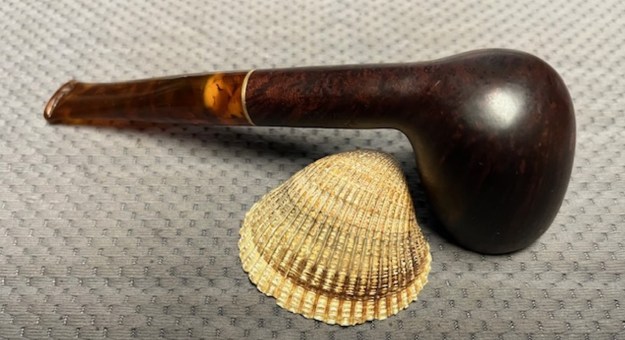
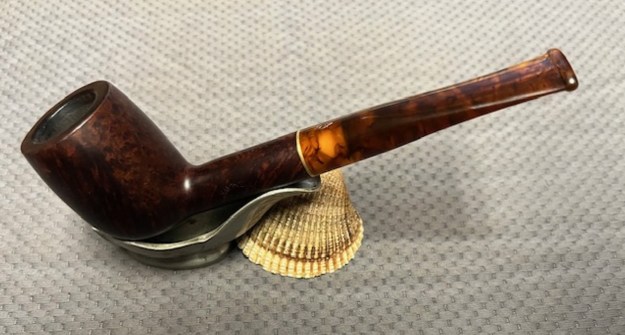
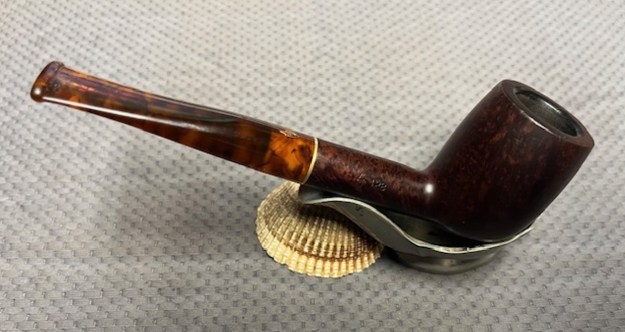
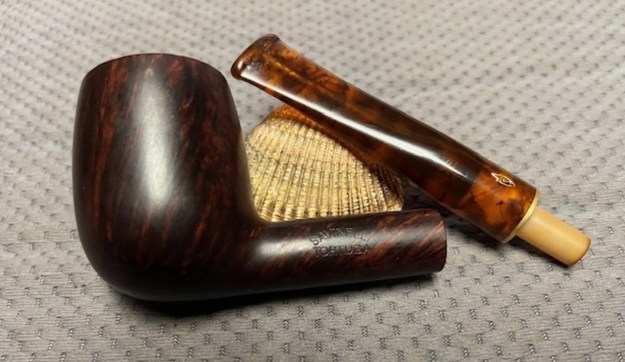
Restoring and Cleaning a Clogged Savinelli Tortuga 128 Billiard yet again


by Steve Laug

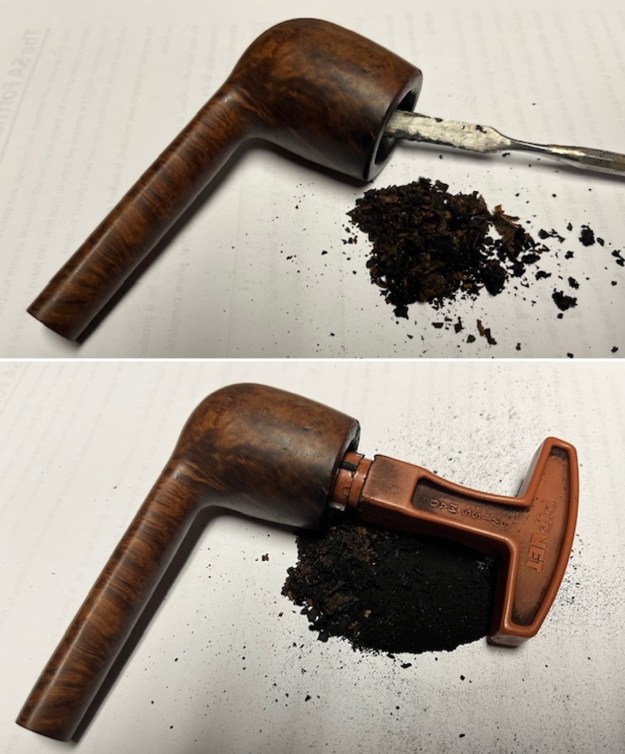
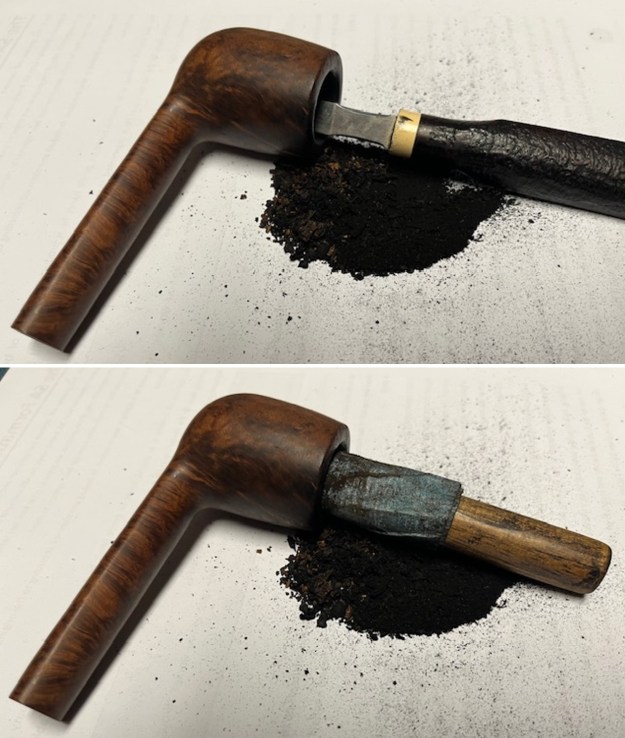
Last week I received a phone call from Brian in Victoria about a few more clogged pipes. He sent them by courier and I received them on Wednesday this week. The first pipe I worked on was a Lorenzo that I restemmed and blogged on (https://rebornpipes.com/2025/10/24/restoring-and-restemming-a-clogged-and-filthy-italian-lorenzetti-billiard/). The second one was a Savinelli Tundra 802 Canadian that was clogged and had no airflow once again. I had restored and cleaned it for him and written a blog on July 29, 2025 (https://rebornpipes.com/2025/07/29/restoring-and-cleaning-a-clogged-savinelli-tundra-802-canadian/). It is finished and has been blogged.The third one is a Savinelli Tortuga that I had also restored at the same time and written a blog on (https://rebornpipes.com/2025/07/30/restoring-and-cleaning-a-clogged-savinelli-tortuga-128-billiard/). He asked if I would clean and open them up for him once again.

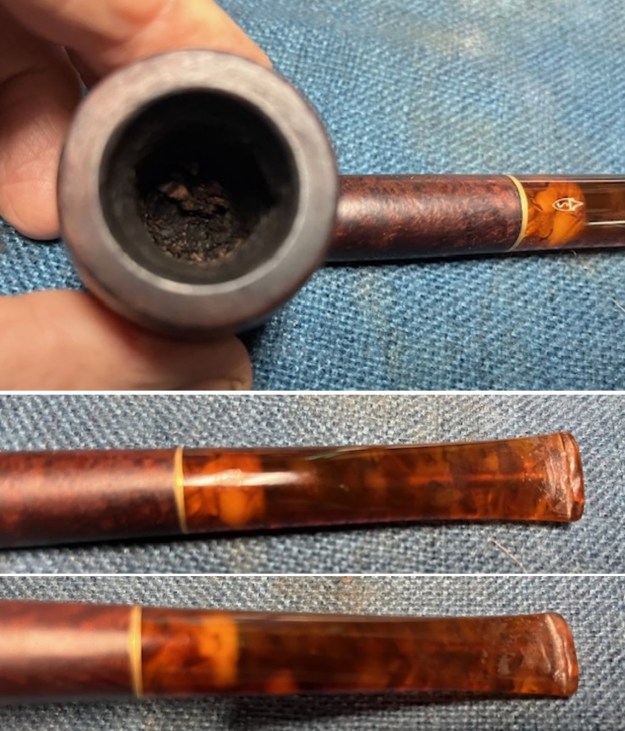
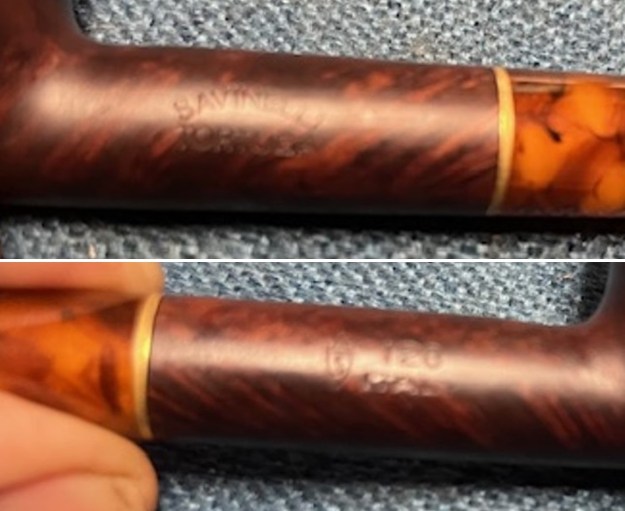
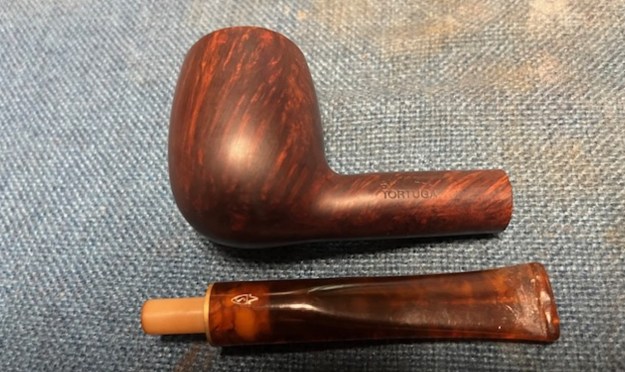
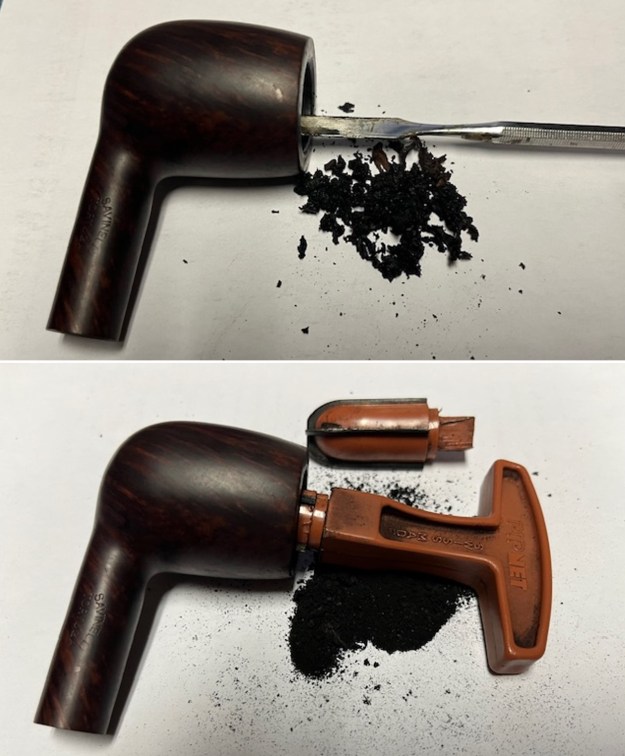
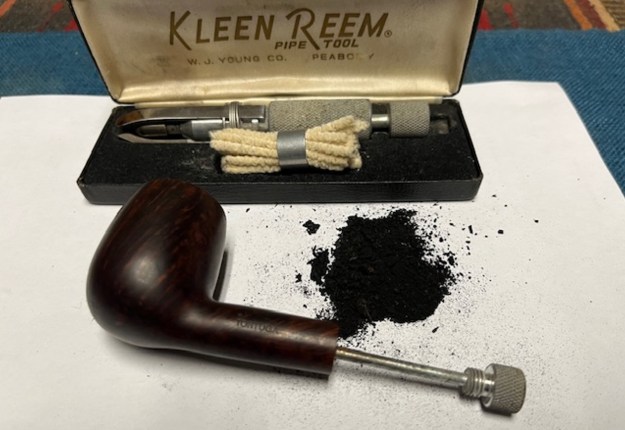
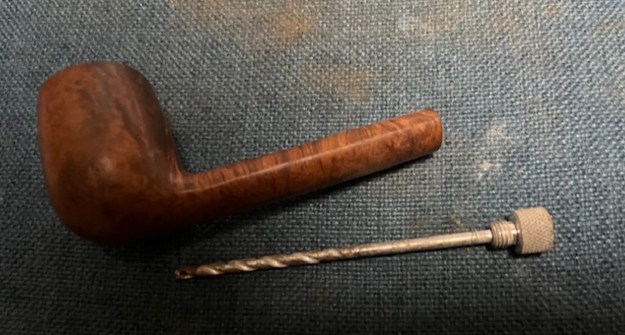
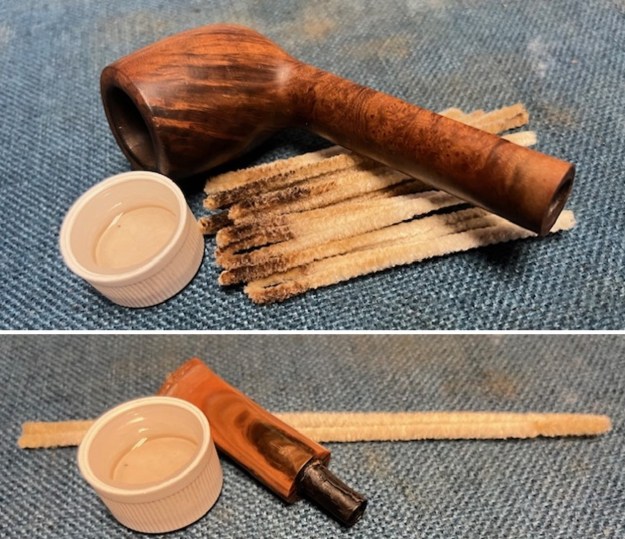
I chose to work on the last of the three, a Savinelli Tortuga Billiard. I had restored it late in July and it had been a wreck. Other than being clogged it was better. It was stamped on the left side of the shank and read Savinelli [arched over] Tortuga. On the right side it has a Savinelli S shield followed by Italy [over] the shape number 128. The finish was still pretty clean. The bowl already had a thick cake and some wet sticky dottle that completely covered the airway at the bottom of the bowl as it had before. The rim top had was covered by light coat of lava that was sticky. The taper stem was amber coloured acrylic. There were deep tooth marks that were once again on the top and underside ahead of the button. The shank and airways in both the mortise and stem were very dirty. I blew through the stem and it was clear and unclogged. I tried to blow through the shank and it was constricted with tars. I took photos of the pipe before I started my work. It amazed me how quickly the pipe had clogged again. I took photos of the rim top and the stem to show the condition. You can see the cake and dottle in the bowl and the clean rim top. The photos of the stem show that the repairs on the tooth marks and chatter on the top looks to be in great condition.I took photos of the stamping on the sides of the shank to capture it. The was faint in spots but readable as noted above. I removed the stem and took a photo of the parts to give a sense of the look of the pipe. I started my work on the pipe by cleaning out the dottle in the bottom of the bowl. It was thick and wet. I reamed the bowl with a PipNet reamer. I used the first cutting head and took the cake back to bare briar. I cleaned up the reaming with a Savinelli Fitsall Pipe Knife and removed all the remnants of the cake. I sanded the walls of the bowl with a piece of dowel wrapped in 220 grit sandpaper. The walls look very good at his point in the process. I used the drill bit in a Kleen Reem pipe reamer and twisted it into the shank in the shank until it went to the bowl. It cleaned out more of the debris and opened the airway. I cleaned out the shank, the airway and the mortise as well as the airway in the stem with alcohol, cotton swabs, hard bristle and soft bristle pipe cleaners. It was a very dirty pipe which just meant that Brian really enjoyed it. I rubbed the bowl and shank down with Before & After Restoration Balm to deep clean the finish on the bowl and shank. The product works to clean, enliven and protect the briar. I worked it in with my fingers to get it into the briar. I let it sit for 10 minutes then I wiped it off and buffed it with a soft cloth. The briar really began to have a rich shine. I took some photos of the bowl at this point to mark the progress in the restoration. It is a beautiful bowl. With the shank clear and the airway open it was time to work on the stem. It was clear once again just dirty and I needed to clean up my repairs on the stem. Once the repair cured I used some small files to recut the button edge, reshape the surface and flatten the repair on the stem surface on both sides. I sanded it with 220 grit sandpaper to minimize the visibility of the solid repair. I sanded the surface of the acrylic taper stem with the 2 x 2-inch sanding pads – 320-3500 grit pads to clean up the sanding marks on the stem surface. By the final 3500 grit pad the stem started to really shine. The repairs are visible but they are smooth. It is hard to patch Cumberland style stems.I polished the stem with micromesh sanding pads – dry sanding with 1500-12000 grit pads. I wiped the stem down after each sanding pad with Obsidian Oil. I gave the stem a final polish with Before & After Pipe Stem Polish both Fine and Extra Fine. I rubbed the stem with them and then gave them a final coat of Obsidian Oil. I set it aside to dry. I finished reworking Brian’s Savinelli Tortuga 128 Billiard with an acrylic taper tortoise shell stem. I put the pipe back together and buffed it with Blue Diamond on the buffing wheel. I gave the bowl multiple coats of carnauba wax. I buffed the pipe with a clean buffing pad to raise the shine and then by hand with a microfibre cloth to deepen it. It is fun to see what the polished bowl looks like with beautiful grain on the smooth bowl and shank. The polished grain on the pipe looks great with the repaired acrylic stem. This reworked Savinelli Tortuga 128 Billiard is has a wide open airway now and feels great in the hand. It is light and well balanced. Have a look at it with the photos below. The dimensions are Length: 6 inches, Height: 1 ¾ inches, Outside diameter of the bowl: 1 ¼ inches, Chamber diameter: ¾ of an inch. The weight of the pipe is 42 grams/1.45 ounces. This third pipe that Brian sent is another beautiful pipe. I will soon be sending all three pipes back to him. I look forward to hearing what he thinks of hese resurrected beauties. Both should be great smoking pipes.

As always, I encourage your questions and comments as you read the blog. Thanks to each of you who are reading this blog. Remember we are not pipe owners; we are pipe men and women who hold our pipes in trust until they pass on into the trust of those who follow us.

Restoring and Cleaning a Clogged Savinelli Tundra 802 Canadian yet again


by Steve Laug

Last week I received a phone call from Brian in Victoria about a few more clogged pipes. He sent them by courier and I received them on Wednesday this week. The first pipe I worked on was a Lorenzo that I restemmed and blogged on (https://rebornpipes.com/2025/10/24/restoring-and-restemming-a-clogged-and-filthy-italian-lorenzetti-billiard/). The second one was a Savinelli Tundra 802 Canadian that was clogged and had no airflow once again. I had restored and cleaned it for him and written a blog on July 29, 2025 (https://rebornpipes.com/2025/07/29/restoring-and-cleaning-a-clogged-savinelli-tundra-802-canadian/). The third one is a Savinelli Tortuga that I had also restored at the same time and written a blog on (https://rebornpipes.com/2025/07/30/restoring-and-cleaning-a-clogged-savinelli-tortuga-128-billiard/). He asked if I would clean and open them up for him once again.

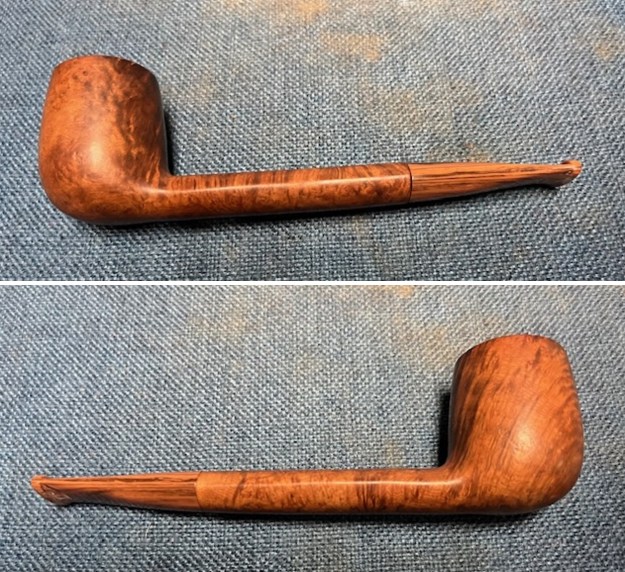
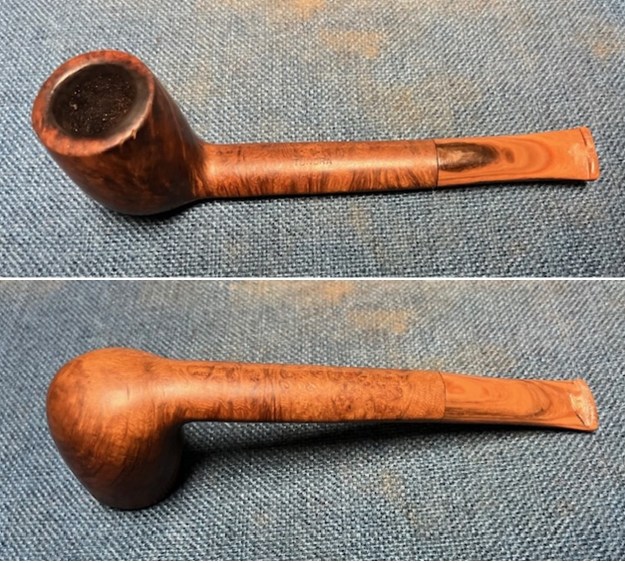
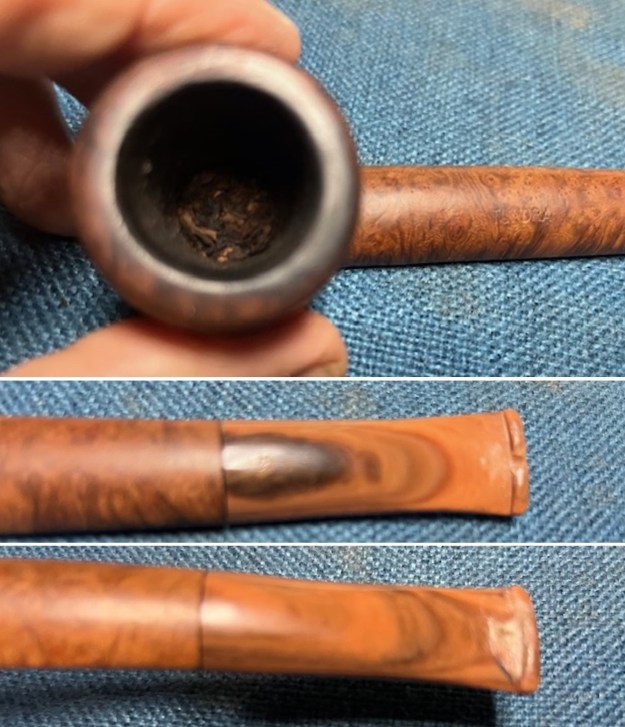
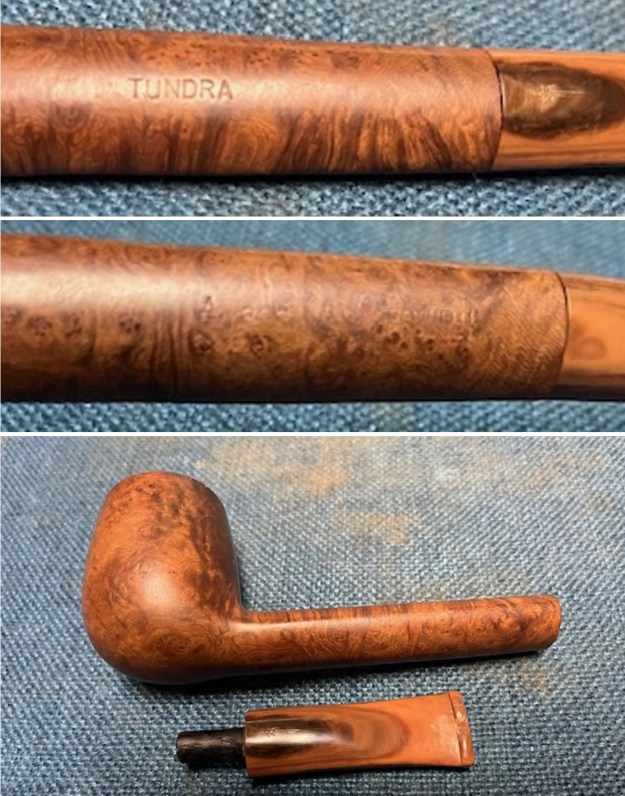
I chose to work on was Savinelli Tundra. It looked very familiar to I checked out the blog and sure enough as noted above I had restored it once already. It was stamped on the topside of the shank and read Tundra. On the underside it has a Savinelli S shield on the underside followed by the shape number 802. The finish was still pretty clean. The bowl already had a thick cake and some wet sticky dottle that completely covered the airway at the bottom of the bowl as it had before. The rim top had was covered by light coat of lava that was sticky. The taper stem was multi-coloured acrylic. The bite through I had repaired had held up quite well. The shank and airways in both the mortise and stem were very dirty. I blew through the stem and it was clear and unclogged. I tried to blow through the shank and it was constricted with tars.  I took photos of the pipe before I started my work. It amazed me how quickly the pipe had clogged again. I took photos of the rim top and the stem to show the condition. You can see the cake and dottle in the bowl and the clean rim top. The photos of the stem show that the repairs on the tooth marks and chatter on the top looks to be in great condition.I took photos of the stamping on the top and underside of the shank to capture it. The Tundra stamp and the stamping on the underside was faint but readable as noted above. I removed the stem and took a photo of the parts to give a sense of the look of the pipe.I started my work on the pipe by cleaning out the dottle in the bottom of the bowl. It was thick and wet. I reamed the bowl with a PipNet reamer. I used the first cutting head and took the cake back to bare briar. I cleaned up the reaming with a Savinelli Fitsall Pipe Knife and removed all the remnants of the cake. I sanded the walls of the bowl with a piece of dowel wrapped in 220 grit sandpaper. The walls look very good at his point in the process. I used the drill bit in a Kleen Reem pipe reamer and twisted it into the shank in the shank until it went to the bowl. It cleaned out more of the debris and opened the airway. I cleaned out the shank, the airway and the mortise as well as the airway in the stem with alcohol, cotton swabs, hard bristle and soft bristle pipe cleaners. It was a very dirty pipe which just meant that Brian really enjoyed it. I rubbed the bowl and shank down with Before & After Restoration Balm to deep clean the finish on the bowl and shank. The product works to clean, enliven and protect the briar. I worked it in with my fingers to get it into the briar. I let it sit for 10 minutes then I wiped it off and buffed it with a soft cloth. The briar really began to have a rich shine. I took some photos of the bowl at this point to mark the progress in the restoration. It is a beautiful bowl. With the shank clear and the airway open it was time to work on the stem. It was clear once again just dirty and I needed to clean up my repairs on the stem. Though I did not take photos of the process as this point I used my normal process. I used small files to recut the button edge, reshape the surface and flatten the repair on the stem surface on both sides. The filled in bite through on the underside was visible but the beauty was it was underneath! I would continue to sand and work it to minimize the visibility but the repair was solid.I sanded the surface of the acrylic taper stem with the 2 x 2-inch sanding pads – 320-3500 grit pads to clean up the sanding marks on the stem surface. By the final 3500 grit pad the stem started to really shine. The repairs are visible but they are smooth. It is hard to patch Cumberland style stems.I polished the stem with micromesh sanding pads – dry sanding with 1500-12000 grit pads. I wiped the stem down after each sanding pad with Obsidian Oil. I set it aside to dry. I finished cleaning and opening up the airway once again on this Savinelli Tundra 802 Canadian with an acrylic taper stem. I put the pipe back together and buffed it with Blue Diamond on the buffing wheel. I gave the bowl multiple coats of carnauba wax. I buffed the pipe with a clean buffing pad to raise the shine and then by hand with a microfibre cloth to deepen it. It is fun to see what the polished bowl looks like with beautiful grain on the smooth bowl and shank. The polished grain on the pipe looks great with the repaired acrylic stem. This Savinelli Tundra Canadian looks better and the pipe feels great in my hand. It is light and well balanced. Have a look at it with the photos below. The dimensions are Length: 6 inches, Height: 1 ¾ inches, Outside diameter of the bowl: 1 ¼ inches, Chamber diameter: ¾ of an inch. The weight of the pipe is 41 grams/1.45 ounces. This second of three pipes that Brian me to open up again. I will send the pipes back to him once I have cleaned up the final pipe he sent. I look forward to hearing what he thinks of this resurrected beauty. It should be a great smoking pipe.

As always, I encourage your questions and comments as you read the blog. Thanks to each of you who are reading this blog. Remember we are not pipe owners; we are pipe men and women who hold our pipes in trust until they pass on into the trust of those who follow us.

Restoring a Work of Art from Viggo Nielsen


by Kenneth Lieblich

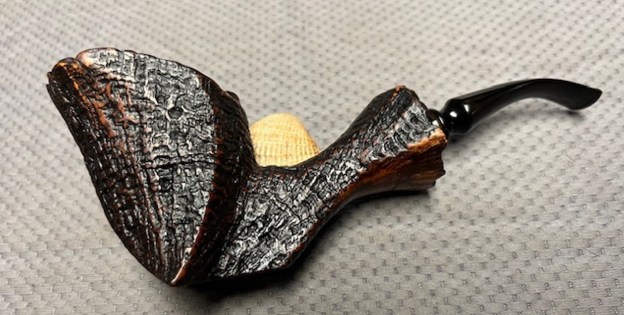
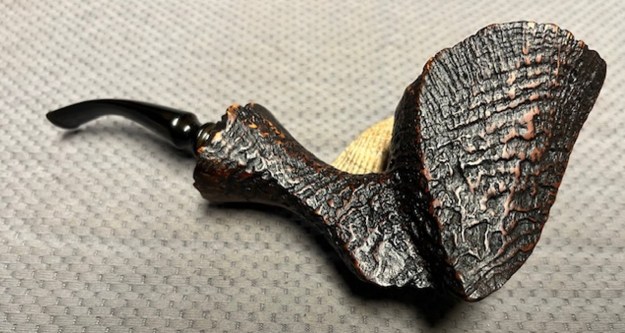
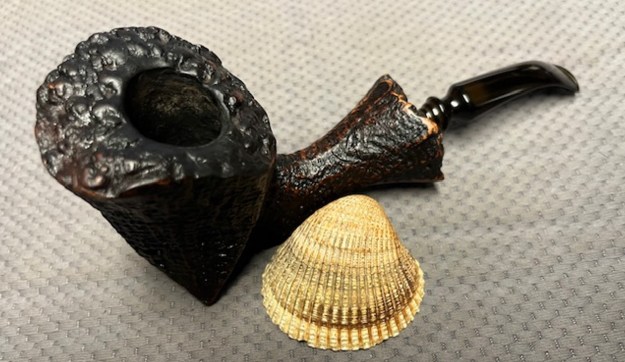
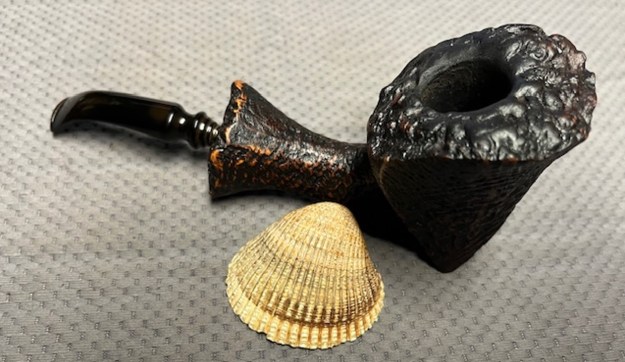
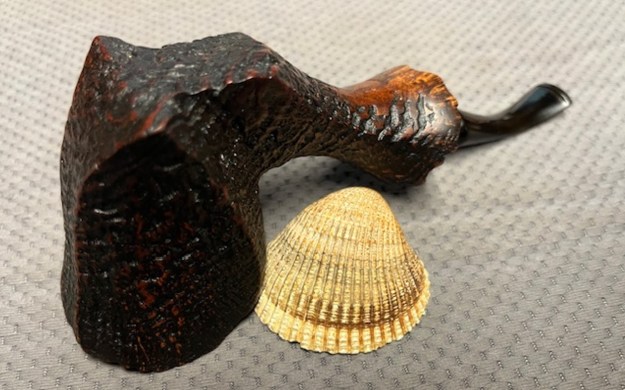
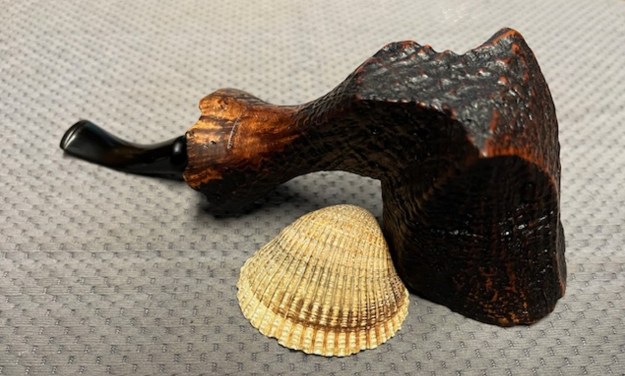
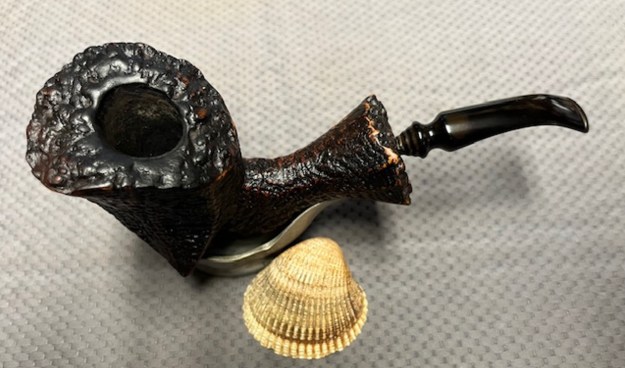
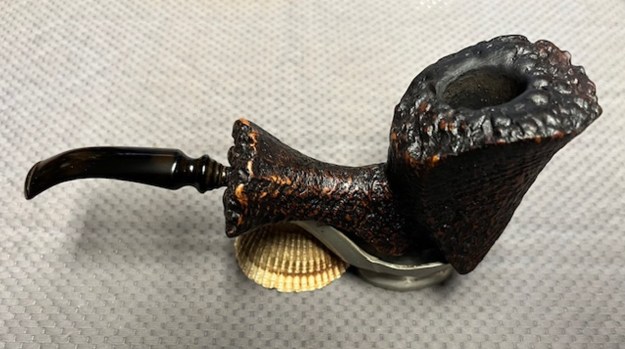
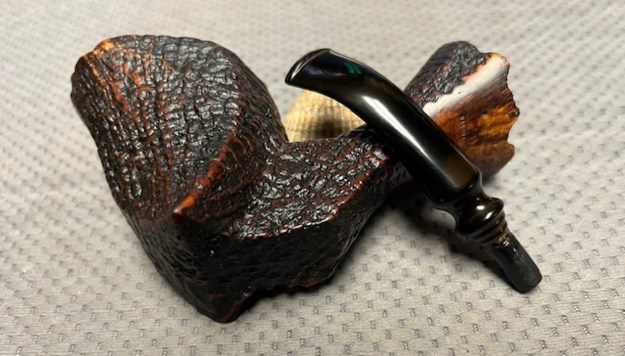
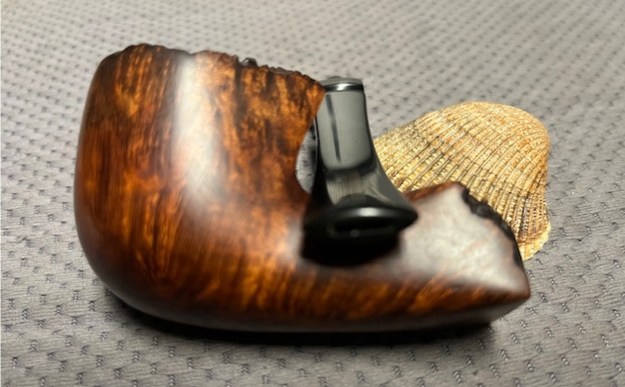
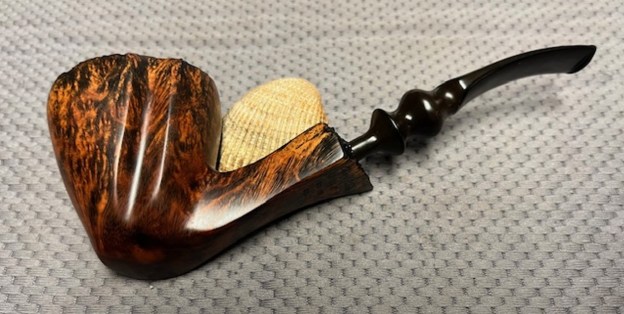
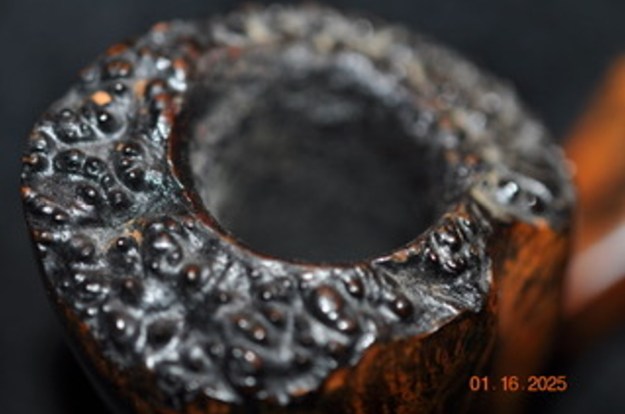
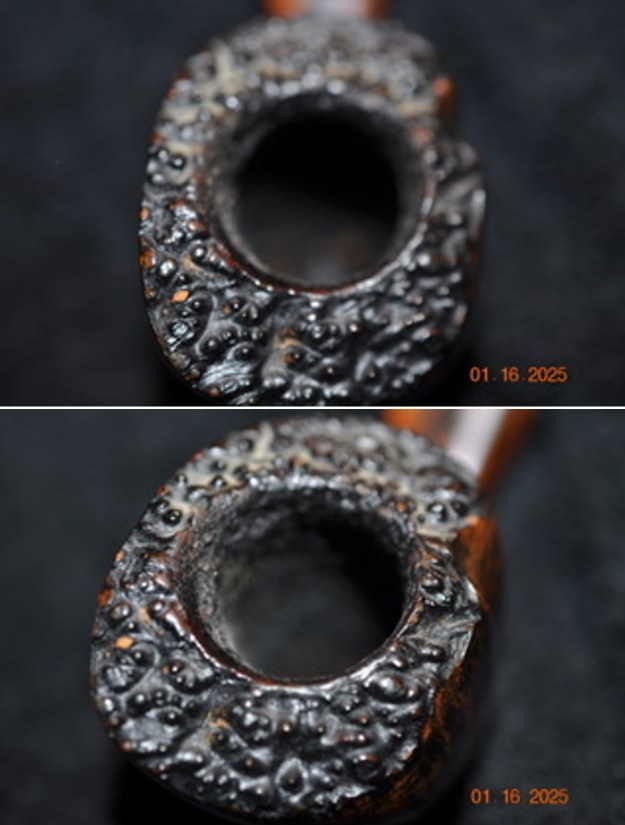
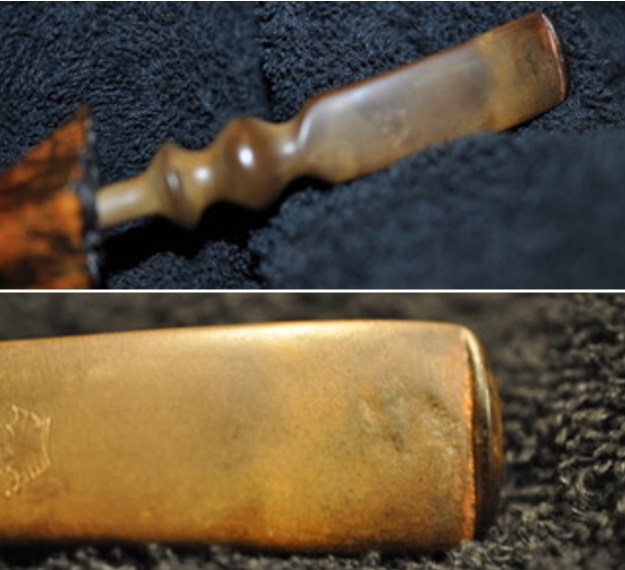
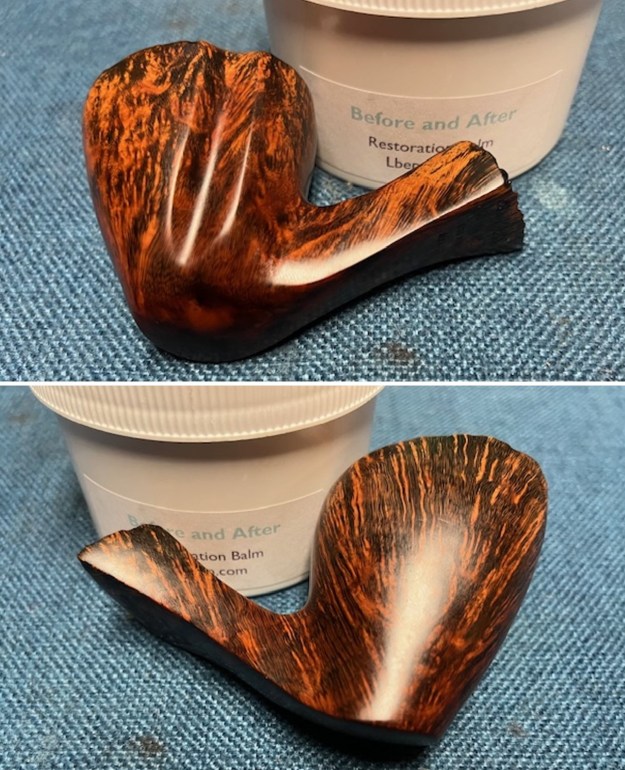
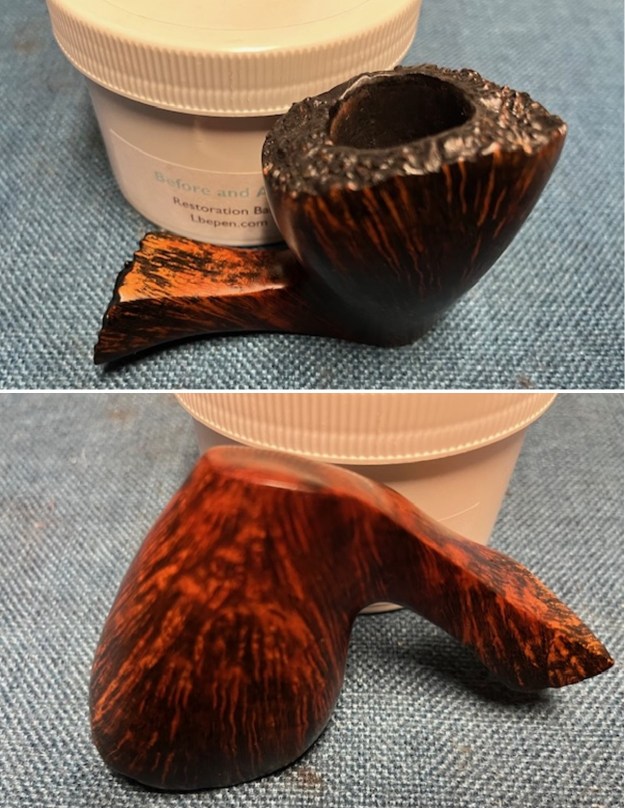
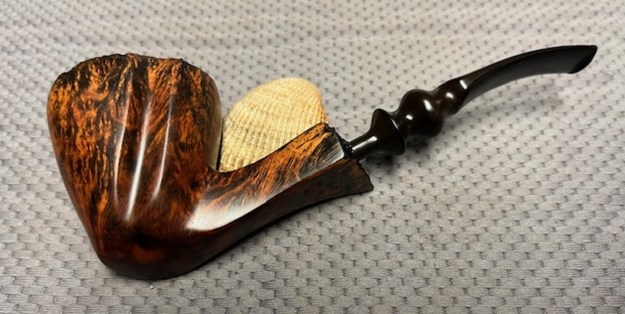
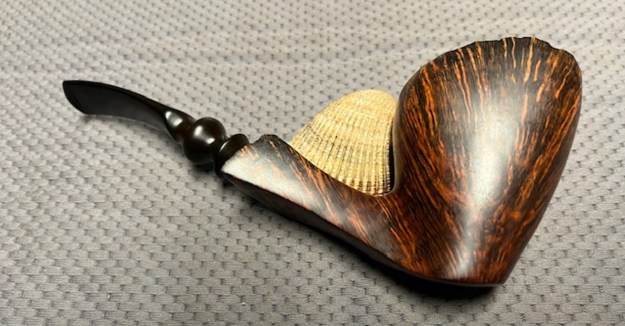
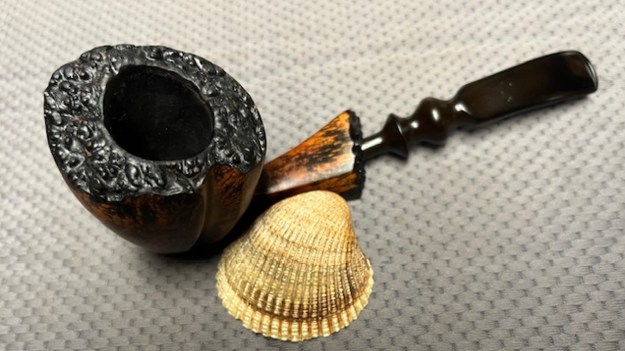
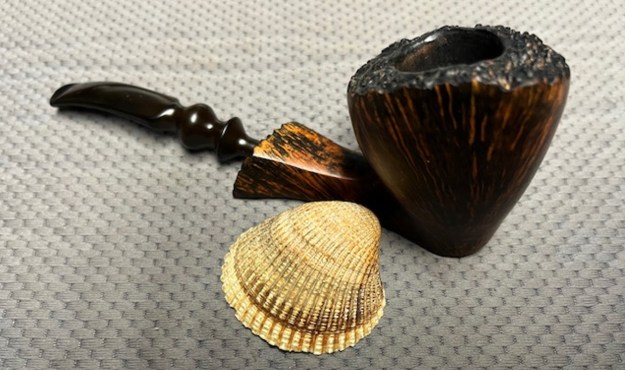
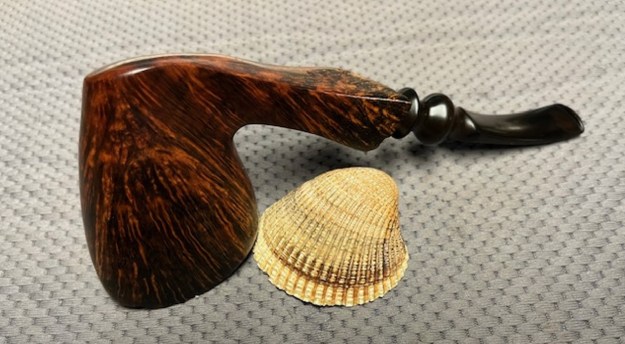
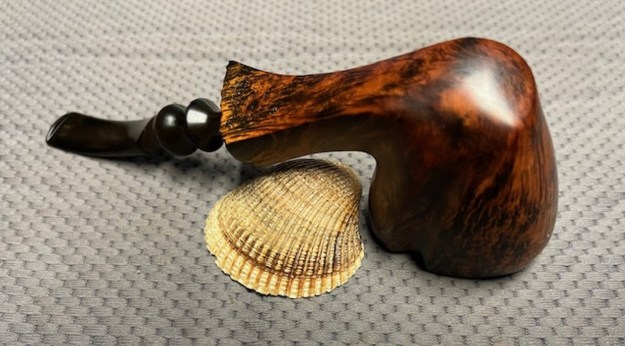
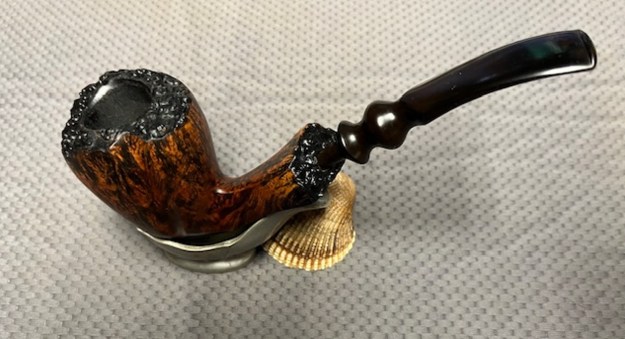
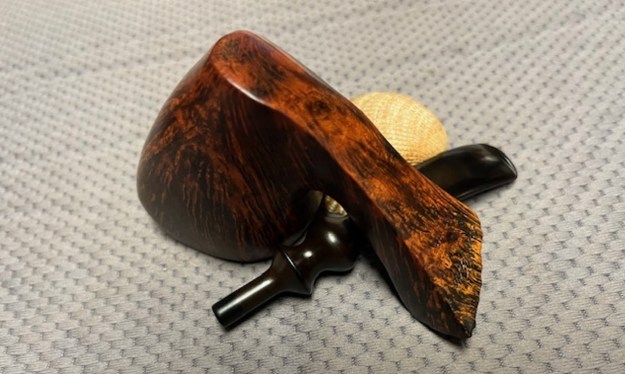
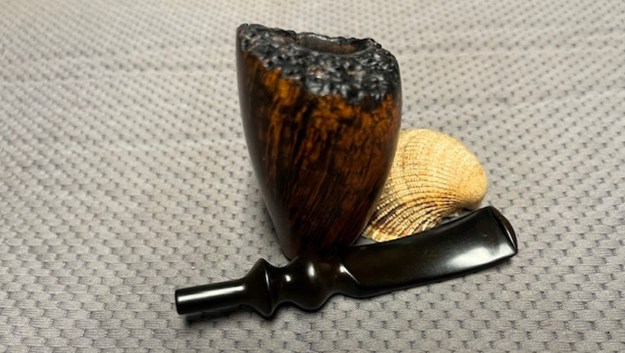
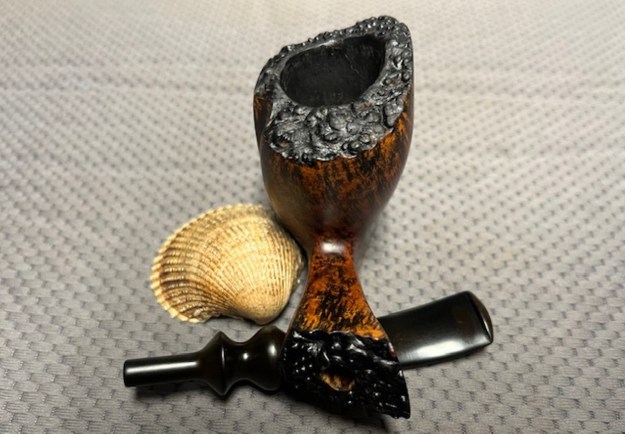
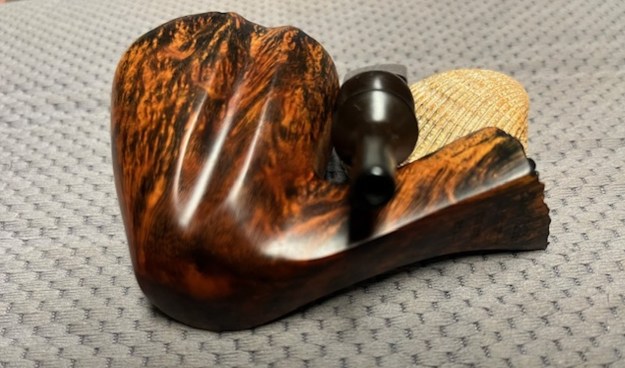
When I first saw this pipe, I thought that it was a very fine example of Danish pipemaking. But the more I worked on it, the more I recognized the incredible workmanship involved in carving it. This is a majestic, hand-finished freehand from master carver, Viggo Nielsen. This is the sort of pipe that offers you more each time you look at it. Examining the curves, angles, transitions, and plateau was very rewarding and reminded me of a rugged mountain landscape. It’s a beautiful pipe! There are some markings on the shank of this pipe and they are helpful for identification. On the left side of the shank, we see Nielsen [over] Handmade [over] in Denmark. On the right side of the shank, we see Hand [over] Finished. That’s all – no other markings to be found.It is worth looking up the work of Viggo Nielsen from the usual sources. On Pipedia, his article states:
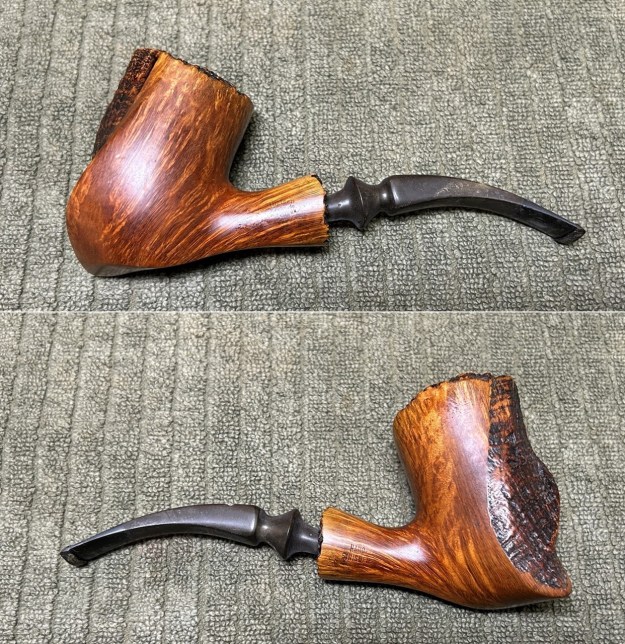
Viggo is surely one of the seminal figures in the evolution of the Danish pipe. His pipes are all handmade – also handmade stems, often in Cumberland. Most of the pipes are quite big, and a large number are made for 9mm filter. The finish is just perfect and when holding one of Viggo’s pipes, you can tell, he’s a pro. 

Viggo Nielsen was born in 1927. During World War II he started making pipes at a now closed factory. These pipes were made of birch due to the lack of briar (because of the war). In 1948 Viggo started his own pipe factory, “Bari”. But it wasn’t until 3 years later he could actually acquire Briar wood for his pipes. The business was very successful producing both classic shapes and freehand models.

In 1978 Viggo sold the business to a German tobacco manufacturer and he began making the Fåborg Pipe together with his two sons Jørgen Nielsen and Kai Nielsen. Even when Viggo had reached the age of retirement, he could not quite leave his workshop and he still made about 100 pipes a year, some of them based on the famous “Fåborg Pibe” but also a few “Jewels of Denmark”, until he passed away.

This pipe doesn’t have a Cumberland stem, nor a filter, but it is a healthy size. I also went to Pipephil and found the following:

Artisan: Viggo Nielsen (1927 – †2009) starts making pipes during WWII. He estabishes his own Bari factory in 1948. The business is sold to a German tobacco manufacturer in 1978 and from this period on he starts the “Faaborg Pipe” (Fåborg Pibe) with his two sons Jørgen Nielsen and Kai Nielsen. The “Jewel of Denmark” stamping is reserved for perfect pipes (flawless straight grain).

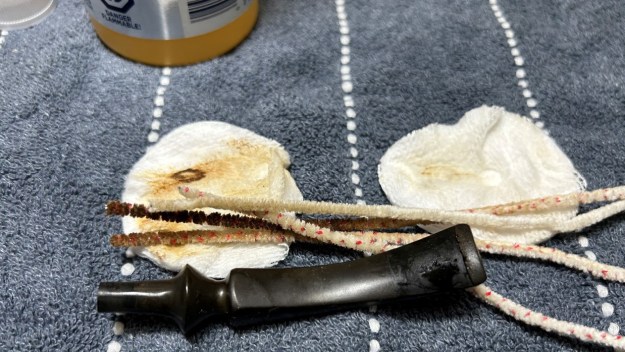
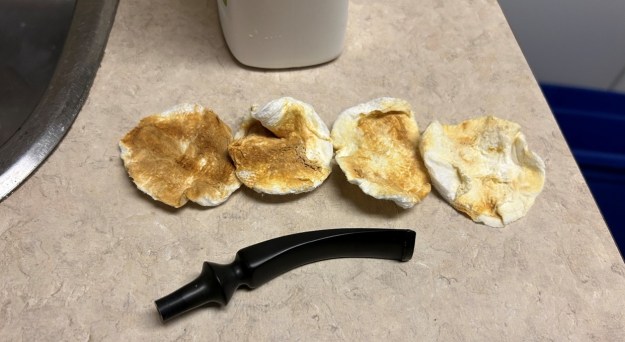
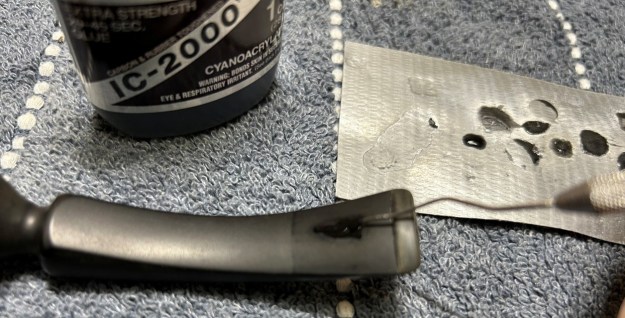
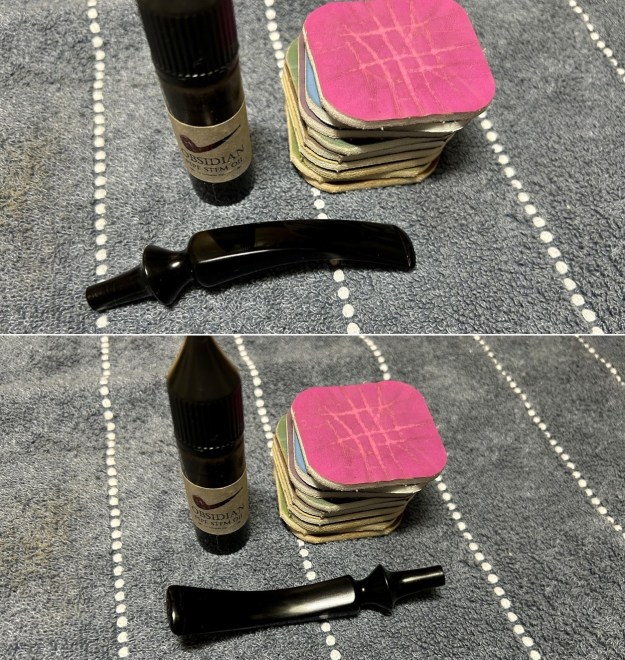
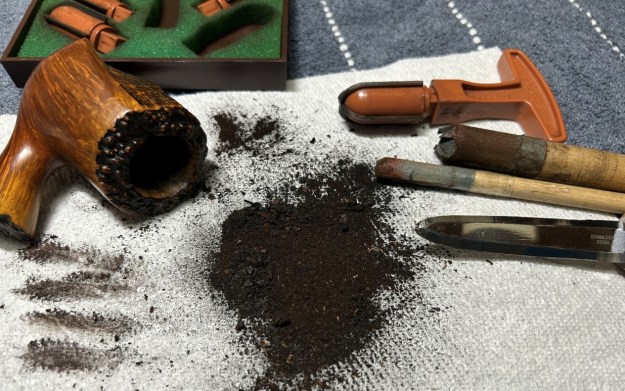
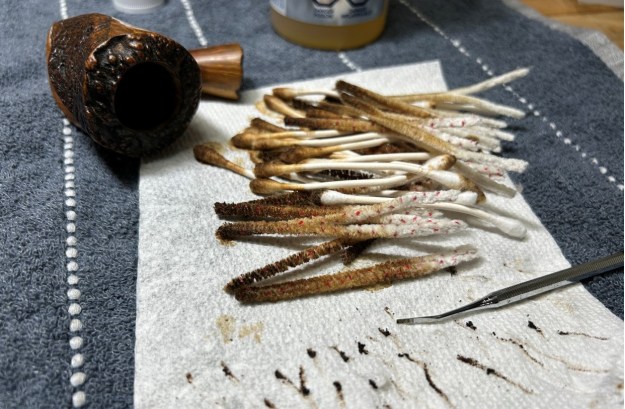
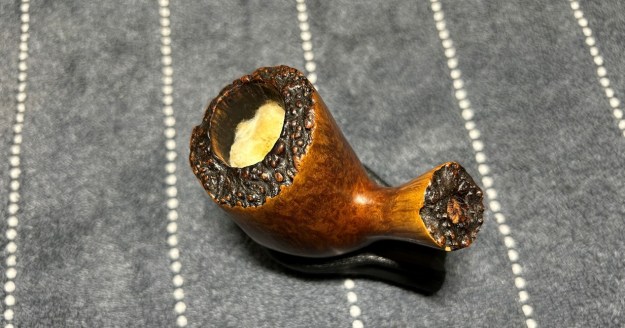
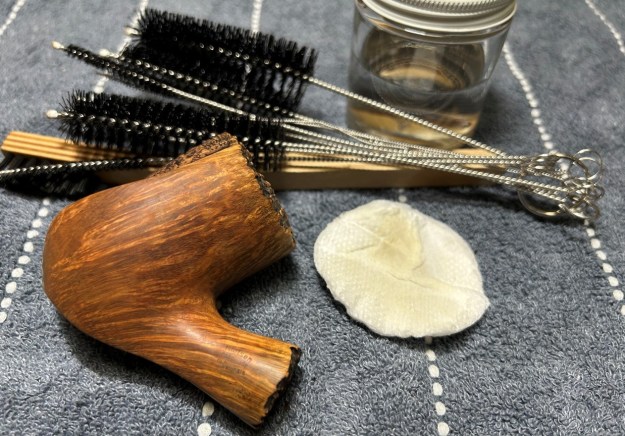
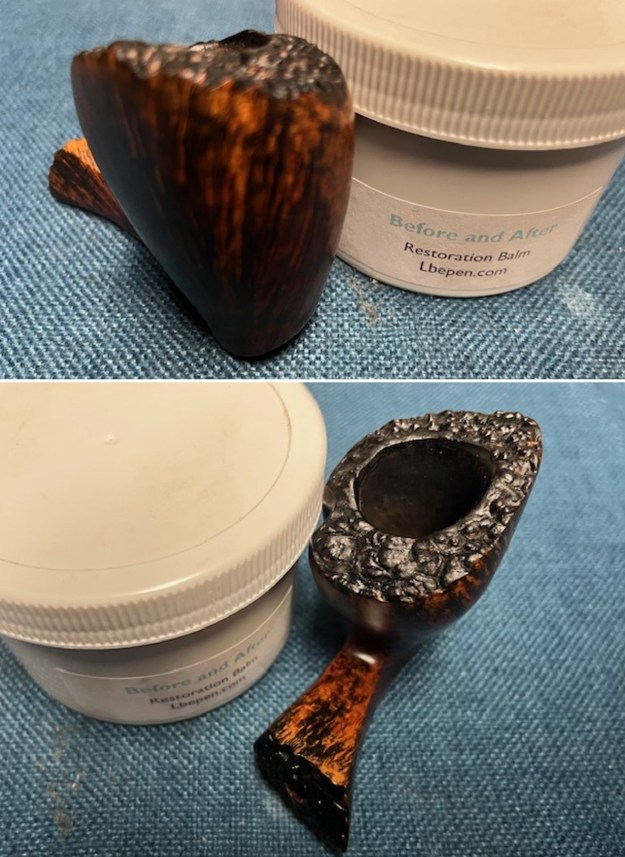
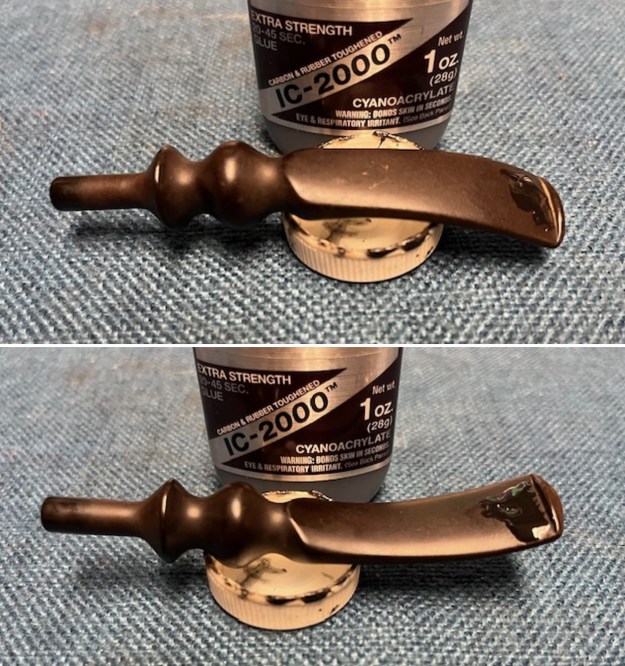
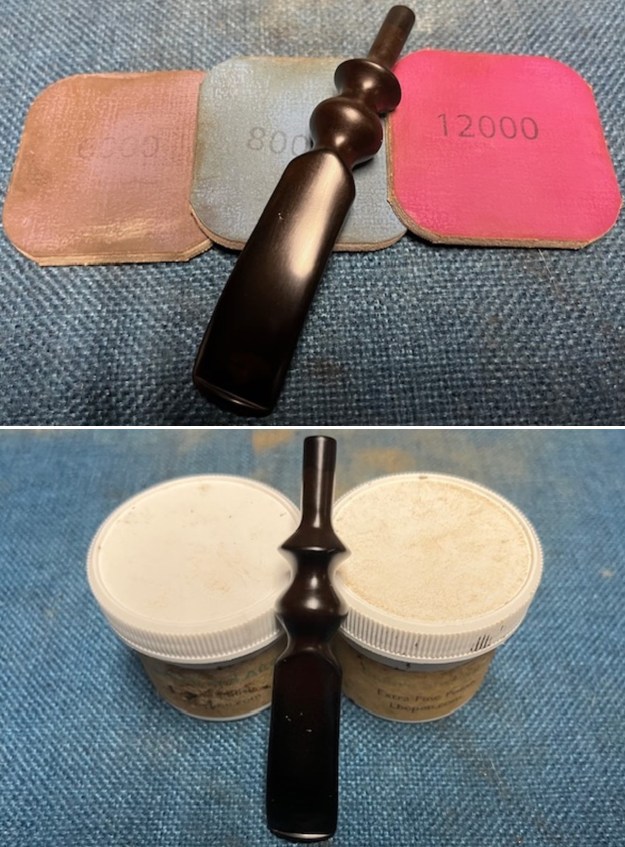
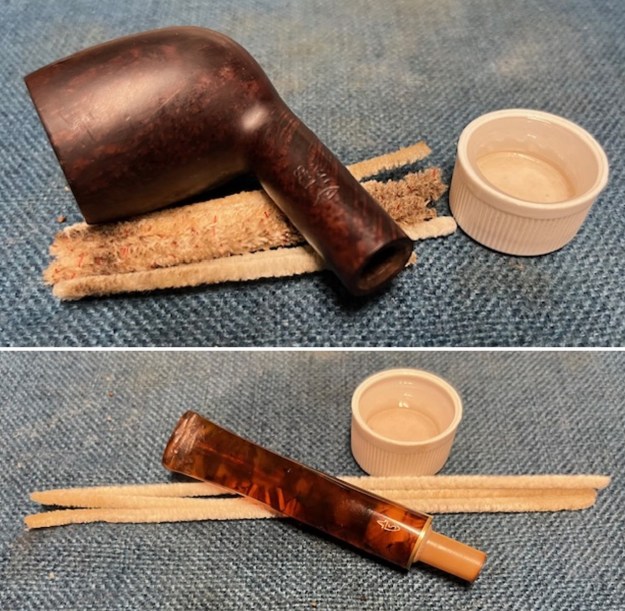
Let’s examine this wonderful specimen. The pipe was in great condition – just very dirty from lots of smoking. You can see lots of lava on the plateau rim top. The briar bowl was in nice shape, with a bit of grime ground in. The stem was well-worn, but a good, solid freehand stem. It has a few tooth marks and some oxidation, but nothing to worry about. To begin, I used isopropyl alcohol on a few cotton rounds and wiped down the stem to provide an initial cleaning of filth before moving on to the next steps. The primary cleaning came next. I disinfected the inside of the stem with both pipe cleaners and cotton swabs dipped in lemon-infused 99% isopropyl alcohol. I scrubbed thoroughly to make sure the interior was very clean. I used quite a few pipe cleaners and cotton swabs – far more than are shown in the photo.The goal of the next step is the removal (or minimization) of oxidation. Going to my sink, I used cream cleanser, cotton rounds, and a toothbrush, and scoured the stem to remove as much surface oxidation as possible. As the photos show, the result was a hideous, ochre-coloured mess – but better off the stem than on it.Once the stem was reasonably clean, I soaked it overnight in some Briarville Stem Oxidation Remover. This solution works to draw oxidation in the stem to the surface of the vulcanite. This is a major aid and an important step in ensuring a clean stem. The following day, I drew out the stem from its bath and scrubbed the lingering fluid with a toothbrush.As the stem was now clean and dry, I set about fixing the marks and dents in the vulcanite. This was done by filling those divots with black cyanoacrylate adhesive, impregnated with carbon and rubber. I left this to cure and moved on.The penultimate step for the stem is sanding. First, with my set of needle files, I reduced the bulk of the cyanoacrylate repairs. I removed the excess adhesive as near to the surface as possible, without cutting into the vulcanite. Following that, I used all nine of the micromesh sanding pads (1,500 through 12,000 grit) to sand out flaws, even out the vulcanite, and provide gentle polishing of the finished surface. I also applied pipe-stem oil while using the last five micromesh pads. There was a wonderful, deep black shine to the stem when I was done.As the stem was (nearly) complete, I moved on to the stummel. The first step was to ream out the bowl – that is to say, remove all the cake inside the bowl. This accomplished a couple of things. First (and most obviously), it cleaned the bowl and provided a refurbished chamber for future smoking. Second, when the old cake was removed, I could inspect the interior walls of the bowl and determine if there was damage or not. I used a reamer, a pipe knife, and a piece of sandpaper taped to a wooden dowel. Collectively, these ensured that all the debris was removed. And – holy moly – there was a lot of debris!Similar to the stem, I then cleaned the stummel with both pipe cleaners and cotton swabs dipped in lemon-infused 99% isopropyl alcohol. With a pipe this dirty, it took quite a while and much cotton to clean.I then decided to ‘de-ghost’ the pipe – that is to say, exorcize the remaining filth from the briar. I filled the bowl and the shank with cotton balls, then saturated them with 99% isopropyl alcohol. I let the stummel sit overnight. This caused the remaining oils, tars and smells to leach out into the cotton.To tidy up the briar, I wiped down the outside, using a solution of a pH-neutral detergent and some distilled water, with cotton rounds. I also used a nylon brush in the crevices of the plateau. This did a good job of cleaning any latent dirt on the surface of the briar. The last step of the cleaning process was to scour the inside of the stummel with the same mild detergent and tube brushes. This was the culmination of a lot of hard work in getting the pipe clean.I used all nine micromesh pads (1,500 through 12,000 grit) to sand the outside of the stummel and finish it off. This sanding minimizes flaws in the briar and provides a beautiful smoothness to the wood. I rubbed some LBE Before & After Restoration Balm into the briar and let it sit for 30 minutes or so. The balm moisturizes the wood and gives a beautiful depth to the briar. I then buffed the stummel with a microfibre cloth. Just look at that pipe! For the final step, I took the pipe to my bench polisher and carefully buffed it – first with a blue diamond compound, then with three coats of conservator’s wax. This procedure makes the pipe look its best – the stummel sings and the stem glows.This Viggo Nielsen Hand-Finished Freehand looks fantastic again and is ready to be enjoyed by its next owner. I am pleased to announce that this pipe is for sale! If you are interested in acquiring it for your collection, please have a look in the ‘Danish’ pipe section of the store here on Steve’s website. You can also email me directly at kenneth@knightsofthepipe.com. The approximate dimensions of the pipe are as follows: length 6⅛ in. (156 mm); height 3 in. (76 mm); bowl diameter 1⅞ in. (46 mm); chamber diameter 1 in. (25 mm). The weight of the pipe is 2¼ oz. (67 g). I hope you enjoyed reading the story of this pipe’s restoration as much as I did restoring it. If you are interested in more of my work, please follow me here on Steve’s website or send me an email. Thank you very much for reading and, as always, I welcome and encourage your comments.