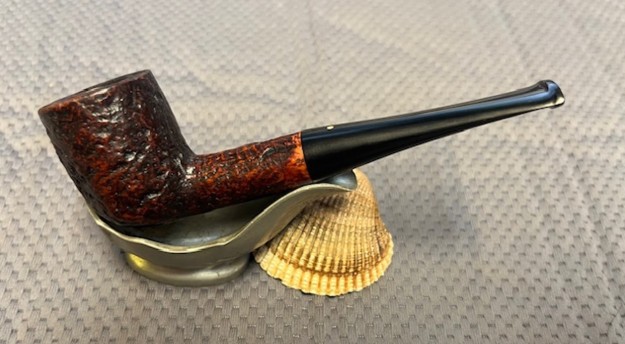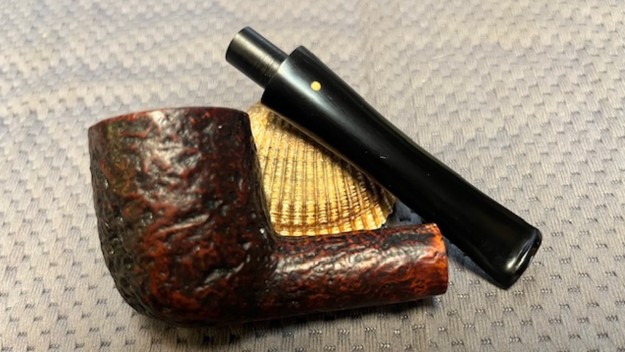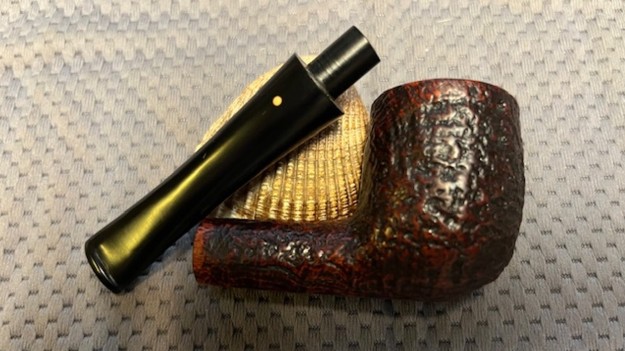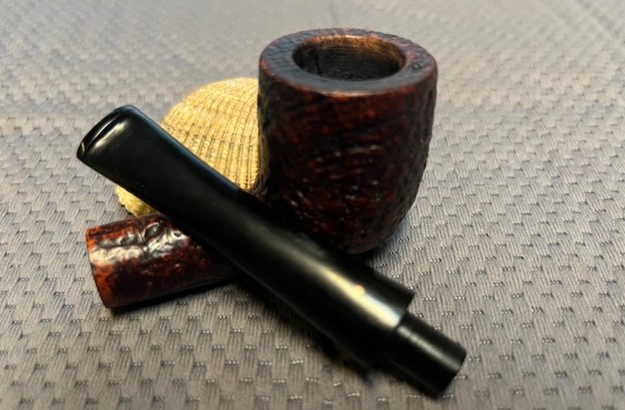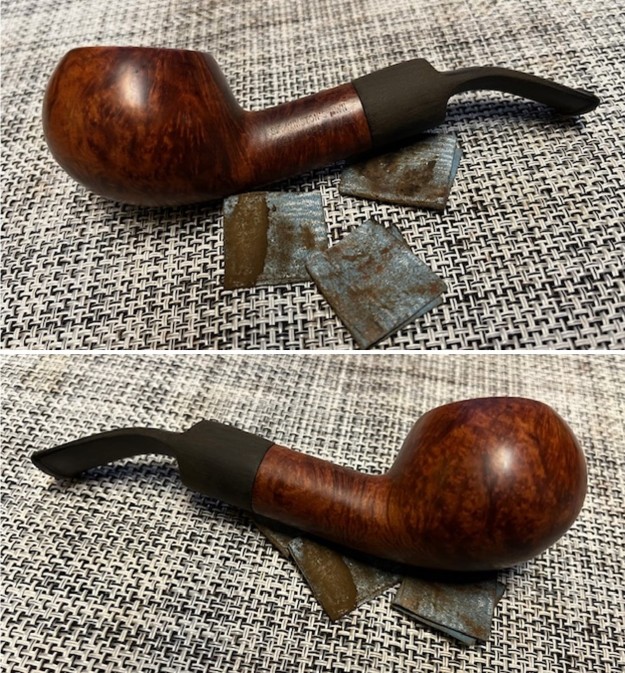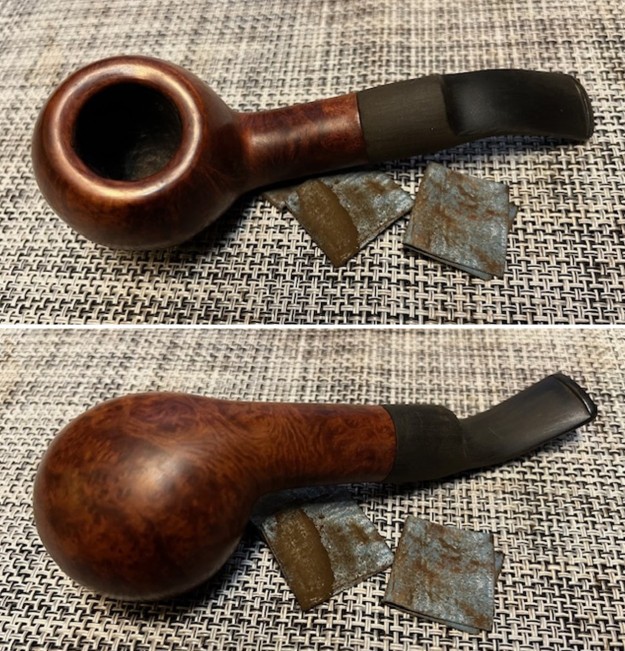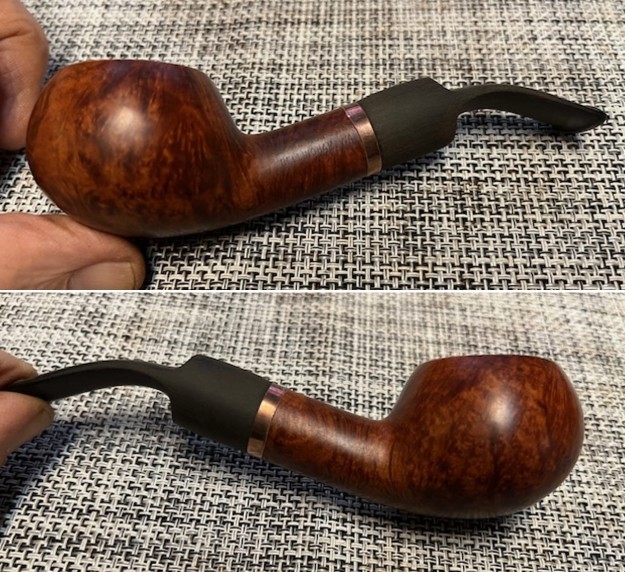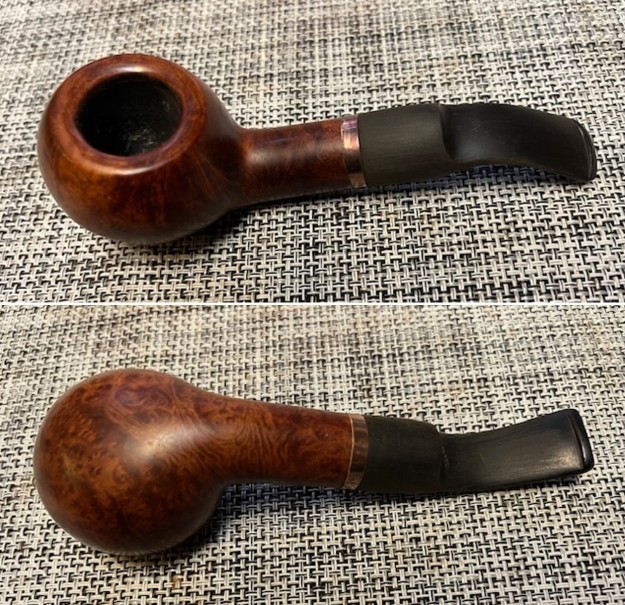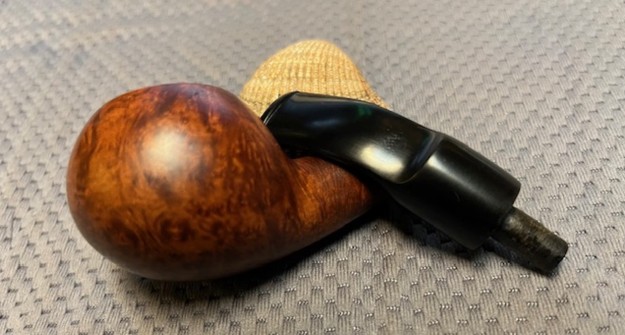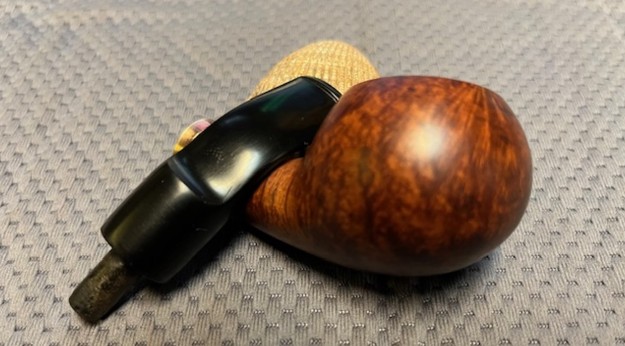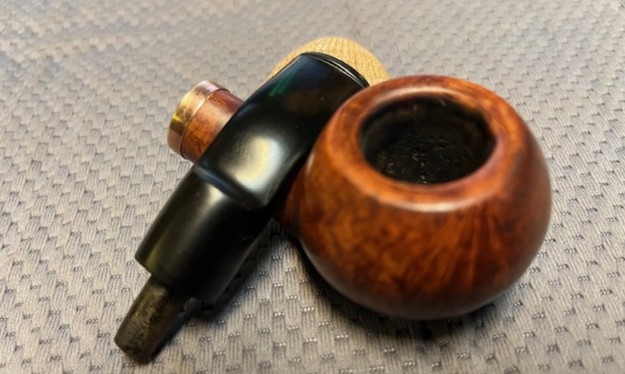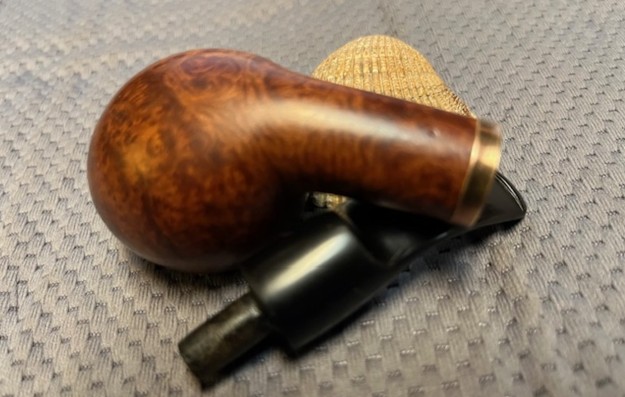
Monthly Archives: May 2024

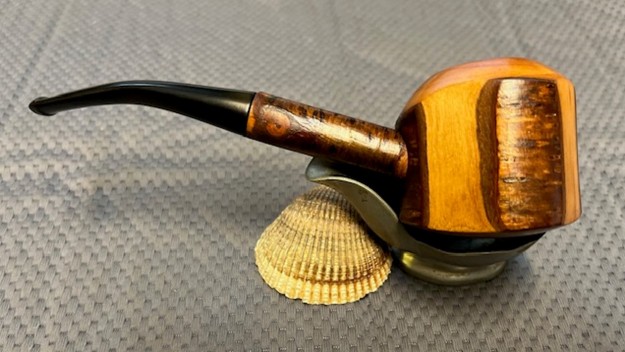
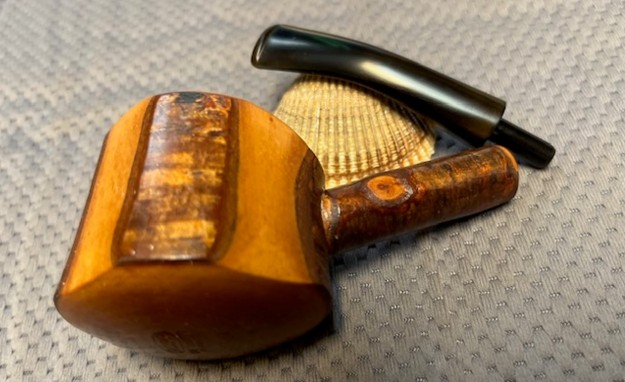
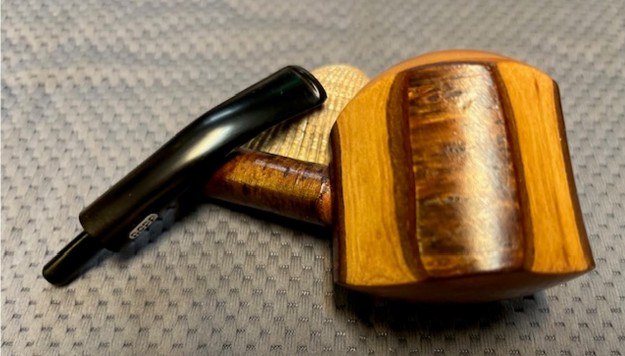
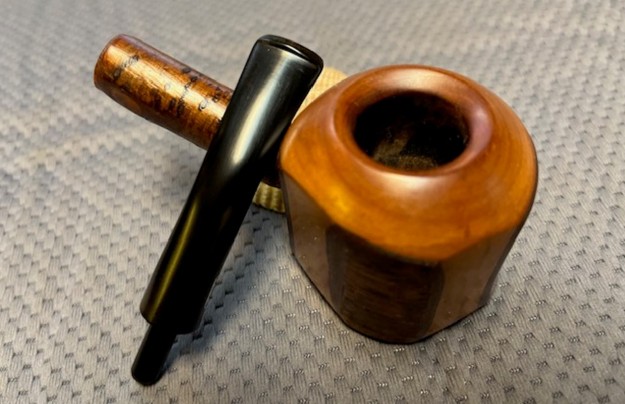
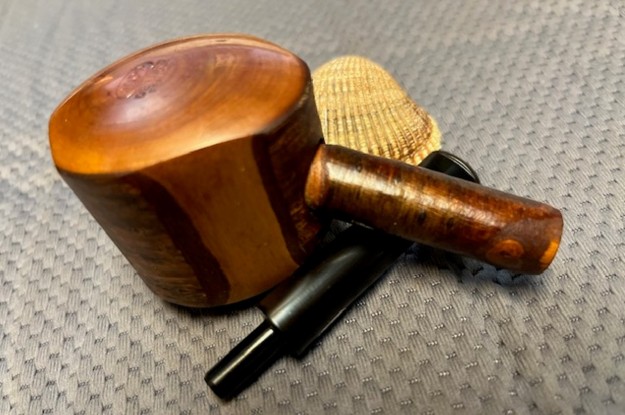
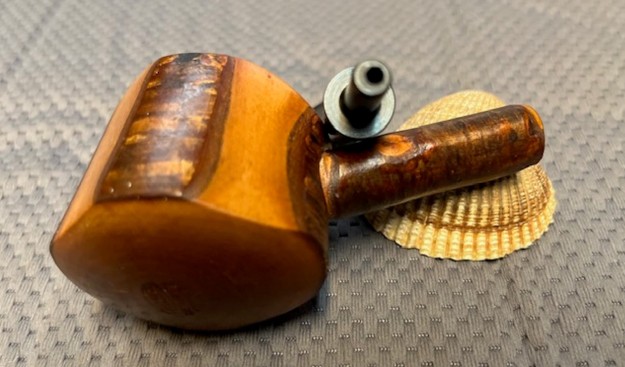
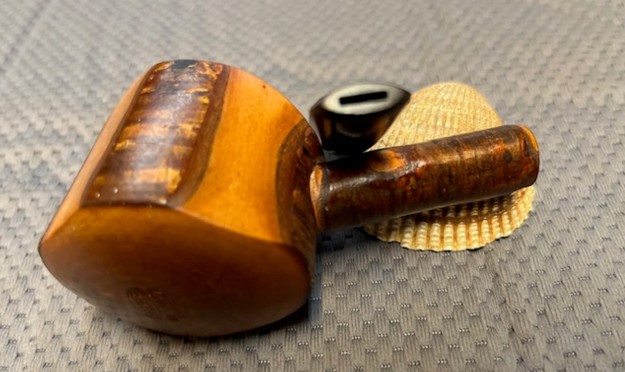
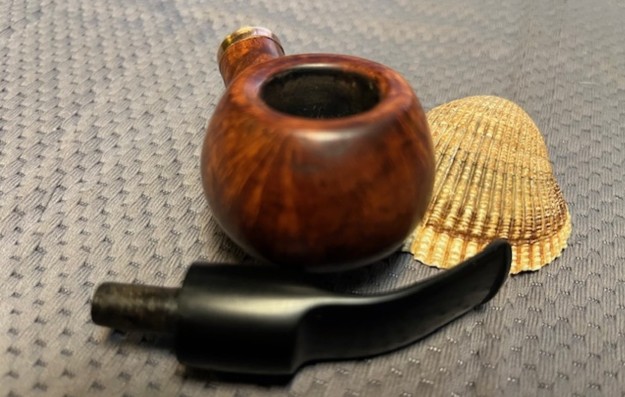
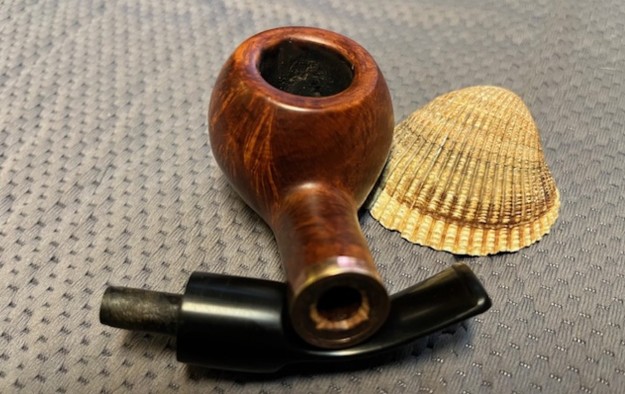
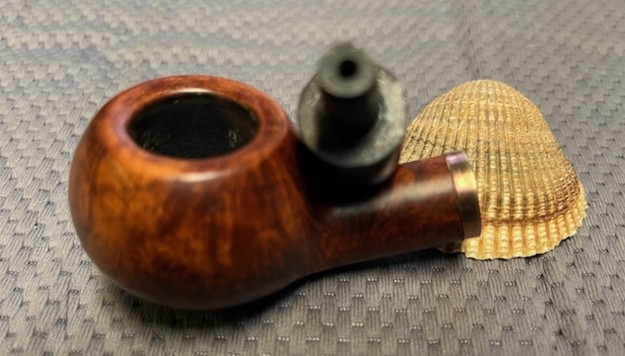
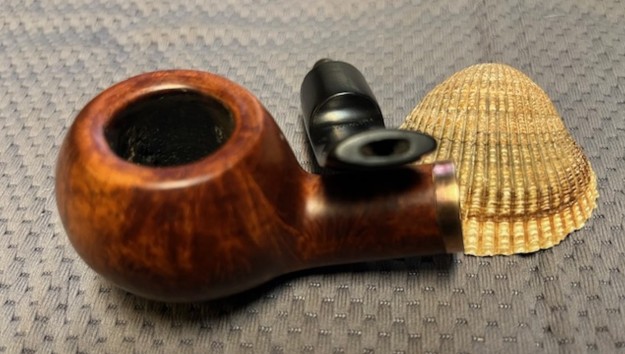
Restoring a Ropp Deluxe Octagonal Cherrywood 804


Blog by Steve Laug

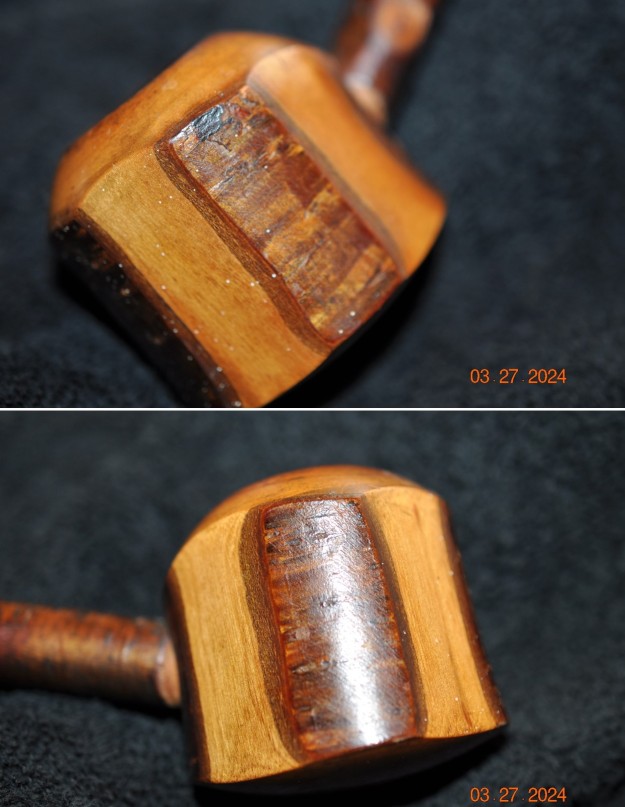
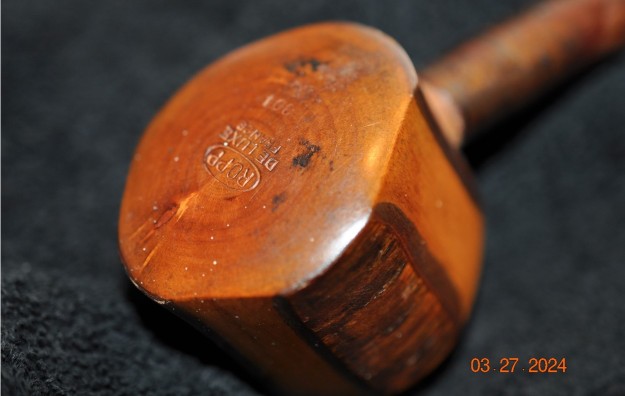
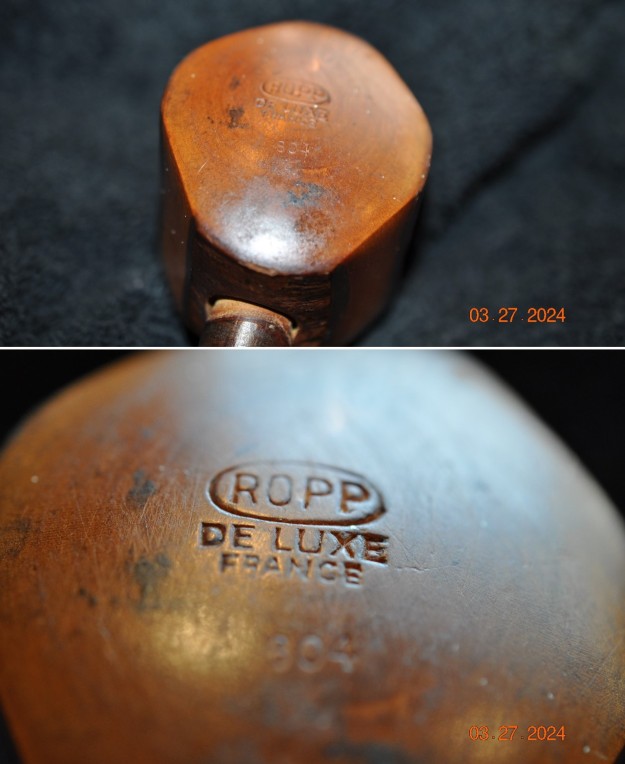
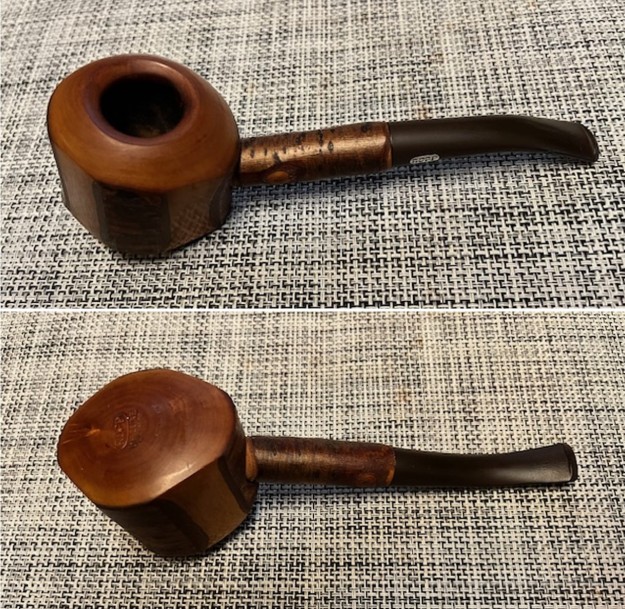
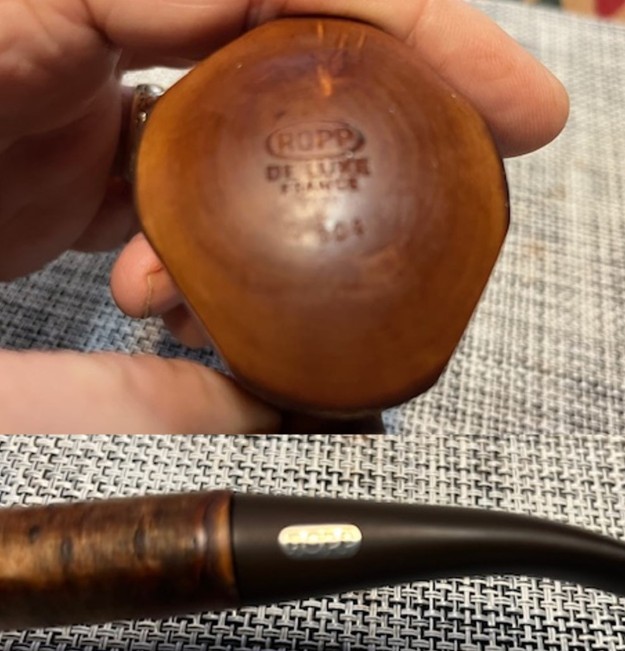
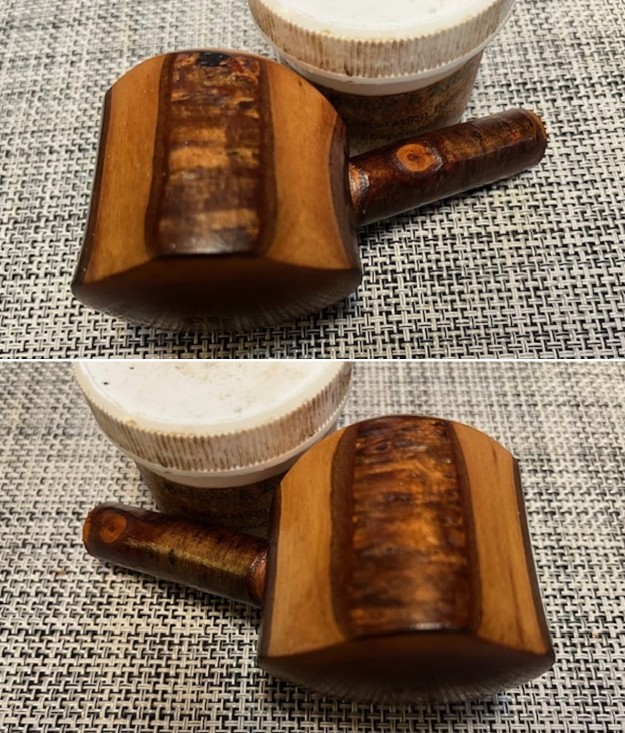
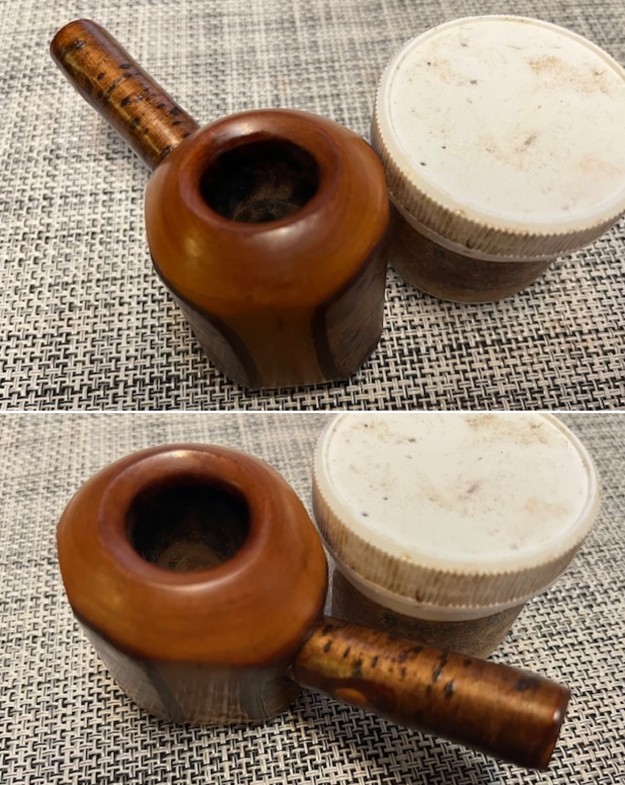
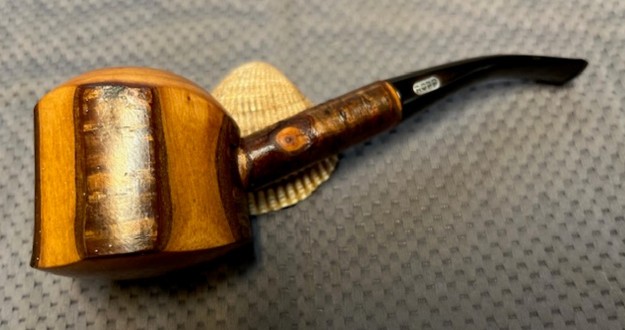
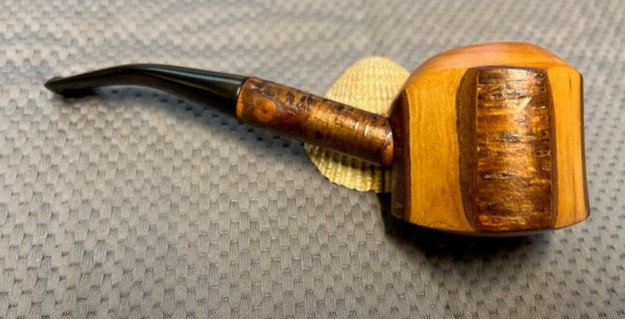
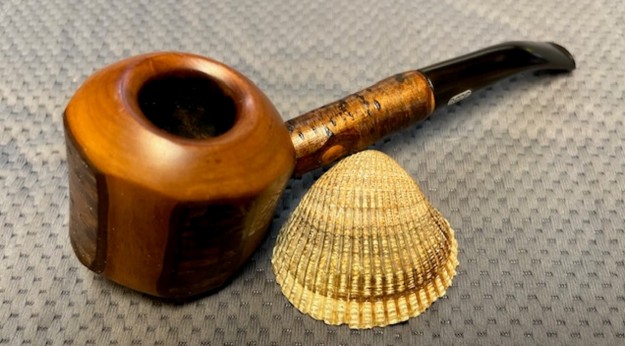
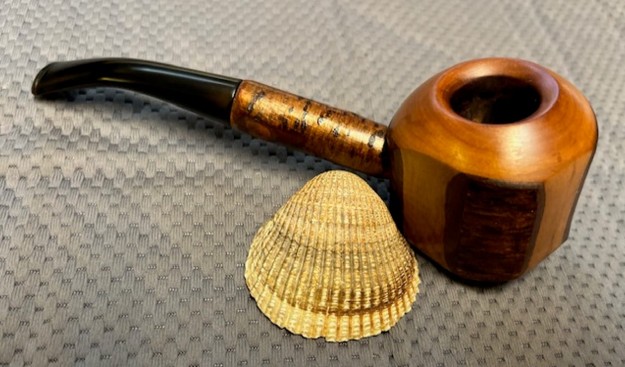
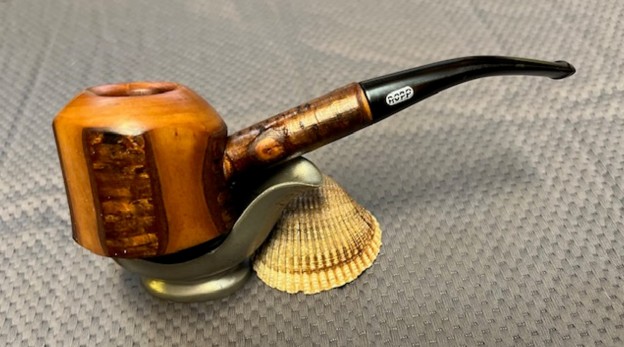
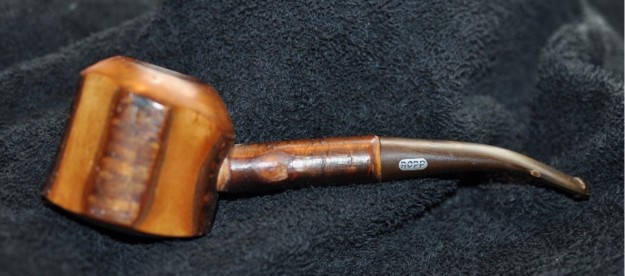
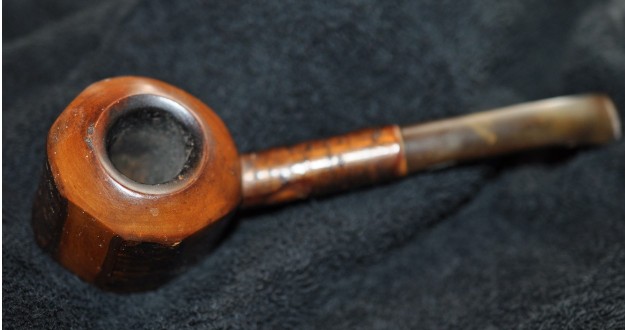
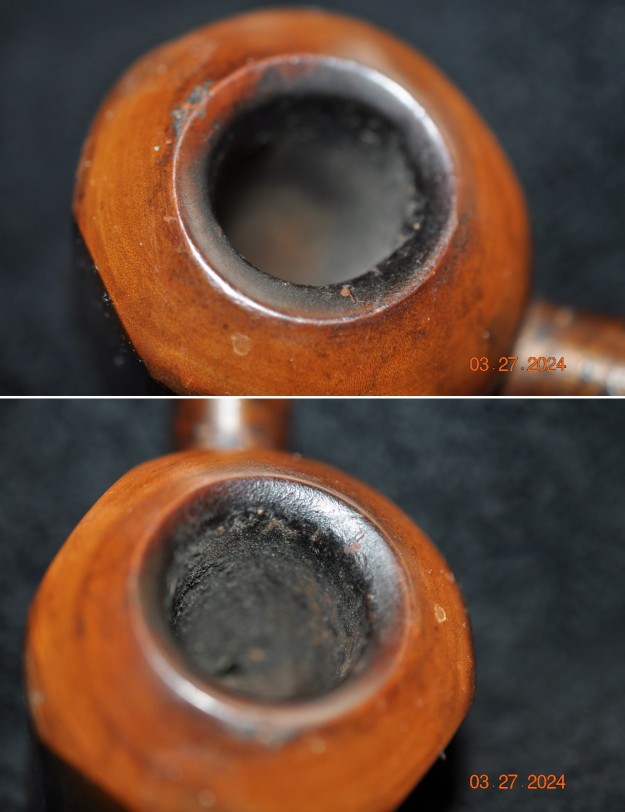
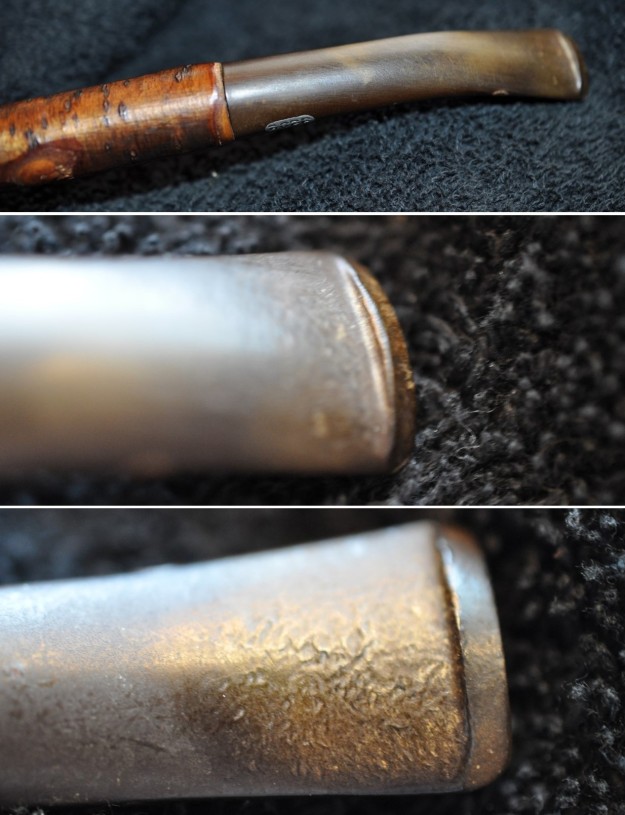
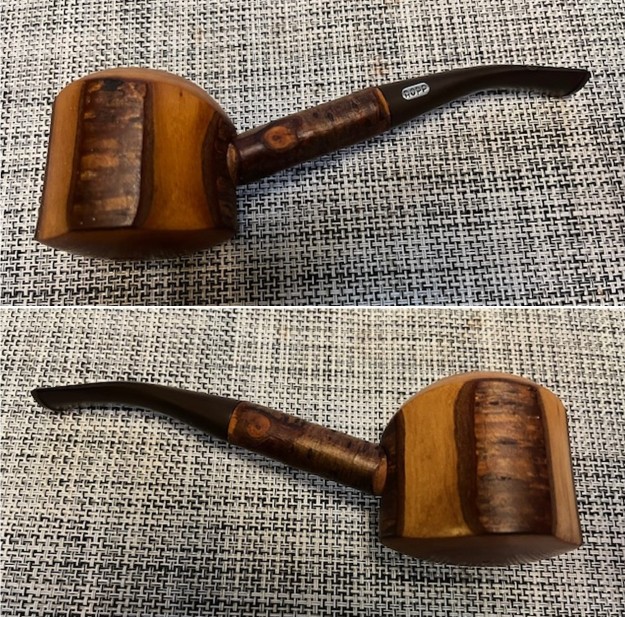
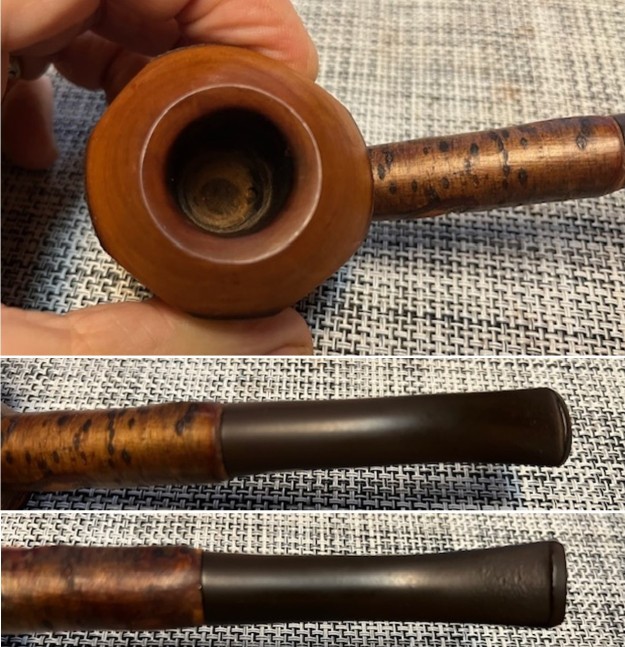
The next pipe on the work table is an interesting and classic looking Cherrywood pipe with smooth and bark covered panels. It is stamped on the heel of the bowl and reads Ropp in an oval [over] De Luxe [over] France [over] 804 the shape number. It came from a lot we purchased from a seller on eBay on 03/21/2024 from an estate in Oregon City, Oregon, USA. It is very well shaped octagonal bent poker with a vulcanite taper stem. The bowl has a thick cake and some lava overflow on the rim top and bevelled inner edge. The finish looked quite good in terms of no tears or worn spots in the bark portions of the finish. It is dirty with grime and hand oils in the finish. The stem had a silver Ropp oval inset on the left side of the taper. It is dirty and has tooth chatter and tooth marks on both sides ahead of the button. Jeff took photos of the pipe before he started his cleanup. He took photos of the pipe’s bowl and rim top to show the cake in the bowl and the lava coat overflowing onto the top. It is another dirty pipe. He also took photos to capture the tooth marks on the top and underside of the stem near the button. He took photos of the sides and the heel of the bowl to give a sense of bark and smooth portions of the finish. There are some paint flecks on the finish but it still is a beauty! Jeff took photos of the stamping on the heel of the bowl and it is clear and readable as noted above. The metal inserted Ropp logo on the left side of the stem is in good condition. I wanted to refresh my memory on the brand so I turned for a short, quick summary to Pipephil (http://www.pipephil.eu/logos/en/logo-ropp.html). I have included the pertinent information from that site below:
Brand created by Eugène-Léon Ropp (1830 – 1907) and continued throughout 3 generations. “GBA Synergie” run by Bernard Amiel (†2008) bought back Ropp in 1988 and owned it until 1991. The company was taken over by Cuty-Fort Entreprises (Chacom, Vuillard, Jean Lacroix…) in 1994.

I also turned to Pipedia to see if there was any additional information that would be helpful (https://pipedia.org/wiki/Ropp). I quote the portion of the article on the Cherrywood pipes.

Eugène-Léon Ropp (1830 – 1907) had acquired a patent for a cherrywood pipe (wild cherry, lat.: Prunus avium) in 1869. In 1870 he established a workshop to manufacture such pipes in Büssingen (Bussang, Vosges mountains). Around 1893 the business moved into the former mill of Sicard (part of the community of Baume-les-Dames – Département Doubs, Upper Burgundy – from 1895 on)… Even though cherrywood pipes were the mainstay of Ropp until the company finally closed down in September 1991. The company was taken over by Cuty-Fort Entreprises (Chacom, Jeantet, Vuillard, Jean Lacroix…) in 1994.

The pipe thus was made in France sometime prior to the closure in 1991. It is made from wild cherry and was a specialty of Ropp. I have worked on quite a few over the years but I had forgotten all the dates and information. Now it was time to work on the pipe.

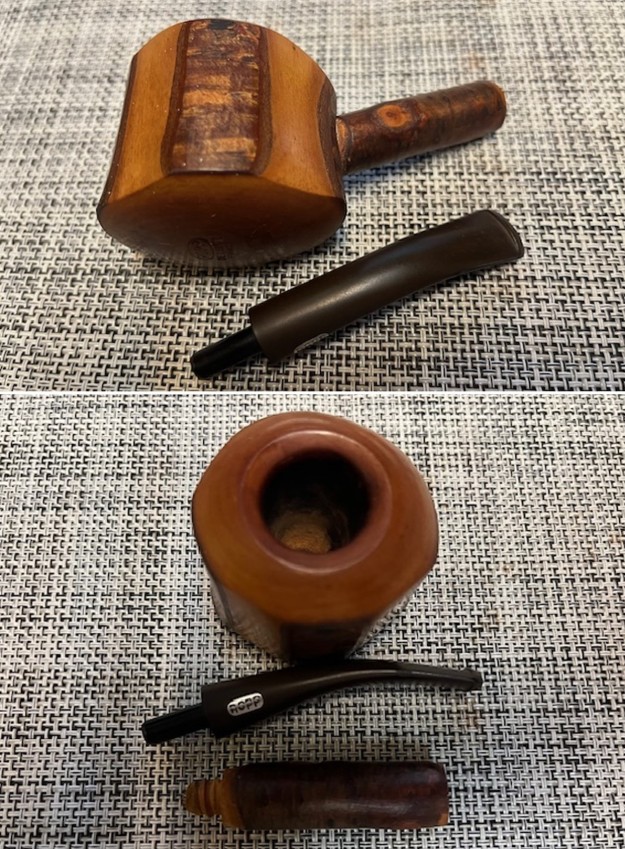
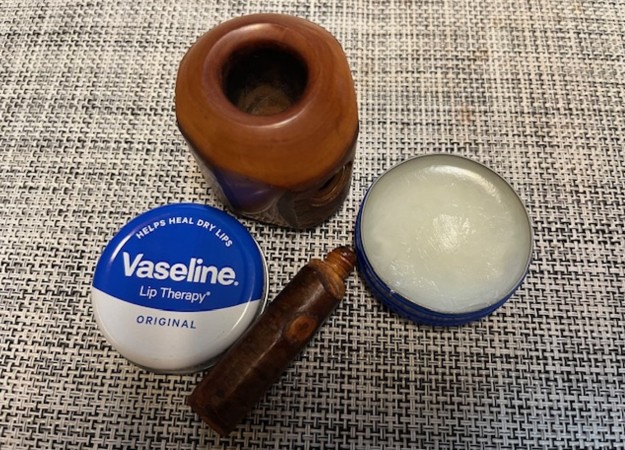
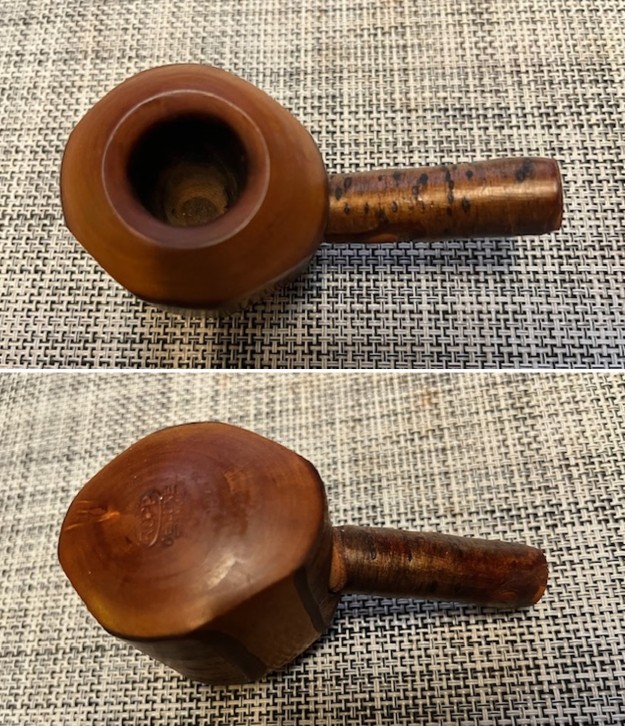
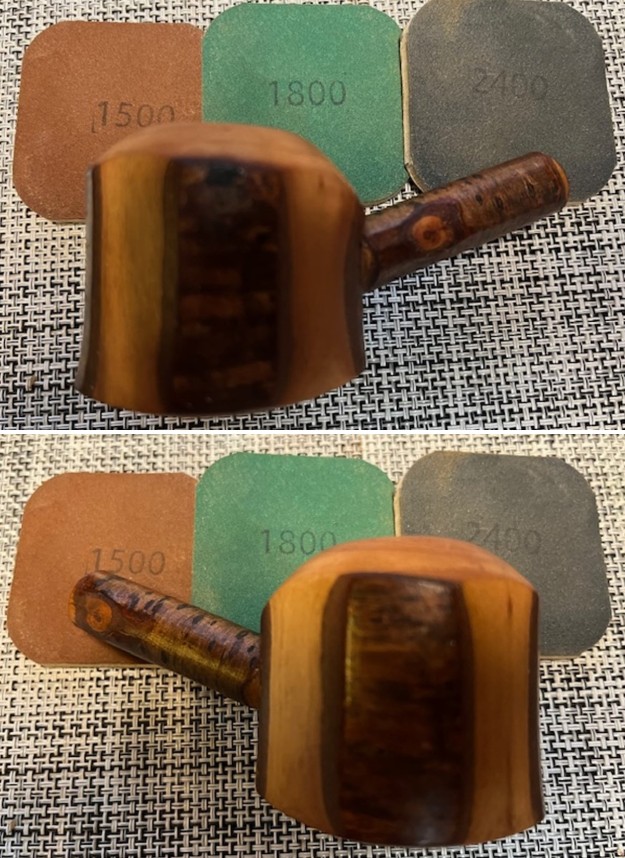
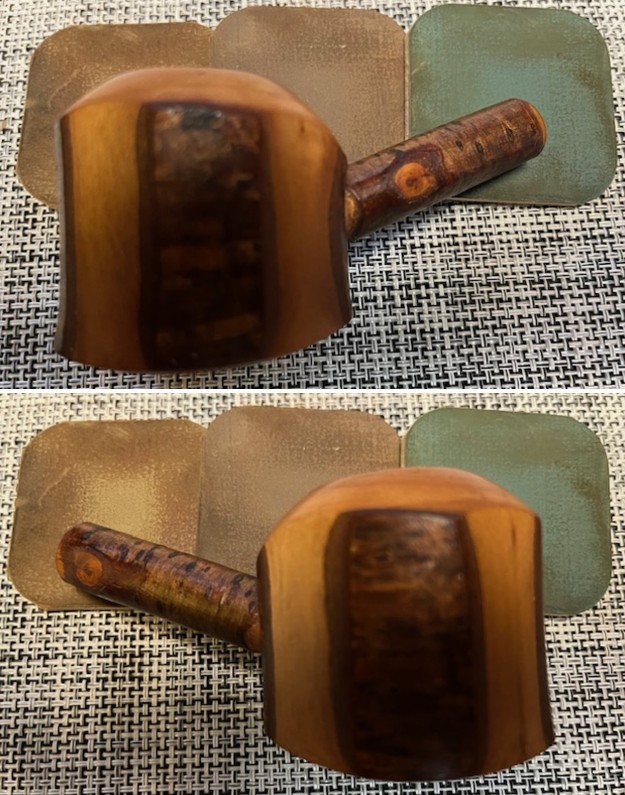
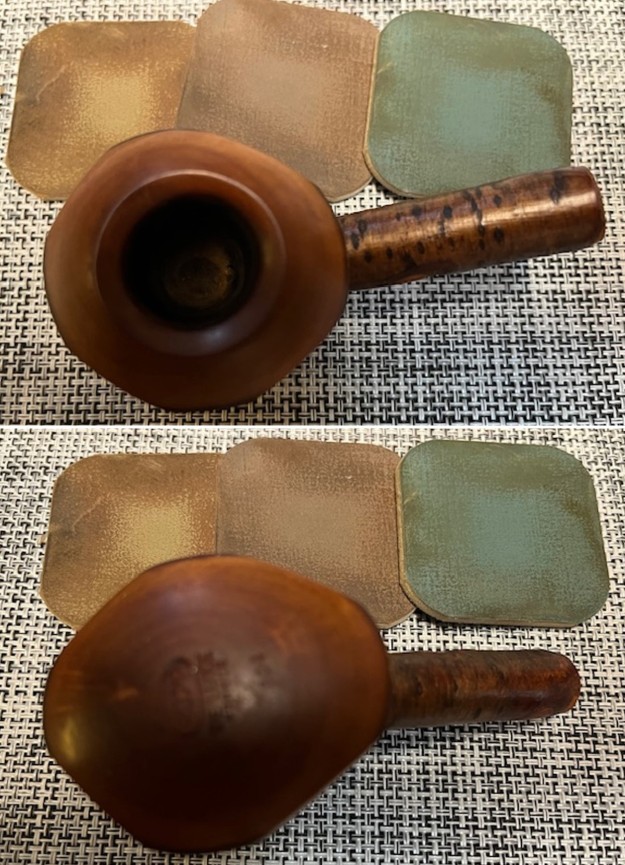
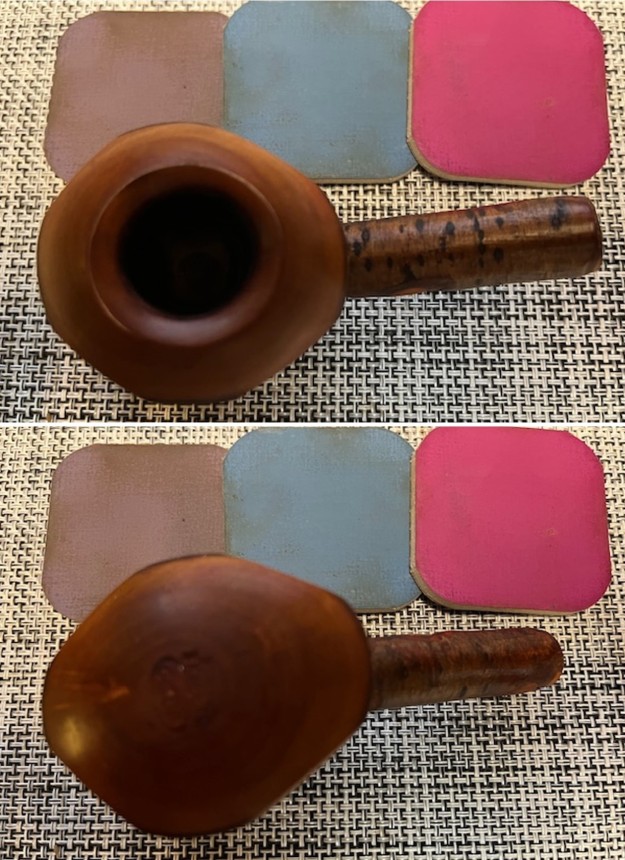
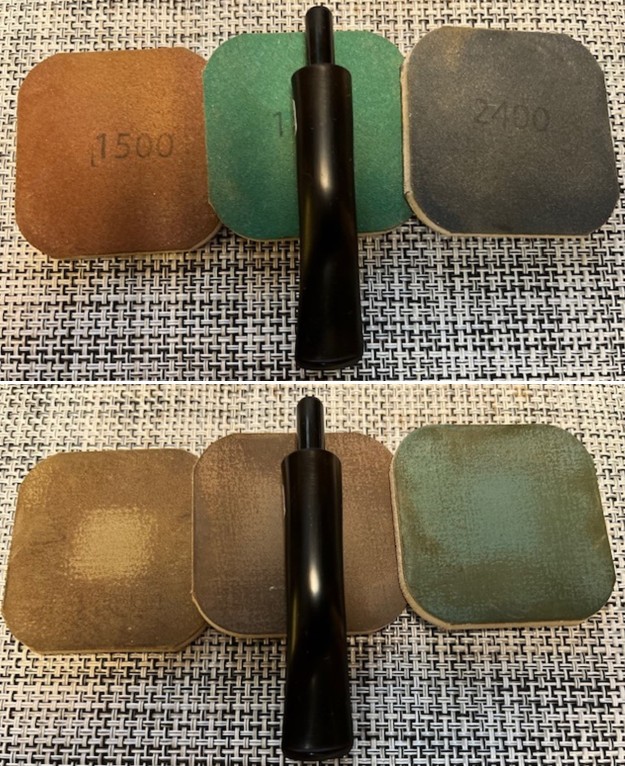
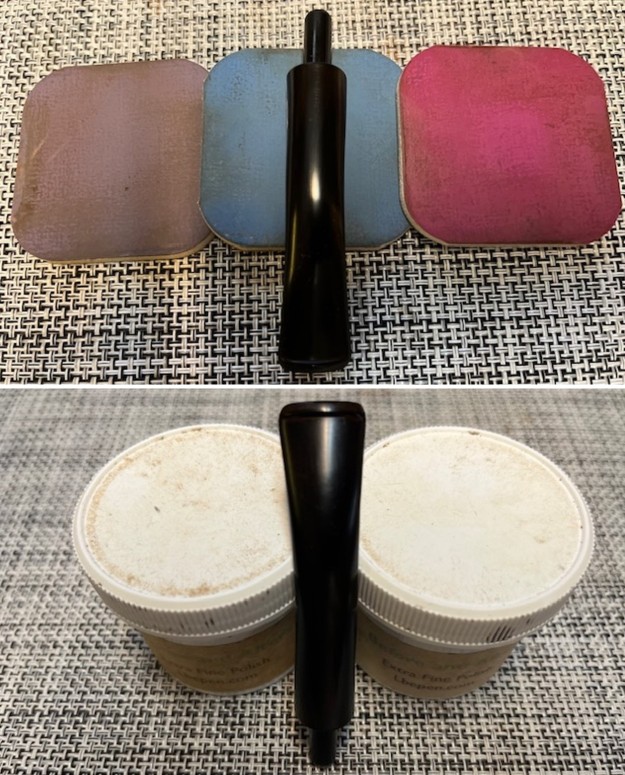
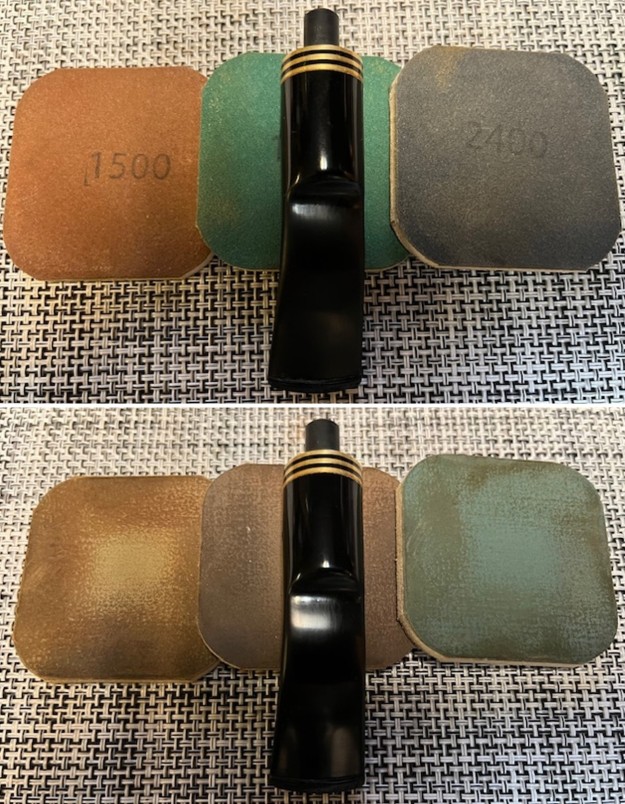
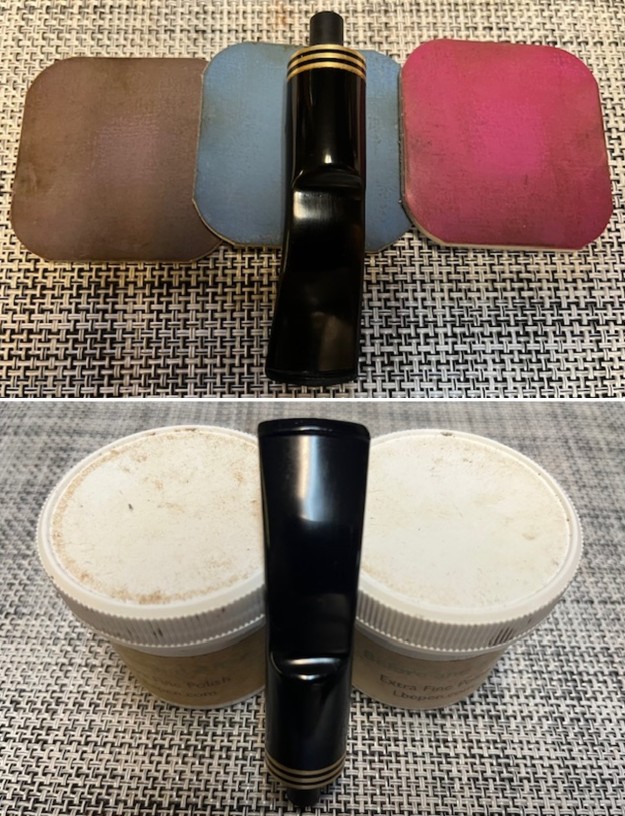
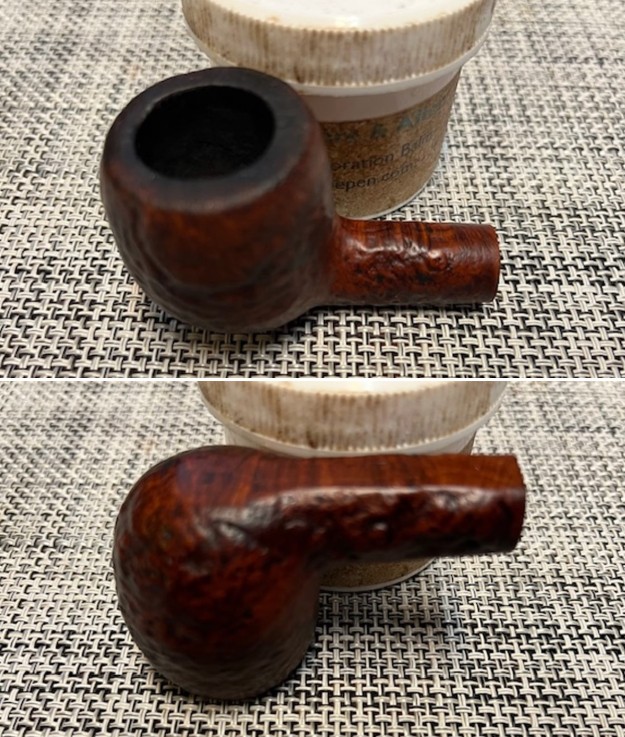
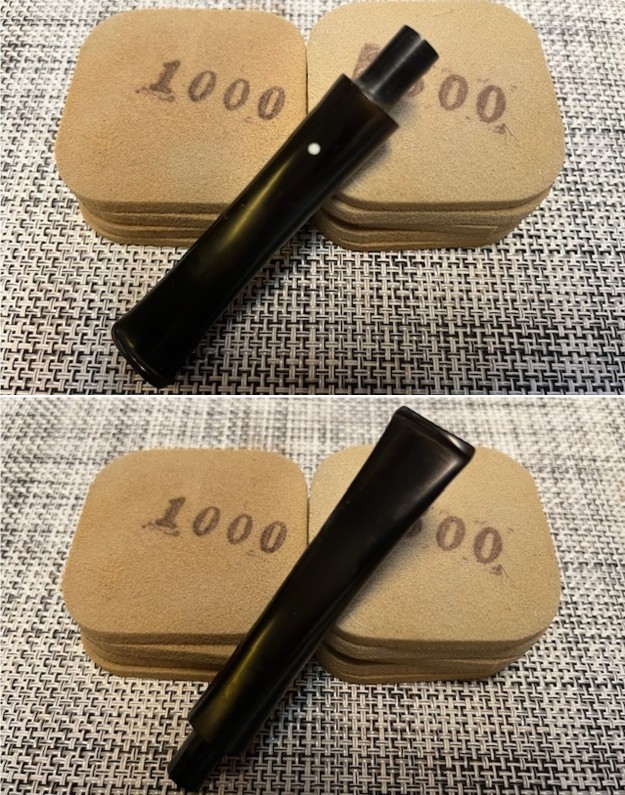
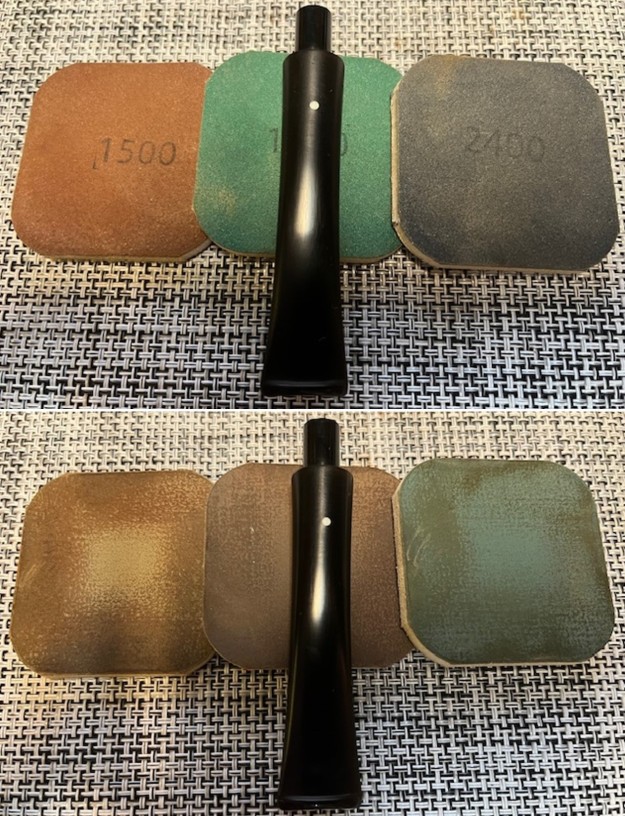
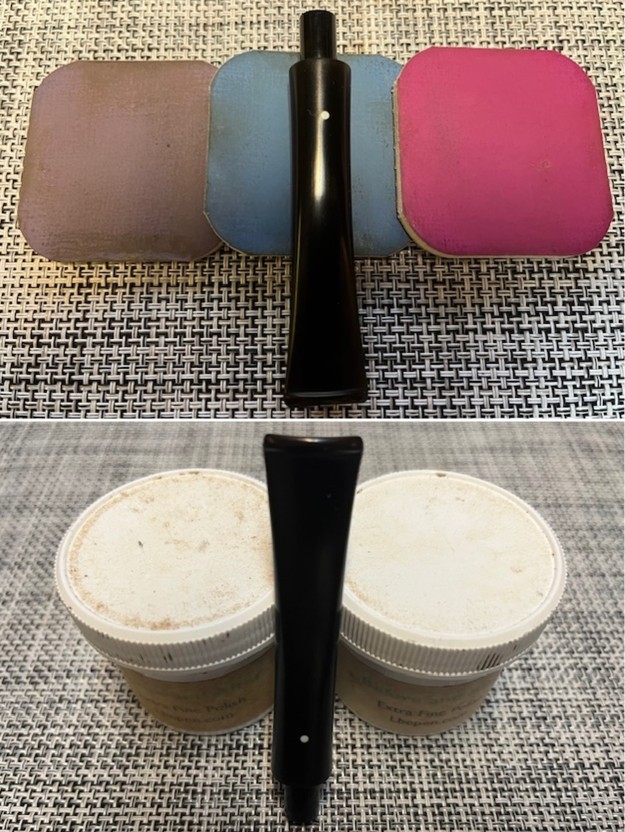
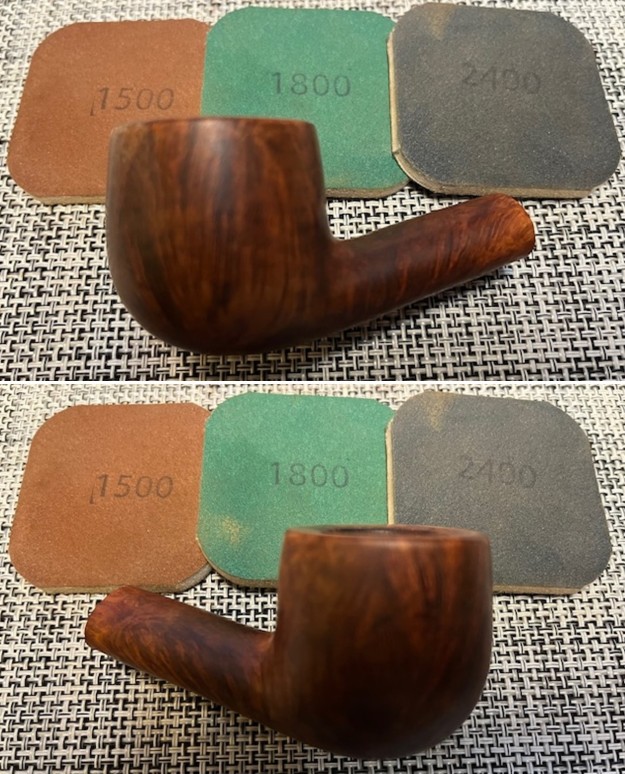
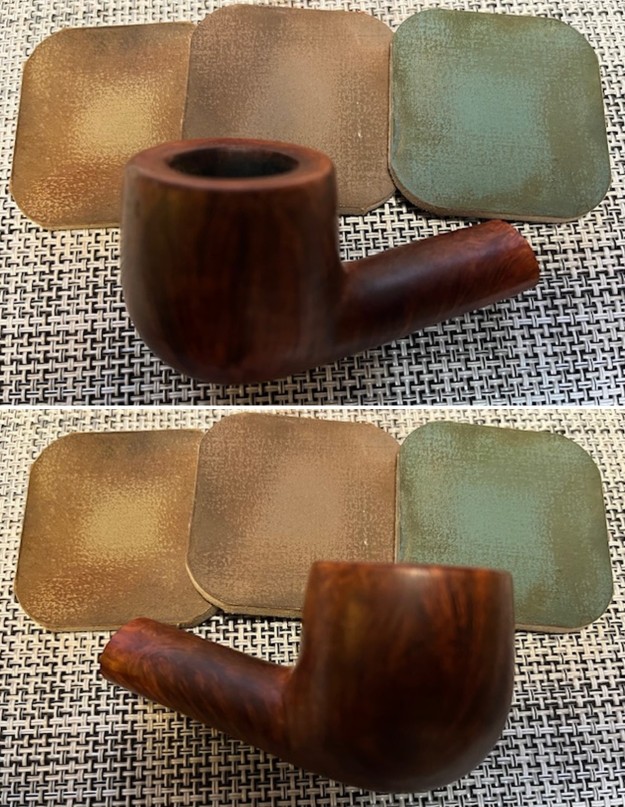
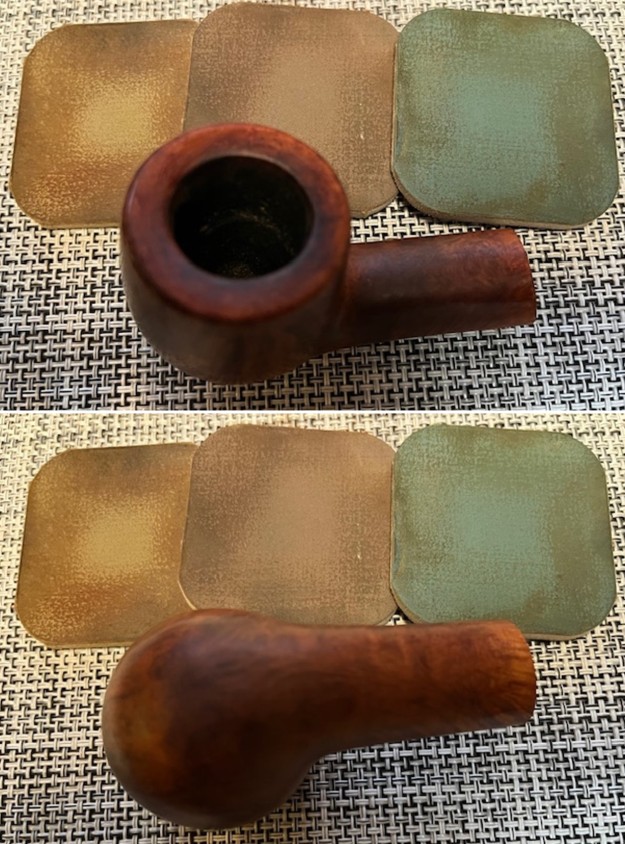
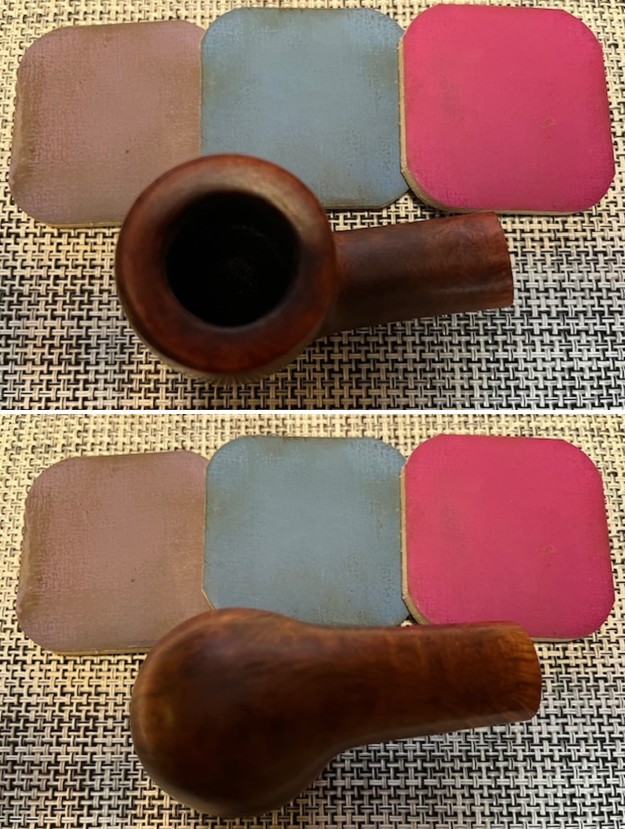
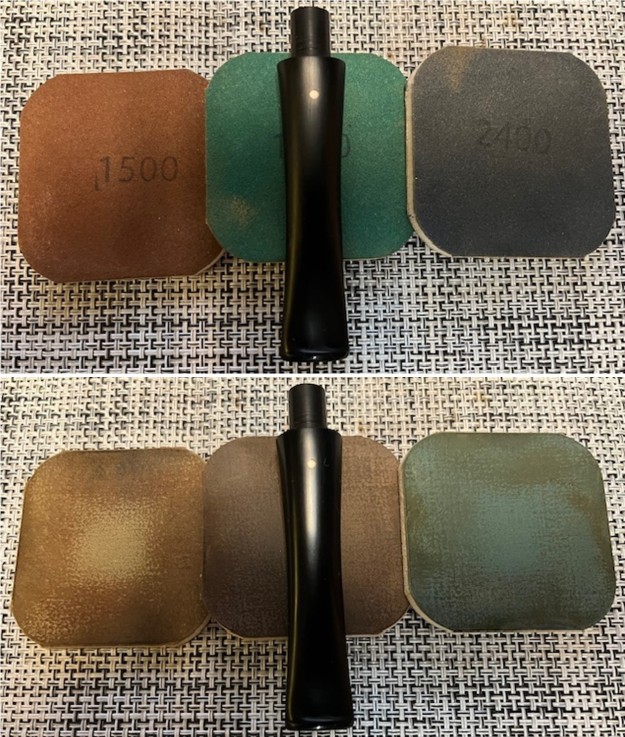
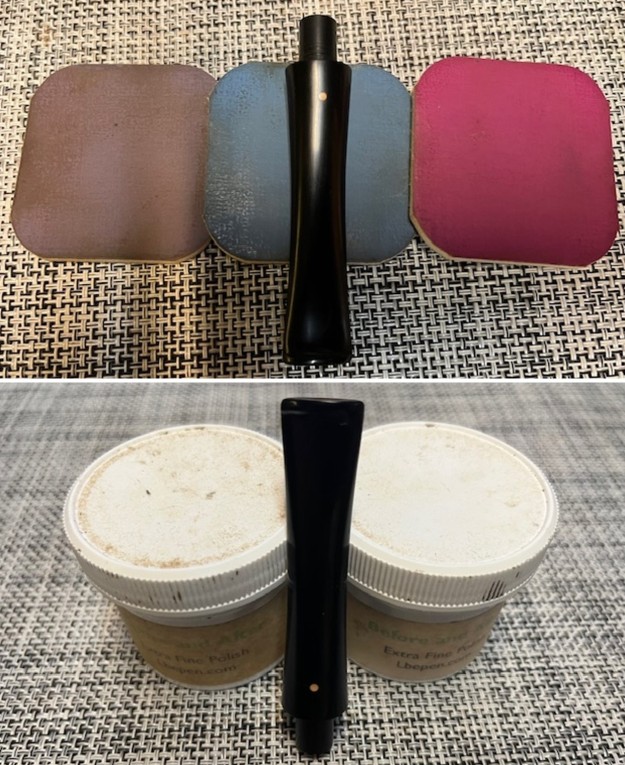
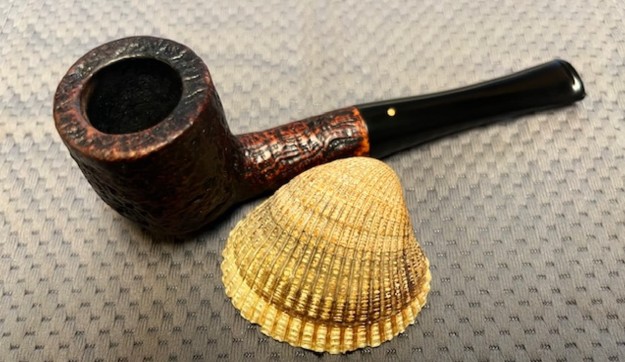
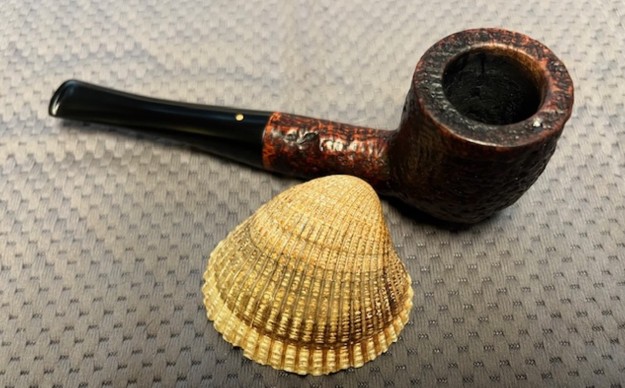
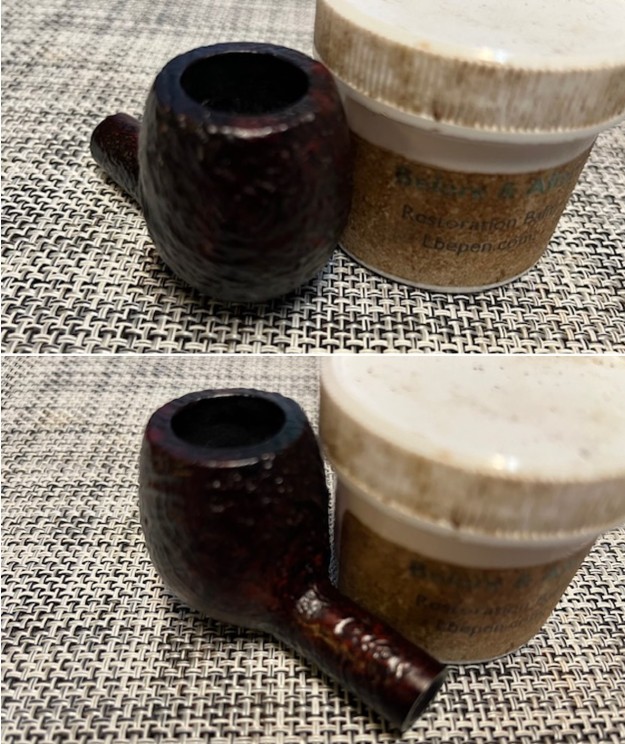
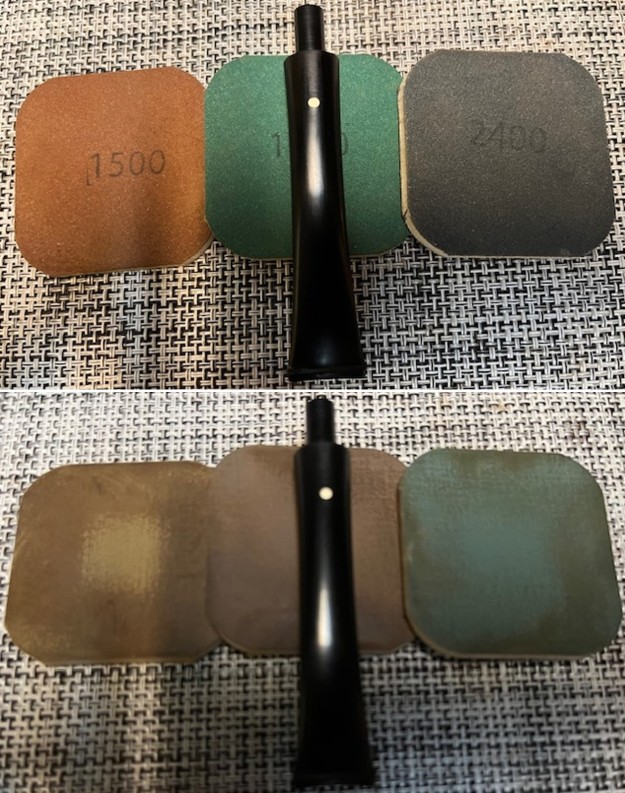
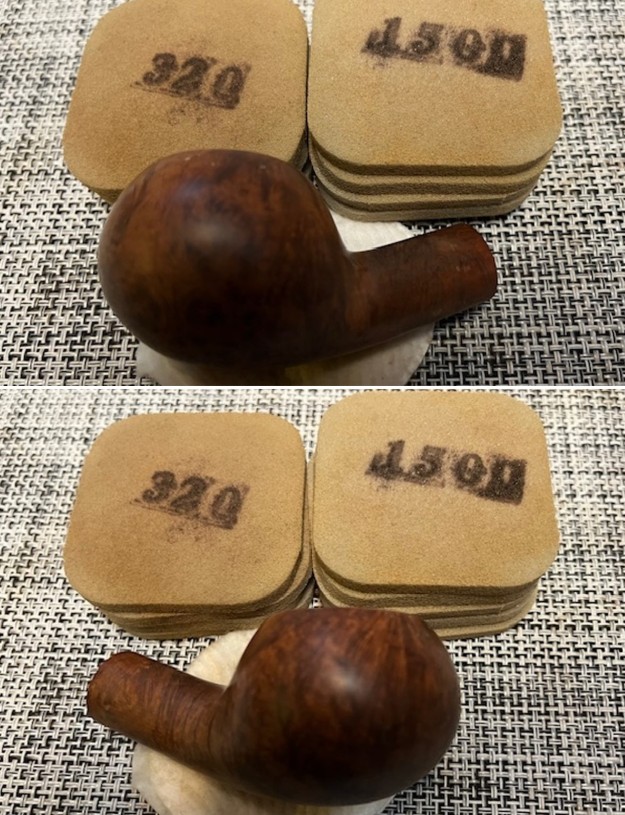
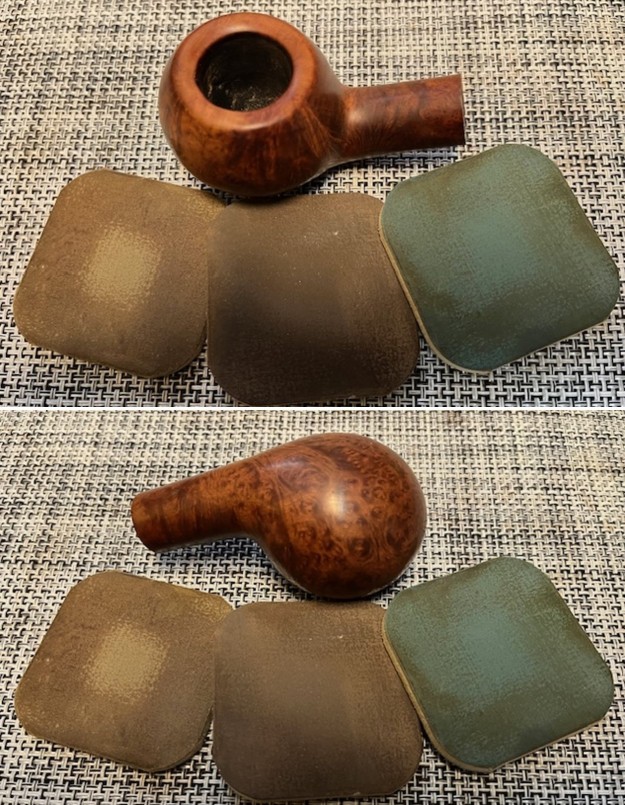
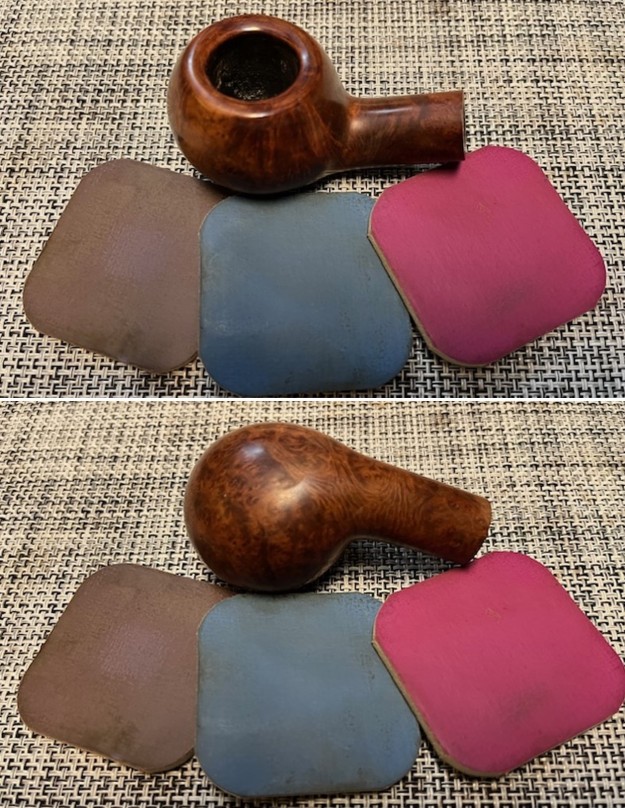
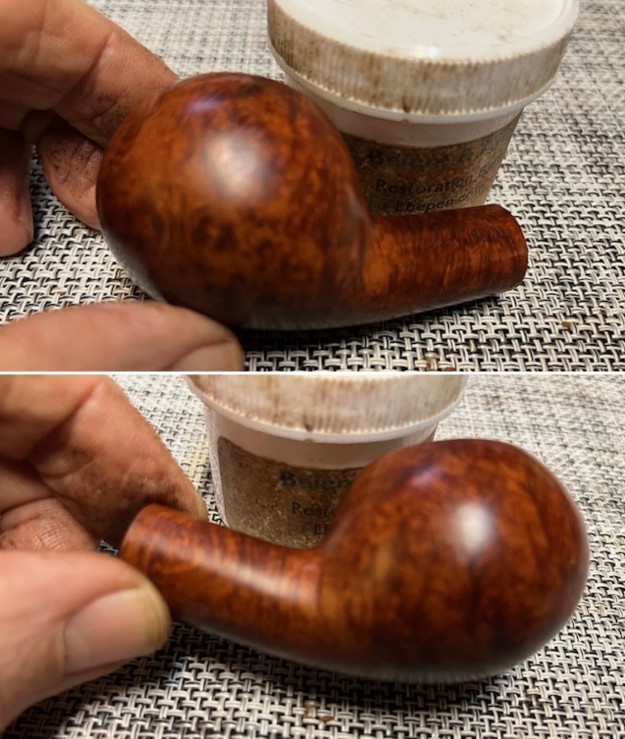
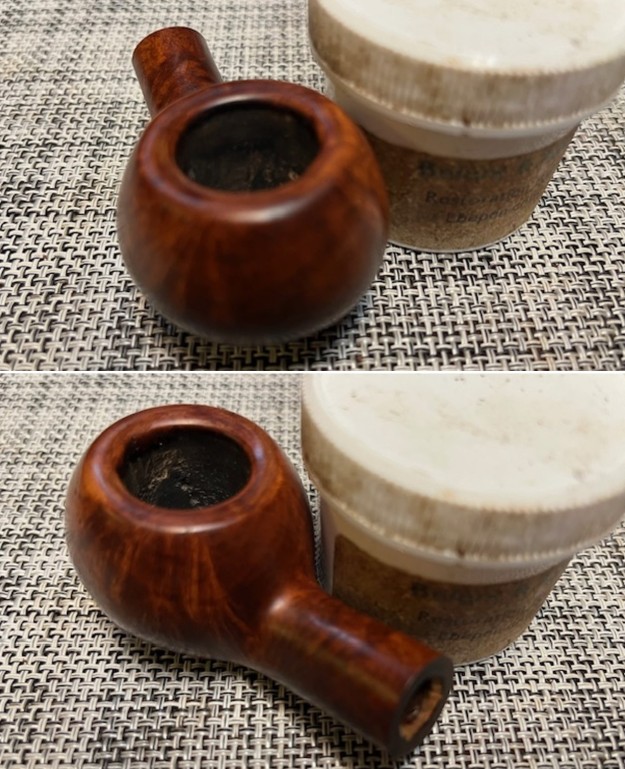
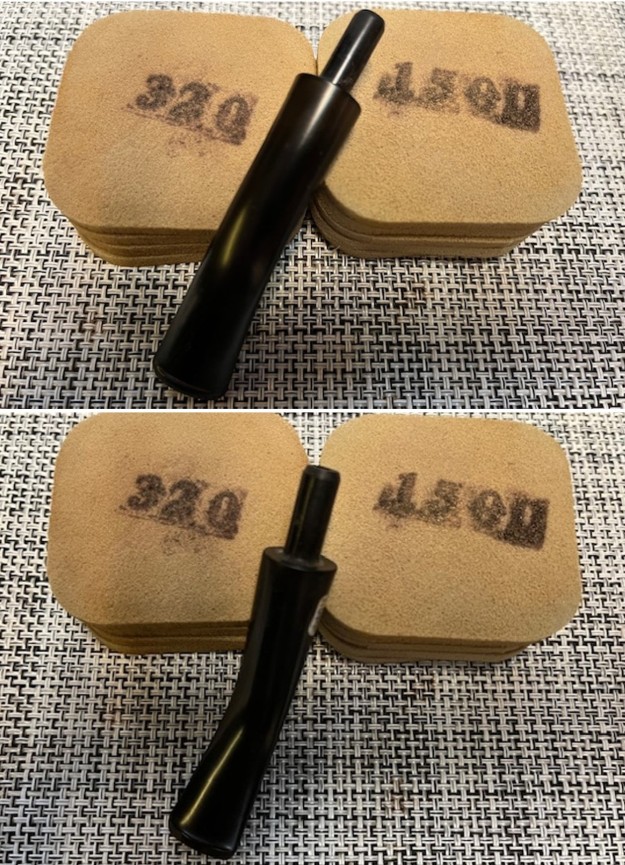
I turned to work on the pipe itself. Jeff had done an amazing cleanup of the pipe. He reamed the cake with a PipNet reamer and cleaned up that with a Savinelli Fitsall Pipe Knife. He scrubbed the internals of the bowl and stem with alcohol, cotton swabs, pipe cleaners and shank brushes. He scrubbed the externals with undiluted Murphy’s Oil Soap and rinsed the bowl off with running water. He soaked the stem in Briarville’s Pipe stem Deoxidizer and once it had soaked rinsed it off with warm water to remove the residual solution. He dried it off and rubbed it down to remove any oxidation that was still on the stem. The pipe looked better when I received it. I took a photo of the rim top to show the condition. It looks good with the tars and oils removed from the rim top. The condition of the bowl and rim top were very good. The stem came out looking quite good with some light tooth marks and chatter on both sides ahead of the button. I took a photo of the heel of the bowl to show the stamping. The stamping is very clear and reads as noted above. I also took a photo of the logo insert on the left side of the taper stem.I carefully took the pipe apart. The shank and stem unscrewed as a single unit from the bowl. I checked the fit of the stem in the shank and from my memory of other Ropp pipes I was pretty certain it was a push stem. I removed the stem from the shank and took a photo of the pipe parts to show what I was working with. Everything looked good both inside the mortise and on the tenon. It is a well shaped and was a nice looking pipe.With the bowl and shank cleaned it was time to put those parts back together. I have learned that the threaded tenons on the Cherrywood work better when lubricated with some Vaseline Petroleum Jelly. It makes it easy to turn them together without damaging or cracking the shank or bowl. I screwed it into the bowl and took photos of the pipe at this point. I wet sanded the rim top and the smooth portions on the bowl sides with micromesh sanding pads – 1500-12000 grit sanding pads. I wiped the bowl surface down with a damp cloth after each sanding pad to remove the sanding dust. Once I finished the bowl looked good. I rubbed the Cherrywood bowl and shank down with Before & After Restoration Balm. I worked it into the surface of the Cherrywood with my fingertips to clean, enliven and protect it. I let the balm sit for a little while and then buffed with a cotton cloth to raise the shine. Mark Hoover’s Balm is a product that I have come to appreciate and one I use on every pipe I have been working on. I set the bowl aside and turned my attention to the stem. I sanded out the light tooth marks and the remaining oxidation with 320-3500 grit sanding pads. I wiped the stem down with a damp cloth after each sanding pad.I polished the stem with micromesh sanding pads – wet sanding it with 1500-12000 grit pads. I polished it further with Before & After Pipe Stem Polish – both fine and extra fine. I finished by wiping it down with Obsidian Oil and buffing it to a shine.  I always look forward to this part of the restoration when all the pieces are put back together. I put the Ropp De Luxe Cherrywood 804 back together and carefully buffed the stem with Blue Diamond on the buffing wheel. I gave the bowl multiple coats of Conservators Wax and the stem multiple coats of carnauba wax. I hand buffed the pipe with a soft cloth to raise the shine. It is fun to see what the polished bowl looks like with the smooth Cherrywood set off by the strips of bark contrasting well with the black vulcanite stem almost glowing. This Ropp De Luxe 804 Cherrywood is nice looking and feels great in my hand. It is one that could be clenched and smoked while doing other things as it is very light weight and well balanced. It must have been a fine smoking pipe judging from the condition it was when I received it. Have a look at it in the photos below. The dimensions are Length: 6 inches, Height: 2 inches, Outside diameter of the bowl: 2 inches, Chamber diameter: ¾ of an inch. The weight of the pipe is 2.57 ounces/73 grams. I will be putting it in the French Pipemakers Section of the rebornpipes store soon. This will make a great addition to someone’s pipe collection. Thanks to each of you who are reading this blog. Remember we are not pipe owners; we are pipemen and women who hold our pipes in trust until they pass on into the trust of the next pipeman or woman.

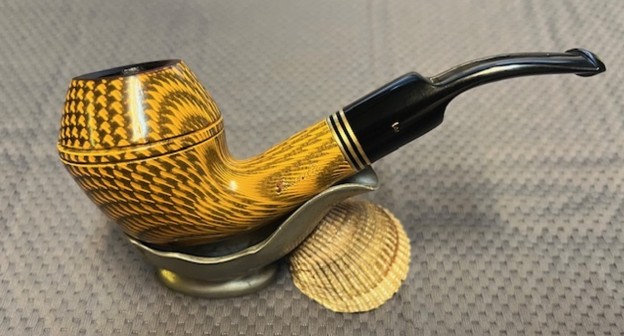
Restoring and Refinishing a Damaged Rim on a Psychedelic Painted Paronelli 02 Rhodesian


Blog by Steve Laug

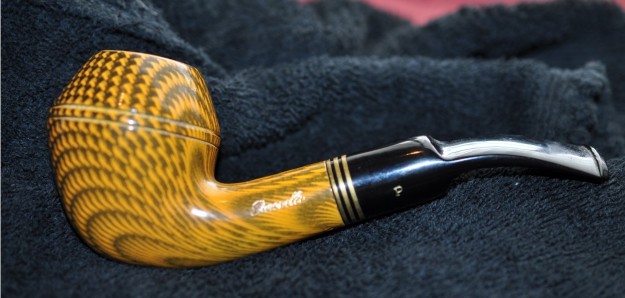
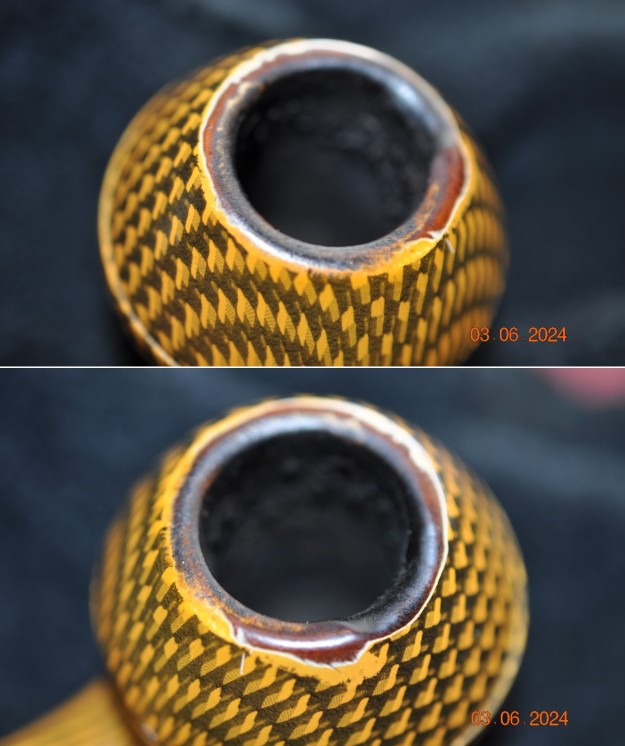
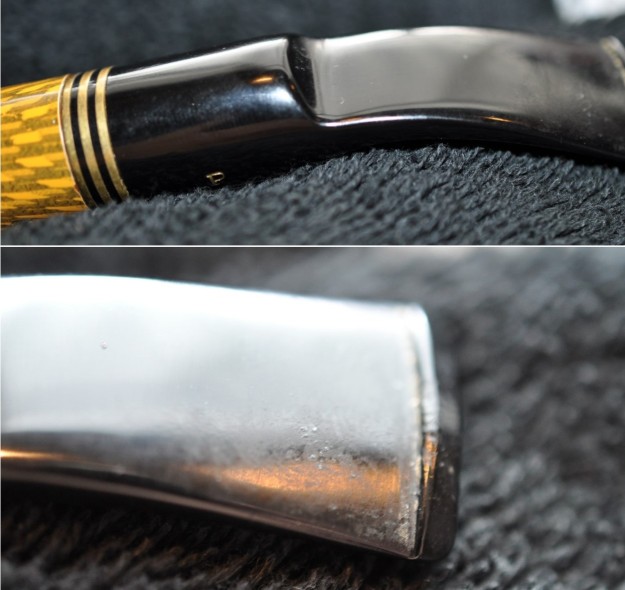
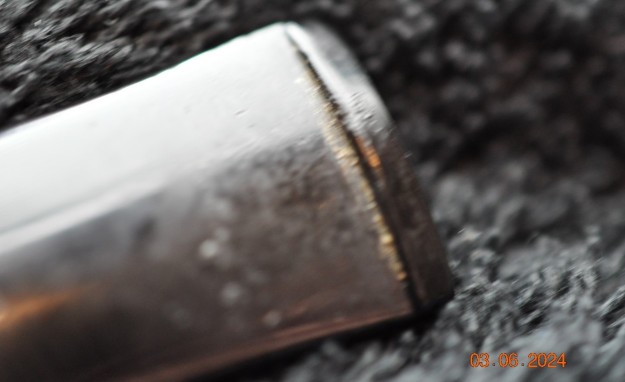
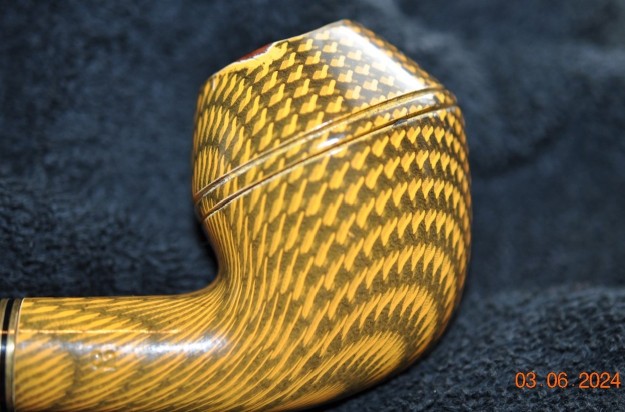
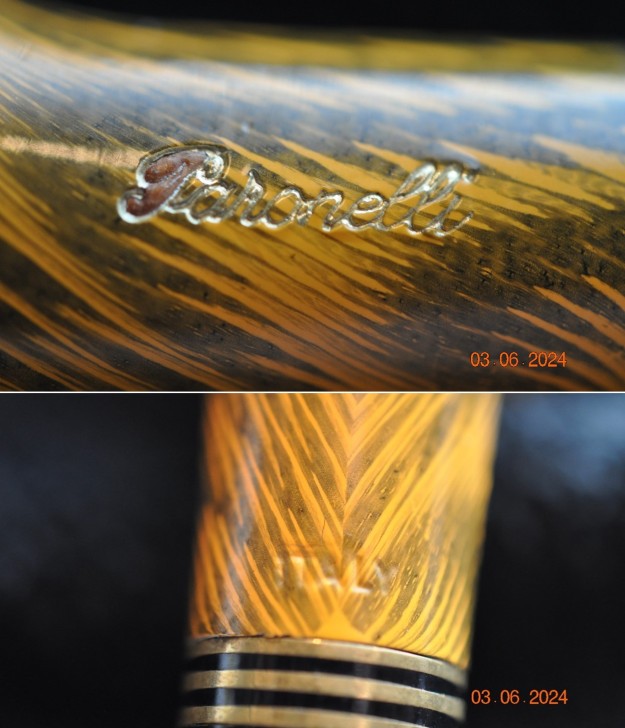
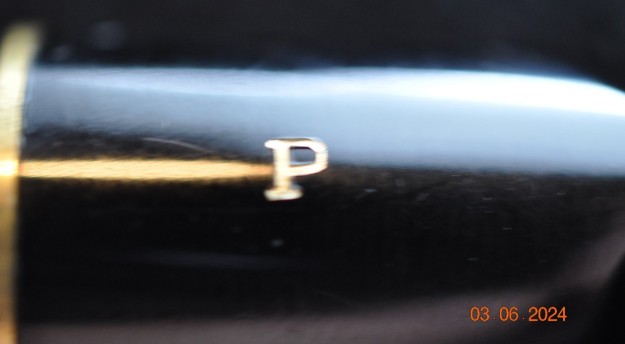
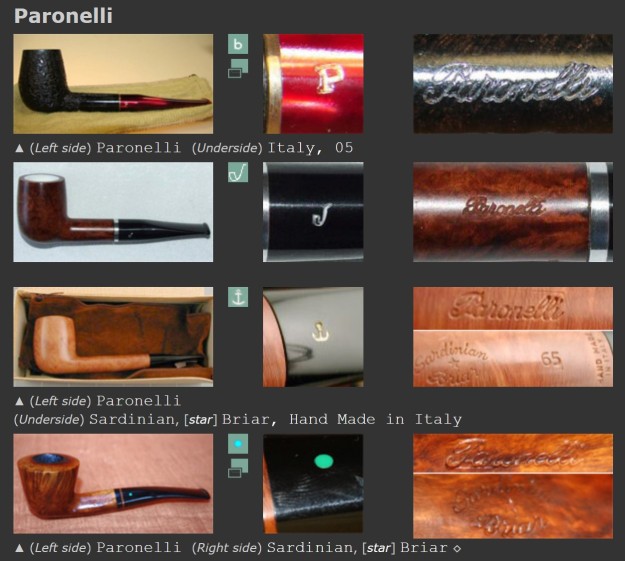
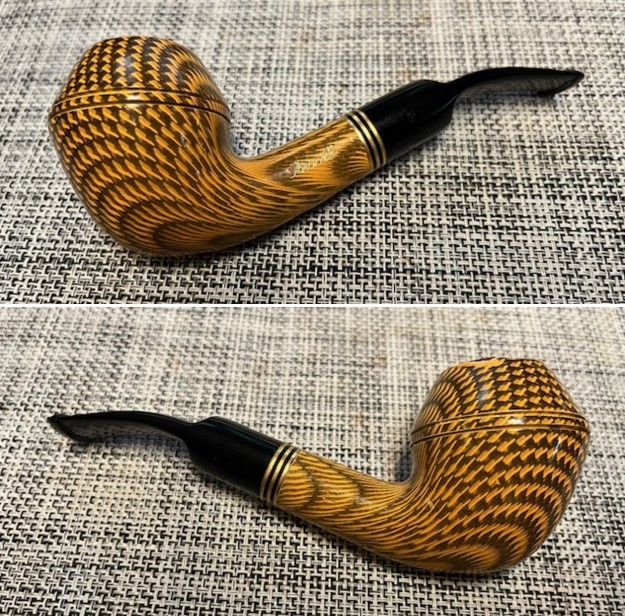
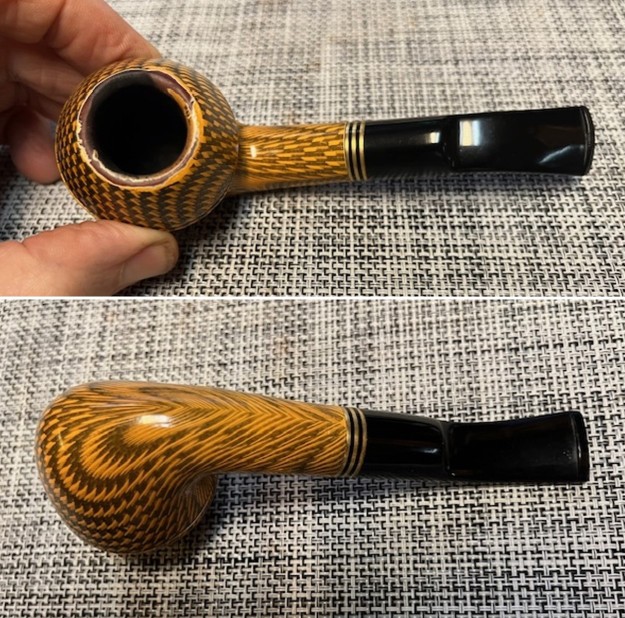
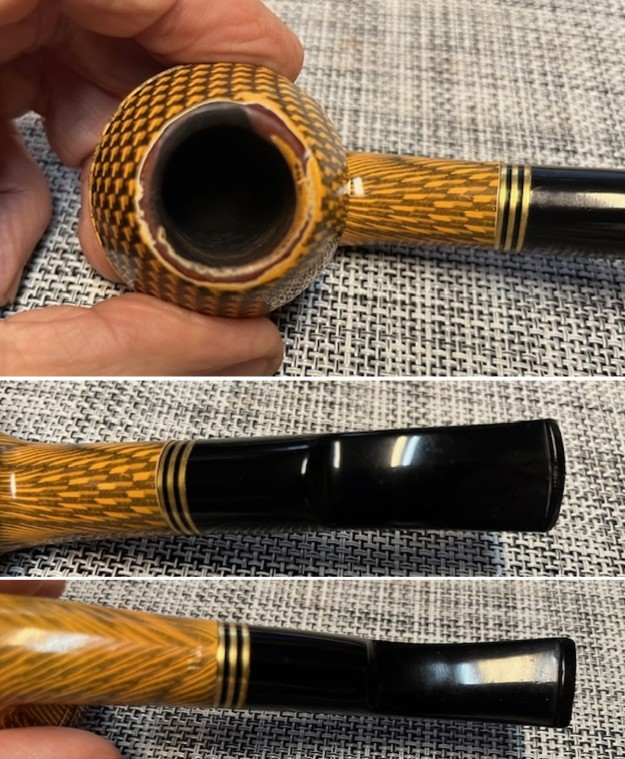
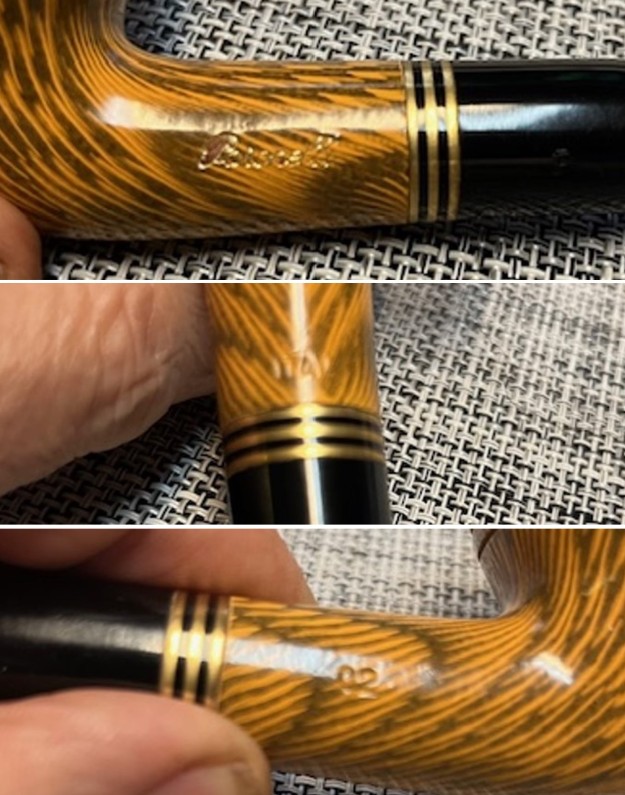
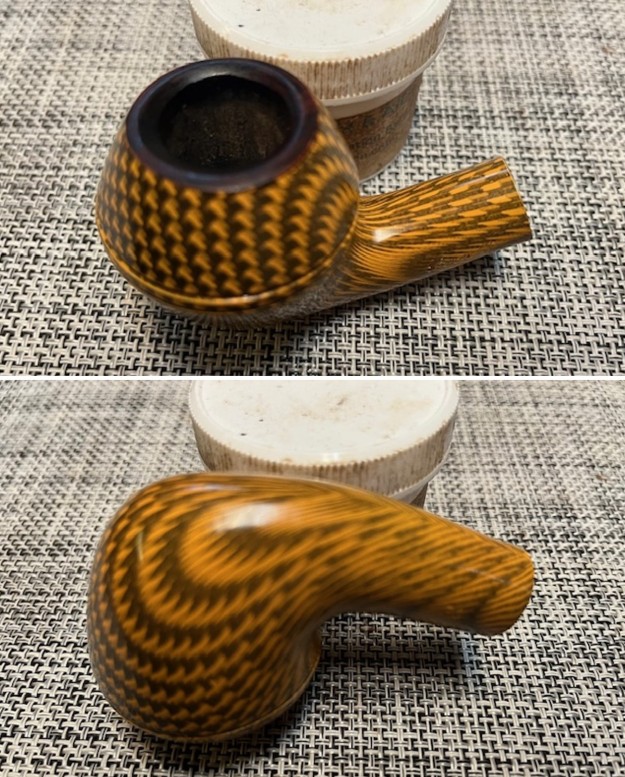
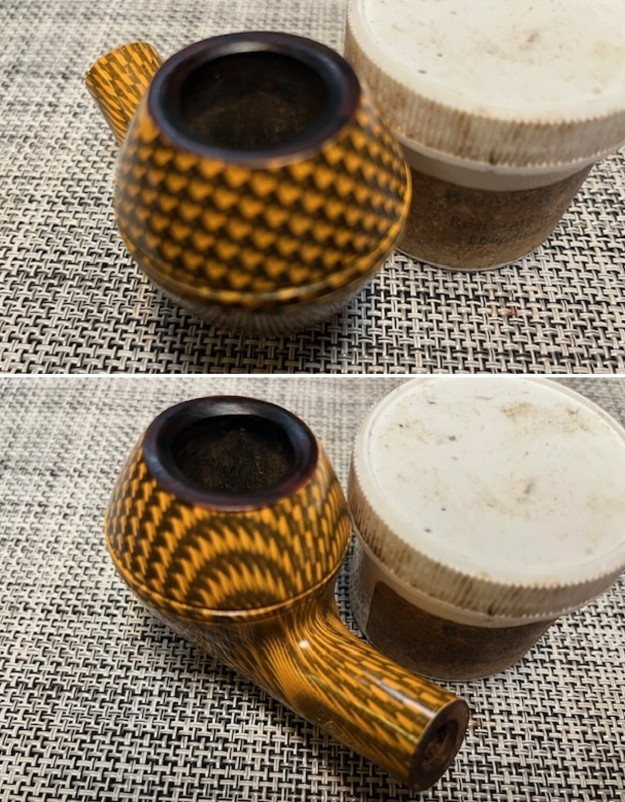
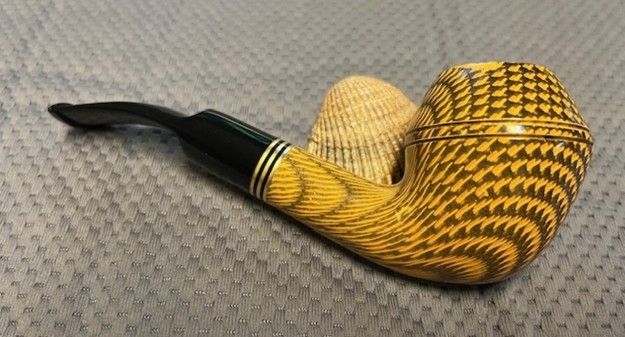
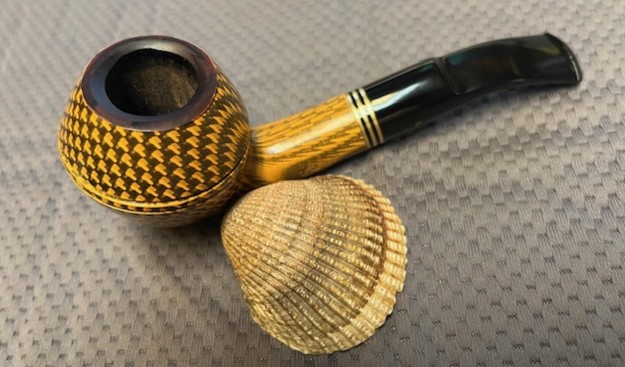
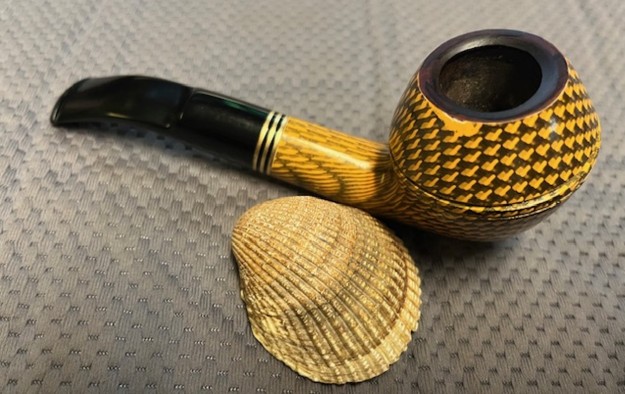
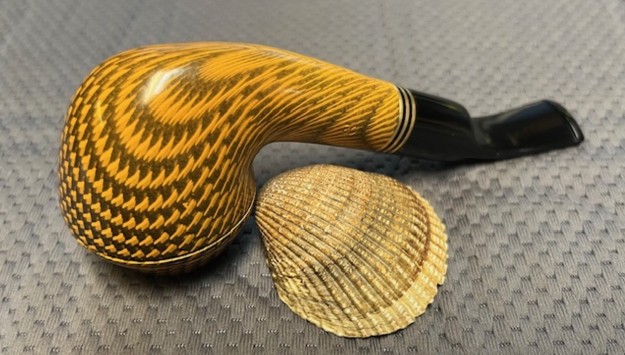
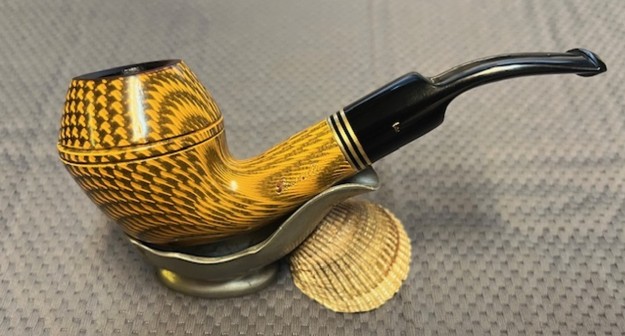
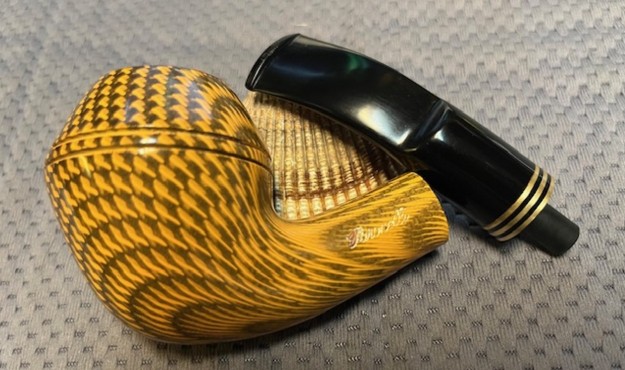
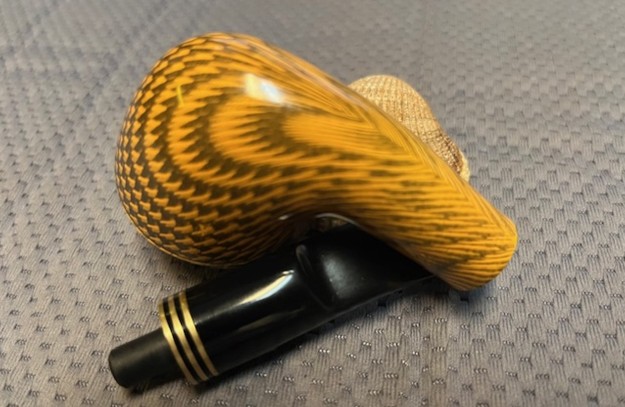
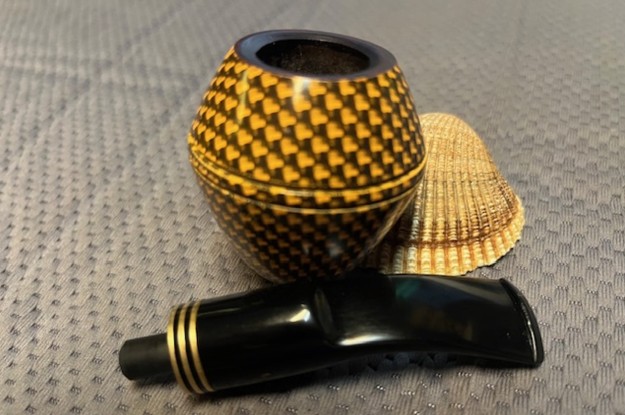
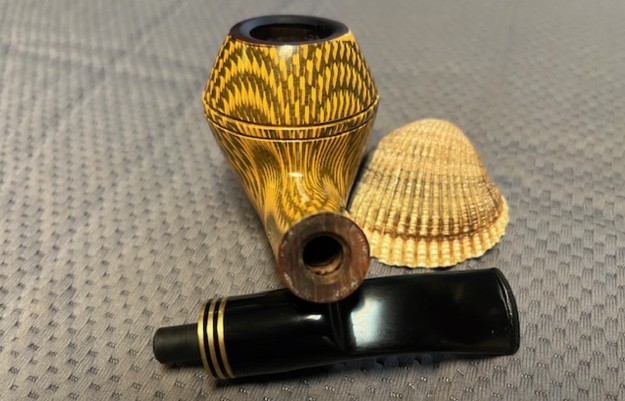
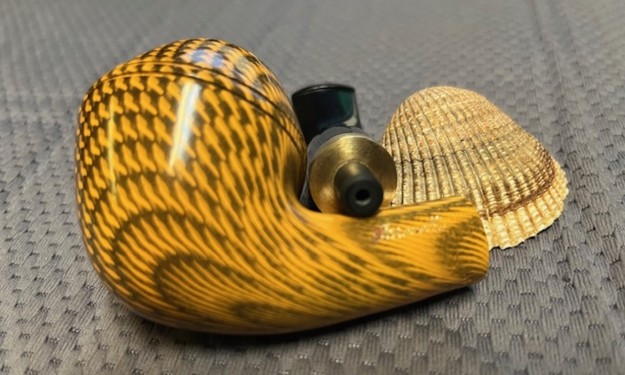
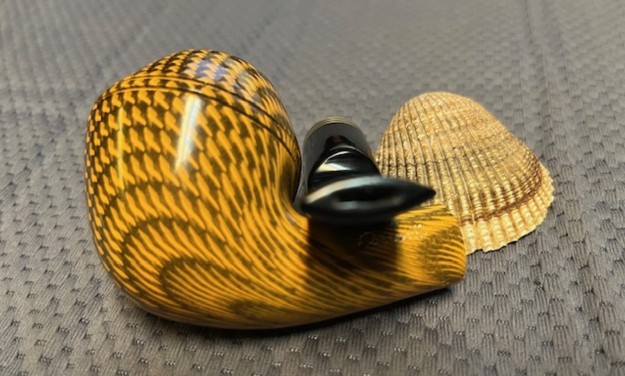
The next pipe on the work table is an interesting almost psychedelic yellow Bulldog/Rhodesian shape with swirling, almost moving lines in the finish that seemed to move when you stared at it. It is stamped with a gold coloured stamping. On the left side it read Paronelli in script. On the right side it had the shape number 02 and, on the underside, it is stamped Italy. It came from a lot we purchased from a seller on eBay on 01/22/2024 from a seller in Jordan, Minnesota, USA. It is very nicely shaped Rhodesian/Bulldog shaped bowl with an acrylic saddle stem. It has a painted finish as noted above with a yellow undercoat and a pattern of swirling lines almost moving around the bowl sides and cap. The bowl has a thick cake and some lava overflow on the rim top and inner edge. The painted rim top was damaged and the paint was worn off. There was some burn damage on the front right top and inner edge. The stem had a three ring brass band and a gold P logo stamp on the left side of the saddle. It is dirty and has tooth chatter and tooth marks on both sides ahead of the button. Jeff took photos of the pipe before he started his cleanup. He took photos of the pipe’s bowl and rim top to show the cake in the bowl and the lava coat overflowing onto the top. You can also see the burn damage to the front right inner edge of the bowl, the missing paint coat and the thick lava coat on the top. It is another dirty pipe. He also took photos to capture the tooth marks on the top and underside of the stem near the button. He took photos of the sides and the heel of the bowl to give a sense of the painted finish on this one. Even under the grime and wear finish still has the ability to make you dizzy! Jeff took photos of the stamping on the sides of the shank and it is readable. It reads as noted above. I turned first to Pipephil’s site (http://www.pipephil.eu/logos/en/logo-p1.html) to gather some initial information on the brand. I did a screen capture of the section on the site that gave some pictures of the styles of pipes that were made by Paronelli.From there I turned to Pipedia (https://pipedia.org/wiki/Alberto_Paronelli) in order to add to my information on the brand. I quote the article below.
The brand Paronelli collects inside a family passion that was born in 1945 when Jean-Marie Alberto Paronelli decided to give free rein to his artistic side. The continuous search for quality and perfection brought Alberto Paronelli to create unique pieces prized and sought after worldwide. The ideas and the canons of the founder have been handed down from generation to generation and even now all the pipes are handmade with Italian first choice briar. His grandson, Ariberto Paronelli, which has succeeded over the years at the helm, continues with passion and dedication to the work started by the founder of designing and creating classics models with a modern twist. Annual production is around 1000 pieces. Ariberto also works on commission. If you have in mind a pipe of your dreams he will be happy to achieve it. For Paronelli family the pipe is a matter of the heart.

Jean Marie Alberto Paronelli was born in Gavirate on 21st December 1914. After studying in Switzerland and Italy, he went to London at the age of 18 to complete his vocational training. He turned out to be cut out for foreign languages, so much so that he spoke and wrote English, French, German and Spanish fluently. He studied and became fond of humane letters and people’s history. In London he used to hang out at the Savoy Hotel and got to know Pipe art, as he used to go to Burlington Arcade’s shops regularly. He first became collector and then consultant for other collectors. After he came back to Italy he started to work for Leonida Rossi and established an office in Milan to trade Rossi pipes. In the Sixties he bought the beautiful directory style sample room of the factory, which had just closed down. He regularly corresponded with the major living intellectuals passionate about pipe art, and he founded the magazine “La Pipa”.

Alberto Paronelli was a unique and fantastic personality in pipe’s world, as defined in the presentation of the great designers from Brebbia, for which he designed an egg-shaped curved model. He believed in human relations and friendship above all. Even now enthusiasts from all over the world meet in his house and in the near Museum of the Pipe. He used to tell lots of pleasant anecdotes. You felt like a child in a fairyland and began to understand that Alberto told a different story to everyone to teach them something. What struck most was his vitality, typical of those who have never worked a day, because he did work with great passion. In his museum of the Pipe, open to new and old friends, you can still find journalists looking for an interesting subject to write about, sculptors and friends, ceramists. His creativity expressed in words but also in painting and sculpture. He enjoyed painting very much, but he also enjoyed modeling clay. After studying the Mayan culture he modeled a beautiful series of statuettes.

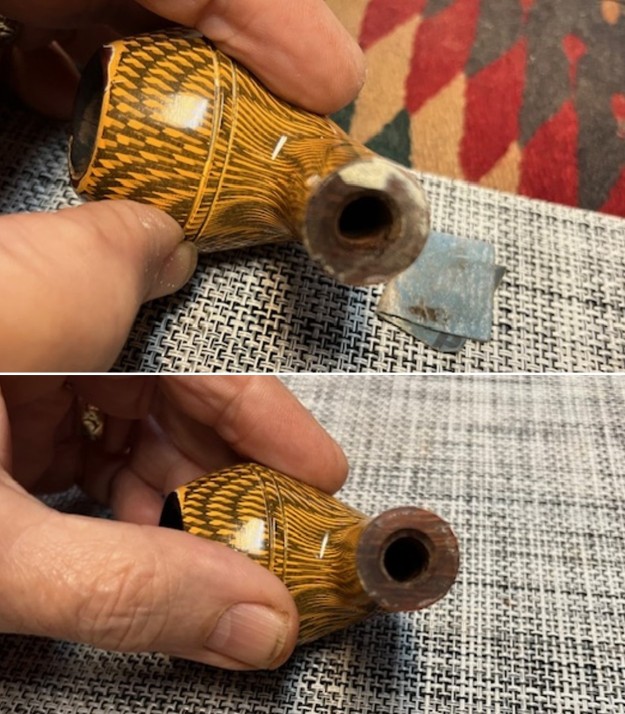
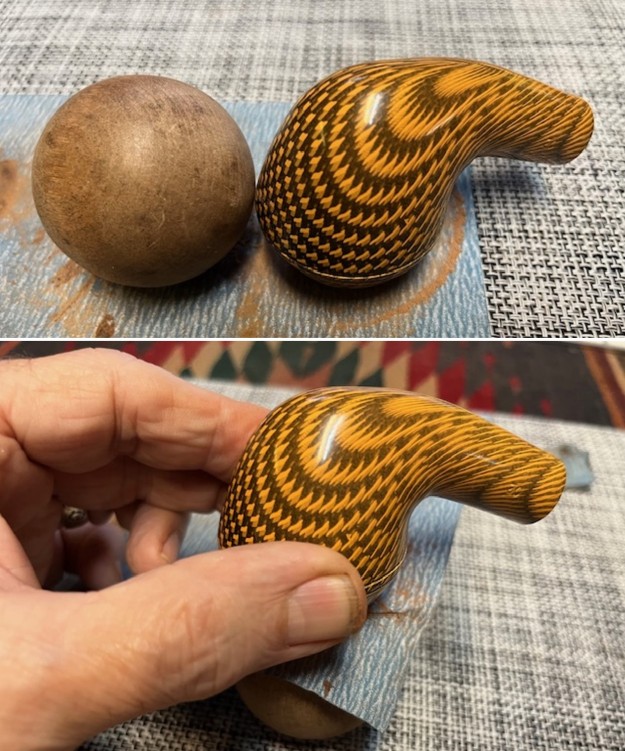
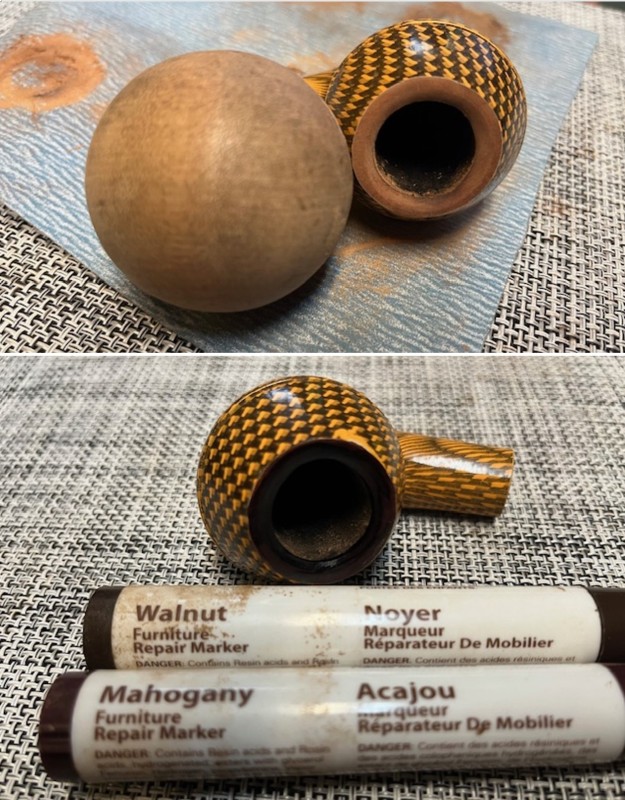
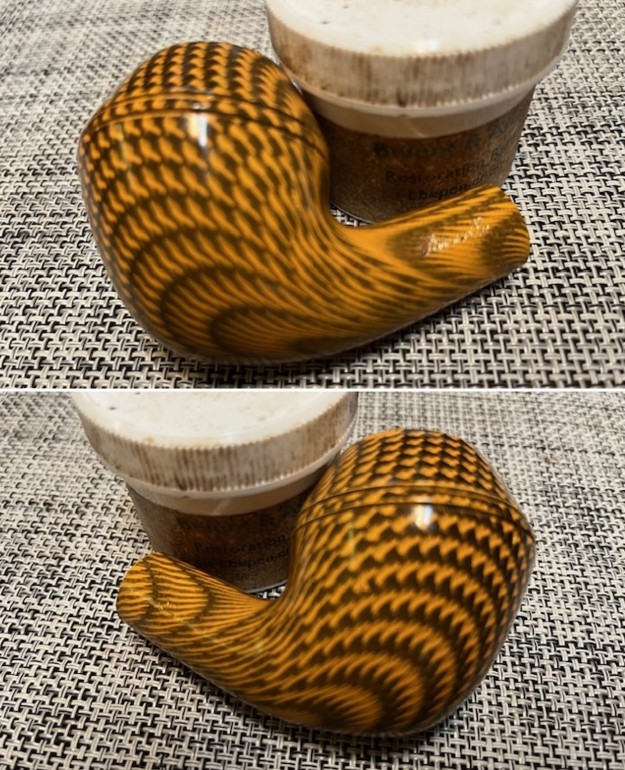
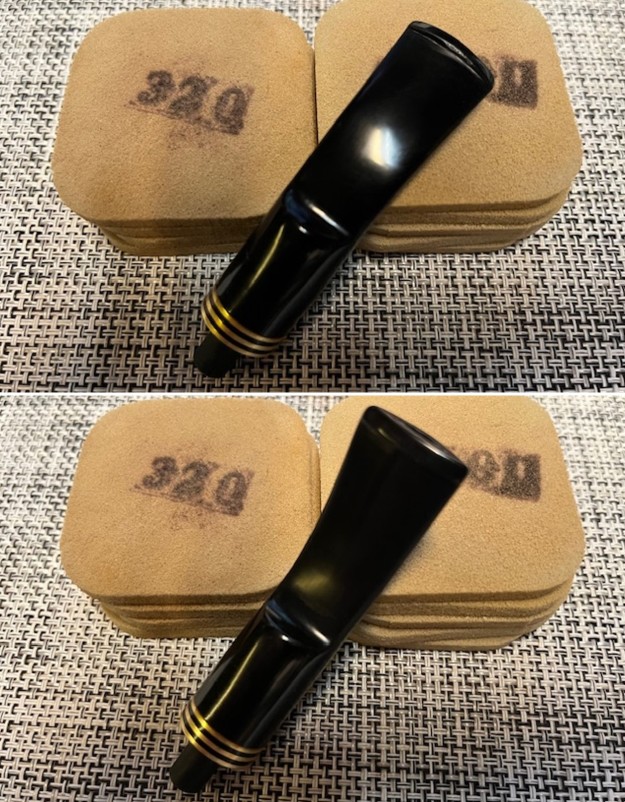
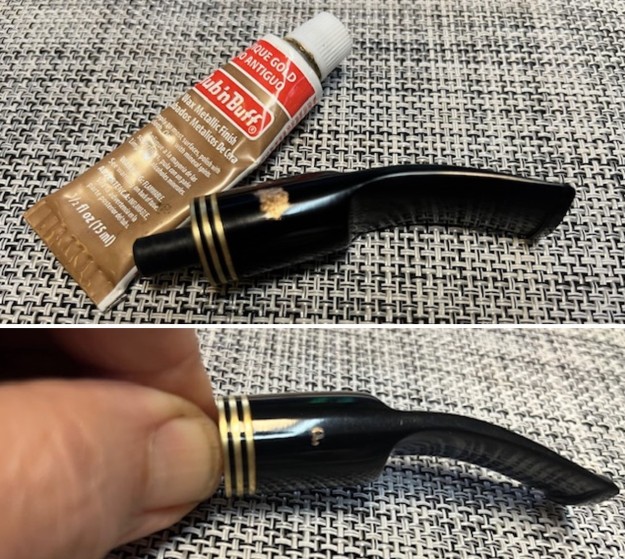
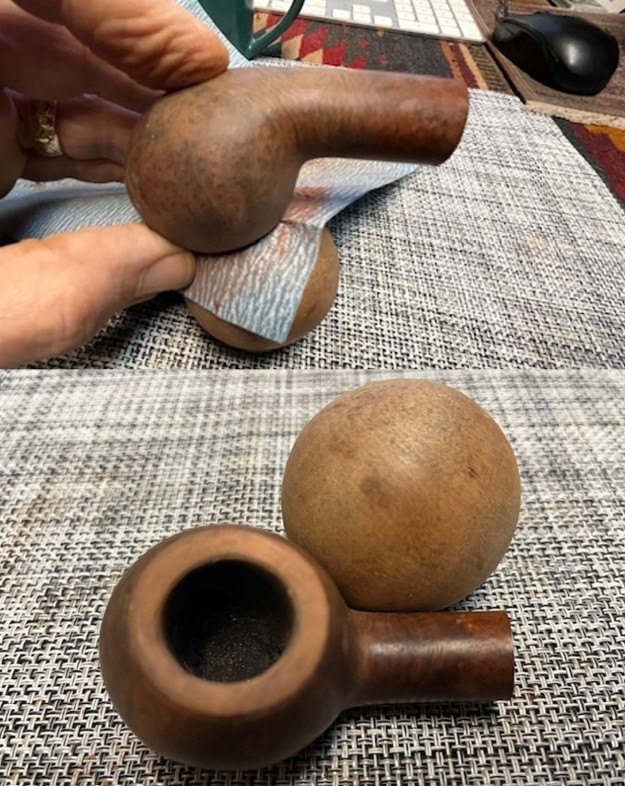
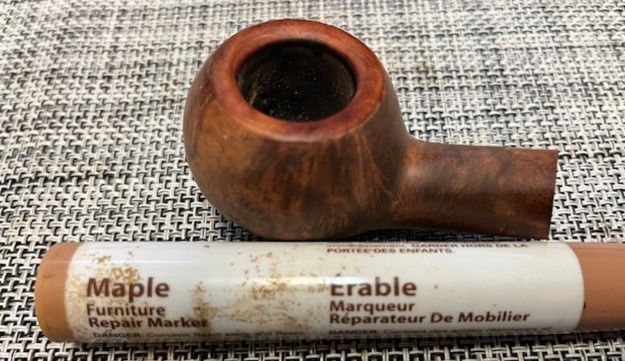
I turned to work on the pipe itself. Jeff had done an amazing cleanup of the pipe. He reamed the cake with a PipNet reamer and cleaned up that with a Savinelli Fitsall Pipe Knife. He scrubbed the internals of the bowl and stem with alcohol, cotton swabs, pipe cleaners and shank brushes. He scrubbed the externals with undiluted Murphy’s Oil Soap and rinsed the bowl off with running water. The rim top had some remaining paint damage and a burned area on the right front top and edge that would need to be worked on. He soaked the stem in Briarville’s Pipe stem Deoxidizer and once it had soaked rinsed it off with warm water to remove the residual solution. He dried it off and rubbed it down to remove any oxidation that was still on the stem. The pipe looked better when I received it. The issues that remained on the pipe were very clear in the photos that follow. I took a photo of the rim top to show the condition. It looks good with the tars and oils removed from the rim top. The rim top shows paint that has been worn off the top and outer edges of the rim. There is also some burn damage on the right front top and edges. The bowl itself was very clean. The stem came out looking quite good with some light tooth marks and chatter on both sides ahead of the button.I took a photo of the underside of the shank to show the stamping. The photo shows the stamping and is actually more readable in person. I removed the stem from the shank and took a photo of the pipe parts to show what I was working with. It is a well shaped and strangely mesmerizing pipe. I started my work on this pipe by addressing two issues that were glaringly present. The first of these was some white paint that was on the shank face when I removed the stem. I carefully sanded the paint of with a folded piece of 220 grit sandpaper. It looked very good once I had finished.The second issue was the damage to the rim top and the chipped and missing paint. I lightly topped the bowl on 220 grit sandpaper and a topping board. I wrapped a wooden ball with some 220 grit sandpaper and gave the inner edge of the bowl a light bevel. It remove the burn damage and the chipping paint on the surface. I used a Mahogany and a Walnut stain pen try to match the darker portion of the colour on the bowl surface. It looked very good. I rubbed the exterior of the bowl and rim top down with Before & After Restoration Balm. I worked it into the surface with my fingertips. The product works to clean, enliven and preserve the briar. I let it sit for 10 minutes then I buffed it with a cotton cloth to deepen the shine. The pipe really comes alive with the balm. I sanded the stem with 320-3500 grit sanding pads. I wiped it down after each sanding pad with a damp cloth. By the final 3500 grit sanding pad the stem had a had a shine.I used some Rub’n Buff Antique Gold to fill in the “P” stamp on the left side of the stem. I worked it into the stamp with a tooth pick and buffed off the excess with a cotton pad. It looked better.I polished the stem with micromesh sanding pads – 1500-12000 grit pads. I wiped it down with Obsidian Oil after each sanding pad. I used Before & After Pipe Polish – both Fine and Extra Fine to further polish the stem. This Italian Made Paronelli 2 Rhodesian with an acrylic saddle stem has a unique and oddly psychedelic yellow and dark painted finish. The pipe has a classic shape with a very 70’s finish. The polished acrylic saddle stem adds to the mix. I put the stem back on the bowl and buffed the pipe by hand to avoid removing any of the finish. I gave the bowl and the stem multiple coats of Conservator’s Wax and followed that by hand buffing it with a soft cloth to deepen the shine. The finished Paronelli 2 Rhodesian is quite unique and feels great in the hand. Give the finished pipe a look in the photos below. The dimensions of the pipe are Length: 6 inches, Height: 2 inches, Outside diameter of the bowl: 1 ¼ inches, Chamber diameter: 7/8 of an inch. The weight of the pipe is 2.36 ounces/67 grams. Thanks for walking through the restoration with me as I worked over another beautiful pipe. This one will be going on the rebornpipes store in the Italian Pipe Makers Section. Thanks for your time.
Rebirthing a worn and obviously favourite 1976 Dunhill Shell 341 Apple


Blog by Steve Laug

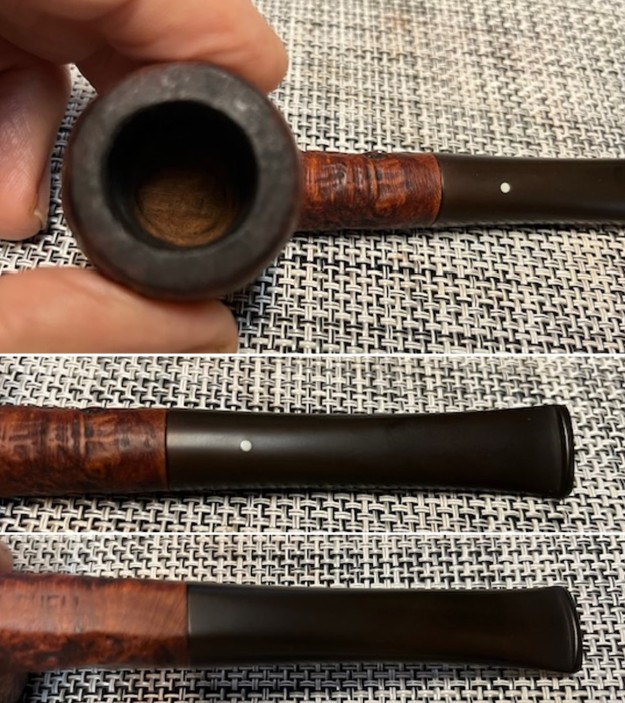
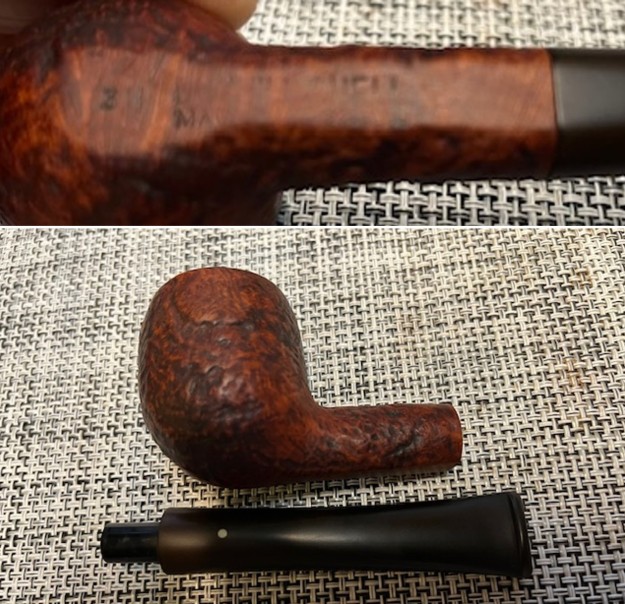
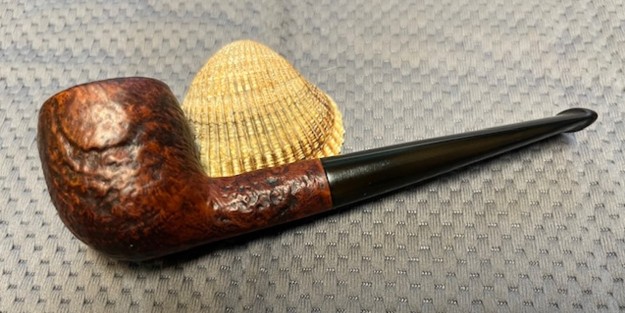
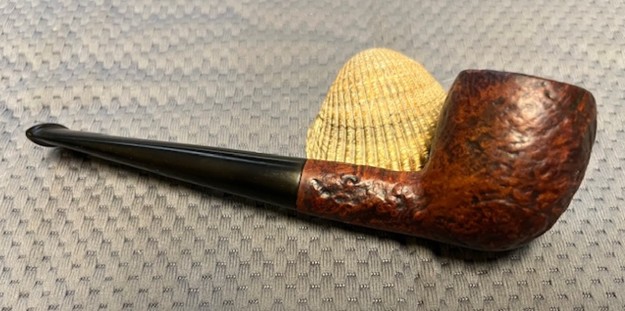
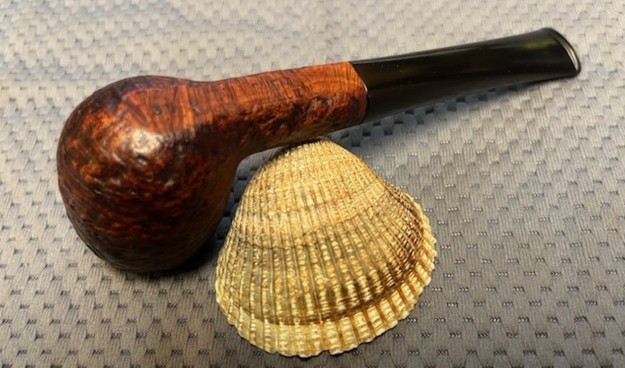
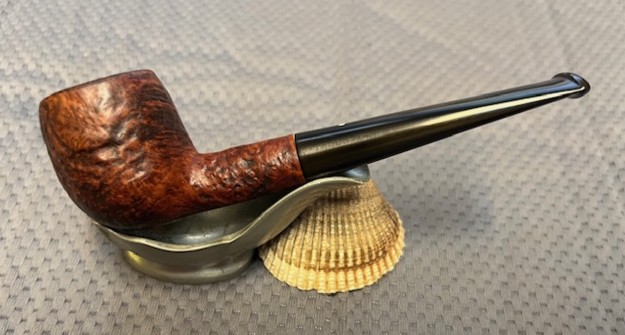
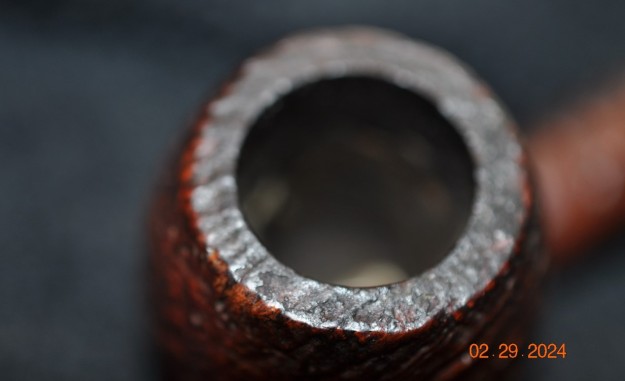
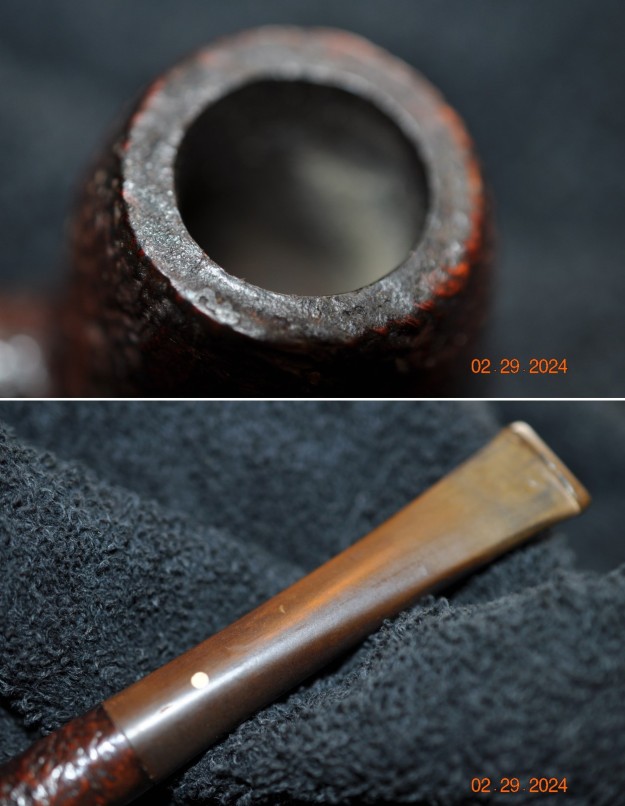
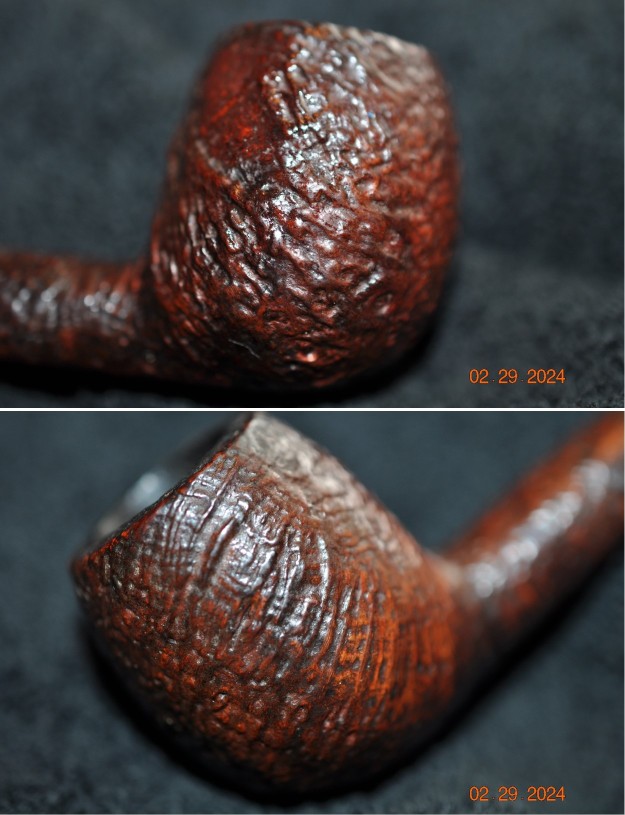
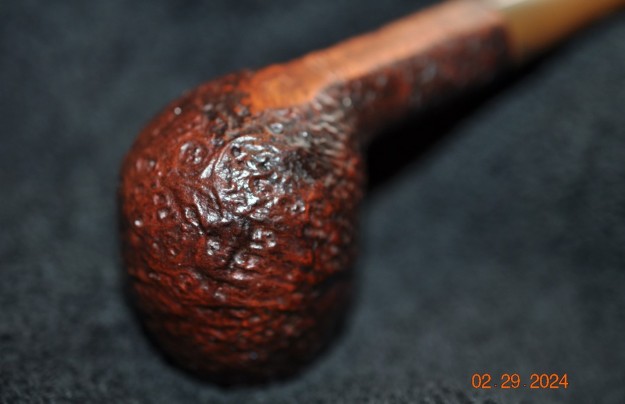
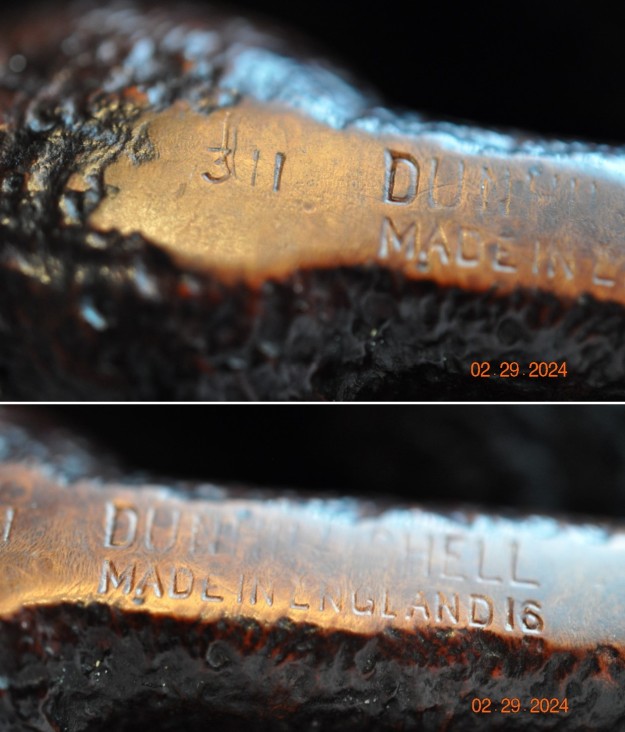
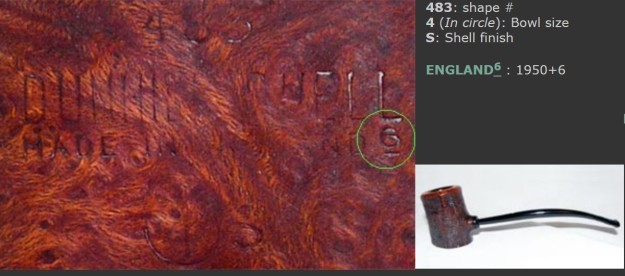
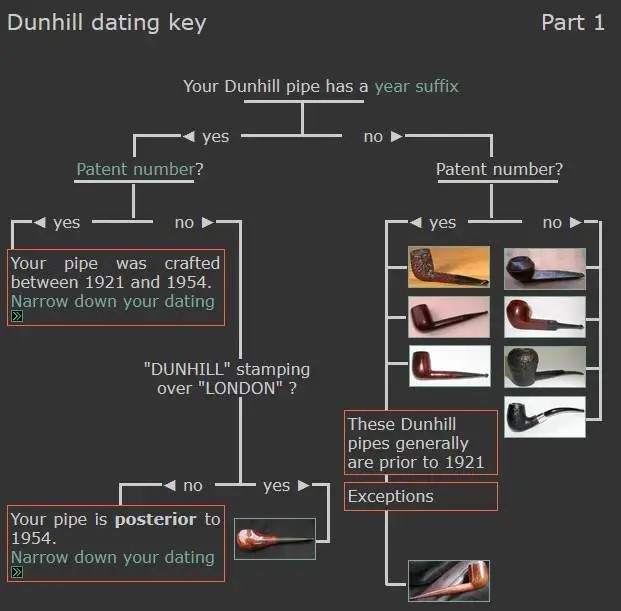
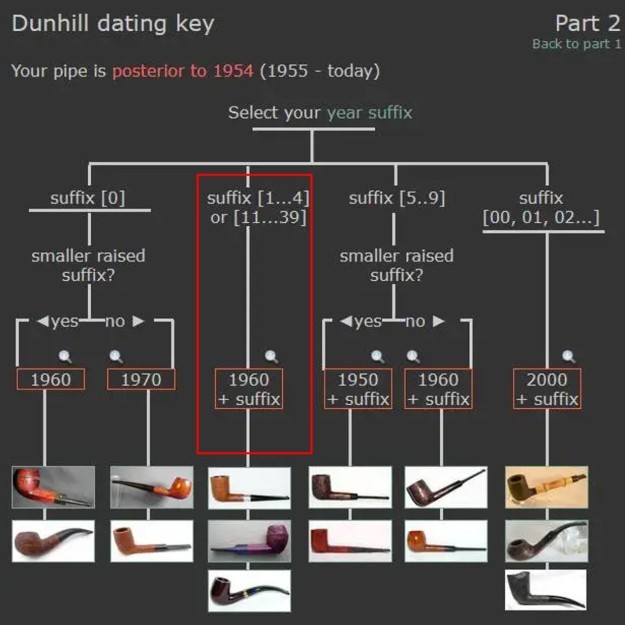
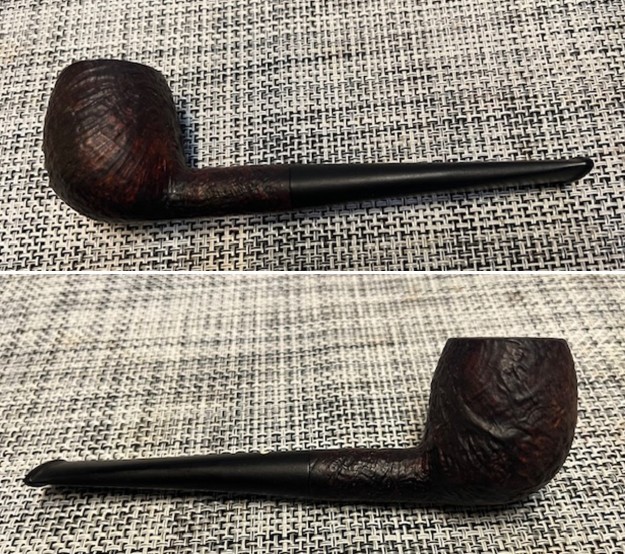
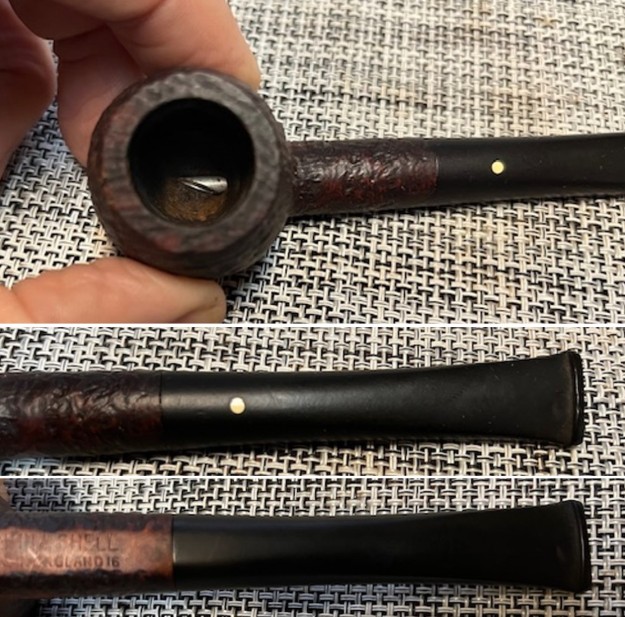
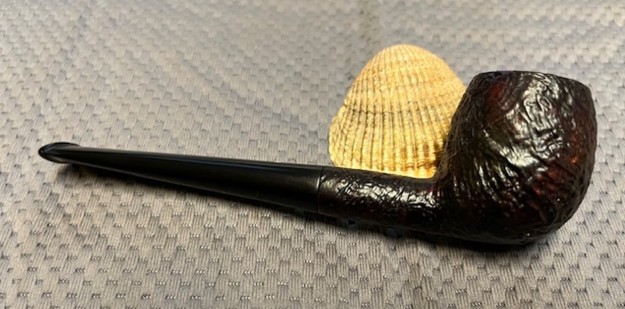
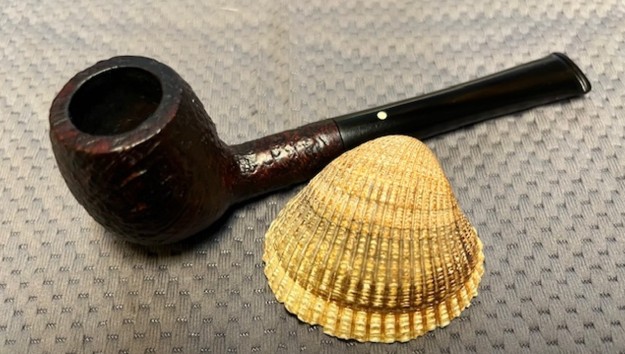
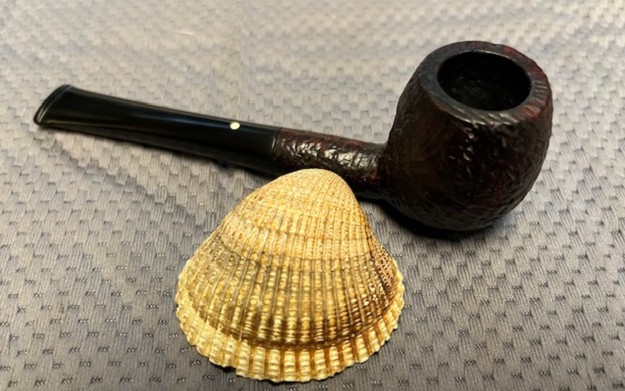
The next pipe on the work table is a lovely Dunhill small sandbast apple shaped briar pipe. It is similar in terms of shape number and finish to another apple I recently worked on but it is definitely more worn (https://rebornpipes.com/2024/05/26/restoring-a-1976-dunhill-shell-341-apple-a-beautiful-sandblast-pipe/). It also came from our contact in Copenhagen, Denmark on 02/02/2024. It is a classic Dunhill Sandblast Apple shaped bowl. It has a sandblast, rich brown stained bowl that really highlights the grain in the briar. The worn sandblast bowl is dirty with grime in the finish. There are also some flecks of white paint in the grooves of the sandblast. The bowl had been recently reamed but there was still lava in the blast on the rim top and the inner edge of the bowl. The stamping on the pipe is faint but still readable on the underside of the shank. It reads 341 (the number is worn but I believe it is a 341) the shape number [followed by] Dunhill Shell [over] Made in England the date number 16 is stamped after the D in England. The stem had a white spot on the top side of the taper. It is oxidized, calcified and has tooth chatter and tooth marks on both sides ahead of the button. Jeff took photos of the pipe before he started his cleanup. He took photos of the pipe’s bowl and rim top to show the cake in the bowl and the dark spots and the lava coat overflowing onto the top. It is another dirty pipe. He also took photos to capture the tooth marks on the top and underside of the stem near the button. He took photos of the sides and the heel of the bowl to give a sense of the sandblast finish on this one. Even under the grime and wear on the finish the blast is quite beautiful. Jeff took photos of the stamping on the underside of the shank. It is faint but still readable. It helps to have worked on a Dunhill Shell Briar 341 Apple previously as it gives some clarity to otherwise faint stamping. The shape number on this one is worn but the tails on the numerals match those on the previous one I worked on. The date stamp is also worn but again the tails and curves on the numbers match the previous one exactly. I wanted to unpack the Dunhill stamping on the shank and work to understand each element of the stamp. I generally use the Pipephil site to gather as much initial information as possible (http://pipephil.eu/logos/en/dunhill/shell-briar1.html). The stamping is interpreted as follows: The number 341 is the shape number for a taper stem Apple. The Shell Briar stamp refers to the finish. The number 16 following the D of England would give the date the pipe. The photo below is of the stamping on a Don shape but the stamping is similar on this one.Pipephil also has some helpful dating keys on the site that are basically flow charts that you can walk through to date your pipe (http://pipephil.eu/logos/en/dunhill/cledat-en1.html). I turned to Part 1 of the Dating Key and followed the chart. This pipe has 16 following the D in England. There was no patent number so that took me to the section on the chart below (column one) which instructed me that the pipe could be dated as being made “posterior to 1954”. I followed the link under “Your pipe is posterior to 1954. Narrow down your dating”. That took me to Page 2 of the dating key (http://pipephil.eu/logos/en/dunhill/cledat-en1a.html). The second column (suffix 1…4) or (11…39) led me to the section with 16 after the D in England. There was a directive for dating the pipe spelled out as follows: 1960 + suffix 16 which gives the pipe a date of 1976.I then turned to Pipedia’s section on Dunhill Shell Briar to get a bit of background on the Dunhill finishes (https://pipedia.org/wiki/Dunhill#Root_Briar). I quote:

Shell

A deep craggy sandblast with a black stain finish (usually made using Algerian briar) – the color of the stain used has varied over the years. Although there is some doubt as to them being the first to sandblast pipes, Dunhill’s Shell pipes, and the sandblasting techniques developed to create them are considered one of Dunhill’s greatest and most lasting contributions to the art of pipe making.

The documented history of Dunhill’s inception of the Shell is largely limited to patent applications — there are no catalog pages or advertisements promoting blasted pipes at the time. The preliminary work on the English patent (No. 1484/17) was submitted on October 13, 1917. The patent submission was completed half a year later, on April 12, 1918, followed by the granting of the English patent on October 14, 1918. This was less than a month before the end of The Great War on November 11th.

In 1986 Dunhill released a line of premium Shell finish pipes – “RING GRAIN”. These are high-quality straight grain pipes which are sandblasted. Initially only Ring Grain, but now in two different finishes. In 1995 the “Shilling” was introduced with Cumberland finish – it is an extremely rare series. These pipes exhibit a deeper blast characteristic of that of the 1930’s – mid-1960’s (and the limited ‘deep blast’ pipes of the early 1980s) and show a fine graining pattern. These are considered the best new Dunhills by many enthusiasts today and are very rare. The finish is sometimes described as tasting like vanilla at first, with the taste becoming more normal or good as the pipe breaks in.

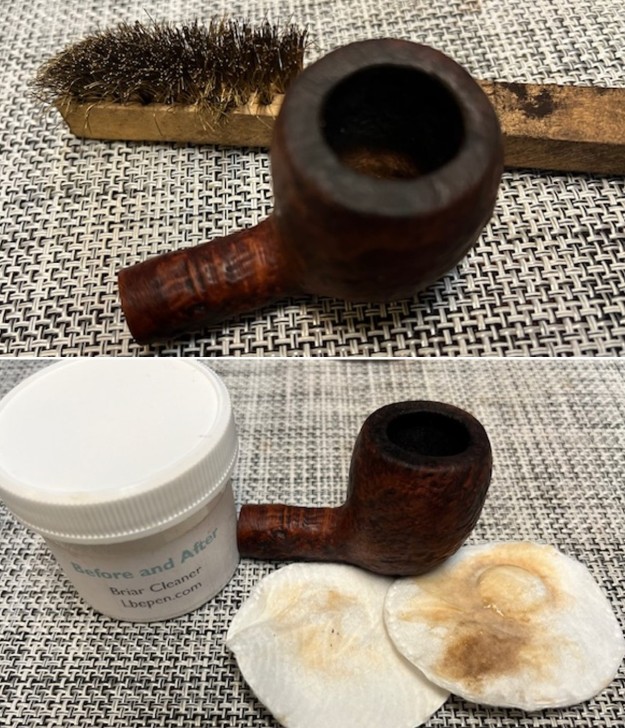
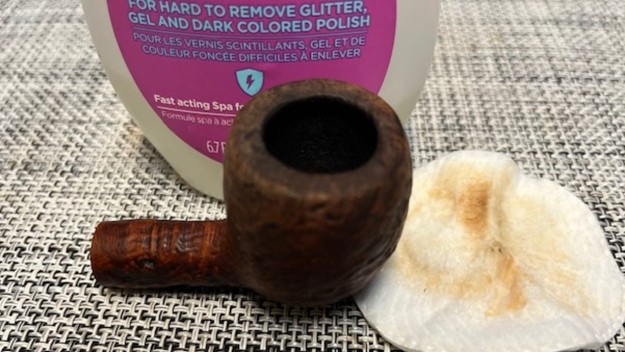
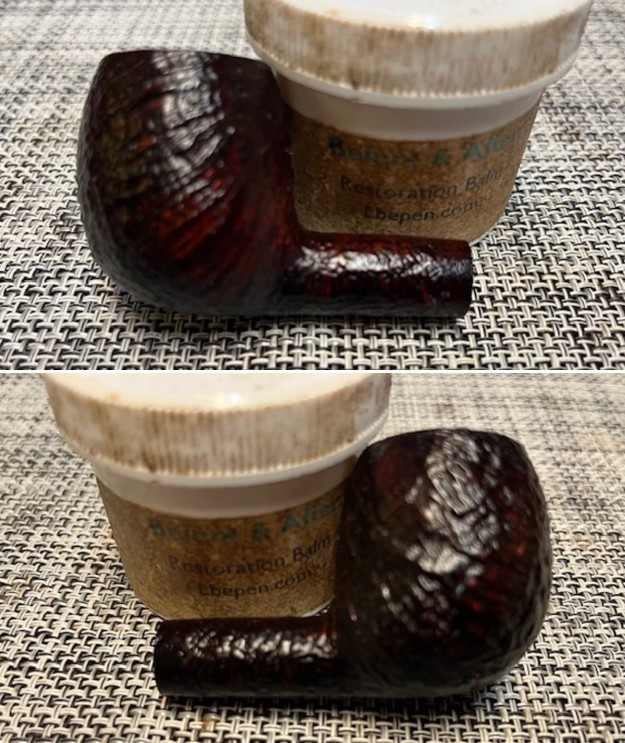
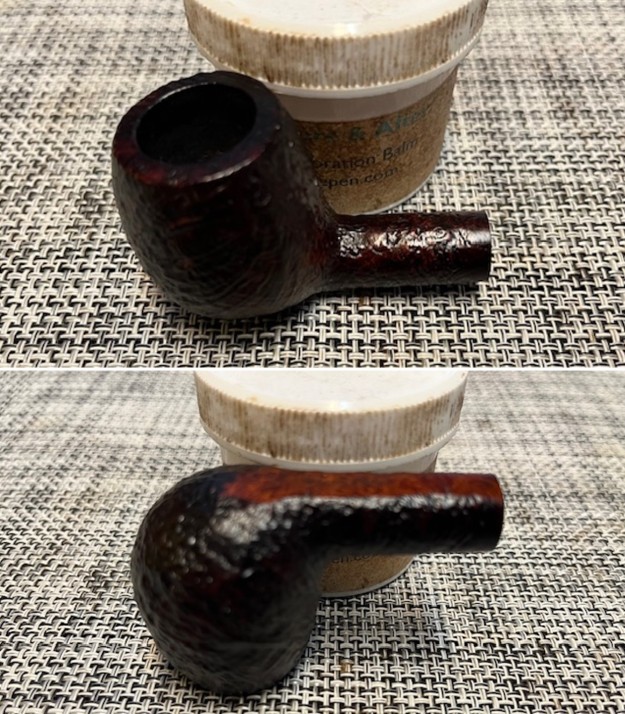
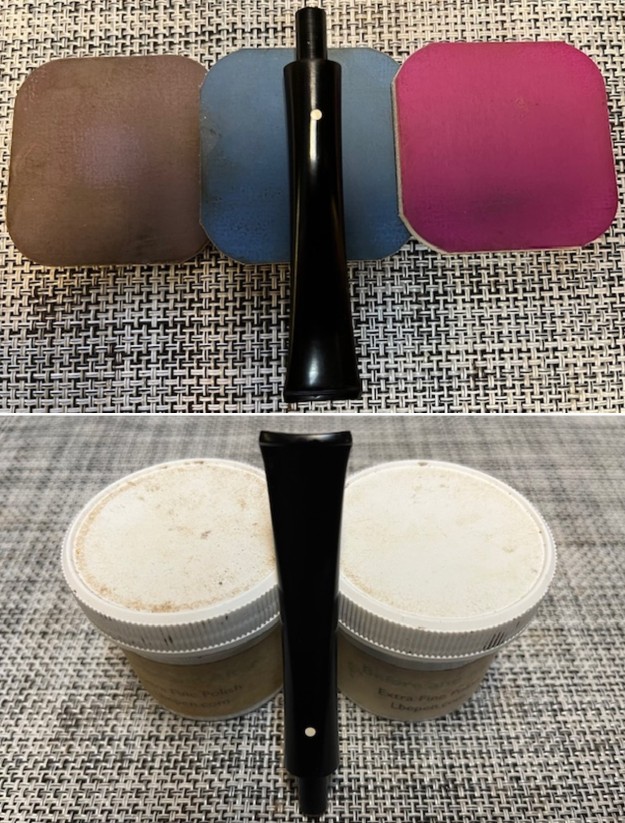
I turned to work on the pipe itself. Jeff had done an amazing cleanup of the pipe. He reamed the cake with a PipNet reamer and cleaned up that with a Savinelli Fitsall Pipe Knife. He scrubbed the internals of the bowl and stem with alcohol, cotton swabs, pipe cleaners and shank brushes. He scrubbed the externals with undiluted Murphy’s Oil Soap and rinsed the bowl off with running water. There was still some general darkening on the rim top that would need to be worked on. He soaked the stem in Briarville’s Pipe stem Deoxidizer and once it had soaked rinsed it off with warm water to remove the residual solution. He dried it off and rubbed it down to remove any oxidation that was still on the stem. The pipe looked very good when I received it. I took a photo of the rim top to show the condition. It looks good with the tars and oils removed from the rim top though there is still some darkening. The inner edge of the bowl was in excellent condition though there was some wear on the front inner and outer edge. The bowl itself was very clean. The stem came out looking quite good with light tooth marks and chatter on both sides ahead of the button. I took a photo of the underside of the shank to show the stamping. The photo shows the stamping and is actually more readable in person. I removed the stem from the shank and took a photo of the pipe parts to show what I was working with. The shape is a classic apple.I started my work on this pipe by addressing the darkening on the rim top. I began by working over the rim top with a brass bristle wire brush to remove the grime in the sandblast finish. It looked better but I still needed to do some work on the darkening of the rim top. I then scrubbed the rim top with some of Mark Hoover’s Before & After Briar Cleaner. I worked it into the rim top and edge of the bowl with my finger tips. I let it set for a few moments then scrubbed it off with cotton pads. Each step made it look better but still the top was too dark to my liking. I wiped it off again with some acetone on a cotton pad and finally I could see the briar with the brown tone of the stain. The rim top showed some burn damage to the top that was not completely removable. There was some damage on the front outer edge where the pipe had been knocked out. I rubbed the briar down with Before & After Restoration Balm. I worked it into the surface with my fingertips and a horsehair shoe brush to work it into the nooks and crannies of the sandblast finish. The product works to clean, enliven and preserve the briar. I let it sit for 10 minutes then I buffed it with a cotton cloth to deepen the shine. The pipe really comes alive with the balm. The rim top damage is visible in the photos below especially to the front outer edge of the bowl. I sanded the stem with 320-3500 grit sanding pads. I wiped it down after each sanding pad with a damp cloth. By the final 3500 grit sanding pad the stem had a had a shine.I polished the vulcanite with micromesh sanding pads – 1500-12000 grit pads. I wiped it down with Obsidian Oil after each sanding pad. I used Before & After Pipe Polish – both Fine and Extra Fine to further polish the stem. This 1976 Dunhill Shell Briar 341 Apple with a vulcanite taper stem has a beautiful, unique Dunhill Sandblast finish that is very deep and craggy. The Shell Briar mixed brown finish highlights some great grain around the bowl and shank. It has a unique sandblast that Dunhill specialized in making. The polished vulcanite taper stem adds to the mix. I put the stem back on the bowl and buffed the pipe with Blue Diamond on the buffing wheel being careful to not buff the stamping. I gave the bowl multiple coats of Conservator’s Wax and the stem multiple coats of carnauba wax on the buffing wheel and followed that by buffing it with a clean buffing pad. I hand buffed the pipe with a microfiber cloth to deepen the shine. The finished Dunhill Shell Briar 341 Apple is quite nice and feels great in the hand. Give the finished pipe a look in the photos below. The dimensions of the pipe are Length: 5 ½ inches, Height: 1 ½ inches, Outside diameter of the bowl: 1 ¼ inch, Chamber diameter: ¾ of an inch. The weight of the pipe is .95 ounces/.27 grams. Thanks for walking through the restoration with me as I worked over another beautiful pipe. This one will be going on the rebornpipes store in the English Pipe Makers Section. Thanks for your time.
Peterson 1950’s House Pipe Restoration


By Al Jones

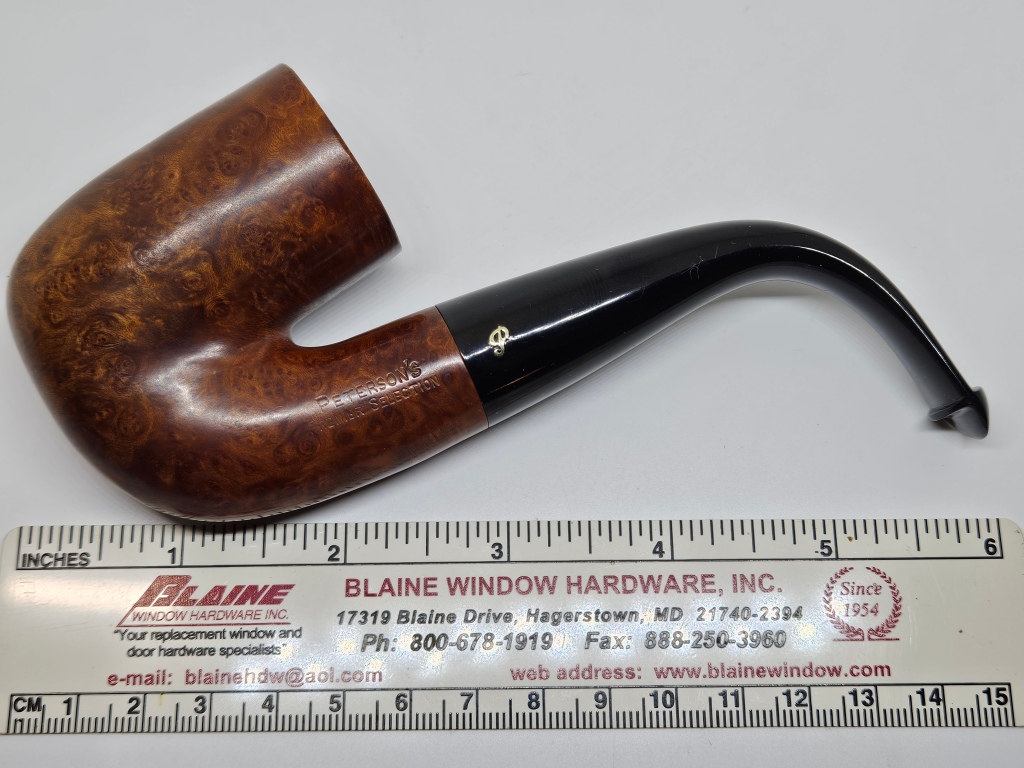
This large, oom-Paul Peterson shape caught my eye on eBay. It had what appeared to be pre-Republic stamping, and it appeared to be in very good condition. It was a Premier Selection grade, which are always stunning. I learned many years ago, from Mark Irwin, that the Premier Selection grade was just below the Deluxe. I was a bit surprised to discover that I won the auction. I’ve always had good luck with auctions ending during a holiday, and this was a good example.

Peterson fans, aka “CPG = Certified PeteGeeks”, are fortunate to have Mark Irwin brand expertise just an email away. Mark’s blog, “Peterson Pipe Notes” is a must-read for Peterson or briar pipe enthusiasts and it has a world-wide following. I emailed Mark about this pipe and sent him my finished photos. I received a speedy reply and he shared as below:

On the 02 Premier. First, it’s a fully-functioning System pipe, which many folks don’t appreciate. It’s got all the engineering and in spades: deep reservoir, 1st-rate condenser with cross vents, P-Lip with graduated bore airway. Second, the MADE IN IRELAND probably tells us that it’s a Rogers Imports pipe, as that was the usual stamping on the high-grade lines requested by Rogers. The brass P is another indication of the high tier, but it also suggests (in conjunction with the bone condenser) that the pipe was made during the first decade of the Early Republic era. So anytime during the 1950s would be my estimate.

Mark has a blog entry on the 02 House pipe shape and it’s various iterations, if you have further interest:

https://petersonpipenotes.org/tag/peterson-02-shape/

The pipe had some buildup on the bowl top and the stain was faded in one area. The stem had some oxidation, but the P-lip features were undamaged. There was a very slight cake in the bowl. The nomenclature was very strong. Below is the pipe as it was received. I discovered that photographing this shape was not easy!

There were some handling marks on the bowl. I was able to steam most out, with a wet cloth and an electric iron. I reamed the slight cake with my Pipe-net reamer and used a piece of 320 sandpaper to finish inside the bowl, which was in excellent condition. The bowl was then soaked with alcohol and sea salt. Following the soak, I used a bristle brush dipped in alcohol to clean the system shank.

The stem was mounted and I removed the oxidation with 600, 800, 1500 and 2,000 grade wet paper, taking care around the brass inlaid P logo. The stem was then buffed with White Diamond and Meguiars Plastic polish.

In the decade, I’ve owned over 40 Petersons, but oddly, none were true system pipes (well, condensor & P-Lip). It took me a minute to locate the draft hole after the inaugural smoke. The draft hole was far above the well!

The bowl was buffed lightly with White Diamond and several coats of carnuba wax.

Below is the finished pipe, which weighs a healthy 64 grams. Mark Irwin promised me that I was in for a treat with a true system pipe and he was right! It hangs effortless, despite the weight and really was a wonderful smoking experience. I can see now why this shape was a favorite of since-passed CPG Jim Lilley.

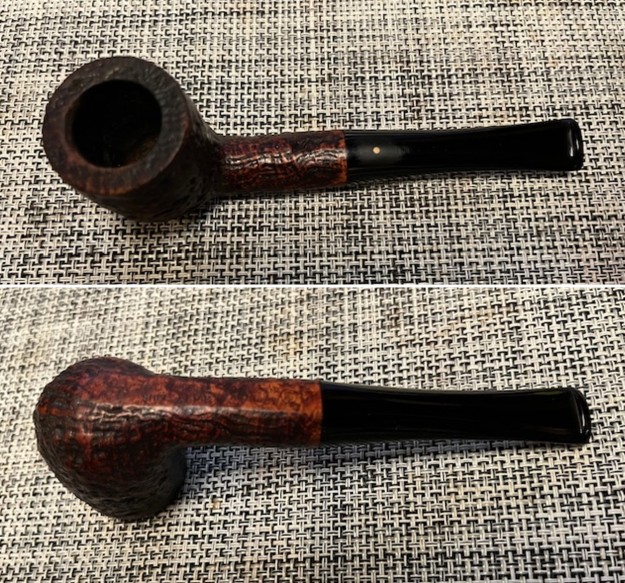
Breathing Life into a Challenging Dunhill Shell Briar 126 Billiard


Blog by Steve Laug

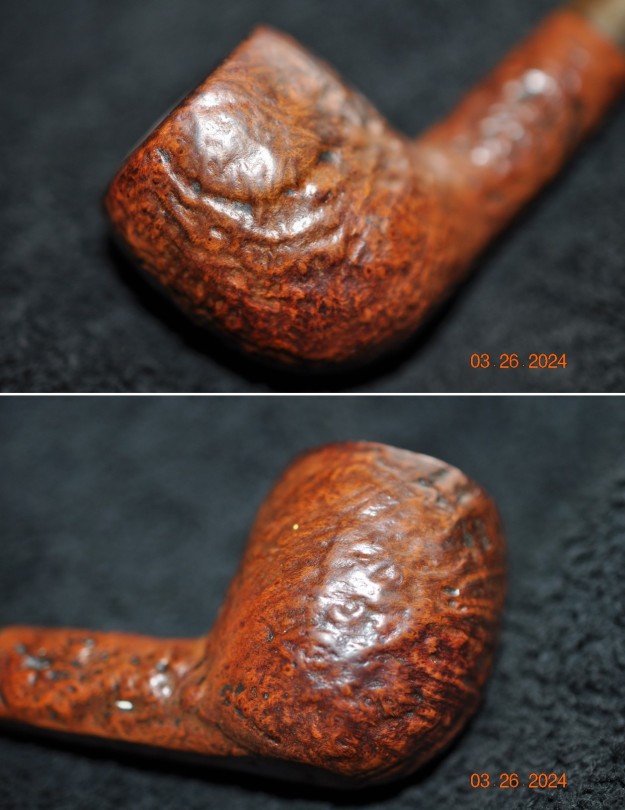
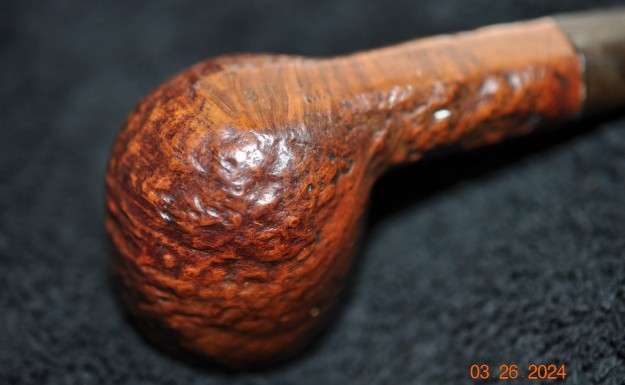
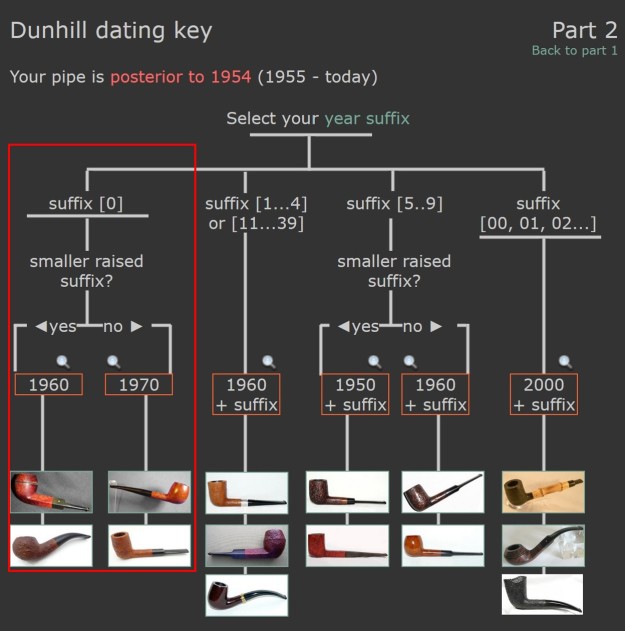
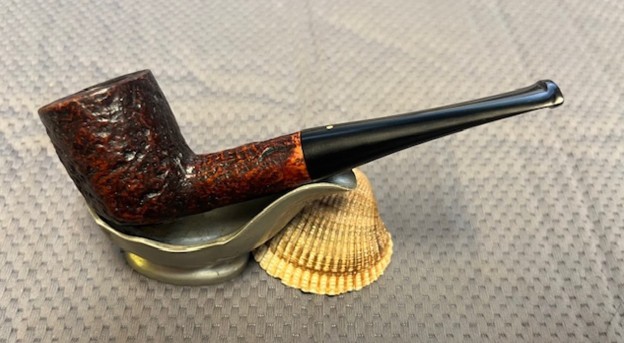
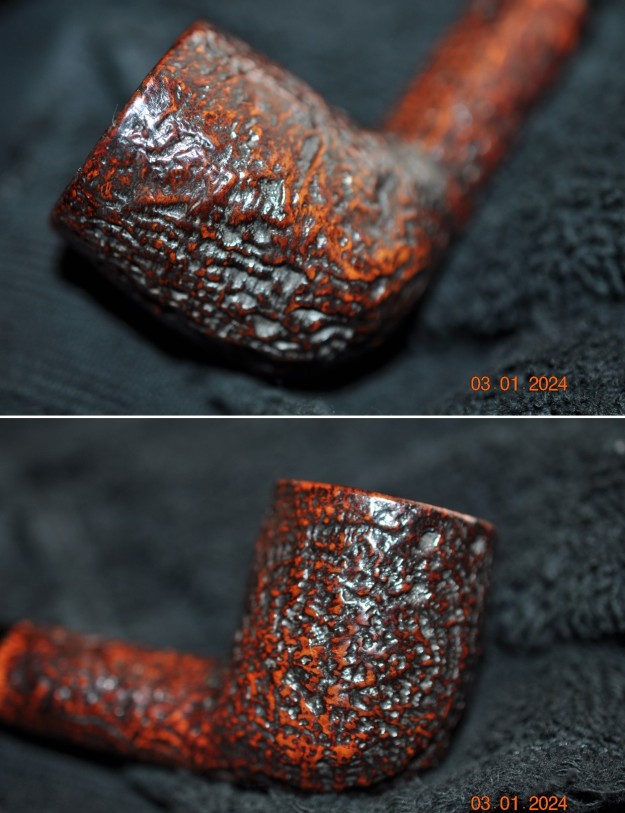
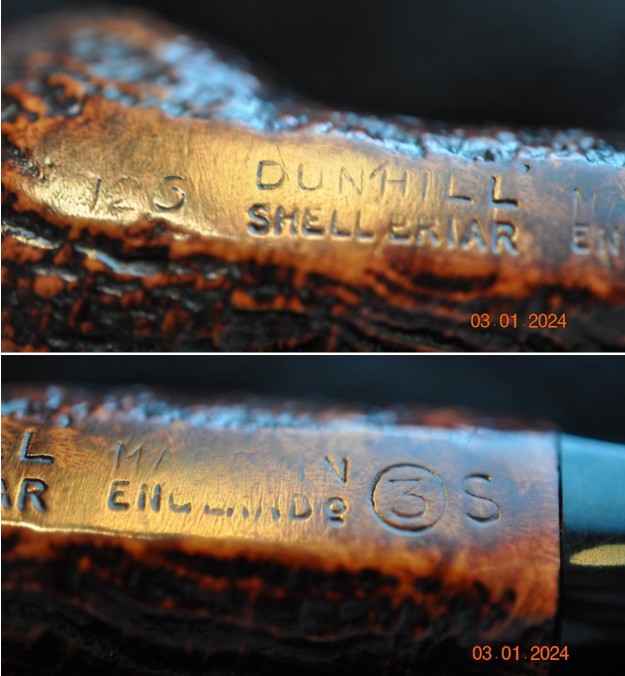
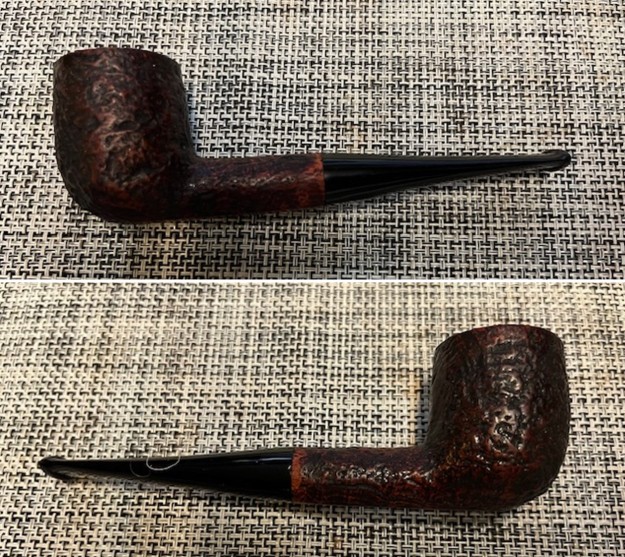
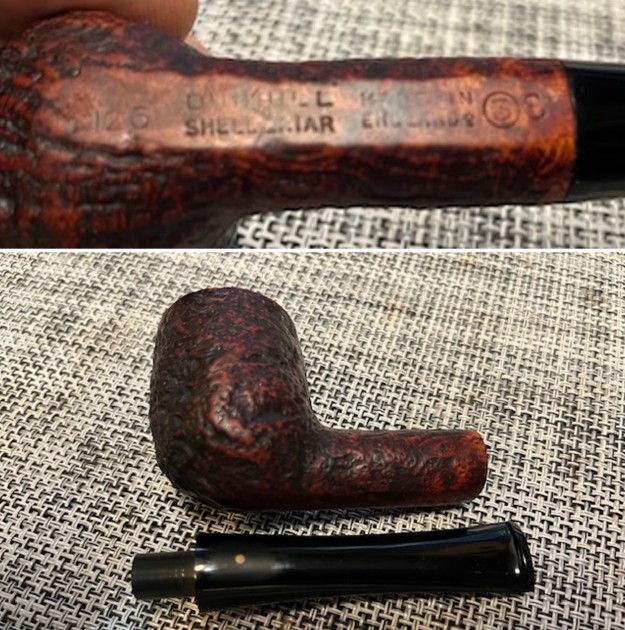
The next pipe on the work table is a lovely Dunhill small sandblast Billiard shaped briar pipe. We purchased it from our contact in Copenhagen, Denmark on 01/22/2024. It is a classic Dunhill Sandblast Billiard shaped bowl. It has a sandblast, rich brown stained bowl that really highlights the grain in the briar. The bowl is dirty with grime in the finish. There also appears to be a shiny varnish coat over the grime in the sandblast. There appears to be a varnish coat on the stem as well. The bowl has a moderated cake and a light lava overflow on the sandblast rim top and edges. The stamping on the pipe is clear and readable and on the under side it reads 126 the shape number [followed by] Dunhill [over Shell Briar. That is followed by Made in England the superscript date number 0 is stamped after the D in England. There is a circle #S following the date stamp that identifies the pipe as a group 3 sized pipe in a Shell finish. The stem had a white spot on the top side of the taper. It is lightly oxidized and has tooth chatter and deep tooth marks on both sides ahead of the button. Jeff took photos of the pipe before he started his cleanup. He took photos of the pipe’s bowl and rim top to show the cake in the bowl and the lava coat overflowing onto the top. It is another dirty pipe. You can see the shiny coat on top of the finish and the grime in the photos. He also took photos of the stem to capture the tooth marks on the top and underside near the button. He took photos of the sides and the heel of the bowl to give a sense of the sandblast finish on this one. Even under the grime and shiny varnish coat in the grooves the blast is quite beautiful. Jeff took photos of the stamping on the underside of the shank. It is clear and readable though it is faint in some spots. I wanted to unpack the Dunhill stamping on the shank and work to understand each element of the stamp. I generally use the Pipephil site to gather as much initial information as possible (http://pipephil.eu/logos/en/dunhill/shell-briar1.html). The stamping is interpreted as follows: The number 126 is the shape number for a taper stem Billiard. The Shell Briar stamp refers to the finish. The underlined, superscript number 0 following the D of England would give the date the pipe. The circle 3S tells me that the pipe is a group 3 sized pipe and the S is for the Shell finish. The photo below is of the stamping on a Don shape but the stamping is similar on this one.Pipephil also has some helpful dating keys on the site that are basically flow charts that you can walk through to date your pipe (http://pipephil.eu/logos/en/dunhill/cledat-en1.html). I turned to Part 1 of the Dating Key and followed the chart. This pipe has 16 following the D in England. There was no patent number so that took me to the section on the chart below (column one) which instructed me that the pipe could be dated as being made “posterior to 1954”. I followed the link under “Your pipe is posterior to 1954. Narrow down your dating”. That took me to Page 2 of the dating key (http://pipephil.eu/logos/en/dunhill/cledat-en1a.html). The first column (0) led me to the next section with a question whether the suffix is smaller and raised. Since the 0 after the D in England the date of the pipe spelled is 1960. I then turned to Pipedia’s section on Dunhill Shell Briar to get a bit of background on the Dunhill finishes (https://pipedia.org/wiki/Dunhill#Root_Briar). I quote:

Shell

A deep craggy sandblast with a black stain finish (usually made using Algerian briar) – the color of the stain used has varied over the years. Although there is some doubt as to them being the first to sandblast pipes, Dunhill’s Shell pipes, and the sandblasting techniques developed to create them are considered one of Dunhill’s greatest and most lasting contributions to the art of pipe making.

The documented history of Dunhill’s inception of the Shell is largely limited to patent applications — there are no catalog pages or advertisements promoting blasted pipes at the time. The preliminary work on the English patent (No. 1484/17) was submitted on October 13, 1917. The patent submission was completed half a year later, on April 12, 1918, followed by the granting of the English patent on October 14, 1918. This was less than a month before the end of The Great War on November 11th.

In 1986 Dunhill released a line of premium Shell finish pipes – “RING GRAIN”. These are high-quality straight grain pipes which are sandblasted. Initially only Ring Grain, but now in two different finishes. In 1995 the “Shilling” was introduced with Cumberland finish – it is an extremely rare series. These pipes exhibit a deeper blast characteristic of that of the 1930’s – mid-1960’s (and the limited ‘deep blast’ pipes of the early 1980s) and show a fine graining pattern. These are considered the best new Dunhills by many enthusiasts today and are very rare. The finish is sometimes described as tasting like vanilla at first, with the taste becoming more normal or good as the pipe breaks in.

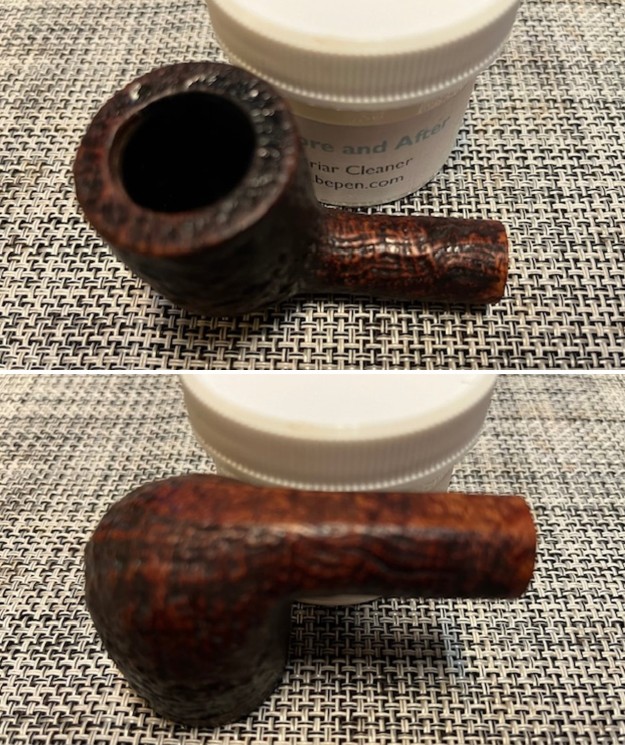
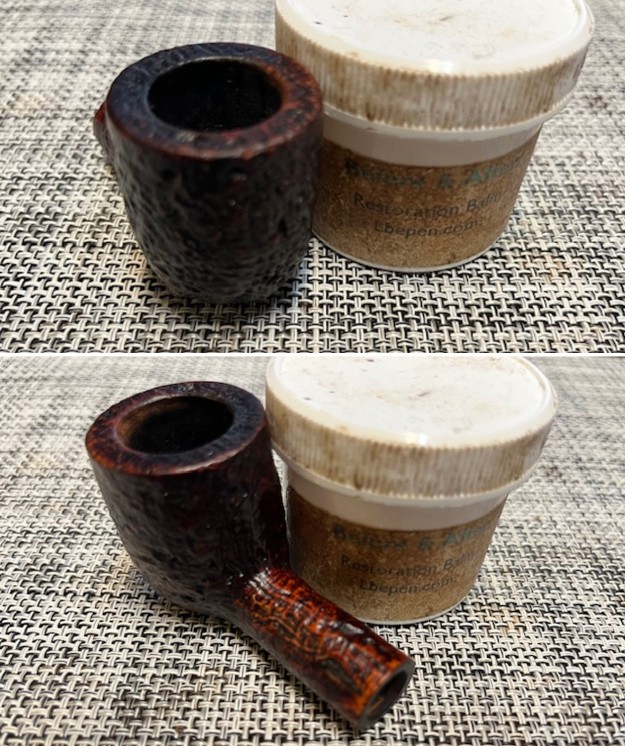
I turned to work on the pipe itself. Jeff had done an amazing cleanup of the pipe. He reamed the cake with a PipNet reamer and cleaned up that with a Savinelli Fitsall Pipe Knife. He scrubbed the internals of the bowl and stem with alcohol, cotton swabs, pipe cleaners and shank brushes. He scrubbed the externals with undiluted Murphy’s Oil Soap and rinsed the bowl off with running water. His scrubbing removed the majority of the varnish on the bowl with just a few spots remaining. He soaked the stem in Briarville’s Pipe stem Deoxidizer and once it had soaked rinsed it off with warm water to remove the residual solution. He dried it off and rubbed it down to remove any oxidation that was still on the stem. The soak did not penetrate the varnish on the stem at all but it certainly looked better. Other than the shiny spots in the finish where the varnish remained, the pipe looked very good when I received it. I took a photo of the rim top to show the condition. It looks good with the tars and oils removed from the rim top. You can see the shiny spots of varnish remaining on the right front side of the rim top in the first photo below. The inner edge of the bowl was in excellent condition. The bowl itself was very clean. The stem came out clean but the varnish coat discoloured the white spot and gave the whole stem an artificial shine that hid the tooth marks and chatter underneath.I took a photo of the underside of the shank to show the stamping. The photo shows the stamping and is actually more readable in person. I removed the stem from the shank and took a photo of the pipe parts to show what I was working with. I think once the varnish is removed the pipe will be a nicer looking piece.I decided to use some of Mark Hoover’s Before & After Briar Cleaner to see if it would break through the remaining shiny spots of varnish in the grooves of the sandblast on the rim top and around the bowl. I shook up the mixture to make sure all was blended then used a tooth brush to work it into the surface of the briar. I worked it until is foamed then rinsed it off with warm water and dried it with a soft cloth. It did the job and the shiny varnish had vanished! I set the bowl aside and let the briar dry out completely then I rubbed it down with Before & After Restoration Balm. I worked it into the surface with my fingertips and a horsehair shoe brush to work it into the nooks and crannies of the sandblast finish. The product works to clean, enliven and preserve the briar. I let it sit for 10 minutes then I buffed it with a cotton cloth to deepen the shine. The pipe really comes alive with the balm. I sanded the stem with 320-3500 grit sanding pads to remove the varnish coat that covered it. I wiped it down after each sanding pad with a damp cloth. By the final 3500 grit sanding pad the stem had a more normal shine and the varnish, tooth marks and chatter were gone.I polished the vulcanite with micromesh sanding pads – 1500-12000 grit pads. I wiped it down with Obsidian Oil after each sanding pad. I used Before & After Pipe Polish – both Fine and Extra Fine to further polish the stem. This 1960 Dunhill Shell Briar 126 Billiard with a vulcanite taper stem has a beautiful, unique Dunhill Sandblast finish that is very deep and craggy. The Shell Briar mixed brown finish highlights some great grain around the bowl and shank. It has a unique sandblast that Dunhill specialized in making. The removal of the varnish left a depth to the briar and a clearness to the stem surface. The polished vulcanite taper stem adds to the mix. I put the stem back on the bowl and buffed the pipe with Blue Diamond on the buffing wheel being careful to not buff the stamping. I gave the bowl multiple coats of Conservator’s Wax and the stem multiple coats of carnauba wax on the buffing wheel and followed that by buffing it with a clean buffing pad. I hand buffed the pipe with a microfiber cloth to deepen the shine. The finished Dunhill Shell Briar 126 Billiard is quite nice and feels great in the hand. Give the finished pipe a look in the photos below. The dimensions of the pipe are Length: 5 inches, Height: 1 ½ inches, Outside diameter of the bowl: 1 ¼ inches, Chamber diameter: ¾ of an inch. The weight of the pipe is 1.09 ounces/31 grams. Thanks for walking through the restoration with me as I worked over another beautiful pipe. This one will be going on the rebornpipes store in the English Pipe Makers Section. Thanks for your time.

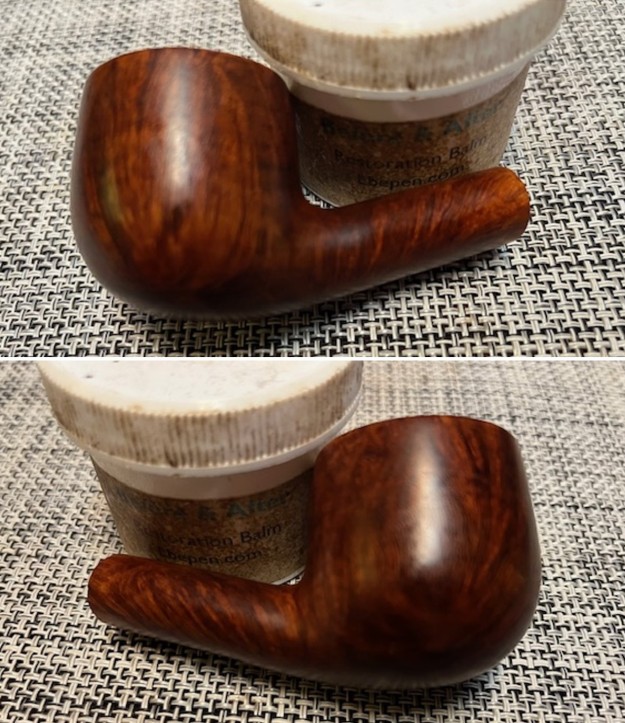
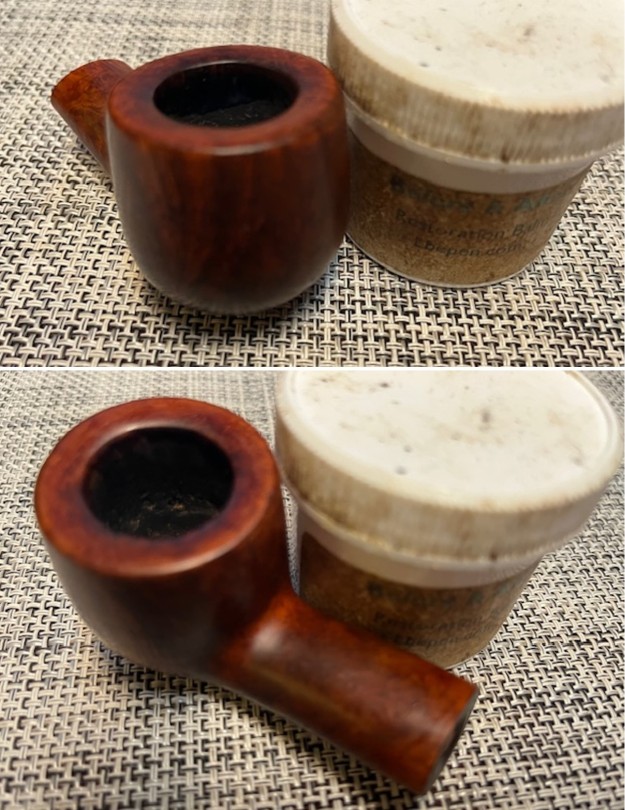
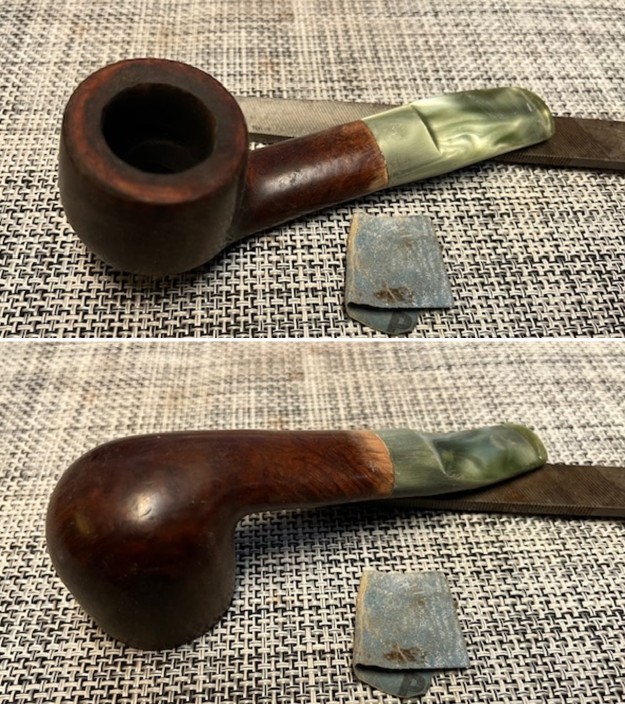
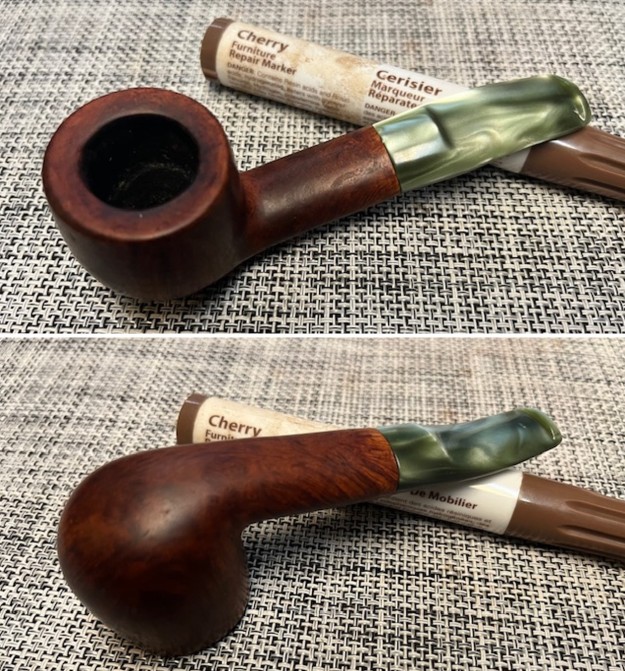
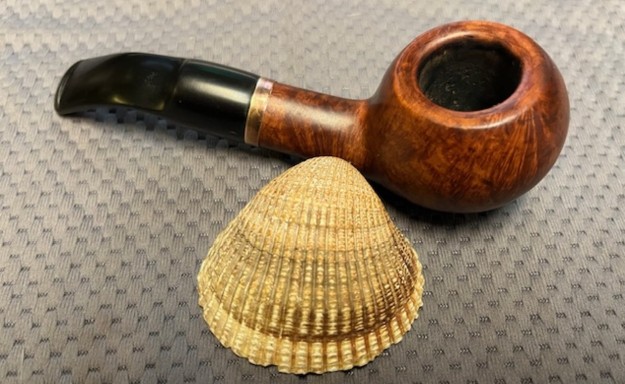
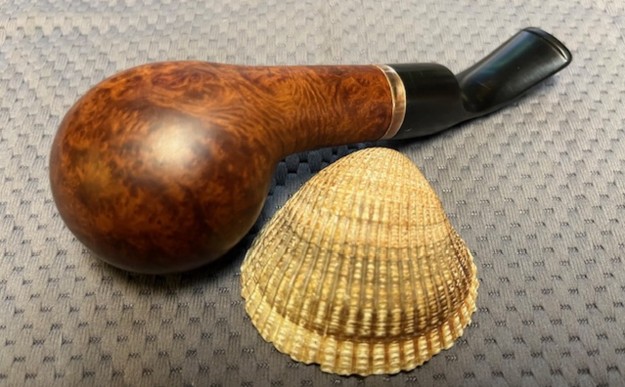
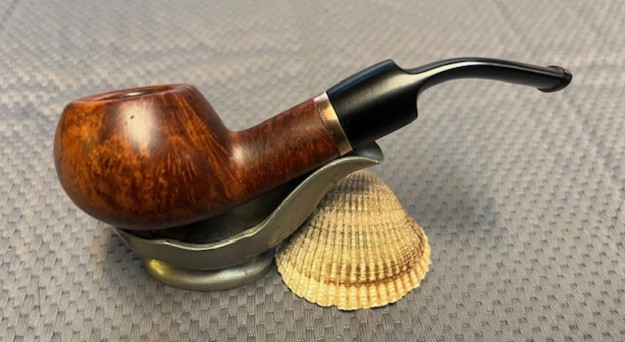
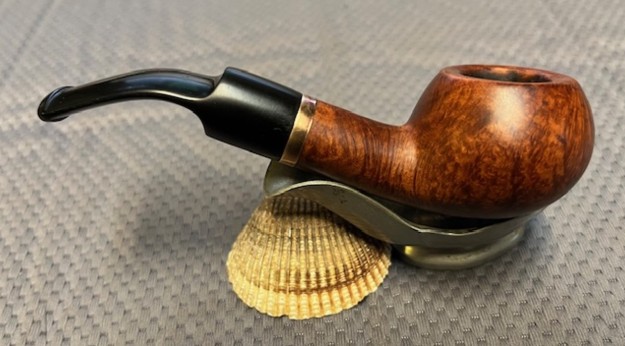
A Malaga Apple Restoration


John and I have been chatting about Malaga pipes as he noted. He found this nicely grained pipe and finished the restoration. Give his blog a read,

Written and photographed by  John M. Young I remember the warnings about peer pressure in the 1980s  Before that it was just called “running with the…

A Malaga Apple Restoration

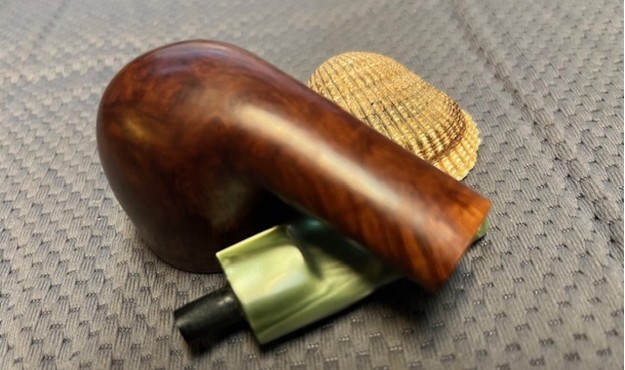
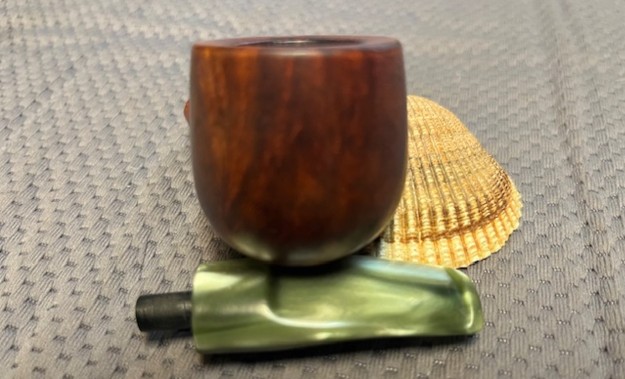
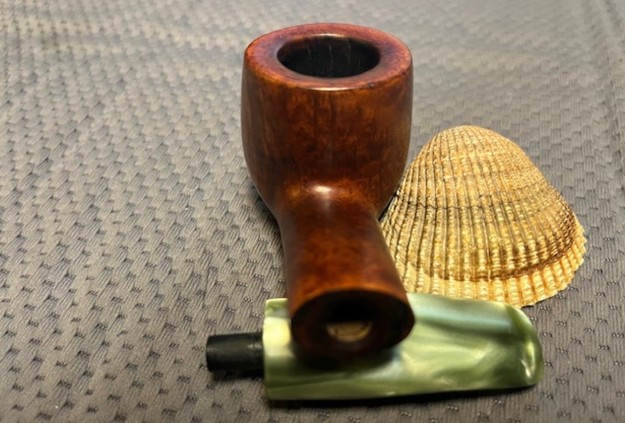
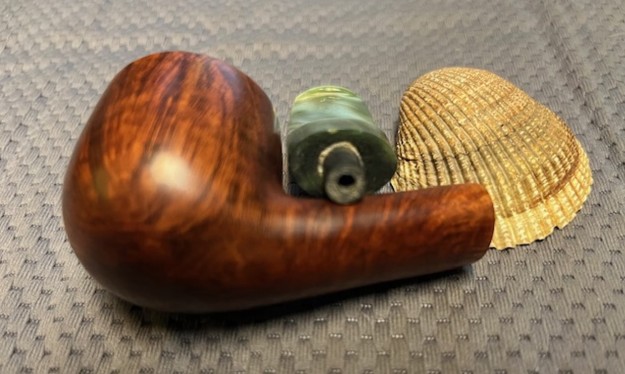
A Pipe Hunt Find in Bellingham – An Israeli Made Pedestal Pipe


Blog by Steve Laug

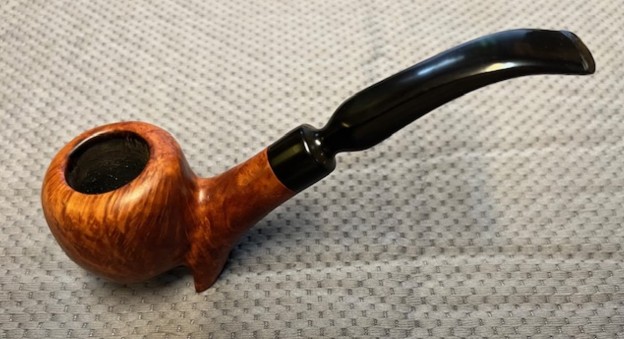
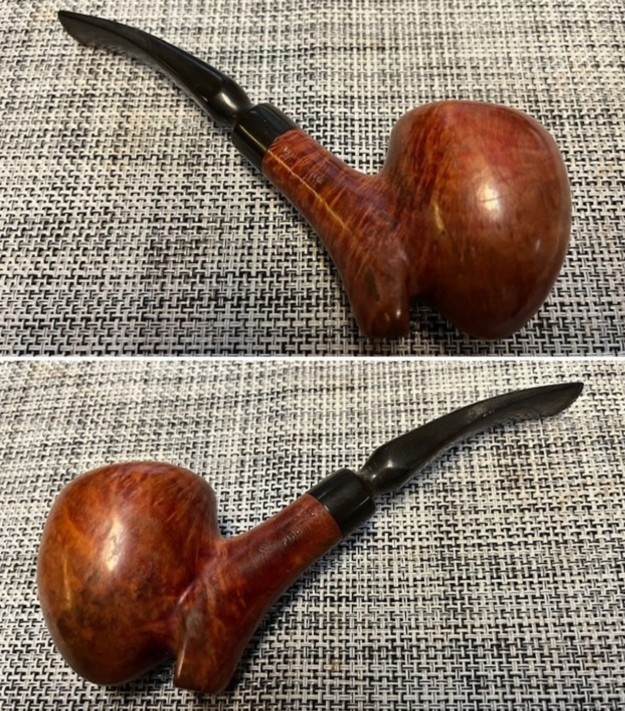
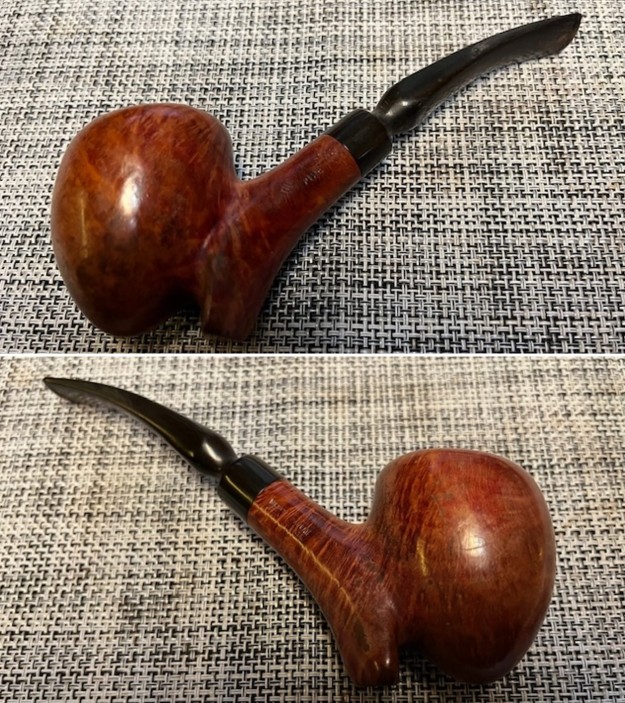
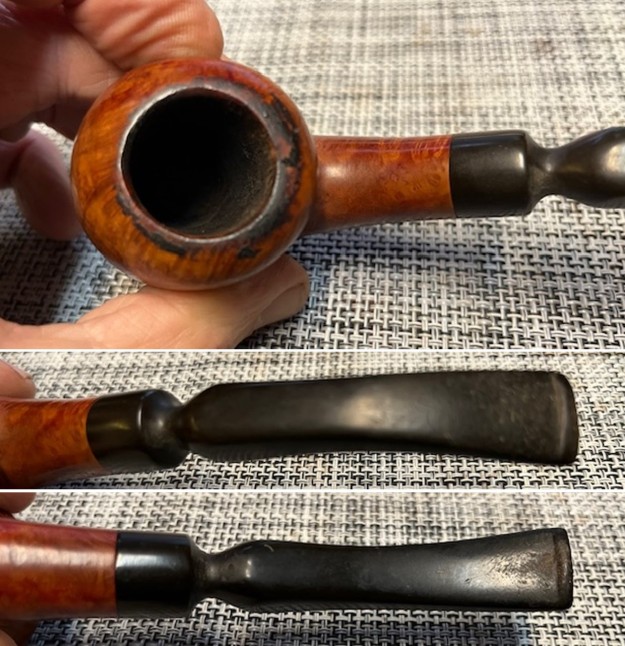
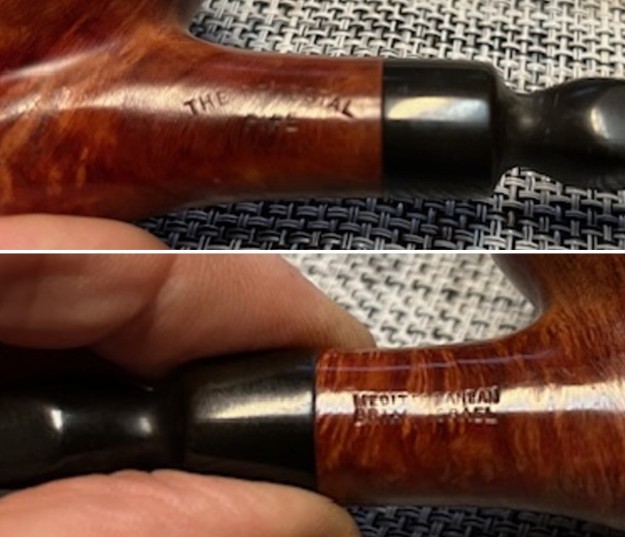
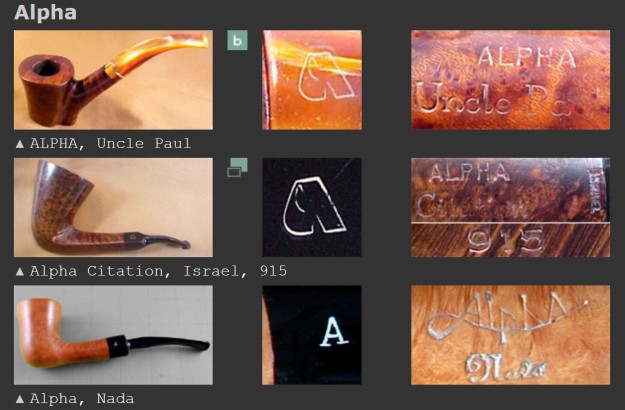
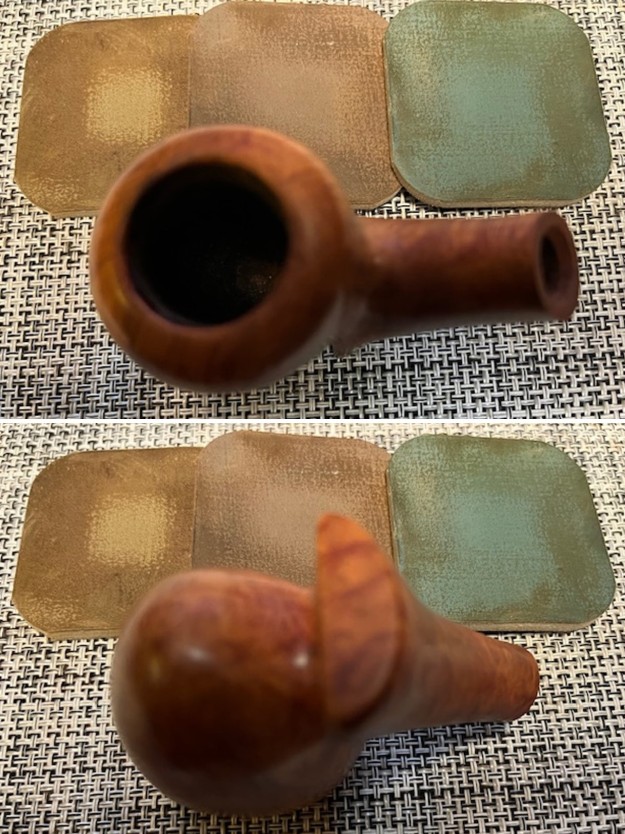
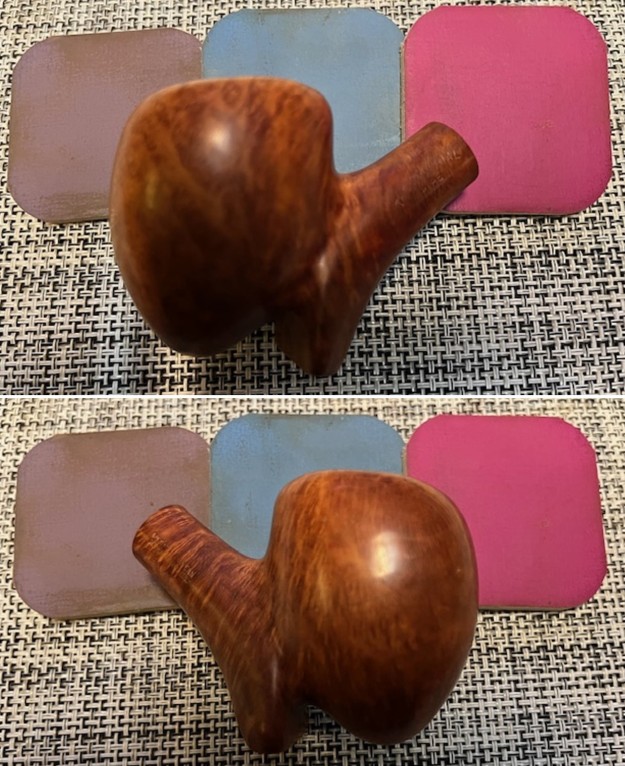
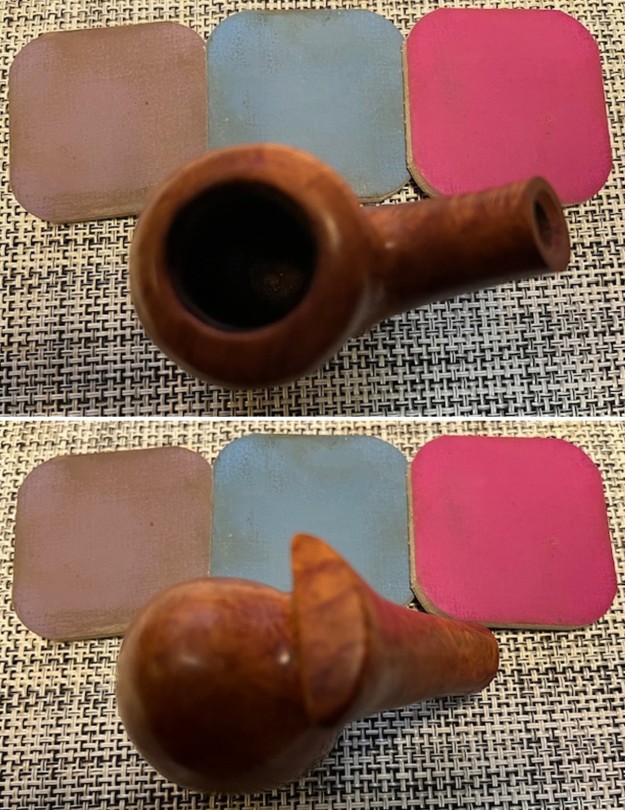
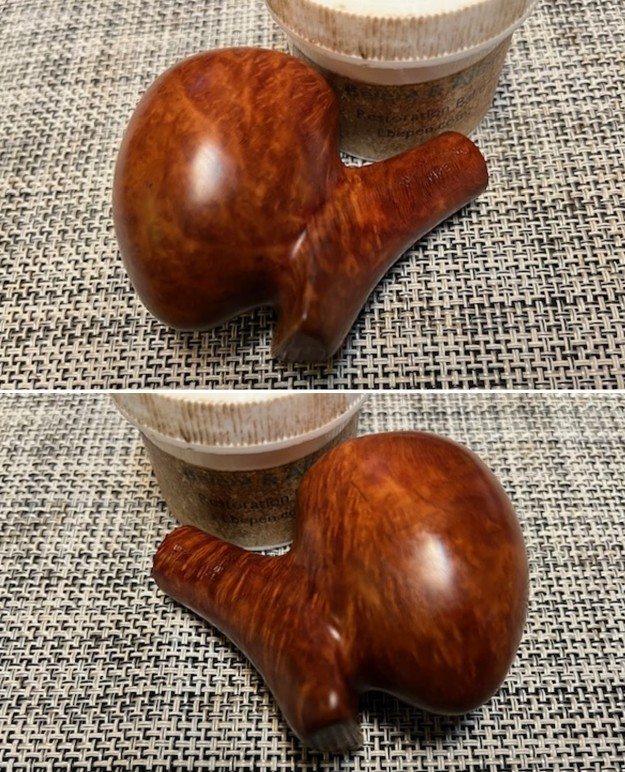
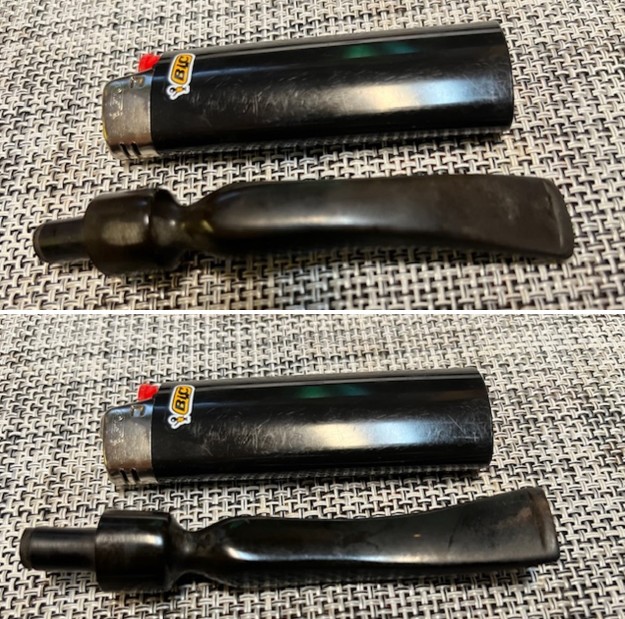
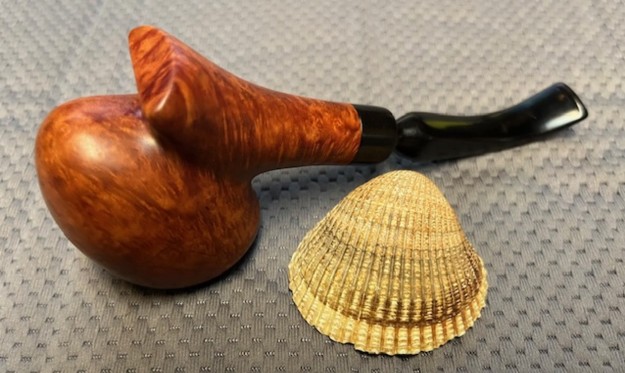
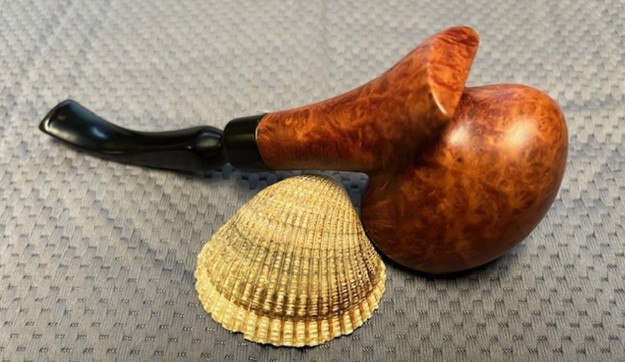
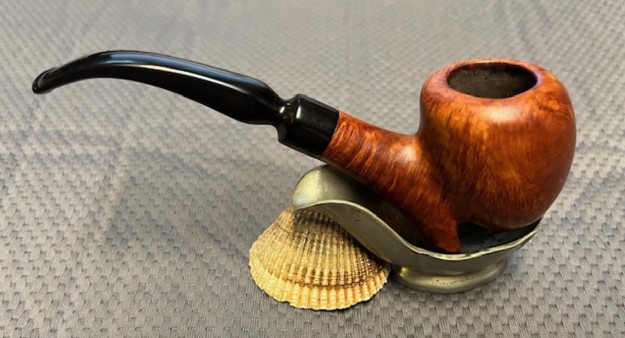
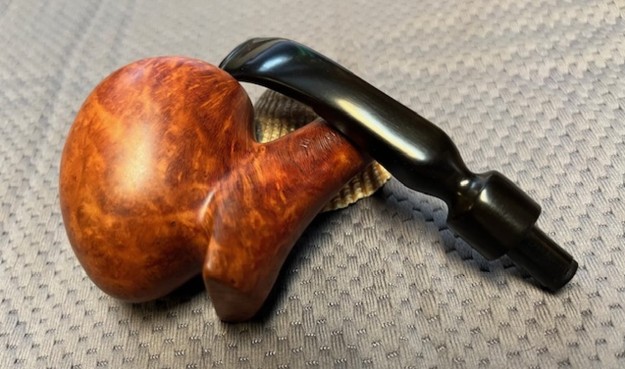
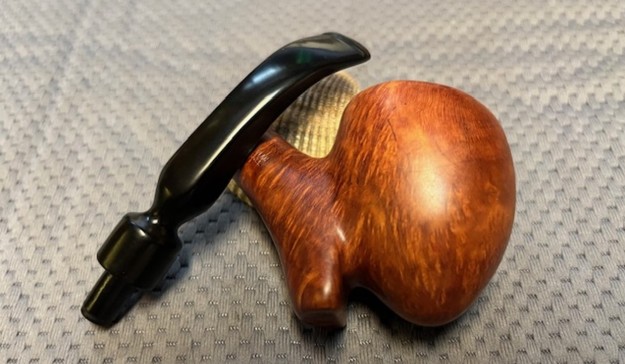
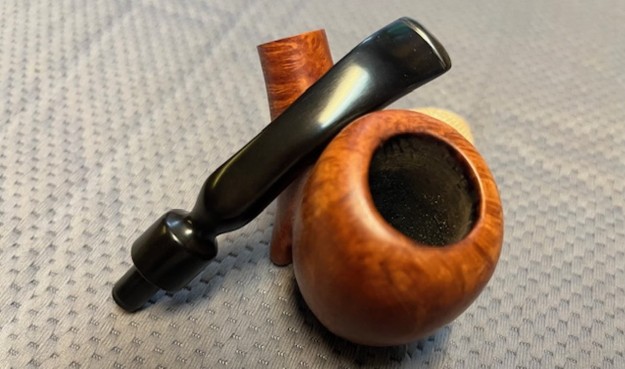
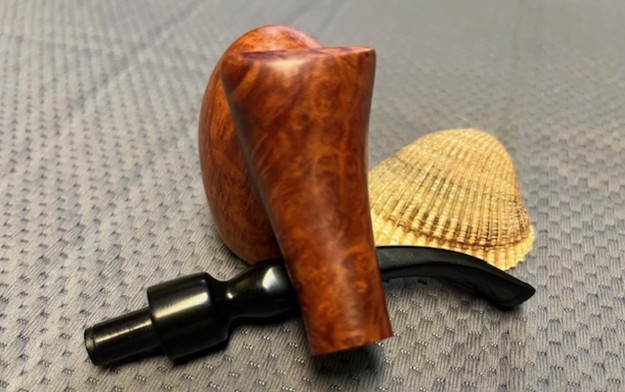
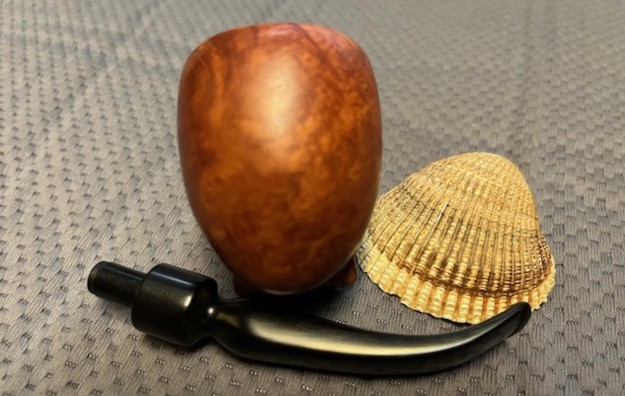
On our recent Victoria Day Weekend (5/18/24) my family met Jeff and his wife in Bellingham for breakfast, a visit and a bit of pipe hunting. We visited three of my favourite antique malls and worked out way through the aisles of wares for sale. Jeff and I tend to divide and conquer, each walking through the aisles looking for pipes. The rest of the family moves through looking for their own treasures. The second shop we visited is a treasure trove of items from the past and one that I could spend a lot of time working through. As we went through the aisles of treasures I found a case with carved animal pipes and a Ropp Cherrywood, really none of them captured my interest this time around. I looked them over and set them aside. Then I saw an interesting pipe standing in the back of the case. It was called The Pedestal Pipe and was made in Israel – presumably by the Shalom Pipe Manufacturing company. We left the shop with this addition to the hunting bag (https://rebornpipes.com/tag/bellingham-pipe-hunt/).I decided to take a break from the pipes in my queue of pipes to work on and deal with the Pedestal Pipe shown above next. It was an interesting shape stands on its own – like a pipe on a pedestal. It had some nice grain under the grime and varnish coat on the bowl and shank. The pipe is stamped on the left side of the shank and reads The Pedestal [arched over] Pipe. On the right side it is stamped and reads Mediterranean [over] Briar Israel. Here is what I saw. The bowl had a thick cake in it a thick lava coat on the rim top and edges. The finish was spotty with varnish or some shiny coat that was peeling around the bowl. The stem was fancy and there was a round saddle portion that sat against the shank end. The blade of the stem was flattened and had panel sides. It was dirty and had tooth marks and chatter on both sides ahead of the button. I took some photos of the pipe before I started working on it. I took photos of the rim top and stem to show the general condition of the pipe. The bowl is heavily caked and the rim top and edges have a heavy coat of lava overflowing on to them. There is some burn or reaming damage on the inner edge of the bowl. The stem is oxidized, calcified and has tooth marks and chatter on both sides ahead of the button.I took photos of the stamping on the sides of the shank. You can see it is readable and in person looks much better with a light and lens. I removed the stem from the shank and took a photo of the parts to show the look of the pipe. I decided to do some digging on the net about the brand. I turned first to Pipephil’s site to see what I could find. I could not find any link to the Pedestal line from Israel but I turned to the section on the site for Alpha pipe (also made by Shalom Pipe Factory). Here is the link to the Alpha section (http://www.pipephil.eu/logos/en/logo-a4.html). I did a screen capture of the section on the pipes. The third pipe in the photo below has an identical stem to the Pedestal Pipe that I am working on. This ties the brand to Alpha at some level and even more to Shalom Pipe Factory.With that information I turned to Pipedia and looked up the information on the Shalom Pipe Factory (https://pipedia.org/wiki/Shalom_Pipe_Factory). I quote the information from the site below. I have highlighted the Pedestal link in the article.

Not much is known about Israel’s sole pipe factory though it’s reported to have operated quite successfully on international markets.

Beside the brand “Shalom” the mainstay brand was Alpha – especially well known in the USA. Alpha was popular for a range of fresh and unusual shapes. Series (afaik): Caprice (s), Citation (s), Classic (b), Pedestal (s), Regent, Region (b), Rex (s). (1)

(1) (b) = blasted, (s) = smooth

Alpha also produced at least one of its Citation forms for Carey’s “Magic Inch” series.

Mentioned in context with Shalom Pipe Factory was a Danish pipemaker named ‘Muki Liebermann’, who later lived and worked in the USA. Muki is known for his unique briar bending technique and his original shapes that gave inspiration to many of the most praised Danish pipemakers.

Shalom was taken over by Robert L. Marx of New York City, later Sparta, NC, then of Mastercraft. Mastercraft continued the Alpha pipes introducing new lines.

I did a Google search for the The Pedestal Pipe and came up with a few links that I followed up on. The best of them was a link to a thread on Pipesmagazine forum to a discussion on a pipe very much like this one (https://pipesmagazine.com/forums/threads/unique-original-sitter-pipe-designs.25944/). I quote the starting post in the thread below:

I liked this pipes unique design as a sitter and the briar doesn’t look too shabby. I’m guessing this came from the Shalom Pipe Factory and made by Muki Liebermann since he was known for his unique briar bending technique and original shapes.

The only stamping found is ‘THE PEDESTAL PIPE’ and ‘Mediterranean Briar Israel’. I’ve searched the internet and cannot find any information on this pipe other than what I have mentioned. Been smoking it for the past week and it’s an excellent smoker.
Feel free to post images of your sitters!! Love to see them.

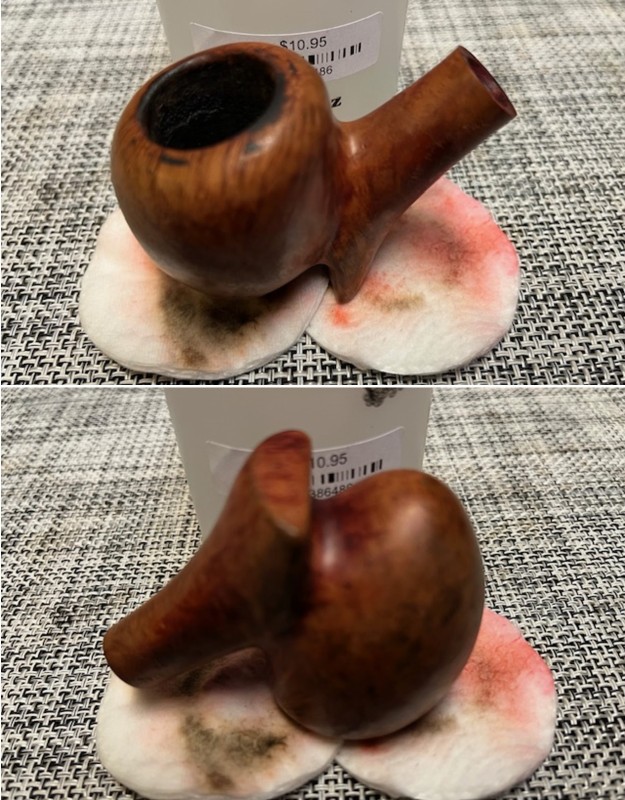
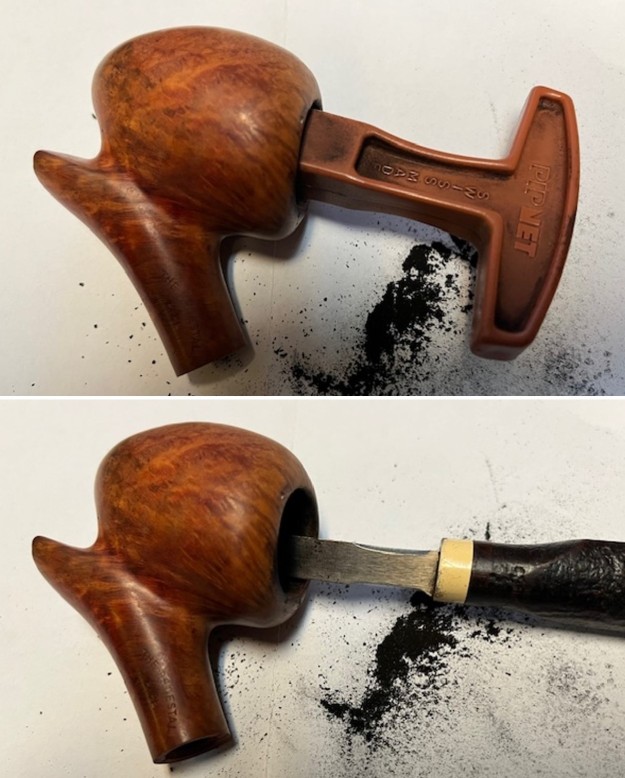
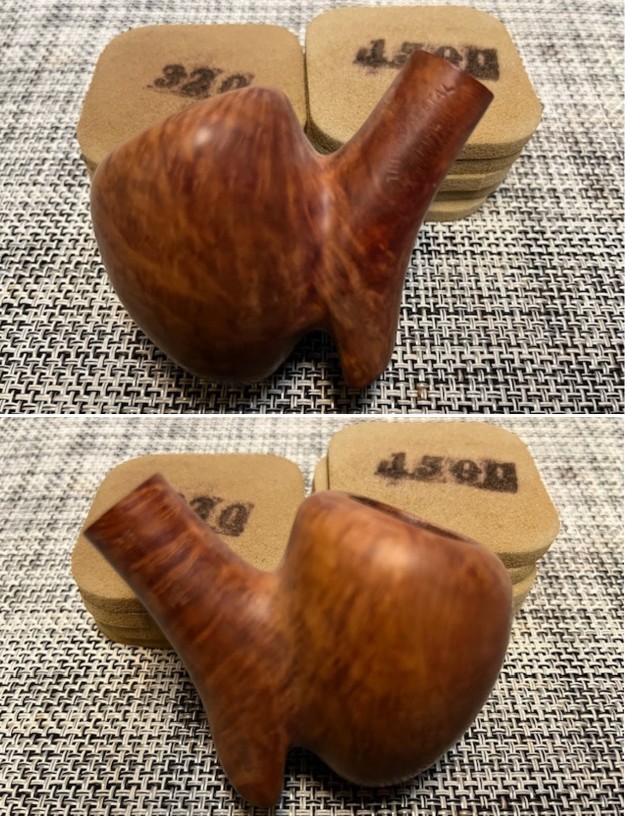
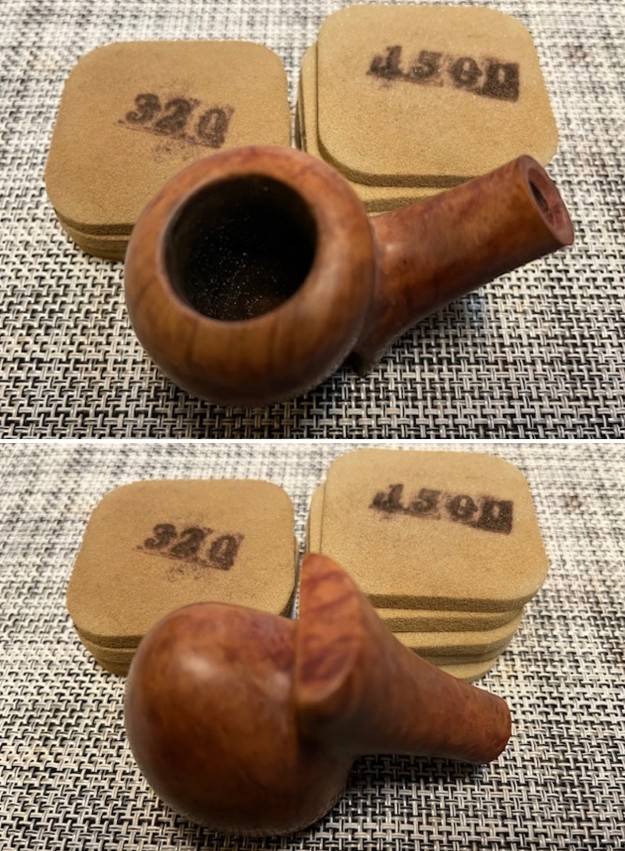
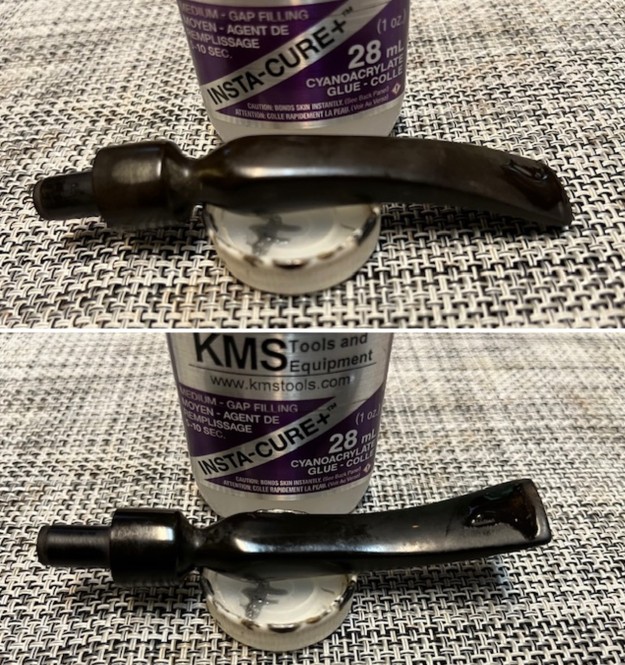
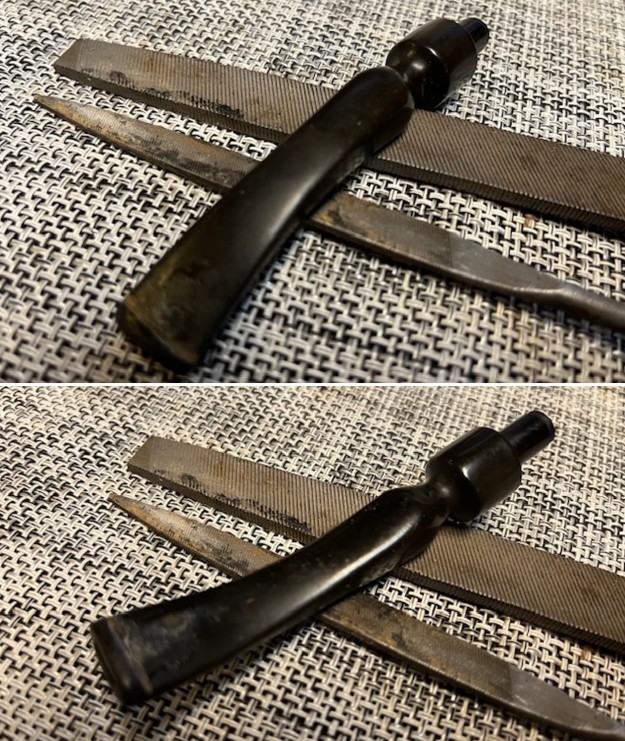
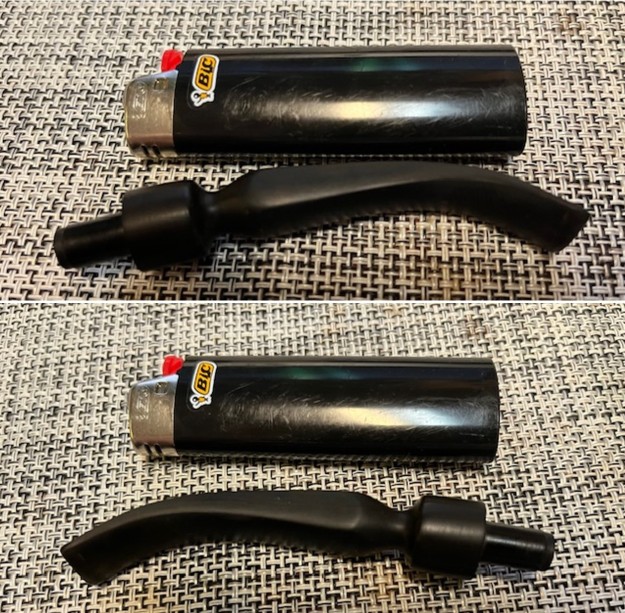
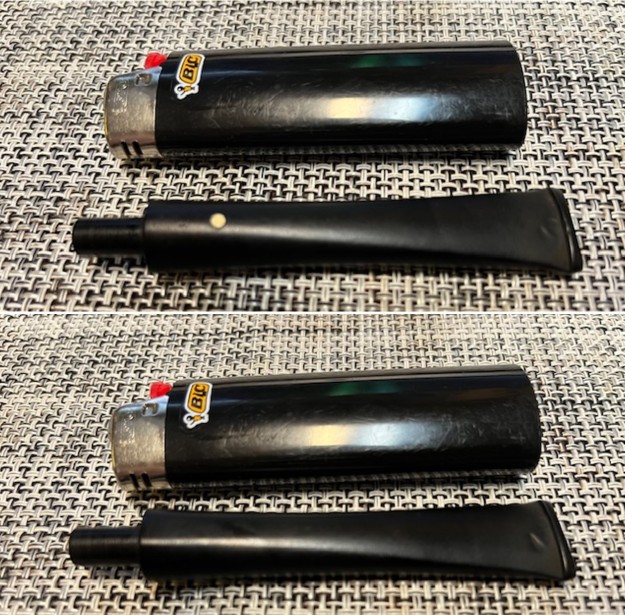
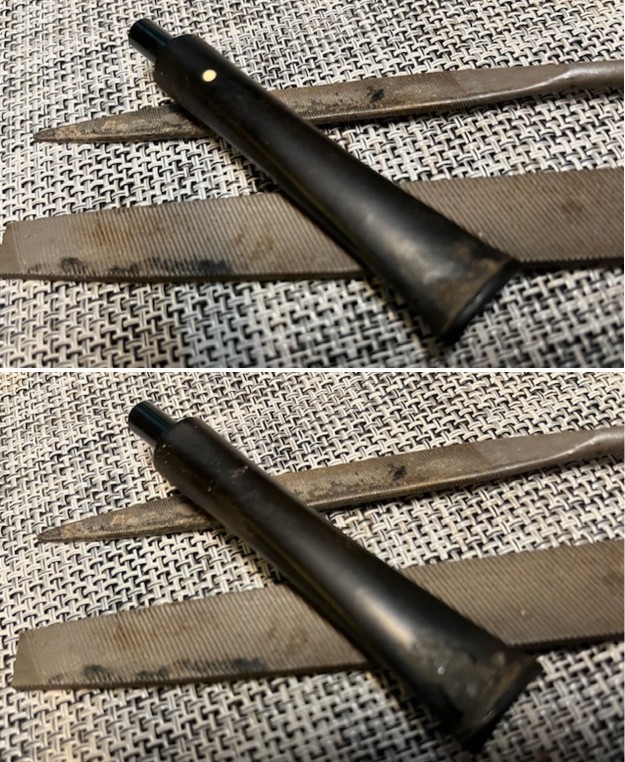
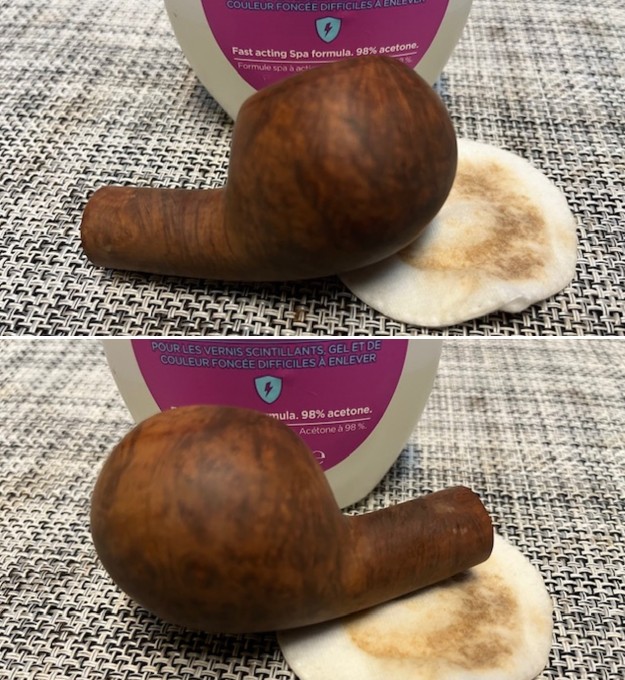
Now I was ready to start the work on the pipe. I wiped the bowl down with acetone to remove the spotty shiny coat on the pipe. It took a few wipe downs to remove it but once finished it definitely was better. Interestingly there was some red dye under the shiny coat that came off as well. I moved on to work on the internals of the pipe. I reamed the bowl with a PipNet pipe reamer to take the cake back to bare briar. I took the cake back to bare briar and cleaned up the remnants of the cake with a Savinelli Fitsall Pipe Knife. I sanded the bowl walls with sandpaper wrapped around a piece of briar to smooth them out. The inside walls were clean and there was no sign of burning or checking on them. I scrubbed the inside of the shank and the airway in it and the stem with pipe cleaners, cotton swabs and isopropyl alcohol. Once it was clean it smelled much better was ready for the next steps in the process.I scrubbed the externals of the bowl and shank with undiluted Murphy’s Oil Soap and a tooth brush to remove the grime in the finish. I rinsed the bowl off with warm water. I scrubbed the internals with shank brushes and soap to remove the grime inside. I was able to remove a lot of the lava on the rim top as well. The bowl was beginning to look much better at this point. I sanded the bowl with sanding pads – sanding with 320-3500 grit pads and wiped down with a damp cloth after each sanding pad. The bowl began to take on a real shine. It was going to be a beautiful pipe. I polished the briar with micromesh sanding pads – dry sanding with 1500-12000 grit pads and wiping the bowl down after each sanding pad. The grain really began to shine through. It is a beautiful pipe. The polishing of the rim top and inner edge brought the rim top colour to match the rest of the bowl. I worked some Before & After Restoration Balm into the surface of the briar with my fingertips to clean, enliven and protect the briar. I let the balm sit for 15 minutes and then buffed with a cotton cloth to raise the shine. The photos show the bowl at this point in the restoration process. I set the bowl aside and turned to address the stem issues. I “painted” the surface of the stem with the flame of a Bic lighter. I was able to lift the marks on the stem top leaving light marks but the ones on the bottom side were much deeper and the flame lifted them slightly but they still remained. I filled in the marks that remained with clear CA glue. Once the repair cured I flattened the repair with small files. It looked much better. I cleaned up the repairs with a folded piece of 220 grit sandpaper. I was able to flatten them and blend them in very well with the surface of the vulcanite. Before continuing with the sanding process, I heated the stem with my lighter to soften the vulcanite and bent it to match the flow of the bowl. It looked much better with the proper bend.I sanded out the scratches and marks in the stem surface with 320-3500 grit sanding pads. I wiped the stem down with a damp cloth after each sanding pad. It looked much better and really started to take on a shine.I polished the stem with micromesh sanding pads – wet sanding with 1500-12000 grit sanding pads. I wiped it down after each sanding pad with Obsidian Oil. I polished it with Before & After Pipe Stem Polish – both Fine and Extra Fine. I am excited to put the final touches on this interesting Israeli Made pipe by Muki Liebermann of the Shalom Pipe Factory. It is a beautiful and uniquely shaped pipe called The Pedestal Pipe. I put the pipe back together and buffed it with Blue Diamond on the buffing wheel. I gave the bowl and the stem multiple coats of carnauba wax. I hand buffed the pipe with a clean buffing pad to raise the shine. It is fun to see what the polished bowl looks like with beautiful grain on the bowl sides, top and bottom. The polished black vulcanite, newly fitted stem combined with the bowl to make a stunning pipe. This smooth The Pedestal Pipe is great looking and the pipe feels great in my hand. It is light and well balanced. Have a look at it with the photos below. The dimensions are Length: 6 inches, Height: 2 inches, Outside diameter of the bowl: 1 ½ inches, Chamber diameter: 7/8 of an inch. The weight of the pipe is 56 grams/1.98 ounces. I will be adding it to the Pipes By Various Makers Section of the rebornpipes store. If you are interested in adding it to your collection let me know. Thanks for walking through the restoration with me as I worked over this pipe. Thanks to each of you who are reading this blog.
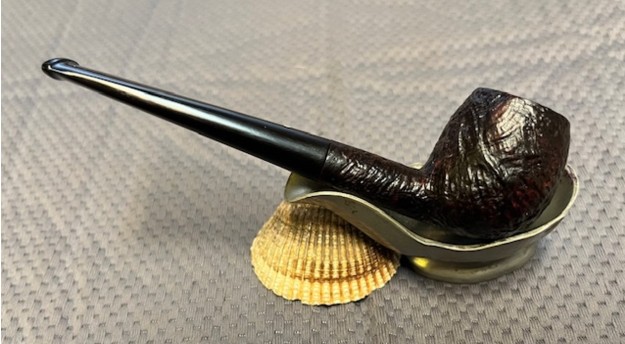
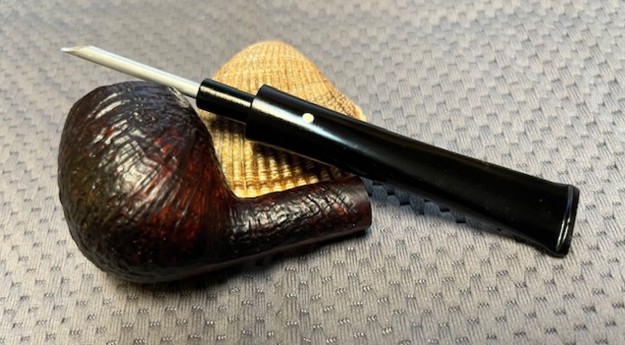
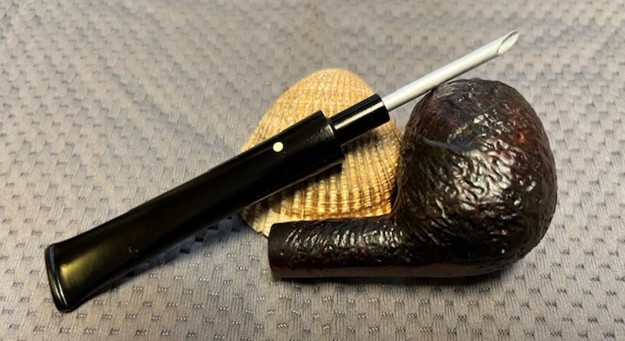
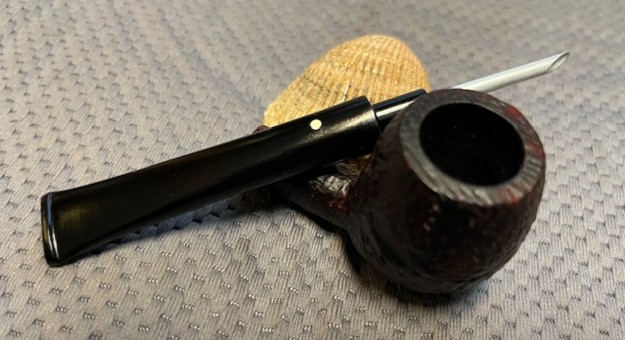
Restoring a 1976 Dunhill Shell 341 Apple – a beautiful sandblast pipe


Blog by Steve Laug

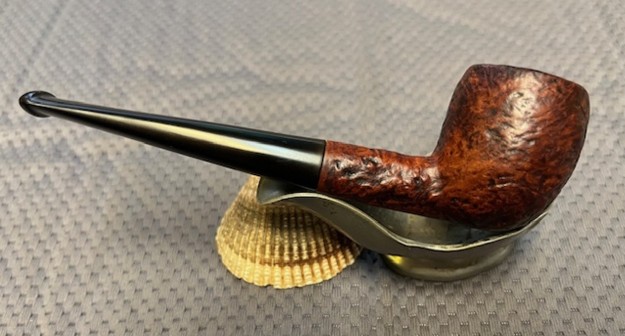
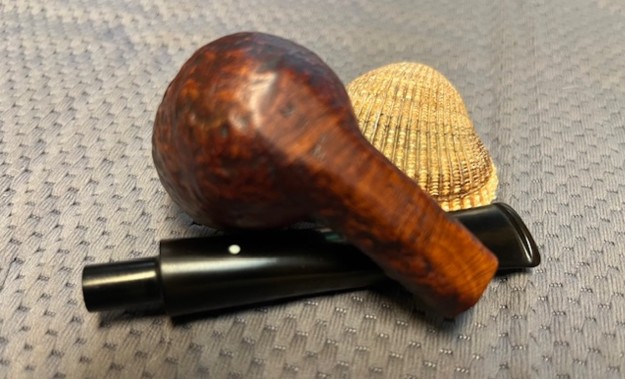
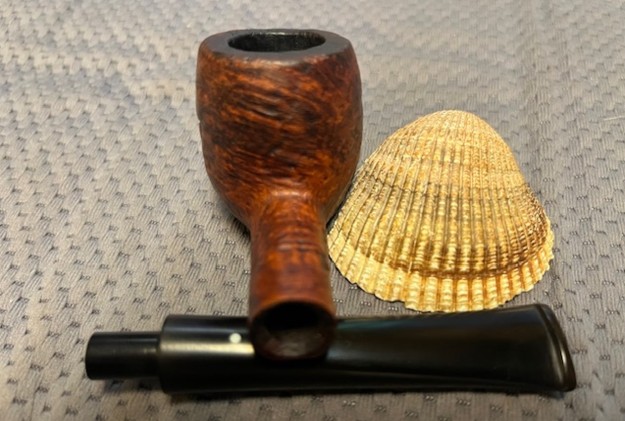
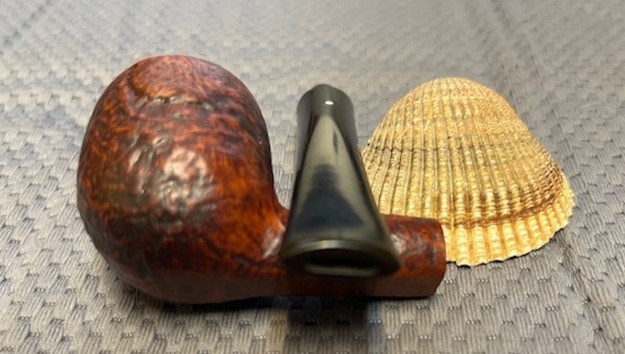
The next pipe on the work table is a lovely Dunhill small sandbast apple shaped briar pipe. We purchased it from our contact in Copenhagen, Denmark on 02/02/2024. It is a classic Dunhill Sandblast Apple shaped bowl. It has a sandblast, rich brown stained bowl that really highlights the grain in the briar. The bowl is dirty with grime in the finish. There is a moderate cake in the bowl and a light lava overflow on the rim top and edges. The stamping on the pipe is clear and readable and on the under side it reads 341 the shape number [followed by] Dunhill Shell [over] Made in England the date number 16 is stamped after the D in England. The stem had a white spot on the top side of the taper. It is oxidized, calcified and has tooth chatter and deep tooth marks on both sides ahead of the button. Jeff took photos of the pipe before he started his cleanup. He took photos of the pipe’s bowl and rim top to show the cake in the bowl and the lava coat overflowing onto the top. It is another dirty pipe. He also took photos to capture the tooth marks on the top and underside of the stem near the button. He took photos of the sides and the heel of the bowl to give a sense of the sandblast finish on this one. Even under the grime in the grooves the blast is quite beautiful. Jeff took photos of the stamping on the underside of the shank. It is clear and readable though it is faint in some spots. I wanted to unpack the Dunhill stamping on the shank and work to understand each element of the stamp. I generally use the Pipephil site to gather as much initial information as possible (http://pipephil.eu/logos/en/dunhill/shell-briar1.html). The stamping is interpreted as follows: The number 341 is the shape number for a taper stem Apple. The Shell Briar stamp refers to the finish. The number 16 following the D of England would give the date the pipe. The photo below is of the stamping on a Don shape but the stamping is similar on this one.Pipephil also has some helpful dating keys on the site that are basically flow charts that you can walk through to date your pipe (http://pipephil.eu/logos/en/dunhill/cledat-en1.html). I turned to Part 1 of the Dating Key and followed the chart. This pipe has 16 following the D in England. There was no patent number so that took me to the section on the chart below (column one) which instructed me that the pipe could be dated as being made “posterior to 1954”. I followed the link under “Your pipe is posterior to 1954. Narrow down your dating”. That took me to Page 2 of the dating key (http://pipephil.eu/logos/en/dunhill/cledat-en1a.html). The second column (suffix 1…4) or (11…39) led me to the section with 16 after the D in England. There was a directive for dating the pipe spelled out as follows: 1960 + suffix 16 which gives the pipe a date of 1976.I then turned to Pipedia’s section on Dunhill Shell Briar to get a bit of background on the Dunhill finishes (https://pipedia.org/wiki/Dunhill#Root_Briar). I quote:

Shell

A deep craggy sandblast with a black stain finish (usually made using Algerian briar) – the color of the stain used has varied over the years. Although there is some doubt as to them being the first to sandblast pipes, Dunhill’s Shell pipes, and the sandblasting techniques developed to create them are considered one of Dunhill’s greatest and most lasting contributions to the art of pipe making.

The documented history of Dunhill’s inception of the Shell is largely limited to patent applications — there are no catalogue pages or advertisements promoting blasted pipes at the time. The preliminary work on the English patent (No. 1484/17) was submitted on October 13, 1917. The patent submission was completed half a year later, on April 12, 1918, followed by the granting of the English patent on October 14, 1918. This was less than a month before the end of The Great War on November 11th.

In 1986 Dunhill released a line of premium Shell finish pipes – “RING GRAIN”. These are high-quality straight grain pipes which are sandblasted. Initially only Ring Grain, but now in two different finishes. In 1995 the “Shilling” was introduced with Cumberland finish – it is an extremely rare series. These pipes exhibit a deeper blast characteristic of that of the 1930’s – mid-1960’s (and the limited ‘deep blast’ pipes of the early 1980s) and show a fine graining pattern. These are considered the best new Dunhills by many enthusiasts today and are very rare. The finish is sometimes described as tasting like vanilla at first, with the taste becoming more normal or good as the pipe breaks in.

I turned to work on the pipe itself. Jeff had done an amazing cleanup of the pipe. He reamed the cake with a PipNet reamer and cleaned up that with a Savinelli Fitsall Pipe Knife. He scrubbed the internals of the bowl and stem with alcohol, cotton swabs, pipe cleaners and shank brushes. He scrubbed the externals with undiluted Murphy’s Oil Soap and rinsed the bowl off with running water. He soaked the stem in Briarville’s Pipe stem Deoxidizer and once it had soaked rinsed it off with warm water to remove the residual solution. He dried it off and rubbed it down to remove any oxidation that was still on the stem. The pipe looked very good when I received it. I took a photo of the rim top to show the condition. It looks good with the tars and oils removed from the rim top. The inner edge of the bowl was in excellent condition. The bowl itself was very clean. The aluminum inner tube can be seen extending into the bowl in the first photo. The stem came out looking quite good with deep tooth marks and chatter on both sides ahead of the button. I took a photo of the underside of the shank to show the stamping. The photo shows the stamping and is actually more readable in person. I removed the stem from the shank and took a photo of the pipe parts to show what I was working with. It is a nice looking pipe.I rubbed the briar down with Before & After Restoration Balm. I worked it into the surface with my fingertips and a horsehair shoe brush to work it into the nooks and crannies of the sandblast finish. The product works to clean, enliven and preserve the briar. I let it sit for 10 minutes then I buffed it with a cotton cloth to deepen the shine. The pipe really comes alive with the balm. I set the bowl aside and turned to address the stem issues. I “painted” the surface of the stem with the flame of a Bic lighter. I was able to lift the marks on the stem top leaving light marks but the ones on the bottom side were much deeper and the flame lifted them slightly but they still remained. I filled in the marks that remained with clear CA glue. Once the repair cured I flattened the repair with small files. It looked much better. I cleaned up the repairs with a folded piece of 220 grit sandpaper. I was able to flatten them and blend them in very well with the surface of the vulcanite. I sanded the stem with 320-3500 grit sanding pads. I wiped it down after each sanding pad with a damp cloth. By the final 3500 grit sanding pad the stem had a had a shine.I polished the vulcanite with micromesh sanding pads – 1500-12000 grit pads. I wiped it down with Obsidian Oil after each sanding pad. I used Before & After Pipe Polish – both Fine and Extra Fine to further polish the stem. This 1976 Dunhill Shell Briar 341 Apple with a vulcanite taper stem has a beautiful, unique Dunhill Sandblast finish that is very deep and craggy. The Shell Briar mixed brown finish highlights some great grain around the bowl and shank. It has a unique sandblast that Dunhill specialized in making. The polished vulcanite taper stem adds to the mix. I put the stem back on the bowl and buffed the pipe with Blue Diamond on the buffing wheel being careful to not buff the stamping. I gave the bowl multiple coats of Conservator’s Wax and the stem multiple coats of carnauba wax on the buffing wheel and followed that by buffing it with a clean buffing pad. I hand buffed the pipe with a microfiber cloth to deepen the shine. The finished Dunhill Shell Briar 341 Apple is quite nice and feels great in the hand. Give the finished pipe a look in the photos below. The dimensions of the pipe are Length: 5 ½ inches, Height: 1 ½ inches, Outside diameter of the bowl: 1 inch, Chamber diameter: ¾ of an inch. The weight of the pipe is 1.06 ounces/.30 grams. Thanks for walking through the restoration with me as I worked over another beautiful pipe. This one will be going on the rebornpipes store in the English Pipe Makers Section. Thanks for your time.