Monthly Archives: December 2023

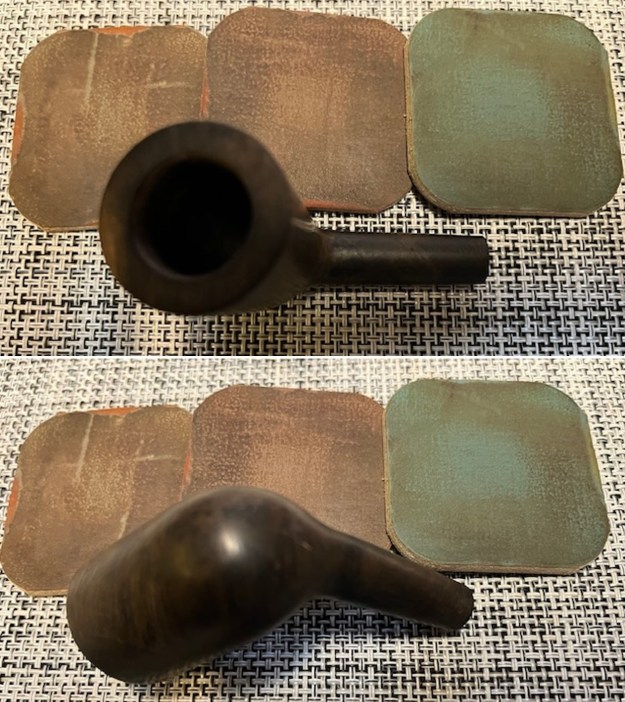
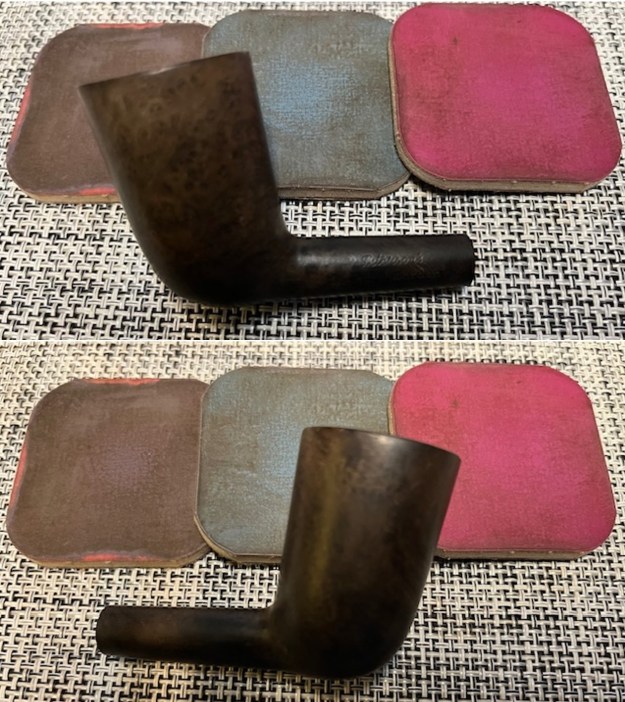
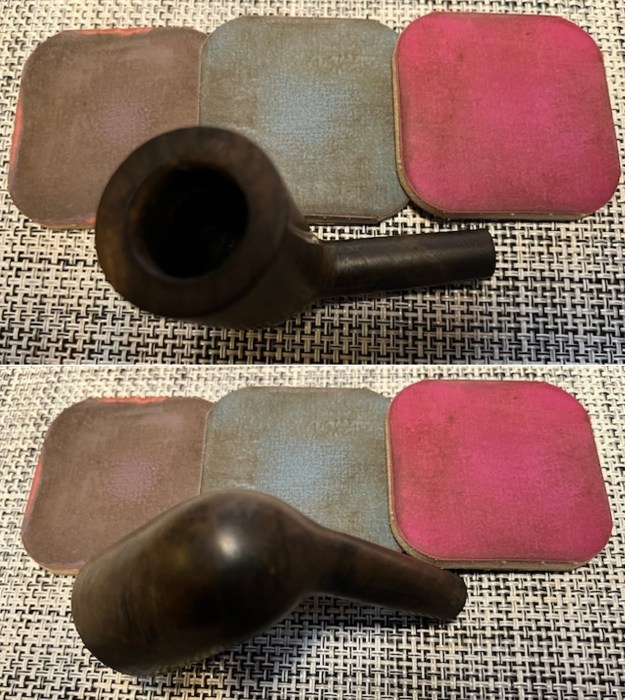
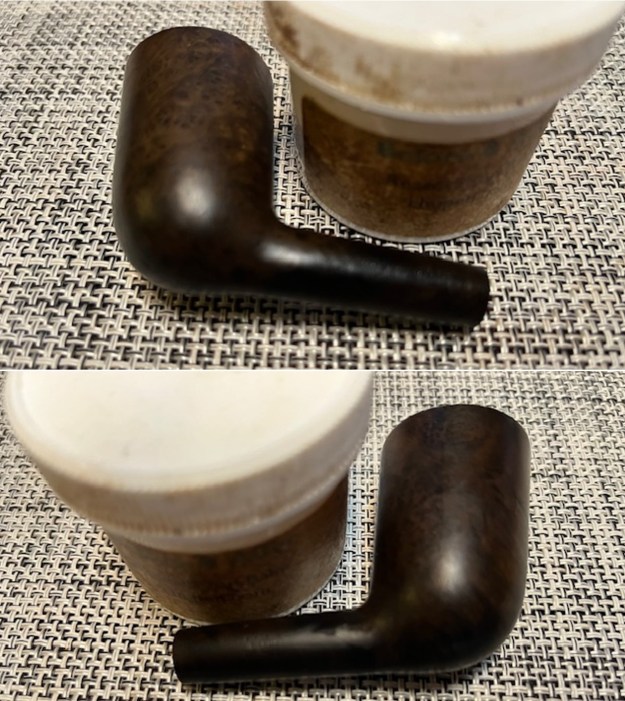
A Wall Frank Opera Restoration


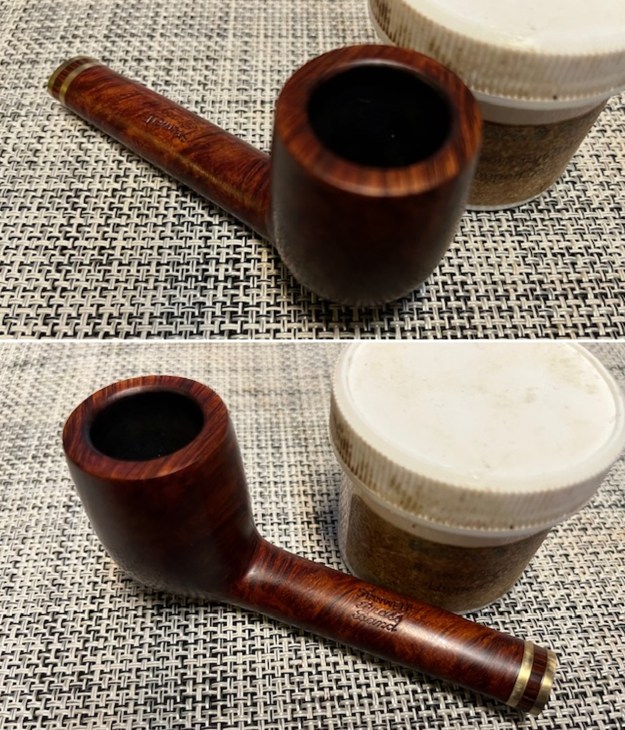
Nice work on the opera pipe. I like those lightweight war pipes made of laurel. Enjoy it.

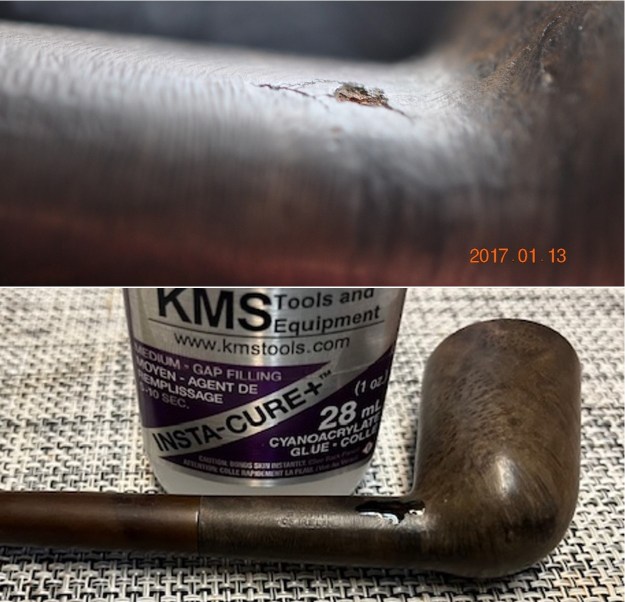
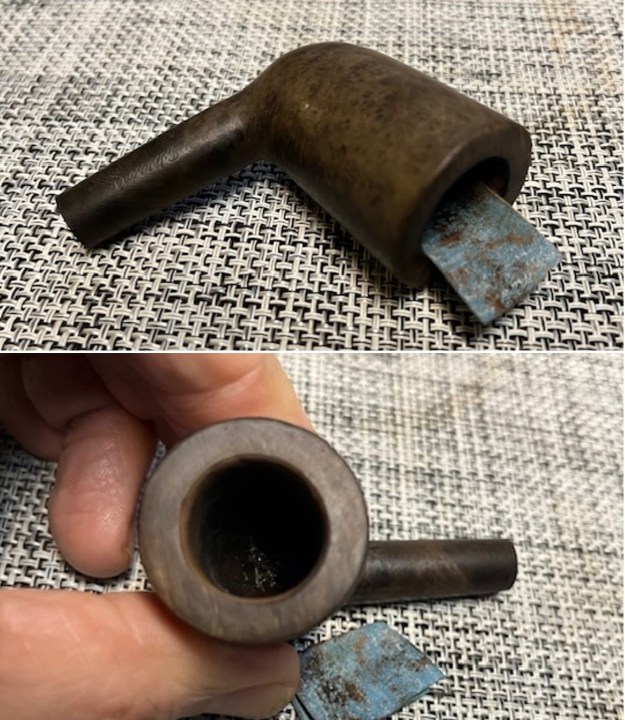
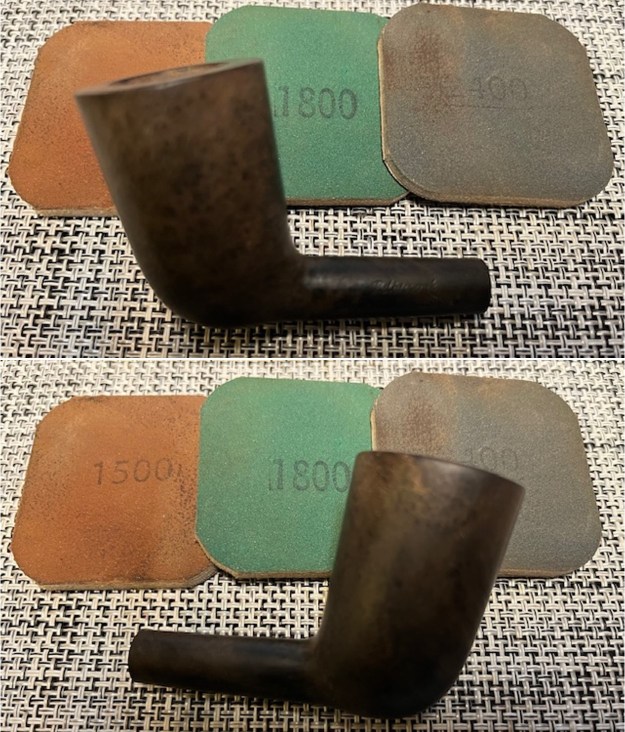
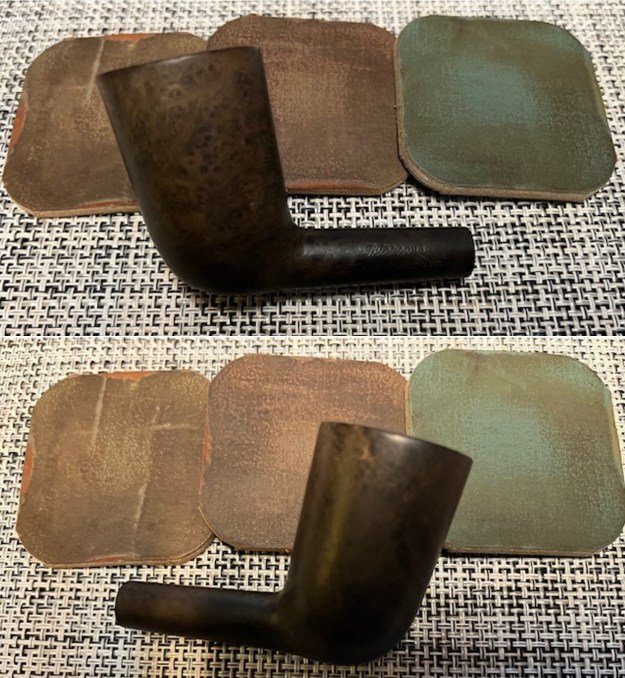
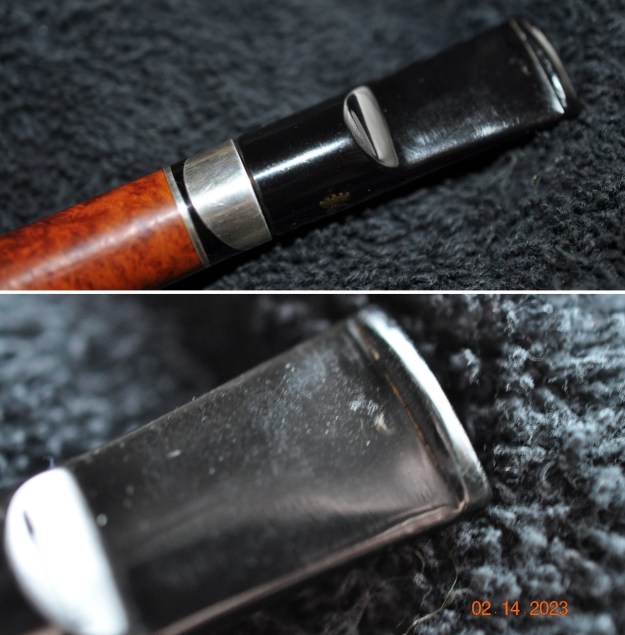
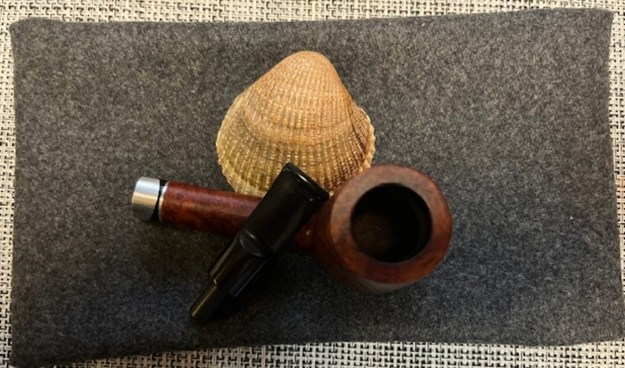
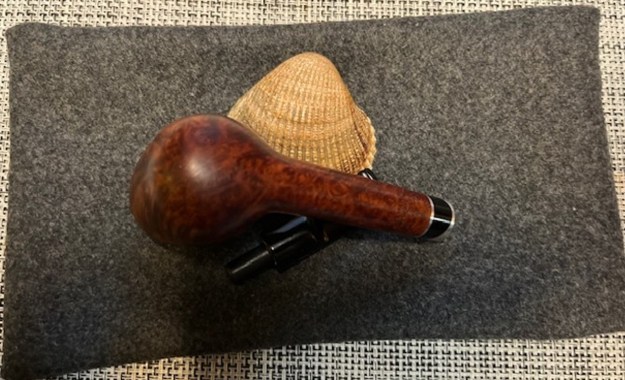
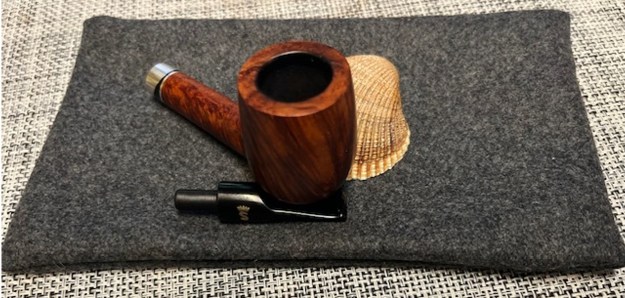
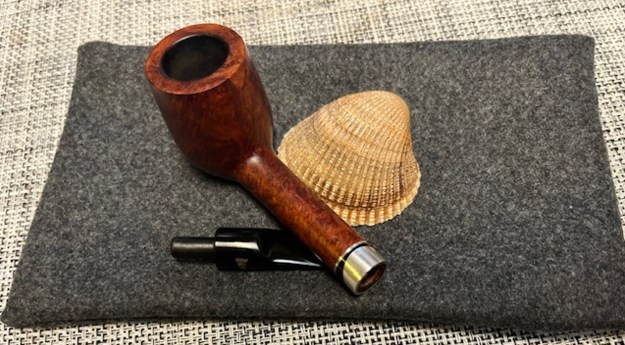
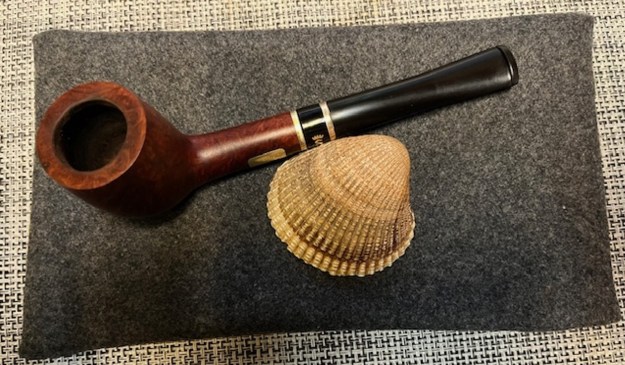
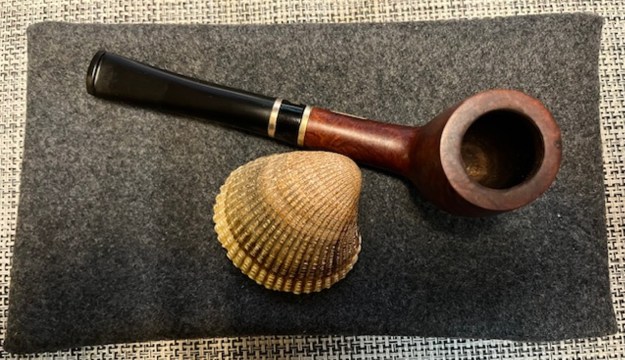
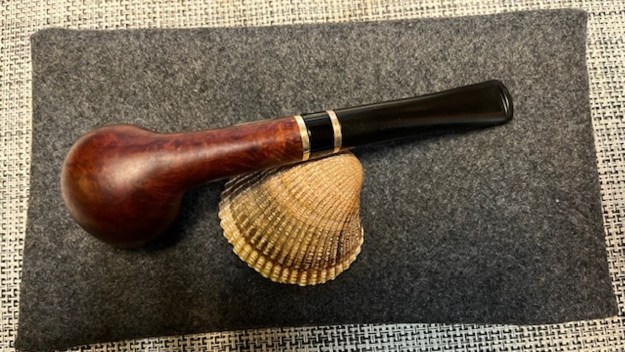
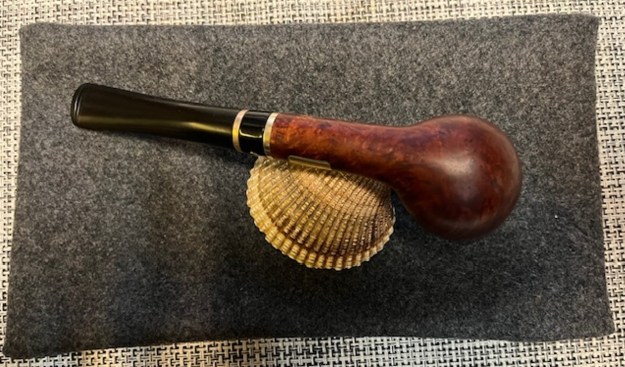
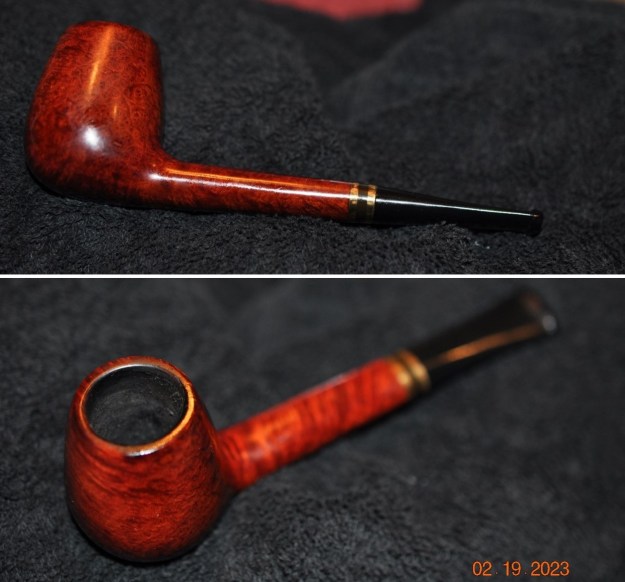
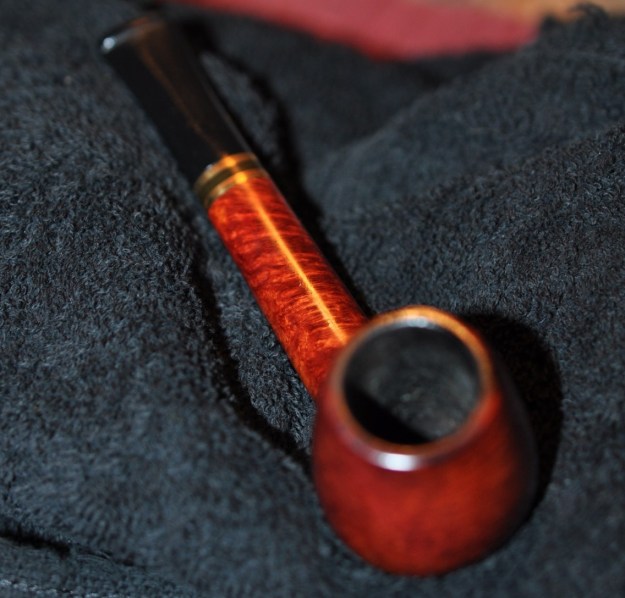
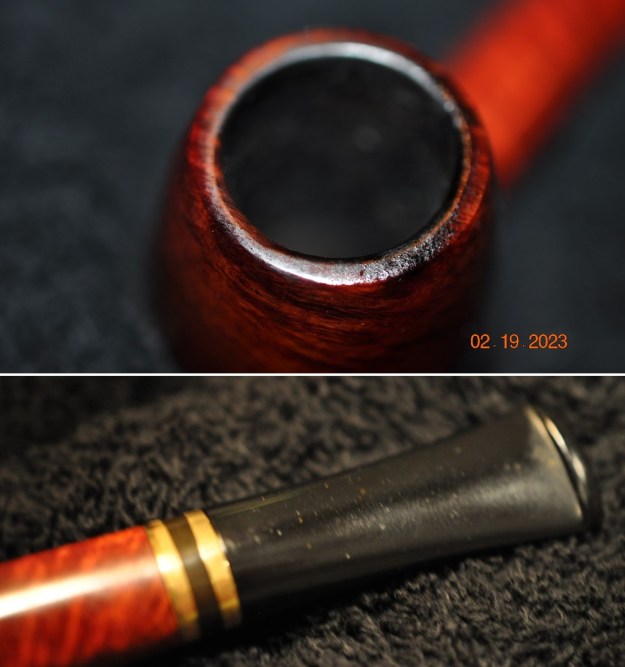
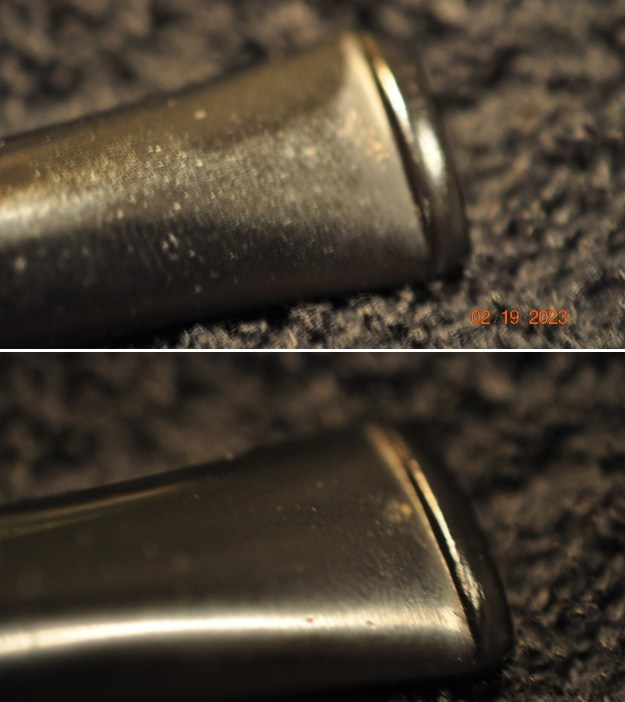
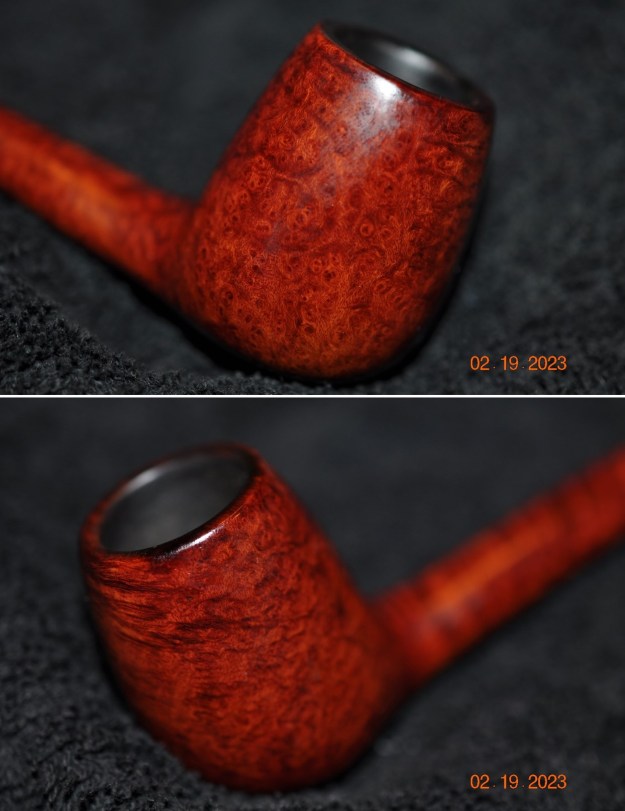
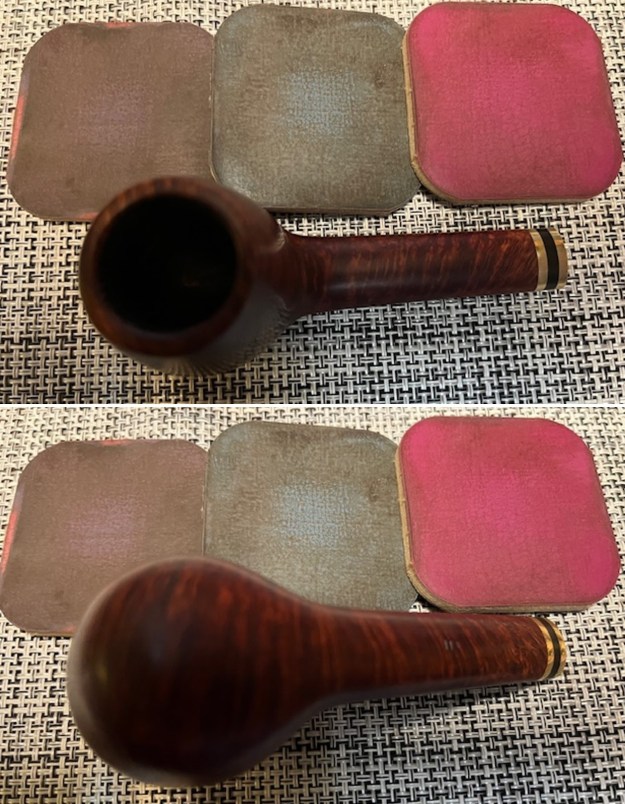
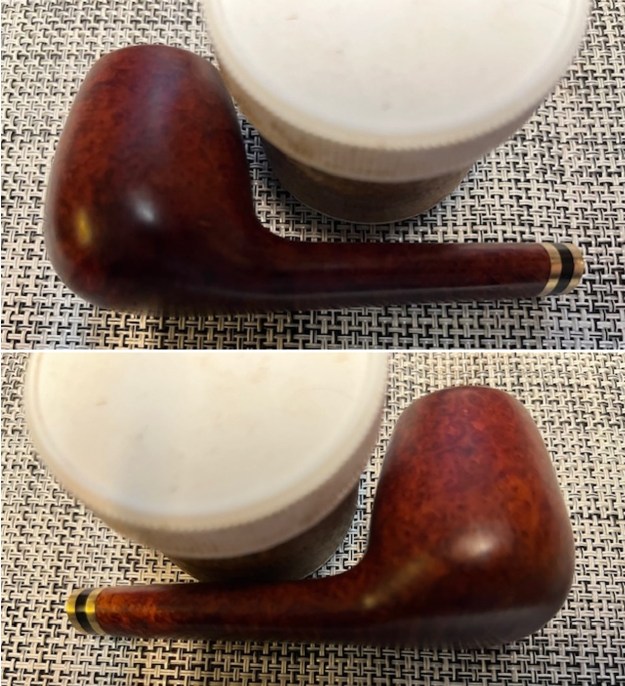
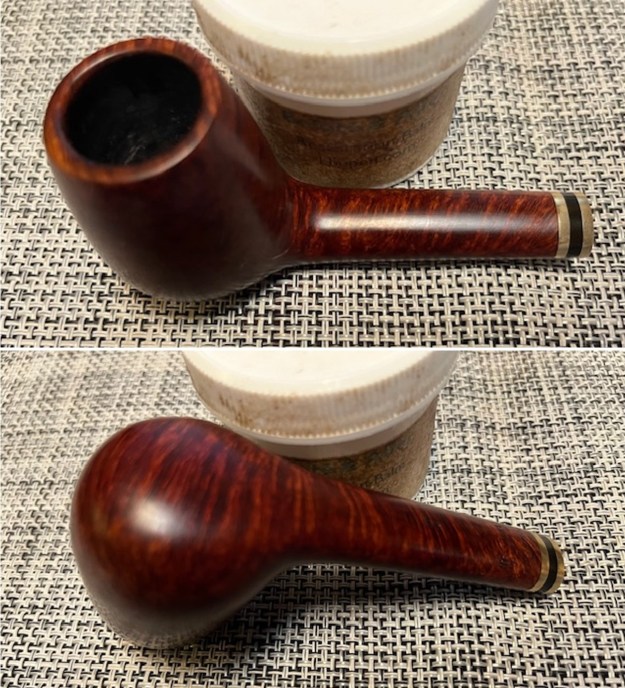
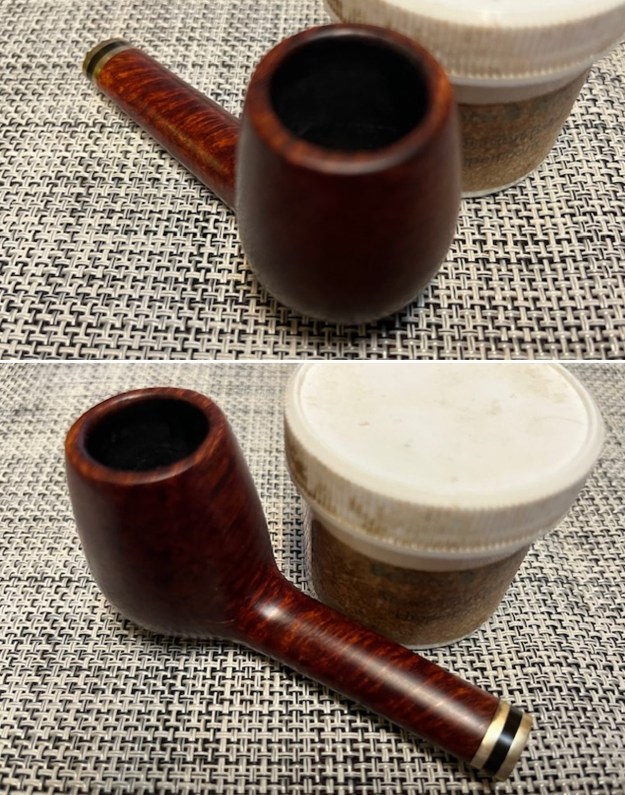
Written and photographed by John M. Young This little Wally Frank came to me via an eBay auction recently.  I feel a strange attraction to the …

A Wall Frank Opera Restoration

Restoring a Republic Era Peterson’s Canted Dublin “Churchwarden”


Blog by Steve Laug

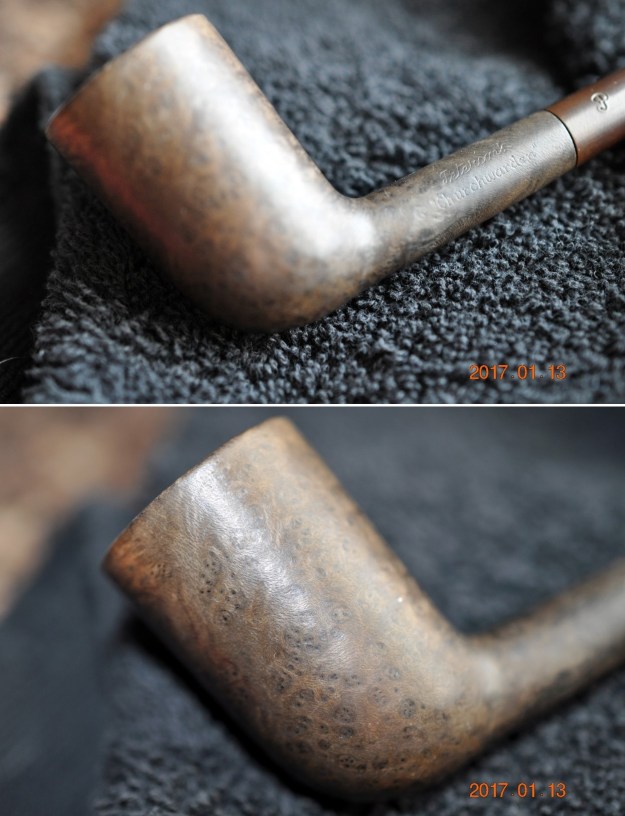
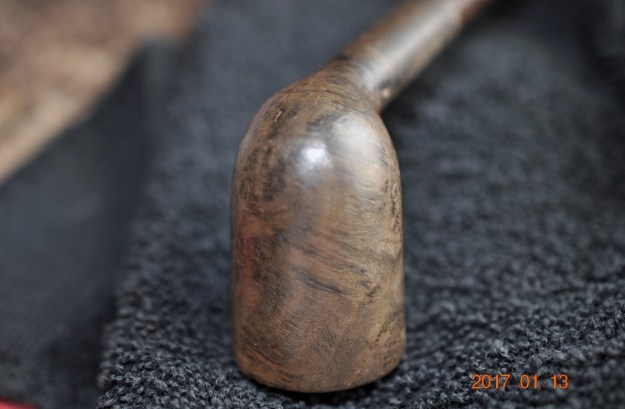
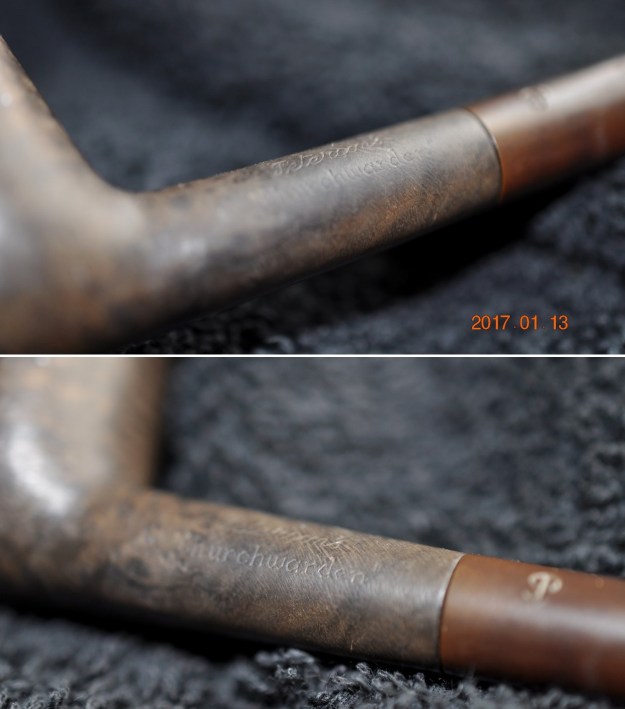
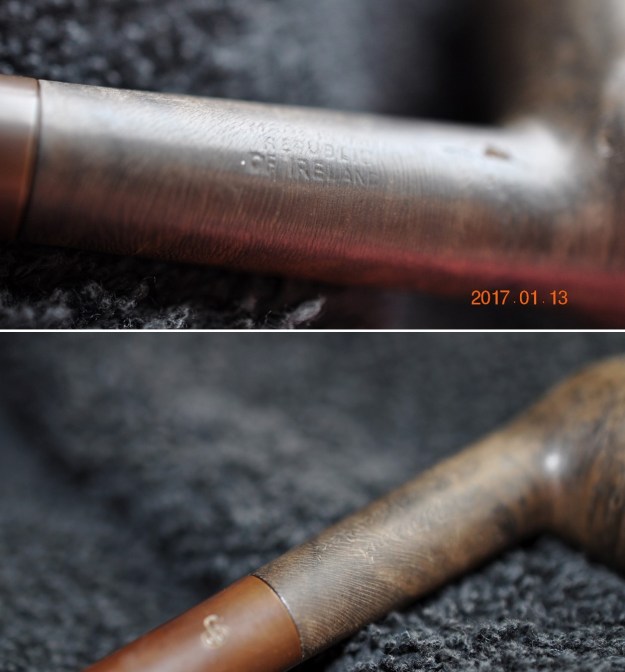
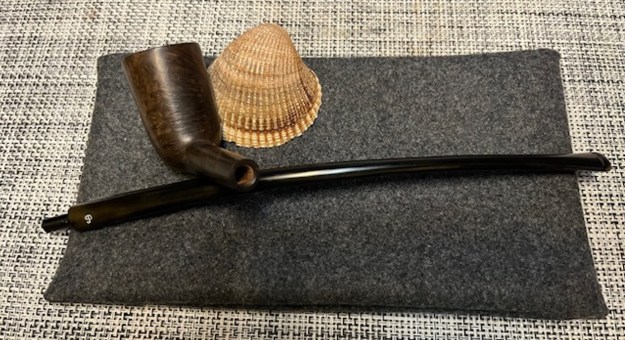
It is a cold and overcast day here in Vancouver and I decided to work on a pipe that has been sitting here for many years. It was purchased on 12/17/2016 off an eBay auction from Somerset, United Kingdom. This is a canted bowl Dublin. The smooth finish on this pipe, around the bowl and shank has a mix of flame and straight grain highlighted by a brown and a green wash over the briar. The stamping is faint but readable. It is stamped on the left side of the shank and reads Peterson’s [over] “Churchwarden”. On the right side of the shank it is stamped Made in the Republic of Ireland (three lines). The pipe was a well used pipe when Jeff received it. There was dust and grime ground into the finish. The mixture of brown stains and green highlights some beautiful grain under the dirt. The bowl was moderately caked and there was an overflow of lava on the smooth rim top. The inner edge had some damage. The stem is vulcanite and was heavily oxidized and had light tooth marks, chatter on both sides ahead of the button. There is a stamped “P” logo on the left side of the taper stem. Jeff took photos of the pipe before he started his clean up work. He took photos of the bowl and rim top to show what they looked like before his clean up. You can see the light lava coat on the rim top and the cake in the bowl. The inner edge shows some damage around the edge. Some spots it is nicked from what appears to be a reamer and others seem to be burn damage. He also took some of the stem to show the condition of both sides. The photos of the sides and heel of the bowl show the uniquely stained grain around the bowl and shank. The mixture of brown stains and green wash adds depth to the finish on the pipe. Even under the grime it is a real beauty. The stamping on this one was on the sides of the shank and are shown in the photos below. It is clear and readable as noted above. You can also see the stamped P on the left side of the stem. I turned to The Peterson Pipe by Mark Irwin and Gary Malmberg, p. 313 to the listing under Specialty Briars. It says this is a term used to describe several lines. Here is the information on the Churchwarden.

Churchwarden (1945-) Long pipe with various smaller bowl shapes and a fishtail mouthpiece; smooth finish, rustic starting in1969, spigot in 2018.

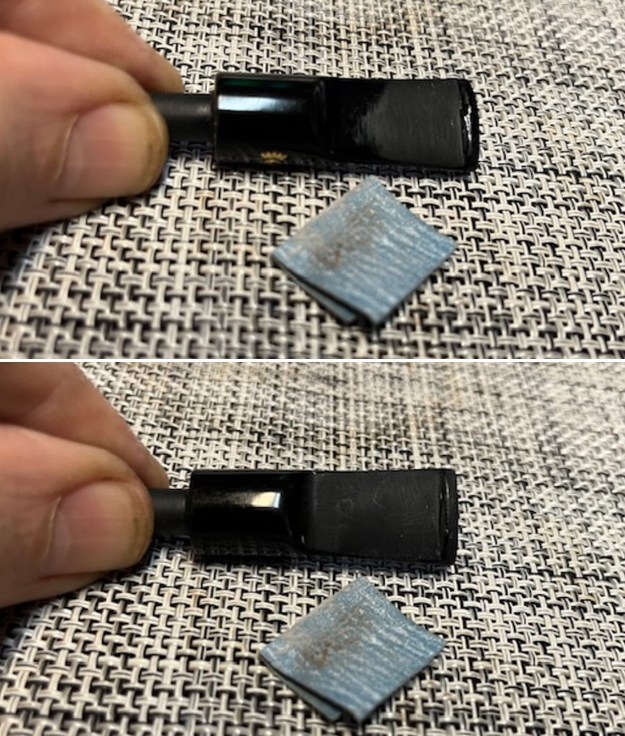
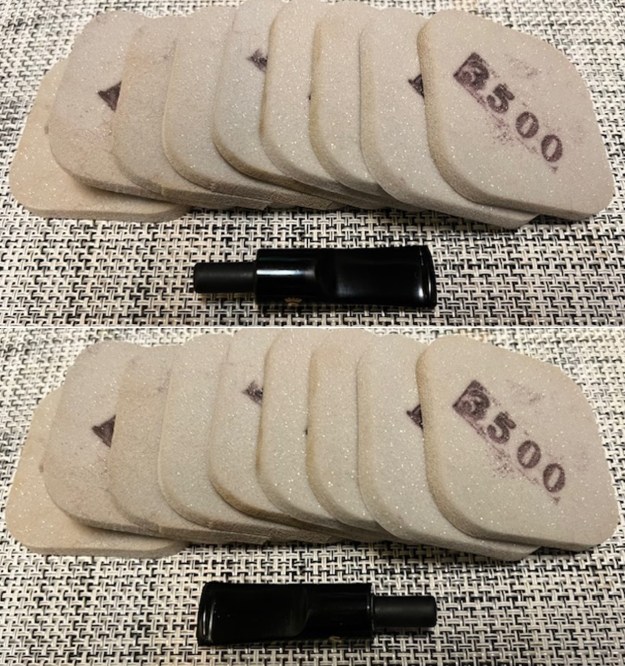
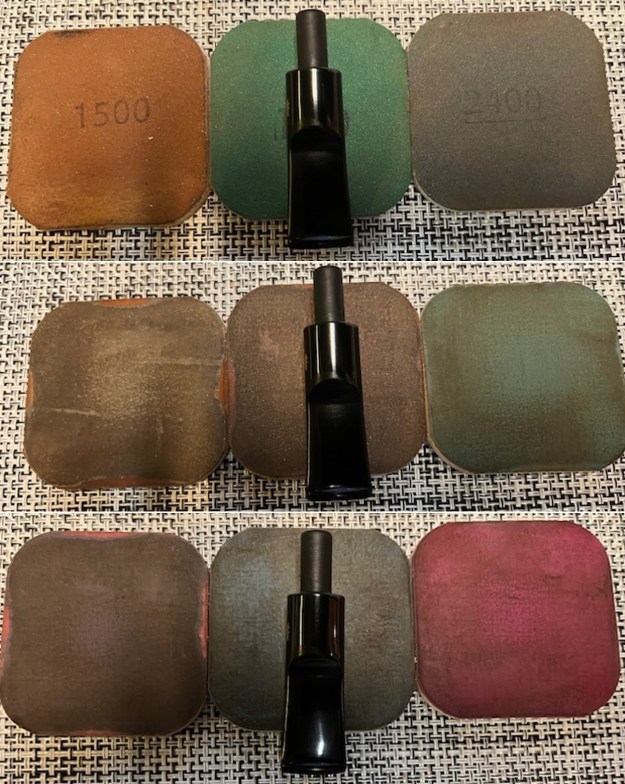
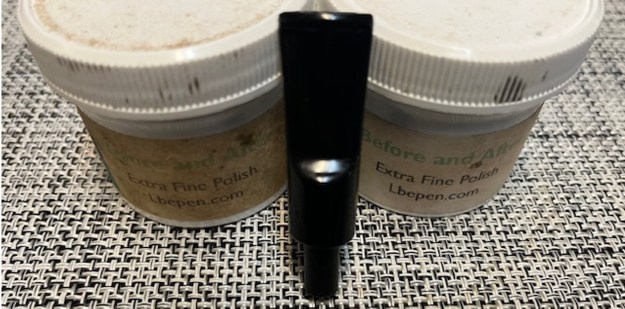
Now it was time to work on the pipe. Jeff had thoroughly cleaned up the pipe. He reamed the pipe with a PipNet Pipe Reamer and cleaned up the remnants with a Savinelli Fitsall Pipe Knife. He scrubbed the bowl with undiluted Murphy’s Oil Soap with a tooth brush. He rinsed it under running warm water to remove the soap and grime. He cleaned out the inside of the shank and the airway in the stem with alcohol, cotton swabs and pipe cleaners. He scrubbed the exterior of the stem with Soft Scrub to remove the grime and calcification. He soaked the stem in Before & After Deoxidizer and rinsed it off with warm water. The pipe looked very good when it arrived here in Vancouver. I took close up photos of the bowl, rim and the stem. The rim top and inner edge cleaned up very well. There was some darkening and some roughness to the inner edge of the rim. The stem looks cleaner, but still has some oxidation (from sitting here since 2016). There are light tooth marks and some chatter as noted above.I took photos of the stamping on the shank. The stamping is faint but readable as noted above. I took the stem off the shank and took a photo to give a sense of the flow and proportion of the pipe. It is a beautiful looking Churchwarden.I started my work on the pipe by dealing with the damage to the fill on the right side of the shank near the bowl. It is not deep but it looks like the fill has fallen out. It was quite clean and I used clear CA glue to fill in the area. Once the repair cured I will sand it when I am working on the bowl and shank polishing.I then turned to work on the damaged inner edge of the rim. I used a folded piece of 220 grit sandpaper to smooth out the damage and round the edges. Once I finished it the rim top and edges looked much better. I also used it to smooth out the repaired fill on the right side of the shank at the bowl.I polished the bowl and shank with micromesh sanding pads – dry sanding with 1500-12000 grit pads. I wiped the bowl down after each pad to remove the grit. The bowl began to take on a rich shine. It is a beauty. I rubbed the bowl down with Before & After Restoration Balm. I worked it into the briar with my finger tips. I let it sit for 10 minutes and the Balm did its magic. It enlivens, cleans and preserves the briar. It certainly brought this bowl back to life. I buffed it off with a clean cloth and took the following photos. I set the bowl aside and turned my attention to the oxidized stem. I worked on it with Soft Scrub and cotton pads. I was able to remove the majority of the oxidation with the pads and polish. The stem is looking much better.I touched up the “P” stamp on the left side of the stem with white enamel fingernail polish. I applied it with a dauber and worked it into the stamp with a tooth pick. Once it had dried I scraped and sanded off the excess with a 1200 grit micromesh sanding pad. It looked very good.I worked on the remaining oxidation on the vulcanite stem surface and chatter near the button with a new product I am using. I ordered a set of 2 inch sanding pads for 320-3500 grit sanding pads from Amazon. They work amazingly well and are easy to manage and sand close to the sharp edge of the button.I polished the stem with micromesh sanding pads – 1500-12000 grit pads. I wiped it down with a damp cloth after each sanding pad.I polished it with Before & After Pipe Stem Polish – both Fine and Extra Fine. I gave it a coat of Obsidian Pipe Stem Oil. I set it aside to dry. This delicate Republic Era Peterson’s Dublinesque “Churchwarden” with a vulcanite taper stem is a classic looking Churchwarden Specialty Pipe. The mix of stains once cleaned up really highlights the grain and the polished finish is stunning. I put the stem back on the bowl and carefully buffed the pipe with Blue Diamond on the buffing wheel. I gave the bowl and the stem multiple coats of carnauba wax on the buffing wheel and followed that by buffing the entire pipe with a clean buffing pad. I hand buffed the pipe with a microfiber cloth to deepen the shine. The finished Peterson’s “Churchwarden” fits nicely in the hand and feels great. Give the finished pipe a look in the photos below. The dimensions of the pipe are Length: 10 inches, Height: 1 ¾  inches, Outside diameter of the bowl: 1 1/8 inches, Chamber diameter: ¾ of an inch. The weight of the pipe is 29 grams /1.02 ounces. I will be adding the pipe to the Irish Pipe Makers Section of the rebornpipes store. If you are interested in purchasing this pipe send me a message or an email. Thanks for reading this blog and my reflections on the pipe while I worked on it.

As always, I encourage your questions and comments as you read the blog. Thanks to each of you who are reading this blog. Remember we are not pipe owners; we are pipe men and women who hold our pipes in trust until they pass on into the trust of those who follow us.

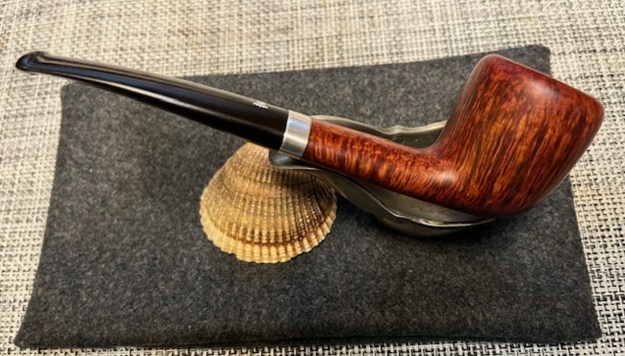
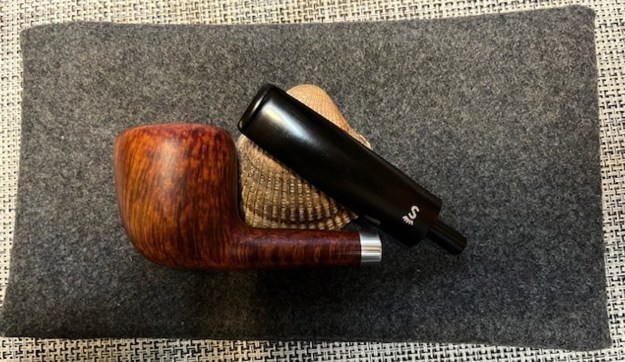
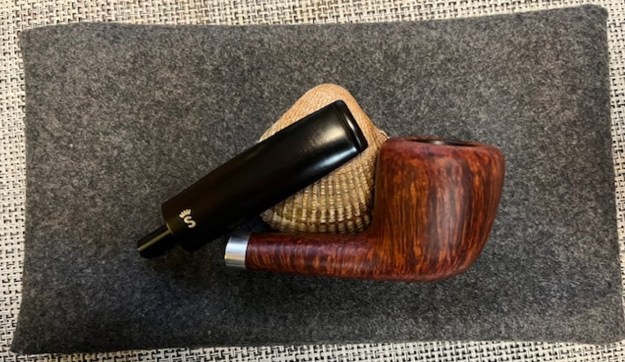
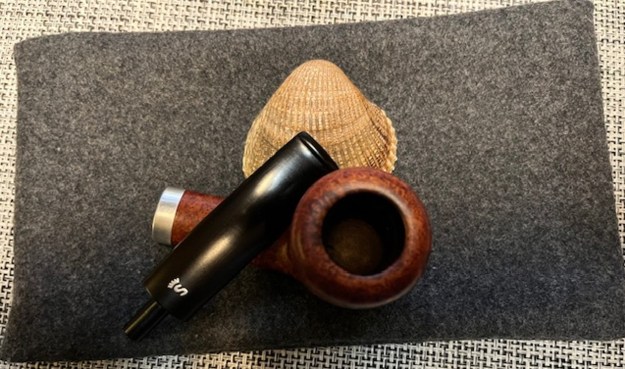
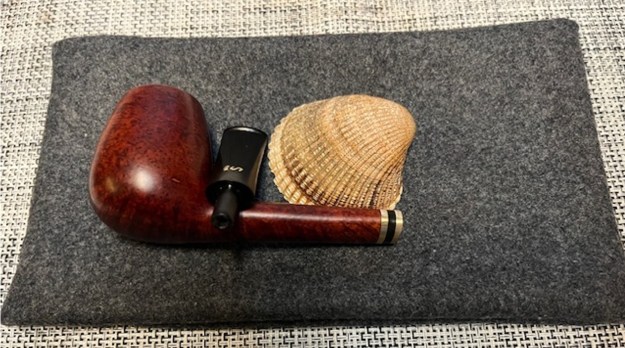
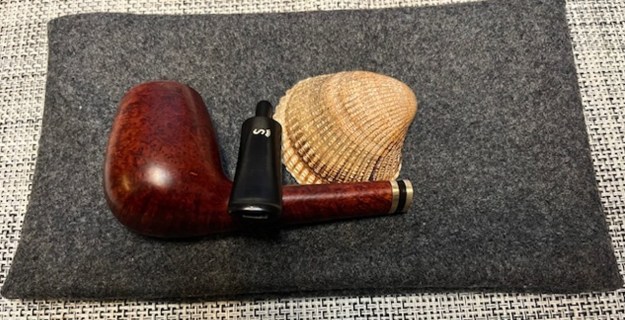
What an incredible beautifully grained Ivarsson Design Danish Made Stanwell 75


Blog by Steve Laug

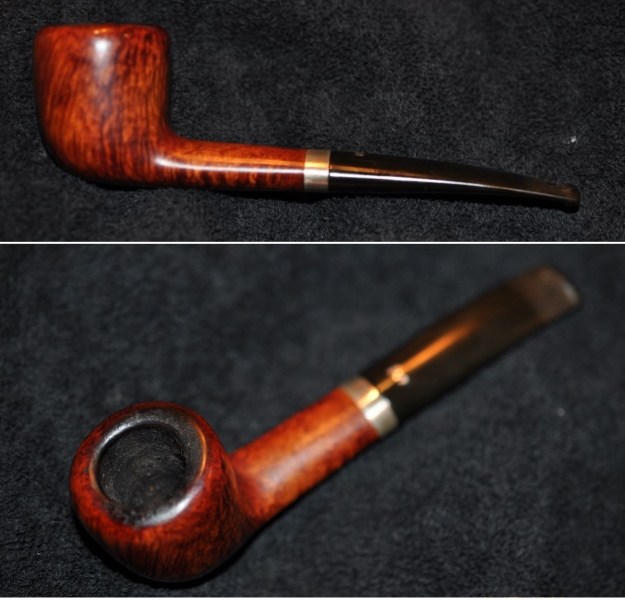
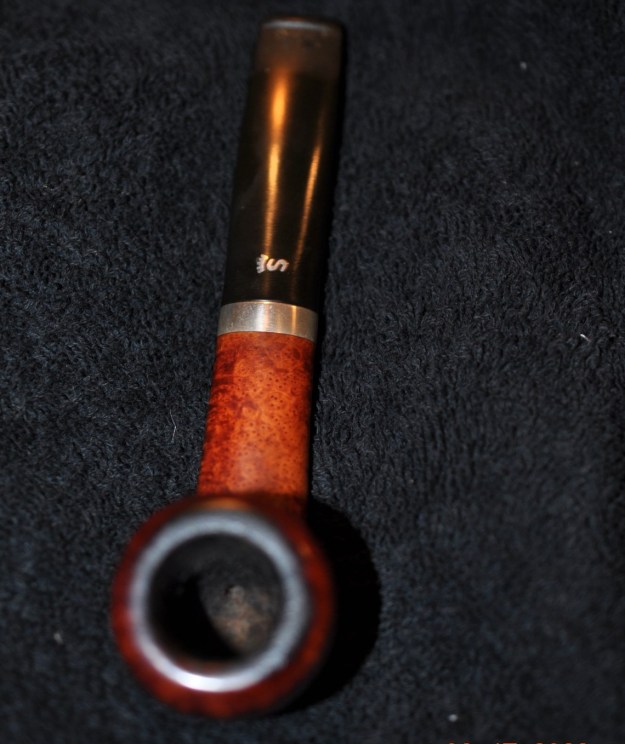
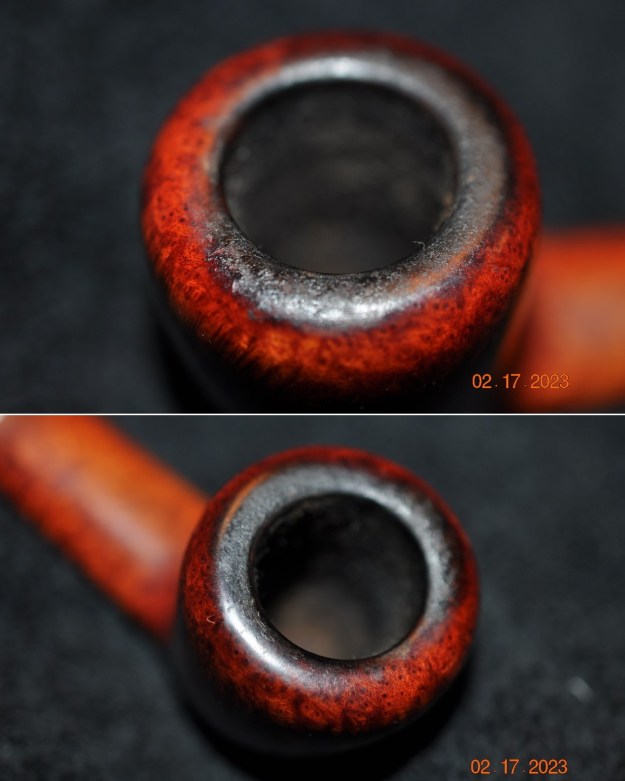
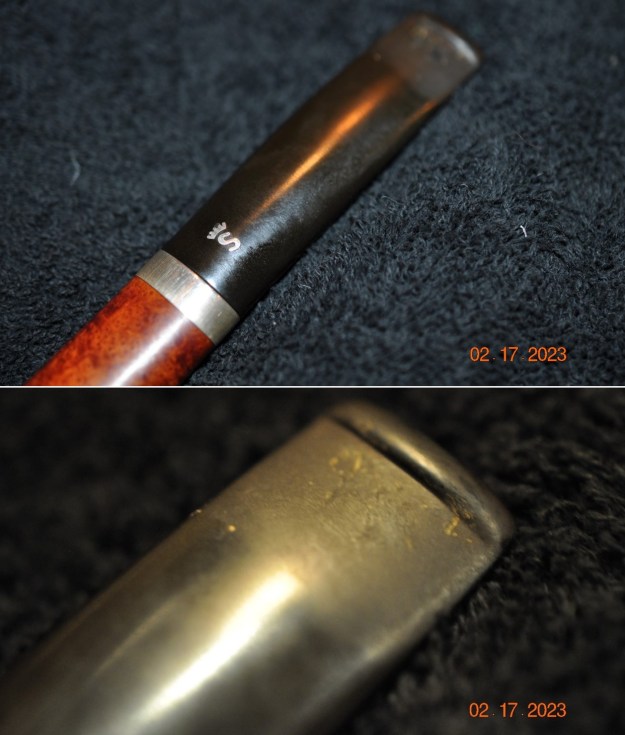
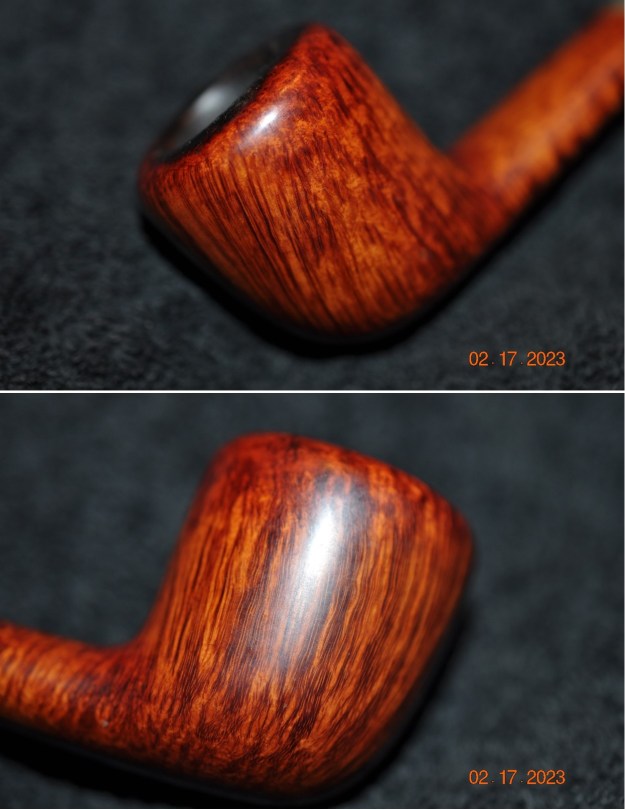
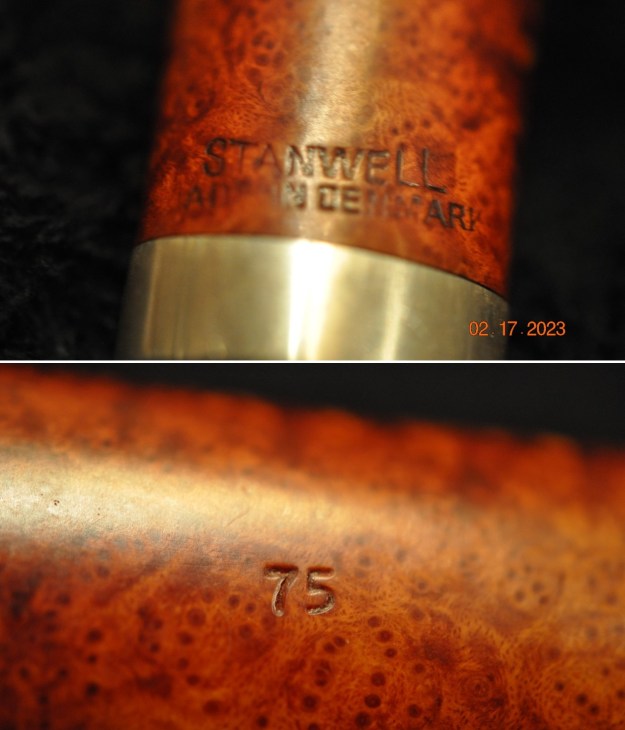
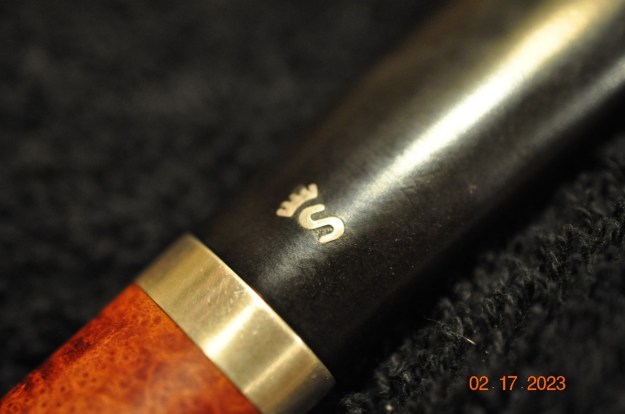
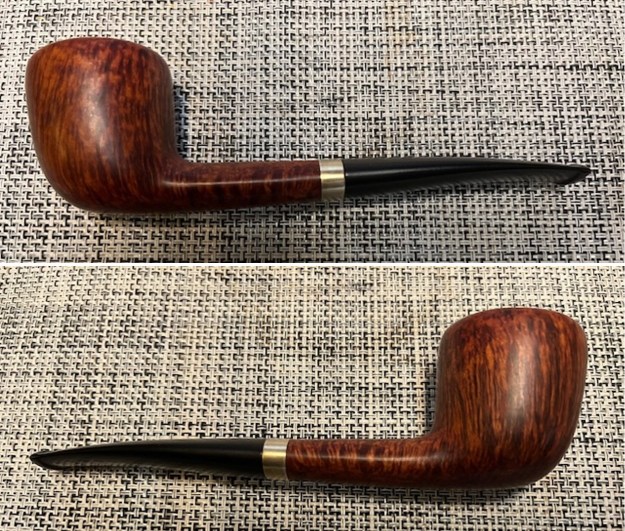
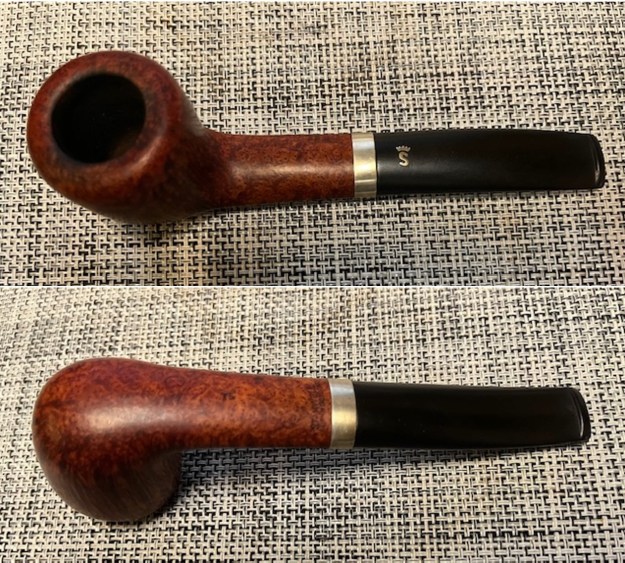
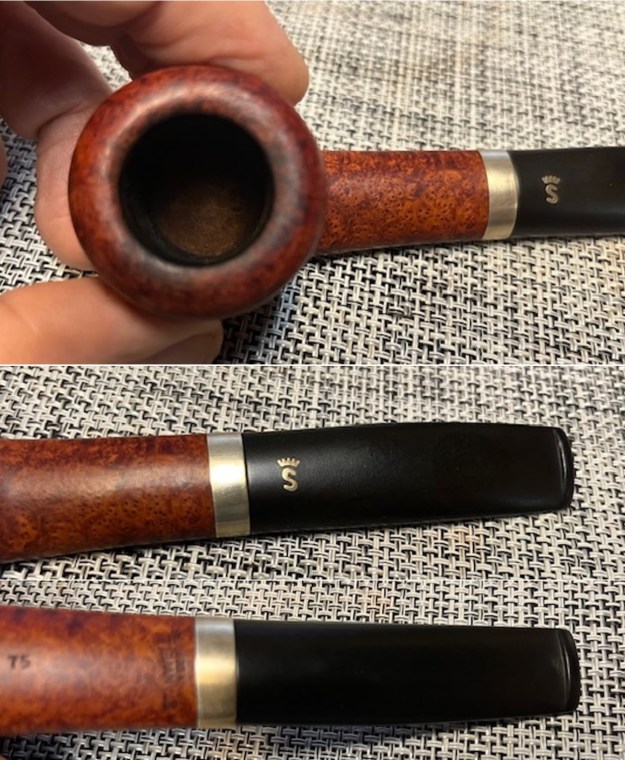
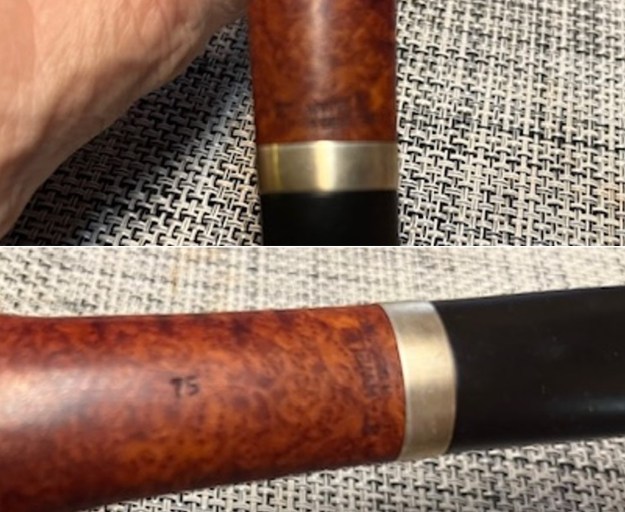
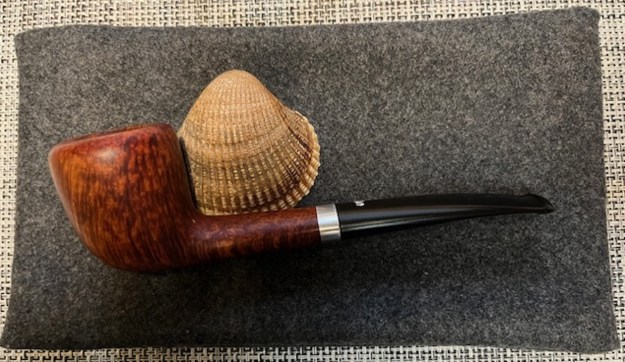
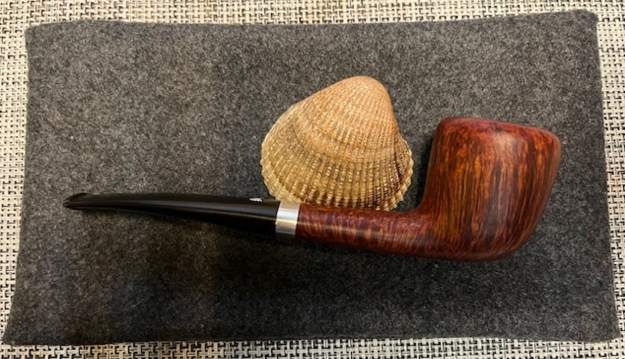
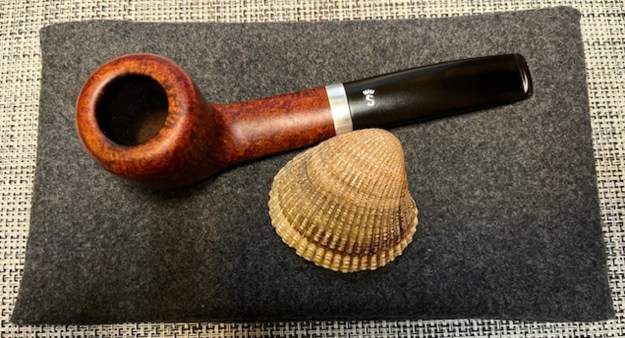
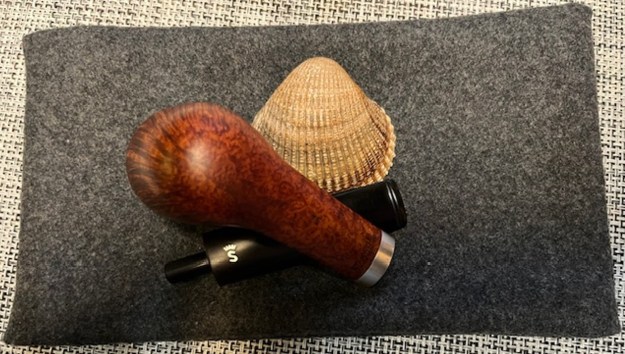
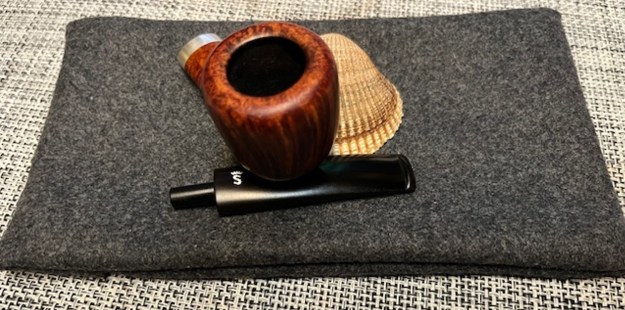
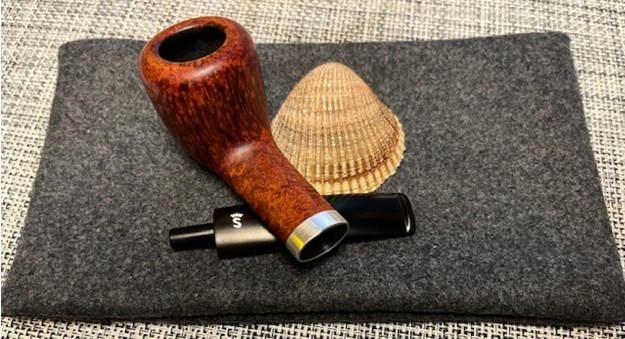
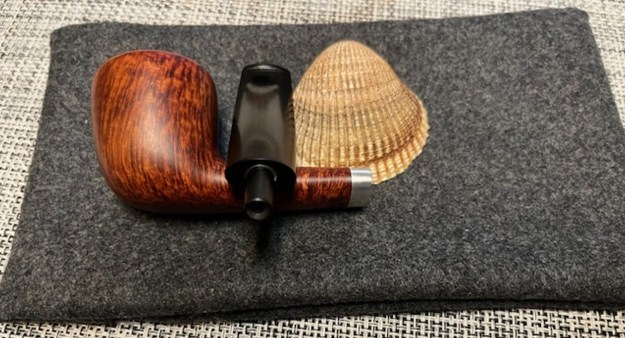
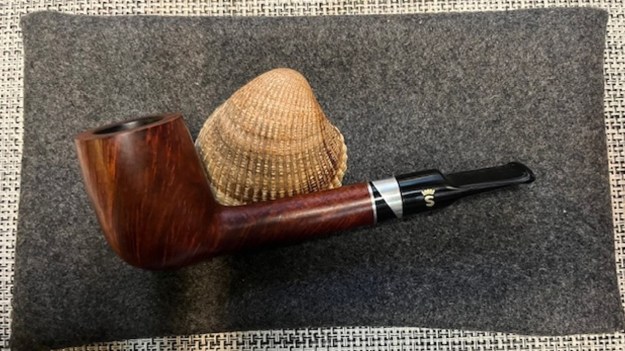
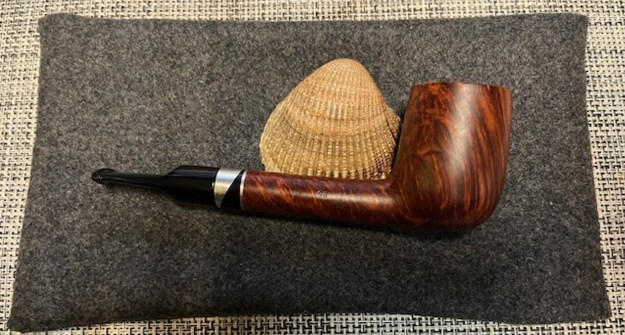
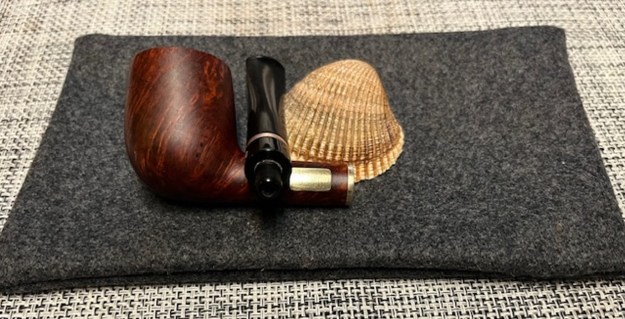
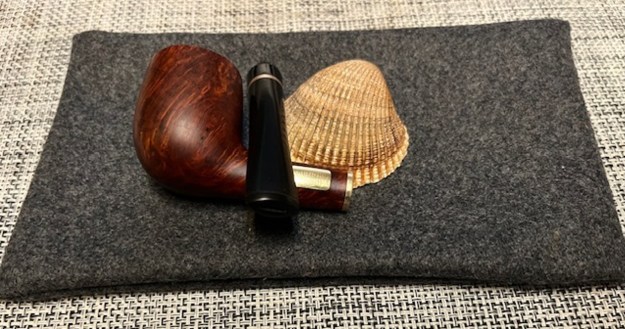
It is a cold day, but still sunny here in Vancouver and I decided to work on another pipe that was purchased on 01/26/2023 in a lot of pipes that came to us from Copenhagen, Denmark. This is a Danish oval shank Freehand with a smooth finish and great grain. It is another Made in Denmark Stanwell. The smooth finish on this pipe, around the bowl and shank has a mix of flame and straight grain highlighted by the rich brown stain. The pipe is stamped on the underside of the shank next to the silver band and reads STANWELL [over] Made in Denmark. On the underside mid shank, it is stamped with the shape number 75. The end of the shank sports a silver band that is decorative. The pipe was a well used pipe when Jeff received it. There was dust and grime ground into the finish. The mixture of brown stains highlights some beautiful grain under the dirt. The bowl was moderately caked and there was an overflow of lava on the smooth rim top. The inner edge looked quite good. The stem is vulcanite and was dirty, oxidized and had light tooth marks, chatter on both sides ahead of the button. There is an inlaid silver crown S logo on the top side of the taper stem. Jeff took photos of the pipe before he started his clean up work. He took photos of the bowl and rim top to show what they looked like before his clean up. You can see the lava coat on the rim top and the cake in the bowl. The inner edge looks to be okay. He also took some of the stem to show the condition of both sides. The photos of the sides and heel of the bowl show the uniquely stained grain around the bowl and shank. The mixture of brown stains adds depth to the finish on the pipe. Even under the grime it is a real beauty. The stamping on this one was on the underside of the shank and is shown in the photo below. It is clear and readable as noted above. You can also see the silver inlaid crown S on the top of the saddle stem. Before I started my work on the pipe I wanted to see if I could find any information that would help me get a sense of the line. I turned to Pipephil to see if there was any listing on the Stanwell pipes with a simple silver band (http://pipephil.eu/logos/en/logo-stanwell.html). There was nothing listed.

I then turned to Pipedia (https://pipedia.org/wiki/Stanwell) for more information. The article is great and gives a lot of history on the brand.

There was also a link to a shape article by Bas Stevens that I originally published on rebornpipes. I looked up the 75 shape number to see who had designed that shape and there was nothing there (https://pipedia.org/wiki/Stanwell_Shape_Numbers_and_Designers). The shape 75 is described as a Freehand, slightly bent, oval stem and mouthpiece, by Sixten Ivarsson.

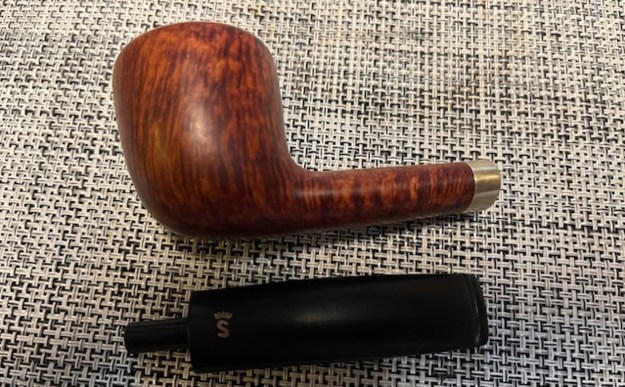
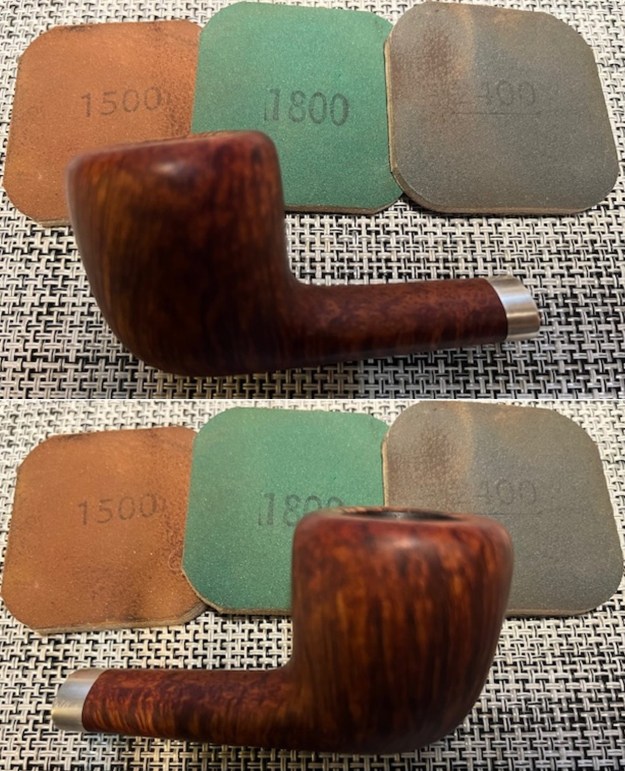
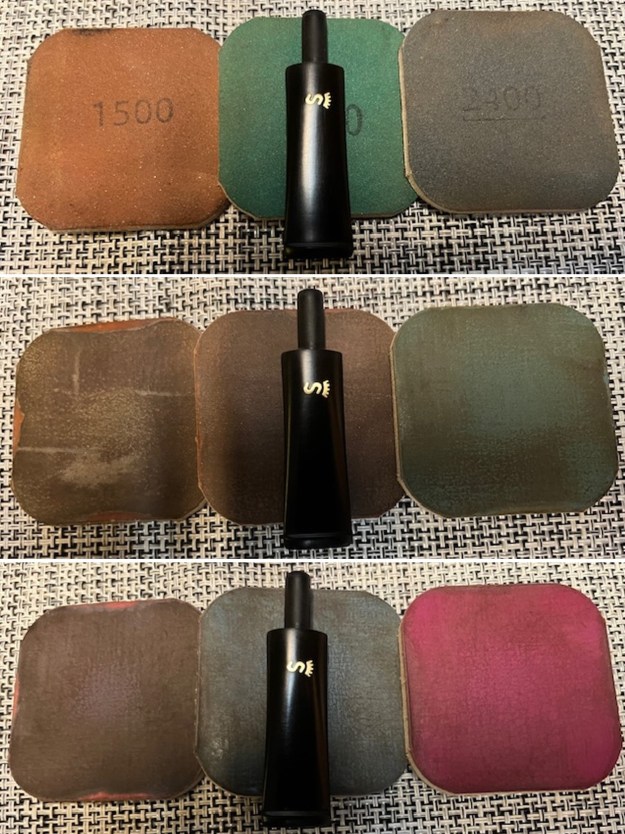
Now it was time to work on the pipe. Jeff had thoroughly cleaned up the pipe. He reamed the pipe with a PipNet Pipe Reamer and cleaned up the remnants with a Savinelli Fitsall Pipe Knife. He scrubbed the bowl with undiluted Murphy’s Oil Soap with a tooth brush. He rinsed it under running warm water to remove the soap and grime. He cleaned out the inside of the shank and the airway in the stem with alcohol, cotton swabs and pipe cleaners. He scrubbed the exterior of the stem with Soft Scrub to remove the grime and calcification. He soaked the stem in Before & After Deoxidizer and rinsed it off with warm water. The pipe looked very good when it arrived here in Vancouver. I took close up photos of the bowl, rim and the stem. The rim top and inner edge cleaned up very well. There was some darkening on the left side and backside of the rim top. The stem looks clean but still has light tooth marks and some chatter as noted above.I took photos of the stamping on the shank. The stamping is readable as noted above. I took the stem off the shank and took a photo to give a sense of the flow and proportion of the pipe. It is a beautiful looking Freehand. I started my work on the pipe by polishing the bowl and shank with micromesh sanding pads – dry sanding with 1500-12000 grit pads. I wiped the bowl down after each pad to remove the grit. The bowl began to take on a rich shine. It is a beauty. I rubbed the bowl down with Before & After Restoration Balm. I worked it into the briar with my finger tips. I let it sit for 10 minutes and the Balm did its magic. It enlivens, cleans and preserves the briar. It certainly brought this bowl back to life. I buffed it off with a clean cloth and took the following photos. I polished the silver band on the shank end with a jewellers cloth. It works to remove the tarnish and oxidation and also protects the surface from further tarnishing.I set the bowl aside and turned my attention to the stem. I polished the vulcanite stem surface and repairs near the button with a new product I am using. I ordered a set of 2 inch sanding pads for 320-3500 grit sanding pads from Amazon. They work amazingly well and are easy to manage and sand close to the sharp edge of the button.I polished the stem with micromesh sanding pads – 1500-12000 grit pads. I wiped it down with a damp cloth after each sanding pad. I polished it with Before & After Pipe Stem Polish – both Fine and Extra Fine. I gave it a coat of Obsidian Pipe Stem Oil. I set it aside to dry.This Ivarsson Design Stanwell Made in Denmark 75 Freehand with a vulcanite taper stem is a great looking pipe and really looks like an S. Bang shape. The mix of stains once cleaned up really highlights the grain and the polished finish is stunning. I put the stem back on the bowl and carefully buffed the pipe with Blue Diamond on the buffing wheel. I gave the bowl and the stem multiple coats of carnauba wax on the buffing wheel and followed that by buffing the entire pipe with a clean buffing pad. I hand buffed the pipe with a microfiber cloth to deepen the shine. The finished Stanwell Made in Denmark 75 Freehand fits nicely in the hand and feels great. Give the finished pipe a look in the photos below. The dimensions of the pipe are Length: 5 ½ inches, Height: 1 ½ inches, Outside diameter of the bowl: 1 ¼ inches, Chamber diameter: ¾ of an inch. The weight of the pipe is 40 grams /1.41 ounces. I will be adding the pipe to the Danish Pipe Makers Section of the rebornpipes store. If you are interested in purchasing this pipe send me a message or an email. Thanks for reading this blog and my reflections on the pipe while I worked on it.

As always, I encourage your questions and comments as you read the blog. Thanks to each of you who are reading this blog. Remember we are not pipe owners; we are pipe men and women who hold our pipes in trust until they pass on into the trust of those who follow us. 

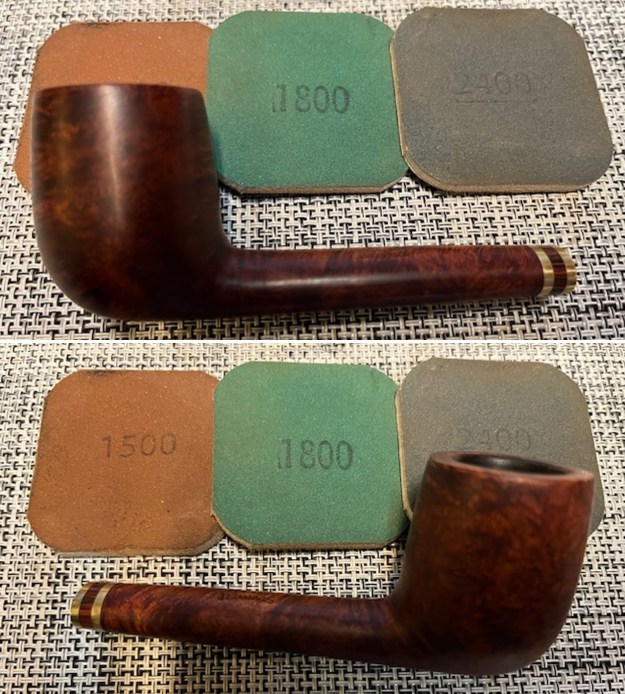
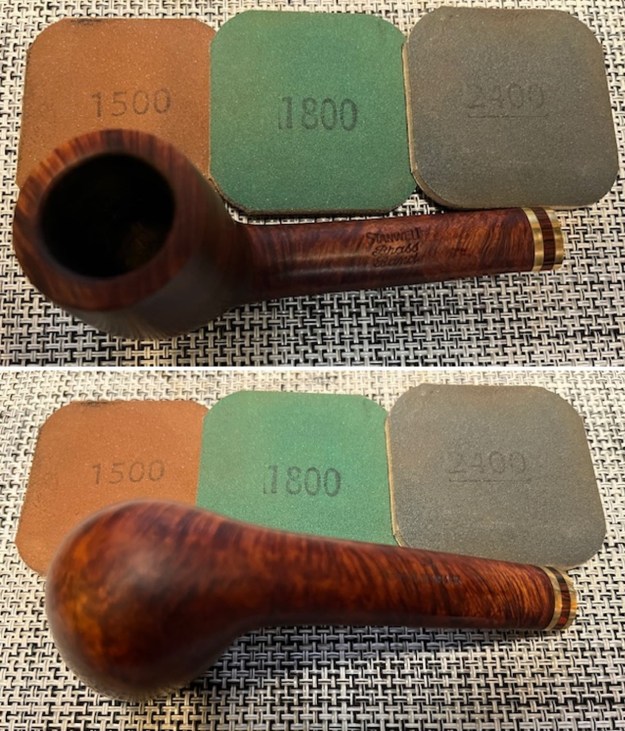
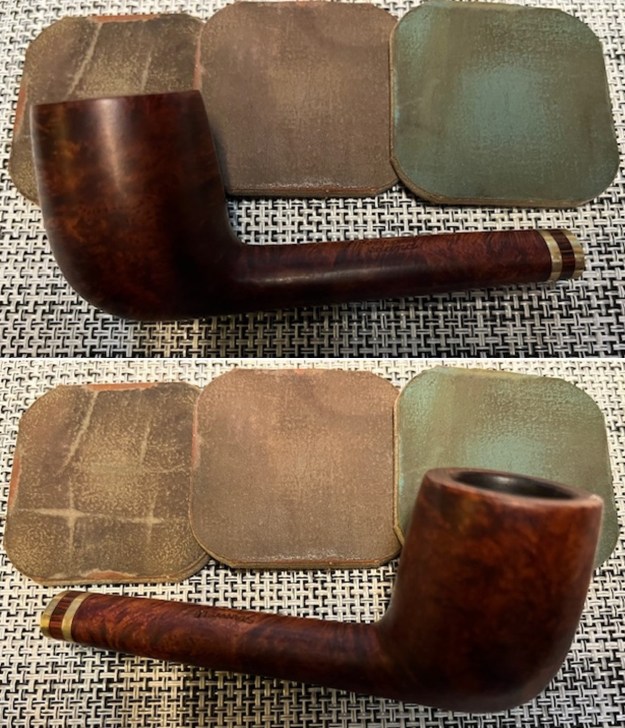
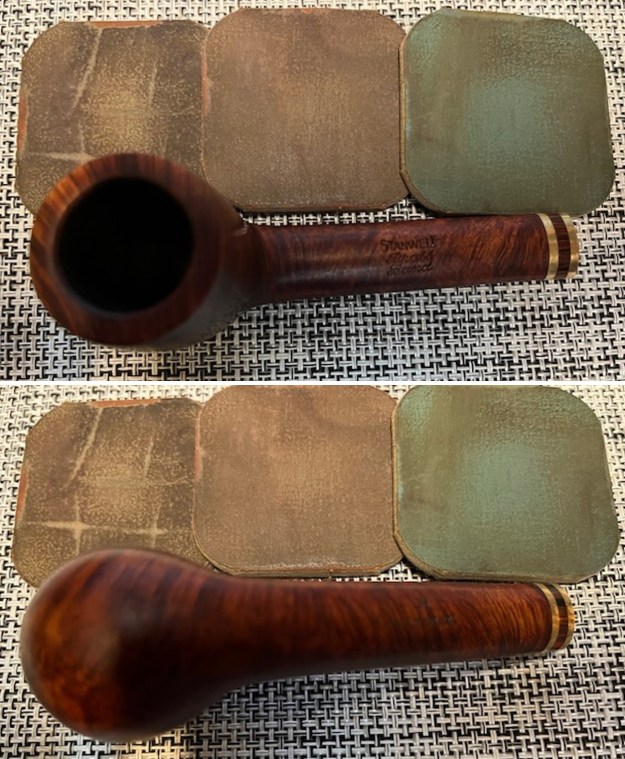
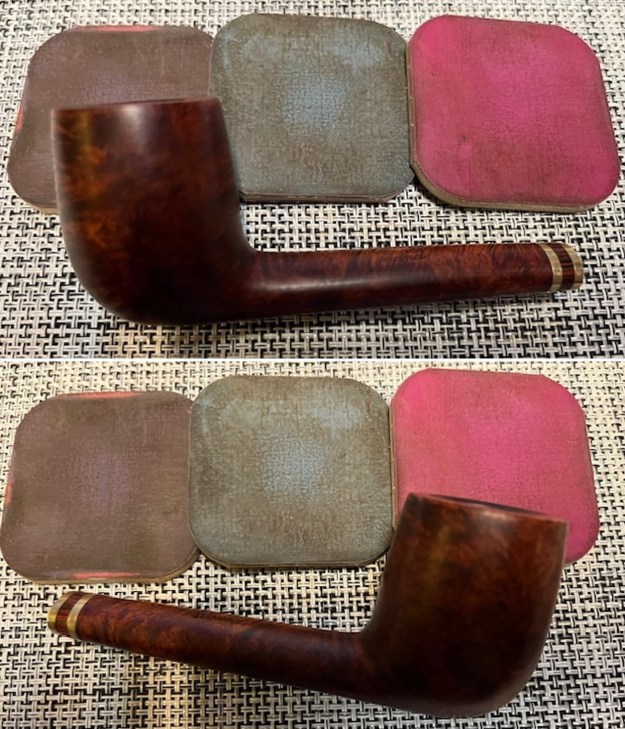
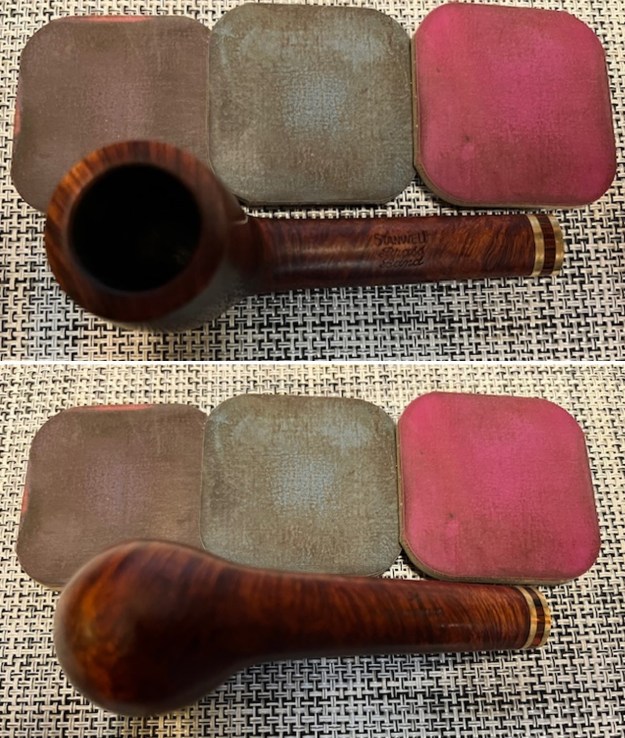
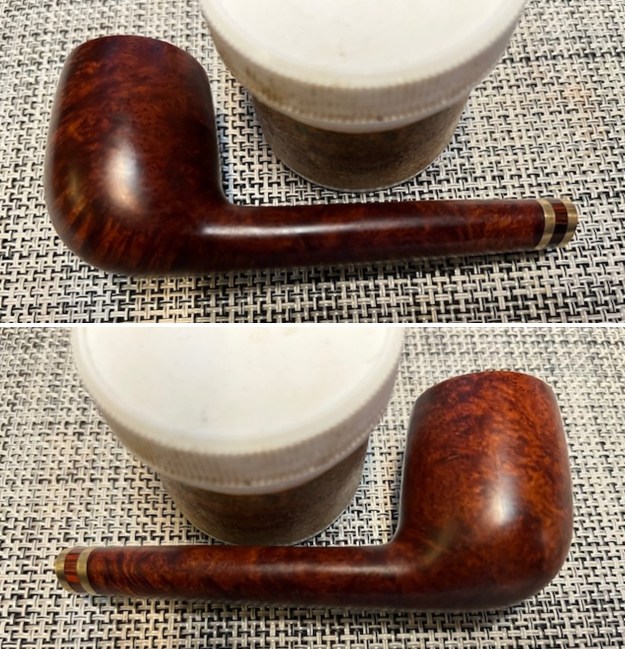
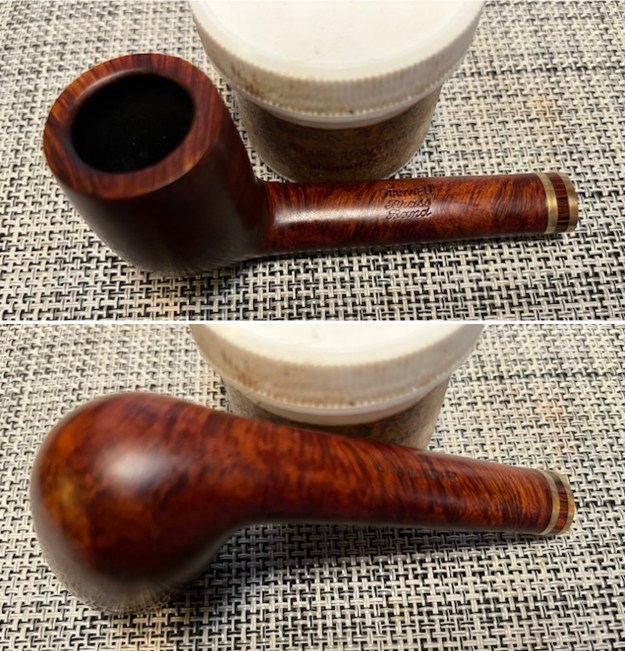
Restoring another Truly Elegant Danish made Stanwell Brass Band 56 Canadian


Blog by Steve Laug

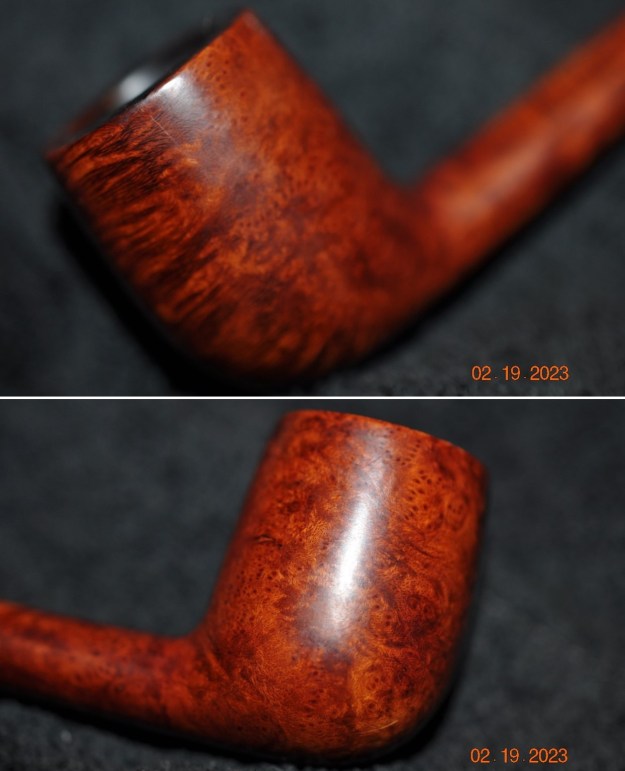
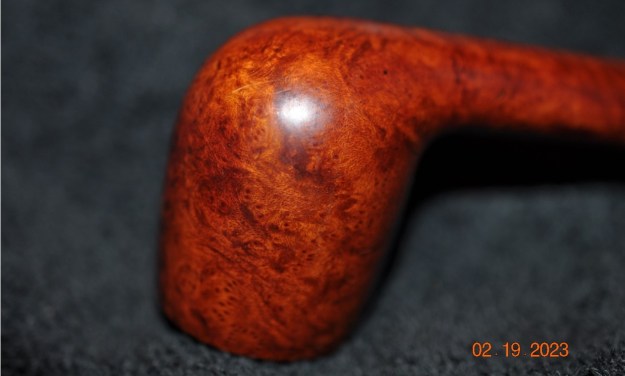
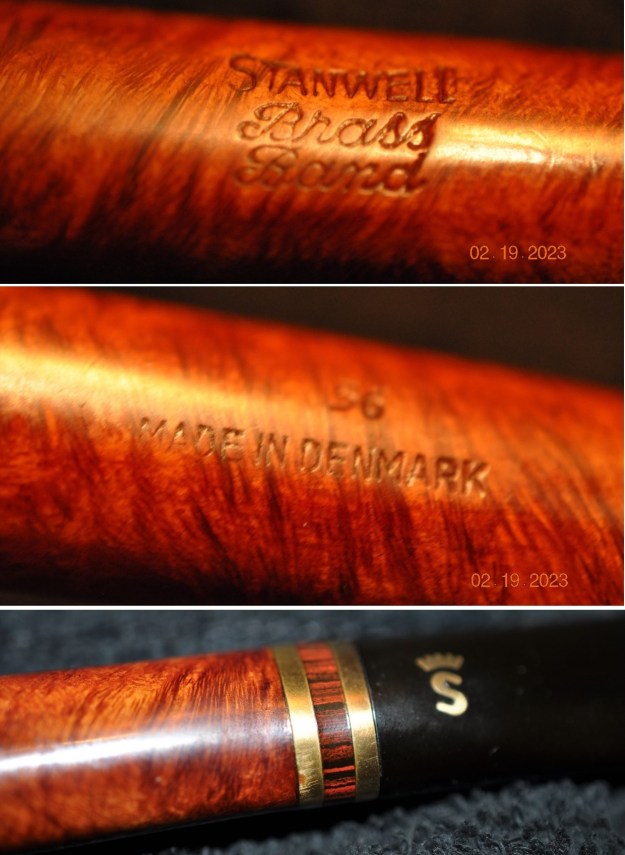
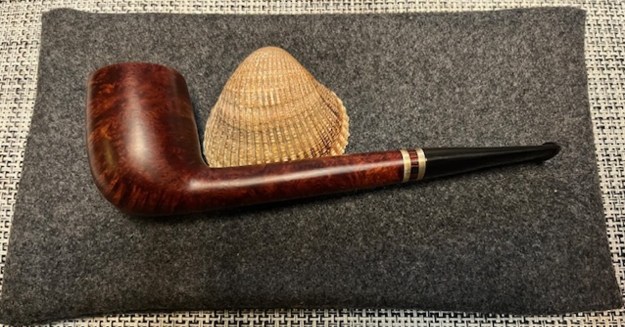
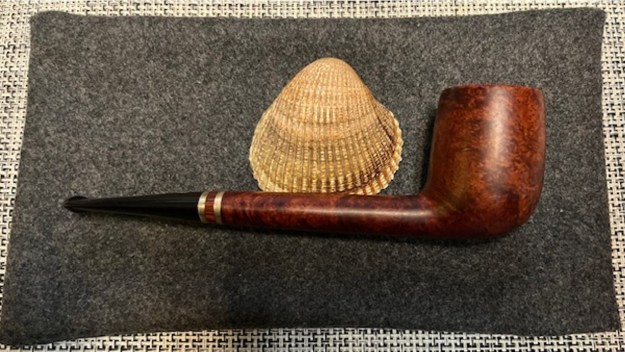
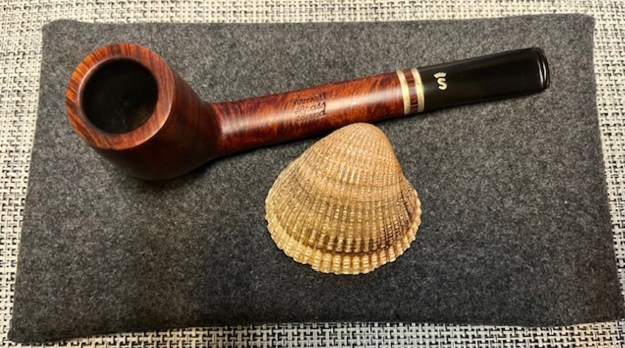
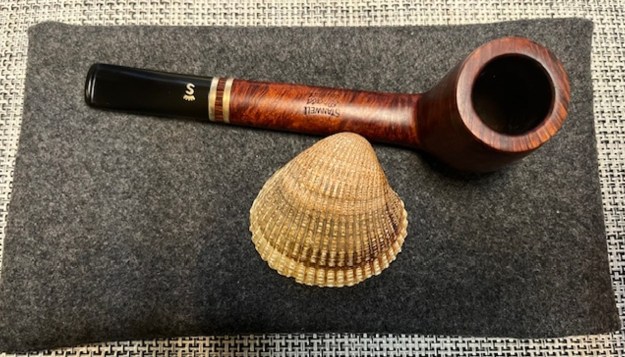
It is a cold but sunny day here in Vancouver and I decided to work on another pipe that was purchased on 01/26/2023 in a lot of pipes that came to us from Copenhagen, Denmark. This is a classic Danish Canadian with a smooth finish and an oval shank. It is another Made in Denmark Stanwell. The smooth finish on this pipe, around the bowl and shank has a mix of grain highlighted by the rich brown stain. The pipe is stamped on the topside of the shank and reads STANWELL [over] Brass [over] Band. On the underside it is stamped with the shape number 56 [over] Made in Denmark. The end of the shank sports twin brass bands sandwiching a Cumberland acrylic spacer. The pipe was a well used pipe when Jeff received it. There was dust and grime ground into the finish. The mixture of brown stains highlights some beautiful grain under the dirt. The bowl was moderately caked and there was a moderate overflow of lava on the smooth rim top. The inner edge looked quite good. The stem is vulcanite and was dirty, oxidized and had light tooth marks, chatter and scratches on both sides ahead of the button. There is an inlaid brass crown S logo on the top side of the taper stem. Jeff took photos of the pipe before he started his clean up work on it. He took photos of the bowl and rim top to show what they looked like before his clean up. You can see the lava coat on the rim top and the cake in the bowl. The inner edge looks to be okay. He also took some of the stem to show the condition of both sides. The photos of the sides and heel of the bowl show the uniquely stained grain around the bowl and shank. The mixture of brown stains adds depth to the finish on the pipe. Even under the grime it is a real beauty. The stamping on this one was on the underside of the shank and is shown in the photo below. It is clear and readable as noted above. You can also see the brass inlaid crown S on the top of the saddle stem.Before I started my work on the pipe I wanted to see if I could find any information that would help me get a sense of the line. I turned to Pipephil to see if there was any listing on the Brass Band Line (http://pipephil.eu/logos/en/logo-stanwell.html). There was nothing listed.

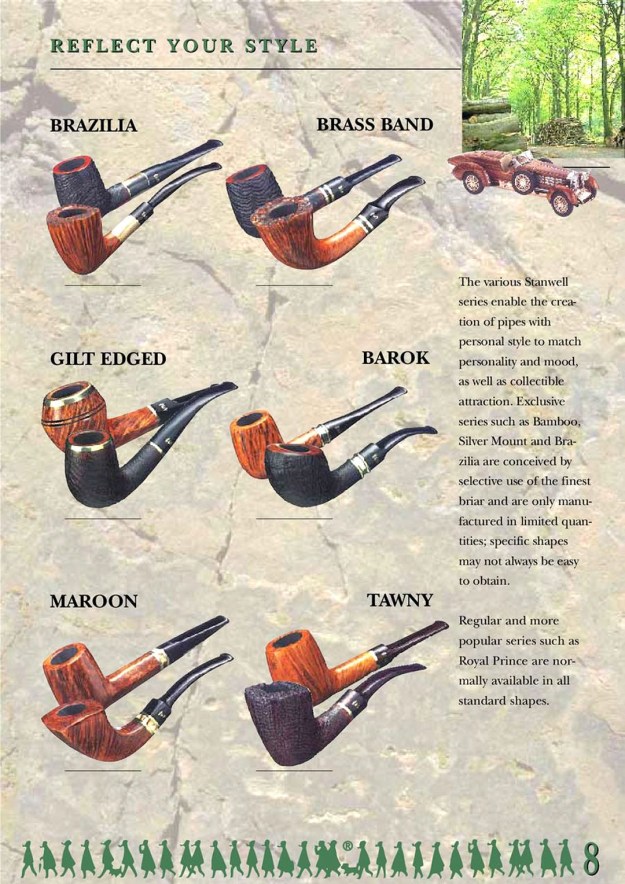
I then turned to Pipedia (https://pipedia.org/wiki/Stanwell) for more information. The article is great and gives a lot of history on the brand. There was also a catalogue page courtesy of Doug Valitchka that showed the line. I have included that below.There was also a link to a shape article by Bas Stevens that I originally published on rebornpipes. I looked up the 56 shape number to see who had designed that shape and there was nothing there (https://pipedia.org/wiki/Stanwell_Shape_Numbers_and_Designers). The shape 56 is described as a Canadian with a tapered stem.

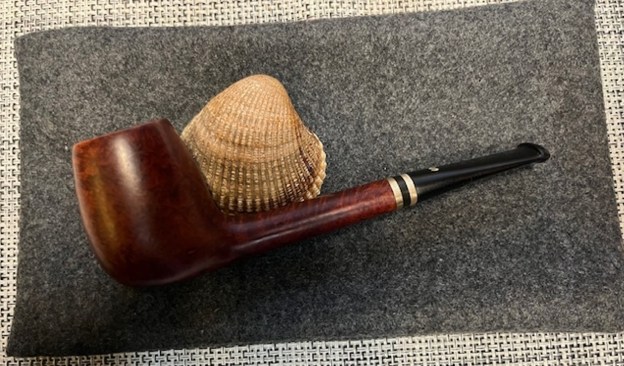
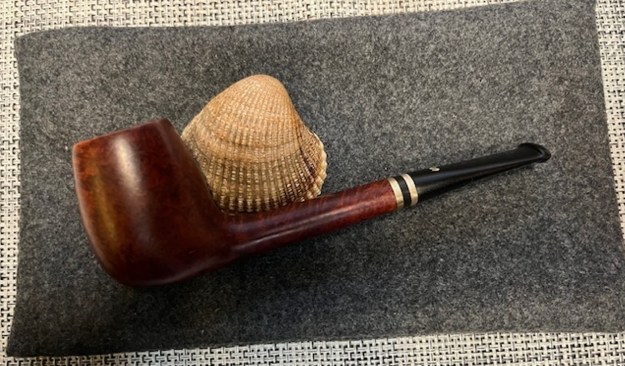
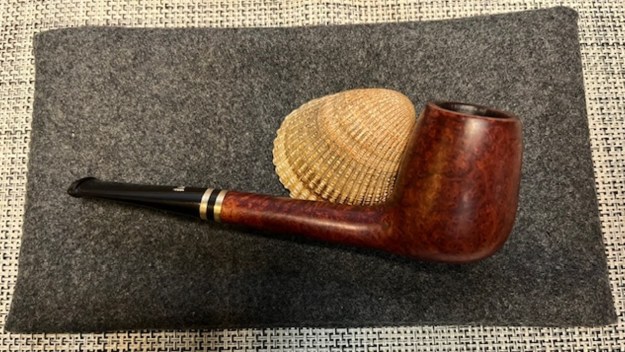
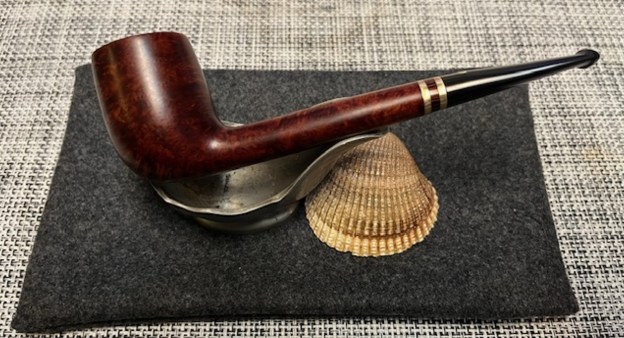
Now it was time to work on the pipe. Jeff had thoroughly cleaned up the pipe. He reamed the pipe with a PipNet Pipe Reamer and cleaned up the remnants with a Savinelli Fitsall Pipe Knife. He scrubbed the bowl with undiluted Murphy’s Oil Soap with a tooth brush. He rinsed it under running warm water to remove the soap and grime. He cleaned out the inside of the shank and the airway in the stem with alcohol, cotton swabs and pipe cleaners. He scrubbed the exterior of the stem with Soft Scrub to remove the grime and calcification. He soaked the stem in Before & After Deoxidizer and rinsed it off with warm water. The pipe looked very good when it arrived here in Vancouver. I took close up photos of the bowl, rim and the stem. The rim top and inner edge cleaned up very well. The stem looks clean but still has light tooth marks and some chatter as noted above.I took photos of the stamping on the shank. The stamping is readable as noted above. I took the stem off the shank and took a photo to give a sense of the flow and proportion of the pipe. It is a beautiful looking Danish Canadian.I started my work on the pipe by polishing the bowl and shank with micromesh sanding pads – dry sanding with 1500-12000 grit pads. I wiped the bowl down after each pad to remove the grit. The bowl began to take on a rich shine. It is a beauty. I rubbed the bowl down with Before & After Restoration Balm. I worked it into the briar with my finger tips. I let it sit for 10 minutes and the Balm did its magic. It enlivens, cleans and preserves the briar. It certainly brought this bowl back to life. I buffed it off with a clean cloth and took the following photos. I set the bowl aside and turned my attention to the stem. I polished the vulcanite stem surface and repairs near the button with a new product I am using. I ordered a set of 2 inch sanding pads for 320-3500 grit sanding pads from Amazon. They work amazingly well and are easy to manage and sand close to the sharp edge of the button.I polished the stem with micromesh sanding pads – 1500-12000 grit pads. I wiped it down with a damp cloth after each sanding pad.I polished it with Before & After Pipe Stem Polish – both Fine and Extra Fine. I gave it a coat of Obsidian Pipe Stem Oil. I set it aside to dry. This Stanwell Brass Band 56 Canadian with a vulcanite taper stem is a great looking pipe and really looks like an S. Bang shape. The mix of stains once cleaned up really highlights the grain and the polished finish is stunning. I put the stem back on the bowl and carefully buffed the pipe with Blue Diamond on the buffing wheel. I gave the bowl and the stem multiple coats of carnauba wax on the buffing wheel and followed that by buffing the entire pipe with a clean buffing pad. I hand buffed the pipe with a microfiber cloth to deepen the shine. The finished Stanwell Brass Band Canadian 56 fits nicely in the hand and feels great. Give the finished pipe a look in the photos below. The dimensions of the pipe are Length: 5 ½ inches, Height: 1 ¾ inches, Outside diameter of the bowl: 1 ¼ inches, Chamber diameter: ¾ of an inch. The weight of the pipe is 35 grams /1.23 ounces. I will be adding the pipe to the Danish Pipe Makers Section of the rebornpipes store. If you are interested in purchasing this pipe send me a message or an email. Thanks for reading this blog and my reflections on the pipe while I worked on it.

As always, I encourage your questions and comments as you read the blog. Thanks to each of you who are reading this blog. Remember we are not pipe owners; we are pipe men and women who hold our pipes in trust until they pass on into the trust of those who follow us. 

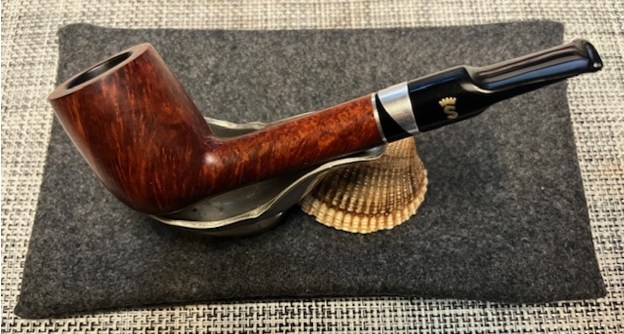
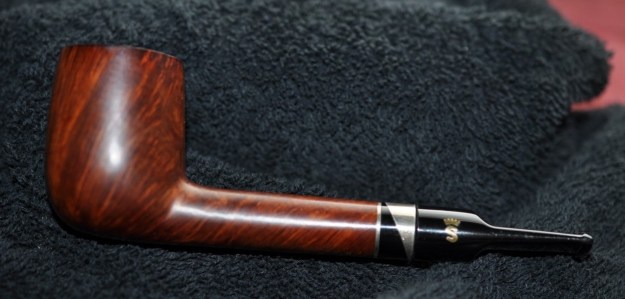
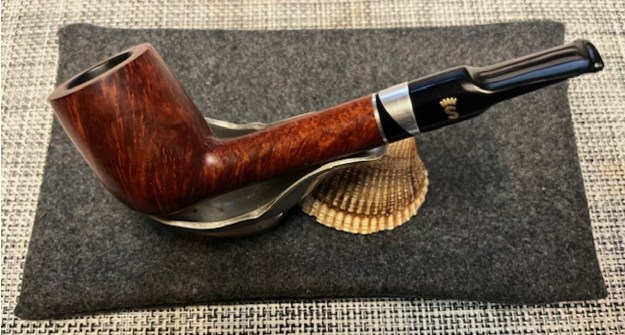
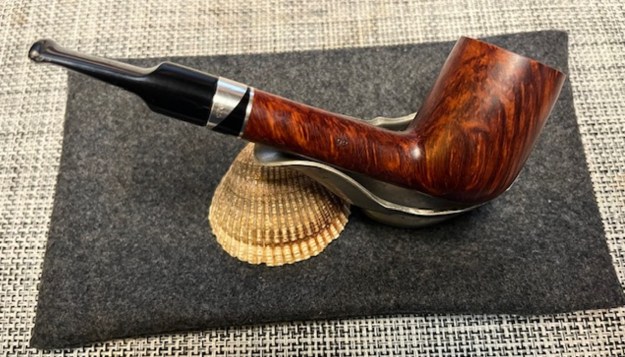
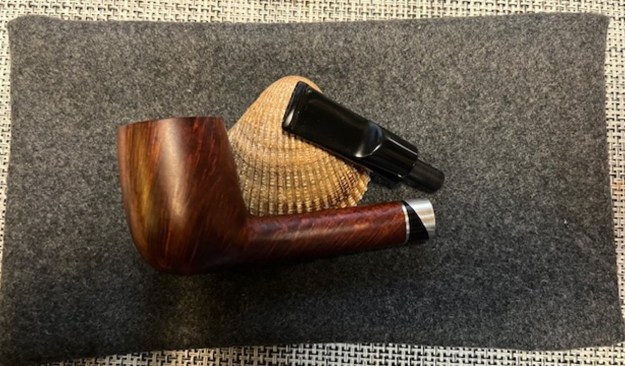
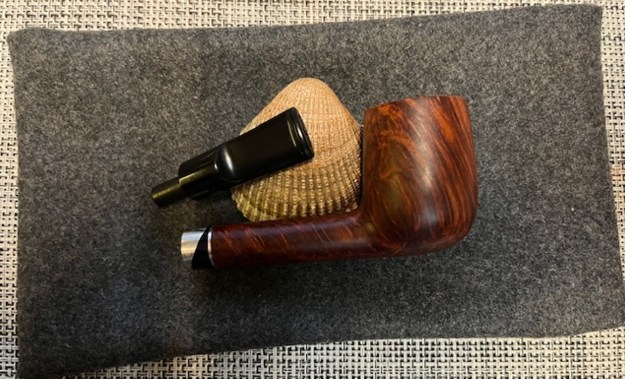
A Restored Stanwell Made in Denmark Black n’ Silver Lovat 98.


Blog by Steve Laug

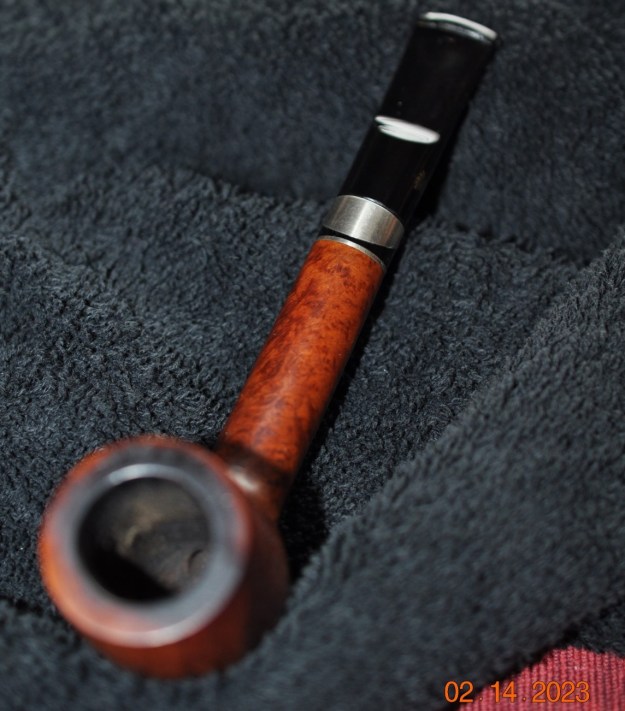
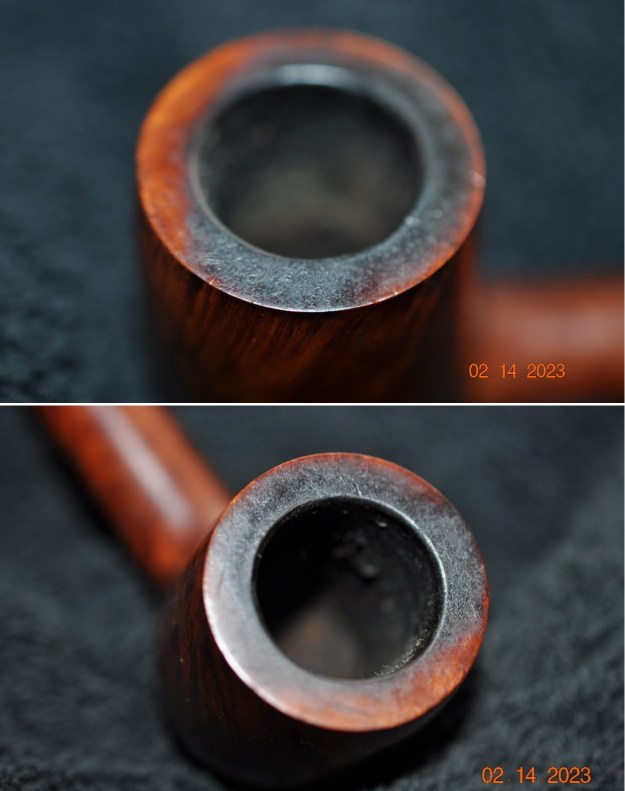
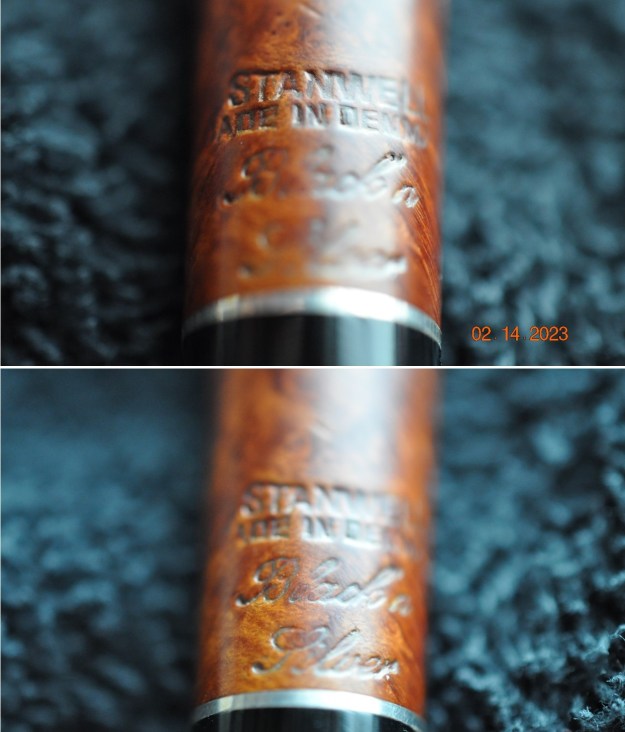
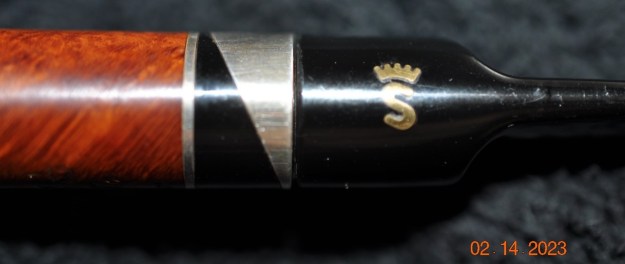
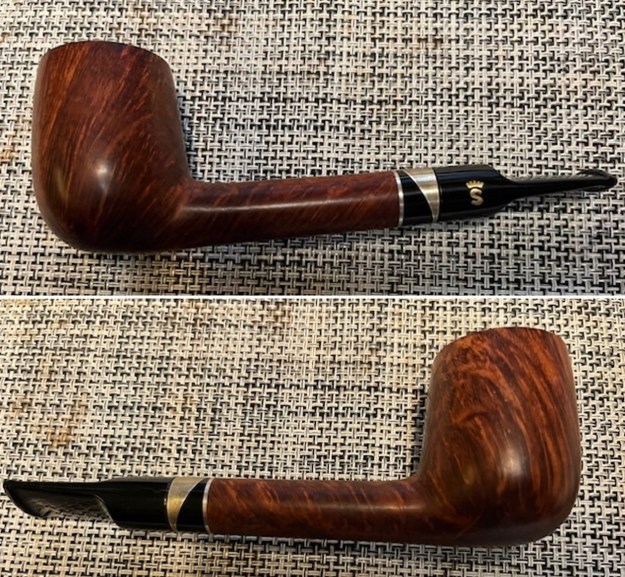
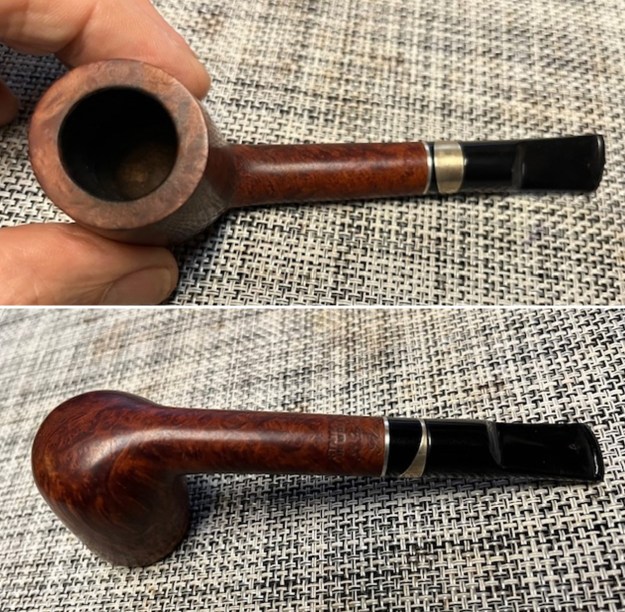
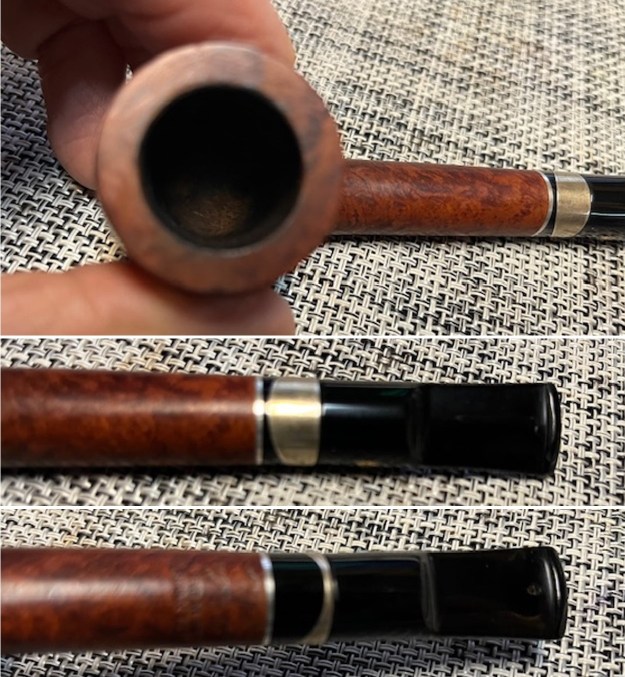
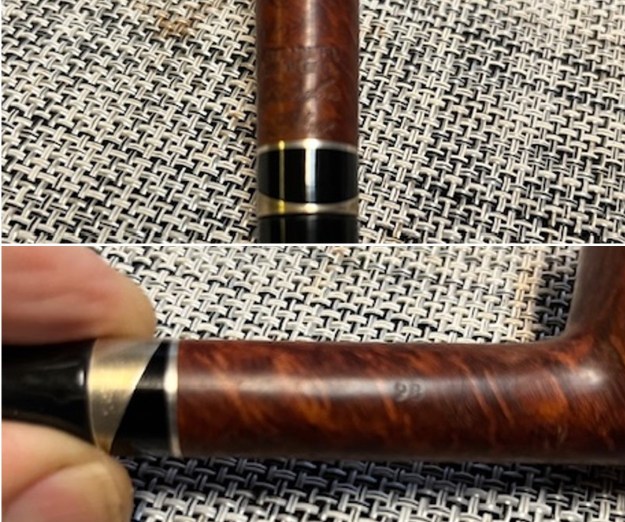
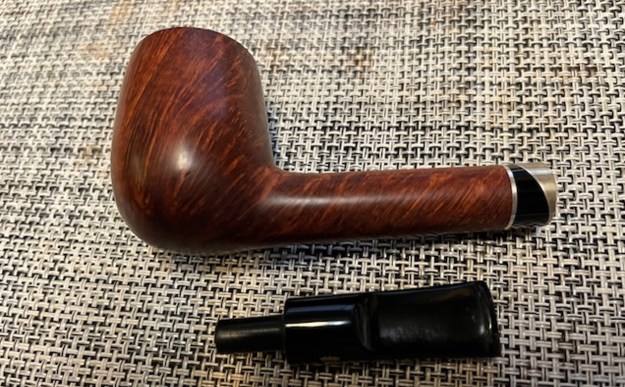
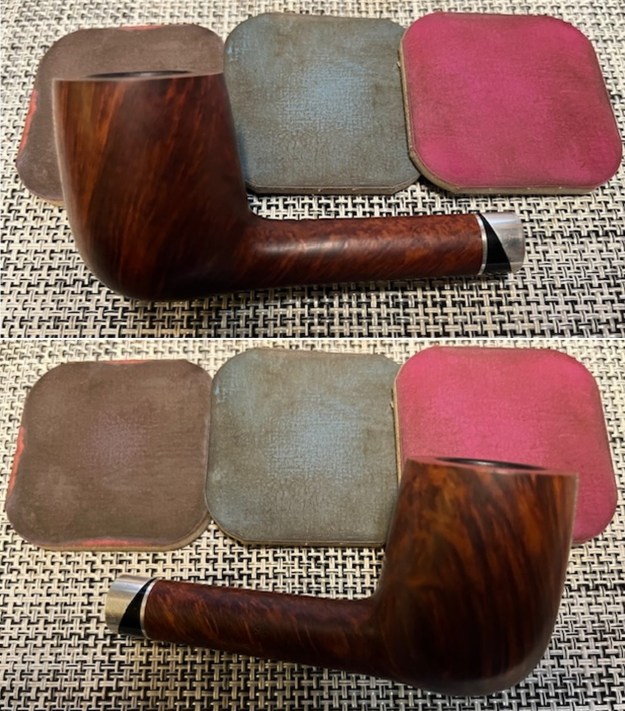
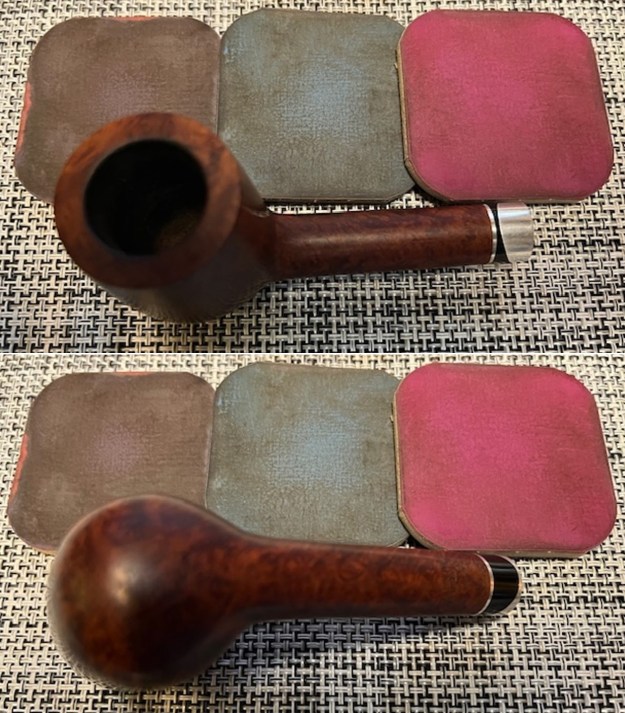
I moved on to work on another pipe. The next one I chose was another Stanwell in a Pipe Sock that came to us from our connection in Copenhagen, Denmark 01/26/2023. The stamping on the pipe was very clear and readable. On the underside of the shank it is stamped ahead of the black and silver band and reads Stanwell [over] Made in Denmark [over] Black ‘n [over] Silver. the right side of the shank it is stamped with a shape number 98 mid-shank. The end of the shank had a combination silver and black fancy band on it. The stem had a brass Crowned “S” Stanwell logo inlaid on left side of the saddle stem. The bowl had a moderate cake and there was some lava, dust and debris on the rim top and inner edges. The finish was in okay condition with oils and grime ground into the briar around the bowl sides. The acrylic stem has light tooth marks on the top and a bite through on the underside next to the button. It showed a lot of promise through the grime. Jeff took photos of the pipe as he saw it at this stage of his clean up. Jeff took photos of the bowl and the rim top to show their condition. You can see the moderate cake in the bowl and the heavy overflow of lava on the top and the inner edge of the bowl. It is hard to know the condition of the inner edge because of the lava coat. The stem is also shown in the photos and you can see the bite through in the underside of the stem in the third stem photo below. He took photos of the sides and the heel of the bowl to show the amazing grain that stands out through the grime on the finish. It is a beauty!      He took photos of the stamping on the underside of the shank. It is clear and readable as noted above. He also took a photo of the band and Crown “S” logo on the stem side. There was not much information available on the Black’n Silver Line but I did find a listing on Google when I searched. Smokingpipes.com had on listed that was an Ivarsson design billiard (https://www.smokingpipes.com/pipes/estate/denmark/moreinfo.cfm?product_id=284389). I have included the description below:

We see it here in the ‘Black N Silver’ series, with a smooth, walnut finish, along with a neat, metal-accented jet-black stem. There are some dings and scratches around the bowl, but otherwise condition is good.

The best I can determine is that the Black ‘n Silver stamp refers to the colour of the band on the shank end. It has a combination of a black and silver pattern on the surface. Now it was time to work on the pipe.

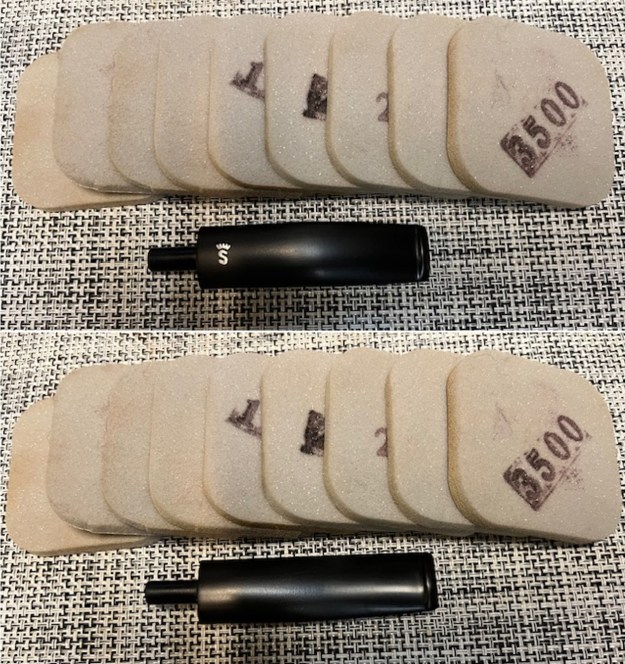
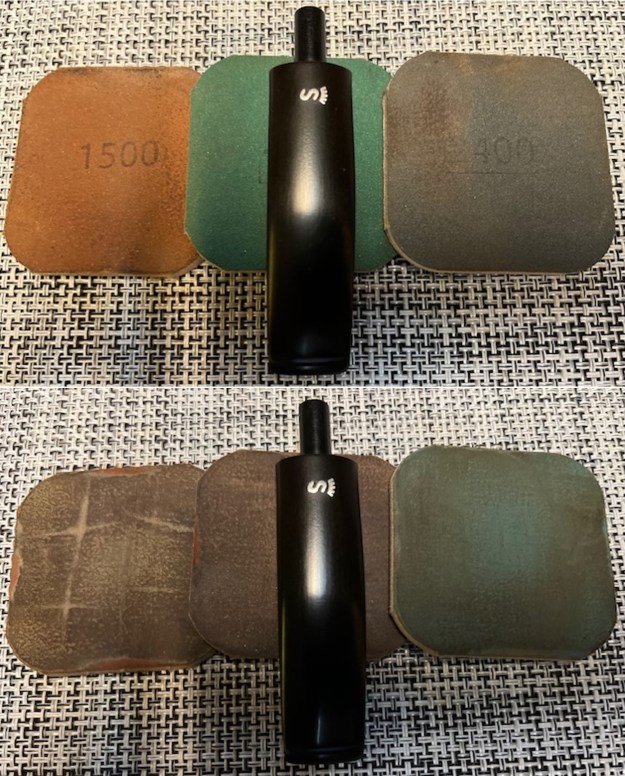
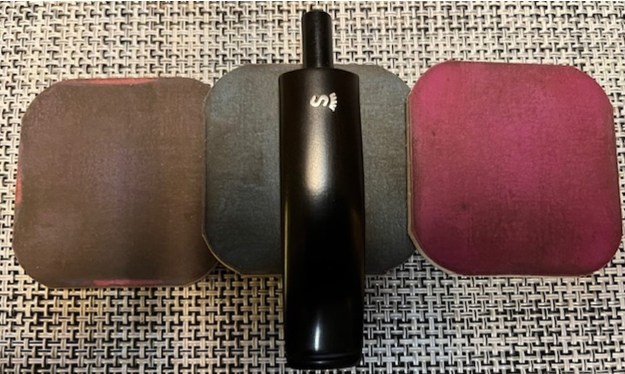
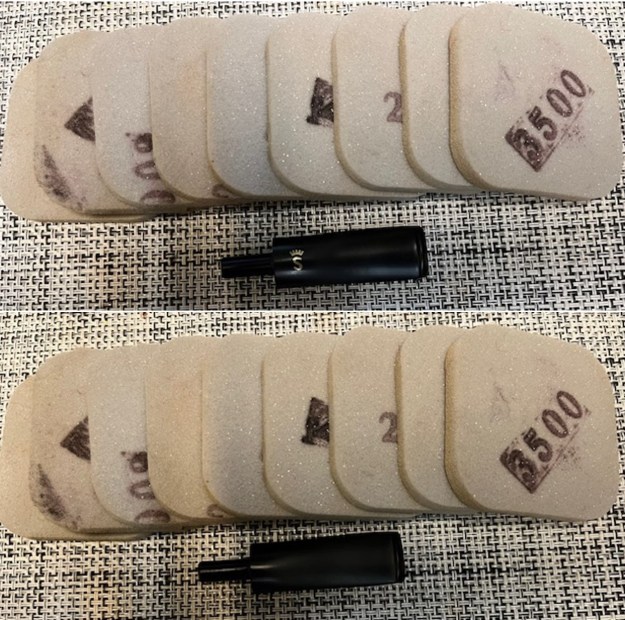
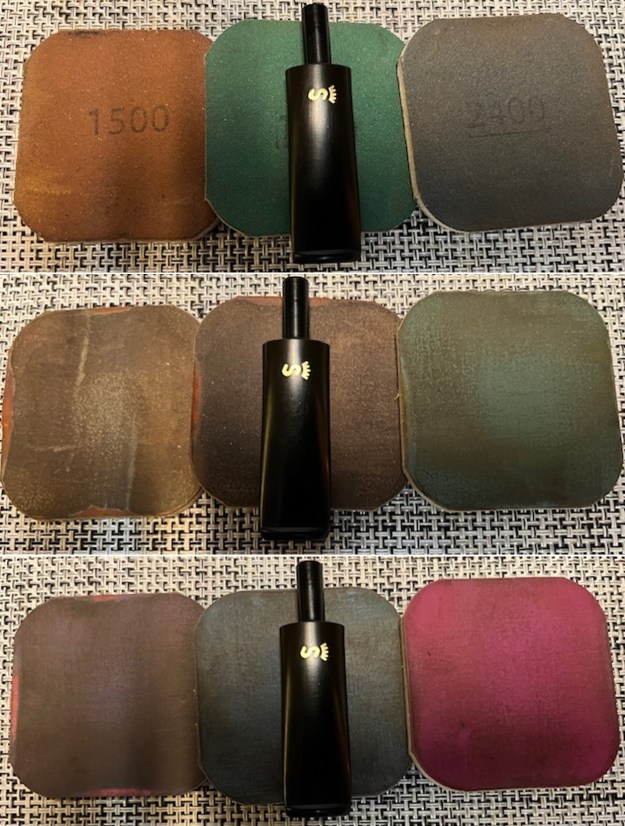
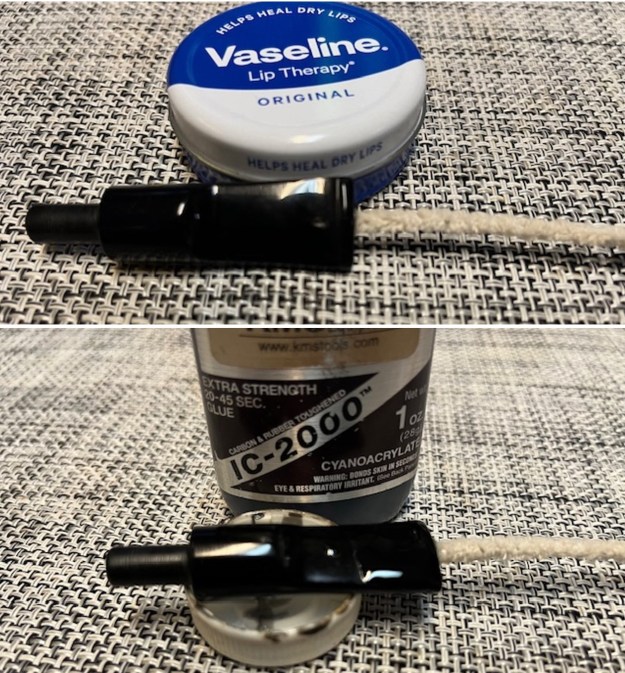
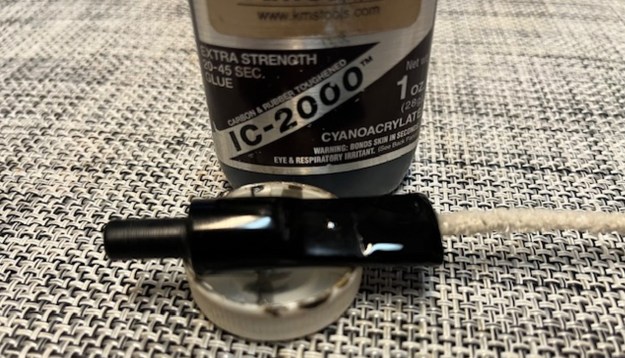
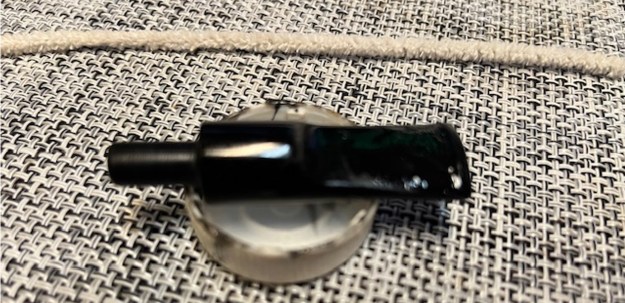
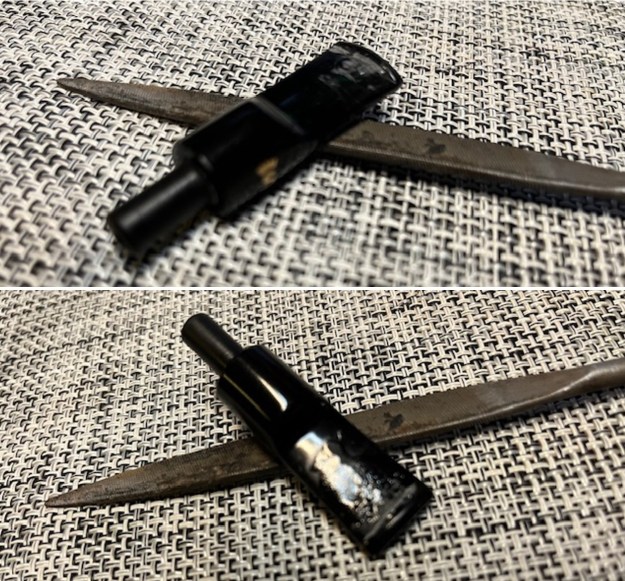
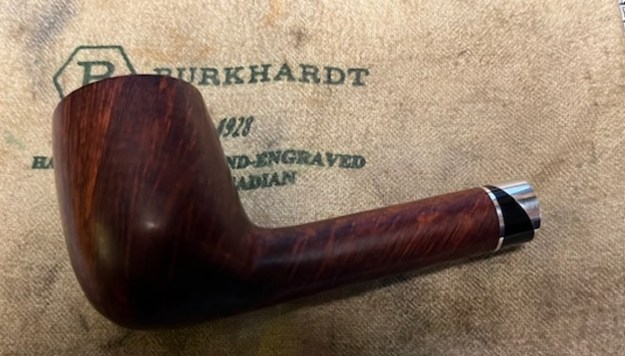
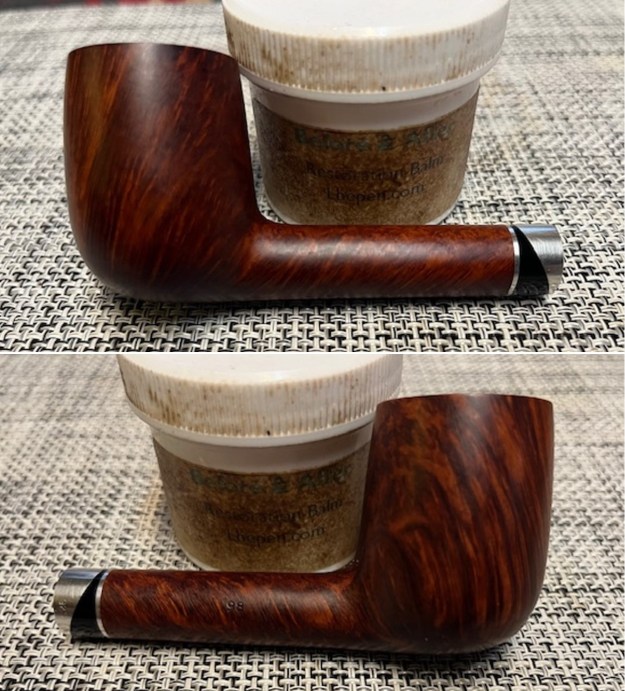
Jeff had done a great job cleaning up the pipe as usual. He reamed the pipe with a PipNet reamer and cut back the cake back to the bare briar. He cleaned up the walls with a Savinelli Fitsall Pipe Knife. He scrubbed the interior of the bowl and shank with pipe cleaners, cotton swabs and alcohol to remove the tars and oils. He scrubbed the exterior of the pipe with Murphy’s Oil Soap and a tooth brush to remove the grime from the finish. He worked on the rim top lava and darkening with the soap and tooth brush. He scrubbed the inside of the stem with alcohol and pipe cleaners. He scrubbed the exterior with Soft Scrub and then soaked it in Briarville’s Pipe Stem Deoxidizer. He washed it off with warm water to remove the Deoxidizer. The pipe looked far better when it arrived. I took photos of the bowl and rim top as well as the stem to show how clean they were. You can see that rim top and edges look very good. There are some darker spots on the rim top that should come off with polishing. The stem is clean and there are tooth and chatter on both sides ahead of the button. On the underside of the stem there is a small bite through and wear that is visible in the photo.I took photos of the stamping on the sides of the shank and on the brass plaquette. The stamping is clear and readable. I removed the stem from the shank and took a photo to give a sense of what the pipe looked like and also what the band was like on the shank end. I decided to switch things up a bit on this pipe. I started with the repair to the bite through on the underside of the stem first. I greased a pipe cleaner with Vaseline and inserted it into the slot under the bite through. This prevents the repair from seeping into the airway. I filled in the hole and wear around it with black CA rubberized glue. I filled in the tooth marks next to the button on the top side at the same time. I set the stem aside to let the glue cure. I sprayed it with an accelerator and removed the pipe cleaner from the airway. The airway was clear and the airflow was perfect.Several hours later I came back to the stem. The repair had cured and I used a small file to flatten out the repaired areas on both sides. I further smoothed out the repairs with a folded piece of 220 grit sandpaper to blend them into the surrounding surface area. It was looking much better at this point. I polished the vulcanite stem surface and repairs near the button with a new product I am using. I ordered a set of 2 inch sanding pads for 320-3500 grit sanding pads from Amazon. They work amazingly well and are easy to manage and sand close to the sharp edge of the button.I polished the stem with micromesh sanding pads – dry sanding with 1500-12000 grit pads. I wiped the stem down after each sanding pad with Obsidian Oil.I polished it with Before & After Pipe Stem Polish – both Fine and Extra Fine. I gave it a coat of Obsidian Pipe Stem Oil. I set the stem aside and turned my attention to the bowl. I started my work on the pipe by polishing the briar with 1500-12000 grit micromesh sanding pads. I wiped the bowl down after each sanding pad with a damp cloth. I polished the black and Sterling Silver band with a jewellers cloth to restore the shine and remove the tarnish. It really glows now. I rubbed the briar down with Before & After Restoration Balm. I worked it into the briar with my fingertips. The product works to clean, enliven and preserve the briar. I let it sit for 10 minutes while I worked on the stem. After the time passed I buffed it with a cotton cloth to deepen the shine. The briar really comes alive with the balm. I am excited to put the finishing touches on this unique Stanwell Made in Denmark Black’n Silver 98 Lovat. I put the pipe back together and buffed it with Blue Diamond on the buffing wheel. I gave the bowl and the stem multiple coats of carnauba wax. I buffed the pipe with a clean buffing pad to raise the shine and hand buffed it with microfiber cloth to deepen the shine. It is fun to see what the polished bowl looks like with the brass plaquette and the polished vulcanite stem. This Stanwell Black’n Silver 98 Lovat is nice looking and the pipe feels great in my hand. It is light and well balanced. Have a look at it with the photos below. The dimensions are Length: 5 inches, Height: 1 ½ inches, Outside diameter of the bowl: 1 1/8 inches, Chamber diameter: ¾ of an inch. The weight of the pipe is 1.20 ounces/34 grams. It is a beautiful pipe and one that I will be putting in the Danish Pipemaker Section on the rebornpipes store. Thanks for walking through the cleanup with me as I worked over this pipe.

As always, I encourage your questions and comments as you read the blog. Thanks to each of you who are reading this blog. Remember we are not pipe owners; we are pipe men and women who hold our pipes in trust until they pass on into the trust of those who follow us. 

A Peterson Captain Pete Restoration


Nicely done John…even the fills look improved.

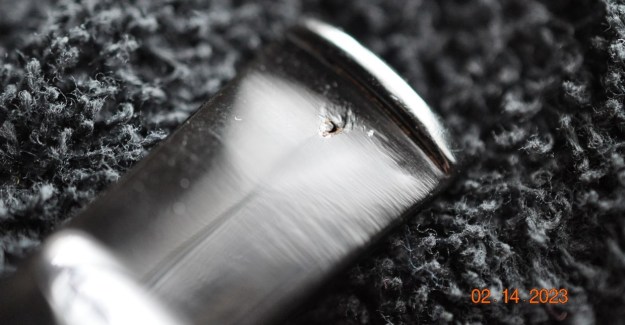
Written and photographed by John M. Young It has been said that I suffer from Peterson Pipe Acquisition Disorder (PPAD).  Though not a painful …

A Peterson Captain Pete Restoration

A Complete Bowl to Button Restoration of an Heirloom Medico VFQ


Love the log write up…value of a pipe is a loaded term but no matter how you define it you have increased that pipe’s value. Well done.

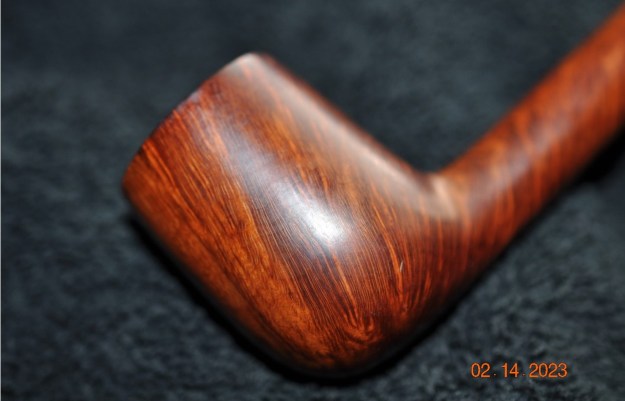
As a restorer and pipe repairman, I am often asked about the value of a particular pipe. On the surface this is a straightforward question about …

A Complete Bowl to Button Restoration of an Heirloom Medico VFQ

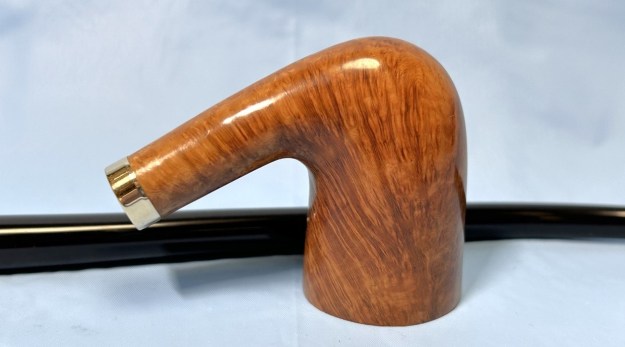
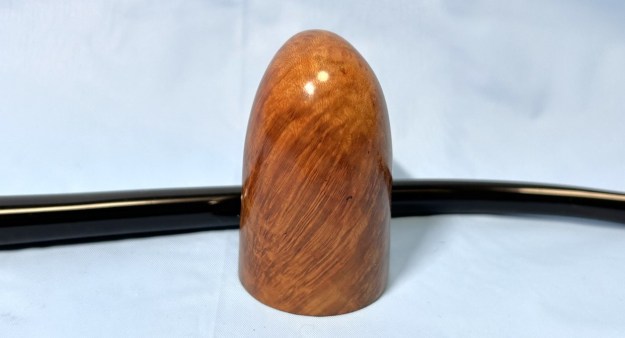
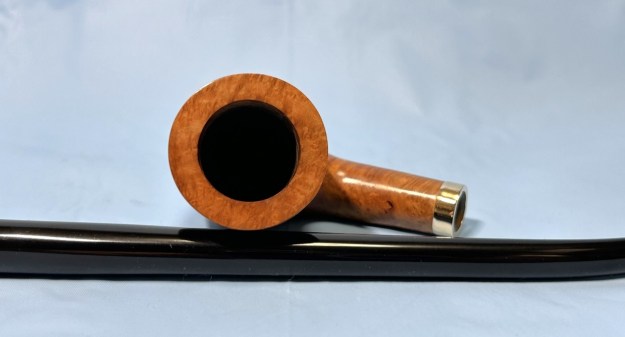
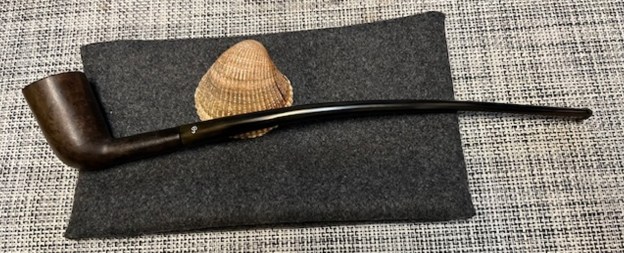
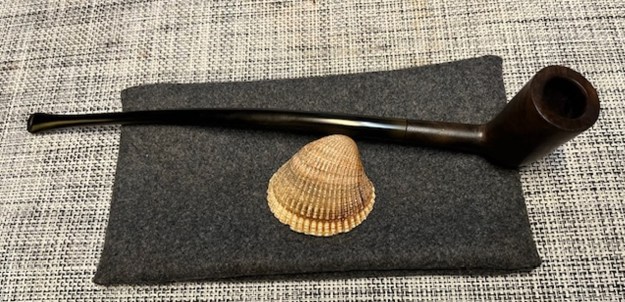
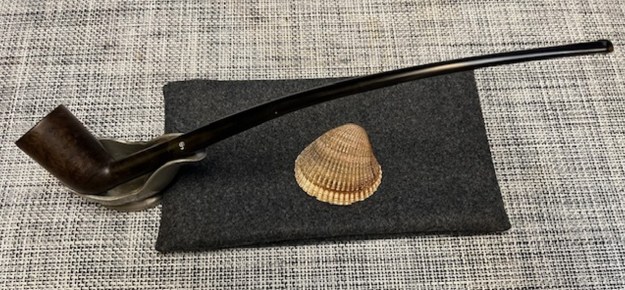
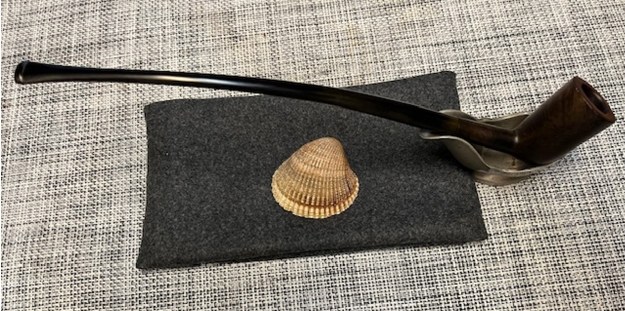
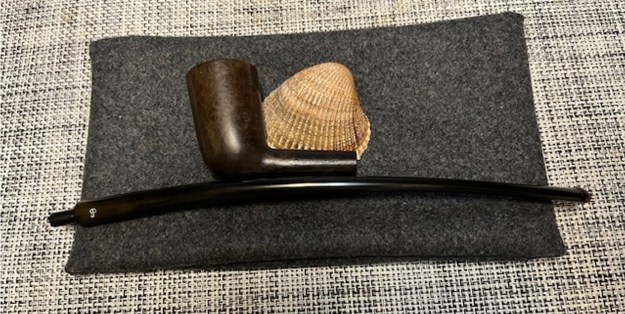
Spiffing Up a Handsome Churchwarden


Blog by Kenneth Lieblich

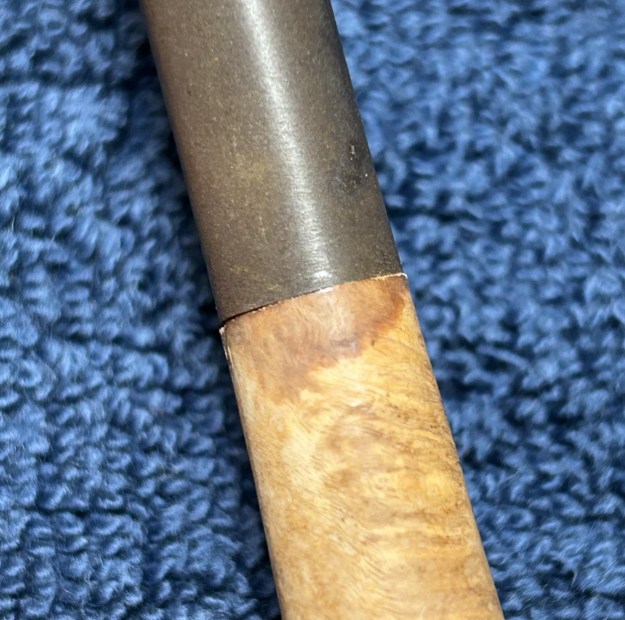
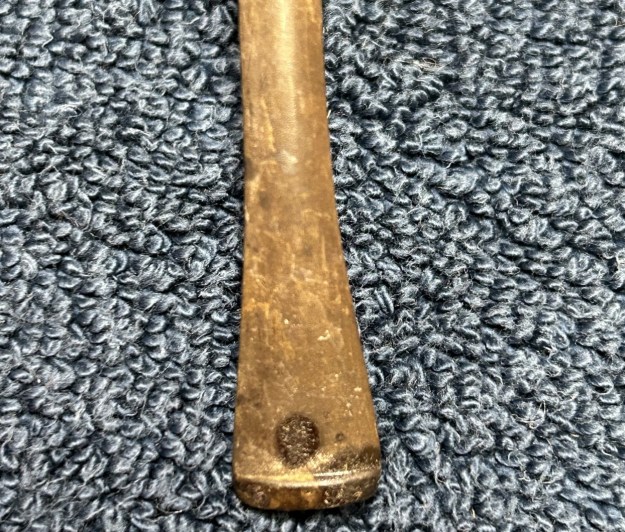
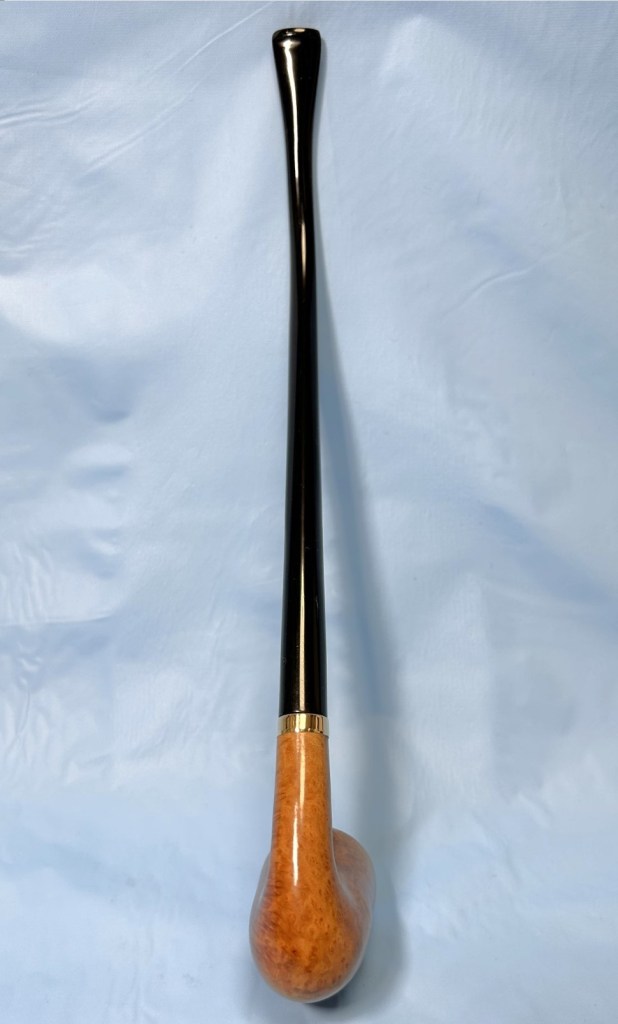
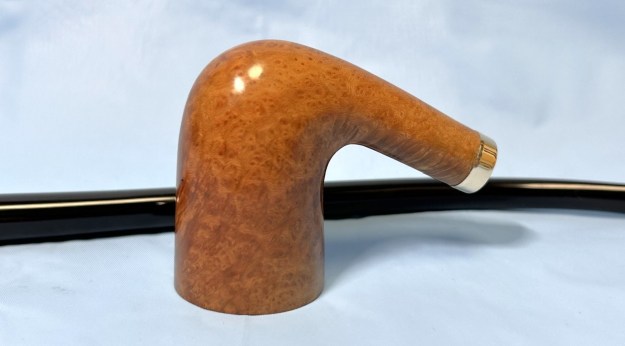
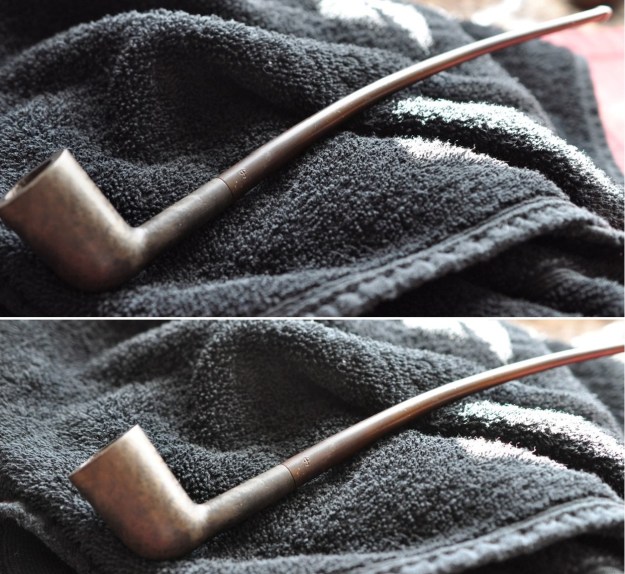
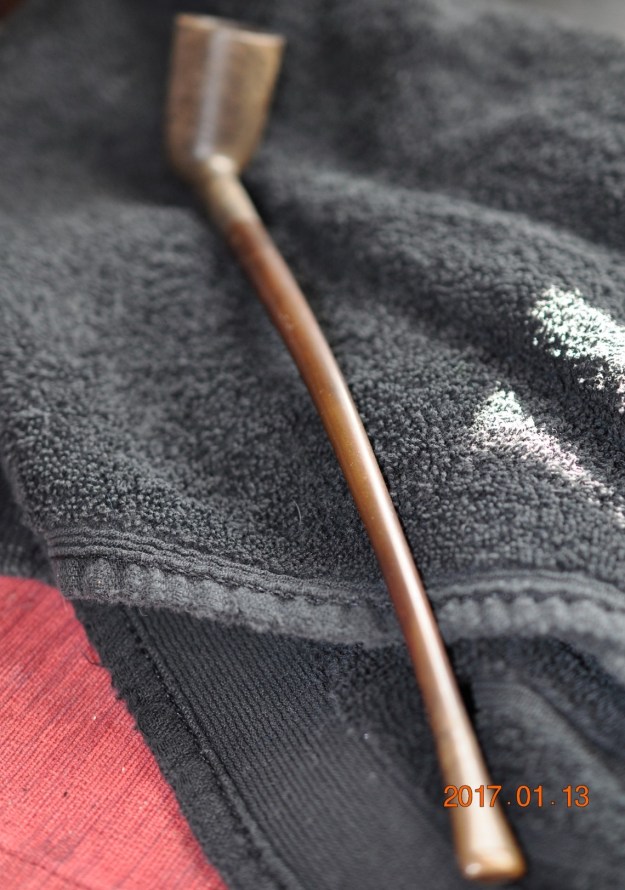
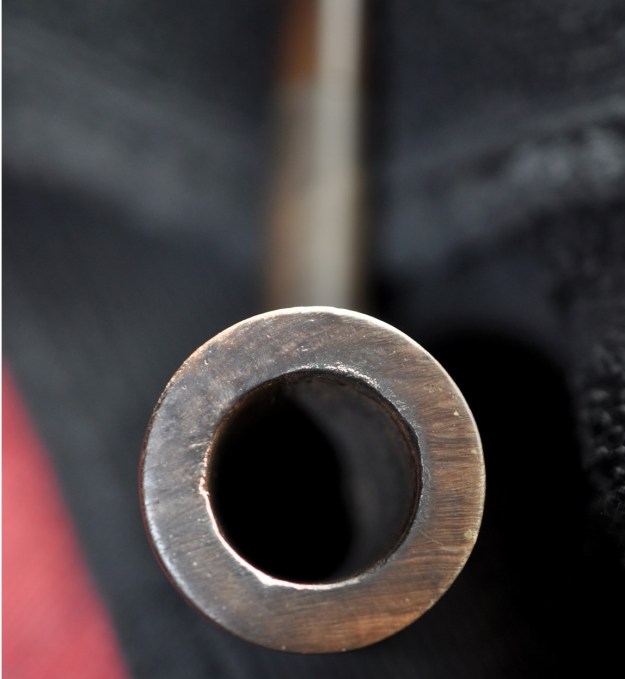
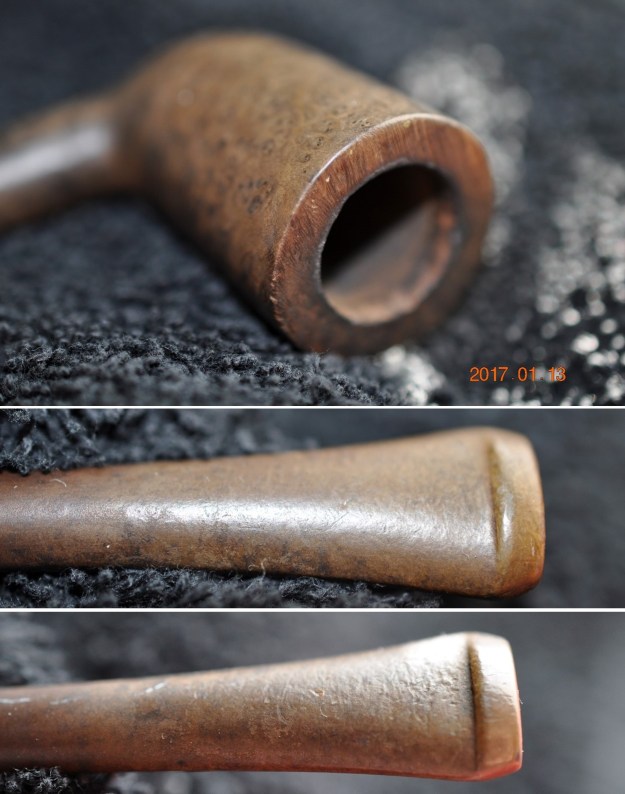
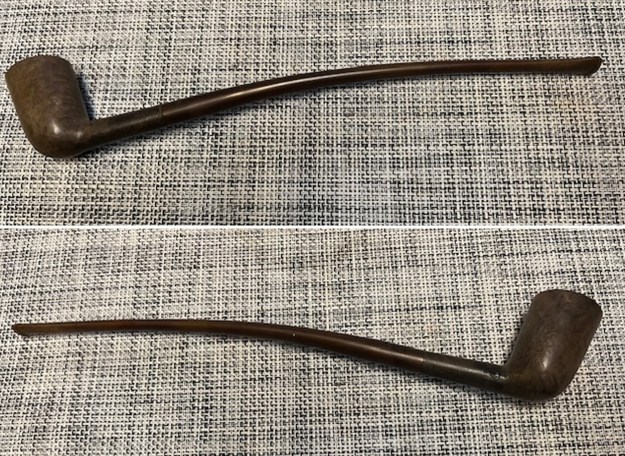
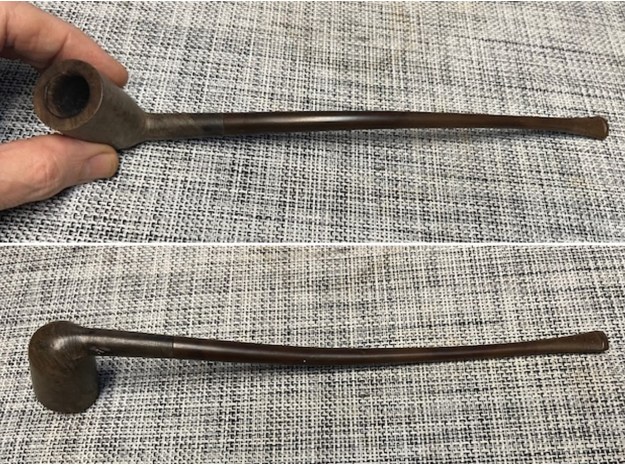
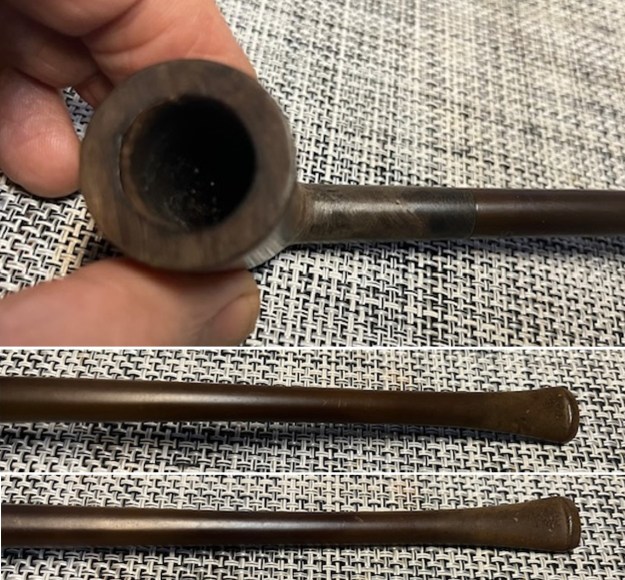
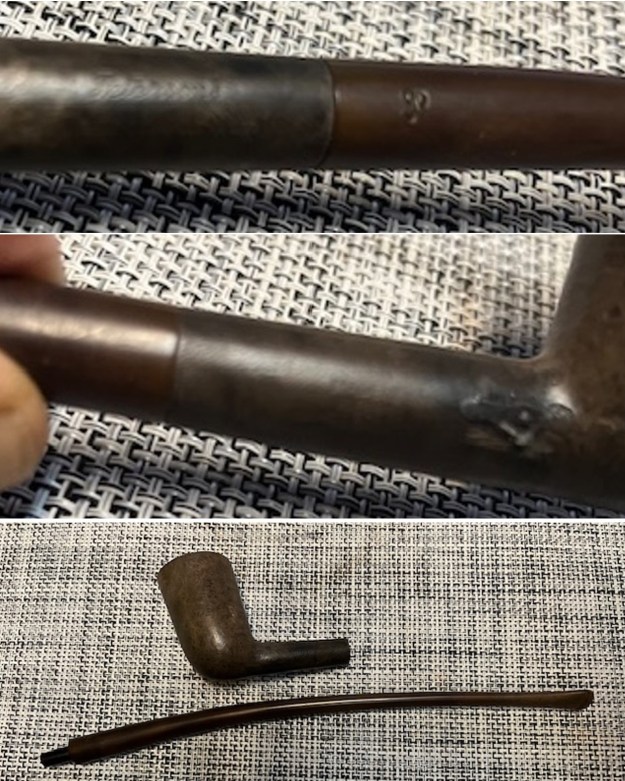
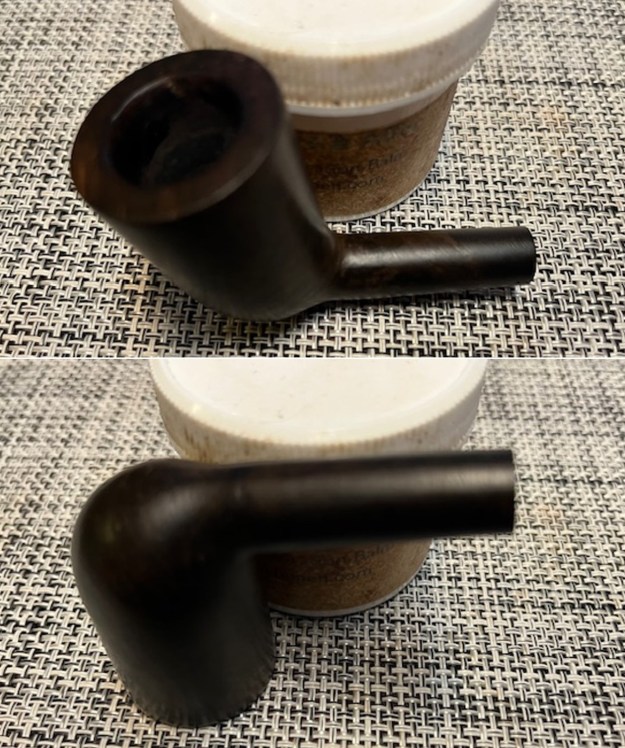
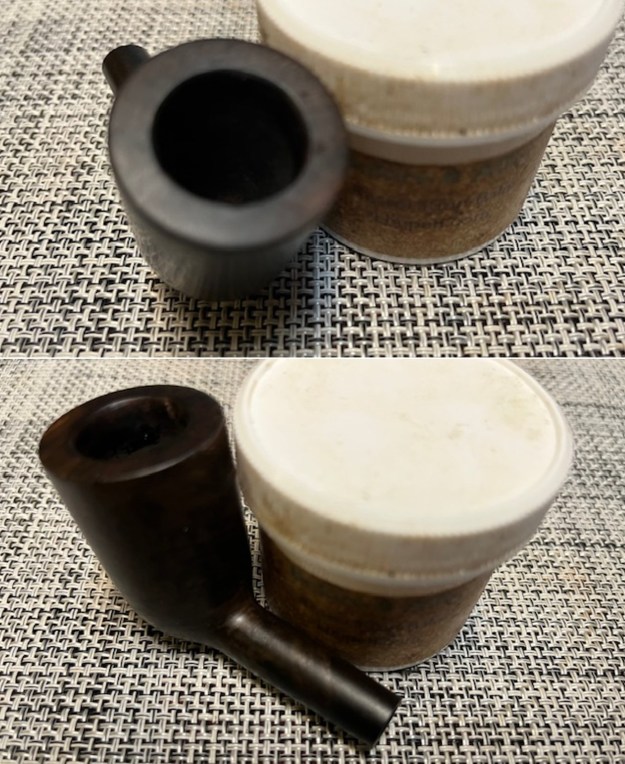
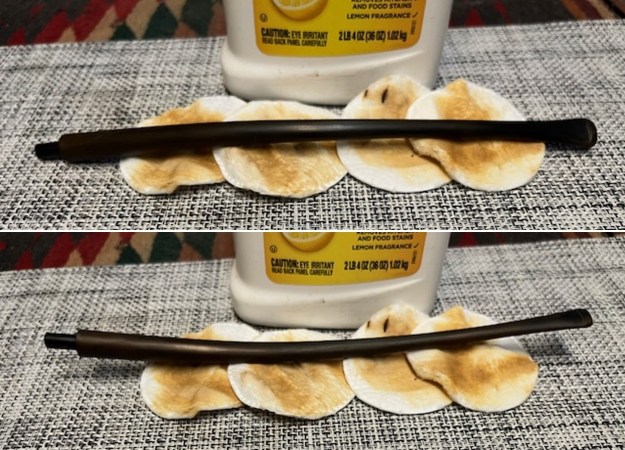
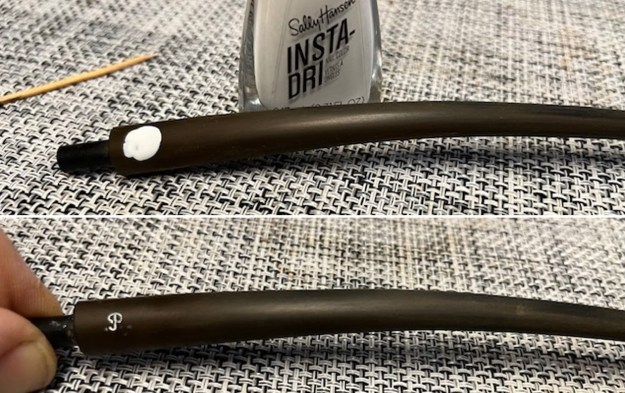
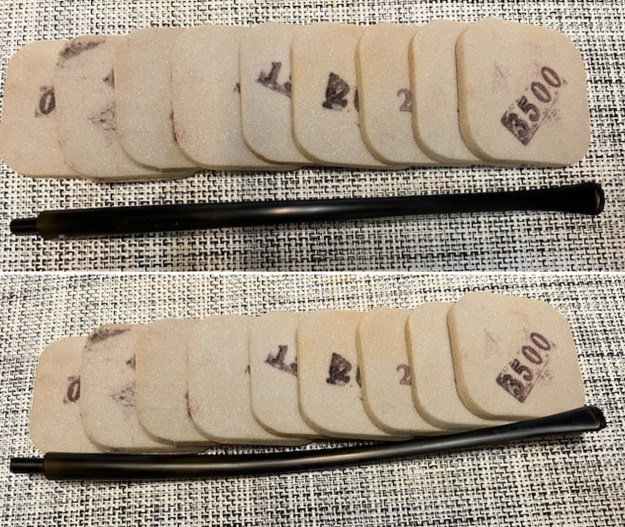
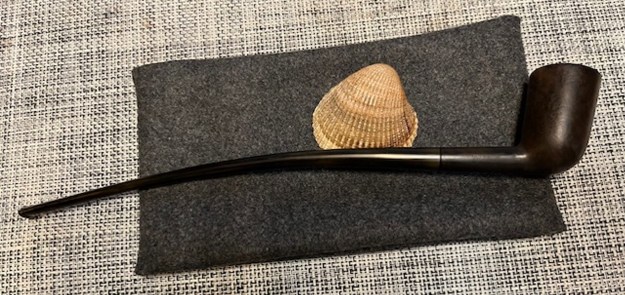
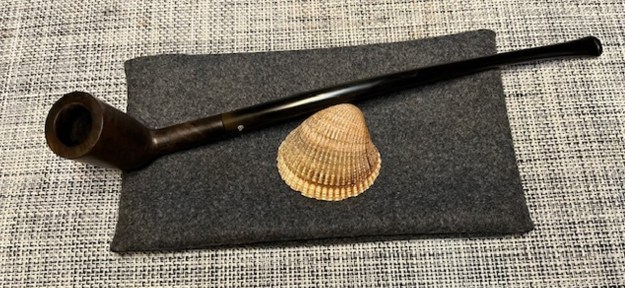
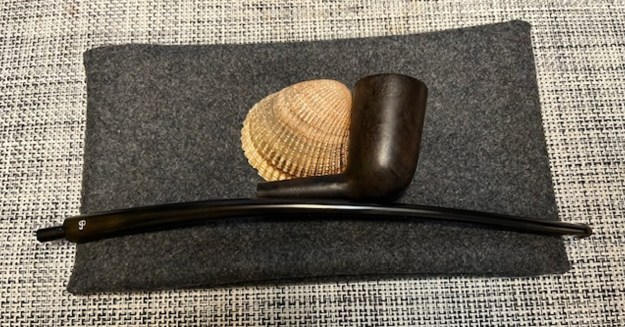
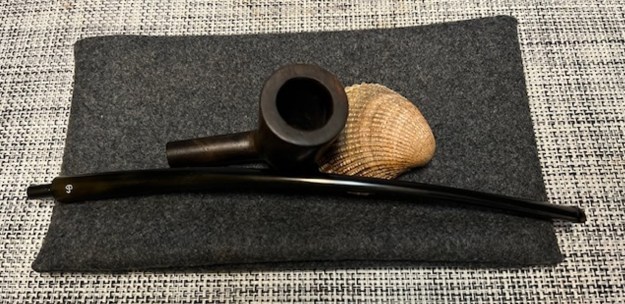
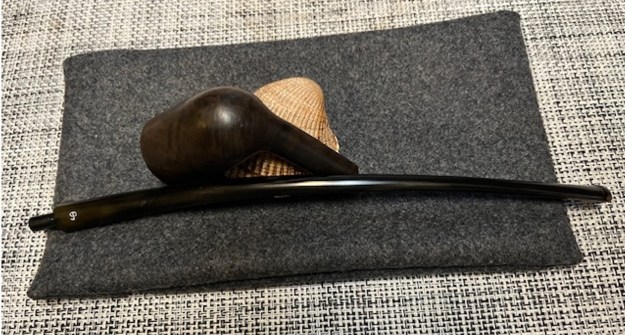
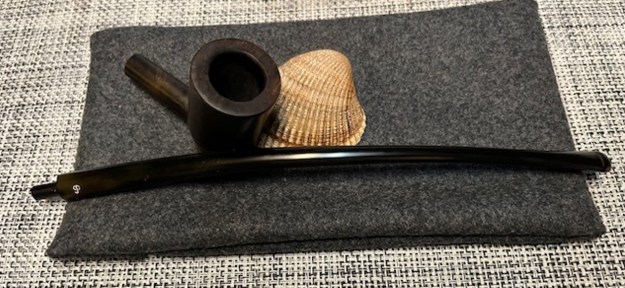
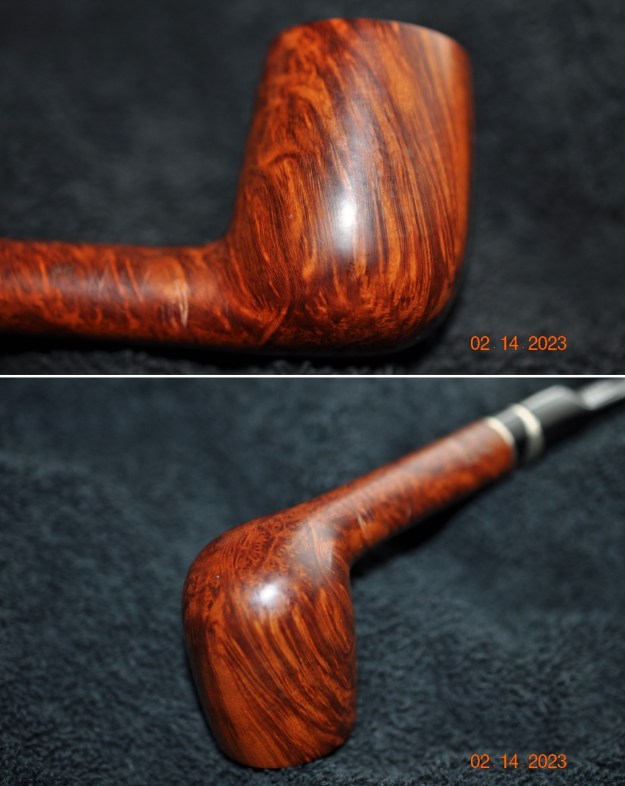
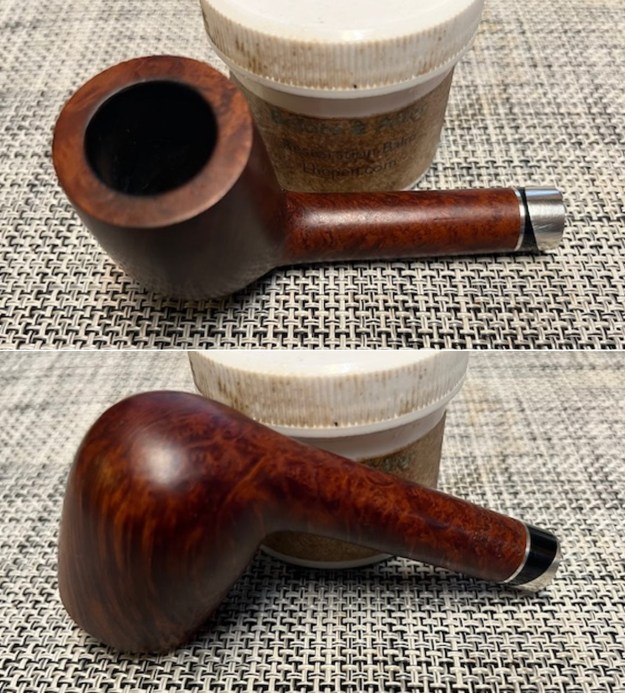
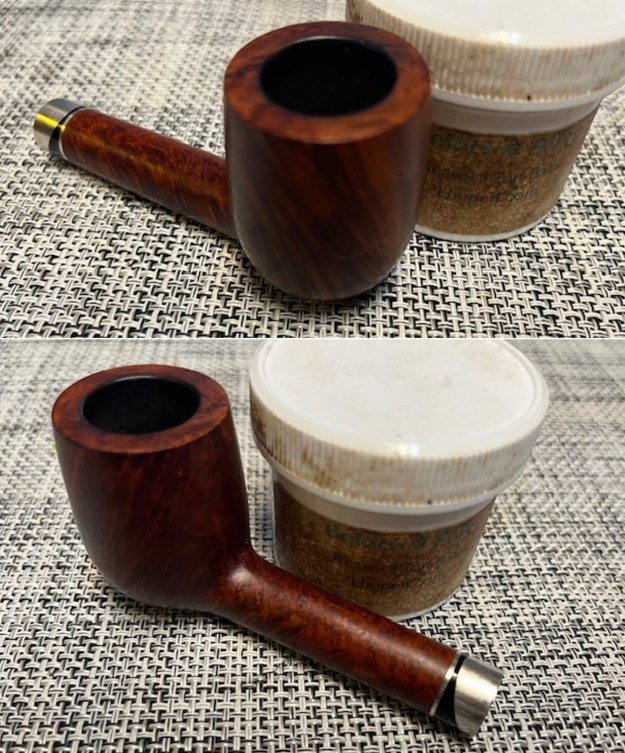
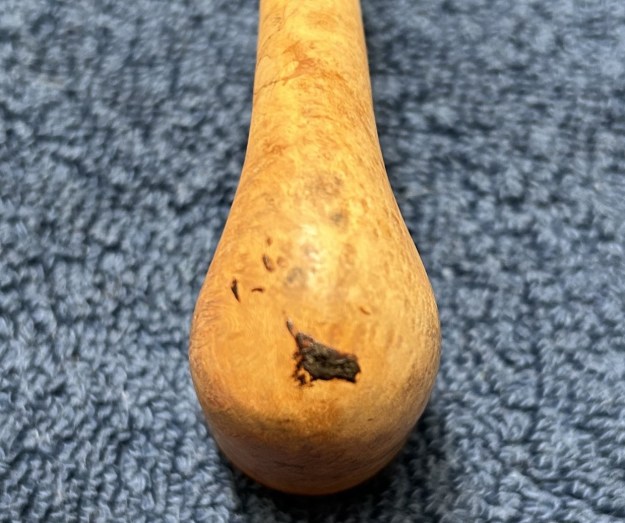
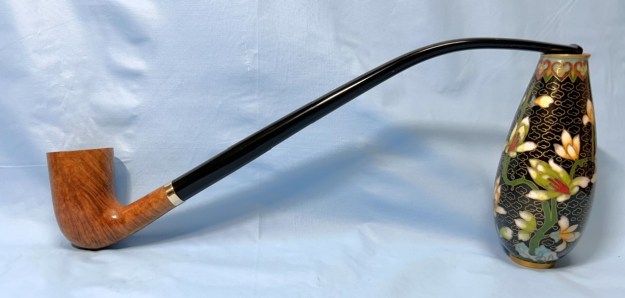
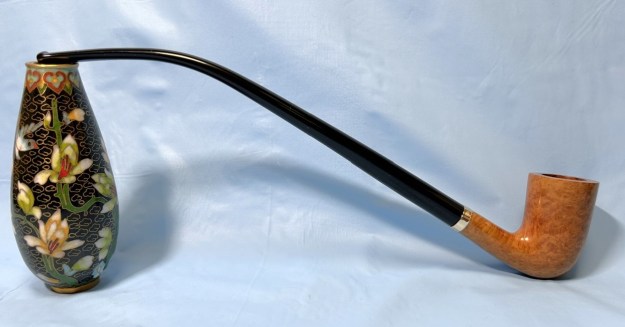
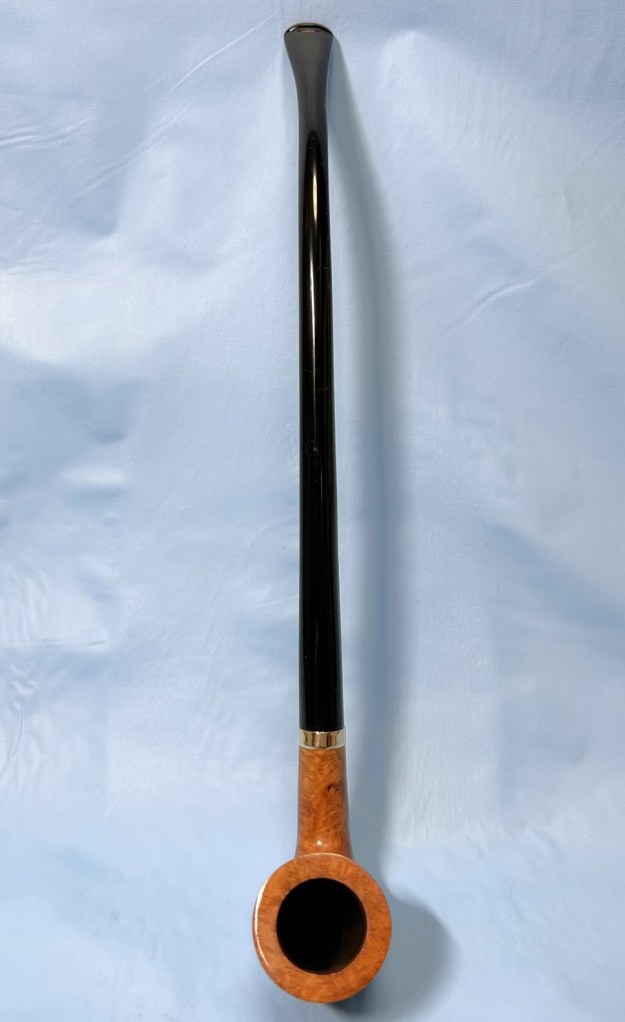
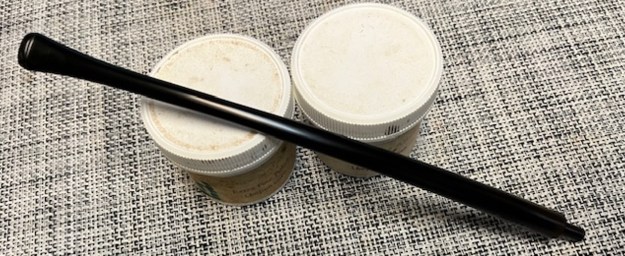
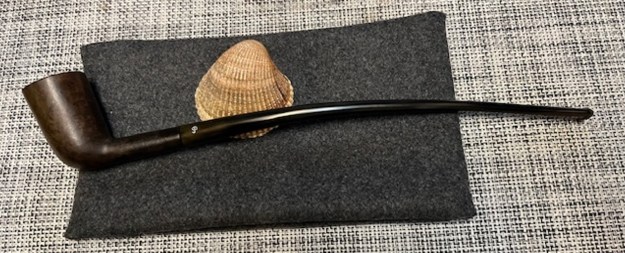
Next on the chopping block is a charming bent Dublin churchwarden (ten inches long), commissioned for a priest friend of mine. He expressly asked for a churchwarden (of course, he did). Fortunately, I had one on hand and I did a nifty restoration job on it. This is just a quick-and-dirty report for two reasons. First, I lost most of the photos I took of the restoration. Grrr. Second, this pipe has literally no markings on it, so I have no information to provide on its origins.The pipe was in decent condition. It had been well-smoked, but the bowl and shank were fairly clean. The bowl had notable cake on the inside and some lava on the rim. I felt that some burning was possibly there too. On the bottom of the stummel, there was a strange, hard, brown substance – possibly wood glue or putty. Not sure what it was, but it wasn’t supposed to be there! Similarly, the stem was relatively clean – not much oxidation to speak of, and what I would describe as “typical” tooth marks on the bit. The stem was slightly bent out of shape (in the yaw and roll axes) and would need to be corrected. The stem was first on my list. I wiped the outside down with Murphy’s Oil Soap on some cotton pads. I cleaned out the insides with lemon-infused isopropyl alcohol and some churchwarden pipe cleaners.
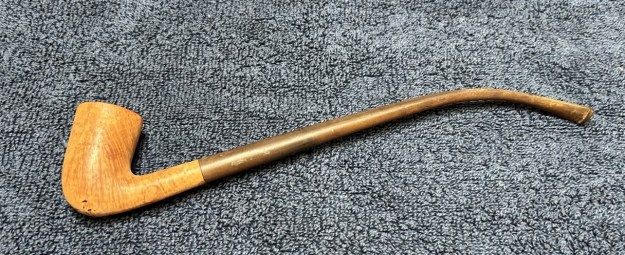
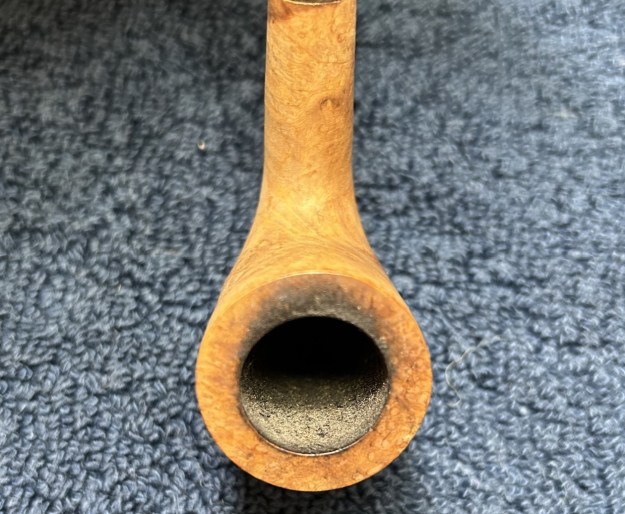
I then heated the stem with my heat gun and gently worked the twisted stem back into place. I have bent many stems before, but churchwardens always seem trickiest – perhaps because they’re so long. In the end, I got it looking just as it should.

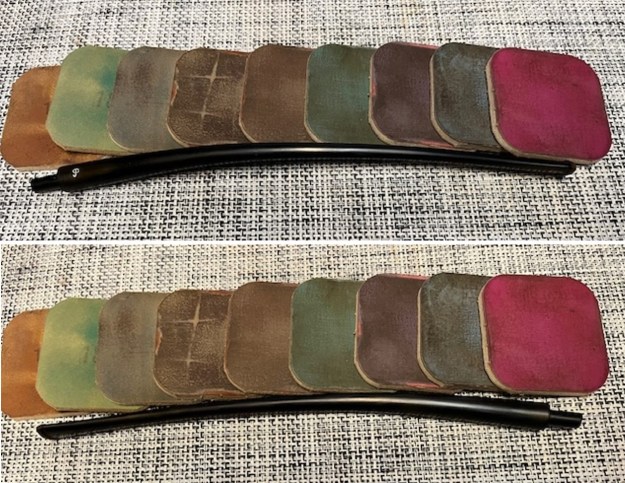
I scrubbed the stem with SoftScrub on some cotton pads. I built up the remaining marks on the stem with black cyanoacrylate adhesive and then cured it with the aid of some CA glue accelerator. I then carefully sanded the adhesive down with 220- and 400-grit sandpapers to meld seamlessly into the stem. I then used all nine Micromesh pads (1,500 through 12,000 grit) to bring out the lovely black lustre on the stem. I also used Obsidian Pipe Stem Oil in between each pad scrubbing (from 3,600 onward).

Now for the stummel. I reamed out the bowl to remove the built-up cake and followed that with 220-grit sandpaper taped to a dowel to eliminate as much as I could. I took the chamber down to bare briar, as I wanted to ensure there were no hidden flaws in the wall. Fortunately, there were none.

I then proceeded to clean out the insides of the shank with Q-tips, pipe cleaners, and lemon-infused isopropyl alcohol. There was quite a bit of filth inside this stummel and it took a fair amount of cotton to get it clean. I used cotton rounds and some Murphy’s Oil Soap to scrub the outside of the stummel. I followed that up by cleaning the insides of the stummel with some Castile soap and tube brushes.

Next, I decided to de-ghost the pipe in order to remove any lingering smells of the past. I thrust cotton balls into the bowl and the shank and saturated them with 99% isopropyl alcohol. I let the stummel sit overnight. This caused any remaining oils, tars and smells to leach out into the cotton. The bowl was nice and clean after this.

In order to safely remove the damage on the rim, I “topped” the pipe – that is to say, I gently and evenly sanded down the rim on a piece of 220-grit sandpaper. This effectively removed the damage, without altering the look of the pipe. I used some 220-grit sandpaper to remove the brown stuff on the bottom. No harm done. Then I sanded the stummel down with all nine Micromesh pads (1,500 through 12,000 grit).

Finally, I applied some Before & After Restoration Balm and buffed it with a microfiber cloth. During the restoration, I noticed some previously repaired damage to the end of the shank. The repair was sound but ugly, so I decided to add a charming band to the shank. I think it suits the pipe quite well and brings a bit of “bling”.

I then took the pipe to my bench polisher and buffed it with White Diamond and a few coats of carnauba wax. Wow – the pipe really looks lovely.

This churchwarden will suit my priest friend very well and I know that he will enjoy smoking it for many years to come. I hope you enjoyed reading the story of this pipe as much I as I did restoring it. If you are interested in more of my work, please follow me here on Steve’s website or email me directly at kenneth@knightsofthepipe.com. Thank you very much for reading and, as always, I welcome and encourage your comments.
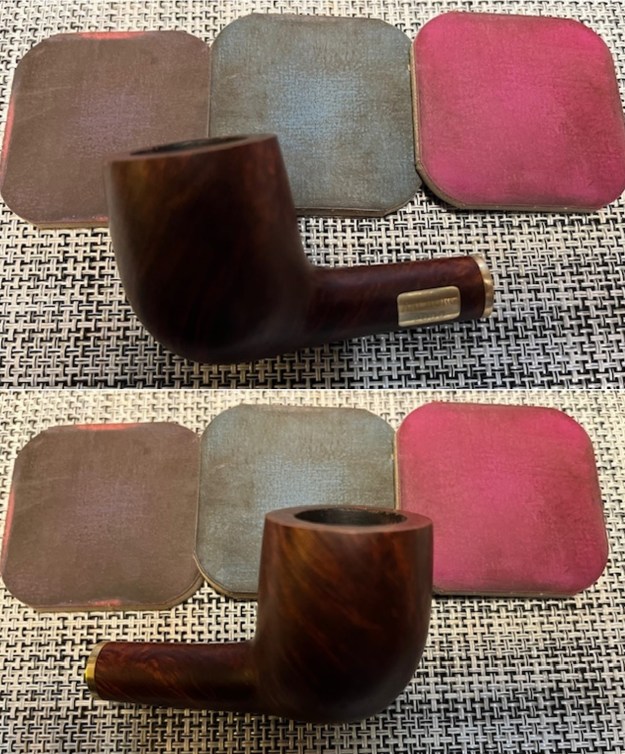
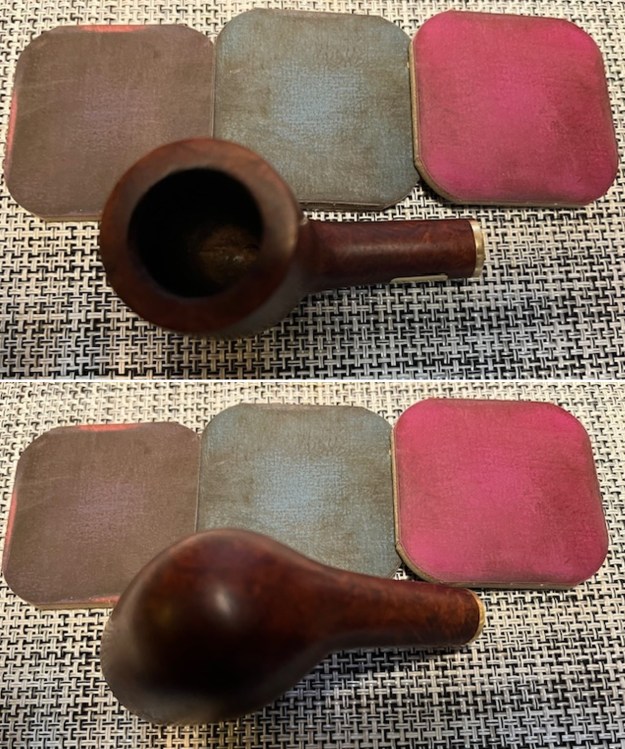
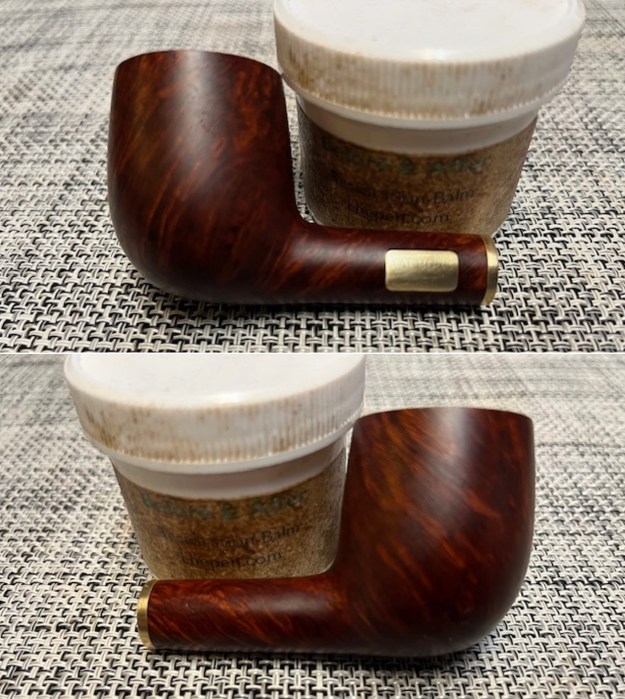
Restoring another City Pipe, a Stanwell Aalborg 2000 Billiard 54


Blog by Steve Laug

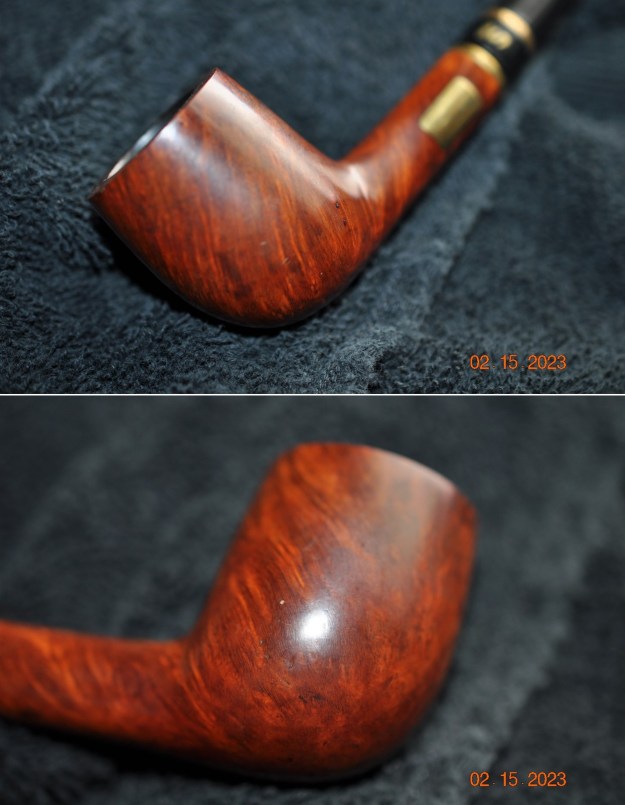
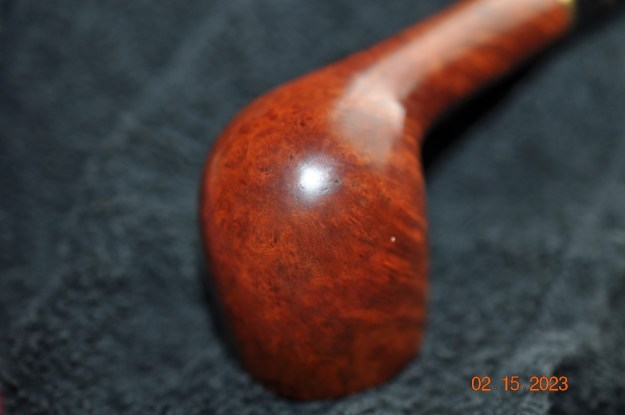
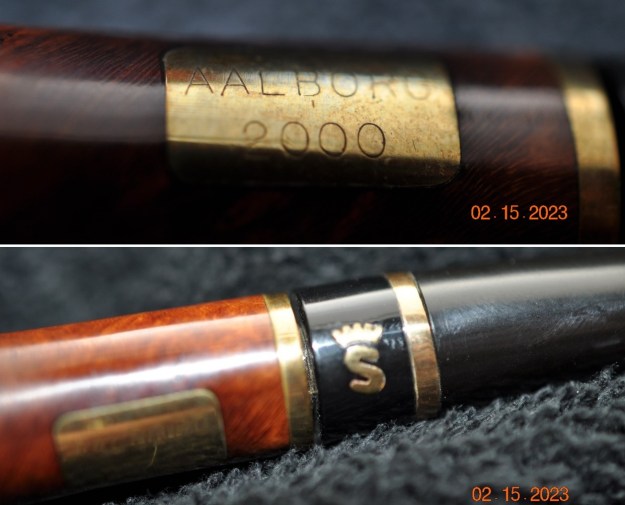
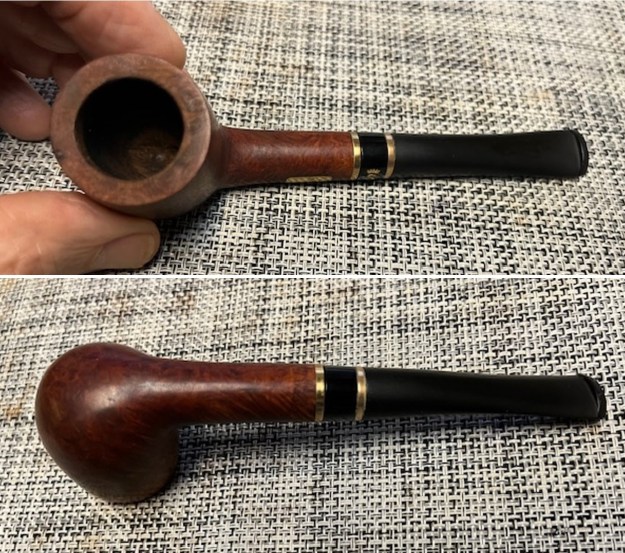
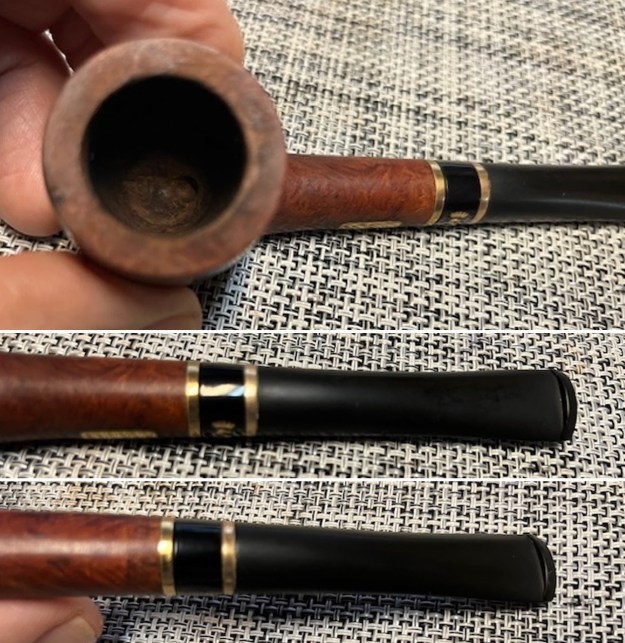
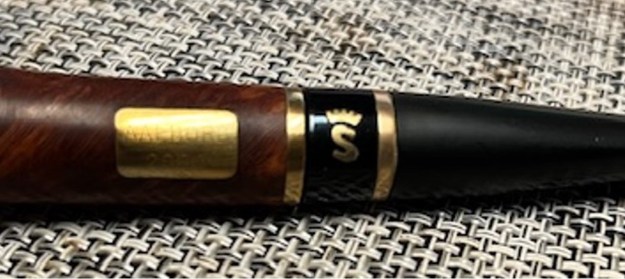
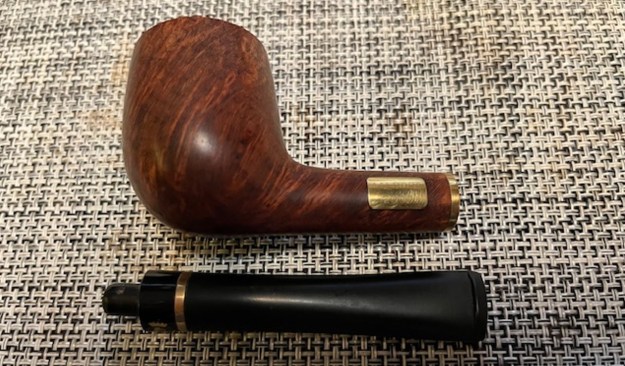
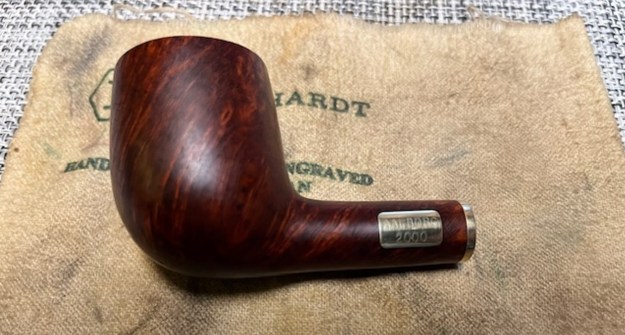
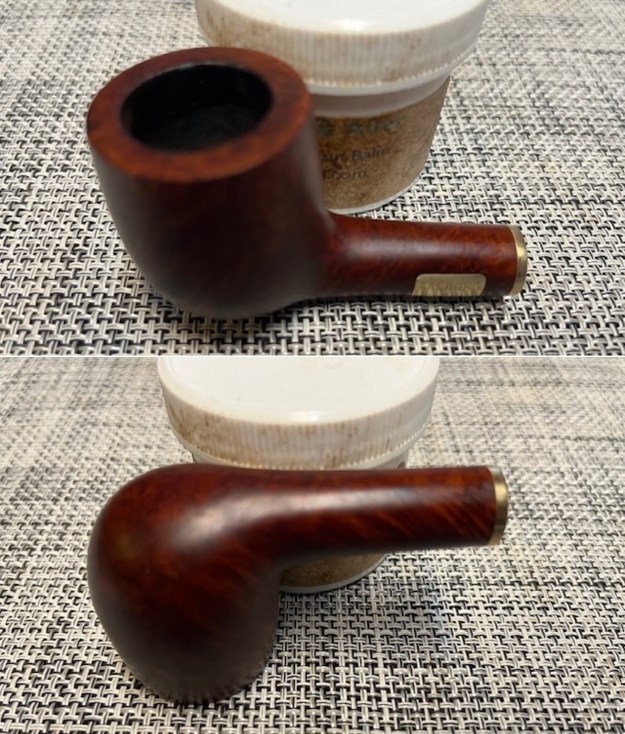
I moved on to work on another pipe. The next one I chose was another Stanwell in a Pipe Sock that came to us from our connection in Copenhagen, Denmark 01/26/2023. This is another one that might be your birth year pipe is you were born in 2001 when this Danish City Pipe was made. The stamping on the pipe was very clear and readable. On the topside of the shank is an engraved brass plate that reads Aalborg [over] 2000. On the right side of the shank it is stamped with a shape number 54 mid-shank. The stem had a brass Crowned “S” Stanwell logo inlaid on left side of the taper stem. The stem also has single brass band and an acrylic extension. There is also a band on the shank end. Together these bands sandwich the black acrylic space on the stem. The bowl had a moderate cake and there was some lava, dust and debris on the rim top and inner edges. The finish was in okay condition with oils and grime ground into the briar around the bowl sides. The vulcanite stem has light tooth marks on the top and underside next to the button. It showed a lot of promise through the grime. Jeff took photos of the pipe as he saw it at this stage of his clean up. The next photos of the rim and the shank show the condition of the pipe at its arrival in Idaho. You can see the cake in the bowl and the thick lava on the rim top and inner edge. The stem looked good with light marks on the top and underside at the button edge. Jeff took photos of the rich stain highlighting the grain on the sides and heel of the bowl. It really is a stunning piece of briar. The contrast stain really makes it stand out clearly. In the last photo of the heel of the bowl you can see the fill. It is solid and undamaged. The next photos show the stamping on the shank top and bottom. It is clear and readable as noted above. The stamping on the brass insert is clear and readable. He also captured the Brass Crown “S” Stanwell logo on the left side of the taper stem.I had spent a fair bit of time trying to figure out the Stanwell City pipes when I was working on the Esbjerg Canadian. I did a quick check and found nothing more. The best I can find is that they were made for a pipe show or a slow smoking competition in those particular cities. I have several of them here that I have to work on. I do know that Rødovre is another city in Denmark. Aalborg is another city there as well.
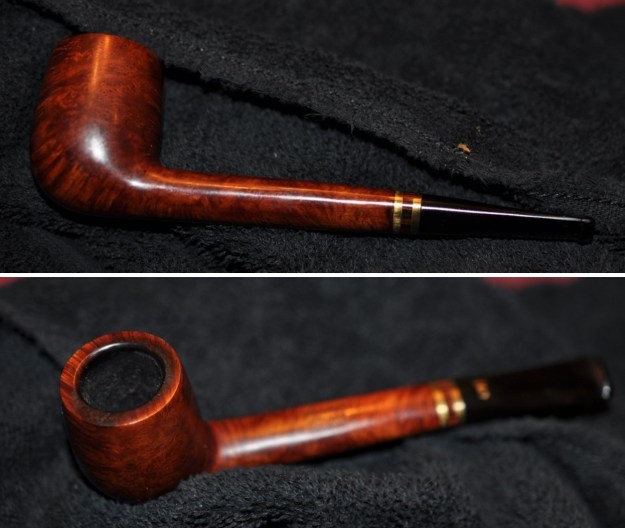
I had an idea about how to gather some information on the pipes. I thought that Jesper (a friend and blog reader) in Randers, Denmark perhaps would have information on the city pipes. I wrote him a message on FaceBook. That morning I read his reply. As usual he was extremely helpful. Thank you Jesper!

Hi Steve,

The city POY pipes were made (rather customized) for individual tobacco shows all over Denmark. The tobacconist chose a model and Stanwell would make them and do the engravings. So a Viborg 1995 might be a Bulldog while the Vejle 1995 is a Lovat.

I have no idea about how many tobacconists/cities did that but they were quite popular 20-30 years ago. When I worked at FF Pipes here in Randers around 200 we usually bought 3-4 dozens each year and they sold well for Christmas.

Cheers, Jesper

Thanks to Jesper, I now knew that the City POY pipes were customized for individual tobacco shows all over Denmark. The tobacconist would choose the model and Stanwell would to the do the engraving on them. I also learned that they were quite popular 20-30 year ago so I was dealing with a pipe at least that old.

I turned to Pipedia and looked at the Shape Numbers and Designers article to see if there were any specifics (https://pipedia.org/wiki/Stanwell_Shape_Numbers_and_Designers) that could help. I found that the shape number listed two shapes there – a Freehand and a Lovat. This did not describe this shape at all. There was nothing on a Billiard. Now it was time to work on this interesting pipe with a great designer attached and a unique and fascinating pipe history also attached.

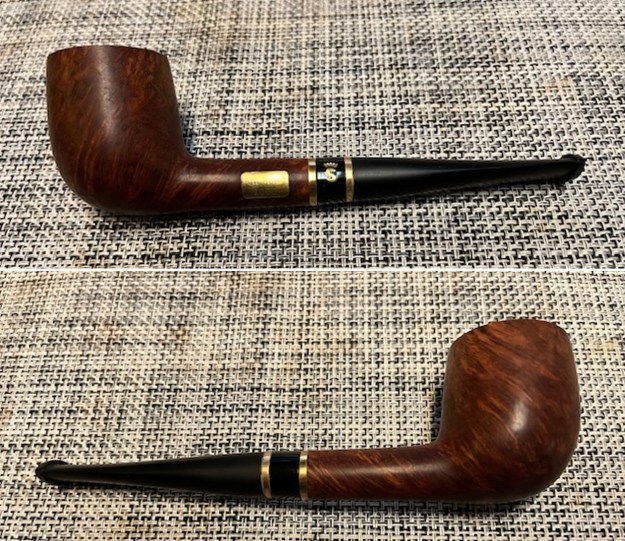
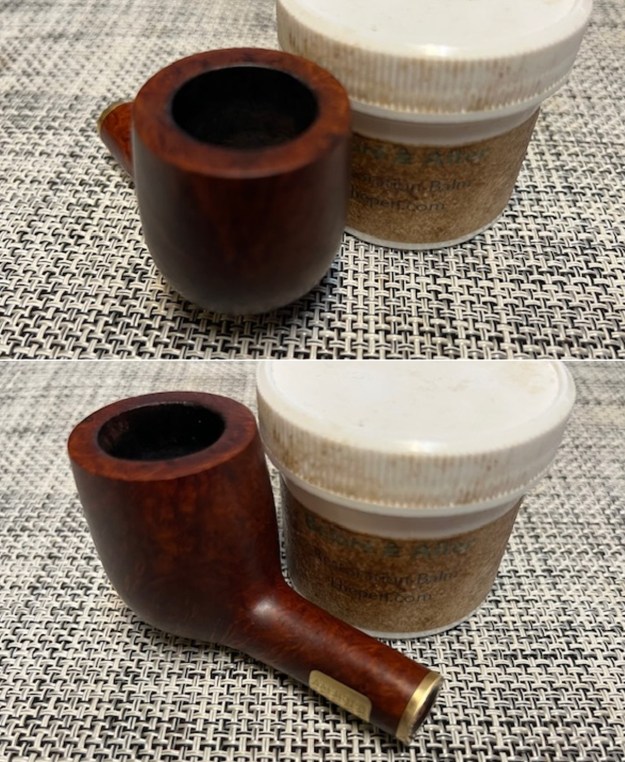
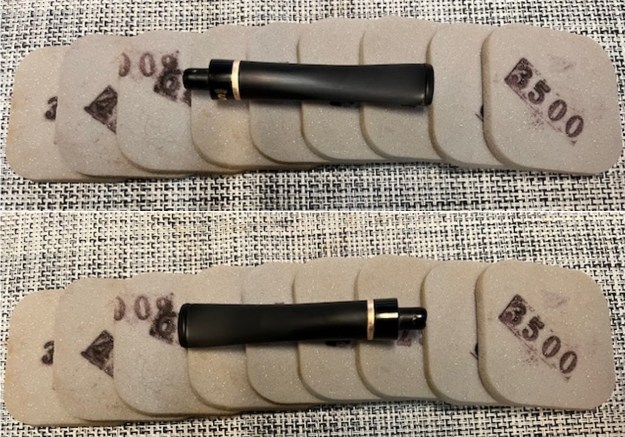
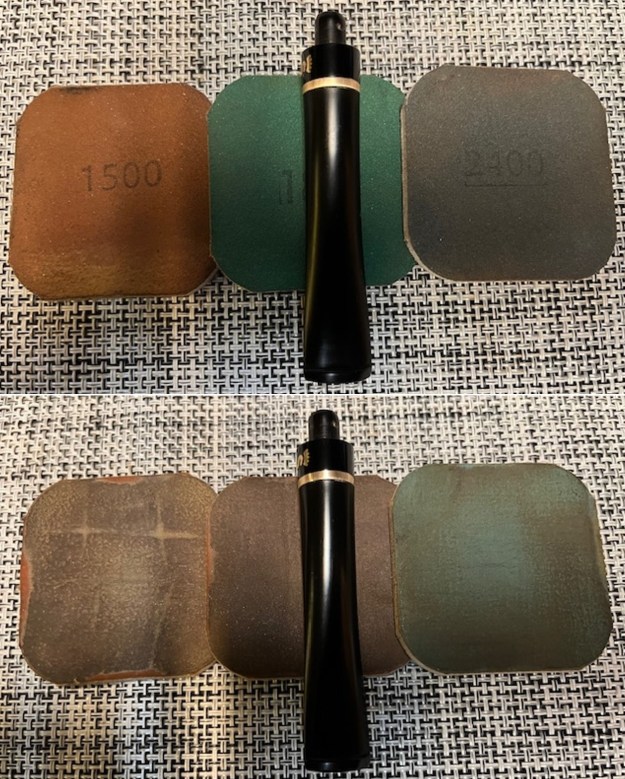
Jeff had done a great job cleaning up the pipe as usual. He reamed the pipe with a PipNet reamer and cut back the cake back to the bare briar. He cleaned up the walls with a Savinelli Fitsall Pipe Knife. He scrubbed the interior of the bowl and shank with pipe cleaners, cotton swabs and alcohol to remove the tars and oils. He scrubbed the exterior of the pipe with Murphy’s Oil Soap and a tooth brush to remove the grime from the finish. He worked on the rim top lava and darkening with the soap and tooth brush. He scrubbed the inside of the stem with alcohol and pipe cleaners. He scrubbed the exterior with Soft Scrub and then soaked it in Briarville’s Pipe Stem Deoxidizer. He washed it off with warm water to remove the Deoxidizer. The pipe looked far better when it arrived. I took photos of the bowl and rim top as well as the stem to show how clean they were. You can see that rim top and edges look very good. There is some darker spots on the rim top that should come off with polishing. The stem is clean and the tooth and chatter on both sides ahead of the button is very light.I took photos of the stamping on the sides of the shank and on the brass plaquette. The stamping is clear and readable though hard to capture with the reflection. The stamping on the right side of the shank is a bit faint but readable. With the stem removed the pipe looked quite nice and you can see the band and stem extension.I started my work on the pipe by polishing the briar with 1500-12000 grit micromesh sanding pads. I wiped the bowl down after each sanding pad with a damp cloth. I polished the brass plaquette with a jewellers cloth to restore the shine and remove the tarnish. It really glows now.I rubbed the briar down with Before & After Restoration Balm. I worked it into the briar with my fingertips. The product works to clean, enliven and preserve the briar. I let it sit for 10 minutes while I worked on the stem. After the time passed I buffed it with a cotton cloth to deepen the shine. The briar really comes alive with the balm. I set the bowl aside and turned my attention to the stem. I sanded out the tooth marks and chatter on the vulcanite stem surface near the button with a new product I am using. I ordered a set of 2 inch sanding pads for 320-3500 grit sanding pads. They work amazingly well and are easy to manage and sand close to the sharp edge of the button.I polished the stem with micromesh sanding pads – dry sanding with 1500-12000 grit pads. I wiped the stem down after each sanding pad with Obsidian Oil. I polished it with Before & After Pipe Stem Polish – both Fine and Extra Fine. I gave it a coat of Obsidian Pipe Stem Oil. I am excited to put the finishing touches on this 2000 Stanwell City Pipe Aalborg Made in Denmark Billiard as it is a beauty. I put the pipe back together and buffed it with Blue Diamond on the buffing wheel. I gave the bowl and the stem multiple coats of carnauba wax. I buffed the pipe with a clean buffing pad to raise the shine and hand buffed it with microfiber cloth to deepen the shine. It is fun to see what the polished bowl looks like with the brass plaquette and the polished vulcanite stem. This Stanwell Made in Denmark Aalborg 2000 Billiard 54 is nice looking and the pipe feels great in my hand. It is light and well balanced. Have a look at it with the photos below. The dimensions are Length: 5 ¾ inches, Height: 1 ½ inches, Outside diameter of the bowl: 1 ¼ inches, Chamber diameter: ¾ of an inch. The weight of the pipe is 1.20 ounces/34 grams. It is a beautiful pipe and one that I will be putting in the Danish Pipemaker Section on the rebornpipes store. Thanks for walking through the cleanup with me as I worked over this pipe.

As always, I encourage your questions and comments as you read the blog. Thanks to each of you who are reading this blog. Remember we are not pipe owners; we are pipe men and women who hold our pipes in trust until they pass on into the trust of those who follow us. 

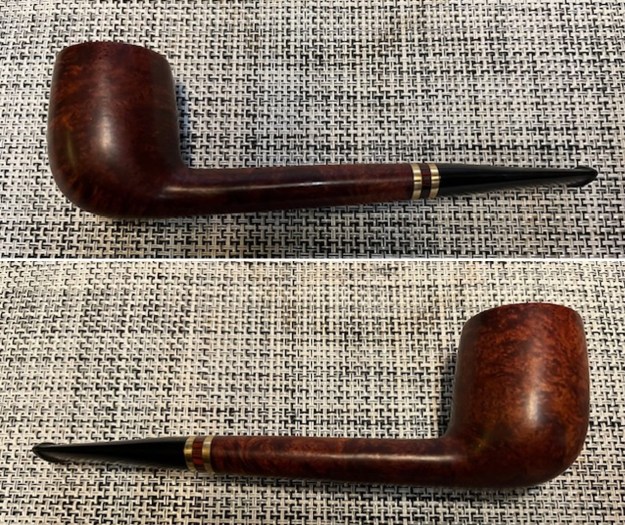
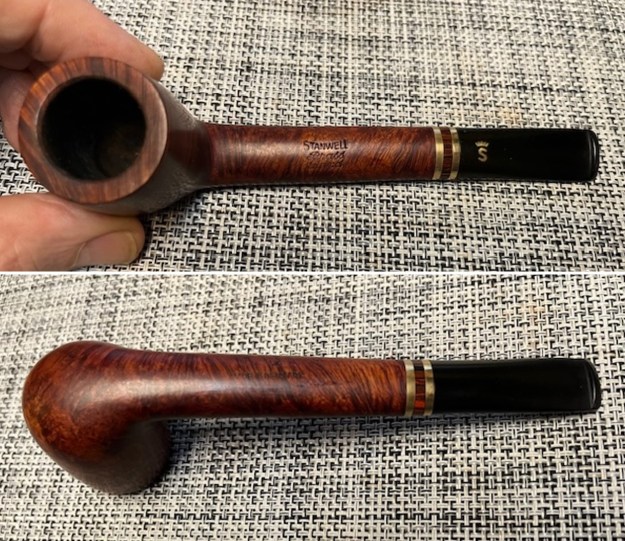
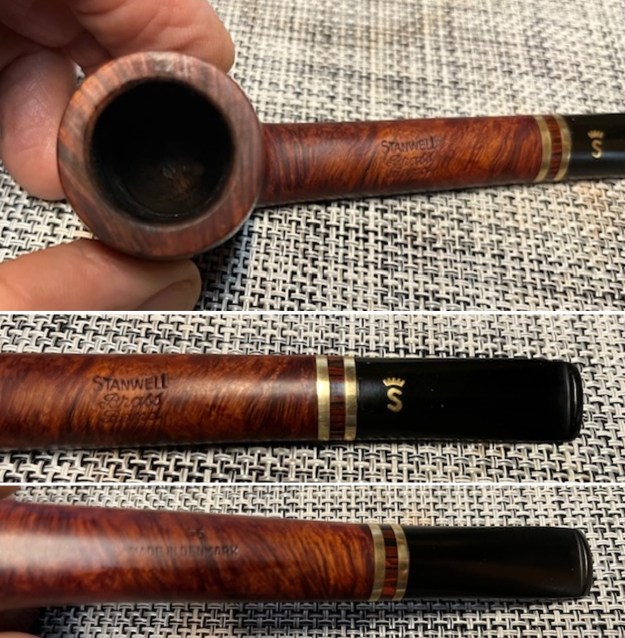
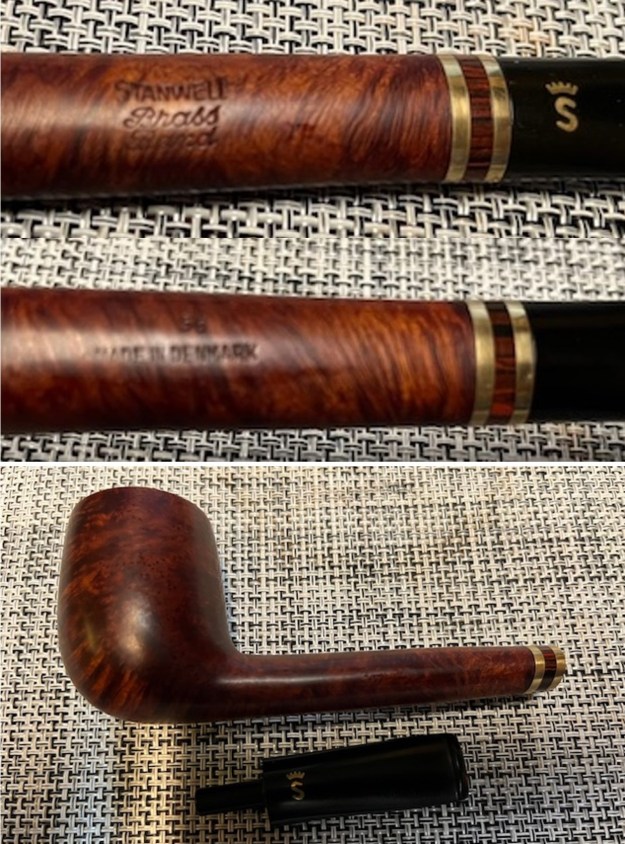
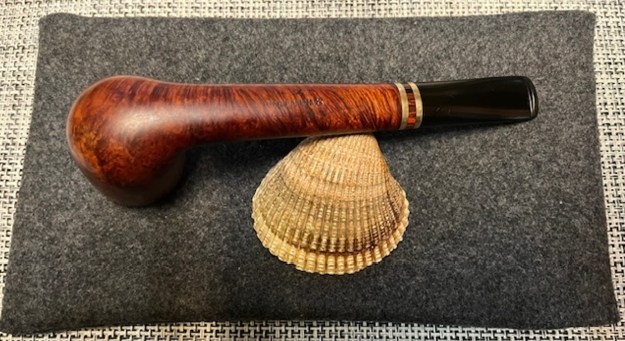
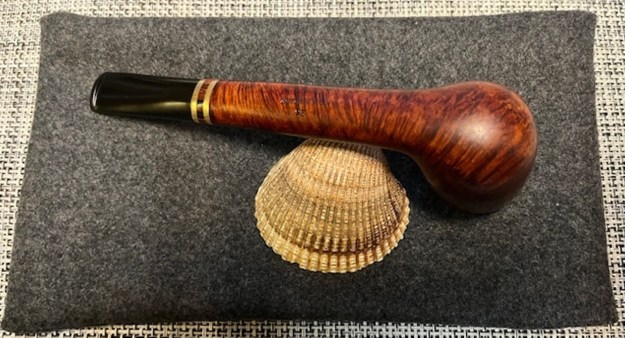
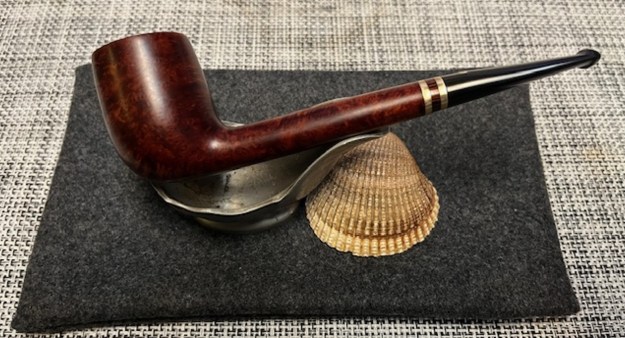
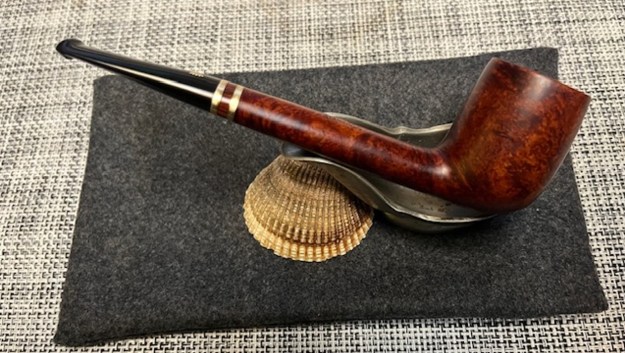
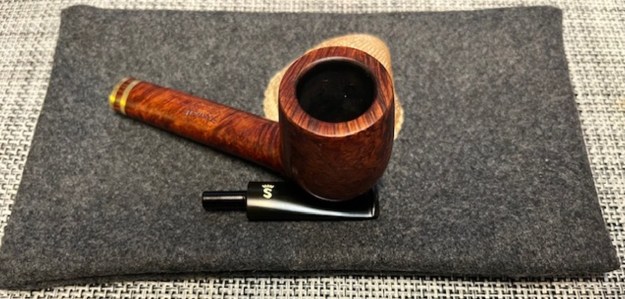
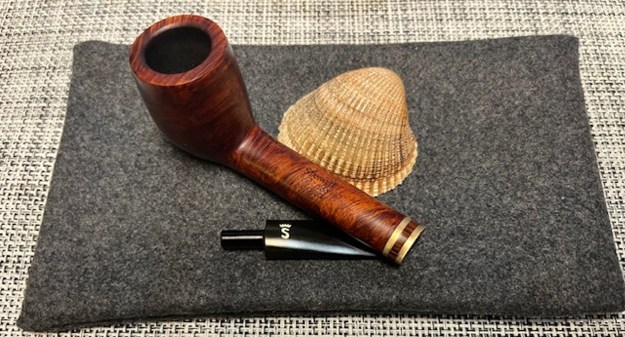
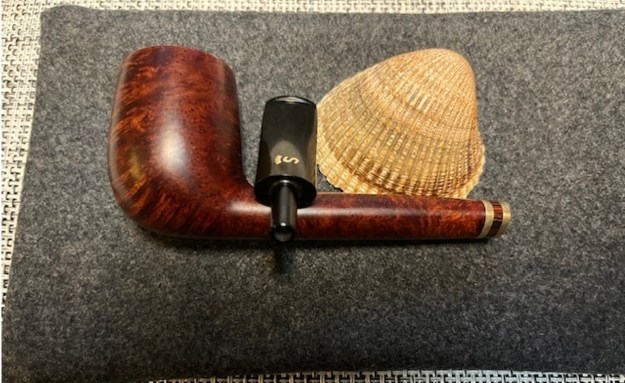
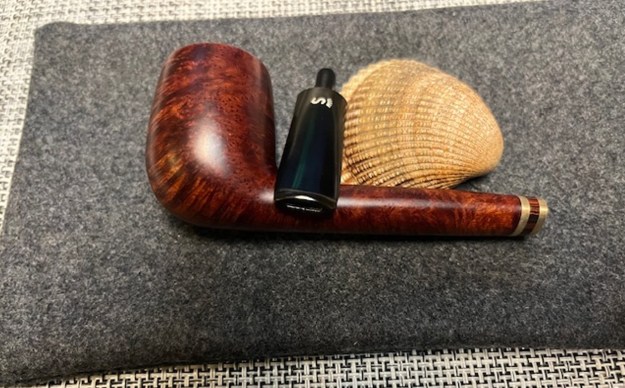
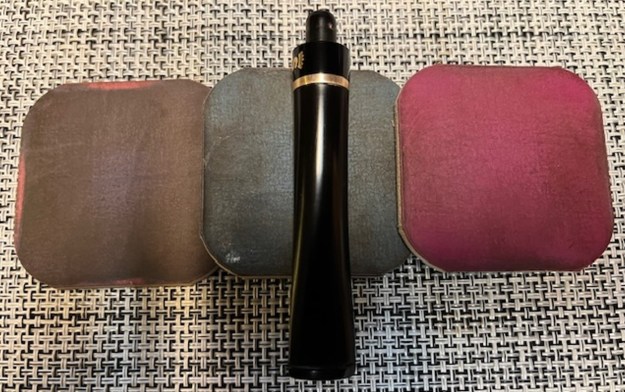
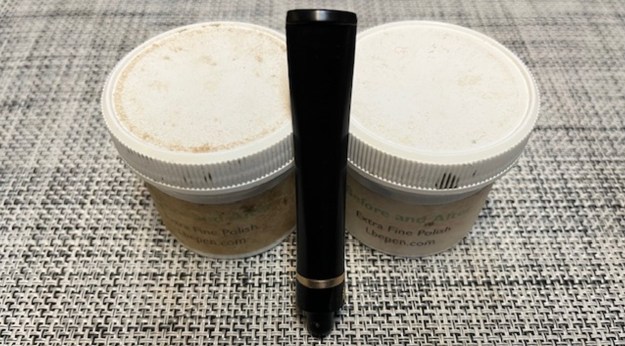
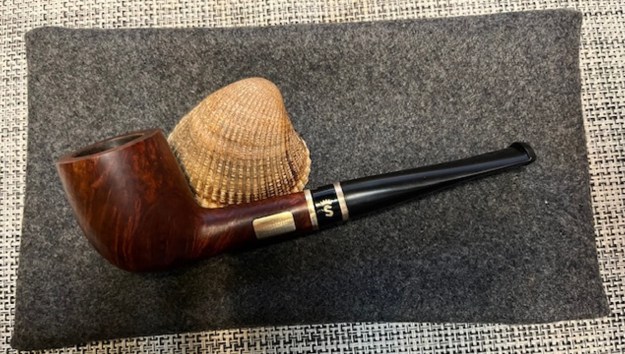
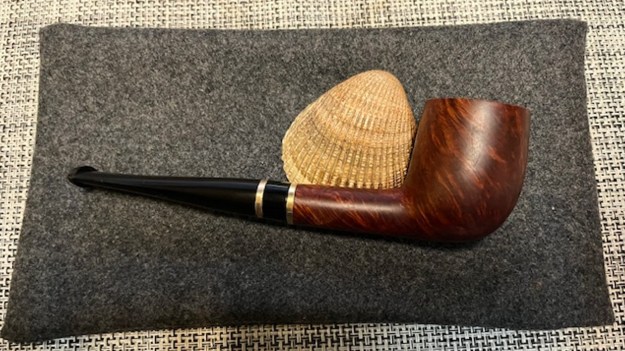
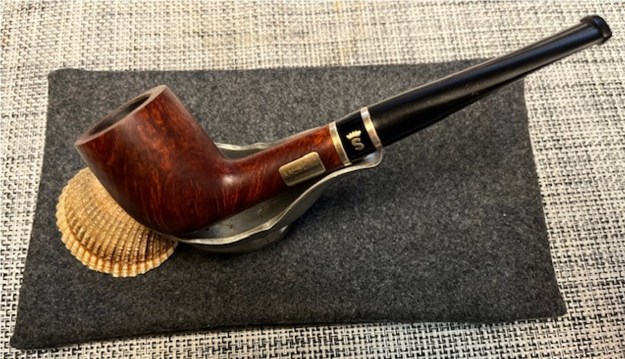
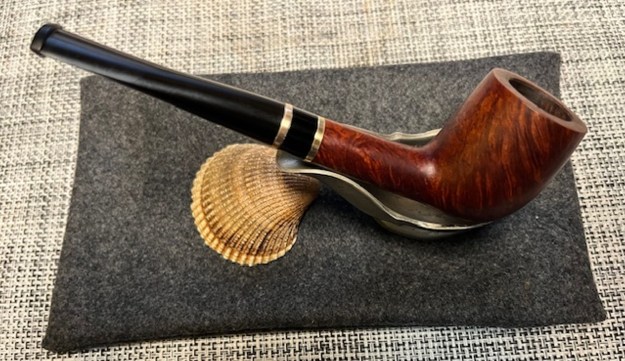
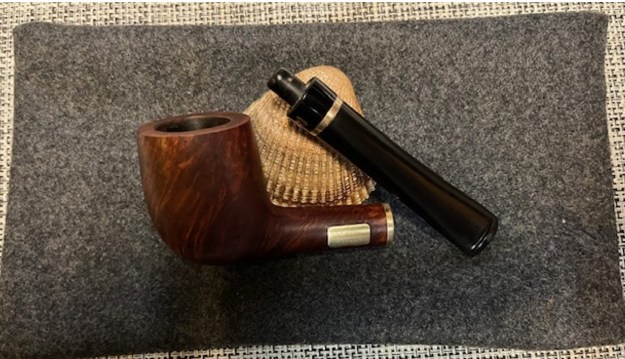
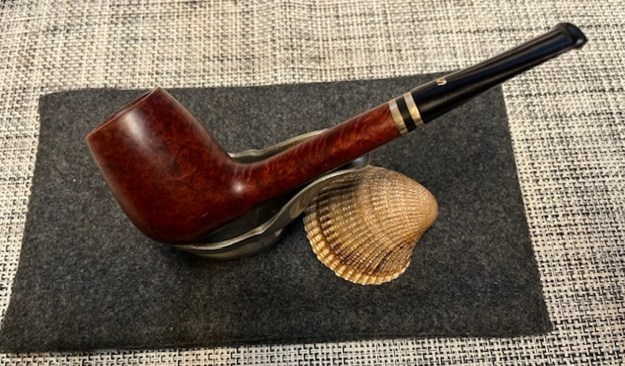
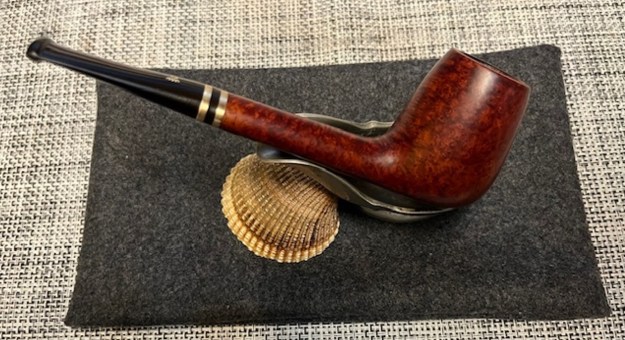
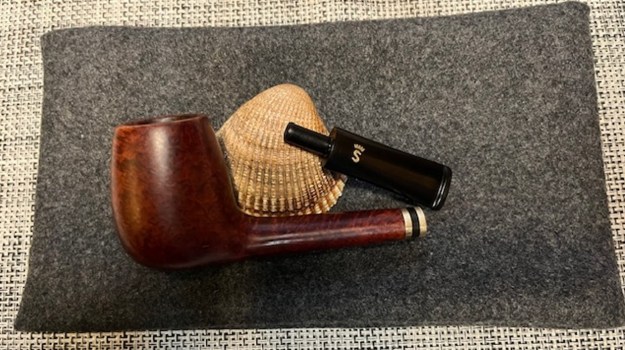
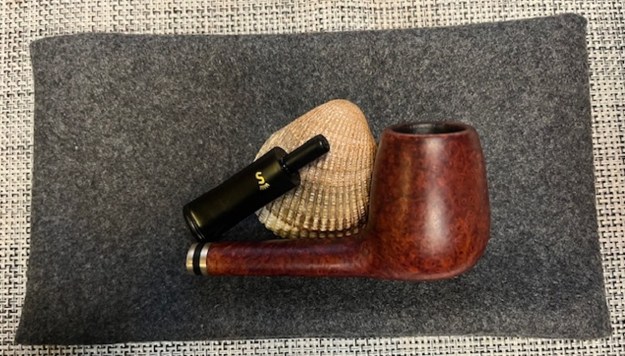
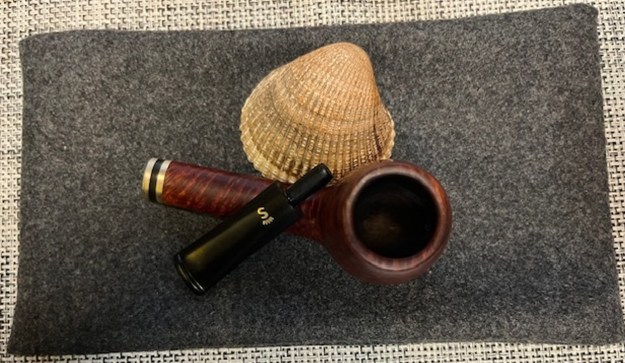
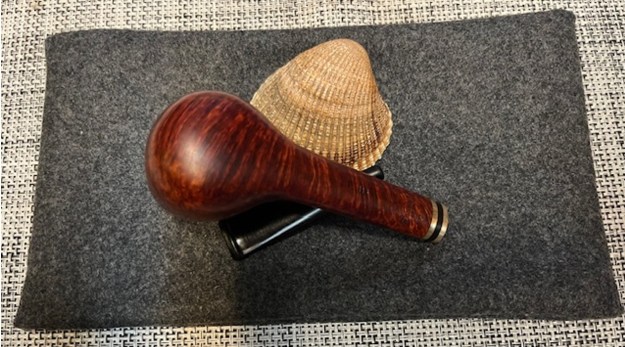
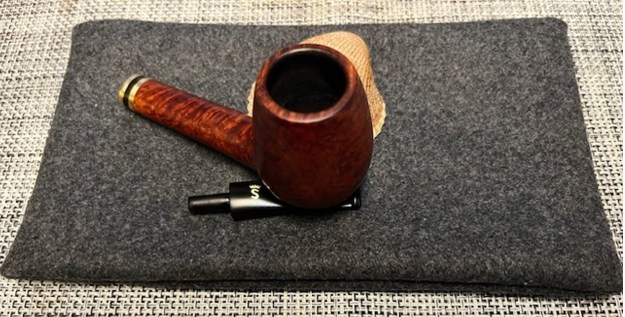
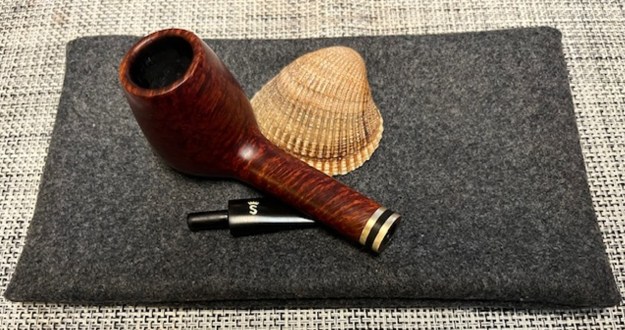
A New Life for a Stanwell Brass Band 113 Brandy Canadian


Blog by Steve Laug

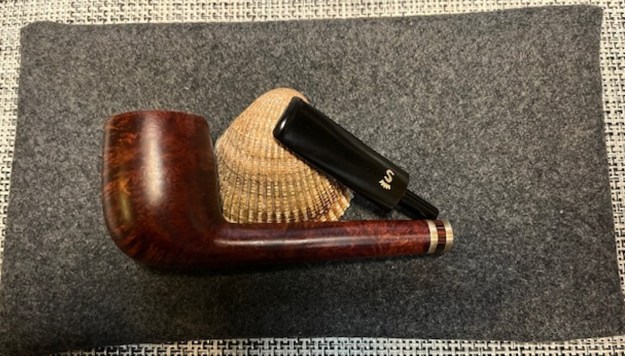
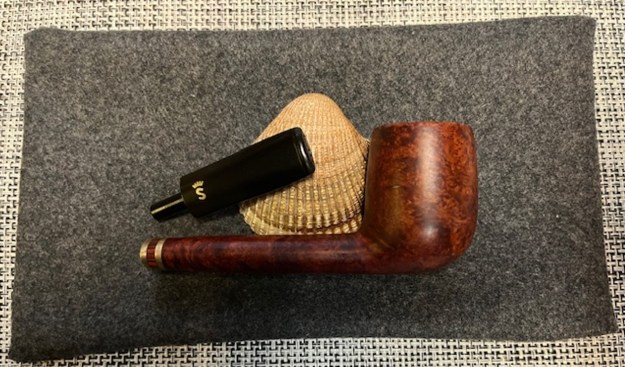
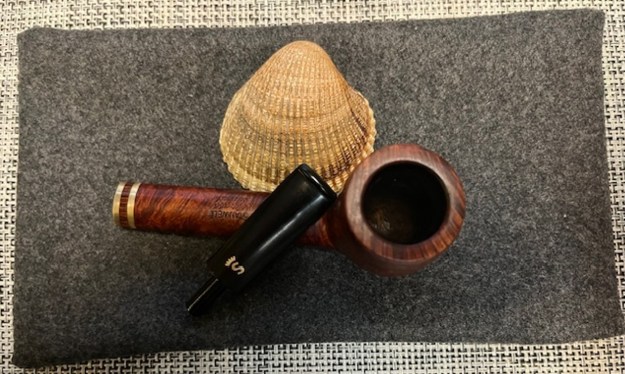
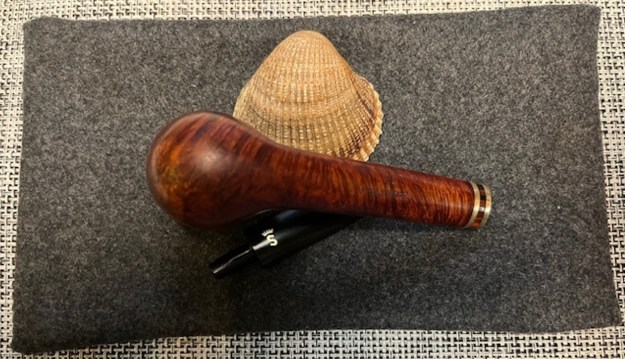
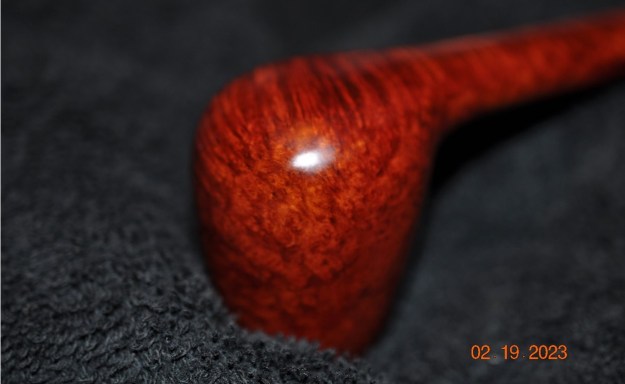
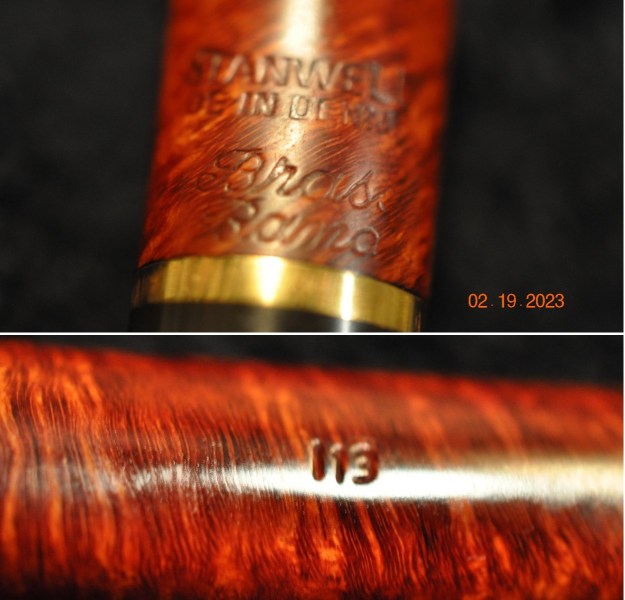
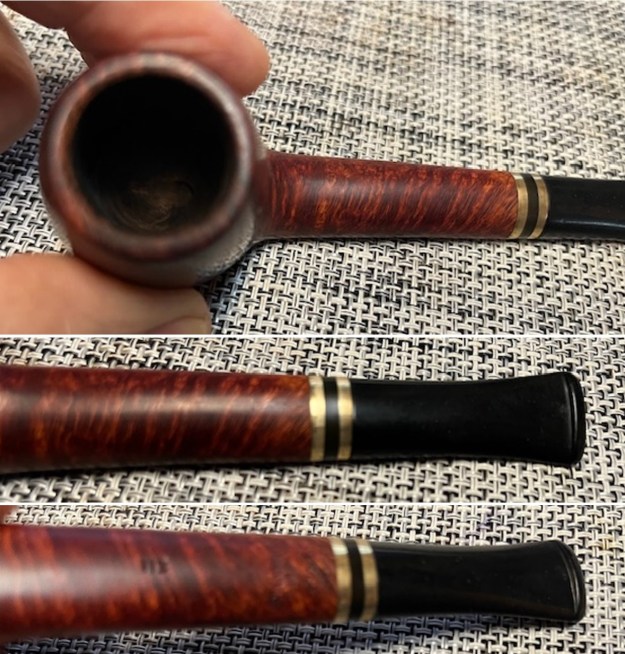
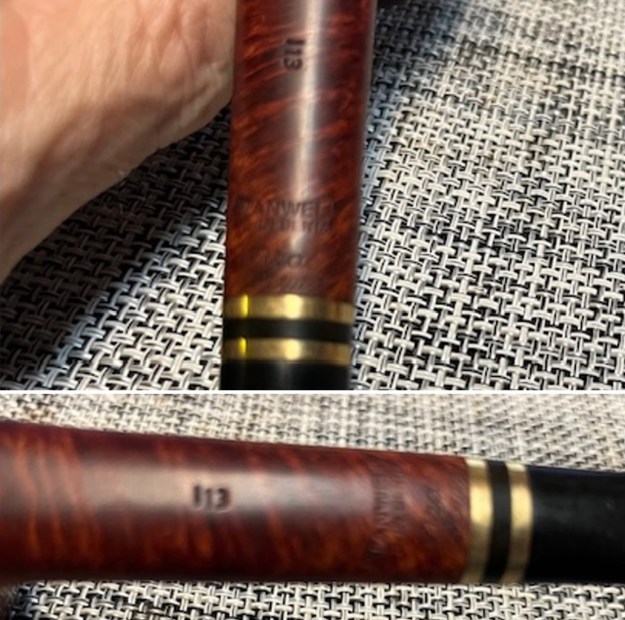
I moved on to work on another pipe. The next one I chose was another Stanwell that came to us from our connection in Copenhagen, Denmark 01/26/2023. The stamping on the pipe was very clear and readable. On the underside of the shank it is stamped with a shape number 113 mid-shank. Next to the shank/stem joint it reads Stanwell [over] Made in Denmark [over] Brass Band. The taper stem did not have the logo but looked to be original (odds are it is a replacement stem). The bowl had a moderate cake and there was some lava, dust and debris on the rim top and inner edges. The finish was in okay condition with oils and grime ground into the briar around the bowl sides. The taper stem was vulcanite. It had some light oxidation around the stem. There were light tooth marks on the top and underside next to the button. It showed a lot of promise through the grime. Jeff took photos of the pipe as he saw it at this stage of his clean up. The next photos of the rim and the shank show the condition of the pipe at its arrival in Idaho. You can see the cake in the bowl and the lava on the rim top and inner edge. The stem looked good with light marks on the top and underside at the button edge. Jeff took photos of the rich stain highlighting the grain on the sides and heel of the bowl. It really is a stunning piece of briar. The contrast stain really makes it stand out clearly. The next photos show the stamping on the underside of the shank. It is clear and readable as noted above.Before I started my work on the pipe I wanted to see if I could find any information that would help me get a sense of the line. I turned to Pipephil to see if there was any listing on the Brass Band Line (http://pipephil.eu/logos/en/logo-stanwell.html). There was nothing listed.

I then turned to Pipedia (https://pipedia.org/wiki/Stanwell) for more information. The article is great and gives a lot of history on the brand. There was also a catalogue page courtesy of Doug Valitchka that showed the line. I have included that below.I turned to Pipedia and looked at the Shape Numbers and Designers article to see if there were any specifics (https://pipedia.org/wiki/Stanwell_Shape_Numbers_and_Designers) that could help. This is what I found there. The shape number 113 is designated as a Canadian with conical bowl. Now it was time to work on the pipe.

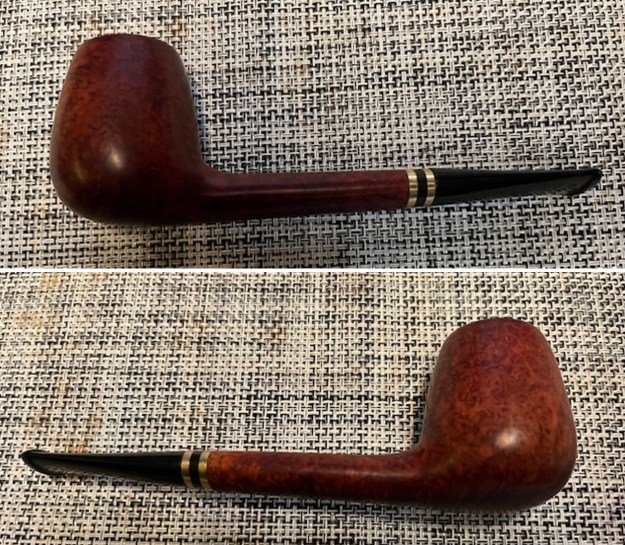
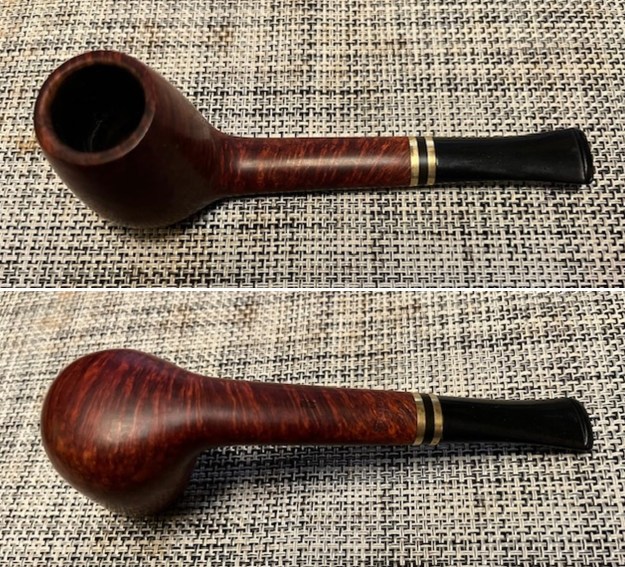
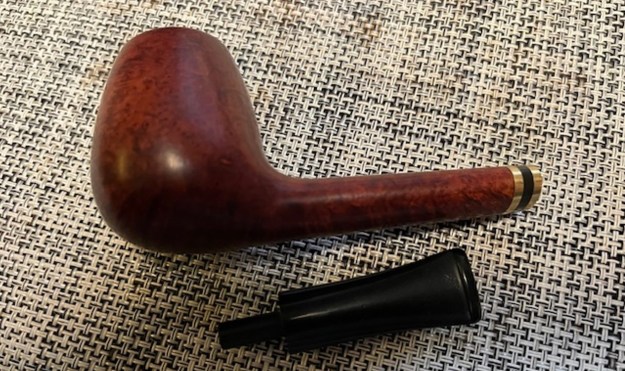
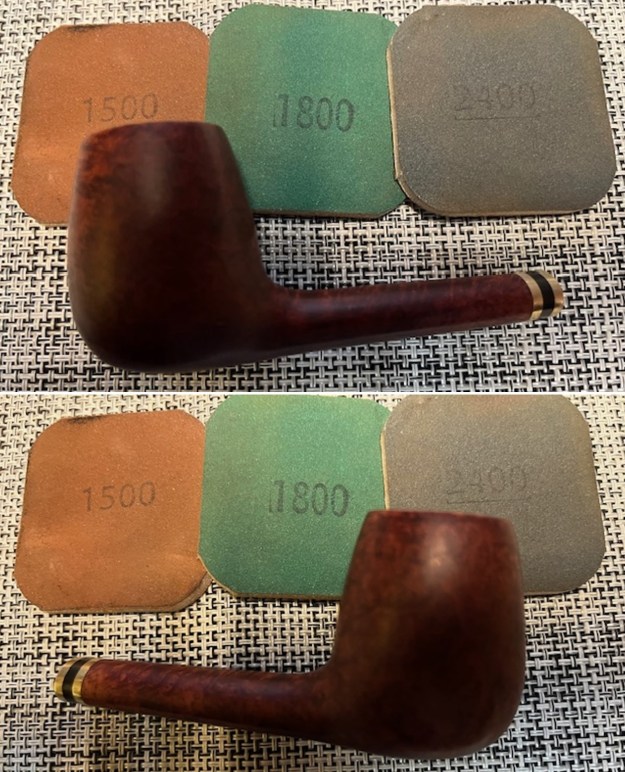
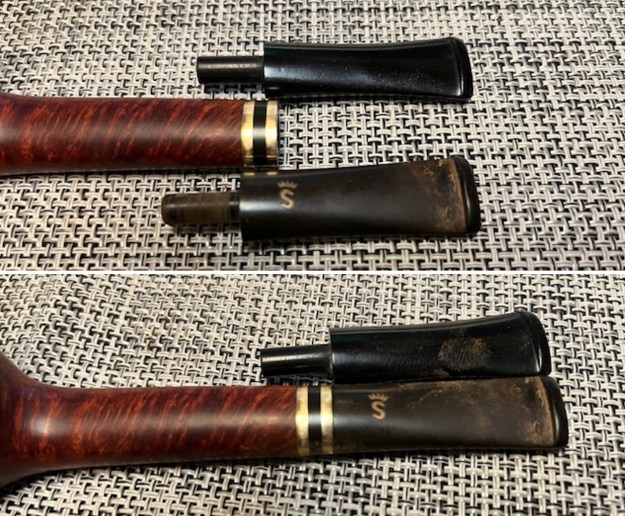
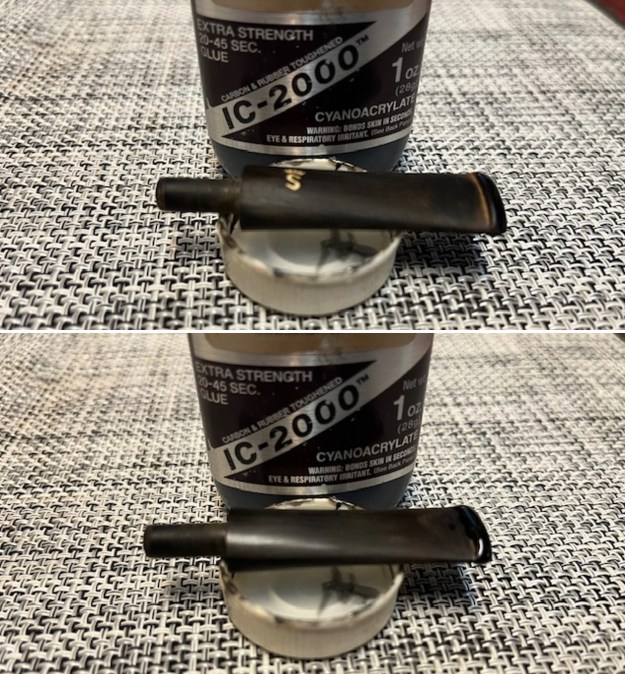
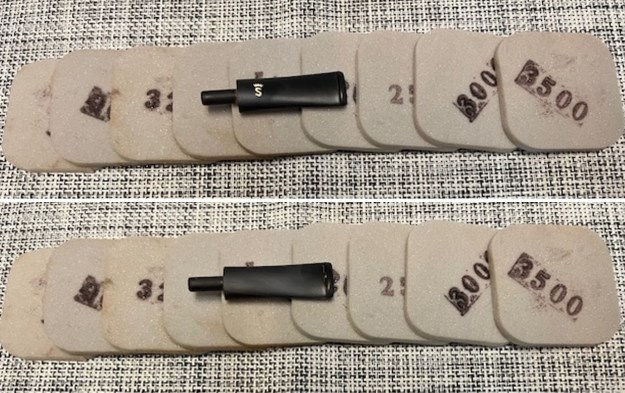
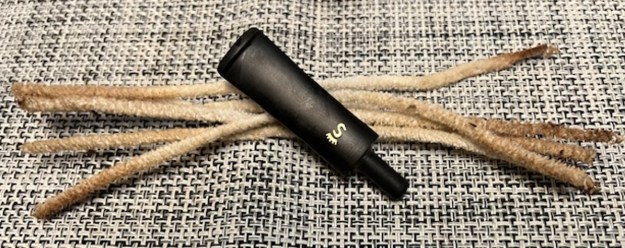
Jeff had done a great job cleaning up the pipe as usual. He reamed the pipe with a PipNet reamer and cut back the cake back to the bare briar. He cleaned up the walls with a Savinelli Fitsall Pipe Knife. He scrubbed the interior of the bowl and shank with pipe cleaners, cotton swabs and alcohol to remove the tars and oils. He scrubbed the exterior of the pipe with Murphy’s Oil Soap and a tooth brush to remove the grime from the finish. He worked on the rim top lava and darkening with the soap and tooth brush. He scrubbed the inside of the stem with alcohol and pipe cleaners. He scrubbed the exterior with Soft Scrub and then soaked it in Briarville’s Pipe Stem Deoxidizer. He washed it off with warm water to remove the Deoxidizer. The pipe looked far better when it arrived. I took photos of the bowl and rim top as well as the stem to show how clean they were. You can see that rim top and edges look very good. There is some slight darkening on the rim top that should come off with polishing. The stem is clean and the tooth and chatter on both sides ahead of the button is very light. I think I have a Stanwell Canadian stem with a brass Crown S so I will be replacing this one. I took photos of the stamping on the shank. The stamping is readable as noted above.I took the stem off the shank and took a photo to give a sense of the flow and proportion of the pipe. It is a beautiful looking pipe with a bowl Stanwell describe as Conical but that I would describe as a Brandy!I started my work on the pipe by polishing the briar with 1500-12000 grit micromesh sanding pads. I wiped the bowl down after each sanding pad with a damp cloth. I rubbed the briar down with Before & After Restoration Balm. I worked it into the briar with my fingertips. The product works to clean, enliven and preserve the briar. I let it sit for 10 minutes while I worked on the stem. After the time passed I buffed it with a cotton cloth to deepen the shine. The briar really comes alive with the balm. I set the bowl aside and turned my attention to the stem. I went through my stems and fount the brass Crown S stem that would work for the Canadian. I worked over the tenon a little bit to clean off the grime. It fit well. The stem was dirty but had light tooth marks.I cleaned off the surface of the stem and button with a cotton pad and some Soft Scrub. It removed the grime and the calcification. I wiped it down with a damp cloth to remove the dust. I filled in the tooth marks on the button surface and the button edge with black CA glue. I set it aside to let the repairs cure.Once the repair cured I sanded the surface of the stem and the button with sanding pas. I used 350-3500 grit sanding pads to smooth out the surface and adjust the fit on the shank. The pads work very well and the stem looked much better.I cleaned out the airway in the stem I was working on with pipe cleaners and isopropyl alcohol. It was quite dirty but I expected that when I took it from my can of stems.I polished the stem with micromesh sanding pads – dry sanding with 1500-12000 grit pads. I wiped the stem down after each sanding pad with Obsidian Oil.I polished it with Before & After Pipe Stem Polish – both Fine and Extra Fine. I gave it a coat of Obsidian Pipe Stem Oil. It works to protect the stem from oxidizing. I set it aside to dry. I am excited to put the finishing touches on this Stanwell Brass Band 113 Made in Denmark Canadian. I am so glad I happened to have a Stanwell Crown S Brass stem that was a perfect fit and actually was the correct stem. I put the pipe back together and buffed it with Blue Diamond on the buffing wheel. I gave the bowl and the stem multiple coats of carnauba wax. I buffed the pipe with a clean buffing pad to raise the shine and hand buffed it with microfiber cloth to deepen the shine. It is fun to see what the polished bowl looks like with the silver plaquette and the polished vulcanite stem was beautiful. This Made in Denmark Stanwell Brass Band 113 is nice looking and the pipe feels great in my hand. It is light and well balanced. Have a look at it with the photos below. The dimensions are Length: 5 ½ inches, Height: 1 ¾ inches, Outside diameter of the bowl: 1 inch, Chamber diameter: ¾ of an inch. The weight of the pipe is 1.31 ounces/37 grams. It is a beautiful pipe and one that I will be putting in the Danish Pipemaker Section on the rebornpipes store. Thanks for walking through the cleanup with me as I worked over this pipe.

As always, I encourage your questions and comments as you read the blog. Thanks to each of you who are reading this blog. Remember we are not pipe owners; we are pipe men and women who hold our pipes in trust until they pass on into the trust of those who follow us.