Monthly Archives: August 2023

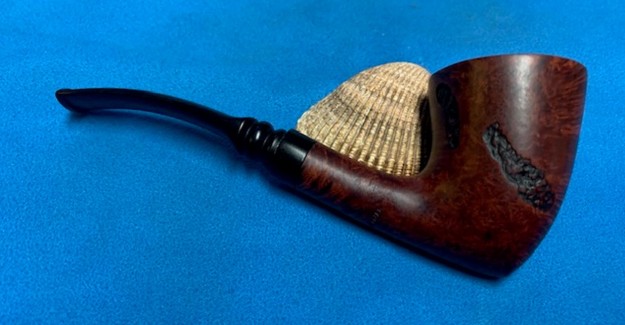
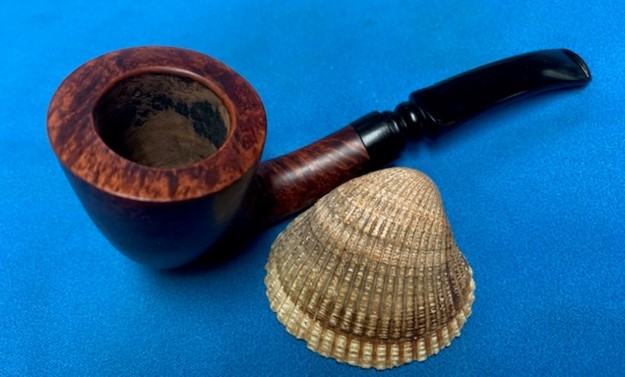
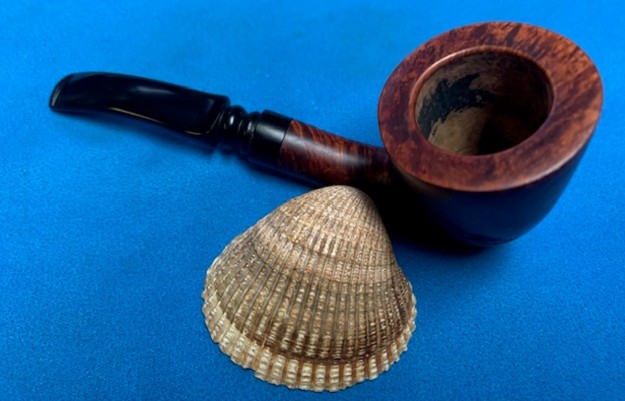
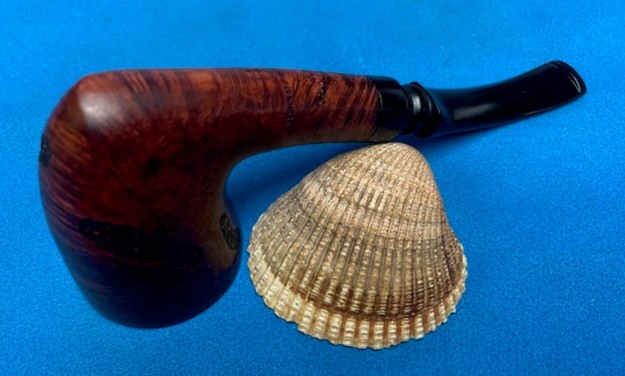
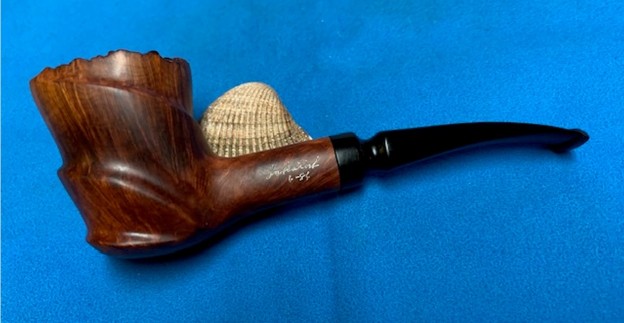
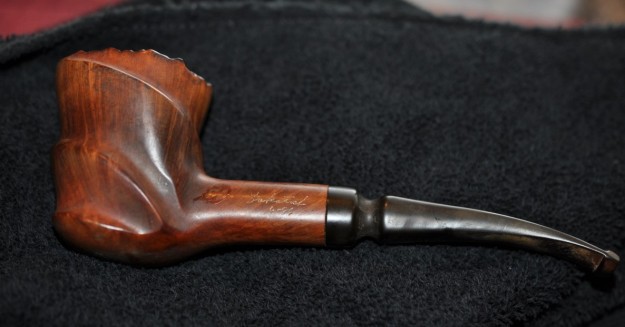
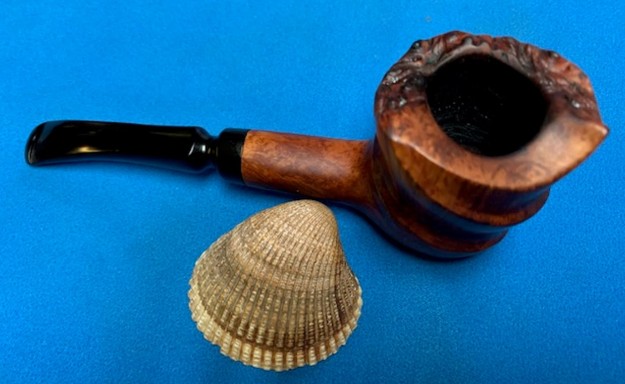
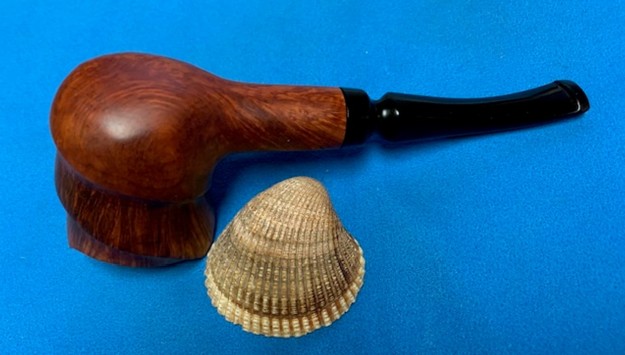
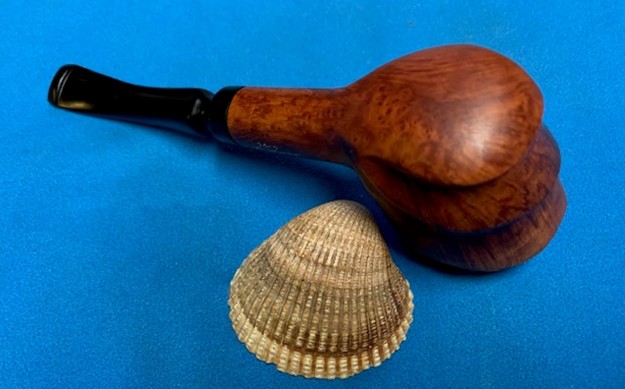
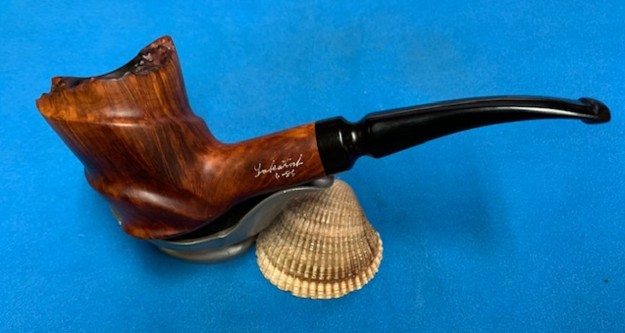
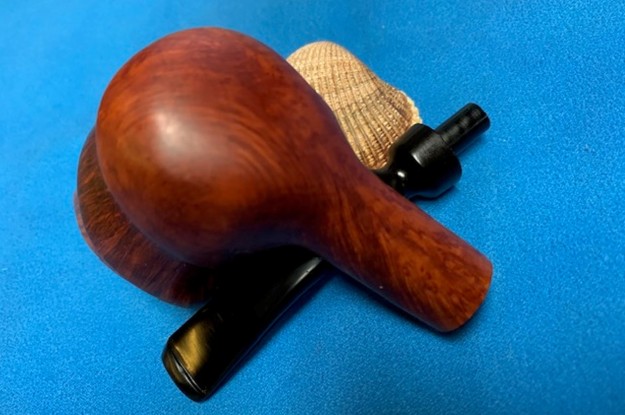
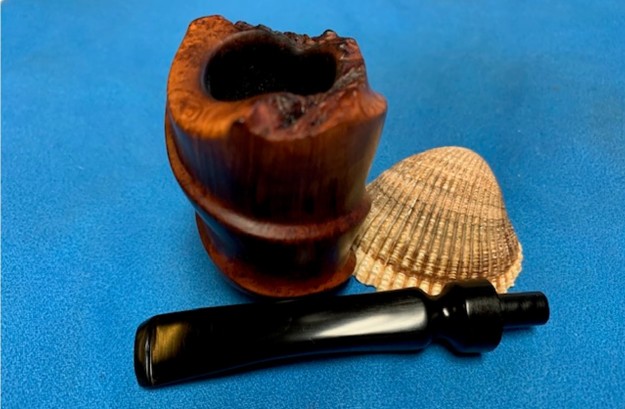
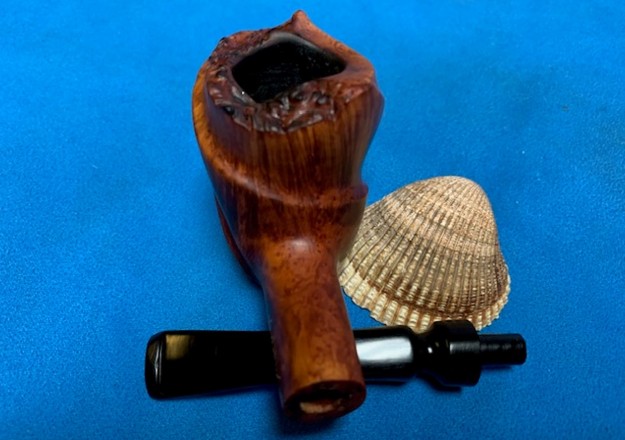
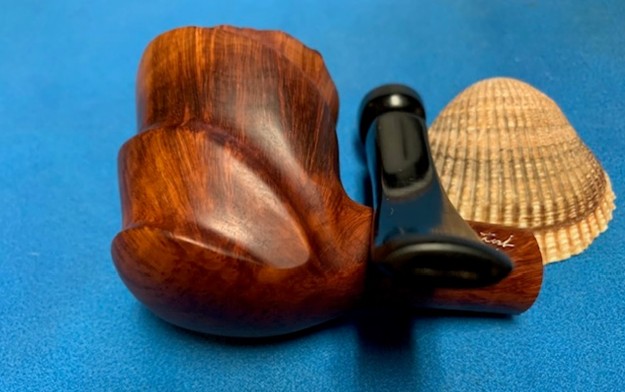
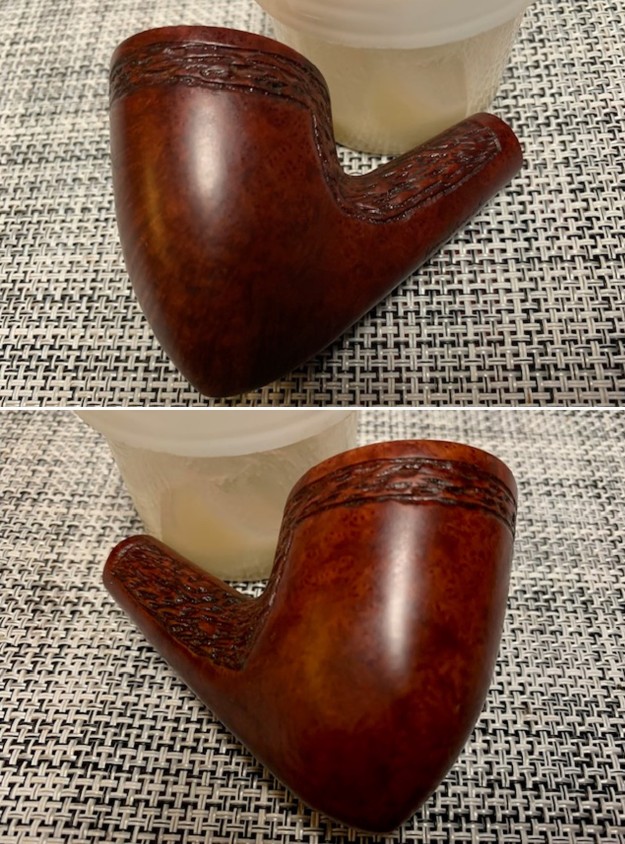
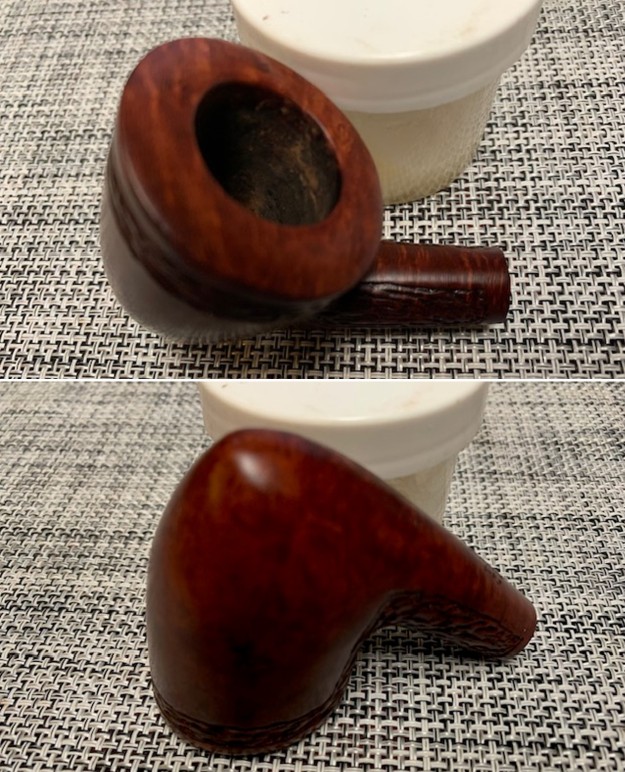
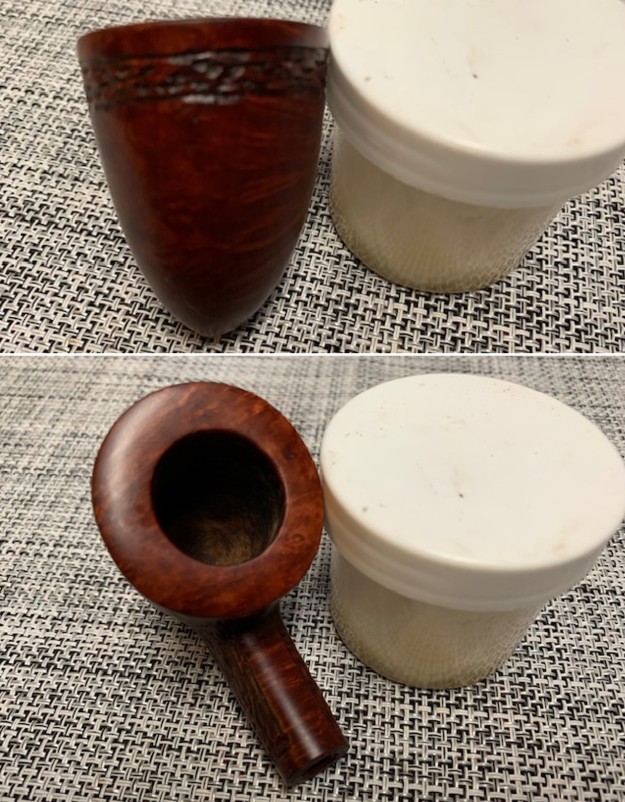
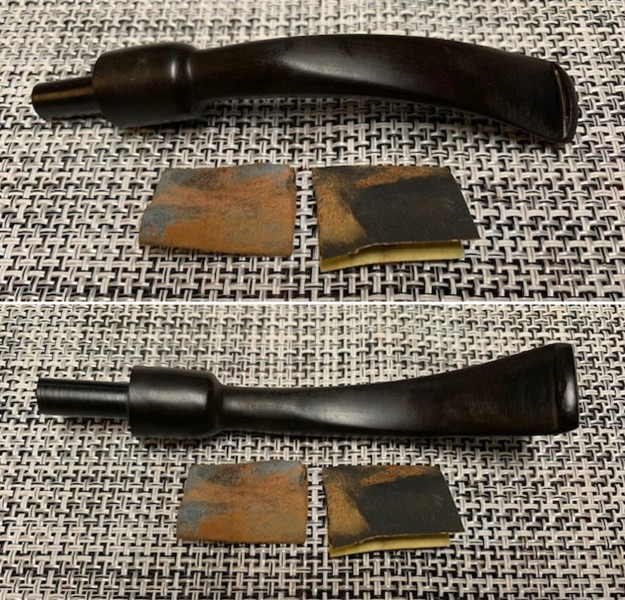
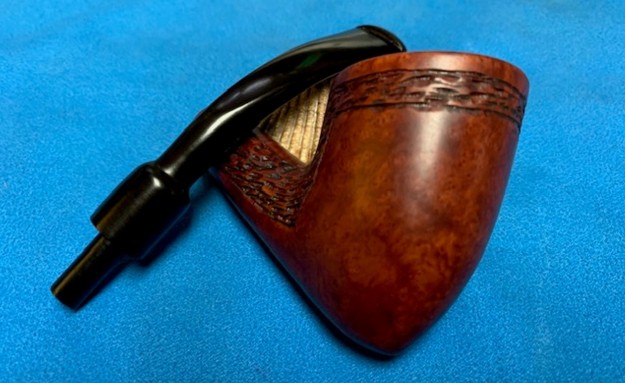
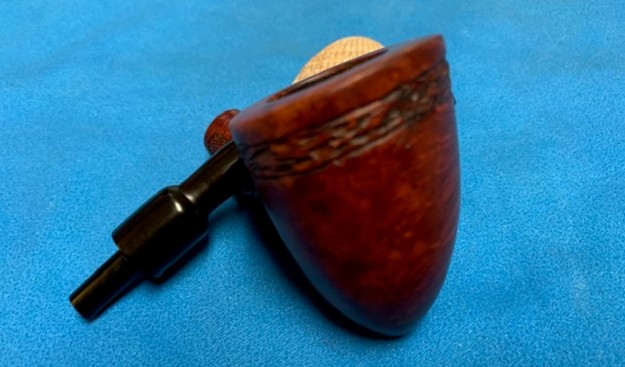
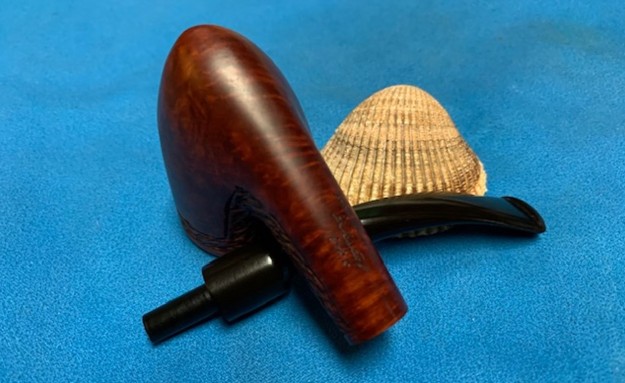
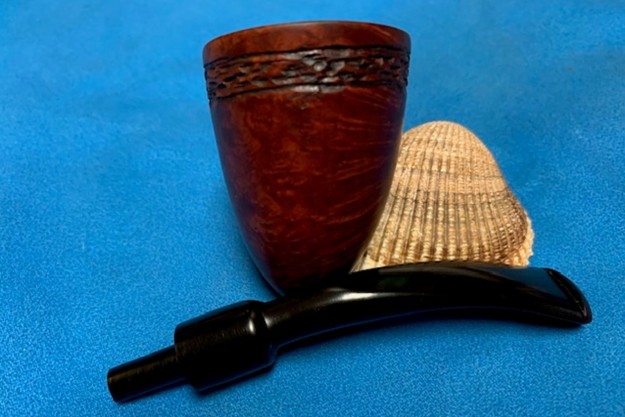
Breathing New Life into a Karl Erik Handmade in Denmark 11 Dublin/Freehand


Blog by Steve Laug

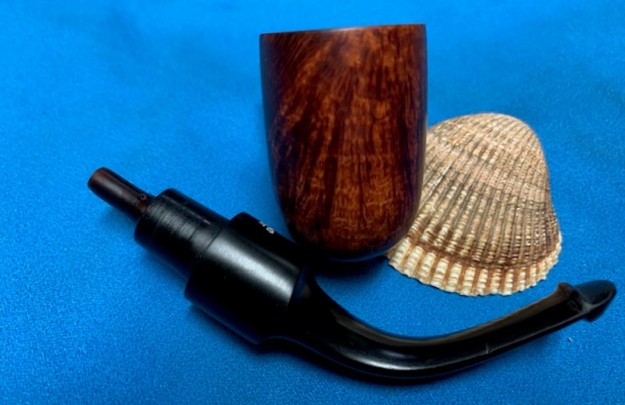
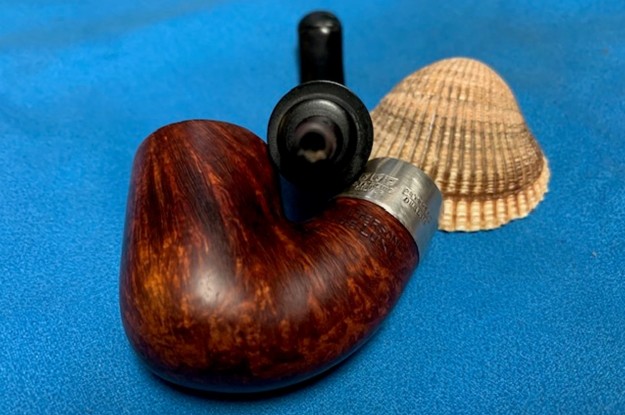
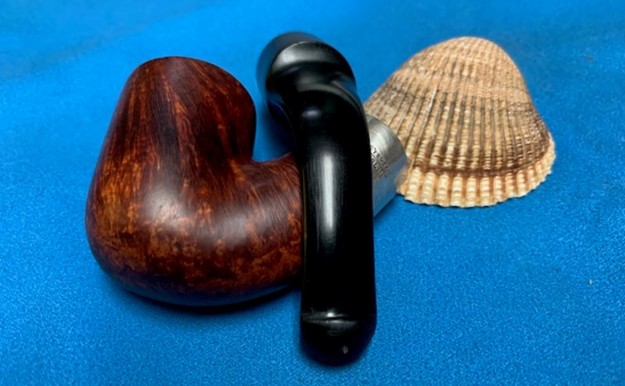
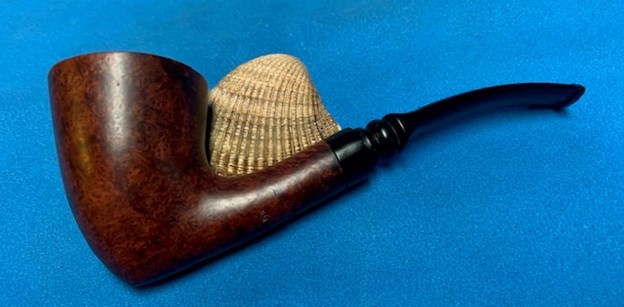
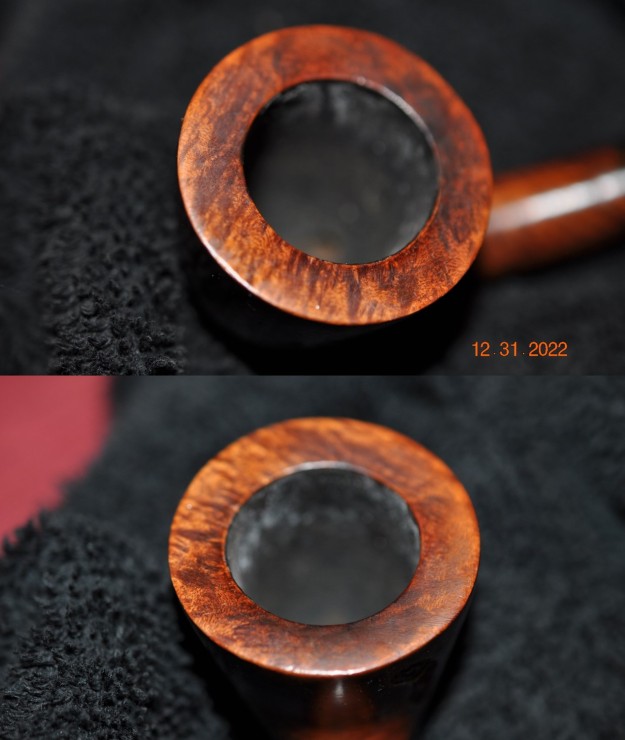
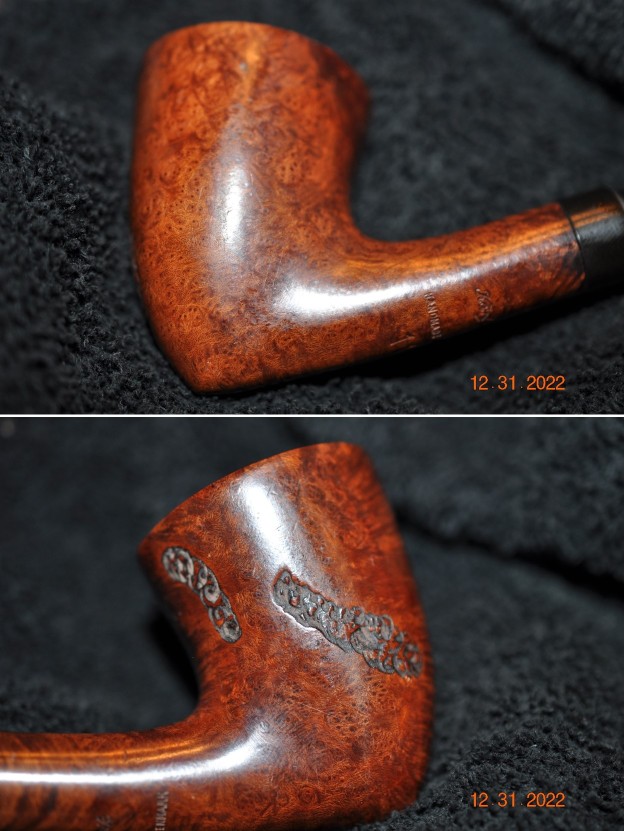
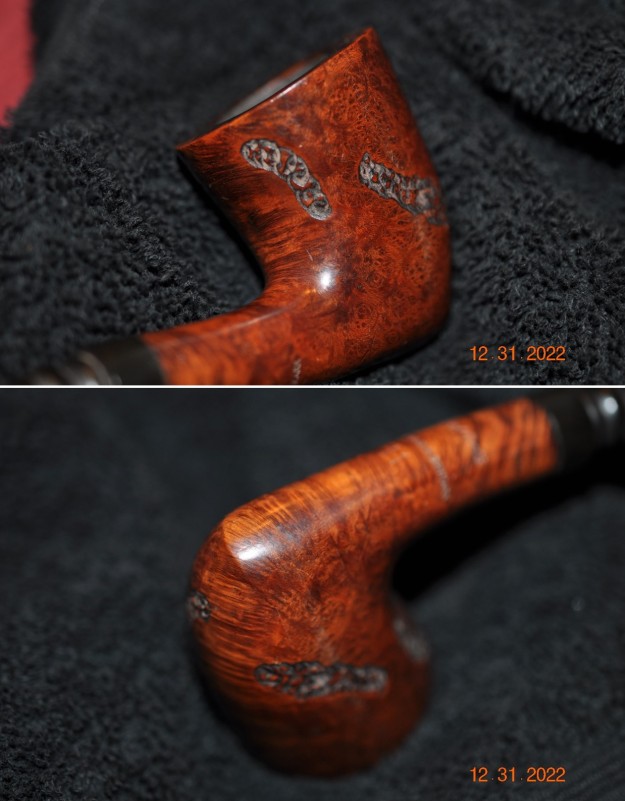
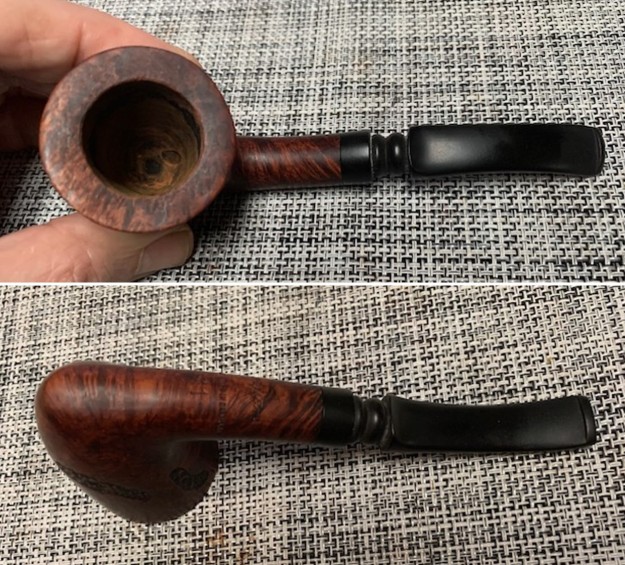
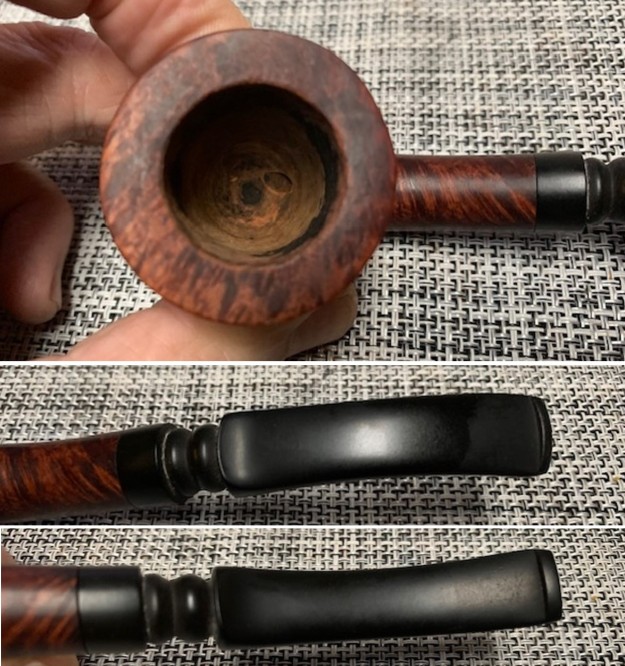
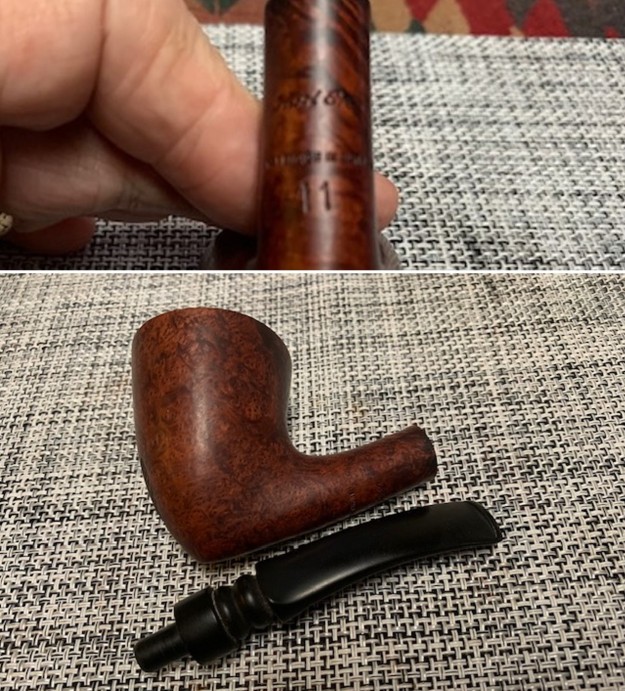
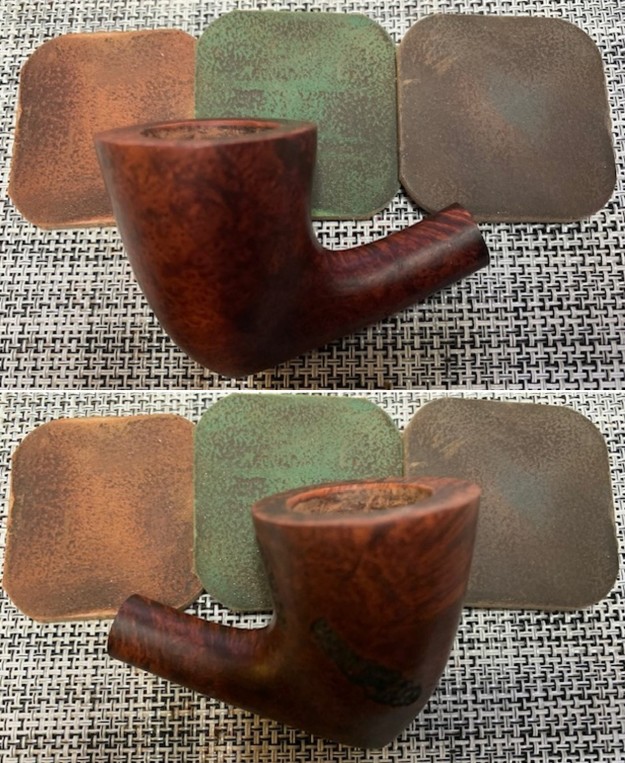
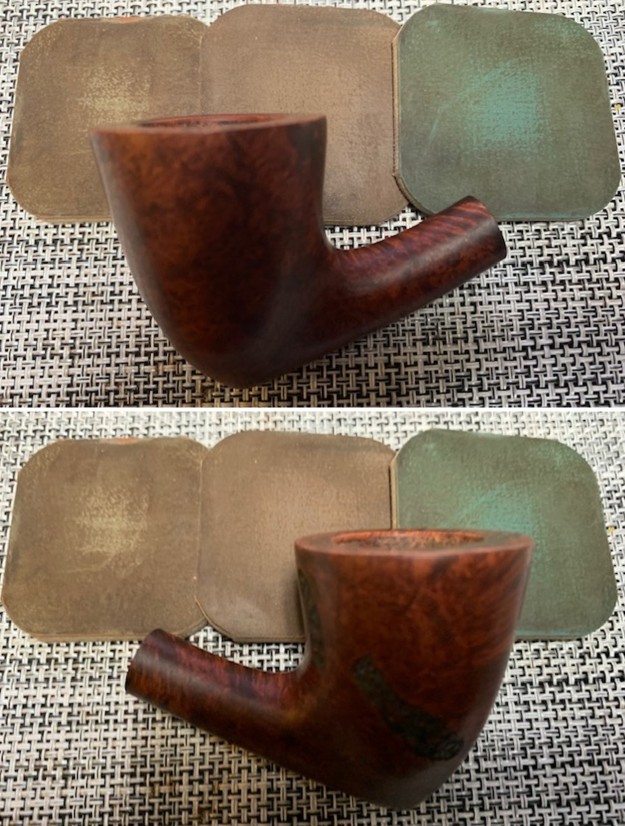
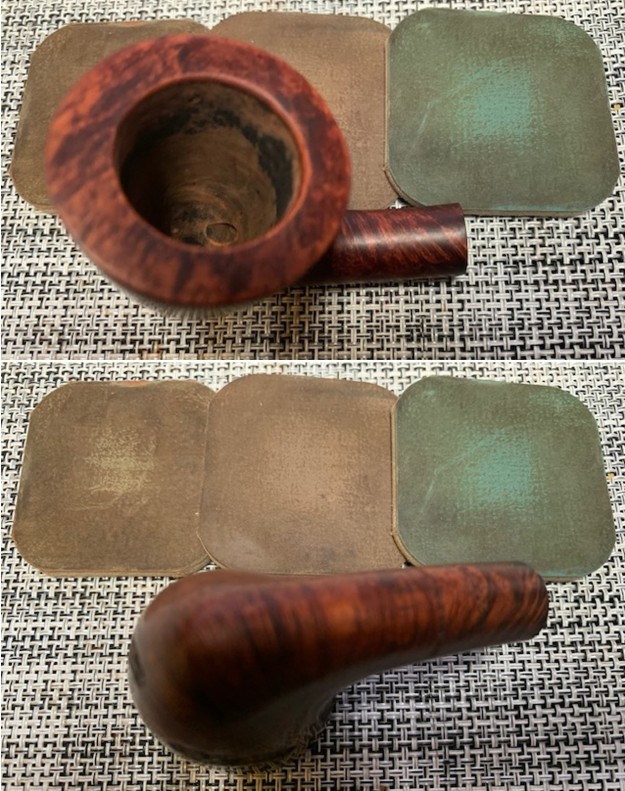
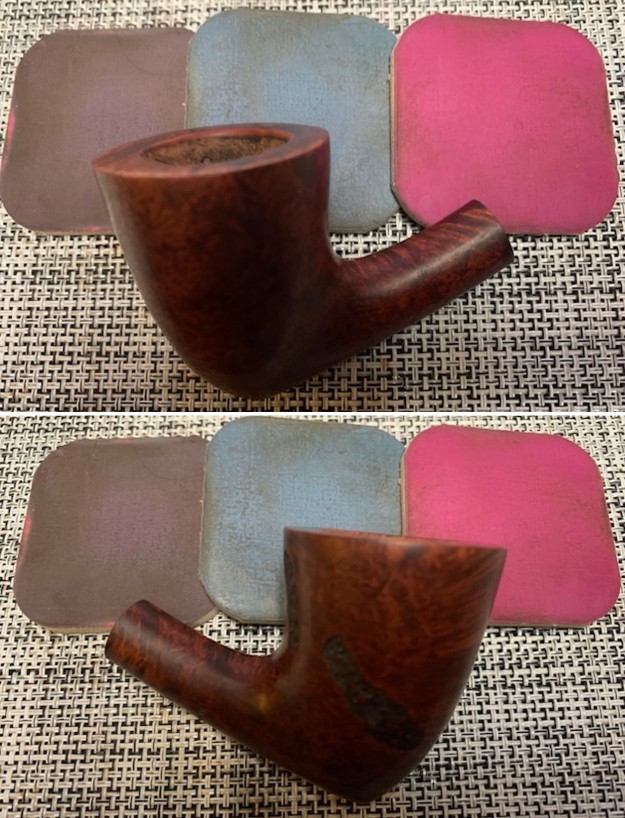
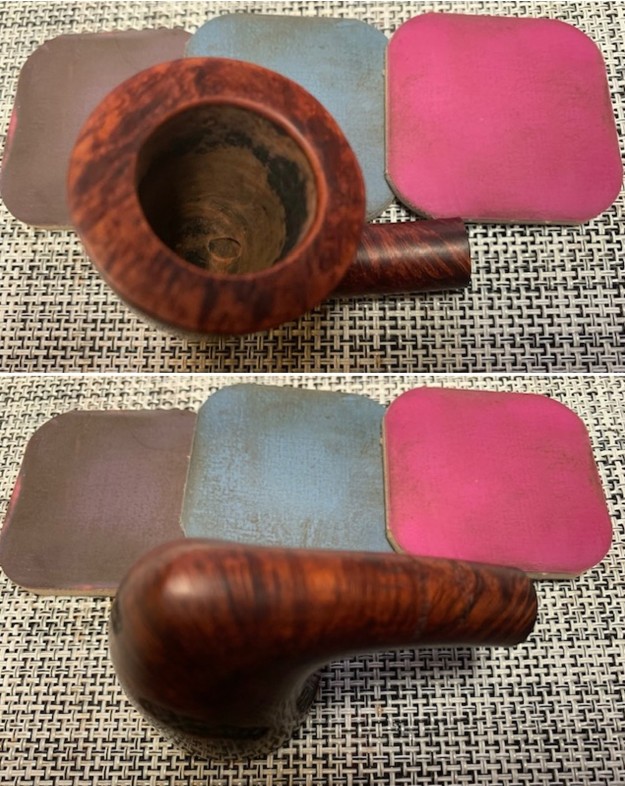
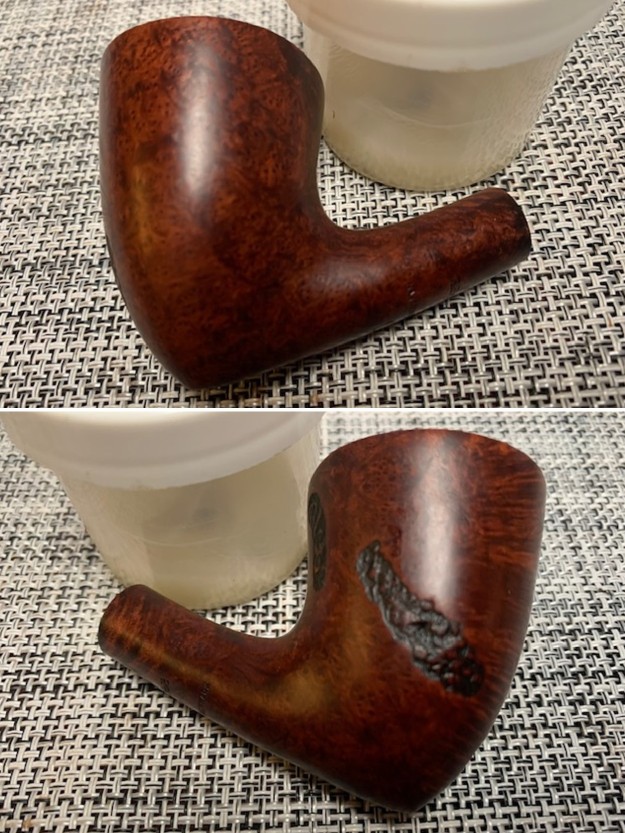
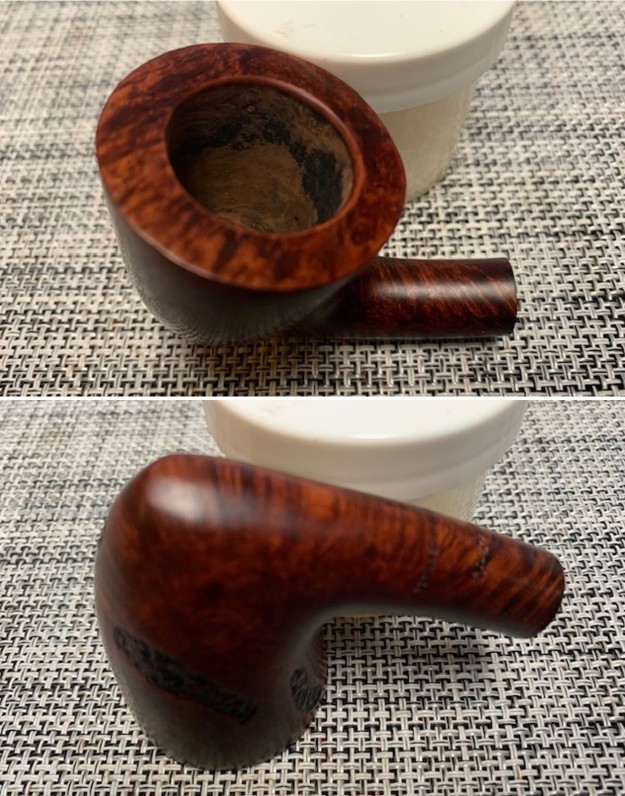
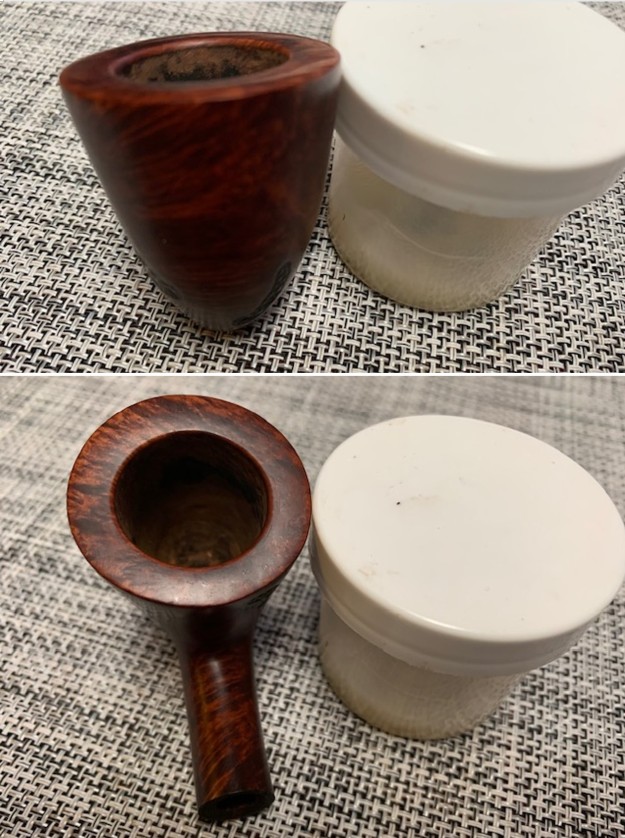
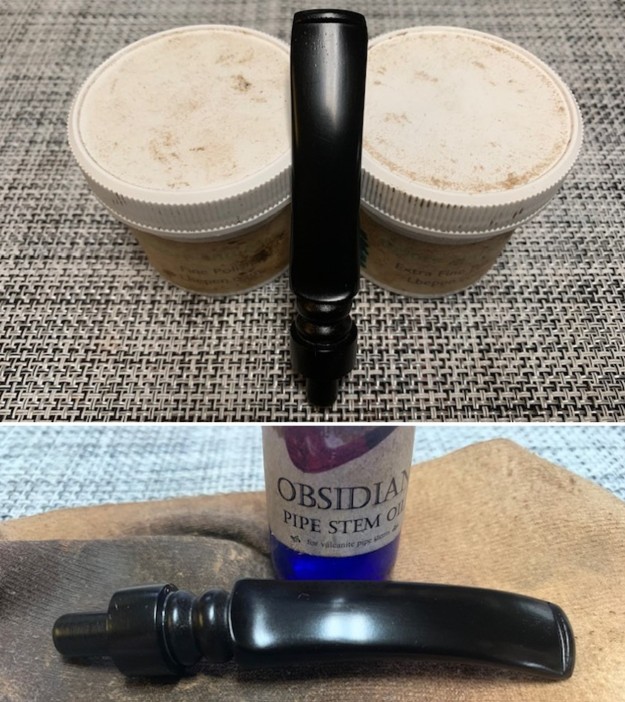
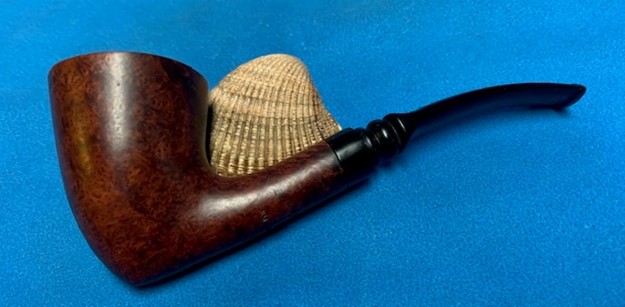
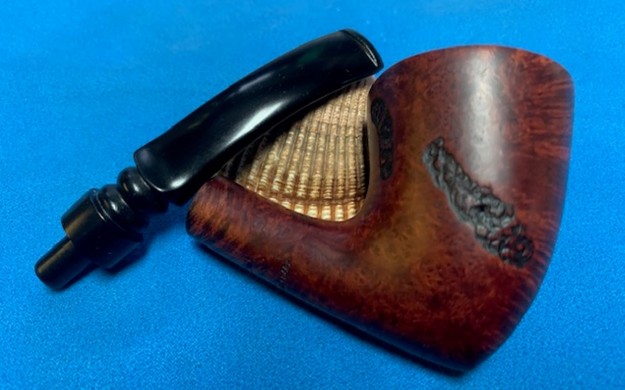
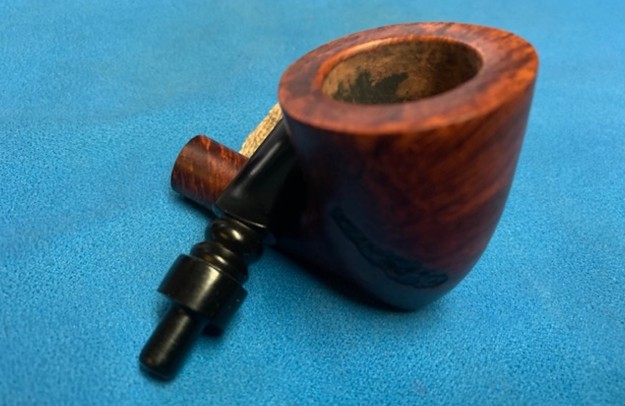
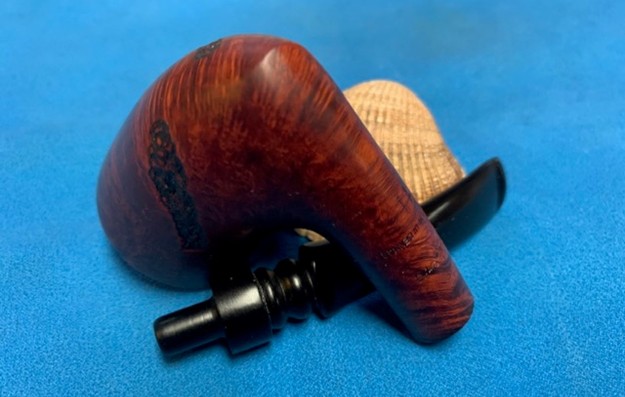
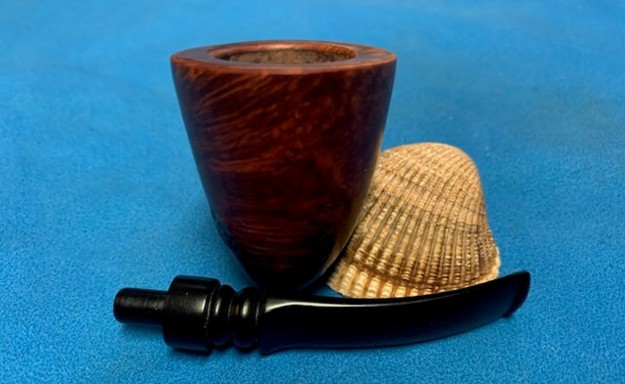
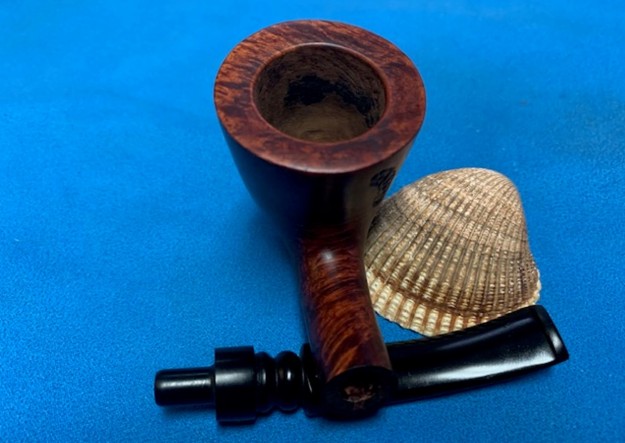
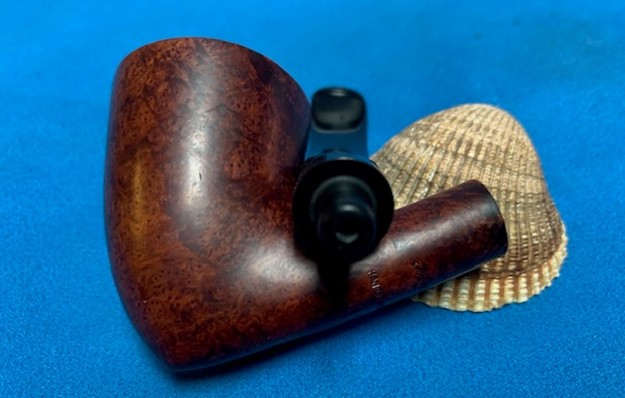
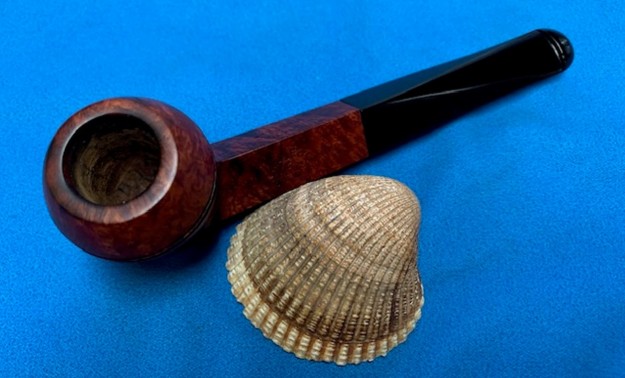
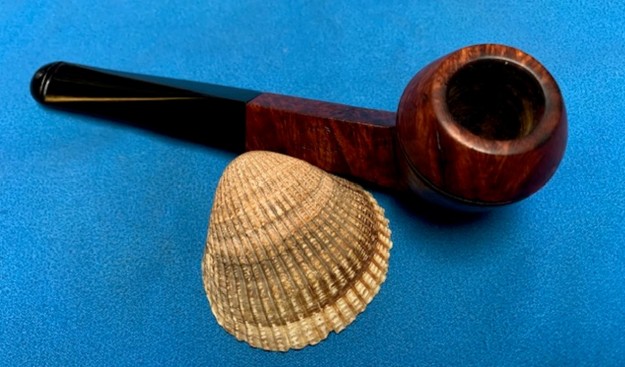
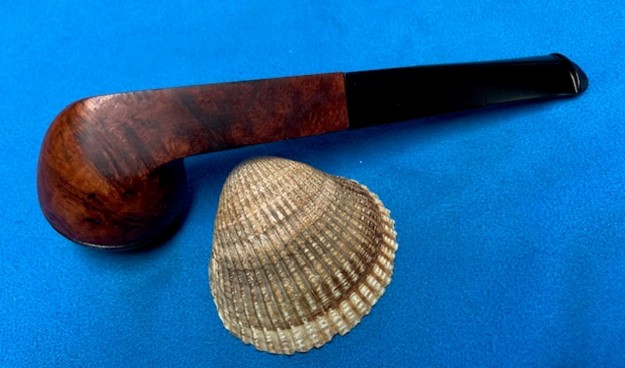
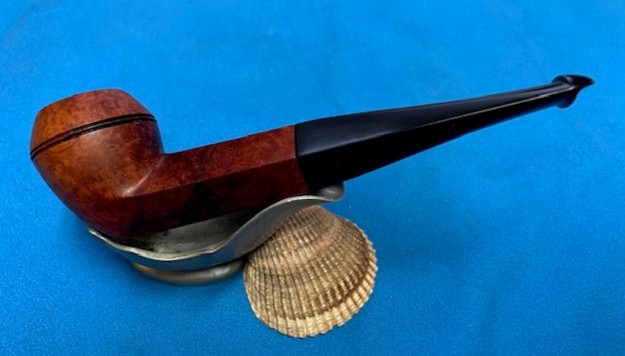
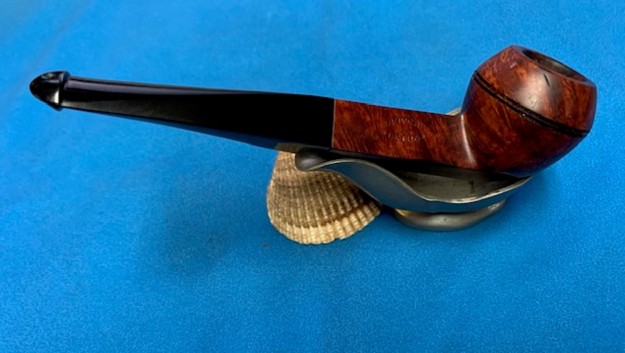
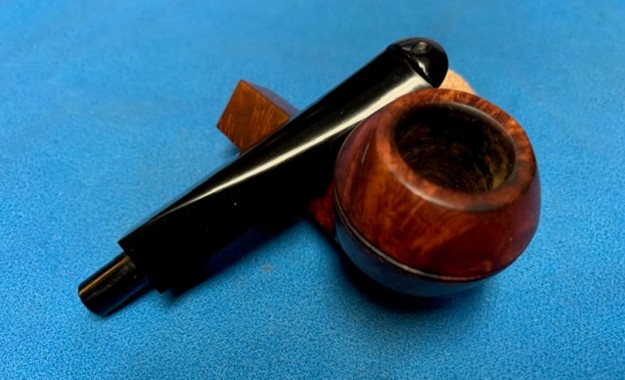
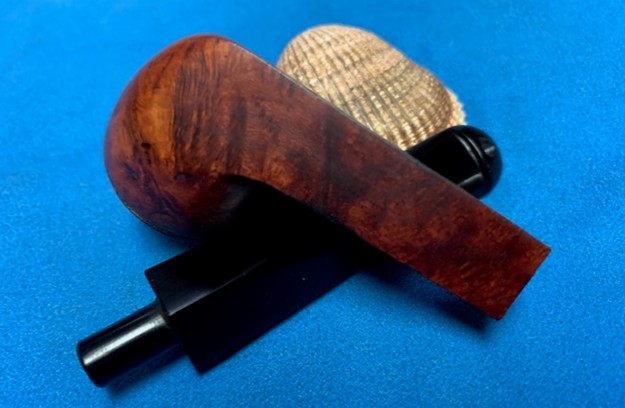
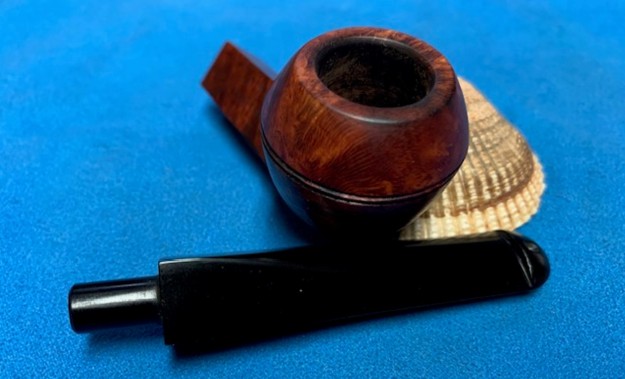
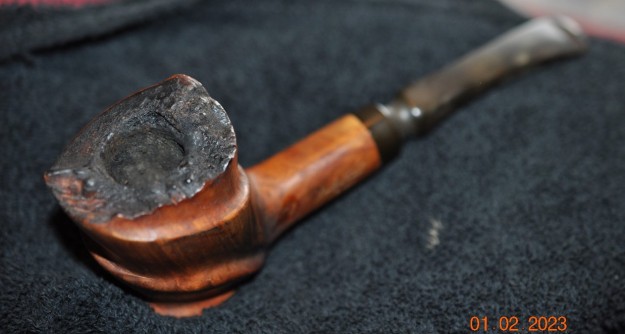
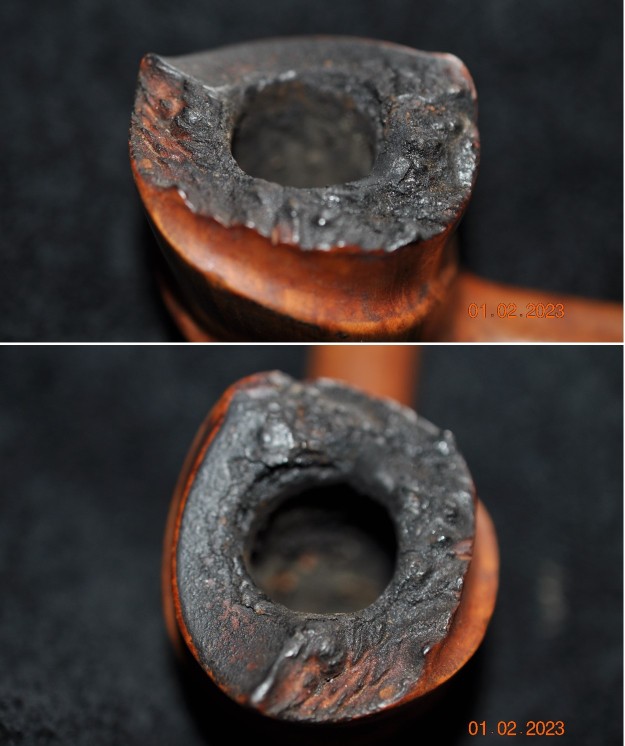
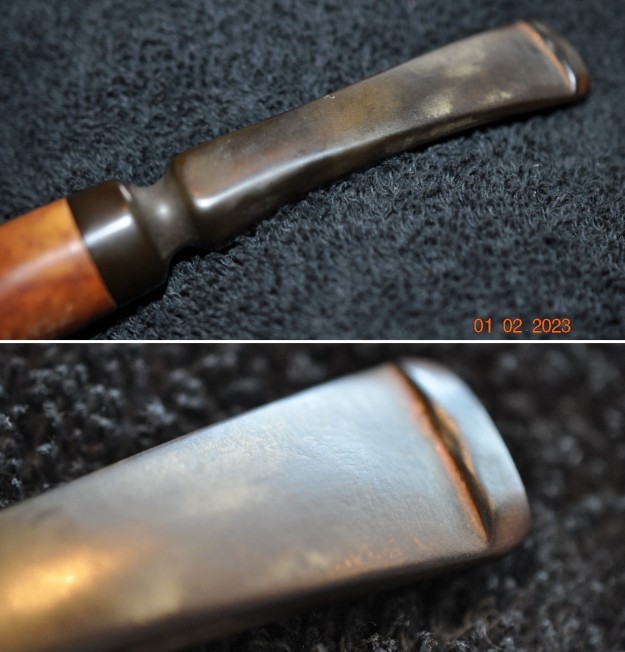
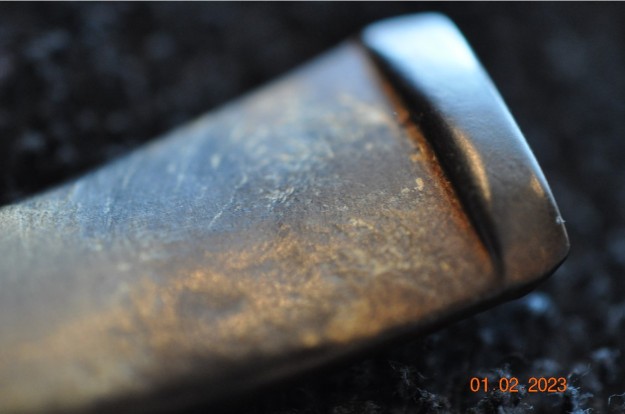
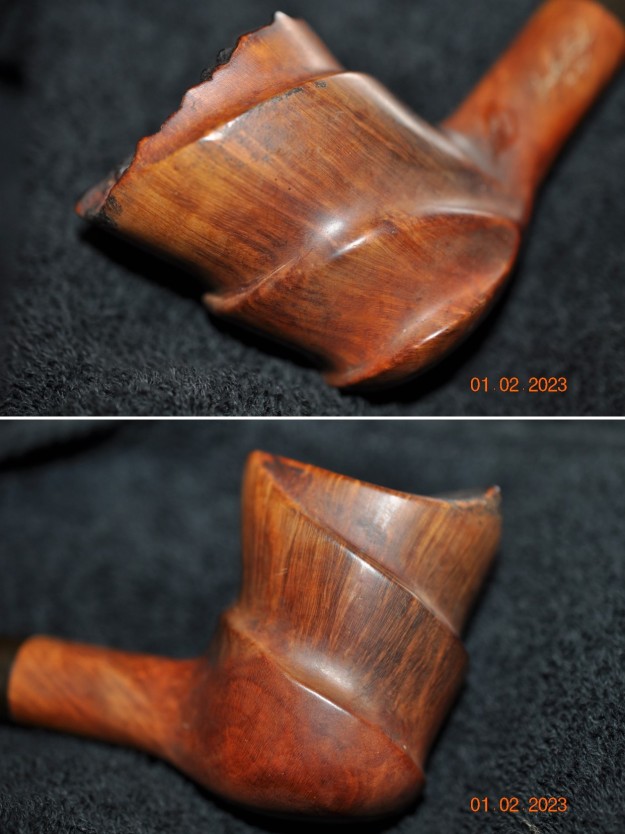
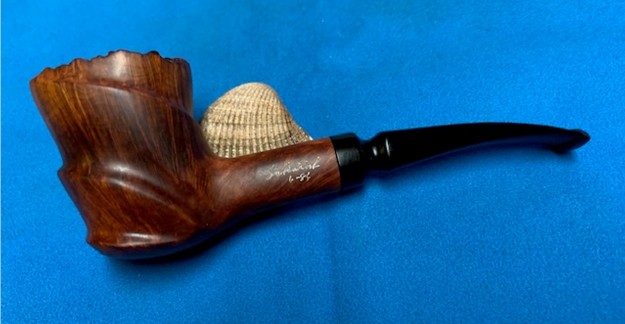
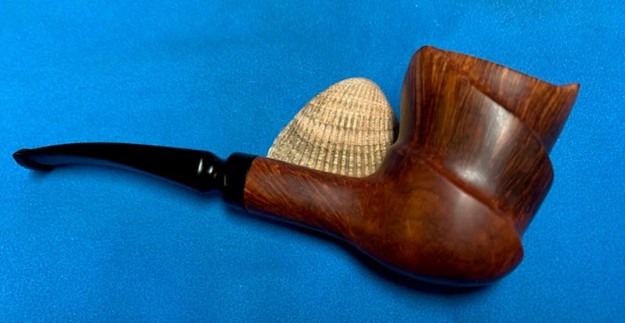
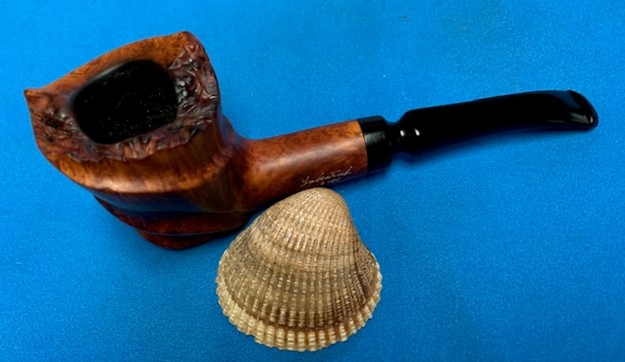
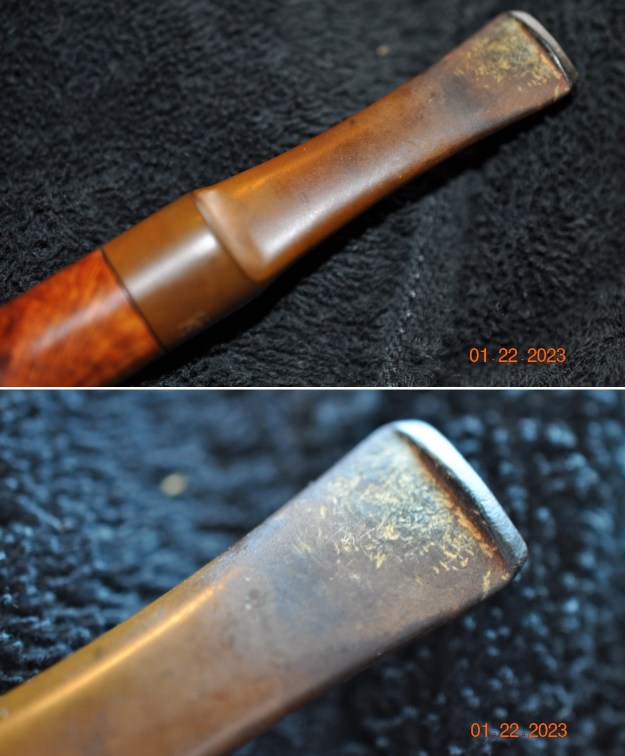
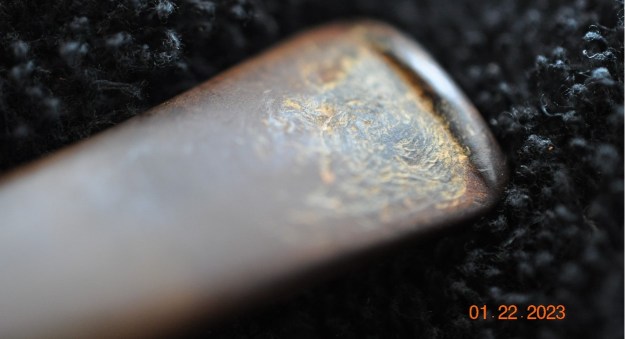
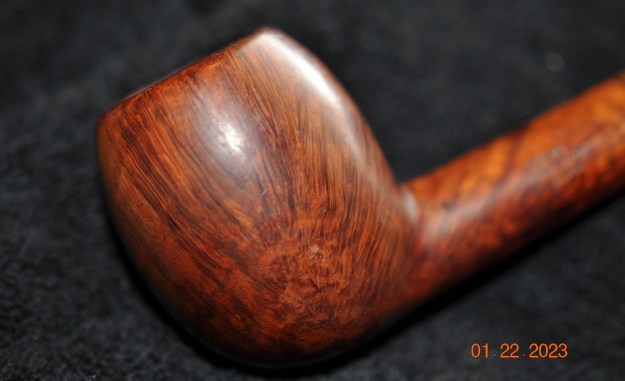
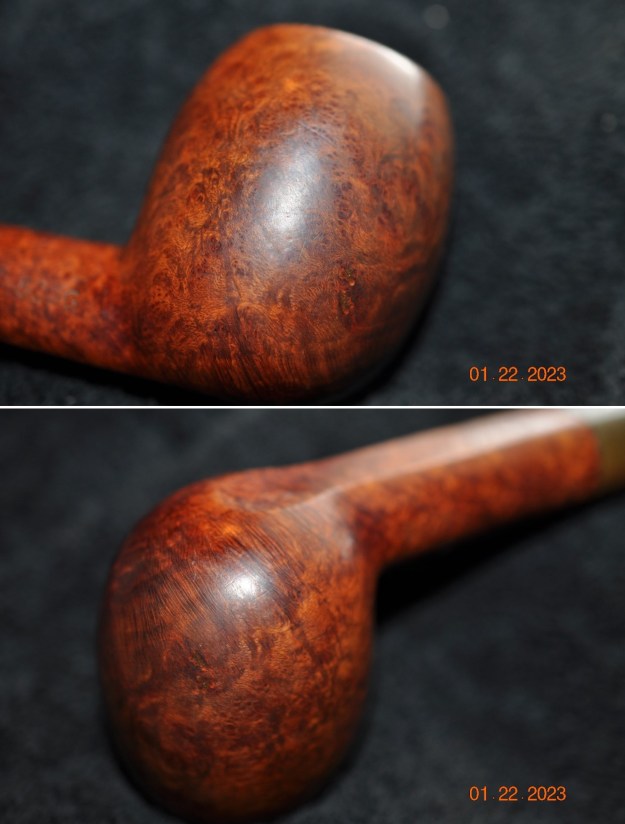
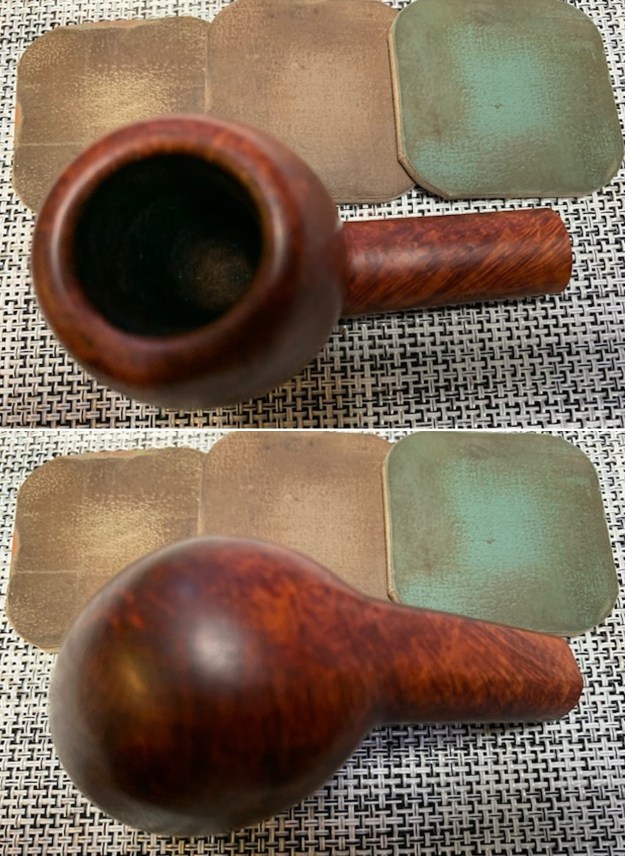
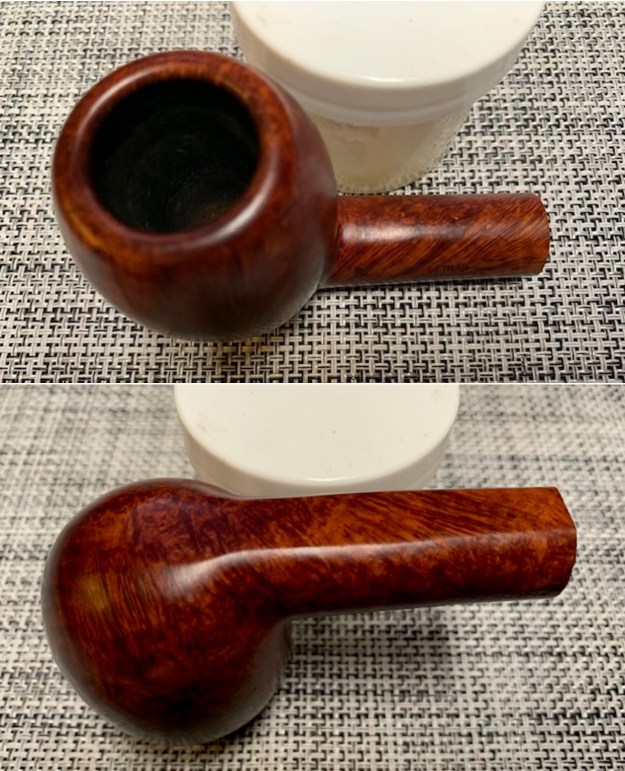
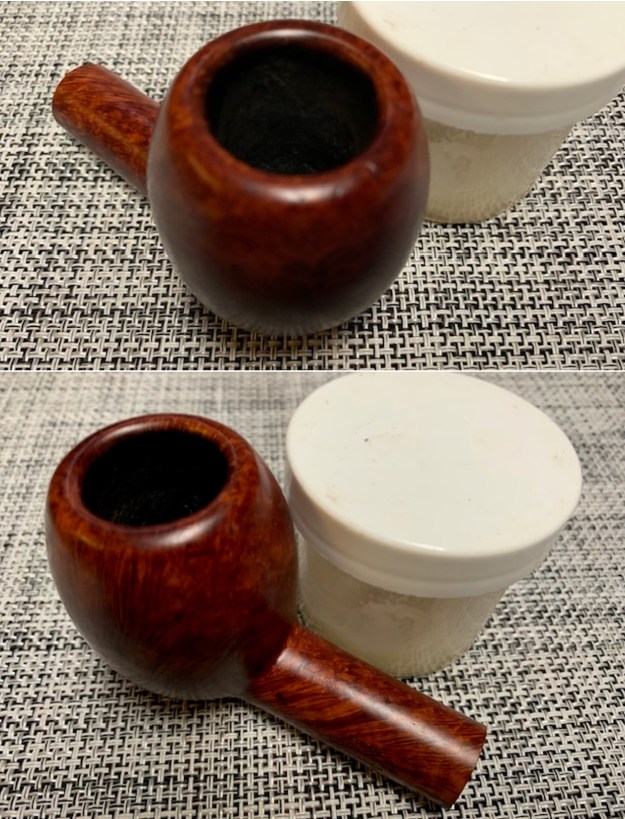
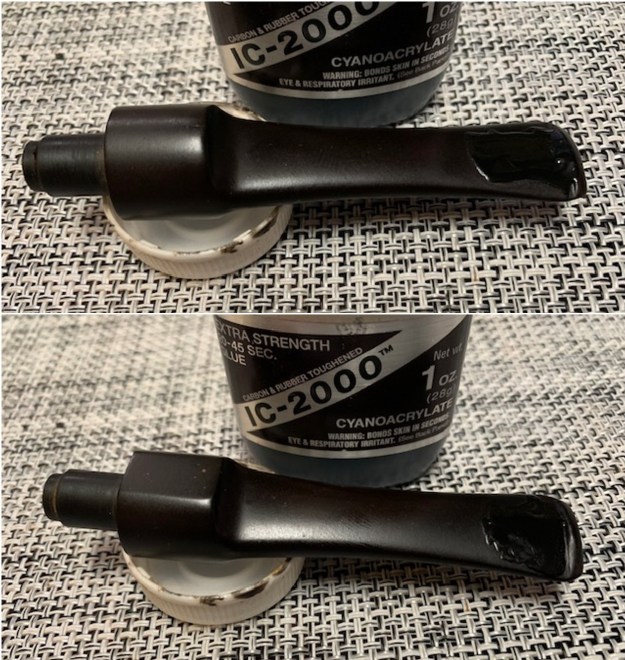
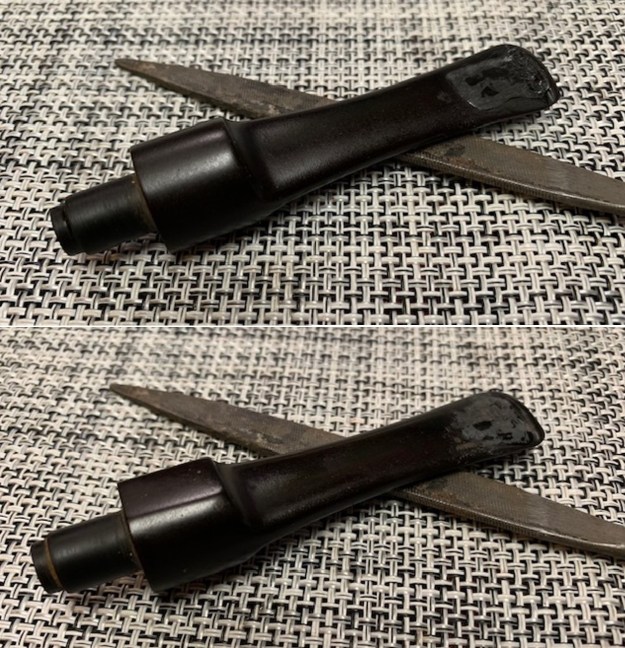
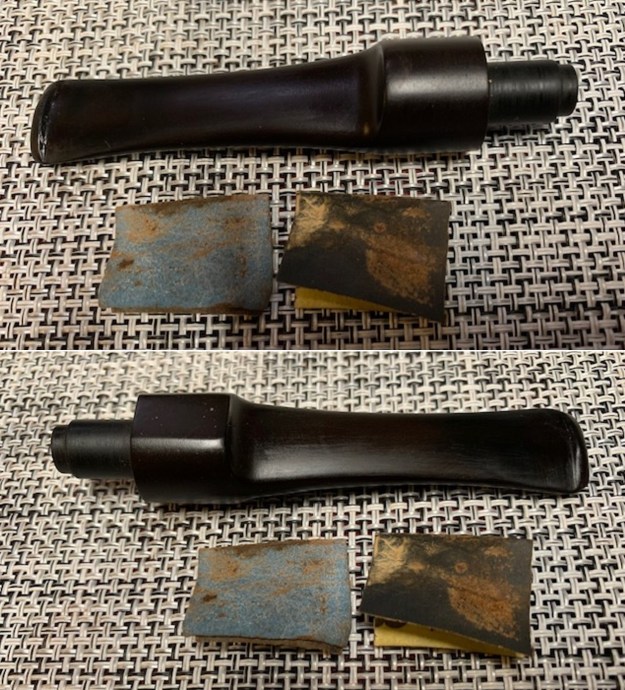
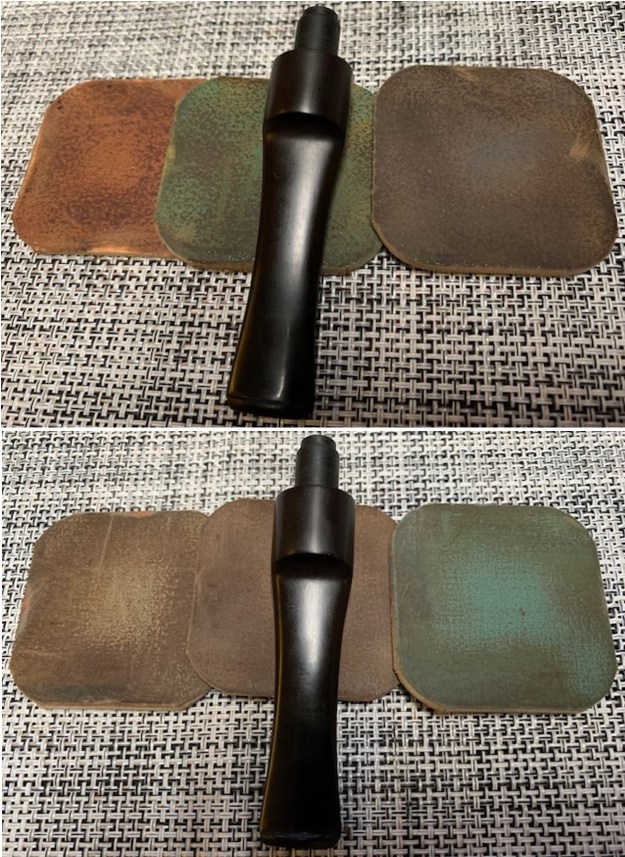
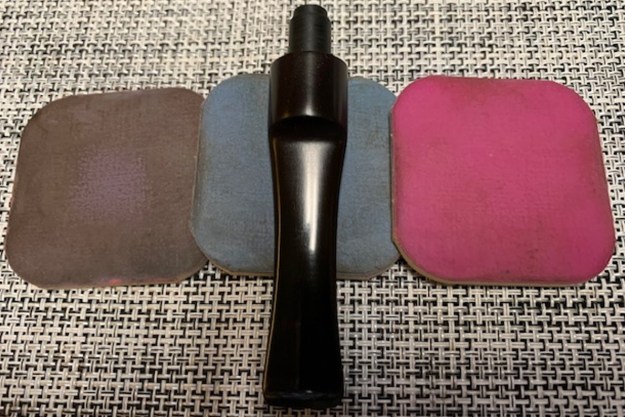
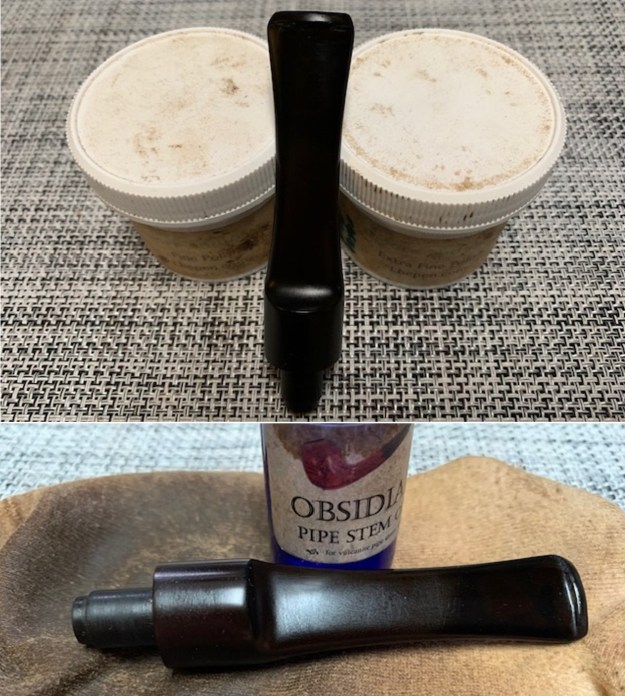
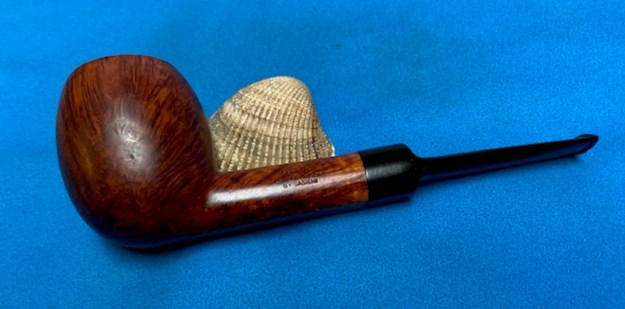
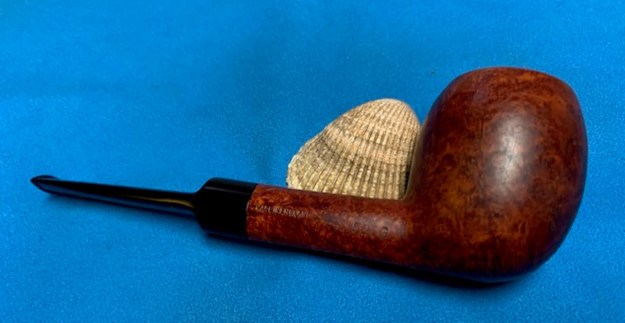
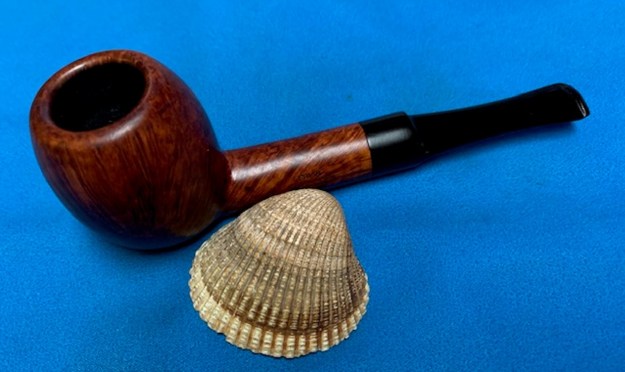
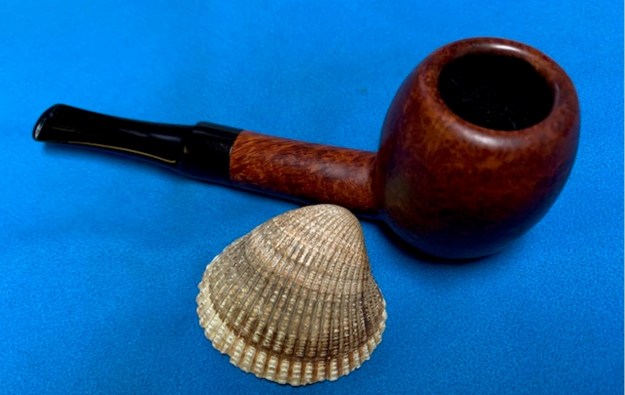
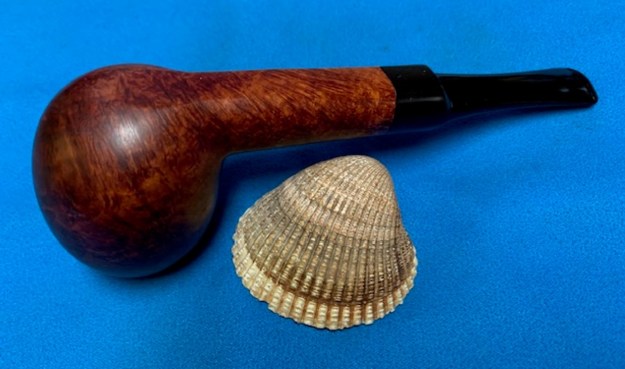
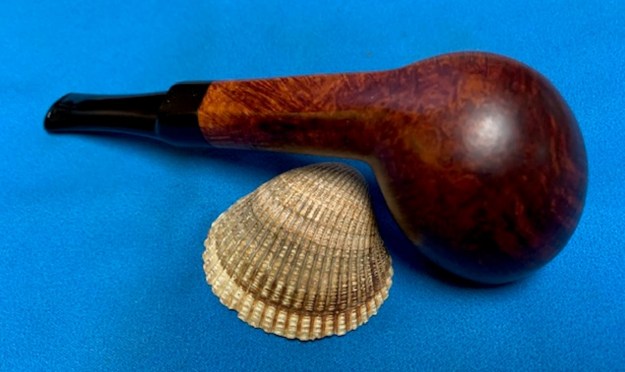
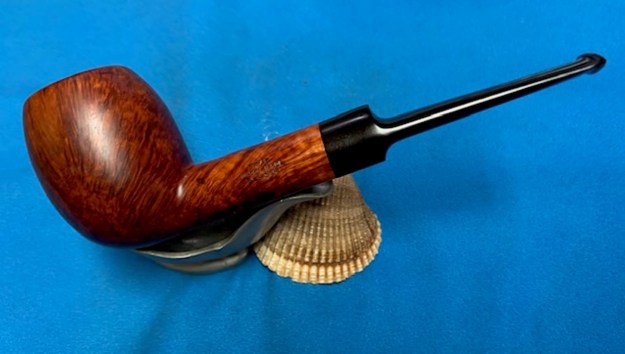
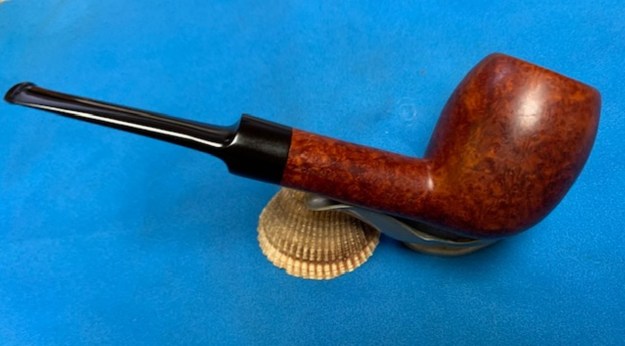
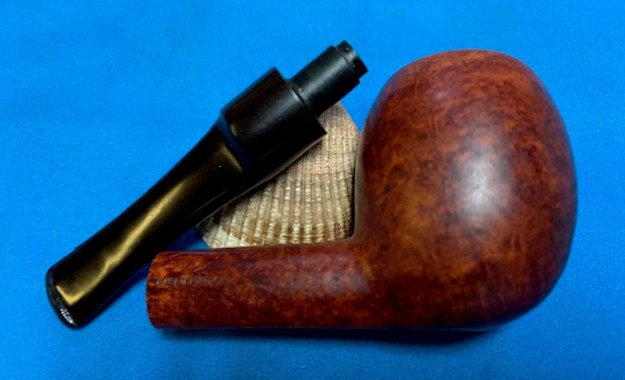
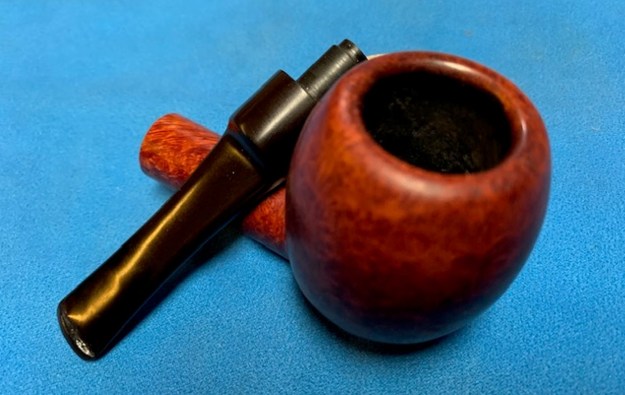
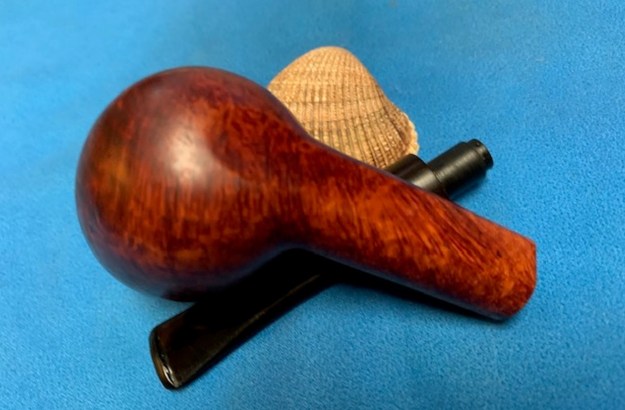
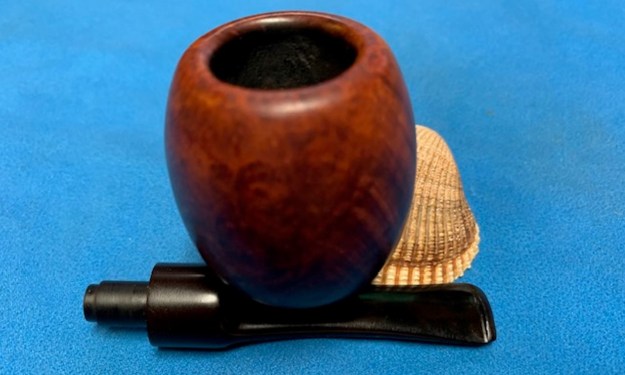
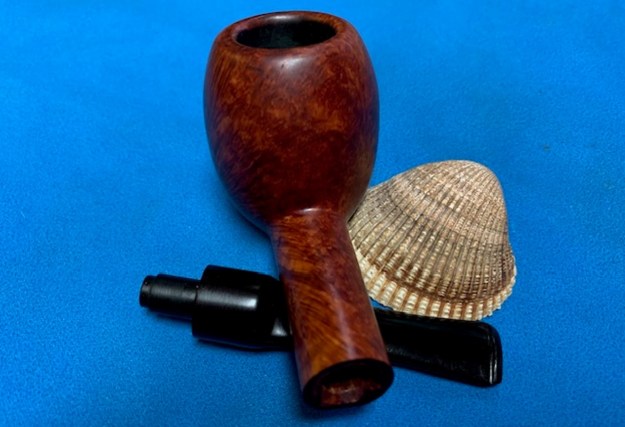
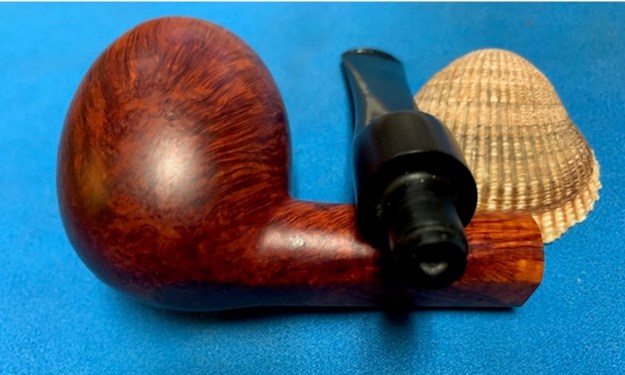
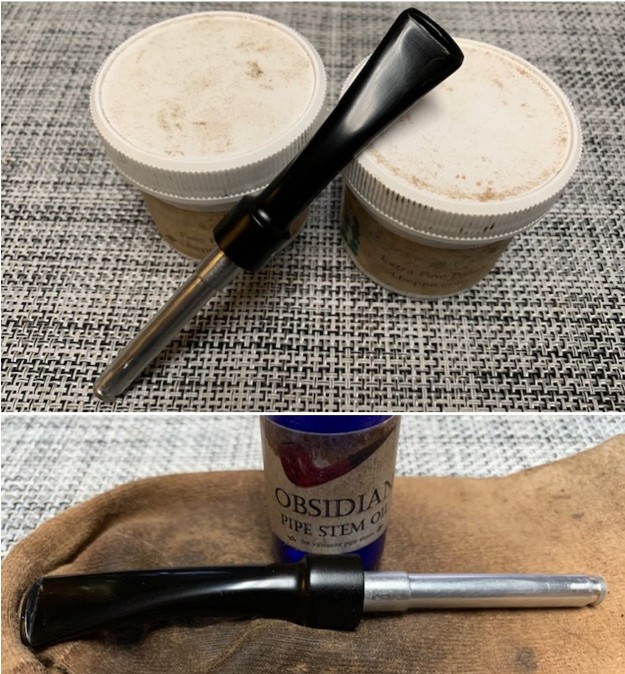
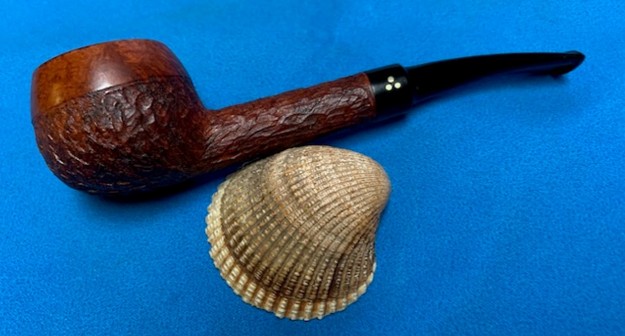
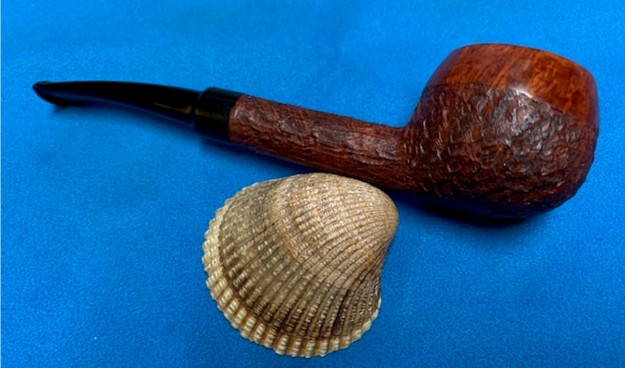
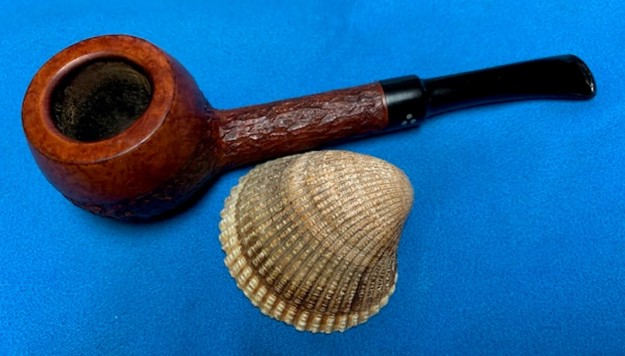
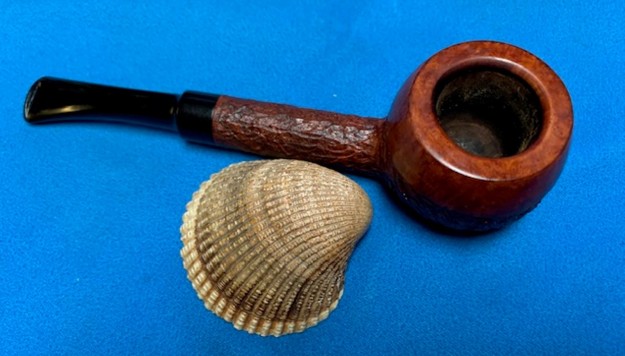
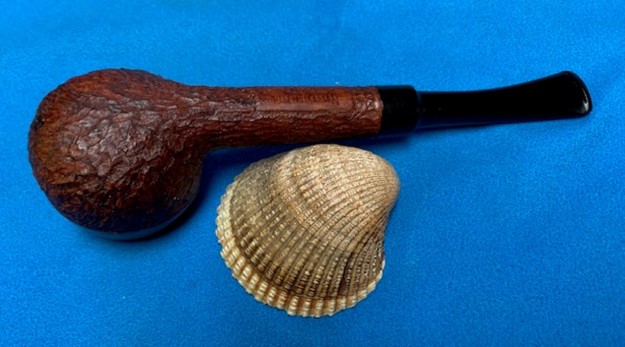
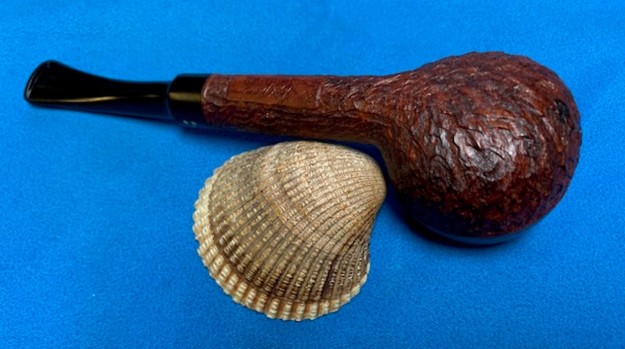
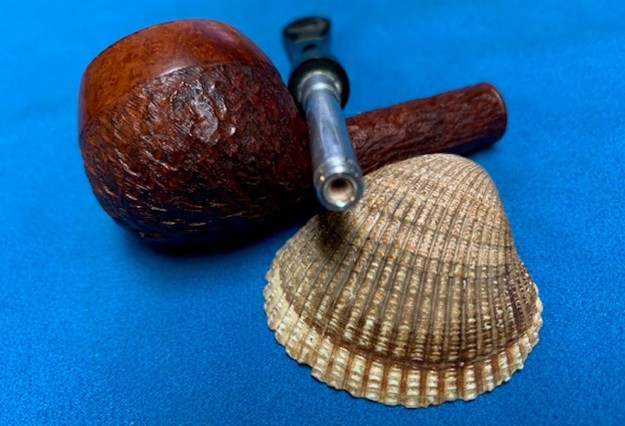
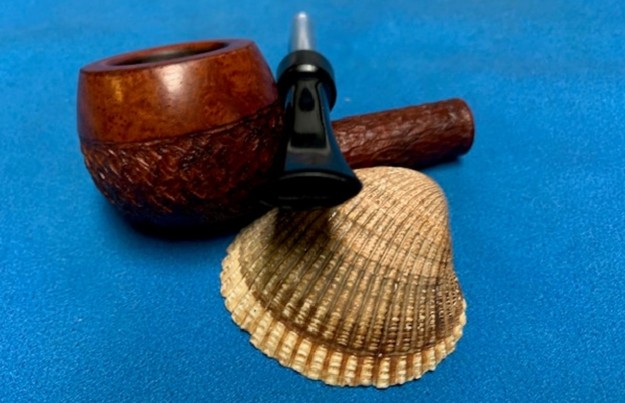
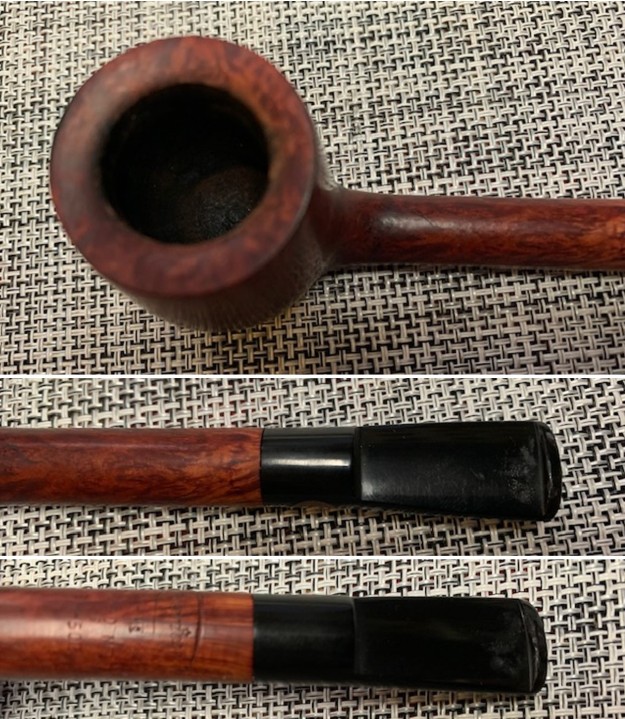
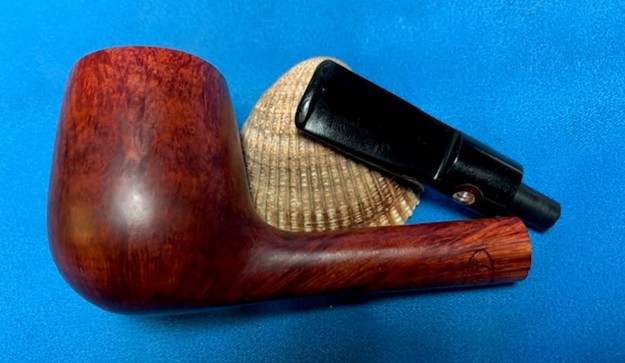
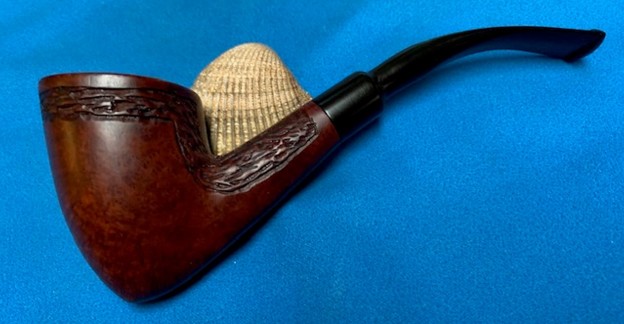
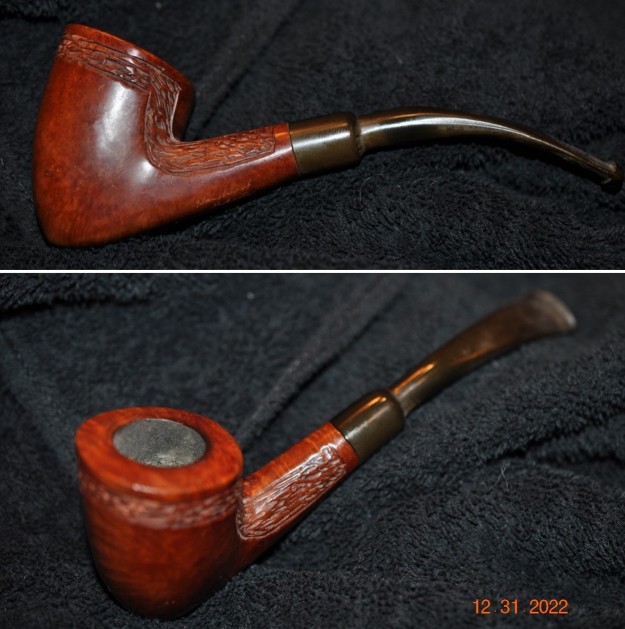
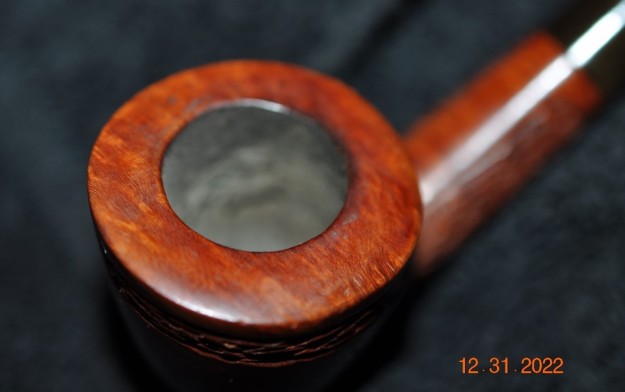
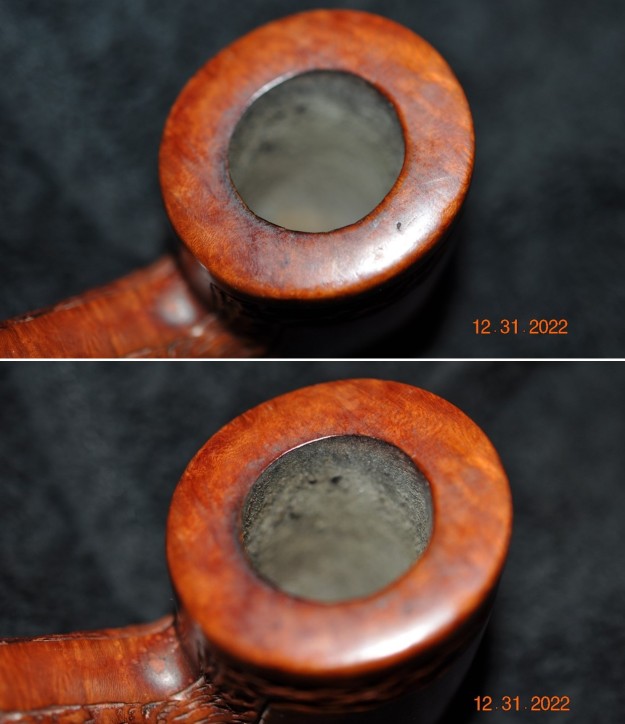
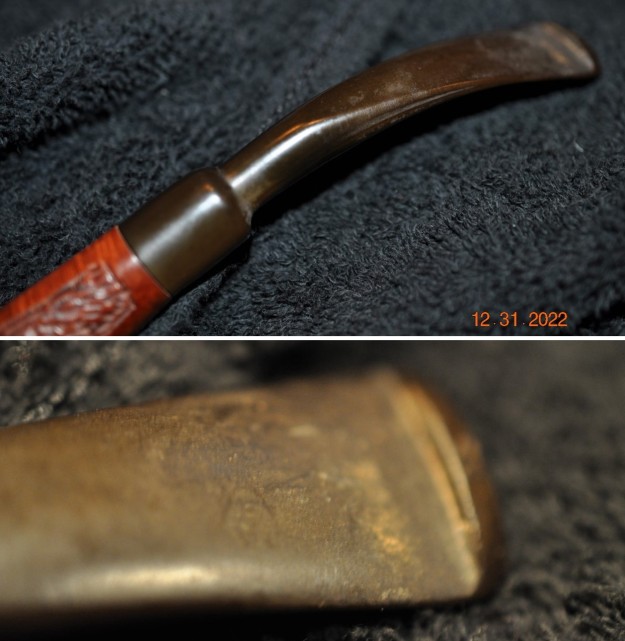
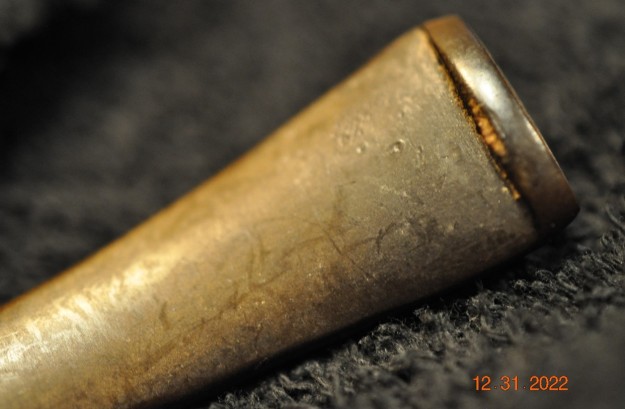
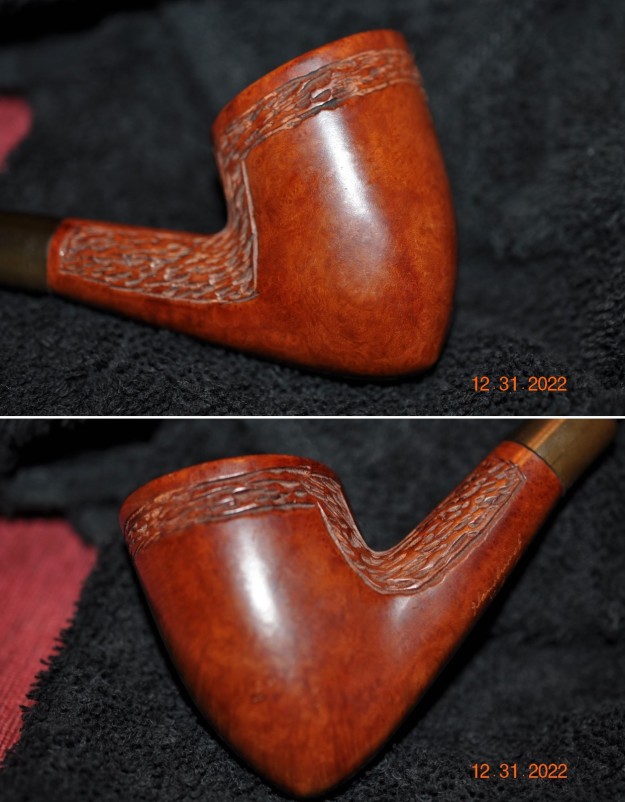
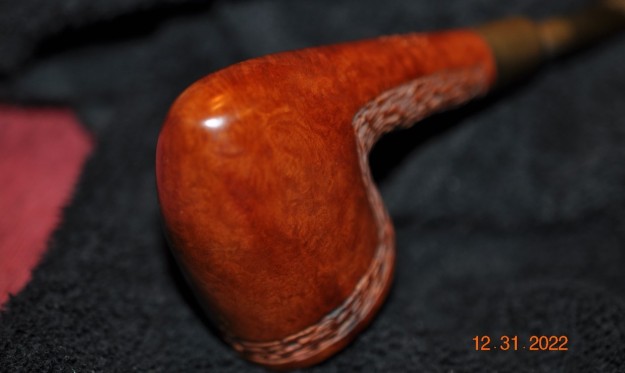
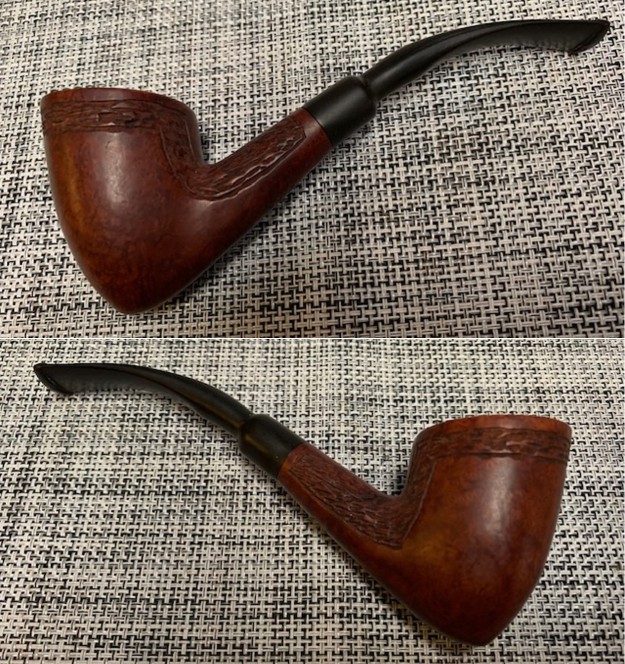
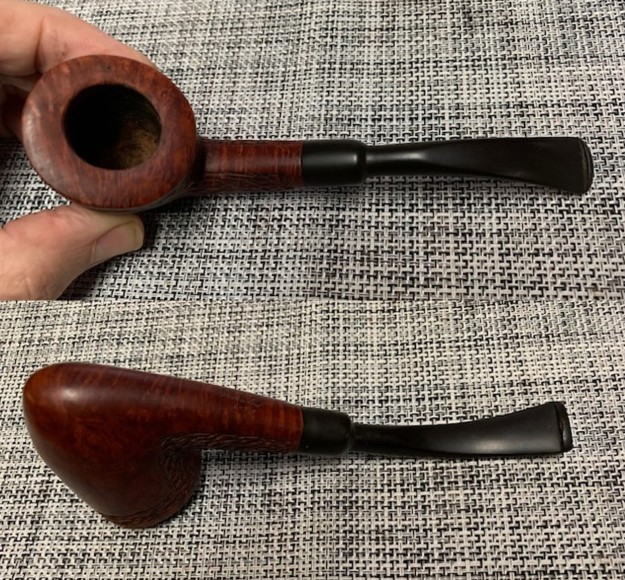
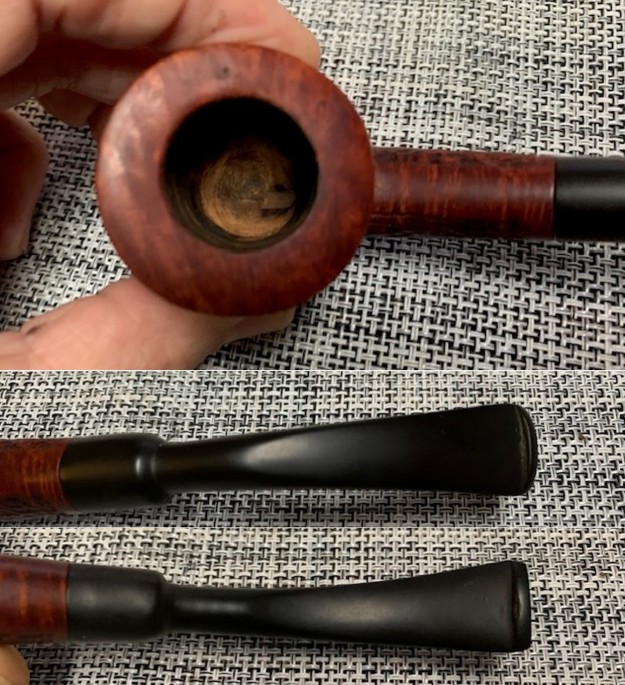
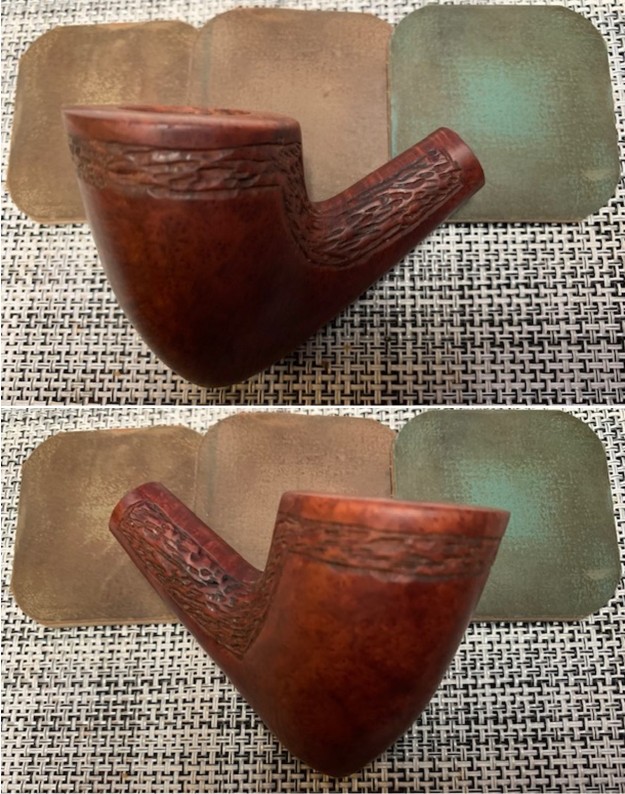
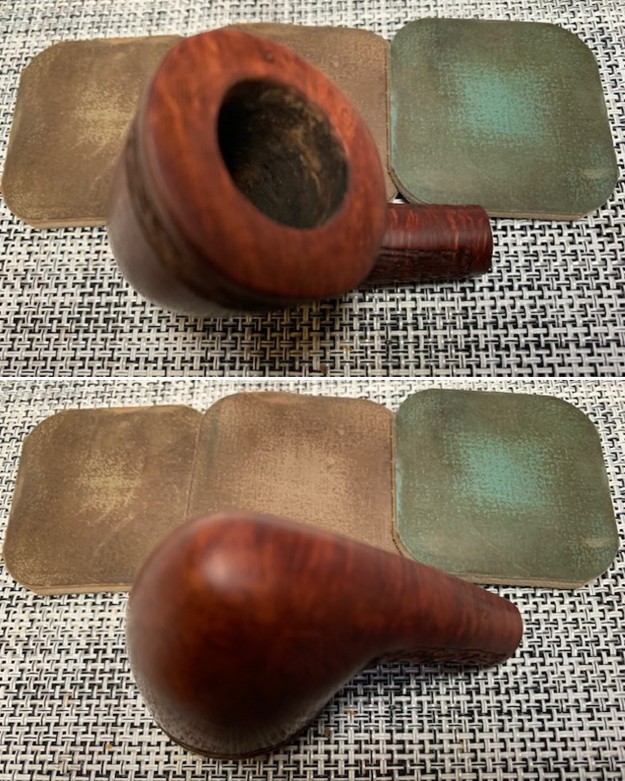
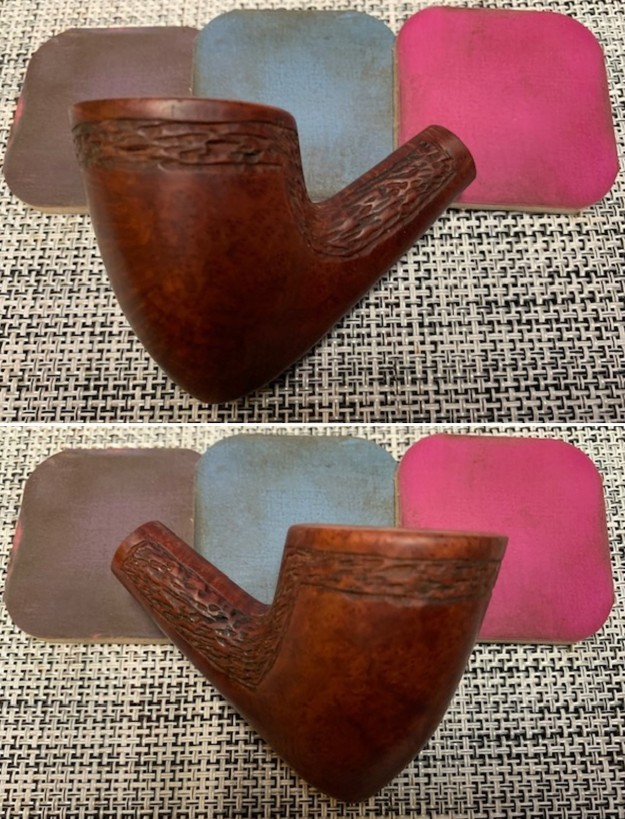
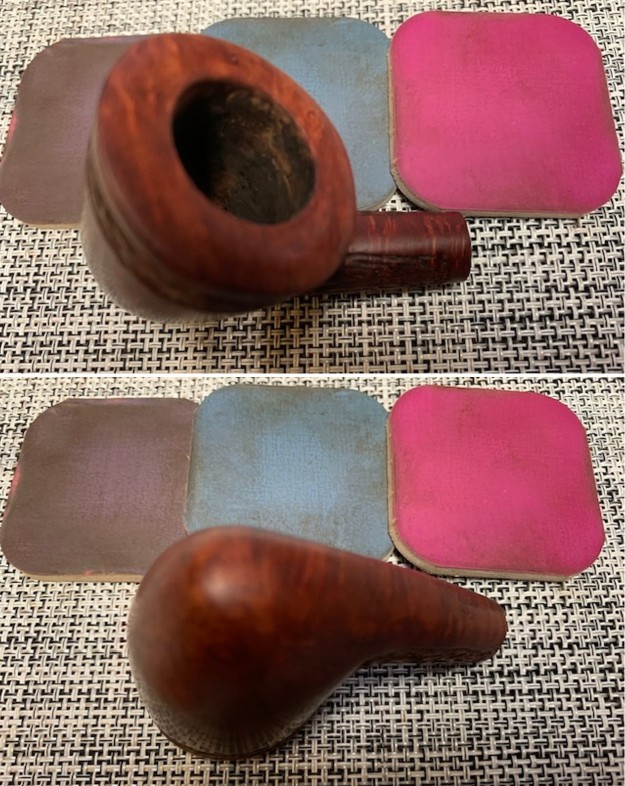
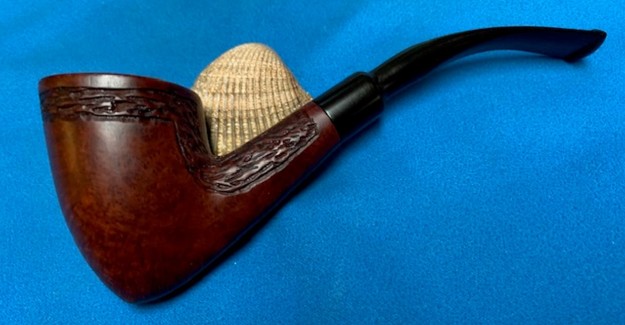
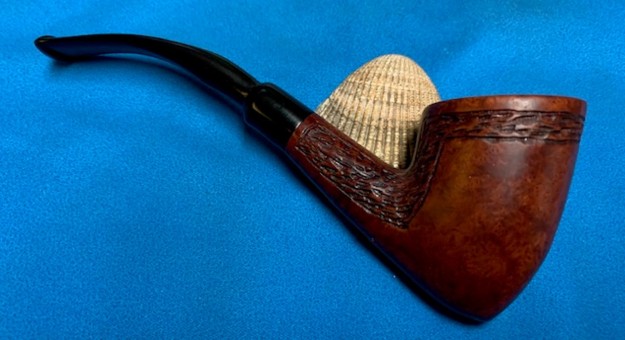
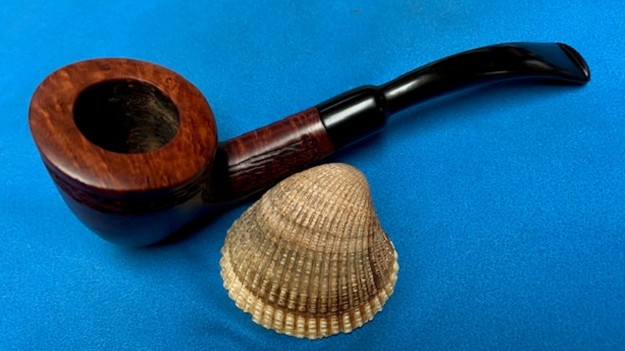
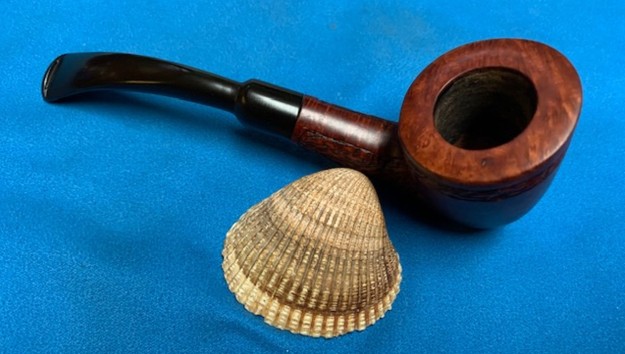
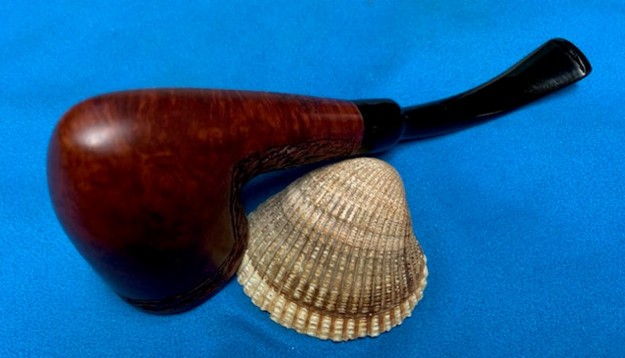
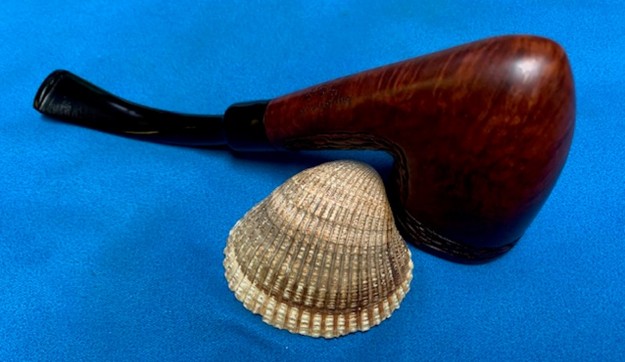
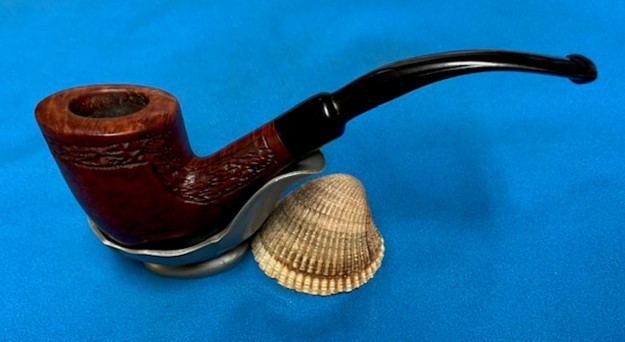
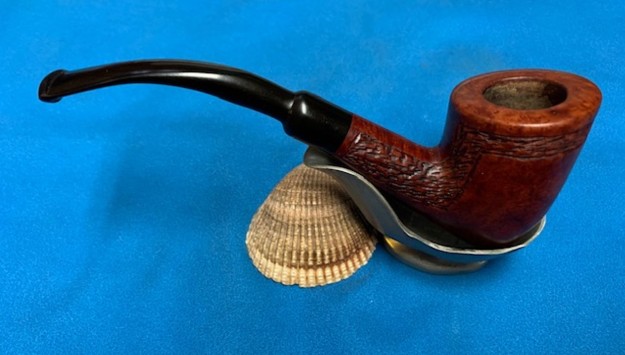
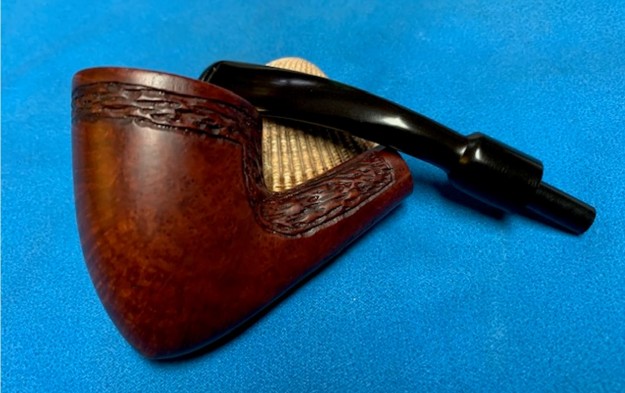
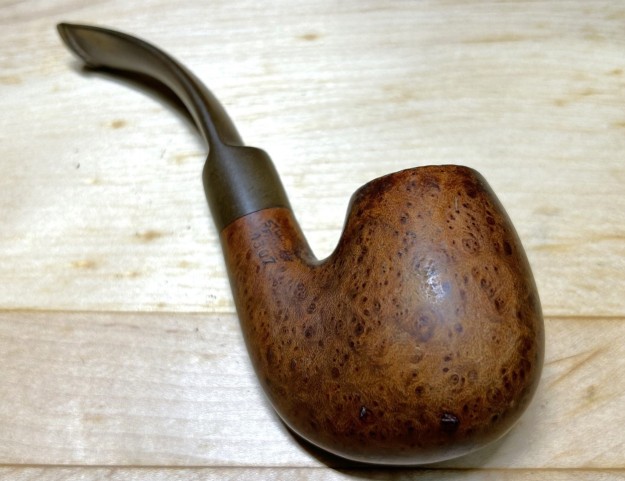
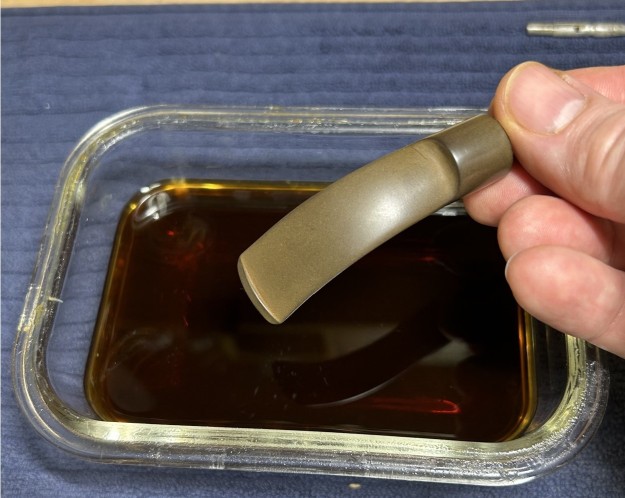
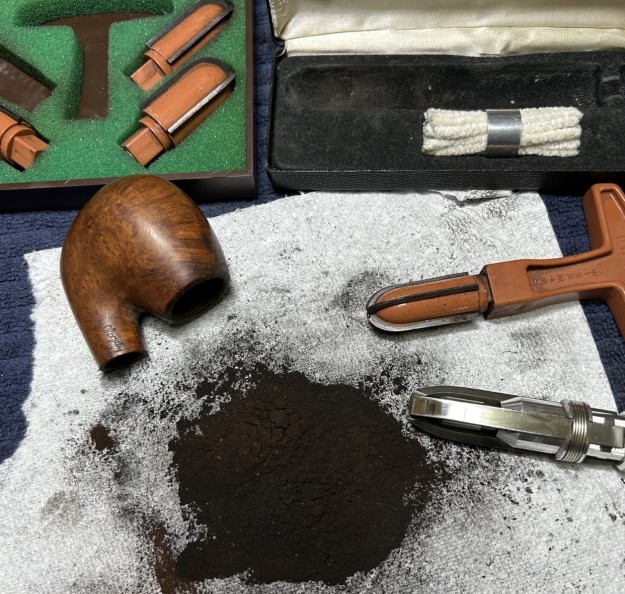
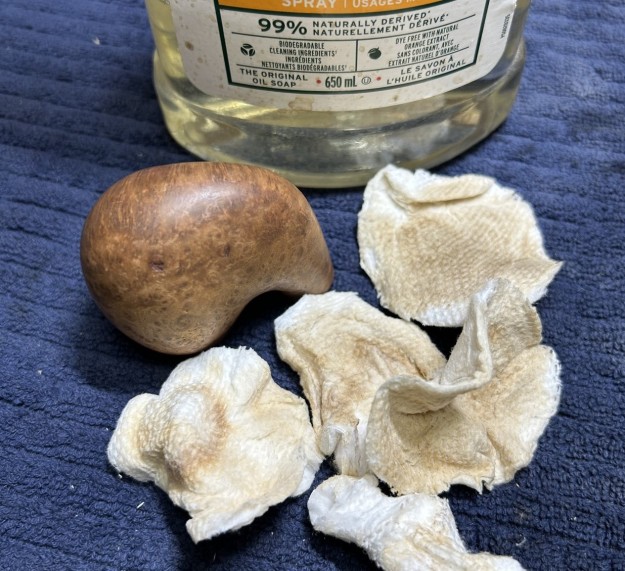
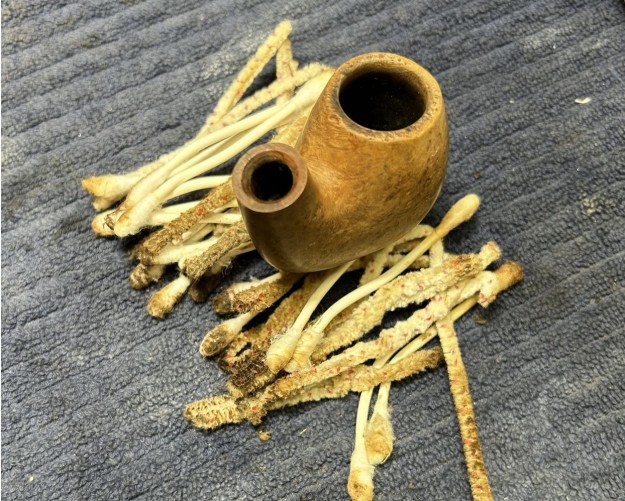
The next pipe on the work table is an elegantly shaped Dublin/Freehand. It came to us from an auction out of Glendale, Arizona, USA on 06/13/2020. The finish had a combination of smooth and two rusticated patches – one on the right side mid bowl and other on the back mid bowl. The top of the bowl is smooth and round. The shank underside is stamped Karl Erik over Hand Made in Denmark over 11. The bowl had grime and oils ground into the sides. There was a thick cake in the bowl and a light lava overflow and grime on the inner edge and rim top. There was a small mark on the inner edge on the left side toward the back of the bowl. The fancy, turned saddle stem was oxidized and there was tooth chatter on both sides near the button. Jeff took photos of the pipe before he started his clean up. The next photo shows the rim top and the bowl. You can see the cake in the bowl and the light overflow of lava on the flat rim top. The inner edge of the bowl looks smooth and shows some darkening and nicks. The photos of the stem show the oxidation and calcification on the stem. There are also light tooth marks and chatter on both sides near the button. Jeff took pictures of the bowl from various angles to show the condition and the overall look of the pipe. It was a beauty and elegant underneath the grime. The underside of the shank is stamped Karl Erik over Hand Made in Denmark. Underneath that is the number 11. It is clear and readable.Jeff had thoroughly cleaned up the pipe. He reamed the pipe with a PipNet Pipe Reamer and cleaned up the remnants with a Savinelli Fitsall Pipe Knife. He scrubbed the bowl with undiluted Murphy’s Oil Soap with a tooth brush. He rinsed it under running warm water to remove the soap and grime. He cleaned out the inside of the shank and the airway in the stem with alcohol, cotton swabs and pipe cleaners. He scrubbed the exterior of the stem with Soft Scrub to remove as much of the oxidation and calcification as possible. He soaked the stem in Briarville’s Pipe Stem Deoxidizer and rinsed it off with warm water. I took photos of the pipe once I started to work on it.  I took some photos of the rim top and stem. The rim top and bowl looked good. The cake and lava overflow were gone but the rim top and the inner edge showed some nicks and darkening. The closeup photos of the stem shows that it is a much cleaner and looks good. The light tooth marks and chatter were still present on both sides.I took a photo of the stamping on the left side of the shank to show the condition after the cleanup. It was very readable and undamaged. I took the stem off the shank and took a photo of the pipe to give a sense of the proportions of the pipe.  I started my restoration work on this pipe by addressing the darkening around the inner edge of the bowl and rim top. I used a folded piece of 220 grit sandpaper to clean up the inner edge and the rim top. The finished rim top looked very good.I started my polishing regimen on the bowl. I used nine micromesh sanding pads and dry sanded the bowl with 1500-12000 grit pads. I wiped the bowl down with a damp cloth after each pad. The bowl really shines by the final three pads. I worked some Before & After Restoration Balm into the surface of the briar with my fingertips to clean, enliven and protect it. I let the balm sit for a little while and then buffed with a cotton cloth to raise the shine. The photos show the bowl at this point in the restoration process.     I set the bowl aside and turned to the stem. I polished out the tooth chatter and marks on the stem with micromesh sanding pads – dry sanding with 1500-12000 grit sanding pads. I wiped them down after each sanding pad with a cloth containing some Obsidian Oil. I finished polishing it with Before & After Pipe Stem Polish – both Fine and Extra Fine and buffed it off with a cotton cloth. I gave it a coat of Obsidian Oil to preserve and protect the stem. I don’t know how many times I have said this but I love it when I come to the end of a restoration and all of the parts come together and the pipe looks better than when we started the cleanup process. I put the stem back on the Karl Erik Handmade in Denmark 11 Freehand Dublin and buffed the pipe with Blue Diamond on the buffing wheel. I carefully avoided the stamping on the shank sides during the process. I gave the bowl and stem multiple coats of carnauba wax on the buffing wheel and followed that by buffing it with a clean buffing pad on the buffer. I hand buffed the pipe with a microfiber cloth to deepen the shine. The finished pipe is a real stunning example of a Danish Karl Erik Handmade 11 Freehand. Once again, the grain and the way the shape follows the grain is amazing. Give the finish pipe a look in the photos below. I can only tell you that it is much prettier in person than the photos capture. The dimensions of the pipe are Length: 5 ¾ inches, Height: 2 inches, Outside diameter of the bowl: 1 ½ inches, Chamber diameter: 1 inch. The weight of the pipe is 1.38 ounces/40grams. Thanks for walking through the restoration with me as I worked over another beautiful pipe. I will be putting this one on the rebornpipes store in the Danish Pipemakers Section. Let me know if you are interested in adding it to your collection. Thanks for your time.

As always, I encourage your questions and comments as you read the blog. Thanks to each of you who are reading this blog. Remember we are not pipe owners; we are pipe men and women who hold our pipes in trust until they pass on into the trust of those who follow us.

Restoring an older 1939-1945 Vauen Dr. Perl D.R.W.Z. Bruyere Extra 6140 Bulldog


Blog by Steve Laug

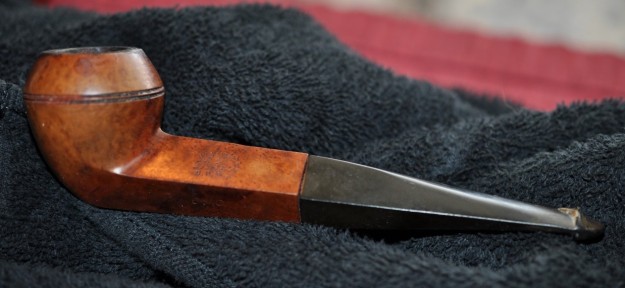
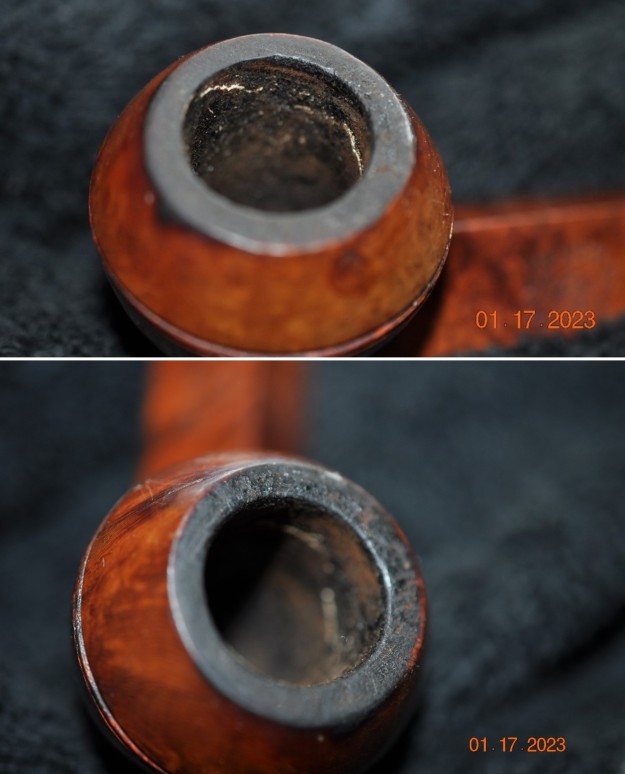
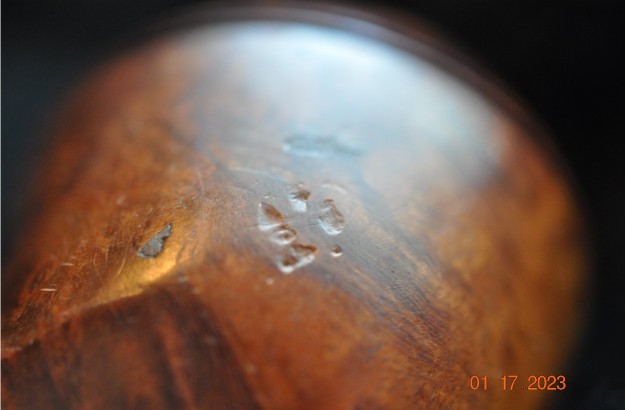
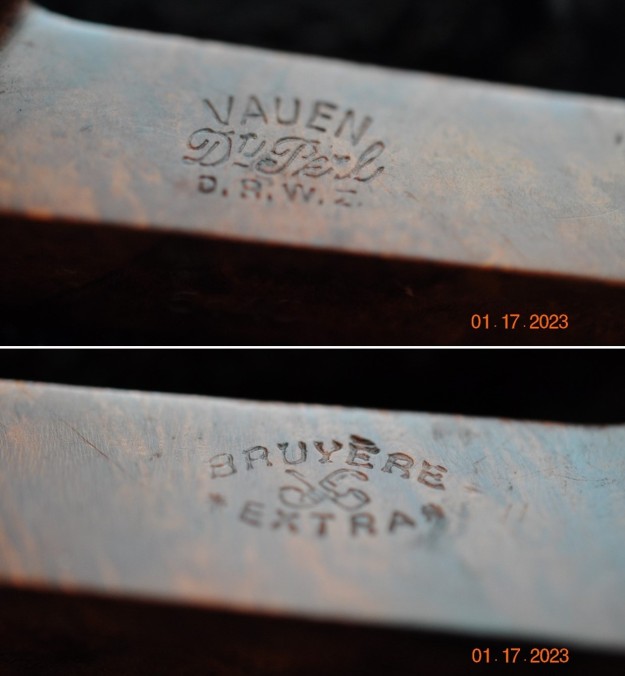
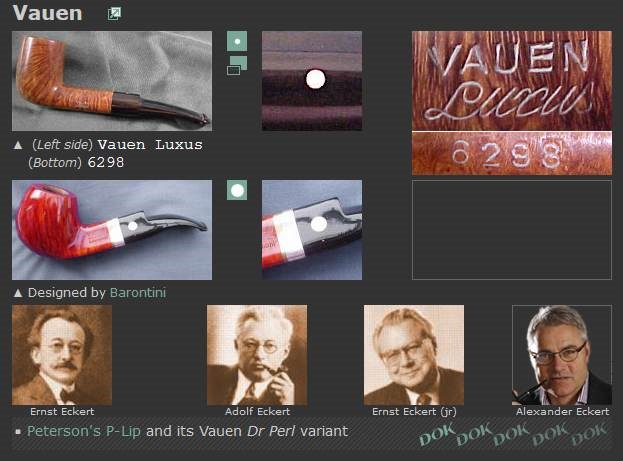
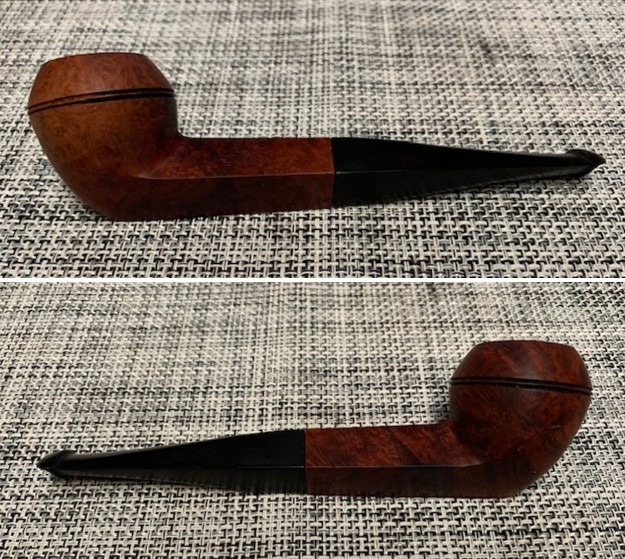
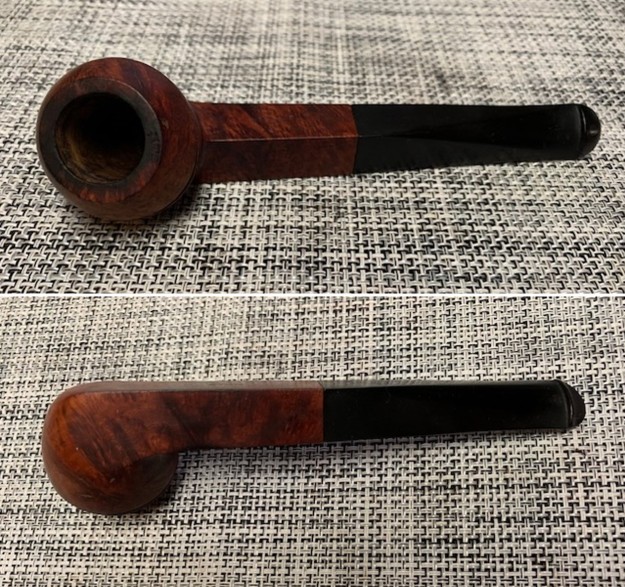
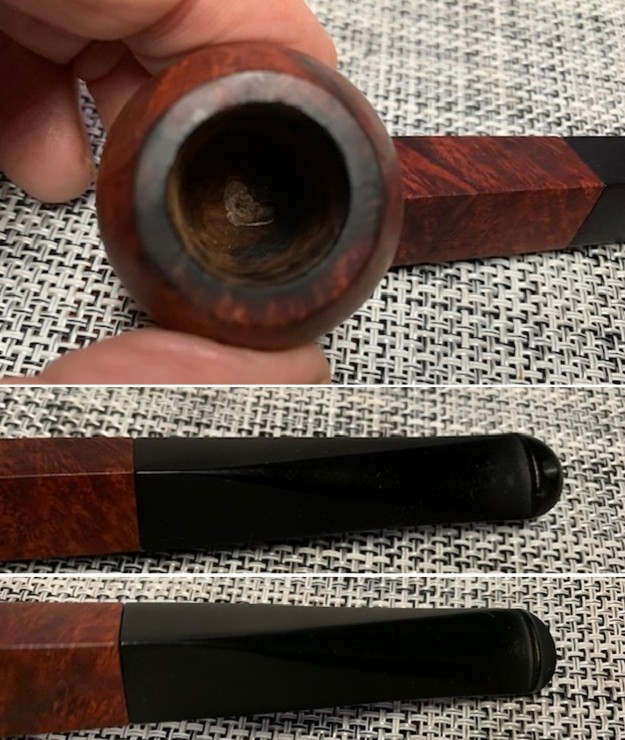
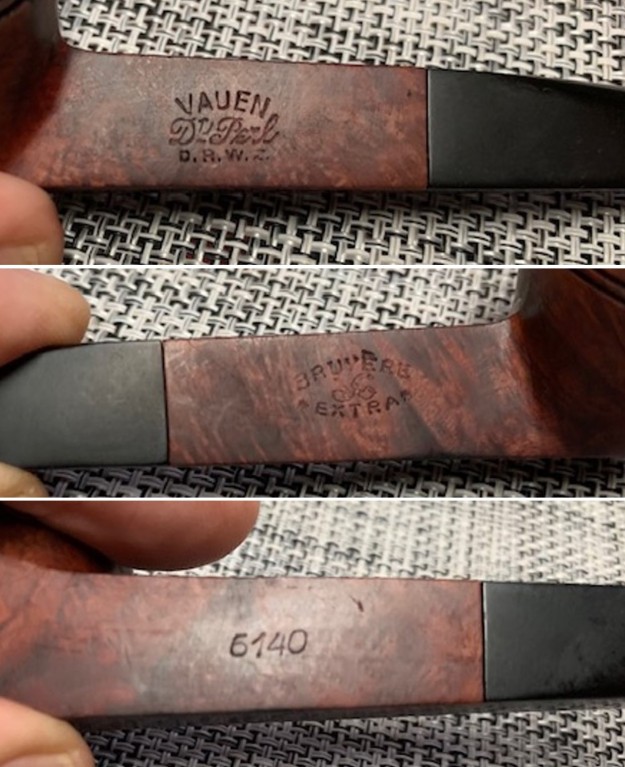
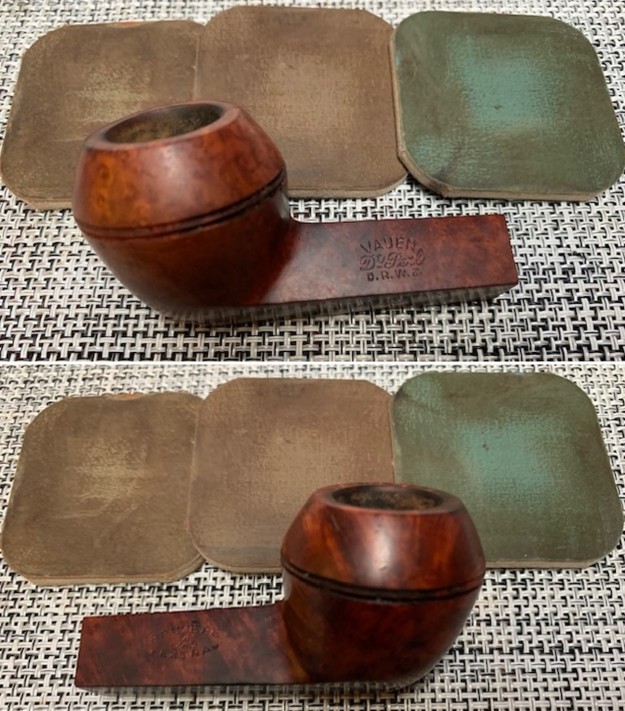
In the last box of pipes Jeff sent me there was a nice looking straight Bulldog. It came to us through our connection Copenhagen, Denmark on 10/17/2022. It is stamped on the left side of the shank and reads Vauen [arched over] Dr. Perl [over] D.R.W.Z. On the right side of the shank it was stamped Bruyere [arched over] twin pipes (logo) with Extra arched underneath. On the left underside of the diamond shank it was stamped with the shape number 6140. The pipe had charm for sure but it was a very dirty pipe when we received it. The finish was smooth finish on the bowl and shank with classic twin rings around the cap of the bowl. There was a heavy cake in the bowl that darkened the inner edge and overflowed as a thick lava coat on the rim top. The vulcanite, taper stem was oxidized, calcified and there were light tooth marks and chatter on the top and underside ahead of the button. The tenon was made for Vauen Dr. Perl 9mm filters. Jeff took some photos of the pipe before he started his cleanup work. He took photos of the bowl and rim top to show their general condition. You can see the thick cake in the bowl and the heavy lava coat in the top of the rim and inner edge of the bowl. The finish on the bowl is very dirty with grime and oils ground into the bowl, but still very stunning. This pipe has a class straight Bulldog look to me. The P-lip style taper stem that has some oxidation, calcification on the surface of the vulcanite. There is chatter and tooth marks on the top and underside. On the underside near the button was a thick spot of goop – a repair possibly? I don’t think so, I think it rather is debris that should clean off. Jeff took some photos of the sides and heel of the bowl to give an idea of the grain and the finish around the bowl and shank. It is amazing and I cannot wait to see what it looks like once it is polished and waxed. He took a photo of the cut and fill marks on the right side of the bowl toward the shank. The sharp cuts will not steam out.He took photos of the stamping on the shank sides to capture how they look at this point. They are clear and readable as noted above. I wanted to get some background on the Dr. Perl pipe by Vauen. I turned first to Pipephil’s site (http://pipephil.eu/logos/en/logo-v1.html). I did a screen capture of the information on the site. There was a great sidebar that gave some history of the brand. I include both of them below. There was also a note at the bottom of the screen capture below that has a link to the Vauen Dr Perl variant on the P-Lip pipe.In 1848, Karl Ellenberger and his partner Carl August Ziener establish a pipe factory in Nuremberg. In 1901 they merge with Gebhard Ott an other factory in town and they create a firm named Vereinigten Pfeifenfabriken Nürnberg (abbreviated : VPFN*). Shortly after Ernst Eckert, a member of the Ott family became manager of the society. During the 20th century Adolf, Ernst (jr) and Alexander Eckert (CEO in 2012) followed one another at Vauen’s head.* VPFN : “V” is said VAU in German (pronounce faou) and “N” becomes EN. Hence VAUEN.

I followed that link on the bottom of the photo above (http://pipephil.eu/logos/en/infos/p-lip-en.html). I found that there was description of the Vauen Dr. Perl that had the same style stem as the pipe I was working on. I have included a screen capture of the Dr. Perl pipe below:I also turned to a blog written on rebornpipes by Dal Stanton (Pipesteward.com) that I quote a section from the blog below that gives a great sense of the history of the German brand and some photos from the website (https://rebornpipes.com/2021/04/27/breathing-new-life-into-a-german-vauen-6294-p-lip-saddle-billiard-for-a-special-young-lady/).

… I turn to the question of the history of the VAUEN name? I look to the History section of the VAUEN website and again, I am impressed with the presentation. Whenever I work on a pipe, and especially when a pipe name is new to me, I enjoy looking at its history to appreciate the pipe more fully now on my worktable. From VAUEN’s website:Quality and a wealth of ideas have a long tradition at VAUEN. 160 years of VAUEN: that means 160 years of skilled workmanship and modern technology and 160 years of experience in fulfilling the individual wishes of today’s pipe lovers, and those of tomorrow.

In Nuremberg in 1848, Karl Ellenberger and his partner Carl August Ziener turned an idea into reality: Germany’s first pipe manufacturer produced tobacco pipes for connoisseurs around the world using a selection of the best wood. In an amalgamation with the Gebhard Ott pipe factory, which was founded in 1866 in Nuremberg, the Vereinigten Pfeifenfabriken Nuremberg (United Pipe Factories Nuremberg, or VPFN) was born in 1901.  Under the management of Ernst Eckert, a descendent of the founding Ott family, a company was born whose products and services would shape the tobacco and smoking culture in Europe and overseas for the next 160 years and counting.

The question about the name, VAUEN, not being a name of a person and why it is capitalized throughout is explained:

In his search for a name that would be easily remembered by all pipe lovers, Ernst Eckert’s son, Adolf Eckert, coined a new name for the company in 1909: VAUEN – a composition of the first letters V (pronounced vow) of Vereinigte Pfeifenfabriken and N (pronounced en) of Nuremberg. A brand for the future was born.

I did a final search for information on the D.R.W.Z. stamp to see if it could help me establish a date for this pipe. I found a link to one stamped the same though in a different shape number (https://vkpipes.com/pipeline/vauen-dr-perl-d-r-w-z-3232/). I quote a portion of the article below and have highlighted a pertinent portion in red.

VAUEN Dr. Perl D.R.W.Z. 3232

Germany, 1939-45

VAUEN is really a phenomenal company – one of the oldest and largest European pipe businesses remains at the same time very flexible and innovative: they not only freely experiment with shapes and finishes, but regularly offer basically new solutions such as the “Pipo” or the “Zeppelin”.

Unfortunately unlike other big manufacturers the history of VAUEN products is not well documented: many documents and catalogues wee lost in the end of the World War II, nowadays company launches about 50 models every year, so it’s hardly possible to systematize all that variety.

Nevertheless this pipe can be easily identified as a VAUEN product made between 1939 and 1945: the stamping “D.R.W.Z” (Deutsches Reichs Waren Zeichen – a kind of a registered trademark) was applied only within that perios and was replaced after the end of the War by “registered (German) trademark”. So there’s a really old and historical pipe for your attention.

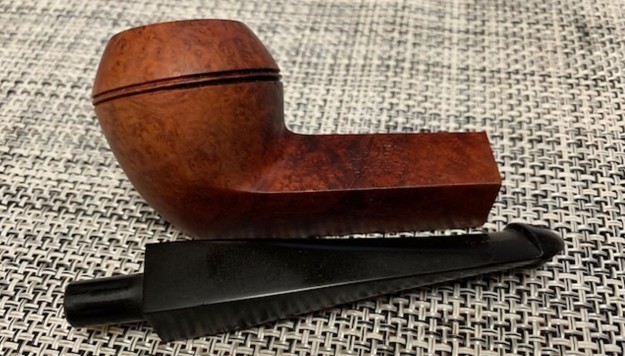
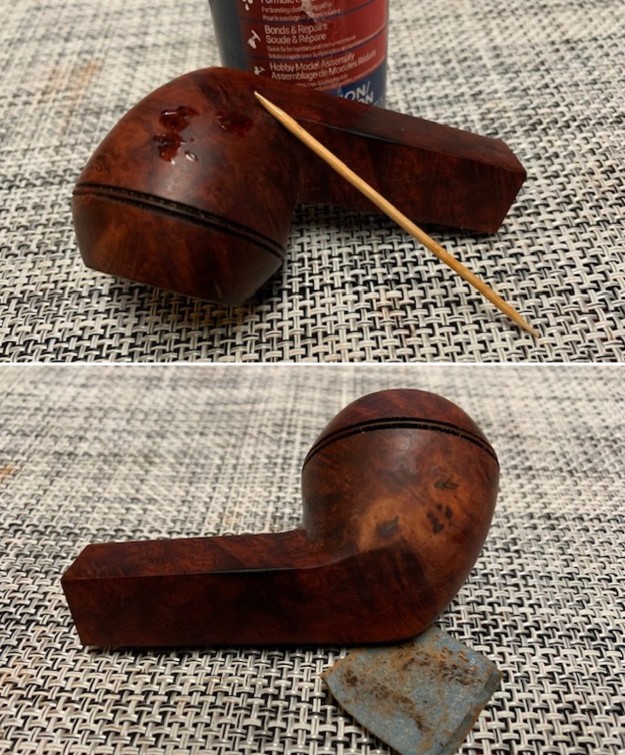
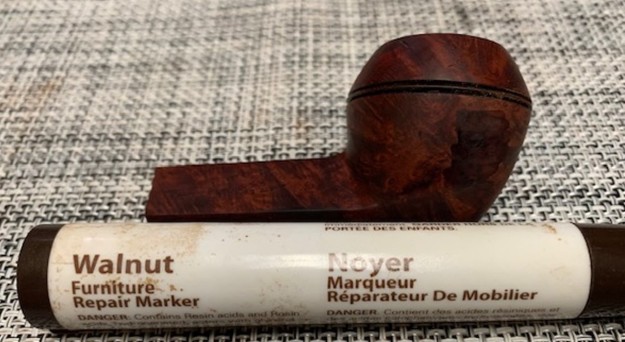
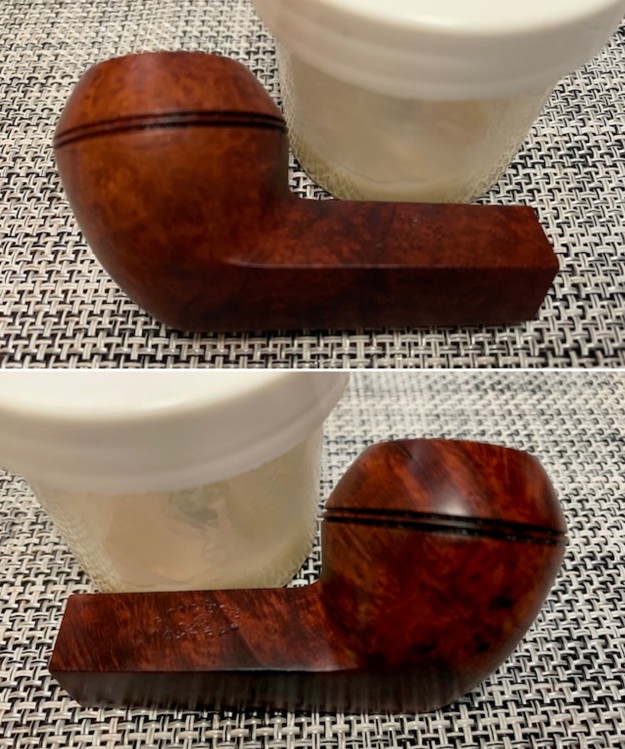
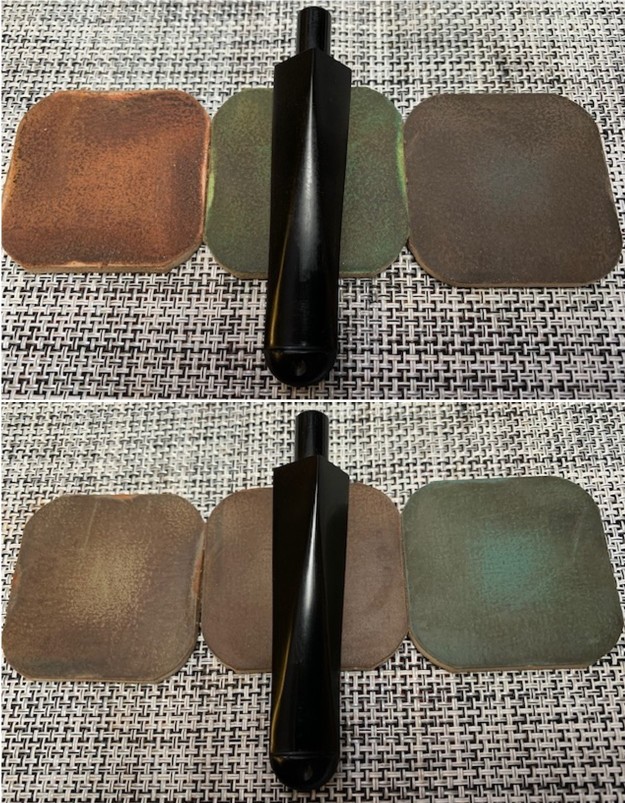
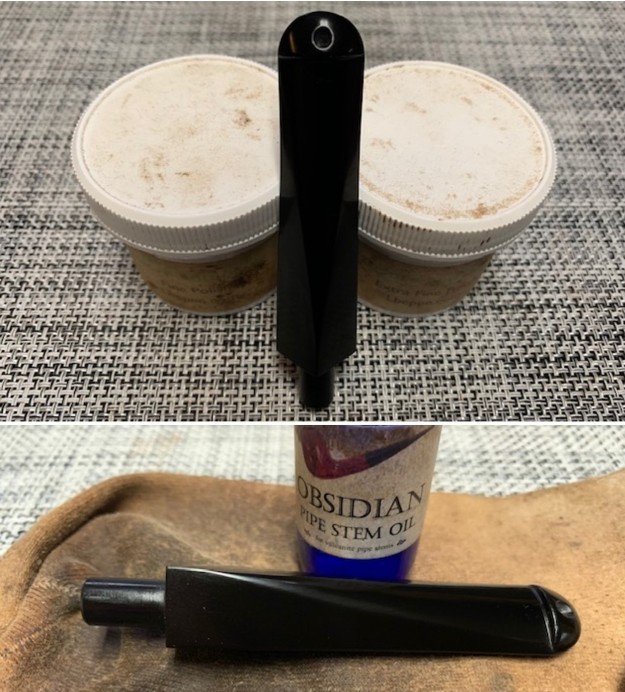
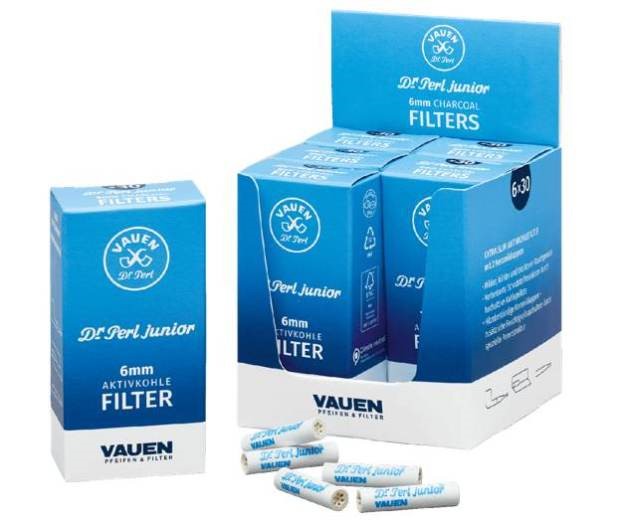
With that information at hand I turned to work on the pipe itself. Jeff had thoroughly cleaned up the pipe. He reamed the pipe with a PipNet Pipe Reamer and cleaned up the remnants with a Savinelli Fitsall Pipe Knife. He scrubbed the bowl with undiluted Murphy’s Oil Soap with a tooth brush. He rinsed it under running warm water to remove the soap and grime. He cleaned out the inside of the shank and the airway in the stem with alcohol, cotton swabs and pipe cleaners. He scrubbed the exterior of the stem with Soft Scrub to remove as much of the oxidation and calcification as possible. He soaked the stem in Briarville’s Pipe Stem Deoxidizer and rinsed it off with warm water. I took photos of the pipe once I started to work on it.  I took some photos of the rim top and stem. The rim top and bowl looked very good. The cake and lava overflow were gone but the rim top and edges showed a lot of burn marks and darkening. Both the smooth portion and the plateau portion would need a bit more work to really clean up well. The closeup photos of the stem shows that it is a much cleaner and looks good. The light tooth marks and chatter were still present on both sides.I took photos of the stamping on the sides of the shank to show the condition after the cleanup. It was very readable and undamaged. I took the stem off the shank and took a photo of the pipe to give a sense of the proportions of the pipe.    I started my restoration work on this pipe by addressing the darkening around the inner edge of the bowl and the rim top. I used a folded piece of 220 grit sandpaper to clean up the inner edge and the rim top. The finished rim top looked much better.I filled in the shrunken fills and the chips/cuts in the right side of the bowl below the twin rings of the cap with clear CA glue. I used a tooth pick to fill in the holes. Once it cured I sanded the areas smooth with 220 grit sandpaper to blend it into the surface. I touched up the sanded areas with a Walnut stain pen to blend them into the surrounding briar. I started my polishing regimen on the bowl. I used nine micromesh sanding pads and dry sanded the bowl with 1500-12000 grit pads. I wiped the bowl down with a damp cloth after each pad. The bowl really shines by the final three pads. I worked some Before & After Restoration Balm into the surface of the briar with my fingertips and into the twin rings with a shoe brush to clean, enliven and protect it. I let the balm sit for a little while and then buffed with a cotton cloth to raise the shine. The photos show the bowl at this point in the restoration process. I set the bowl aside and polished out the tooth marks and chatter with micromesh sanding pads – dry sanding with 1500-12000 grit pads. I wiped the stem down after each pad with some Obsidian Oil on a cotton cloth to remove the sanding debris. I finished the polishing routine with some Before & After Pipe Stem Polish – both Fine and Extra Fine and buffed it off with a cotton cloth. I gave it a coat of Obsidian Oil to preserve and protect the stem.   Once I finish a filter stem I like to fit it with a clean filter. In this case I do not have the filters to fit it. My thinking is that it was made for a Dr. Perl Junior 6mm filter. The pipeman or woman who adds this pipe to his/her collection will have to pick some up. I have included a photo of what I think the filters will be.I finished with the Blue Diamond and moved on to buffing with carnauba wax. Once I have a good shine in the briar and vulcanite I always give the bowl and the stem multiple coats of carnauba wax. I have found that I can get a deeper shine if I following up the wax buff with a clean buffing pad. It works to raise the shine and then I follow that up with a hand buff with a microfiber cloth to deepen the shine. It is always fun for me to see what the polished bowl looks like with the polished stem. It really is a beautiful pipe. The bowl coating and build up of cigar mud should harden and provide a base for the build up of new cake. The sand blast finish around the bowl sides and shank show the grain patterns underneath the rich brown stains of this Vauen Dr. Perl D.R.W.Z. Bruyere Extra 6140 Filter Straight Bulldog and the polished vulcanite taper stem is a great addition. The finished pipe feels great in my hand. It is light and well balanced. Have a look at it with the photos below. The dimensions are Length: 6 inches, Height: 1 ½ inches, Outside diameter of the bowl: 1 ½ inches, Chamber diameter: ¾ of an inch. The weight of the pipe is 1.16 ounces/33 grams. It is a beautiful pipe that I will have to tell a friend of mine about who collects Vauen pipes. I look forward to hearing what he thinks of it.

As always, I encourage your questions and comments as you read the blog. Thanks to each of you who are reading this blog. Remember we are not pipe owners; we are pipemen and women who hold our pipes in trust until they pass on into the trust of those who follow us.

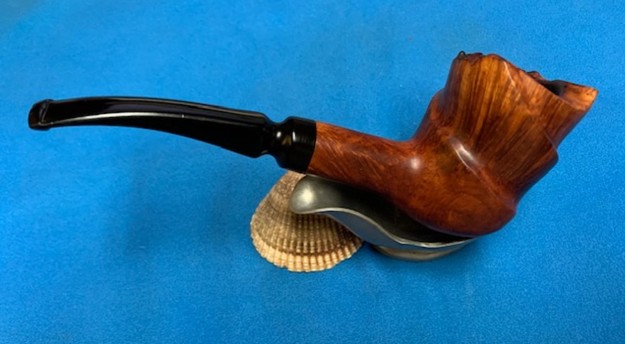
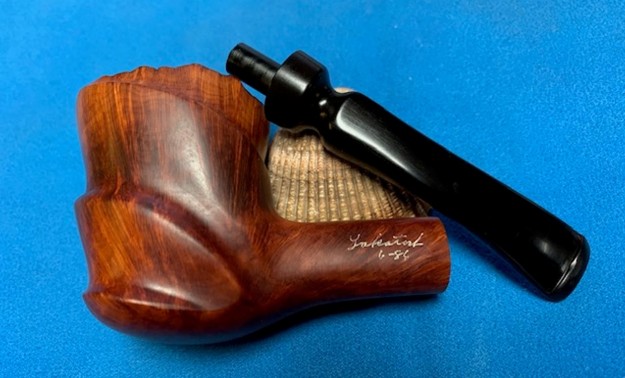
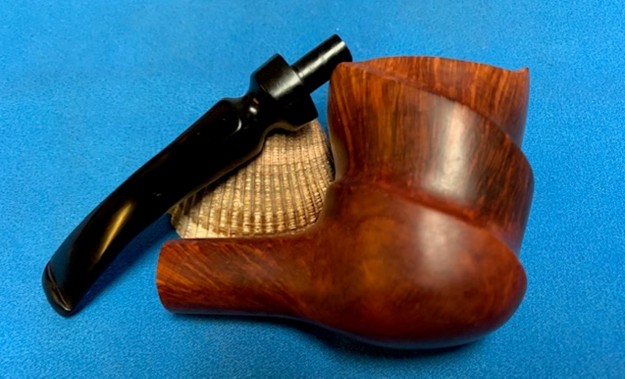
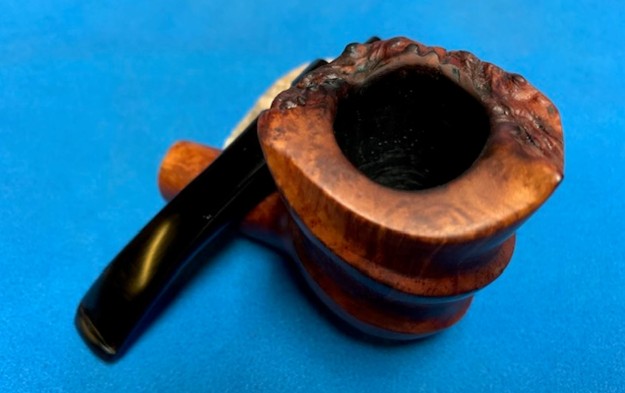
Refreshing a Piece of American Pipemaking Craftsmanship – a Lakatosh 6-84 Spiral Bowl Freehand


Blog by Steve Laug

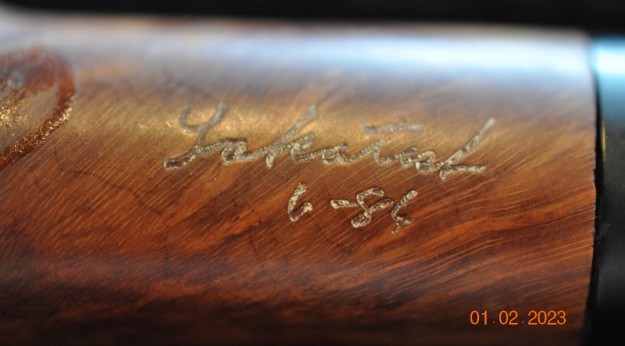
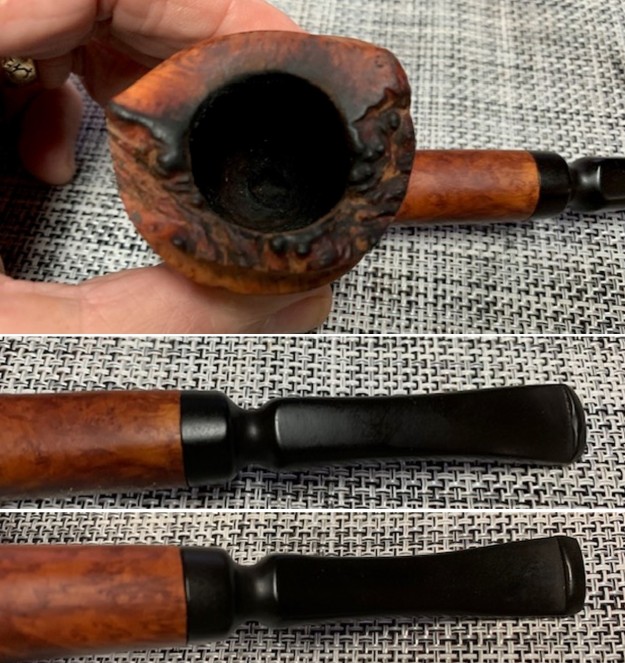
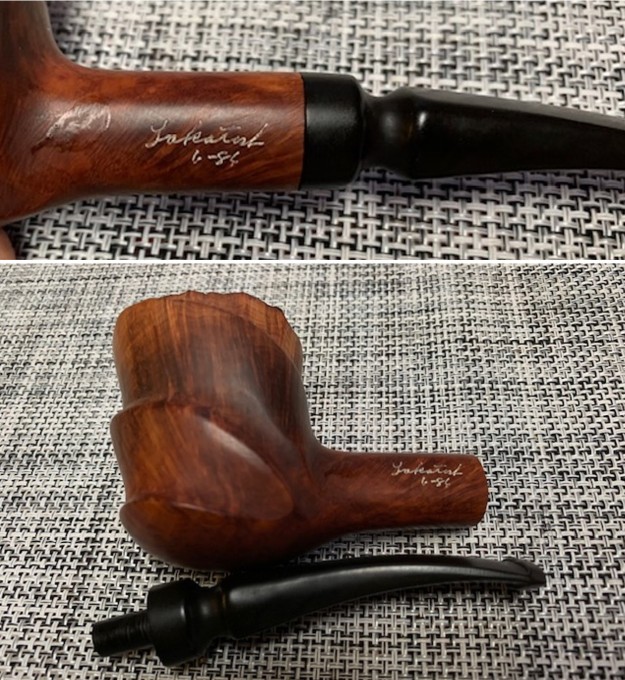
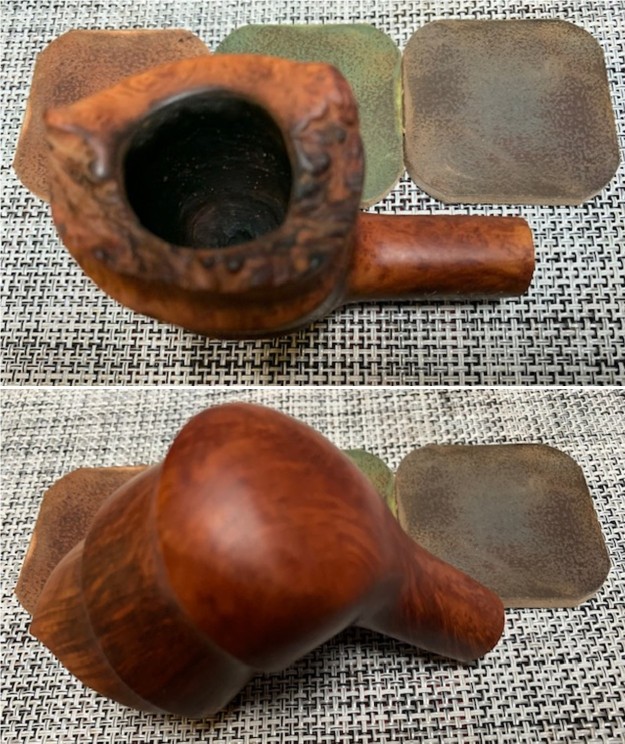
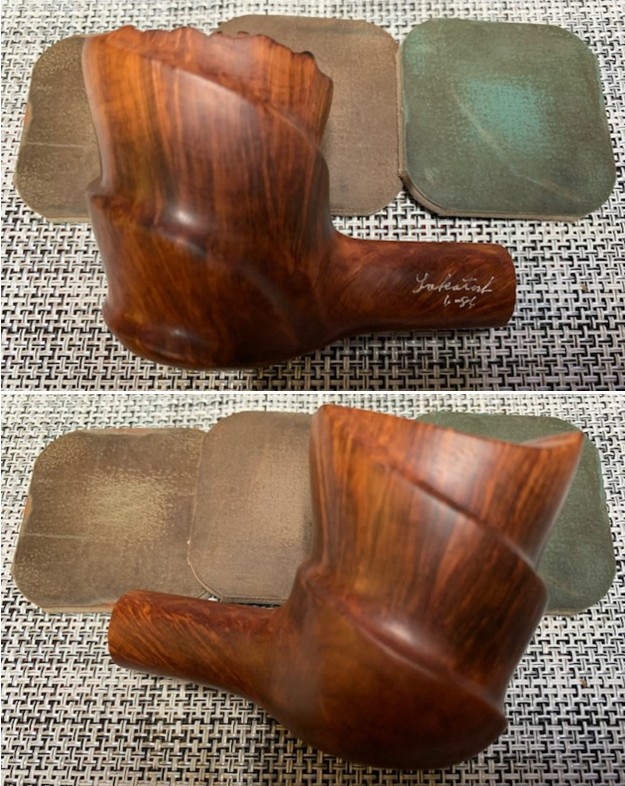
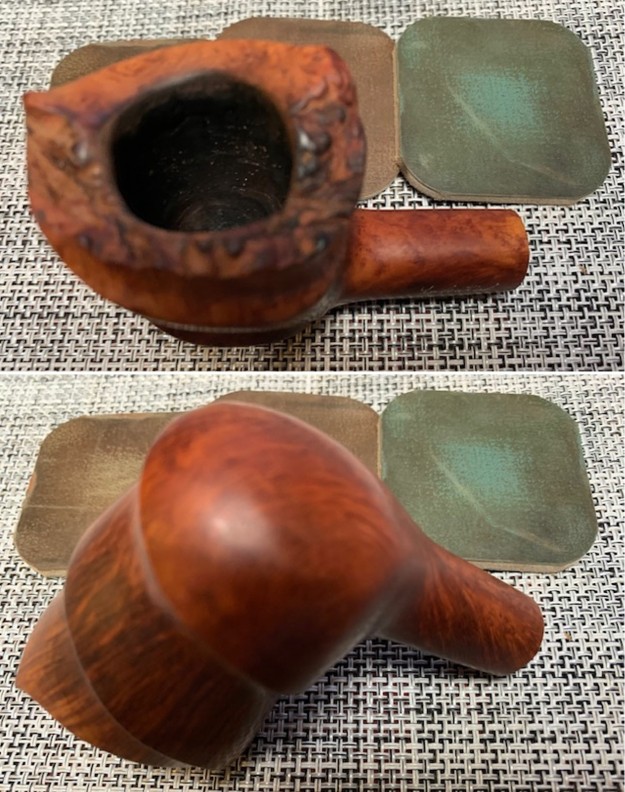
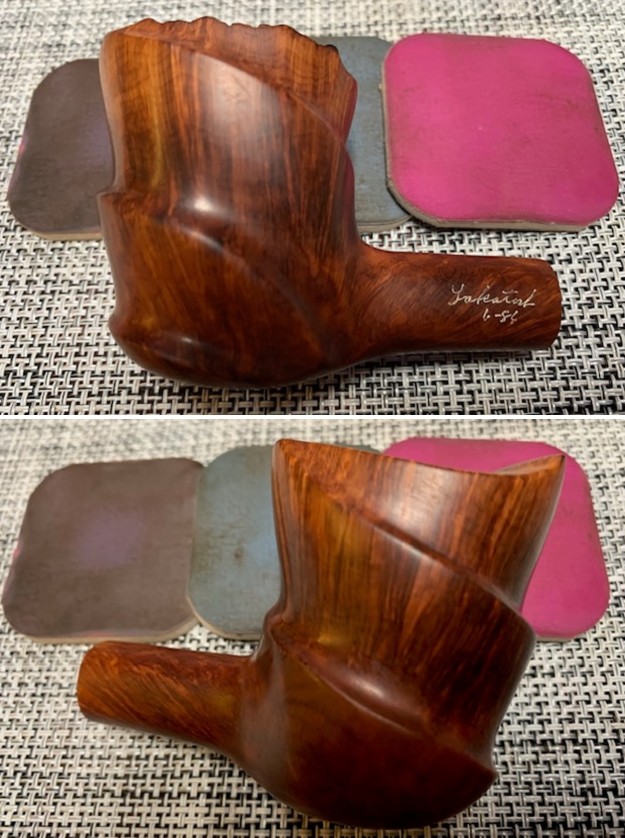
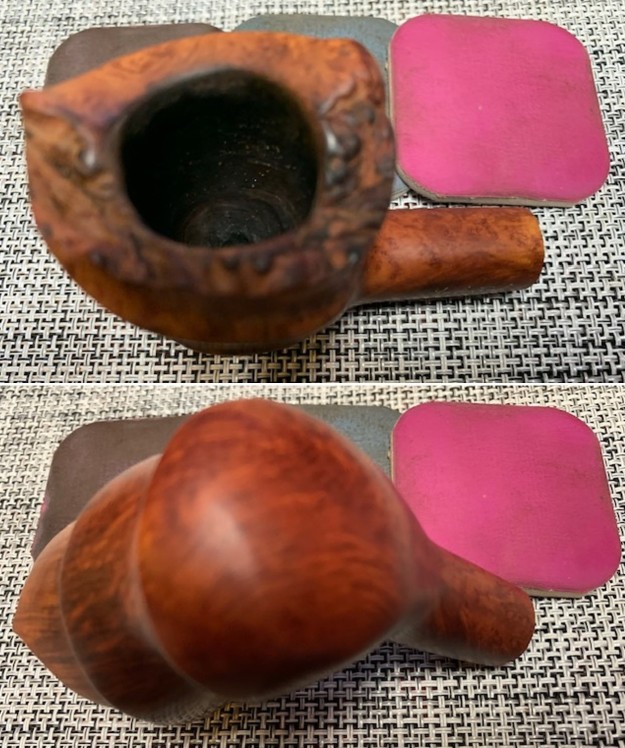
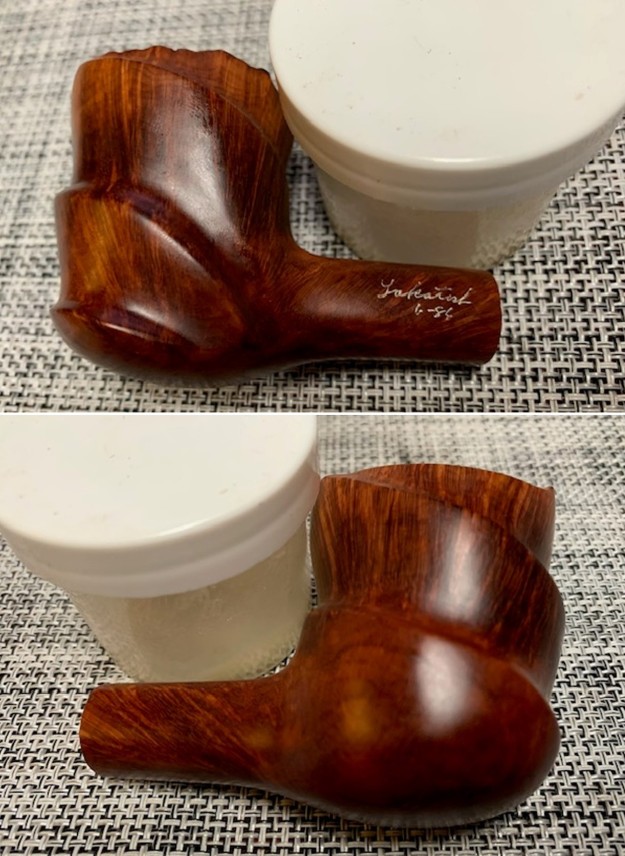
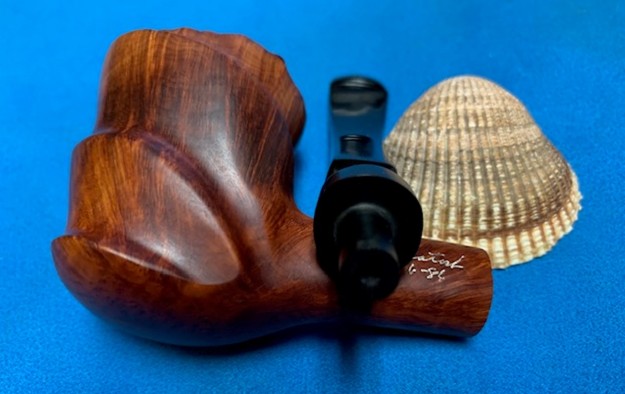
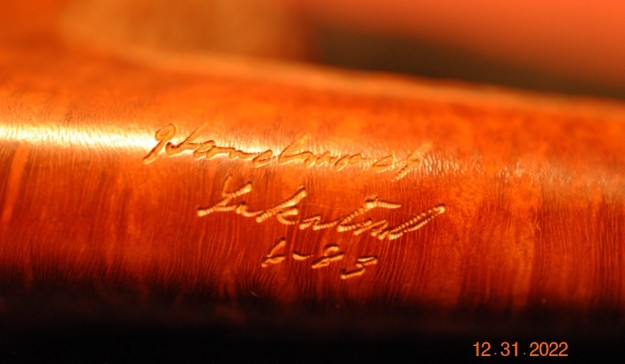
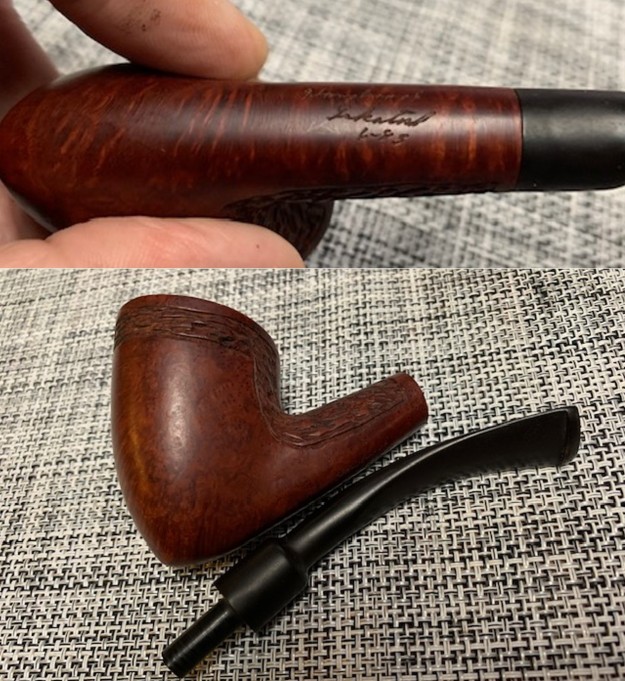
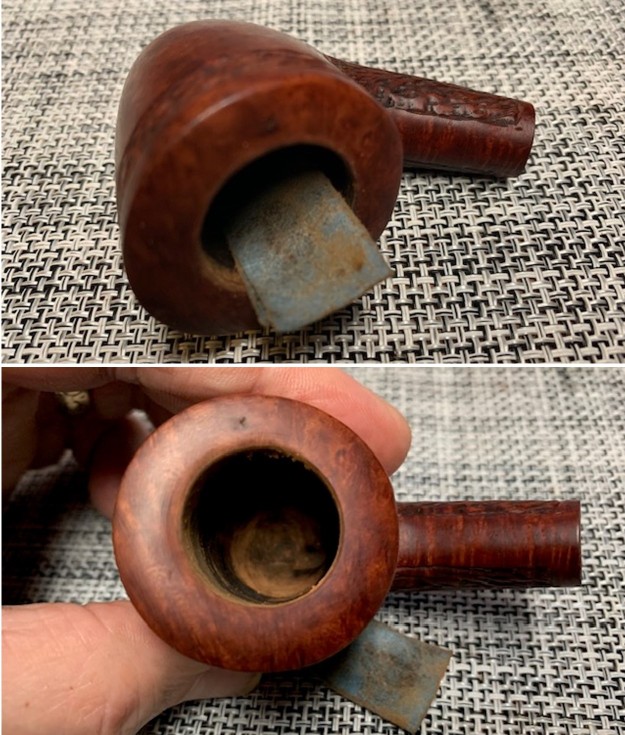
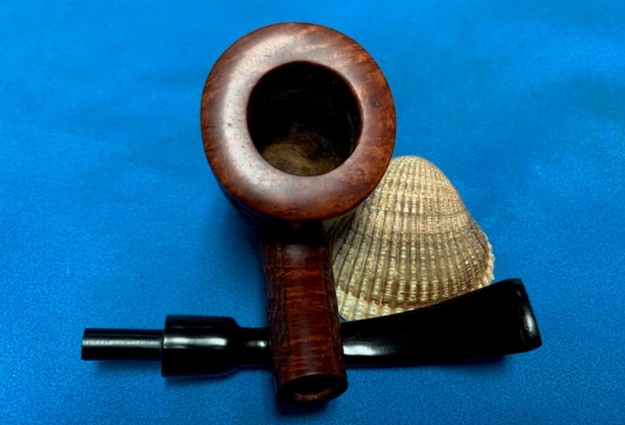
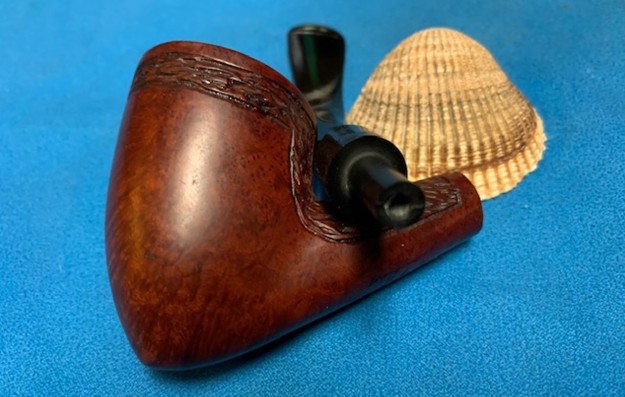
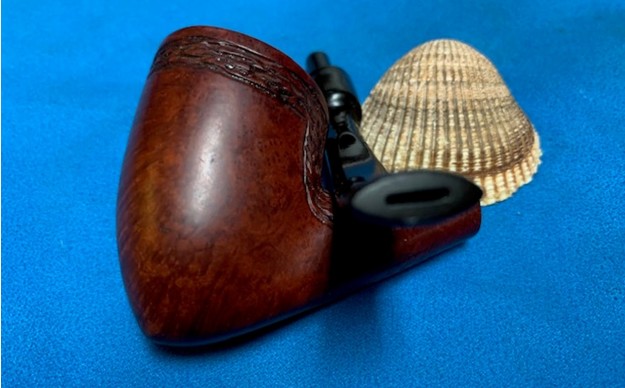
In the last box of pipes Jeff sent me there two Lakatosh freehand pipes. The first I have chosen to work on came to us from a seller in Princeton Junction, New Jersey, USA on 08/20/2021. It is engraved by hand on the left side of the shank and reads Lakatosh [over] 6-84. It was a beautiful pipe but a very dirty pipe when we received it. The finish has a unique smooth finish on the bowl and shank with a spiral carving around the top of the bowl and a plateau rim top. There was a heavy cake in the bowl that darkened the inner edge and filled in the plateau top with a thick lava coat. The vulcanite, fancy saddle stem was oxidized, calcified and there were light tooth marks and chatter on the top and underside ahead of the button. Jeff took some photos of the pipe before he started his cleanup work. He took photos of the bowl and rim top to show their general condition. You can see the thick cake in the bowl and the heavy lava coat in the plateau top of the rim and inner edge of the bowl. The finish on the bowl is very dirty with grime and oils ground into the bowl, but still very stunning. This pipe has a Danish Freehand look to me with a bit of an American flair. The fancy saddle stem that has some oxidation, calcification on the surface of the vulcanite. There is chatter and tooth marks on the top and underside. Jeff took some photos of the sides and heel of the bowl to give an idea of the grain and the finish around the bowl and shank. It is amazing and I cannot wait to see what it looks like once it is polished and waxed. He took a photo of the stamping on the left side of the shank to capture it for me. It is hand etched and is clear and readable as noted above.I remembered that Paresh had worked on three of these pipes in India and I believed they were from his Grandfather’s collection. We had chatted about them wondering how they had traveled from Pennsylvania to India. I turned to the blog that he wrote on the restoration to have a look at the information that he had gathered when he worked on the pipes (https://rebornpipes.com/2018/12/30/a-tribute-to-an-american-pipecarver-john-l-lakatosh/). I was not disappointed… the old memory still held onto a few things. I quote from his blog for the history of the brand. He also included a photo of the pipemaker that is great.

All these pipes bear the stamping “HANDMADE” over “LAKATOSH” over the “MONTH AND YEAR” in which they were made. These stamps are in engraved in a script hand on the shank end of each pipe.

I was keen to know more about John Lakatosh, the carver, his pipe making techniques and philosophy. I searched pipedia.com and there is a very brief write up on him. I reproduce the information available on pipedia.com for a quick read. [Editor: He quotes]

John Lakatosh was a carver from New Columbia, Pennsylvania. He made pipes in his home workshop in the Susquehana Valley up above Sunbury. John made pipes during the week and sold most of them at craft fairs in Central and Southern Pennsylvania. He retired from carving, to go back to bus mechanic work after the tobacco industry took a decline. He now lives with his wife in Lewisburg Pennsylvania, where he now crafts furniture for family and friends. He recently passed on March 8th 2018. (Primary/Familial Source)

As I was surfing the net for more information on Mr. John Lakatosh, I came across his obituary. Here is the link (https://www.heffnercare.com/obituaries/obituary-listings?obId=3010702)

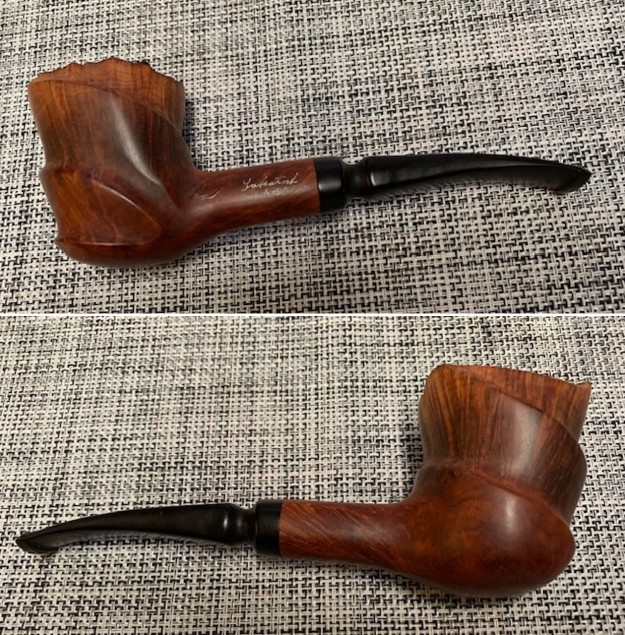
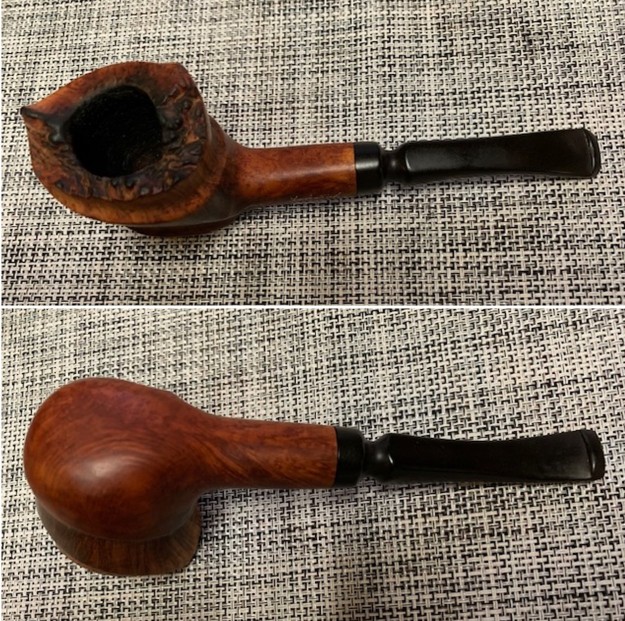
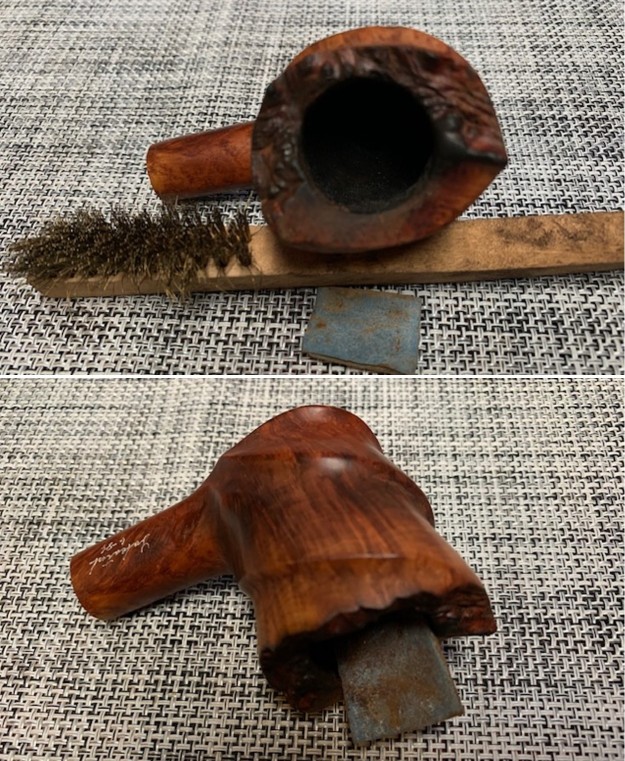
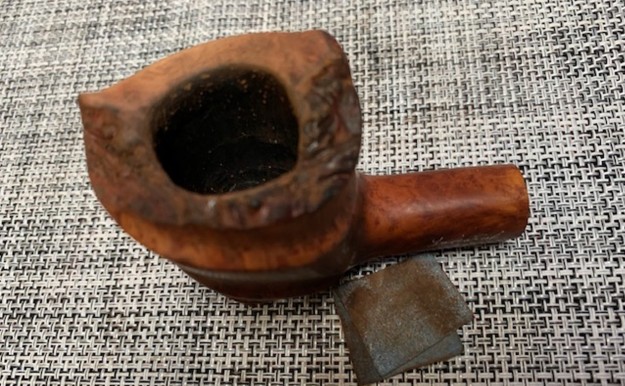
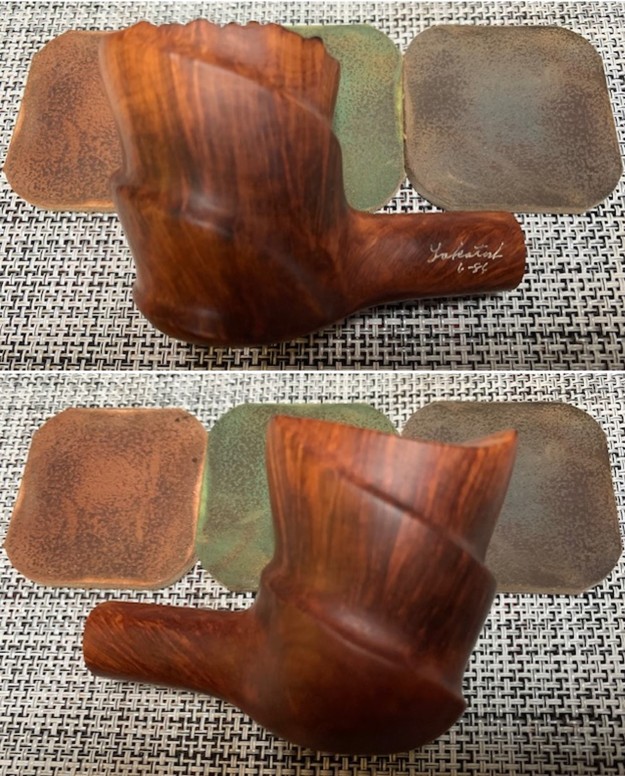
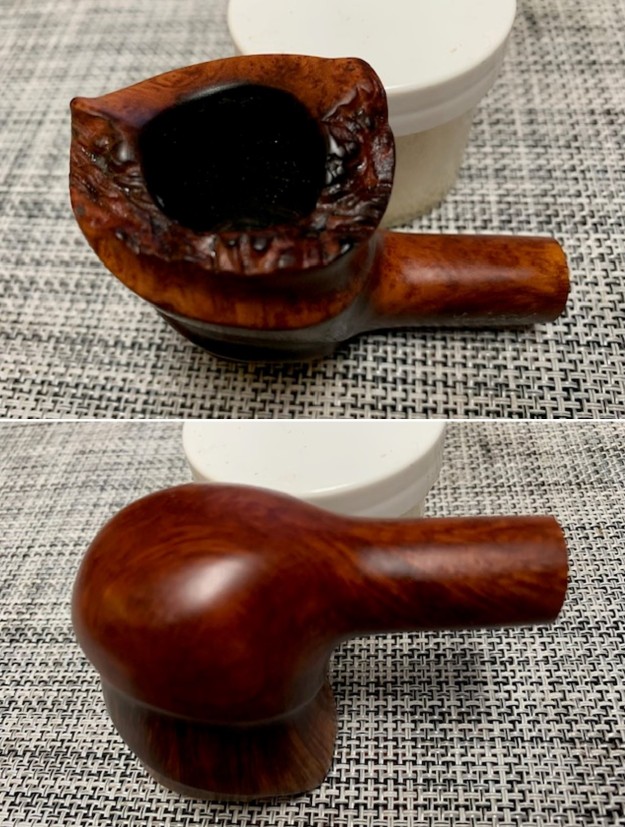
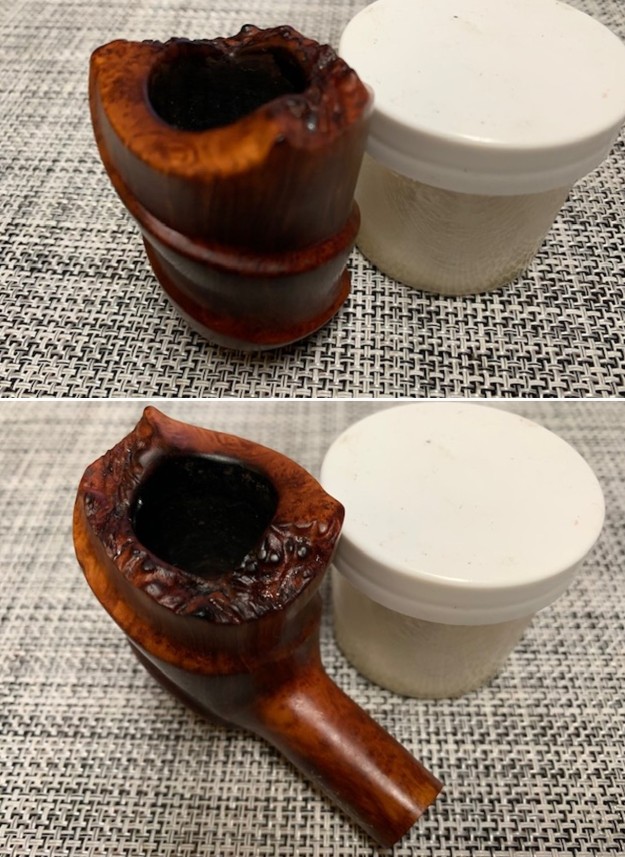
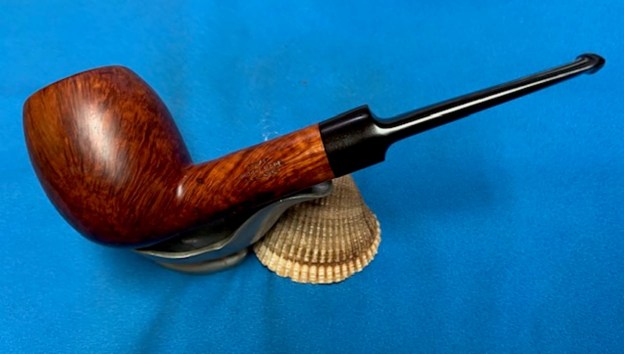
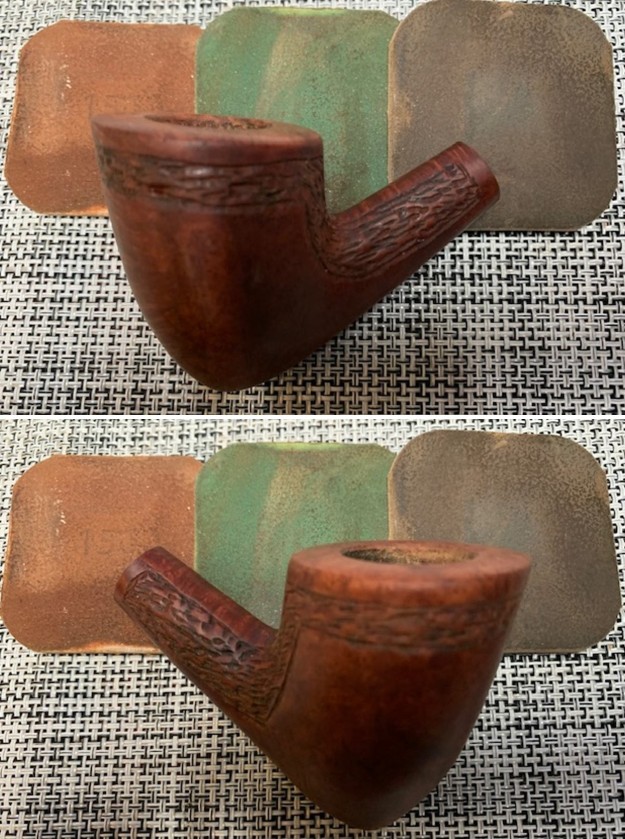
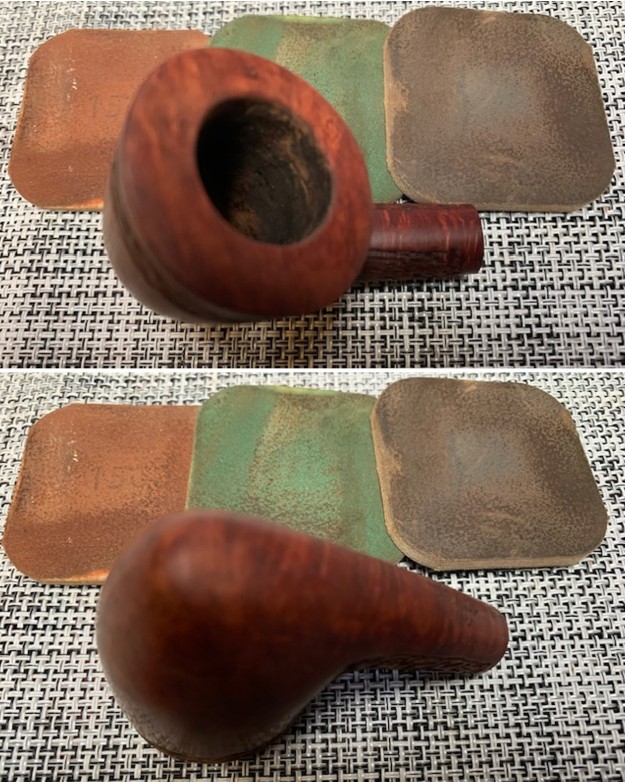
With that information at hand I turned to work on the pipe itself. Jeff had thoroughly cleaned up the pipe. He reamed the pipe with a PipNet Pipe Reamer and cleaned up the remnants with a Savinelli Fitsall Pipe Knife. He scrubbed the bowl with undiluted Murphy’s Oil Soap with a tooth brush. He rinsed it under running warm water to remove the soap and grime. He cleaned out the inside of the shank and the airway in the stem with alcohol, cotton swabs and pipe cleaners. He scrubbed the exterior of the stem with Soft Scrub to remove as much of the oxidation and calcification as possible. He soaked the stem in Briarville’s Pipe Stem Deoxidizer and rinsed it off with warm water. I took photos of the pipe once I started to work on it.  I took some photos of the rim top and stem. The rim top and bowl looked very good. The cake and lava overflow were gone but the rim top and edges showed a lot of burn marks and darkening. Both the smooth portion and the plateau portion would need a bit more work to really clean up well. The closeup photos of the stem shows that it is a much cleaner and looks good. The light tooth marks and chatter were still present on both sides.I took a photo of the stamping on the left side of the shank to show the condition after the cleanup. It was very readable and undamaged. I took the stem off the shank and took a photo of the pipe to give a sense of the proportions of the pipe.I started my restoration work on this pipe by addressing the darkening around the inner edge of the bowl. I used a brass bristle wire brush to clean up the debris in plateau portion of the rim top. I used a folded piece of 220 grit sandpaper to clean up the inner edge and the smooth portion of the rim top. The finished rim top looked very good. I started my polishing regimen on the bowl. I used nine micromesh sanding pads and dry sanded the bowl with 1500-12000 grit pads. I wiped the bowl down with a damp cloth after each pad. The bowl really shines by the final three pads. I worked some Before & After Restoration Balm into the surface of the briar with my fingertips and into the plateau with a shoe brush to clean, enliven and protect it. I let the balm sit for a little while and then buffed with a cotton cloth to raise the shine. The photos show the bowl at this point in the restoration process. I set the bowl aside and sanded out the tooth marks and chatter on both sides ahead of the button. I painted the surface of the tooth marks with the flame of a lighter. I was able to lift them all. I used a folded piece of 220 grit sandpaper to smooth out what remained. I started the polishing with 600 grit wet dry sandpaper. I polished the stem with micromesh sanding pads – dry sanding with 1500-12000 grit sanding pads. I wiped them down after each sanding pad with a cloth containing some Obsidian Oil. I finished polishing it with Before & After Pipe Stem Polish – both Fine and Extra Fine and buffed it off with a cotton cloth. I gave it a coat of Obsidian Oil to preserve and protect the stem. I don’t know how many times I have said this but I love it when I come to the end of a restoration and all of the parts come together and the pipe looks better than when we started the cleanup process. I put the stem back on the Lakatosh Handmade 6-84 Spiral Freehand and buffed the pipe with Blue Diamond on the buffing wheel. I carefully avoided the stamping on the shank sides during the process. I gave the bowl and stem multiple coats of carnauba wax on the buffing wheel and followed that by buffing it with a clean buffing pad on the buffer. I hand buffed the pipe with a microfiber cloth to deepen the shine. The finished pipe is a real stunning example of a Lakatosh 6-84 Handmade Freehand. Once again, the grain and the way the shape follows the grain is amazing. Give the finish pipe a look in the photos below. I can only tell you that it is much prettier in person than the photos capture. The dimensions of the pipe are Length: 6 ½ inches, Height: 2 ¼ inches, Outside diameter of the bowl: 1 ¾ inches, Chamber diameter: 7/8 of an inch. The weight of the pipe is 2.26 ounces/64grams. This Lakatosh Freehand is a great piece of pipe history that is in exceptional condition. Thanks for walking through the restoration with me as I worked over another beautiful pipe. I will be putting this one on the rebornpipes store in the American Pipemakers Section. Let me know if you are interested in adding it to your collection. Thanks for your time.

As always, I encourage your questions and comments as you read the blog. Thanks to each of you who are reading this blog. Remember we are not pipe owners; we are pipe men and women who hold our pipes in trust until they pass on into the trust of those who follow us.

Restoring a Friar London Made by Sasieni 52SG Made in England


Blog by Steve Laug

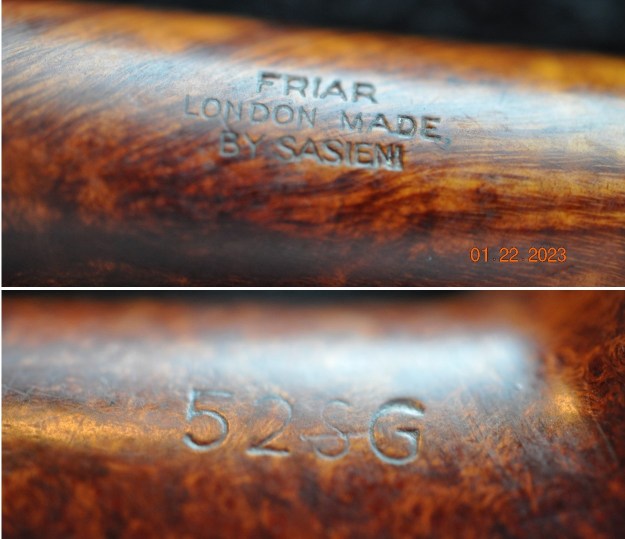
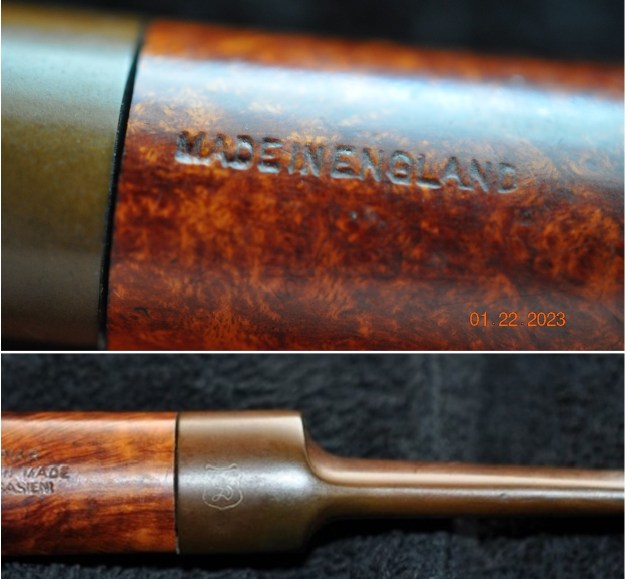
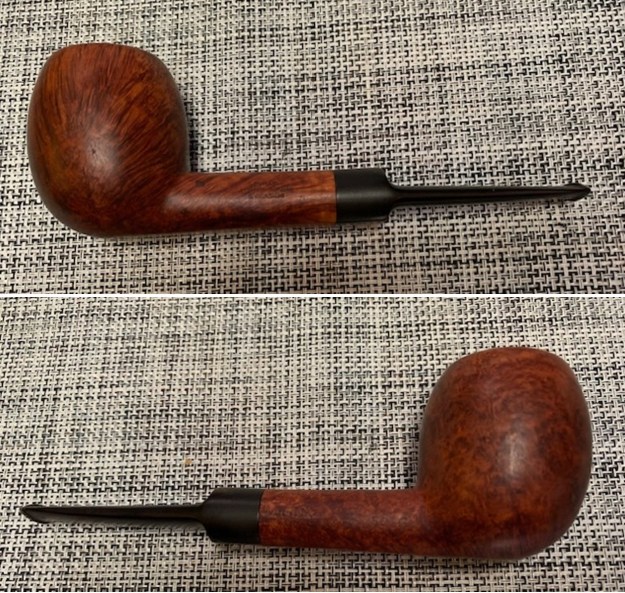
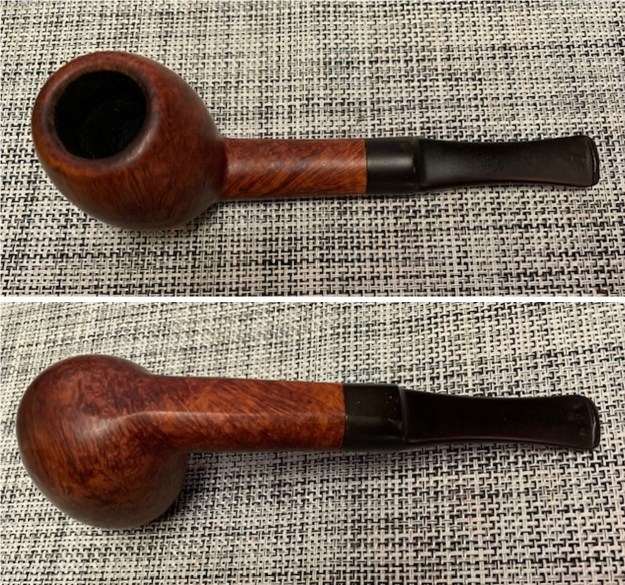
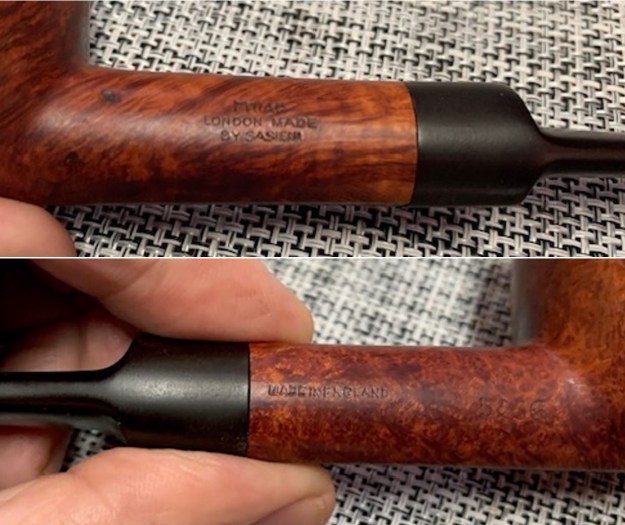
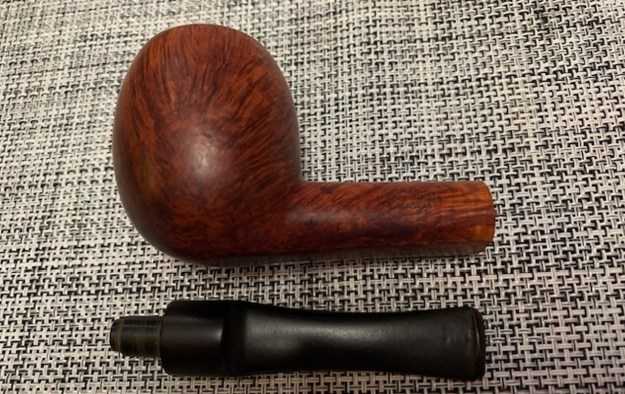
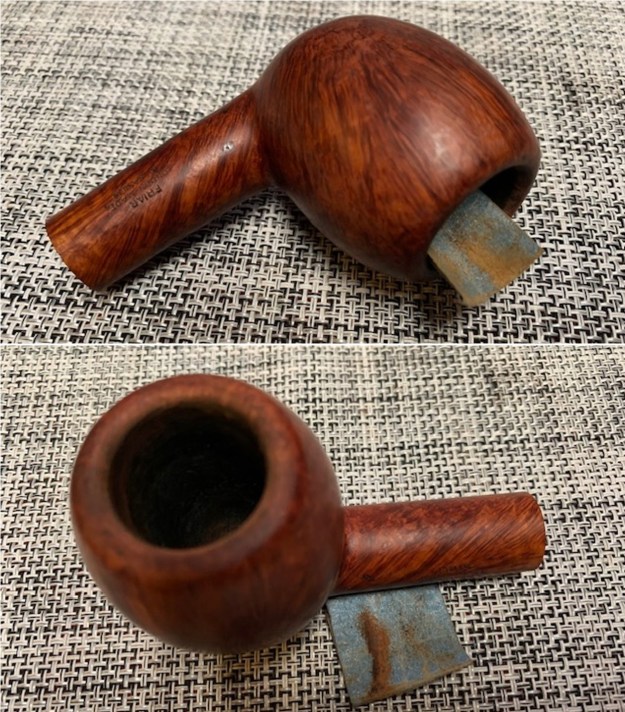
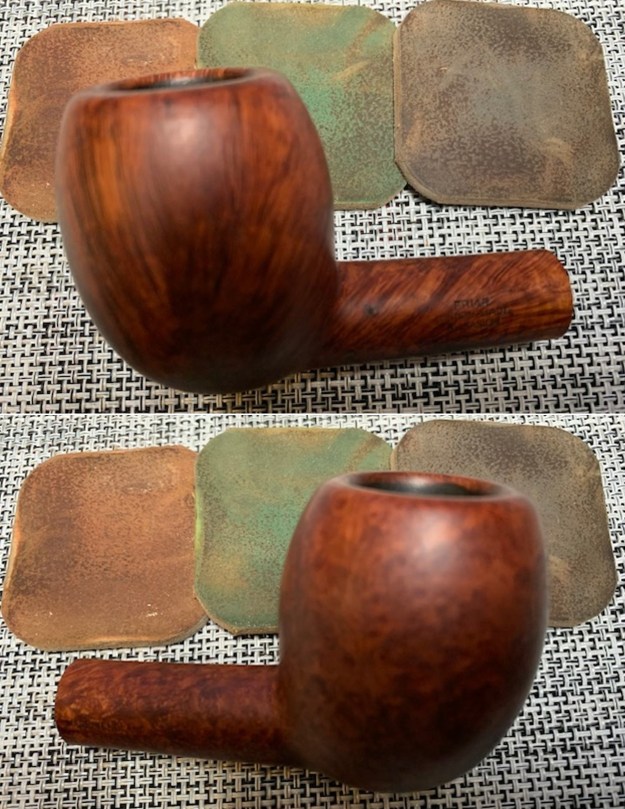
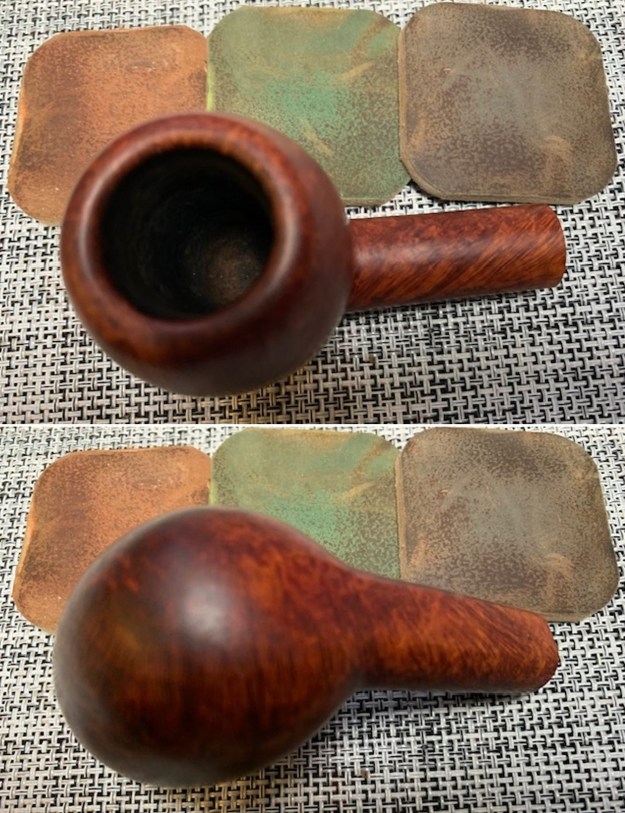
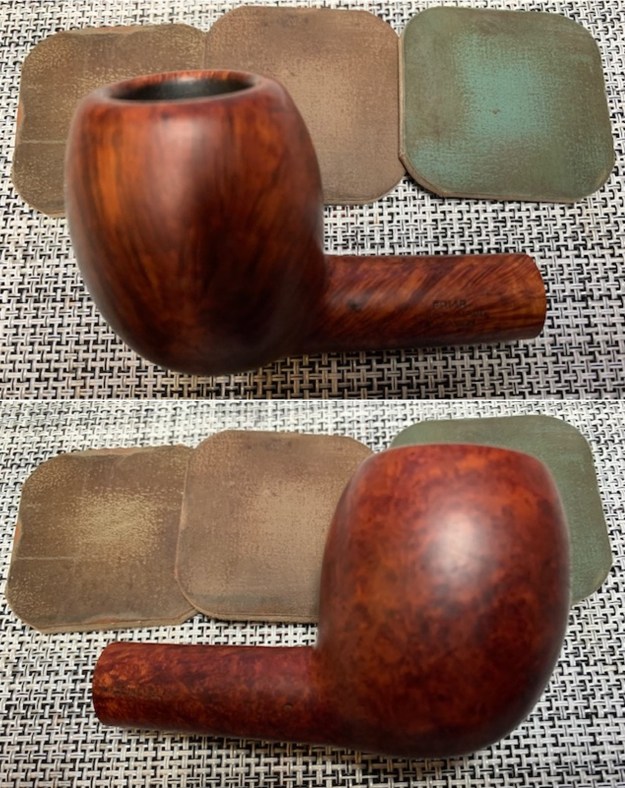
The next pipe I have chosen is a large saddle stem Apple with a smooth finish that was stained with a rich brown colour around the bowl and shank. It was stamped on the left side of the shank and reads FRIAR [over] London Made [over] By Sasieni. The right side of the shank is stamped with the shape number next to the bowl that reads 52SG. Next to the shank end it read Made in England. The stamping was readable. The pipe was purchased as part of an estate from Australia on 07/27/2020. It was dirty with grime ground into the finish around the bowl and shank. The bowl had a moderate cake with darkening on the inner edge of the bowl and an overflow of lava on the rim top. It was heavier on the backside of the rim top. There were some nicks on the front rim top. The stem was oxidized, calcified and had some chatter and deep tooth marks on the top and underside near the button. There was a logo stamped on the left side of the saddle that bore a faint shield with an “F” in it. Jeff took photos of the pipe before he started his clean up work. He took photos of the bowl and rim top to show their general condition. You can see the cake in the bowl and the thick lava coat on the top of the rim and inner edge of the bowl. The finish on the bowl is very dirty with grime and oils ground into the bowl, but still very stunning. The round saddle stem is oxidized, calcified and has chatter and tooth marks on the top and underside ahead of the button. Jeff took some photos of the sides and heel of the bowl to give an idea of the grain around the bowl and shank. It is amazing and I cannot wait to see what it looks like once it is polished and waxed. He took some photos of the stamping on the sides of the shank to capture it for me. It is clear and readable as noted above. He also included a photo of the faint shield F logo on the left side of the saddle stem. I turned to Pipedia (https://pipedia.org/wiki/Sasieni) to see what I could find out about the Friar line of pipes by Sasieni. The write up there is a concise history of the brand that gives a sense of the background and development of the Sasieni brand. I quote a section of the article that specifically refers to the Friar line. I have highlighted that in bold text.

Through the post war years, Sasieni added shapes and lines. While the Four Dot remained their most famous product, the company also sold lines of “seconds” under various names, such as Mayfair, Fantail, Olde English, and Friar. These were pipes made of good wood, but possessed of some flaw, usually filled with putty. Pipes that were almost, but not quite, good enough to be a Four Dot were sold as Two Dots. I have two of these pipes in my collection. Both pipes are quite striking, exhibiting exquisite shapes and exceptional grain. At first I wondered why they were not Four Dots. Eventually, after long inspection, I discovered each pipe contained one very small filled flaw. In spite of this they remain two of my favorite pipes. However, it is clear Sasieni was determined to put the Four Dot logo on only the most perfect pipes.

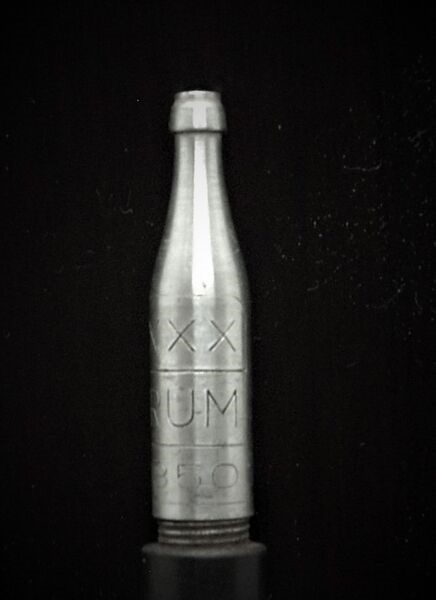
Caption: Sasieni Friar Stinger marked ‘RUM 850’, and shaped like a Rum bottle. Some Sasieni pipes including this one were Rum cured. Courtesy Brian Robertson collection.

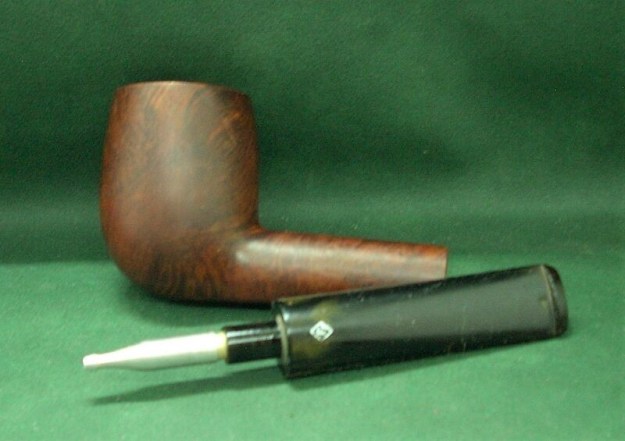
I also have included a shape chart that was included. The number 52s in the chart below is a Hurlingham. The pipe I am working on is a 52SG which I cannot find on the charts. I am thinking that because of the size of the pipe the 52 is an apple shaped pipe, the “S” is possibly a notation for a Saddle style stem. The “G” is possibly the notation for a Giant or a large sized pipe.There was also an interesting photo of the Sasieni Friar pipe and a comment about it being a rum cured pipe. It had a bottle shape stinger apparatus in the tenon. The pipe I am working on does not have that apparatus and the logo on the stem top of that one is quite different. I am including them for reference. Here is the link: (https://pipedia.org/wiki/File:Sasieni-Friar-Stinger-Rum850.jpg).

Caption: Sasieni Friar Stinger marked ‘RUM 850’, and shaped like a Rum bottle. Some Sasieni pipes including this one were Rum cured. Courtesy Brian Robertson collection.

The pipe I am working on is stamped with a unique 52SG shape number as noted above. It is a Sasieni that was called a second but for the life of me the grain on this one is quite beautiful and there are possibly some fills. Now it was time to work on the pipe.

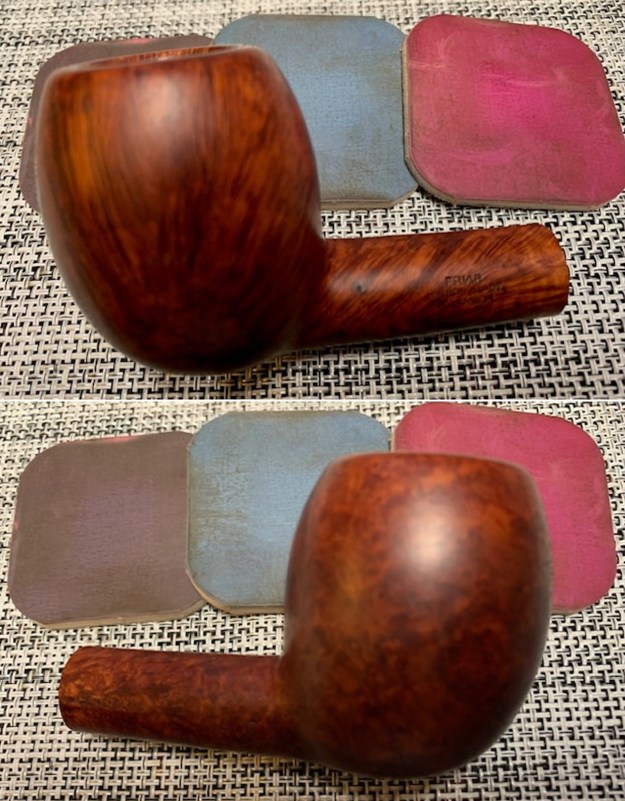
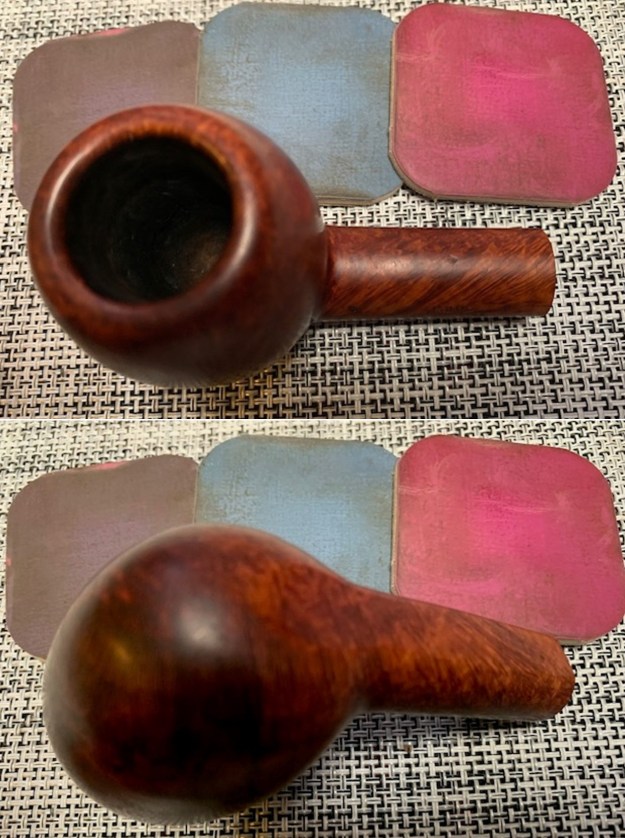
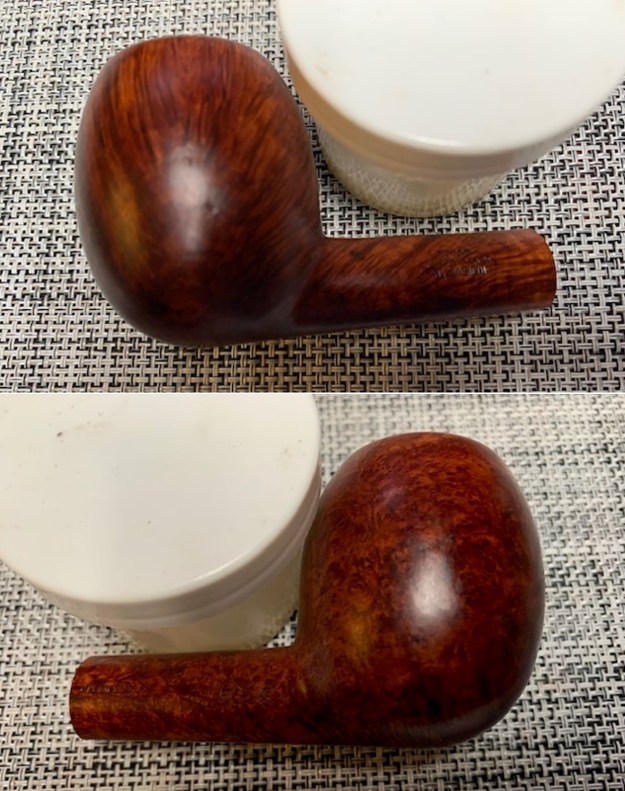
Jeff had thoroughly cleaned up the pipe. He reamed the pipe with a PipNet Pipe Reamer and cleaned up the remnants with a Savinelli Fitsall Pipe Knife. He scrubbed the bowl with undiluted Murphy’s Oil Soap with a tooth brush. He rinsed it under running warm water to remove the soap and grime. He cleaned out the inside of the shank and the airway in the stem with alcohol, cotton swabs and pipe cleaners. He scrubbed the exterior of the stem with Soft Scrub to remove the grime. He soaked the stem in Briarville’s Pipe Stem Deoxidizer and rinsed it off with warm water. The pipe looked very good when it arrived here in Vancouver. I took a photo of the bowl and rim top to show how clean the bowl and the rim top and inner edges of the bowl. You can see the darkening around the inner edge and on the crowned rim top. I took photos of the stem surface to show the condition and tooth marks and chatter on both sides ahead of the button.I took photos of the stamping on the sides of the shank. It is clear and readable as noted above. I removed the stem from the shank and took a photo of the pipe parts. It is quite a stunning piece. I started my work by cleaning up the darkened inner edge of the rim and burned area on the back of the rim top with a folded piece of 220 grit sandpaper. The crowned rim top cleaned up nicely. I polished the bowl and the rim top with micromesh sanding pads – dry sanding with 1500-12000 grit pads. I wiped the bowl down after each pad with a damp cloth to remove the grit. The bowl began to take on a rich shine. It is a beauty. I rubbed the bowl down with Before & After Restoration Balm. I worked it into the surface of the briar with my fingertips and a shoe brush to get it in the grooves. It works to clean, restore and preserve the briar. I let it do its magic for 15 minutes then buffed it off with a cotton cloth. The pipe looks incredibly good at this point in the process. I set the bowl aside and turned my attention to the stem. I painted the tooth marks in the vulcanite with the flame of a Bic lighter to lift them. I was able to raise them a little. What remained, I filled in with black rubberized CA glue. Once it hardened I flattened the repairs out with a small file. I sanded the stem with 220 grit sandpaper to blend them into the rest of the vulcanite stem and started the polishing them with 600 wet dry sandpaper. I polished the stem with micromesh sanding pads – 1500-12000 grit pads. I wiped it down with Obsidian Oil after each sanding pad. I finished polishing it with Before & After Pipe Stem Polish – both Fine and Extra Fine and buffed it off with a cotton cloth. I gave it a coat of Obsidian Oil to preserve and protect the stem. This Friar London Made by Sasieni 52SG Made in London Apple is a great looking pipe now that it has been restored. The brown stains really highlight the grain on the smooth portion and the rusticated portion. Once it was polished the finish is stunning. I put the stem back on the bowl and carefully buffed the pipe with Blue Diamond on the buffing wheel. I gave the bowl and the stem multiple coats of carnauba wax on the buffing wheel and followed that by buffing the entire pipe with a clean buffing pad. I hand buffed the pipe with a microfiber cloth to deepen the shine. The finished Sasieni Made Friar 52SG Apple fits nicely in the hand and feels great. Give the finished pipe a look in the photos below. The dimensions of the pipe are Length: 6 inches, Height: 2 inches, Outside diameter of the bowl: 1 ¼ inches, Chamber diameter: 7/8 of an inch. The weight of the pipe is 67 grams/2.36 ounces. I will be adding the pipe to the British Pipe Makers Section of the rebornpipes store. If you are interested in purchasing this pipe send me a message or an email. Thanks for reading this blog and my reflections on the pipe while I worked on it.

As always, I encourage your questions and comments as you read the blog. Thanks to each of you who are reading this blog. Remember we are not pipe owners; we are pipe men and women who hold our pipes in trust until they pass on into the trust of those who follow us.

Cleaning up a Canadian Era 1970-1980 Brigham 343 Made in Canada Prince


Blog by Steve Laug

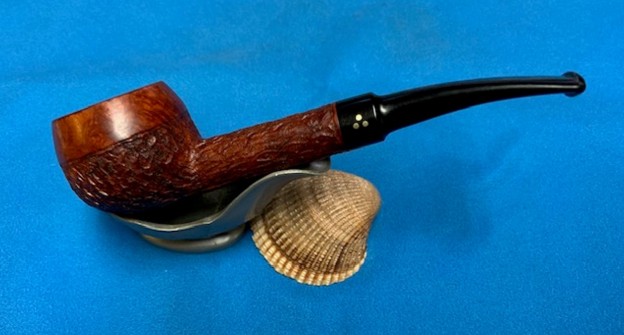
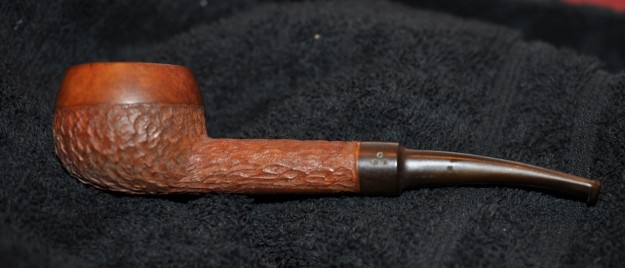
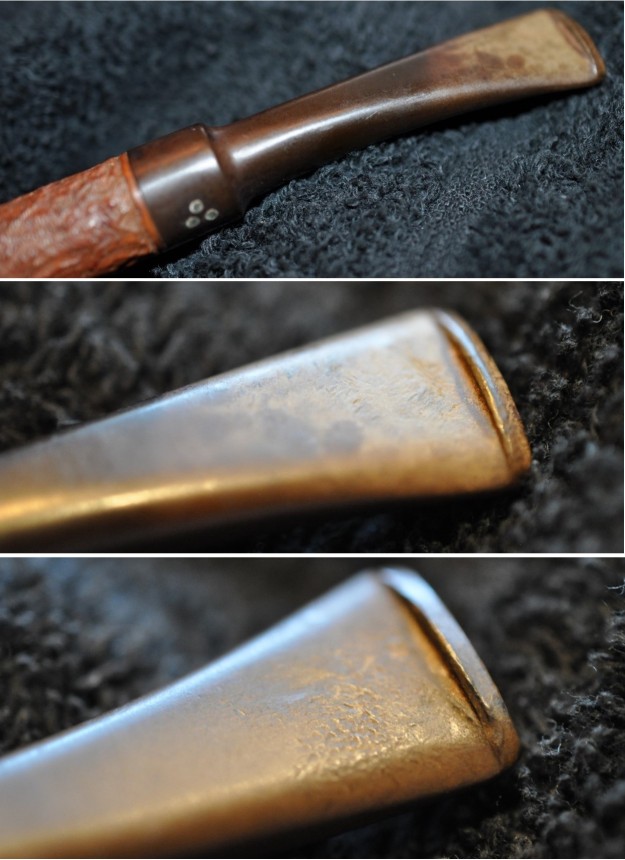
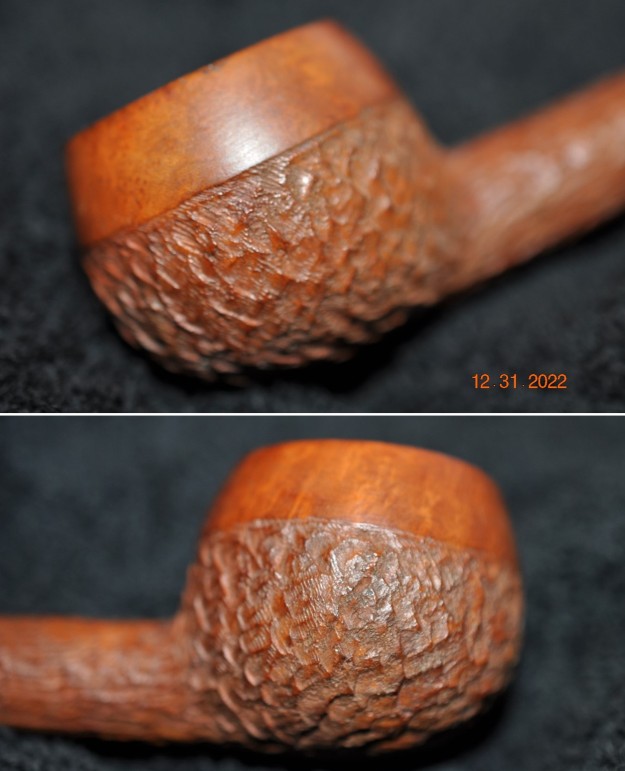
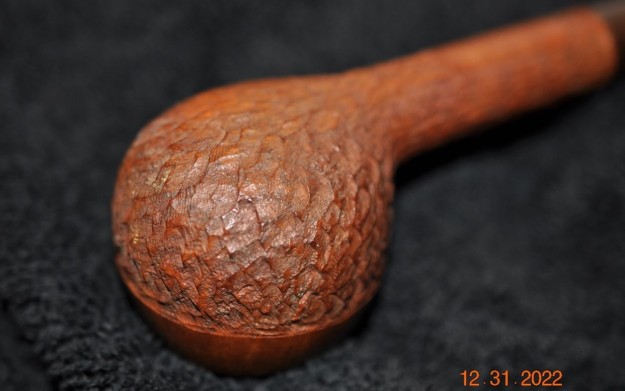
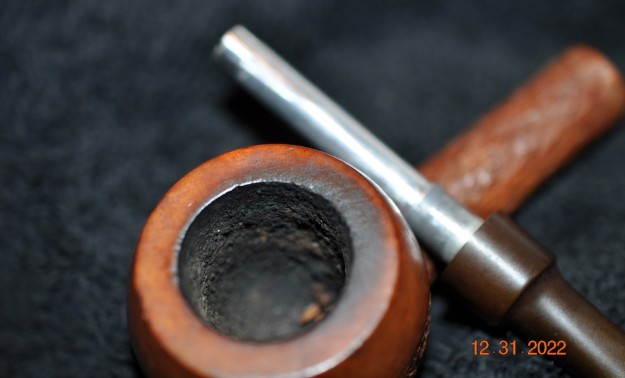
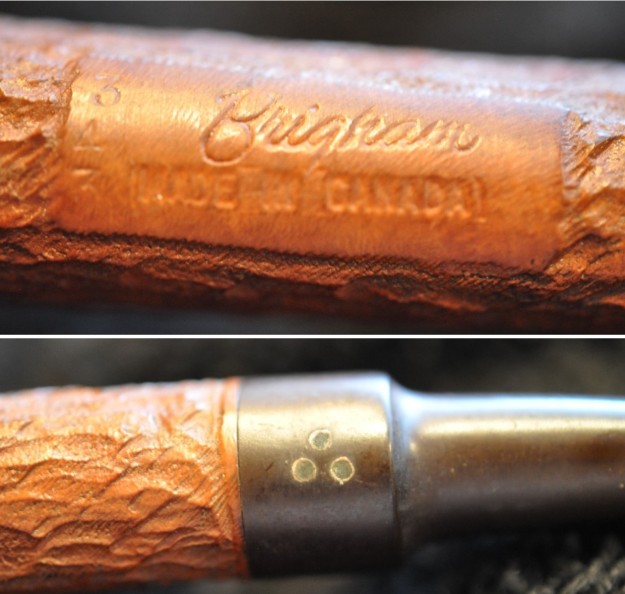
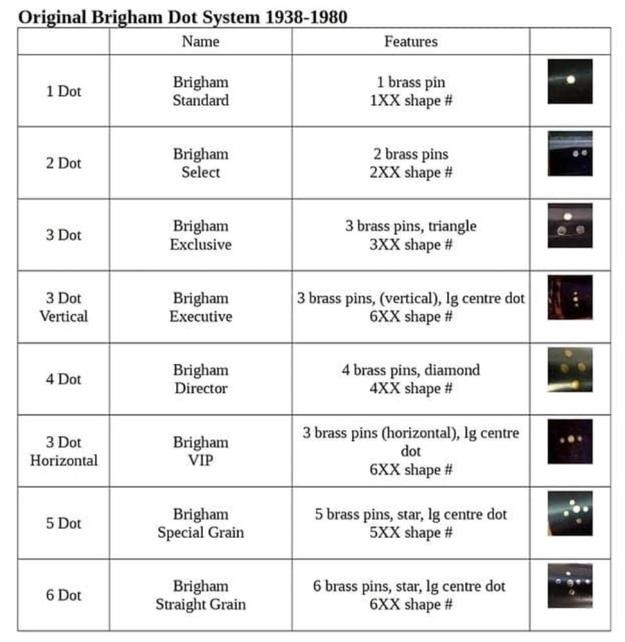
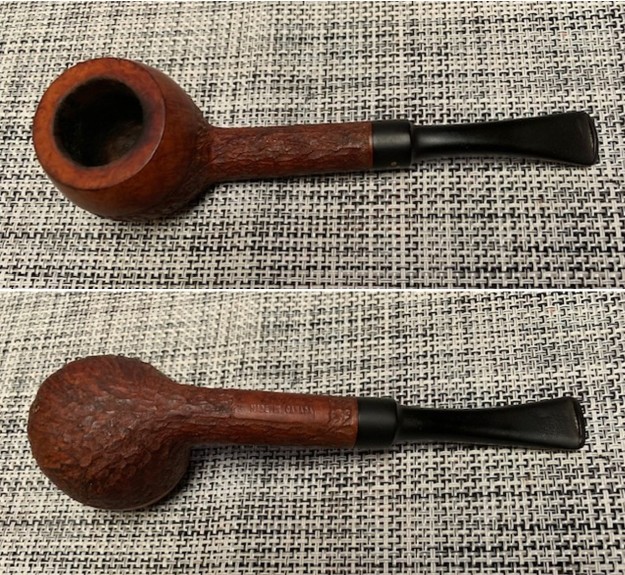
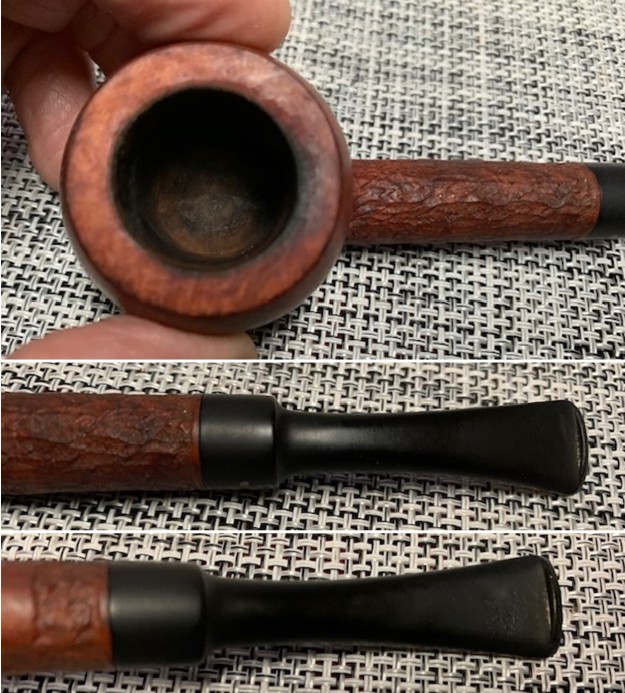
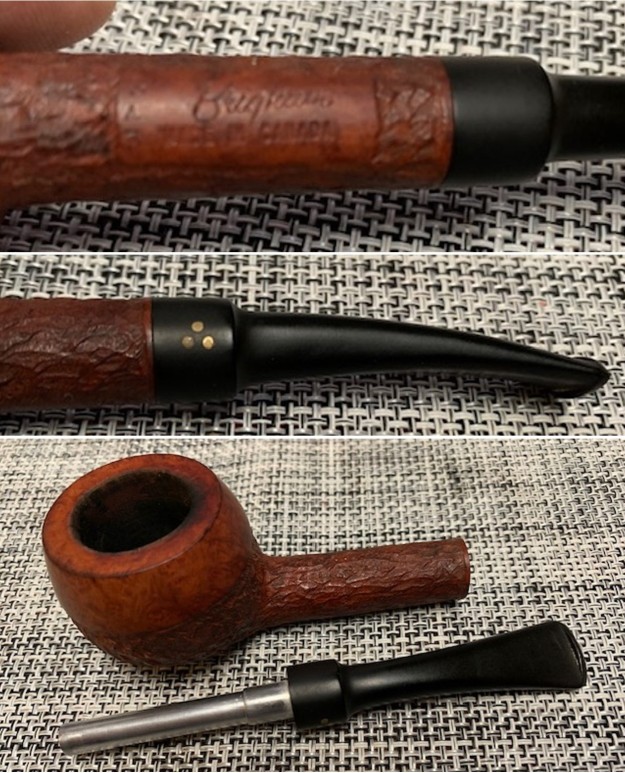
The next pipe I have chosen is an interesting looking mixed finish Prince that was stained with a rich brown colour on both the smooth upper portion and rusticated lower portion of the bowl and shank. It was stamped on the smooth underside of the shank. The stamping was readable. The shape number 343 is on the bowl side of the shank. That is followed by the stamping Brigham in script [over] Made in Canada. The age on this one is Canadian Era, nominally 1970-80. The pipe was purchased form a Facebook DND auction on 11/11/2021 from a sell in Salmon Creek, Washington, USA. It was dirty with grime ground into the finish around the bowl and shank. The bowl had thick cake with darkening on the inner edge of the bowl and an overflow of lava on the rim top. It was heavier on the backside of the rim top. The internals were dirty though there was no filter tube in the aluminum tenon. I would need to replace the Maple Distillator once I was finished. The stem was oxidized, calcified and had some chatter and deep tooth marks on the top and underside near the button. Jeff took photos of the pipe before he started his clean up work. He took photos of the bowl and rim top to show their general condition. You can see the thick cake in the bowl and the thick lava coat on the top of the rim and inner edge of the bowl. The finish on the bowl is very dirty with grime and oils ground into the bowl, but still very stunning. The round saddle stem is oxidized, calcified and has chatter and deep tooth marks on the top and underside ahead of the button. Jeff took some photos of the sides and heel of the bowl to give an idea of the grain around the bowl and shank. It is amazing and I cannot wait to see what it looks like once it is polished and waxed. Jeff removed the stem from the shank and took a photo of the aluminum tube that held the Distillator. It was obviously removed from the tube but the inside was quite dirty.He took some photos of the stamping on the underside of the shank to capture it for me. It is clear and readable as noted above. He also included a photo of the three dot triangle brass pins in the left side of the saddle stem.Before starting my clean up work on the pipe I turned to a chart that Charles Lemon of Dad’s Pipes sent to me on the Dot system on Brighams until 1980. As the pipe I am working on is a fits in this time frame, it’s more accurate to refer to its grade by name (the post 1980 grading scheme refers to Dots). Here is the chart that Charles sent me. The pipe I am working on is thus a Brigham Exclusive with the 3 brass pins arranged in a triangle. For historical background for those unfamiliar with the brand I am including the information from Pipedia on Brigham pipes. It is a great read in terms of the history and background on the pipes (https://pipedia.org/wiki/Brigham_Pipes). Charles Lemon (Dadspipes) is currently working on a book on the history of the brand. Until that is complete this article is a good summary. I have included it below.

Roy Brigham, after serving an apprenticeship under an Austrian pipesmith, started his own pipe repair shop in Toronto, in 1906. By 1918 the business had grown to include five other craftsmen and had developed a reputation across Canada for the high quality of workmanship. After repairing many different brands of pipes over the years, Roy noted certain recurring complaints by pipe smokers, the most common referred to as “tongue bite”. Tongue bite is a burning sensation on the smoker’s tongue, previously thought to be due to the heat of the smoke (i.e. a “hot smoking pipe”).

He soon began manufacturing his own pipes, which were lightweight, yet featured a more rugged construction, strengthening the weak points observed in other pipes. The problem of tongue bite intrigued him, and he decided to make overcoming it a future goal.

About 1938, Roy’s son Herb joined him to assist in the business. The business barely survived the great depression because pipes were considered to be a luxury, not a necessity, and selling pipes was difficult indeed. In approximately 1937 [1], after some experimentation, Roy and Herb discovered that tongue bite was in fact a form of mild chemical burn to the tongue, caused by tars and acids in the smoke. They found that by filtering the smoke, it was possible to retain the flavour of the tobacco and yet remove these impurities and thereby stop the tongue bite.

Just as Thomas Edison had searched far and wide for the perfect material from which to make the first electric light bulb filaments, Roy & Herb began experimenting with many materials, both common and exotic, in the quest for the perfect pipe filter. Results varied wildly. Most of the materials didn’t work at all and some actually imparted their own flavour into the smoke. They eventually found just two materials that were satisfactory in pipes: bamboo and rock maple. As bamboo was obviously not as readily available, rock maple then became the logical choice.

They were able to manufacture a replaceable hollow wooden tube made from rock maple dowelling, which when inserted into a specially made pipe, caused absolutely no restriction to the draw of the pipe, yet extracted many of the impurities which had caused tongue bite. The result was indeed a truly better smoking pipe…

Charles Lemon has also written a great article on the stampings and marking on the Brigham pipes that fit into a time line that he has drafted. It is well worth a read and is fascinating. (https://pipedia.org/wiki/Brigham_Pipes_%E2%80%93_A_Closer_Look_at_Dots,_Dates_and_Markings). I quote from the pertinent section on the time frame for this pipe.

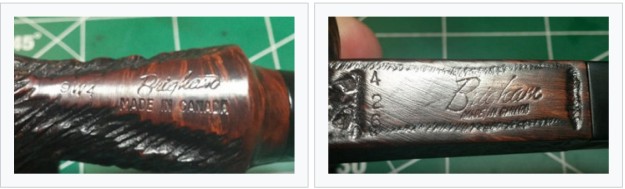
Around the late 1960s or early 1970s, at the beginning of what I’ve called the Canadian Era (roughly 1970 – 1980), the stampings changed again as Brigham moved to modernize its logo. Pipes are stamped with the 3-digit shape number and “Brigham” over “Made in Canada”. Note these two variants of this stamping. The pipe I am working on is stamped with a three-digit shape number as noted above. The cursive Brigham stamp over Made is Canada (like the first photo above) tells me that the pipe was made between 1970-1980. It is made in the period Charles has designated it as the Canadian Era. Now it was time to work on the pipe.

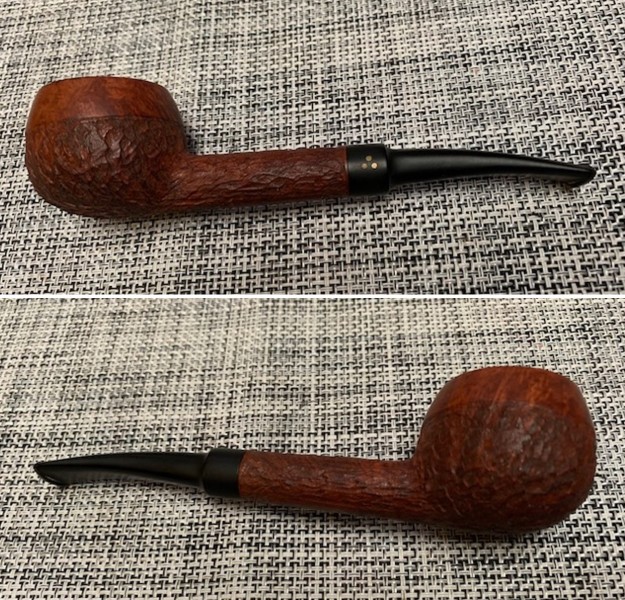
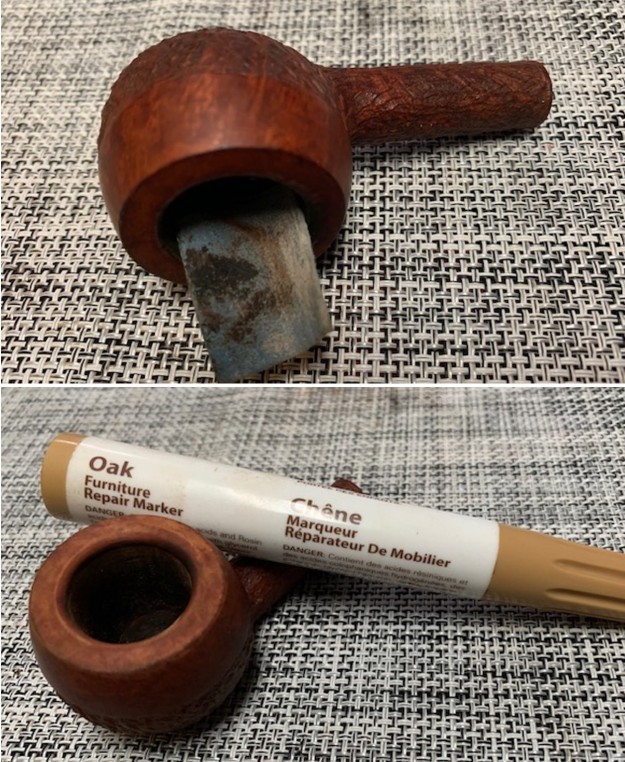
Jeff had thoroughly cleaned up the pipe. He reamed the pipe with a PipNet Pipe Reamer and cleaned up the remnants with a Savinelli Fitsall Pipe Knife. He scrubbed the bowl with undiluted Murphy’s Oil Soap with a tooth brush. He rinsed it under running warm water to remove the soap and grime. He cleaned out the inside of the shank and the airway in the stem with alcohol, cotton swabs and pipe cleaners. He scrubbed the exterior of the stem with Soft Scrub to remove the grime. He soaked the stem in Briarville’s Pipe Stem Deoxidizer and rinsed it off with warm water. The pipe looked very good when it arrived here in Vancouver. I took a photo of the bowl and rim top to show how clean the bowl and the rim top and inner edges of the bowl. You can see the darkening around the inner edge and the burn damage on the back topside of the rim. I took photos of the stem surface to show the condition and tooth marks and chatter on both sides ahead of the button.I took a photo of the stamping on the underside of the shank’ It is readable as noted above and though faint is clear. I took a photo of the three dot brass pins on the left side of the stem as well. It is in excellent condition. I removed the stem from the shank and took a photo of the pipe parts. It is quite a stunning piece.I started my work by cleaning up the darkened inner edge of the rim and burned area on the back of the rim top with a folded piece of 220 grit sandpaper. The rim top cleaned up nicely. I had to give the inner edge a slight bevel to accommodate the damage on the rim edge. It worked well to minimize the damage at the back of the rim edge. I stained it with an oak stain pen to blend it in. I polished the smooth portions on the rim top and top half of the bowl with micromesh sanding pads – dry sanding with 1500-12000 grit pads. I wiped the bowl down after each pad with a damp cloth to remove the grit. The bowl began to take on a rich shine. It is a beauty. I rubbed the bowl down with Before & After Restoration Balm. I worked it into the surface of the briar with my fingertips and a shoe brush to get it in the grooves. It works to clean, restore and preserve the briar. I let it do its magic for 15 minutes then buffed it off with a cotton cloth. The pipe looks incredibly good at this point in the process. I set the bowl aside and turned my attention to the stem. I painted the tooth marks in the vulcanite with the flame of a Bic lighter to lift them. I was able to raise them a little. What remained, I filled in with black rubberized CA glue. Once it hardened I flattened the repairs out with a small file. I sanded the stem with 220 grit sandpaper to blend them into the rest of the vulcanite stem and started the polishing them with 600 wet dry sandpaper. At this point in the process of polishing the stem I stopped to fit the stem with the Rock Maple Distillator. I took one out of the box I have of the Distillators and fit it in the tenon tube.I set the bowl aside and turned my attention to the stem. I polished the stem with micromesh sanding pads – 1500-12000 grit pads. I wiped it down with Obsidian Oil after each sanding pad. I finished polishing it with Before & After Pipe Stem Polish – both Fine and Extra Fine and buffed it off with a cotton cloth. I gave it a coat of Obsidian Oil to preserve and protect the stem.  This Brigham Made in Canada 343 Prince is a great looking pipe now that it has been restored. The brown stains really highlight the grain on the smooth portion and the rusticated portion. Once it was polished the finish is stunning. I put the stem back on the bowl and carefully buffed the pipe with Blue Diamond on the buffing wheel. I gave the bowl and the stem multiple coats of carnauba wax on the buffing wheel and followed that by buffing the entire pipe with a clean buffing pad. I hand buffed the pipe with a microfiber cloth to deepen the shine. The finished Brigham Made in Canada 343 Prince fits nicely in the hand and feels great. Give the finished pipe a look in the photos below. The dimensions of the pipe are Length: 5 ¾ inches, Height: 1 ¼ inches, Outside diameter of the bowl: 1 ½ inches, Chamber diameter: 7/8 of an inch. The weight of the pipe is 37 grams/1.31 ounces. I will be adding the pipe to the Canadian Pipe Makers Section of the rebornpipes store. If you are interested in purchasing this pipe send me a message or an email. Thanks for reading this blog and my reflections on the pipe while I worked on it.

As always, I encourage your questions and comments as you read the blog. Thanks to each of you who are reading this blog. Remember we are not pipe owners; we are pipe men and women who hold our pipes in trust until they pass on into the trust of those who follow us.

Tinsky American Long Shank Brandy Reg. No.11/90 over 9 over JBH 502


Blog by Steve Laug

In the last box of pipes Jeff sent me there was an American Smoking Pipe – a Long Shank Brandy. I am a sucker for Mark’s Pipes and Jeff knows it so we pick up every one of them we can find. This particular pipe came to us from a seller in Clarkesville, Virginia, USA on 07/25/2020. It is stamped on the underside of the shank and reads American in an oval [over] Regd. No. [over] 11/90 MT [over] 9 [over] JBH 502. It was a beautiful pipe but another dirty pipe when we received it. The finish on the bowl and shank were beautiful but the grime and oils were ground into the sides. There was a thick cake in the bowl that overflowed as lava on the bevelled rim top and the inner edge of the bowl. It was hard to evaluate the condition of the edge or top with the thickness of the lava. The acrylic saddle stem was dirty and there were deep tooth marks and chatter on the top and underside ahead of the button and on the button surface itself. It had an inlaid logo on the left of the saddle – a silver star set in clear acrylic with what looks like a briar ring around it. Jeff took some photos of the pipe before he started his cleanup work. He took photos of the bowl and rim top to show their general condition. You can see the thick cake in the bowl and the thick lava coat on the top of the rim and inner edge of the bowl. The finish on the bowl is very dirty with grime and oils ground into the bowl, but still very stunning. The round saddle stem is dirty and has chatter and deep tooth marks on the top and underside ahead of the button and on the button surface. Jeff took some photos of the sides and heel of the bowl to give an idea of the grain around the bowl and shank. It is amazing and I cannot wait to see what it looks like once it is polished and waxed. He took some photos of the stamping on the underside of the shank to capture it for me. It is clear and readable as noted above. He also included a photo of the star logo inlaid in clear acrylic in the left side of the stem.I have collected and smoked Mark Tinsky’s pipes for over 30 years now and thoroughly enjoy them. I cannot speak highly enough about the quality and craftsmanship of his pipes. I have pipes made by Mark and by Curt Rollar in my collection and both are great smokers and pipes that reach for regularly in my choice of pipes. I turned to his website for a quick summary of the history of the brand (http://www.amsmoke.com/Index%20Folder/PipeHist.html). I quote from the site as it is a short, concise history.

The American Smoking Pipe Co. was formed in 1978 by Mark Tinsky and Curt Rollar. Both started making pipes for Jack Weinberger ( JHW Pipes ) while in high school and throughout college. Determined to blaze their own path, they formed their own company- its goal to create unique pipes, lightweight and comfortable, where attention to detail was the rule not the exception. Exulting in their new freedom, they carved out new shapes that were balanced between the radical freehand era of the 70’s and the board pipe look of other conservative companies. Hungry for recognition, they stormed the Eastern and Southern shops looking for markets to sell their pipes. Many hidebound retailers refused to try something new, preferring to sell, well, what has always sold before. However, their pipes did take root in many shops and the business thrived.

They continued expanding their pipe making capabilities, adding employees to help finish the pipes. In 1990, over a disagreement over how much to expand, Curt Rollar left the company. This put a break on expansion and coupled with a U.S. recession and rising anti-smoking fervor served to limit production to supplying existing retailers, thus ending a decade of growth. With pipes sales in decline, we turned to pipe repair as a way to supplement revenues. Finding that we liked fixing things, American concentrated on pipe repair. While working hard at repair and manufacture American is ready once again to expand its markets through its existing network of shops serviced by pipe repair.

The pipe I am working on is stamped with a Reg. No. 11/90 MT9 as noted above. The stamp tells me that the pipe was made in November of 1990. The MT stamp signifies that the pipe was carved by Mark Tinsky. The 9 could be a size or even quality designation. There is also a JBH 502. This make me wonder if the pipe was a shape made for John B. Hayes, tobacconist. Now it was time to work on the pipe.

Jeff had thoroughly cleaned up the pipe. He reamed the pipe with a PipNet Pipe Reamer and cleaned up the remnants with a Savinelli Fitsall Pipe Knife. He scrubbed the bowl with undiluted Murphy’s Oil Soap with a tooth brush. He rinsed it under running warm water to remove the soap and grime. He cleaned out the inside of the shank and the airway in the stem with alcohol, cotton swabs and pipe cleaners. He scrubbed the exterior of the stem with Soft Scrub to remove the grime. He soaked the stem in Briarville’s Pipe Stem Deoxidizer and rinsed it off with warm water. The pipe looked very good when it arrived here in Vancouver. I took a photo of the bowl and rim top to show how clean the bowl and the rim top and inner edges of the bowl. I took photos of the stem surface to show the condition and tooth marks and chatter on both sides ahead of the button.I took photos of the stamping on the underside of the shank and the logo on the left side of the stem. It is readable as noted above and though faint is clear. I took a photo of the Silver Star with a black background logo on the stem as well. It is in excellent condition. I removed the stem from the shank and took a photo of the pipe parts. It is quite a stunning piece.I started my work by polishing the bowl and shank with micromesh sanding pads – dry sanding with 1500-12000 grit pads. I wiped the bowl down after each pad with a damp cloth to remove the grit. The bowl began to take on a rich shine. It is a beauty. I rubbed the bowl down with Before & After Restoration Balm. I worked it into the surface of the briar with my fingertips and a shoe brush to get it in the grooves. It works to clean, restore and preserve the briar. I let it do its magic for 15 minutes then buffed it off with a cotton cloth. The pipe looks incredibly good at this point in the process. I set the bowl aside and turned my attention to the stem. I filled in the deep marks in the acrylic stem with black rubberized CA glue. Once it hardened I flattened the repairs out with a small file. I sanded the stem with 220 grit sandpaper to blend them into the rest of the acrylic stem and started the polishing them with 600 wet dry sandpaper. I set the bowl aside and turned my attention to the stem. I polished the stem with micromesh sanding pads – 1500-12000 grit pads. I wiped it down with a damp cloth after each sanding pad. I finished polishing it with Before & After Pipe Stem Polish – both Fine and Extra Fine and buffed it off with a cotton cloth. I gave it a coat of Obsidian Oil to preserve and protect the stem. This American Reg. No. 11/90 MT 9 JBH 502 Brandy is a great looking pipe now that it has been restored. The brown stains really highlight the grain and the polished finish is stunning. I put the stem back on the bowl and carefully buffed the pipe with Blue Diamond on the buffing wheel. I gave the bowl and the stem multiple coats of carnauba wax on the buffing wheel and followed that by buffing the entire pipe with a clean buffing pad. I hand buffed the pipe with a microfiber cloth to deepen the shine. The finished American Mark Tinsky Brandy fits nicely in the hand and feels great. Give the finished pipe a look in the photos below. The dimensions of the pipe are Length: 5 inches, Height: 2 inches, Outside diameter of the bowl: 1 ½ inches, Chamber diameter: 7/8 of an inch. The weight of the pipe is 77 grams / 2.72 ounces. I will be adding the pipe to the American (US) Pipe Makers Section of the rebornpipes store. If you are interested in purchasing this pipe send me a message or an email. Thanks for reading this blog and my reflections on the pipe while I worked on it.

As always, I encourage your questions and comments as you read the blog. Thanks to each of you who are reading this blog. Remember we are not pipe owners; we are pipe men and women who hold our pipes in trust until they pass on into the trust of those who follow us.

Refreshing a Piece of American Pipemaking Craftsmanship – a Lakatosh 6-83 Acorn


Blog by Steve Laug

In the last box of pipes Jeff sent me there two Lakatosh freehand pipes. The first I have chosen to work on came to us from an online auction in Gonzales, Louisiana, USA on 09/04/2020. It is engraved by hand on the underside of the shank and reads Handmade [over] Lakatosh [over] 6-83. It was a beautiful pipe but a dirty pipe when we received it. The finish has a unique smooth finish on the bowl and shank with a ribbon of rustication around the top of the bowl and up the topsides of the shank on both sides. There was a moderate cake in the bowl that darkened the inner edge with a light coat of lava onto the topside. The vulcanite, fancy saddle stem was oxidized, calcified and there were light tooth marks and chatter on the top and underside ahead of the button. Jeff took some photos of the pipe before he started his cleanup work.He took photos of the bowl and rim top to show their general condition. You can see the moderate cake in the bowl and the slight lava coat on the top of the rim and inner edge of the bowl. The finish on the bowl is very dirty with grime and oils ground into the bowl, but still very stunning. This pipe has a Danish Freehand look to me with a bit of an American flair. The round saddle stem that has some oxidation, calcification on the surface of the vulcanite. There is chatter and tooth marks on the top and underside. Jeff took some photos of the sides and heel of the bowl to give an idea of the grain and the rustication around the bowl and shank. It is amazing and I cannot wait to see what it looks like once it is polished and waxed. He took a photo of the stamping on the underside of the shank to capture it for me. It is hand etched and is clear and readable as noted above.I remembered that Paresh had worked on three of these pipes in India and I believed they were from his Grandfather’s collection. We had chatted about them wondering how they had traveled from Pennsylvania to India. I turned to the blog that he wrote on the restoration to have a look at the information that he had gathered when he worked on the pipes (https://rebornpipes.com/2018/12/30/a-tribute-to-an-american-pipecarver-john-l-lakatosh/). I was not disappointed… the old memory still held onto a few things. I quote from his blog for the history of the brand. He also included a photo of the pipemaker that is great.

All these pipes bear the stamping “HANDMADE” over “LAKATOSH” over the “MONTH AND YEAR” in which they were made. These stamps are in engraved in a script hand on the shank end of each pipe.

I was keen to know more about John Lakatosh, the carver, his pipe making techniques and philosophy. I searched pipedia.com and there is a very brief write up on him. I reproduce the information available on pipedia.com for a quick read. [Editor: He quotes]

John Lakatosh was a carver from New Columbia, Pennsylvania. He made pipes in his home workshop in the Susquehana Valley up above Sunbury. John made pipes during the week and sold most of them at craft fairs in Central and Southern Pennsylvania. He retired from carving, to go back to bus mechanic work after the tobacco industry took a decline. He now lives with his wife in Lewisburg Pennsylvania, where he now crafts furniture for family and friends. He recently passed on March 8th 2018. (Primary/Familial Source)

As I was surfing the net for more information on Mr. John Lakatosh, I came across his obituary. Here is the link (https://www.heffnercare.com/obituaries/obituary-listings?obId=3010702)

With that information at hand I turned to work on the pipe itself. Jeff had thoroughly cleaned up the pipe. He reamed the pipe with a PipNet Pipe Reamer and cleaned up the remnants with a Savinelli Fitsall Pipe Knife. He scrubbed the bowl with undiluted Murphy’s Oil Soap with a tooth brush. He rinsed it under running warm water to remove the soap and grime. He cleaned out the inside of the shank and the airway in the stem with alcohol, cotton swabs and pipe cleaners. He scrubbed the exterior of the stem with Soft Scrub to remove as much of the oxidation and calcification as possible. He soaked the stem in Briarville’s Pipe Stem Deoxidizer and rinsed it off with warm water. I took photos of the pipe once I started to work on it.  I took some photos of the rim top and stem. The rim top and bowl looked very good. The cake and lava overflow were gone and the rim edge was very clean. Jeff had been able to get rid of all of the lava and tars. The rim top looked good with light marks and scratches on the surface. The closeup photos of the stem shows that it is a much cleaner and looks good. The light tooth marks and chatter were still present on both sides.I took a photo of the stamping on the underside of the shank to show the condition after the cleanup. It was very readable and undamaged. I took the stem off the shank and took a photo of the pipe to give a sense of the proportions of the pipe.I started my restoration work on this pipe by addressing the darkening around the inner edge of the bowl. I used a folded piece of 220 grit sandpaper to clean up the inner edge and the rim top with the same sandpaper. The finish rim top looked very good. I started my polishing regimen on the bowl. I used nine micromesh sanding pads and dry sanded the bowl with 1500-12000 grit pads. I wiped the bowl down with a damp cloth after each pad. The bowl really shines by the final three pads.  I worked some Before & After Restoration Balm into the surface of the briar with my fingertips to clean, enliven and protect it. I let the balm sit for a little while and then buffed with a cotton cloth to raise the shine. The photos show the bowl at this point in the restoration process. I set the bowl aside and sanded out the tooth marks and chatter on both sides ahead of the button. I used a folded piece of 220 grit sandpaper to remove the damage. I started the polishing with 600 grit wet dry sandpaper.I polished the stem with micromesh sanding pads – dry sanding with 1500-12000 grit sanding pads. I wiped them down after each sanding pad with a cloth containing some Obsidian Oil. I finished polishing it with Before & After Pipe Stem Polish – both Fine and Extra Fine and buffed it off with a cotton cloth. I gave it a coat of Obsidian Oil to preserve and protect the stem. I don’t know how many times I have said this but I love it when I come to the end of a restoration and all of the parts come together and the pipe looks better than when we started the cleanup process. I put the stem back on the Lakatosh 6-83 Acorn and buffed the pipe with Blue Diamond on the buffing wheel. I carefully avoided the stamping on the shank sides during the process. I gave the bowl and stem multiple coats of carnauba wax on the buffing wheel and followed that by buffing it with a clean buffing pad on the buffer. I hand buffed the pipe with a microfiber cloth to deepen the shine. The finished pipe is a real stunning example of a Lakatosh 6-83 Handmade Acorn. Once again, the grain and the way the shape follows the grain is amazing. Give the finish pipe a look in the photos below. I can only tell you that it is much prettier in person than the photos capture. The dimensions of the pipe are Length: 6 inches, Height: 2 ¼ inches, Outside diameter of the bowl: 1 ½ inches, Chamber diameter: 7/8 of an inch. The weight of the pipe is 1.69 ounces/48 grams. This Lakatosh Freehand is a great piece of pipe history that is in exceptional condition. Thanks for walking through the restoration with me as I worked over another beautiful pipe. I will be putting this one on the rebornpipes store in the American Pipemakers Section. Let me know if you are interested in adding it to your collection. Thanks for your time.

As always, I encourage your questions and comments as you read the blog. Thanks to each of you who are reading this blog. Remember we are not pipe owners; we are pipe men and women who hold our pipes in trust until they pass on into the trust of those who follow us.

Life-Support for a Butz-Choquin Oom Paul Egg


Blog by Kenneth Lieblich

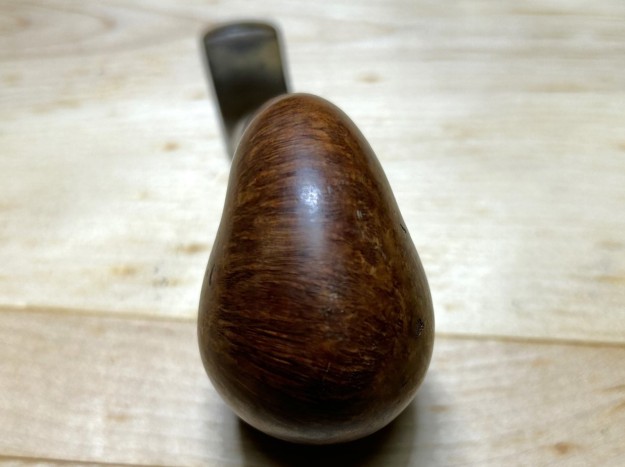
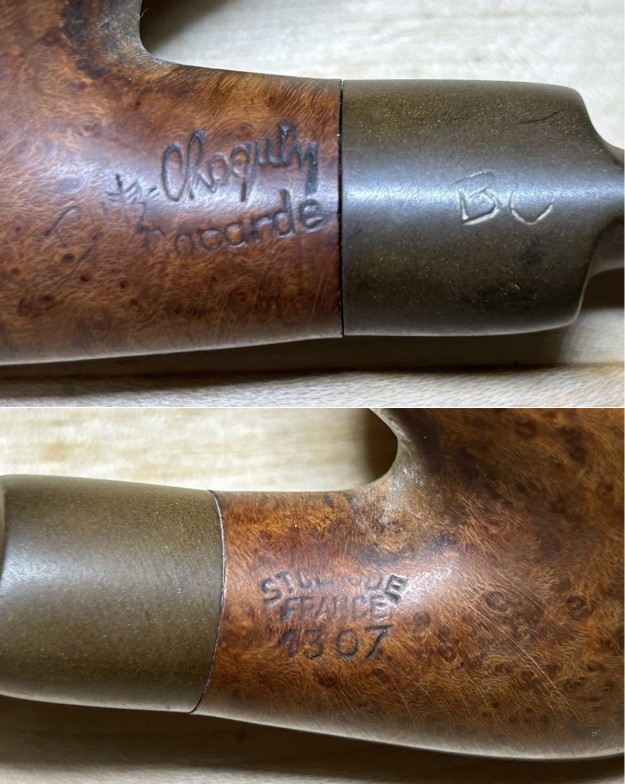
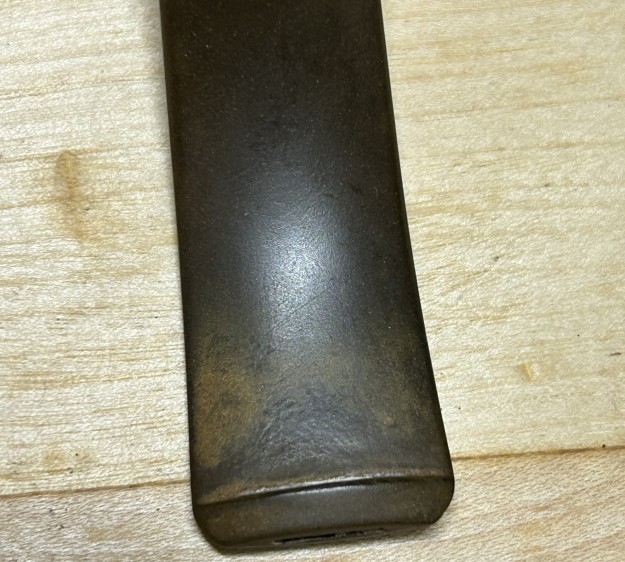
Another pipe in my ongoing “French Collection”, this new addition came in a lot of pipes from France (appropriately). I pulled it out of the pile of filthy pipes and found it quite charming. This pipe is an Oom Paul Egg shape. It was made by the famous and long-standing French pipe maker Butz-Choquin and is a small, wounded, but very attractive pipe. On the left side of the shank, it reads Butz-Choquin [over] Cocarde (which is the model name). On the right side of the shank, it reads St Claude [over] France [over] 1307. On the left side of the stem is the company’s logo, a “BC”. The logo is badly worn and will be difficult to restore.Both Pipedia and Pipephil have good write-ups on the history of Butz-Choquin and I encourage you to read both. Also, Steve has restored quite a few and it’s worth having a look at his writings too. For the moment, here is some information from Pipedia:

The pipe, from Metz to Saint-Claude.

Jean-Baptiste Choquin of Metz started out as a tobacconist. This enterprise was prosperous; he had several employees. Among those, there was a certain Gustave Butz who was its first workman and who became his son-in-law by marrying Choquin’s daughter Marie in 1858.

In 1858 Jean-Baptiste Choquin created, in collaboration with Gustave Butz, the Choquin pipe. This bent pipe with a flat-bottomed bowl was finished with an albatross-bone mouthpiece, fixed with silver rings.

In 1858, still in Metz, Gustave Butz built an establishment for the manufacture of the Choquin pipe which took the name of . In 1951, the Berrod-Regad company bought the trademark, continuing manufacture until 2002. Departing from Metz, the workshop was relocated to Saint-Claude, then also called “the world capital of the briar pipe”, under the Berrod-Regad group. The Berrod-Regad group would go on to completely rebuild the network of representatives until finally entering the export market in 1960 and has since won several prizes, as well as the Gold Cup of French good taste.

In a few years, the brand’s collection increased from ten to seventy series. 135 years after it was founded, the pipe is still well-known not only in France but throughout the world. In 2002, the Berrod family, wishing to preserve manufacture of pipes in Saint-Claude, handed over the company to Fabien Guichon, a native of the area, who will continue to develop the brand during the 21st century.

Meanwhile, Pipephil says this:

The origin of the brand reaches back to 1858 when Jean-Baptiste Choquin in collaboration with his son-in-law Gustave Butz created their first pipe in Metz (France). Since 1951 Butz-Choquin Site officiel Butz Choquin, pipes de Saint-Claude jura. BC pipe de bruyere luxe is a brand of the Berrod-Regad group (Saint-Claude, France).

Jean Paul Berrod managed the company from 1969 to 2002 when he retired and sold the corporate to Mr Fabien Gichon. Denis Blanc, allready owner of EWA, took over the S.A. Berrod-Regad in 2006.

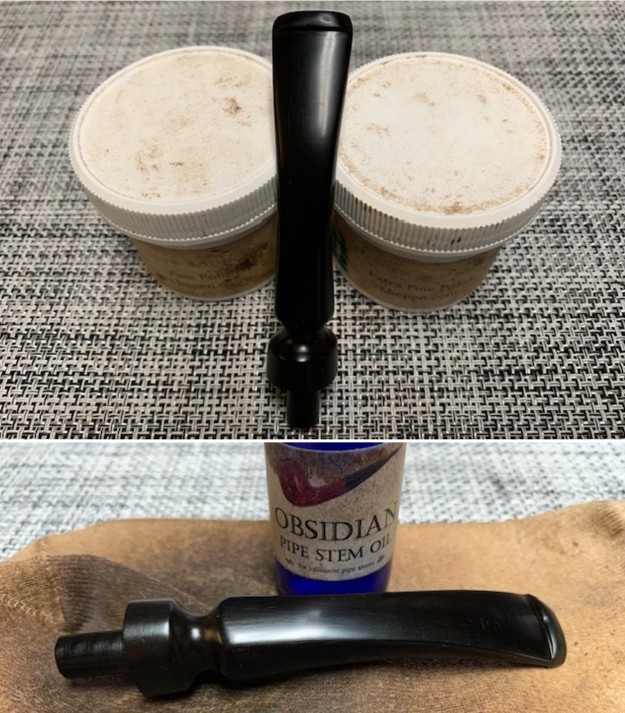
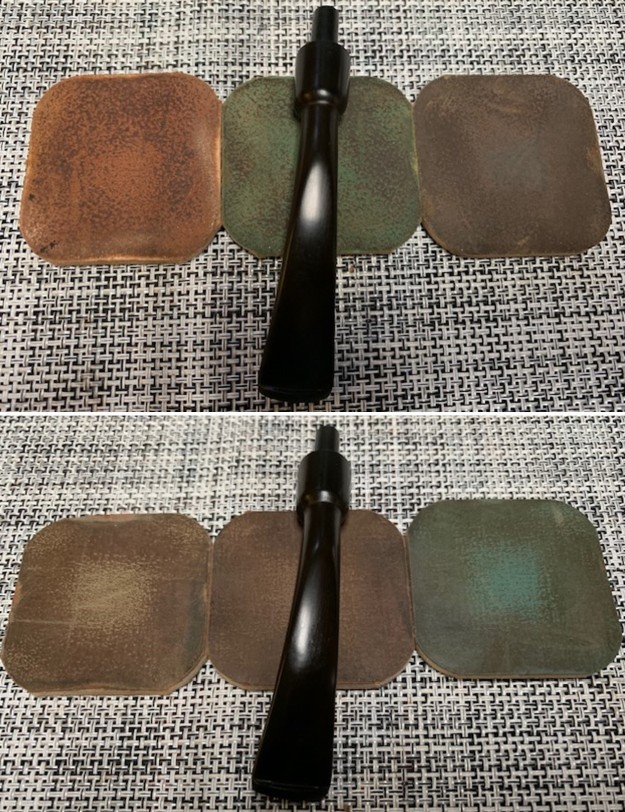
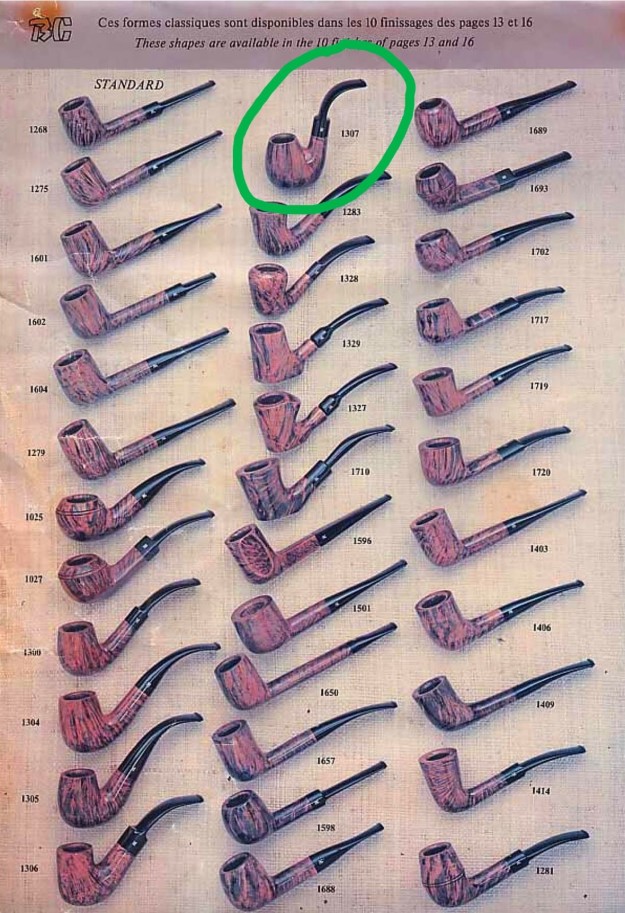
In an old Butz-Choquin catalogue, I found the pipe shape in question, listed with its requisite number:This is an older pipe, and is heavily used, though the stem is in reasonably good shape, compared to the stummel. There are a few minor tooth marks, some oxidation and calcification, but nothing too serious. Additionally, over the decades, the stem has straightened somewhat, so it will need to be bent back into place. The stummel is a different kettle of fish. The wood is very nice, but it has several fills on the outside of the bowl, there are nicks around the rim, the wood is filthy, and there are scratches around the bowl. It just looks tired and worn. The stem was first on my list. . .  This stem has a stinger in it – and it was being quite stubborn about coming out! The goo had glued the stinger into the tenon, so I opted to warm the stem and stinger with my heat gun and this provided just enough softening of the internal gunk to allow me to pull it out. It then went for a soak in some lemon-infused isopropyl alcohol. I let it sit for several hours and then cleaned it off and it looked much improved. I then finished it with some metal cleanser and moved on. Next, I wiped the outside down with Murphy’s Oil Soap on some cotton pads. I also took a BIC lighter and ‘painted’ the stem with its flame in order to lift the few bite marks and dents. Then I cleaned out the inside with pipe cleaners and isopropyl alcohol. It was pretty dirty, and I went through a good amount of pipe cleaners. I then wiped down the stem with SoftScrub cleaner to remove surface oxidation. Once this process was done, the stem went for an overnight soak in the Pipe Stem Oxidation Remover. This allows me to clean the oxidation off in a couple of ways: by applying a mild cleaner to the surface and sanding the stem. The next day, I used SoftScrub again with some cotton rounds. After this, I used some nail polish to restore the logo on the stem. I painted the area carefully and let it fully set before proceeding. I built up the dents on the stem with black cyanoacrylate adhesive and let them fully cure. I then sanded the adhesive down then with 220-, 400-, and 600-grit sandpapers to meld seamlessly into the stem. As I previously mentioned, the stem had straightened itself out over the years; so I used my heat gun to warm the stem and return it to its original shape.I then used all nine Micromesh pads (1,500 through 12,000 grit) to bring out the lovely black lustre on the stem. I also used Obsidian Pipe Stem Oil in between each pad scrubbing.On with the stummel! I decided to ream out the bowl. I used the PipNet Reamer and the KleenReem to remove the built-up cake and followed that with 220-grit sandpaper taped to a dowel to eliminate as much as I could. I took the chamber down to bare briar, as I wanted to ensure there were no hidden flaws in the wall. Fortunately, there were none. I used cotton rounds and some Murphy’s Oil Soap to scrub the outside of the stummel and a toothbrush with Murphy’s for the lava on the rim of the pipe.I then proceeded to clean out the insides of the shank with Q-tips, pipe cleaners, and lemon-infused isopropyl alcohol. The shank was absolutely caked with debris and I went through an extraordinary amount of cotton to clean it out. With all the filth in this pipe, I opted for an alcohol bath to clean it thoroughly. I followed that up by cleaning the insides with some dish soap and tube brushes. I decided to de-ghost the pipe in order to remove any lingering smells of the past. I thrust cotton balls into the bowl and the shank and saturated them with 99% isopropyl alcohol. I let the stummel sit overnight. This caused any remaining oils, tars and smells to leach out into the cotton. The bowl was nice and clean after this.Having completed that, I was able to address the blemishes to the outside of the bowl. First, I repaired the half-dozen fills with CA glue and briar dust. For the nicks on the rim and bowl, I dug out my iron and a damp cloth to raise the nicks. The hot and moist steam can often cause the wood to swell slightly and return to shape. A little unusually, this technique worked brilliantly and the next two photos (before and after) show a good example of what the iron can do. Now I could address the burn on the rim. I took some sandpaper and my Micromesh pads to sand and smooth everything out. After that, a light application of Before & After Restoration Balm brought out the best in the stummel’s grain, then took it to the buffer. A dose of White Diamond and a few coats of carnauba wax were just what this pipe needed. This little pipe looks fantastic again and is ready to be enjoyed again by the next owner! I am pleased to announce that this pipe is for sale! If you are interested in acquiring it for your collection, please have a look in the ‘French’ pipe section of the store here on Steve’s website. You can also email me directly at kenneth@knightsofthepipe.com. The approximate dimensions of the pipe are as follows: length 4 in. (100 mm); height 3¾ in. (94 mm); bowl diameter 1⅜ in. (36 mm); chamber diameter ¾ in. (19 mm). The weight of the pipe is 1⅜ oz. (41 g). I hope you enjoyed reading the story of this pipe’s restoration as much as I did restoring it. If you are interested in more of my work, please follow me here on Steve’s website or send me an email. Thank you very much for reading and, as always, I welcome and encourage your comments.

Resuscitating a Mastercraft Custom Made Italy Prince (aka: ‘Pandora’s Pipe’)


What a crazy amount of fills. How’s the rock putty holdup? Looks just as dark as CA Glue and briar dust….good job

This pipe was a challenge – more to come later….  The pipe on the table today is a nice-looking Prince.  It has the right stem orientation, and the …

Resuscitating a Mastercraft Custom Made Italy Prince (aka: ‘Pandora’s Pipe’)

Restoring a Peterson’s De Luxe 8S Bent Billiard


Blog by Steve Laug

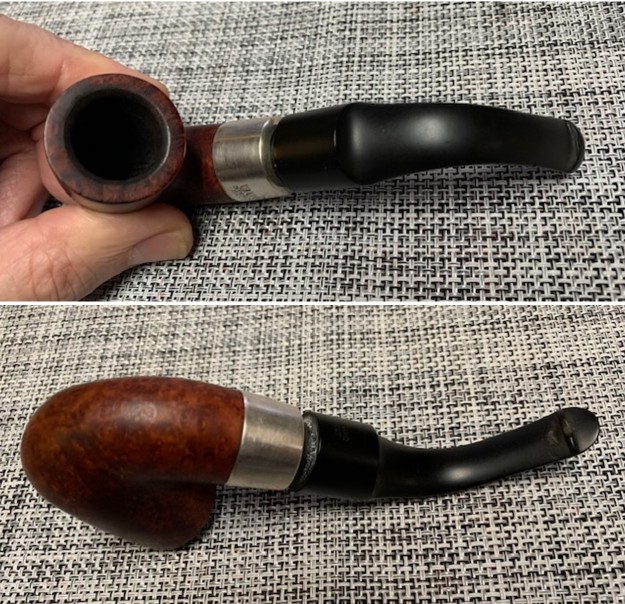
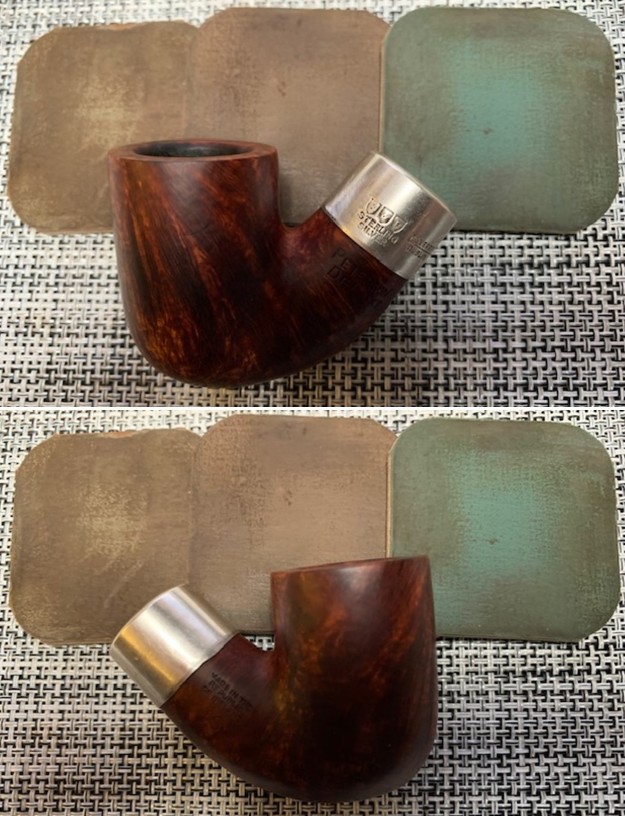
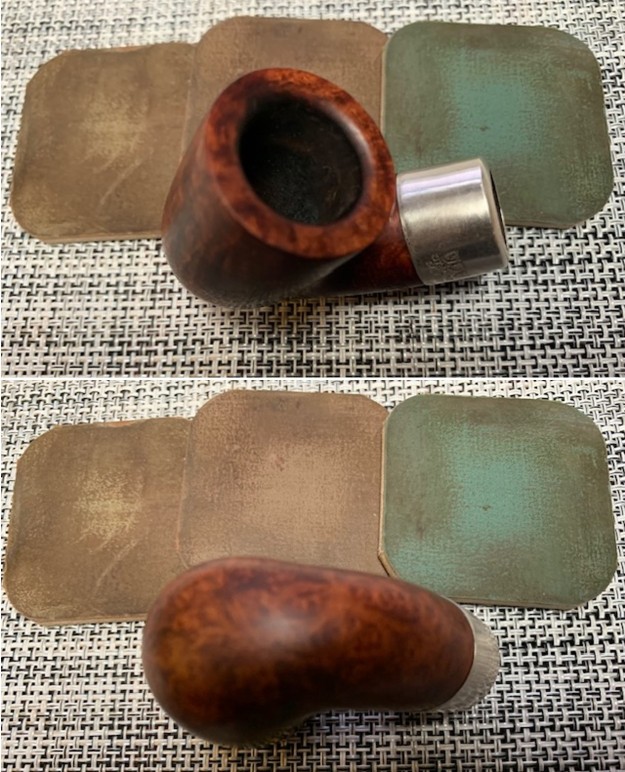
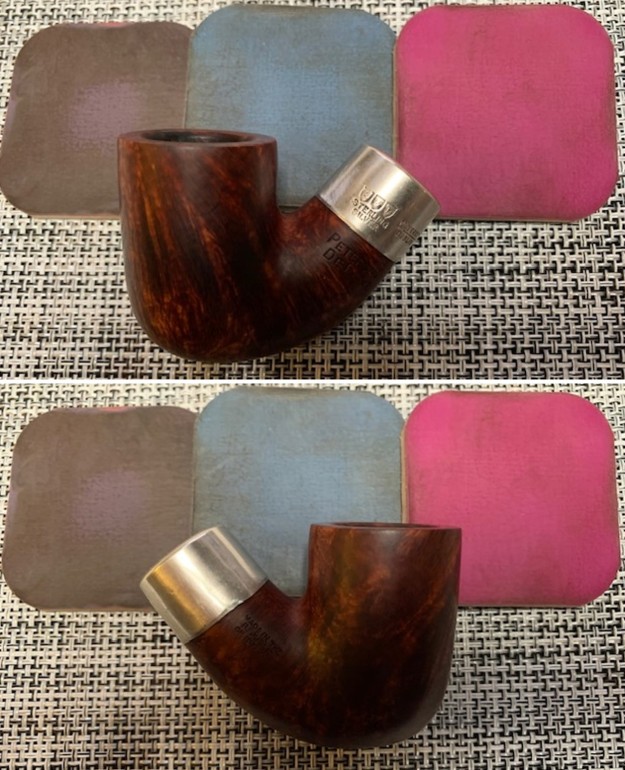
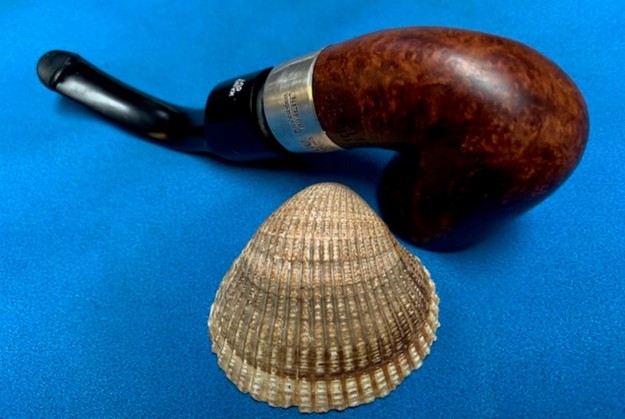
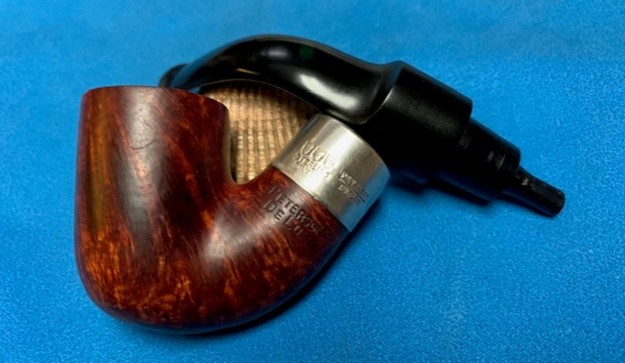
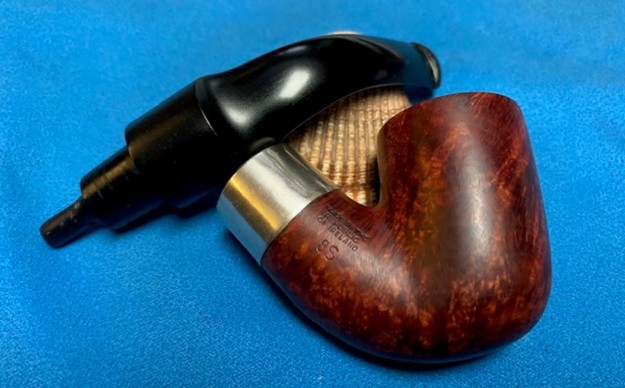
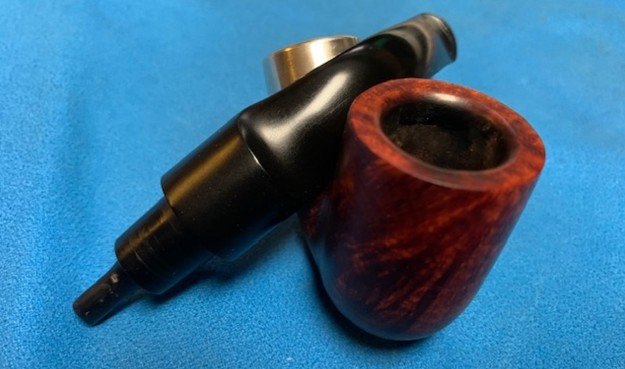
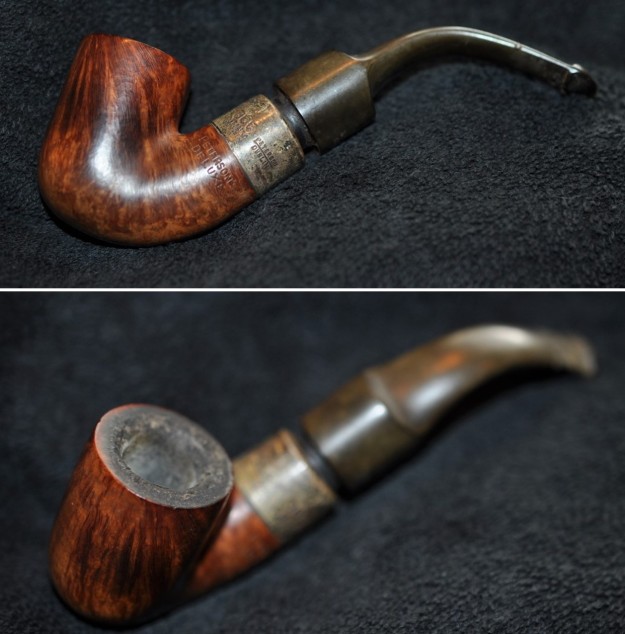
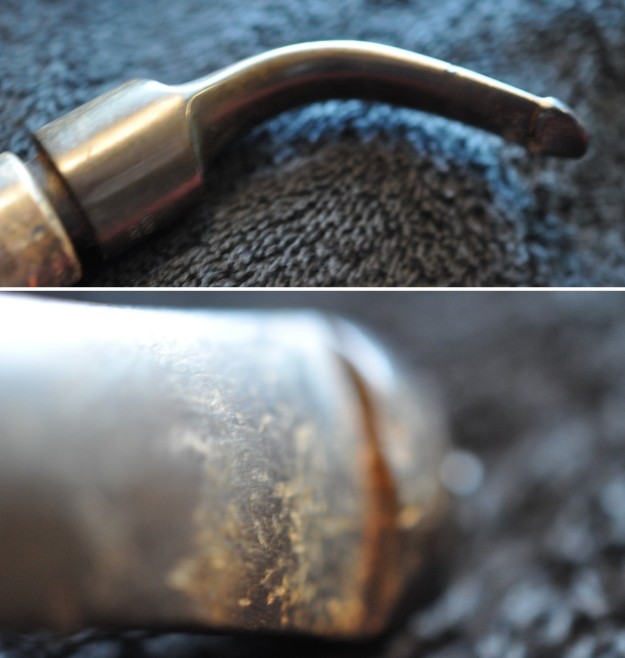
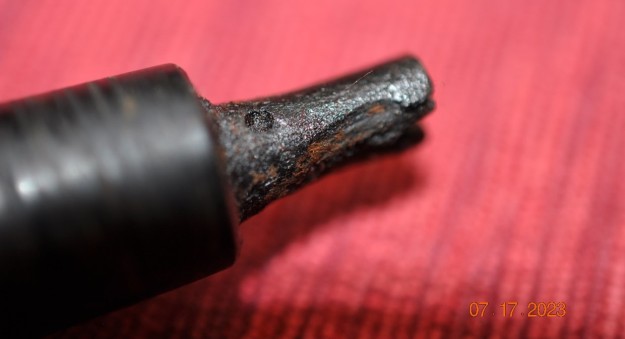
In the last box of pipes Jeff sent me there was a Peterson’s De Luxe that came to us from our contact in Copenhagen, Denmark on 04/11/2023. This one is a Peterson’s De Luxe Bent Billiard. It is stamped on the left side of the shank Peterson’s [over] Deluxe and on the right side it reads Made in the Republic of Ireland (three lines) [over] 8S. It was a dirty pipe when we received it. The walls of the bowl and shank had tars and oils ground into finish and it was quite grimy. There was a thick coat of lava on the rim top and the inner edge of the rim. There was a thick cake in the bowl that had remnants of tobacco stuck in it. The ferrule on the end of the shank was Sterling Silver. It was stamped K&P each in a cartouche [over] Sterling [over] Silver. Next that it reads Peterson’s [over] Dublin. There is no date stamping/hallmarks on the Silver Ferrule. The stem was oxidized and there were tooth marks and chatter on the top and underside ahead of the button. When the stem was removed the tenon had a bone chimney screwed into the end that was damaged and pitted. Jeff took some photos of the pipe before he started his cleanup work. He took photos of the bowl and rim top to show their general condition. You can see the thick tars and lava on the bevelled inner edge and the rim top. The cake in the bowl is quite thick and there is tobacco debris on the walls of the bowl. The finish on the bowl is very dirty with grime and oils ground into the bowl, but still very stunning. This pipe has a classic Peterson’s P-lip stem that has some oxidation, calcification on the surface of the vulcanite. There is chatter and tooth marks on the top and underside. He took a photo to show the damage to the bone chimney in the tenon end that is a part of the system design by Charles Peterson. It is threaded and turned into the tenon.Jeff took some photos of the sides and heel of the bowl to give an idea of the grain on this particular piece of briar. It is amazing and I cannot wait to see what it looks like once it is polished and waxed. He took photos of the stamping on both sides of the shank to capture it for me. The first photo shows the left side of the shank and the stamping as noted above. The second shows the right side of the shank with the Made in the Republic of Ireland stamp and shape number 8S.Jeff took photos of the stamping on the silver ferrule. It is oxidized and worn looking but the stamping is very clear and readable. He also took a photo of the Hand Cut stamp on the underside of the stem. I did a bit of work on Google to gather background on the DeLuxe line of pipes when I worked on the 4S recently. I decided to quote that here as well.
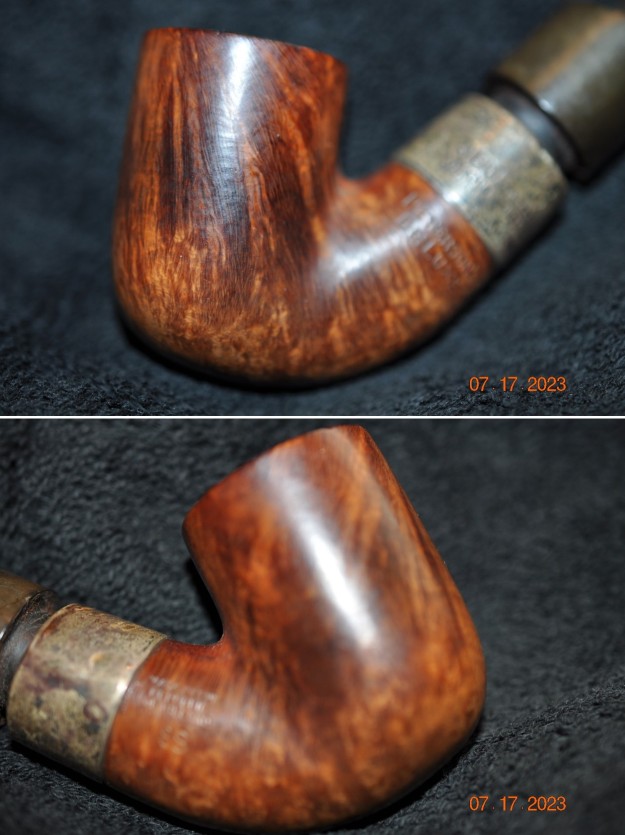
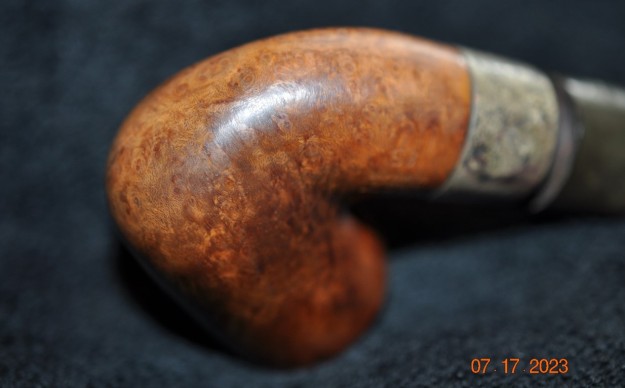
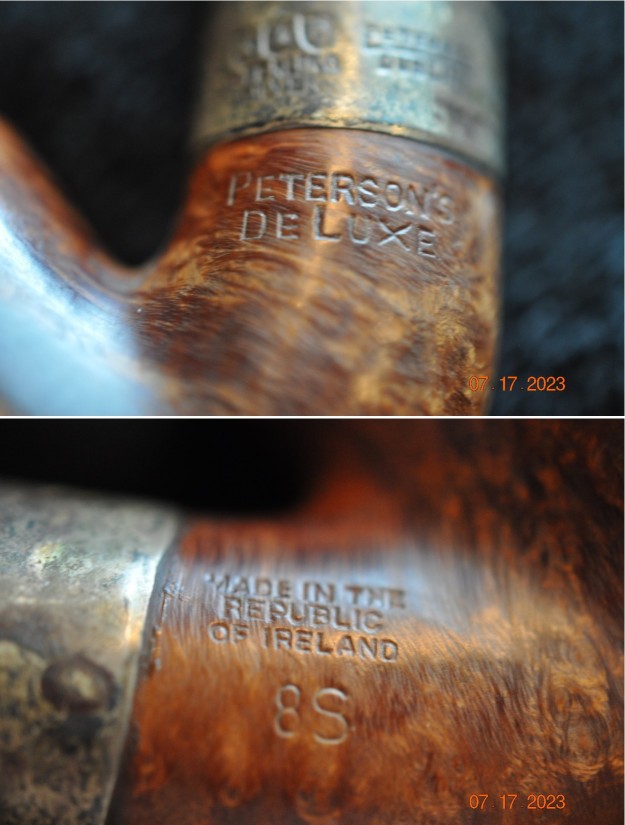
The first information I found was on the Peterson’s website (https://www.peterson.ie/pipes/system/deluxe-system-smooth/). I quote from the description of the line below. I have highlighted several key portions in bold black for emphasis.

While the Deluxe stamp first appeared on our System pipes in 1940, the design itself dates to our 1896 and 1906 catalogues and, with the exception of the Supreme, has always marked our highest tier of System pipe. Like the System Standard and System Spigot lines, the Deluxe System pipe incorporates Charles Peterson’s patented System design, including a deep reservoir to collect excess moisture from the smoke; a graduated-bore mouthpiece that funnels the smoke and allows moisture to collect within the reservoir; a sturdy sterling silver military mount, which allows the pipe to be broken down and cleaned without damage or warping; and our patented P-Lip bit, which draws the smoke upward, thus reducing tongue bite. The Deluxe differs from those aforementioned lines, comprised of bowls with only the finest grain patterns and featuring a sterling silver mount and a push-gap stem, which was never designed to be flush-fitting, the space between the mount and stem base gradually decreasing with prolonged use. The Deluxe also elevates the System pipe by fixing each stem with a traditional chimney, an aluminum fitment that extends the tenon past the chamber’s airway for optimal System performance. Created for Peterson enthusiasts interested in acquiring the finest System pipe on the market, the Deluxe System will serve as the crown of any collection. Seen here in the Smooth finish.

From that information I knew how the De Luxe fit in the hierarchy of Peterson’s pipes. It was always the highest tier of the System pipes. It also was made with the gap in the fit of the stem to the shank on purpose with the idea that the distance would decrease over time with prolonged use. The attachment of a chimney at the end of the tenon was to maximize System performance.

From there I also turned to Pipedia. I quote from an article by Jim Lilley and have included much of it below. (https://pipedia.org/wiki/A_Closer_Look_at_The_Peterson_Deluxe_System_Pipe). Once again I have highlighted pertinent sections in bold below.

By Jim Lilley

The version of the system pipe for our closer inspection is one of Peterson’s more recognisable series, the handsome and very distinctive Deluxe system pipes, which include the Darwin and Mark Twain. These pipes are at the top of the ‘system’ series in terms of quality and finish.

Each Peterson Deluxe is made from carefully selected, age mellowed root briar. In matte finish with hallmarked sterling silver mounts and a unique space fitting mouthpiece to allow for years of wear. They are available in a wide range of shapes numbered, as follows 1s,2s,3s,4s,5s,8s,9s,11s,12.5s,20s,XL5s, 20FB and 11FB.

The pipes are well carved, construction, engineering and workmanship, is outstanding. The stems are well drilled and aligned. Silver work is excellent, finish very good, and the often maligned briar is of outstanding quality.

The design is a very typically Peterson classic shape. Apart from the Darwin, the balance can be stem heavy, the bit is thick and chunky, especially in the larger versions. I also enjoy the sense of presence they give to the pipe, particularly if smoking in company with friends or strangers. They have a sophistication about them.

The smoking qualities are excellent, dry and cool. The draw is good, and the flavour is particularly great in new pipes. The Mark Twain’s are outstanding in this department.

As for the aesthetics and ergonomics, I find some shapes much more attractive than others. Favourites for me are the 1s,2s,3s,the Mark Twain’s and the Darwin deluxe. As a clencher most are very good to hang, except the beautiful Darwin which is more of a ‘hand holder.’

The one weakness I find is the modern orange/golden colour, (the so called natural) it is, in my opinion, less attractive than that found in the older Walnut finish of the eighties.

As far as value and cost is concerned, for the excellent quality finish, these are competitively priced at around $135 to $250 depending on size and briar grade.

For what it is worth, I reckon the Deluxe s are probably the best value range of pipes that Peterson produce, both in terms of functionality and value. There is not a thing wrong with these pipes. Those who malign the brand because they’re made by the hundreds using machines, are very wrong, IMHO. I like them a lot and the bang for the buck is the best I’ve ever seen for new pipes of this quality.

The De-luxes are all excellent smokers. The Darwin, of course, is a truly outstanding pipe, its only “flaw” being that it’s not a clencher. One particular aspect of this pipe, that appeals to me most is its physical beauty and presence, they are a pipe like no other. For me, they also offer a bowl capacity that I like and a balance in the hand that I appreciate. They are well named Deluxe s for giving that special experience.

With that information at hand I turned to work on the pipe itself. Jeff had thoroughly cleaned up the pipe. He reamed the pipe with a PipNet Pipe Reamer and cleaned up the remnants with a Savinelli Fitsall Pipe Knife. He scrubbed the bowl with undiluted Murphy’s Oil Soap with a tooth brush. He rinsed it under running warm water to remove the soap and grime. He cleaned out the inside of the shank and the airway in the stem with alcohol, cotton swabs and pipe cleaners. He scrubbed the exterior of the stem with Soft Scrub to remove as much of the oxidation and calcification as possible. He soaked the stem in Briarville’s Pipe Stem Deoxidizer and rinsed it off with warm water. I took photos of the pipe once I started to work on it.   I took some photos of the rim top and stem. The rim top and bowl looked very good. The cake and lava overflow were gone and the inward bevelled rim was very clean. There was also some darkening on the bevelled inner rim edge and light damage on the edge of the top and the bevel. Jeff had been able to get rid of all of the lava and tars. The rim top looked good with light marks and scratches on the surface. The closeup photos of the stem shows that it is a much cleaner and better looking stem. The tooth marks and chatter were still present with deeper ones on the button and on the underside of the stem next to the button. There was some white debris at the joint of the tenon and the stem.I took some photos of the stamping on the shank sides and the silver on the ferrule to show the condition after the cleanup. Often the stamping takes a hit with the cleaning and is lessened in its clarity. Jeff does a great job in leaving the stamping looking very good. I removed the stem from the shank and took a photo of the pipe at this point. Like other Peterson’s Deluxe pipes that I have worked on this stem had chimney threaded into the tenon to extend into the lower part of the mortise and provides a funnel for drawing the smoke into the mouth of the smoker. This time it was a bone chimney that had a chipped portion on the top of the chimney.I started my restoration work on this pipe by addressing the darkening around the inner edge of the bowl. I used a folded piece of 220 grit sandpaper to clean up the bevelled inner edge and the rim top with the same sandpaper. The finish rim top looked very good. I started my polishing regimen on the bowl. I used nine micromesh sanding pads and dry sanded the bowl with 1500-12000 grit pads. I wiped the bowl down with a damp cloth after each pad. The bowl really shines by the final three pads. I worked some Before & After Restoration Balm into the surface of the briar with my fingertips to clean, enliven and protect it. I let the balm sit for a little while and then buffed with a cotton cloth to raise the shine. The photos show the bowl at this point in the restoration process. I polished the Sterling Silver ferrule with a jewellers polishing cloth to remove the tarnish and protect it from further tarnishing. I set the bowl aside and turned my attention to the chipped bone chimney. It was stuck in the tenon end and I could not unscrew it. I carefully wiggled it and got a little give. I painted the area where it sat against the tenon with isopropyl alcohol on a cotton swab. After a few applications I was able to unscrew the chimney. In the photo below, it is shown. The chipped area is on the top of the chimney and the sides are in solid condition. I cleaned out the tenon and the area behind the chimney and the chimney itself with cotton swabs, pipe cleaners and alcohol. It was quite dirty but I was able to clean it thoroughly.I greased a pipe cleaner with Vaseline and inserted it in the chimney under the damaged area. I carefully applied rubberized KMS Black Super glue to the cracked area with a tooth pick. I filled in the damage. I sprayed it with accelerator to harden it and applied several more coats until it was smooth and round.Once the repair cured screwed into the tenon to give me something to hold onto. I sanded it with a folded piece of 220 grit sandpaper to shape it to match the remaining sides of the chimney.I polished it with micromesh sanding pads – dry sanding with 1500-2400 grit pads to smooth out and shape the repairs. I was happy with the finished product. I screwed it back into the tenon and took a photo of the end. It looked good.I took photos of the rebuilt chimney after I had polished it with the remaining micromesh sanding pads – 3200-12000. The repair came out looking very good.I turned to address the tooth marks in the stem next. I filled in the deep tooth marks with black CA glue and set it aside to let the repairs cure. I started the smoothing process with a small flat file to begin blending them in. I further blended in the repairs with 220 grit sandpaper and started to polish it with a folded piece of 600 wet dry sandpaper. Once it was finished it was smooth. I touched up the Hand Cut stamp on the underside of the saddle portion of the stem with white acrylic fingernail polish. I sanded off the excess with a worn piece of 1500 grit micromesh. It looked much better.I screwed in the bone chimney to the tenon and polished it and the stem with micromesh sanding pads – dry sanding with 1500-12000 grit sanding pads. I wiped them down after each sanding pad with a cloth containing some Obsidian Oil. I finished polishing it with Before & After Pipe Stem Polish – both Fine and Extra Fine and buffed it off with a cotton cloth. I gave it a coat of Obsidian Oil to preserve and protect the stem. I don’t know how many times I have said this but I love it when I come to the end of a restoration and all of the parts come together and the pipe looks better than when we started the cleanup process. I put the stem back on the Peterson’s DeLuxe 8S System and buffed the pipe with Blue Diamond on the buffing wheel. I carefully avoided the stamping on the shank sides during the process. I gave the bowl and stem multiple coats of carnauba wax on the buffing wheel and followed that by buffing it with a clean buffing pad on the buffer. I hand buffed the pipe with a microfiber cloth to deepen the shine. The finished pipe is a real stunning example of an Republic Era Peterson’s DeLuxe 8S Bent Billiard. Once again, the grain and the way the shape follows the grain is amazing. Give the finish pipe a look in the photos below. I can only tell you that it is much prettier in person than the photos capture. The dimensions of the pipe are Length: 5 inches, Height: 1 ¾ inches, Outside diameter of the bowl: 1 1/8 inches, Chamber diameter: ¾ of an inch. The weight of the pipe is 1.55 ounces/44 grams. This Peterson’s De Luxe 8S is a great piece of pipe history that is in exceptional condition. Thanks for walking through the restoration with me as I worked over another beautiful pipe. I will be putting this one on the rebornpipes store in the Irish Pipemakers Section. Let me know if you are interested in adding it to your collection. Thanks for your time.
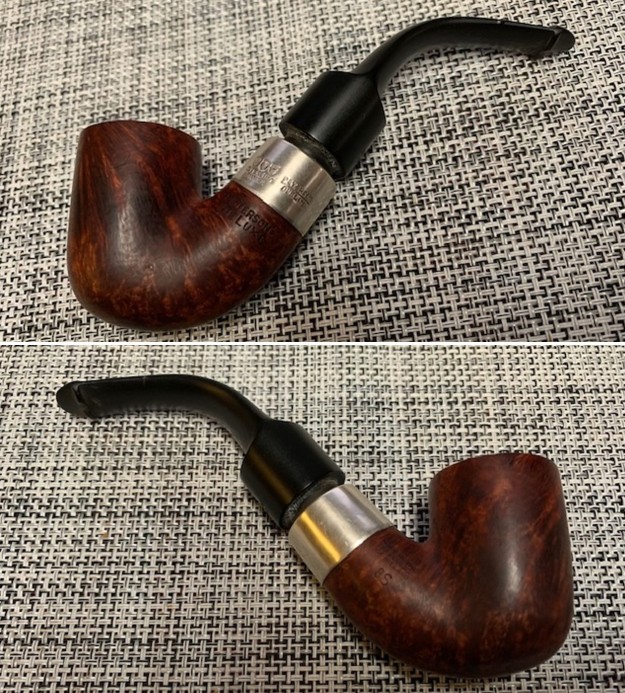
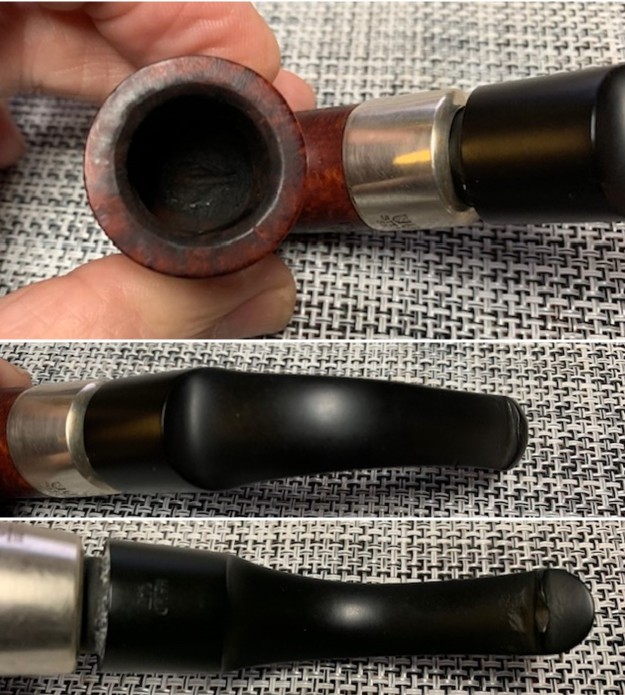
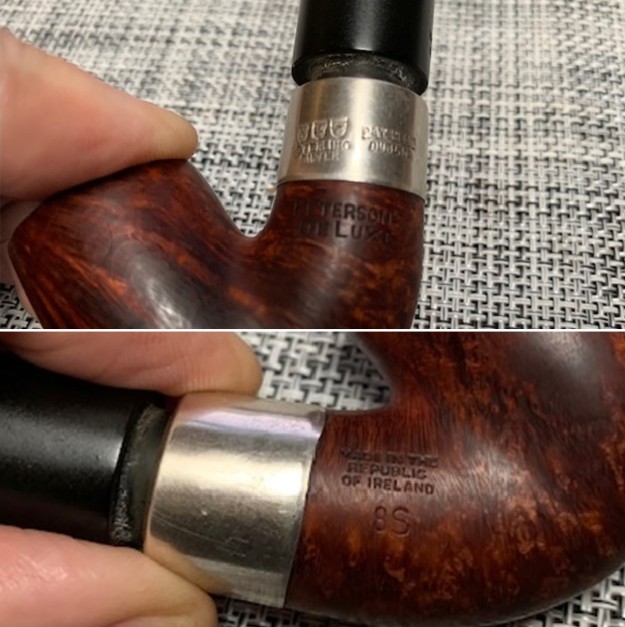
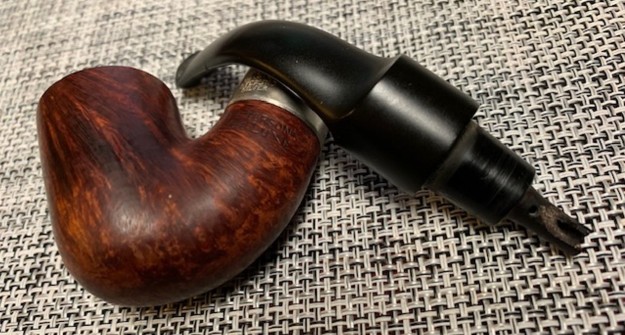
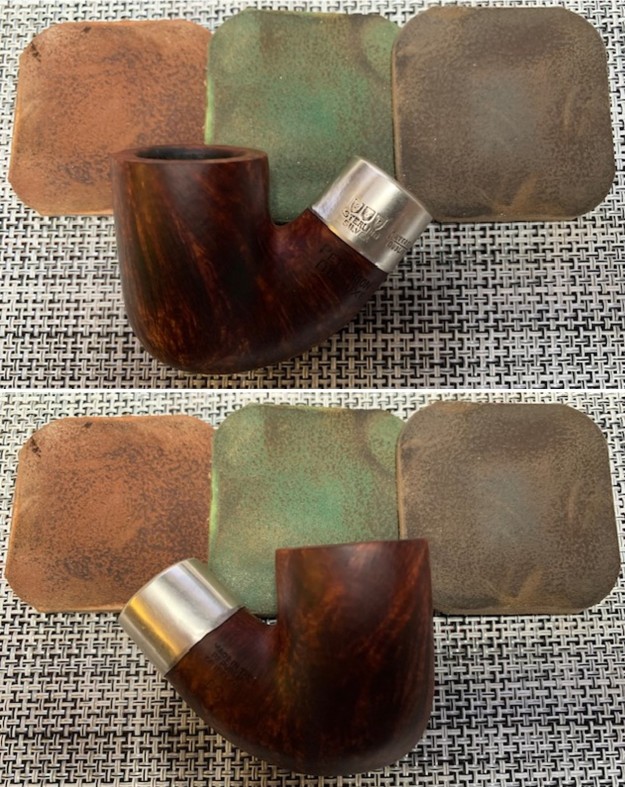
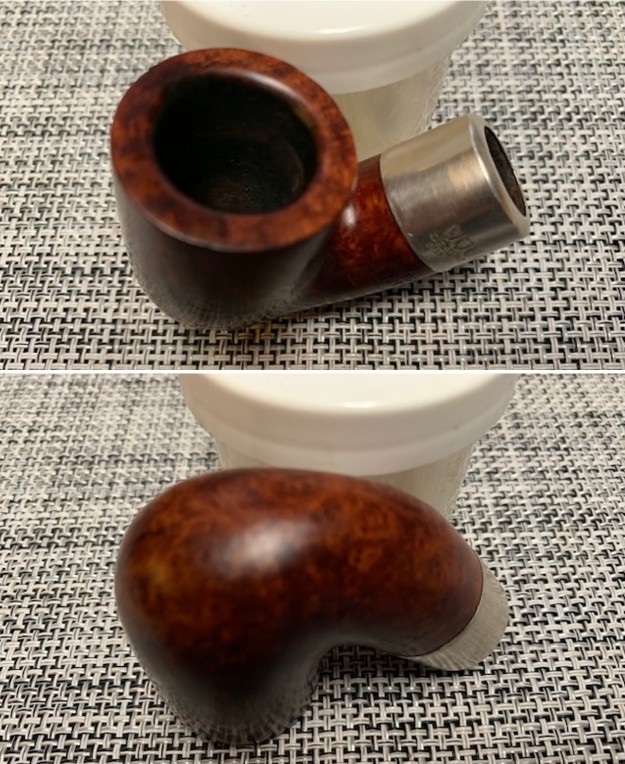
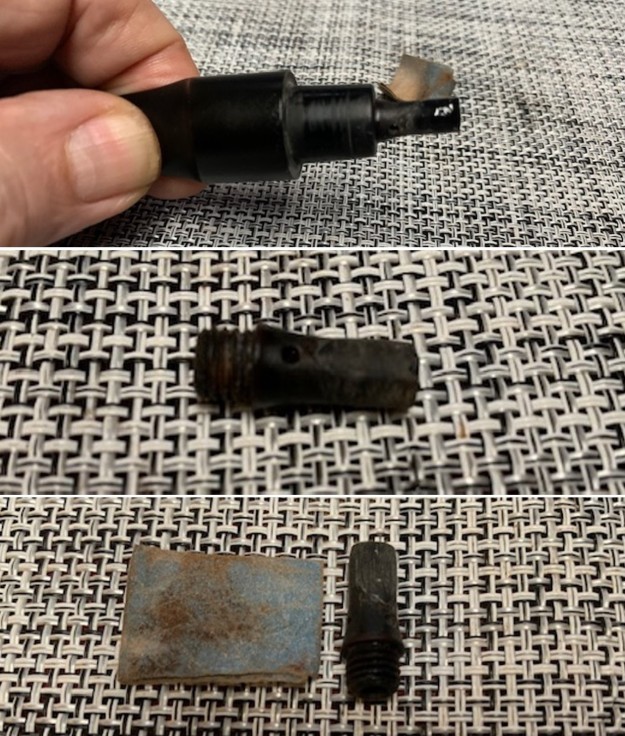
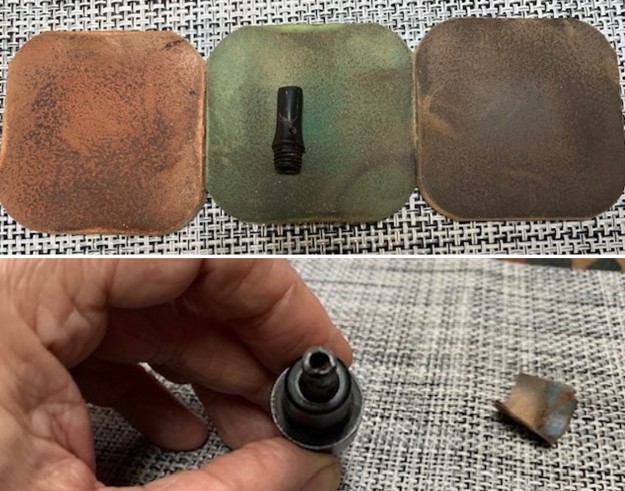
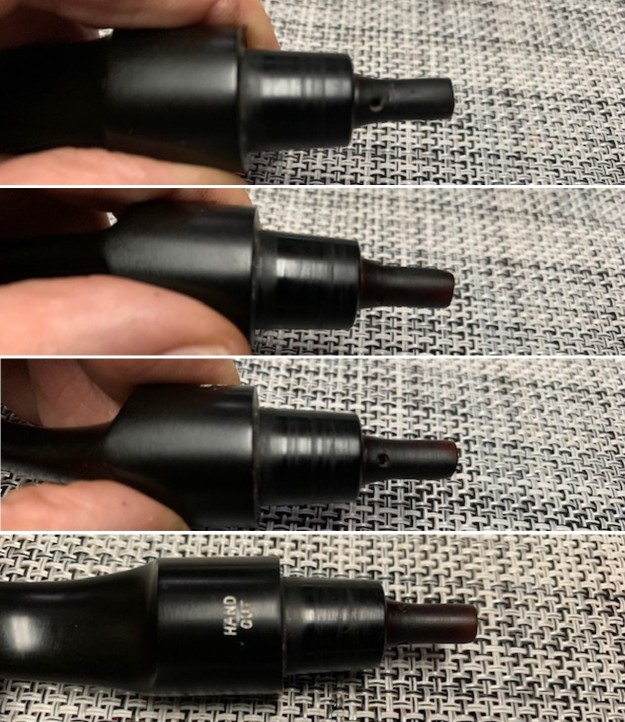
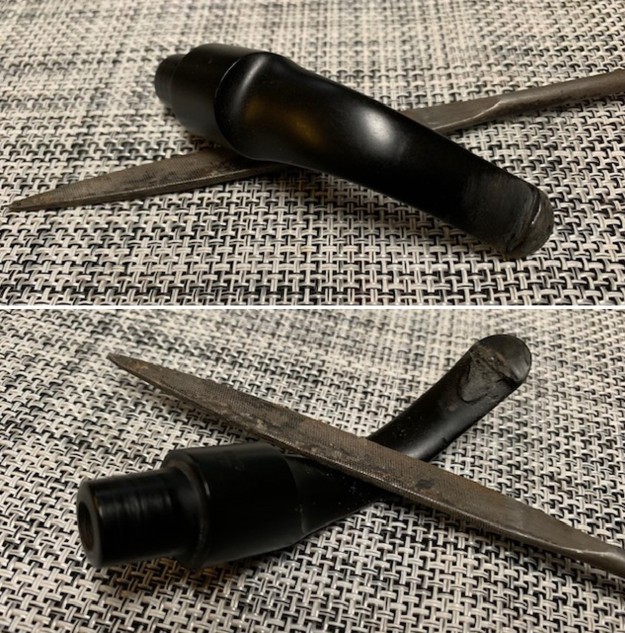
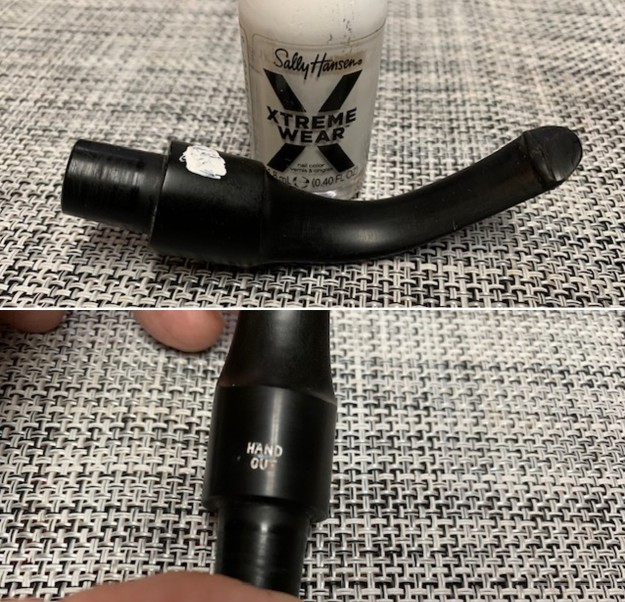
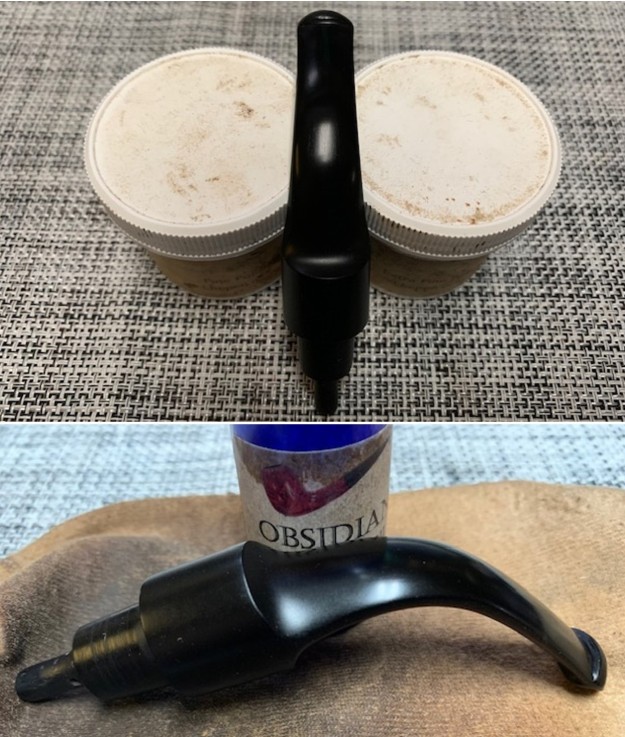
As always, I encourage your questions and comments as you read the blog. Thanks to each of you who are reading this blog. Remember we are not pipe owners; we are pipe men and women who hold our pipes in trust until they pass on into the trust of those who follow us.