
Blog by Steve Laug
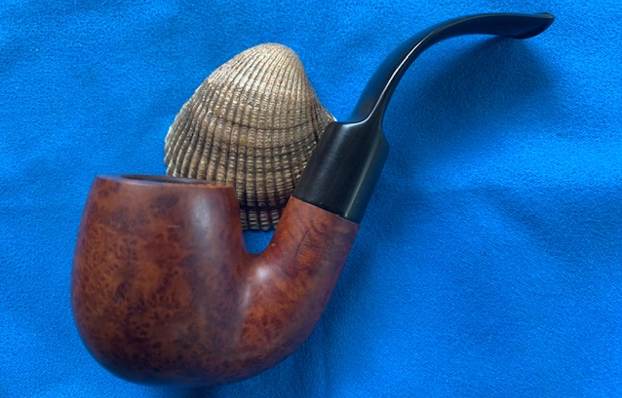
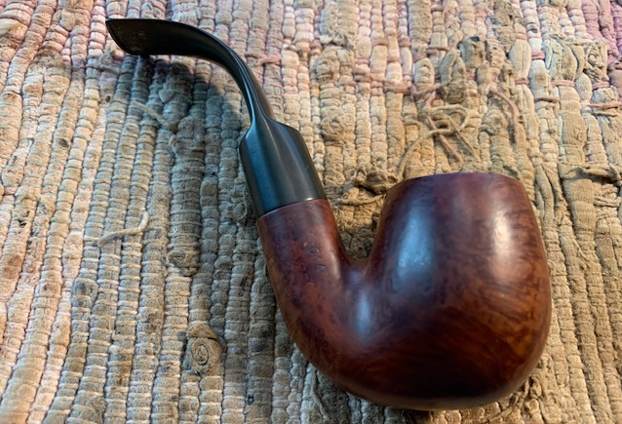
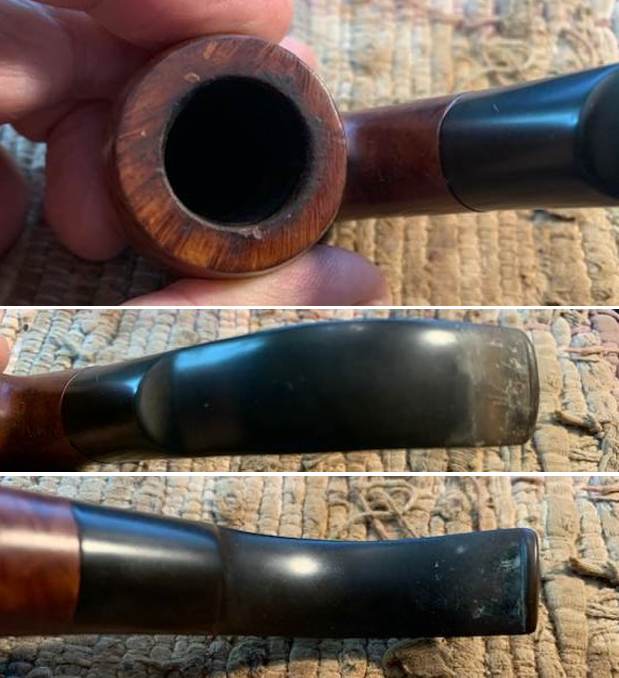
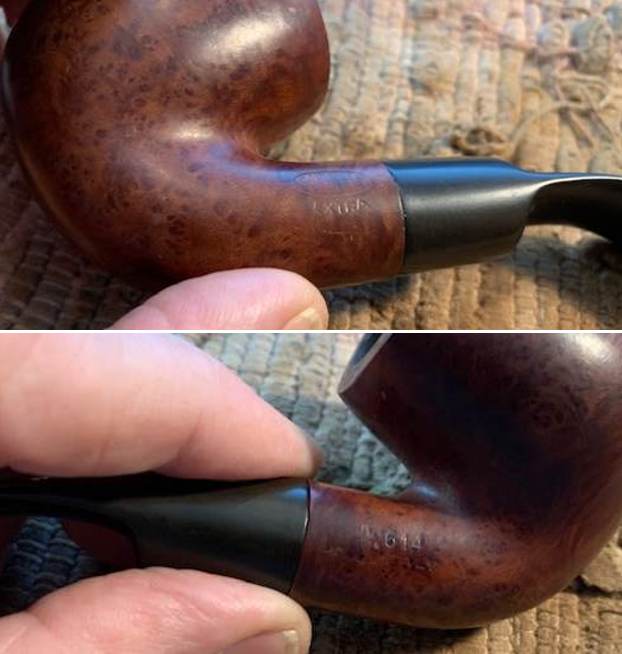
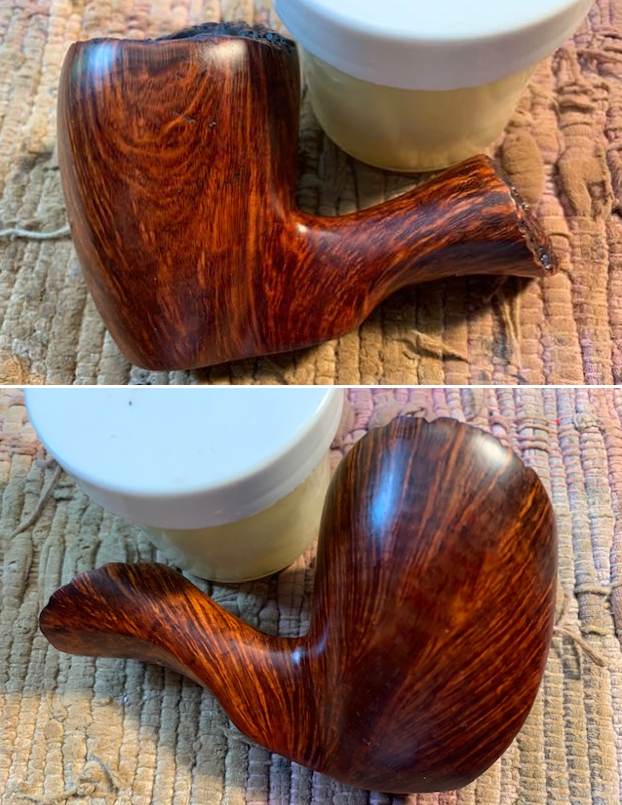
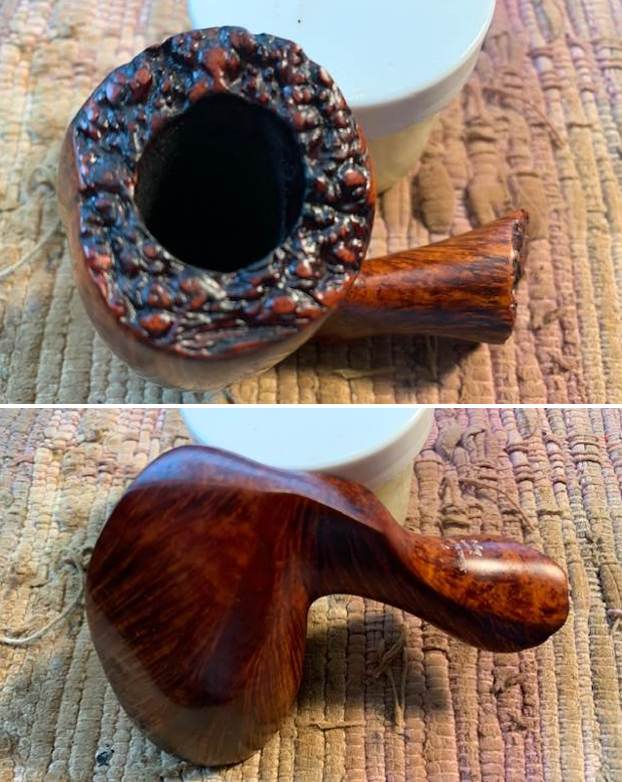
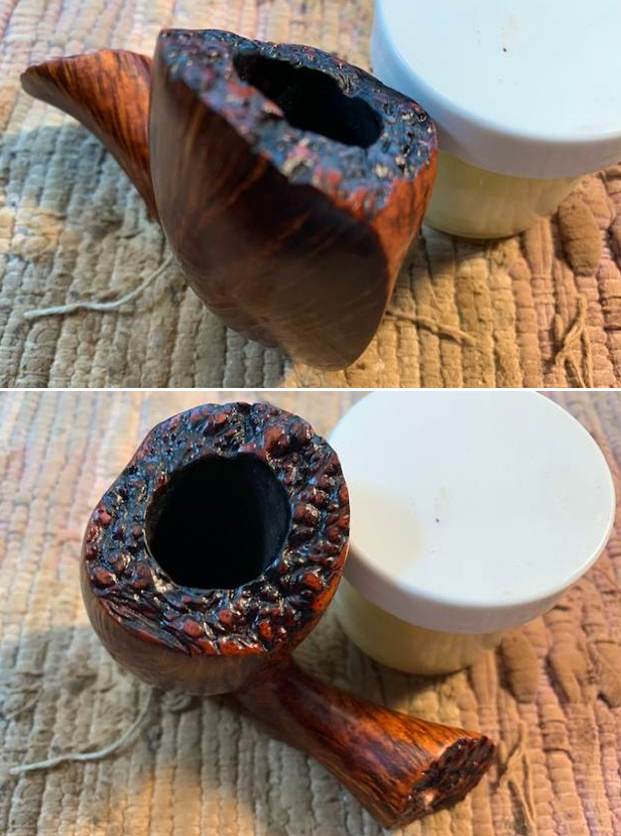
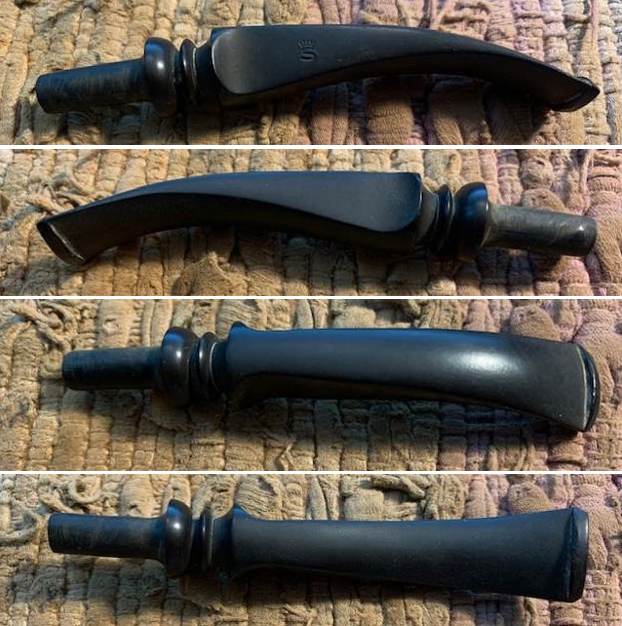
The next pipe on my work table was dropped off by a local pipe shop that I do repair and restoration work for. It was in the same bag as the Bewlay that I restored for them earlier and wrote about (https://rebornpipes.com/2022/06/30/new-life-for-a-hard-smoked-older-bewlay-popular-127-billiard/). It is another pipe that the shop wanted me to do a full restoration on and properly fit the stem. It is stamped on the left side of the shank and reads Savinelli in an oval [over] Extra. On the right side it is stamped with the Savinelli shield S then the shape number 614 [over] Italy. The finish was dirty and worn but there was some nice grain peeking through the grime. The rim top had some scratches and nicks on the surface. There was a light cake in the bowl it smelled strongly of aromatic vanilla tobacco. The shank and stem airway was very dirty. The stem was lightly oxidized, calcified and had tooth marks and chatter on both sides ahead of the button. It was also loose in the shank. I took photos of the pipe before I started my clean up.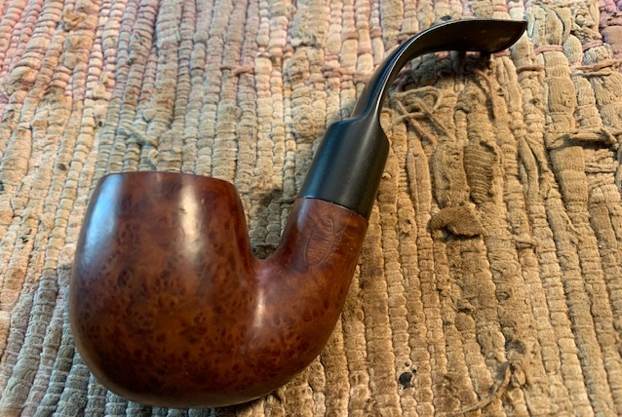
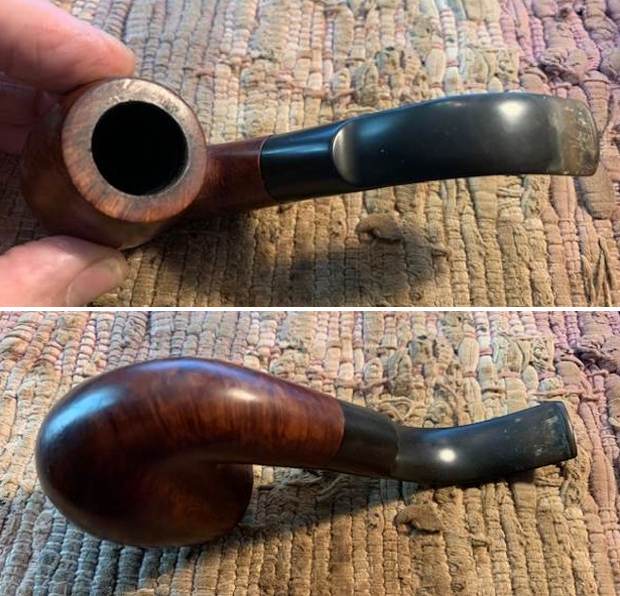 I took photos of the rim top and bowl to show the cake in the bowl, and the fills and marks on the top. The stem photos show the oxidation, calcification and tooth chatter and marks very well.
  I tried to capture the stamping on the sides of the shank in the next photos. They are faint but readable as noted above.
 I removed the stem from the shank and took a photo of the pipe to give a sense of the flow of the pipe. Even with the fills on the rim and various sandpits around the bowl sides it is a beautiful bent billiard that has a great shape.
 I wanted to remind myself of where the Extra fit in the Savinelli hierarchy so I turned to Pipephil (http://www.pipephil.eu/logos/en/logo-savinelli2.html) to get a quick view of the Extra Line. I did a screen capture of the site’s information and have included that below.
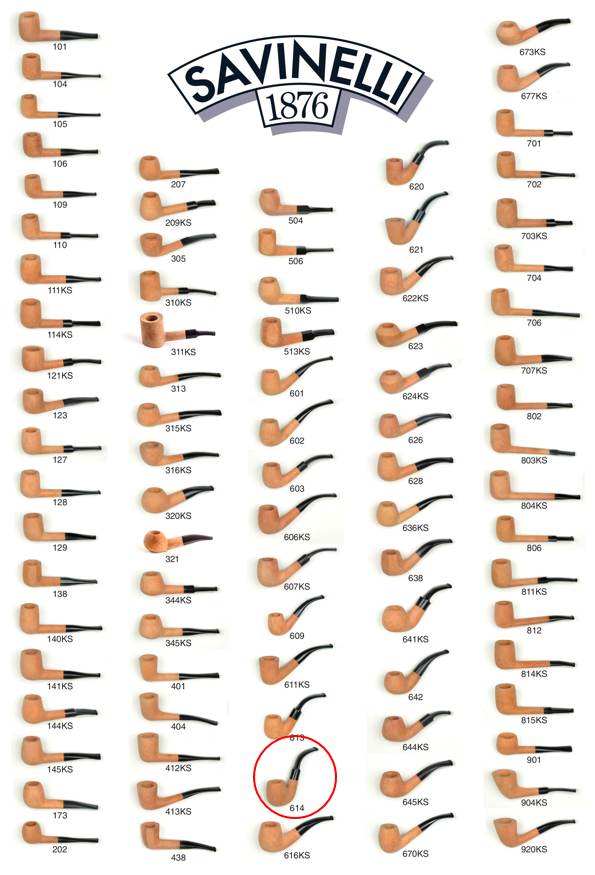
 I turned to Pipedia (https://pipedia.org/wiki/Savinelli) for a quick read. The site is worth reading the history of the Savinelli brand and its philosophy of pipemaking. There was also a shape chart on the site that had the shape 614 as a full bent pipe. I have circled the specific shape in the chart below.
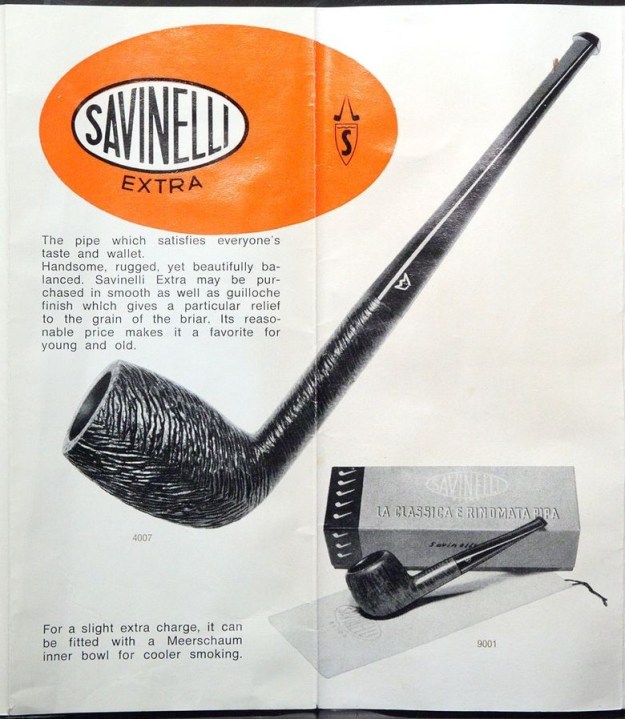
 There was also a photo of a brochure on the site that included the Extra line of pipes. It also stated that the pipe came in a guilloche and a smooth finish like the one I am working on presently (https://pipedia.org/wiki/File:Sav_Extra.jpg). that came from Doug Vliatchka.
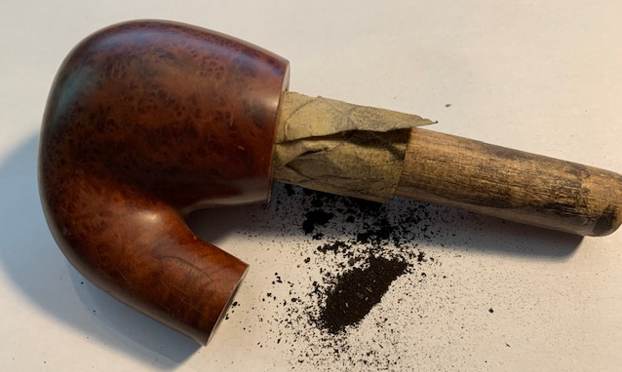
 Armed with the above information I was ready to work on the pipe itself. I started my work on the pipe by reaming the bowl. I started it with a PipNet pipe reamer using the second cutting head. I cleaned up the reaming with a Savinelli Fitsall Pipe Knife. I finished by sanding the walls of the bowl with a piece of dowel wrapped with 220 grit sandpaper. The walls of the bowl looked very good with no damage to the walls.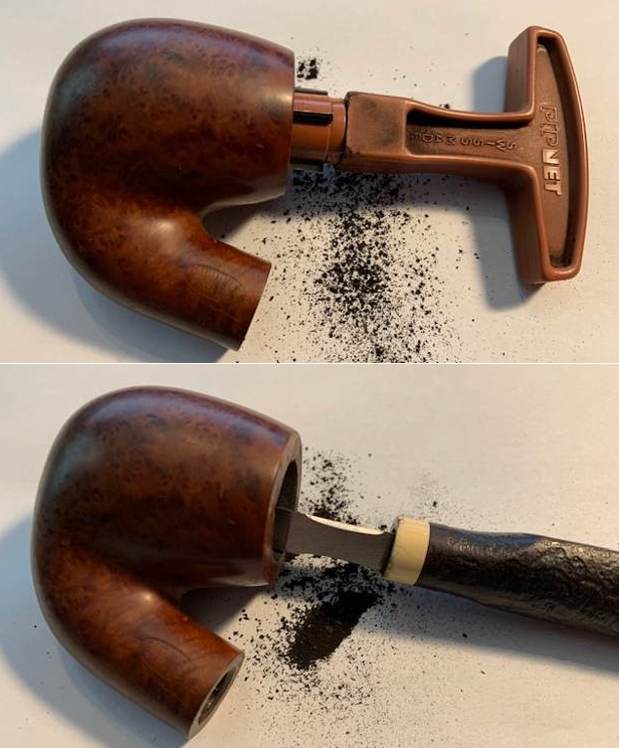
 I scrubbed the exterior of the bowl with Murphy’s Oil Soap and a tooth brush to remove the grime on the bowl and rim and was able to remove much of the lava and dirt. The inner edge of the bowl looked good and the rim top had some darkening but otherwise was in good shape.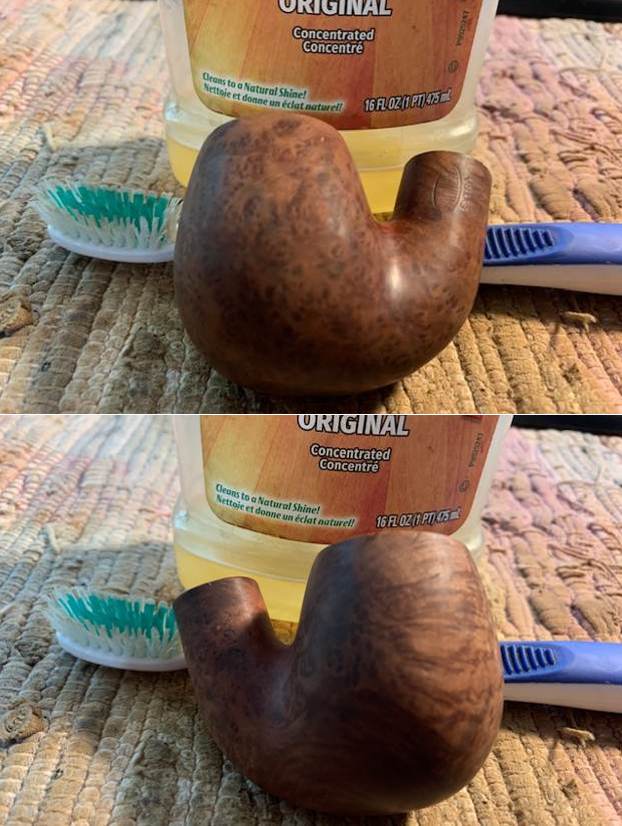
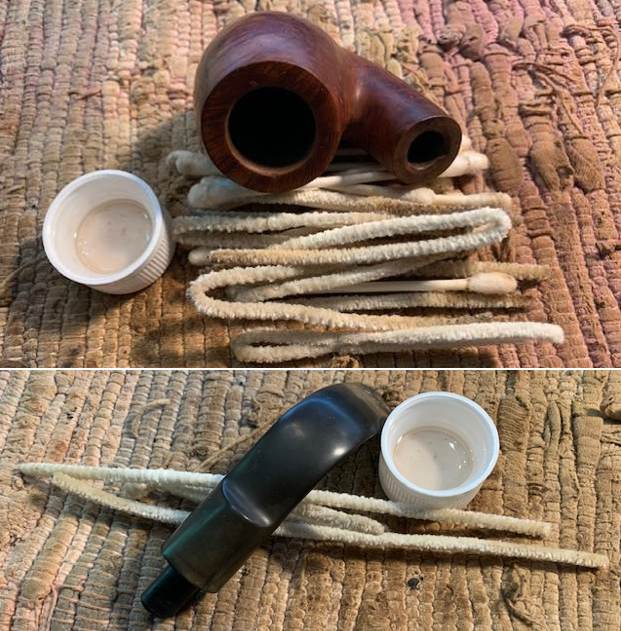
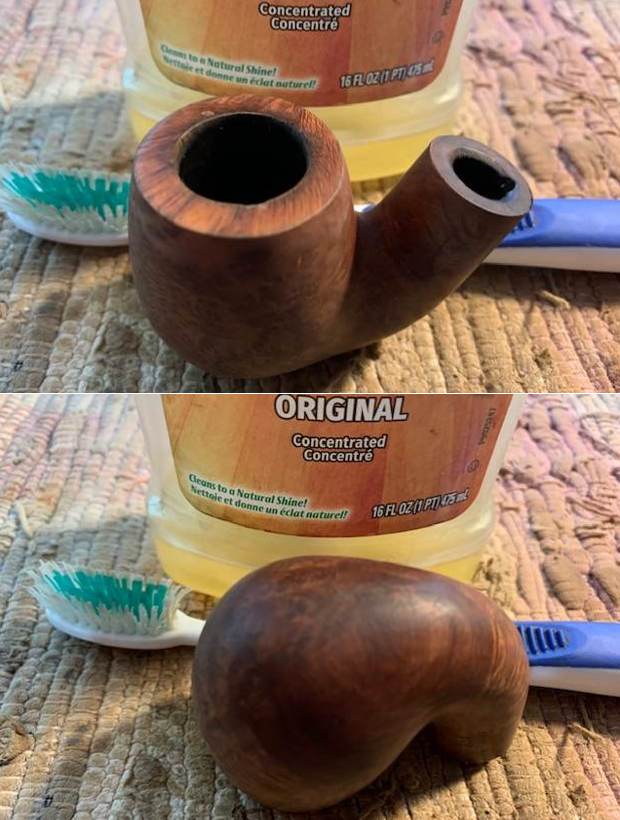 I cleaned out the interior of the bowl and shank with pipe cleaners, cotton swabs and alcohol until they came out clean. I cleaned out the airway with alcohol, cotton swabs and pipe cleaners.
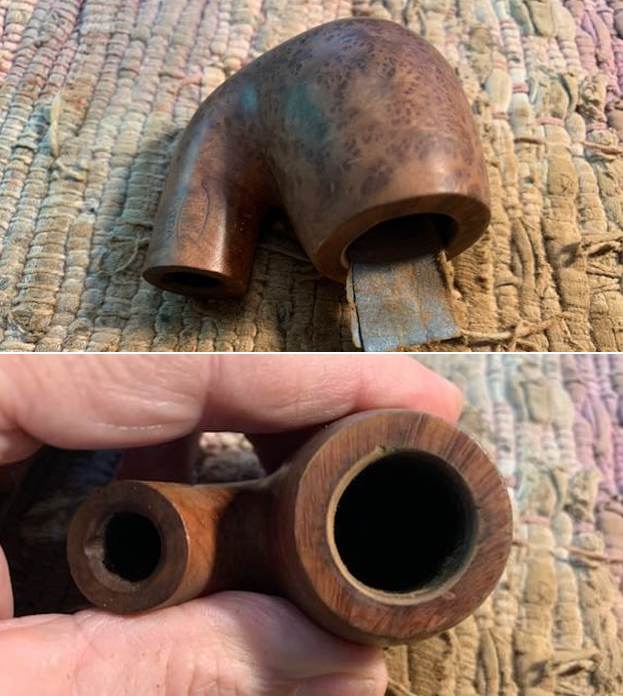
  I used a folded piece of 220 grit sandpaper to smooth the rim top and remove the darkening in and damage. I went over the inner edge of the rim to smooth out any roughness. Once I was finished I liked the way it looked.
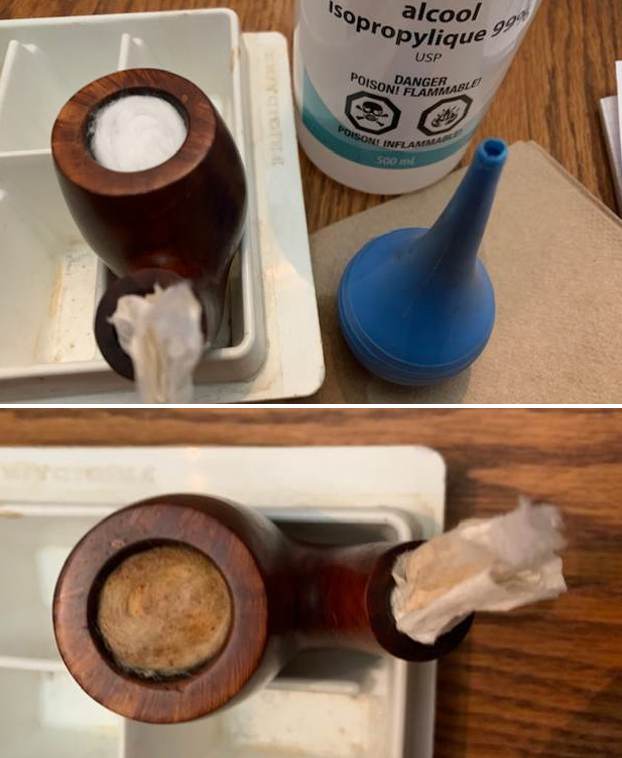
 I decided to deghost the bowl and stuffed with cotton bolls and twisted a paper towel into the shank end. I used an ear syringe to fill the bowl with 99% isopropyl alcohol to wick out the oils in the bowl and shank walls. I let it sit overnight and called it a day. In the morning I checked on it and the cotton had turned amber coloured. I pulled it out and cleaned out the shank once more. The pipe smelled significantly better.
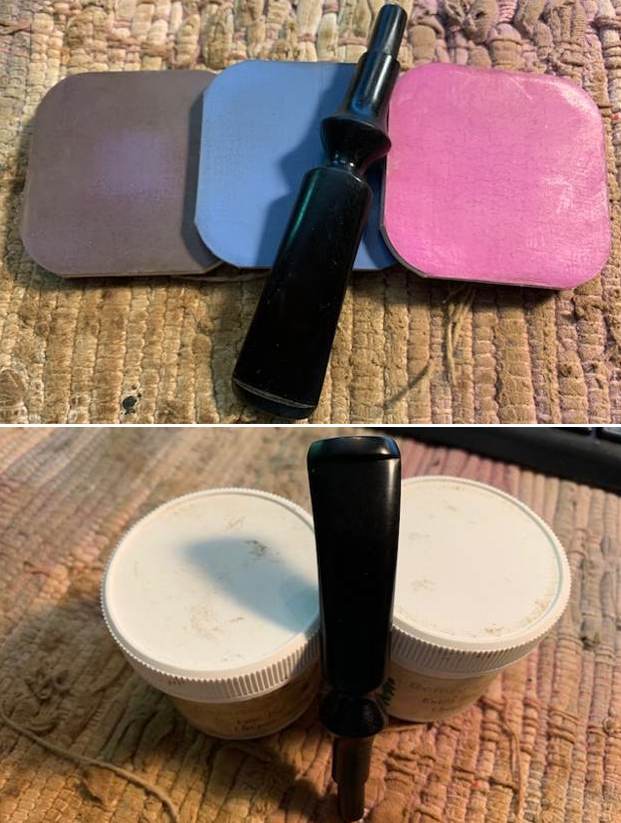
 I polished the briar with micromesh sanding pads – dry sanding with 1500-12000 grit pads. I worked over the inner and outer edge of the rim as well. After each pad I wiped the bowl down with a damp cloth to remove the sanding debris. It really took on a shine by the last three sanding pads.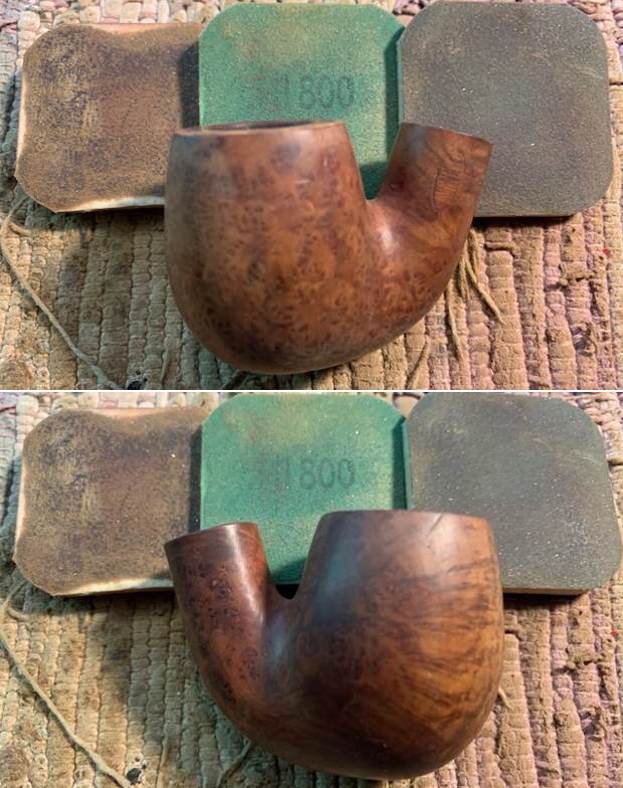
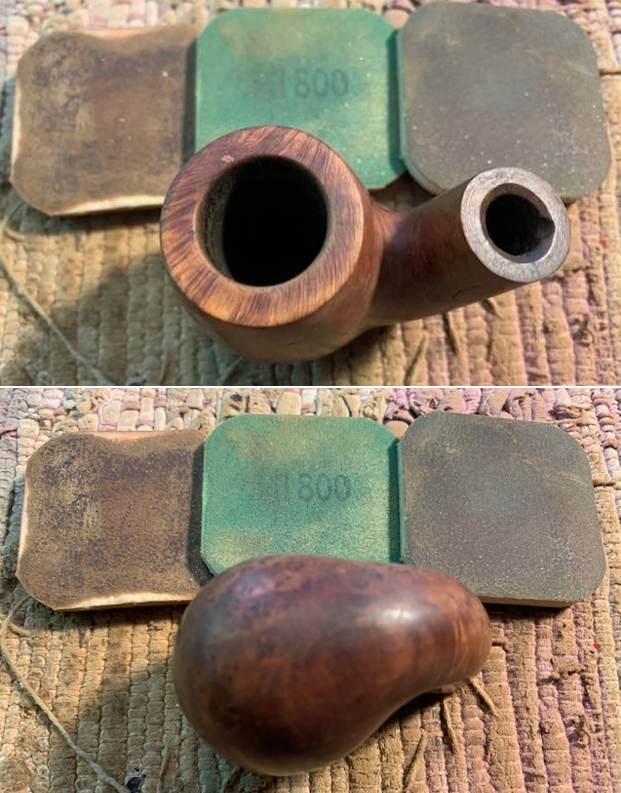
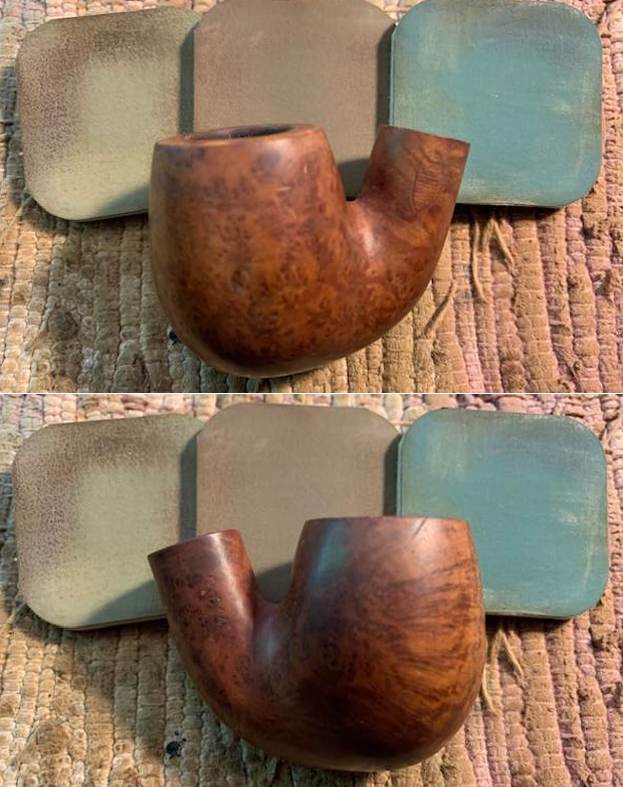
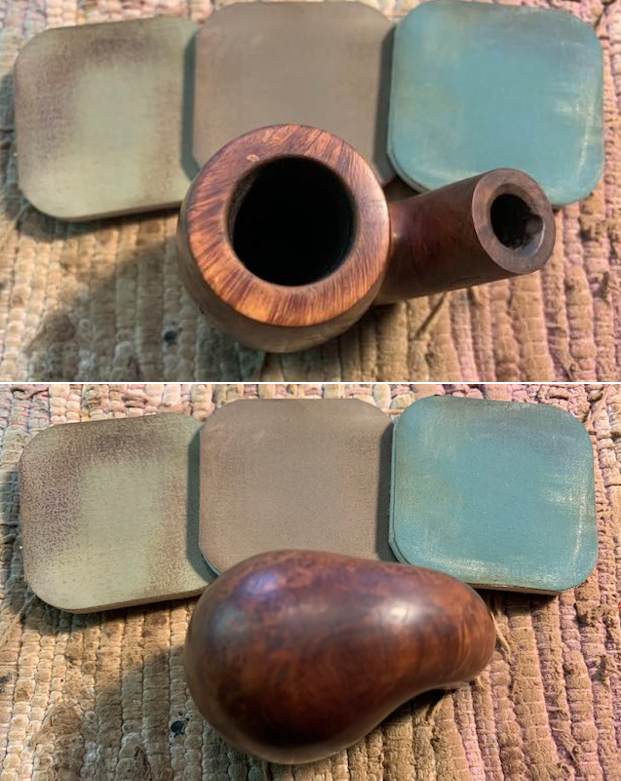
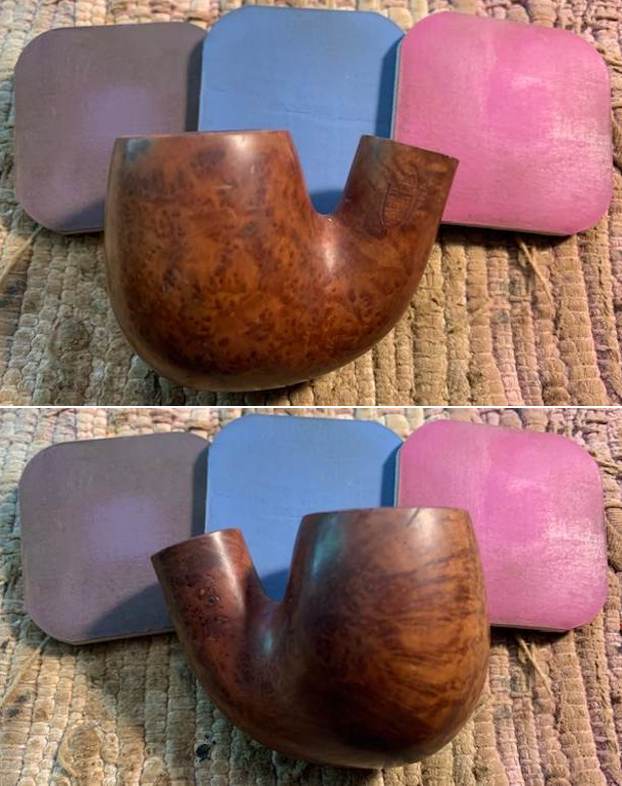
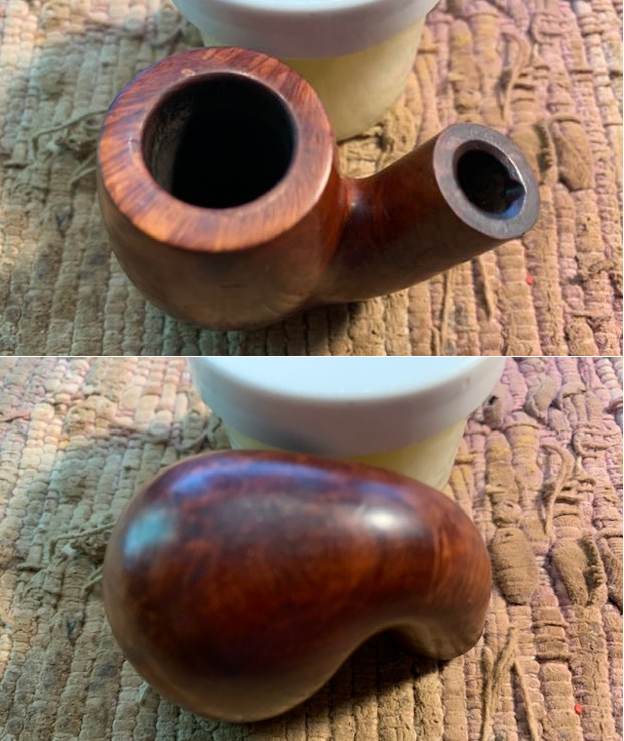
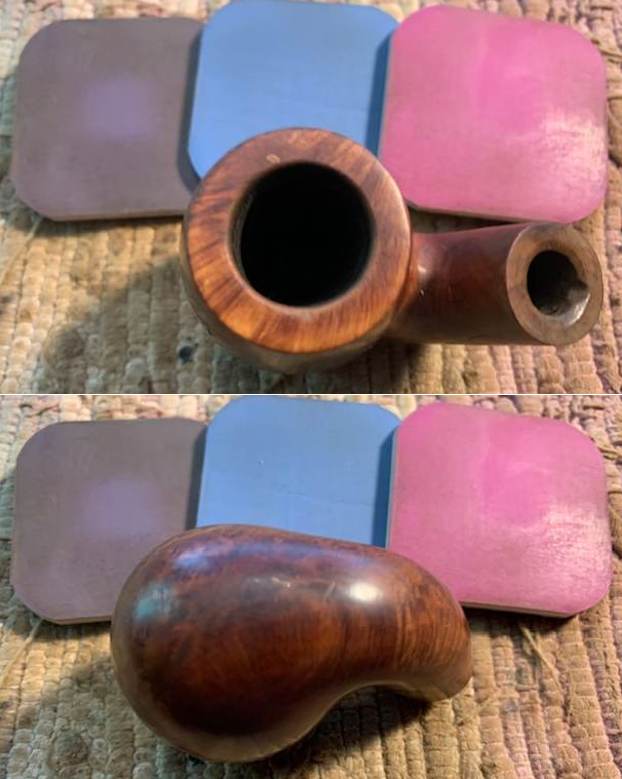 I rubbed the bowl down with Before & After Restoration Balm. I worked it into the surface of the briar with my fingertips where it works to clean, restore and preserve the briar. I let it do its magic for 15 minutes then buffed it off with a cotton cloth. The pipe looks incredibly good at this point in the process.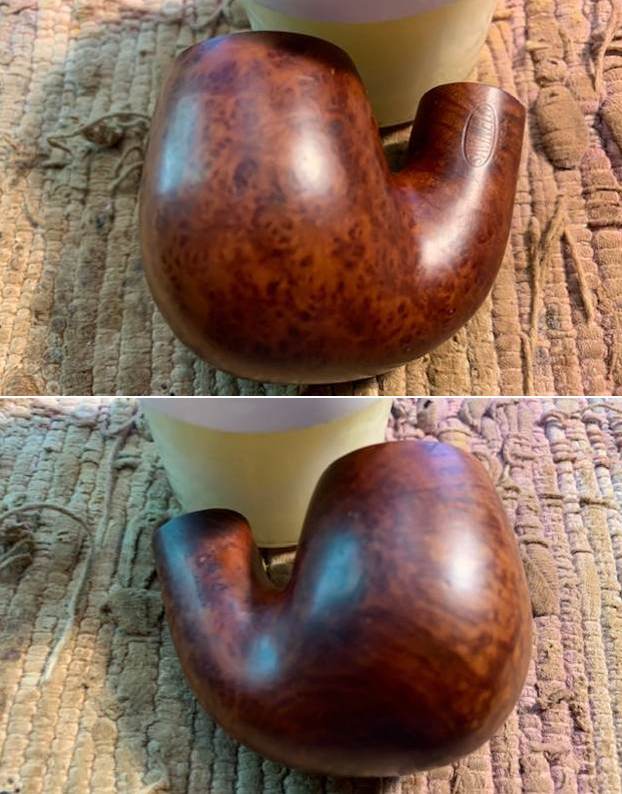
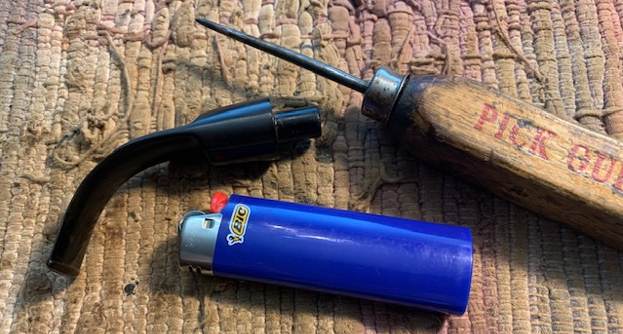
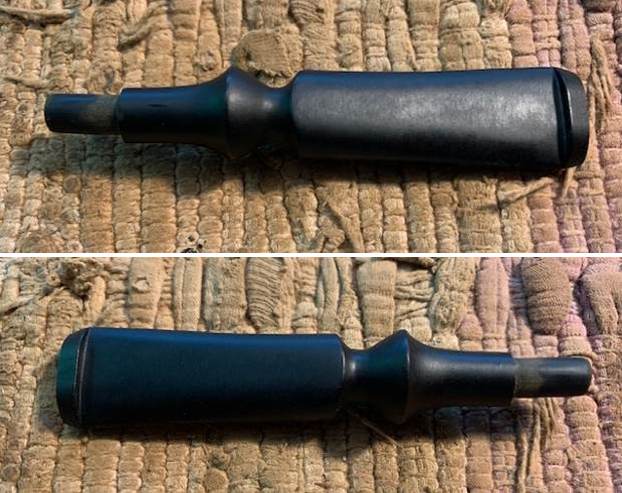
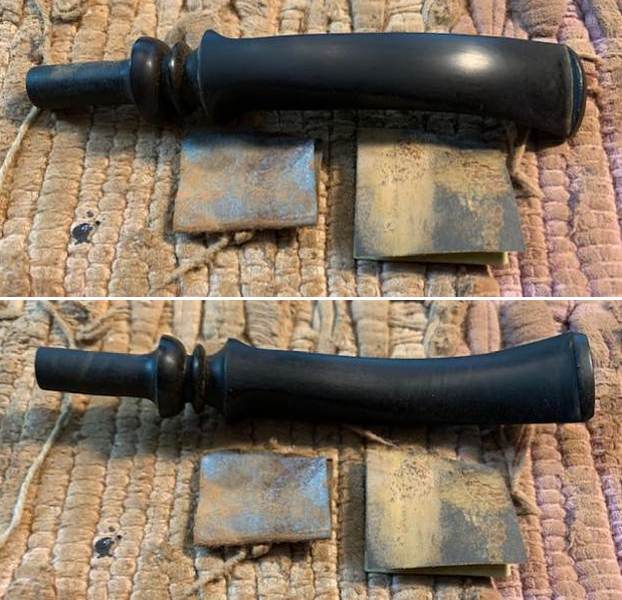
 I set the bowl aside and turned my attention to the stem. I “painted” the tooth marks on both sides of the stem with the flame of a Bic lighter. I was able to lift them significantly. I filled in the remaining marks on both sides with black super glue and set it aside to cure.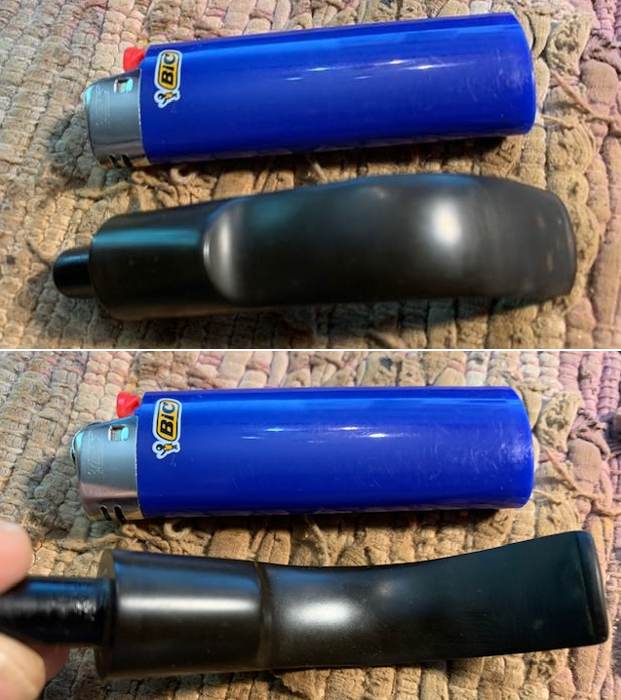
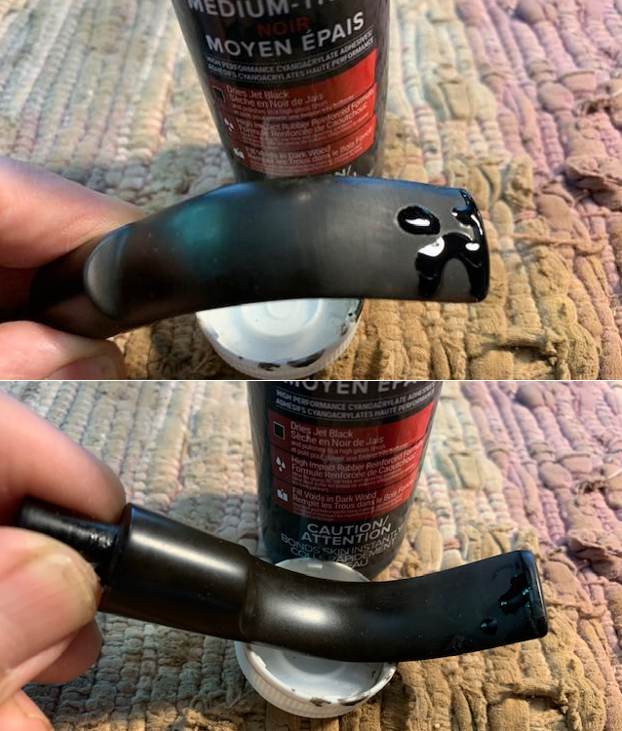 When the repair had hardened I used a small file to flatten the repairs and recut the edge of the button. I shaped the button with the file. I used 220 grit sandpaper to smooth out the repairs to the top and underside of the stem. I was able to blend them into the surface of the vulcanite. I started polishing the stem with 400 grit wet dry sandpaper. It is starting to look very good.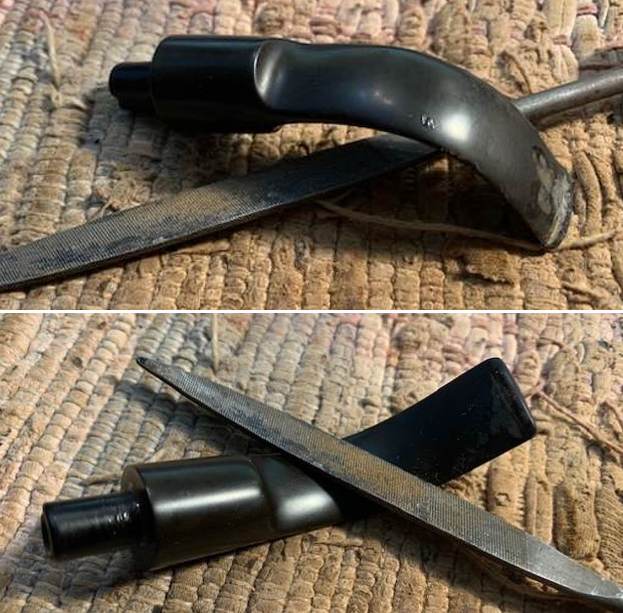
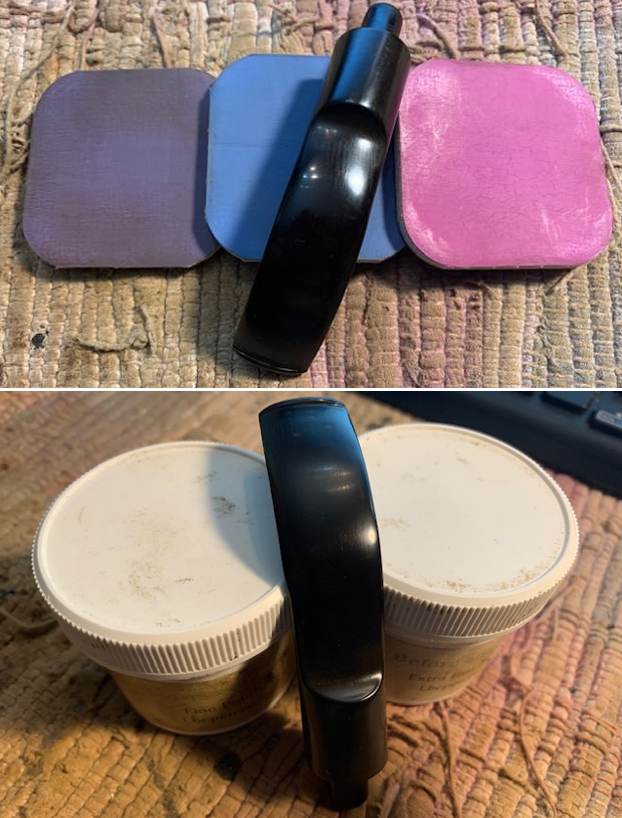
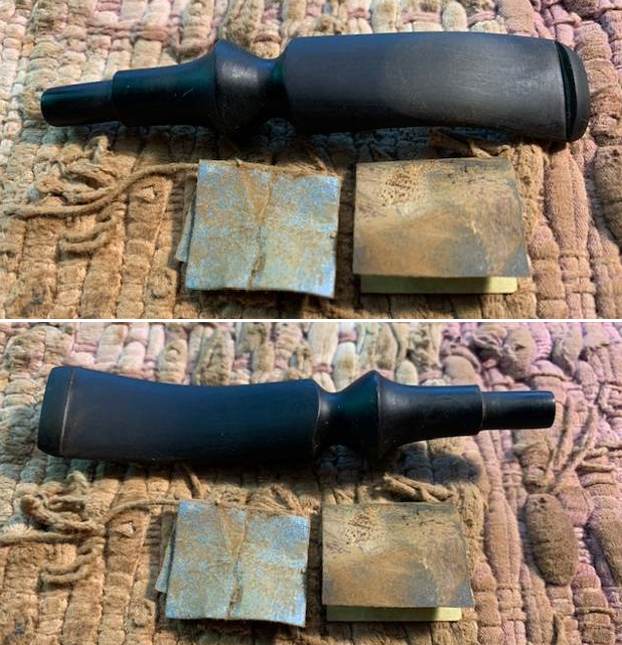
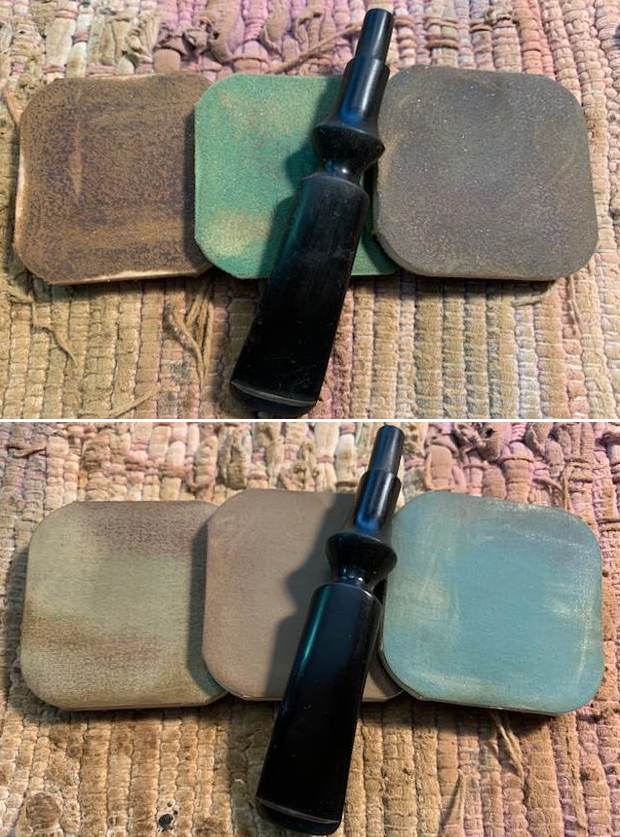
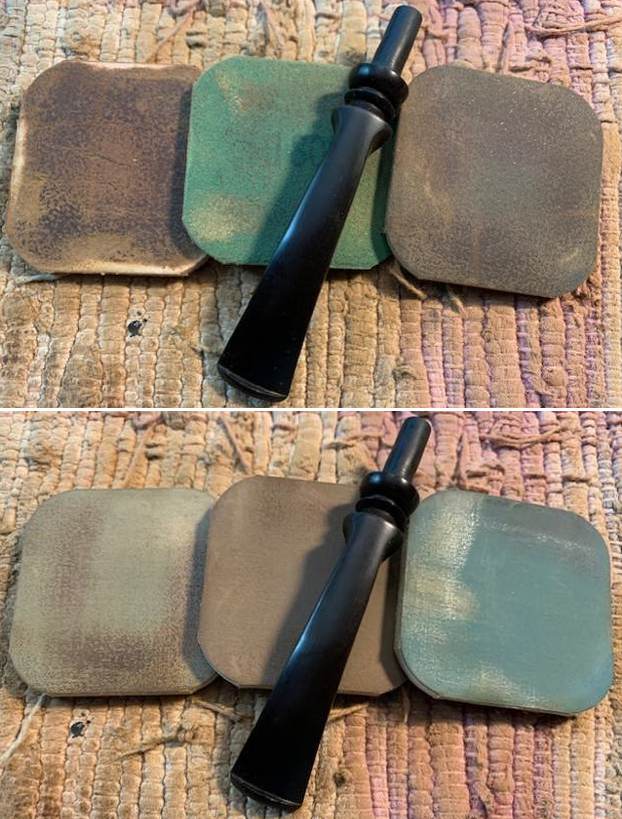
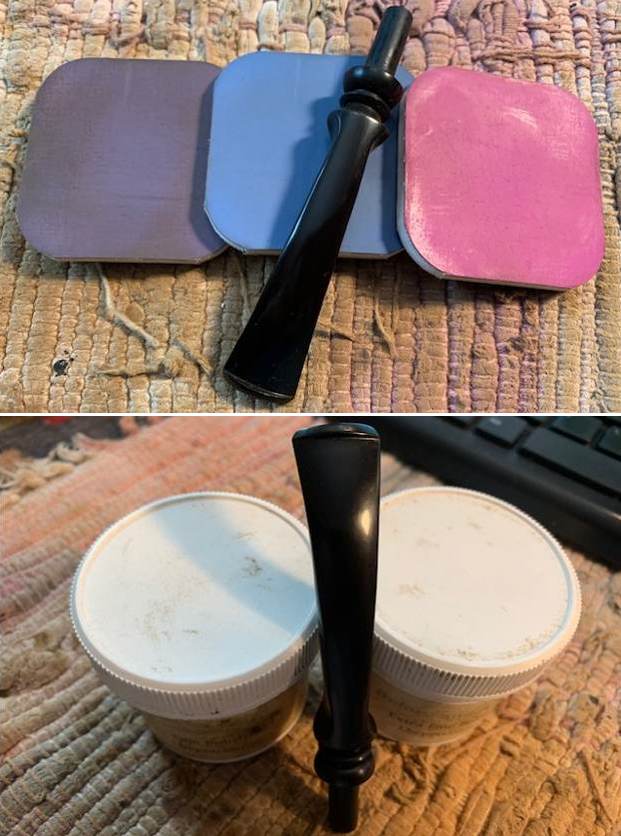
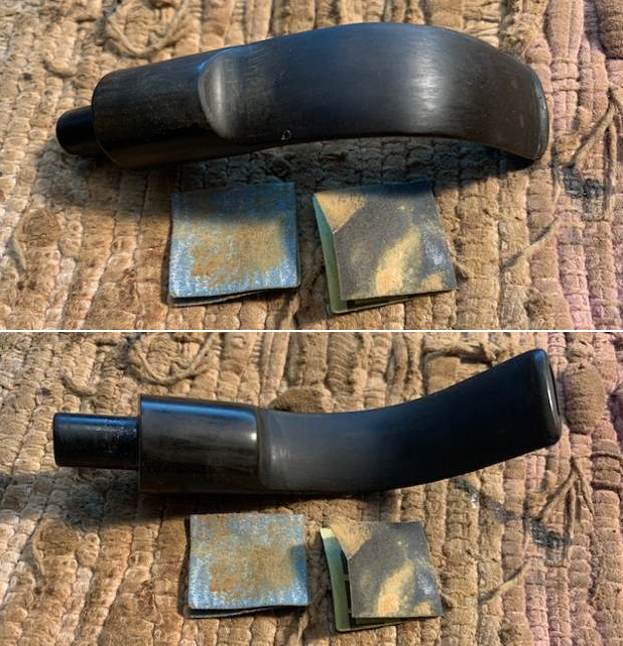 I continued to polish the stem with micromesh sanding pads – dry sanding with 1500-12000 grit sanding pads. I wiped it down after each sanding pad with Obsidian Oil. I polished it further with Before & After Stem Polish – both Fine and Extra Fine. I gave it a final coat of Obsidian Oil and set it aside to cure.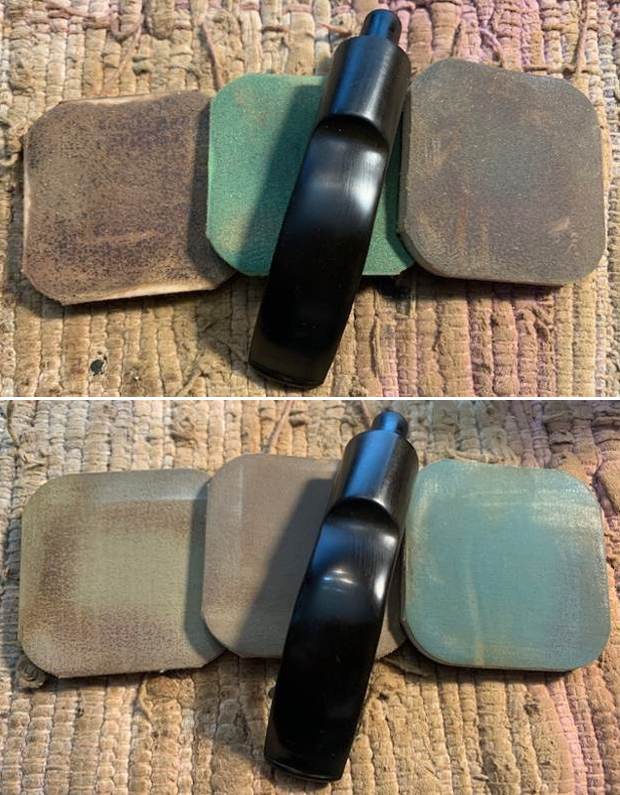
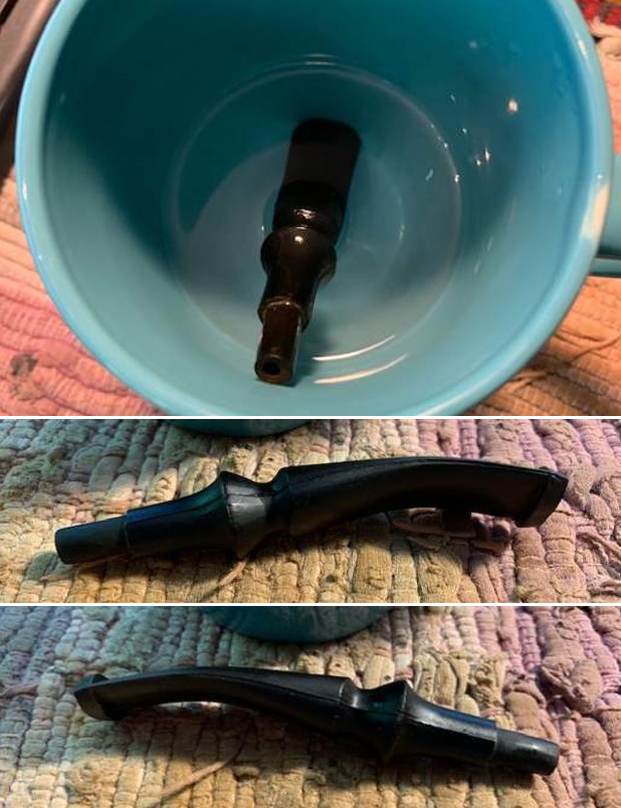
 I heated an ice pick and turned it into the airway in the tenon on the stem to swell it slightly so that the fit in the shank would be snug.
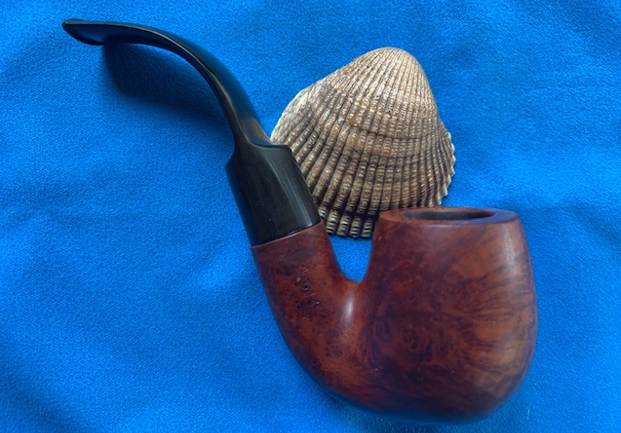
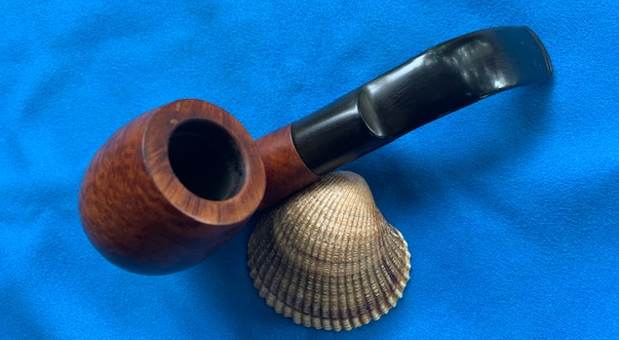
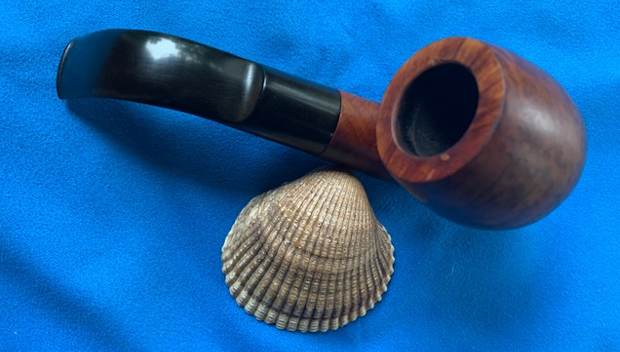
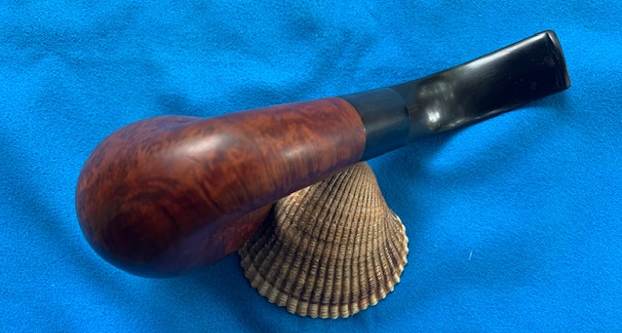
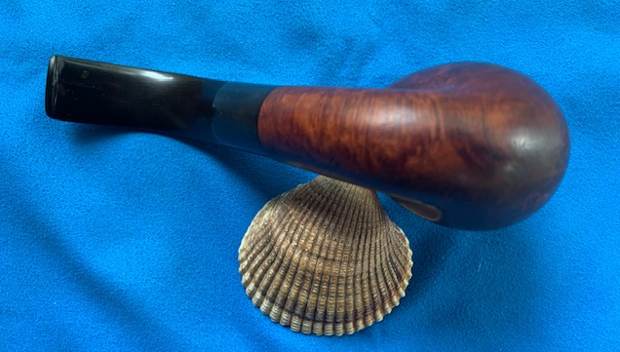
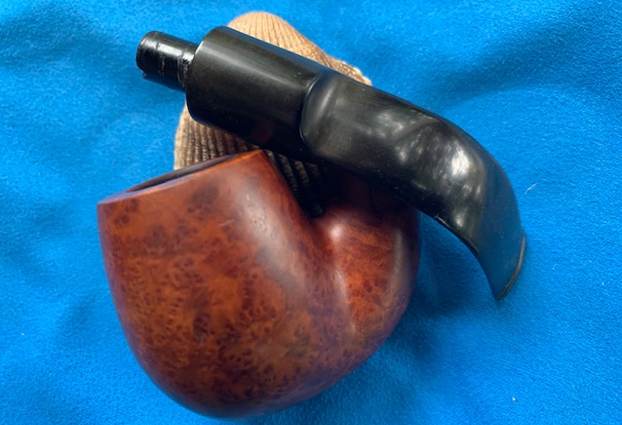
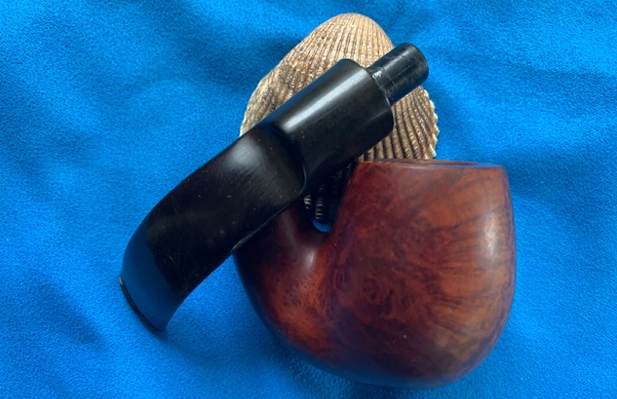
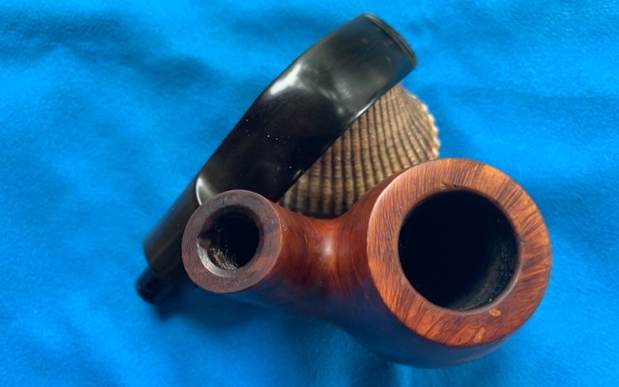
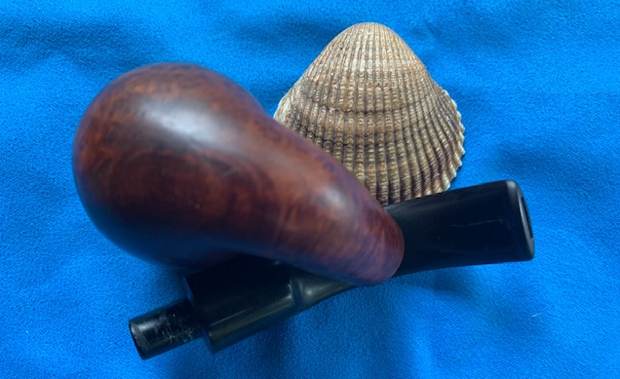
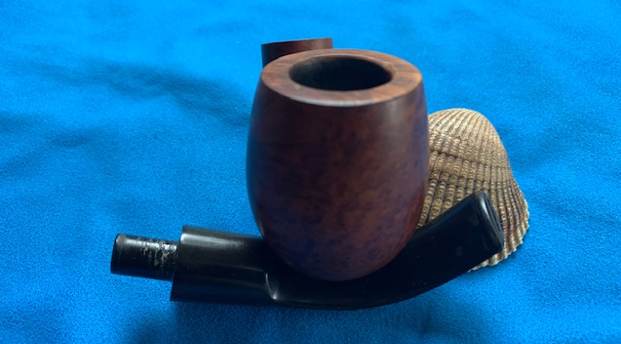
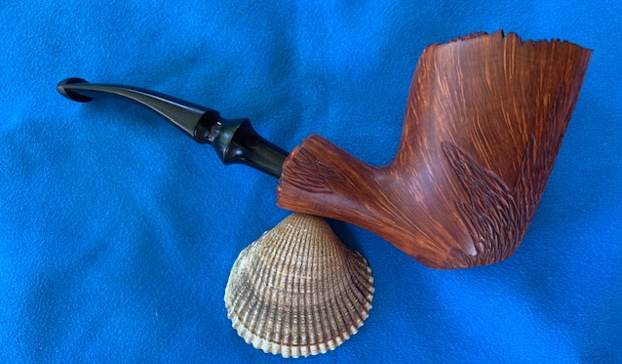
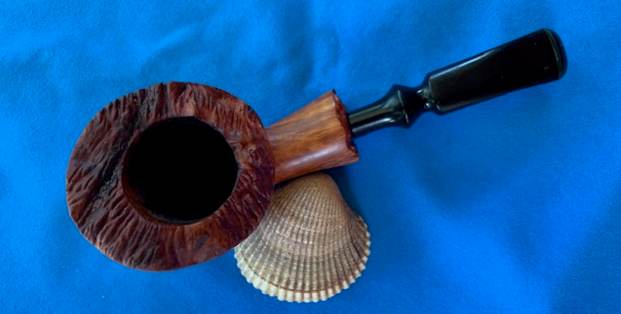
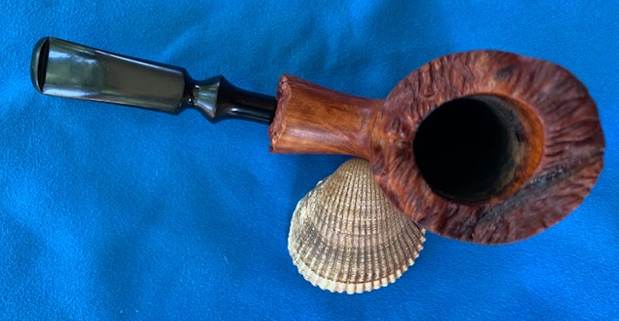
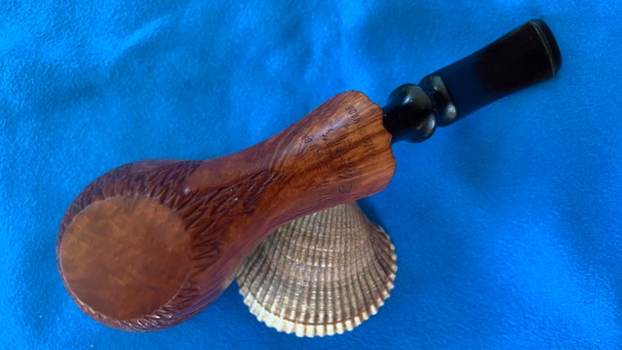
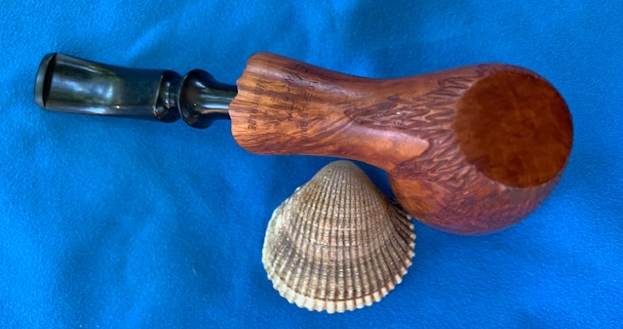
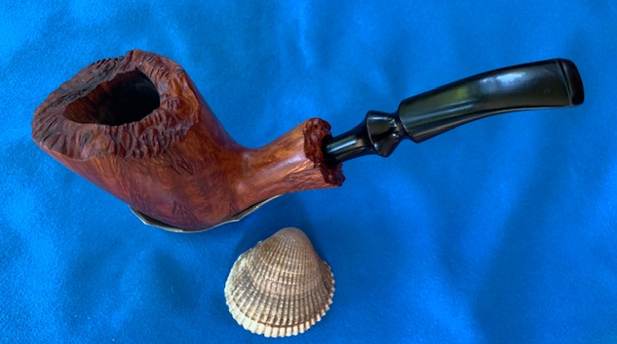
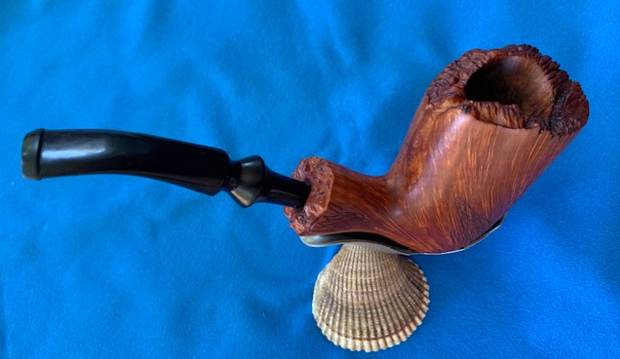
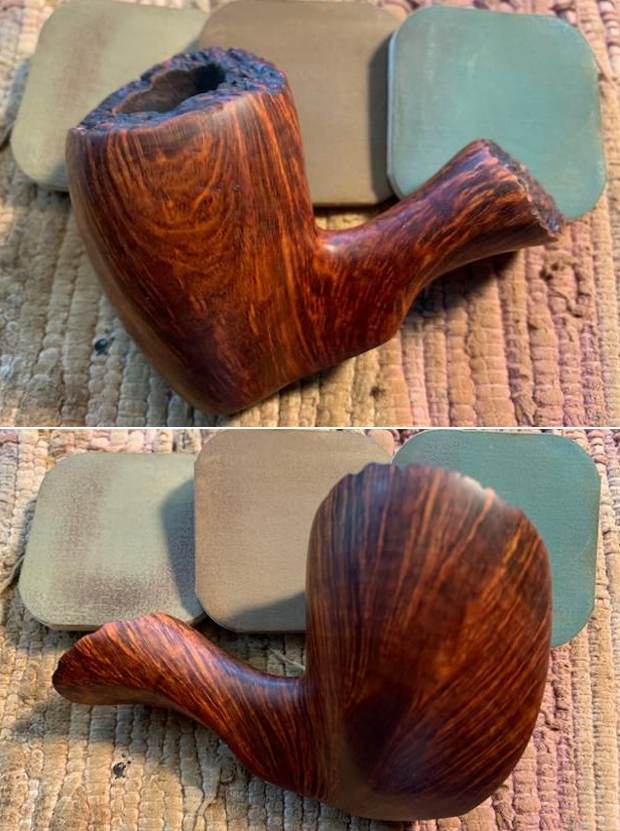
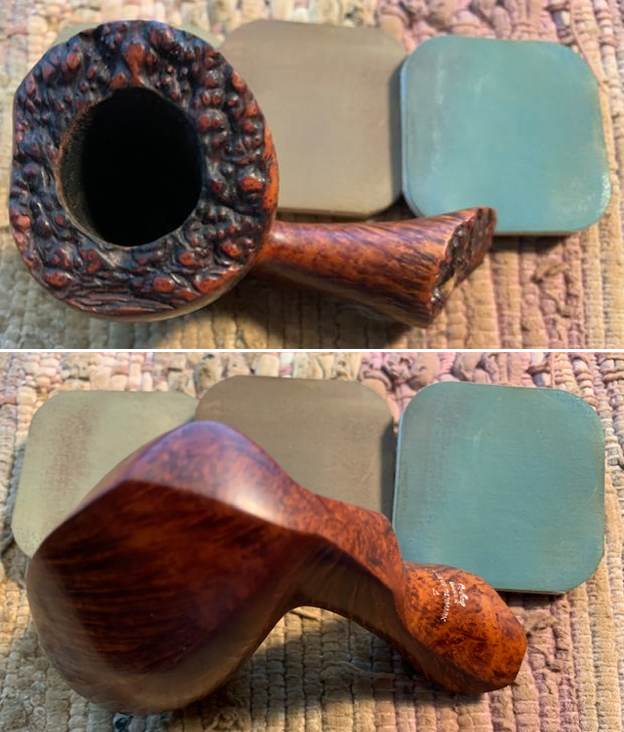
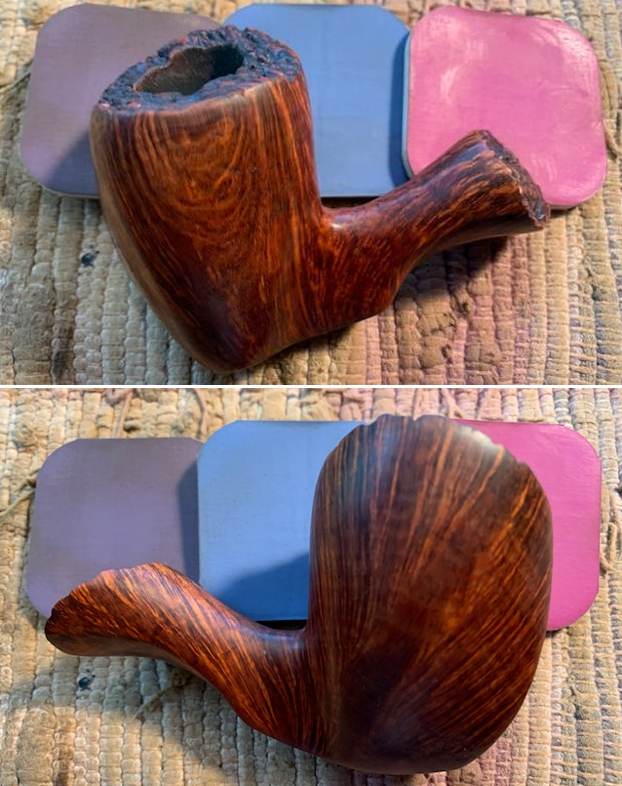
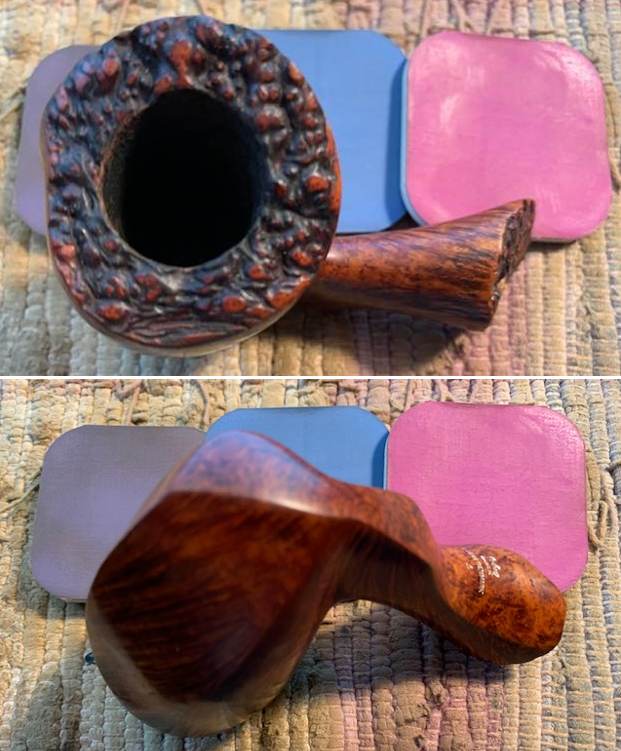
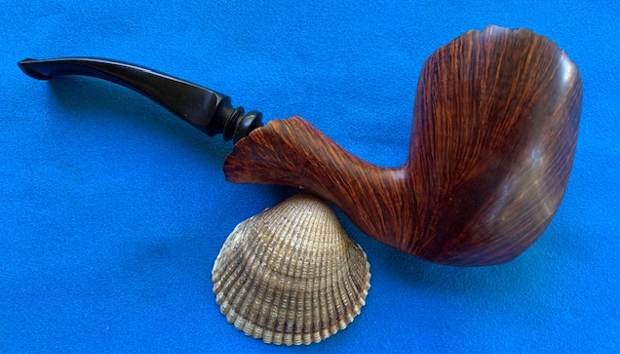
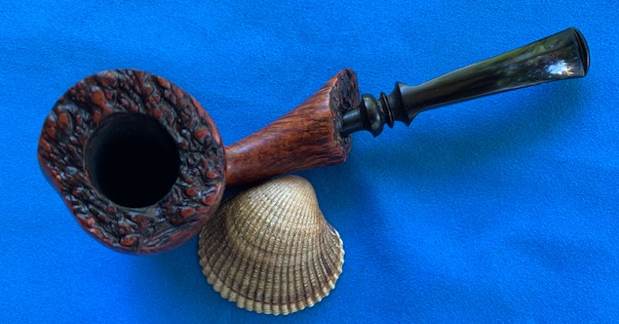
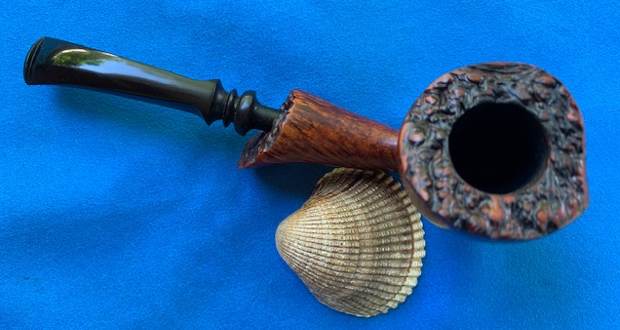
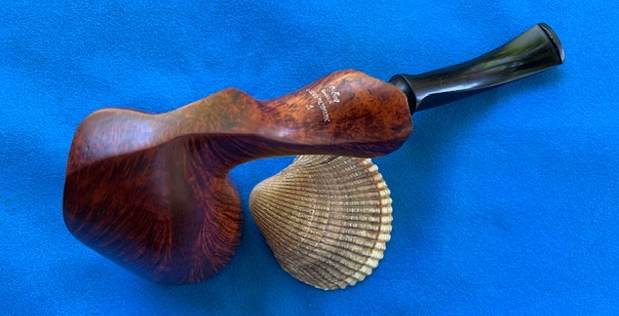
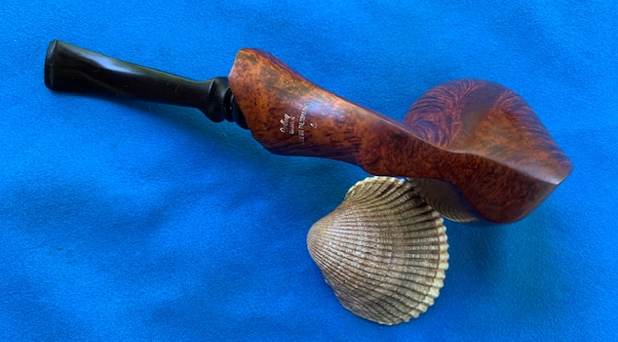
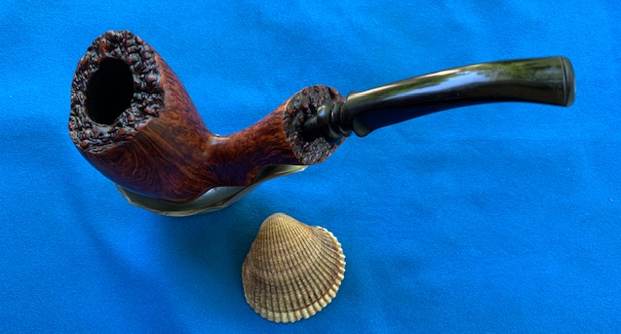
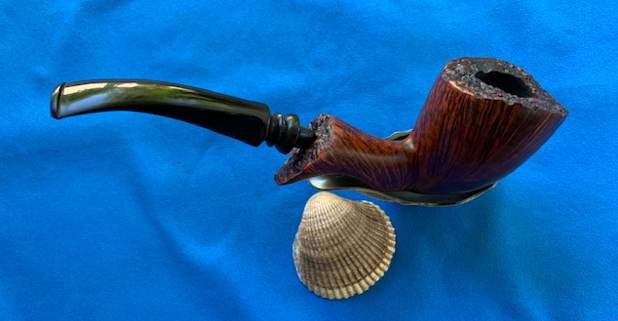
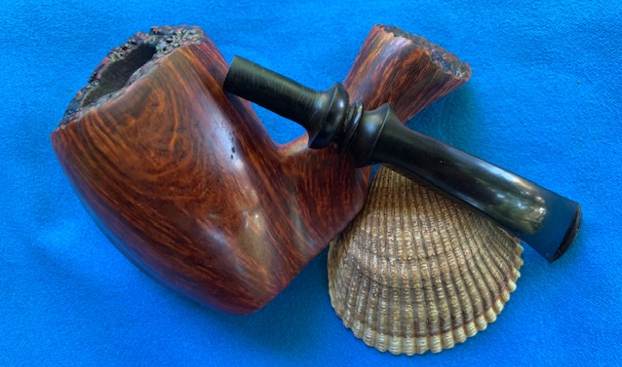
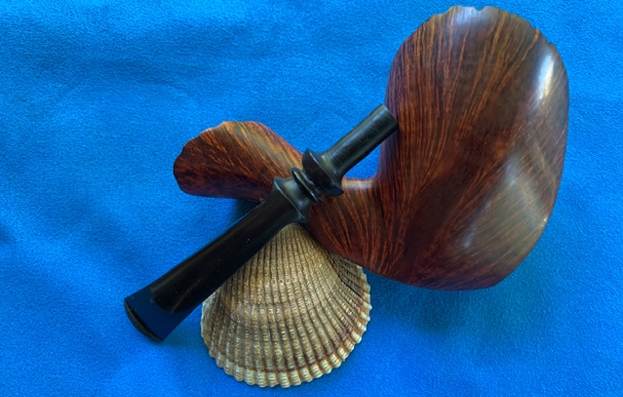
  I am excited to finish this Savinelli Extra Made in Italy 614 Bent Billiard. I put the pipe back together and buffed it with Blue Diamond on the buffing wheel. I gave the bowl and the stem multiple coats of carnauba wax. I hand buffed the pipe with a clean buffing pad to raise the shine. It is fun to see what the polished bowl looks like with beautiful straight grain all around it and the birdseye on the rim top. The polished grain on the pipe looks great with the black vulcanite stem. This smooth Savinelli Extra Billiard is great looking and the pipe feels great in my hand. It is light and well balanced. Have a look at it with the photos below. The dimensions are Length: 5 inches, Height: 1 ¾ inches, Outside diameter of the bowl: 1 ¼ inch, Chamber diameter: ¾ of an inch. The weight of the pipe is 57 grams/2.01 ounces. It turned out to be a beautiful pipe. Now that I have finished the second pipe the pipe shop brought for repair I will be giving them a call for pickup. I hope that the owner will get great enjoyment from the pair. Remember we are the next in a long line of pipe men and women who will carry on the trust of our pipes until we pass them on to the next trustee. Thanks for your time reading this blog.




 rebornpipes
