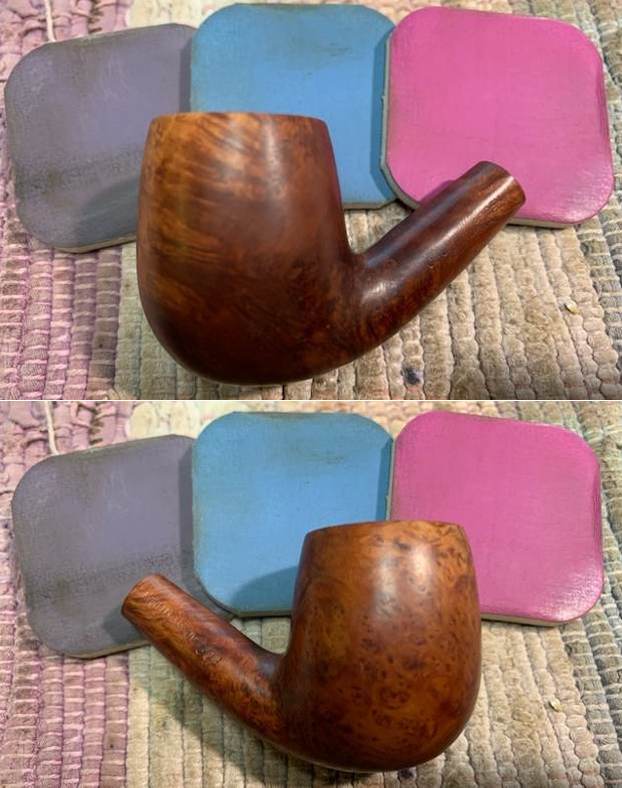
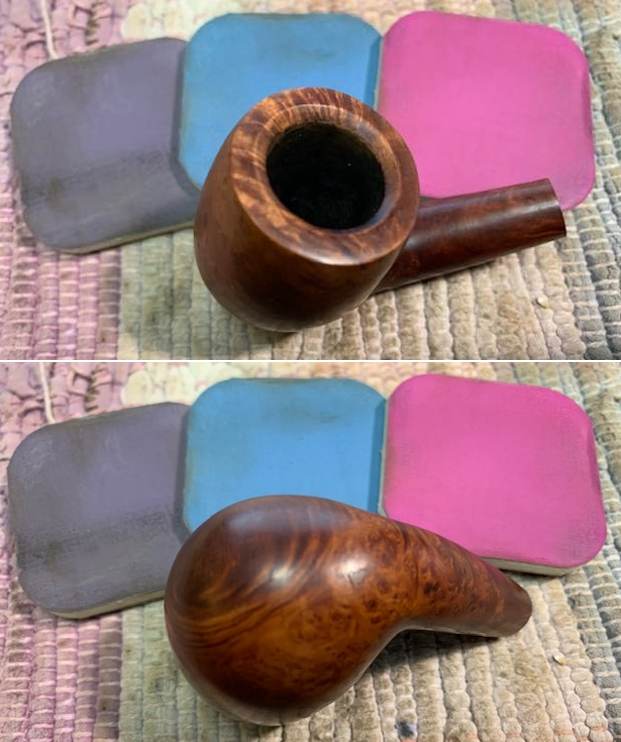
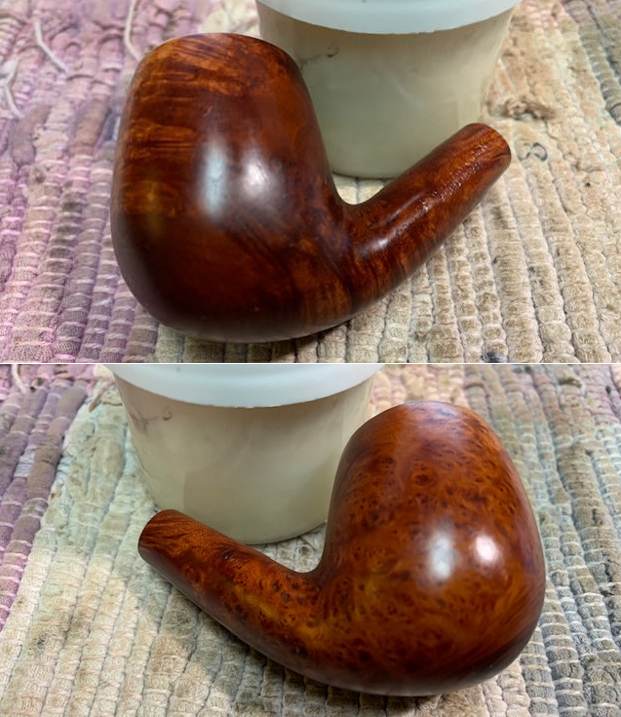
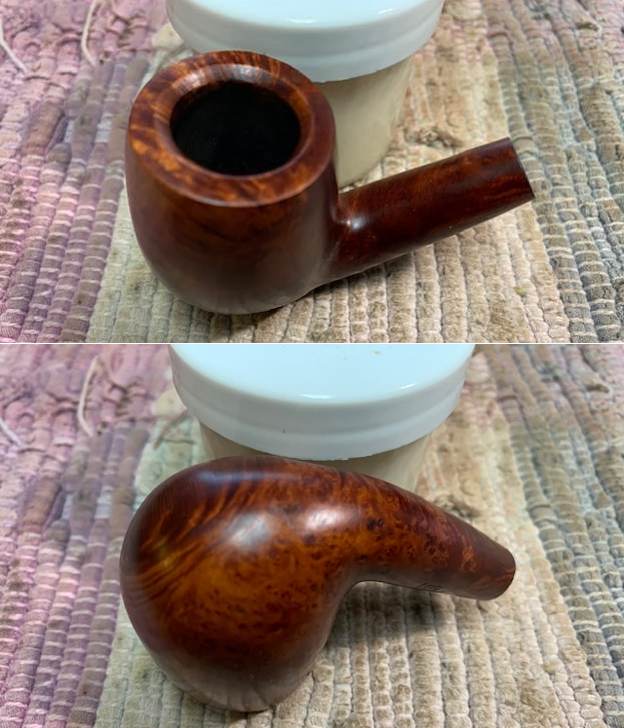
Monthly Archives: March 2022

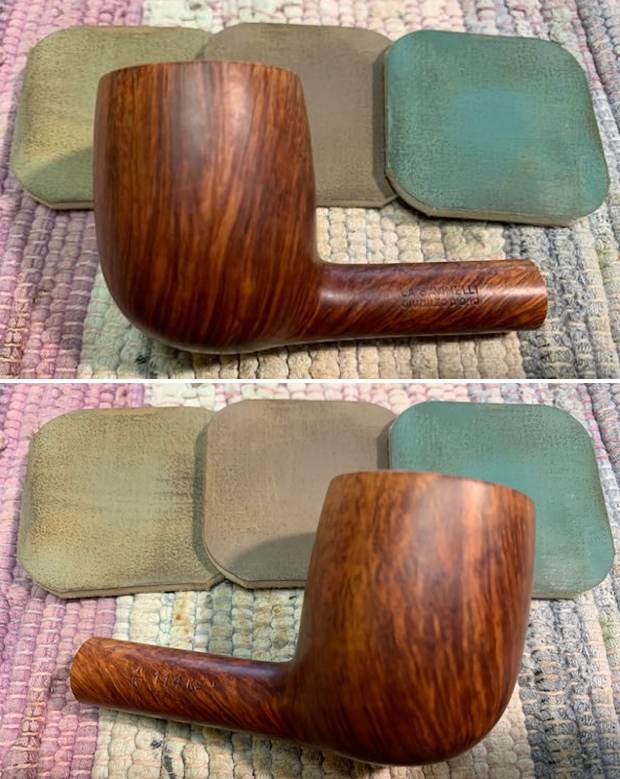
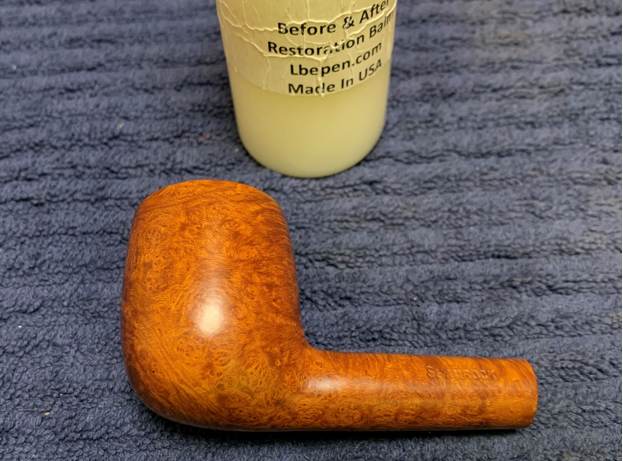
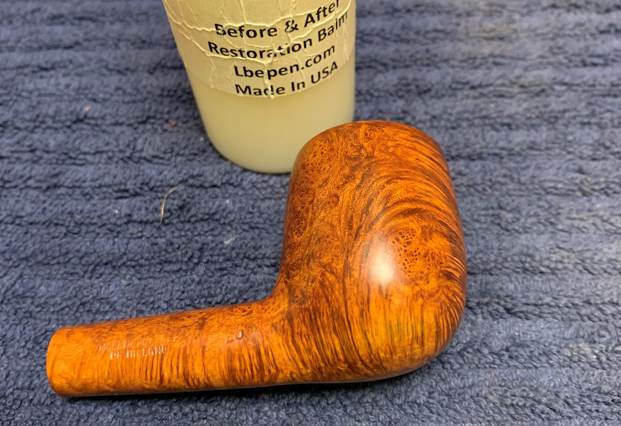
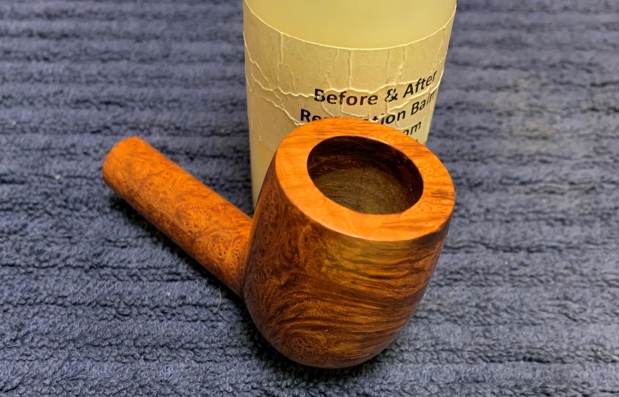
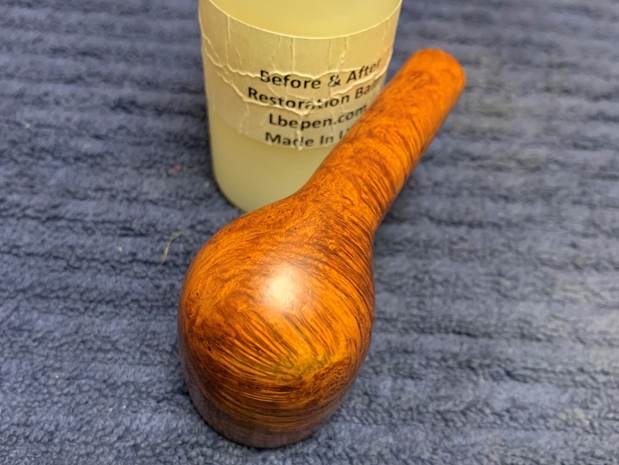
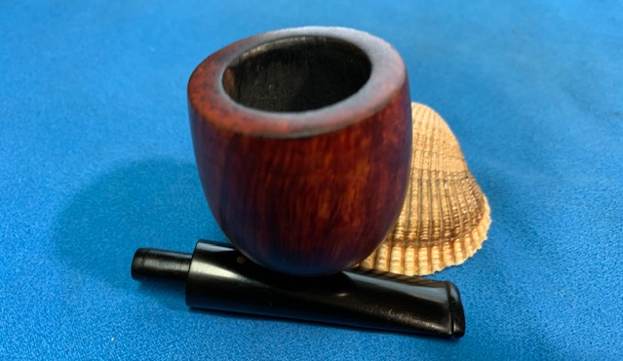
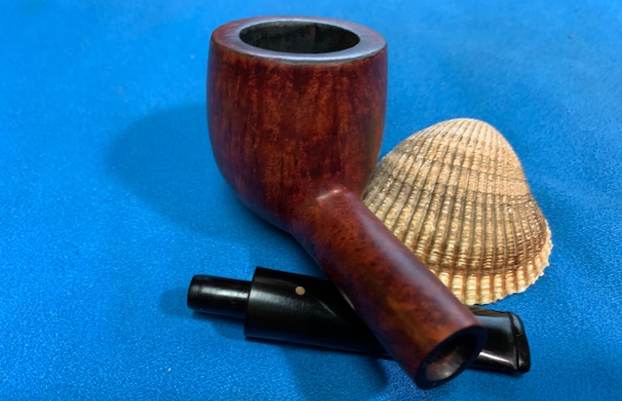
Look at the Straight Grain on this La Savinelli Giubileo D’ Oro Fiammata ** Billiard


 Blog by Steve Laug

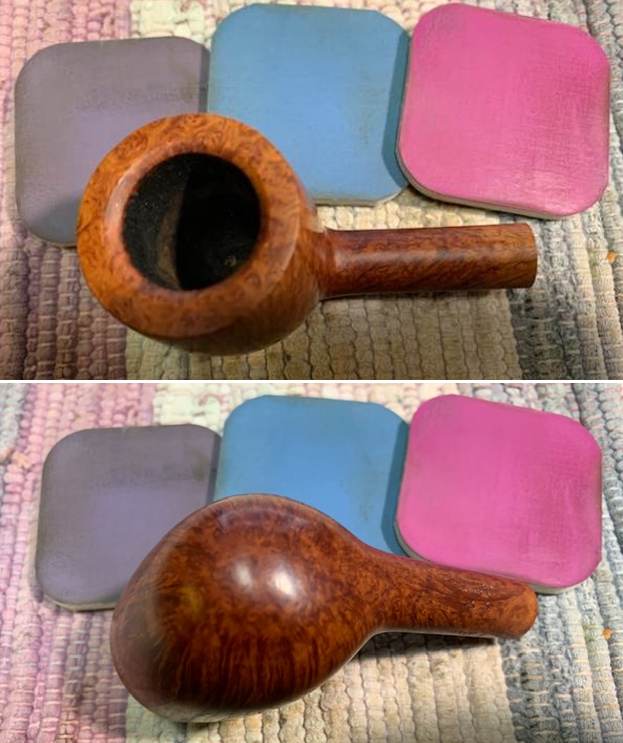
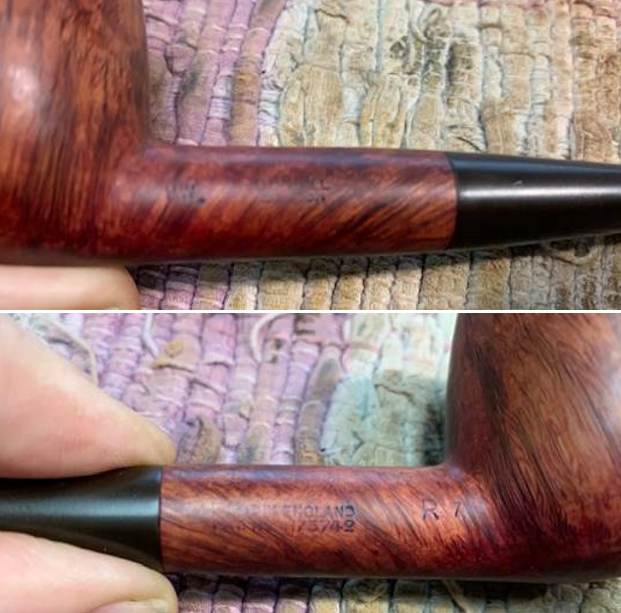
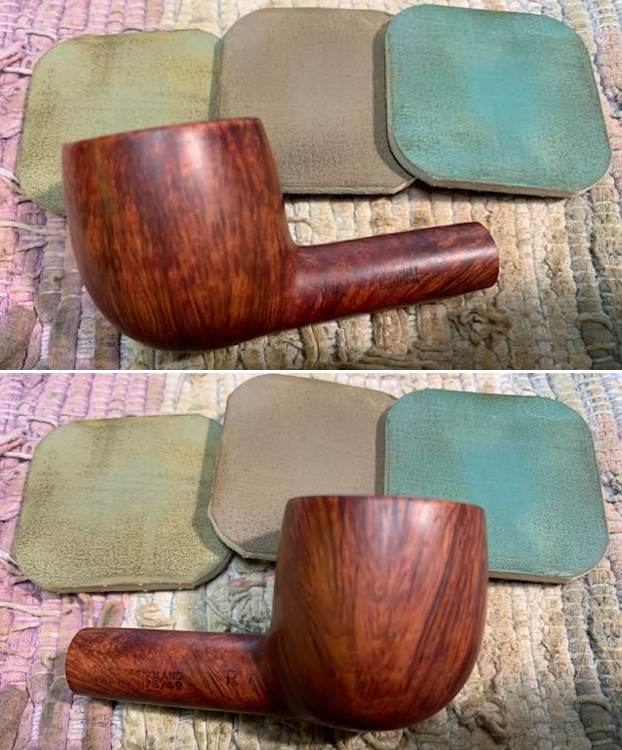
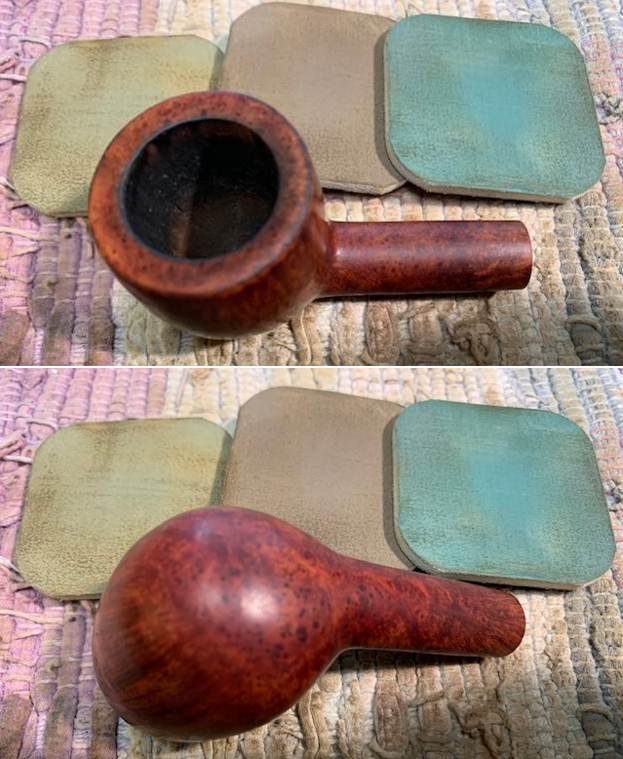
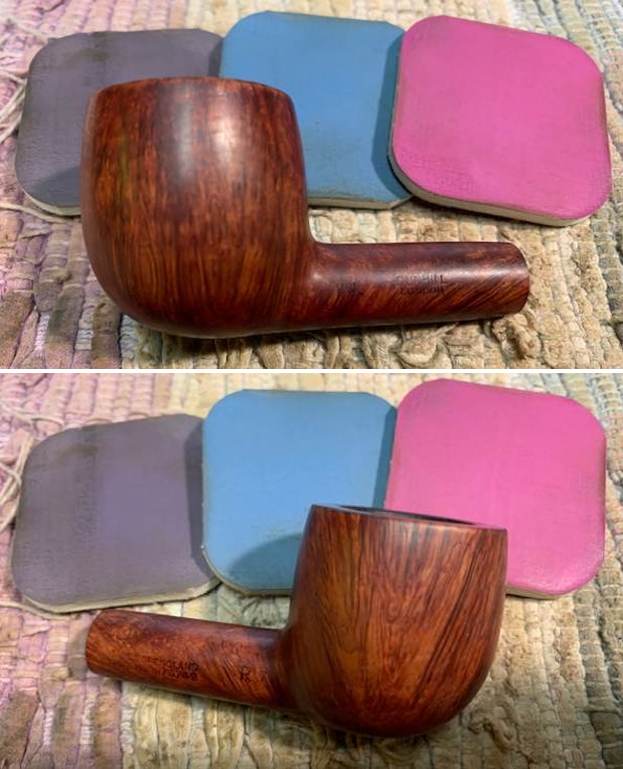
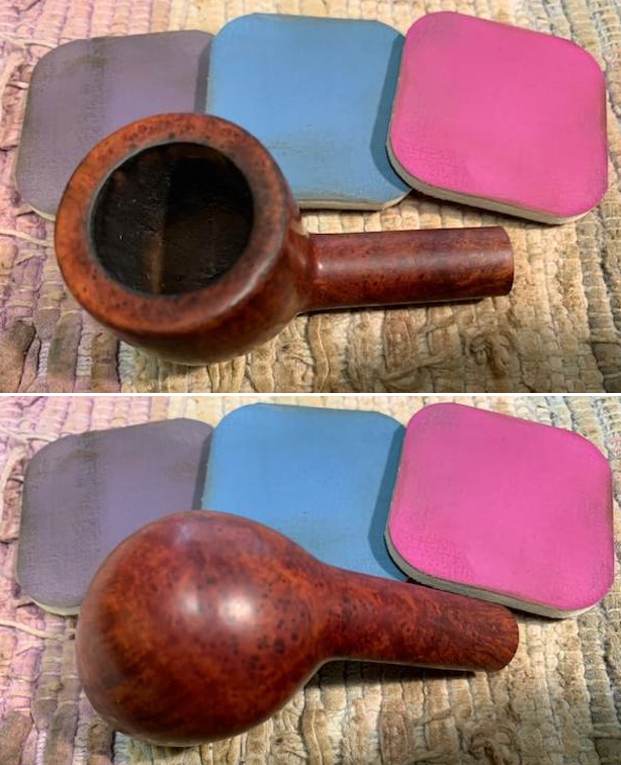
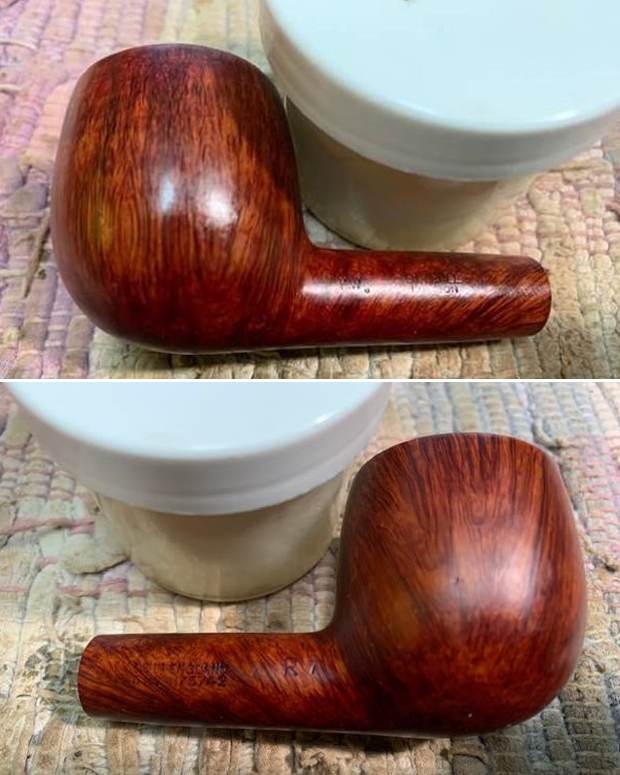
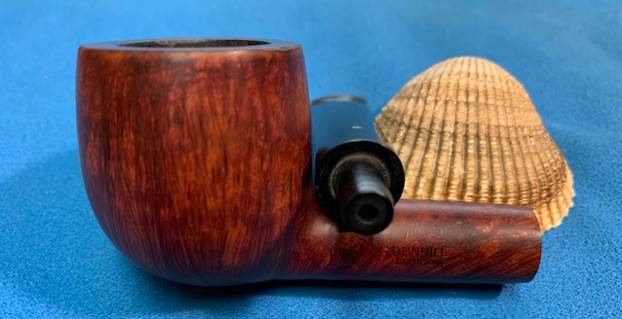
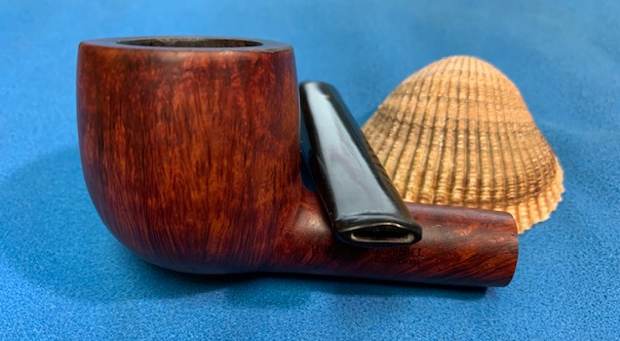
The next pipe on my work table literally called out to me from my box. The Straight Grain on the bowl just called me to pay attention. This one is stamped La Savinelli [over] Giubileo D’Oro on the left side of the shank. On the underside of the shank it is stamped Straight Grain [over] – Fiammata – [over] two stars. On the right side of the shank it is stamped with the Savinelli Shield S logo followed by the shape number 114KS [over] Italy. The saddle stem has three brass dots on the top. The briar has some nice straight and flame grain around the bowl with birdseye on the top of the bow, shank and the underside of both. This pipe was bought on December 12, 2019 from a fellow in Los Angeles, California, USA. The finish was dirty but the grain shone through well. The rim top was quite clean but there was some light lava on top and on the bevel. There is a thick cake in the bowl and some tobacco debris. The shank and stem airway was very dirty. The stem was oxidized, calcified and had light tooth chatter on both sides ahead of the button. Jeff took photos of the pipe before he started his clean up. He took photos of the rim top and bowl to show the cake in the bowl, the lava on the bevel and rim top. The stem photos show the oxidation, calcification and tooth chatter very well. Jeff took photos of the sides of the bowl to highlight the amazing straight grain that explains the Straight Grain – Fiammata stamping on this pipe. It is quite stunning even though it is dirty.He captured the stamping on the shank sides in the next photos. They are clean and readable as noted above. I have worked on at one previous La Savinelli Guibileo D’ Oro in the past that I remembered so I turned there on the blog to read the background on the brand and remind myself how to understand the stamping on the shank. Here is the link (https://rebornpipes.wordpress.com/wp-admin/post.php?post=74052&action=edit&classic-editor). I quote from the blog below rather than redo the research.

There were several things about the stamping that I was unfamiliar with so I did some searching online. I wanted to know when Savinelli stamped their pipe “La Savinelli”. I wanted to know about the “Giubileo D’ Oro” and where it fit in the hierarchy of pipes from the company. I also wanted to understand the three gold dots on the stem.

I turned first to Pipephil – http://www.pipephil.eu/logos/en/logo-savinelli2.html and there I found the first helpful information. Some of my questions were answered in the notes on the page.

  • The “LA” article precedes the “SAVINELLI” stamping on all pipes from the Giubileo d’Oro line.
  • 4 digit shape number means The pipe predates the 1970’s. This new one does not have the four digit number but a three digit 114KS stamp
  • Additional 2 stars indicating the grade (from 1 to 3 stars)

I then turned to the Pipedia article to see if I could learn more about the pipe

( https://pipedia.org/wiki/Savinelli). I have included to pages from Brochures that give some interesting information about the brand. It seems that Golden Jubilee pipe is made from very rare briar burls from Sardinia. Due to the limited raw materials available the pipe can only be produced in small quantities. Each pipe originally came with a certificate of authenticity. Sadly this was missing with the pipe I am working on.

Guibileo D’Oro Brochure Page, courtesy Doug Valitchka

Guibileo D’Oro Brochure Page, courtesy Doug Valitchka

I also did a websearch of Savinelli’s 50th Anniversary and was immediately given a link to their site (https://www.savinelli.it/rw2_en/catalog/product/view/id/15909/s/giubileo-oro-prime-0005?__from_store=rw2_en). They describe the line as follows:

The significance of ‘Golden Jubilee’ is to commemorate the “50th anniversary”; it defines the rarity of these pipes. Only 0.1% of our total production has the quality to be worthy of this unique series. Nature gives us this rare jewel of a pipe as an unparalleled and exceptional combination of perfect raw material and outstanding grain. The selection process is passed on only by word of mouth and is determined by the experience and high quality standards of Savinelli, a guarantee of reliability and elegant style.

Putting all of that together I learned that the pipe was a 50th Anniversary Commemorative and part of a limited production “Golden Jubilee” series. That would make it a mid 70s pipe rather than what Pipephil noted above. It is selected for its special and unique grain and handpicked for a shape to highlight the grain. The entire line was stamped with the La Savinelli marking. It is a unique piece of history. Now to get to work on it!

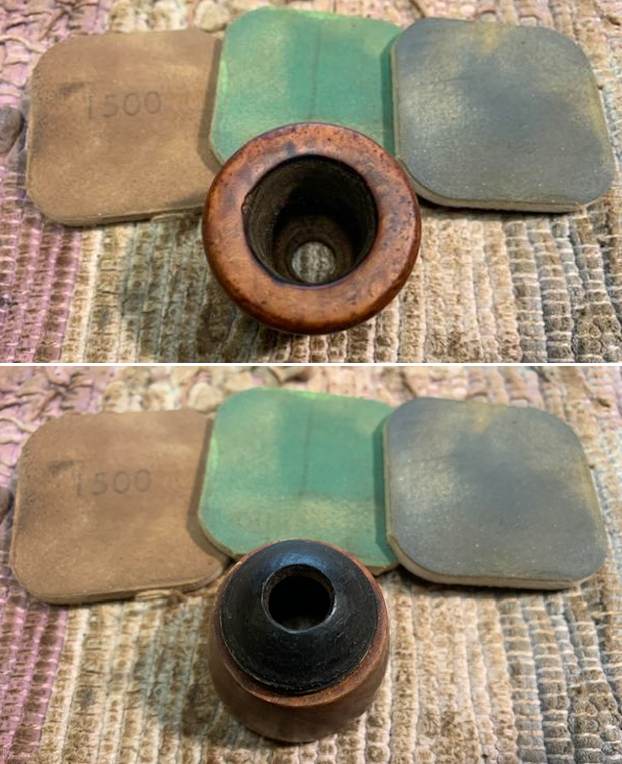
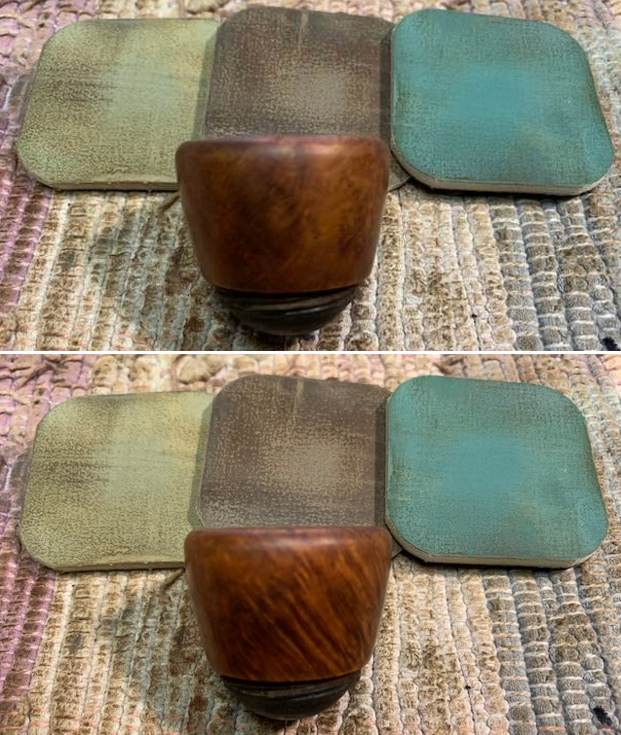
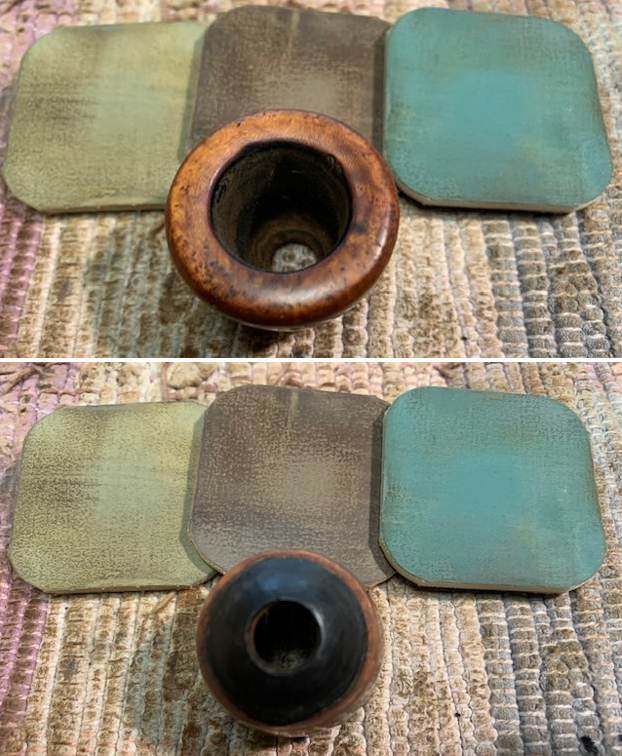
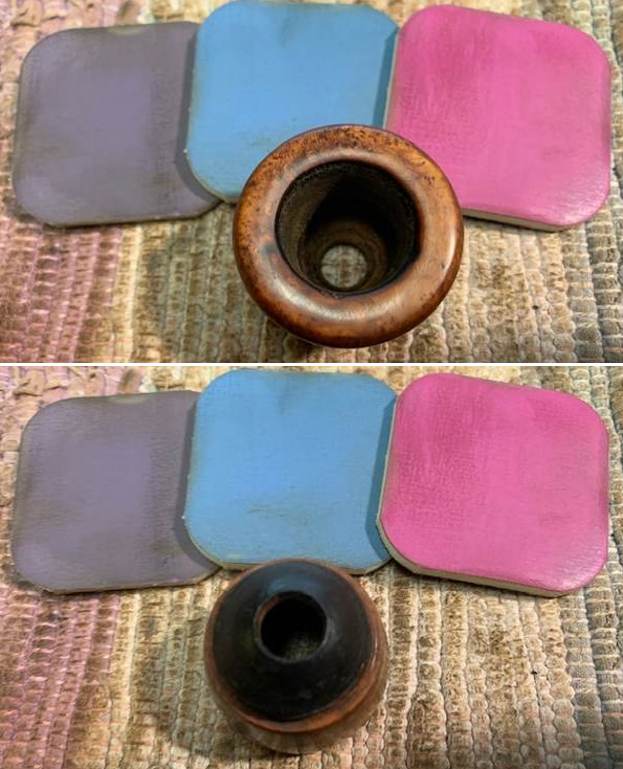
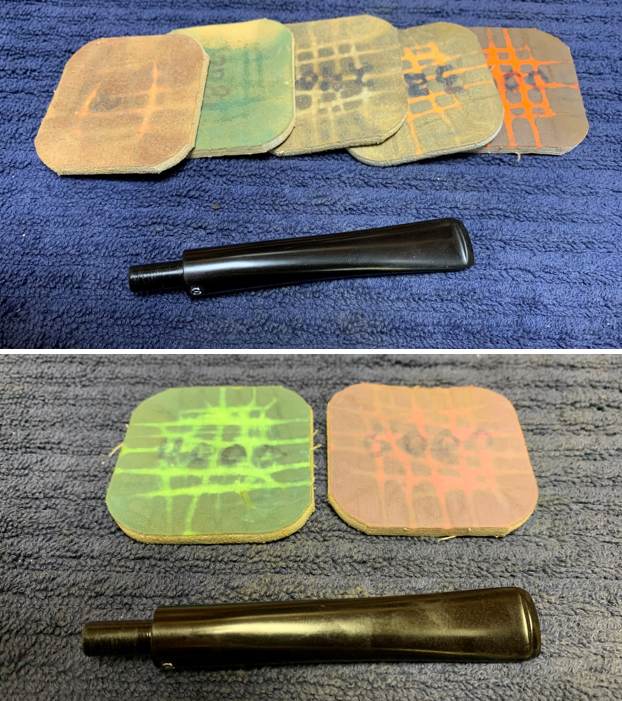
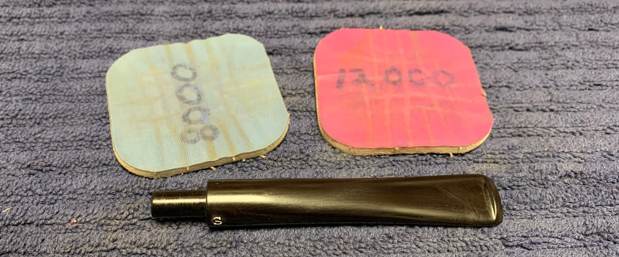
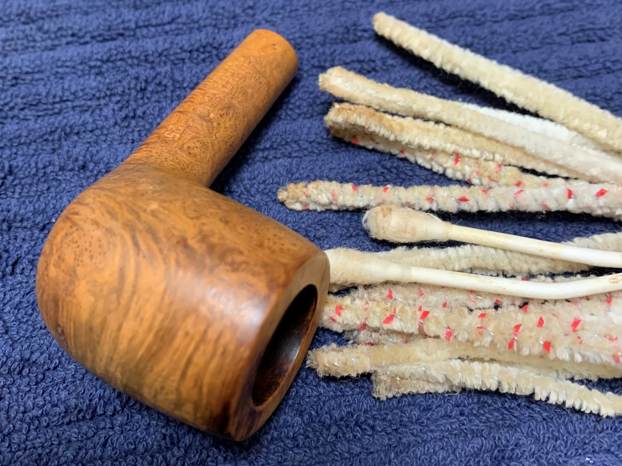
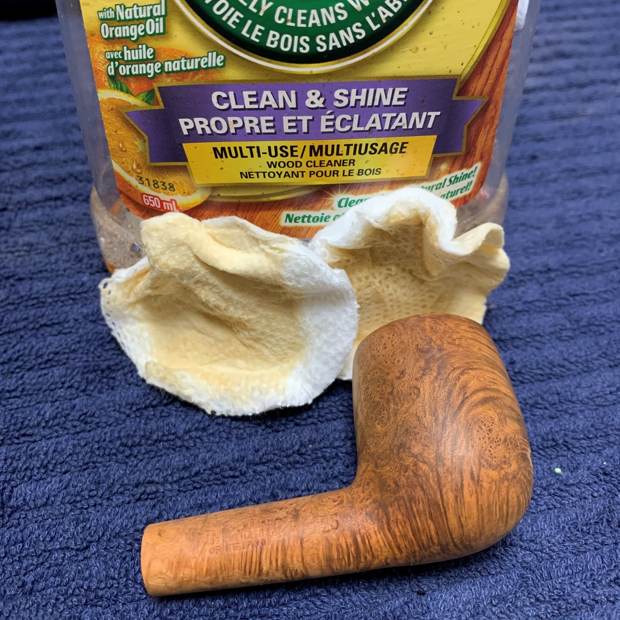
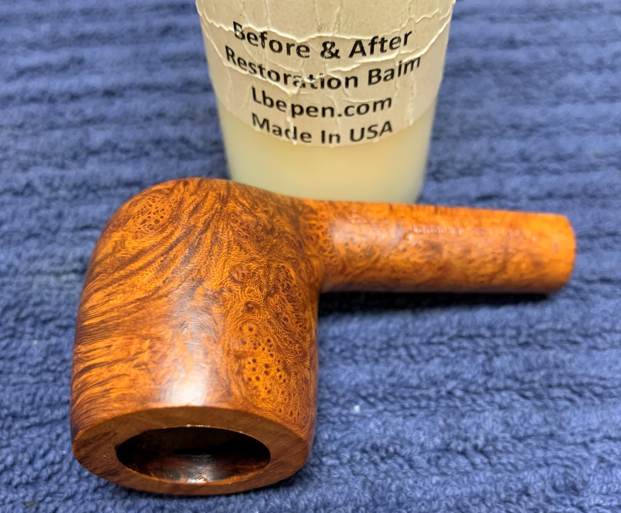
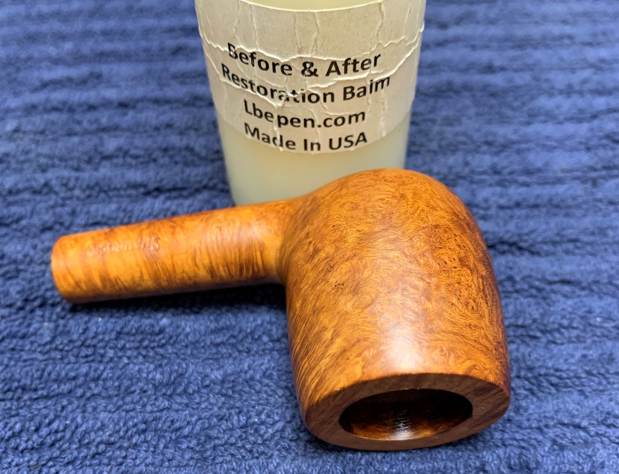
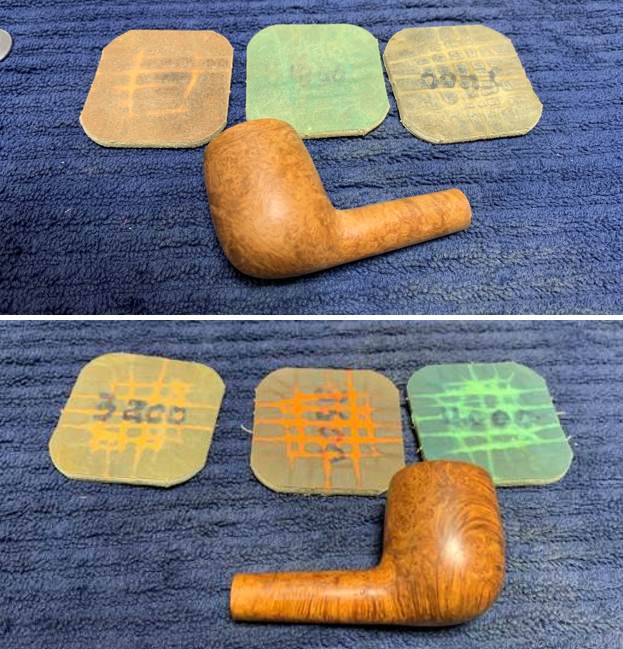
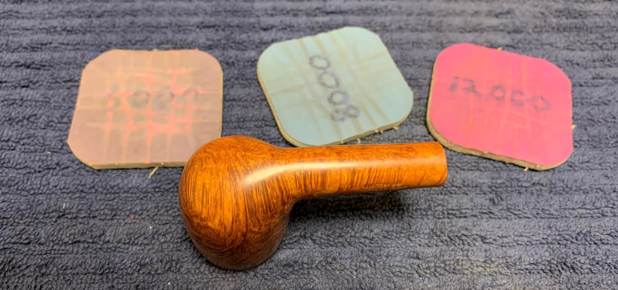
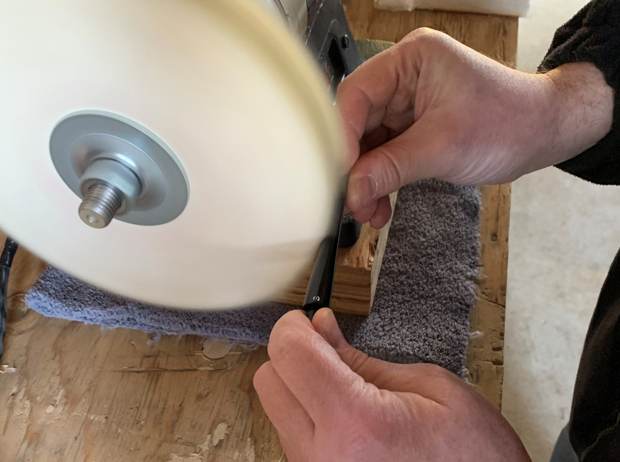
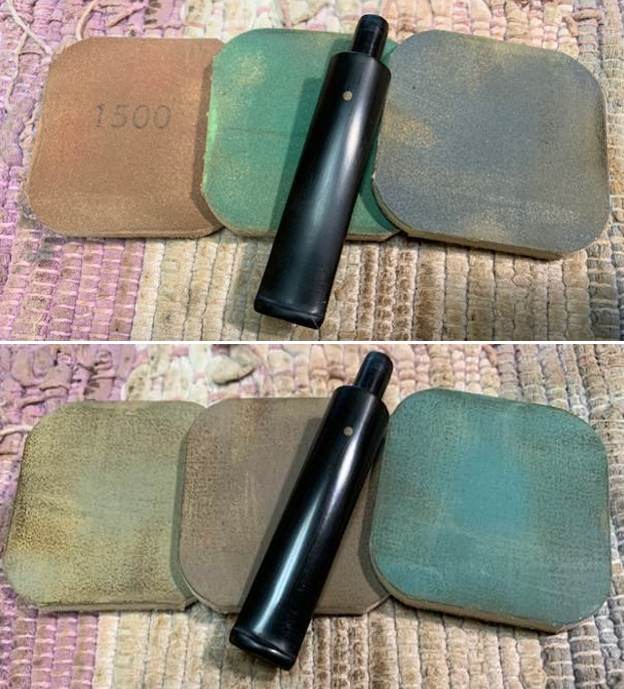
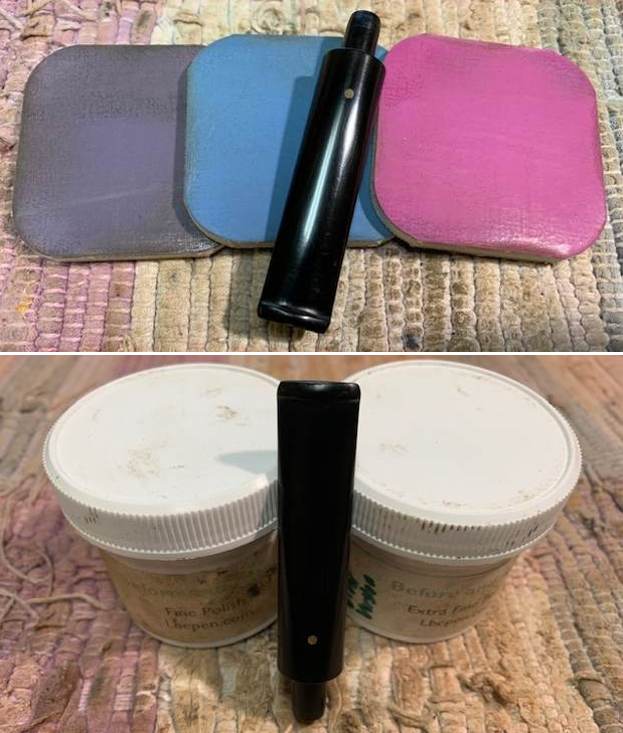
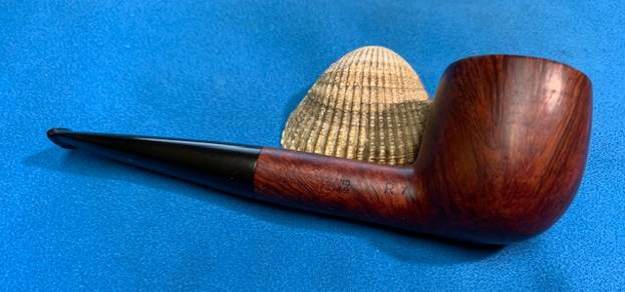
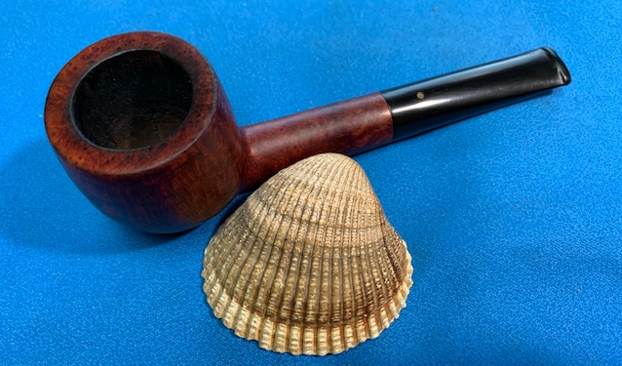
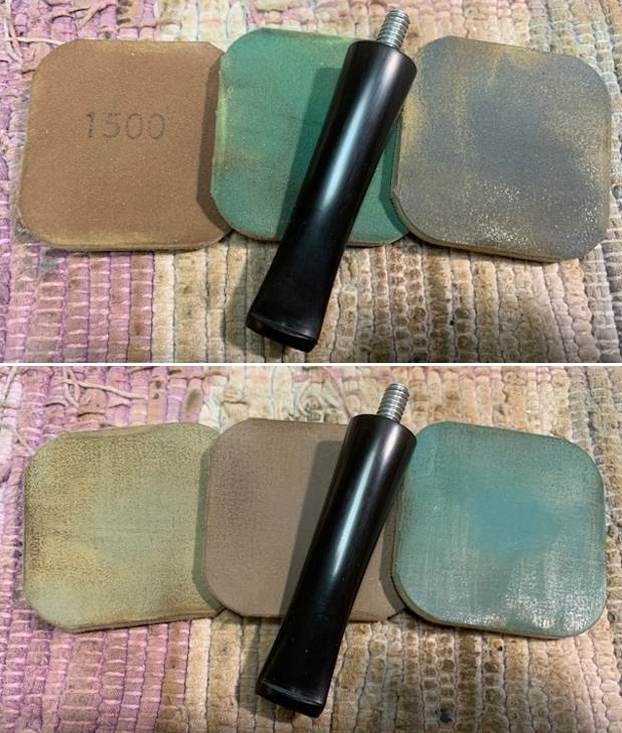
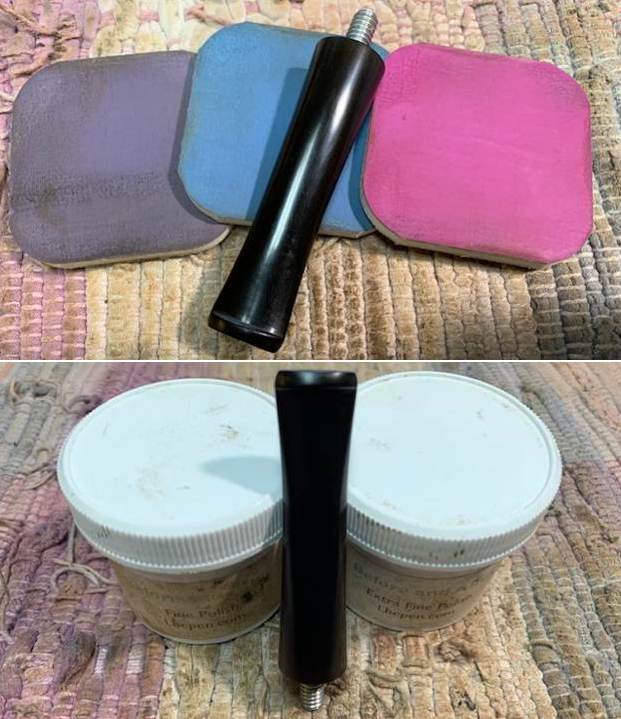
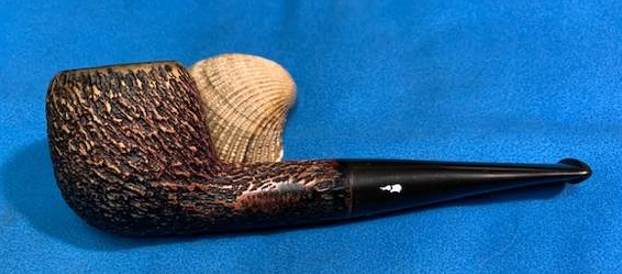
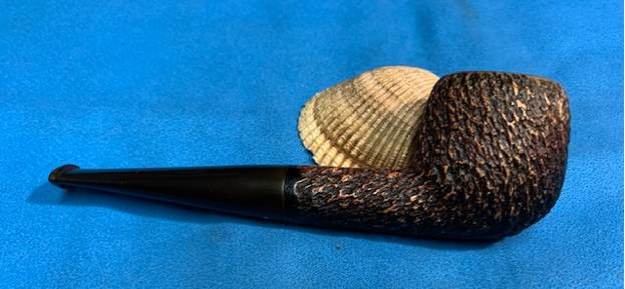
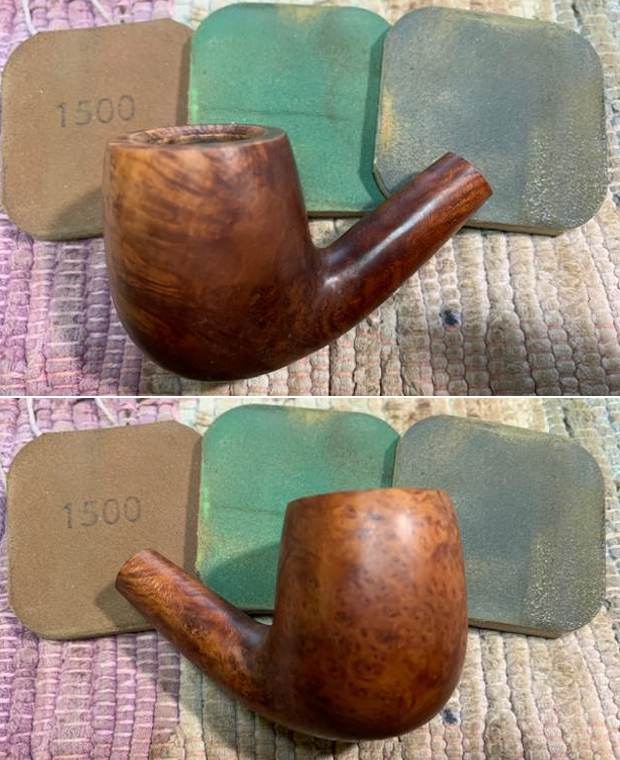
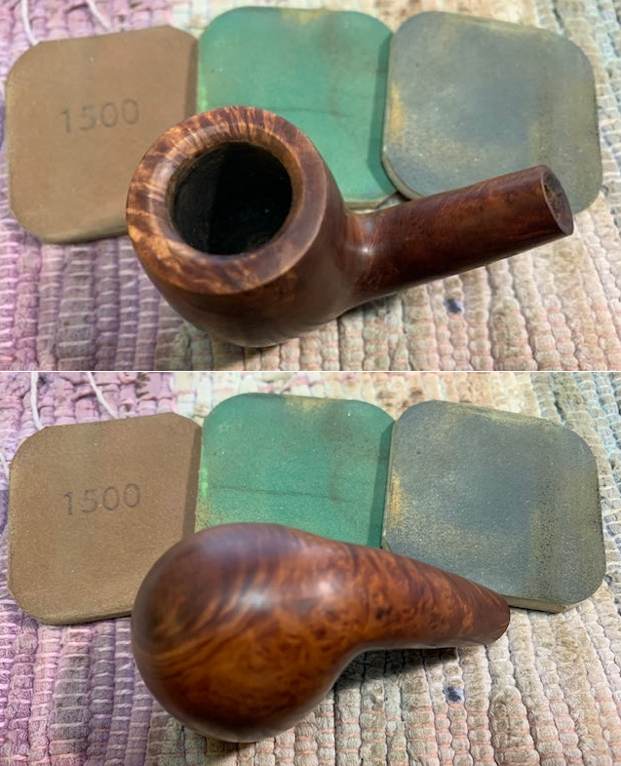
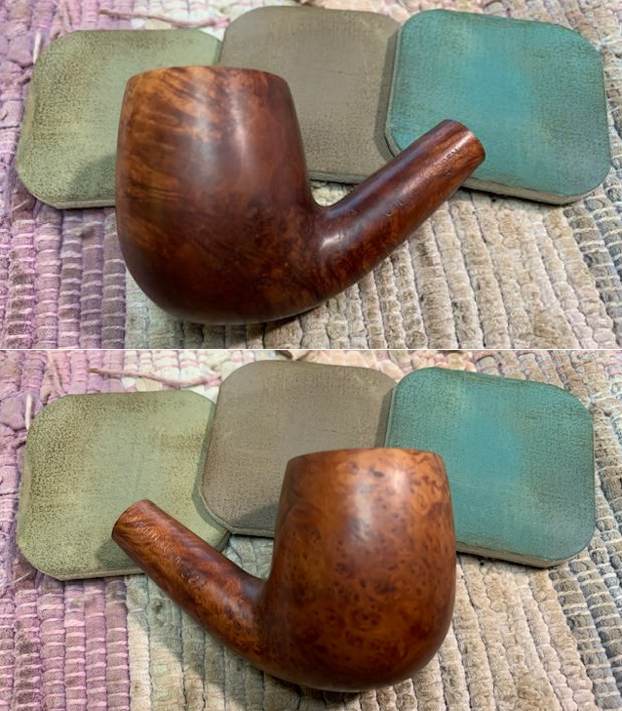
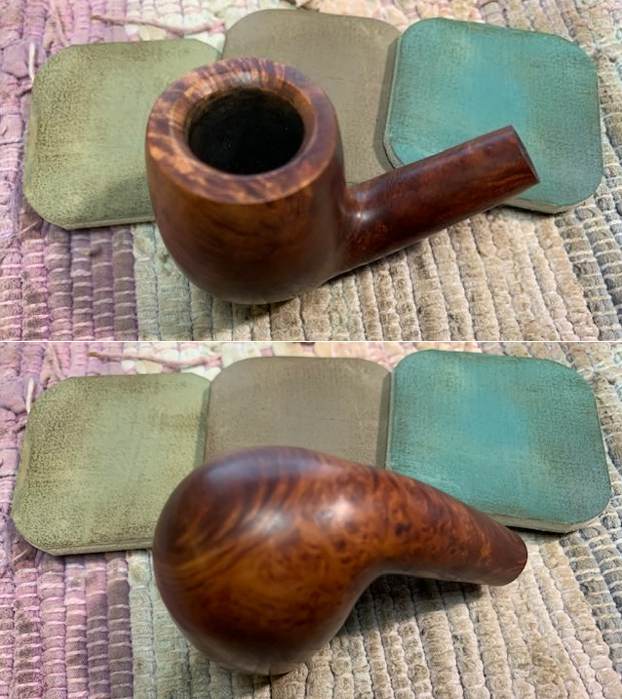
Jeff cleaned up the pipes with his usual thoroughness – reaming the bowl with a PipNet pipe reamer and cleaning up the reaming with a Savinelli Fitsall Pipe Knife. He scrubbed the internals of the shank and the stem with alcohol, cotton swabs and pipe cleaners. He scrubbed the exterior with Murphy’s Oil Soap to clean off the dust and grime on the finish. When he sent it the pipe was ready to restore. I could not believe how good the rim top looked in comparison to what it was when he started. I took photos of the pipe when I unpacked it. The briar was clean and the grain quite stunning. The finish looked dull and lifeless. I took a close up photo of the bowl and rim top after Jeff had cleaned it up. The look of the rim top and edges is very good. He had been able to remove the cake and the lava very well. The bowl was spotless. The stem is also shown and was very clean but lightly oxidized. He had scrubbed it with Soft Scrub and then soaked it in Mark’s Before & After Deoxidizer. There was light tooth chatter still remaining.I took some photos of the stamping on the shank sides. The first photo shows the La Savinelli [over] Giubileo D’ Oro stamp on the left side. The second shows the shape number 114KS and the Savinelli Logo and the Italy stamp on the right side. The third shows the Straight Grain [over] –Fiammata- [over] two stars stamping on the underside of the shank. The final photo shows the three brass dots on the top of the saddle stem. I removed the stem from the shank and took a photo to show the beauty of this pipe. The grain really is stunning.I polished the briar with micromesh sanding pads – dry sanding (carefully avoiding the stamping on the shank sides) with 1500-12000 grit pads. I wiped the bowl down with a damp cloth between each pad. The grain to take on a shine. I rubbed the briar down with Before & After Restoration Balm. I worked it into the briar with my fingertips and let it do its magic. The product cleans, enlivens and preserves the briar. I let it sit for 10 minutes and then buffed it off with a cotton cloth. The bowl really is looking good at this point. I set the bowl aside and turned my attention to the stem. I scrubbed it with Soft Scrub cleanser to remove the residual oxidation that remained on the surface of both sides. I find that when I let the pipe sit a long time before getting to it this light oxidation almost always happens.I polished the stem with micromesh sanding pads – dry sanding with 1500-12000 grit pads. I wiped the stem down after each pad with a cloth impregnated with Obsidian Oil. I polished it with Before & After Stem Polish – both Fine and Extra Fine then gave it a final coat of Obsidian Oil and set it aside to dry. This incredibly beautiful La Savinelli Giubileo D’ Oro Straight Grain –Fiammata- 2 Stars Billiard (114) is an amazing looking pipe. It is a 50th Anniversary Commemorative and part of a limited production “Golden Jubilee” series. That would make it a mid 70s made of briar that was specially selected because of the spectacular grain. I put the stem on the shank and buffed the pipe with Blue Diamond on the wheel (being careful of the stamping so as not to damage that). I gave the bowl and stem multiple coats of carnauba wax and buffed the pipe with a clean buffing pad to raise the shine. I hand buffed it with a microfiber cloth to deepen the shine. The dimensions of this pipe are – Length: 5 ¾ inches, Height: 1 ¾ inches, Outside diameter of the bowl: 1 ½ inches, Chamber diameter: ¾ of an inch. The weight of the pipe is 1.55 ounces/44 grams. It is really a gorgeous pipe and one that will reside in my own collection for now while I figure out if I want to hang on to it. I look forward to enjoying it soon.

Selling off a couple of my Falcons


Blog by Steve Laug

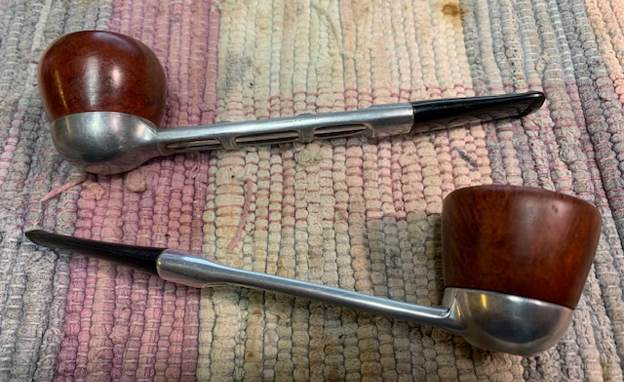
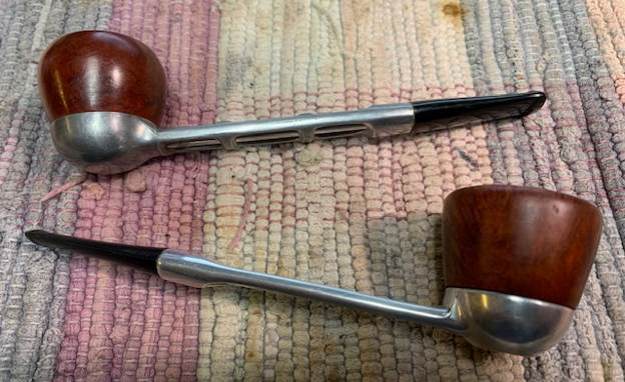
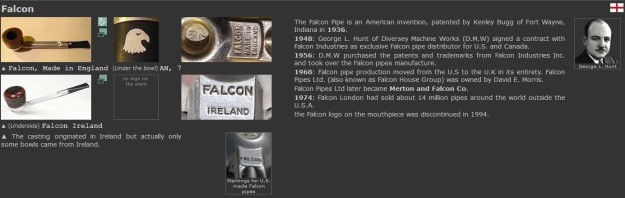
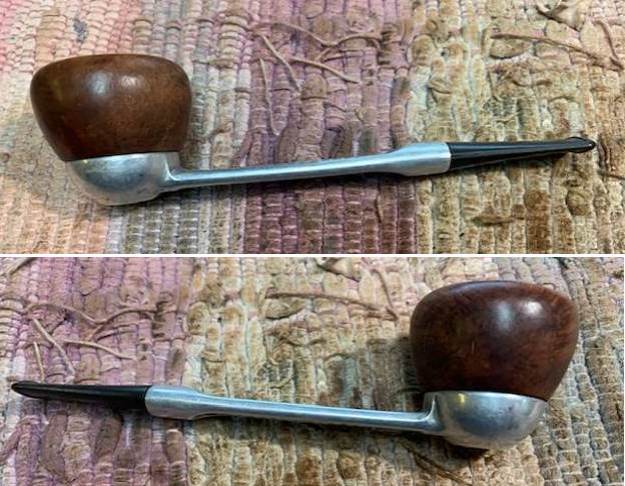
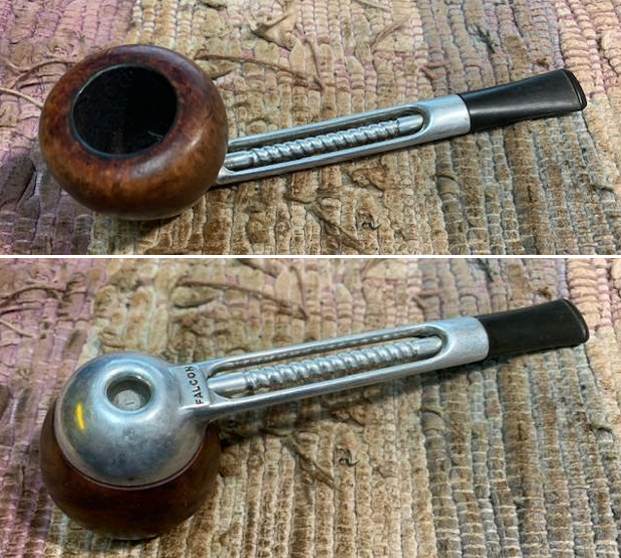
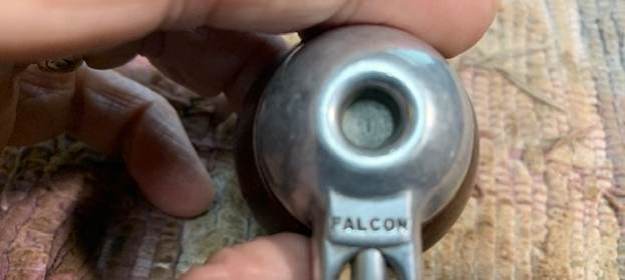
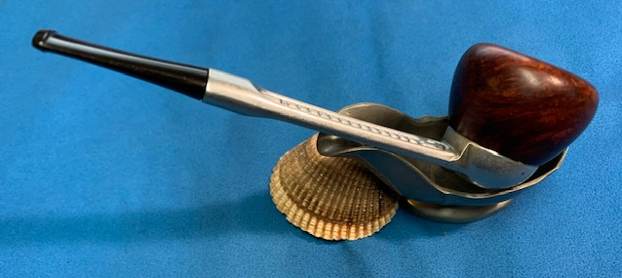
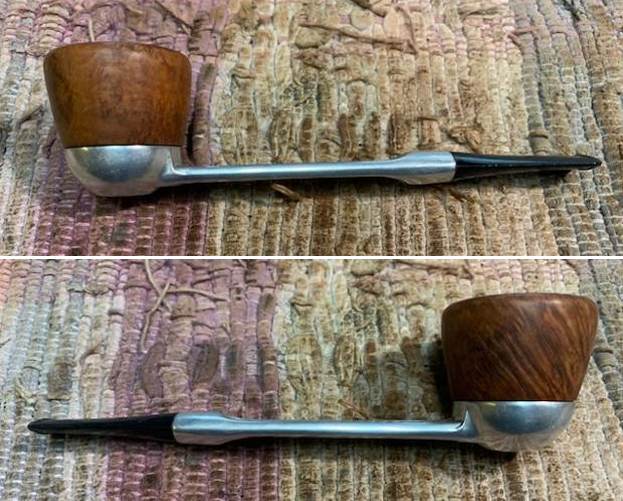
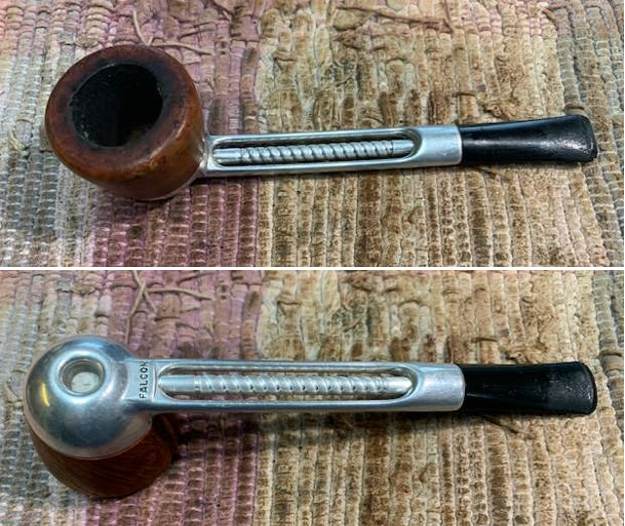
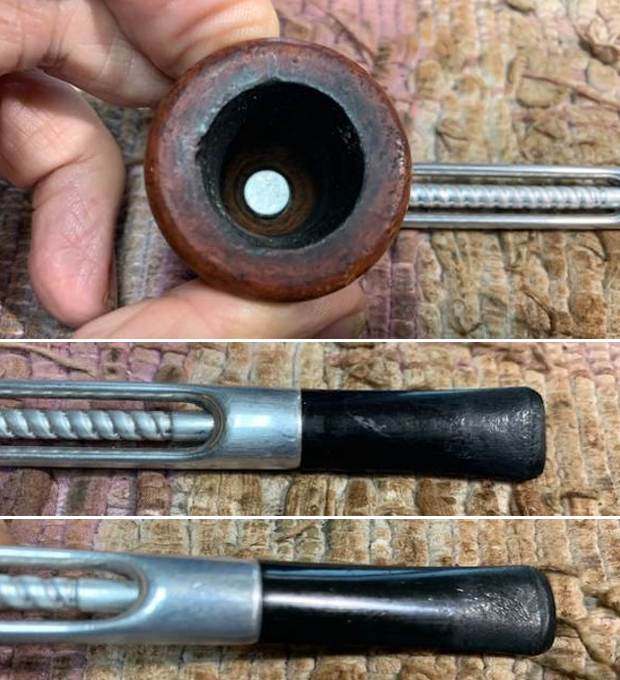
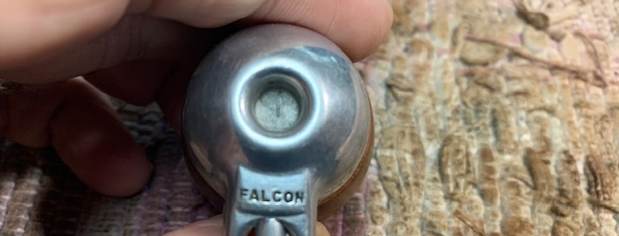
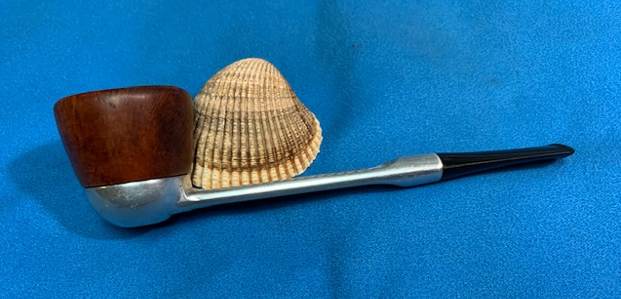
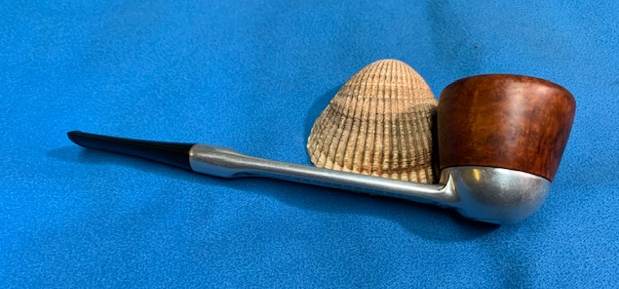
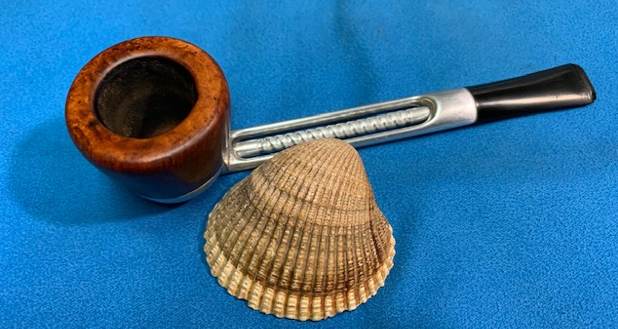
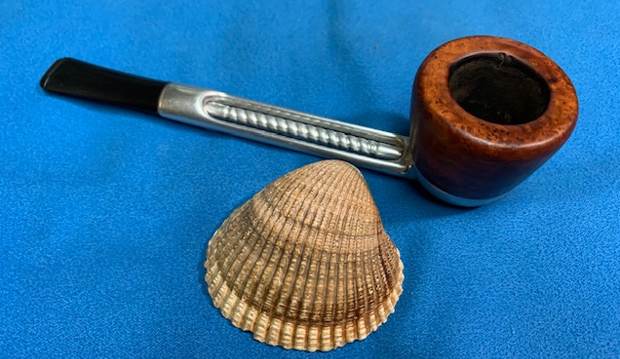
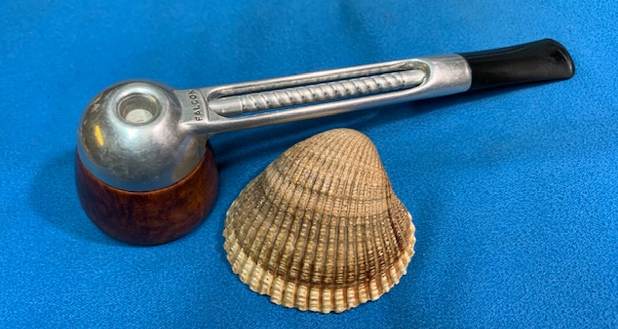
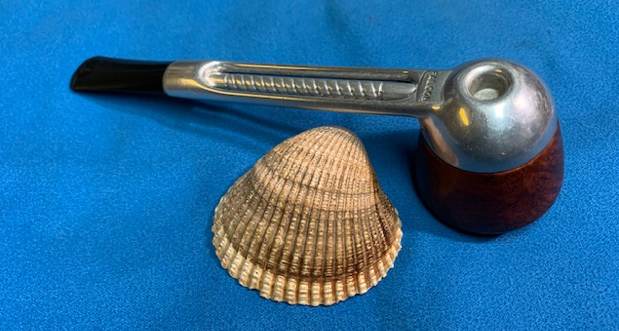
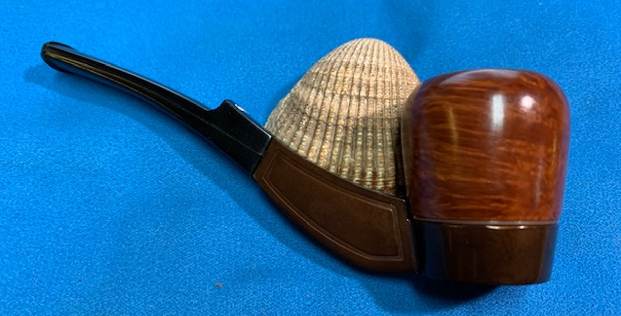
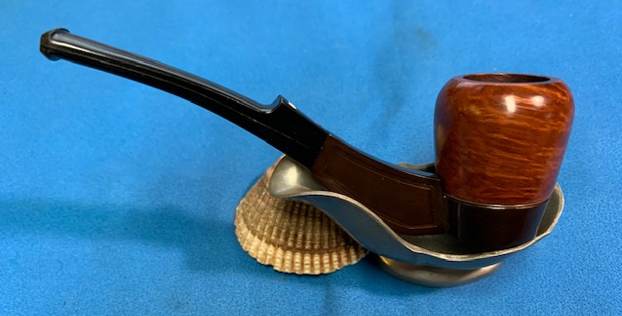
I have been slowly (and I mean really slowly) going through some of the pipes in my own collection and selling them. I have quite a few Falcons and to be honest I just do not smoke them enough to warrant keeping so many. The next pipes on my work table to clean up are two of these Falcons. Both of them are American made Falcons rather than British made ones. They have a smooth bowls. The bases have the number 1 in the indentation on the heel of the base. Both are stamped FALCON. The aluminum is in need of a good polish as are the bowls. The stems have some light tooth chatter. But overall they are in excellent condition.Before I started refreshing each of the pipes I decided to have a look at Pipephil to remind myself about he history of the brand (http://www.pipephil.eu/logos/en/logo-f1.html). I have included a screen capture of the information on the site below.I also include the brief sidebar history from the site below:

The Falcon Pipe is an American invention, patented by Kenley Bugg of Fort Wayne, Indiana in 1936.

1948: George L. Hunt of Diversey Machine Works (D.M.W) signed a contract with Falcon Industries as exclusive Falcon pipe distributor for U.S. and Canada.

1956: D.M.W purchased the patents and trademarks from Falcon Industries Inc. and took over the Falcon pipes manufacture.

1968: Falcon pipe production moved from the U.S to the U.K in its entirety. Falcon Pipes Ltd. (also known as Falcon House Group) was owned by David E. Morris.

Falcon Pipes Ltd later became Merton and Falcon Co.

1974: Falcon London had sold about 14 million pipes around the world outside the U.S.A.

The Falcon logo on the mouthpiece was discontinued in 1994.

There was also interesting information the particular stamping on the base of this pipe. It has the stamping that identifies it as an American made Falcon. Now I had the basic background information on the two pipes. I knew that the pipes were made after 1948 and prior to the move of production to the UK in 1968. So needless to say both are older American made pipes.

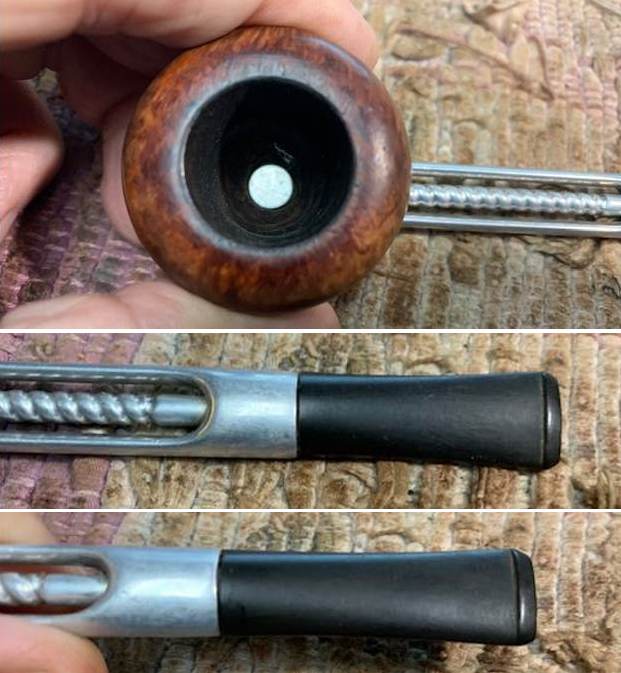
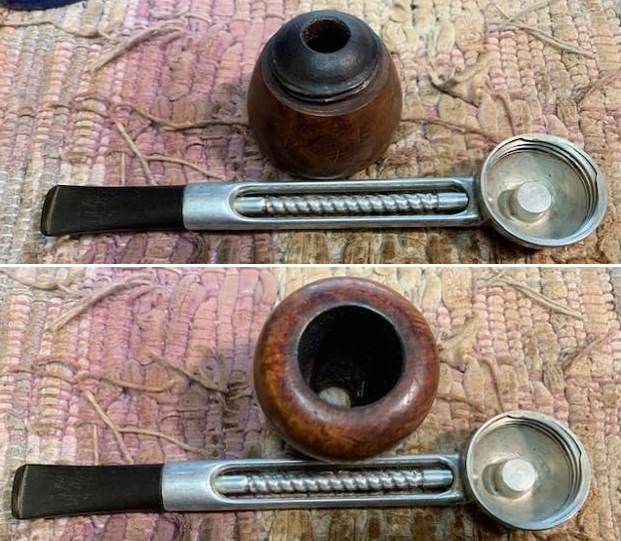
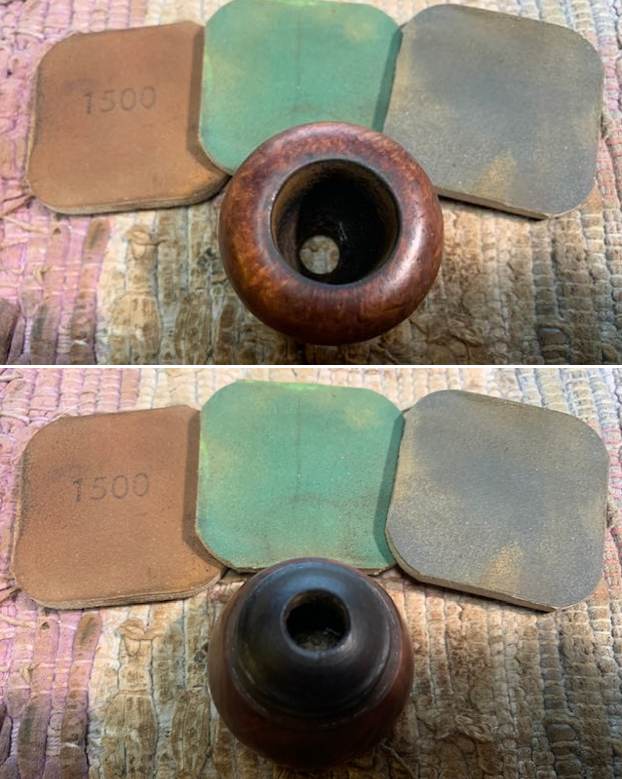
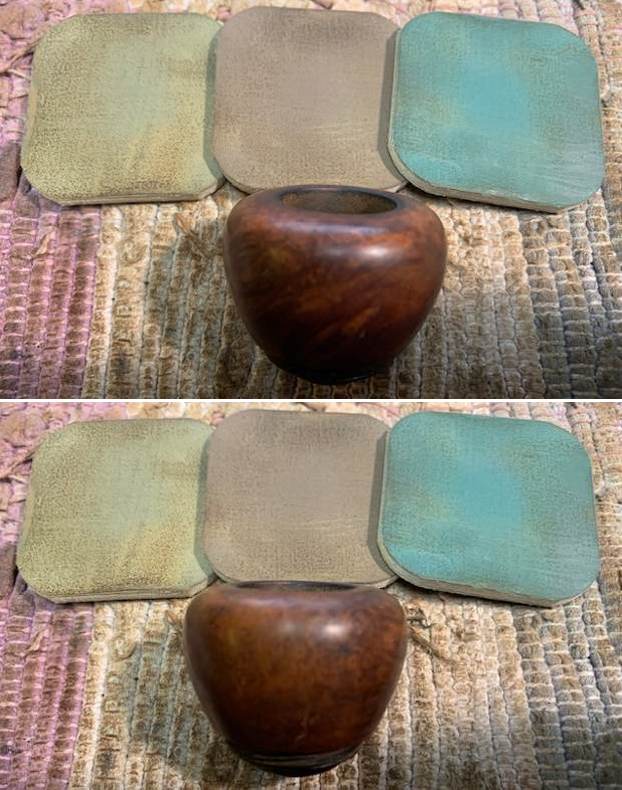
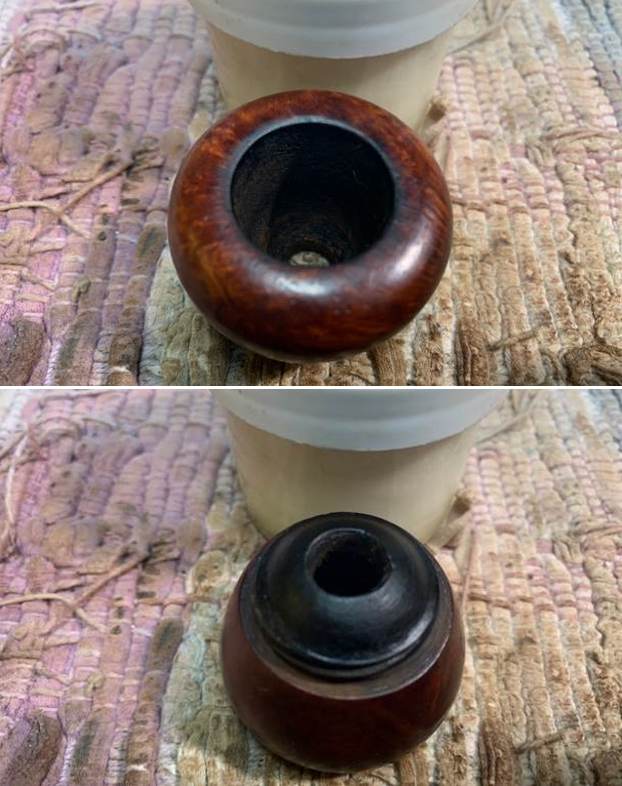
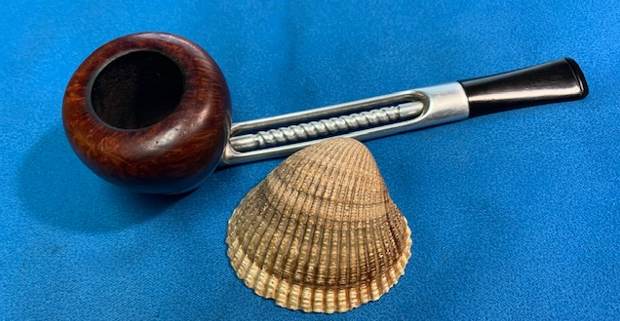
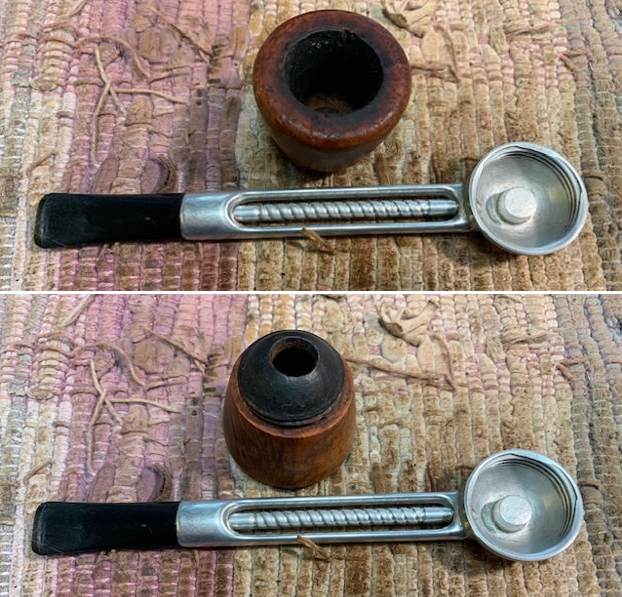
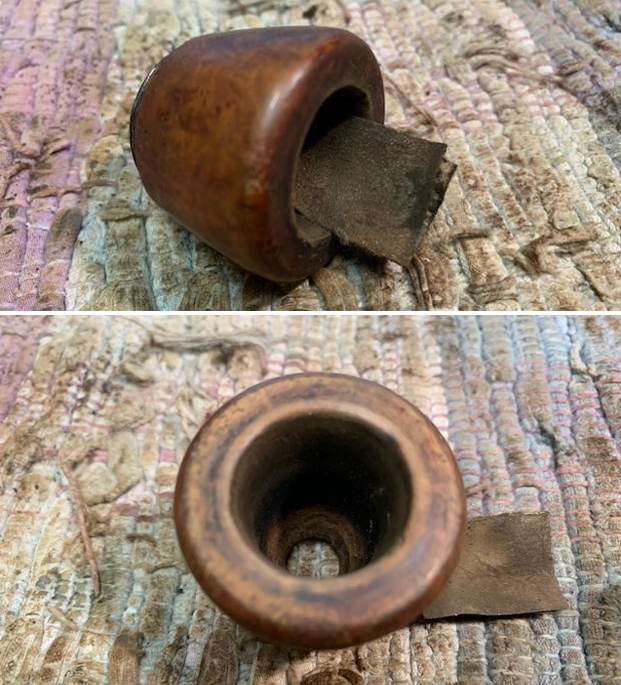
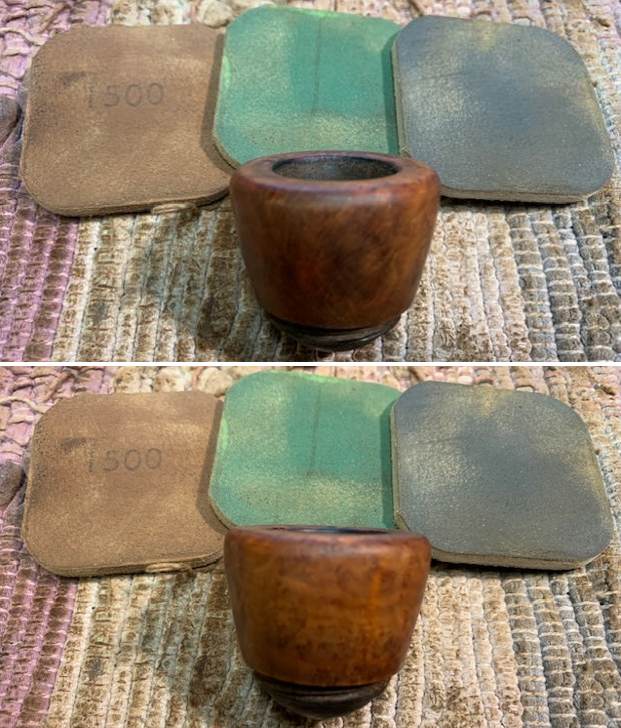
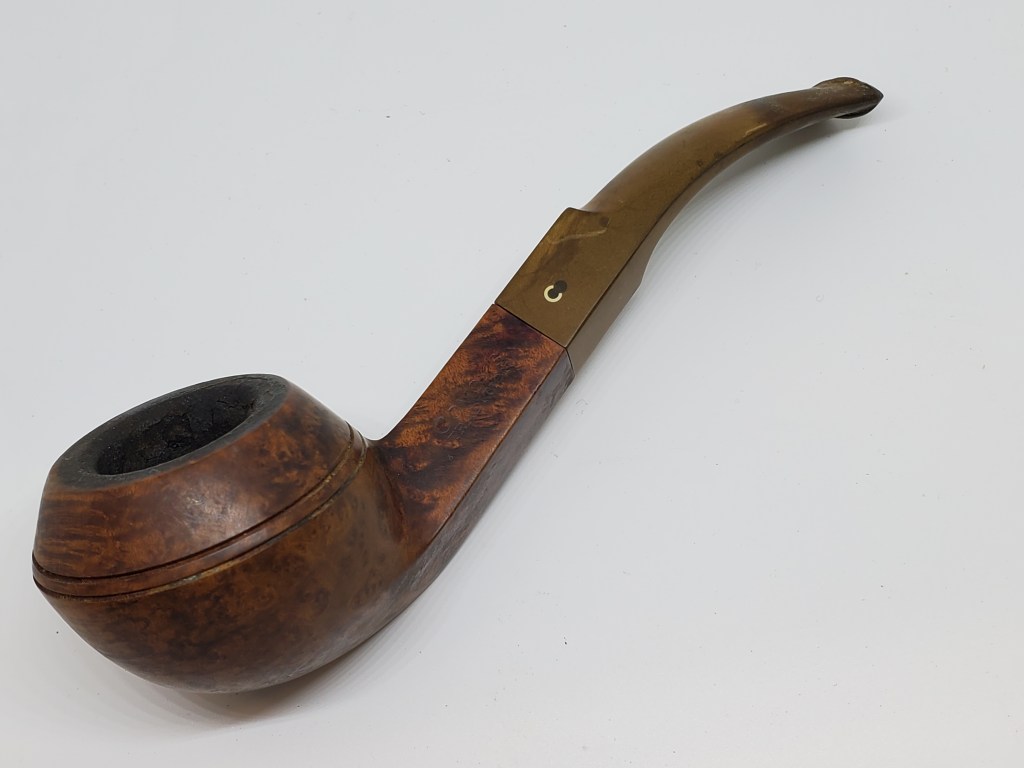
Now to work on the pipes. I decided to work on them one at a time and complete one before working on another. The first one I chose is the rounded top Dublin bowled one below. It was in good condition. The bowl and base were very clean. The rim top had a little darkening. The stem had some tooth chatter on both sides near the button. I took some photos of the pipe before I started. I took some photos of the rim top and the stem to show the condition of them both. You can see that the bowl is very clean. The darkening will polish off. The stem chatter will polish out as well.Here is a photo of the stamping on the heel of the base. It reads as noted above.I removed the bowl from the base to show the inside of the base. It is quite clean. I polished the bowl and rim top with micromesh sanding pads – dry sanding with 1500-12000 grit pads and wiping the bowl with a damp cloth down after each pad. It really began to shine. I rubbed down the bowl with Before & After Restoration Balm working it into the briar with my fingertips. The product works to clean, enliven and protect the briar. After 10 minutes I buffed it off with a soft cloth. The bowl looks quite beautiful with the grain shining through. I polished out the tooth marks on the stem with micromesh sanding pads – dry sanding with 1500-12000 grit pads. I wiped the stem down after each pad with Obsidian Oil. I further polished it with Before & After Pipe Stem Polish – both Fine and Extra Fine. I gave it a final coat of Obsidian Oil and set it aside to dry. The first of them is finished. It turned out to be a real beauty. The dimension of the pipe are – Length: 6 inches, Height: 1 ½ inches, Outer diameter of the bowl: 1 ¾ inches, Chamber diameter: ¾ of an inch. The weight of the pipe is 33 grams/1.16 ounces. It is a beautiful pipe and one that will be on the Pipes from Various Makers – Czech, Belgian, German, Israeli, Spanish Pipemakers along with Metal Pipes section of the rebornpipes store soon. If you are interested in adding it to your collection let me know. Thanks for walking through the restoration with me as I worked over this pipe. Thanks to each of you who are reading this blog. The second one I chose is the flat top Dublin bowled one below. It was in good condition. The bowl and base were very clean. The rim top had a little darkening. The stem had some tooth chatter on both sides near the button. I took some photos of the pipe before I started. I took some photos of the rim top and the stem to show the condition of them both. You can see that the bowl is very clean. There were some nicks around the inner edge that would need to be dealt with as well as some on the rim top. The darkening will polish off. The stem chatter will polish out as well.Here is a photo of the stamping on the heel of the base. It reads as noted above.I removed the bowl from the base to show the inside of the base. It is quite clean.  I cleaned up the inner edge of the rim and the rim top with a folded piece of 220 grit sandpaper. I gave the edge a slight bevel to minimize the damage on the right side. It looked a lot better.I polished the bowl and rim top with micromesh sanding pads – dry sanding with 1500-12000 grit pads and wiping the bowl with a damp cloth down after each pad. It really began to shine. I rubbed down the bowl with Before & After Restoration Balm working it into the briar with my fingertips. The product works to clean, enliven and protect the briar. After 10 minutes I buffed it off with a soft cloth. The bowl looks quite beautiful with the grain shining through. I polished out the tooth marks on the stem with micromesh sanding pads – dry sanding with 1500-12000 grit pads. I wiped the stem down after each pad with Obsidian Oil. I further polished it with Before & After Pipe Stem Polish – both Fine and Extra Fine. I gave it a final coat of Obsidian Oil and set it aside to dry. The second Falcon is finished. It also turned out to be a real beauty. The dimension of the pipe are – Length: 6 inches, Height: 1 ½ inches, Outer diameter of the bowl: 1 ½ inches, Chamber diameter: 7/8 of an inch. The weight of the pipe is 26 grams/.88 ounces. It is a beautiful pipe and one that will be on the Pipes from Various Makers – Czech, Belgian, German, Israeli, Spanish Pipemakers along with Metal Pipes section of the rebornpipes store soon. If you are interested in adding it to your collection let me know. Thanks for walking through the restoration with me as I worked over this pipe. Thanks to each of you who are reading this blog.

Just in Time for St Patrick’s Day


Blog by Kenneth Lieblich

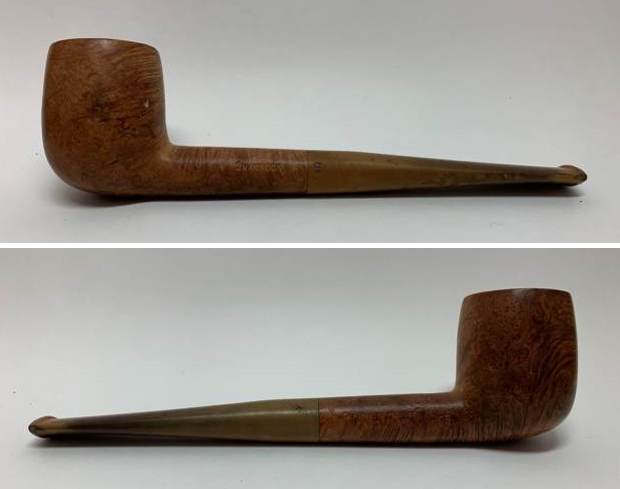
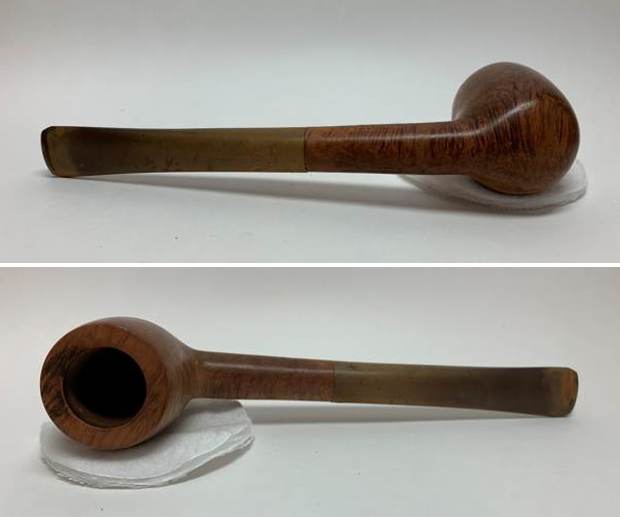
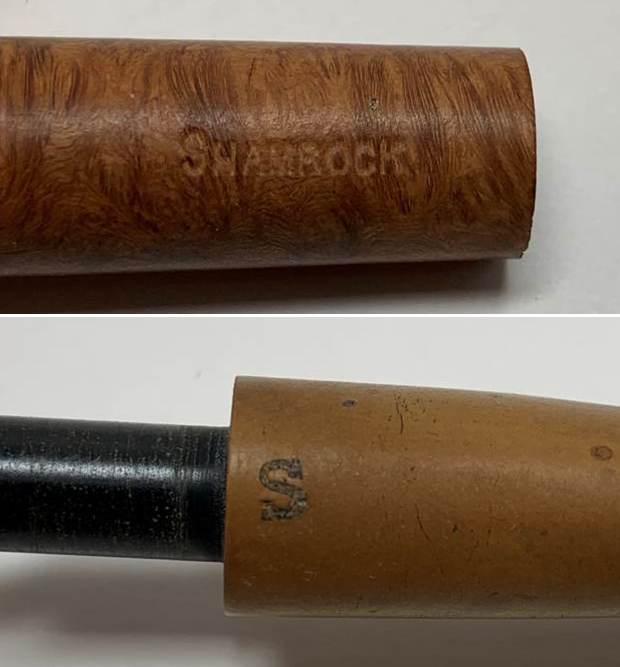
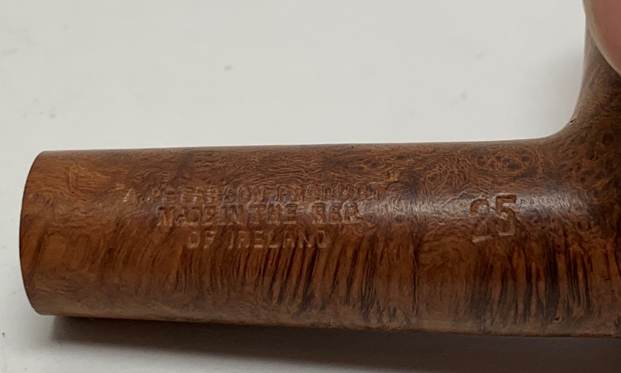
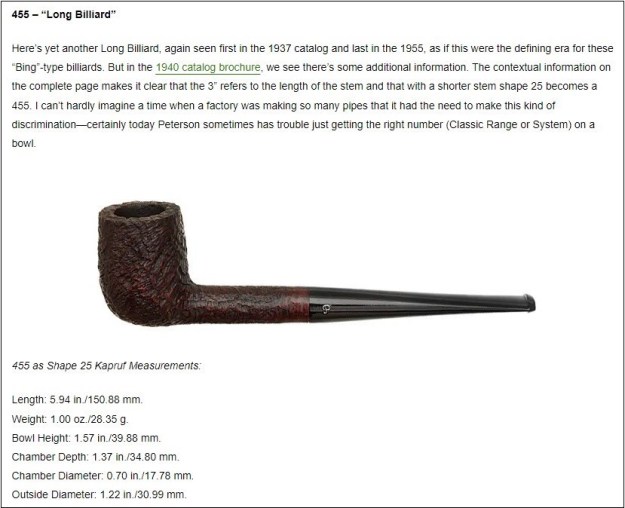
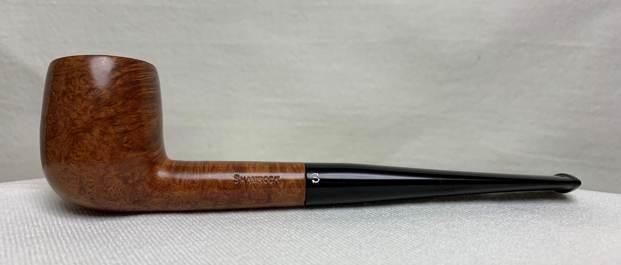
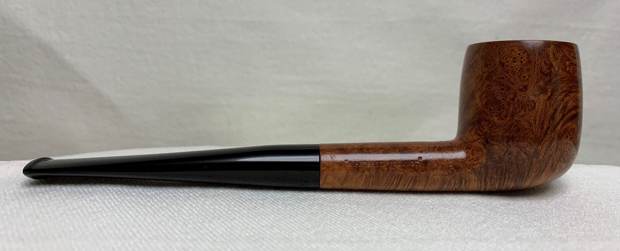
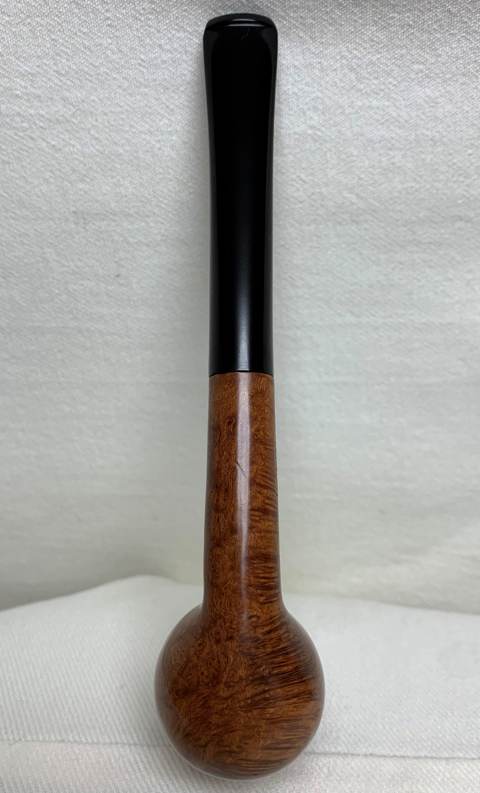
Next on the chopping block is this lovely Peterson Shamrock. I acquired it some time ago from Craigslist and I figured that it was time to honour the great patron of Ireland, Saint Patrick, with a pipe named for the Shamrock. This is a terrific pipe that simply looks a bit drab. Some special attention from me will bring out its best. This pipe shape is a classic billiard. This is a really pretty pipe and feels very comfortable in the hand. This pipe was made by the esteemed Irish pipe company, Peterson. Of course, Peterson is well known to most pipe smokers. For more information on the brand and its history, be sure to read the Pipedia article on them: https://pipedia.org/wiki/Peterson. The markings on the left-hand side of the shank read Shamrock and the left-hand side of the stem shows a capital S. The right-hand side of the shank reads “A. Peterson Product” [over] Made in the Rep. [over] of Ireland. Alongside this, the number 25 appears, the shape number. This “25” actually corresponds to the Peterson shape “455”, as explained over at Mark Irwin’s Peterson Pipe Notes:Meanwhile, Mark Irwin and Gary Malmberg’s book, The Peterson Pipe provided some essential background information on Peterson’s Shamrock pipe. As you’ll see below, the nomenclature for dating doesn’t exactly correspond to what I have above, but still leads me to think that this pipe’s date is between 1948 and 1998. That’s a pretty wide range, but it will have to do! From The Peterson Pipe:

Shamrock (c. 1941–2009) Originally stamped SHAMROCK with no brand name, an inexpensive line first described in George Yale (New York) mail order booklet in 1941, imported by Rogers Import. The line was actively promoted beginning in ’45, aggressively promoted in US by Rogers from early ‘50s when they registered the Shamrock logo with US Patent Office, claiming propriety since ’38. Over the years offered with P-lip or fishtail mouthpiece, with or without nickel band, with or without shamrock logo on the band, with or without S stamped in white or later in gold on mouthpiece. Appearing in 2008 as unstained smooth and rustic, fishtail mouthpiece with gold impressed P on the stem. COMS of MADE IN over IRELAND (c. 1945–1965), MADE IN IRELAND forming a circle (c. 1945–1965), “A PETERSON’S PRODUCT” over MADE IN IRELAND (c. 1945–1965), MADE IN THE over REPUBLIC over OF IRELAND (c. 1948–1998). Model is always difficult or impossible to date.

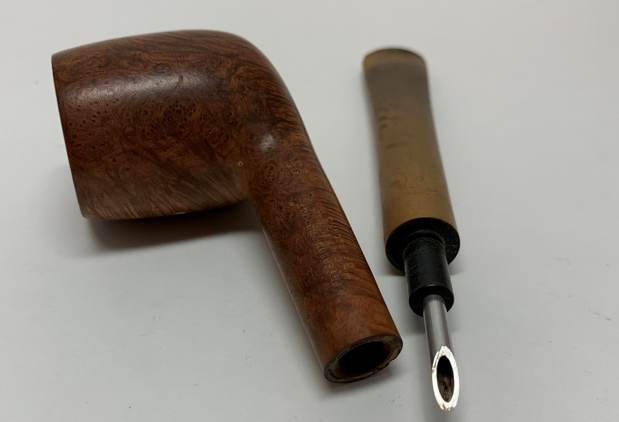
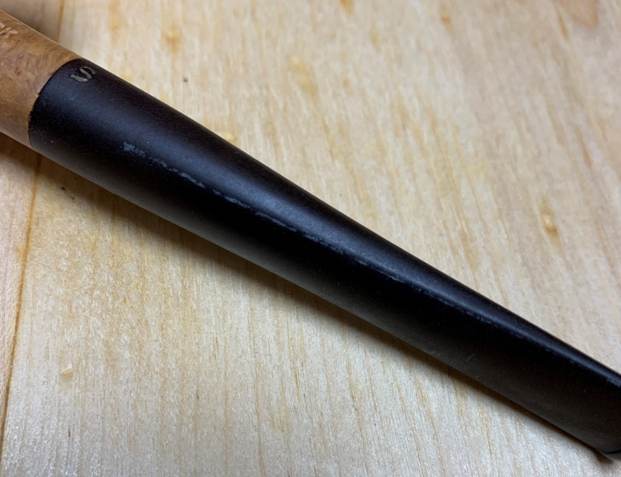
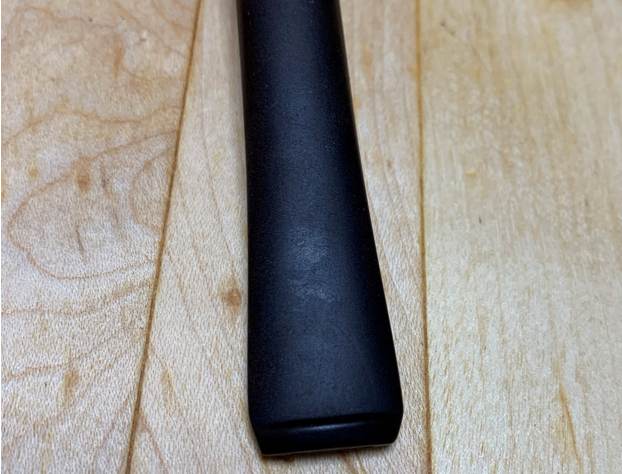
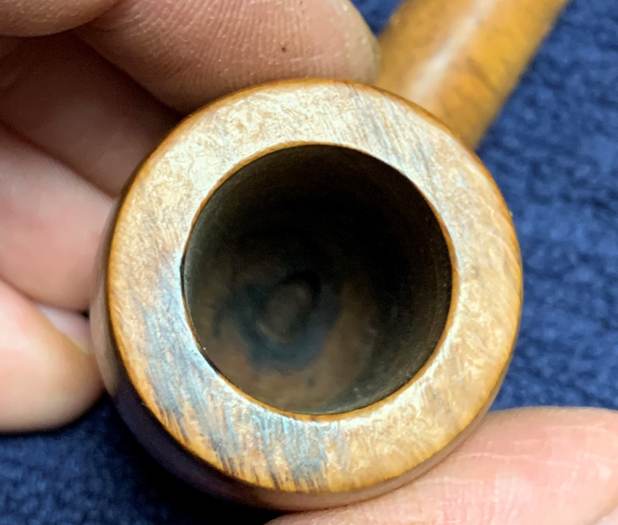
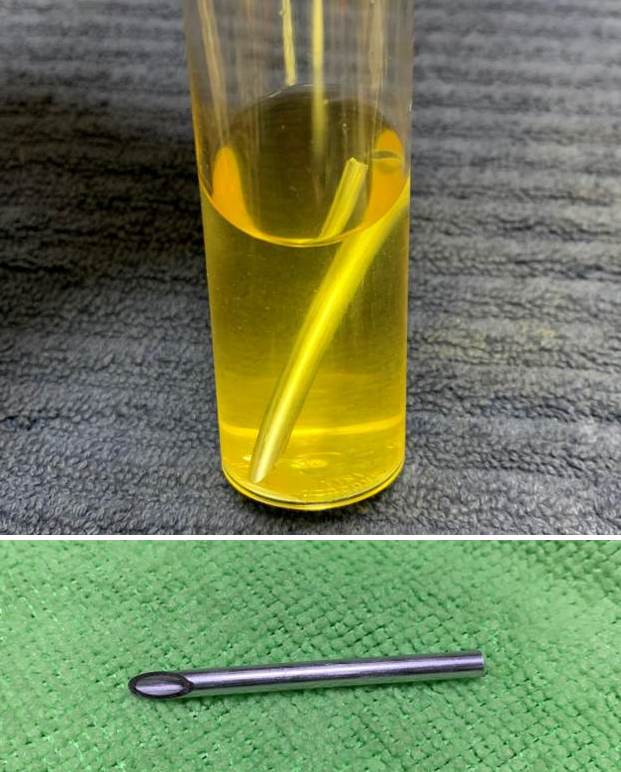
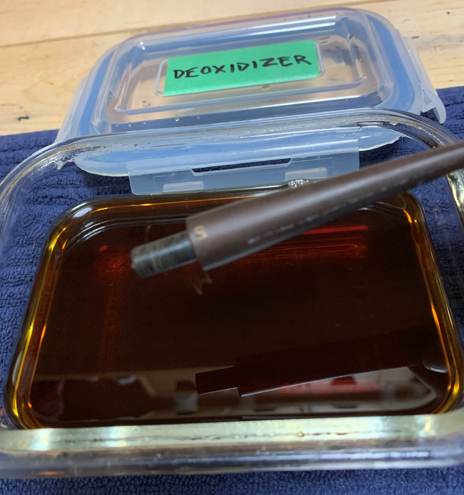
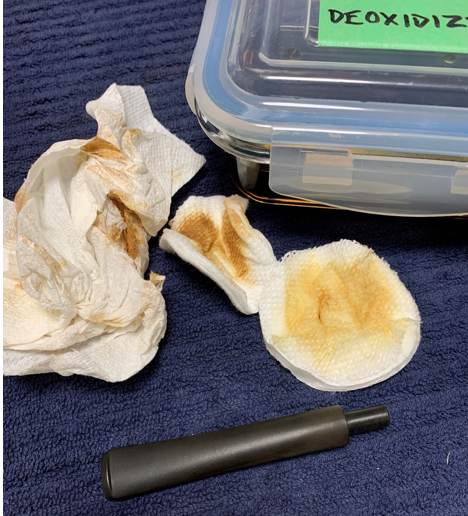
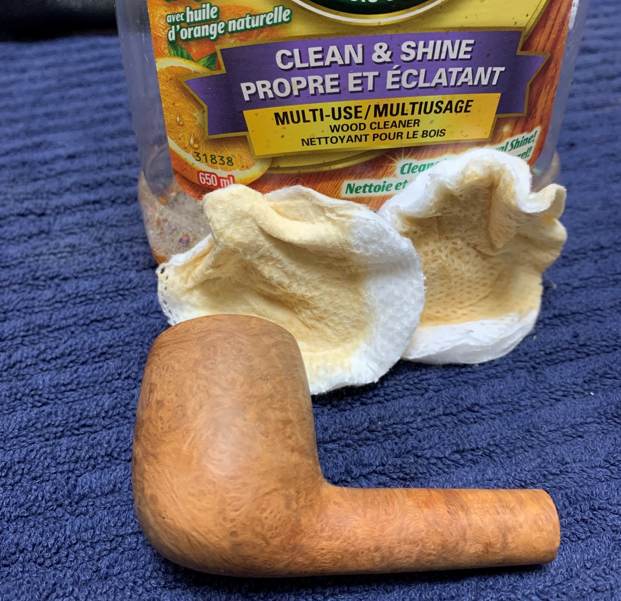
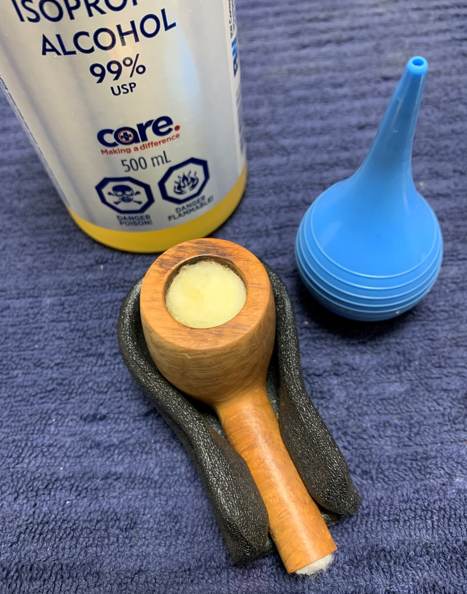
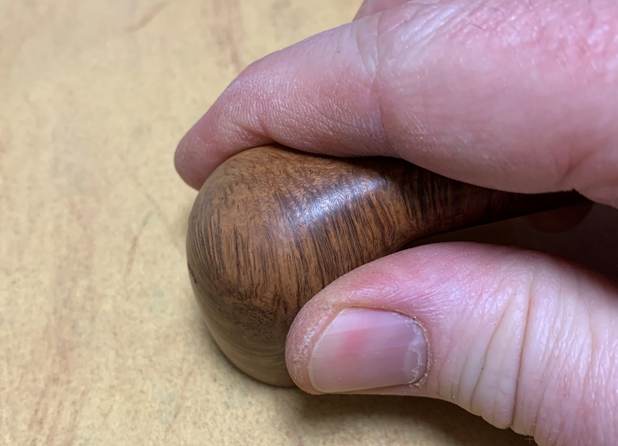
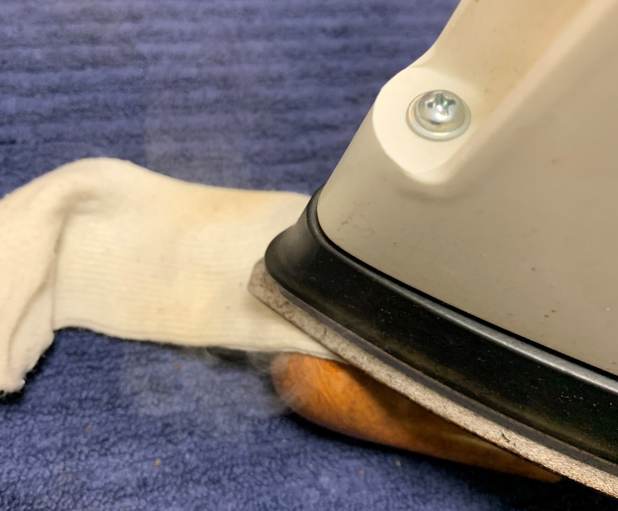
On to the pipe: it was in very nice condition, actually. The insides had already been cleaned fairly well by a previous owner. Annoyingly, the Craigslist seller claimed that the pipe was unsmoked, but this was clearly false (grrr). The stem had considerable oxidation, a few minor scrapes, but was otherwise in decent shape. The stummel was also very nice. The outside of the bowl had only slight scratches and the overall colour was a bit dull. The insides would need to be cleaned a bit, but most of the work had already been done. Really, this pipe just needed a day at the salon in order to look its best.The stem was first on my list. This stem has an inner tube in it, so, in order to clean it, I soaked it in some lemon-infused isopropyl alcohol. I let it sit for several hours and then cleaned it off and it looked much improved. I then buffed it with a microfibre cloth and moved on.I took a BIC lighter and ‘painted’ the stem with its flame in order to lift any tiny bite marks. This was only modestly successful in raising the dents. Then, I cleaned out the insides of the stem with pipe cleaners and isopropyl alcohol. It was a bit dirty, but not too bad and I only went through a few pipe cleaners in order to clean it up. Once this process was done, the stem went for an overnight soak in the Pipe Stem Oxidation Remover. The following day, I cleaned all of the de-oxidizing mess off with alcohol, pipe cleaners, et cetera. The oxidation had migrated to the surface and would be fairly straightforward to remove. I scrubbed with SoftScrub on some cotton pads to remove the leftover oxidation. After this, I used some nail polish to restore the Shamrock “S” logo on the stem. I painted the area carefully and let it fully set before proceeding.I then sanded the stem with 220-, 400-, and 600-grit sandpapers to meld seamlessly into the stem. I then used all nine Micromesh pads (1,500 through 12,000 grit) to bring out the lovely black lustre on the stem. I also used Obsidian Pipe Stem Oil in between each pad scrubbing. On to the stummel, and most of the usual cleaning procedures were in order for this pipe. The bowl did not need to be reamed, so I was able to skip that. But I still inspected the bare briar to ensure there were no hidden flaws in the walls of the bowl. Fortunately, there were none. I then proceeded to clean out the insides of the shank with Q-tips, pipe cleaners, and isopropyl alcohol. There wasn’t too much nastiness inside this stummel – it only took a handful of pipe cleaners etc. to sort that out. I followed that up by cleaning the insides with some dish soap and tube brushes. I then moved on to cleaning the outside of the stummel with Murphy’s Oil Soap and some cotton pads. That removed any remaining dirt. Even though the pipe was quite clean, I figured that a de-ghosting session couldn’t hurt, so I thrust cotton balls in the bowl and the shank, and saturated them with 99% isopropyl alcohol. I let the stummel sit overnight. This caused any remaining oils, tars and smells to leech out into the cotton.There was a slight mark on the rim of the stummel and, in order to remove it, I “topped” the pipe – that is to say, I gently and evenly sanded down the rim on a piece of 220-grit sandpaper. This effectively removed the marks, without altering the look of the pipe.Having completed that, I was able to address the small nicks on the stummel. I dug out my iron and a damp cloth to try and raise the nicks. The hot and moist steam can often cause the wood to swell slightly and return to shape. There was considerable movement! It looked a lot better as a result of the steam and I was pleased.I took the opportunity to add a light application of Before & After Restoration Balm. I let it sit for 10–15 minutes and then gave it a buff. This made the beauty of the stummel’s grain really pop. No doubt about it – this is a really lovely pipe! There was one tiny little dent remaining in the stummel. I lined it with cyanoacrylate adhesive. After letting it cure, I sanded the fill repair down with 200-, 400-, and 600-grit sandpaper. I then used all nine Micromesh pads (1,500 through 12,000 grit) on the stummel to finish it off. After that, I applied yet another application of Before & After Restoration Balm. Hubba hubba! This thing is looking better all the time. Then it was off for a trip to the buffer. A dose of White Diamond and a few coats of carnauba wax were just what this pipe needed. The lovely shine made the wood very attractive. This is a very handsome pipe and will provide many years of smoking pleasure. This Peterson Shamrock looks fantastic again and is ready to be enjoyed again by the next owner – just in time for St Patrick’s Day! I am pleased to announce that this pipe is for sale! If you are interested in acquiring it for your collection, please have a look in the ‘Irish’ pipe section of the store here on Steve’s website. You can also email me directly at kenneth@knightsofthepipe.com. The approximate dimensions of the pipe are as follows: length 5⅞ in. (150 mm); height 1⅝ in. (40 mm); bowl diameter 1⅛ in. (27 mm); chamber diameter ¾ in. (20 mm). The weight of the pipe is ⅞ oz. (26 g). I hope you enjoyed reading the story of this pipe’s restoration as much I as I did restoring it. If you are interested in more of my work, please follow me here on Steve’s website or send me an email. Thank you very much for reading and, as always, I welcome and encourage your comments.

A Simple Clean up of a pair of English Made Dr. Plumb Peacemakers


Blog by Steve Laug

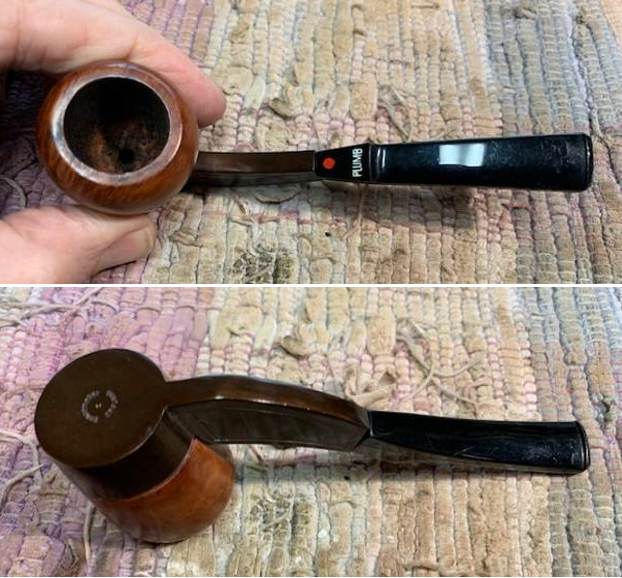
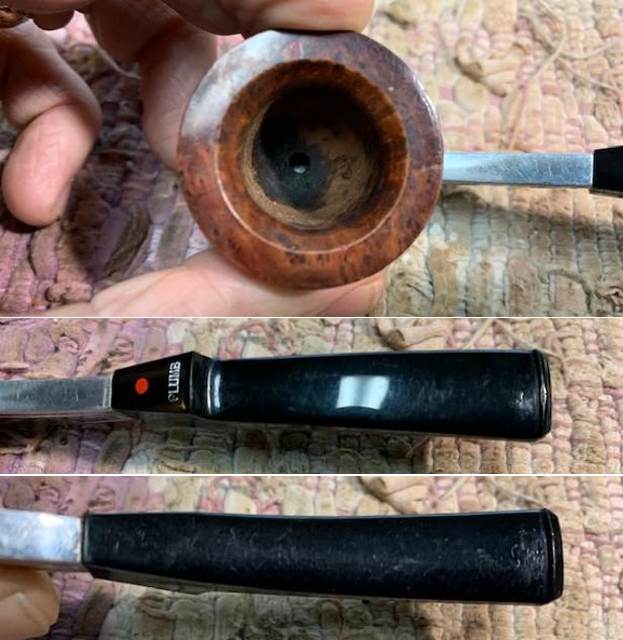
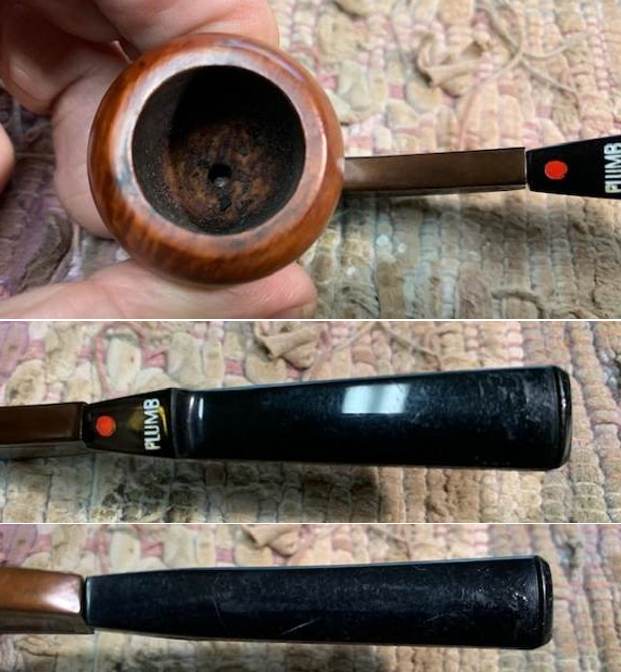
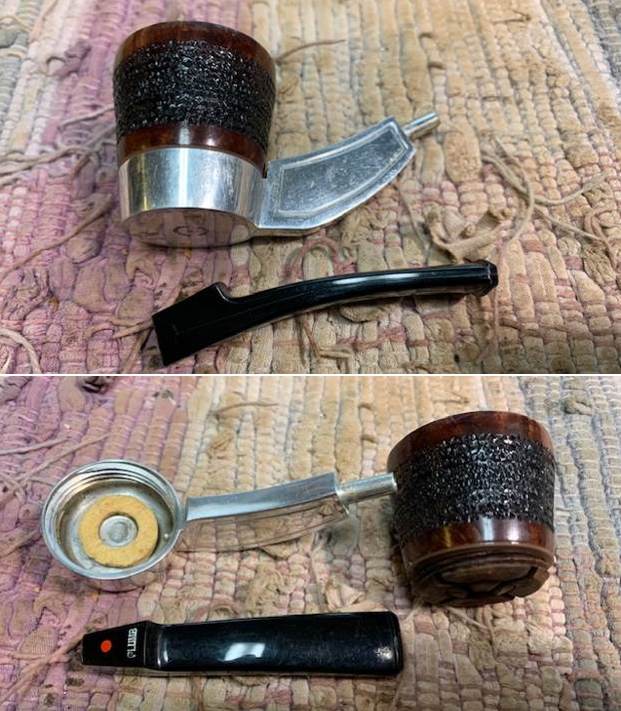
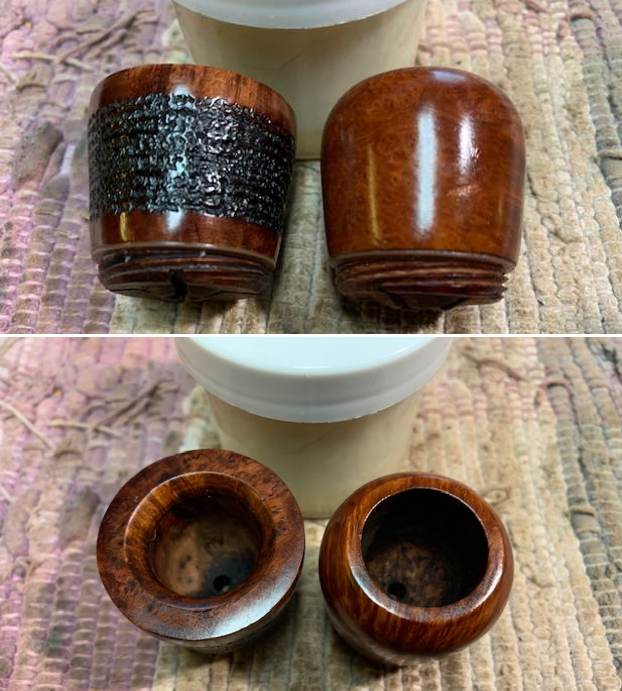
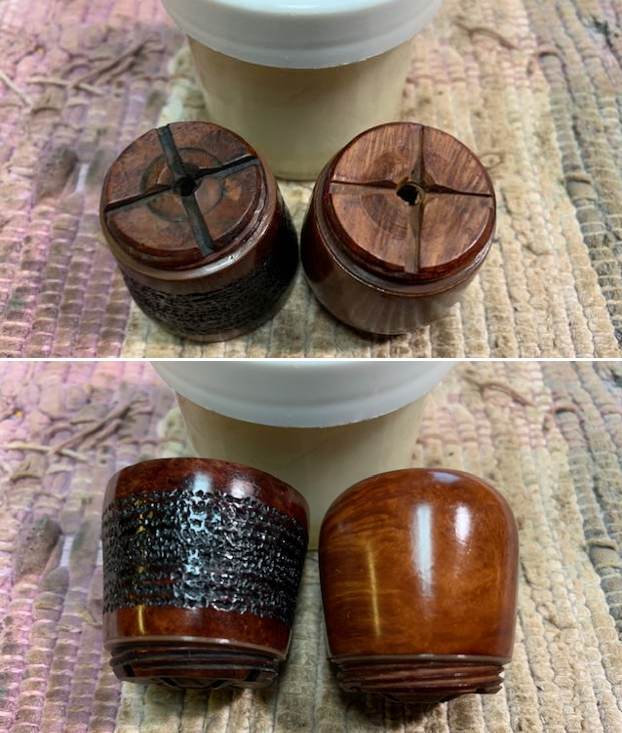
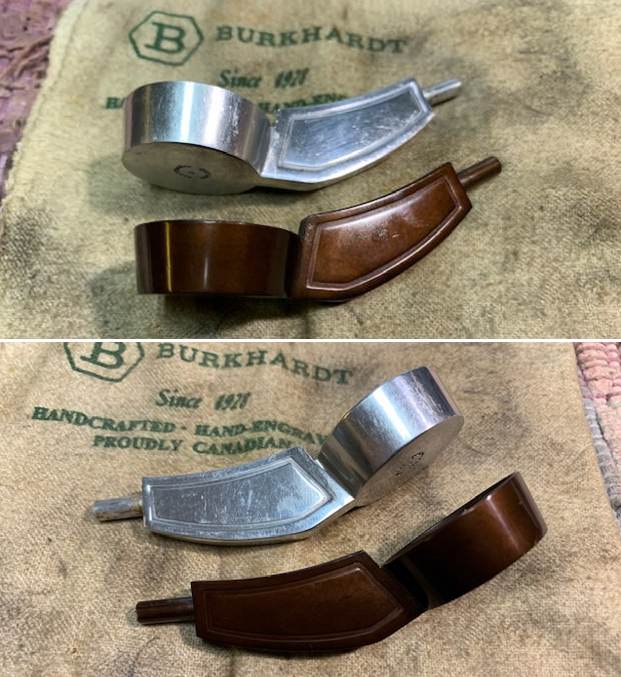
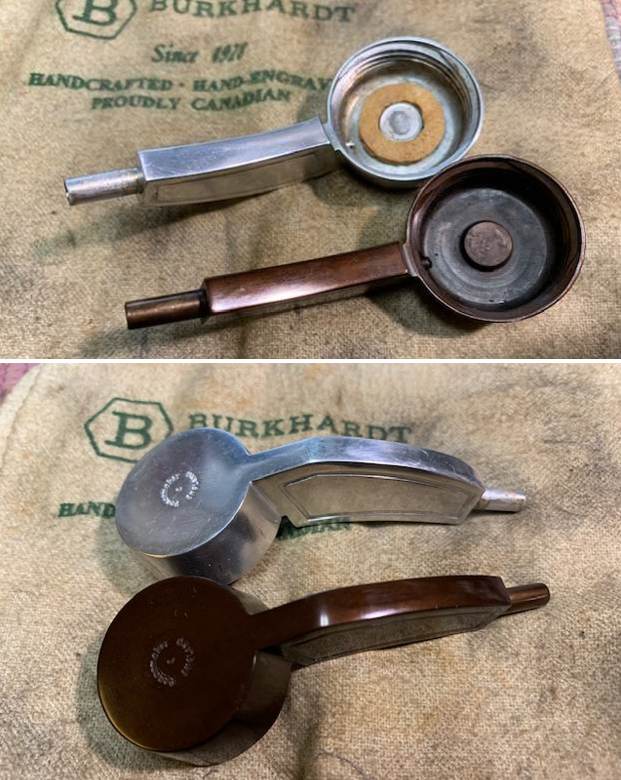
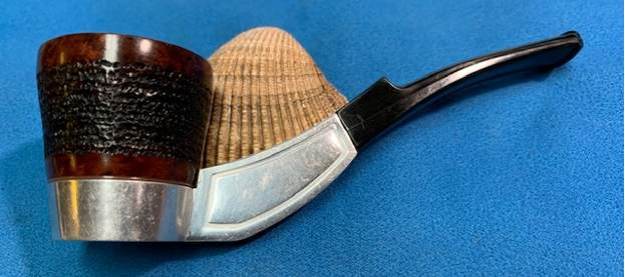
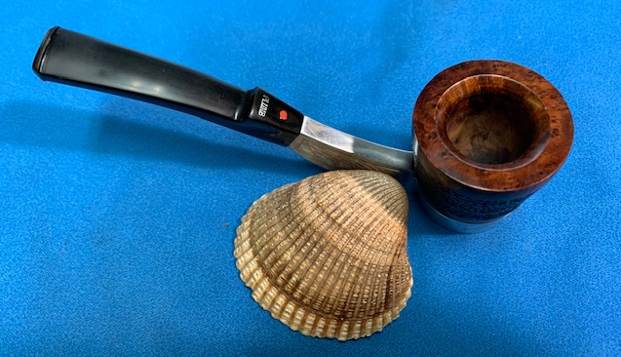
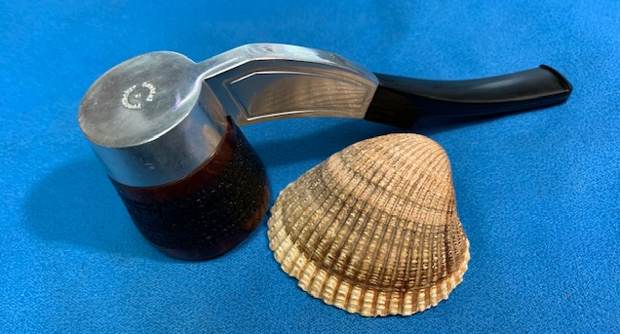
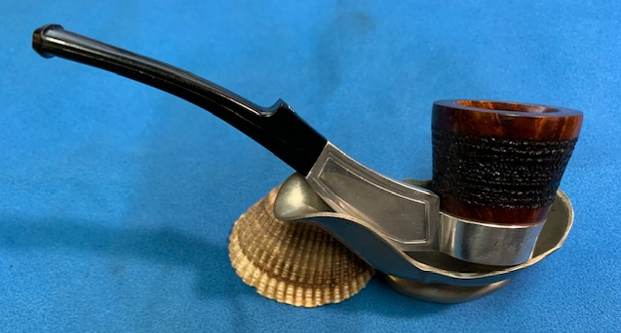
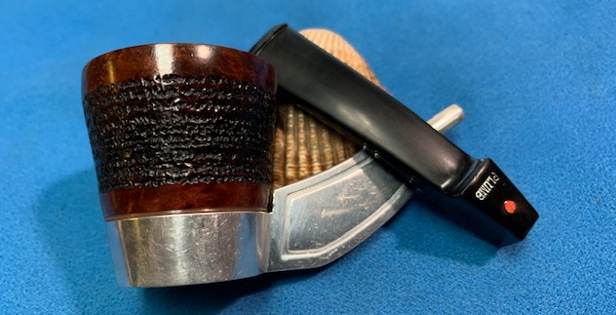
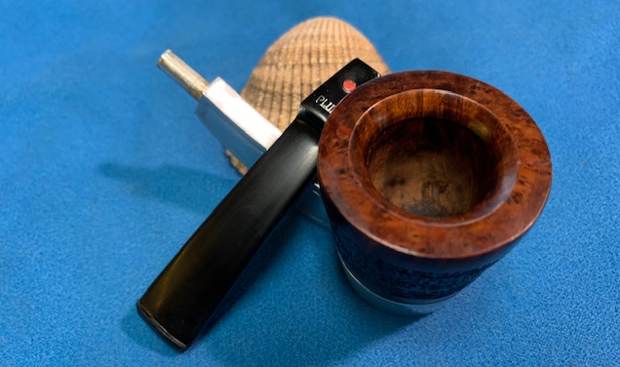
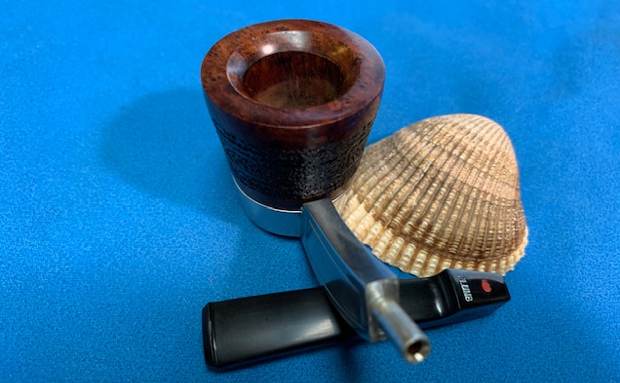
I had some time this morning to go through a drawer of metal pipes that I have and pull out some to clean up and restore. Some of them are in very good condition while others will need more attention. The first of these is a pair of Dr. Plumb Peacemakers. One is the classic thin silver base with a with a Flair Rustic Bowl and the other one is a copper coloured one with an Apple Smooth Bowl. Both pipes were very clean other than some light tooth chatter on both sides near the button of both pipes. The internals were spotless and the rim top and bowl were very clean.I took pictures of each of the pipes to give a sense of the condition. Both needed polishing and the tooth chatter needed to be eradicated but otherwise they are uniquely beautiful. The first is the Flair Rustic Bowl with a silver aluminum base and shank. The bowl had some darkening inside but it had barely been smoked and was clean. The inward bevel of the rim top was also in perfect condition. The second one is the Apple Smooth Bowl with a copper coloured aluminum base and shank. The bowl had some darkening inside but it had barely been smoked and was clean. The rim top and edges were in perfect condition. I took close up photos of the Flair Rustic bowl and stem to show the condition. The bowl is very clean and parts of it have no darkening so it has not been smoked much. The rim top and edges look very good. The stem photos show the chatter on both sides ahead of the button.I took close up photos of the Apple Smooth bowl and stem to show the condition. The bowl is very clean and parts of it have no darkening so it has not been smoked much. The rim top and edges look very good. The stem photos show the chatter on both sides ahead of the button.Both pipes were stamped on the underside of the base and read Peacemaker in a circle over England. In the center of both was the number 2. You can see that both need to be polished. The stems both have a red dot with Plumb underneath. I took the pipes apart and took photos of the parts. The tenon of the pipe is a part of the base and really is a metal nipple. The stem slides over it. In the base of the silver coloured pipe there is a filter ring that is not present in the copper coloured one. I have smoked them with and without the ring with no significant issues. In the past I have worked on several of these pipes and done a bit of research on them. I am including a link to one of those blogs for you to check out for background information on the brand (https://rebornpipes.com/2016/08/07/the-box-said-it-was-a-bbb-peacemaker/).

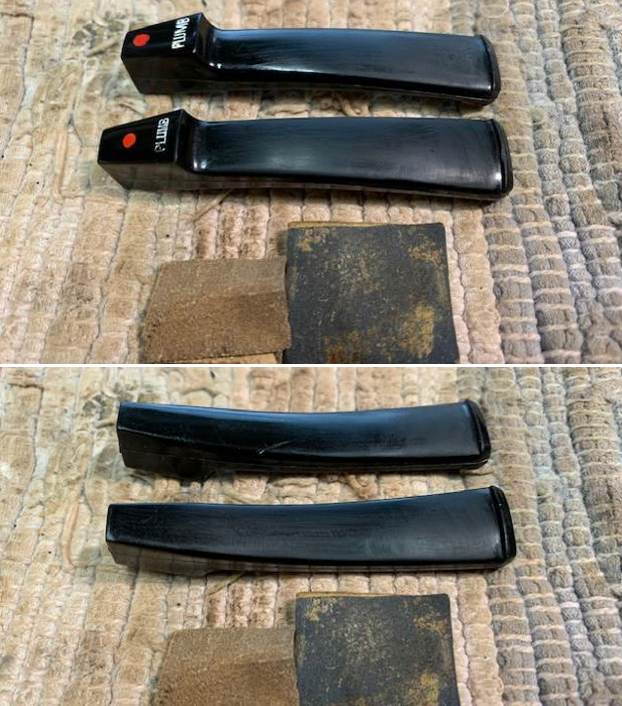
I am also including a link to a Peacemaker Brochure that I picked up with one of my pipes for your reading interest (https://rebornpipes.com/2016/08/08/peacemaker-brochure/). I am also including photos of the brochure. Now it was time to work on the stems of each pipe. I sanded out the tooth chatter on the stem surfaces of both with 220 grit sandpaper and then gave it a polish with 400 grit wet dry sandpaper.I finished polishing each stem with micromesh sanding pads – dry sanding with 1500-12000 grit pads. I wiped the stem down after each sanding pad with an impregnated Obsidian Oil cloth. I finished the polishing with some Before & After Stem polish – Fine and Extra Fine. I gave each stem a final coat of Obsidian Oil and set it aside to dry. I rubbed the two bowls down with Before & After Restoration Balm. I worked it into the briar and rustication on the one bowl with my finger tips. I let it sit on the briar for 15 minutes then I polished it with a soft cloth. The grain really stood out. I polished the aluminum bases and shanks with a jeweler’s cloth to give the metal a shine and minimize the scuff on the silver one. They both look better. I put the two Peacemakers back together and again and polished them with Blue Diamond on the buffing wheel. I gave bowl several coats of carnauba wax and buffed them with a clean buffing wheel. I hand buffed them with a soft cloth to deepen the shine. Both pipes are quite nice looking and will be interesting light weight smokes. The dimensions of the Flair Rustic bowl and silver aluminum base and shank are – Length: 5 inches, Height: 1 ½ inches, Outer Diameter of the bowl: 1 ½ inches, Chamber Diameter: ¾ of an inch. The weight of the pipe is 1.38 ounces/39 grams. It is a beautiful pipe and one that will be on the Pipes from Various Makers – Czech, Belgian, German, Israeli, Spanish Pipemakers along with Metal Pipes section of the rebornpipes store soon. If you are interested in adding it to your collection let me know. Thanks for walking through the restoration with me as I worked over this pipe. Thanks to each of you who are reading this blog. The dimensions of the Apple Smooth bowl and Copper coloured aluminum base and shank are – Length: 5 inches, Height: 1 ¾ inches, Outer Diameter of the bowl: 1 ¼ inches, Chamber Diameter: ¾ of an inch. The weight of the pipe is 1.20 ounces/34 grams. It is a beautiful pipe and one that will be on the Pipes from Various Makers – Czech, Belgian, German, Israeli, Spanish Pipemakers along with Metal Pipes section of the rebornpipes store soon. If you are interested in adding it to your collection let me know. Thanks for walking through the restoration with me as I worked over this pipe. Thanks to each of you who are reading this blog.

Breathing Life into a Beautiful Dunhill London HW R7 Patent Era Pot


Blog by Steve Laug

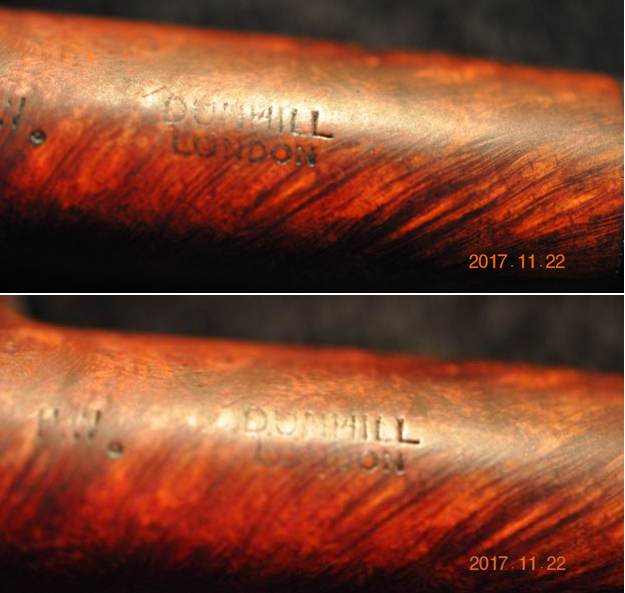
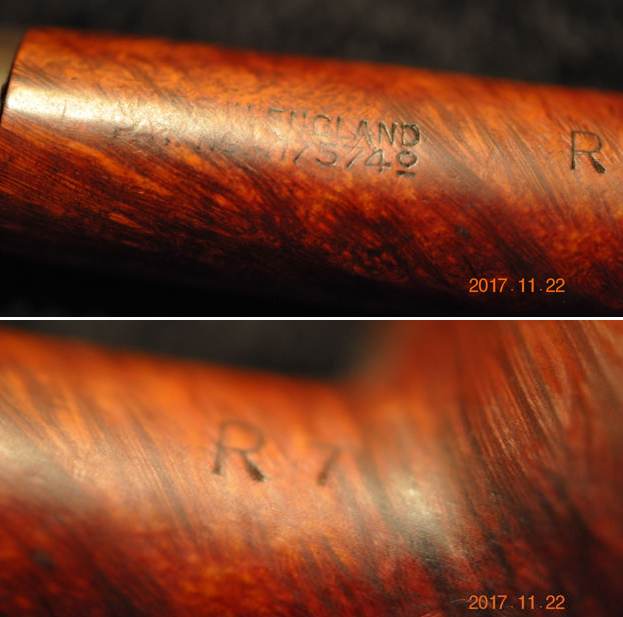
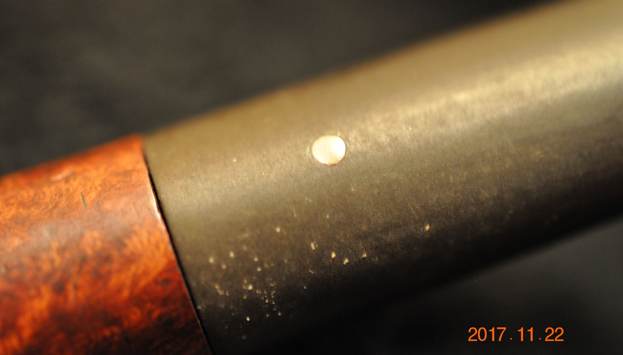
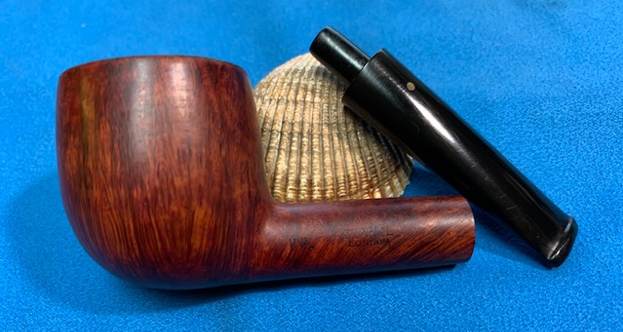
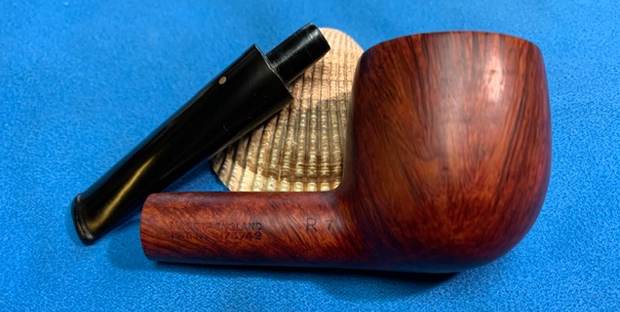
The next pipe is one that we picked up from an estate sale on 16 August, 2017 in Portland, Oregon, USA. It has some stunning grain around the bowl and shank and has the appearance of being a beautiful Bruyere or Root Briar but it is not stamped with either of those. The stamping on the left side reads HW with a square stop next to the bowl/shank junction followed by DUNHILL [over] London. On the right side it is stamped R7 next to the bowl/shank union and to the left of that it reads Made In England [over] Pat. No.417574 followed by a superscript 0 . Several things about the stamping were new to me but were also very distinctive. For instance the HW was not a shape designation that I had seen. The Patent number followed by the superscript 0 rather than that 0 by the D in England was different. Those are a few new things for me on this pipe. This was going to a fun pipe to research.

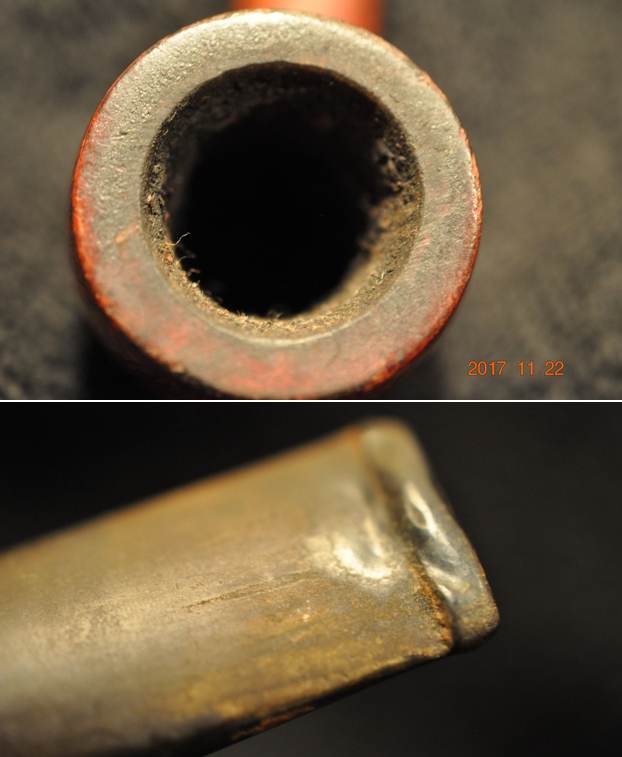
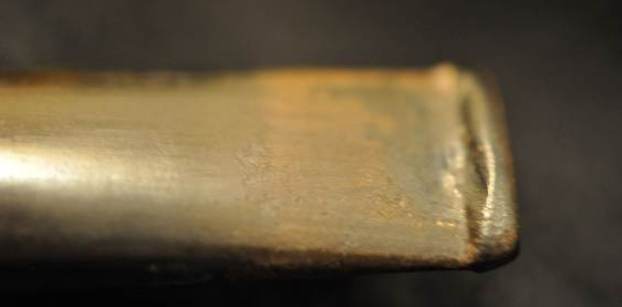
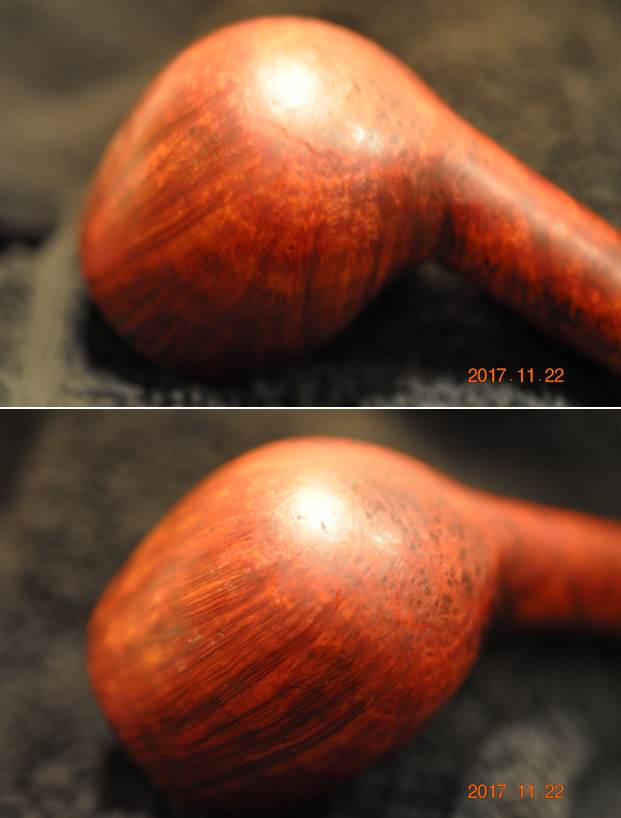
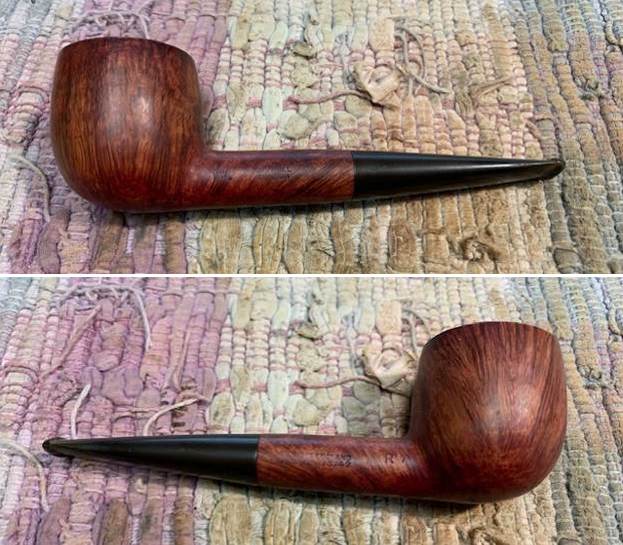
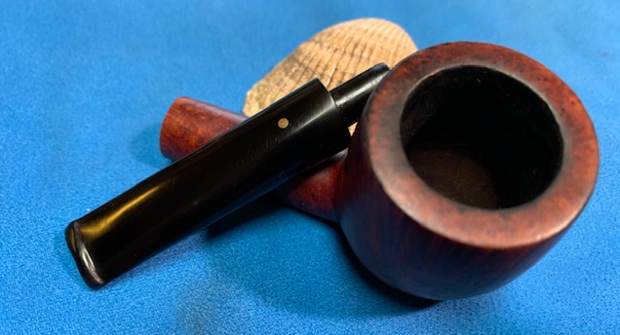
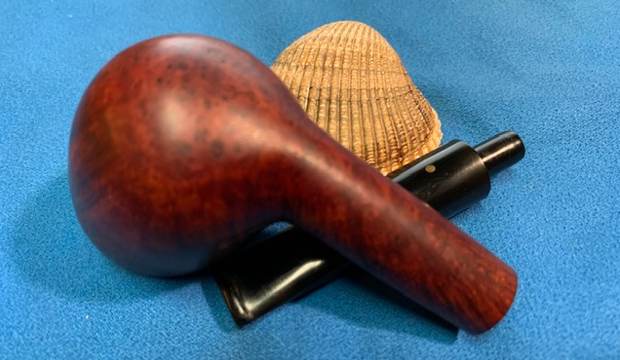
The pipe itself was quite dirty. The finish was tired with grime ground into the surface. The bowl was heavily caked with a thick overflow of lava on the rim top. While the inner edge looked good there were nicks around the outer edge of the bowl. The stem was oxidized and dirty. There were deep tooth marks against the edge of the button on both sides and there was chatter around those marks as well. The surface of the button also had tooth damage on the top side. It was a dirty, intriguing and beautiful pipe! Jeff took photos of it before he started his clean up on it. Jeff took photos of the bowl and rim top. You can see how thick the cake is in the bowl and on the top. You can also see the dust that had collected in the cake in the bowl. It was a dirty pipe. His photos of the stem also show the oxidation, calcification and tooth damage to the stem and button on both sides. He took some photos of the side and heel of the bowl to show the grain. It is a very nice looking piece of briar and once the grime it gone it should really look amazing.Jeff took some photos of the stamping on the shank side to capture it. Some portions of the stamp are weak and not as clear but overall it is very readable. Now it was time to try to unravel the stamping on the shank sides of the pipe. I was really interested to understand what the various components of the stamping meant. I turned to a book I always use with Dunhills, John C. Loring’s – The Dunhill Briar Pipe The Patent Years And After. I have found that it is really a definitive work when working dating and understanding Dunhill stamping. I will walk you through my work on the stamping in the paragraphs that follow. The conclusion is at the end!

I decided to start with the left side of the shank – HW followed by Dunhill [over] London. I quote from the above book, page 89-90.

‘OD’ ‘HW’ and ‘ODA’ stampings on the brand side of the shank next to the bowl (where an “A” or “R” would normally be found) usually indicated a special or a premium pipe…

“HW” was another pre-war stamping and meant ‘Hand Worked’. This stamp was used, sometimes in conjunction with superscript square stops, to identify hand carved versions of standard, machine carved, shapes. An “HW” stamping was not necessarily indicative of higher pricing.

Now I knew that the HW with the small square meant that the pipe was a pre-war Hand Worked pipe that was identical to a machine carved Pot. That was a start but now I wanted to understand the Dunhill [over] London stamp that followed it. I was getting excited about the age of this pipe. Again from Loring, page 13-14

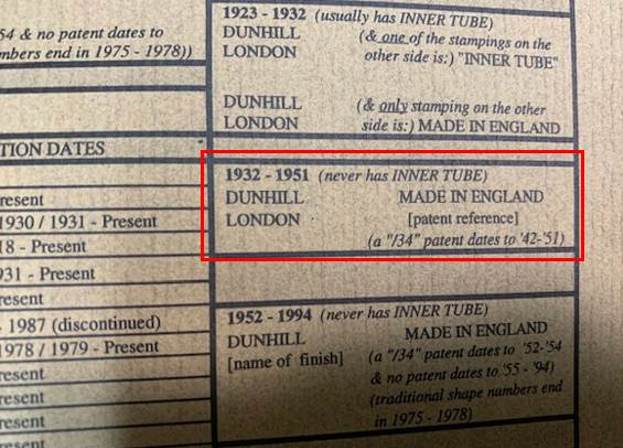
From November 1918 through 1951, the brand side of the Bruyere was stamped DUNHILL over LONDON. In addition one to three letter (most generally an A but occasionally DR, OD, or HW) were stamped to the left of the primary brand stamping, near the bowl.

I have included a chart from Loring (inside the back cover). I have drawn a red box around the pertinent portion – 1932-1951 to show the stamping on both sides of the shank.Now I knew that I was dealing with a Dunhill London pipe (possibly a Bruyere) made between 1932-1951 because of the stamping on the left side of the shank. Now it was time to turn to the stamping on the right side of the shank and unravel that. The dates were beginning to solidify and my excitement was growing.

On the right side of the shank it is stamped R7 next to the bowl/shank union and to the left of that it reads Made In England [over] Pat. No.417574 followed by a superscript 0 . I decided to tackle the R7 stamp near the bowl first to see if I could determine what it meant.

From Loring, page 61, I quote the following.

“R”. An “R” signifies the Root finish pipe. From 1931-1954 it was stamped on the brand side of the shank near where the shank meets the bowl. “R” is also the letter code for the classic Dunhill pot shape.

Page 63-64 From inception through 1975 Dunhill generally gave its pipes shape numbers of two or three digits. Beginning with 31 (shape number 1-30 were sold but not made by Dunhill from 1907-1910)… The shape numbers or letters were stamped on the reverse side of the shank near the bowl. Prior to the war special shape modifications, such as churchwarden stem or a flat shank (that would allow the pipe to be rested on a flat surface with the bowl opening facing up) were signified by preceding the shape number with a “C” or “T” respectively. In addition to the shape number, some post-war shapes were stamped with another number following a slash, e.g. ‘shape number’/1, which I speculate probably referenced the bit type…

Page 65… In the case of a letter denoted shape the slash was sometimes omitted, e.g. “R 21”

From this I knew that the R7 stamp signified a Pot shaped designation and the 7 was a reference to the style of the taper stem.

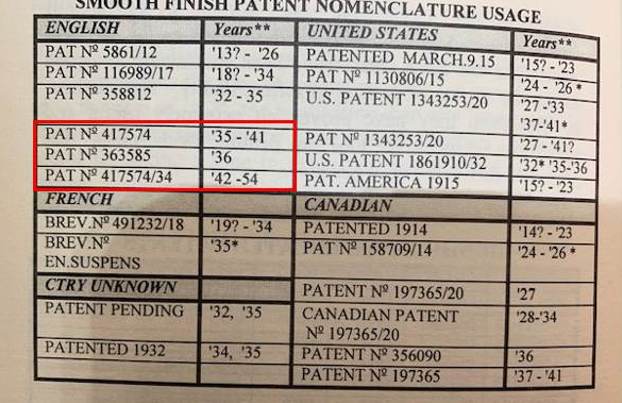
I turned to deal with the pattern number stamped on the right side of the shank – Pat. No.417574. In Loring’s book on page 58 he gives a great summary of the Smooth Finish Patent Nomenclature Usage. I have included that chart below. Once again I have drawn a red box around the portion that applies to this pipe. You will note that there are two listings with the Patent Number I have – one with the /34 and one without it.The /34 dates the pipe to 1942-1954 while the Patent Number without the slash number dates it to 1935-1941. This gives a narrowing of the date to 1935-1954. The patent also refers to an inner tube in the shank with a spring flange (Loring, Page 57). Wow, the date is getting more and more focused for me.

The only remaining piece of the mystery is the stamp 0 (0 as a superscript) which follows the patent number. I am used to finding the date stamp after the letter D in England. But this is the first that I have seen in this location. So once again Loring provided the information I needed on the back cover of his book. I quote from there:

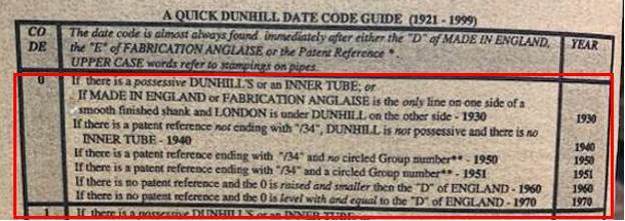
The date code is almost always found immediately after either the “D” of MADE IN ENGLAND, the “E ”of FABRICATION ANGLAISE or the Patent Reference (Red letter and underline emphasis is mine).

That gave me the information I needed regarding the superscript/underlined 0 (0) after the Patent Number. It was definitively the date stamp. Now it was just a matter of identifying the date from that information. Once again the back cover of Loring’s book gave me the answer. I am including a photo of the chart with the area of interest blocked in red.The superscript/underline 0 points to a date that is determined by the above chart in the third If statement in the red boxed photo above. It says –“If there is a patent reference not ending with “/34”, DUNHILL is not possessive and there is no inner tube – 1940”. All of the “nots” fit the pipe in hand. The mystery is solved and a date is set! It is ten years older than I first thought when I saw it.

Thus, thanks to all of John Loring’s hard work, I know that the pipe I am working on is a 1940 Dunhill Hand Worked Bruyere that is a Pot shape with a 7 style stem.

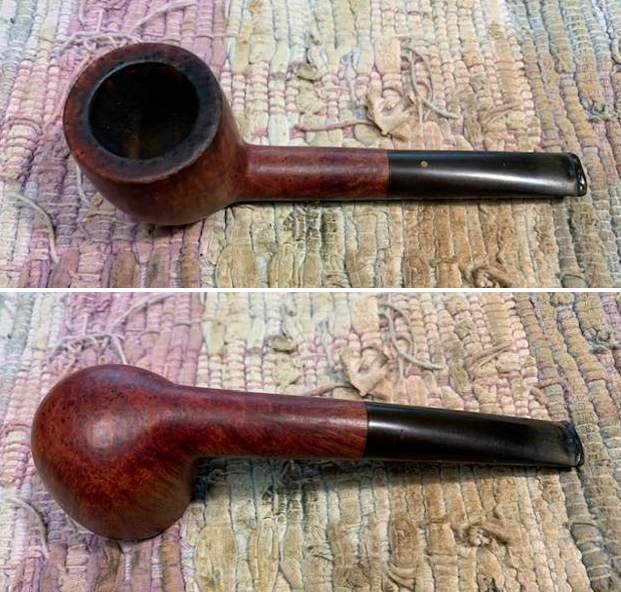
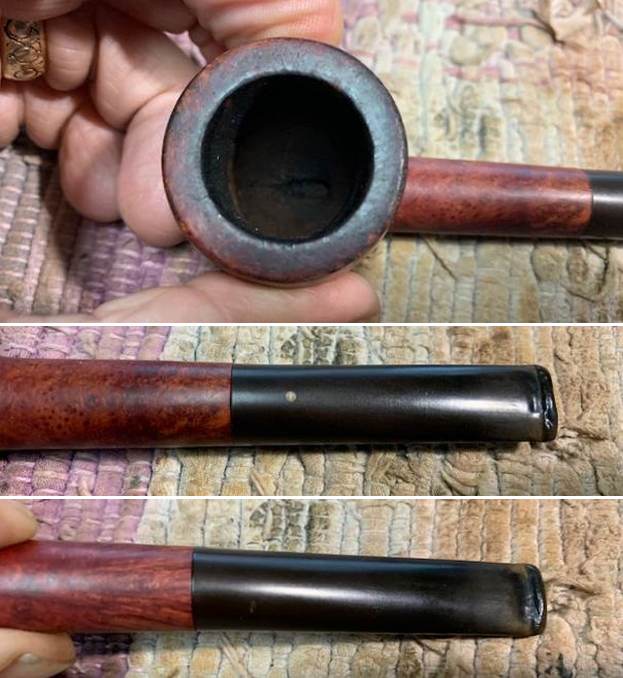
Now it was time to work on this old timer. Jeff carefully cleaned the pipe. He reamed it with a PipNet pipe reamer and then cleaned up the reaming with a Savinelli Fitsall Pipe Knife. He scrubbed out the internals of the shank and stem with alcohol, pipe cleaners and cotton swabs until the pipe was clean. He scrubbed the exterior of the bowl with Murphy’s Oil Soap and a tooth brush to remove the grime and grit on the briar and the lava on the rim top. The finish looks better and the briar has a deep richness in the colour that highlights the grain. He scrubbed the stem with Soft Scrub to remove the grime and oils and then soaked it in Before & After Stem Deoxidizer. He rinsed it with warm water and ran pipe cleaners through once more. When the pipe arrived here in Vancouver it was a great looking pipe with beautiful grain. I took close up photos of the rim top and the stem to show the condition of the pipe after Jeff’s work. The rim top looked quite good and the edges were in decent condition. There was some darkening on the top of the rim and the edges. The photos of the stem showed the tooth damage very clearly on both the stem surface and the button edges.I took some photos of the stamping on the shank sides and they read as noted above. They are faint in spots but still readable.I removed the stem from the shank and took a photo of the pipe taken apart. It really is a beautiful pipe.I polished the briar with micromesh sanding pads – dry sanding with 1500-12000 grit sanding pads. I wiped the briar down after each sanding pad to remove the dust. The grain really began to shine and stand out. Now it was time for Before & After Restoration Balm to work its magic on the briar. I have come to really love this product. I work it into the briar with my fingertips to clean, restore and enliven the briar. It always leaves the grain really popping on the pipe and this was no exception. I let the balm sit for 15 minutes then buffed the pipe with a soft cotton cloth. It is a stunning pipe. I set the bowl aside and turned my attention to the stem (Shape 7). I “painted” the stem with the flame of a Bic lighter to try and lift the dents at and on the button a bit. It worked to some degree but there were still significant dents left. I filled in what remained and rebuilt the button edges with black Super Glue and set the stem aside as the repairs cured. Once the repairs cured I reshaped the button and flattened out the stem repairs with a small file. I sanded them smooth and continue to reshape the button with 220 grit sandpaper. While I was at it I also sanded the rest of the stem to remove some of the oxidation that remained. I started polishing out the scratches with 400 grit wet dry sandpaper. I decided to work over the oxidation a bit more with SoftScrub cleanser. I scrubbed the stem with cotton pads and was able to remove all of the oxidation. The stem really was beginning to look good at this point.I polished the stem with micromesh sanding pads – dry sanding with 1500-12000 grit pads. I wiped the stem down after each pad with a cloth impregnated with Obsidian Oil. I polished it with Before & After Stem Polish – both Fine and Extra Fine then gave it a final coat of Obsidian Oil and set it aside to dry. This incredibly beautiful HW (Hand Worked) DUNHILL LONDON R7 Pot Made In England Pat. No.4175740 is a special oldtimer. The HW stamped says it was hand worked and it was made before WWII by Dunhill. The R7 is the designation for a Pot shape with a 7 shape stem. I put the stem on the shank and buffed the pipe with Blue Diamond on the wheel (being careful of the stamping so as not to damage that). I gave the bowl and stem multiple coats of carnauba wax and buffed the pipe with a clean buffing pad to raise the shine. I hand buffed it with a microfiber cloth to deepen the shine. The dimensions of this pipe are – Length: 5 ¼ inches, Height: 1 ½ inches, Outside diameter of the bowl: 1 ½ inches, Chamber diameter: 7/8 of an inch. The weight of the pipe is 1.13 ounces/33 grams. It is really a gorgeous old timer and one that will reside in my own collection of older Dunhill pipes. I look forward to enjoying it soon.

A Third Reincarnation for an Antique Trident System


Blog by Robert M. Boughton

https://www.facebook.com/roadrunnerpipes

Imitation is the greatest form of flattery that mediocrity can pay to greatness.
— Oscar Wilde

In their definitive history of the Irish pipe maker and innovator, The Peterson Pipe: The Story of Kapp & Peterson, Mark Irwin and Gary Malmberg describe the key features of the System pipe: “An army mount, an internal reservoir to collect moisture from the smoke and the graduated bore P-Lip mouthpiece.”  (Quoted from Peterson Pipe Notes.)  The Trident homage to the Peterson System has all three.  If pipes had nine lives as the ancient Egyptians were the first to impute to cats, then the Trident already would have used up four of them, at least that I know about, counting the two prior lives and now this latest I have restored to the interesting pipe.  Its continuing worthiness of restoration shows that not all imitations are mediocre.

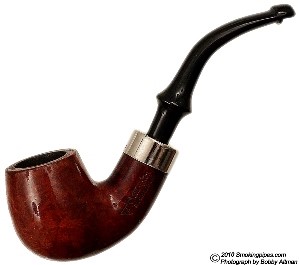
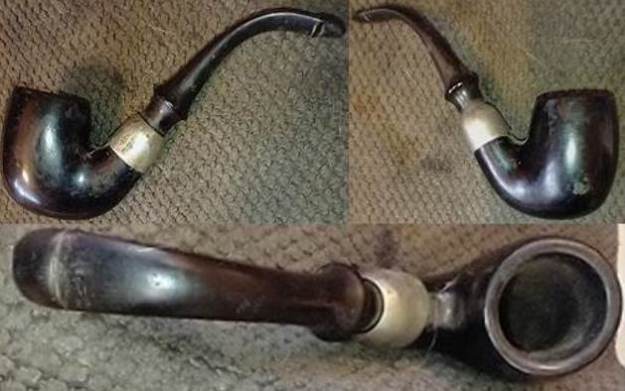
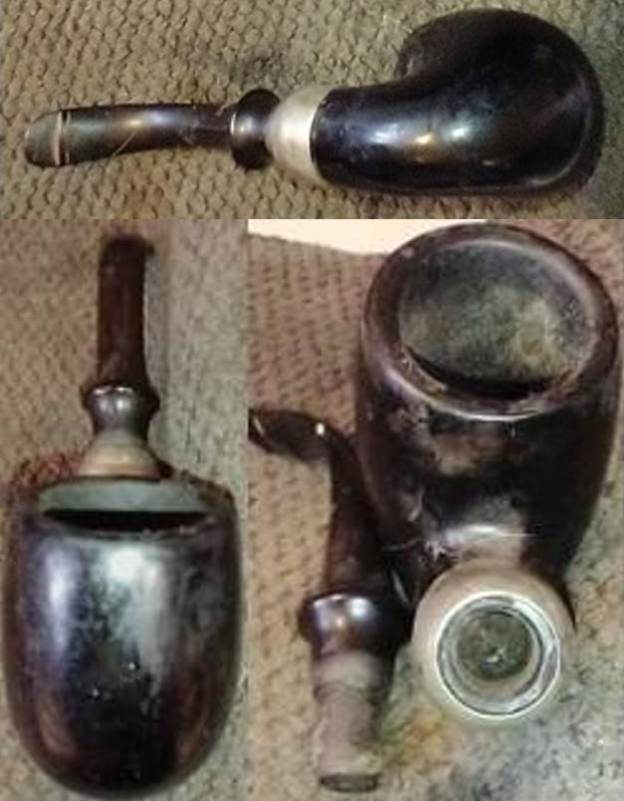
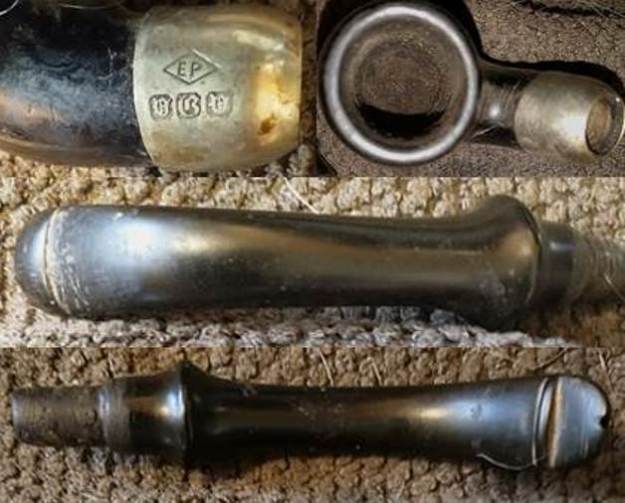
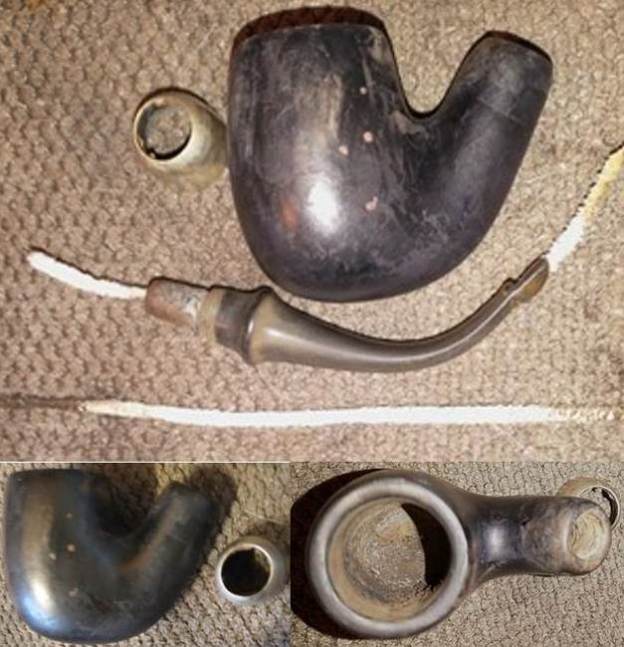
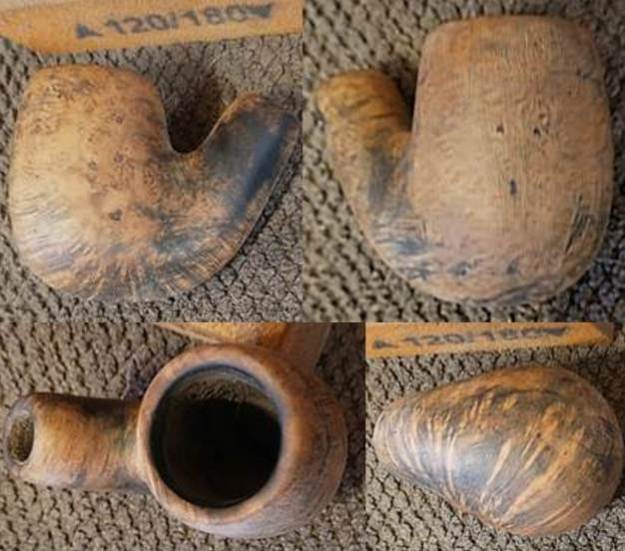
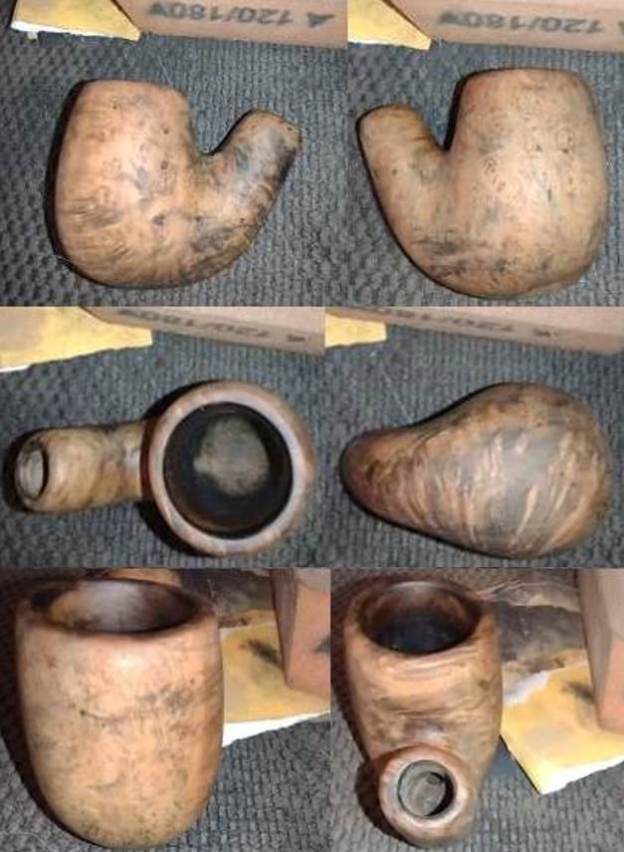
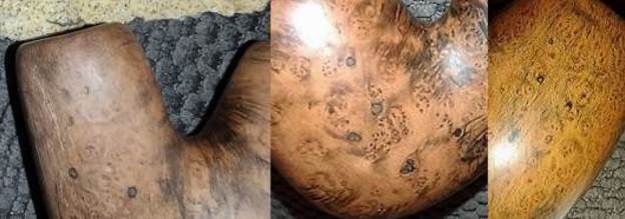
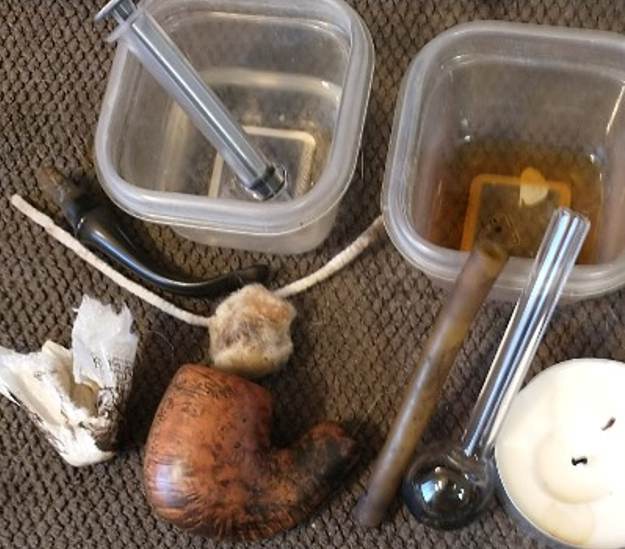
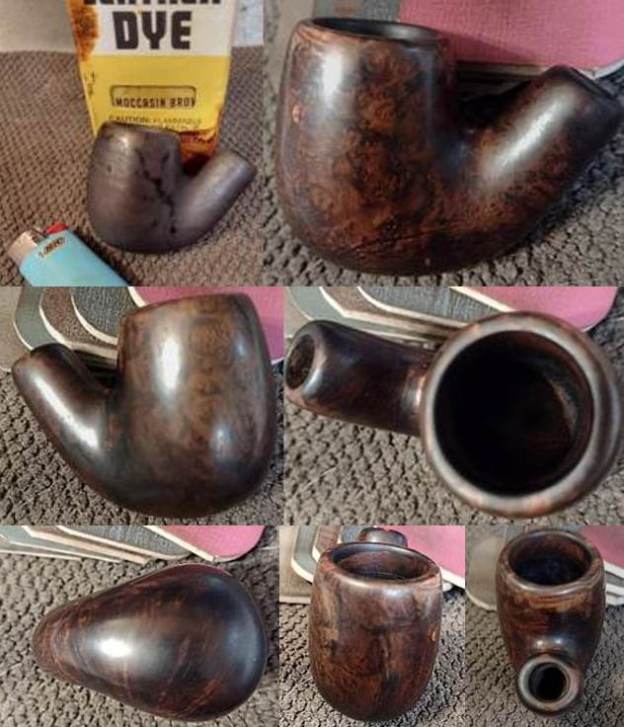
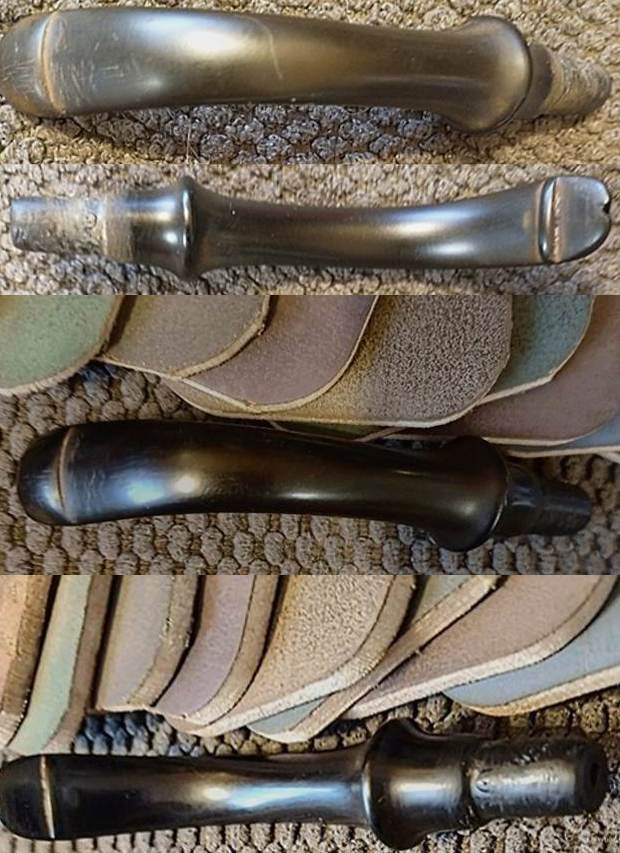
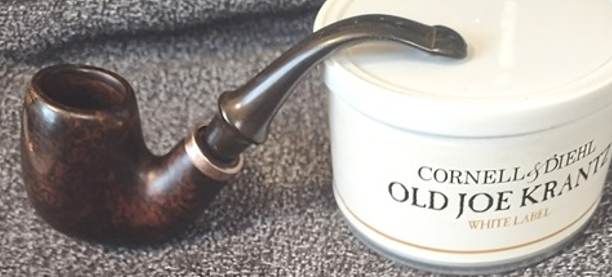
Another indication of the Trident’s quality is its apparent lineage, which in my first two restorations of this well smoked pipe – read abused – I only found misleads to E. Deguingand & Son and Comoy’s, both of England, and even flowery carved pear wood things from Ukraine.  Here is my Trident system pipe as I first found and restored it and again just two months later after rescuing it from the trash, where my second roommate tossed it because “it didn’t work out.”  My best efforts to stifle the flush of outrage I felt as I hastened to my feet at the appalling admission and stomped outside to the garbage bins failed somewhat, to put it in the nicest light I can bring off even at this late date.  While I attribute fatal flaws such as burnouts or through and through cracks to over enthusiastic dedication to a pipe or pipes, I hope I never become inured to the wanton disrespect some pipe smokers unleash on these fine tools in the pursuit of self-gratification. This time, after scouring cyberspace for hours, I lighted upon a Reborn Pipes blog by Dal Stanton, the Pipe Steward, about another fine Trident, a sandblasted bent billiard. Dal’s work on that pipe is remarkable for his skill in enhancing its original beauty and his tireless quest for the Trident’s provenance. An arduous course of leaps, hops and steps led Dal to the conclusion, with little doubt, that the brand was a second of the William Demuth Co. of New York, which lasted from 1835-1911 – making the Trident an antique. Here are before and afters of Dal’s Trident and an early 20th century WDC Wellington Dal compared it to, the latter courtesy of Doug Valitchka and Pipedia. Now I offer one more photo I found, showing another Wellington with the same style of band Dal’s and mine had at our introductions.  This one, from Worthpoint, ends any reservation I had regarding the Trident’s WDC connection.RESTORATION The rounded end cap with which I replaced the original brass band was functional except for three hallmarks that were placed as a charade.  I never cared for the marks, which I considered distracting, but in a misguided fit to make the previous dress version more Petersonian, I went with it.  I have read other blogs discussing the meaning of EP in an oval on certain bands and understood it to stand for Electro Plated, a process of adding a thin layer of silver to the nickel.  I found an online dictionary of silver band makers that claims the EP on the end cap stands for Edward Powers, who with his brother John began operation as the Powers Brothers tobacconist in Dublin in 1900.  The end cap indeed could be called Petersonian (more or less, whatever the true meaning of EP!).  At any rate, the end cap had to go, and I was happy it came off with the 12-hour Isopropyl soak, which removed little else.  That’s the problem with a well-done black stain and shellac coat.My 120/180-grit pad removed all remnants of the dress finish faster and far easier on my hand and arm than paper and revealed the total erosion of the one word of nomenclature. I had checked before using the pad to avoid not leaving even a ghost of the block Trident letters. I did not yet grasp how flawed the wood was with almost bottomless scratches and some pits, so I continued with more of the sanding pad followed by 220-1000-grit paper progression. This turned out to be just the tip of the iceberg. There were some black blotches left on the right shank below the opening that took 60-grit paper to eliminate.  Nine micro mesh pads later, I accepted the fact that no amount of viable sanding magic would make the pits on both sides of the bowl disappear.I mixed some briar shavings with Super Glue, applied dabs (sort of) to the pits and let it dry. I had missed tiny spots of the pits on the right side the first time, so I added fine drops of Super Glue alone.The 320 paper took off the dried glue, and I followed with 400-1000 before a full micro meshing. Next came an Everclear retort.My Fiebing’s Dark Brown leather dye was evaporated from long disuse, so I fell back on the Moccasin Brown for the stain.  With a flick of my Bic, I achieved an excellent flambé effect.  After a cool-off, I got rid of the char and gave the briar a shine with micro mesh from 6000-12000.  As is apparent in the following shots, some areas were too light, although not all of the pics show just how light.  I spot stained under the rim, the difficult to reach space on the back side of the bowl in the curve of the shank and most of the right and front sides.  Okay-okay, I revise “some areas” to more or less all!  Re-flambéeing the corrected places (I know that wasn’t a word until I added it to my MS Word dictionary), and another four-pad micro mesh were easy.  I didn’t bother to memorialize with still more photos the steps that should have been unnecessary.  I think 75 will be quite sufficient.  Despite repeated staining of the small spot bordering the left side and right front views, I made it a tad better but not gone.Finding the best match for a replacement, straight-edged endcap turned out to be the most challenging aspect of this third reincarnation of the Trident, again as far as I know about. I pawed through way too many candidates from a comprehensive collection I obtained from a friend on the Facebook smokers forums a while back, and after much more time than I had anticipated, I found a match that fit snugly on the shank and needed no Super Glue. The good news is that they are all organized in four baggies now.I put off the stem because, for the first time in my pipe refurbishing life, it didn’t need any sanding – just an Oxi bath and micro mesh.I buffed the stem and stummel with Brown Tripoli and carnauba. While I am unhappy with the tiny flaw on the bowl that remains un-darkened, I am pleased with the overall results.  This Trident System, a WDC second made when Peterson’s System was still revolutionary, is a clear tribute to the folks in Dublin.  Maybe it was the giant Irish maker that put an end to Trident because of the matter of a little patent infringement technicality!  Who knows?

SOURCES
https://petersonpipenotes.org/2019/08/27/145-andy-wikes-guide-to-the-system-pipe/
https://pipedia.org/wiki/British_Pipe_Brands_%26_Makers_R_-_T
https://rebornpipes.com/2017/07/17/jens-trove-no-7-a-trident-blasted-bent-billiard-with-a-question-of-history/
https://pipedia.org/wiki/William_Demuth_Company
https://thepipesteward.com/about/
https://rebornpipes.com/2018/09/07/dressing-up-a-dinner-pipe-1-4-the-trident-experiment/
http://www.silvercollection.it/DICTIONARYTOBACCONISTE.html

Off to the Opera with my Restored Meerschaum


Blog by Steve Laug

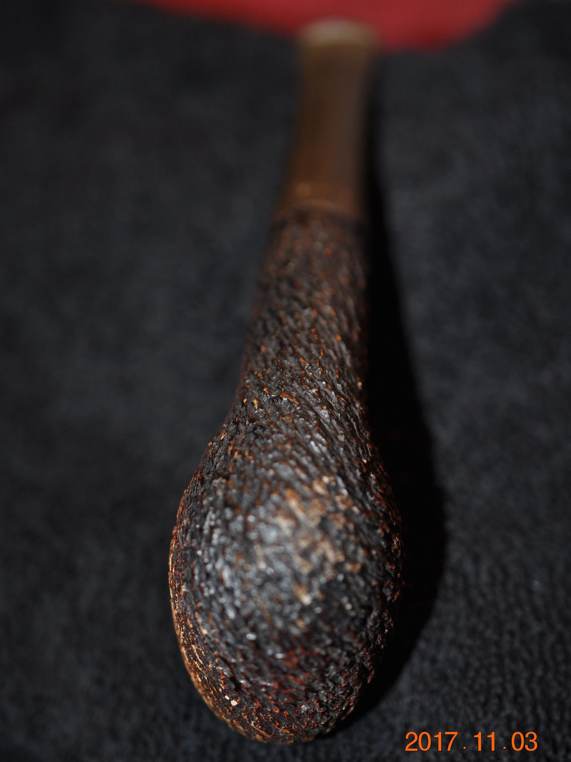
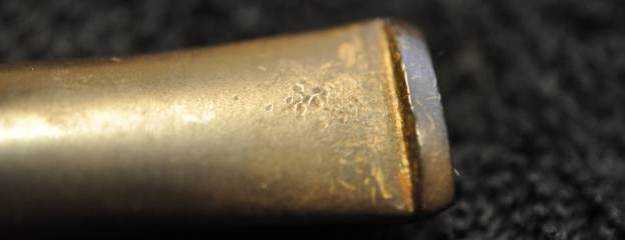
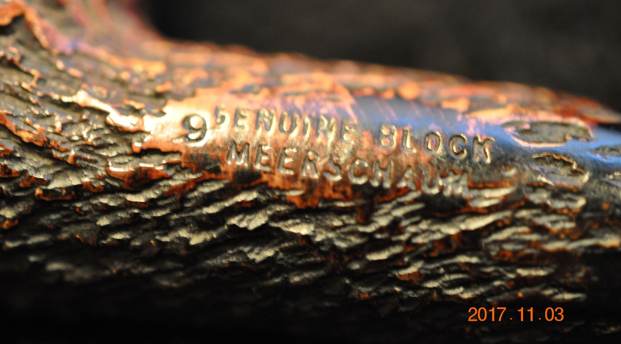
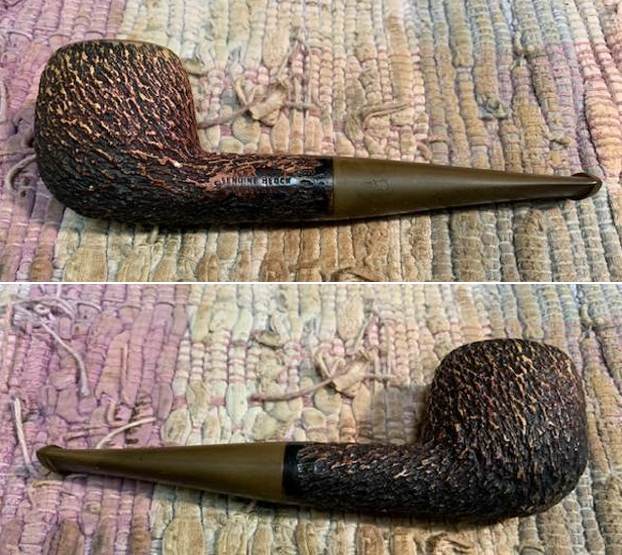
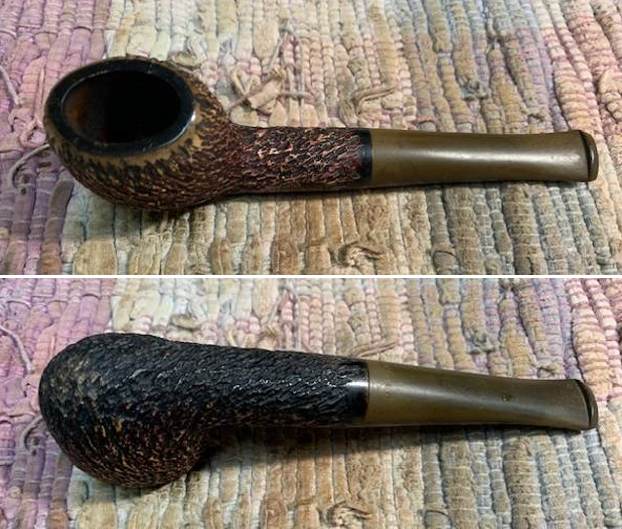
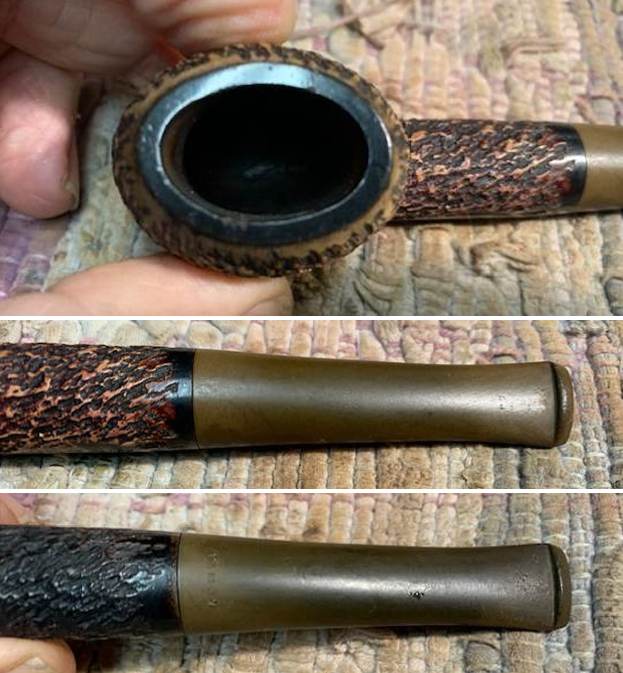
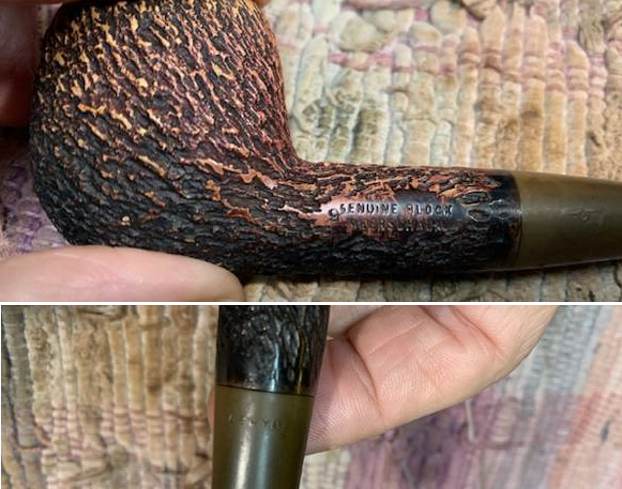
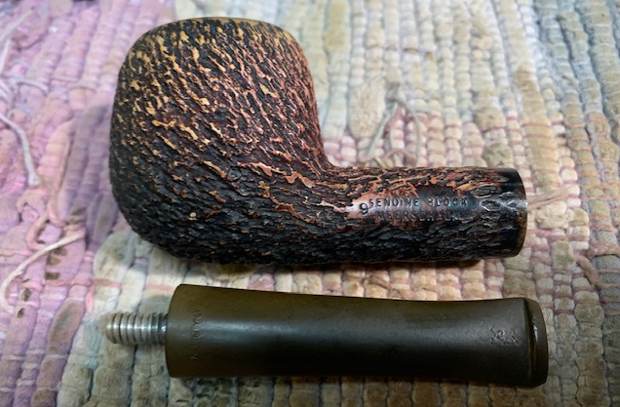
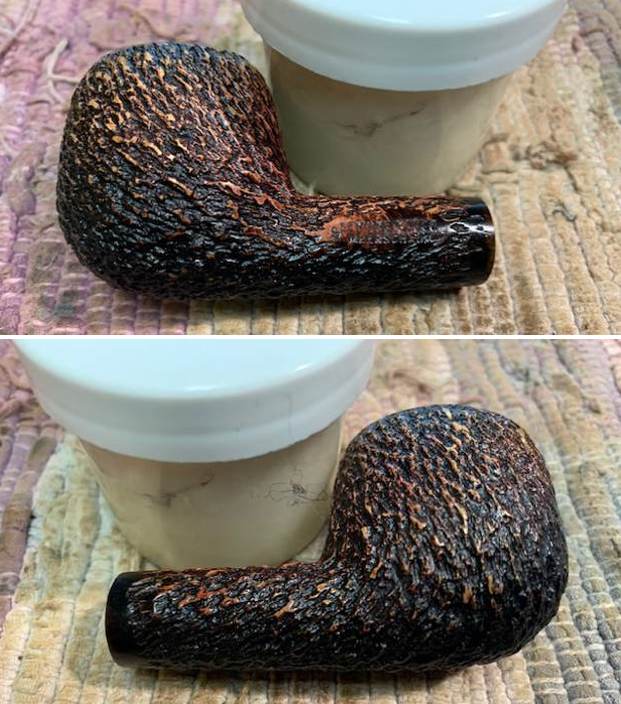
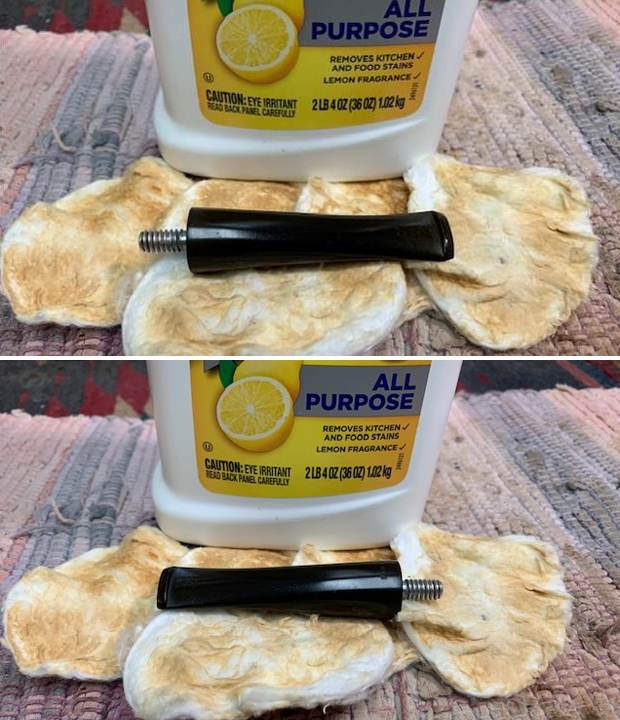
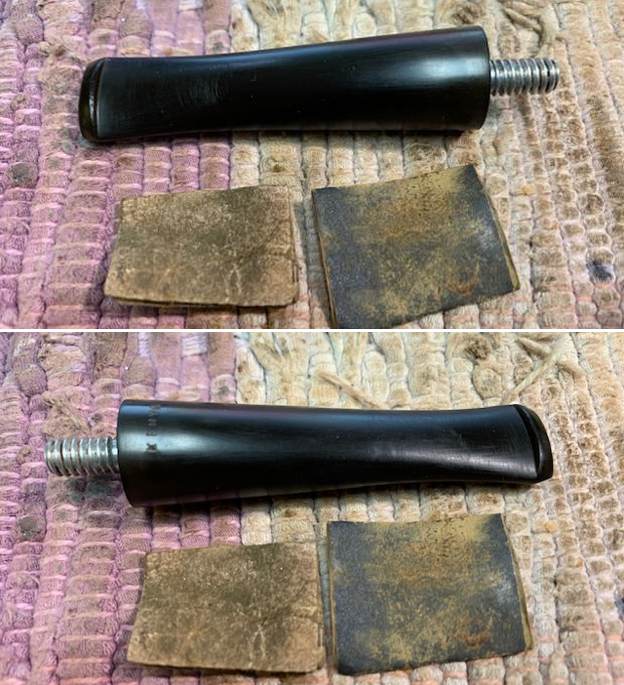
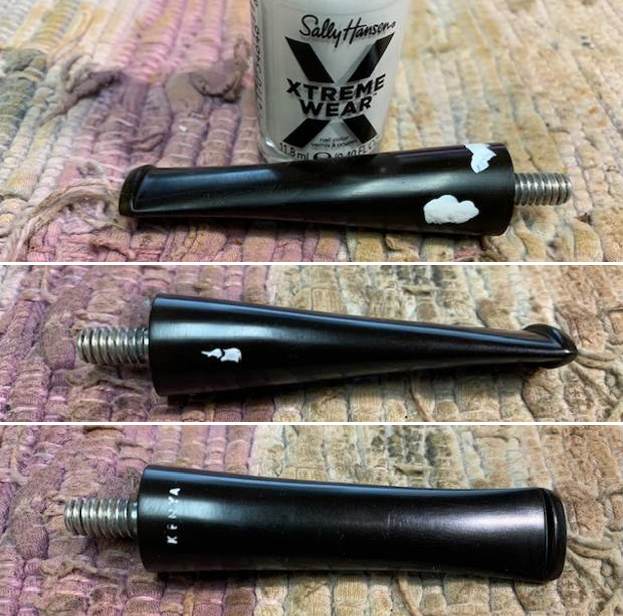
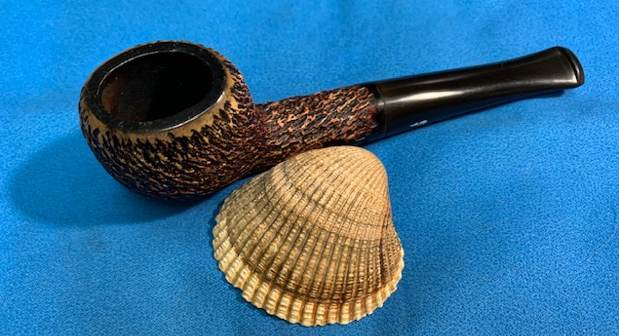
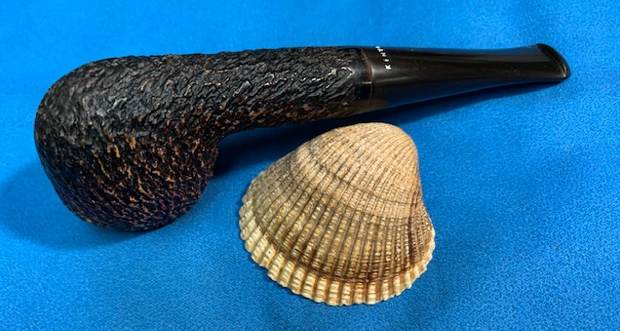
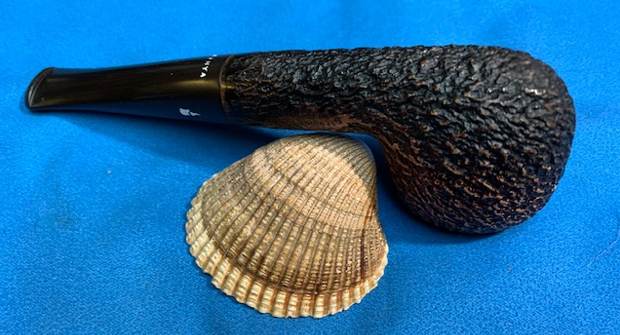
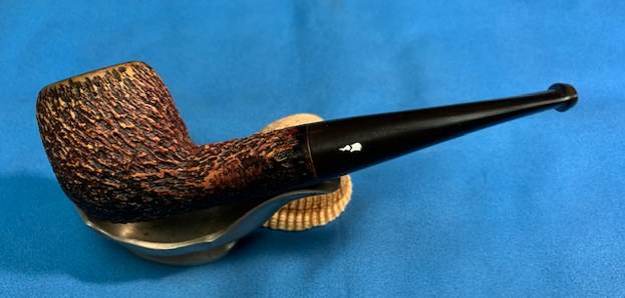
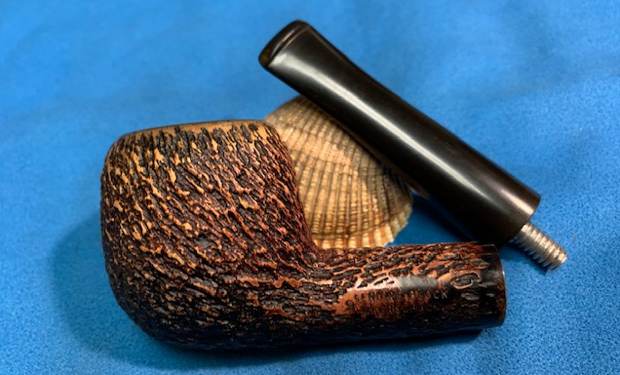
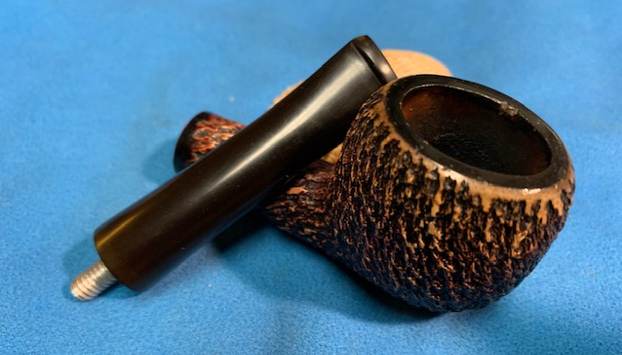
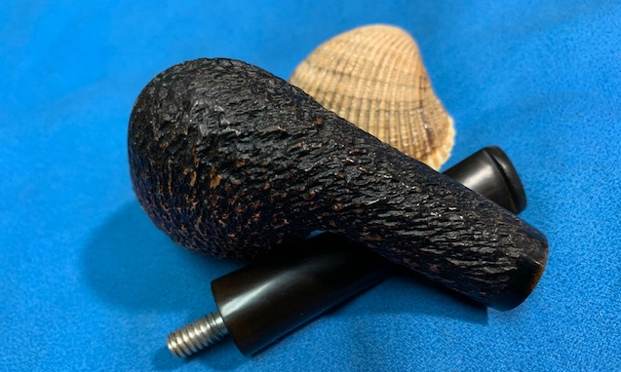
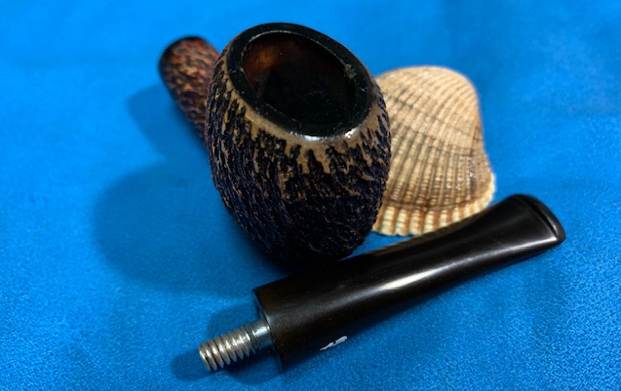
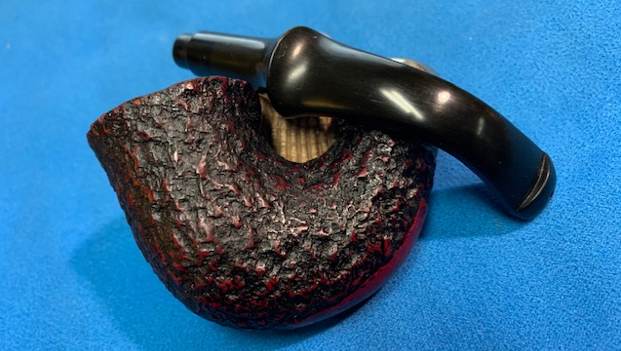
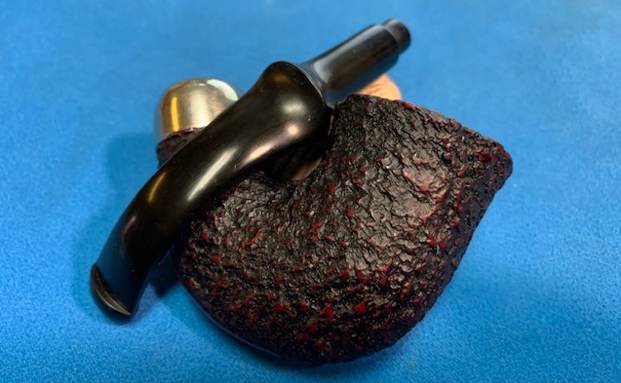
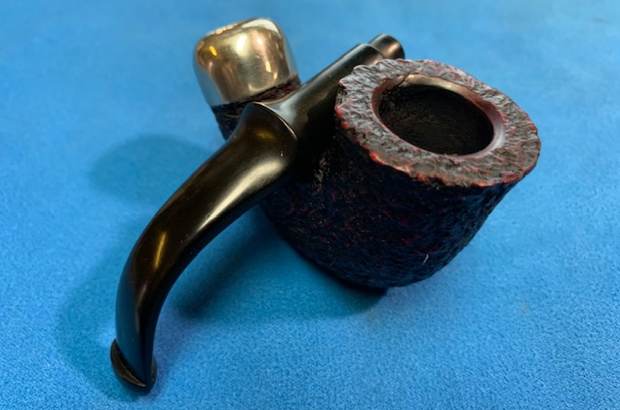
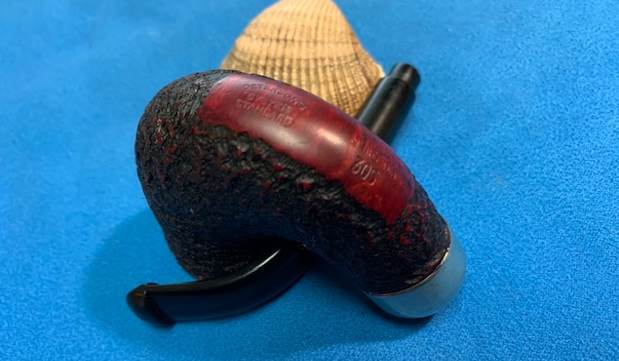
The next pipe on the work table is a pipe that is shrouded in mystery. Jeff bought the pipe from an antique store back in October, 2017 in Bozeman, Montana, USA. It is a well carved rusticated Meerschaum Opera pipe. The rim top and shank end are smooth and are stained shiny black. The sides of the bowl and shank are carved with a bark like finish that is very tactile. It is stained with blacks and brown stains from the bottom of the bowl and shank up toward the rim edges. The stem is a tapered vulcanite stem with a lot of oxidation on the surface. The left side of the stem has a elephant stamp an the underside is stamped KENYA. The tenon is a threaded metal stinger that screws into a metal mortise lining on the shank. The pipe is stamped on the left side of the shank in a smooth panel and reads 9 Genuine Block Meerschaum. It is clear and readable. Jeff took photos of the box that the pipe before he started working on it. He took photos of the bowl, rim top to show the thickness of the cake in the bowl and the light lava coat on the rim top. The inner edge had some darkening and some build up of tars and oils. All of the issues will become clearer after the clean up. He took photos of the top and underside of the stem showing the light tooth marks and chatter on both sides near the button. It is quite oxidized and the stamping was hardly visible at first glance. Jeff also took some photos of the stamping on the left side of the shank and the left and underside of the stem to show the readability of the stamping. It read as noted above. Jeff carefully cleaned the pipe. He carefully reamed it with the smallest cutting head on a PipNet pipe reamer and then cleaned up the reaming with a Savinelli Fitsall Pipe Knife. He scrubbed out the internals of the shank and stem with alcohol, pipe cleaners and cotton swabs until the pipe was clean. He scrubbed the exterior of the bowl with a Gentle Dish Soap and a tooth brush to remove the grime and grit on the meerschaum and light lava on the rim top. The finish looks better and has a deep richness in the colour that highlights the dimensions of the carving. There were no chips or cracks in the carving and the sharp edges looked good. He scrubbed the stem with Soft Scrub to remove the grime and oils on the stem. When the pipe arrived here in Vancouver it was clean but the stem was oxidized and needed more work. I took some close up photos of the rim top and the stem surface. The top and edges of the rim looked very good. The rim had shiny black finish that looked really good with the finish on the bowl. The stem was oxidized and had light tooth marks and chatter on both sides near the button.I took photos of the stamping on the shank and stem. They are clear and readable on both the stem and the shank side.I removed the stem from the shank and took a photo of the parts of the pipe. I is quite a nice looking pipe.I started my work on the pipe by working some Before & After Restoration Balm into the surface of the bowl and shank with my fingertips and a horsehair shoe brush to clean, enliven and protect the smooth surfaces of the meerschaum. I let the balm sit for 15 minutes and then buffed with a cotton cloth to raise the shine. The photos show the bowl at this point in the restoration process. I set the bowl aside and turned my attention to the stem. I scrubbed it with Soft Scrub all purpose cleaner to remove the oxidation and calcification on the stem surface. I was beginning to look better.   I sanded the tooth marks and chatter smooth with 220 grit sandpaper and started the polishing with 400 grit wet dry sandpaper. I touched up the stamping on the left side of the stem and the underside with white acrylic fingernail polish. I applied it with the dauber in the bottle and scraped off the excess with a worn 1500 grit micromesh pad. The left side of the shank had what appears to be an elephant and the underside clearly reads Kenya.I polished the stem with micromesh sanding pads – dry sanding with 1500-12000 grit sanding pads. I wiped it down after each sanding pad with Obsidian Oil. I polished it with Before & After Pipe Stem Polish – both Fine and Extra Fine. I gave it a final coat of Obsidian Oil. It looks significantly better! With the bowl and the stem finished I put the unique rusticated #9 Genuine Block Meerschaum Opera pipe back together and buffed it lightly on the wheel using Blue Diamond to give it a shine. I gave the stem multiple coats of carnauba wax on the wheel. I buffed the bowl with a horsehair shoe brush to raise the shine. I hand buffed it with a microfiber cloth to deepen the shine. The carved surface of the bowl and shank is a great looking. The dimensions of the pipe are – Length: 5 ½ inches, Height: 1 ¾ inches, Outside diameter of the bowl: 1 ½ inches x 1 inch, Chamber diameter: ½ of an inch x ¾ of an inch. The weight of this large pipe is 1.13 ounces /32 grams. This Rusticated Meerschaum Opera Pipe is another great find. It is much more beautiful in person than these photos can capture. I will be adding it to the Meerschaum Pipe section of the rebornpipes store soon. If you want to add it to your collection it will make a fine smoking addition. This is another pipe that has the possibility of transporting the pipe man or woman back to a slower paced time in history where you can enjoy a respite. Thanks for walking through the restoration with me.
Comoy’s 409 Tradition Restored


By Al Jones

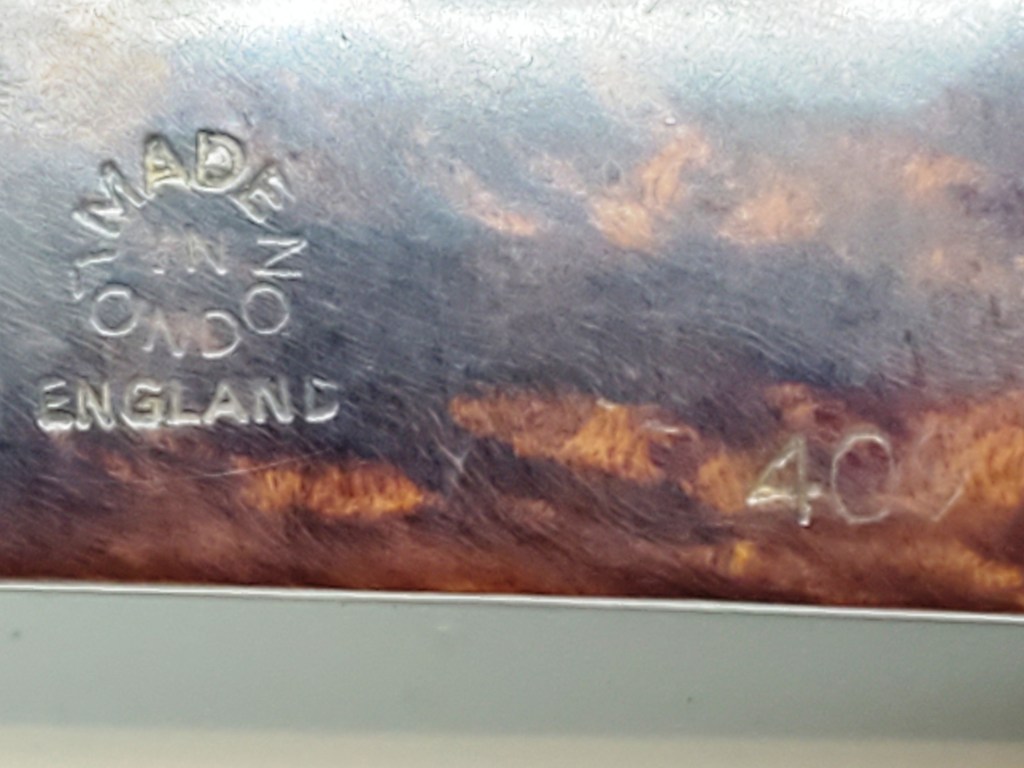
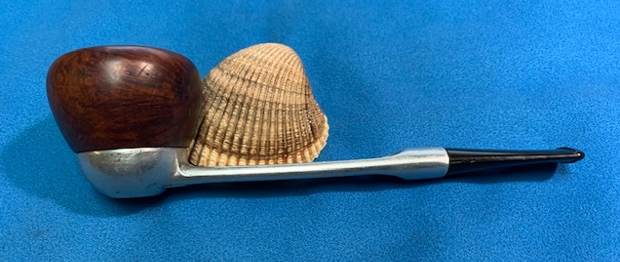
Over the past 10 years, I’ve restored four Comoys of this shape 409 and the third Tradition finish. I’ve sold the others, but perhaps this one stays in my collection? The drilled, 3 piece stem dates it to the 1946 to 1981 pre-Cadogan era.

This one was in great shape, with an oxidized, but otherwise, nearly perfect stem. There was a heavy cake in the bowl and some build-up on the bowl top. Below is the pipe as it was delivered.

I reamed the cake from the bowl, and found a very nice bowl interior, with no issues. The bowl was soaked with alcohol and sea salt. Following the soak, I scrubbed the shank with a bristle brush dipped in alcohol. I used a piece of worn scotch-brite to remove the build-up on the bowl top.

The stem was mounted and I removed the oxidation with 600, 800, 1500 and 2000 grade wet paper, followed by 8,000 grade micromesh (sheet). The stem was then buffed with White Diamond and Meguiars Plastic polish.

The briar was buffed lightly with White Diamond and several coats of Carnuba wax.

Below is the finished pipe.

What Great Donation – A Lovely Republic Era Peterson’s System Standard 305 Calabash


Blog by Steve Laug

I continue to accept and receive pipes that come to me as donations for the SA Foundation (safoundation.com). The SA Foundation is an organization that has been serving sexually exploited women and their children for over 30 years by providing housing, recovery and skill development. The currently have a 70% success rate with the women they serve. Each pipe that comes in is sold and the entirety of the price and shipping cost goes to the Foundation.

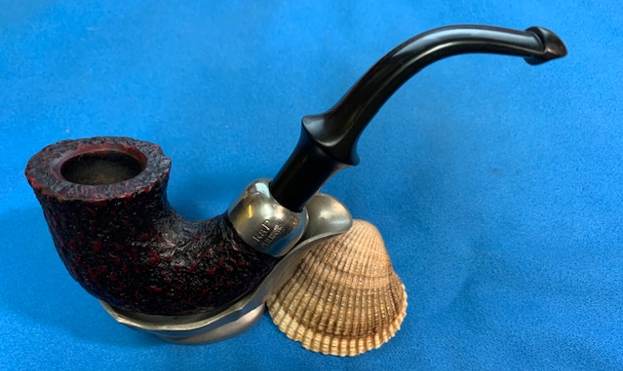
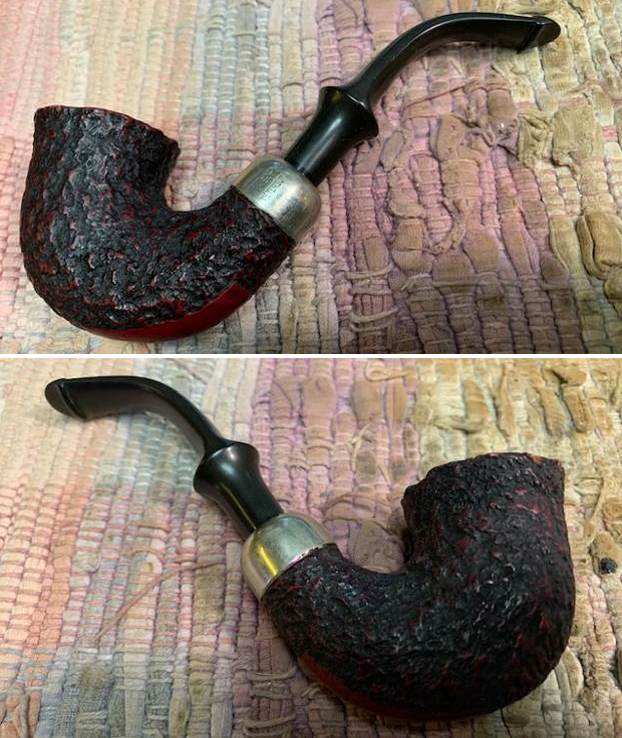
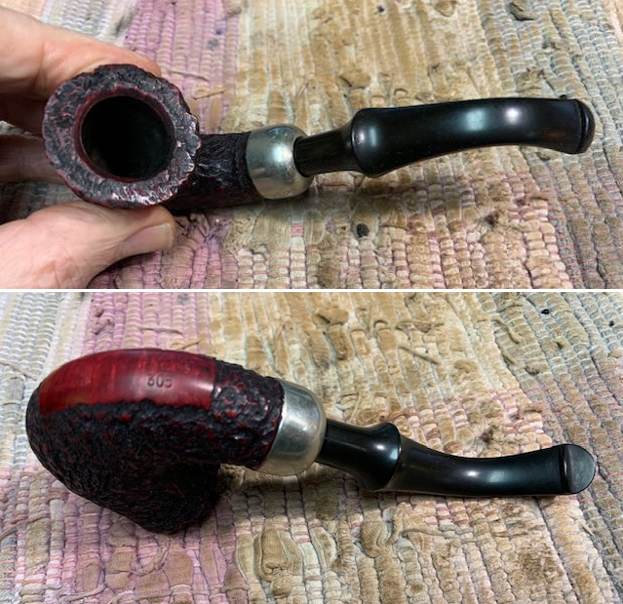
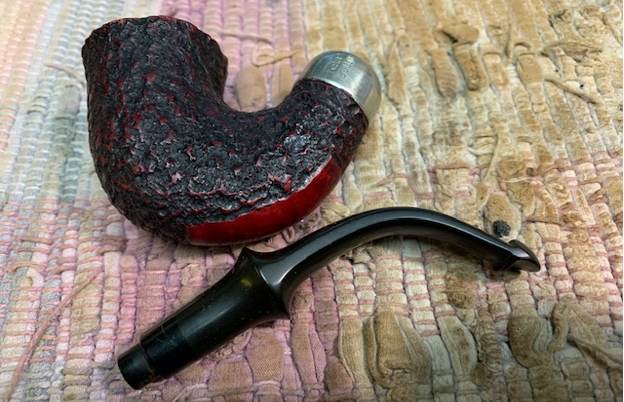
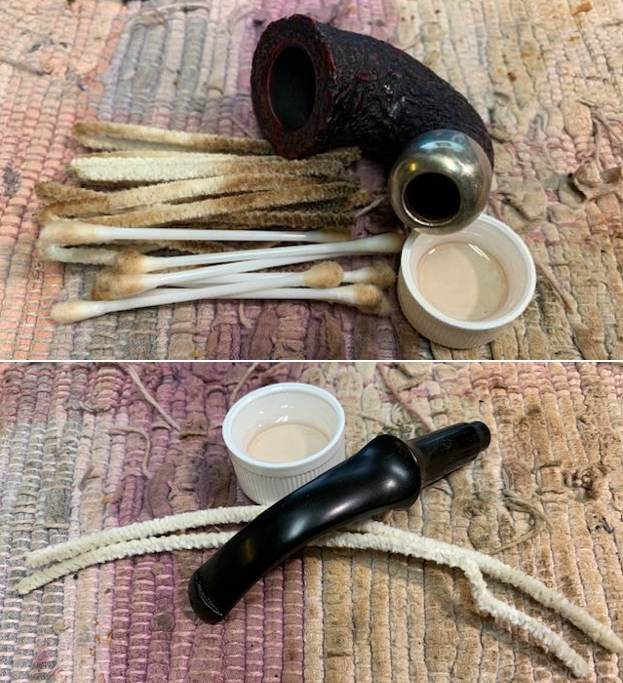
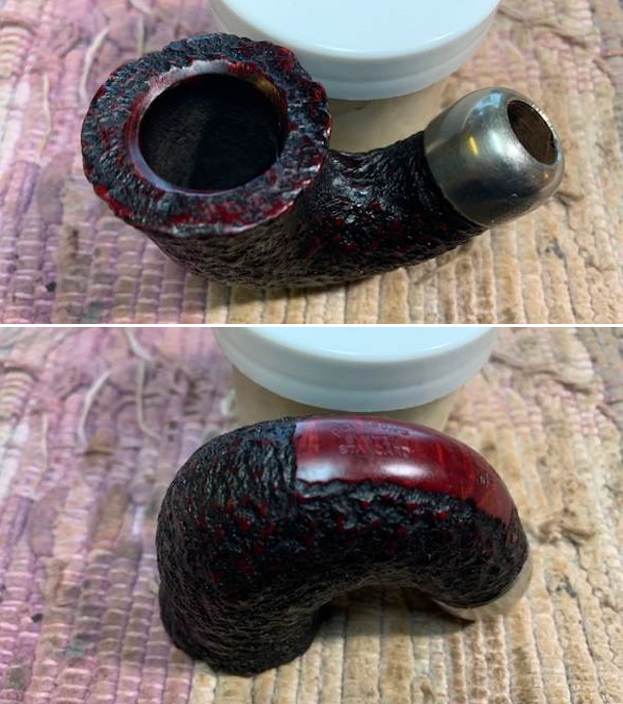
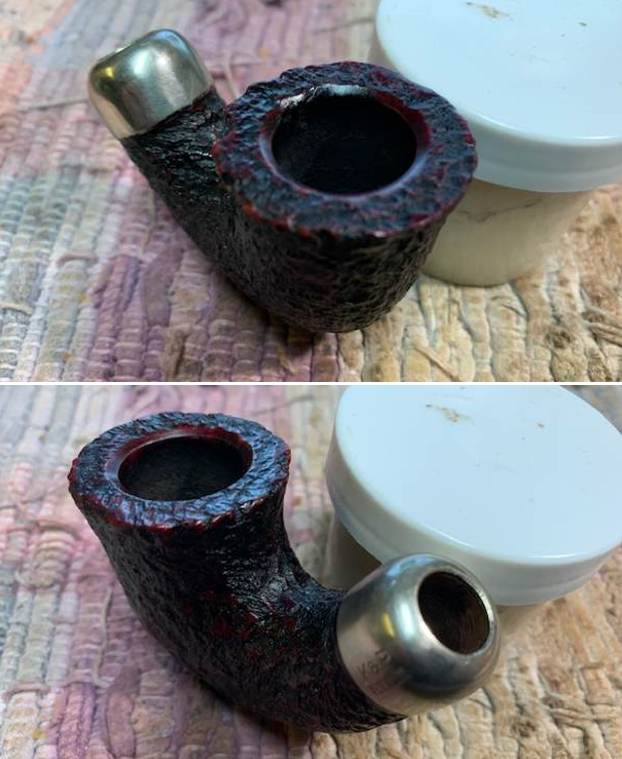
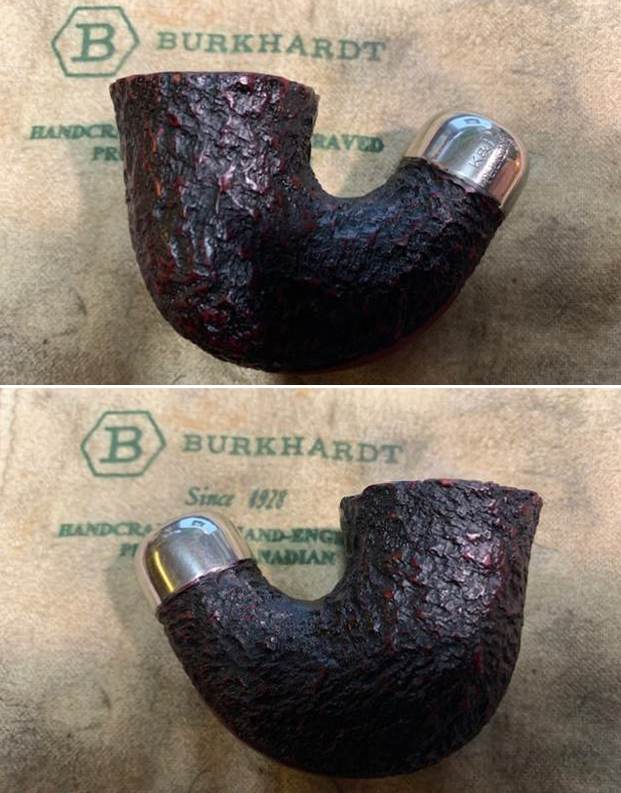
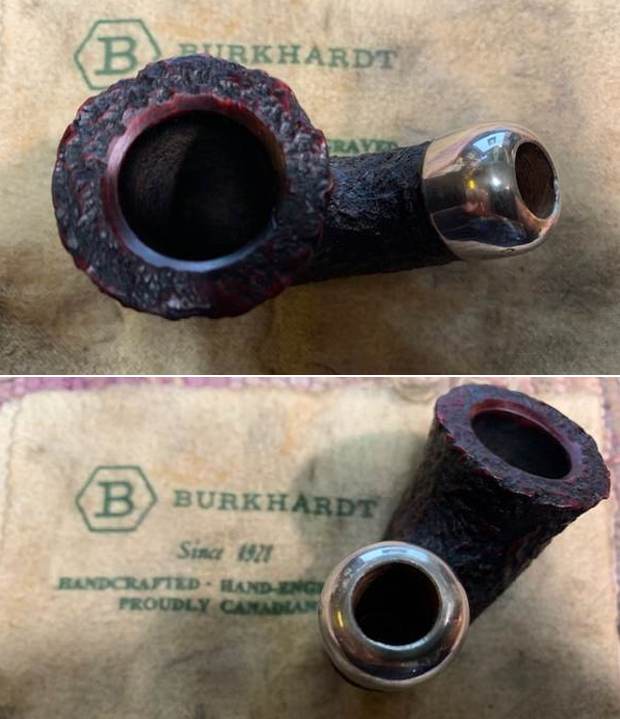
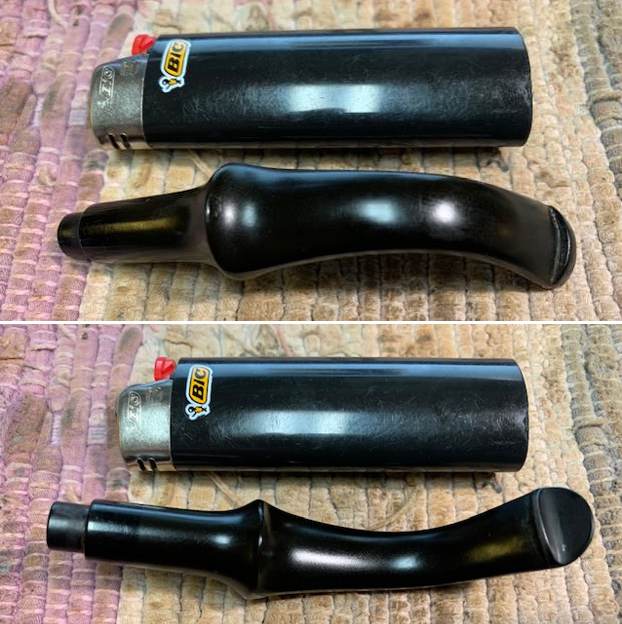
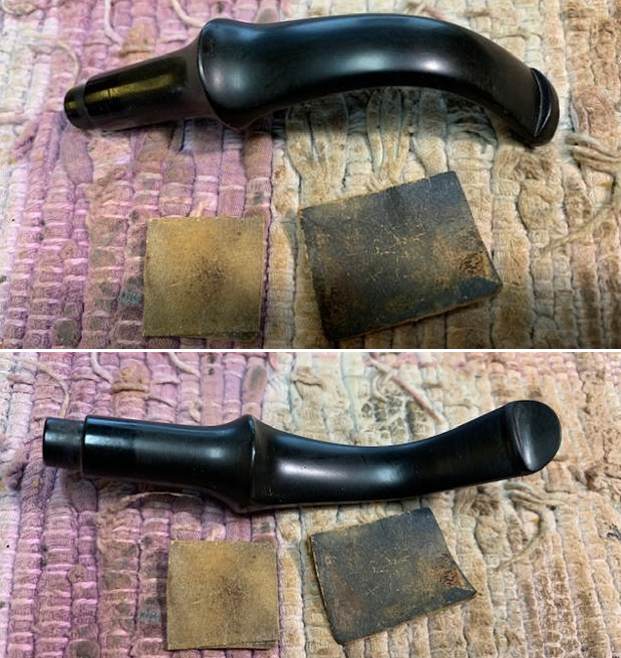
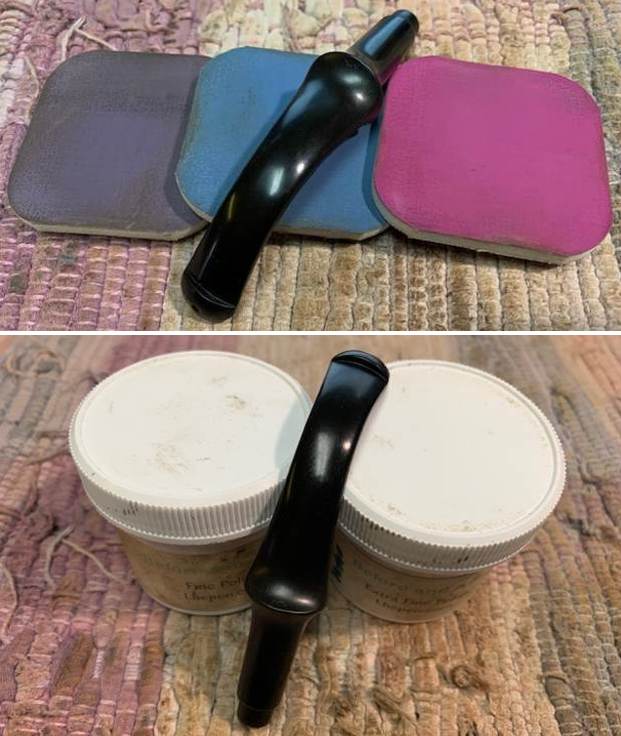
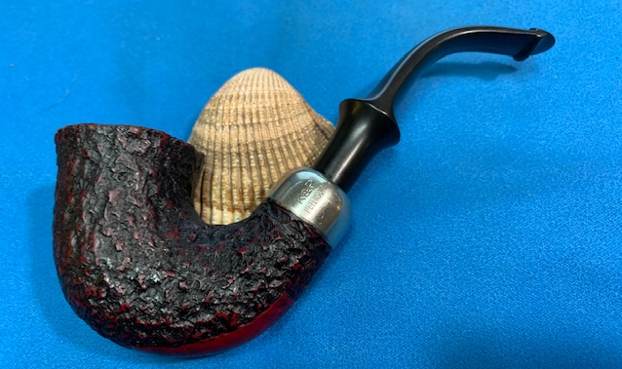
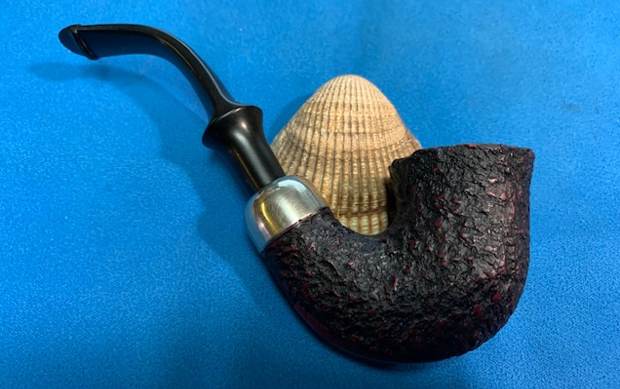
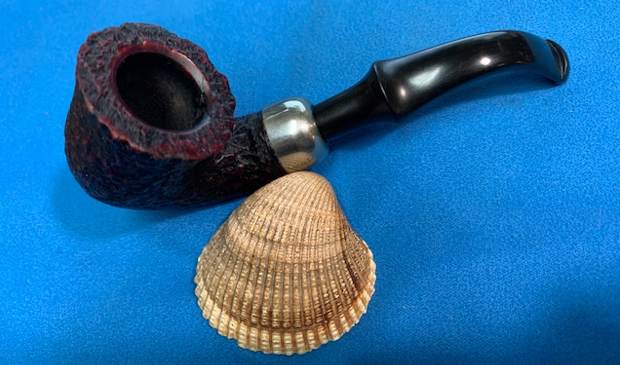
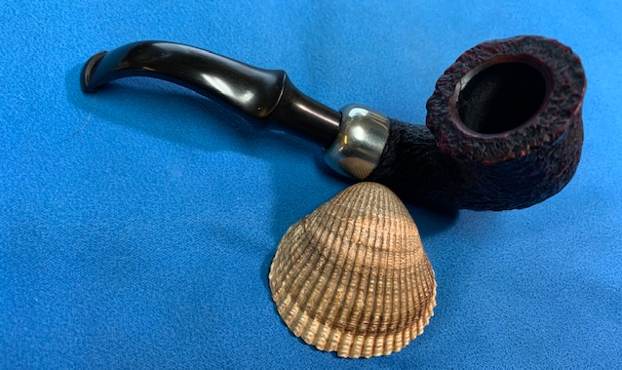
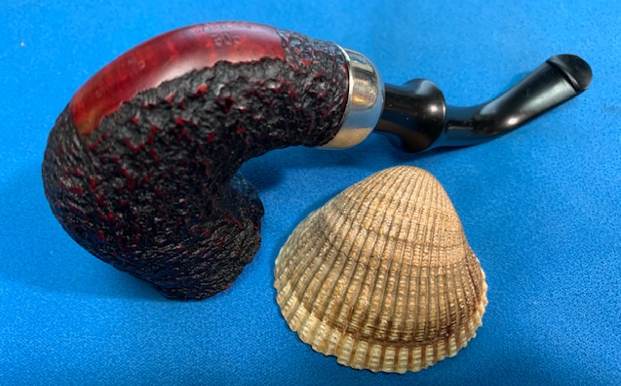
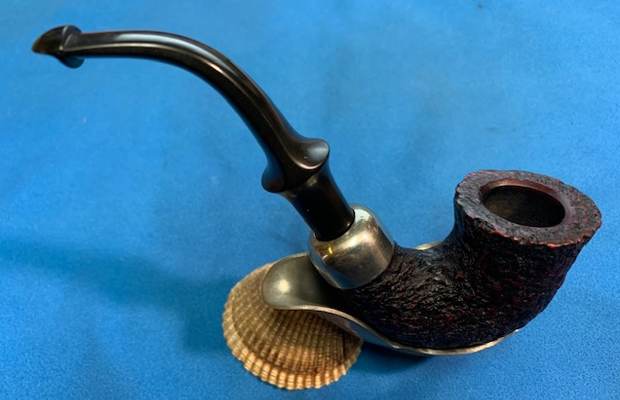
The next pipe I have chosen is a rusticated Peterson’s System Standard Calabash. Thanks to the pipeman who donated this beauty. The Calabash came with a nice nickel ferrule on the shank end. The finish on the bowl sides was very clean. The contrast of the red and brown stains gave the finish a sense of depth. It was stamped on the underside of the heel and the shank and read Peterson’s [over] System [over] Standard. Next to that it read Made in the Republic of Ireland (three lines) with the shape number 305 underneath. The nickel ferrule was stamped K&P [over] Peterson’s. The bowl had been reamed and cleaned before it came to me so it would only need a quick touch up. The stem was very clean and shiny with a light tooth mark on the underside near the button. I took photos of the pipe to show its condition when it arrived. I took photos of the rim top and stem to show the beautiful condition of the pipe. The bowl is very clean and the rim top and edges look very good. The photos of the stem show that it was also in excellent condition with only one small tooth mark on the underside near the button end. I took a photo of the stamping on the underside of the heel/shank and the band. It is clear and readable as noted above. The photo of the band shows how it was stamped on the nickel – centered and clean. The ferrule was lightly oxidized and needed to be polished. I took the stem off the shank and took a photo of the look of the pipe to show the relation of the size of the parts. It is a nice looking pipe.This pipe was in such great condition that I would only need to work it over to remove any remnants of the previous owner and any debris that had accumulated since it arrived here in Canada. Peterson’s System pipes are notorious for residual gunk in the sump and the airway in the shank. This one was no different. I cleaned the inside of  the shank with alcohol, cotton swabs and pipe cleaners. I cleaned the airway in the stem at the same time.    I worked some Before & After Restoration Balm into the surface of the briar with my fingertips and a horsehair shoe brush to clean, enliven and protect the briar. I let the balm sit for 15 minutes and then buffed with a cotton cloth to raise the shine. The photos show the bowl at this point in the restoration process.   I polished the nickel ferrule with a jeweler’s cloth to remove the tarnish and oxidation as well as add some protection to the ferrule.    I set the bowl aside and turned my attention to the stem. I “painted” the surface of the stem with the flame of a lighter to lift the remaining tooth marks on the stem. I sanded the tooth marks that remained with 220 grit sandpaper. I started the polishing the stem with 400 grit wet dry sandpaper. I wiped it down with some Obsidian Oil.    I polished the stem with micromesh sanding pads – wet sanding with 1500-12000 grit sanding pads. I wiped it down after each sanding pad with Obsidian Oil. I polished it with Before & After Pipe Stem Polish – both Fine and Extra Fine. I rubbed it down with some Obsidian Oil and set it aside to dry.   It is always exciting to finish a pipe. This was very true of this Republic Era Peterson’s System Standard 305 Calabash. I put the pipe back together and lightly buffed it with Blue Diamond on the buffing wheel. I gave the bowl multiple coats of Conservator’s Was and the stem multiple coats of carnauba wax. I buffed the pipe with a clean buffing pad to raise the shine and hand buffed it with a microfibre cloth to deepen the shine. It is fun to see what the polished bowl looks like with the polished nickel ferrule and the black vulcanite stem. This Classic looking Peterson’s System Standard Calabash is another one of my favourite shapes and it feels great in my hand. It is light and well balanced. Have a look at it with the photos below. The dimensions are Length: 5 ½ inches, Height: 2 inches, Outside diameter of the bowl: 1 ½ inches, Chamber diameter: ¾ of an inch. The weight of the pipe is 50 grams/1.76 oz. It is a beautiful pipe and one that will be on the Irish Pipe Makers section of the rebornpipes store soon. If you are interested in adding it to your collection and also making a donation to the SA Foundation at the same time let me know. Thanks for walking through the restoration with me as I worked over this pipe. Thanks to each of you who are reading this blog.
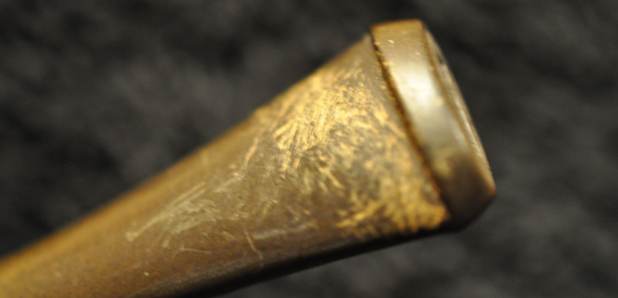
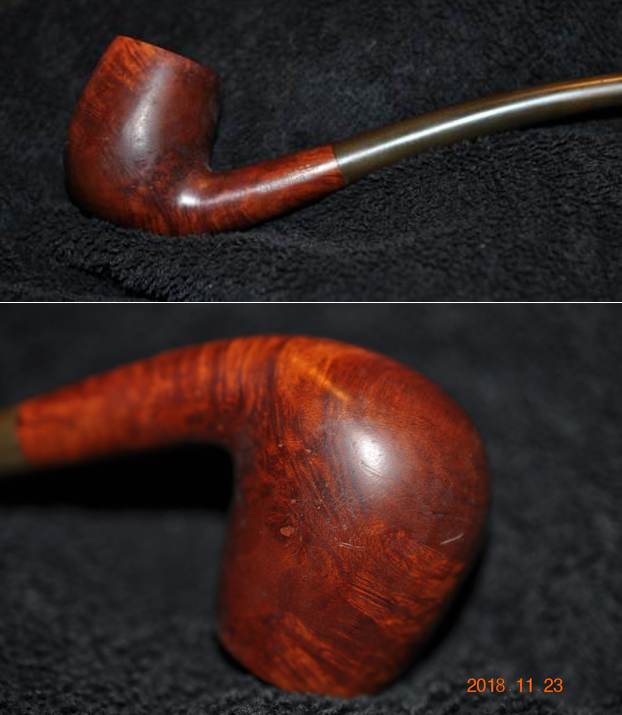
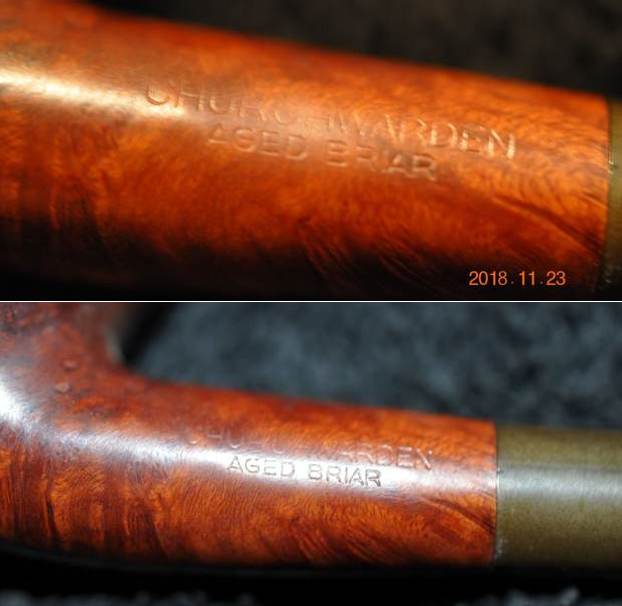
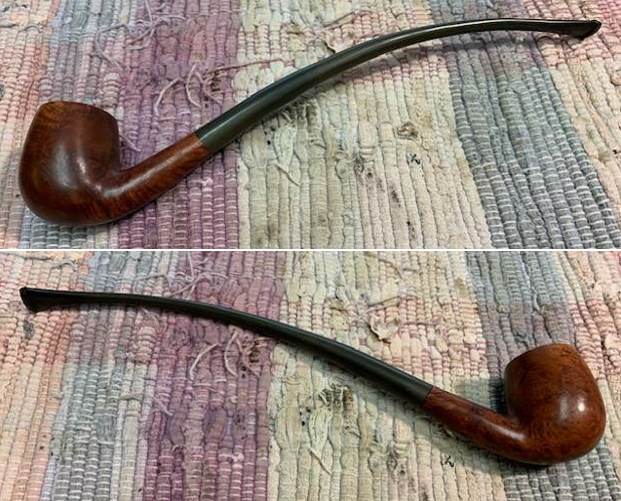
Taking it to Church – Churchwarden Aged Briar 601 Savinelli Made


Blog by Steve Laug

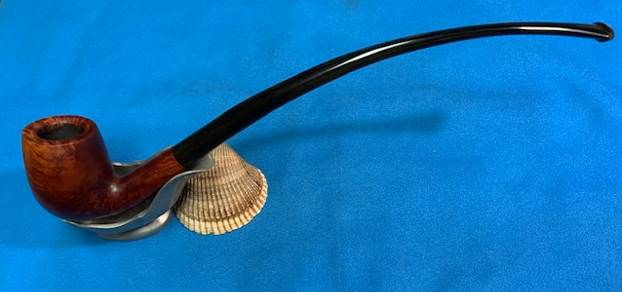
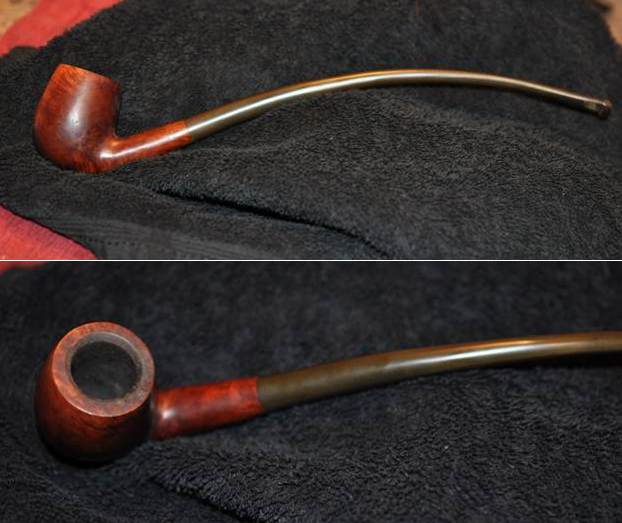
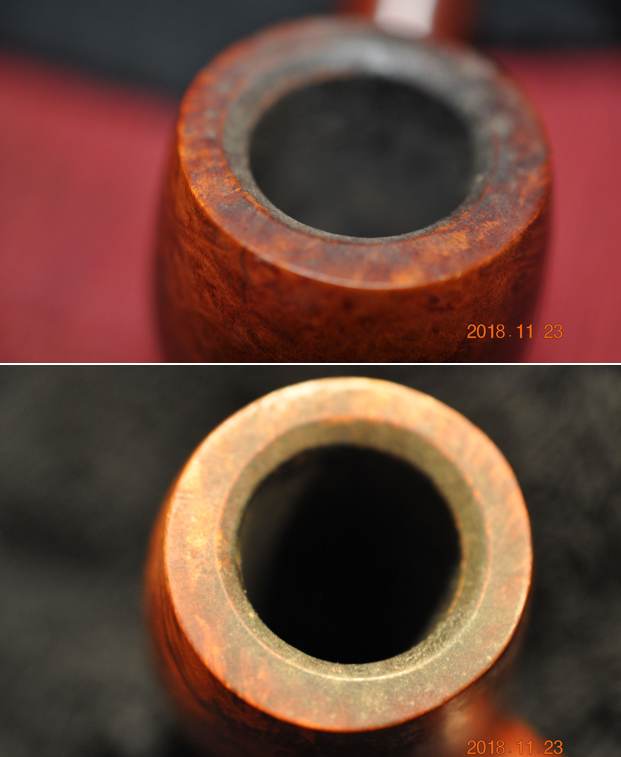
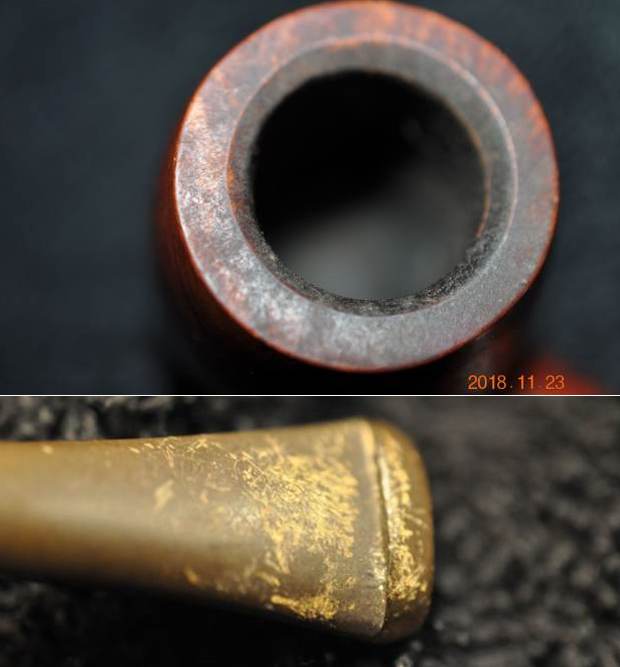
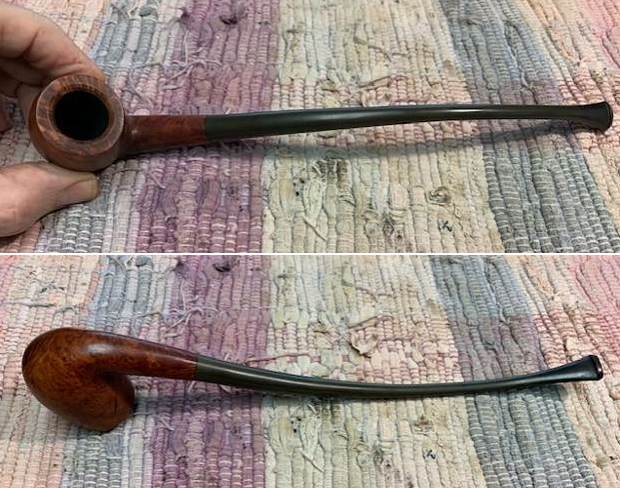
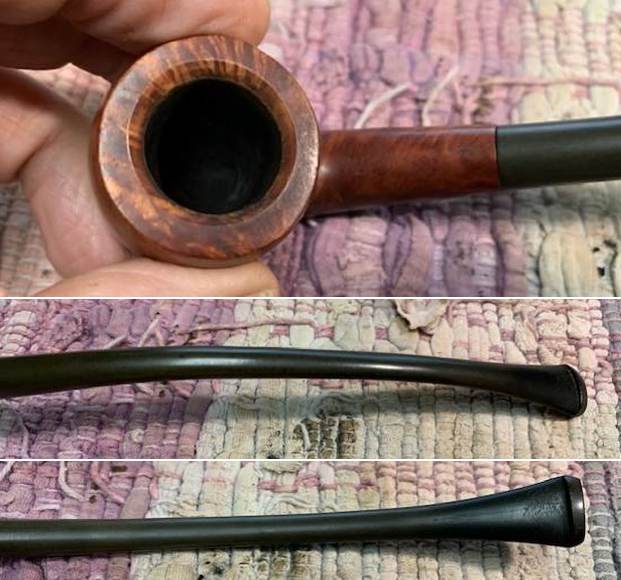
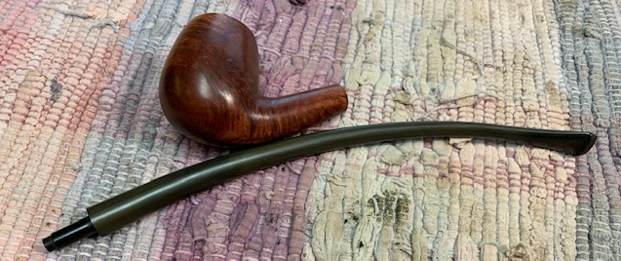
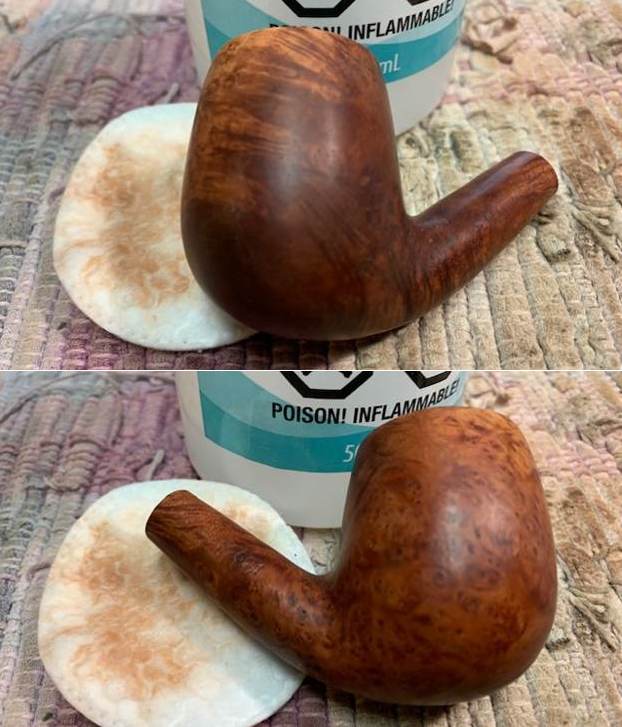
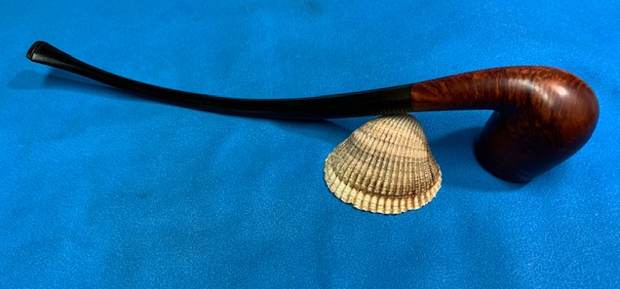
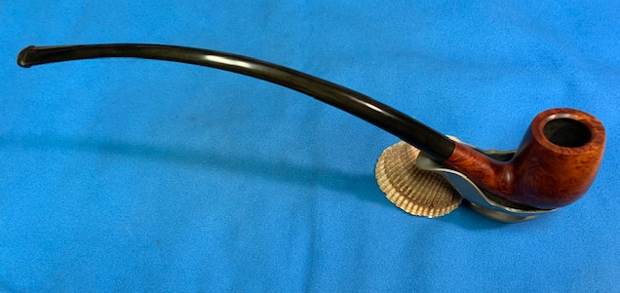
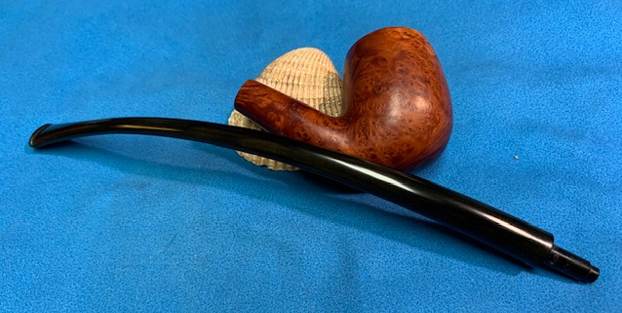
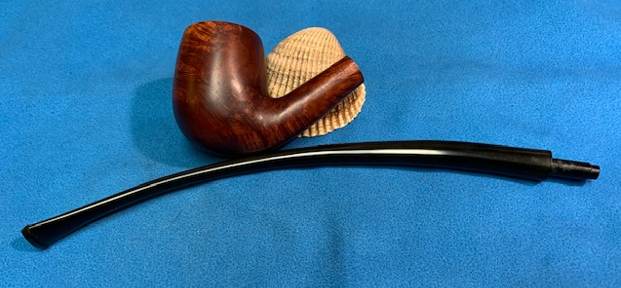
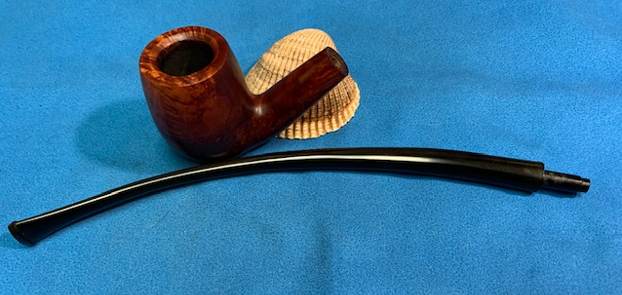
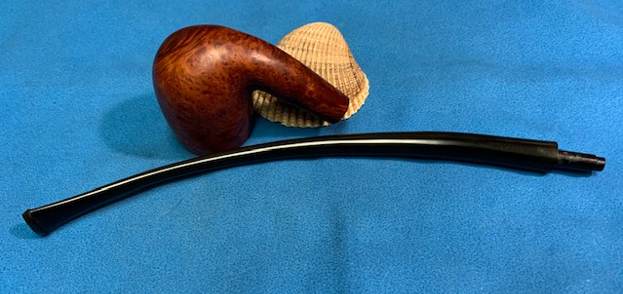
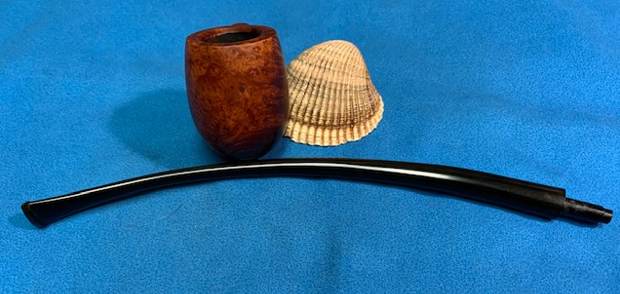
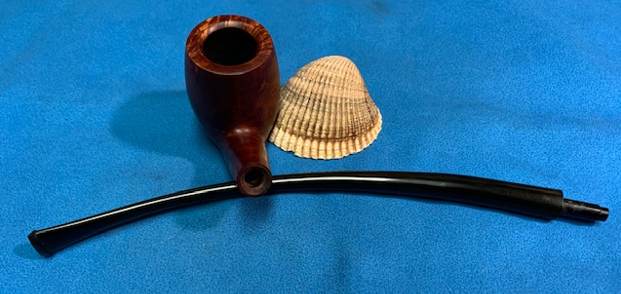
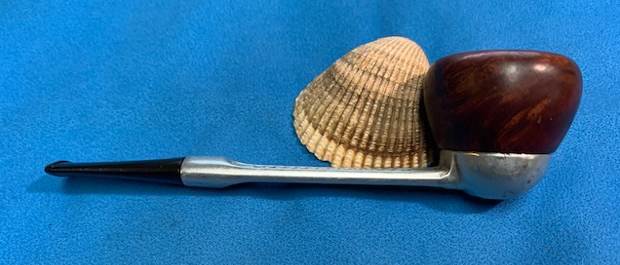
The next pipe on the table is an interesting Savinelli Made Bent Churchwarden. On the left side of the shank it reads Churchwarden [over] Old Briar. On the right side Savinelli [over] Italy and next to that is a Savinelli S Shield [followed by] the shape number 601. This pipe was purchased from an on-line auction in November, 2018 in Bridgton, Maine, USA. It is an interesting piece of briar with a long vulcanite stem. The shape is a bent billiard with some great grain. The finish was dirty and dull with grime ground into the briar around the bowl and shank. The bowl has a moderate cake in the bowl and a light coat of lava on the rim top and beveled inner edge. There is some darkening on the inner edge of the bowl. The stem was oxidized and had tooth chatter on the top and the underside near the button. Jeff took photos of the pipe before he started his cleanup work.  He took some photos of the bowl to give a sense of the condition of the bowl and rim top. You can see the cake in the bowl and the lava on the rim top. There is also some damage and darkening to the inner edges. The stem is oxidized, calcified and has tooth marks and chatter on both sides near the button. He took photos of the bowl sides and heel to show the grain around the bowl. It really was a nice piece of briar.Jeff took photos of the stamping on the shank sides. It is clear and readable as noted above. Jeff had done a great job cleaning up the pipe as usual. He reamed the pipe with a PipNet reamer and cut back the cake back to the bare briar. He cleaned up the walls with a Savinelli Fitsall Pipe Knife. He scrubbed the interior of the bowl and shank with pipe cleaners, cotton swabs and alcohol to remove the tars and oils. He scrubbed the exterior of the pipe with Murphy’s Oil Soap and a tooth brush to remove the grime from the finish. He worked on the rim top lava and darkening with the soap and tooth brush. He scrubbed the inside of the stem with alcohol and pipe cleaners. He scrubbed the exterior with Soft Scrub and then soaked it in Before & After Deoxidizer. He washed it off with warm water to remove the deoxidizer. The pipe looked far better when it arrived.   I took some close up photos of the rim top and also of the stem surface. I wanted to show how well it had cleaned up. The rim top photo looks very good and the inner bevel is in perfect condition. I also took close up photos of the stem to show the light tooth marks and scratching on the surface near the button. I took photos of the stamping on the left and right side of the shank. You can see that it is stamped as noted above. It is clear and readable.   I took the pipe apart and took a photo of the pipe. It is a good looking pipe and has some great looking grain around the bowl and shank. I wiped the bowl down with isopropyl alcohol to remove the uneven stain and even out the finish on the bowl. I was able to remove just enough to make the grain really stand out. I polished the briar bowl and shank with micromesh sanding pads. I dry sanded it with 1500-12000 grit pads and wiped it down with a damp cloth after each pad.     I worked some Before & After Restoration Balm into the surface of the briar with my fingertips to clean, enliven and protect the briar. I let the balm sit for 15 minutes and then buffed with a cotton cloth to raise the shine. The photos show the bowl at this point in the restoration process. I set the bowl aside and turned my attention to the stem. I scrubbed it with Soft Scrub cleanser to remove the oxidation on the stem and leave it ready to sand. I sanded out some tooth marks on the stem surface with 220 grit sandpaper. I started the polishing with 400 grit wet dry sandpaper. I wiped it down with some Obsidian Oil.   I polished the stem with micromesh sanding pads – wet sanding with 1500-12000 grit sanding pads. I wiped it down after each sanding pad with Obsidian Oil. I polished it with Before & After Pipe Stem Polish – both Fine and Extra Fine. I gave it a final rub down with Obsidian Oil and let it dry. I am excited to finish yet another Churchwarden. This one is a Savinelli Made Churchwarden Aged Briar 601 Bent Billiard. I put the pipe back together and buffed it with Blue Diamond on the buffing wheel. I gave the bowl and stem multiple coats of carnauba wax. I hand buffed the pipe with a clean buffing pad to raise the shine and hand buffed it with a microfibre cloth to deepen the shine. It is fun to see what the polished bowl looks like with the polished nickel band and the black vulcanite stem. This Classic looking Savinelli Churchwarden feels great in my hand. It is light and well balanced. Have a look at it with the photos below. The dimensions are Length: 10 inches, Height: 1 ¾ inches, Outside diameter of the bowl: 1 ¼ inches, Chamber diameter: ¾ of an inch. The weight of the pipe is 44grams/1.55oz. It is a beautiful pipe and one that will be on the Italian Pipe Makers section of the rebornpipes store soon. If you are interested in adding it to your collection let me know. Thanks for walking through the restoration with me as I worked over this pipe. Thanks to each of you who are reading this blog.