Monthly Archives: January 2021

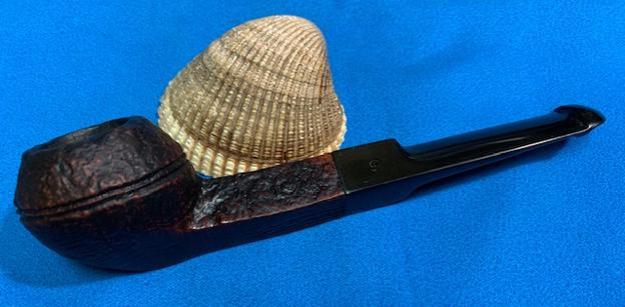
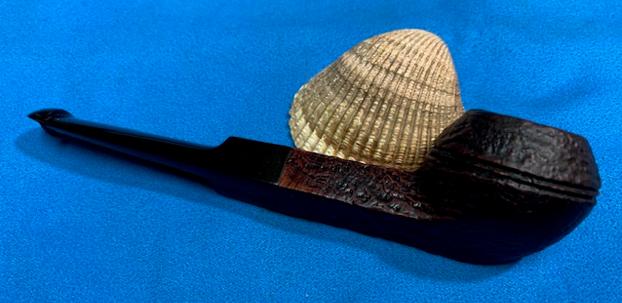
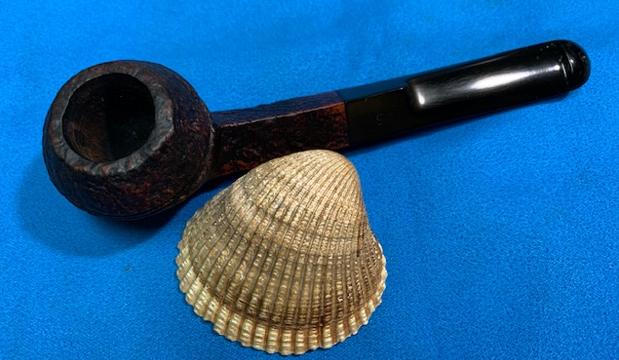
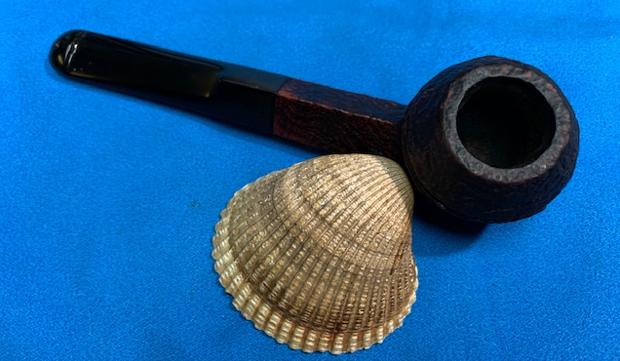
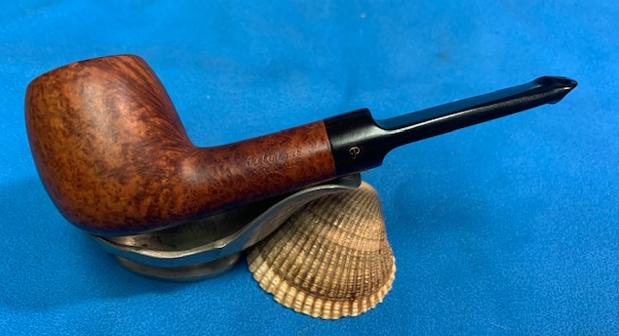
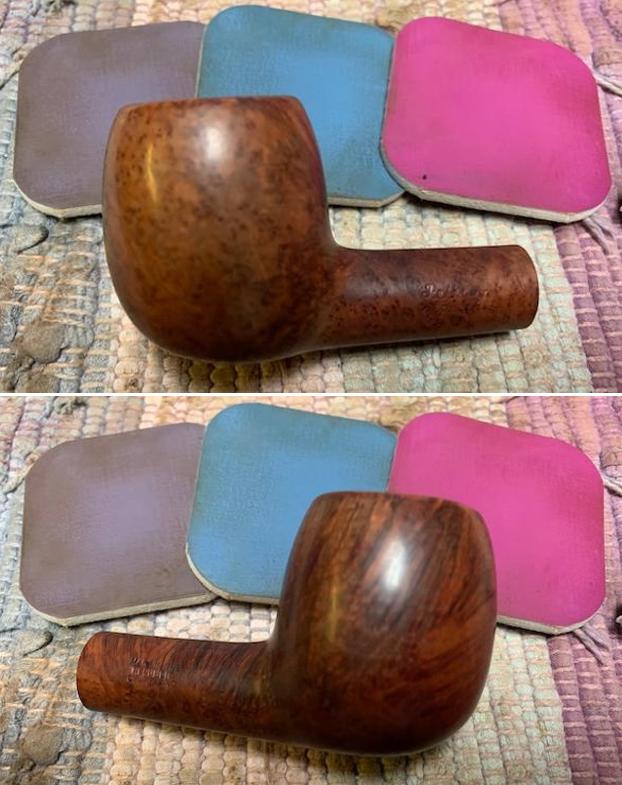
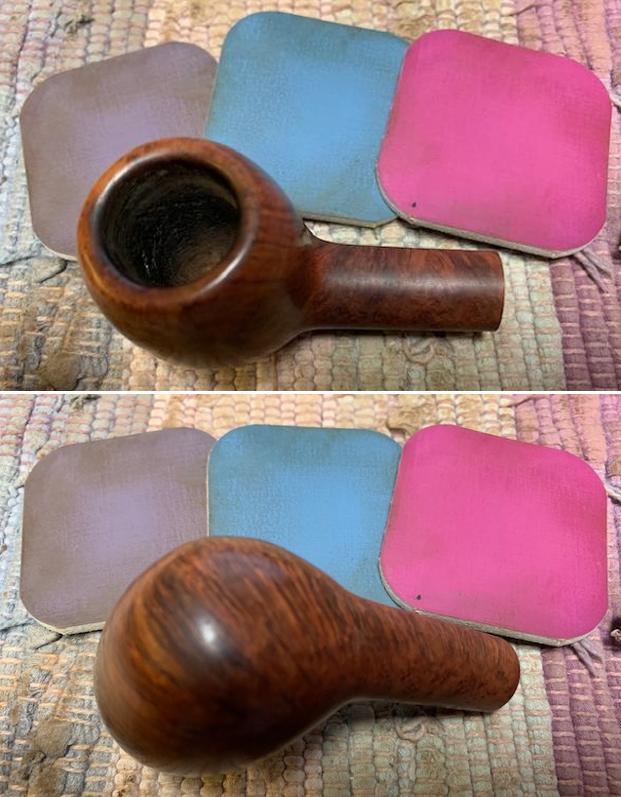
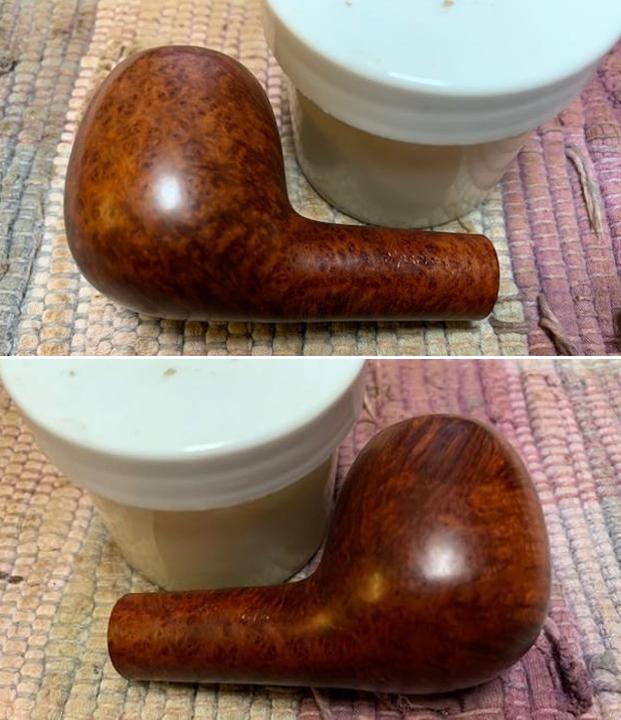
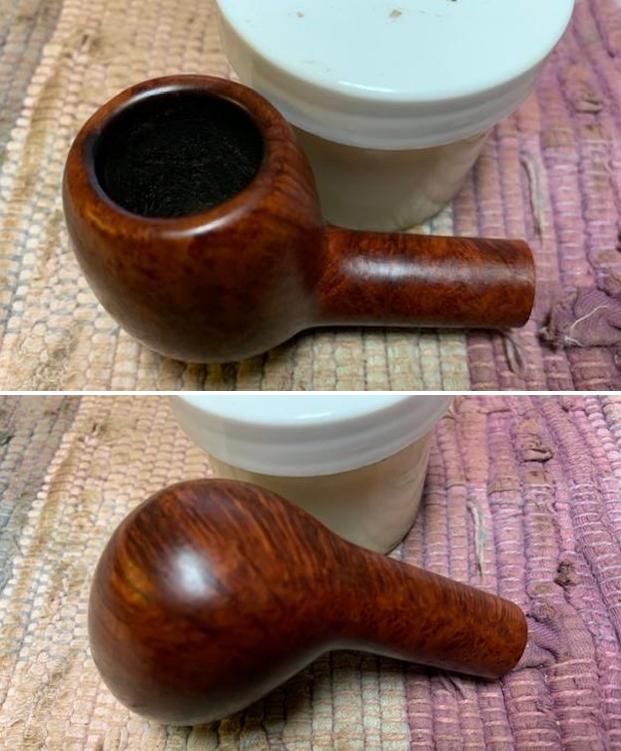
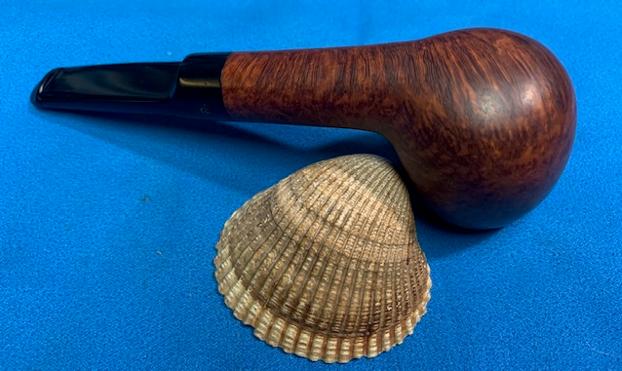
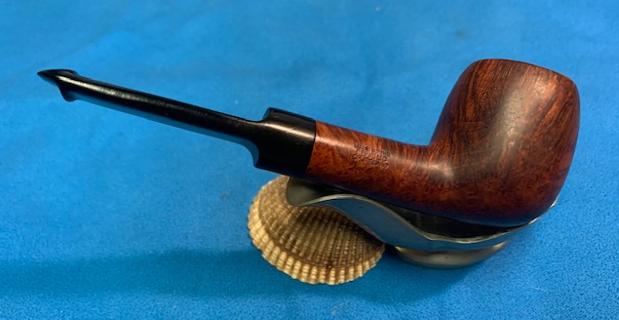
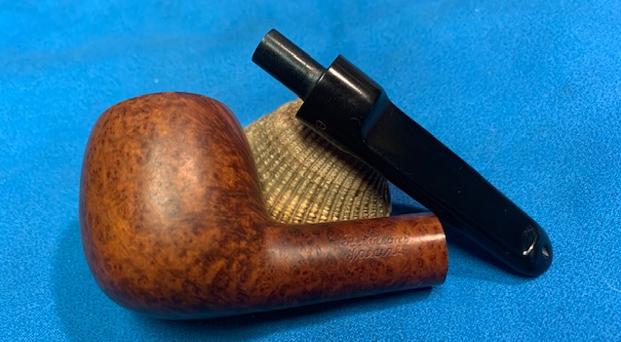
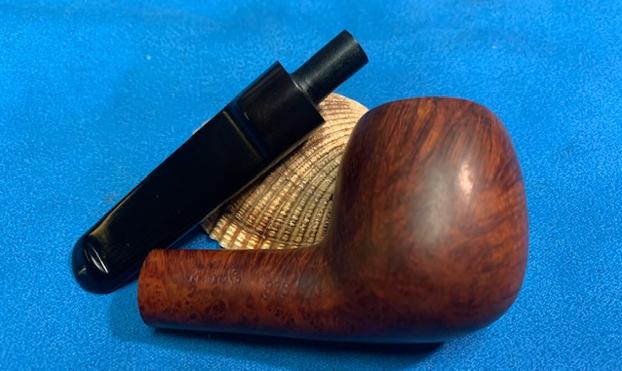
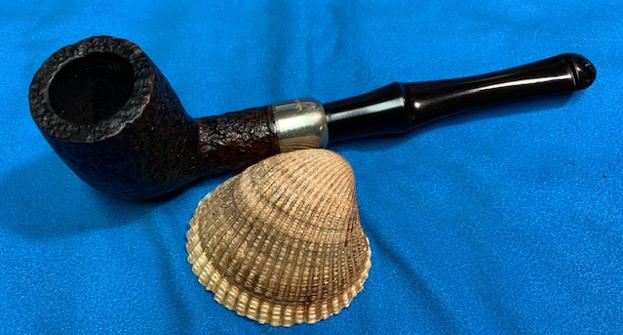
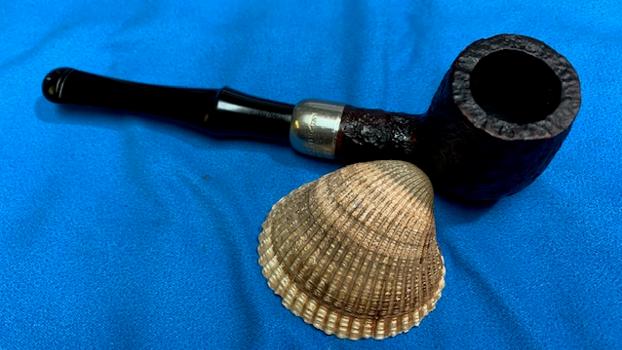
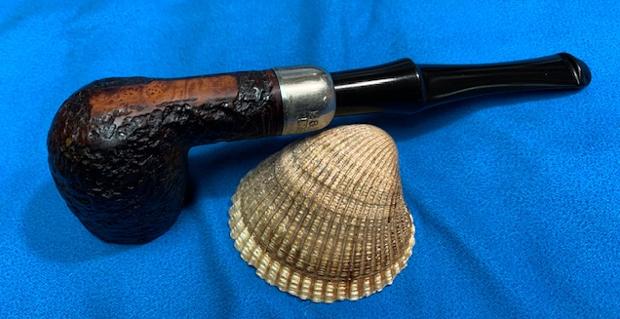
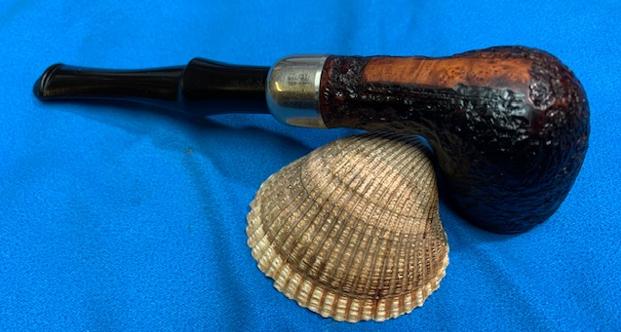
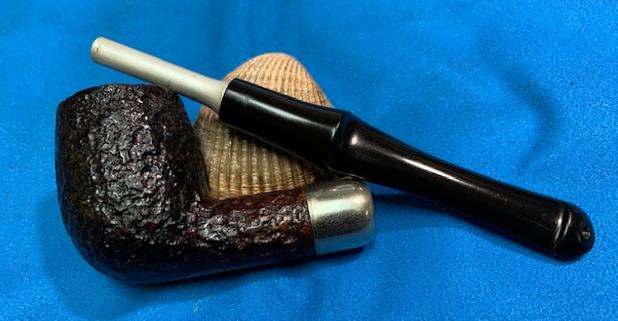
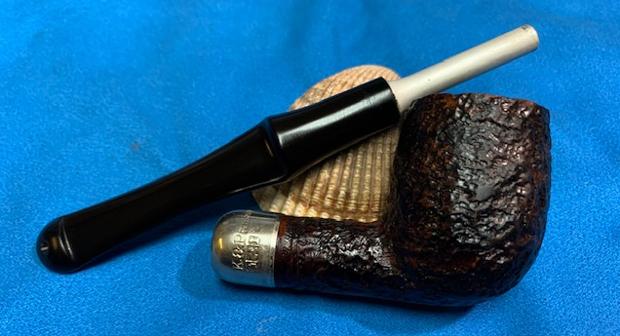
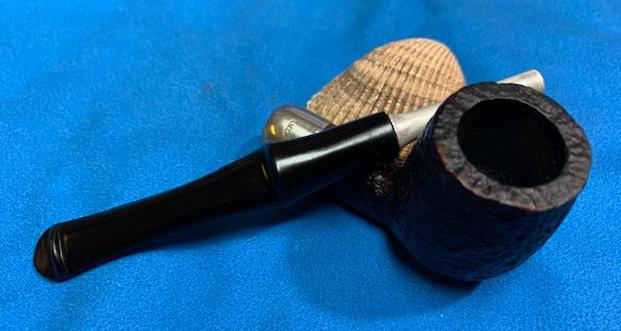
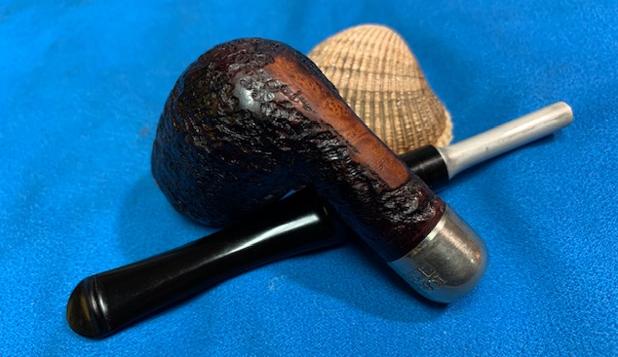
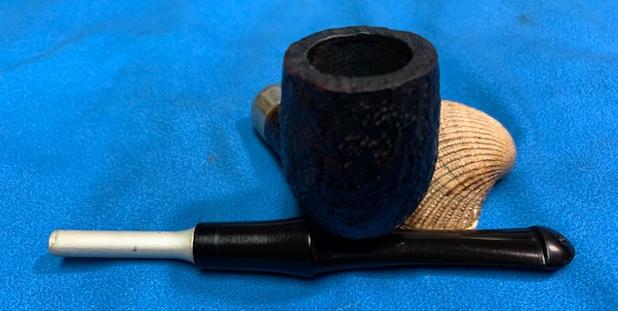
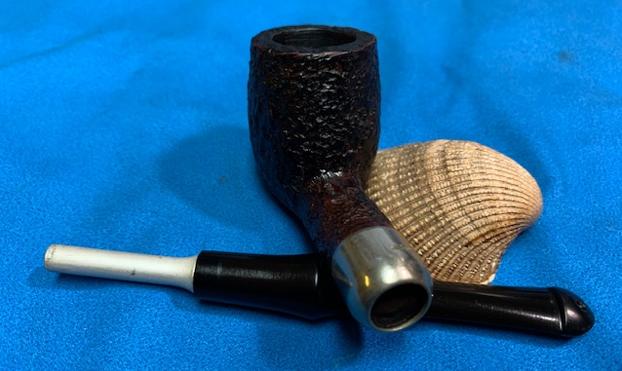
Breathing New Life into a Peterson’s “Kapruf” 495 Sandblast Squat Bulldog


Blog by Steve Laug

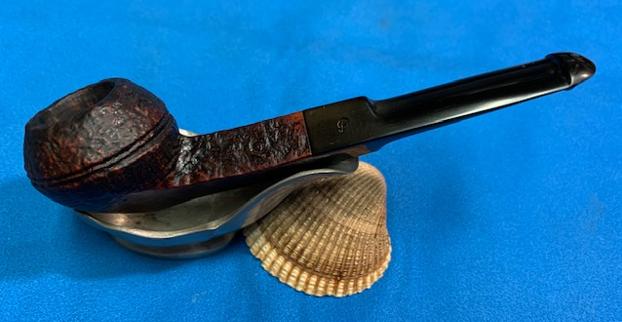
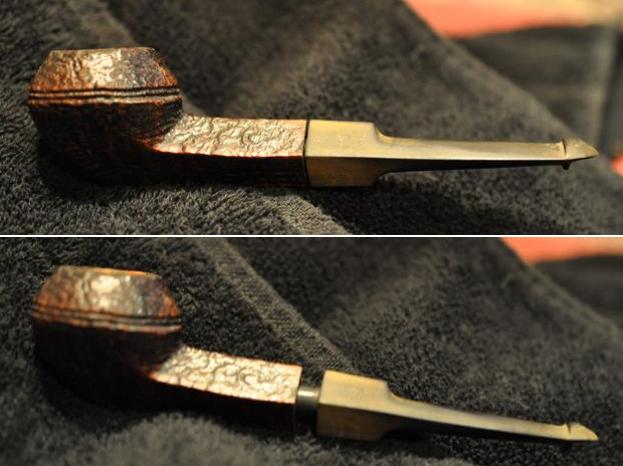
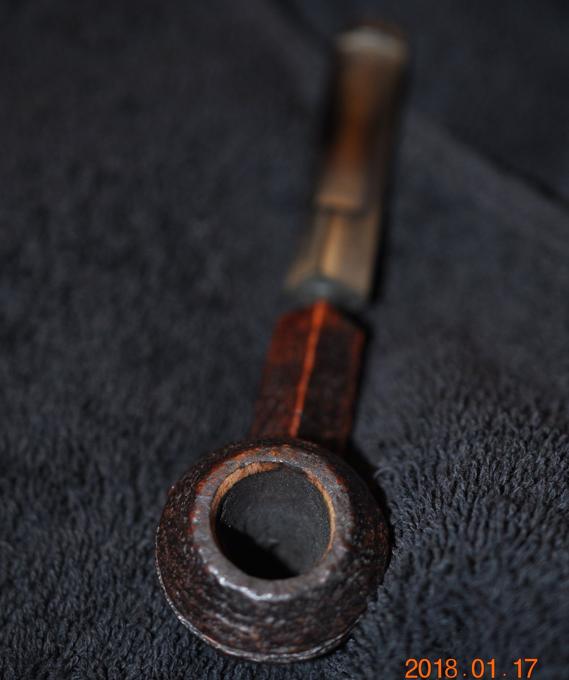
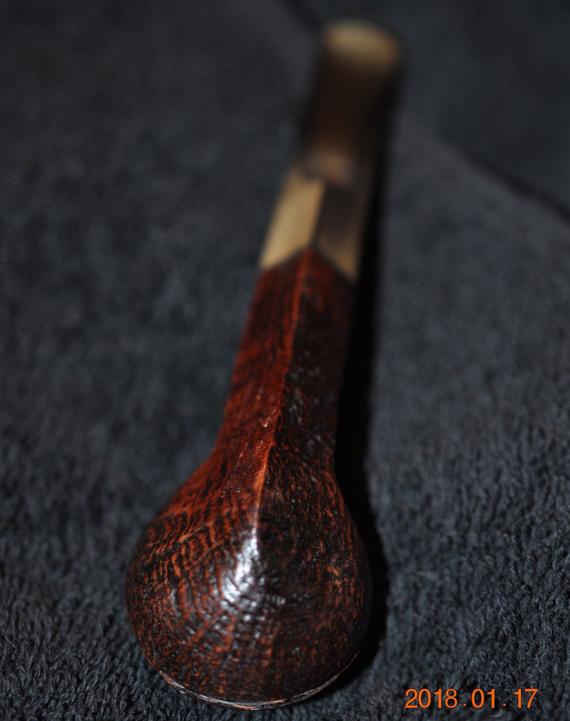
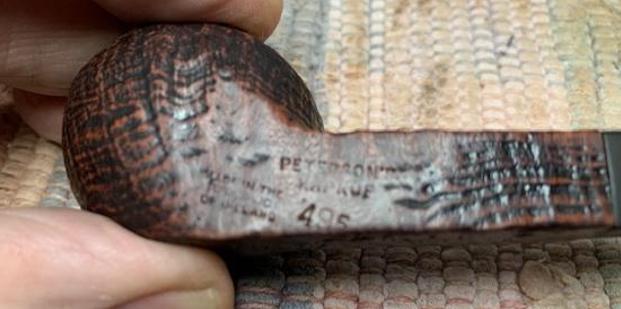
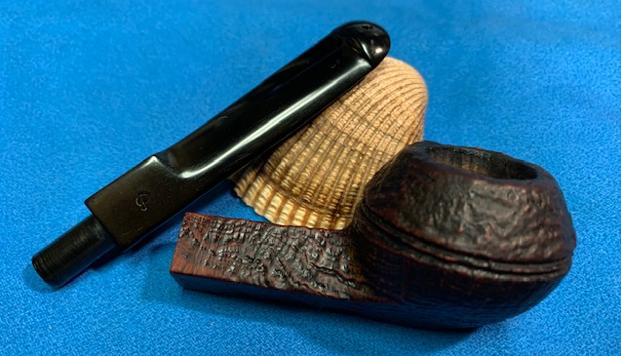
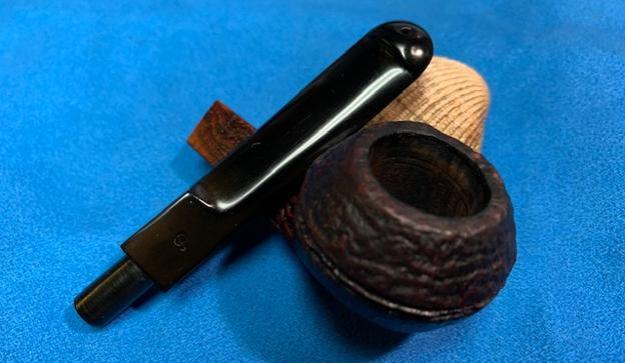
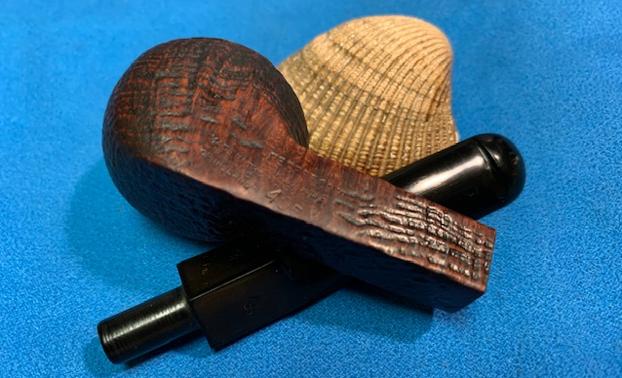
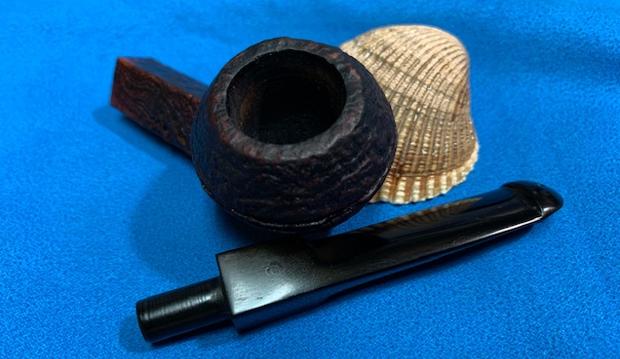
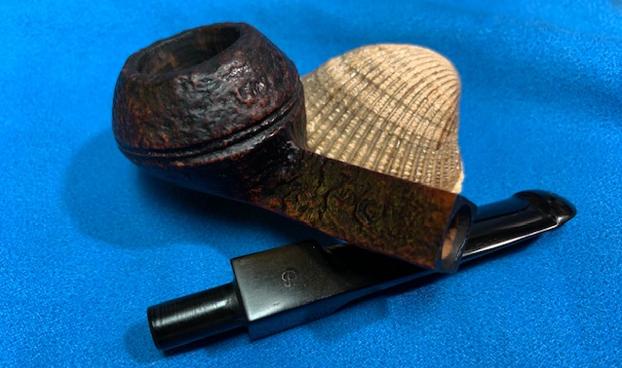
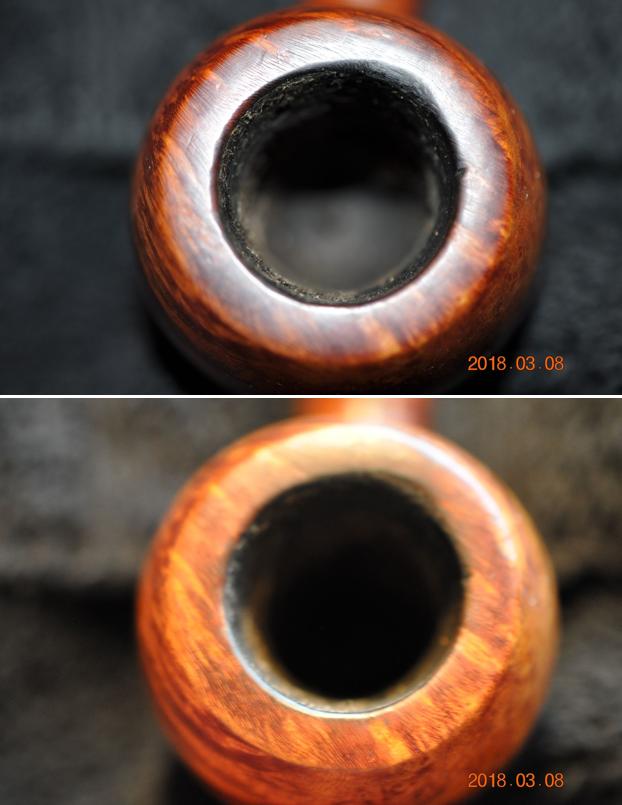
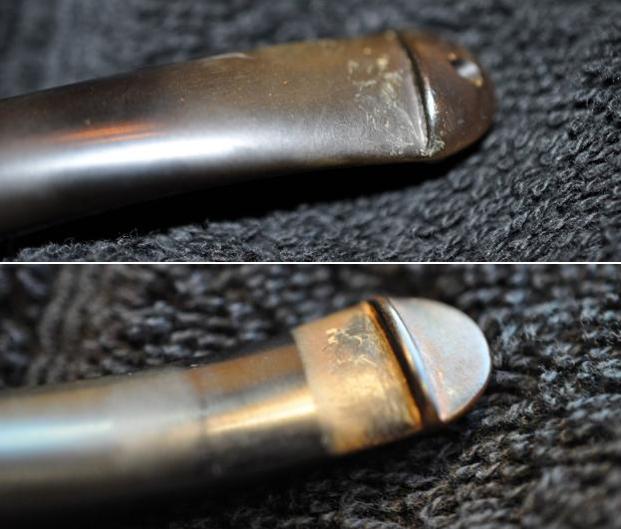
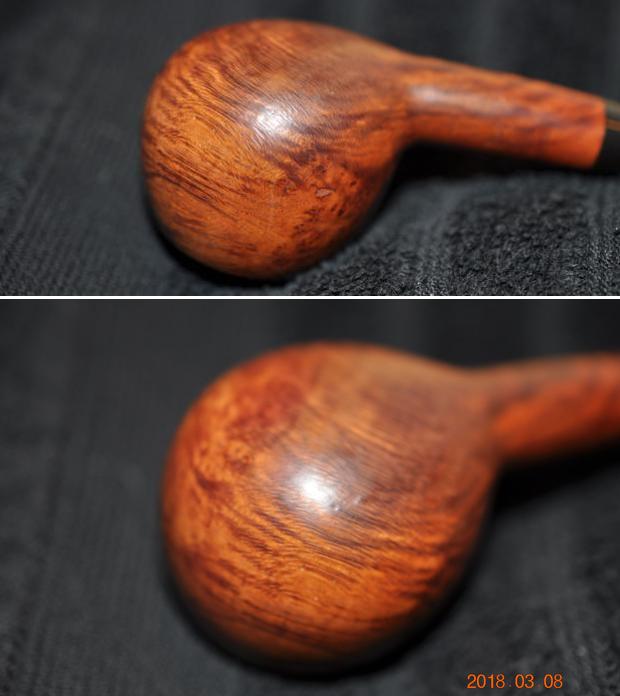
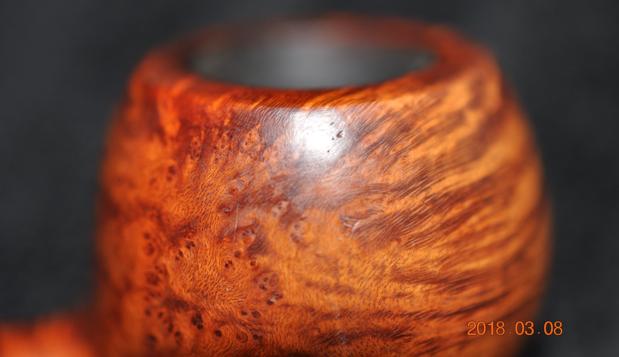
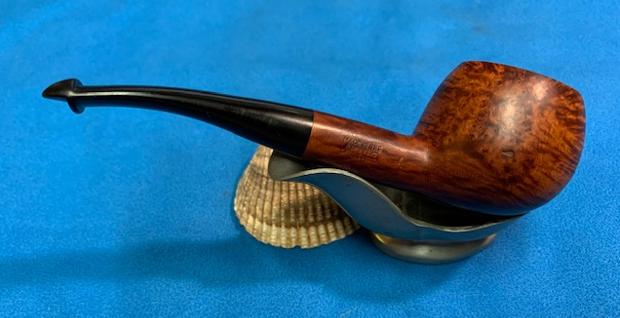
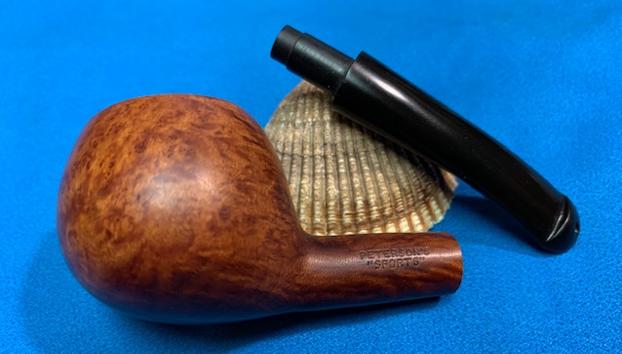
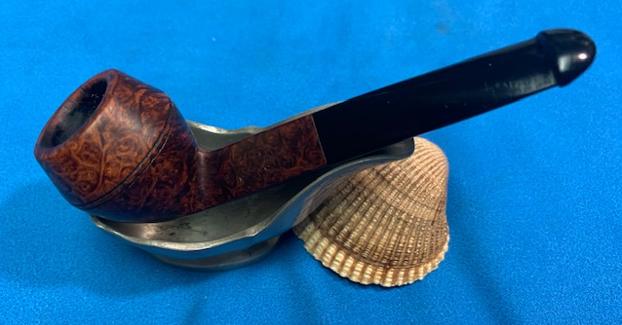
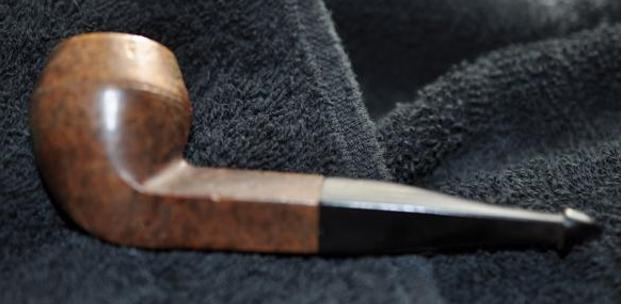
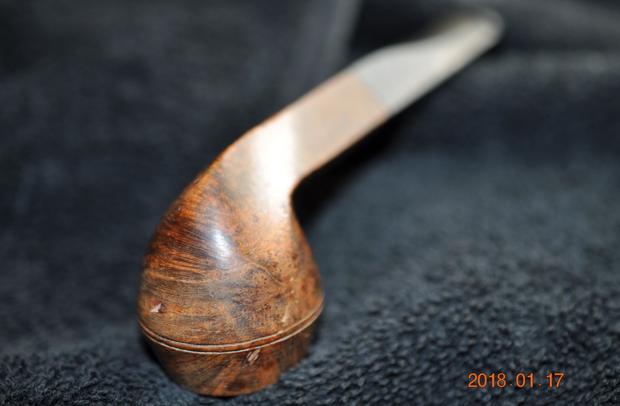
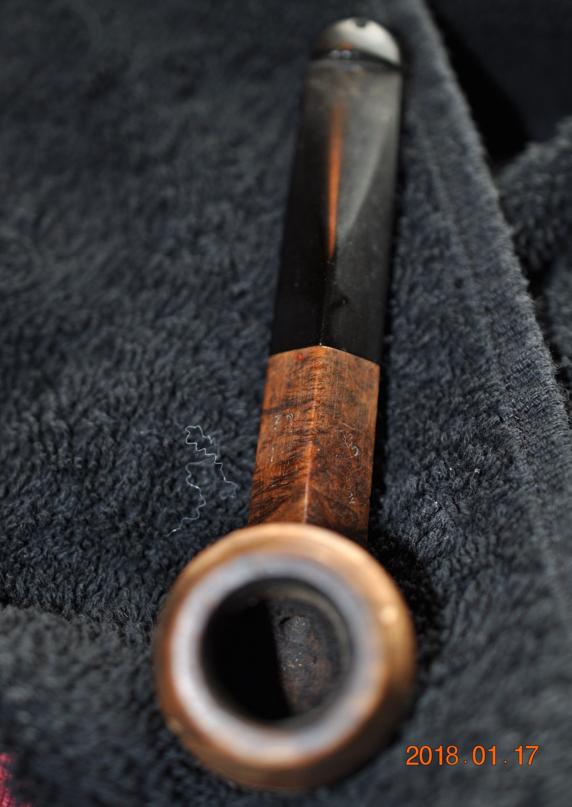
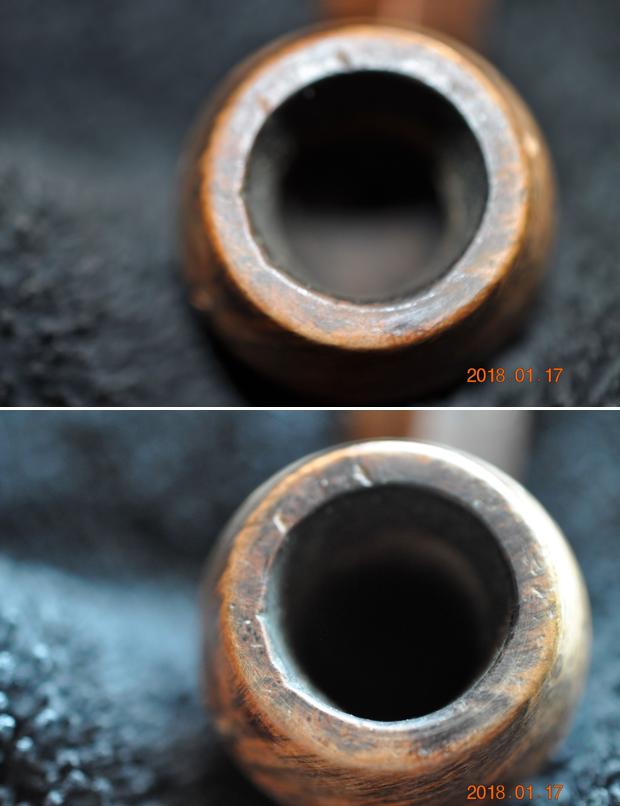
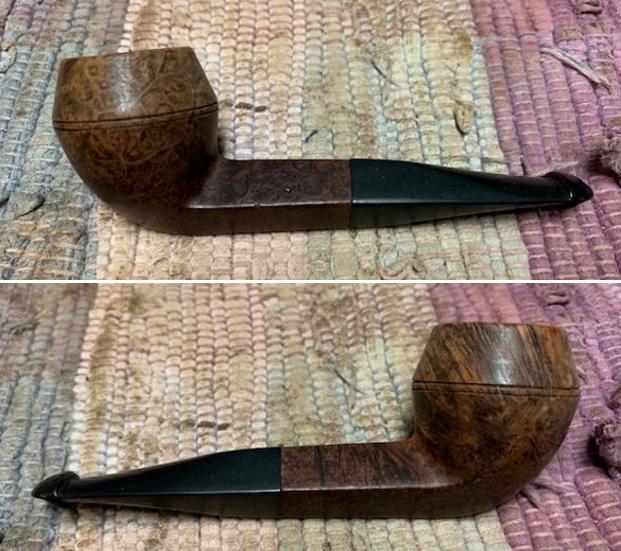
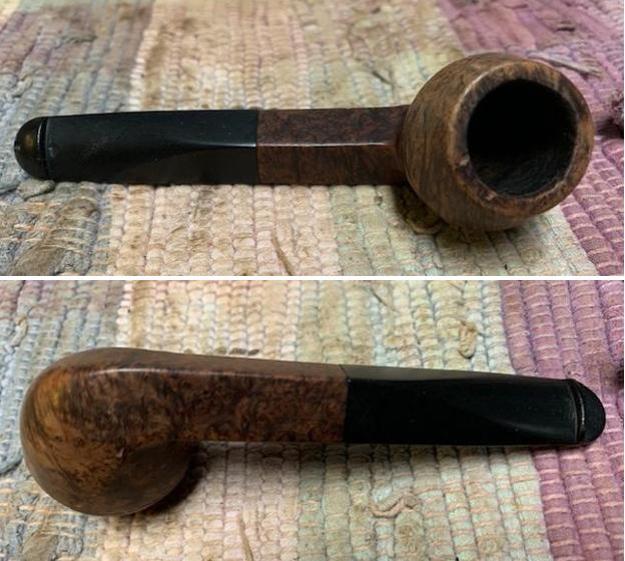
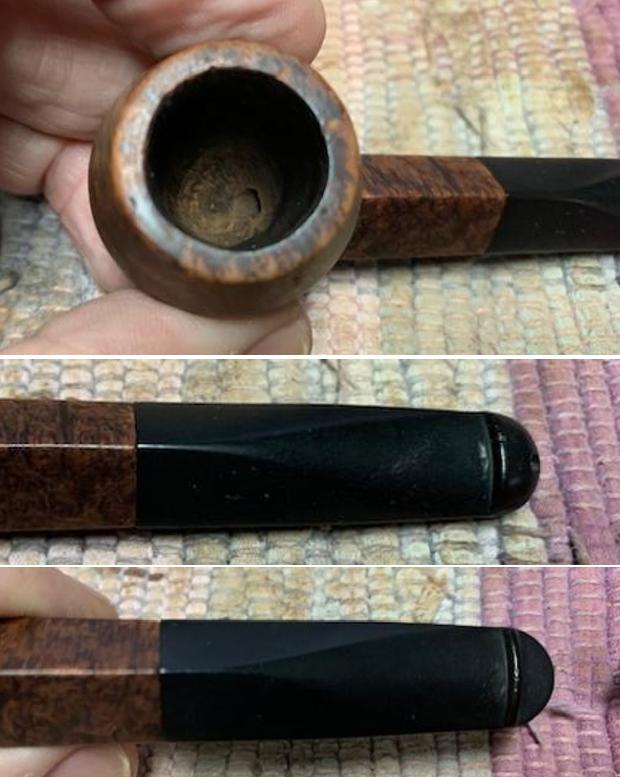
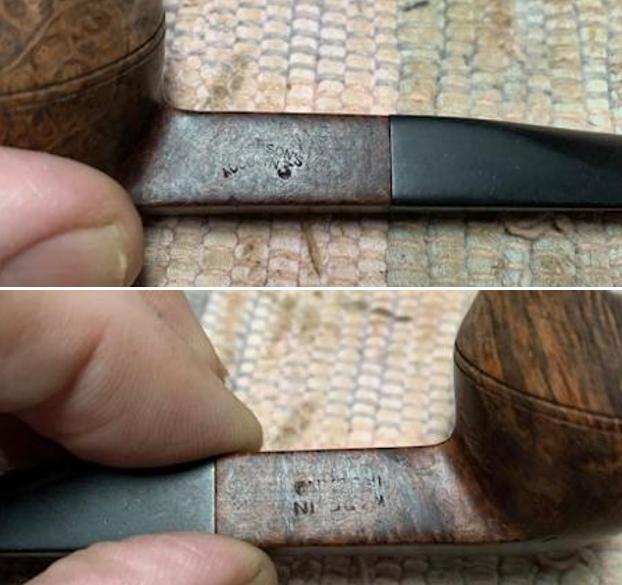
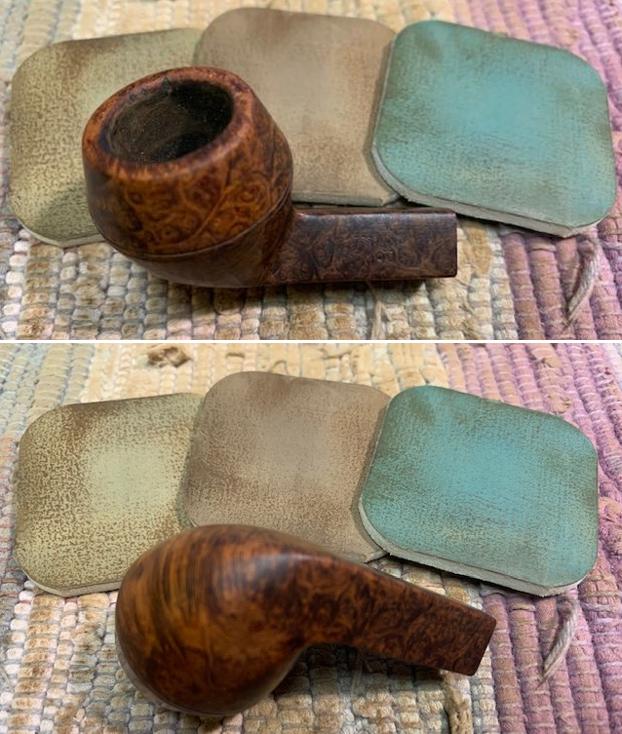
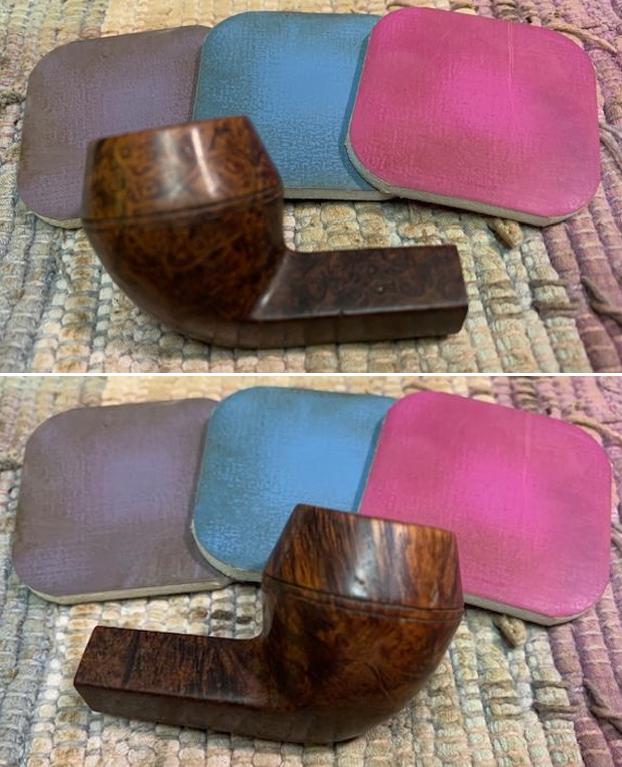
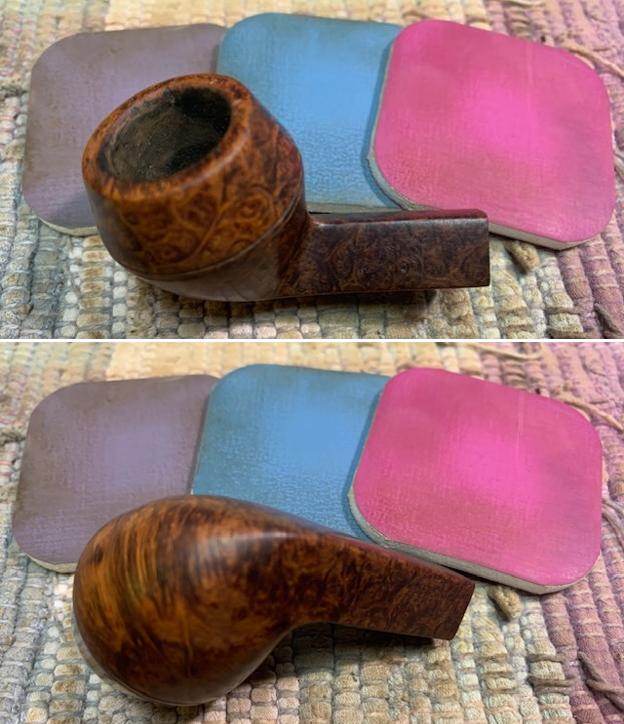
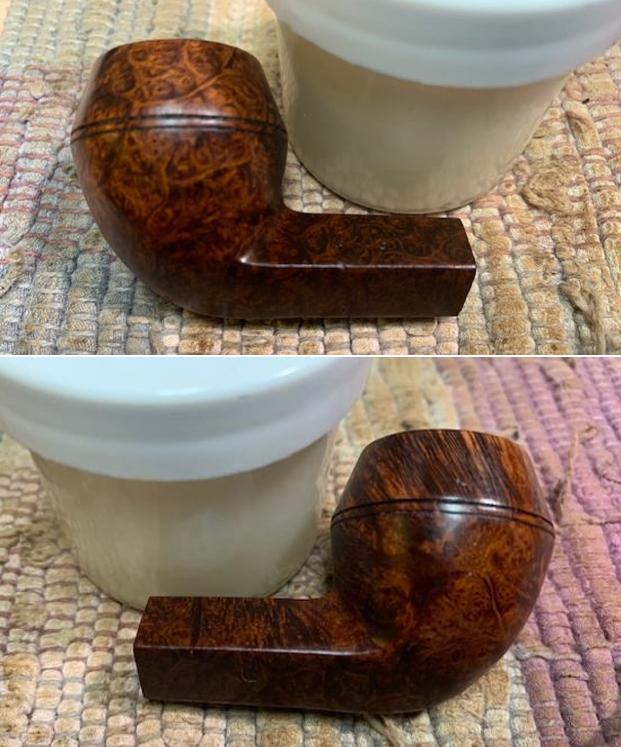
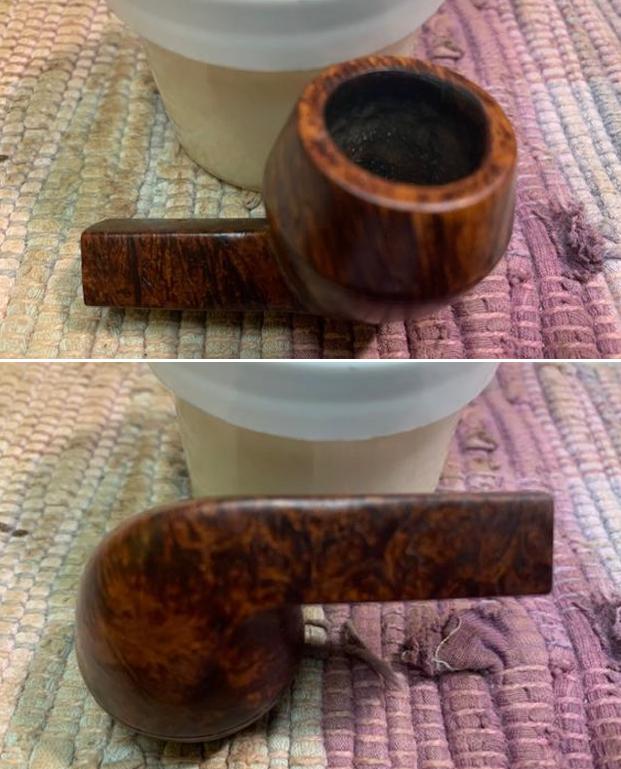
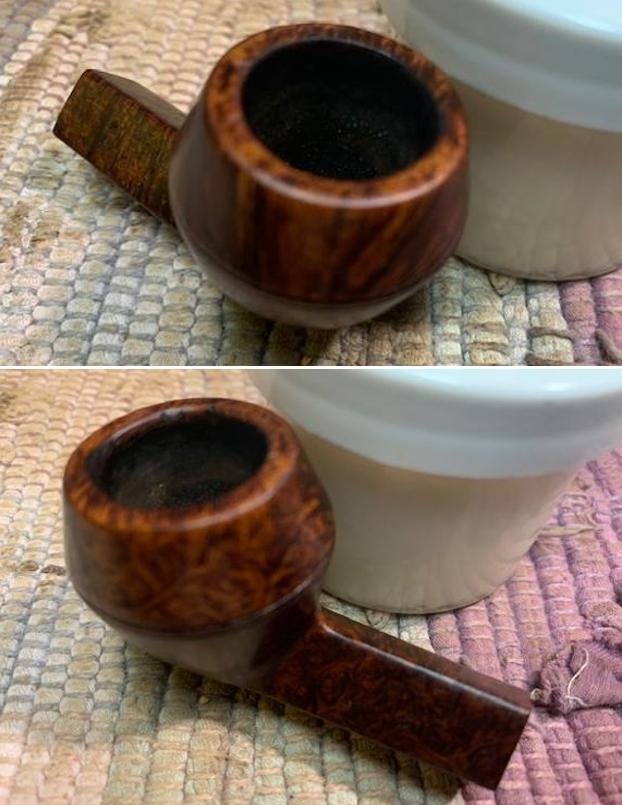
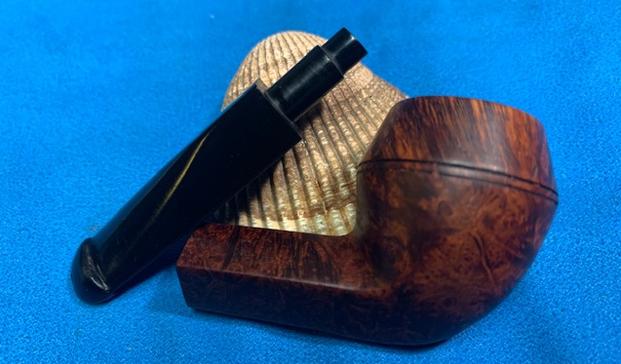
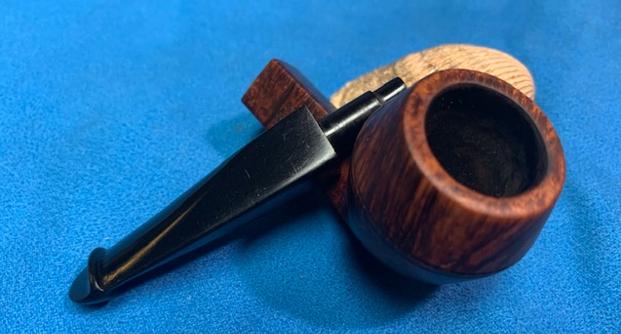
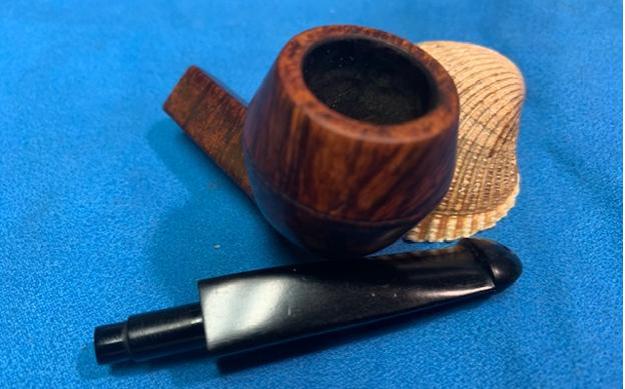
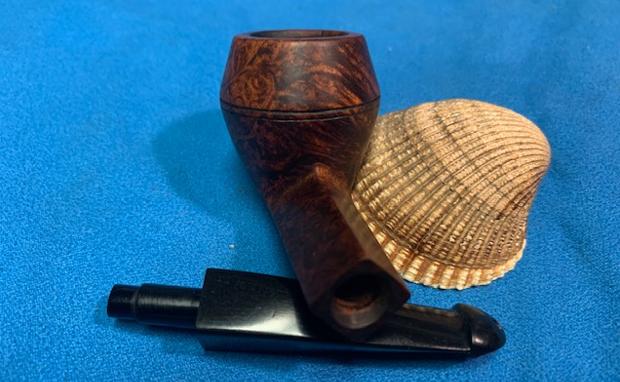
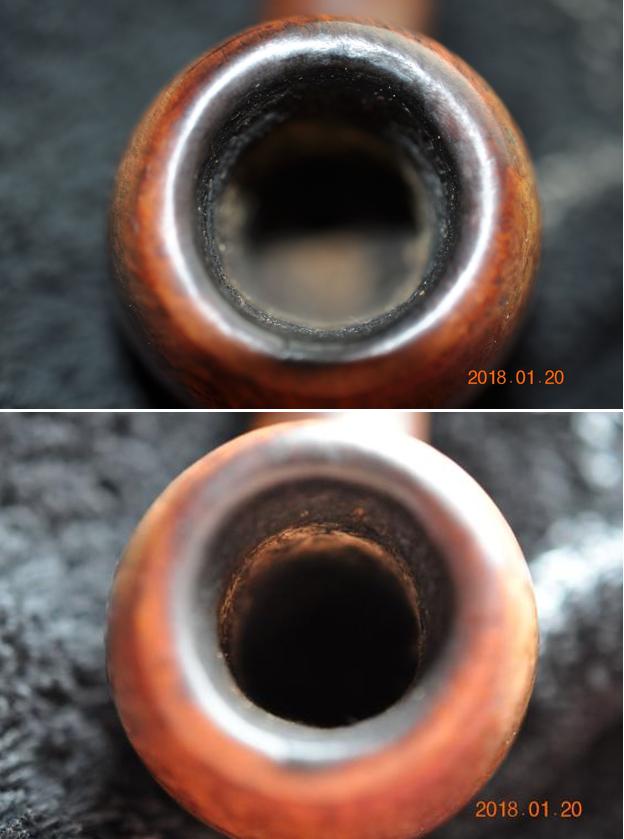
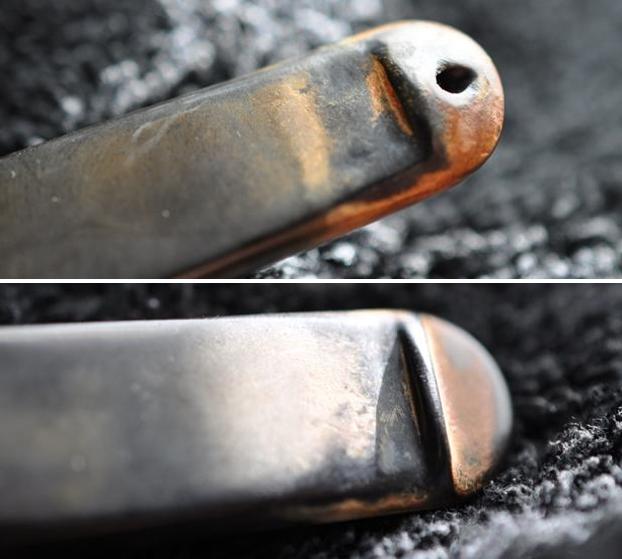
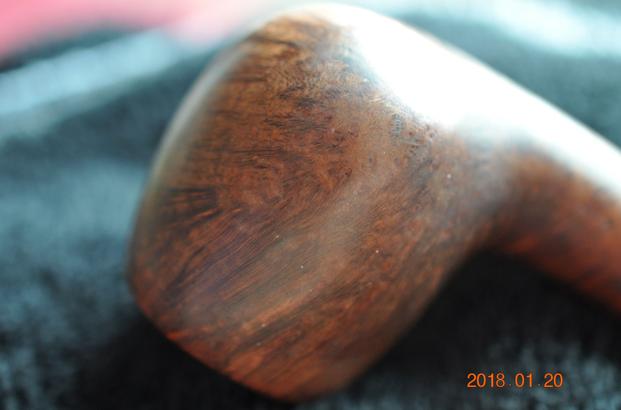
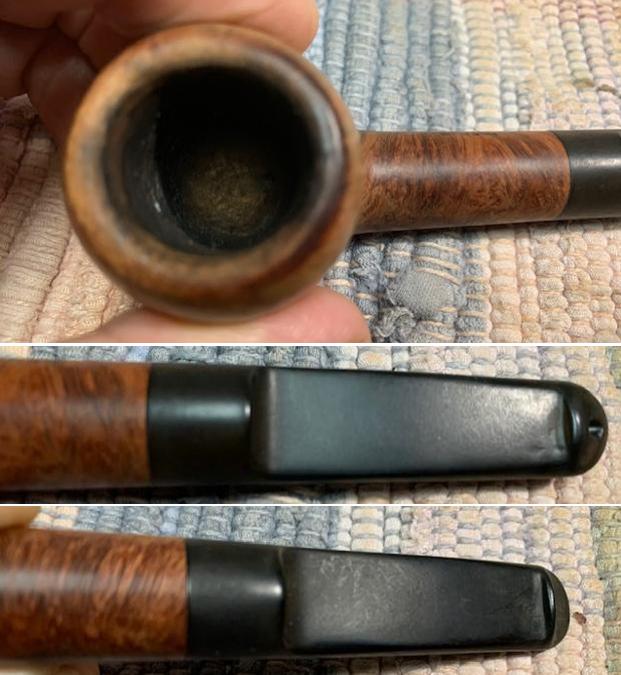
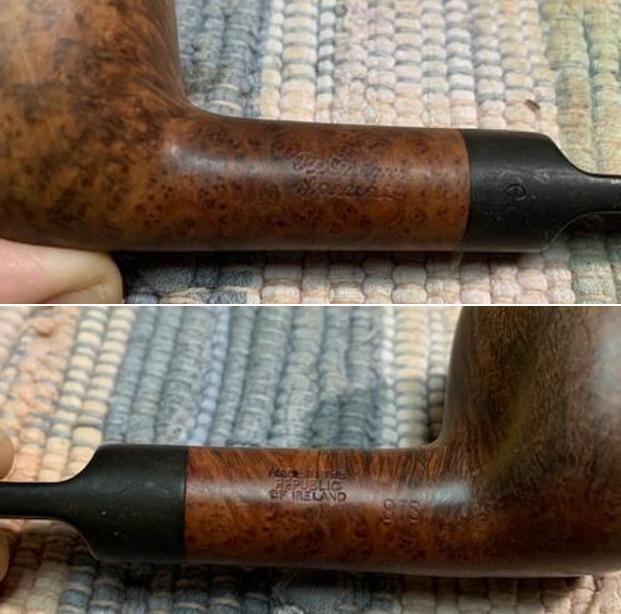
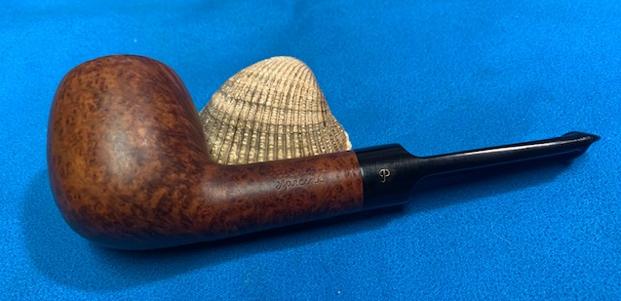
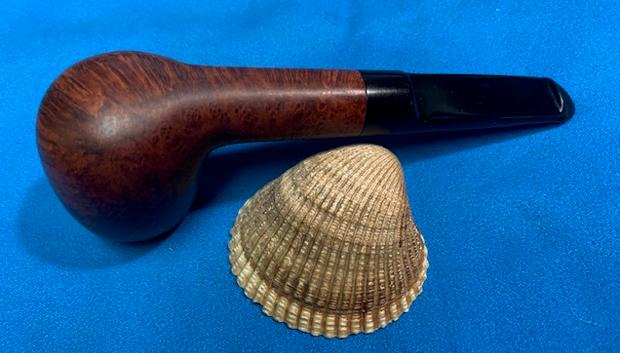
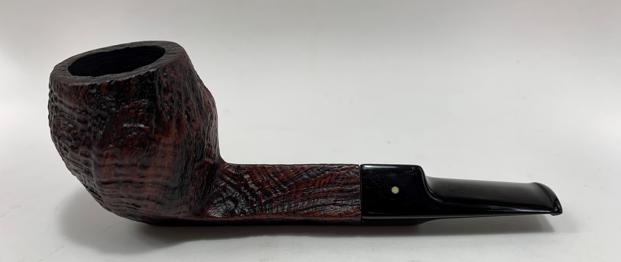
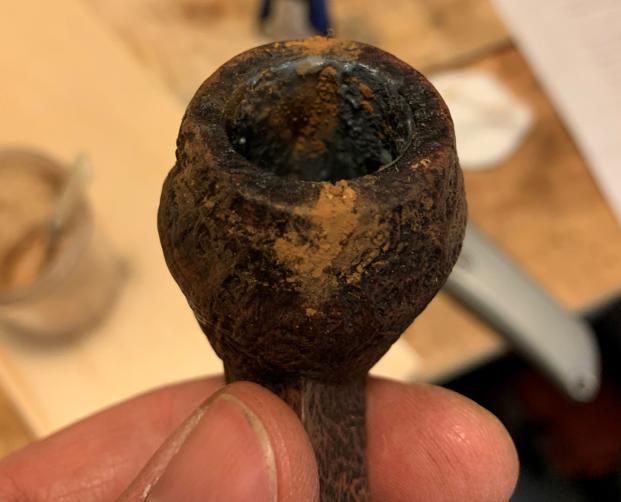
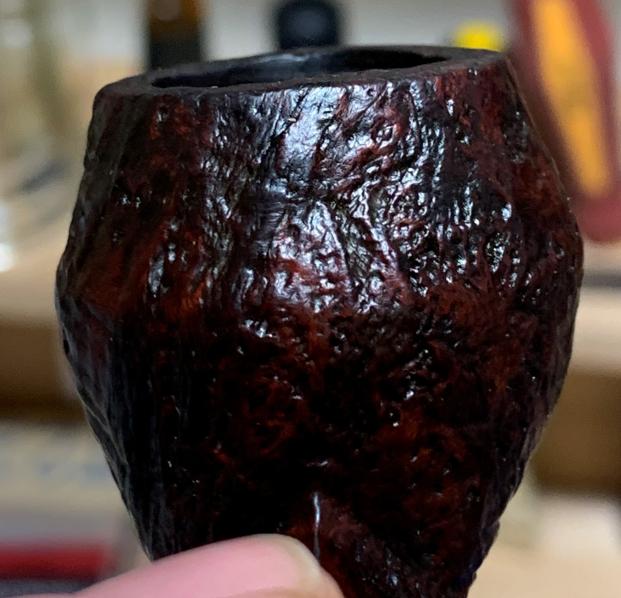
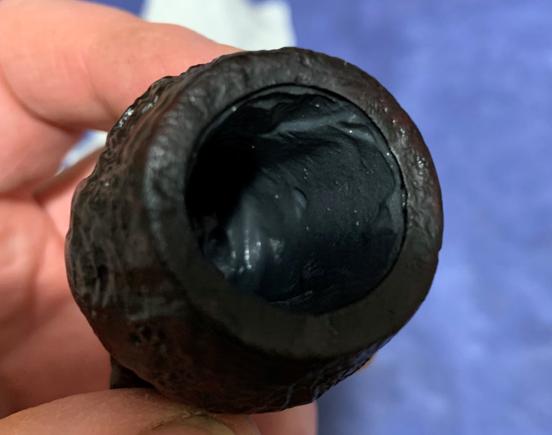
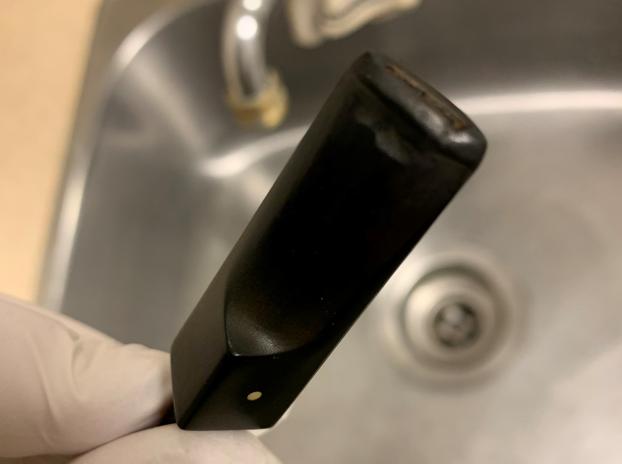
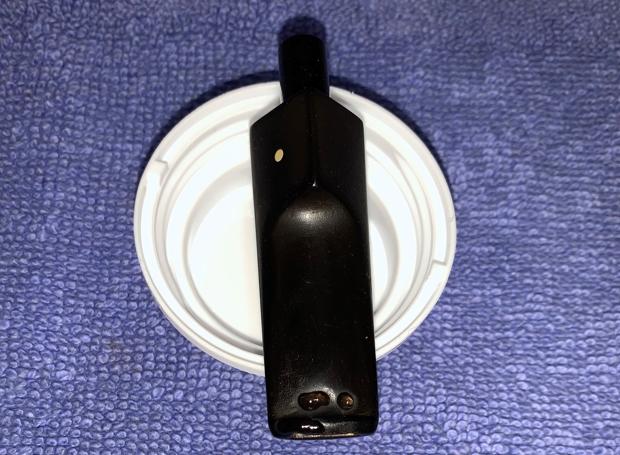
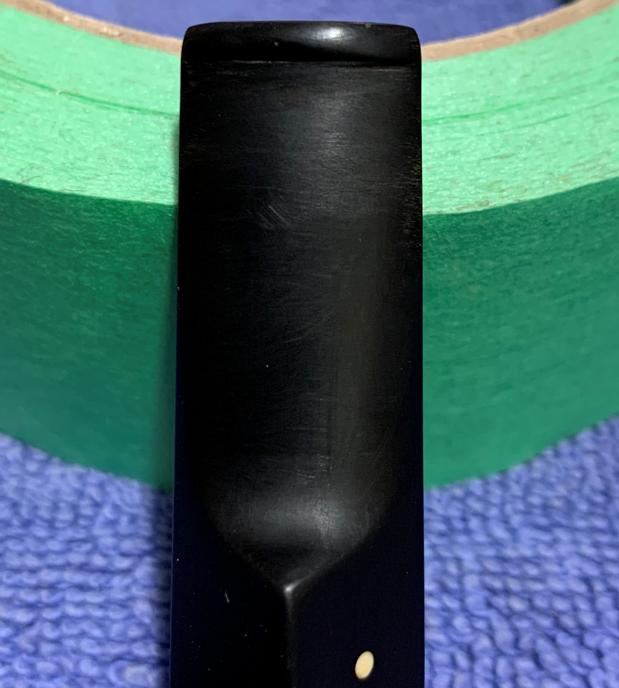
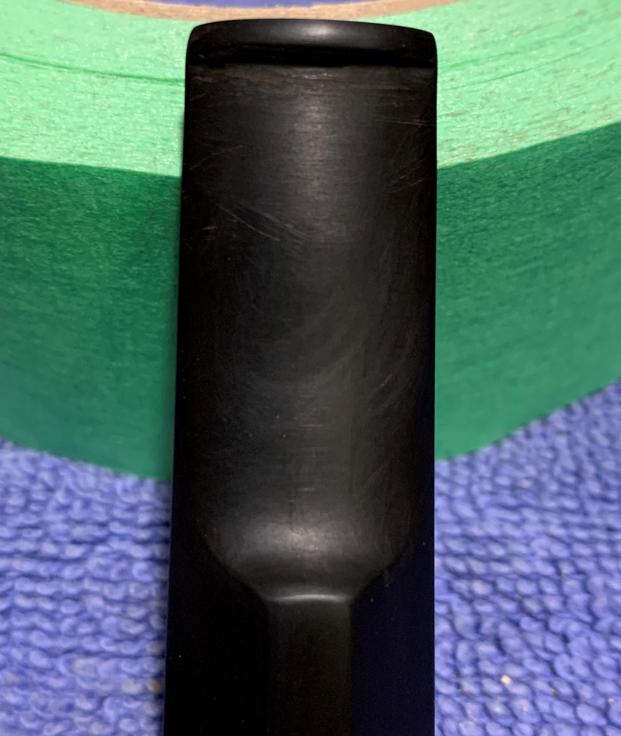
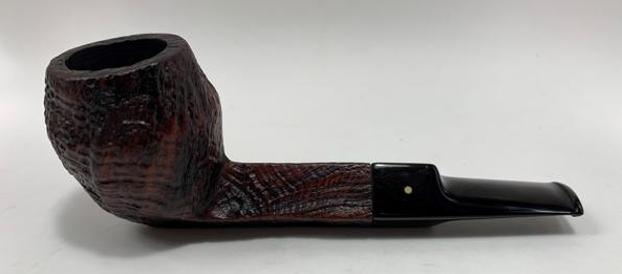
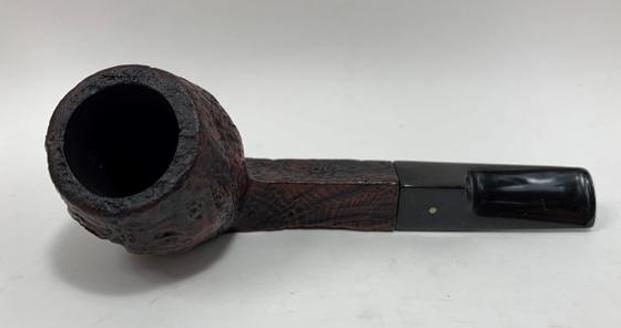
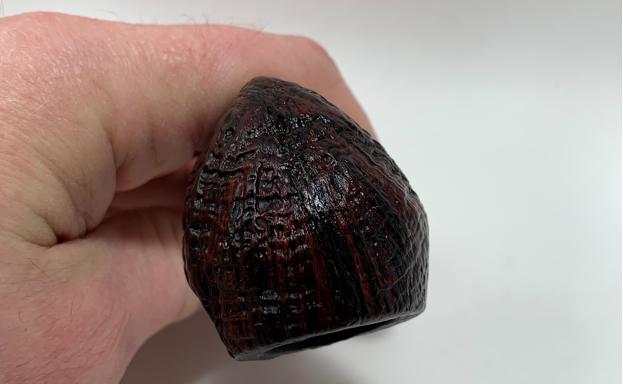
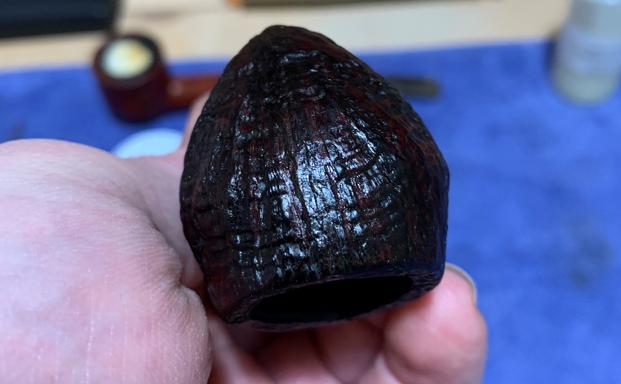
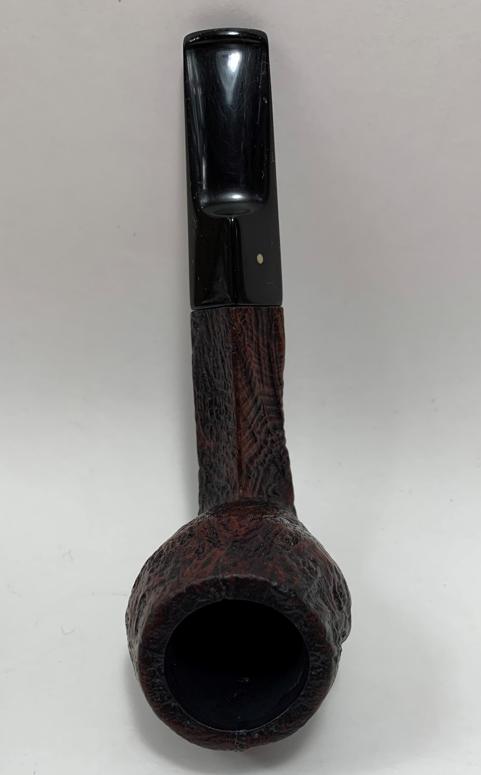
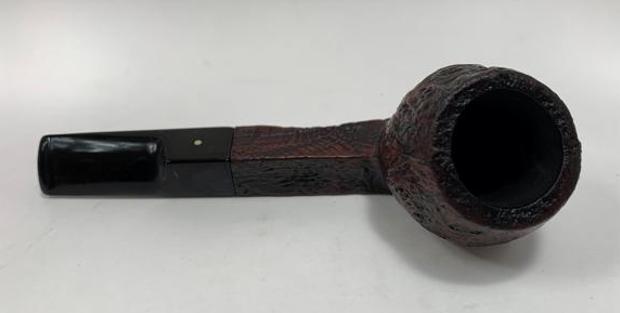
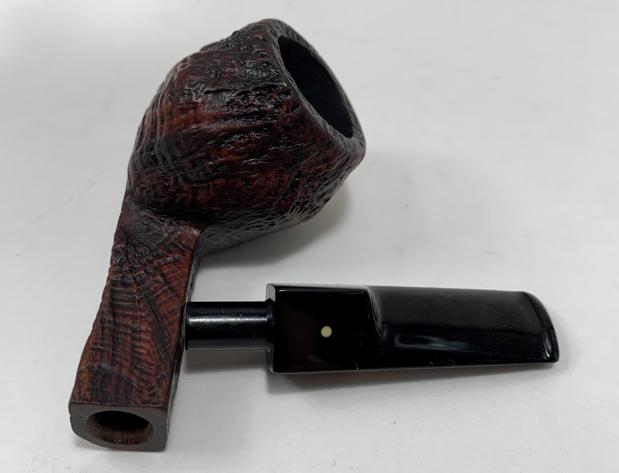
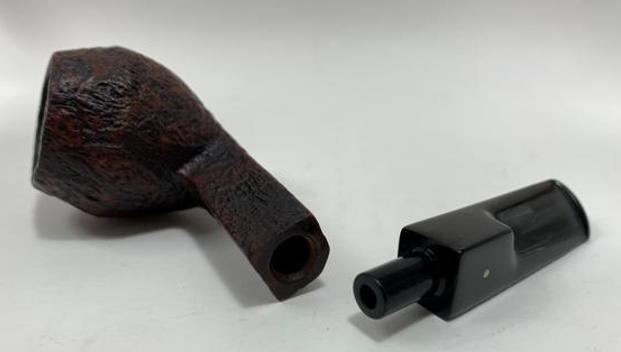
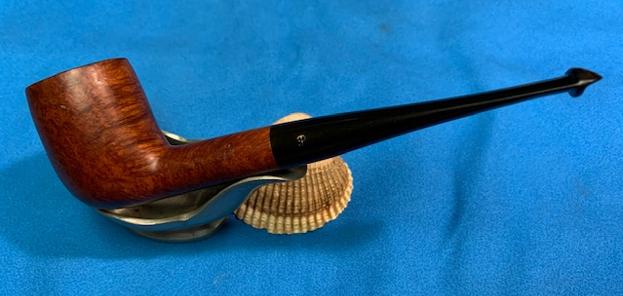
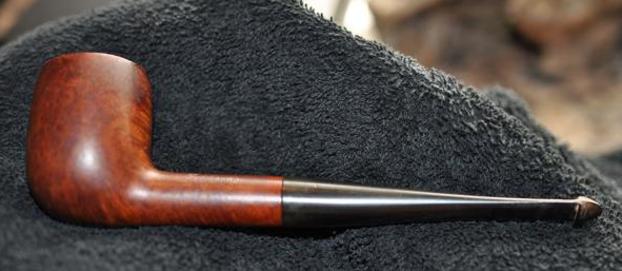
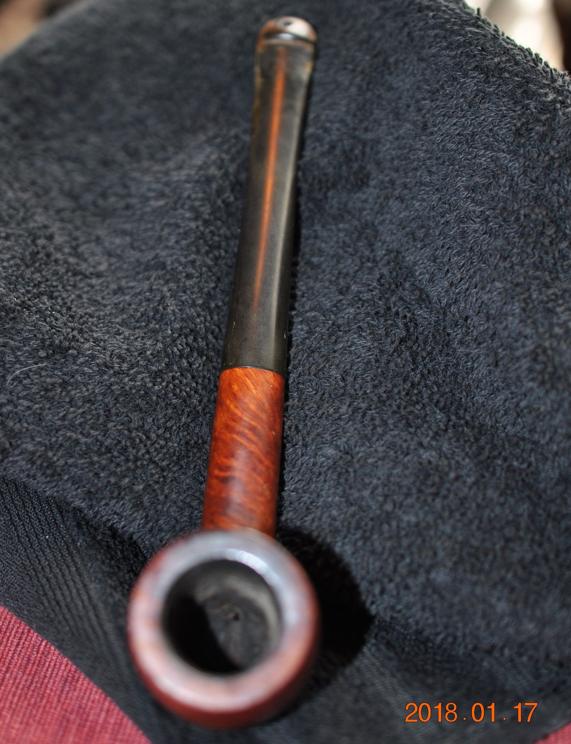
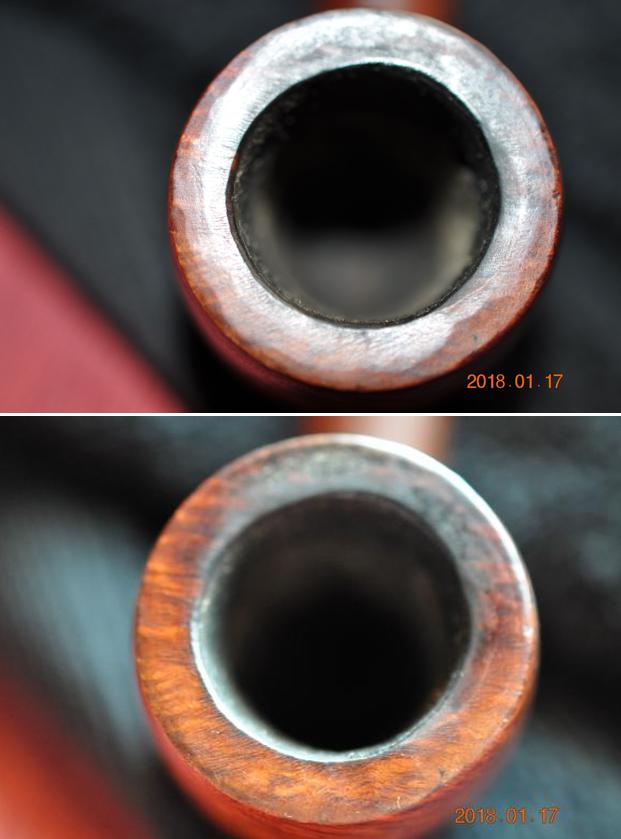
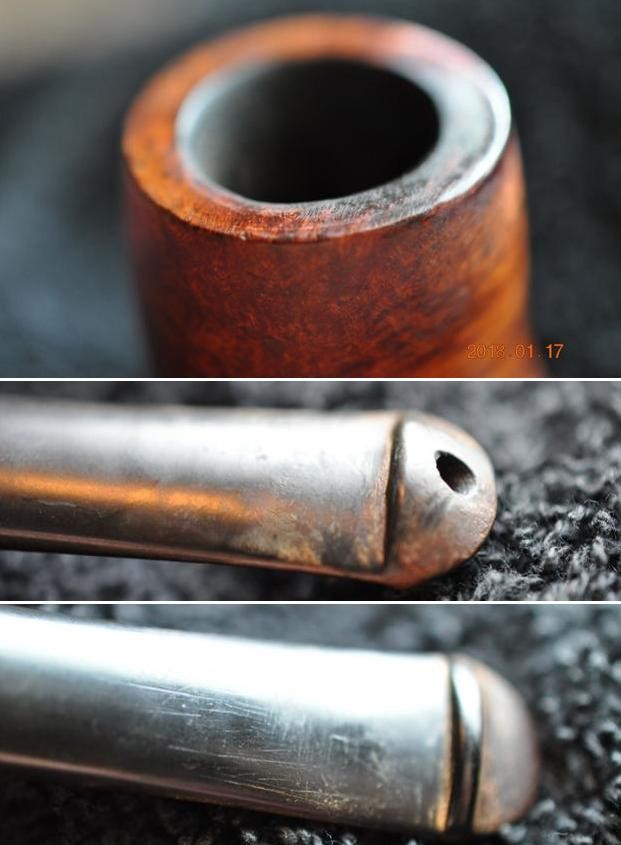
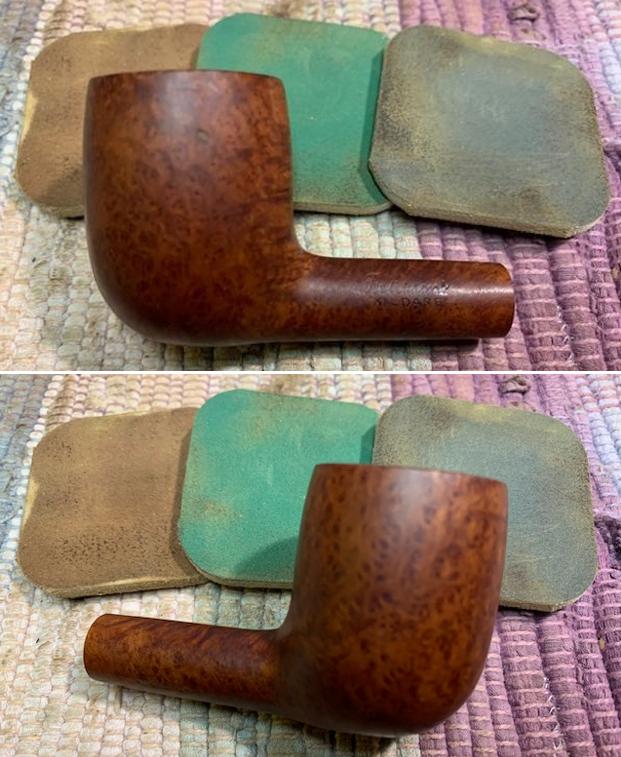
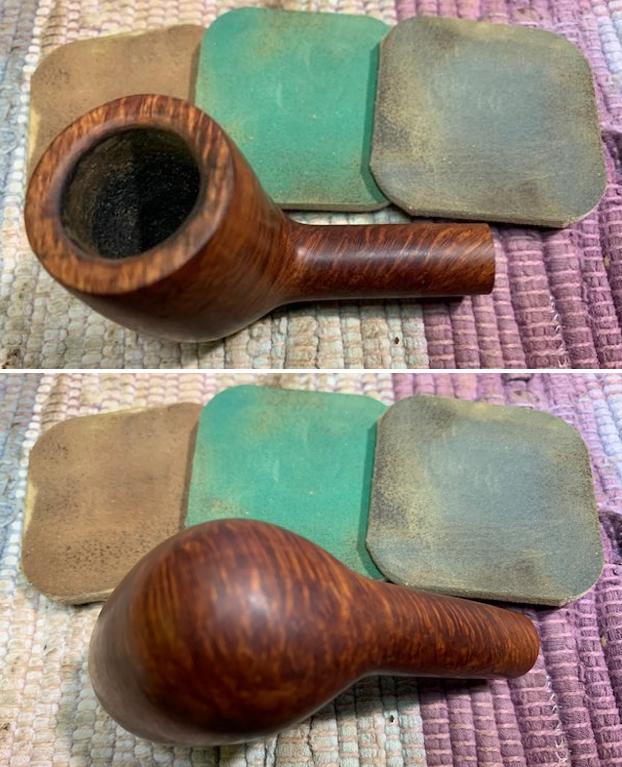
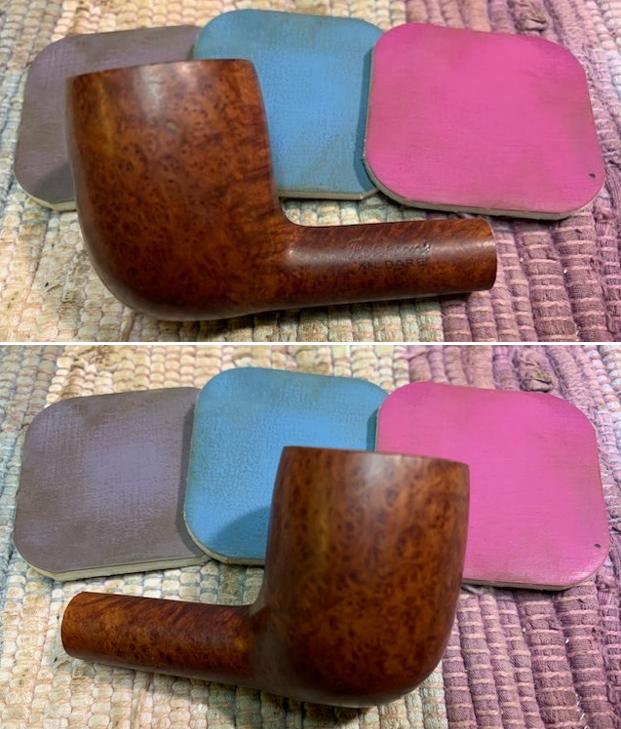
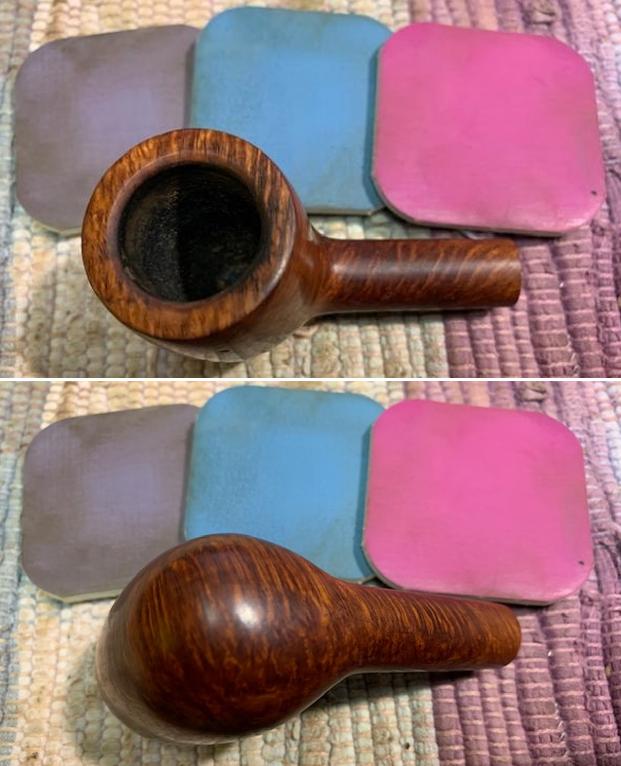
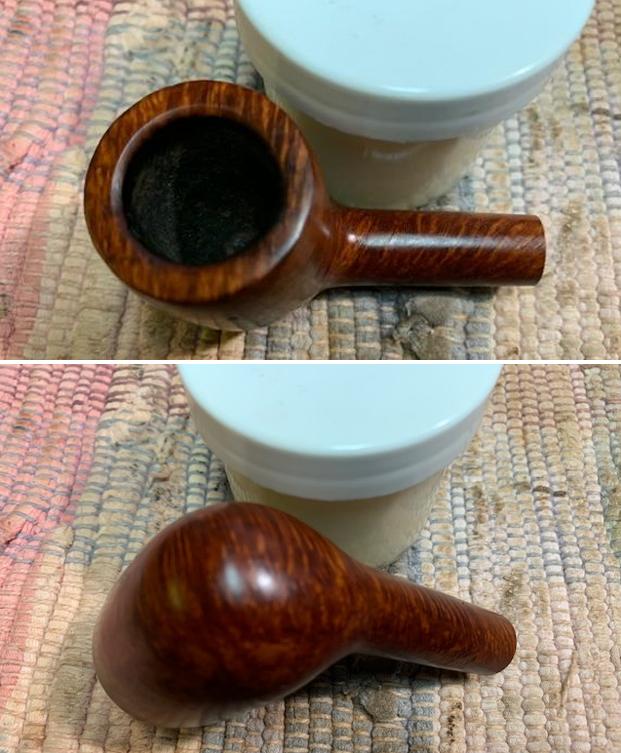
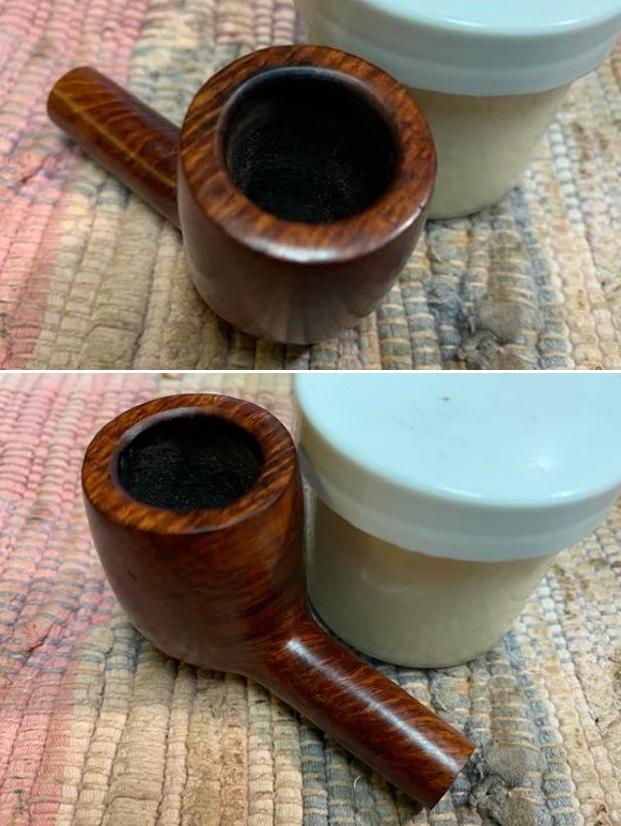
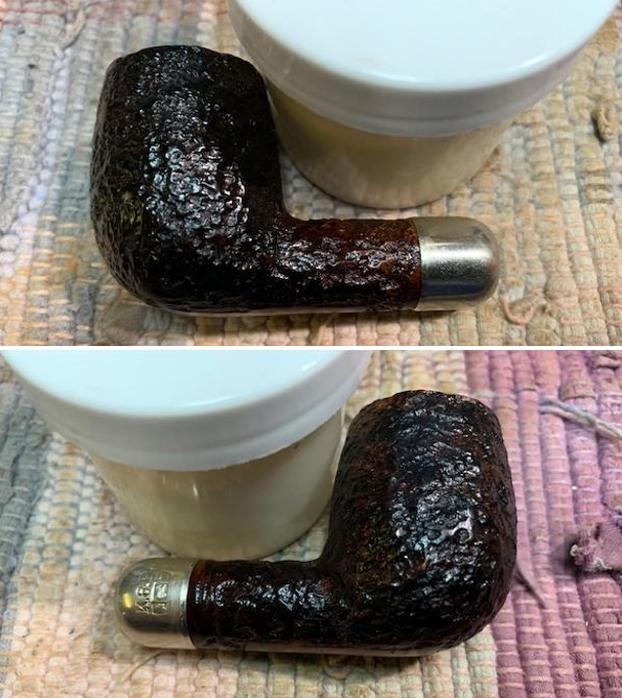
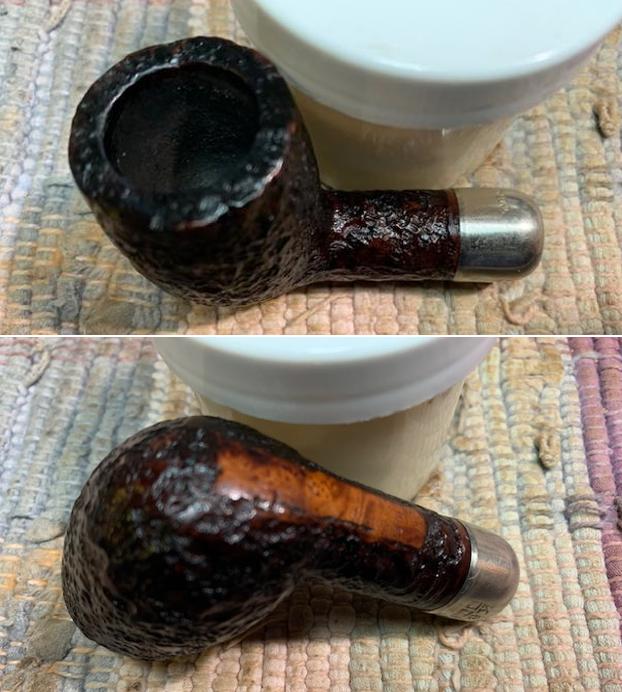
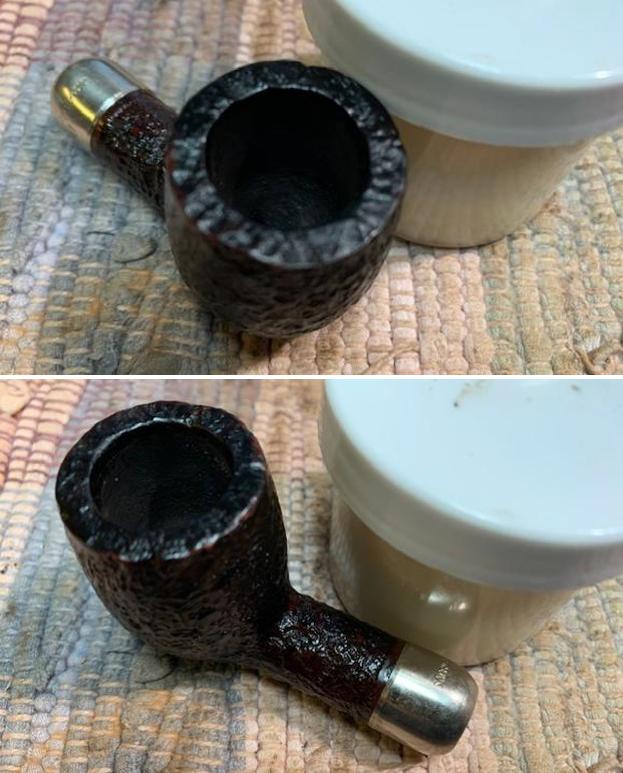
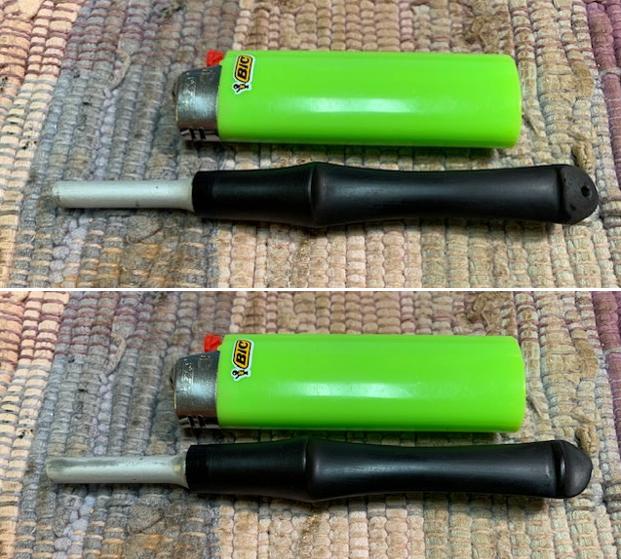
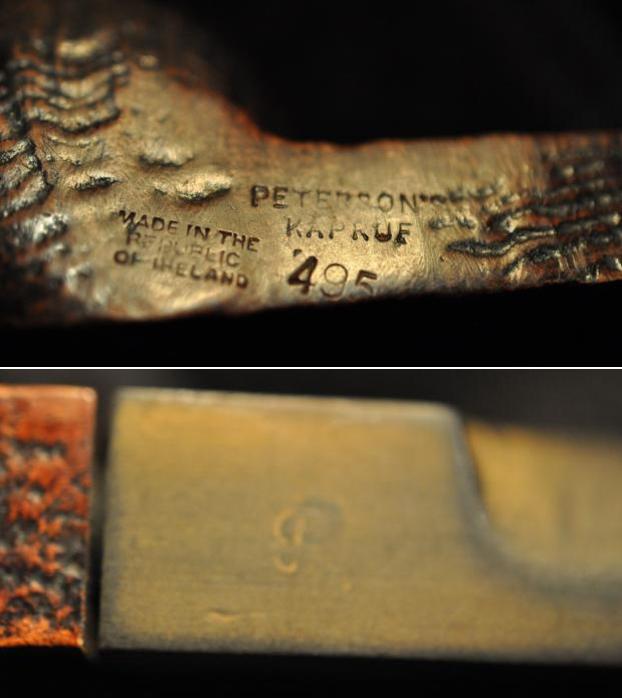
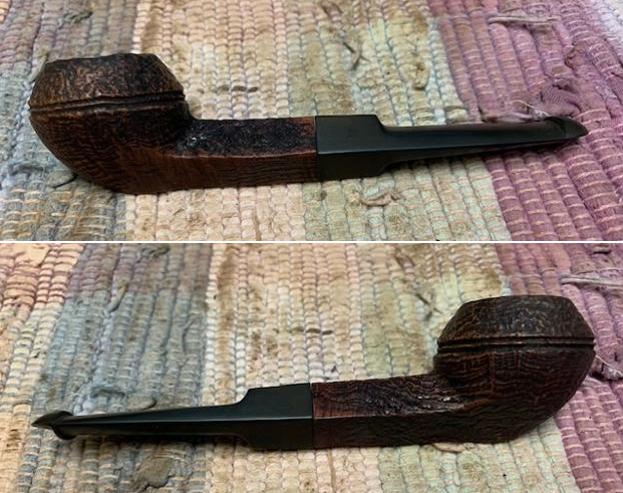
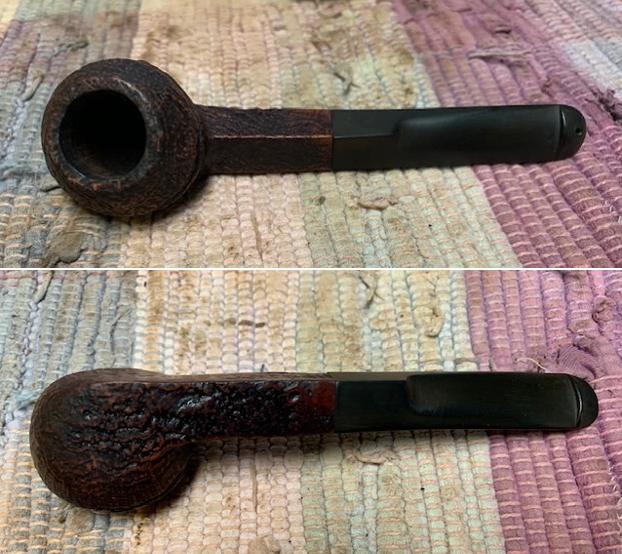
The next pipe I have chosen is another sandblasted Peterson’s Kapruf. This squat Bulldog shaped pipe has a medium brown finish around the bowl sides and shank and a nice looking shallow sandblast finish. It also came to us from the estate of Anglican minister that was a great friend of mine here in Canada. The sandblast rim top and edges were in good condition. The finish on the bowl sides was dirty. It was stamped on the left underside of the shank and read Made in the Republic of Ireland on the heel of the bowl followed by Peterson’s [over] Kapruf [over] 495. There was a light cake in the bowl and debris and lava on the rim top. The inner edges of the bowl seemed to be okay and were raw briar from scraping. The stem was oxidized, calcified and there were heavy tooth marks on the top and underside and on the button. The “P” stamp on the left side of the diamond saddle stem was quite faint. Jeff took photos of the pipe before his cleanup work. They tell the story and give a glimpse of the promise that we see in this pipe. Jeff took photos of the rim top and stem to show the general condition of the pipe. The bowl is heavily caked and the rim top and edges have some lava overflow. The stem is oxidized, calcified has tooth marks on the top and underside near the button.     He took photos of the underside of the bowl and shank to show the stamping. The stamping is readable in the photos below and is as noted above.    I am including the information from Pipedia’s article on Peterson pipes. It is a great read in terms of the history of the brand (https://pipedia.org/wiki/Peterson).

I turned to “The Peterson Pipe” by Mark Irwin and Gary Malmberg to get some background on the Kapruf line. On page 306 it had the following information.

Kapruf and “Kapruf” (c.1922-87) Sandblast (hence the name, Kapp-rough) P-lip or fishtail mouthpiece, in catalogs from 1940-87. Early documented specimens stamped IRISH over FREE STATE, no Eire specimens documented. Mid-century specimens may be stamped LONDON MADE [over] ENGLAND or MADE IN ENGLAND forming a circle or MADE IN [over] IRELAND, all dating no later than 1970. Those of recent vintage stamped MADE IN THE [over] REPUBLIC [over]OF IRELAND.

I knew that I was dealing with a KAPRUF made after 1970 (or as they say in the book above “recent vintage” as it is stamped MADE IN [over] THE REPUBLIC [over] OF IRELAND as noted above. That fit with the majority of his pipes so I was clear what I was working on. Now it was time to work on the pipe.

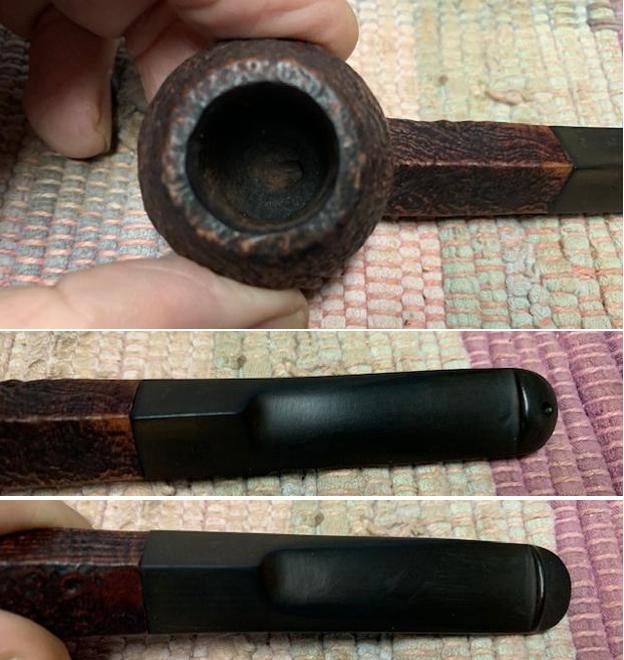
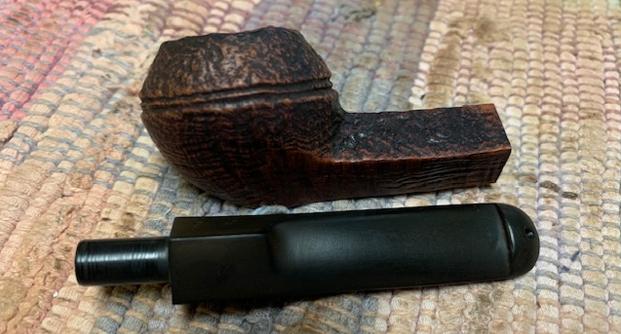
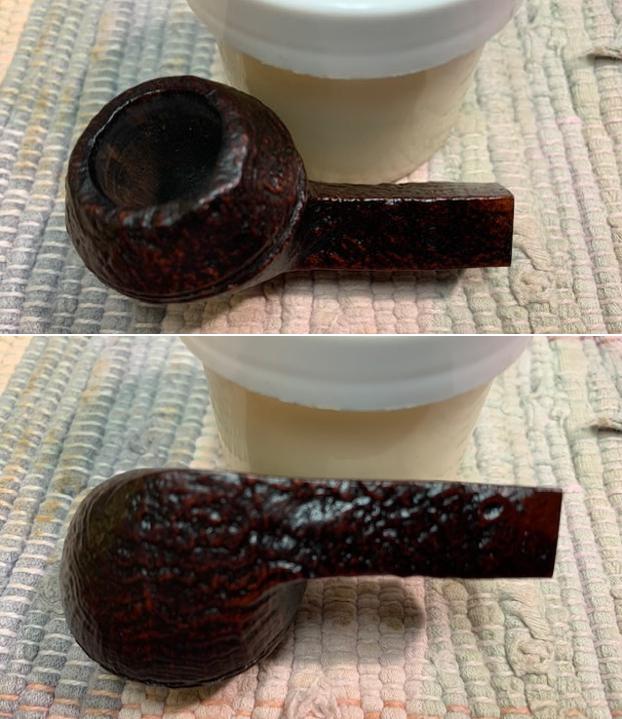
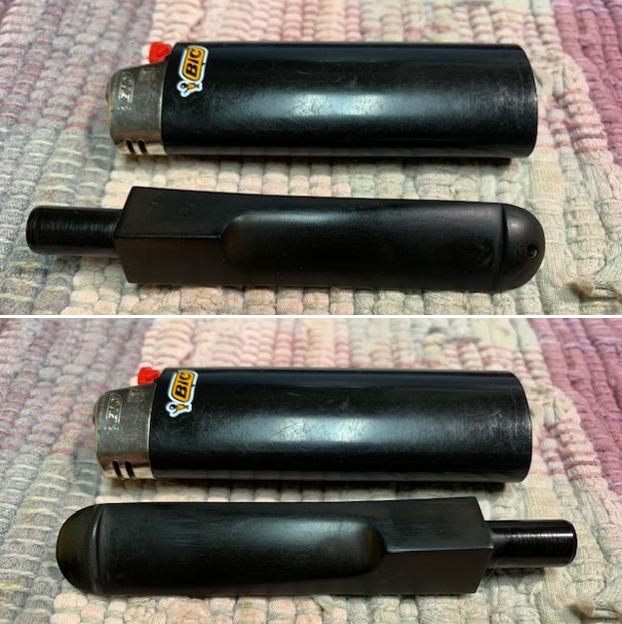
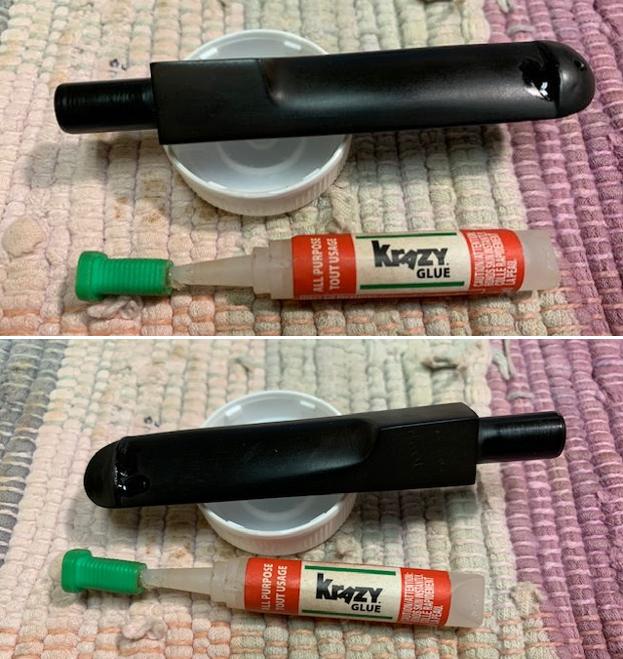
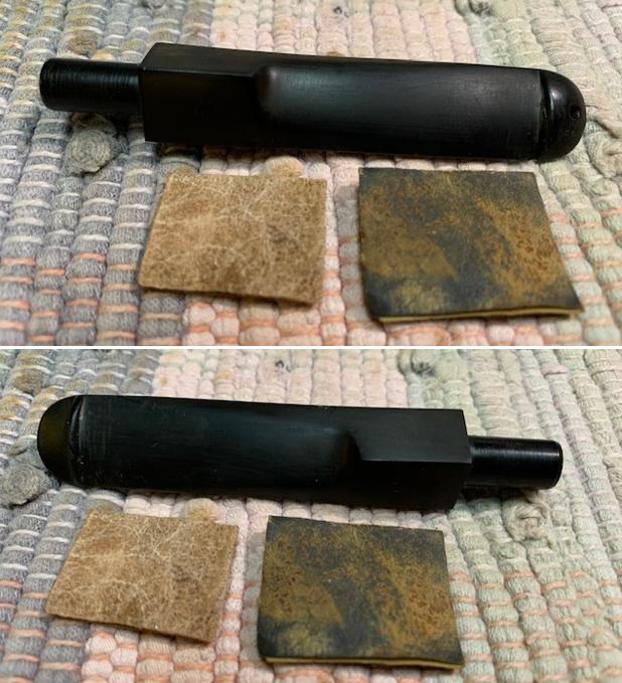
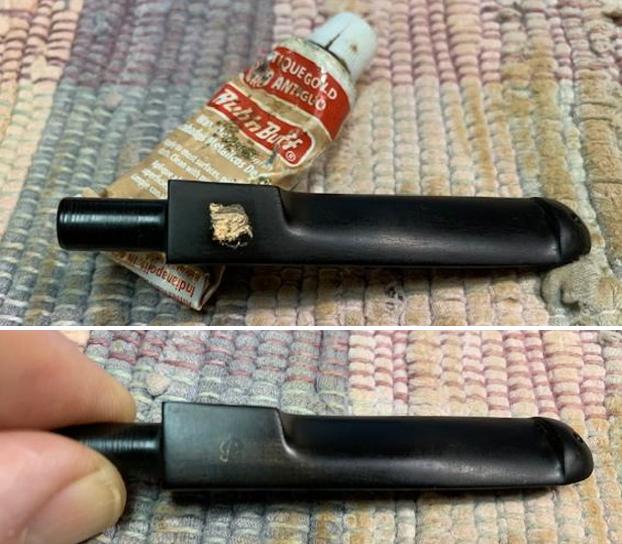
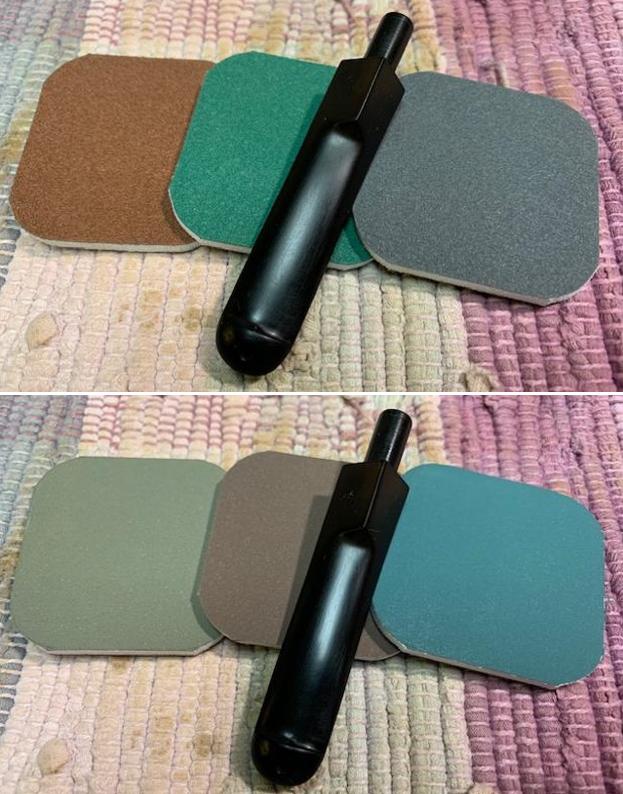
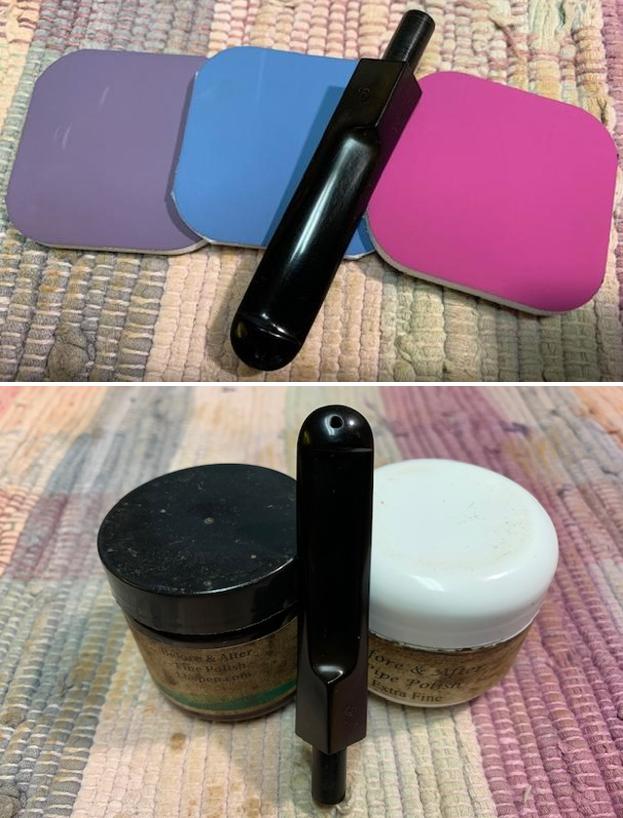
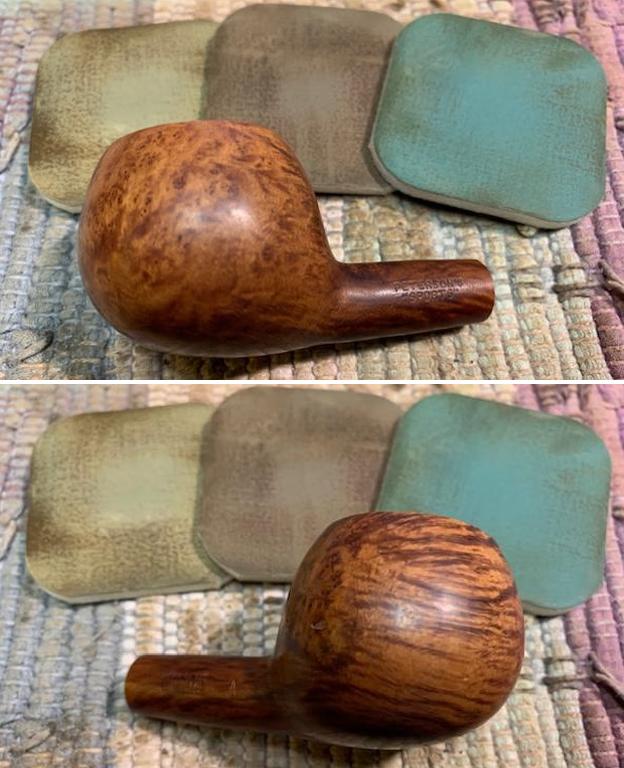
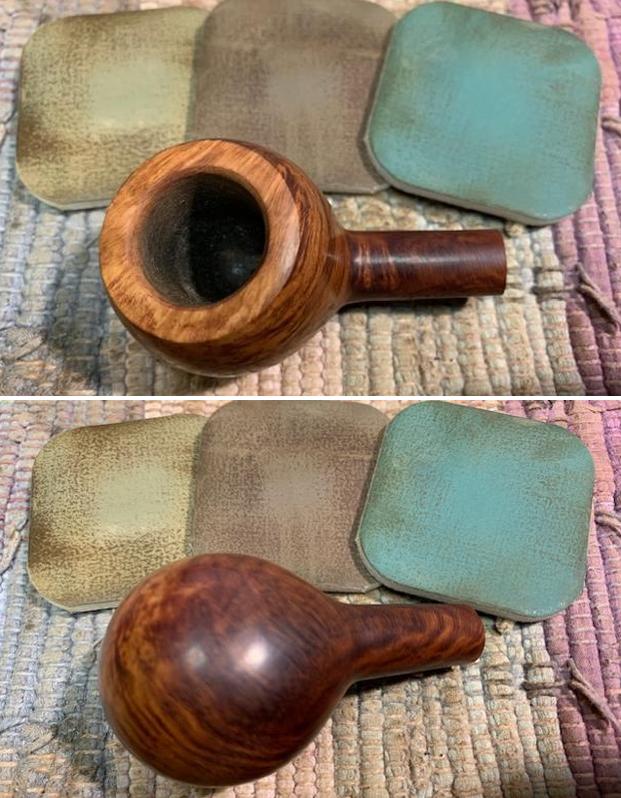
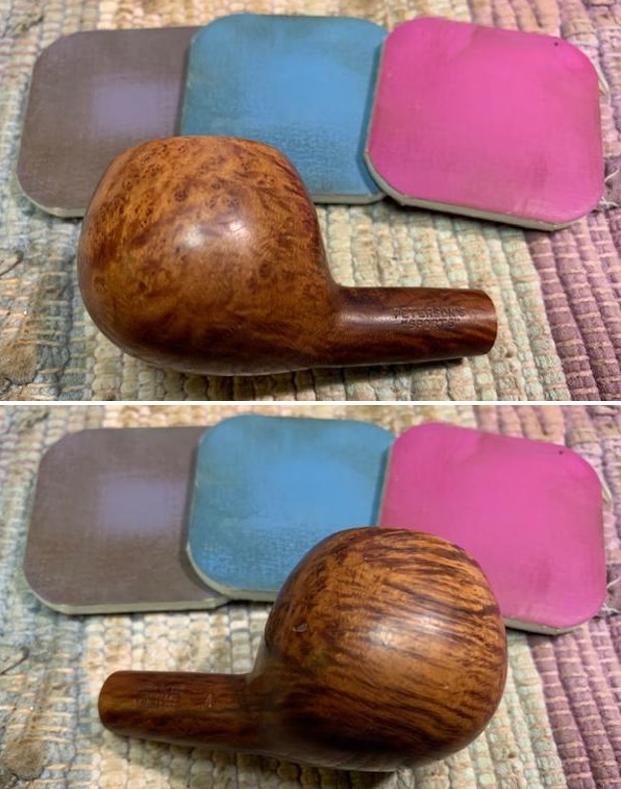
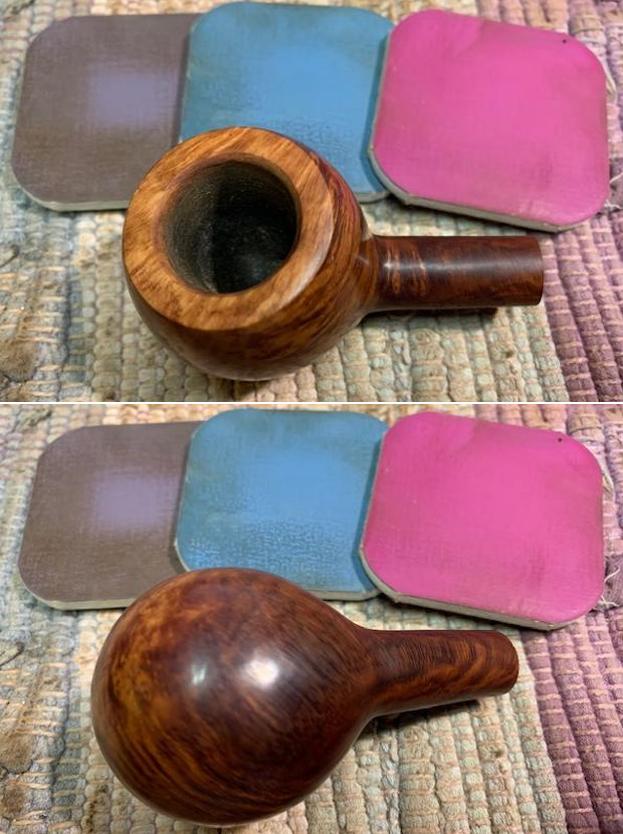
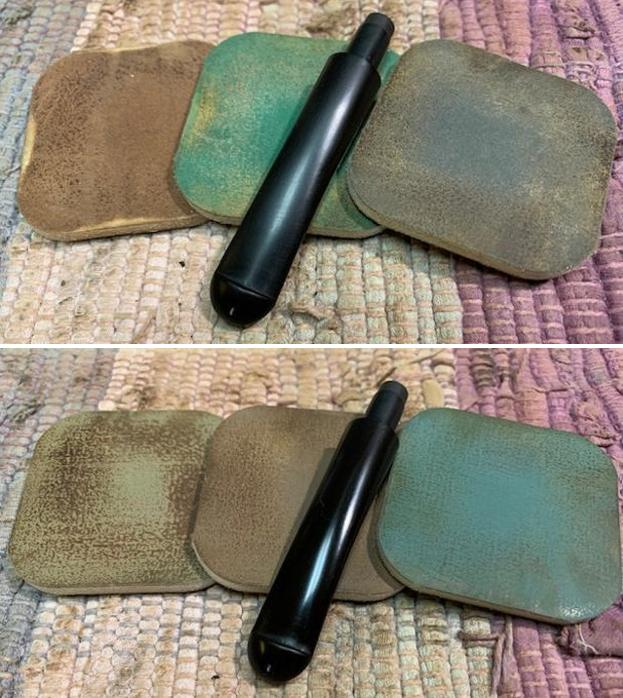
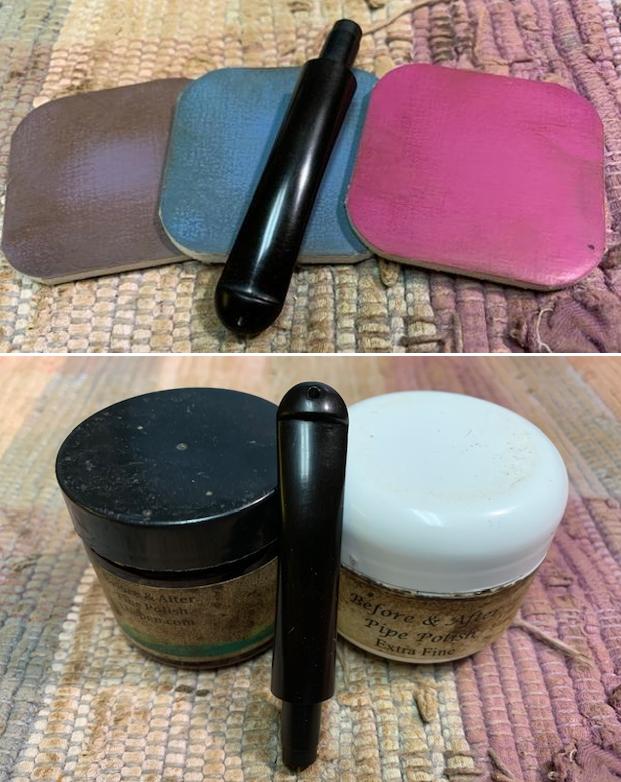
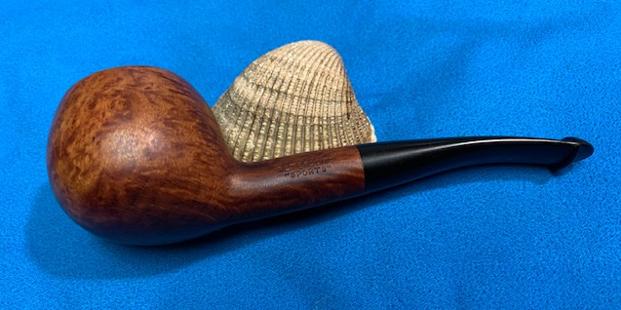
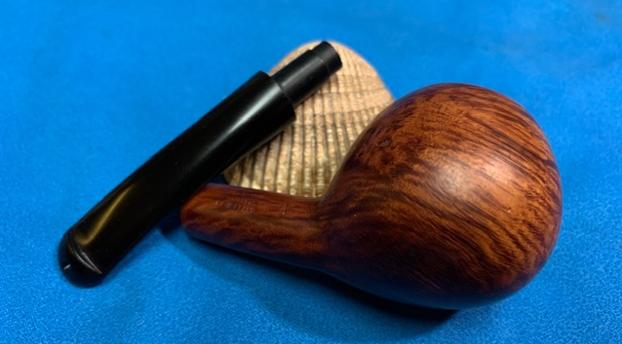
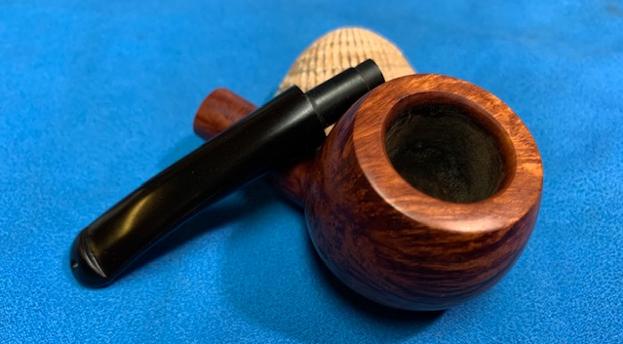
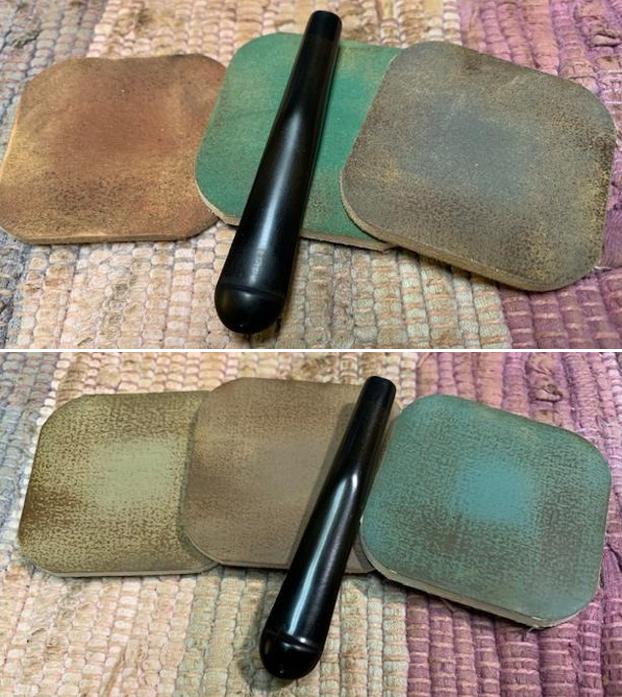
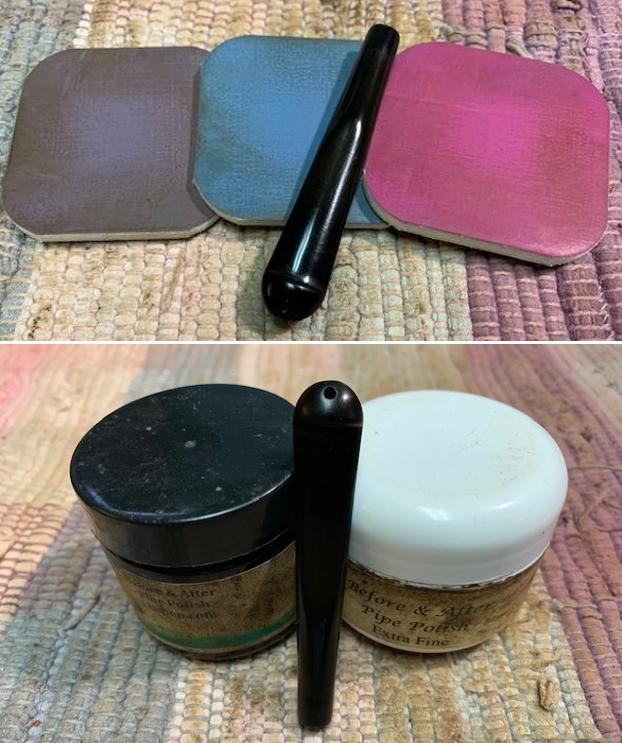
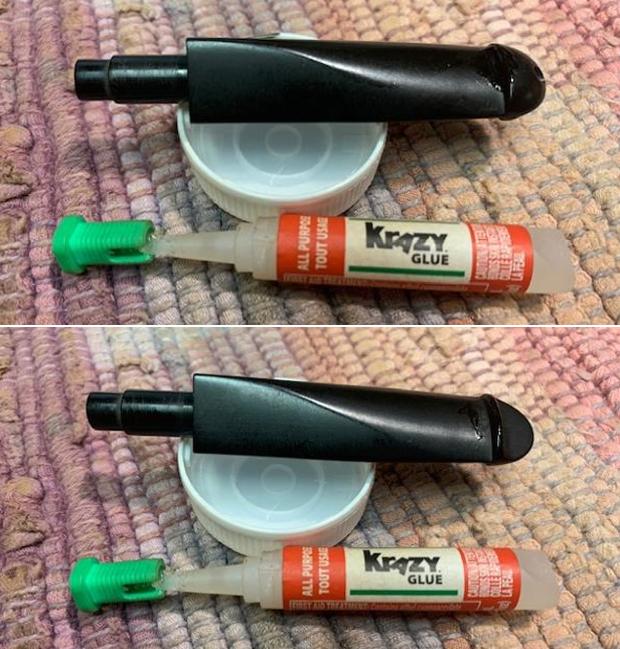
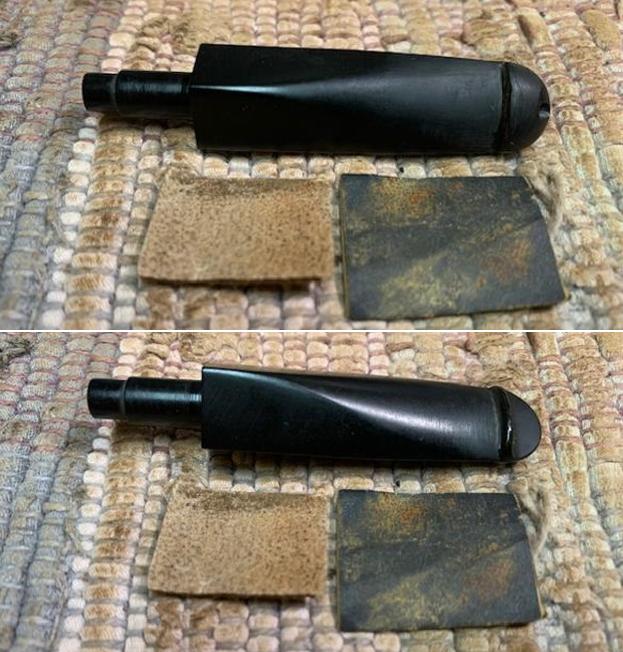
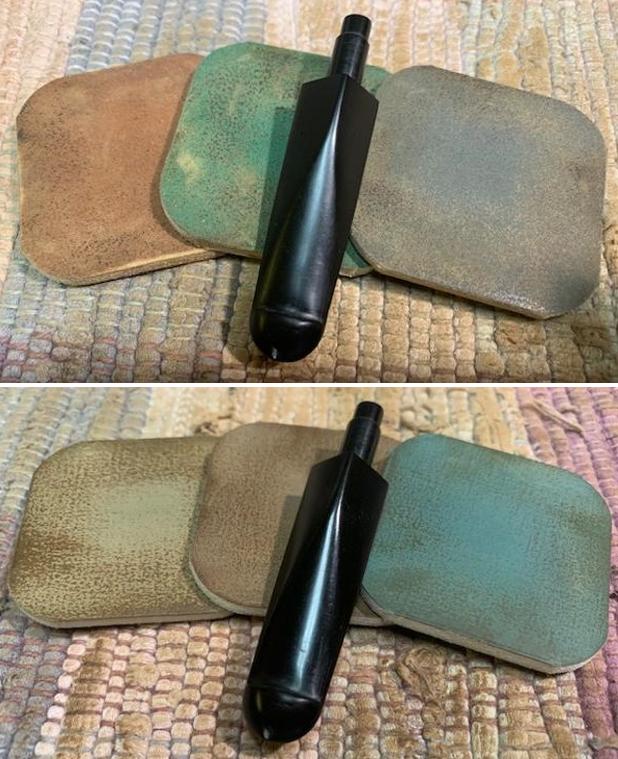
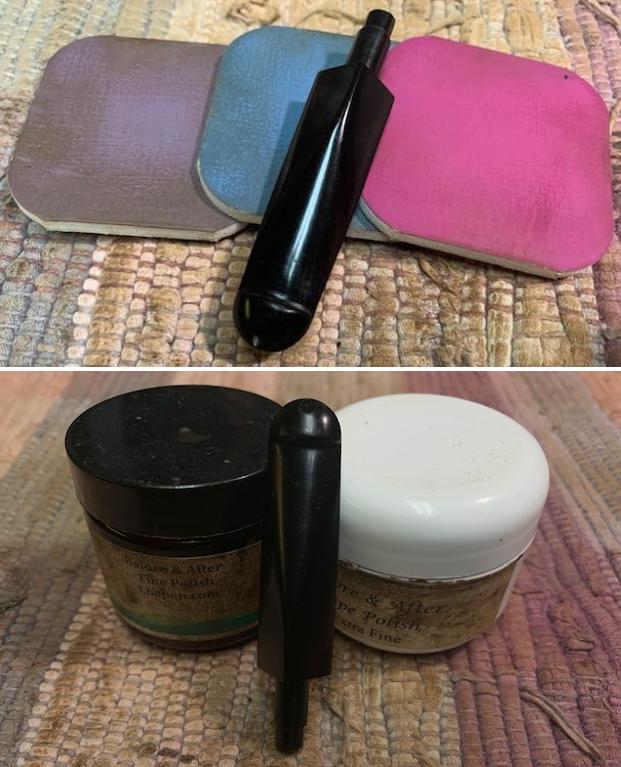
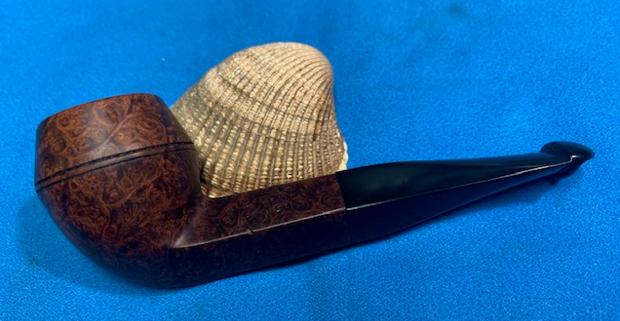
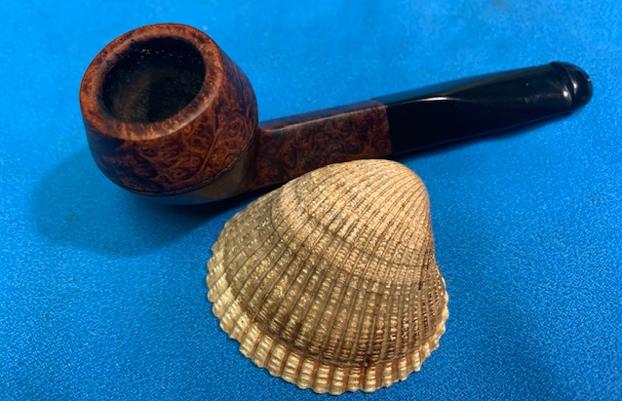
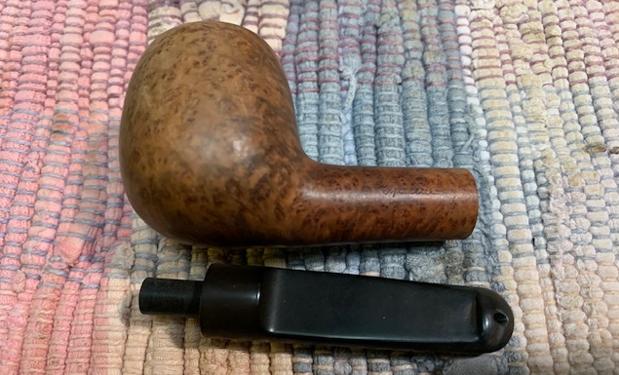
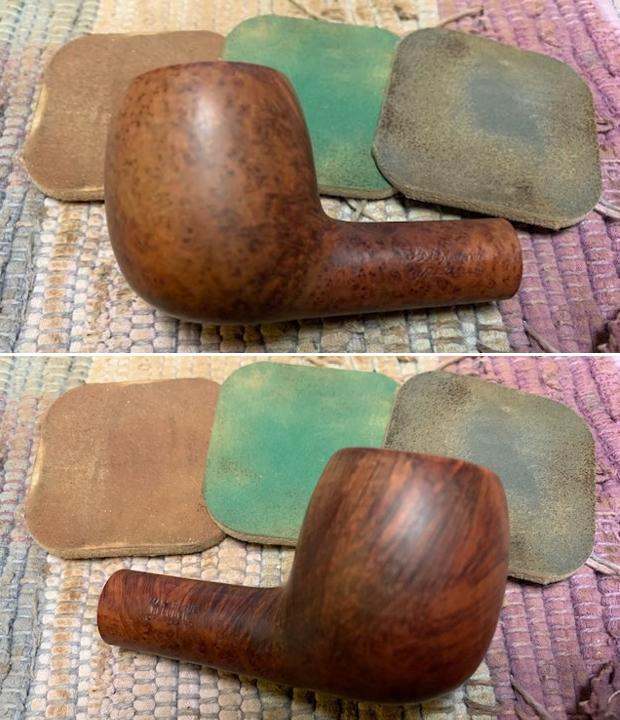
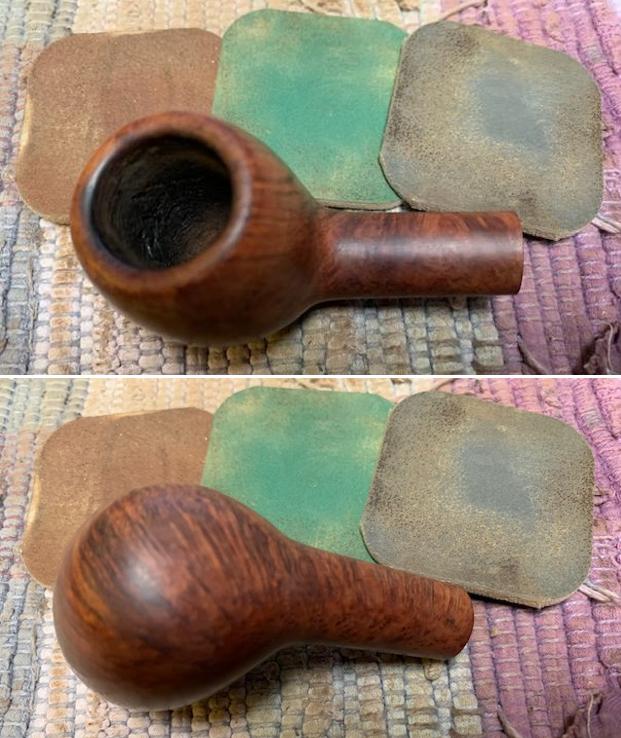
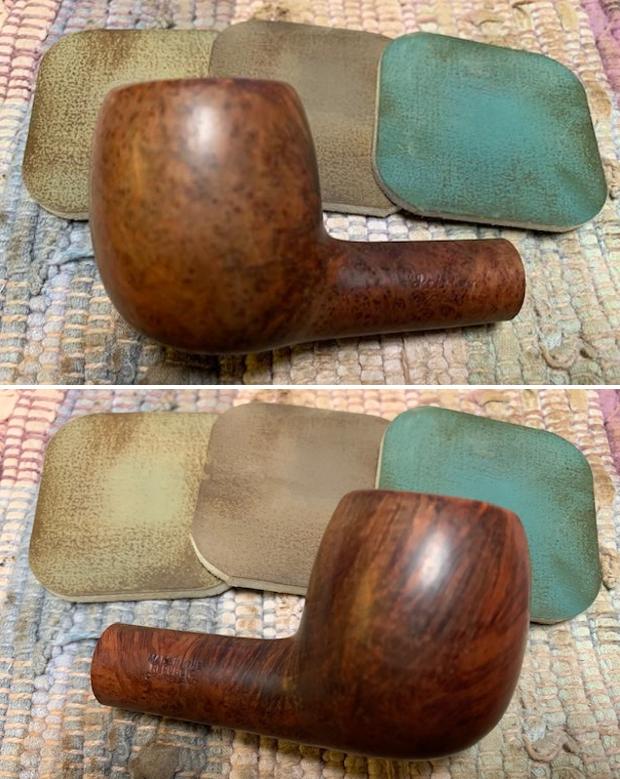
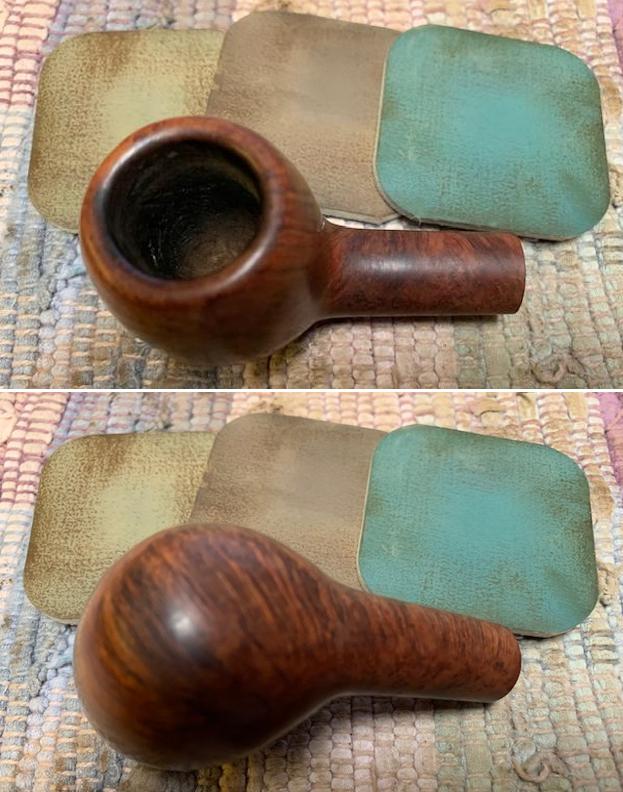
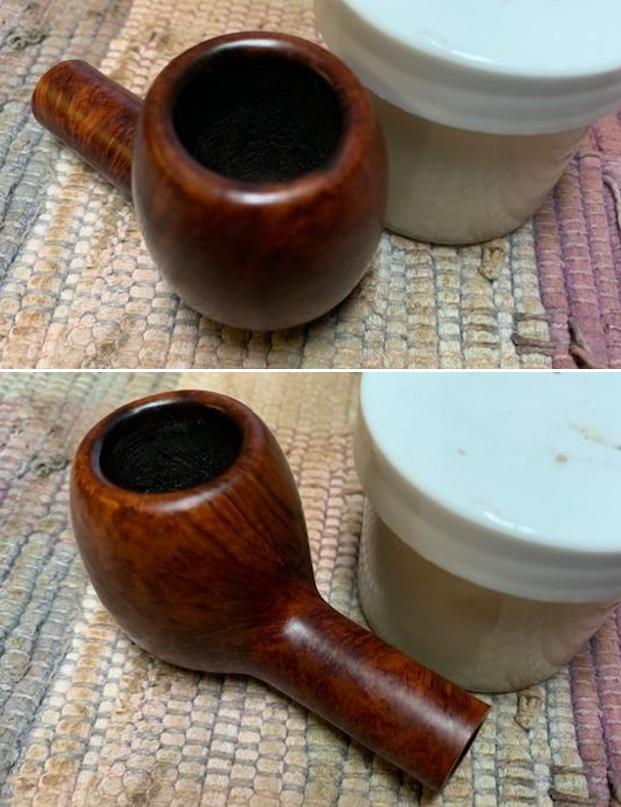
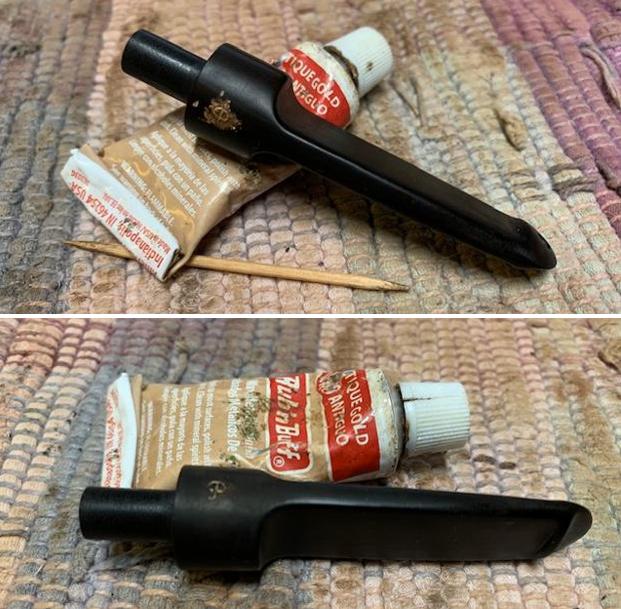
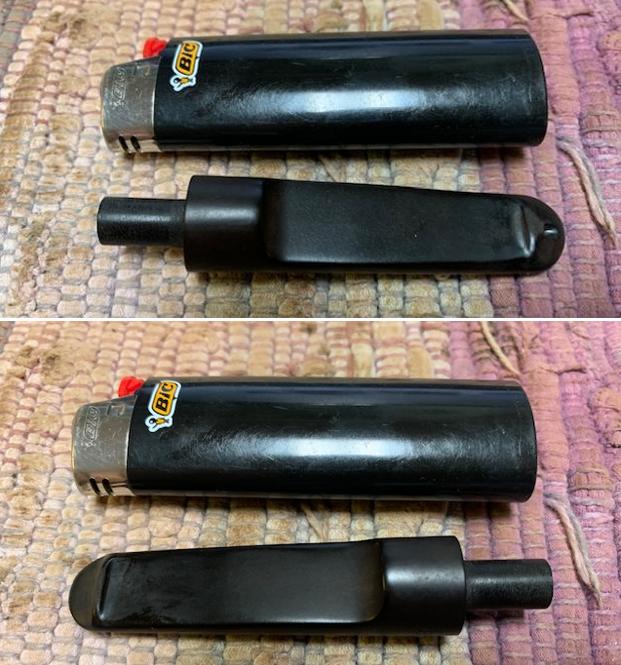
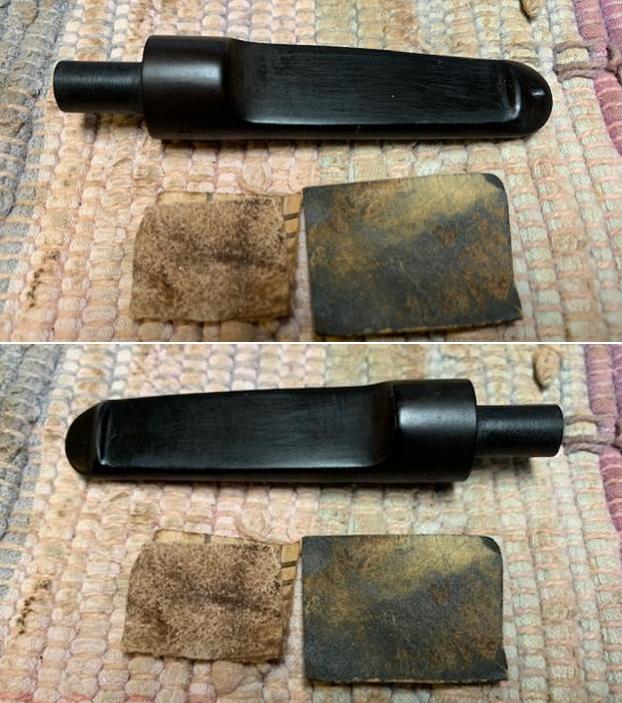
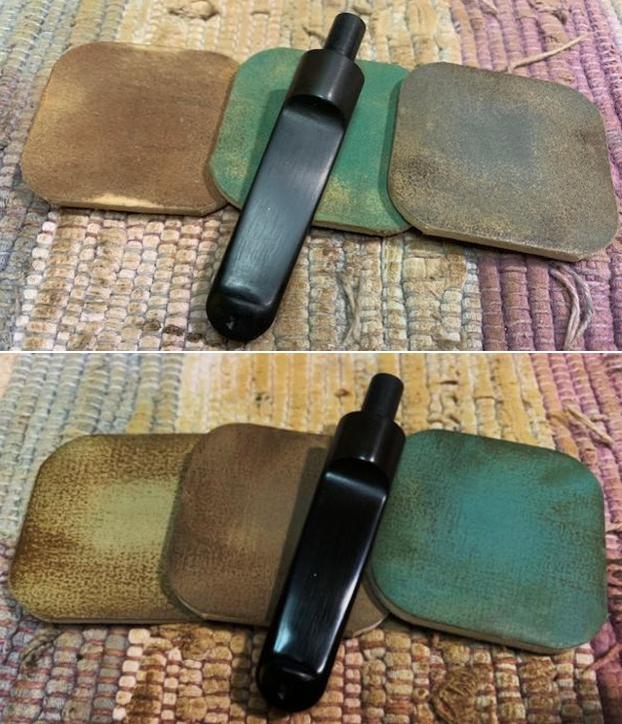
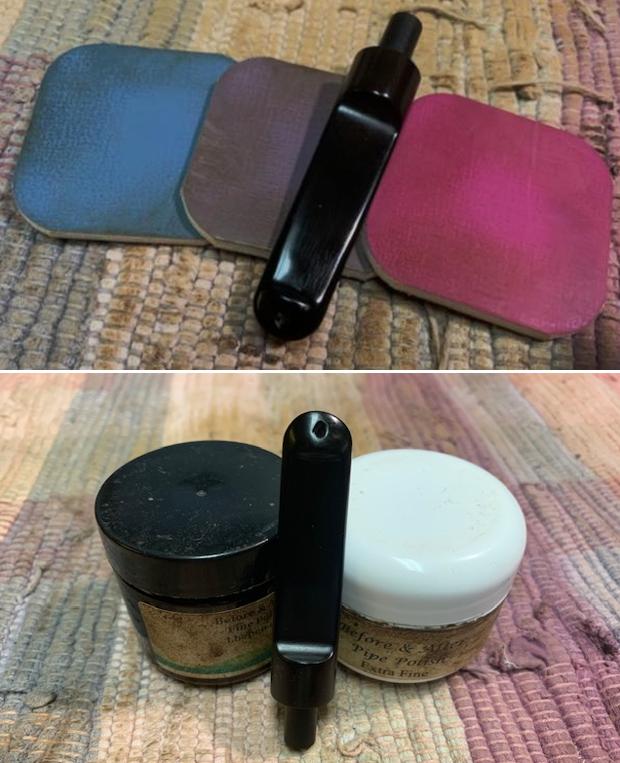
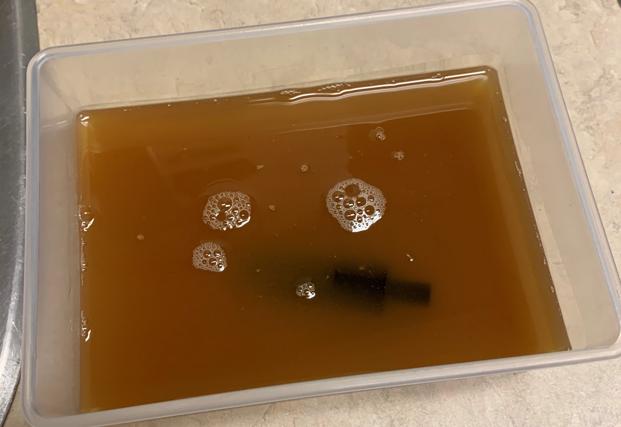
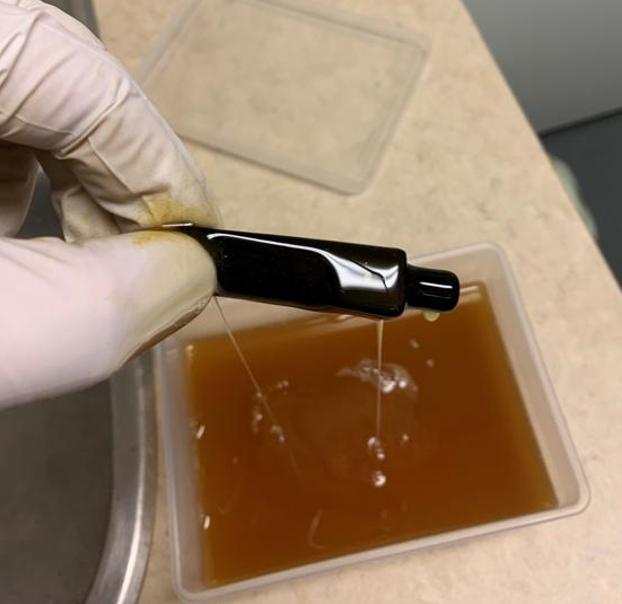
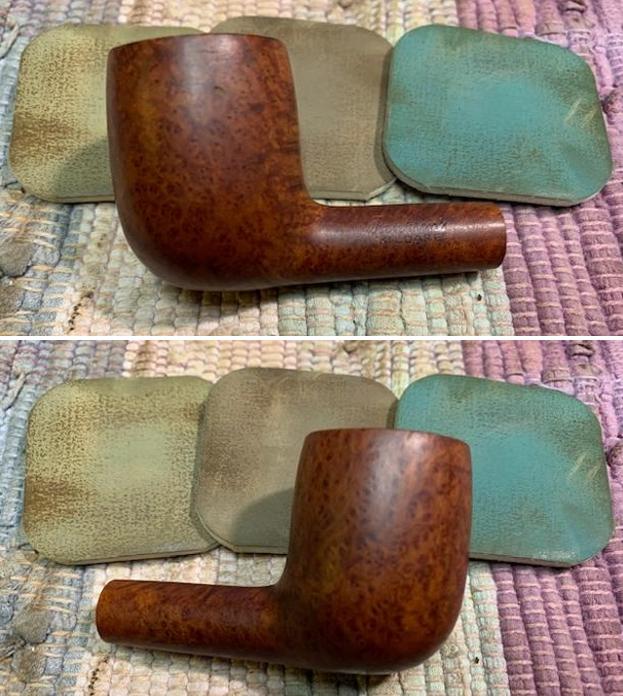
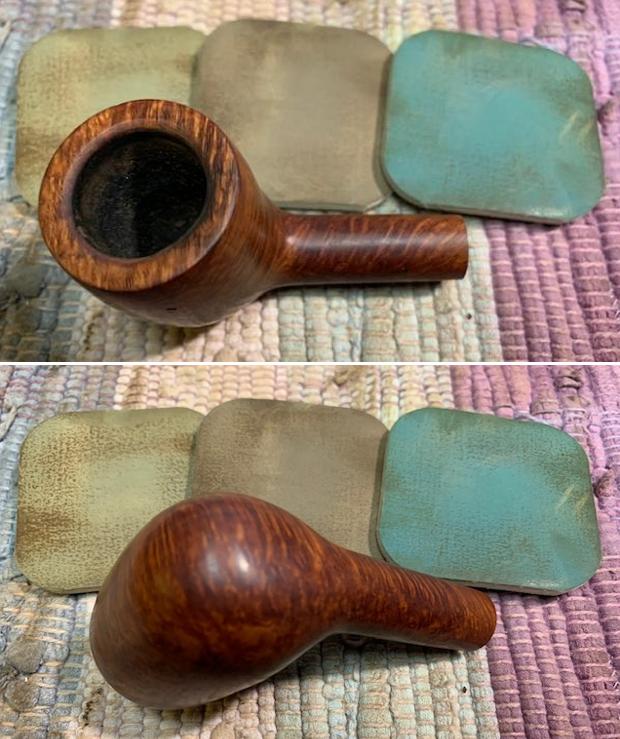
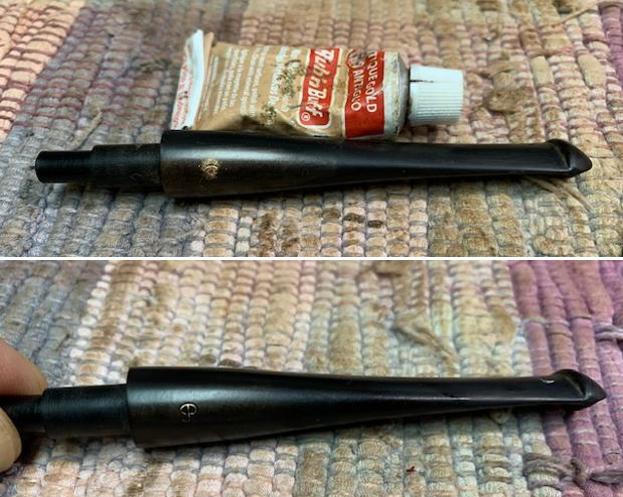
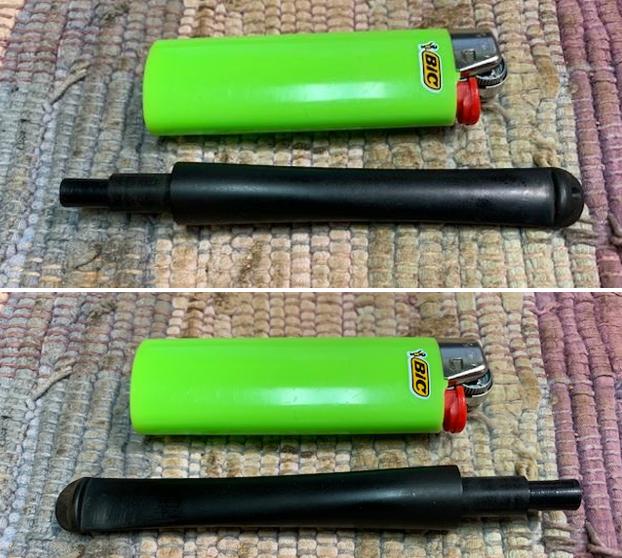
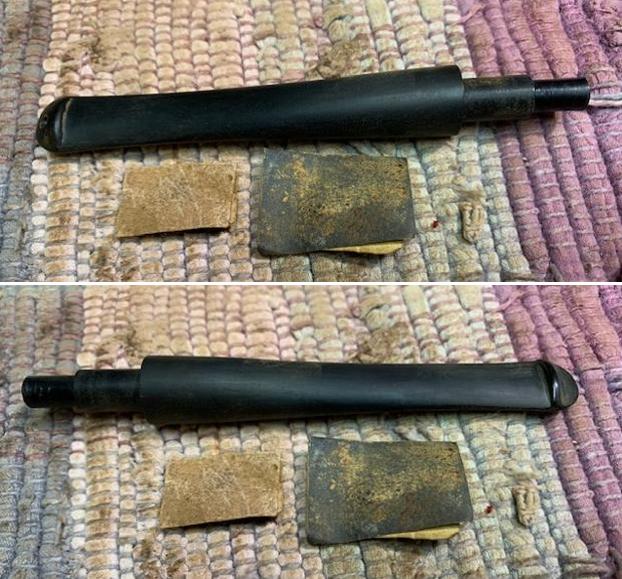
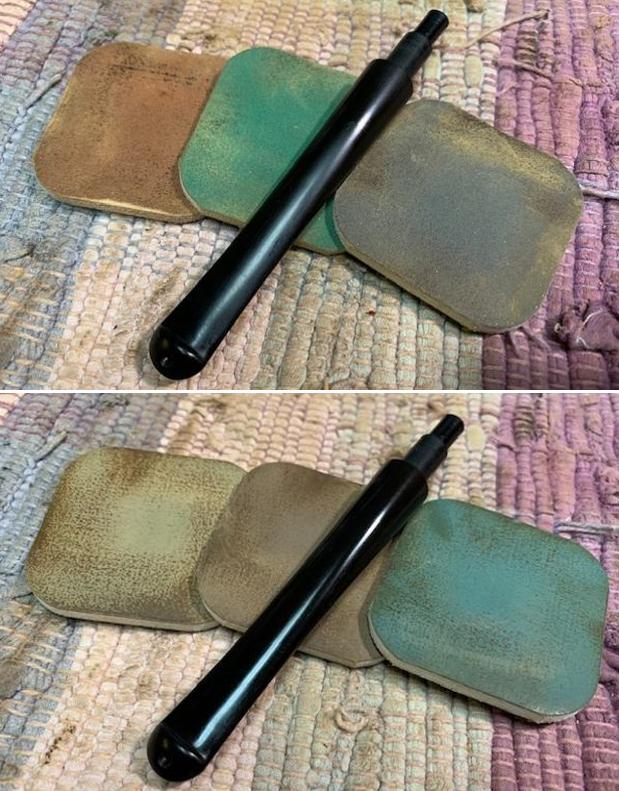
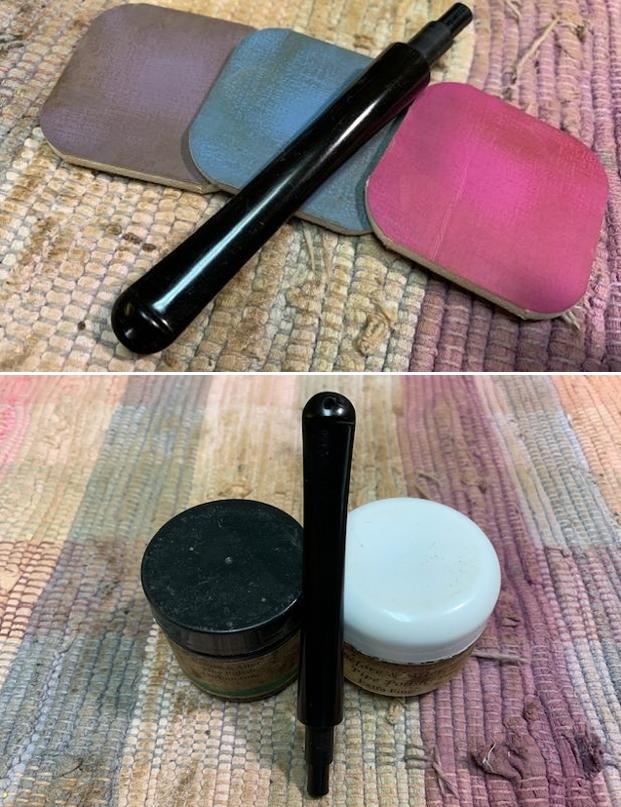
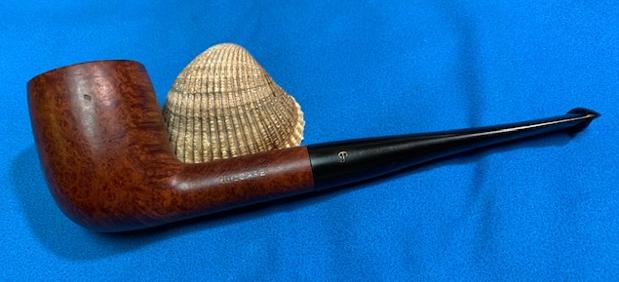
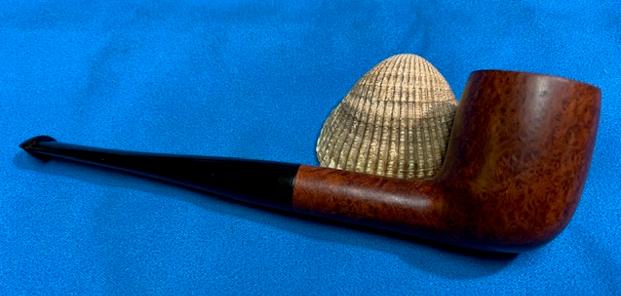
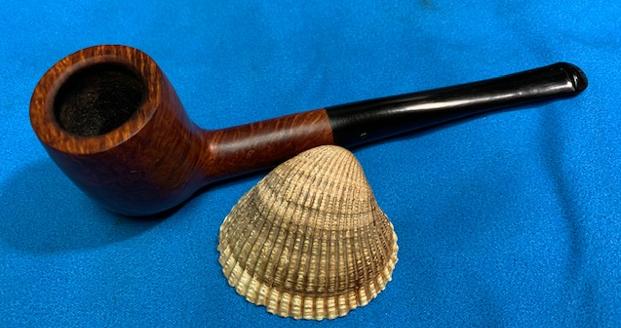
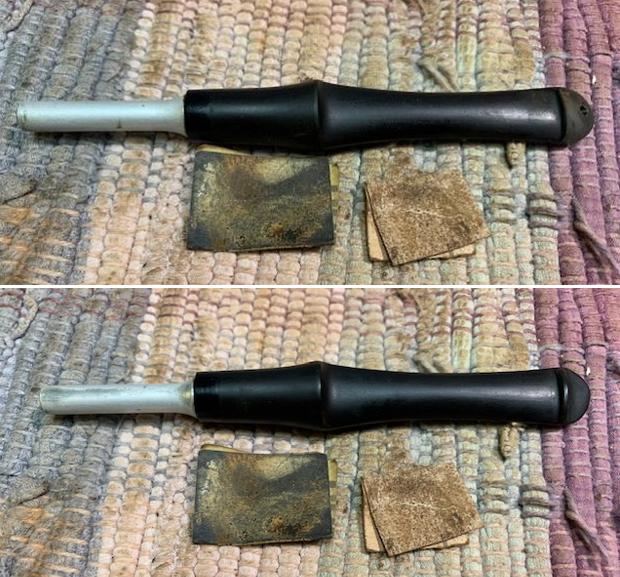
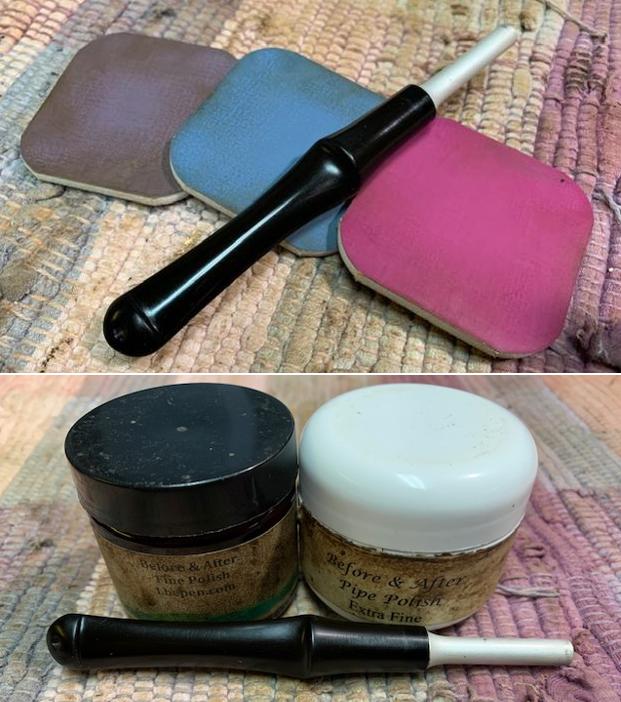
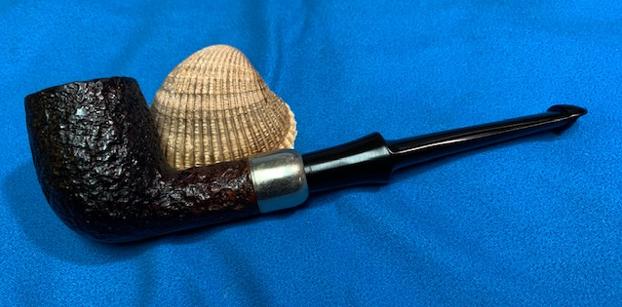
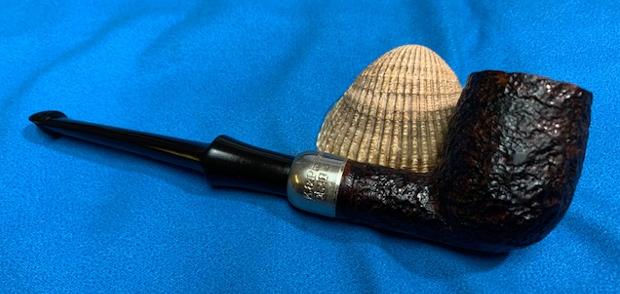
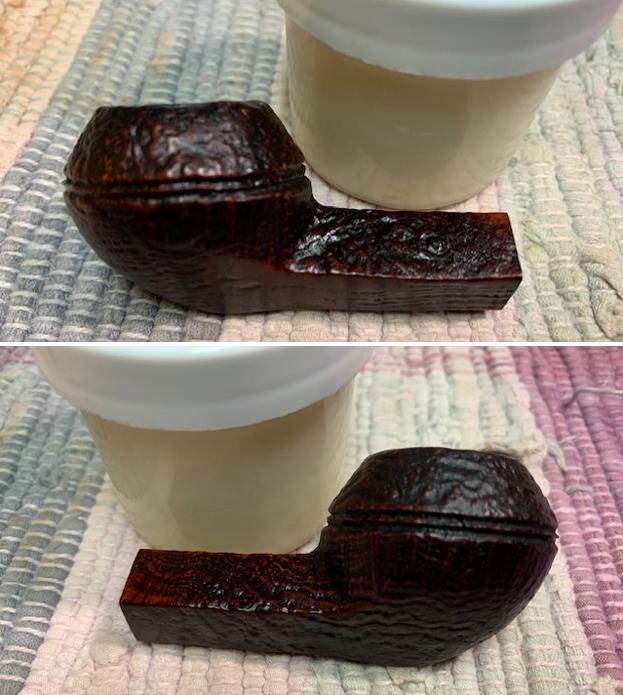
Jeff had done a great job cleaning up the pipe as usual. He reamed the pipe with a PipNet reamer and cut back the cake back to the bare briar. He cleaned up the walls with a Savinelli Fitsall Pipe Knife. He scrubbed the interior of the bowl and shank with pipe cleaners, cotton swabs and alcohol to remove the tars and oils. He scrubbed the exterior of the pipe with Murphy’s Oil Soap and a tooth brush to remove the grime from the finish. He worked on the rim top lava and darkening with the soap and tooth brush. He scrubbed the inside of the stem with alcohol and pipe cleaners. He scrubbed the exterior with Soft Scrub and then soaked it in Before & After Deoxidizer. He washed it off with warm water to remove the Deoxidizer. The pipe looked far better when it arrived.     I took some close up photos of the rim top and also of the stem surface. I wanted to show how clean the rim top looked. The sandblast surface is perfect. I also took close up photos of the stem to show the tooth marks on the surface of the stem and button.    I took a photo of the stamping on the underside of the shank. You can see that it is stamped as noted above. It is faint in spots but very readable. I took the pipe apart and took a photo of the pipe. It is a good looking pipe and has a great looking sandblast. The bowl was in such good condition that I worked some Before & After Restoration Balm into the surface of the briar with my fingertips and a horsehair shoe brush to clean, enliven and protect the briar. I let the balm sit for 15 minutes and then buffed with a cotton cloth to raise the shine. The photos show the bowl at this point in the restoration process.    I set the bowl aside and turned my attention to the stem. I “painted” the surface of the stem with the flame of a lighter to lift the tooth marks. While it lifted many of them a few remained. I filled them in with clear super glue. Once the repair had cured I flattened it out with 220 grit sandpaper to blend them into the surface of the vulcanite. I started polishing the stem by wet sanding it with 400 grit wet dry sandpaper.    The “P” stamp on the left topside of the saddle stem was quite faintly stamped. I touched it up with some Rub’n Buff Antique Gold. I worked it into the remaining stamp with a tooth pick. I buffed off the excess with a cotton pad. It shows but it is very faint.   I polished the stem with micromesh sanding pads – wet sanding with 1500-12000 grit sanding pads. I wiped it down after each sanding pad with Obsidian Oil. I polished it with Before & After Pipe Stem Polish – both Fine and Extra Fine.     I am excited to finish this Peterson’s “Kapruf” 495 Republic Era Sandblast Squat Bulldog. I am really happy with how the bowl turned out when I consider the damage that needed to be addressed. I put the pipe back together and buffed it with Blue Diamond on the buffing wheel. I gave the bowl multiple coats of Conservator’s Wax and the stem multiple coats of carnauba wax. I buffed the pipe with a clean buffing pad to raise the shine. I hand buffed it with a microfibre cloth to deepen the shine. It is fun to see what the polished bowl looks like with the colours popping through the sandblast. Added to that the polished  black vulcanite taper stem was beautiful. This shapely Classic Peterson’s “Kapruf” Squat Bulldog is nice looking and the pipe feels great in my hand. It is light and well balanced. Have a look at it with the photos below. The dimensions are Length: 5 ½ inches, Height: 1 ½ inches, Outside diameter of the bowl: 1 ½ inch, Chamber diameter: ¾ of an inch. The weight of the pipe is 25grams/.88oz. It is a beautiful pipe and one that I soon put on the rebornpipes store I you are interested in carrying on the pipeman’s legacy. Thanks for walking through the restoration with me as I worked over this pipe. Thanks to each of you who are reading this blog.

Restoring a Republic Era Peterson’s “Sports” 4 Apple


Blog by Steve Laug

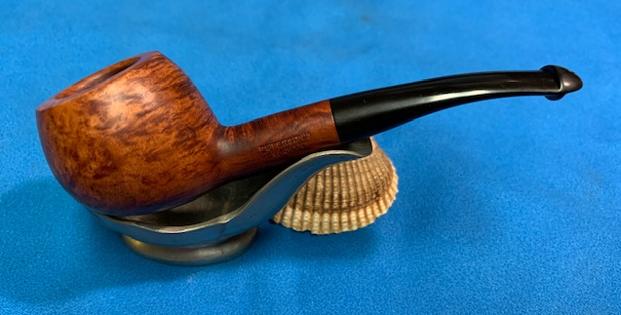
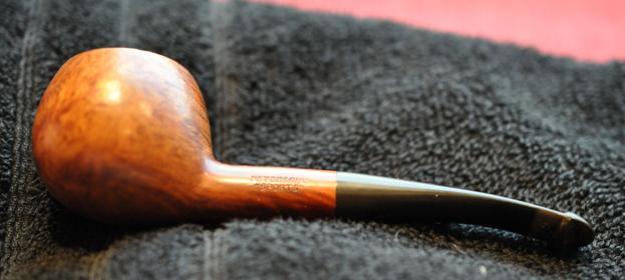
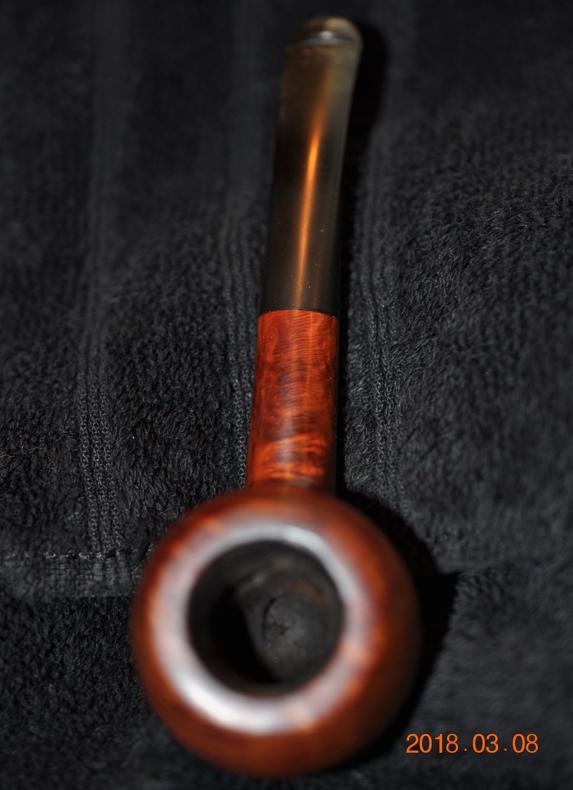
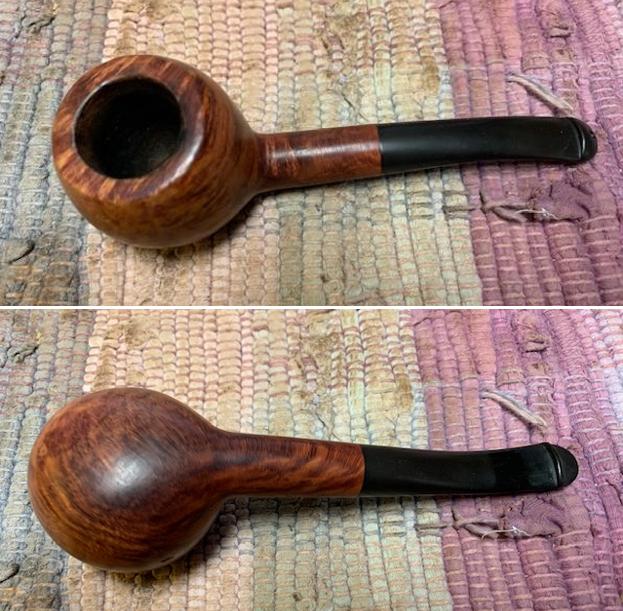
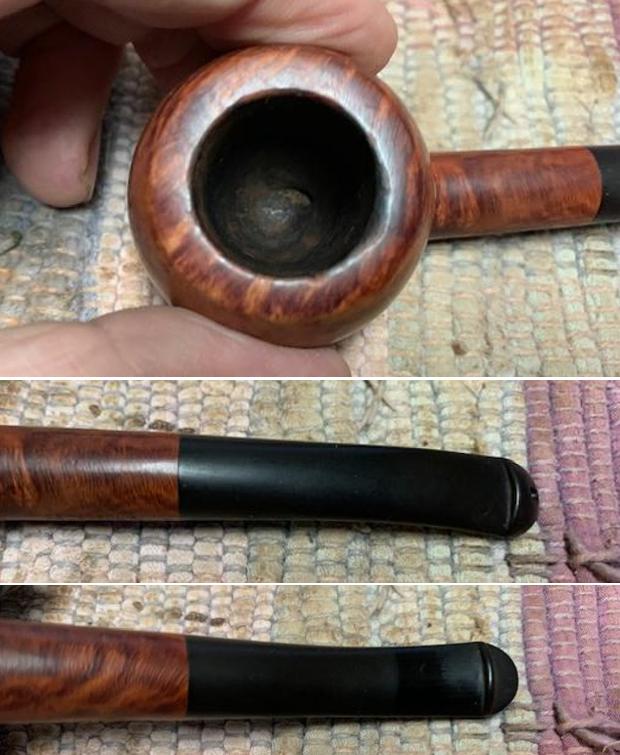
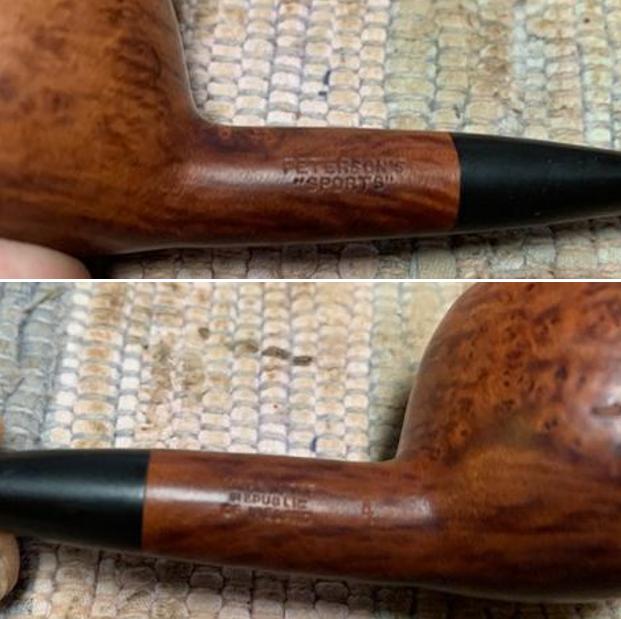
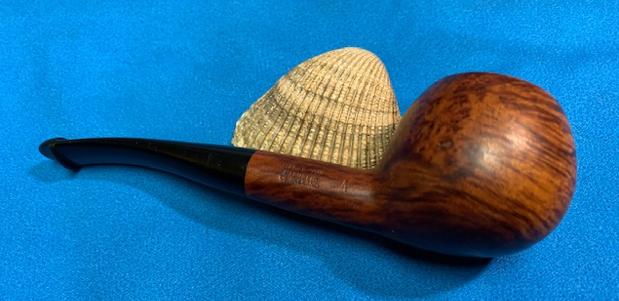
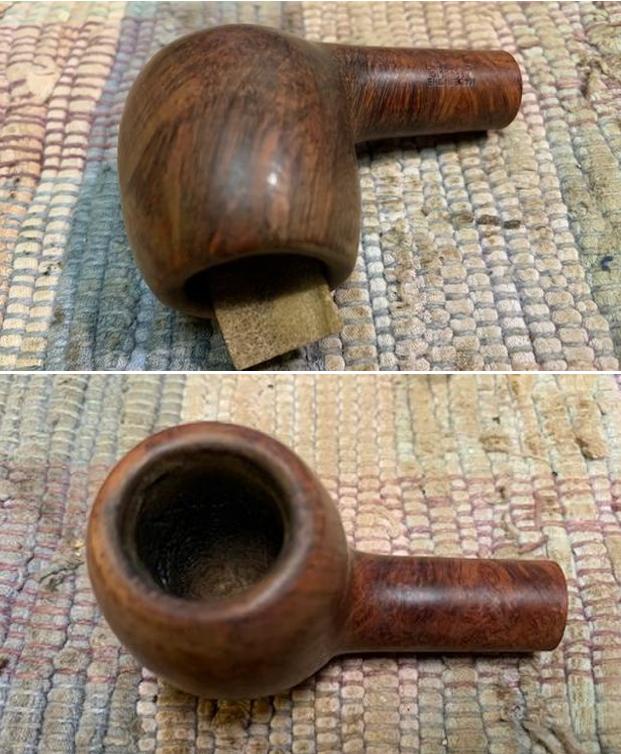
The next pipe I have chosen is smooth finished Peterson’s Apple shaped pipe that had a bit of a bland looking finish but had some good looking grain around the bowl sides and shank. It also came to us from the estate of Anglican minister that was a great friend of mine here in Canada. This Apple did not have a nickel ferrule on the shank end. It was stamped on the left side of the shank and read Peterson’s [over] “Sports”. It was stamped on the right side and reads Made in the Republic of Ireland (3 lines). Next to the bowl it is stamped 4. The pipe was in filthy condition when he brought it to the table. The finish was dirty with grime ground into the briar sides and rim. There was a thick cake in the bowl and there was some damage to the rim top and the inner edge of the rim. The stem was oxidized, calcified and had tooth marks and chatter on the top and underside on and near the button. Jeff took photos of the pipe before his cleanup work. They tell the story and give a glimpse of the promise that we see in this pipe. Jeff took photos of the rim top and stem to show the general condition of the pipe. The bowl is thickly caked and the rim top and edges show quite a bit of damage around the bowl. The photo of the stem shows some oxidation and light tooth marks on both sides near the button. Jeff took some photos of the bowl sides and heel to show the amazing grain that was around this bowl. It is a nice looking pipe. He took photos of the sides of the shank to show the stamping. The stamping is worn but is still readable in the photos below and is as noted above.   I am including the link to the Pipedia’s article on Peterson pipes. It is a great read in terms of the history of the brand (https://pipedia.org/wiki/Peterson).

I turned to “The Peterson Pipe” by Mark Irwin and Gary Malmberg to get some background on the Peterson’s Sports. On page 313-314 it had the following information.

“SPORTS” (1947-) A “Sport” is traditionally a compact pipe made for smokers engaged in athletic pursuits, most notably equestrian riders who do not want the bowl to bounce up and down. Six shapes described in 1947 shape chart. Occasional later catalogs show as many as 11 shapes. Last  appeared in shape chart in ’98, but still made in small numbers. Recorded specimens are stamped MADE IN IRELAND (forming a circle) or MADE IN THE over REPUBLIC over OF IRELAND. See Outdoor and Outdoor Sportsman.

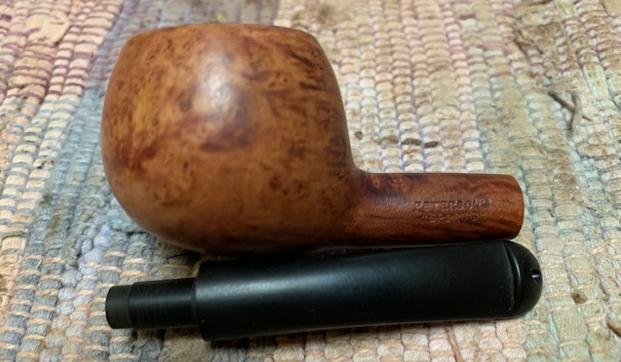
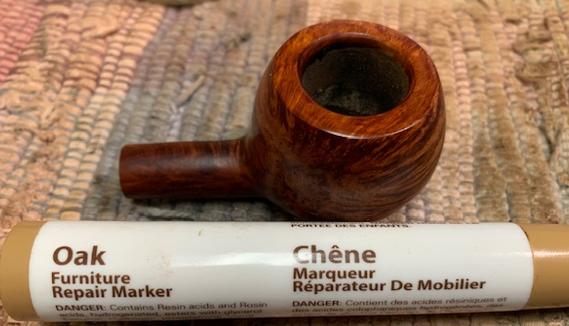
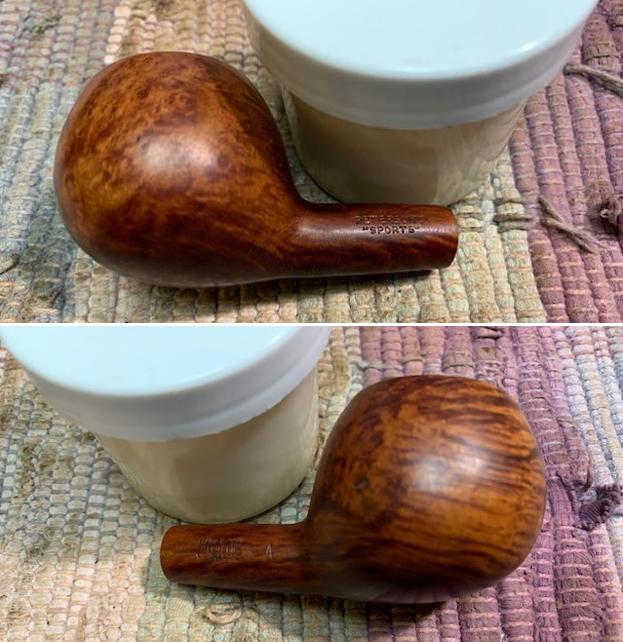
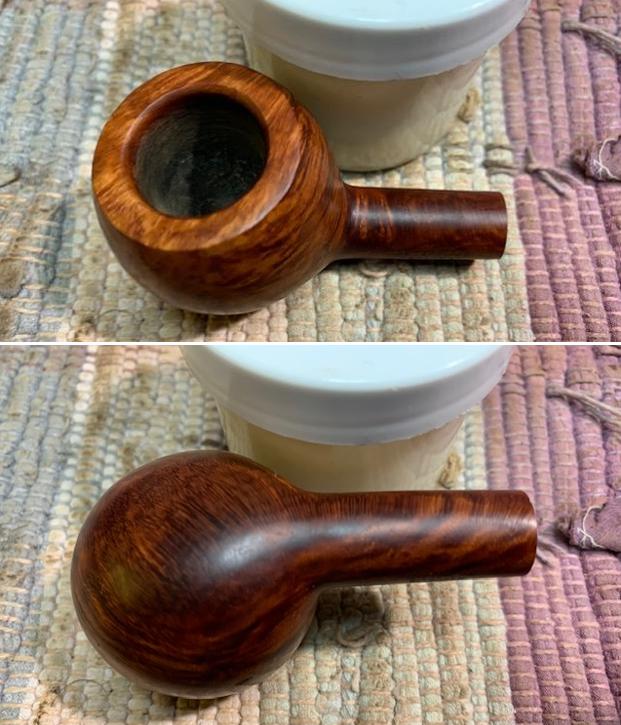
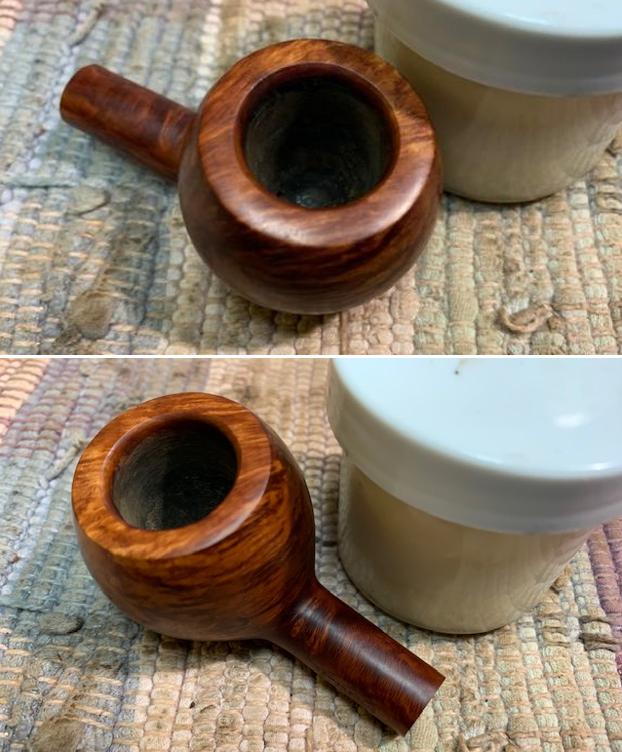
Now it was time to work on the pipe. Jeff had done a great job cleaning up the pipe as usual. He reamed the pipe with a PipNet reamer and cut back the cake back to the bare briar. He cleaned up the walls with a Savinelli Fitsall Pipe Knife. He scrubbed the interior of the bowl and shank with pipe cleaners, cotton swabs and alcohol to remove the tars and oils. He scrubbed the exterior of the pipe with Murphy’s Oil Soap and a tooth brush to remove the grime from the finish. He worked on the rim top lava and darkening with the soap and tooth brush. He scrubbed the inside of the stem with alcohol and pipe cleaners. He scrubbed the exterior with Soft Scrub and then soaked it in Before & After Deoxidizer. He washed it off with warm water to remove the Deoxidizer. The pipe looked far better when it arrived.    I took some close up photos of the rim top and also of the stem surface. I wanted to show how well it had cleaned up. The rim top had some looked quite good and the inner edge had some darkening and damage. It should clean up really well. I also took close up photos of the stem to show the tooth marks on the surface near the button.   I took photos of the stamping on the sides of the shank. You can see that it is stamped as noted above. It is clear and readable.    I removed the stem and took a photo of the pipe to have a look at the parts and overall look. I decided to address the damage to the edge of the bowl and the rim top first. I topped the bowl on a topping board with 220 grit sandpaper to smooth out the damage to the rim top. I used a folded piece of 220 grit sandpaper to give the inner edge of the bowl a slight bevel to accommodate the burned areas and blend them into the surrounding briar. I polished the briar with micromesh sanding pads – dry sanding with 1500-12000 grit sanding pads. I wiped the bowl down with a damp cloth after each sanding pad.    I touched up the rim top with an oak stain pen to match it to the surround briar of the bowl.I worked some Before & After Restoration Balm into the surface of the briar with my fingertips to clean, enliven and protect the briar. I let the balm sit for 15 minutes and then buffed with a cotton cloth to raise the shine. The photos show the bowl at this point in the restoration process. I set the bowl aside and turned my attention to the stem. I polished the stem with micromesh sanding pads – wet sanding with 1500-12000 grit sanding pads. I wiped it down after each sanding pad with Obsidian Oil. I polished it with Before & After Pipe Stem Polish – both Fine and Extra Fine.          I am excited to finish this Republic of Ireland Made Peterson’s “Sports” 4 Apple. I put the pipe back together and buffed it with Blue Diamond on the buffing wheel. I gave the bowl and the stem multiple coats of carnauba wax. I hand buffed the pipe with a clean buffing pad to raise the shine. It is fun to see what the polished bowl looks like with beautiful mixed grain all around it. Added to that the polished black vulcanite stem combined with the bowl and made a stunning pipe. This smooth Classic Older Peterson’s “Sports” 4 Apple is great looking and the pipe feels great in my hand. It is light and well balanced. Have a look at it with the photos below. The dimensions are Length: 5 inches, Height: 1 ¼ inches, Outside diameter of the bowl: 1 ½ inches, Chamber diameter: ¾ of an inch. The weight of the pipe is 33grams/1.16oz. It is a beautiful pipe that I will soon be putting on the rebornpipes store in the Irish Pipe Makers section. If you are interested in adding it to your collection send me an email or a message. Thanks for walking through the restoration with me as I worked over this pipe. Thanks to each of you who are reading this blog.

A Christmas Vacation Pipe from Nashville: A Butz-Choquin Cocarde Geante Plus St. Claude France 1397 Tabac St Michel Paris


Blog by Dal Stanton

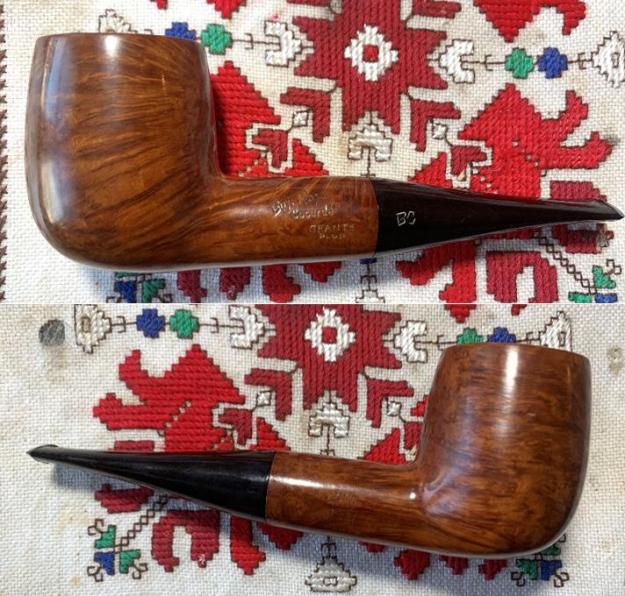
Continuing our Christmas Vacation trip in our 20’ R-pod travel trailer, we are now in Nashville, Tennessee, visiting my daughter, son-in-law and 6 1/2-month-old grandson!  The New Year has come and the first pipe on my ‘mobile worktable’ here in Nashville is special.  It is special not only because it’s a gargantuan Billiard which my rather large, 6-foot, 3 inch, son-in-law commissioned to fit his gargantuan hand, but It is also special because it was donated, along with 15 other very nice pipes, to benefit the Daughters of Bulgaria.

The benefactor of the 16 pipes, who asked to remain anonymous, is a retired educator in the KC area who wrote to me with an offer to give the pipes to benefit the work in Bulgaria that my wife and I helped to found over a decade ago – helping women and girls who have been trafficked and sexually exploited.  This was the letter that I received:

Greetings, Dal, from the middle of the USA where it is cold, foggy, and wintery. 

By way of introduction, I am XXX XXX. We have communicated a handful of times via one of the pipe groups on Facebook. Your posts have allowed me to read about your restoration work in support of the Daughters of Bulgaria. I find your pipe restoration work fascinating and your true mission inspiring. 

If you are interested, I have approximately 15 briar pipes, from different makers, I would like to anonymously donate to your work. Most are in good condition but would likely need a clean and polish. Since most would fall short of needing a full restoration, I don’t know for sure whether you would be interested. If you are, I would be happy to send them to you. If pictures would help you decide, I would be glad to take said pictures and send them your way. 

 Warm regards

We exchanged emails and he sent pictures of the pipes.  Several weeks later after the 16 pipes arrived in Bulgaria, I wrote an email with the subject line, “Christmas in August!” and sent this picture of the 16 pipes unwrapped and displayed.   Nice pipes – not a throw-away in the lot!  I decided not to place these pipes in the For “Pipe Dreamers” Only! online collection for a time.  The ‘Dreamers’ collection is for pipe men and women to commission pipes to be restored.   I am thankful to this generous pipe man for his gift and support of the Daughters of Bulgaria.  With the New Year here, I’ll be adding these pipes to ‘Dreamers’ section soon!
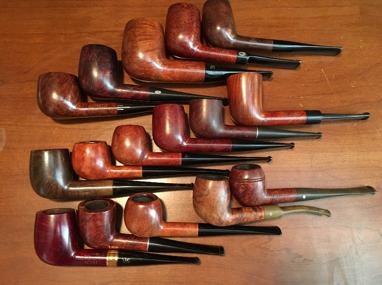
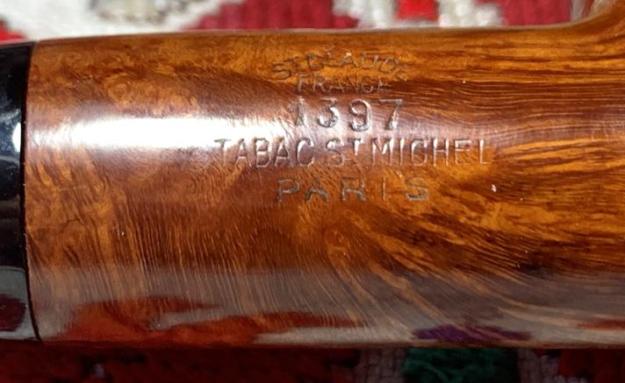
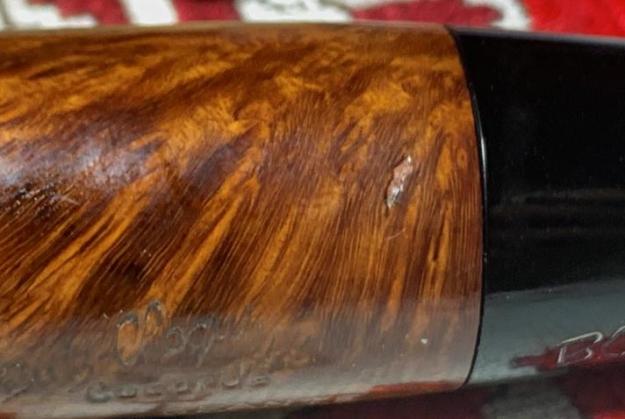
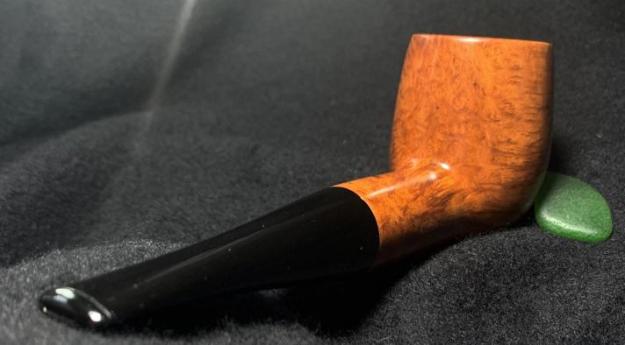
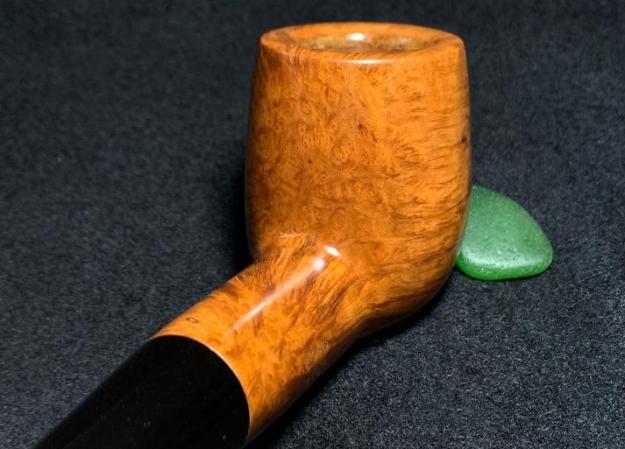
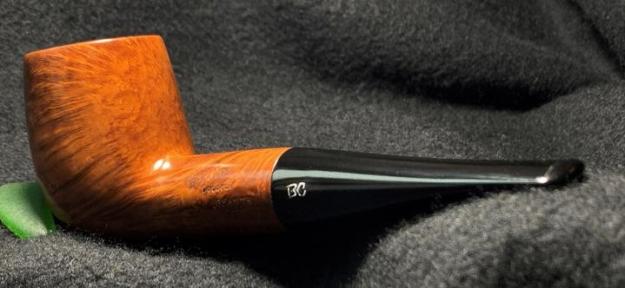
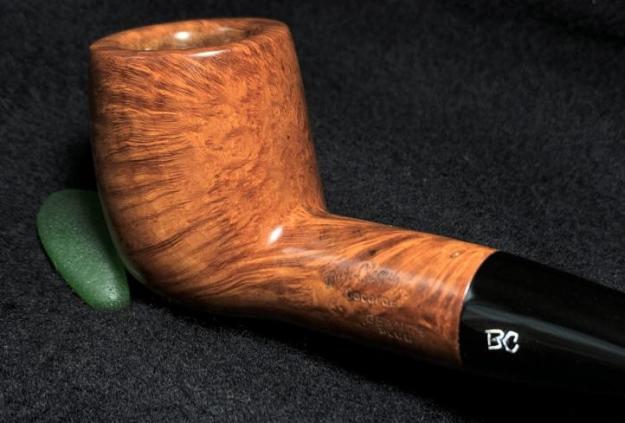
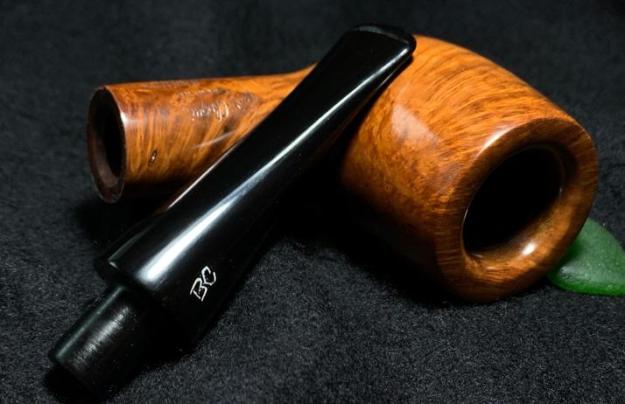
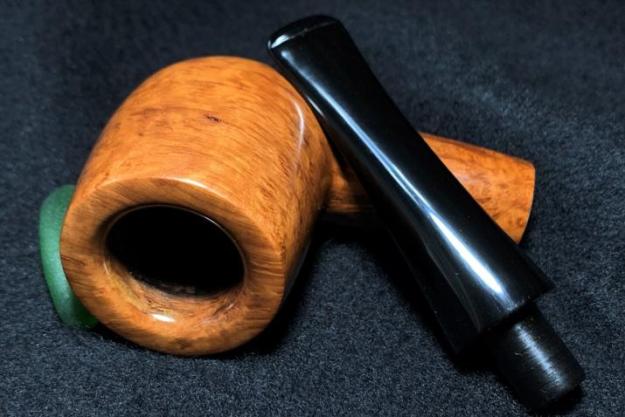
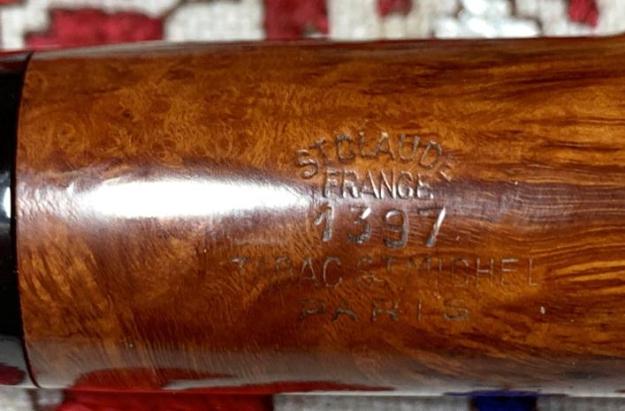
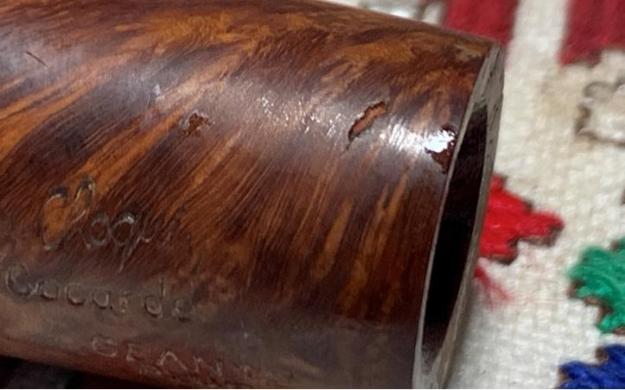
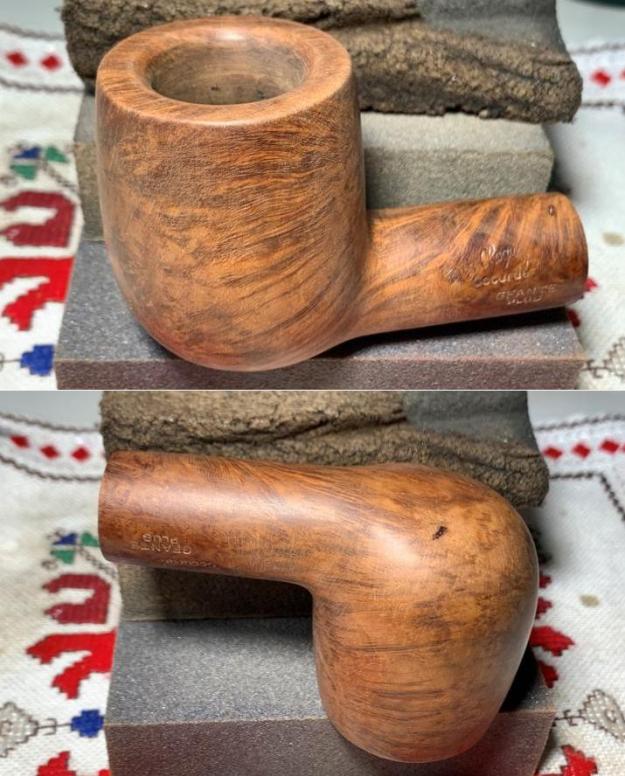
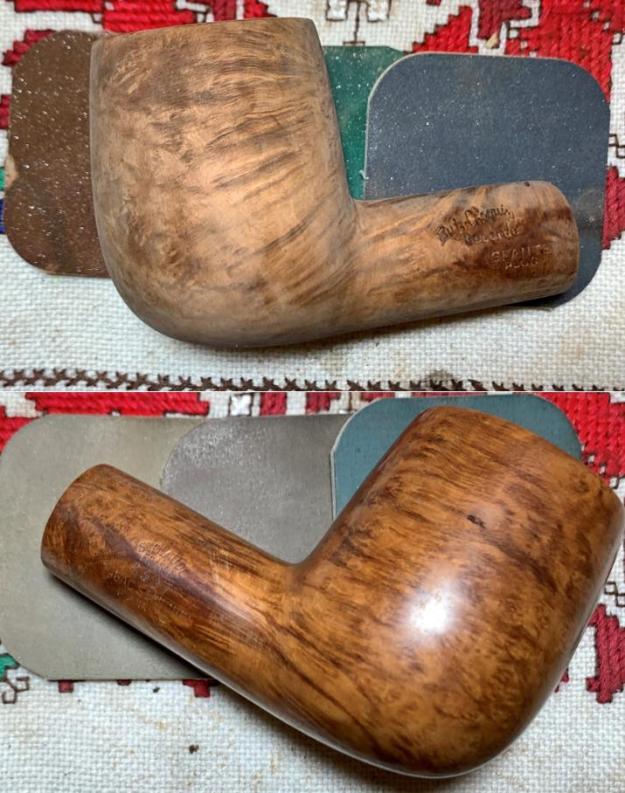
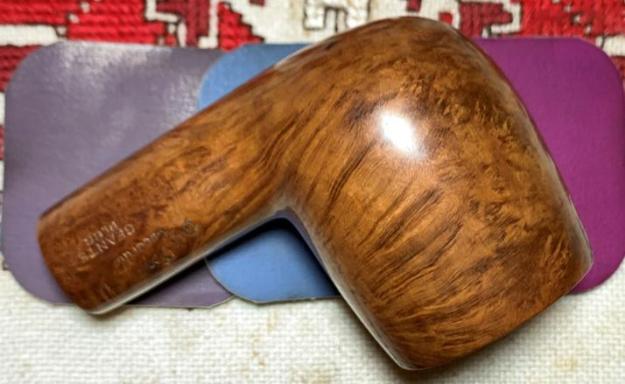
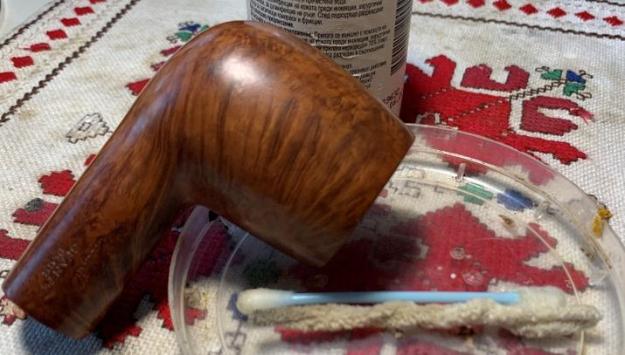
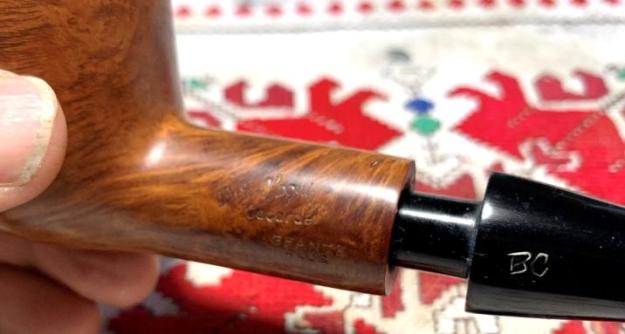
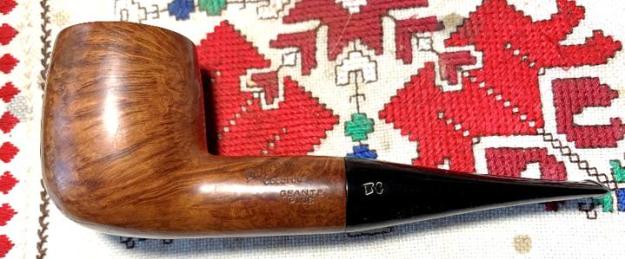
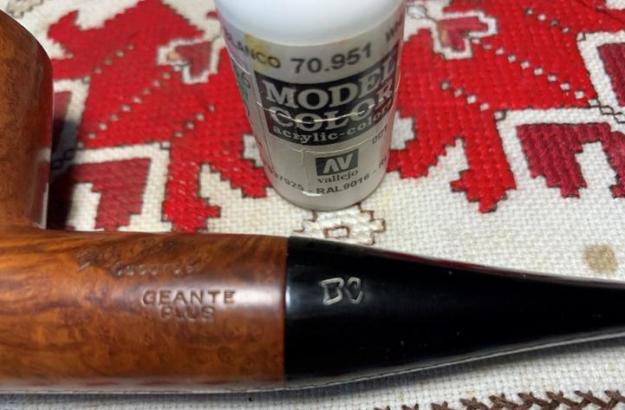
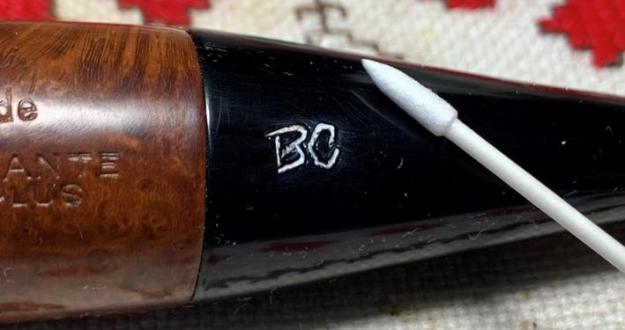
Last September, after our transition from Bulgaria to living in Golden, Colorado, my daughter and son-in-law, Niko, were visiting us in Golden from their home in Nashville.  Niko is a pipe man and has commissioned pipes from the ‘old man’ before and he was in the hunt again for a new pipe looking through boxes of The Pipe Steward inventory.  This time he had a specific aim – a larger pipe that he could cradle in his larger than normal hands!  Niko is 6 foot, 3 inches, and during college was a pitcher on the baseball team.  He aspired toward playing in the Majors but when an injury came his way, these dreams were put aside.  Niko and I have shared bowls together many times and what I’ve noticed was that Niko’s hands were so large that he would ‘pinch’ the bowl on the end of his fingers rather than cradle the bowl.  With Niko’s request for a larger pipe, the ’16 Pipes for the Daughters’ came to mind recalling the HUGE Butz-Choquin Cocarde Geante Plus (in picture above, top row center).  I pulled out the box and it didn’t take long for Niko to decide to commission the BC.    He also commissioned a Danish Royal Guard Pickaxe, next on the worktable.  With the BC now on the table, some pictures give a closer look. The nomenclature on this pipe is interesting.  On the left shank flank is stamped the traditional mark, ‘Butz-Choquin’ [in cursive offset slightly to the left and slightly at a diagonal, over] Cocarde [over, slightly to the left] GEANTE [over] PLUS. The stem stamping is Butz-Choquin’s recognizable chiseled, ‘BC’.  On the right side of the shank is stamped ST. CLAUDE [ARCHED over] FRANCE [over] 1397 the shape number.  In the second photo below, seen more clearly, is the interesting addition of a pipe shop in Paris. Stamped below the shape number is, TABAC ST. MICHEL [over] PARIS. The history of the Butz-Choquin name is concisely put on Pipephil.eu and its helpful to me for the refresher.
The origin of the brand reaches back to 1858 when Jean-Baptiste Choquin in collaboration with his son-in-law Gustave Butz created their first pipe in Metz (France). Since 1951 Butz-Choquin  is a brand of the Berrod-Regad group (Saint-Claude, France).

Jean Paul Berrod managed the company from 1969 to 2002 when he retired and sold the corporate to Mr Fabien Gichon. Denis Blanc, already owner of EWA, took over the S.A. Berrod-Regad in 2006.

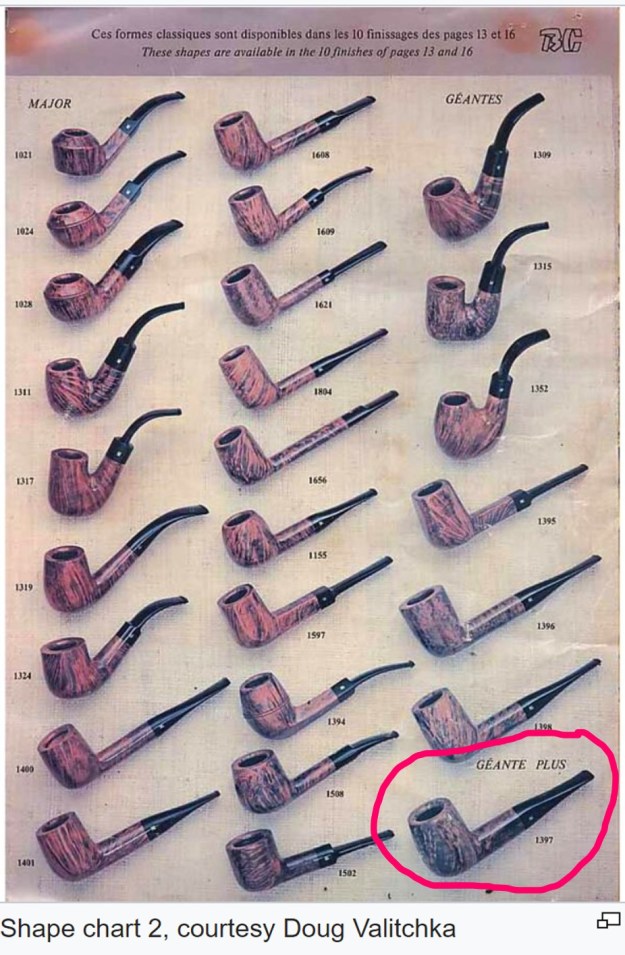
I could not find anything specific in Pipedia about the ‘Cocarde’ line, but a simple search on the internet will show many different shapes available in the Cocarde line from Butz-Choquin.  I did find a shapes chart pictured in the Butz-Choquin Pipedia article that included the 1397 Geante Plus.  Unfortunately, there is no reference to the date of the catalogue.  A quick look at Google Translate gave a translation of the Geante Plus as ‘Giant More’ – which is no surprise.  The photo below sets the Geante Plus apart with the 1397 shape number as unique to this designation.  The Giant Billiard seems to be the unique bearer of this designation.
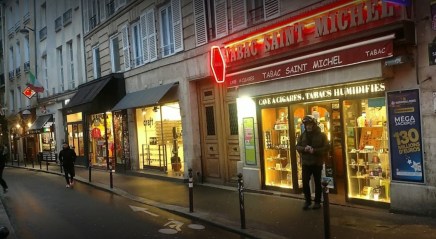
What’s of interest as well is that this pipe is uniquely stamped with the name, Tabac St. Michel in Paris.  I do a quick search on the internet to discover that it is a tobacco shop still in operation in Paris at 22 Rue Saint-André des Arts.  The picture below is taken from this LINK giving the address and operational hours.  There is no link to a website but looking closely at the front display window, there appears to be pipe related products available.  I can find no more information about this establishment.  Apparently, Butz-Choquin produced some pipes for the Tabac Saint Michel with the shop name stamped on the pipe.  With my curiosity piqued, I send a note to the benefactor pipe man regarding the origin of this pipe – if he had acquired this pipe at the Tabac Saint Michel on a trip to Paris.  We’ll see if he can add some information of interest.

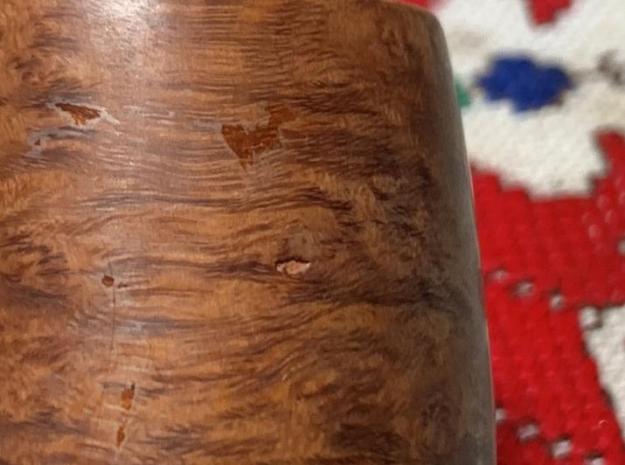
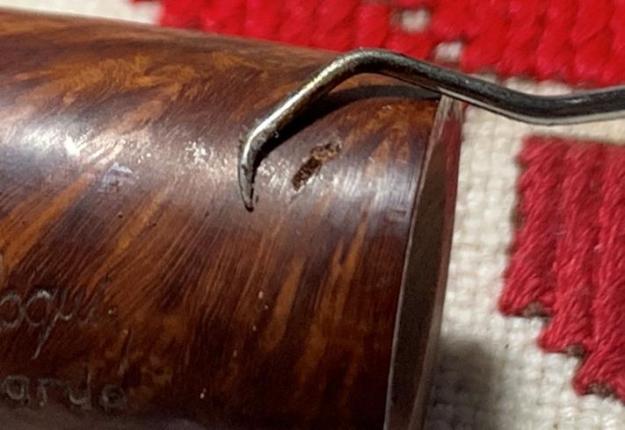
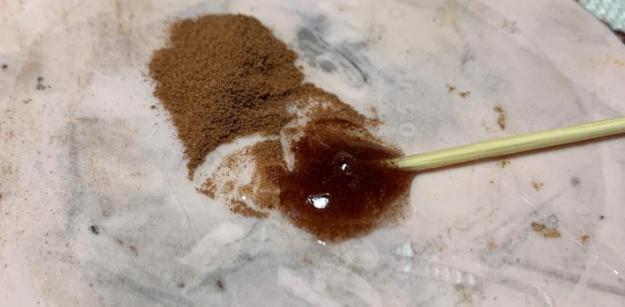
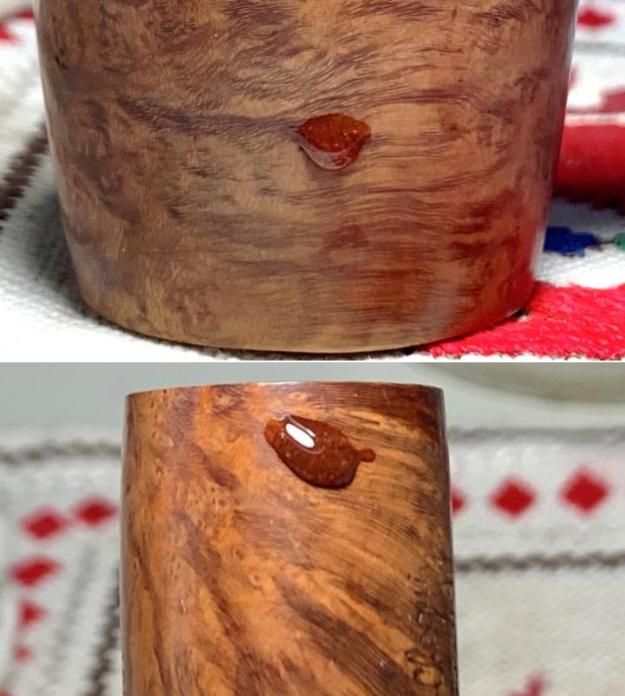
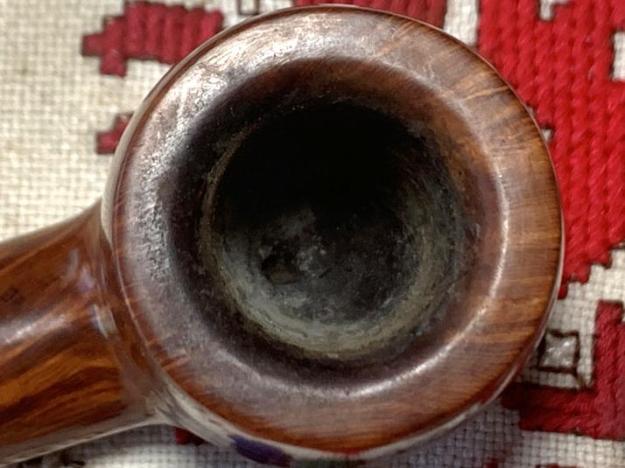
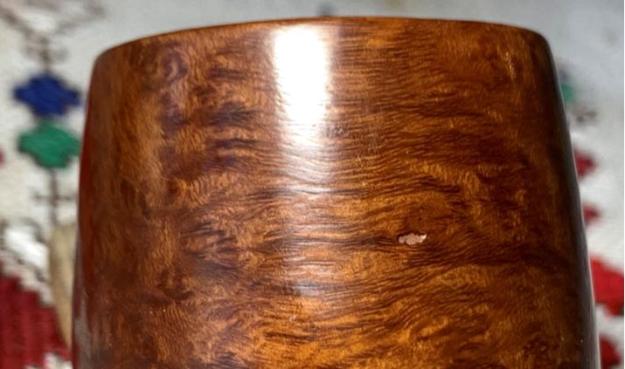
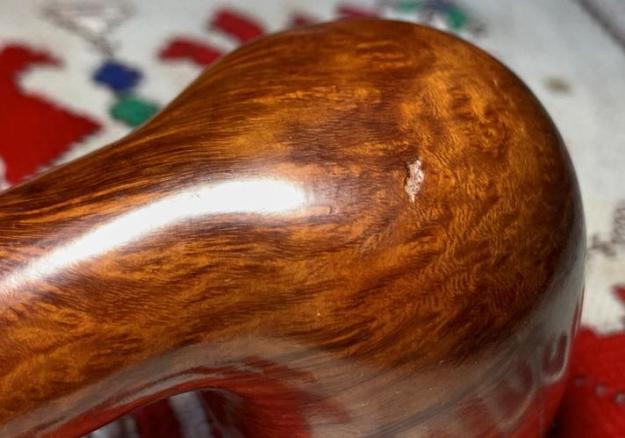
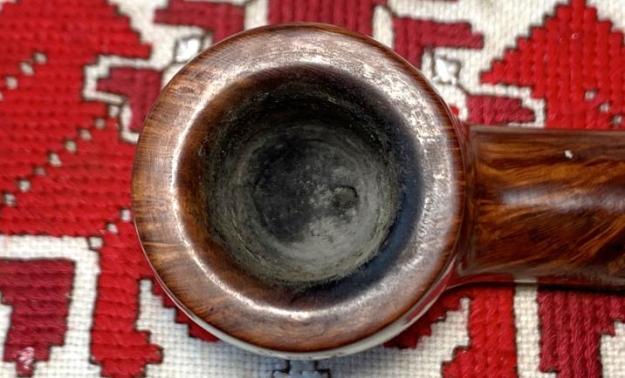
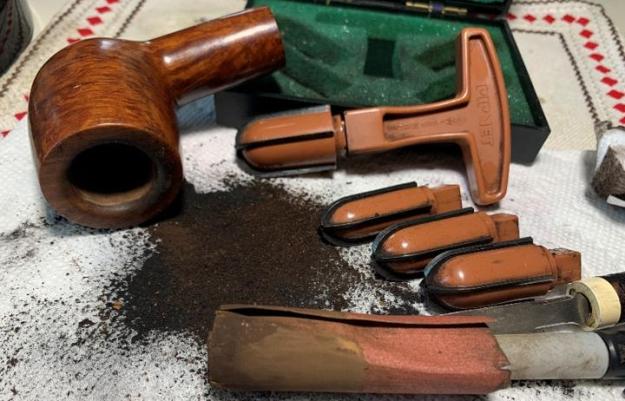
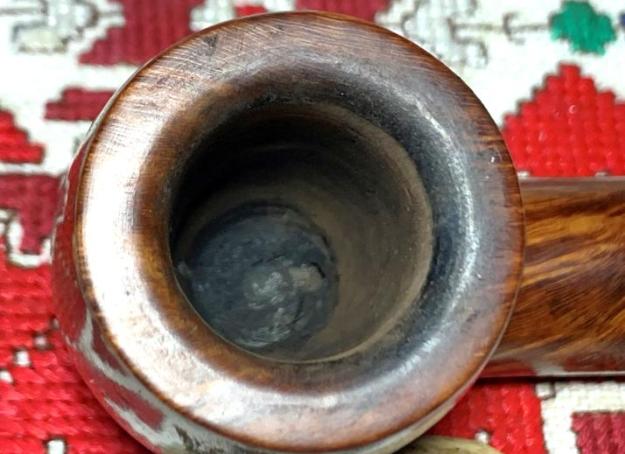
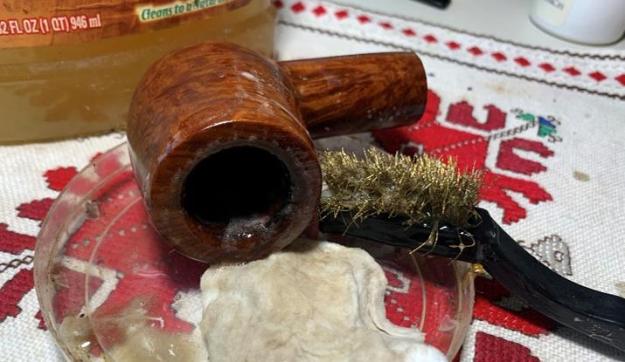
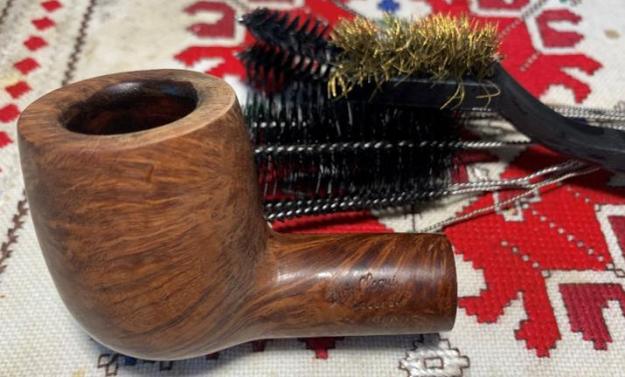
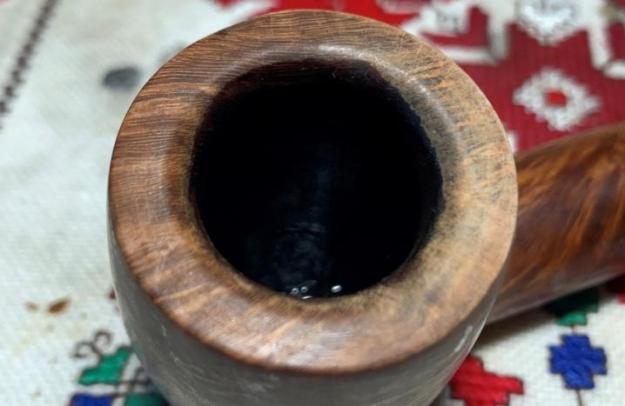
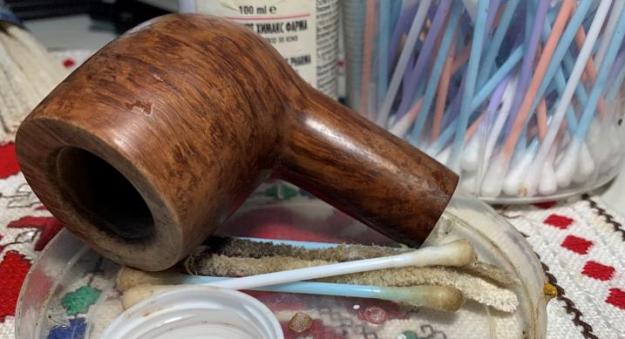
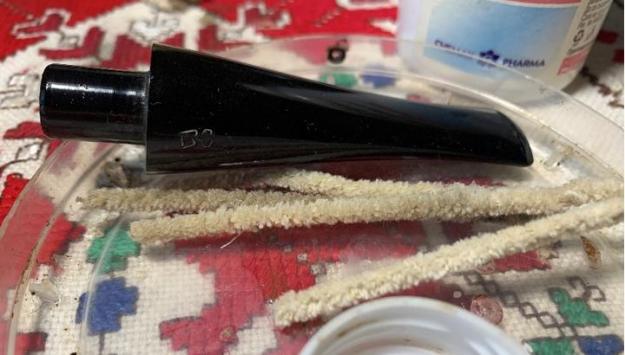
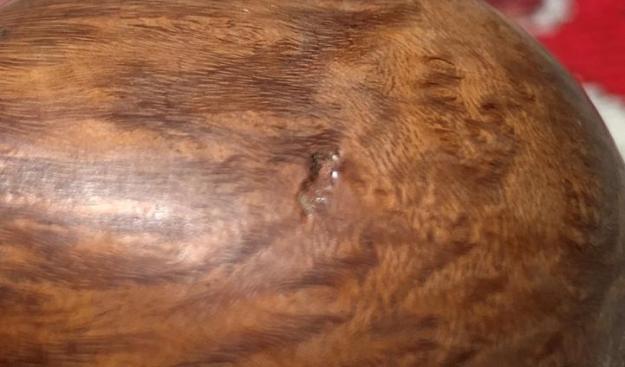
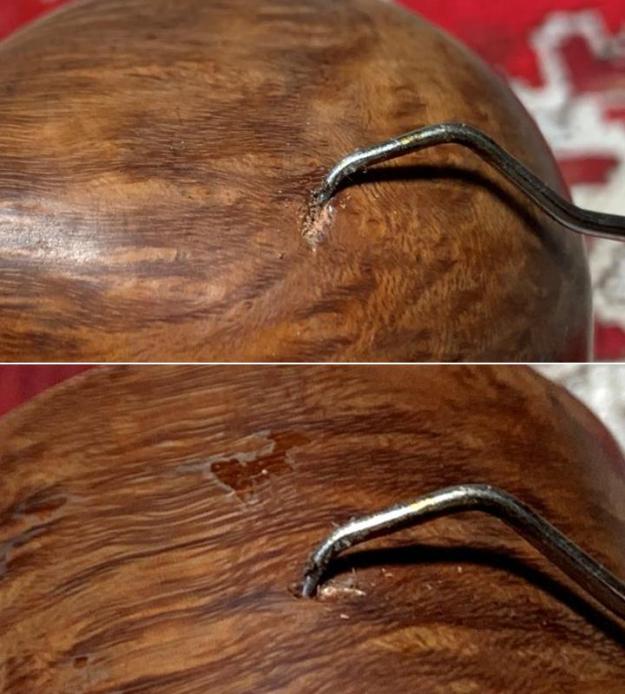
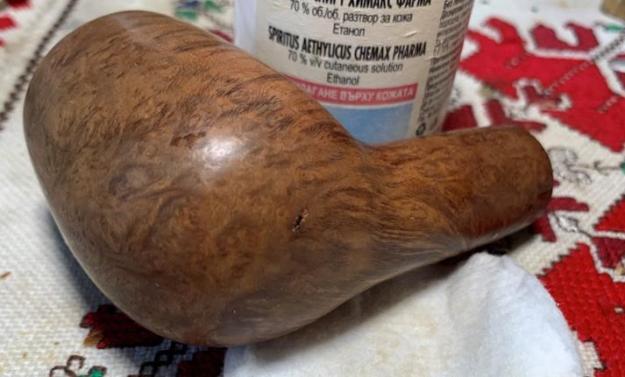
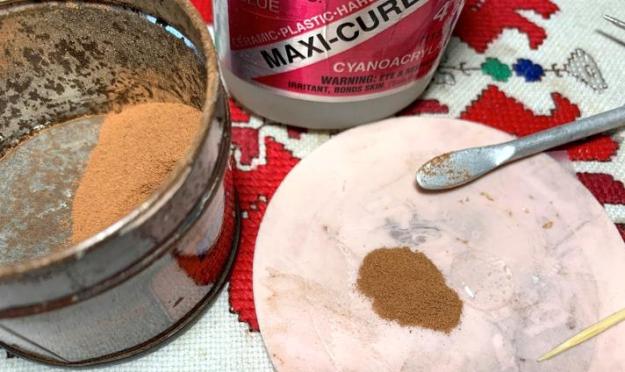
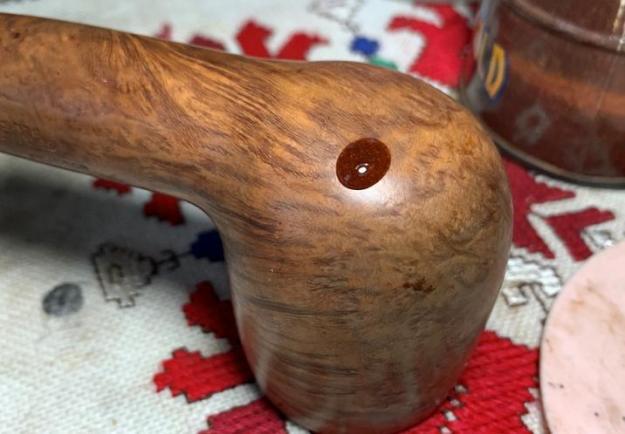
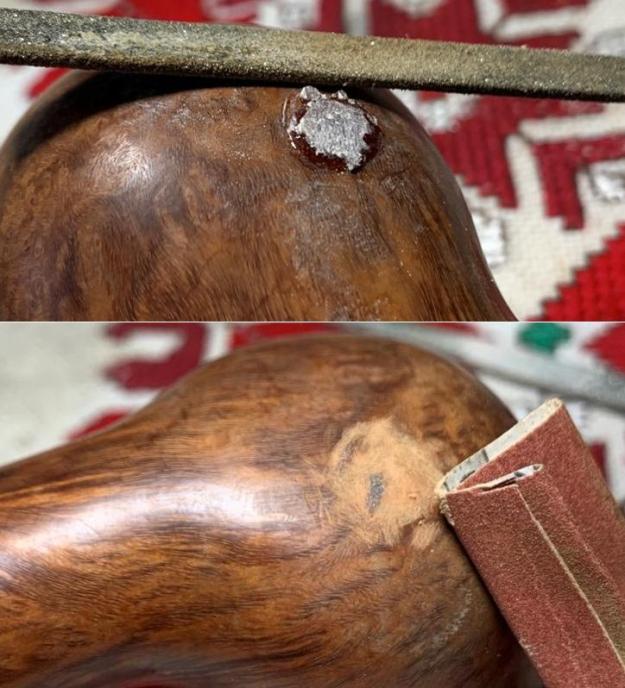
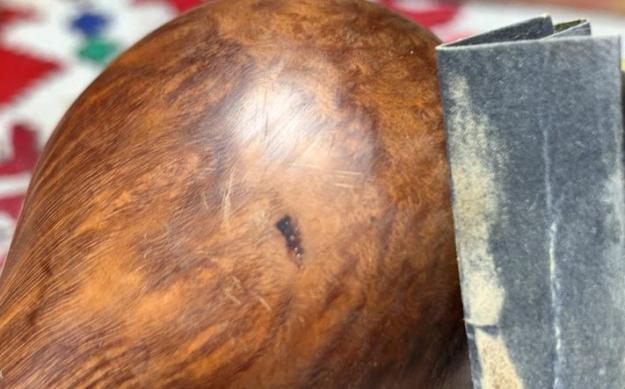
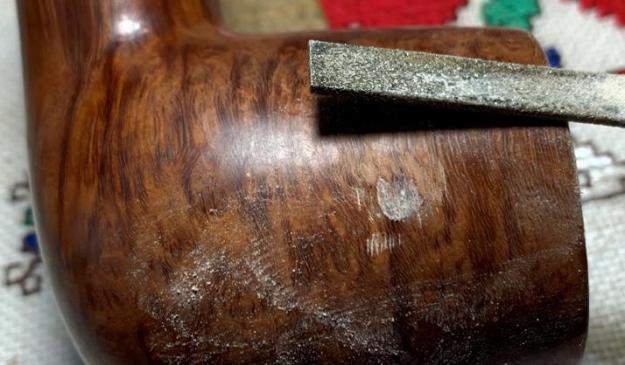
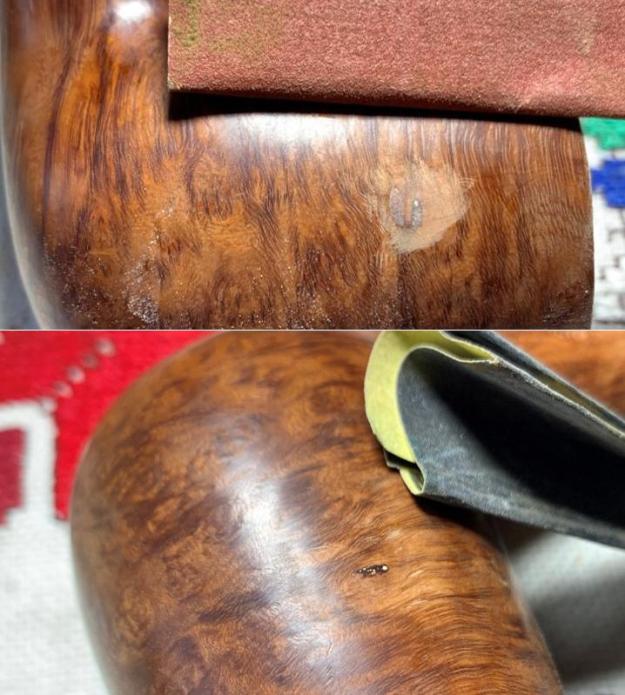
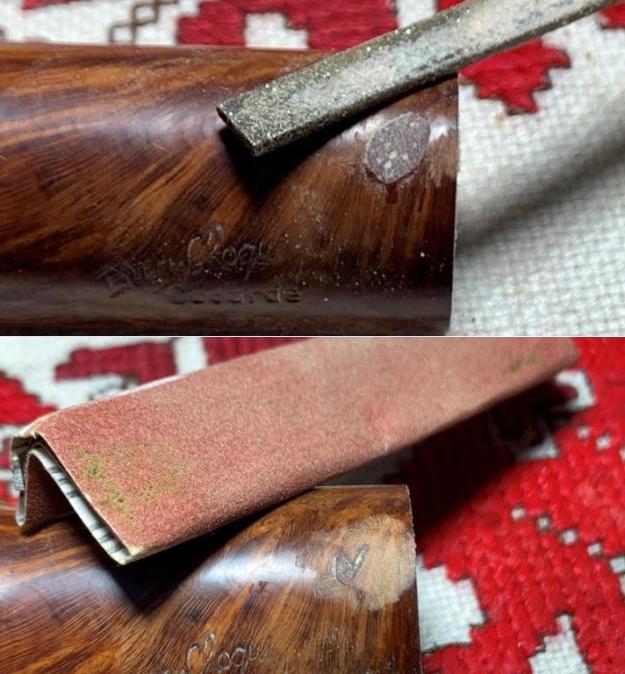
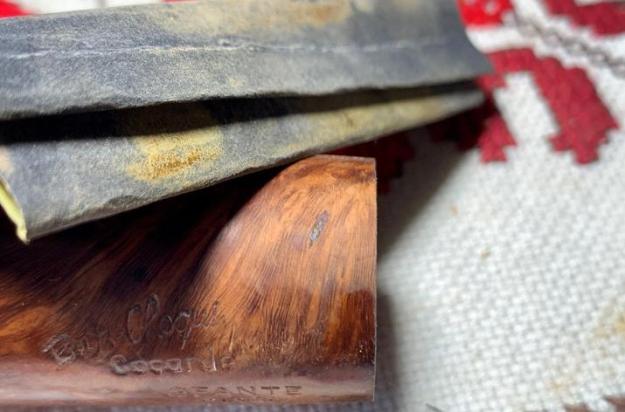
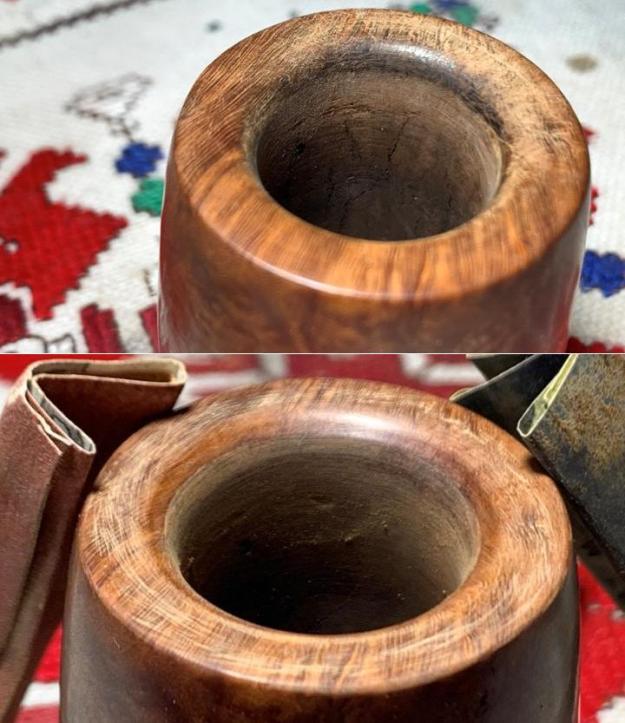
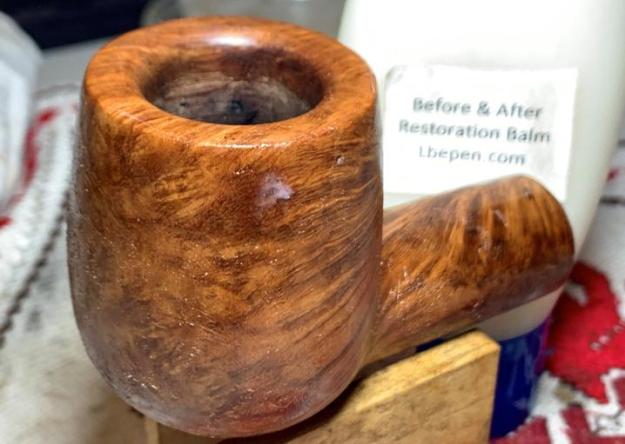
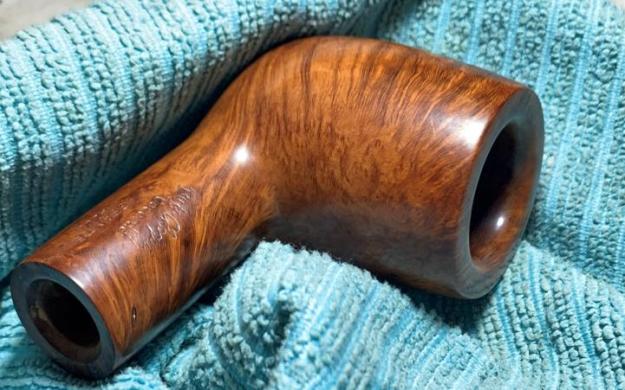
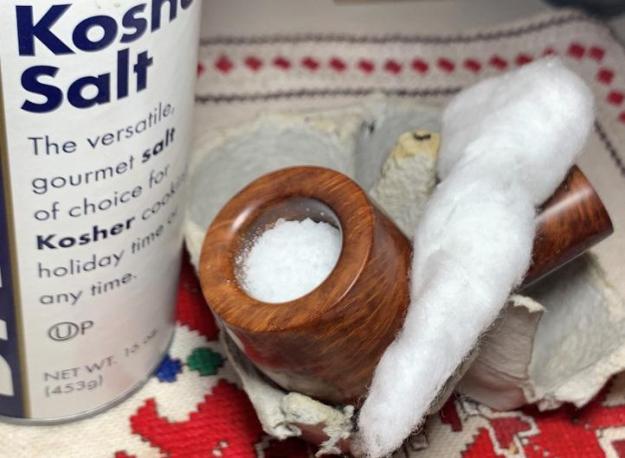
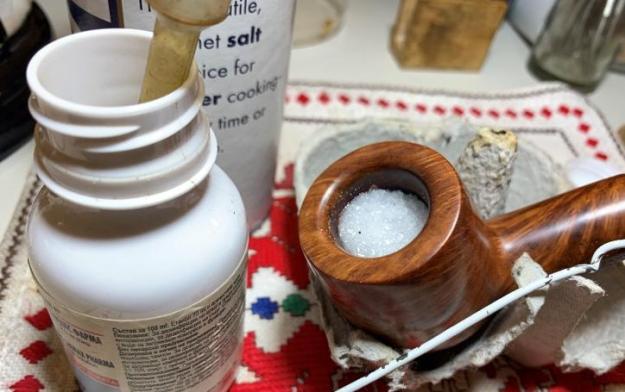
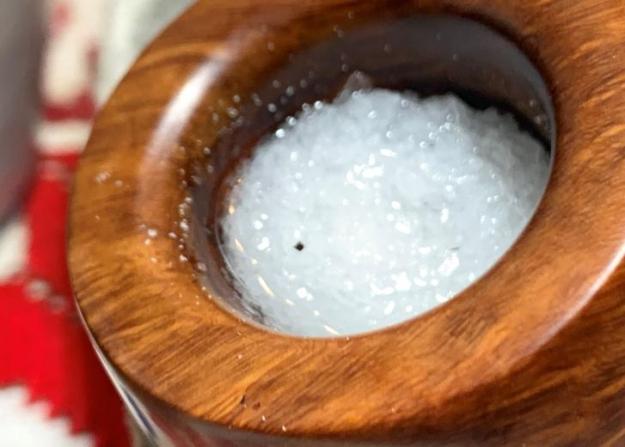
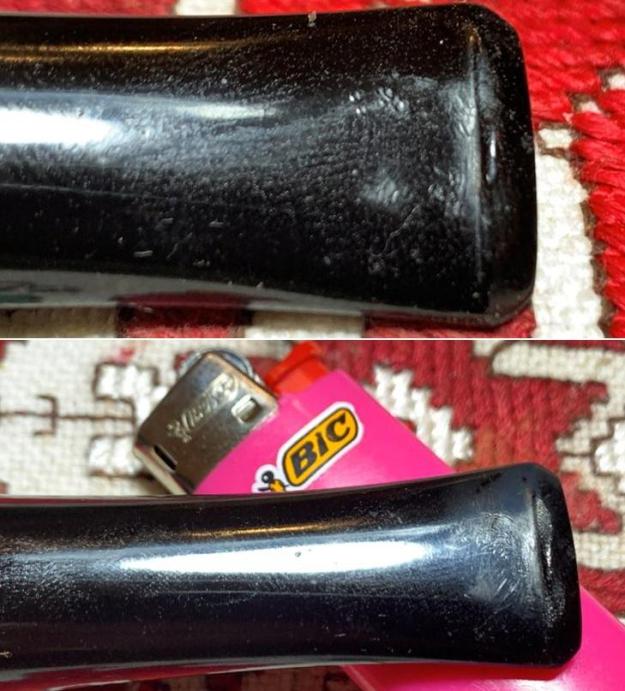
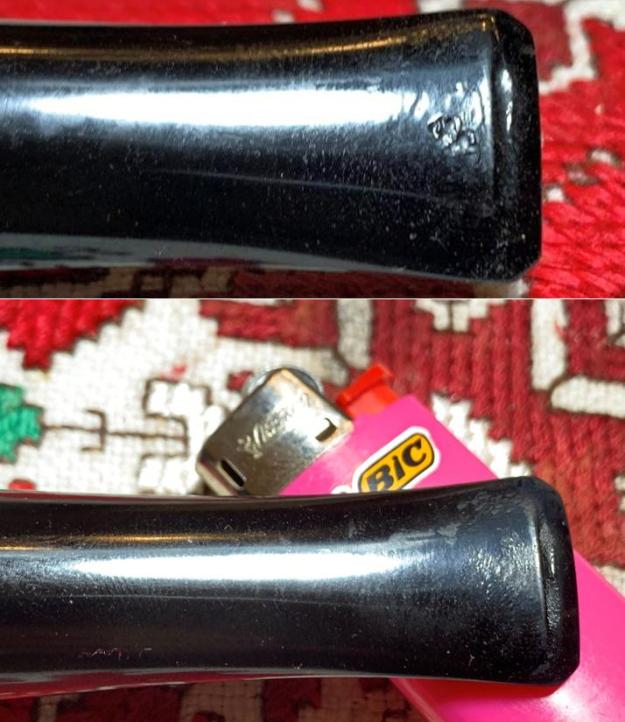
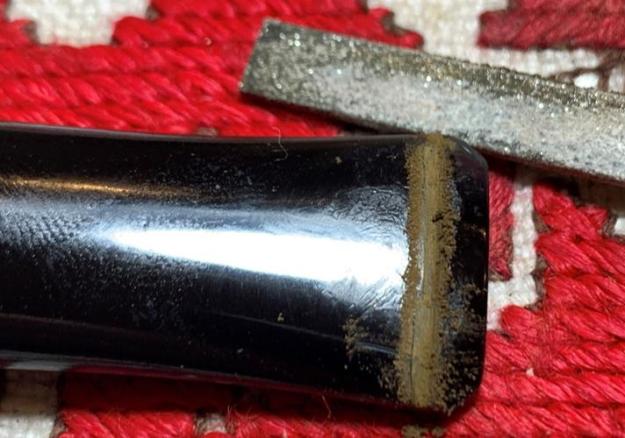
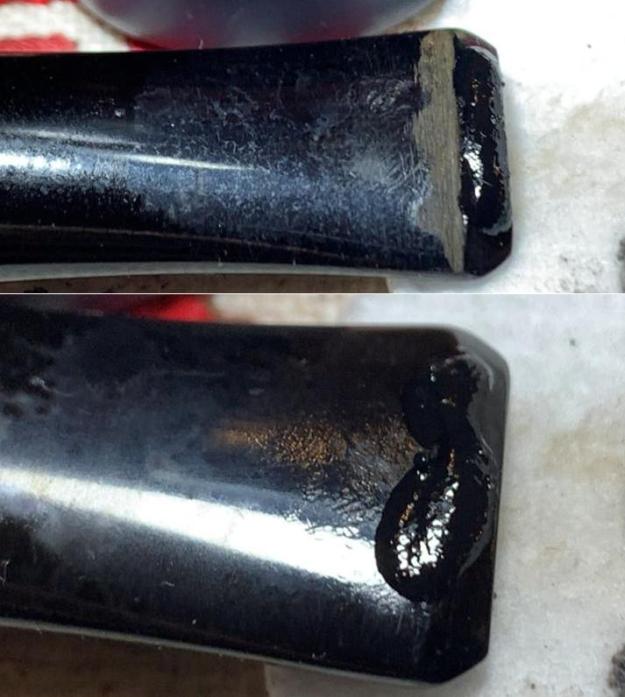
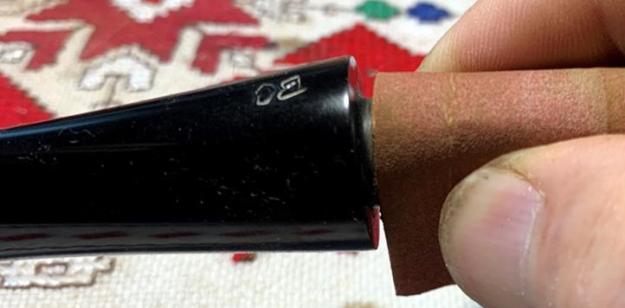
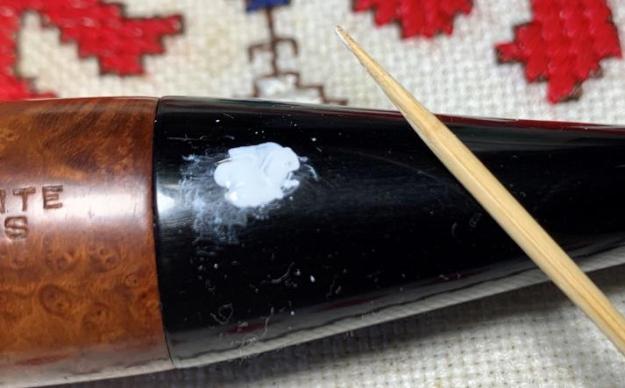
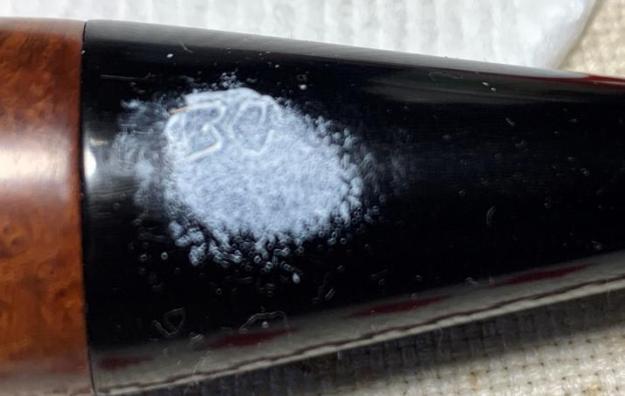
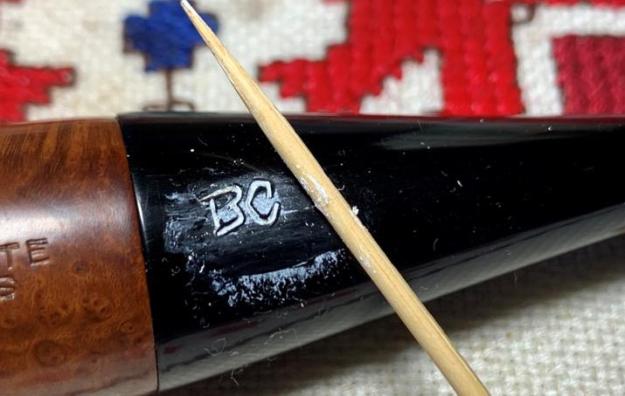
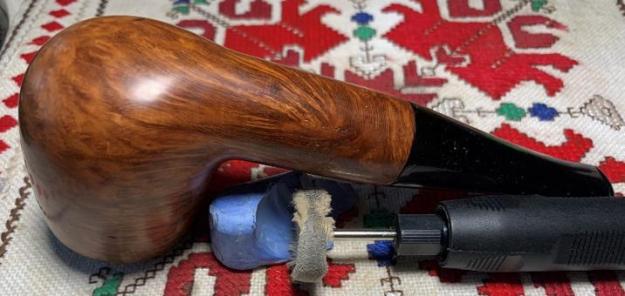
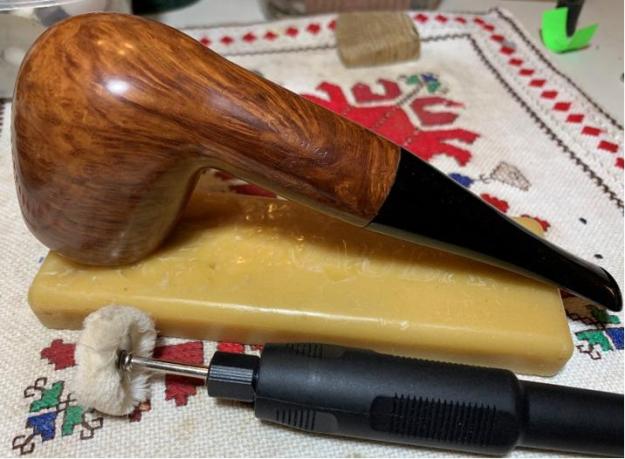
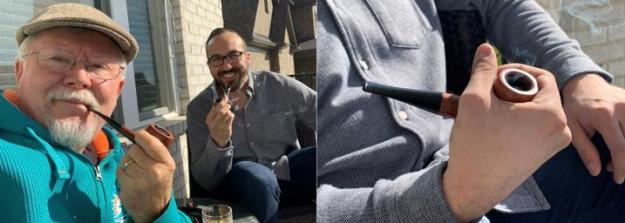
Looking now more closely at the BC Cocarde Geante Plus Billiard on my table, the dimensions of this Giant are, Length: 6 1/8 inches, Height: 2 1/4 inches, Rim width: 1 1/2 inches, Chamber width: 7/8 inches, Chamber depth: 1 3/4 inches with a weight of 2.9 ounces – almost a hefty 3 ounces! The chamber looks well maintained with a very thin cake.  The rim has minor darkening on the aft quadrant from lighting practices.  Besides general cleaning of the ample briar real estate of the stummel, I detect pitting of some fills which need attention.  I take a few pictures to show these. The stem shows no oxidation but tooth chatter and some button biting.  This will be addressed as well.  To begin the refreshing of this Butz-Choquin Cocarde Geante Plus, the chamber is cleaned.  With another picture showing the starting place of the chamber, it appears to be a well maintained with a dime’s width thickness. I use all 4 blade heads of the Pipnet Reaming Kit to begin the cleaning of the mild carbon cake.  Following the reaming, the wall is scraped using the Savinelli Fitsall Tool and then sanded with 240 paper wrapped around a Sharpie Pen.  After wiping the chamber with a cotton pad, the chamber is inspected revealing healthy briar – no heating problems. Transitioning from the chamber to the external briar surface, using undiluted Murphy’s Oil Soap and a cotton pad, the stummel is scrubbed.  A brass wired brush is used to concentrate more on the backside of the rim where it was darkened from lighting from that side. Brass brushes are friendlier to the briar and not as abrasive but helps with the cleaning.The stummel is then transitioned to the sink using warm water and anti-oil liquid dishwashing soap, the internals of the mortise are scrubbed using shank brushes.  The brass wired brush is used again on the rim area.After the cleaning, I look at the stummel.  The finish has generally disappeared over the stummel.  The rim has cleaned up well but as expected, the finish on the aft rim quadrant where most of the scrubbing was needed is lighter.To finalize the internal cleaning, cotton buds and pipe cleaners wetted with isopropyl 99% are used.  It only takes a couple buds and pipe cleaners to do the job.  I move on!With the cleaning supplies on the table, the airway cleaning of the stem is quickly dispatched with a couple pipe cleaners wetted with isopropyl 99%.With the general cleaning done, I turn now to the stummel.  Another survey of the bowl and shank show the deterioration of the patches that are now pitted. In the third picture you can also see a few patches of the old finish that have not surrendered during the cleaning process. To prepare to refill and patch the pits, I use a sharp dental probe to dig out the old fill material in each pit.  Next, I use a cotton pad wetted with isopropyl 99% to clean the patch areas.  The cleaning with the alcohol is expanded to scrub the whole stummel to remove the last vestiges of the old finish.  This works well.I mix briar dust and thick CA glue to create a briar putty to fill the pits.  After covering the plastic disk with scotch tape to help with clean up, I place some briar dust and CA on the mixing palette.  Using a toothpick, I gradually draw briar dust into the glue and mix it as I go.  When the putty reaches a thickness of molasses, I use the toothpick to trowel a bit of briar putty onto the pits.  To keep the patches in place, I use an accelerator to quicken the curing process of the CA. Starting with the patch on the heel, the flat needle file is used first to file the patch mound down to the briar surface.  A tightly rolled piece of 240 paper follows the file to smooth and blend further.  Then, to conclude this phase, 600 grade paper is used to blend further. The same process is used on the patch on the side of the bowl – file, sanding with 240 and 600. Again, the same process with the patch on the shank. The rim has charred briar around the lower rim lip on the chamber side.  This is primarily on the back of the rim.  To refresh the rim, I sand the inner bevel with 240 paper following this with 600 paper.  This removes the darkened stain on the briar.  It looks much better.To encourage blending of the patches as well as to further clean the rim and bowl surface of small nicks and scratches, I employ sanding sponges.  Sanding sponges are not as invasive as sanding papers and I use them to prepare for micromesh pad sanding.  Starting first with a coarser grade, the rim is ‘topped’ along with sanding the entire stummel – careful to avoid the BC nomenclature on the shank.  Following the coarser grade, medium and then a light grade sponges are used and complete this sanding phase.   Switching now to micromesh pads, I start by wet sanding with pads 1500 to 2400.  This is followed by dry sanding with pads 3200 to 4000 and 6000 to 12000.  The grain starts emerging very nicely during the micromesh cycles.  It’s looking great. Next, to tease out more of the natural hues of the briar, Mark Hoover’s product, ‘Before & After Restoration Balm’ (www.Lbepen.com) is applied to the briar surface.  To do this, a bit of the Balm is applied to my finger and I work the Balm thoroughly into the surface.  The Balm starts off with a cream-like texture and gradually thickens as it’s applied.  I then put the stummel aside for about 20 minutes for the Balm to be absorbed.When the 20 minutes are completed, I wipe the excess Balm with a microfiber cloth and then buff up the surface.  I like Mark Hoover’s Balm.  It does a great job with the subtleties of the briar hues.Before turning to the stem, I continue the internal cleaning and refreshing of the internals of the stummel by doing a kosher salt and alcohol soak.  This process draws the oils and tars out of the internal briar and freshens the pipe for the new steward.  Kosher salt is used as it doesn’t have an aftertaste like iodized salt.  A wick is formed by pulling and twisting a cotton ball.  The cotton wick helps to draw the oils out. The wick is guided down the mortise into the airway using a stiff piece of hanger wire.Isopropyl 99% is then put in the bowl using a large eye dropper until the alcohol surfaces over the salt.  After a few minutes, the alcohol is absorbed and then is topped off once more. I then put the pipe aside and allow the soak to do its thing through the night. Turning now to the stem, I take a few pictures to show the bit tooth chatter and button damage.  The heating method is used initially to address the tooth chatter.  Using a Bic lighter, the bit – upper and lower – is painted with flames to heat the vulcanite and to cause the rubber compound to expand.  As it expands, it reclaims to a degree its original condition.  I place the before and after pictures together for comparison.  The procedure did help to minimize the chatter as the pictures show. Next, I begin the stem restoration by refreshing the button with a flat needle file.  After I started filing, I decided to stop filing and to apply a patch to the button lip.  As I was filing the edge of the lip to redefine it, I decided that the tooth compressions on the lip were too severe and needed to be addressed and the lip built up some before filing.I use black CA glue to spot drop on the lip of the button to build it up.  I do this on the upper and lower button.  An accelerator is also used on the CA not only to quicken the curing time but also to hold the CA glue in place. After the button patches are thoroughly cured, the flat needle file is again used to define and shape the upper and lower button lip.  I’m careful to establish the lip edge on both upper and lower so that the lip is not worn down through sanding.With the button again well defined, 240 paper is used to sand the bit – upper and lower to remove filing scratches and the residual tooth chatter.  The paper is also applied to the button lips to even out and shape after application of the black CA glue.Next, the entire stem is wet sanded with 600 grade paper and this is followed with 0000 grade steel wool.Following the steel wool, the stem is sanded with the full regimen of micromesh pads beginning by wet sanding with pads 1500 to 2400.  Then, this is followed by dry sanding with pads 3200 to 4000 and 6000 to 12000.  Between each set of 3 pads, Obsidian Oil is applied to the stem to condition and guard against oxidation.  The finished stem has a nice pop to it and the tooth chatter and button repairs look good. The stummel has gone through the night allowing a kosher salt and alcohol soak to continue the cleaning of the internals.  This morning the salt and wick show a bit of soiling, but not much.  After clearing the expended salt in the waste, the chamber is wiped with a paper towel and I blow through the mortise to make sure all the salt crystals are removed. The follow up cleaning with a pipe cleaner and cotton bud confirm that the internals are clean and refreshed.To get a look at the progress, the Butz-Choquin Cocarde Geante Plus stem and stummel are reunited.  What I discover when I try to insert the tenon into the mortise is that it will not fit.  What often happens through the cleaning process is that the mortise will expand minutely, and the fit is too tight for comfort.  I never force stems into shanks.  I’ve learned the hard way that this is the way to add a cracked shank repair to the list.To remedy this is not difficult.  A piece of 240 grade paper is wrapped around the tenon and while pinching it against the tenon with my fingers, the stem is rotated to create the necessary abrasion to decrease the tenon diameter by a bit.  I pinch and rotate the tenon with 240 paper a few times trying the fit after each session.  When it finally starts to insert more easily, I graduate the paper to 600 to smooth the tenon.This worked well.  The stummel and stem are reunited, and the fit is snug but not tight. The BC is looking good.Before starting with the compound process, the BC stem stamp needs refreshing.  The stamping indent is strong and distinct and touching it up with white acrylic paint should not be a problem.After shaking the paint bottle, a bit of paint is applied over the stamping and spread with a toothpick.I then use a cotton pad to daub the wet paint.  This does two things.  The daubing spreads the paint over the lettering and thins the paint.  The daubing also dries the paint quickly.I then use the side of a toothpick to rub over the stamping removing excess dried paint.To finish the job, a pointed cotton bud enables me to clean the lettering more closely.  Finally, I briskly rub a cotton pad over the stamping to shine up the vulcanite and sharpen the stamping.  It looks great!Now on the home stretch.  The rotary tool is mounted with a cotton cloth buffing wheel and set at about 40% full power.  Blue Diamond compound is then applied to the entire pipe. This finely abrasive compound helps to remove very fine blemishes on the briar surface.  After methodically covering the pipe, I use a felt cloth to wipe the pipe removing leftover compound dust in preparation for application of the wax.After changing the cotton cloth buffing wheel, speed remaining the same, carnauba wax is applied to stem and stummel. To complete the recommissioning of the BC, the pipe is given a rigorous hand buffing to raise the shine more and to remove any excess wax remaining on the surface.When I began working on this pipe, it already was an attractive pipe not with any major issues.  Repairing the stummel pits with new patches and erasing the tooth chatter damage from the bit and button were the main issues.  The briar on this Butz-Choquin Cocarde Geante Plus covers a lot of real estate with horizontal grain moving along the length of the stummel.  The bird’s eye grain populates the front and aft of the bowl showing the cross-cut perspective of the lateral grain.  This BC giant will cradle nicely in Niko’s hand and filled with his favorite blend will provide years of service and fellowship.  Niko has already claimed the BC from The Pipe Steward Store benefiting the Daughters of Bulgaria.  Unlike most of the pipes I restore that are sent to their new stewards by post, this one is hand delivered from my mobile worktable in Nashville and I’m able to share an inaugural bowl with the new steward!  With L. J. Peretti Black Virginia in our bowls and 14 year Glenfiddich in our glasses, the fellowship is good.  Thanks for joining me!
 

Restoring an Early Republic Era Peterson’s Dublin 2 Prince 407


Blog by Steve Laug

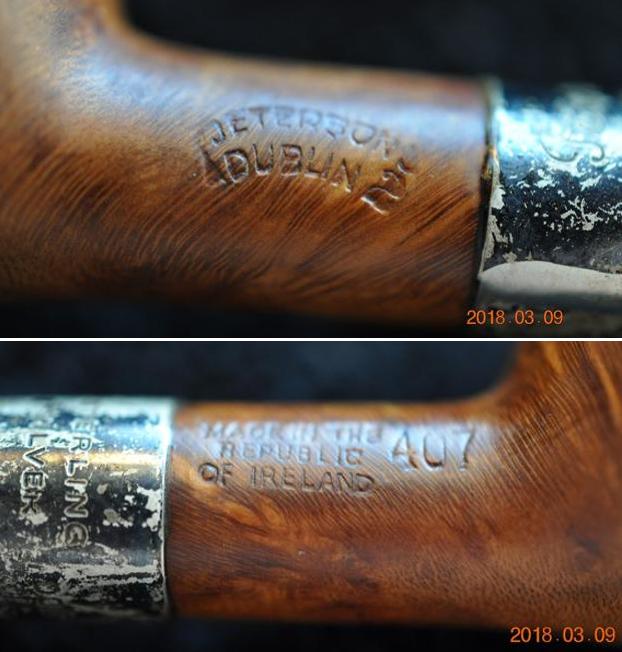
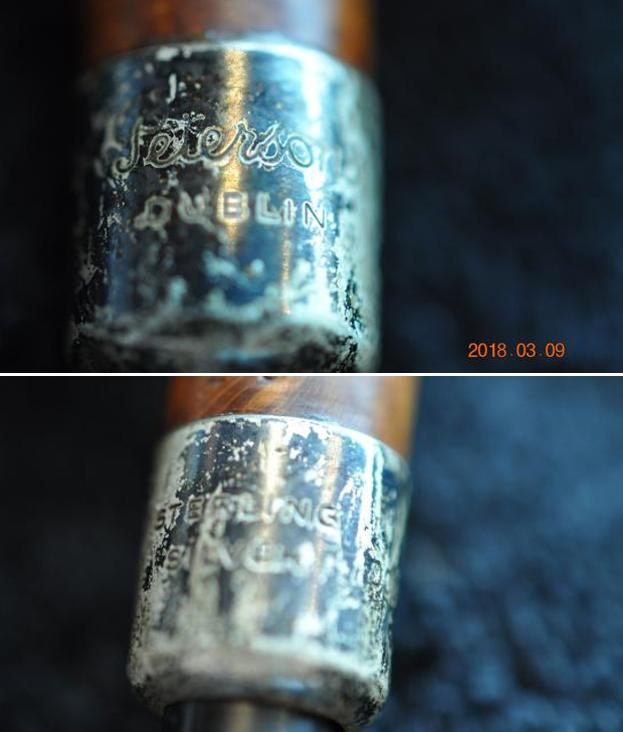
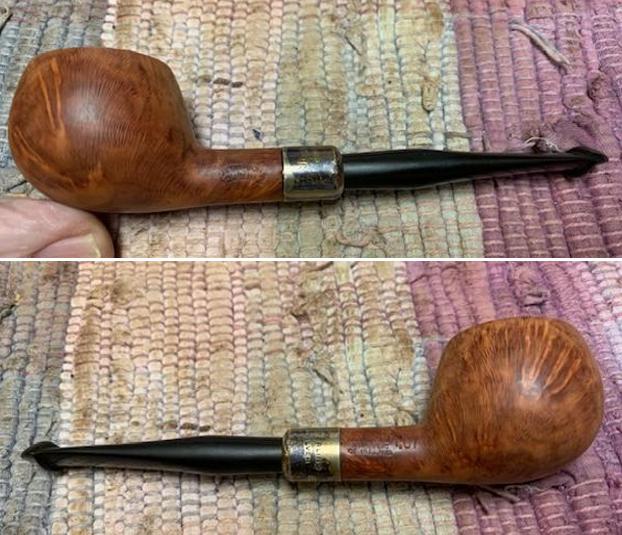
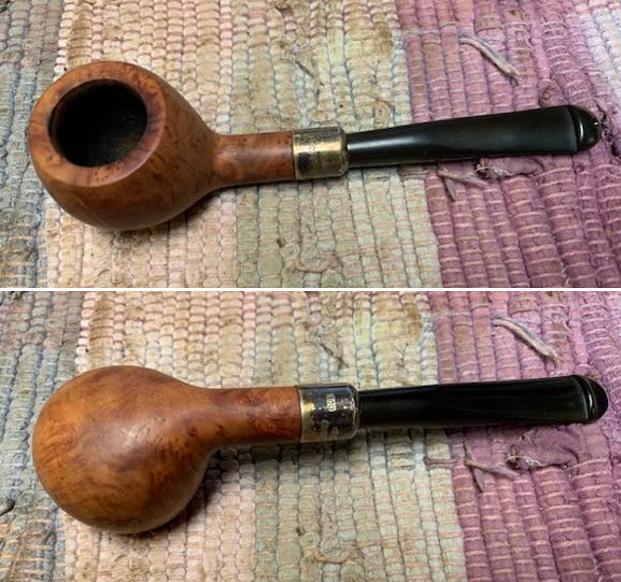
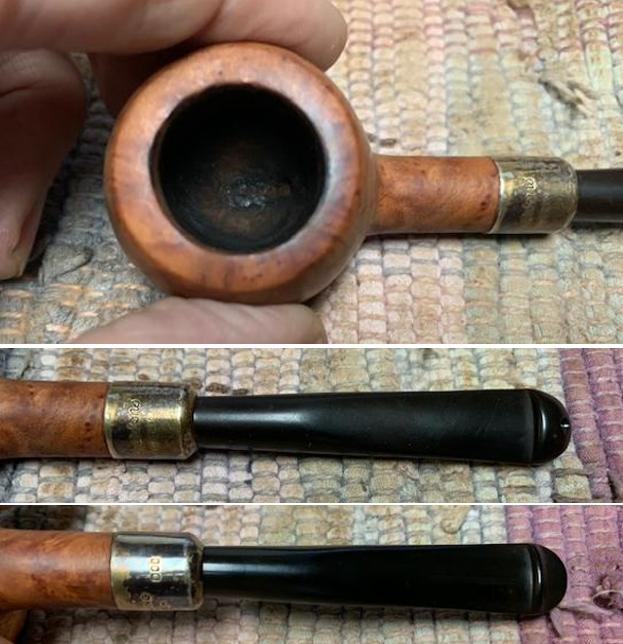
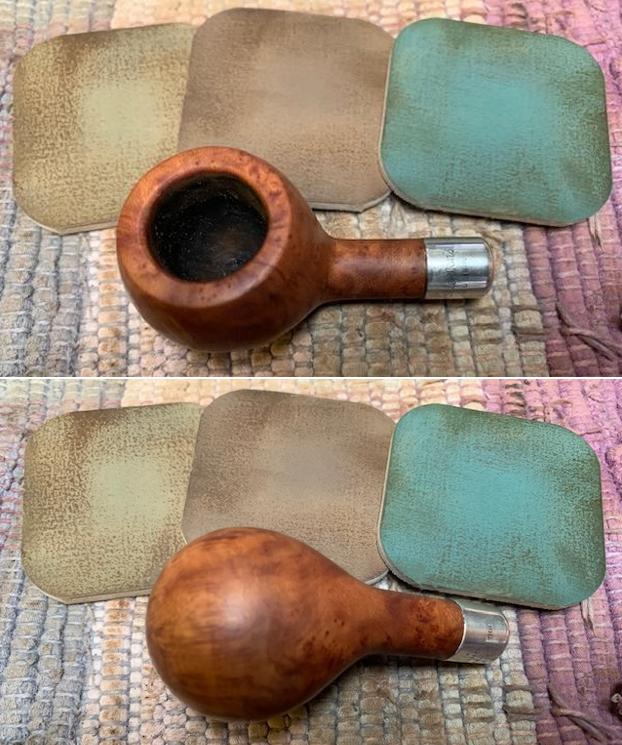
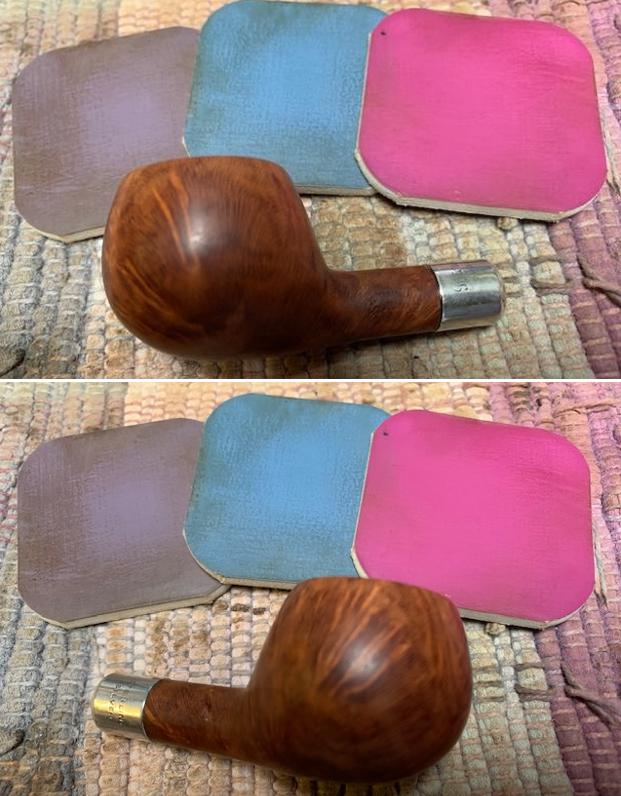
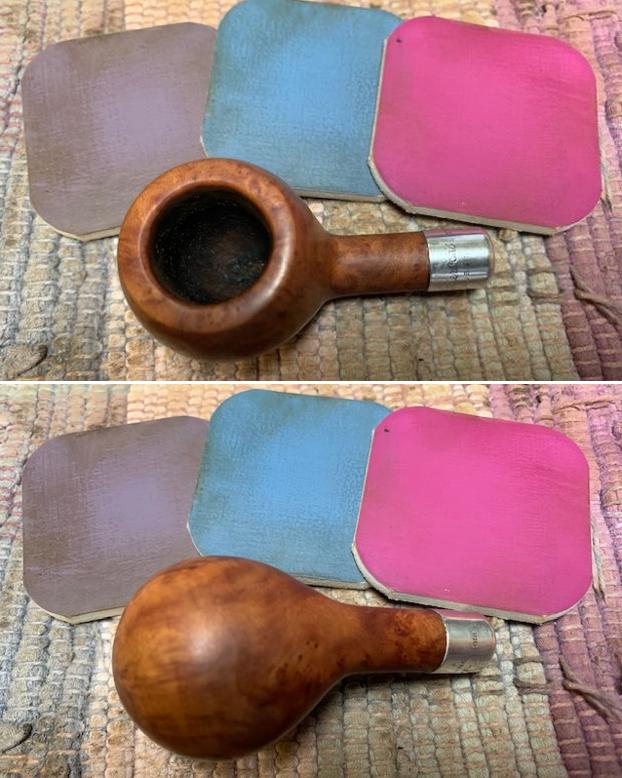
The next pipe I have chosen is smooth finished Peterson’s System 2 Military bit Prince pipe. The stamping on the shank was similar to the Billiard and the Bulldog that I have worked on previously. I had a bit of a bland looking finish but had some good looking grain around the bowl sides and shank. It also came to us from the estate of Anglican minister that was a great friend of mine here in Canada. This Prince was in decent condition and had a Sterling Silver ferrule on the shank end. It was stamped on the left side of the shank and read Peterson’s in an arch [over] Dublin 2 in an arch. It was stamped on the right side and reads Made in the Republic of Ireland (3 lines) with a shape number 407 next to the bowl. The pipe was in filthy condition when he brought it to the table. The finish was dirty with grime ground into the briar sides and rim. There was a light cake in the bowl and light spattering of lava on the rim top and the inner edge of the bowl. There was some damage to the rim top and the inner edge of the rim. The silver ferrule was oxidized and had a few small dents in it. The ferrule was stamped Peterson’s over Dublin on the top. That was followed by the stamping Sterling Silver on the right side. On the underside it had three hallmarks – the first was a woman with a harp, the second was a harp and the third was the letter “h”. The stem was oxidized, calcified and had tooth marks and chatter on the top and underside on and near the button. Jeff took photos of the pipe before his cleanup work. They tell the story and give a glimpse of the promise that we see in this pipe. Jeff took photos of the rim top and stem to show the general condition of the pipe. The bowl is lightly caked and the rim top and edges show quite a bit of damage around the bowl. The photos of the stem show some oxidation and tooth marks and chatter near the button.  Jeff took some photos of the bowl sides and heel to show the amazing grain that was around this bowl. It is a nice looking pipe.     He took photos of the sides of the shank to show the stamping. The stamping is worn but is still readable in the photos below and is as noted above. I am including the link to the Pipedia’s article on Peterson pipes. It is a great read in terms of the history of the brand (https://pipedia.org/wiki/Peterson).

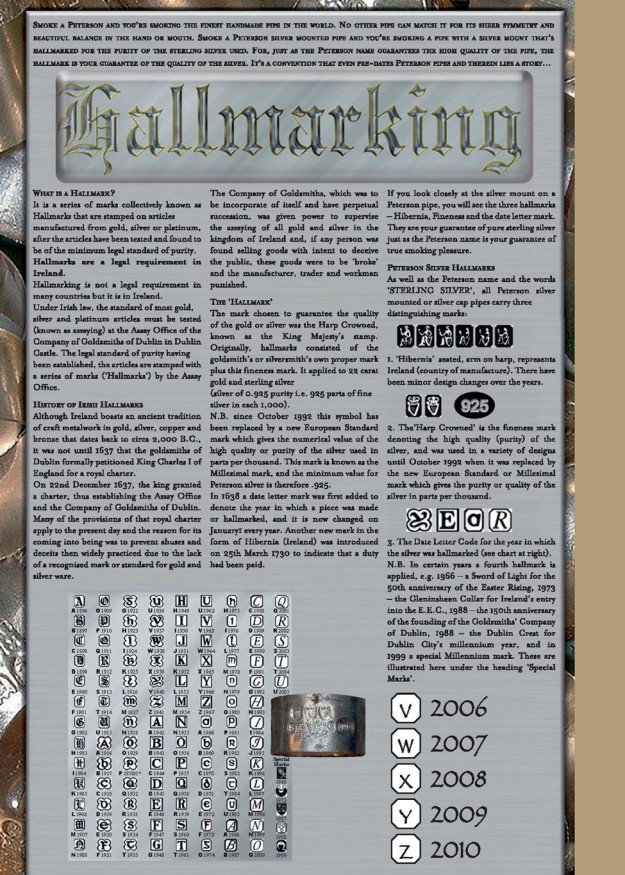
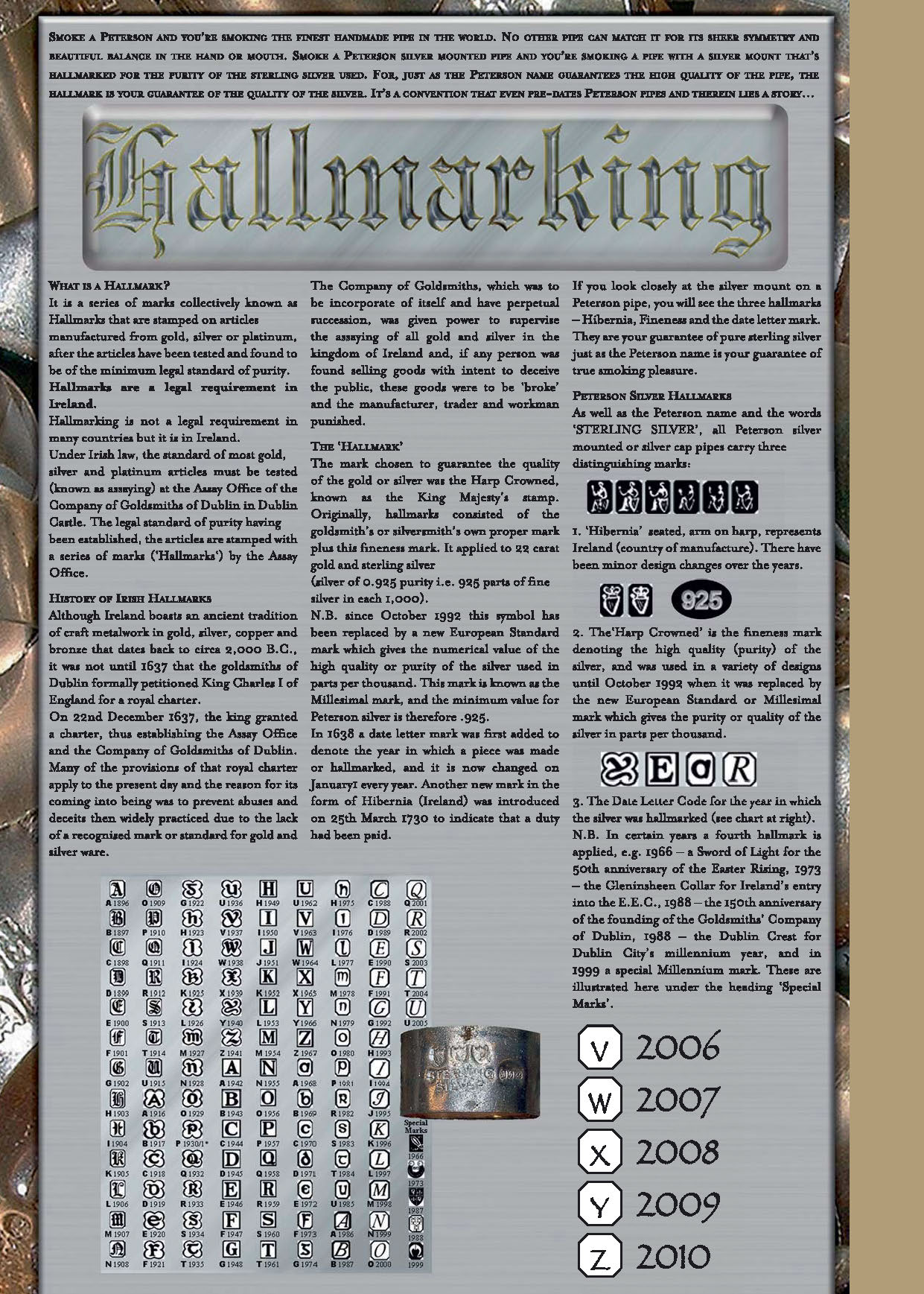
I always like to date the year a pipe was made while I am working on it. In the process of working on a pipe if I can pin down a date that it was made that it adds another dimension to the restoration process. Once I have identified the hallmarks on the pipe then I use a Hallmark chart to pin the date down. In the case of Peterson’s pipe with a silver band I use a hallmarking chart that Peterson included in their catalogs and on their website

I have a copy of the hallmark charts in one of the Peterson catalogs that I have uploaded to the blog on rebornpipes. I turned to that chart to lock down the date letter for the Sterling Silver Prince that I am working on. Here is the link to the site (https://rebornpipes.com/wp-content/uploads/2015/05/peterson-cataloguecomp_page_27.jpg).

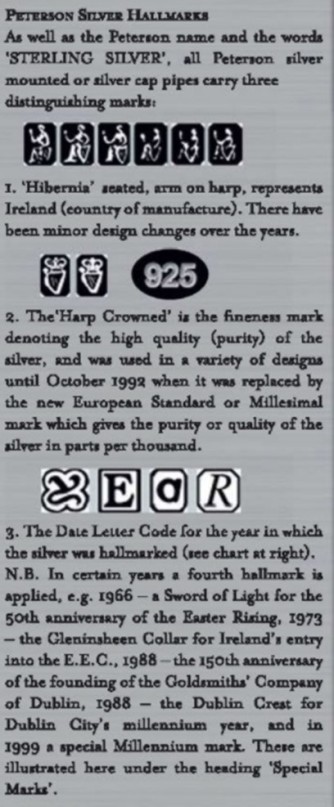
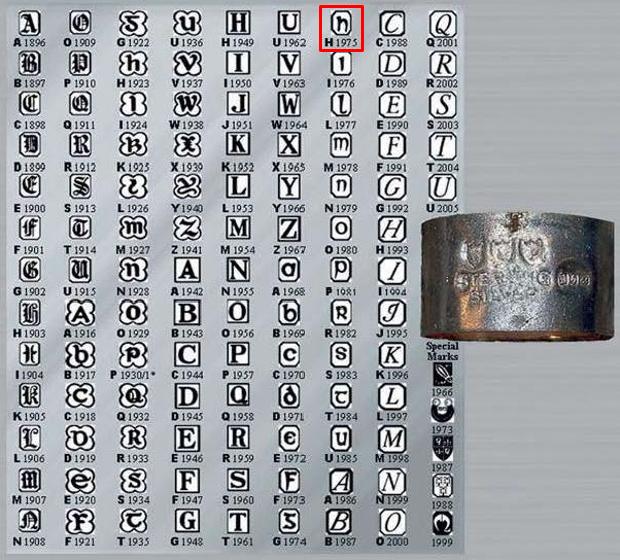
The chart defines the meaning of each hallmark on the silver band. The first one is of a seated woman with a harp is known as the Hibernia stamp and identifies the pipe as made in Ireland. The second stamp is a crowned harp which is a fineness mark denoting the high quality of silver that was used. The third stamp is the lowercase letter “h”. I have included a larger screen capture of the section on the third column of the chart in the photo below.

I have drawn a square around the date letter below. It identifies the date of this Peterson’s pipe to 1975.From the hallmarks it appeared that I was dealing with a pipe that the hallmarks date to 1975. However, the other stamping on the shank sides left me wondering a bit about what was happening.

I turned to “The Peterson Pipe” by Mark Irwin and Gary Malmberg to get some background on the Peterson’s Dublin 3. On page 298 it had the following information.

Dublin (1906-2003) Although DUBLIN appears under PETERSON’S  on many pipe over the decades, it has served mostly as part of the brand name. The word first appeared on pipes hallmarked 1906-11, stamped PETERSON’S over PATENT over DUBLIN. The simpler PETERSON’s over DUBLIN first appeared on pipes hallmarked 1912 after the expiration of the patent. Illustrations of pipes in the ’37 catalog show a random dispersion of the stamp PETERSON’S over OF DUBLIN together with the ordinary PETERSON’S over DUBLIN on every model offered. Specimens of the former will bear either and Irish COM or LONDON MADE over ENGLAND COM and almost certainly date from 1945-62. It was first mentioned as part of a model name in the ’68 price list, as K&P DUBLIN, in ’92 for a Danish market line and in 2017 (see below).

“Dublin” (1992-2003) An orange-brown smooth line with a brass-nickel-brass sandwich band, vulcanite fishtail mouthpiece, consisting mostly of D shapes released for the Danish market. Stamped PETERSON’S in script over “DUBLIN”. A tenth anniversary pipe for the line was produced with a sterling band stamped 2001. Market demand fell shortly thereafter and several pipes stamped “DUBLIN” were released in ’03 for the Fourth of July commemoratives for the US market.

I wrote to Mark Irwin again and asked for his help in clearing up the mystery and helping to date this pipe. I also asked him to provide any additional information for me. He responded with the following:

Steve…It’s first decade of the Early Republic (1948-1958). The 2 and 3 numbers were discontinued in 1958. Great little pipe! The “2” = today’s Premier grade.

I had forgotten to include the hallmarks on the silver so that left me even more in a quandary. So I wrote Mark back about the date stamp on the silver and the conflicting stamping on the pipe.

How does that work with date on the ferrule seeming to point to 1975? It has the standard stamping – woman on chair, harp and the letter “h”

Mark responded as follows:

Haha! I love it. You have just entered the Twilight Zone of Peterson pipes, because the “2” and the small “h” for 1975 cancel each other out. I would prefer to leave it there: “a dimension beyond that which is known to man. It is a dimension as vast as space and as timeless as infinity. It is the middle ground between light and shadow, between science and superstition, and it lies between the pit of man’s fears and the summit of his knowledge.” If, however, you want to get mundane about it, there are only two possibilities: it was rebanded in 1975 (highly unlikely but not impossible) or someone picked up the old stamp (and they have dozens and dozens) who was new to the hand-stamping job. For myself, I’d rather leave it in the imponderables, but there are always skeptics who prefer the easy explanation to the miracle.

I could not have said it any better! The Twilight Zone of Peterson’s Pipes. So I have a pipe made between 1948-1958 with a silver ferrule that is dated 1975! What a great mystery! Now it was time to work on the pipe.

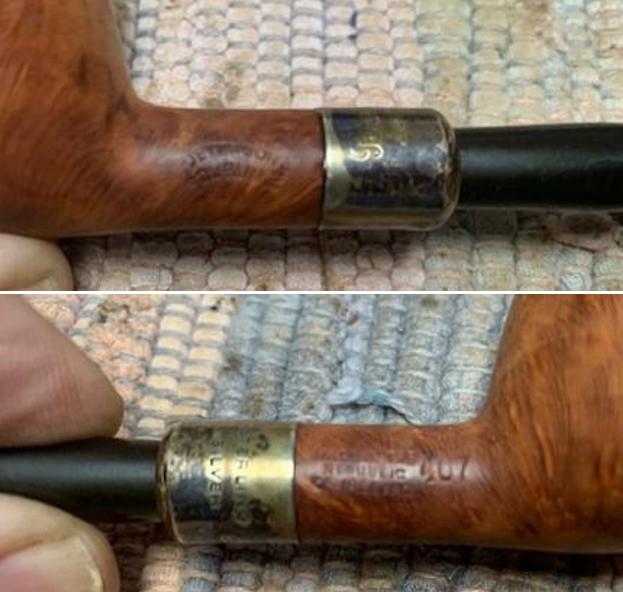
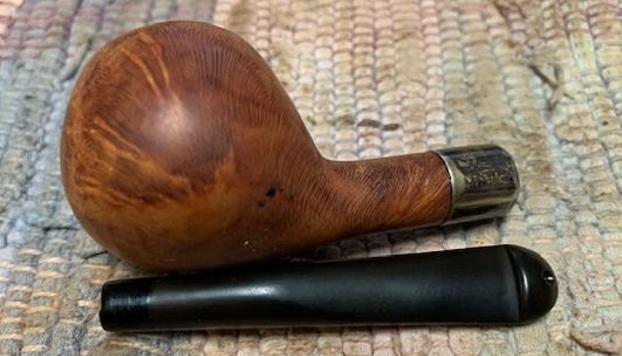
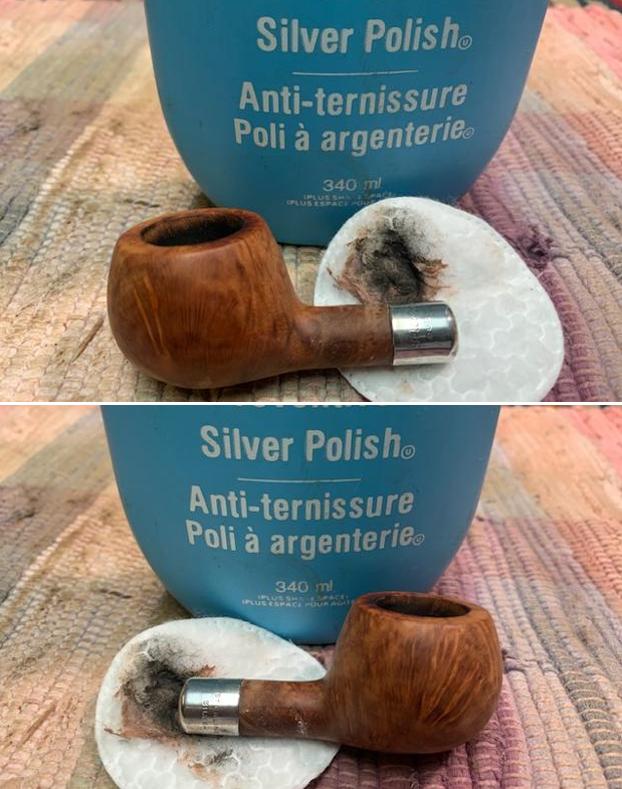
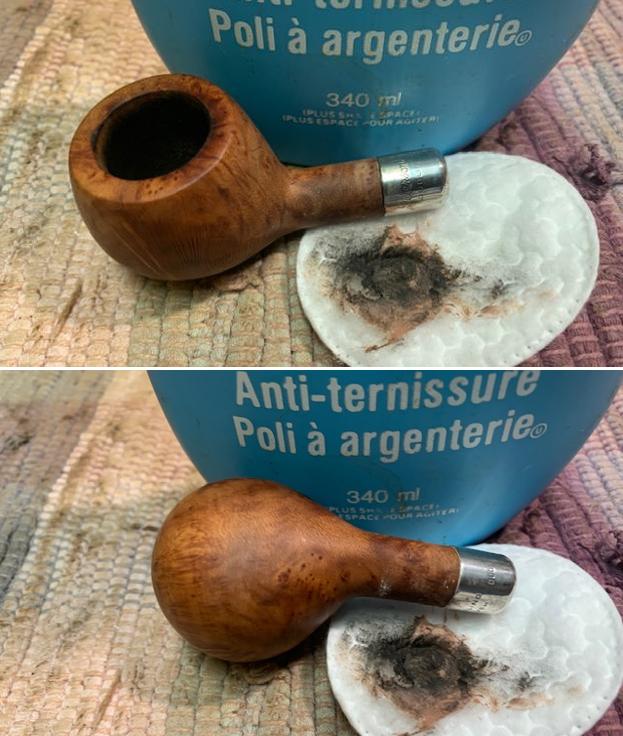
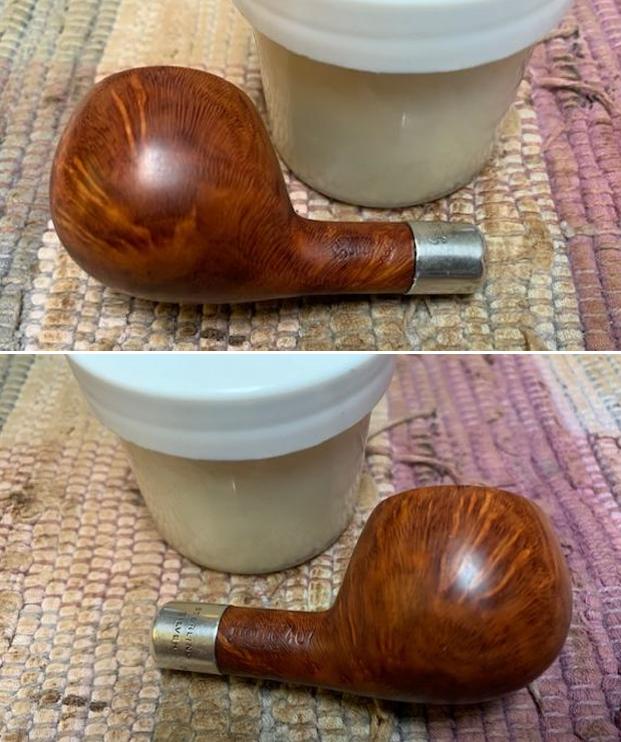
Jeff had done a great job cleaning up the pipe as usual. He reamed the pipe with a PipNet reamer and cut back the cake back to the bare briar. He cleaned up the walls with a Savinelli Fitsall Pipe Knife. He scrubbed the interior of the bowl and shank with pipe cleaners, cotton swabs and alcohol to remove the tars and oils. He scrubbed the exterior of the pipe with Murphy’s Oil Soap and a tooth brush to remove the grime from the finish. He worked on the rim top lava and darkening with the soap and tooth brush. He scrubbed the inside of the stem with alcohol and pipe cleaners. He scrubbed the exterior with Soft Scrub and then soaked it in Before & After Deoxidizer. He washed it off with warm water to remove the Deoxidizer. The pipe looked far better when it arrived. I took some close up photos of the rim top and also of the stem surface. I wanted to show how well it had cleaned up. The rim top had some looked quite good and the inner edge had some darkening and damage. It should clean up really well. I also took close up photos of the stem to show the tooth marks on the surface near the button.     I took photos of the stamping on the sides of the shank. You can see that it is stamped as noted above. It is clear and readable.  I removed the stem and took a photo of the pipe to have a look at the parts and overall look.     I polished the silver ferrule with silver polish to remove the tarnish. Once it was clean the silver really shined.     I decided to address the damage to the edge of the bowl and the rim top first. I used a folded piece of 220 grit sandpaper to give the inner edge of the bowl a slight bevel to accommodate the burned areas and blend them into the surrounding briar. I also worked over the darkening on the rim top with the sandpaper. I polished the briar with micromesh sanding pads – dry sanding with 1500-12000 grit sanding pads. I wiped the bowl down with a damp cloth after each sanding pad.     I worked some Before & After Restoration Balm into the surface of the briar with my fingertips to clean, enliven and protect the briar. I let the balm sit for 15 minutes and then buffed with a cotton cloth to raise the shine. The photos show the bowl at this point in the restoration process. I set the bowl aside and turned my attention to the stem. I “painted” the surface of the stem with a lighter to lift the tooth marks. I was able to lift the majority of them. I sanded out the remaining tooth marks next to the button with 220 grit sandpaper to blend them into the surface of the vulcanite. I started polishing the stem by wet sanding it with 400 grit wet dry sandpaper.   I polished the stem with micromesh sanding pads – wet sanding with 1500-12000 grit sanding pads. I wiped it down after each sanding pad with Obsidian Oil. I polished it with Before & After Pipe Stem Polish – both Fine and Extra Fine.  I am excited to finish this Peterson’s Dublin 2 Prince. I put the pipe back together and buffed it with Blue Diamond on the buffing wheel. I gave the bowl and the stem multiple coats of carnauba wax. I hand buffed the pipe with a clean buffing pad to raise the shine. It is fun to see what the polished bowl looks like with beautiful flame grain all around it. Added to that the polished black vulcanite stem combined with the bowl and made a stunning pipe. This smooth Classic Older Peterson’s Dublin 2 Prince is great looking and the pipe feels great in my hand. It is light and well balanced. Have a look at it with the photos below. The dimensions are Length: 5 ¼ inches, Height: 1 ¼ inches, Outside diameter of the bowl: 1 ¼ inches, Chamber diameter: ¾ of an inch. The weight of the pipe is 23grams/.81oz. It is a beautiful pipe that will joining the two Dublin 3 pipes – the Billiard and the Bulldog in my collection. I look forward to carrying on the trust left to me by my friend. Thanks for walking through the restoration with me as I worked over this pipe. Thanks to each of you who are reading this blog.   

Another older Peterson’s Dublin 3 – this time it is a Bulldog – for my collection


Blog by Steve Laug

The next pipe I have chosen is smooth finished Peterson’s System 3 Bulldog pipe that is stamped exactly like the previous Dublin 3 Billiard. I had a bit of a bland looking finish but had some good looking grain around the bowl sides and shank. It also came to us from the estate of Anglican minister that was a great friend of mine here in Canada. This Bulldog was in worse condition than the Billiard and did not have a nickel ferrule on the shank end. The stain was worn and the crumbling fills in the briar were very visible around the bowl sides and rim top. It was stamped on the left side of the shank and read Peterson’s in an arch [over] Dublin 3 in an arch. It was stamped on the right side and reads Made in Ireland (2 lines). The odd thing is that the stamping on the right side was upside down. The pipe was in filthy condition when he brought it to the table. The finish was dirty with grime ground into the briar sides and rim. There was a light cake in the bowl and light spattering of lava on the rim top and the inner edge of the bowl. There was some damage to the rim top and the inner edge of the rim. The stem was oxidized, calcified and had tooth marks and chatter on the top and underside on and near the button. Jeff took photos of the pipe before his cleanup work. They tell the story and give a glimpse of the promise that we see in this pipe. Jeff took photos of the rim top and stem to show the general condition of the pipe. The bowl is lightly caked and the rim top and edges show quite a bit of damage around the bowl. The photo of the top side of the stem shows some oxidation and damage near the button. Jeff took some photos of the bowl sides and heel to show the amazing grain that was around this bowl. It is a nice looking pipe.     He took photos of the sides of the shank to show the stamping. The stamping is worn but is still readable in the photos below and is as noted above. I am including the link to the Pipedia’s article on Peterson pipes. It is a great read in terms of the history of the brand (https://pipedia.org/wiki/Peterson).

I turned to “The Peterson Pipe” by Mark Irwin and Gary Malmberg to get some background on the Peterson’s Dublin 3. On page 298 it had the following information.

Dublin (1906-2003) Although DUBLIN appears under PETERSON’S  on many pipe over the decades, it has served mostly as part of the brand name. The word first appeared on pipes hallmarked 1906-11, stamped PETERSON’S over PATENT over DUBLIN. The simpler PETERSON’S over DUBLIN first appeared on pipes hallmarked 1912 after the expiration of the patent. Illustrations of pipes in the ’37 catalog show a random dispersion of the stamp PETERSON’S over OF DUBLIN together with the ordinary PETERSON’S over DUBLIN on every model offered. Specimens of the former will bear either and Irish COM or LONDON MADE over ENGLAND COM and almost certainly date from 1945062. It was first mentioned as part of a model name in the ’68 price list, as K&P DUBLIN, in ’92 for a Danish market line and in 2017 (see below).

“Dublin” (1992-2003) An orange-brown smooth line with a brass-nickel-brass sandwich band, vulcanite fishtail mouthpiece, consisting mostly of D shapes released for the Danish market. Stamped PETERSON’S in script over “DUBLIN”. A tenth anniversary pipe for the line was produced with a sterling band stamped 2001. Market demand fell shortly thereafter and several pipes stamped “DUBLIN” were released in ’03 for the Fourth of July commemoratives for the US market.

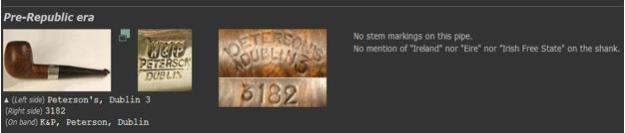
I turned to Pipephil’s site (http://www.pipephil.eu/logos/en/logo-peterson.html) and found a Pre-Republic Era pipe that has the same stamping on the left side of the shank and the ferrule/band. The difference lies in the stamping on the right side of the shank which were stamped Made in Ireland. The Peterson’s Dublin 3 stamp is the same with the forked P at the head of Peterson’s.I wrote to Mark Irwin to confirm the information I had found on the Dublin 3 Billiard and to give any more helpful information on the stamping on that  particular pipe. Mark replied and I quote that in full below as it also applies to this Bulldog pipe:

Hi Steve,

Without the measurements of the bowl I can’t give you the shape number, but I can tell you quite a bit more. The “3” after Dublin indicates it was made between 1937 and 1959 (see p. 301, first column). The nickel-mount marks were on all nickel-mount Petes from 1896 to c. 1963. The nickel was probably hand-soldered (you can often see the solder mark before polishing). The ferrule was also turned down where it meets the mortise by hand. MADE IN IRELAND doesn’t help much, since it has been used in nearly every decade, although I am beginning to believe it indicates a pipe made for export to the US through Rogers Imports, Ltd during the days they were the distributor for K&P (1937-1966, I think was the latter date). The slight swell in the mouthpiece was there because it was a true graduated bore, unlike those made by K&P from c. 1980s forward. This means the pipe will smoke dryly and need no mid-smoke pipe cleaner—a fact I have verified time and time again in my own vintage Petes with type of mouthpiece. Should be a great smoker!

Peace, 

Mark

Now it was time to work on the pipe. Jeff had done a great job cleaning up the pipe as usual. He reamed the pipe with a PipNet reamer and cut back the cake back to the bare briar. He cleaned up the walls with a Savinelli Fitsall Pipe Knife. He scrubbed the interior of the bowl and shank with pipe cleaners, cotton swabs and alcohol to remove the tars and oils. He scrubbed the exterior of the pipe with Murphy’s Oil Soap and a tooth brush to remove the grime from the finish. He worked on the rim top lava and darkening with the soap and tooth brush. He scrubbed the inside of the stem with alcohol and pipe cleaners. He scrubbed the exterior with Soft Scrub and then soaked it in Before & After Deoxidizer. He washed it off with warm water to remove the Deoxidizer. The pipe looked far better when it arrived.    I took some close up photos of the rim top and also of the stem surface. I wanted to show how well it had cleaned up. The rim top had some looked quite good and the inner edge had some darkening and damage. It should clean up really well. I also took close up photos of the stem to show the tooth marks on the surface near the button.      I took photos of the stamping on the sides of the shank. You can see that it is stamped as noted above. It is clear and readable.    I removed the stem and took a photo of the pipe to have a look at the parts and overall look.I decided to address the damage to the edge of the bowl and the rim top first. I used a folded piece of 220 grit sandpaper to give the inner edge of the bowl a slight bevel to accommodate the burned areas and blend them into the surrounding briar. I also worked over the darkening and nicks on the rim top with the sandpaper.   With the rim edges and top cleaned up I decided to address the crumbling fills around the bowl sides. I filled them in with clear super glue to stabilize them and fill in the voids.    Once the fills hardened/cured I sanded the smooth with a folded piece of 220 grit sandpaper and then smoothed them out a bit more with 400 grit wet dry sandpaper and 1500 grit micromesh sanding pads. I polished the briar with micromesh sanding pads – dry sanding with 1500-12000 grit sanding pads. I wiped the bowl down with a damp cloth after each sanding pad.    I worked some Before & After Restoration Balm into the surface of the briar with my fingertips to clean, enliven and protect the briar. I let the balm sit for 15 minutes and then buffed with a cotton cloth to raise the shine. The photos show the bowl at this point in the restoration process. I set the bowl aside and turned my attention to the stem. I filled in the deep tooth marks on the top an underside near the button with clear super glue. Once the repairs had cured I sanded them with 220 grit sandpaper to blend them into the surface of the vulcanite. I started polishing the stem by wet sanding it with 400 grit wet dry sandpaper.   I polished the stem with micromesh sanding pads – wet sanding with 1500-12000 grit sanding pads. I wiped it down after each sanding pad with Obsidian Oil. I polished it with Before & After Pipe Stem Polish – both Fine and Extra Fine.         I am excited to finish this Peterson’s Dublin 3 Straight Bulldog. I put the pipe back together and buffed it with Blue Diamond on the buffing wheel. I gave the bowl and the stem multiple coats of carnauba wax. I hand buffed the pipe with a clean buffing pad to raise the shine. It is fun to see what the polished bowl looks like with beautiful flame grain all around it. Added to that the polished black vulcanite stem combined with the bowl and made a stunning pipe. This smooth Classic Older Peterson’s Dublin 3 Bulldog is great looking and the pipe feels great in my hand. It is light and well balanced. Have a look at it with the photos below. The dimensions are Length: 4 ½ inches, Height: 1 ½ inches, Outside diameter of the bowl: 1 1/8 inches, Chamber diameter: ¾ of an inch. The weight of the pipe is 23grams/.78oz. It is a beautiful pipe and one that will join the other Peterson’s Dublin 3 – the Billiard in my collection for the time being. It is yet another of my friend’s estate that will stay in my trust. Thanks for walking through the restoration with me as I worked over this pipe. Thanks to each of you who are reading this blog.

New Life for a Republic Era Peterson’s Special 87S Apple


Blog by Steve Laug

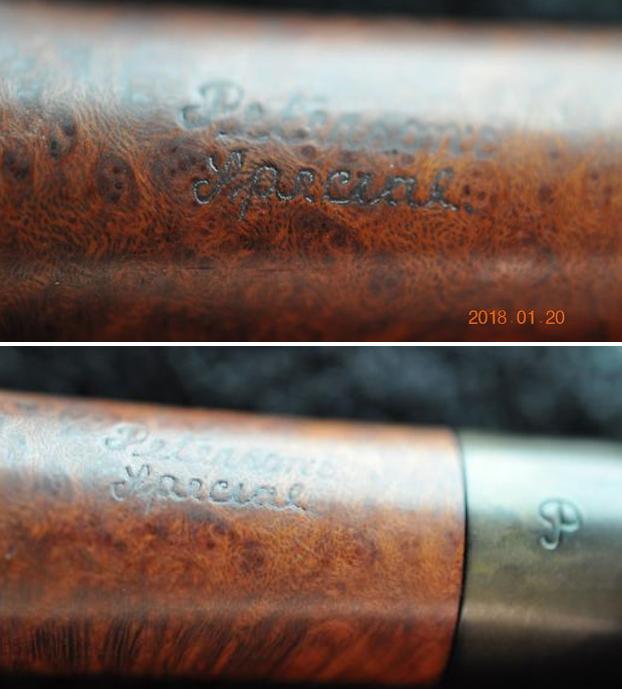
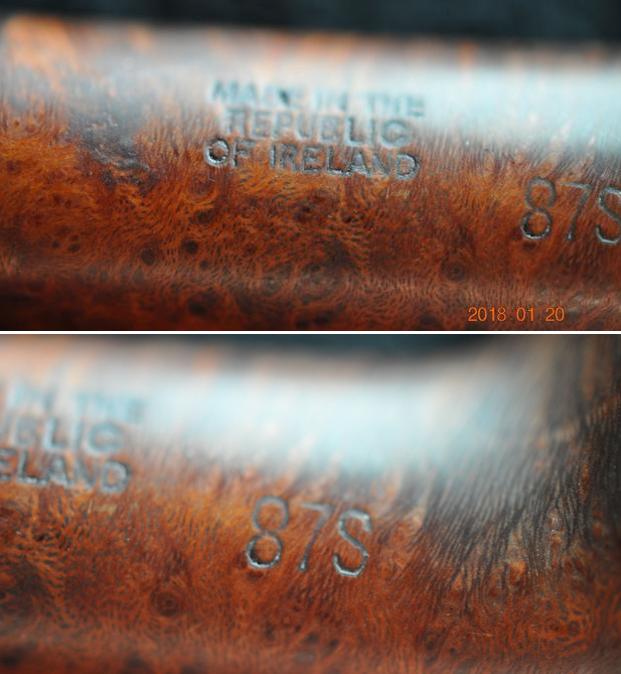
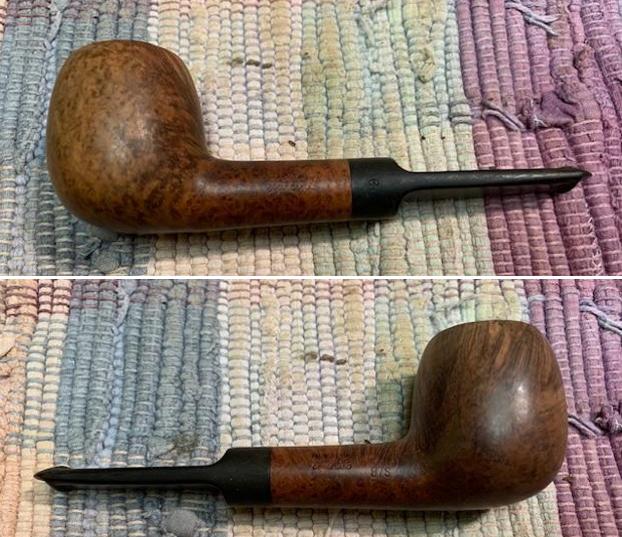
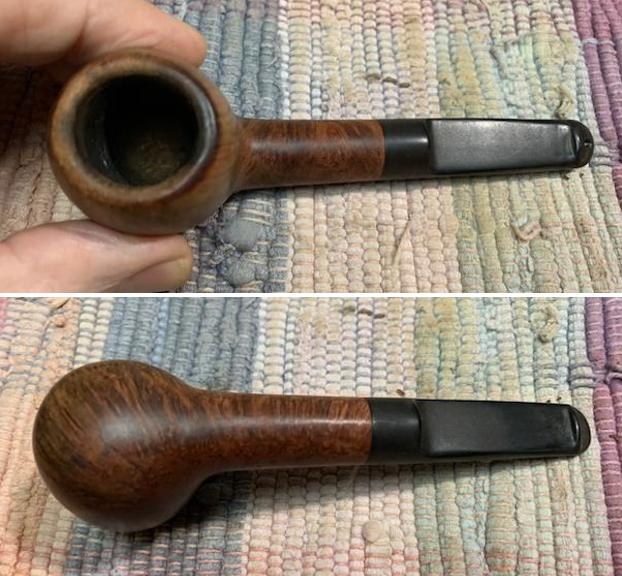
The next pipe I have chosen is smooth finished Peterson’s saddle stem Apple pipe. This smooth Apple has a rich coloured finish around the bowl sides and shank. It also came to us from the estate of Anglican minister that was a great friend of mine here in Canada. The contrast of the brown stains makes the mixed grain really pop. It was stamped on the  left side of the shank and read Peterson’s [over] Special. It was stamped to the right of the shank and reads Made in the Republic of Ireland (3 lines) with the shape number 87S next to the bowl. It was filthy when he brought it to the table. The finish was dirty with grime ground into the finish around the sides and rim. There was a thick cake in the bowl and light spattering of lava on the rim top and the inner edge of the bowl. The rim top showed some darkening on the crowned top. The stem was oxidized, calcified and had tooth marks and chatter on the top and underside on and near the button. Jeff took photos of the pipe before his cleanup work. They tell the story and give a glimpse of the promise that we see in this pipe. Jeff took photos of the rim top and stem to show the general condition of the pipe. The bowl is heavily caked and the rim top and edges have some light lava overflow and some darkening. The stem is oxidized, calcified and has tooth marks on the top and underside near the button.  Jeff took a photo of the bowl sides and heel to show the grain that was around this bowl. It is a nice looking pipe.He took photos of the sides of the shank to show the stamping. The stamping is readable in the photos below and is as noted above.   I am including the link to the Pipedia’s article on Peterson pipes. It is a great read in terms of the history of the brand (https://pipedia.org/wiki/Peterson).
I turned to “The Peterson Pipe” by Mark Irwin and Gary Malmberg to get some background on the Peterson’s System Line. On page 313 it had the following information.

Special Model Name on shank (1975) High grade, very rare, unmounted smooth, walnut stain, P-Lip or fishtail mouthpiece, stamped PETERSON’S over SPECIAL (in script). Brass P in the stem occurs often, but seen on pipes in companion cases earlier in the twentieth century.

Judging from the description above I believe that I am working on one of these high grade rare pipe. It is a late Republic Era Classic Shaped pipe with a walnut finish and a P-Lip stem. Now it was time to work on the pipe.

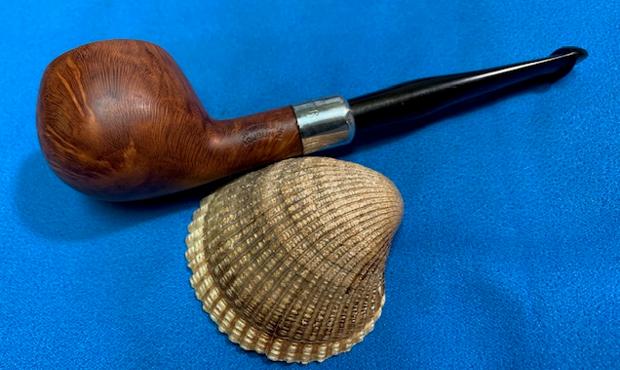
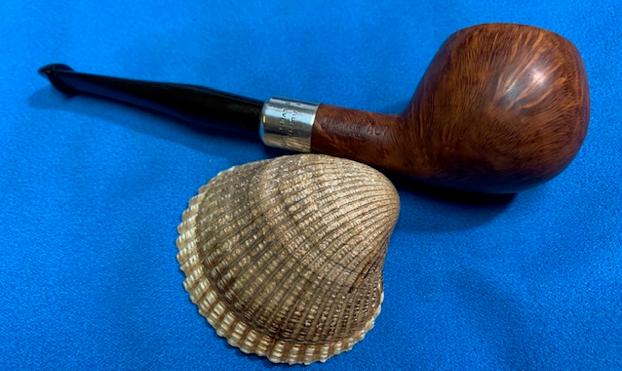
Jeff had done a great job cleaning up the pipe as usual. He reamed the pipe with a PipNet reamer and cut back the cake back to the bare briar. He cleaned up the walls with a Savinelli Fitsall Pipe Knife. He scrubbed the interior of the bowl and shank with pipe cleaners, cotton swabs and alcohol to remove the tars and oils. He scrubbed the exterior of the pipe with Murphy’s Oil Soap and a tooth brush to remove the grime from the finish. He worked on the rim top lava and darkening with the soap and tooth brush. He scrubbed the inside of the stem with alcohol and pipe cleaners. He scrubbed the exterior with Soft Scrub and then soaked it in Before & After Deoxidizer. He washed it off with warm water to remove the Deoxidizer. The pipe looked far better when it arrived.     I took some close up photos of the rim top and also of the stem surface. I wanted to show how well it had cleaned up. The rim top looked to be in good condition with some darkening on the back side and some damage to the inner at that point as well. I also took close up photos of the stem to show the tooth marks on the surface near the button.  I took photos of the stamping on the sides of the shank. It reads as noted above.   I removed the stem and took a photo of the pipe to have a look at the parts and overall look.I decided to address the damage to the back edge of the bowl and the rim top first. I used a folded piece of 220 grit sandpaper to give the inner edge of the bowl a slight bevel to accommodate the burned areas and blend them into the surrounding briar. I also worked over the darkening on the rim top with the sandpaper.    I polished the briar with micromesh sanding pads – dry sanding with 1500-12000 grit sanding pads. I wiped the bowl down with a damp cloth after each sanding pad.    I worked some Before & After Restoration Balm into the surface of the briar with my fingertips to clean, enliven and protect the briar. I let the balm sit for 15 minutes and then buffed with a cotton cloth to raise the shine. The photos show the bowl at this point in the restoration process.  I touched up the stamped “P” on the top of the stem with Rub’n Buff Antique Gold. I pressed it into the stamping with a tooth pick and buffed it off with a soft cloth. It looks much better that when I started.  I set the bowl aside and turned my attention to the stem. I “painted” the stem and button surface with the flame of a lighter to lift the tooth marks. It worked amazingly well and I was able to lift most of them completely or significantly. I sanded what remained with 220 grit sandpaper to blend them into the surface of the vulcanite. I started polishing the stem by wet sanding it with 400 grit wet dry sandpaper.     I polished the stem with micromesh sanding pads – wet sanding with 1500-12000 grit sanding pads. I wiped it down after each sanding pad with Obsidian Oil. I polished it with Before & After Pipe Stem Polish – both Fine and Extra Fine.  I am excited to finish this Peterson’s Special 87S Apple. I put the pipe back together and buffed it with Blue Diamond on the buffing wheel. I gave the bowl and the stem multiple coats of carnauba wax. I hand buffed the pipe with a clean buffing pad to raise the shine. It is fun to see what the polished bowl looks like with beautiful flame grain all around it. Added to that the polished Sterling Silver band and the black vulcanite stem was beautiful. This smooth Classic Peterson’s Special 87S Apple is great looking and the pipe feels great in my hand. It is light and well balanced. Have a look at it with the photos below. The dimensions are Length: 5 ¼ inches, Height: 1 ¾ inches, Outside diameter of the bowl: 1 ¼ inches, Chamber diameter: ¾ of an inch. The weight of the pipe is 39grams/1.38oz. It is a beautiful pipe and one that I will be putting on the rebornpipes store shortly. It will be in the Irish Pipe Maker Section on the store if you would like to add it to your collection. Thanks for walking through the restoration with me as I worked over this pipe. Thanks to each of you who are reading this blog.

Dropped in at the Dunhill Deep End


Blog by Kenneth Lieblich

This is the first and introductory blog by Kenneth. We have been working through his Grandfather’s pipes and others that he has purchased to help him learn the processes that I use to restore and refurbish pipes. He is a quick study and able student. Give his first blog a read and enjoy it. Thanks Kenneth and welcome to rebornpipes.

I must admit that I never thought that the first pipe I ever restored would be a Dunhill Shell Briar Bulldog. Talk about nerve-wracking! I figured I would start out on an old clunker of a pipe so that if I made a mess of it, there was no great loss. But Steve Laug insisted that this was the one I had work on first because it was, in fact, a microcosm of pipe restoration all in one little pipe. I want to express my gratitude to Steve for not only permitting me to post the story of this pipe’s restoration, but most especially for guiding me every step of the way through the process. The vagaries of life (thanks to Covid) necessitated several FaceTime and Zoom chats, but he was always generous, friendly, and helpful. Any compliments on this restoration are for him – any criticisms are for me.

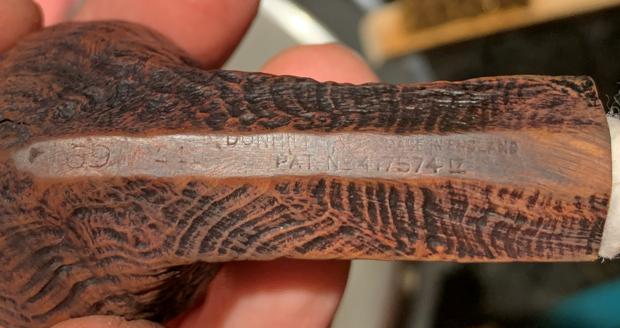
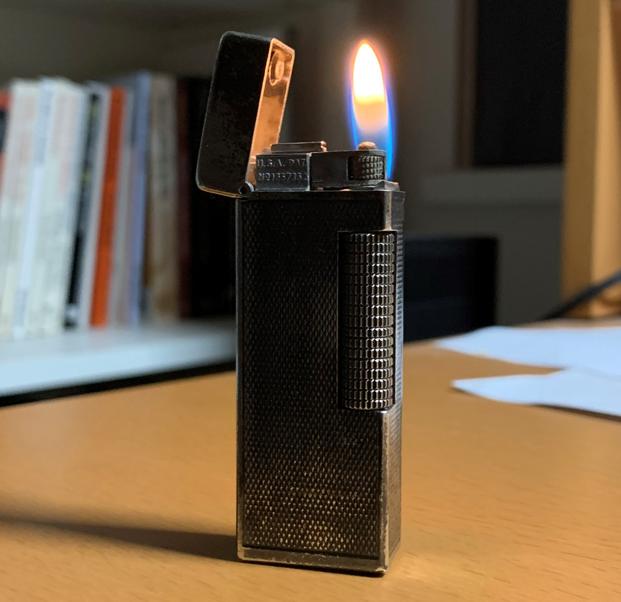
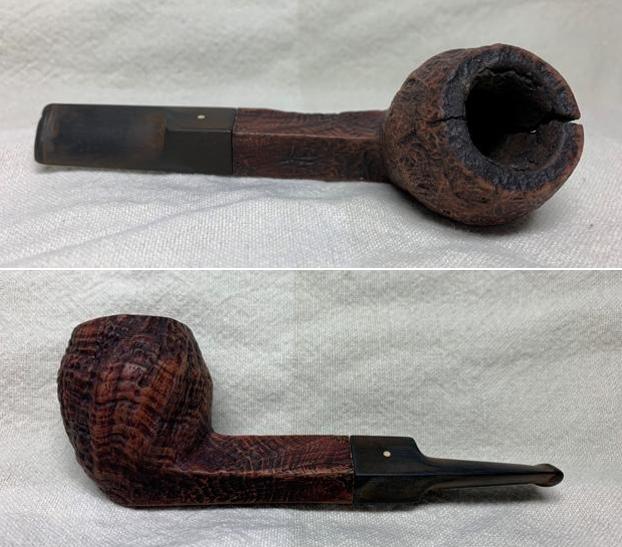
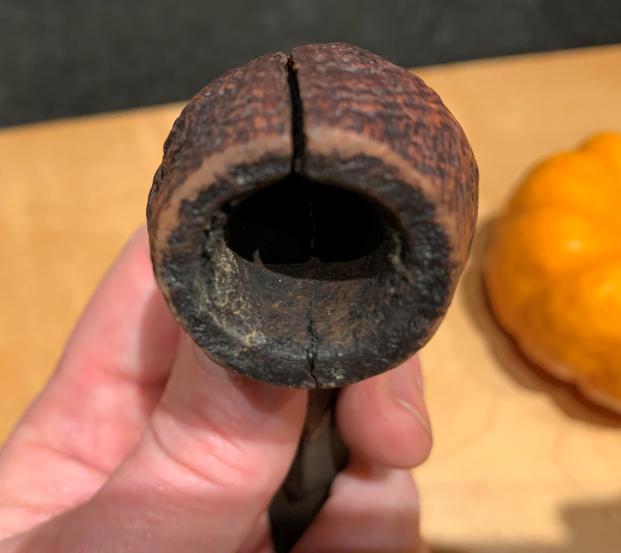
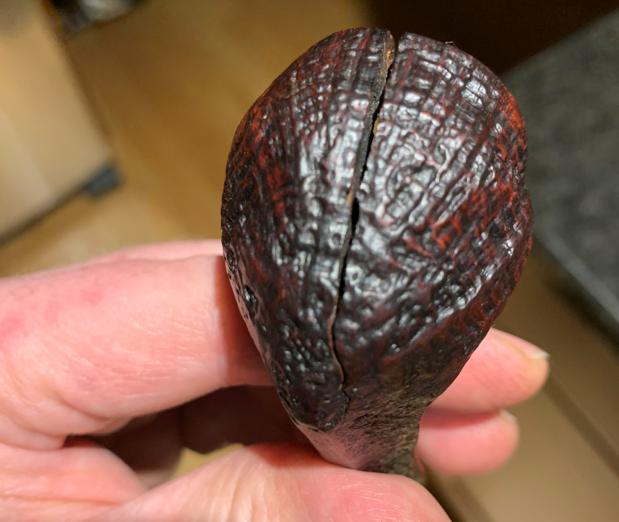
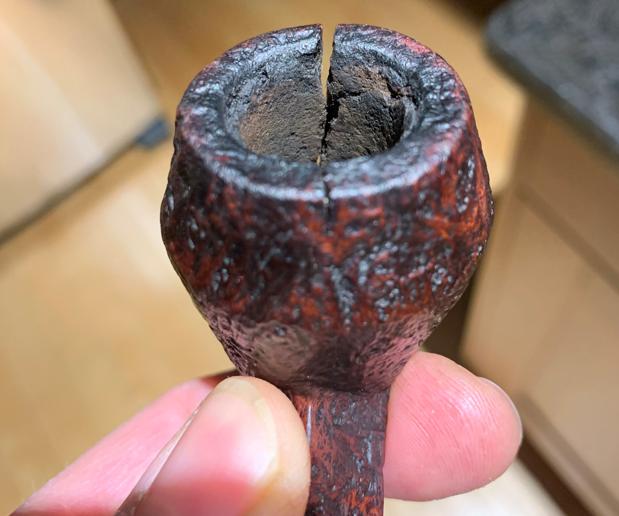
This charming Dunhill Shell Briar Bulldog pipe belonged to my paternal grandfather and was one of seventeen pipes left to my father, and which he has now given to me. A little detective work over at http://www.pipephil.eu revealed that this Dunhill dates from 1937 – which would have made my grandfather 29 years old when it was made.He died in 1975, so this pipe has not been smoked for at least 45 years (and probably more). As a side note, while this restoration was ongoing, I also restored his Dunhill Rollagas lighter (dated to the mid-1950s), so that I could use it to light the pipe one day. In that pipe will be some very old tobacco that is also from my grandfather. I am not sure what the tobacco is, but it smells lovely. I have another two Dunhill pipes I inherited from my grandfather, but I will save those restorations for future posts! As you can see from these initial photos, this poor pipe had some serious issues! The front of the bowl had a large crack, reaching all the way from the rim to the heel. There was also another crack (albeit considerably smaller) on the opposite side of the bowl. Smaller it may have been, but no less daunting to me. There was some cleaning that needed to be done inside the shank and stem, but less than might have been expected from an 85-year-old pipe. The usual routine of isopropyl alcohol, pipe cleaners, Q-tips, etc. made short work of that. Unfortunately, I do not have a handy brother like Jeff Laug to help clean my pipes, so I did it myself. I learn by doing, so this was just as well.

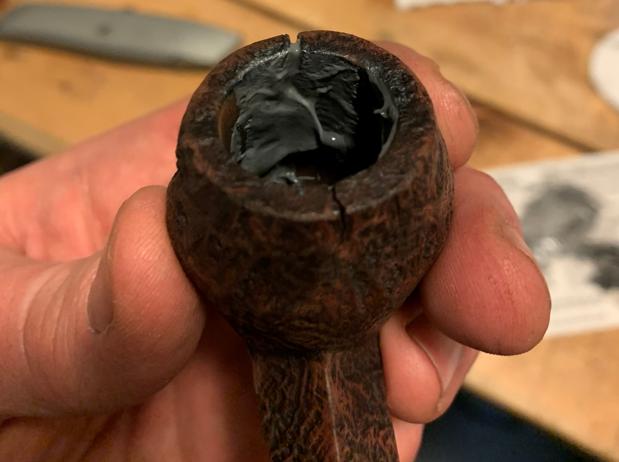
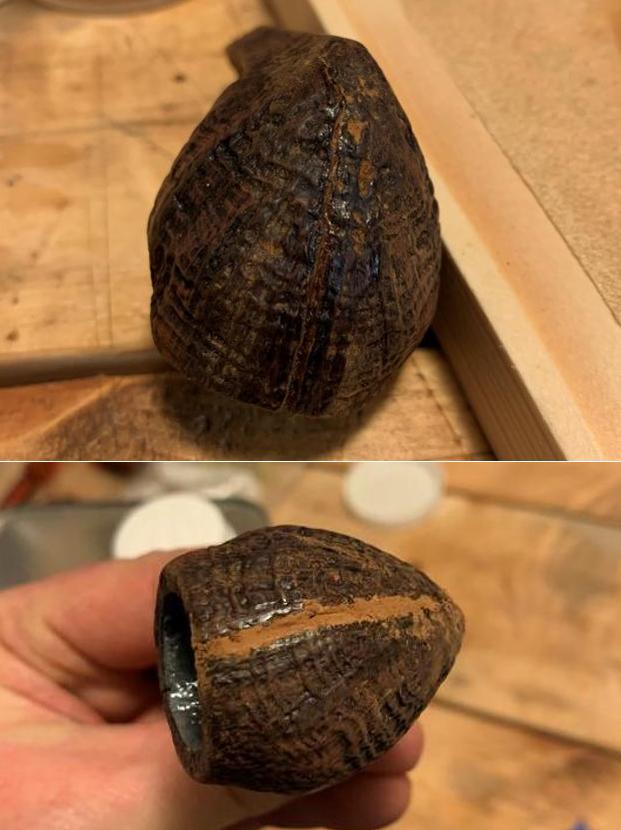
After using both the Pipnet Reamer and the KleenReem, the bowl was stripped down to the bare briar. This afforded me a good look at the condition of the bowl and just how far the two cracks had penetrated the wood. The smaller crack was not any worse than it initially appeared, but the large crack went all the way to the underside of the bowl. I cleaned the stummel with Murphy’s Oil Soap and that made a world of difference to the overall appearance of the wood, but not to the cracks, obviously. I prepared some J.B. Weld epoxy and filled the breach from the inside, ensuring that the epoxy did not ooze out to the front. I filled in the crack from the outside with a mixture of briar dust and cyanoacrylate adhesive. This was a tricky business, as the crack varied from ‘gaping’ at the rim to essentially ‘imperceptible’ at the heel. After putting down some layers of briar dust and glue, I noticed that there were still some small gaps that only iPhone magnification could reveal, as seen here. These were soon mended and left to cure.Following this, some rustication was needed, and a brass-bristle brush was the tool I used. In fact, the brush was used several times – including after I applied some stain to the briar-glue repair. The stain was used in conjunction with the Before & After Restoration Balm, to help meld everything together. I must admit that I wish I could have done this step better – all I could see were flaws, but everyone else told me how much better it looked, especially when compared with how it began. These photographs show you that it wasn’t complete, but I guess it really was better. Once this had fully cured, I coated the entire inside of the bowl with a mixture of activated charcoal and my wife’s homemade yogurt. Once hardened, this provided a good, slightly rough surface for a new cake to build. Then it was time for the stem. It was in pretty good condition, considering its age. There were a couple of relatively minor tooth marks and the button needed some work. However, without doubt, restoring the stem was the most frustrating part of the restoration. It began easily enough, with the stem taking a swim in the Before & After Hard Rubber Deoxidizer. In order to address the chatter, I waved the flame of a BIC lighter over the mouthpiece. I also took some of the cyanoacrylate adhesive and filled in the deeper tooth marks. But then the tough stuff came: sanding, more sanding, then even more sanding. Did I mention the sanding? As you know from Steve’s similar work, I used 220, 400, and 600 sandpapers to wet-sand the stem. Then followed that with all nine Micromesh pads (1,500 through 12,000 grit) – using Obsidian Pipe Stem Oil in between each pad. The pictures only tell a fraction of the story. Quite frankly, my lack of experience was my undoing, as I had to do this entire sanding sequence twice over. It just did not look right the first time. In fact, I was not even convinced that it looked right the second time, but Steve reassured me (with his typical kindness) that I was merely suffering from the same sort of pipe perfectionism that he does – not to mention the fact that this pipe is 85 years old: it is not meant to look brand new! At some point, one has to stop or else one will simply sand the pipe away into oblivion!

At long last, I was at the point where I could throw down some more Obsidian Pipe Stem Oil, Before & After Restoration Balm, and Paragon II Wax. Microfibre cloths, horsehair shoe brushes, and buffing pads followed – all to provide a final product (hopefully) worthy of my beloved grandfather’s memory. This was certainly a labour of love and I look forward to firing up his 85-year-old Dunhill pipe, with his 65+ year-old Dunhill lighter, filled to the rim with his 50+ year-old tobacco. The dimensions of the pipe are as follows: length 4⅝ inches; height 1⅝ inches; bowl diameter 1½ inches; chamber diameter: ¾ of an inch. The weight of the pipe is ⅞ of an ounce (or 27 grams).

Thank you very much for reading and I welcome and encourage your comments. Kenneth sent me this message and photo on Facebook.

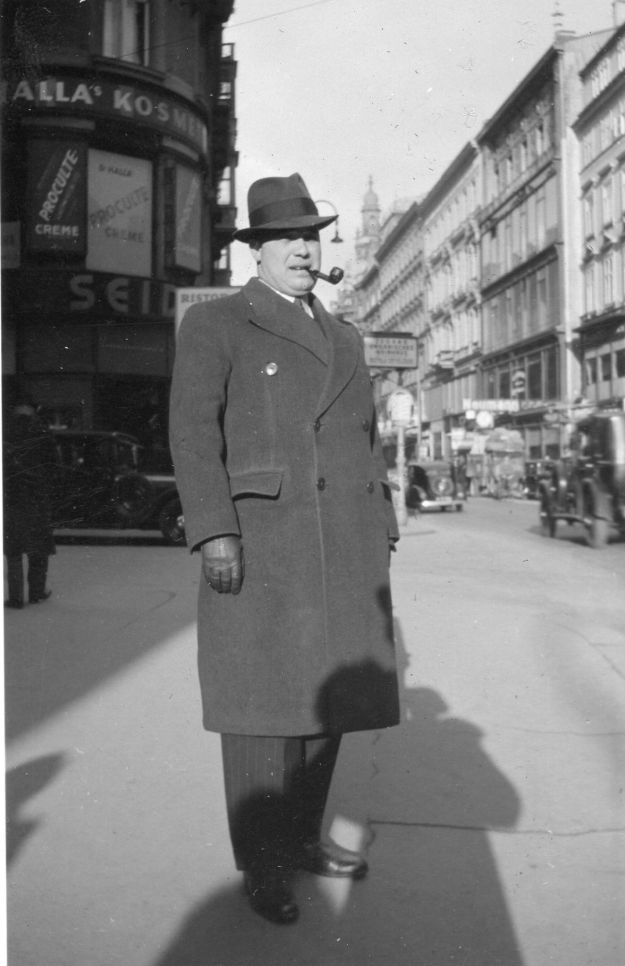
This is my grandfather, Alfred Lieblich,  in Vienna in 1938. Look what’s in his mouth! Amazing!

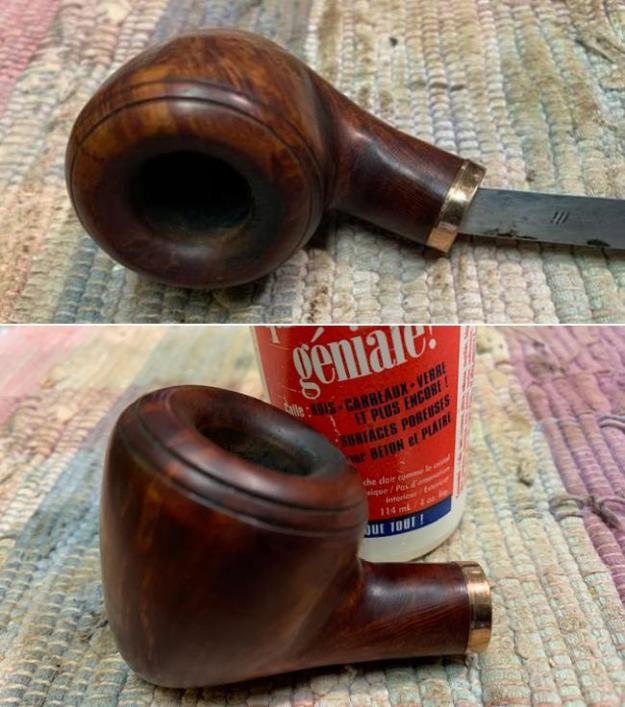
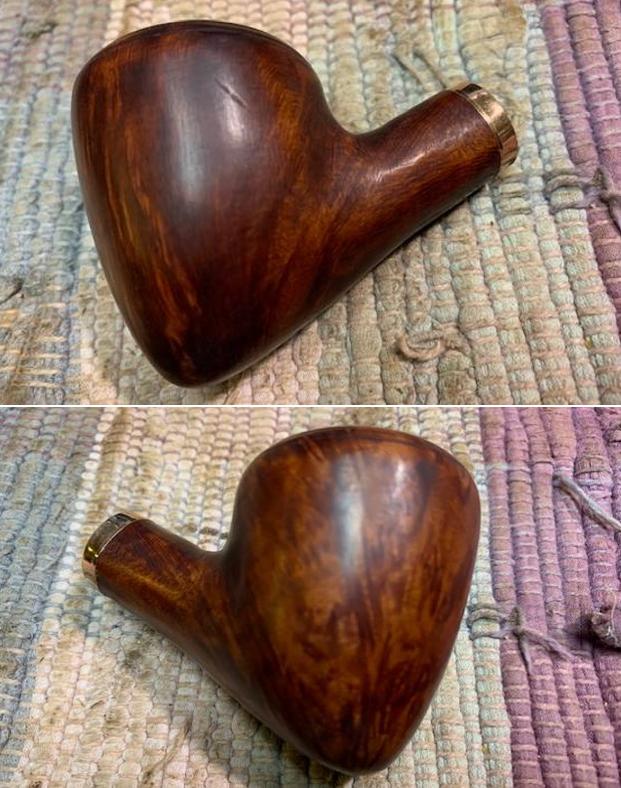
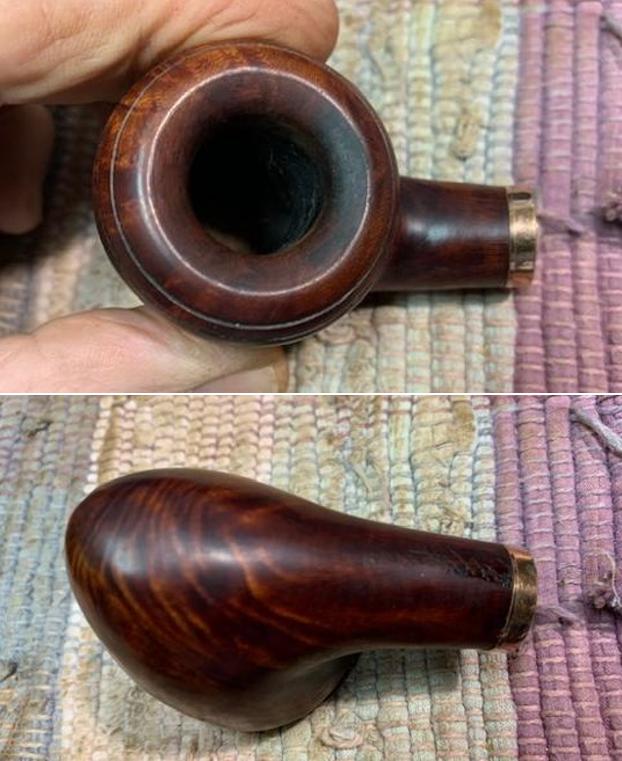
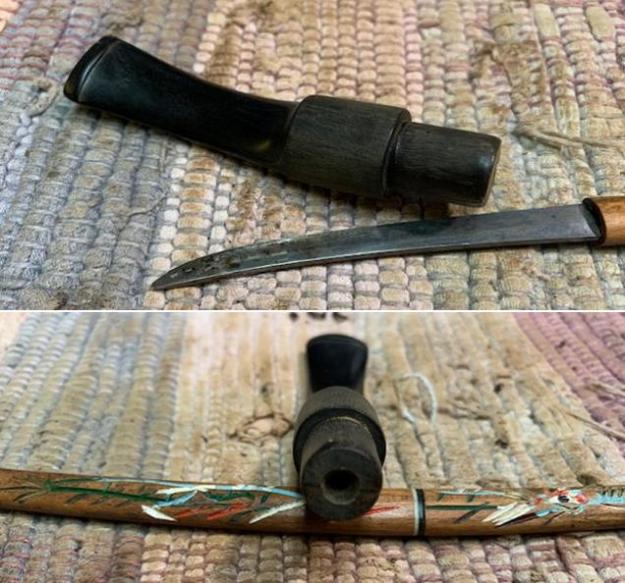
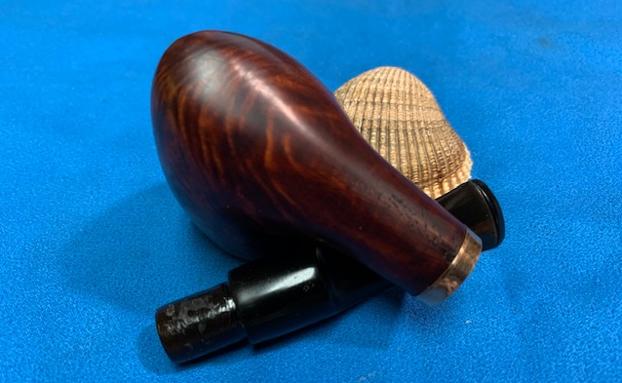
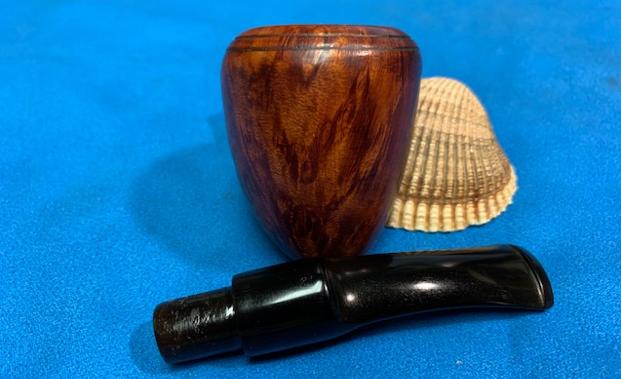
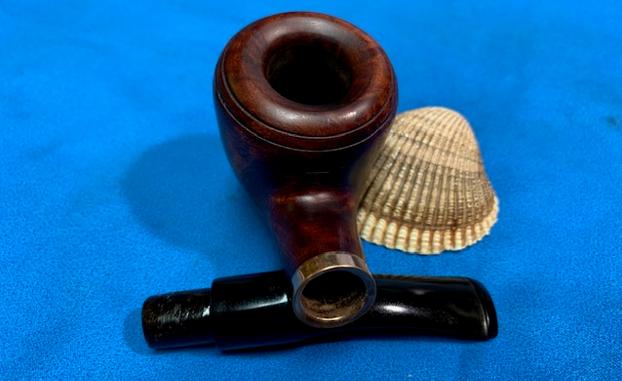
Repairing a Cracked Shank on a Salstrom & Skinner Handmade Acorn


Blog by Steve Laug

Early in December I received and email from a reader of the blog about one of his first pipes. Here is what he wrote to me:

I have got a custom made briar tobacco pipe that split at the shank when I removed the pipe stem. It’s a hair line crack. Was looking to get an estimate of a repair. Was reading one of your repair articles of putting a brass ring to reinforce shank and stem connection. This is something I would like possibly have done. And what is the lead time for such a repair?… Thanks,  Jake

The story behind this being his first pipe caught my attention. I forgot to ask him what the brand was. He sent me some photos of the crack in the shank but I changed out my computer and do not have access to those photos any longer. I figured that it would be a straightforward repair so I answered him and he shipped the pipe to me. This afternoon while I was working the package arrived from Jake. I opened it after work and took some photos of the pipe. I wrote Jake an email to let him know that the pipe had arrived and asked him about the maker and the brand. He wrote me back and I am including that below.

Hi Steve! I was actually going to contact you today to see if it did, but that’s good. Glad it finally made it to you. I bought that pipe back in 2015 from an Etsy retailer that went by the name of Salstrom & Skinner. I believe they are out of Oregon. They aren’t in business anymore from what I can tell, their online Etsy shop is no longer up. And yes, that is the stem that came with the pipe. –Jake

I thanked Jake and sent him my assessment of the pipe and what needed to be done to make a repair work on the pipe. I broke my assessment down to cover the bowl and shank issues and then the stem issues. Both contributed to the crack on the underside of the shank. I include a summary of the email that I sent to him below.

The damaged shank…

  1. I cleaned out the shank to check the crack and it goes all the way through.. Fortunately it is not too long maybe 1/4-1/2 inch into the shank.
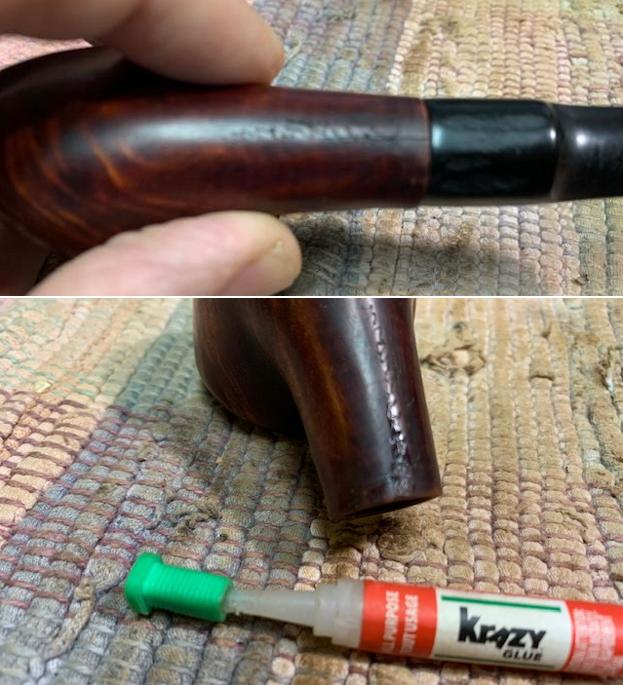
  2. The shank was quite thin walled so I decided to glue it and then band it. I would open the crack and fill it with clear CA glue and clamp it shut until the glue dried.
  3. I would fit a thin brass band on the shank end and customize the fit. Once the fit was correct I would need to press it on the shank glue it in place. That would take care of the shank damage.

The stem issues…

  1. The stem is really a mess. The tenon was quite large and poorly cut. It still had the castings on it and the Made in Italy castings. These made the fit in the shank very tight and also I believe caused the crack originally as the shank is quite thin.
  2. I would need to smooth out damage on the tenon and remove the castings.
  3. I also would funnel the entry of the airway in the end of the tenon to make the draw better.
  4. The saddle portion of the stem was very rough and not round. There were file marks and cuts all around it and it did not fit against the shank well. The diameter of the stem and the shank did not match. I would need to round the saddle and removed the cuts and the file marks.

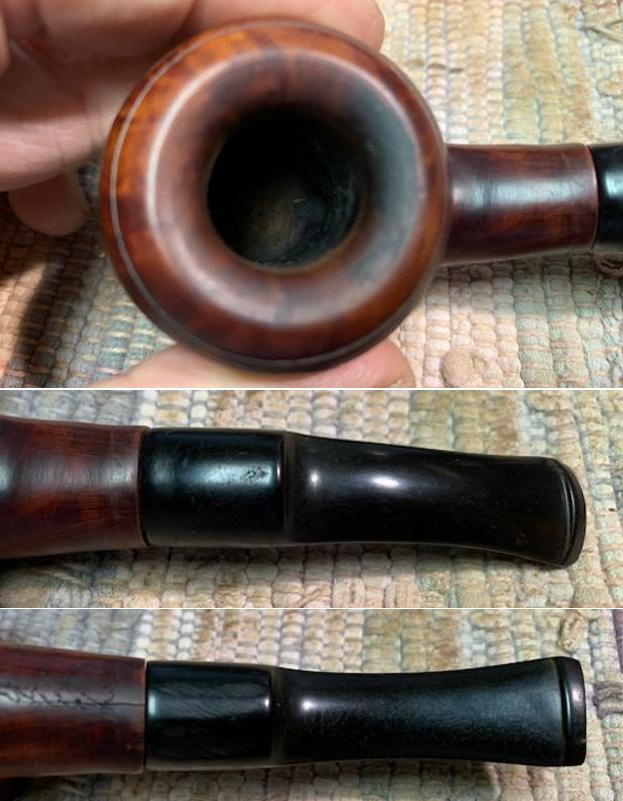
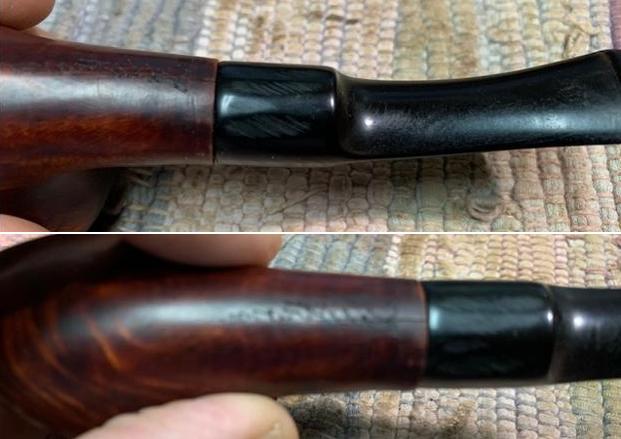
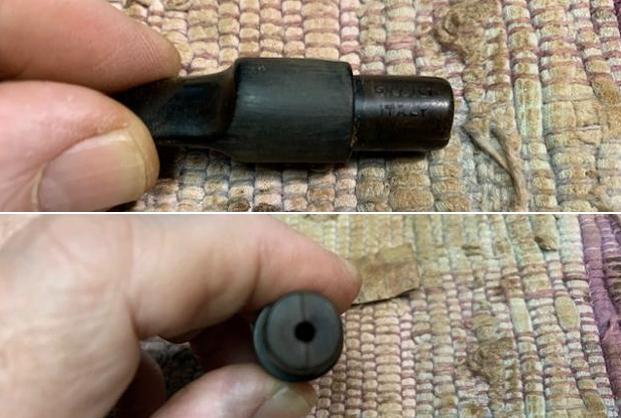
I took photos of the rim top and stem to show the general condition of the pipe. The bowl looked to be in good condition. There was some darkening and lava build up on the top back of the rim. I also took photos of the stem to show the cut marks and fill marks on the surface of the saddle.    I took some photos of the rough looking finish on the stem, its fit to the shank and the crack in underside of the shank.I removed the stem and took a photo of the pipe to have a look at the parts and overall look. I am still amazed by the thickness of the tenon. I took a photo of the castings on the tenon and on the airway entering the tenon end. It made the castings very clear.    I started my work on the pipe by addressing the crack in the shank. I put the stem on the shank and opened it up. I filled in the crack with clear super glue (CA). I removed the stem and clamped the repaired shank together until the glue cured.  Once the glue had cured and the crack was bound together I fit a brass band on the shank end. After I had fit the band to the shank I removed it and coated the shank end and inside of the band with all-purpose glue. I pressed it onto the end of the shank. I set it aside and let the glue cure.   I took photos of the band on the shank from the various angles to show what it looked like. It is a pretty addition. I set aside the repaired bowl and turned my attention to the stem. I used the blade of pen knife to funnel the airway in the tenon.I smoothed out the castings on the tenon with 220 grit sandpaper. I also smoothed out the file marks on the saddle portion of the stem and worked to make it round again.I put the repaired and newly shaped stem on the shank of the bowl and took photos of the look of the pipe. I still needed to polish it but the stem looked much better. It was time to polish the stem now. I polished it with 1500-12000 grit micromesh sanding pads. I wiped the stem down with Obsidian Oil after each pad. I finished polishing it with Before & After Stem Polish – both Fine and Extra Fine. I gave it a final coat of Obsidian Oil to protect the stem surface from oxidizing. I worked some Before & After Restoration Balm into the surface of the briar with my fingertips to clean, enliven and protect the briar. I let the balm sit for 15 minutes and then buffed with a cotton cloth to raise the shine. The photos show the bowl at this point in the restoration process.    I am excited to finish this Salstrom & Skinner Handmade Acorn. It was a rustic pipe with a lot of flaws in craftsmanship of the briar and the stem but it is looking much better. The band on the shank and the reworked stem give the pipe a sense of newly formed class and character. I put the pipe back together and buffed it with Blue Diamond on the buffing wheel. I gave the bowl and the stem multiple coats of carnauba wax. I hand buffed the pipe with a clean buffing pad to raise the shine. It is fun to see what the polished bowl looks like with the polished brass band and the black vulcanite stem was beautiful. This smooth Handmade Acorn is good looking and the pipe feels great in my hand. It is light and well balanced. Have a look at it with the photos below. The dimensions are Length: 5 inches, Height: 2 inches, Outside diameter of the bowl: 1 ¾ inches, Chamber diameter: ¾ of an inch. The weight of the pipe is 48grams/1.69oz. It is a nice looking pipe and one that I will be sending back to Jake in the next few days. I look forward to hearing what he thinks of his “resurrected first pipe”. Thanks for walking through the restoration with me as I worked over this pipe. Thanks to each of you who are reading this blog.

New Life for a Republic Era Peterson’s “Kildare” 381 Billiard


Blog by Steve Laug

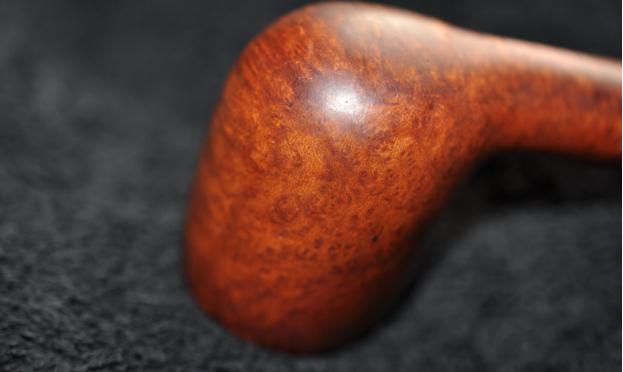
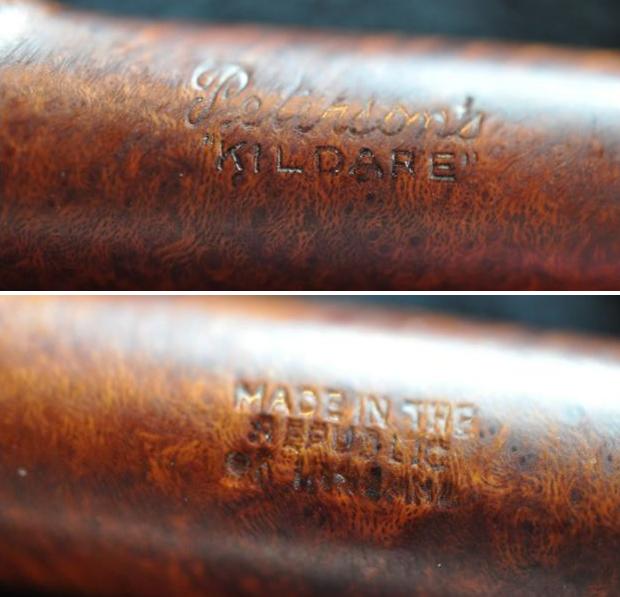
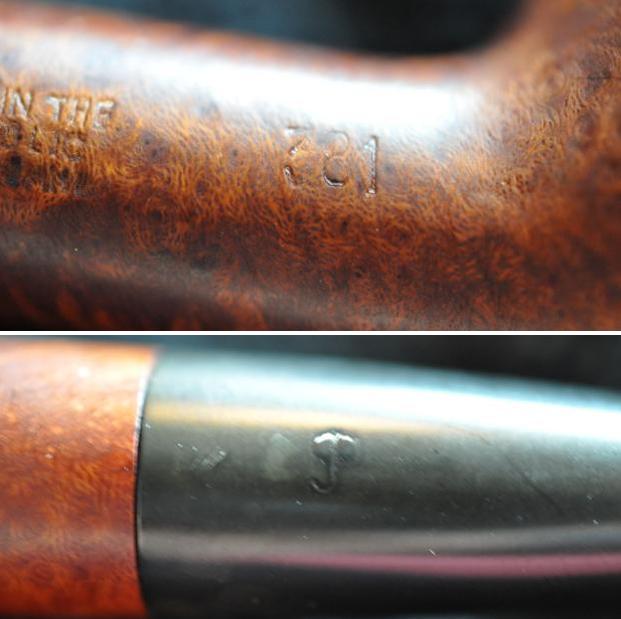
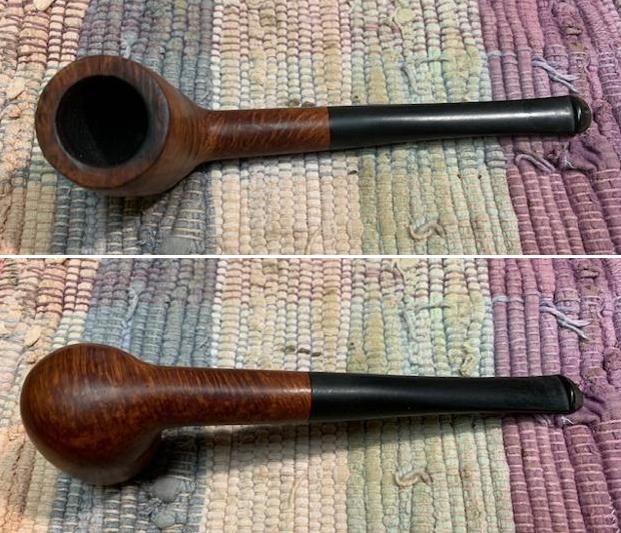
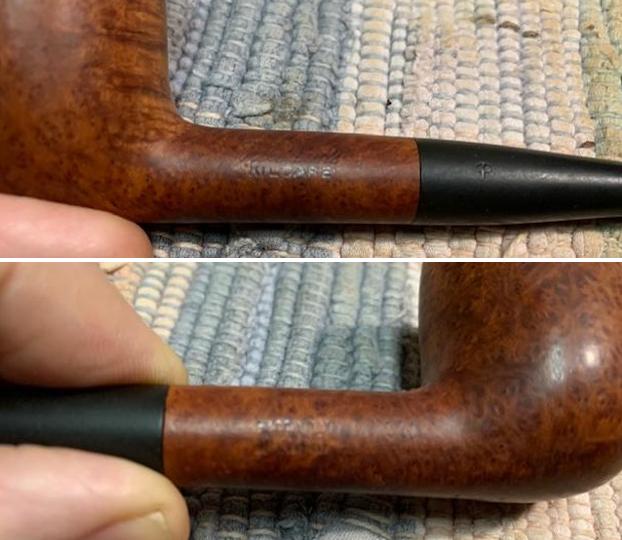
The next pipe I have chosen is smooth finished Peterson’s Billiard pipe. This one is a smooth Billiard that has a rich coloured finish around the bowl sides and shank. It also came to us from the estate of Anglican minister that was a great friend of mine here in Canada. The contrast of the brown stains makes the grain really pop. It was stamped on the  left side of the shank and read Peterson’s [over] “Kildare”. It was stamped to the right of the shank and reads Made in the Republic of Ireland (3 lines) with the shape number 381 next to the bowl. It was filthy when he brought it to the table. The finish was dirty with grime ground into the finish around the sides and rim. There was a cake in the bowl and light spattering of lava on the rim top and the inner edge of the bowl. The rim top showed some damage on the flat top. The stem was oxidized, calcified and had tooth marks and chatter on the top and underside on and near the button. Jeff took photos of the pipe before his cleanup work. They tell the story and give a glimpse of the promise that we see in this pipe. Jeff took photos of the rim top and stem to show the general condition of the pipe. The bowl is heavily caked and the rim top and edges have some light lava overflow. The stem is oxidized, calcified and has tooth marks on the top and underside near the button.     Jeff took a photo of the bowl sides and heel to show the grain that was around this bowl. It is a nice looking pipe.   He took photos of the sides of the shank to show the stamping. The stamping is readable in the photos below and is as noted above. I am including the link to the Pipedia’s article on Peterson pipes. It is a great read in terms of the history of the brand (https://pipedia.org/wiki/Peterson).
I turned to “The Peterson Pipe” by Mark Irwin and Gary Malmberg to get some background on the Peterson’s System Line. On page 314 it had the following information.

Kildare (1965-) First issue of line with matte-finish in Classic Range shapes, P-Lip and fishtail mouthpiece. Second issue C.1979 as Kildare Patch, with rusticated patches on pipe surface. Third issue 2010, matte-brown, P-Lip or fishtail mouthpiece, no band. Fourth issue 2011-, burgundy sandblast finish, nickel army mount, fishtail mouthpiece, exclusive to Smokingpipes.com.

Judging from the description above I believe that I am working on a First Issue of the line in the time period of 1965-1979. It is a late Republic Era Classic Shaped pipe with a matte-finish and a P-Lip stem. Now it was time to work on the pipe.

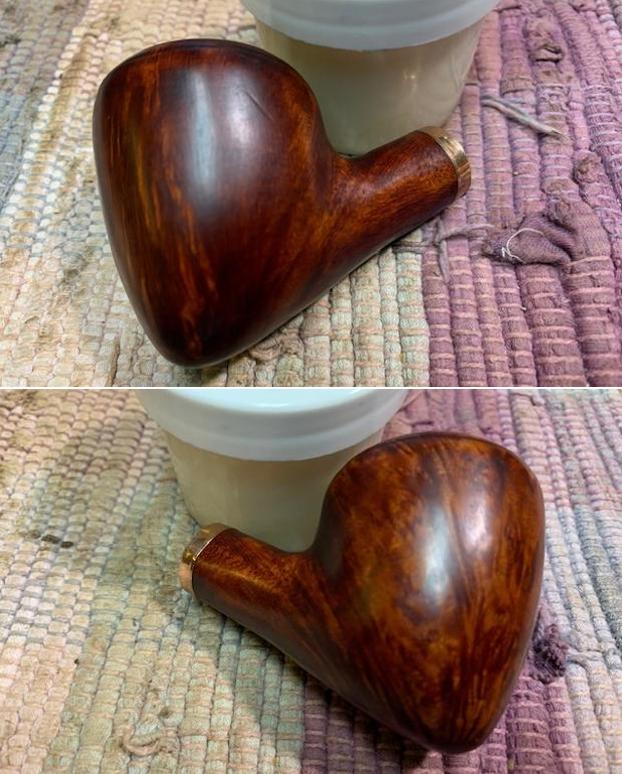
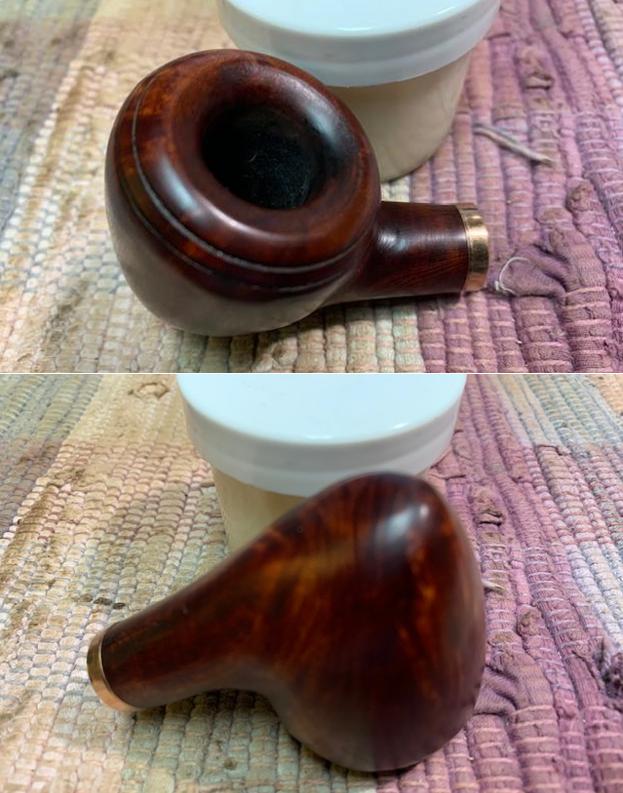
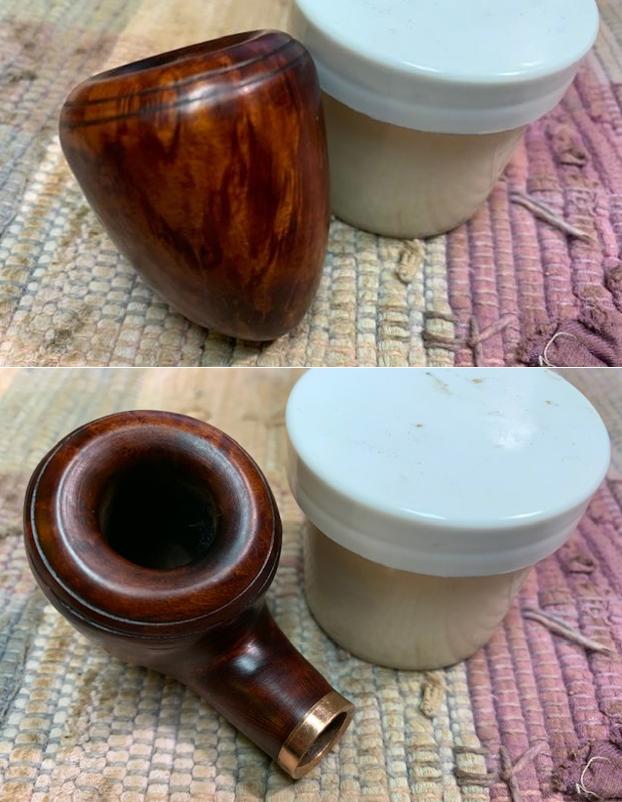
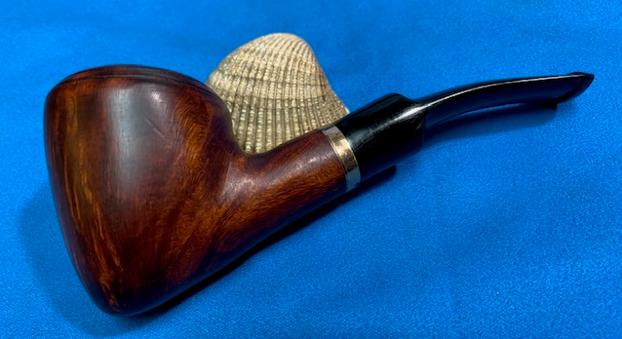
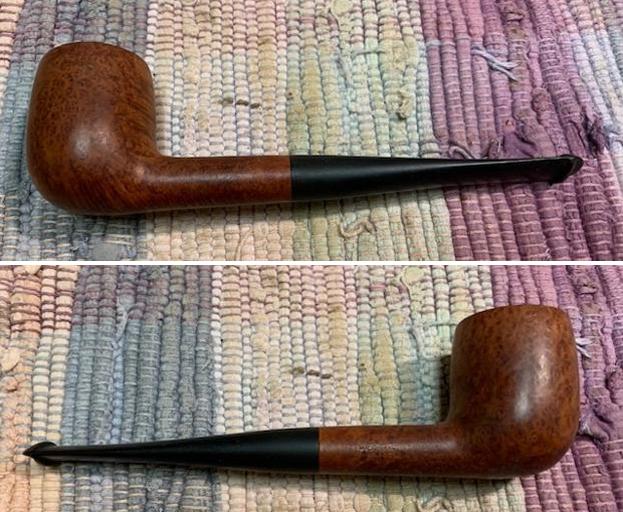
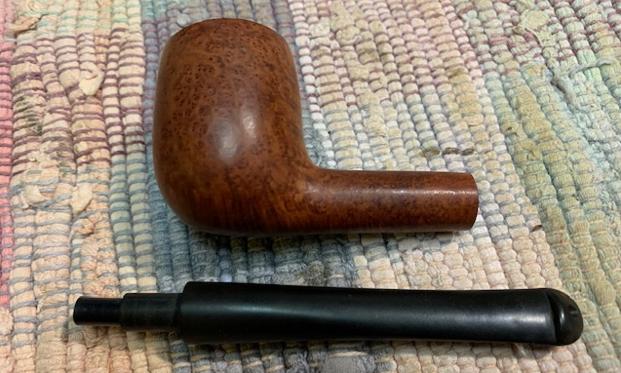
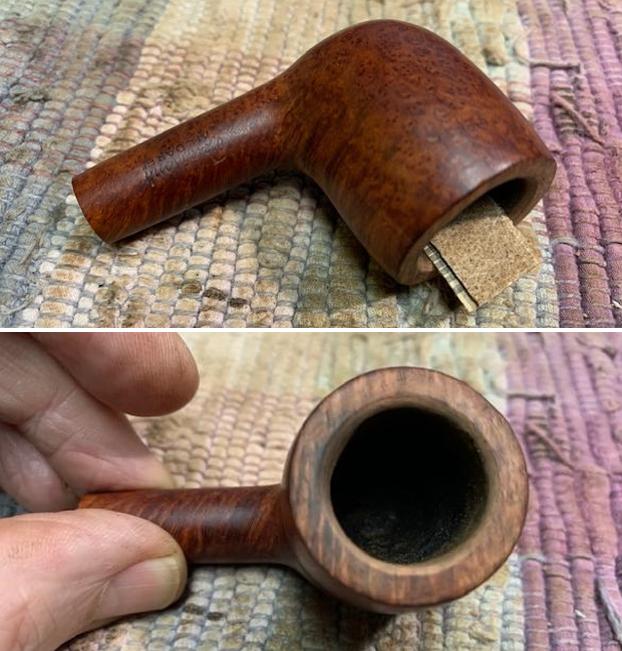
Jeff had done a great job cleaning up the pipe as usual. He reamed the pipe with a PipNet reamer and cut back the cake back to the bare briar. He cleaned up the walls with a Savinelli Fitsall Pipe Knife. He scrubbed the interior of the bowl and shank with pipe cleaners, cotton swabs and alcohol to remove the tars and oils. He scrubbed the exterior of the pipe with Murphy’s Oil Soap and a tooth brush to remove the grime from the finish. He worked on the rim top lava and darkening with the soap and tooth brush. He scrubbed the inside of the stem with alcohol and pipe cleaners. He scrubbed the exterior with Soft Scrub and then soaked it in Before & After Deoxidizer. He washed it off with warm water to remove the Deoxidizer. The pipe looked far better when it arrived.   I took some close up photos of the rim top and also of the stem surface. I wanted to show how well it had cleaned up. The rim top looked to be in good condition with some darkening on the back side and some damage to the inner edges around the bowl. I also took close up photos of the stem to show the tooth marks on the surface near the button.  I took photos of the stamping on the underside of the shank. It is faint but reads as noted above. I removed the stem and took a photo of the pipe to have a look at the parts and overall look.I decided to address the damage to the back edge of the bowl and the rim top first. I used a folded piece of 220 grit sandpaper to give the inner edge of the bowl a slight bevel to accommodate the burned areas and blend them into the surrounding briar. I also worked over the darkening on the rim top with the sandpaper.    I polished the briar with micromesh sanding pads – dry sanding with 1500-12000 grit sanding pads. I wiped the bowl down with a damp cloth after each sanding pad.     I worked some Before & After Restoration Balm into the surface of the briar with my fingertips to clean, enliven and protect the briar. I let the balm sit for 15 minutes and then buffed with a cotton cloth to raise the shine. The photos show the bowl at this point in the restoration process.  I touched up the stamped “P” on the top of the stem with Rub’n Buff Antique Gold. I pressed it into the stamping with a tooth pick and buffed it off with a soft cloth. It looks much better that when I started.  I set the bowl aside and turned my attention to the stem. I “painted” the stem and button surface with the flame of a lighter to lift the tooth marks. It worked amazingly well and I was able to lift them completely or significantly. I sanded what remained with 220 grit sandpaper to blend them into the surface of the vulcanite. I started polishing the stem by wet sanding it with 400 grit wet dry sandpaper.  I polished the stem with micromesh sanding pads – wet sanding with 1500-12000 grit sanding pads. I wiped it down after each sanding pad with Obsidian Oil. I polished it with Before & After Pipe Stem Polish – both Fine and Extra Fine.  I am excited to finish this Peterson’s Kildare 381 Straight Billiard. I put the pipe back together and buffed it with Blue Diamond on the buffing wheel. I gave the bowl and the stem multiple coats of carnauba wax. I hand buffed the pipe with a clean buffing pad to raise the shine. It is fun to see what the polished bowl looks like with beautiful flame grain all around it. Added to that the polished Sterling Silver band and the black vulcanite stem was beautiful. This smooth Classic Peterson’s Kildare 381 Billiard is great looking and the pipe feels great in my hand. It is light and well balanced. Have a look at it with the photos below. The dimensions are Length: 6 ½ inches, Height: 1 ¾ inches, Outside diameter of the bowl: 1 ¼ inches, Chamber diameter: ¾ of an inch. The weight of the pipe is 36grams/1.23oz. It is a beautiful pipe and one that I will be putting on the rebornpipes store shortly. It will be in the Irish Pipe Maker Section on the store if you would like to add it to your collection. Thanks for walking through the restoration with me as I worked over this pipe. Thanks to each of you who are reading this blog.
Breathing Life into a Rusticated Peterson’s System 71 Straight Billiard


Blog by Steve Laug

The next pipe I have chosen is smooth finished Peterson’s Billiard pipe. This one is a System 71 Straight Billiard that has a rich coloured rusticated finish around the bowl sides and shank. It also came to us from the estate of Anglican minister that was a great friend of mine here in Canada. This Billiard had a badly oxidized nickel ferrule on the shank end. The contrast of the brown stains makes the grain really pop. It was stamped on the underside of the shank and read Peterson’s arched [over] System arched [over] 71. It was stamped to the right of that and reads Made in the Republic of Ireland (3 lines). The tarnished ferrule is stamped with K&P [over] 3 shields as follows: in the first was a shamrock, in the second was a lion and in the third was a tower. That is followed by Peterson’s. It was in filthy condition when he brought it to the table. The finish was dirty with grime ground into the rustication around the sides and rim. There was a cake in the bowl and light spattering of lava on the rim top and the inner edge of the bowl. The rim top looked to be in good condition. The stem was oxidized, calcified and had tooth marks and chatter on the top and underside on and near the button. Jeff took photos of the pipe before his cleanup work. They tell the story and give a glimpse of the promise that we see in this pipe. Jeff took photos of the rim top and stem to show the general condition of the pipe. The bowl is heavily caked and the rim top and edges have some light lava overflow. The stem is oxidized, calcified and has tooth marks on the top and underside near the button.   Jeff took some photos of the bowl sides and heel to show the rugged rustication that was around this bowl. It is a nice looking pipe.     He took photos of the sides of the shank to show the stamping. The stamping is readable in the photos below and is as noted above. He also took a photo of the ferrule. I am including the link to the Pipedia’s article on Peterson pipes. It is a great read in terms of the history of the brand (https://pipedia.org/wiki/Peterson).

I turned to “The Peterson Pipe” by Mark Irwin and Gary Malmberg to get some background on the Peterson’s System Line. On page 314 it had the following information.

System (1891) The Peterson’s System pipe is the backbone of the company’s body of work, offered continuously since 1891. Defined by its reservoir, graduated bore, and the unique Peterson Lip mouthpiece, the design originated with an 1890 patent and was further refined by modifications patented in 1894 and ’98. Offered in numerous shapes and sizes, in bent and straight stemmed styles, marketed in smooth, sandblasted, rusticated or ebony finish, and rendered in briar, clay and meerschaum with mouthpieces of vulcanite, amber, horn, Bakelite and acrylic. From 1891-1915, Systems were labeled Peterson’s over PATENT, then from 1906-11 occasionally PETERSON’S over PATENT over DUBLIN, followed thereafter by PETERSON’S over DUBLIN. See Dublin. Chronologically, documented System stamps include the following. (A list of the different stamping follows)

I quote the section that fits the stamping on the pipe I am working on.

PETERSON’S over SYSTEM. Pipes stamped PETERSON’S SYSTEM have been documented as early as 1920. A ’20 brochure s the earliest printed reference to the Peterson System. The pipe came in three quality grades (no mark, 2 or 3) until 1959, thereafter De Luxe (no mark), Premier (the old 2) and Standard (the old 3). See Grading Marks.

Now it was time to work on the pipe. Jeff had done a great job cleaning up the pipe as usual. He reamed the pipe with a PipNet reamer and cut back the cake back to the bare briar. He cleaned up the walls with a Savinelli Fitsall Pipe Knife. He scrubbed the interior of the bowl and shank with pipe cleaners, cotton swabs and alcohol to remove the tars and oils. He scrubbed the exterior of the pipe with Murphy’s Oil Soap and a tooth brush to remove the grime from the finish. He worked on the rim top lava and darkening with the soap and tooth brush. He scrubbed the inside of the stem with alcohol and pipe cleaners. He scrubbed the exterior with Soft Scrub and then soaked it in Before & After Deoxidizer. He washed it off with warm water to remove the Deoxidizer. The pipe looked far better when it arrived.    I took some close up photos of the rim top and also of the stem surface. I wanted to show how well it had cleaned up. The rim top looked to be in good condition and the inner edge looked good as well. I also took close up photos of the stem to show the tooth marks on the surface near the button.  I took photos of the stamping on the underside of the shank. It is faint but reads as noted above. I also took a photo of the nickel ferrule.   I removed the stem and took a photo of the pipe to have a look at the parts and overall look.I restained the faded spots on the sides of the bowl and the rim top with a Walnut and a Black stain pen. The combination of colours worked well to blend it with the rest of the bowl and shank colours.  I worked some Before & After Restoration Balm into the surface of the briar with my fingertips and a horsehair shoe brush to clean, enliven and protect the briar. I let the balm sit for 15 minutes and then buffed with a cotton cloth to raise the shine. The photos show the bowl at this point in the restoration process.     .   I set the bowl aside and turned my attention to the stem. I “painted” the stem and button surface with the flame of a lighter to lift the tooth marks. It worked amazingly well and the they lifted completely. I sanded the stem with 220 grit sandpaper to blend them into the surface of the vulcanite. I started polishing the stem by wet sanding it with 400 grit wet dry sandpaper. I polished the stem with micromesh sanding pads – wet sanding with 1500-12000 grit sanding pads. I wiped it down after each sanding pad with Obsidian Oil. I polished it with Before & After Pipe Stem Polish – both Fine and Extra Fine. I am excited to finish this Peterson’s System 71 Rusticated Straight Billiard. I put the pipe back together and buffed it with Blue Diamond on the buffing wheel. I gave the bowl and the stem multiple coats of carnauba wax. I hand buffed the pipe with a clean buffing pad to raise the shine. It is fun to see what the polished bowl looks like with beautiful flame grain all around it. Added to that the polished Sterling Silver band and the black vulcanite stem was beautiful. This smooth Classic Older Peterson’s System 71 Billiard is great looking and the pipe feels great in my hand. It is light and well balanced. Have a look at it with the photos below. The dimensions are Length: 5 inches, Height: 1 ¾ inches, Outside diameter of the bowl: 1 ¼ inches, Chamber diameter: ¾ of an inch. The weight of the pipe is 29grams/1.02oz. It is a beautiful pipe and one that will be stay in my collection for the time being. It is yet another of my friend’s estate that will stay in my trust. Thanks for walking through the restoration with me as I worked over this pipe. Thanks to each of you who are reading this blog.